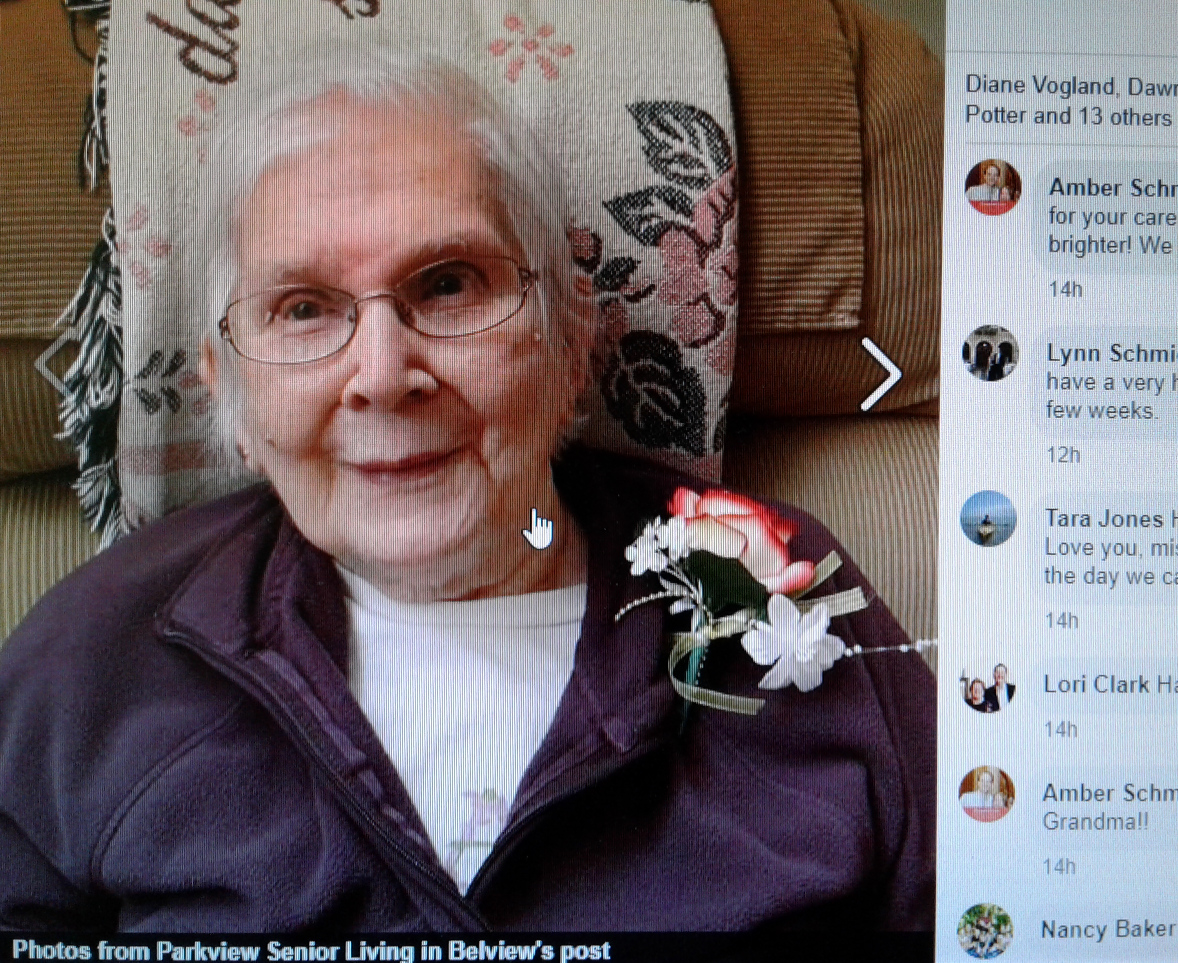
My sweet mom, featured on the Parkview Facebook page, Mother’s Day 2020. (Photo credit: Parkview Senior Living)
IN EVERYTHING I WRITE, truth rests. In creative nonfiction, more than any other genre, truth writes the story. In poetry and fiction, life experiences, observations and emotions weave into poems and stories. Not necessarily the full truth, but based on reality. The adage “write what you know” rings true for me.
Five of my works (poetry, fiction and creative nonfiction) published in Fine Lines. (Minnesota Prairie Roots copyrighted file photo 2017)
The book title, Fine Lines fits my selected entry, a story about the Sunday evening phone calls I made to my mom. Every. Week. I looked forward to them, as did Mom. My short story is one of raw emotions, of grief and pain. And today, days before Mother’s Day, seems an appropriate time to share this piece of my writing.
I hope it sparks an understanding that simple connections linking us to those we love are to be valued. When Mom could no longer hold or talk on a phone in the years before her January 2022 death, I felt a deep loss. I missed her voice. I missed her stories. I missed sharing my life with her. And today, I miss her, as I try to recall her voice, the words she spoke, yet always remembering the love we shared.
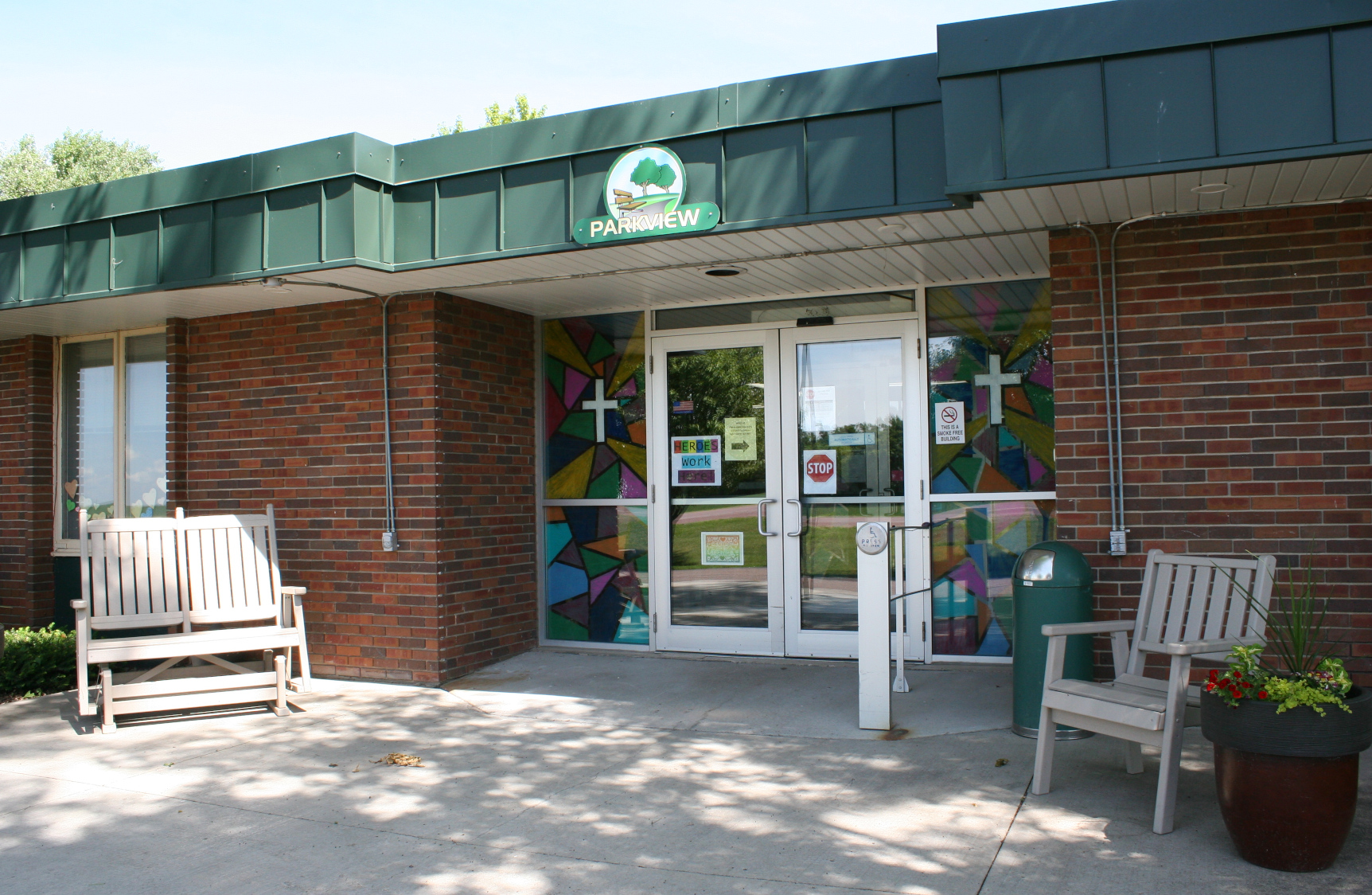
Parkview Senior Living in Belview, where my mom lived for many years. While 120 miles separated us, Mom and I remained connected via our weekly calls. (Minnesota Prairie Roots copyrighted file photo)
The Weekly Phone Call
It’s 6:30 p.m. on Sunday when I punch the green phone icon.
“Hello, Arlene speaking,” she answers, the indiscernible dialogue of a television blaring in the background.
“Hi, this is Audrey,” I say, then wait while she turns off her TV. “How are you doing?”
Her answer never deviates. She is tired and blames the weather. Already sadness threads through my thoughts. Inside the sheltered walls of a care center, she can’t feel the bite of a winter prairie wind, the drench of rainfall, the smothering humidity of a July afternoon. She feels only artificial heat and cold while sequestered in her over-sized dorm style room.
My mind drifts as Mom laments an in-house obsession with BINGO, recounts an escape attempt by a friend—big and exciting news—and complains of failed jets in the whirlpool tub. I listen, insert appropriate responses, and await the usual repetition of information.
When she repeats herself, I say nothing. There is no point. My love prevails in silence. But inside, my anger rises at her declining memory. I want the mom who never forgot a birthday, who remembered what she ate for lunch, who knew names. I miss her undeniably kind and positive spirit. I am grieving.
But I tell her none of this. Instead, I end our conversation with “I love you” and a promise to call her next Sunday, at 6:30 p.m.
I took poetic license and photoshopped this image of the button I wore identifying me as a poet at a poetry reading. (Minnesota Prairie Roots copyrighted file photo April 2015)
APRIL MARKS National Poetry Month, a time to celebrate poetic verse and poets. As a long-time writer, I unequivocally state that penning poetry is challenging. Why? Every. Single. Word. Counts.
That makes sense given the structure of poems.
I’ve written poetry off and on since high school. All those decades ago, I wrote angst-filled poems reflective of teenage moods, emotions and life. Recently a high school friend returned a poem I wrote for her nearly 50 years ago, a poem handwritten on lined notebook paper. The folded page, yellowed with age, holds words focusing on my future and the ultimate question at life’s end: What good have I done?
The poem dedicated to Janette is not particularly well-written. Yet, it has value in reflecting my thoughts, in opening myself up, in showing vulnerability to a trusted friend. Will I share it with you? No.
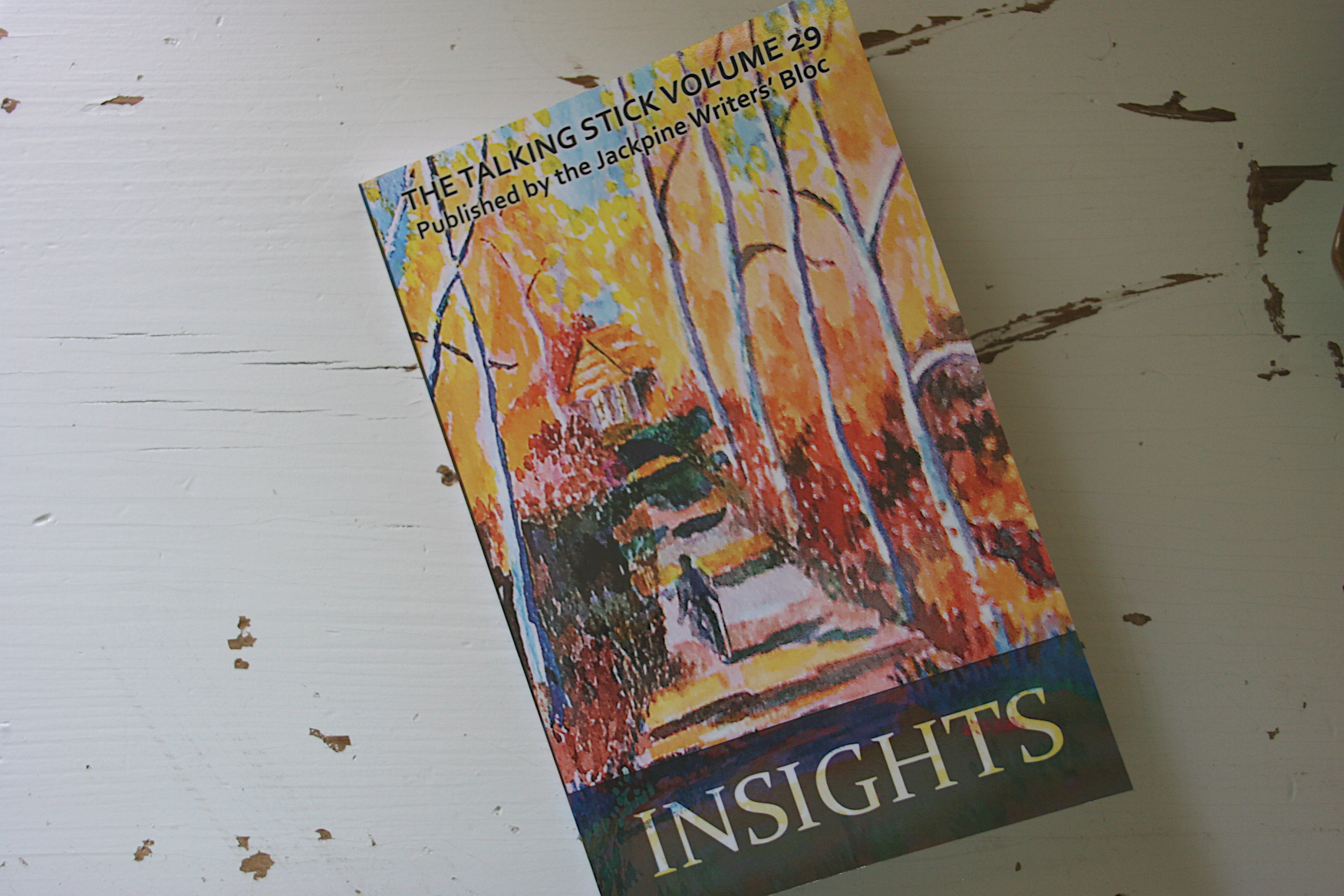
My poem, “Final Harvest,” and two pieces of creative nonfiction were selected for publication in this anthology in 2020. (Minnesota Prairie Roots copyrighted file photo 2020)
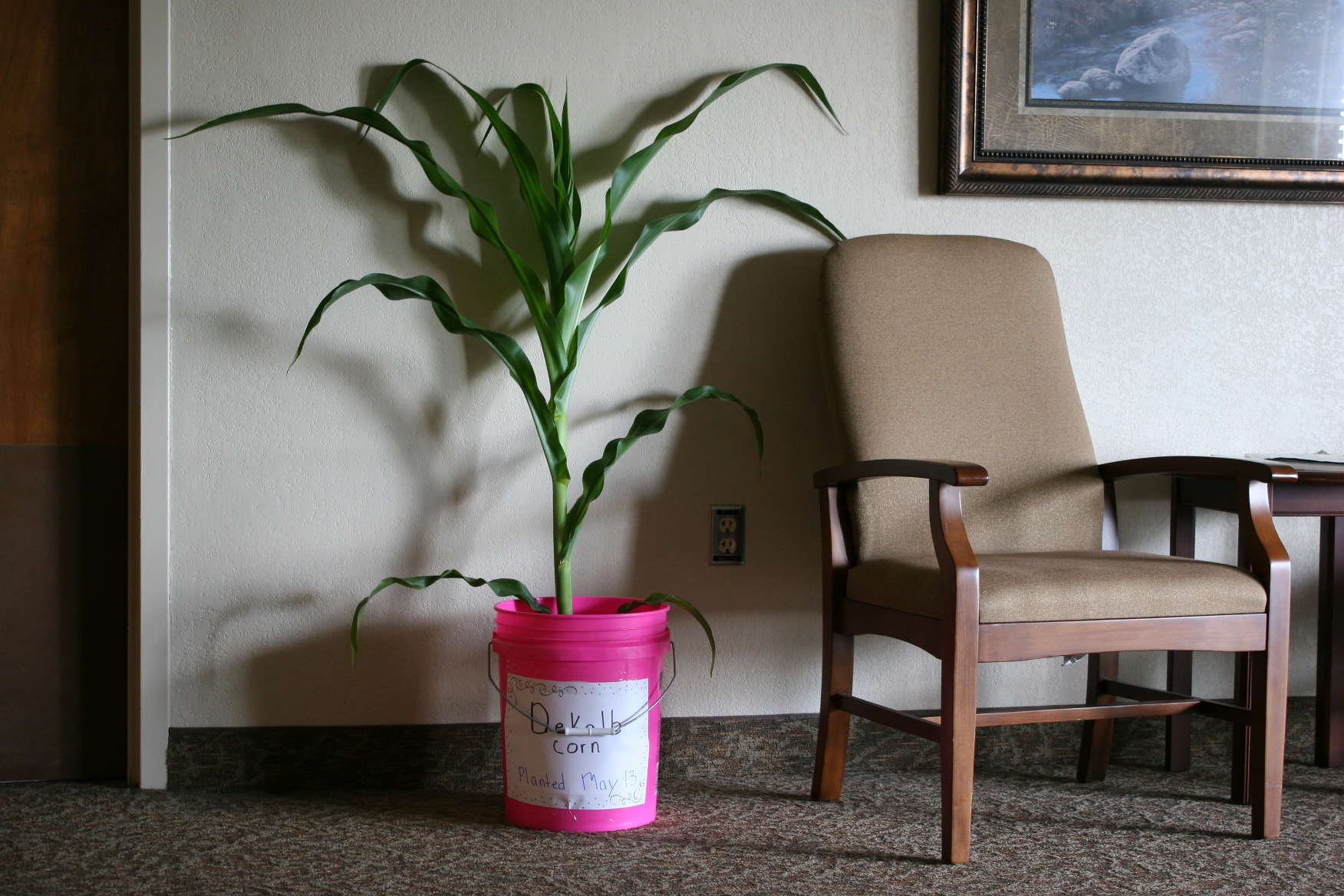
This scene at Parkview Senior Living in Belview, Minnesota, inspired a poem. (Minnesota Prairie Roots copyrighted file photo July 2019)
The poetry I write, like nearly all of my writing, carries a strong sense of place, often rooted in my agrarian roots. And, like nearly all of my creative writing, my poetry is rooted in truth. A cornstalk growing in a pink bucket in the community room at Parkview Senior Living, where my mom lived before her 2022 death, inspired “Final Harvest.” It is not at all angst-filled. But, in a round about way, it asks the same question: What good have I done?
Belview, located in southwestern Minnesota, some seven miles from my hometown of Vesta.
FOR THOSE OF YOU who’ve followed my Minnesota Prairie Roots blog for awhile, you understand that I value small towns. They are a favorite destination, an escape of sorts back to my rural prairie roots. To a less-populated place, typically rooted in agriculture.
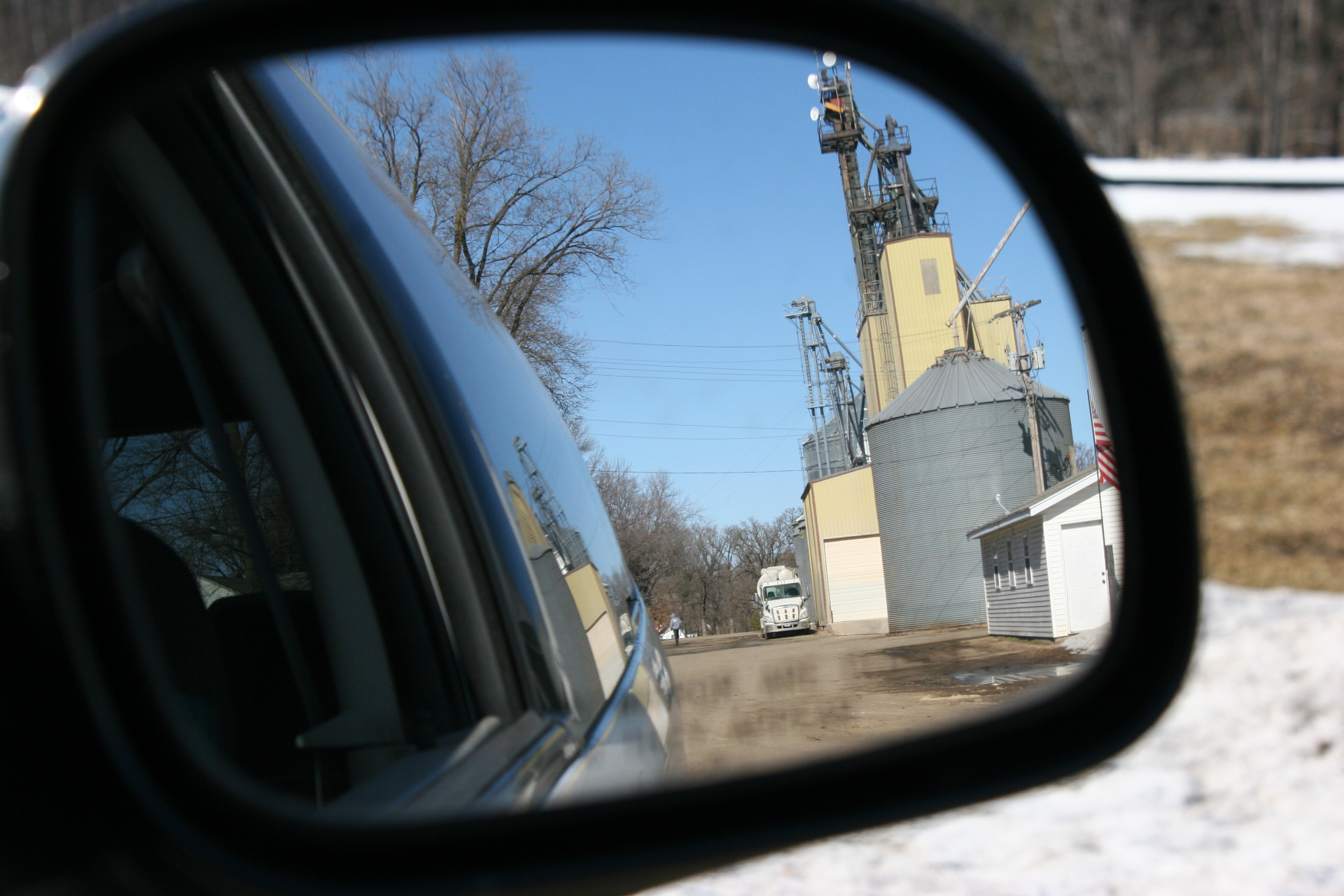
The grain complex in unincorporated Bixby in Aurora Township in Steele County, MN, reflects in the passenger side mirror.
That said, I recognize that my definition of a “small town” may differ from yours. I view small towns as communities with populations of several thousand or less. I would not, for example, consider my city of Faribault to be small. Others would given its population of around 24,000.
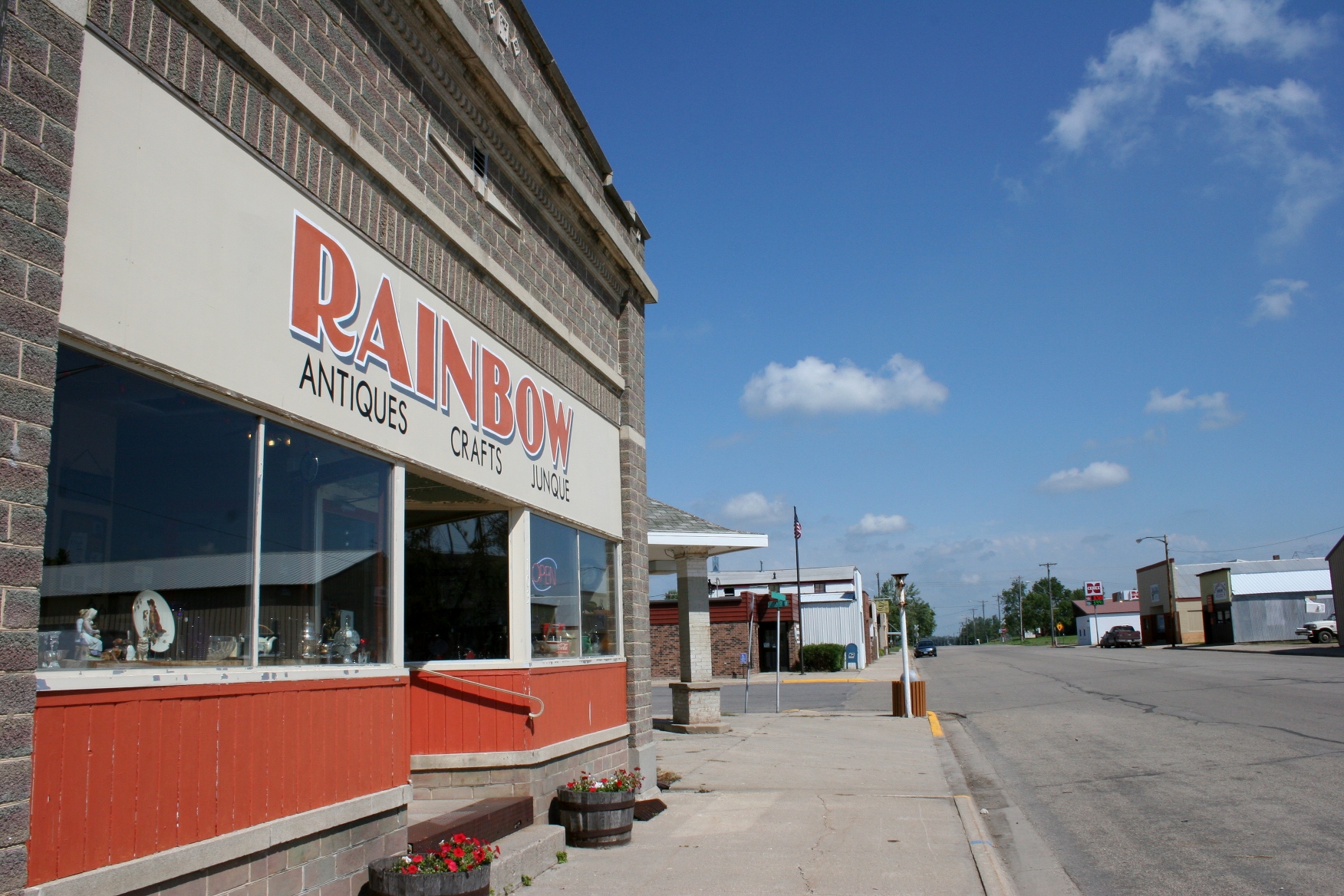
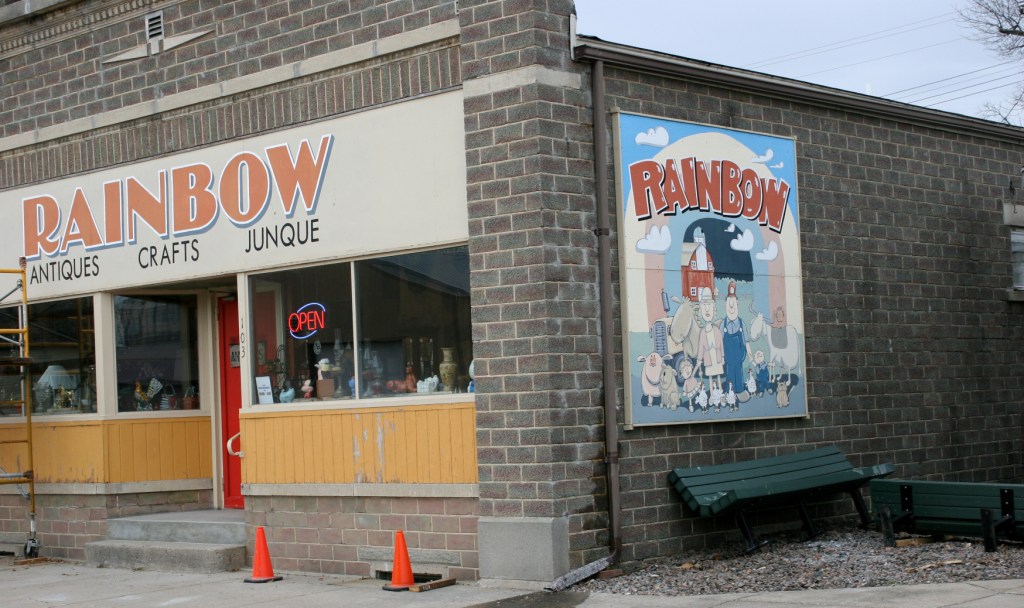
A favorite stop (when it’s open) is Rainbow Antiques, Crafts & Junque in Belview. Other attractions in Belview include the historic Odeon Hall, Rock Dell Lutheran Church, rural Belview, and Grandview Valley Winery, to the north of town. Minnesota Prairie Roots file photo August 2011.
What draws me to small towns, to photograph and write about them, beyond my desire to reconnect with rural places and share my finds?
I love this kitschy bar stool atop the City & Country Tavern roof overhang in Morgan in southwestern MN.
It’s discovering nuances of character. It’s connecting with people. It’s the architecture and oddities and so much more. Exploring small towns is like taking a basic sentence and enhancing the main subject with adjectives.
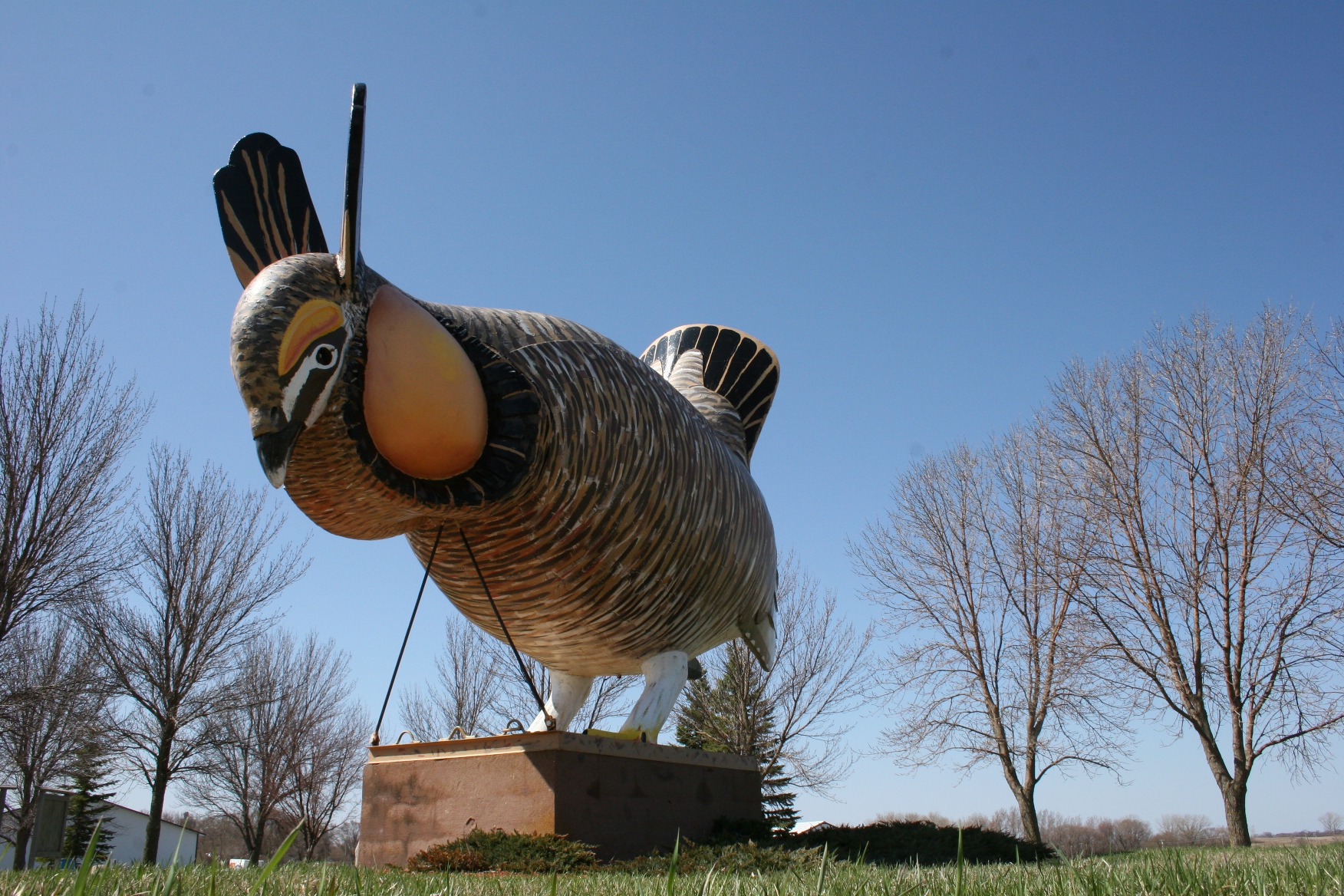
This prairie chicken statue along Interstate 94 in western Minnesota celebrates the real prairie chickens which reside in the Rothsay area. Minnesota Prairie Roots file photo May 2013.
Yet, I realize not everyone appreciates language like I do. All too often, small towns are bypassed or driven through—seemingly not a place that would attract visitors. But I am here to tell you they are worth the detour off the interstate, the destination for a day trip, the stopping on Main Street.
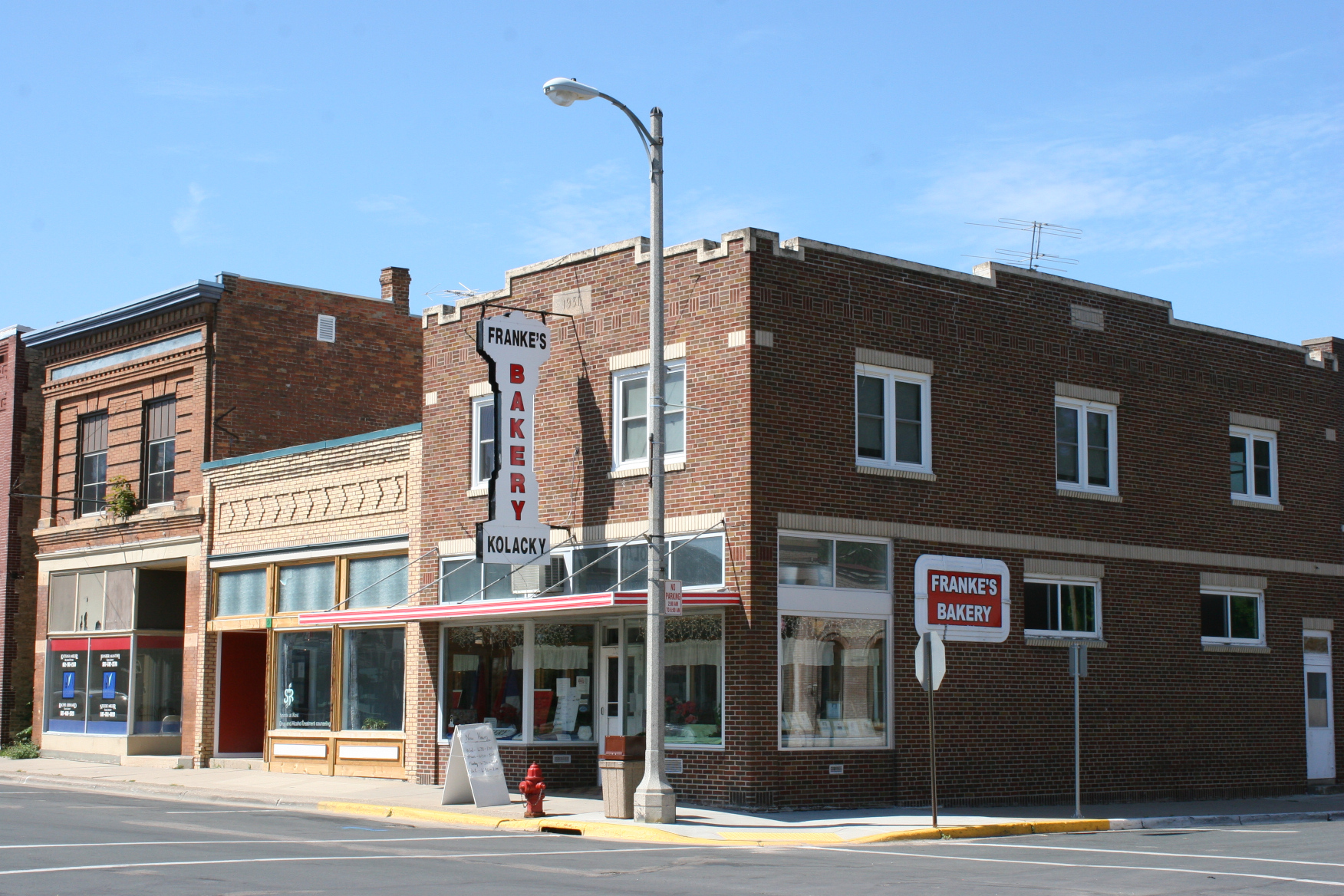
Popular Franke’s Bakery anchors a corner in downtown Montgomery, MN. Minnesota Prairie Roots file photo August 2020.
Montgomery, Minnesota, for example, is one of my favorite nearby small towns. Why? I love going to Franke’s Bakery, a staple in this community for 100-plus years. The bakery specializes in Czech treats, in this self-proclaimed Kolacky Capital of the World. Across the street from the bakery, a mural tells the history of this town. Aged buildings line the main business district, with home-grown shops and eateries and bars. The adjectives enhancing the main subject.
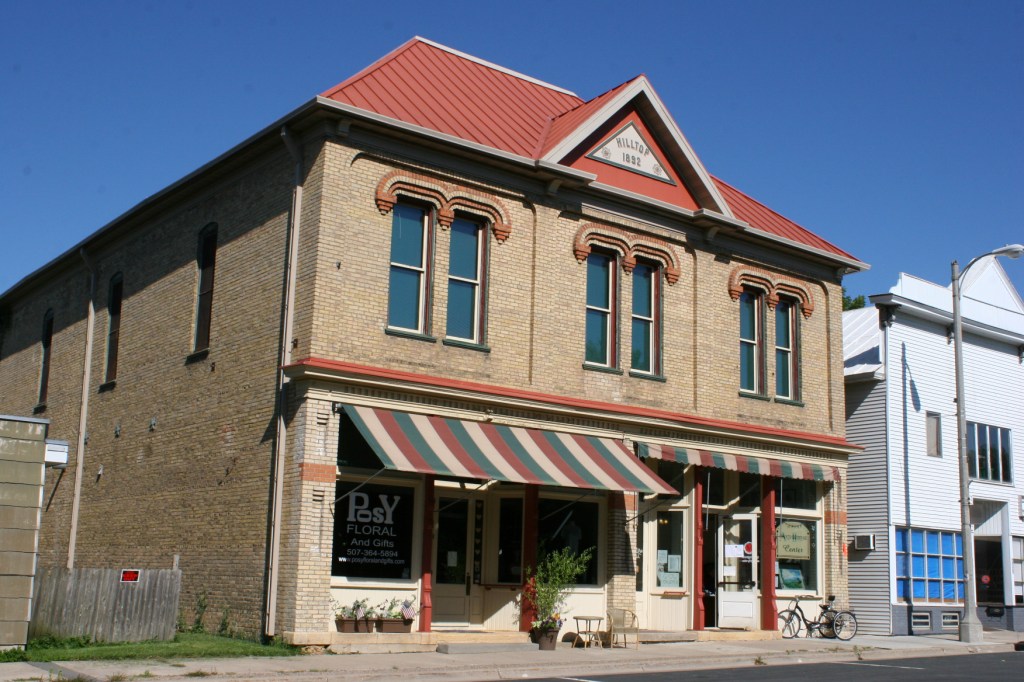
The Montgomery Arts & Heritage Center, right, and Posy Floral, left, along First Street North on the north end of downtown Montgomery, MN. Minnesota Prairie Roots file photo August 2020.
The Montgomery Arts and Cultural Heritage Center and Montgomery Brewing also draw me to this Le Sueur County community. And the signs and architecture.
The good folks of Montgomery have branded their community, tapping into their heritage and then building on that to create a place that attracts visitors. I think potential exists in every small town to do the same. And it starts with recognizing the strengths, the uniqueness, of a community. I know that requires time, money and effort. But, oh, the possibilities.
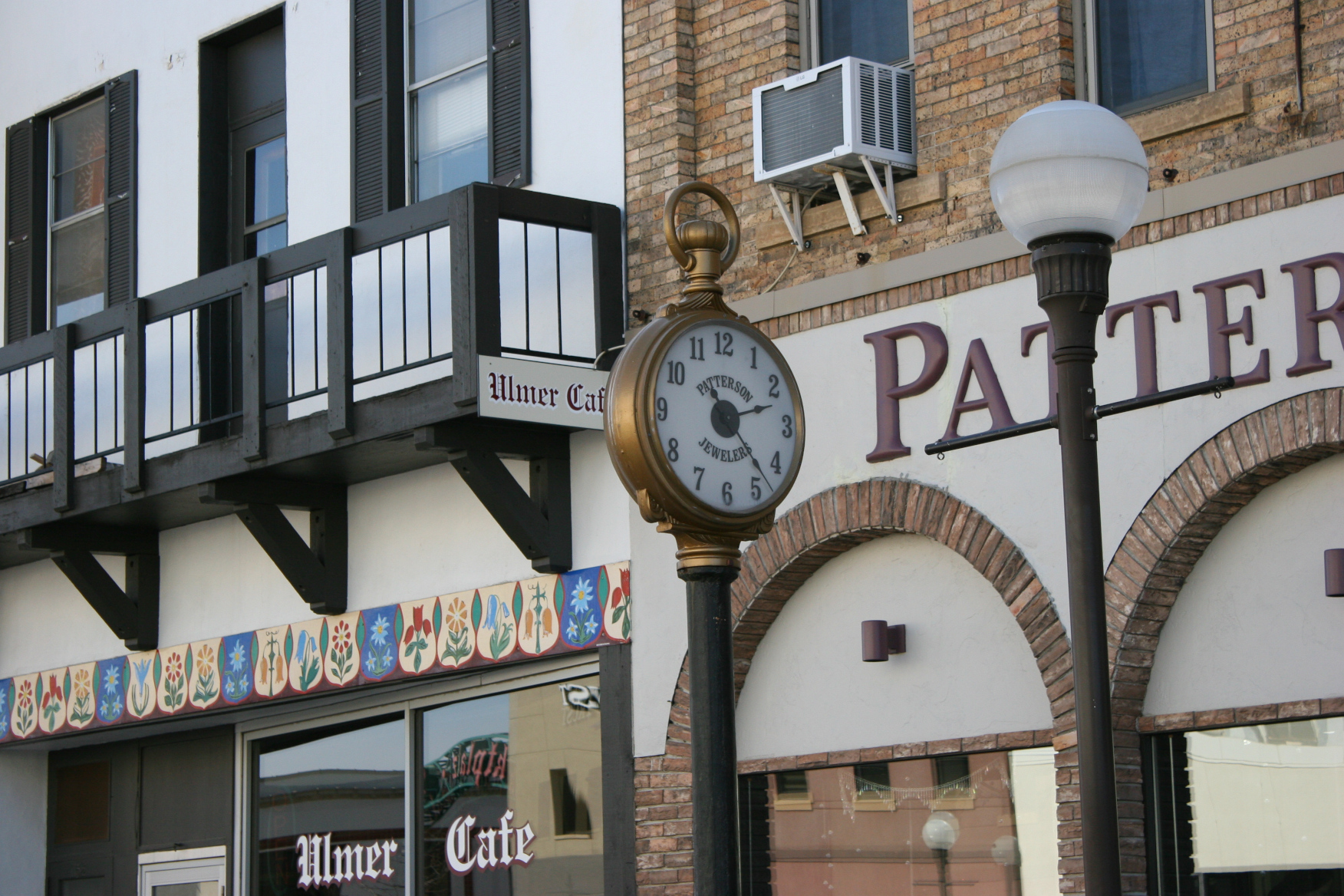
The community of New Ulm is home to many home-grown restaurants, like the Ulmer Cafe.
I, for one, love small town bakeries, antique shops, thrift stores, art centers and home-grown cafes with meal offerings that are crafted by hand, not pulled from a freezer and heated. I recently saw a sign for Beef Commercials in New Ulm. I haven’t eaten one—roast beef layered between slices of white bread, topped with a dollop of mashed potatoes and smothered in gravy—for years. Had it been meal time and not a pandemic, I may have stopped to indulge in nostalgia.
A thriving grocery store in small town Ellendale, MN.
Now I know every community can’t tap into heritage like New Ulm and Montgomery. But, each place truly possesses potential to attract visitors. In Ellendale, for example, the award-winning Steve’s Meat Market draws meat lovers. I am partial to Lerberg’s Foods and its worn wooden floor, narrow aisles and aged moose head looming over cans of stacked corn.
Outside the local hardware store in the downtown main business district, this heart art shows pride, marketing savvy and identity in Blooming Prairie. This small town is located in southern Steele County, south of Owatonna.
I delight in such discoveries. Kitsch. Identity. A strong sense of place and pride. I hope that, by sharing my thoughts and photos, you, too, will view small towns through a lens of appreciation.
TELL ME: Have you discovered a small town that you just love. I’d like to hear.
PLEASE CHECK BACK as I expand on this post with more photos from some of the communities featured here.
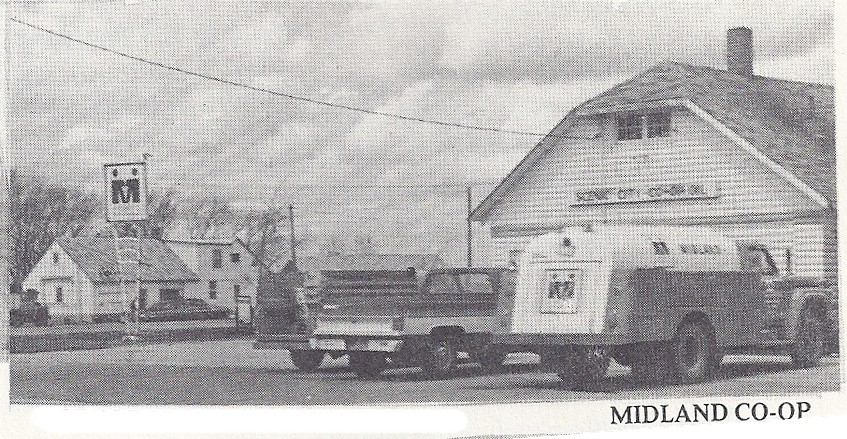
My uncle’s gas station with the fuel delivery truck parked by The Old Log Cabin. Photo from Envisioning a Century, Vesta, 1900-2000. The Miland station and the restaurant across Highway 19 in Vesta no longer exist. Minnesota Prairie Roots file photo.
GROWING UP IN SMALL TOWN Minnesota in the 60s and 70s, I saw local businesses thriving. There were two hardware stores, two grocery stores, a lumberyard, feed mill, grain elevator, bank, restaurants, corner bar, barbershop, several service stations, post office and more in my hometown of Vesta, population 365. But today, the one-block Main Street stands mostly empty, pocked by vacant lots from long-ago torn down buildings. A few businesses remain. The elementary school closed decades ago.
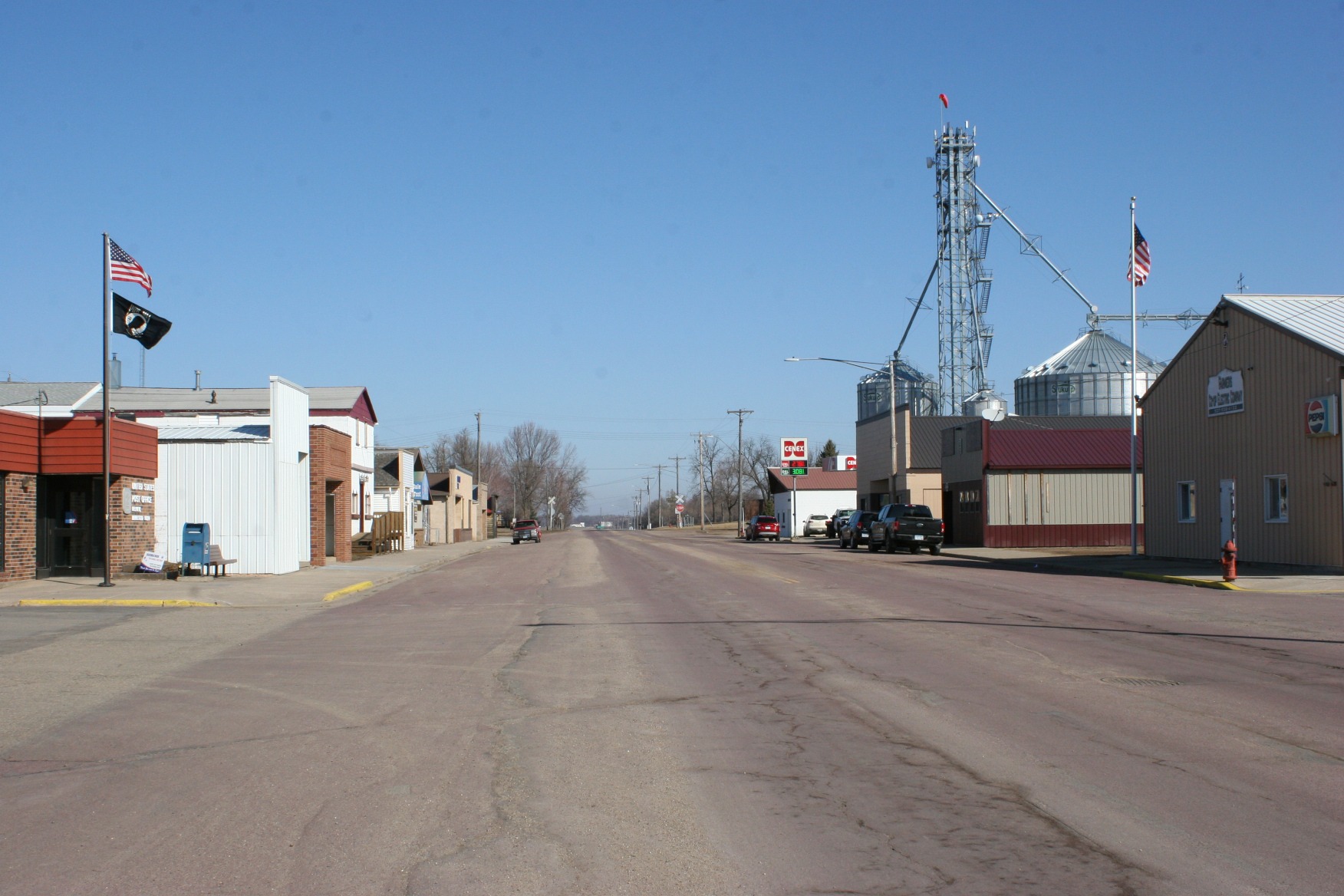
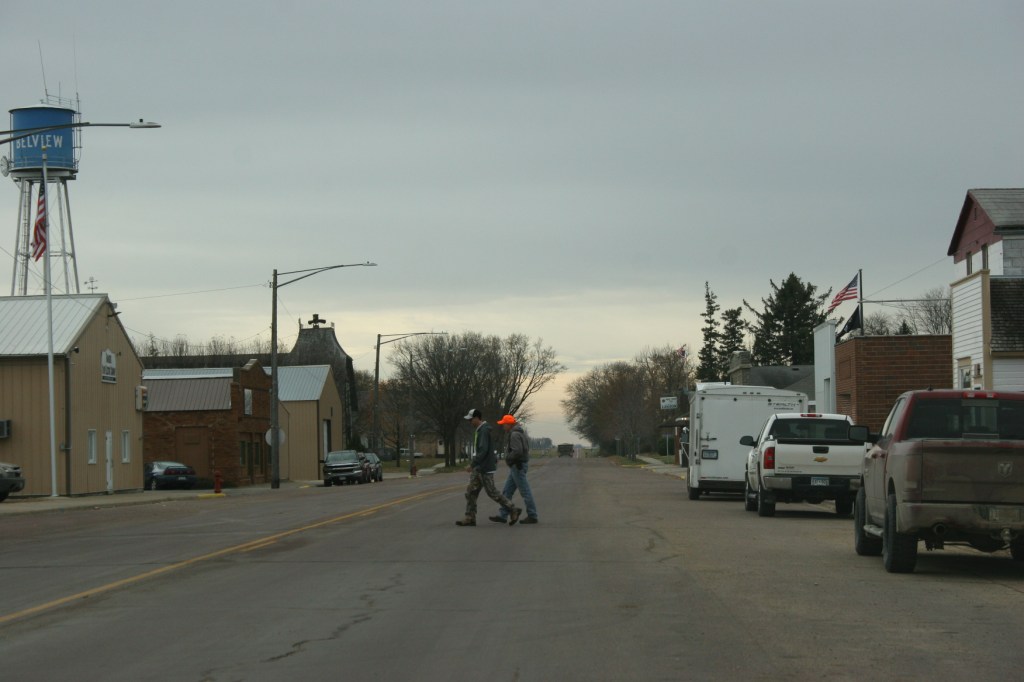
Downtown Belview, Minnesota, photographed last Saturday, March 13, 2021.
In Belview seven miles to the north and east, the story repeats. I recall driving to Belview with my grandma in the early 1970s to shop for fabric so I could sew dresses for her. That dry goods store is long gone. Belview has, like most rural communities, experienced the closure of many businesses as locals headed to regional shopping hubs to shop at Big Box stores and also embraced online shopping.
An historic anchor building in downtown Redwood Falls. Sward Kemp Snyder Drug recently moved out of downtown to the new hospital and clinic on the east edge of Redwood.
Likewise, Redwood Falls, to the east of Belview along Minnesota State Highway 19, has changed considerably. That Redwood County seat and the Lyon County seat of Marshall were our family’s go-to larger towns to shop for clothes, shoes and other necessities when I was growing up on the prairie. Last Saturday when Randy and I stopped in downtown Redwood, I found the streets nearly empty and few businesses open. Nothing like the bustling downtown I remember.
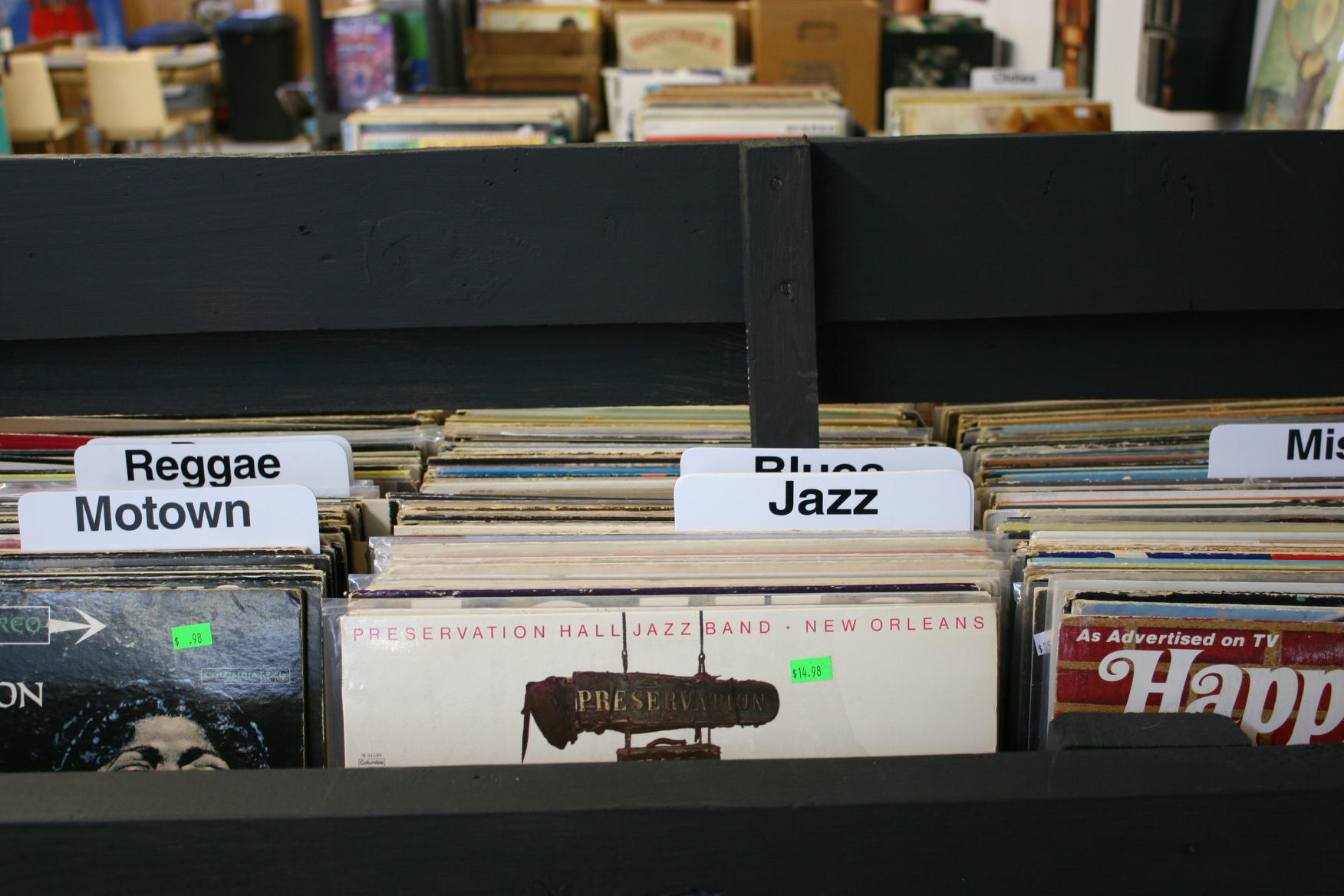
Vintage Vinyl, a newly-opened business in the heart of Redwood Falls.
I can sit here and write about this with nostalgia and sadness, wishing these rural communities remained self-sufficient. But wishes are not reality. And wishing does not change things. Action does.
An overview of Vintage Vinyl, packed with albums plus gaming and trading cards, books, video games, DVDs and VHSs, figurines and more. The tables provide a place for folks to play checkers, etc., and/or just hang out.
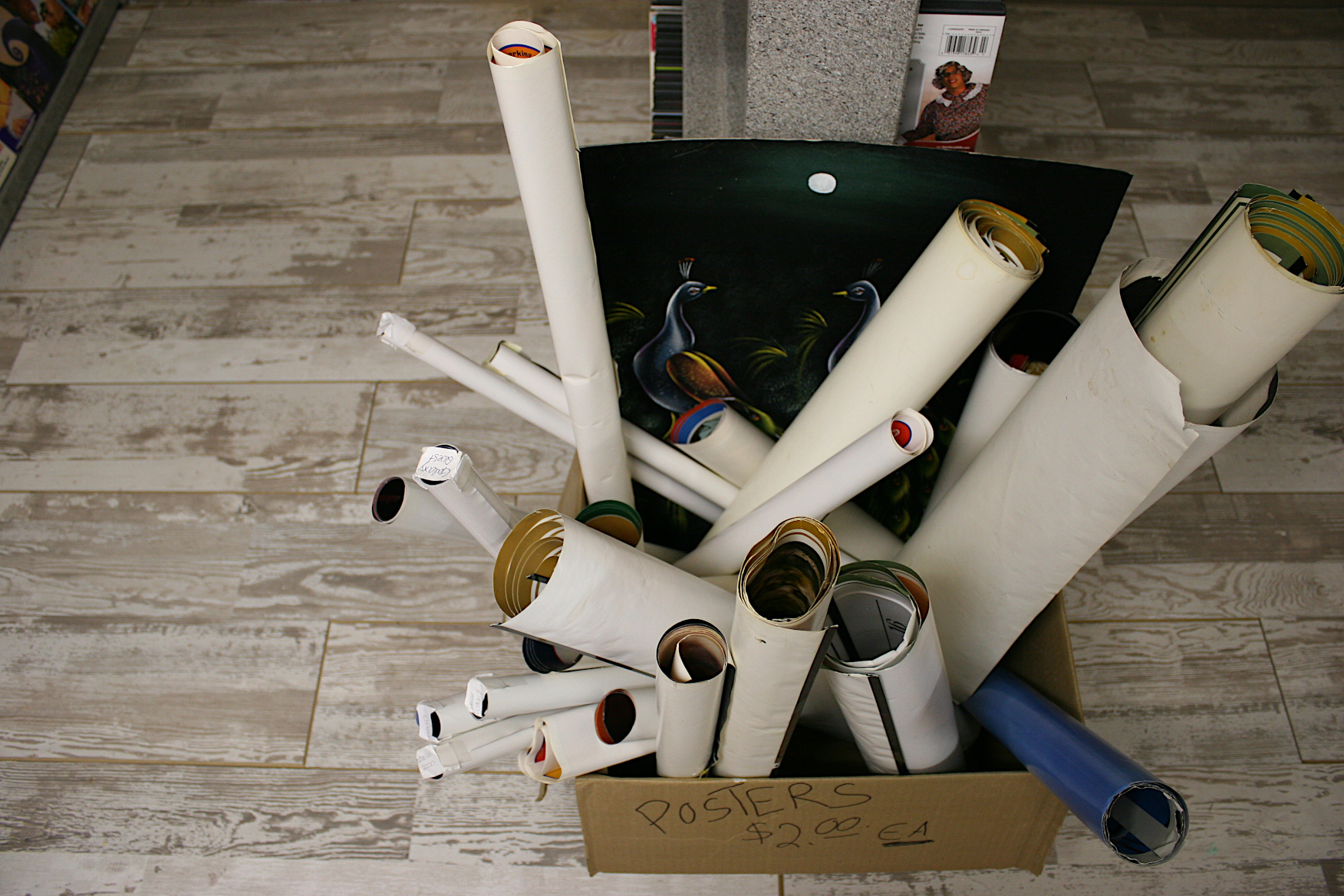
Looking for a poster? You’ll find them in Nate’s shop.
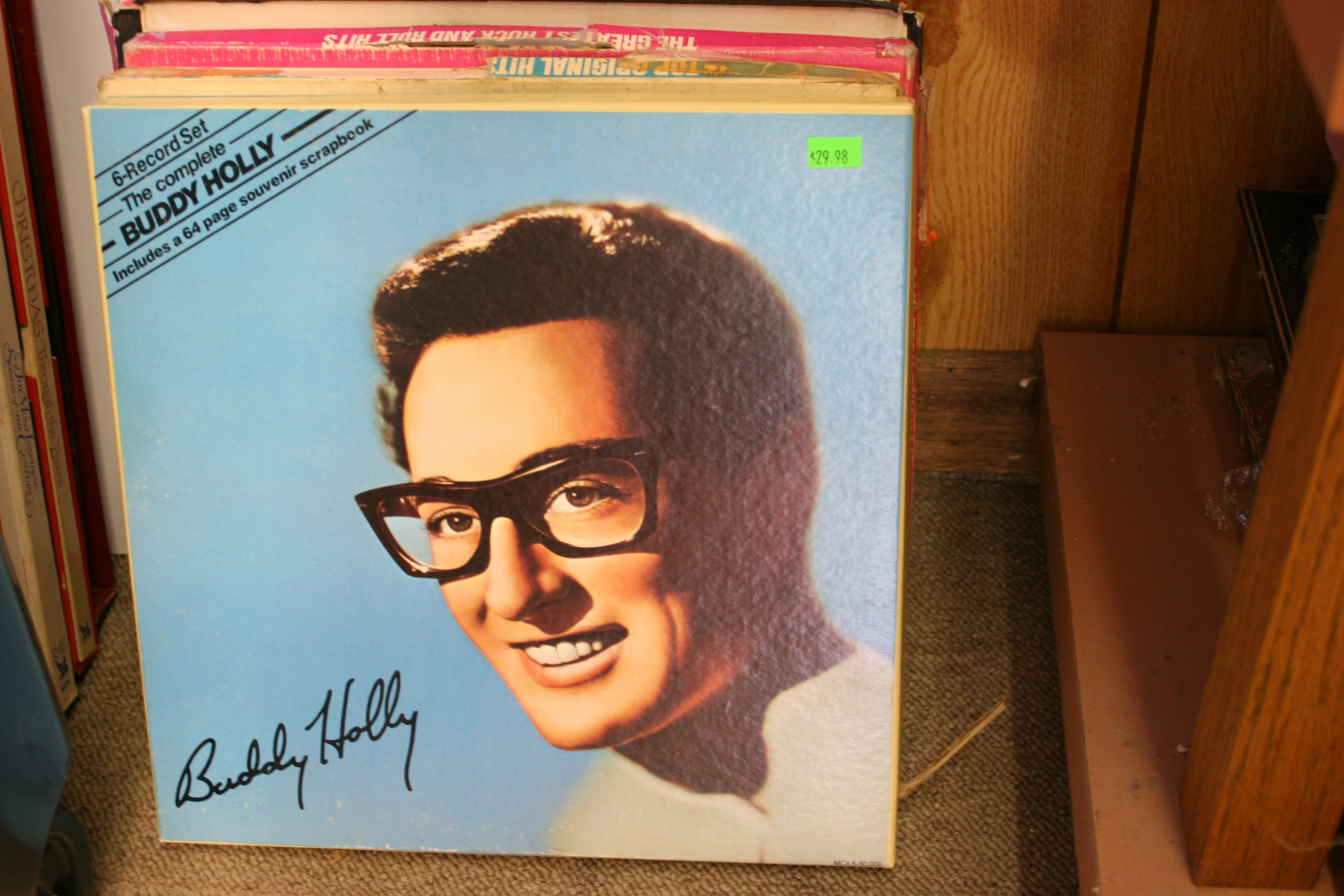
I spotted this Buddy Holly album leaning against the wall on the floor.
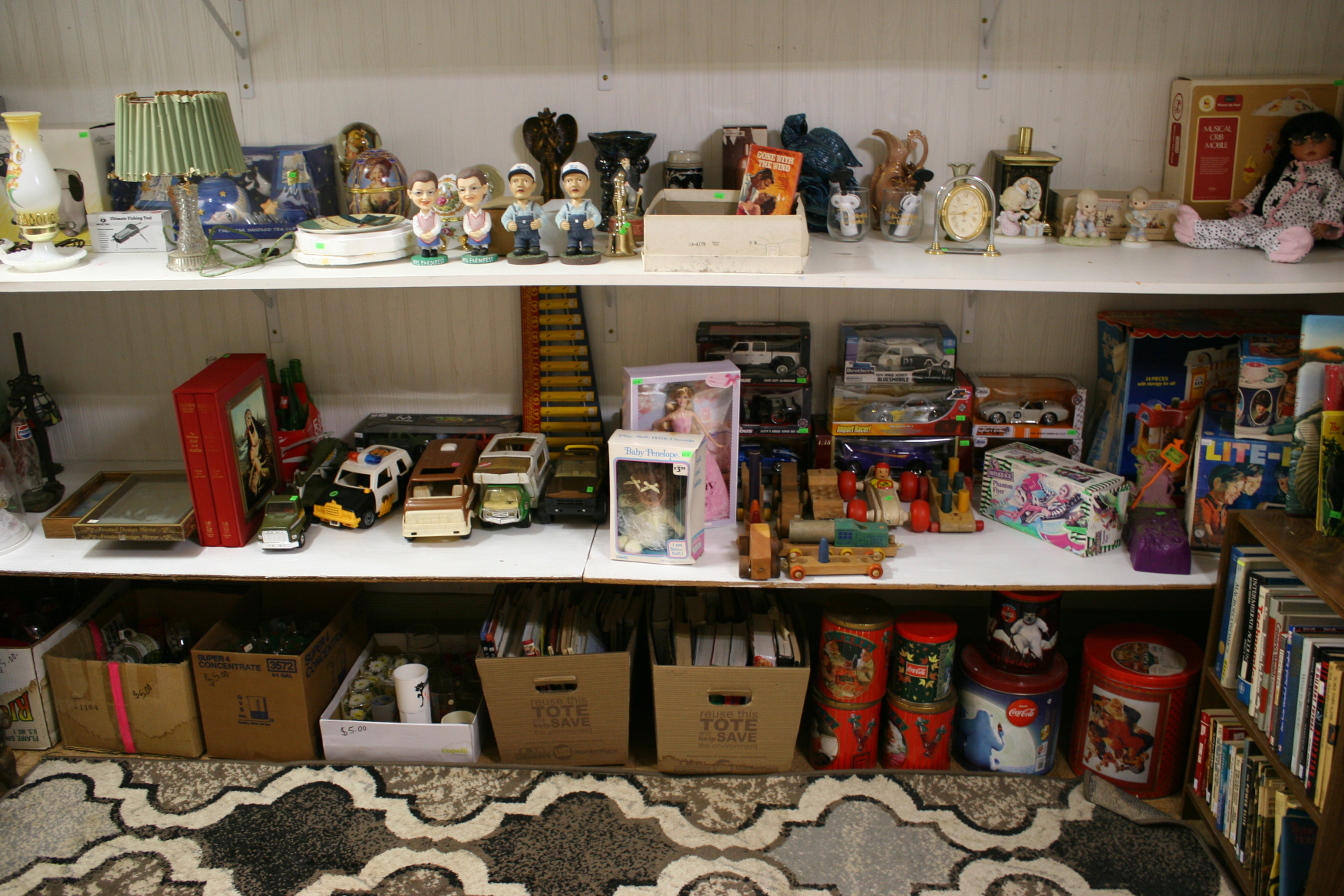
In the basement, an array of merchandise.
He’s friendly, outgoing, welcoming. Everything you want in a shopkeeper. But Nate also carries a sense of responsibility, it seems. He recently-returned to his home area after a stint with the military that took him around the world. He could have settled elsewhere. But he chose to return to his roots. (He graduated from nearby Wabasso High School, my alma mater, in 2004.) That says something.
Endless musical options…
We didn’t chat all that long. But my brief conversation with Nate gives me hope. Hope that his positive attitude, his efforts—including purchasing two arcade games—and his drive will ignite a fire of possibilities.
PLEASE CHECK BACK to read my thoughts on small towns and what draws me to them.
WE ARRIVED NEARLY A HALF HOUR early in the small southwestern Minnesota community. But I didn’t want to be late for my scheduled 10:30 am visit. So, after a brief tour around Belview and stopping for several photo ops, Randy pulled the van into the parking lot next to the low-slung building adjoining the city park.
I slid the back passenger side door open, camera secured over my shoulder, and grabbed a cloth tote bag from the seat. Inside I’d stashed several family photos, my bible, a devotional and two pictures colored by my nearly 5-year-old granddaughter. Randy eased out a vase of flowers secured in a bucket.
Then we headed across the parking lot on this Saturday morning in March, aiming west a short distance to the front entry. I looked for the doorbell I was told to ring. I pushed the button. We waited, the cold prairie wind sweeping around the care center. I shivered. Randy punched the button again. Peering through the double glass doors, I saw figures at the far end of the hallway. Soon a woman approached and invited us inside. I leaned into the heavy interior door, barely able to push its weight inward.
Once in the building, staff checked us in, took our temps, asked if we were experiencing any symptoms of illness. Apparently I didn’t answer. “If you were, you wouldn’t be here, right?” the young aide prompted. I nodded. Then I grabbed the goggles I was told to take and slipped them over my prescription eyeglasses with some hesitancy.
AN EMOTIONAL MOMENT
That’s when I saw her. My mom. Staff wheeling her across the carpet toward me. A short distance from her room to our designated meeting spot in the day room. In that moment, profound emotions overtook me and I cried. Not uncontrollable crying. But crying that represented a year of separation. One year had passed since I last saw Mom face-to-face. “Are you OK?” a staffer asked with concern.
I was. And I wasn’t. I understood that I needed to pull myself together, that this was not about me and how I felt, but about my mom. My arms ached to reach out and hug her, to hold her hand, to touch her and never let go. To kiss her cheeks.
RECONNECTING
Staff wheeled Mom to the end of a table in the day room. Randy and I were advised to keep a six-foot distance. We knew enough to keep our masks on. A screen provided some privacy. But I was cognizant of people occasionally moving on the other side. Yet, it really didn’t matter. I was here. In the same room with my sweet mom. Randy and I would have 15 minutes with her together before he had to leave and I could move into her room for a compassionate care visit. Mom is in hospice.
Mom’s health is such that conversation with her is one-sided. Us talking. Her listening, if she could hear us over the whir of her oxygen machine. Randy and I talked in raised voices. And when I showed her photos of my grandchildren, her great grandchildren, the skin around her eyes crinkled, indicating a smile beneath her face mask. There were more smiles and moments of connection, of understanding, of recognition. And those were enough to bring me joy. And her, too. I could see it in her reaction.
When Randy told Mom goodbye, she didn’t understand why he had to leave. Mercifully, her cognition and memory are such that she doesn’t comprehend COVID and all that entails, including the reason we haven’t seen her face-to-face in exactly one year.
CURIOUS GEORGE AND GOOD SAMARITANS AND A SMILEY FACE
Mom holds her Curious George.
We moved to her room, me carrying the vase of vivid flowers. Once there, I asked the aide to switch off the Curious George DVD playing on the TV. Mom was already fixated on the cartoon, which she loves. A stack of DVDs featuring the mischievous monkey rested on a table below the television and a stuffed animal Curious George sat on a recliner in the corner. I picked it up and gave it to her and Mom cuddled the monkey on her lap.
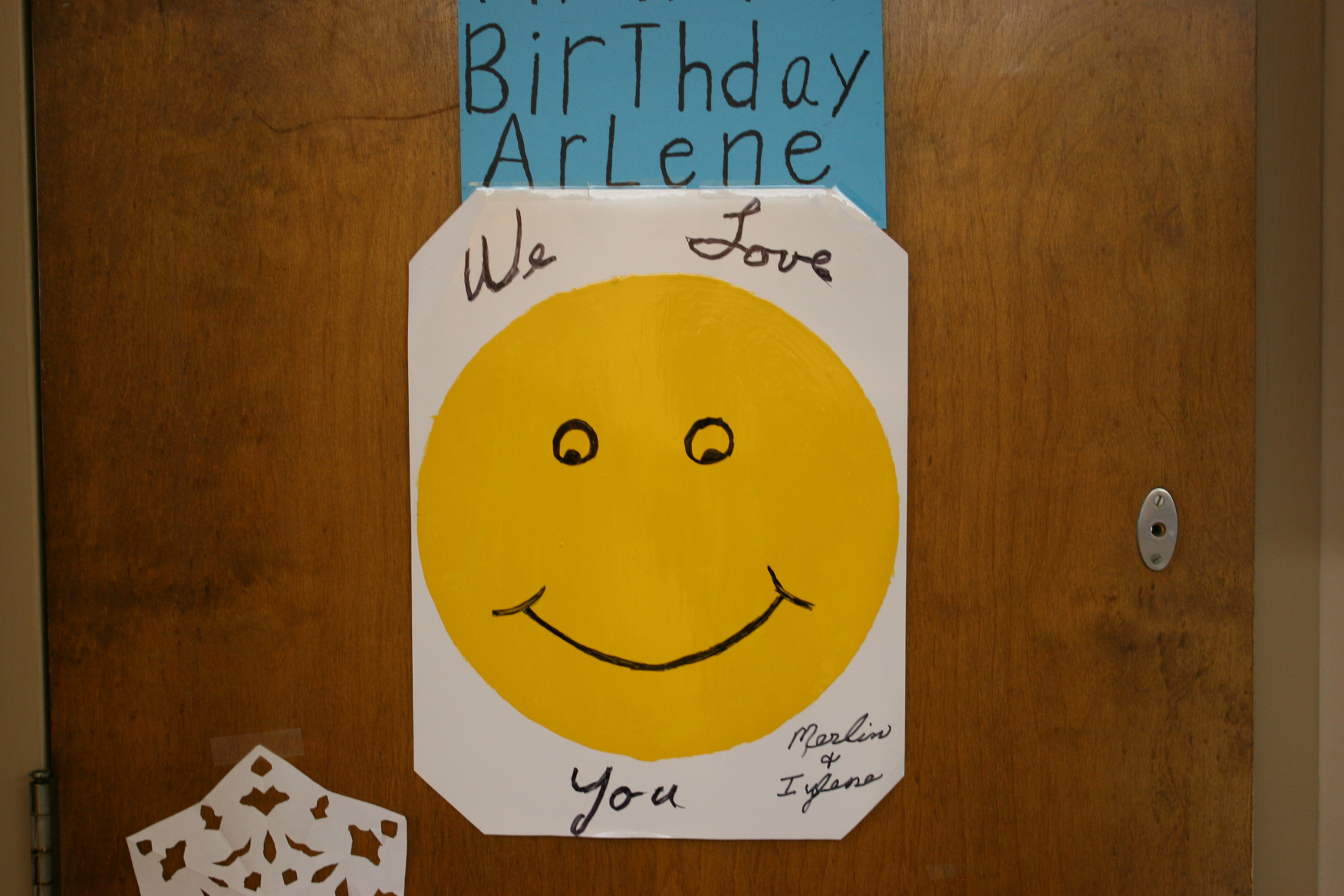
I looked around her room, bulletin boards crammed with family photos. I commented on the picture of Jesus the Good Shepherd that graced her bedroom wall on the farm. And I admired the bright over-sized smiley face posted on the bathroom door and felt gratitude to my aunt and uncle, who live just blocks away, for making this for Mom. Below, I saw a picture of a dog fish colored by my granddaughter in a rainbow of hues.
I talked with Mom about cream cheese roll-out cookies and my older brother sneaking ice cream from the freezer and eating it atop the haystack. She laughed. I talked about how she worked so hard to raise a family of six children and that now it was time for her to rest. Occasionally her eyes fluttered shut and I could tell she was growing tired. I continued to talk on other topics, although I’m uncertain how much she heard or comprehended. Yet, I have to think my mere presence, the sound of my voice, comforted her.
A staffer popped in for a moment, praising Mom for eating her pancake and drinking her juice and milk at breakfast. “Good job, Mom,” I said, feeling like I was the mom and she the child. And, in many ways, that would be accurate.
Soon the staffer returned and handed me a sheet of paper and said Mom might like it if I read some of the information thereon. My eyes landed on a story about Neil Sedaka, then quickly shifted to an article about National Good Samaritan Day on March 13. I scanned the piece, chose tidbits to share about the Good Samaritan parable from the bible. To show kindness. To help others. It seemed fitting for this day, in this small town care center where staff show great compassion. I will always feel grateful to the healthcare workers and other staff who have cared for my mom like a family member.
SAYING GOODBYE
The smiley face poster, from Mom’s in-laws, on the exterior bathroom door.
As time ticked toward 11:30 and lunch and the end of my hour-long allotted visit, I knew I needed to leave. “I have to go. Maybe next time I can take you outside so you can hear the birds, see the trees.” Mom smiled beneath her face mask. “I love you, Mom.” Tears brimmed.
“I love you,” she replied. Her words felt like a hug, a kiss. Bringing us together after a year of separation caused by a pandemic.
In the doorway I stopped, turned for one final look at Mom. “I love you,” I repeated, then crossed the lobby to the staffer monitoring the front door. “I’ll need you to sign out,” she said. By then I was already crying, barely able to find a pen to note my departure time. I thanked her, observed the compassion in her eyes.
Then I walked into the sunshine of an incredibly beautiful Saturday in March in southwestern Minnesota. I turned left toward the parking lot where Randy waited. I opened the van door, swung onto the seat, removed my face mask and then sobbed uncontrollably, shoulders heaving, face in my hands. Emotionally-exhausted.
I photographed my mom’s hands during a visit with her about a month ago. Minnesota Prairie Roots file photo.
THE FIRST TIME I READ their messages on Facebook, I cried, an unexpected eruption of mixed emotions.
These are difficult days when separation from loved ones challenges all of us. Sure, we can tout technology. But what if you live in a senior living center—assisted living or a nursing home or a senior apartment—and you can’t directly connect via technology? Then what?
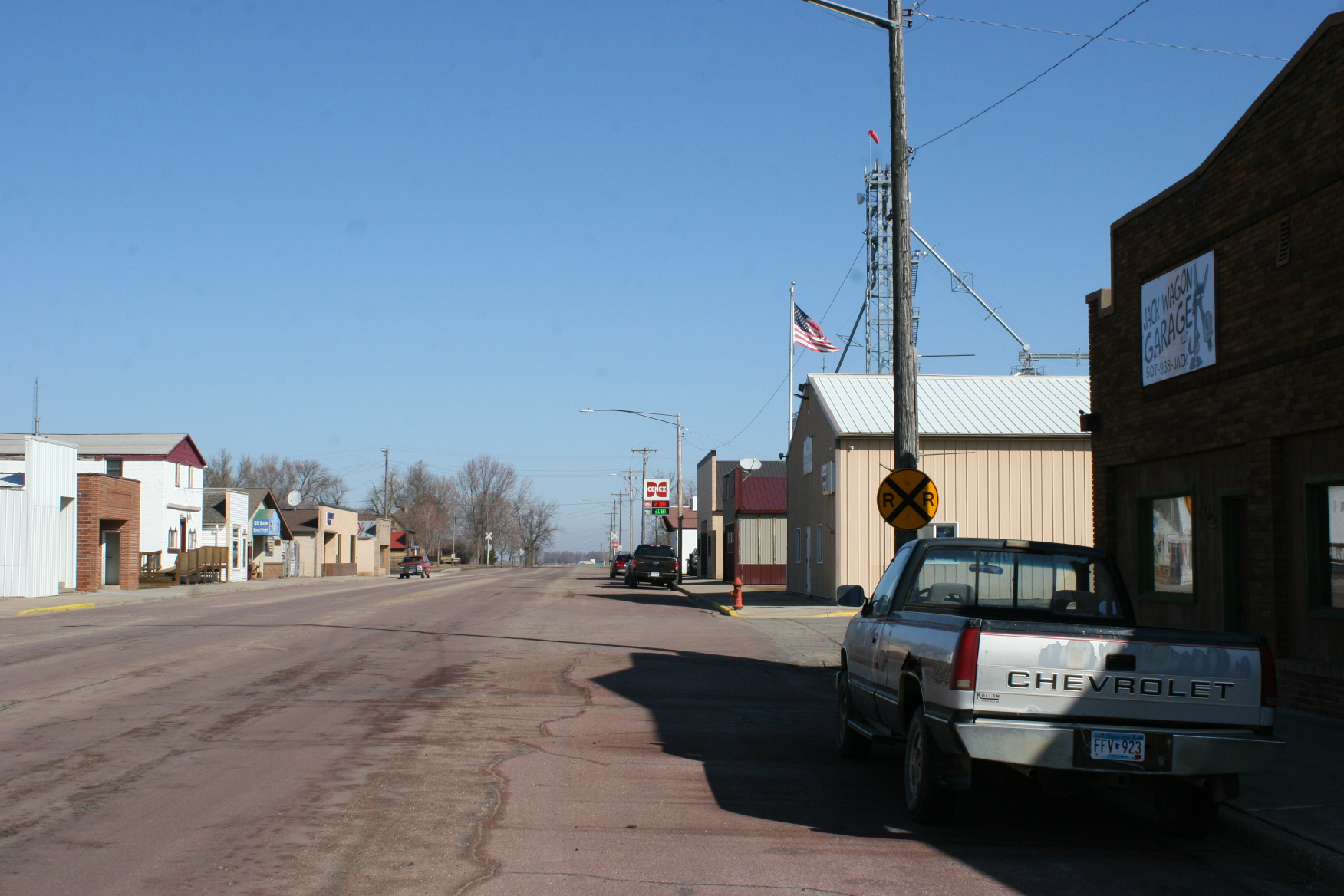
Downtown Belview, Minnesota, photographed in November 2019. Minnesota Prairie Roots file photo.
I love what Parkview Senior Living in Belview, a small town in my native southwestern Minnesota, is doing to connect residents to loved ones. Parkview holds a special spot in my heart. My octogenarian mom lives there, where she is on hospice. I last saw her the weekend before the care center closed to visitors in an effort to protect residents during the COVID-19 crisis. Given her current health, I doubt Mom fully understands what’s happening in the world. And that’s OK. She’s lived through enough challenging days in her life-time.
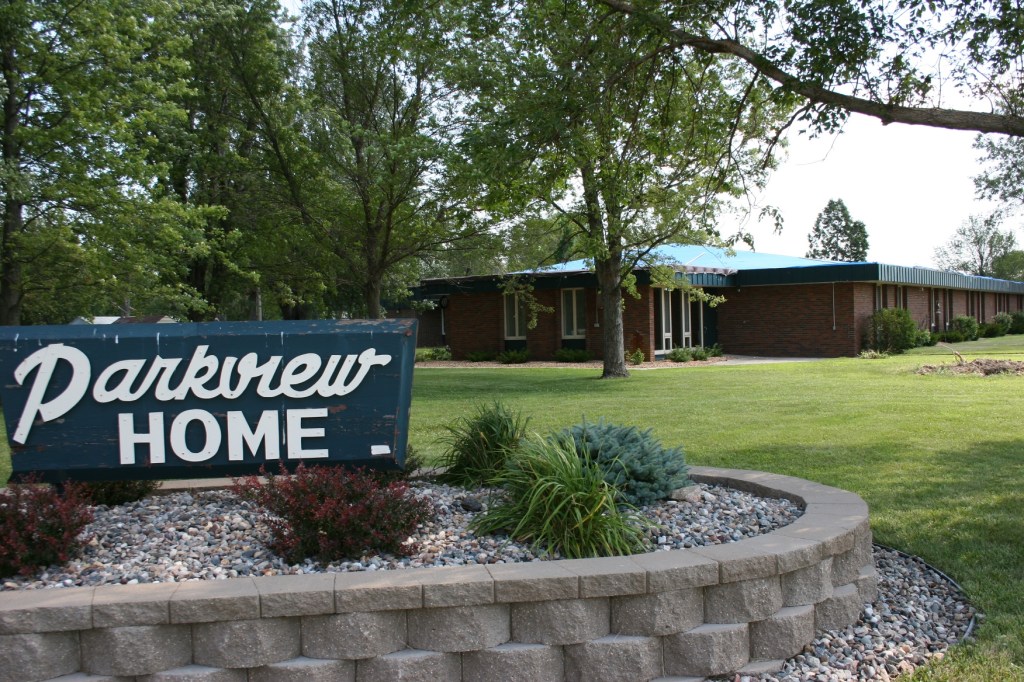
This file photo shows the nursing home section of Parkview Senior Living. At the time I took this photo, the center was closed due to damage caused by a tornado which struck Belview in 2011. Thus the blue tarp on the roof. Minnesota Prairie Roots file photo 2011.
But back to Parkview’s efforts to connect. On its Facebook page, this senior living center has posted photos of residents holding signs with messages for their loved ones. I recognize many of the people, having met or seen them while visiting Mom. Parkview is small. I’ve always appreciated the feels-like-family atmosphere. Mom and others living here are well cared for and loved. That comforts me during this time when I can’t visit. Or even call, because Mom can no longer communicate that way.
Kudos to the staff for photographing residents holding signs that begin with I want you to know…
The responses are both encouraging and difficult to read. Nearly every person shares how much they miss their loved ones. That’s to be expected.
I cried when I saw my mom’s photo and message. “I love and miss you all. Hope to see you when this is all over. I enjoy when we get together it doesn’t happen often enough.” And then I cried again as I scrolled through the photos and read the I want you to know…from other residents.
WAITING, HOPING…
Fern says, “…even though you look good through my window, I hope you will be able to come see me soon.”
“…Hope you remember me,” writes Grandma Bea.
And from John, who rolled his wheelchair into my mom’s room during my last visit, comes this. “When this clears up, come and see me when you can…maybe in June?!!”
HOW THEY’RE DOING
Most say they are doing OK, well, good. But not Barb. Her message reads: “Being given all the TLC of my awesome staff and family. I am doing ‘super fantastic.’” I love Barb’s upbeat attitude.
Andy also praises Parkview. “I’m doing good…the nurses are good and also the food.” But then he offers this advice. “Stay out til this is over.” Gotta appreciate that directive from a man who’s lived a few years.
Minnesota Prairie Roots file photo.
Talbert isn’t thinking about himself. Instead, he asks, “Donald…how are the cats doing?
WHERE THEY’D RATHER BE
If Hazel had her way, she’d be outside. On the farm.
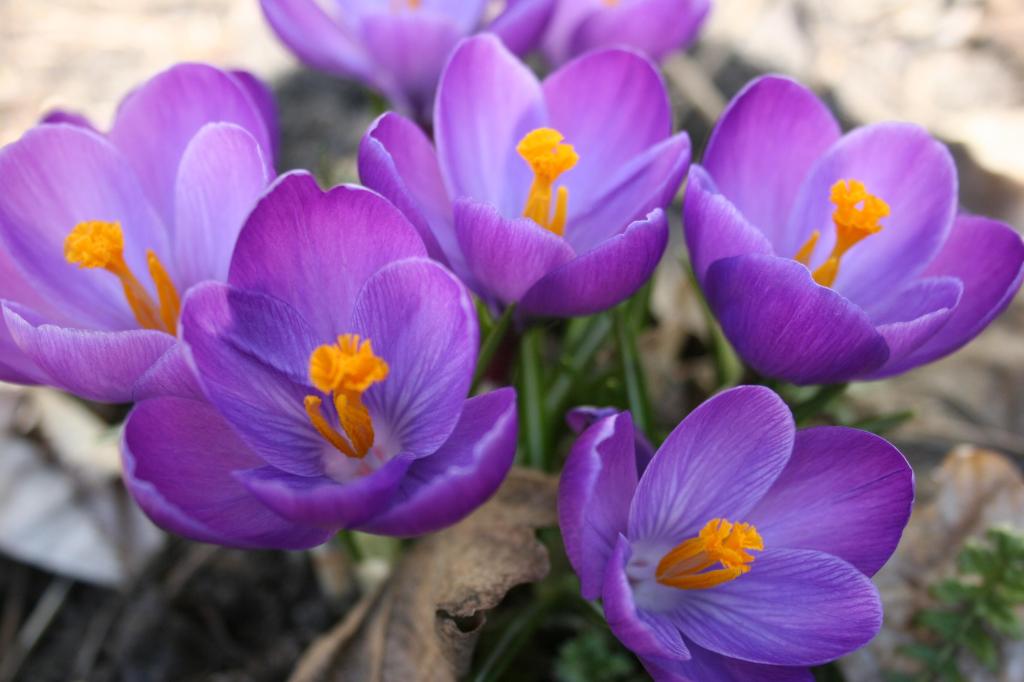
Minnesota Prairie Roots file photo of crocuses.
And Beata, well, she’s hungry for lefse. This is a strong Norwegian community. And she’d like to be running outside picking crocuses. That made me laugh. In the midst of this global pandemic, these seniors are thinking about the simple joys in life. Maybe we could all learn something from them.
BECAUSE IT’S GOOD TO LAUGH
Humor, in my opinion, helps. Laura, from my hometown of Vesta, offers this message: “I miss your jokes, but not your needle pokes. I saw the Easter Bunny today. He looked to be healthy! He was wearing a mask, yet I think he will be ready to go on with Easter…” A little poetry. A little humor. And then this poignant ending: “We are home sick for you all!”
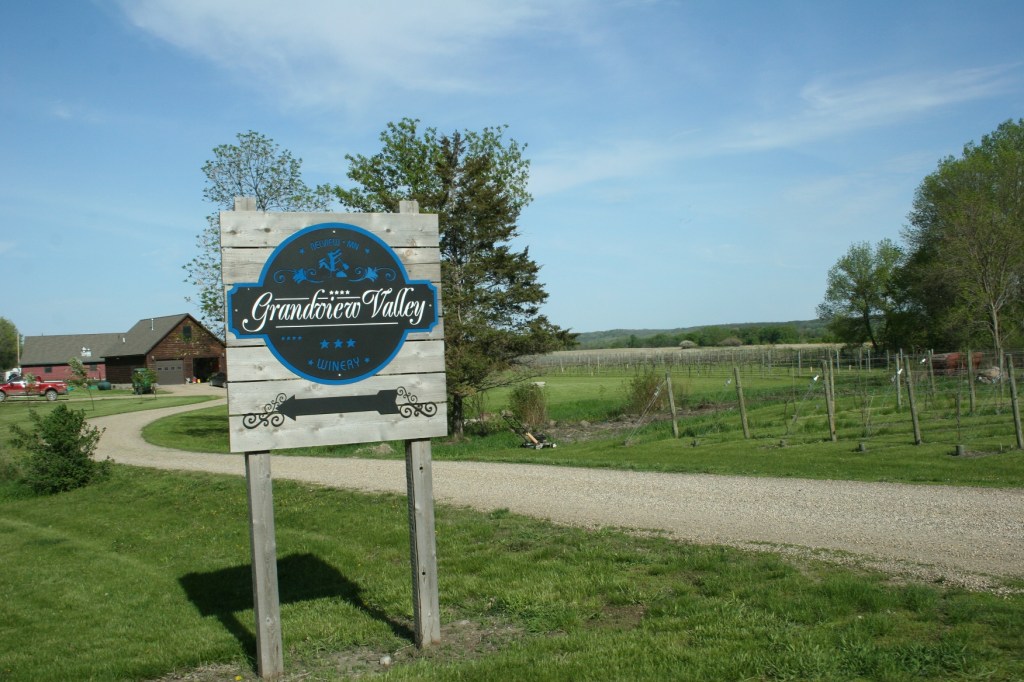
Grandview Valley Winery north of Belview. Minnesota Prairie Roots file photo 2014.
Many residents are connecting with loved ones via phone. They are reading and solving word puzzles. And praying. And they are thinking about better days. Especially Judy, who shares this message: “I’m doing okay. Looking forward to going out for a meal and a glass of wine when this is over.”
Me, too, Judy. Me, too.
TELL ME: If you have a loved one in senior living, how are you staying connected during this global pandemic? I’d love to hear your stories.
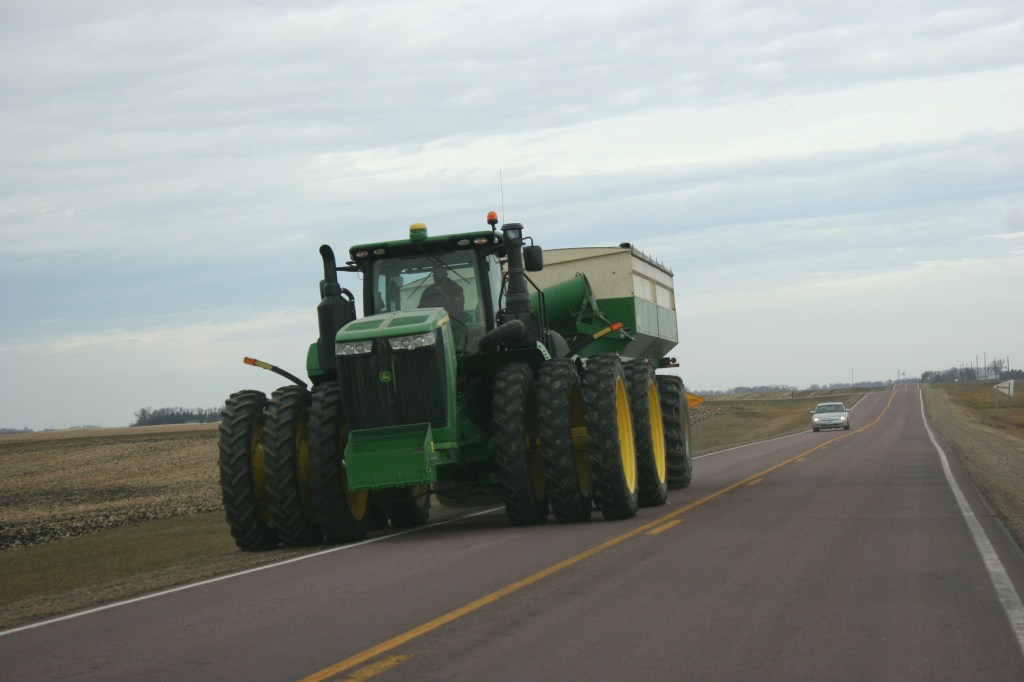
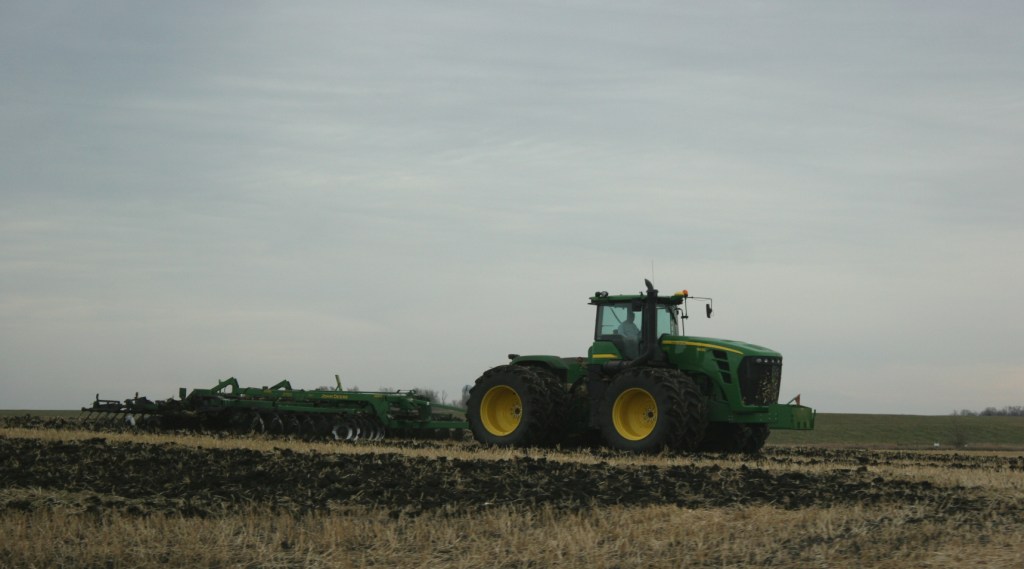
Just a few miles south of Belview, a John Deere tractor travels along a county road.
SOUTHWESTERN MINNESOTA. It is the place of my roots. The fields. The small towns. The people. The land. The sky. Even the wind.
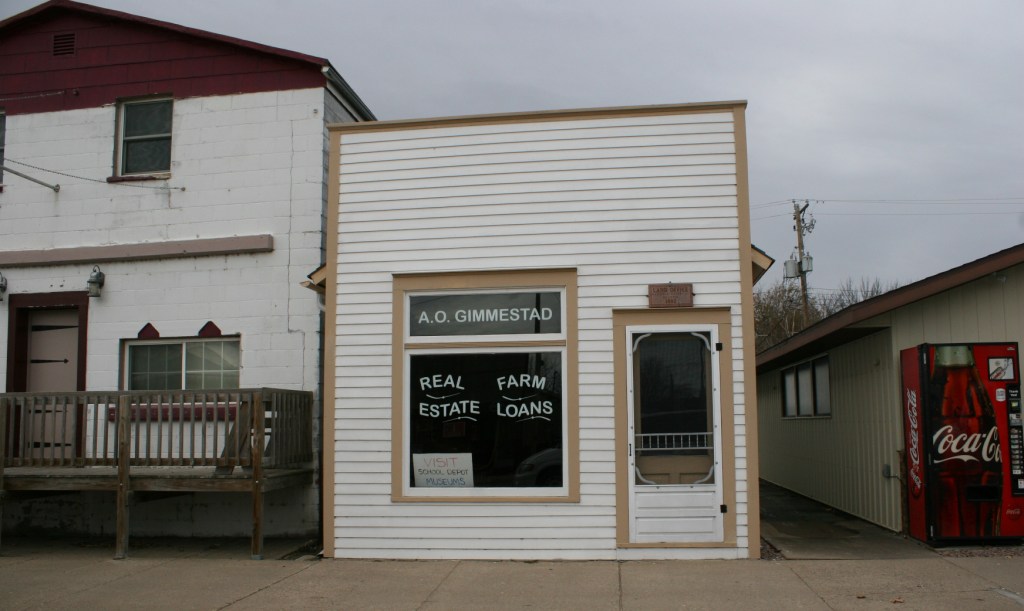
A real estate and farm loan office in downtown Belview.
When I return here, I return with a sense of nostalgia. With memories. With a fondness for all this wide and spacious place represents to me. Yes, I admit to looking through a rose-colored lens, too often forgetting the challenges of living in rural Minnesota.
I love the colorful art on this antique shop in Belview, Minnesota.
But I prefer to focus on the comfort that going back home brings to me. A sense of calm. A sense of peace. A sense of quiet in a sometimes too chaotic life.
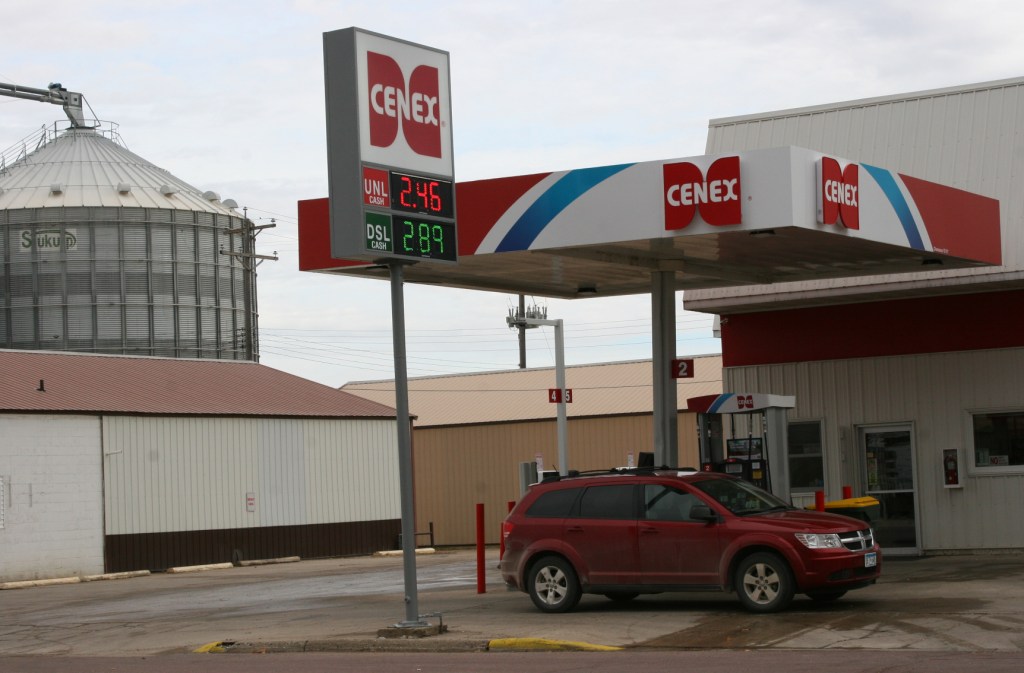
The local gas station/convenience store in Belview, next to the grain elevator. An important place since there’s no grocery store in town.
Small towns have their issues. Just like anywhere. But they also have the positives of a strong sense of community, of loyalty, of grit and determination. Agriculture weaves into every aspect of these small towns. Like Belview, rooted in agriculture. You see that influence in the businesses along Main Street.
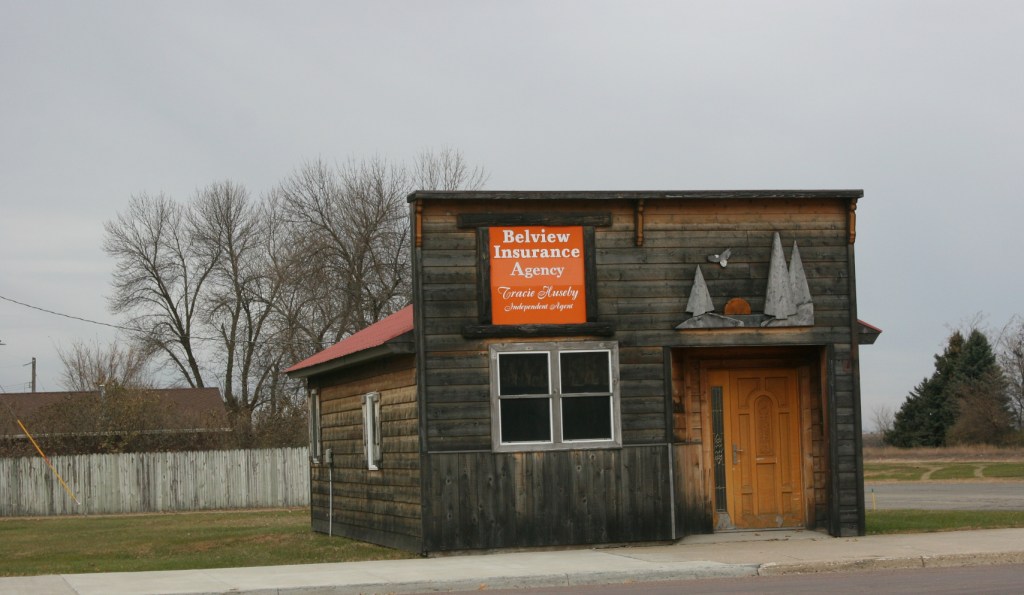
Another Belview business.
There is comfort in seeing that, despite e-commerce and regional shopping centers, rural communities manage to hold onto local businesses. I often wonder how long. And that is a question only those who live in these communities can answer.
TOO MUCH TIME HAS PASSED since I’ve explored small towns with my camera. Things happens and we get diverted by more important matters that require our full attention. So life goes. But life is settling somewhat now and I have time to pause and take in the nuances of places, which I love to document.
This past weekend Randy and I traveled 2.5 hours west to my native Redwood County to visit my mom in a senior living center. But before we pulled into Parkview, we swung through the heart of Belview, population around 350. It’s a small farming community on the southwestern Minnesota Prairie.
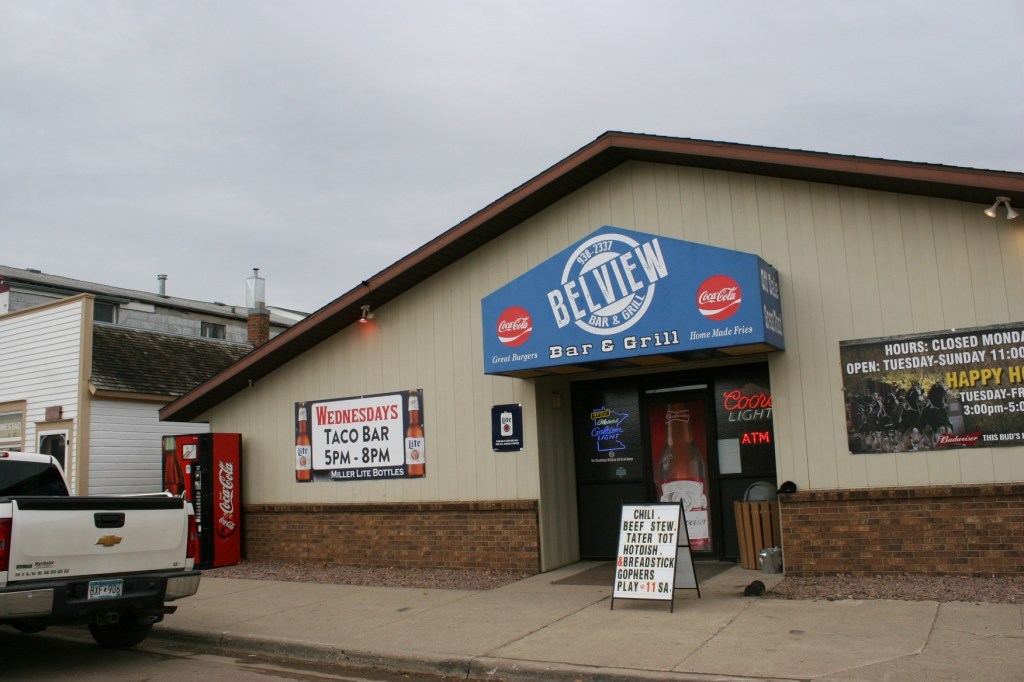
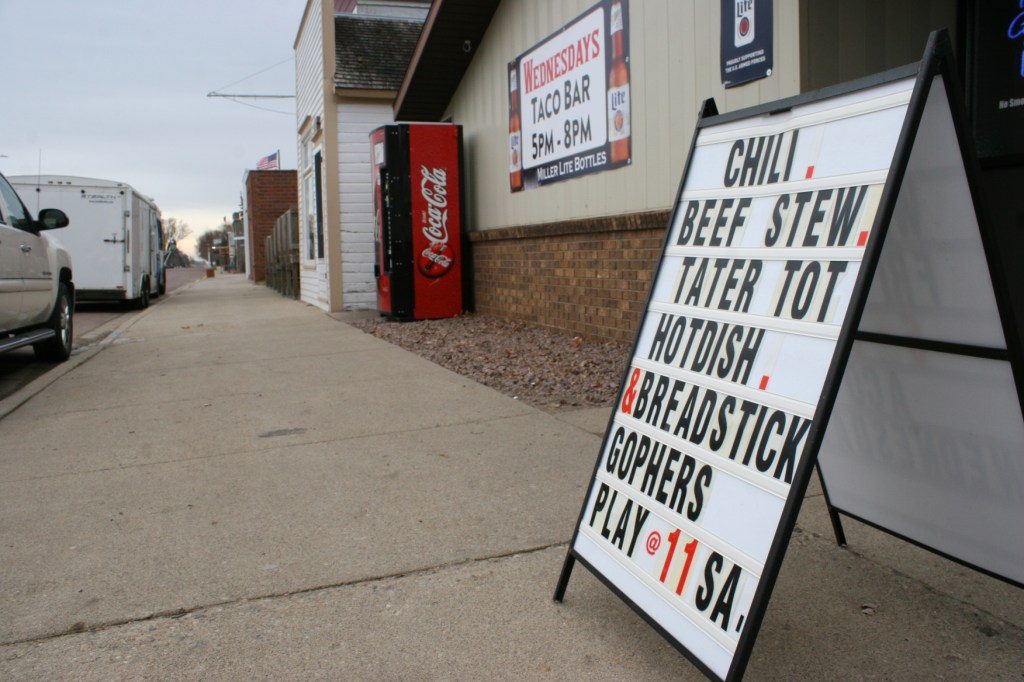
The sandwich board caught my attention as we drove by.
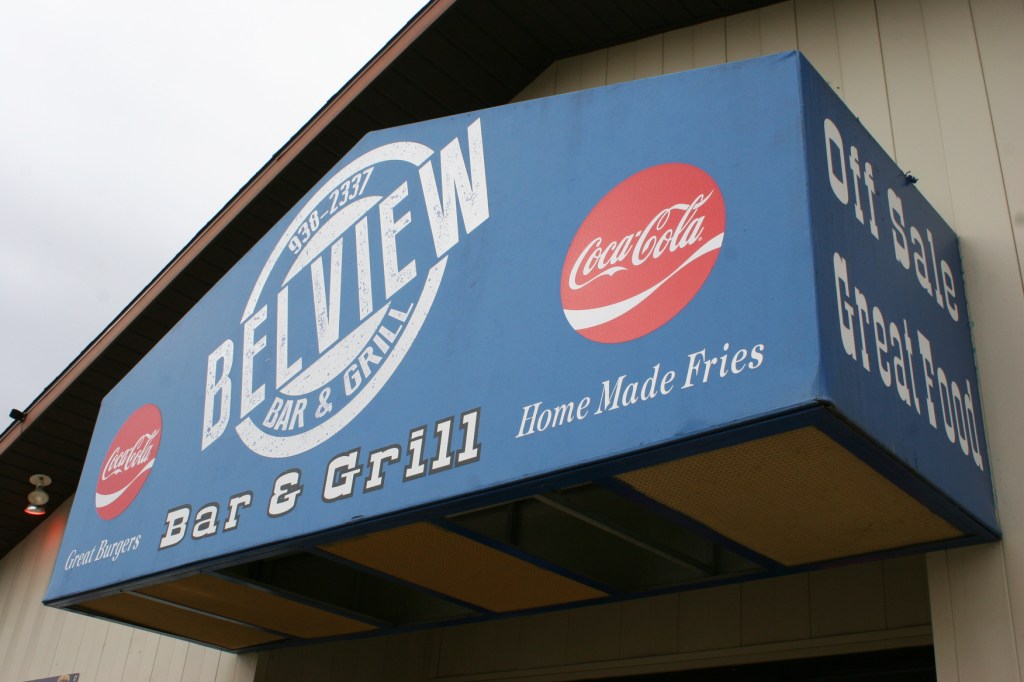
Belview did not disappoint. I spotted a sandwich board outside the Belview Bar & Grill that required a stop and a few quick photos. The sign was, oh, so Minnesotan with a menu listing that included Tater Tot Hotdish. We joke about our hotdishes here in Minnesota. That would be casseroles to those of you who live elsewhere. Hotdish ingredients here lean to hamburger, pasta/rice/tater tots and a creamy soup (mushroom/chicken/celery) to bind everything together. Spices? Salt and pepper.
The sign also promoted the University of Minnesota Gophers football game at 11 that morning. The Gophers went on to defeat Penn State.
At some point in Minnesota culinary lore, Tater Tot Hotdish became our signature hotdish. I don’t know that it still holds such high esteem. I much prefer Minnesotan Amy Thielen’s more savory and complicated Classic Chicken Wild Rice Hotdish.
While I’ve not eaten at the Belview Bar & Grill, I will always choose a home-grown eatery over a chain.
But others, I expect, still embrace the basics of that solid and comforting tater tot-topped hotdish. Belview Bar & Grill advertised the dish, along with chili and beef stew, as hunters’ specials. That would be deer hunting. I saw a few orange-attired hunters in Belview, including two who stopped at the senior care center to drop off lunch for an employee.
These are the small town stories I love. Stories that I discover simply by observing, by listening, by gathering photos that document everyday life.
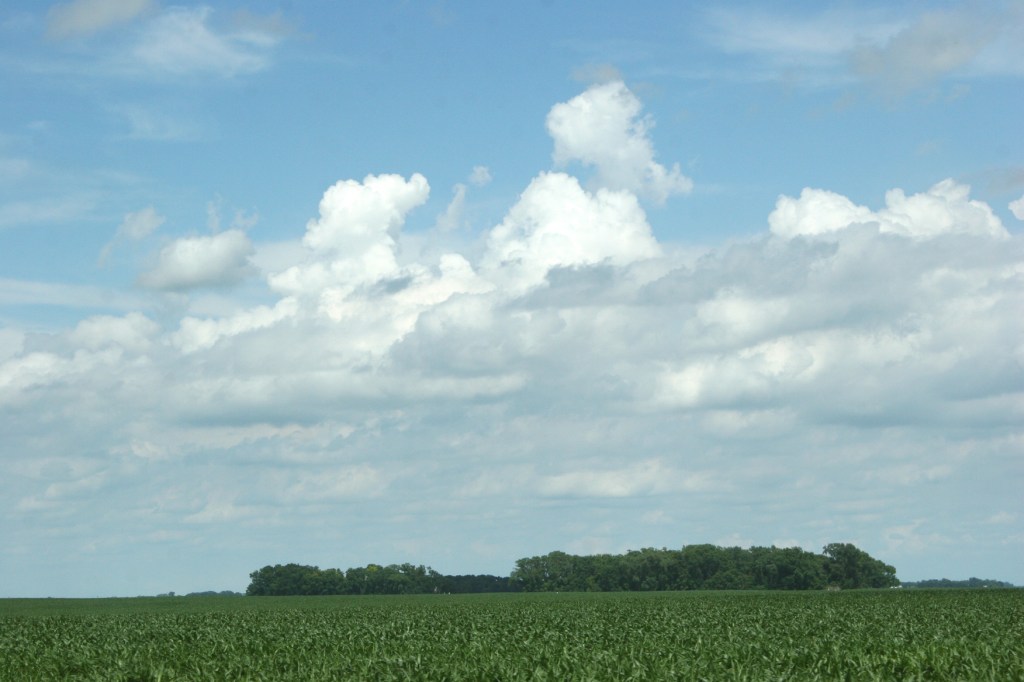
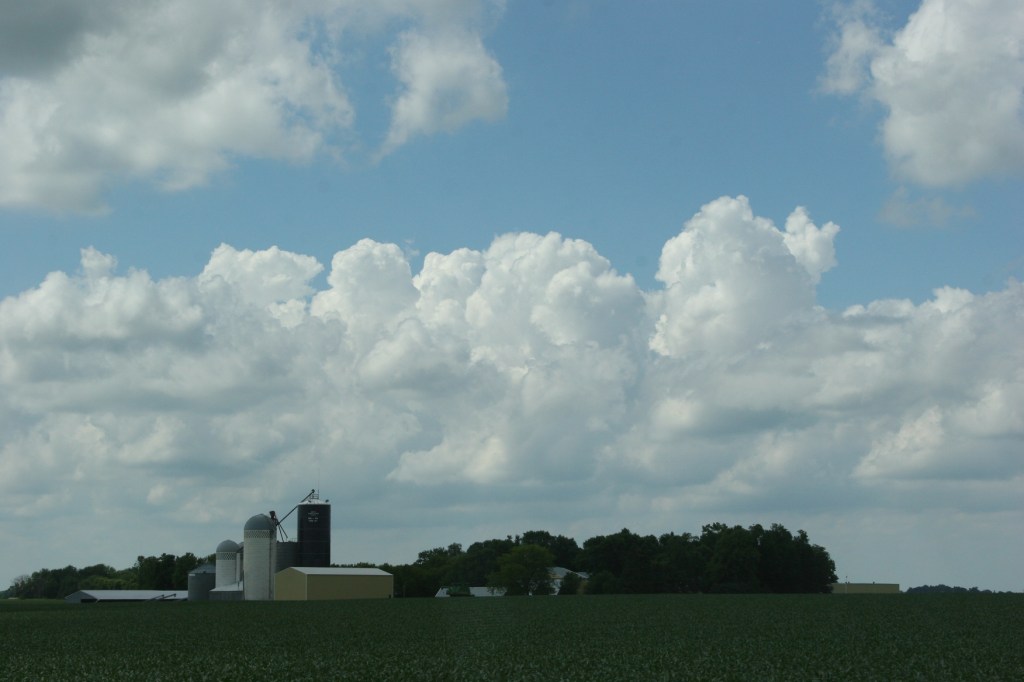
Farm fields stretch as far as the eye can see under an expansive sky in southwestern Minnesota.
TRAVEL MY NATIVE RURAL southwestern Minnesota as I did several days ago, and you will see vast fields of corn stretching across the landscape. Here you will find some of Minnesota’s richest and most fertile soil. Here corn and soybeans dominate.
A flooded field photographed on July 3 just east of Belview in Redwood County, Minnesota.
In a particularly challenging growing season of late spring planting followed now by too much rain, farmers hope still for a bountiful harvest. Even as they view fields resembling lakes. But to be a farmer is to hold optimism.
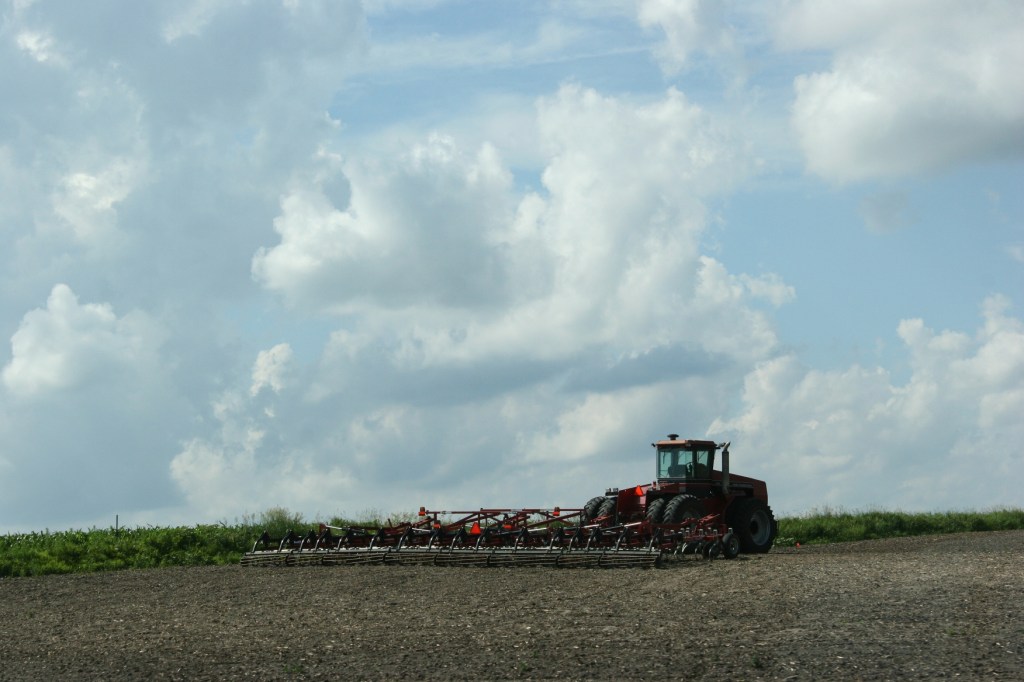
A tractor and digger parked in a field along Minnesota State Highway 19 between Redwood Falls and the Belview corner.
Everything in these small communities centers on a farming economy. In years of good yields, businesses benefit. In years of low yields and low prices, small towns suffer. It is the cyclical nature of farm life in rural America.
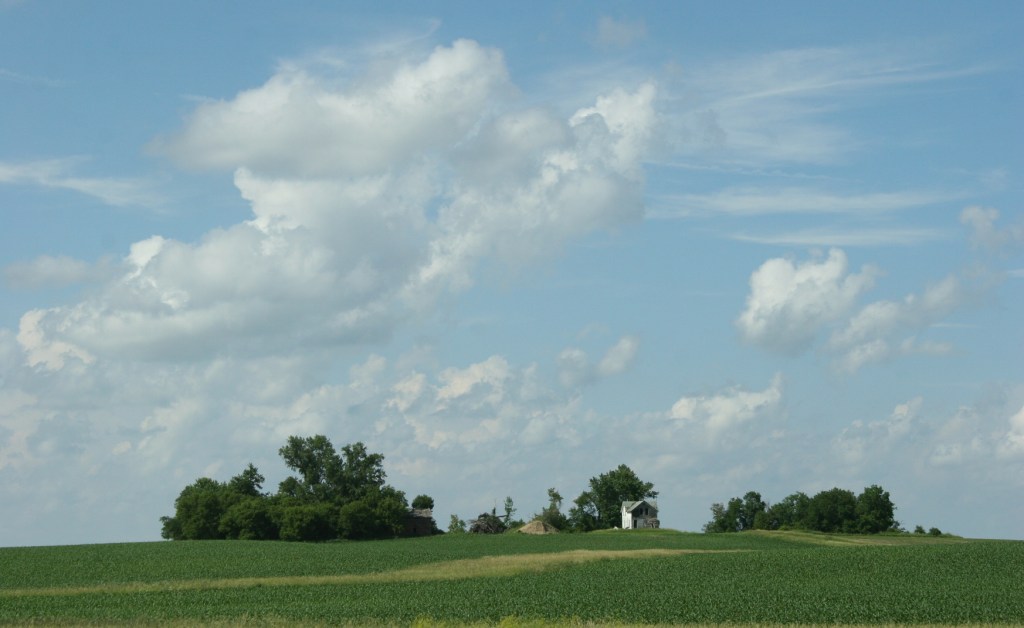
An abandoned farmhouse sits atop a hill along Minnesota State Highway 19 near the Belview corner.
There’s much to appreciate about this rural region that roots me and grew me into a writer and photographer. Folks value the land and embrace a strong sense of community and of place.
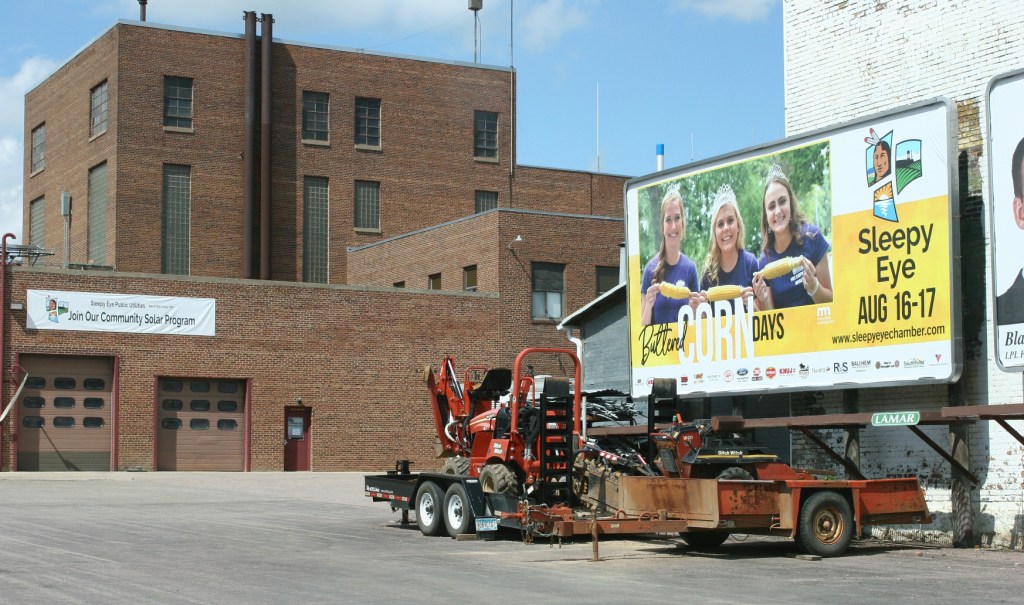
Promotional billboards along U.S. Highway 14 and State Highway 4 in downtown Sleepy Eye.
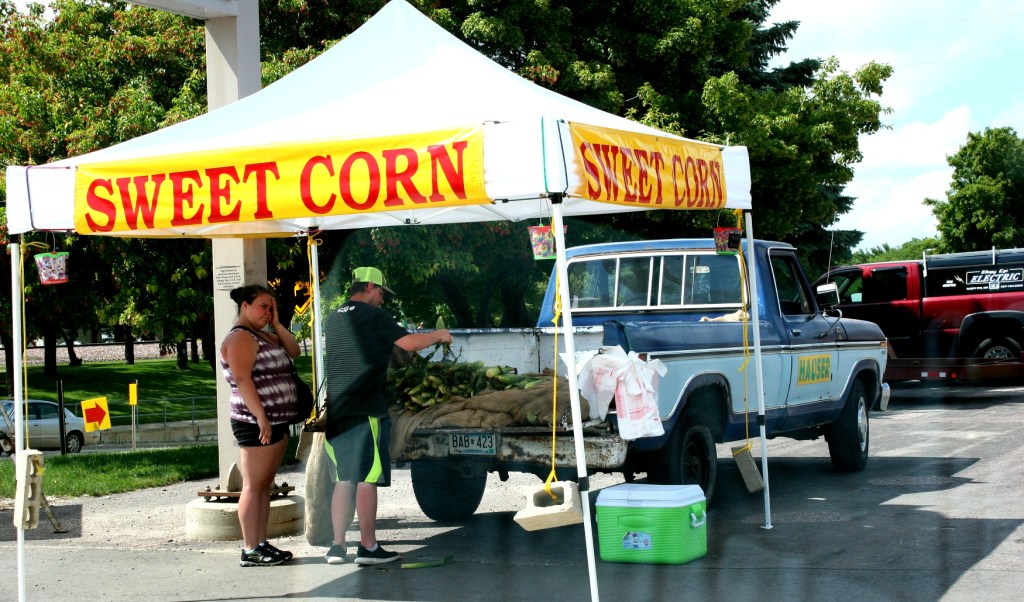
Vending sweet corn in downtown Sleepy Eye on July 3.
Sweet corn season has just begun in Minnesota with roadside vendors pulling into parking lots and alongside roadways to sell fresh sweet corn from the backs of pick-up trucks. Farm to table at its most basic.
In a public visiting space at Parkview Home…
In the small town of Belview even farther to the west in my home county of Redwood, a single stalk of DeKalb field corn stands in a five-gallon bucket inside Parkview Home where my mom lives. I laughed when I saw the corn stalk with the notation of planted on May 13. Back in the day, corn growth was measured by “knee high by the Fourth of July.” Corn, in a typical year, now far surpasses that height by July 4. Not this year.
Silos and grain elevators are the highest architectural points on the prairie.
I can only imagine how many conversations that single corn stalk prompted at Parkview where most residents grew up on and/or operated farms. It’s details like this which define the rural character of a place and its people.
I APPRECIATE THE ODDITIES of small towns. If oddities is the correct word.
But there are things you can do in rural communities that you can’t in others much larger.
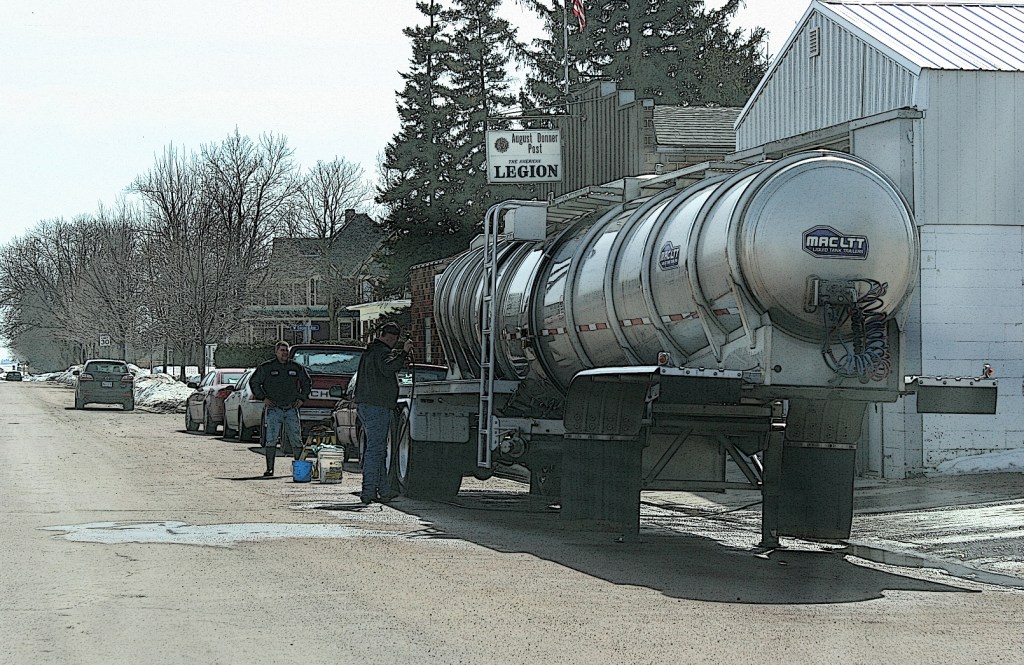
For example, while driving through downtown Belview, Minnesota, on a recent Saturday afternoon, I spotted two guys outside the August Donnor American Legion Post washing a tank. One with a hose, the other with hands on hips. Supervising probably.
The scene seemed so iconic rural.
I snapped two frames while Randy and I passed by, returning from the Cenex just down the main street on the northern end of the short business district. I needed a cylinder of Pringles for my mom back at the city-owned care center. She’d asked for them. I found a few canisters in several flavors, a neon orange sticker pricing the potato chips at $2.39. That sticker in itself speaks small town.
I explained my mission to the clerk, who used to work at Parkview, whose mother was once my mother’s table mate in the assisted living part of the facility. That’s the thing about rural Minnesota, too. Lives weave into lives.















 Minnesota Prairie Roots
Recent Comments