Minnesota Prairie Roots

Writing and photography by Audrey Kletscher Helbling
Cozy in for some holiday storytelling at Books on Central December 15, 2025

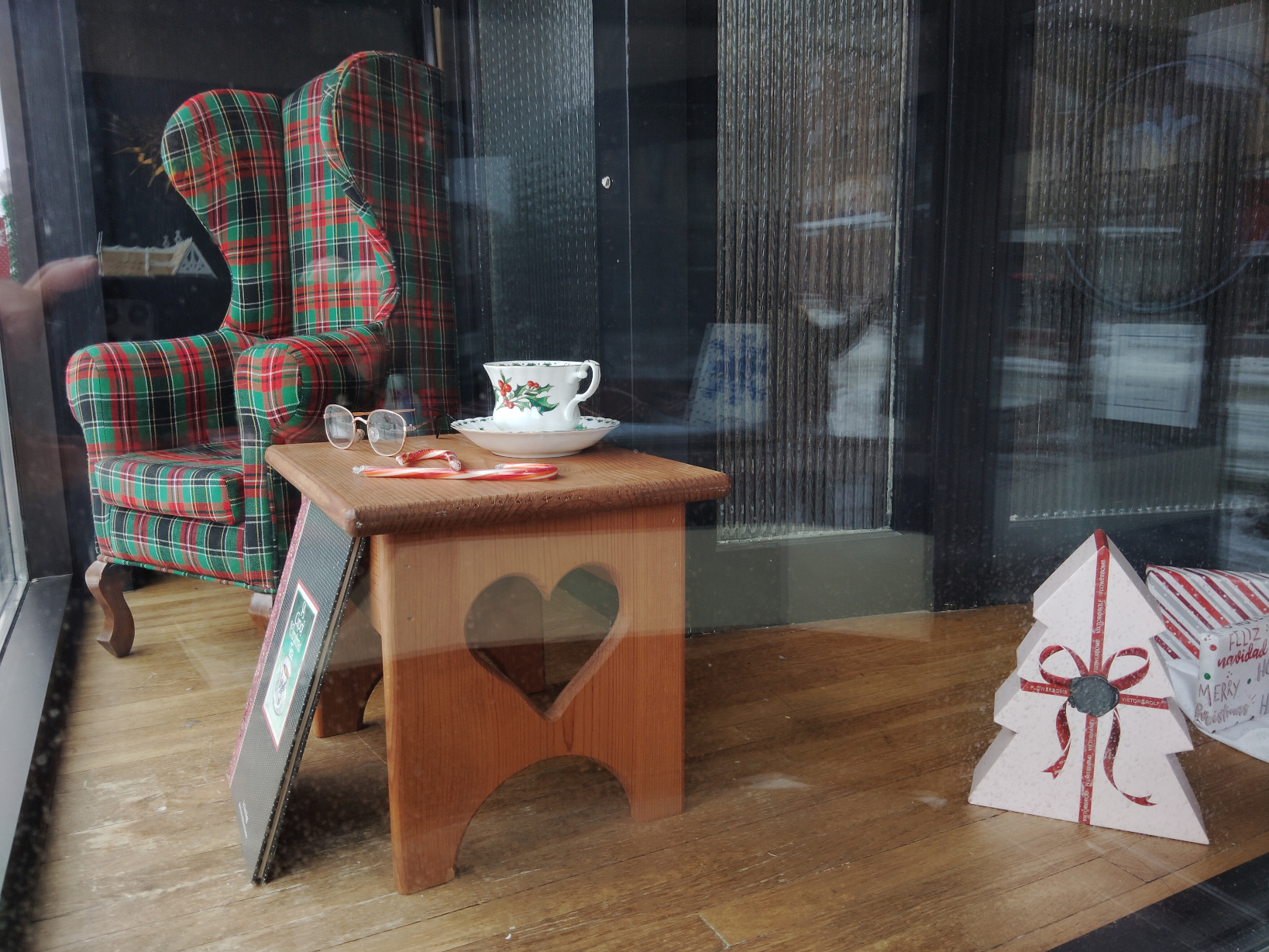
A storefront window display at Books on Central promotes an upcoming holiday reading. (Minnesota Prairie Roots copyrighted photo December 2025)

THE CADENCE AND RHYTHM of a book read aloud or a story told appeals to me. It’s as if the words become living, breathing characters, the setting vivid real-life scenes. Such is the power of the voice in interpreting words.

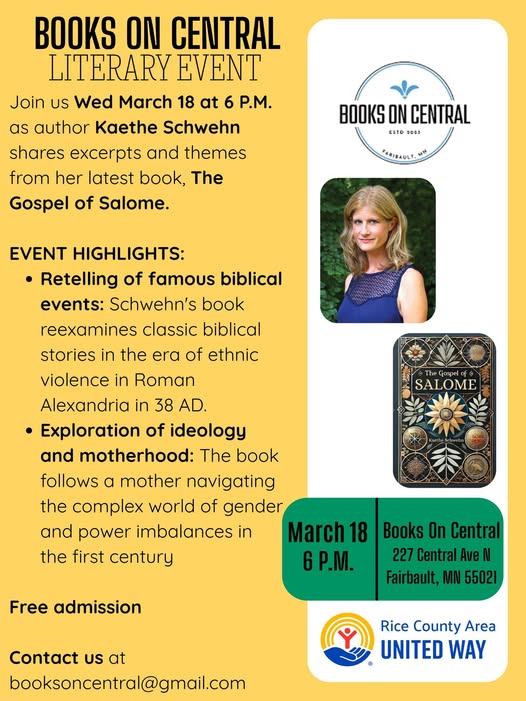
Wednesday evening, December 17, at 6 pm, two skilled local storytellers, Sam Temple and Tami Resler, will share their talents during a literary event at Books on Central in the heart of downtown Faribault. Holiday stories will focus their storytelling in the cozy bookshop centered by a chandelier inside a former jewelry store.

But the gems for the evening will be the stories that are sure to sparkle with the skills of Temple and Resler. I know both storytellers. They are genuinely kind, caring, joyful individuals who add much to our community.

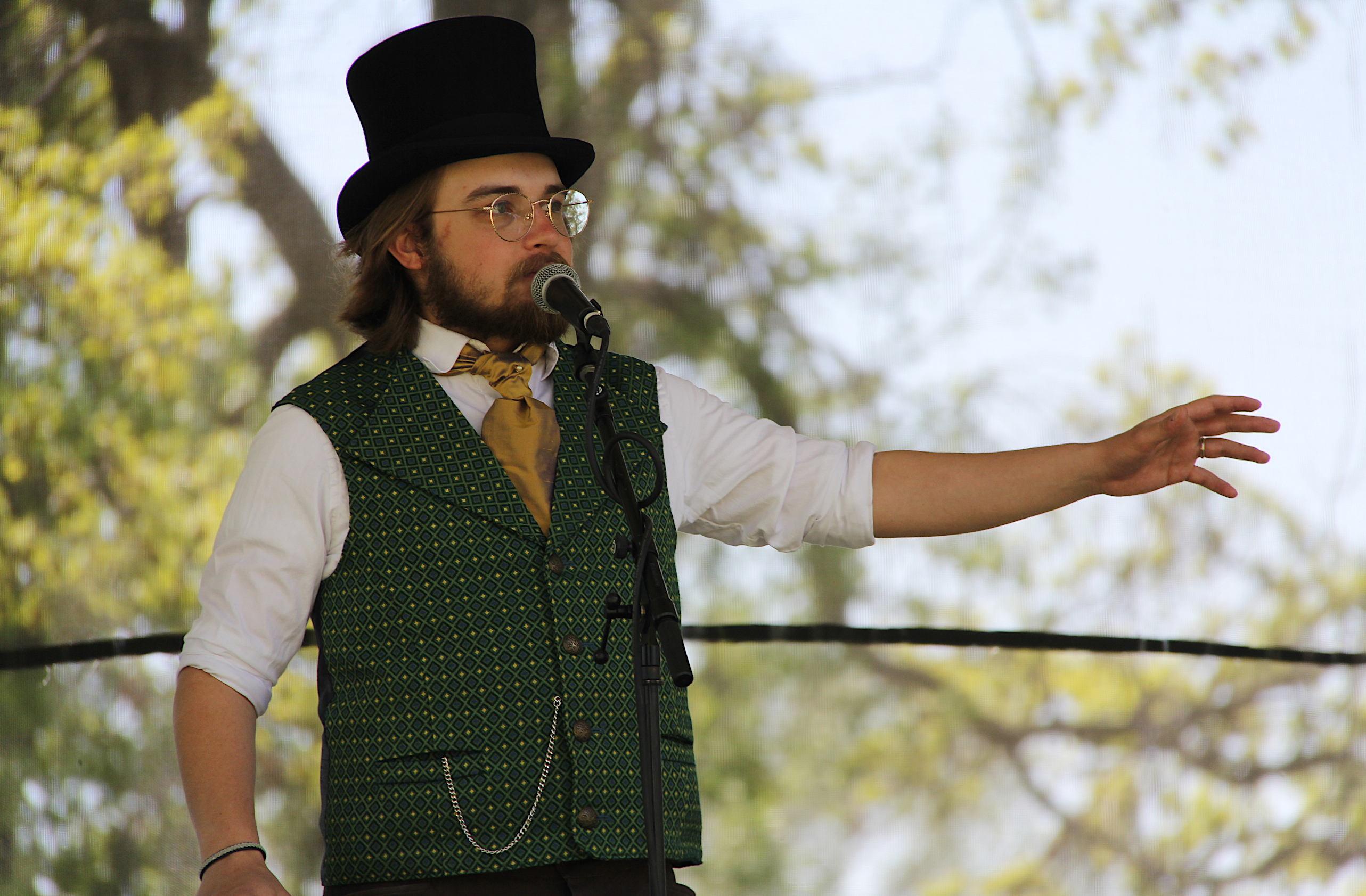
Sam Temple, as Alexander Faribault, shares local and Minnesota history during the Riverside Rendezvous and History Festival in Faribault earlier this year. (Minnesota Prairie Roots copyrighted file photo May 2025)

Temple, who heads Steamboat Media Company and manages Northfield Public Broadcasting, is big into local history. He’s created documentaries about Faribault history with fellow creative Logan Ledman. He’s portrayed town founder, Alexander Faribault, numerous times. He’s also acted and directed and does improv comedy with Little Fish Improv. I’m sure I’ve missed something. But you get the idea. Temple brings tremendous talent and knowledge to anything he does.

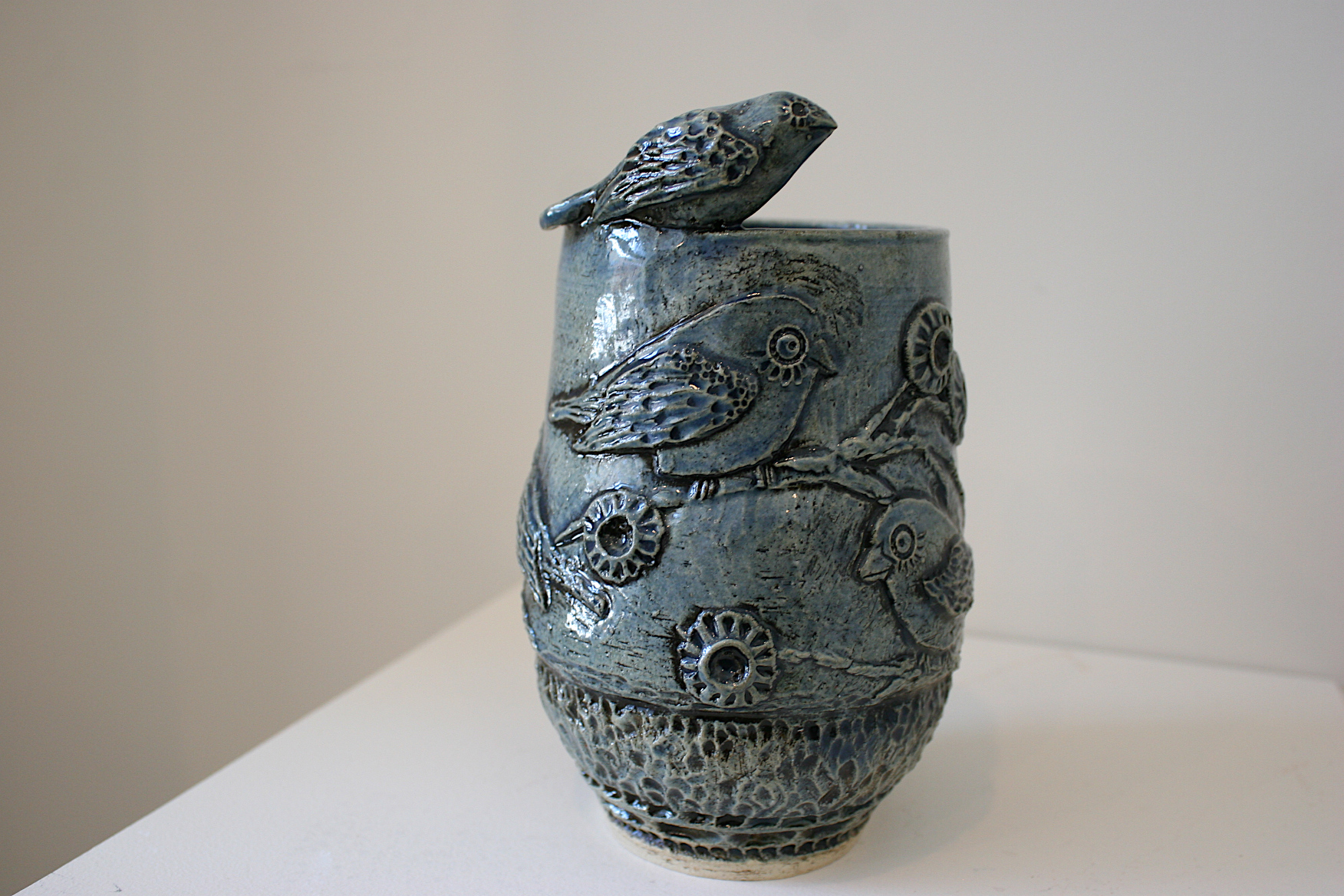
Tami Resler is a multi-talented artist. Here’s some of her pottery showcased in a gallery. (Minnesota Prairie Roots copyrighted file photo March 2021)

Likewise, Resler, a ceramics artist and educator at Shattuck-St. Mary’s School in Faribault, sparkles. I don’t think I’ve ever seen Tami without a smile. Her enthusiasm, I expect, will shine in expressive telling of holiday tales during the reading.

I encourage you, if you live in the area, to take a break from holiday preparations and settle into a chair at Books on Central this Wednesday evening. Relax. Delight in the comforts of a good story. Remember when you were read to as a child or when you read to a child. I hold fond memories of an elementary school teacher reading the “Little House” books by Laura Ingalls Wilder to our class each day after lunch. And I have read countless books to children, still do.

There is joy in books. And there is joy in listening to gifted storytellers who bring words to life with their voices.

FYI: Light refreshments will be served at this event, which is free and open to the public at 227 Central Avenue North, Faribault.

© Copyright 2025 Audrey Kletscher Helbling
 

“Standing at the Grave,” an immigration story November 21, 2025

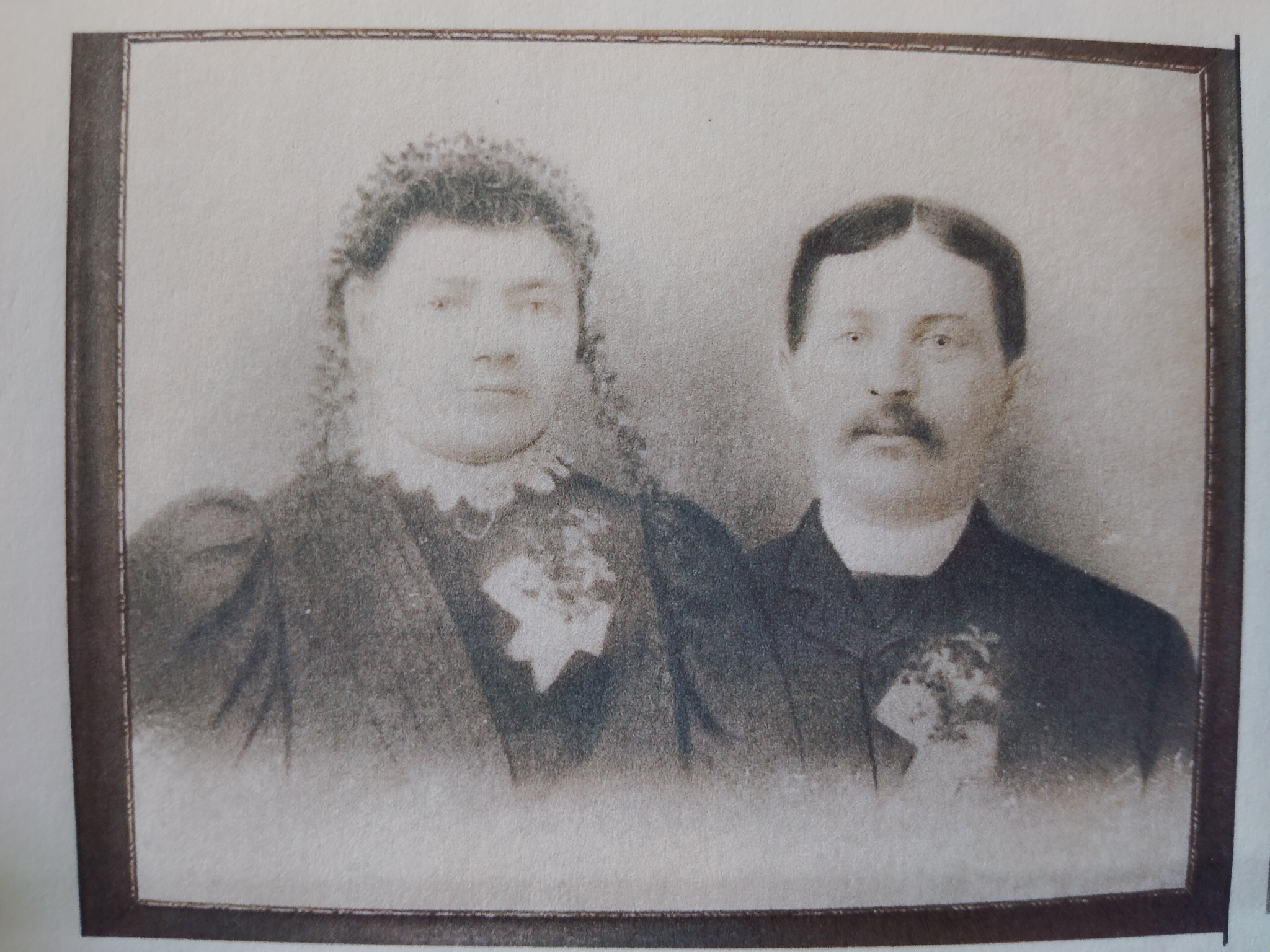
My great grandparents, Rudolph and Mathilda Kletscher, married in 1891. (Photo source: Kletscher Family Tree 2008 produced by Merlin and Iylene Kletscher)

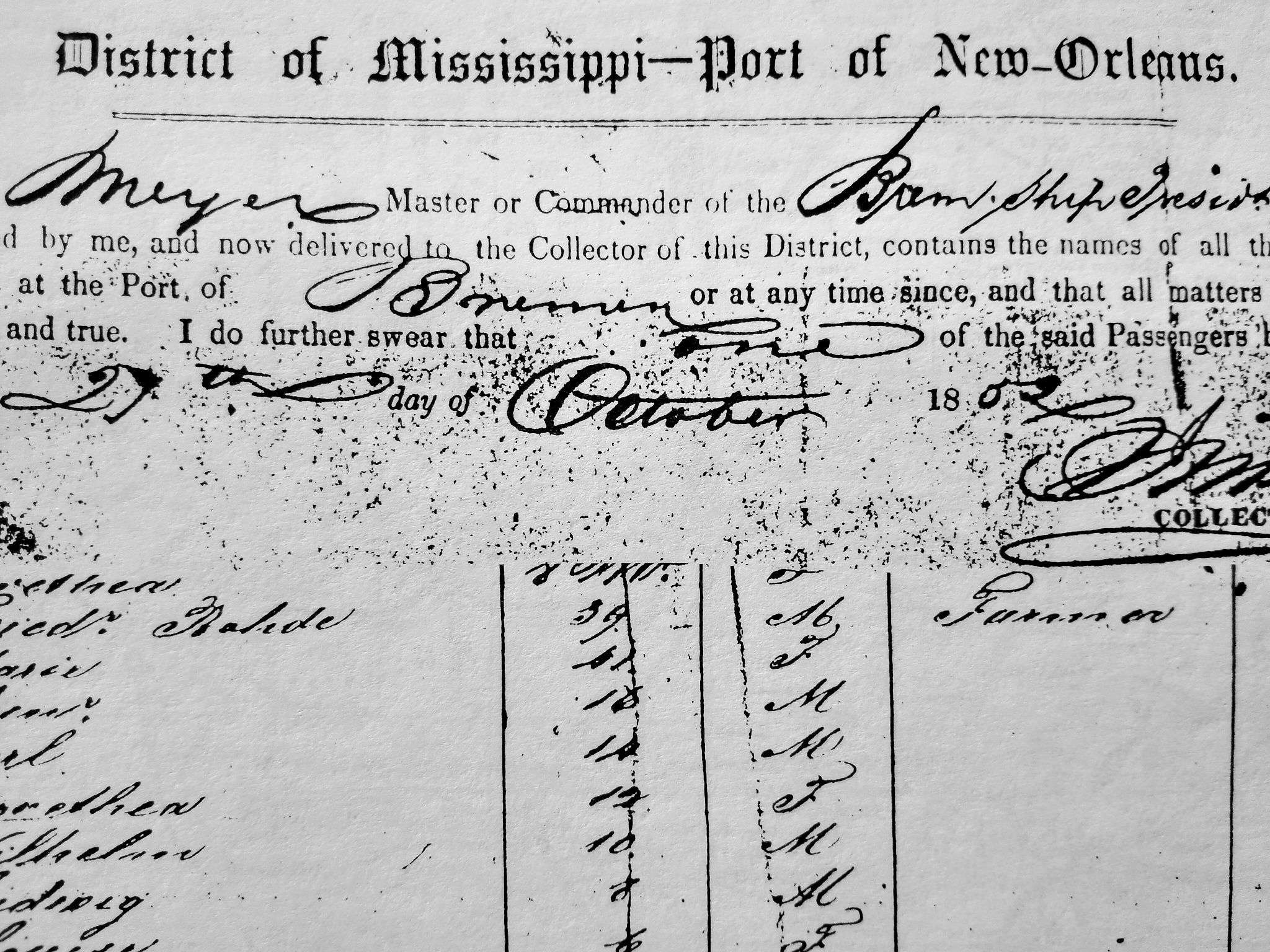
UNLESS WE ARE NATIVE AMERICANS, immigration is part of our family history. On my maternal side, Friedrich and Maria Bode arrived from Germany at the port of New Orleans in October 1852. They would settle in Illinois. Most of the family eventually moved to Minnesota. On my paternal side, my great grandfather, Rudolph Kletscher, landed in Baltimore from Germany in 1886, several years later journeying west to put down roots in southern Minnesota.

I pulled this information from pages of family history uncovered and compiled by family members who have researched our roots in Germany. I am grateful for their work, for the names, dates and places recorded for reference. Sometimes there are stories, or tidbits of stories. But mostly the research reveals documented facts only, not stories.

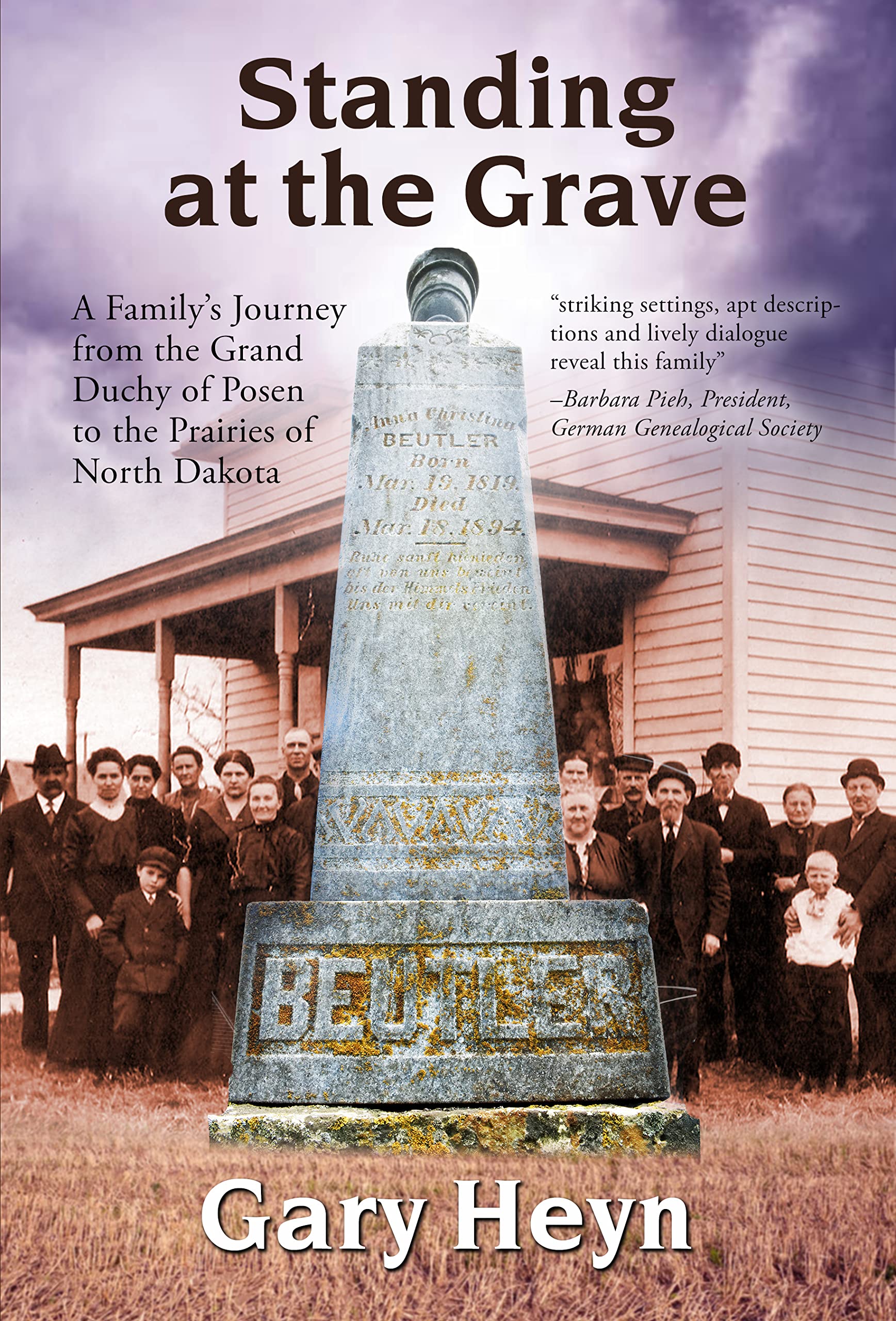
(Book cover sourced online)

It is the stories that interest me most, which explains my interest in reading Standing at the Grave—A Family’s Journey from the Grand Duchy of Posen to the Prairies of North Dakota by Minnesotan Gary Heyn. Books on Central in Faribault hosted Heyn on Thursday evening during a monthly literary event. I was among those in attendance, listening to Heyn read and then answer audience questions. I’d just finished reading his book about his ancestors who immigrated to America from Prussia (now Poland) beginning in 1867 shortly after the Civil War ended.

His ancestors could have been mine. Any of ours. Heyn took basic facts confirmed thorough research at the Minnesota History Center, church records, a Polish history website, old newspapers, even the National Weather Service and gleaned during several trips to Poland to form the foundation for his stories. The dialog and interactions are fictional slices of personal life in Prussia and then in America. Heyn’s characters really come alive when he reveals their fears, their worries, their hardships, griefs, challenges and more in intimate storytelling.

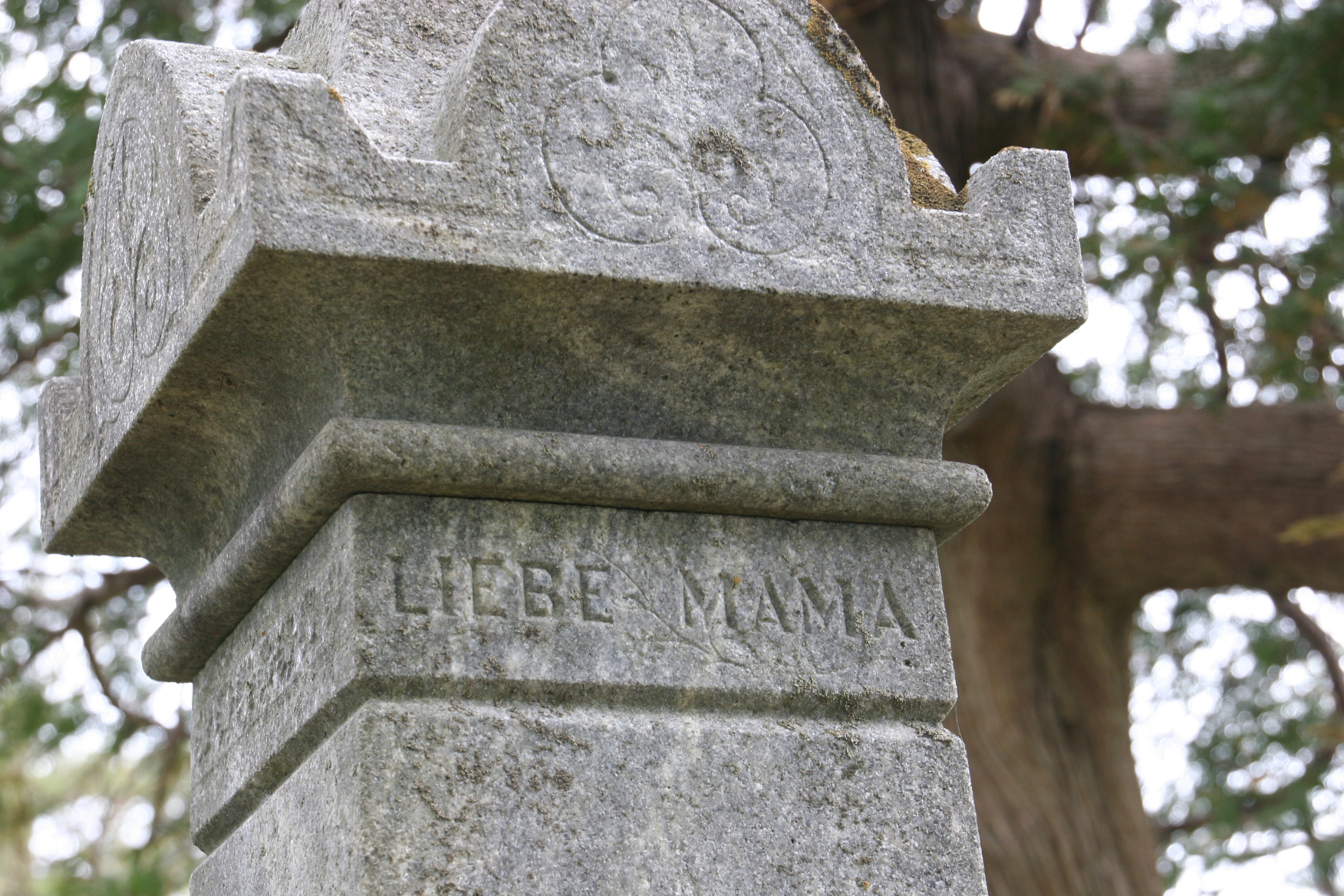
A tombstone in the Immanuel Lutheran Church Cemetery, Potsdam. The German word “LIEBE” means love in English. A Heyn family member is buried in this cemetery. (Minnesota Prairie Roots copyrighted file photo May 2022)

These are, at times, really hard stories. Of death by disease. Of death by accidents. Of death by suicide. Of death by botulism. I appreciate that the author doesn’t avoid tough topics. I understand the worries about weather and crop failure, vicariously stand at the graves of loved ones, recognize the depression a young mother experiences as she looks across the expansive North Dakota prairie, feeling isolated and alone.

But those difficult stories are balanced by the joys of births, of weddings, of the opportunity to claim land through the Homestead Act, to live and love and grow family in a new land rich in opportunity.

Main character, family matriarch Anna, follows her family to America many years after the first, eventually fulfilling her life-long dream of once again owning land, this time 160 acres in North Dakota. Most of the family found land in southern Minnesota, in the Rochester area where the author grew up and first heard the stories of his great grandmother. She lived with his childhood family. That sparked his interest in family history and genealogy, which, after his retirement as an accountant, led to writing Standing at the Grave.

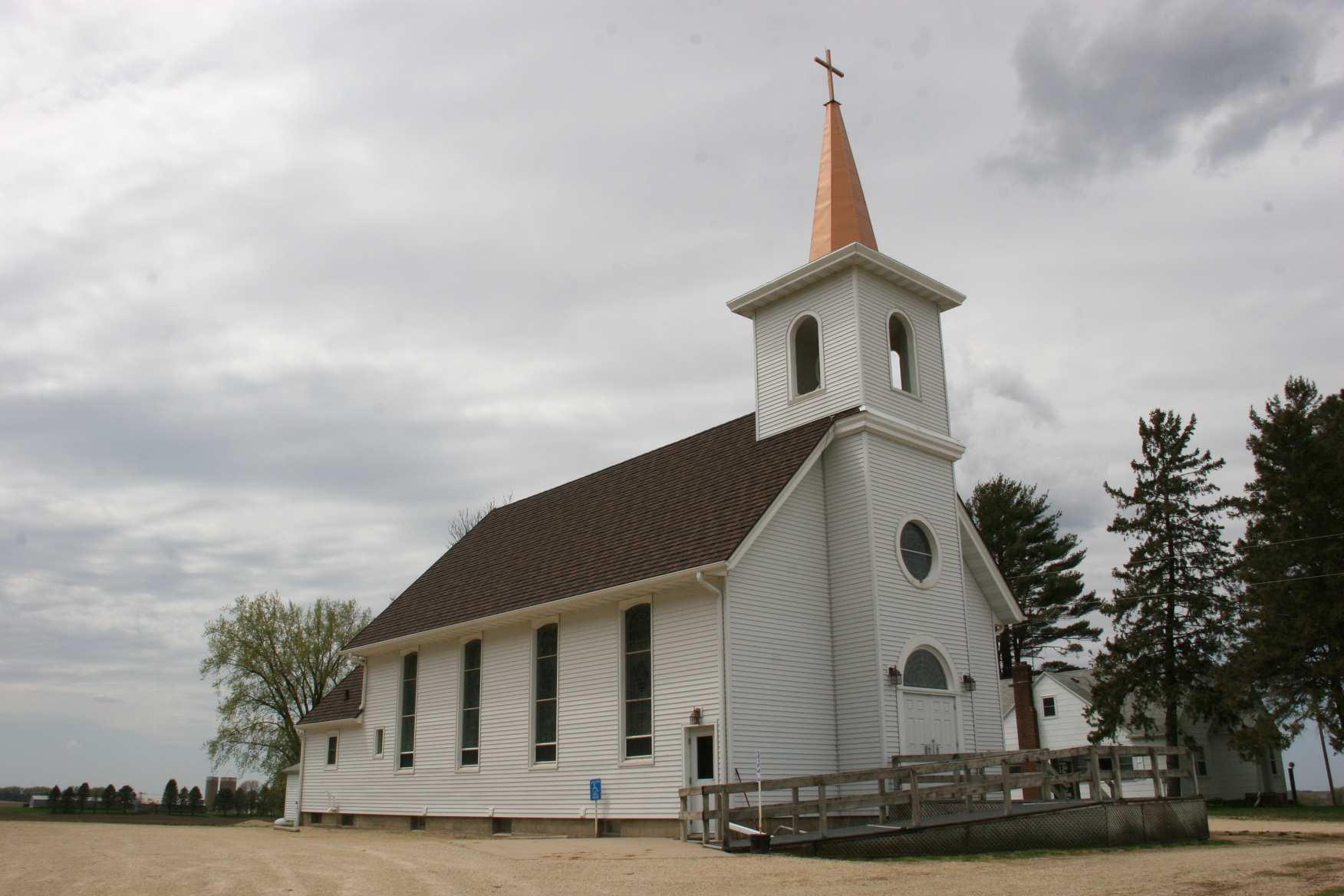
Immanuel Lutheran Church, Potsdam. (Minnesota Prairie Roots copyrighted file photo May 2022)

Southern Minnesotans, especially, will feel at home in places like Elgin, Grand Meadow, Pleasant Valley, Owatonna and more. I’ve even visited and photographed Immanuel Lutheran Church in Potsdam, where Anna stood on the front steps and scanned the countryside below the hilltop church. I’ve walked the cemetery, where Heyn’s ancestor, Willie, lies buried in an unmarked grave.

As much as I appreciate the storytelling in this book, I also appreciate its relevancy to today. Heyn family members new to America in the late 1800s are told to speak English, not German. Sound familiar? (My own mother, who died at age 89 in 2023, spoke German as her first language.) These newcomers to America felt like foreigners, often choosing to live among others from their homeland. Among those who shared their language, culture and customs, who liked bier, sauerkraut, Weihnachtsstollen and Glühwein.

But in times of challenges, Heyn reveals in one story, “…the citizens of this neighborhood, born all across the globe, banded together to help another working man.” That coming together of many nationalities repeats in his book, even as conflicts arise.

A passenger ship list from the port of New Orleans. (Source: The Bode Family book by Melvin & Lois Bode, 1993)

Heyn, in his writing, reveals the challenges, the dreams, the hopes, the resilience and resolve of his immigrant ancestors. These were strong individuals who relied on each other, their faith and their inner strength to cross a vast ocean for a new life in America. This is their story, but also a universal story of immigration, as relatable today as then.

This book helped me better understand those who came before me from Germany to America from a personal perspective. This book also reminds me of the struggles immigrants still face today in America, especially today.

© Copyright 2025 Audrey Kletscher Helbling
 

Two authors: One talks pandemics, the other immigration November 15, 2025

(Book cover sourced online)

WHENEVER AN AUTHOR appears locally to read from and discuss his/her book, I try to attend. I love reading and learning. I enjoy listening to other writers talk about the craft of writing as I read and write nearly every day.

Among authors who will be in my area soon are Dr. Michael Osterholm and Gary Heyn. Let’s start with Osterholm, who will appear at The Grand Event Center in Northfield at 7 pm Monday, November 17, to read from his book, The Big One—How We Must Prepare for Future Deadly Pandemics, co-authored by Mark Olshaker. He will also engage in conversation with Debby Walser-Kuntz, professor of biology at Carleton College in Northfield.

Osterholm, an internationally-renowned epidemiologist and director of the University of Minnesota Center for Infectious Disease Research and Policy, is a familiar name, especially to Minnesotans. During the COVID-19 pandemic, he was tapped as an expert. I, for one, found him to be an invaluable and trusted source of information during the pandemic. His knowledge and research into infectious diseases stretches well beyond COVID, though.

My history with Osterholm goes back decades to the late 1970s when I was just out of college working at a small town Minnesota weekly newspaper, The Gaylord Hub. Osterholm came to Gaylord during a hepatitis outbreak at the local school. While details of that health issue have long faded, I recall that this highly-contagious disease was connected to a band teacher and musical instruments. I remember photographing Osterholm, also starting his career, and writing a news story about what was unfolding at the school.

The original coronavirus as depicted by the CDC in 2021. (Sourced online)

On November 17, Osterholm will focus on pandemics, sure to be an enlightening talk at this 7-8:30 pm first come first serve seating (doors open at 6 pm.) event at The Grand, 316 Washington Street in Northfield and hosted by local independent bookshop, Content Bookstore.

(Book cover sourced online)

While Osterholm will present in a large venue, author Gary Heyn will appear in a much smaller, intimate setting, the Rice County Area United Way’s Books on Central. The used bookshop is housed in a former jewelry store at 227 Central Avenue North, Faribault. Heyn, a retired corporate executive turned historian, genealogist and writer upon his retirement, will read from and talk about Standing at the Grave: A Family’s Journey from the Grand Duchy of Posen to the Prairies of North Dakota. This free literary event is set for 6 pm Thursday, November 20.

I’m about a third of the way through Heyn’s book and I can attest that it is a captivating read, the kind of book I don’t want to put down. It’s relatable when considering my German immigrant ancestors and also in the context of immigration issues today. Once I’m finished with the book, my husband will also be reading it. His ancestors, the Helblings, moved from Germany to then Russia (current day Ukraine) before journeying to America and a new life in North Dakota.

Insights into immigration, tracing family history and stories are always of interest. Heyn will read from the chapters of his book about three mothers from Gembitz Hauland, an historic German-Polish village, who were reunited in Steele County 18 years after sending their children to America. To type those words is enough to break my heart. I cannot imagine how difficult that must have been for those three mothers. But it happened. Over and over and over again.

I encourage you, if you live in my area, to attend these upcoming author talks. These are opportunities to learn via the expertise and creativity of those inspired to write.

FYI: To view other upcoming author events offered by Content Bookstore, click here.

© Copyright 2025 Audrey Kletscher Helbling
 

“The Laughing Dead,” more than just a thriller October 29, 2025

(Book cover sourced online)

NEARLY TWO YEARS AGO, Minnesota writer Jess Lourey participated in an author talk at my local library. She said then that she wants readers to take away the importance of community from her books. “Find your people and tell your truth,” Lourey said.

I like that statement. It’s empowering. Tell. Your. Truth.

In her newest book, The Laughing Dead, the third in her fictional “A Steinbeck and Reed Thriller” series, Lourey writes about three cold case murders of young women and two current-day murders. Bureau of Criminal Apprehension Agent Evangeline “Van” Reed and forensic scientist Harry Steinbeck once again team up to work the cases, one that becomes deeply personal for Reed.

In typical Lourey writing, the plot twists and turns and screams and scares as the story unfolds. At times I truly did not understand what was real and what wasn’t. That comes as no surprise given secrets theme many of Lourey’s books. The Laughing Dead is no exception.

But what stuck with me throughout the book was the strength of Van Reed, born into a cult led by abusive, controlling and narcissistic Frank Roth. When he was arrested, the “Mothers” and “Sisters” scattered, some remaining devotedly loyal while others like Reed escaped and severed ties. She then went into law enforcement. In The Laughing Dead, Reed confronts her past, the secrets she keeps and the trauma she’s endured.

Yet, this book goes beyond a fictional character in a thriller. This story is, more broadly, about domestic abuse and violence, a reality for too many women (and, yes, some men also). It was absolutely fitting that I should read The Laughing Dead during National Domestic Violence Awareness Month in October. Lourey, in her book, writes about the power, manipulation and control used by abusers to entrap and silence their victims. Abusers, just like the fictional Frank Roth, will act loving and doting then turn into oppressive, abusive, overpowering, violent and controlling individuals. Sort of like a nightmarish chameleon.

Lourey, through her writing, is doing more than entertaining readers who appreciate a good thriller. She is raising awareness about domestic abuse and violence. And she is showing, via main character Van Reed, that it is possible to escape domestic abuse and violence, to rise above trauma. To tell your truth. And survive.

© Copyright 2025 Audrey Kletscher Helbling
 

Owatonna author Chris Norbury featured at Books on Central literary event October 20, 2025

(Credit: Books on Central Facebook page)

THIS WEEK ONE OF MY FAVORITE area writers comes to downtown Faribault. He’s Owatonnan Chris Norbury, award-winning author of three books in the Matt Lanier mystery-thriller series and a stand alone middle school novel, Little Mountain, Big Trouble.

Books on Central, a used bookshop of the Rice County Area United Way, is hosting Norbury beginning at 6 p.m. Thursday, October 23, as part of its author series. Norbury will read and talk about his books and the craft of writing.

I’m excited to see Norbury again. We’ve chatted briefly several times when he was selling his books at events in Faribault. He is a genuinely nice guy whose writing I happen to love. As a writer, I recognize Norbury’s devotion to craft—the time, energy, inspiration and hard work it takes to write a book. I expect to learn more during his upcoming talk and the Q & A that follows.

My first introduction to Norbury came via his mysteries, all set in Minnesota with recognizable place titles like Castle Danger, Straight River and Dangerous Straits. Main character Matt Lanier is a southern Minnesota farm kid turned professional musician. I’m especially drawn to books set in Minnesota and with strong home-grown characters like Lanier.

(Book cover sourced online)

But it is Norbury’s novel for middle schoolers (and older, including adults), Little Mountain, Big Trouble, which really resonates with me. I encourage you to read my review of this book (click here) about 12-year-old Eduardo, who is bullied and eventually paired with a Big Brother, Russ. Like Russ, Norbury was a Big Brother for 20 years and today donates a portion of his book sales to Big Brothers Big Sisters of Southern Minnesota. I appreciate Norbury’s generous ongoing support of an organization which helps young people.

(Minnesota Prairie Roots copyrighted file photo)

Books on Central also gives back to community through its umbrella organization Rice County Area United Way. Book sale proceeds go to the United Way which in turn provides financial support to select nonprofits in the county. All book inventory is donated by community members and all staff at the used bookshop are volunteers. There’s so much to love about this Minnesota bookstore and Minnesota writers like Chris Norbury. Kindness, compassion and community center both as they embrace books and the craft of writing.

FYI: Books on Central, 227 Central Avenue North, Faribault, is open from 11 a.m.-5 p.m. Wednesday-Friday and from 10 a.m.-4 p.m. Saturdays and other times for special literary and other events.

© Copyright 2025 Audrey Kletscher Helbling
 

A Banned Books Week commentary on free speech October 10, 2025

This American Library Association poster anchors the Banned Books Week display at my local library. (Minnesota Prairie Roots copyrighted photo October 2025)

AS A WRITER, journalist and avid reader, I’m a firm believer in free speech. Never have I seen that right more threatened in America than it is today. It’s downright scary—efforts by the federal government to suppress voices (already occurring), promises of retribution (now being carried out), abuse of power (happening on so many levels) and much more that threatens our very freedoms, our democracy. I could go on and on.

But today I want to focus on Banned Books Week, which ends tomorrow. Thursday evening I gathered with a group of volunteers for an appreciation event at Books on Central in Faribault, a used bookshop founded by the Rice County Area United Way. While I don’t volunteer there (yet), I’ve blogged about the bookstore numerous times because I love books and I love that monies from BOC book sales help nonprofits in my area. We weren’t there to discuss banned books, though, but rather to celebrate volunteerism and this small bookshop which has become much-beloved by the Faribault community and beyond.

It was not lost on me as I sat there surrounded by books, listening to volunteers share their passion for this place and for books, that everyone who walks in the door is surrounded by choices. As it should be. Choose what you want to read or want to share with others.

A powerful and fitting quote for Banned Book Week displayed at Buckham Library. (Minnesota Prairie Roots copyrighted photo October 2025)

Yet, there are individuals, organizations, elected government officials and others who want to determine what we can read by banning books from libraries, schools and elsewhere. That, my friends, is censorship. And I’m not OK with that. If I find the content of a book to be offensive, then I can stop reading it or never open it in the first place. Likewise parents can monitor their child’s reading materials just as they would online content.

A sampling of books that have been banned in various places in America. These were included in a display at my library. (Minnesota Prairie Roots copyrighted photo October 2025)

In the words of the American Library Association’s 2025 Banned Books Week theme, “CENSORSHIP is so 1984.” That’s a reference to George Orwell’s prophetic 1949 novel, 1984, about a totalitarian government. That’s a simplistic summary. But the book is particularly relevant to today. I intend to check it out from my library to reread.

Bracelets available at Buckham Library support the RIGHT TO READ. (Minnesota Prairie Roots copyrighted photo October 2025)

After the bookshop appreciation event Thursday evening, I stopped at Buckham Memorial Library to see if staff had created a Banned Books display as they have in the past. They did. After I read the information and looked at a sampling of books that have been banned (not from my library), I grabbed a green bracelet imprinted with this message: CENSORSHIP is so 1984. READ FOR YOUR RIGHTS.

I will continue to read. I will continue to write. And I will continue to embrace, support and advocate for free speech. I have a voice. I refuse to be silenced.

© Copyright 2025 Audrey Kletscher Helbling
 

The stories of two Marthas September 19, 2025

A promo for Martha Brown’s presentation about Cambodia sits on the checkout counter at Buckham Memorial Library, Faribault.

HISTORY CONNECTS THE STORIES of the two Marthas. One, Martha Ballard, a midwife and the main character in a book of historical fiction, The Frozen River by Ariel Lawhon. The second Martha is Martha Brown, local author, educator, speaker, musician and political candidate for state representative in my district. She shared her personal reflections about a trip to Cambodia on Thursday evening at the Faribault library in a presentation titled “Cambodia—Healing a Broken County.”

I’d just finished reading Lawhon’s book earlier Thursday so the commonalities between a story set in the late 1700s in postrevolutionary America and Brown’s recent trip to Cambodia connected in my mind. In both stories exist violence, trauma, strength, power and resilience within an historical context.

THE CAMBODIAN GENOCIDE

I’ll start with Brown. She focused on the time before and after the 1975-1979 Cambodian Genocide in which some 2 million Cambodians were murdered under the rule of Khmer Rouge, the Communist political party then in power. She also touched on the illegal and secret bombings of Cambodia by the U.S. in 1969 against North Vietnamese forces in Cambodia. That, too, claimed untold civilian lives.

I don’t want to get into historical details here or a political discussion about the Vietnam War. Rather, I intend the focus to be on those who suffered in Cambodia and those who survived. Just as Brown focused her hour-long talk. She arrived in Cambodia expecting to see trauma from the genocide. But instead, she said, she found recovery, healing and joy. She saw survivors of the genocide as part of the healing.

A HORRIFIC HISTORY NOT HIDDEN

The history of the genocide has not been hidden nor erased in Cambodia. “They don’t bury their history,” Brown said. I jotted that quote in my notebook, mentally connecting that to current day America and ongoing efforts by the current administration to erase/hide/rewrite history. We all know the quote—”Those who cannot remember the past are condemned to repeat it”—by Spanish Philosopher George Santayana. We would do well to contemplate and hold those words close.

In her presentation, Brown did not avoid the hard topics of children recruited and indoctrinated to participate in the Cambodian Genocide killings of educators, doctors, ordinary people, even those who wore eyeglasses. Perpetrators were never punished, went back to their lives, now live among the population. This was hard stuff to hear, especially about the brainwashing of children to kill. “We need to teach our children well,” said Brown, ever the educator who cares deeply about children.

LESSONS LEARNED IN CAMBODIA

Her passion was evident as she spoke of hugging survivors, of apologizing for the U.S. bombings of Cambodia, of crying while in the southeast Asian country. She learned that how you live and treat people is more important than wealth. She learned that people can be poor and still be happy. She learned about the differences in a society that focuses on community rather than self.

When Brown’s talk ended, others shared and a few of us asked questions, including me. Mine was too political to answer in a non-political presentation. But I asked anyway about the internal and external factors contributing to the rise and fall of empires. Brown hesitated, saying only that we could draw our own conclusions from her talk.

Book cover sourced online.

A MUST-READ BOOK

Then I wrote “The Frozen River by Ariel Lawhon” on a slip of paper. Not to give to Brown, but rather to the local director of Hope Center serving survivors and victims of sexual assault and domestic violence and their families. I handed the paper to Erica Staab-Absher after hugging her. “You need to read this book,” I said.

In this book of historical fiction, the author bases her writing on real-life midwife Martha Ballard, who documented her life in a journal. Ballard was witness to violence, sexual assault, injustices, secrets, manipulation, power, trauma and much more. This book will resonate with anyone who has survived a sexual assault or cared about someone who has been so viciously attacked. I cannot say enough about the value of reading this book and how empowering it was to me as a woman. It is a love story, mystery and a documentation of strength and resilience.

Resilience. Strength. Healing. Those three words come to mind as I connect the work of a New York Times bestselling author and a talk about the Cambodian Genocide at my southern Minnesota library. By reading and listening, I learned. To read a book pulled from the shelves at my public library and then to listen to personal reflections about a trip to Cambodia on the second floor of that same library are freedoms I no longer take for granted. Not today. I choose to remember and learn from the past. And hope we do not repeat it.

© Copyright 2025 Audrey Kletscher Helbling


“Four Red Sweaters,” a difficult, but necessary, read July 1, 2025

(Book cover sourced online)

TYPICALLY, I CAN READ a book within two weeks. But not Four Red Sweaters—Powerful True Stories of Women and the Holocaust by Lucy Adlington. I had to renew this book at my local library in order to finish it.

Why? The content is so difficult, disturbing and devastating that I could only read this work of nonfiction in small chunks. But I was determined to finish this book about Jock, Anita, Chana and Regina—four Jewish girls living in Nazi Germany—and all connected by red sweaters. I owed it to them to learn more about the awful atrocities inflicted under Adolph Hitler’s rule by those who lived, breathed, and followed him and his ideology.

All the while I was reading Four Red Sweaters, a small voice in my head whispered warnings in words like a knock on the door, fear, anti-immigration sentiment, snatched, disappeared, deported, deception, secrecy, dehumanizing… The parallels to today were not lost on me.

REAL PEOPLE WITH STORIES

What I particularly like about this book, if one can ever really “like” a book on such a topic, is the personalization. Anita is not just #69388 inked onto her left forearm at Auschwitz-Birkenau. She is a girl who arrives at the concentration camp wearing shoes adorned with pompoms and tied with red shoelaces. She is a girl who knew how to play the cello. That skill eventually saved her.

But too many died. Millions and millions. That included the Fink family, brutally murdered by their neighbors in an act so heinous I can’t share it here. Turn to page 96 in the book. The Finks were extended family of Jock, a main character in this story. She was one of the “lucky” Jewish children who escaped Nazi Germany, along with her sisters, on a Kindertransport, an all-out effort by brave souls to get Jewish children out of the country to safety. But Jock’s parents and brothers died at the hands of the Nazis.

The pages of Four Red Sweaters are filled with heroic acts, bravery, defiance and determination that show the incredible strength of the human spirit. There existed a mentality of surviving together or dying together. The pages of this book are also filled with stories of unbelievable, unfathomable cruelty.

A NECESSARY READ

Author Adlington backs her writing up with 23 pages of source notes. In small print. That’s a whole lot of documentation in researching and writing this book. I cannot imagine the emotional toll this took on her. I also cannot imagine anyone reading Four Red Sweaters and not feeling deeply moved and worried, but also grateful to Adlington for sharing the stories of Jock, Anita, Chana and Regina and the broader stories of the Holocaust. We need to read about, study, learn and remember the past so as not to repeat it.

Near the very end of Four Red Sweaters, Adlington writers about a knitter who, in 2013, designed Remembrance socks. Heatherly Walker’s sock pattern honors Regina and the others who were forced to knit socks and more for the Nazis and their families. She incorporated hidden Jewish stars into the pattern, which is available on the Ravelry website for crafters. Knitting is an integral part of the stories Adlington shares in her book.

Hope in a story at the traveling exhibit about Holocaust survivors, “Transfer of Memory,” which I viewed in 2014 at the Steele County History Center, Owatonna. (Minnesota Prairie Roots copyrighted file photo 2014)

DEFIANCE, COURAGE, HOPE

One seemingly small act stands out for me in Four Red Sweaters. Regina’s friend Esther, after foraging mushrooms for the Nazis in the Sobibor extermination camp, walks into the SS canteen, sees a pot of soup cooking and spits in it. And the Nazis eat it. I can only imagine the satisfaction Esther felt in that moment of defiance. Endless examples of defiance, courage, hope and resilience are knitted into the pages of Four Red Sweaters.

As challenging as it was for me to read this book, I needed to do so. For to stop reading when the content grew increasingly difficult and disturbing would have been to do exactly as the Nazis desired. Nobody must know. But we must all know. And, sometimes, like Esther, we must spit in the soup.

#

TELL ME: If you’ve read Four Red Sweaters, how did you react? What stands out for you in the book? Special thanks to Missy’s Crafty Mess (the blog of an avid reader and knitter) for writing about Four Red Sweaters, which led me to this book about the Holocaust. I am grateful for her recommendation.

© Copyright 2025 Audrey Kletscher Helbling
 

In honor of Mother’s Day: Stories of 3 strong mothers May 9, 2025

This page from an altered book crafted by my friend Kathleen shows my mom holding me. Mom died in January 2022. I love the quote. (Minnesota Prairie Roots copyrighted file photo)

THREE MOTHERS. Three strong women. Three remarkable experiences. This Mother’s Day I feel compelled to share the stories of a trio of moms. Their stories are decidedly different, yet similar in the common denominators of strength and love.

Photographed in a small southern Minnesota town, a box containing Naloxone used as an emergency treatment for an opioid overdose or suspected overdose. (Minnesota Prairie Roots copyrighted photo May 2025)

MOTHER OF A RECOVERING ADDICT

Let’s start with the woman checking out my clutch of greeting cards recently at a local chain discount store. As I stepped up to the counter, a young man bade her goodbye. “I love you, Mom,” he said while walking toward the exit.

It was one of those moments when I simply had to say something. “That’s so sweet,” I said, looking directly at the clerk.

I don’t remember our entire conversation. But I do recall the highlights. Her son is a recovering addict two years sober. “I almost buried him,” she told me.

“You must be so proud of him,” I replied. And she was and is and I wanted to reach across that check out counter and hug her. But I didn’t. My encouraging words would have to suffice. I walked out of that store feeling grateful for this mom who never gave up on her son and for the son who recognizes the value of her ongoing love and support.

This shows two of the 22 Miller siblings featured in an exhibit at the Waseca County History Center. (Minnesota Prairie Roots copyrighted photo May 2025)

MOTHER OF TWENTY-TWO

Then there’s Lucille Miller of rural Waseca, married to Alvin and mother of their 22 children. Yes, twenty-two, all single births. I learned about the Miller family recently while touring the Waseca County History Center. An entire display focuses on them.

Lucille gave birth to her first child in December 1940 at age 17 and her last in January 1966 at age 43. Fifteen girls and seven boys (oldest to youngest): Ramona, Alvin Jr., Rose, Kathleen, Robert, Patricia, Marylu, Diane, John, Janet, Linda, Virginia, Helen, Art, Dolores, Martin, Pauline, Alice, Angela, Marcia, Gregory and Damien.

I can’t even fathom being pregnant that often, birthing that many children, or coming up with that many names. But Lucille Miller did just that and raised her children on the family’s Blooming Grove Township farm. She died in August 2006, her husband not even a year later. Lucille and Alvin never intended to have 22 kids. But these deeply spiritual parents considered each and every one a blessing.

Information I found online backs that up. This mother of many also “took in” several kids, led two women’s organizations and worked to establish local group homes for the disabled. Three of the Miller children had disabilities.

Helen Miller’s book about growing up in a Minnesota farm family of 22 children.

Helen Miller, 13th in line, calls her mom “a saint.” (I certainly don’t question that assessment.) She’s written a book, 21 Siblings: Cheaper by the Two Dozen, about growing up in this mega family where the Catholic church and school centered life and organization was key in keeping everyday life running smoothly. Chores were listed, then assigned, and siblings used the buddy system. I have not yet read the book, but intend to do so.

I expect the obituary of Lucille’s daughter, Virginia Miller Pelto, 60, who died on May 8, 2014, just days before Mother’s Day, reflects the way in which her mother lived: Of the many things Virginia loved, above all she loved people. As a very spiritual person, she put the world on her shoulders and in her prayers. She donated time to her church, her community and anyone who needed to just talk. Any mother would be proud to have a daughter with such a giving and compassionate spirit.

My daughter Miranda and grandson Everett, 3 months old when this photo was taken. (Photo courtesy of Miranda, April 2025)

MOTHER OF EVERETT

Finally, there’s the story of my second daughter. Miranda became a first-time mom in mid-January. Considered a “geriatric mom” given her closing-in-on-forty age, she was closely-monitored throughout her pregnancy. Miranda was in excellent physical condition—she’s a letter carrier. Her pregnancy proved uneventful with labor commencing the day before her due date. But then everything changed. For the worse. Labor was long, delivery difficult with baby’s head and shoulder getting stuck. Once Everett—all 10 pounds of him—was born, Miranda experienced extensive postpartum hemorrhaging requiring the transfusion of three units of blood. A team of doctors and other medical personnel at a Madison, Wisconsin, hospital worked to save her life.

A week later, after Miranda and John were semi-settled at home with Everett, Randy and I traveled to Madison to see all of them. When the new parents recounted harrowing details of that difficult birth, my strong strong daughter said she feared she might die. Before she saw her son.

As Miranda and I stood in the nursery, arms wrapped around each other gazing down at newborn sleeping Everett, I felt overwhelmed with emotion. I still get emotional thinking about how I nearly lost my daughter on the day my second grandson was born. I’ve written about that experience in a short story, “Birthing Everett,” which will publish in late August in The Talking Stick anthology.

We all have mothers. We all have stories, whether we are sons or daughters or mothers ourselves. Today I honor all mothers, especially Miranda, Lucille Miller and the store clerk who nearly buried her son. They are three strong women.

© Copyright 2025 Audrey Kletscher Helbling
 

Words that resonate from Northfield poet Becky Boling April 24, 2025

Sidewalk poetry in downtown Northfield, Minnesota, carries a powerful message. (Minnesota Prairie Roots copyrighted file photo)

I DON’T READ MUCH POETRY. I probably shouldn’t admit that given I’m a published poet. But I suspect most of you also are not big poetry readers. Yet, we all should be, especially me.

Becky Boling’s recently-released first collection of published poetry. The cover features the poet’s artwork. (Minnesota Prairie Roots copyrighted photo April 2025)

Poetry offers a creative way to view the world, to experience life, eliciting a whole range of emotional responses that connect us to each other, to the earth, to the past and present, and much more. I get excited when I discover a poet whose work truly resonates with me. And that would be the poetry of Northfielder Becky Boling.

We Look West was published in early 2024 by Shipwreckt Book Publishing Company. (Minnesota Prairie Roots copyrighted file photo 2024)

A year ago, I met Boling when she dropped off a copy of the anthology, We Look West, a collaboration of the Poets of the Northfield Public Library. It includes her work and that of four other talented poets. I love the collection which takes the reader from the sunrise to the sunset of life. The poetry therein is so understandable and relatable.

A box holds bagged poems included in the “Poetry in a Bag” project. (Minnesota Prairie Roots copyrighted file photo 2024)

In May 2024, Boling, I and several other poets participated in a community poetry reading for the “Poetry in a Bag” project coordinated by Mercado Local, a Northfield marketplace for immigrants. Our poems were printed, rolled and bagged before distribution within our communities.

I would see Boling again in September 2024, when she and the other Northfield poets read from We Look West at Books on Central, a Rice County Area United Way used bookshop in Faribault.

Selected prose and poetry about the pandemic and social justice issues were published by the Ramsey County Public Library in this anthology. (Minnesota Prairie Roots copyrighted file photo)

Somewhere along the line, I discovered that Boling’s “Pandemic Haiku” had published in This Was 2020—Minnesotans Write About Pandemics and Social Justice in a Historic Year. My poem, “Funeral During a Pandemic,” was chosen for publication in that same anthology during a competitive process. That book would go on to win the 2021 Minnesota Author Project Award in the Communities Create category.

The poetry of Becky Boling in her first published collection featuring 37 of her poems. (Minnesota Prairie Roots copyrighted photo April 2025)

Because of those shared experiences, shared publications and shared love of words, I feel a sisterhood with Boling. So when she asked if I wanted a copy of her first solo poetry collection, I responded with an enthusiastic, “Yes!” Within the pages of Here Beyond Small Wonders, I found what I’ve come to expect from Boling—detailed writing, often about the most ordinary subjects—a dead mouse, a fly, walnuts… Topics you may not even consider poetry-worthy. But Boling has this ability to observe and engage all of her senses to craft words into connective, meaningful poetry.

A Wisconsin farm site photographed from Interstate 90 could be a poetry prompt. (Minnesota Prairie Roots copyrighted file photo)

In her poem “Snow Pond,” she defines poetry: Poetry, like freezing temps, seizes the moment, recasts it—through the physics of sight, memory, language—resurrects it anew into patterns, sound and light, marks on a snowy page that glisten and melt on tongue, alight on the inner eye. That definition of poetry is among the best I’ve read, because it is poetry.

Clothespins on my clothesline clip clothing, not beach towels. (Minnesota Prairie Roots copyrighted file photo)

Anyone who writes poetry recognizes the challenges of finding just the right word, of stringing words together in a new, creative and succinct way, of connecting on an emotional level. But Boling makes the process look easy, taking the reader along with her, whether into her yard or onto the sandy shores of Lake Michigan. In her poem “Clothesline,” she writes of beach towels dancing in the wind. She takes the reader to the beach, to the sights, scents and sounds along the inland sea. I feel her fingertips unclipping the dried towels at end of day as she gathers them like weary babes into my open arms. I did not see that end coming. That element of surprise is, too, a mark of a gifted poet.

Kid-sized Adirondack chairs on a Minnesota beach. (Minnesota Prairie Roots copyrighted file photo)

Her “Adirondack Chair in Snow” is another favorite of mine in Boling’s collection of 37 poems published by Finishing Line Press. She writes of the typically-lakefront chair wedged into a snowbank outside her mother’s apartment building. But this poem is about so much more than an out-of-place chair buried in snow. Boling uses personification to write about her mother. In those six verses, I found myself missing my own mom, who died during the pandemic in January 2022. Boling’s emotions, my emotions, weave together in her writing and in my reaction.

My own artsy autumn leaf image, of leaves in the Cannon River. (Minnesota Prairie Roots copyrighted file photo)

In one of her longest poems, Boling writes about the transition to autumn in “Persephone’s Bouquet.” Unfamiliar with this Greek goddess, I learned that Persephone’s descent into the underworld is associated with the start of winter. Autumn themes Boling’s poem as the author gathers hot-pepper reds, creamy yellows…brazen scarlet…leaves, something I also enjoy doing in fall. But this is a poem about life, too, not just about a change in seasons. Plus, the poem connects to the cover of Here Beyond Small Wonders, Boling’s own autumn leaf art.

Her first collection of poems is about nature and place and seasons and life. Moments experienced. Details noticed right down to a tar-dark county roadhorse flies, green heads glistening in the sunreedy breath trembling into song. Boling, in her words, opens herself to a pool of words. And I, for one, embrace her poetic writing.
#

FYI: Becky Boling is a retired professor of Spanish and Latin American literature at Carleton College in Northfield. Her poetry and prose have been widely-published in literary journals and anthologies. She also served as a Co-Poet Laureate of Northfield. Click here to find Here Beyond Small Wonders on the Finishing Line Press website.
© Copyright 2025 Audrey Kletscher Helbling