Minnesota Prairie Roots

Writing and photography by Audrey Kletscher Helbling

Old school journalism & lessons learned June 22, 2021

In journalism school and early in my journalism career, I typed stories on a manual typewriter similar to this. MN Prairie Roots file photo.

IN A WINDOWLESS ROOM of Armstrong Hall on the campus of Mankato State University, I pounded out a fictional obituary on a manual typewriter.

The year was 1976. And I was learning the basics of newspaper reporting. Lesson number one: Always spell a person’s name correctly. Never assume. Ask for the spelling. There is no reporting sin worse than misspelling a name. I remembered that during my first reporting job out of college when I interviewed Dayle. Not Dale.

I learned from two of the best—Robert O. Shipman and Gladys B. Olson. They were old school journalists, determined to teach Woodward and Bernstein-hyped students how to gather facts and report with truth, accuracy and integrity. They taught the basics—how to write a strong lede, how to infuse interest into feature stories, how to get the story right…

But beyond that, they cared. Deeply. They cared about the roles newspapers play in communities. To report hard news. To share human interest stories. To inform. To keep tabs on government and schools and other groups entrusted with public monies and policies. To share and express opinions on the editorial page, considered the heart of a community newspaper. To publish obituaries. And much more.

A section of a feature I wrote about Mike Max, now a sports anchor at WCCO TV. MN Prairie Roots file photo.

All these decades later, I remember those lessons learned from Shipman, Olson and others who taught mass communication classes at what is today known as Minnesota State University, Mankato. I graduated in March 1978 and shortly thereafter started working as a newspaper reporter at a small town weekly, The Gaylord Hub. My career would also take me to full-time reporting jobs in Sleepy Eye, Mankato and Owatonna, and to a short-term assignment in Northfield with freelance work also tossed in the mix.

Through the years, I’ve maintained my passion for writing and grown my passion for photography. Even while raising three children, with minimal time to write. Yet, I’ve had no desire to return to the long and odd hours of working for a newspaper at low pay with the stress and pressure of deadlines and a public that criticizes more than values the free press.

Much has changed since I typed a fictional obit in Armstrong Hall on a manual typewriter. For one, technology. Two: Newspapers charge to publish obits. I still struggle with that change. But I understand given the declines in ad revenue. Three: Attitudes. The easily flung accusation of “fake news” simply angers me as does constant criticism of responsible media. “Don’t kill the messenger,” I advise those who target the media for reporting “only bad news.”

A feature I wrote in 1979 republished in the June 4, 2020, issue of The Gaylord Hub. MN Prairie Roots file photo.

I wonder what Professors Shipman and Olson would teach students today. I expect they’d still focus on the basics. On accuracy and integrity and spelling names correctly.

While writing this post, I wanted to assure I spelled their names right, which led me to search online. It was then that I discovered some interesting facts about Olson, a petite spitfire of a woman. Shortly before she turned four, Gladys and her infant brother were orphaned as a result of the 1918-1919 flu pandemic. Their parents died within 24 hours of each other, among more than 8,000 North Dakotans who died of influenza in 1919. The siblings were raised by their paternal grandparents. I wish I’d known this when Olson taught me how to become a good, decent and fair newspaper reporter.

From the front page of the Faribault Daily News. MN Prairie Roots file photo 2020.

Today, as I read Olson’s 2016 obit, I understand her backstory, what shaped her strength and resilience and kindness. The list of her accomplishments beyond journalism professor emphasizes service to others. She lived to age 101. That she died only four years before the COVID-19 pandemic is not lost on me. I’m thankful she didn’t have to endure another pandemic. I’m also thankful that she, and Robert Shipman, taught me old school journalism style. To write with fairness, integrity and accuracy. And to value the role of newspapers in a democracy.

© Copyright 2021 Audrey Kletscher Helbling


Cabin memories, May 2021 June 10, 2021

Filed under: Uncategorized — Audrey Kletscher Helbling @ 5:00 AM
Tags: , , , , , , , ,

Isabelle by the beach. Minnesota Prairie Roots copyrighted photo May 2021.

SHE RACED BACK AND FORTH along the beach, arms outstretched.

“I’m flying,” she said. “To the moon and into the pink sky.”

My heart brimmed with infinite love as I watched, the moon a pale orb in a sunset sky tinged with streaks of pink. On the far earth below, my 5-year-old granddaughter ran, her imagination flying.

This singular scene defined a recent stay at a family member’s guest lake cabin in the central Minnesota lakes region. For Randy and me, it’s all about enjoying time with those we love most. Connecting. Building memories and bonds that we hope will last a life-time.

Shortly after that stay, Isabelle mailed a picture she’d drawn. It included a rainbow and characters from Frozen inside a pink shape. I thought it was the pink sky of Horseshoe Lake. She clarified that it was simply a pink path. But in my eyes, I see the pink sky.

Horseshoe Lake. Minnesota Prairie Roots copyrighted photo May 2021.

Memories of days at the lake with our eldest daughter, our son-in-law and our two grandchildren continue to bring me joy. This stay I recruited Izzy to dry dishes while I washed. I also taught her to make s’mores. She counted and cracked graham crackers, then broke Hershey bars to fit. I expect she will assist me again next time we’re at the cabin.

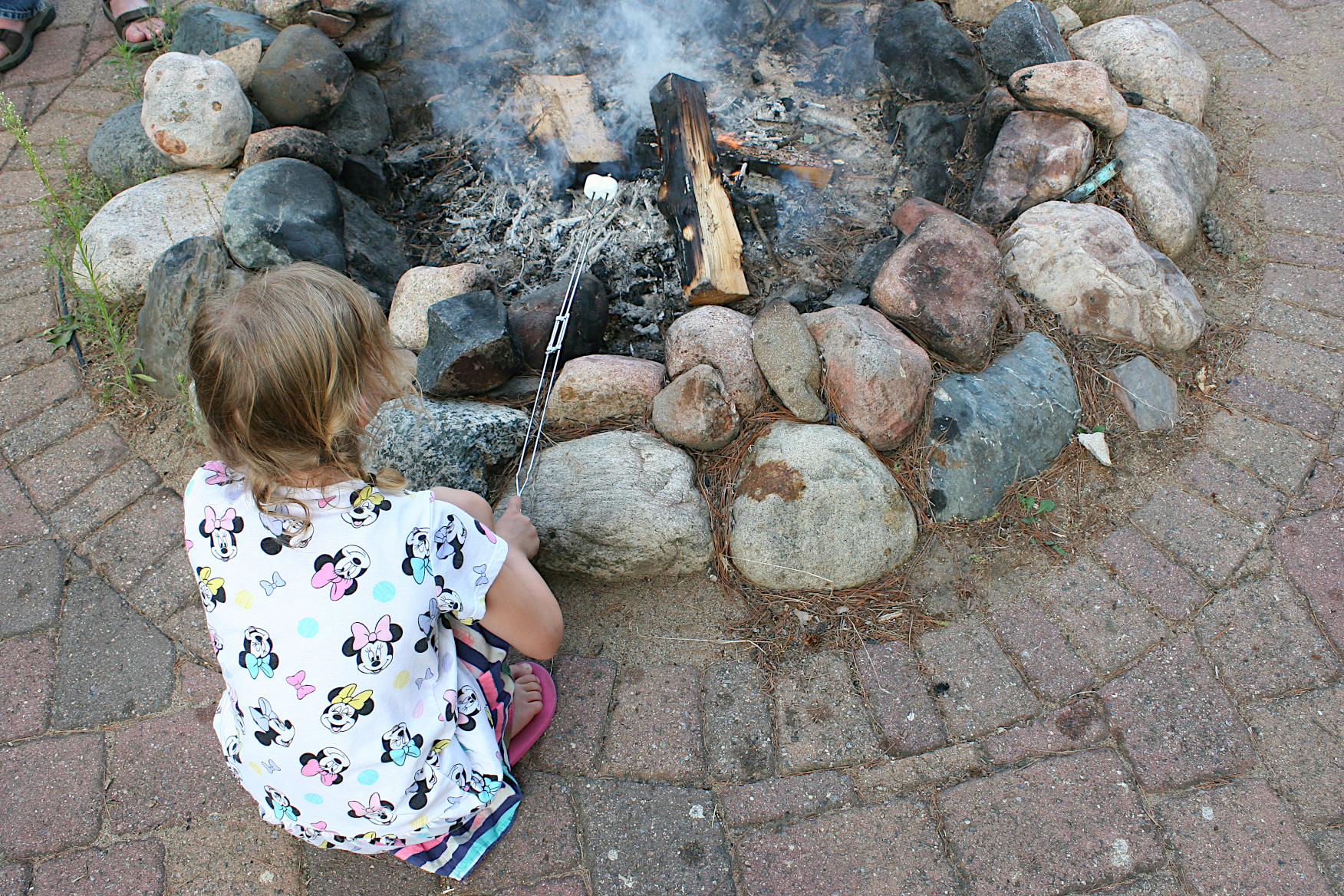
We all sat around the campfire, Randy and Amber roasting marshmallows for s’mores. Sticky faces and fingers added to the memories.

One evening we shared bear stories, starting with Marc’s experience from a childhood camping trip. I added mine. And then Amber brought humor into the mix with her version of Goldilocks and the Three Bears. Randy tossed in bits about Smokey the Bear and the Hamm’s beer bear. At least the bear tales didn’t scare the grandkids.

A trail winds through Mission Park near the cabin. Minnesota Prairie Roots copyrighted photo May 2021.

But masses of dragonflies bothered Izzy. Our cabin stay coincided with dragonflies and mayflies invading like a biblical plague. Isaac just walked right through them and didn’t notice when I plucked several dragonflies off him. Yellow jackpine pollen also clouded the air. Because of that, I kept my Canon 20-D mostly tucked inside my camera bag.

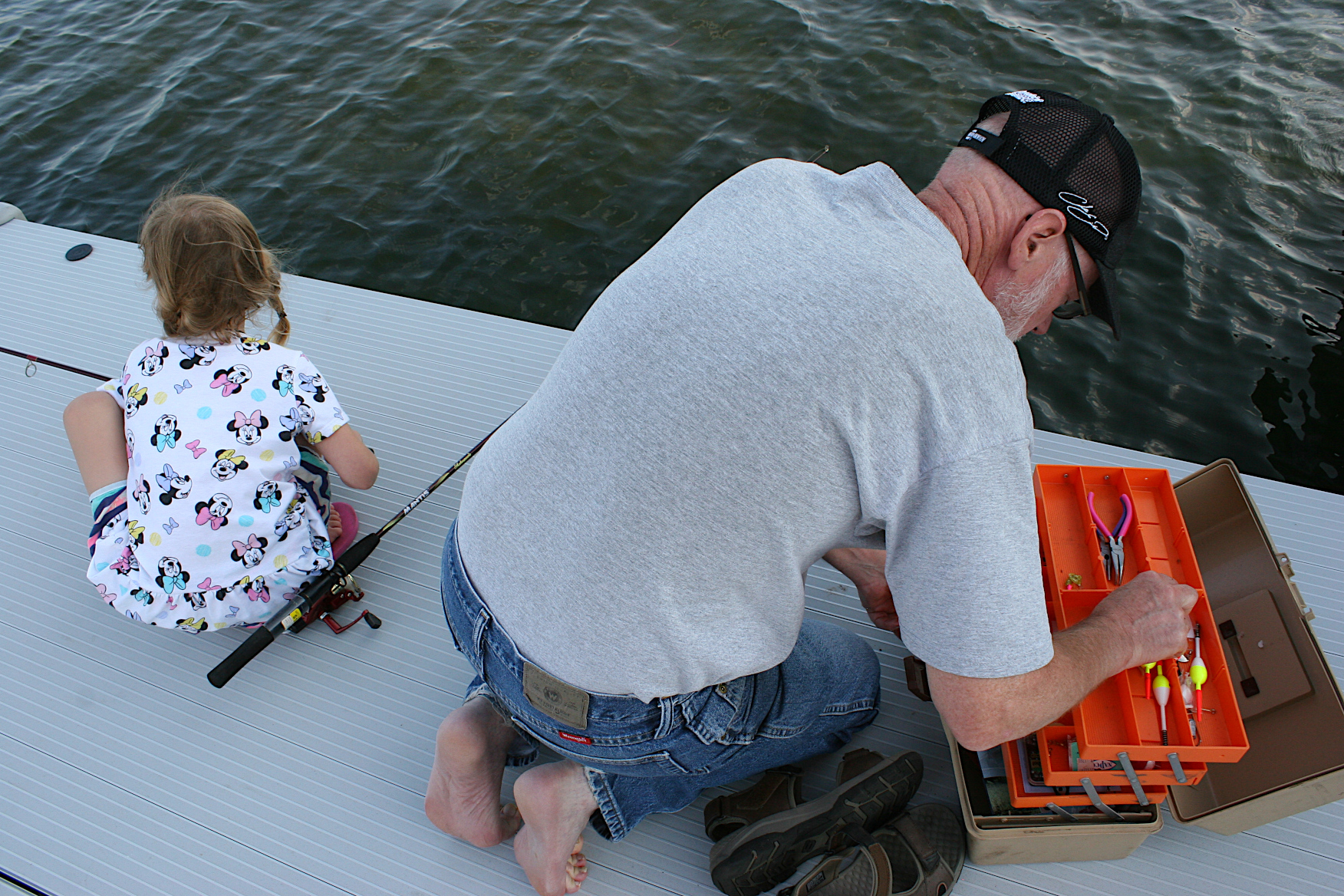
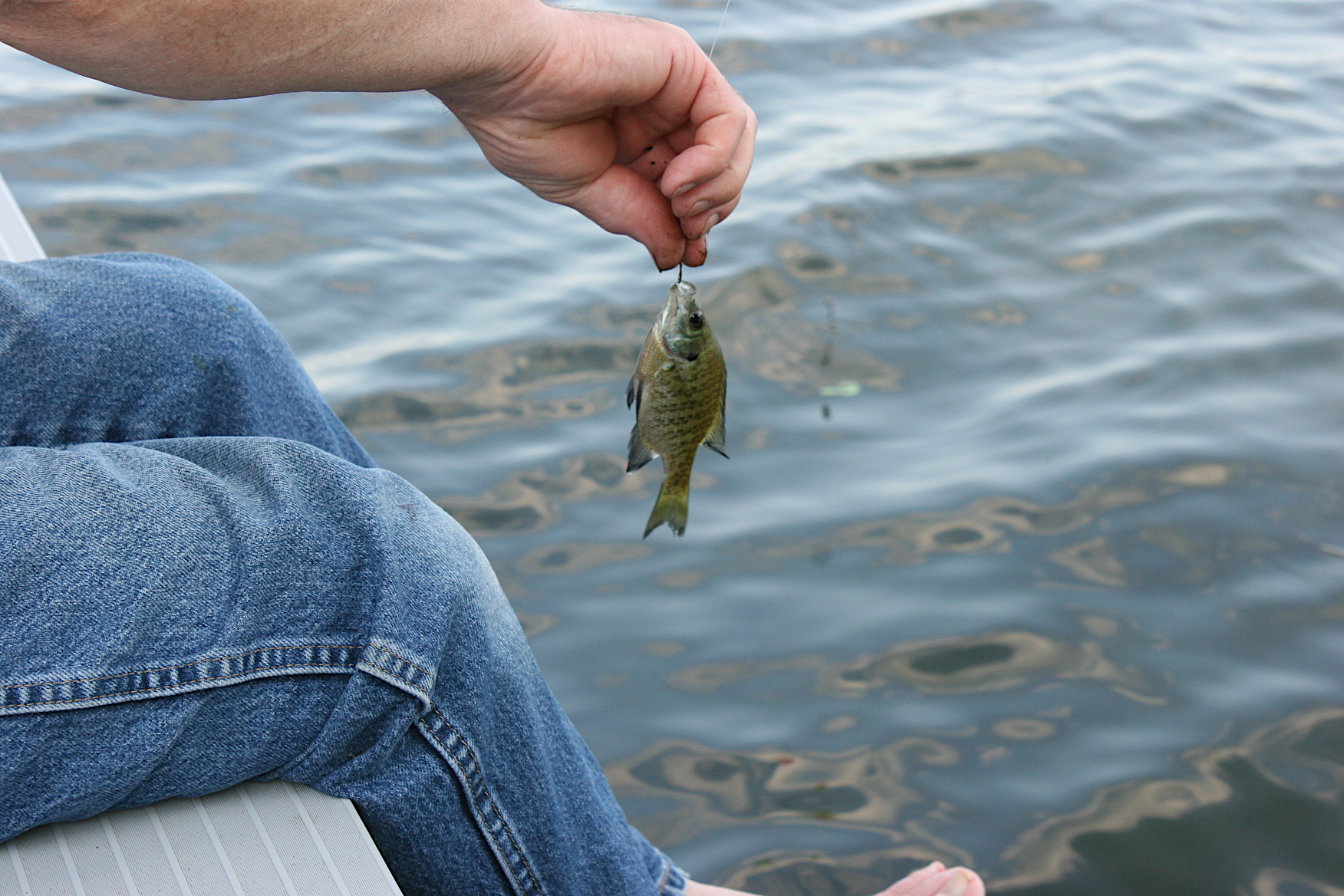
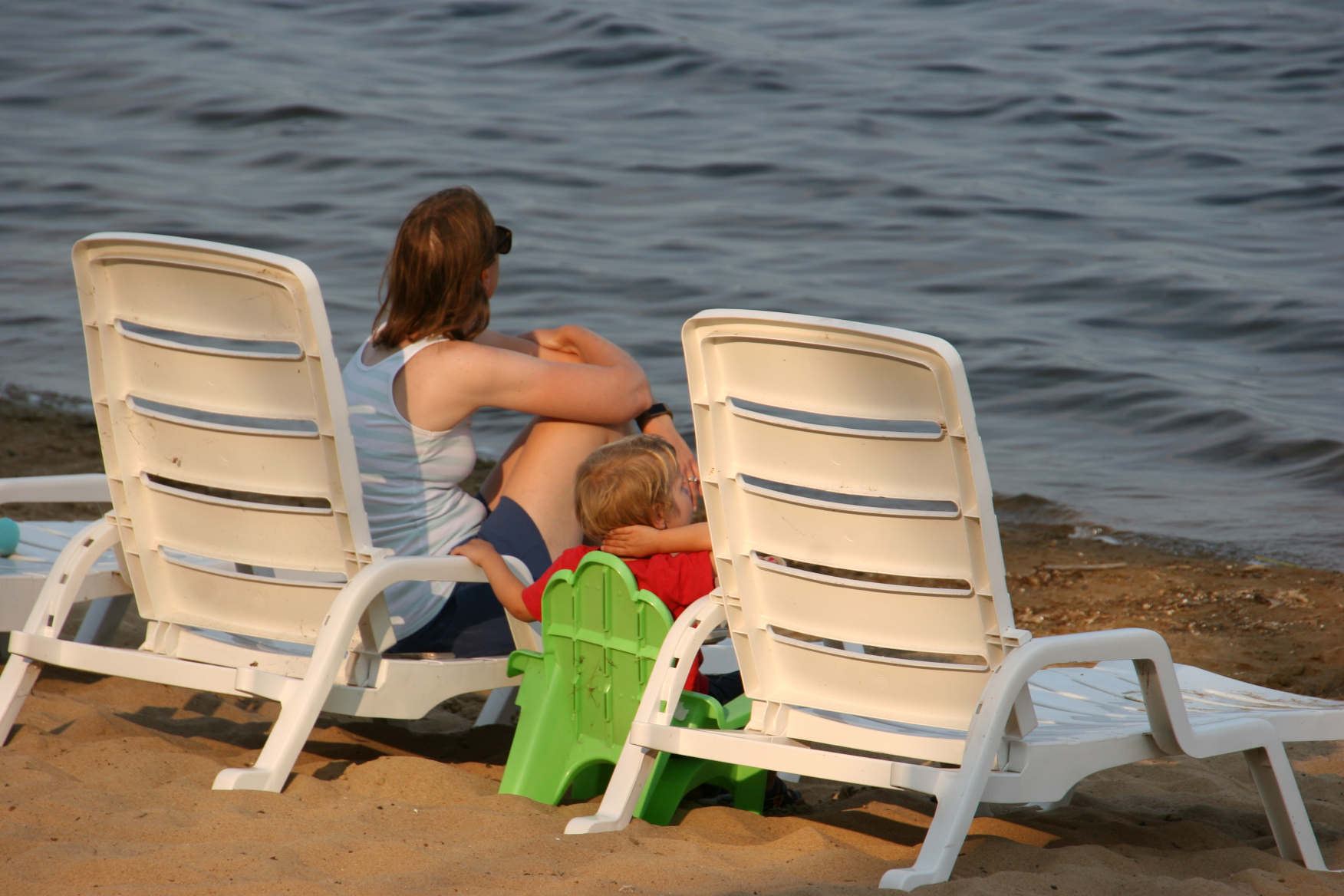
The lake temp at the time of our late May visit was still too cold for swimming. So we waded only. Randy fished, hooking a few fish too small to keep. Two warm and sunny days allowed for sunning on the beach for the adults and playing for the kids. Izzy opened Sand Pie Bakery on the afternoon her parents left for a brief jaunt into town. Oh, what fun to order an assortment of fruit pies crafted by Izzy and her brother.

Isaac and I grew closer as we interacted. He now clearly calls me Grandma in the strong voice of a 2 ½-year-old. He also learned to love sliding after we went to a playground in town. I felt exhausted just watching him run up steps, slide and repeat.

Izzy plays with figurines one morning at the cabin. Minnesota Prairie Roots copyrighted photo May 2021.

All of these family moments I hold precious. Time on the beach. Time inside the cabin—dining together, doing dishes, playing “school” with the kids. Time outside the cabin on nature walks—gathering treasures of stones, shells, pine cones. Watching loons near the dock. There’s nothing quite like viewing the natural world through the eyes of a child. Time outside the local ice cream shop, eating our treats as the afternoon sun and strong wind dripped ice cream onto our hands and the ground.

I cherish these memories. Every. Single. One. Some day perhaps my grown grandchildren will sit around a campfire and reminisce about cabin stays with Grandma and Grandpa. Stories of mayflies and dragonflies, of ice cream and sand pies, and of pink streaking the sky over Horseshoe Lake.

#

TO MY BROTHER-IN-LAW Jon and to my sister-in-law Rosie, thank you from the bottom of our hearts for opening your guest lake cabin to extended family. We feel incredibly blessed by your generosity, by our time at the lake and by the family moments we are sharing and the memories we are building.

© Copyright 2021 Audrey Kletscher Helbling


Reflections on my mom’s birthday May 24, 2021

Filed under: Uncategorized — Audrey Kletscher Helbling @ 5:00 AM
Tags: , , , , , , ,
My sweet mom, featured on the Parkview Facebook page in May 2020.

THIS POST CELEBRATES my mom, who turns 80-something today. She likely will never read this. She can’t see well enough to read nor would she likely fully comprehend. But, none-the-less, I feel compelled to honor her with my words.

She’s proven such an inspiration to me. In my writing. In the way I live my life. In who I am. Her name, Arlene, is even part of my identity as her first-born daughter.

I recognize that, as time passes, our memories often skew and we see loved ones through rose-colored glasses. But my view of my mom remains consistent, unchanged. She is the definition of kindness. Of the mindset, “if you don’t have anything good to say about someone, then don’t say it.” Those weren’t just empty words. She followed them and advised us, her six children, to do the same.

The only photo I have of my mom holding me. My dad is holding my brother, Doug.

Mom, as busy as she was with raising three sons and three daughters on the farm, always found time to serve. In church. In the American Legion Auxiliary. At Red Cross blood drives. Wherever she was needed. Her selflessness is admirable.

I sometimes wonder what dreams she gave up. She attended business college in Mankato and worked for awhile before marrying and then settling into her role as farm wife and mother. I know the six of us occasionally tested her patience. I know she worked hard—washing clothes in a Maytag wringer washer, tending a large garden, preserving food, endless cooking and baking…

The old farmhouse to the left, with the “new house” in the background. That’s my sister Lanae standing on the front steps.

And I also know of one particular dream which became reality for my mom in 1967. For years I watched as she paged through house-building plans printed in booklets procured from the local lumberyard. She dreamed of more space for her growing family. Space expanding beyond the 1 ½-story wood-frame farmhouse with three small bedrooms, an oil-burning stove in the middle of the living room, a dirt cellar and no bathroom. Eventually, my parents built a new house and I can only imagine my mom’s relief and gratitude.

It’s not that Mom really cared all that much about material possessions. But having more room and something like an indoor bathroom made life easier. More comfortable.

The birthday cake booklet from which we chose animal cake designs. This copy was gifted to me by a friend.

We didn’t have much growing up. But, because of Mom, we didn’t realize that. On our birthdays, she would craft an animal-shaped cake design chosen from General Foods’ BAKER’S COCONUT ANIMAL CUT-UP CAKE booklet. There were no gifts. Not until I grew older did I understand our poverty. But we didn’t experience poverty in love. Even though this was an era when parents didn’t openly express love in hugs, kisses or words, I felt loved. Cherished. Cared for.

Today, as I reflect on my childhood, I feel a deep sense of gratitude for my mother and how she raised me to value faith and family. To respect others. To speak kindly. To serve.

Arlene’s 1951 Wabasso High School graduation portrait.

I feel grateful to still have her in this world, even as aging and health have changed her. Many times, beginning with a viral infection of the heart nearly 40 years ago, followed by open heart surgery, we wondered if she would make it. Too many times we, her family, were called to her bedside when she was not expected to survive. During uncontrollable bleeding, pneumonia, a fall that broke her neck and landed her in a trauma unit. I recall her comment after one hospital stay. “I guess God wasn’t ready for this stubborn old lady yet.” She was right. There’s a reason Mom is still here, even while wheelchair bound, tethered to oxygen, fading before our eyes.

She is still here to love. To cherish. And, on this her birthday, to honor with words of gratitude.

© Copyright 2021 Audrey Kletscher Helbling


Lilacs & the love they hold May 21, 2021

Filed under: Uncategorized — Audrey Kletscher Helbling @ 5:00 AM
Tags: , , , , , ,
Lilacs grow in various shades in a row of bushes at North Alexander Park in Faribault. Minnesota Prairie Roots copyrighted photo.

LILACS PERFUME THE AIR, filling the lower level of my home with the scent of spring in Minnesota.

“Lilacs on the Table” inspired by my poem and painted by Jeanne Licari for Poet-Artist Collaboration XIII at Crossings in Carnegie in Zumbrota in 2014. File photo courtesy of Crossings.

These bouquets—three in my living room, another in the dining room and the fifth on the bathroom counter—are more than simply beautiful flowers. They are reminders. Of my bachelor uncle. Of my husband’s love. Of a poem I wrote in 2014 as part of a poet-artist collaboration.

Lilac bushes at North Alexander Park, Faribault. Minnesota Prairie Roots copyrighted photo.

While my beloved Uncle Mike is long gone, the memories of the lilac bush which grew on his farm remain. I think of him each May when Randy brings me clutches of lilacs. It’s a sweet tradition. Loving. Appreciated more than a dozen roses, although those are lovely, too.

Lilacs, up close. Minnesota Prairie Roots copyrighted file photo 2013.

When Randy walked through the back door a few days ago with lilacs, I was surprised. Not that I should have been. He does this every May. I appreciate his thoughtfulness. I appreciate that he takes the time to gather these flowers for me at the end of a long work day.

There’s something simply sweet and precious about his remembering, his recognition of how much I value this heartfelt gift of love.

Lilacs

Breathing in the heady scent of lilacs each May,
I remember my bachelor uncle and the gnarled bushes,
heavy with purple blooms, that embraced his front porch
and held the promises of sweet love never experienced.

He invited his sister-in-law, my mother, to clip lilacs,
to enfold great sweeps of flowers into her arms,
to set a still life painting upon the Formica kitchen table,
romance perfuming our cow-scented farmhouse.

Such memories linger as my own love, decades later,
pulls a jackknife from the pocket of his stained jeans,
balances on the tips of his soiled Red Wing work shoes,
clips and gathers great sweeps of lilacs into his arms.


© Copyright 2021 Audrey Kletscher Helbling


Wedding memories after 39 years May 14, 2021

Filed under: Uncategorized — Audrey Kletscher Helbling @ 5:00 AM
Tags: , , , , , ,
Wedding guests toss rice at Randy and me as we exit St. John’s Lutheran Church following our May 15, 1982, wedding. Photo by Williams Studio, Redwood Falls, Minnesota.

THIRTY-NINE YEARS AGO on May 15, Randy and I were married at St. John’s Lutheran Church in my hometown of Vesta. The church sits about a half-mile north of the crop and dairy farm where I grew up. Since few people have a clue as to my hometown’s location, here are general directions: Go west of Mankato, west of New Ulm, west of Redwood Falls and follow Minnesota State Highway 19 half-way to Marshall. Vesta is a short distance from the first curve curving south.

When I reflect on that Saturday in 1982, I remember how the morning began with light rain, how I worried about my $82 wedding dress from Maurice’s getting dirty on the gravel farm driveway. Photos from that day show the sidewalk to the church dampened by rain before the 2 pm ceremony and after, when guests lined the walkway to toss rice.

That exit photo is perhaps my favorite from our wedding day. The joy on our faces and that of our guests is in-the-moment natural. Journalistic style. Slice-of-life. While I value the posed professional portraits, I especially value this celebratory image. When I study it, I see loved ones who are no longer living. My Grandma Kletscher back in the corner, daisy corsage pinned to her dress, snow white hair spilling from her red scarf. My bachelor uncle, Mike, dressed to the nines in a suit and tie and smiling broadly. And then my Aunt Sue, the beautiful and classy aunt of Italian descent, fashionably dressed, clutching rice, smiling. I miss all of them.

The Vesta Hall, a community gathering place in my hometown. Minnesota Prairie Roots copyrighted file photo.

Detailed memories fade after nearly 40 years. But the highlights of that day remain. The joy in marrying the man I loved, and still love. The congregation singing my favorite hymn, “Beautiful Savior,” during the ceremony. The joy of celebrating with all those friends and family, including two of Randy’s soon-to-give-birth sisters. The joy of dancing across the old wooden floor inside the Vesta Community Hall. And, if Randy, could insert his memory here, he would remind me of the awful green hue of the punch my mom made. It was tasty; but he’s right about the color.

Our colors were green and yellow. Not John Deere green and yellow. Just green and yellow, my favorite colors. Randy didn’t care much about color choices, as I recall. I even stitched aprons for our waitresses from green and yellow gingham. Oh, how I’d love to have one of those ruffled aprons my younger cousins wore as they waited on tables.

The Vesta Municipal Liquor Store (no longer a municipal liquor store). Minnesota Prairie Roots file photo 2011.

I appreciate that we were married during a time when weddings were simple. Simple as in twisted crepe paper streamers running the length of bare wooden banquet tables. Tables where locals piled corn kernels to mark BINGO cards once a year during BINGO Night. Tables that were pushed aside to open dance floor space for the Bunny Hop and the Chicken Dance and modern dancing. Dances, too, with the bride and with the groom. Randy would insert his memory here of dancing with a cousin who asked if he was sure he really wanted to get married. We still laugh about that question. But then the liquor store was just a half-block away.

Audrey and Randy, May 15, 1982. Photo by Williams Studio.

May 15 is certainly a day of reflection. But more important, it is a day of honoring our vows to one another. Of pledging to be there for one another. Always. Through the good times and the challenging times. And we’ve had plenty of both. It is a day also of celebrating what brought us together—love.

To my dear husband, Randy, thank you for loving me and for always being here for me and for our family. I appreciate you, cherish you, love you. In 40 years of knowing you and in 39 years of marriage, those feelings have only deepened. Happy anniversary! And I’m sorry about that green punch.

© Copyright 2021 Audrey Kletscher Helbling


Reflections on motherhood May 7, 2021

Filed under: Uncategorized — Audrey Kletscher Helbling @ 5:00 AM
Tags: , , , , , ,
My mom saved everything, including this Mother’s Day card I made for her in elementary school. I cut a flower from a seed catalog to create the front of this card. Minnesota Prairie Roots file photo.

IT’S EASY TO IDEALIZE motherhood. To paint a portrait of an infinitely loving and nurturing mother. Always calm. Always kind. Always putting her children first.

But the reality is that being a mom does not mean being perfect. No one is. Perfect, that is.

So this Mother’s Day, I honor all those women who are moms. Not some idealistic version of a perfect mother. But rather a mother who does her best to embrace motherhood and love those entrusted to her care.

My granddaughter. Minnesota Prairie Roots file photo April 2019.

As the mother of three now grown adult children and two beautiful grandchildren, I have a little experience in the mothering department. That doesn’t make me an expert. It just lends more authenticity to my words, to my efforts to give my children roots and wings.

I love my three. Two daughters born 21 months apart. And then the son born seven years and 364 days after my eldest. Yes, she celebrated her birthday in the hospital with her newborn brother.

As a stay-at-home mom, I found raising kids both challenging and rewarding. I expect most moms would say that. Tantrums and sibling rivalry and strong-willed children can test any mother’s patience. But then there were the moments of children snuggled next to me or on my lap while I read books. First, simple Little Golden Book storybooks. Then the Little House series. The Betsy-Tacy series. And more.

Busted in October of 1988 sneaking cookies and “hiding” in the corner of the kitchen to eat them. Minnesota Prairie Roots file photo.

And the moments of delight. Like the morning I caught my daughters eating just-baked chocolate chip cookies in a corner of the kitchen…after I’d told them to wait until after lunch for a treat. My oldest daughter pulled a chair to the counter and grabbed two cookies for herself and her sister. I secretly admired her determination. And her looking out for her sister.

I wanted to raise children to think creatively, to forge their own paths. To care about others. And they did. When the eldest, during her freshman year of college, informed us that she was going on a mission trip to Paraguay, I asked, “Where is Paraguay?” And soon the second daughter followed, journeying to New Orleans to help with clean-up after Hurricane Katrina. Twice. Then, after college, she moved to Argentina for six months.

One of my all-time favorite photos of my son at age 5. Minnesota Prairie Roots file photo.

The son, too, traveled, to attend college and work in Boston for five years. I disliked having him so far from Minnesota. But I respected his choice and my need to let go. Later, he would travel to a professional conference in Japan and then to Europe.

Certainly, there have been challenges through the years. Difficult times. Plenty of tears and angst and worry. The morning my then 12-year-old son was struck by a car while crossing the street to his school bus stop ranks as an especially terrifying moment. That hit-and-run occurred just days before Mother’s Day 2006. Thankfully, he received only minor injuries. Yet, it was a horrible experience. My heart hurts for all mothers who have lost children.

Me and my mom in December 2017. Minnesota Prairie Roots file photo.

Although my kids are long-gone from home, my love and care for them remains as strong as ever. I want the best for them. Happiness. Joy. Purpose. To love and be loved. I would move mountains for them, as cliché as that sounds. I expect my mom felt the same.

My mother, Arlene, and me.

To all the moms out there, including my mom and my eldest (the mother of my grandchildren), Happy Mother’s Day! You are valued, loved, cherished and appreciated.

© Copyright 2021 Audrey Kletscher Helbling


In New Ulm: George’s Ballroom, when the music stops April 19, 2021

The boarded entrance to the long-closed George’s Ballroom in New Ulm. Minnesota Prairie Roots file photo June 2020.

I CAN ALMOST HEAR the rhythmic oom-pah-pah of the polka, see the couples twirling across the scuffed wooden dance floor, smell the scent of whiskey poured from bottles hidden in brown paper bags.

George’s, on the corner of Center and German Streets, also housed a bar and, at one time, a bowling alley. Minnesota Prairie Roots file photo June 2020.

Across Minnesota, ballrooms once centered Saturday evenings with wedding receptions, concerts and parties celebrating milestones. The Blue Moon Ballroom in Marshall. The Gibbon Ballroom, site of Polka Days, in Gibbon. The Pla-Mor Ballroom in Rochester. George’s Ballroom in New Ulm. And many others.

The historic marquee marks George’s Ballroom. What a beautiful piece of art. Minnesota Prairie Roots file photo June 2020.

Now most of these entertainment venues are shuttered. Abandoned. Or gone. The places of memories shared in stories. The places of memories photographed. A bride tossing her bouquet. A couple wrapped in each other’s arms. A trio wildly whirling in The Chicken Dance. My parents met at a dance in a southwestern Minnesota ballroom in the early 1950s. So many Minnesotans hold ballroom memories.

The bar entrance is here, the ballroom entry to the right. Minnesota Prairie Roots file photo June 2020.

Last summer while in New Ulm, I photographed the exterior of George’s Ballroom, an art deco style brick structure built in 1947 by George Neuwirth. The facility, which could hold up to 3,000 guests, once served as this community’s celebration and concert hub. Lawrence Welk, Glen Miller, The Six Fat Dutchmen and other big name bands played here.

George’s closed in 1991, reopened for awhile under new ownership and then shuttered again—permanently—in the early 2000s. Property taxes went unpaid. Options expired.

Now, nearly 20 years later, the former dance hall faces likely demolition, according to media reports. Cost to restore the ballroom is estimated at $5 million. Cost to demolish it, $1 million. That’s a lot of money. But when you’re dealing with mold from water damage, asbestos and other health and safety issues, costs climb quickly.

Here you can see some of the damage, underneath that BAR sign. Minnesota Prairie Roots file photo June 2020.

All of this saddens me. I love historic buildings. They’re often well-built and hold important historic, community and personal importance. But I am also a realist who recognizes that not everything can be saved.

The marquee first caught my photographic interest. Minnesota Prairie Roots file photo June 2020.

I do hope, though, that the George’s marquee and signage—which drew me to photograph the building in the heart of downtown New Ulm—will be saved. It sounds like that’s the plan. I hope the historic art can be incorporated into an outdoor public space rather than tucked inside, mostly unseen and under appreciated. People need easy access to George’s memorabilia. To photograph. To reminisce. To remember the Saturday nights of Big Bands and polkas and partying with family and friends. With a little creative thinking, George’s can continue to draw locals and others, adding another attraction to a community that excels as a destination city.

TELL ME: What would you do with George’s Ballroom and/or the marquee and signage? I’d love to hear your creative ideas and/or your memories of George’s or other ballrooms.

© Copyright 2021 Audrey Kletscher Helbling


Reflections after a country drive April 1, 2021

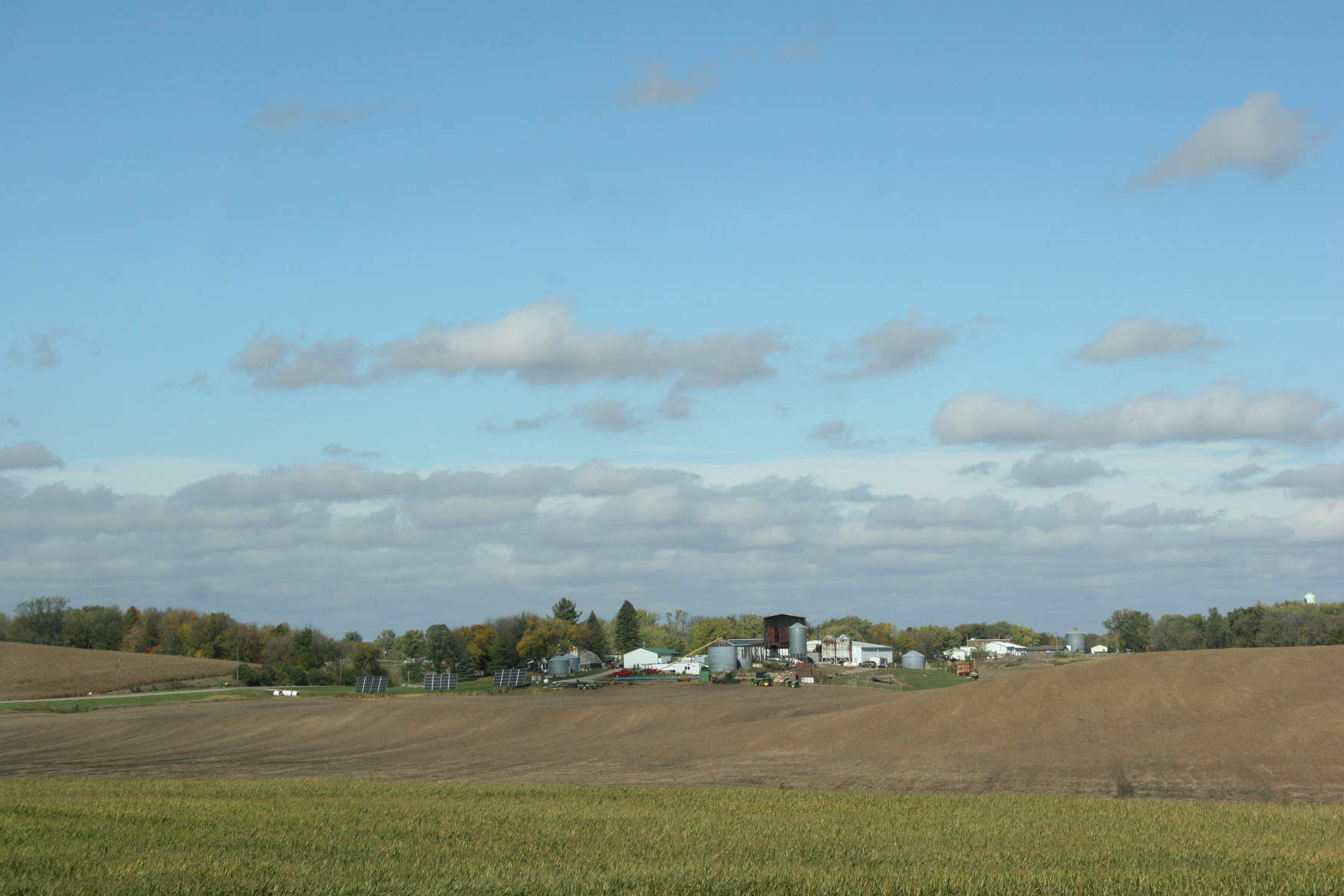
Farmland dominates the landscape east of Faribault near Minnesota State Highway 60.

EAST OF FARIBAULT, the land stretches long and flat. Wide open. Fields punctuated by farm sites.

We followed this narrow, and muddy, gravel road.

Gravel and asphalt roads divide farmland into grids. Orderly. As if a ruler was laid across the earth and straight lines inked thereon.

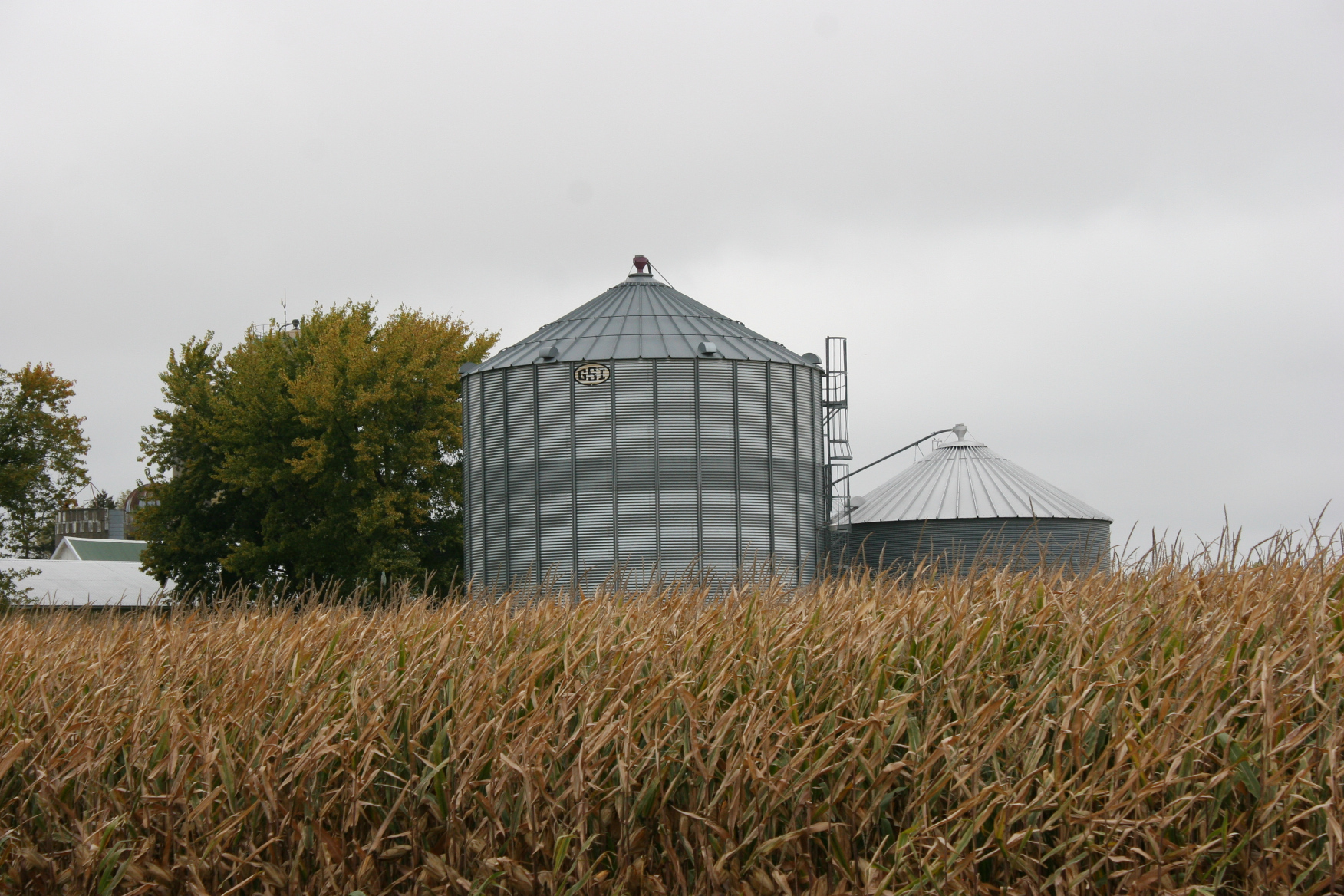
Building sites break the monotony of fields.

Sunday afternoon, after a hike at Falls Creek County Park, Randy and I took a country drive. We are farm-raised, decades removed from the farm, but with an enduring connection to the land.

An old hayrack, so familiar to me, parked in a field east of Faribault.

On the cusp of spring planting time in Minnesota, the draw back to the land, to the familiarity of fields, calls. For me, there’s this deep yearning, this need to lay my eyes on the bare earth or the residue of last year’s crops.

I feel connected to all of this via my rural upbringing in southwestern Minnesota.

At times my heart aches for missing the land. I want to smell the scent of soil, to touch the cold earth, to remember all those springs back on the farm. The steady rhythm of the tractor, the corn kernels pouring into the planter and then the faint hint of green lining the black fields.

An aged abandoned outbuilding on a former farm site just outside Nerstrand.

Much about farming has changed since my leaving of the land in the early 1970s. But the basics remain. The planting, the growing and harvesting.

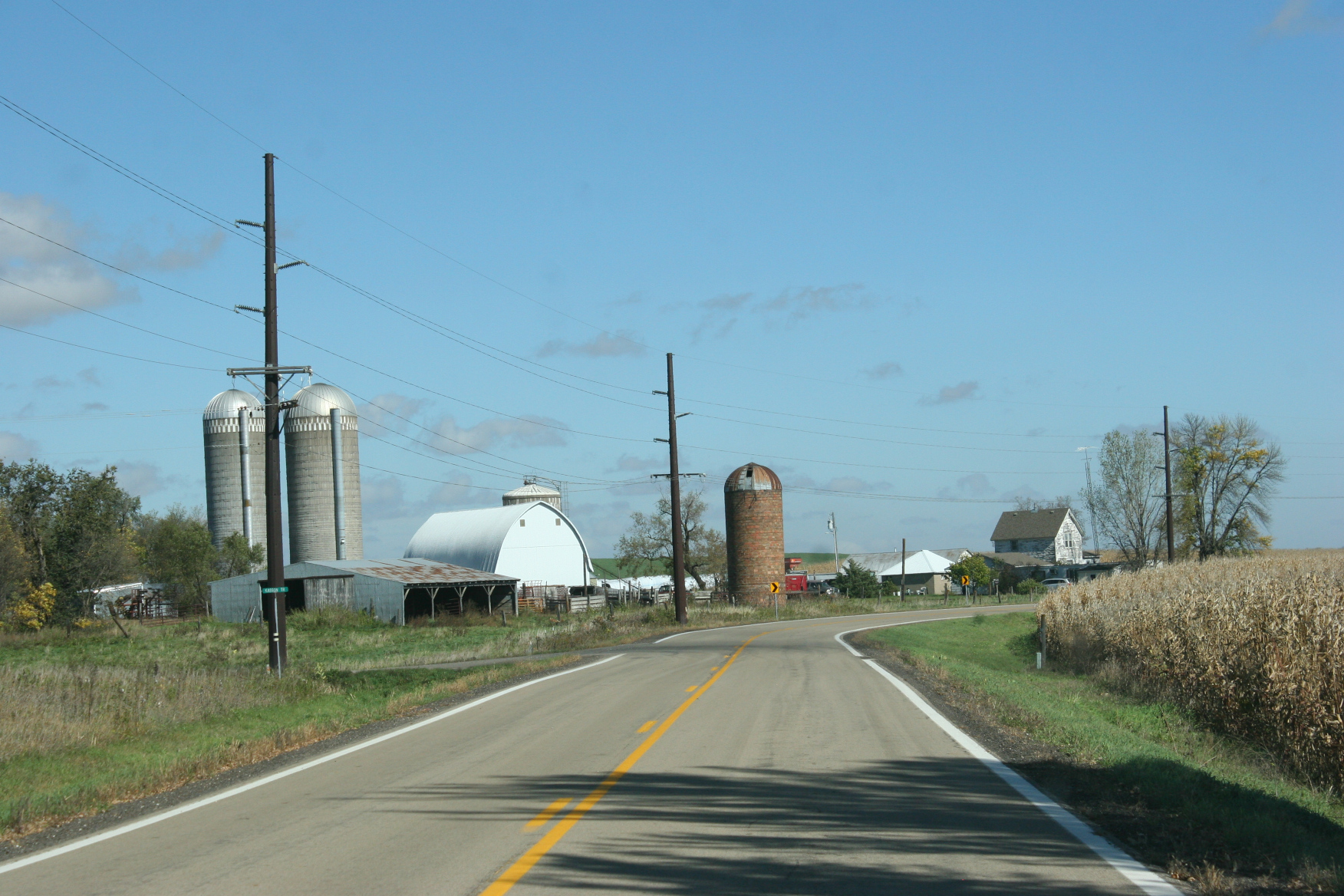
Power poles along a gravel road are such a strong rural visual.

And even though I’ve lived in town far more decades than on a farm, my rural upbringing roots me to the land and takes me back each season. To honor my hardworking farmer dad. To equally appreciate my mom who gardened and fed and raised six children on the land. My hardworking parents instilled in me a love of the land, a connection to place and the innate need to follow gravel roads into the countryside.
Dad farmed, in the early years with a John Deere and Farmall and IH tractors and later with a Ford. (Photo by Lanae Kletscher Feser)
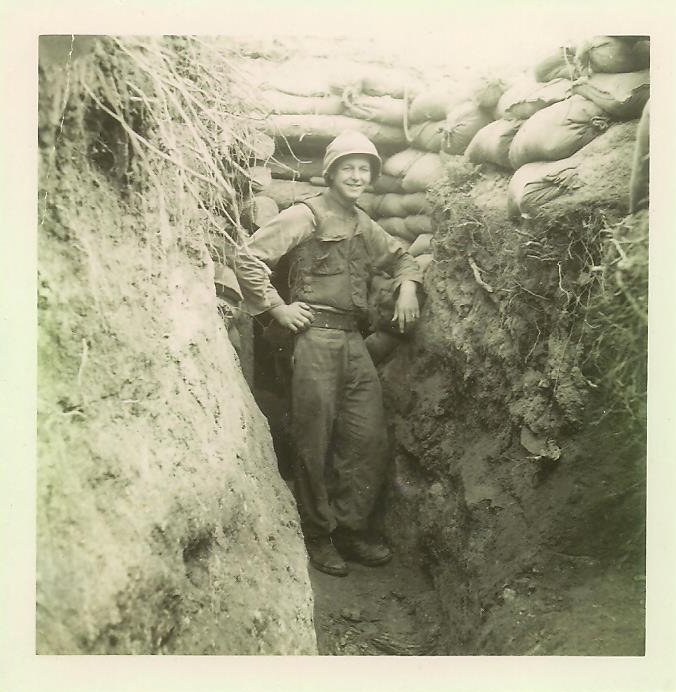
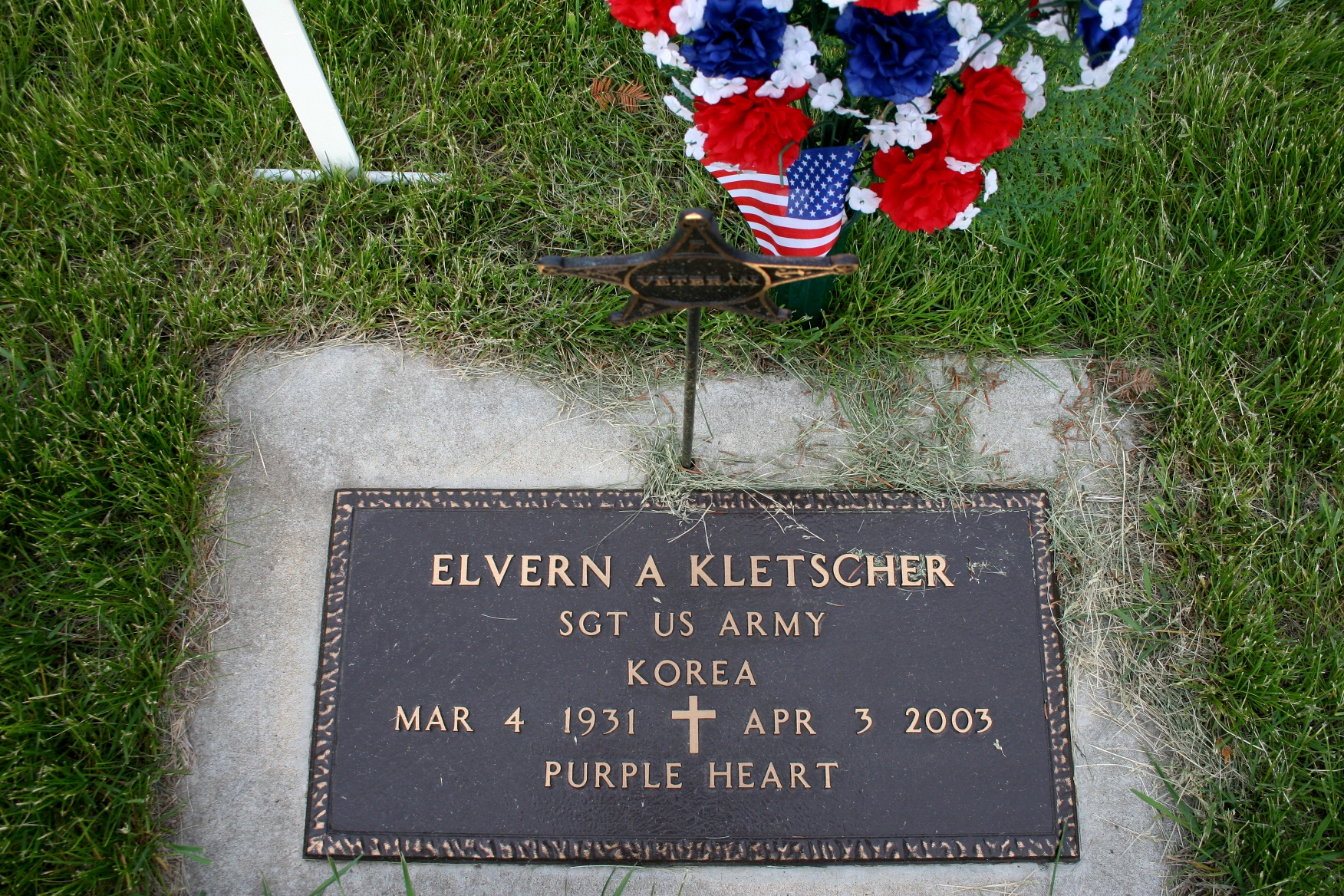
A photo of my dad, Elvern Kletscher, taken in 1980.

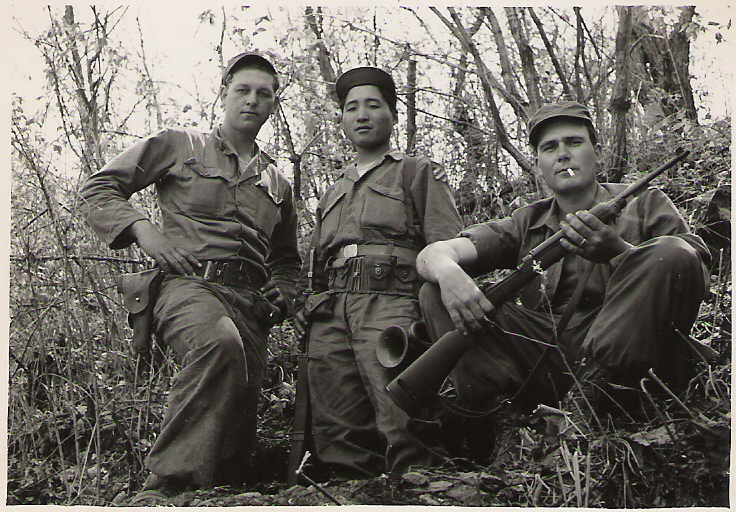
This post is dedicated in loving memory of my farmer father, Elvern Kletscher, who died on April 7, 2003. Thank you, Dad, for raising me to appreciate the land, for teaching me the value of hard work. for instilling in me a love of God and of family. I am grateful. And I miss you.

© Copyright 2021 Audrey Kletscher Helbling


In loving memory of my father-in-law February 9, 2021

Filed under: Uncategorized — Audrey Kletscher Helbling @ 2:38 PM
Tags: , , , , , , , ,
Tom and Betty Helbling, photographed in 1988.

HE DIED PEACEFULLY Friday morning, two of his daughters by his side.

He is my father-in-law, Tom. Age 90. His death came quickly after a short hospitalization, discharge, sudden change in health, admittance to hospice, then gone the next day.

Mass of Christian burial for my father-in-law will be celebrated in St. Michael’s Catholic Church, Buckman.

Now we are preparing to say goodbye in the deep of a brutally cold stretch of weather here in Minnesota in the midst of a global pandemic. Both add to the challenges.

Today, though, I want to focus on Tom and my memories of the man I’ve known for nearly 40 years. A man with a large and loving family, whom he loved, even if he didn’t often openly show it.

Tom and Betty Helbling, circa early 1950s.

Tom has always been surrounded by a large family, beginning with his birth into a blended family in rural St. Anthony, North Dakota, in December 1930. After farming on the Helbling homestead, Tom and his wife, Betty, moved in 1963 with their young children to a central Minnesota farm. Their family grew to nine children, 18 grandchildren and 20 great grandchildren.

As a young child, Tom briefly attended Catholic boarding school, which leads to one of my favorite stories about him. Apparently oatmeal was often served for breakfast. And Tom disliked oatmeal. One morning he stuffed the cooked grain in his pocket rather than eat it, so the story goes. I expect it wasn’t long before the nuns discovered the oatmeal mess and meted out punishment.

Yes, Tom could be particular about the foods he ate. He liked, in my opinion, the strangest foods—Braunschweiger, summer sausage, pickled beets, herring… And, yes, his son, my husband Randy, also likes herring. Shortly before his health declined, Tom enjoyed a few of those favorites delivered to his care center room by a daughter.

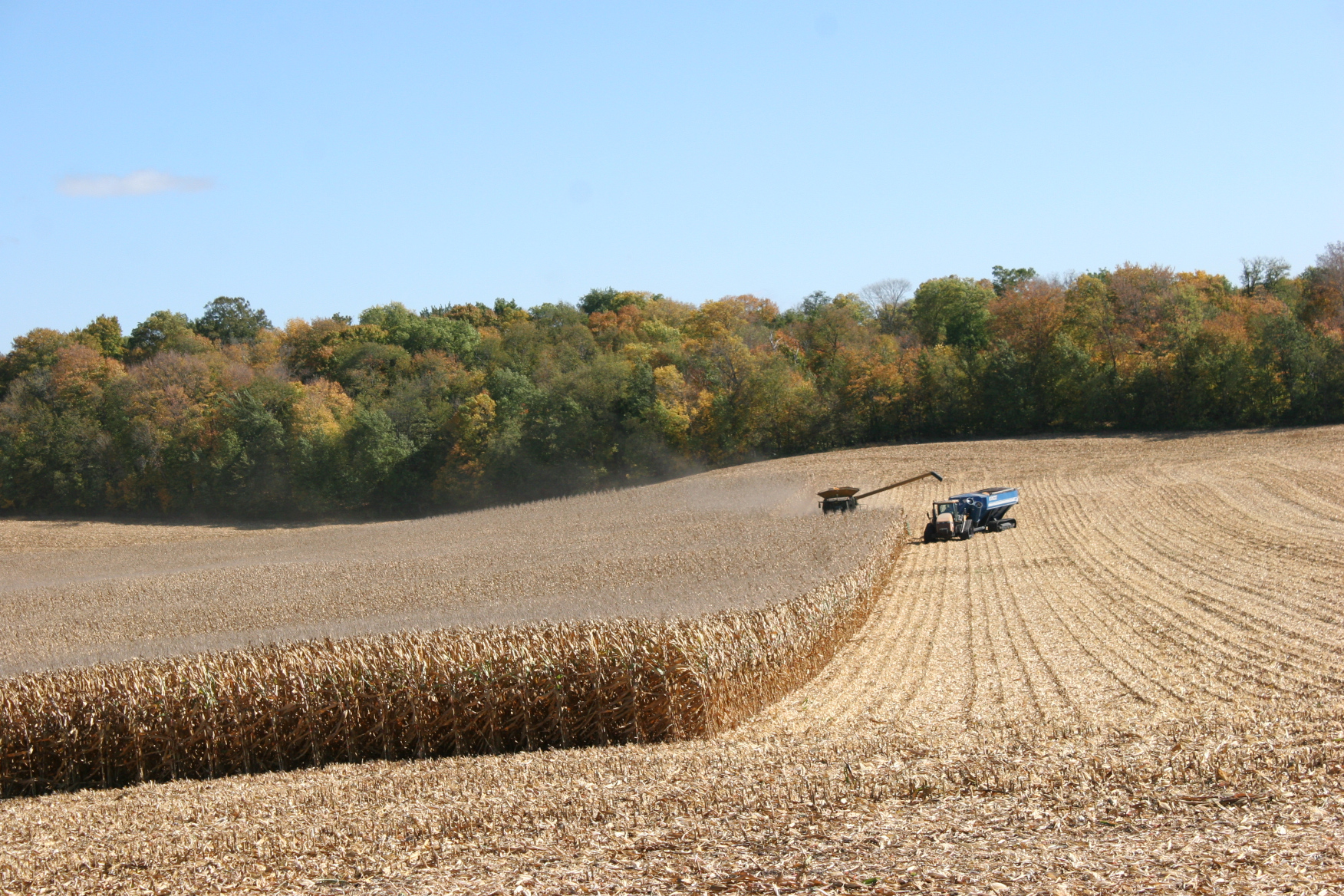
Ripened corn field. Minnesota Prairie Roots file photo.

Visitor restrictions due to COVID-19 were hard on Tom, as they have been for most living in congregate care centers and their families. But my father-in-law has overcome much in his life, most notably the loss of his left hand and forearm following an October 1967 farming accident. The accident happened when Tom hopped off the tractor to hand-feed corn into a plugged corn chopper. The rollers sliced off his fingers and pulled in his hand, trapping it. As Tom screamed for help, Randy, only 11 years old, disengaged the power take-off, then raced across fields and swampland to a neighbor’s farm. It’s a harrowing story that could have easily turned tragic.

My father-in-law’s prosthetic hand. Tom put a band-aid on his hand after he burned a hole in it while frying potatoes in 2009. I laughed so hard. Prior to getting his hand, Tom wore a hook to replace his amputated limb. Minnesota Prairie Roots file photo.

Despite a missing limb, Tom managed to continue milking cows and, in later years, to run a small engine repair business. He also grew and sold strawberries and pumpkins. I remember harvesting pumpkins with him one cold October evening, rain slicking the field with mud. We were drenched and miserable by the time we’d plucked those pumpkins.

One of my favorite photos of Tom giving an impromptu concert on his Lowrey organ. Minnesota Prairie Roots file photo 2012.

It is the creative side of Tom which I especially appreciated. He was a multi-talented life-long musician who played the piano, organ and accordion (until he lost his hand). He could play music by ear and had a piano tuning business. At age 81, he took refresher organ lessons and in 2012 gave an impromptu concert for Randy and me in the small St. Cloud apartment he shared with his second wife, Janice. His first wife, Betty, died in 1993. He treated us to Hank Williams’ “Your Cheatin’ Heart” and “Somewhere My Love” from the movie Dr. Zhivago. What a gift to us.

Threshing on the home place in North Dakota, a painting by my father-in-law, Tom Helbling.

Tom also painted, a hobby he took up late in life. Randy and I have two of his original oil paintings and several prints. They are a reminder of my father-in-law, of his history, of his rural upbringing, of his creative side. I consider these a legacy gift. Valued now more than ever at his passing.


© Copyright 2021 Audrey Kletscher Helbling


From Minnesota: Reflecting on small towns January 29, 2021

Buckman, Minnesota. Minnesota Prairie Roots file photo September 2020.

RURAL MINNESOTA. For Randy and me, that represents our upbringing, the place of our roots, the land that is part of our personal geography.

A road grader grades the gravel road near Randy’s childhood farm southeast of Buckman. We pulled off the narrow road to allow the grader to safely pass by our van. Minnesota Prairie Roots file photo September 2020.
A farm place between Buckman and Gilman. Minnesota Prairie Roots file photo September 2020.
In the small town of Gilman. Minnesota Prairie Roots file photo September 2020.

We both grew up on farms, in large families—his three kids larger than mine at nine. We both picked rock—he more than me as Morrison County in central Minnesota sprouts more rocks than Redwood County. We each labored in fields and barns and understood the value of hard work and our importance in the farming operation. Even at a young age. That carries through in our strong work ethics and our strong link to the land.

Pierz, a small town to the north of Buckman and bigger than Buckman, still has a hardware store. Randy attended junior and senior high school in Pierz. Minnesota Prairie Roots file photo September 2020.
As we passed through Pierz, I photographed this updated community gathering spot. Minnesota Prairie Roots file photo September 2020.
Genola, just to the south of Pierz, is home to the Red Rooster. BINGO is big in this part of rural Minnesota as is weekly Bologna Day (as noted in the banner on the building). Minnesota Prairie Roots file photo September 2020.

And, though we left our rural communities at age 17, we still hold dear the small towns—Buckman and Vesta—that were such an important part of our upbringing. Both have changed with familiar businesses long gone. Society changed and locals began driving farther for groceries and other necessities.

A nod to this area’s rich agricultural base outside Sev’s Food & Liquor in Buckman. Minnesota Prairie Roots file photo September 2020.

It’s easy to get caught in the memories, of the back then, of wishing nothing had changed. But it has and it does. And life goes on.

Housed in the old bank building, the Buckman Bank Tavern. Minnesota Prairie Roots file photo September 2020.
Signs on Sev’s in Buckman. Minnesota Prairie Roots file photo September 2020.
Sev’s Food & Liquor along Buckman’s main street. Minnesota Prairie Roots file photo September 2020.

Returning to our hometowns, our home areas, causes me to reflect while simultaneously appreciating that which remains. Cafes and churches and hardware stores. Post offices and bars and grain elevators. These are the community gathering spots that still mark many of Minnesota’s smallest communities, those towns that span only blocks from east to west, north to south.

I often see can collection sites in small towns, like this one in Buckman. They offer insights into a community. Minnesota Prairie Roots file photo September 2020.
On the door of a Buckman bar, a young man remembered. Minnesota Prairie Roots file photo September 2020.
A warning sign posted on a house in Buckman. Minnesota Prairie Roots file photo September 2020.

But more than buildings, people form community. Even in Faribault, where Randy and I have lived since 1982, we’ve found our small town in a city of around 25,000. That’s in our faith family at Trinity Lutheran Church, the “town” that centers our lives. An uncle and I discussed this recently. He lives in Minneapolis. His neighborhood is his community, his small town.

A place to gather outside Sev’s Food & Liquor in Buckman. Minnesota Prairie Roots file photo September 2020.

No matter where you live, whether in rural Minnesota or New York City, the mountains of Idaho or the plains of Nebraska, I hope you’ve found your community and place of joy.

© Copyright 2021 Audrey Kletscher Helbling