Faribo Frosty, photographed on April 2, 2023, as spring approached. (Minnesota Prairie Roots copyrighted file photo April 2023)
THE LAST TIME I SAW Faribo Frosty, his smile was turned upside down in a frown. That was in April, when winter was winding down in southern Minnesota and Frosty’s demise was imminent.
The latest Faribo Frosty, photographed under construction on December 2, 2023. (Minnesota Prairie Roots copyrighted photo December 2023)
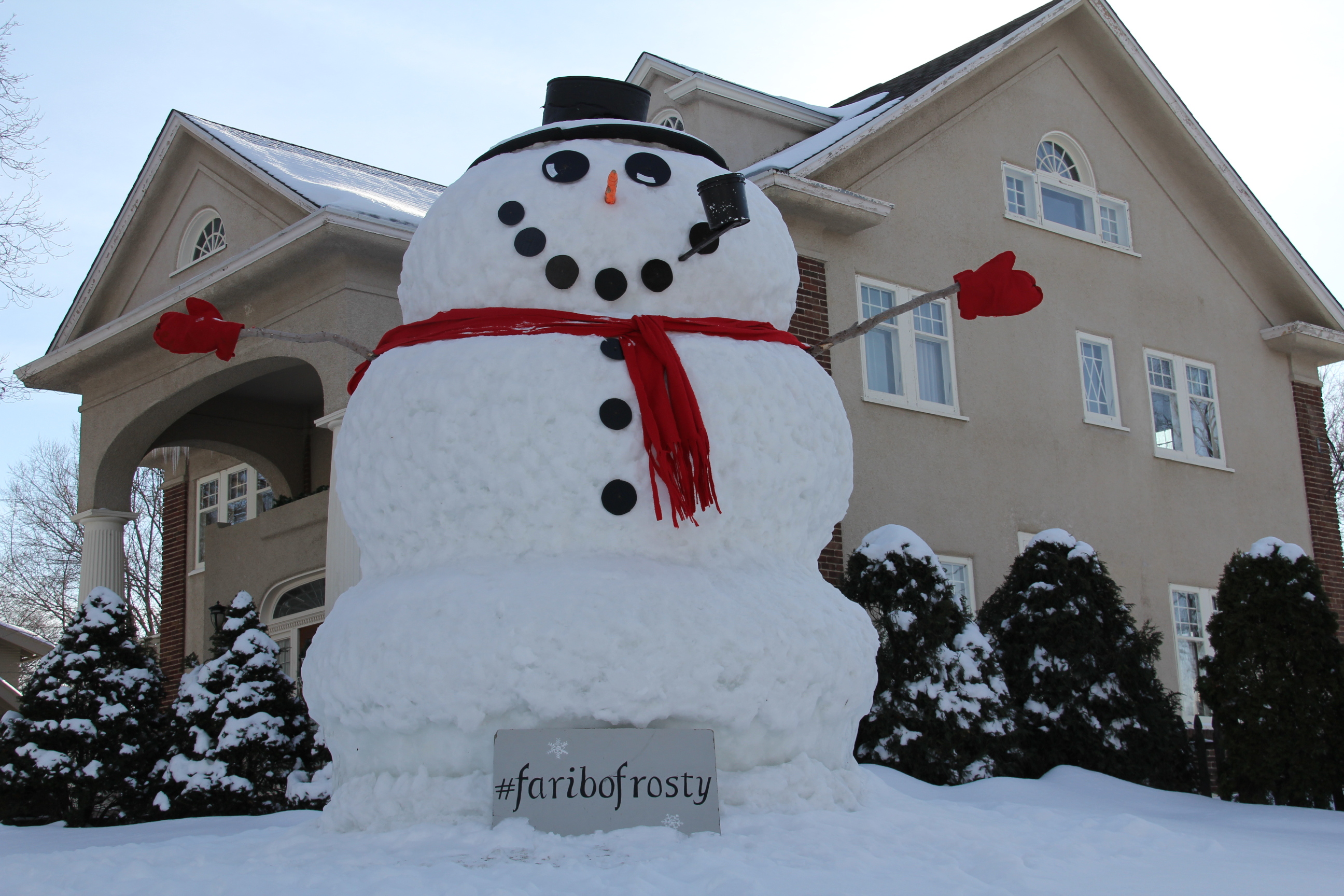
Now some nine months later, the ginormous snowman is back, at least partially. Faribault homeowner Andy Hoisington is busy building the 2023-2024 Faribo Frosty in his front yard at the corner of First Street Northwest and Third Avenue Northwest in Faribault. Since 2005, the Hoisington family has crafted a massive snowman, their gift to the community and now a popular winter attraction for locals and out-of-towners, young and old alike.
Jake, left, and Andy Hoisington work on Faribo Frosty in January 2020. (Minnesota Prairie Roots copyrighted file photo January 2020)
It’s truly a labor of love. Andy hauls trailer load after trailer load of shaved ice from the Faribault Ice Arena across town to construct the snowman. He scoops, waters, carries (up a ladder) and shapes the snow ice into the snowman which this year will stand nearly two stories tall. That’s taller than last year, when Frosty was shorter, more robust than some other years.
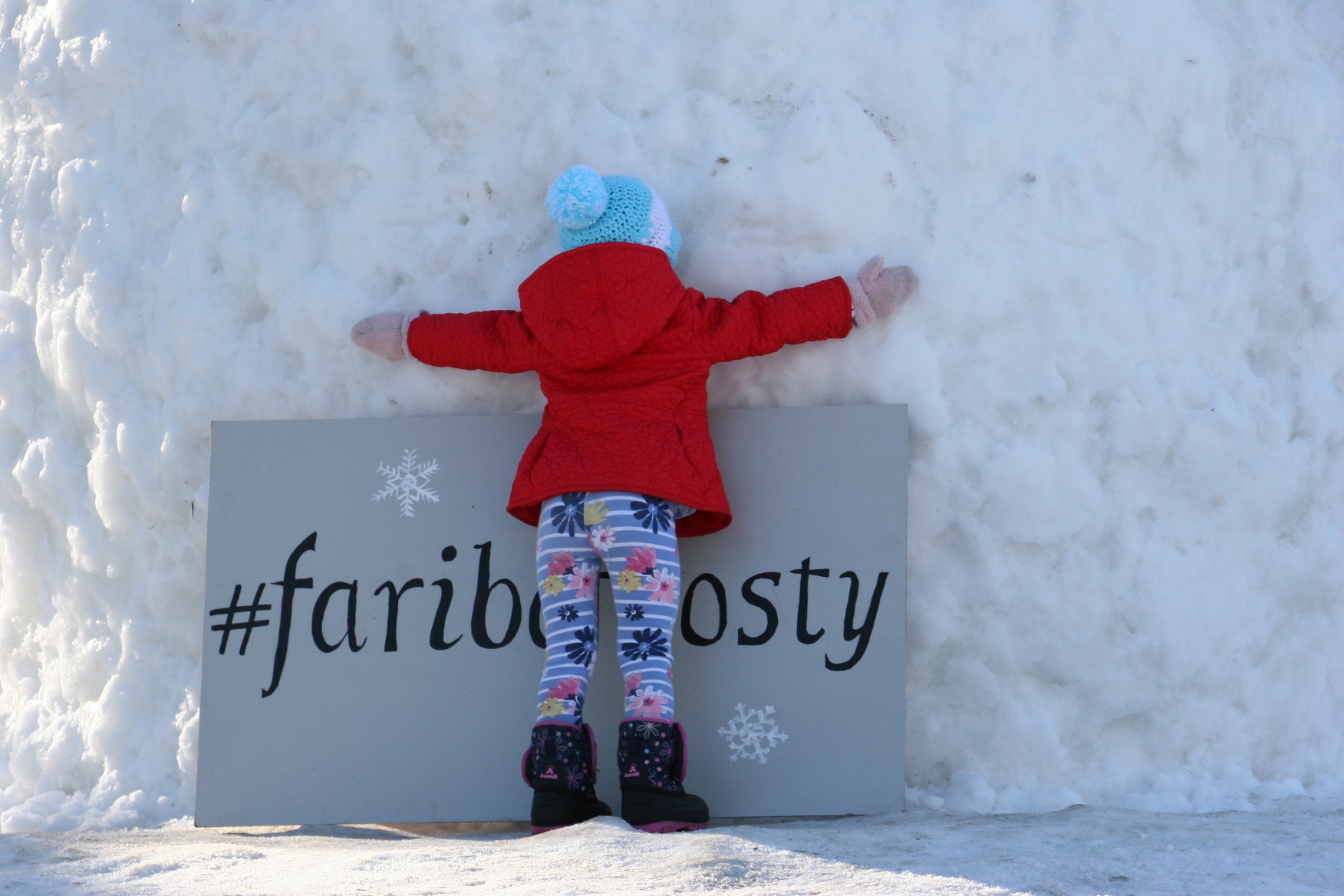
My then 2 1/2-year-old granddaughter hugging Faribo Frosty in 2018. (Minnesota Prairie Roots copyrighted file photo December 2018)
Visitors are welcome to step into the Hoisingtons’ yard for photos and a closer look at Frosty, maybe even a hug.
Last year’s Faribo Frosty. (Minnesota Prairie Roots copyrighted file photo December 2022)
Nothing, not even near 50-degree temps predicted today and tomorrow and a lack of natural snow, stop Andy in his mission to bring happiness and smiles. Faribo Frosty is his gift to us, and we are all the happier for this celebrity snowman in our community.
The Lakelanders sing at a recent holiday concert. (Minnesota Prairie Roots copyrighted photo December 2023)
THEIR VOICES BLENDED in perfect harmony, their singing so flawless that I felt emotionally moved by the sheer experience of listening.
I was among those packed inside Faribault Evangelical Free Church for a recent free holiday concert performed by three area men’s choruses: The Faribault Lakelanders Barbershop Chorus, The Northfield Troubadors and The Riverblenders Barbershop Chorus from Mankato.
Their holiday selections ranged from faith-based to secular to a humorous take on “Oh, Christmas Tree” featuring a verse about lutefisk. That set the crowd laughing.
A scene from the Nativity set displayed each holiday season in Faribault. (Minnesota Prairie Roots copyrighted file photo 2016)
But it was the classics, the aged hymns, the time-honored songs, to which I most connected. They hold the memories of many Christmases. Memories of the Christmas story told and retold within the verses of “Oh, Little Town of Bethlehem.” Memories of singing “Silent Night” in the still darkness of a sanctuary, peace settling upon me. Childhood memories of belting out the jubilant words of “Hark, the Herald Angels Sing.”
An airliner flies into Minneapolis-St. Paul International Airport. (Minnesota Prairie Roots copyrighted file photo)
And then there were the secular selections. The familiar words of “I’m Dreaming of a White Christmas,” the dream held by even those who otherwise dislike snow. “Deck the Halls” reminding many, including me, of the decorating yet to be done. And then the song, “I’ll Be Home for Christmas,” that nearly did me in, that caused me to check tears because I can’t recall the last time all three of my adult children were together, back here in Minnesota for Christmas. I thought then of my son flying in next week from Boston and the daughter in Madison, Wisconsin, who won’t be home for Christmas. Joyous reunion mixed with missing a loved one.
The Lakelanders and the Riverblenders close out the concert together. (Minnesota Prairie Roots copyrighted file photo December 2023)
But in the all of the holiday concert, I felt the wonderful spirit of Christmas emanating from the musical selections sung by the likes of Pastor Juan Palm and his young son, my friend Greg, Curt D. and a guy I recognize from a local grocery store. These are gifted musicians from my community and beyond who, for the love of music, the joy of singing, the desire to spread happiness, sing in sweet, blessed harmony.
And they do more than simply sing. This year the Lakelanders raised $4,500 for Ruth’s House, Whispers of Hope and Hope Center at their annual fundraising concert, “Hope in Harmony.” Representatives of those three nonprofits were recognized at the holiday concert. Through the years, the singers have given $39,000 to charities.
A sign inside Vang Lutheran Church advertised its annual Lutefisk & Meatball Supper several years ago. (Minnesota Prairie Roots copyrighted file photo)
This warms my heart. This generosity of spirit given through music. These singers create harmony in the chaos of life, bring peace and lift spirits with their voices. On this early December afternoon, I was right where I was supposed to be—seated on a comfortable, padded chair behind another Audrey (to whom I’d been introduced by my friend Greg of the Lakelanders). I imagined the warmth of a blazing fire over which chestnuts roasted. I heard bells jingling on a sleigh. And I remembered the long ago taste of lutefisk—cod soaked in lye—cooked and served with warm, melted butter. Memories in music. Sweet harmony in words sung. Emotions rising.
Inside the historic Chapel of the Good Shepherd, the pews face the aisle rather than the altar. (Minnesota Prairie Roots copyrighted file photo)
FYI: Holiday concerts abound this time of year. At 1:30 pm Thursday, December 7, the Faribault High School Choir performs at the Cathedral of Our Merciful Saviour in Faribault. Cathedral organist Andrew DeZiel will also play selections on the aged church pipe organ. At 4 pm on Saturday, December 9, student musicians at Shattuck-St. Mary’s School perform in The Chapel of the Good Shepherd as part of the afternoon Campus Christmas Walk. Also on Saturday, The Riverblenders sing at 7 pm at Central Building Auditorium, 501 East Elm Avenue in Waseca.
One of 64 decorated trees in the Adopt-A-Tree program in Faribault. (Minnesota Prairie Roots copyrighted photo December 2023)
AS I WATCHED THE LIVE TV broadcast last week of the Christmas tree lighting at Rockefeller Center in New York City, I, for a brief moment, wished I could be there. The pulse of the music, the enthusiasm of the crowd, the coming together in a singular celebration drew me in. But then I realized how much I would dislike the pounding music, the pressing crowds, the feeling of being hemmed in by skyscrapers.
Nona Boyes creates particularly interesting and lovely window displays at her shop, Keeper’s Antiques. (Minnesota Prairie Roots copyrighted photo December 2023)
I much prefer the small town celebrations of southern Minnesota. The lighted holiday parades, the fireworks, the concerts, the holiday boutiques, the festive window displays, neighborhoods ablaze in decorative lights, even the blow-up Santas and reindeer and snowmen that, by morning, deflate in heaps of folded plastic.
Donated and decorated trees line the sidewalks of Faribault’s Central Park. (Minnesota Prairie Roots copyrighted photo December 2023)
Already I’ve attended several holiday events. That includes Winterfest in Faribault where, at Central Park, children and parents lined up Friday evening for photos with The Grinch. “How the Grinch Stole Christmas” ranks as a favorite animated film with its message that Christmas joy is found in each other, not in material possessions and holiday busyness. As I observed the waiting families, I wondered how many kids actually recognized The Grinch and might even have felt a bit scared of the kinda scary looking green guy. Yet, kids and parents and grandparents pressed together, connecting in memory-defining moments.
Sixty-four trees were set up in Central Park for the Adopt-A-Tree program. (Minnesota Prairie Roots copyrighted photo December 2023)
Next to the small tent sheltering The Grinch, I grabbed a bag of complimentary popcorn (and later a cup of hot chocolate) before heading along the park sidewalks to see the 64 lighted and decorated trees in the Adopt-A-Tree program. Organizations, businesses and others purchase and decorate artificial trees displayed in the park and then given to families in need. The creativity and generosity impress me as this program continues to grow each December.
More of those 64 trees to be given to families in need. (Minnesota Prairie Roots copyrighted photo December 2023)
On this evening, when fires blazed in barrels and attendees rode around the block in a horse-drawn wagon and youth sang, I felt a strong sense of togetherness.
Love in multiple languages on a Virtues Trail sign. (Minnesota Prairie Roots copyrighted file photo August 2018)
I felt the same on Saturday while watching fireworks along The Virtues Trail, a city-owned trail lined with affirmative messages on posts. As Randy and I waited in the cold for the show to begin, we visited with friends Dave and Tammy and made new friends with a Mankato couple dining at the nearby Depot restaurant. I welcomed them to Faribault. Again, I felt the joy that comes in connecting, in conversation, in sharing a moment in time.
Local ice carver Adam Scholljegerdes carved Faribault’s symbol, a fleur-de-lis, for Winterfest. It’s located at the corner of Central Avenue and Fourth Street/Minnesota Highway 60 in the heart of downtown Faribault. (Minnesota Prairie Roots copyrighted photo December 2023)
Soon fireworks burst into the dark night sky against the backdrop of the historic viaduct. Sparkles and glitter and bold booms and streams of color and light had me occasionally closing my eyes. Still, the experience, this gathering of people bundled in warm winter coats and stocking caps and scarves and mittens, brought us together on a December evening.
The single photo I took of the parade, because I wanted to be in the moment rather than taking photos. (Minnesota Prairie Roots copyrighted photo December 2023)
Afterwards, we joined the throngs walking two blocks to Central Avenue for the Parade of Lights. Crowds lined the downtown street in warm 30-degree temps for the 45-minute parade. I stood next to John and Laurie, there with their daughter and her family, including 18-month-old identical twin girls. Randy stood next to a drink-holding woman who’d spent time already at a bar. She was happy, shouting “Merry Christmas” to parade participants, gathering candy to give to Randy, keeping chocolate for herself. She was fun and generous and spirited.
“Barbershop” singers performed at a free community holiday concert on Sunday at the Faribault Evangelical Free Church. They included the Lakelanders Barbershop Chorus from Faribault, The Troubadours from Northfield and The Riverblenders Barbershop Chorus from Mankato. (Minnesota Prairie Roots copyrighted photo December 2023)
As I watched the parade, I, too, pocketed the occasional chocolate, waved, danced a bit, caught up in the moment. Randy dropped a circular green glow stick atop my stocking cap as The Grinch passed, one of many. Multiple Santas and kids and dogs and just a whole lot of parade participants spread holiday happiness. This, I thought, is what The Grinch felt—this happiness found not in stuff or in busyness, but in community.
A patch of dandelions at the Rice County Fairgrounds.(Minnesota Prairie Roots copyrighted photo December 2023)
IN THE DRY, CRACKED soil, among the curling leaves of autumn and the litter, dandelions bloomed, on a December morning in southern Minnesota.
Discovering them at the Rice County Fairgrounds was unexpected. Dandelions are the flower, or weed (depending on your perspective), of summer. Not near winter.
But here these hardy dandelions grew, flourishing on a brilliant sunshine-filled day of low 30-degree temps, seemingly unaffected by the cold. Only a short distance away, snow lingered on the pavement, in the dark shadows of buildings. Remnants of the season’s first snowfall remain throughout town.
Seasons seem to clash. Dandelions and snow. In the summer and winter of December.
Sheets and towels hang on my clothesline Thursday morning, patches of snow still showing on the lawn. (Minnesota Prairie Roots copyrighted photo November 2023)
IN THE BRIGHT SUNSHINE of a frosty last day of November morning, I clipped towels and sheets onto the clothesline. It’s a task I love, for many reasons.
There’s something remarkably soothing about the rhythm of pulling laundry from a basket and then methodically clipping it onto a line. It’s a rather mindless task, although I do consider placement, hanging heavier items in the spotlight of the morning sun.
I love how this draws me outside, to appreciate the beginning of the day. To see the sky, the trees. To hear birdsong, mostly in warm weather. To feel the wind, the warmth of sunshine and the bite of the almost-winter air.
If the patio is clear of snow and the sun shining brightly, I will sometimes hang laundry outdoors in the winter, as seen in this file photo with snow piled in the background. (Minnesota Prairie Roots copyrighted file photo)
Admittedly, hanging laundry outdoors in below freezing temps requires some fortitude. As I hung laundry Thursday morning, I felt my fingers numbing against the cold of damp, wet laundry. I paused half way through to step inside my warm kitchen, to put on a pot of coffee, anticipating my chilled hands wrapping a warm mug.
Then I headed back outside, remnants of snow remaining on the lawn near the patio where my removable clothesline stretches. The towels were already stiff, frozen.
Pioneer women faced the added challenge of grasshoppers devouring their laundry. This info was included in a Minnesota Historical Society traveling exhibit at the Steele County History Center about disasters in Minnesota. (Minnesota Prairie Roots copyrighted file photo April 2016)
I continued hanging laundry, just like generations of women before me. Prairie women, pioneer women, hardy women who labored in the elements, who (unlike me) washed their clothing and bedding in rivers and on washboards. Yet, we each worked under the same sky, the same sun. We are linked in a sisterhood of women hanging laundry. I love that historic connection.
I love, too, the scent of laundry dried by the sun. Especially sheets. They smell of wind and sky and sun.
I seldom use my clothes dryer, relying on solar power and indoor drying racks to dry my laundry. My friends Jackie and Lisa do the same. They understand me, why I intentionally choose on a nippy November morning, to step outside, to methodically clip towels and sheets to the clothesline.
TELL ME: Do you hang laundry outdoors? If yes, why?
(Minnesota Prairie Roots copyrighted file photo September 2022)
IN THE PAST YEAR, my desire to learn more about Native American culture has heightened. My new interest followed a talk in September 2022 by then Rice County Historical Society Director Susan Garwood about “The Indigenous history of the land that is now Rice County, Minnesota.” This county, this community, in which I live was home first to Indigenous peoples, long before the first settlers, the fur traders, the Easterners who moved west.
This sculpture of Alexander Faribault and a Dakota trading partner stands in Faribault’s Heritage Park near the Straight River and site of Faribault’s trading post. Ivan Whillock created this art which sits atop the Bea Duncan Memorial Fountain. (Minnesota Prairie Roots copyrighted file photo)
I knew that, of course. But what I didn’t know was that the Wahpekute, one of the seven “Council Fires” of the Dakota Nation, used the current-day Wapacuta Park just up the hill from my house for honoring their dead.
This Faribault city park, where my kids once zipped down a towering slide, clamored onto a massive boulder, slid on plastics sleds, was where the Wahpekute many years ago placed their dead upon scaffolding prior to burial. That ground now seems sacred to me.
That it took 40 years of living here to learn this information suggests to me that either I wasn’t paying attention to local history or that my community has not done enough to honor the First Peoples of this land.
(Book cover sourced online.)
Whatever the reason, I have, on my own, decided to become more informed about Indigenous peoples. And for me, that starts with reading. I recently headed to the children’s section of my local library and checked out the book, The Forever Sky, written by Thomas Peacock (a member of the Fond du Lac Band of Lake Superior Anishinaabe Ojibwe) and illustrated by Annette S. Lee (mixed-race Lakota-Sioux of the Ojibwe and Lakota-Sioux communities).
These two Minnesotans, in their collaborative children’s picture book, reveal that “the sky and stars all have stories.” Oh, how I value stories. And the stories shared in this book, these sky stories, are of spirits and animals and the Path of Souls, aka The Milky Way, and…
I especially appreciate the book’s focus on the northern lights, explained as “the spirits of all of our relatives who have passed on.” The descriptive words and vivid images make me view the northern lights, which I have yet to see in my life-time, through the eyes of Indigenous peoples. The changing blues and greens are their loved ones dancing in the night sky. Dancing, dancing, dancing. How lovely that imagery in replacing loss with hope and happiness.
The Forever Sky has created an awareness of Native culture previously unknown to me. Just like that talk a year ago by a local historian aiming to educate. I have much to learn. And I am learning via books found not only in the adult section of the library, but also among the children’s picture books. That writers and illustrators are covering topics of cultural importance in kids’ books gives me hope for the future. My grandchildren, even though they will never see the vast, dark, star-filled sky I saw nightly as a child of the prairie, are growing up much more informed. They will understand cultures well beyond their own heritage. And that encourages me.
Books on Central is housed in the former Dandelet Jewelry, 227 Central Avenue North in downtown Faribault. This photo was taken before the bookshop opened in early October. (Minnesota Prairie Roots copyrighted file photo January 2023)
THIS SEEMS THE SEASON for creatives. At least in my community. Wednesday evening I listened to local writer Larry Gavin read poems and tell stories at Faribault’s new used bookstore, Books on Central. It’s always a delight to listen to this creative and especially so in the former Dandelet Jewelry Store. This cozy space features a grand vintage chandelier, built-in shelves and drawers, and other historic details that make it inviting, charming and unlike any bookshop I’ve ever shopped. Plus, this volunteer-run Rice County Area United Way bookstore boasts an inventory of 8,000 used books for all ages and in all genres.
Among artists selling their art at Holly Days is Julie Fakler, Paradise Center for the Arts executive director. Fakler is known for her animal portraits, these showcased in a previous exhibit. (Minnesota Prairie Roots copyrighted file photo October 2022)
Shopping. This is the season to shop the goods of local creatives. The Paradise Center for the Arts kicks off its Holly Days Sale with an artists’ reception from 5-7 pm this evening, November 16. Twenty artists are selling their art, from pottery to needle felting to stained glass and much more. The sale runs until December 22.
Tis the season of holiday craft sales/bazaars/boutiques. (Minnesota Prairie Roots copyrighted file photo November 2022)
On Saturday, November 18, creatives will vend Christmas items (including porch pots), quilts, wood and metal works, baked goods and more in the Trinity Lutheran Church auditorium along Fourth Street in Faribault. My friend Mandy has been baking up a storm, creating cupcakes, pumpkin-shaped centerpiece cakes and more for the 9 am – 3 pm Holiday Boutique Sale. Trinity youth will sell lunch, snacks and treats.
Also on Saturday, the Faribo West Mall hosts its Fall Bazaar from 10 am-4 pm with crafts, flea market finds and baked goods. A bonus feature is kids’ free craft making from noon to 2 pm.
Now, even before all those one-day shopping options open on Saturday, there are non-shopping creative opportunities. The Faribault High School play, “A Trip to the Moon,” is on stage at 7:30 pm Thursday – Saturday and at 2 pm Sunday. It’s been a while since I attended a FHS play. This one intrigues me since its set in 1969, my coming of age teen years.
Promo courtesy of Jeff Jarvis of Cedar Lake Studio/ The Cathedral of Our Merciful Saviour.
And then there are Irish musicians, coming from the Twin Cities to perform at 7 pm Friday, November 17, at the Cathedral of Our Merciful Saviour across from Central Park near downtown Faribault. Bonnie Drunken Lad, an Irish folk band, is performing as part of the free Merner Concert Series. If you’ve never attended a concert in the historic cathedral, I highly-recommend doing so. The acoustics are outstanding. And you can’t help but feel the history here while sitting on pews once graced by the Dakota people of the region and by early settlers.
An ice cream sundae at Berners’ Ice Cream Parlor in Two Rivers, Wisconsin, home of the ice cream sundae. (Minnesota Prairie Roots copyrighted file photo August 2011)
Finally, but certainly not last in level of creativity—and perhaps most creative—is an event from 1-2 pm Saturday, November 18, at the Cannon Falls Public Library. “Baking Yesteryear” is a free buffet style sampler feast featuring foods of yesteryear. Library staff worked with the Cannon Falls Historical Society to develop a collection of recipes from 1880-1989. People could peruse the recipes and choose a food (s) to make at home for Saturday’s sampler feast. I absolutely love this idea. Teen and Adult Services Librarian Matthew Stelter said his history buff teenage son will be there dressed as a 1930s soda jerk creating flavored sodas and ice cream floats with flavorings and ice cream donated by local CannonBelles Coffee and Ice Cream. Now, if I still fit into my 1970s lime green pants, perhaps I could come bearing banana-laced red Jell-O. Period-fitting dress is encouraged.
All in all, creativity defines the next several days. Food. Art. Music. I am grateful for all the creatives who share their talents with the greater community.
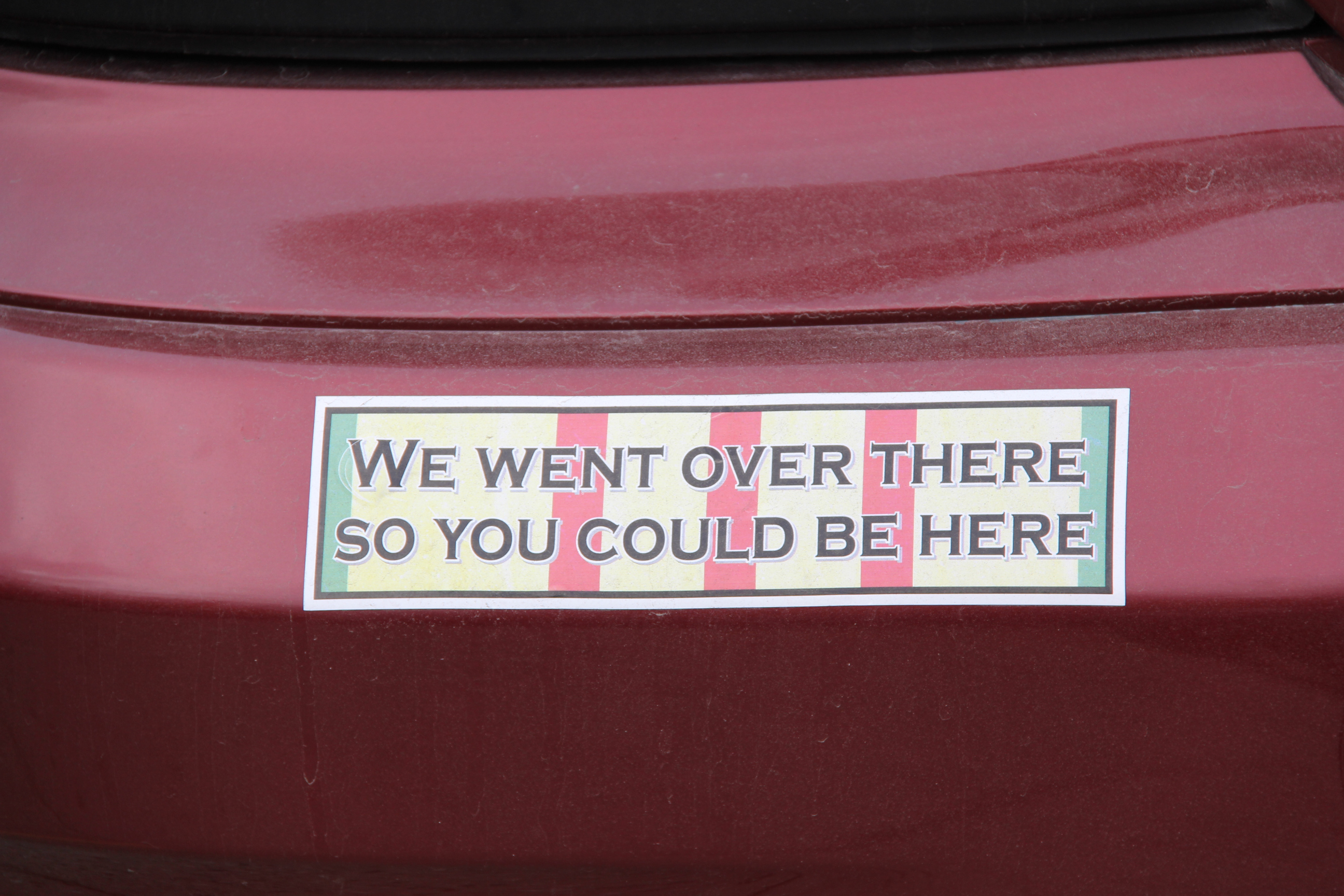
I photographed this sticker on a Vietnam War veteran’s car on Saturday before the Veterans Day program at the Rice County Veterans Memorial in Faribault. (Minnesota Prairie Roots copyrighted photo November 2023)
BACK IN HIGH SCHOOL, I wore a POW bracelet, the thick silver band wrapping my wrist. The name of a prisoner of war was imprinted thereon. If I could find that bracelet, I could give you a name. But I can’t. Rather I hold only the memory of that Vietnam War era bracelet reminding me of those imprisoned and missing during a war that drew protest and anger from many Americans. As a high school student of the early 1970s, I, too, held conflicting opinions about the war. Not about those who served, but about the war itself.
This eagle and dove sculpture centers the Rice County Veterans Memorial in Faribault. (Minnesota Prairie Roots copyrighted photo November 2023)
All of that aside, today I recognize the personal toll the Vietnam War, any war really, takes on those who are actively involved. You cannot enter the battlefield, kill the enemy, see your fellow soldiers die, without experiencing trauma. It’s a lot. And those who served deserve our thanks and respect.
Area veterans’ memorials, like the one in neighboring Shieldsville, honor our veterans. (Minnesota Prairie Roots copyrighted photo November 2023)
I am thankful for organizations like the American Legion and its auxiliary, which continue to support, honor and recognize those who have served this country. That includes Post 43 in Faribault. In 2024, the local post celebrates its 100th birthday.
Before the meal, which included Trinity Piemakers’ homemade apple pie for dessert (compliments of Bob and Louise Flom), this pair explained the significance of items on the MIA/POW table, right.
On Saturday, following the Veterans Day program at the Rice County Veterans Memorial, Randy and I joined vets and their families and others at a Post 43 luncheon and program. During that event, Legion Commander Mark Quinlan and an auxiliary member stood near a round, cloth-draped MIA/POW table. They explained the symbolic significance of each item on the table.
A symbolic lemon and salt. (Minnesota Prairie Roots copyrighted photo November 2023)
A single red rose in a vase represented bloodshed. A lemon slice on a plate stood for the MIA/POW’s bitter fate. Salt sprinkled on the plate symbolized the many tears shed by loved ones. The lit candle stood for hope… As they spoke, I thought of that POW bracelet I wore 50-plus years ago and wondered if my soldier ever came home.
Resting on a table at the American Legion on Saturday. (Minnesota Prairie Roots copyrighted photo November 2023)
I had the honor on Saturday of dining with two veteran friends—Virgil, who served in the US Marine Corps from 1955-1958, and Roger, who served with the US Army in the Korean War from 1952-1954.
Karen Rasmussen talks about the history of the US flag, displaying the flag at various stages in time. (Minnesota Prairie Roots copyrighted photo November 2023)
Veterans and their families ringed the round tables for conversation and a meal of BBQs, baked beans, chips and homemade apple pie. That meal followed a detailed presentation about the history of the American flag by Legion Auxiliary member Karen Rasmussen. She also presented gift bags to several veterans.
Even the gift bags were patriotically-themed. (Minnesota Prairie Roots copyrighted photo November 2023)
One of the most memorable and touching moments came when Steve Bonde played the songs for each branch of the military on his trumpet. By heart. He asked veterans to stand when they heard their songs. Pride and gratitude rippled through me. There’s something about music that stirs the soul in a way that words cannot.
Placed on a table at the Legion, a US Army cap and money for the free will offering lunch. (Minnesota Prairie Roots copyrighted photo November 2023)
But words, too, hold meaning. Saturday evening my church, Trinity Lutheran, honored veterans in the congregation during the worship service and with a potluck afterwards. Virgil and Roger were among those servicemen attending. This time, though, I sat by Bob, a US Army veteran who served in Iraq and Kuwait, and by Mark, the Legion commander with service in the US Navy and Air Force. It was an honor to share a chicken dinner and assorted potluck sides with my friends and with Raquel, married to Bob.
A wall of photos at the Legion honors past commanders of American Legion Post 43, Faribault. (Minnesota Prairie Roots copyrighted photo November 2023)
Sunday morning I listened to the Trinity worship service on the radio, this time led by a different pastor. I appreciated the Rev. Bruce Stam’s prayers for veterans. He asked for God’s blessings upon all who’ve served in the Armed Forces and for healing for those vets wounded in body and soul. But it was the final part of his prayer which struck me the most. “We pray especially for the young men and women who are coming home with injured bodies and traumatized spirits.” To hear that acknowledged was necessary, reassuring in many ways and, I hope, a comfort to anyone listening.
A POW MIA flag photographed during the Veterans Day program at the Rice County Veterans Memorial reads, “YOU ARE NOT FORGOTTEN.” (Minnesota Prairie Roots copyrighted photo November 2023)
War is hard. War traumatizes. War changes. We need to understand that and to remember. Just as I remembered that POW bracelet I wore honoring a prisoner of war who may, or may not, have returned home from Vietnam.
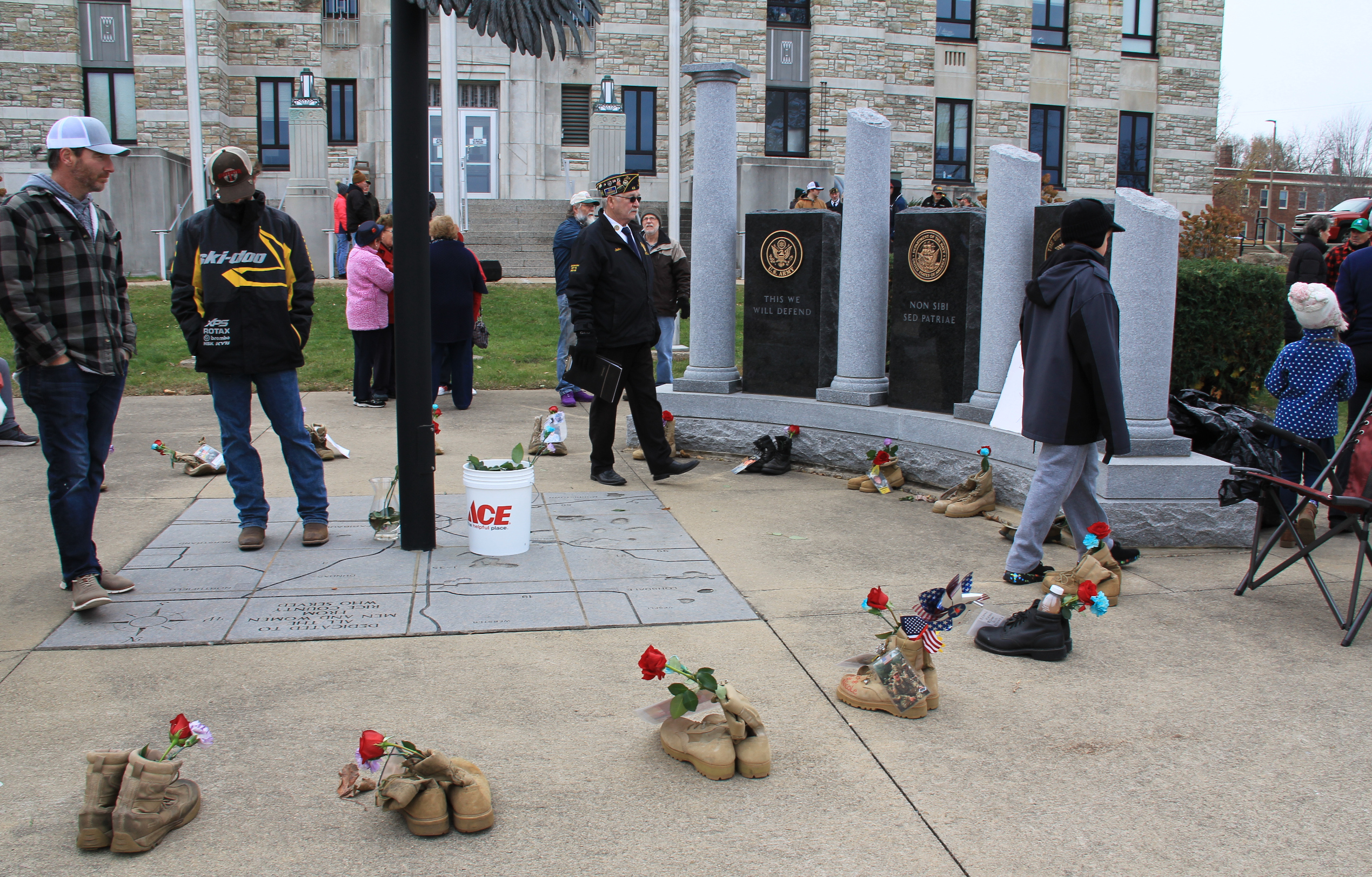
Following the Veterans Day program, attendees view the Operation: 23 to Zero display. (Minnesota Prairie Roots copyrighted photo November 2023)
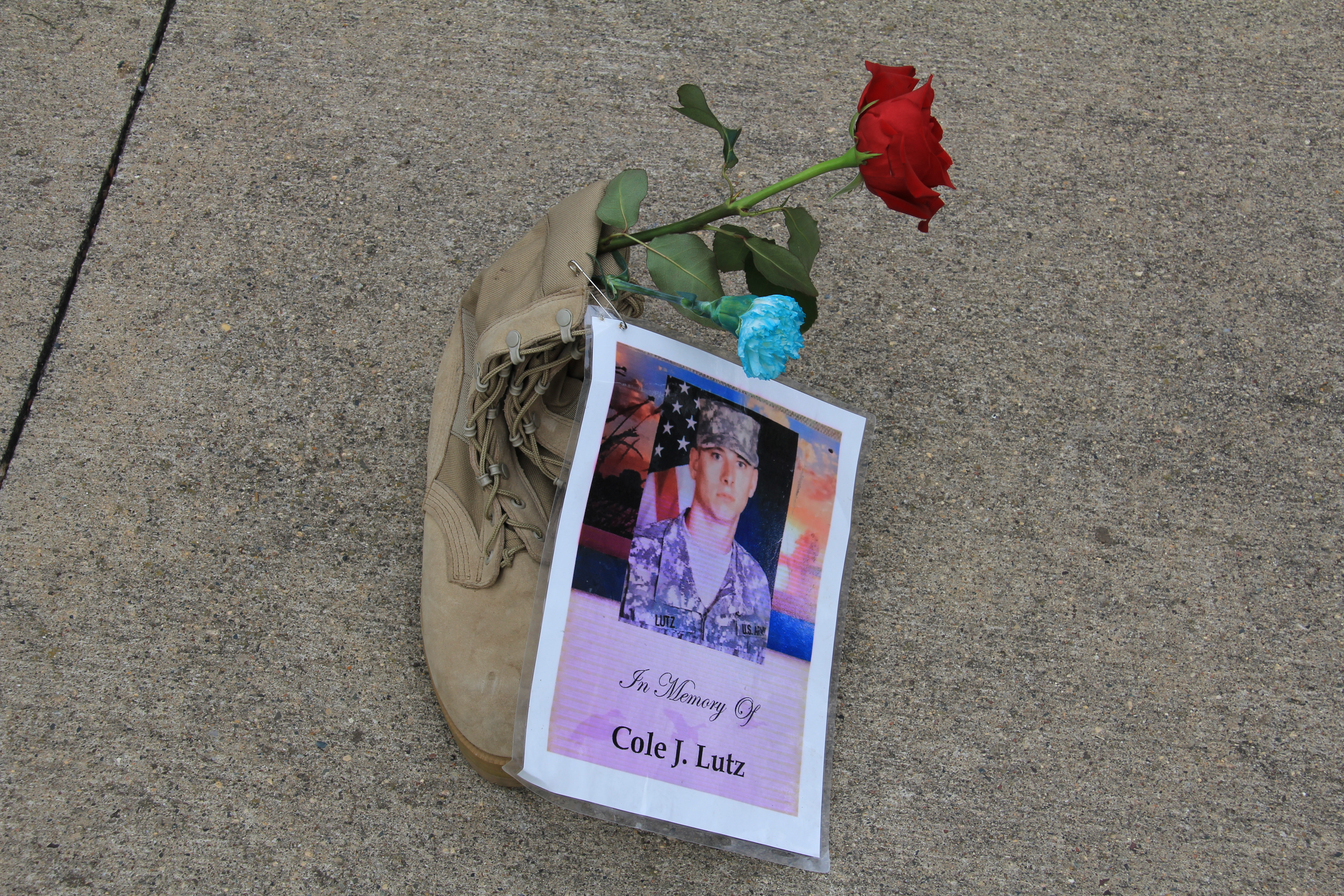
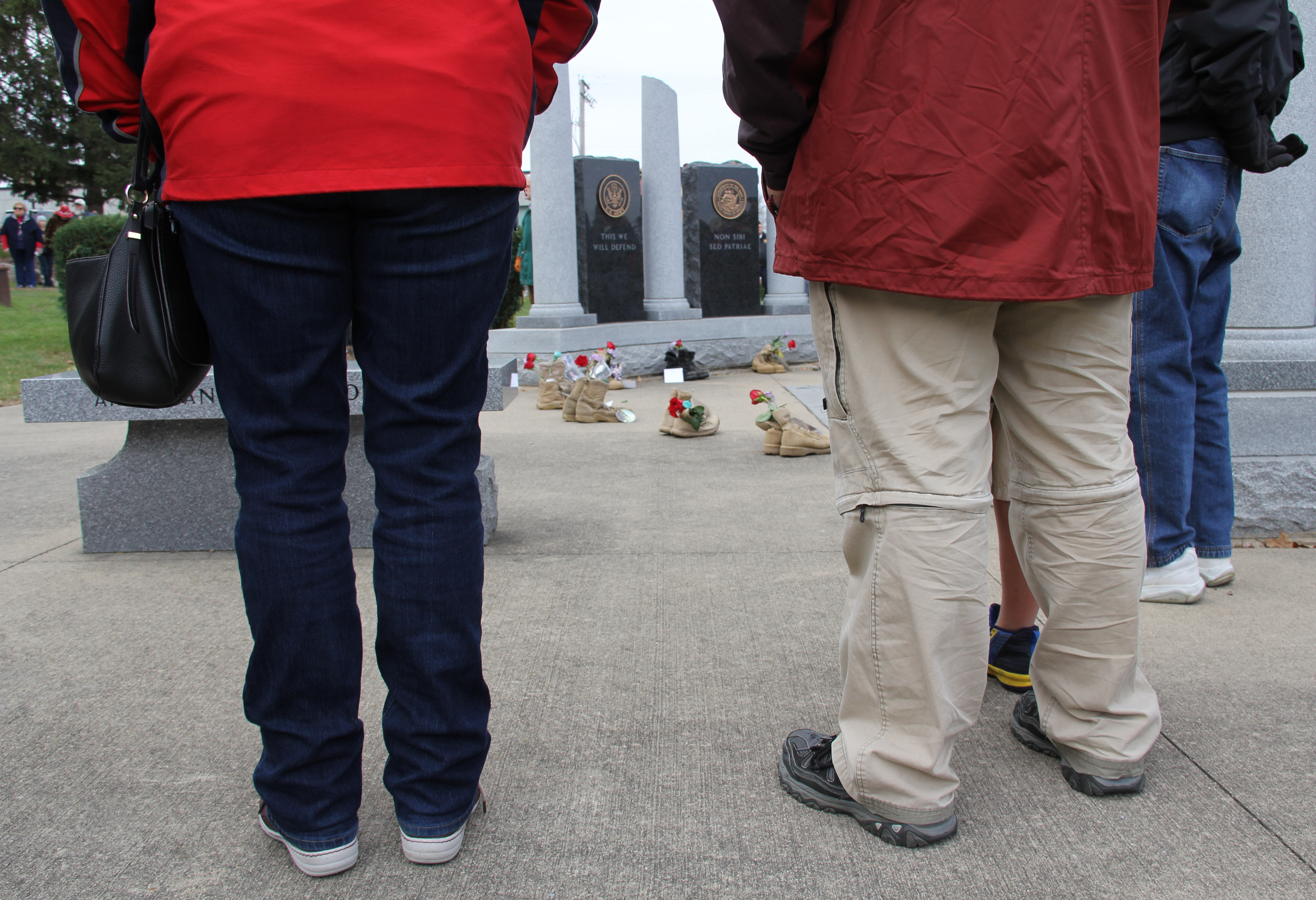
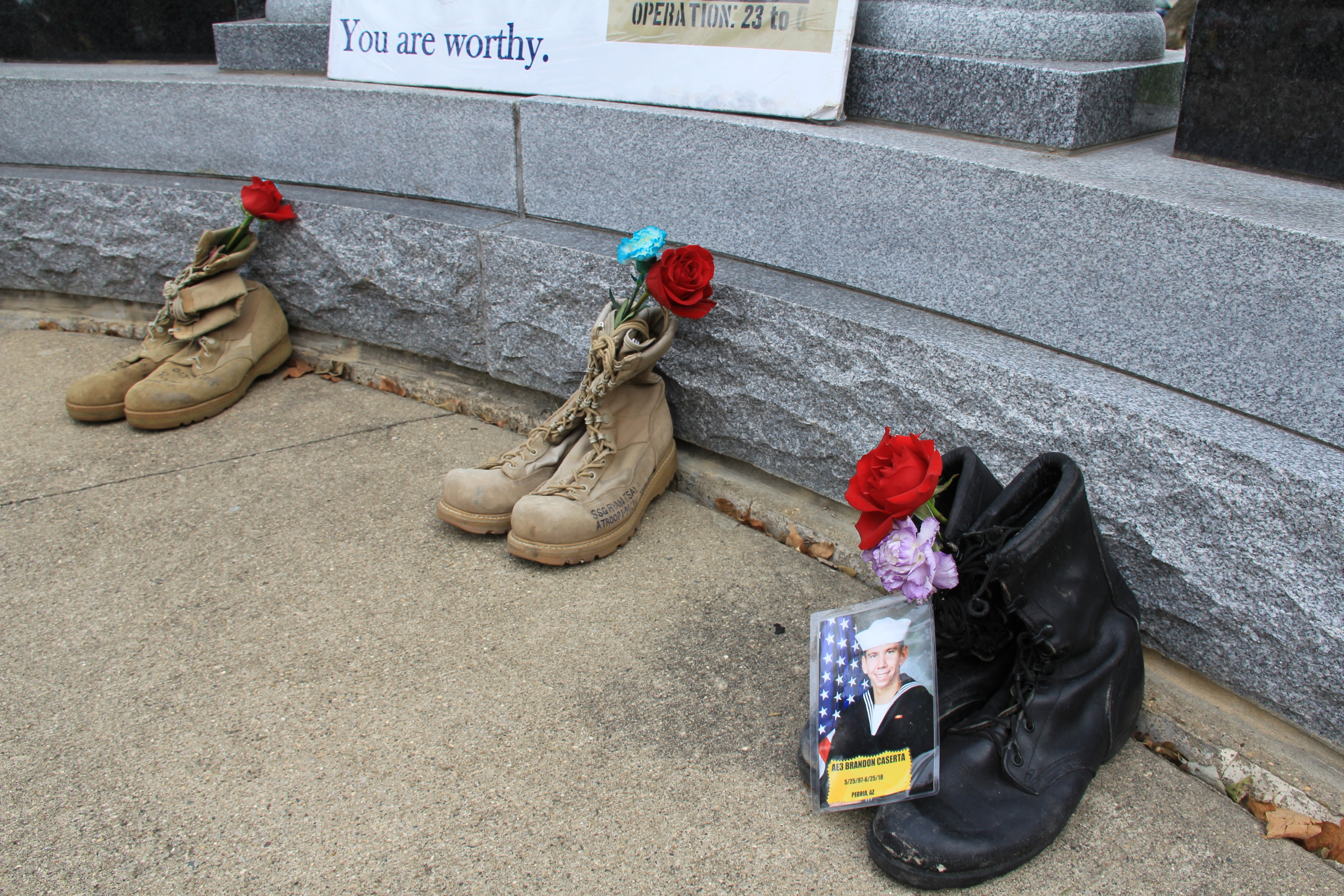
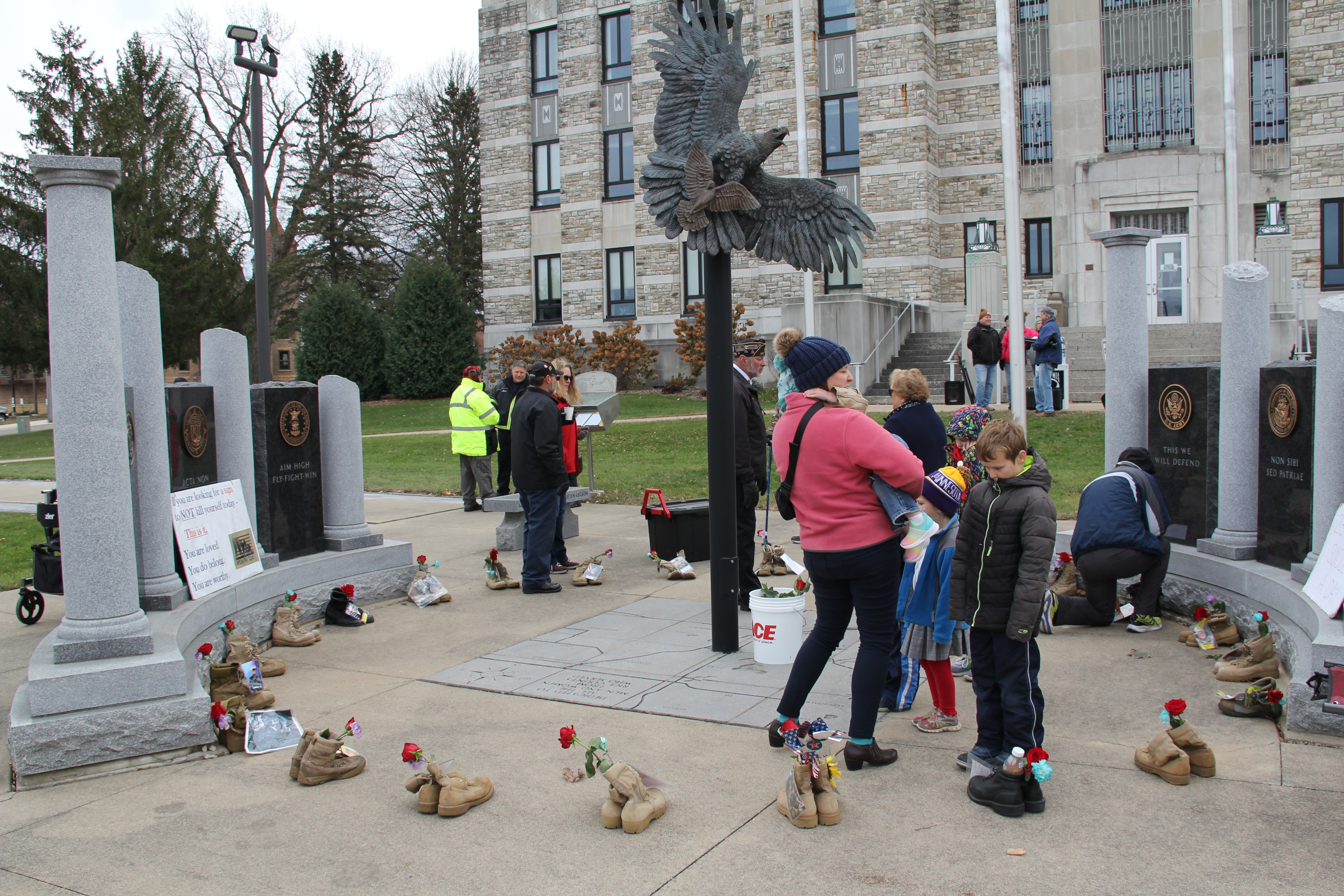
HEARTBREAKING, POWERFUL, IMPACTFUL. Those three words fit my reaction to the 23 boots ringing the central plaza at the Rice County Veterans Memorial in Faribault on Veterans Day. Each set of boots represented a service man or woman who committed suicide. Each boot held a name, and often a photo, personalizing this Operation: 23 to Zero display.
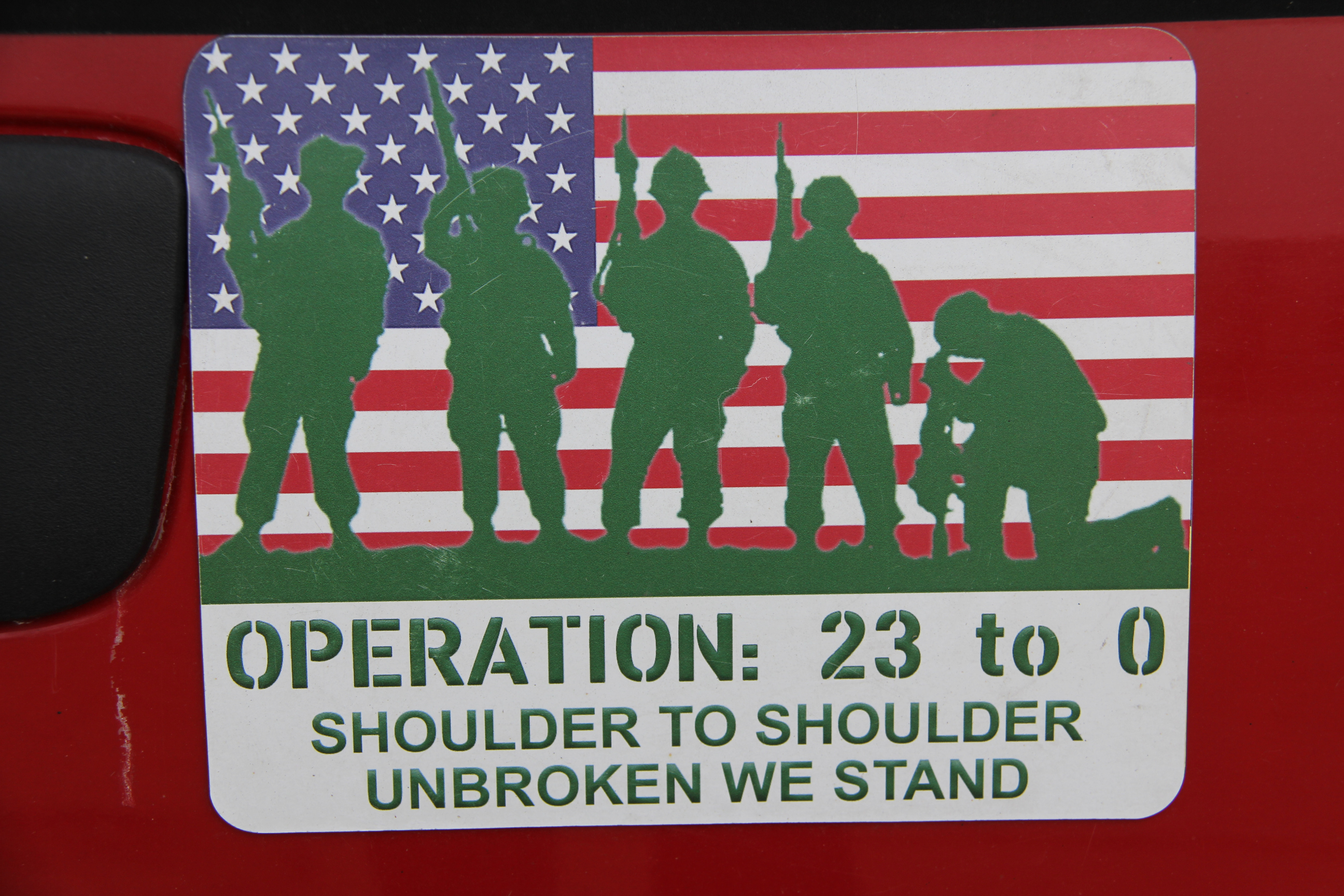
A bumper sticker on a truck parked by the courthouse on Saturday. Shoulder to Shoulder identifies a support group in Faribault. (Minnesota Prairie Roots copyrighted photo November 2023)
The nonprofit, according to an informational brochure, “is an effort to curb the massive suicide rates of veteran and military suicide through awareness and providing a network of fellow military members to connect with for help and support.” Twenty-two veterans and one active military member die by suicide daily on average.
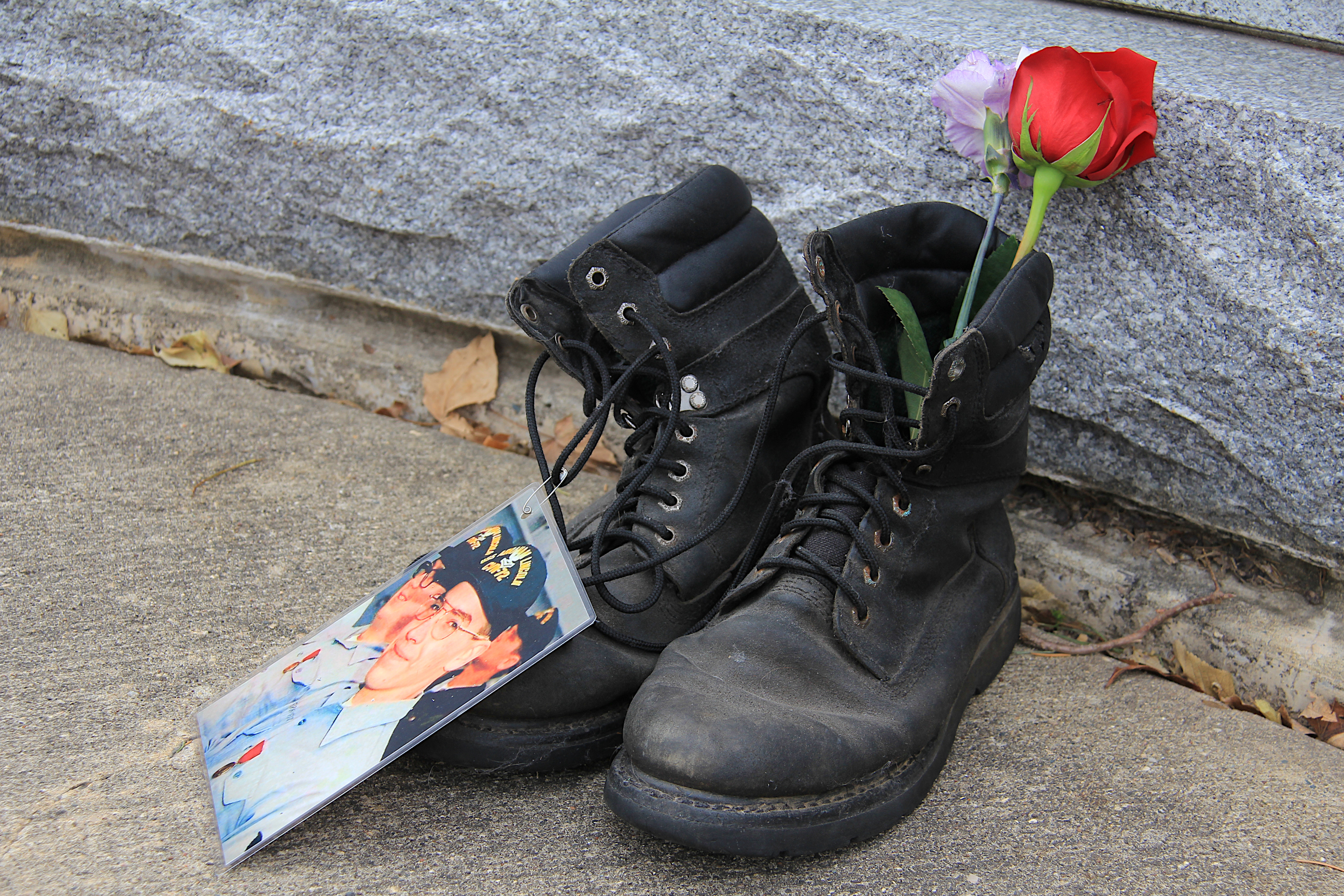
Honoring Cole J. Lutz, 35, of Grantsburg, Wisconsin. The red rose shows love for the surviving families while teal or purple carnations are the colors of suicide awareness. (Minnesota Prairie Roots copyrighted photo November 2023)
Those statistics are heartbreaking. And when a face, a name, are connected to the numbers, the depth of this loss becomes all too real. The circle of boots in Faribault, placed their during a 23-hour Critical Overwatch on November 10-11, presented a strong visual defining this loss of life.
Honoring Nicole A. Burnham. (Minnesota Prairie Roots copyrighted photo November 2023)
Among those were several Minnesotans, including Joel B. Costa, 32, of Duluth, formerly of Stillwater, and Nicole A. Burnham, 21, of Andover. As I looked at their individual boots, I read loving messages, studied a photo of Nicole, a young woman with an engaging smile that reached her eyes. And I wondered about the mental anguish the two soldiers endured.
Veterans Day service attendees stand on the Veterans Memorial plaza near the circle of boots. (Minnesota Prairie Roots copyrighted photo November 2023)
Nicole’s story is one of multiple sexual assaults and harassment while serving in the military. Local and national media covered her story following her January 2018 death by suicide. What she experienced is horrible, unfathomable, traumatic.
Loving messages written on boots honoring Joel Costa. (Minnesota Prairie Roots copyrighted photo November 2023)
I don’t know Joel’s story. But I do know this. Like Nicole, he was deeply loved. “Love you more than life” reads one message written in black marker on his boots. An “in loving memory” tag encourages: “No act of kindness is ever wasted. Pass it on.” His online obituary directs mourners to donate to Operation: 23 to Zero.
Those who participated in the Critical Overwatch event and those who donated flowers, beverages and snackswere showing they care.(Minnesota Prairie Roots copyrighted photo November 2023)
A tag on Nicole’s boots leaves a similar message: “Leave footprints of love and kindness wherever you go.” And “Stop the stigma. It’s OK to ask for help.” Help is available via texting or calling 988, the Suicide and Crisis Line, staffed 24/7.
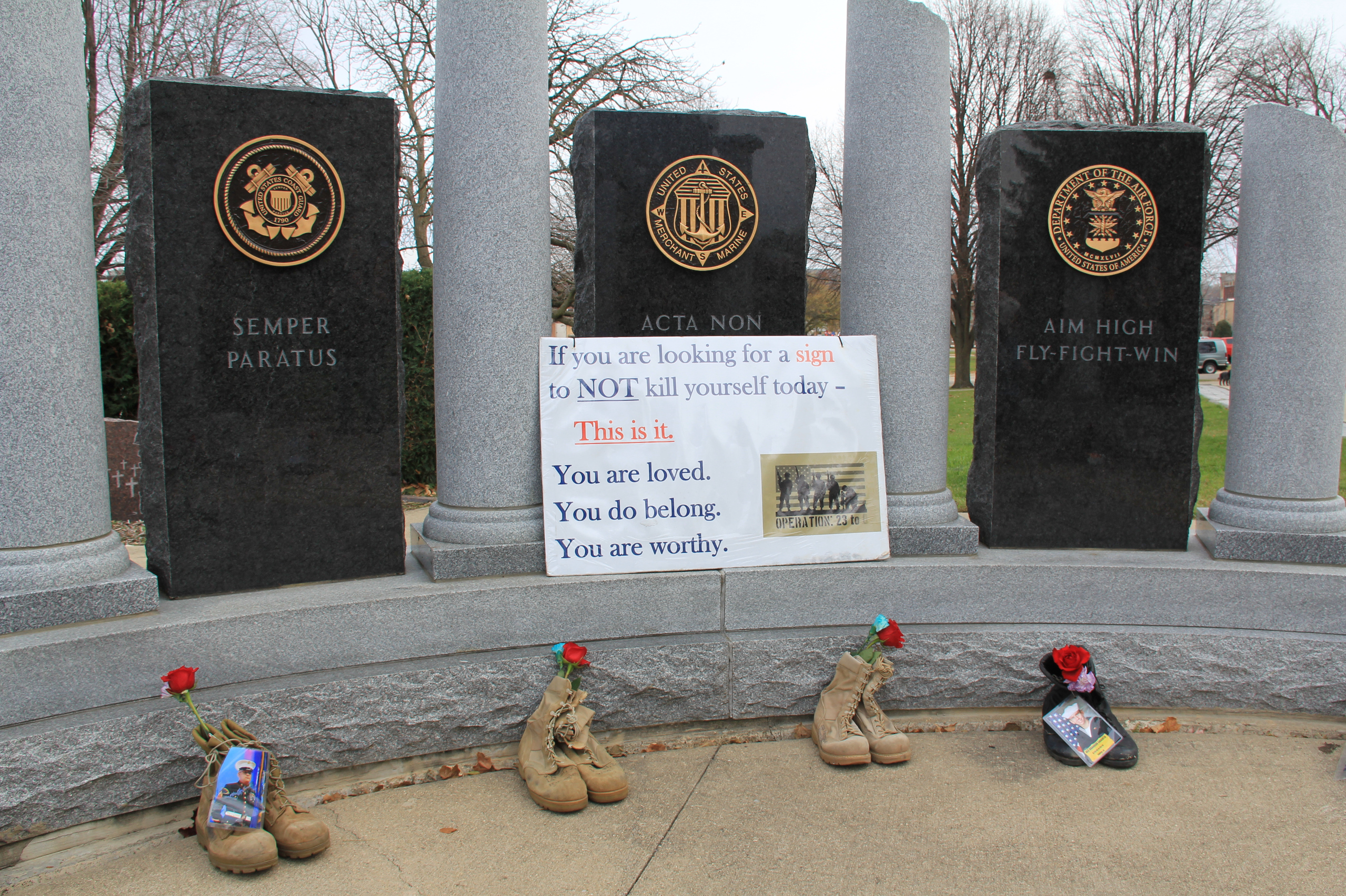
A powerful message… (Minnesota Prairie Roots copyrighted photo November 2023)
At the Critical Overwatch event/Veterans Day ceremony in Faribault, a sign propped near the circle of boots made it clear that all are loved. “If you are looking for a sign NOT to kill yourself today—This is it. You are loved. You do belong. You are worthy.” I expect someone in the crowd gathered outside the courthouse read that message and felt a sense of hope, of purpose.
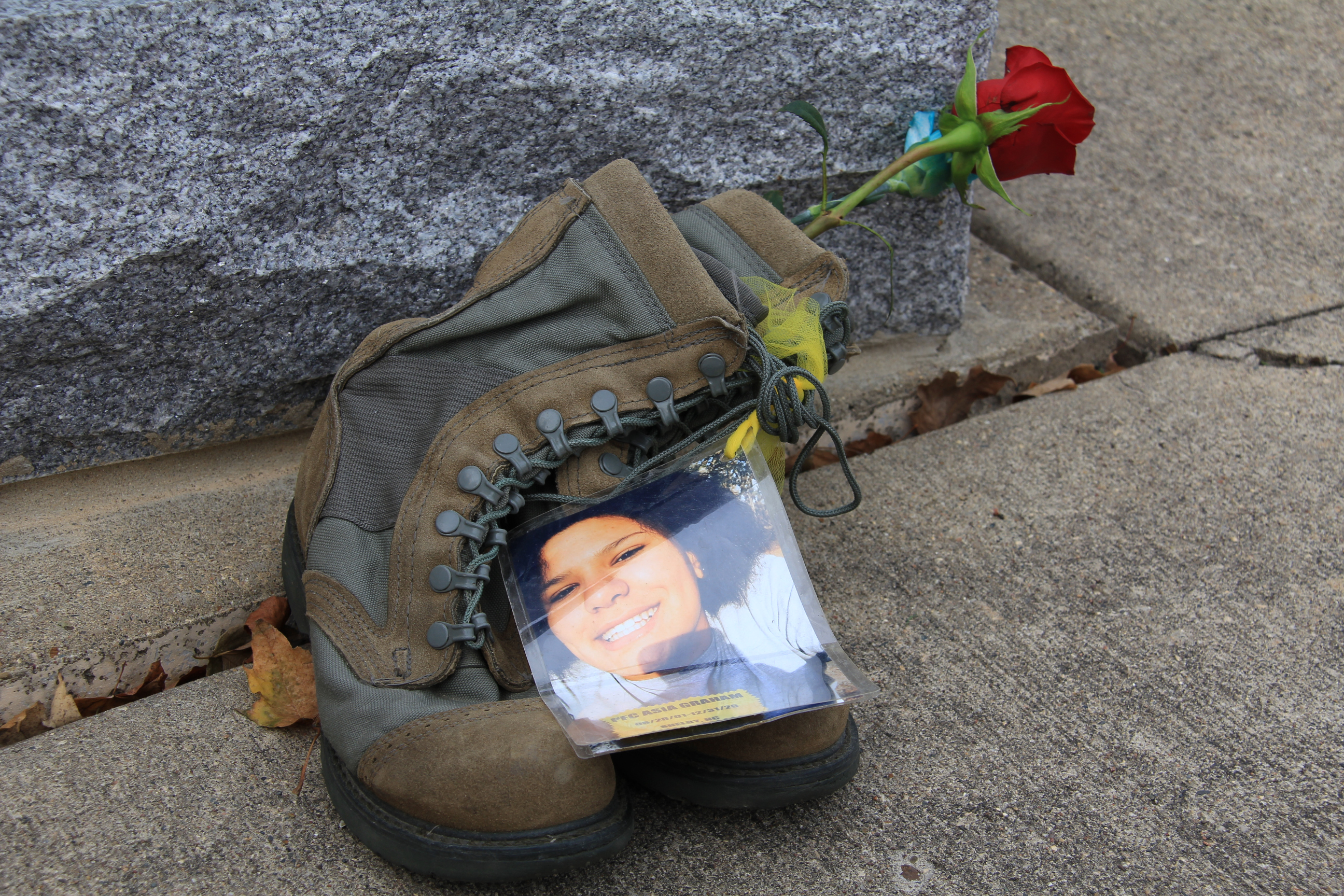
Honoring Asia Graham of North Carolina. (Minnesota Prairie Roots copyrighted photo November 2023)
That poster reinforces the message printed in a brochure I got a while ago from Kirk Mansfield, a Navy veteran from Faribault who works tirelessly to help local veterans, primarily through Operation: 23 to Zero. Here’s the printed directive: “Call or visit your Veteran/military family and friends. Check in with them on a regular basis, especially if you know they are struggling with issues. Do not put if off until another day. For those who live on the edge of life, for those who suffer in silence, they cannot wait a moment longer. Become educated. Help where you are able. Make the call.”
You are worthy. They were worthy. (Minnesota Prairie Roots copyrighted photo November 2023)
Time, plus care, plus listening, plus loving, plus supporting can help. Nicole mattered. Joel mattered. And so did the 21 other service men and women represented in that circle of boots staged at the Rice County Veterans Memorial in Faribault. My heart breaks…
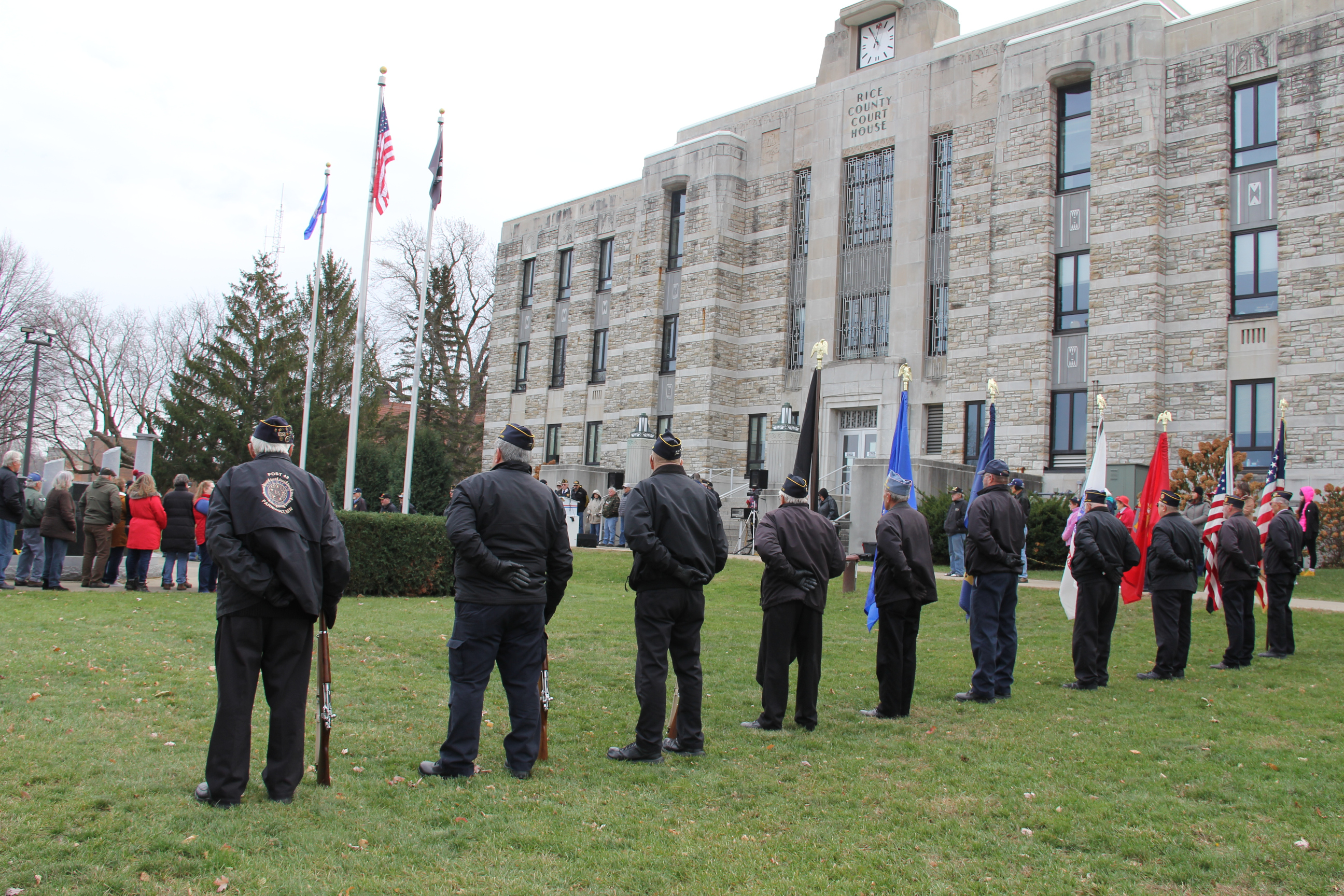
The Honor Guard and Color Guard in place for the Veterans Day ceremony in Faribault. (Minnesota Prairie Roots copyrighted photo November 2023)
IT WAS, FOR MANY, an emotional day. A day of remembering, grieving, honoring, respecting. Veterans Day held all of those for me and many others who gathered in my community to honor those who have served our country in the military. That includes my father, a U.S. Army combat soldier in the Korean War.
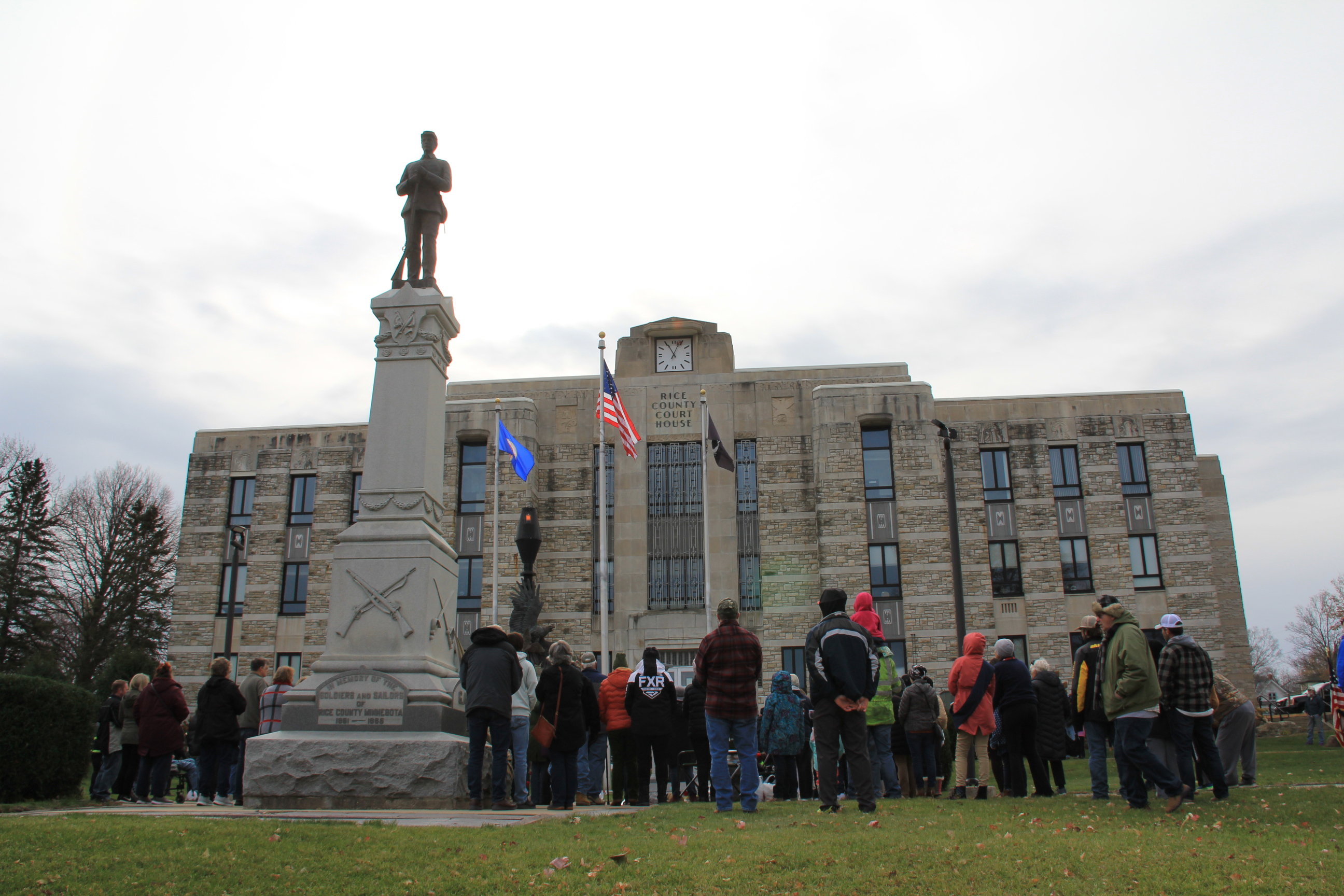
A crowd gathers Saturday morning for a short Veterans Day program outside the Rice County courthouse. (Minnesota Prairie Roots copyrighted photo November 2023)
A member of the Honor Guard. (Minnesota Prairie Roots copyrighted photo November 2023)
The only firing on this November 11 in Faribault was that of the Honor Guard shooting blanks from rifles.
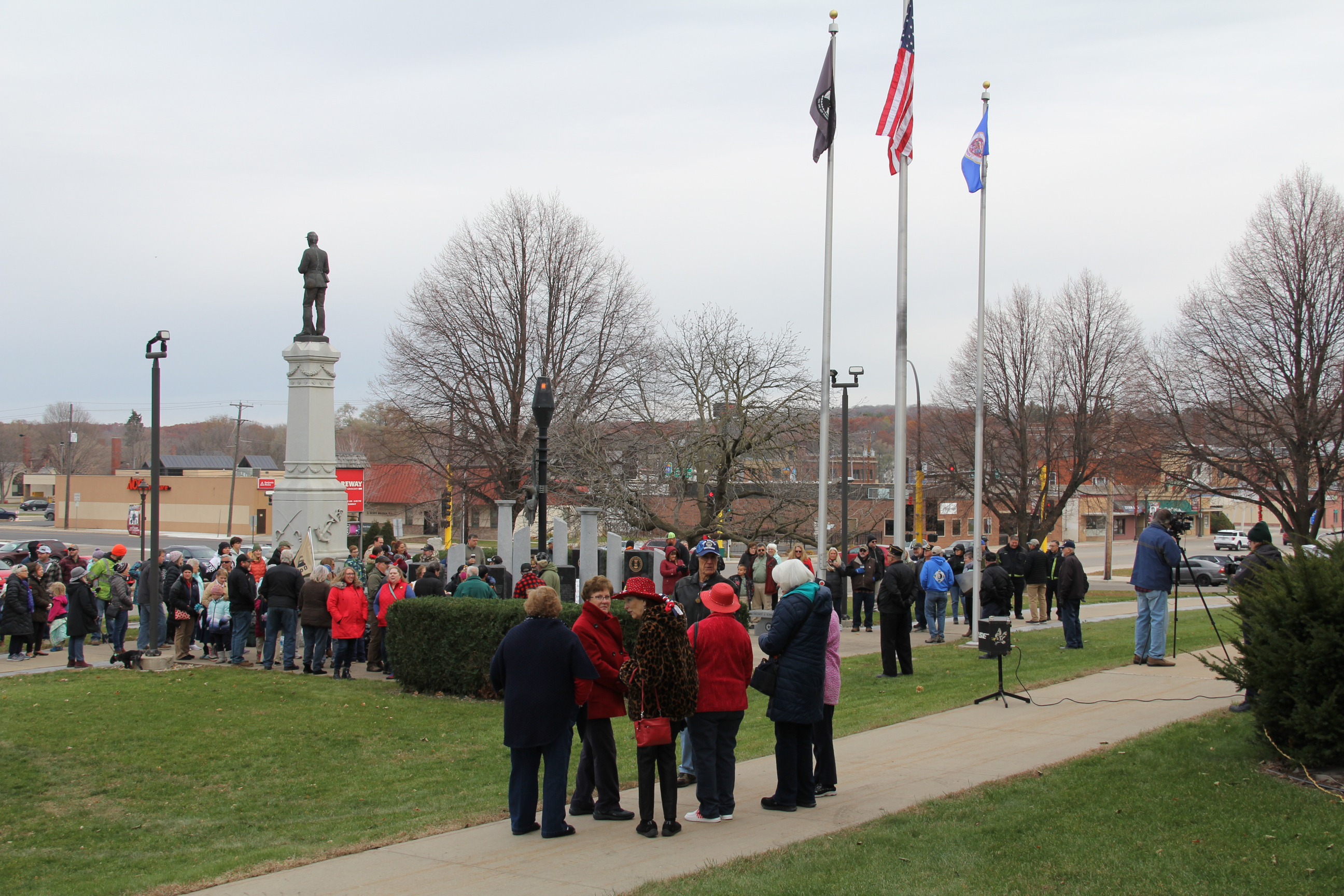
A sizeable crowd gathers at the Rice County Veterans’ Memorial. (Minnesota Prairie Roots copyrighted photo November 2023)
Upon my arrival at the courthouse lawn, I noticed first veterans, the American and other flags, the crowd and the red. Red coats. Red roses. Red symbolizes patriotism, sacrifice and bloodshed. And red in a rose symbolizes love.
Among the 23 pairs of boots honoring a veteran who committed suicide. (Minnesota Prairie Roots copyrighted photo November 2023)
Those red roses were lovingly placed aside blue carnations in 23 boots representing the 23 American veterans who daily commit suicide. Local organizers of Operation: 23 to Zero, an organization that raises awareness about vet-related issues, including suicide and PTSD, set up the display and stood watch for 23 hours in honor of those who took their lives. Cole, Damian, Joel, Brandon, Nicole…
Operation: 23 to Zero display on the memorial plaza. (Minnesota Prairie Roots copyrighted photo November 2023)
Those boots circled the central monument focus of eagle and dove. Individual slabs of stone for each military branch edge that circle with fitting inscriptions like THIS WE DEFEND. A sign propped against one of the stones offered encouragement, a strong message of hope, and it touched me deeply: “If you are looking for a sign NOT to kill yourself today—This is it. You are loved. You do belong. You are worthy.”
Steve Bonde plays taps, hauntingly mournful. (Minnesota Prairie Roots copyrighted photo November 2023)
Although I knew none of the service men and women who died by suicide, I felt sadness and grief filling my thoughts. I could sense the collective grief, the somberness. This small circle of 23 boots on the veterans plaza seemed a sacred space.
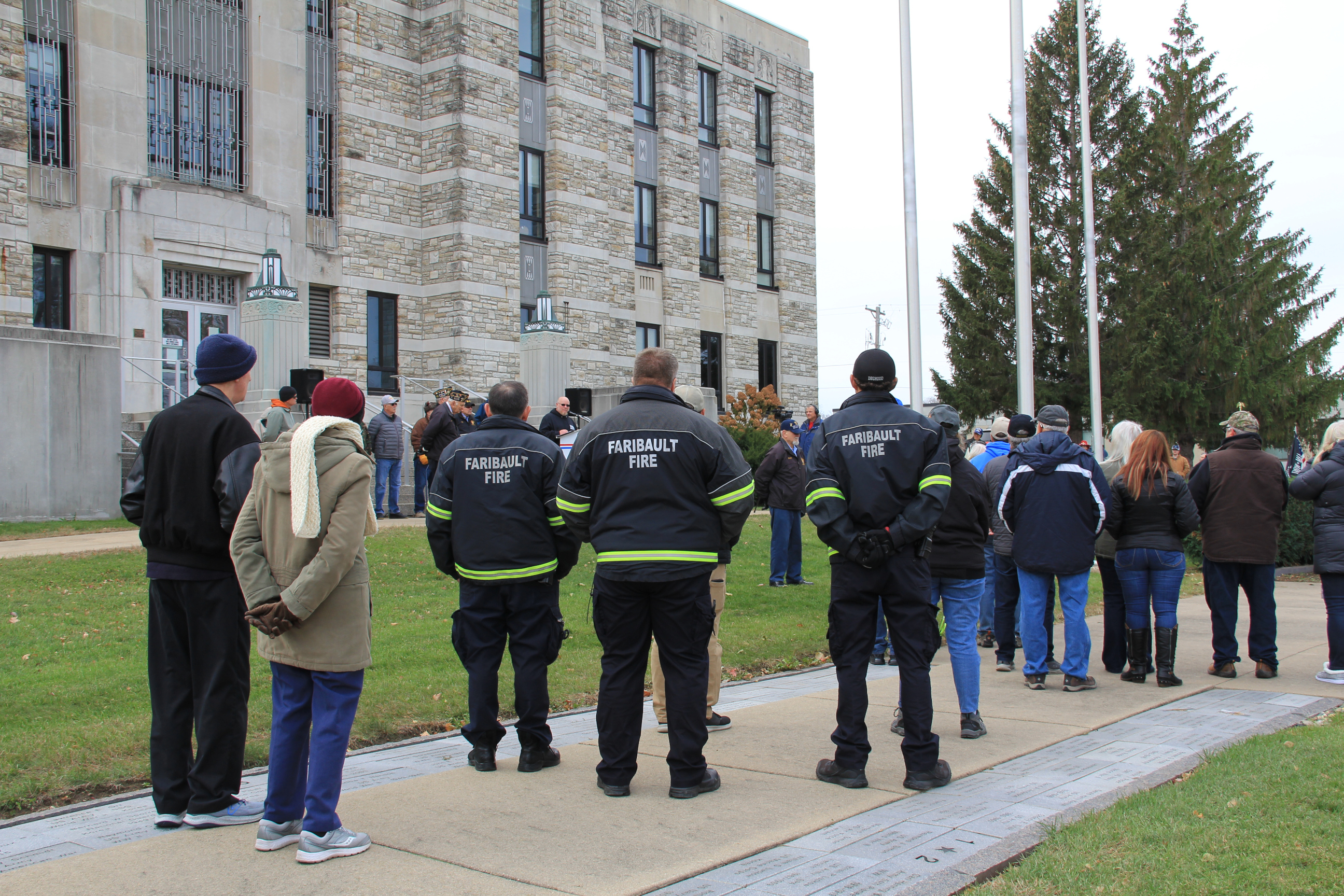
Faribault firefighters were among those in attendance. (Minnesota Prairie Roots copyrighted photo November 2023)
In the deafening noise of traffic from the nearby busy street and the mostly too low amplification system, I struggled to hear any of the speakers. So I focused instead on observing. I was pleased to see a cross-section of ages from children in parents’ arms to teens to young adults to middle age to aged. The presence of young people, especially, pleases me, for they, too, need to understand the meaning and importance of Veterans Day.
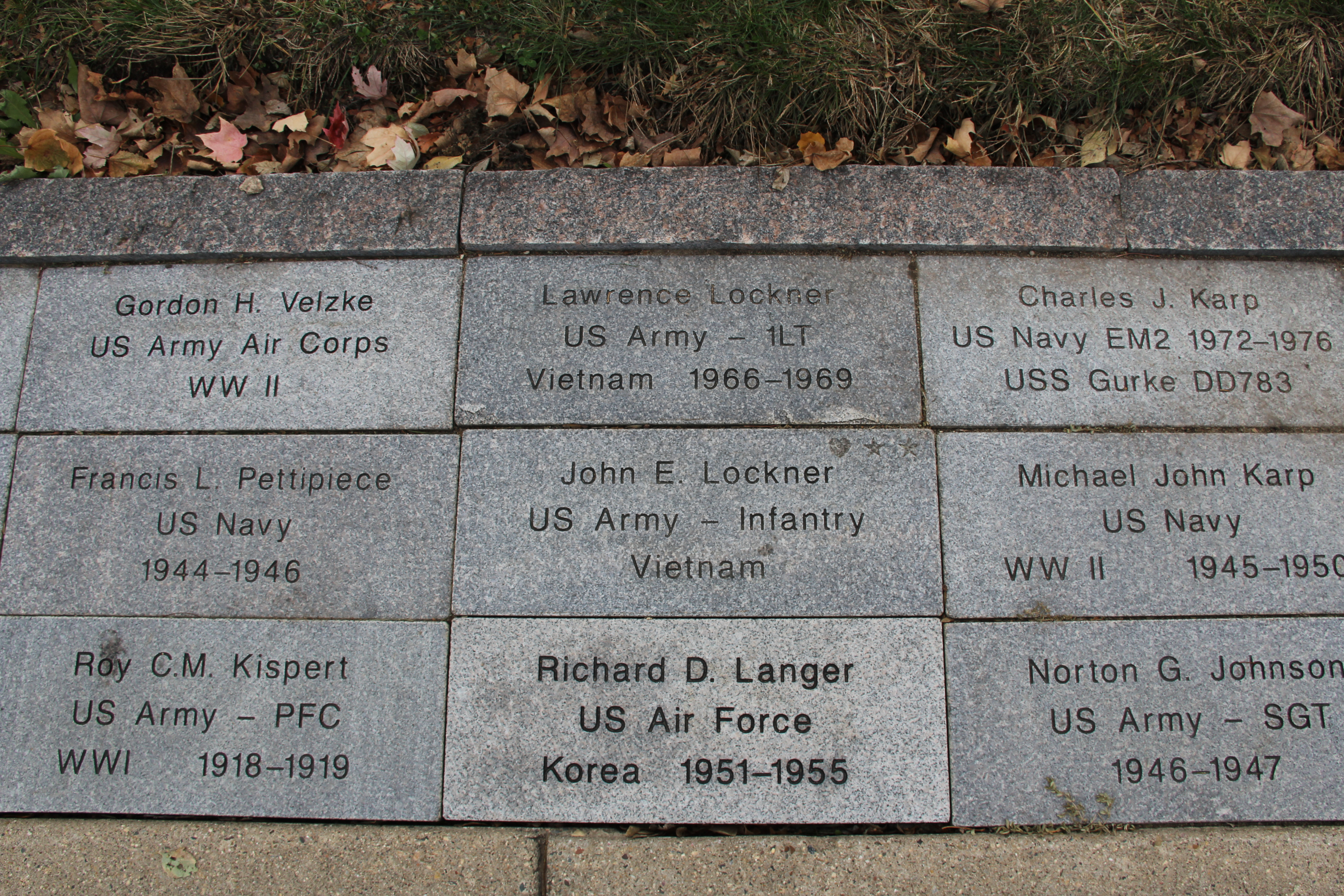
Among the hundreds of pavers surrounding the memorial. (Minnesota Prairie Roots copyrighted photo November 2023)
In the all of the gathering at the veterans memorial in Faribault, I felt not only deep emotions, but also pride in country and a unity that is not often seen these days. On this single day, this November 11, we came together to honor our veterans, despite our personal political viewpoints.
Memorable bumper sticker. (Minnesota Prairie Roots copyrighted photo November 2023)
A bumper sticker I noticed on a Vietnam veteran’s vehicle summarizes well the intent, the goal of those who have served abroad in war. “We went over there so you could be here.” It’s a seemingly simple phrase, yet profound in depth.
FYI: Please check back for more photos of the Operation: 23 to Zero display and a post about more Veterans Day events I attended in Faribault.It was a full day.











Recent Comments