Minnesota Prairie Roots

Writing and photography by Audrey Kletscher Helbling

Anything but prune & much more in Montgomery August 17, 2020

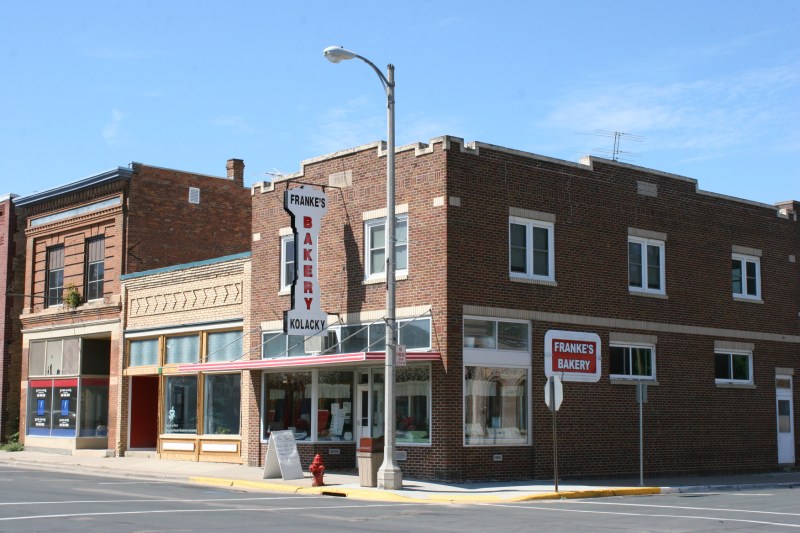
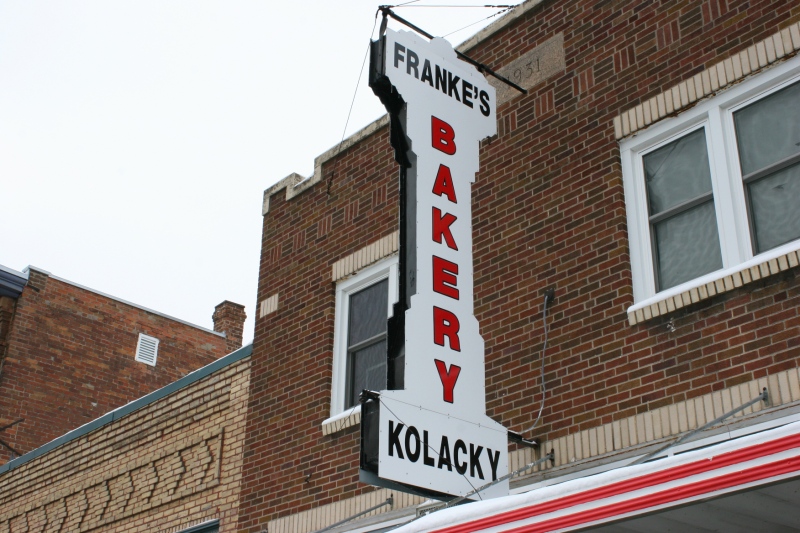
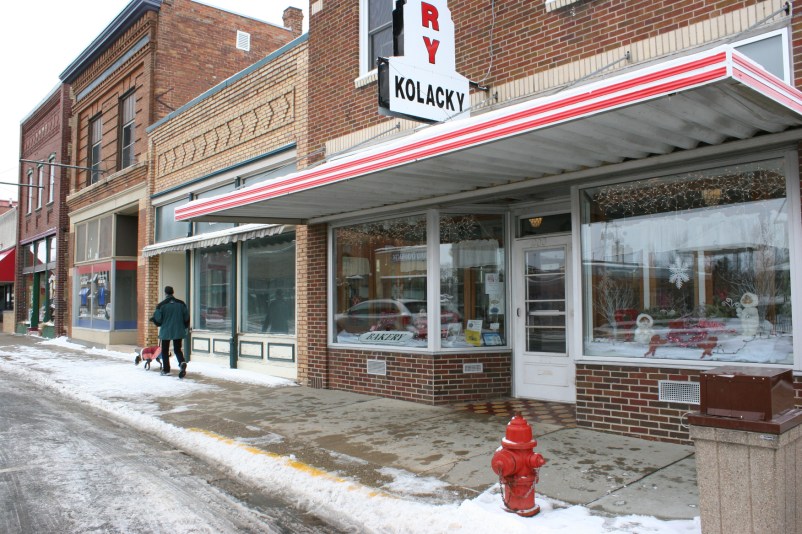
Popular Franke’s Bakery anchors a corner in downtown Montgomery, Minnesota.


SMALL TOWN MINNESOTA. What is it about our rural communities that holds my heart? Surely, my upbringing on a crop and dairy farm in the southwestern region of our state influences how I feel about rural places.


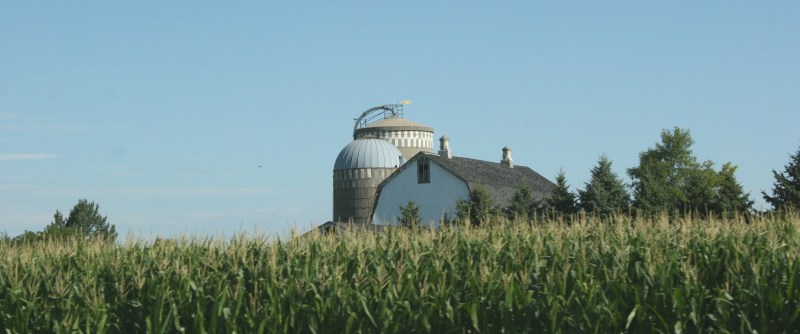
Farms and fields surround Montgomery.


But it’s more than that. I see in these communities, like Montgomery in Le Sueur County, a distinct character, a connection of people, an appreciation for the quieter life afforded to those who live in this ag-based area.


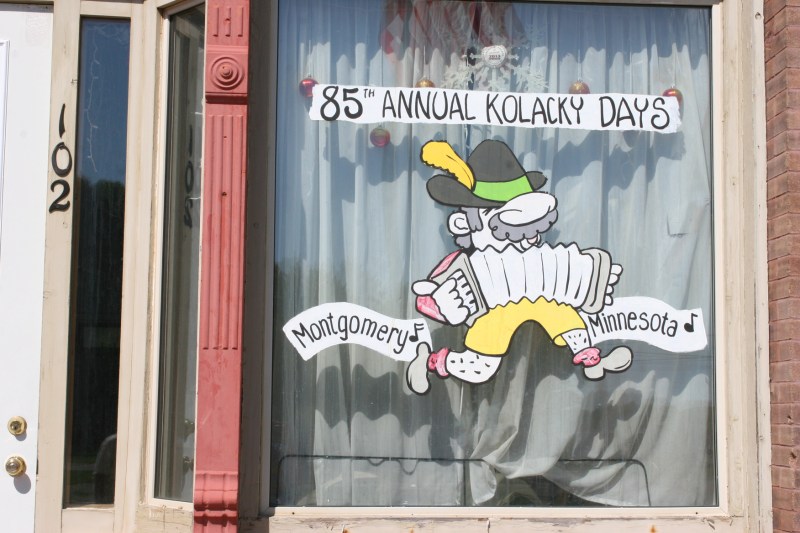
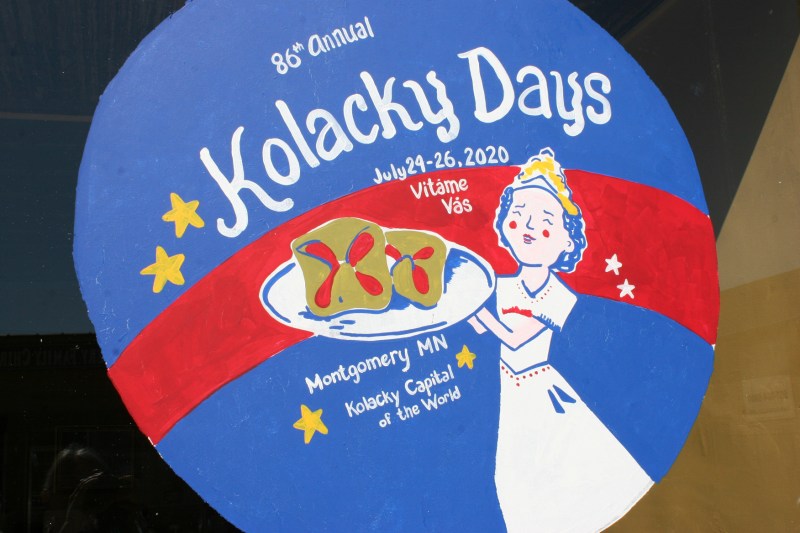
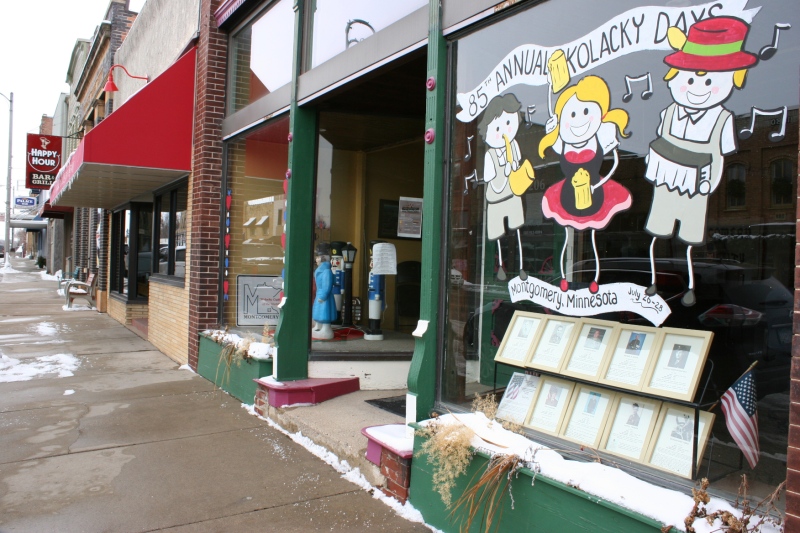
Art in downtown business windows showcases the town’s annual Kolacky Days celebration.


Fresh-baked kolacky are always available at Franke’s Bakery.


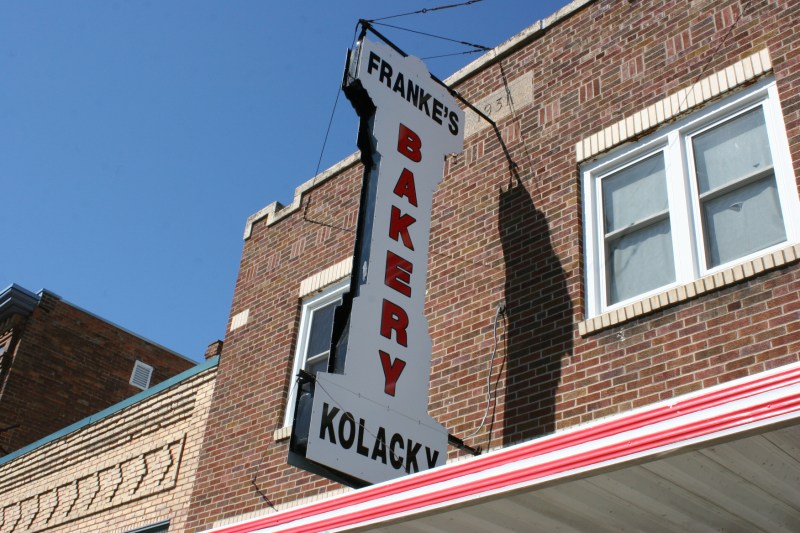
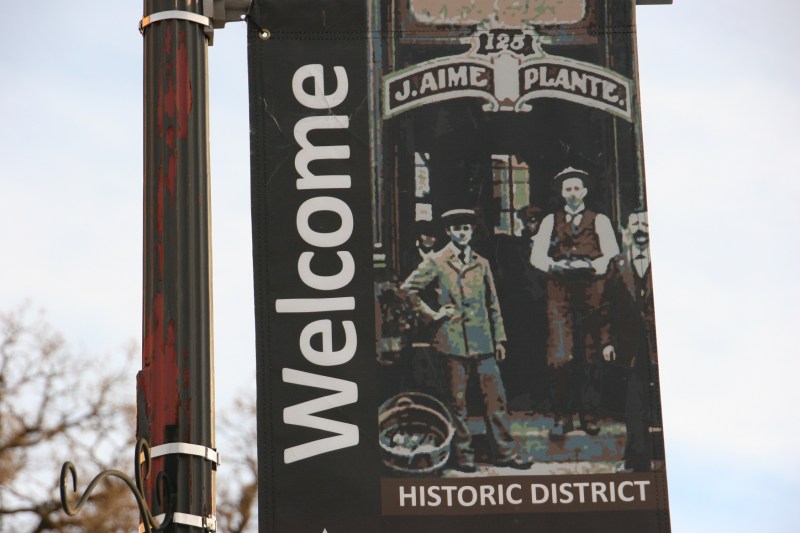
One of my favorite signs in Montgomery banners the 106-year-old bakery.


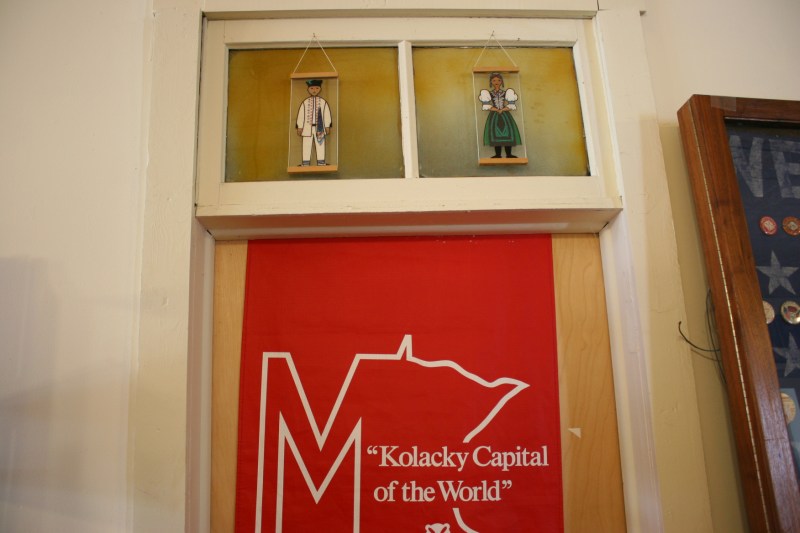
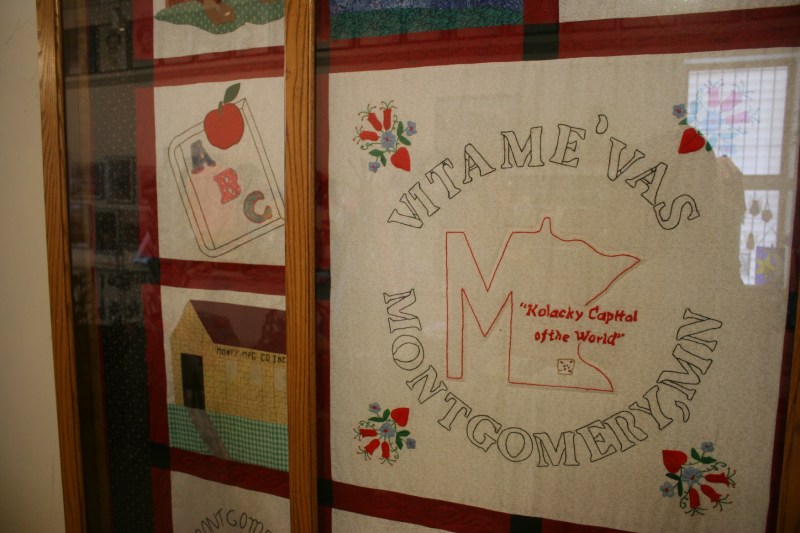
I’ve written about and photographed Montgomery many times. Each visit I notice the details that define this self-proclaimed Kolacky Capital of the World with its strong Czech heritage. Kolacky are a fruit-filled (sometimes poppyseed, too) Czech pastry, available at the century-plus-old Franke’s Bakery and elsewhere.


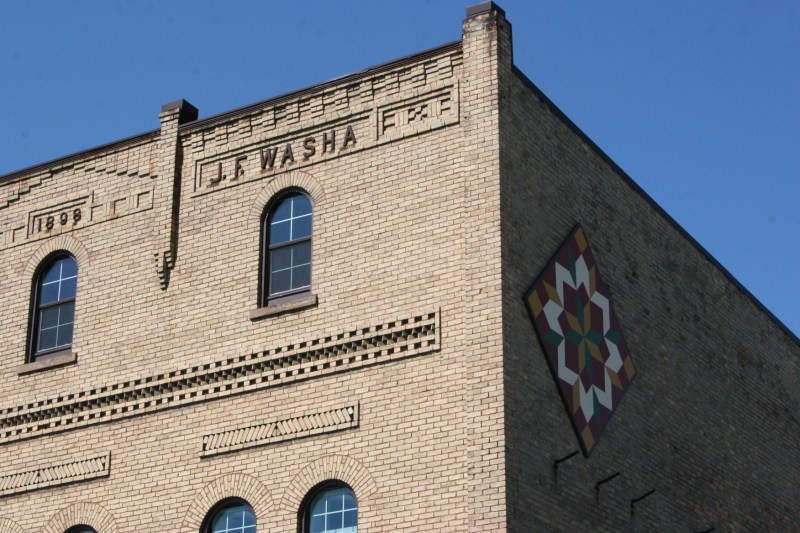
A quilt adorns an historic downtown building.


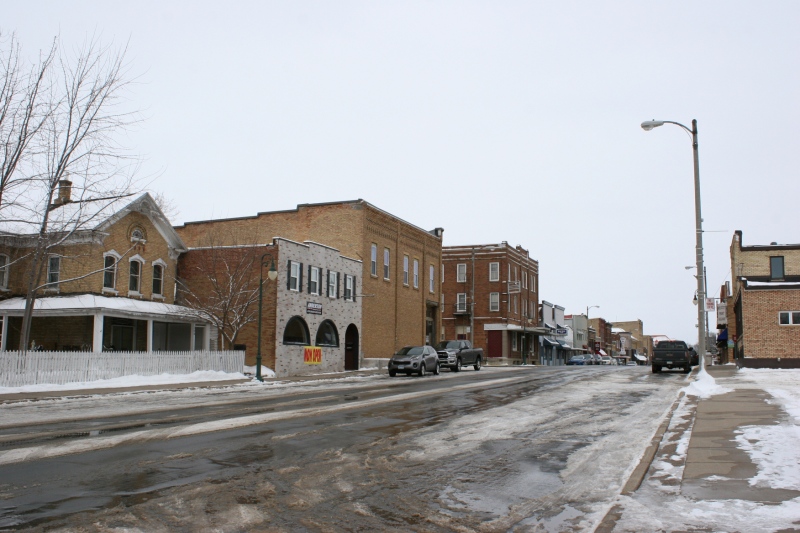
When I walk along First Street, the main street through the downtown business district, I always notice the historic buildings.


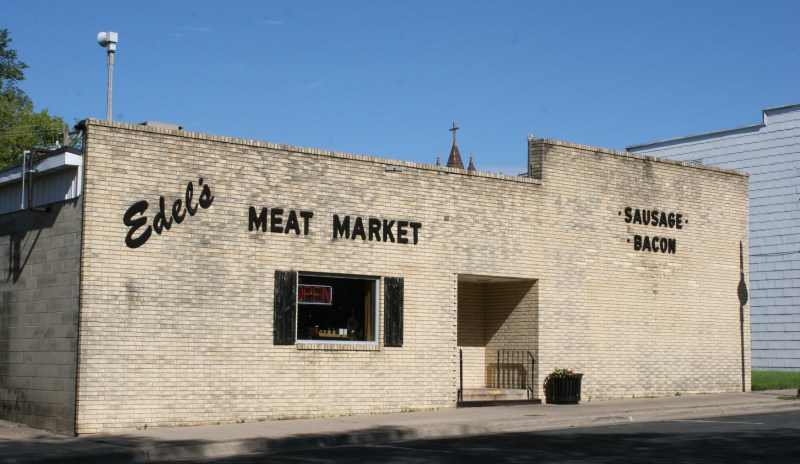
And the home-grown businesses, including multiple meat markets.


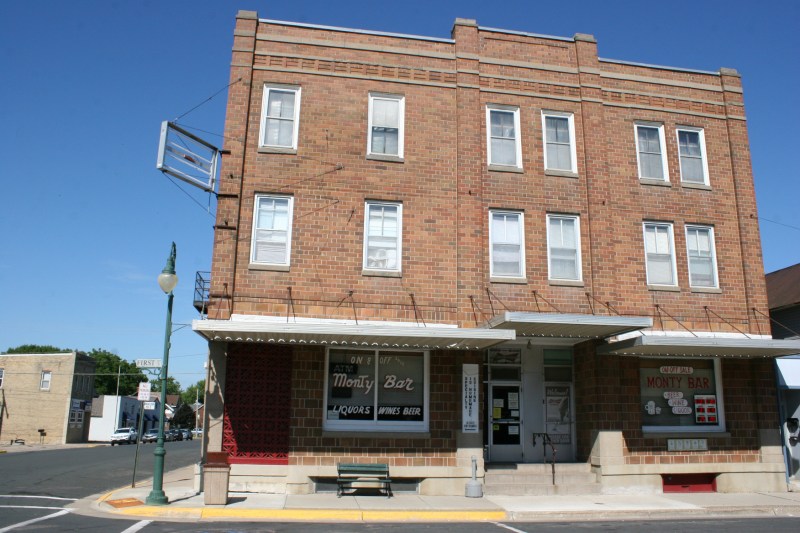
The Monty Bar is missing its corner signage, which I loved.


And, like many small towns, multiple bars. Montgomery also has a craft brewery, Montgomery Brewing.


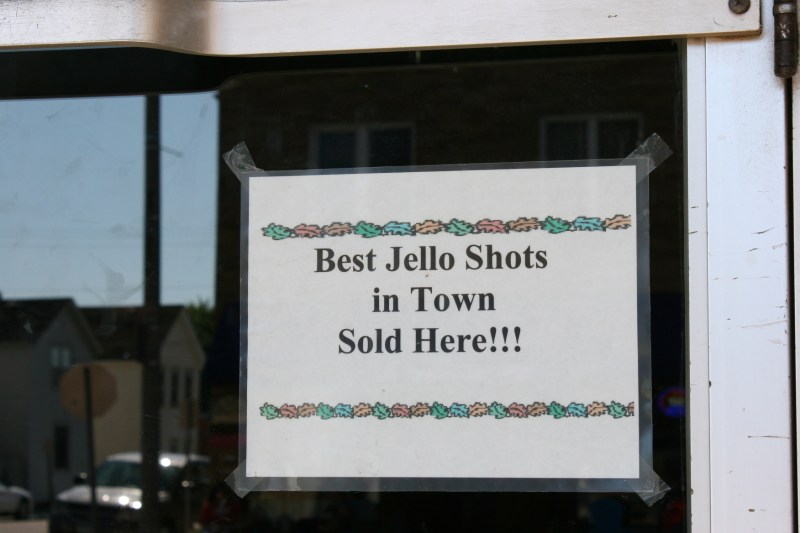
Signs plaster the front of the Monty Bar, including this one.


But I also notice the signage that is distinctly Montgomery. Like the best place to buy Jell-O shots (the Monty Bar).


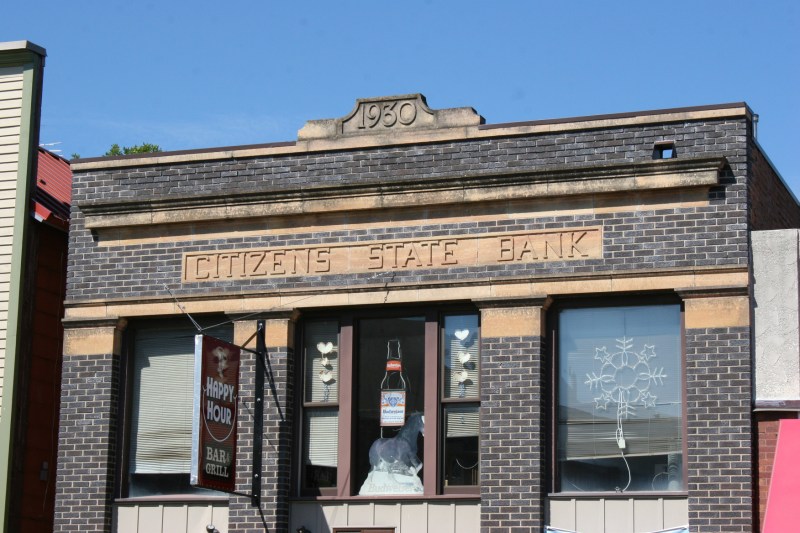
An historic building houses the Happy Hour Bar & Grill.


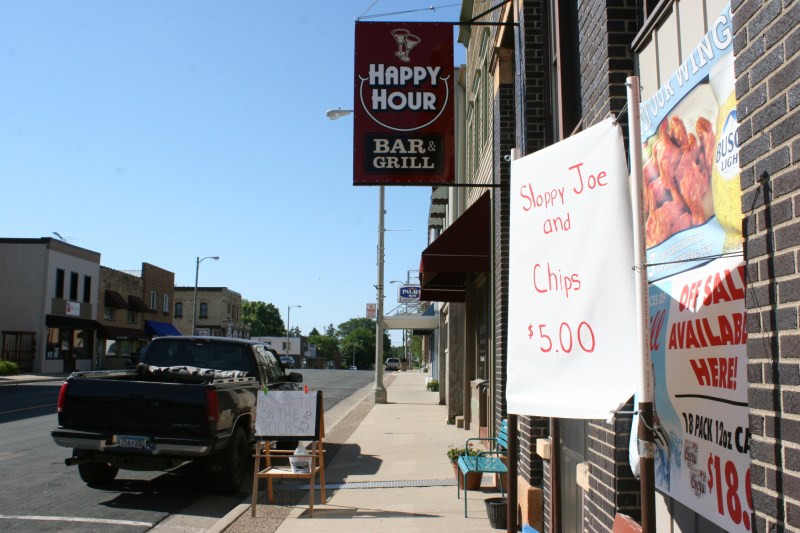
The Happy Hour lunch special on the day of my visit.


Or the lunch-time Sloppy Joe special at the Happy Hour Bar & Grill.


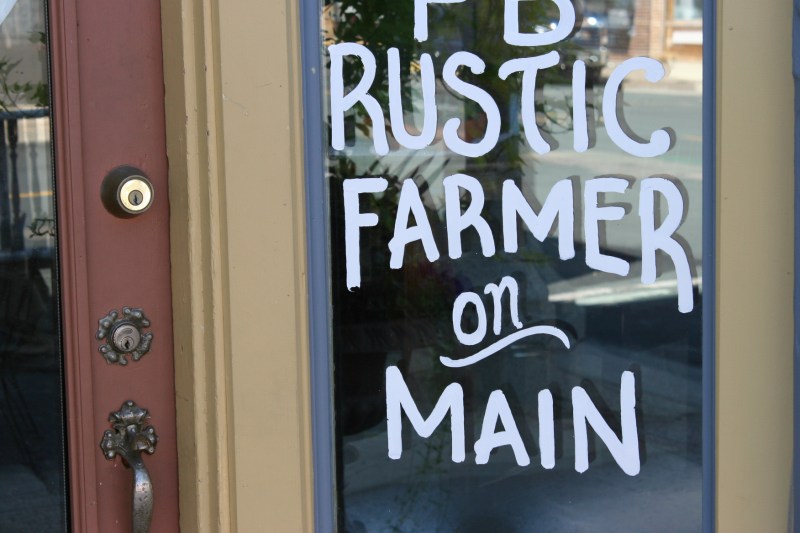
Signage marks the Rustic Farmer.


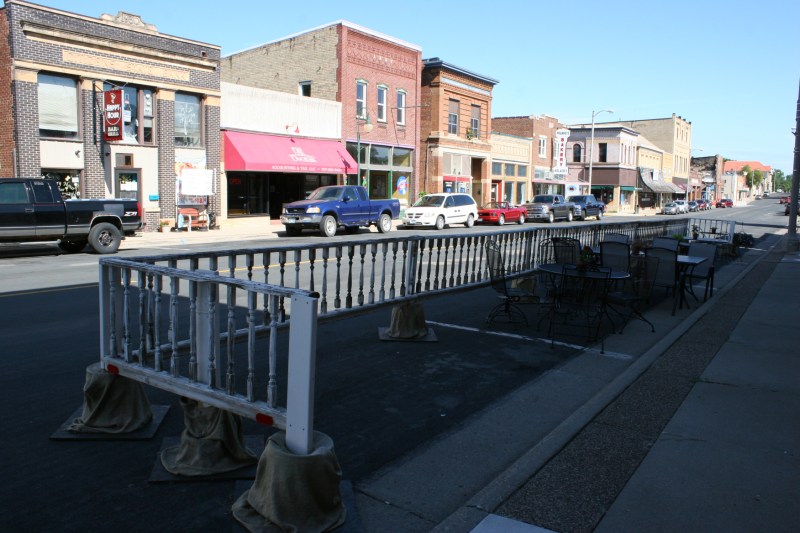
The inviting dining space in front of the Rustic Farmer along Montgomery’s main street.


It is this type of signage that reveals much about a town and its people. When I spot the event space, Rustic Farmer on Main, and later sit there at a patio table to enjoy a custard-filled sweet treat from Franke’s, I think on that name. Rustic Farmer. It fits this rural community.


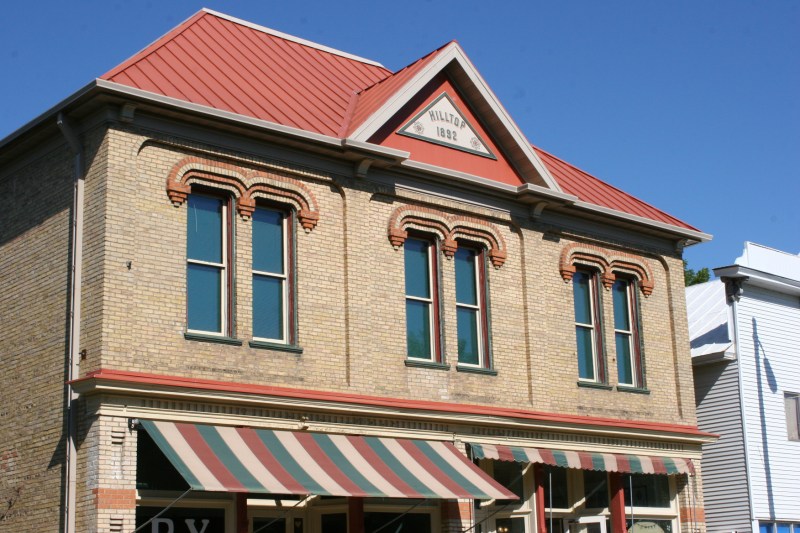
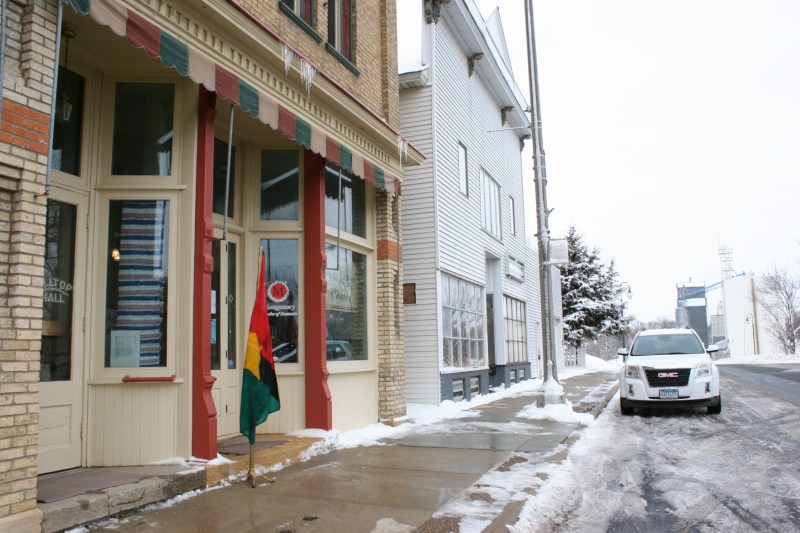
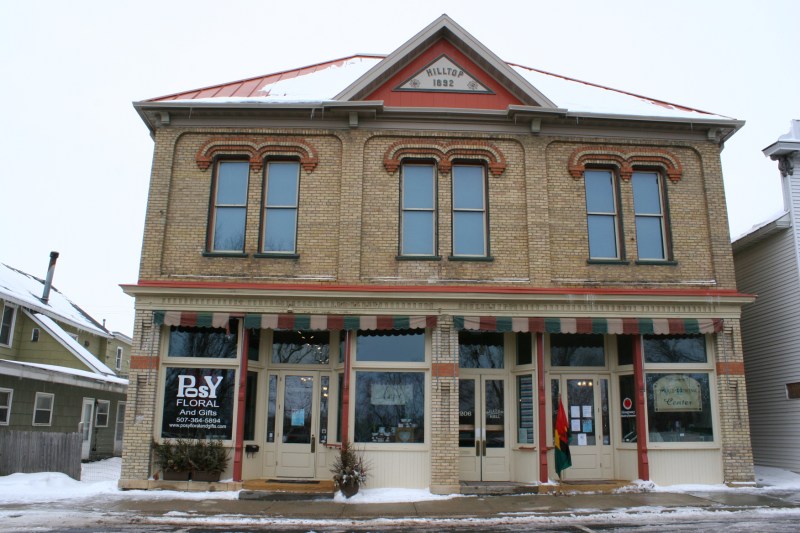
Hilltop Hall is on the National Register of Historic Places.


The same goes for Hilltop Hall, an historic building perched atop a hill on the north end of downtown. It’s home to Posy Floral & Gifts and the Montgomery Arts & Heritage Center.


I photographed this puzzle at Herrmann Drug, where it’s available for purchase.


That center houses a small gift shop and heritage displays, including Kolacky Days celebration buttons. Photographer Sarah Dolejs designed a 513-piece jigsaw puzzle featuring a photo of a button collection. The puzzle is available in local businesses and online. Recently, organizers of this year’s virtual Kolacky Days held a “Jigsaw Puzzle Competition from Your Kitchen Table” to see who could assemble the puzzle the fastest. The winning time was 67 minutes by Team Sherman. They beat out Anything but Prune (a reference to prune kolacky) by a mere minute. The Poppyseed Posse (another reference to kolacky) and the Laughing Polka Ladies didn’t even come close to winning.


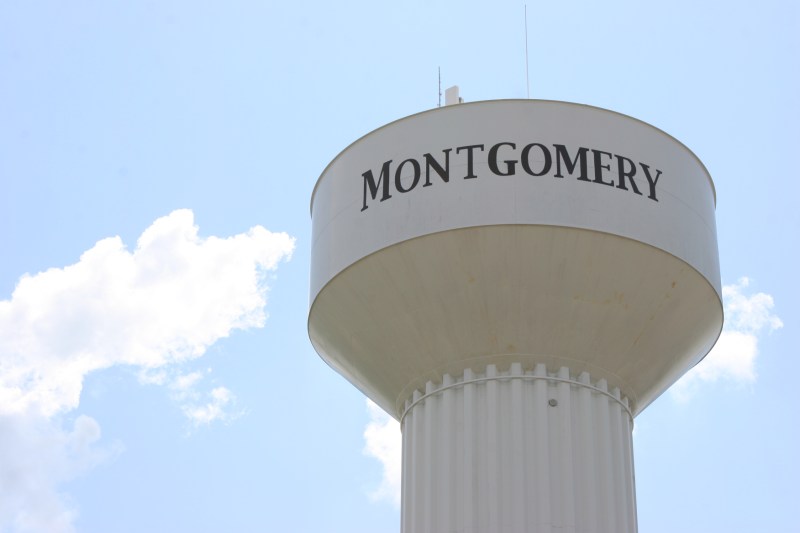
The town’s water tower is located near the Montgomery National Golf Club.


I love those creative names. They reveal a sense of humor, a sense of pride, a sense of appreciation for heritage and all that defines this town. This Montgomery, Minnesota.

#

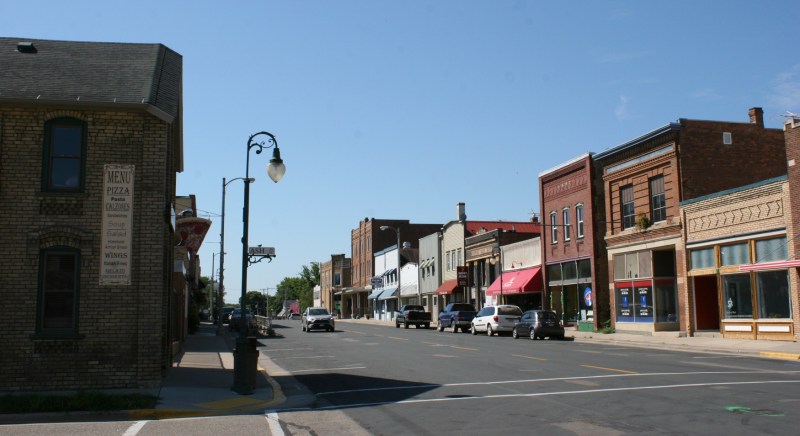
A section of downtown Montgomery, including the popular eatery, Pizzeria 201, on the left. It’s located in the historic Westermann Lumber Office & House.


Please check back as I continue my series of posts from Montgomery. Upcoming posts will feature the community’s redone mural and a downtown coffee shop.

© Copyright 2020 Audrey Kletscher Helbling


Montgomery celebrates agriculture with art August 13, 2020

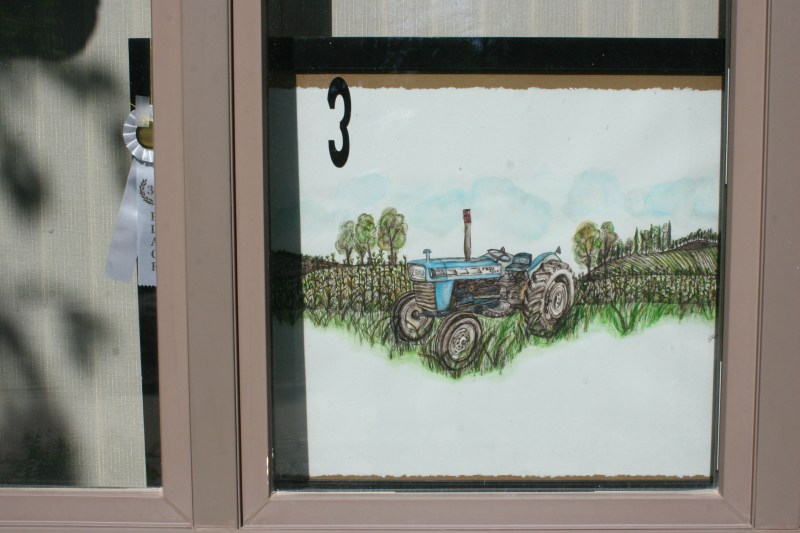
“Stop to Remember,” a pen and watercolor by Cami Vargo, was awarded third place in the show by judges Dale and Gale Looft. The art depicts her Great Grandpa Orville Richter’s 1965 Ford tractor.


THEIR ARTIST STATEMENTS are as compelling as their art.
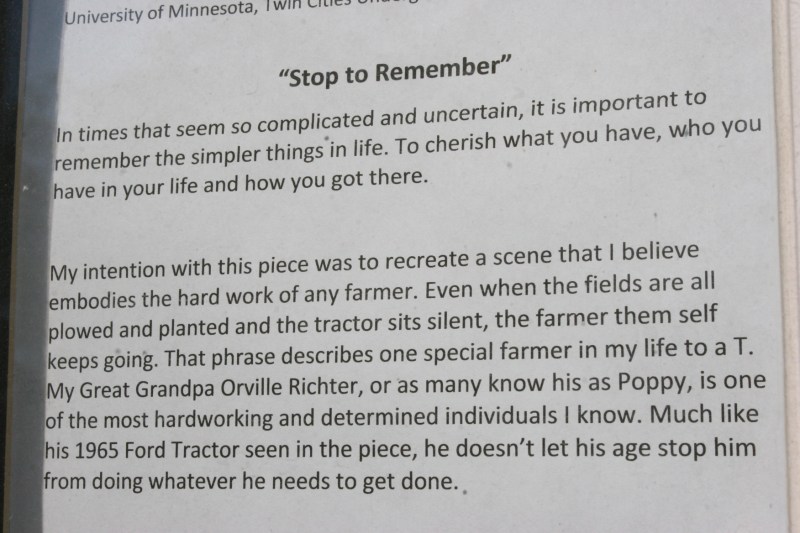
 

Cami Vargo’s artist statement about her tractor art.


In a new exhibit, “Celebrating Farmers and Agriculture,” coordinated by the Montgomery Arts & Heritage Center, 15 artists share their deep love and appreciation for all things rural. Recently I viewed the 22 pieces of art displayed in the front windows of the arts center and businesses in the heart of this small Minnesota town.
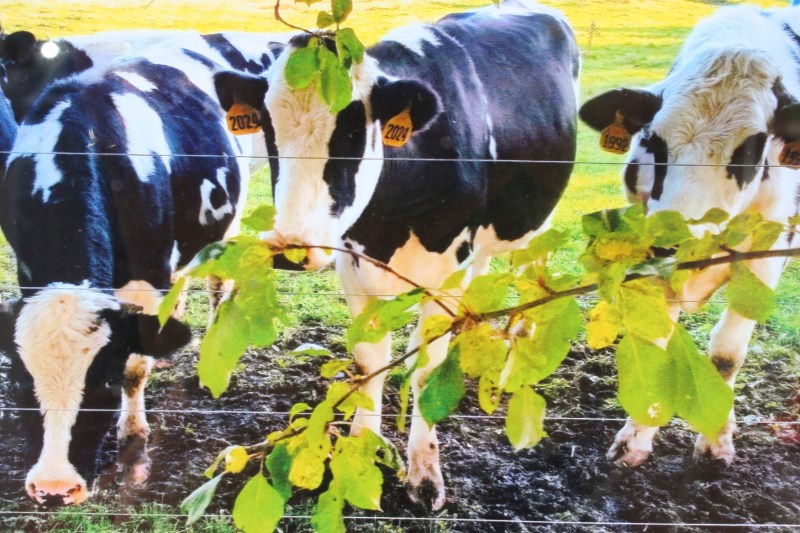
 

One of two photos by Liz Krocak, this one titled “Apple Harvest Visitors.”
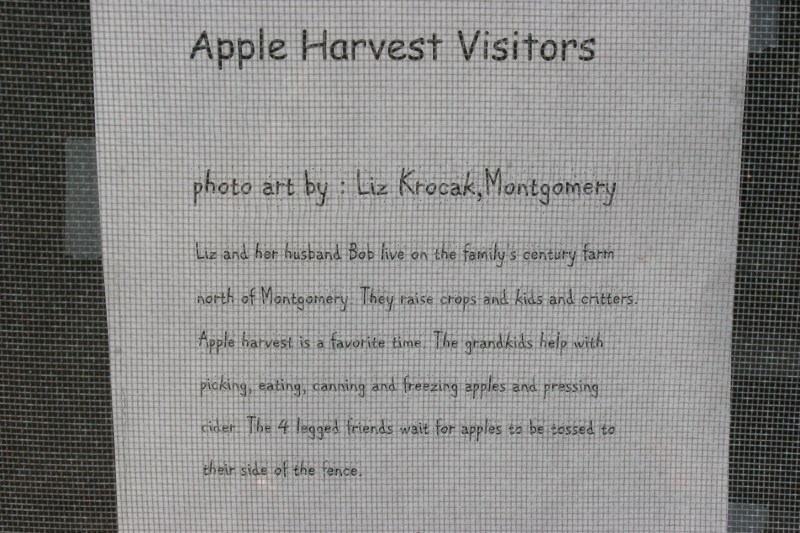
 

Through the screen window, you can read this artist statement by Liz Krocak.
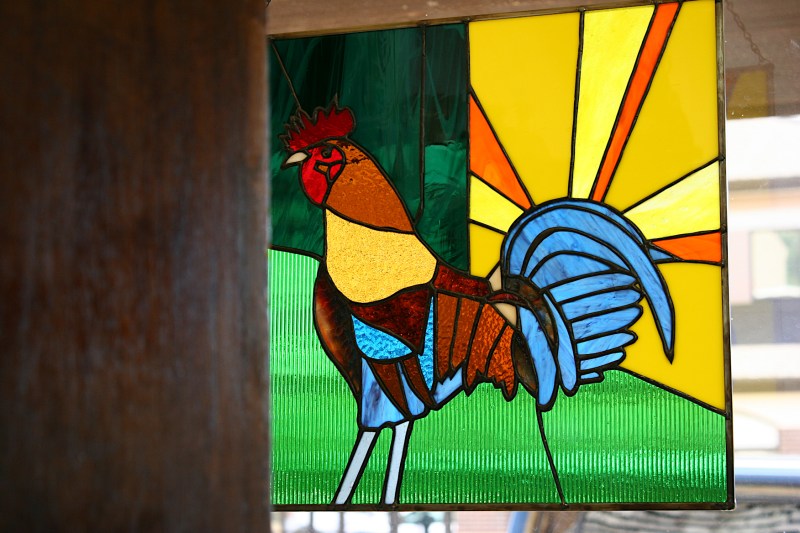
 

Bold and beautiful stained glass art by Annette Stavos hangs in a window of Hermann Thrifty White Pharmacy. If the drugstore is open, go inside and view the art to see the sun shining through it. Another stained glass creation by Mona Grimm hangs in a window of Montgomery Chiropractic and was awarded second place in the show.


From cows to a rooster to a farm dog, from tractors to windmills, from barns to country scenes, the art showcases important aspects of rural life.
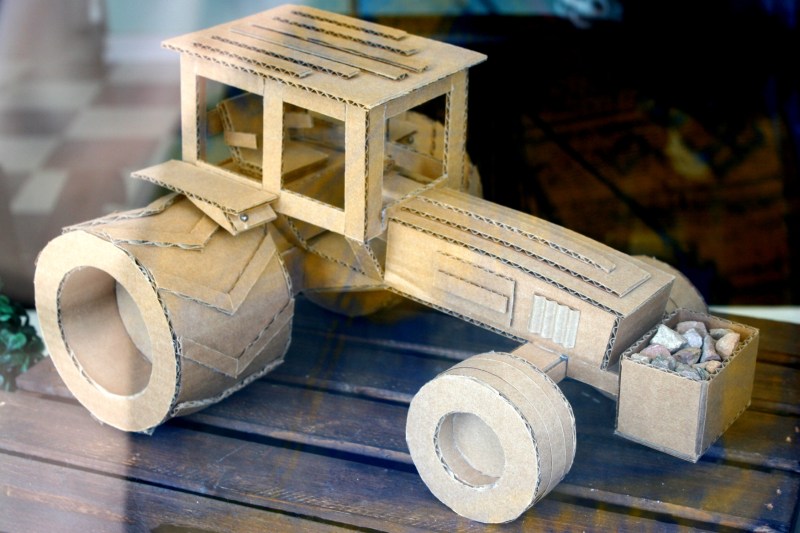
 

Constructed from cardboard by Brian Prchal, this is a replica of a modified 4020 John Deere.
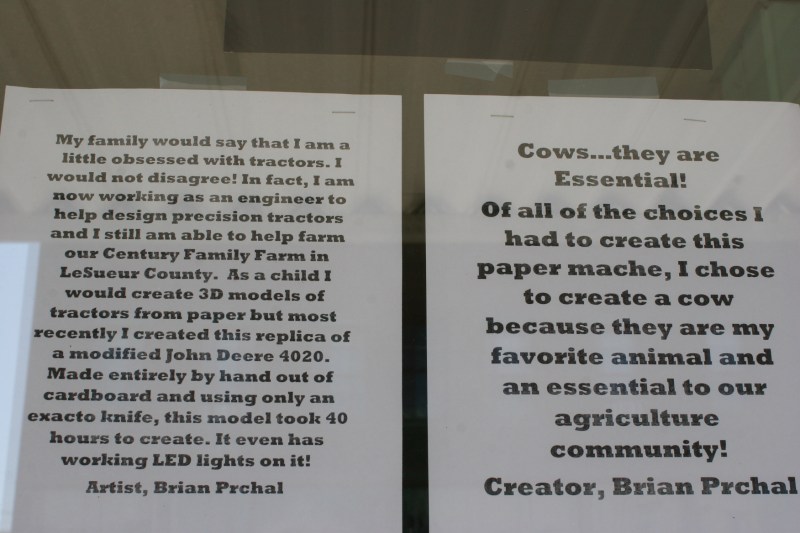
 

Brian Prchal shares the stories behind his two art pieces.


And the stories that accompany that art are often deeply personal. Rooted in the land.


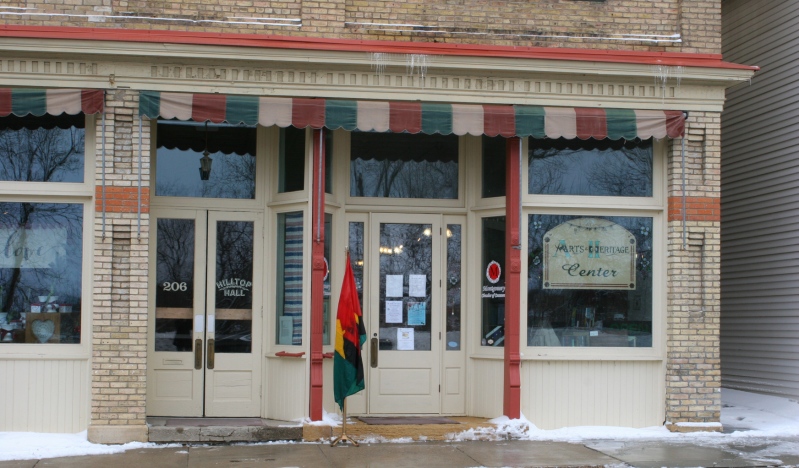
The Montgomery Arts & Heritage Center (right side of building), 206 First Street North on the north end of downtown.
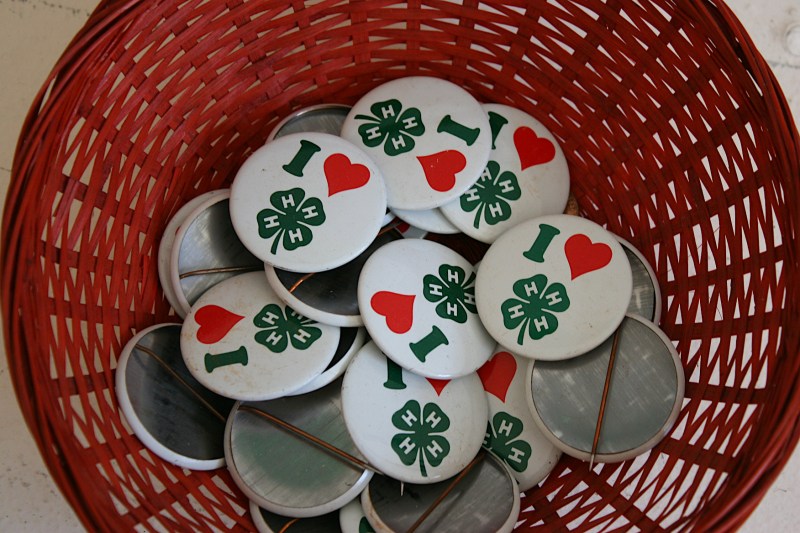
 

In the ag display, 4-H buttons.
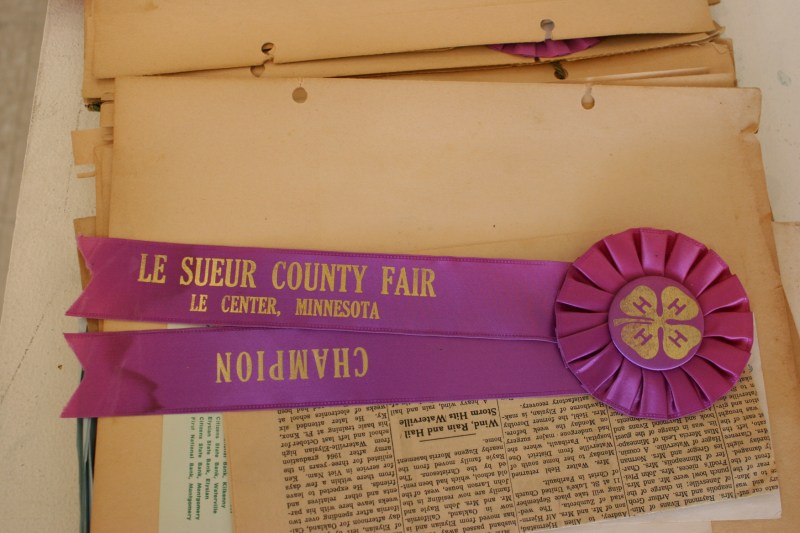
 

County fairs are an important part of rural life.


Before beginning my tour, I stopped first at the arts and heritage center to pick up a map and to view an exhibit of local ag-related memorabilia showing the importance of agriculture in this community.
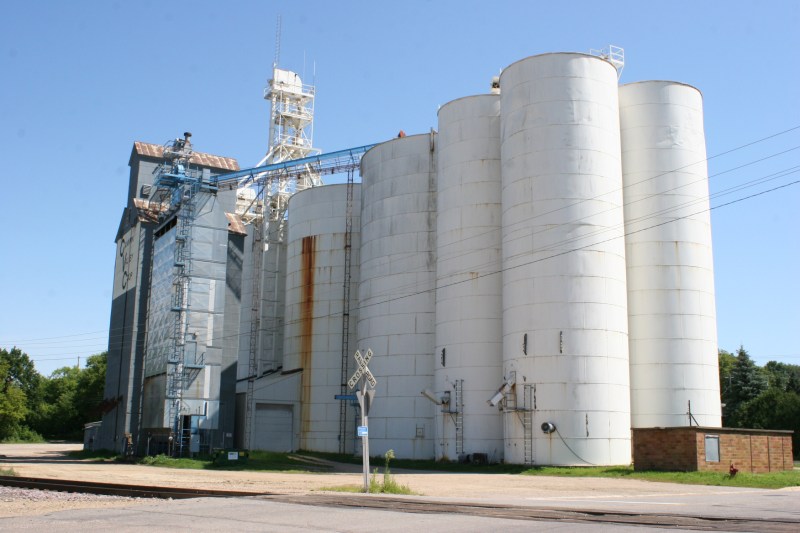
 

The grain elevator complex in Montgomery.


Just down the hill from the arts center, grain elevators loom, a strong visual of ag’s local economic value. On the opposite end of town, the canning company processes sweetcorn. And on every border of town, homes or businesses adjoin farm fields.
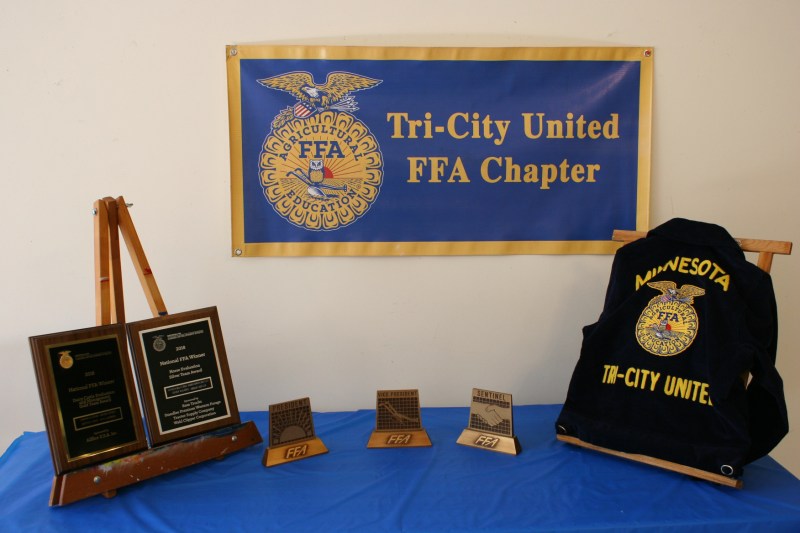
 

Future Farmers of America, based at the local high school.
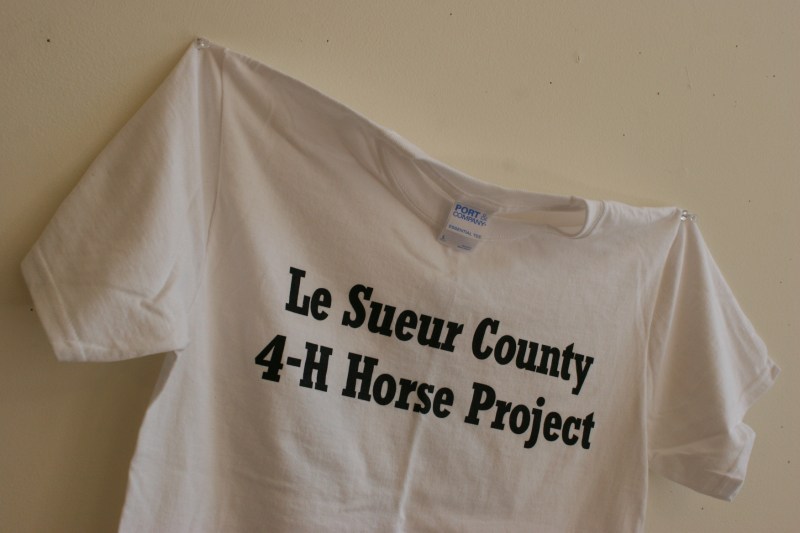
 

Recognizing 4-H in Le Sueur County.
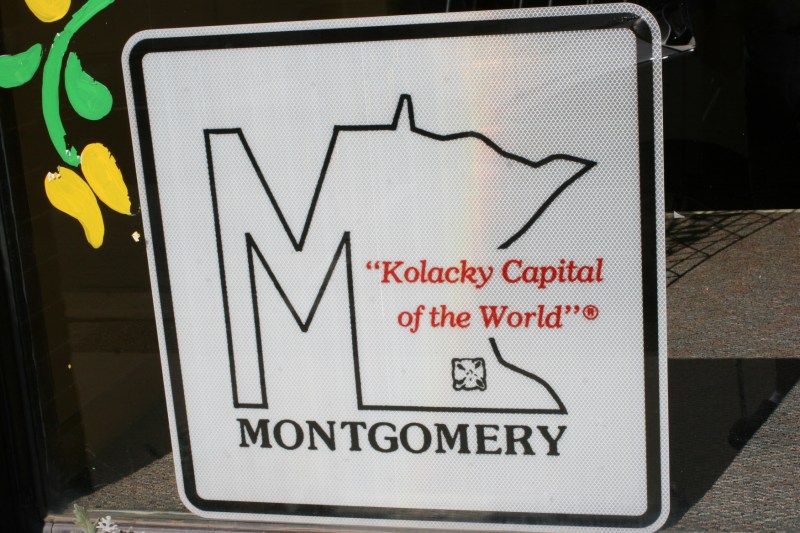
 

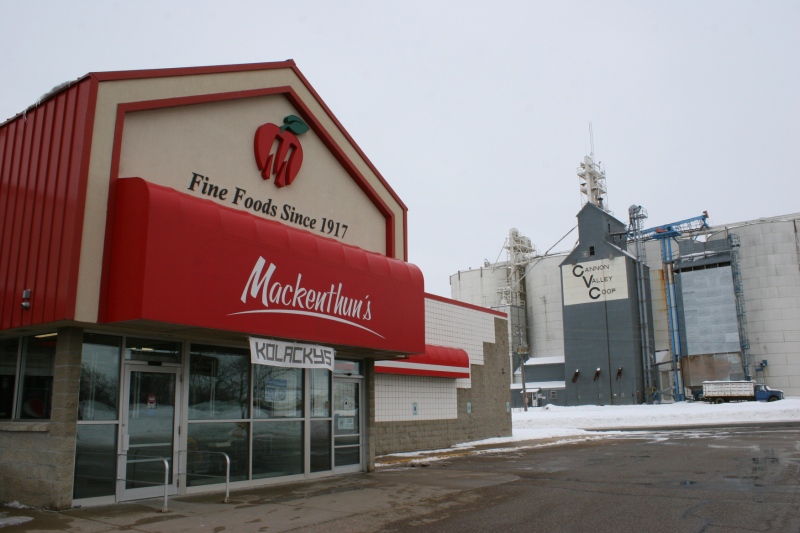
Lots of signs downtown celebrate kolacky, a Czech pastry sold at Franke’s Bakery and Mackenthune’s Fine Foods.


Montgomery centers on agriculture and its Czech heritage as the self-proclaimed Kolacky Capital of the World. So it seems particularly fitting that the arts center would focus its new exhibit on farmers and agriculture. The project was funded with a Prairie Lakes Regional Arts Council grant and donations from the Bob and Mary Jo Loftus Foundation and Compeer Financial.
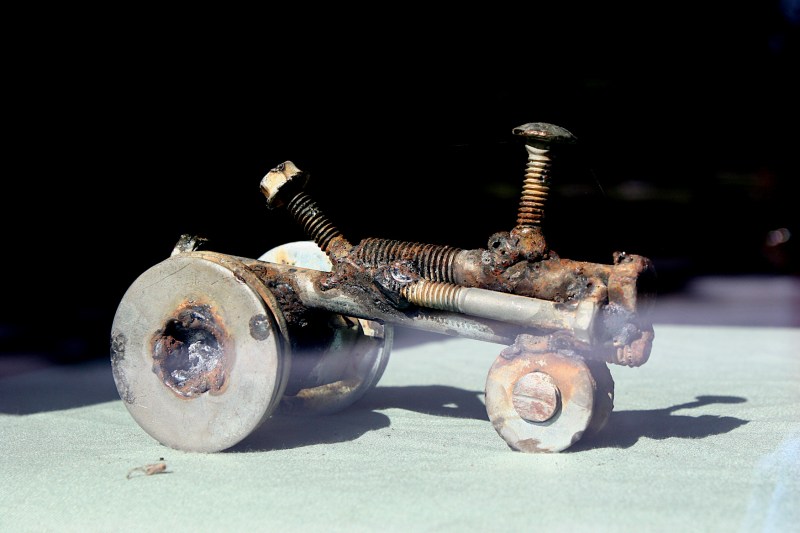
 

“The Nuts & Bolts of Farming” fits this tractor art crafted by Tyler Fromm.


Area artists clearly enjoyed the challenge of creating ag-themed art. I saw that in tractor art drawn, formed from string and nails, cut and crafted from cardboard, welded from nuts and bolts.
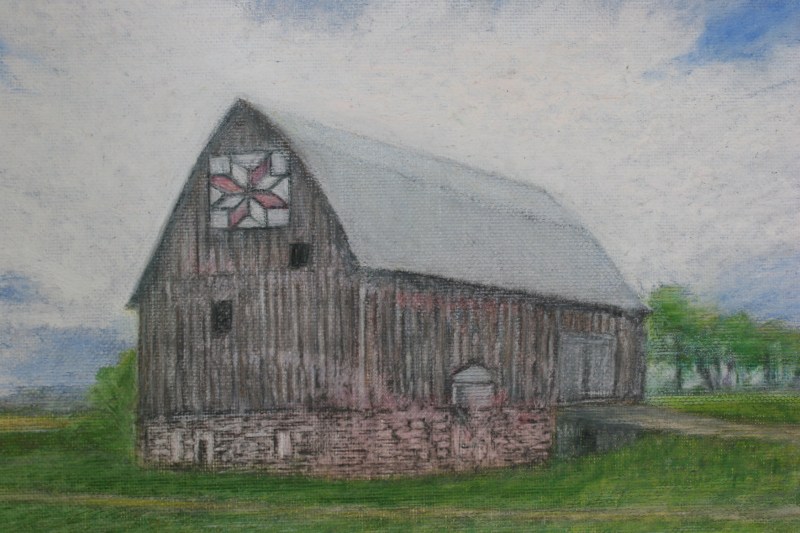
 

Pat Preble won first place for “Old Barn” and “Cows in the Field.” She incorporated a “Star of Heaven” quilt block into her barn art in honor of her mom, a quilter.


Stained glass. Batik. Wood. Photos. Quilts. So many different tools and styles and ways of creating art add to the interest.
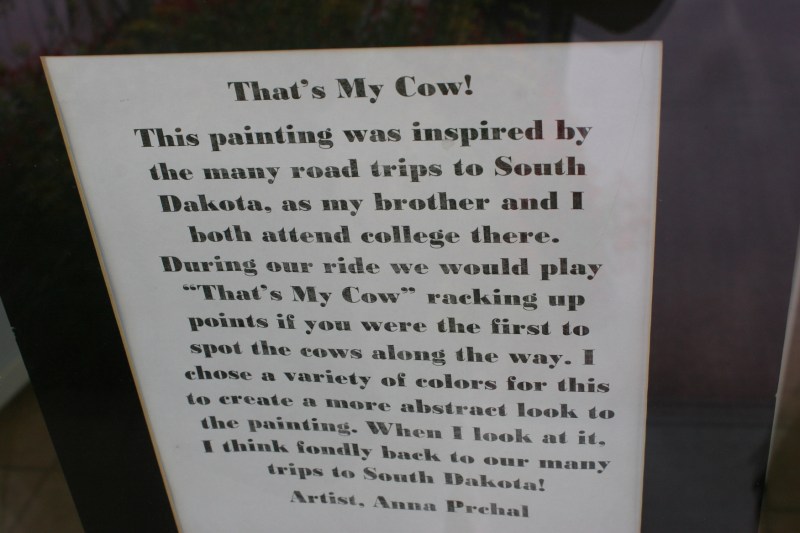
 

This artist statement made me laugh out loud. Because of glare, I was unable to photograph Anna’s cow art.


The art honors pioneer women who pieced quilts, an uncle, farm wives… Liz Krocak writes in her artist’s statement, “Behind every good farmer is his wife, rolling her eyes.” Yes, humor even infuses some of the artist statements.
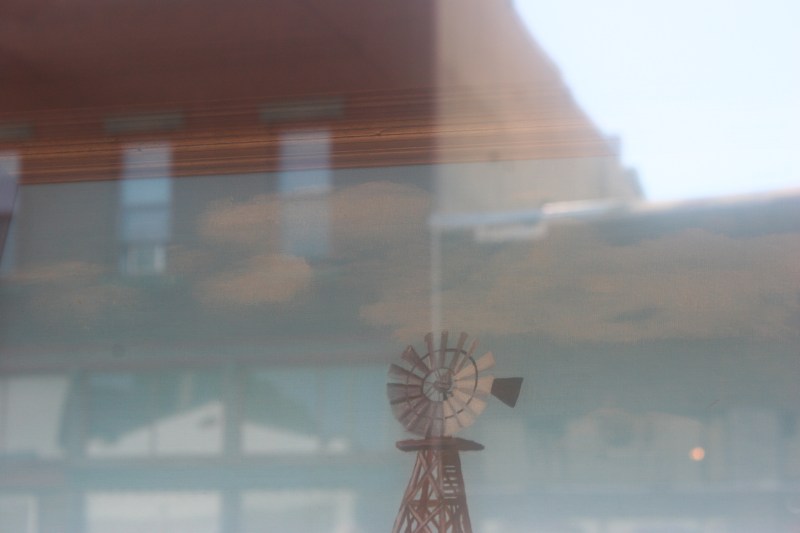
 

Glare made it really challenging to photograph Carol Ehrhardt’s entire cattle and windmill art. But I decided I like this image showing only the top of the windmill and the reflection of an aged building. Ehrhardt was awarded third place in the show.


Annette Stavos, who grew up on a hobby farm, honors her uncle. “My uncle was the real farmer and we helped him pick rocks and bale hay.”
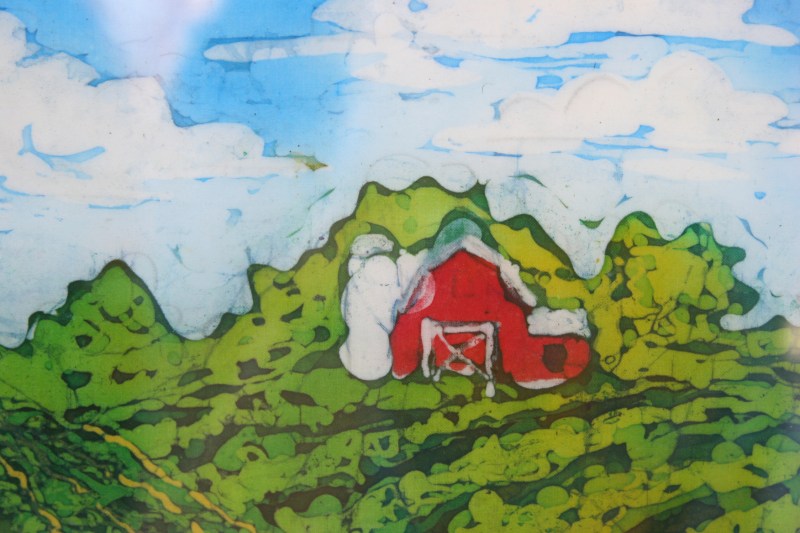
 

A close-up of Susan Hayes batik art titled “Summer Fields.”


Susan Hayes, a city girl who married a farmer, writes. “…I’ve had first hand experience with agriculture and life on a small farm. It’s not easy getting up before 5 am to milk the cows or baling hay in 100 degree weather. She created a beautiful batik piece, “Summer Fields.”
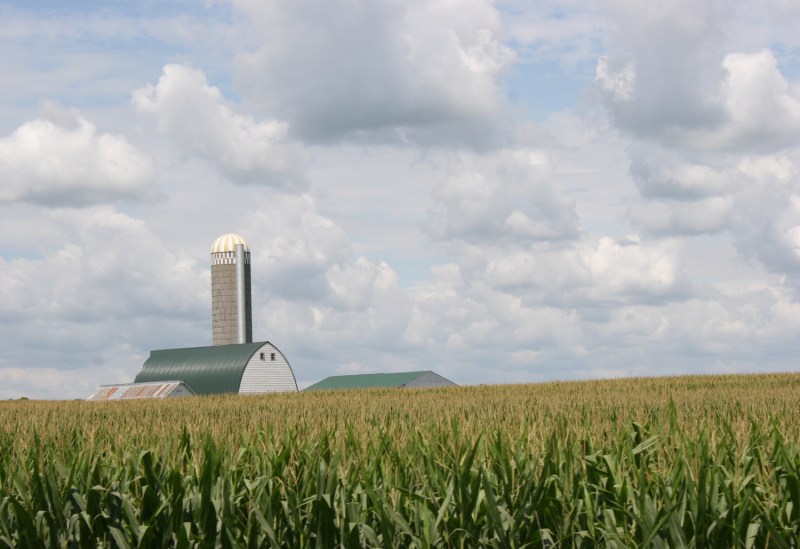
 

A farm in the Montgomery area.


Anna Prchal expresses her love of rural life in these words: “The fresh air, hard work ethic and never having a dull moment there are the things I love most about the farm.”
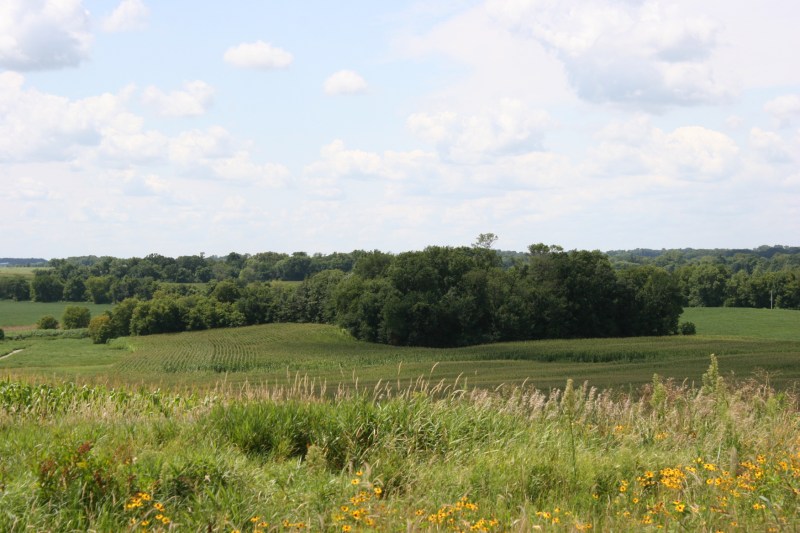
 

The countryside near Montgomery.


For Kimmie Loranger, who once traveled with the carnival, worked as a nanny and waitress, and who was at one time homeless, living in rural Montgomery and now creating art “is the happiest I’ve ever been in my whole life.”
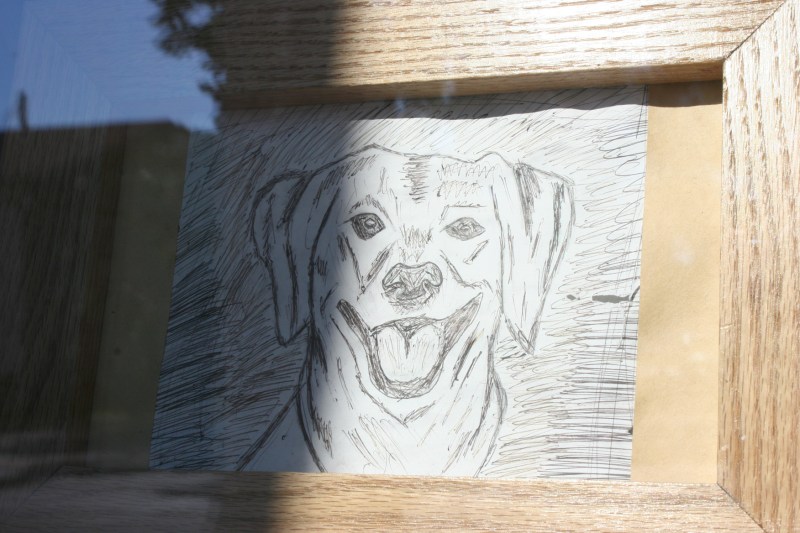
 

Tyler Fromm drew this picture of his “beloved farm dog, Buddy.” Oak siding from the corn crib on his family’s century old farm frames the art.


These are the stories that make this exhibit especially meaningful, especially touching, especially impressionable. This isn’t just another art show, but rather an expression of emotions with a rural perspective. Written. And showcased in art.


FYI: You can view this exhibit any time during the day as the art is visible from outdoors in front windows. Note that glare and reflections sometimes make seeing the art a challenge. The Arts & Heritage Center, however, is open limited hours from 2-5 pm Thursday and Friday and from 9 am to noon Saturdays. The exhibit runs until the end of November. Maps to the art locations are available from several downtown Montgomery businesses in addition to the arts center. Be sure to vote for your favorite for the People’s Choice Award. This blog post represents only a sampling of art in the exhibit.

Please check back next week for additional posts from my visit to Montgomery.

© Copyright 2020 Audrey Kletscher Helbling


Building on history in Montgomery August 12, 2020

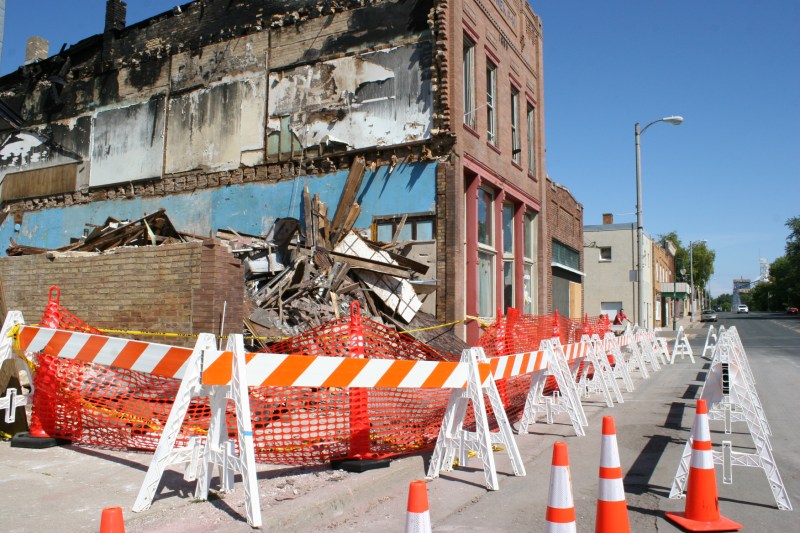
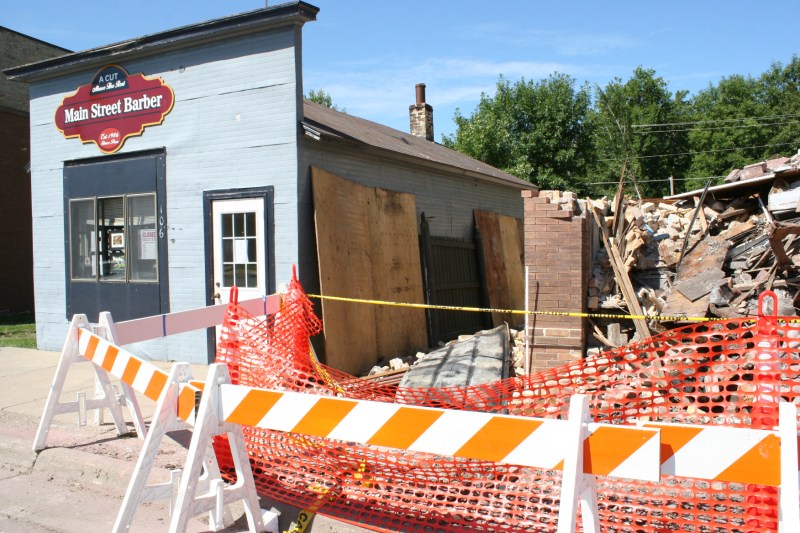
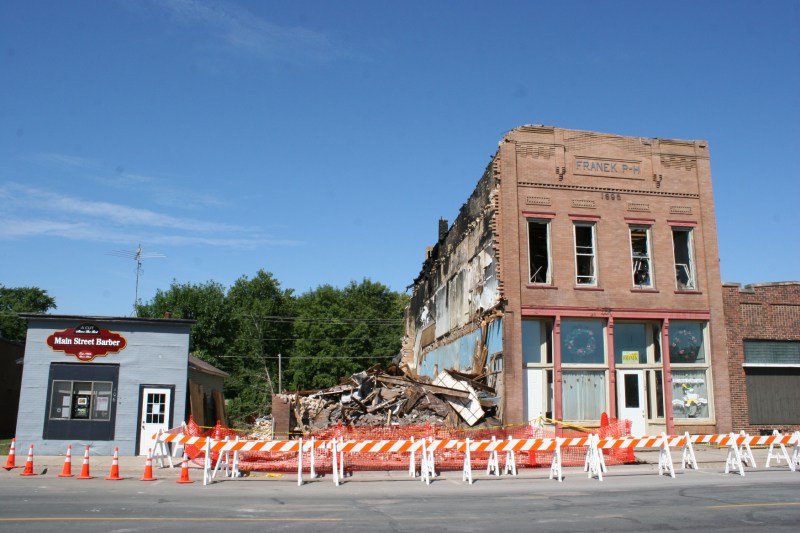
Fire destroyed an historic building at 104 South First Street in downtown Montgomery during the early morning hours of July 29.


ANY TIME AN HISTORIC BUILDING falls, I feel a certain sadness. You can’t replace a structure built half a century, maybe even 100 years, ago. Stories and memories remain. But there’s something lost when a building crumbles, collapses, comes down, for whatever reason.


The long-time barbershop, a local gem, did not catch fire.


Recently, the small town of Montgomery—self-proclaimed Kolacky Capital of the World—lost one (possibly two) historic buildings in an early morning July 29 fire. The fire started on the second floor of a vacant building previously declared hazardous and slated for demolition in mid-August. The blaze then spread to an adjoining building which houses a plumbing and air conditioning business and an apartment. Main Street Barber, located in a diminutive building next door, was spared.


The fire site.


Just days after the fire, the smell of smoke still lingered. Barricades and a fence blocked access to the pile of rubble. As I photographed the scene, I considered the depth of loss to this Le Sueur County community. Locals with the Montgomery Historical Society have been inventorying and documenting the downtown in an effort to get historic district designation, helpful in attracting visitors. This was a snag in that process.


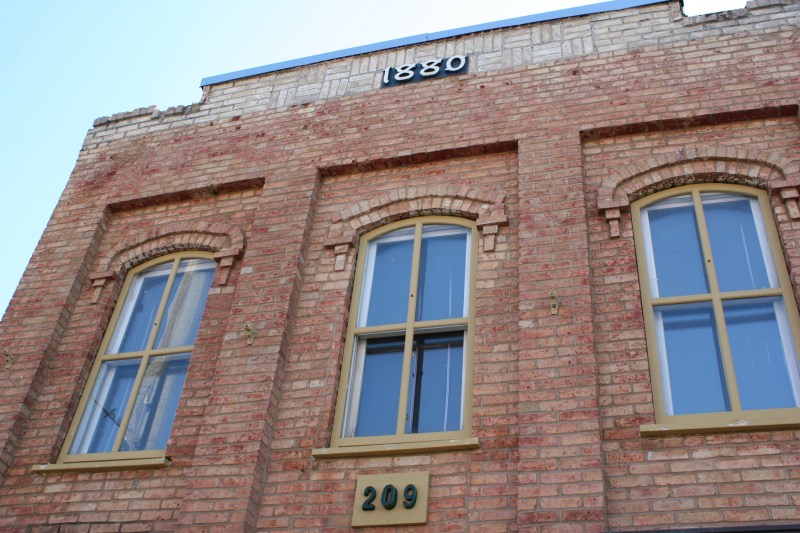
One of many historic buildings in Montgomery. Several are already on the National Register of Historic Places.


I recognize the importance of that historic district designation. According to the Minnesota State Historic Preservation Office, a historic district is “a geographically defined area with a concentration of historic buildings, structures, site, spaces and objects unified by past events, physical development or design.”


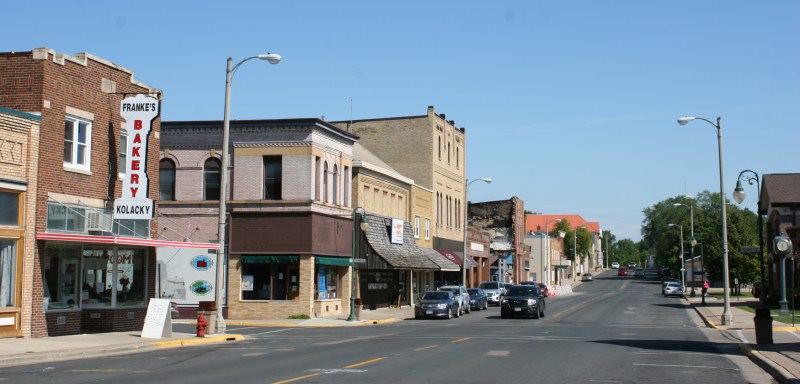
A snapshot section of Montgomery’s downtown.


No one needs to sell me on the historic beauty and connections in downtown Montgomery. The aged buildings are one of the reasons I love this small town. Every time I visit, I walk through the main business area downtown, photographing buildings and signs and whatever else draws my eye.


In the window of a downtown business, art promoting Montgomery’s Kolacky Days, held virtually this year. Kolacky is a Czech pastry.


But buildings do not define a place. People do. And I have always found the people of Montgomery to be incredibly welcoming. I appreciate their friendliness, their community spirit, their cohesive respect for their Czech heritage, their efforts to build Montgomery, even when buildings fall.

Please check back for more posts from Montgomery.
© Copyright 2020 Audrey Kletscher Helbling


Congrats to these area groups for award-winning tourism promotion in southern Minnesota February 27, 2020

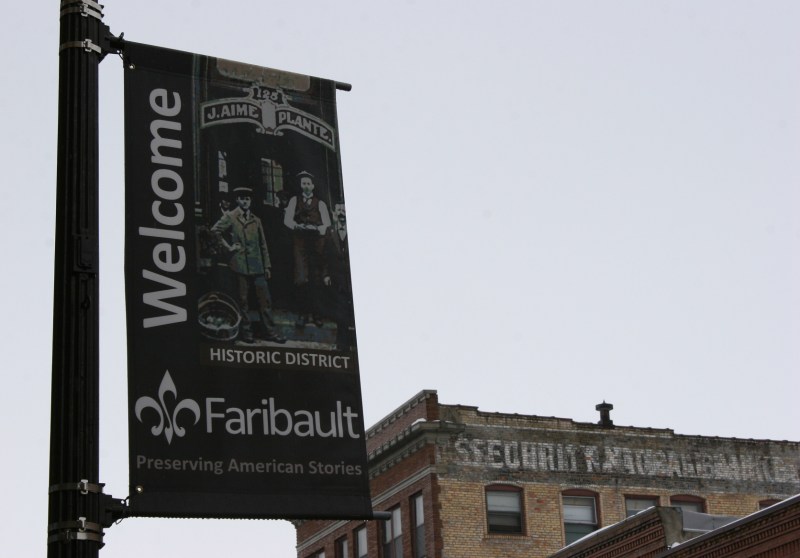
The historic Security National Bank building backdrops this banner in historic downtown Faribault. Minnesota Prairie Roots file photo April 2019.


TRAVEL. When you read that word, what flashes through your mind? Travel abroad? Destinations within your region or state? A cross-country road trip? Whatever your answer, travel is a big industry on levels from local to national to international.

This week those involved in Minnesota tourism gathered in Alexandria to share ideas, to connect, to celebrate. Tourism, after all, ranks as a $16 billion industry here, according to the Explore Minnesota website.

During the 2020 Explore Minnesota Tourism Conference, individuals and organizations were recognized for their accomplishments. And that includes entities from my region.


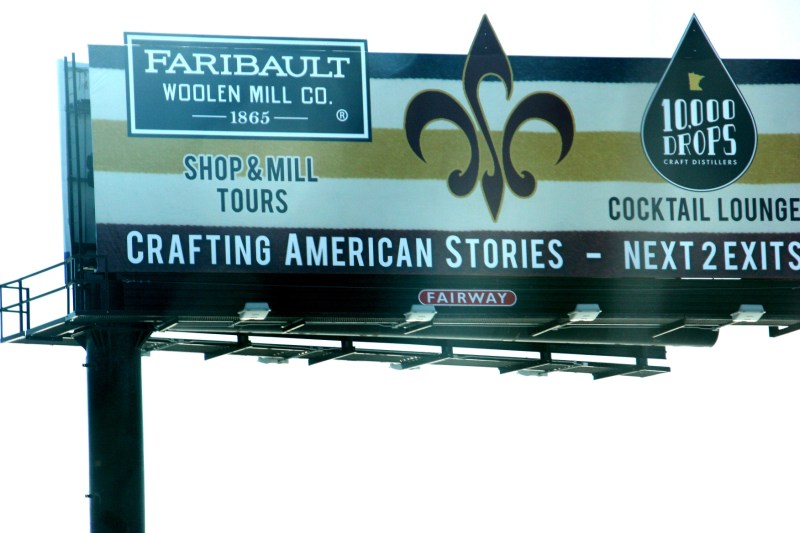
Faribault tourism’s newest billboard along Interstate 35 north of town promotes attractions in my Minnesota community. Minnesota Prairie Roots edited photo April 2019.


To my friends at the Faribault Area Chamber of Commerce and Tourism, congratulations on winning the Destination Marketing Award for best “Branding and Integrated Marketing Campaign.” The branding of Faribault as “Making American Stories” is catchy and timeless. As I see it, this theme engages not only our past, but also the present and future. I’ve witnessed our local tourism team working hard to get the word out about Faribault, to draw people and businesses here. For a day. For a life-time. I especially love the new banners around town that define areas like the historic district, the mill district and more.


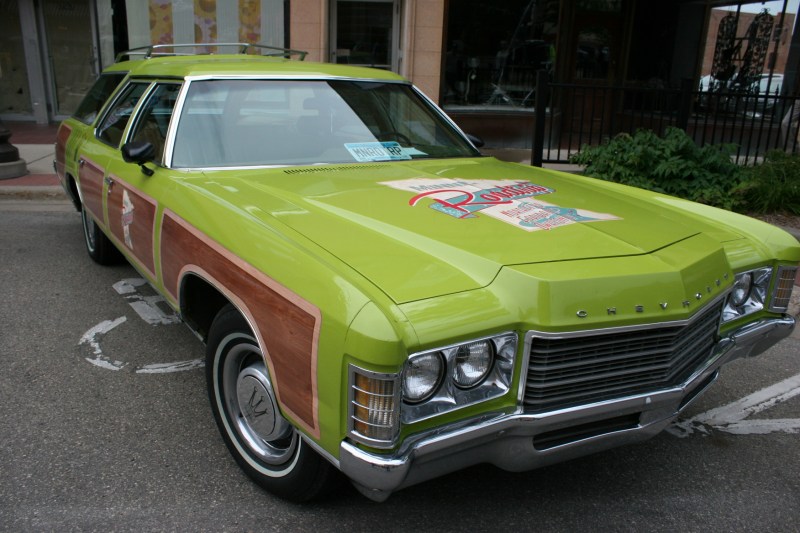
This vintage wagon promotes tourism and the Minne-Roadtrip that includes the communities of Faribault, Northfield and Owatonna. Minnesota Prairie Roots file photo.


More kudos go to the Faribault tourism folks, and also to those in Owatonna and Northfield, for their tri-city marketing of “Minne-Roadtrip.” The group won the Destination Marketing Award in the “Special Project” category for their work in marketing the three neighboring cities as a destination. I especially appreciate their joint efforts to promote regional tourism. Often we can achieve more through cooperation than alone.


Signage in downtown Montgomery promoting Kolacky Days. Minnesota Prairie Roots file photo January 2020.


Finally, my congratulations to the Montgomery Area Community Club for earning the Destination Marketing Award in “Niche Targeting.” You all know how much I love Montgomery as evidenced by my many posts about this town of some 3,000 in Le Sueur County. The Community Club focused on growing and promoting Kolacky Days, an annual summer celebration honoring the town’s Czech heritage. Montgomery is located in what is commonly known as Minnesota Czech Country.


A close-up of the banner posted outside Buckham Memorial Library in Faribault.  Minnesota Prairie Roots file photo.


Wherever you live—whether on the vast plains of the Dakotas or in the heart of a city dense with skyscrapers or in an historic community like mine—I hope you appreciate the place you call home. I value Faribault for its historic downtown, its natural beauty, its arts scene, its diversity…and for the friendships I’ve formed here, in this place where I write American stories.

Click here to read background details about the above referenced awards.

Disclaimer: I’ve previously written about Faribault for the local tourism website.

© Copyright 2020 Audrey Kletscher Helbling
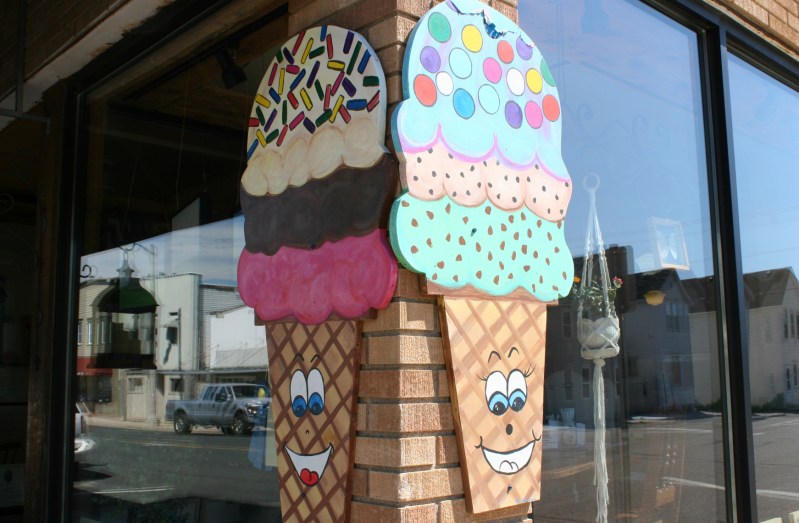
 

Montgomery revisited, Part I February 26, 2020

Filed under: Uncategorized — Audrey Kletscher Helbling @ 11:15 AM
Tags: , , , , , , ,

A section of downtown Montgomery, Minnesota, with its many historic buildings.


I DOUBT I’VE WRITTEN about any small Minnesota community more than I’ve written about Montgomery. Located within a half hour of my Faribault home, it’s a quick drive away. And Montgomery offers just enough to keep me returning.


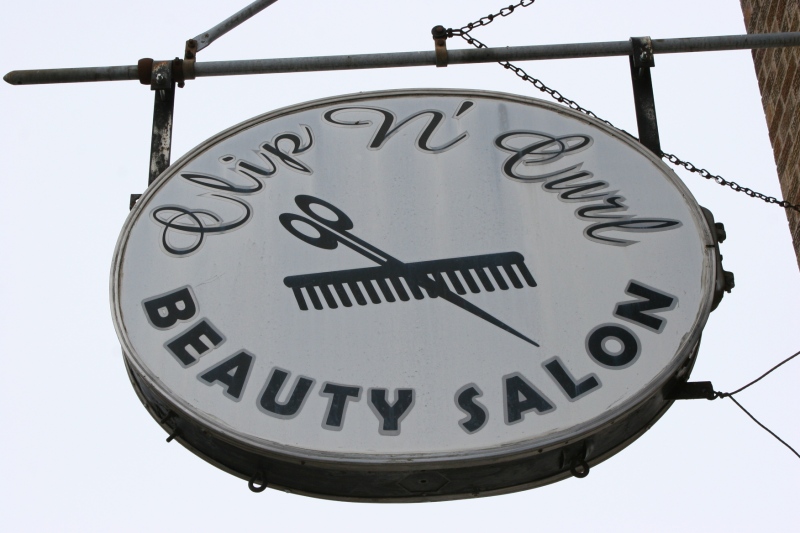
Signs always draw my eye, including this one. It’s simple, nostalgic…


Especially interesting is the downtown with eye-catching signage, aged buildings and home-grown shops.


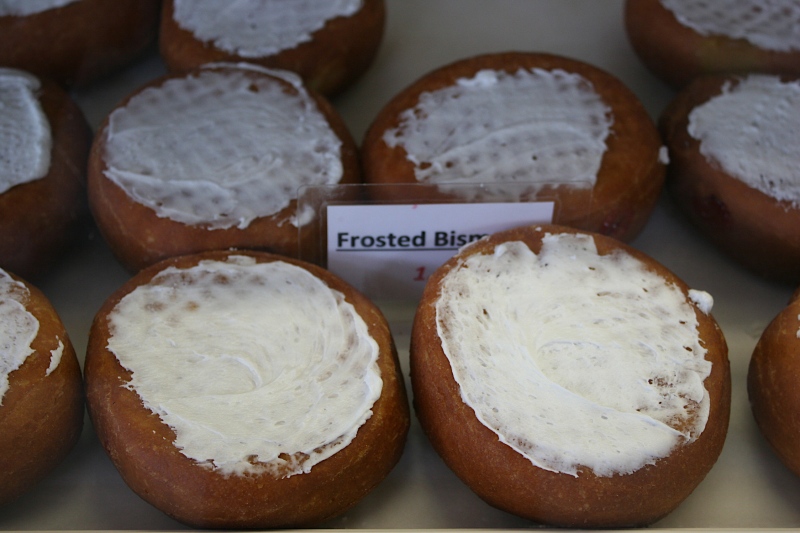
Among the sweet offerings at the long-time, popular Franke’s Bakery.


An old-fashioned bakery.


Outside the entry to the Montgomery Arts & Heritage Center located in Hilltop Hall.


A thriving Arts & Heritage Center.


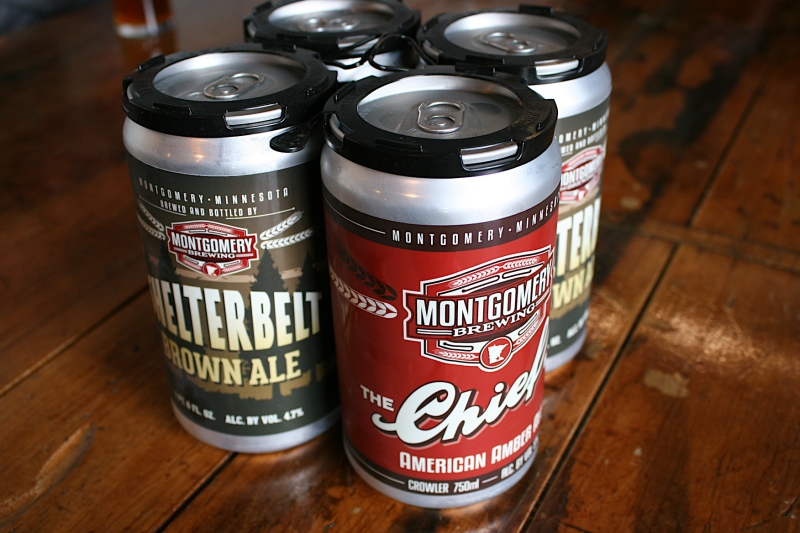
Beer to go at Montgomery Brewing.


A brewery with outstanding craft beers.


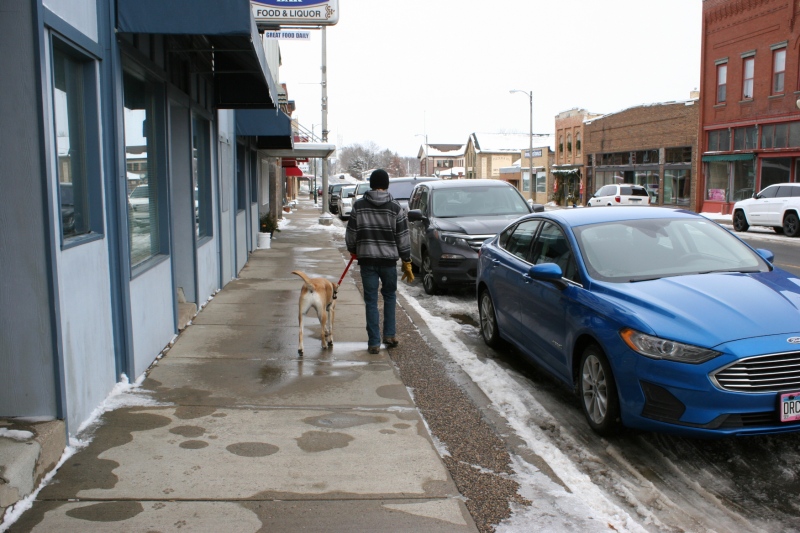
The friendly young man I met while photographing downtown. He paused to let me pet Buddy.


Friendly people.


Everywhere downtown you’ll find signs promoting kolacky.


A deep appreciation for the area’s Czech heritage. Combine those and you have a small town that appeals to me.


Third-generation Franke’s Bakery is known for its kolacky.


I recognize that what interests me may not interest you. But there’s something to be said for small towns with a strong sense of identity and pride in that identity. For Montgomery, it’s the tag, “Kolacky Capital of the World.” The kolacky is a bun-like Czech pastry filled with a fruit or poppyseed filling. Risking the wrath of the Czech, I will tell you that it’s not a favorite of mine. I’d choose a doughnut before a kolacky. But then I am of German descent and was not raised in this area of Minnesota.


Stand in the grocery store parking lot and you can see the grain elevator in one direction, the brewery in another and the main street through downtown, too.


None of that matters really. What matters is that I like Montgomery. Unleash me with a camera in this town and I get excited about the photo ops, all the ways I can capture the essence of this place. If my creative work is anything, it has always been about defining place.


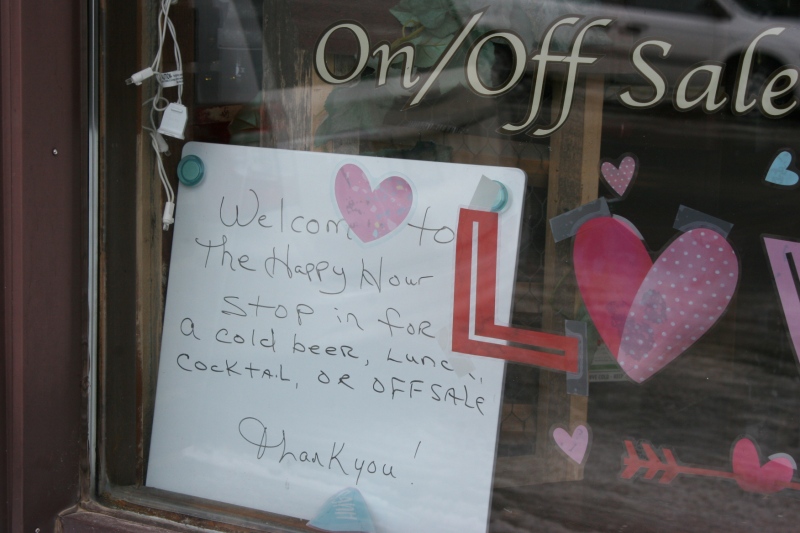
Spotted in the window of a downtown business. These handwritten signs give a place character.


I will always feel most comfortable in a rural town like Montgomery. I appreciate a place where I can view a grain elevator, spot handwritten signs on business doors and windows, chat it up with the locals, stop to pet a passerby’s dog and stand in the middle of Main Street to take a photo without worry of traffic.

Now that my photo essay about Montgomery has published in the March issue of Southern Minn Scene magazine, I am free to share more photos from my January day trip to this Le Sueur County community. Enjoy and watch for additional posts highlighting Montgomery as I, once again, define this place in images and words.

© Copyright 2020 Audrey Kletscher Helbling
 

Montgomery, Through a SoMinn Lens February 24, 2020

A scene outside Franke’s Bakery in downtown Montgomery, Minnesota, on a recent Saturday morning. Minnesota Prairie Roots file photo January 2020.


SEVERAL WEEKS HAVE PASSED since my last day trip to Montgomery, a small Minnesota town of some 3,000 about a 30-minute drive from my Faribault home.

Randy and I went to Montgomery specifically to view an exhibit of 1900s era photos of Native Americans by noted photographer Edward S. Curtis. The exhibit at the Montgomery Arts & Heritage Center closes this Saturday, February 29. You can learn more about that show by clicking here and reading a previous post.

My reason for writing about Montgomery today is to share my latest Through a SoMinn Lens photo essay column, “Day trip to Montgomery, Kolacky Capital of the World,” which just published in the March issue of Southern Minn Scene. To see the current issue of this free lifestyle, arts and entertainment magazine, click here.

As always, I am delighted to showcase a small Minnesota community well worth your visit. As time allows this week (I’m trying to complete other writing projects with deadlines), I will share more Montgomery photos with you. Enjoy!

And if you have any suggestions of small towns (or attractions) in southern Minnesota that I should visit, please pass along your ideas.

© Copyright 2020 Audrey Kletscher Helbling
 

A look back at high collars in light of 2020 Oscars fashion February 11, 2020

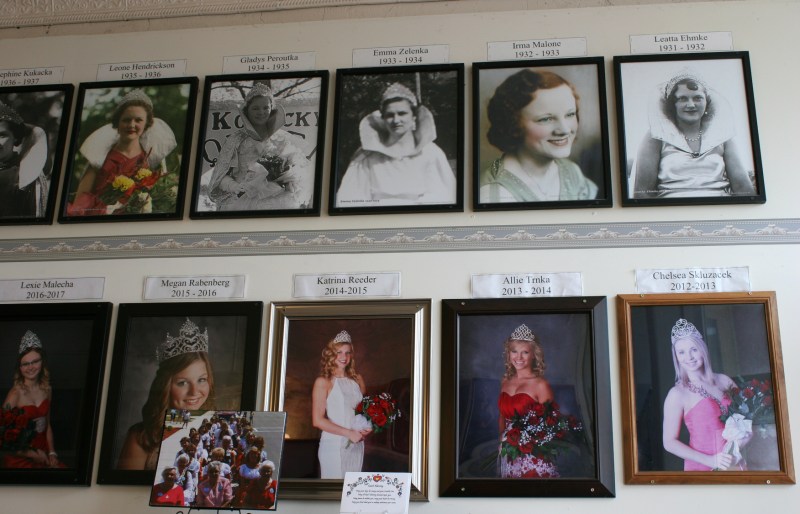
Note the high stand-up collars in fashion in the 1930s (top row) in this photo taken of Kolacky Days queen portraits. Minnesota Prairie Roots file photo January 2020.


LEATTA. EMMA. GLADYS. Leone. Josephine.

Cynthia Erivo.

If you watched the Oscars or have seen the movie “Harriet,” you recognize Erivo’s name. She was nominated for best actress. And she performed “Stand Up,” in the running for best original song, during Sunday evening’s star-studded awards night. She won neither.

Typically I don’t watch the Oscars. My knowledge of celebrities is minimal. I last saw a movie in the theater about 2 ½ years ago. One I walked out on last May and demanded a refund for doesn’t count. That said, I really want to see “Harriet,” a movie based on former slave and abolitionist Harriet Tubman.

Erivo and background gospel singers presented a moving and powerful performance of “Stand Up” during the Oscars. The singer/actress wore a shimmering gold gown with a high stand-up collar. And, as we all know, those glamorous gowns garner lots of attention. Even from me, someone who doesn’t much bother with fashion. Peek into my closet and you’ll find primarily jeans, tees and flannel shirts.

But the Oscars fashion interested me. And apparently my husband. “Remember those pictures of the Kolacky queens?” Randy asked Sunday evening as I commented on Erivo’s high collar dress.

“Huh?” I responded.

Randy suggested I review my photos of 1930s Kolacky Days queen portraits taken during a recent visit to the Montgomery Arts & Heritage Center. That would be in Minnesota. Not Alabama. So I did. And sure enough, there were Leatta, Emma, Gladys, Leone and Josephine wearing gowns, or maybe it’s capes, with high stand-up collars. Just like Cynthia Erivo some 90 years later.

TELL ME: Did you watch the Oscars? Any observations you would like to share on gowns past or present?

© Copyright 2020 Audrey Kletscher Helbling
 

Documenting rural Minnesota February 6, 2020


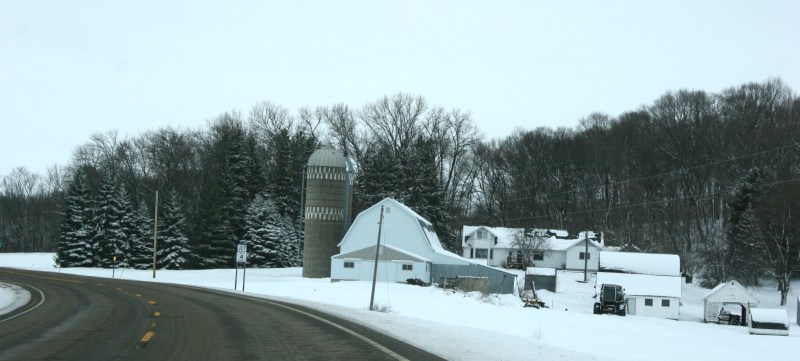
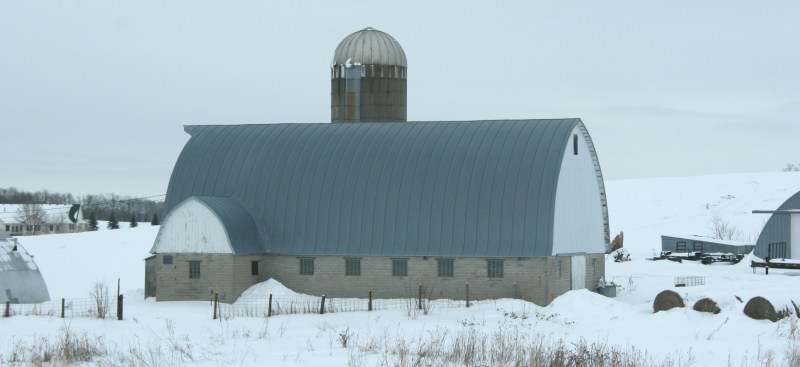
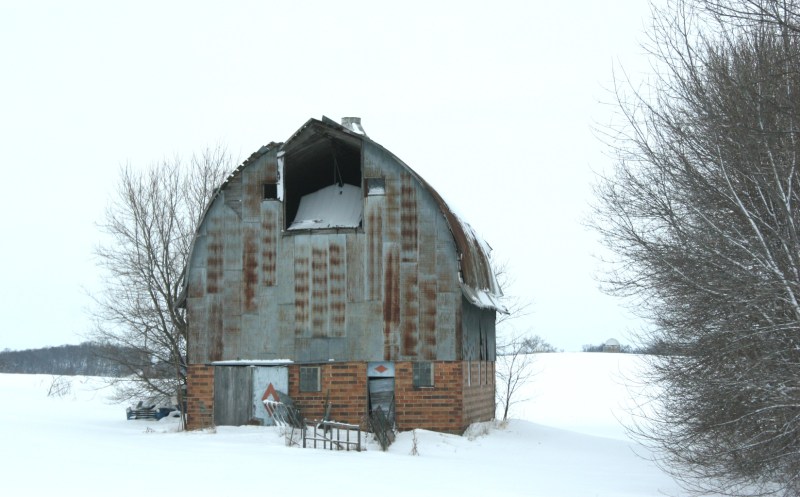
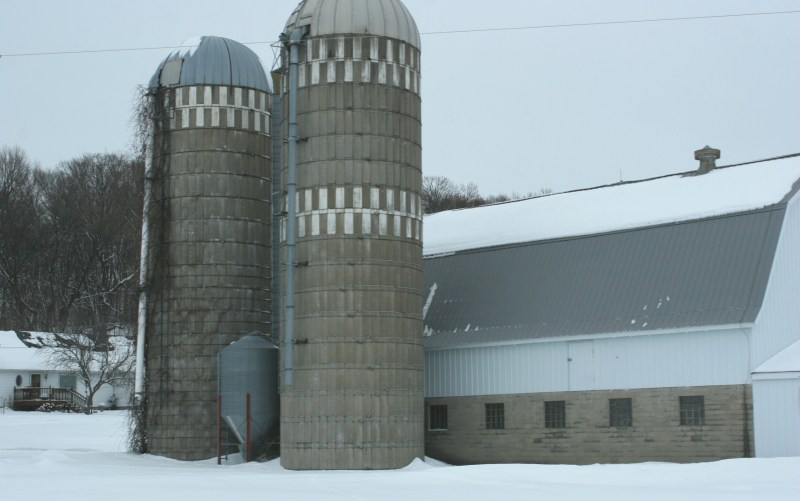
I OFTEN WONDER, as I travel past farm sites in southern Minnesota, how these places will look in 50, even 20, years.


Will once grand barns still stand? Will farmhouses be abandoned? Will corporate ag operations completely replace family farms?


Already the evolution is well underway. Many barns no longer hold livestock, serving instead as storage sheds. Rural houses are not so much farmhouses as dwellings for those working off the farm to supplement their farm income.


Independent farmers either quit, expand or try to hang on for one more year. Some have become innovative—diversifying, organizing, working together to grow and sell local.


The rural landscape is changing, shaped by markets and weather and operating costs and government regulations, issues that have always affected farming. Technology, too, now factors into agriculture.


Some 40-plus years removed from the farm, I’ve witnessed the changes from afar. None of my five siblings stayed on the farm, although two work in ag fields. I no longer have a direct link to the land. And because of that, my children and grandchildren are losing that generational connection to farming, to a way of life. This saddens me. They prefer city over country.


And so I continue to photograph, documenting with my camera lens the places of rural Minnesota. Therein I present a visual history, a memory prompt and an expression of appreciation for the land which shaped me.


FYI: This Saturday, February 8, from 1 – 4 p.m., embrace and celebrate locally-grown and crafted during Family Day at the Faribault Winter Farmers’ Market. In addition to vendors, you’ll find hands-on art activities for kids, games, healthy recipes and more. The market is located inside the Paradise Center for the Arts along Central Avenue in the heart of historic downtown Faribault.

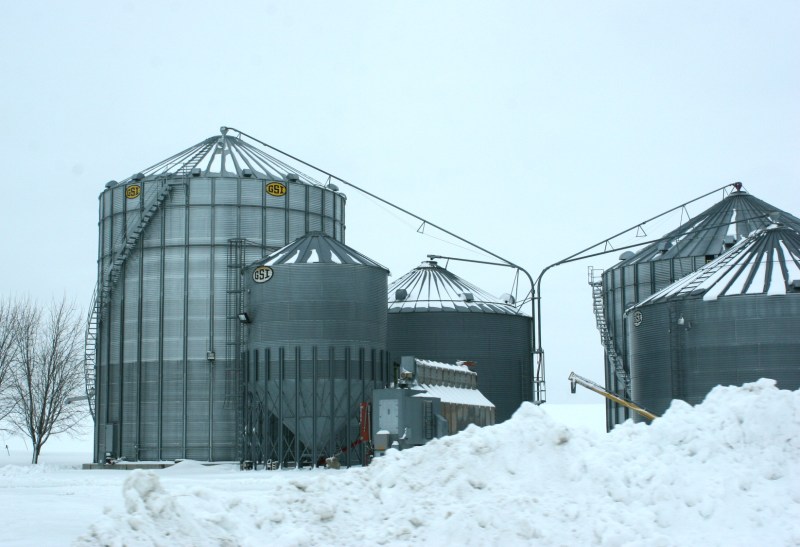
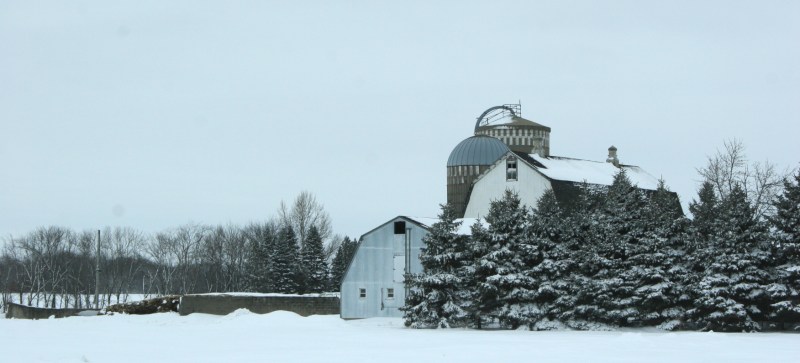
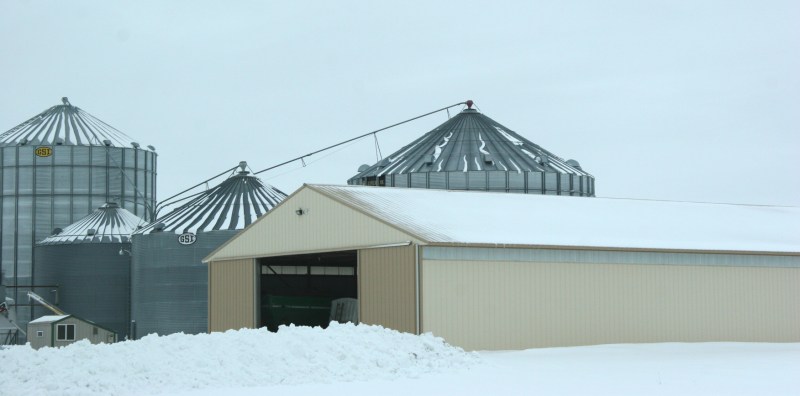
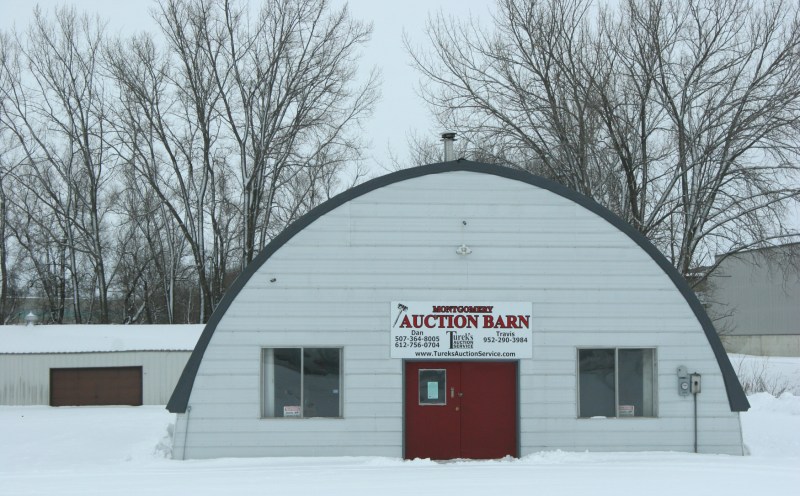
These photos were taken last Saturday along Minnesota State Highway 21 on my way to Montgomery.

© Copyright 2020 Audrey Kletscher Helbling
 

How a small Minnesota town celebrates the arts & its Czech heritage February 4, 2020

The Montgomery Arts & Heritage Center in small town Minnesota.


IN THE HEART OF CZECH COUNTRY, in the small southern Minnesota community of Montgomery, population 3,000, the arts thrive.


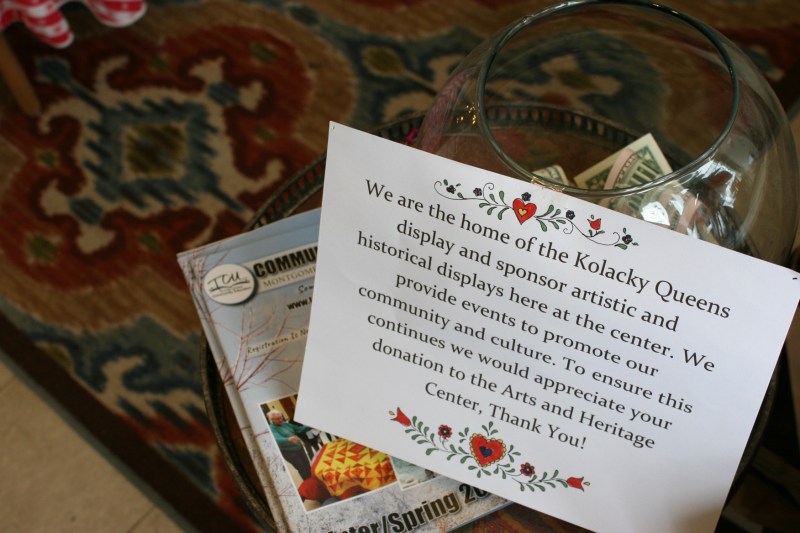
Photographed in the arts center gift shop.


That’s a testament to the devotion of those who care about the arts and about preserving Czech culture and heritage in this self-proclaimed Kolacky Capital of the World. (Kolacky are a Czech pastry.)


Beautiful Hilltop Hall with the arts center on the right and a floral and gift shop on the left. A performing arts space is located on the second floor.


In a section of historic Hilltop Hall—yes, appropriately named for its hilltop location in the heart of downtown—the Montgomery Arts & Heritage Center centers the arts. I love this place, where I’ve attended theatrical performances and viewed exhibits, most recently vintage photos of western U.S. Native Americans photographed by Edward S. Curtis.


The Edward Curtis exhibit in the foreground and the gift shop in the back.


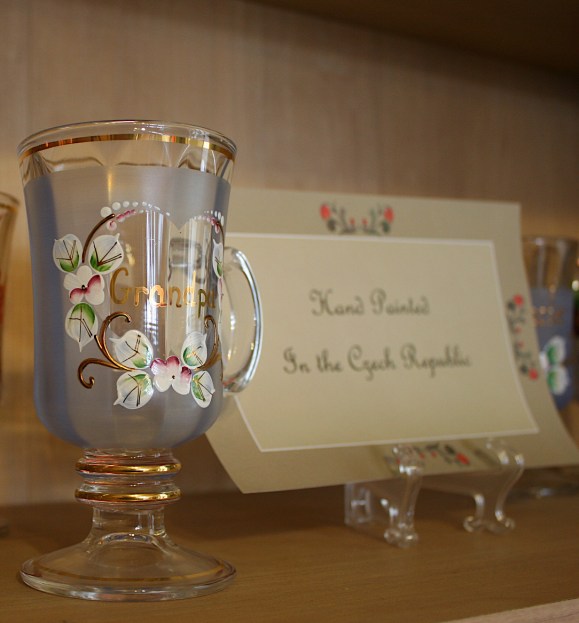
Czech glassware in the gift shop.


After touring that exhibit, I walked toward the back of the narrow room to the gift shop which features Czech, handcrafted and other goods.


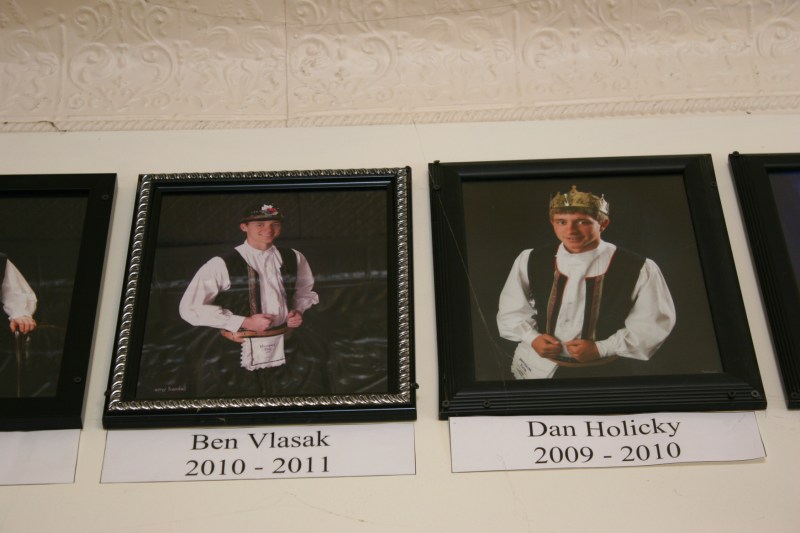
Portraits of past Masopust kings in Montgomery.


There I also spotted portraits of Masopust kings, young men crowned at the community’s annual Czech Mardi Gras. That celebration is set for noon – 5 p.m. Sunday, February 23, at American Legion Post 79 and includes a costume ball, polka music, silent auction and Czech food.

In April, the Legion hosts an Escape Room Experience fundraiser for the Arts & Heritage Center through Tri-City United Community Ed.

I love how people in small towns work together and support one another. At different times from March into May, the arts center will exhibit the artwork of local elementary, middle and high school students.

The arts center is also honoring Montgomery’s rural-ness with a “Celebration of Farmers and Agriculture” exhibit of art at local businesses from mid-May to the end of October. Work from artists, in any 2D or 3D medium, is being sought with a March 1 registration deadline. To entice entrants, there’s a top prize of $1,000. That’s substantial. Prizes will be awarded during Kolacky Days weekend July 24-26.


A sampling of Kolacky Days queen portraits.


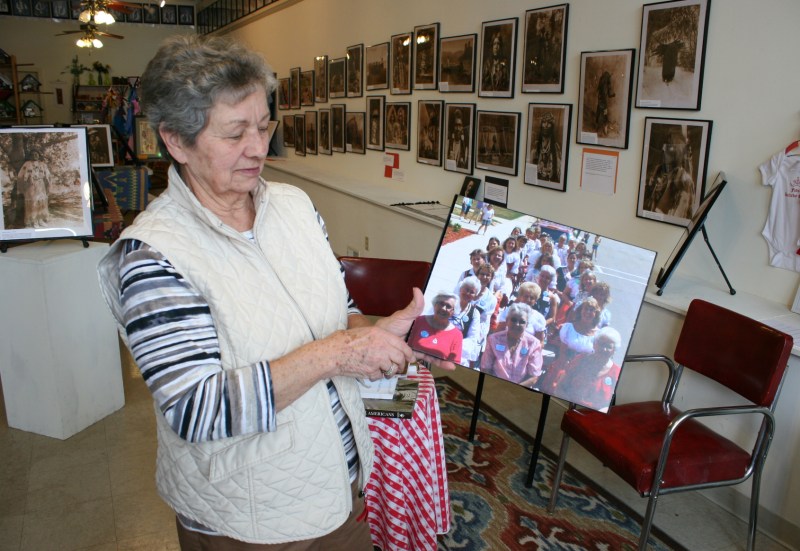
Jane shows me a group photo of Kolacky Days queens.


Czech words I inquired about.


As I meandered through the Arts & Heritage Center, I noticed portraits of Kolacky Days queens rimming the room near the ceiling. Jane, volunteering her time to staff the center on the day of my visit, pulled down a group photo of past queens riding together on a Kolacky Days float. She’s of Czech heritage. But she couldn’t translate a posting of Czech words I spotted. Not that I, of German heritage, could translate German words, even if I studied German for six years. I understand.


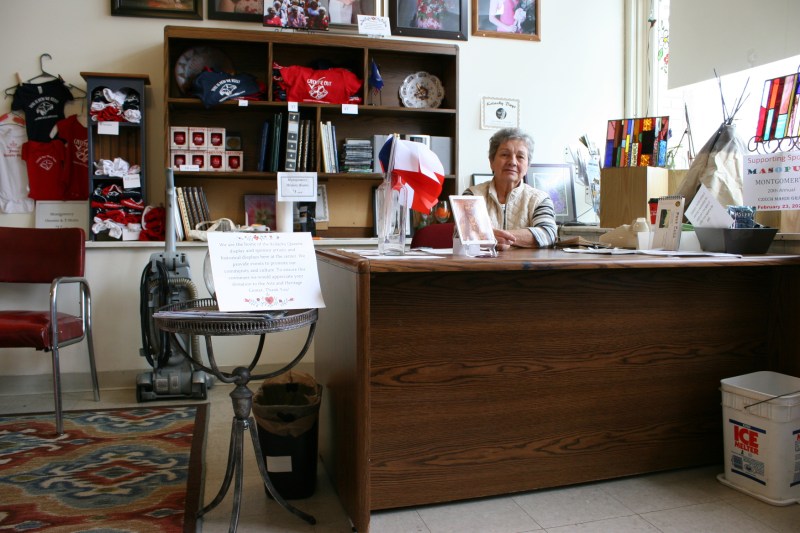
Volunteer Jane stationed near the front door.


Jane presented a warm welcome to this exceptional small town Minnesota center for the arts and preservation of the community’s Czech heritage. I encourage you to visit Montgomery. Stop at the Arts & Heritage Center, walk through the main business district, shop the small shops, grab a bite to eat, maybe even a beer at the local brewery. There’s so much to appreciate about Montgomery. (Keep in mind that this is a small town and places are open limited hours.)


Quilt art honoring Montgomery’s Czech heritage hangs in the gift shop.


This community is the focus of my monthly Through a SoMinn Lens photo essay, publishing soon in Southern Minn Scene magazine.


FYI: The Montgomery Arts & Heritage Center is open from 2-5 p.m. Thursdays and Fridays and from 9 a.m. – noon on Saturdays. It is supported primarily by memberships, fundraisers and donations. Visit the center’s Facebook page for more info on events mentioned in this post.

© Copyright 2020 Audrey Kletscher Helbling


In Montgomery: Historic photos of Native Americans by Edward Curtis January 31, 2020

Prints of Edward Curtis photos now exhibited at the Montgomery Arts and Heritage Center.


BENEATH PORTRAITS OF KOLACKY DAYS queens, early 1900s era sepia-tone photos stretch along walls and grace tables in the narrow room. Prints of images taken by a man considered one of America’s greatest photographers. Edward S. Curtis.


A permanent exhibit of Kolacky Days queen portraits hangs above the temporary exhibit of Edward Curtis photos of Native Americans.


A photo of Edward Curtis with info about this noted American photographer.


Visitors are welcome to sit and page through Edward Curtis books.


Despite his outstanding photographic reputation, Curtis was previously unknown to me. But no more. Recently I visited an exhibit of around 60 selected photos from his “The North American Indian” collection at the Arts and Heritage Center in Montgomery. His entire body of work encompasses 40,000 photos, many published in 20 volumes.


Historic Hilltop Hall houses the Montgomery Arts and Heritage Center on the right and a floral and gift shop on the left.


To see these photos, termed part of the “most complete visual record of Native Americans west of the Mississippi,” right here in rural Minnesota is such a gift. A $4,000 grant from the Carl and Verna Schmidt Foundation funded the exhibit in Montgomery, a community of some 3,000 just 20 miles northwest of Faribault.


Edward Curtis photographed Native Americans of the west over a 30-year period.


Displaying Curtis’ photos here brings the photographer full circle back to Le Sueur County. At the age of five, he moved here with his parents from his native Wisconsin, eventually settling in Cordova. Here he grew up to appreciate the outdoors as he canoed with his preacher father along the Cannon River. By age 17, Curtis was working at a photography studio in St. Paul. In 1887, he moved to Seattle.
 

A snippet of a 1906 comment about Edward Curtis by President Theodore Roosevelt.


That’s the backstory of a photographer who earned the praise and financial support of President Theodore Roosevelt, who called Curtis a “close observer.” That is evident in the documentary photos of the Native Americans Curtis came to know well and to, clearly, value and love.


“Wishham girl,” 1910


Text accompanies the “Wishham girl” photo.


A portion of the portrait of “Chief Joseph– Nez Perce”, 1903


His portraits of western Native Americans document not only a culture, but also history and personalities. As I studied the photos, I admired faces weathered by wind and sun, steady strength in profiles, joy and sadness in eyes. I admired, too, the artistry of woven baskets, handcrafted pottery, curved canoes, feathered headdresses and detailed beadwork.


An insightful and beautiful quote by Edward Curtis.


I expect if I was to revisit this exhibit, I’d notice details I missed. There’s just so much to see, to take in, to appreciate, to contemplate. A culture. A people. A way of life. A history. A connection to nature.


More photos from the exhibit.


I am grateful to long-ago photographers like Edward Sheriff Curtis for his efforts in connecting personally with his subjects, for caring and for documenting with his camera. His work is truly remarkable.
 

Info about Edward Curtis included in the show.


FYI: “The North American Indian” exhibit at the Montgomery Arts and Heritage Center continues until Saturday, February 29. The arts center is open from 2 – 5 pm Thursdays and Fridays and from 9 am – noon Saturdays and is located at 206 First Street North in downtown Montgomery, Minnesota.

© Copyright 2020 Audrey Kletscher Helbling