Minnesota Prairie Roots

Writing and photography by Audrey Kletscher Helbling

I refuse to be bullied January 14, 2012

Filed under: Uncategorized — Audrey Kletscher Helbling @ 6:20 PM
Tags: , ,

I’VE DEBATED, for several days, whether to write this post.

And I’ve decided, yes, I will just speak what’s on my mind because I refuse to be bullied, belittled or called names.

My mother taught me to nice, to be kind. If I disagree with someone, I should be respectful in voicing my opinion. I’ve tried to follow those guiding principles throughout my life, although at times I fail.

I was bullied as a child and pre-teen. As an adult, I don’t have to accept such behavior.

That brings me to two comments posted on my January 11 post, “Meet 10 Minnesota bloggers, a contest winner & more.” Click here to read that story.

Of all the posts I’ve written, I never imagined this piece would come under attack.

Here is the single sentence that prompted two readers to voice their opinions in a manner that I consider disrespectful:

I wanted to highlight bloggers without an agenda and who would fit our more conservative outstate readership.

I’ve since deleted that sentence because I understand how, if you’re a “liberal” purposely seeking out the word “conservative” and you take something out of context or shape it to your thinking, this could be totally misconstrued.

My use of the words “agenda” and “conservative” had nothing to do with political leanings of either the highlighted bloggers, the magazine or its readership.

Any writer understands that when you write for a publication, you need to know that publication and its content. That was the point I was attempting to make and, I admit, I could have written it more clearly, explained it better.

Yet, the rabid reaction from these two commenters caught me off guard.

Here are their separate responses, first from commenter #4:

Nice to know that “conservative” isn’t an agenda. Dogwhistle much? Or just believe in pandering to stereotypes of rural Minnesota?

And here are the words of commenter #5:

Wow. I mean, read that sentence slowly. Maybe aloud. Could you see what you did there? I know my 7th grade grammar teacher would have you up at the blackboard for that.

(Readers, please do not click on these commenters’ links; google them if you must.)

In my opinion, they could have made their points in a manner that was less mean-spirited and not so condescending.

I was tempted for a minute to censor their words or fire back with an equally vicious response. It was a fleeting thought. I gave them their voice, responded as kindly as I could and tried to let it go.

I don’t expect that everyone will always agree with me or like what I write. And, yes, I understand that sometimes something I compose may be taken the wrong way.

Then I thought back to all those years when I was bullied and came home from school crying.

This pair could not have known how their words triggered those childhood memories of bullying and name-calling and of a math teacher who called students to the blackboard only to belittle them. To this day, I do not like math.

And, to this day I do not like to be bullied, belittled or called names.

As an adult, I don’t have to accept such behavior, especially on this blog.

So you see, dear readers, something good has come from the negativity expressed earlier this week in my comments section. I have the opportunity to open up a discussion on the topic of bullying.

LET ME HEAR from you.

Were you bullied as a child or teen? If so, how did you and/or the adults in your life handle this and how were you impacted, short-term and long-term?

Have you been bullied as an adult? How have you handled such behavior?

What can be done to stop bullying?

#

NOW, JUST TO BALANCE this all out and show you how words can be used in a positive manner, I refer you to Bob Collins of Minnesota Public Radio. Click here and scroll to # 5 in the 5×8 section of his News Cut column to read his comments about Minnesota Prairie Roots and the Minnesota blogger story.

Then, click here to check out Iron Range writer, radio producer and college instructor Aaron J. Brown’s equally kind words regarding my work and the blogger feature.

I have great respect for these two writers. Enough said.

© Copyright 2012 Audrey Kletscher Helbling


Really, the unbeatable Vikings? And what about that stadium? January 12, 2012

Filed under: Uncategorized — Audrey Kletscher Helbling @ 7:34 AM
Tags: , , , , , , ,

WITH A CURRENT 3 – 13 regular season record, the Minnesota Vikings rate as anything but unbeatable. You know this. I know this.

So when my husband and I spotted this misplaced “unbeatable” signage posted above a rack of Vikings shirts at a major discount retailer in Faribault recently, we simply had to laugh at the clearly inaccurate message as it relates to the football team’s wins and losses.

Sometimes you have to find the humor in this whole Vikings fiasco. And I’m not talking just the season record here.

NOW THAT I’VE OPENED that topic to discussion, how do you feel about plans for a new Vikings stadium? Do you support a new stadium? Why or why not? If yes, where should the stadium be built and how should it be financed?

Stadium proposals are due in to Minnesota Governor Mark Dayton by 5 p.m. today. State legislators are then supposedly going to resolve the stadium issue during the upcoming legislative session. One can only hope.

Go ahead, submit a comment and tell them what you think.

Copyright 2012 Audrey Kletscher Helbling
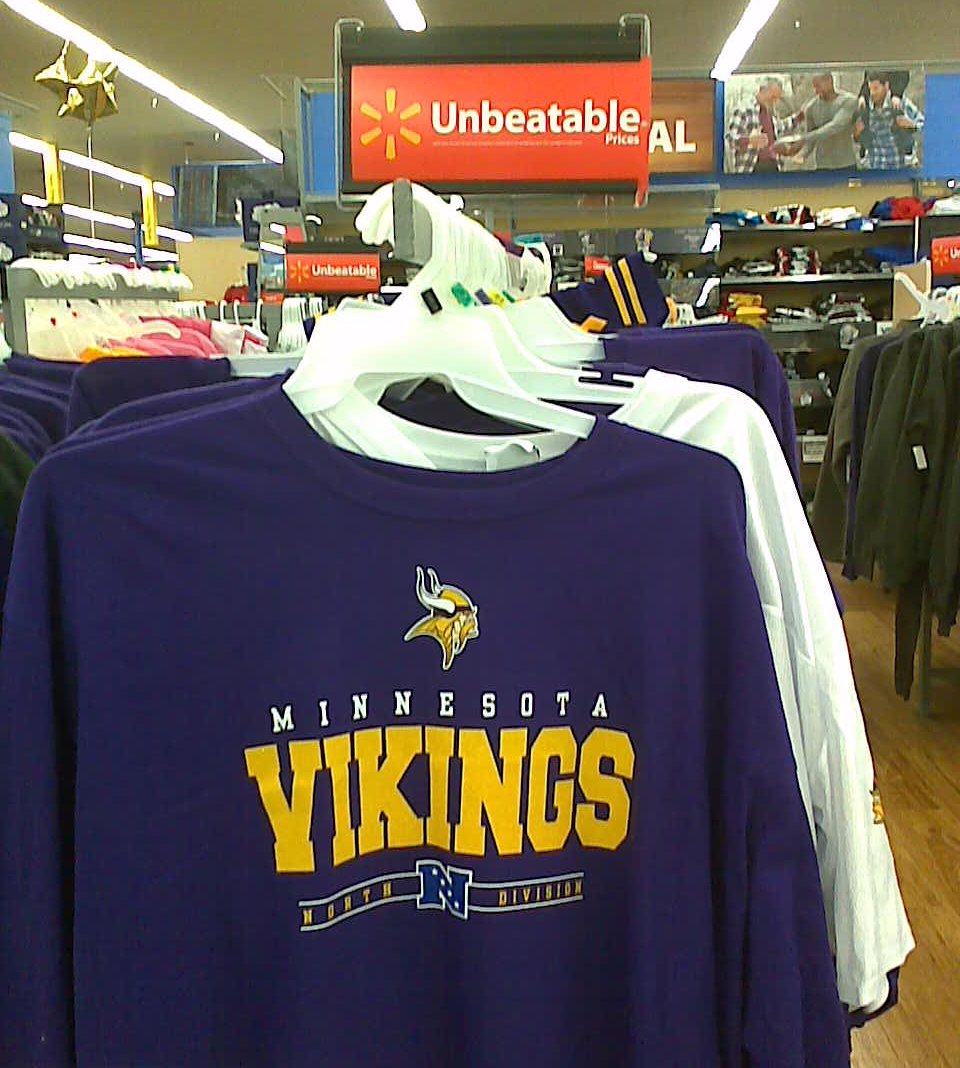
Photo by Randy Helbling


The disturbing truths revealed in “Why I Left the Amish” December 13, 2011

ANY ILLUSION I’VE HELD of the Amish living Utopian existences has been shattered into a million shards after reading Why I Left the Amish: A Memoir.

Written by Saloma Miller Furlong, a woman raised in an Amish community in Ohio, this rates as one of the most disturbing books I’ve read given my preconceived notions about an idyllic Amish world.

Certainly, all Amish should not be pigeonholed by this single book.

Yet, the truths shared by Furlong cannot be ignored. The Amish, like none of us, live pastoral, simple, uncomplicated lives.

In Furlong’s situation, she lived a living hell. I can think of no other way to describe the horrific stories of abuse within her family shared in her memoir.

As I read her book, I began to understand how living within the confines of rigid rules and beliefs within a closed community can allow such abuse to continue without intervention.

According to Furlong:

Individuality is squelched in the name of “community.”

Women/girls are to be subservient to men/boys.

Obedience is demanded.

Rules rule.

Humbleness of spirit prevails and not always in a positive way.

Don’t get me wrong here. I am not condemning the Amish or their chosen beliefs or lifestyle. But I have, through Furlong’s memoir, come to understand how ideologies can keep the issues of abuse hidden and ignored deep within the community.

In Furlong’s case, she writes of the shame heaped upon her family by the Amish community aware of dysfunction within her family. Her father was mentally ill, her mother unwilling to protect her daughters, her brother abusive.

Her words hurt your heart. Simple as that.

Furlong writes:

“Our fear of Datt’s violence kept us trapped so that we could not even imagine freedom.”

Eventually that fear of violence also gave Furlong the courage to plan her escape and flee in 1977 at the age of 20.

But can you imagine how difficult that decision must have been, knowing this:

“It is a belief system that a child inherits, in which one believes one is damned if one leaves the Amish.”

FURLONG IS CURRENTLY co-writing a sequel, When We Were Young and She Was Amish, with her husband, David. After that initial escape, where Why I Left the Amish ends, Furlong was tracked by her family and the bishop and returned to her Amish community. Later she would flee for a second, and final, time.

Why I Left the Amish was published in 2011 by Michigan State University Press.

This is a must-read book, even if you’re not interested in the Amish. Furlong’s memoir addresses abuse and we can all learn from it, no matter our beliefs.

© Review text copyright 2011 Audrey Kletscher Helbling
 

Expecting better customer service December 9, 2011

Filed under: Uncategorized — Audrey Kletscher Helbling @ 8:55 AM
Tags: , , , , ,

EVERY FOUR TO SIX WEEKS, my husband and I make a major grocery shopping trip with a divide and conquer plan. It’s easier that way.

With two lists and two carts, we work the store. He handles most of the meat and fruit selection, the snack aisle and dairy products. I take the rest. The tag team approach gets us in and out of the store faster. Less time in the store, less money spent.

Wednesday evening, however, after all 68 items had been scanned, my husband slid a gift card through the payment system and our plan disintegrated. The computer locked up. We wouldn’t be leaving anytime soon.

I realize these things happen. But the manager, rather than deal with the situation in a calm, professional manner, became visibly and verbally flustered. His agitation only added to my frustration.

I didn’t need to hear that this lock-up has happened previously on this computer with gift cards. Fix the darned thing then, alright.

While we stood there, the check-out clerk and two other employees moved, unbagged, rescanned and repacked all 68 items at an adjacent check-out lane.

Meanwhile, the manager directed other shoppers away from the “bad” lane and simultaneously paged for assistance. He finally realized that flicking off the lane light would effectively steer shoppers away from the malfunctioning computer.

When the final grocery bill of $118.02 was rung up for the second time, I expected perhaps a discount or a gift card as a good will expression of apology. That didn’t happen. We were simply reminded, for about the umpteenth time, that this problem has previously occurred and that, had we waited for the frozen computer to be fixed, we would have stood there at least 10 minutes.

Like we weren’t anyway. Waiting for more than 10 minutes.

Let’s all repeat these two words together umpteen times: “Good customer service.”

SHOULD THE MANAGER have responded differently? Tell me about an experience with customer service–good, bad or otherwise. Just keep your comments family-friendly and libel-free.

© Copyright 2011 Audrey Kletscher Helbling


Appreciating Main Street December 6, 2011

Filed under: Uncategorized — Audrey Kletscher Helbling @ 8:01 AM

Tags: , , , , , , , ,

Entering Janesville from the west along old Highway 14, you'll see this grain bin signage welcoming you to town.

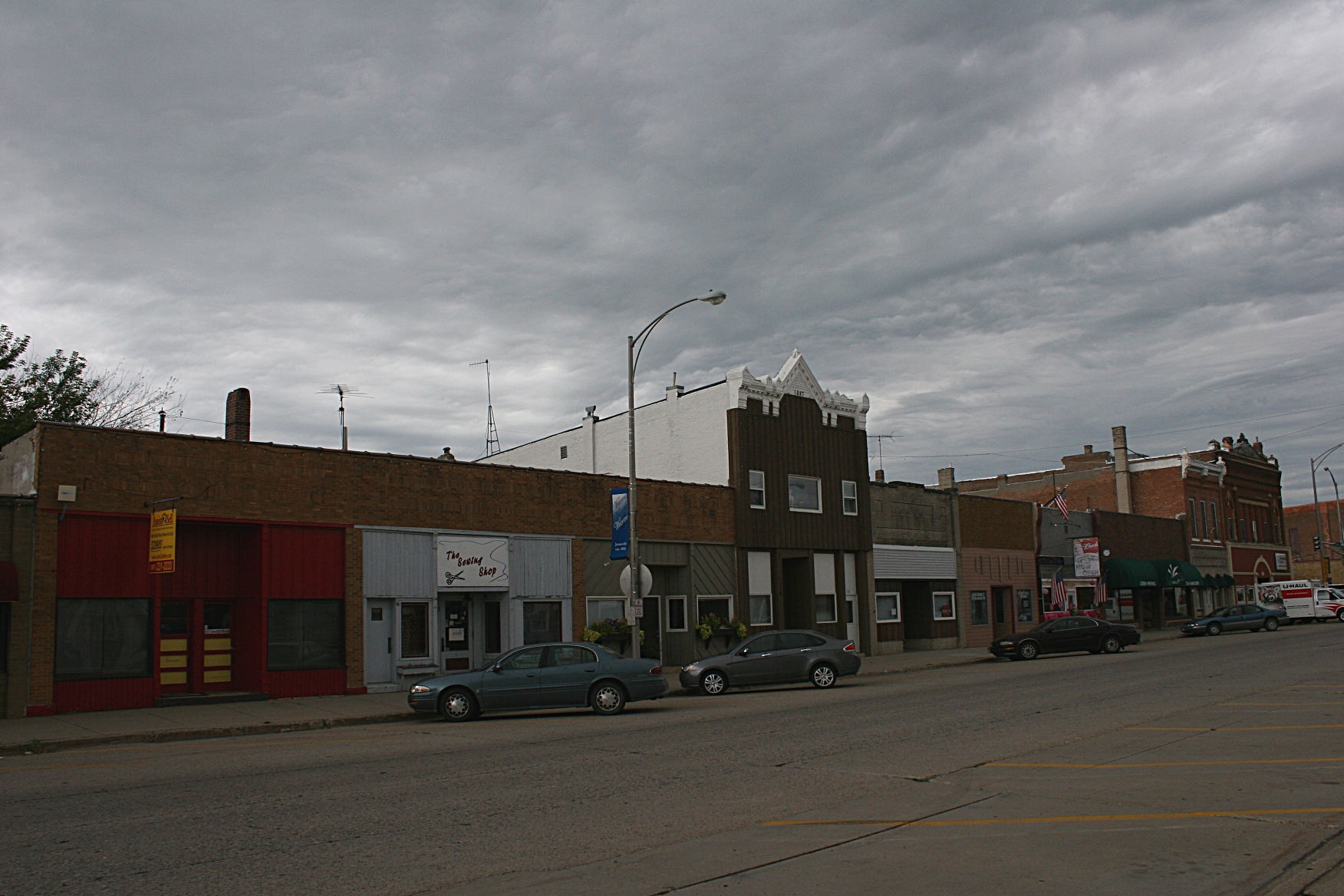
I REMEMBER YEARS ago driving through the heart of Janesville along well-traveled U.S. Highway 14 in southern Minnesota. The town of 2,100 teemed with traffic following this main east-west route.

Today, as motorists bypass Janesville along the four-lane highway completed in 2006, the town barely stirs on a Sunday afternoon. Certainly, I should have expected this change when I drove into Janesville several months ago. Yet, the stillness, the boarded up buildings, the quiet Main Street surprised me. It shouldn’t have. What other result should I expect when a major highway reroutes around a town?

Janesville's downtown business district on a Sunday afternoon in August.

I possess no stake in this community nor am I critical of the Highway 14 improvement. The fixes to this treacherous roadway were necessary for motorists’ safety. I wish all of Highway 14 across Minnesota was a four-lane route, especially the deadly stretch between Mankato and New Ulm.

But back to Janesville…I’d never turned off the highway into the downtown business district, never in all the years I’d passed through this community along the old Highway 14. I’m almost ashamed to write that. But Janesville was just one more town to slow me down in getting from one destination to another.

Therein lies part of the problem. We are all in too much of a hurry, way too much of a hurry.

We need to pause, to turn off the interstates and highways and drive onto Main Street in Small-Town, U.S.A., park our vehicles and walk. Look at the buildings. Peer in the windows. Admire the character of old buildings. Stroll into a business and make a purchase. Strike up a conversation with a local.

An antique store anchors a a downtown corner across from the elevator.

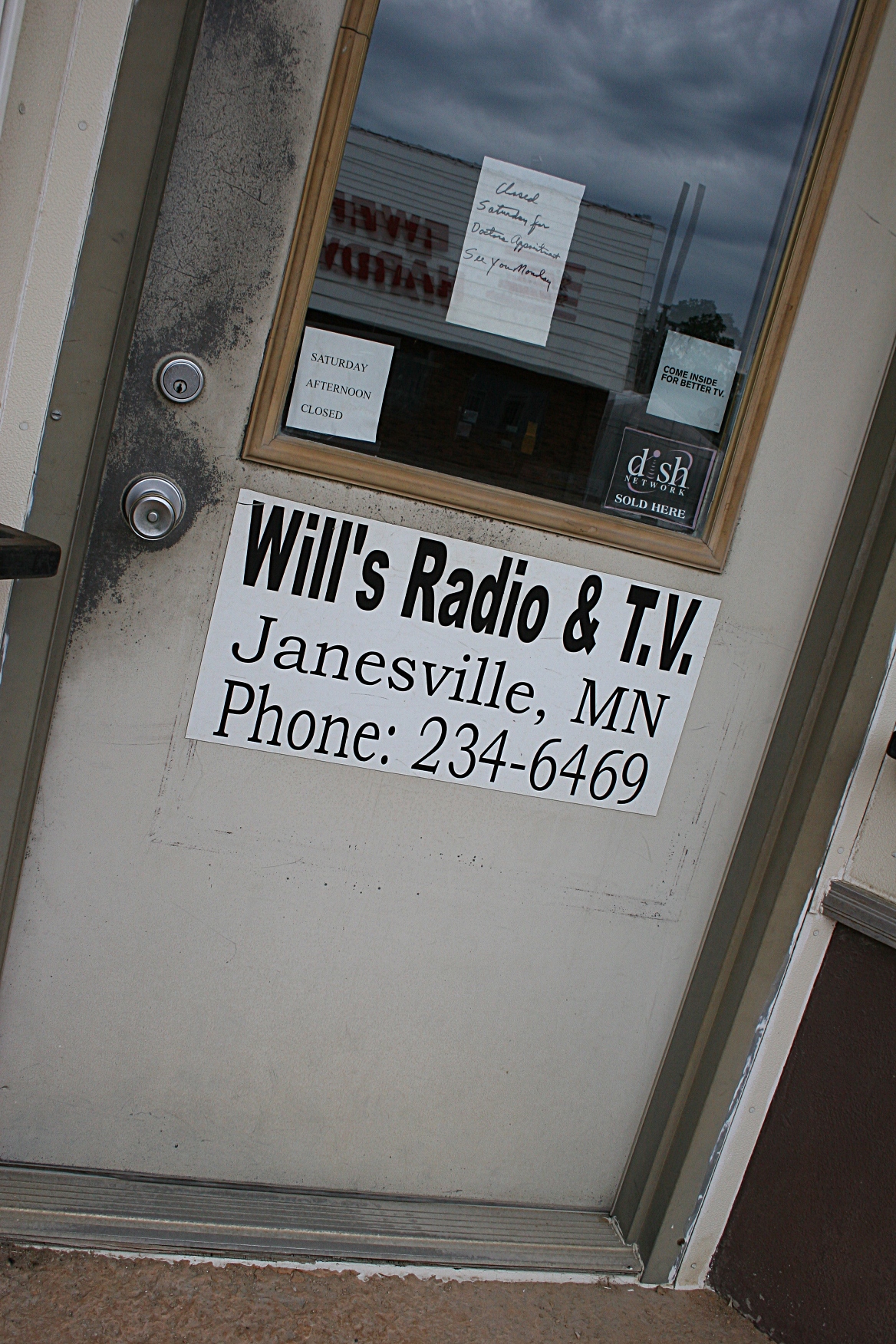
The entry to a radio and TV shop.

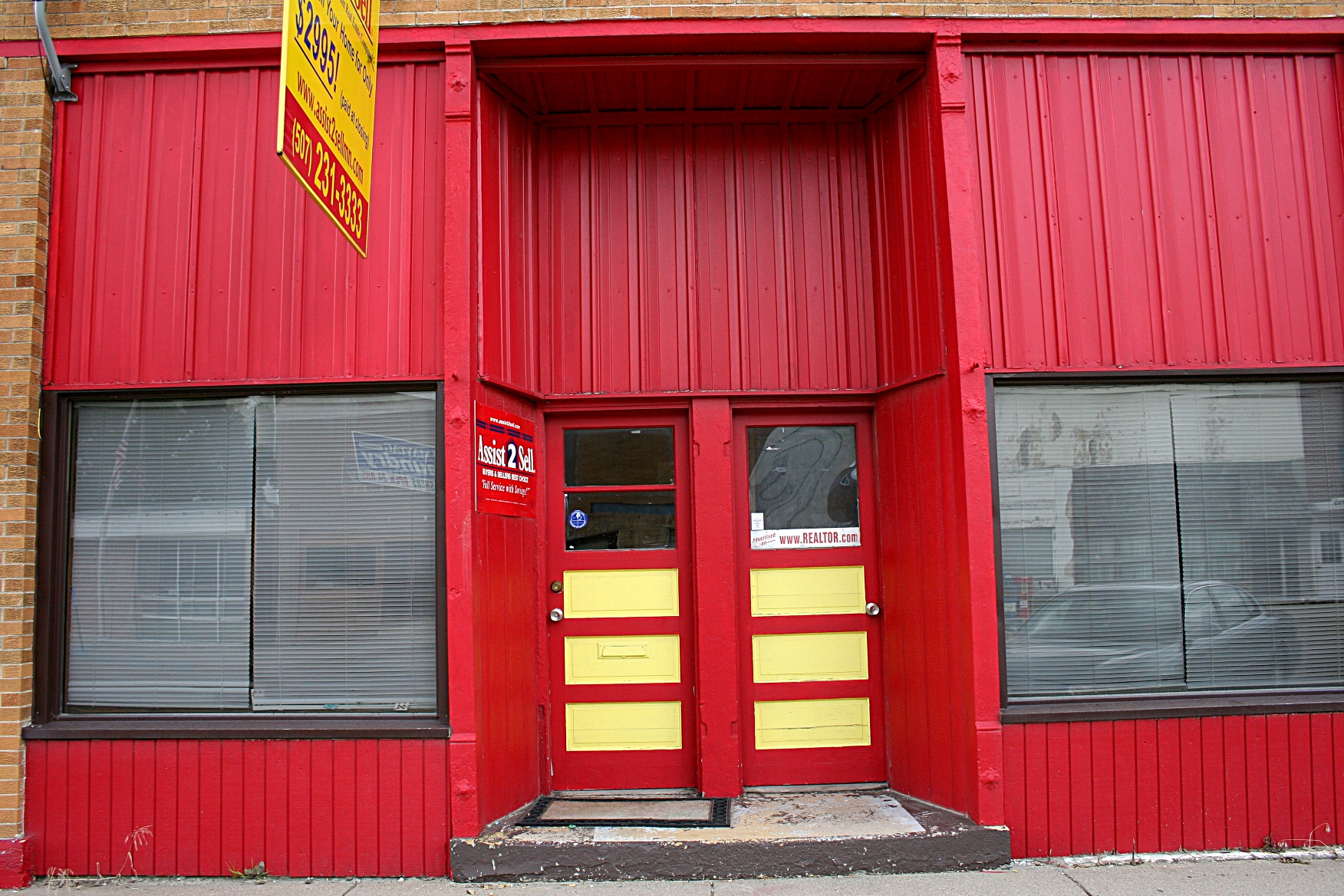
A jolt of color in downtown Janesville.

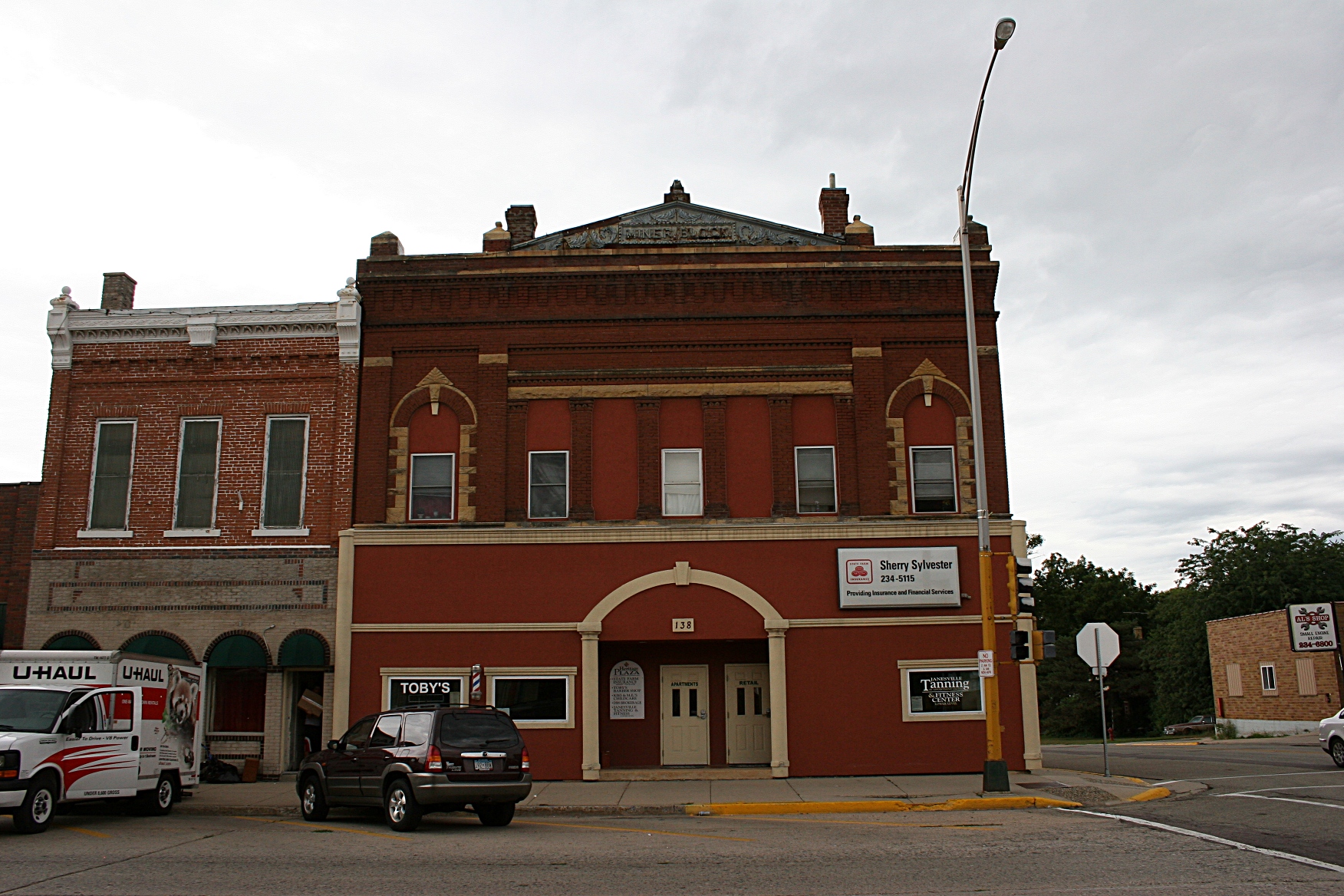
Lovely historic brick buildings grace the downtown. So much potential exists here.

I noticed this beautiful tile outside a former bank.

More potential in this building...

The past preserved in lettering on the side of this brick building.

The intersection at old Highway 14.

I encourage each of you, wherever you live, to take the time to appreciate the small towns in your region or the Main Street in your community.

If you live in a metropolitan area, consciously choose to drive out of the city and into a rural area and onto Main Street.

If you already live in a rural area, choose to appreciate what you have, to remain positive and upbeat about your local businesses.

I expect that if I was to drive into Janesville on a week day, I’d find a busier downtown than the one I discovered on a Sunday afternoon in August. I can’t judge a community by one visit, of that I’m sure. But I do know that I can choose to slow down, look and appreciate Main Street in Small-Town, U.S.A.

So can you.

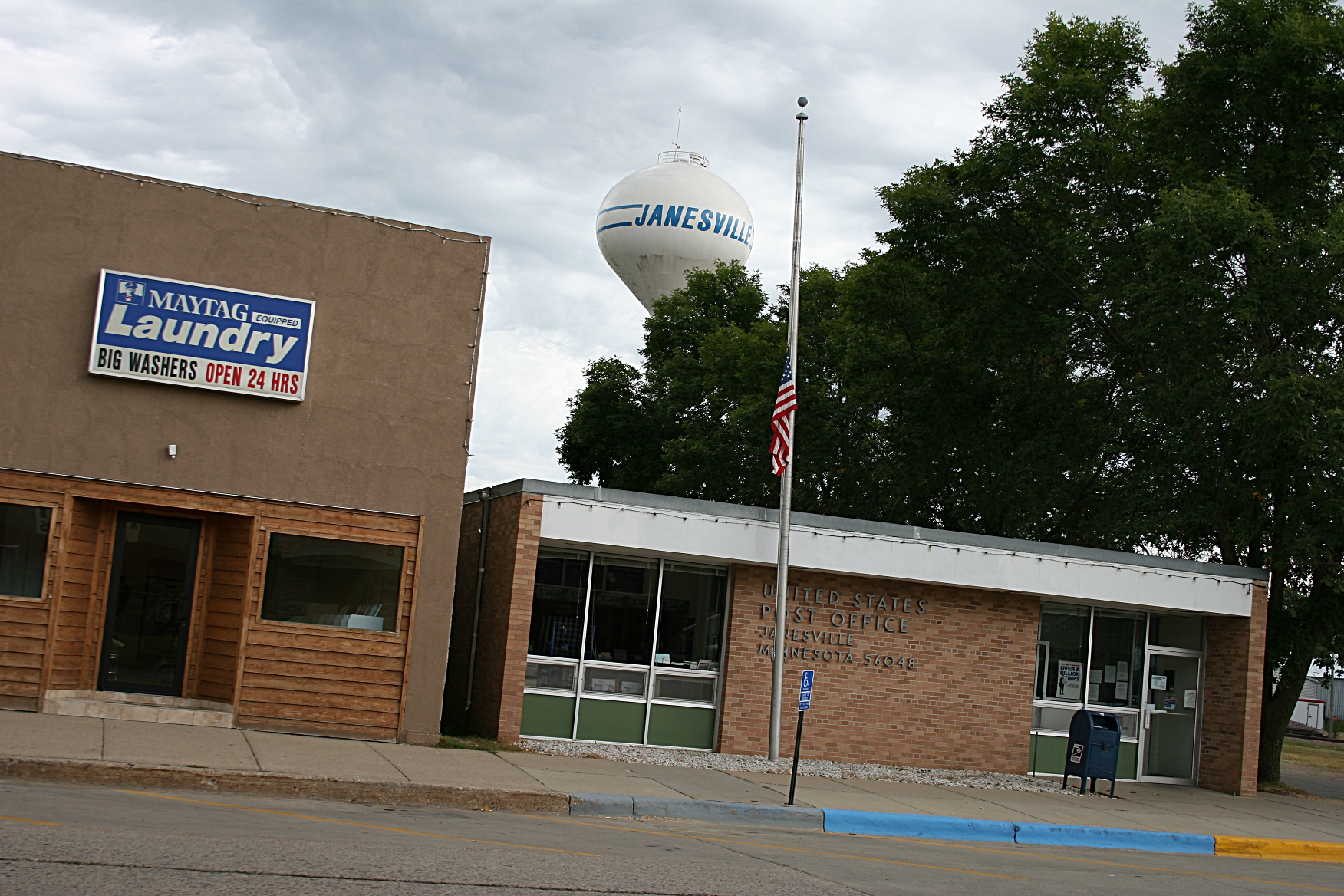
The post office, a community meeting place in small towns like Janesville.

NOTE: All of these images were taken in downtown Janesville on a Sunday afternoon in August.

© Copyright 2011 Audrey Kletscher Helbling
 

The truths in “The Help” December 1, 2011

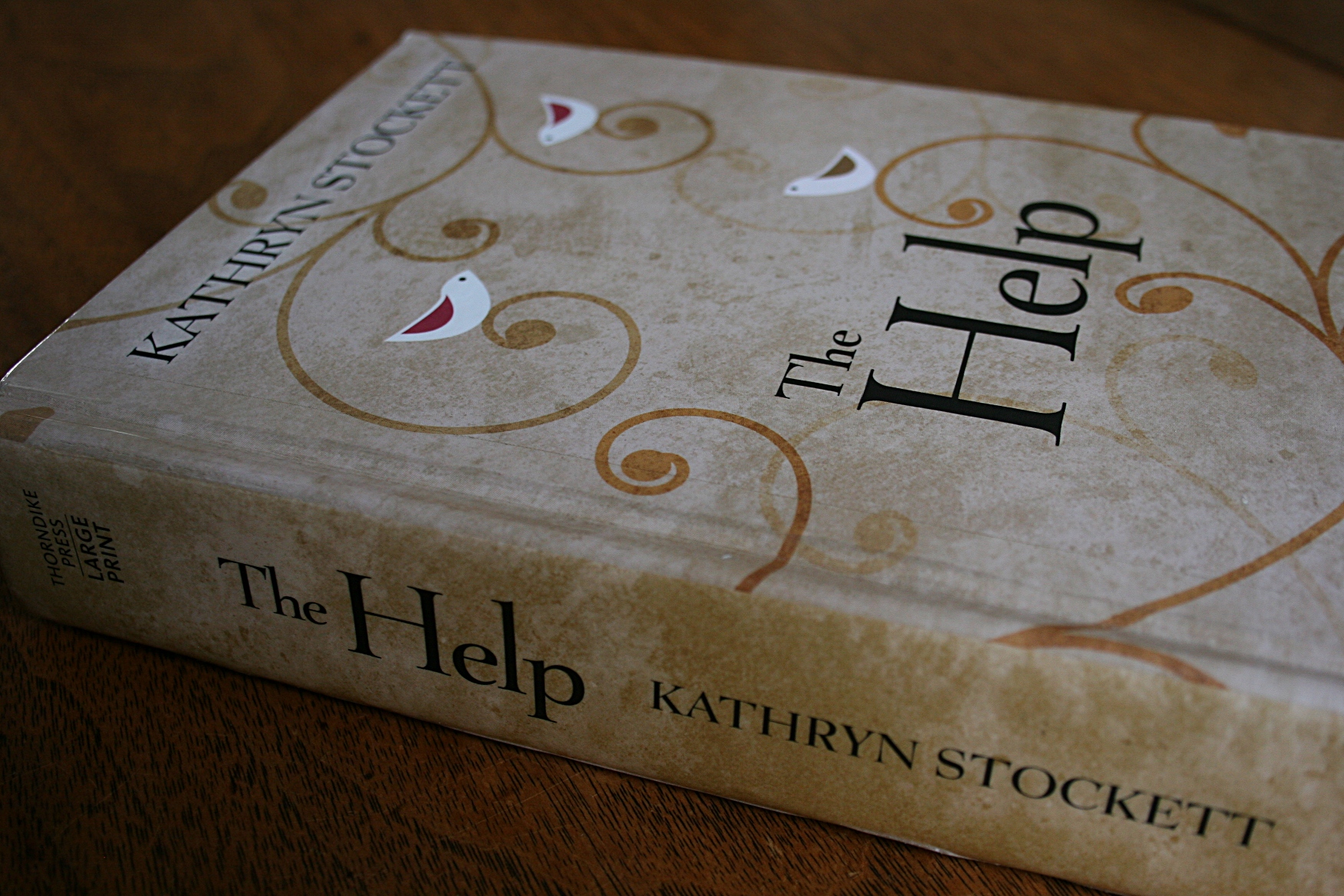
The large print version of The Help.

THREE MONTHS AGO I reviewed “The Help,” a movie based on the New York Times bestseller by Kathryn Stockett. (Read that review by clicking here.)

I wrote then:

In a nutshell, “The Help” tells the story of black women working as maids in upper class Southern white households during the 1960s.

It is that and more. So much more.

Yesterday I stole away 10 minutes to finish the final chapter of The Help. My opinion of the book rates as high as my opinion of the movie. Everyone ought to read this novel and see this movie.

Why?

Although a work of fiction, this book speaks the truth.

Let me show you. While reading The Help, I jotted three page numbers onto a scrap of paper, noting passages that especially struck me.

In chapter 17, from the perspective of Minny, a “colored” maid, are these thoughts:

But truth is, I don’t’ care that much about voting. I don’t care about eating at a counter with white people. What I care about is, if in ten years, a white lady will call my girls dirty and accuse them of stealing the silver.

Consider those words. Do attitudes of “stealing the silver” still linger today?

Near the end of the book, in chapter 34, I came across this line:

Please, Minny, I think. Please, take this chance to get out.

Aibileen wishes this as she speaks on the phone with her friend Minny, who has hunkered down in a gas station after fleeing her abusive husband. Minny finally finds the courage to leave Leroy.

Personal courage, in my summation, is a reoccurring theme in The Help—courage to speak up, courage to be true to yourself, courage to escape abuse.

I would like to see copies of The Help placed in every women’s shelter, given to every victim of domestic abuse, handed to every woman trying to muster the courage to flee an abusive relationship. Stockett’s writing on the topic is that powerful, that motivating, that moving.

Profound, strong words of encouragement for anyone who's been abused, known someone who's been or is being abused, or is currently in an abusive relationship.

Finally, a few pages later I found this passage, a favorite line from the movie and repeated in the book by Mae Mobley, the little girl in maid Aibileen’s care:

“You is kind,” she say, “you is smart. You is important.”

Aibileen ingrained that phrase in Mae Mobley, a child mostly ignored by her mother.

How often do we tell our children, “You is kind. You is smart. You is important” and really, truly, mean it?

IF YOU’VE READ The Help, what nuggets did you glean from this book? What themes or passages made a lasting impression on you?

© Copyright 2011 Audrey Kletscher Helbling

 

Too much pre-holiday consumerism? November 29, 2011

Filed under: Uncategorized — Audrey Kletscher Helbling @ 8:28 AM
Tags: , , , , , ,

DURING THE PAST WEEK, we’ve been bombarded with news stories and advertising campaigns aimed at Black Friday, Small Business Saturday and Cyber Monday, all with the underlying theme of spending.

Honestly, I am tired of the greedy, materialistic consumerism that grips us during the pre-holiday season.

Are we so materialistic that we have to skip or cut out early on family gatherings, fight each other in the aisles and buy items simply because they are on sale?

I get nostalgic for those days when we weren’t quite so materialistically-inclined.

But, if I’m honest, I can look back and see that even during the 1960s, when I was growing up, we, too, focused on the gift aspect of Christmas more than we should have.

Remember “the Christmas catalog?”

I could not wait for the mailman (not carrier) to drop off the J.C. Penney Christmas catalog in our mailbox at the end of our southwestern Minnesota farm driveway.

My siblings and I fought over who got to look at the Christmas catalog first. By the time all six of us had thumbed through the wish book numerous times, the pages were worn and creased. We drew up Christmas lists from the catalog, wishing for the doll or the Army tank or the spotted Twister mat featured in the photos.

Rarely did we get any of those requested items; our parents simply did not have the money. Even though we certainly dreamed and wished and dreamed and wished some more, we were content with whatever gifts we received.

Today, however, I think many parents feel obligated to give their kids whatever they ask for. I don’t agree with that line of thinking. Kids need to learn and understand that they cannot have everything they want when they want it.

But first, we as adults need to curb our own greedy consumerism and our desire to have everything we want when we want it.

WHAT’S YOUR OPINION on consumerism this time of year, or in general? Let me hear your thoughts.

© Copyright 2011 Audrey Kletscher Helbling


The lists you don’t want to be on in Minnesota November 22, 2011

DO YOU KNOW someone critically-injured or killed in a motor vehicle accident who was not wearing a seat belt?

I do.

So when I picked up The Faribault Daily News and read this front page headline, “County on new motorist deaths list,” I was not pleased, not at all.

My county of Rice is already on the list of Minnesota’s 13 deadliest counties for impaired driving. (Click here to see that list.) Now we’re on that latest “State’s 20 counties with highest percentage of unbelted deaths” list, according to a recent study released by the Minnesota Department of Public Safety Office of Traffic Safety. (Click here to read that report.)

From 2008 – 2010, Rice County had 14 motor vehicle fatalities. Nine of those individuals, or 64 percent, were not wearing seat belts.

Ranking at the top of this list you don’t want to be on are rural Kanabec and Wadena counties, each with three fatalities, all three unbelted. Nearly every county on the list of 20 lies in a rural area.

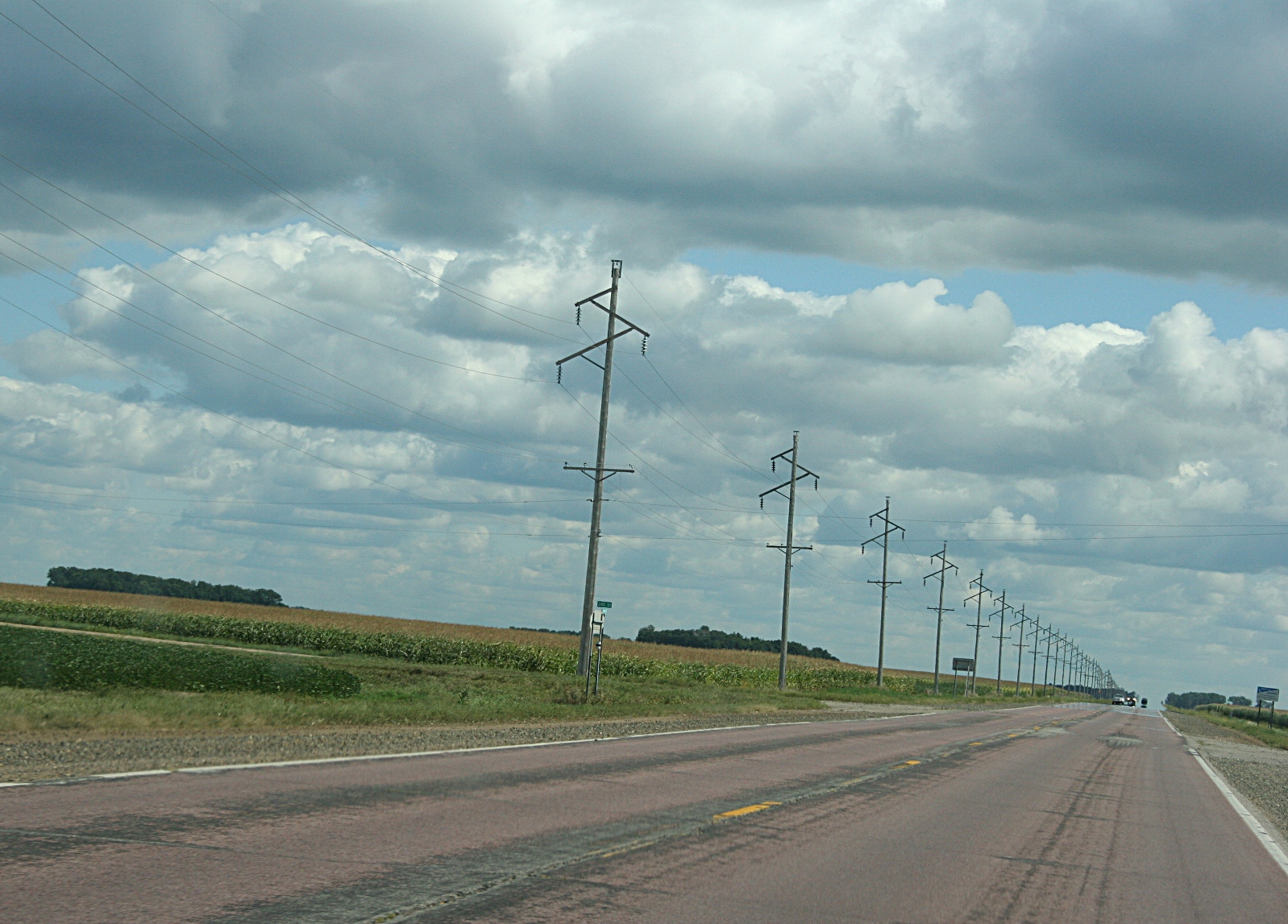
A rural southwestern Minnesota highway.

Certainly, statistics do not tell the full story of these deaths. Many factors can contribute to losing your life in a motor vehicle accident. Yet, buckling up is the one simple action you can take to increase your chances of escaping death or severe injury in a crash. Common sense tells you if you’re not strapped in place, you’re most likely going to be ejected or partially-ejected from your vehicle during a serious accident.

Why would you risk traveling without buckling up?

I’d like to pose that question not only to my fellow residents in Rice County, but also to those living in Redwood County in rural southwestern Minnesota where I grew up.

Redwood County, with a population of only 16,059, ranked third on the unbelted fatalities list with five of the six individuals killed from 2008 – 2010 not buckled in.

Perhaps Minnesotans living in less-populated areas like Redwood County possess a false sense of security regarding travel on rural roads. I know that region of Minnesota well. You can sometimes drive forever without seeing another motorist. And seldom do I see a law enforcement vehicle. But that should not stop drivers and passengers from wearing seat belts.

As much as I detest the traffic congestion and often times crazy driving in the metro area, I know that I am statistically safer on Twin Cities highways than I am on rural roadways.

A rare, uncongested drive through Minneapolis.

That brings us back to Rice County in southeastern Minnesota along Interstate 35. I don’t consider my county—with a population of 63,034, the state’s 13th most populous county and an hour from downtown Minneapolis—to be rural although we certainly have plenty of farms and back roads.

Why are people failing to buckle up here? How does that relate to driving while impaired?

When a law enforcement officer stops a driver in Rice County for failure to wear a seat belt, does the officer ask why the motorist is not buckled in? Can that question legally be asked?

Recently, two Faribault High School students were ejected from a vehicle during a crash. The unbelted driver, a 17-year-old member of the FHS football team, suffered a neck injury and was released shortly after the accident, according to an article in The Faribault Daily News. His unbelted 16-year-old passenger was critically-injured.

I hope the two teens involved, and their families, will approach local school officials to use this as a teachable moment to promote seat belt usage. As parents of most teens will tell you, an experience shared by a peer can accomplish what all the lecturing in the world by a parent cannot.

Minnesota high schoolers interested in promoting seat belt usage can compete for a $1,000 prize in the “Buckle Up Teens! TV Commercial Challenge” contest sponsored by the state’s Office of Traffic Safety. Entry deadline for the 30-second TV public service announcement is April 16, 2012. (Click here for information about this competition.)

Realistically, I realize that no matter how hard we try collectively to increase seat belt usage in Minnesota to 100 percent via contests, education, laws, enforcement of laws and more, we’ll never reach perfection. But we’re getting close at 92 percent of Minnesotans now buckling up, according to the state Traffic Safety office.

Residents of Rice and Redwood counties, and all those other 18 counties on the state’s “unbelted fatalities list,” please buckle up. Honestly, I don’t like reading stories about traffic deaths that could have been prevented.

DO YOU BUCKLE UP every time you get into a motor vehicle? Why or why not? Share your personal reasons, your story.

© Copyright 2011 Audrey Kletscher Helbling


Turning 55 and fed up with healthcare costs September 7, 2011

Filed under: Uncategorized — Audrey Kletscher Helbling @ 7:04 AM
Tags: , , , , , ,

In 19 days I turn 55.

Recently I received my first birthday greeting, from my health insurance carrier, a well-known Minnesota-based company.

The message wasn’t all that nice.  In fact, I’d say it wasn’t at all thoughtful, not one bit, for a soon-to-be birthday celebrant. My three-month premium is increasing $151, from $878 to $1,029.

The whole correspondence made me so darn mad that I called my husband at work to see if I could still get on the company insurance plan. His employer was switching to a new insurance carrier to try and curb costs. He said he would check and get back to me.

So while he was asking, I was calling my insurer. I got through the first automated voice when my cell phone rang. (Did I mention that I hate those automated systems?) It was my husband calling back, and probably a good thing since at that moment I glanced at my insurance bill and saw the reason for the $151 premium increase:

REASON FOR RATE CHANGE—SUBSCRIBER OR SPOUSE AGE CHANGES

There it was in bold-faced, capitalized letters.

The bill could have included these bold-faced, uppercased letters to project some Minnesota Nice: HAPPY BIRTHDAY, AUDREY!

My husband shared a dismal message. Coverage through his employer would be $30 higher than my new monthly premium of $342.83. How do they come up with that 83 cents tacked on the end?

My husband’s news sent my anger level soaring off the charts. “What the blankety-blank (not my exact words, but I want to keep this post family-friendly) is going on?” I screeched.

“Welcome to Obama Care,” he said.

I have no idea if rising insurance premiums are related to changes in healthcare policies, but my spouse seems to think so. I didn’t follow healthcare reform because half most of the time I couldn’t understand it anyway. That’s not an excuse, simply the truth.

But I do know this: Way too much—well over $800 a month— of my family’s income is now going toward health insurance premiums for my husband and me, who turns 55 shortly after me. I have a $3,000 deductible and my spouse has a $2,400 deductible.

His employer has been paying about $90 of his monthly premium. Since I’m self-employed, well, every premium cent comes from my pocket.

We rarely visit the doctor because that costs us even more money.

Honestly, I am fed up with the rising cost of health insurance and healthcare and I don’t know what the heck to do about it.

I’ve even thought about dropping my insurance coverage. But I am smart enough to realize that at my age, that would not be a wise decision.

HOW ABOUT YOU? Are you fed up with the rising cost of health insurance premiums and overall healthcare costs? What are you doing to control/cut costs? Share your thoughts by submitting a comment. Feel free to speak your mind. Just use family-friendly language and keep your comments libel-free.

© Copyright 2011 Audrey Kletscher Helbling


Five stars for “The Help” August 31, 2011

ABOUT ONCE EVERY two years, I see a movie in a theater. Maybe three times a year, I’ll rent a movie from a video store. Occasionally I’ll watch one on television.

I tell you this because I’m no movie expert, critic or star-struck Hollywood fan. A movie needs to hold promise as an excellent film before I’ll spend a dime, or my time, watching it.

“Sweet Land,” based on the book by Bemidji writer Will Weaver, and the classic 1970s “Love Story” are among my all-time favorite movies.

Now you can add “The Help,” based on the #1 New York Times bestseller by Kathryn Stockett, to that list.

I have yet to read the book. In fact, I hadn’t heard of Stockett’s novel until several days ago. Yes, I sometimes live with my head buried in the sand.

The movie version of the book might help more than a few viewers pull their heads from the sand. In a nutshell, “The Help” tells the story of black women working as maids in upper class Southern white households during the 1960s.

As a native Minnesotan who has never even traveled into the deep South, my impressions of Southern history are based mostly on books, stories, photos and films. Whether “The Help” gets it right, I’m uncertain. But, sadly, I expect what I viewed on the big screen depicts historical reality.

I don’t want to spoil the plot for you, so I’ll simplify the storyline: “The Help” focuses on one young woman’s efforts to reveal the stories of the maids who serve those rich, white Southern women in Jackson, Mississippi. Skeeter, an aspiring writer, does that by interviewing the black women—first, Aibileen, and next, Minny—and then writing a book.

The writer angle, certainly, is a familiar one to me given I’ve been a writer for decades. But the whole “hiring of help in the household” is mostly foreign, except for the time during my high school years when I cleaned house every Saturday for a family in my hometown of Vesta. I was well-treated, well-paid for then, and simply happy to have a job—even if I had to scrub the toilet, wax the linoleum and wipe the bottoms of the legs on the kitchen chairs, all while the teenaged son slept upstairs.

My experience as a maid/cleaning girl can’t compare, not by any stretch, to that of the black women portrayed in “The Help.” They are treated more like slaves, as second-class citizens, as human beings without rights.

Especially troubling for me are the scenes involving bathroom usage—blacks prohibited from using the same bathrooms as whites.

I cried when one of the main characters, the maid Aibileen, spoke of her son’s death and how the white women continued playing bridge like nothing had happened.

Aibileen also repeats, through the course of the movie, this line which stands out for me among all the others: “You is kind. You is smart. You is important.”

After the movie, which is a lengthy 2 ¼ hours, my husband and I and others in the theater sat through the credits. Typically we would leave as soon as the movie ended. But “The Help” calls for sitting in quiet contemplation in a darkened theater, pondering the story and hoping, hoping, that life for blacks in the South today does not at all resemble life there in the 1960s.

HAVE YOU SEEN “The Help” or read the book? If you have, please share your thoughts. I’d like to hear your opinion, positive or negative, on the movie and/or book.

© Copyright 2011 Audrey Kletscher Helbling