Minnesota Prairie Roots

Writing and photography by Audrey Kletscher Helbling

A virtual tour of Mankato’s sculpture walk July 9, 2011

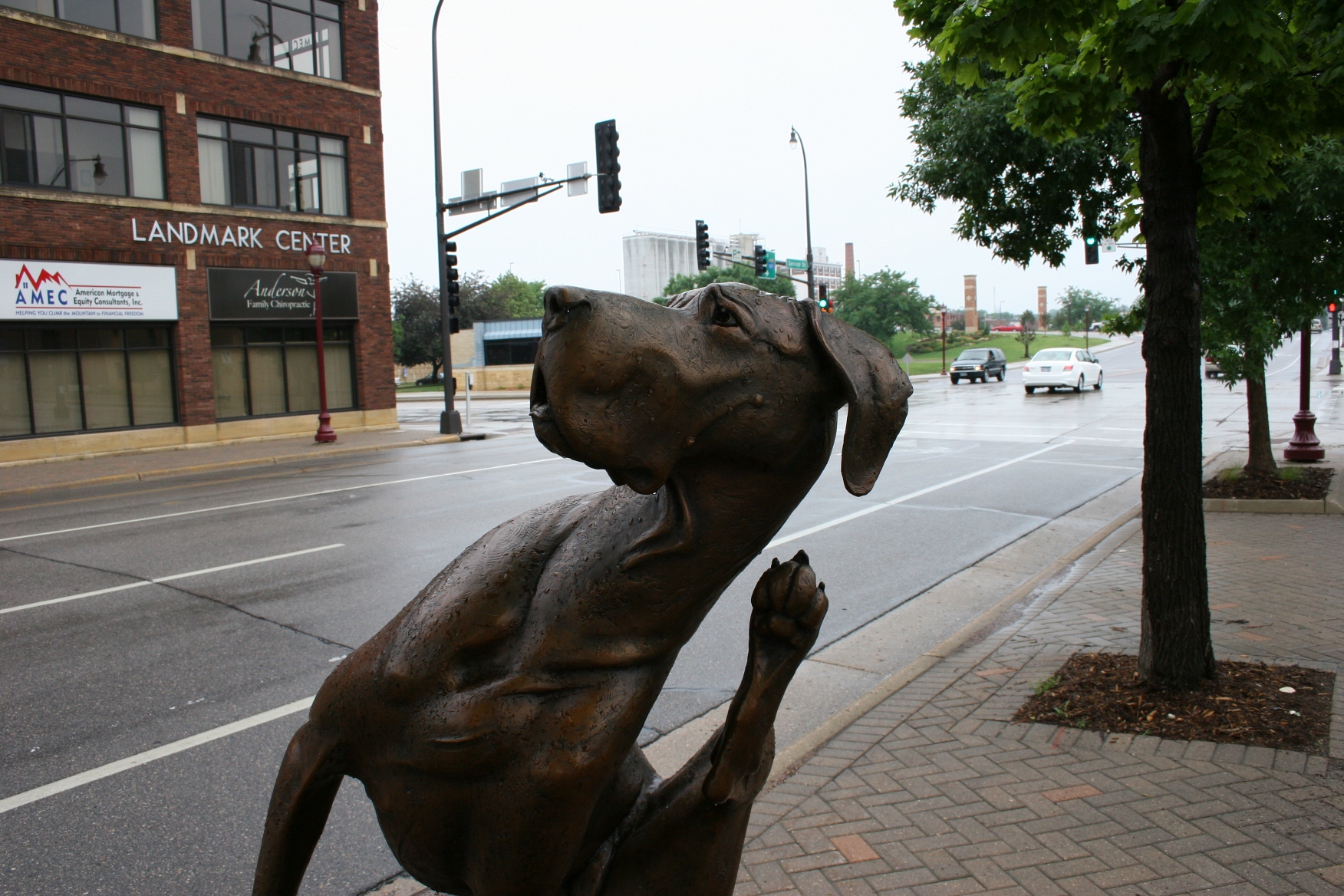
Louise Peterson of Guffey, CO. created this $20,000 bronze sculpture of a playful Great Dane titled "Tickled."

DEAR READERS,

I realize that some, maybe even many, of you, do not live anywhere near Mankato, the southeastern Minnesota community where I recently viewed sidewalk sculptures.

Heck, some of you don’t even live in states bordering Minnesota. Your chances of ever seeing these 25 pieces of art in person are about zilch.

So, for those of you who will view the City Art Walking Sculpture Tour only via Minnesota Prairie Roots, I’ve pulled together one last blog post. Please read my previous two posts for more details and photos of this community art project by first clicking here and then here.

This whole concept of bringing art to the streets through a rotating sculpture tour pleases me immensely. What a grand idea. Such art adds to the vibe of a downtown, to its art, history and culture.

Thank you, Mankato, and everyone who supported this cause financially, for bringing these sculptures to southeastern Minnesota, within quick driving distance of my Faribault home.

Yours gratefully,

Audrey Kletscher Helbling at Minnesota Prairie Roots
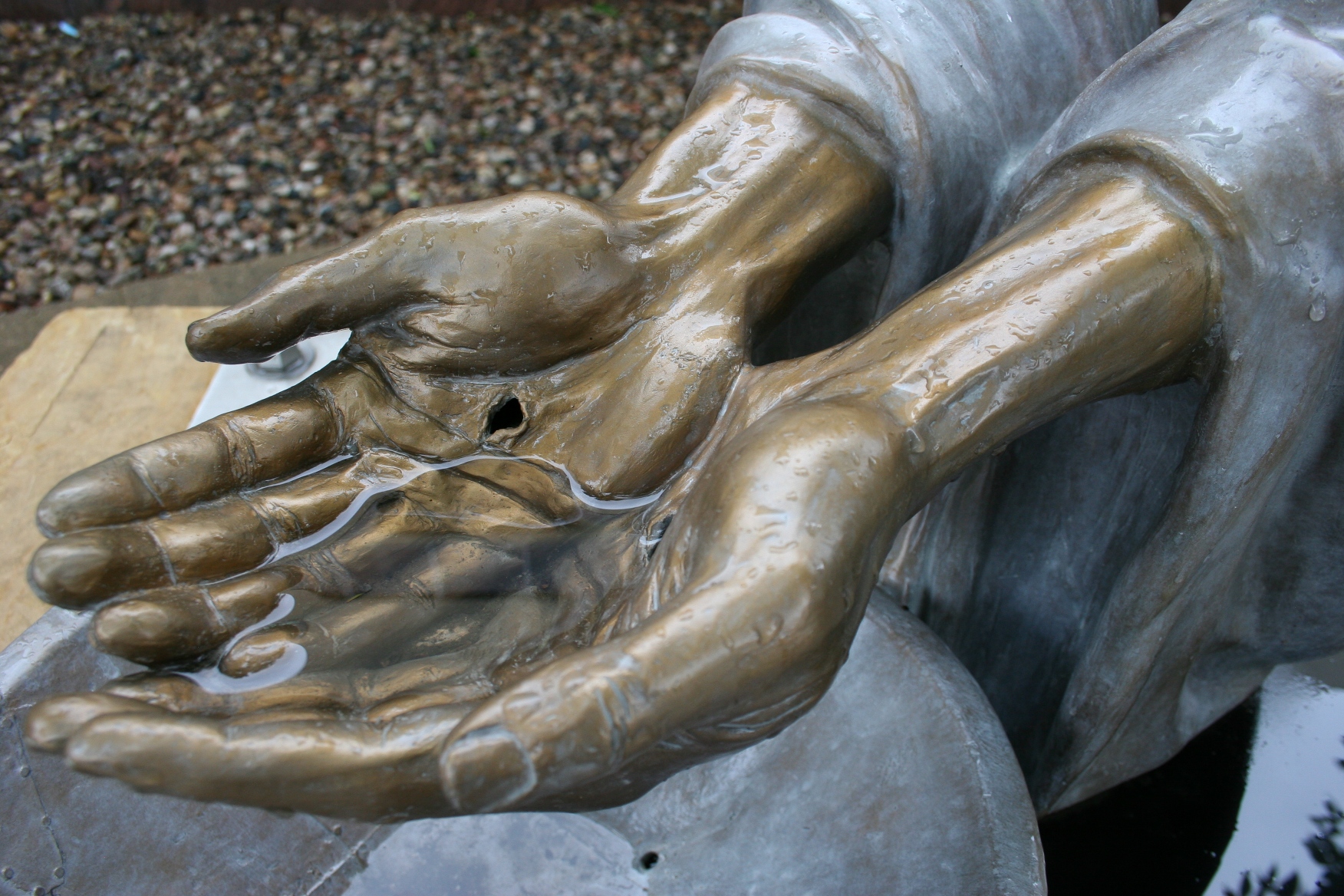
Sioux Falls artist Darwin Wolf's $13,500 sculpture, "The Fountain of Life," references Jesus washing Peter's feet at the Passover. It emphasizes the healing, life-giving qualities of water.
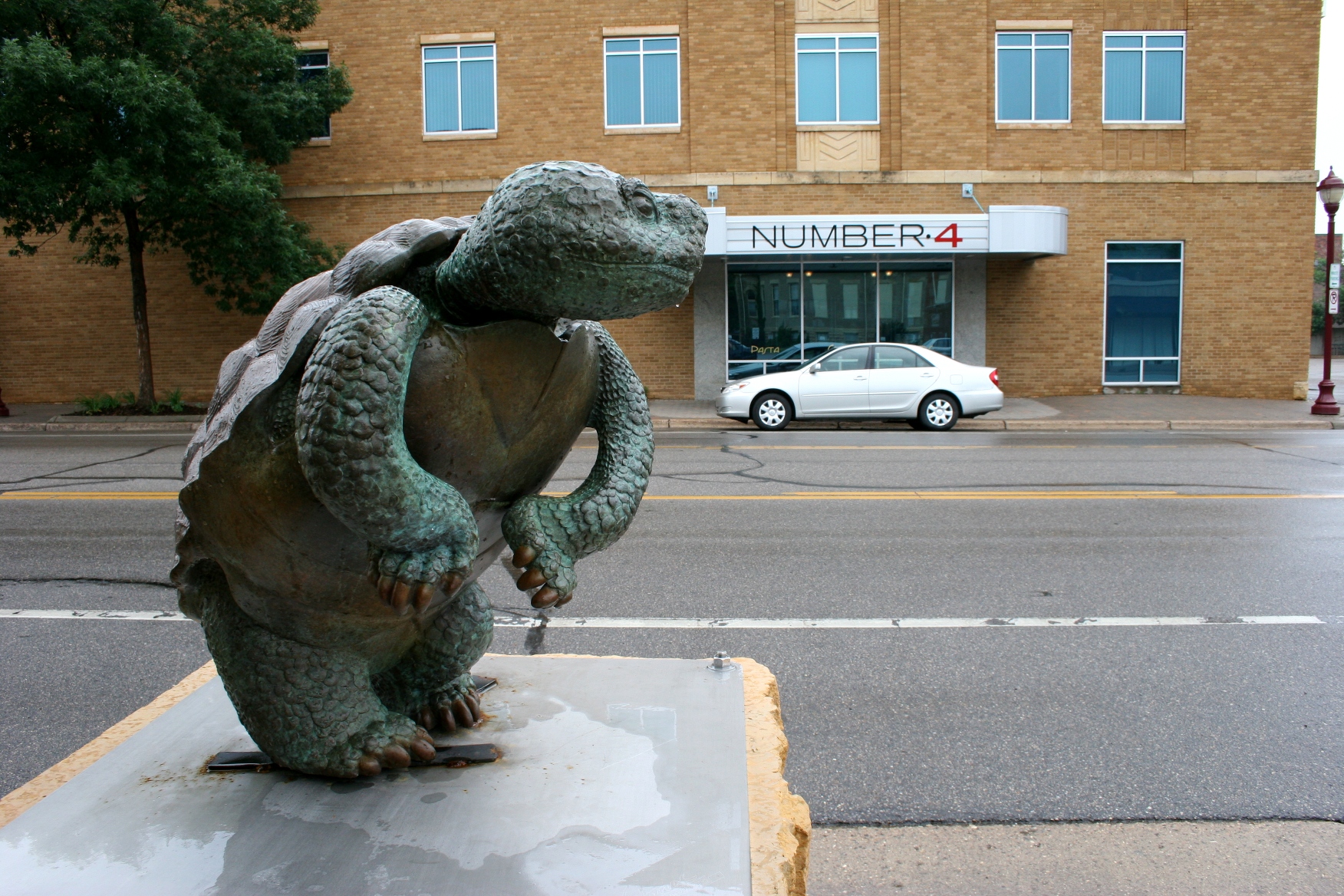
"Poco a Poco" a $12,000 bronze sculpture by Pokey Park of Tucson, Arizona, highlights the tortoise, representative of wisdom in American Indian culture. The building in the background houses Number 4 American Bar & Kitchen.
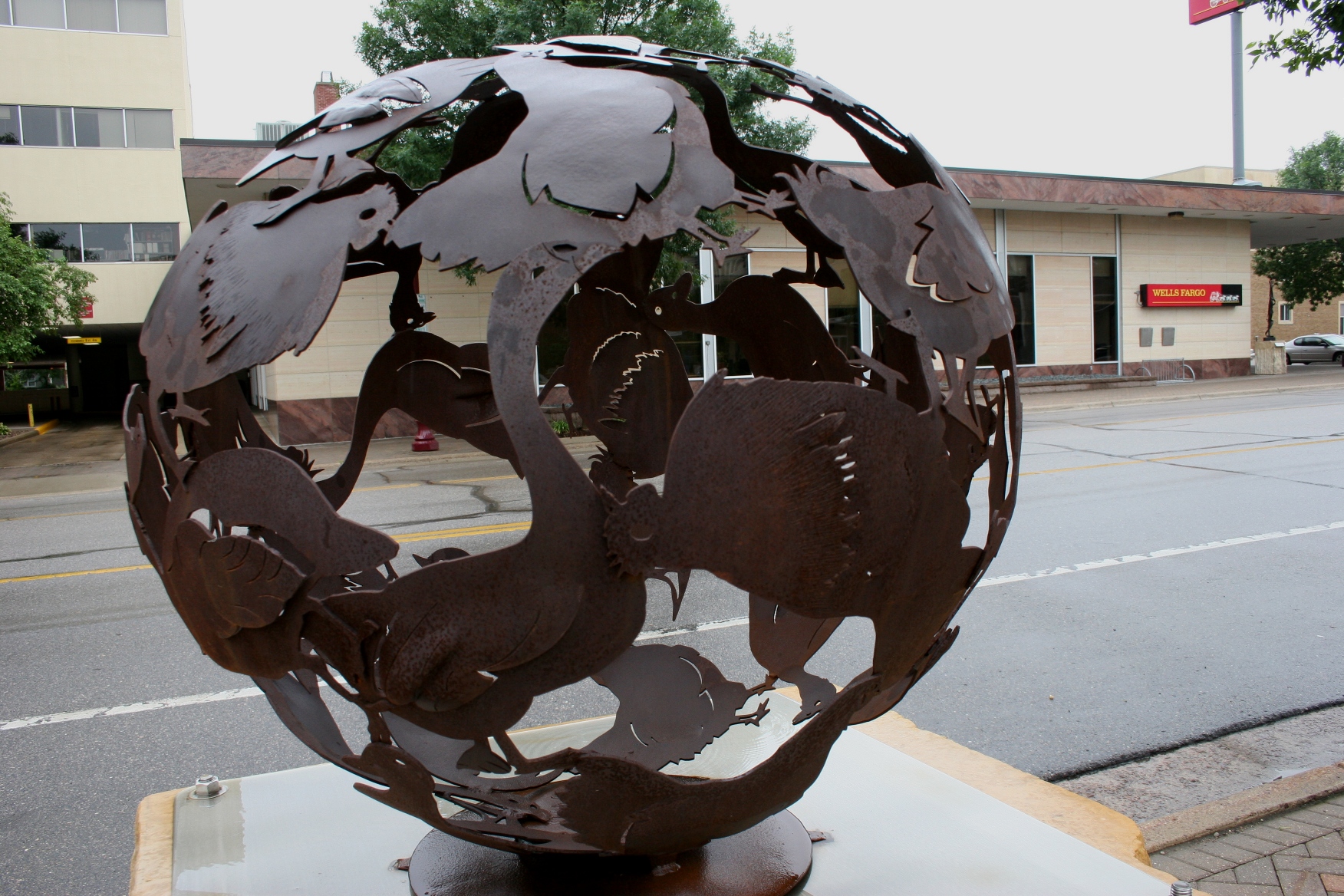
"Fowl Ball" celebrates geese, ducks, turkeys and chickens in this $7,600 forged and welded weathered steel sculpture by Lee W. Badger of Hedgesville, West Virginia.

All of the sculptures are marked with informational signage.
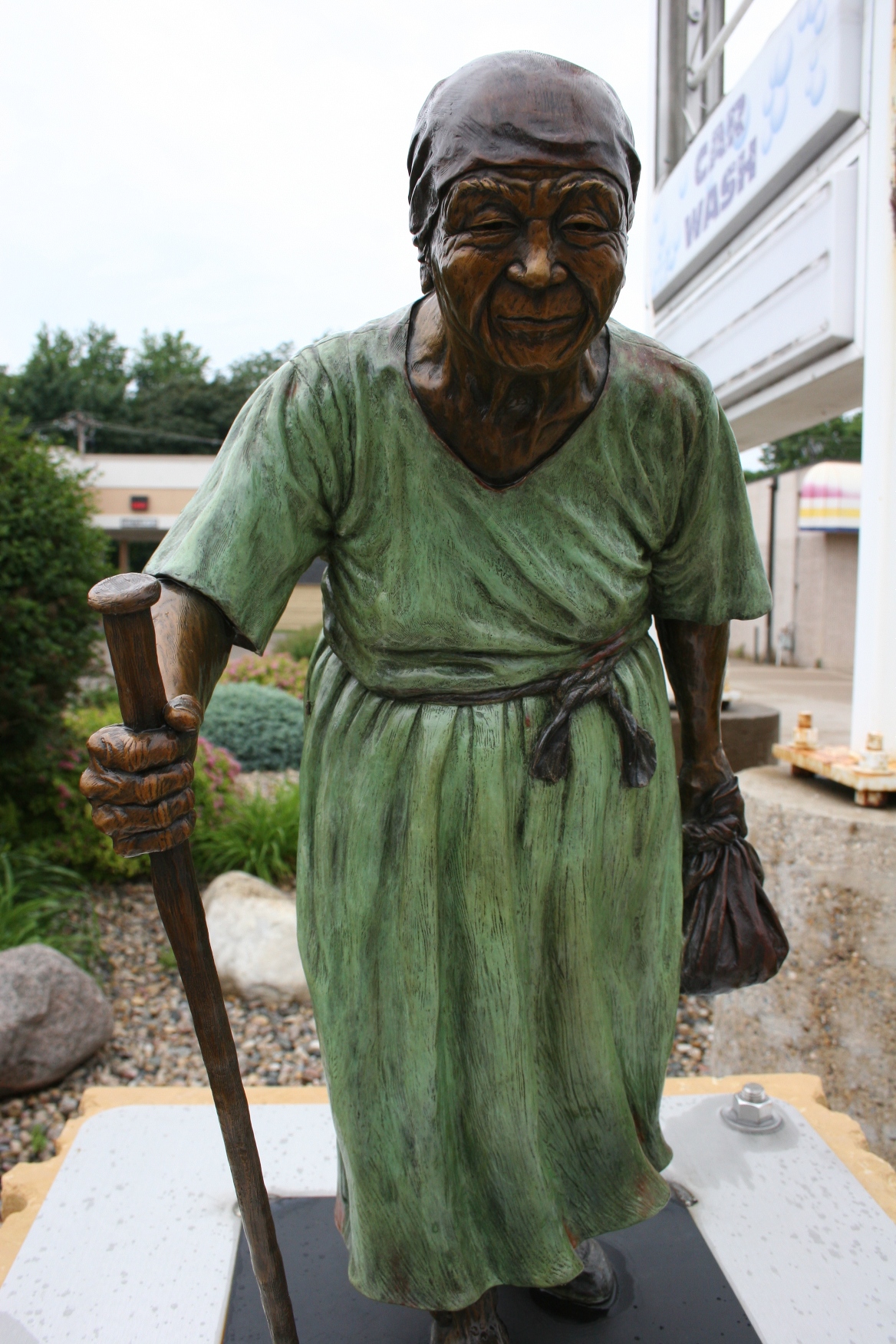
Dee Clements of Loveland, Colorado, created the $6,000 bronze "The Farmer's Wife," one of my favorite exhibit pieces.
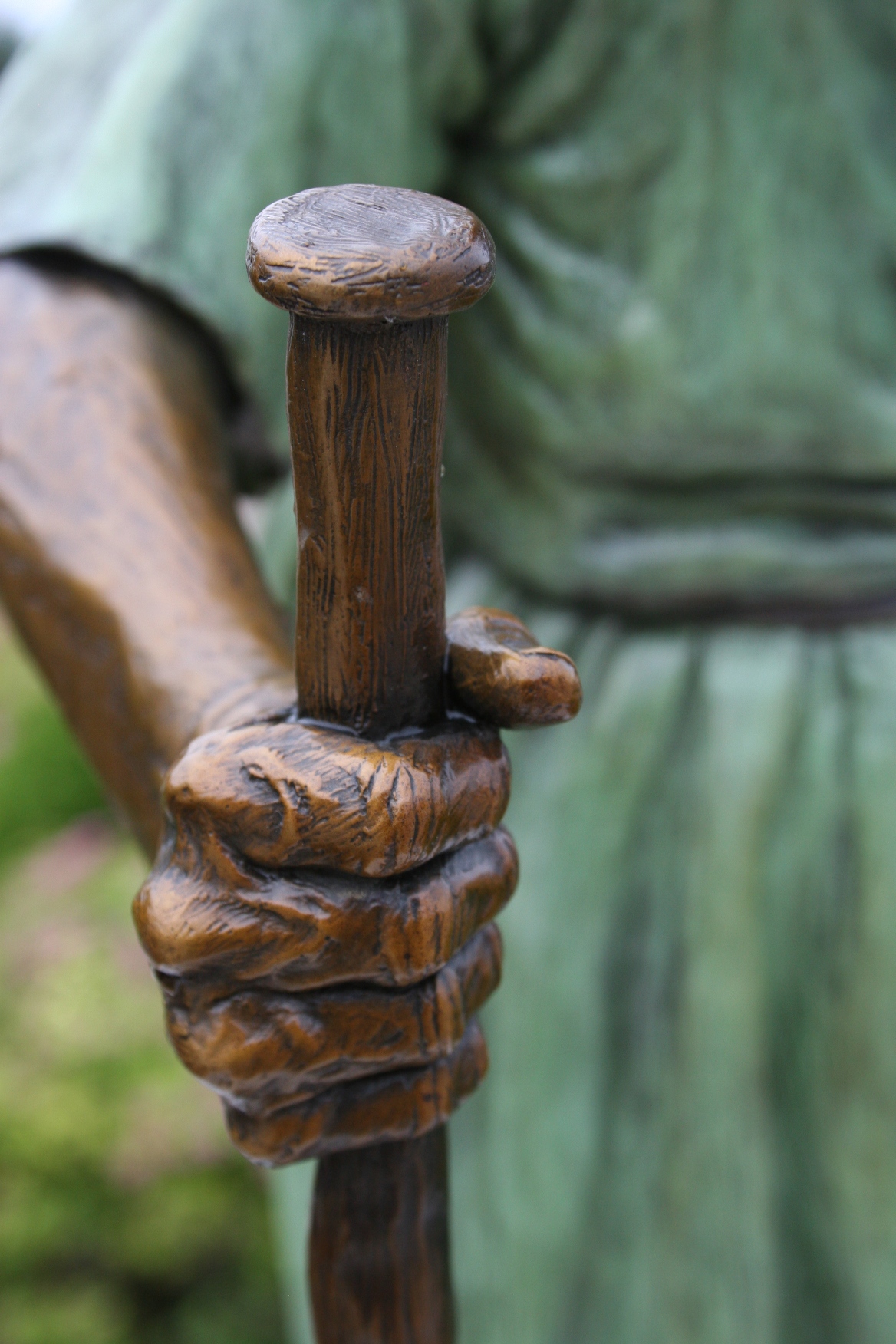
To fully appreciate these sculptures, you must notice the details, including the Korean woman clenching her walking stick in "The Farmer's Wife."
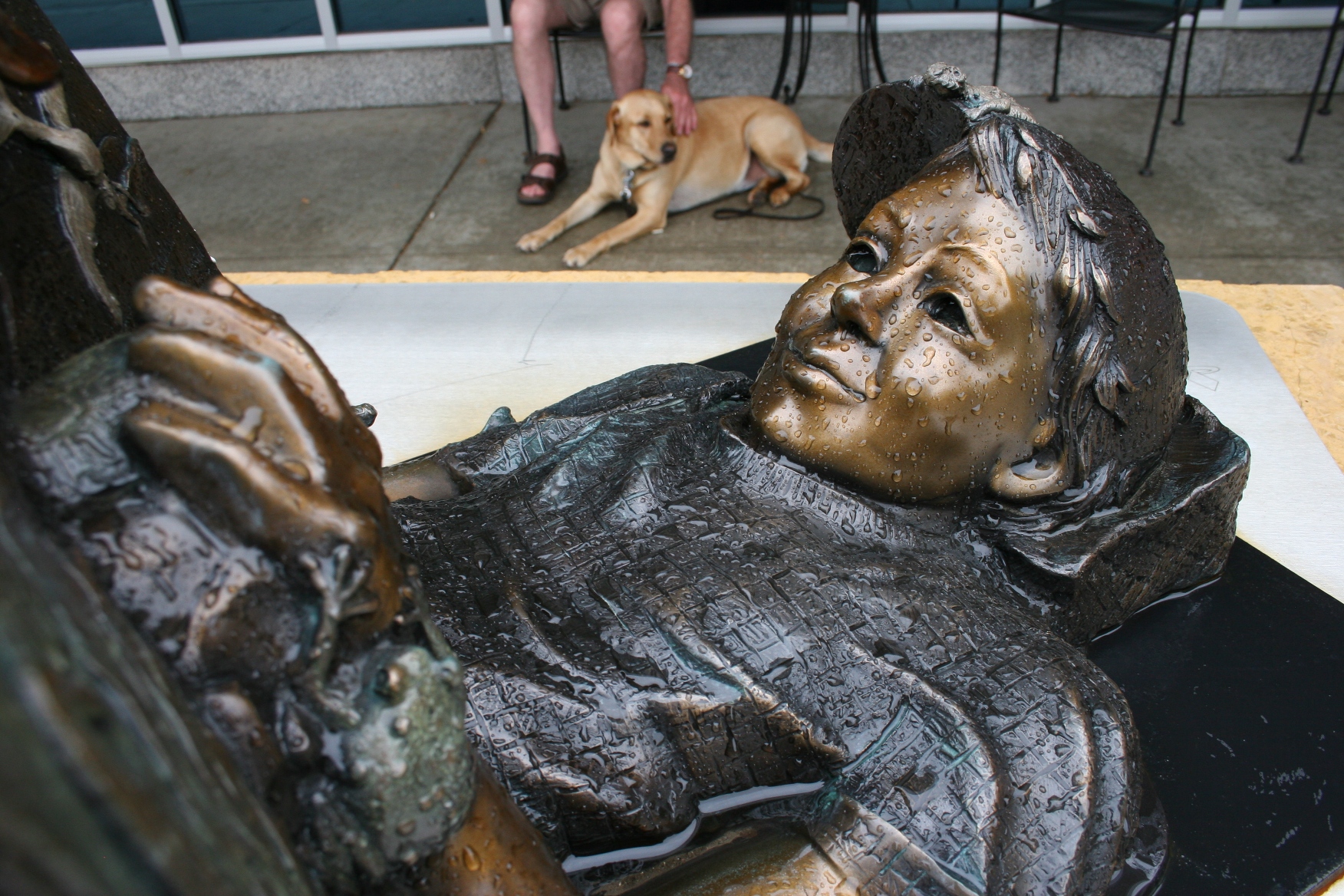
Details define "Reading Magic," a $8,500 bronze sculpture by Julie Jones of Fort Collins, Colorado.
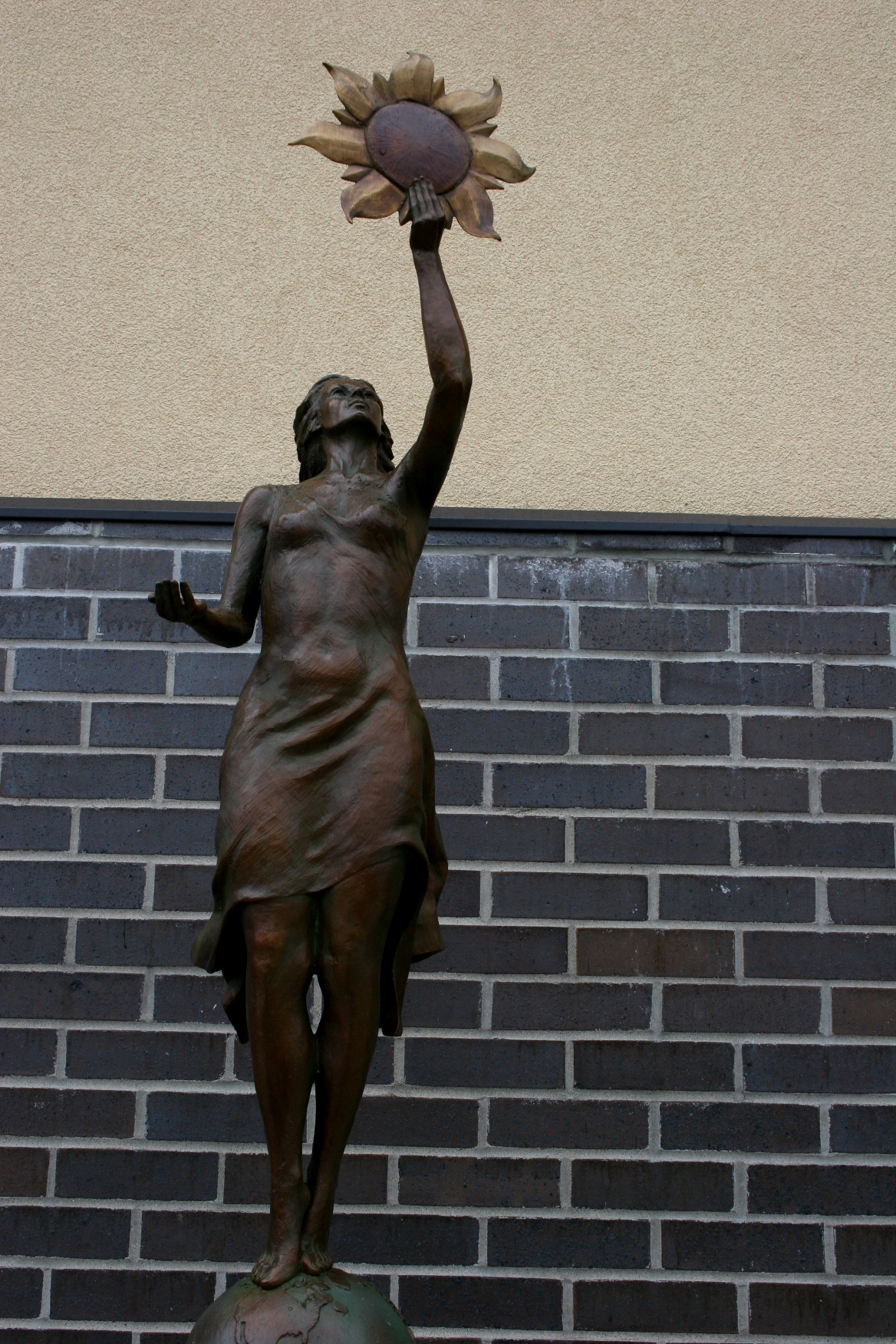
"Spirit of Energy," a $8,400 bronze by Karen Crain of LIttleton, Colorado, represents three renewable energy resources: sun, wind and water.

© Copyright 2011 Audrey Kletscher Helbling


Sprinkler gymnastics on the Fourth and more family fun July 7, 2011

Filed under: Uncategorized — Audrey Kletscher Helbling @ 6:57 AM
Tags: , , , , , , , , , , ,

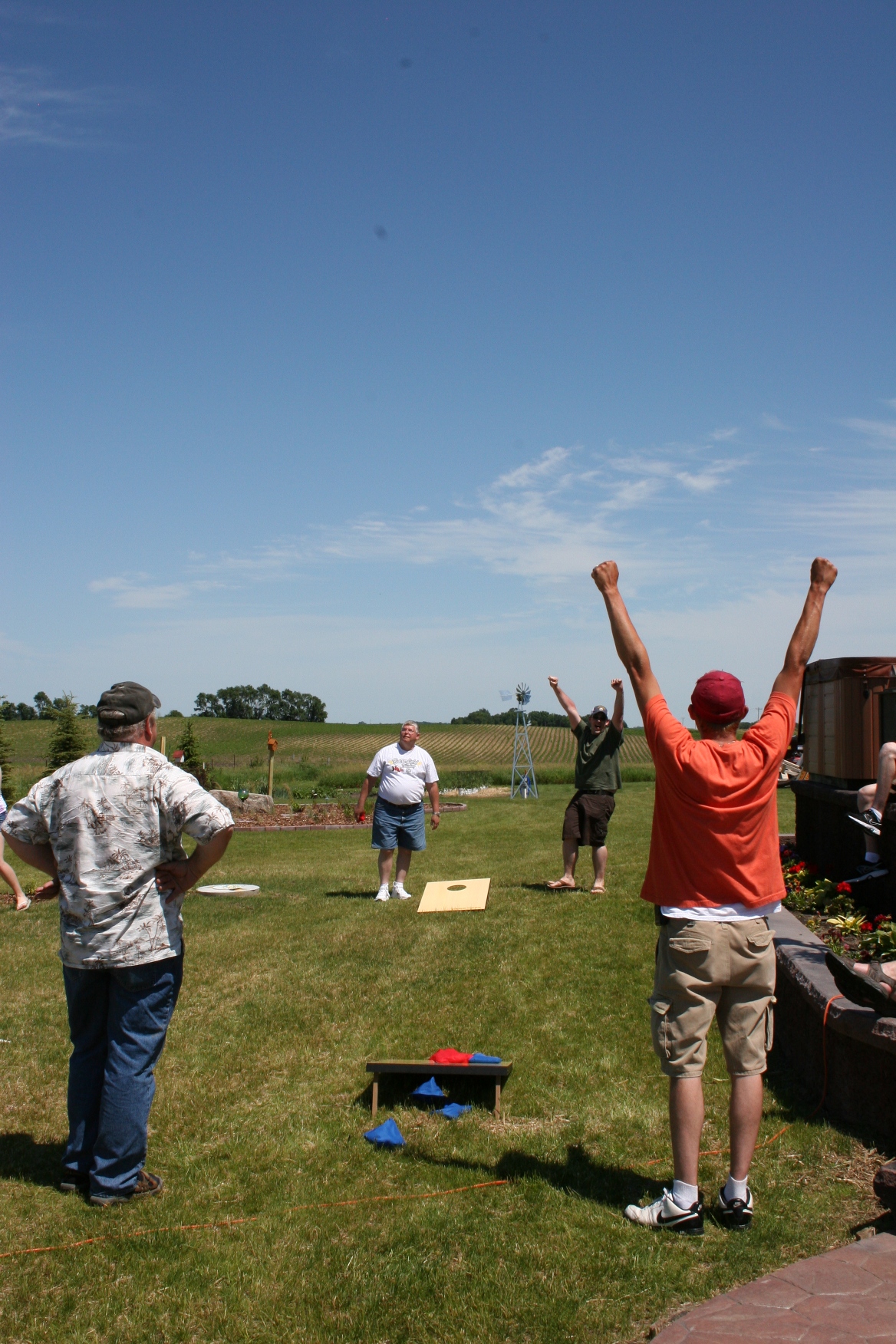
The winning team in the bean bag toss is quite obvious.

NAME SOMETHING PEOPLE save money for.

How many times does your mom have to tell you to do something before it gets done?

Name something you write down to remember.

If you know the answers (see below) to those Family Feud style questions, then you should have been at my middle brother’s home in southwestern Minnesota on Sunday. We sparred in a brief version of this television game show with young family members competing against old, “old” being anyone 50 or older.

Settled onto our lawn chairs on the driveway in front of the garage, one member of each team stepped up to a cooler, introduced themselves and then poised with hands behind backs awaiting the question. Lacking a buzzer to buzz, we substituted a plastic gallon of cheese balls plopped upon a cooler. Slap the cheese ball lid cover first and your team plays first.

If I hadn’t been so intent on winning this game, I may have thought to take pictures of the cheese ball container slapping contestants.

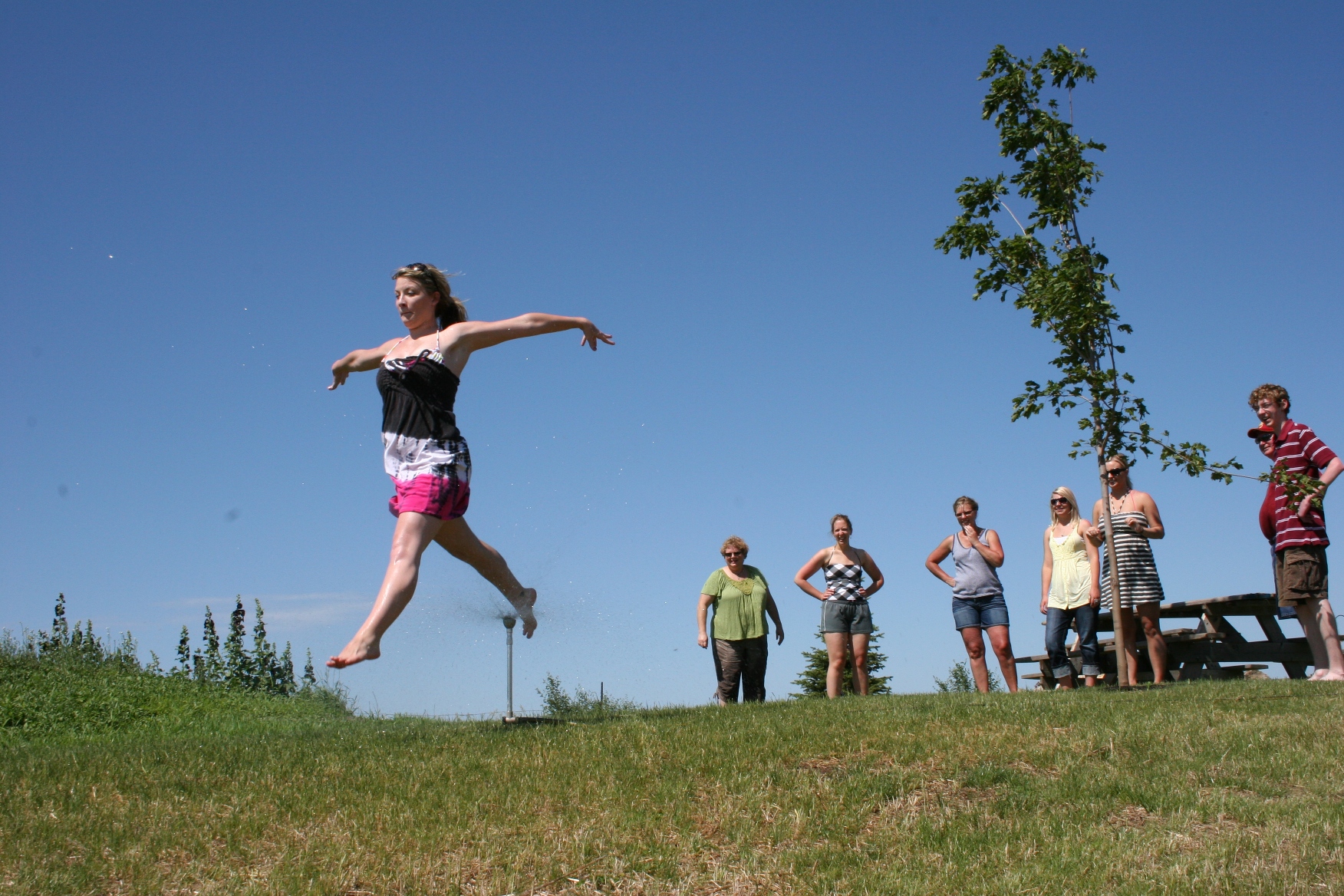
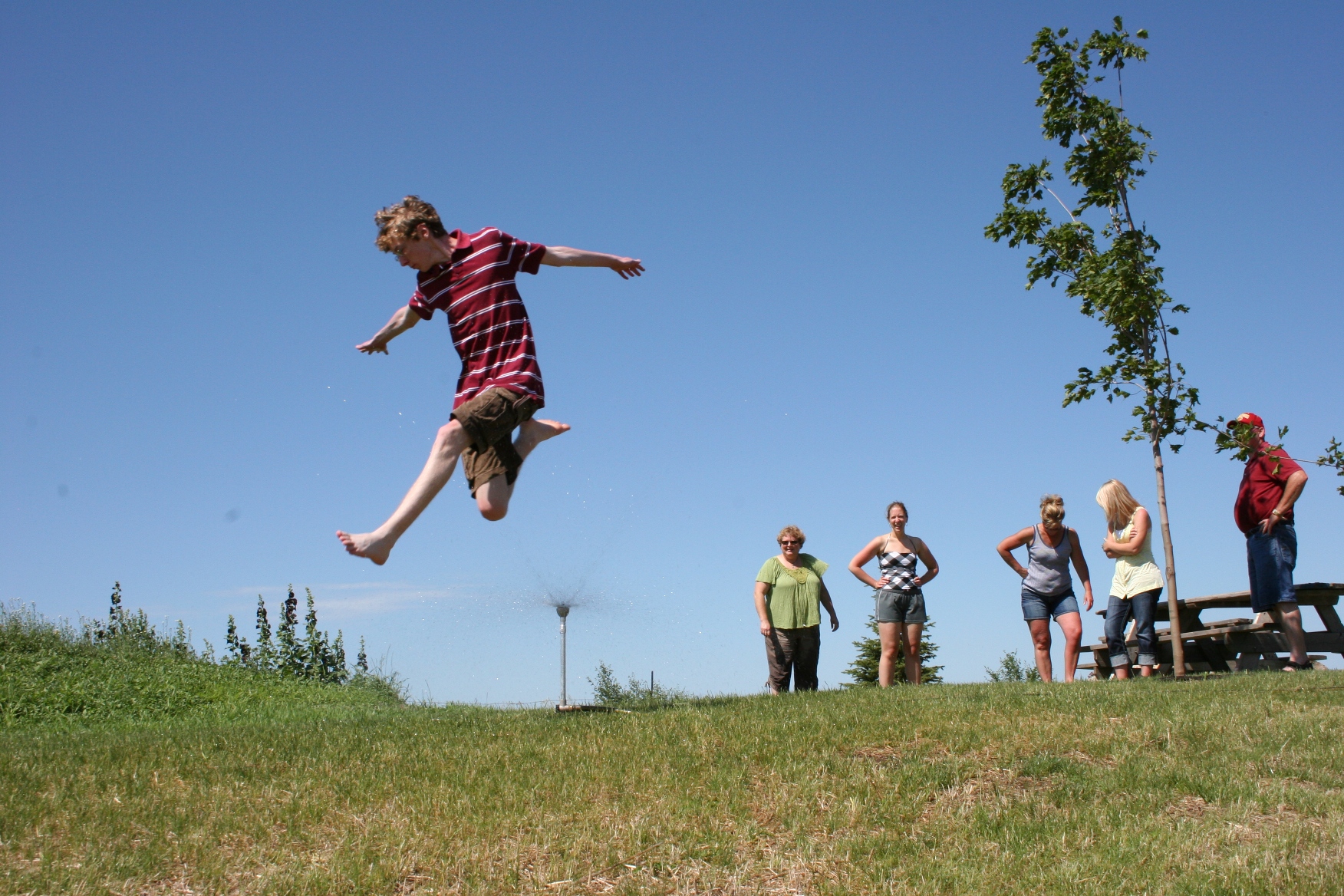
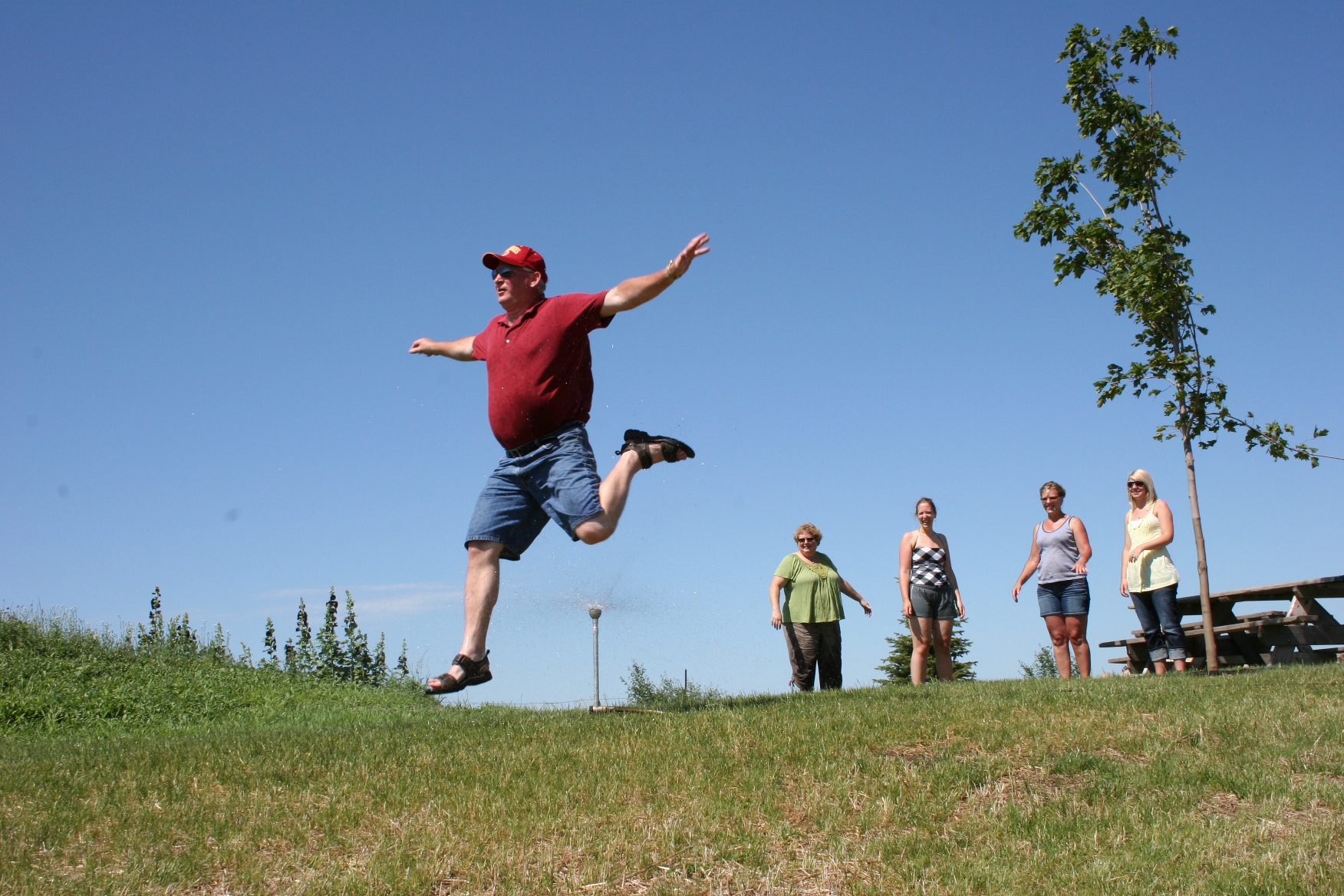
However, I took plenty of photos of the earlier sprinkler gymnastics. I refrained from that activity until later, at the exact moment one gymnast grabbed the sprinkler and ran onto the patio spraying all non-participants, including my 79-year-old mom. Just before that happened, I had decided to join the sprinkler crew. Timing is everything.

When you view these sprinkler gymnastics images, you will understand why I hesitated initially to join the group. I did not want to risk a leap onto water-slicked grass. Nor did I want to appear too foolish in that YouTube video my nephew-in-law was filming.

My extended family doesn't just nilly willy run through a sprinkler. Oh, no. We make it into a game. In this case, follow the leader. Whatever the leader does, you do.

From the youngest participant at age 17 to...

...one of the oldest sprinkler gymnasts at age 50.

Ah, my extended family loves to have fun.

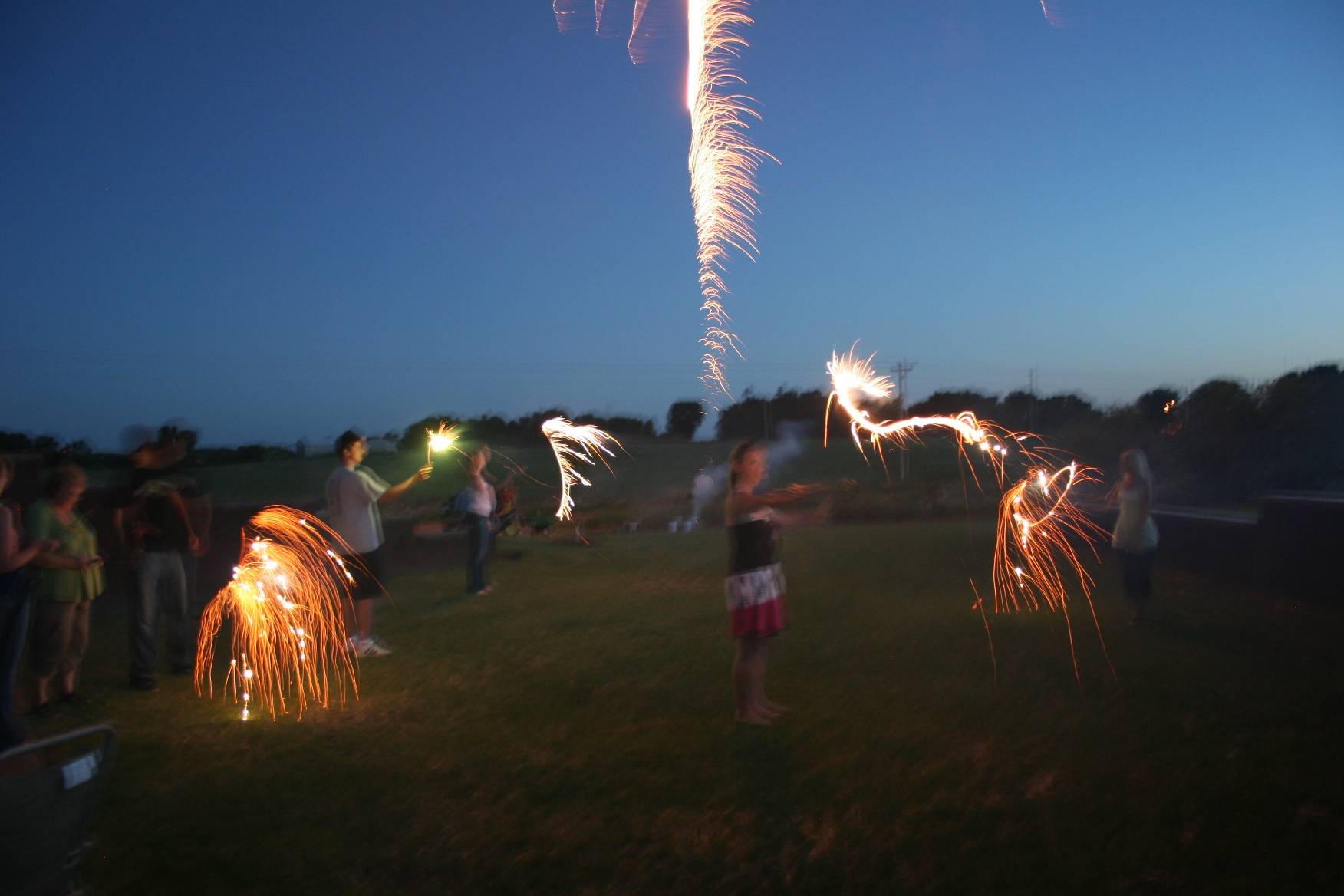
Later, not long after the sun set on the Minnesota prairie, out came the sparklers. More fun. More laughter. More memories.

Sparkler fun for the younger ones.

Combine sparklers and a slow shutter speed and you get some interesting images.

I can’t think of anywhere else I would rather celebrate Independence Day than with my extended family on the land I love most, southwestern Minnesota.

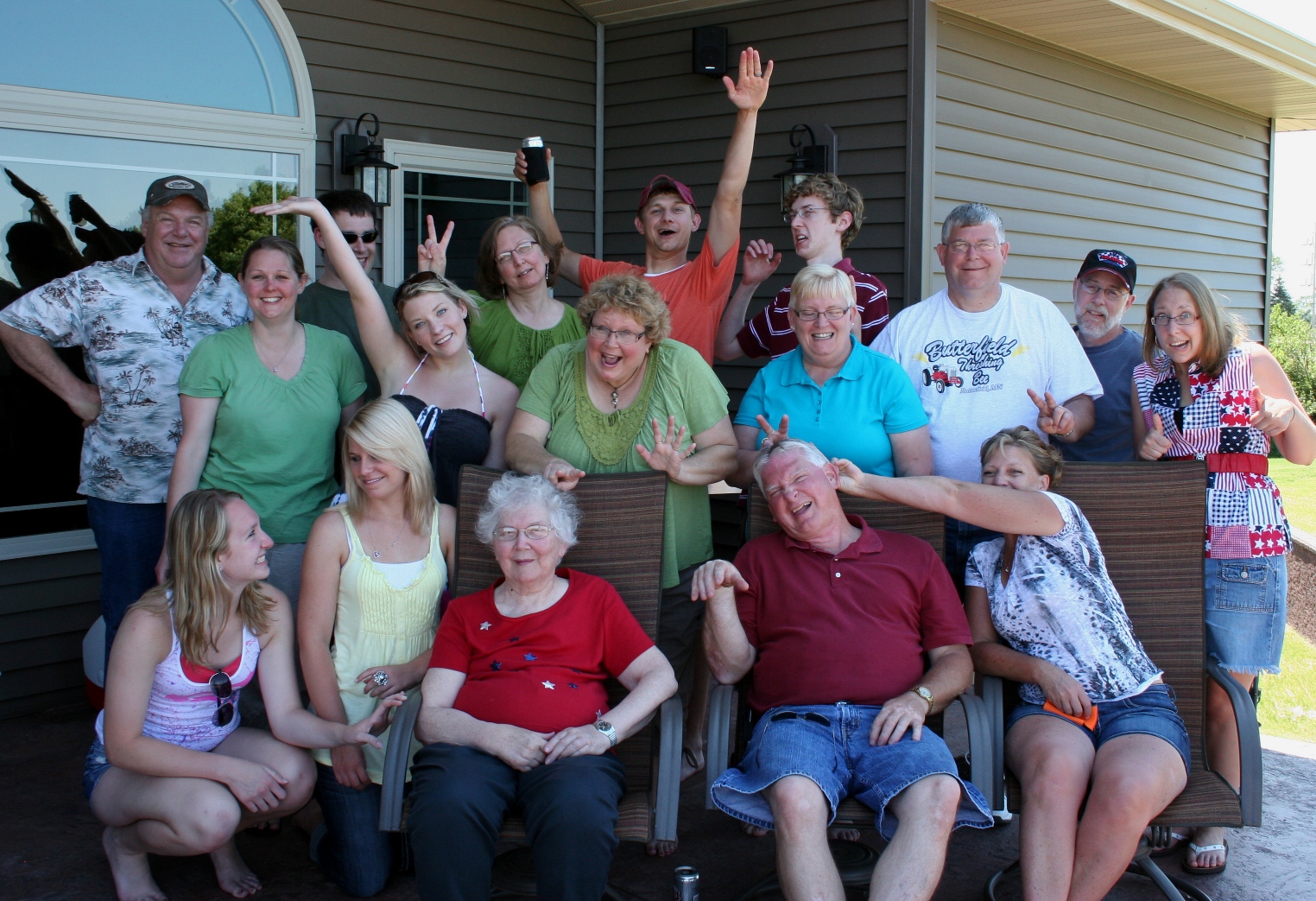
After we shoot "nice" photos, we always like to do a fun photo. I am in the back row in the grass green shirt. Can you tell which of us were teens in the 1970s? (Hint: See the symbol we're making with two fingers. You would think we could be more creative.) All family members, except me, shall remain unidentified.

HOW DID YOU CELEBRATE your Fourth of July?

HERE ARE THE TOP answers to the three questions posed at the beginning of this post:

Vacation, two times and phone numbers.

© Copyright 2011 Audrey Kletscher Helbling
 

Damage suggests tornado hit Wood Lake farm July 6, 2011

DAN AND MARILYN SCHMIDT had just arrived for the July Fourth holiday weekend at a west central Minnesota lake when they got the phone call from their daughter, Heather Rokeh. She was calling from Marshall with news that a storm had swept through town. It was late Friday afternoon, July 1.

Dan asked about their farm 20 miles northeast of Marshall. Heather suggested that “it wouldn’t be a bad idea to have someone check it out.”

And so Heather’s sister, Amy St. Pierre, and Amy’s husband and daughter went to the farm, surveyed the damage, then called the Schmidts. The couple returned that night to inspect their Wood Lake area farm.

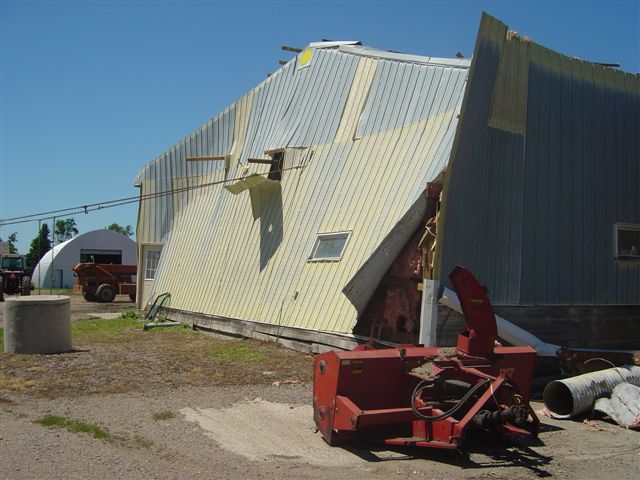
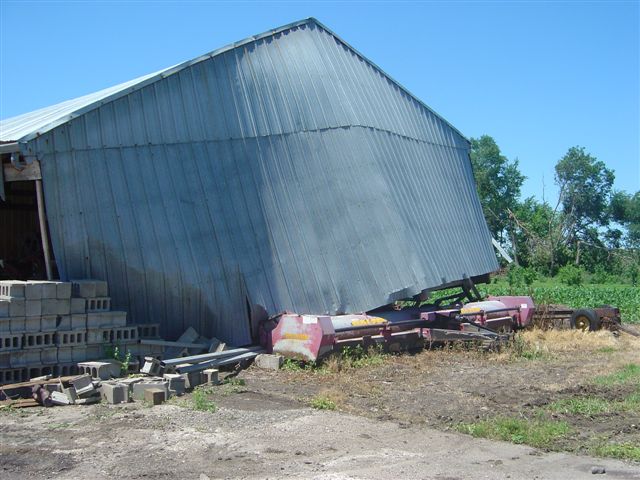
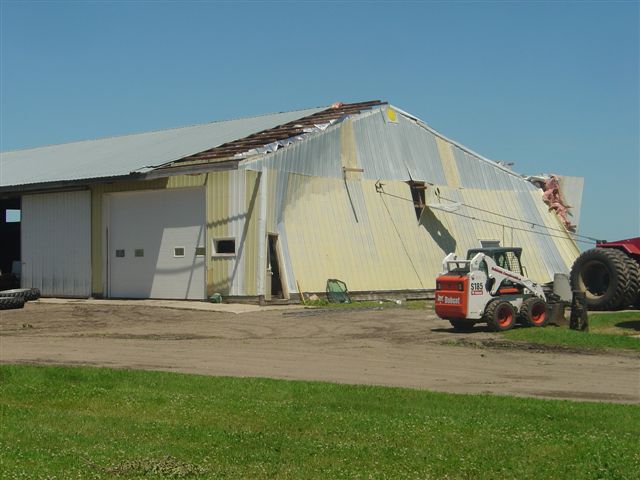
Every building had been damaged. Hail pounded holes in the siding on the house, where shingles and an antenna were blown off. The door of the Quonset building had been ripped away with part of the board trim speared into the ground.

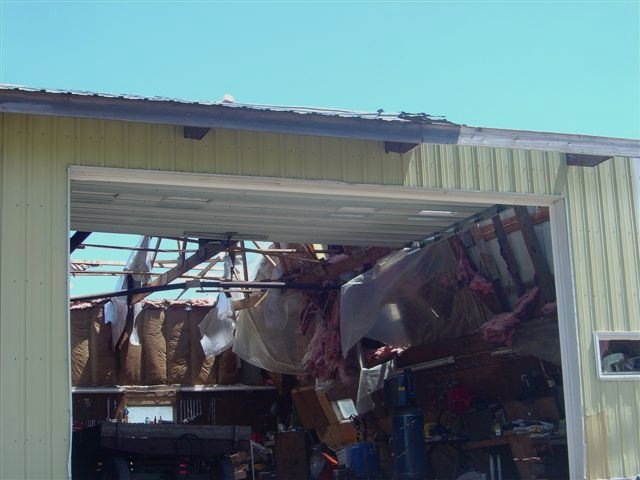
Half the roof was blown off the shop, collapsing an interior wall. That wall is now being held up by two chains and a tractor until items inside can be removed and the building demolished.

Another view of the caved-in shop wall.

The exposed interior of the shop.

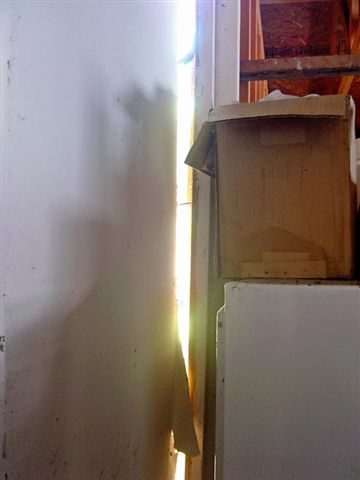
Trees were down or uprooted. Branches littered the farmyard. On one of the two houses on the farm site, the garage was pulled away from the house, leaving a visible gap.

Here you see light shining through the space where an attached garage was separated from the house during Friday's storm.

“A lot of these things spelled out tornado for us,” says Heather. “The twisting of the trees, things stuck in the ground and the twisted buildings all suggest tornado to us.”

Whether straight-line winds or tornado, Heather remains grateful: “We are so thankful no one was injured.”

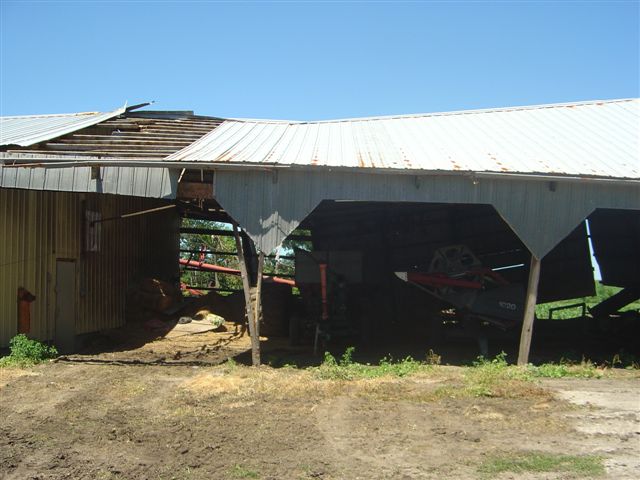
This lean-to, connected to a hog barn, was lifted up, twisted and set back down on top of a stock chopper. The hog barn was OK, but the lean-to was deemed unsafe and removed on Saturday.

This photo shows a portion of the lean-to that was lifted and dropped onto the stock chopper pictured here.

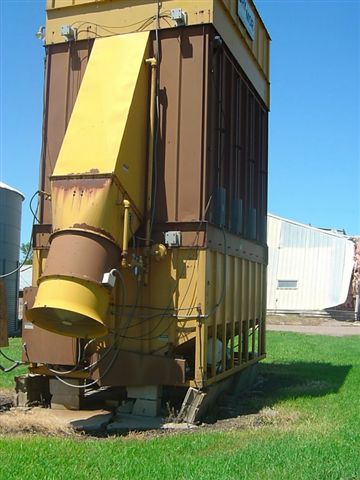
This grain dryer was moved and it is now sitting crooked on its foundation. The cement slab foundation was cracked and cement blocks are now sitting at an angle.

IF YOUR FARM, HOME or community was damaged during the July 1 storm in southwestern Minnesota, I’d like to hear from you. Submit a comment summarizing your storm experience, the damage to your property or town, and progress toward recovery. If you have photos to share, like those above from my cousin Heather, let me know and I’ll be in touch.

Also check out my previous posts on storm damage in my hometown of Vesta and in neighboring Belview.

PHOTOS BY HEATHER ROKEH Copyright 2011

Text copyright 2011 Audrey Kletscher Helbling
 

Belview pulls together after destructive storm

THREE MONTHS AGO Merlin and Iylene Kletscher closed on the purchase of a foreclosed house along Main Street in Belview. They plan to sell their lake home near New London and move back to Iylene’s hometown, also within 10 miles of Merlin’s hometown of Vesta.

My aunt and uncle want to be closer to family and friends and back in a small town like Belview with a population of 375.

They chose the Main Street fixer-upper, among other reasons, for all the beautiful trees on the property.

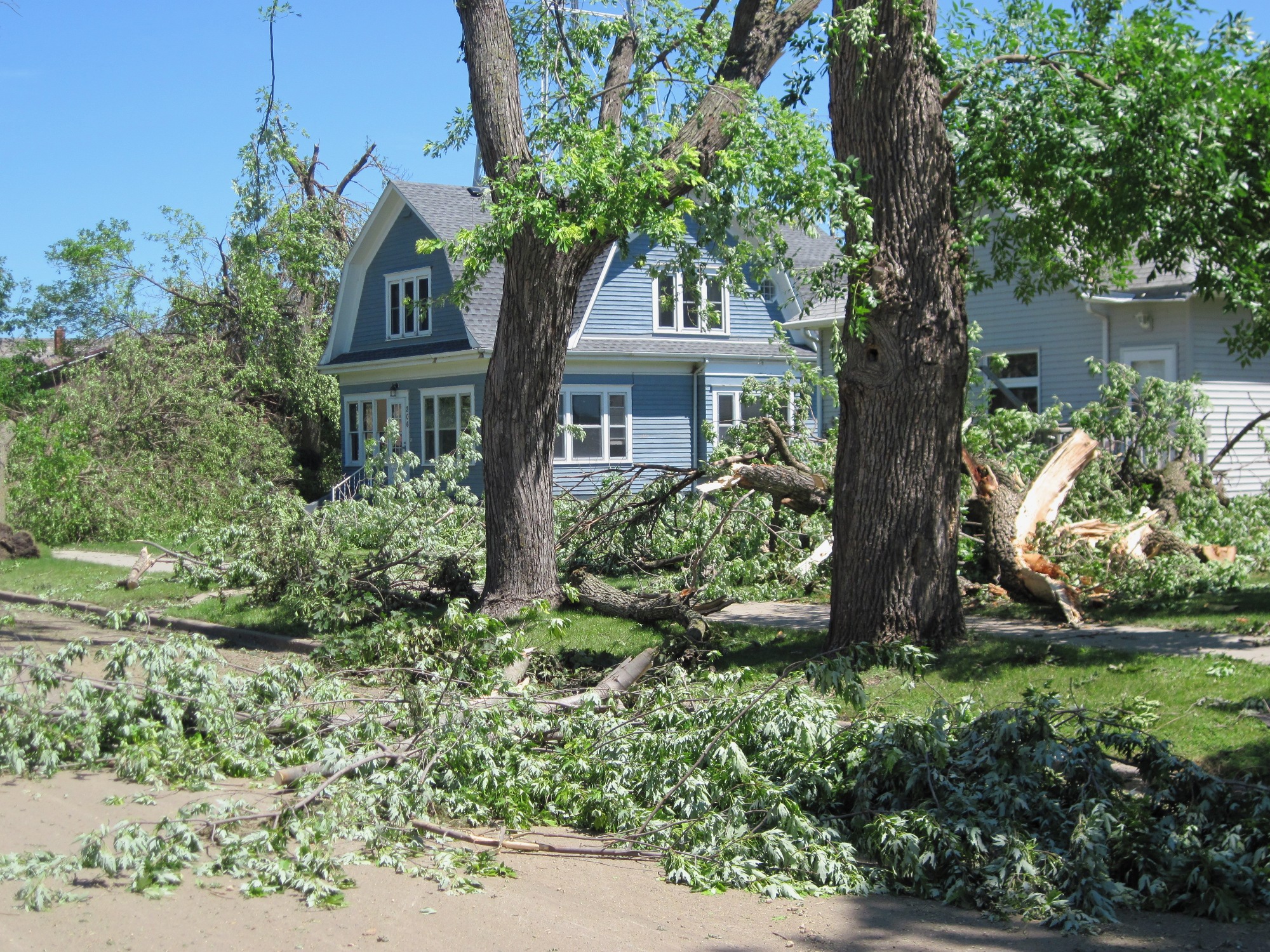
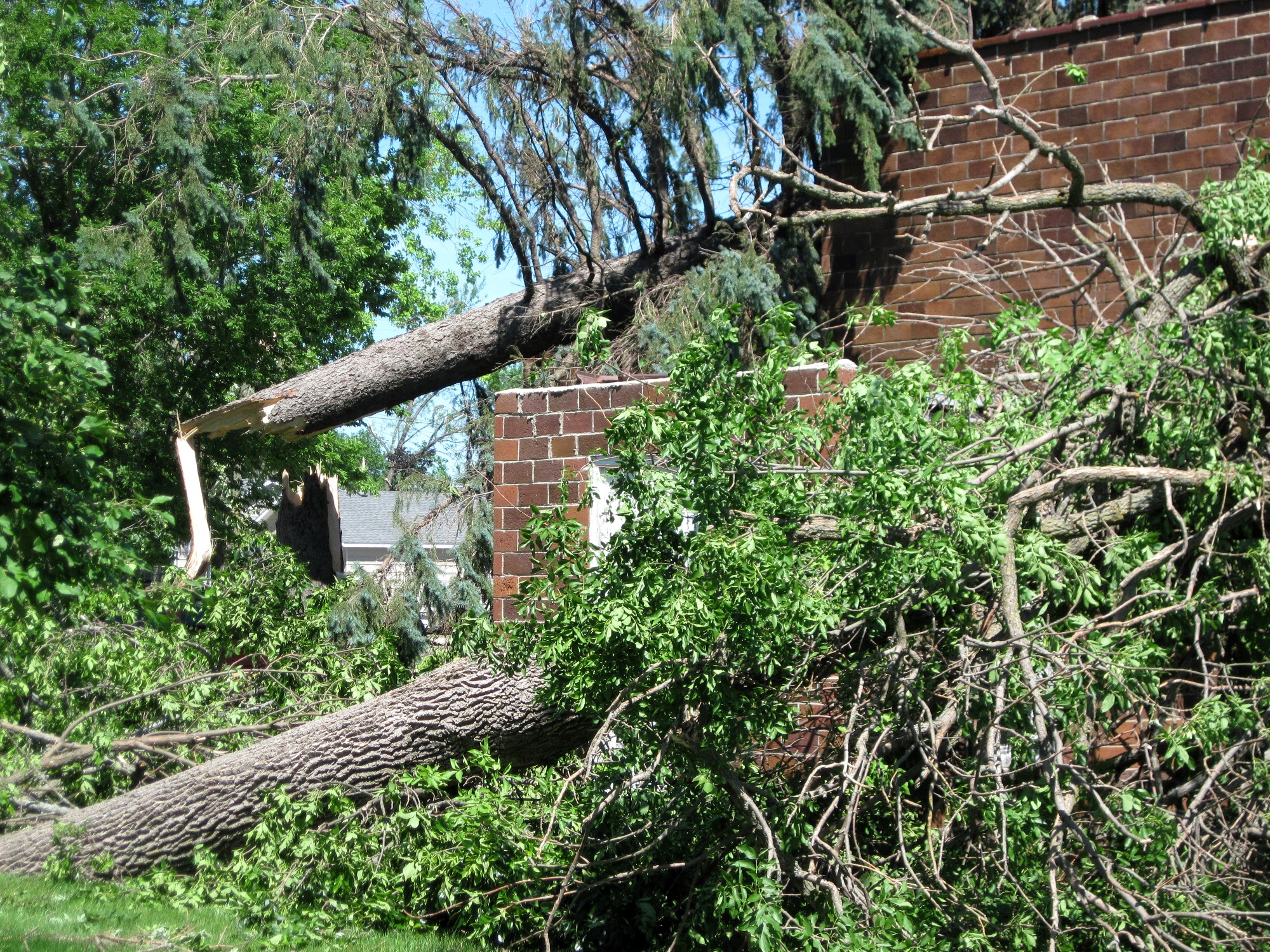
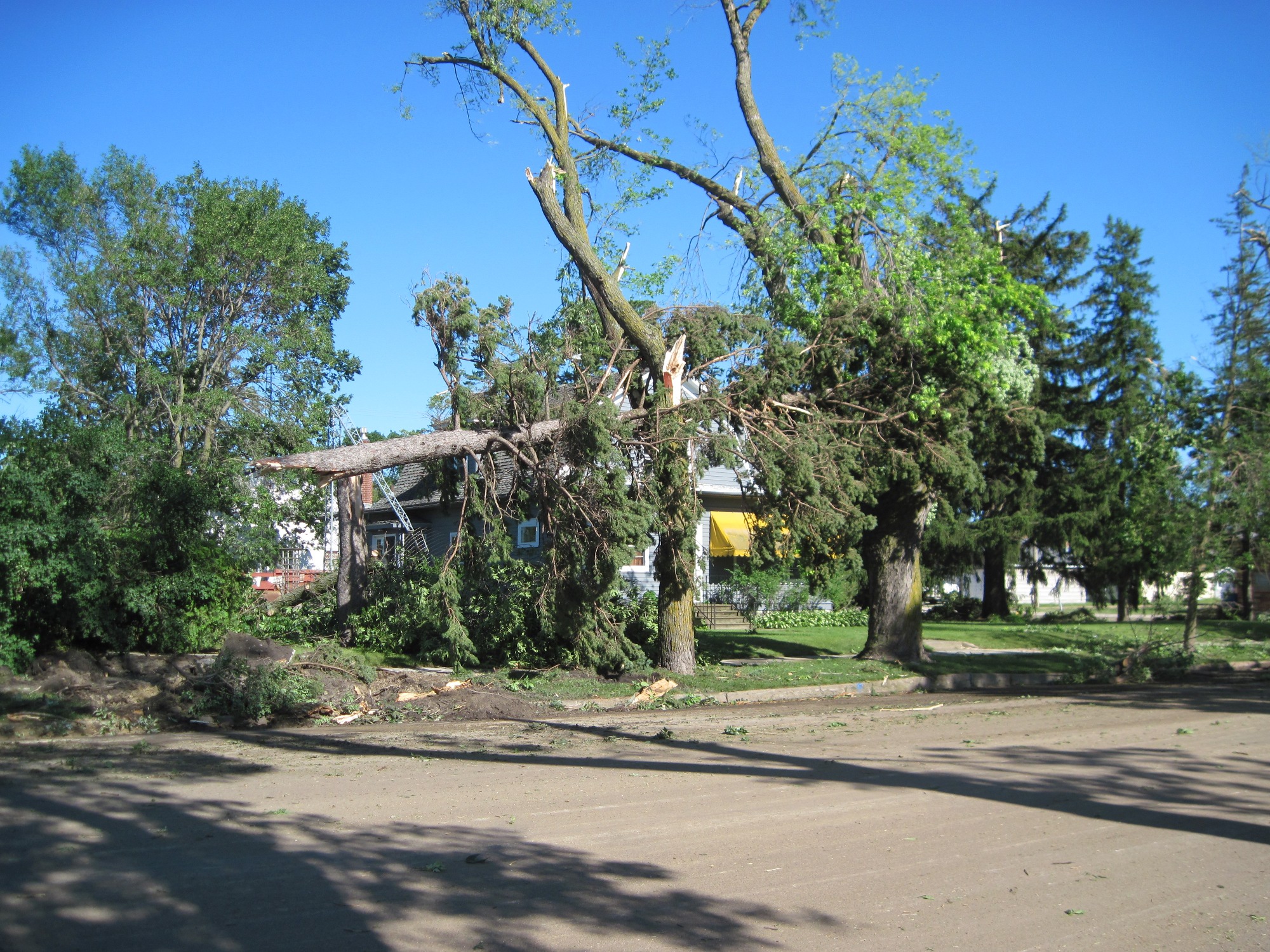
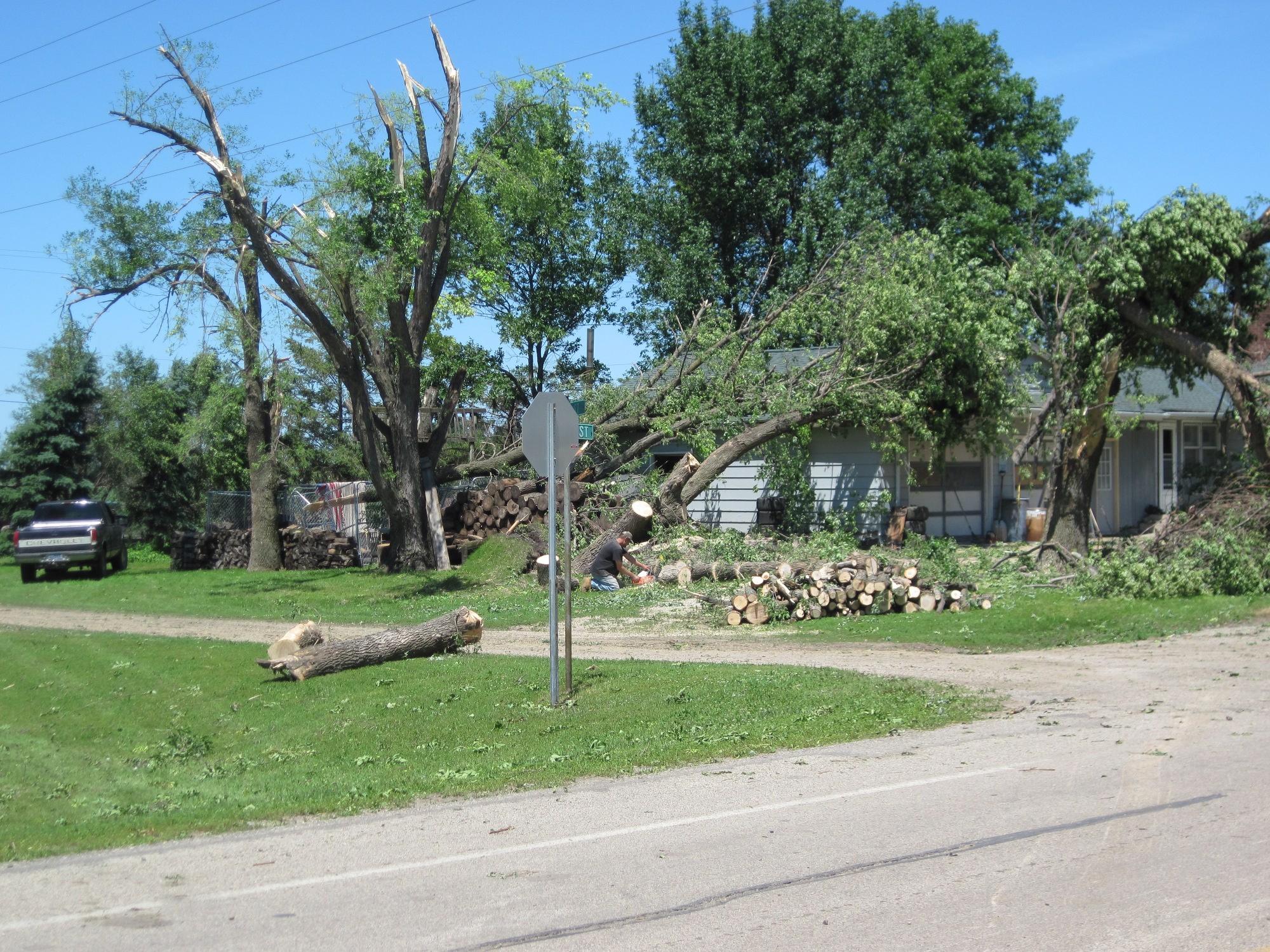
Today most of those trees are gone, toppled in a storm that swept through Belview and a wide-spread area of southwestern Minnesota late Friday afternoon. The storm ripped off roofs, took down power lines and trees, smashed grain bins and elevators and more as fierce winds roared across the flat prairie.

Merlin and Iylene Kletscher's home on the left, surrounded by downed trees.

Now Merlin and Iylene, like so many others in this area of Minnesota, are dealing with insurance companies and contractors as they clean up and repair their homes and businesses.

“The new chimney we had installed is leaning,” my uncle says. “The new shingles are missing ridge caps. We have broken windows and torn screens, etc.” The couple had just installed new windows in their home and made other major improvements.

Despite all of that damage to a house he and Iylene have worked so hard to restore, my uncle doesn’t seem at all discouraged. Rather, he praises Belview’s reaction to the storm: “Belview is amazing in that the people just pull together…I can’t say enough good things about the fire department and city employees and council. While we were there, trucks, tractors, 4-wheelers, payloaders, backhoes and pickups went by our house about one every 30 seconds pulling trees, debris or branches to the MPCA-approved burn site on the northeast edge of town.”

It seems the city was prepared for a natural disaster such as Friday’s storm. Log onto the city website and you’ll find a “CONSUMER ALERT: SUMMER STORM SEASON” posted by City Clerk Lori Ryer on May 24 encouraging residents to prepare for summer storms.

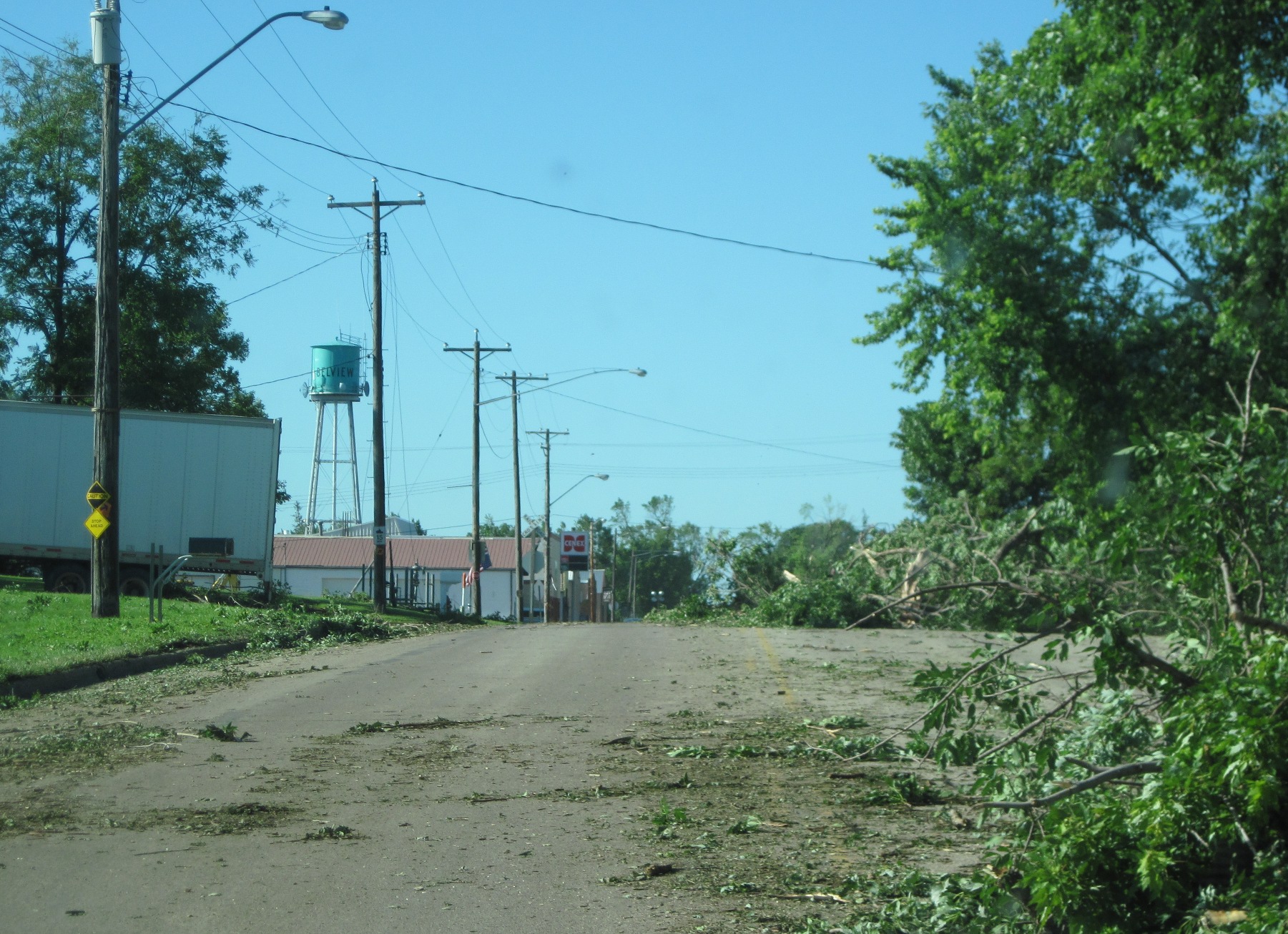
Entering Belview from Sacred Heart at 9 a.m. on July 2.

The city of Belview's water department building.

The ferocity of Friday’s storm is impressive. “Our neighbor across the street in Belview said that during the height of the storm, he couldn’t see his mother’s house right next door!” Merlin shares. “Chad Krinke (next door neighbor and relative) said two inches of rain fell in 20 minutes—he called us about a half hour after it hit, giving a report on our house damage. The city was blocked off, so no one could get in unless they had specific ties to someone in the city.”

Trees blocked the street north of the Belview City Park.

Jerry Hagen's house, across the street from Merlin and Iylene's home in a July 2 photo.

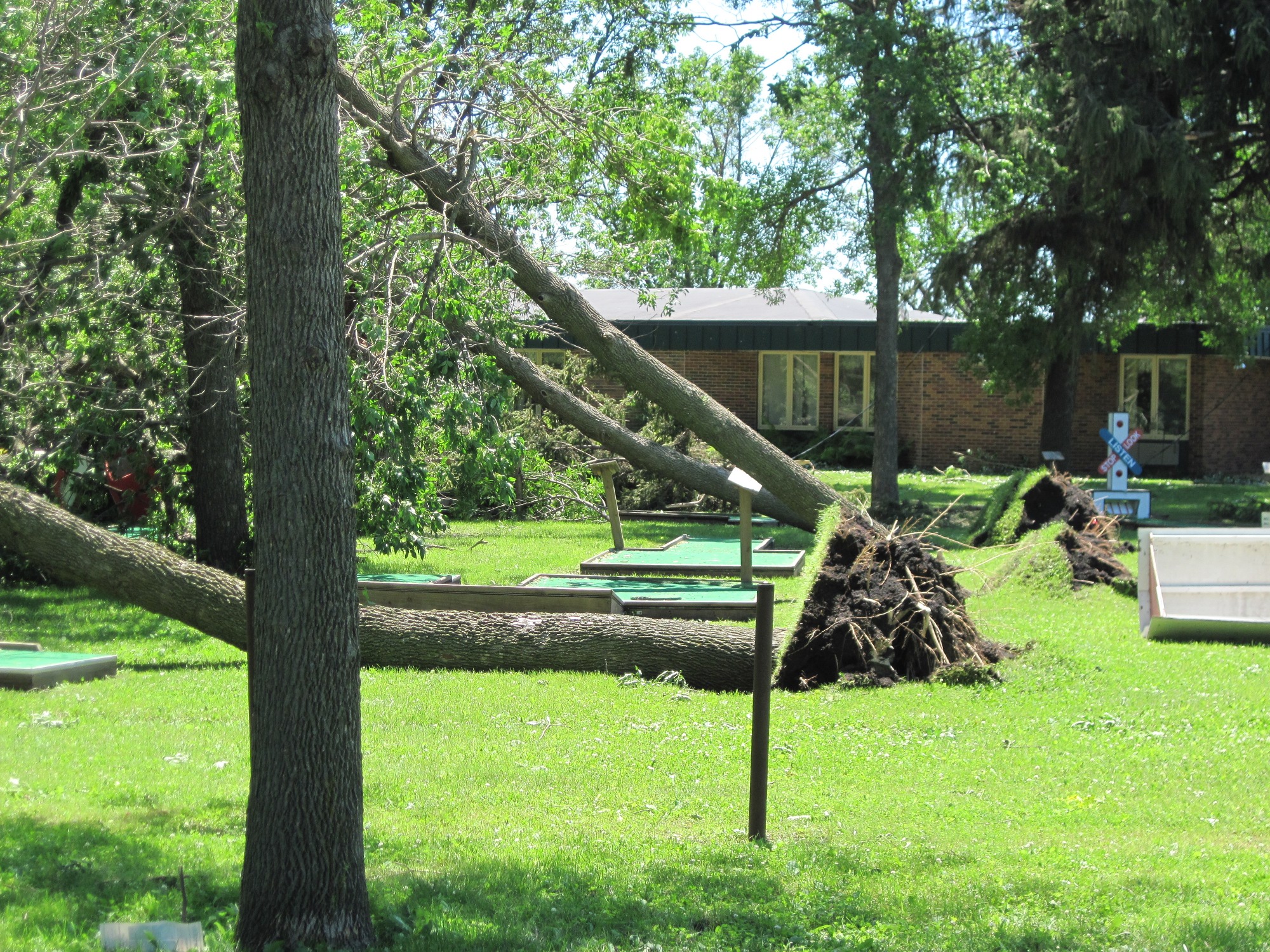
Residents of Parkview Home, next to the city park, were evacuated Friday night. This photo shows the nursing home and mini golf in the park. The rubber roof of the nursing home was peeled off during the storm.

Storm damage at the home of the Rev. Daniel Faugstad family.

Damage along South Main Street.

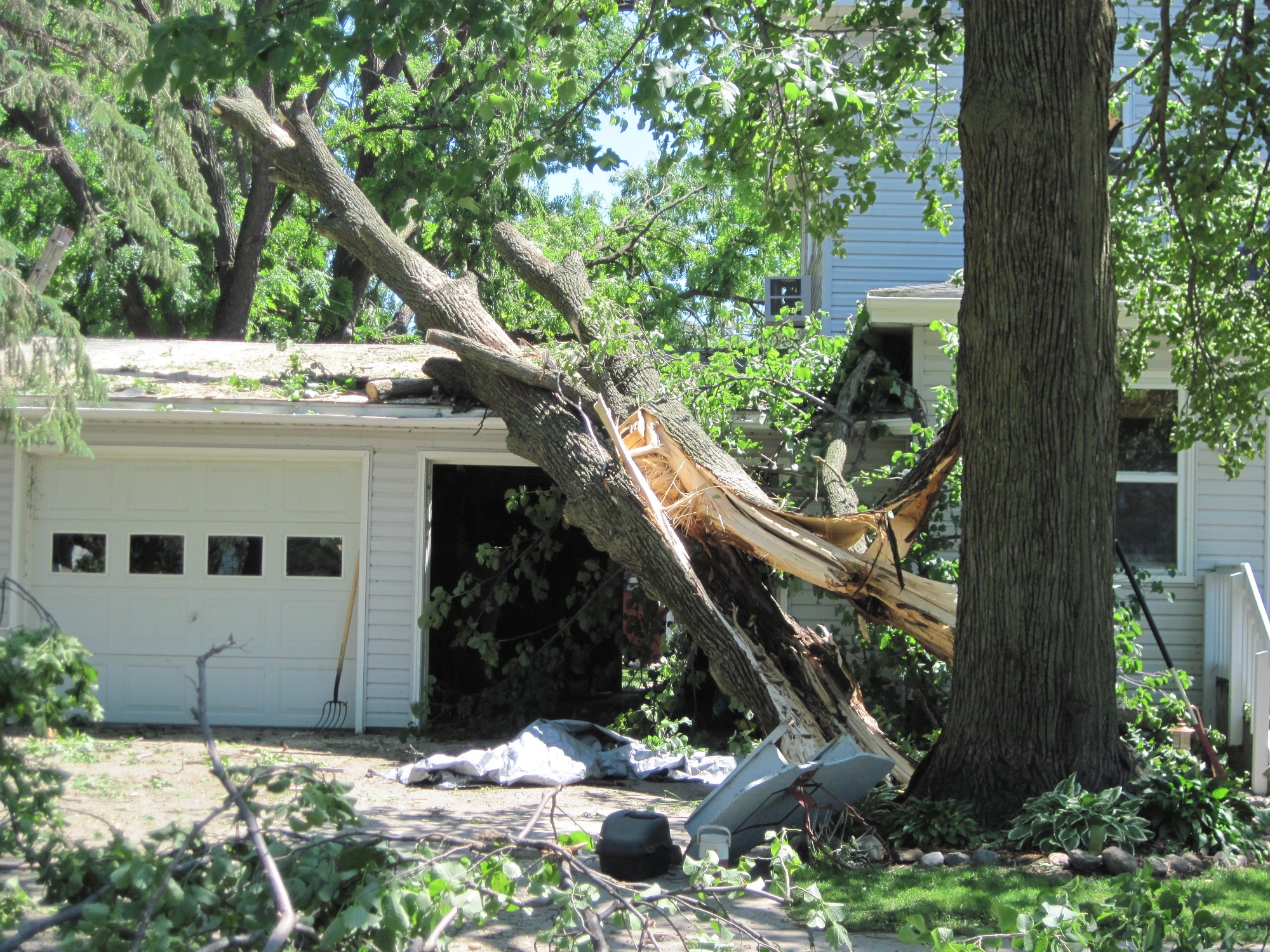
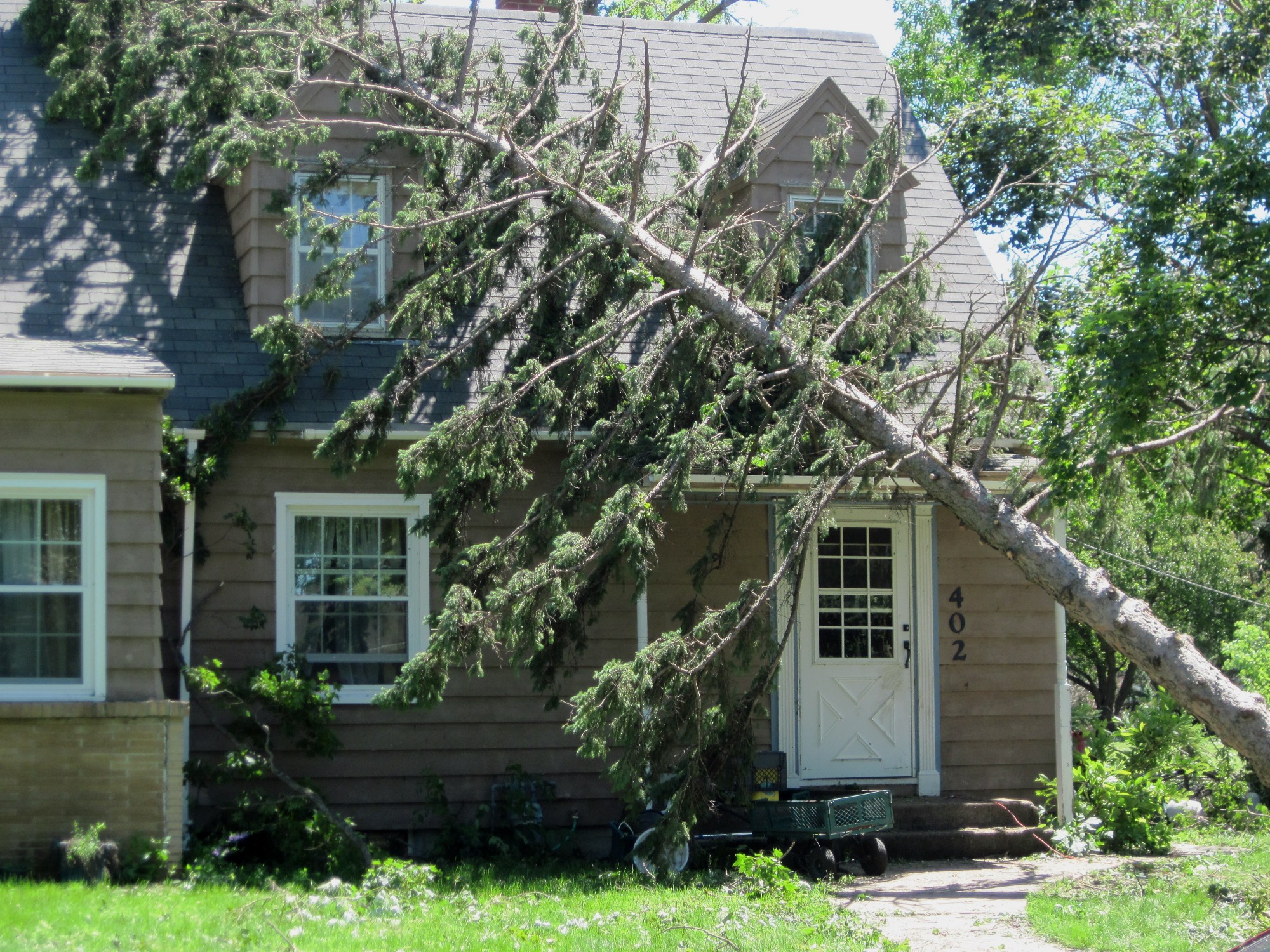
Another tree toppled onto a house.

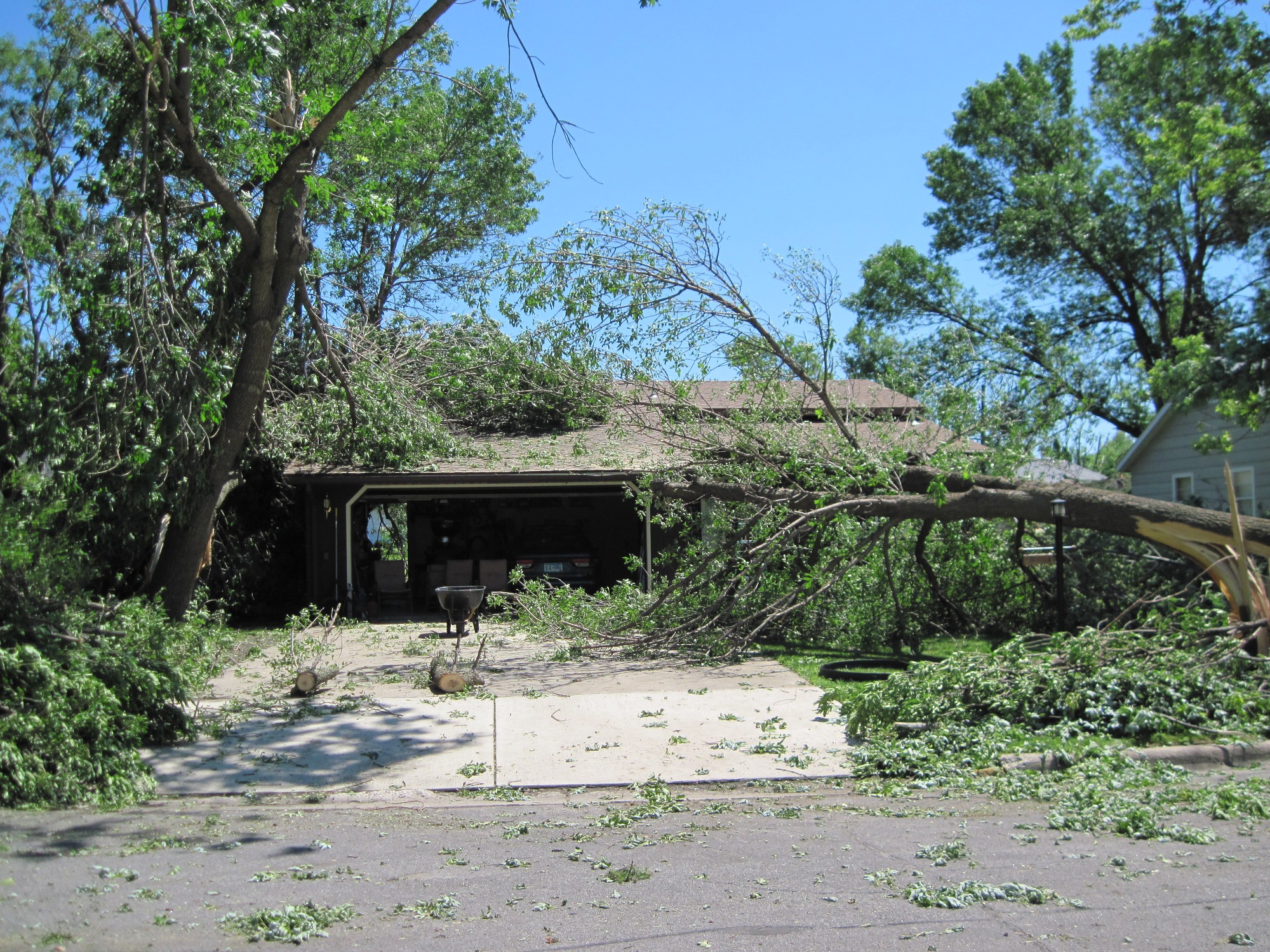
More residential storm damage in Belview.

Merlin also reports that a farmer just west of nearby Vesta (my hometown) recorded a high wind speed of 110 mph on his wind velocity meter during the storm. I have not yet confirmed that information. Vesta was also hard hit by the storm. Click here to read that story and view photos of the damage.

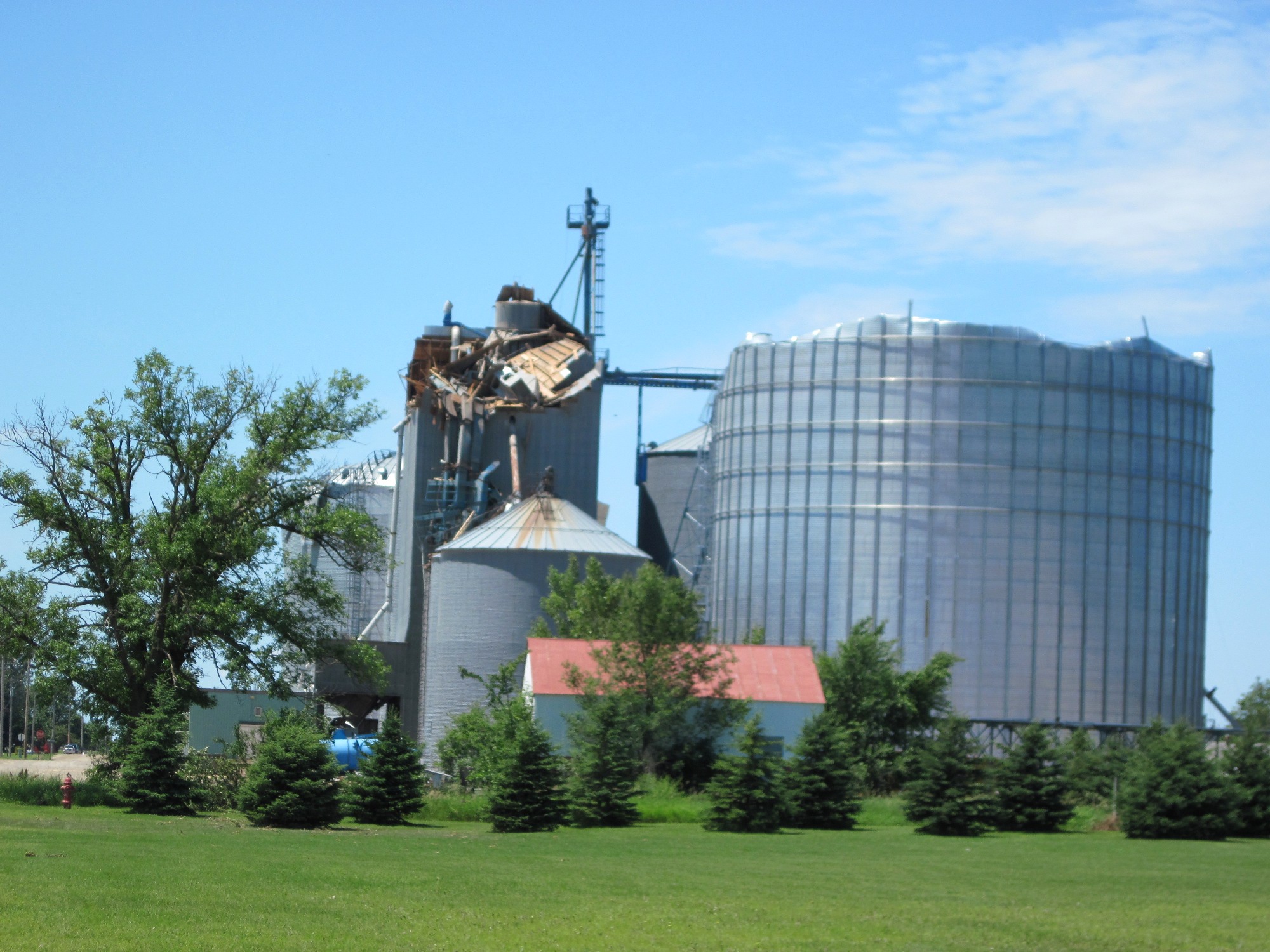
The damaged bins and elevator at Meadowland Farmers Elevator in Vesta.

Neighboring Belview and Vesta are only two of the many, many small towns in southwestern Minnesota hit by Friday’s storms. I expect that hundreds of farm places were also ravaged. For the most part, the disaster has not been covered by metro media and that bothers me—a lot.

IF YOU LIVE in southwestern Minnesota and were impacted by the storm, please submit a comment telling me about your personal experiences (where were you/did you seek shelter/what was the storm like, etc.), damage to your property or town, and recovery progress. I am also looking for photos to publish, so contact me via a comment and I will follow-up by emailing you.

PHOTOS COURTESY of Merlin and Iylene Kletscher

© Copyright 2011 Audrey Kletscher Helbling
 

This is what it means to be free July 5, 2011

FOR THE PAST SEVERAL days, I’ve kept my eyes peeled for the perfect July Fourth image.

I thought that photo might come from my extended family’s annual July 4th weekend gathering or from the Roberds Lake Independence Day boat parade. Or perhaps I’d just see a patriotic display worthy of showcasing. Maybe a field of flags.

However, the photo I selected to best portray our nation’s birthday falls into none of these categories.

I chose this image, taken along Seventh Street in Faribault late Monday afternoon.

Let me explain.

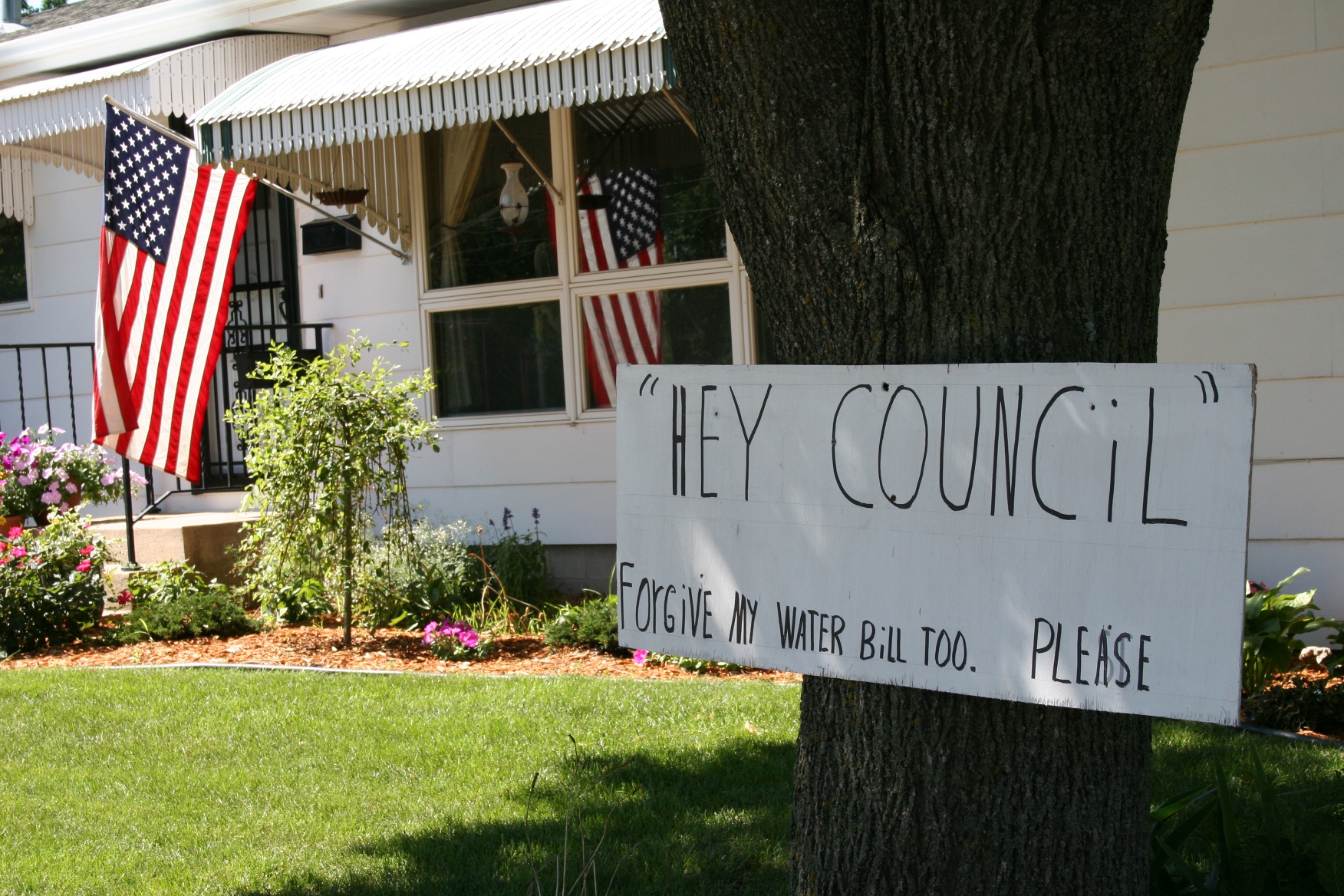
This homeowner disagrees with a recent decision by the Faribault City Council to forgive a $72,000 water bill assessed to FWF Fund One, current owners of the Faribault Woolen Mills property. The woolen mill closed some time ago, leaving an original $120,000 unpaid water bill, which has since been paid down $48,000. Now new investors are working on purchasing the property and restarting the mill, thus prompting the request to forgive the remaining portion of the unpaid water bill. Read more about the issue by clicking onto this recent Faribault Daily News article.

Even though I happen to agree with the homeowner, I didn’t choose this as my favorite Independence Day photo for that reason.

This grassroots expression of an opinion represents to me the cornerstone of our nation: freedom.

As citizens of the United States, we are free to speak—to voice our ideas and opinions and concerns.

We needn’t be eloquent speakers or writers or members of city councils to express ourselves.

A simple handwritten sign posted on a tree along a busy street epitomizes freedom at its most basic, individual, level.

© Copyright 2011 Audrey Kletscher Helbling
 

Reflections on Independence Day July 4, 2011

A flag and portrait of George Washington at the former District 20 Millersburg School, now a museum.

“I PLEDGE ALLEGIANCE to the flag of the United States of America and to the Republic, for which it stands, one nation under God, indivisible, with liberty and justice for all.”

As a child, my school days began with that pledge. My classmates and I arose from our desks at Vesta Elementary School, turned toward the American flag in the corner, placed our hands across our hearts, fixed our eyes upon the stars and stripes, and recited the pledge in unison.

I doubt we ever thought too much about the rote words we spoke. They were simply part of our routine, something we did, although I do recall feeling a sense of pride in speaking those words daily.

So much has changed in the decades since then. The Pledge of Allegiance, in most cases, has been banned from public schools in the name of political correctness. We are no longer one nation under God. While the U.S. remains one country, we as individuals are certainly divided in our views of anything and everything. That’s as it should be in a democracy. Liberty and justice have managed to prevail.

As we celebrate our nation’s Independence Day, it would be wise for all Americans to reflect on the Pledge and the words of other documents and songs that focus on the flag and freedom.

We hold these truths to be self-evident, that all men are created equal, that they are endowed by their Creator with certain unalienable Rights, that among these are Life, Liberty and the pursuit of Happiness.—The Declaration of Independence, signed on July 4, 1776

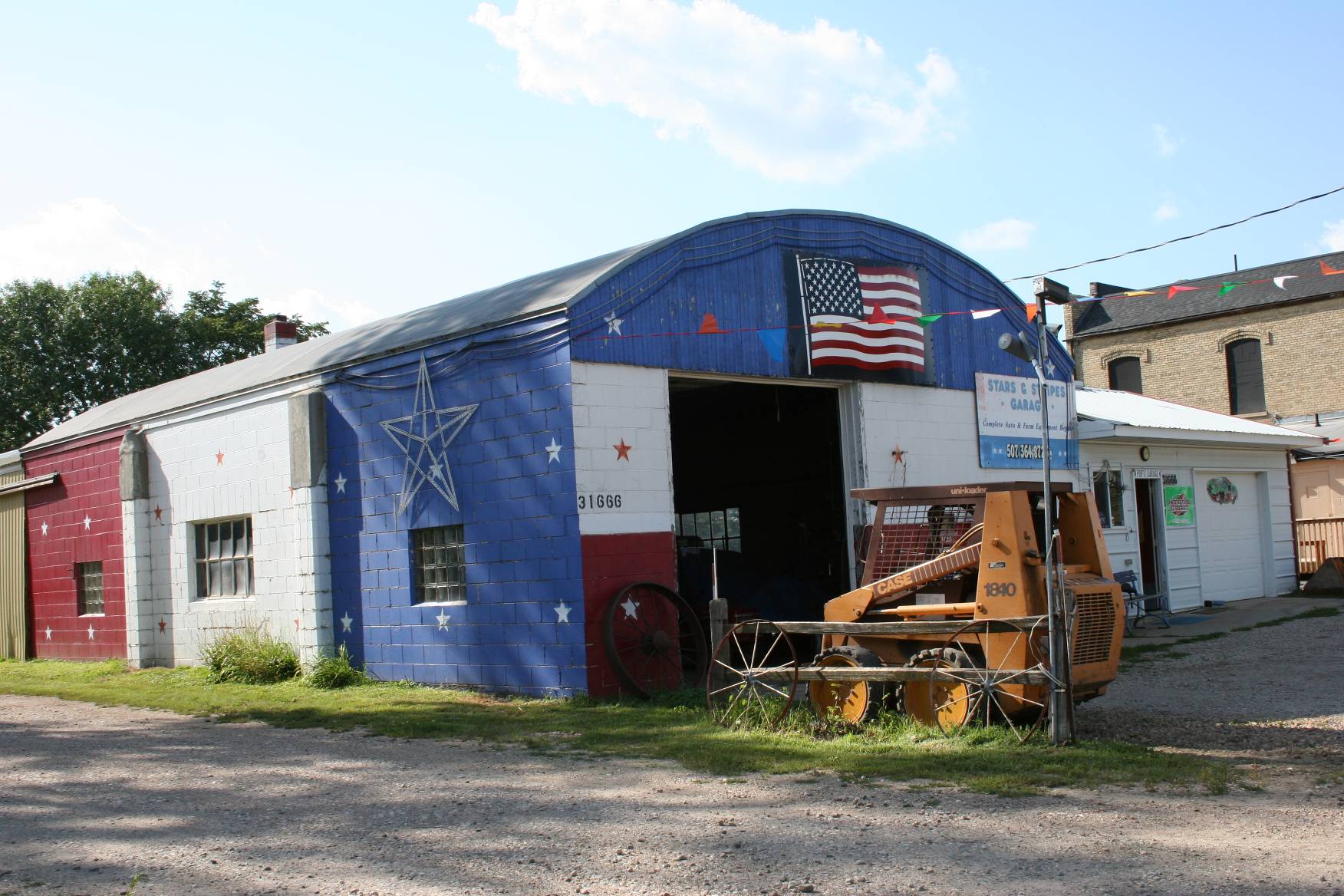
Vietnam veteran Joel Kukacka's patriotic garage in the hamlet of Heidelberg, Minnesota.

Oh, say does that star-spangled banner yet wave
O’er the land of the free and the home of the brave?
—The Star Spangled Banner

An American flag painted on a shed in Dundas in southeastern Minnesota.

Congress shall make no law respecting an establishment of religion, or prohibiting the free exercise thereof; or abridging the freedom of speech, or of the press; or the right of the people peaceably to assemble, and to petition the Government for a redress of grievances.—The Bill of Rights, Amendment I

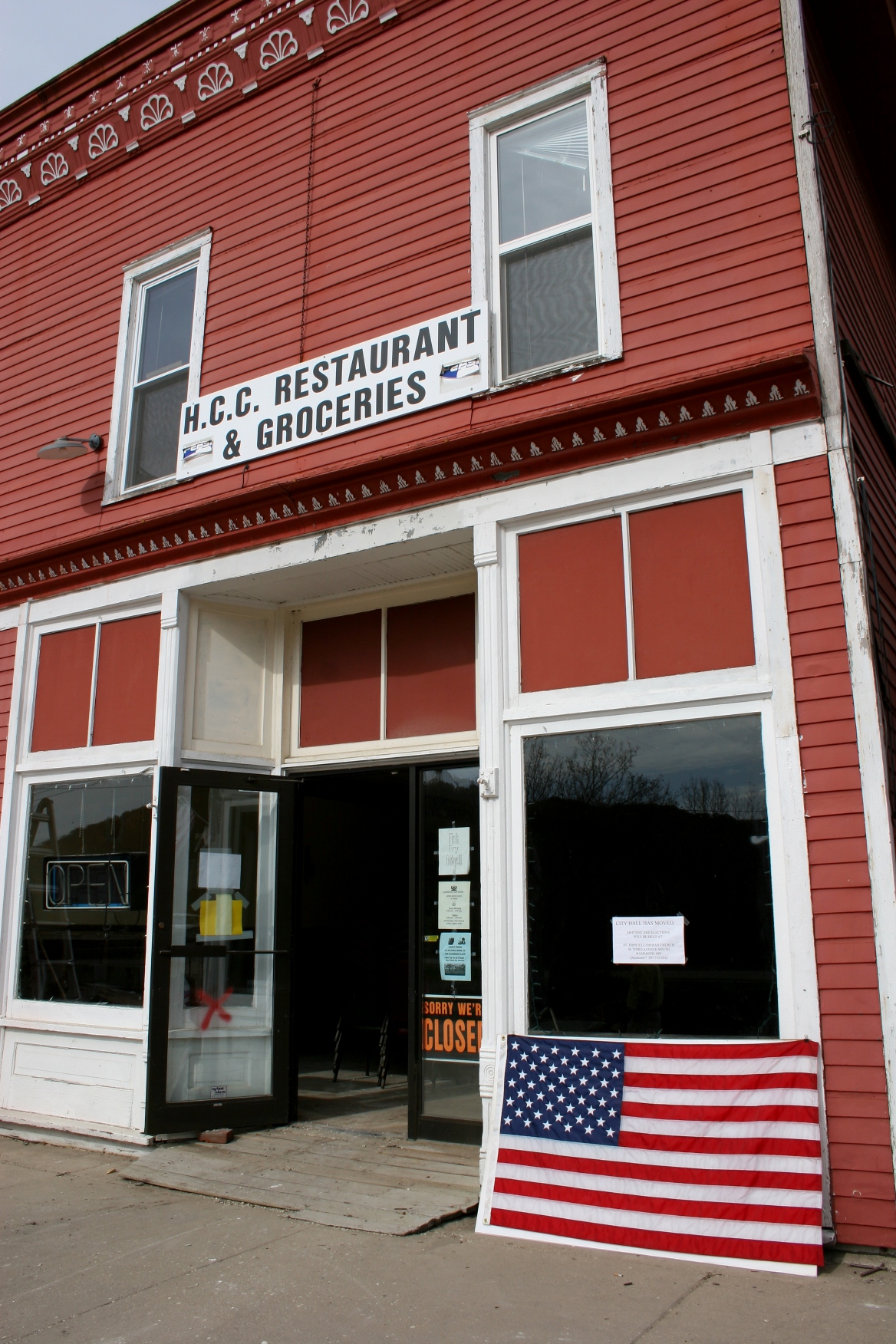
Weeks after a devastating Sept. 2010 flash flood in Hammond, in southeastern Minnesota, an American flag marked a ravaged business.

God bless America,
Land that I love,
Stand beside her and guide her
Thru the night with a light from above;

From the mountains, to the prairies,
To the oceans white with foam,
God bless America,
My home, sweet home.
God bless America,
My home, sweet home.

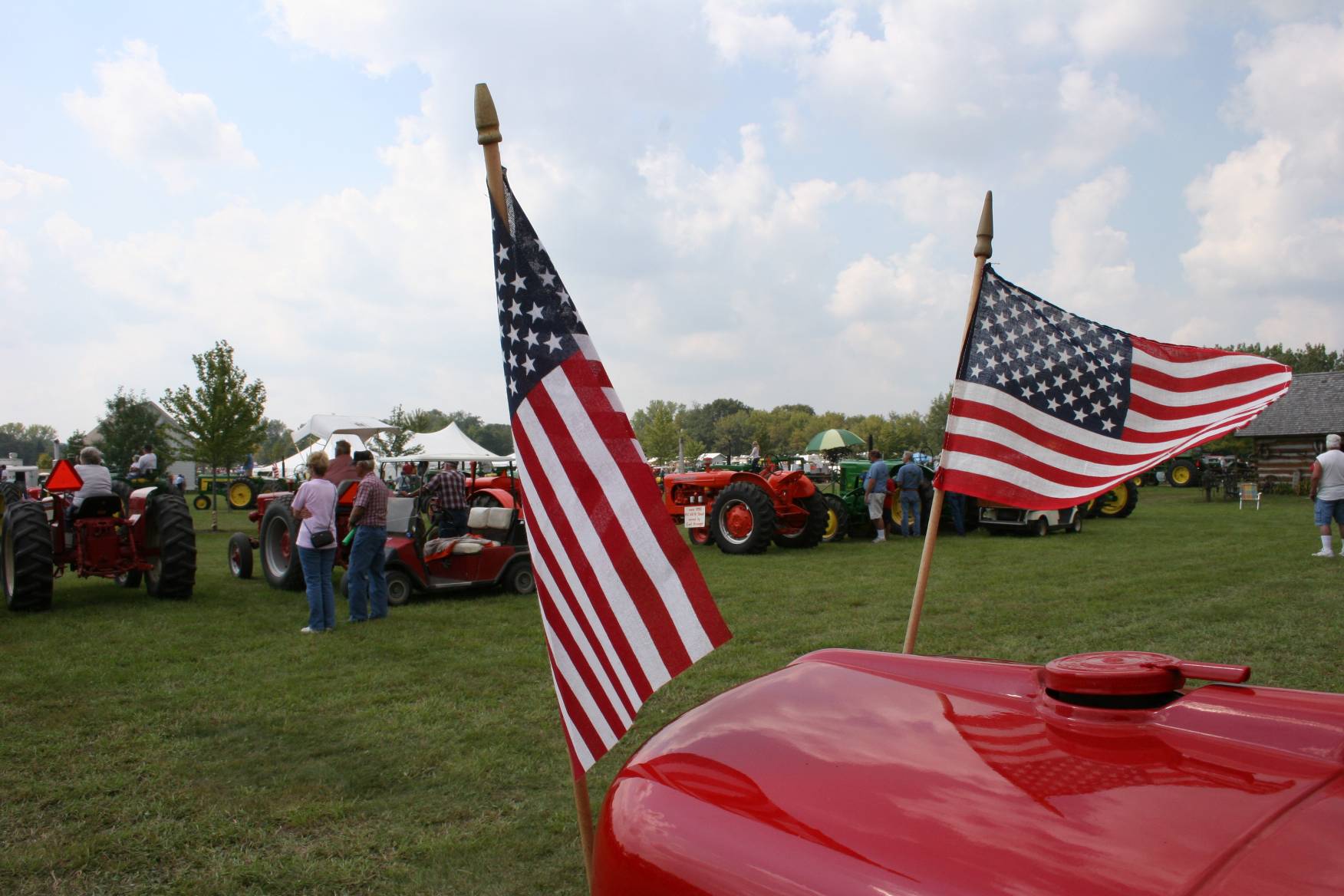
Flags decorate a vintage tractor at the Rice County Steam & Gas Engines Show near Dundas.

© Copyright 2011 Audrey Kletscher Helbling
 

Ominous skies near Nerstrand July 2, 2011

Filed under: Uncategorized — Audrey Kletscher Helbling @ 10:40 AM
Tags: , , , , , , , , , , ,

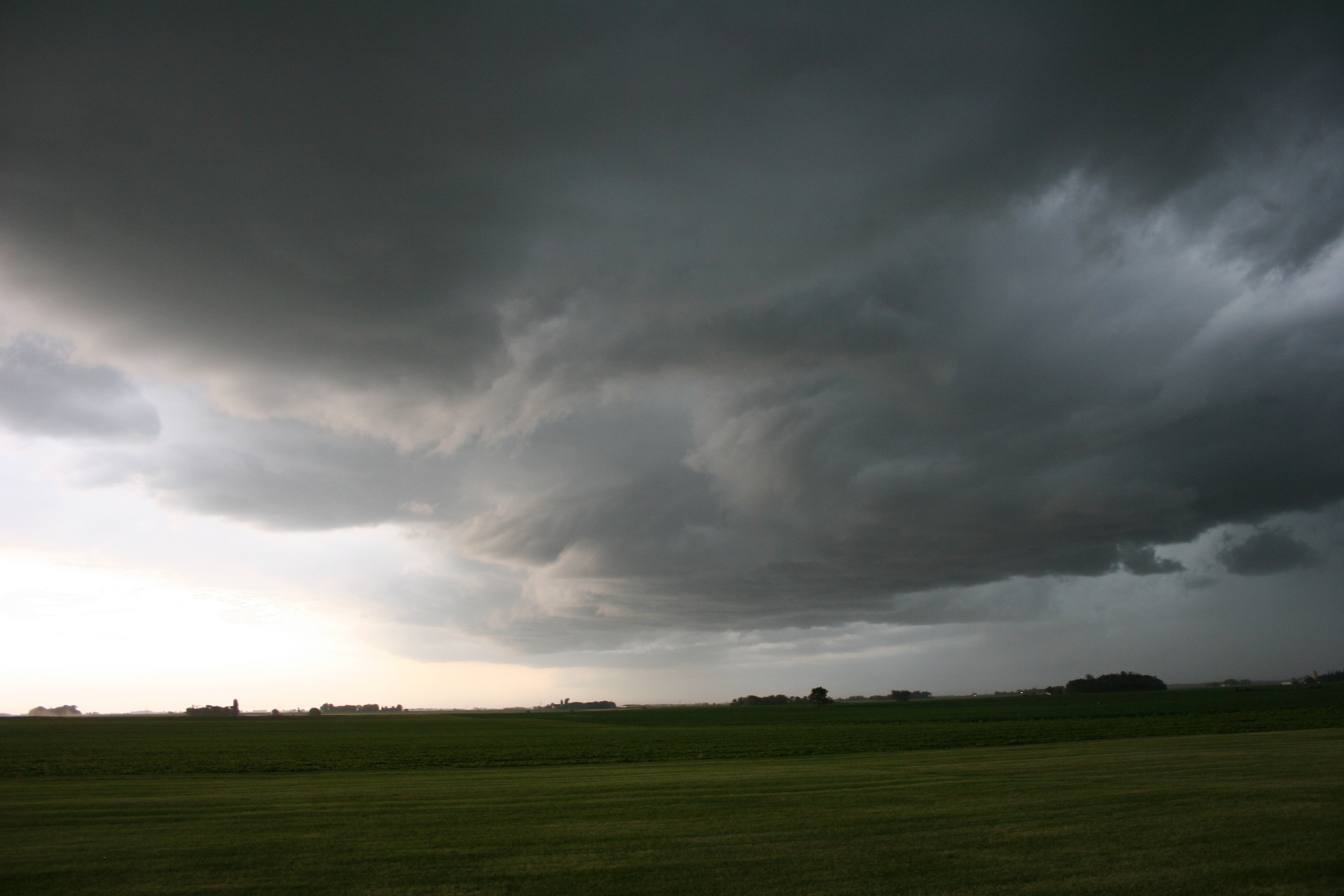
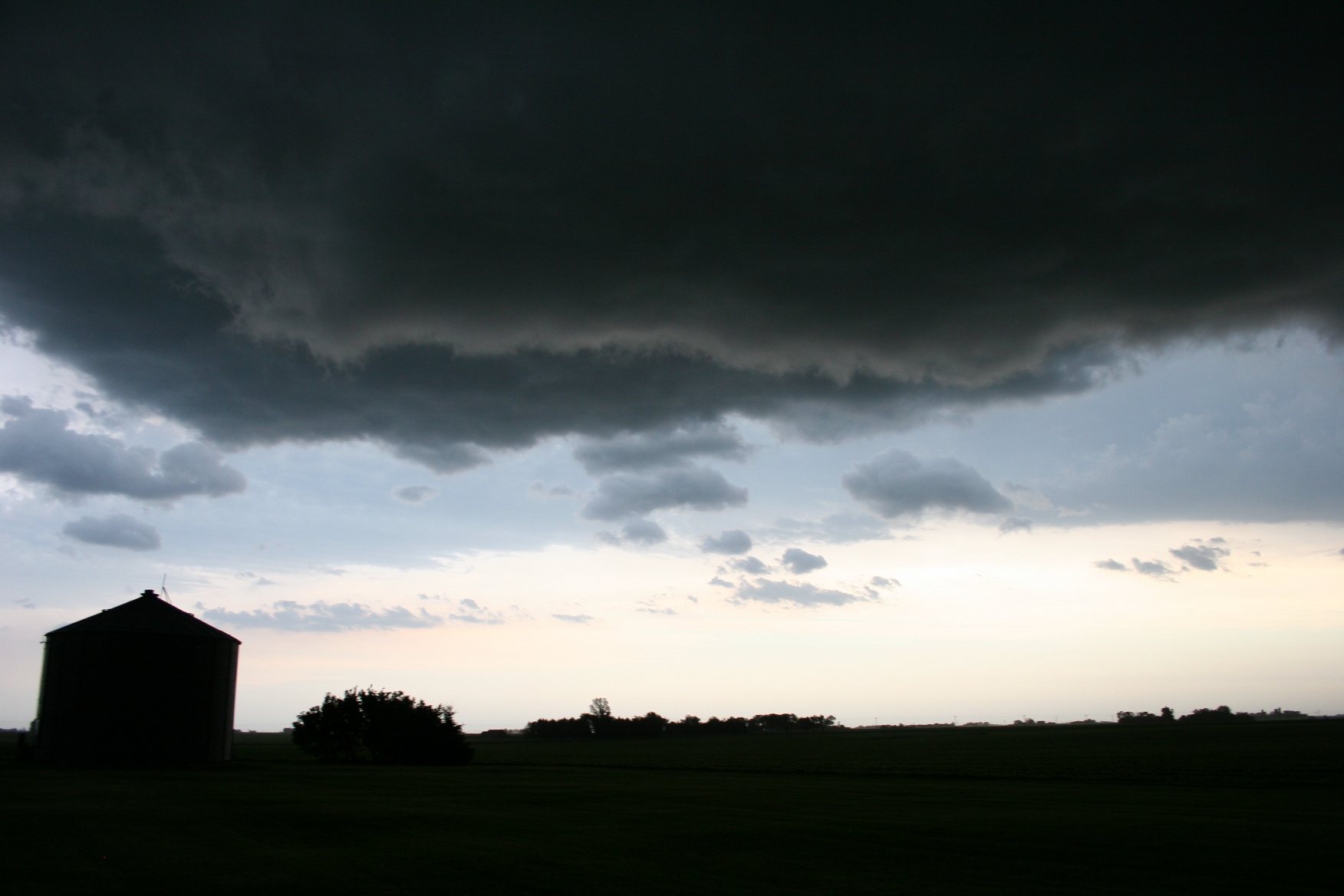
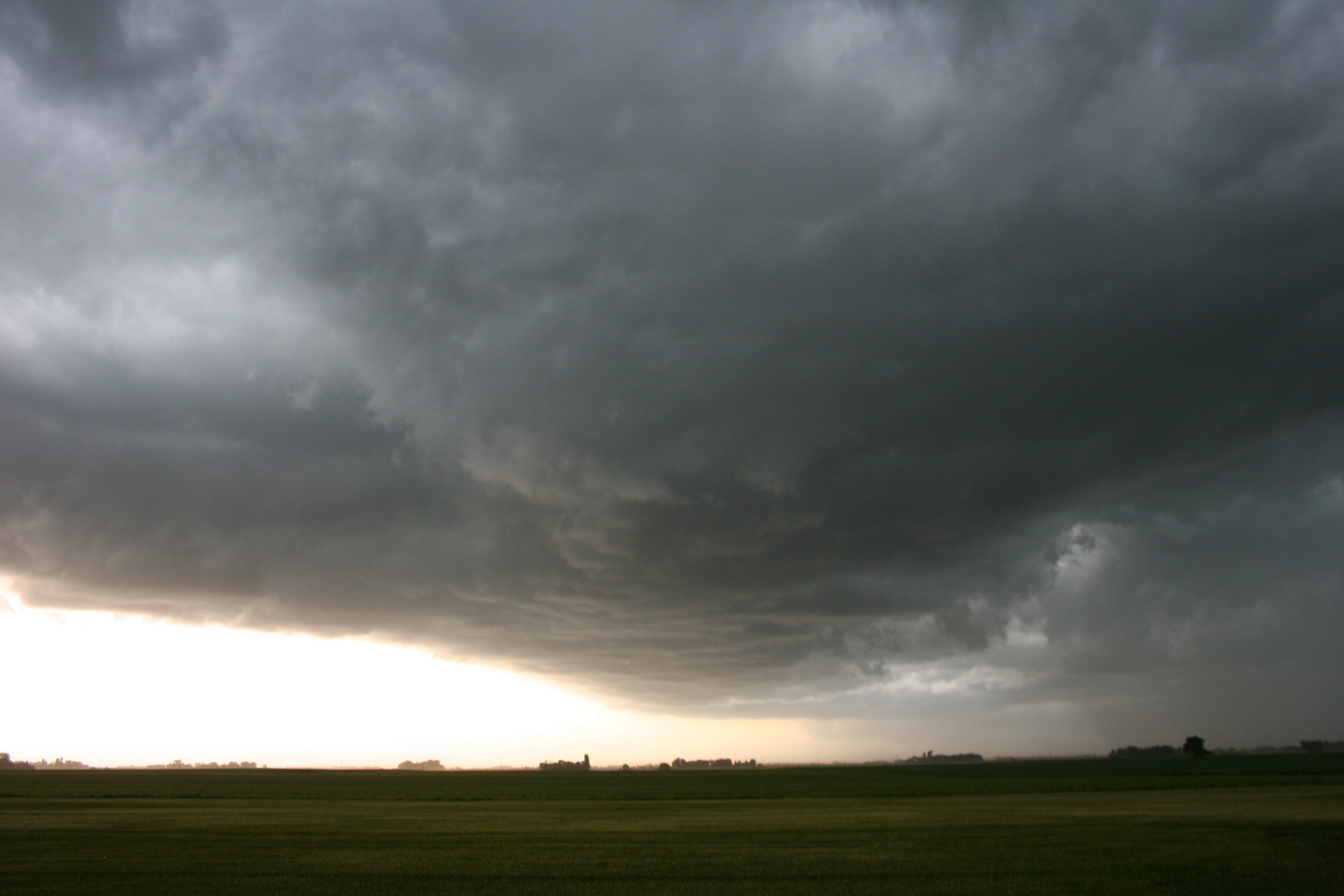
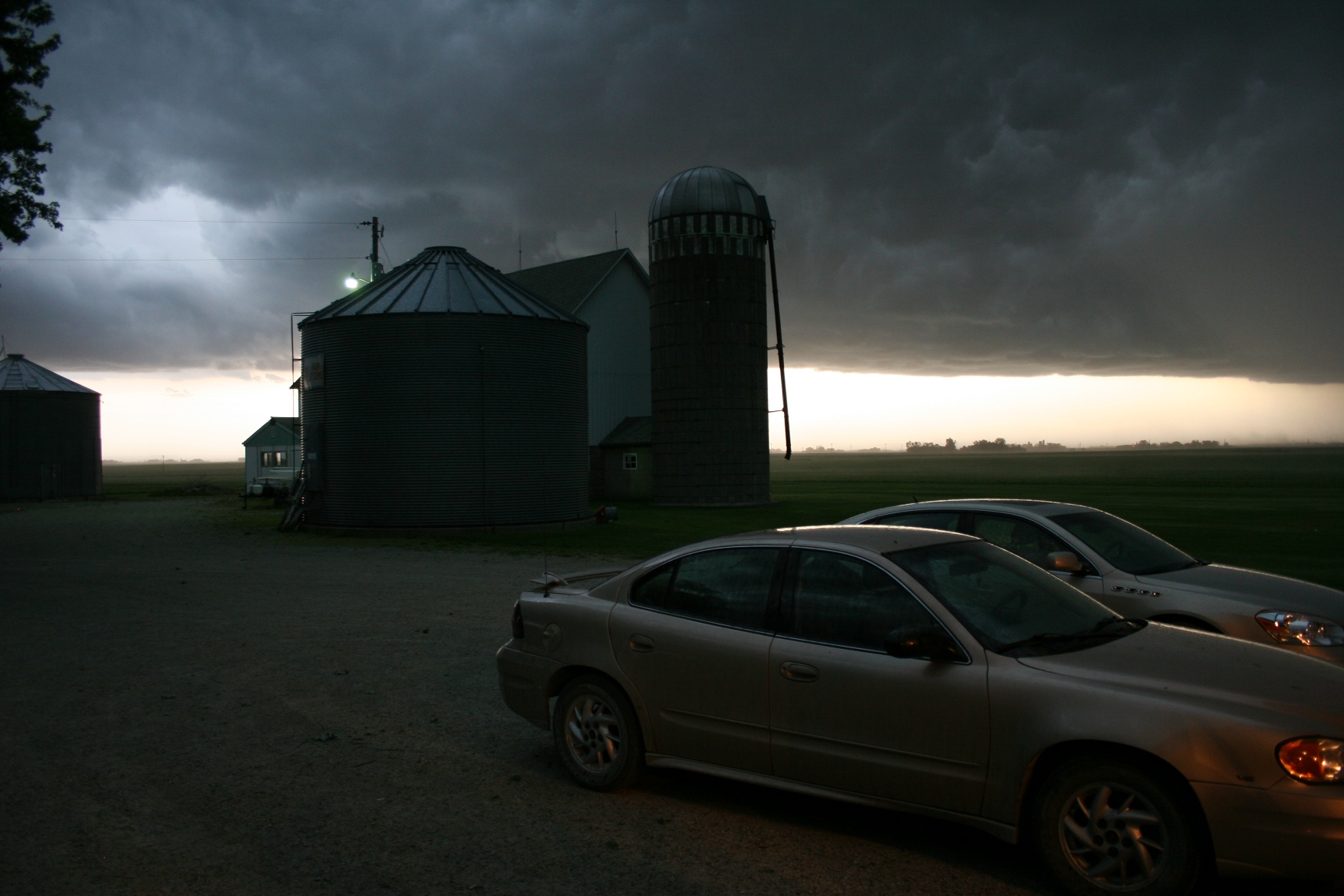
HAD I NOT KNOWN about the storm damage earlier that evening in southwestern Minnesota, I may not have worried so much.

Had my sister not called from Waseca and advised my husband and me to “get home,” I may not have worried so much.

Had the clouds not turned dark and foreboding, looming low enough to nearly brush the earth, I may not have worried so much.

Had my friend Fritz kept quiet and not shared her tales of tornado terror, I may not have worried so much.

But Friday evening when a strong storm hit my hometown of Vesta, when my sister warned of the approaching storm, when the sky threatened and when Fritz told her stories, I worried. I cannot help myself. Storms scare me.

And here are the images, taken at a farm near Nerstrand where I was attending a party, to prove why I was concerned.

Despite my fear, I must admit that the skies held a certain ominous beauty.

Spectacular lightning—our own fireworks show—crisscrossed the sky for hours. I attempted a few lightning shots, but could never get the timing right. And when you’re scared, holding the camera still enough for a slow shutter speed doesn’t work. Rain also kept me from pulling out my Canon.

The evening ended without any severe storms in our locale, despite skies that I swore would drop a tornado at any minute.

But in my hometown, the results were different. If you haven’t read my earlier post today about the storm in Vesta, click here. My brother was stopped twice trying to get into town to check on our mom, who is OK.

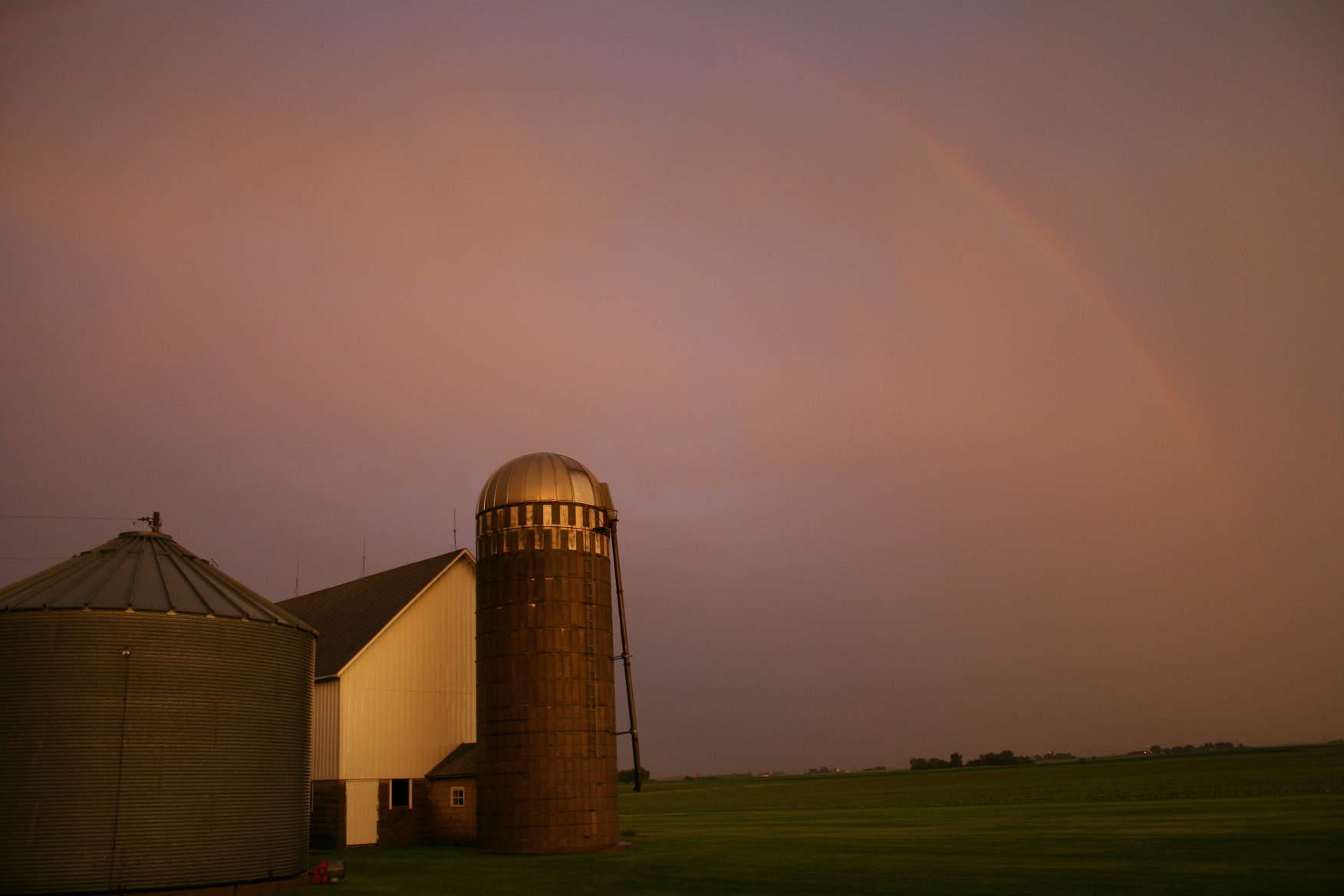
After the ominous clouds and the rain, this rainbow appeared.

© Copyright 2011 Audrey Kletscher Helbling

 

MPR debuts Minnesota architecture series with my submission July 1, 2011

LAST WEEK MINNESOTA Public Radio’s “State of the Arts” blogger Marianne Combs put out a call for photos and stories celebrating the great architecture of Minnesota.

I figured given how much I appreciate old buildings—and that would be considerably—I could submit an entry. But what building would I choose?

I started going through my photo folders in search of an image I considered most worthy of submission. FYI, I even have a folder labeled “architecture.”

Faribault topped my choices since this southeastern Minnesota community, my home since 1982, has many, many buildings on the National Register of Historic Places. And, yes, architecturally, these structures are jewels.

Then I considered images from Lucan, Morgan, Hanley Falls, Wood Lake, West Concord, Mantorville, Alexandria, Northfield and a few other towns I can’t immediately recall. Yes, the list was long.

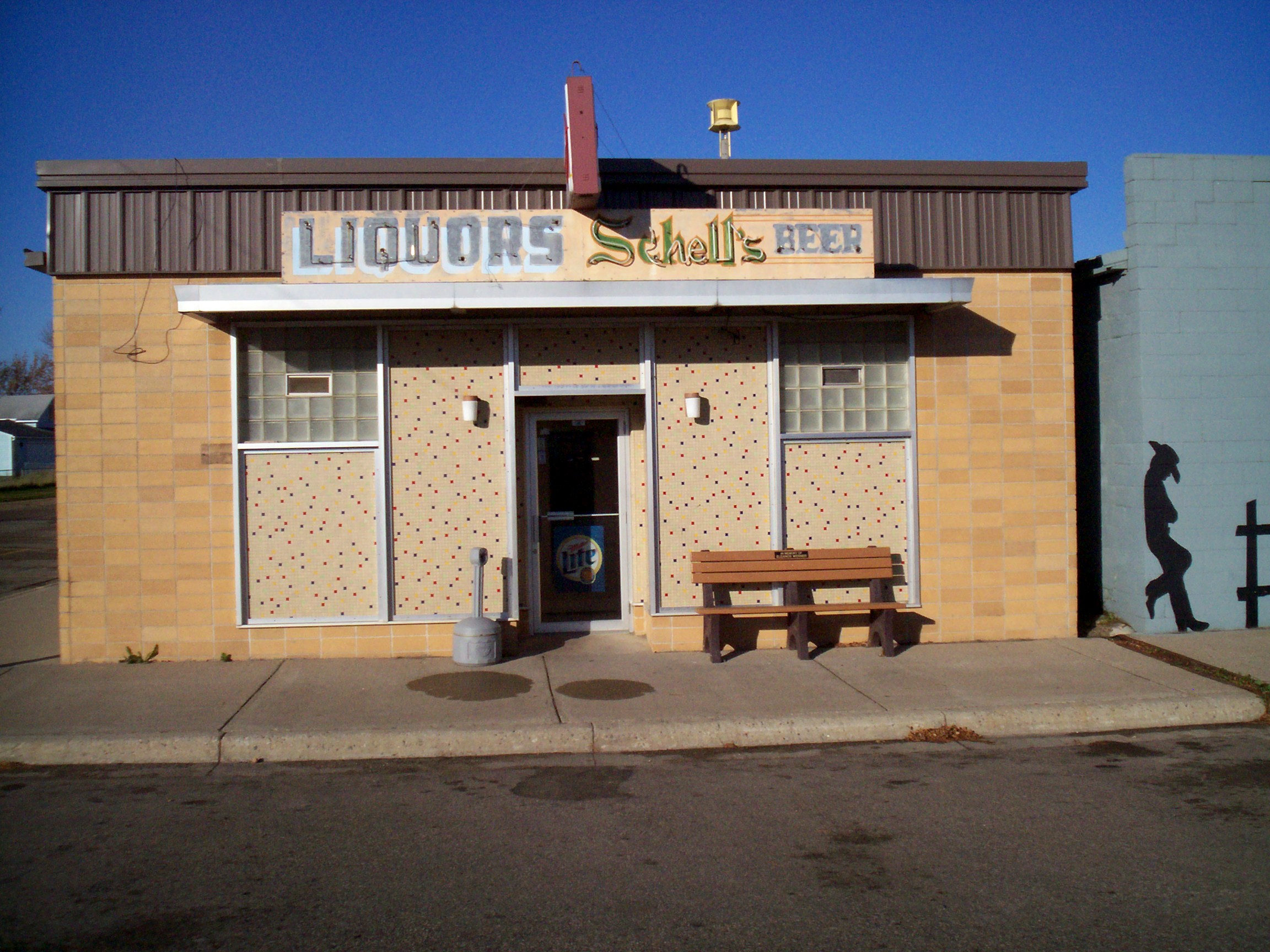
But something kept tugging at me—my loyalty to my hometown of Vesta. Now those of you familiar with Vesta, population around 350 and with a block-long main street, are likely wondering what on earth I found in this southwestern Minnesota prairie town of architectural worth.

Here is the building I chose and which debuted Marianne Combs’ Minnesota architecture series this afternoon. You can click here to read why I chose the Vesta Municipal Liquor Store.


© Copyright 2011 Audrey Kletscher Helbling
 

Oh, blessed summer eve on a Minnesota farm June 30, 2011

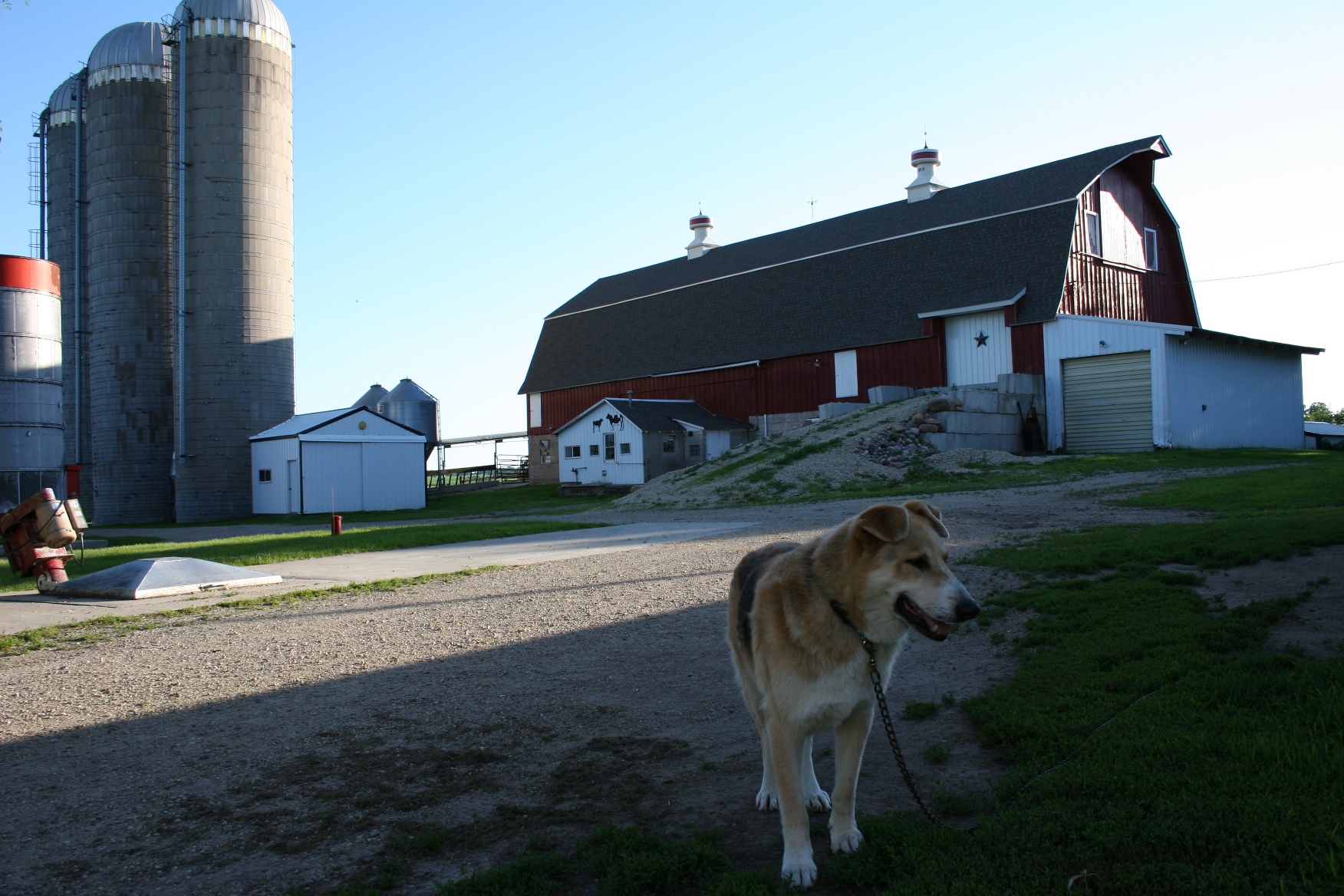
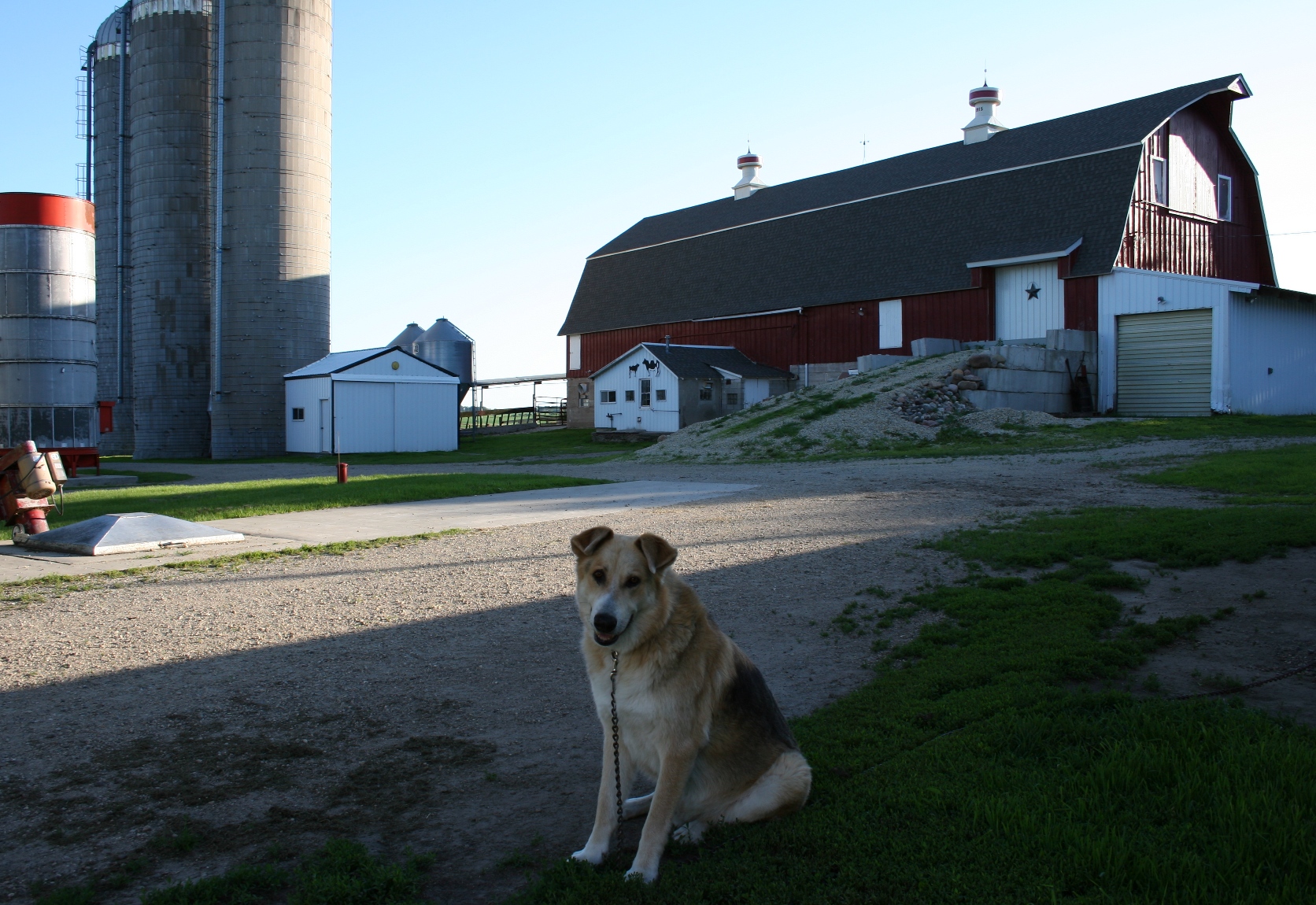
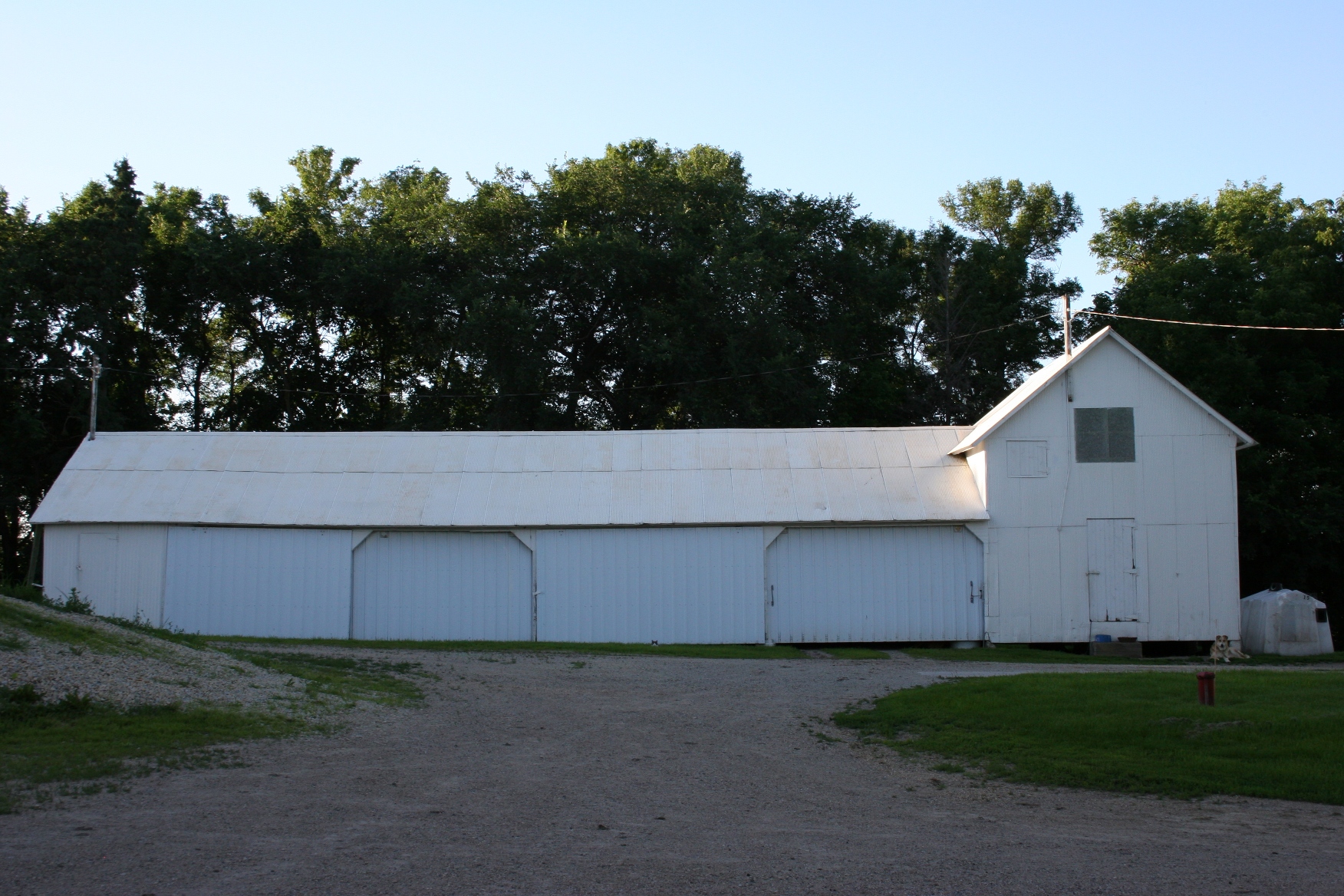
If you look closely, you will see the farm dog in front of the 1915 farmhouse to which a machine shed was added.

WIDE SWATHS OF SHADOWS sliced across the farmyard as the sun edged toward the horizon on a whisper of a summer night.

The old farm dog, tethered to a chain next to the 1915 farmhouse-turned-granary-turned storage shed, rose from his resting place on a paw-worn patch of grass. Water and food bowls rested on the single cement step nearby, within his reach.

The dog didn’t bark, didn’t lunge, just let me be as I moved into his territory. He stood, paced and then eased onto his haunches, acknowledging my non-threatening presence as I dropped to one knee to view the world from his perspective.

I wanted only to photograph this guardian of the farm on a summer evening as absolutely picture-perfect as any day you’ll get in Minnesota. Still. Serene. Colors sharp like new crayons. Sunlight, eye-blinding bright to the west, on the other side of the barn, outside the dogs’ reach.

This June evening, for these few hours, this watchdog could not roam the farmyard. He could only eye the visitors seated across the gravel drive at a picnic table. Friends gathered for pizza and lemonade sweetened with fresh strawberries and then more berries atop angel food cake and ice cream topped off with whipped cream.

Laughter punctuated conversation. Then bibles flipped open to words written upon pages thin as butterfly wings. The shrill call of a cardinal pierced the silence between ideas shared and scripture read.

Then, as the farm dog watched, the friends bowed their heads in a prayer of thanksgiving—gratitude to God for protecting the owners of this farm from serious injury in a motor vehicle accident the previous day. A rear-end collision. Truck spinning, tipping onto its side along a Minnesota highway. Glass in teeth and waistbands and hair.

None of this the guard dog knew on this most blessed of summer evenings on a Minnesota farm.

TODAY, JUNE 30, has been designated as “Maroon Day” in Minnesota, historically the deadliest day on our state’s roadways. Since 2000, more fatal crashes have occurred on this final day of June, leading into the July Fourth holiday, than on any other day of the year. Statistics show 30 fatal crashes resulting in 35 deaths.

All of Minnesota’s nearly 600 state troopers, in their signature maroon vehicles, will be patrolling today.

Buckle up. Drive carefully and be safe.

© Copyright 2011 Audrey Kletscher Helbling
 

A Lake Agnes love story June 24, 2011

IT APPEARED TO BE nothing short of a love story played out on a west central Minnesota lake.
Two love birds—or more accurately, ducks—met along the shoreline of Lake Agnes in Alexandria which, to those of you who do not live in Minnesota, claims to be the birthplace of America what with the Kensington Runestone and all found here.
But I digress.

The mallards cared not one wit about the vikings or the Runestone or even me, watching their every move. The drake and the hen had eyes only for each other.
And so the romance spawned on Lake Agnes, on this lake with the name of Greek (not Scandinavian) origin meaning pure/holy/chaste.

© Copyright 2011 Audrey Kletscher Helbling