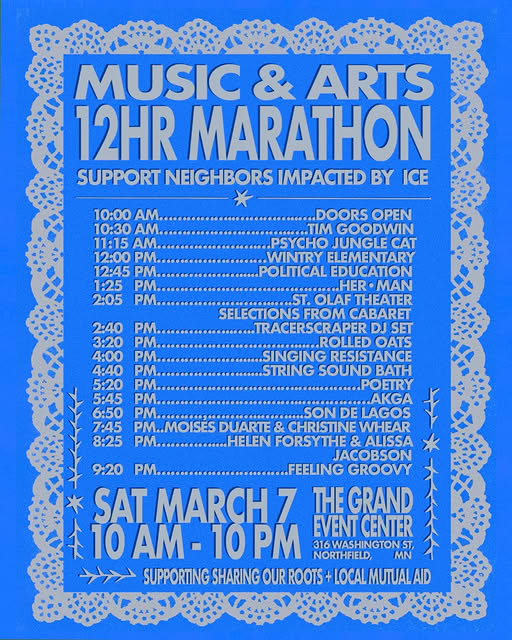
(Promo sourced from The Grand Event Center Facebook page)
THE GOOD FOLKS of Northfield, Minnesota, are organizing again to help their neighbors. This time it’s via a 12-hour Mutual Aid Marathon from 10 am-10 pm Saturday, March 7, at The Grand Event Center in this college town south of the Twin Cities.
Proceeds from the fundraiser will go to organizations—such as Sharing Our Roots and Northfield Community Action Center—providing mutual aid to those in the community impacted by federal immigration enforcement.
Doors open at 10 am at the event center, 316 Washington Street, just a block off Division Street in the heart of this historic downtown. Suggested donation at the door is $10.
From 10 until noon, attendees can enjoy a breakfast with 30 percent of entree sales going to organizations doing vital work in the community. Likewise, profits from a “pay what you can” appetizer buffet, which starts at 4 pm, will also be donated.
Event planners promise a full day and evening of live music, performances, poetry, political education, and powerful speakers. See the event poster promo above for a complete schedule.
Organizers are calling upon the public to: Bring friends. Bring family. Bring your appetite and your solidarity. Come for a while or stay for the entire marathon.
As I see it, the Mutual Aid Marathon is all about neighbors helping neighbors, which is the very definition of a loving and caring community.
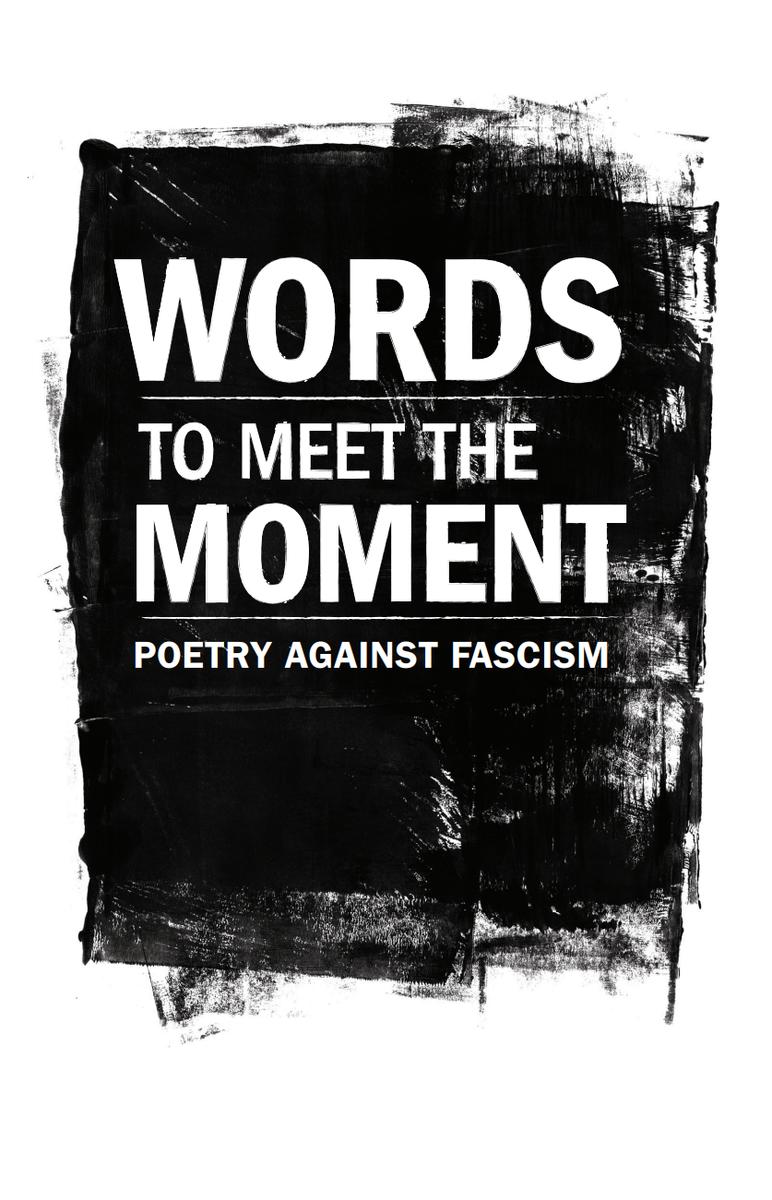
Mark Heiman designed the book cover. (Image sourced online)
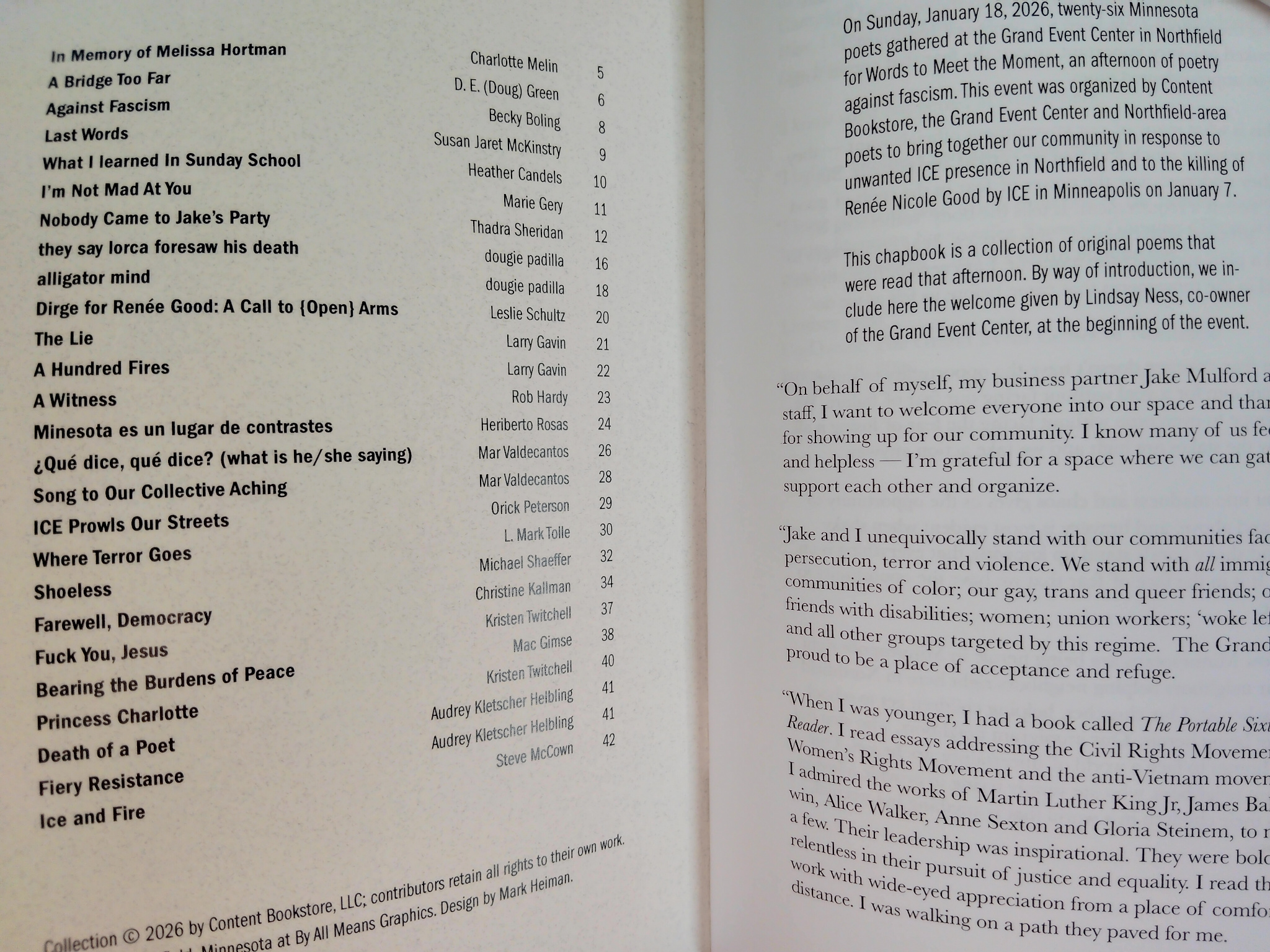
IN A SLIM VOLUME of poetry collected by a small town Minnesota independent bookstore and printed by a small town printer, 22 area poets raise their voices in response to the massive immigration enforcement efforts in Minnesota. The result is 26 powerful, empowering, strongly-worded poems that hold back nothing.
These poets unleash their fury, their fears, their frustrations, layers of intense emotions. “Let every poem be a witness,” writes my friend and former Northfield Poet Laureate Rob Hardy in his poem, “A Witness.” He writes that in the context of the fatal shooting of mother and poet, Renee Nicole Good, by a federal immigration agent on the streets of Minneapolis on January 7.
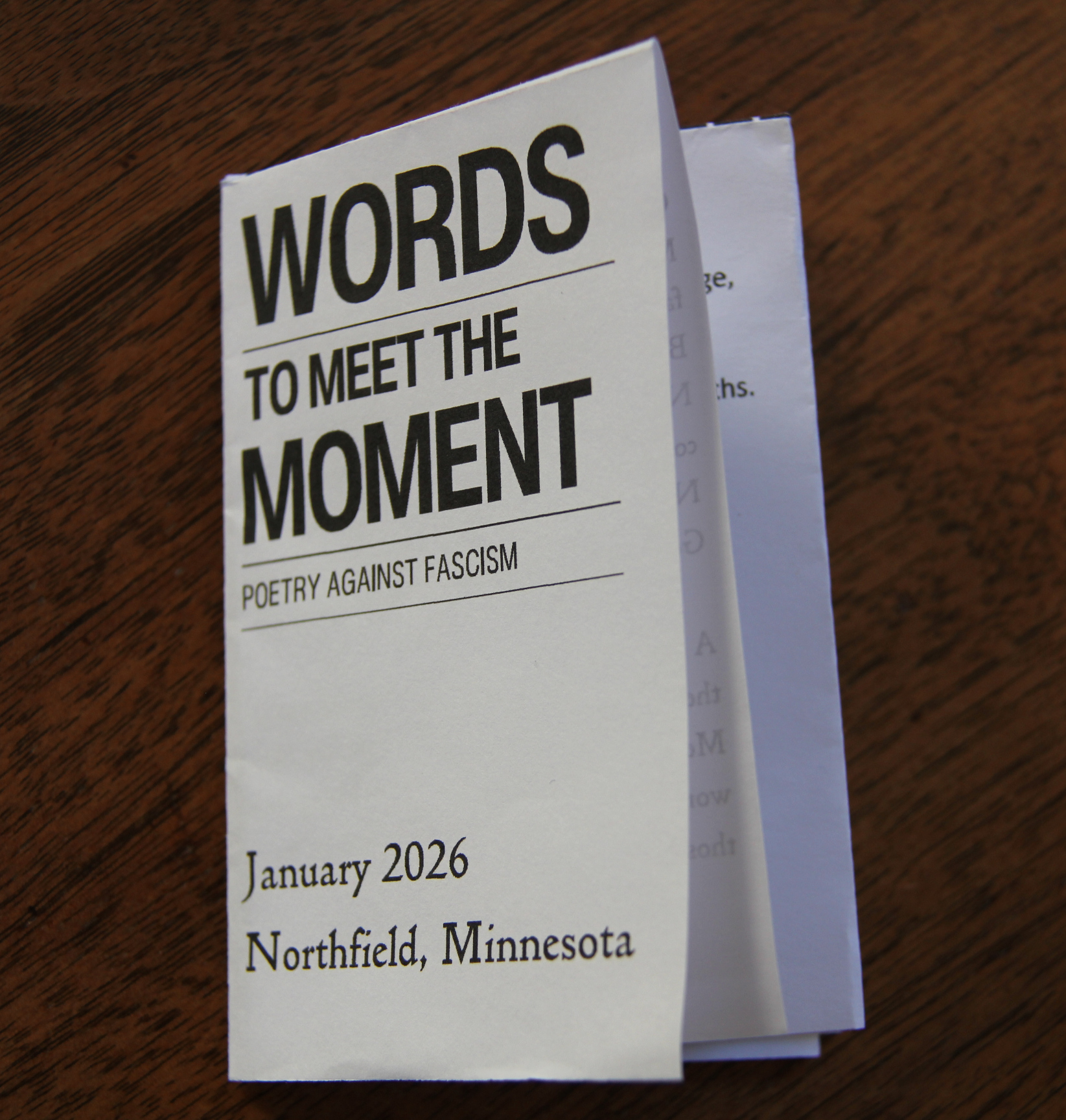
The poets and their poems plus an intro by Lindsay Ness, co-owner of The Grand Event Center. She introduced a “Words to Meet the Moment: Poets Against Fascism” poetry reading which preceded publication of this chapbook. If you find the title of a poem offensive, read the poem and you will understand the title. (Minnesota Prairie Roots copyrighted photo February 2026)
Two poems, “Last Words” by Susan Jaret McKinstry and “I’m Not Mad at You” by Marie Gery, quote Renee Good’s final words—”I’m not mad at you”—spoken to a federal immigration agent right before her fatal shooting.
The words within these 26 poems reflect not only individual poets’ thoughts but also a collective community reaction to ICE in Minnesota. Themes of anger, fear, unity, dignity, hope and light run throughout this poetry.
Colorful merchandise inside Mercado Local in Northfield, where I met Mar Valdecantos and read poetry with Becky Boling and D.E. Green. (Minnesota Prairie Roots copyrighted file photo)
I especially appreciate the writing of two immigrants, including my friend Mar Valdecantos, who came to the U.S. from Spain many years ago. She uses humor to make a point, stating that perhaps she should cover her dark hair with a blonde wig. That would allow her to semi hide her ethnicity and allow her to feel safer while out and about in the community. Safe against racial profiling, used freely by immigration agents to stop people of color in Minnesota.
Latino immigrant Heriberto Rosas, in “Minnesota es un lugar de contrastes,” writes of whence and why he came to America, the challenges he and other immigrants have faced, and the hope and gratitude they hold. It’s an especially revealing poem written in Spanish and translated into English on the opposite page.
My poet friend D.E. (Doug) Green also writes “hope” into his poem, “A Bridge Too Far,” as he references the Civil Rights Movement and the bridge crossed, literally, “in the face of violence, cruelty and terrible hatred.” A bridge which must once again be crossed.
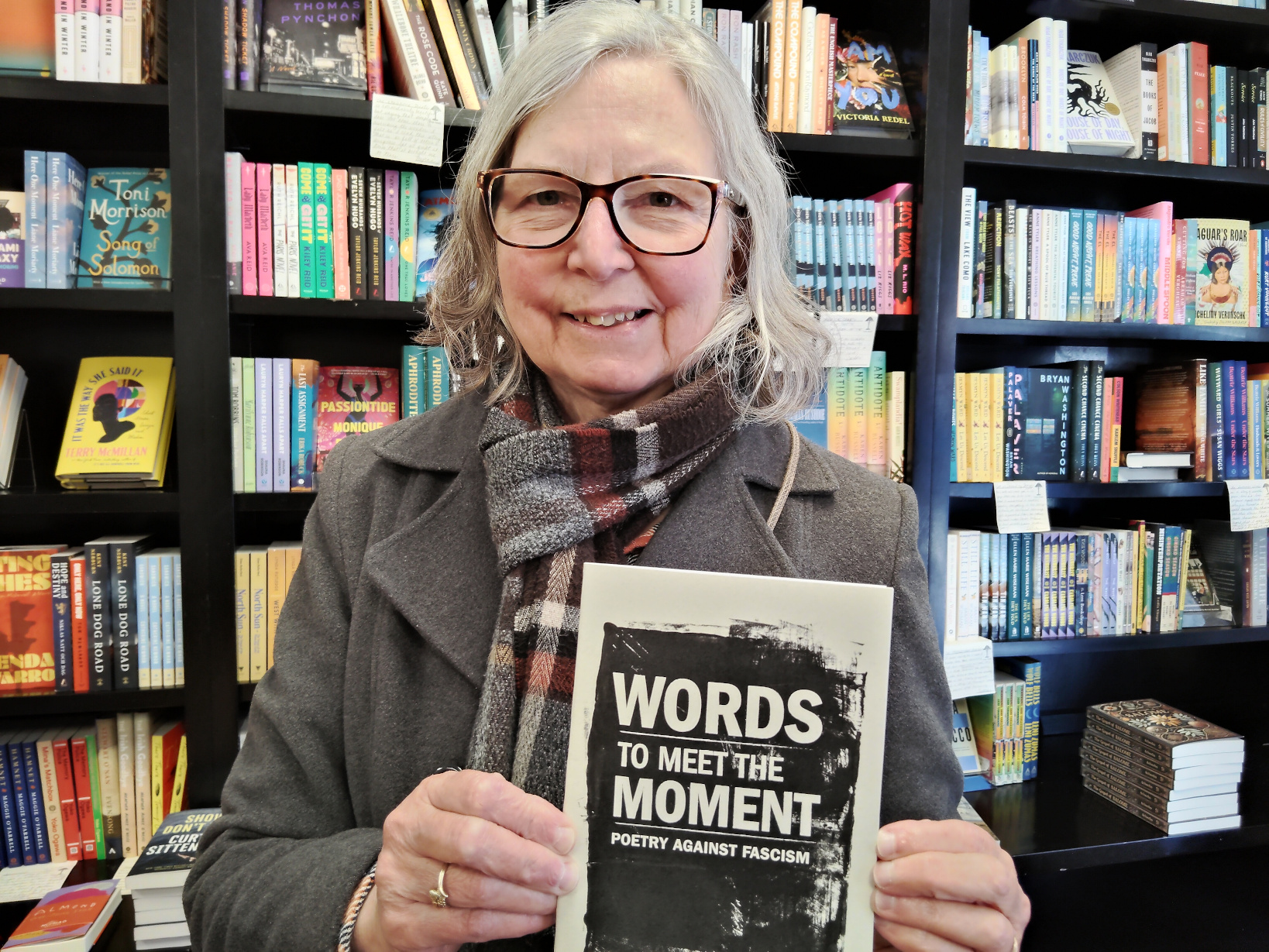
I picked up my copy of the chapbook at Content Bookstore after a morning of protesting in Faribault, thus the flat hair. (Minnesota Prairie Roots copyrighted photo by Randy Helbling)
These poems are raw, relentless, sometimes raging in content. That includes my “Fiery Resistance” and “Death of a Poet.” Words hold power. “We the people have a job to do,” writes Orick Peterson in “ICE Prowls Our Streets.” He asks us to muster our courage against the bullies, take on our neighbors’ fears, lean into each other.
Steve McCown, who died unexpectedly on the day he was to read his original poem, “Ice and Fire,” at a “Words to Meet the Moment: Poetry Against Fascism” event on January 18 in Northfield, summarizes everything well in the final line of his poem: “We can build a fire on ice.” Let me repeat his final line, with emphasis: “We can build a fire on ice.”
FYI: The 42-page chapbook, Words to Meet the Moment: Poetry Against Fascism, is for sale only at Content Bookstore in Northfield. Cost is $10. The bookstore will ship domestically at a cost of $4.99, the media mail book rate, with an additional $1 charge for each book ordered.
Content Bookstore published the chapbook with printing By All Means Graphics. The original print run is 300 books. Once expenses are paid, proceeds from sale of the chapbook will go to the Northfield Community Action Center.
“Words to Meet the Moment,” published by Content Bookstore, Northfield, Minnesota, and printed by Northfield-based By All Means Graphics.(Book cover designed by Mark Heiman)
POETRY HOLDS POWER. And perhaps no time has that been more evident in Minnesota than during the massive federal immigration enforcement, Operation Metro Surge.
In January, poets from my area of southern Minnesota gathered to read original poetry at a “Words to Meet the Moment: Poetry Against Fascism” event in Northfield. I was in Wisconsin, unable to attend. But a poet friend, Becky Boling, read my two poems, “Death of a Poet” and “Fiery Resistance.”
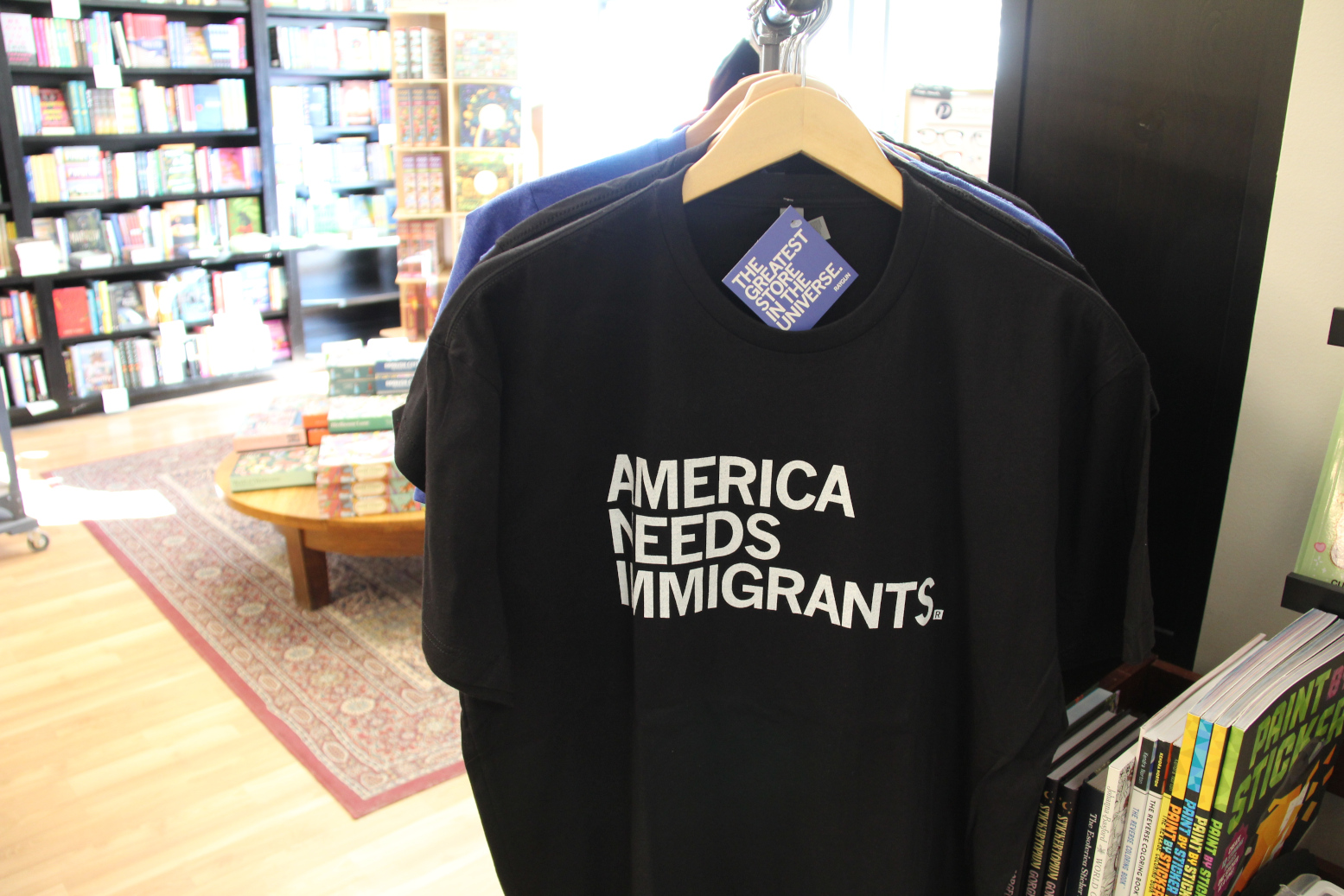
T-shirts for sale at Content Bookstore. (Minnesota Prairie Roots copyrighted file photo February 2026)
Now those two poems and others read at The Grand Event Center in January have been printed in a chapbook, Words to Meet the Moment, published by Content Bookstore. That’s an independent, socially-conscious bookshop in the heart of historic downtown Northfield. Once printing costs have been covered, all proceeds from chapbook sales will be donated to the Northfield Community Action Center, a nonprofit serving the community.
The work of 20 poets, some of whom I know personally (and have read poetry with) or whom I’ve heard read, are printed therein. These are gifted poets, many with their own published collections of poetry. Several were previous poet laureates in Northfield.
I picked up this zine when I was recently at Content Bookstore. It includes three poems, “Ice and Fire” by Steve McCown, “Last Words for Renee Nicole Good” by Susan Jaret McKinstry and “A Witness” by Rob Hardy. (Minnesota Prairie Roots copyrighted photo February 2026)
All of us wrote in response to ICE’s presence in Minnesota and/or in reaction to the fatal shooting of Renee Good by a federal immigration agent on January 7. This was prior to the second fatal shooting, that of Alex Pretti, by ICE agents. Good was a poet, which makes this new chapbook especially meaningful.
Whether you like poetry or not, this is one collection you should read to better understand how we as Minnesotans, we as poets, have been feeling these past few months. Poetry holds power. It is a way to raise our voices against injustice, a way to express our thoughts, our feelings. A way to make a difference. A way to meet the moment.
FYI:To pre-order/order Words to Meet the Moment: Poetry Against Fascism, click here. The chapbook is priced at $10. Content Bookstore will ship the chapbook domestically for an additional cost of $4.99, the media mail book rate, plus an additional $1 per book shipped. Only one printing is planned, unless the chapbook sells quickly. Books will also be available for purchase in the store.
A hope medallion gifted to me by my friend Beth Ann many years ago. (Minnesota Prairie Roots copyrighted file photo)
IN THE MIDST of the invasion of Minnesota, not just Minneapolis, by armed masked badge-less federal agents who are violently detaining and taking people, even fatally shooting them, I am trying to find hope.
And that comes to me in big and small ways. Never underestimate the power of your voice, the power of your compassionate words and actions no matter who you are, where you live.
In the speeches of legislators in Washington, DC, on Wednesday, I heard praise for the strength of Minnesotans. I heard concern for our country and our democracy. And I listened to Minnesota Senators Amy Klobuchar and Tina Smith boldly, loudly call for this federal invasion to stop. That’s me paraphrasing their messages. To hear them say they’ve never felt more proud of Minnesotans brought me to tears.
A hope stone that sits on my desk. (Minnesota Prairie Roots copyrighted file photo)
THE WORDS OF A POET & A MUSICIAN
Then there are the words printed on a card that arrived in my mailbox from a blog reader, who has countless times sent me uplifting notes, cards and more simply because she is a kind, compassionate, caring person. On the front of that card were these lines from poet Emily Dickinson: Hope is the thing with feathers/that perches in the soul/and sings the tune without the words/and never stops at all. Roxy has followed my blog long enough to know that “hope” is one of my favorite words.
And then there are the words penned and sung by Bruce Springsteen in “Streets of Minneapolis.” Springsteen doesn’t hold back in his just-released anti-ICE protest song. …Against smoke and rubber bullets/By the dawn’s early light/Citizens stood for justice/Their voices ringing through the night… He specifically references the whistles and phones the people of Minneapolis (and throughout Minnesota) have used to alert people to ICE’s presence and to document their actions. He unleashes strong words against ICE and federal government leaders and officials. Several people sent me links to that song because they knew I would appreciate the lyrics, the ways in which creatives can powerfully protest.
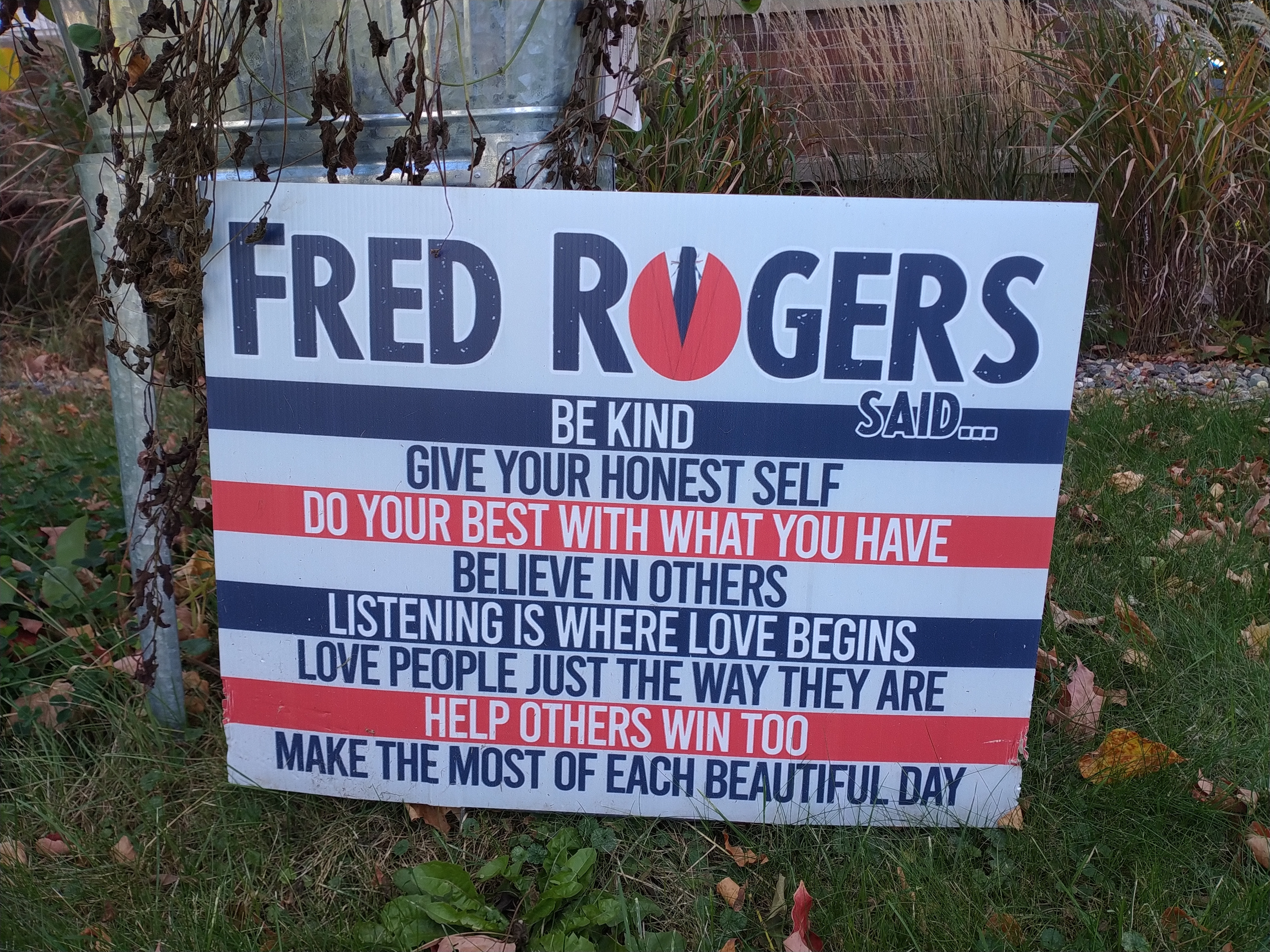
Words from Mr. Rogers in a front yard in the small town of Nerstrand, Minnesota. (Minnesota Prairie Roots copyrighted file photo)
SO MANY HELPERS
Another blogger friend has uplifted me many times in recent weeks by sharing about protests, vigils and more in Ann Arbor, Michigan, where she lives. It helps to know that Beth and others across the country and world are lifting up Minnesotans, protesting wherever they live, fighting for what is moral and right.
Ruth, a blogger friend from Pittsburgh, is knitting red “Melt the ICE” hats using a design from the 1940s. Norwegians knit and wore the pointed, tasseled hats to visually protest against Nazi occupation of their country. Proceeds from pattern sales will go to immigrant agencies to help those impacted by the actions of ICE. Ruth and other knitters are using their talents to protest, to help.
Mr. Rogers would be proud of all the helpers.
Closer to home, while walking Wednesday morning inside a soccer dome, I shared with several people about protesting and ways to help immigrant families locally. Others in my circle have donated money, via my direction, to a local food shelf and also to one in the south metro. Volunteers are delivering food to people afraid to leave their homes because of ICE. Minnesotans all across the state are stepping up to help their neighbors.
All of this gives me hope. Hope perches. Hope sings. Hope never stops.
(Image sourced online from Content Bookstore, Northfield, Minnesota)
RENEE GOOD, fatally shot by an ICE agent in south Minneapolis on January 7, was an award-winning poet. That is fact. The federal government has flooded Minnesota with thousands of ICE agents. That, too, is fact.
According to organizers (Content Bookstore, The Grand and Northfield area poets), the event is intended to bring the community together in response to recent ICE presence in Northfield and in response to the killing of Renee Good.
There is power in poetry, in the written and spoken word. The arts in general—whether literary, visual or performing—have long been a way to meet the moment. In 2021, for example, the Ramsey County Library published This Was 2020: Minnesotans Write About Pandemics and Social Justice in a Historic Year. That collection of short prose and poetry addressed the COVID-19 pandemic, the justice for George Floyd movement and the overall political climate in our country in 2020. My poem, “Funeral During a Pandemic” was selected for publication in the collection.
While I won’t be available to participate in Sunday’s “Words to Meet the Moment” poetry reading in Northfield, I will be there in spirit. And if I am so inspired, I will work on a poem to submit. That’s an option for those who can’t attend or who don’t want to read.
“Words to Meet the Moment” is about more than just words, though. Event planners are also accepting donations for Northfield Supporting Neighbors, a grassroots organization founded to help meet the needs of local immigrants, especially for legal services.
This marks a moment in time when we can use our words, our hands, our financial resources to make a difference. Or we can do nothing. I choose meeting the moment with strength, courage, hope, action and words.
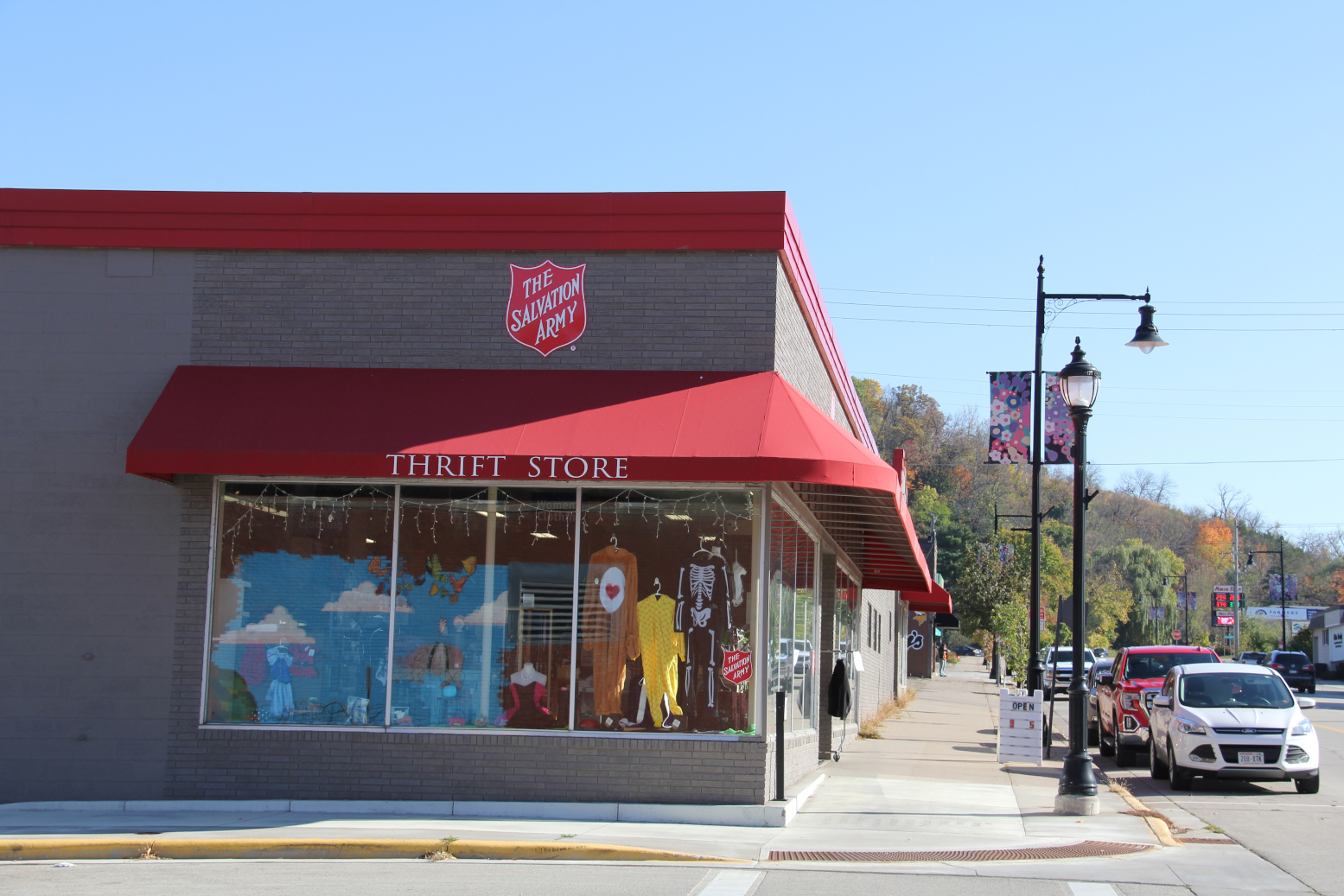
“Stand in the Shadows” public art outside the Salvation Army Thrift Store in Red Wing shares interesting local history. (Minnesota Prairie Roots copyrighted photo October 2025)
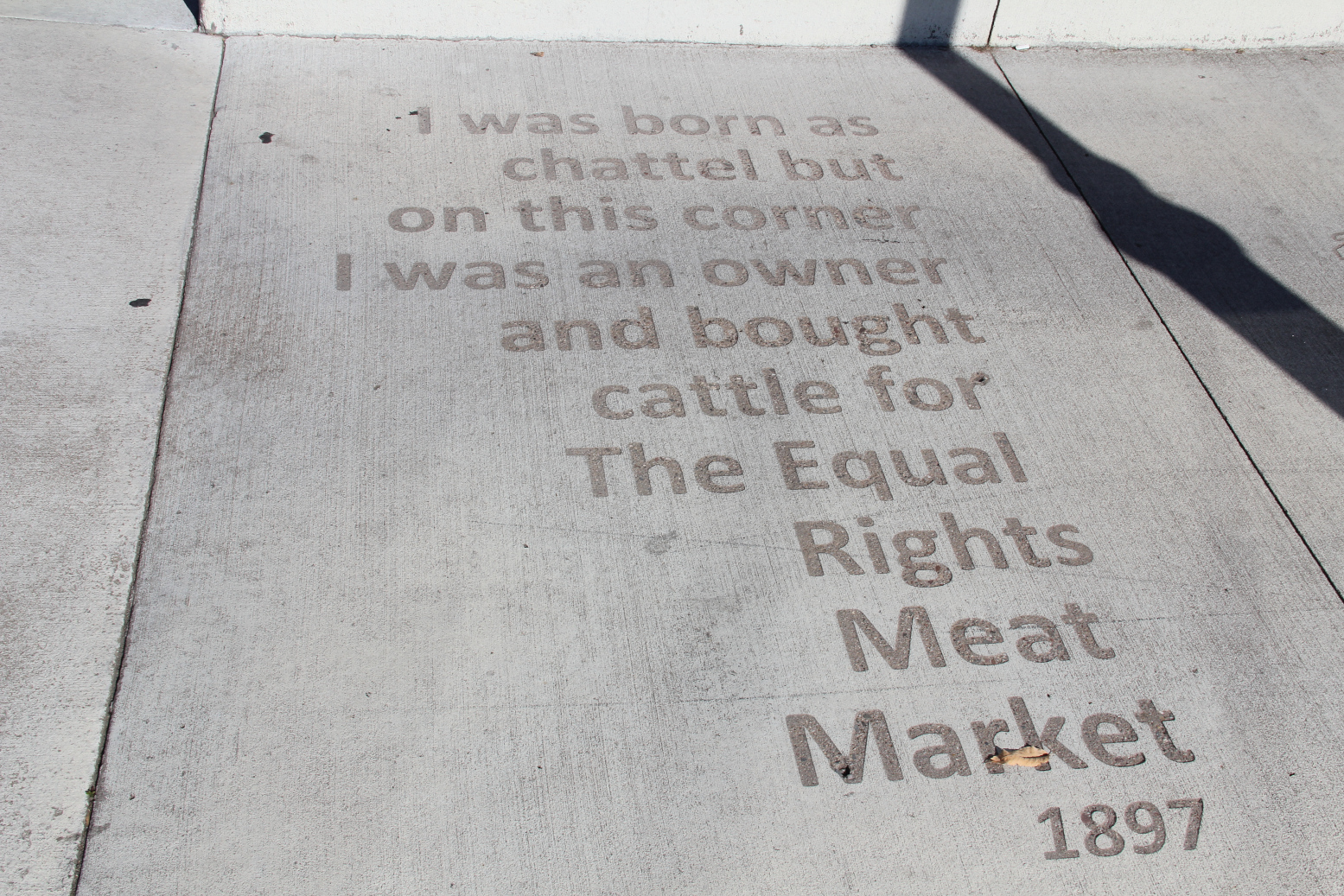
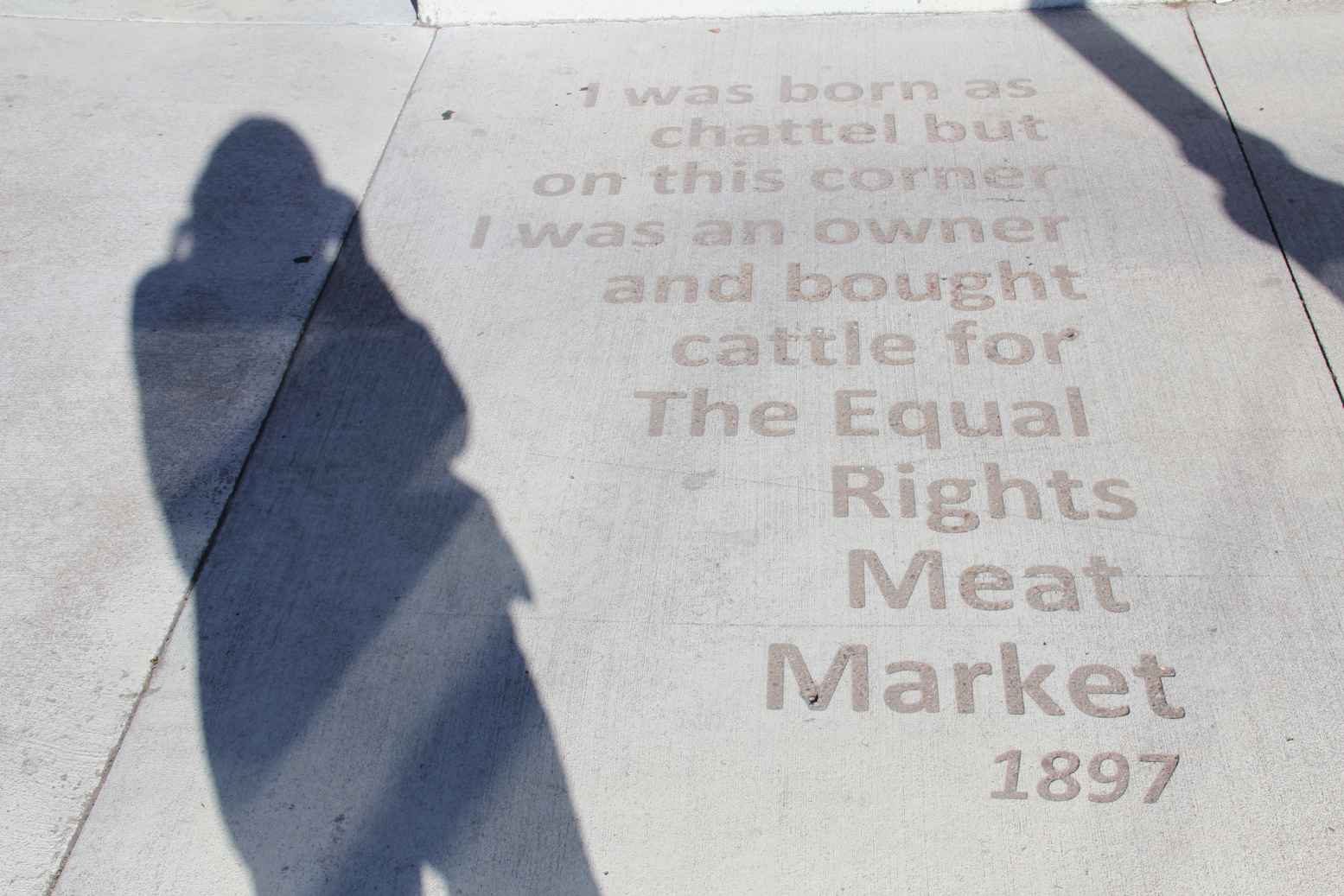
Oh, the things you discover when you least expect it. That can be said for the local history highlighted outside the Red Wing Salvation Army Thrift Store. There, imprinted upon the sidewalk, I found these words: I was born as chattel but on this corner I was an owner and bought cattle for The Equal Rights Meat Market—1897.
The Equal Rights Meat Market once stood at this location. (Minnesota Prairie Roots copyrighted photo October 2025)
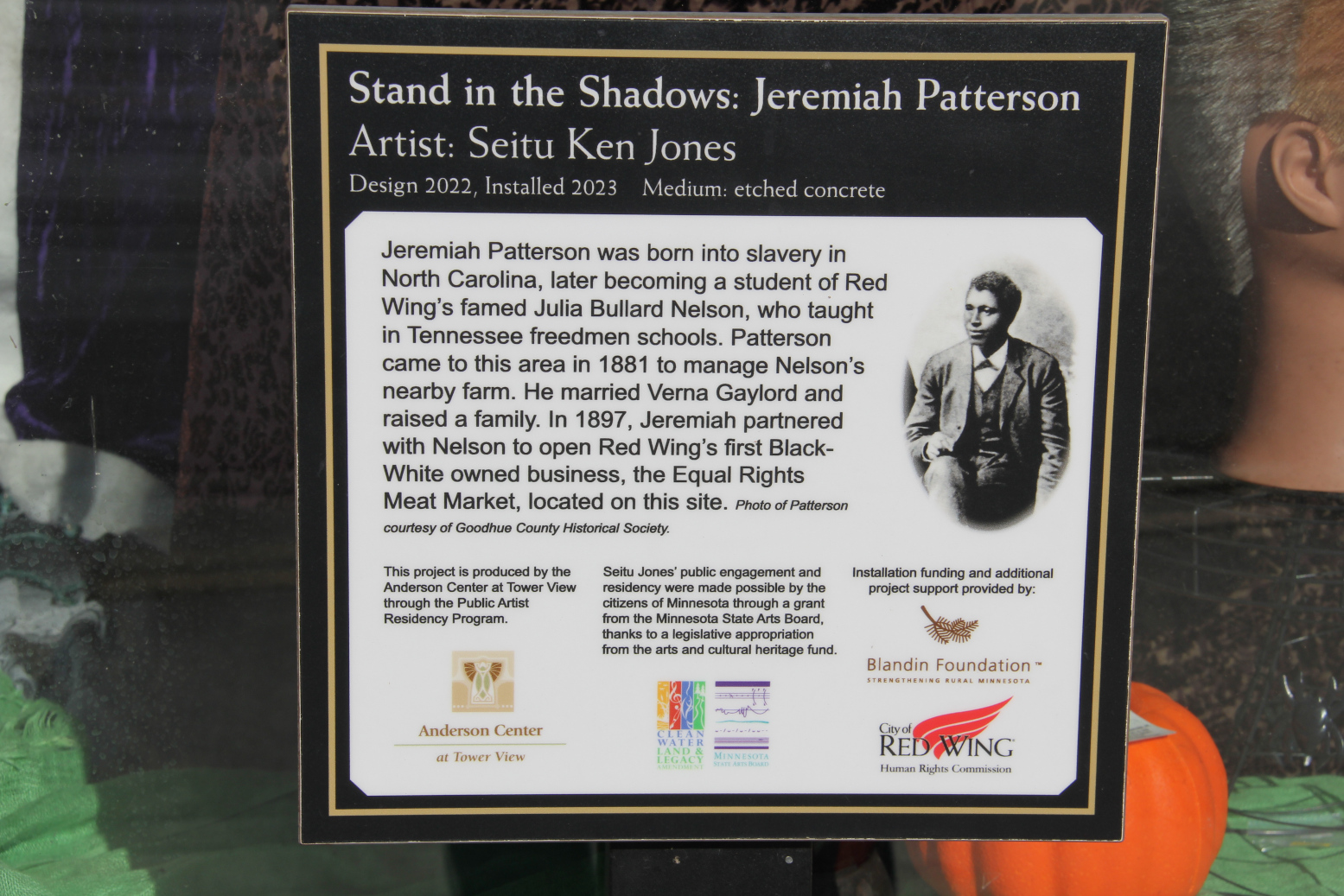
And that’s how I learned about Red Wing’s first Black-white owned business opened in 1897 at the site of the current-day thrift shop on the corner of Plum and Fifth streets. Jeremiah Patterson, born into slavery, and activist Julia Bullard Nelson co-owned the meat market in this Mississippi riverside community in southern Minnesota.
I love when communities pull hidden history out of the archives and publicly share it in creative ways. If not for this “Stand in the Shadows” public arts project, I would have had no idea that the thrift shop I was about to enter stood on the site of The Equal Rights Meat Market.
That name, oh, that name. Equal Rights. It fits. Nelson was a leader in women’s suffrage. For a white woman and a Black man (freed from slavery) to go into business together in the late 19th century, especially in predominantly white rural Minnesota, speaks to their strength, confidence and courage.
But then again, the two forged ahead on multiple fronts. Nelson taught African Americans in government Freedmen Schools down South when that was not necessarily well-received during post Civil War Reconstruction. Patterson was her student. He eventually moved to Minnesota to manage Nelson’s farm south of Red Wing near Belvidere. Patterson would marry a local white woman, Verna Gaylord, in 1886 with the interracial couple having nine children.
A summary of the story behind The Equal Rights Meat Market is showcased at the thrift shop. (Minnesota Prairie Roots copyrighted photo October 2025)
I considered all of this fascinating as I researched information based on that sidewalk message and on a plaque posted outside the Salvation Army thrift store.
Similar historical info and a sidewalk imprint are also located by Red Wing’s St. James Hotel, although I missed seeing that. That poem reads: Bondage and war behind me/Back and forth, trunks and trolley, from train, from steamboat to the St. James Hotel/I landed here, worked and forged a life. This honors another Black man, Joseph Parker, enslaved in Kentucky and later a porter at the hotel. He is the great grandfather of Seitu Ken Jones, a multidisciplinary artist from St. Paul and lead on the “Stand in the Shadows” public art in Red Wing.
As I searched out the backstory, I learned that the Patterson family eventually left Red Wing, after the Ku Klux Klan became active in the area in the early 1920s. It’s an unsavory part of Minnesota history that some would prefer remain hidden. I’d rather know about such hatred than pretend it never happened.
My shadow falls on the sidewalk as I photograph the words. This art also includes a sidewalk silhouette although I don’t recall seeing it. (Minnesota Prairie Roots copyrighted photo October 2025)
On this day in Red Wing outside the Salvation Army Thrift Store, I learned about two strong individuals who owned The Equal Rights Meat Market. Although the business remained open for only a short time, it leaves a legacy of strength and equality in this community.
This public arts project reminds us that history cannot, should not, be erased, rewritten or hidden. Those words—“born as chattel” to “I was an owner and bought cattle for The Equal Rights Meat Market”—need to be imprinted not only upon a sidewalk, but also upon our collective spirits. Especially now. And in recognition of civil rights leader and activist Dr. Martin Luther King Jr, who is honored annually, this year on Monday, January 19.
This photo reflects how I am feeling today. (Minnesota Prairie Roots copyrighted file photo)
ALL OF THIS is beyond belief, yet it isn’t.
I texted that to a friend today. “This” refers to the fatal shooting of Renee Good by an ICE agent in south Minneapolis on Wednesday morning. The governor of Minnesota, the mayor of Minneapolis, the police chief of Minneapolis all publicly predicted several weeks ago that something like “this” could happen during ICE’s ramped up immigration enforcement here.
I’m not surprised either. Tensions have been building, not only in Minnesota but across the country, as ICE swarms cities and communities. ICE tactics seem unnecessarily aggressive and sometimes violent. I see zero humanity. Zero compassion. Zero care. I wonder about the vetting, the training, the actions, the accountability of these ICE agents.
Now in the aftermath of Renee’s killing, the FBI, which originally agreed to work with the Minnesota Bureau of Criminal Apprehension on investigating the fatal shooting, has backtracked. The FBI will be the sole investigator and will not provide any investigative information to the BCA. It is impossible for me to trust the process since, shortly after the shooting, Renee Good was tagged “a domestic terrorist” by the feds. Judgment was already made.
(Minnesota Prairie Roots copyrighted file photo)
Nothing I’ve read or heard indicates to me that Renee was anything but a wife, mom, writer and poet. Recently-moved to Minneapolis, the 37-year-old was young enough to be my daughter. She had a full life ahead of her.
Because I am also a wife, mom, writer and poet, I relate personally and professionally to Renee. I am grieving the senseless loss of not only a human being, but of another creative. In 2020, Renee won an Academy of American Poets Prize for her poem, “On Learning to Dissect Fetal Pigs.” That’s quite an accomplishment for a then-undergrad at Old Dominion University. She graduated with an English degree in 2020. Today I think of all the poems this poet will never write, all the hugs and kisses this mom will never give to her three children.
A partial quote by Georgia Congressman and civil rights activist John Lewis, photographed several years agoin Dundas, Minnesota, and fitting for today. (Minnesota Prairie Roots copyrighted file photo)
“…May Renee’s life be a reminder of what unites us: freedom, love, and peace. My hope is for compassion, healing, and reflection at a time that is becoming one of the darkest and most uncertain periods in our nation’s history.”
I think, as a creative, that Renee would have appreciated those well-crafted words. I do. In continuing to process this tragedy, I feel uplifted by those of you who have encouraged not only me, but Minnesotans as a whole. Your solidarity, your supportive actions, your caring words all matter while we work through this collective trauma. Thank you.
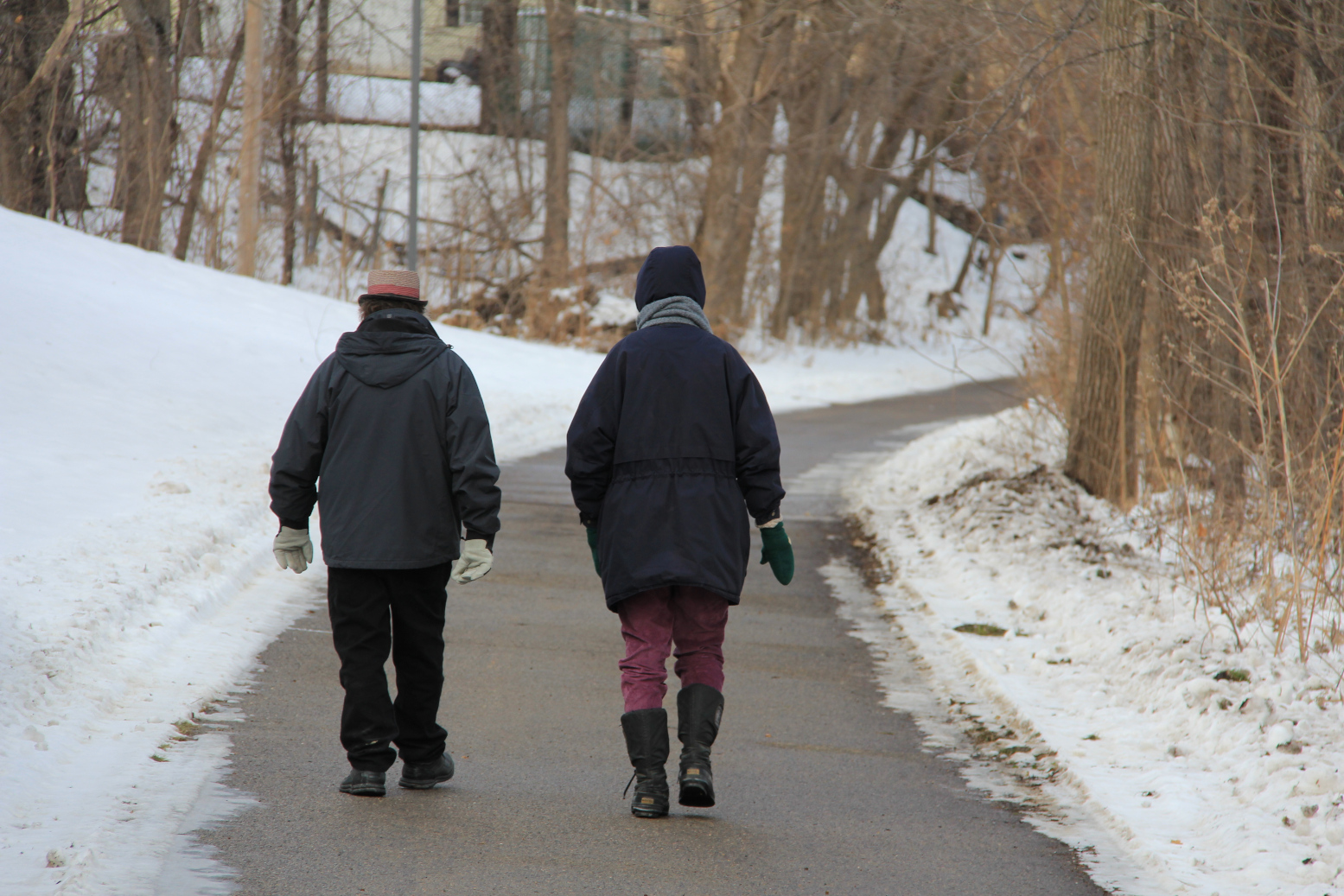
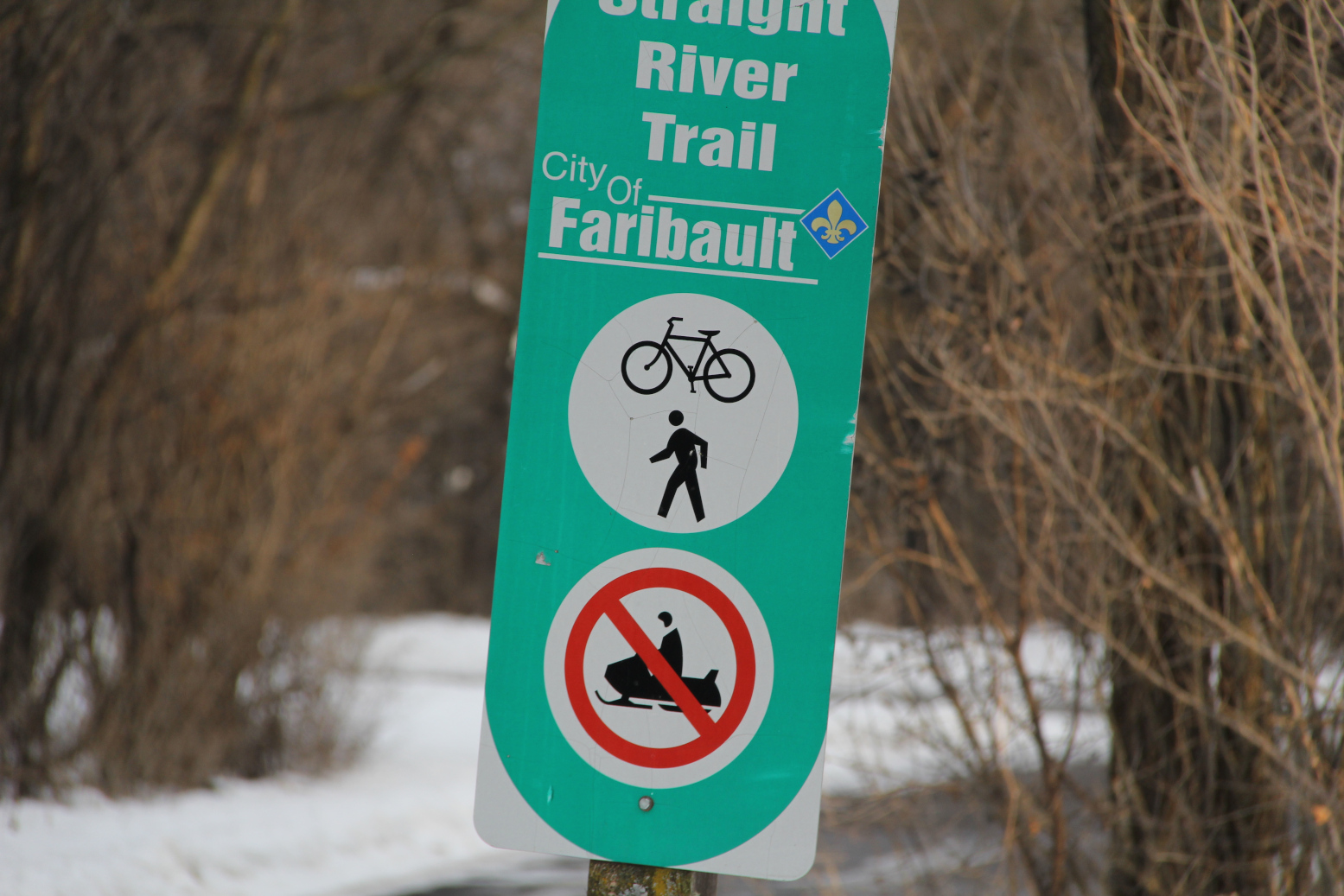
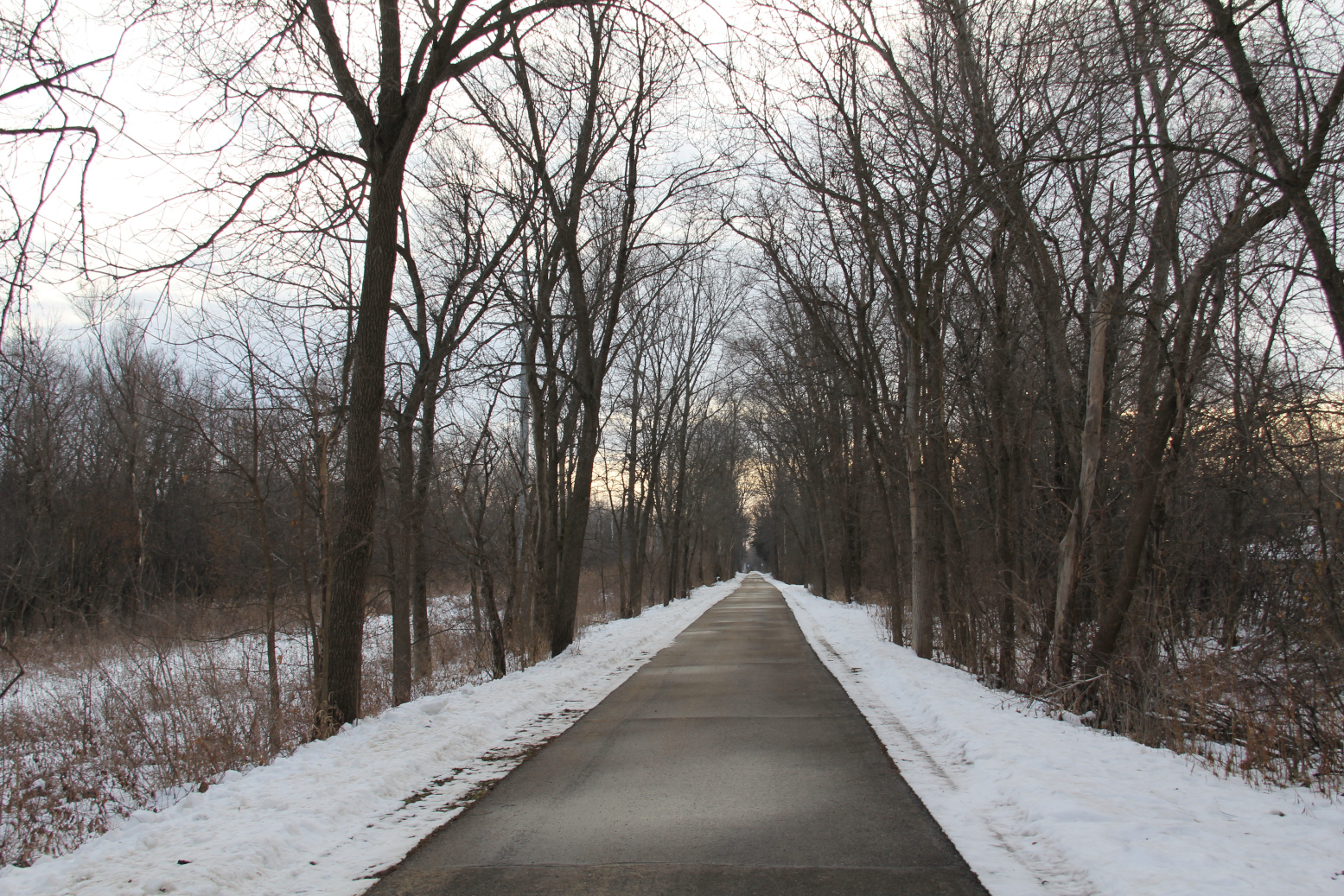
Walking along the Straight River Trail near Fleckenstein Bluffs Park on a recent winter day. (Minnesota Prairie Roots copyrighted photo December 2025)
WITH WINTER OFFICIALLY LAUNCHED, it’s easy enough to stay home, settle in, curl up with a good book and avoid the ice, cold and snow that define Minnesota weather in January. When winter burrows in, I’m more inclined to hibernate. But I push myself to get out. It’s good for my physical, mental and emotional health.
An extensive city trail system runs throughout Faribault. (Minnesota Prairie Roots copyrighted photo December 2025)
Faribault offers plenty of options for aging Baby Boomers like me and others who simply want to take a walk. On the worst of winter days, I can loop around the soccer field at Shattuck-St. Mary’s School, which opens its dome to the public most weekday mornings (except holidays) from November into early spring. Hours vary, but generally run from around six-ish to 9:30 am.
The Straight River Trail stretches before me in the area known as Frog Town. (Minnesota Prairie Roots copyrighted photo December 2025)
And when I want to be outdoors, the city’s paved recreational trails are usually cleared, allowing me to safely immerse myself in nature. There’s something about walking outdoors at a brisk pace on a cold winter day that invigorates.
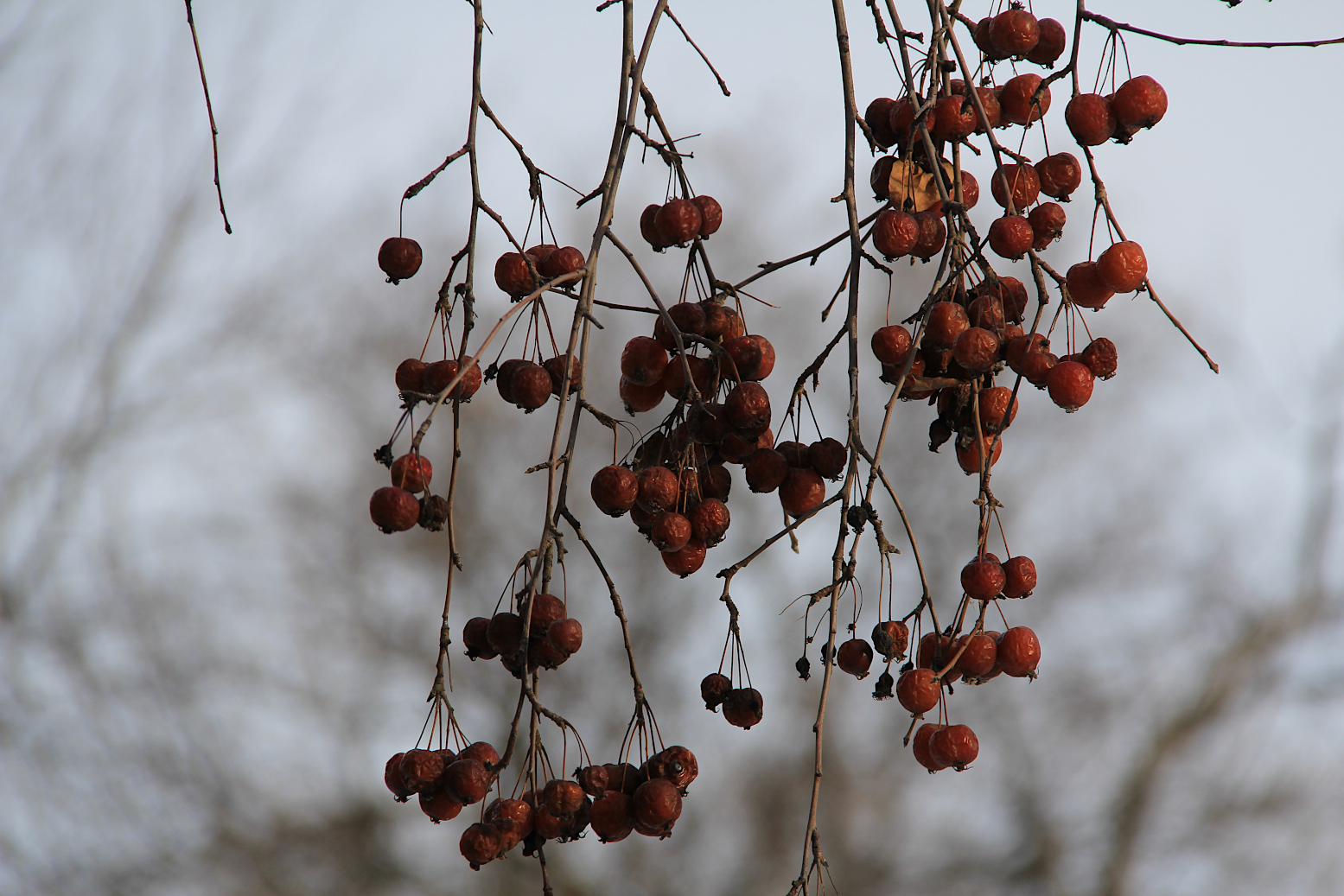
Even in the drab winterscape, color can be found, such as in these dried berries. (Minnesota Prairie Roots copyrighted photo December 2025)
Sometimes, though, I opt to carry my camera and focus on the environment rather than upping my heart rate. Photography improves my well-being, too, because I begin to notice nature’s details in a mostly monochrome landscape. Winter’s beauty emerges. And that is good for my spirit, my soul, my creativity.
The Straight River is anything but straight as it winds between woods and bluffs in Faribault. (Minnesota Prairie Roots copyrighted photo December 2025)
I especially delight in following the Straight River Trail because water, whether frozen or flowing free, mesmerizes me. I think humans have always been drawn to water. Near Fleckenstein Bluffs Park, the Straight River curves, winding through the woods, under the railroad bridge, along the bluffs.
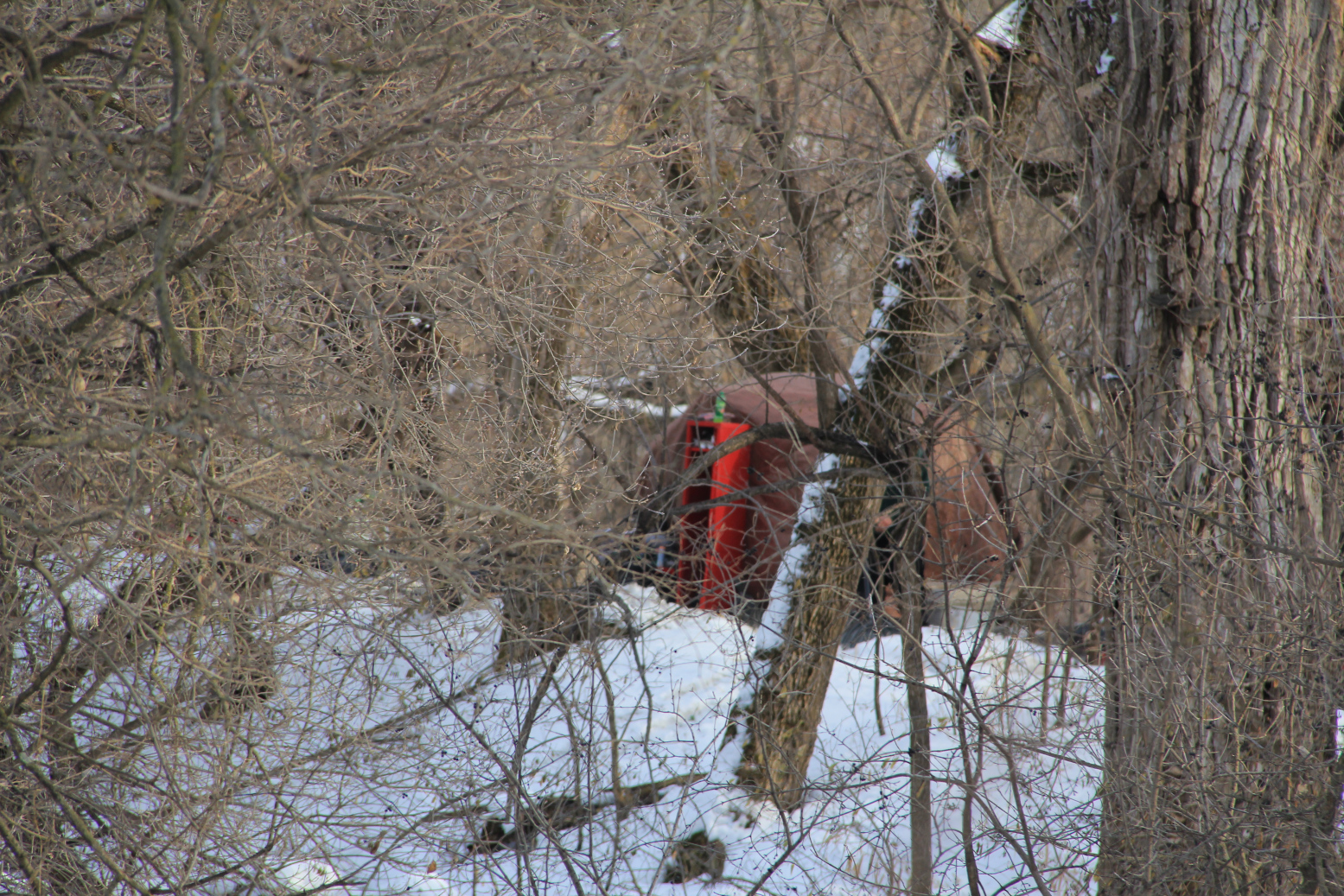
Barely discernible, a temporary riverside shelter in the woods near Fleckenstein Bluffs Park. (Minnesota Prairie Roots copyrighted photo December 2025)
On a recent afternoon along the trail, with Canon camera in hand, I spotted a flash of red across the river in the woods. From a distance and through the trees, I couldn’t clearly distinguish details. But I knew this was a temporary shelter for someone without a permanent home. I saw a person shoveling snow.
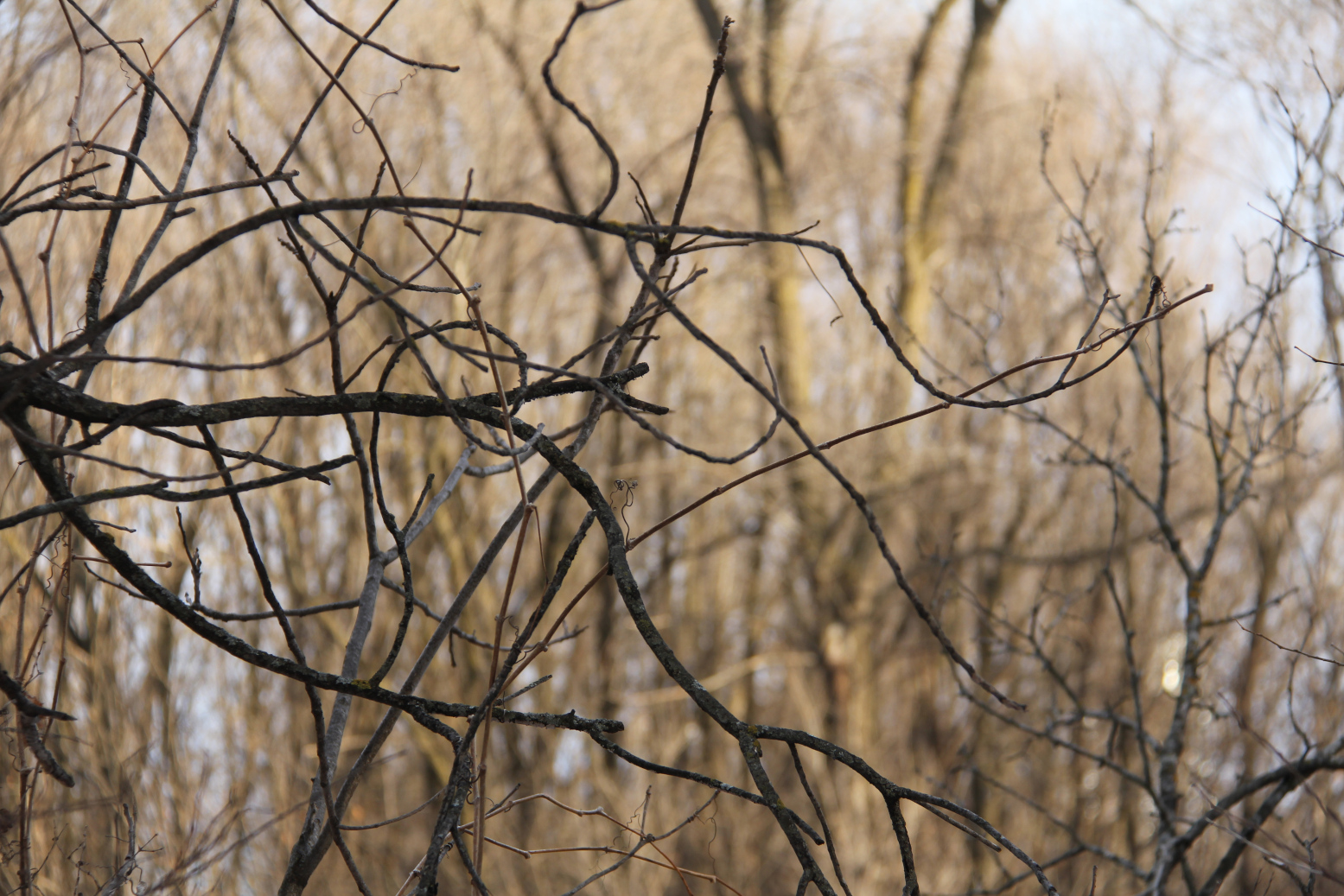
Tangled twigs along the Straight River Trail. (Minnesota Prairie Roots copyrighted photo December 2025)
And I thought of my poem, “Misunderstood,” inspired by a previous walk along the Straight River Trail. That poem published in 2024 in Talking Stick 33, Earth Signs, a Minnesota literary anthology:
Misunderstood
Tents cluster along the Straight River,
home to the homeless on land
once held by the Wahpekute.
History and hardship merge here
in long-ago and present-day stories.
Bison skin tipis and nylon tents.
Different times. Different peoples.
Drawn to the water, the sheltering woods.
Misunderstood then. Misunderstood now.
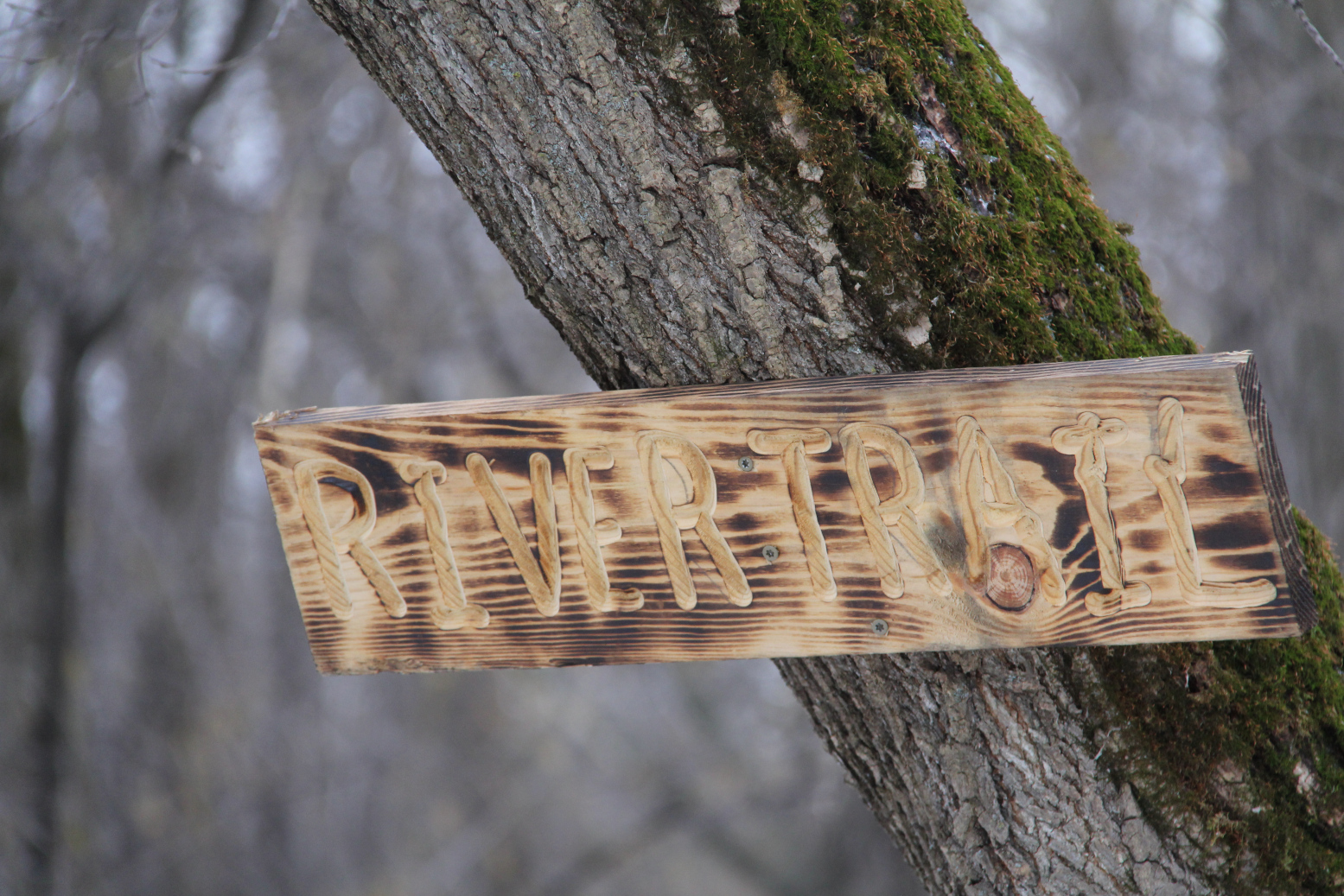
This homemade trail sign, screwed to a tree along the Straight River Trail in Frog Town, leads to a path beaten through the snow. I did not follow the unofficial trail, not this time. (Minnesota Prairie Roots copyrighted photo December 2025)
Getting outdoors feeds my creativity. If not for that walk and my knowledge of Faribault history, I would not have crafted that poem about the Dakota and those experiencing homelessness today in my community. I observe, photograph, write, creating photos and stories that need to be shared.
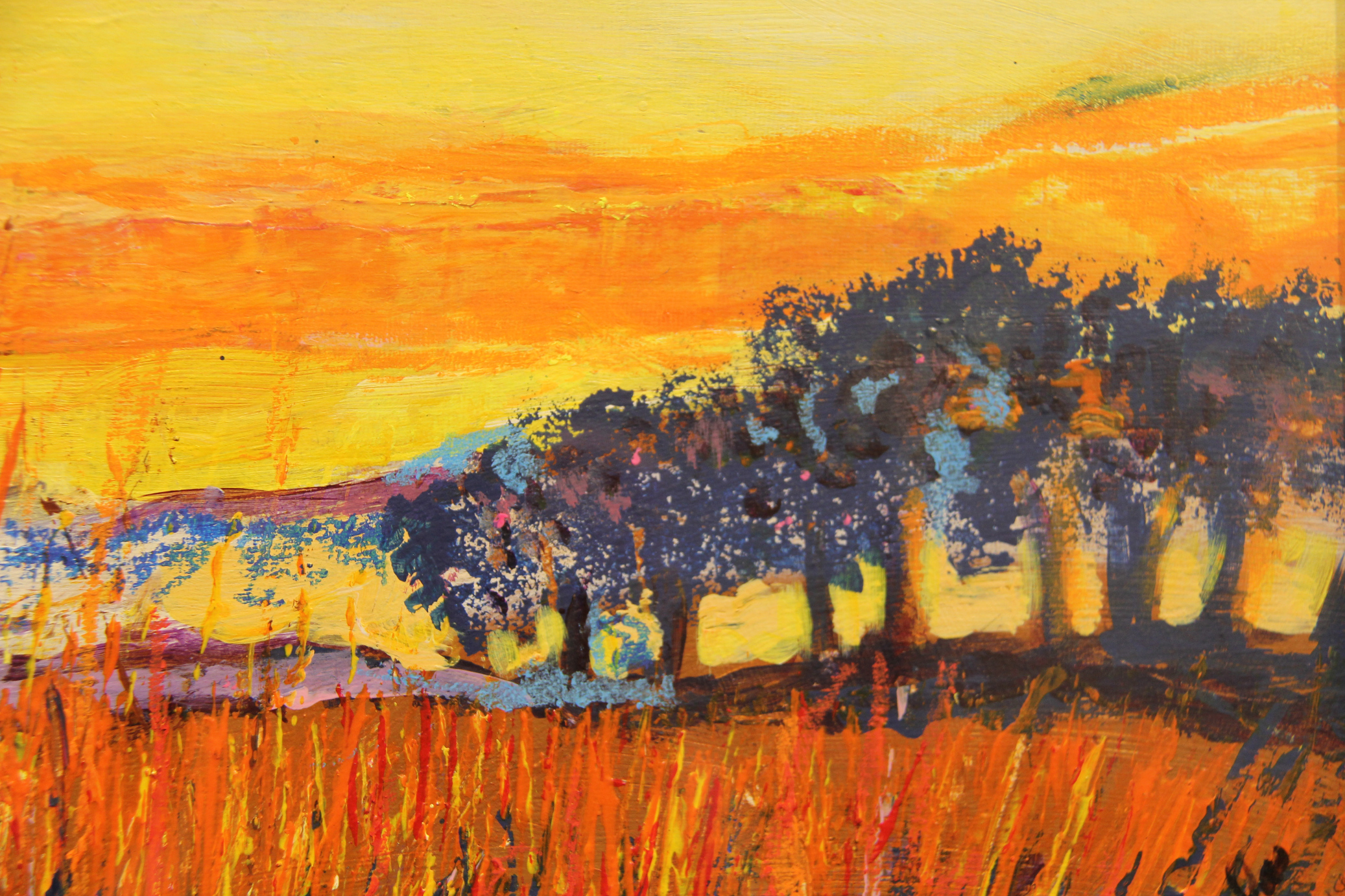
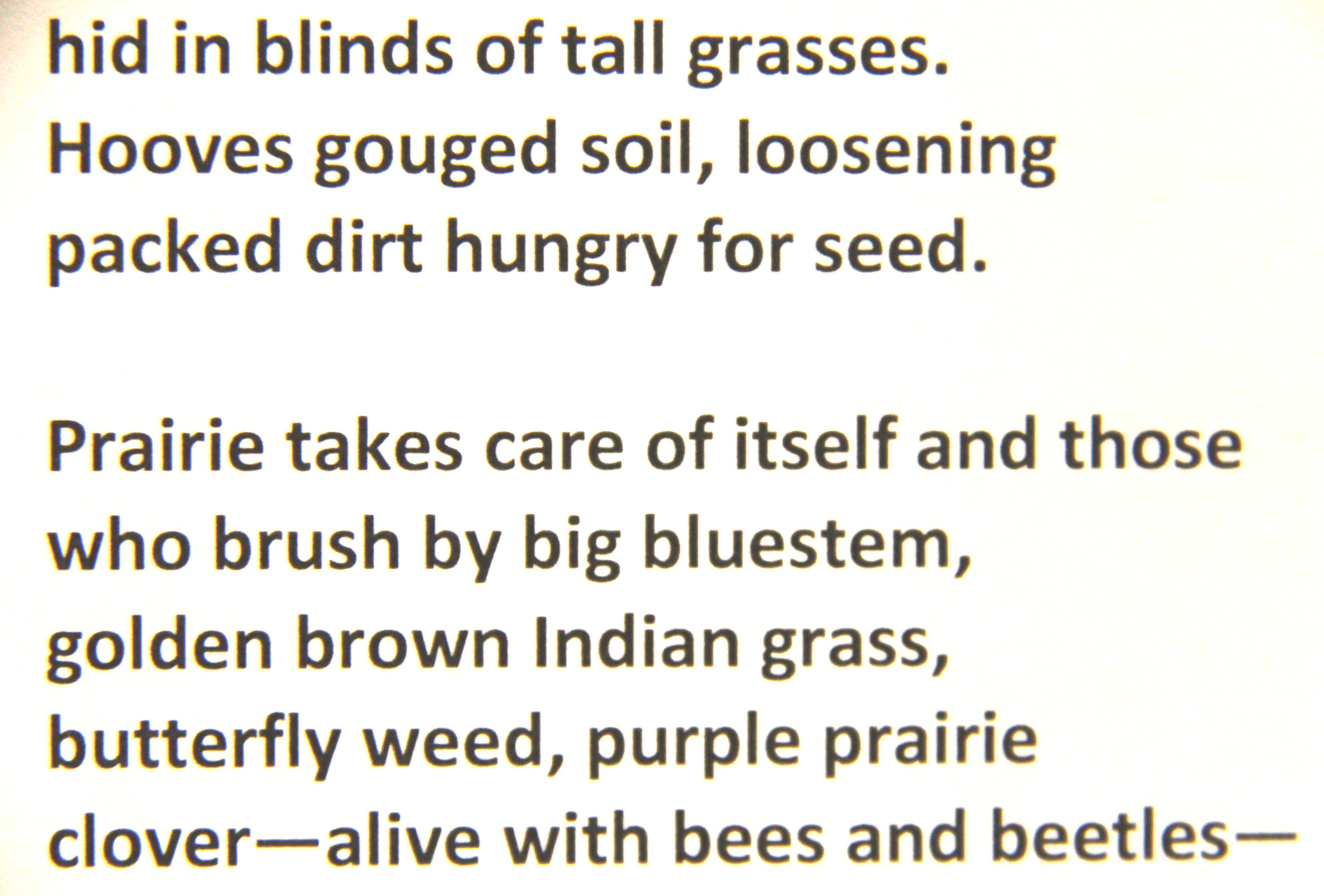
Here are some lines from Northfield poet Becky Boling’s poem, “Red Prairie,” inspired by “Wisconsin Sunset.” (Minnesota Prairie Roots copyrighted photo October 2025)
As a long-time writer and photographer, who is also a published poet, I’ve participated in similar collabs in nearby Zumbrota. I found it a whole lot of fun not only to write poems, but especially to see how an artist interpreted my poetry. I expect those participating in this pairing of poetry and visual art in Northfield feel the same. The work in this show is visual art inspiring poetry.
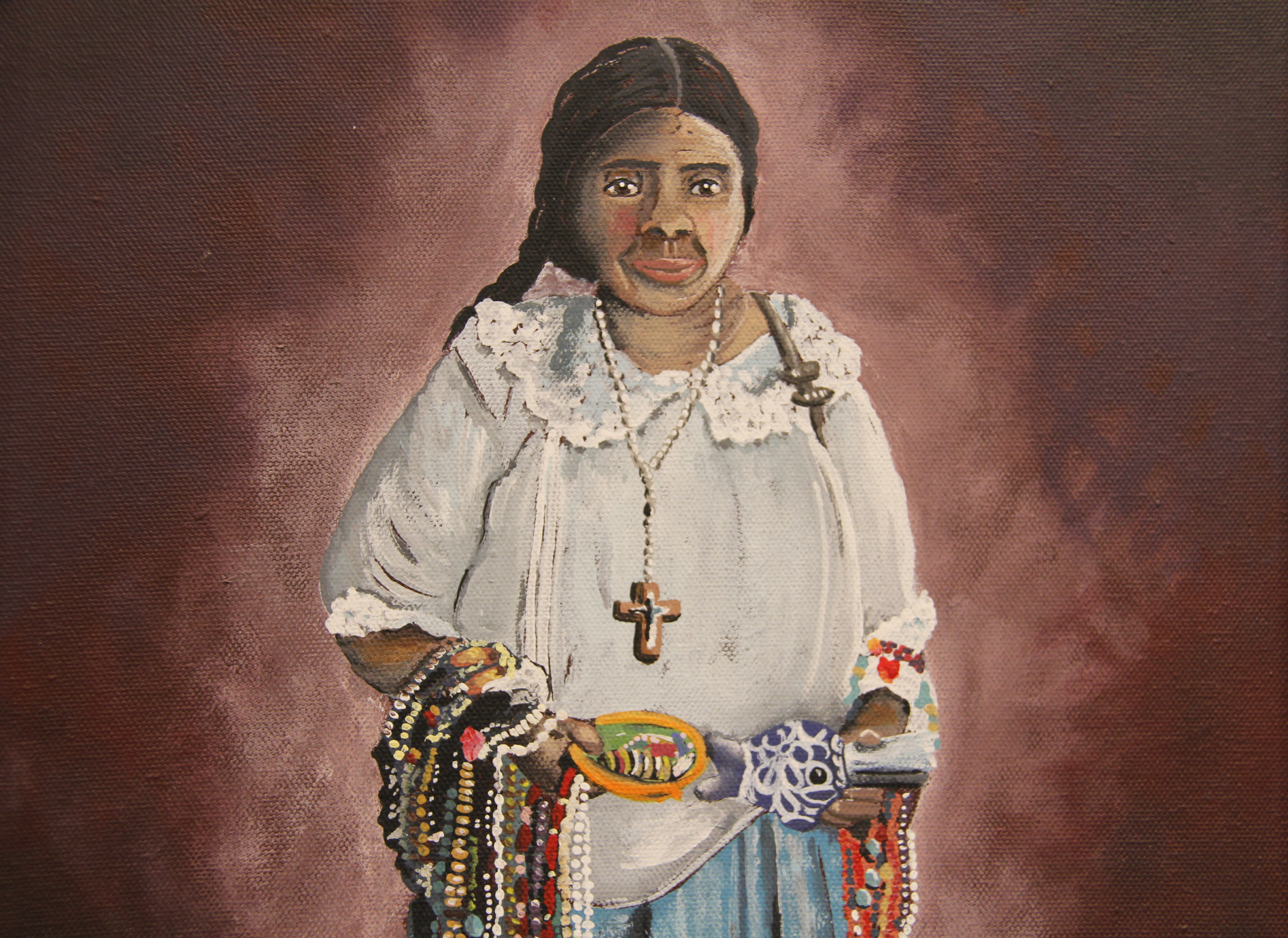
“Brave,” a poem by Orick Petersen, is paired with Sharon Henry’s painting, “The Bead Lady.”
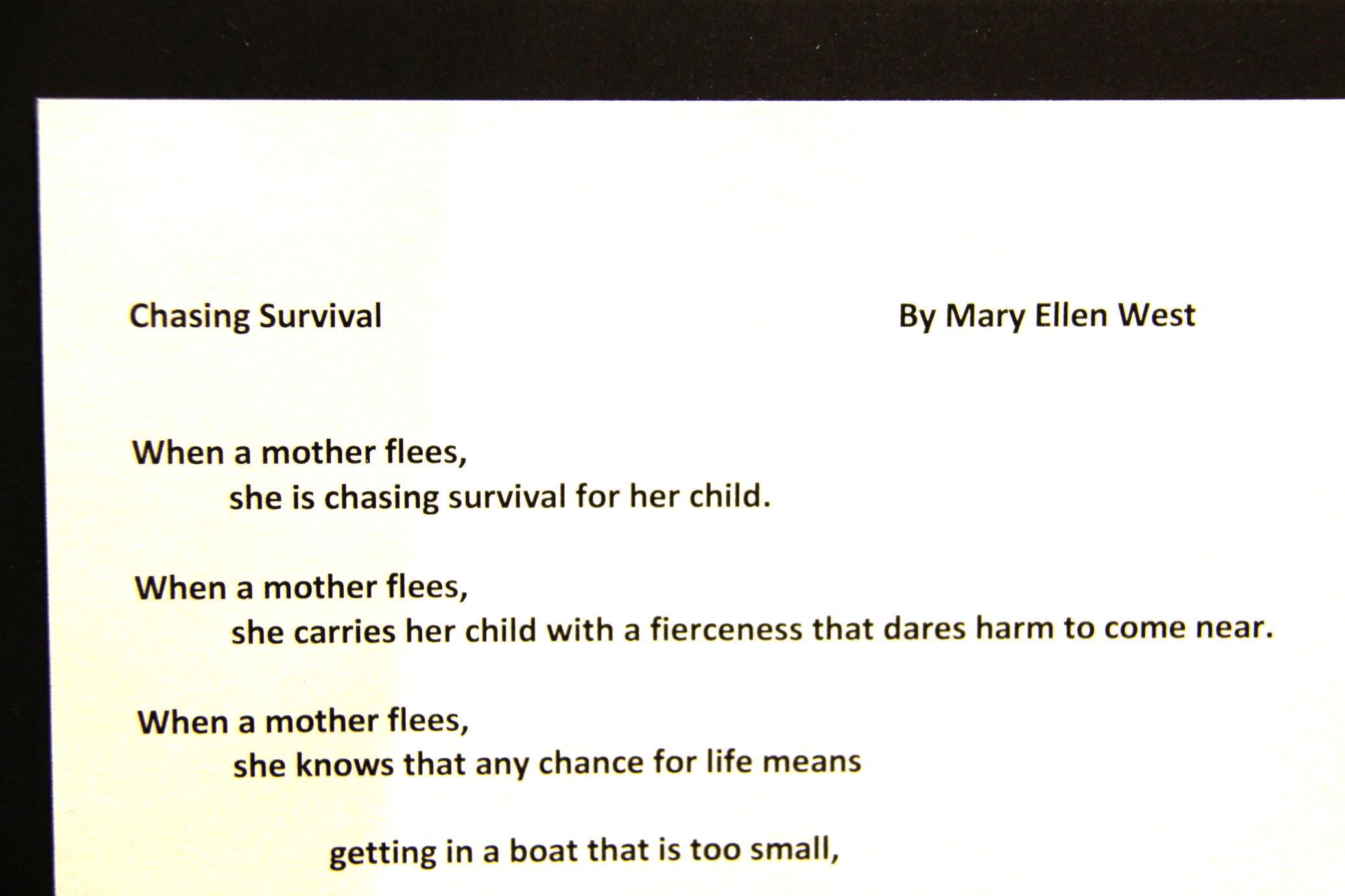
This shows several lines from a thought-provoking poem inspired by an equally thought-provoking photograph of a mother and child by Dean Neuburger. (Minnesota Prairie Roots copyrighted photo October 2025)
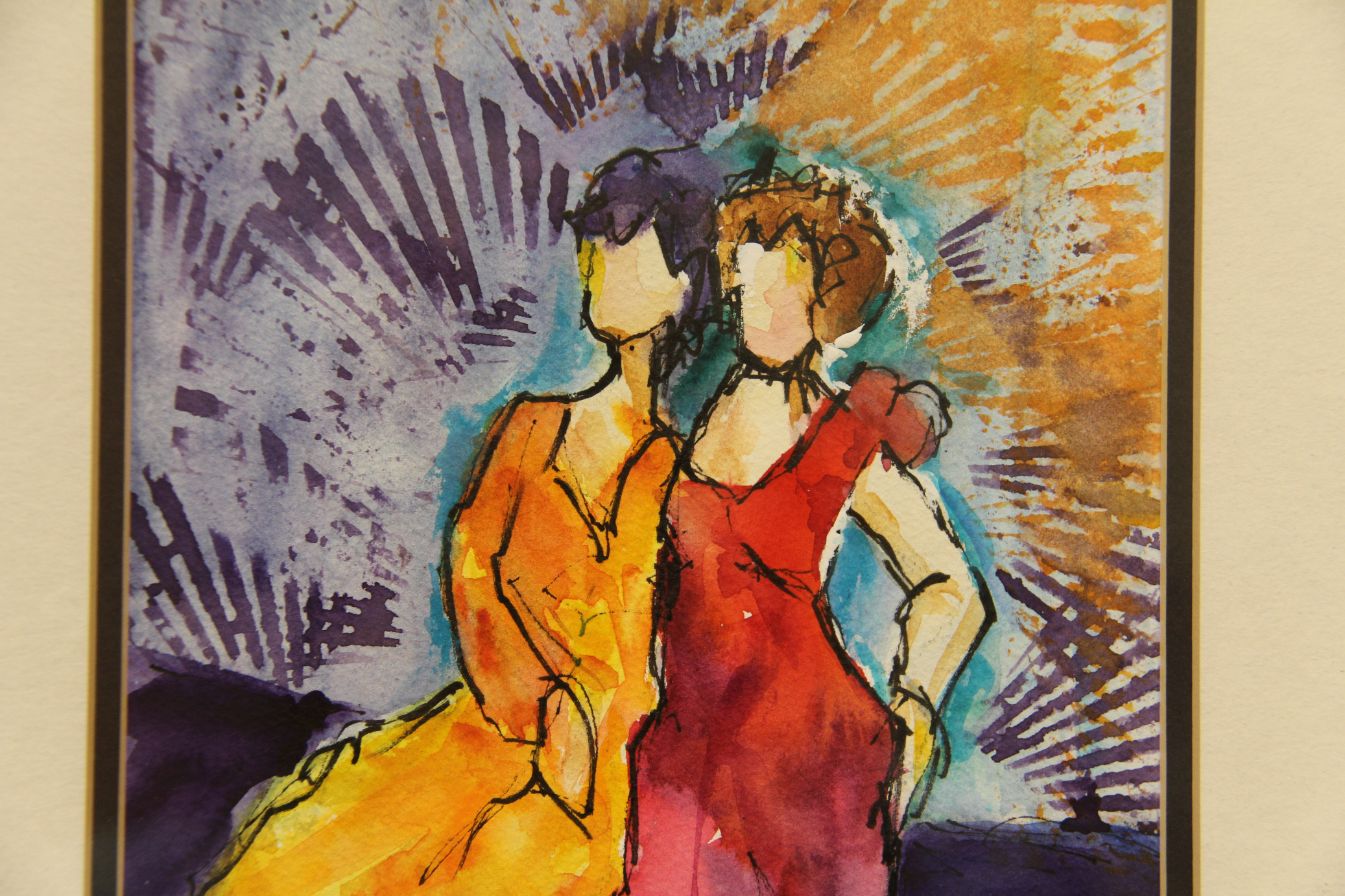
Marty Amundson’s watercolor and ink, “Sisters Still,” inspired Marie Gery’s poem, “30th High School Reunion.”
I feel fortunate to live in a region rich in the arts. The arts expose us to new ideas, thoughts, beauty and more. The arts open us to a world wide beyond our own. The arts can serve as a catalyst for positive change. The arts represent voice, a way for us to speak via our creativity.
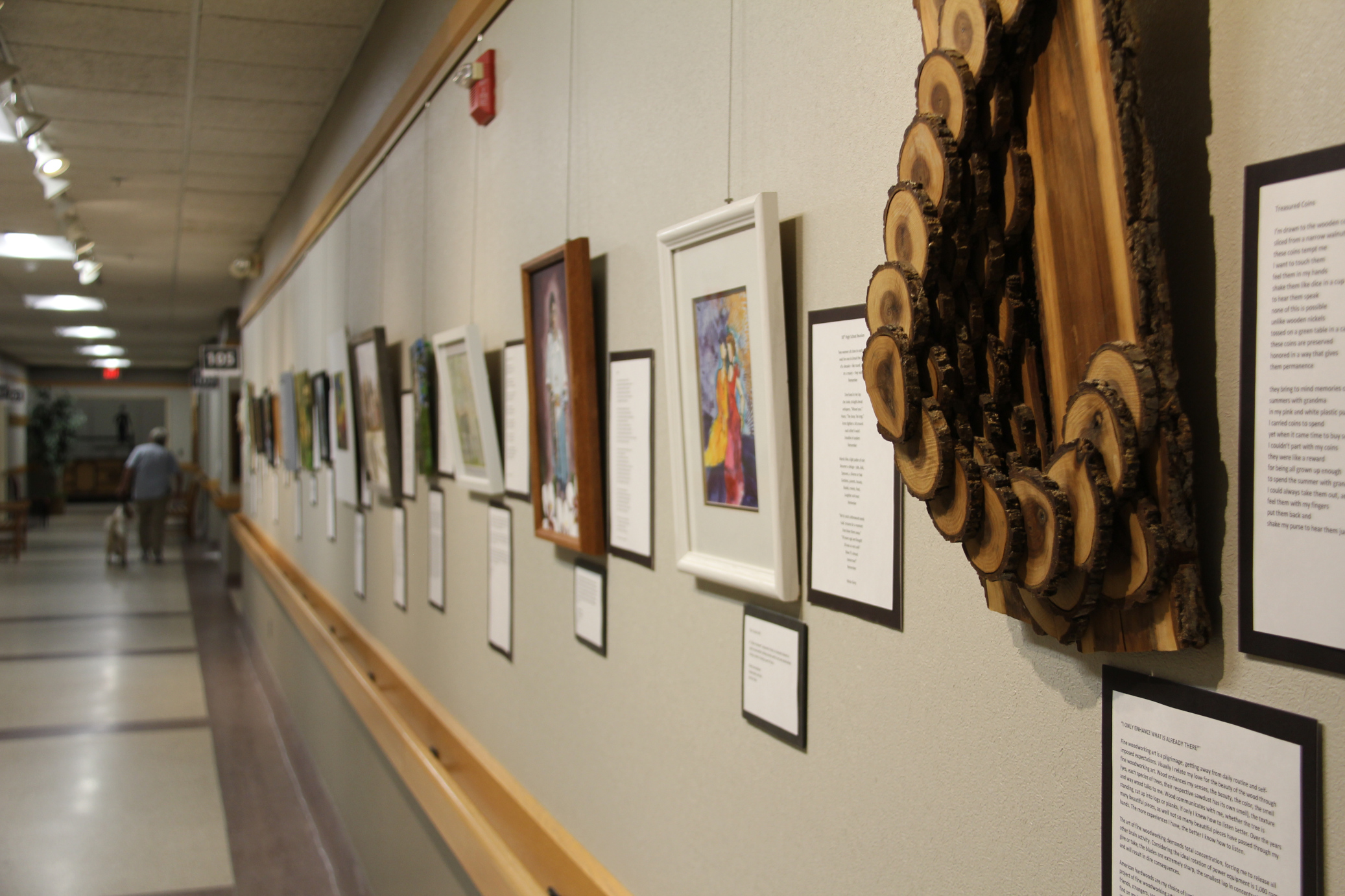
Art and poetry stretch along a hallway at FiftyNorth. (Minnesota Prairie Roots copyrighted photo October 2025)
In “Echoes & Shadows,” artists express themselves in carefully crafted words and in a variety of visual art that seems to fit its inspirational poetry. Painting, appliqueing, woodworking, photography, collage…all are part of this collaboration.
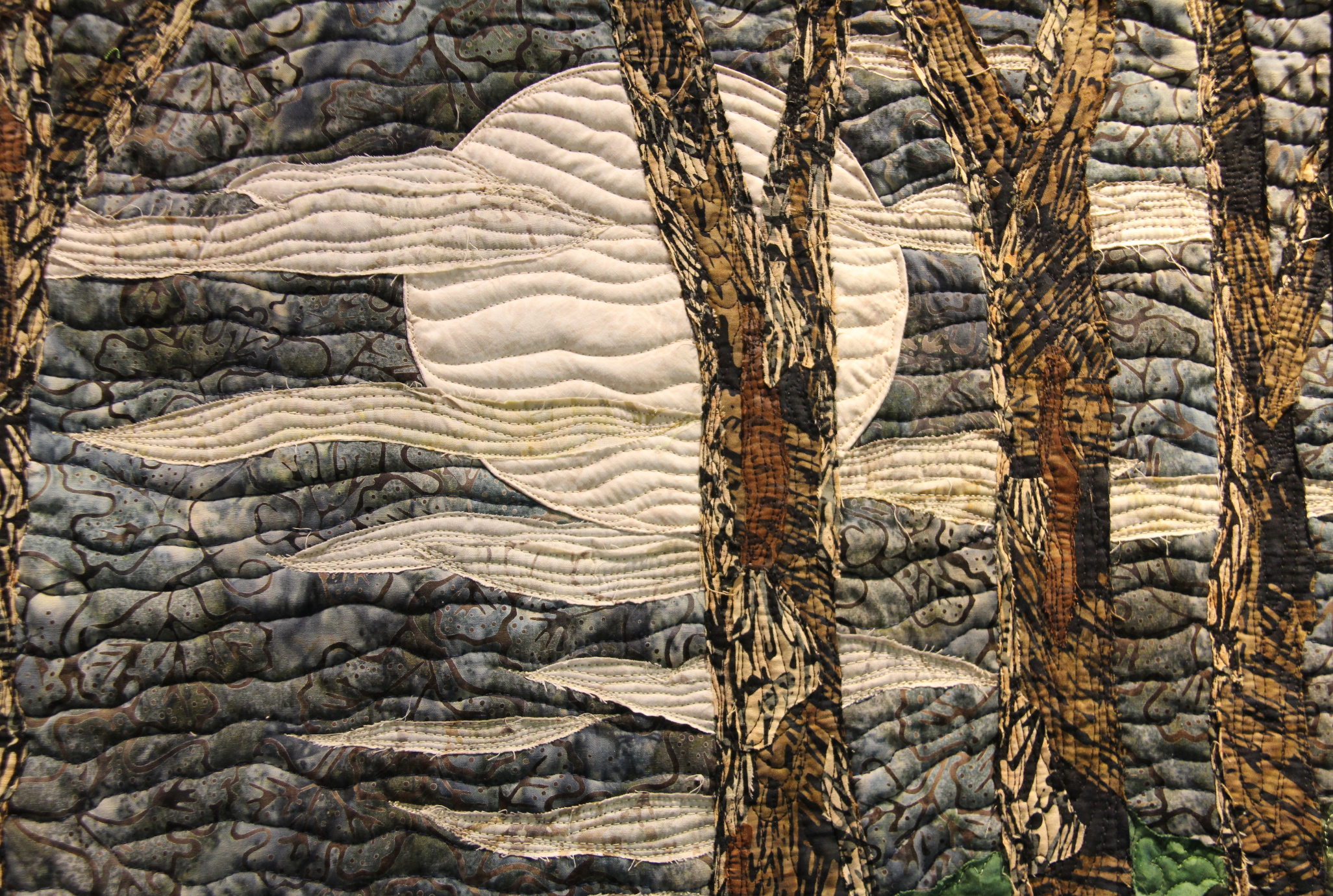
Lake Superior in northern Minnesota inspired Kathy Weed to create “Moon Glow” in textile art. (Minnesota Prairie Roots copyrighted photo October 2025)
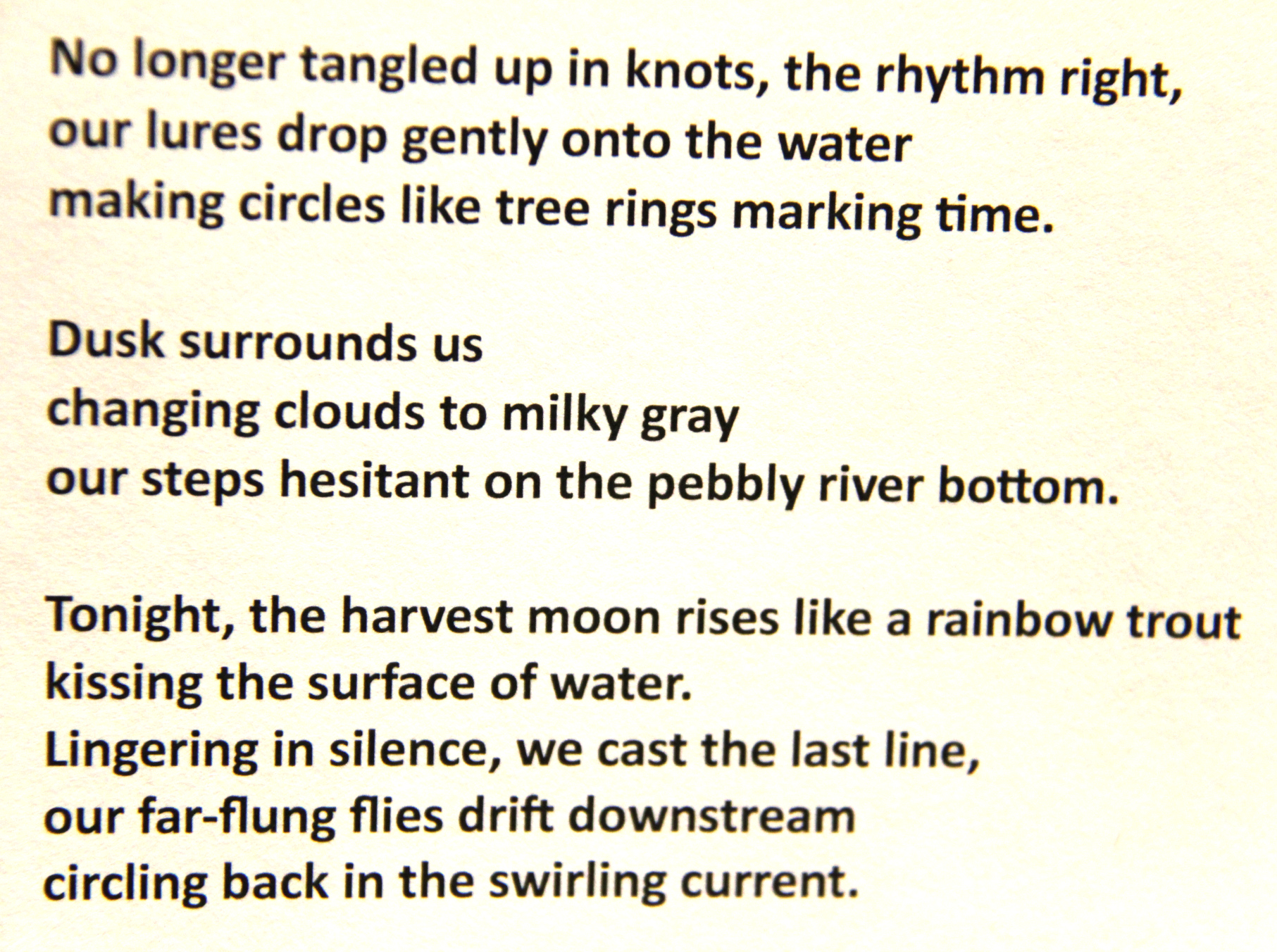
And then Jane Sarles Larson wrote “Circling Back” to pair with Kathy Weed’s art. (Minnesota Prairie Roots copyrighted photo October 2025)
More knots…Judy Saye-Willis’ necklace inspired Marie Gery’s poem, “Knotty Reality.” (Minnesota Prairie Roots copyrighted photo October 2025)
I like that word, “collaboration.” It means working together. Even that seems especially meaningful today.
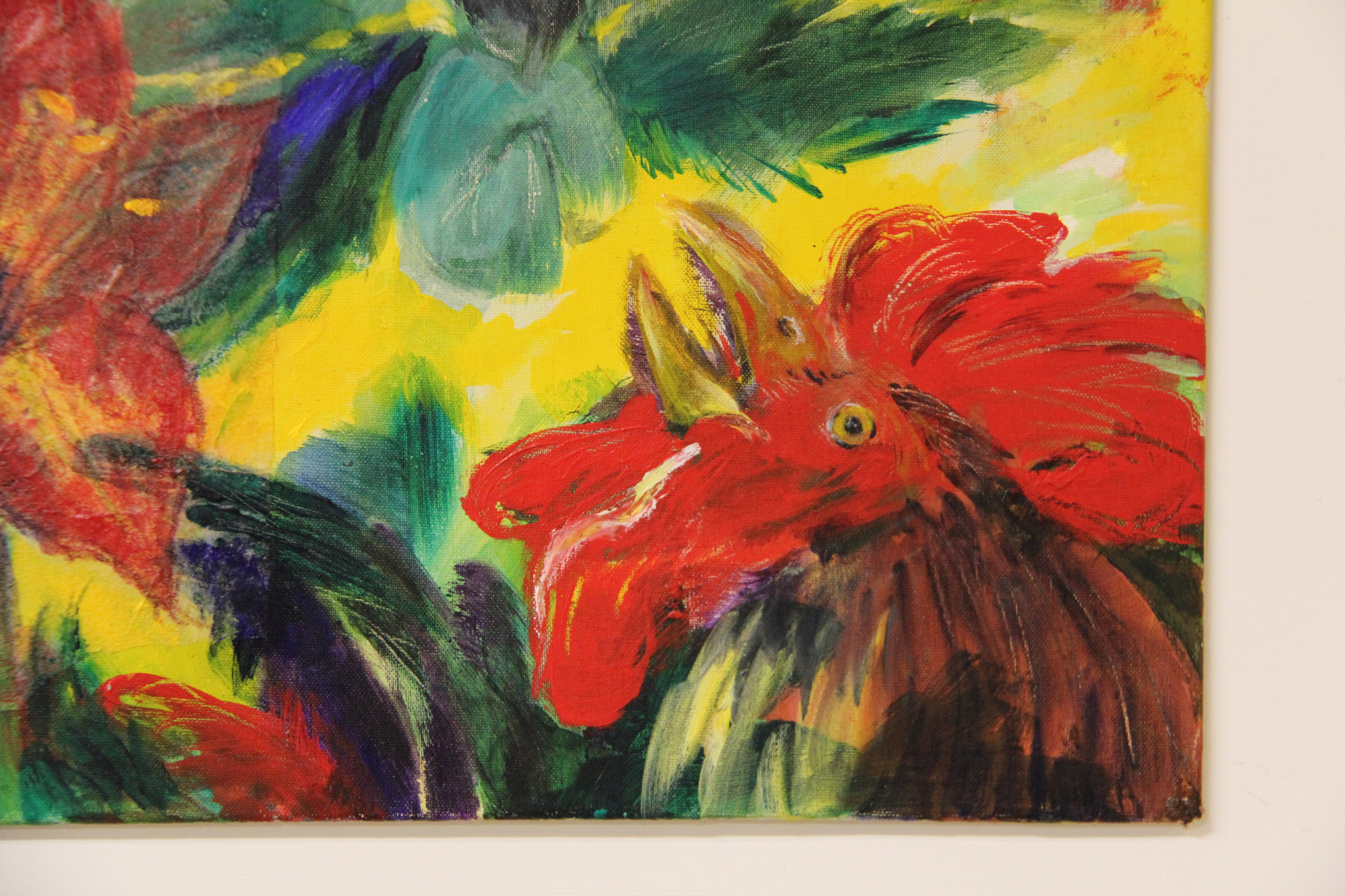
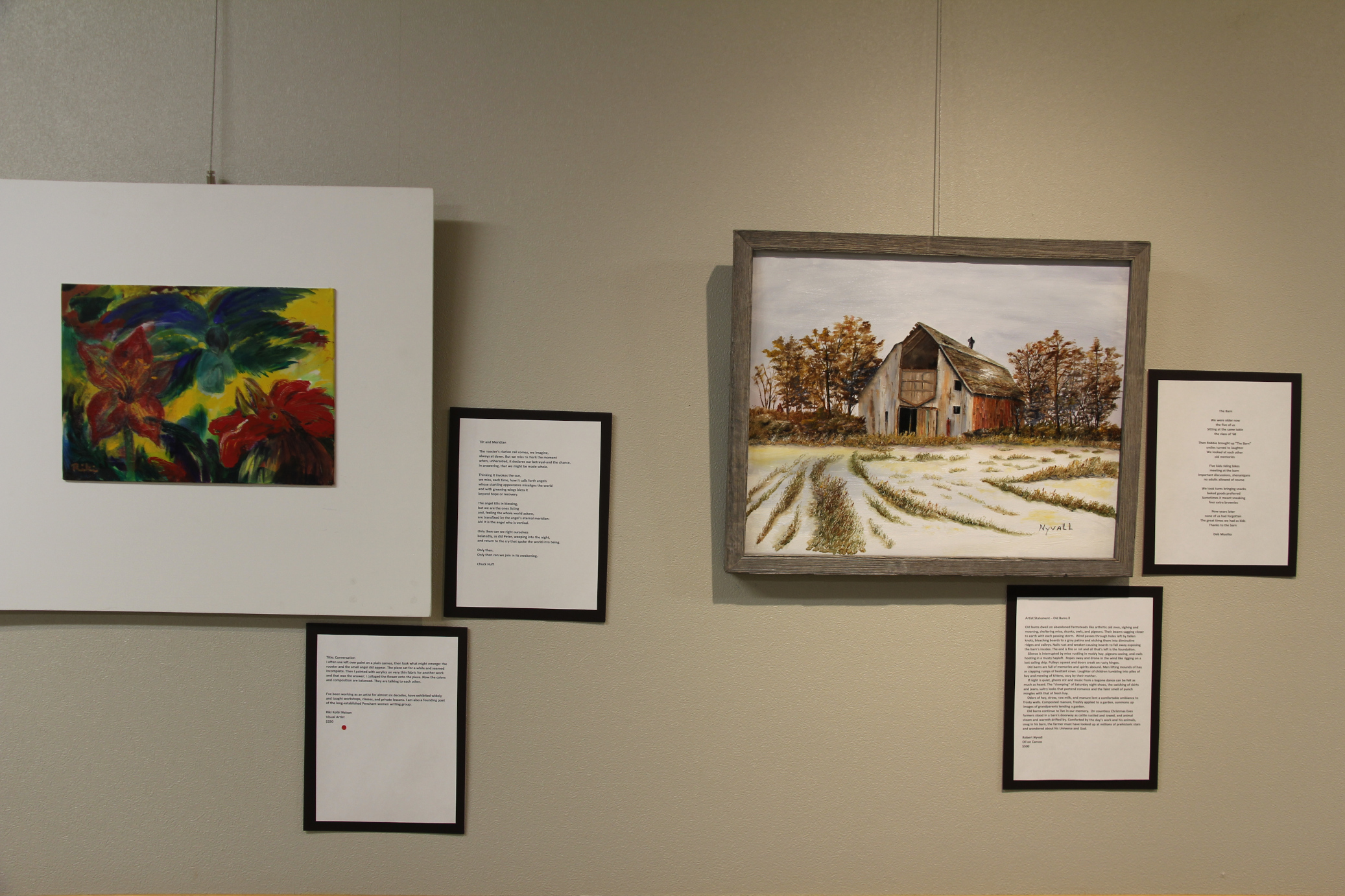
Riki Kolbl Nelson’s “Conversation” acrylic and collage of a rooster and angel inspired Chuck Huff to write “Tilt and Meridian.” (Minnesota Prairie Roots copyrighted photo October 2025)
In this pairing of art and poetry, I see collaboration, how literary art and visual art play off and balance one another, centering the two pieces of art into one unified piece without sacrificing individuality. Creatives are, after all, uniquely creative even when working together.
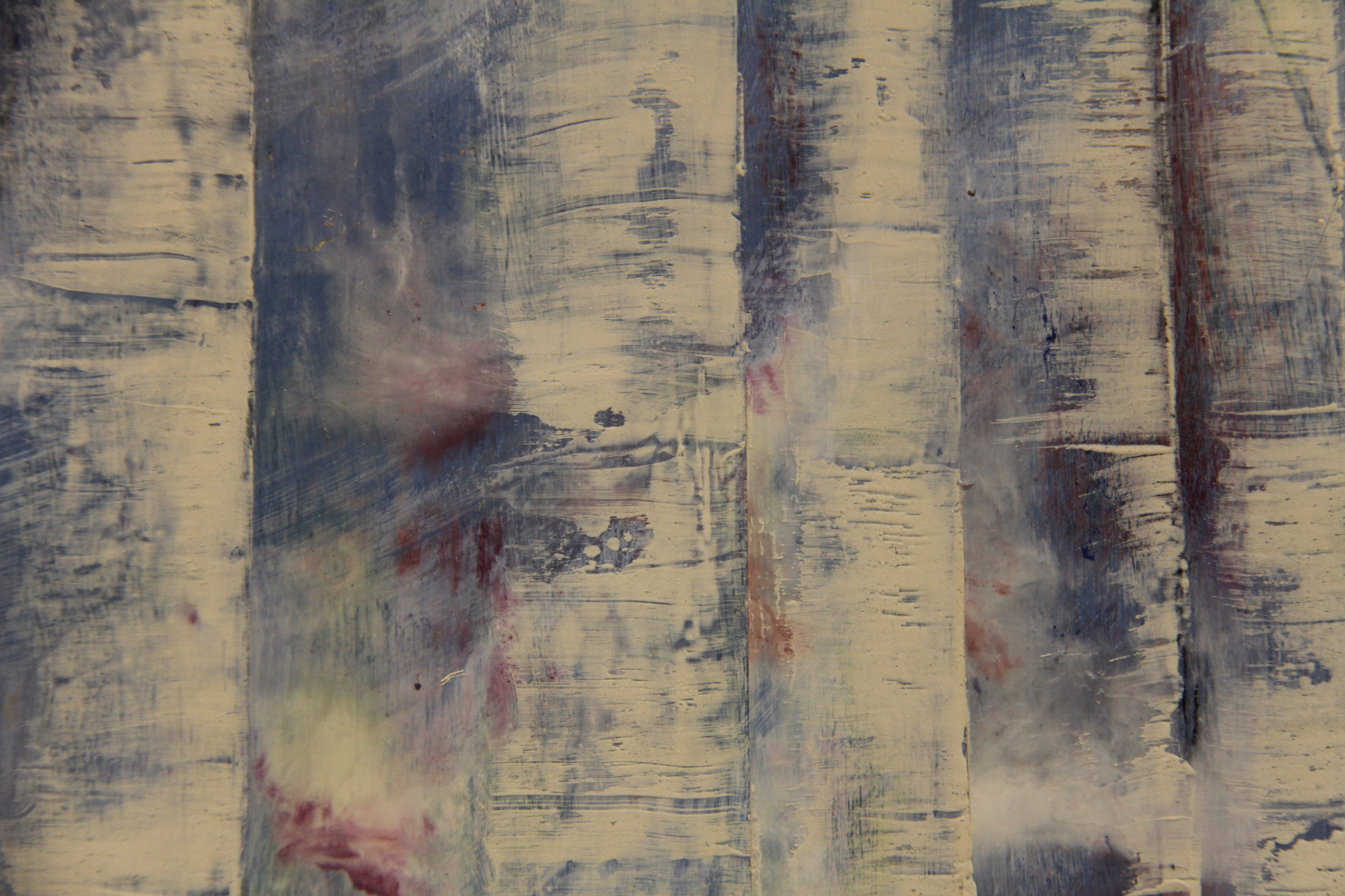
Barbara Bauer’s encaustic medium art inspired D.E. Green to write “Stand of Birches.” (Minnesota Prairie Roots copyrighted photo October 2025)
Promotional information about the FiftyNorth poetry and art collaboration, “Echoes & Shadows,” references a quote from poet Carl Sandburg: “Poetry is an echo, asking a shadow to dance.” Oh, how lovely those words. And how fitting for a collaboration that echoes and dances.
Pairings of poetry and art by Riki Kolbl Nelson, left, with poem by Chuck Huff and a barn painting by Robert Nyvall with accompanying poem, “We Are Older Now,” by Deb Muotka on the right. (Minnesota Prairie Roots copyrighted photo October 2025)
FYI: The “Echoes & Shadows” exhibit closes on October 31. To view the exhibit online, click here. Note that I photographed the art and poetry in this post with permission of FiftyNorth. In most cases, I’ve opted to show only part of the creative works. In featuring the poems, I’ve edited the images.
Two of my poems and a work of creative nonfiction are published in this literary anthology. (Book cover sourced online)
FOR THE 16thCONSECUTIVE YEAR, my writing has been selected for publication in the Talking Stick, a literary anthology published by the Jackpine Writers’ Bloc based in northern Minnesota.
The editorial board chose two of my poems, “Up North at the Cabin” and “Where There’s Smoke, There’s Fire,” and a work of creative nonfiction, “Birthing Everett,” for publication in volume 34, titled Toward the Light. The recently-released book features 128 pieces of writing by 76 writers either from Minnesota or with a strong connection to the state.
I consider it an honor to be published in the Talking Stick, which includes the work of talented writers ranging from novice to well-known. I especially appreciate that entries are blind-judged so each piece stands on its own merits. There were 275 submissions from 119 writers for this year’s competition.
Grandpa Randy and grandchildren Izzy and Isaac follow the pine-edged driveway at the northwoods lake cabin. This is my all-time favorite cabin photo. (Minnesota Prairie Roots copyrighted file photo 2020)
I’m particularly excited about two of my pieces published in Toward the Light. Anyone who’s ever spent time at a lake cabin will enjoy my “Up North” poem as it centers on nature and family togetherness. I was in my sixties before I first experienced cabin life. Now I’m building memories with my grandkids each summer at a family member’s lake cabin. That centers this poem.
My grandson Everett, nine months old, plays with his toys in his Madison, Wisconsin, home. (Minnesota Prairie Roots copyrighted photo October 2025)
A grandchild also focuses “Birthing Everett,” a deeply personal story about the birth of my 10-pound grandson in January. My daughter Miranda nearly died during childbirth. I knew I needed to write about this to heal from my own trauma of nearly losing her. I will be forever grateful to the medical team at UnityPoint Health-Meriter Hospital in Madison, Wisconsin, for saving Miranda’s life. You just don’t think of women dying during childbirth any more, but it can, and does, happen.













 Minnesota Prairie Roots
Reflecting from Minnesota on the killing of Renee Good, wife, mom, writer & poet January 8, 2026
Tags: Academy of American Poets, commentary, death, fatal shooting, Immigration and Customs Enforcement, Minneapolis, Minnesota, news, Old Dominion University, opinion, poet, poetry, Renee Nicole Good, trauma
ALL OF THIS is beyond belief, yet it isn’t.
I texted that to a friend today. “This” refers to the fatal shooting of Renee Good by an ICE agent in south Minneapolis on Wednesday morning. The governor of Minnesota, the mayor of Minneapolis, the police chief of Minneapolis all publicly predicted several weeks ago that something like “this” could happen during ICE’s ramped up immigration enforcement here.
I’m not surprised either. Tensions have been building, not only in Minnesota but across the country, as ICE swarms cities and communities. ICE tactics seem unnecessarily aggressive and sometimes violent. I see zero humanity. Zero compassion. Zero care. I wonder about the vetting, the training, the actions, the accountability of these ICE agents.
Now in the aftermath of Renee’s killing, the FBI, which originally agreed to work with the Minnesota Bureau of Criminal Apprehension on investigating the fatal shooting, has backtracked. The FBI will be the sole investigator and will not provide any investigative information to the BCA. It is impossible for me to trust the process since, shortly after the shooting, Renee Good was tagged “a domestic terrorist” by the feds. Judgment was already made.
Nothing I’ve read or heard indicates to me that Renee was anything but a wife, mom, writer and poet. Recently-moved to Minneapolis, the 37-year-old was young enough to be my daughter. She had a full life ahead of her.
Because I am also a wife, mom, writer and poet, I relate personally and professionally to Renee. I am grieving the senseless loss of not only a human being, but of another creative. In 2020, Renee won an Academy of American Poets Prize for her poem, “On Learning to Dissect Fetal Pigs.” That’s quite an accomplishment for a then-undergrad at Old Dominion University. She graduated with an English degree in 2020. Today I think of all the poems this poet will never write, all the hugs and kisses this mom will never give to her three children.
I appreciate a three-paragraph statement released by Old Dominion President Brian O. Hemphill. It reads in part:
“…May Renee’s life be a reminder of what unites us: freedom, love, and peace. My hope is for compassion, healing, and reflection at a time that is becoming one of the darkest and most uncertain periods in our nation’s history.”
I think, as a creative, that Renee would have appreciated those well-crafted words. I do. In continuing to process this tragedy, I feel uplifted by those of you who have encouraged not only me, but Minnesotans as a whole. Your solidarity, your supportive actions, your caring words all matter while we work through this collective trauma. Thank you.
© Copyright 2026 Audrey Kletscher Helbling