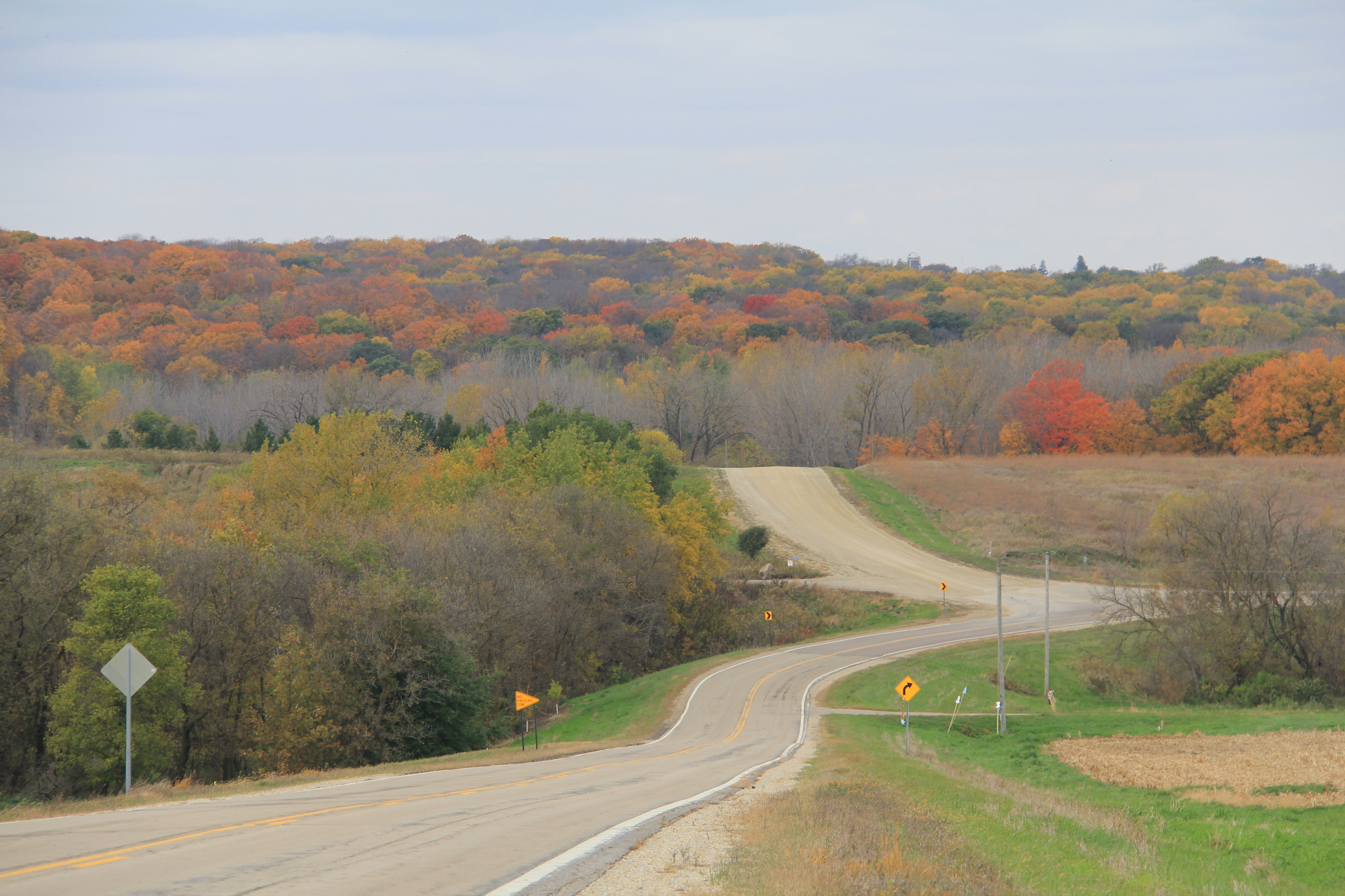
Driving along Rice County Road 30 from Nerstrand toward Valley Grove. (Minnesota Prairie Roots copyrighted photo October 2025)
A HILLSIDE ABLAZE in color appears before us as our van descends Rice County Road 30 northwest of Nerstrand. The road curves, twists into the valley between farmland and farm sites until we reach our destination, Valley Grove churches.
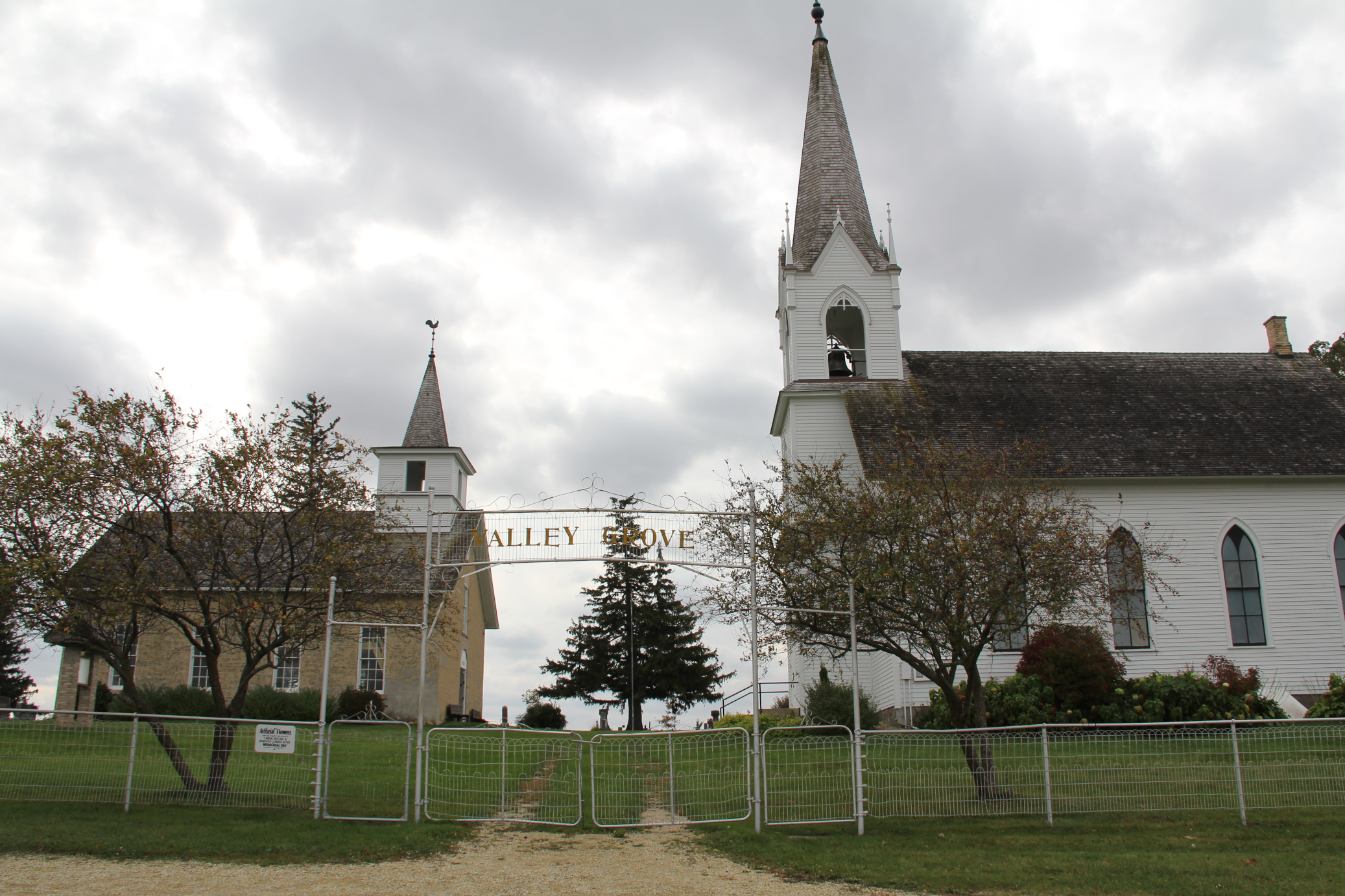
The gated entry to the historic Valley Grove churches near Nerstrand and south of Northfield. (Minnesota Prairie Roots copyrighted photo October 2025)
Randy steers the van off the paved road onto the gravel driveway leading to these two historic Norwegian immigrant churches standing high atop a hill overlooking the rolling countryside. This secluded place rates as a favorite destination of ours any time of year, but especially in autumn.
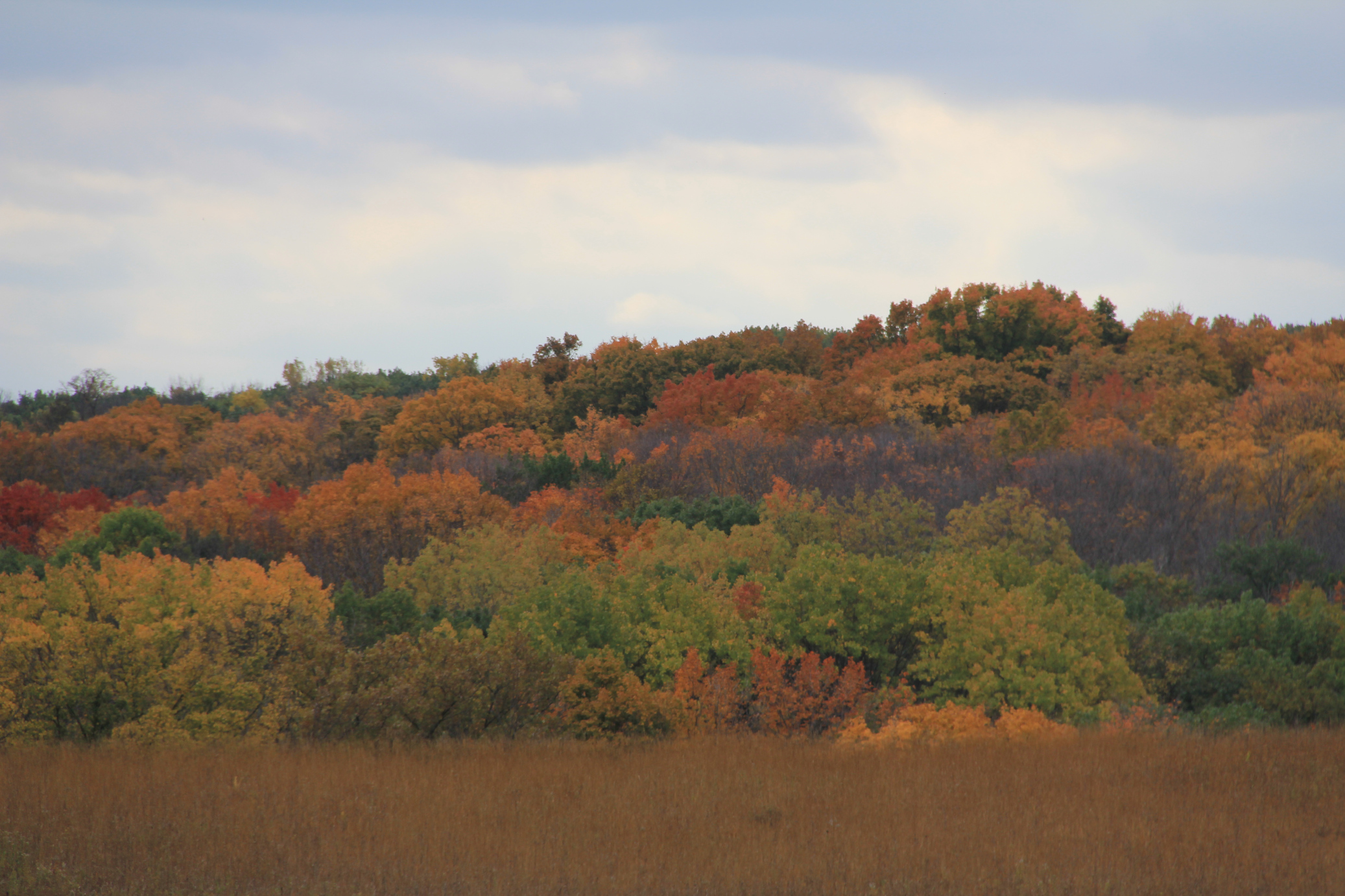
From the churchyard, I focus my telephoto lens across the prairie to the distant woods. (Minnesota Prairie Roots copyrighted photo October 2025)
The hilltop location offers a sweeping view of the surrounding land, including the Big Woods, especially colorful now. I simply cannot get enough of the red, orange and yellow tree lines that provide a painterly backdrop to this bucolic setting.
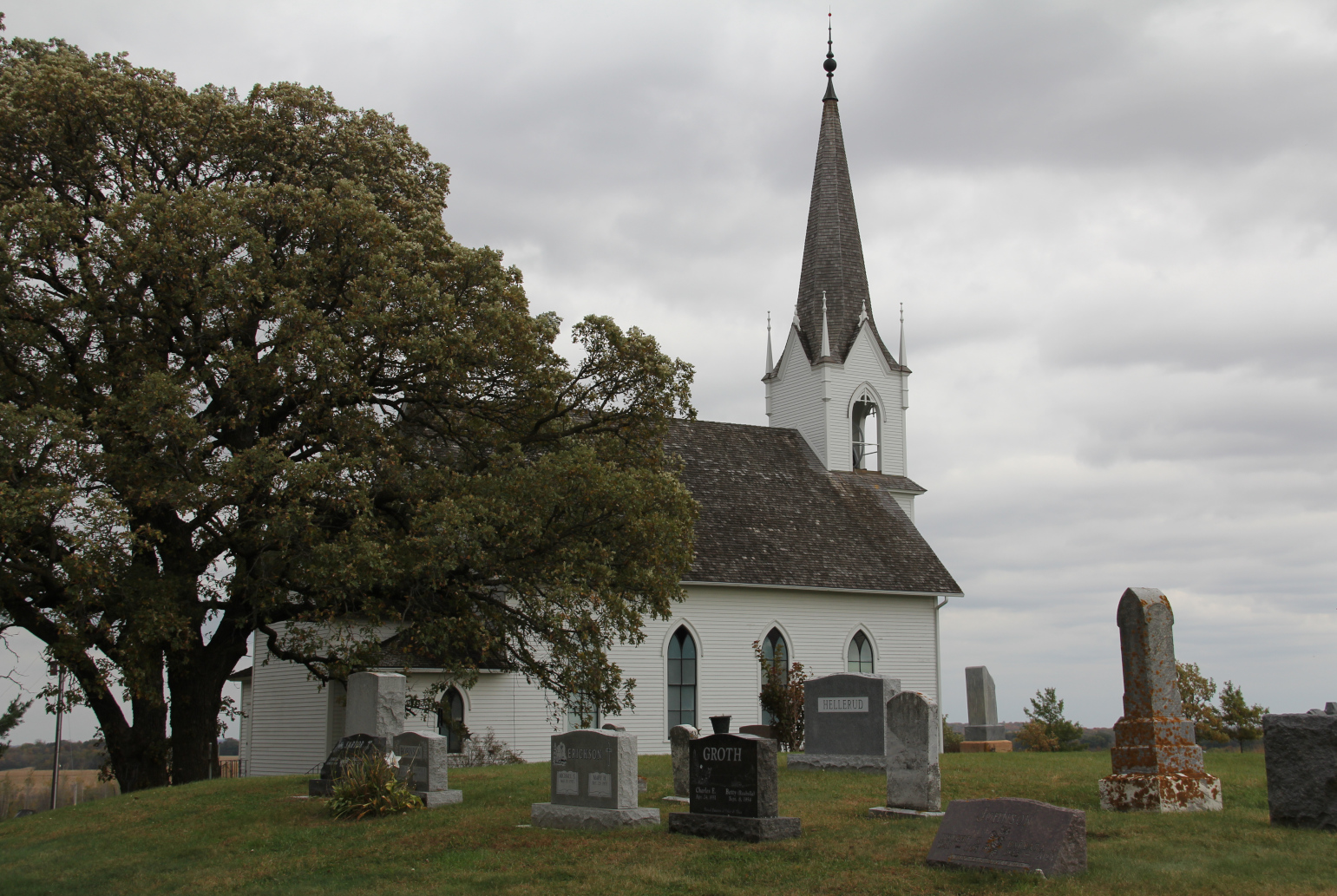
The 1894 wooden church opens today for weddings, a Country Social, a Christmas Eve serviceand other special events. The stone church serves as a fellowship hall/gathering spot. (Minnesota Prairie Roots copyrighted photo October 2025)
Here the 1862 and 1894 churches rise, a testament to the faith and endurance of the Norwegian immigrants who settled this area. The topography likely reminded them of the homeland they left for new opportunities in America.
The prairie fronts woods ablaze in color, as viewed from the churchyard. (Minnesota Prairie Roots copyrighted photo October 2025)
On this day, as the wind blows cold and strong across the churchyard—so much so that we eat our picnic lunch inside the van—I ponder how these foreigners felt once winter arrived in all her cold and snowy starkness. Perhaps they wondered why they ever left Norway.
A vibrant bush on prairie’s edge. (Minnesota Prairie Roots copyrighted photo October 2025)
But on this fall day, I recognize also how much they must have appreciated this beautiful hilltop location. The Valley Grove Preservation Society works hard to retain the natural beauty of these 50 acres of land. The trees. The tall prairie grasses. The wildflowers. They also maintain the two aged houses of worship—the old stone church built first and the adjacent wood-frame church constructed 32 years later.
Grassy paths lead into and through the prairie. (Minnesota Prairie Roots copyrighted photo October 2025)
Prairie wildflowers dying and going to seed. (Minnesota Prairie Roots copyrighted photo October 2025)
Randy steps up for a better view of the distant Big Woods from the prairie. (Minnesota Prairie Roots copyrighted photo October 2025)
Beyond the churches and surrounding cemetery, we follow an uneven path into the prairie, pausing occasionally to take in the colorful, distant trees. Randy steps atop a limestone slab for a better view. I spot a garter snake a step down from his feet, then edge away, not at all fond of snakes.
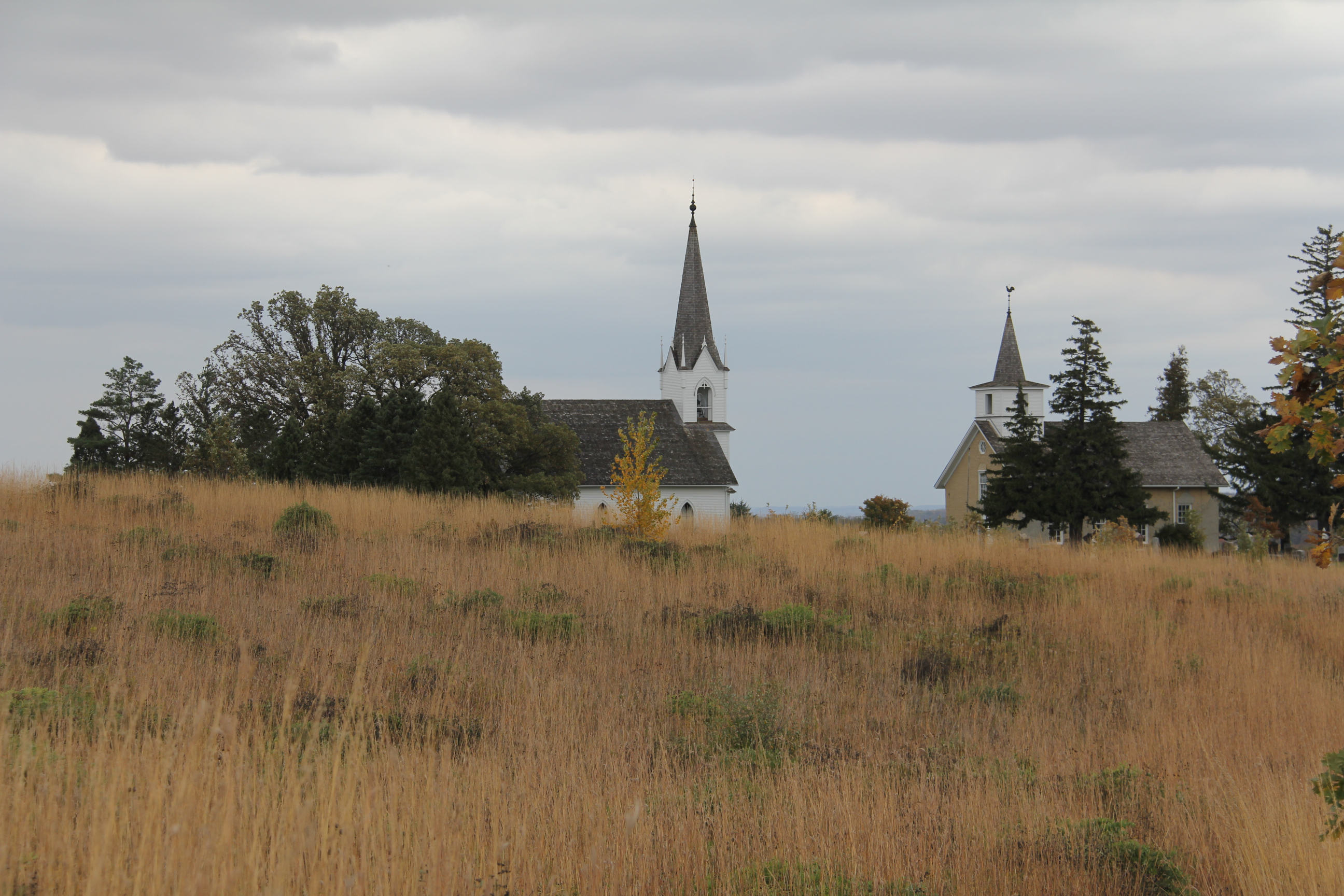
On the other side of the rolling prairie, the churches rise. (Minnesota Prairie Roots copyrighted photo October 2025)
Turning back toward the churchyard a bit later, I see the churches rise like ships upon an ocean of prairie grass. It’s not hard to visualize Norwegian immigrants boarding ships, sailing across the massive ocean bound for America.
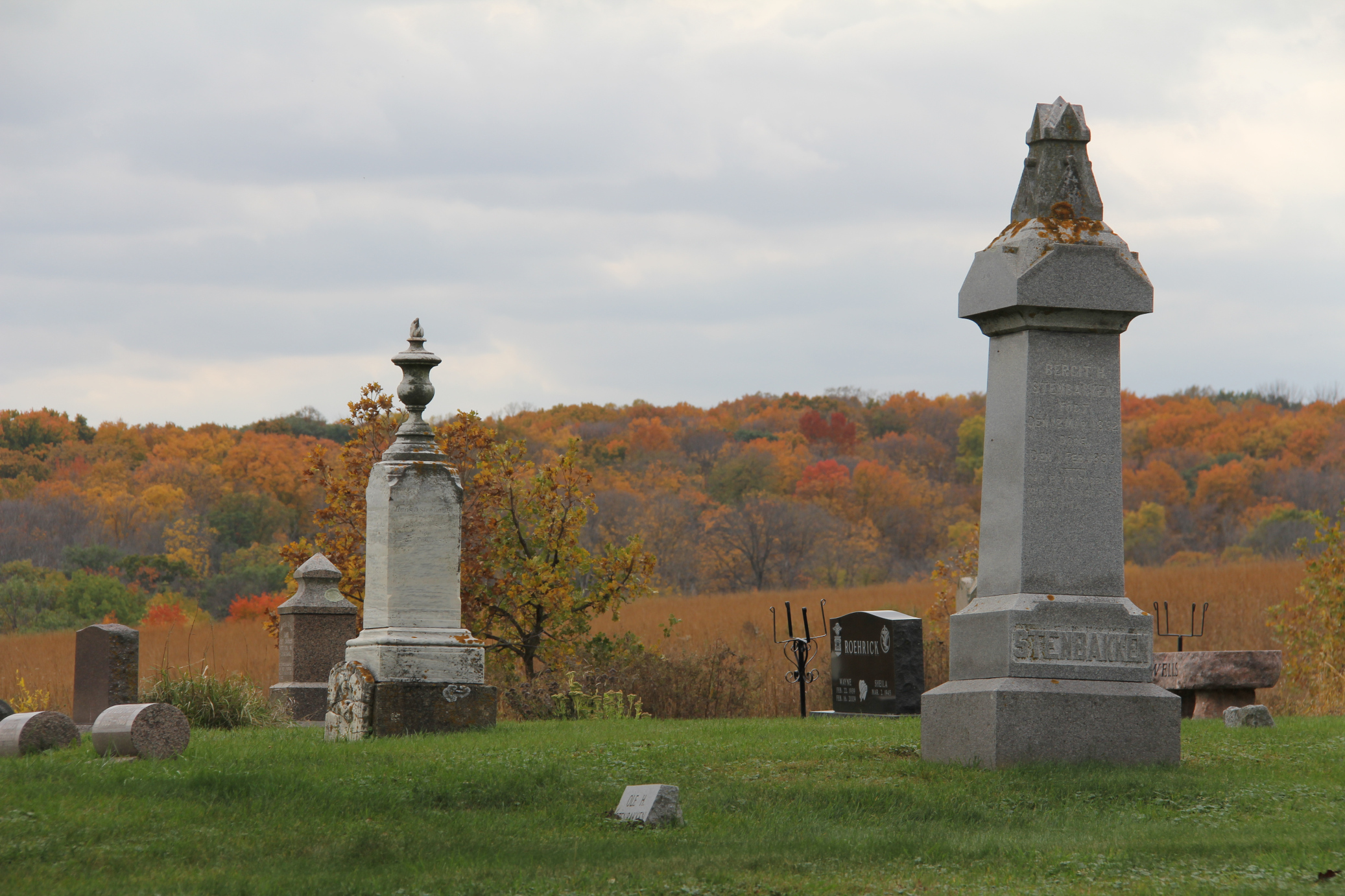
Aged and new tombstones fill the Valley Grove cemetery. (Minnesota Prairie Roots copyrighted photo October 2025)
The hopes and dreams they carried to America and eventually to Minnesota imprint upon tombstones in names and dates and words. Their hopes imprint, too, upon this land.
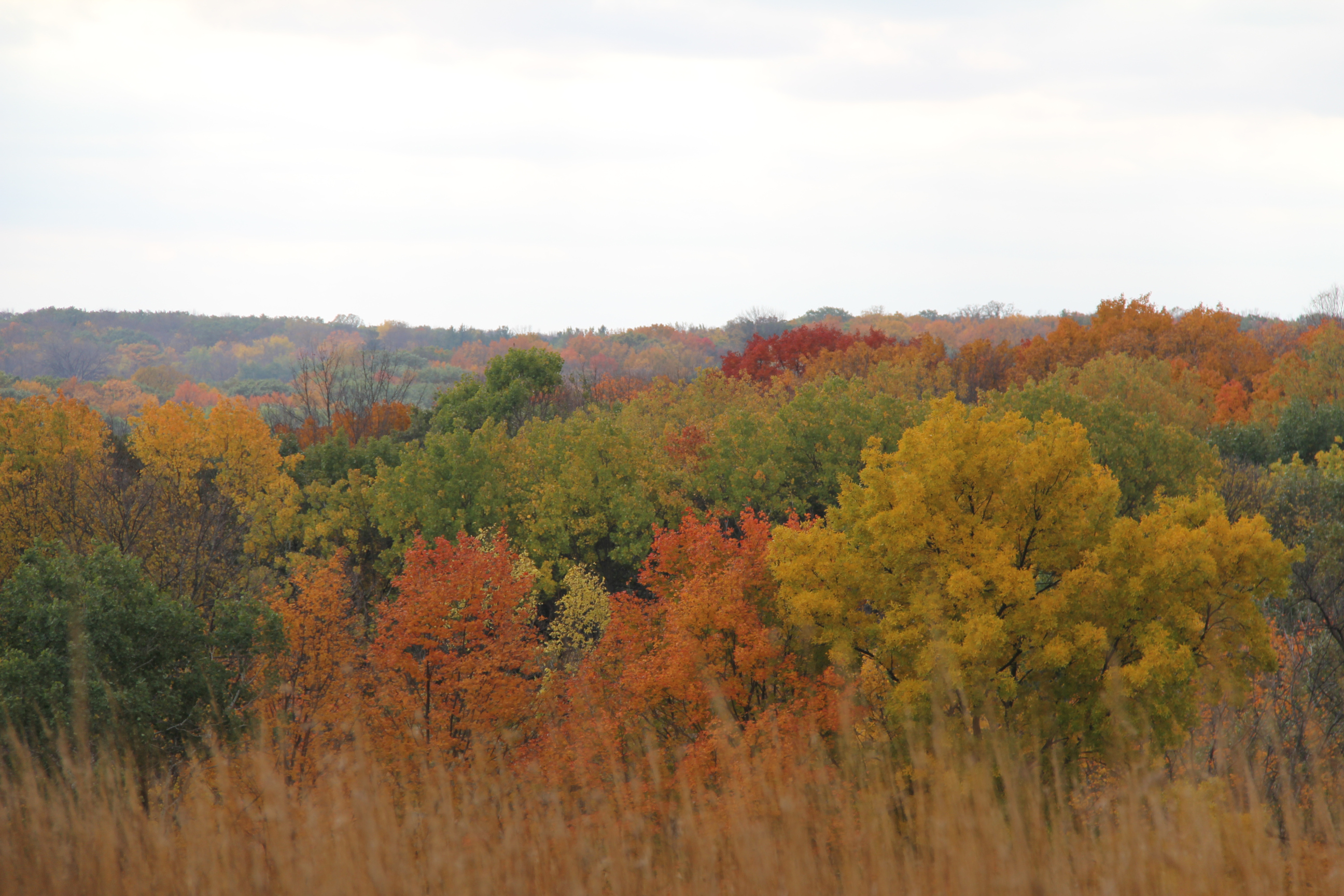
Zooming in on the colorful trees surrounding Valley Grove. (Minnesota Prairie Roots copyrighted photo October 2025)
When I walk this ground, I feel the imprints of souls beneath my feet. This place seems sacred. Sacred in the voices I hear if I lean into the wind and listen. Sacred in the vistas I view.
Found at a gravesite, a serenity stone. (Minnesota Prairie Roots copyrighted photo October 2025)
Valley Grove is a place of serenity. Of quiet. Of natural beauty unequal in the autumn of the year.
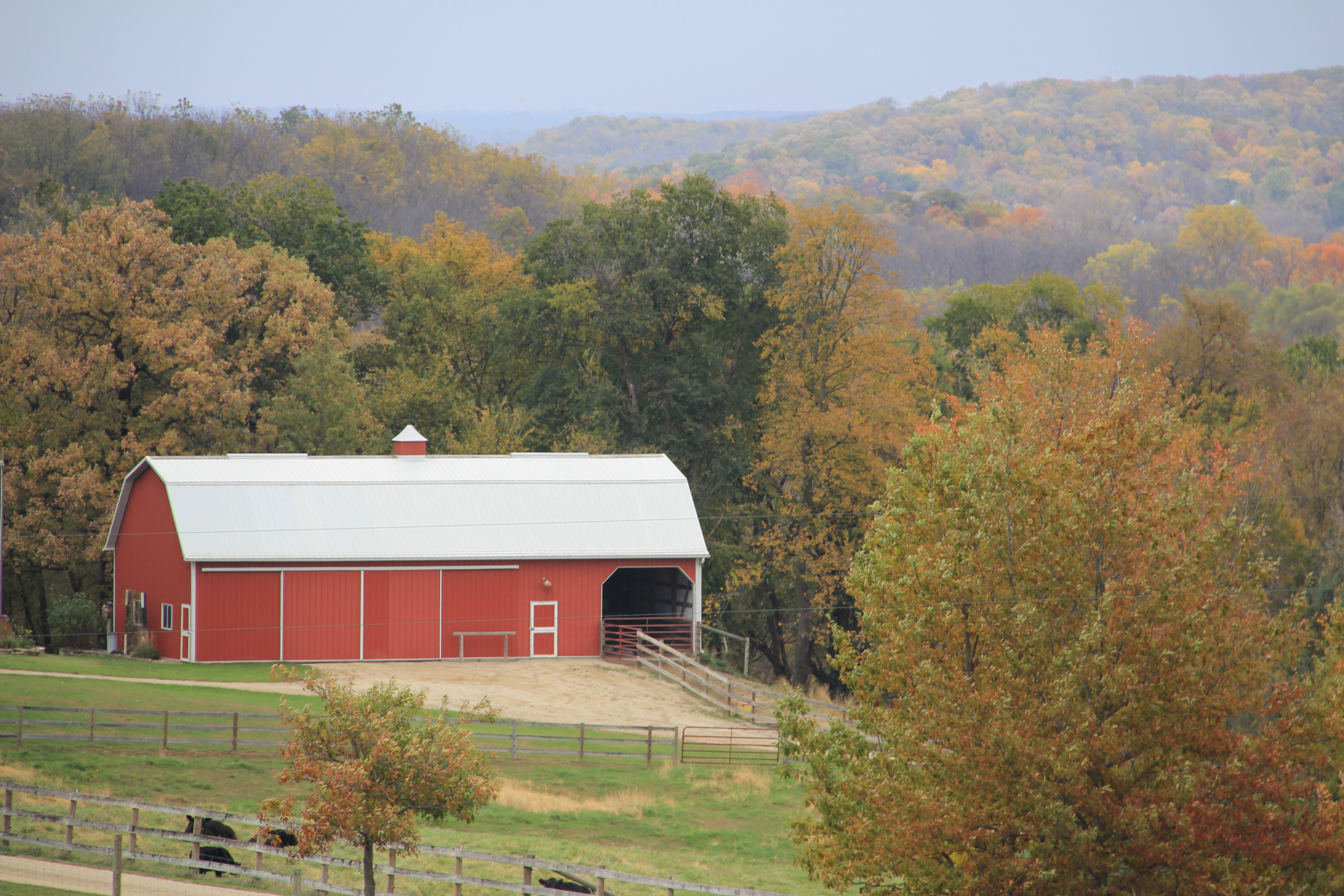
A farm site nestles among the woods below Valley Grove. (Minnesota Prairie Roots copyrighted photo October 2025)
All of this I find, feel, experience, see on an autumn day at Valley Grove, among the rolling hills and valleys of northeastern Rice County.
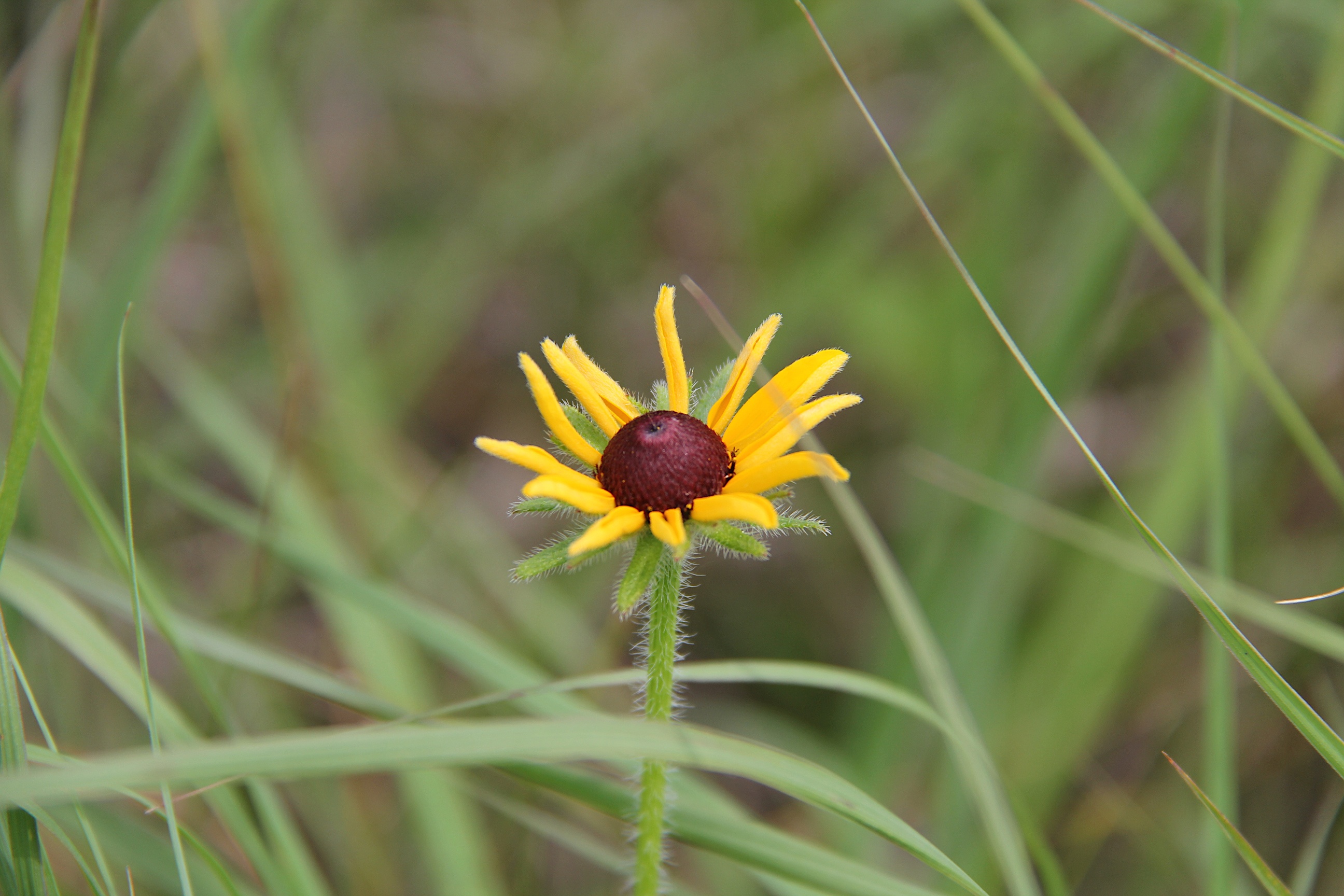
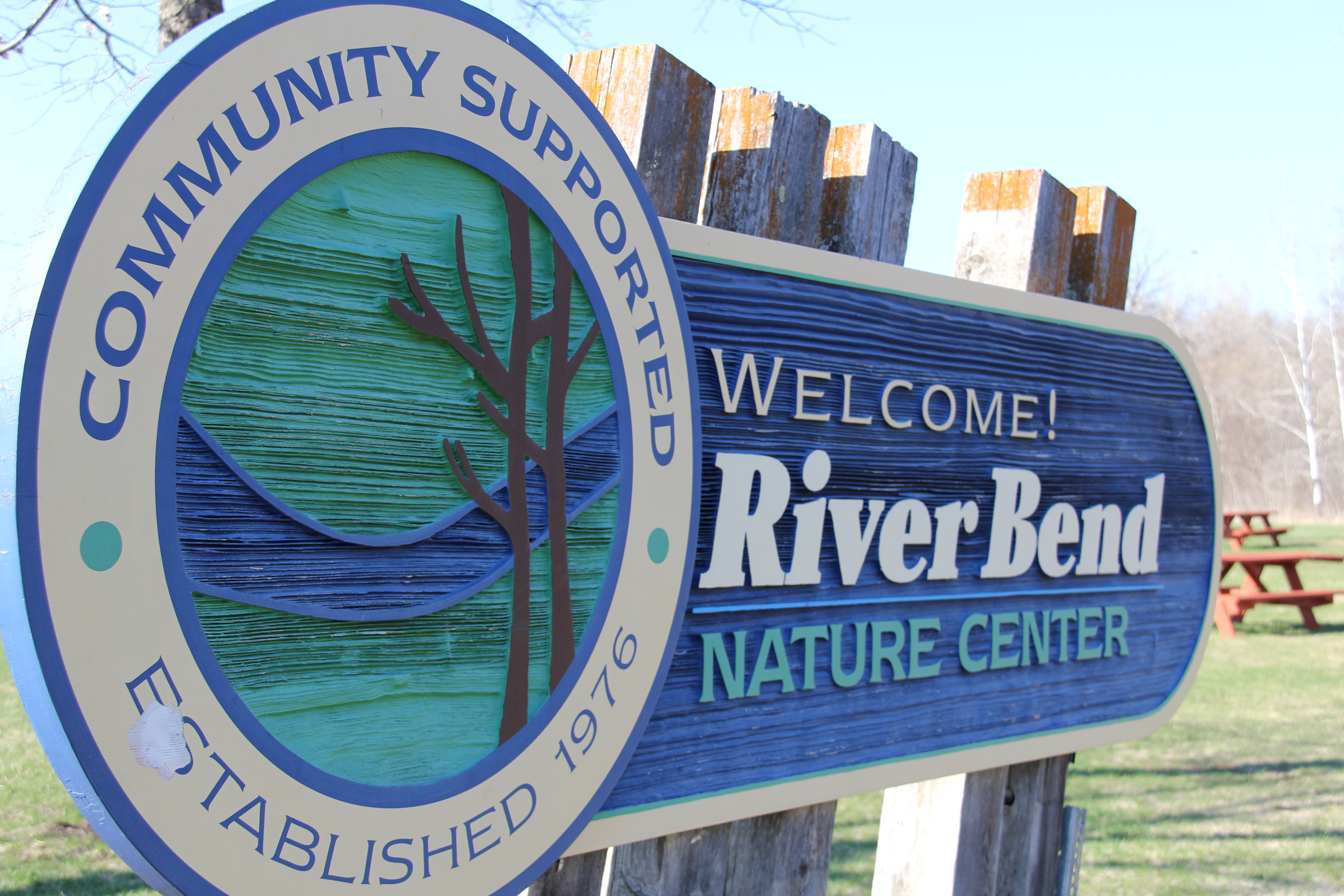
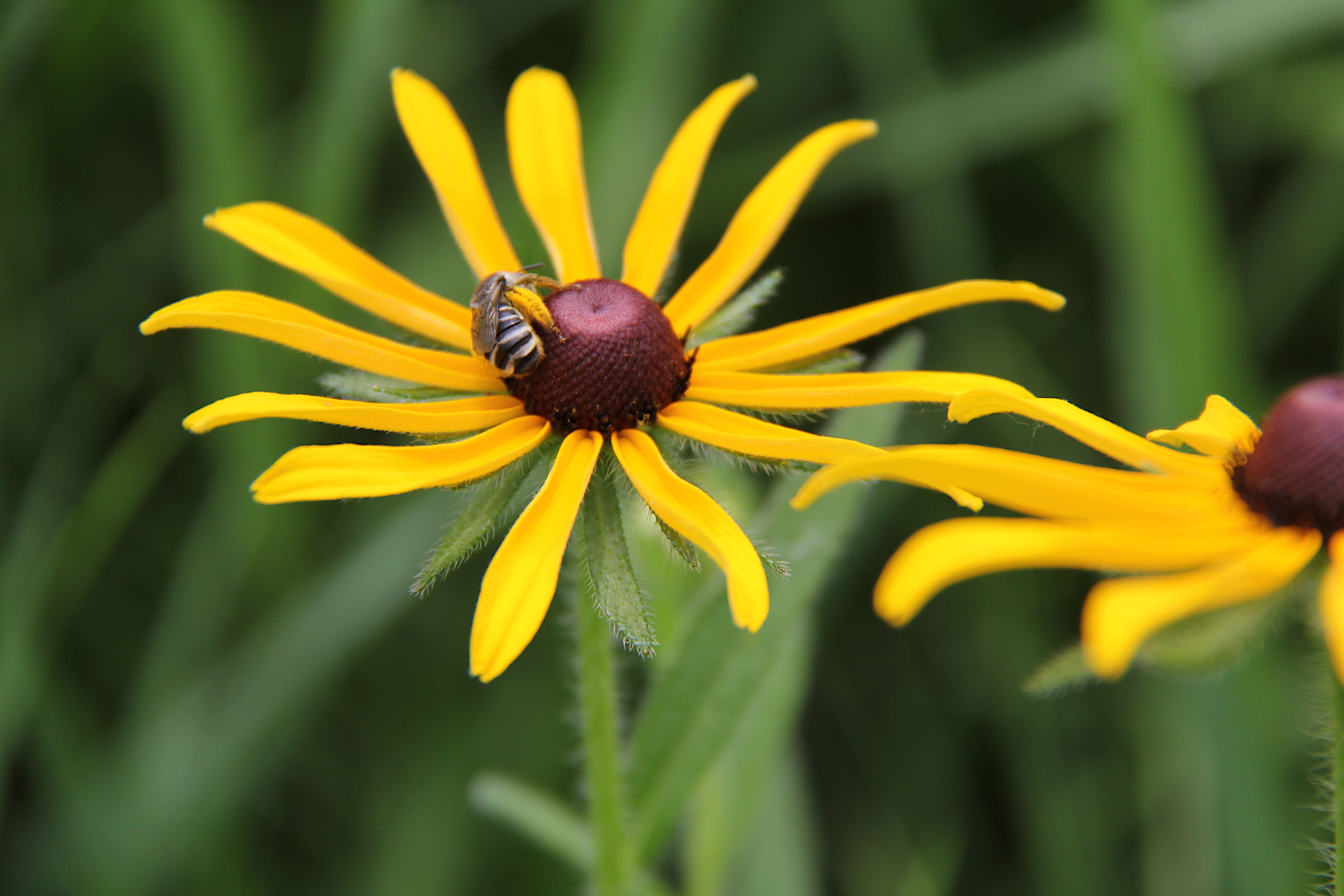
A black-eyed Susan at River Bend Nature Center, Faribault. (Minnesota Prairie Roots copyrighted photo July 2025)
SUMMER, EVEN WITH ITS SOMETIMES excessive heat, humidity and storms, is a glorious season. Especially in Minnesota, when many months of the year are cold and colorless.
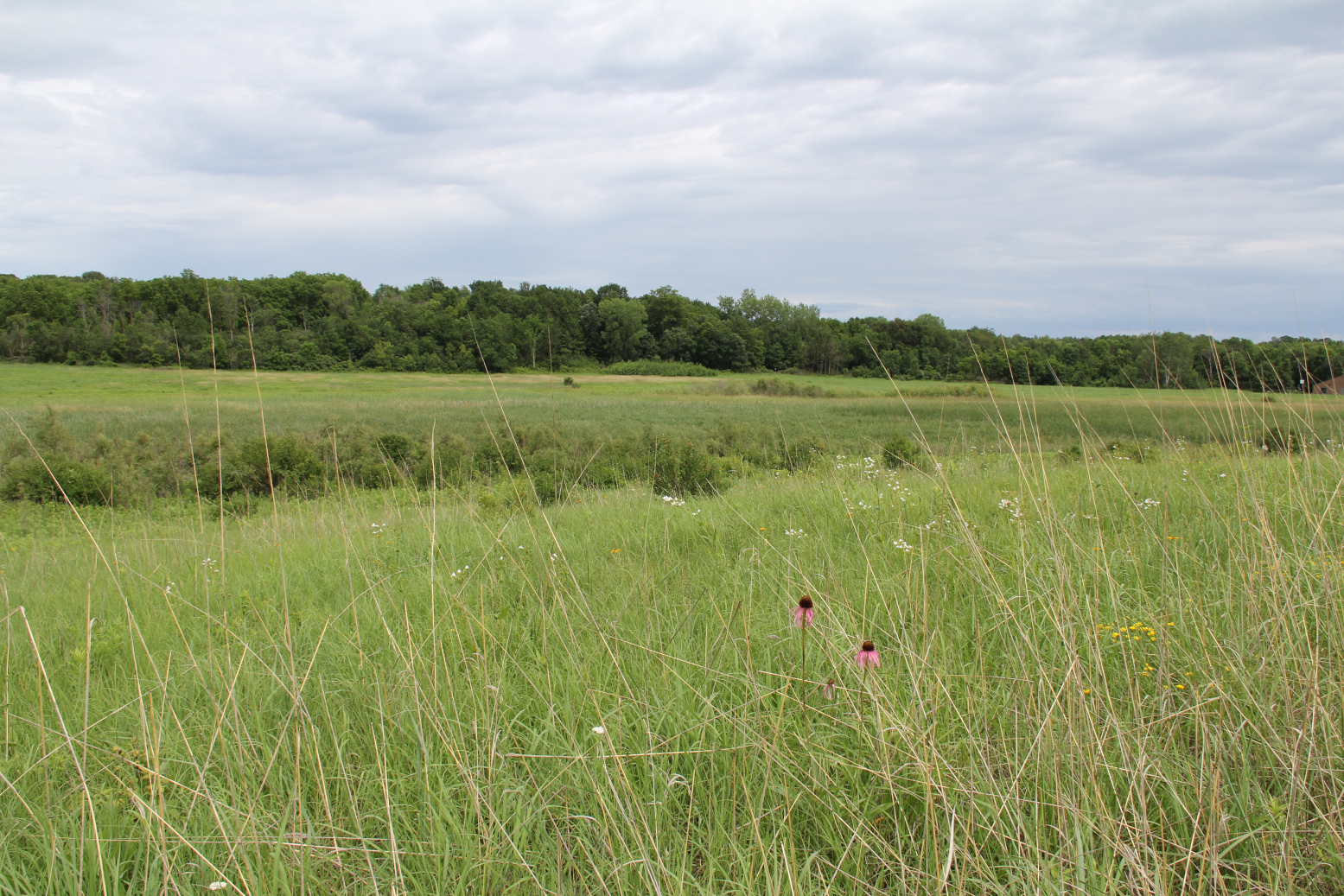
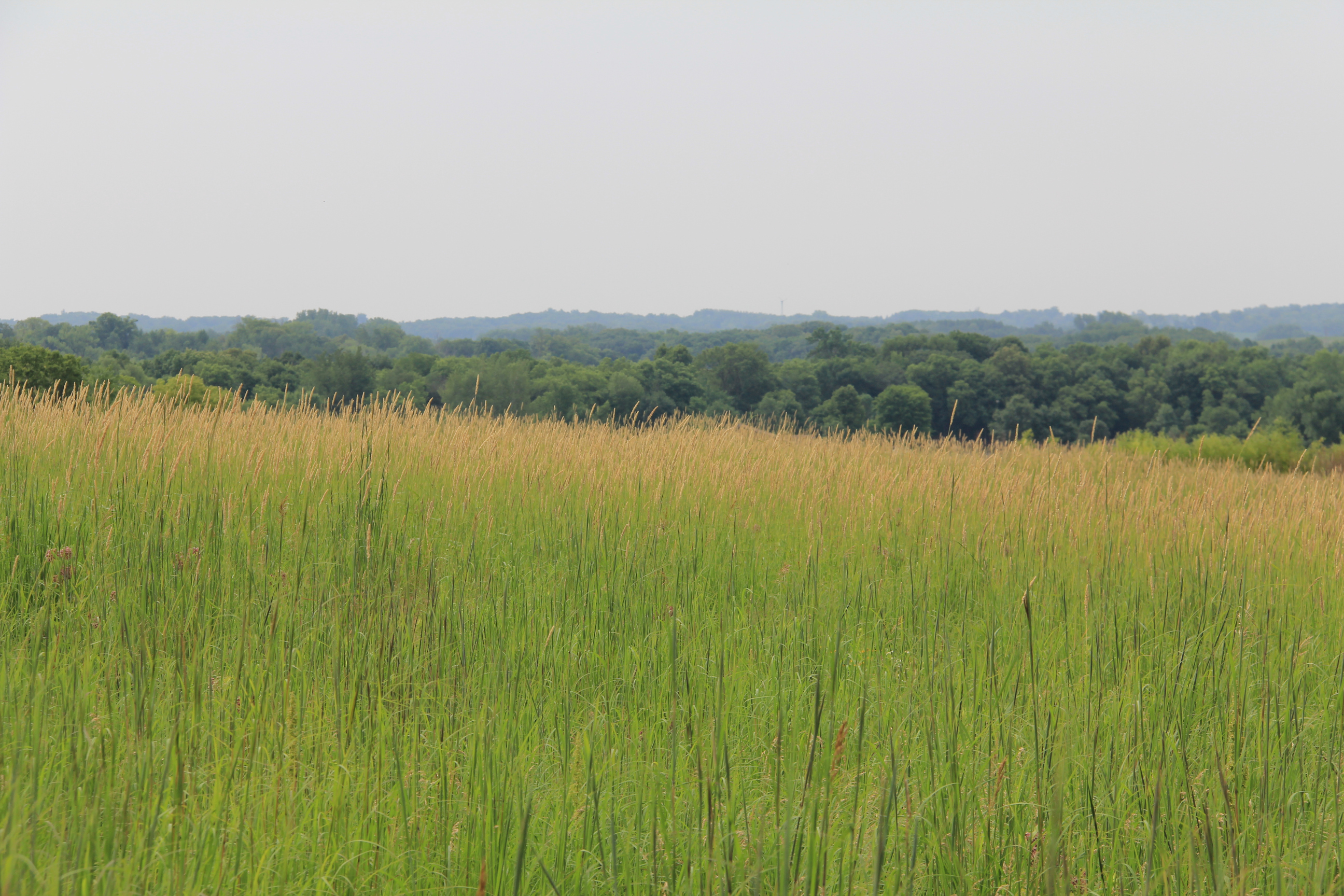
A view of and from the prairie at River Bend. (Minnesota Prairie Roots copyrighted photo July 2025)
This time of year brings a natural world teeming with life in a landscape flush with color. It takes a walk into the woods and onto the prairie—for me at River Bend Nature Center in Faribault—to fully immerse myself in the delights of these July days.
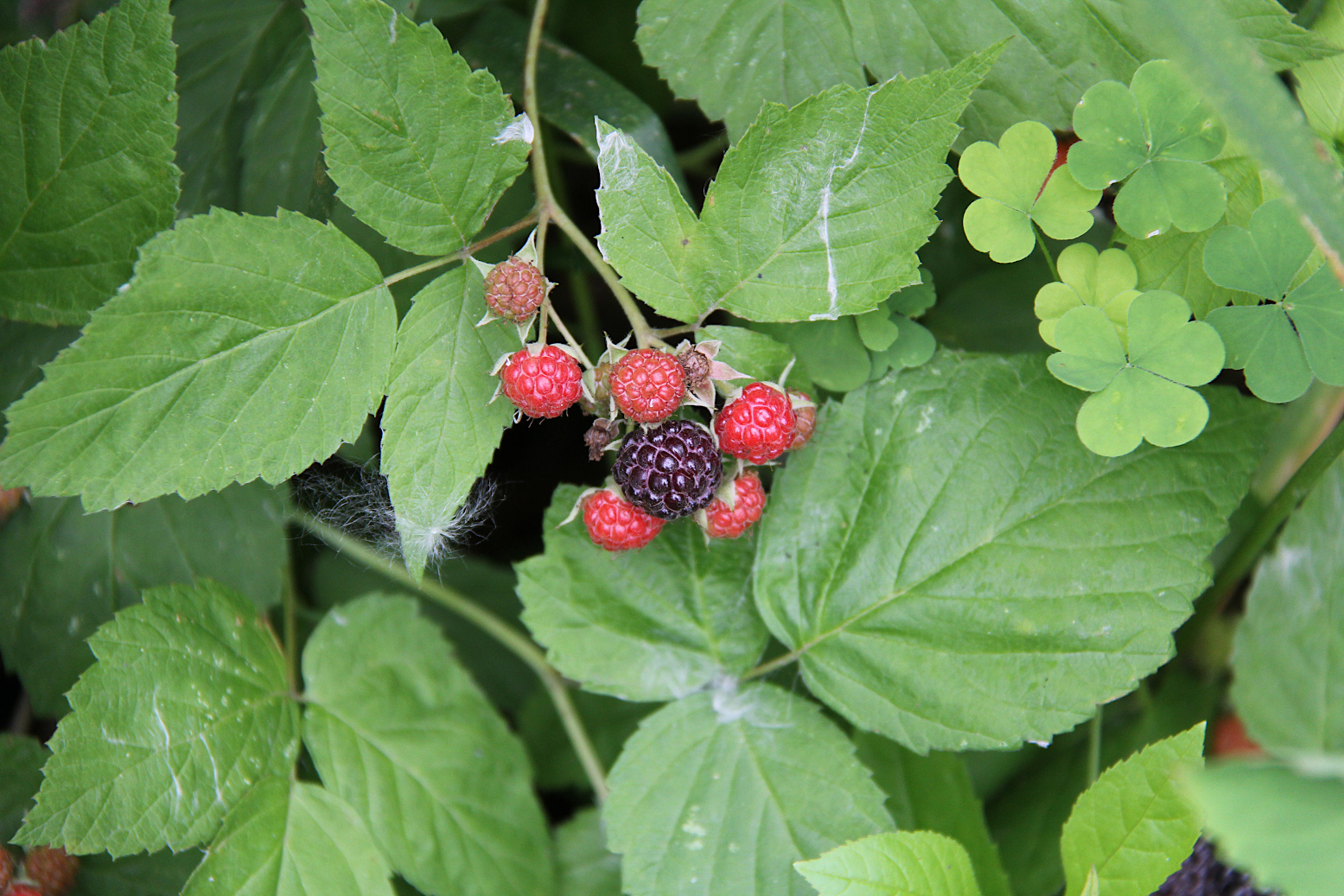
Ripe and ripening black raspberries. (Minnesota Prairie Roots copyrighted photo July 2025)
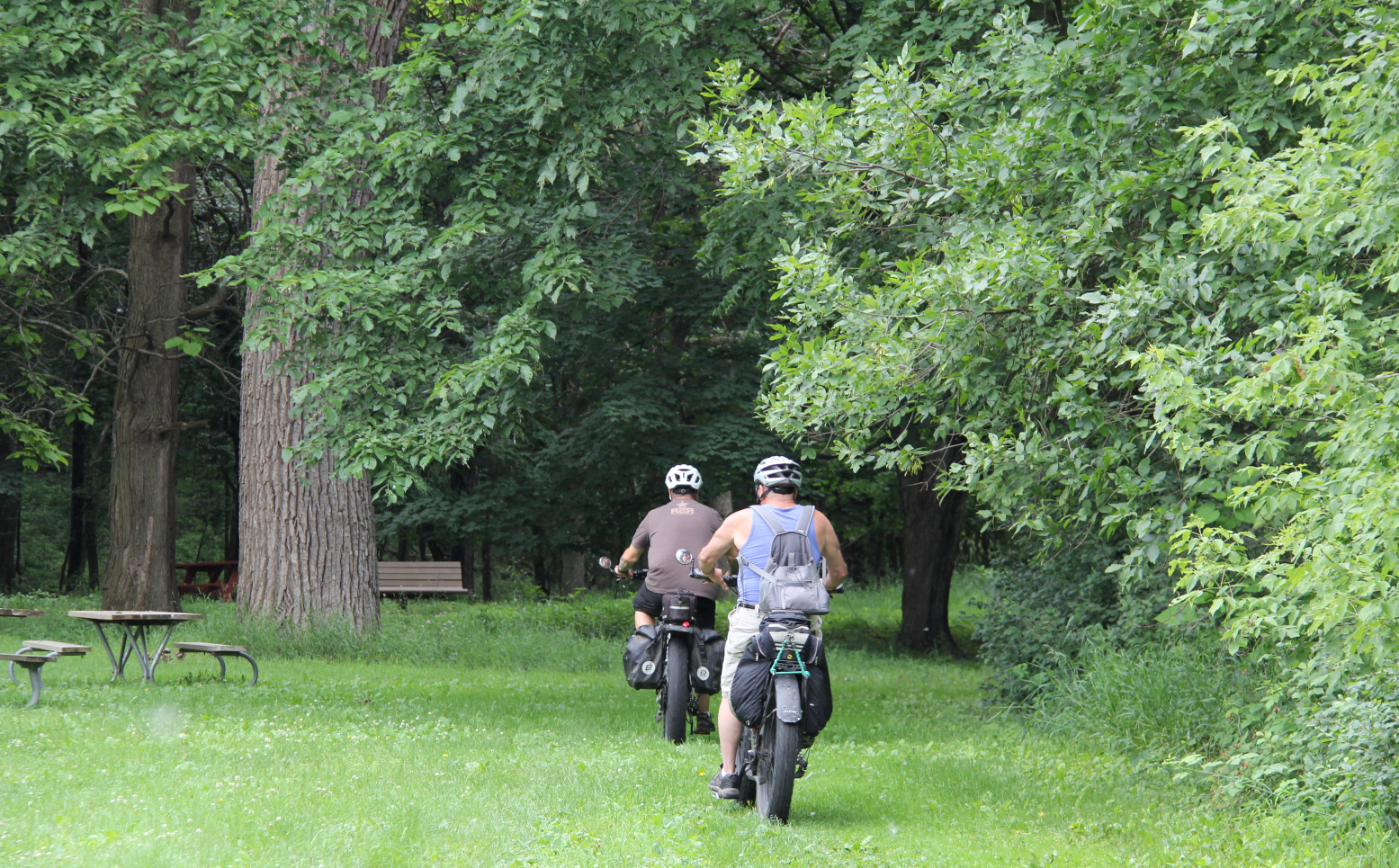
During a recent hike on River Bend’s north side, I paused early on to sample black raspberries plucked from trailside bushes. I spotted the first ripe ones as Randy and I were about to cross a walkway bridge leading to a trail edging the Minnesota Correctional Facility, Faribault. But before I could get there, two guys on fat tire bikes barreled over the bridge, scaring me. I didn’t see them, so focused was I on picking berries.
Fat tire bikers head for a trail on River Bend’s north side. (Minnesota Prairie Roots copyrighted photo July 2025)
On the other side of the bridge, a deer stood, trapped between the double fencing of the prison. While many deer at the nature center show no concern for hikers, this one was skittish, bounding away before I could even lift my camera to shoot a picture.
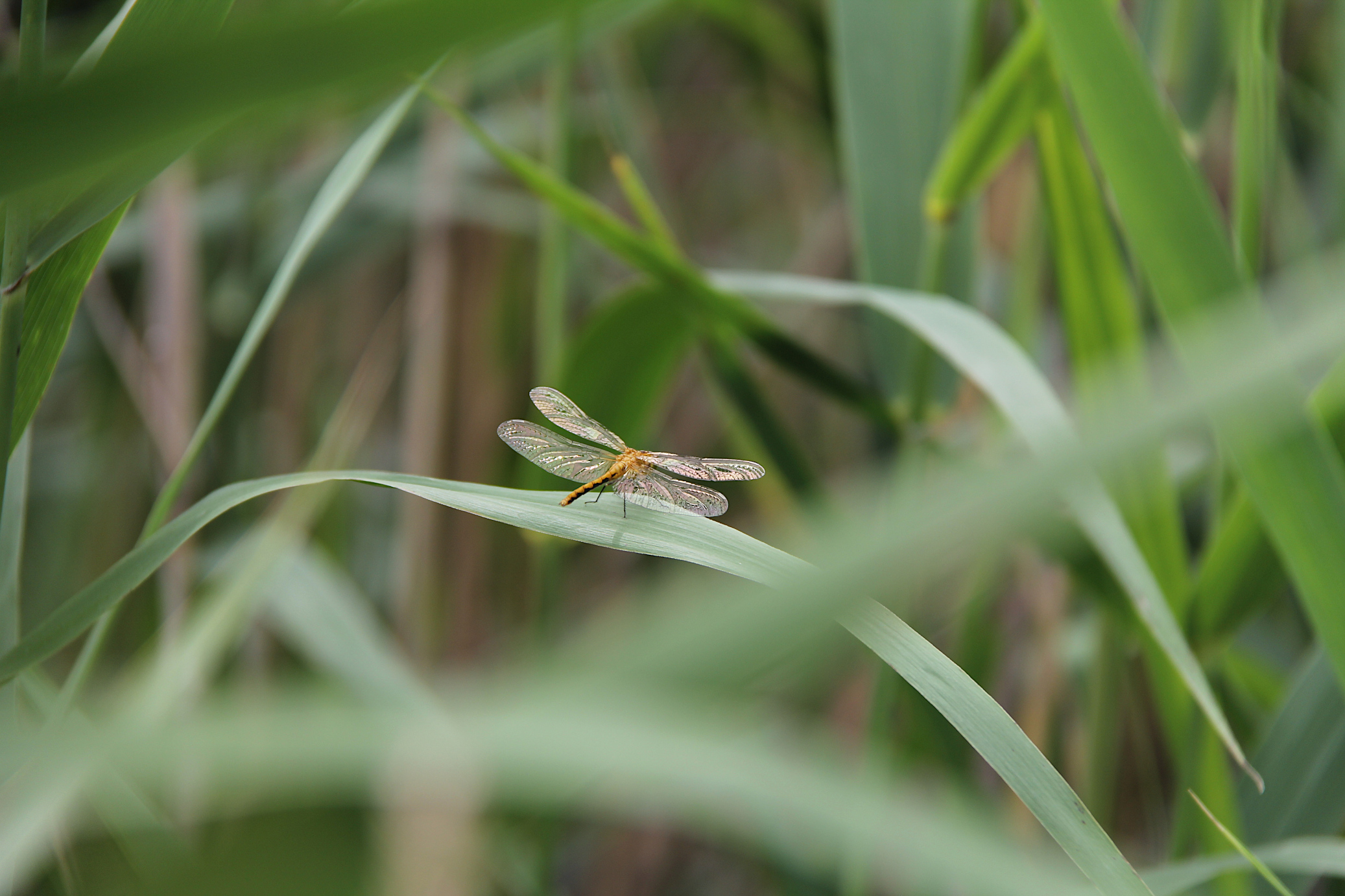
Dragonflies, all in the same hue, flitted about. (Minnesota Prairie Roots copyrighted photo July 2025)
Instead, I focused on the brownish dragonfly flitting, then landing, upon a twig. Later I would spot numerous of these same-hued insects among blades of tall grasses. I find them fascinating with their gossamer wings hearkening of fairies and magic and a child’s imagination.
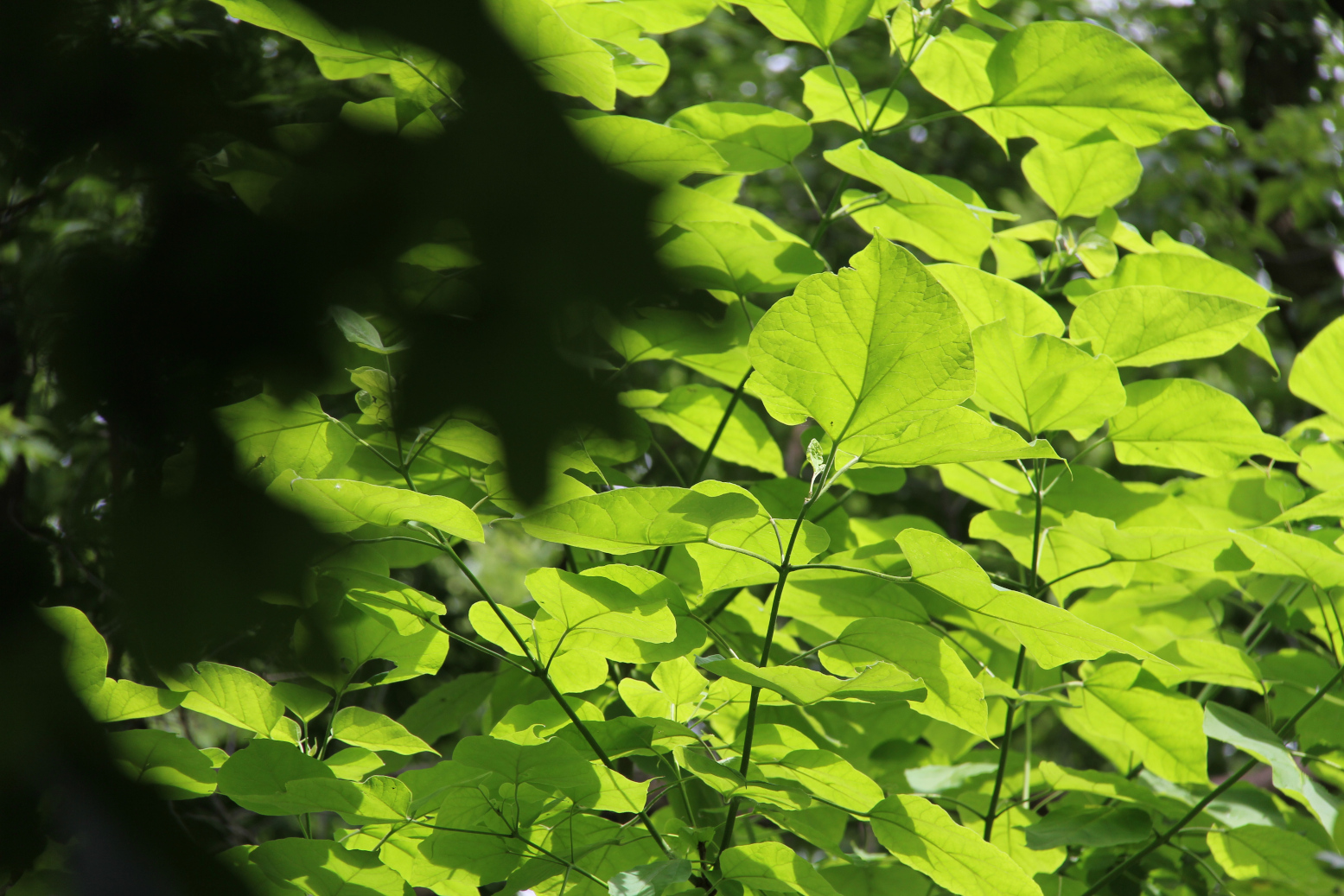
Sunlight plays on leaves in light and shadows. (Minnesota Prairie Roots copyrighted photo July 2025)
Backtracking across the road and into the woods, I observed unidentifiable slimy white fungi lining fallen limbs and trees. I’m always hopeful I will find an intensely bright yellow or orange mushroom like the vivid ones I saw several years ago in the woods of north central Minnesota. But I don’t think those grow in southern Minnesota. I know little about mushrooms except that I like them and buy eight ounces of baby bellas every week at the grocery store. I also know that a fairly-new business, Forest to Fork, grows a variety of mushrooms inside a former Faribault Foods plant on the north side of town.
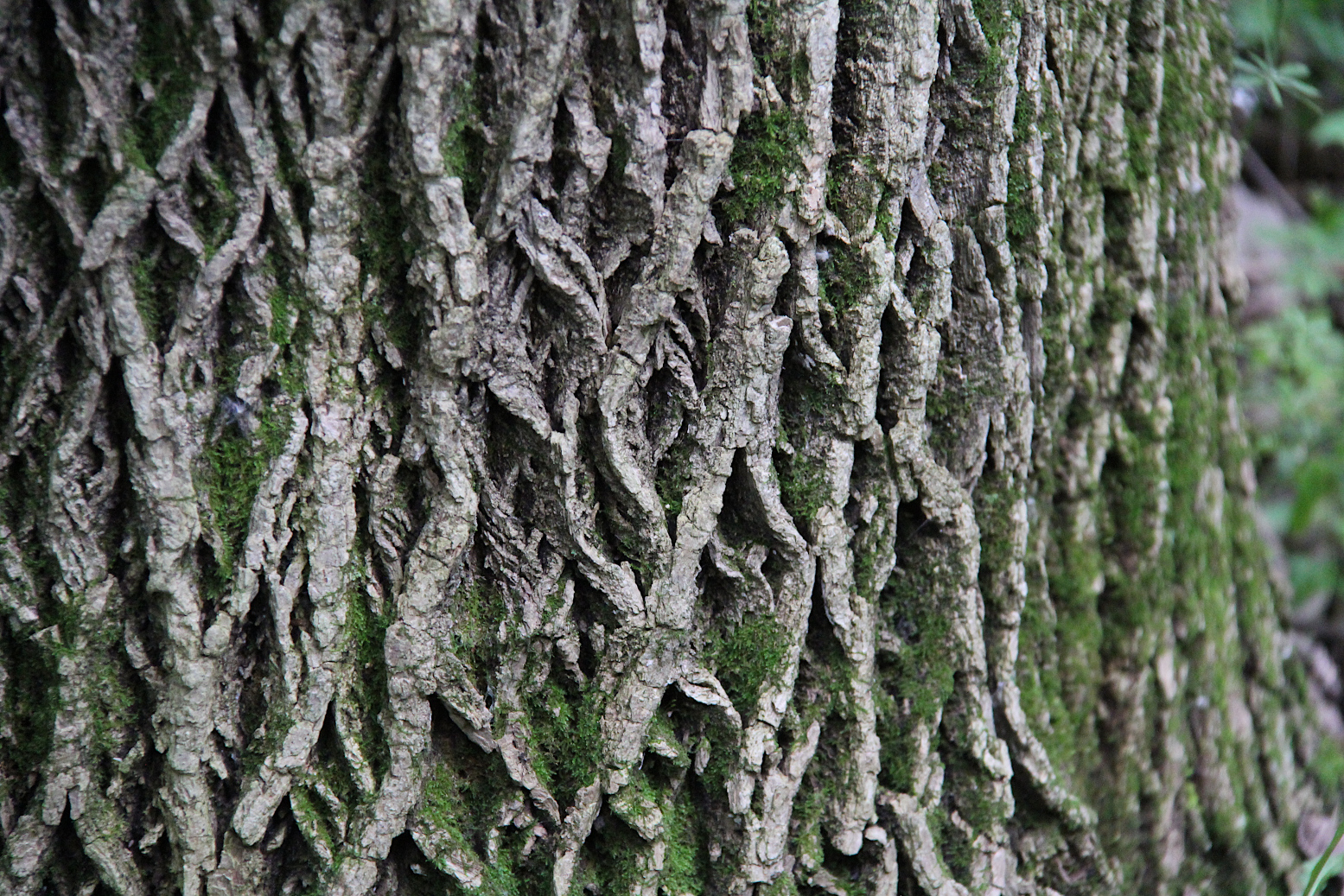
A textured tree trunk up close. (Minnesota Prairie Roots copyrighted photo July 2025)
Also in the woods, I noticed the texture of tree trunks. Natural art. At least to me.
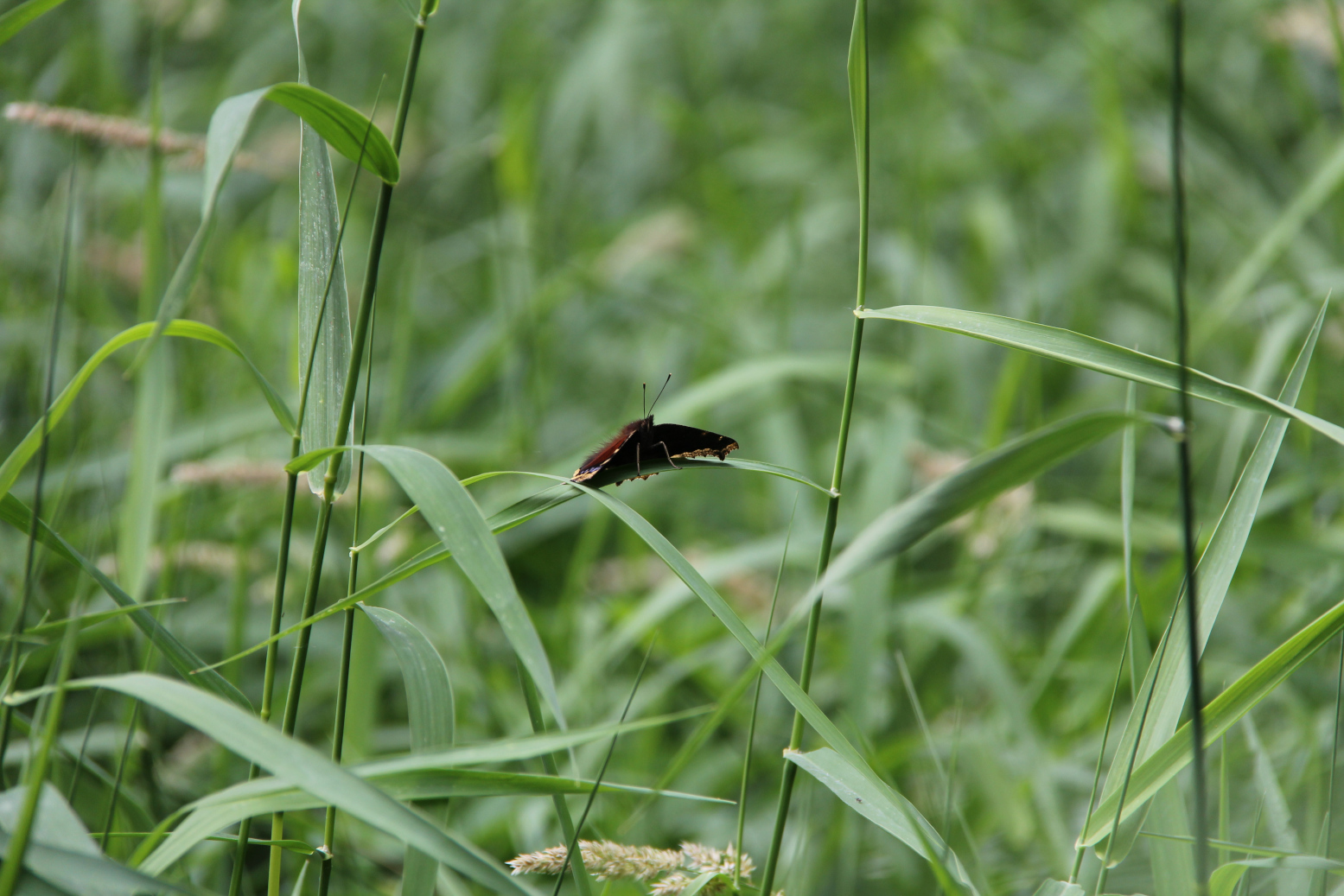
There, among the weave of grasses, a butterfly. (Minnesota Prairie Roots copyrighted photo July 2025)
As we looped back to a main trail, the woods began to open to swampland and then to prairie. Birds raised raucous sound, although I failed to see many. That was until I noticed and attempted to photograph a lone bird on a bush. And failed. The bird took flight. “It’s a bluebird,” Randy exclaimed. He was right given the flash of blue, the smallish size and the nearby bluebird houses. It was my first bluebird sighting. Ever. Rice County is a haven for bluebirds thanks to the efforts of Keith Radel, known as Mr. Bluebird. Keith hails from my hometown of Vesta on the southwestern Minnesota prairie. He’s placed and tended houses throughout the county for 40-plus years, tracking, counting and caring for bluebirds. On this afternoon, numerous bluebirds swooped and danced across the summer sky.
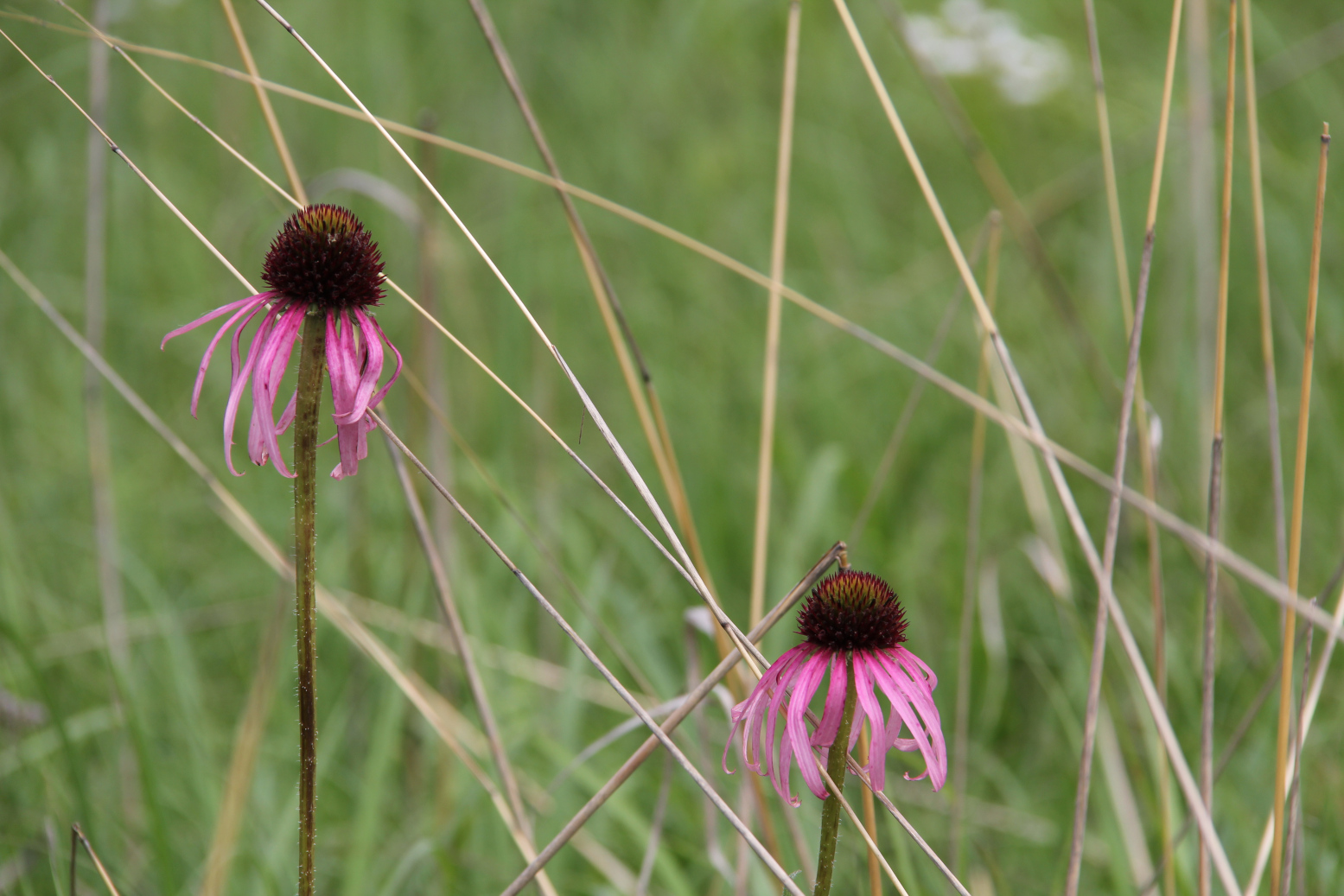
Coneflowers on the prairie. (Minnesota Prairie Roots copyrighted photo July 2025)
Nowhere does summer appear more like summer to me than in the tall grasses of swampland or among prairie wildflowers. I love the messiness of flowers tangled among grasses. I love the wide sky.
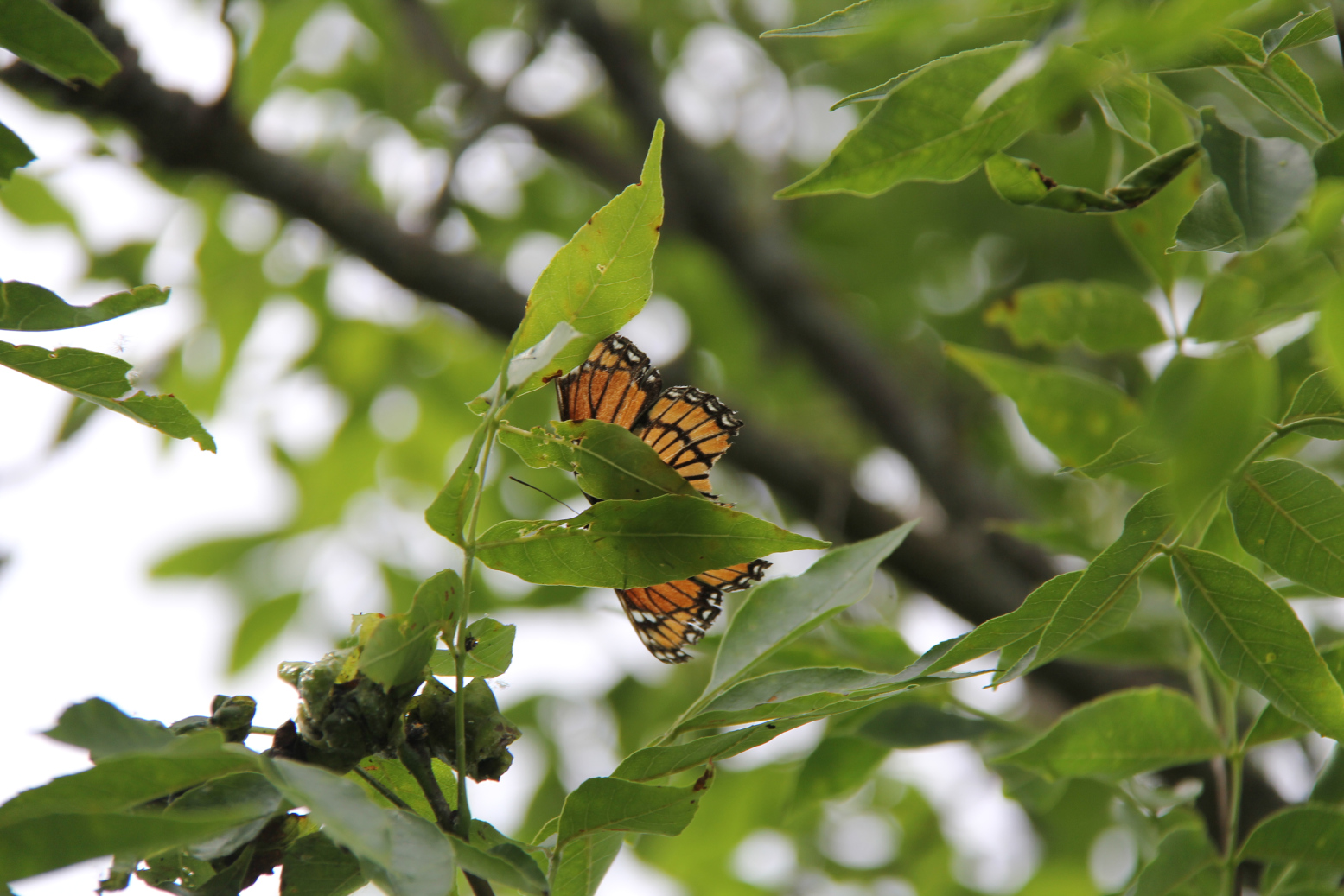
A Monarch, with parts of its wings missing, flies among leaves. (Minnesota Prairie Roots copyrighted photo July 2025)
And I love, too, the flitting of butterflies and moths. A flash of orange. Antenna and spindly legs. And on this afternoon, a Monarch with wings partially-eaten by a predator.
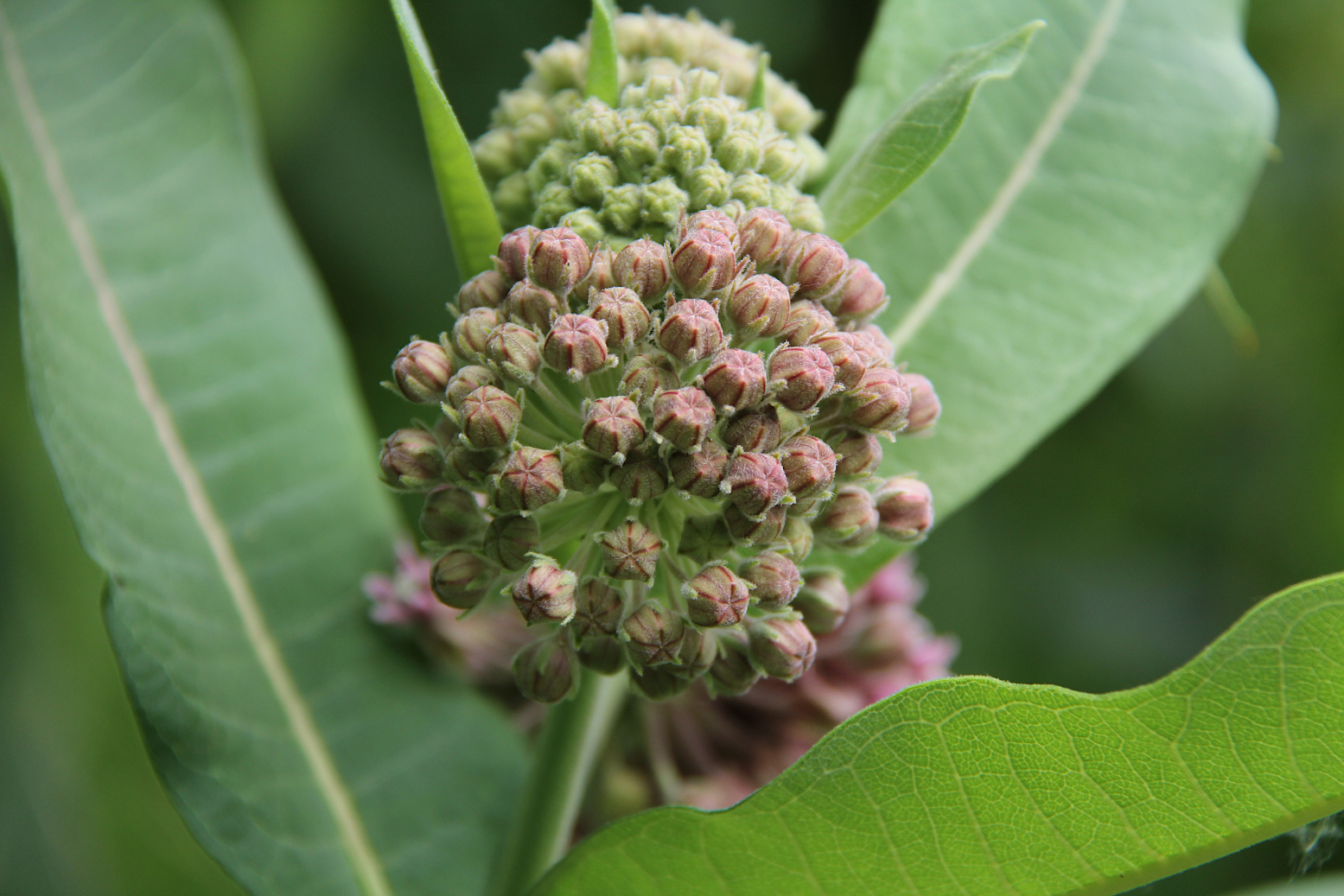
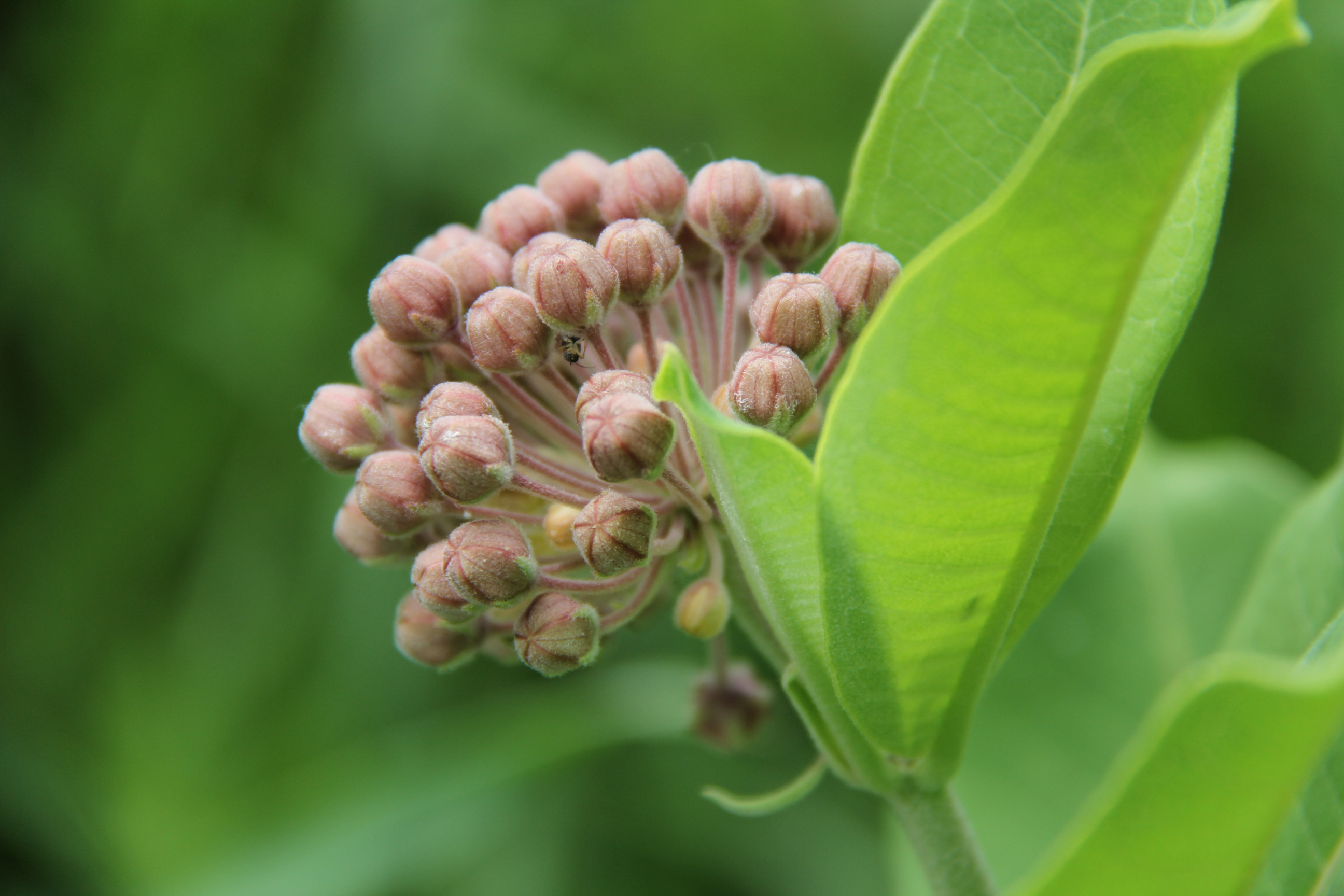
A milkweed flower beginning to open. (Minnesota Prairie Roots copyrighted photo July 2025)
All of this I discovered on a July afternoon at River Bend. Here I dipped my nose into deeply-scented, dusty pink milkweed flowers. Here I tasted sunshine and rain in berries. And here I honored summer in southern Minnesota. Glorious and beautiful.
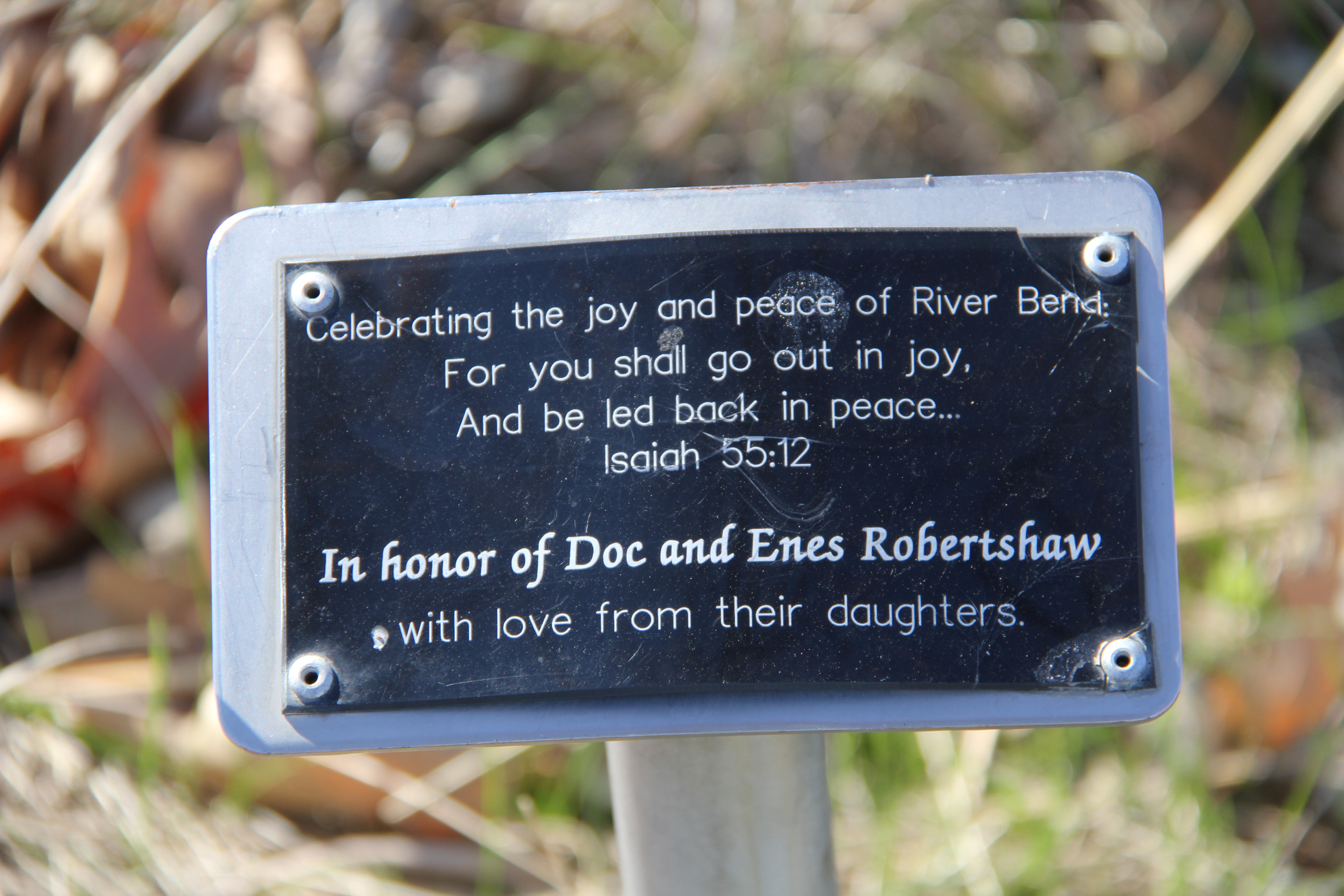
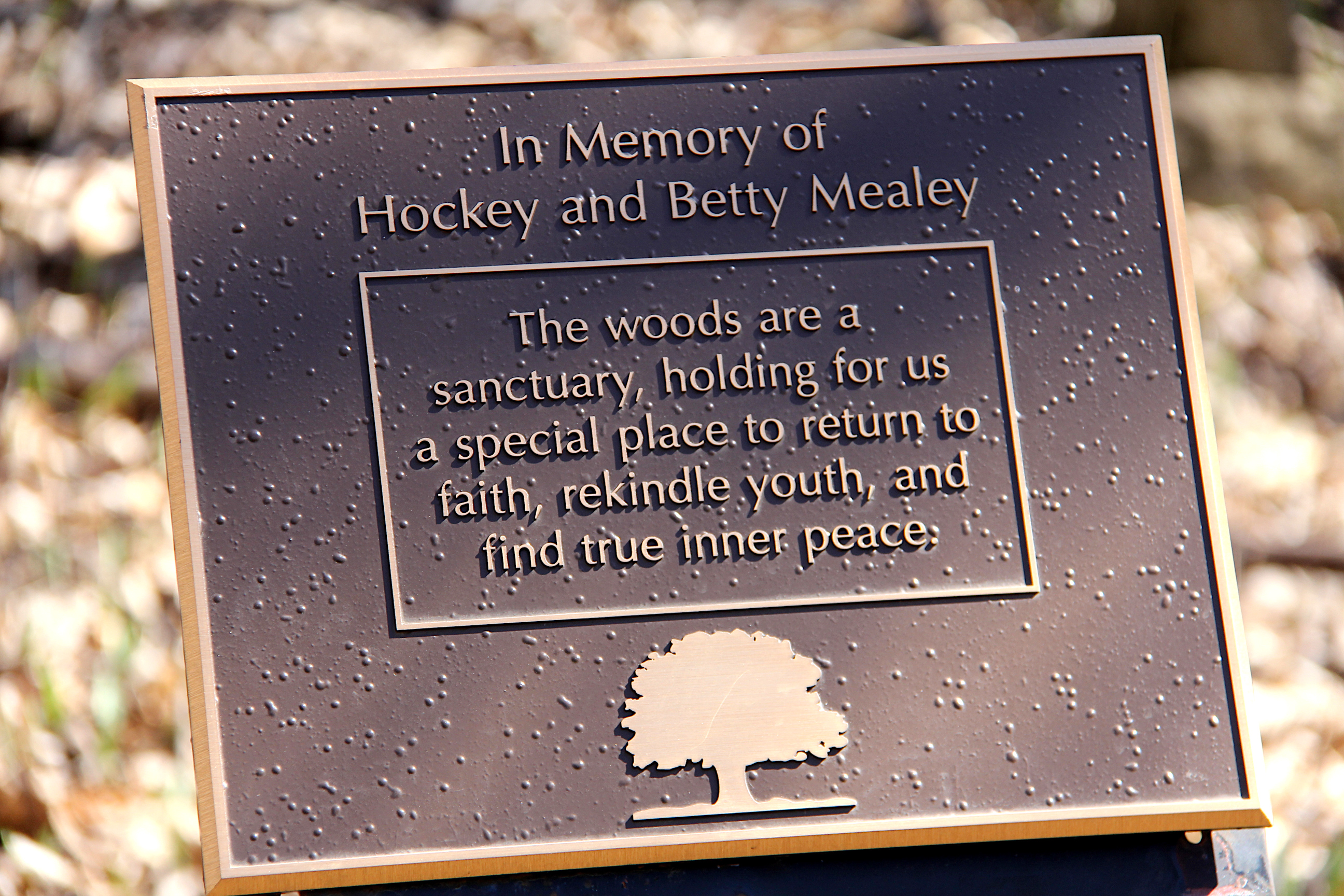
This small memorial plaque honors parents and River Bend with joyful words. (Minnesota Prairie Roots copyrighted photo April 2025)
FOR YOU SHALL GO out in joy, and be led back in peace. Those words from Isaiah 55:12, printed on a memorial plaque by a tree near the River Bend Nature Center interpretative center, summarize well my feelings about this spacious public area of ponds and river, woodland and prairie in Faribault. Whenever I arrive here, I come with joyful anticipation. I always leave feeling refreshed, at peace. Nature has a way of infusing happiness while simultaneously calming the spirit.
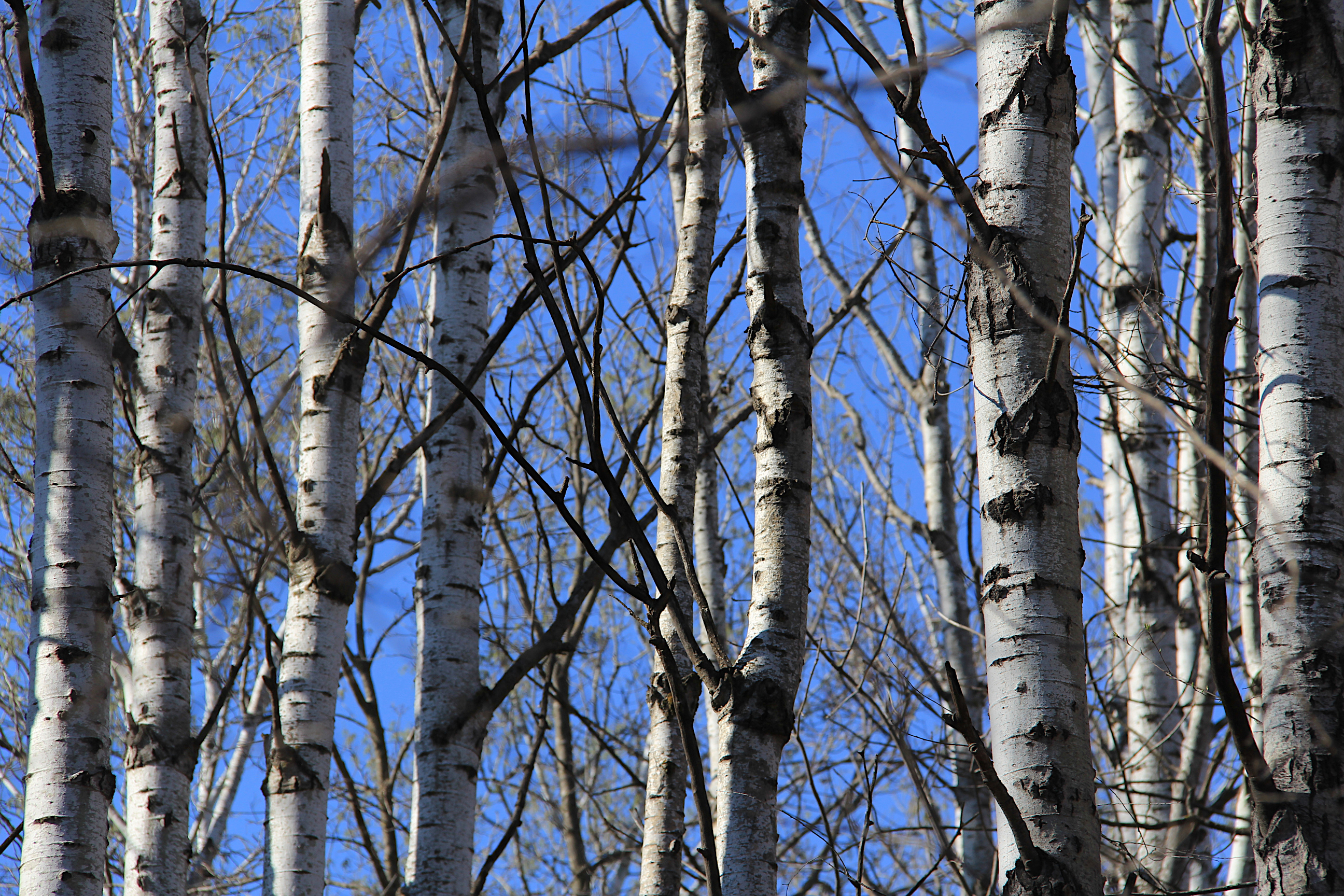
I love the contrast of textured white bark against the bold blue sky of a sunny spring afternoon. (Minnesota Prairie Roots copyrighted photo April 2025)
After a long winter, which wasn’t particularly harsh by Minnesota standards, River Bend draws friends, families, couples, individuals and students to experience the unfolding of spring, me among them. This time of year, perhaps more than any other, I am cognizant of the natural world evolving, changing, teeming with life.
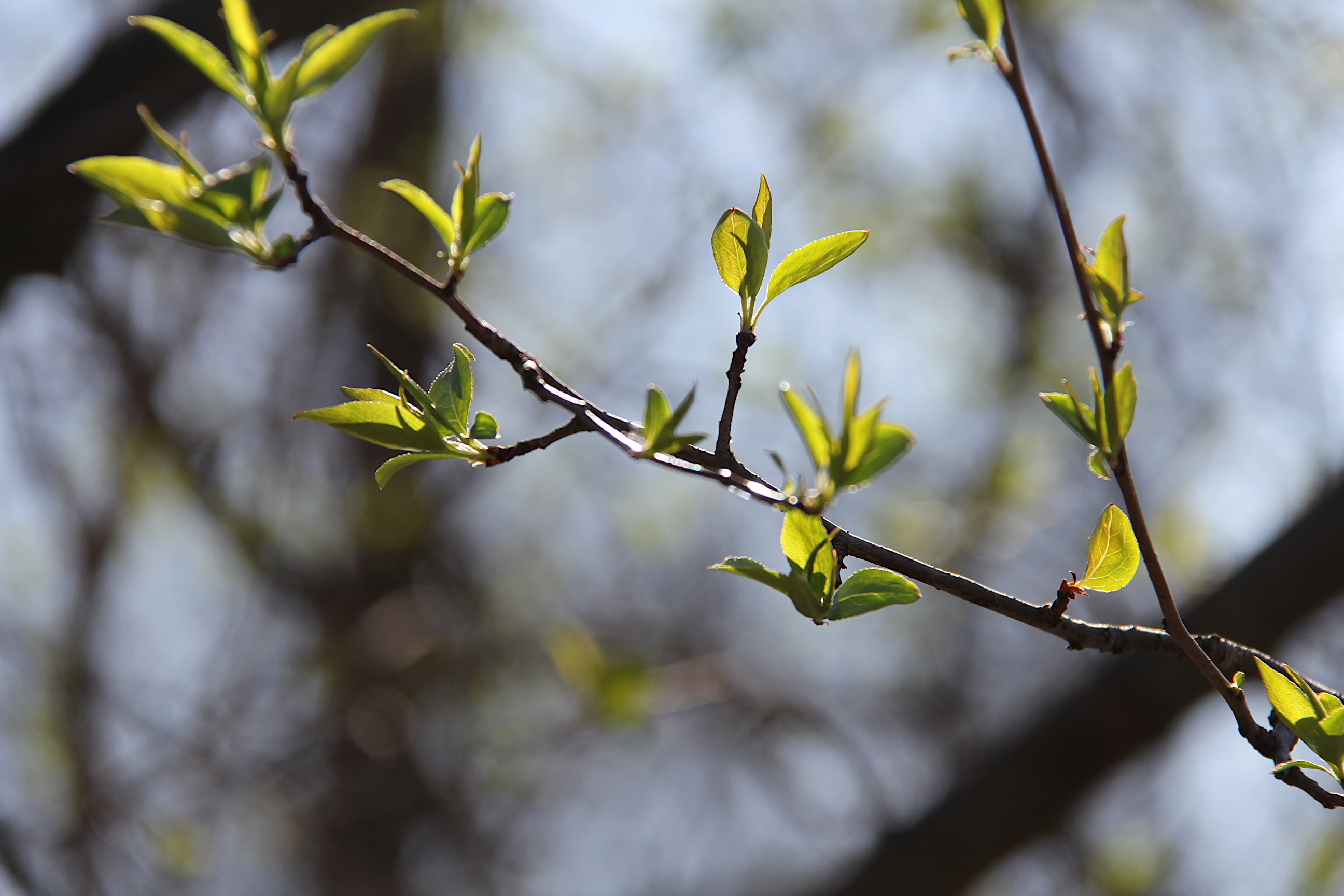
Buds unfurl as temps warm. (Minnesota Prairie Roots copyrighted photo April 2025)
In the shelter of woods, buds tip trees, unfurling with each warm and sunny day until the barren gray branches of winter morph into a canopy of green. We’re not quite there yet. But I see the greenery. I doubt there’s a green more intense than that of early spring.
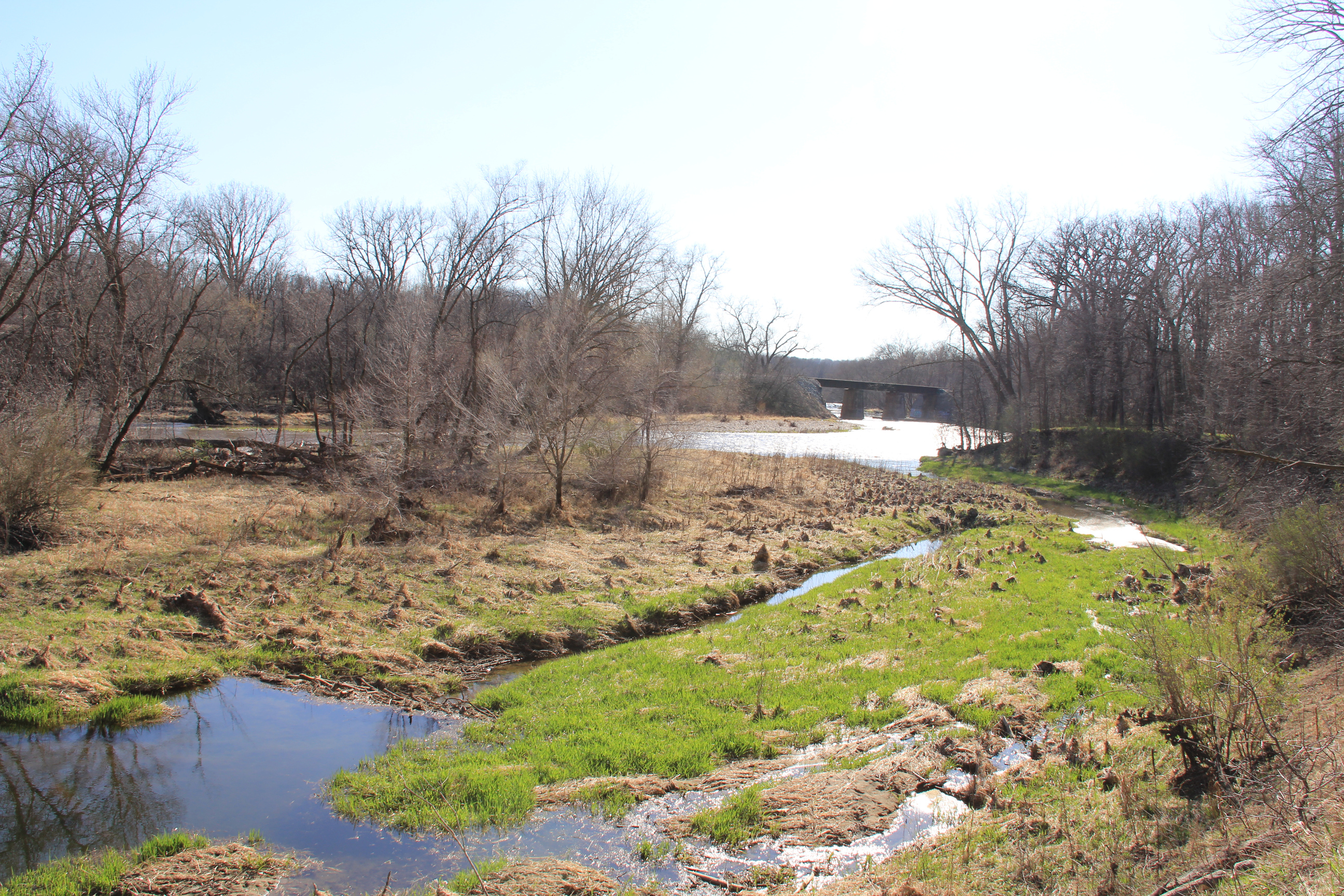
Pockets of green along the Straight River bottom. (Minnesota Prairie Roots copyrighted photo April 2025)
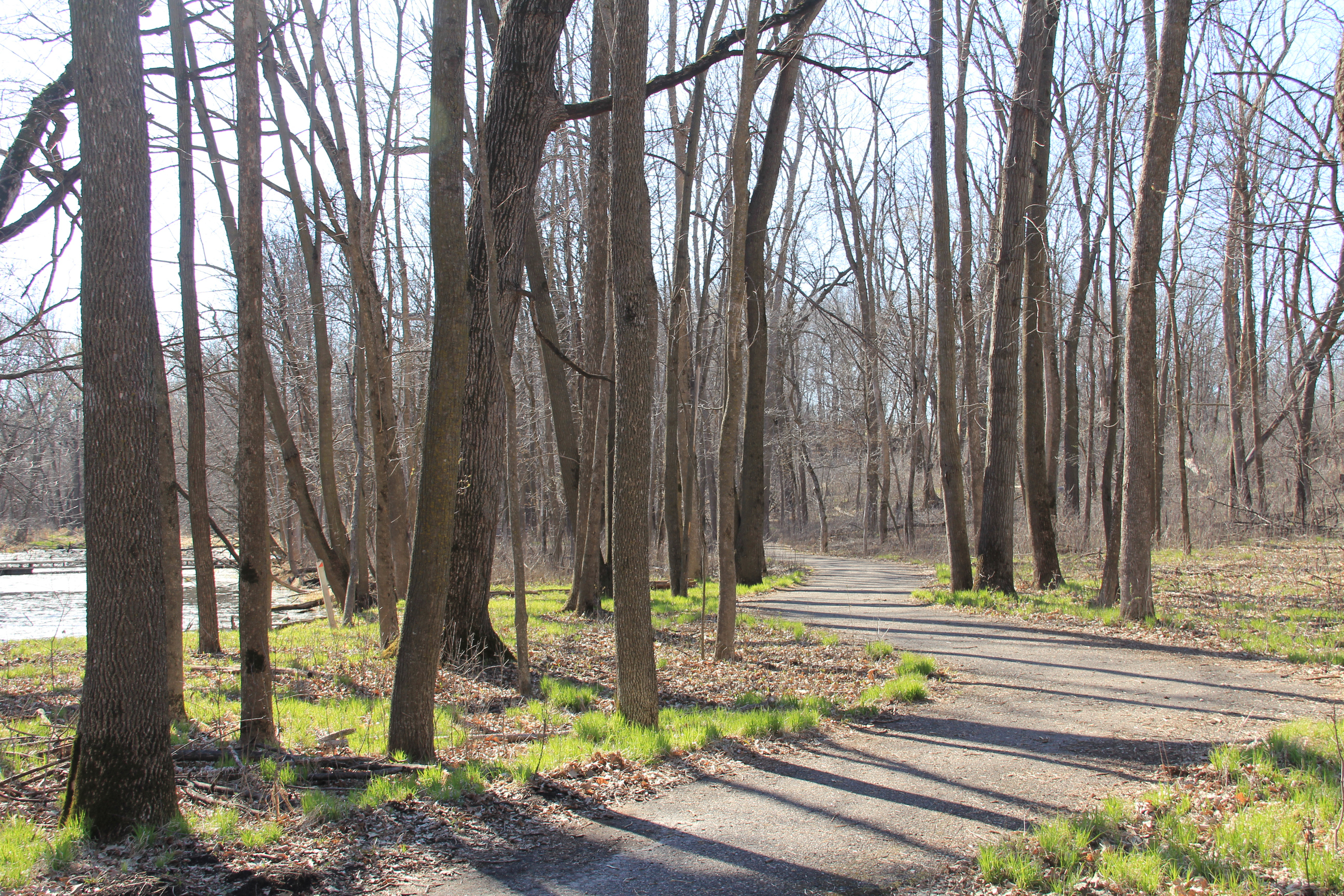
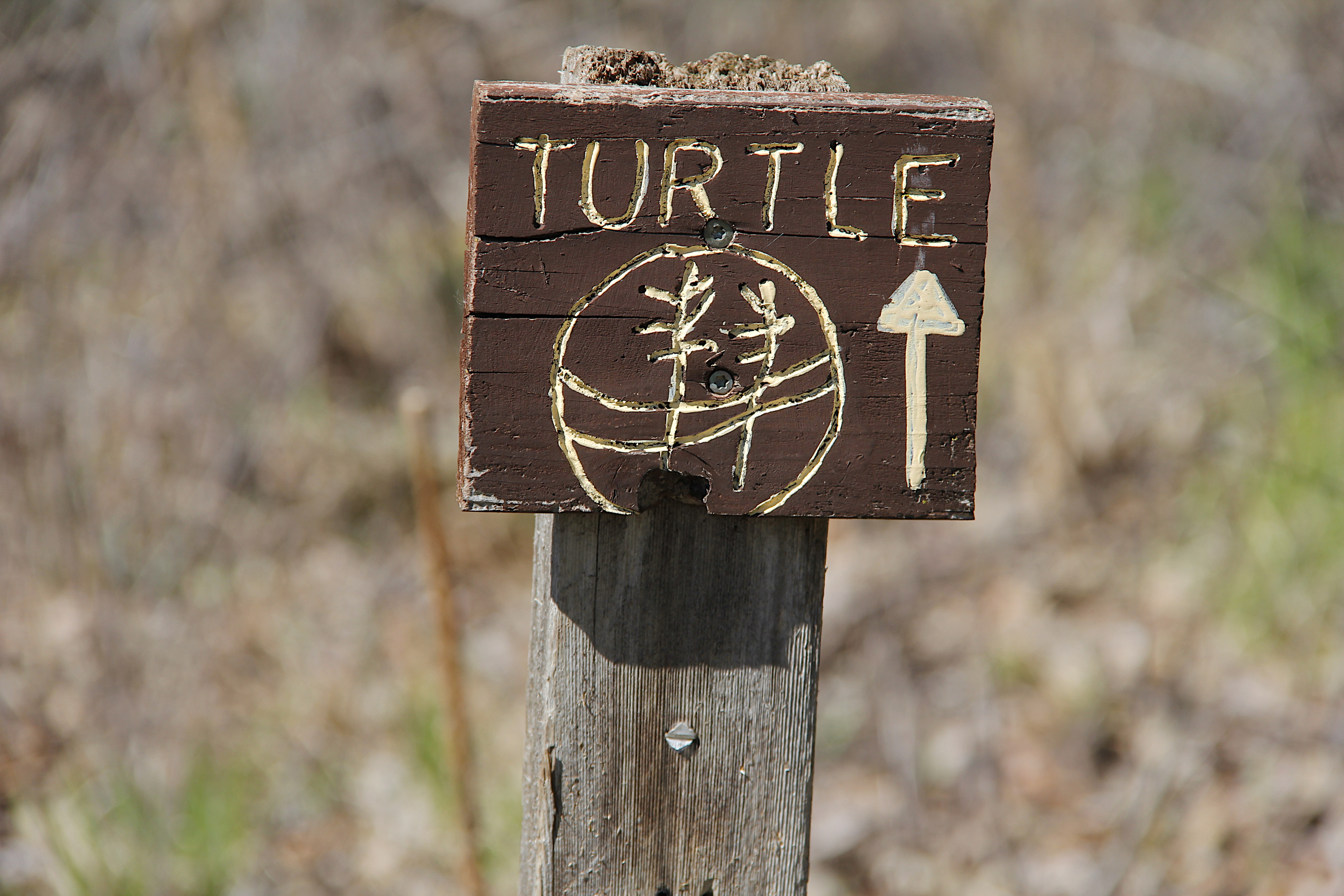
Sunlight slices shadows onto the path to the Turtle Pond and spotlights greenery. (Minnesota Prairie Roots copyrighted photo April 2025)
Sunlight illuminates patches of grass growing among limestone. (Minnesota Prairie Roots copyrighted photo April 2025)
On recent hikes at River Bend, I noticed vivid swaths of green by the Straight River, scattered patches of green on the forest floor, tufts of greenery clinging to a rocky hillside. Green. Green. Green.
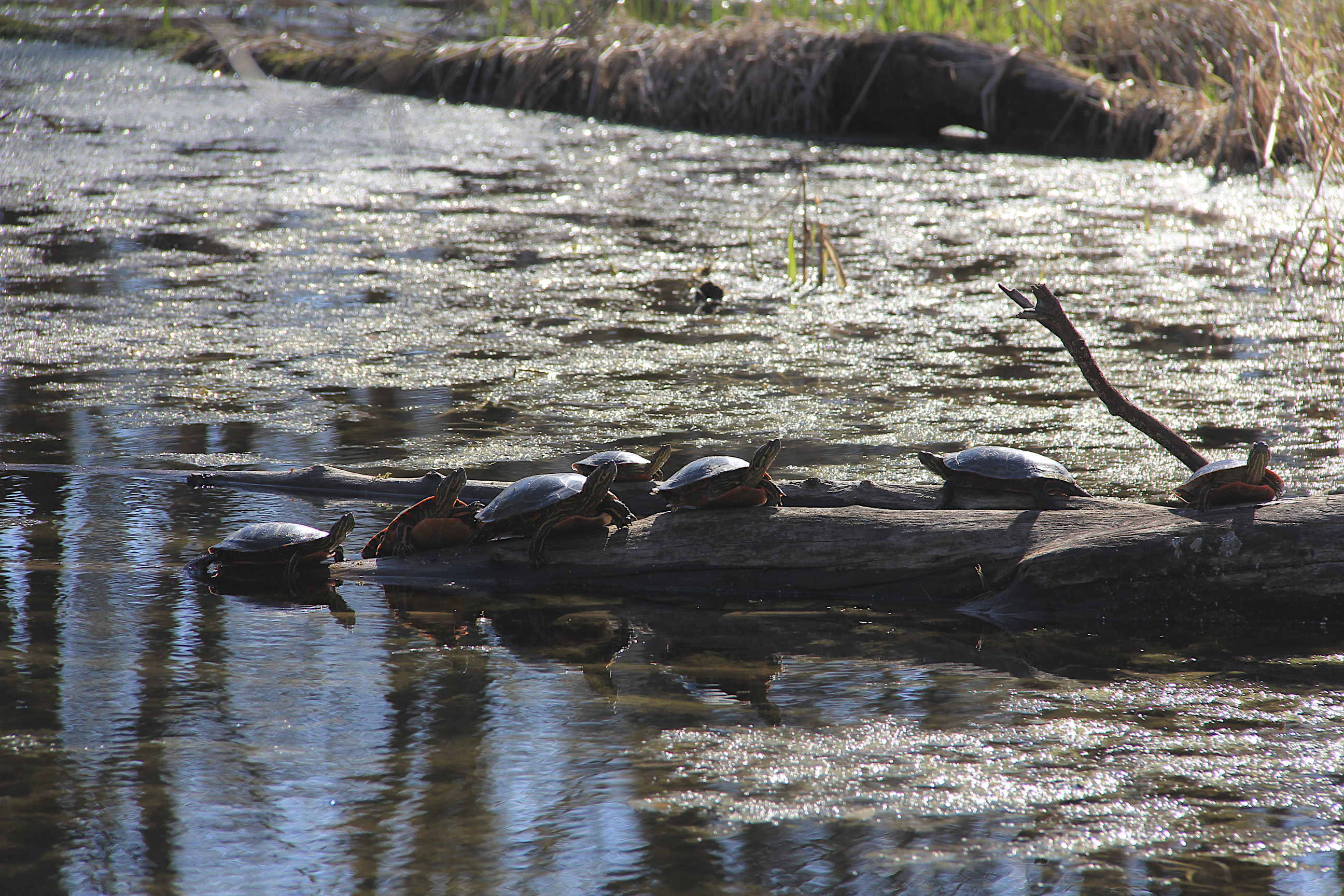
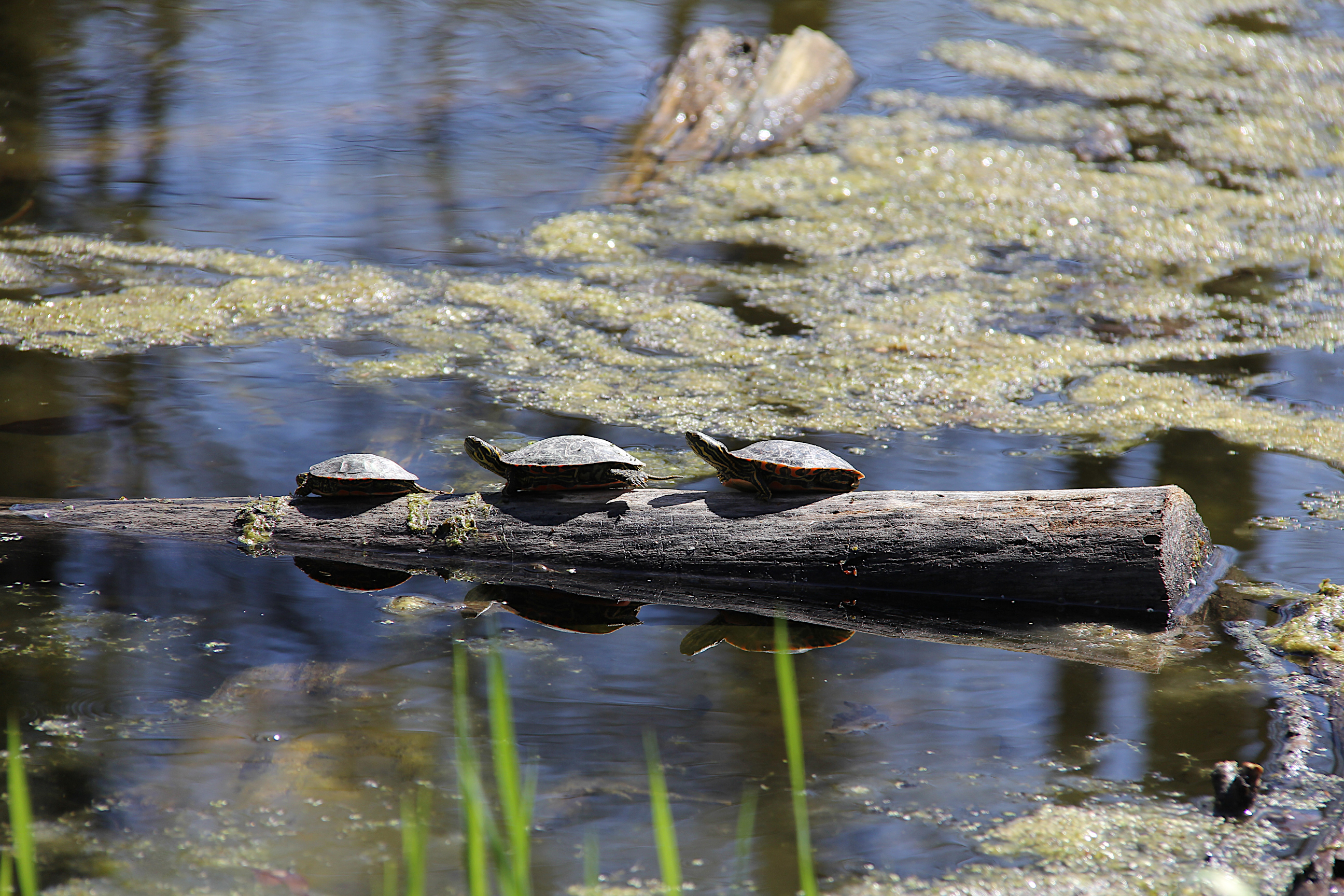
Lazy turtles on a log cause me to stop and linger. (Minnesota Prairie Roots copyrighted photo April 2025)
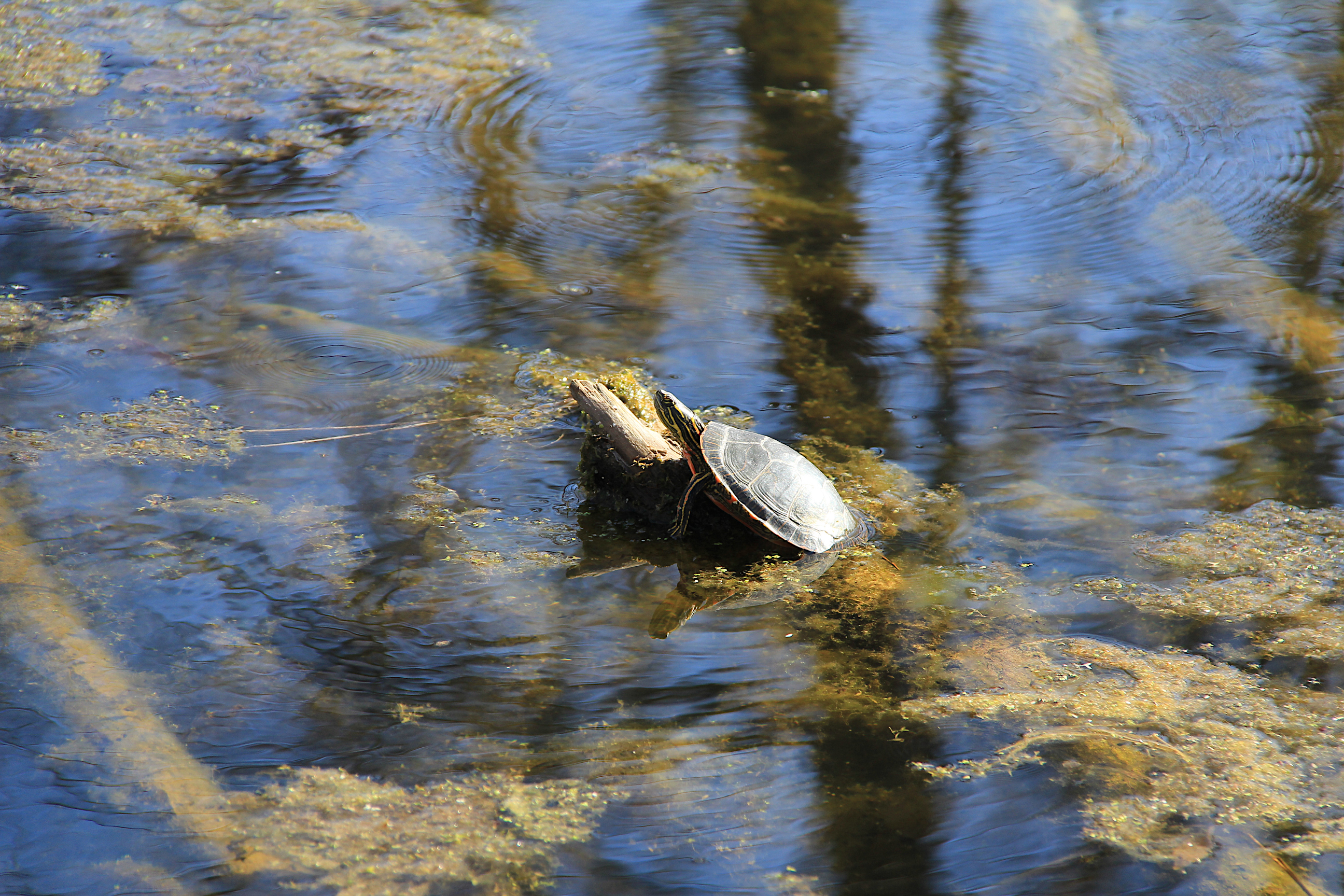
And sometimes turtles choose to hang out alone. (Minnesota Prairie Roots copyrighted photo April 2025)
At the Turtle Pond, I delighted in the emergence of painted turtles, a cluster of them sunning themselves on a weather-worn tree lying near pond’s edge. Others chose to sunbathe alone. I am always fascinated by these creatures. They impart a sense of serenity, perhaps giving us permission to pause and enjoy the simple things in life. Like watching lounging turtles, reminding us that life’s pace needn’t always be hurried.
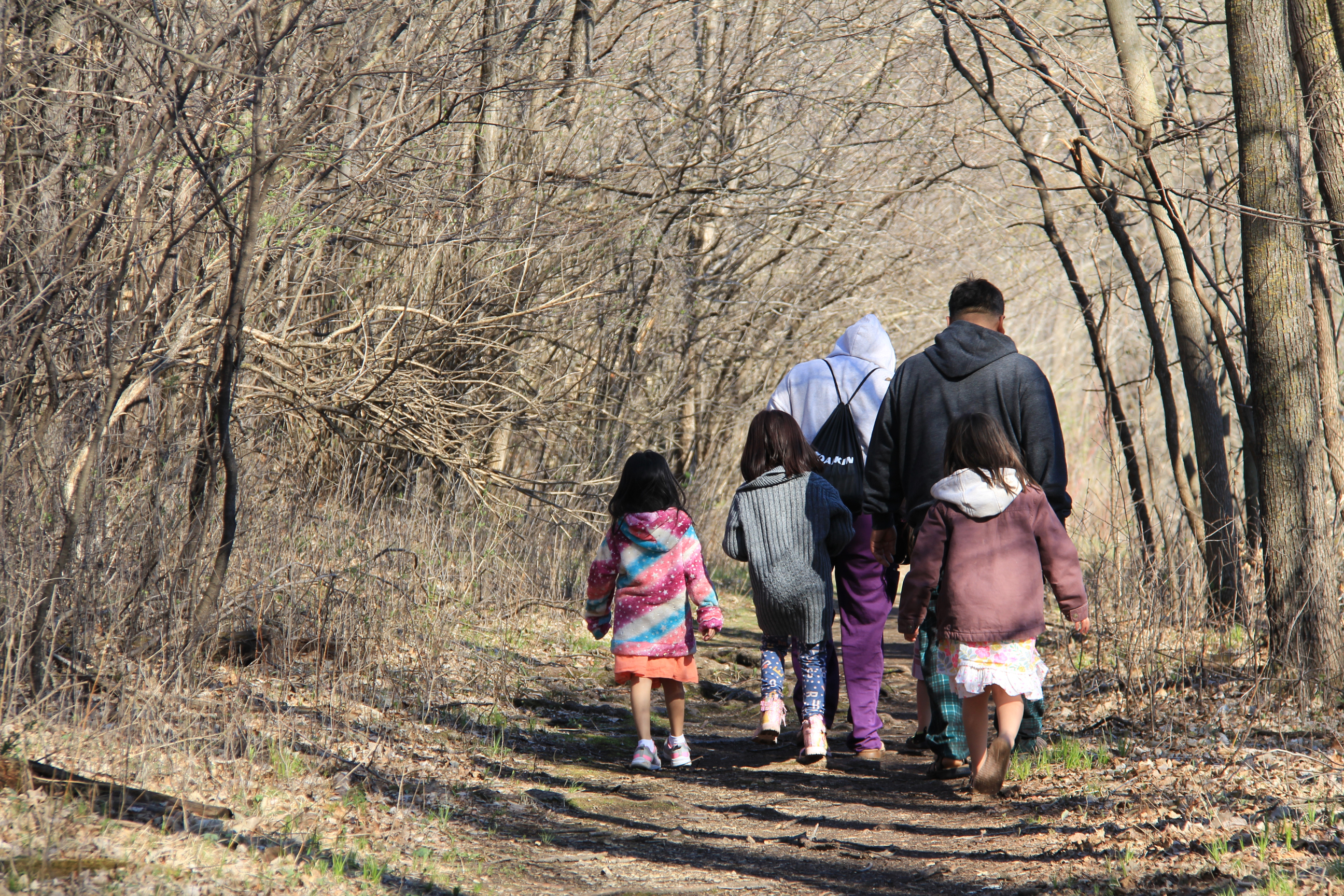
A family walks along a trail near the river. (Minnesota Prairie Roots copyrighted photo April 2025)
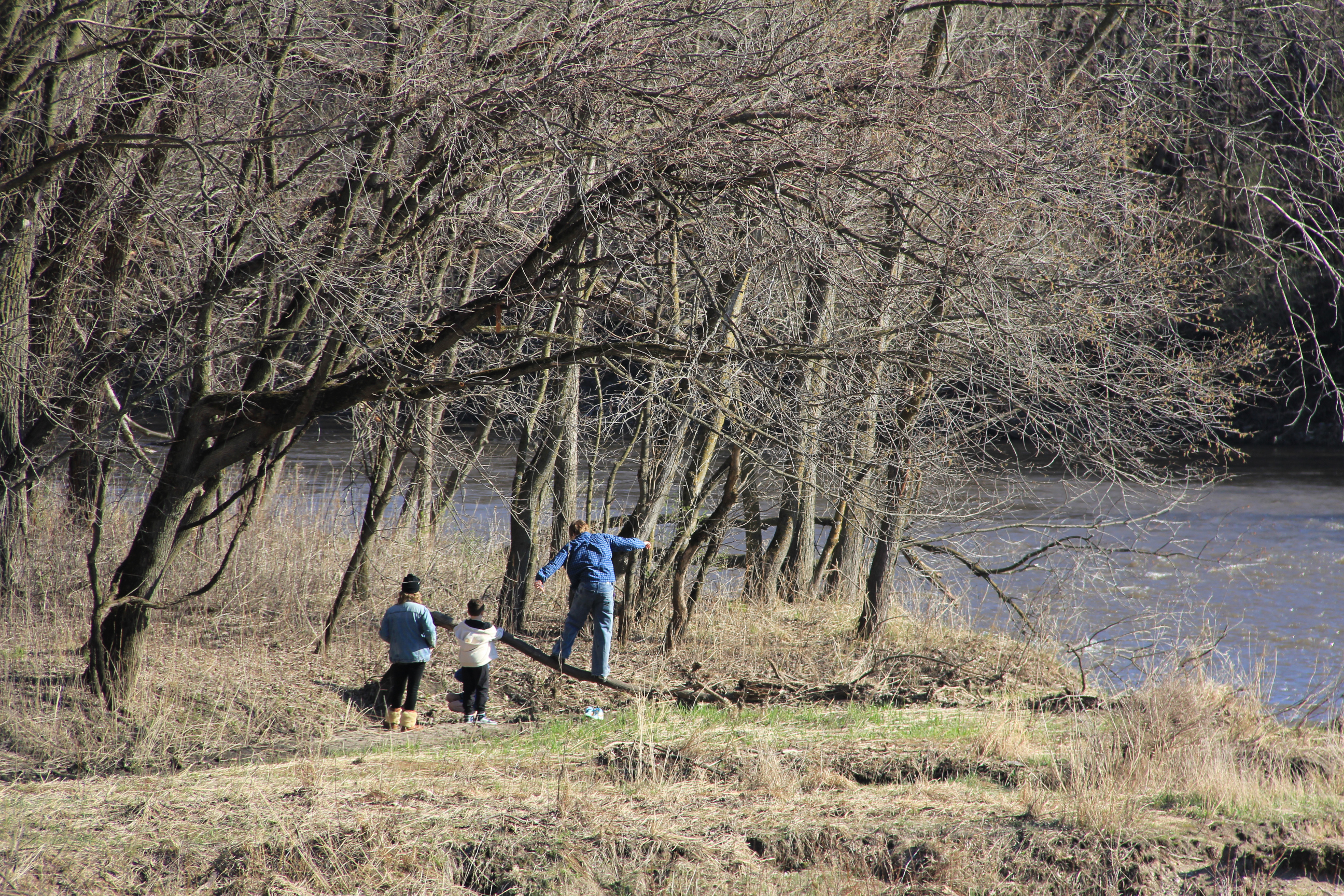
Natural entertainment…balancing on a tree branch. (Minnesota Prairie Roots copyrighted photo April 2025)
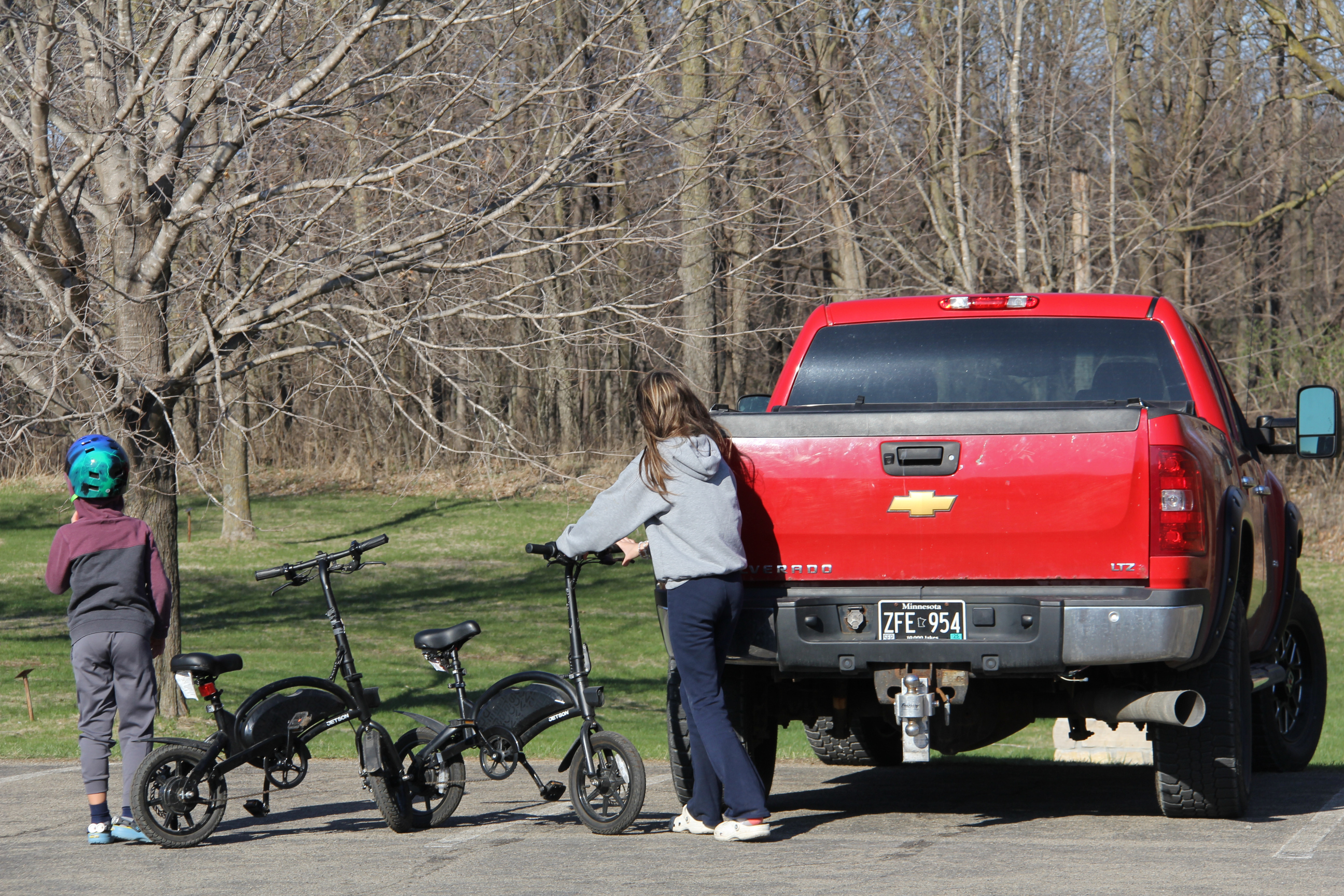
About to load up the bikes after biking at River Bend. (Minnesota Prairie Roots copyrighted photo April 2025)
I especially appreciate seeing families outdoors. Walking. Balancing on a fallen branch. Biking. Being away from the distractions of busy schedules and technology and everything that intrudes on time together outside in nature.
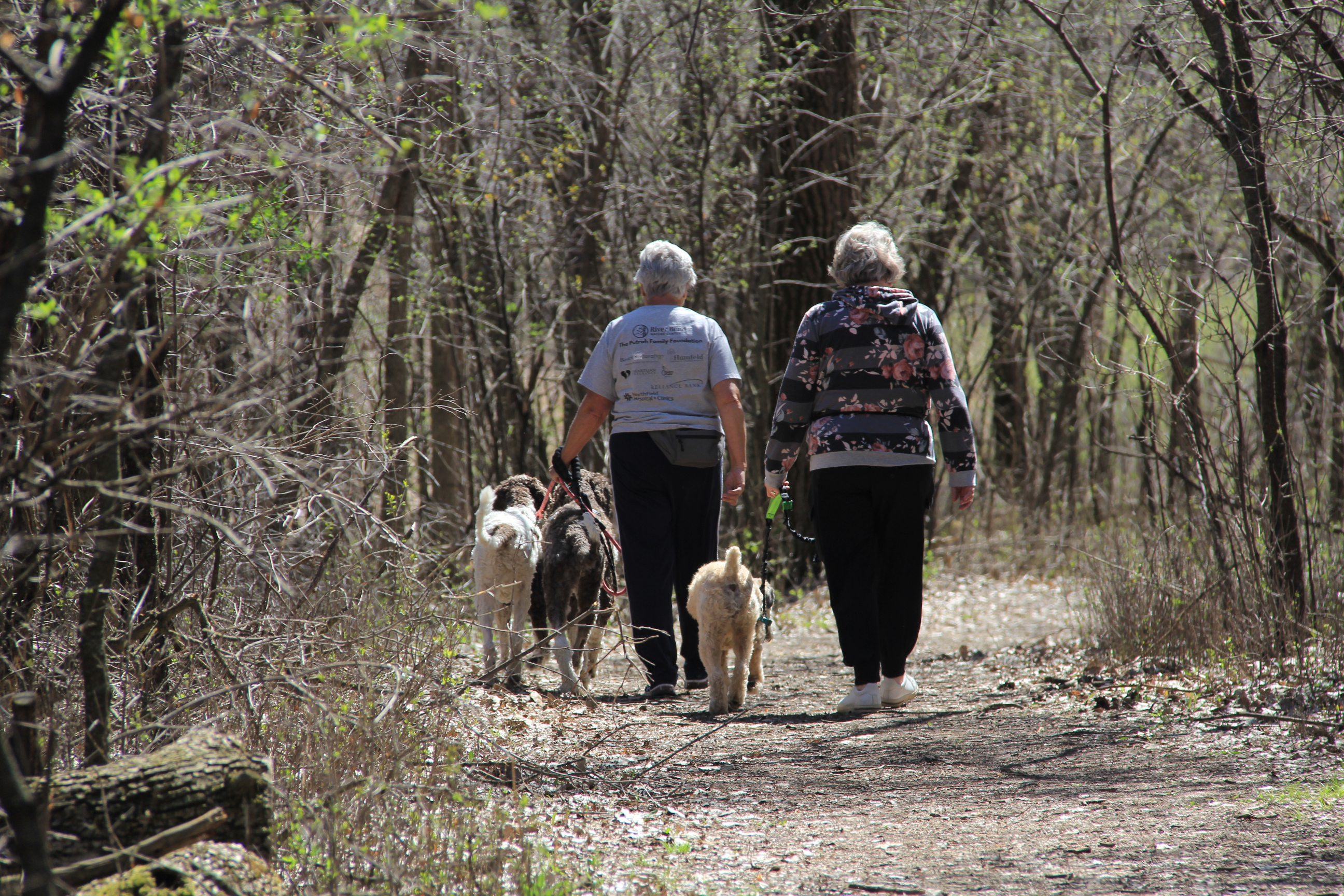
River Bend proves a popular place for humans and dogs. (Minnesota Prairie Roots copyrighted photo April 2025)
In the woods, we are sheltered and embraced while walking side-by-side, close to one another along narrow pathways. Conversations happen. We notice things, like squirrels scampering across dried leaves that hide as yet unseen spring wildflowers. Birds flit. The woods are beginning to awaken within our vision and hearing.
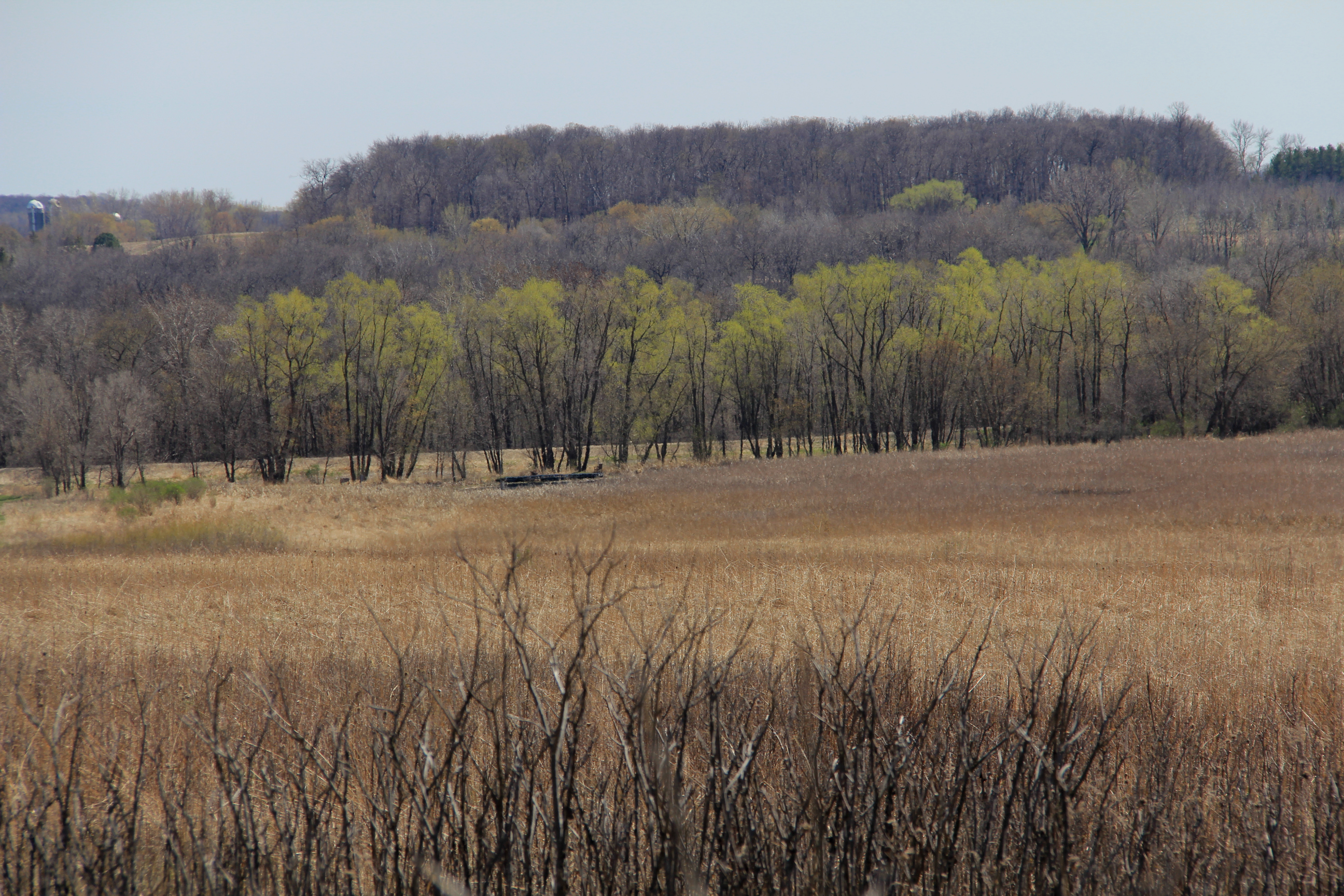
From a hilltop overlook, I view a diverse landscape of prairie and woods. (Minnesota Prairie Roots copyrighted photo April 2025)
Outside the woods on the prairie, I feel exposed but innately comfortable for I am of prairie stock. I know this wind. I know this wide sky. I know these tall grasses. This landscape would please Willa Cather, American author who wrote of the Great Plains and life thereon. In her novels, she shared a deep love of the land, of place.
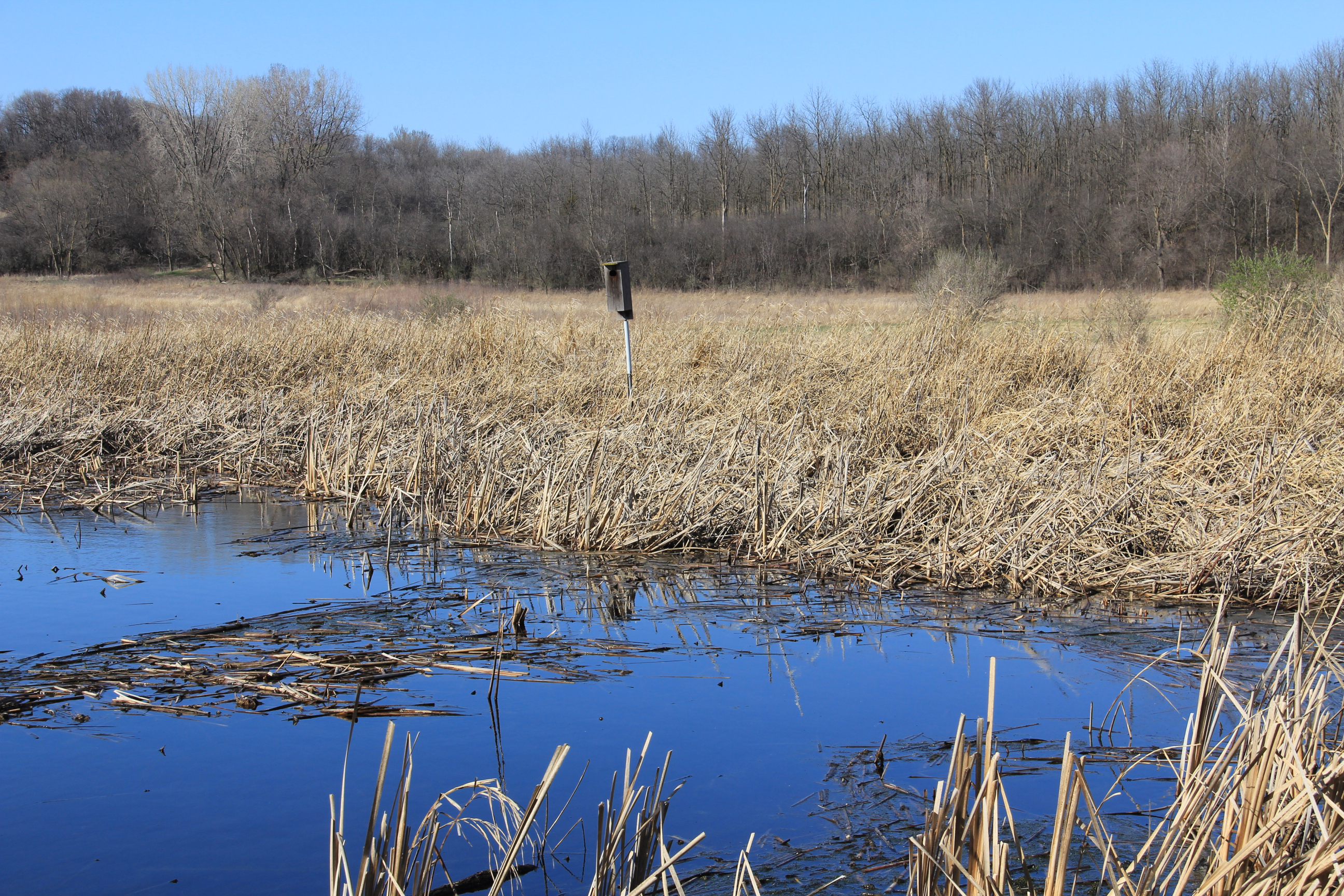
That blue of pond and sky…beautiful to behold. (Minnesota Prairie Roots copyrighted photo April 2025)
At the prairie-side pond, I stop to take in water and sky and land—below, above and beyond. The deep blue of the pond, a reflection of the blue sky, contrasts sharply with the muted brown of dried pond grasses and reeds. The scene is painterly beautiful.
River Bend covers hundreds of acres and is one of Faribault’s greatest treasures. (Minnesota Prairie Roots copyrighted photo April 2025)
My time at River Bend always leaves me feeling better as I forget about worries and responsibilities, deadlines and everyday distractions.
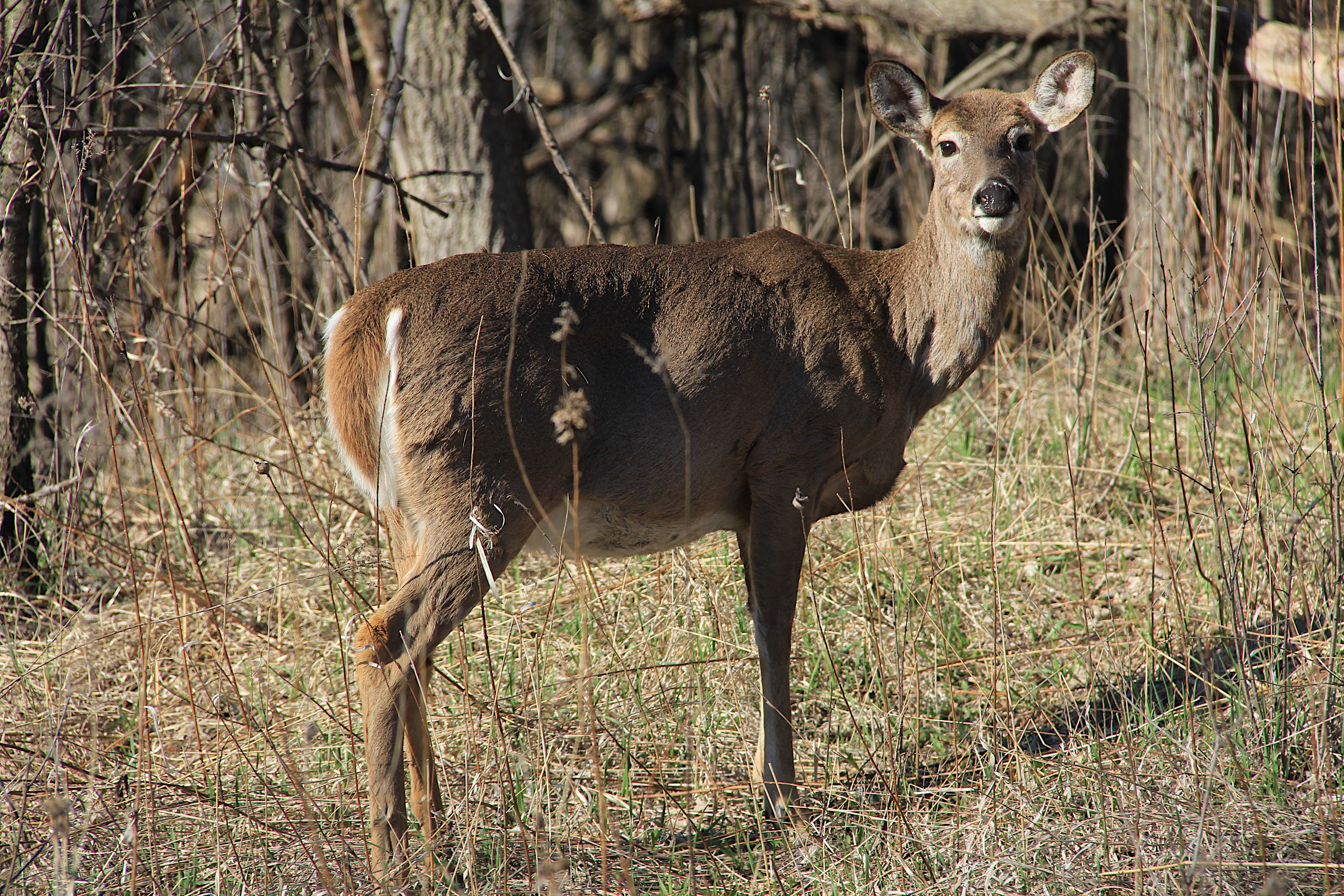
A sizable deer population lives at River Bend. (Minnesota Prairie Roots copyrighted photo April 2025)
Upon exiting the nature center, I am offered one final gift—three deer leisurely grazing alongside the road. They hold minimal fear of humans, so comfortable are they with the many visitors here. Yet, I can’t help but wonder if the deer would rather we just move along rather than watch them with wonder, our eyes, our souls, seeking joy and peace.
A bison photo by Jim Brandenburg hangs to the left and the photographer talks about his work in a video, right, inside the Brandenburg Gallery. (Minnesota Prairie Roots copyrighted file photo 2013)
IN MY EYES, he was Minnesota’s best-known photographer. Exceptionally talented. No one even comes close to matching the wildlife and nature photography of Jim Brandenburg. He died April 4 at the age of 79. Not only has Minnesota lost a creative icon, but so has the world. Brandenburg’s prolific work was featured in National Geographic Magazine, earning him the publication’s coveted Lifetime Achievement Award in 2023. His award-winning photos were widely-published internationally. He also published numerous books featuring collections of his photos.
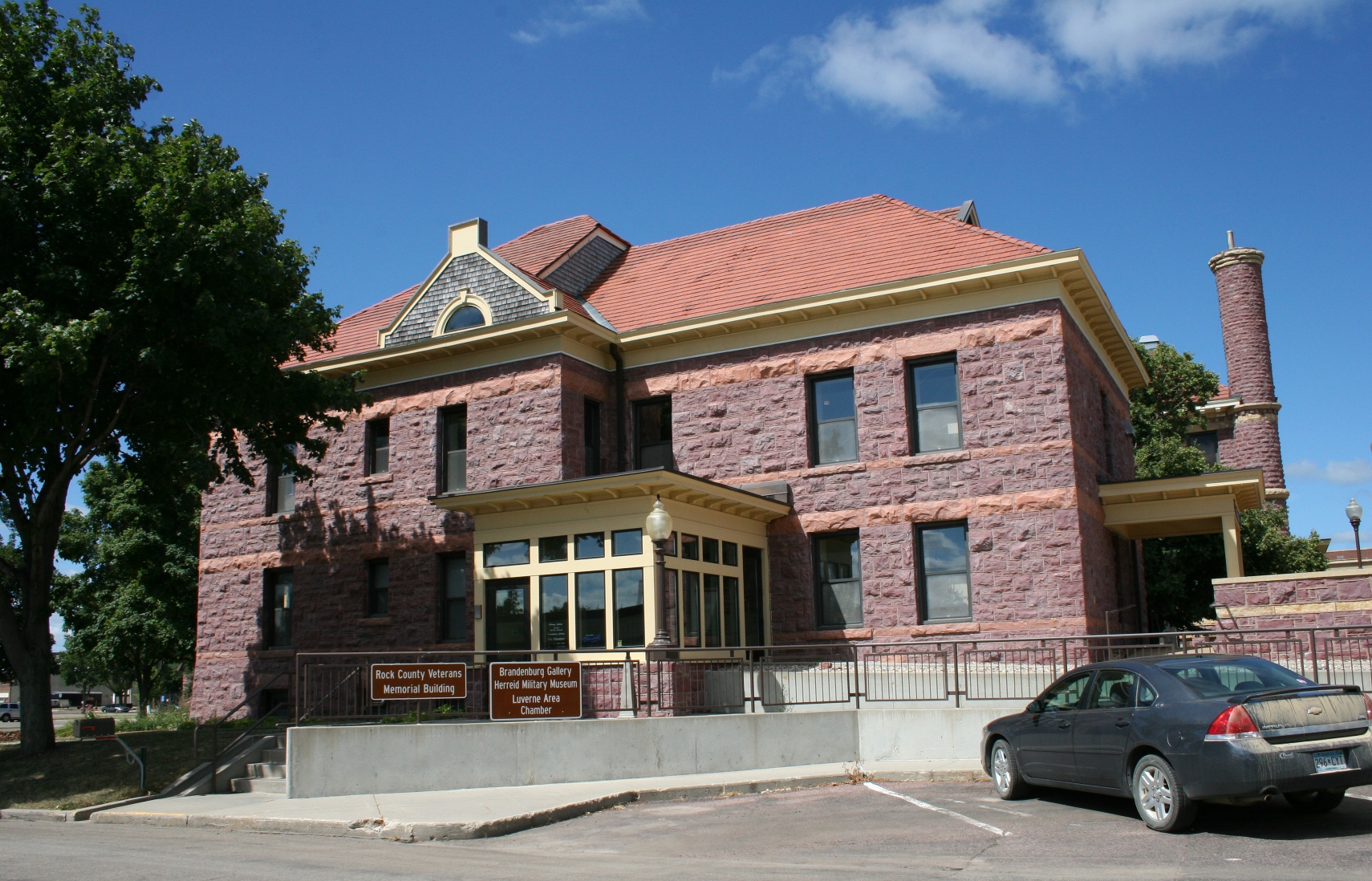
The entry to the Brandenburg Gallery, located in the Rock County Courthouse square. (Minnesota Prairie Roots copyrighted file photo 2013)
But there is perhaps one lesser-known place where Brandenburg’s images can be found. And that’s in the Brandenburg Gallery inside the historic Rock County Courthouse in his hometown of Luverne. That’s in the extreme southwestern corner of Minnesota. The prairie. My prairie.
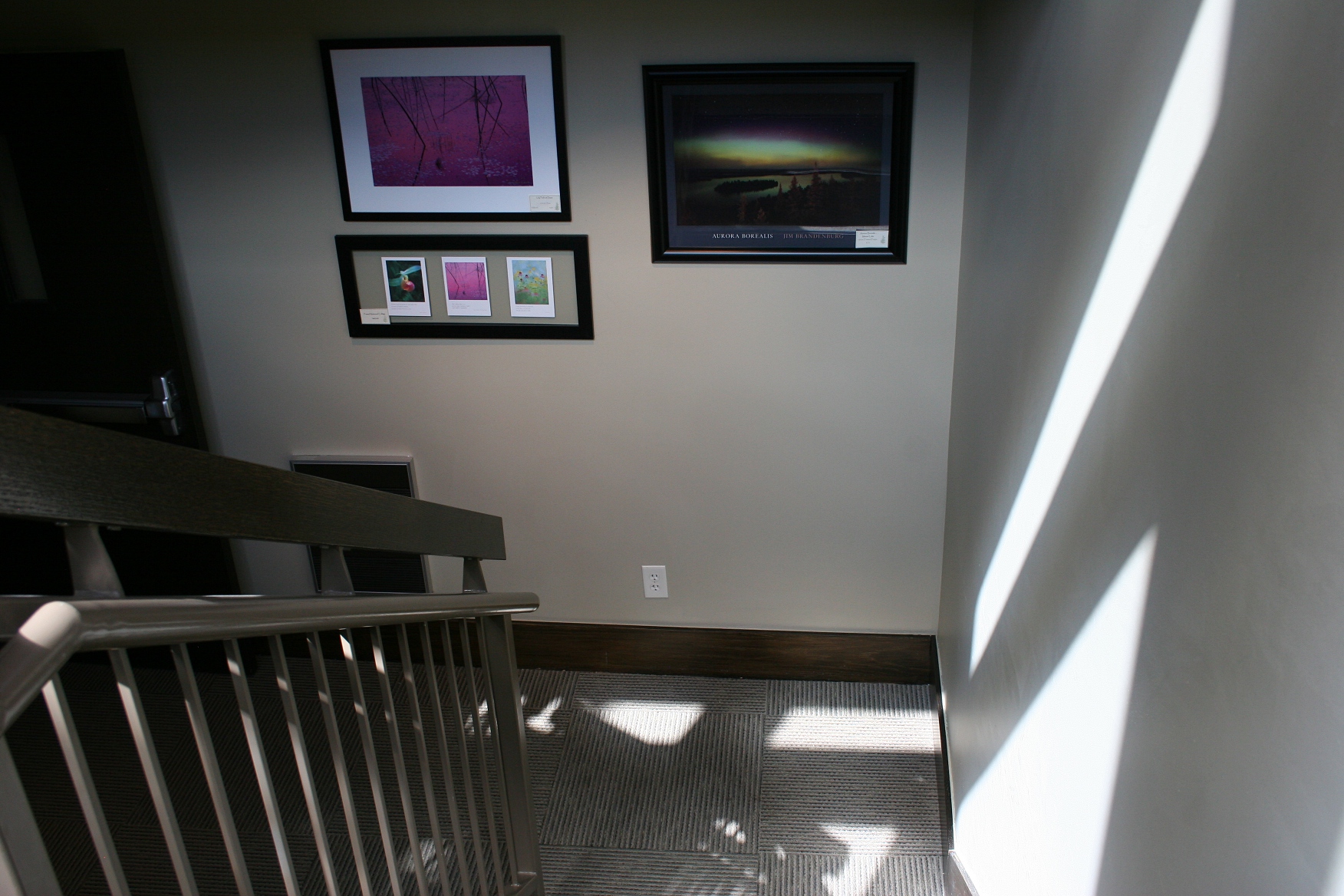
Light plays upon walls, floors and Brandenburg photos in a stairway display. (Minnesota Prairie Roots copyrighted file photo 2013)
Eleven years ago I toured that gallery, studying and enjoying a sampling of Brandenburg’s images. Many in this collection are prairie-themed. Because I’m a photographer, I viewed his photos with a more focused perspective, noticing angles, light, background and all the components which come together in creating an outstanding image.
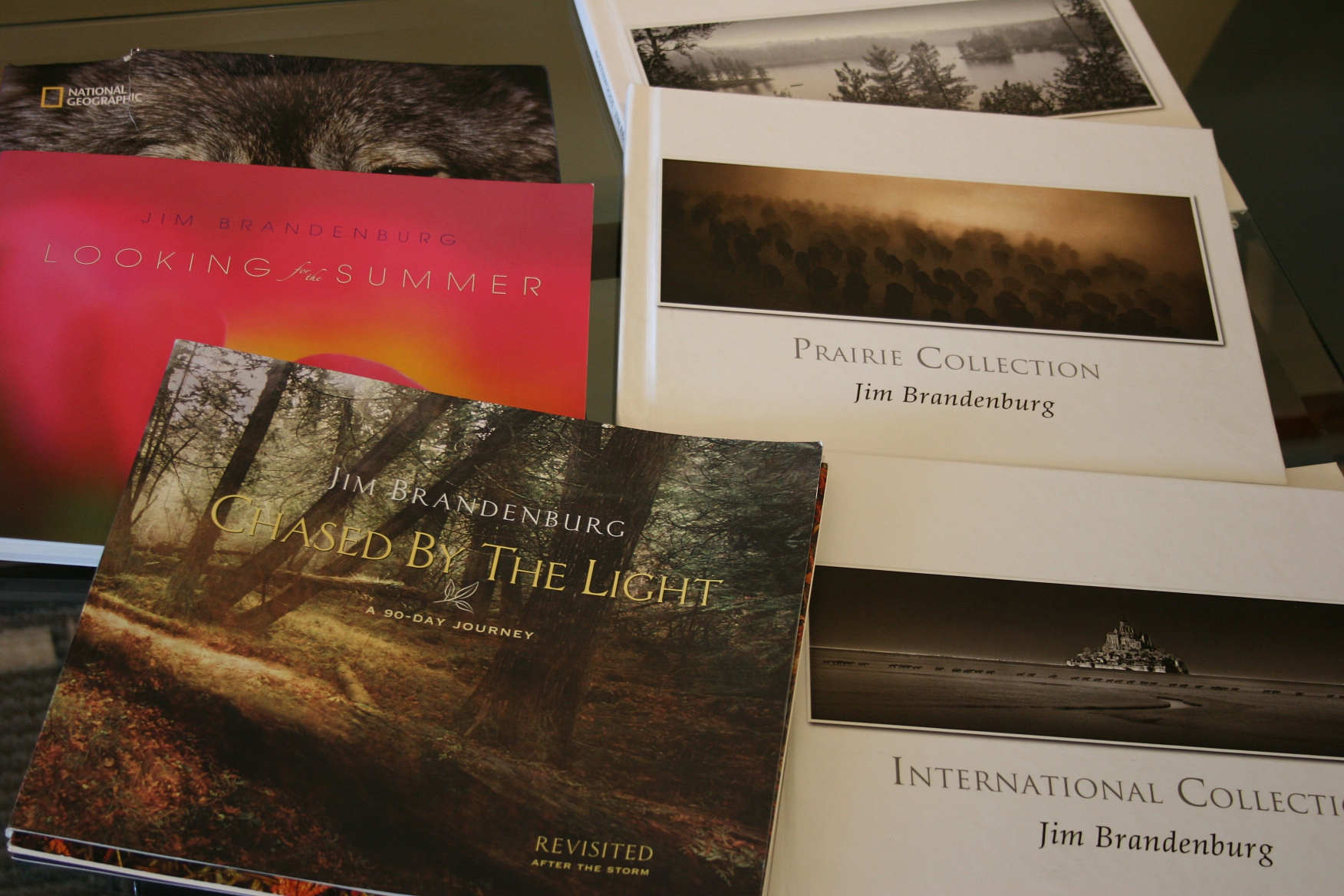
Some of Brandenburg’s photo books. (Minnesota Prairie Roots copyrighted file photo 2013)
Every photographer understands that light is the very basic element to consider in shooting photos. Brandenburg challenged himself to take a single picture per day between the autumnal equinox and the winter solstice. The result is his collection of photos, Chased by the Light: A 90-Day Journey, a favorite of mine among his books.
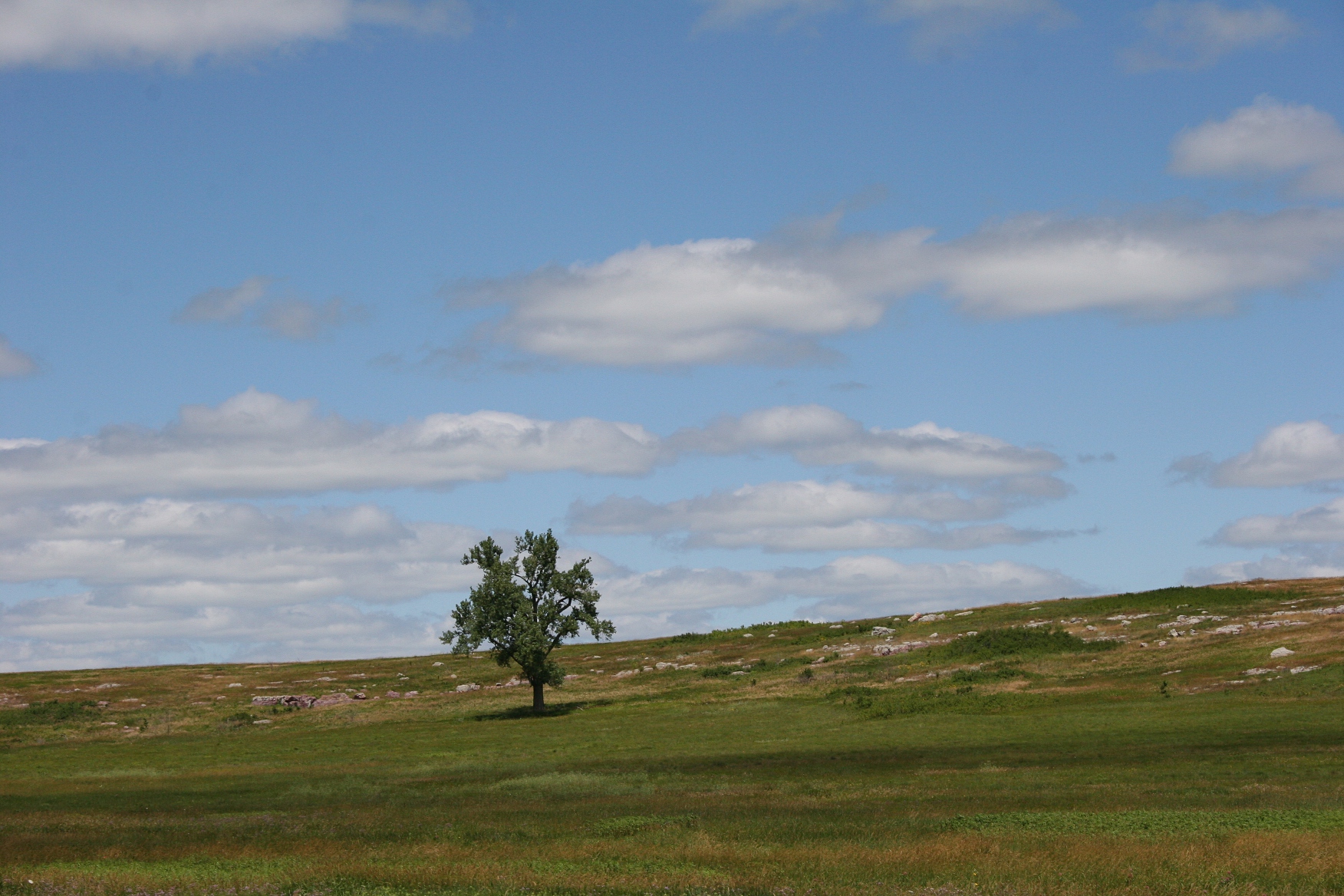
Beautiful natural scenery on the prairie near Blue Mounds State Park. The part of the prairie where I grew up is not rocky like this and is a bit further north. (Minnesota Prairie Roots copyrighted file photo 2013)
When I traveled to Luverne in 2013 to visit the Brandenburg Gallery and other attractions, including Blue Mounds State Park, I was returning to the wide open land and big skies of the prairie, the place that shaped me as a person, photographer and writer. The same can be said for Brandenburg. He loved the prairie and, in fact, established the Brandenburg Prairie Foundation aimed at southwest Minnesota native prairie education, preservation and expansion. His organization partnered with the U.S. Fish and Wildlife Service to purchase nearly 1,000 acres of untilled Rock County prairie, creating Touch the Sky Northern Tallgrass Prairie National Wildlife Refuge.
Those environmental efforts are revealing. Brandenburg cared deeply about the land, especially the prairie. After college, he returned to the prairie and worked as a picture editor at The Worthington Daily Globe. While there, he freelanced for National Geographic Magazine. And so his career developed until he became that homegrown photographer whose work so many worldwide grew to appreciate and love.
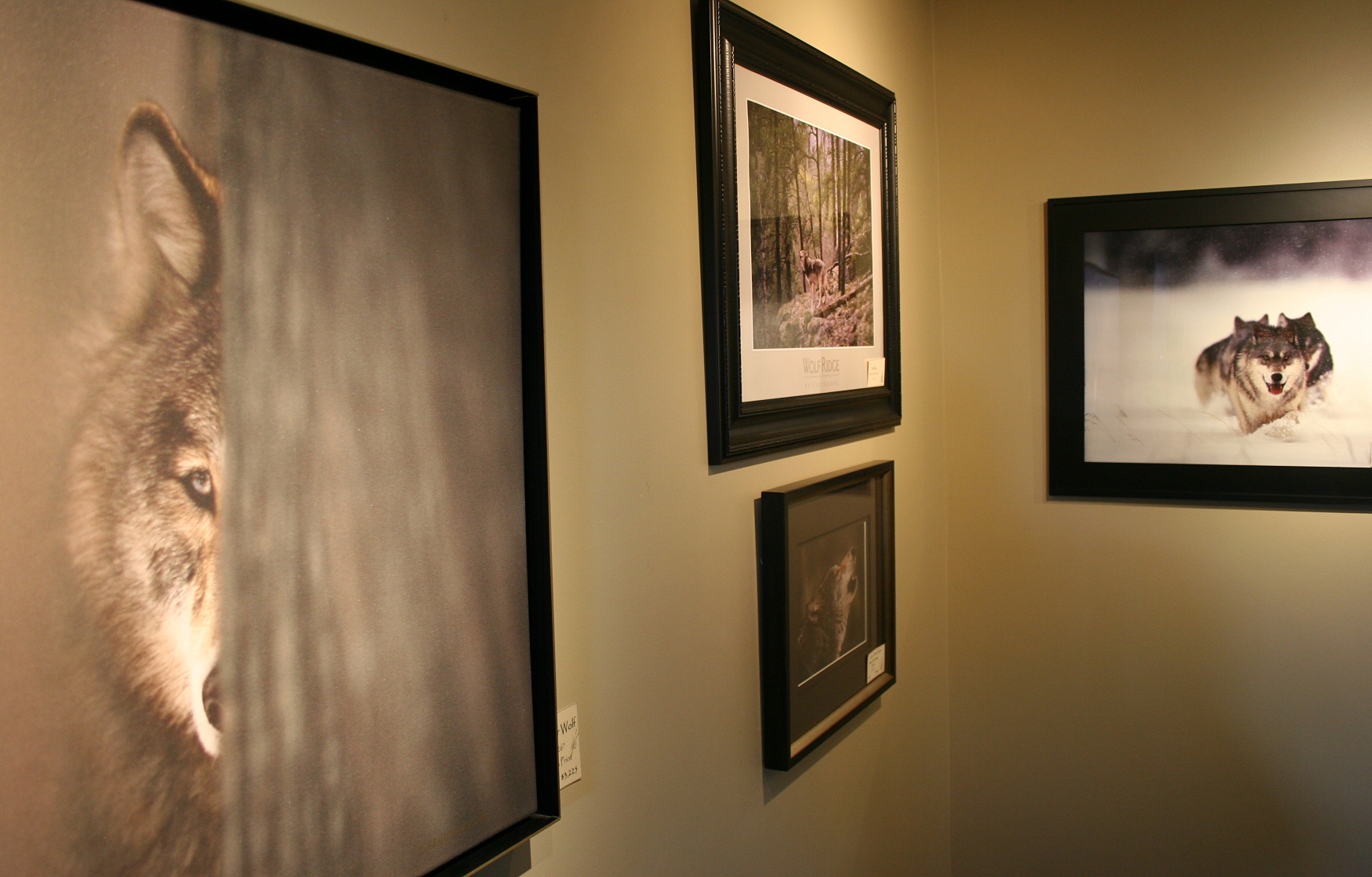
Wolf photos displayed in the Brandenberg Gallery. Brandenburg’s published books include Brother Wolf–A Forgotten Promise. (Minnesota Prairie Roots copyrighted file photo 2013)
I admire photographers who excel in the craft. And Brandenburg certainly excels in wildlife photography, a specialized field that requires much more than understanding photo basics. Photographing wildlife requires incredible patience and knowledge of animals. I have neither. But when you look at a Brandenburg photo, it’s like you are right there up close with the subject. Perhaps a wolf—one of his favorite subjects. Or bison. You can see the deep respect Brandenburg holds for these creatures of the wild.
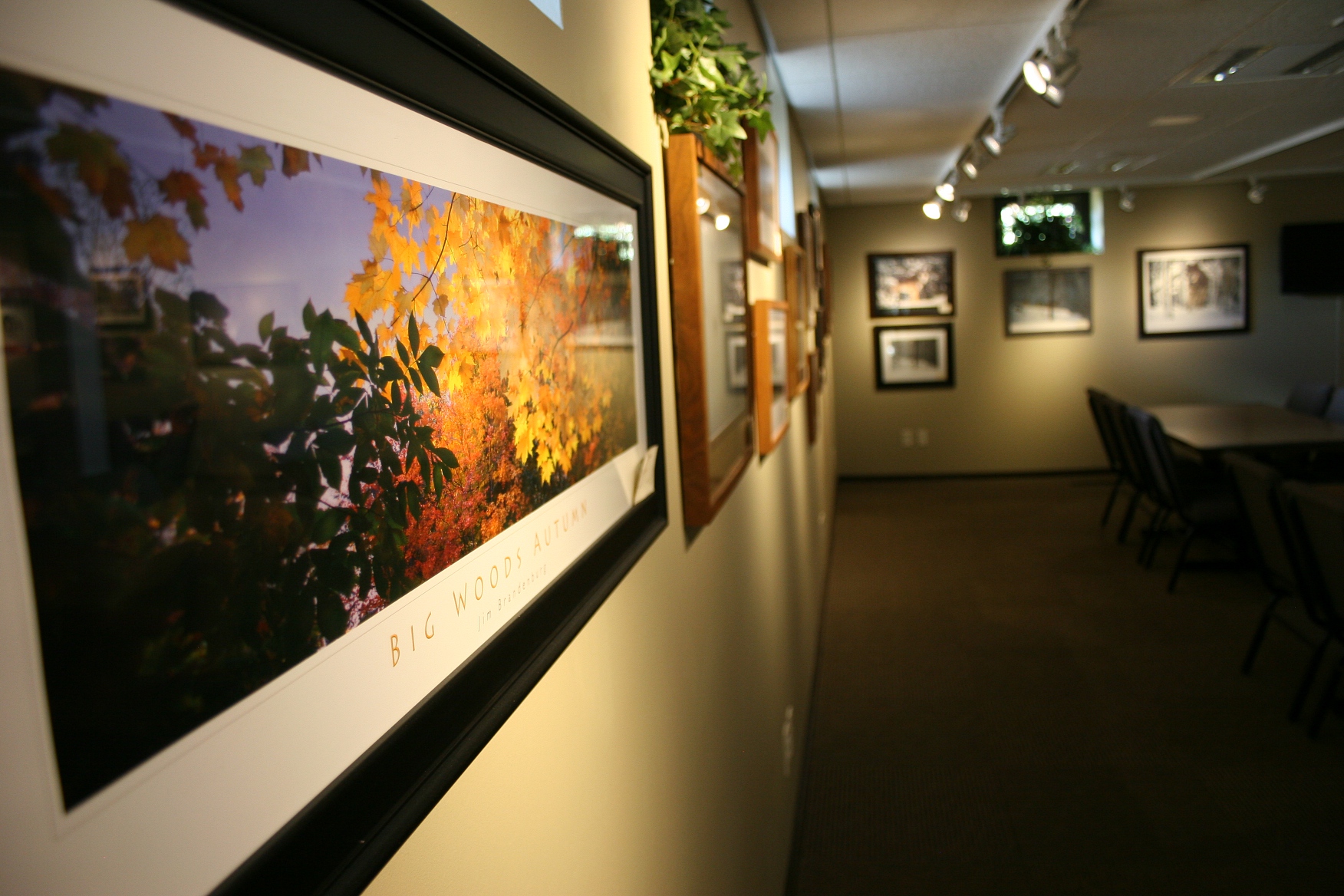
A familiar scene to me, autumn leaves photographed in the Big Woods of Minnesota, within 20 miles of my home and showcased in the Brandenburg Gallery. (Minnesota Prairie Roots copyrighted file photo 2013)
And then there’s landscape photography which, when done well, draws you into a scene and evokes an emotional response. Again, Brandenburg has this seemingly effortless ability to capture the essence of a place and connect it to his audience.
Minnesota has lost an incredibly gifted photographer. But Brandenburg’s legacy lives on in his work, a gift to all of us. And one place to find that is in the Brandenburg Gallery in Luverne. On my beloved prairie. On Brandenburg’s beloved prairie.
FYI: The Brandenburg Gallery, 213 E. Luverne St., is owned and operated by the Luverne Area Chamber of Commerce. It’s open from 8 a.m.-5 p.m. Monday-Friday and from 10 a.m.-5 p.m. Saturday. Admission is free. All photos featured in this post were taken with permission of the Brandenburg Gallery in 2013.
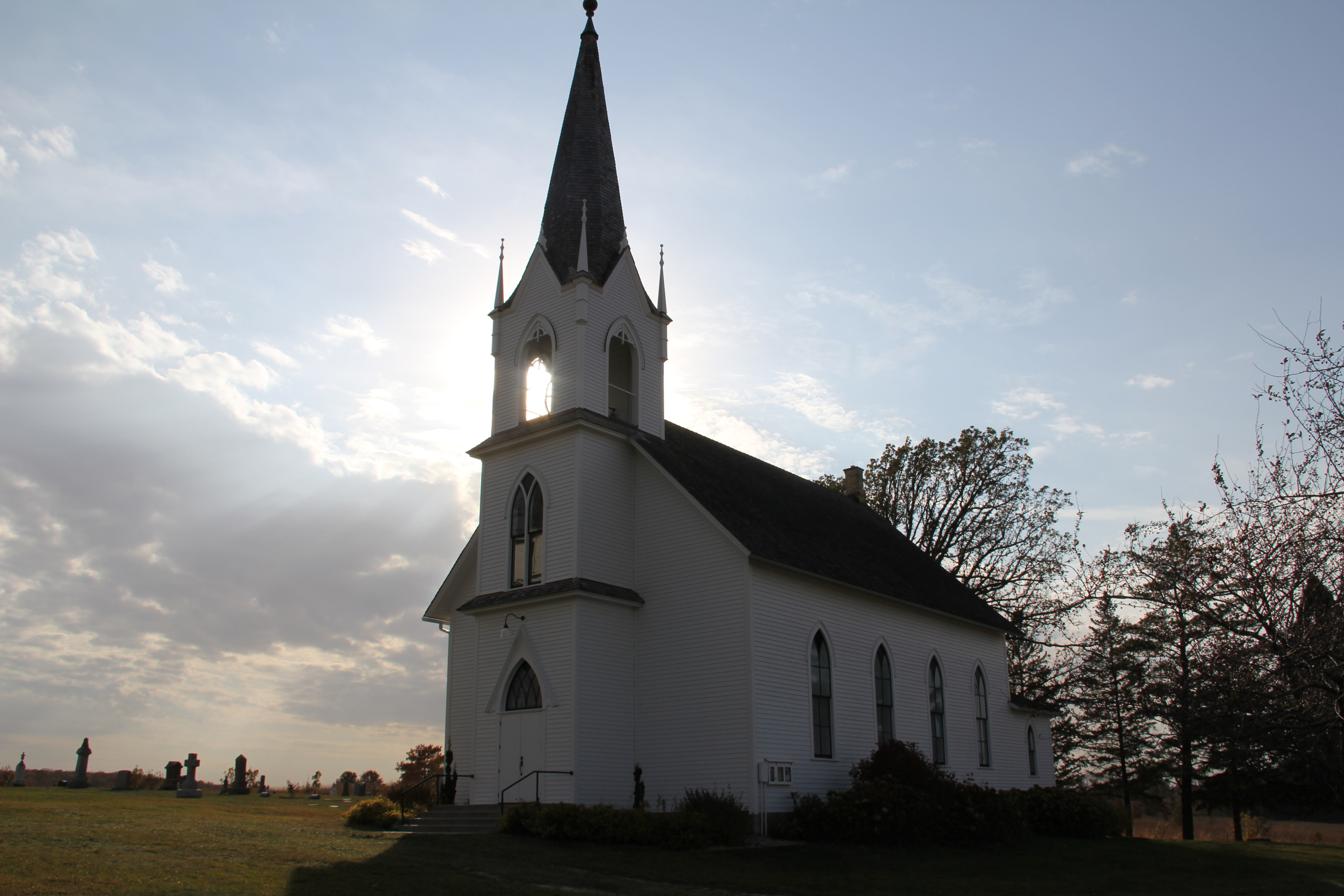
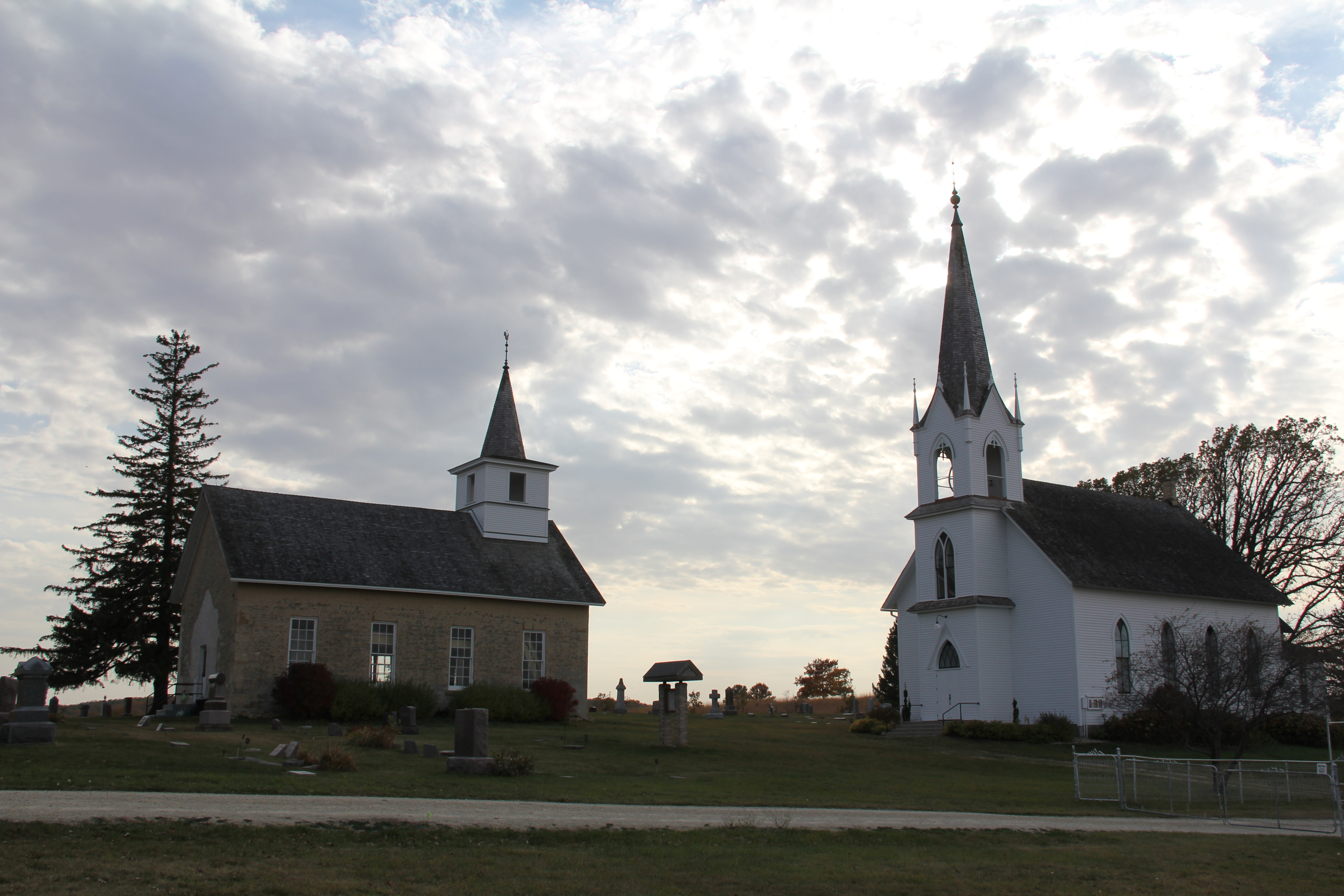
This wooden church was built in 1894 and sits directly across from the stone church. (Minnesota Prairie Roots copyrighted photo October 2024)
WHETHER YOU’RE A PERSON of faith or not doesn’t matter when it comes to appreciating a country church. Or, in the case of Valley Grove, churches. Plural.
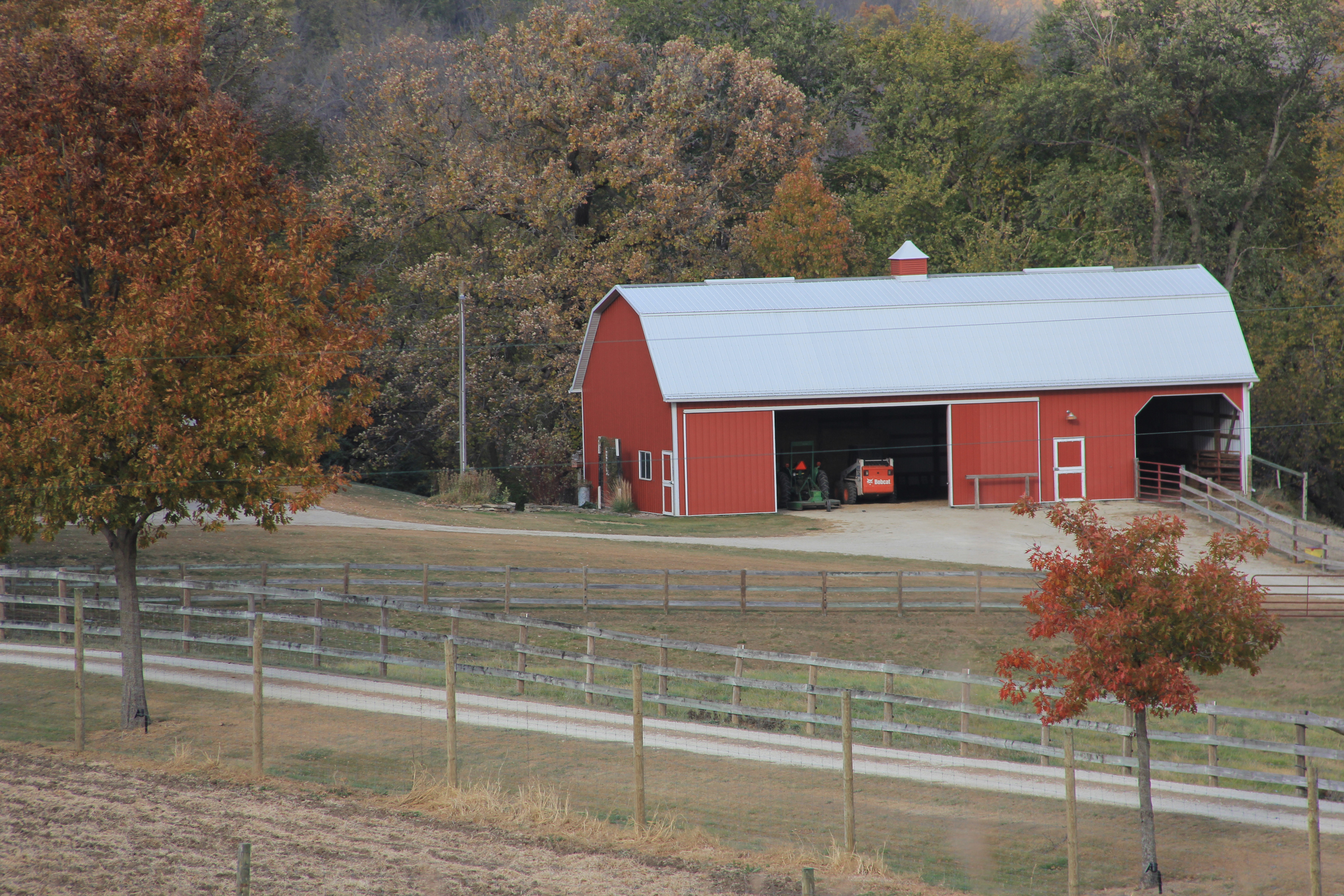
Just down the hill from the cemetery, this shed pops color into the rural landscape. (Minnesota Prairie Roots copyrighted photo October 2024)
Perched atop a hill near Nerstrand Big Woods State Park in eastern Rice County, these two churches, the cemetery, and surrounding prairie and oak savannas are a place that beckons me. I don’t know that I’ve found another rural church—and I’ve visited many in Minnesota—which holds such peaceful appeal.
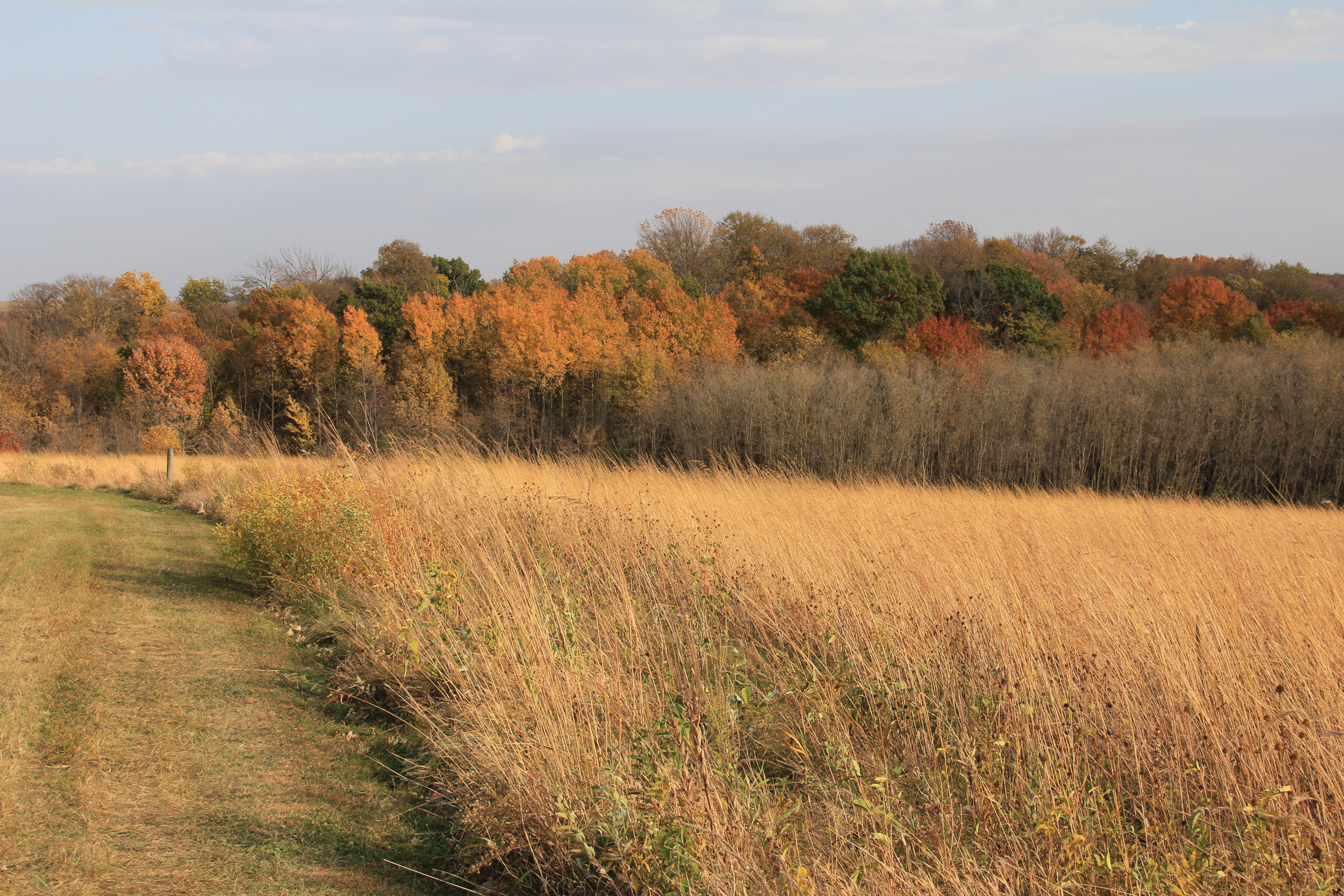
Photographed in October from the cemetery, oak and prairie savannas at Valley Grove. There are pathways through the 50 acres of land that are part of Valley Grove. (Minnesota Prairie Roots copyrighted photo October 2024)
The setting is decidedly bucolic, pastoral, whatever word you use to describe a scene that creates internal serenity. I feel such peace every time I set foot upon this land, look across the landscape of prairie and woods, surrounding fields and farm sites. Perhaps it’s my rural roots that connect me to Valley Grove.
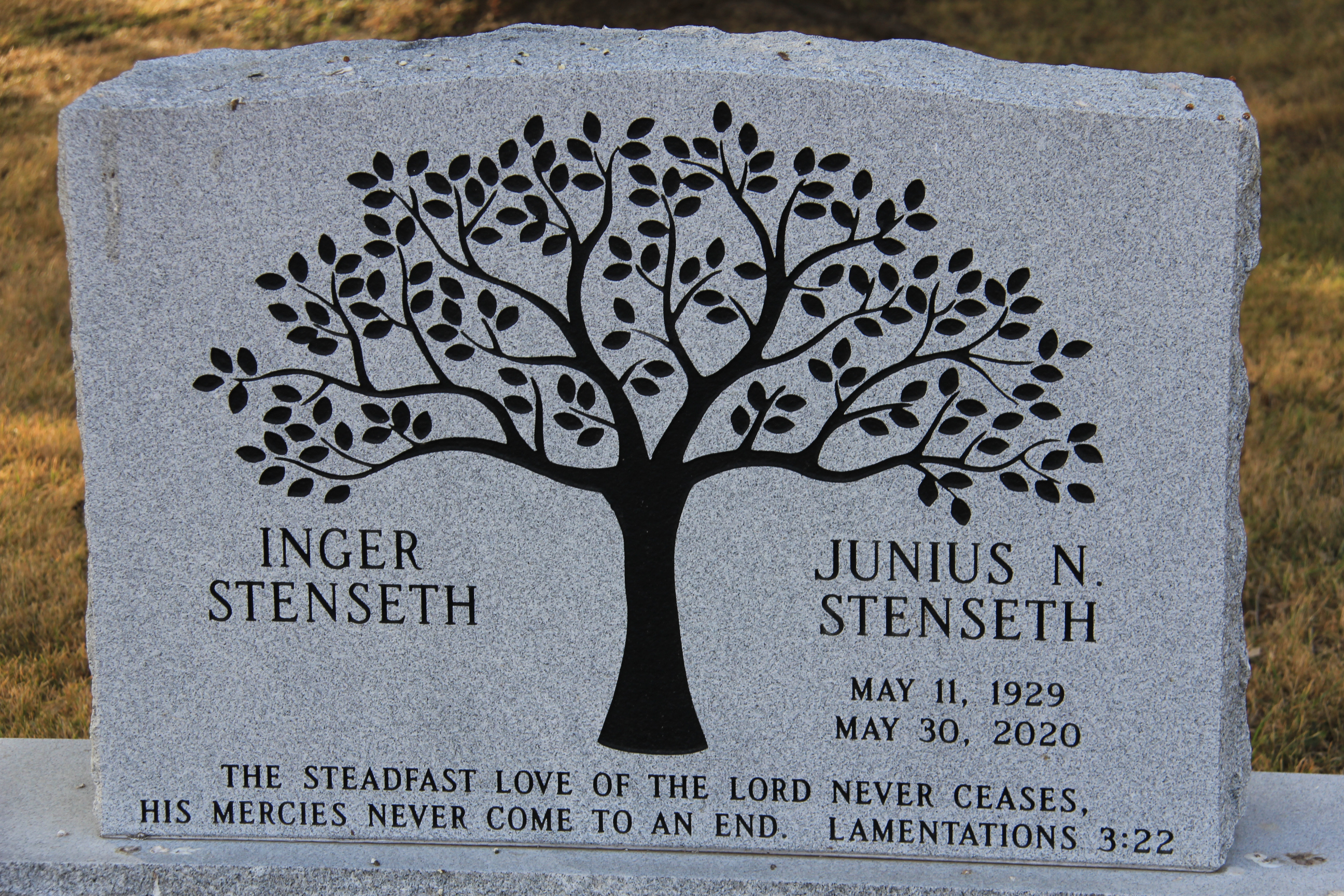
There are lots of Norwegian names on gravestones. (Minnesota Prairie Roots copyrighted photo October 2024)
I have no family connections here. Not even connections of heritage given my ancestors hail from Germany. The settlers who formed Valley Grove Lutheran Church arrived from Norway. Their imprint is here, especially in names upon tombstones in the cemetery.
The two beautiful and well-maintained churches of Valley Grove. (Minnesota Prairie Roots copyrighted photo October 2024)
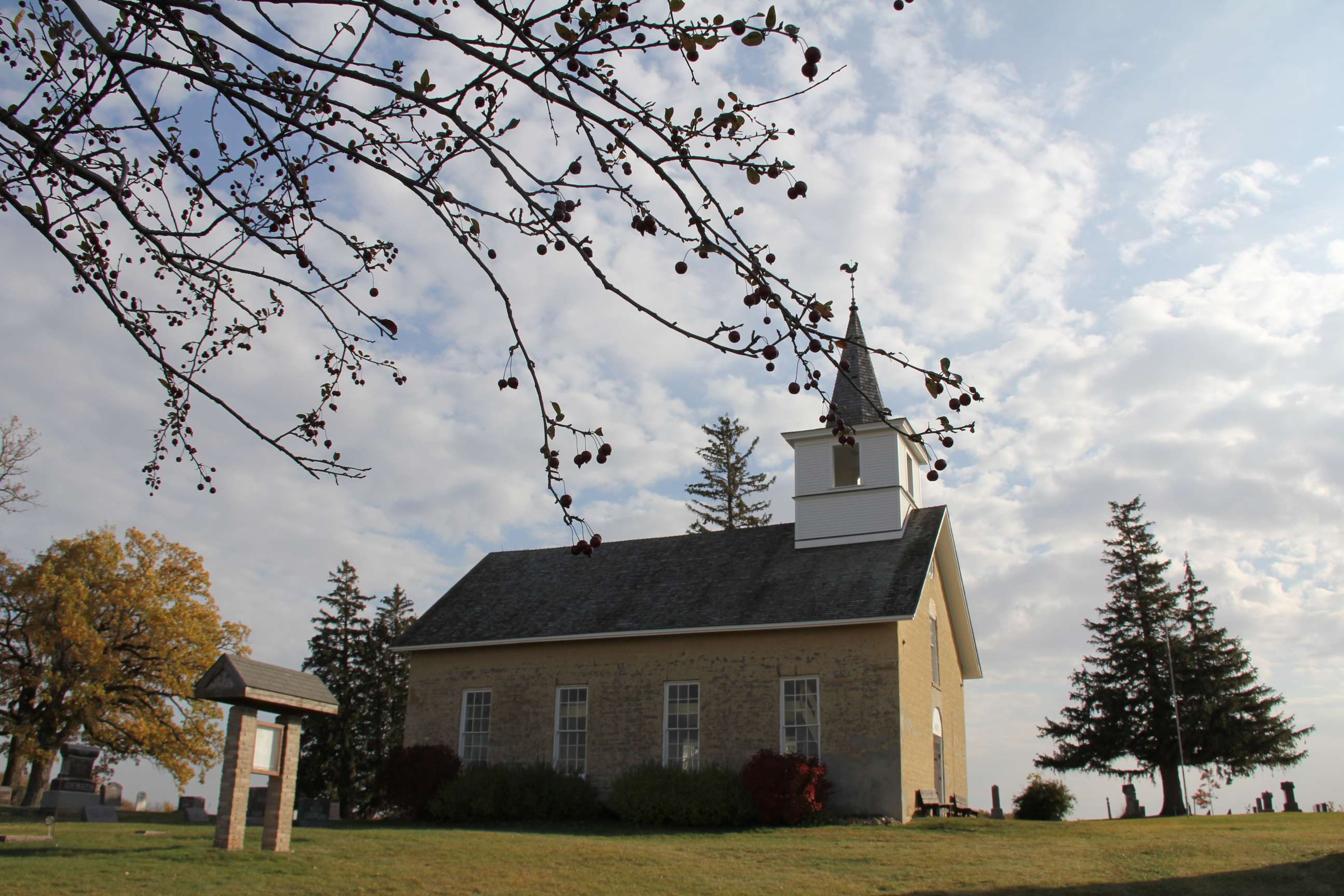
Even though this congregation disbanded in 1973, these churches have not been abandoned. The Valley Grove Preservation Society cares for and maintains the two buildings. On the National Register of Historic Places, the stone church was built in 1862 and the clapboard church in 1894. Recently, a steeple, bell structure and other restorations were completed on the wooden church. The interiors are also well-maintained, as if the congregants remain.
The stone church is used today as a reception and gathering space. (Minnesota Prairie Roots copyrighted photo October 2024)
Valley Grove is the site of weddings, family gatherings, occasional concerts and more, plus an annual fall country social and candlelight Christmas Eve service hosted by the Preservation Society. I’ve attended the social numerous times, but have yet to make the December 24 service. That’s at 10 p.m. with music beginning at 9:45 p.m. Winter weather sometimes forces cancellation of that event. Weeks before, a music-rich vespers service is set for 4 p.m. Sunday, December 8.
Watering cans are available for watering flowers and plants in the cemetery. (Minnesota Prairie Roots copyrighted photo October 2024)
To visit Valley Grove, whether during an event or on a personal outing, is something I would encourage if you live close by or are in the area, especially at nearby Nerstrand Big Woods State Park. Note that church doors are opened only for special occasions so don’t expect otherwise if you come on your own. That’s the case now at all country churches, whether active or disbanded. You’re not going to get inside unless someone with a key just happens to be on-site.
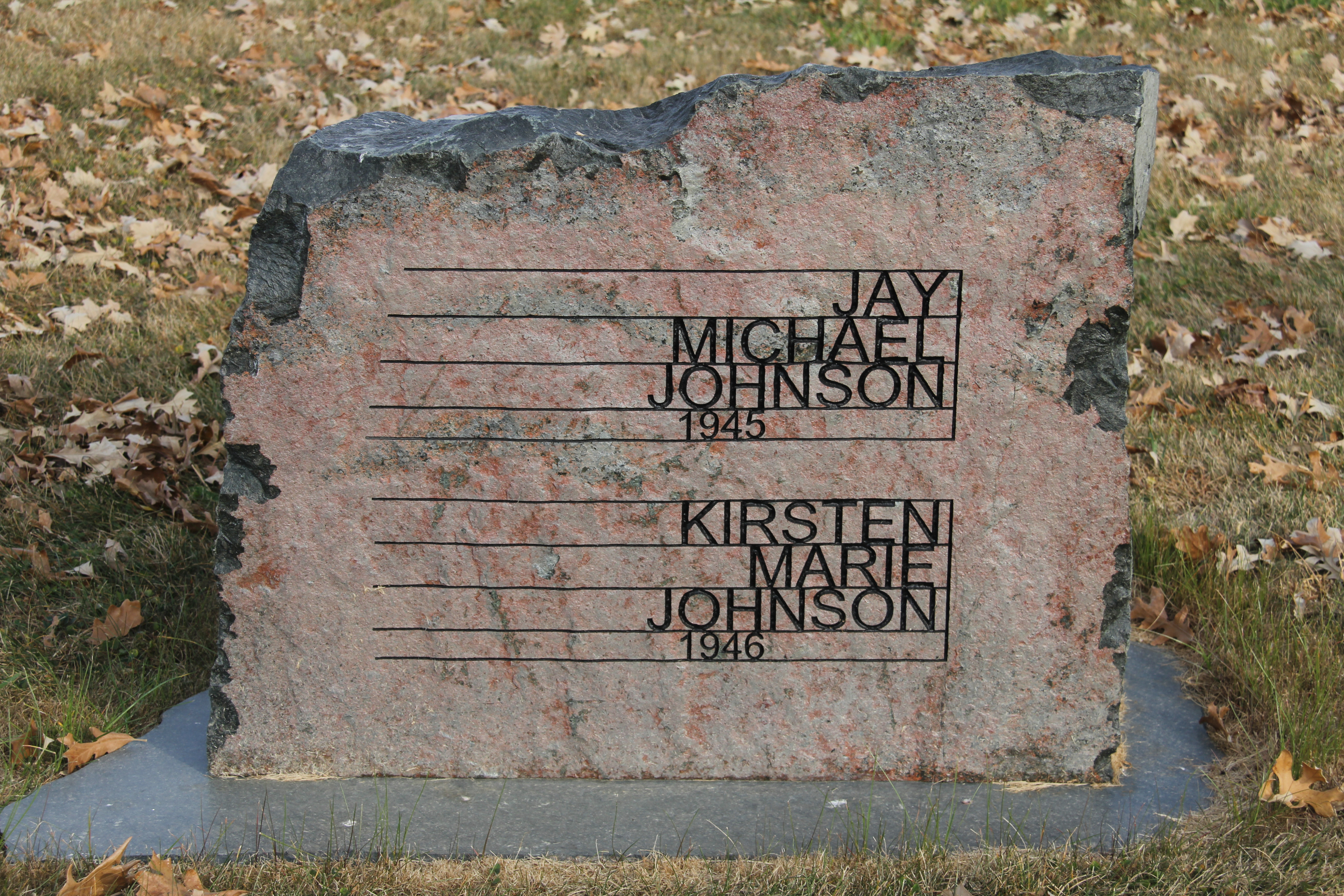
The Johnsons have their tombstone in place. I really like the simplicity, the ruggedness, the font, the shape of this grave marker, unlike any I’ve seen. (Minnesota Prairie Roots copyrighted photo October 2024)
You don’t need church access, though, to experience the essence of Valley Grove, the peace that prevails. It’s the being here, feet upon the ground, eyes taking in the countryside, that touches the soul. A walk through the cemetery, the reading of dates and names and tombstone messages channels a personal connection to those who came before us. The settlers who likely felt comfortably at home here, high atop a hill overlooking the landscape of rural Minnesota while missing the land they left, their beloved Norway.
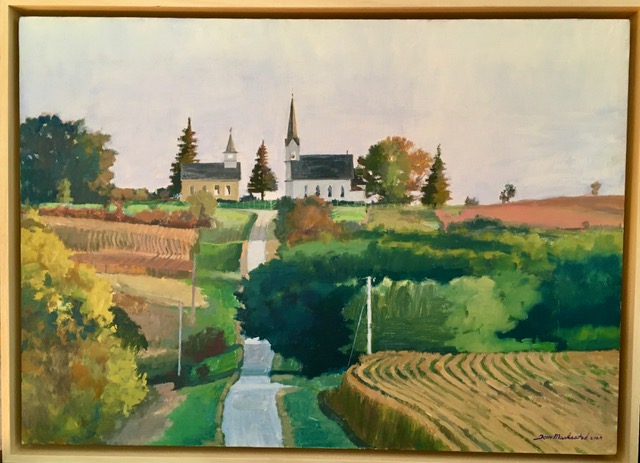
A painting of the Valley Grove churches by Tom Maakestad, to be given to one lucky person. (Image credit: Valley Grove Preservation Society)
FYI: The Valley Grove Preservation Society continues to seek donations for its Steeple Restoration Fund. As an extra incentive, those who donate $1,000 or more by December 31, 2024, will have their names placed in a January drawing for an original Valley Grove painting by Marine on St. Croix artist Tom Maakestad, who grew up near Valley Grove. His parents, Bobbie and John, founded the Preservation Society and saved the wooden church from demolition in 1975. The Valley Grove Board suggests a donation to the Steeple Fund as a Christmas gift for someone who has everything.Click here to reach the Valley Grove Preservation Society website for more information.
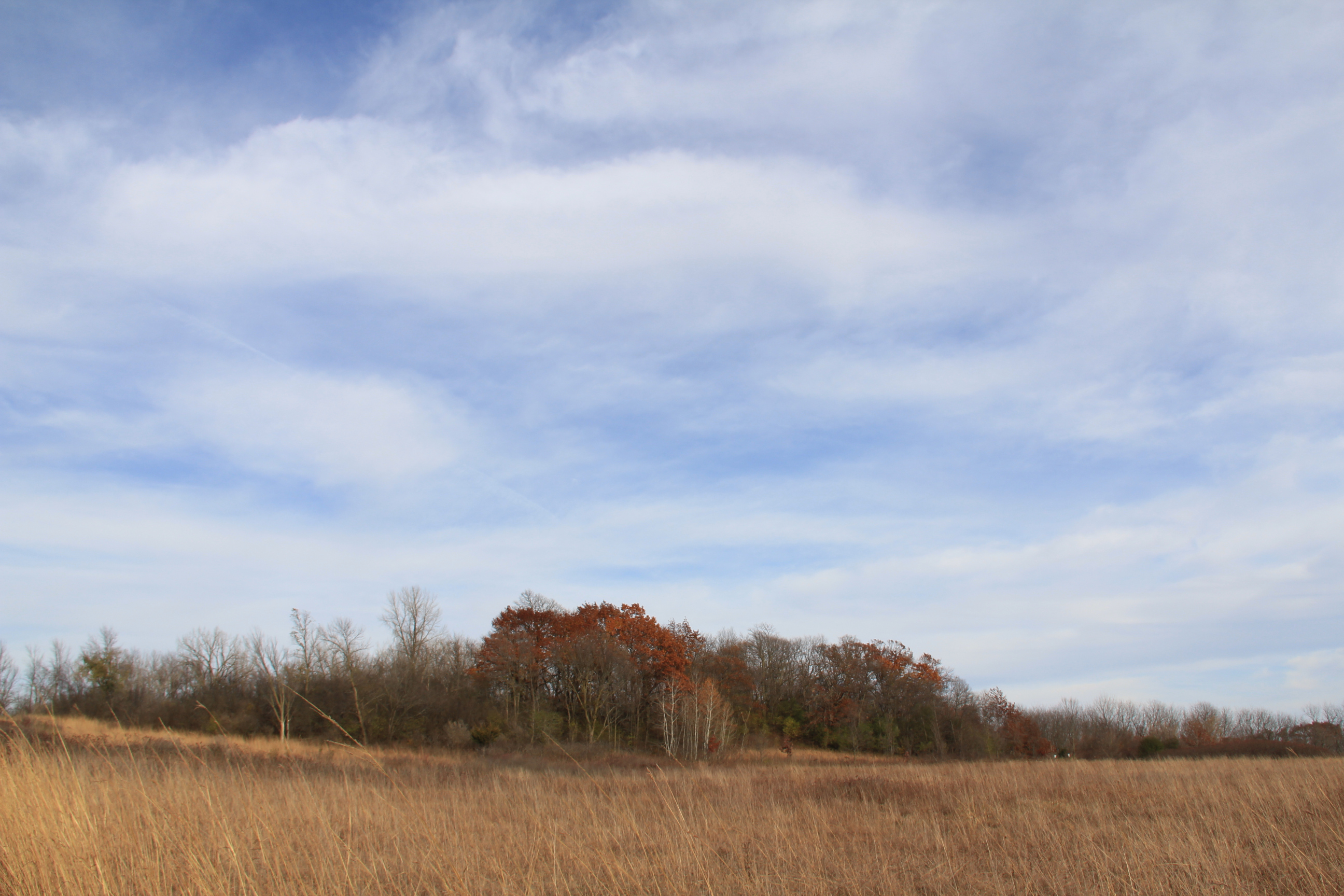
The woods, sky and prairie of River Bend in early November. (Minnesota Prairie Roots copyrighted photo November 2024)
NOVEMBER MARKS A SEASON of transition, a time when the landscape slides ever closer to a colorless environment. Soon winter will envelope us in its drabness of gray and brown highlighted by white. There’s nothing visually compelling about that.
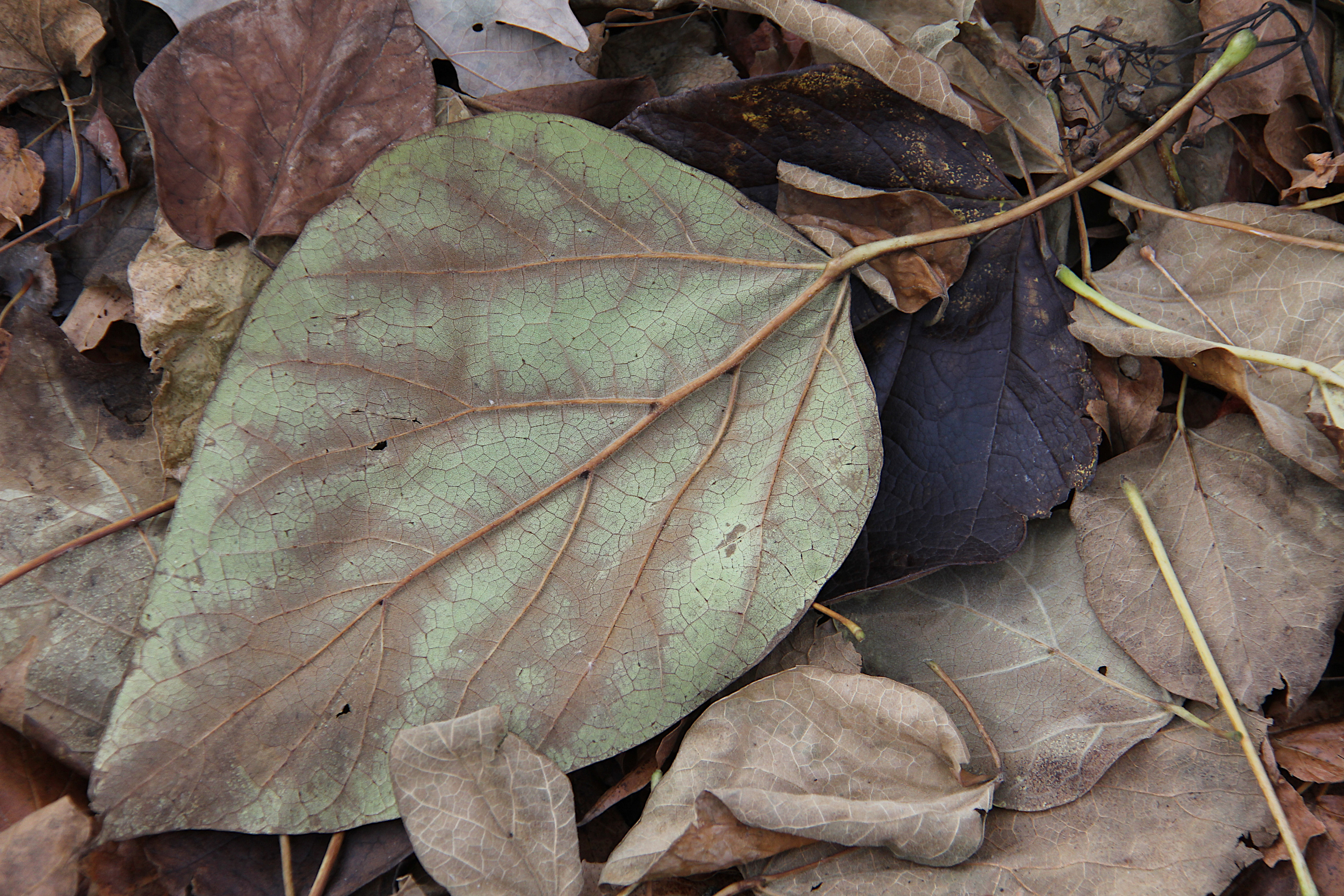
I found the veined back of this oversized fallen leaf especially lovely. (Minnesota Prairie Roots copyrighted photo November 2024)
As a life-long Minnesotan, I understand this about November. I know this. But I still don’t like the absence of color or light, the dark morning rising, the darkness that descends well before 5 p.m. And, yes, seasonal affective disorder, even if you don’t admit you’re experiencing it, likely touches all of us in Minnesota.
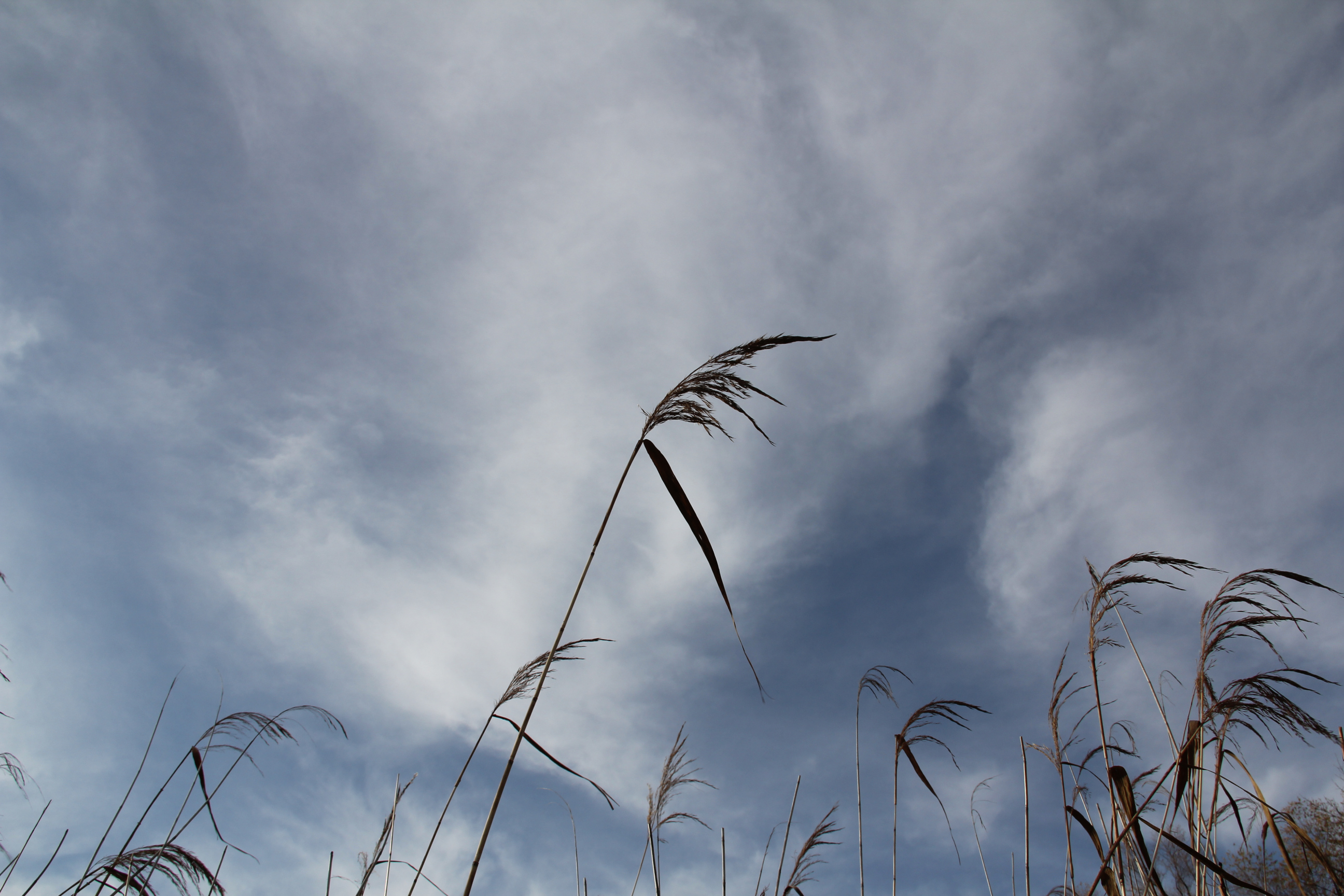
Beautiful: Wisps of clouds in the big sky and grass heads soaring. (Minnesota Prairie Roots copyrighted photo November 2024)
Times like this, it helps to get outside, into the natural world, and view the November landscape through an appreciative lens. It’s possible to reshape your thinking if you slow down, notice the details, determine that beauty is to be found in the outdoors, even in this eleventh month of the year.
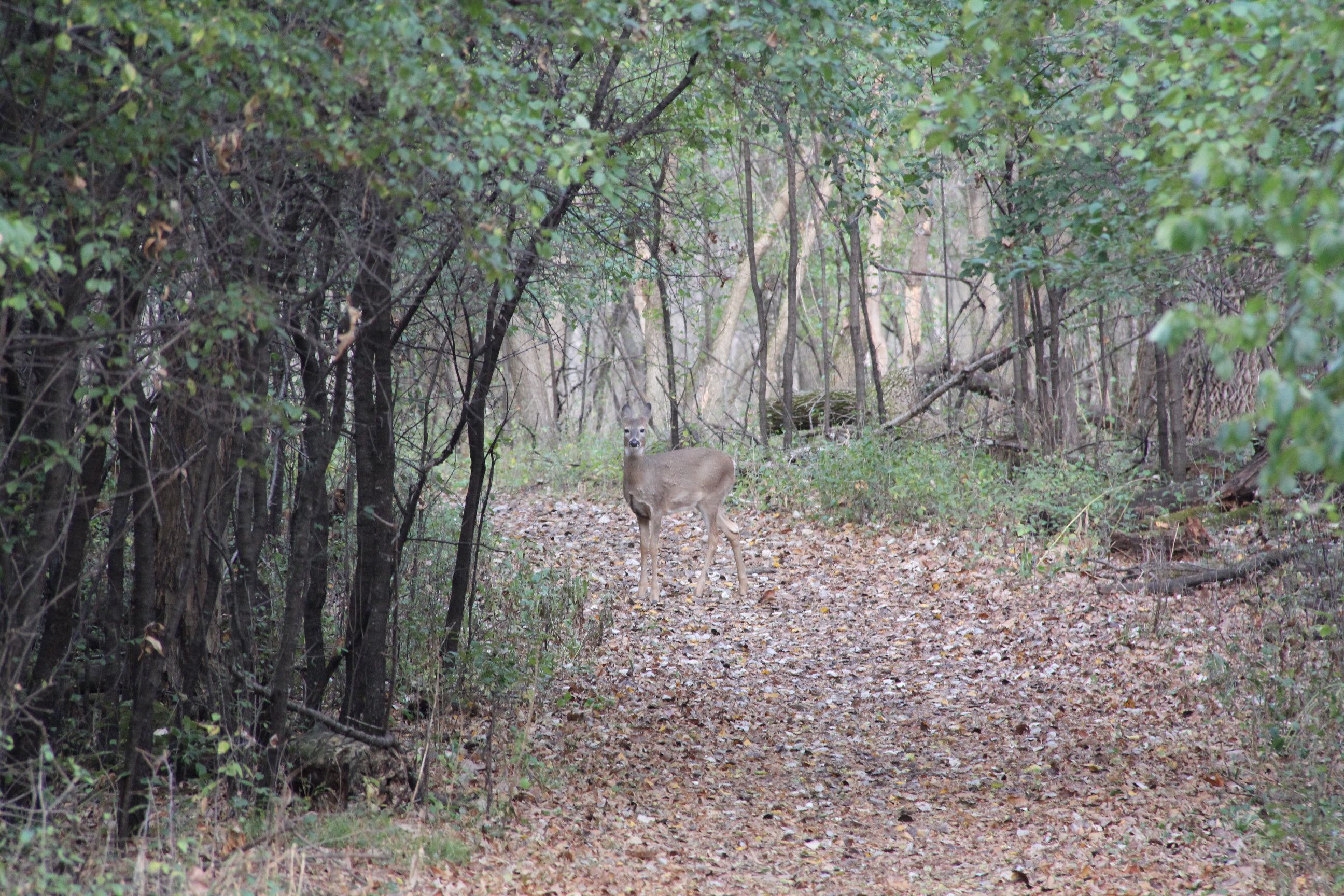
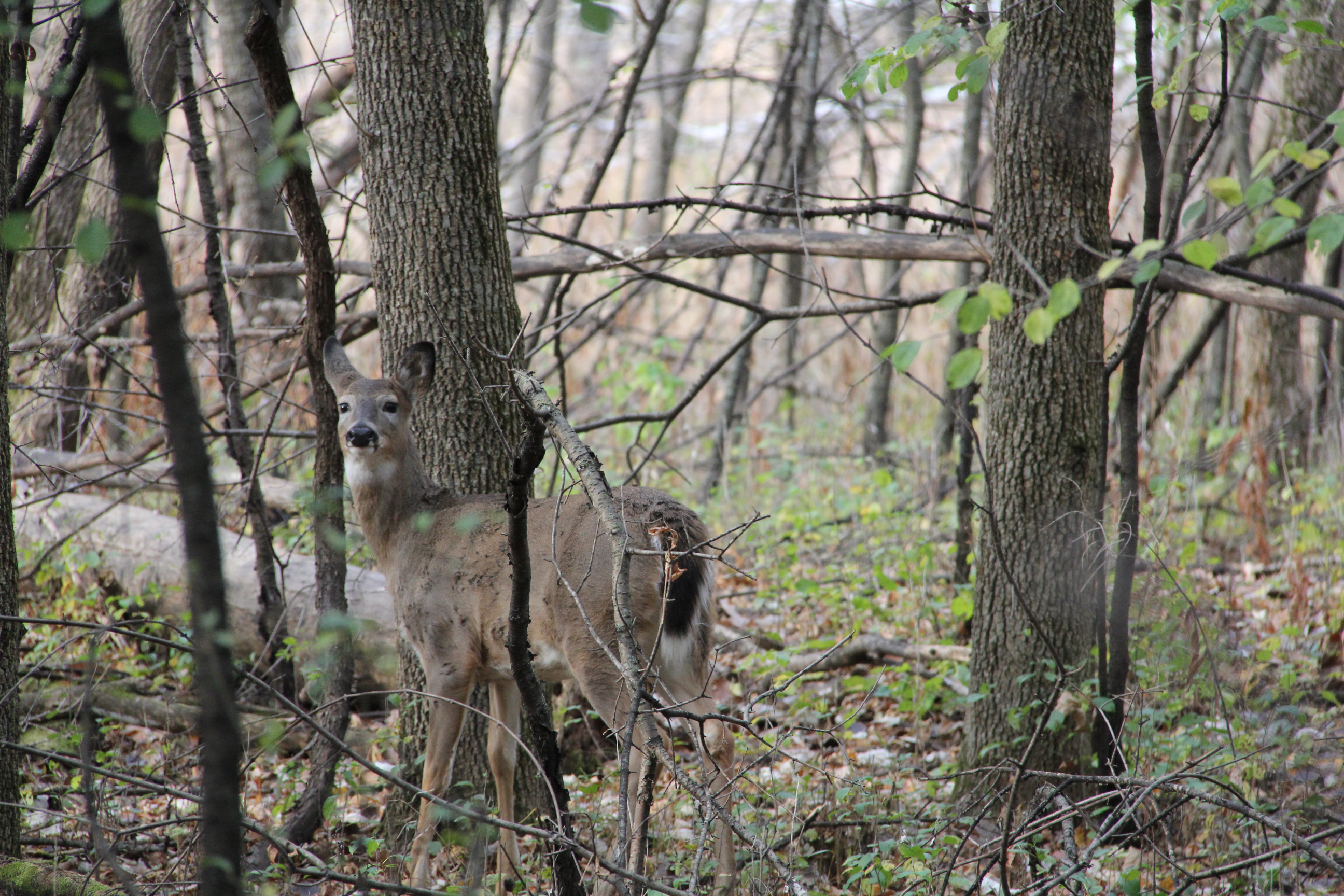
My initial glimpse of the nearly invisible deer standing on a leaf-littered trail. (Minnesota Prairie Roots copyrighted photo November 2024)
So into the woods I went at River Bend Nature Center in Faribault, where first off I spotted a deer on a trail, the animal effectively camouflaged among the dried leaves, the trunks of trees and buckthorn (an invasive species still green). The doe stood and watched as I eased slowly toward her intent on getting within better focal range. Soon she wandered into the woods, among the trees. I shot a rapid series of images as the stare-down continued, until finally the deer tired of my presence and hurried away.
I moved closer, then zoomed in with my telephoto lens to get this close-up image. (Minnesota Prairie Roots copyrighted photo November 2024)
What a wonderful way to begin my walk. Even if I consider deer too populous and a danger on roadways, my interest in watching them never wanes. And there are plenty of deer to watch at River Bend.
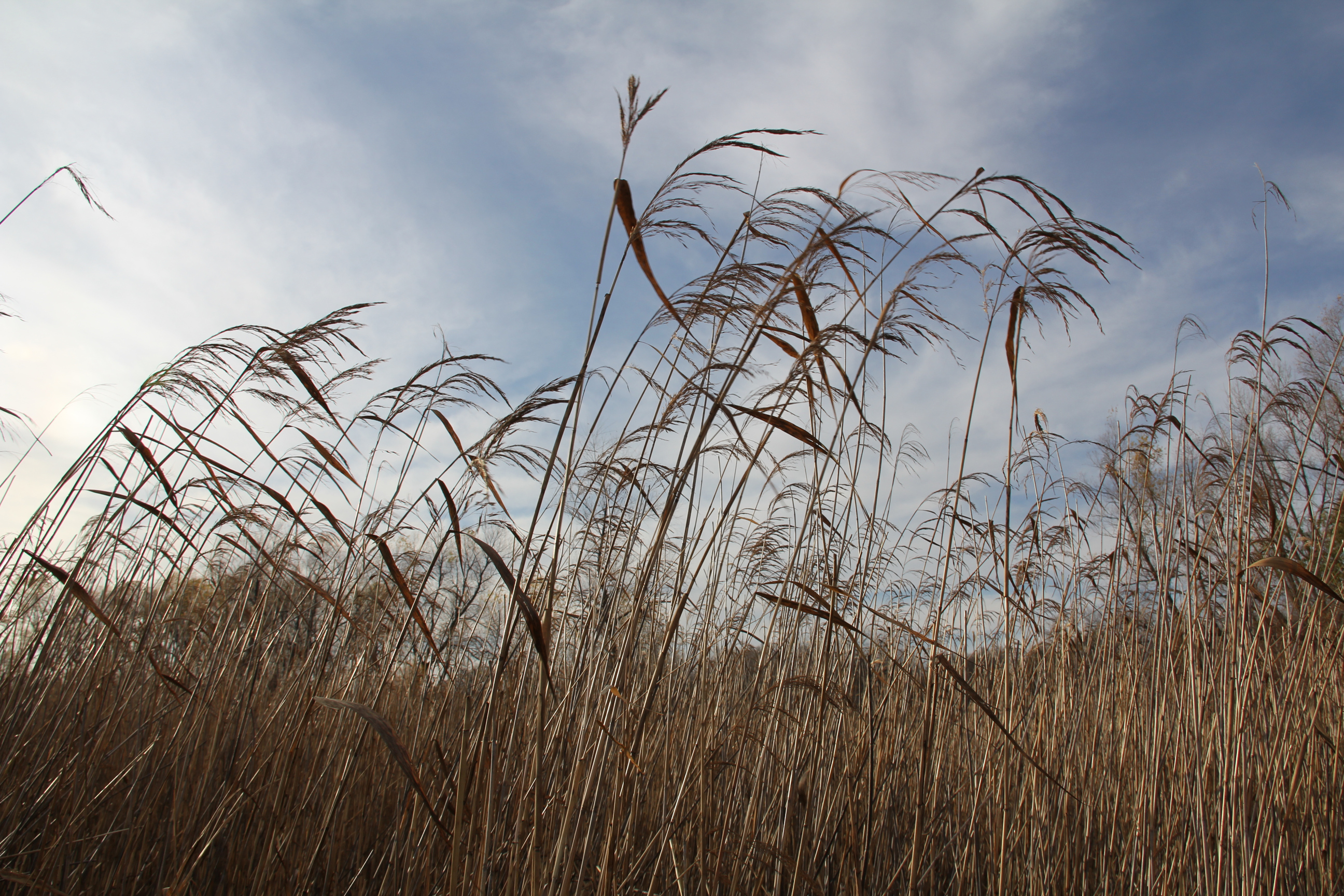
This grass stretches way above my head and dances in the wind. (Minnesota Prairie Roots copyrighted photo November 2024)
Mostly, though, I don’t see many animals at the nature center. Plant life becomes my point of interest. In November, that means dormant plants like dried grasses stretching across the expansive prairie. Or grasses rising high above my head along the trail, stalks listing, pushed by the wind. Dancing.
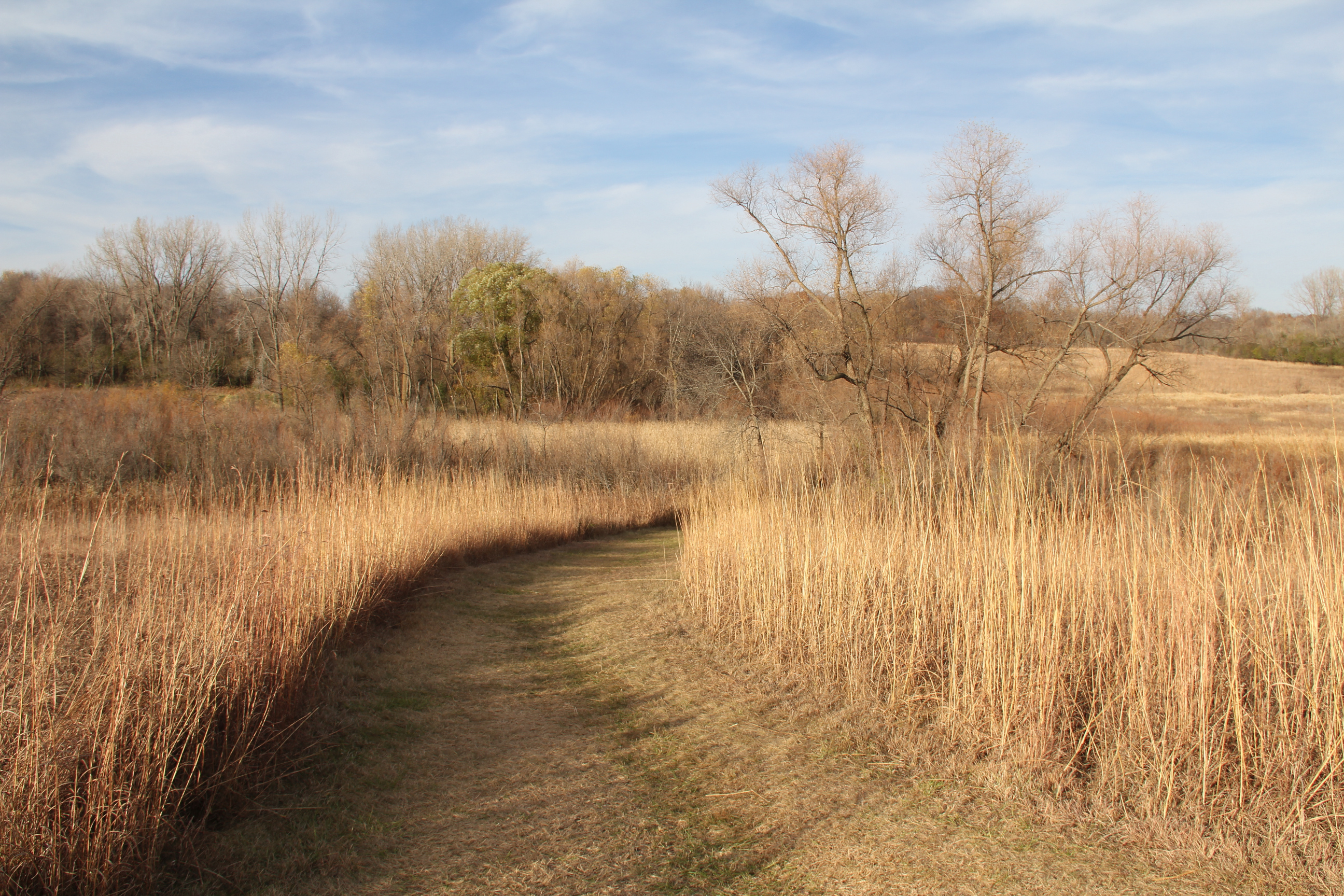
Dried grasses, possible fuel for fire, edge a trail. (Minnesota Prairie Roots copyrighted photo November 2024)
These grasses have lost their luster green, but they are no less lovely in muted shades. The thought crosses my mind how rapidly a spark could ignite a raging grass fire here upon the parched land.
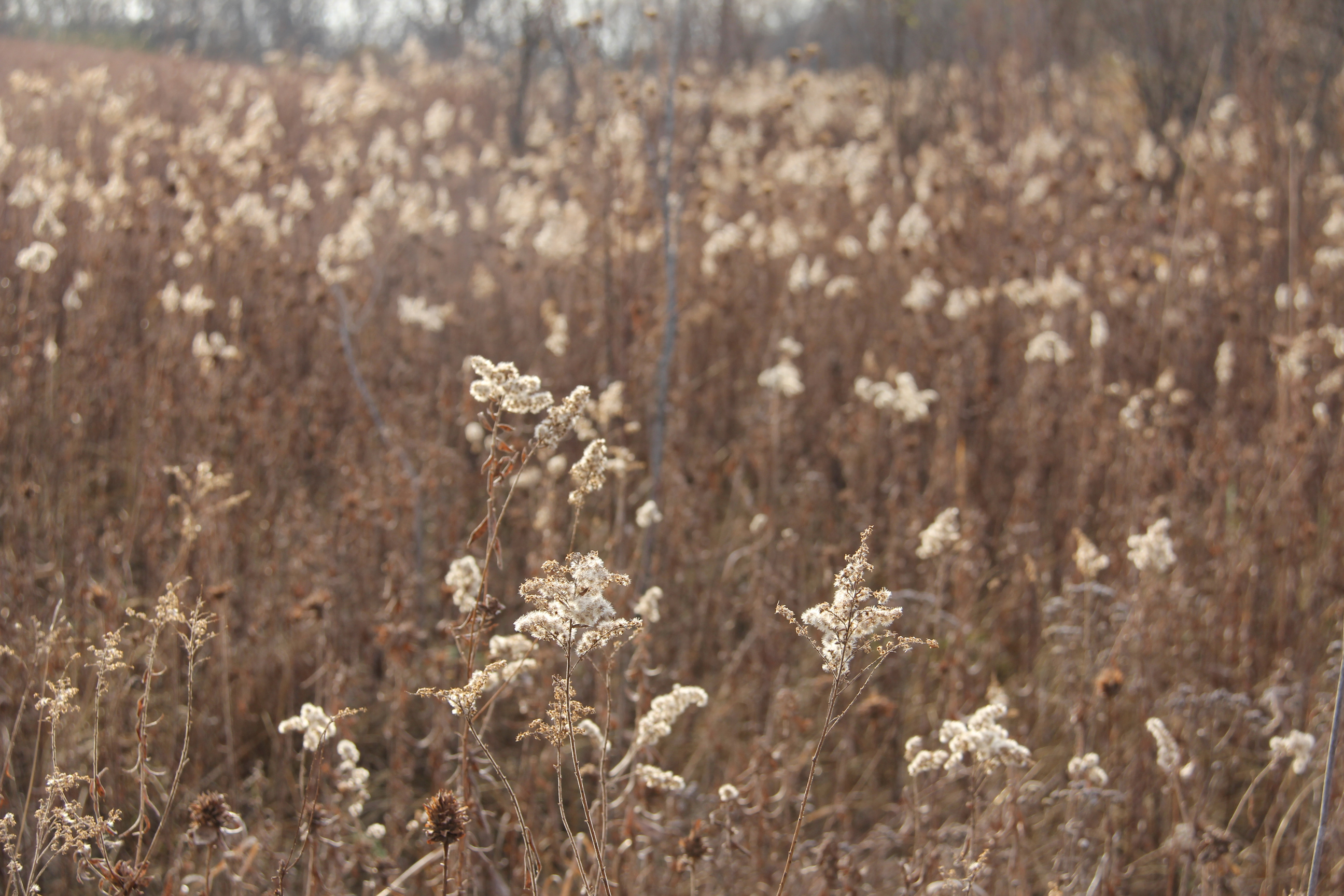
Dried goldenrod seemingly glow in the afternoon sunlight. (Minnesota Prairie Roots copyrighted photo November 2024)
Weeds and wildflowers (I’m no naturalist when it comes to identifying what I see) are likewise dead and dried, some glowing in the late afternoon sunshine. And that, too, is lovely.
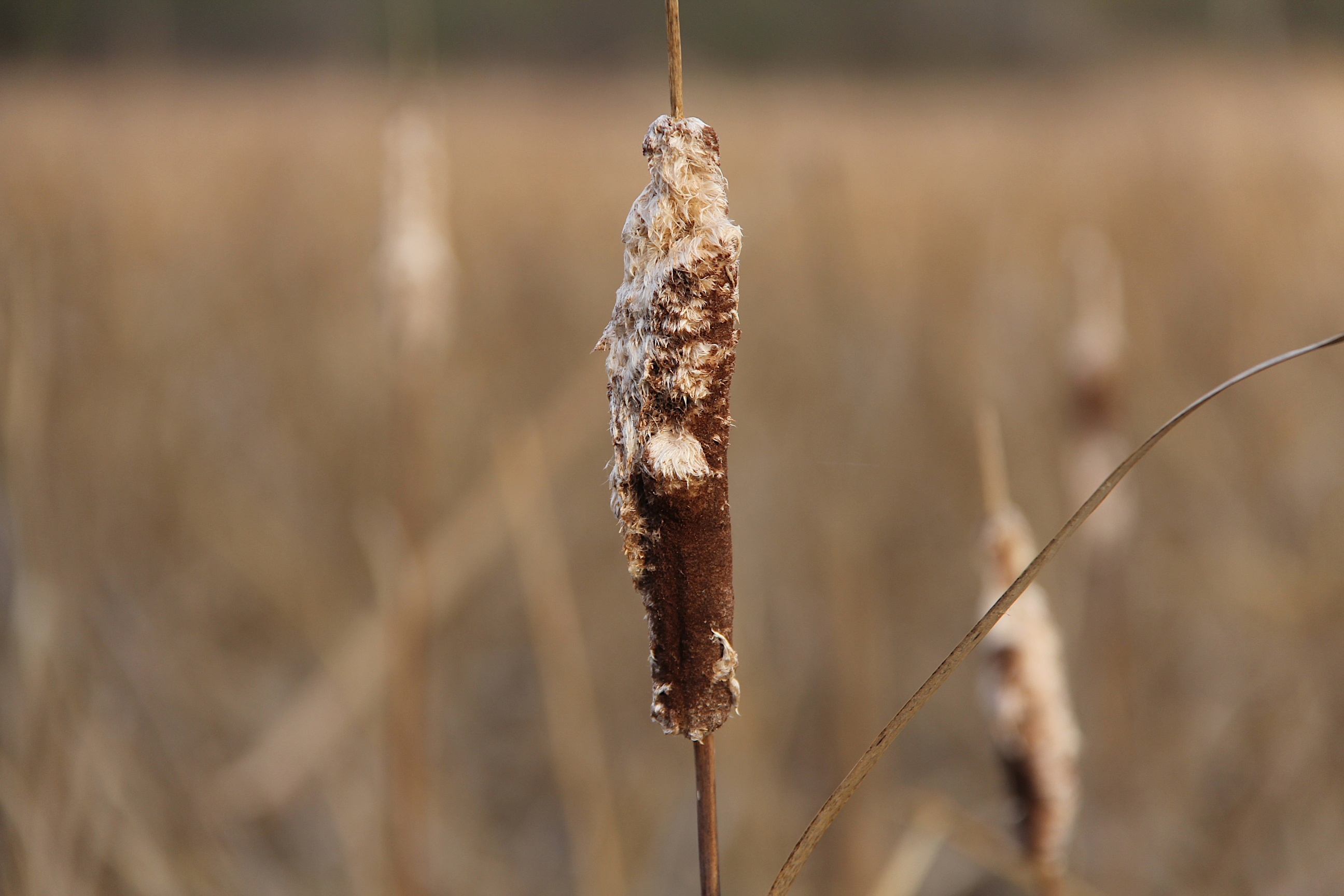
Cattails burst open at season’s end. (Minnesota Prairie Roots copyrighted photo November 2024)
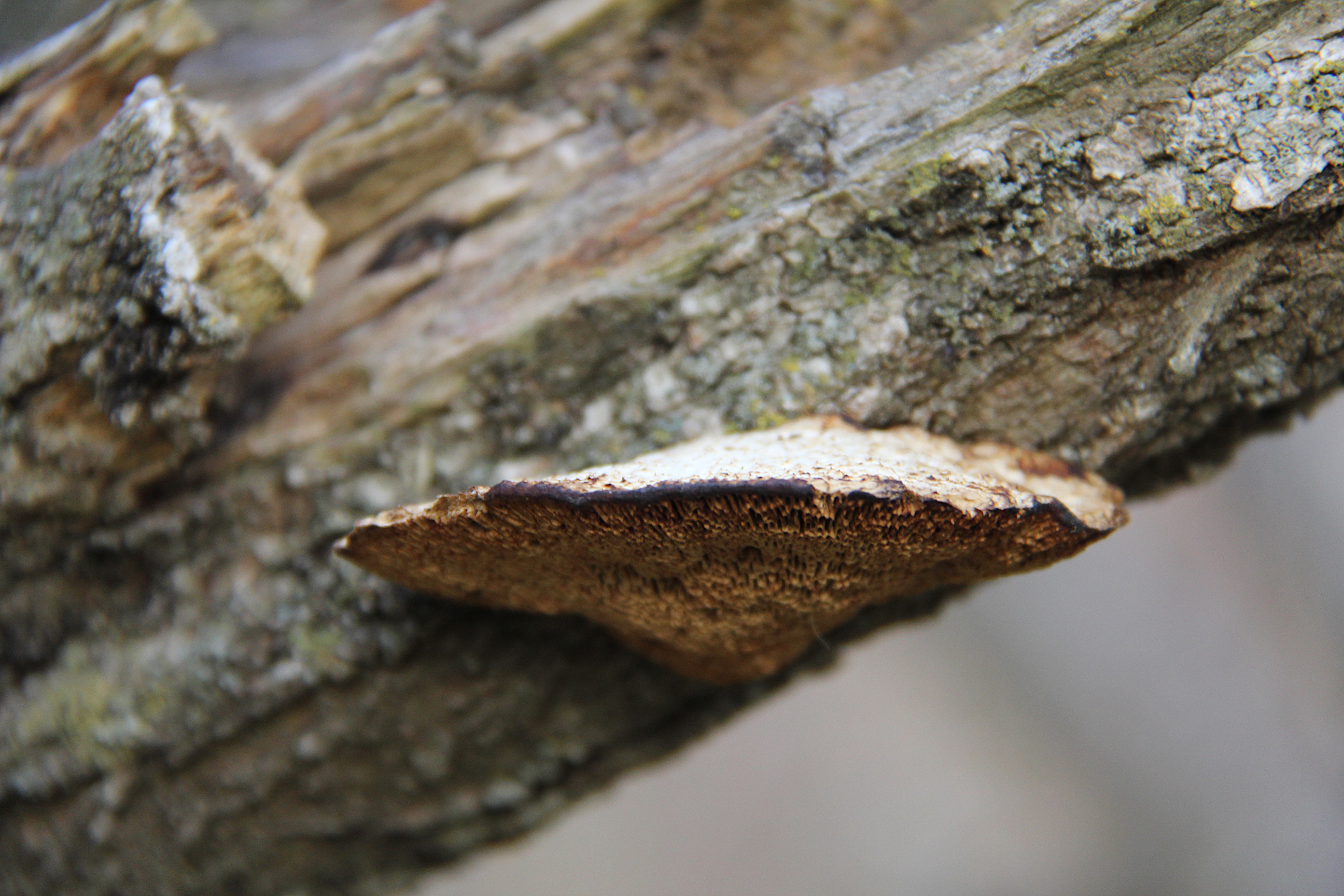
Fungus blends in with bark. (Minnesota Prairie Roots copyrighted photo November 2024)
Cattails appear ravaged by the seasons. Fungi ladder a tree branch. These are the details I notice in looking for photos, in convincing myself that beauty exists within the woods, upon the prairie, even in November.
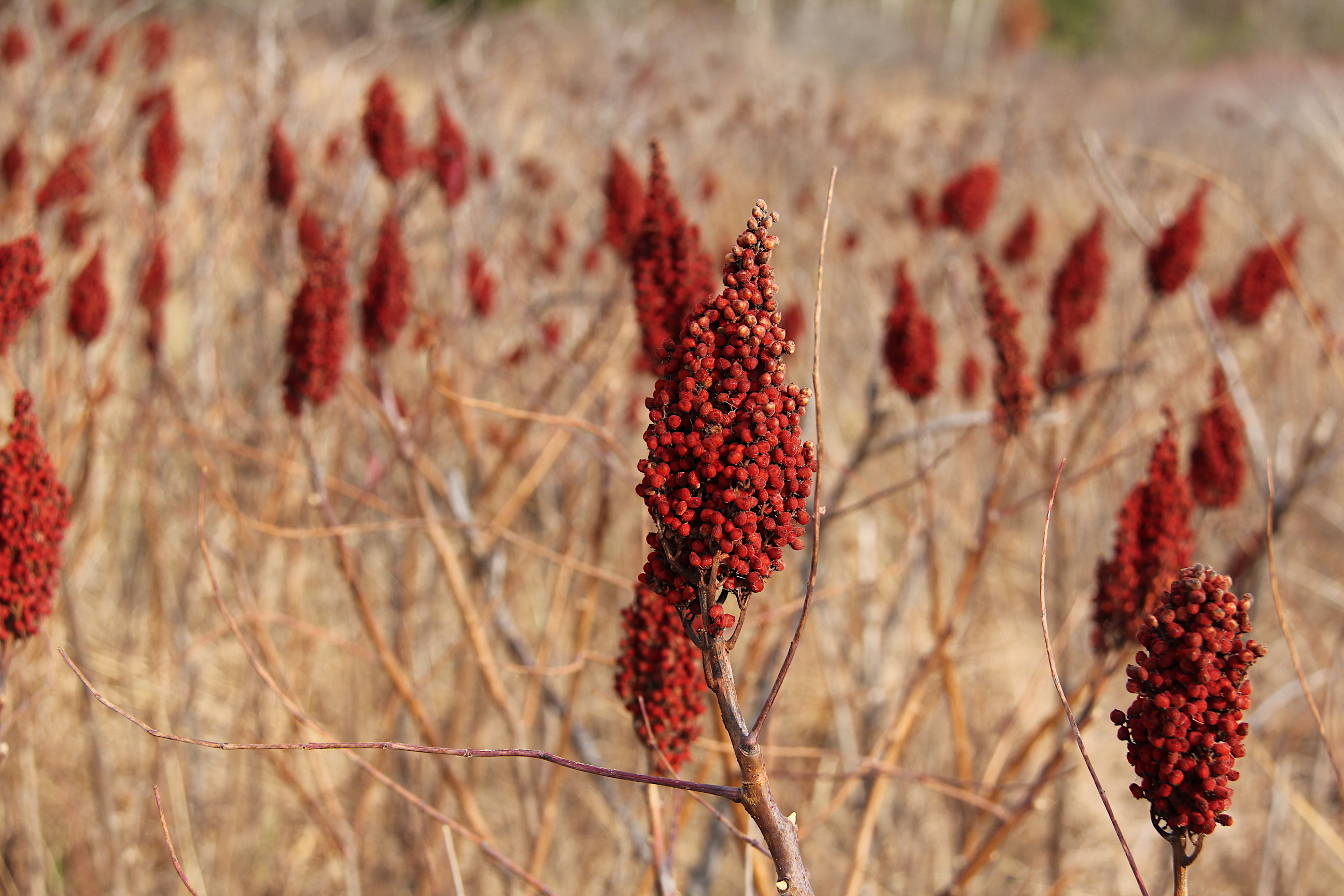
Dried sumac edge the prairie. (Minnesota Prairie Roots copyrighted photo November 2024)
Dried sumac in a hue that isn’t orange, that isn’t red, flames.
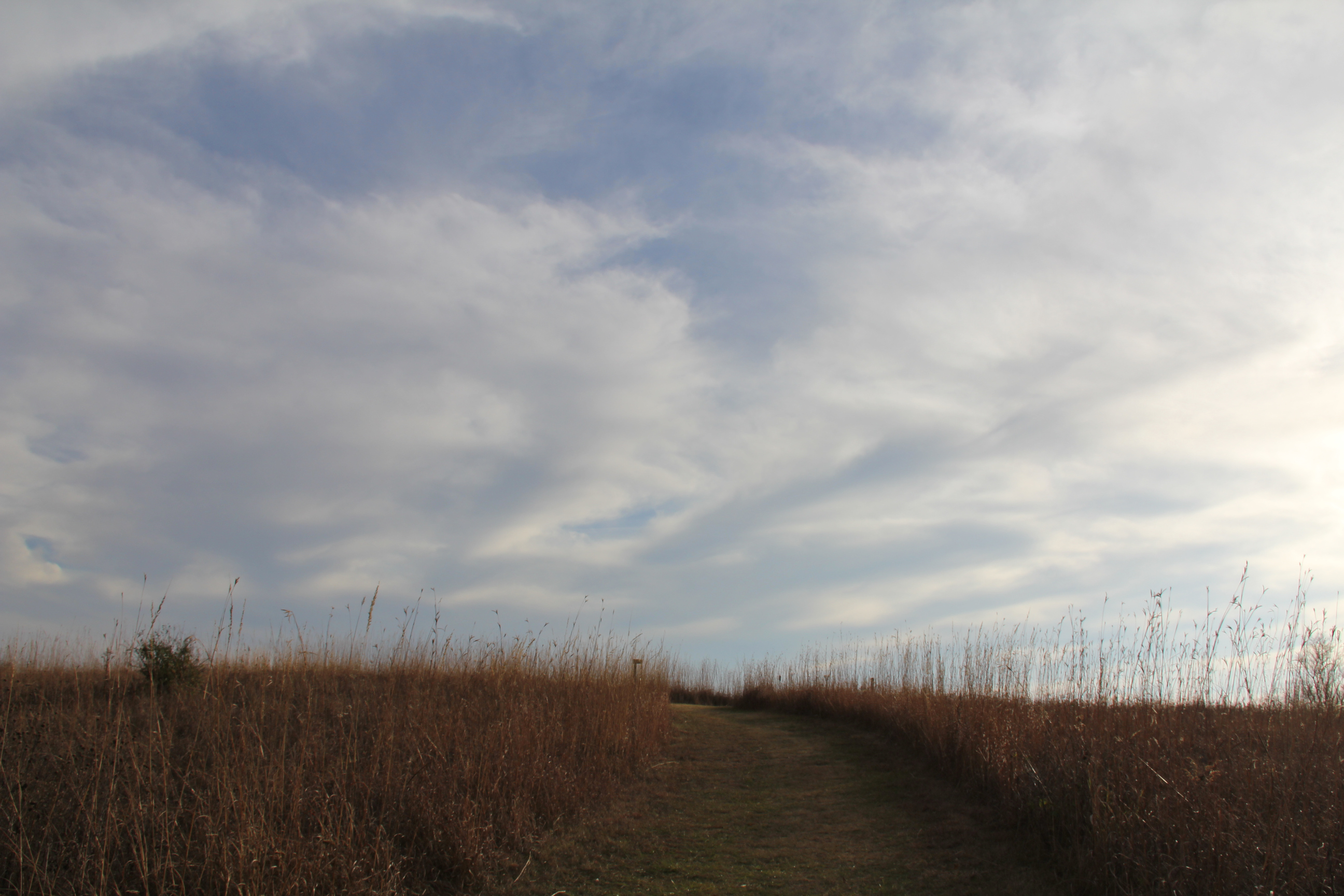
Walking uphill to the prairie, the sky appears expansive. (Minnesota Prairie Roots copyrighted photo November 2024)
A blue sky, swept with wisps of clouds, accents the scenes I take in. I always feel small under the expansive sky, no matter the month.
A spot of color in stubborn leaves. (Minnesota Prairie Roots copyrighted photo November 2024)
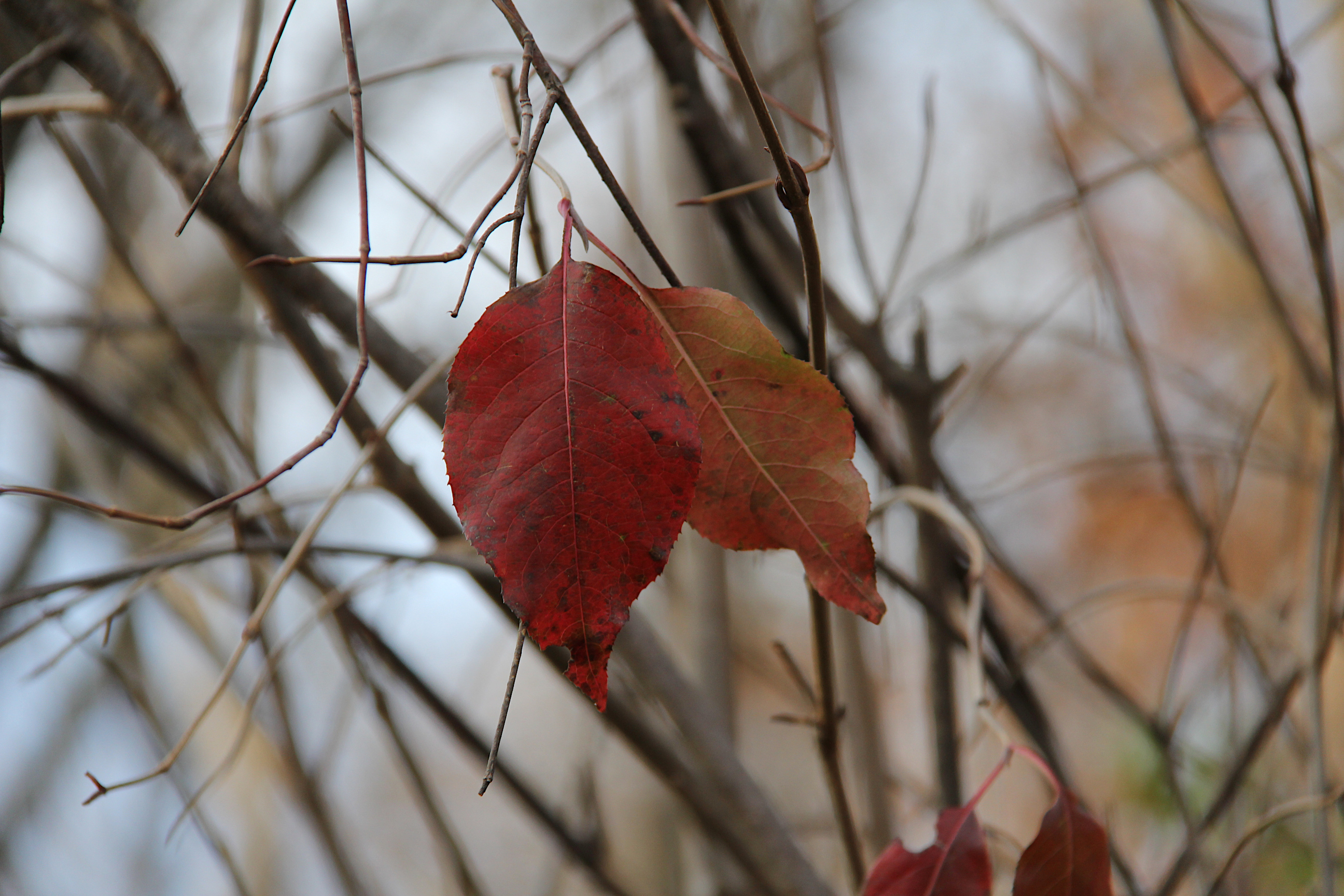
A few stubborn, autumn leaves still cling, flashing color like the flick of a flame. That, too, I see on this November day.
If any image visually summarizes November, this would be it. (Minnesota Prairie Roots copyrighted photo November 2024)
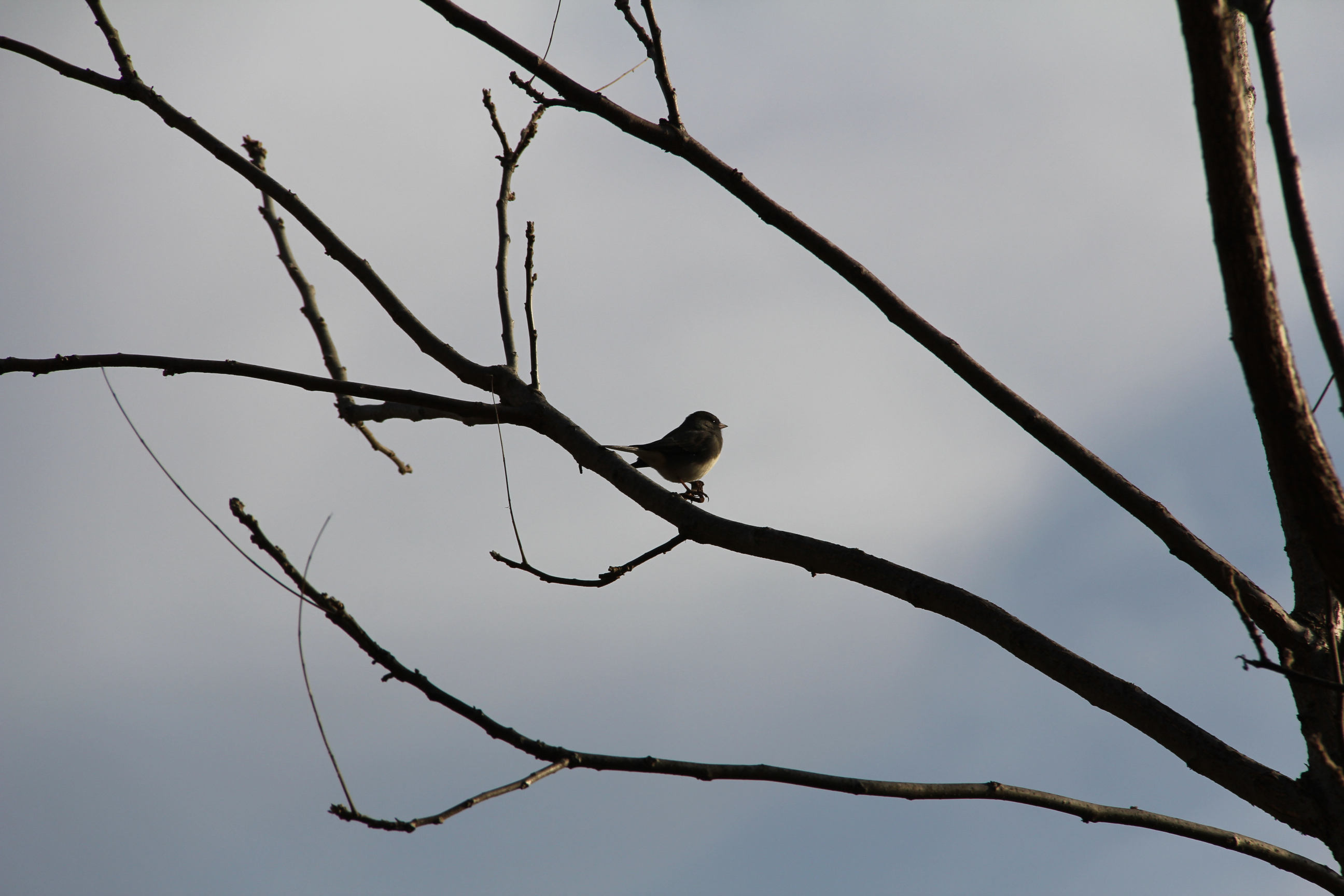
A flutter of birds near the end of my walk draws my eyes to a bare tree. To watch. To hear their movement, like a whisper of winter coming. Quiet and colorless. Signs of December soon overtaking November.
Green is slowly tipping trees, coloring the ground as we bridge into spring. This hillside scene was photographed in Falls Creek County Park, rural Faribault. (Minnesota Prairie Roots copyrighted photo April 2024)
THIS TIME OF YEAR in Minnesota—this early spring—everything appears more vibrant. At least to my winter weary eyes. My eyes, which have viewed mostly muted shades of brown and gray for too many months, can’t get enough of this landscape edging with color.
Bold blue skies blanket River Bend’s prairie, which will soon be lush with new growth. (Minnesota Prairie Roots copyrighted photo April 2024)
Intense green in buds and lush lawns, thriving with recent rains and then sunshine and warming day-time temps, layer the landscape. Sometimes the sky is such a bold blue that my eyes ache with the beauty of it all. Green against blue, the natural world a poem, a painting, a creative story.
Buds emerge against the backdrop of the creek at Falls Creek County Park. (Minnesota Prairie Roots copyrighted photo April 2024)
Like most Minnesotans, I find myself emerging, getting outdoors more, immersing myself in nature. Not that I don’t spend time outside in winter. But now, in late April, I’m out more often.
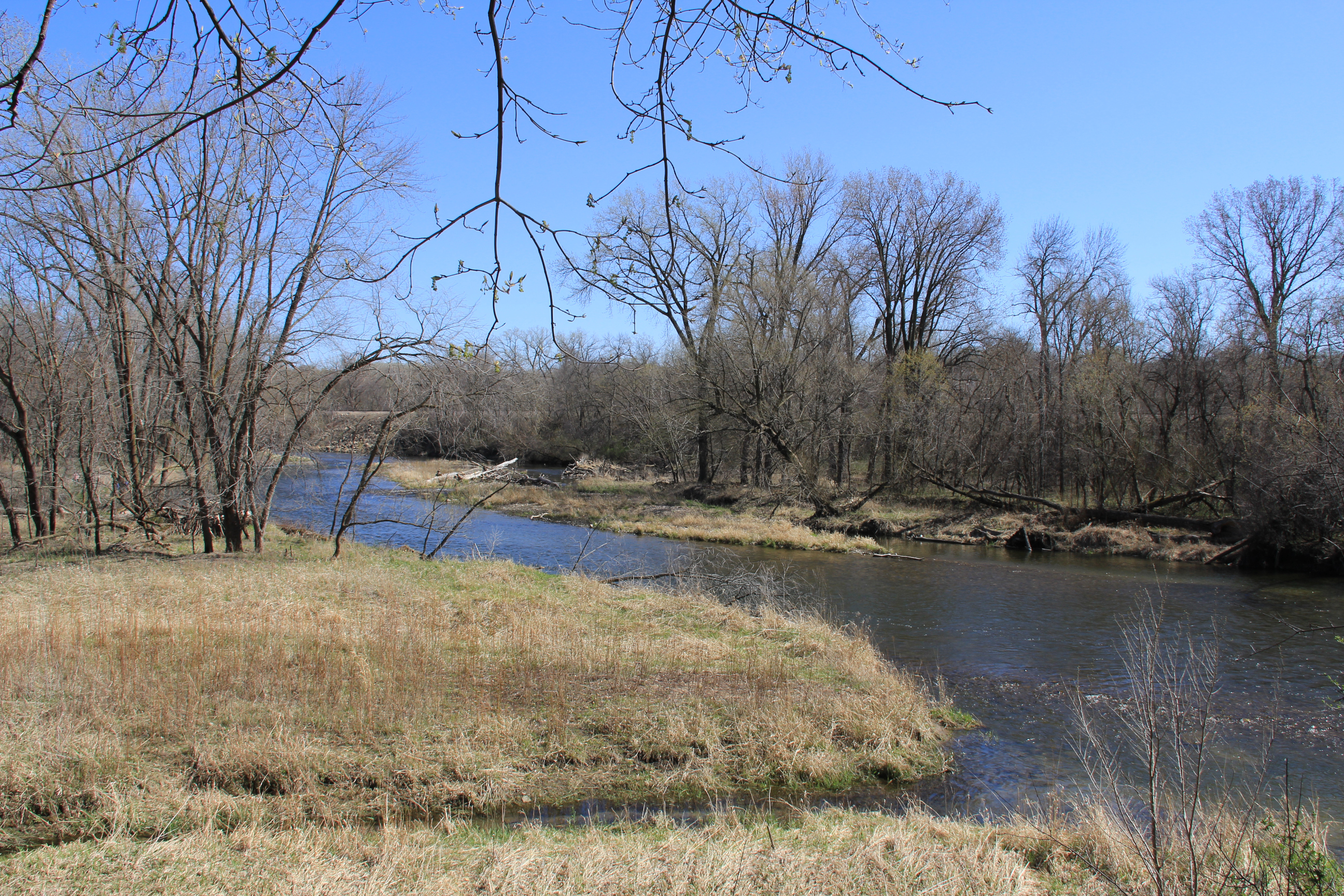
The Straight River twists through River Bend Nature Center, winding through Faribault to connect with the Cannon River. (Minnesota Prairie Roots copyrighted photo April 2024)
Parks and trails and the local nature center draw me into woods, along prairie, aside replenished wetlands and ponds, by rivers and creeks. Even a walk through a neighborhood to observe tulips flashing vivid red and yellow pleases me. There’s so much to take in, to delight in as this season unfolds.
Inspirational signs are scattered throughout River Bend. (Minnesota Prairie Roots copyrighted photo April 2024)
“One touch of nature makes the whole world kin,” reads a quote from William Shakespeare printed on a memorial plaque placed on a bench at River Bend Nature Center in Faribault. I’m no Shakespearean scholar, but I interpret that to mean nature connects us.
Turtles galore lined logs at River Bend’s Turtle Pond on a recent sunny afternoon. (Minnesota Prairie Roots copyrighted photo April 2024)
That happened recently at the Turtle Pond. I paused to photograph three turtles lining a log, still as statues in the afternoon sunshine. Then a passing friend noticed and asked what I saw. And then he pulled out his cellphone to photograph. And then the photographer who was shooting senior photos on the boardwalk bridge over the pond, noticed the turtles, too. We were, in that moment, kin in nature, touched by the countless turtles perched on logs in the water.
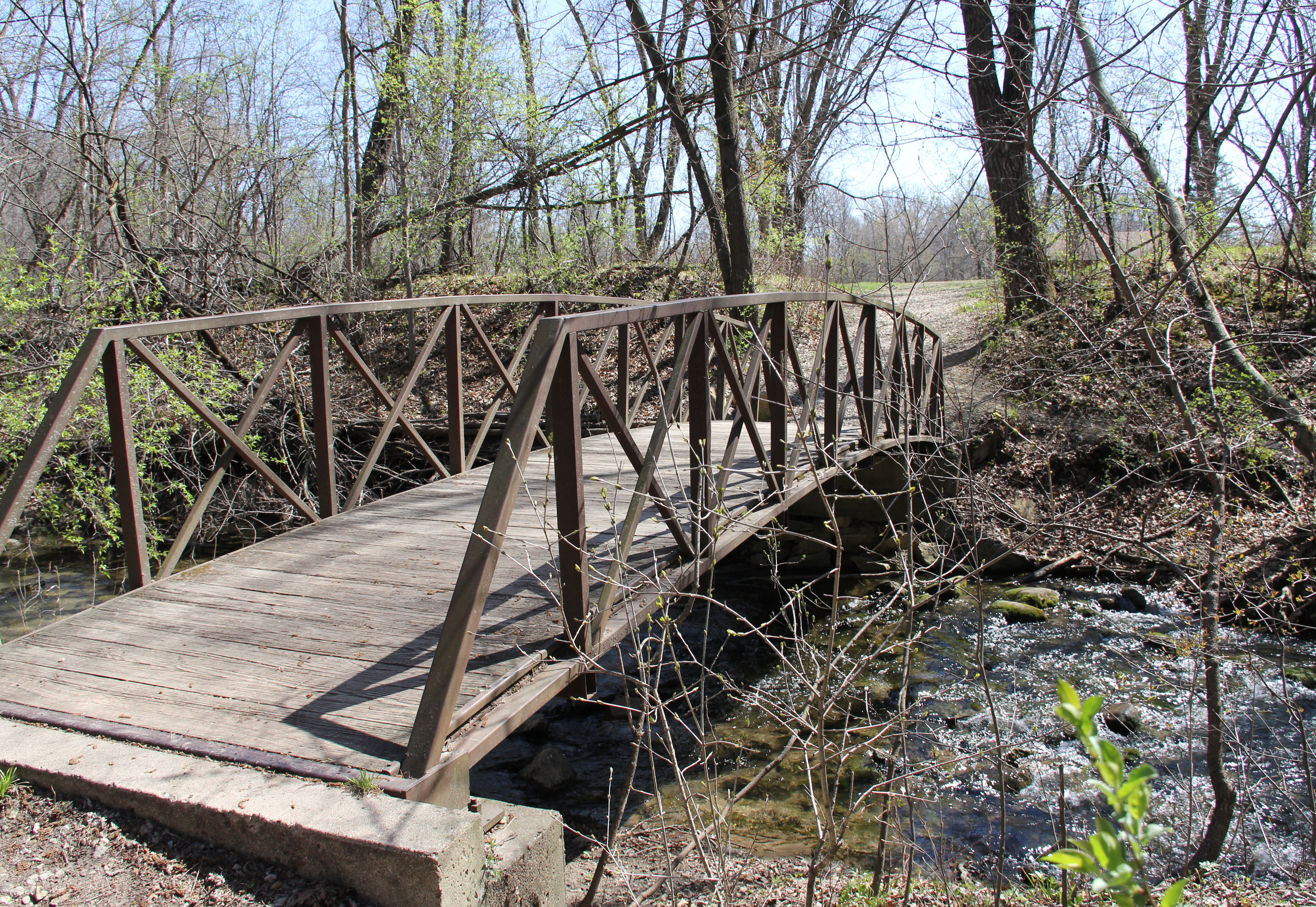
This bridge spans a creek in Falls Creek County Park, leading to hiking trails in the woods on one end and an open grassy area on the other. (Minnesota Prairie Roots copyrighted photo April 2024)
Nature also connected me with others at Falls Creek County Park, rural Faribault. A family picnicking by the park shelter prompted memories of long ago picnics there with my growing family. I walked over to tell the young parents how happy I was to see them outdoors, grilling, enjoying the beautiful spring day with Ezra in his Spider-Man costume and Millie in her stroller. Nature makes us kin.
Wildflowers are blooming, including these at Falls Creek County Park. (Minnesota Prairie Roots copyrighted photo April 2024)
People simply seem nicer, kinder, more open to conversation when they’re outdoors. It’s as if the wind whispers only good words into our thoughts. It’s as if clouds disperse to reveal only sunny skies. It’s as if sounds are only those of silence or of birds, not of anger and hostility. Nature calms with her voice, her presence.
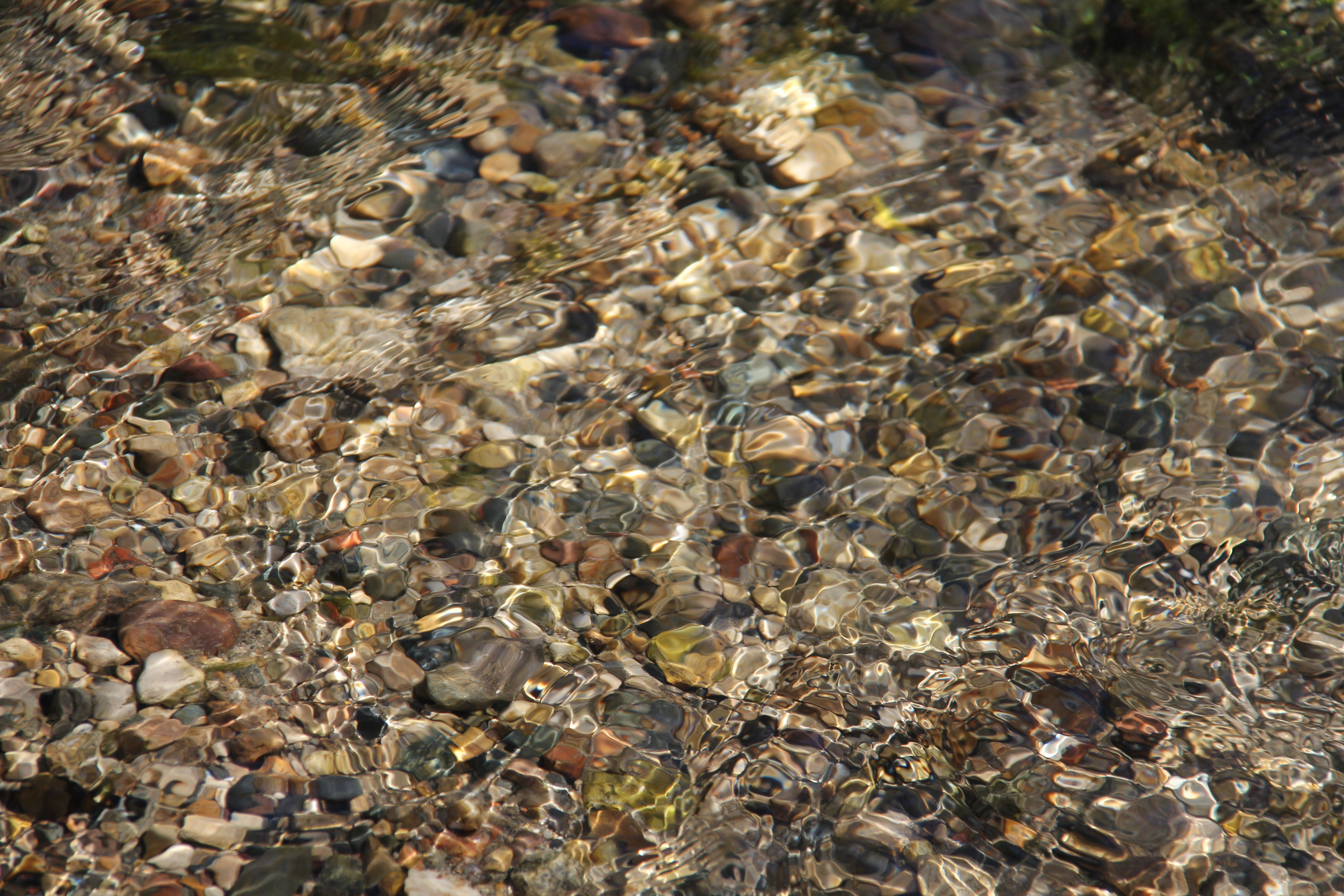
Water mesmerizes as it flows over stones in a clear-running creek at Falls Creek County Park. (Minnesota Prairie Roots copyrighted photo April 2024)
I love to stand aside a burbling creek, to hear water rushing over rocks. In that moment, I hear only the soothing, steady rhythm of music and none of the noise of life. Peace, sweet peace, consumes me.
Trails at Falls Creek County Park are packed dirt, narrow, rugged, uneven and sometimes blocked by fallen trees. (Minnesota Prairie Roots copyrighted photo April 2024)
The same goes for walking within nature. Trees embrace me. Wildflowers show me beauty. Dirt beneath my soles connects me to the earth, filling my soul.
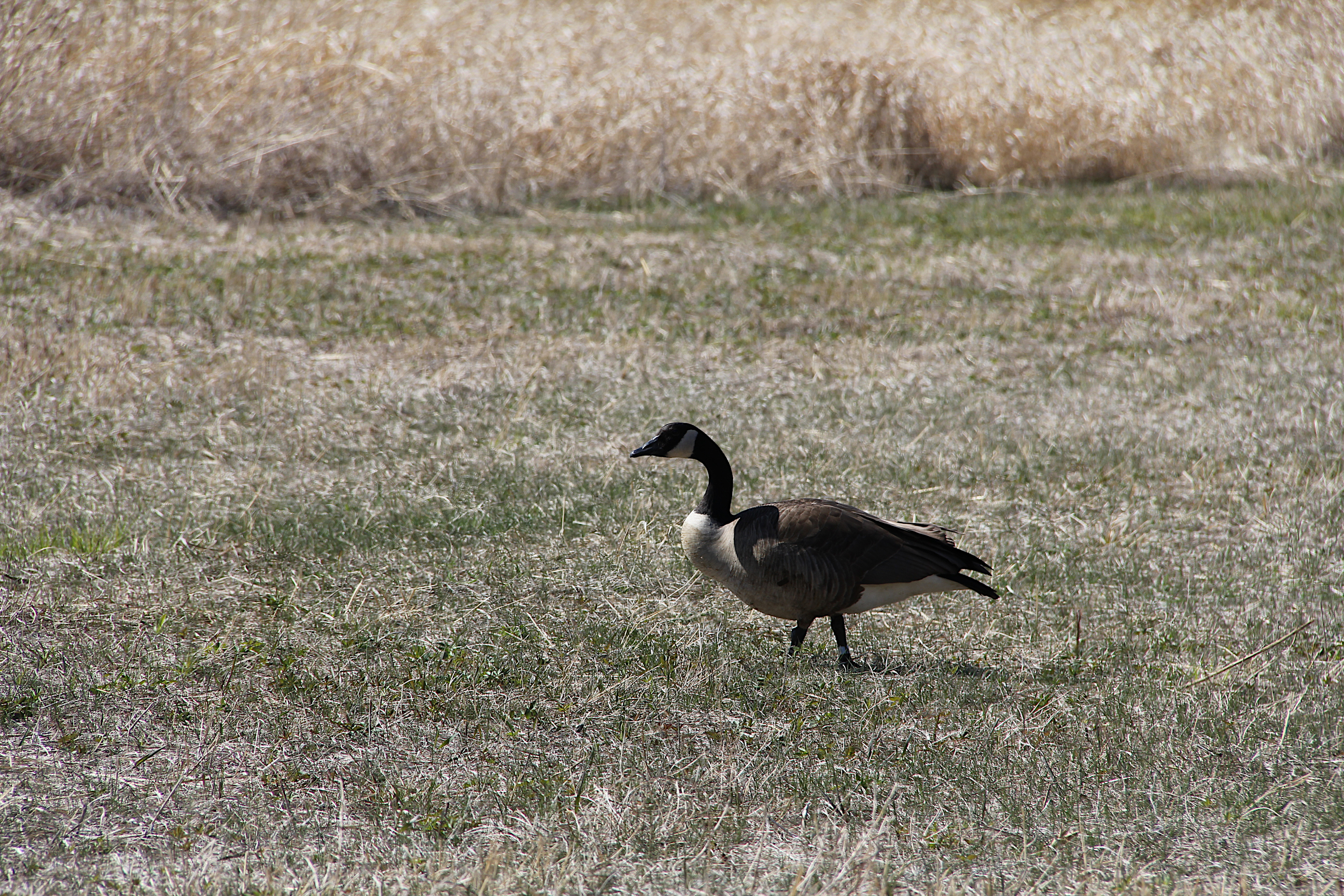
On a recent afternoon at River Bend, geese searched the prairie for food. (Minnesota Prairie Roots copyrighted photo April 2024)
And then there are the creatures. The Canadian geese wandering the prairie, searching for food, their long necks bending, pilfering the dried grass while I dodge the droppings they’ve left along the pathway. They are fearless, a lesson for me in standing strong.
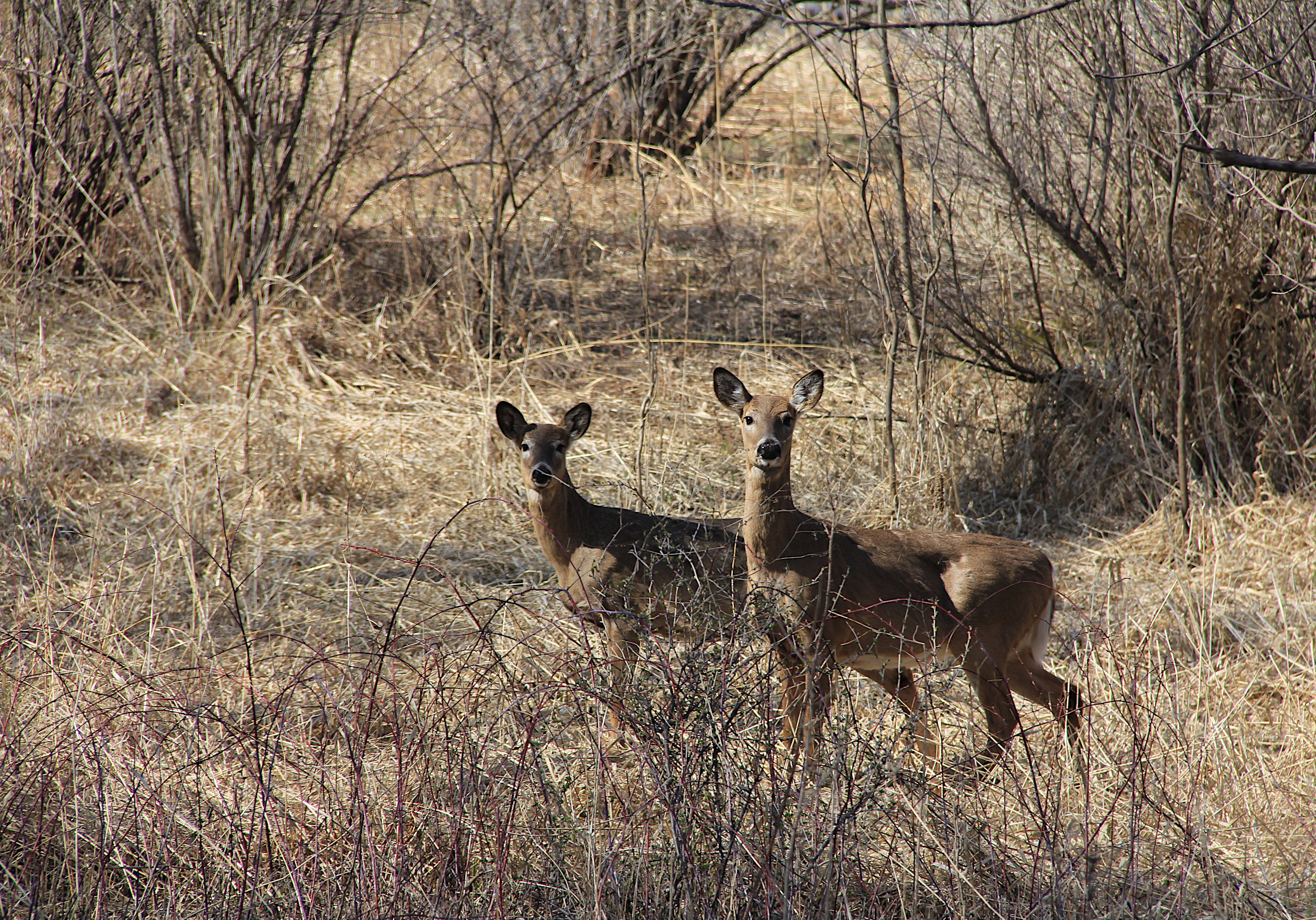
Deer at River Bend. (Minnesota Prairie Roots copyrighted photo April 2024)
Deer gather, then high-tail away when they grow weary of me watching them. They’ve had enough, even if I haven’t.
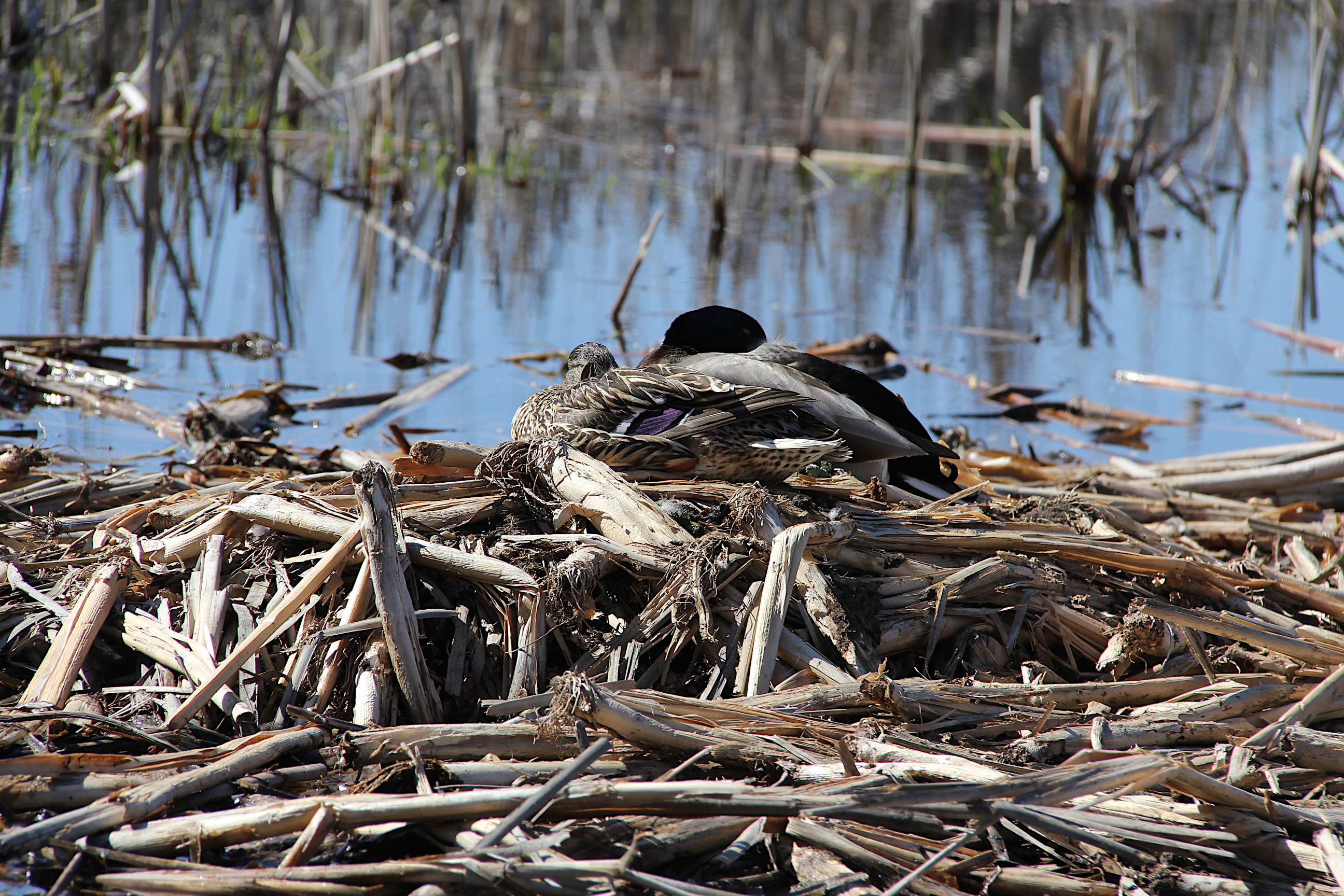
A nesting mallard hen and drake, nearly camouflaged on a wetland pond at River Bend. (Minnesota Prairie Roots copyrighted photo April 2024)
And at the pond, mallards nest. Unmoving. Determined. Heads folded into feathers. Settled there among dried stalks, water bold blue, reflecting the sky. Spring peepers sing a symphony of spring. It is a scene, a performance that holds me.
Rustic signage, which I love, marks landmarks and trails inside River Bend. (Minnesota Prairie Roots copyrighted photo April 2024)
Shakespeare was right. “One touch of nature makes the whole world kin.”
Minneopa State Park near Mankato is home to 30-40 bison fenced on 325 acres of primarily prairie. (Minnesota Prairie Roots copyrighted file photo 2019)
THEY ARE MASSIVE BEASTS, once roaming the American Great Plains by the millions. They are bison, also called buffalo, today numbering some 370,000 in North America. Most are raised as livestock. But some 31,000, or eight percent, are part of conservation herds, including right here in Minnesota. Such herds are designed to protect wild bison and preserve their genetic diversity.
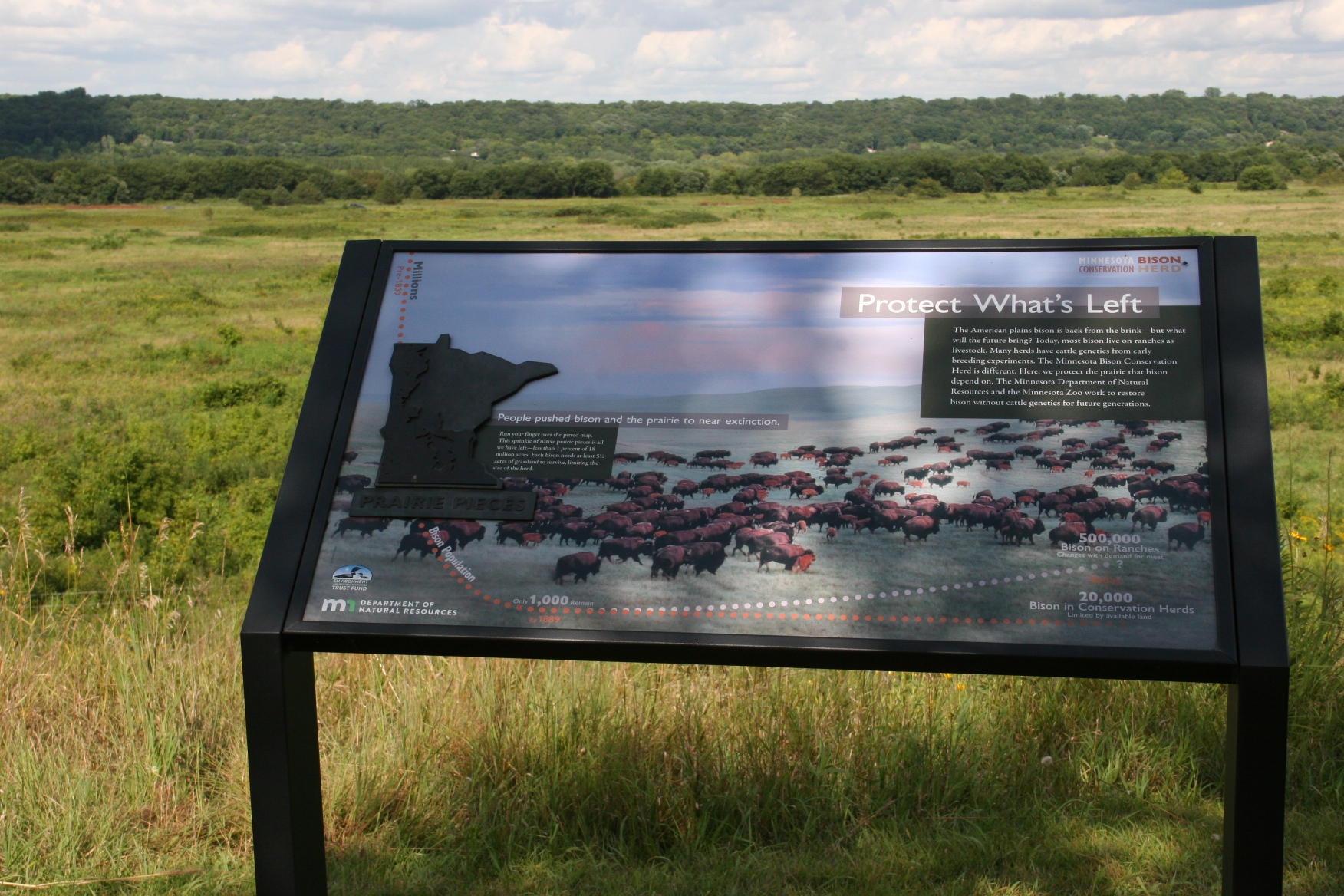
Interpretive signage about bison overlooks the prairie at Minneopa State Park. (Minnesota Prairie Roots copyrighted file photo 2019)
An upcoming documentary, “The American Buffalo—A Story of Resilience” by awarding-winning filmmaker Ken Burns, and my own recently posted poem about bison prompted my renewed interest in this animal. Burns’ 4-hour film airs in two parts, at 7 pm on Monday, October 16, and on Tuesday, October 17, on PBS. His documentary traces the history of bison, their importance in Native peoples’ lives and culture, their near extinction, and efforts to bring them back.
Bison up close while driving through Minneopa State Park. (Minnesota Prairie Roots copyrighted file photo 2019)
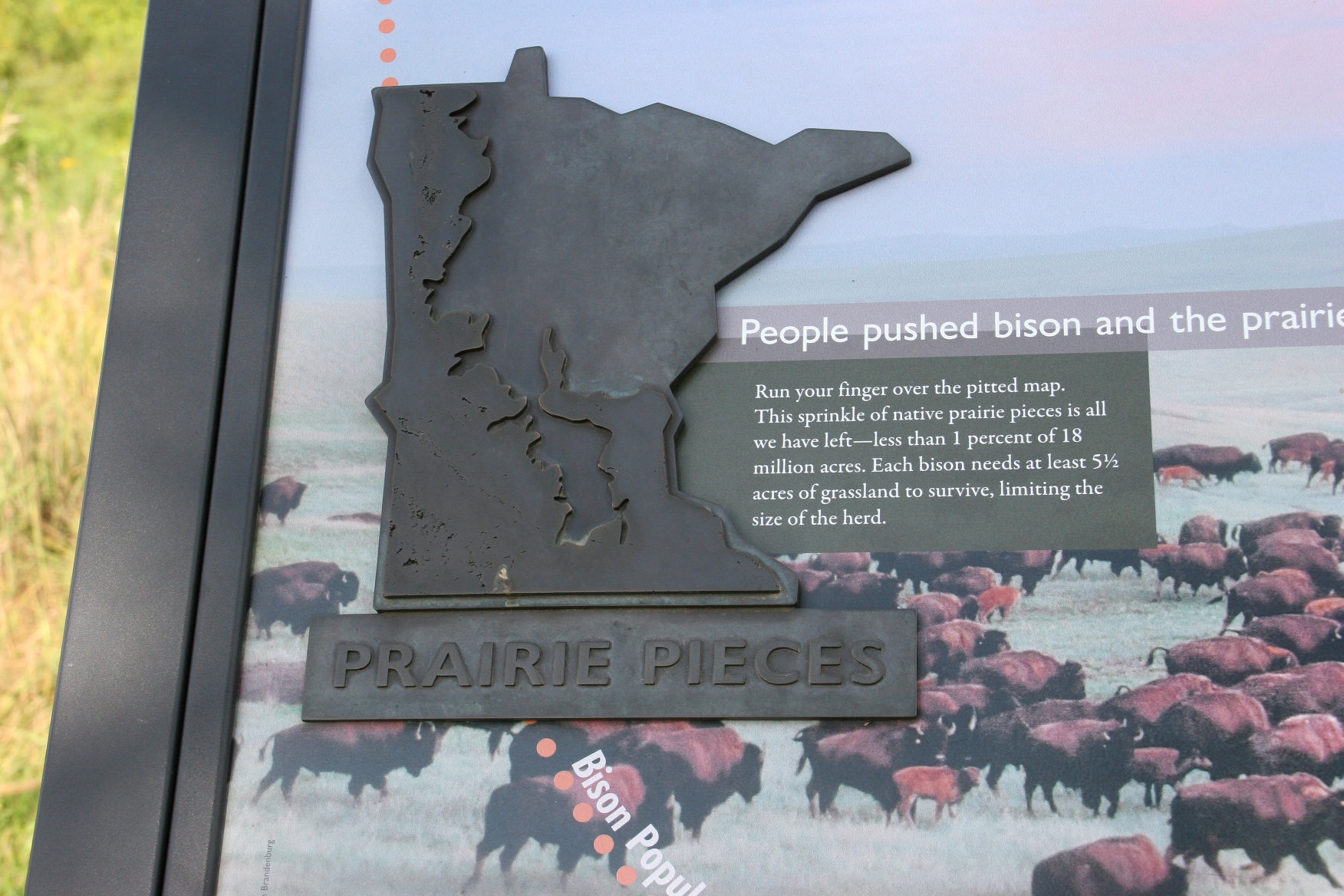
A map, posted in Minneopa State Park, shows the prairie and historic bison territory in Minnesota. (Minnesota Prairie Roots copyrighted file photo 2019)
Given the region’s rich Native heritage, the presence of a small group of bison in the Ramsey Park Zoo seems fitting. I recall rushing to see the buffalo there, both excited and intimidated by their massive hulk. Today I’m not so much afraid as respectful of their size and their importance in Indigenous Peoples’ culture.
A sculpture of White Buffalo Calf Woman, part of Indigenous culture, displayed at the 2011 Mankato City Art Walking Sculpture Tour. Artwork by Lee Leuning and Sherri Treeby. (Minnesota Prairie Roots copyrighted file photo 2011 by Audrey Kletscher Helbling)
One need only look back in history to see how invaluable bison were to these original inhabitants of the prairie, the plains. Bison provided food, shelter, clothing and more to Indigenous Peoples. They also held spiritual and cultural significance. Bison were considered kin, respected by those who respected Mother Earth.
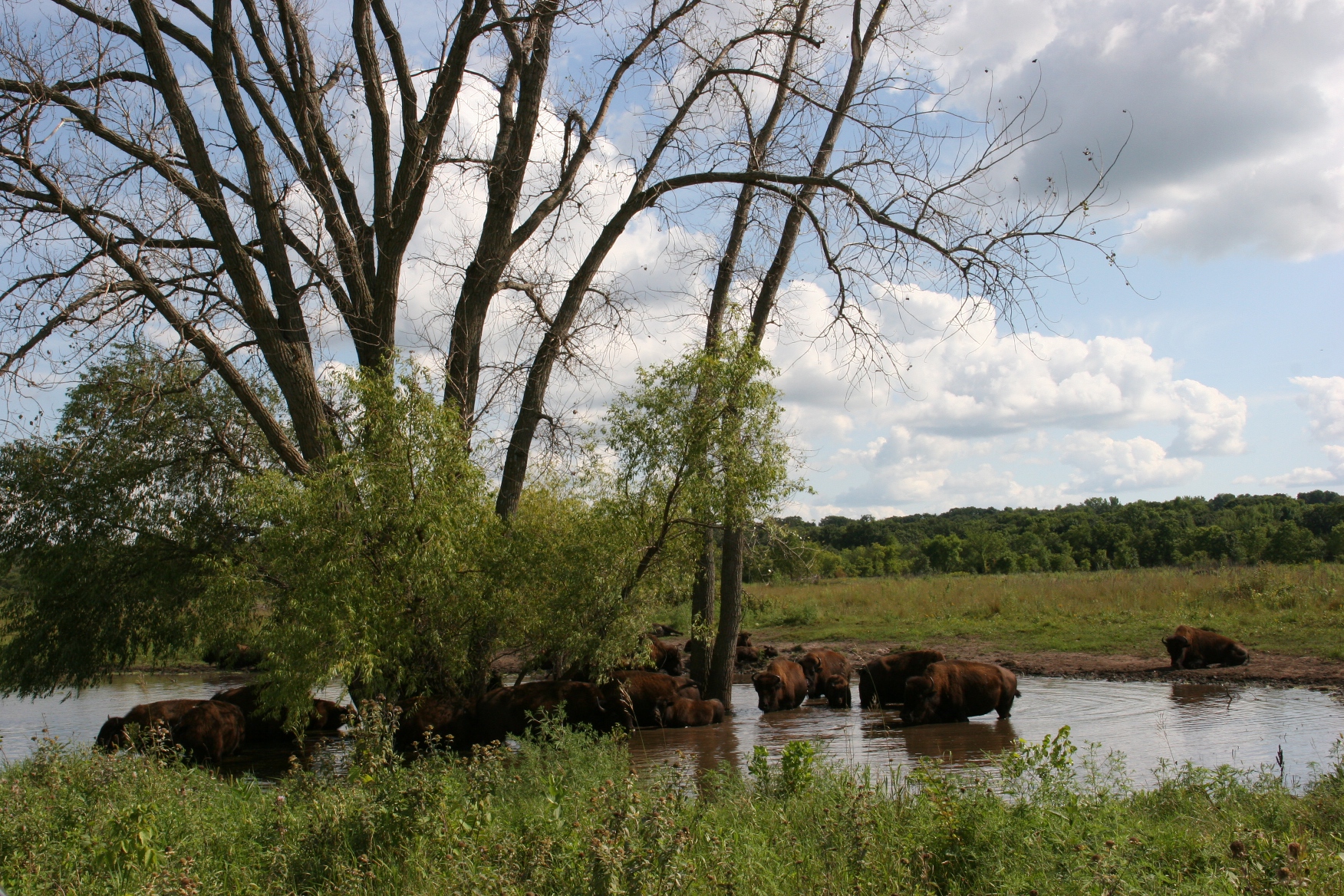
Bison at Minneopa State Park watering hole. (Minnesota Prairie Roots copyrighted file photo 2019)
And then the white man came in the 1800s, overtaking the land, nearly driving bison to extinction as they hunted and slaughtered the animal primarily for their hides.
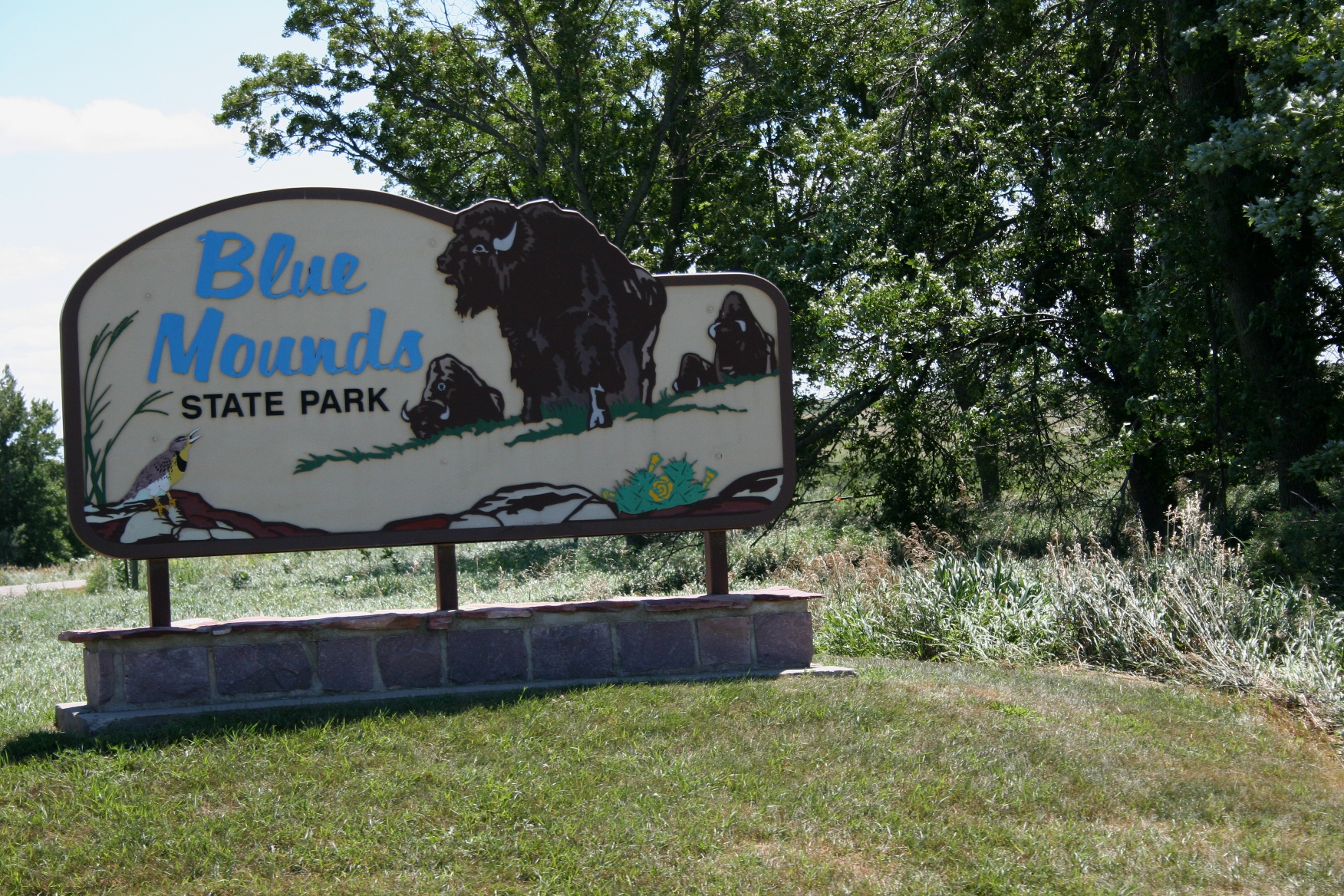
Blue Mounds State Park in rural Rock County, Minnesota, is home to 80-90 bison, although I did not see them when I visited the park in 2013.(Minnesota Prairie Roots copyrighted file photo 2013)
And so the story of bison is not only one of past atrocities in American history, but also one of personal history for me with those fenced bison in Minnesota’s largest municipal park, known as “The Little Yellowstone of Minnesota” for its beautiful natural topography seemingly like Yellowstone National Park. Yellowstone, the one in Wyoming, is home to nearly 6,000 bison.
A sign along the prairie’s edge at Minneopa State Park informs about bison in Minnesota. (Minnesota Prairie Roots copyrighted file photo 2019)
In my youth, I didn’t understand the importance of bison in Native culture. I simply delighted in seeing them in the zoo at then Alexander Ramsey Park in my native Redwood County. Neither did I recognize how offensive the name of the park I loved as a child—Alexander Ramsey Park. Alexander Ramsey served as our first territorial governor and then as the second state governor of Minnesota during the US-Dakota War of 1862. He offered a bounty to anyone who killed a Dakota person and called for Indigenous Peoples to be driven out of Minnesota.
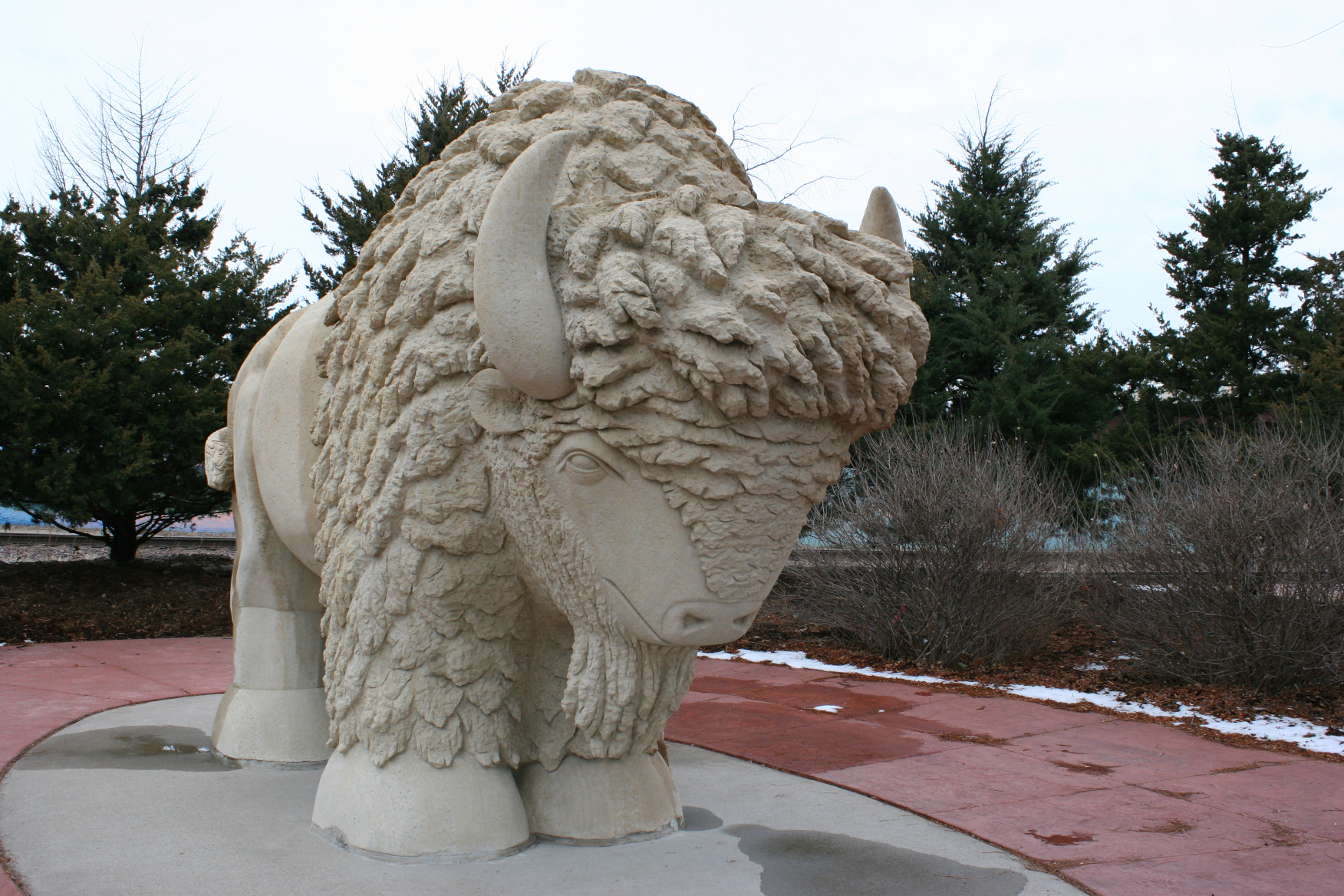
This 67-ton Kasota limestone sculpture stands in Reconciliation Park in Mankato. It symbolizes the spiritual survival of the Dakota People and honors the area’s Dakota heritage. The park is the site of the largest mass hanging in U.S. history. (Minnesota Prairie Roots copyrighted file photo 2019)
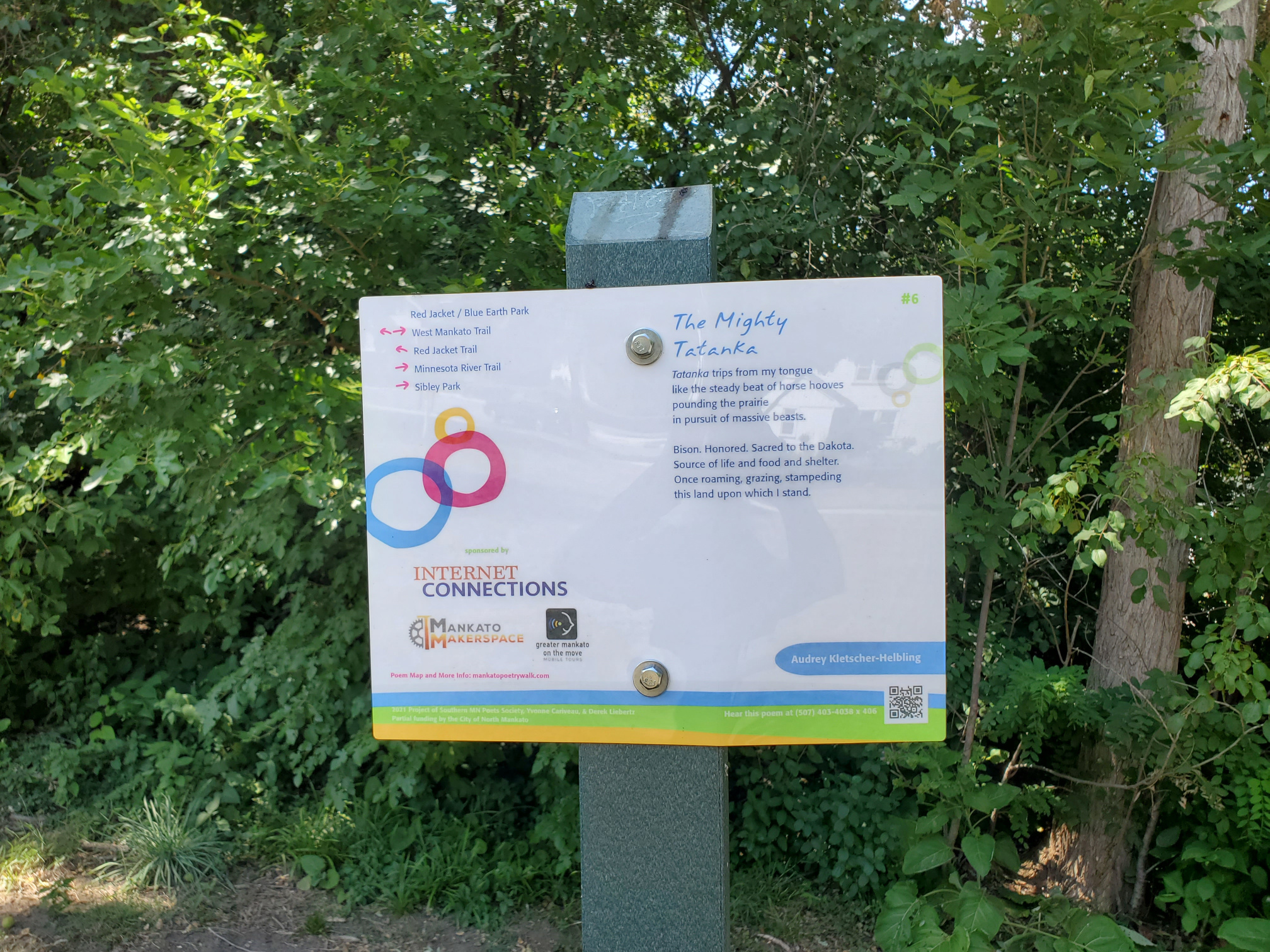
My poem posted along a recreational trail in Mankato. (Photo credit: Kay Herbst Helms)
I wanted to honor the original inhabitants of Mahkato, the bison, the Native culture, the land. And so I wrote “The Mighty Tatanka,” using the Dakota word for bison. My poem was selected for inclusion in the Mankato Poetry Walk & Ride and is posted on a sign in West Mankato.
The Mighty Tatanka
Tatanka trips from my tongue like the steady beat of horse hooves pounding the prairie in pursuit of massive beasts.
Bison. Honored. Sacred to the Dakota. Source of life and food and shelter. Once roaming, grazing, stampeding this land upon which I stand.
While my poem is succinct, limited by wordage requirements in the poetry competition, I’d like to think “The Mighty Tatanka” is powerful. It holds not only the rhythm of carefully selected words, but a story. A story of bison, of Indigenous Peoples, of a way of life, of a culture. It holds, too, honor for the land and of those who first inhabited, and respected, it.
#
FYI: My poem is posted on a sign along the West Mankato Trail near the intersection of Owatonna Street and Blue Earth and Sylvia Streets in West Mankato. You can listen to me read my poem by calling 507-403-4038 and entering 406.
Noted Minnesota wildlife photographer Jim Brandenberg’s (right in video) work, including this image of bison, is featured in a gallery bearing his name in Luverne, near Blue Mounds State Park. (Minnesota Prairie Roots copyrighted file photo 2013)
To see Minnesota Bison Conservation Herd bison in Minnesota, visit Minneopa State Park near Mankato, Blue Mounds State Park near Luverne, the Minnesota Zoological Garden, Oxbow Park & Zollman Zoo by Byron, and Spring Lake Park Reserve Bison Prairie in Dakota County.
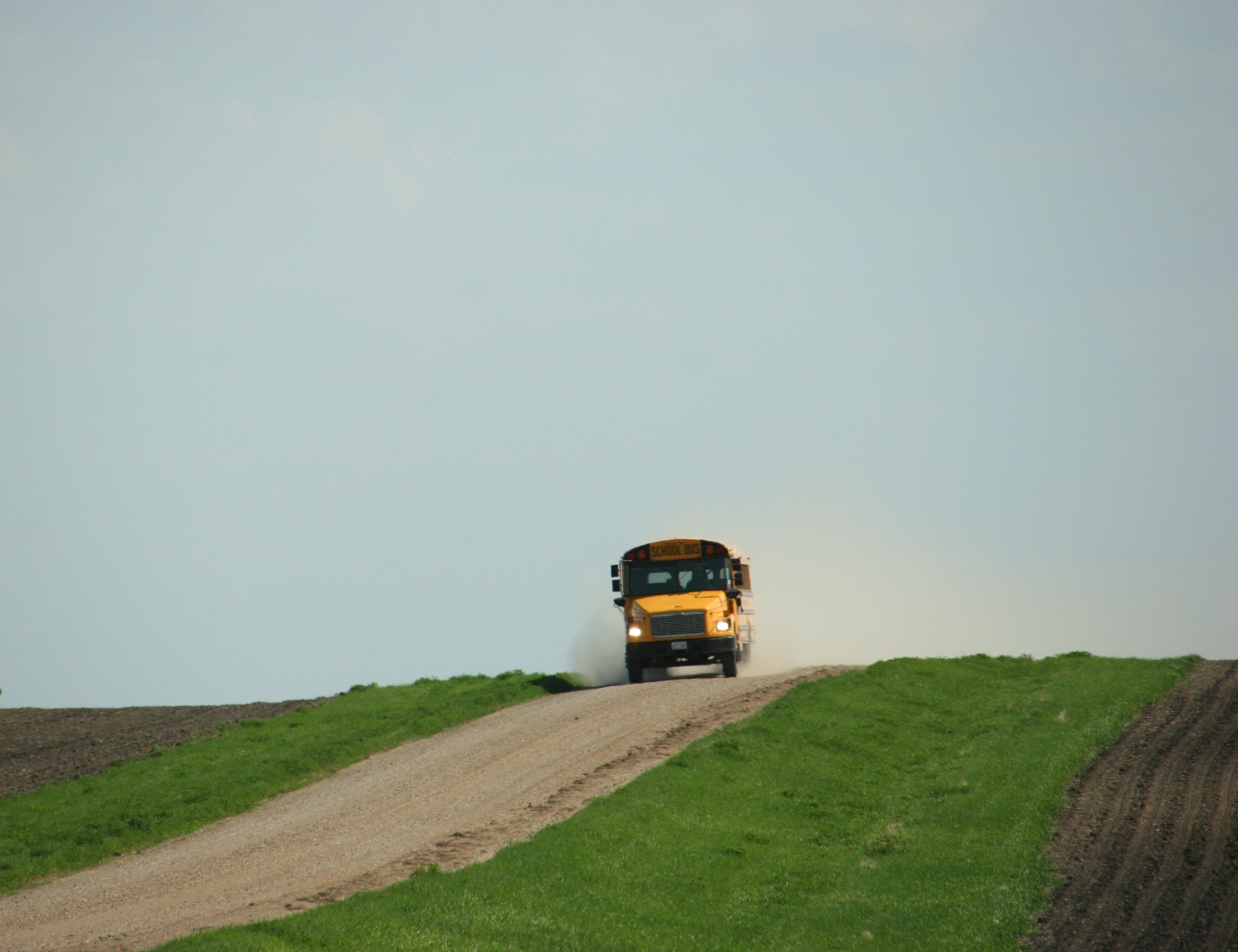
A bus follows a back country road near Morgan in southwestern Minnesota. (Minnesota Prairie Roots copyrighted file photo May 2018)
SHE WANTS TO SAVE the earth. It’s a lofty and noble goal for my granddaughter, who started second grade on Tuesday. Each year, on the first day of school, her mom documents basics about Isabelle on a small chalkboard. That includes a response to “What I want to be when I grow up.” This year Izzy aims to be an environmentalist. As a first grader, her professional goal was becoming a game designer. And on the first day of kindergarten, she wanted to own a toy store and also be a mom.
It’s interesting how Izzy’s interests evolve as she ages, as she grows her world and knowledge and connections with others. The possibilities are endless for her generation. I hold such hope in these young people, just beginning their formal educations.
And I hold hope, too, when I see a photo of Izzy and three neighborhood friends waiting at their urban bus stop. “Smart, Brave, Beautiful” banners Bethel’s tee. What a reaffirming message. For all of them. And how reaffirming that they are of differing ethnicity, their skin tones varied and, indeed, beautiful.
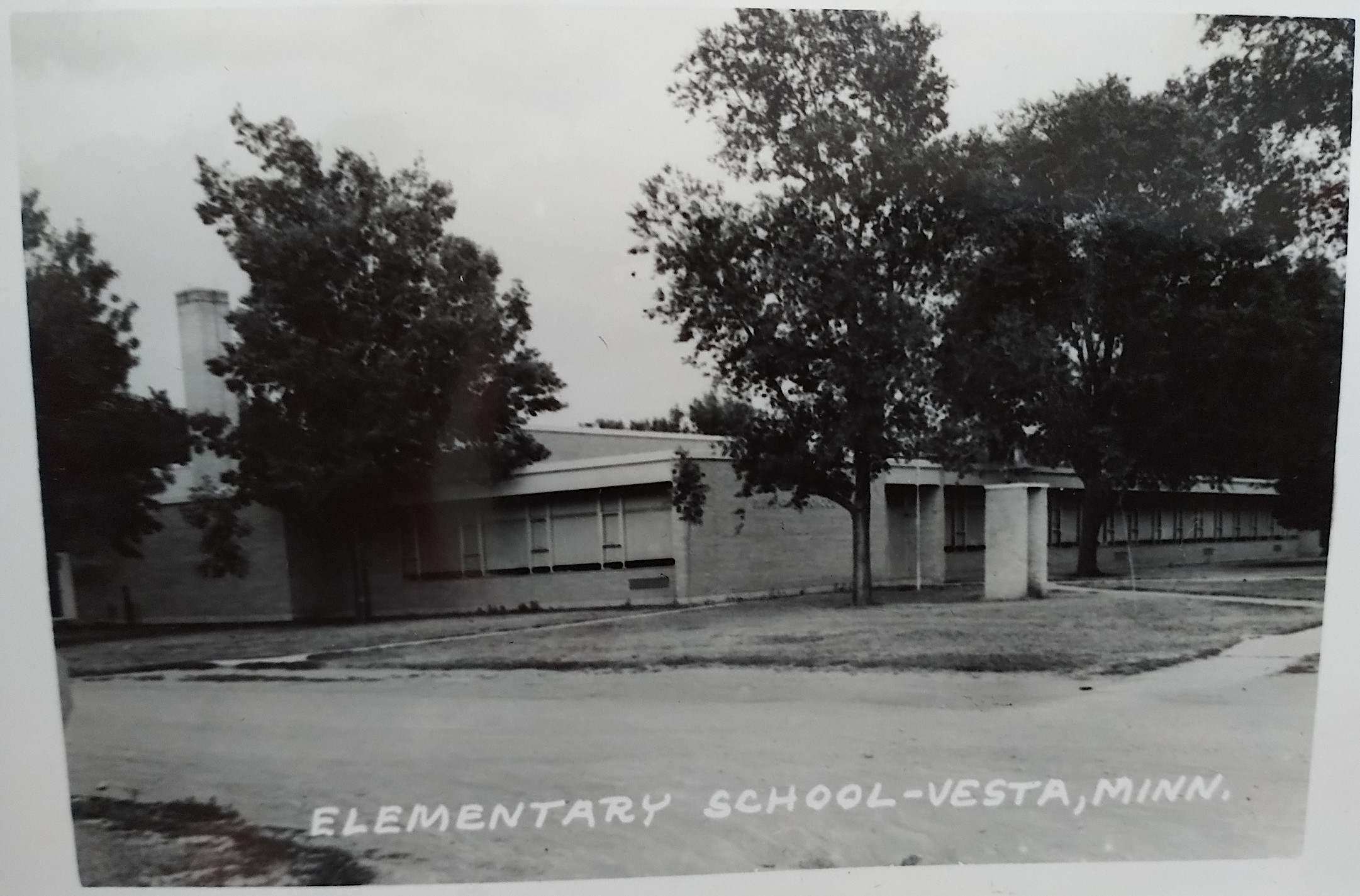
My elementary school, circa 1960s, located in Vesta in Redwood County. The school closed decades ago. (Photographer unknown; photo sourced from my personal photo album)
Sixty years have passed since I was a second grader in a small southwestern Minnesota elementary school, where my paternal grandfather served on the school board. My classmates and I were mostly farm kids, all white. We wrote in “Big Chief” lined tablets which today would not, should not, fly. Attitudes differed in the 1960s. Words like diversity, respect and environmentalist were not part of our everyday vocabulary.
A serene country scene just north of Lamberton in southern Redwood County.(Minnesota Prairie Roots copyrighted file photo September 2013)
But words, overall, held my interest all those decades ago. I have Mrs. Kotval to thank for sparking my love of words, of reading, and eventually of writing. Each day after lunch, she read to her third and fourth graders from “The Little House” and other chapter books. Through the writing of Laura Ingalls Wilder, who lived many years earlier in nearby Walnut Grove, I began to appreciate the nuances of the prairie. And I learned the importance of descriptive, detailed writing. Wilder engaged all of her senses to describe the prairie and life thereon in her series of wildly popular books. With her love of the natural world, this writer unknowingly documented the environment for me, my children and for my second grade granddaughter, today an aspiring environmentalist.
Early on, I aspired to be an elementary school teacher. But that changed as I grew my world, my knowledge, my connections. Words focused my passion. Unlike most of my elementary school classmates, I loved penmanship—letters and words flowing in script across the pages of my penmanship book. I loved spelling. I loved reading, even in a school and town without a library and thus with limited access to books. And by high school, that love of words expanded to writing.
Fifth and sixth graders at Vesta Elementary School in the late 1960s. I’m in the back row, far right, next to the windows. (Photographer unknown; photo sourced from my personal photo album)
I want to pause here and stress the importance of passionate teachers in fostering students’ interests. From Mrs. Kotval reading to her students after lunch to junior high English teacher Mrs. Sales teaching me all the parts of grammar to high school teacher Mr. Skogen requiring students to keep journals, their influence on me and my eventual career was profound. I would go on to earn a college degree in mass communications, leading to a career as a journalist, writer, poet and photographer.
That brings me full circle back to Laura Ingalls Wilder, who early on influenced my detail-rich writing and photographic styles. In 2017, I became professionally connected to the author via “The World of Laura Ingalls Wilder—The Frontier Landscapes That Inspired The Little House Books.” Author Marta McDowell chose three of my photos (including one of prairie grasses at sunset) to illustrate her 396-page book documenting Wilder’s life and relationship to her environment. Perhaps some day my granddaughter will open the pages of McDowell’s book and find the photos taken by her grandmother. Whether Isabelle becomes an environmentalist or something vastly different, I expect she will always care about the earth and her role in saving it.
An unopened dusky milkweed brings a soft color into the prairie landscape.(Minnesota Prairie Roots copyrighted photo July 2023)
MID-SUMMER, AND THE MINNESOTA landscape is awash in color, despite the drought.
Walk the prairie or the woods. (Minnesota Prairie Roots copyrighted photo July 2023)
This is the season to get outdoors and explore. Walk the land. Through woods or across prairie. Around a city block or park or public garden. Along a river, upon a beach. Delight in the essence of Nature in all her summer glory.
Black-eyed Susan. (Minnesota Prairie Roots copyrighted photo July 2023)
Flowers flush color.
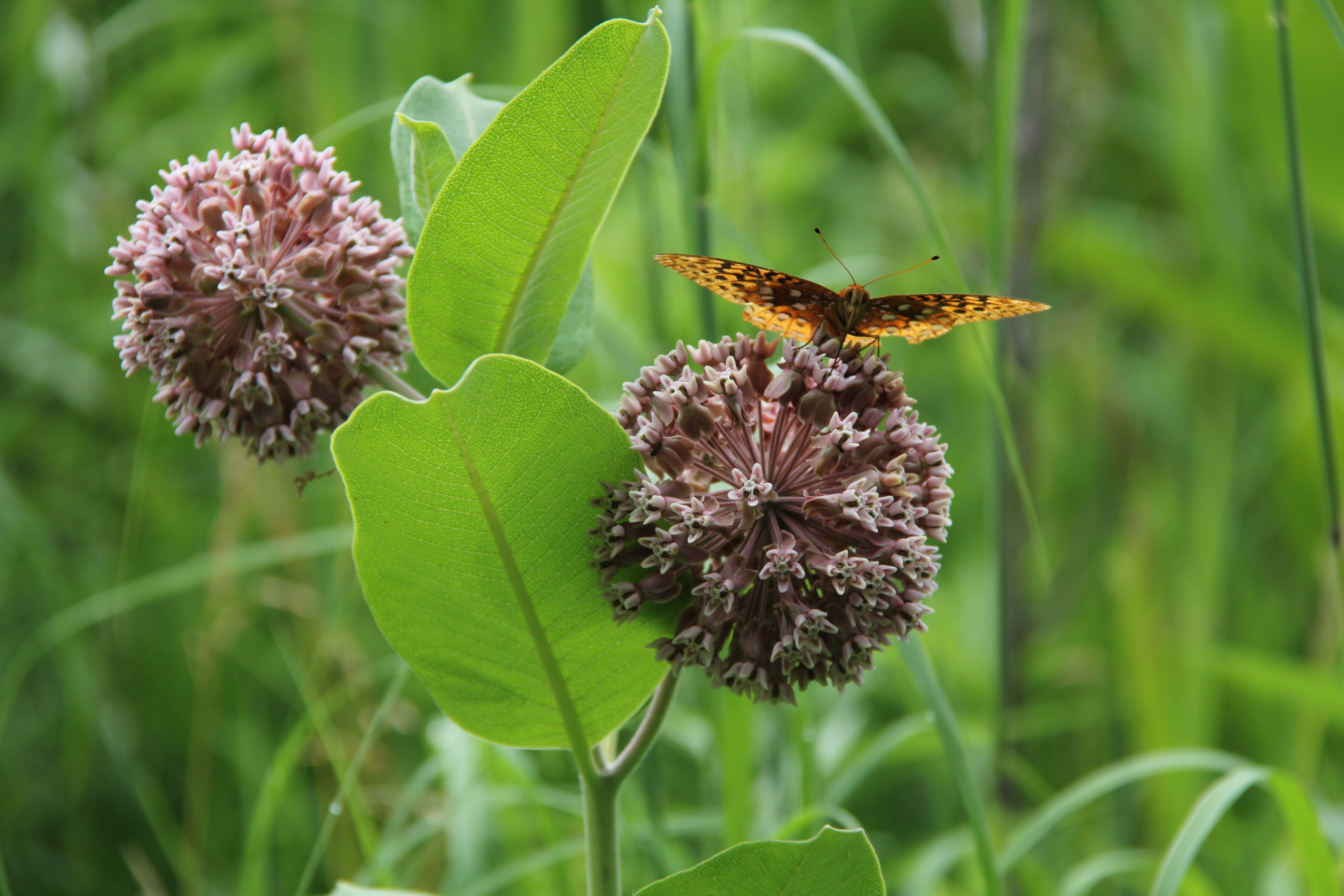
A butterfly feeds on a milkweed flower. (Minnesota Prairie Roots copyrighted photo July 2023)
Patterned butterflies flit, then pause to unfurl proboscis and drink of sweet floral nectar.
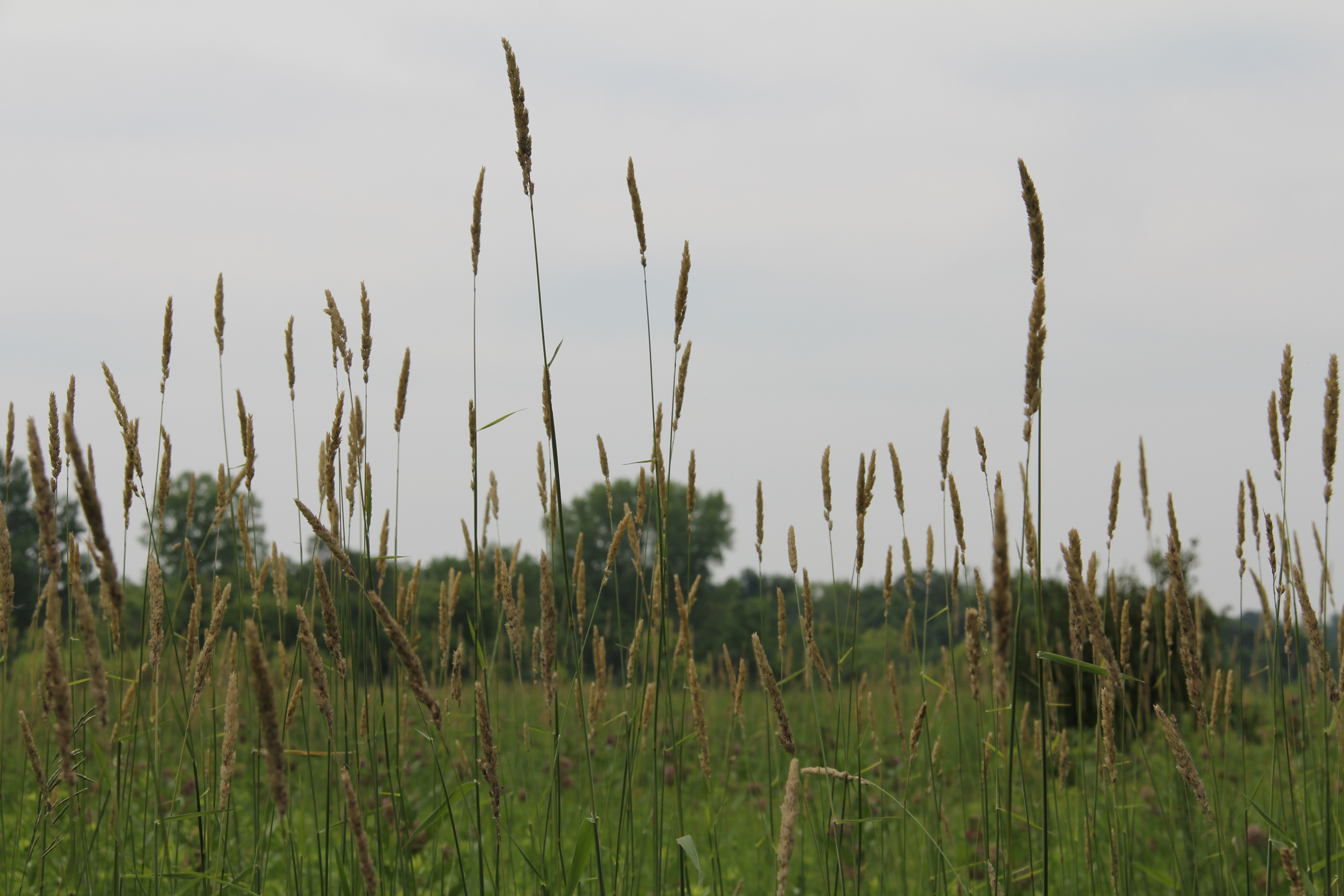
Prairie grasses. (Minnesota Prairie Roots copyrighted photo July 2023)
Long-stemmed grasses stretch toward the July sky.
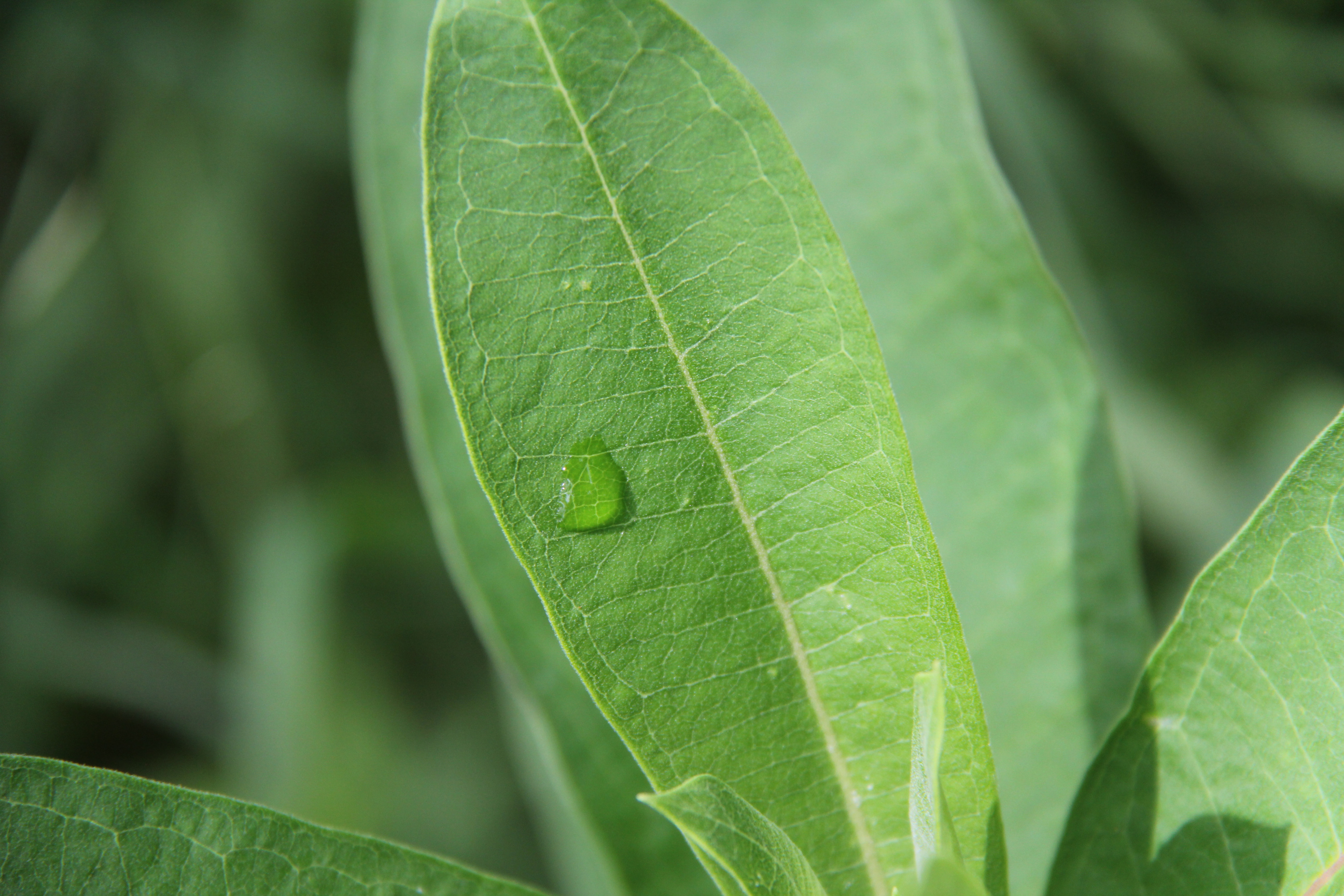
A solitary dewdrop on a milkweed leaf. (Minnesota Prairie Roots copyrighted photo July 2023)
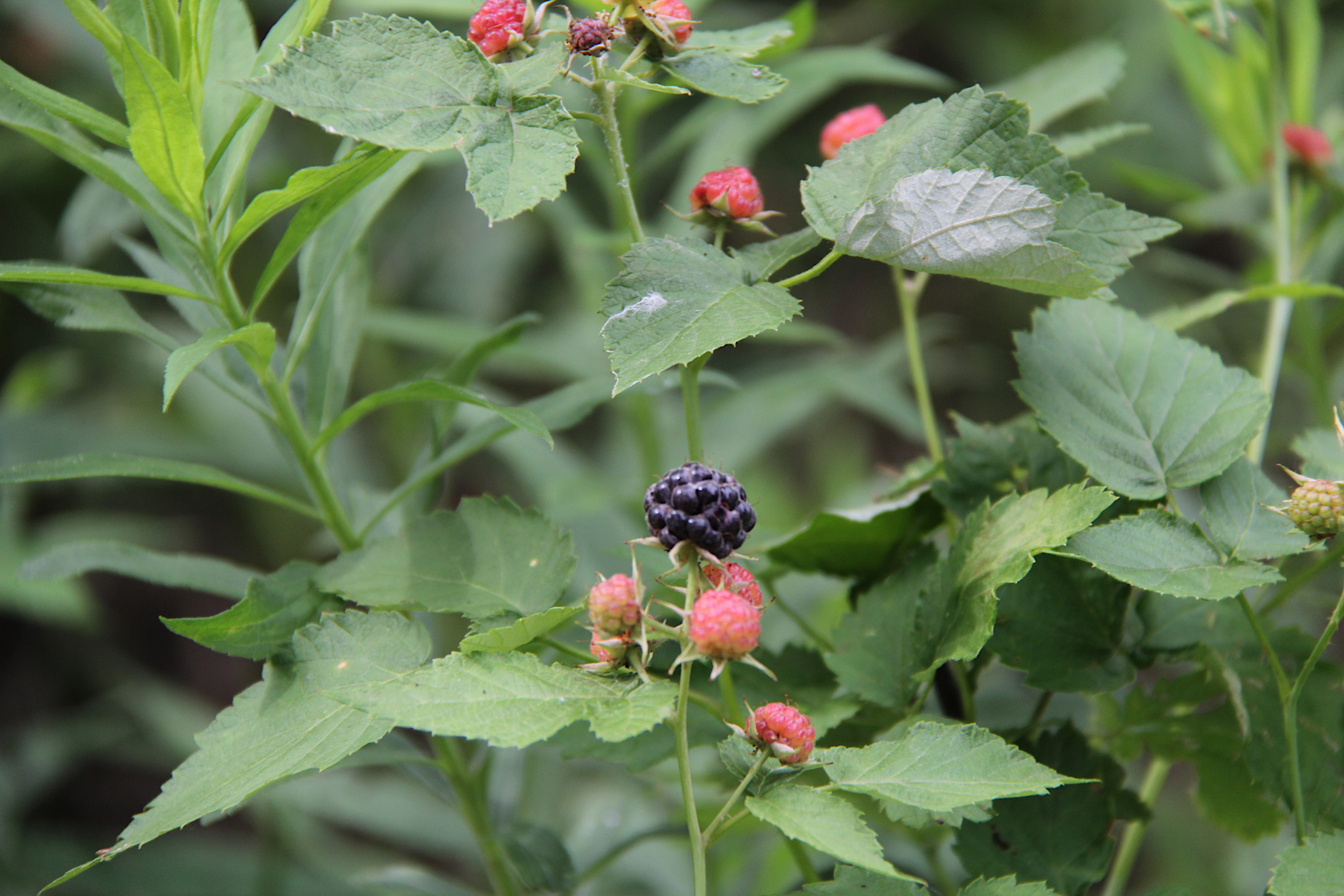
Wild raspberries. (Minnesota Prairie Roots copyrighted photo July 2023)
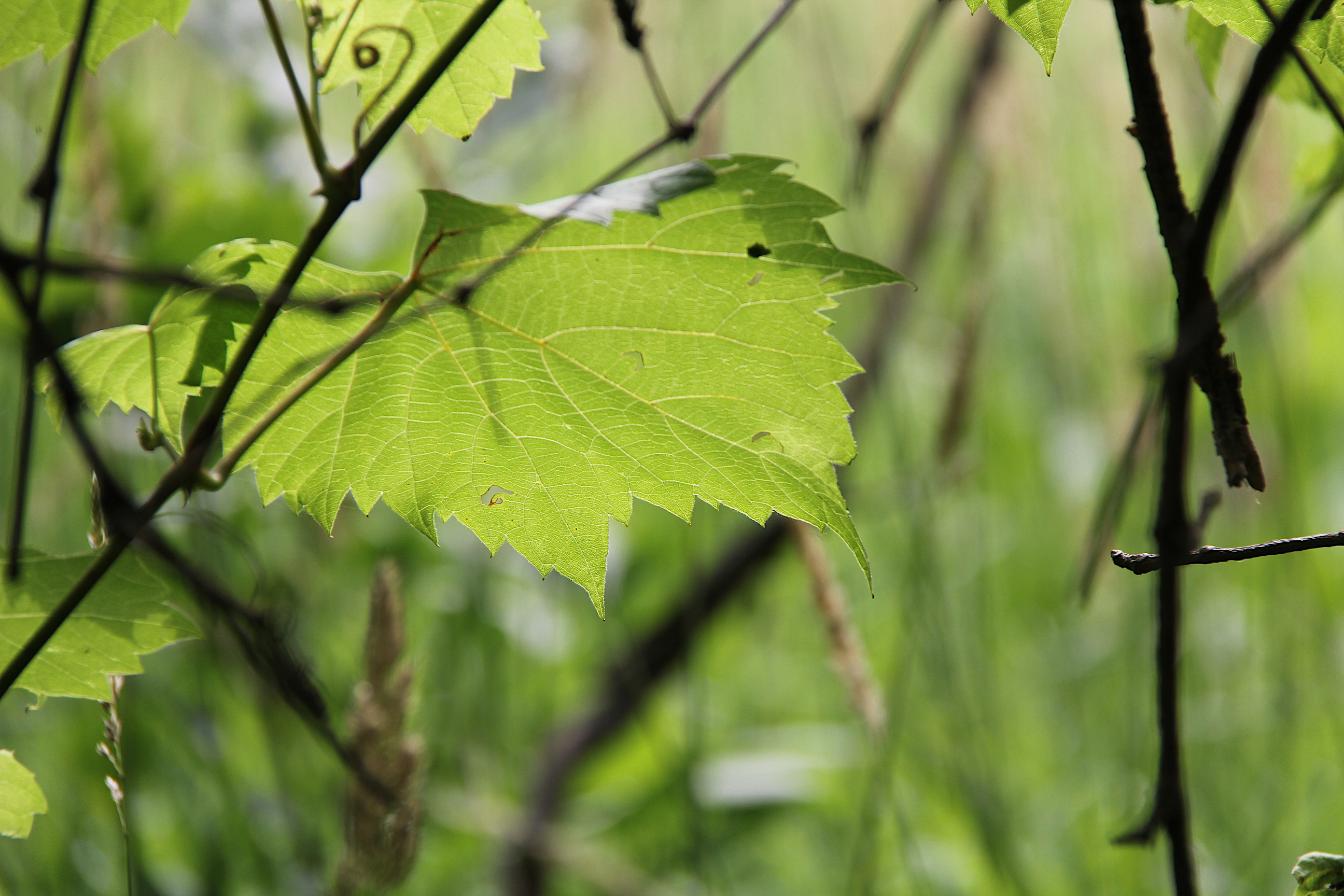
Veins run through the leaves of wild grapes. (Minnesota Prairie Roots copyrighted photo July 2023)
I tend to notice details, especially with camera in hand. And therein, in the part of the whole, is the beauty we often pass by in our hurried lives. I encourage you to slow your pace so as not to miss a solitary dewdrop, the texture of leaves, the deep purple of a plump wild raspberry.
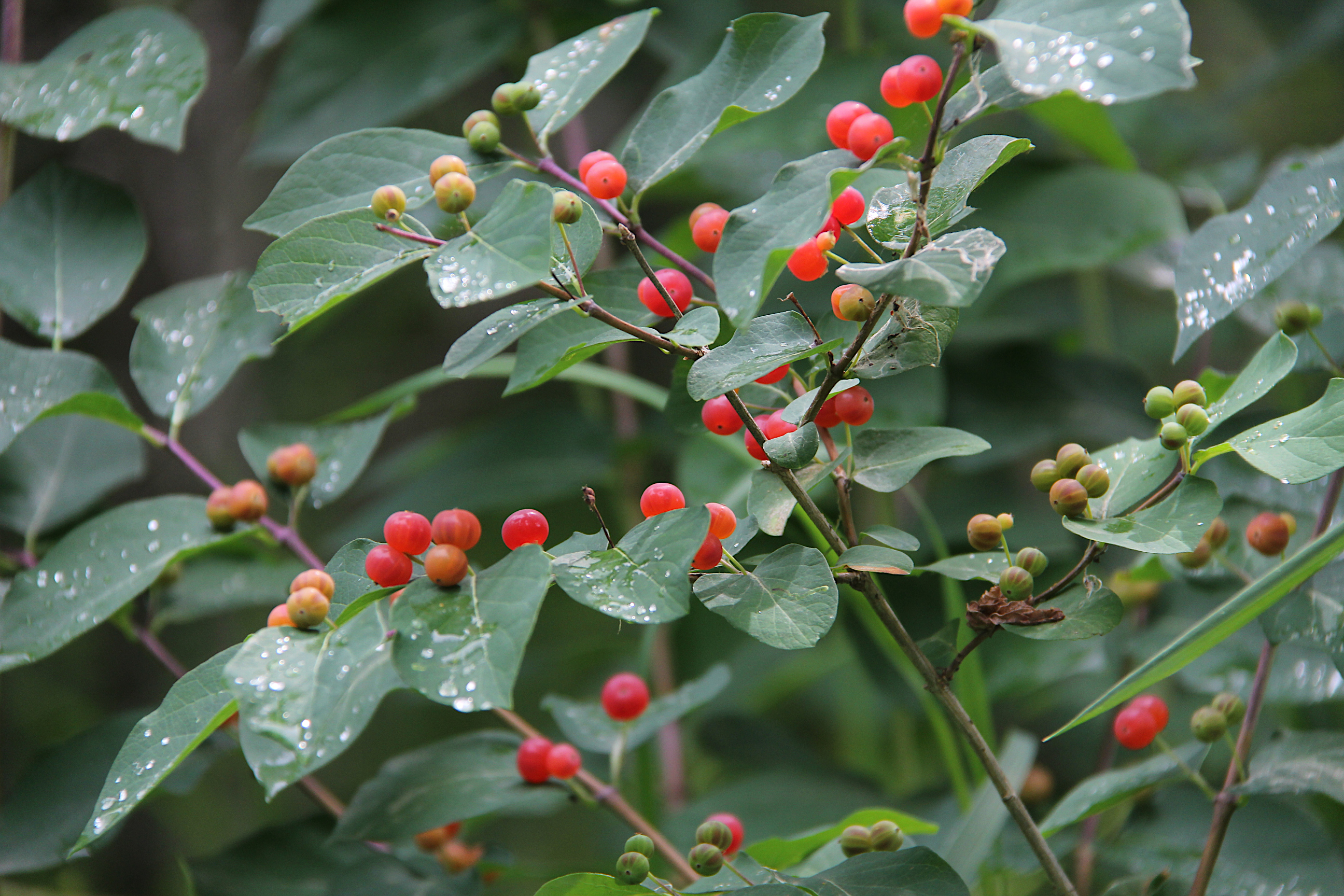
Bold berries jolt color into the greenery. (Minnesota Prairie Roots copyrighted photo July 2023)
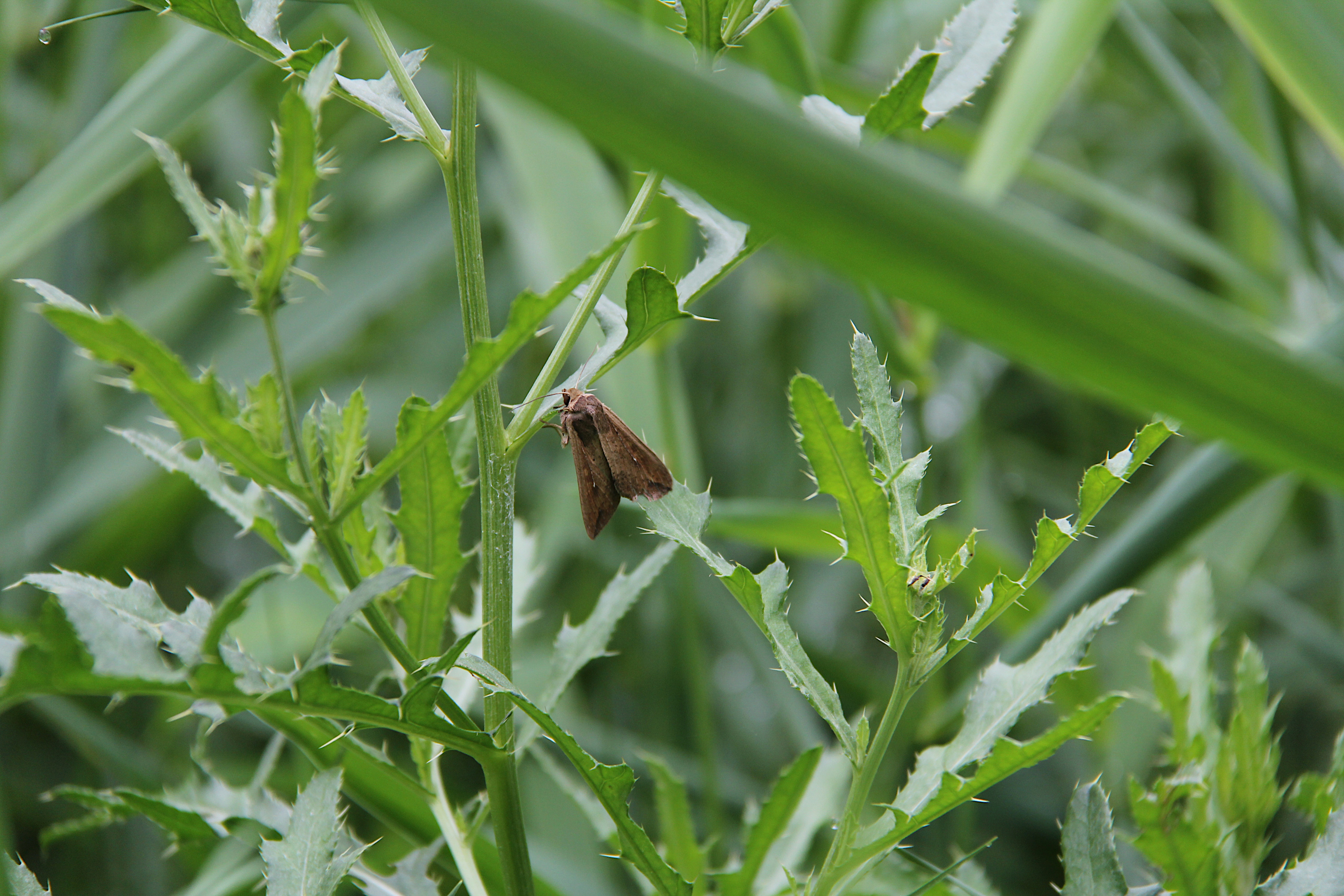
Moth upon thistle holds its own beauty. (Minnesota Prairie Roots copyrighted photo July 2023)
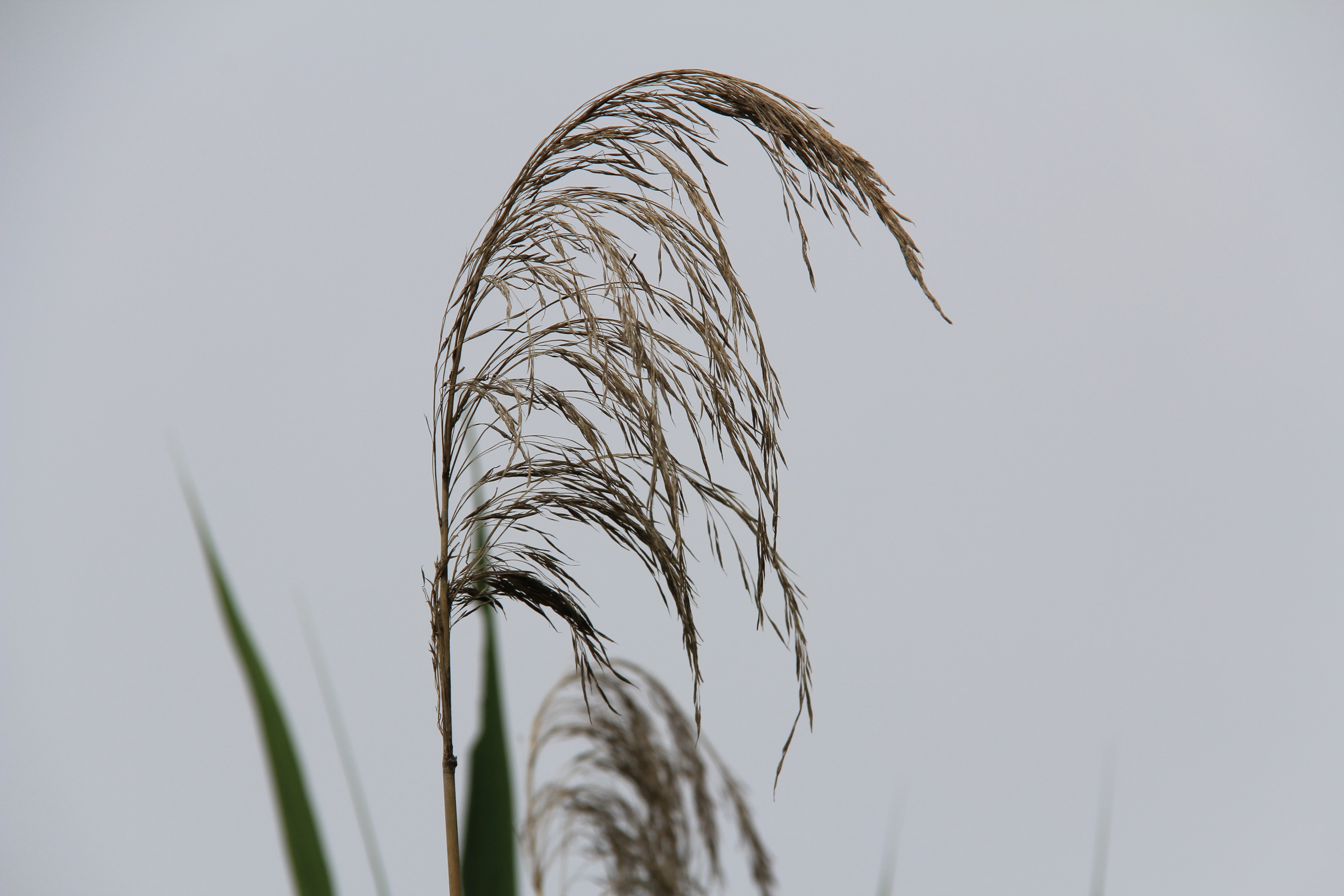
Notice the veins in bright red berries, the dusky moth among thistles, the way grass heads heavy with grain bend toward the earth.
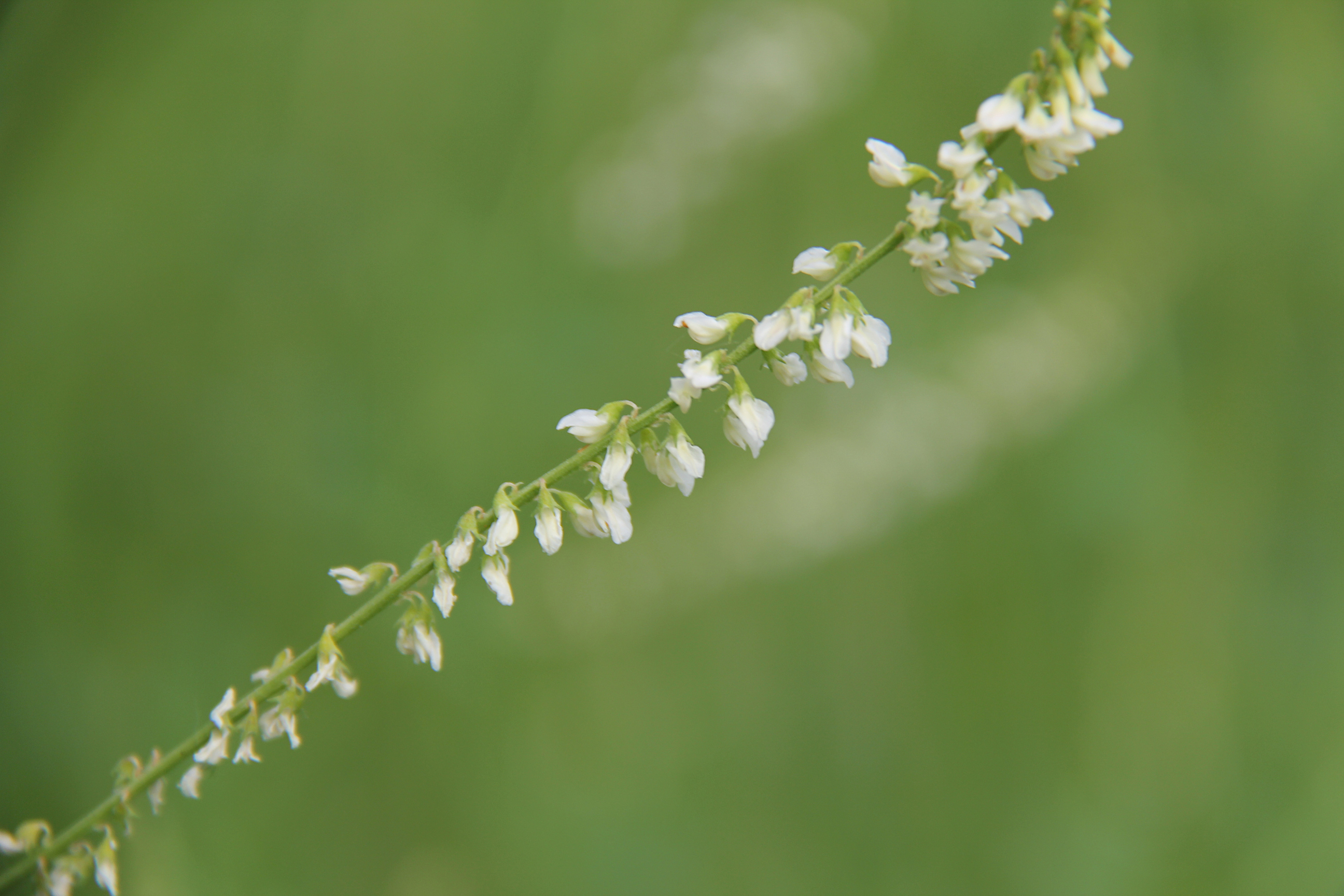
Unidentified white flower. (Minnesota Prairie Roots copyrighted photo July 2023)
From the daintiest of white blossoms laddering a stalk to the bold gold of a prairie wildflower, there is much to see, to appreciate, to embrace in these summer days.
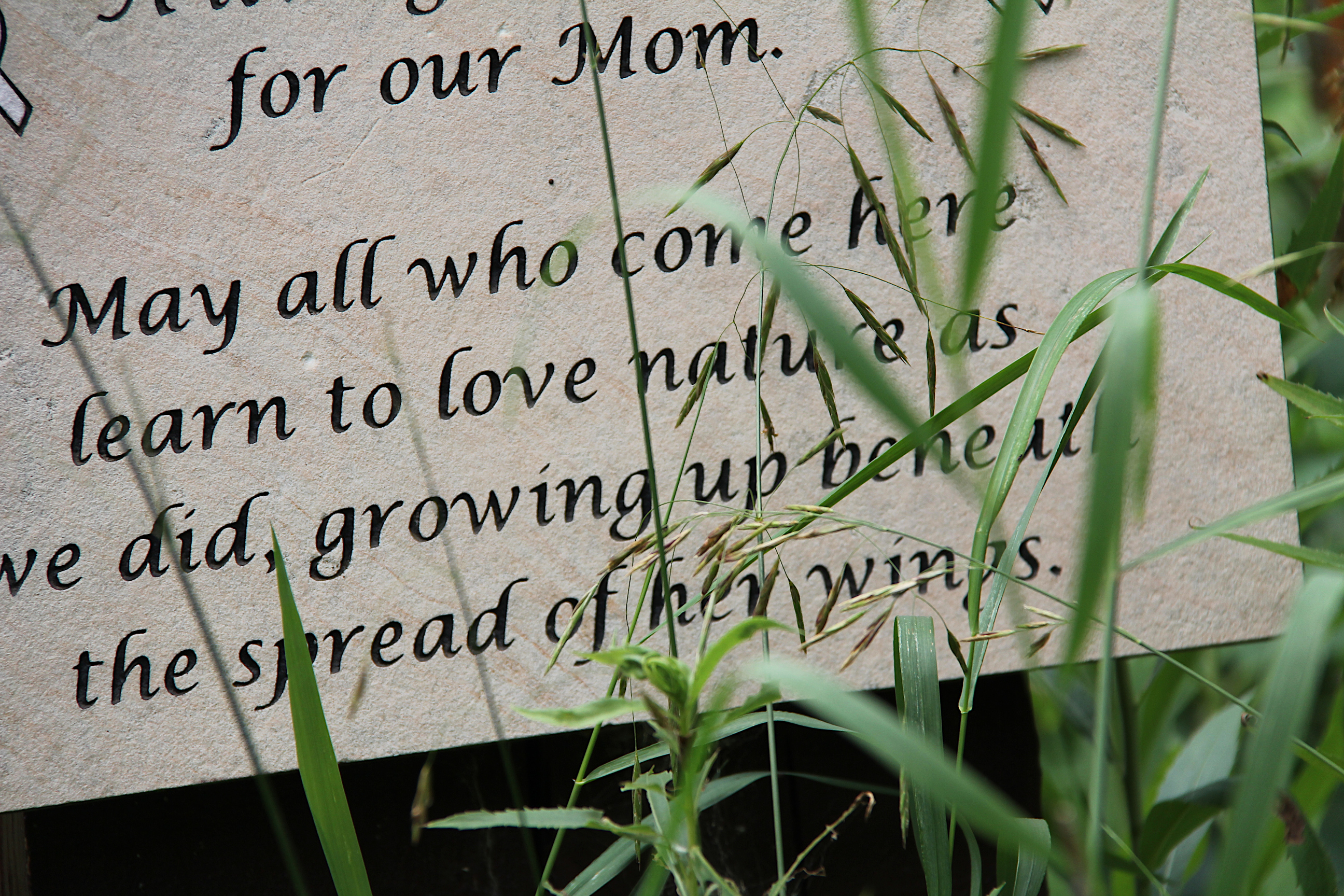
A nature-themed memorial at River Bend Nature Center, Faribault. (Minnesota Prairie Roots copyrighted photo July 2023)
Fill your eyes, your heart, your spirit, your mind with Nature’s beauty. Ride on the wings of the butterflies. Sway in the wind like blades of grass. Then settle, like a single dewdrop upon a leaf. Quiet. Filled with peace. Calmed in the presence of the land.
NOTE: All photos were taken recently at River Bend Nature Center, Faribault.



















 Minnesota Prairie Roots
Recent Comments