Minnesota Prairie Roots

Writing and photography by Audrey Kletscher Helbling

On-the-road prairie photos December 29, 2011

Filed under: Uncategorized — Audrey Kletscher Helbling @ 11:01 PM
Tags: , , , , , , , ,

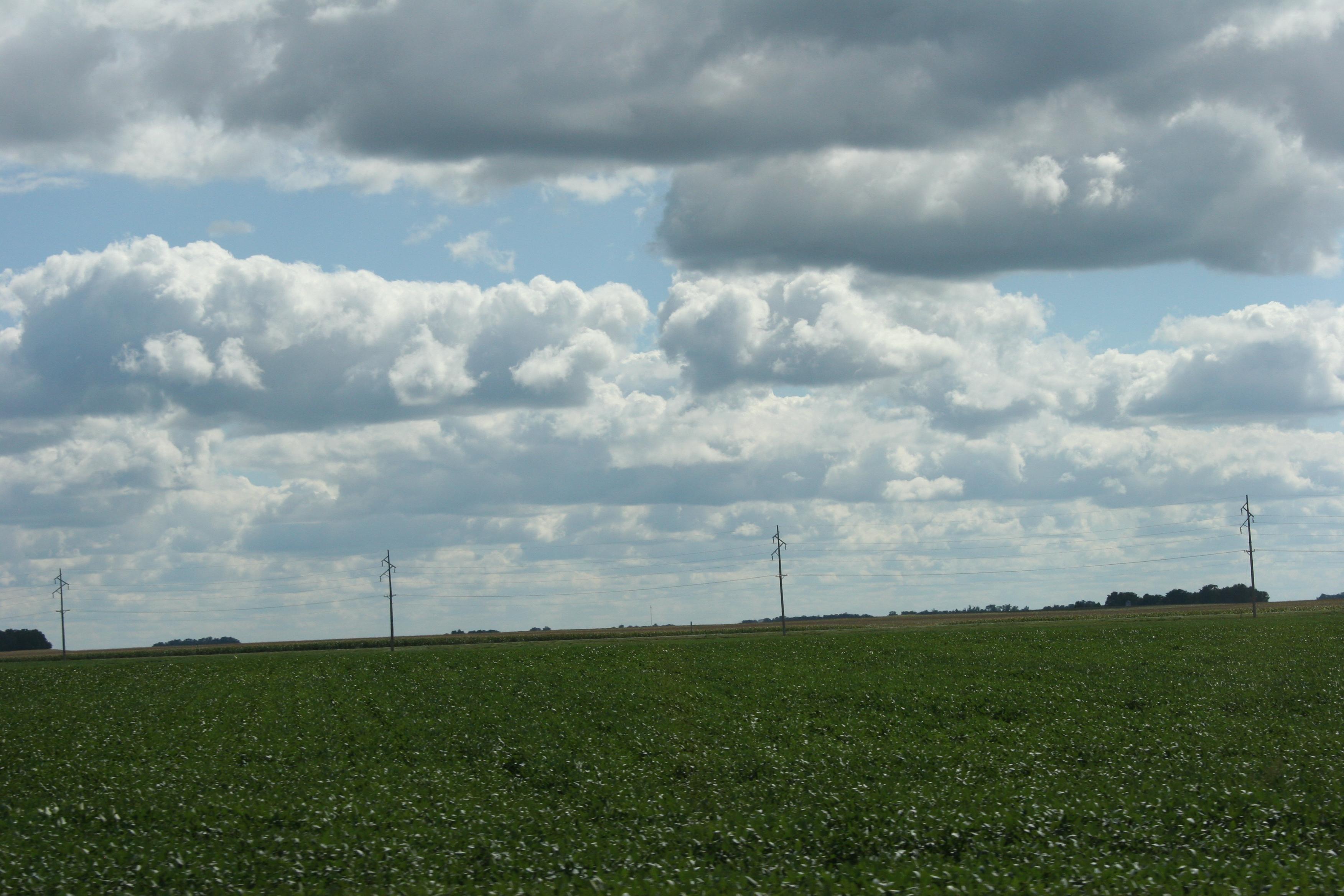
Somewhere along a back county road between New Ulm and Morgan.

SORTING THROUGH the on-the-road photos I shot while traveling to and from southwestern Minnesota a week ago, I noticed a similarity in many of my images—pops of red in an otherwise mostly grey landscape.

I didn’t consciously swing my camera lens toward the jolts of red. It just happened. My eye would catch a scene and I would press the shutter button. Traveling at highway speeds allows a mere flick of an instant to frame and shoot through the front and passenger side windows of our family van or car.

I’ve practiced this type of traveling photography long enough that I’m now photographing some of the same sites along roadways. Yet, even the same subject, photographed at a different time of day, in another season, under changing skies, can result in a distinct image that tells a story or captures a mood.

This December, the Minnesota prairie, devoid of snow, appears drab and dreary against iron grey skies. Often only the occasional farm site or small town breaks the bleak blackness of tilled fields that can quickly depress the visual sense.

Perhaps for that reason, my eye is naturally drawn to the red barns and other bursts of red that contrast with the black and white and grey. My eyes are seeking color.

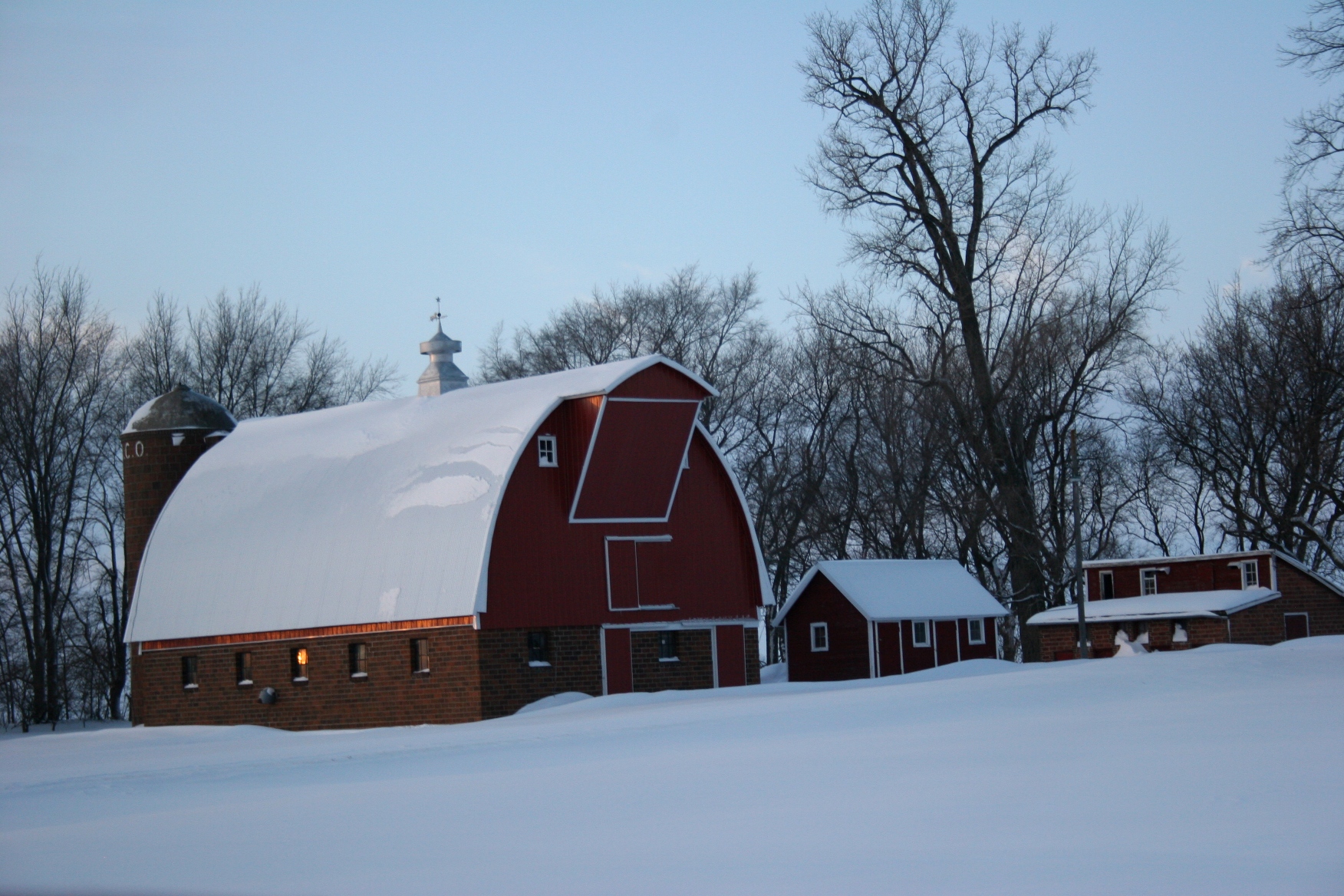
A red barn pop of color in the distance while driving toward Morgan last Friday morning.
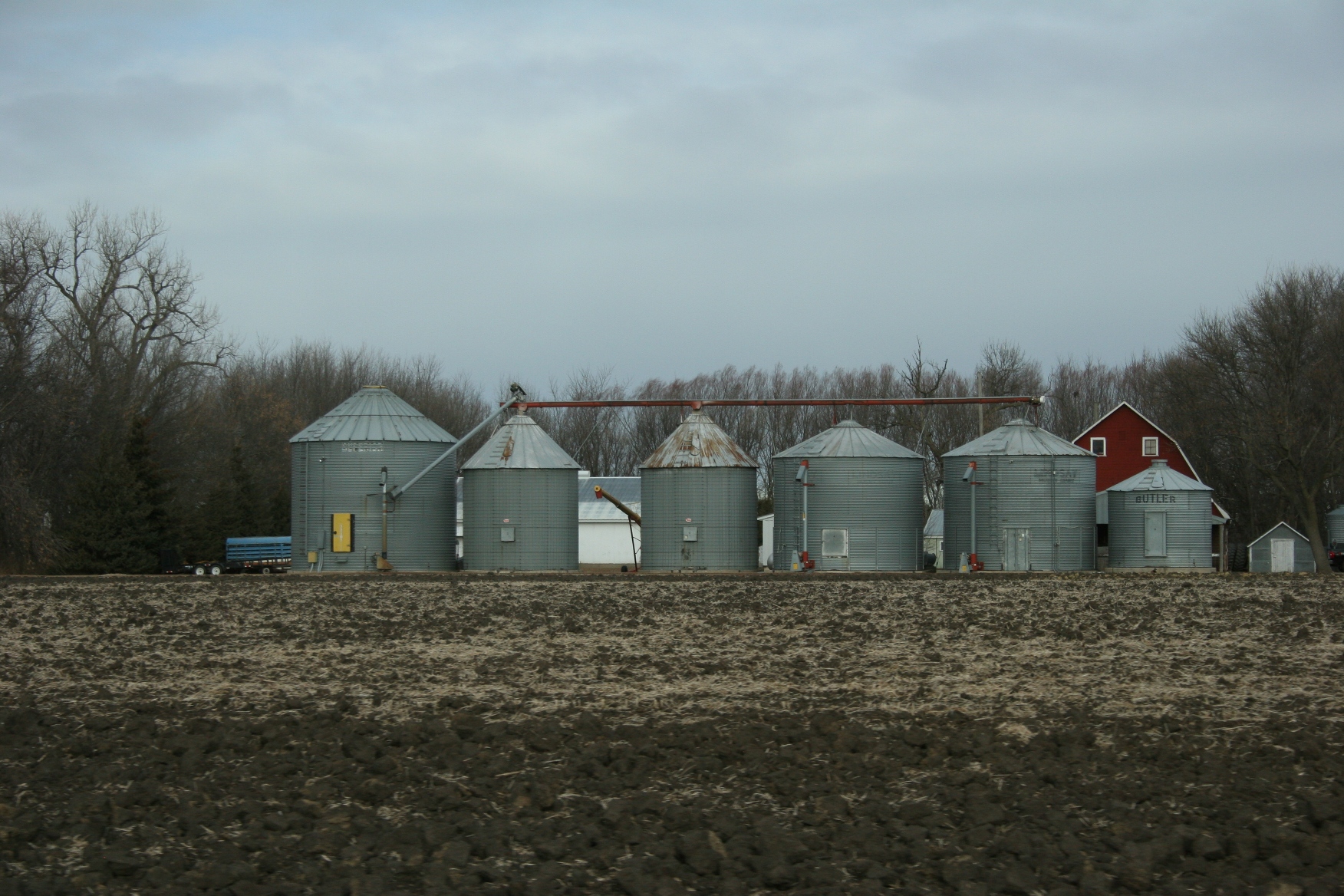
Along the same road, I caught just a snippet of the red barn peeking from behind the row of grey grain bins.
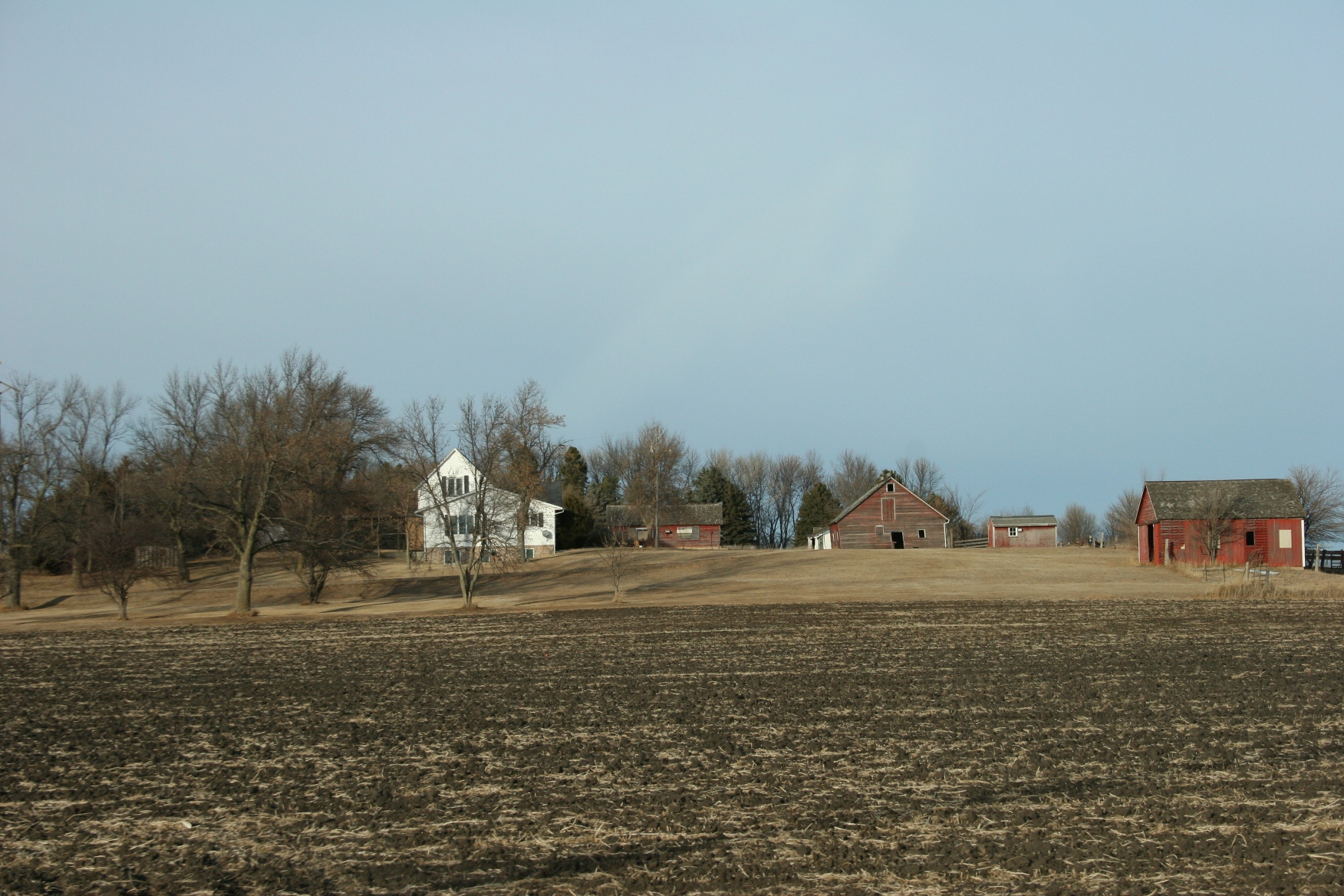
Sunnier skies prevailed Saturday afternoon at this farm site just north of Lamberton.

Allow your eyes to wander over my images, to take in the stark essence of the southwestern Minnesota prairie on two days in late December. This is my land, the place that shaped me as an individual and as a writer. It is a land where details are noticed without the distracting visual clutter of traffic congestion and buildings clumped together and lights and signs and crowds.

Not everyone appreciates the prairie, dismissing this land as boring and plain and unexciting. I am not among those who wish only to flash across the prairie like a bolt of lightning. Via my roadside photos, you will see how this infinite space of sky and land has claimed my heart, defining my work as a photographer and a writer.
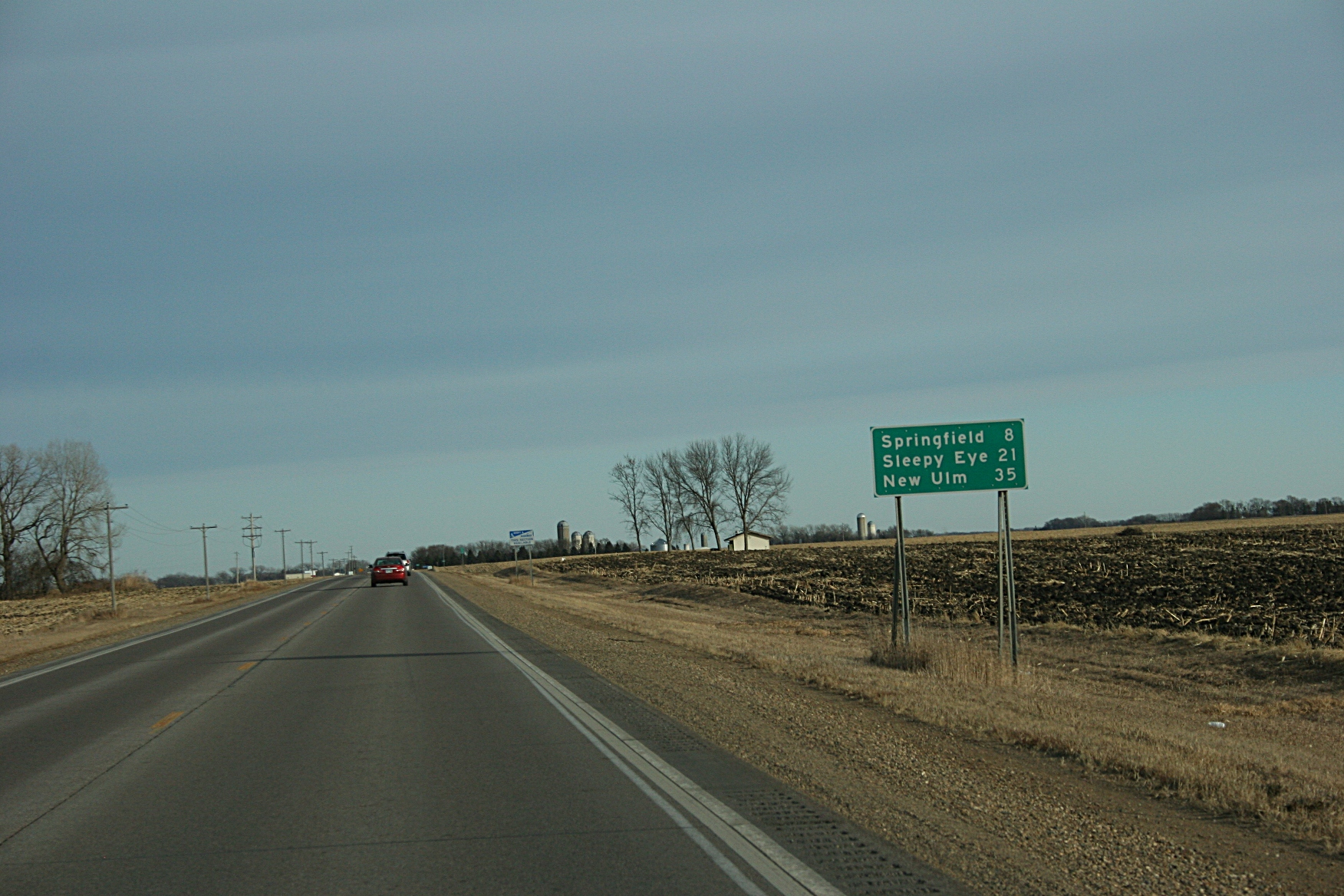
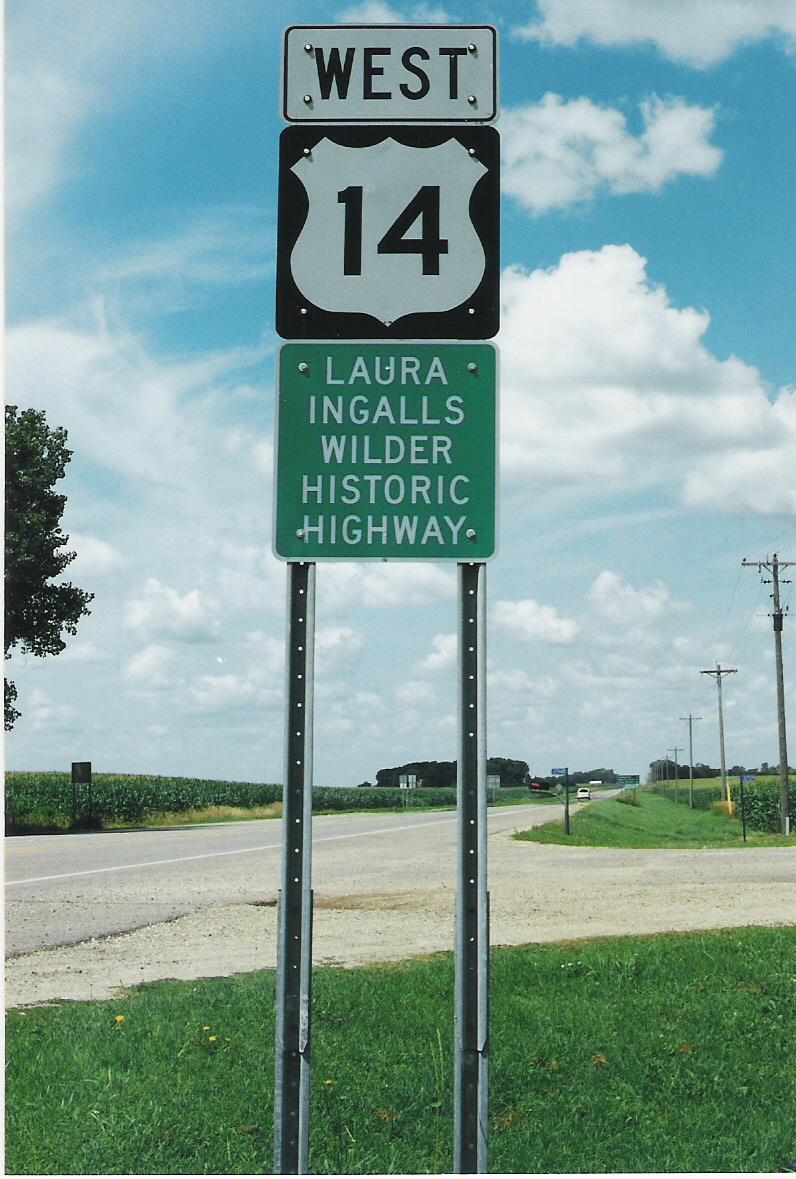
A red car infuses color into this prairie landscape near Lamberton, heading east toward New Ulm along U.S. Highway 14, the Laura Ingalls Wilder Historic Highway.
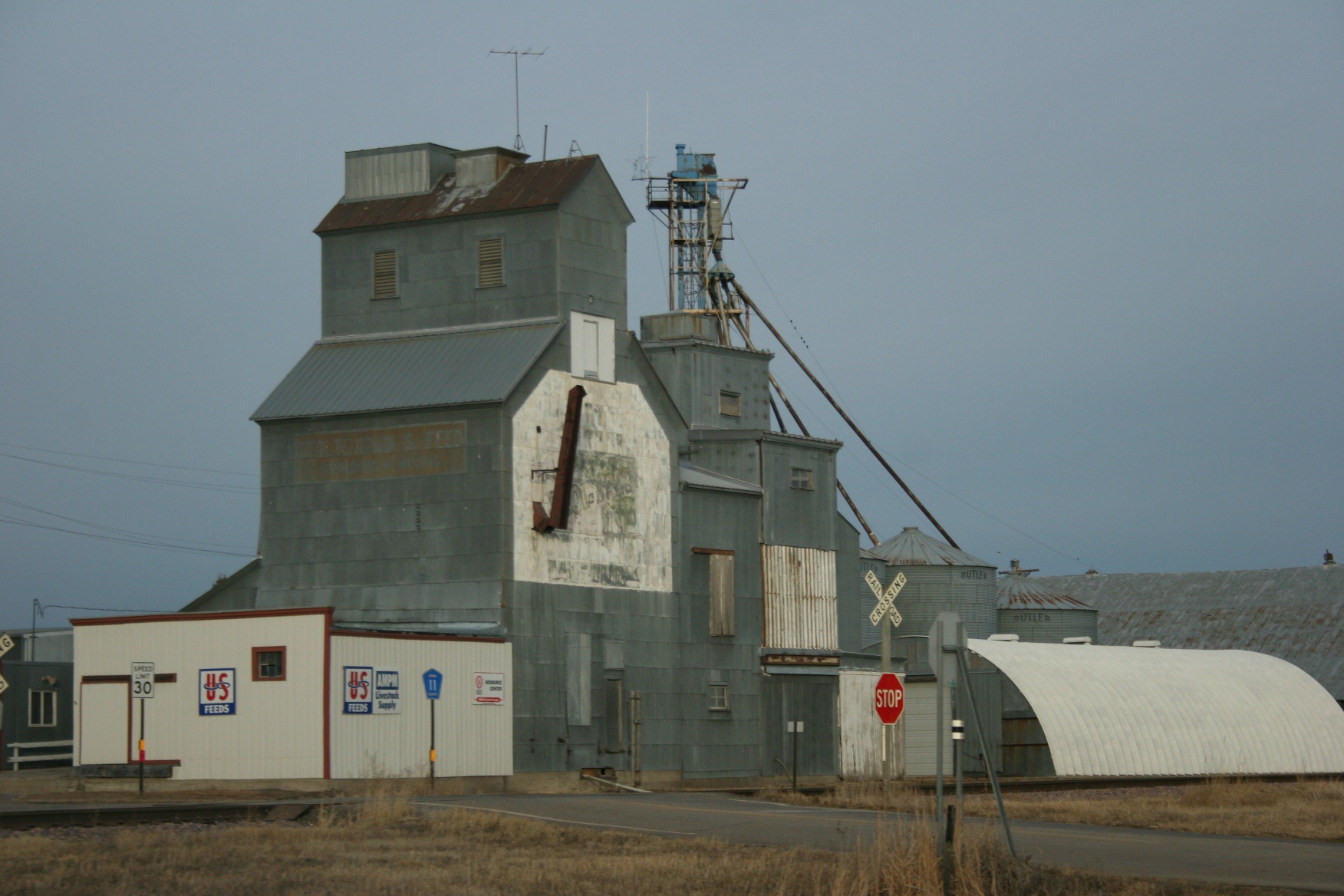
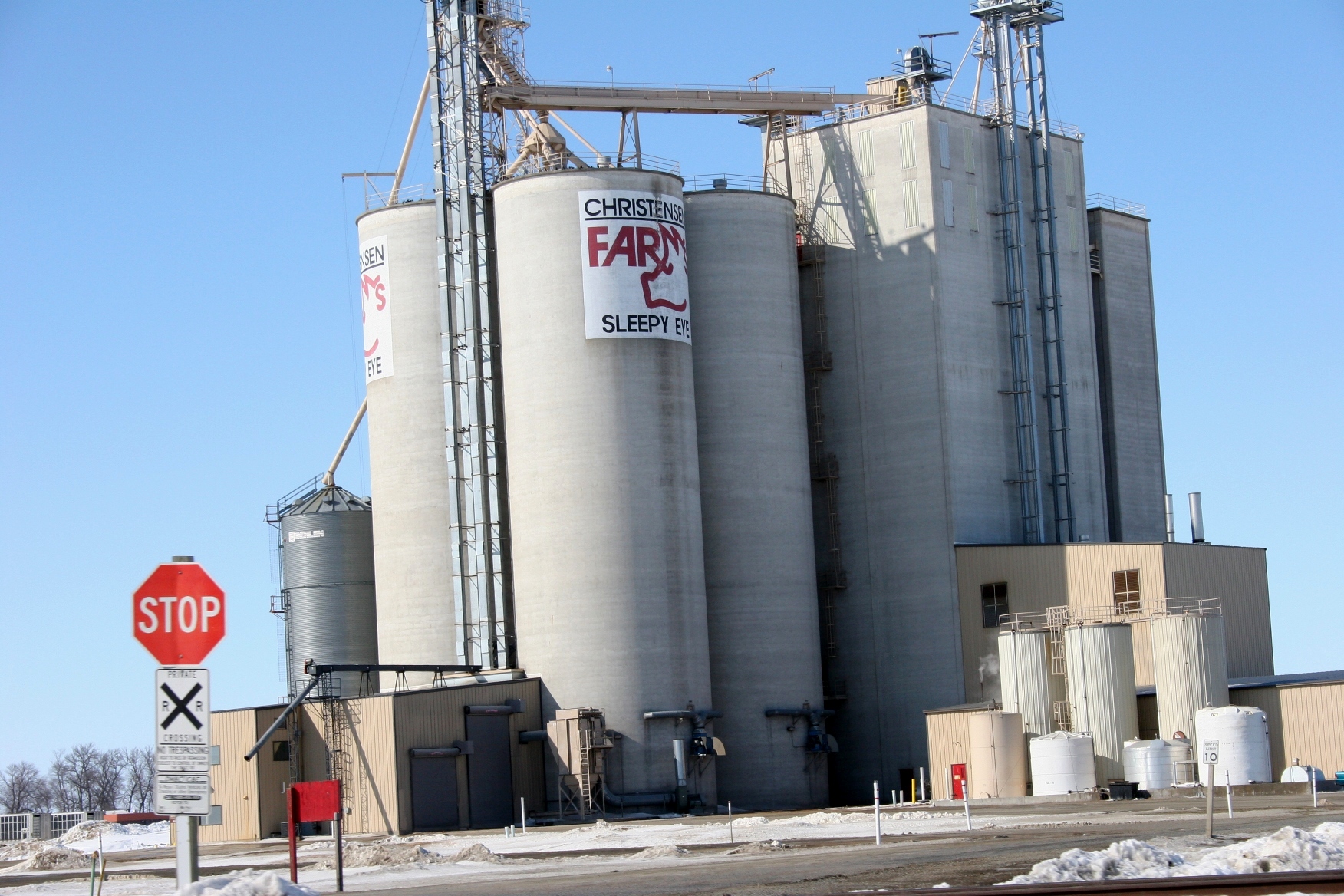
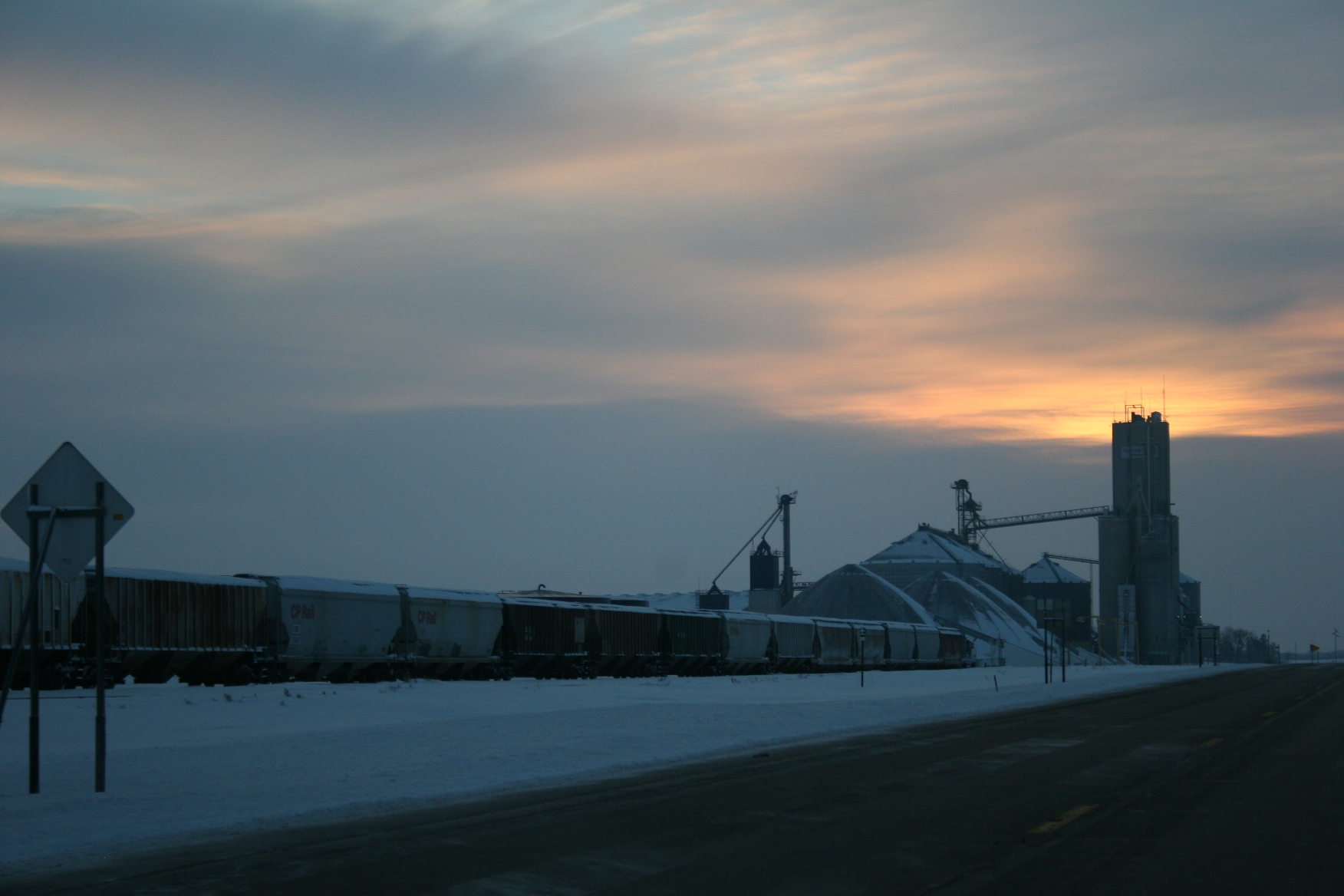
A stop sign adds color to an otherwise grey image of the elevator in Essig, along Highway 14 west of New Ulm.
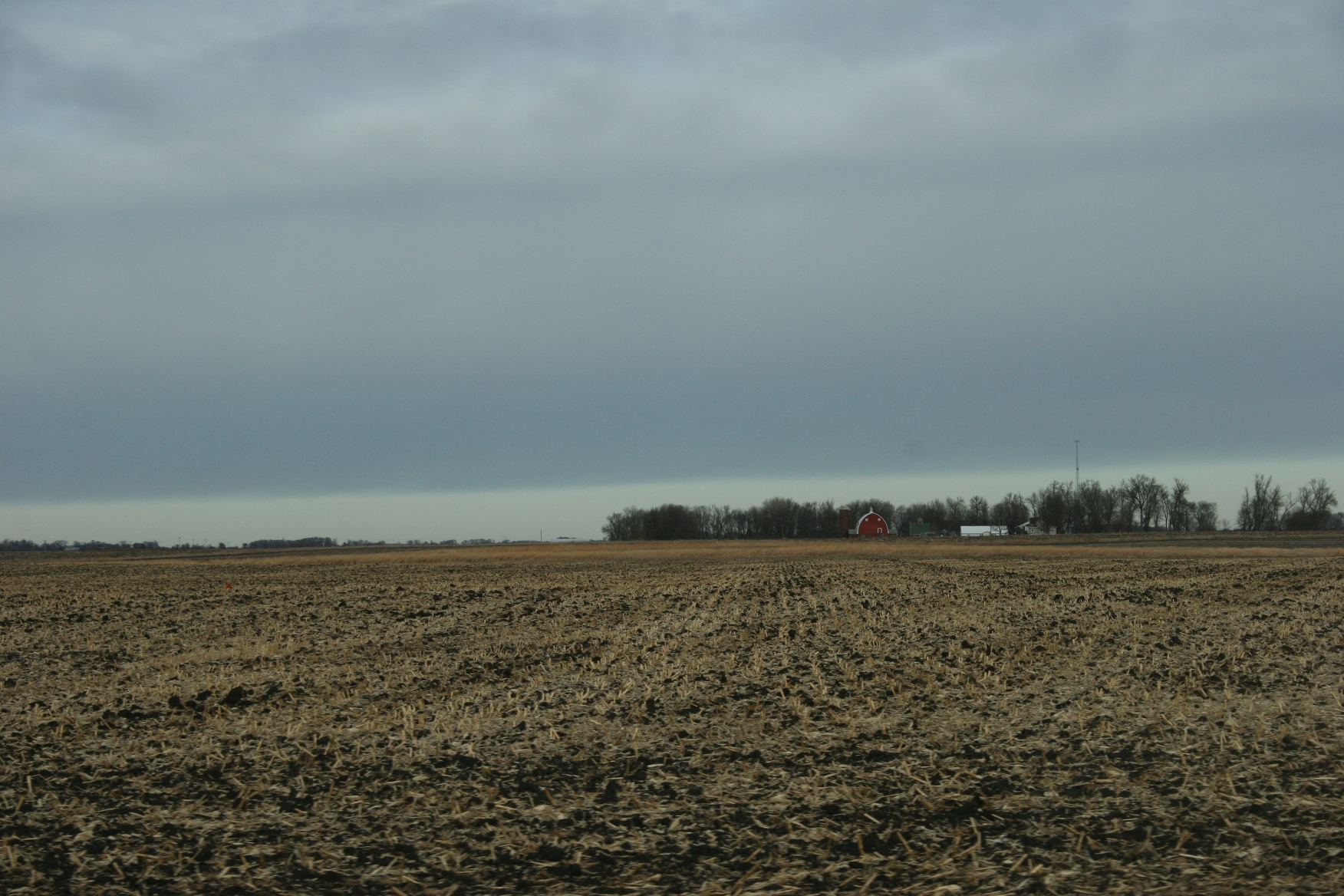
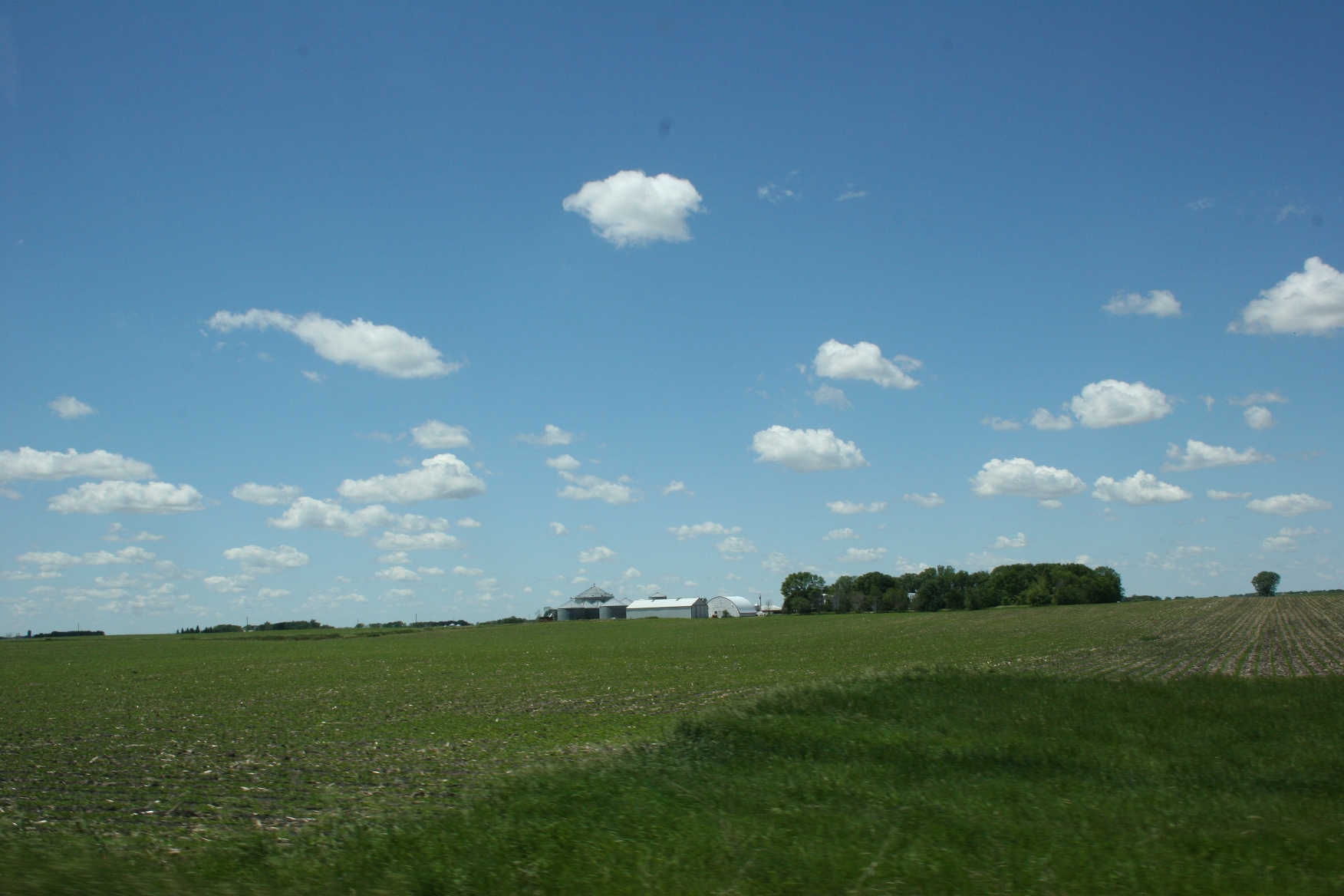
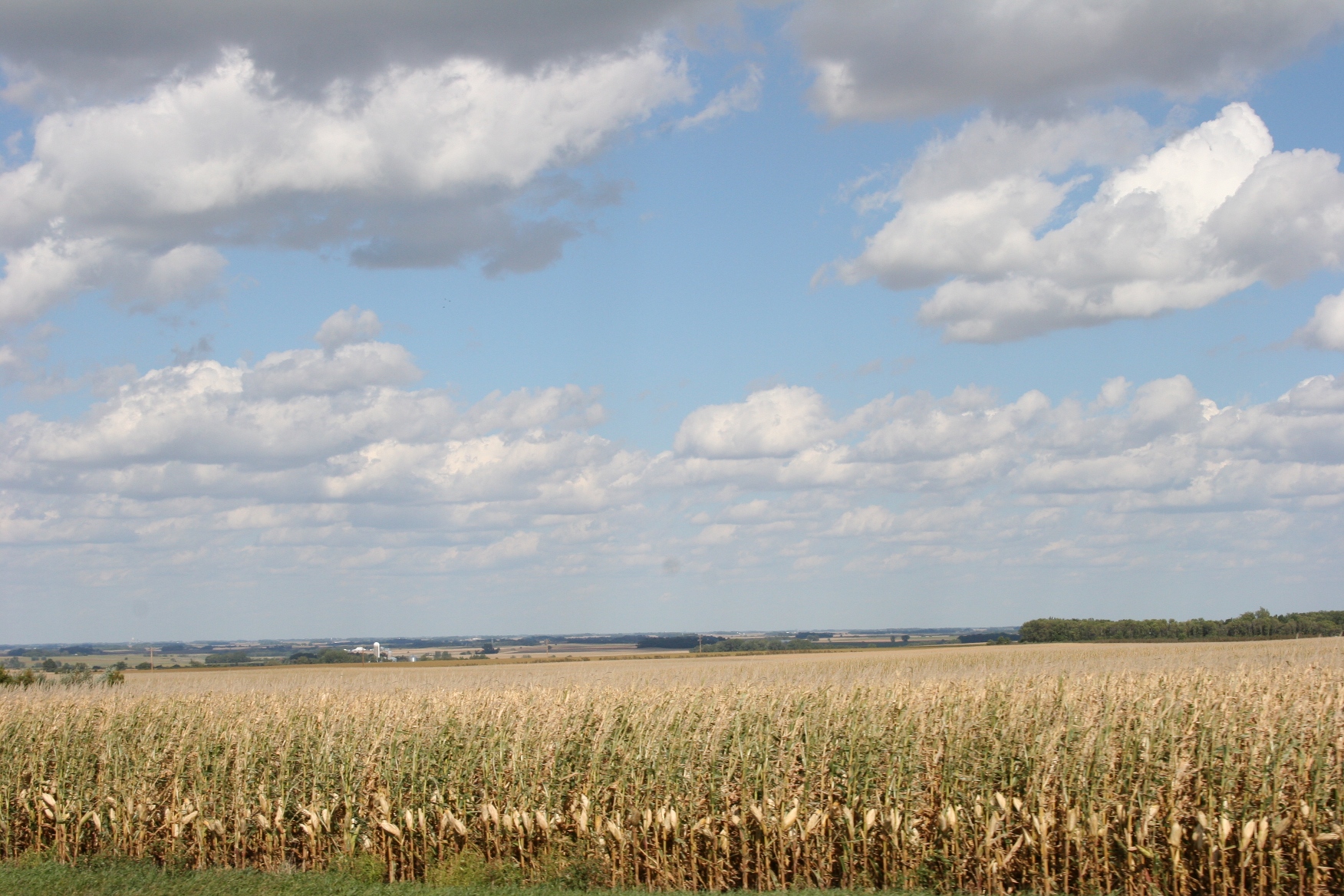
Fields like this one between New Ulm and Morgan define the southwestern Minnesota prairie.

AS I FINISHED this post, I wondered why most barns are painted red. Did the color choice come from a desire for a spot of red to brighten dreary days? I found one answer here, in Farmers Almanac Trivia. Click to read.

© Copyright 2011 Audrey Kletscher Helbling


Traveling back home to the southwestern Minnesota prairie September 5, 2011

Filed under: Uncategorized — Audrey Kletscher Helbling @ 9:07 PM
Tags: , , , , , , , , , ,

The land and sky stretch out before us as we drive along Minnesota Highway 67 between Morgan and Redwood Falls in southwestern Minnesota at sunset Friday.

MY HUSBAND, SON and I traveled this weekend to my hometown of Vesta in southwestern Minnesota, the place that inspired the name for this blog, Minnesota Prairie Roots.

My roots run deep into this land, into the soil of Redwood County where I grew up on a dairy and crop farm. Although I left the farm 38 years ago at age 17, the fall after graduating from Wabasso High School, I still consider this home. It is the place that shaped who I became as a person and a writer.

It is the land that still inspires me in my writing and my photography.

Most Minnesotans don’t give this area of the state a second thought. In fact, I have discovered in my nearly 30 years of residing in Faribault, in southeastern Minnesota, that many residents of my community don’t know what lies west of Mankato. They think the state ends there.

That frustrates me to no end. In trying to explain the location of  Vesta, I typically say “half way between Redwood Falls and Marshall on Highway 19.” Usually I get a blank stare. What more can I say?

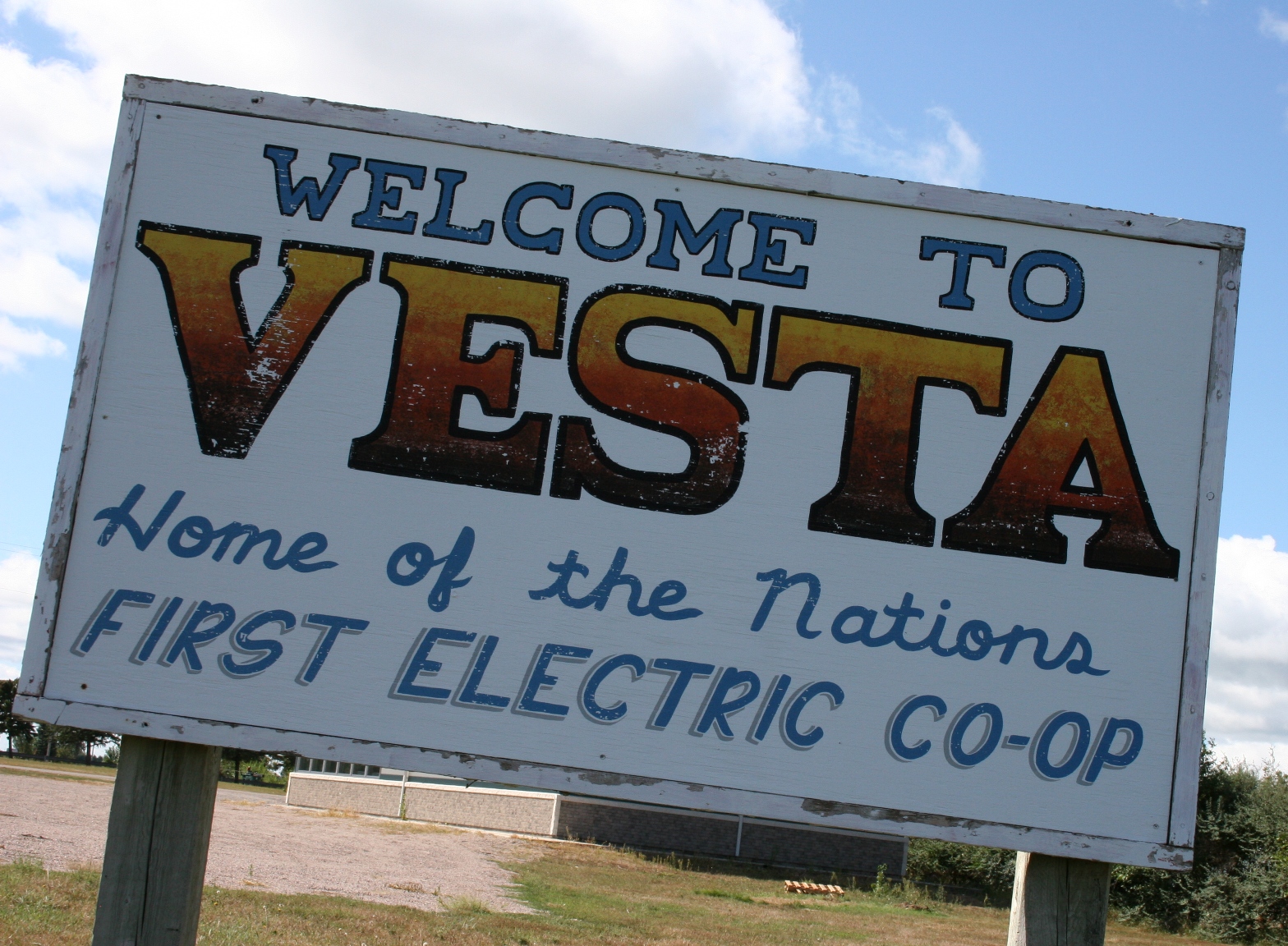
The sign that marks my hometown, population around 350 and home of the nation's first electric co-op.

They consider my hometown in the middle of nowhere. I don’t disagree with that. But I like the middle of nowhere. The prairie possesses a beauty unlike any other. The wind. The sky. The acres and acres of cropland punctuated by farm places and small towns appeal to me. They quiet my soul, uplift my spirit, connect to me in a way that I can’t explain.

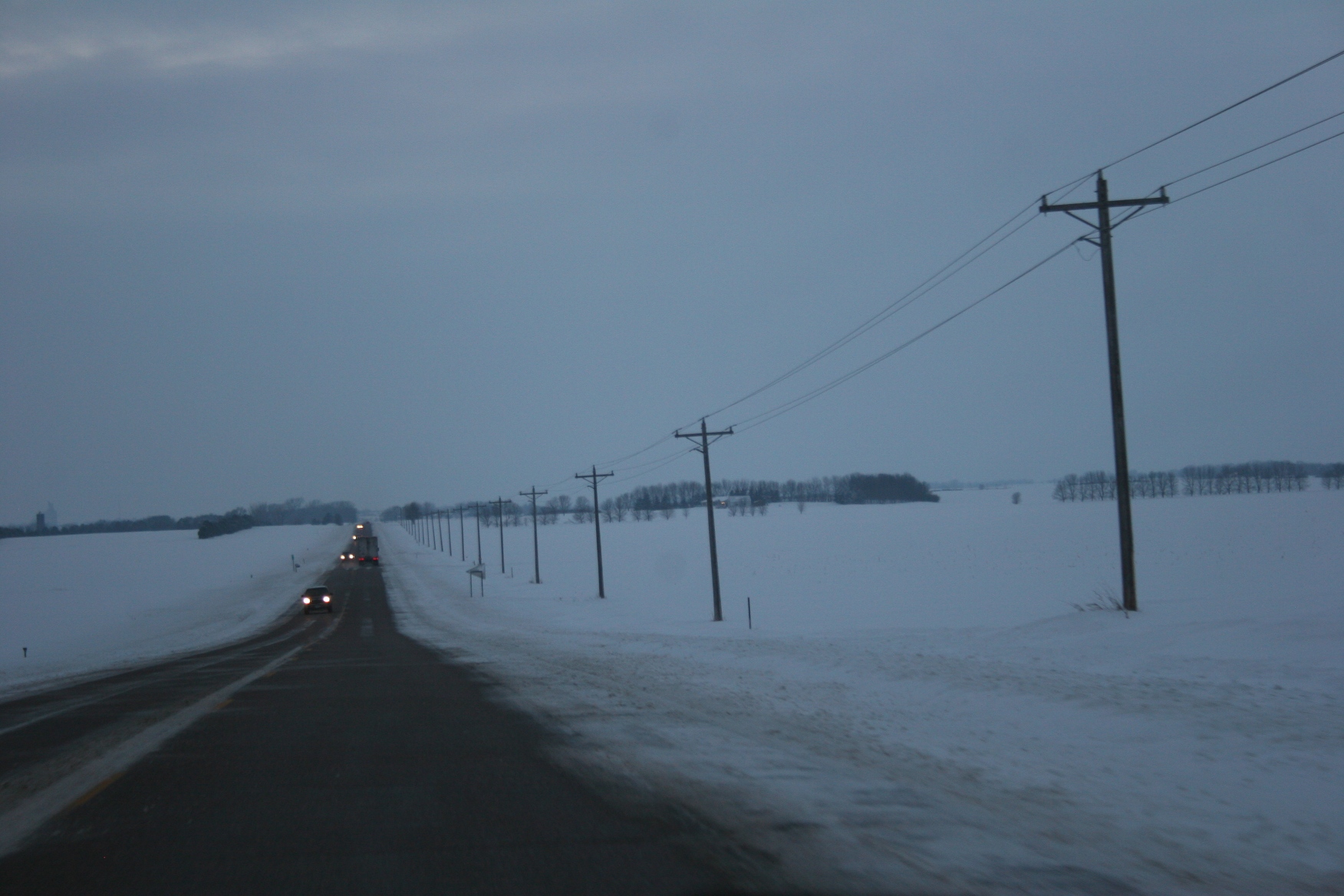
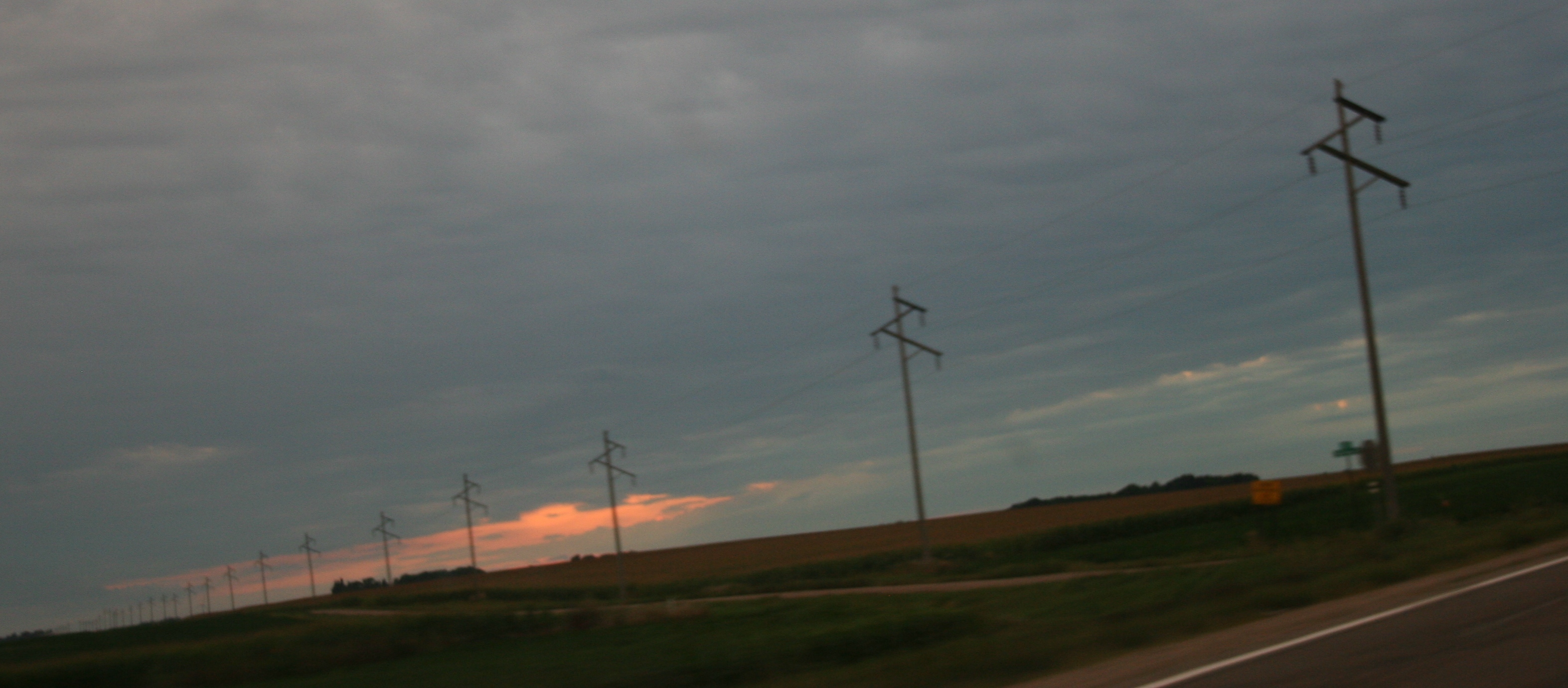
This trip we were driving west in the evening, into the sunset. The ribbon of roadway between Morgan and Redwood Falls stretched into seeming infinity under a sky banded by clouds.

The sun sets as we travel along Minnesota Highway 67 northwest of Morgan toward Redwood Falls.

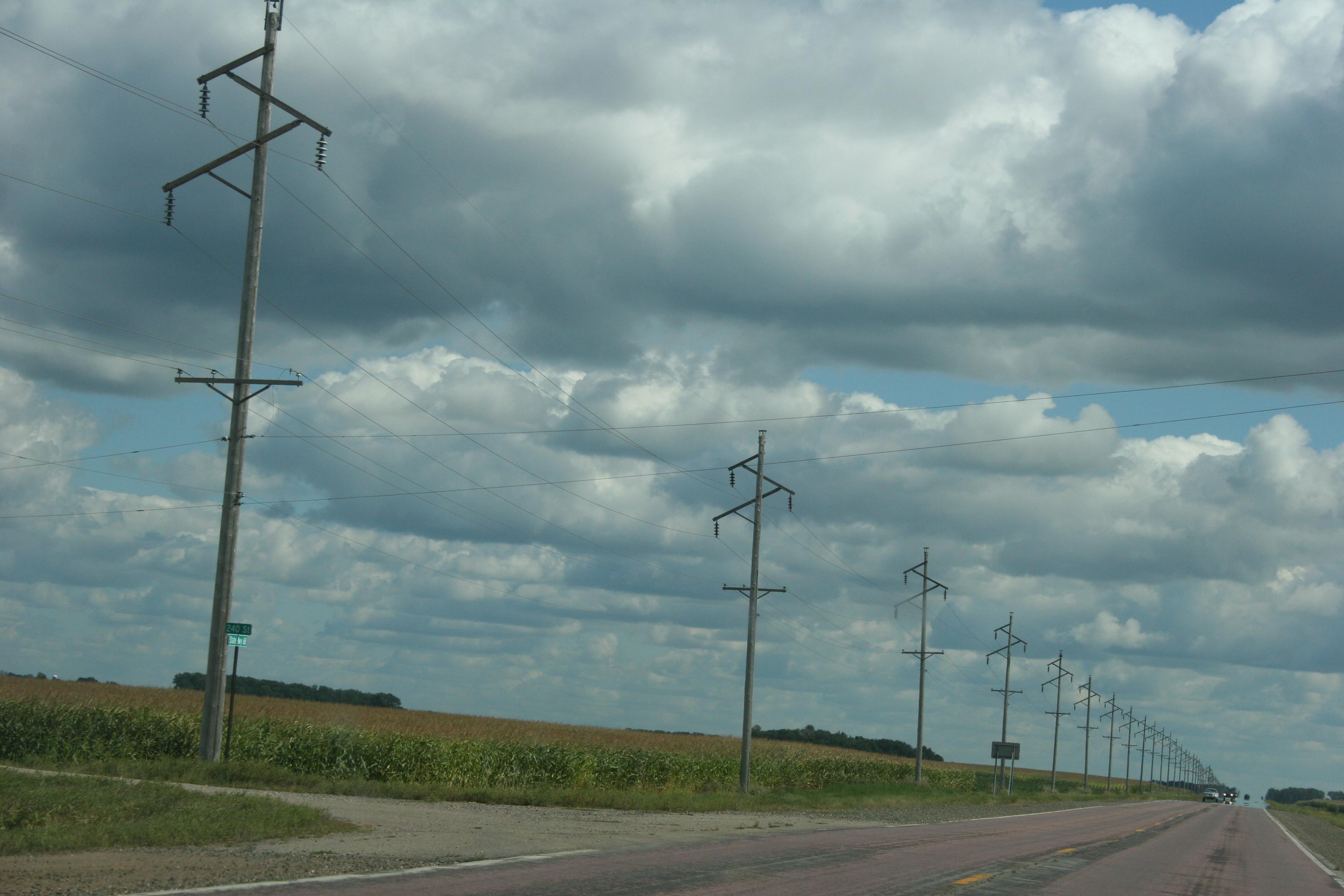
This stretch of highway between Morgan and Redwood Falls seems to go on forever, as do the utility poles.

It was beautiful. Absolutely beautiful.

What more can I say? I love my southwestern Minnesota prairie, the place that will always be my home, no matter where I live.

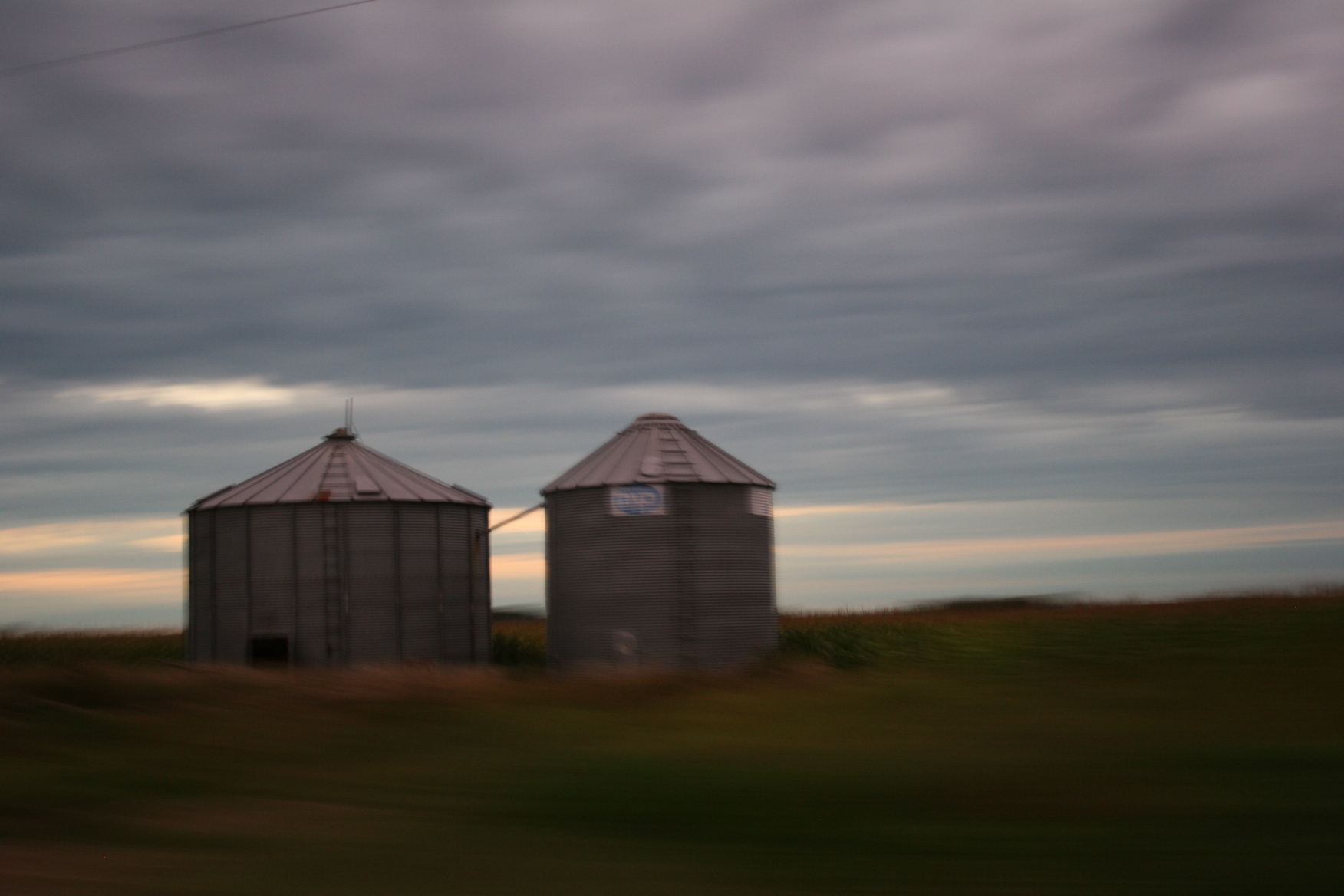
I prefer grain bins to skyscrapers. I shot this image as we traveled northwest of Morgan at sunset Friday.

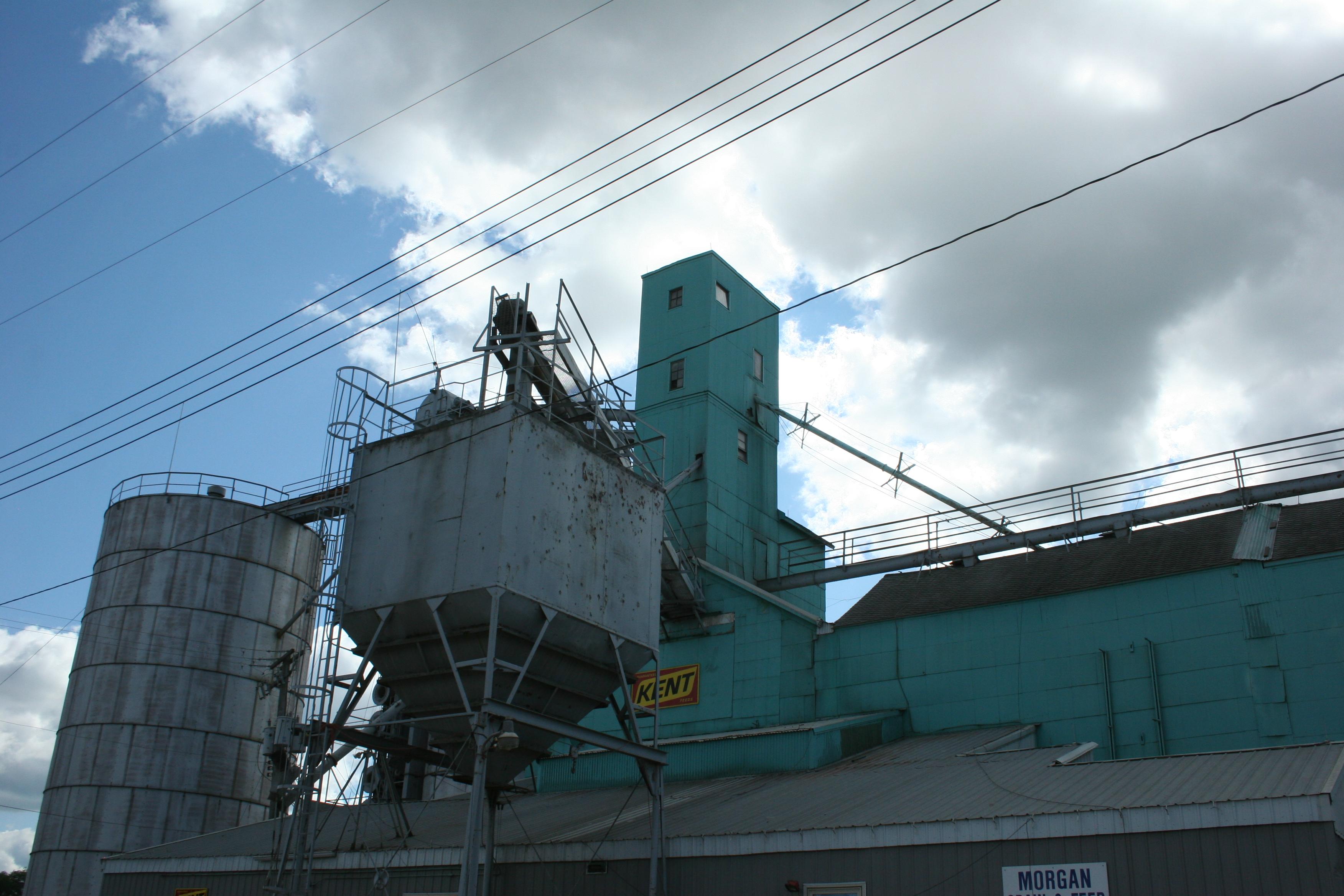
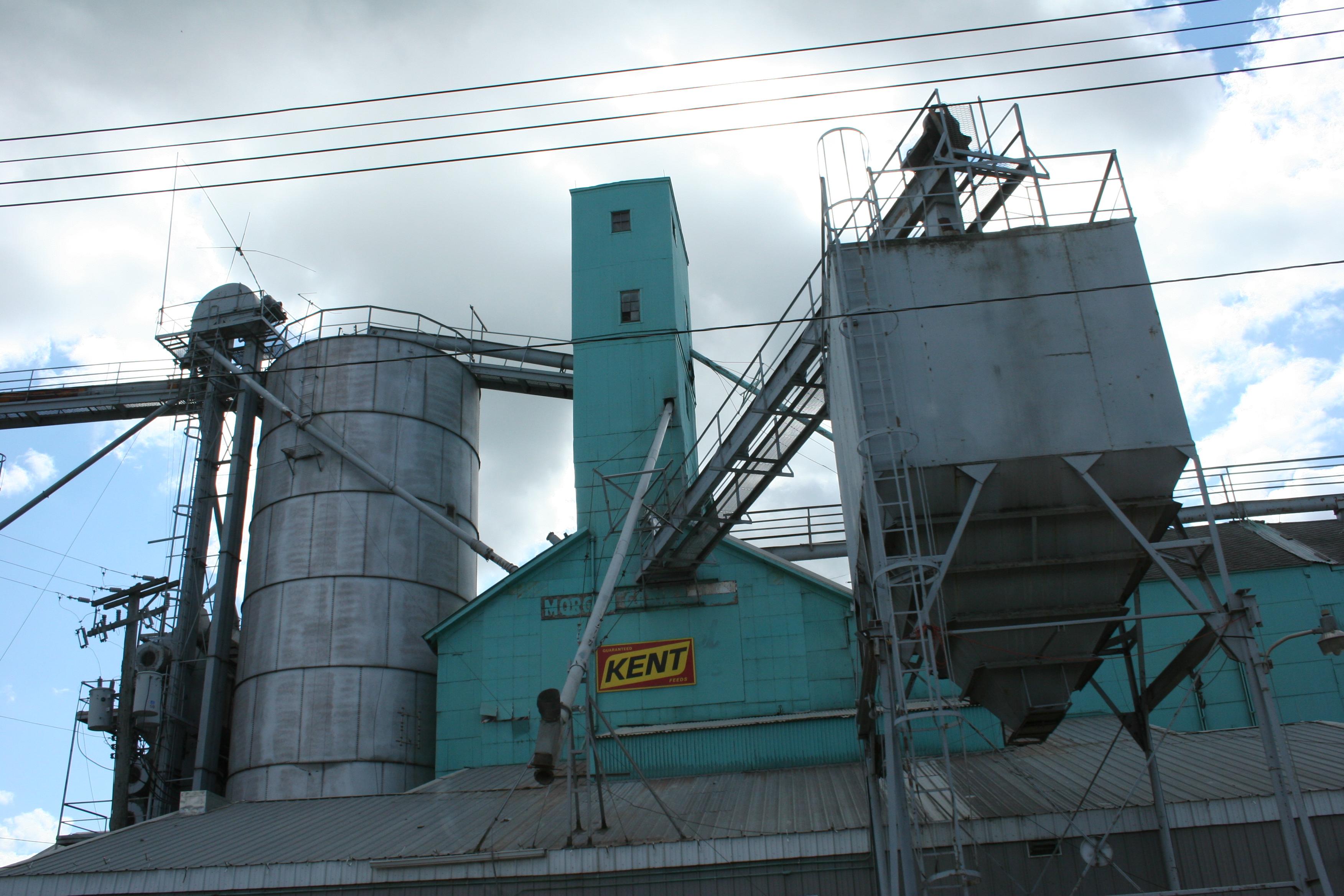
My son told me I take a picture of this grain elevator complex every time we drive through Morgan. He is probably right. But I don't care. I see something different each time, each season, in which I photograph it.

My second shot of the elevator in Morgan, taken from the car while driving back to Faribault Sunday afternoon.

This trip I seemed to focus my camera on utility poles, which go on and on across the flat expanse of the prairie. I find a certain artistic appeal in this scene southeast of Morgan.

Soybean fields, pictured here, and corn fields define this rich farm land.

© Copyright 2011 Audrey Kletscher Helbling


An update from storm-damaged Belview July 13, 2011

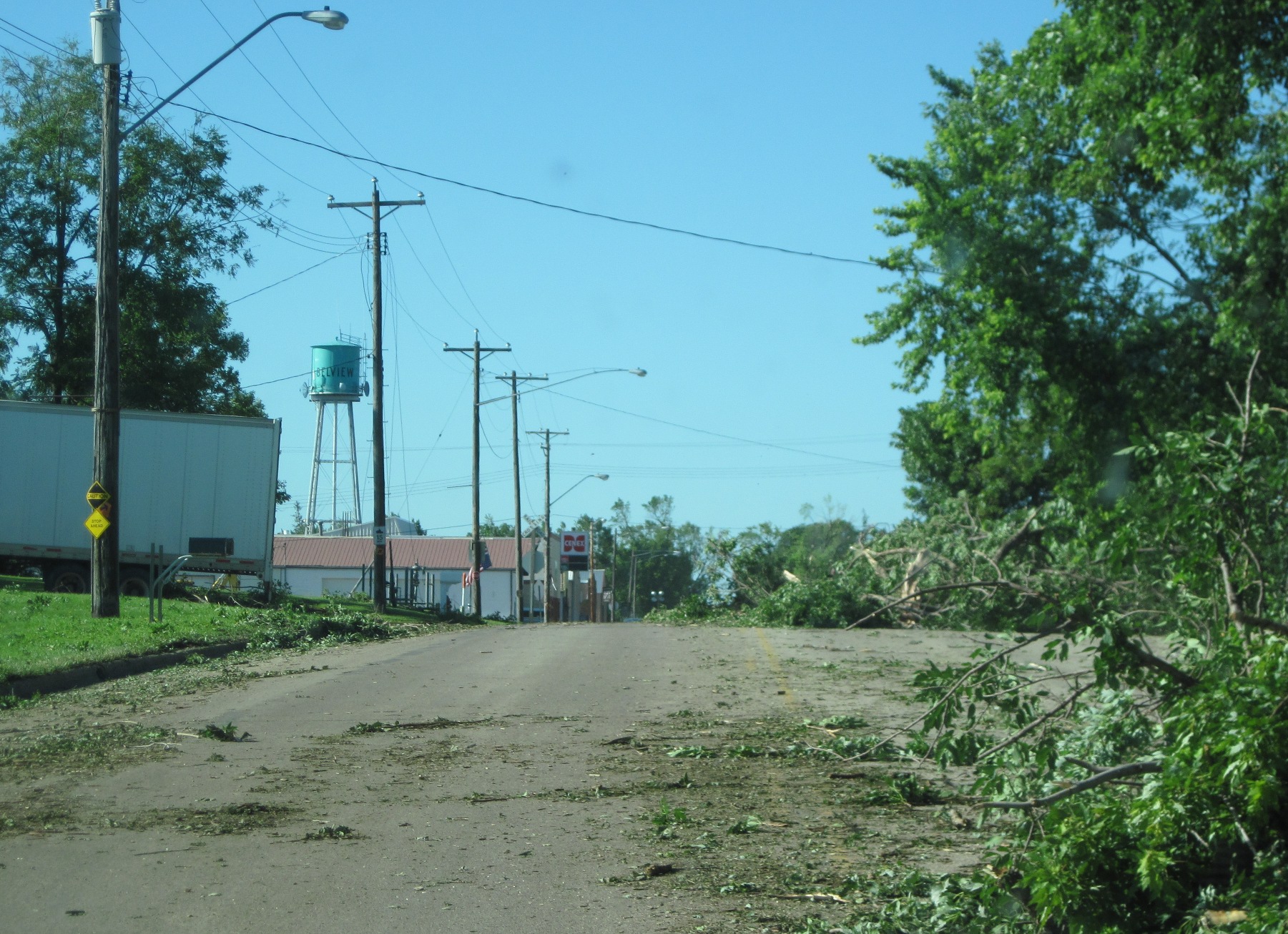
Entering Belview from Sacred Heart at 9 a.m. on July 2, the morning after the tornado. Photo courtesy of Merlin and Iylene Kletscher.

LESS THAN TWO WEEKS after an EF-1 tornado ravaged the small town of Belview in southwestern Minnesota, I emailed City Clerk/Treasurer Lori Ryer for an update.

I know she’s busy dealing with issues in the aftermath of the July 1 storm, so I asked only for a brief summary, with a specific request for information about Parkview Home. The nursing home, according to Ryer, received major roof damage that resulted in flooding of the building. Initially, 25 residents were evacuated and taken to care centers in nearby Wabasso, Olivia and Redwood Falls.

Since then, Parkview has closed for repairs, residents have been discharged and admitted to new nursing homes, and staff has been laid off.

When the nursing home will reopen remains uncertain as assessments are still being made. But Ryer anticipates, after talking to staff on Tuesday, that Parkview will be closed for at least several months.

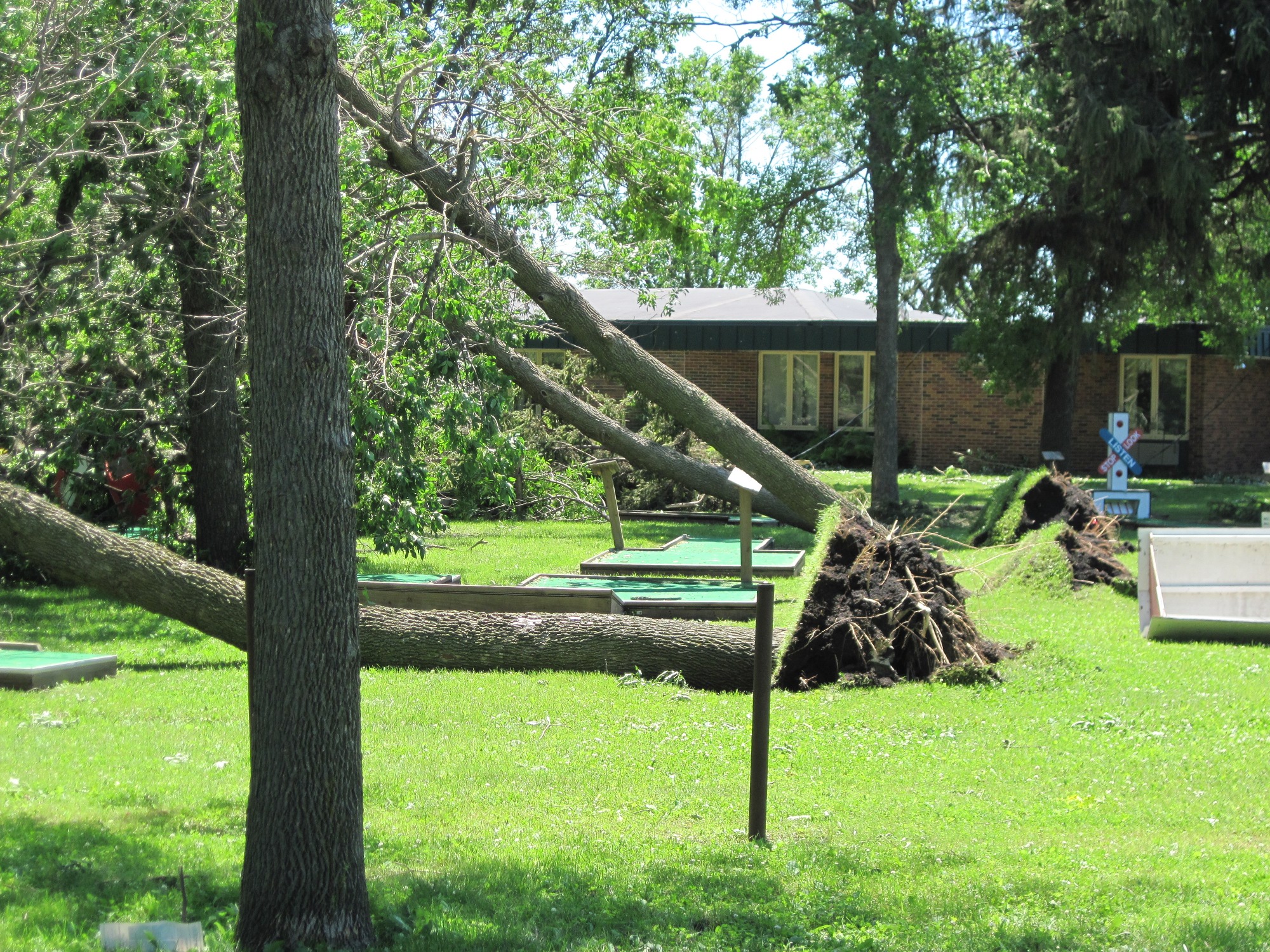
This photo shows Parkview Home and mini golf in the park. Photo courtesy of Merlin and Iylene Kletscher.

Parkwood Apartments, which is attached to the nursing home, was not damaged, but was without power from Friday afternoon, July 1, until the following Monday evening. Some apartment residents left to stay with family members briefly, but everyone has now returned, Ryer says.

Bridgewood Assisted Living was not damaged, but was without power also.

Damage along South Main Street in Belview. Photo courtesy of Merlin and Iylene Kletscher.

Throughout the rest of this community of 375 residents, many home and business owners are still awaiting insurance adjusters. Many homes received minor damage, several moderate, and a few major, damage from results of the 95 – 105 mph tornadic winds, Ryer says.

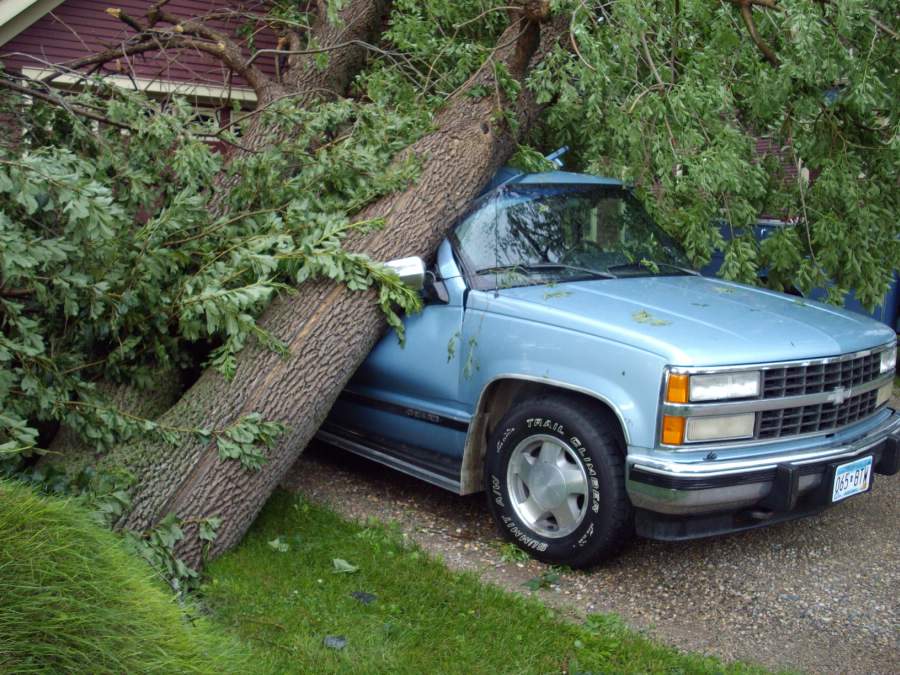
Many garages and sheds were destroyed and quite a number of cars totaled due to trees falling on them, the city clerk continues.

Tom Johnson's SUV was totaled when a tree fell onto it during the Belview tornado. Photo courtesy of Tom and DeLores Johnson.

The Belview school building received major damage, resulting in relocation of the Belview Learning Center summer program. Ryer hopes that program will be up and running in the Belview school building before the new school year begins.

Despite the destruction in her community, Ryer manages to remain positive: “With all that being said, I still marvel at the fact that we had no injuries during the storm or in the days of clean-up afterwards.”

LIKE RYER, I, TOO, marvel that no one was injured or killed by this storm which swept across Minnesota into Wisconsin July 1. My hometown of Vesta, just down the road from Belview, was hit by a series of downbursts with wind speeds of 90 – 100 mph.

I have many family members living in areas affected by the storms. Damage was minimal to their properties, but most lost trees. A cousin living near Wood Lake, however, saw substantial damage to the family’s farm. My home church, St. John’s Lutheran in Vesta, had half the roof ripped off.

St. John's Evangelical Lutheran Church in Vesta with the roof half missing. Photo courtesy of Brian Kletscher.

In a few weeks I’m returning to my hometown for the annual Kletscher family reunion. I’m trying to prepare myself for what I’ll see—my little prairie town with fewer trees, the church where I was married now temporarily closed. I always look forward to worshiping there with my mom when I return home.

I expect it will be the trees, though, that I will miss the most. A friend recently told me that the small towns of southwestern Minnesota are like oasises in a land mostly devoid of trees, except for the trees in those towns and the groves that shelter farm sites. He is right.

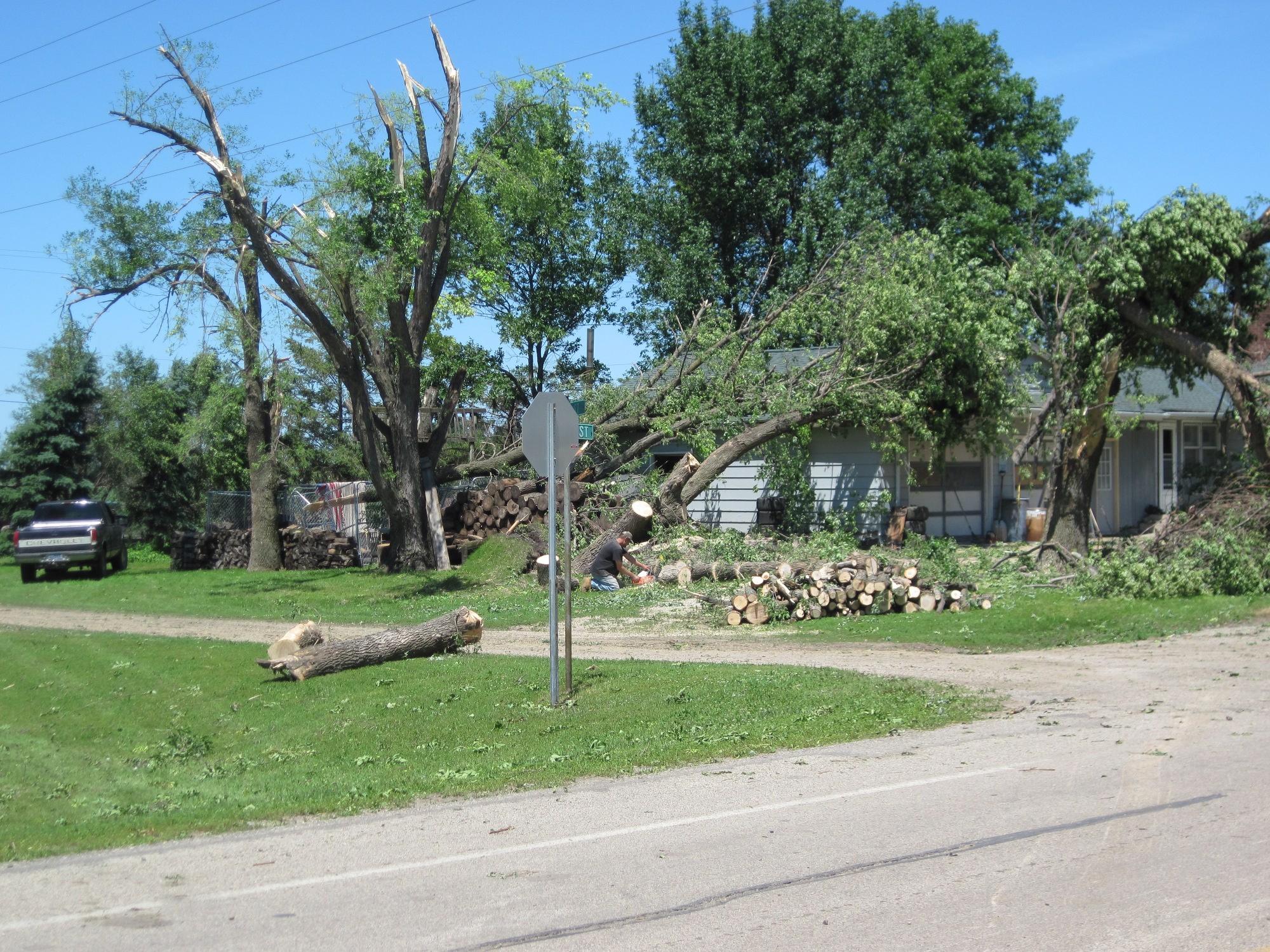
The communities of Belview and Vesta lost many trees in the July 1 storms. This photo is along a Belview street north of the city park. Photo courtesy of Merlin and Iylene Kletscher.

But those of us who grew up on this land, and those who live there, appreciate the wide open spaces, the big sky, the fields of corn and beans and those small towns.

Prairie people are strong, caring, determined folks who come together in time of need. I’ve seen that over and over again in the stories I’ve heard and the comments I’ve received on my blog posts while covering the recent storm damage.

To the residents of Belview and Vesta, Tyler and Ruthton, and all the farm places in between, I know you’ll make it through these challenging days. Your roots reach deep into the prairie and no storm can rip away what you have—each other.

© Copyright 2011 Audrey Kletscher Helbling
 

An almost-summer evening on the farm June 1, 2011

Filed under: Uncategorized — Audrey Kletscher Helbling @ 6:47 AM
Tags: , , , , , , , , , , ,

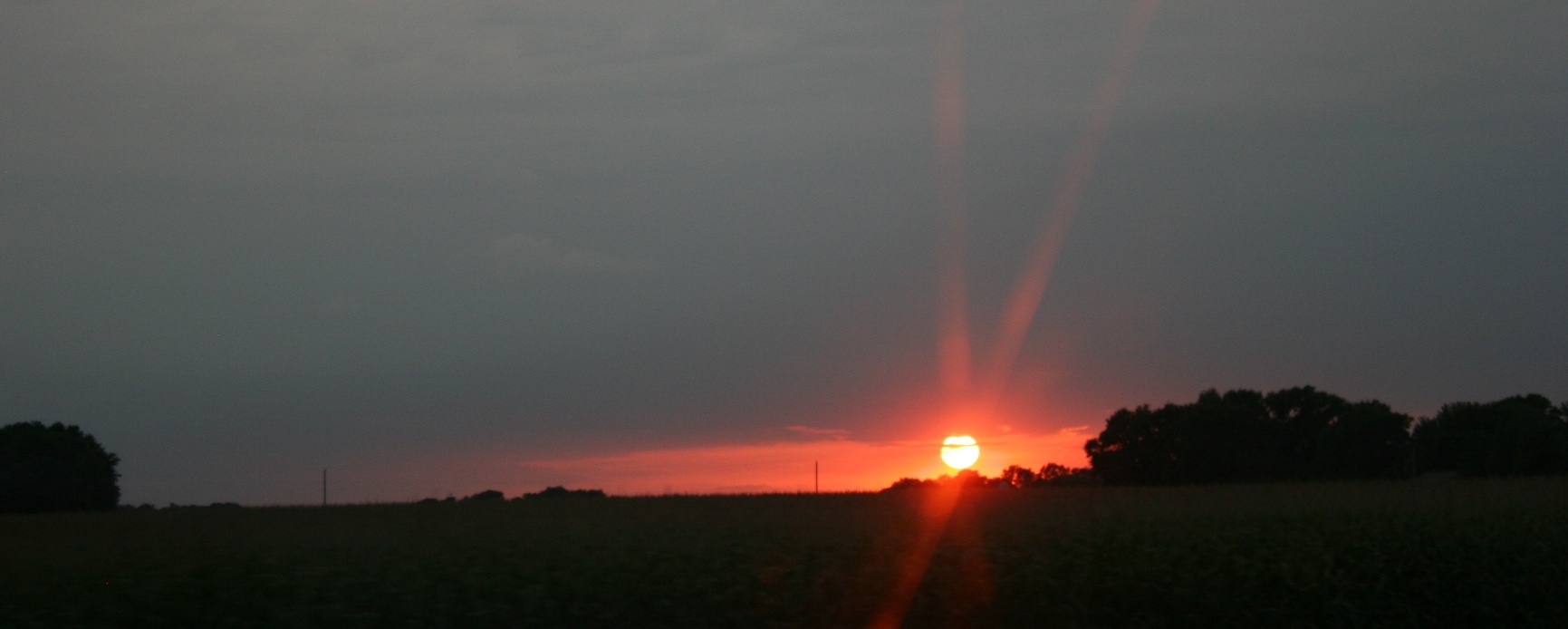
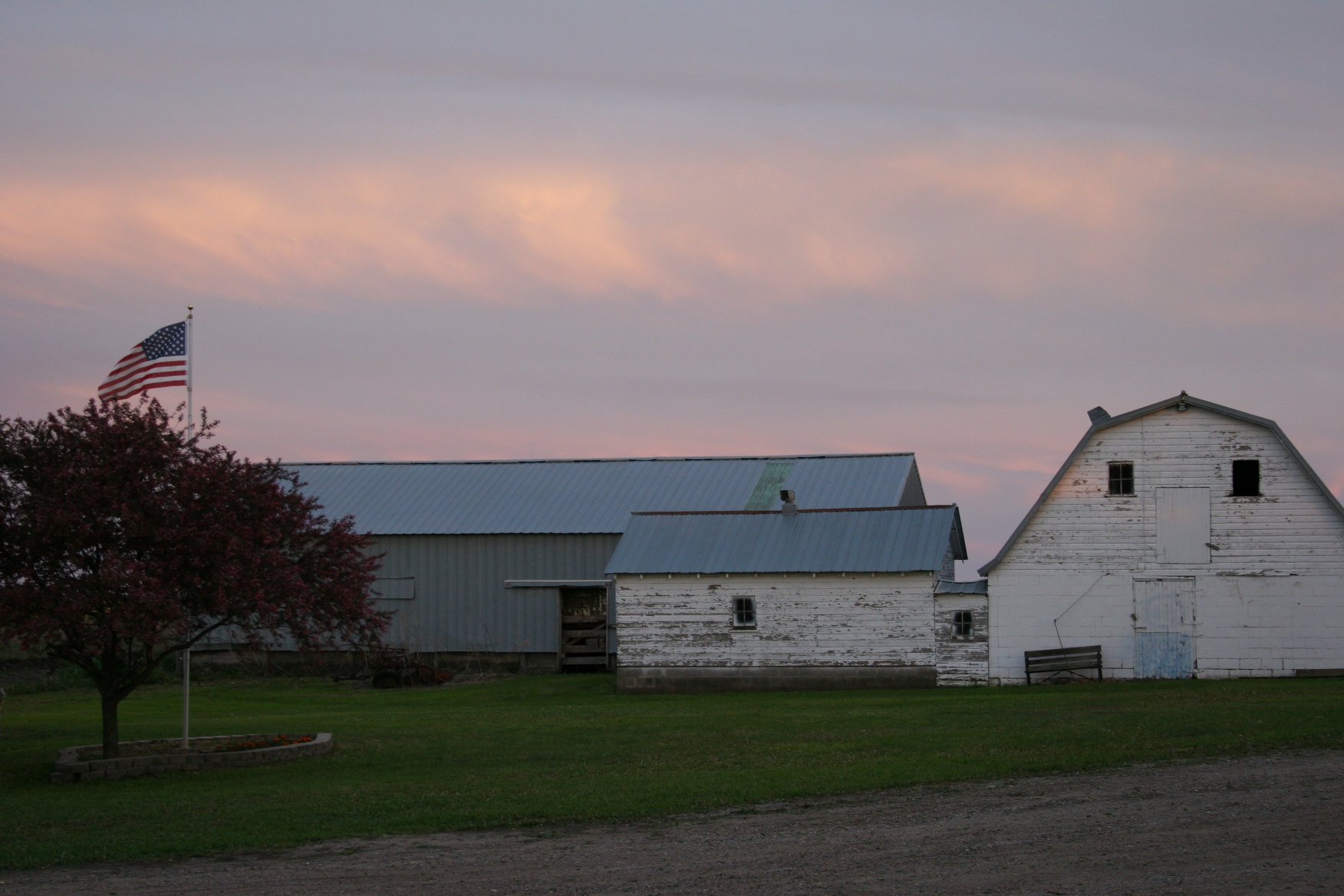
The sun sets on the farm site where I grew up in southwestern Minnesota.

OH, SWEET EVENING of almost-summer on my childhood farm. Daylight fades, washing the sky in the palest of prairie rose pink. Shadows sharpen before the last lingering rays of sunlight retire for the night.

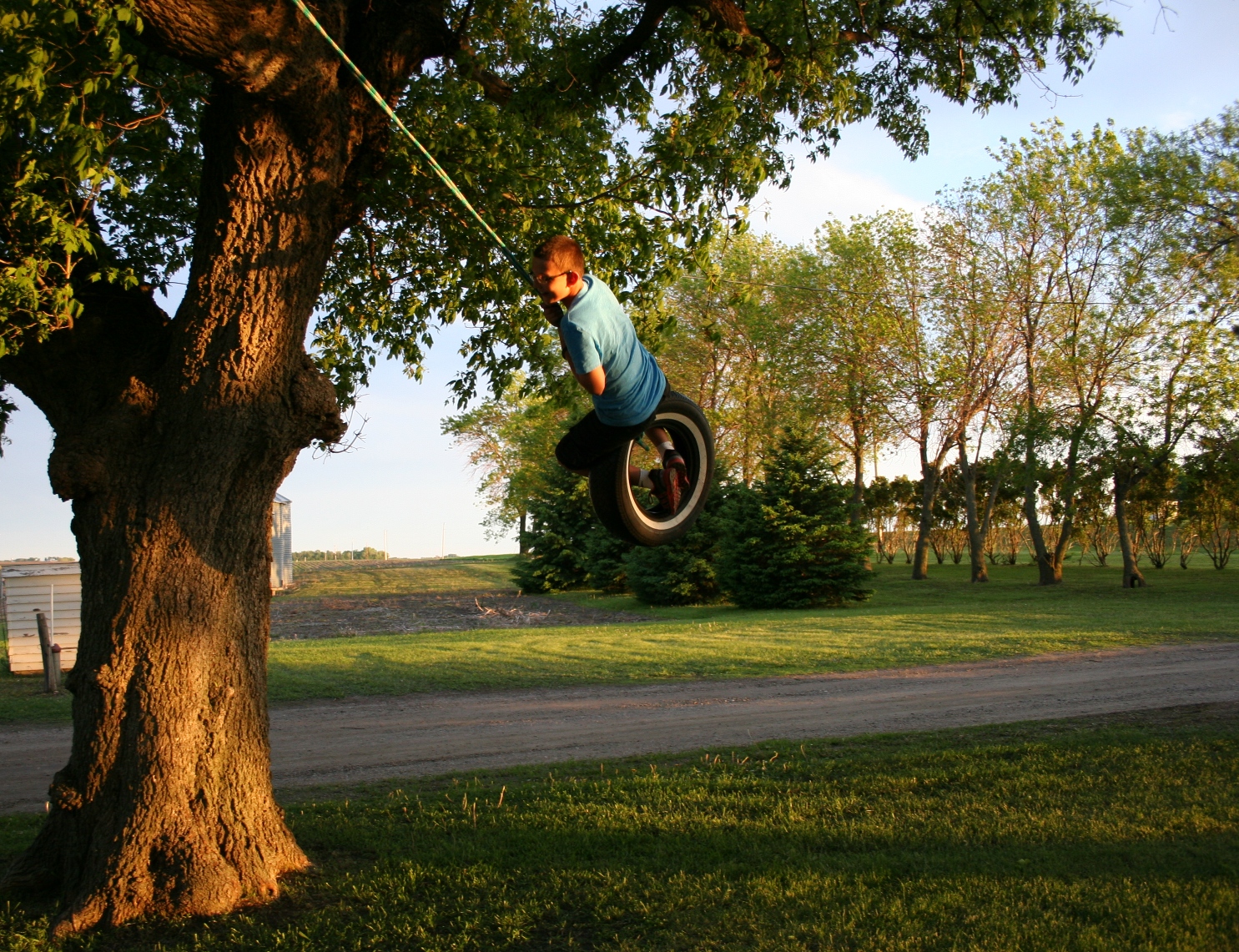
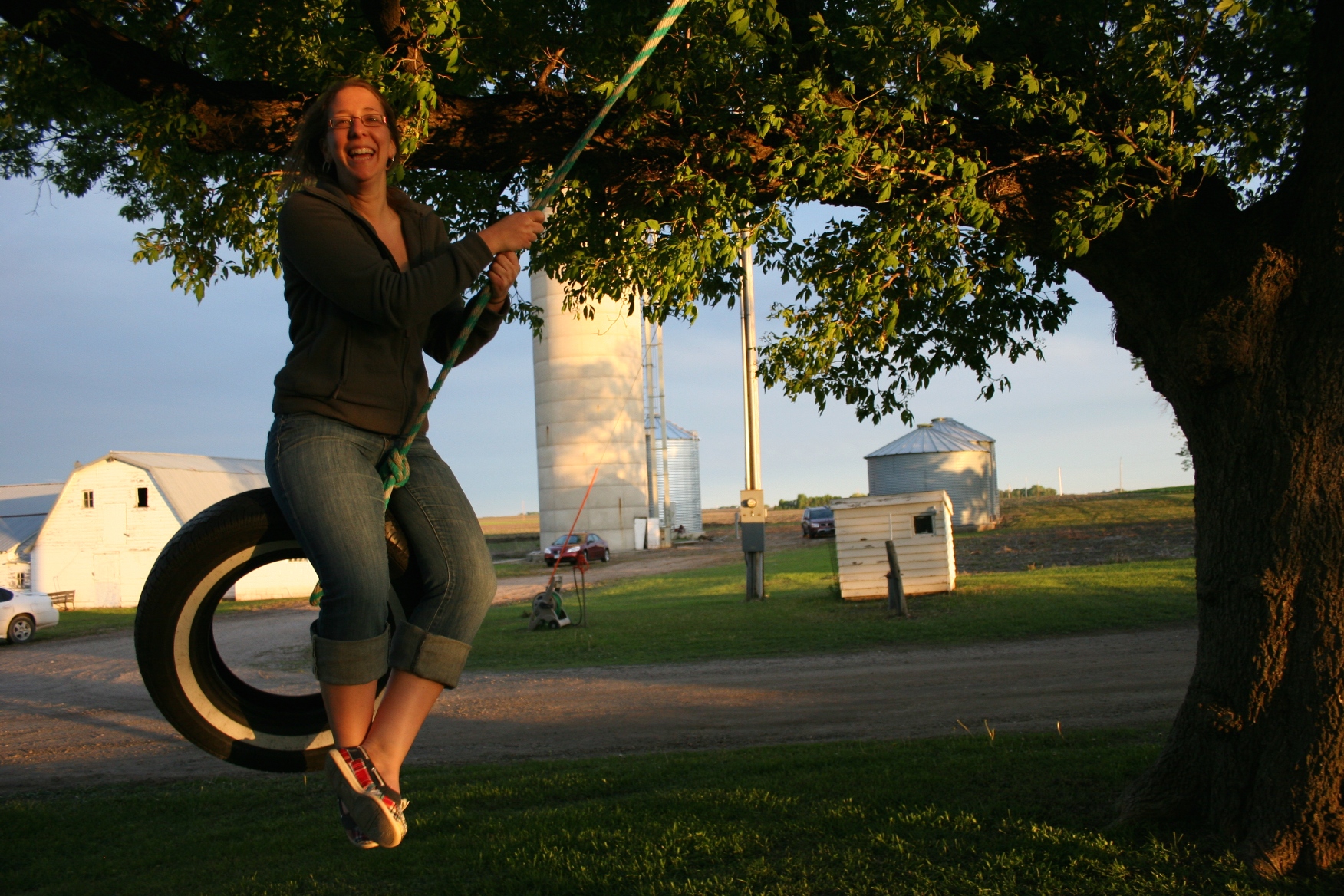
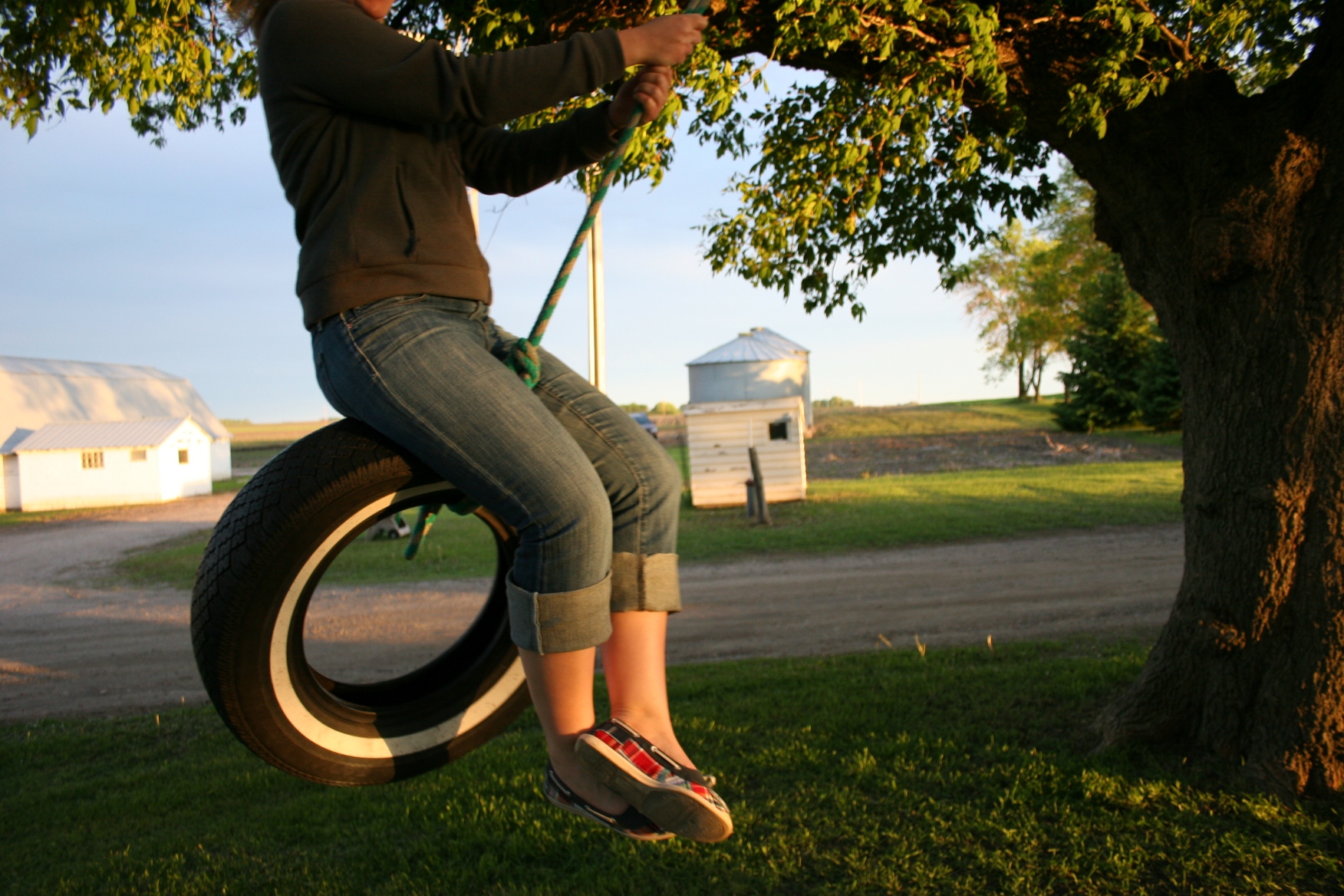
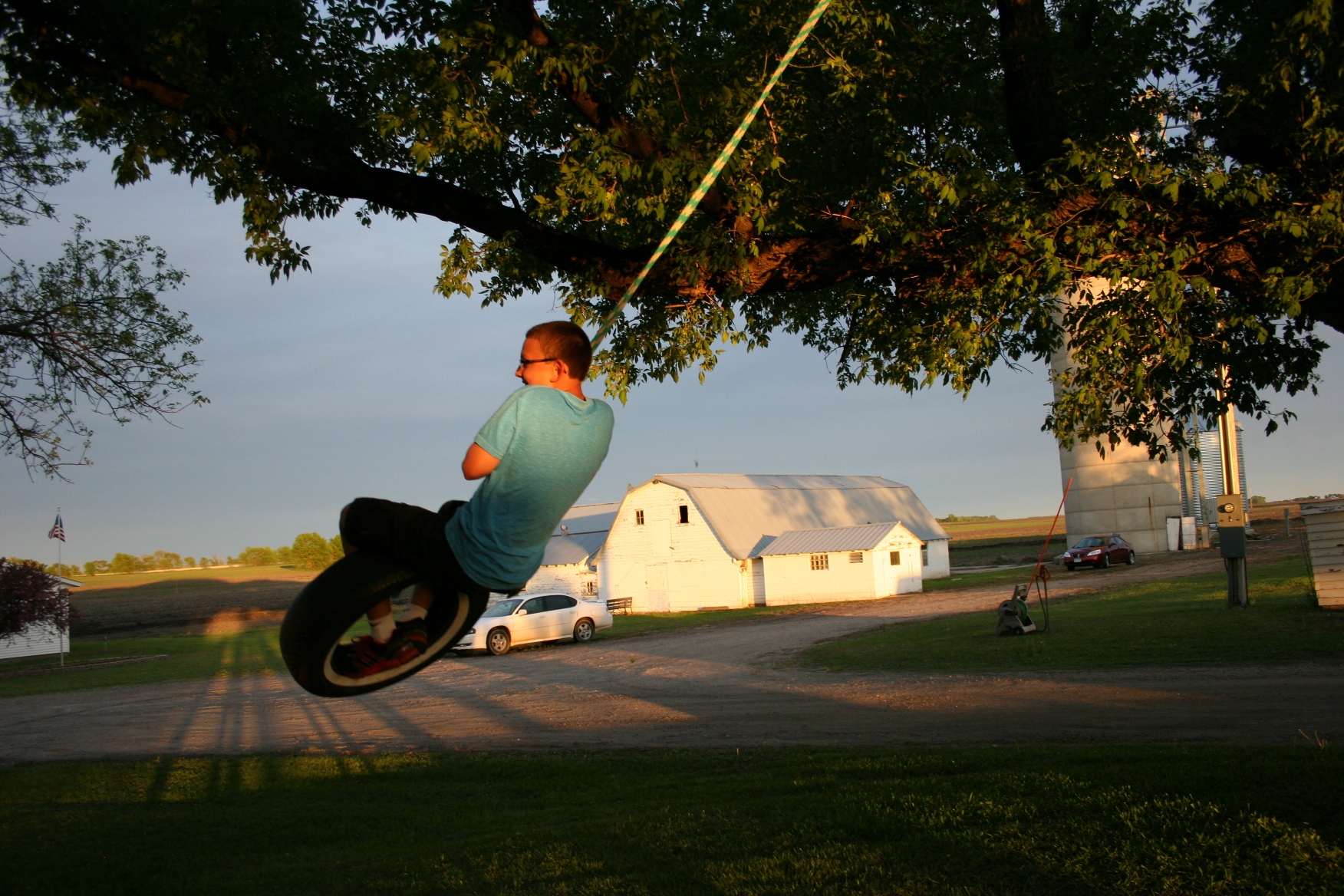
Underneath the branches of the sturdy old tree, which once sheltered a long-gone farmhouse and a tractor-tire sandbox, the cousins and siblings, ranging in age from 11 to 25, one-by-one grab double ropes, straddle a car tire and ask for a push.

My 11-year-old nephew and a tire swing...

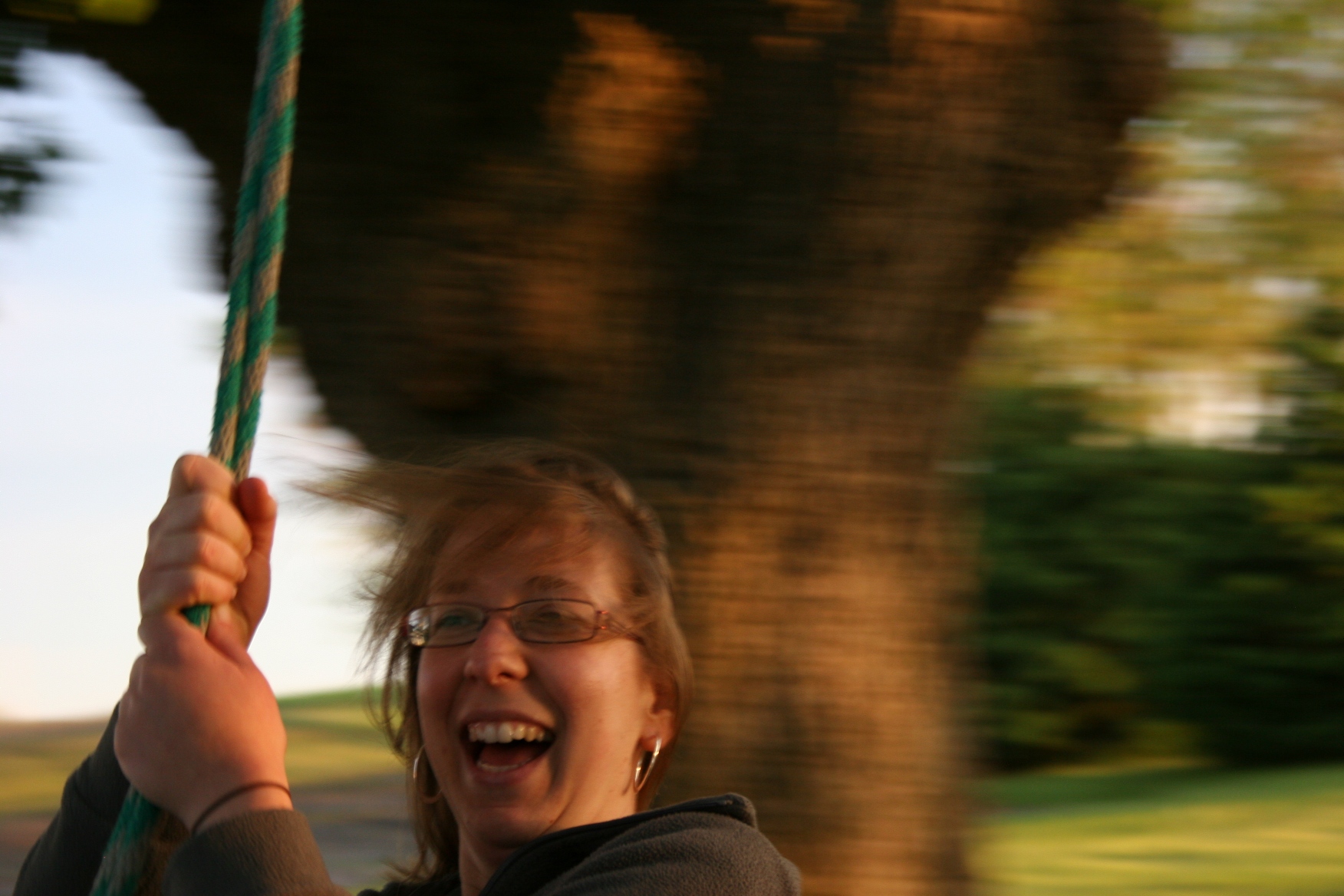
And then they are swinging through the air, spinning nearly out of control, dodging danger in a tree trunk, wisps of hair flying, smiles as wide as the prairie sky, until, finally, they plead for someone, anyone, to stop the dizzy-inducing carnival ride.

My oldest daughter...

...discovers joy on a tire swing...

...far from her big city home, in the place she calls "the middle of nowhere..."

...and sometimes "nowhere" can be as much fun as Minneapolis on an almost-summer evening.

Oh, sweet evening of almost-summer on the farm, when I grip my camera, dodge the swaying tire to capture the moments, to vicariously relive the exuberance of tipping my head back, catching the wind as I ride the tire swing. I feel the twirling, dizzy oblivion through the lens of my camera, wishing I could grasp the ropes, straddle the tire, stretch my toes heavenward and tickle the belly of the sky.

© Copyright 2011 Audrey Kletscher Helbling
 

The winters of my childhood January 20, 2011

Filed under: Uncategorized — Audrey Kletscher Helbling @ 8:56 AM
Tags: , , , , , , , , ,

REMEMBER THE WINTERS of fun?

You could hardly wait to rush out the door and slog through freshly-fallen snow, plowing furrows for a game of fox-and-goose.

You could barely wait for Dad to push bucketsful of snow from the farmyard with his tractor and loader into mountains suitable for scaling.


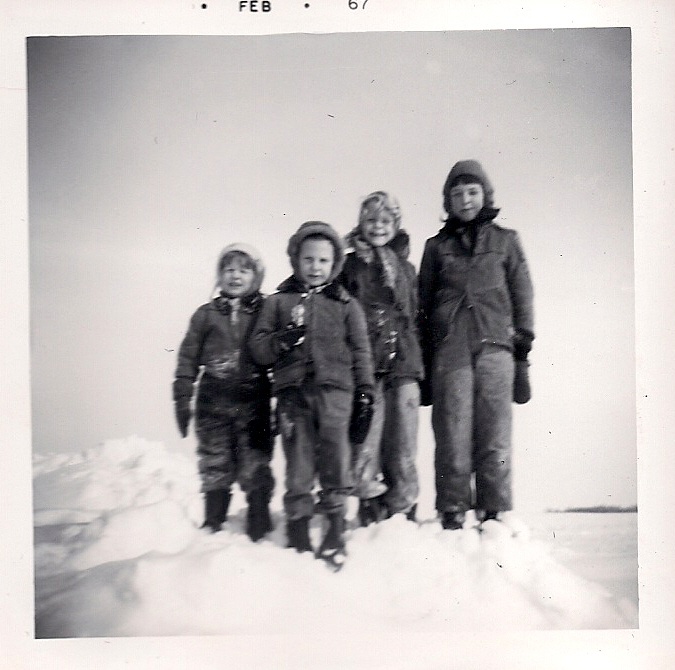
Three of my younger siblings and I pose atop a snow mountain our dad created in our southwestern Minnesota farmyard in this photo dated February 1967.

You excitedly dug into the sides of snowdrifts, hard as bedrock, to carve out snow caves.

You raced across the tops of those snowdrifts, up and down and all around the world of white.


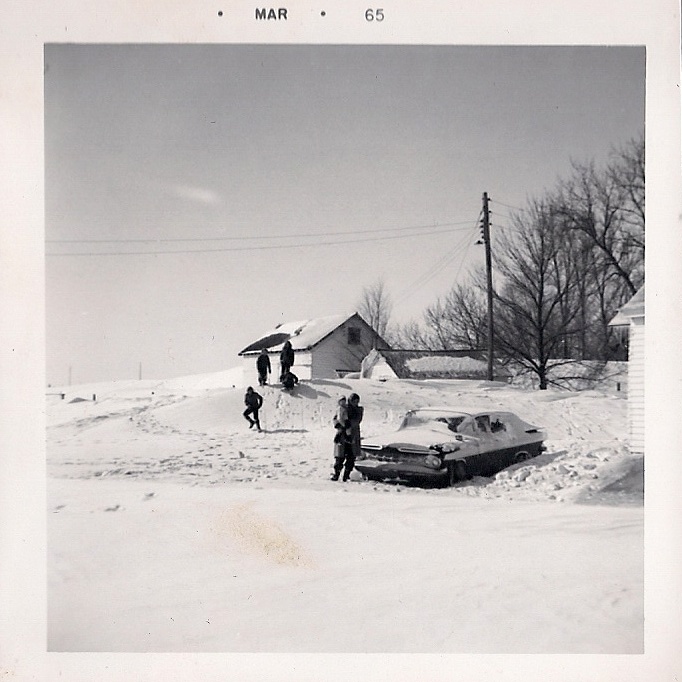
Our southwestern Minnesota farmyard is buried in snowdrifts in this March 1965 image. My mom is holding my youngest sister as she stands by the car parked next to the house. My other sister and two brothers and I race down the snowdrifts.

You packed snow into hard balls, aiming for siblings, wiggling and screaming at the brother who grabbed your collar and stuffed ice-cold snow down the back of your neck.

And when the snow was the perfect consistency, you rolled and packed it into big balls, shoving and grunting and straining, working together with classmates or siblings to build a snowman or a snow fort.

Such were the winters of my childhood on a southwestern Minnesota farm. Fierce. Brutal. But, mostly, fun.

Today, living through one of our snowiest winters in forever, I am reminded of those childhood winters. I would be wise to remember the fun I once experienced on the cold, snowy, wind-swept Minnesota prairie.


This huge, hard-as-rock snowdrift blocked our farm driveway in this March 1965 photo. My uncle drove over from his nearby farm to help open the drive so the milk truck could reach the milkhouse. That's my mom and five of us kids atop the drift.

WHAT ARE YOUR MEMORIES of childhood winters?

© Copyright 2011 Audrey Kletscher Helbling
 

Heading back home to the southwestern Minnesota prairie for Christmas December 26, 2010

We drove along U.S. Highway 14 as we traveled to southwestern Minnesota for Christmas. This stretch is between the Sanborn corners and Lamberton.

FOR THE FIRST TIME in decades, my family and I celebrated Christmas Eve with my mom and four of my five siblings, and their families, “back home” on the southwestern Minnesota prairie.

It was my mom’s wish that all of us be there, attending Christmas Eve church services with her at our home church, St. John’s Lutheran in Vesta.

Our Christmas together was as wonderful and memorable and as full of laughter and love as I expected it would be.

Initially, I doubted that we would make the 2 ½-hour trip west given the steady snow that began falling early Christmas Eve, slicking the highways and creating difficult driving conditions. But by the time we left Faribault around 2:30 p.m. Friday, the snow had stopped and major highways were clear.

So, with the trunk packed full of luggage, air mattresses and sleeping bags, presents and coolers, the five of us crammed ourselves into the car (along with pillows and board games on our laps) for the journey to Redwood County. We were headed first to my brother’s house just north of Lamberton.

When we got to New Ulm, nearly 1 ½ hours into the trip, I dug my camera out of the camera bag wedged near my feet and snapped occasional photos of the prairie. It is the land I most love—the place my kids call “the middle of nowhere.”

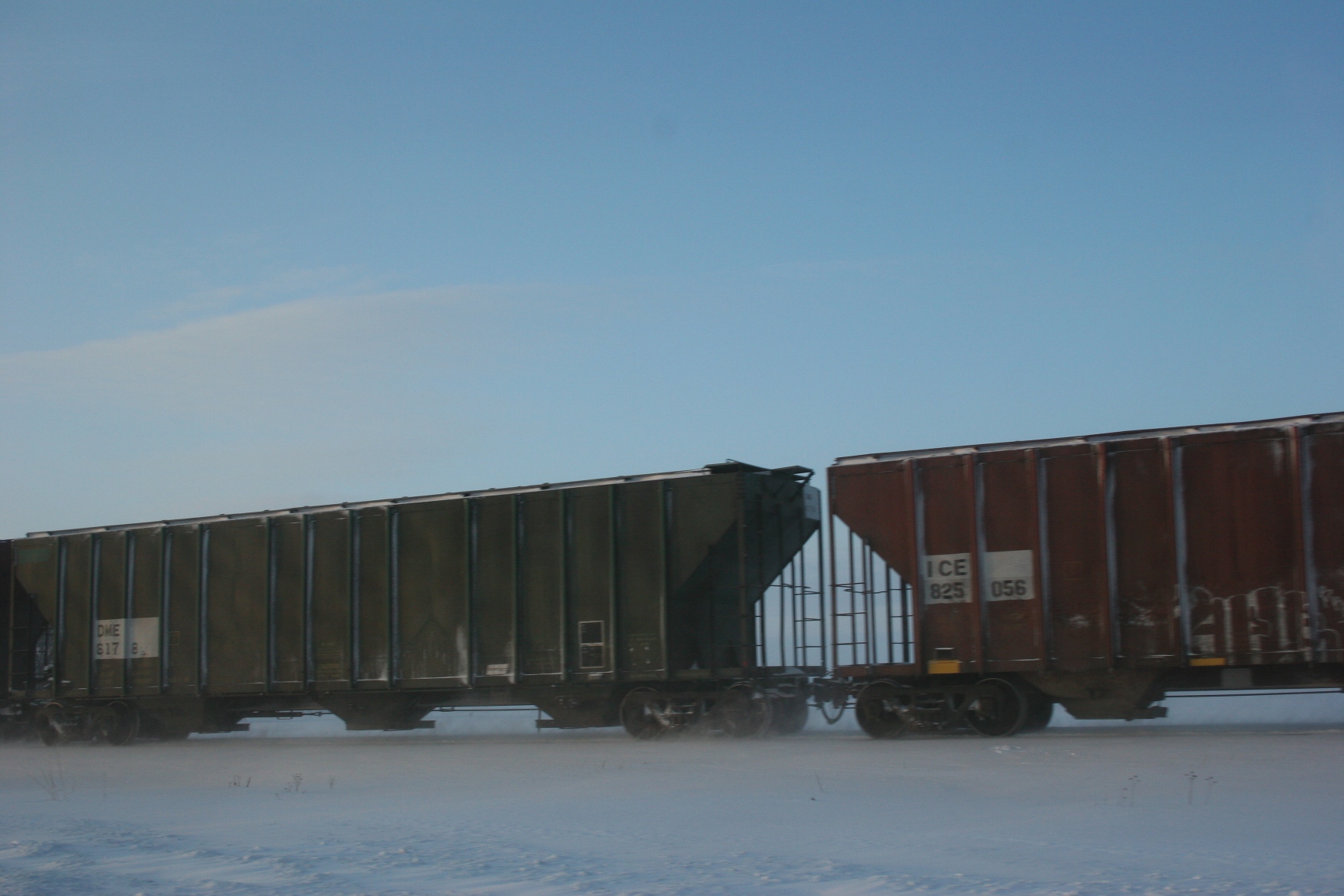
A train travels east along U.S. Highway 14 between Essig and Sleepy Eye while we travel west.

I love this land of plowed fields and wide open spaces, of small-town grain elevators occasionally punctuating the vast skies, of cozy farm sites sheltered by barren trees.

I love, especially, the red barns accented by the fresh-fallen snow, portraying an agrarian beauty that perhaps only someone who grew up on a farm can appreciate.

As much as I have disliked all of the snow we’ve had this winter, I saw only a beautiful winter wonderland when I was back home for Christmas on the prairie.

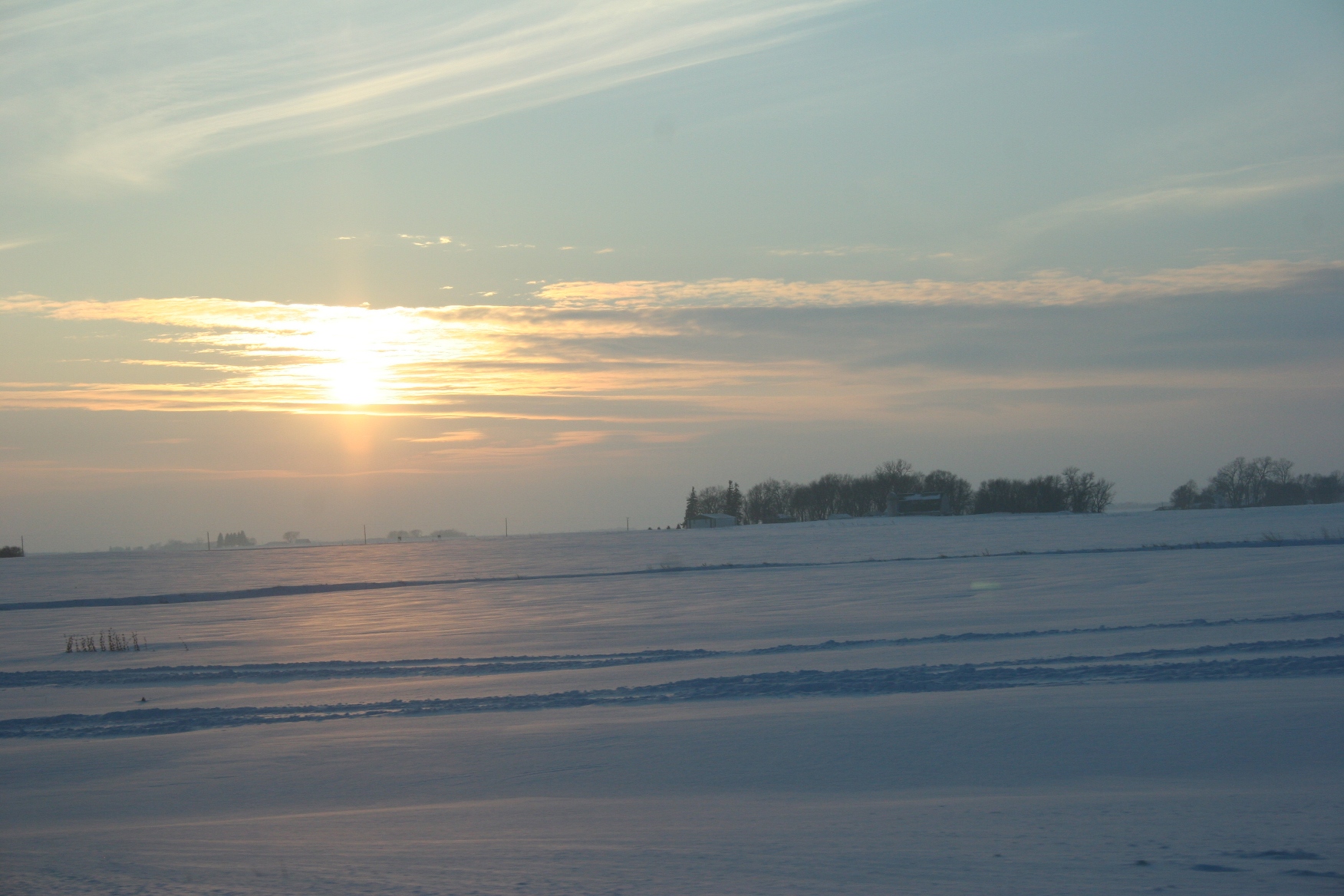
The sun begins setting over the prairie as we head west, passing through Sleepy Eye and Springfield before reaching Lamberton. We saw only occasional glimpses of sun on a mostly gray day.

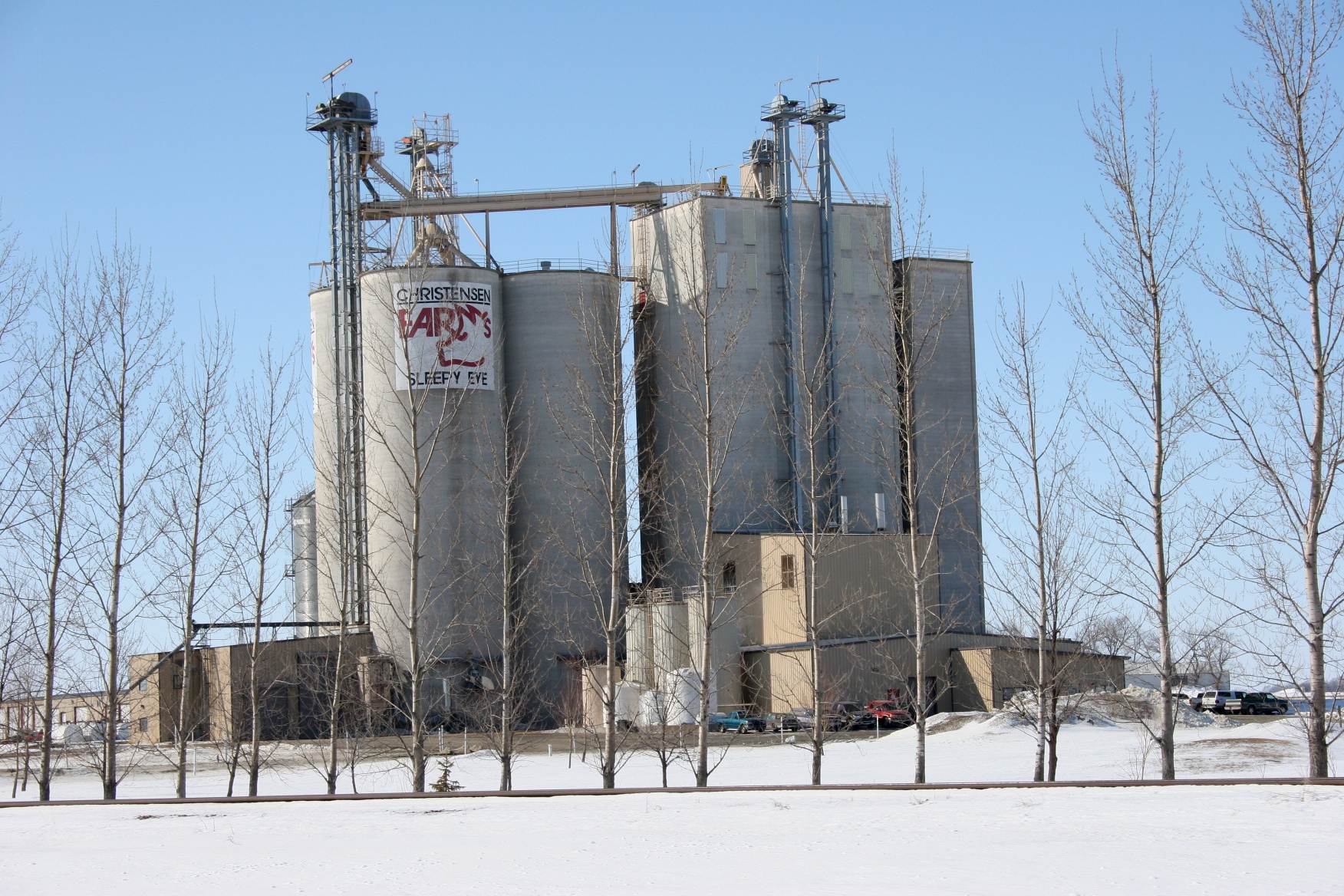
The elevators in Sleepy Eye. Small-town prairie elevators like this can be seen for miles away.

One of many picturesque barns along U.S. Highway 14.

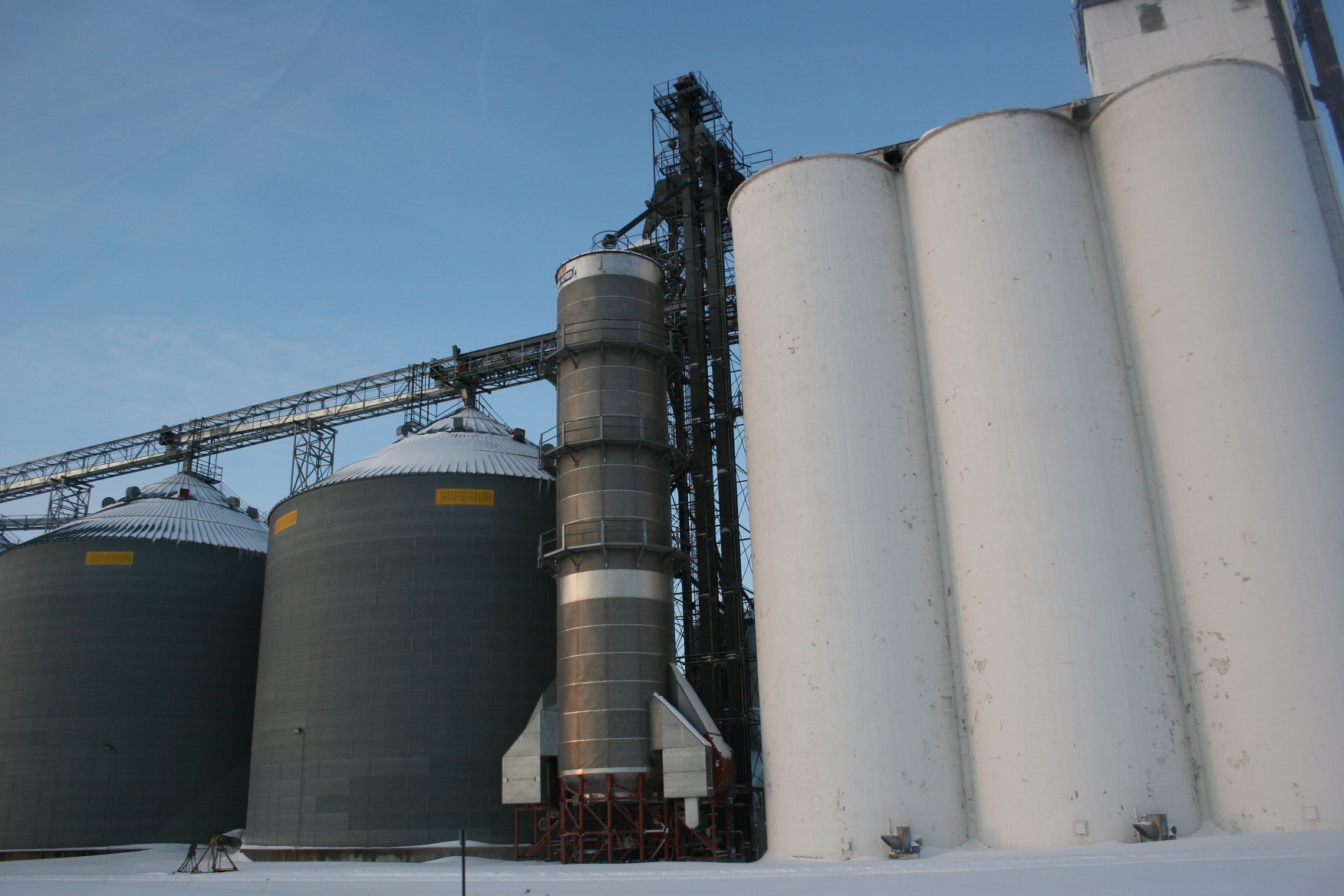
Elevators and trains are a common site along U.S. Highway 14 in the rich farmland of southwestern Minnesota. We've nearly reached our destination when I photograph this elevator complex near sunset.

© Copyright 2010 Audrey Kletscher Helbling
 

Unofficial nasty weather in southwestern Minnesota October 26, 2010

Filed under: Uncategorized — Audrey Kletscher Helbling @ 3:06 PM
Tags: , , , , , , ,

Redwood County farmland only miles from my hometown of Vesta. This photo was taken last spring.

ABOUT MID-MORNING TODAY, an e-mail popped into my in-box. “Windy greetings” the subject line read. I clicked.

“Are you blowing away down there too?” wrote my cousin Dawn. “This is just nasty.”

She didn’t explain how nasty, but I can about guess. Dawn lives in Redwood County, smack dab in the middle of the Minnesota prairie—the place of endless fields, wide open spaces and few trees to break the unrelenting wind.

Big skies, wide open spaces and wind are a part of the landscape in southwestern Minnesota, where I shot this cornfield image about two months ago.

And today, from all I’ve read and heard, those winds will blow strong and sustained at 30 – 40 mph, sometimes reaching gusts of 60 mph. Dawn’s right. That’s downright nasty. And scary.

I speak from experience. This past summer I was caught, along with three family members, for 45 minutes in a car in a night-time thunderstorm that packed 70 mph winds. We were on unfamiliar Redwood County Road 5 between Walnut Grove and my hometown of Vesta when the storm hit.

I have never been more frightened in my life. Torrential rain in pitch black darkness pierced periodically by jagged lightning. Winds buffeting and rocking the car, flattening roadside grasses to the gravel shoulders. No radio. No cell phone service. No way of knowing where we were, what lay ahead of us, when the storm would end.

That July night I pressed my head against the back of the car seat in prayer. My 78-year-old mom kept telling us we were in the safest place we could be although I didn’t believe her for a second and I told her so. But I suppose it’s just natural for a mother to comfort her child, even if that daughter is in her 50s.

So…, when you start talking wind, strong wind, I listen. As I look out of my office window now I see the tops of the trees dancing against the backdrop of a dismal, gray sky. Rain is falling. My neighbor’s slender, house-hugging shrubs are swaying, too, and the few leaves left on trees are twisting and turning and spiraling to the earth.

Yet, because I live in a valley in Faribault, in the city, I certainly am not seeing the full power of the wind like my cousin out on the wind-swept prairie some 100 miles away.

My advice to Dawn (who also rode out that July storm in a vehicle) would be this: Do not travel. And, if you must attend your son’s football game tonight, pull on the winter coat, cap and mittens, and anchor yourself to the bleachers.

U.S. Highway 14 slices through the heart of southwestern Minnesota. I wouldn't advise travel if winds reach 60 - 70 mph. I took this photo several years ago during the summer.

READERS, IF YOU have a weather report to share, please submit a comment to Minnesota Prairie Roots. You know how we Minnesotans are—always obsessed with the weather.

© Copyright 2010 Audrey Kletscher Helbling


Exploring the Kasota Prairie on an October afternoon October 7, 2010


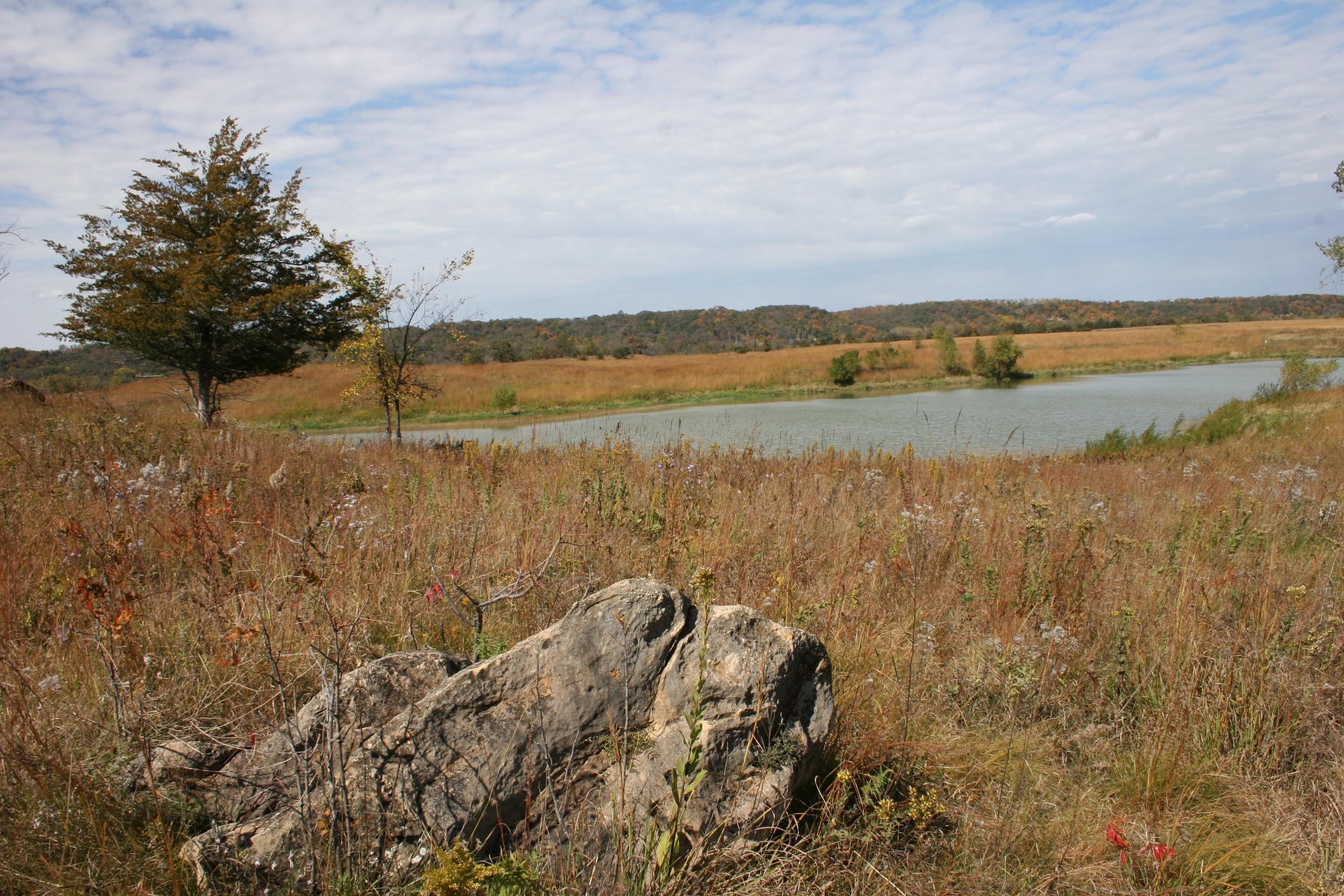
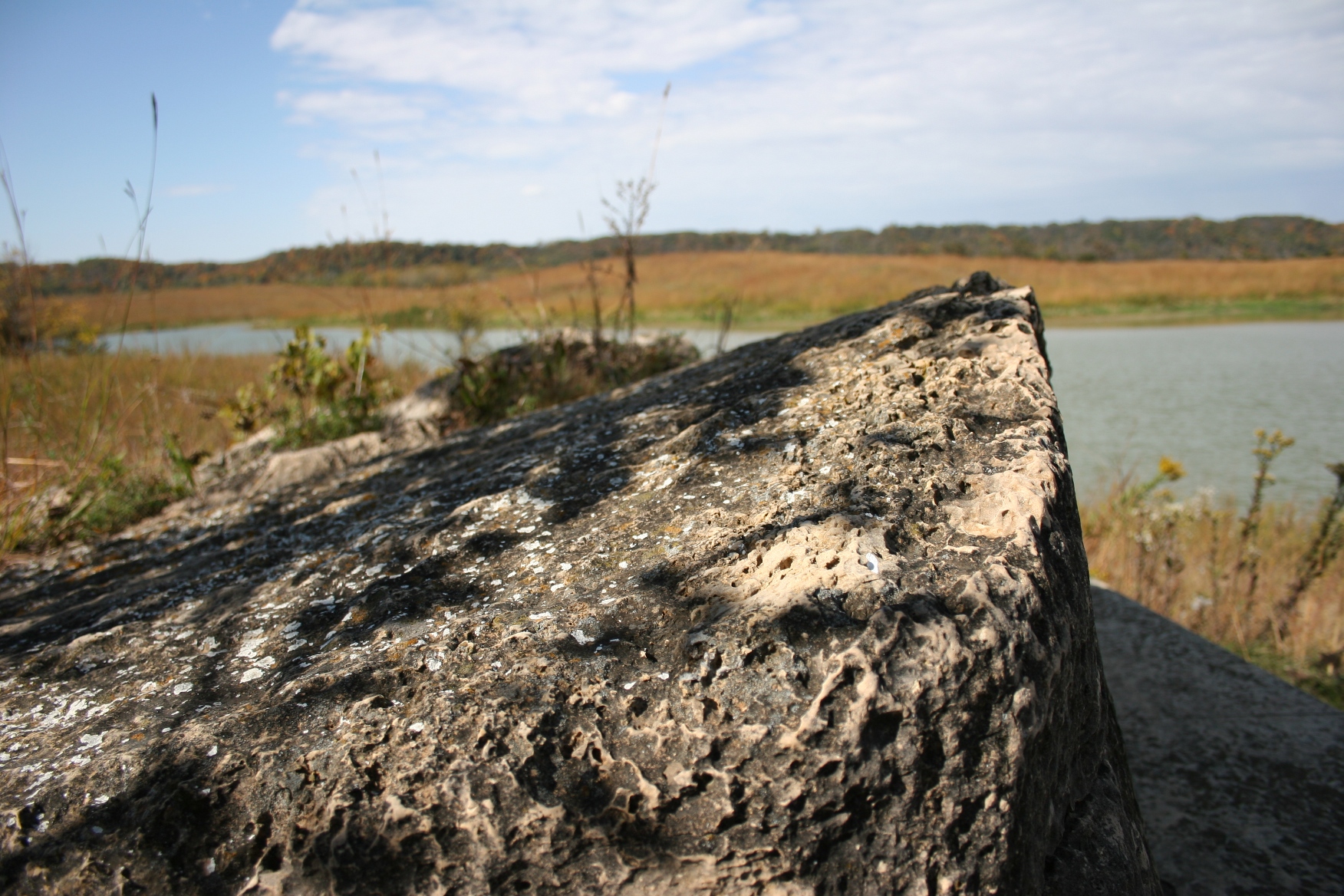
A rock juts into the Kasota Prairie.


I CAN HEAR, in the distance, the steady thrum of traffic, presumably from U.S. Highway 169 or perhaps from nearby Minnesota Highway 22. I’m uncertain because I’ve never been here before and I haven’t consulted a map to pinpoint my location.

If not for the endless drone, I could be standing in the middle of a remote South Dakota or western Minnesota prairie.

But I am in south central Minnesota, at the Kasota Prairie, on a 90-acre remnant of the prairie land which comprised one-third of our state before 1850. Here native prairie grasses remain and grazed lands have been restored.


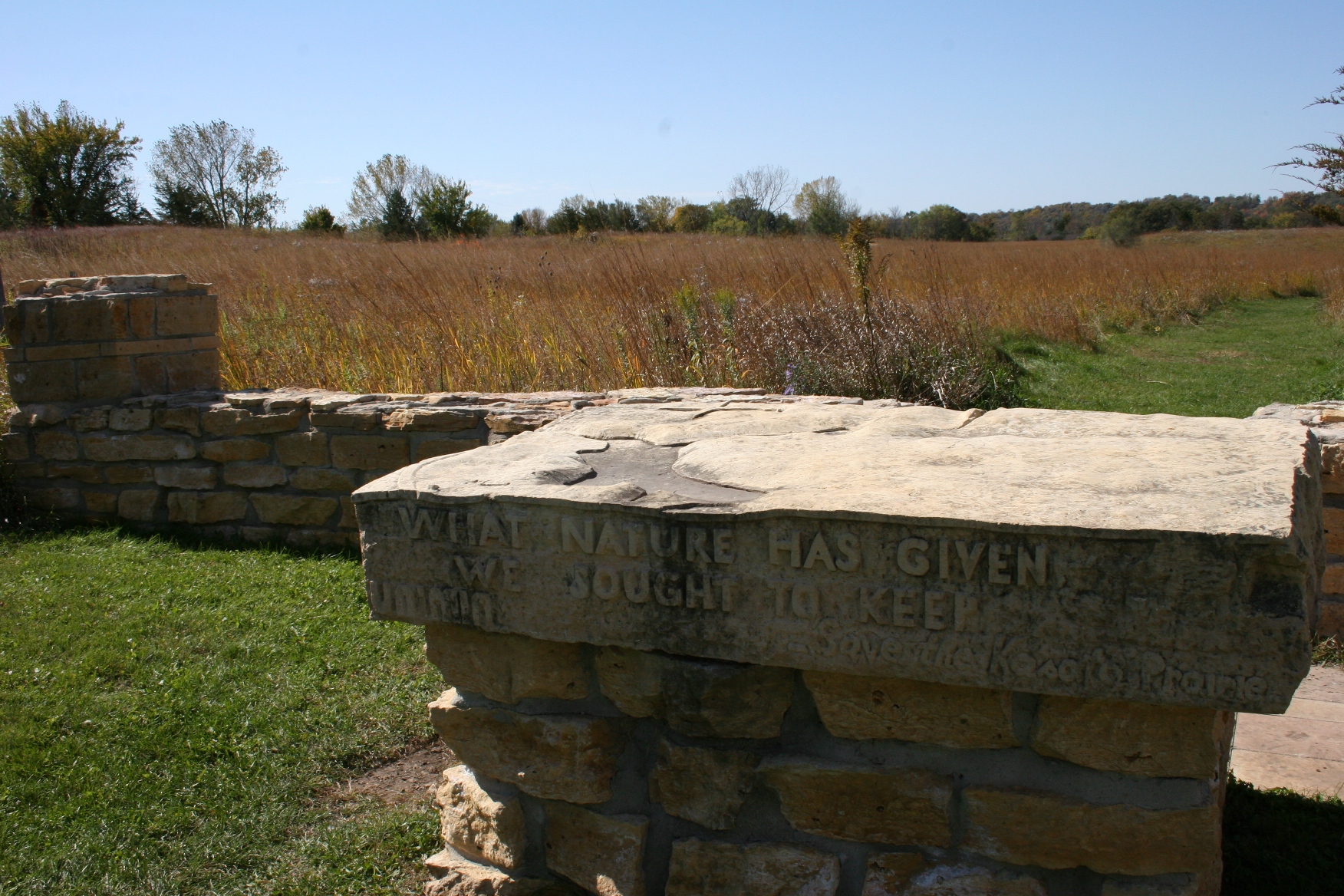
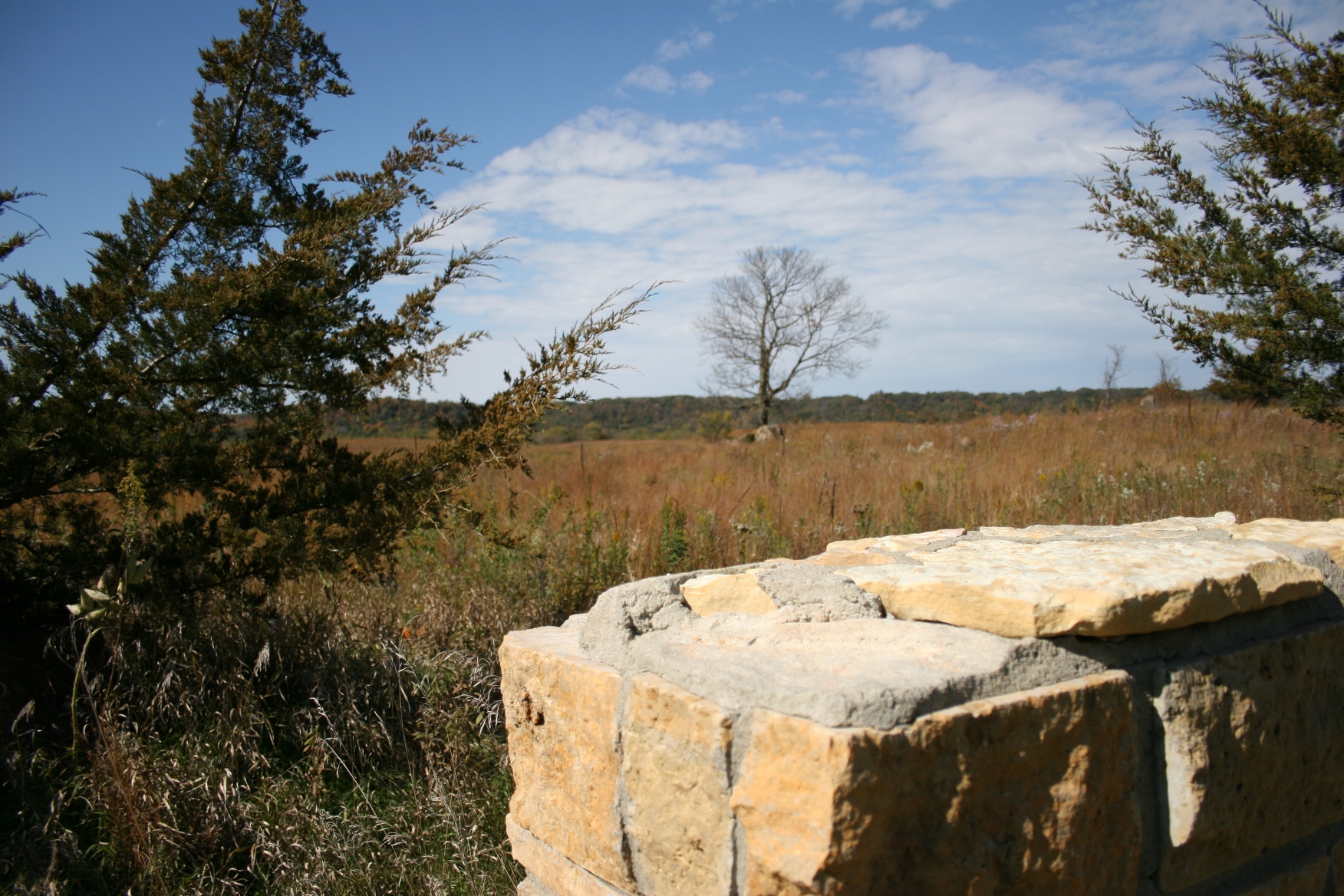
A view from the parking lot with a stone wall framing the prairie.


On a Friday afternoon, my husband and I discover this scenic spot in the Minnesota River valley two miles from Kasota. Because I favor the sweeping, wide open spaces of the prairie, the place of my roots, to the cramped confines of wooded land, I am comfortably at home here.

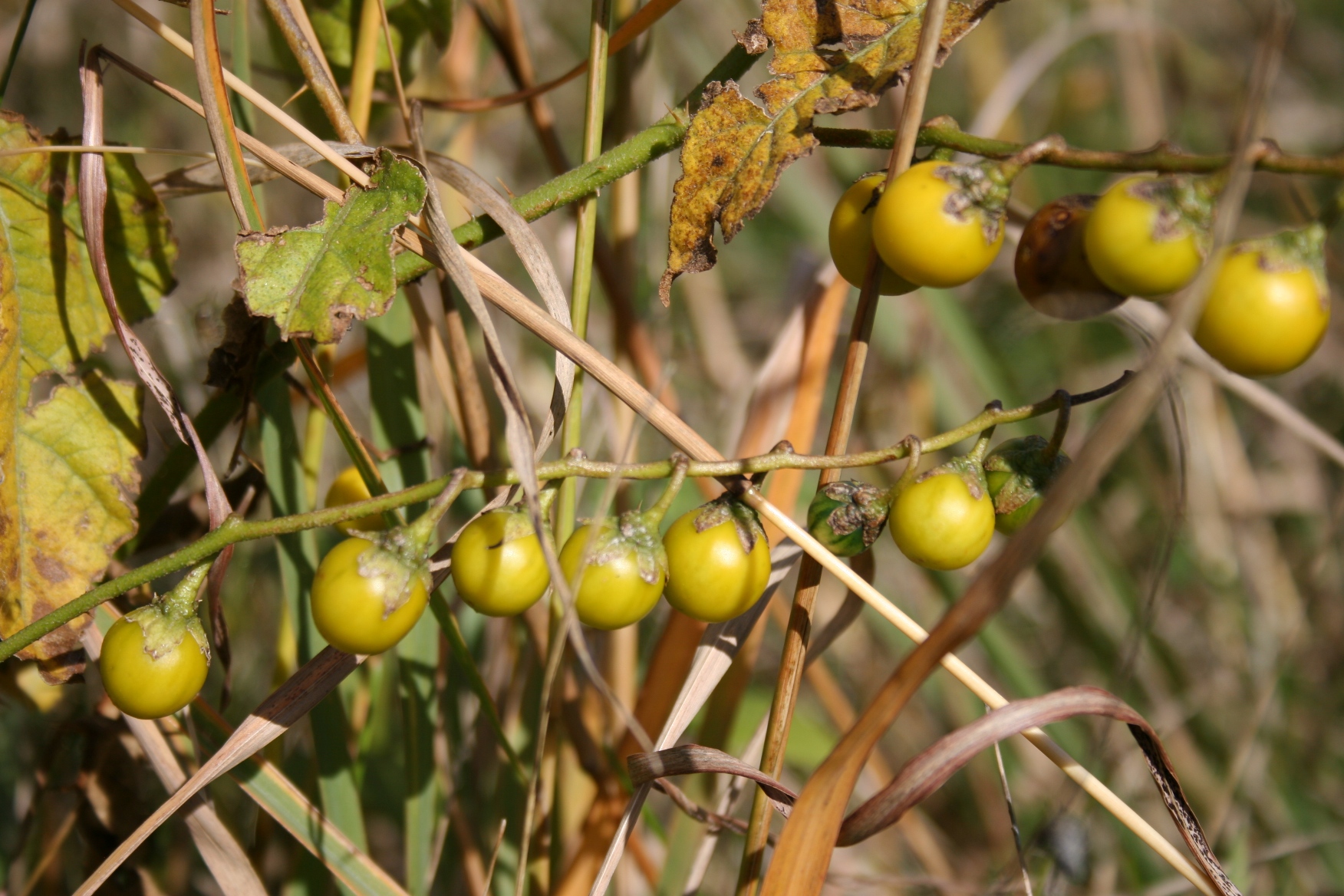
Prairie meets sky at Kasota. Stems of grasses dried to the muted earthen shades of autumn sway in the wind, mingling with the wildflowers and the berries I can’t always identify.

Occasionally a block of ancient rock juts through the soil, breaking the vista of plant life.


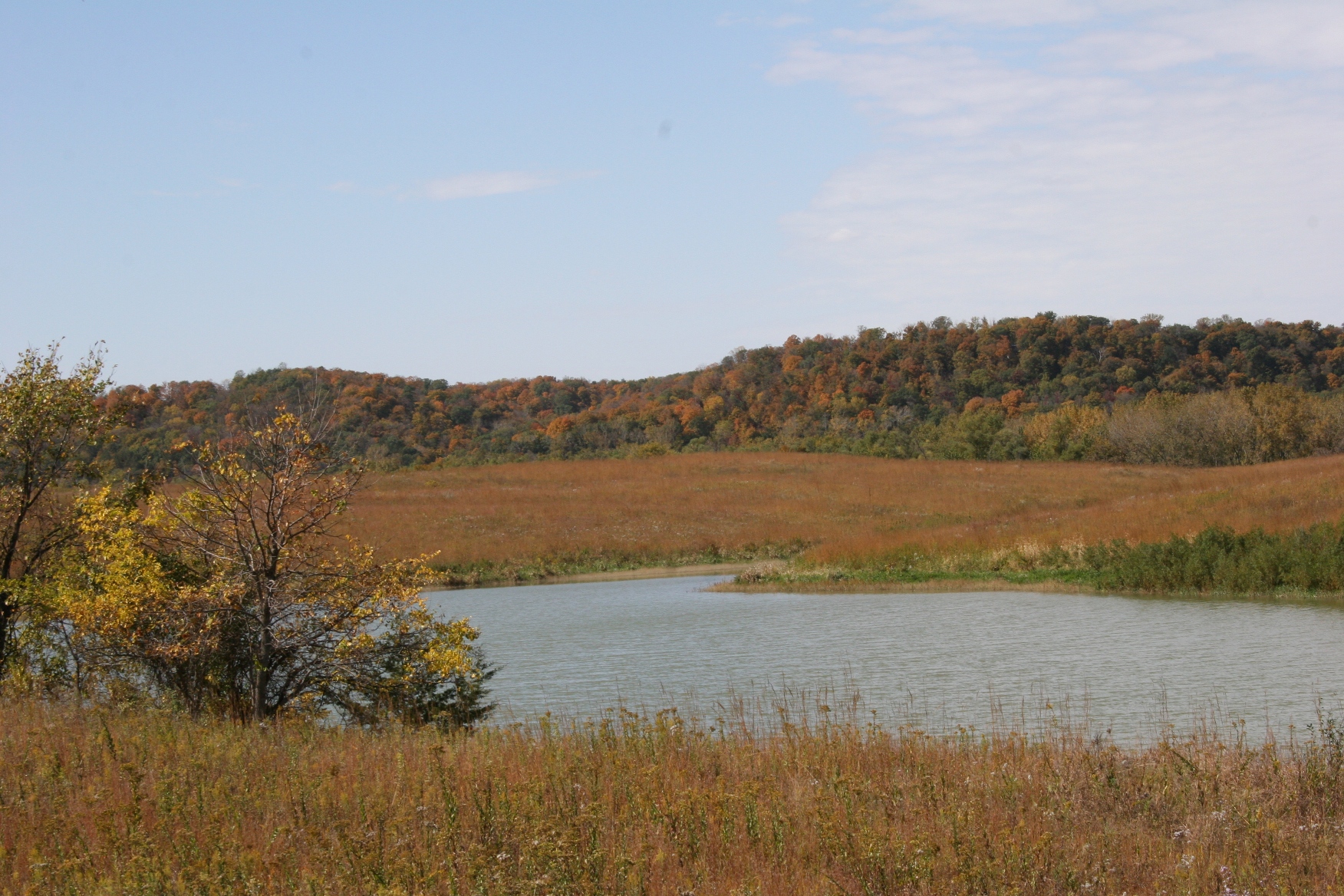
Water, rock, sky and prairie meld in this scenic Kasota Prairie landscape.


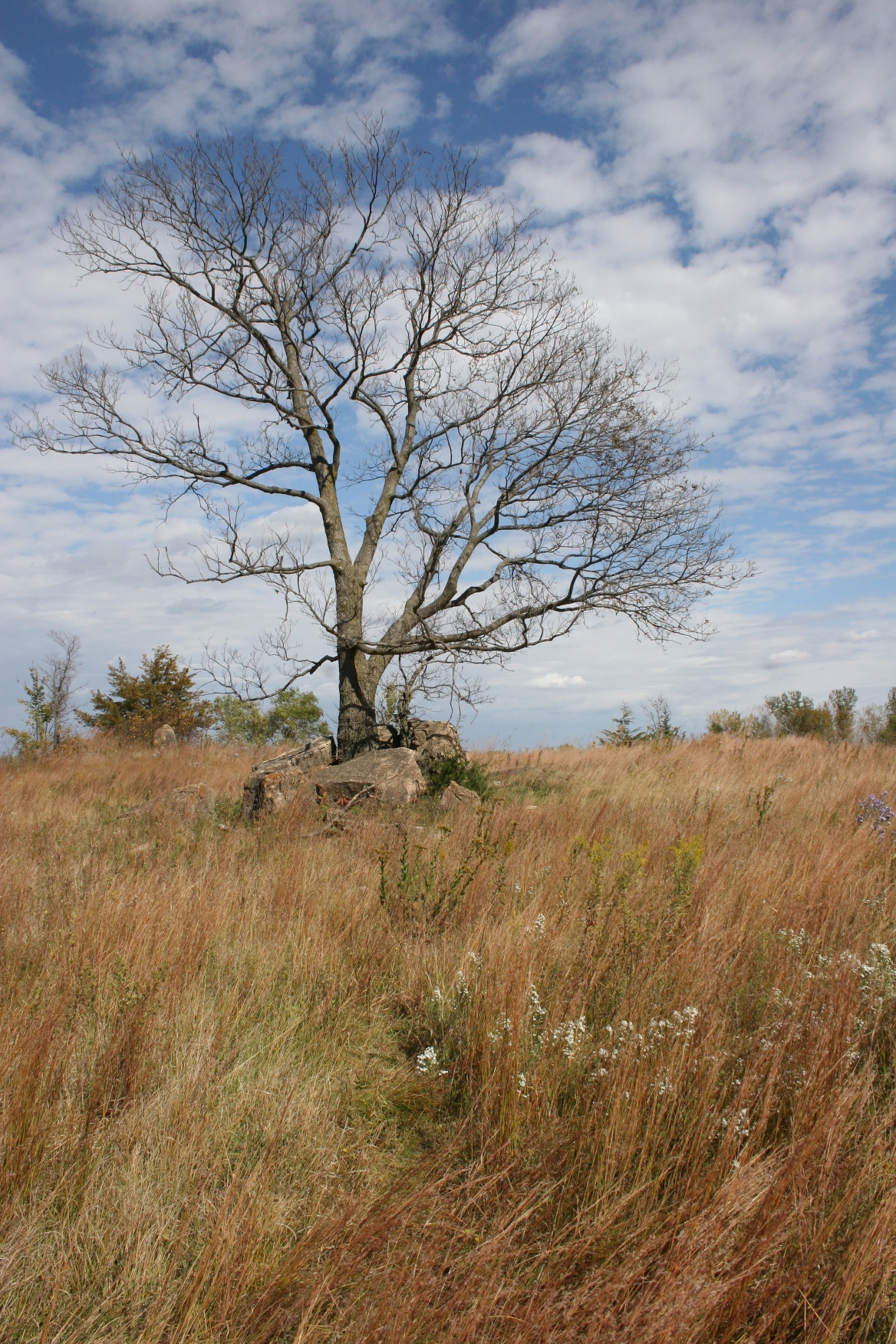
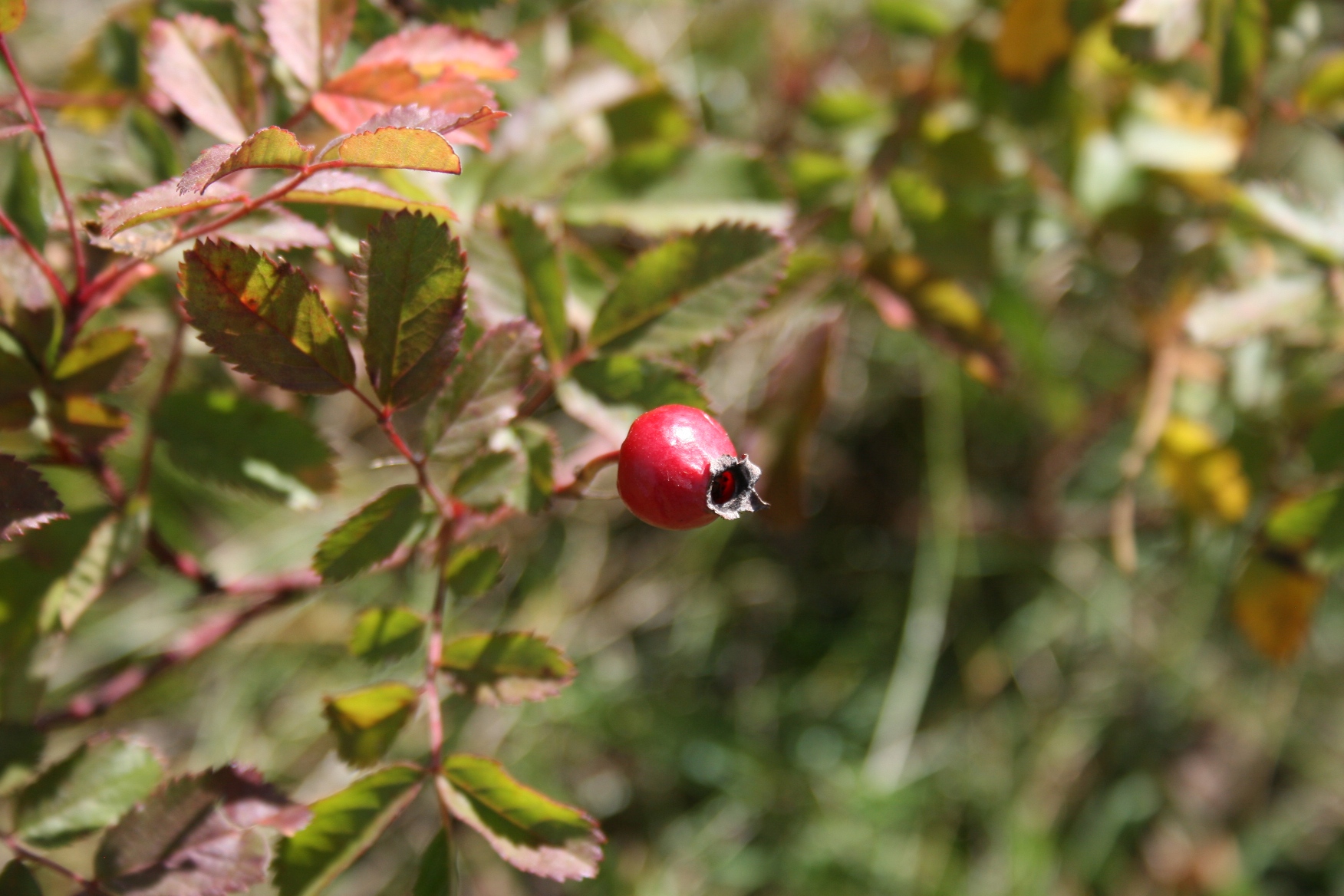
I pause often along the walking trails, even stray from the trampled paths, to examine the mottled stone, to admire a lone, rock-encircled barren tree atop a hill, to identify the red berries of wild roses, to study a clutch of feathers left by a predator, to take in the distant hillside of trees tinted in autumn colors.


My favorite image from the Kasota Prairie, a barren tree encircled in rock.


Wild rose berries on the Kasota Prairie.


Trees on a distant hillside change colors under October skies.


There is so much to appreciate here. Wind. The sky, quickly changing from azure blue wisped with white to the angry gray clouds of a cold front. Land, rolling out before me, unbroken except for sporadic pockets of water, the occasional tree or cluster of trees and those rocks, those hard, ancient rocks that interrupt this land, this Kasota Prairie.


A sign marks the Kasota Prairie entrance.


To truly appreciate the prairie, notice the details, like the berries growing among the grasses.


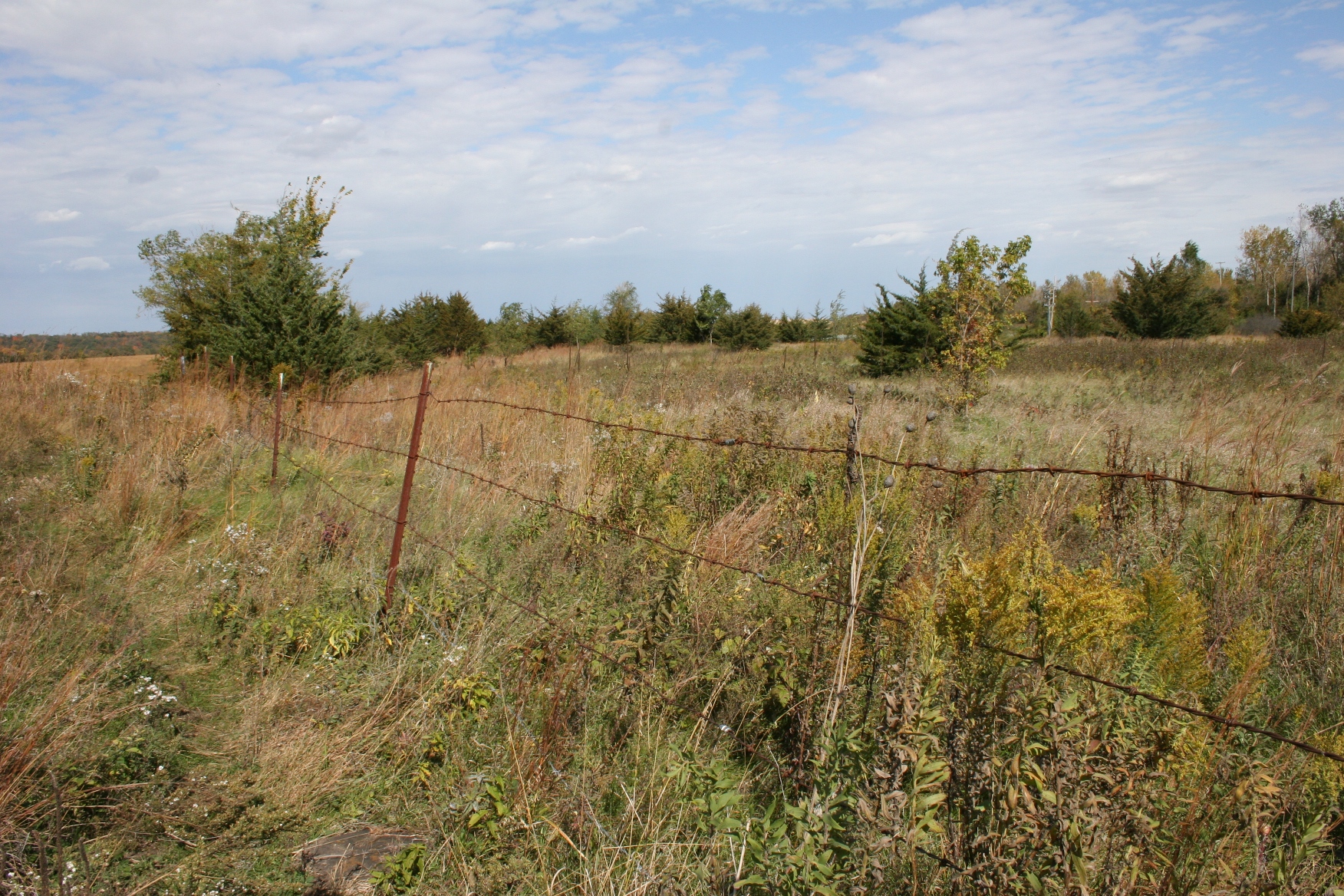
A narrow path runs along the barbed wire fence border line of the prairie.


FYI: To find the Kasota Prairie, take Le Sueur County Road 21 one mile south of Kasota. Then turn west onto township road 140 and go one mile.

© Copyright 2010 Audrey Kletscher Helbling
 

A Sunday afternoon at Valley Grove September 21, 2010

Filed under: Uncategorized — Audrey Kletscher Helbling @ 7:22 AM
Tags: , , , , , , , ,

PRAIRIE GRASSES and wild flowers dipped in the wind, swaying to the folksy music of Hütenänny. And I thought, as l listened, of the movie, Sweet Land, filmed in southwestern Minnesota and based on Minnesota writer Will Weaver’s book.

But I wasn’t in the southwestern part of the state. Rather, I stood atop a prairie hillside in southeastern Minnesota, in the backyard of the Valley Grove churches, delighting in the rhythm of the Nordic music so fitting for this place settled by Norwegian immigrants.

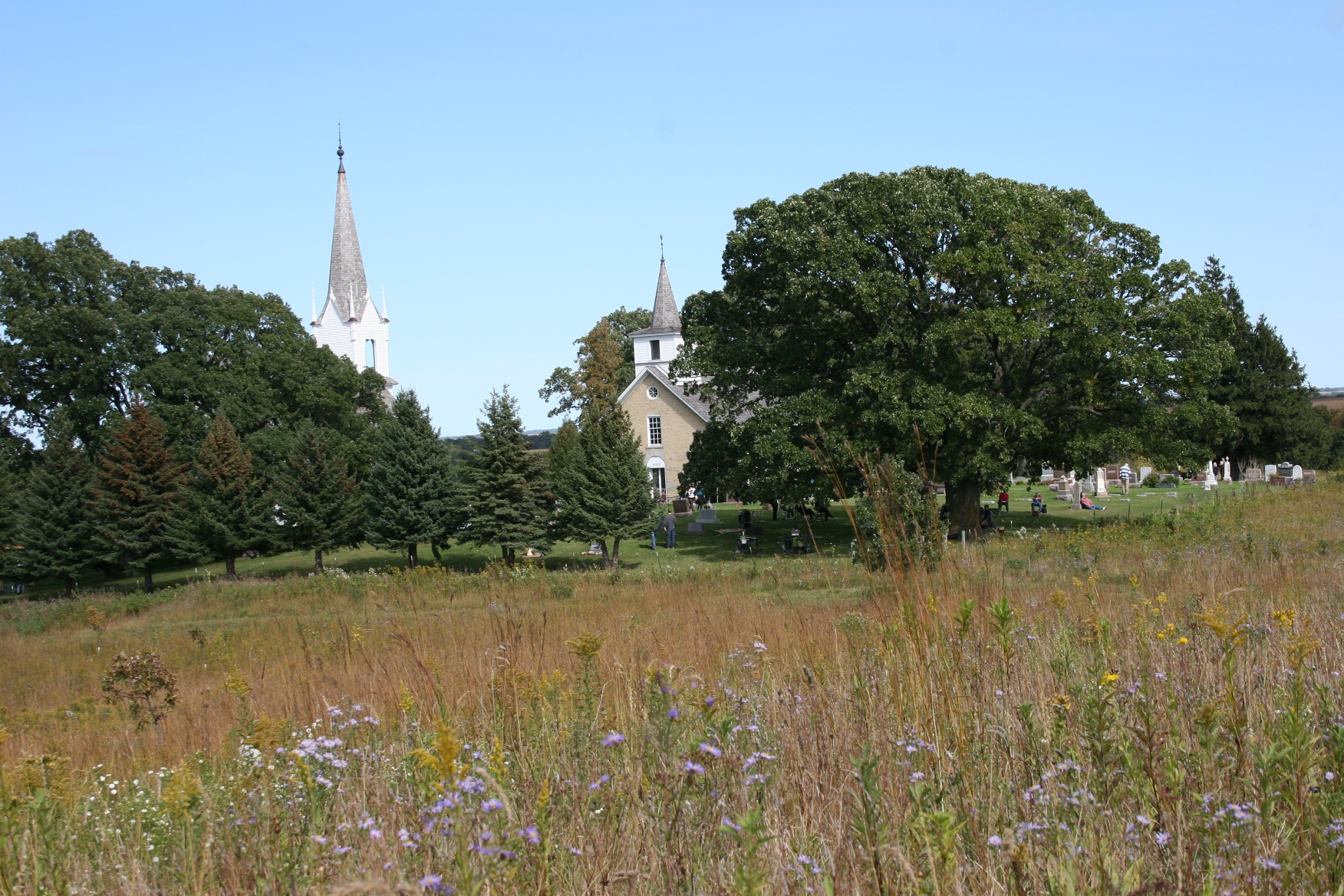
A view of the Valley Grove churches from the prairie that edges the churchyard.

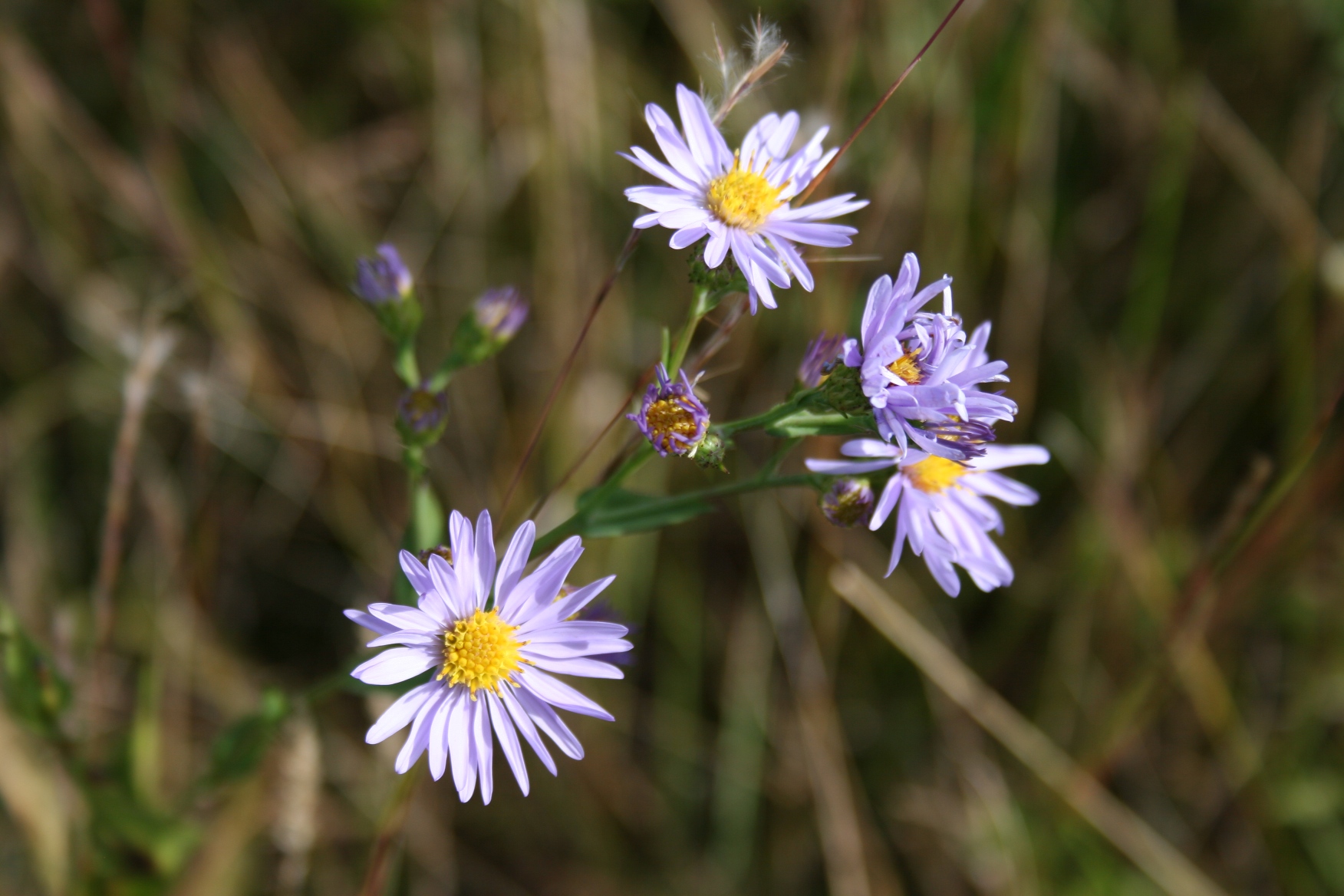
Valley Grove visitors can walk through a restored prairie, where wildflowers grow.

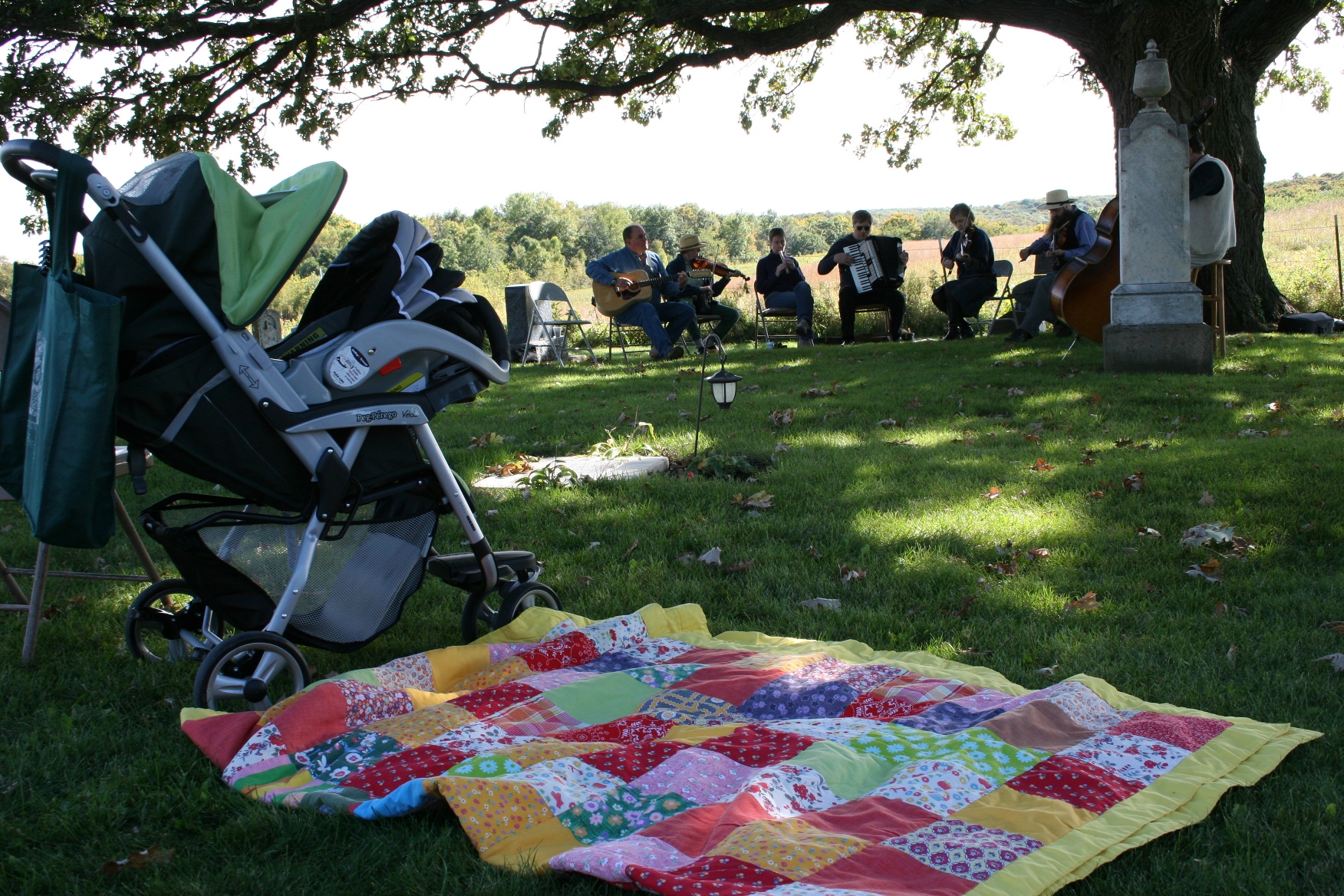
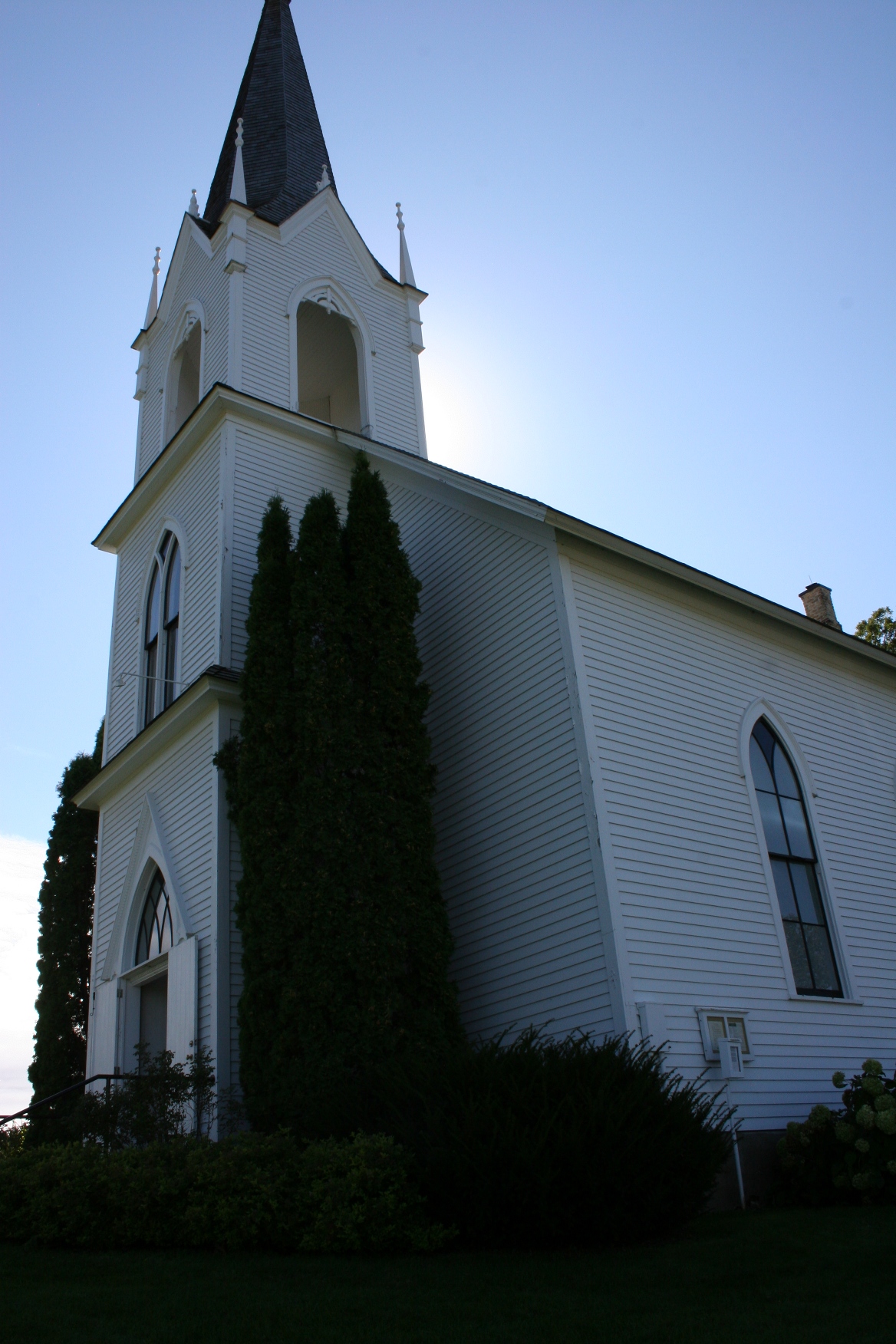
On this Sunday afternoon in September, folks gathered outside and inside the 1862 stone church and the neighboring 1894 white clapboard church, in the graveyard, underneath the majestic sprawling oak where the musicians played, and on the prairie, close to the land.
Visitors spread quilts upon the grass and enjoyed the music of Hutenanny.

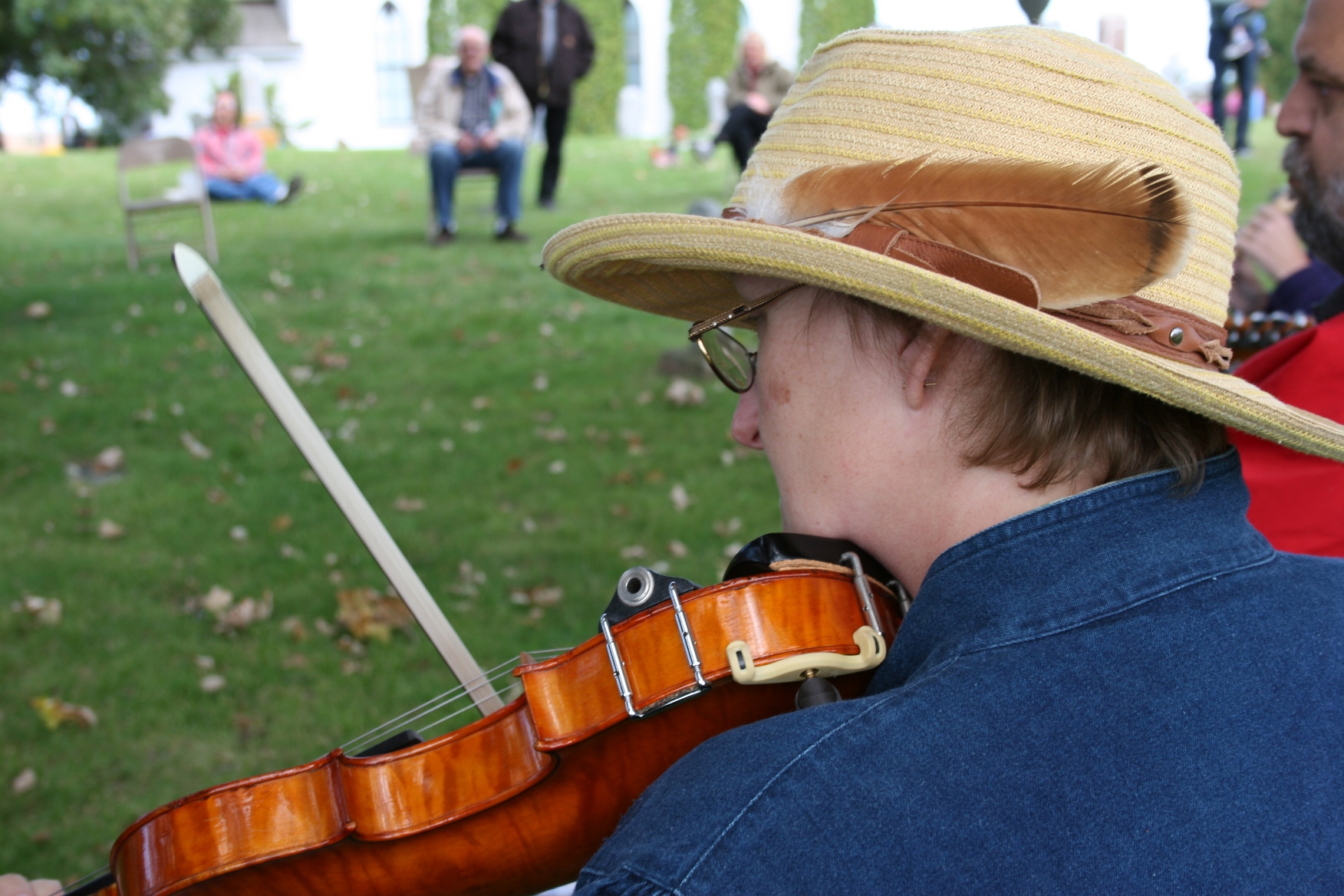
A group of mostly Northfield area musicians performed as Hutenanny at the Valley Grove Country Social. On Sunday evenings they perform as the Northern Roots Session at the Contented Cow in Northfield.

A member of Hutenanny dresses country for the folksy Nordic music performed at Sunday's Social.

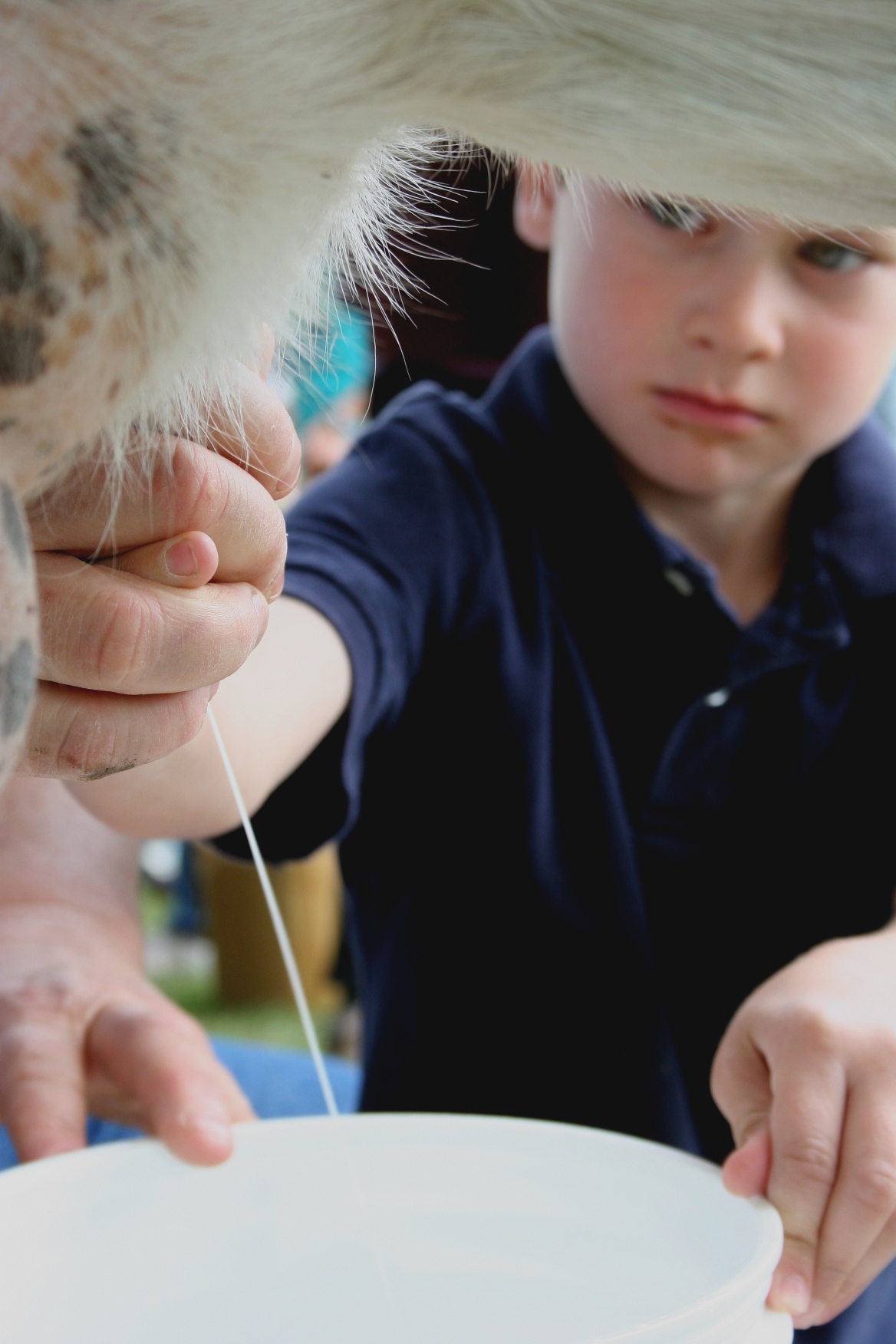
In the churchyard, next to the simple wooden church, youngsters swish-swished goat milk into a pail, admired colorful caged chickens and crafted ropes to twirl high above their heads.

Kathy Zeman of next-door Simple Harvest Organic Farm gave a young boy lessons in milking a goat.
Fresh eggs and caged chickens attracted lots of interest.

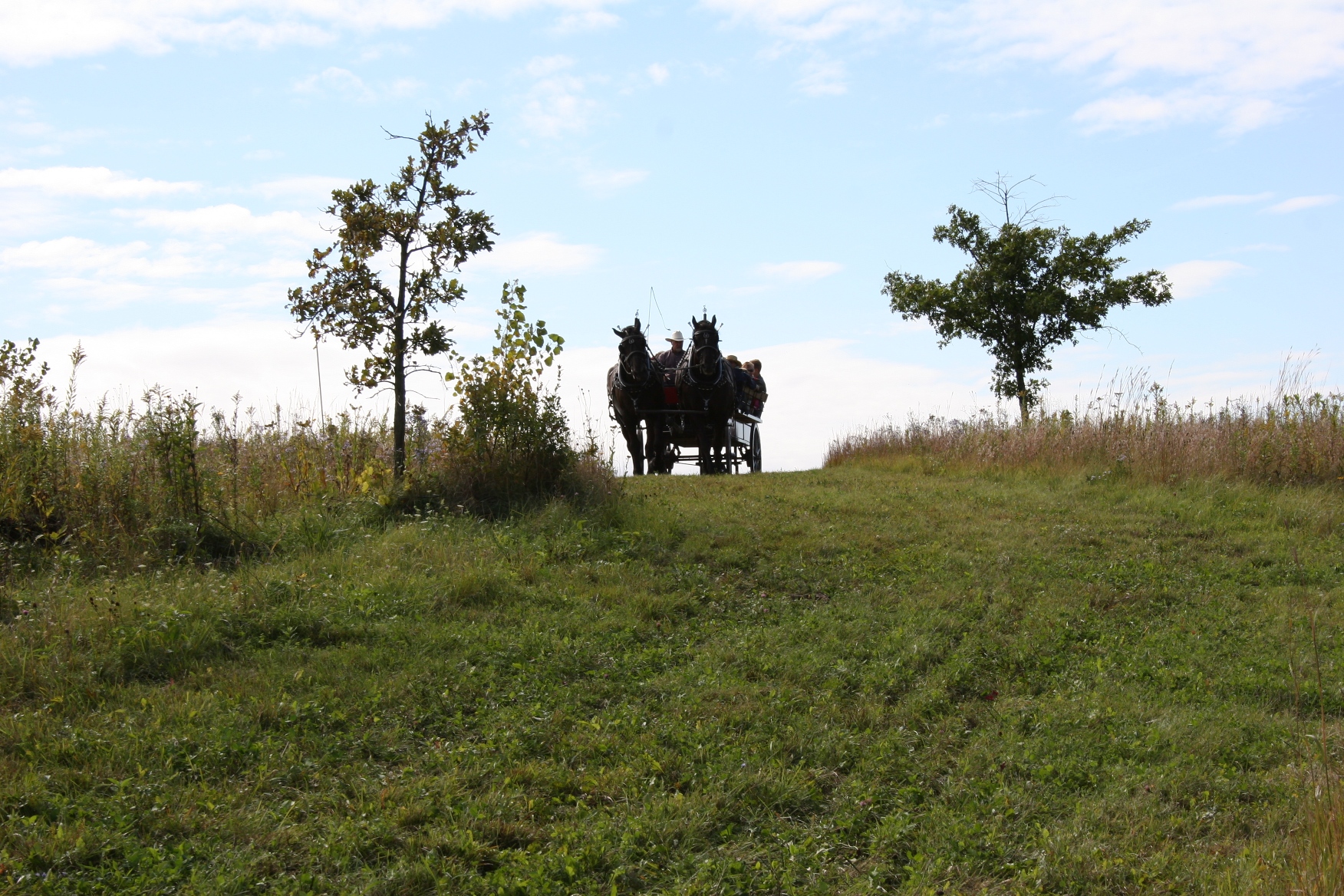
Along the fenceline that guards the duo hillside churches near Nerstrand, families waited to board a horse-drawn wagon that would take them along a path past the churchyard, up and down the prairie hill, where, if they looked, the land stretched down to farms and to woods tipped in the first rustic colors of autumn.
A horse-drawn wagon carried visitors on a path through the 50-acre prairie.

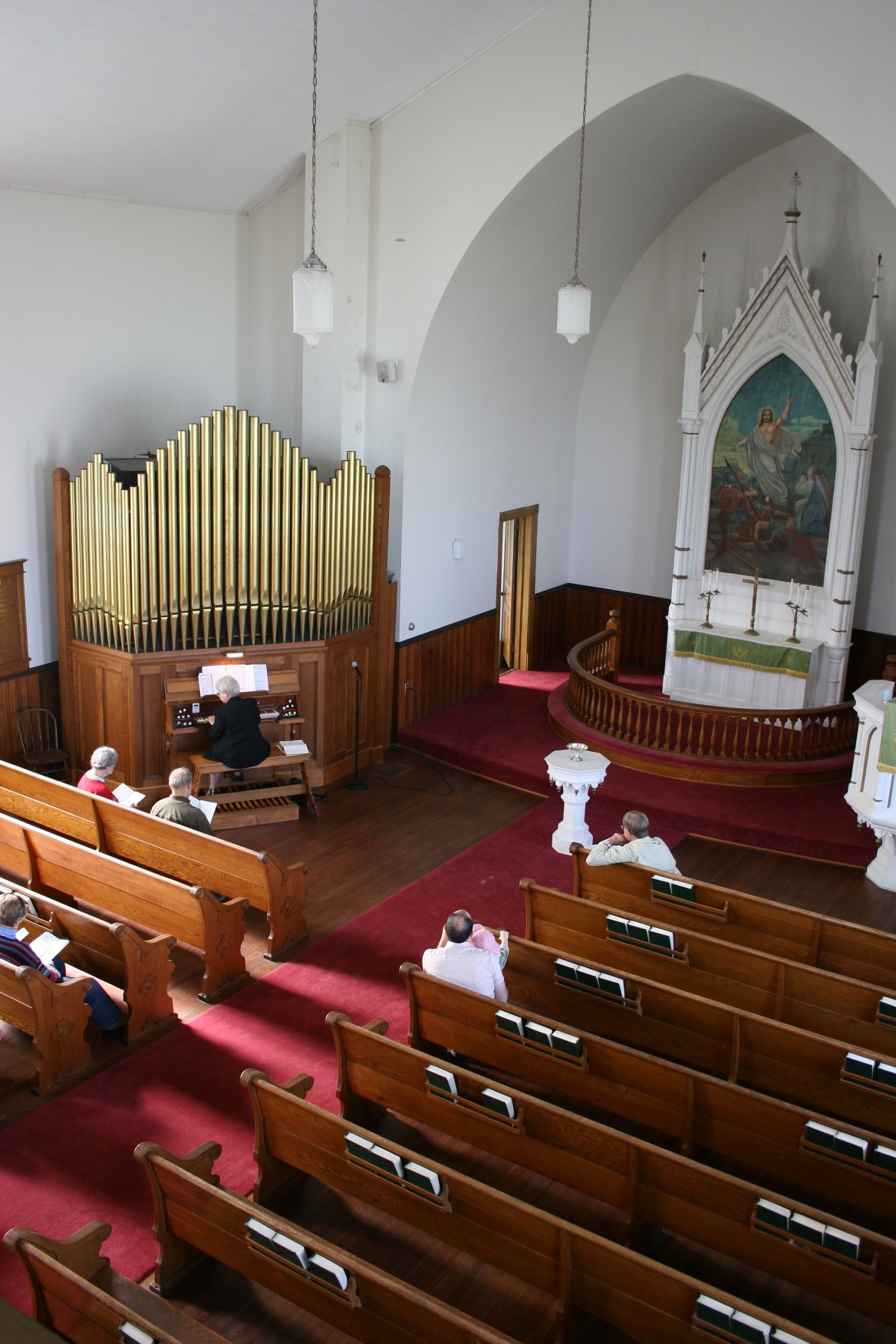
Inside the 1894 historic church, a musician pressed pedals and keys and tugged at pulls as the faithful lifted their voices in reverent song. “Praise to the Lord, the Almighty,” they sang, followed by “Amazing Grace.”

Organists performed several concerts inside the 1894 Valley Grove Church on a pipe organ built in St. Louis and installed in 1911.

Art and bluebirds and old photos. Sunshine, mixed with clouds. Memories shared, new memories made. Photos snapped. Gravesites visited. Hugs exchanged. All comprised the Valley Grove Country Social, a soul-satisfying way to spend a Sunday afternoon in September in Minnesota.

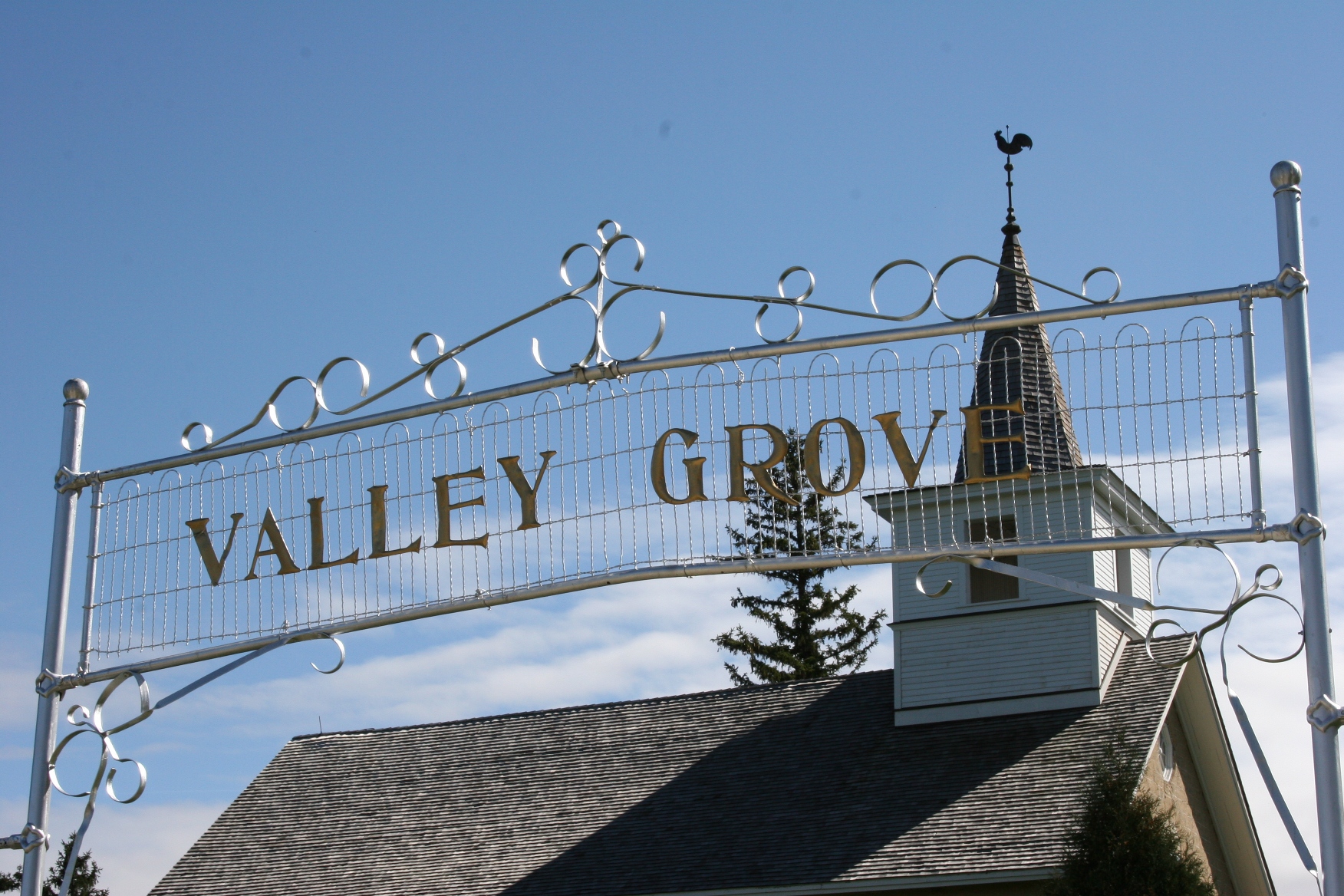
An archway at the entry to the Valley Grove churchyard.

The Valley Grove churches are on the National Register of Historic Sites.

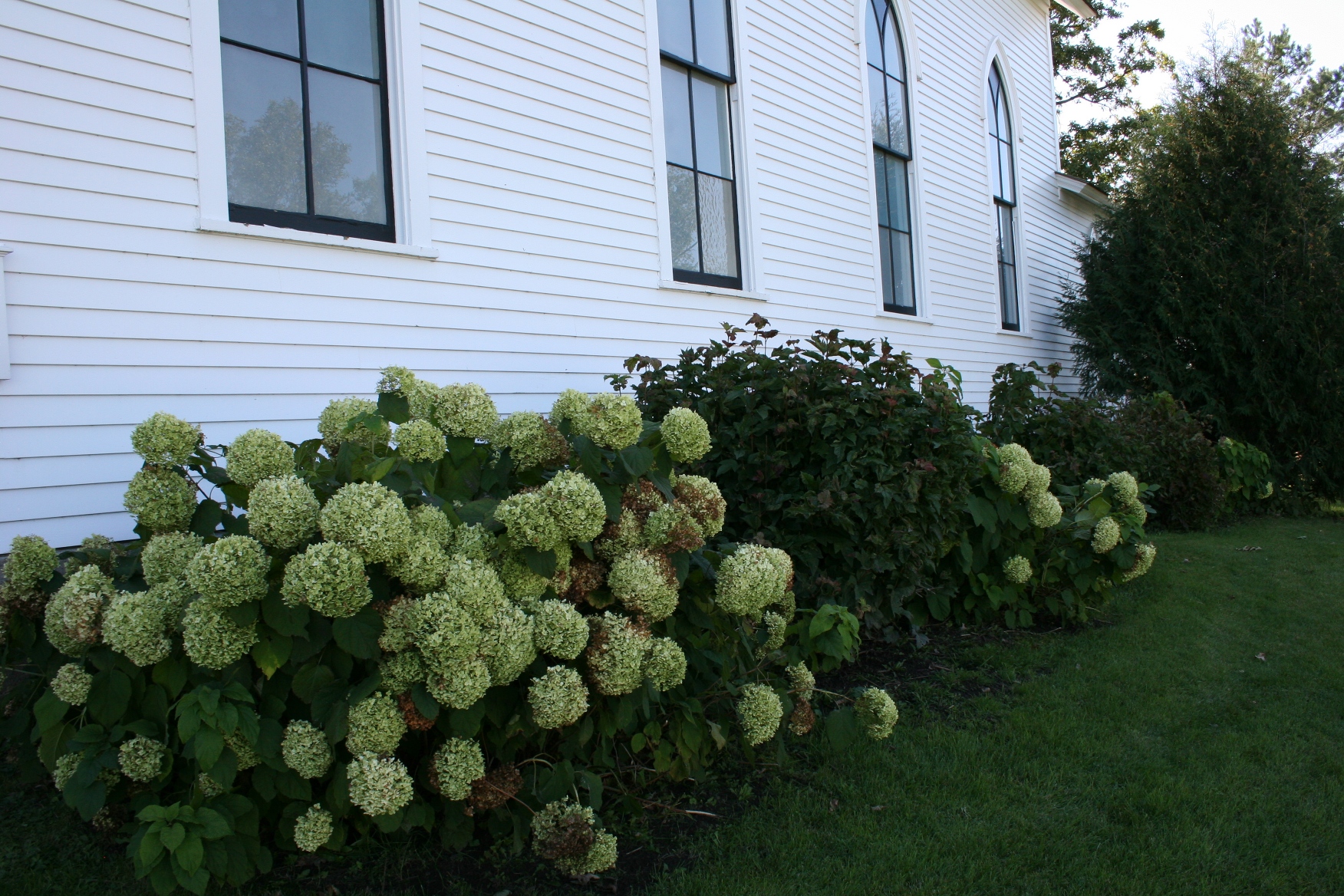
Old-fashioned hydrangea bushes nestle against the clapboard church.

The spire of the 1894 church can be seen for miles.

The Valley Grove Preservation Society is working to preserve the buildings, land and history for future generations.

CHECK OUT THESE PLACES/GROUPS referenced in this Minnesota Prairie Roots blog post:

Bluebird Recovery Program of Minnesota

Simple Harvest Organic Farm

The Contented Cow

Northern Roots Session

ALSO CHECK OUT my previous Valley Grove posts published Oct. 9, 19 and 31, 2009, and Nov. 2, 2009, on Minnesota Prairie Roots.

© Copyright 2010 Audrey Kletscher Helbling