Minnesota Prairie Roots

Writing and photography by Audrey Kletscher Helbling

The art of an interstate rest stop in Iowa June 7, 2017


PRIME VACATION SEASON is almost upon us and that means many of you will soon hit the roads. And when you travel, especially long-distance, rest stops hold necessary importance.

A year ago, my husband and I drove 2,800 miles from Minnesota to Boston and back to attend our son’s graduation from Tufts University. Some days we spent up to 10 hours in the van. The need to stretch our legs, to pee and to take a break from roadway fatigue led us to many an interstate rest stop.

Hands down, Iowa has the best rest areas. Indiana, not so much.


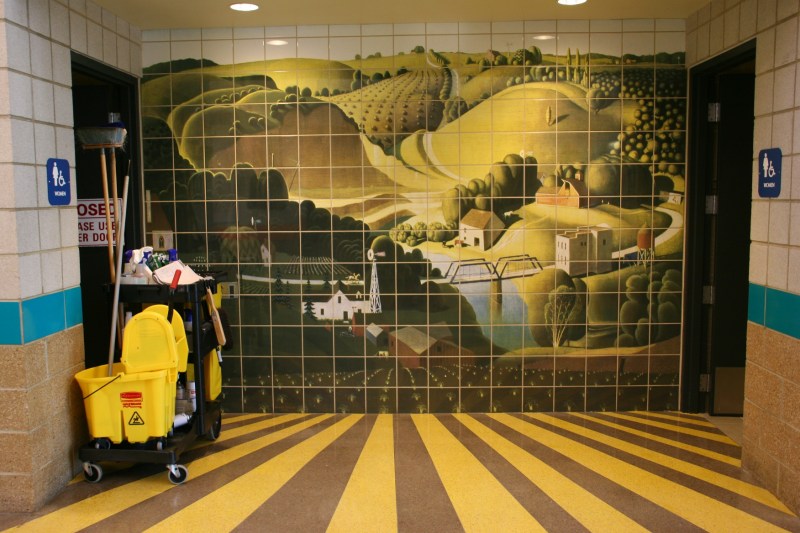
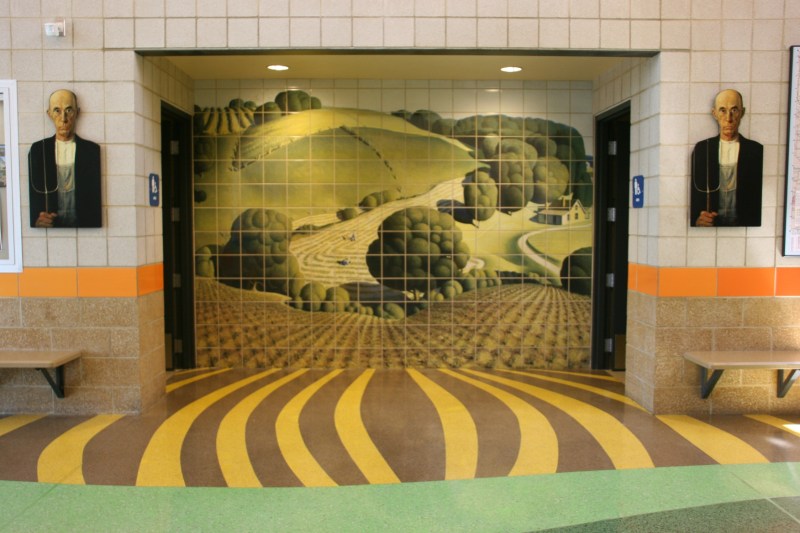
The rest stop along Interstate 380 near Cedar Rapids honors artist Grant Wood and features his rural themed work on ceramic tile. The floor design mimics crop rows.


So what makes Iowa’s interstate rest areas so appealing? Themed rest stops, of which there are 16. These are centers of art and history as much as places to take a bathroom break, to picnic, to gather travel info and to stretch. And bonus, the sole facility we visited was clean.


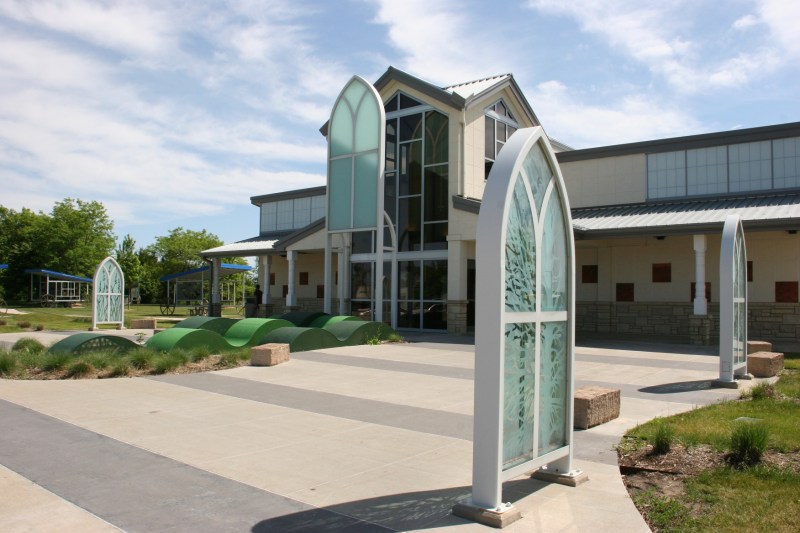
My first view of the rest stop focusing on Iowa artist Grant Wood, who was born 40 miles to the northeast and then moved to Cedar Rapids with his family in 1901.


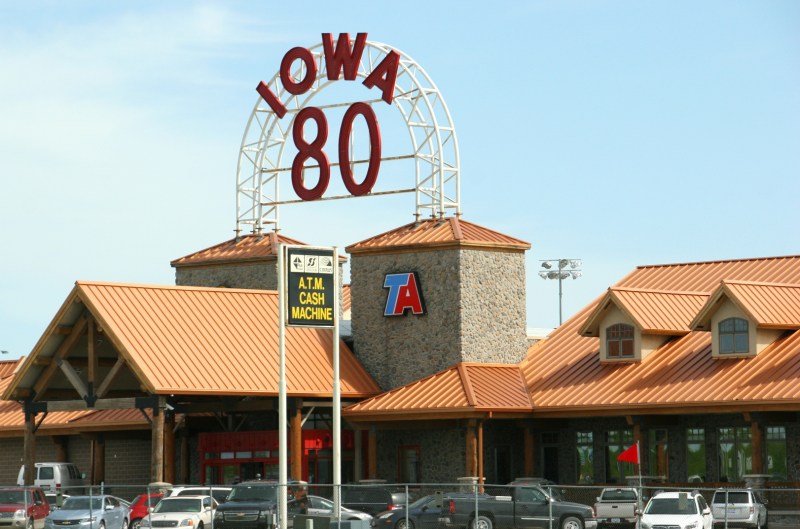
On our return trip from Boston, we stopped at the Grant Wood Rest Area northbound along I-380 south of Cedar Rapids in Linn County. At the time, I knew nothing of these unique stops for travelers. So imagine my surprise when we pulled off the interstate and into a place that looked like a cultural art center in the middle of, well, Iowa fields.


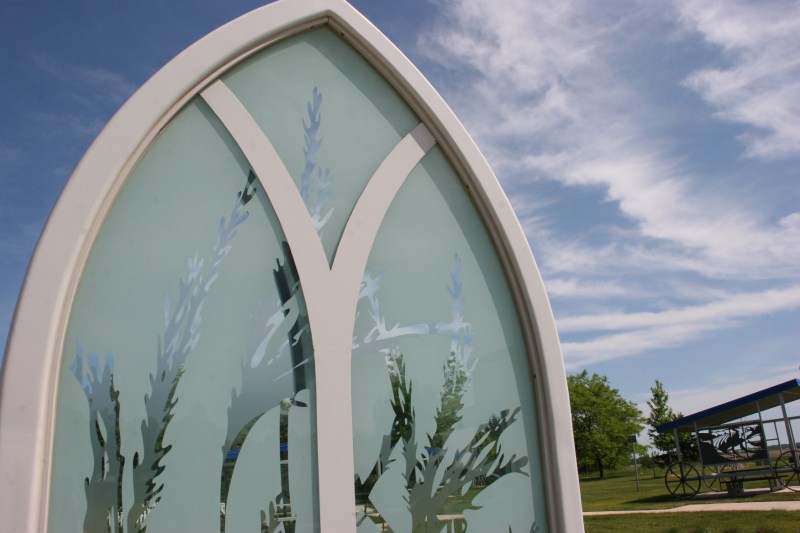
The many windows incorporated into the rest stop mimic the farmhouse windows in Wood’s “American Gothic” painting.


Wood’s work featured the rural Iowa landscape. Here his art is showcased in ceramic tile inside the rest area building.


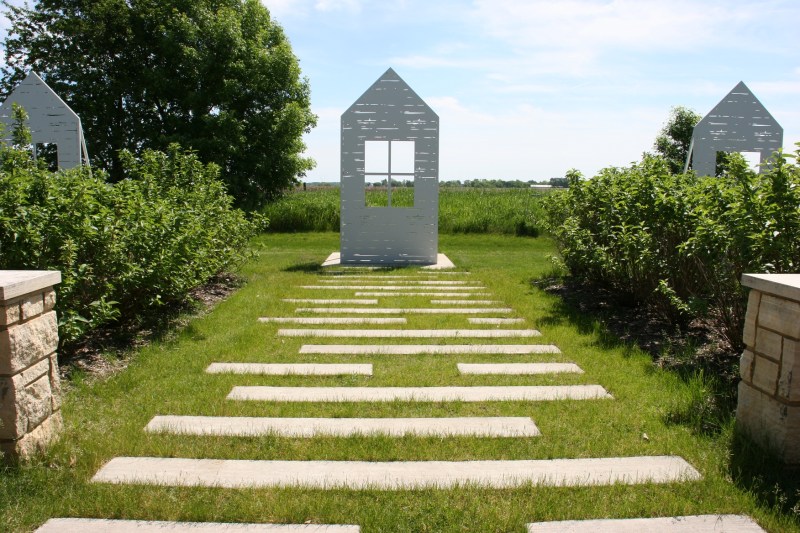
Behind the rest stop building, visitors can consider the view through these window props.


Completed four years ago, “The View From Our Window: Grant Wood in Iowa” rest area honors Wood, painter of “American Gothic.” In my limited knowledge of Iowa art, this painting of a farm couple standing in front of a farmhouse is symbolic of Iowa as I view it. Rural, through and through. David Dahlquist of RDG Dahlquist Design Studio in Des Moines created the art at this interstate stop.


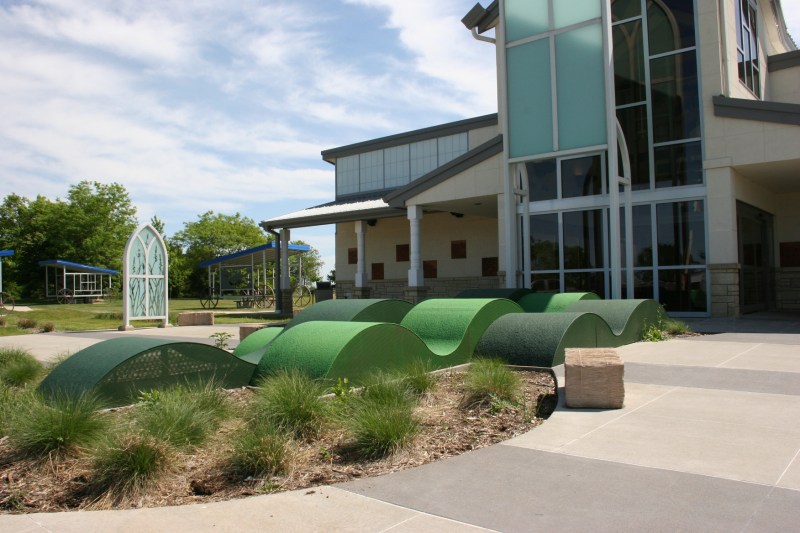
The green “waves” represent Iowa cropland.


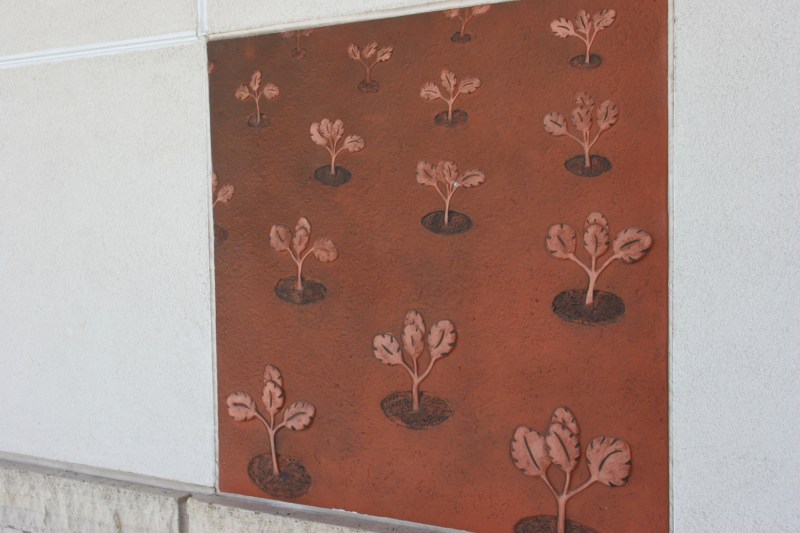
Emerging soybean art inside the rest stop structure.


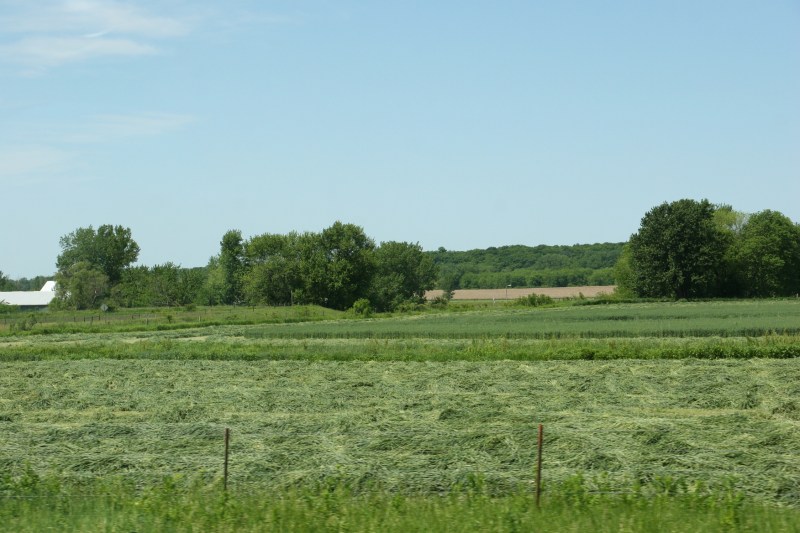
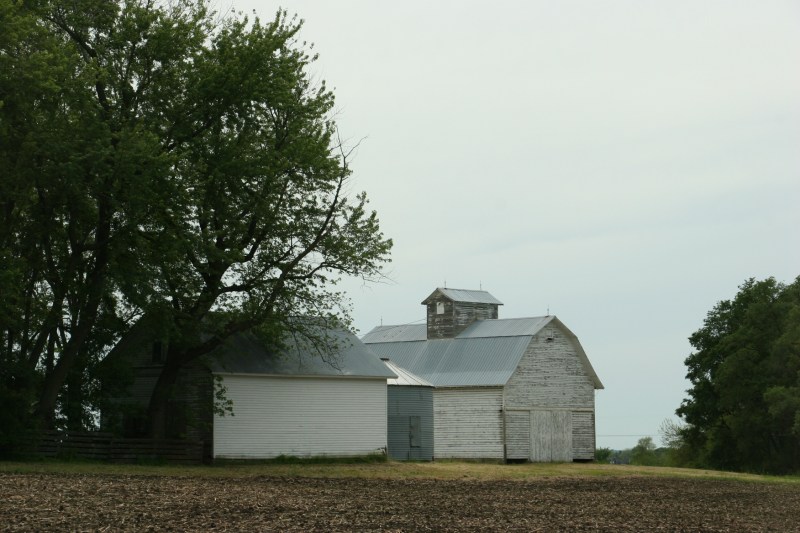
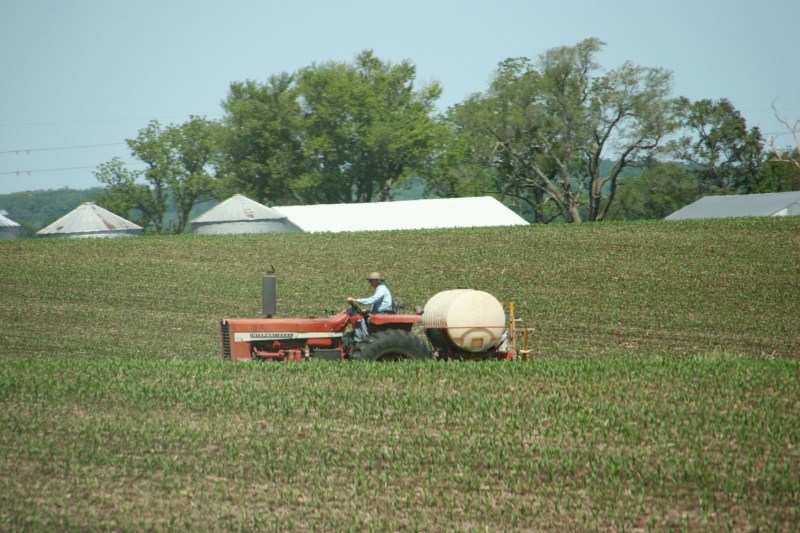
Real life farming in Iowa.


For this weary traveler, the Grant Wood rest area proved a welcome respite from the interstate and from the countless other rest stops that were nothing more than functional spaces to meet travelers’ basic needs. Expanding that purpose beyond—to include art and history—made an impression upon me.


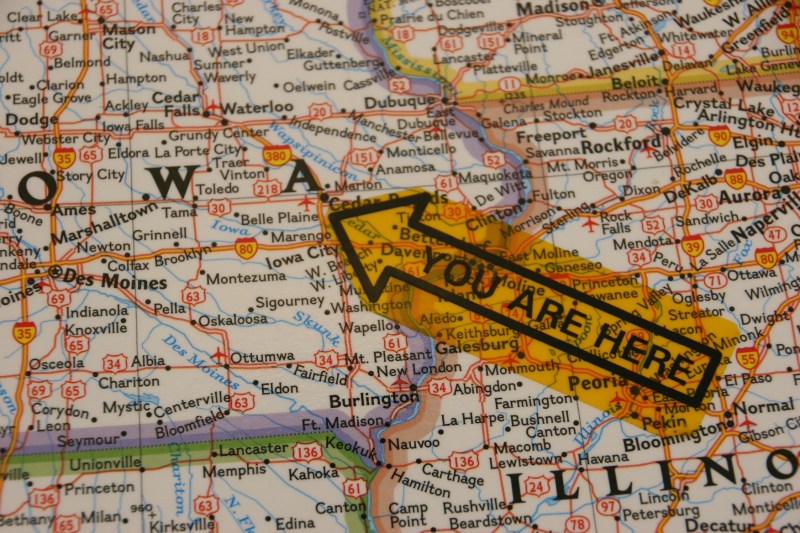
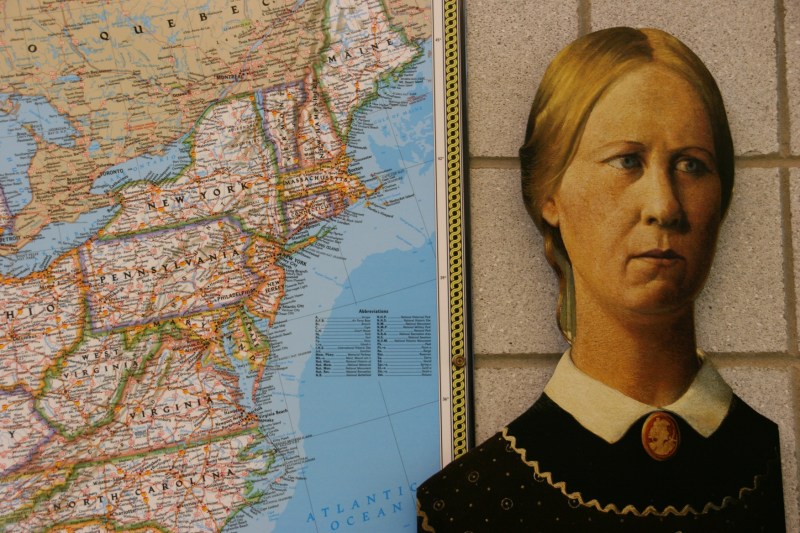
Travelers can get a view of the U.S. on a map situated next to a duplicate of the farm woman Wood painted in “American Gothic.”


In other sections of Iowa, you can, for example, learn about Lewis and Clark at the southbound I-29 rest area at Sergeant Bluff.


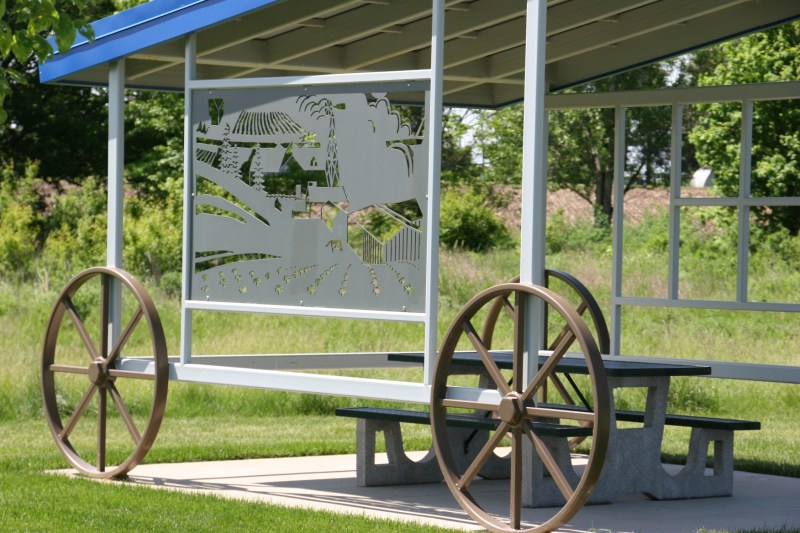
Picnic areas are sheltered by machinery like structures.


These themed Iowa rest areas are most prolific along I-80. The Mississippi River is the focal point of the westbound stop in the Davenport area. Eastbound, the rest area at Grinnell highlights pioneers while one in Cedar County focuses on the Underground Railroad.


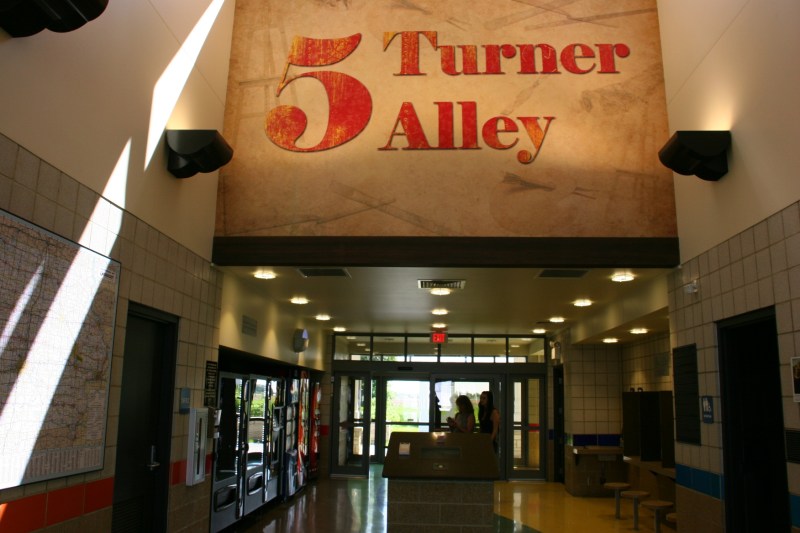
This sign inside the rest stop building honors Wood’s artist’s loft, 5 Turner Alley, in Cedar Rapids.


If you’re so inclined and looking for an inexpensive way to view public art and learn history in Iowa, you could plan a trip around visiting Iowa’s themed rest areas. If anything, it would be quite the unique vacation story.


TELL ME: Have you come across other such unique public interstate rest areas in your travels across the country? Or, offer your opinion of these Iowa rest areas.

FYI: Click here to visit the Iowa Department of Transportation website showcasing Iowa’s themed rest areas.

© Copyright 2017 Audrey Kletscher Helbling


Blessings, beer & baseball in St. Patrick January 18, 2017

EDITOR’S NOTE: The following is a story from summer-time, season inappropriate. But, in the throes of a Minnesota winter, we need reminders that summer will return. In something like four months.

Across the road from the St. Patrick of Cedar Lake Township Catholic Church cemetery sits St. Patrick's Tavern.

Across the road from the St. Patrick of Cedar Lake Township Catholic Church and cemetery sits St. Patrick’s Tavern.

A BAR AND A CHURCH. It’s not an uncommon pairing in parts of rural Minnesota, in Catholic faith communities especially.

The bar recently changed ownership and became St. Patrick's Tavern.

The bar recently changed ownership and became St. Patrick’s Tavern.

Blessings and beer.

St. Patrick Catholic Church of Cedar Lake Township.

St. Patrick Catholic Church of Cedar Lake Township.

On a Sunday afternoon drive in the summer of 2015, my husband and I happened upon St. Patrick, an unincorporated burg in Scott County. There, upon a hill, sits St. Patrick Catholic Church of Cedar Lake Township. Out the front door and down the hill rests the bar, appropriately named St. Patrick’s Tavern. And on the back side of the hill lies the baseball field, St. Patrick’s Bonin Field. It’s named after Father Leon Bonin, a strong supporter of baseball in St. Patrick.

St. Patrick's Bonin Field

St. Patrick’s Bonin Field

Blessings, beer and baseball. How decidedly rural Minnesotan.

BONUS PHOTOS:

St. Patrick's Tavern in St. Patrick, Minnesota

St. Patrick’s Tavern is located at 24436 Old Highway 13 Blvd. in St. Patrick, Minnesota.

Cruising past St. Patrick's Tavern on a Sunday afternoon.

Cruising past St. Patrick’s Tavern on a Sunday afternoon.

More signage on St. Patrick's Tavern.

More signage on St. Patrick’s Tavern.

TELL ME: Do you know of any similar hamlets that offer blessings, beer and baseball. I’d like to hear your stories.

© Copyright 2015 Audrey Kletscher Helbling


Finding the perfect little Christmas tree in Faribault December 19, 2016

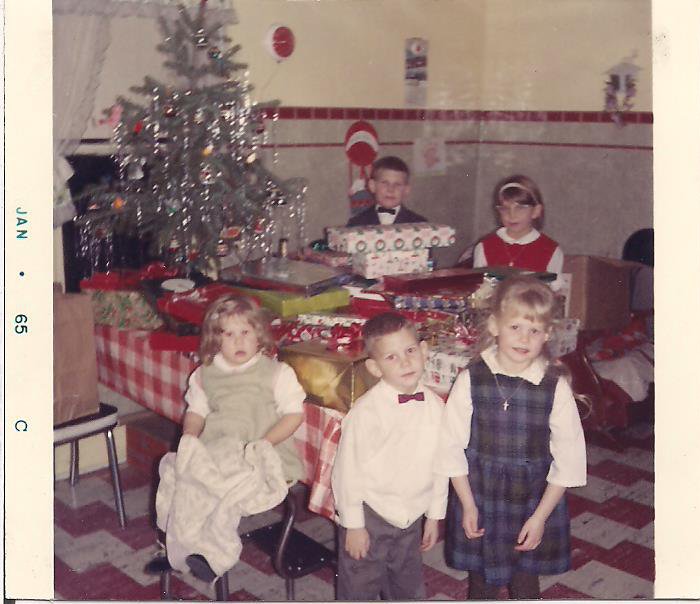
Our family Christmas tree always sat on the end of the kitchen table, as shown in this Christmas 1964 photo. That's me in the red jumper with four of my five siblings.

The Kletscher family Christmas tree always sat on the end of the kitchen table, as shown in this Christmas 1964 photo. That’s me in the red jumper with four of my five siblings.

FEW PHOTOS EXIST OF ME as a child. So I treasure each one, especially a rare color print of me and four siblings clustered around the kitchen table on Christmas Eve 1964. We are dressed in our Sunday best, back home from worship services at St. John’s Lutheran Church in Vesta. I’m surprised we were willing to pose given the pile of presents.


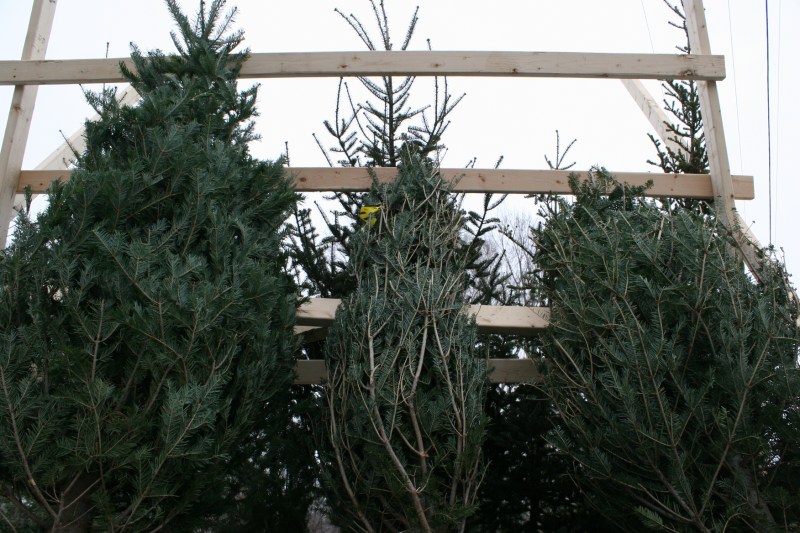
christmas-trees-8-three-trees-close-up


But it is not the gifts or the setting or even the impatient look on my middle brother’s face that remain imprinted upon my memory so many decades removed from the farm. It is the Christmas tree. I never realized how small that table-topped tree until I grew into adulthood. But it’s short, maybe three feet. I recall going to the local grocer and sorting through trees leaning in the snow against the side of the grocery store. Such memories.


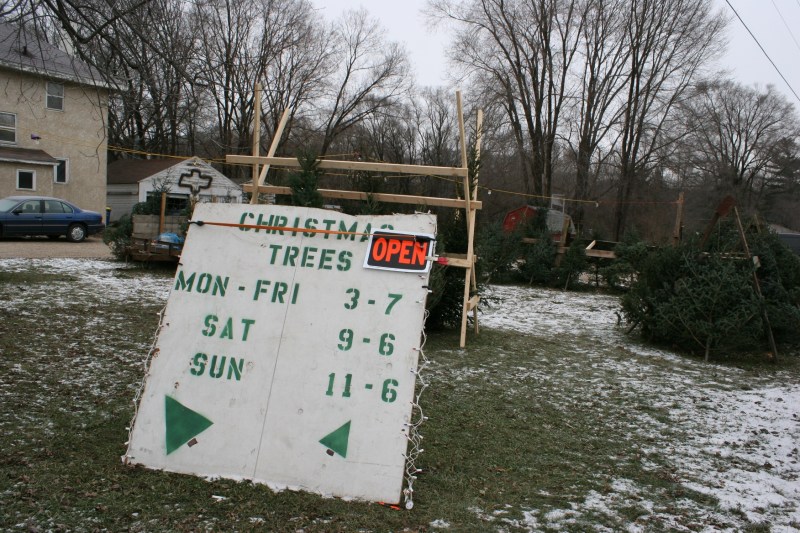
christmas-trees-5-sign


A few years ago, with my three children grown and gone, I decided to down-size our Christmas tree from average to small. I longed for a tree like the ones of my childhood. Imperfect and short with short needles. And I found that tree at Kuntze Christmas Tree Lot along Second Avenue Northwest in Faribault.


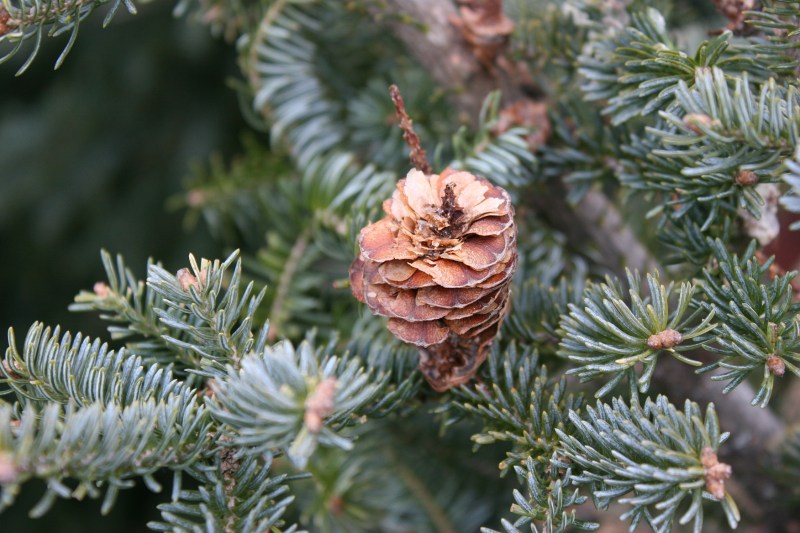
christmas-trees-1-pinecone


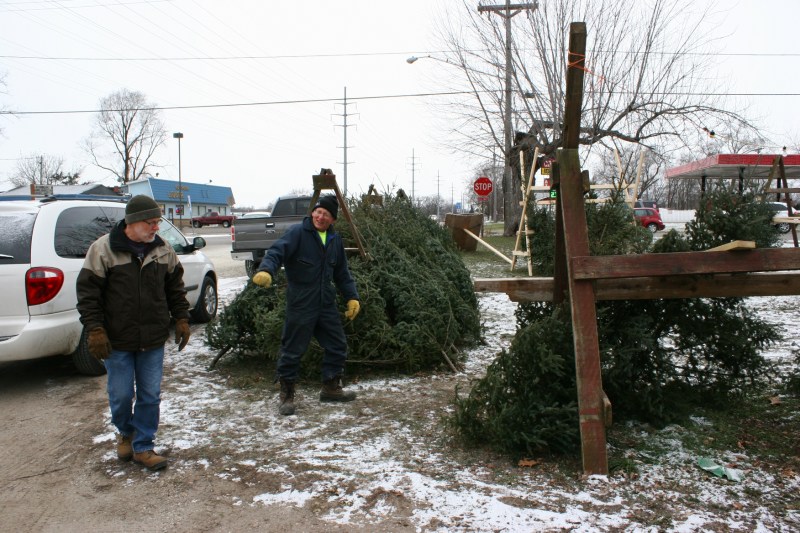
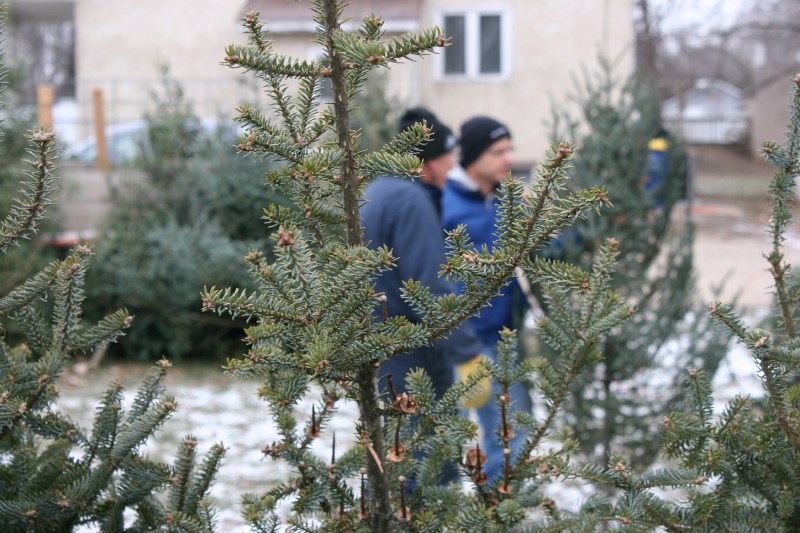
This no-frills lot run since 1988 by Ken Mueller (and in business since 1939) features fresh-cut, untrimmed trees from a dairy farm near Duluth. They’re as natural as a tree can be. Shaped by nature. Pinecones and leaves still clinging to branches. Pliable, fresh needles. Exactly what I wanted.


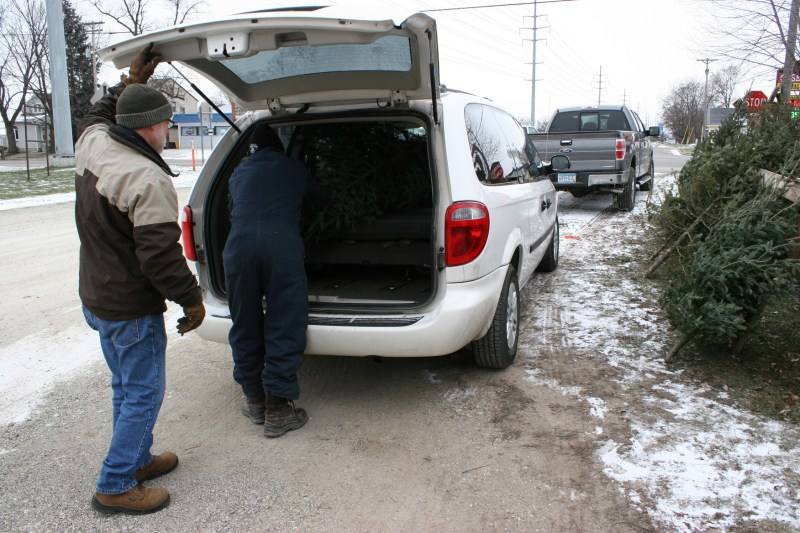
christmas-trees-4-putting-tree-in-van


This season, Ken’s had a run on trees. Donahue’s Greenhouse, a major supplier of Christmas trees to locals, is no longer open during the holiday season. So on the date I shopped, December 10, I found a limited selection of trees in Ken’s lot. He’s not planning to restock. After sorting through about a half-dozen trees, my husband and I chose our Charlie Brown tree and Ken placed it in the back of our van. Yes, the tree is that small.


christmas-trees-10-ken-randy


Randy handed him $20, told him to keep the $4 change and they chatted for a bit because this tree salesman is a talker. Plus I wanted to snap a few photos.


christmas-trees-audrey-by-tree


Now the tree stands in my living room, nestled between a window and a chest of drawers my dad once shared with his oldest brother. I snapped a selfie of myself with the tree after stringing the lights. I’m not good at selfies. (Or maybe I am since I meant for the tree to be the focus.)


christmas-trees-11-talking-with-customer


I’m much better at choosing a tree that reminds me of happy childhood Christmases on the family farm. For me, it’s all about the memories.

BONUS PHOTO: The message on the back of Ken’s business card:


christmas-trees-23-message-on-back-of-business-card


TELL ME: If you have a Christmas tree in your house, is it real or fake? Why?

This year the Christmas Tree Promotion Board has launched a campaign of “It’s Christmas. Keep it real.”  The board markets the tradition, scent and natural beauty of real trees.

© Copyright 2016 Audrey Kletscher Helbling
 

Recommended Minnesota reads December 5, 2016

THIS TIME OF YEAR, when daylight fades too early into evening darkness, when I want nothing more than to stay indoors cozied against the Minnesota cold, I find myself gathering books. Stashing, stacking, sequestering them in my home.

And then I read, snugged into a corner of the reclining sofa that no longer reclines (unless the husband yanks on the redneck handle he’s improvised to replace the broken pull). I tuck into a fleece throw in hues that linger autumn.

Then I read. Of mystery in prose and poetry. Of fictional places. Of memories. Words wrapping stories around me. Writers writing so I can read. Of their experiences. Of their imaginations. Of their struggles and joys and moments.

Often I choose to read local, a subconscious decision tracing to my years writing book reviews for a now-defunct Minnesota magazine. But I am also drawn to Minnesota writers because of the connection I have to them. We are, or were, of this place, of these people.

In honor of Minnesota reads, I direct you to these books:


under-minnesota-skies


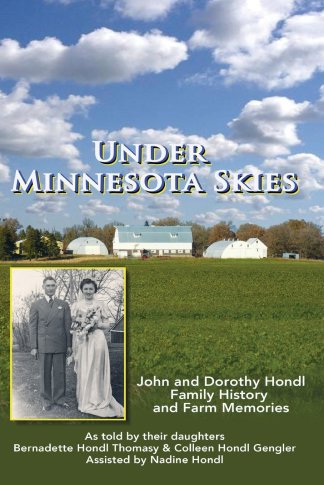
Under Minnesota Skies: John and Dorothy Hondl Family History and Farm Memories, penned by sisters Bernadette Hondl Thomasy and Colleen Hondl Gengler, is promoted as a family memoir of farm life in the 1940s-1960s that reflects on Czech and German heritage. The farm referenced in the book sits near Owatonna and has been in the Hondl family since 1881.

I can relate to much of the book’s content. The hard work and joys of farm life. Making hay. Filling silo. Tending livestock. This memoir, too, prompts long-forgotten memories of licking Gold Bond Stamps, of the South St. Paul Stockyard, of listening to WCCO 8-3-0, of driving tractor, of yearning for books.

Turning the pages of Under Minnesota Skies is like flipping the pages of a photo album detailing rural life. Except in words. Email the authors at kbthomasy at aol.com or dcgeng at frontiernet.net to purchase an autographed copy. Or buy the book at Little Professor Book Center in Owatonna or online at amazon.


ts-book-cover-2016


Voices: Past & Present, The Talking Stick Volume 25, is an eclectic collection of writing by Minnesota authors, or those with a strong Minnesota tie. Published by the northern Minnesota Jackpine Writers’ Bloc, this anthology includes 139 poems, 26 pieces of creative nonfiction and 20 works of fiction from 118 writers. So a good sampling of Minnesota talent.

Getting published in this book is a competitive process. Two of my poems, “Confessions in a Grocery Store Parking Lot” and “Prairie Garden Memories” are among the works printed in this 25th anniversary edition. Order on amazon.


farm-country-christmas


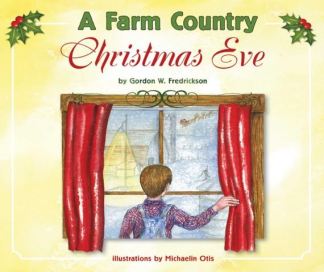
Finally, anyone interested in rural life, should read the books penned by prolific husband and wife team Gordon and Nancy Fredrickson of Lakeville. The pair offer children’s picture books in their “A Farm Country” and “If I Were a Farmer” series. They have also written American Farm Heritage and poetry volumes for adults.

The Fredricksons’ books truly are a tribute to the rural way of life. These books can be purchased on the authors’ website, via amazon or at these Minnesota locations: Secret Attic in Northfield; The Old Hotel, New Market; and Bongards Cheese Shop, Bongards.

TELL ME: What local books have you read? What local books are you purchasing as Christmas gifts?

© Copyright 2016 Audrey Kletscher Helbling
 

Beyond the Big Woods on Nerstrand’s Main Street July 28, 2016

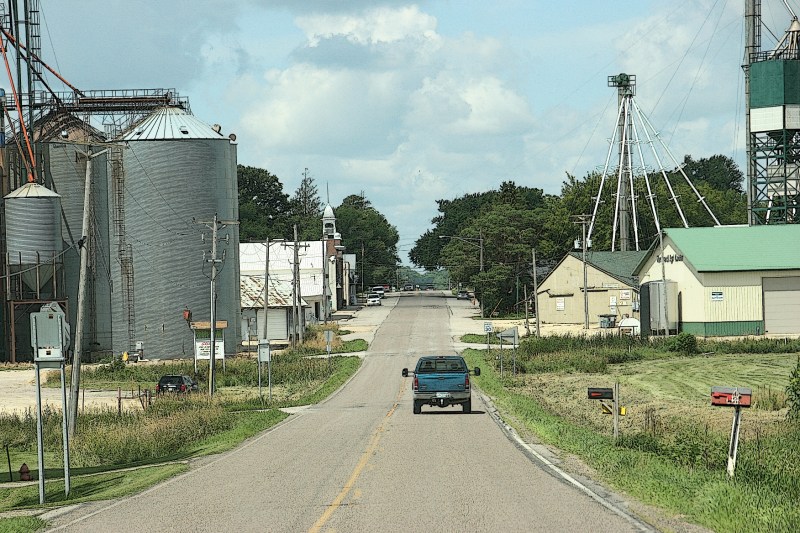
Driving westbound into Nerstrand, Minnesota.

Driving westbound into Nerstrand, Minnesota.

WITH A POPULATION of only 253, you might expect Nerstrand to be a quiet small town with, as some could surmise, not a lot going for it. But that would be an inaccurate assessment.

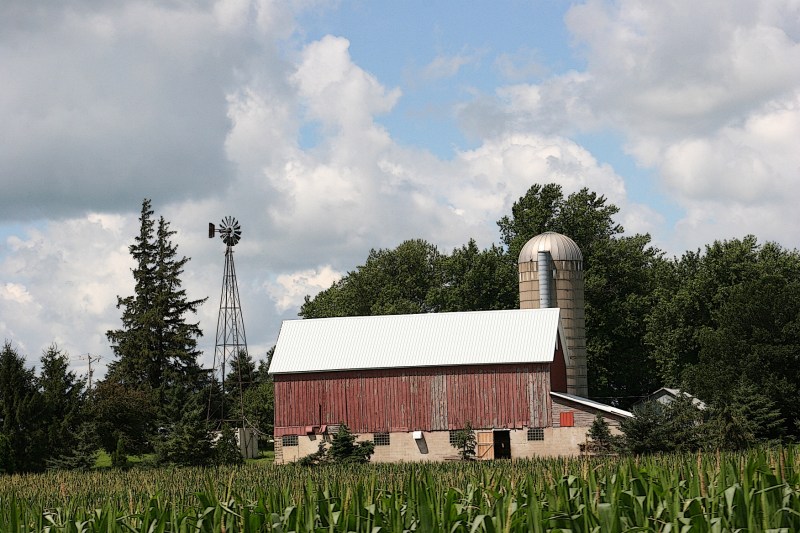
A farm site just east of Nerstrand.

A farm site just east of Nerstrand.

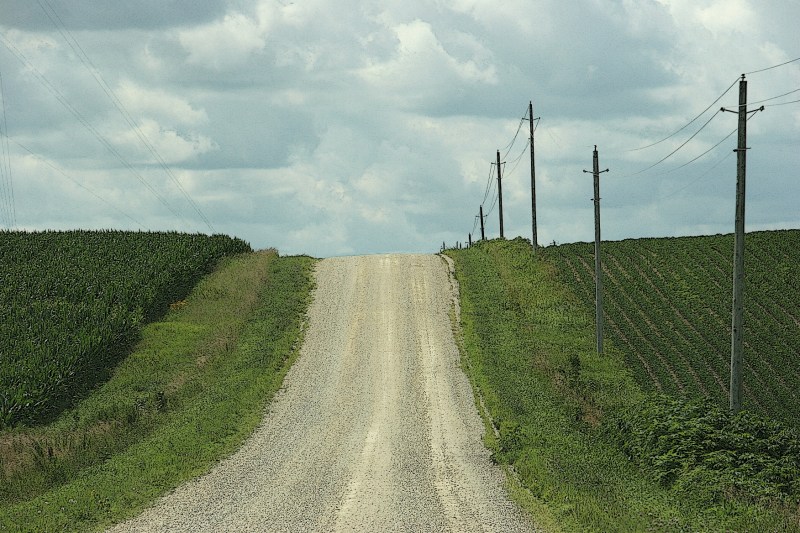
Just north of Nerstand, country gravel roads run through the hilly terrain.

North of Nerstand, country gravel roads run through hilly terrain.

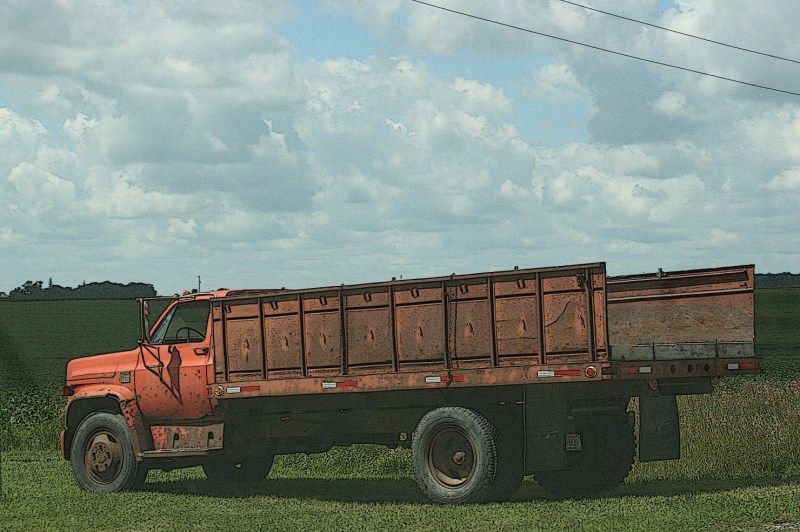
I photographed this truck in a field drive west of Nerstrand.

I photographed this parked truck just outside of Nerstrand to the west.

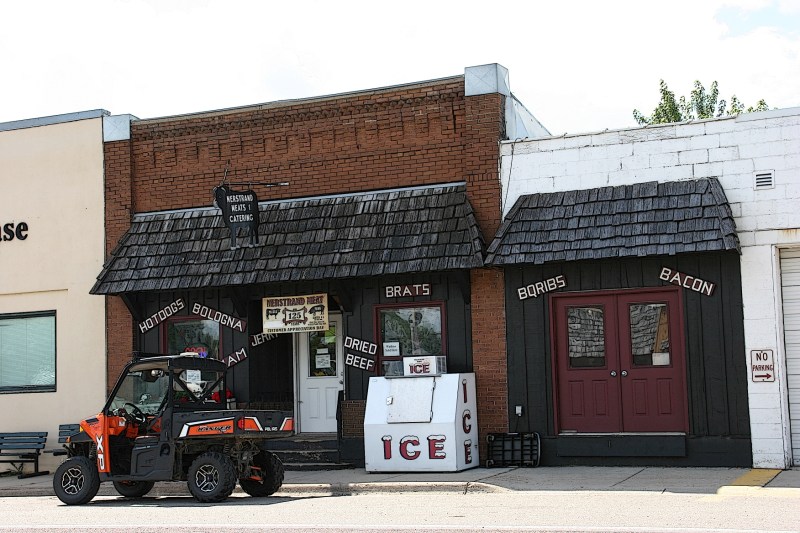
This farming community in eastern Rice County is known for many things including the local ag equipment dealer, Isaacson Implement; the highly-touted Nerstrand Elementary School; nearby Nerstrand Big Woods State Park; and Nerstrand Meats and Catering.

Nerstrand Meats.

Nerstrand Meats is a popular stop in this small southeastern Minnesota community.

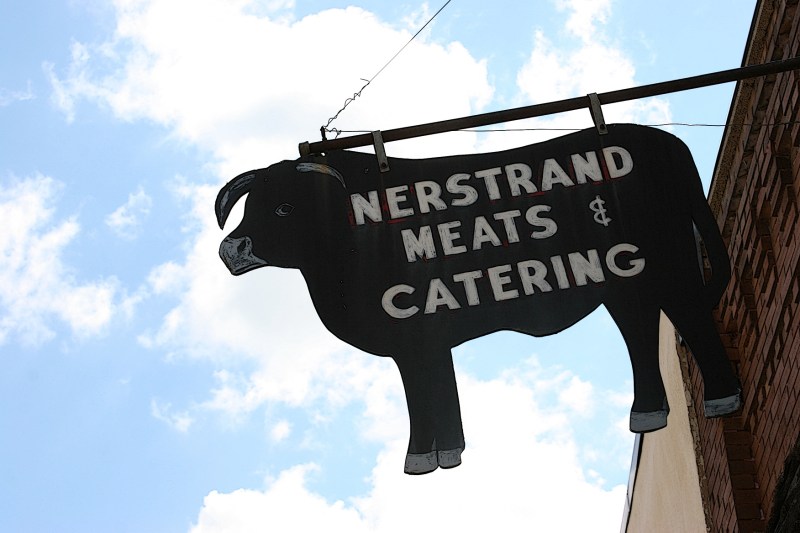
This sign marks the meat market.

This sign marks the meat market.

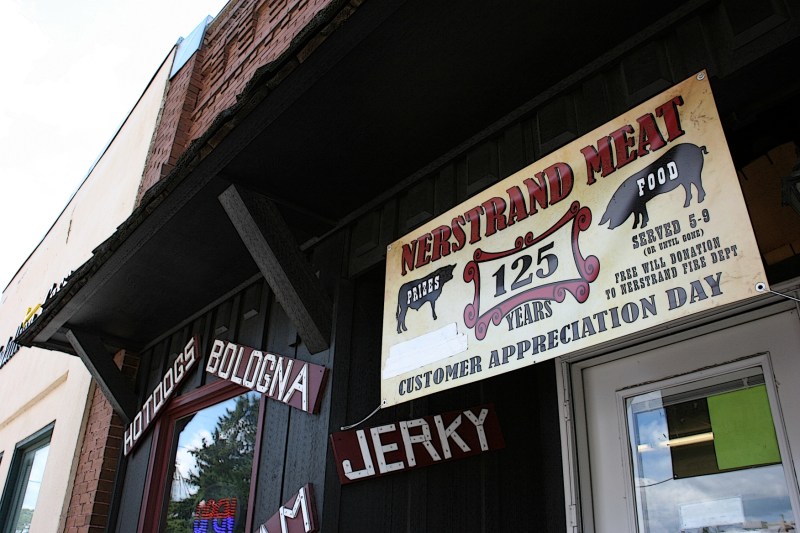
In business for 125 years...

In business for 125 years…

On a recent Saturday, while on the 2016 Eat Local Farm Tour, my husband and I stopped in Nerstrand to purchase meat at the family-owned meat market open since 1890. While Randy ducked into the shop, I snapped a few exterior photos before joining him in the small storefront space that smells of smoked meats, the market’s specialty.

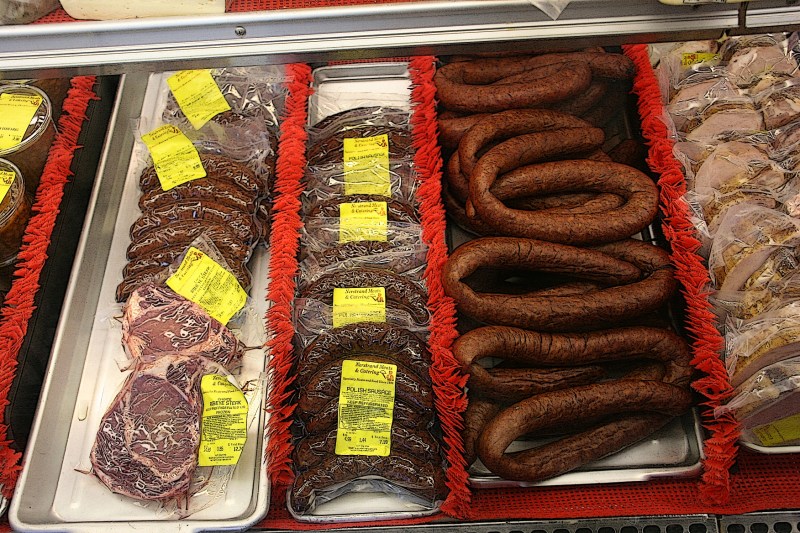
A small section of the fresh meat counter.

A small section of the fresh meat counter.

Randy chose smoked chops, Nerstrand weiners and a half pound of dried beef. He’s the big meat eater in our house. I could live on fruits and vegetables.

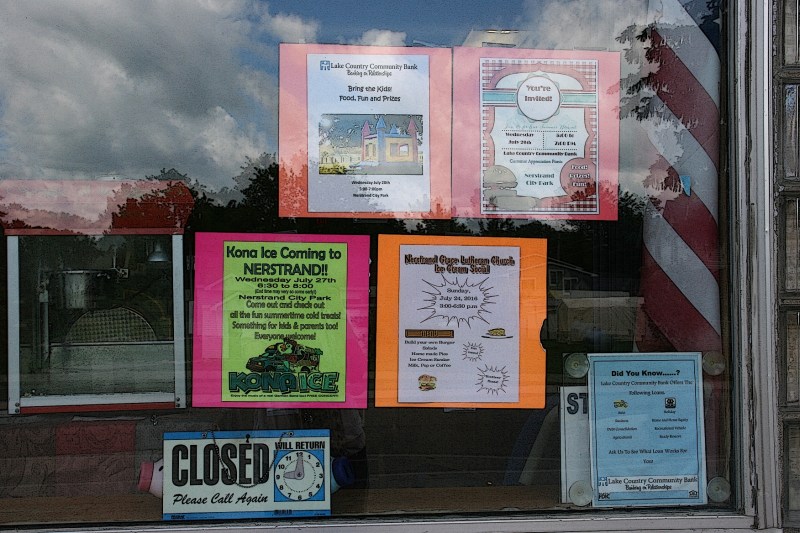
Notices in a storefront window half a block from the meat market. So typical of a small town.

Notices in a storefront window half a block from the meat market. So typical of a small town.

While the clerk packaged his purchases, I headed out the door to see the rest of this several-block downtown. That tour didn’t take long.

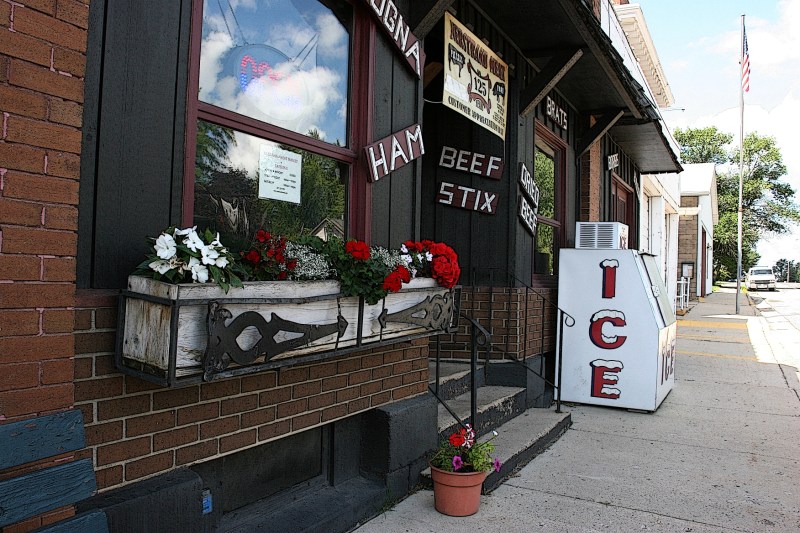
Another view of Nerstrand Meats.

Another view of Nerstrand Meats. How convenient and necessary the ice machine.

Yet, I left this small town knowing Nerstrand is a destination for many—whether in need of farm equipment, in need of an education, in need of a get-away or in need of fresh smoked meats.

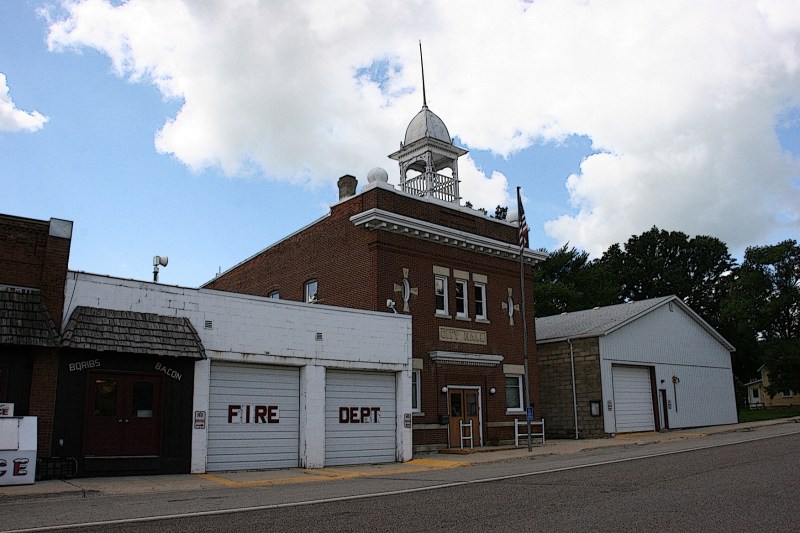
The fire hall and city hall sit next to Nerstrand Meats.

The fire hall and city hall sit next to Nerstrand Meats.

TELL ME: What small town have you discovered that offers unexpected reasons to visit?

© Copyright 2016 Audrey Kletscher Helbling


Cruisn’ to church, but not for a sermon July 27, 2016

UCC-CarShow-page-001


FOR ST. JOHN’S UNITED CHURCH of Christ, Wheeling Township, a weekend Cruise-In Car Show offers an opportunity to bring the community together.

There’s no ulterior motive. This isn’t a fundraiser. The church isn’t trying to get folks to join.

Rather, says Steve Wille of the St. John’s Revitalization Group, the Car Show is strictly a social event aimed at bringing folks together in a neighborly sort of way. I like that. Visiting with your neighbors, he says, seems to be a lost art.

The parking lot at St. John's United Church of Christ, Wheeling Township, is nearly full 20 minutes before the congregation's annual performance of The Last Supper Drama.

St. John’s United Church of Christ, Wheeling Township. Minnesota Prairie Roots file photo.

St. John’s, a country church located east of Faribault near Nerstrand Big Woods State Park, is good at reaching out to the community. The congregation hosts annual events like the Big Woods Run, The Last Supper Drama, German Fest, an ice cream social and more. I’ve been there many times, often enough that congregants know me. These folks are country friendly and welcoming. And they’re fantastic cooks and bakers.

No St. John’s event is complete without food. Pork sandwiches and snacks will be available at the 10 a.m. – 1 p.m. Saturday, July 30, Cruise-In Car Show.

Car Show is a bit of a misnomer, though. Trucks and tractors are also welcome with first place trophies awarded to each of the top three.

If you enjoy cruise-ins, country churches, a rural setting and visiting, consider attending (or participating in) St. John’s first-ever Cruise-In Car Show.

FYI: St. John’s is located 10 miles northeast of Faribault. Take Minnesota State Highway 60 east for eight miles and then turn north onto Rice County 24. Drive two miles to 19086 Jacobs Avenue.

© Copyright 2016 Audrey Kletscher Helbling


The rural influence in my writing & photography, plus a farm tour July 12, 2016

Barn, 117 red barn along US Hwy 71 south of Redwood Falls


BARNS DRAW MY CAMERA lens like moths to a porch light.


Barn, 144 farm site between Olivia and Wilmar


My response is reflexive, this focal allure of barns while traveling through rural Minnesota.


Barn, 112 bluegreen barn along US Hwy 71 south of Redwood Falls


Barns, to me, symbolize rural life. Growing up on a southwestern Minnesota dairy and crop farm, I labored in the barn—scooping silage and ground feed, scraping manure into gutters, carrying milk pails from barn to milkhouse, tossing hay and straw bales from the hayloft, bedding straw…

My hair, my skin, my clothing smelled always of cows and manure. I bathed but once a week. That seems unfathomable now. But it was the reality of then.


Barn, 145 white barn & cow


The barn on our family farm provided more than shelter for the cows. It provided an income, a way of life, a training ground for hard work. No matter what, the cows needed to be tended, fed and milked. Vacations were rare—only two my entire childhood, one to the Black Hills of South Dakota and the other to Duluth. On the occasion when my parents traveled farther, they left my older brother and me home to take care of the farm under our bachelor uncle Mike’s watchful eye.


Barn, 142 farm site between Olivia and Wilmar


I often told my dad I wanted to be a farmer. He discouraged me. He likely knew what I didn’t, that I wasn’t cut out to be a farmer. I am not a risk taker. And to be a farmer, you need to be a bit of a gambler. You gamble on the unpredictability of weather and of prices. Granted, technology has curbed some of the risk. But still, it’s there.


Barn, 132 sheep and barn between Morton & Olivia


Instead, I pursued a degree and career in journalism. And then, eventually, I became a full-time stay-at-home mom, setting aside my writing to raise my three kids. Until I found time again to write.


Barn, 109 east of Wabasso along US 71


In my writing today, unlike my past deliver-the-facts newspaper reporting, I have created a unique voice rooted in rural Minnesota. I may not smell of cow or manure, but those scents linger in my memory, infusing into my writing and photography. I bring a small town rural perspective to my work. I find my joy in writing about and photographing everyday life, everyday places, everyday people, mostly in Greater Minnesota.

The early 1950s barn on the Redwood County dairy farm where I grew up today stands empty of animals.

The early 1950s barn on the Redwood County dairy farm where I grew up today stands empty of animals. Minnesota Prairie Roots file photo.

And it all started in a Redwood County barn.

Fresh eggs and caged chickens attracted lots of interest.

Fresh eggs and caged chickens photographed at an event several years ago at Valley Grove Church, rural Nerstrand. Minnesota Prairie Roots file photo.

YOU, TOO, CAN EXPERIENCE farming this Saturday, July 16, by touring agricultural businesses throughout the region during the annual Eat Local Farm Tour. From Simple Harvest Farm Organics in rural Nerstrand to Mississippi Mushrooms in Minneapolis to Hope Creamery in Hope and 26 other sites, you’ll discover Minnesotans and Wisconsinites passionate about local foods. You’ll meet beekeepers, cheesemakers, berry growers, cattlemen/women, trout farmers and more.

Click here for a listing of sites on the Eat Local Farm Tour, which runs from 10 a.m. – 4 p.m.

© Copyright 2016 Audrey Kletscher Helbling
Note: With the exception of my home barn, all barns and farm sites featured in this post are located along U.S. Highway 71 in rural Minnesota, from south of Redwood Falls to south of Willmar.


Garden Tour III: A rural retreat in Cannon City July 11, 2016

Outbuildings dot the Glendes' rural property.

Outbuildings dot the Glendes’ rural property.

I COULD BE SO HAPPY living on Debbie and Mike Glende’s property in Cannon City. It’s peaceful, lovely and tranquil in a definitive rural sense.

An electric fence keeps the donkeys penned in the pasture.

An electric fence keeps the donkeys penned in the pasture.

Not exactly a hobby farm, although there are donkeys, this seems more rural retreat.

Delphiniums sway in the breeze inside a fenced vegetable garden.

Delphiniums sway in the breeze inside a fenced vegetable garden.

Lush green plants and flowers.

A pond, surrounded by lush plants, is situated under shade trees next to the house.

A pond, surrounded by lush plants, is situated under shade trees next to the house.

Pond.

Rustic fencing surrounds the vegetable garden.

Rustic fencing surrounds the vegetable garden.

Garden surrounded by rustic weathered fencing.

I opened the aged screen door on an outbuilding to discover this 50s style retreat.

I opened the aged screen door on an outbuilding to discover this 50s style retreat.

An outbuilding styled in 1950s décor.

Farm themed decor fits this corn crib turned fire pit gathering area.

Farm themed decor fits this corn crib turned fire pit gathering area.

A wire grain bin converted into a comfortable gathering spot for an evening campfire.


Glende garden, 51 barn and windmill


An aged red barn and windmill.

Plants spill from a rustic piece of farm equipment.

Artfully arranged plants spill from a rustic piece of farm equipment.

I didn’t want to leave the Glendes’ place while on a recent Cathedral of Our Merciful Saviour Garden and Landscape Tour benefiting Fully Bell, a soup kitchen in nearby Faribault. Even the cat, a black stray that followed me, wrapping around my legs, seemed to want me to stay. I wish. Debbie offered the cat.

This building houses the 1950s style retreat.

This building houses the 1950s style retreat.

I could live here. I imagined the 50s retreat as a secluded place to write. My office.

This sweet little building was moved here from the Minnesota State Academy for the Deaf campus in Faribault. For now, it's a storage space.

This sweet little building was moved here from the Minnesota State Academy for the Deaf campus in Faribault. For now, it’s a storage space.

Or the lovely columned white building moved here from the Minnesota State Academy for the Deaf in Faribault would work, too, for my writer’s retreat.

Rustic rural art near the MSAD building.

Rustic rural art near the MSAD building.

As I roamed the Glendes’ land, I was reminded of my rural roots. Vintage farm machinery and equipment are planted like works of art among the farm buildings. It takes an artist’s and gardener’s hands to make this all come together—to create this rural retreat that is more than visually appealing, but also everyday practical. This couple succeeded. I wanted to stay until the stars emerged and flames danced in the fire pit.

BONUS PHOTOS:

A sign inside the outhouse reads:

A sign inside the outhouse reads: “Who cut one?”

Flower art provides a jolt of color.

Flower art provides a jolt of color.

Another rustic style planting.

Another rustic style planting.

So poetically lovely this blue heron in the pond.

So poetically lovely this blue heron in the pond.

Even the bird feeder fits the rural theme.

Even the bird feeder fits the rural theme.

FYI: Please check back as I continue my garden tour series. Click here to read my first entry and then click here to read about another garden I toured.

© Copyright 2016 Audrey Kletscher Helbling
 

Should this Minnesota country schoolhouse be saved? June 24, 2016


The Le Sueur School District 18 schoolhouse, located at 35278 141st Avenue, rural Montgomery, Minnesota.

The Le Sueur County School District 18 schoolhouse, located at 35278 141st Avenue, rural Montgomery, Minnesota.

THE WEATHERED SCHOOLHOUSE sits on a slight rise along the gravel road, surrounded by a clipped lawn bordered by farm fields.

Hardy daisies thrive next to the schoolhouse.

Hardy daisies thrive next to the schoolhouse.

On this Sunday summer afternoon when I’ve discovered the aged building just off Le Sueur County Road 26 two miles east of Montgomery in Montgomery Township, the wind is rippling grain fields and bending daises nestled into an exterior corner of the schoolhouse.

Windows need repair/replacing.

Windows need repair/replacing.

As I brace myself against the wind, I notice shingle debris scattered across the grass. I notice the weathered grey of unpainted siding, the rotted boards, the barn swallow and wasp nests. I notice how much this schoolhouse needs care and upkeep.

A rear shot of the country school.

A rear shot of the country school.

In 1888, Wencel and Mary Petricka sold this parcel of land to Le Sueur County School District 18 for $1 to build this school. In 1957, when the Le Sueur district consolidated with the Montgomery School District, the little one-room country school closed.

Consider the hands that once turned this knob opening the door to an education.

Consider the hands that once turned this knob opening the door to an education.

And here it stands, a year shy of sixty years after closure, seemingly abandoned. Except for that mowed lawn and that patch of daisies. Someone still cares. And that gives me hope. Hope that someone will find the money and the inclination to save this piece of rural Minnesota’s educational history. Before it’s too late.

#

Three rooflines: entry, classroom and bell tower.

Three rooflines: entry, classroom and bell tower.

IT’S EASY FOR ME TO WRITE, Save the School. But the issue of financing often blocks the path to such endeavors. Do you have any creative ideas to fund a repair and restoration project? Perhaps I should first ask, should the schoolhouse be saved? I don’t even know who owns it.

Perhaps an American flag will fly again some day on the corner of the schoolhouse.

Perhaps an American flag will fly again some day on the corner of the schoolhouse.

In September of 2015, Le Sueur County School District 18 held its first ever reunion. With 31 alumni and guests in attendance (including a former teacher), there’s clearly an appreciation for this Minnesota country school.

© Copyright 2016 Audrey Kletscher Helbling


Make hay while the sun shines & the poem it inspired June 20, 2016

Filed under: Uncategorized — Audrey Kletscher Helbling @ 10:50 AM
Tags: , , , , , , , ,

Baling hay, 17 southern Minnesota


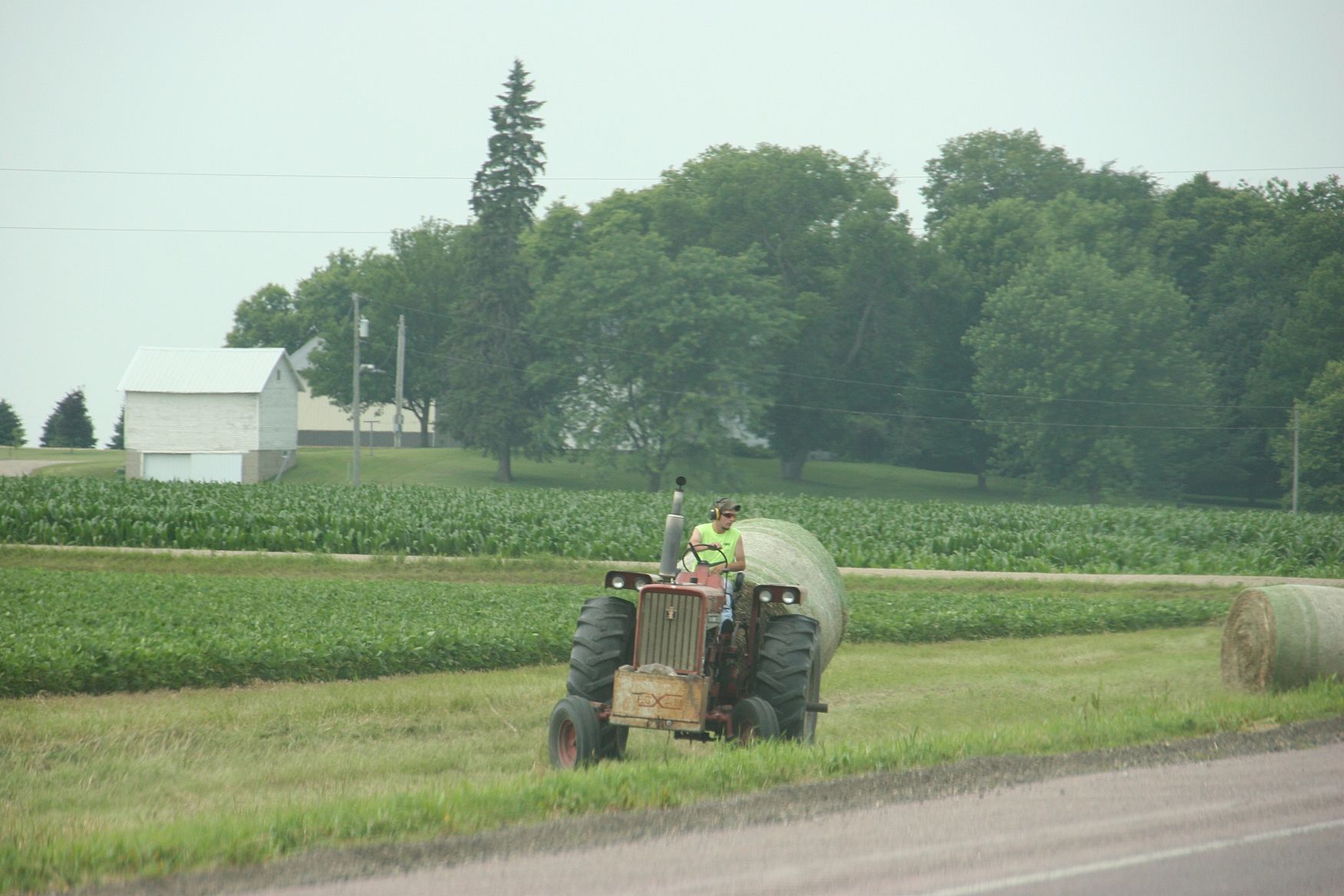
OF ALL THE TIMES not to have my telephoto lens attached to my Canon EOS 20D. But I didn’t, so I missed a close-up shot of three guys baling hay the old-fashioned way on Sunday afternoon in rural Rice County. No over-sized tractor, no round hay baler. Just a basic tractor, hay baler and hay rack.

As the farmer guided machines along a windrow, the baler compacted alfalfa into twine-wrapped packages. A team of two grabbed the rectangles, stacking them in a practiced rhythm of precise placement.

It’s a scene imprinted deep upon my memory. As I briefly watched the trio working the field, I remembered my father and Uncle Mike doing the same so many years ago some 120 miles to the west. I remembered taking lunch to them, sitting in the shade of the hay wagon, eating summer sausage sandwiches, breathing in the intoxicating scent of hay.

Make hay while the sun shines. It’s as true today as it’s always been. The trio laboring in the heat and humidity of Sunday afternoon understood they were racing against time, against the predicted rain that would come that evening.

#

The scene I photographed reminds me of a poem I wrote several years ago. It was published in the 2012 edition of Lake Region Review. Enjoy this poem, based on my childhood memories from rural Redwood County, Minnesota:


Taking Lunch to the Men in the Field

Three o’clock. Lunch time.
My brother grips the tarnished handle
of the rusty red Radio Flyer as the wagon bumps
along the dusty dirt drive, dipping and curving
past the cow yard mucked with mounds of manure,
toward the stubbled alfalfa where the men are making hay.

Out mother has stowed sandwiches—
slices of coarse, yeasty homemade bread slathered in butter
with rounds of spicy summer sausage slid in between—
inside the tin tub next to chewy oatmeal peanut butter bars
wrapped in waxed paper, nudging brown beer bottles
that jostle and clank as the wagon rolls.

She’s packaged the lunch in a crisp white cotton dish cloth
embroidered with Wednesday Wash Day
and stitches of clothes clipped to a clothesline,
mimicking the laundry she’s hung out earlier,
now stirring in the wisp of a July prairie breeze.

My brother and I lag under the heavy heat of the afternoon,
straining toward the men working the field.
Dad, shaded by an umbrella, guides the International along the windrows
while our bachelor uncle heaves hay bales onto the flat-bed trailer,
his chambray work shirt plastered against his back,
his grimy DEKALB cap ringed in sweat
as he toils in an unbroken rhythm of labor.

We reach the edge of the field as the men finish their round
and the racket of tractor and baler ceases
giving way to our small voices which break the sudden silence:
“Lunch time. We are here with the beer.”

© Copyright 2016 Audrey Kletscher Helbling
Poem copyright 2012 Audrey Kletscher Helbling