Minnesota Prairie Roots

Writing and photography by Audrey Kletscher Helbling

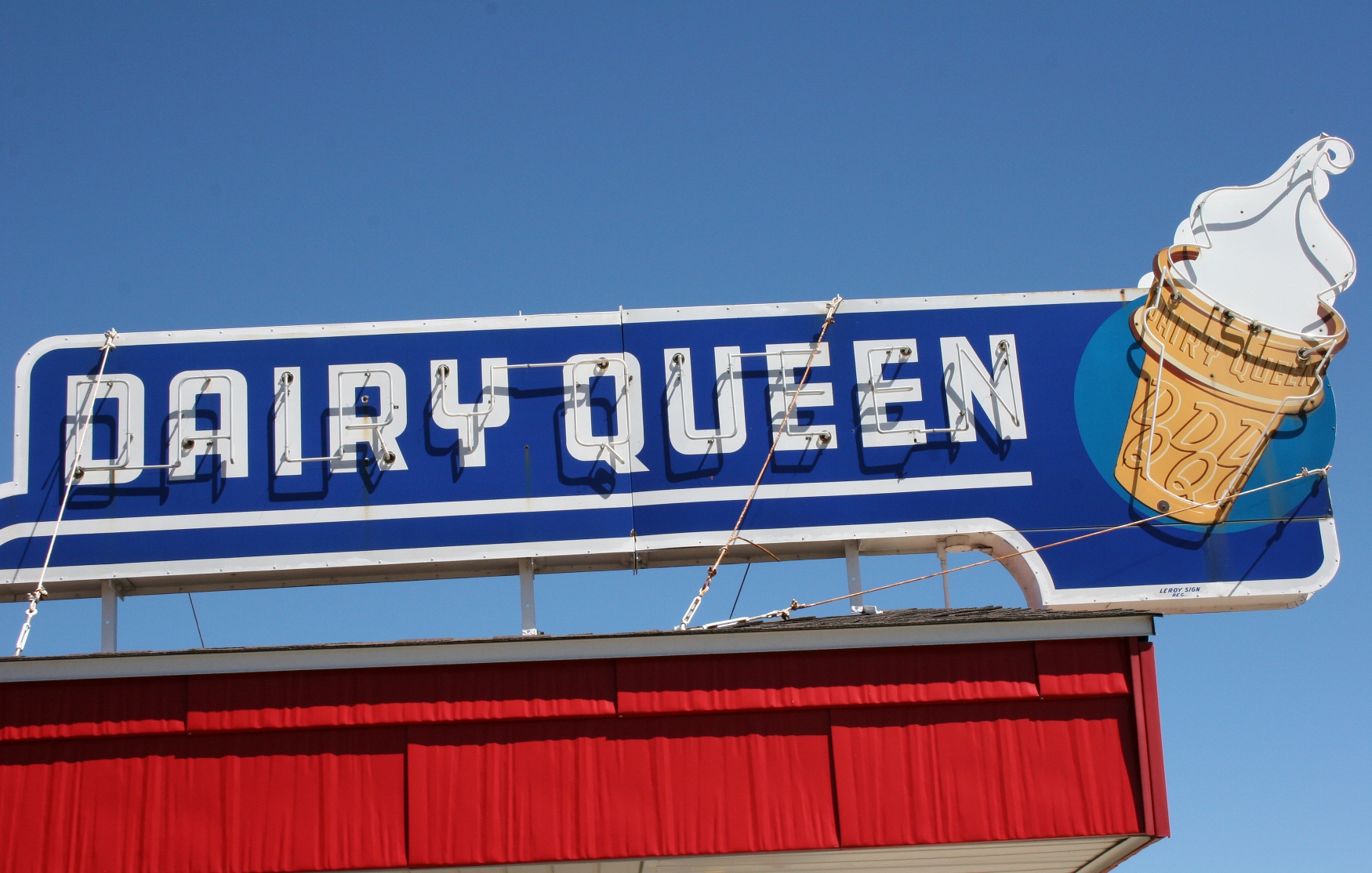
Appreciating a vintage Dairy Queen sign in Janesville August 22, 2012

ICE CREAM. It has to be the single treat with the most universal appeal. And I expect Dairy Queen rates as the company most universally known for its soft-serve ice cream.

With 6,000 plus Dairy Queens throughout the world, this fast food franchise certainly has established itself as a dominating presence since the first DQ opened in 1940 in Joliet, Illinois.

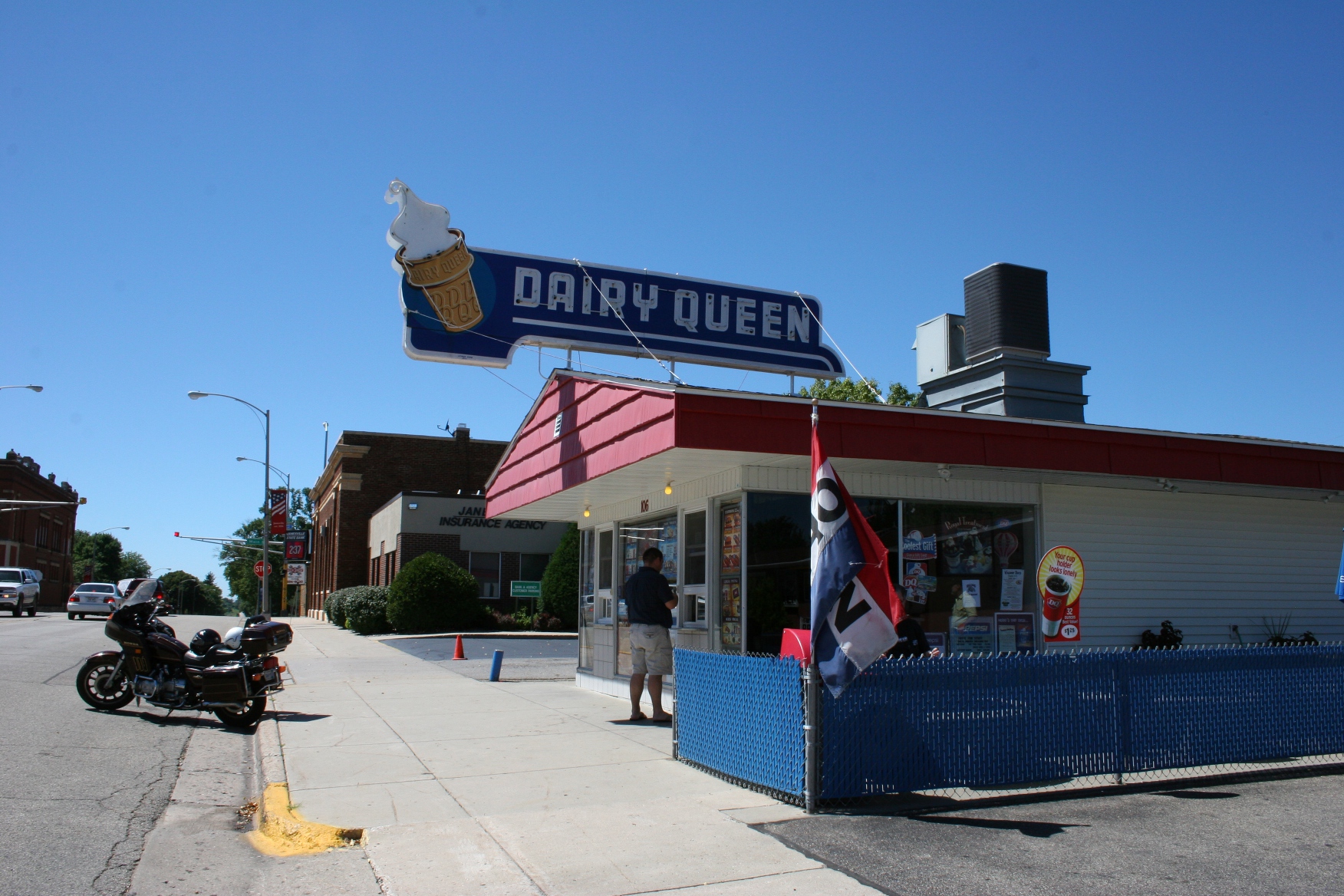
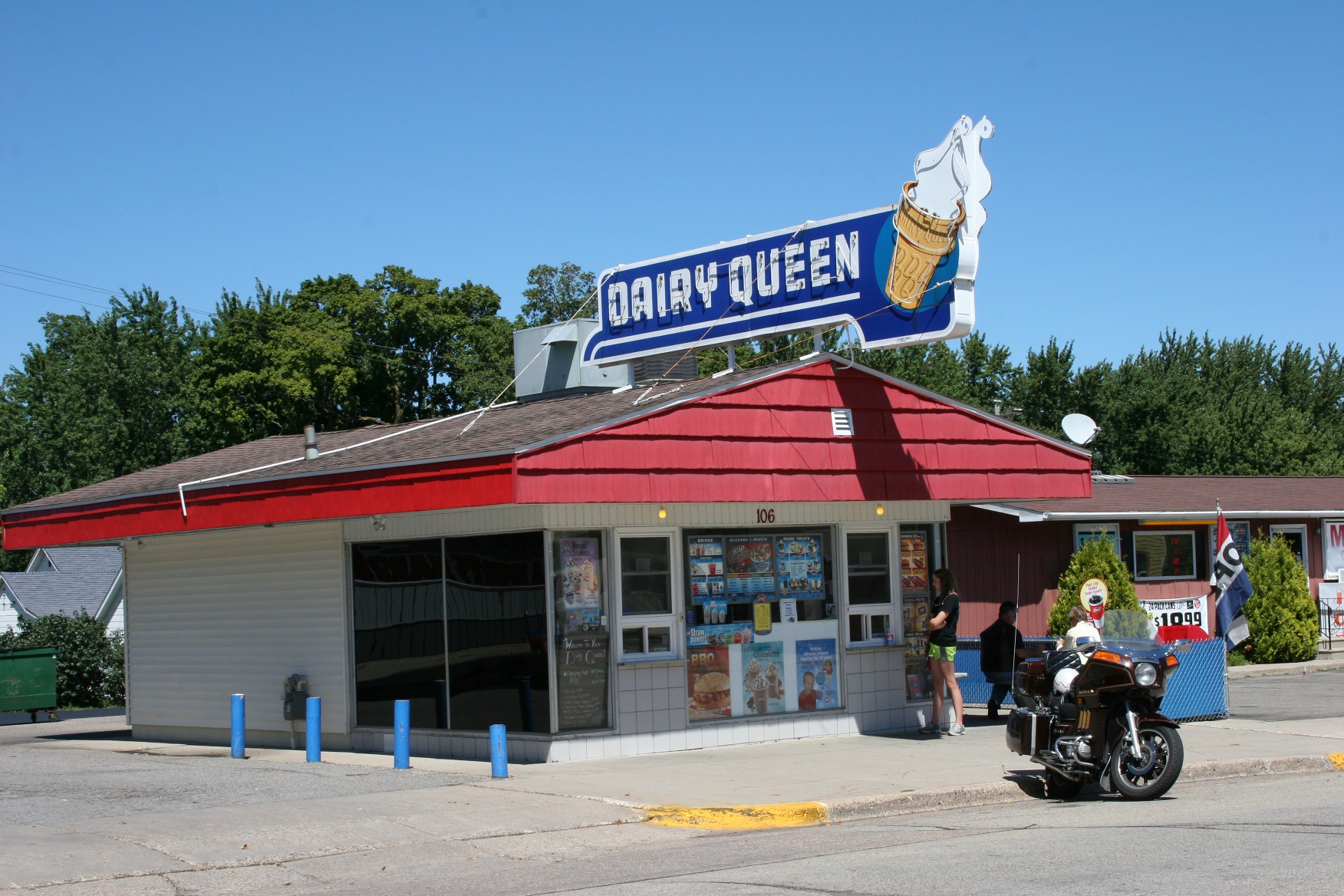
The Dairy Queen along old U.S. Highway 14 in Janesville on a recent Sunday afternoon.

Within 40 miles of my home are 35 Dairy Queens, including two right here in Faribault, and a walk-up DQ along old U.S. Highway 14 in Janesville some 30 miles away.

On a recent Sunday afternoon while passing through Janesville, located east of Mankato and with a population of about 2,100, I photographed the DQ. I wasn’t hungry, having just eaten too much at a church potluck. But I didn’t let that keep me from stopping at the DQ to photograph this long-time business with the vintage signage.

The vintage Dairy Queen sign that drew me to the Janesville DQ.

It’s the sign that caused me to stop because, well, I like and appreciate old signs as works of art. They’re also classic, charming cultural and historic icons in a community.

I was a bit dismayed, though, when the woman working the counter suggested that once the lights fizzle on the sign, it will be replaced with a newer, more modern DQ sign because, really, who could fix the lighting?

I insisted that shouldn’t happen and may have pleaded a bit. “You can’t do that.”

But she seemed resigned to the sign’s eventual replacement.

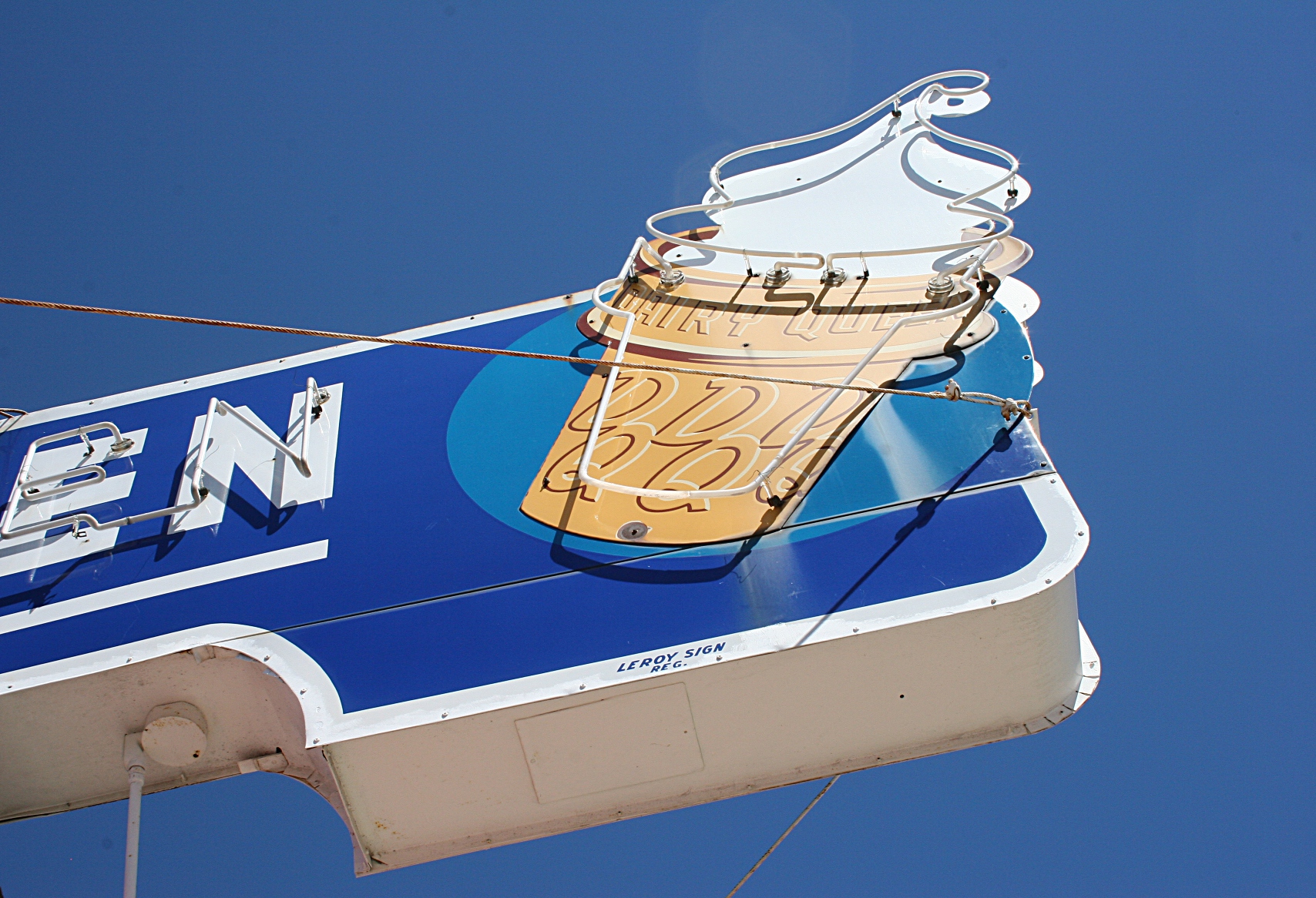
On the bottom edge of the sign, I noticed LEROY SIGN REG.

Not so fast. I noticed LEROY SIGN REG printed along the lower edge of the DQ sign. That was just enough for me to google the company and track down the sign’s origin with Leroy Signs & Manufacturing of Brooklyn Park.

After viewing a photo I took of the Janesville sign, Ralph Leroy “Lee” Reiter III told me it dates back to the late 1940s or early 1950s and is one of about 50 made by his grandfather, Ralph Leroy Reiter, Sr. While the younger Reiter doesn’t know exactly how many of these specific signs were placed in Minnesota, he says his third-generation company recently refurbished one in Columbia Heights and he knows of one in Robbinsdale and another in Brooklyn Park.

I was especially pleased to learn that the 75-year-old family business he co-owns with siblings Kaj Reiter and Andria Reiter can replace the neon lighting and otherwise refurbish the porcelain enamel finished vintage DQ sign.

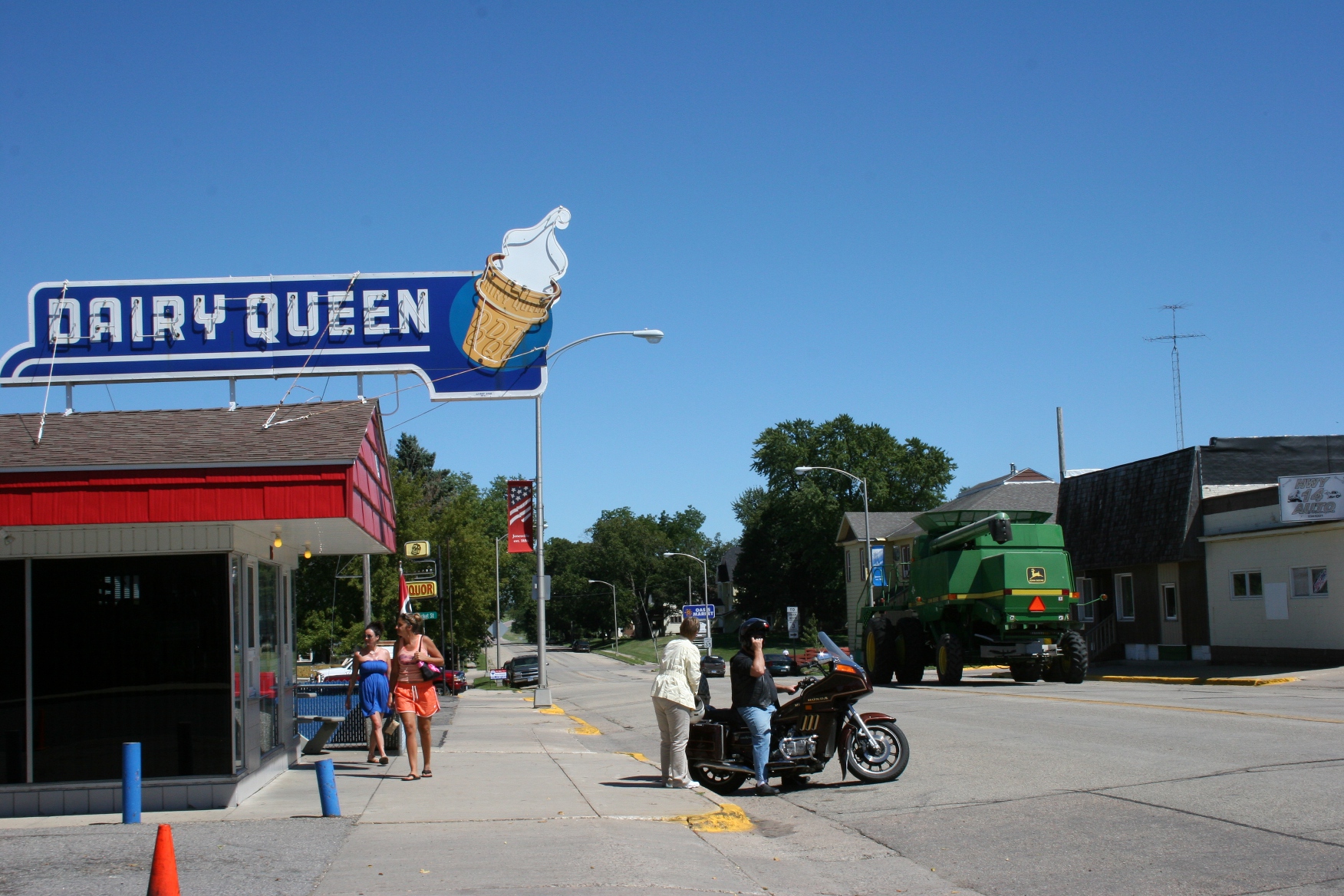
On the other side of the DQ, looking toward downtown Janesville.

Lee Reiter has high praise for the condition of the Janesville DQ sign. “It’s one of the cleanest I’ve seen and in really good condition.”

He observed, though, that the sign may have been touched up some. You could fool me. The sign as designed decades ago—DQ designed and Leroy Sign made the sign—allowed it to take in water, Lee noted.

Early on in DQ’s history, Leroy Signs made signs for DQ, last doing so about five years ago.

As for that vintage DQ sign in Janesville, Lee says if the owner ever wants to get rid of it, he’ll take it. That, in itself, should tell you something, don’t you think?

You know you’re in a rural town when you see a combine driving down the street like this John Deere which passed the Janesville DQ.

© Copyright 2012 Audrey Kletscher Helbling


Oh, the interesting topics you’ll find in small town newspapers…of bullets, burgers & babies… August 14, 2012

Filed under: Uncategorized — Audrey Kletscher Helbling @ 6:51 AM
Tags: , , , , , ,

SMALL TOWN NEWSPAPERS make for some interesting reading. Stories can get downright personal and to the point.

For example, I found a gem last week online at The Redwood Falls Gazette, a twice-a-week newspaper published in Redwood County in southwestern Minnesota. It’s the newspaper I grew up reading.

The Redwood Falls Gazette editor Troy Krause, right, interviews Todd Bol, co-founder of the Little Free Library in Vesta in early July. Bol gave a LFL to my hometown and installed it at the Vesta Cafe.

In the “Backward Glance” section of the newspaper, under 1987—25 years ago, this tidbit of information was published:

In the listings of the Redwood County 4-H county fair champions, Troy Krause of the Loyal Scotties was overall grand champion in flower gardens, while Kelly Zwaschka of the Vesta Vikings won champion child development.

(Note: Troy is editor of the Redwood Gazette, while wife Kelly gave birth to their seventh child, Gideon, this week. Congrats from the Gazette staff!)

How’s that for a birth announcement? Obviously Kelly’s interest in child development, even as a 4-Her, was a clear indicator of her future. As for Todd, I believe flower gardening could be connected to creativity/writing.

You’ll also find a brief about a game warden, shot through the head in 1937 by another game warden who mistook him for a bear. That’s listed in the 50 years ago section of “Backward Glances.” So, yes, apparently Merle Shields survived the incident as he was celebrating his 20th year as a Redwood County game warden in 1962. (BTW, since writing this post, I discovered that The Gazette has upgraded its website and the “Backward Glance” I reference here cannot be found, or I couldn’t find it.)

The third piece of interest was published in last week’s The Gaylord Hub, where I worked for two years as a news reporter and photographer right out of college. Avery Grochow, past president of The Gaylord Chamber of Commerce, penned a letter to the editor which I am certain is the current coffee shop talk of Gaylord.

I’ll summarize parts of his lengthy, six-paragraph letter and quote directly when needed. Grochow begins:

We, as the chamber board, are constantly trying to do our best for our community and are constantly being criticized by some for our decisions.

Apparently locals were grumbling about the food—who supplied it and how it tasted—at the community’s annual Eggstravaganza summer festival. New volunteers, replaced Dewey (whoever that is; my words here, not Avery’s), who “wanted a year off from all the arguments.” They stepped up and worked through a new bidding process for the supplies, awarding the bid to the lowest bidder.

Grochow continues:

We have had comments both ways about the supplying of hamburger. Some have criticized us in the past because the hamburger was too spicy, that they would rather have plain burgers, and we are now being criticized that we are having plain burgers and not spiced burgers.

No matter what we do as volunteers and directors for the Chamber, we can’t please everyone…We did what we thought was fair to everyone by taking bids on everything and stand by our decision.

Now, just imagine how difficult it must have been for Grochow to write this letter. Not an easy thing to do when you live in a small town like Gaylord where everyone’s lives are intertwined.

I give Grochow credit for having the guts to publicly voice his opinion in print. He doesn’t just vent, though. He offers a solution. And therein lies the point best taken by those who read his letter.

…if anyone has better ideas for us, we still are short of directors and could use all the help we can get to make our Chamber even more successful. We also have openings on the board so you can be part of the decision making, instead of just always making bad comments because you don’t like what we did. Remember, we, as the Chamber Board of Directors, are just volunteers trying to make Gaylord a better place to live and hopefully to have a great celebration.

Those closing remarks are words we could all heed because I expect you, like me, are guilty of occasional grumbling and complaining.


In southern Minnesota: “An old-time mission festival out in the woods” August 7, 2012

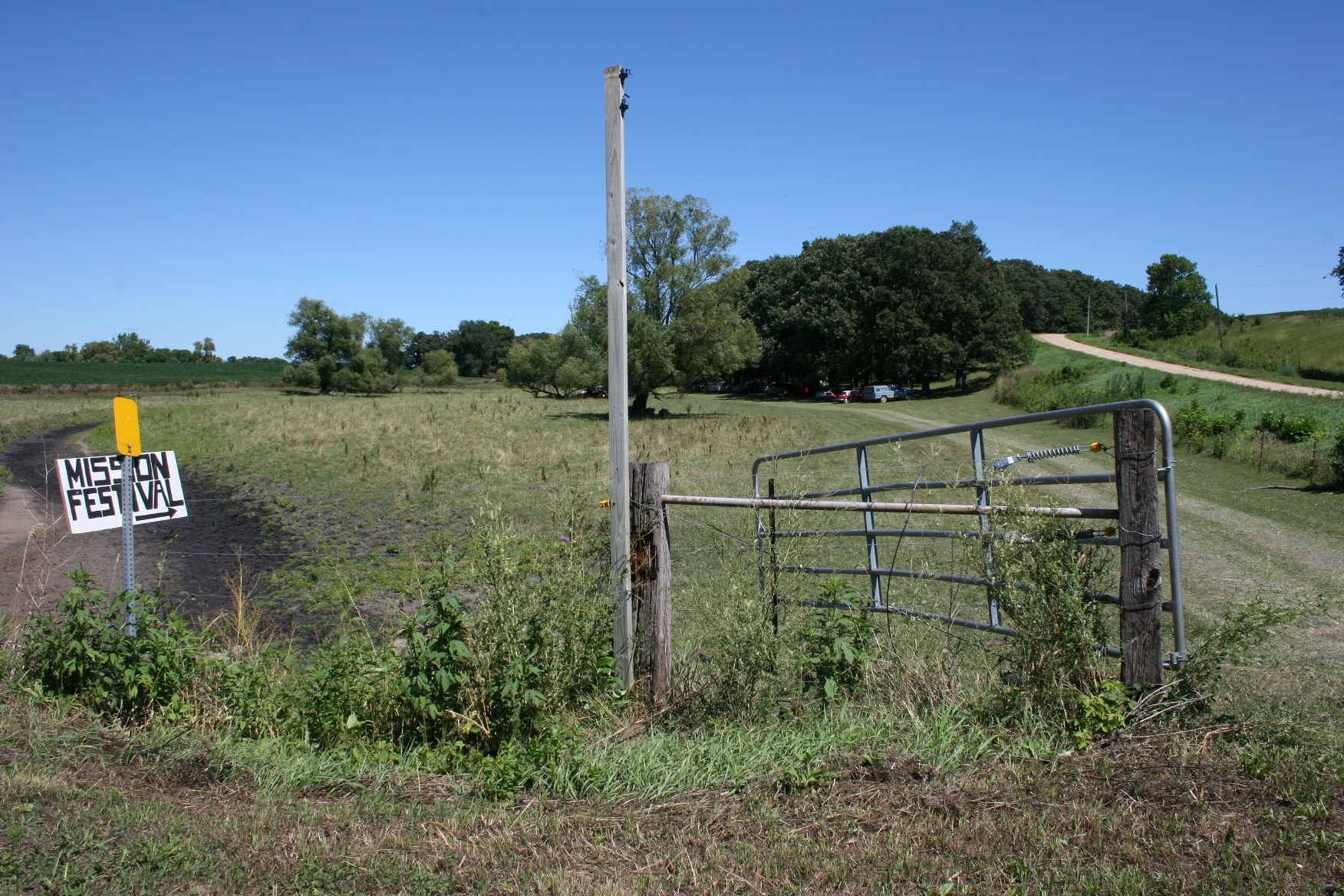
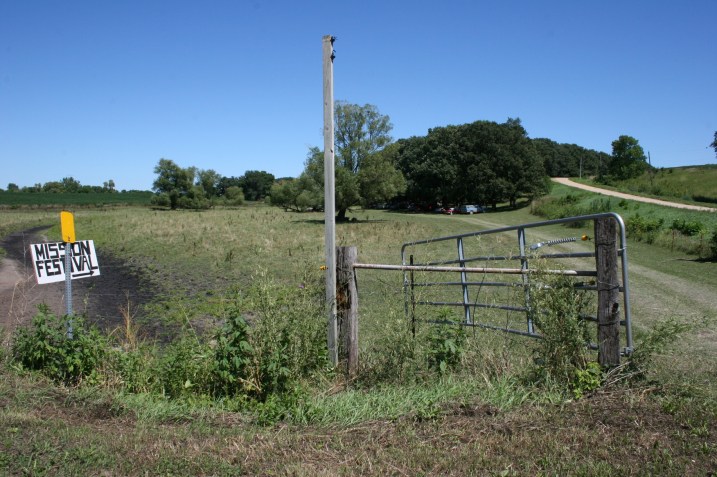
A sign marks the mission festival site at Marquardt’s Grove where cattle gates to the pasture are opened to allow entry. That’s the dry bed of Bull Run Creek on the left.

AT 8 A.M. SUNDAY, Harold Krienke swung his truck into Marquardt’s Grove some 10 miles south of Janesville to help set up for the annual mission festival in the woods near his country church, Immanuel Lutheran.

It was then he spotted the large black cat with the long tail edging dried up Bull Run Creek some 100 feet from the site where worshipers would gather 2 ½ hours later. “It wasn’t a house cat,” Krienke laughs. The cat—perhaps a panther, some speculate—didn’t scare him; it had been seen previously in the area.

Krienke’s animal encounter certainly wasn’t the first, and won’t be the last, at this mission festival held for the past 75 years in a five-acre wooded section of a 70-acre pasture where cattle still graze days before the event. Last year several head of cattle busted through an electric fence and charged across the creek toward the worship site. Another time horses caused a bit of trouble. No harm done, though, as the wayward animals were chased away.

Len Marquardt, who owns the woodlot and pasture, previously owned by his father, Alfred, and Alfred’s father, Gustav, before him, takes it all in stride. A few wandering animals won’t stop him from continuing the tradition of three generations of his family hosting the long-time festival of Freedom Church, as it is commonly known (referencing its location in Freedom Township), and the past two years in conjunction with Trinity Lutheran Church, Wilton Township, also known as the Wilton Church.
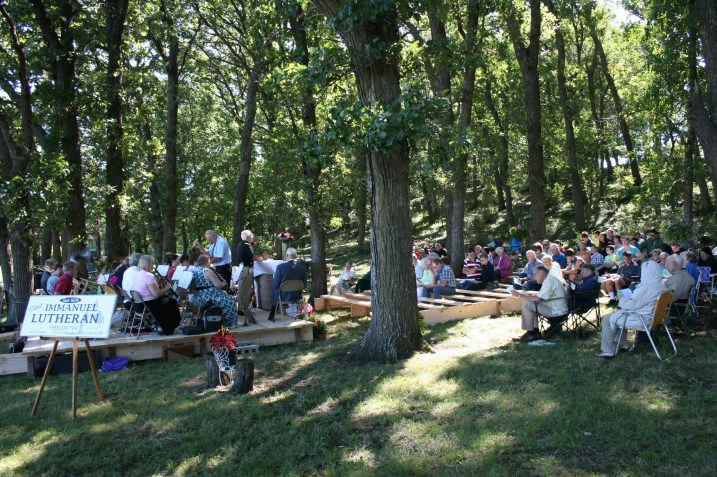
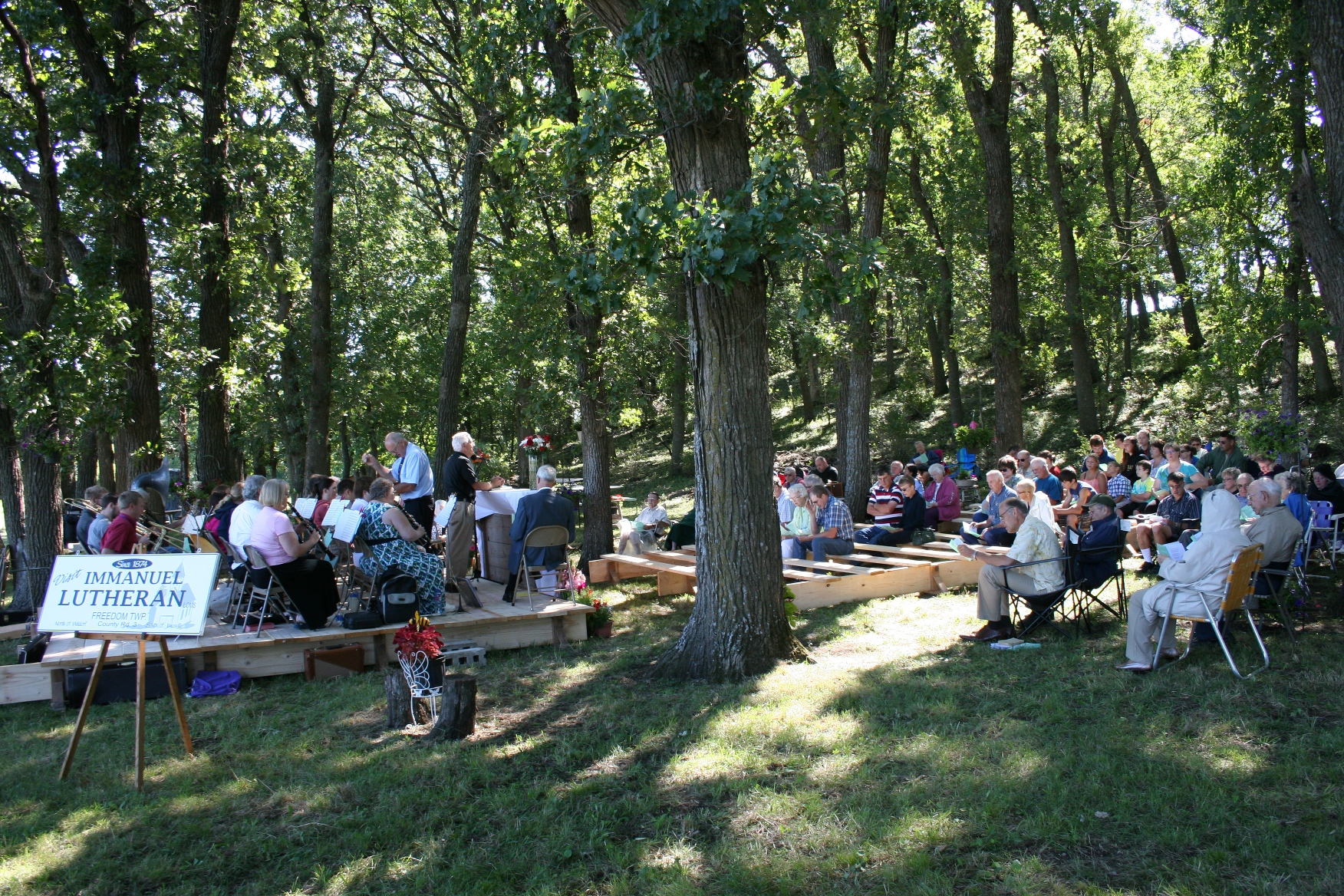
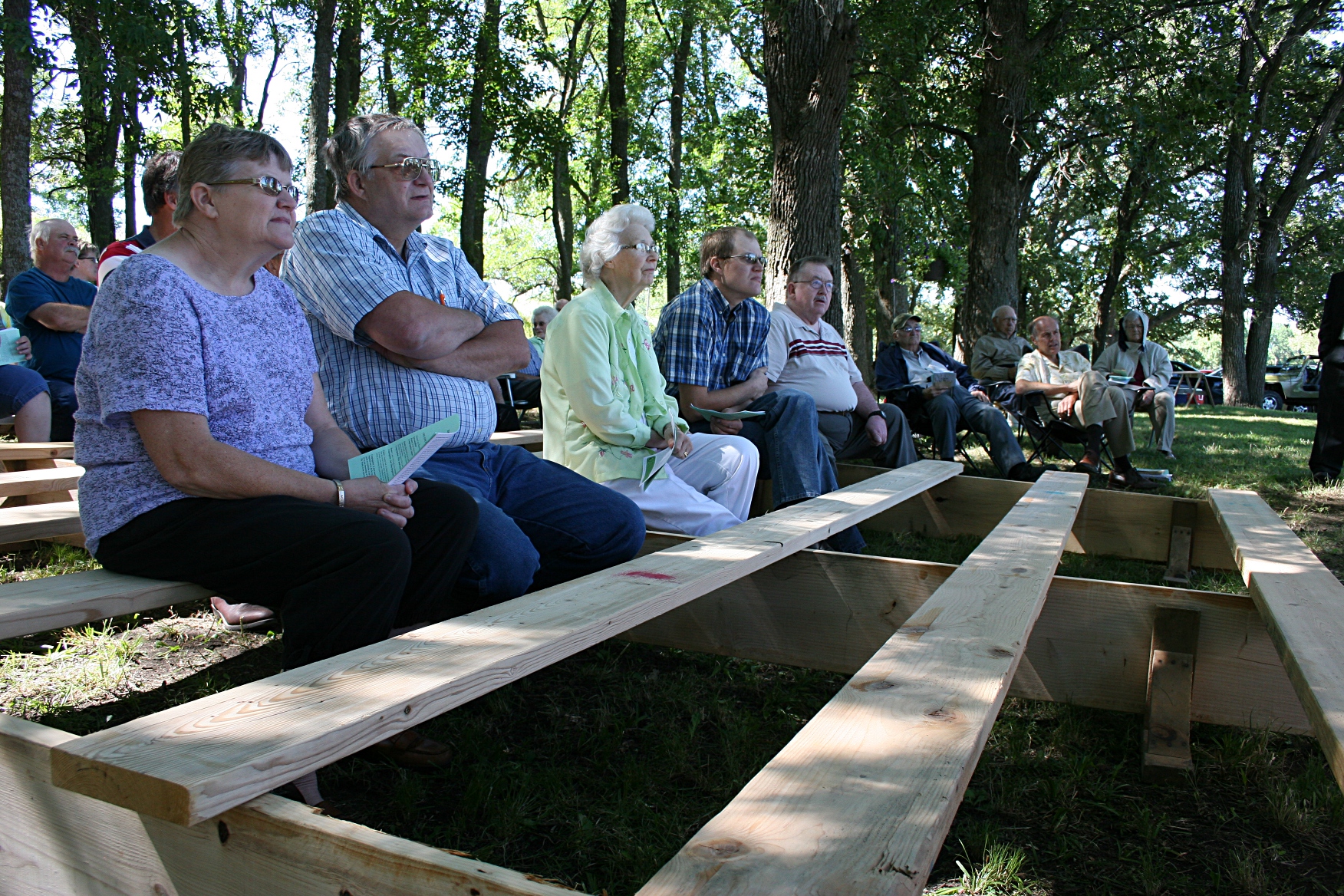
An overview of the worship site with the Freedom Band seated on the stage and the audience seated on plank benches and lawn chairs on the hillside. Freedom and Trinity Pastor Glenn Korb is standing at the makeshift altar.

Len’s heart and soul are committed to what he defines as “an old-time mission festival out in the woods.”

That definition seems apt for this event which, many Freedom members estimate, has been ongoing for a century. In the early days, area farmers took turns hosting the annual summer mission festival. The outdoor worship service has always been held around the same time of year, initially chosen, Len says, because the wheat harvest would have just been completed and farmers would have had more money to donate to the church.
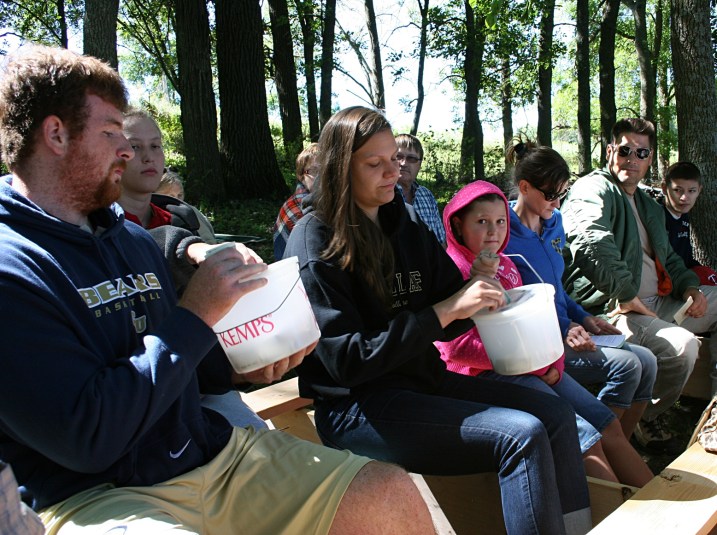
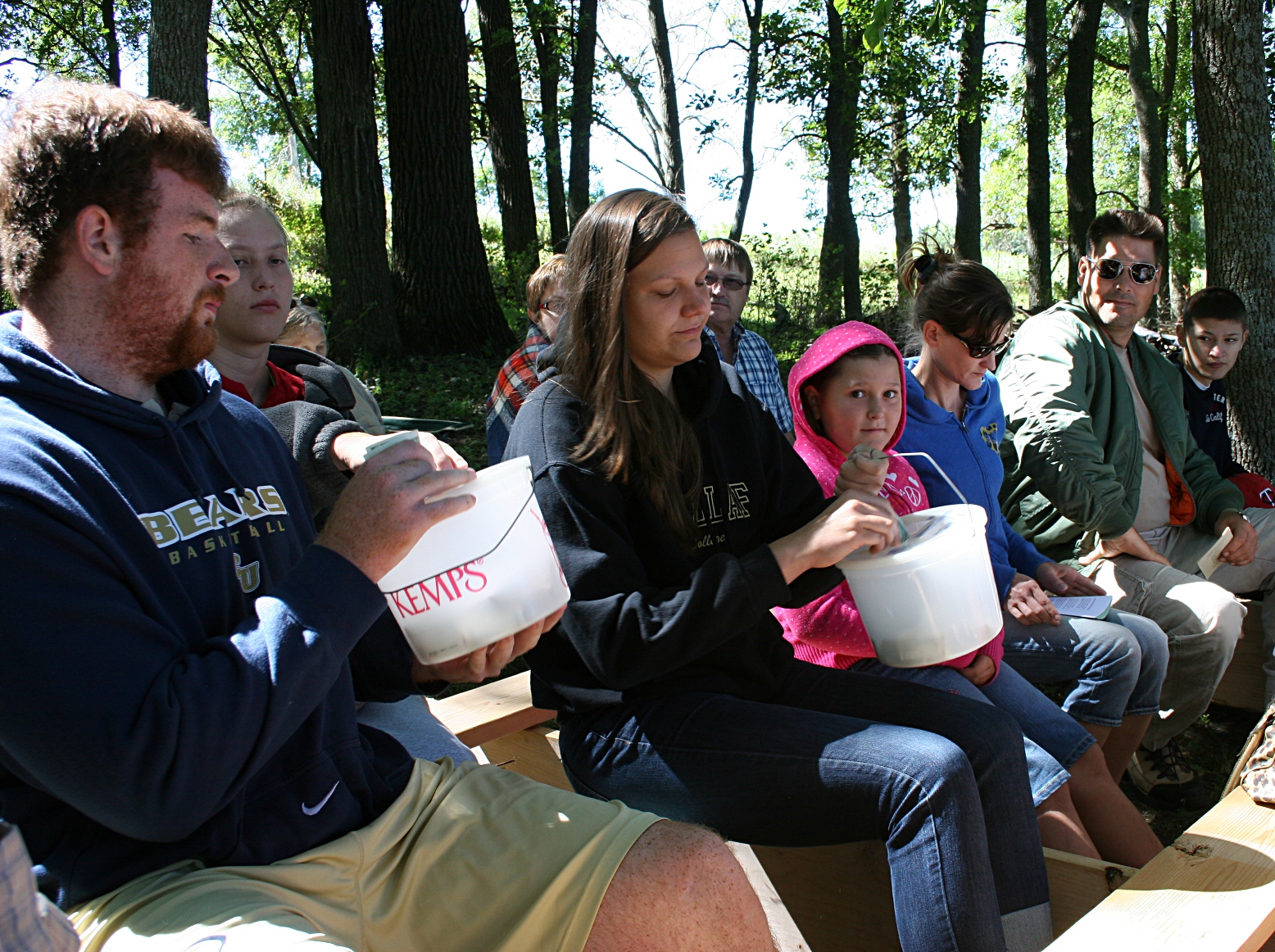
Offerings are collected in ice cream buckets at the mission festival.

Money, though, has never been the focus of the festival although a collection is taken. Rather, the purpose is to “help people to focus on missions,” says Len, who several years ago accompanied his daughter, Julie, and others on a mission trip to Nicaragua. It changed him and he now takes personally the words “Here am I, send me” from the hymn “Hark! the Voice of Jesus Crying.” Julie, now a third-year student at Concordia University in Seward, Nebraska, followed up with a mission trip to Hong Kong and is now considering a career as a missionary.

“I think we need to be a church in mission,” Len says as he explains the purpose of the mission fest on his family’s property. The natural setting of farm fields, open pasture and woods, with a cool breeze stirring oak leaves and raising goosebumps on Sunday morning, connected worshipers to the message delivered by the Rev. Dr. Robert Holst, retired president of Concordia University, St. Paul, and a former missionary to Papua, New Guinea.
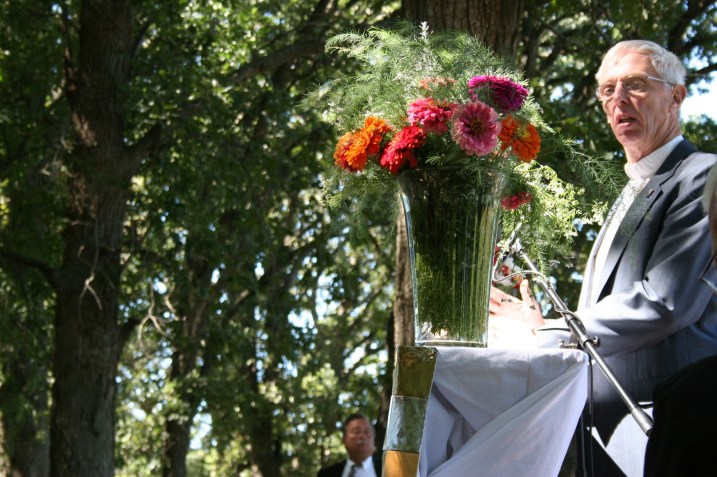
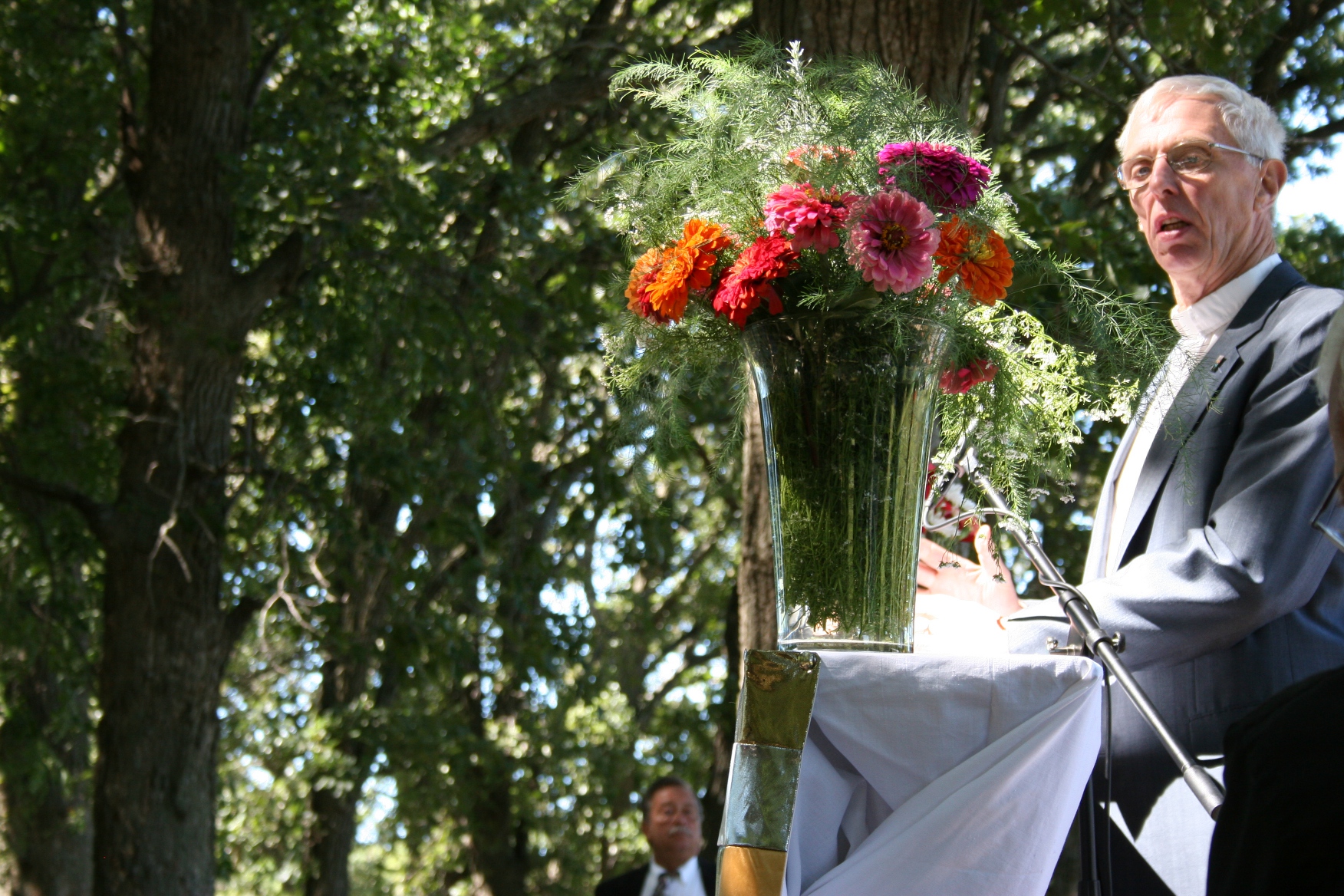
The Rev. Dr. Robert Holst delivered a message on missions and afterward answered questions about his missionary service in New Guinea. Len Marquardt says the congregation has never had trouble finding a guest pastor as they savor participating in an “old-time mission festival out in the woods.”

As Rev. Holst spoke of his experiences in his sermon, “Global Missions: International Love,” worshipers, sitting among the trees, could easily imagine the primitive ways of the New Guinea people, their belief in spirits, their sacrifice of pigs, their mistrust and misunderstandings and lack of knowledge about God and the challenges the pastor faced in telling them about Christ.

Foreign missions seemed as close as a thought away for attendees like Jeanette Schoenfeld of Wilton Church who enjoys the mission fest because, she says, “It’s like they do in Africa,” worshiping outdoors.
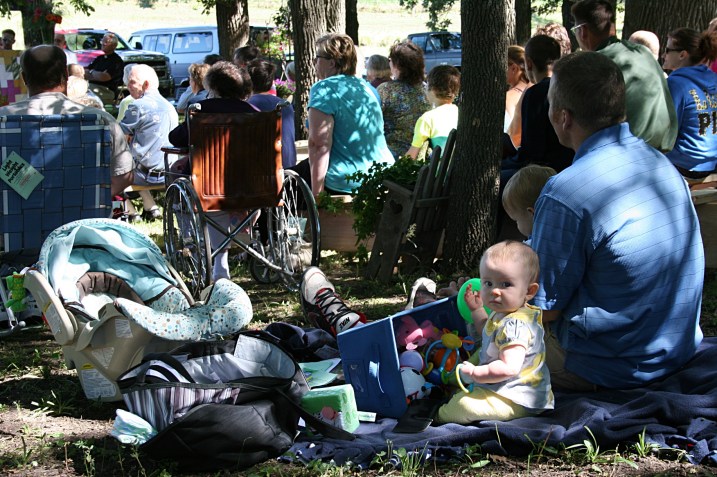
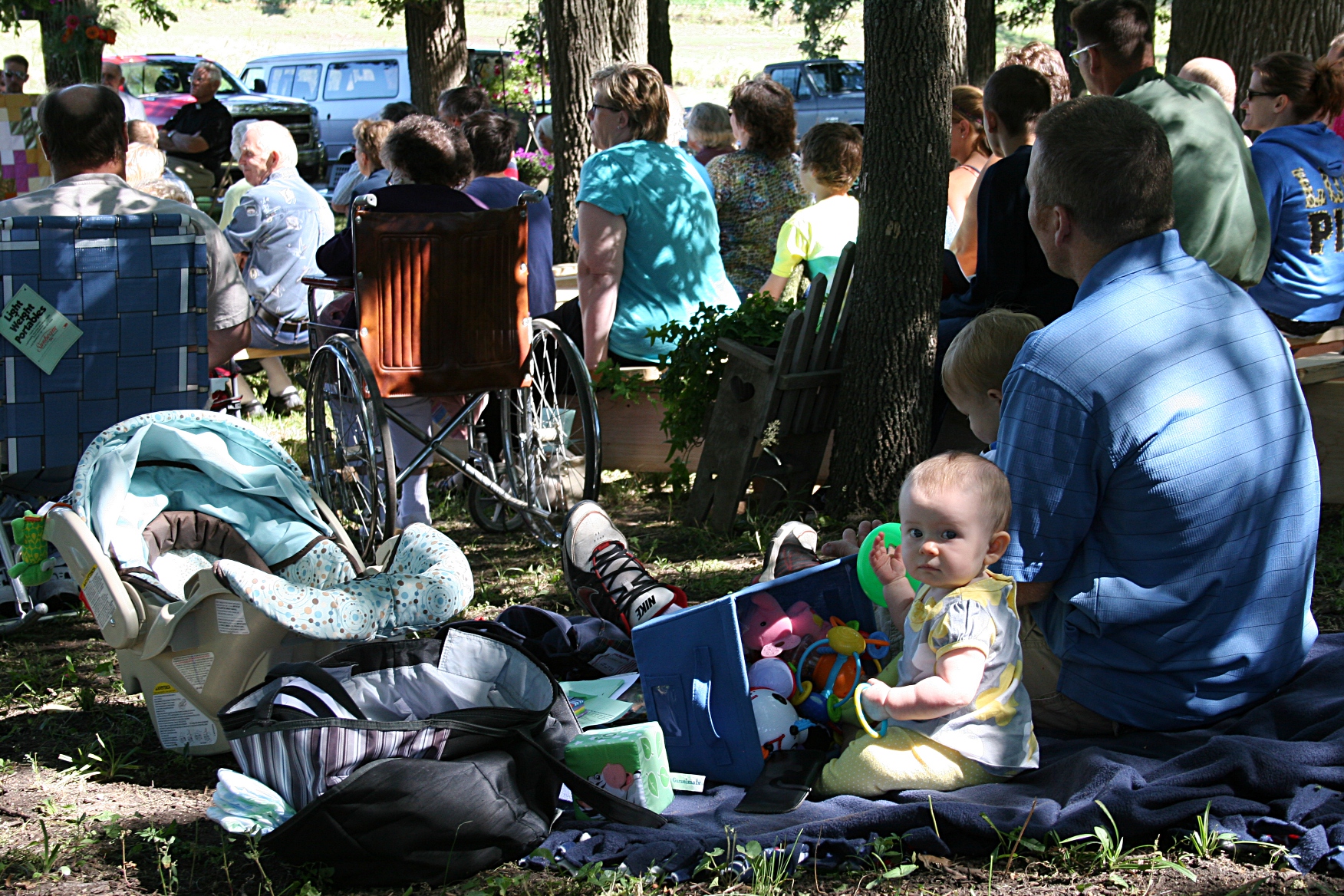
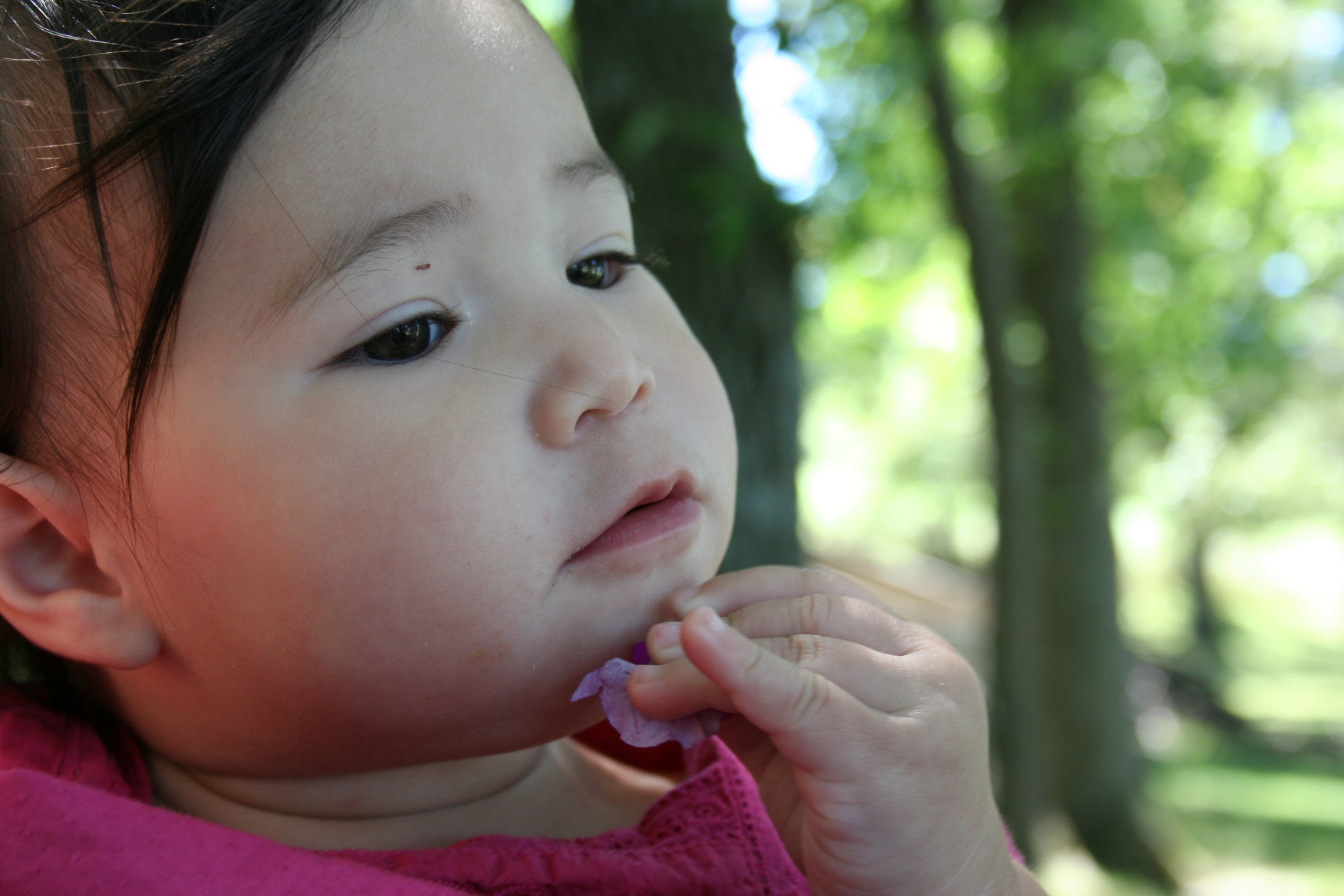
Baby Jaci sits with her dad, Mike, and brother, Bales, during the worship service.

Len Marquardt and others, including his sister, Sally Hodge, appreciate, too, the traditions they are passing from family to family through generations of mission festivals. As Sally samples a vinegary, potato-green bean dish prepared for the mission fest potluck, she glances back to kids racing up the wooded hillside. “I remember tromping up the hills, tromping up the trails, building wood forts…talk about history and family and pleasure in knowing each other…” Sally says as she glances across the table at friend and fellow parishioner Davin Quiram.
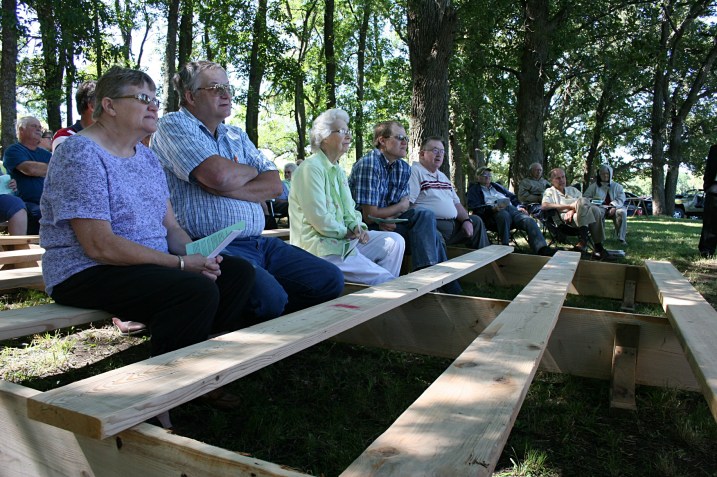
All ages, and several generations of families, attended the mission fest on Sunday.
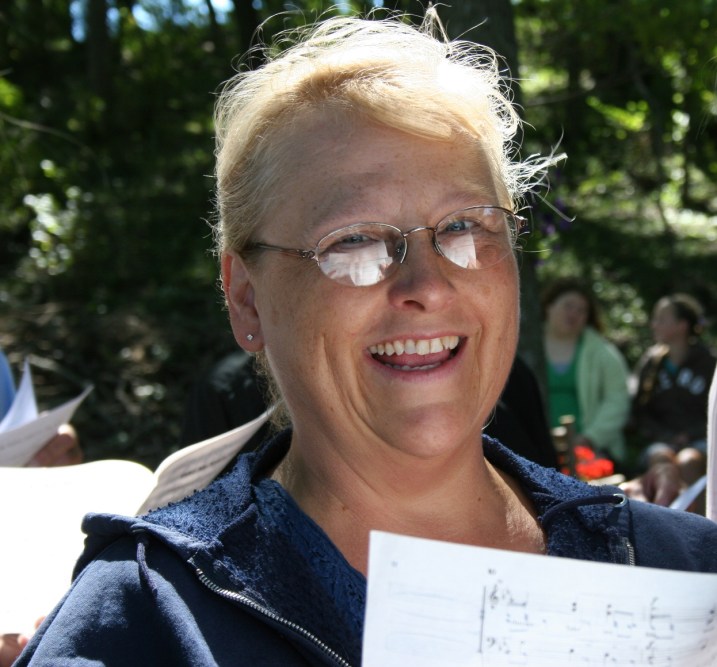
Sally Hodge sings in the choir and usually plays in the band. But this year she didn’t make the practices so was unable to join the Freedom Band. She lives just up the hill from Marquardt’s Grove and grew up on the other side of “just up the hill.”

Davin, like Sally a life-long member of Freedom, concurs as the two reminisce and remember the rare treat of soda pop from the mission fest pop and candy stand, which Davin will later man. The friends don’t recall specific mission speakers or messages from their childhood days, only those racing through the woods and gulping pop memories.

Davin, though, is quick to rattle off the areas of ministry covered by mission speakers in the past 10 years: American Indians, Hispanic, college, Japanese and such.
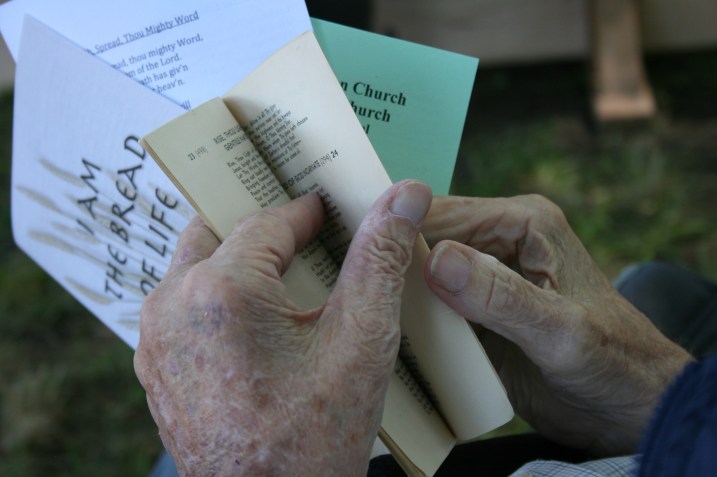
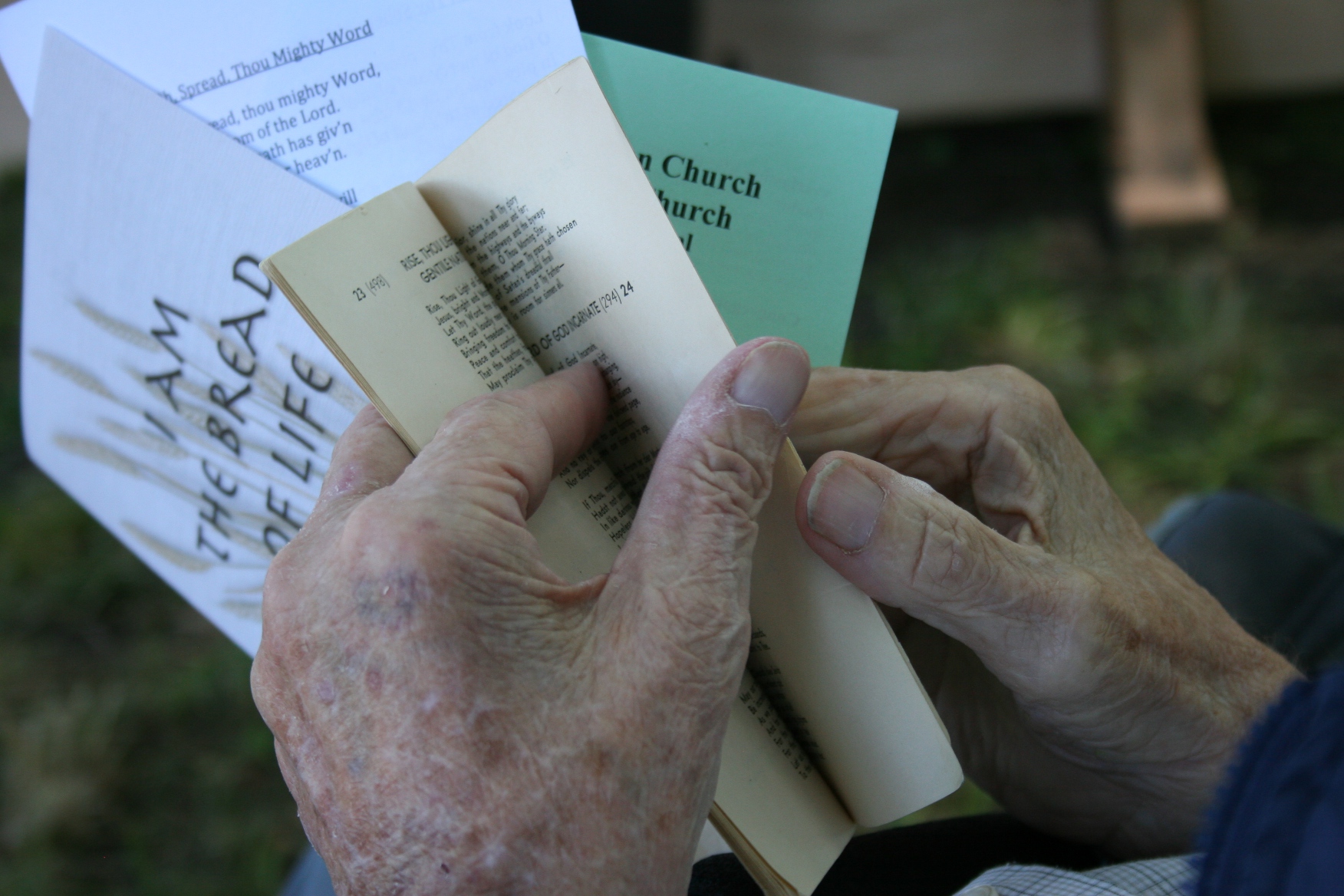
An elderly man turns to a hymn in the old pocket-size songbook that’s been used for decades.

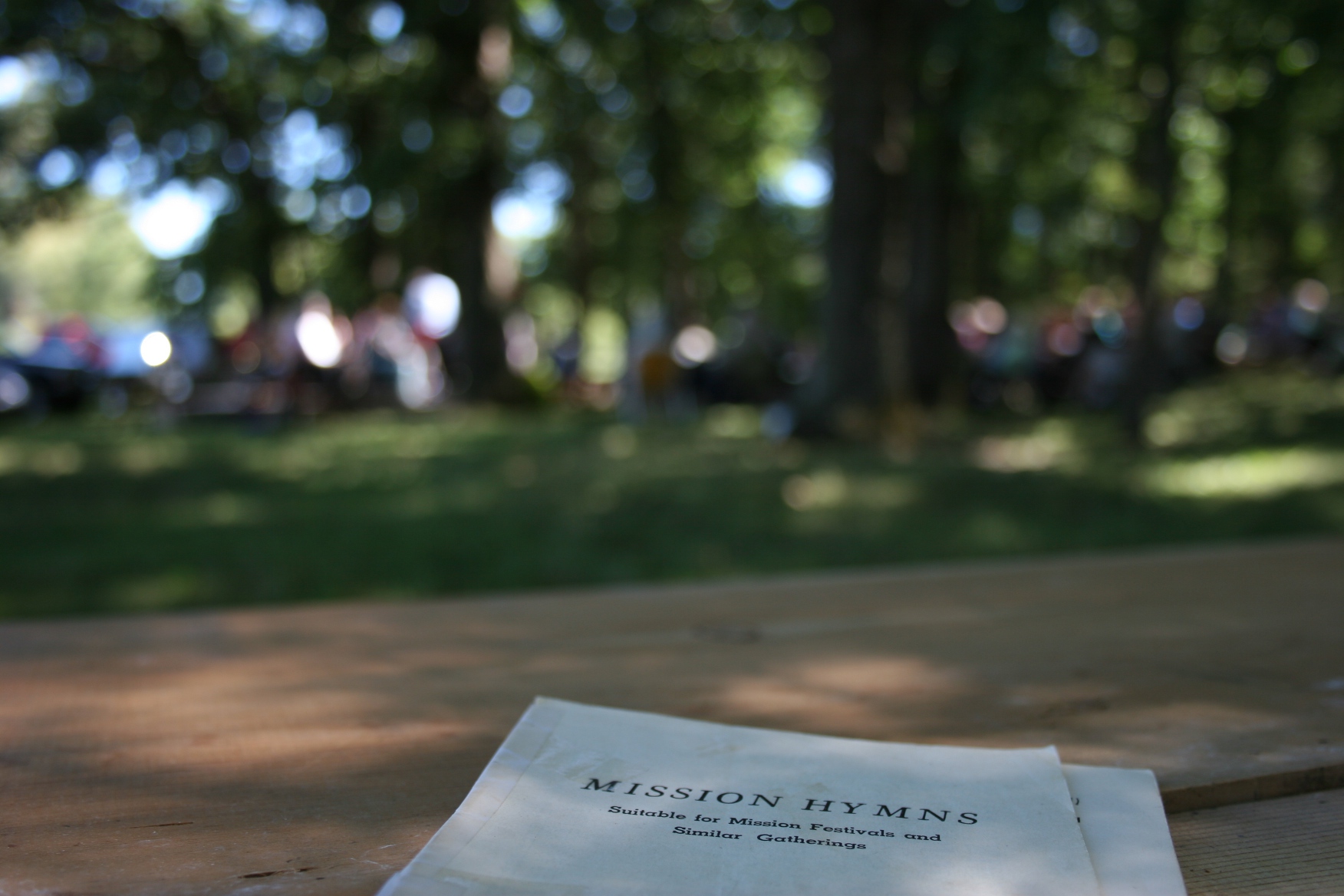
While guest speakers change from year to year, the music remains constant with worshipers singing hymns from the pocket-size Mission Hymns Suitable for Mission Festivals and Similar Gatherings (out of print for 80 years).

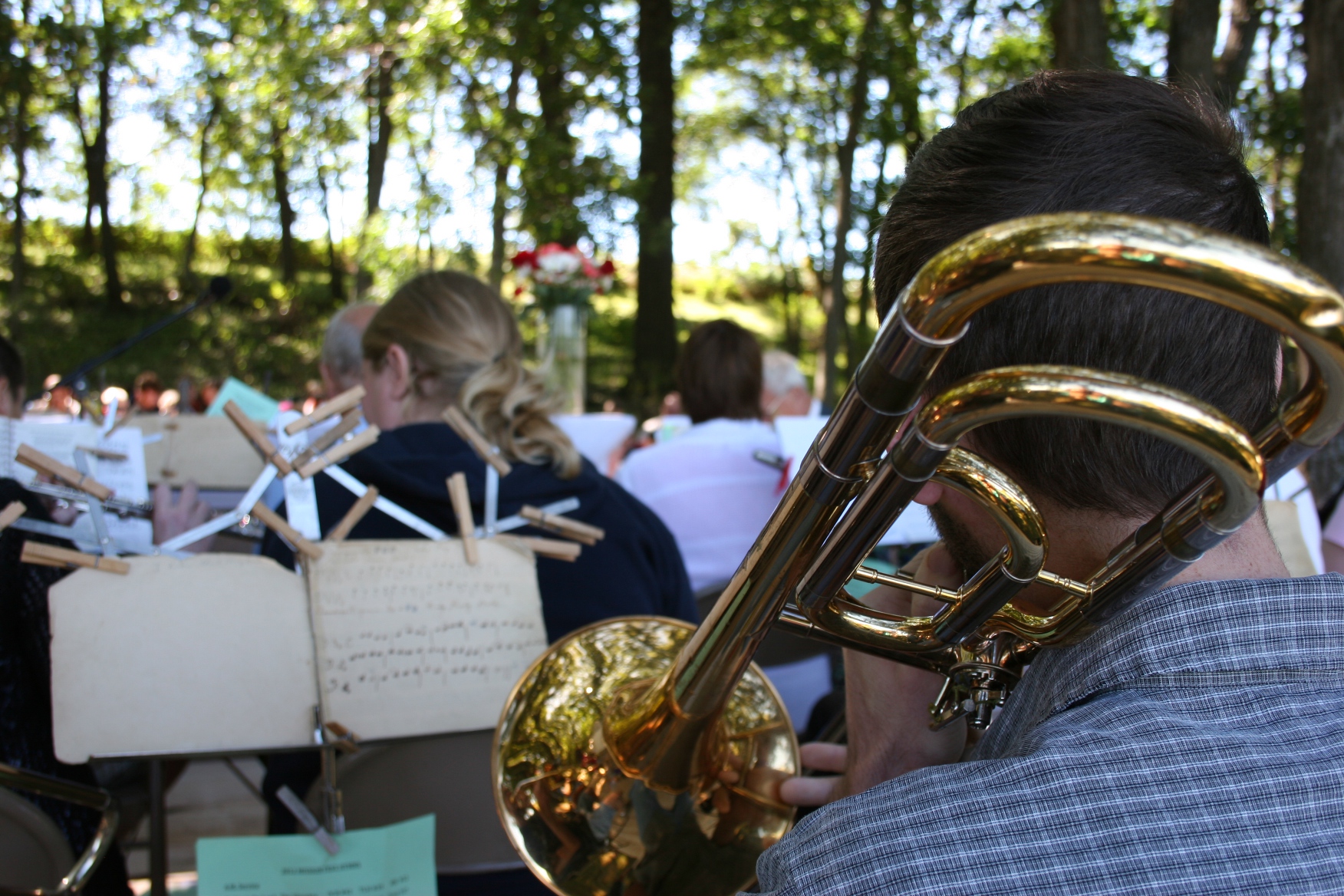
Likewise, the Freedom Band, the church band comprised of Freedom members and others from the area and in existence for an estimated 80 years, uses the same familiar music books such as The Church Band Book—Choral Melodies of the Lutheran church for Military Band by A. Grimm, published in 1919 by Antigo Publishing Co., and a handwritten book of music transposed from a hymnal for the band.
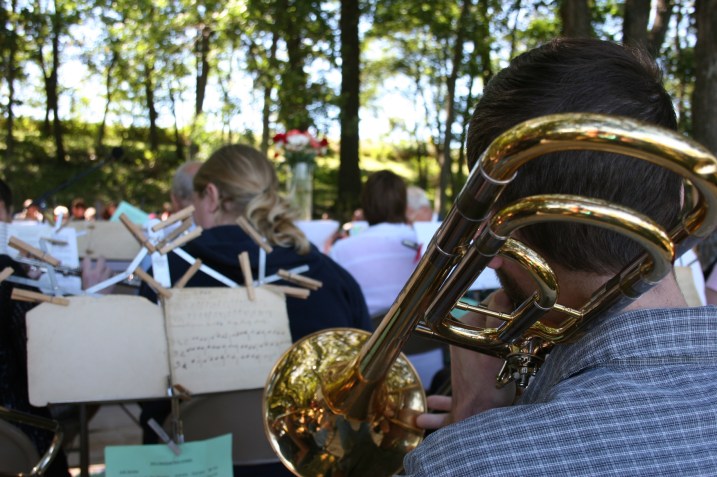
The Freedom Band and some of its handwritten music.

The Freedom Band has always played at the mission fest and other area mission events in years gone by. At any time, 5 – 7 members of Sally’s family, the Marquardts, may be playing in the band—all on the trumpet but for one on the sax.
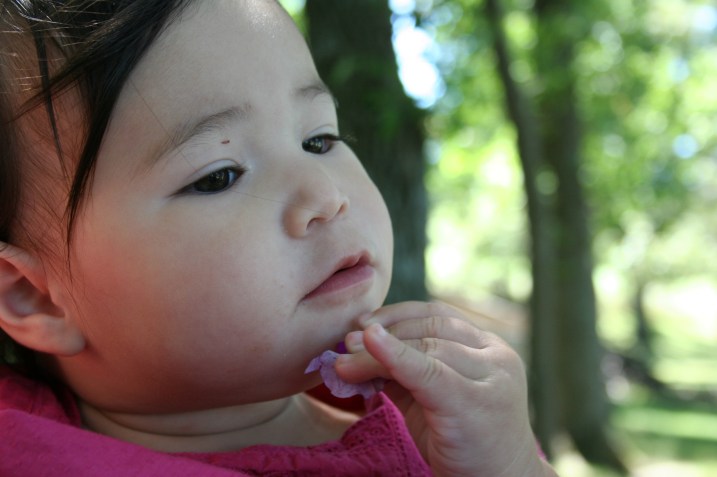
Gemma Lin returned to the mission fest, one year after her baptism there in 2011.

Part of mission fest also includes the occasional outdoor baptism. Sally’s father, Alfred, born in 1911, was baptized at the Freedom Mission Festival. Last year, a century later, two-month-old Gemma Lin of Mankato was baptized in Marquardt’s Grove and her great uncle was baptized the night before at Freedom Church. Aleta Lin, Gemma’s mom, treasures her daughter’s unique baptism and the story of that baptism which will always be a part of family history. She hopes Gemma will, through the years, continue to attend mission fest, a life-long tradition for Aleta, a life-long member of Freedom Church.
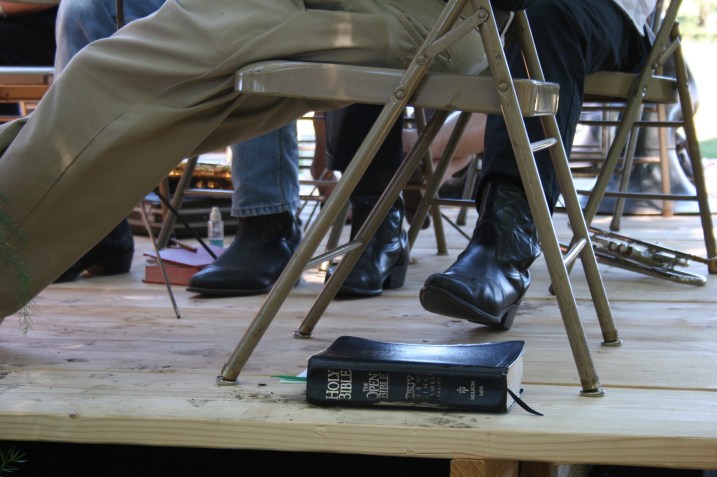
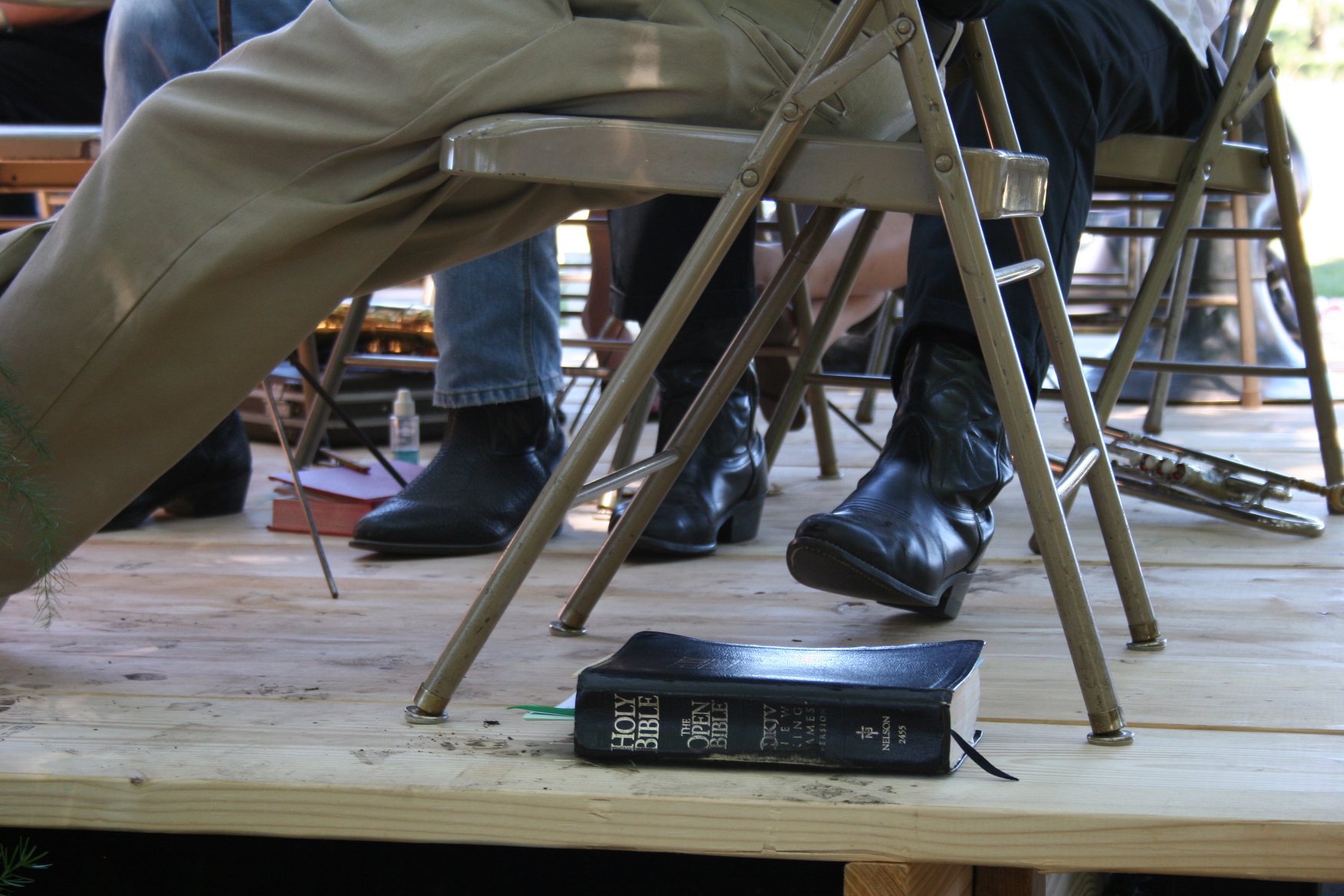
A bible lies on the floor of the stage where the band played and the preachers preached.

For those outside of Freedom, memories of past mission fests also come quickly. Such festivals were once a staple among rural congregations as a time to worship God in the outdoors, to socialize afterward at a potluck dinner and even meet future spouses.
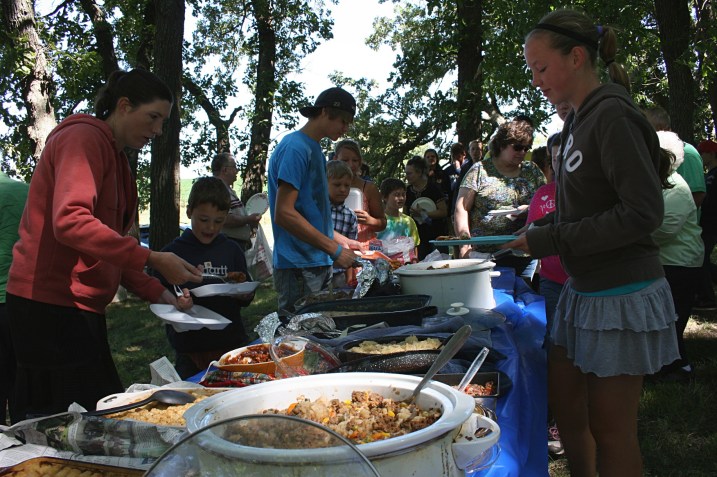
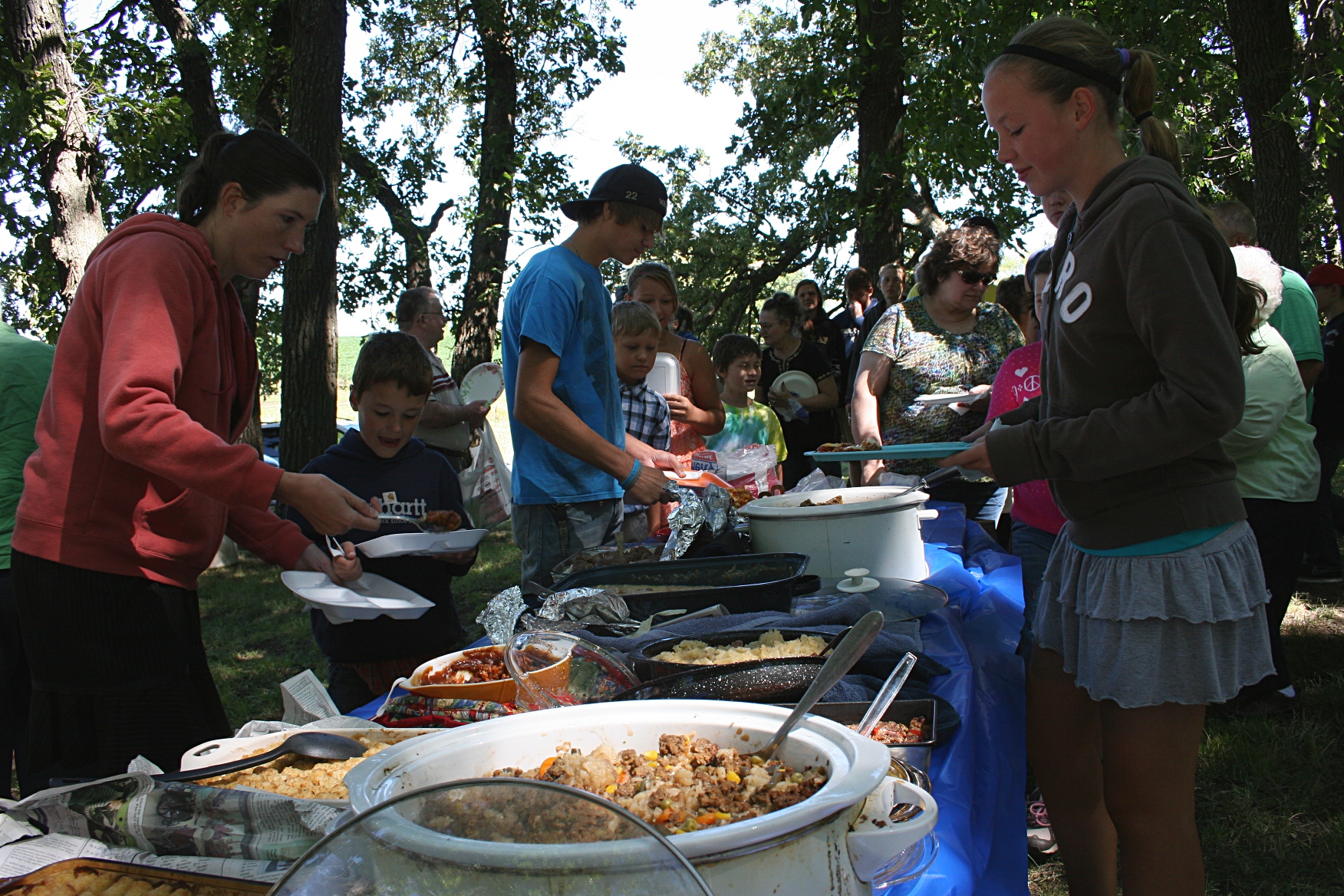
Worshipers line up for a potluck dinner after the worship service.

Guest pastor Holst opened his message by reminiscing about the mission fests of his youth, recalling the washtubs full of soda pop—root beer, 7-UP and Orange Crush—set out by the youth group. He also remembered the ball games between fathers and children.

On Sunday there were no ball games or kids racing for a rare treat of pop. But plenty of kids—from babies to teens—settled onto temporary wood plank benches and lawn chairs or upon blankets or in car seats on the same ground in Marquardt’s Grove that has, for generations, served as an outdoor house of worship on one Sunday in August.
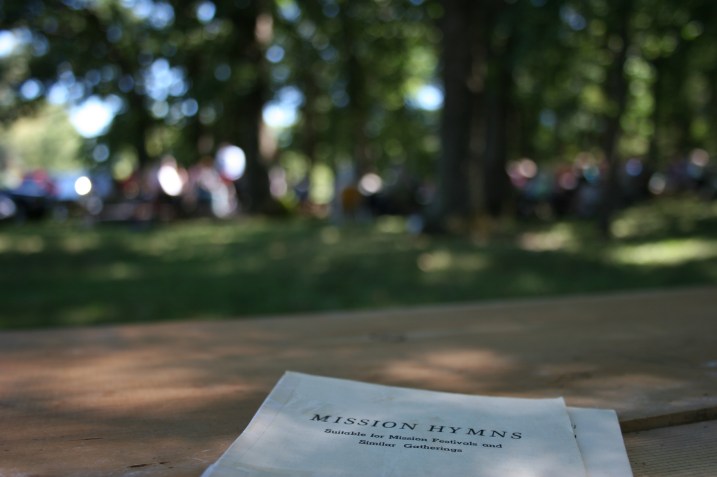
The vintage mini songbook lying on planks and the mission site in the background.

FYI: Check back for an additional post featuring mission fest photos and for a separate photo essay of Freedom Church.

© Copyright 2012 Audrey Kletscher Helbling


No cherry picking for me as I miss out on The Cherry Orchard Project July 18, 2012

The Cherry Orchard Project promo photo.

I TRIED LAST WEEK to get two tickets to a production of Anton Chekov’s “The Cherry Orchard” in the historic Gunderson House in neighboring Kenyon. But, alas, I could not secure a pair for a weekend performance, much to my dismay.

If only I’d known prior to last Thursday about the unique, touring theatrical group which is sweeping into historic homes in five southern Minnesota communities this summer. I embrace the concept of professional actors from the Guthrie, Ten Thousand Things, the Jungle Theatre and Theatre de la Jeue Lune performing in rural Minnesota, because, frankly, I’m not one to venture into The Cities for theater, or much of anything. Just being honest here. The metro traffic and general busyness simply don’t suit me.

The Cherry Orchard Project, which presents Chekov’s play of an aristocratic Russian family about to lose their home and cherry orchard through foreclosure, seems an ideal way to extend performance art to Minnesotans like me. It also gives outstate actors/actresses an opportunity to work with pros. Each site-based production includes local performers working with those professionals.

This type of theater, staged in an historic home, presents an intimate venue for both performers and audience members, which also appeals to me.

Here’s a description of The Cherry Orchard Project from Brown Paper Tickets, the online ticket source for The Cherry Orchard Project:

Audiences move in and around the house to the strains of local musicians, experiencing the characters cooking, dancing, debating and attempting to indulge in their unrequited passions. It’s a rare opportunity to step inside the world of Chekhov’s eccentric and comedic characters, living the drama with them.

Now if that sounds like the type of close-up theater you might enjoy, consider purchasing your tickets immediately for an upcoming performance in one of the following communities:

Little Falls at the 1898 Musser Mansion, July 18 – 22
Taylors Falls at The Historic Folsom House, July 25 – 29
Worthington at the Historic Dayton House, August 1 – 5
Blue Earth, James B. Wakefield House, August 8 – 12, audience limit of 25

Do not wait until the last minute, like I did (because I was unaware), or you will not get tickets. Audiences at the performances I wanted to attend in Kenyon were limited to 30 – 40.

And, if your local community newspaper runs an online poll with this question, “Would you like to see more live local theater in our small towns?”, I hope you will respond favorably, unlike many who answered that exact question posed by The Kenyon Leader.

According to results posted on Tuesday afternoon, 57 percent of the 35 respondents to The Leader survey said they have little interest in live theater. Thirty-four percent said they would watch live local theater in small towns. The rest, nine percent, were interested in attending and/or participating.

Those poll results disappoint me. But then I suppose I can’t make anyone appreciate theater anymore than anyone can make me value sports. Plus, given the low survey response rate, I would question whether the results accurately reflect the overall consensus of Kenyon residents. The Cherry Orchard Project Facebook page reports a sell-out crowd and warm reception in Kenyon.

If only I’d been among those in the audience. Perhaps next year…

© Copyright 2012 Audrey Kletscher Helbling
 

Gravel road on the prairie July 9, 2012

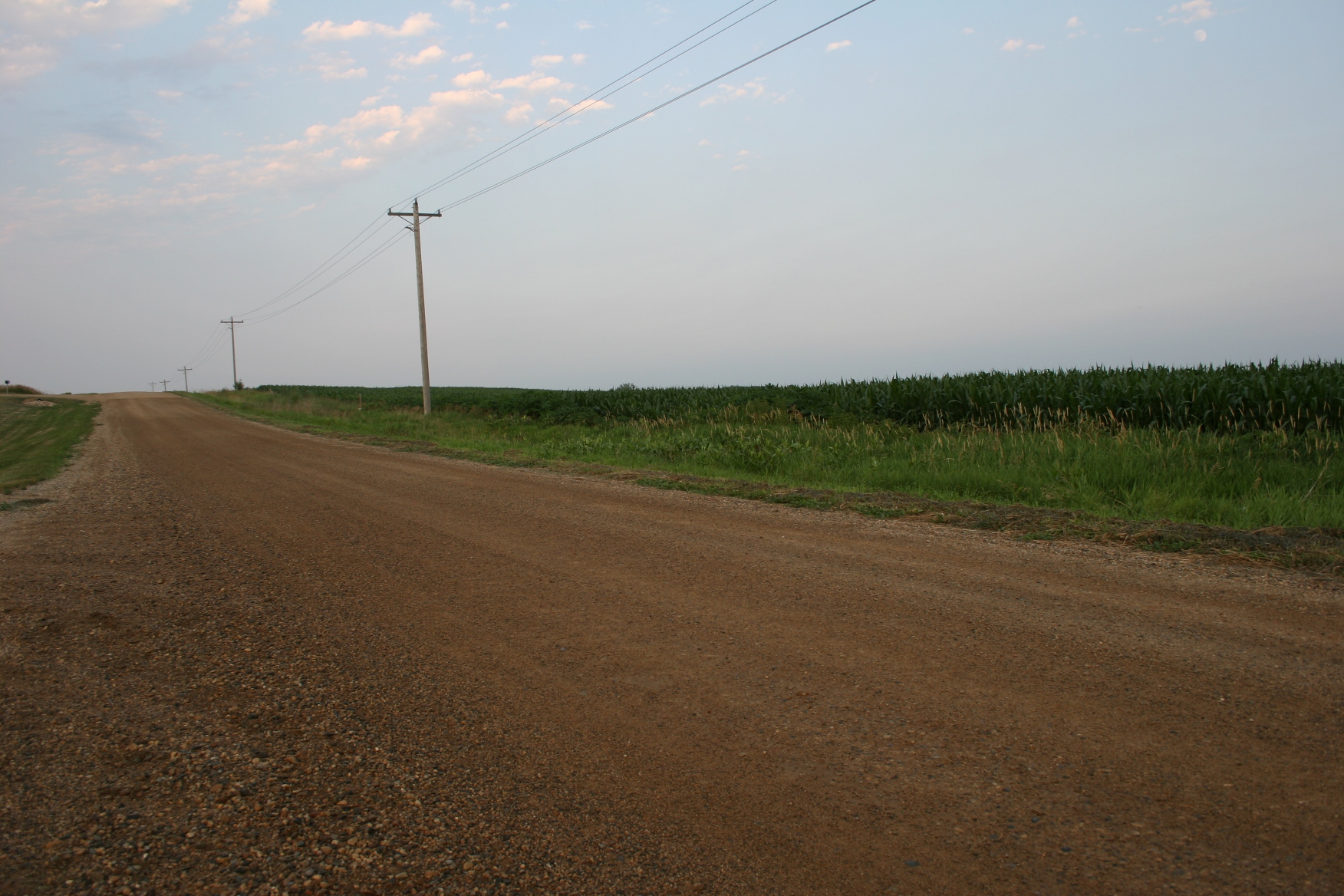
A gravel road just north of Lamberton in southwestern Minnesota.

WHAT IS IT ABOUT a gravel road?

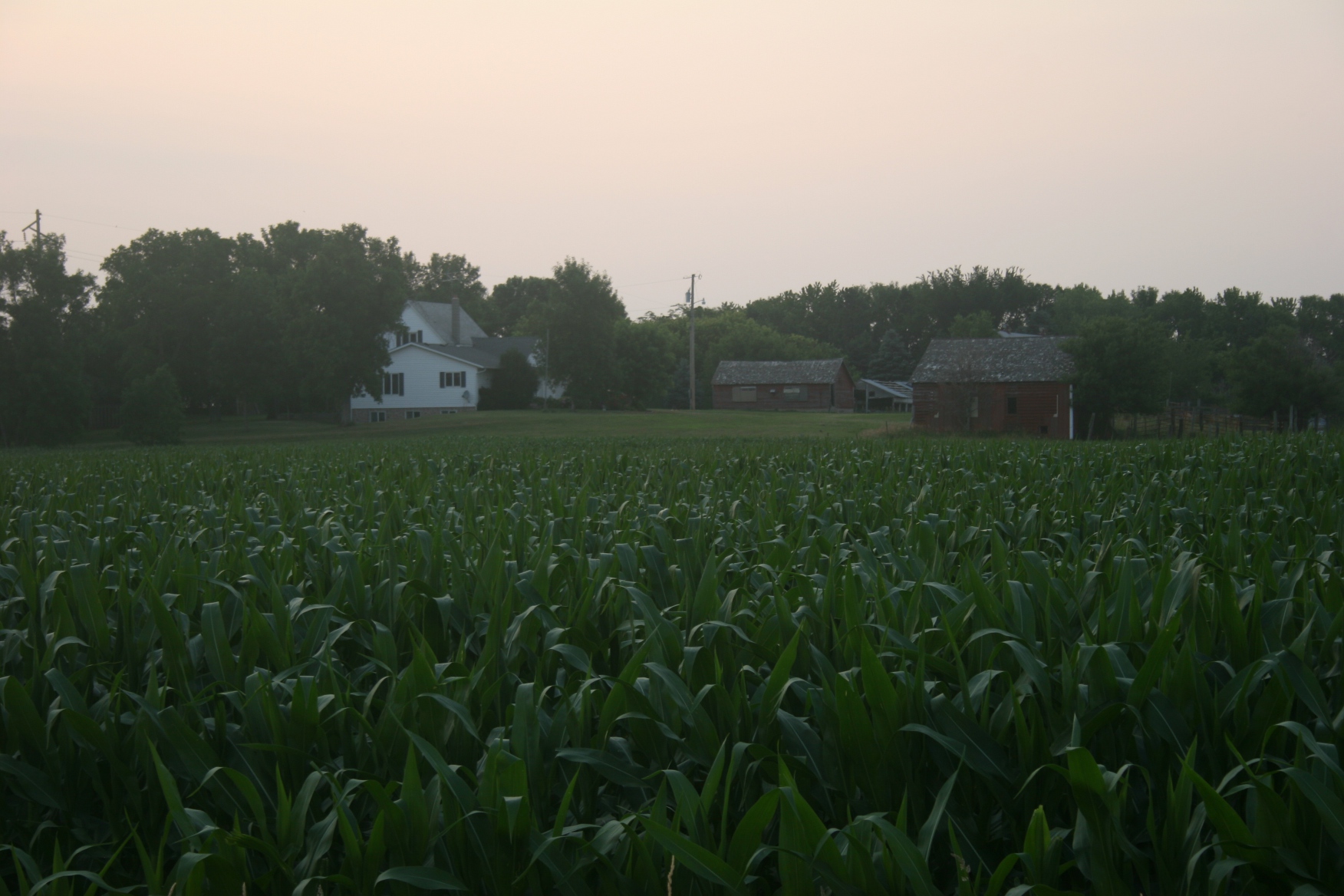
A picturesque farm site on a sultry summer evening as seen from a gravel road north of Lamberton.

It is poetry and peace, country and charm.

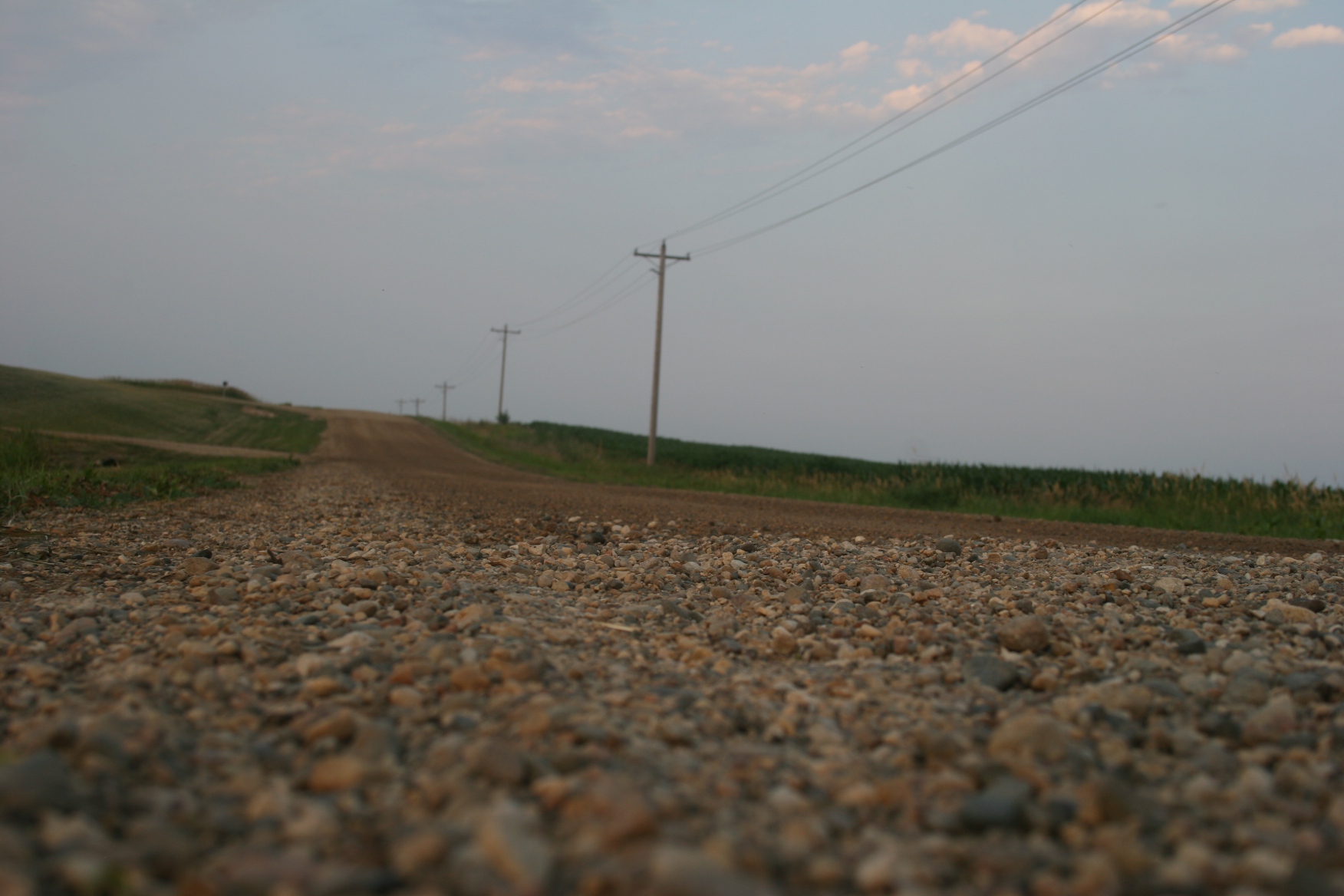
You can almost hear the crunch of the gravel in this image.

But it is more. It is small stones crunching under tires and feet as dust rises and lingers, marking the trail traveled.

As the sun sets on the prairie, a truck travels along a gravel road up to a paved roadway north of Lamberton.

It is a marker of townships, the route of massive yellow road graders blading the road surface to a flat finish or heaving snow toward ditches.

It is memories of bumpy school bus rides and squishing into the back seat of the family car between brothers and sisters.

It is Dad’s admonition to always, always, move to the right when cresting a hill.

Utility lines along the same gravel road stretch into forever.

It is the memory of pinpoint stars dotting the pitch black darkness of a prairie night and the sweet scents of wild roses (once) rambling in ditches and of freshly-mown alfalfa and of hay baled and stacked onto a swaying wagon.

A gravel road is all of these to me, and yet, in its most basic definition, it serves as a way to get from point A to point B, and marks borders between town and country.

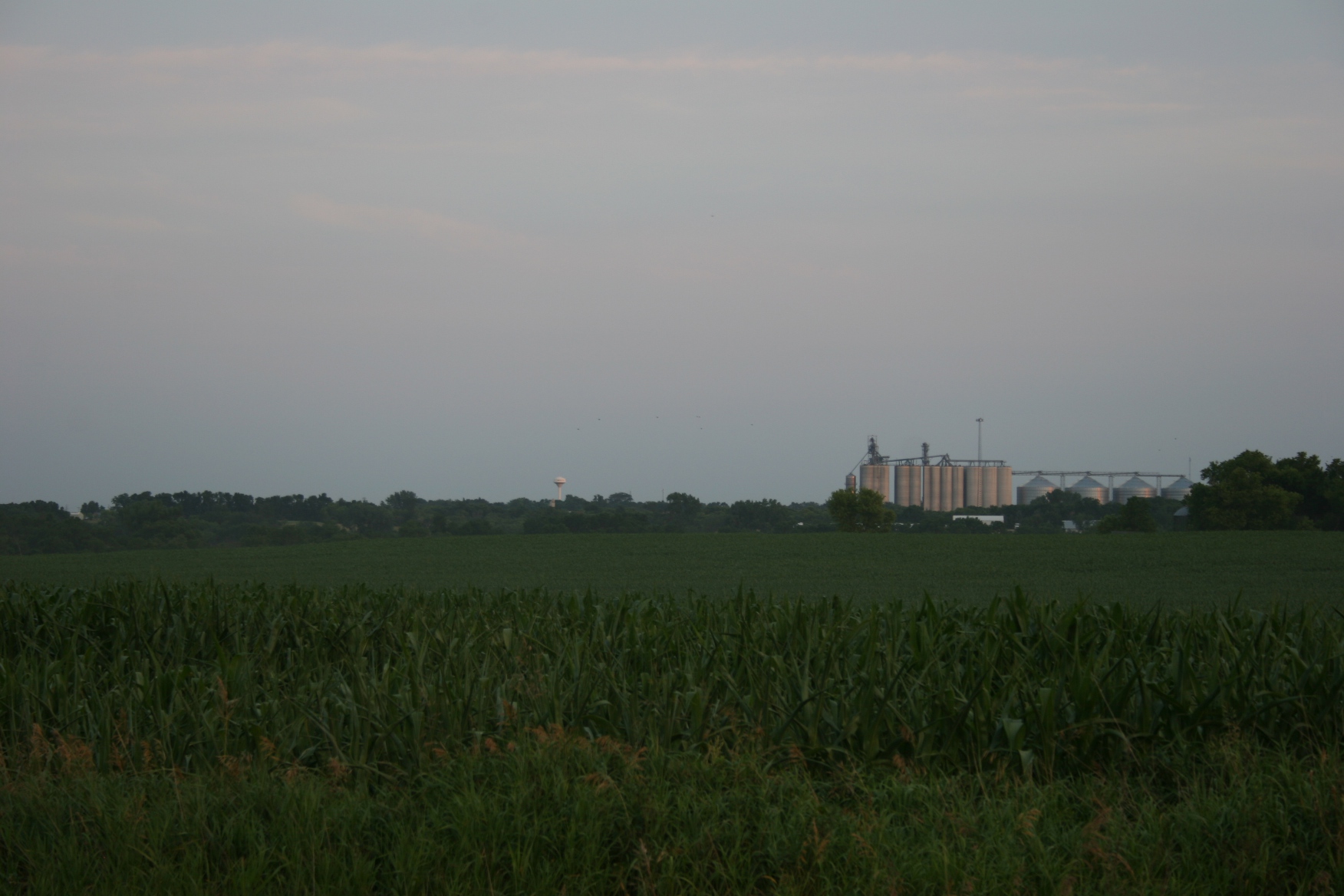
Standing on the gravel road, I turned south to photograph the cornfield and Lamberton in the distance.

It is a line in a plat book, a route connecting paved roads, a path to a rural home.

It is a gravel road on the prairie.

© Copyright 2012 Audrey Kletscher Helbling
 

Minnesota Museums Month: The Minnesota Machinery Museum, on the prairie May 1, 2012

THINK OF MUSEUMS in Minnesota, and what pops into your mind?

Probably the Science Museum of Minnesota or the Minnesota Children’s Museum or the SPAM Museum in Austin or any other such notable museum.

During May, “Minnesota Museums Month,” I challenge you to think beyond the obvious to those small town museums that are tucked away in nondescript buildings or along back roads or are mostly unknown except to those living within a region.

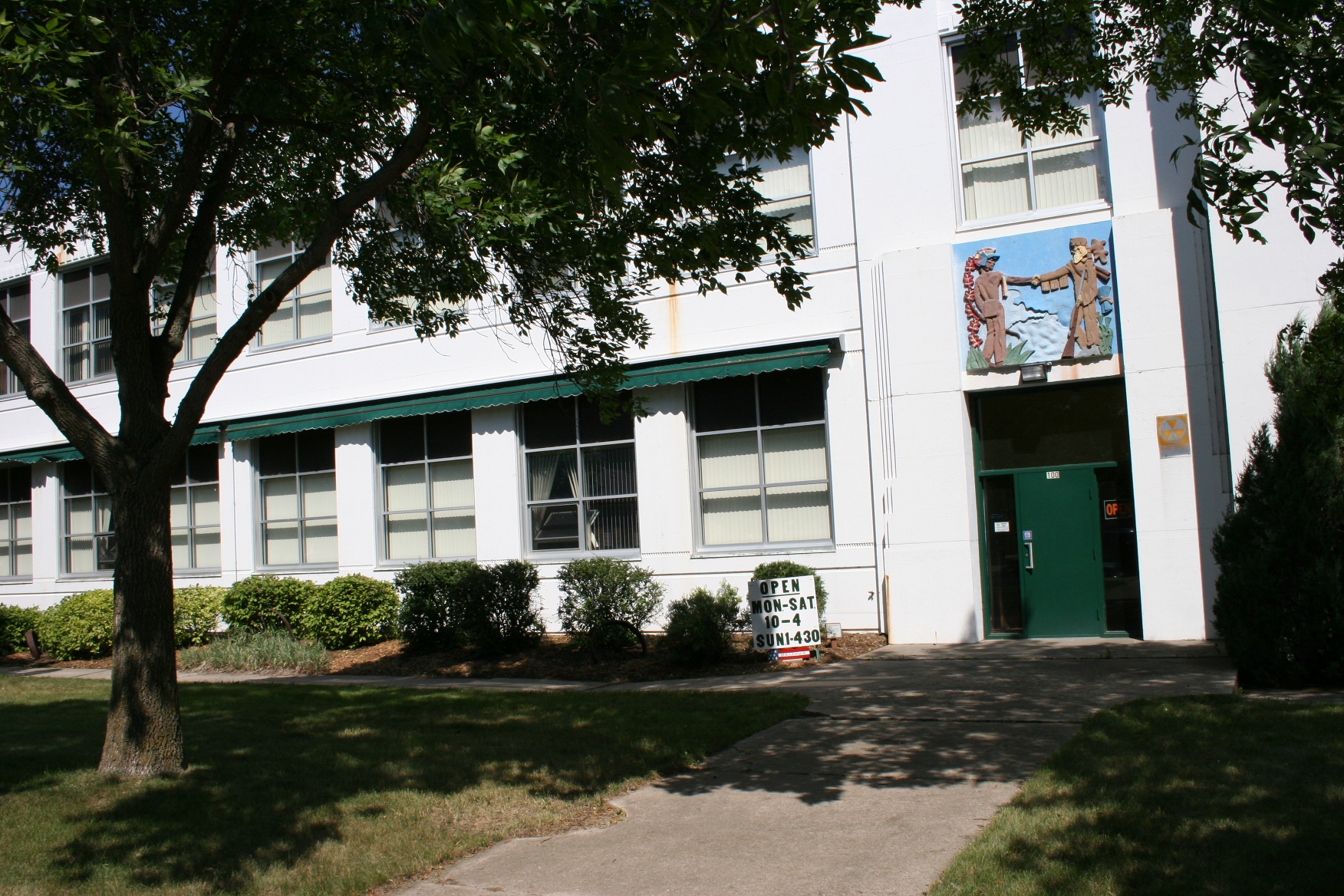
The Minnesota Machinery Museum in a 1939 WPA school building in Hanley Falls.

That leads me directly to Hanley Falls, home of the Minnesota Machinery Museum.

I expect already most of you are asking, “Where the heck is Hanley Falls?”

Hanley Falls, a small farming community, sits along State Highway 23 in southeastern Yellow Medicine County, nine miles south of Granite Falls on the southwestern Minnesota prairie.

It is one of those “blink and you miss it” type towns all too often dismissed by travelers simply flying by on the highway. Let me tell you, Hanley Falls is worth several hours of your time to tour this rural life museum which opened as the Yellow Medicine County Agricultural and Transportation Museum in 1980 and in 1994 became the Minnesota Machinery Museum.

For anyone who appreciates our state’s rich agricultural heritage, this museum rates as a must-see in the heart of our state’s richest farmland. I grew up in this strong agricultural region, in Redwood County next door to the east, and toured the museum for the first time in 2009. Yes, even I was unaware of its presence, having left the prairie in 1974 for college and subsequent employment.

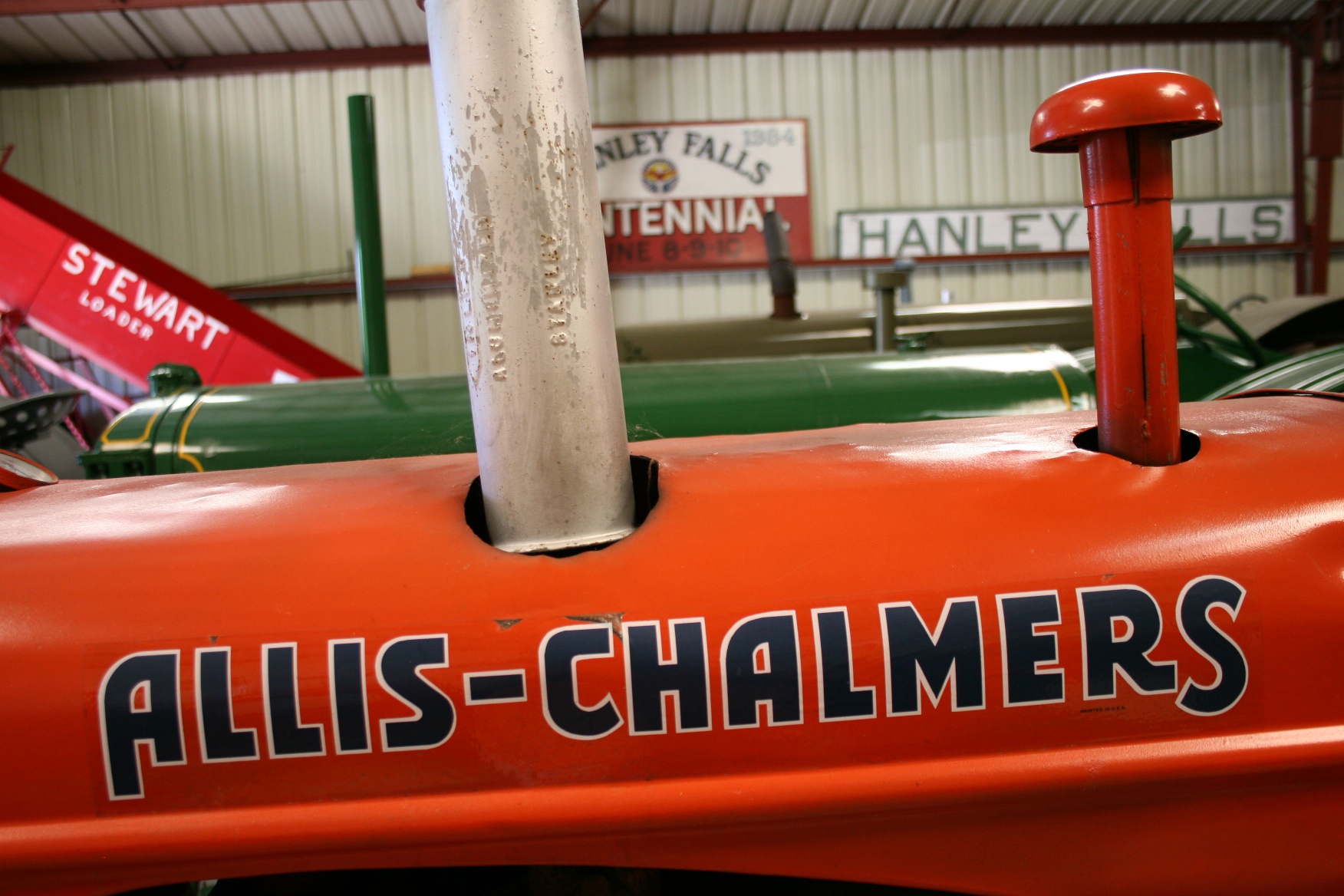
You'll see plenty of old tractors and farm machinery, along with vintage cars and trucks.

The Minnesota Machinery Museum, which is somewhat of a misleading name because it’s not all about farm machinery, reconnected me to my rural roots and educated me on the area’s agricultural history. During my 2009 visit, I learned that visitors will discover “the things you would find on a typical farm before the 1950s” with thousands of artifacts primarily from surrounding communities in a several-county area.

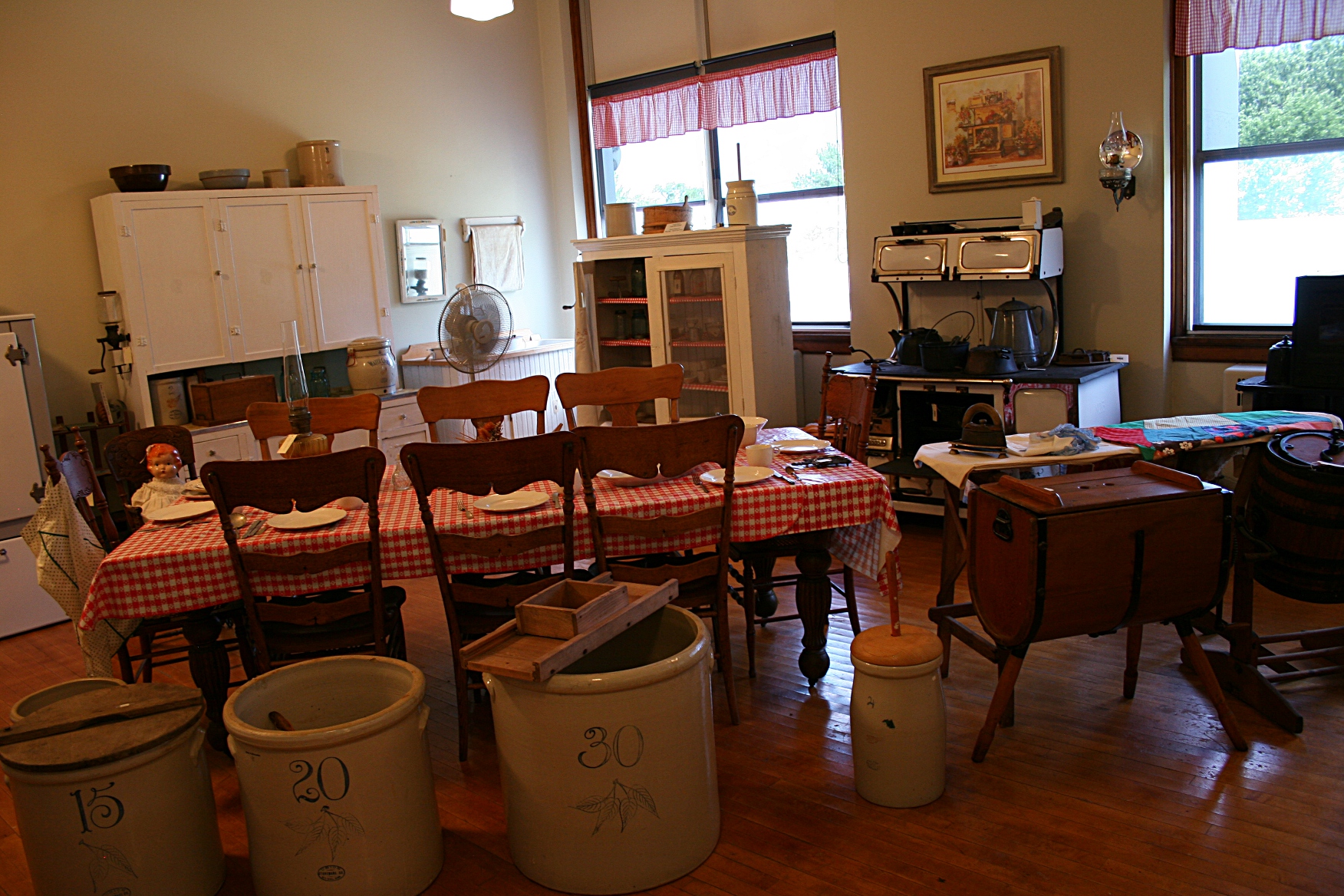
An old-style farm kitchen on the second floor of the museum.

All of those artifacts are housed in five buildings, including a sprawling two-story 1939 Works Project Administration school, on six acres. The first floor of that former school, during my visit, was packed with mostly farm-related equipment while the second floor housed the domestic side of rural life.

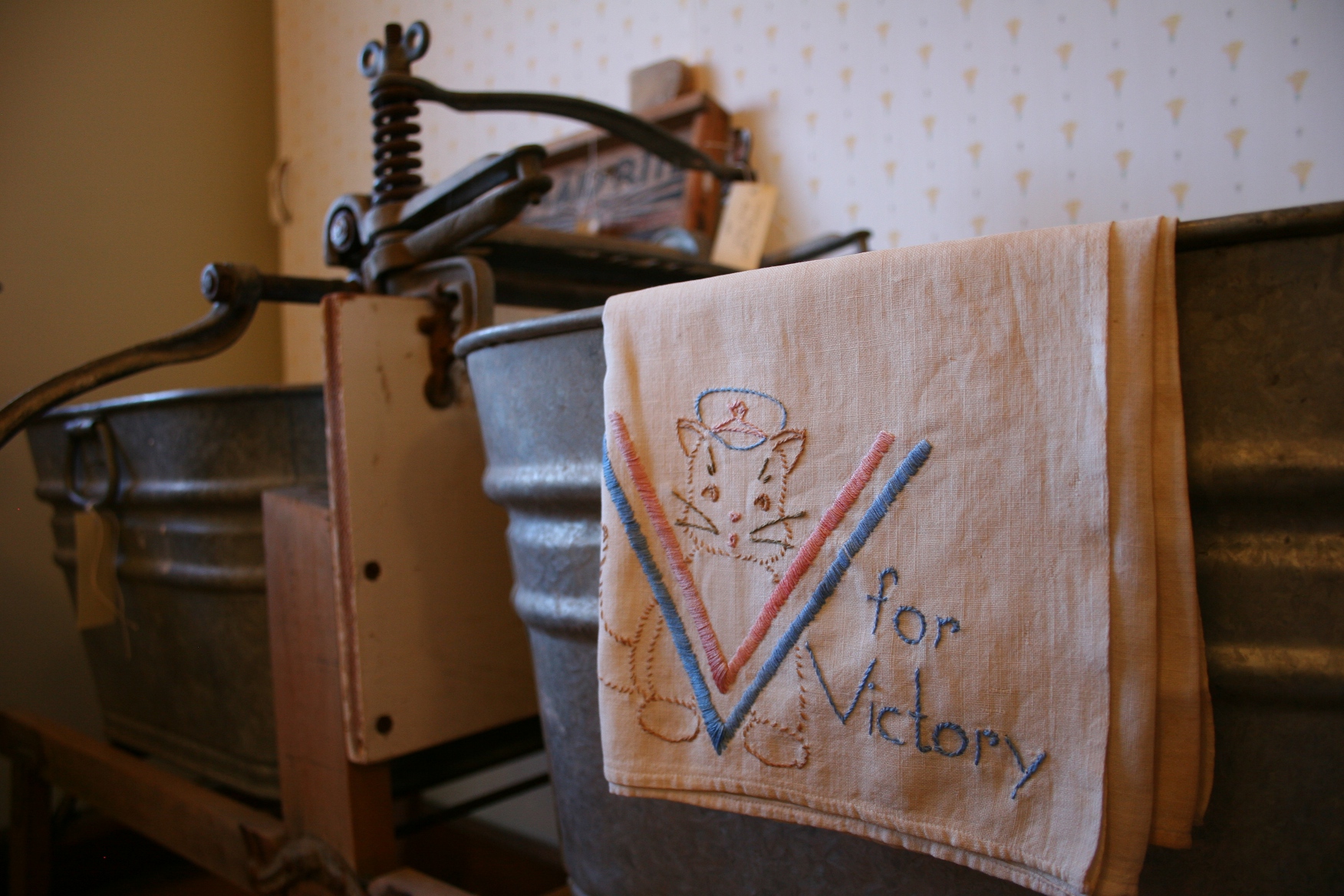
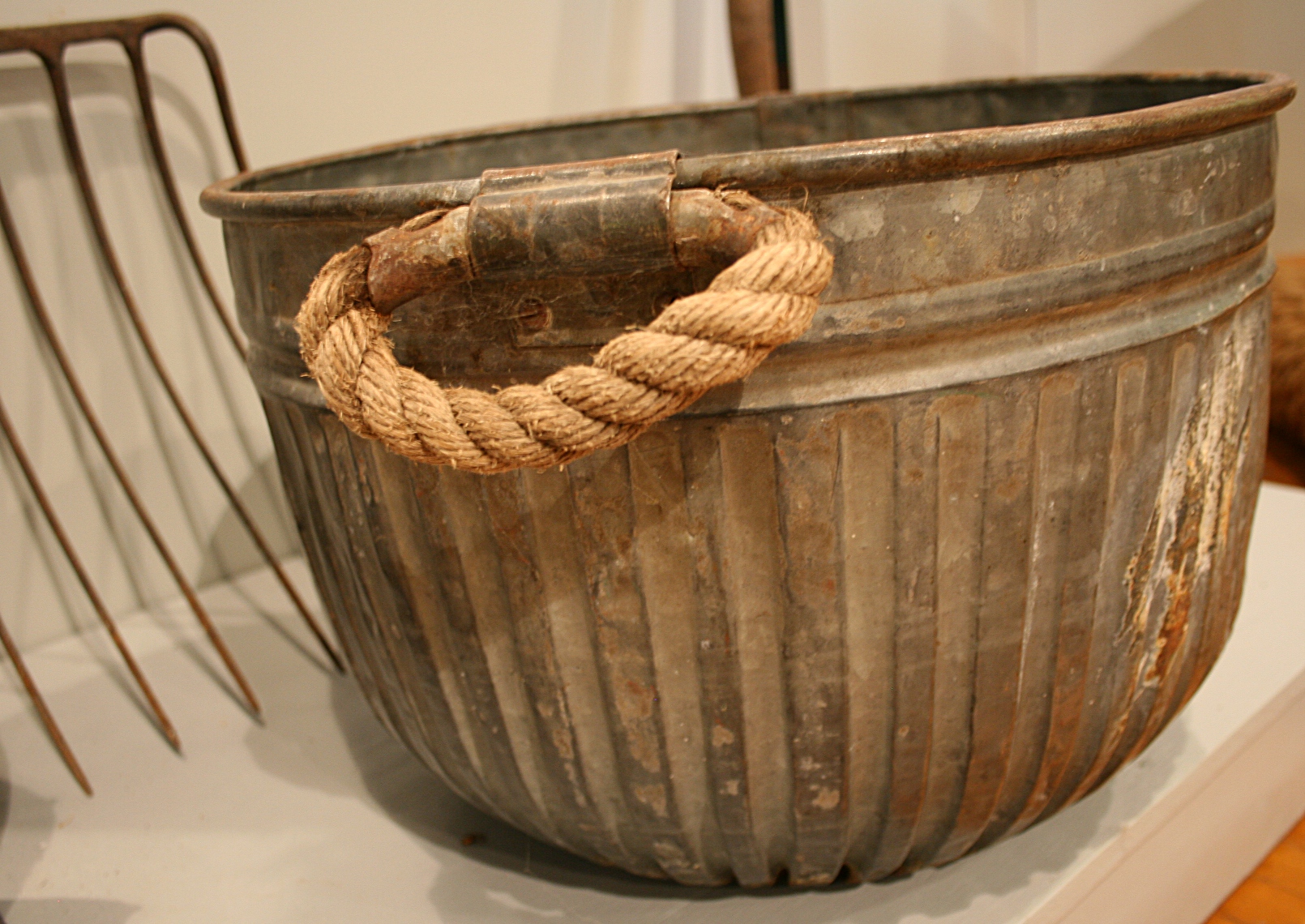
A vintage embroidered dish towel and old wash tubs, both familiar to me. My mother used a wringer washer with wash tubs during the early years of my life on a southwestern Minnesota dairy and crop farm.

It is the mission of the museum, according to its website, “to recapture a century of stories about farm life. Implements, tools, tractors and gas engines in mint condition along with rural art help you look back to an era when neighbors worked together to harvest their crops, raise barns and build a better life for their families.”

Read those words again. They are the essence of this place—the feeling of community, the sense of neighborliness, the embodiment of that which defined rural life at one time. Yes, that life has changed. Neighbors don’t always know neighbors. Oversized farm machinery has, for the most part, replaced the need for neighbors to work together. Barns are falling into heaps of rotting wood. This museum preserves a way of life that exists mostly in stories now.

This bushel basket in the museum brought back memories of feeding cows.

The Minnesota Machinery Museum is as impressive as any you’ll visit in Minnesota. Take time to seek it out, to turn off the highway into Hanley Falls rather than driving by without even a thought of the historical treasure that lies within this small southwestern Minnesota prairie community.

FYI: The Minnesota Machinery Museum is open May – September from 10 a.m. – 4 p.m. Monday – Saturday and from 1 p.m. – 4:30 p.m. on Sunday and is closed on holidays. Click here for more information about the museum.

© Copyright 2012 Audrey Kletscher Helbling
 

Dispelling a Mayberry myth in rural Minnesota December 16, 2011

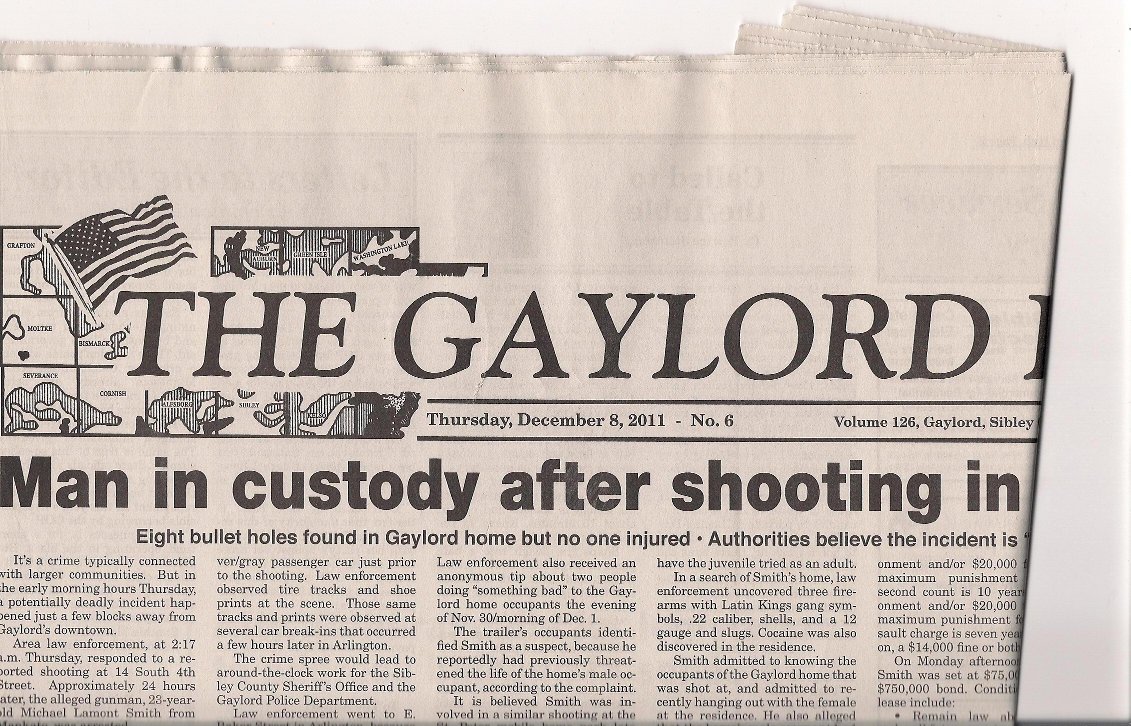
Man in custody after shooting in Gaylord

Two men arrested after incident with police officers in Winthrop

Three years since rural Green Isle homicide

These disturbing headlines all published recently in a single issue of a 10-page small-town Minnesota weekly newspaper.

How life has changed in the 31 years since I pounded out news articles there, for The Gaylord Hub, on a vintage manual typewriter. The biggest news stories during my 1978 – 1980 tenure as a reporter were fires and motor vehicle crashes and the controversy over the expansion of local chicken barns.

I didn’t write about eight bullets fired into a Gaylord home in an alleged gang-related shooting or a scuffle between police and a suspect or a three-year unsolved homicide.

And I didn’t have to report on a courthouse shootings like the one which occurred Thursday in quiet Grand Marais, an artsy get-away destination along the shores of Lake Superior.

Thirty years ago, small towns were still relatively untouched by violent, drug-related or other crime. Not so anymore. One need only pick up any weekly newspaper to read about major crimes that rock even the most rural regions.

Just this week in Redwood County in rural southwestern Minnesota, warrants were issued for 31 individuals on felony drug charges following a year-long, five-county investigation, according to information published in The Redwood Falls Gazette. Most suspects have been arrested and charged.

That’s my home county you’re talking about here, a place of small towns, grain elevators, farm sites, and corn and soybean fields—about as rural as you can get.

This isn’t Mayberry anymore.

While I can wax nostalgic about how things “used to be,” the reality of life is this: Times have changed. People have changed. Respect for parents and authority and laws have eroded.

Crime, once considered a big-city problem, reaches deep into the most rural of locations.

It is sad.

But it is the truth.

IF YOU LIVE in a rural area, have you see increases in crime? Explain. How have you, personally, or your community been impacted? How is your community dealing with crime? Please submit a comment and share.

© Copyright 2011 Audrey Kletscher Helbling
 

Appreciating Main Street December 6, 2011

Filed under: Uncategorized — Audrey Kletscher Helbling @ 8:01 AM
Tags: , , , , , , , ,

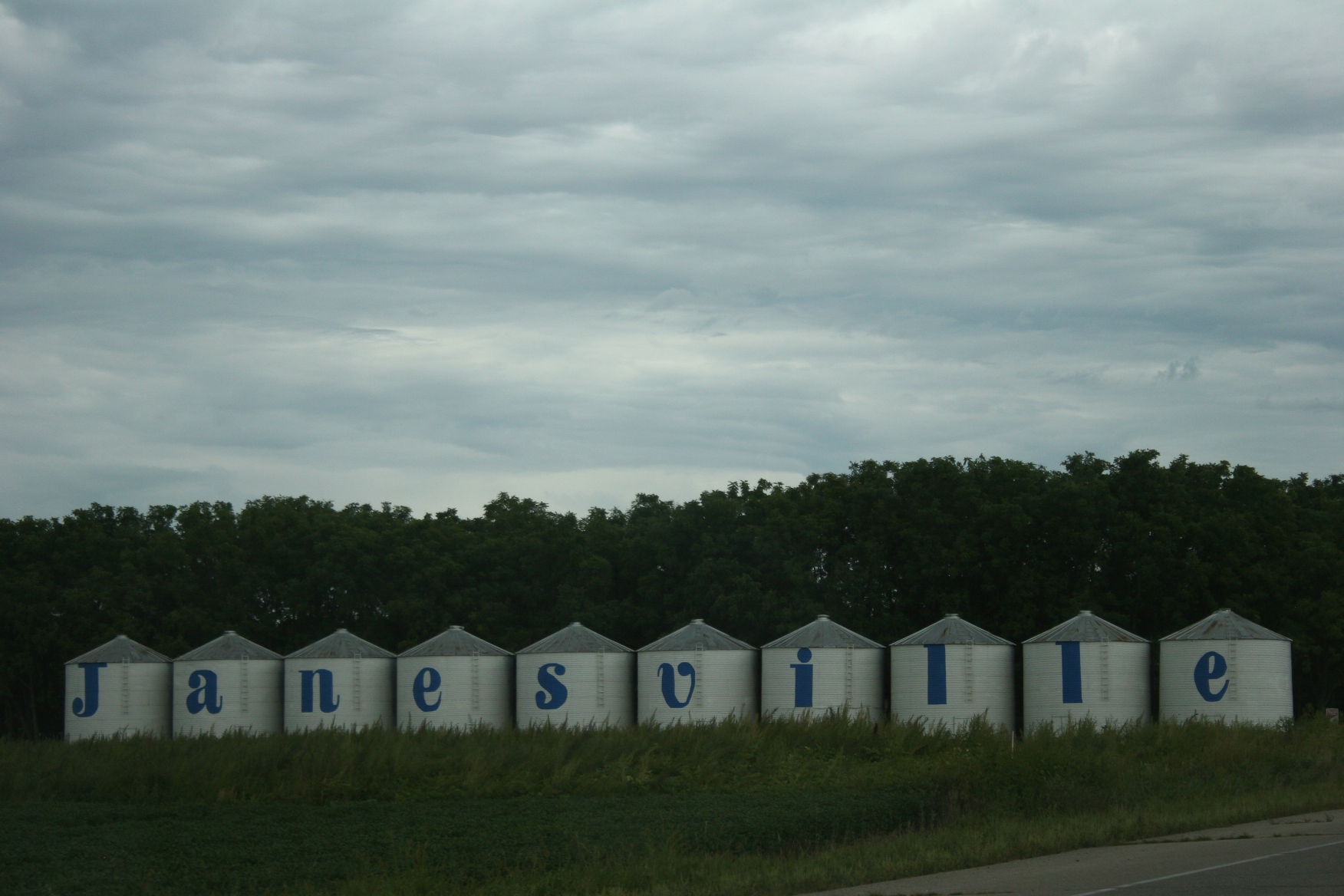
Entering Janesville from the west along old Highway 14, you'll see this grain bin signage welcoming you to town.

I REMEMBER YEARS ago driving through the heart of Janesville along well-traveled U.S. Highway 14 in southern Minnesota. The town of 2,100 teemed with traffic following this main east-west route.

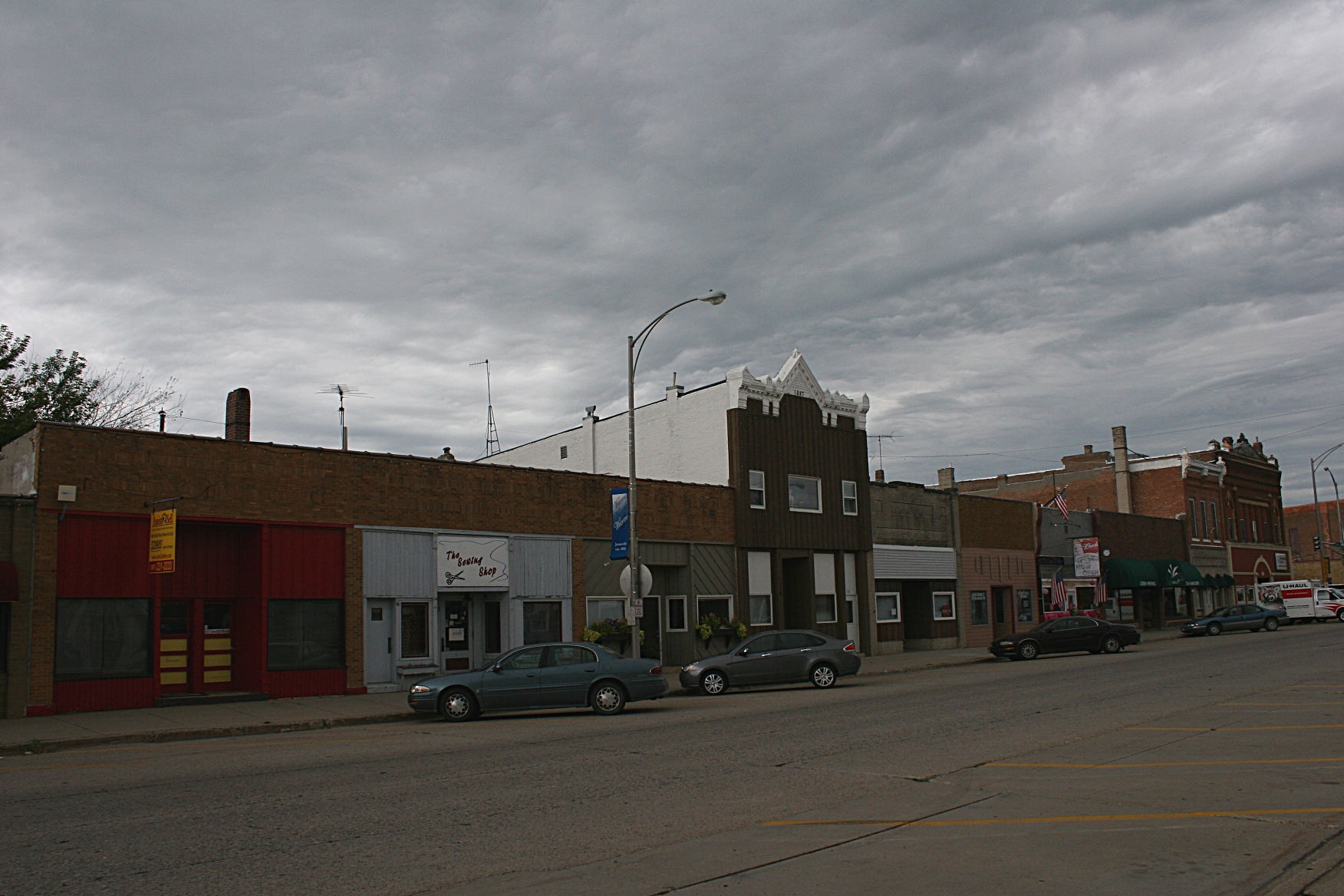
Today, as motorists bypass Janesville along the four-lane highway completed in 2006, the town barely stirs on a Sunday afternoon. Certainly, I should have expected this change when I drove into Janesville several months ago. Yet, the stillness, the boarded up buildings, the quiet Main Street surprised me. It shouldn’t have. What other result should I expect when a major highway reroutes around a town?

Janesville's downtown business district on a Sunday afternoon in August.

I possess no stake in this community nor am I critical of the Highway 14 improvement. The fixes to this treacherous roadway were necessary for motorists’ safety. I wish all of Highway 14 across Minnesota was a four-lane route, especially the deadly stretch between Mankato and New Ulm.

But back to Janesville…I’d never turned off the highway into the downtown business district, never in all the years I’d passed through this community along the old Highway 14. I’m almost ashamed to write that. But Janesville was just one more town to slow me down in getting from one destination to another.

Therein lies part of the problem. We are all in too much of a hurry, way too much of a hurry.

We need to pause, to turn off the interstates and highways and drive onto Main Street in Small-Town, U.S.A., park our vehicles and walk. Look at the buildings. Peer in the windows. Admire the character of old buildings. Stroll into a business and make a purchase. Strike up a conversation with a local.

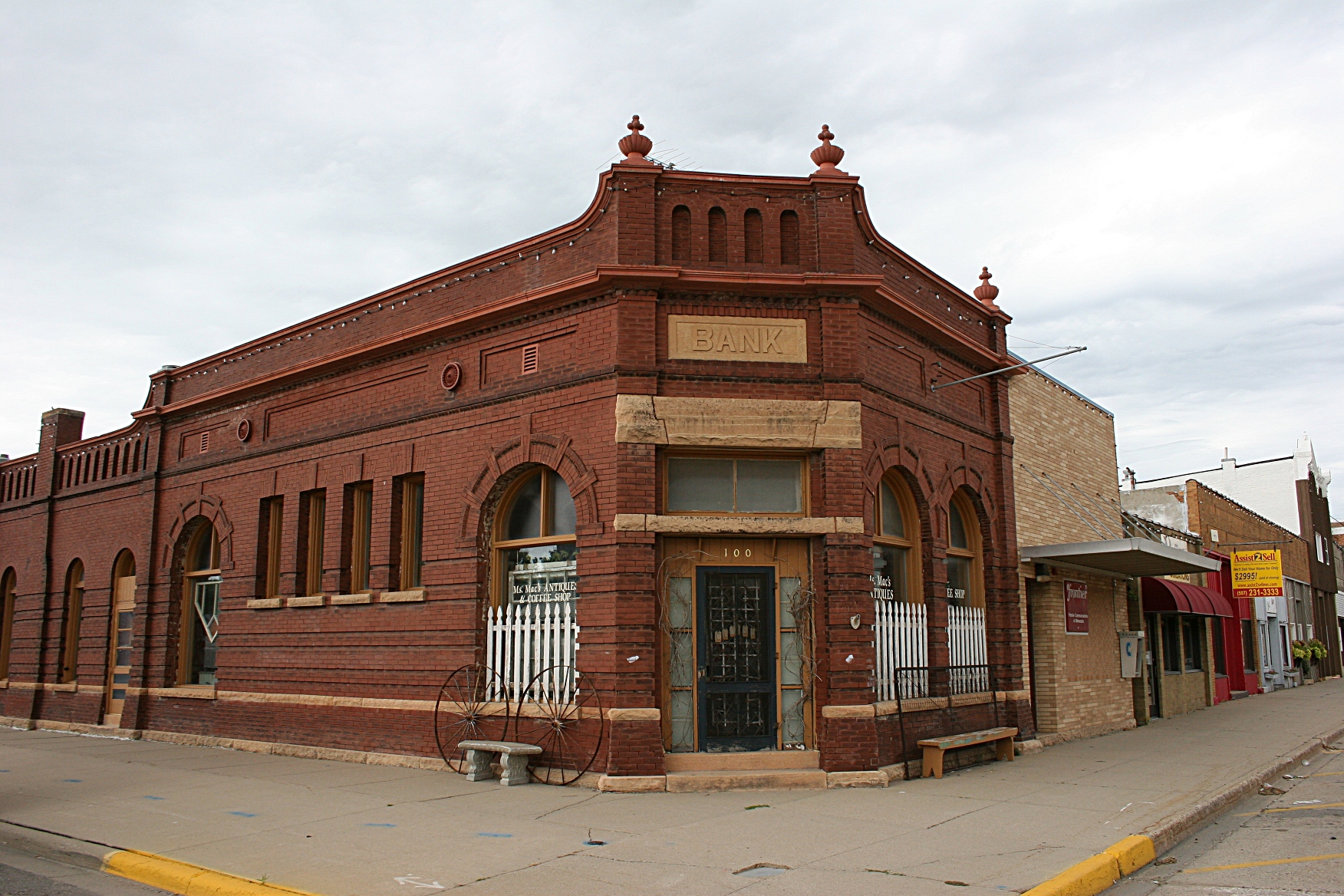
An antique store anchors a a downtown corner across from the elevator.

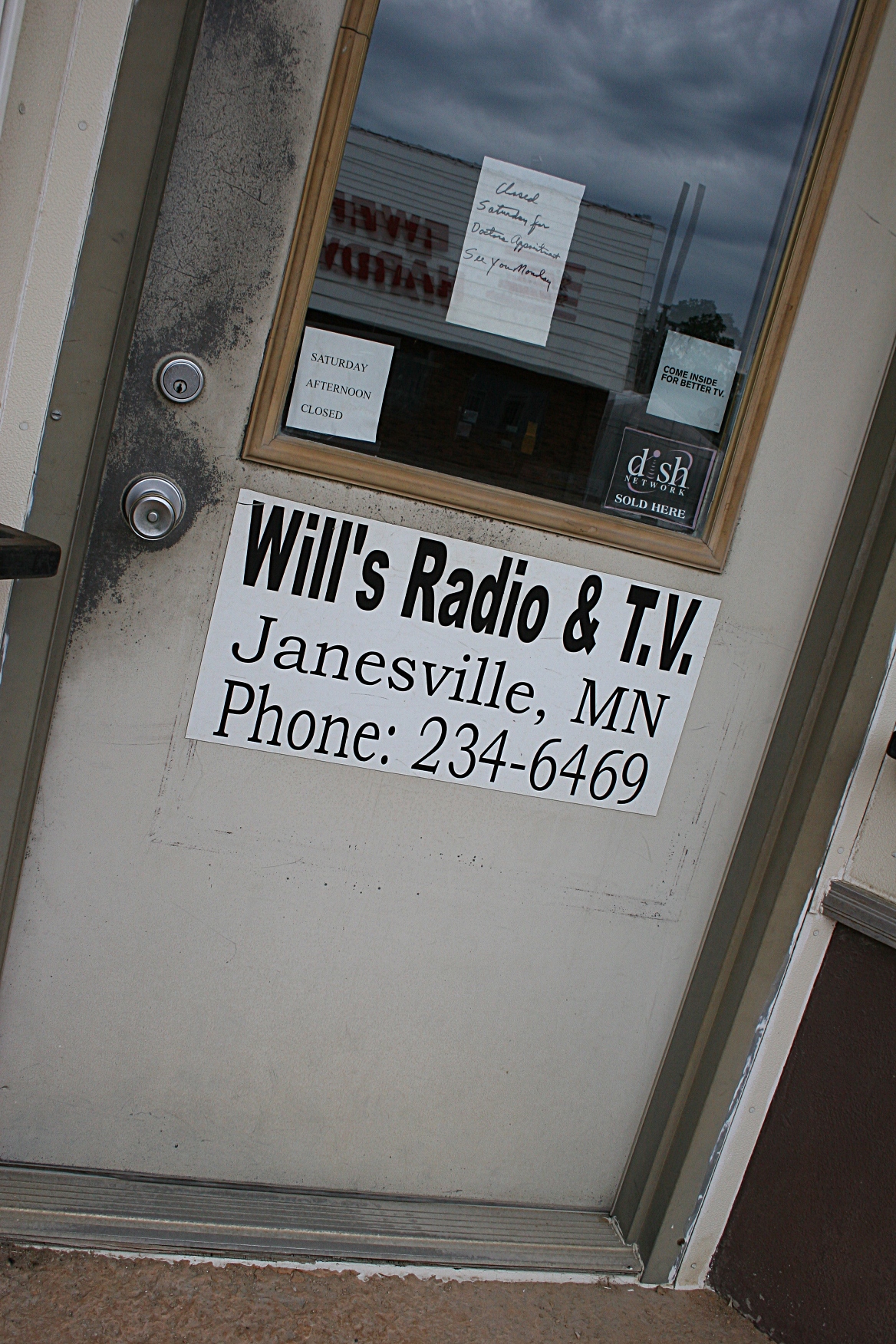
The entry to a radio and TV shop.

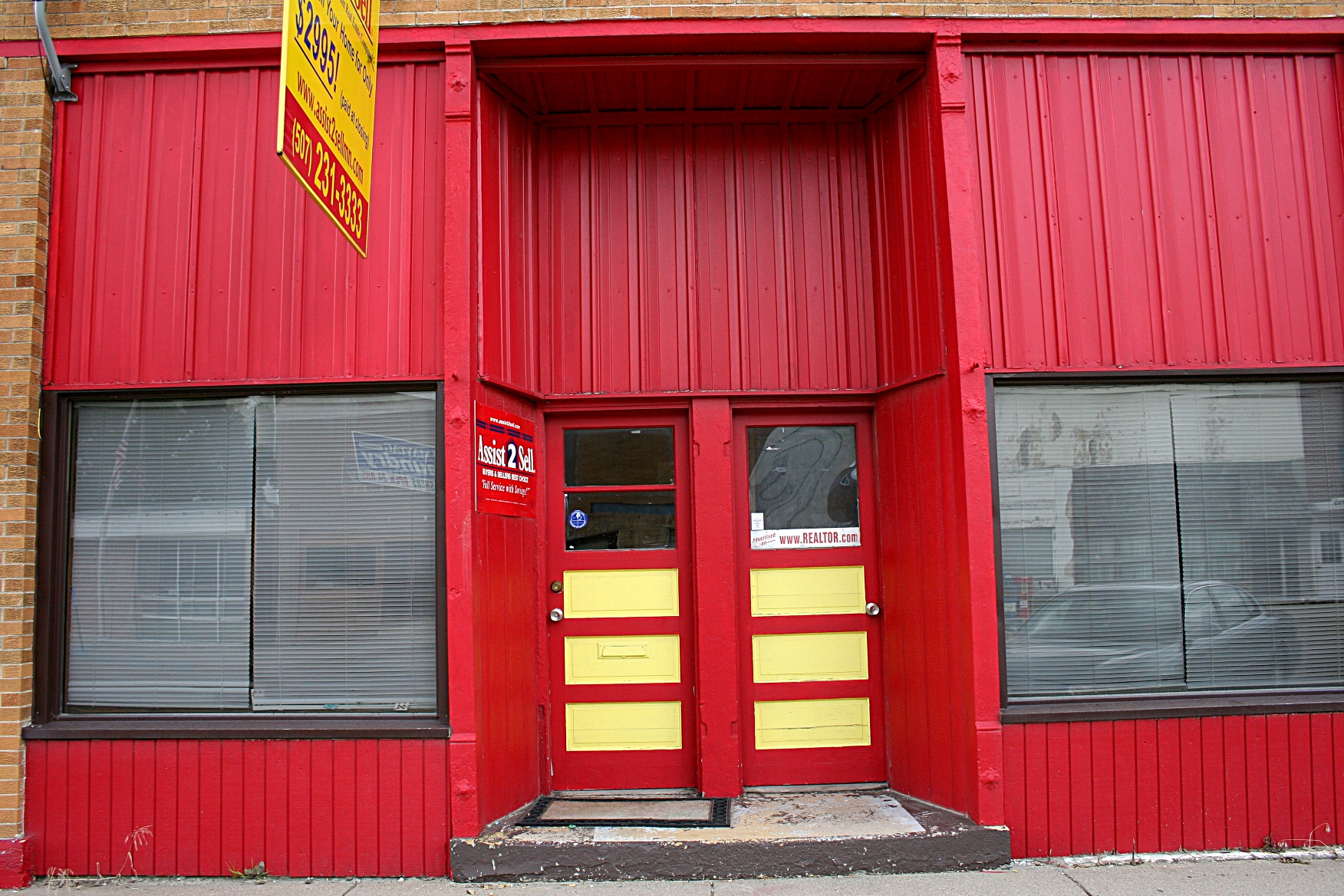
A jolt of color in downtown Janesville.

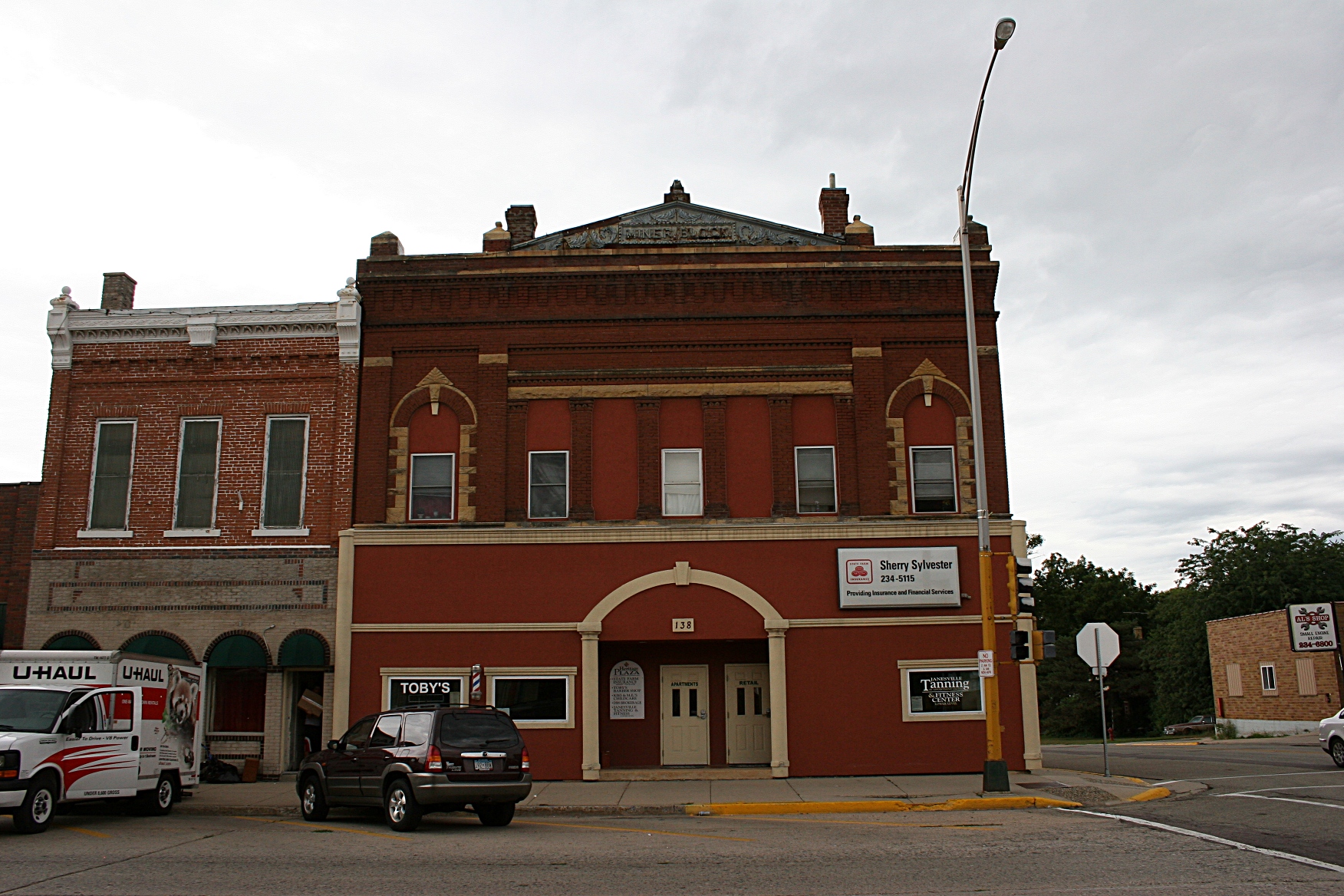
Lovely historic brick buildings grace the downtown. So much potential exists here.

I noticed this beautiful tile outside a former bank.

More potential in this building...

The past preserved in lettering on the side of this brick building.

The intersection at old Highway 14.

I encourage each of you, wherever you live, to take the time to appreciate the small towns in your region or the Main Street in your community.

If you live in a metropolitan area, consciously choose to drive out of the city and into a rural area and onto Main Street.

If you already live in a rural area, choose to appreciate what you have, to remain positive and upbeat about your local businesses.

I expect that if I was to drive into Janesville on a week day, I’d find a busier downtown than the one I discovered on a Sunday afternoon in August. I can’t judge a community by one visit, of that I’m sure. But I do know that I can choose to slow down, look and appreciate Main Street in Small-Town, U.S.A.

So can you.

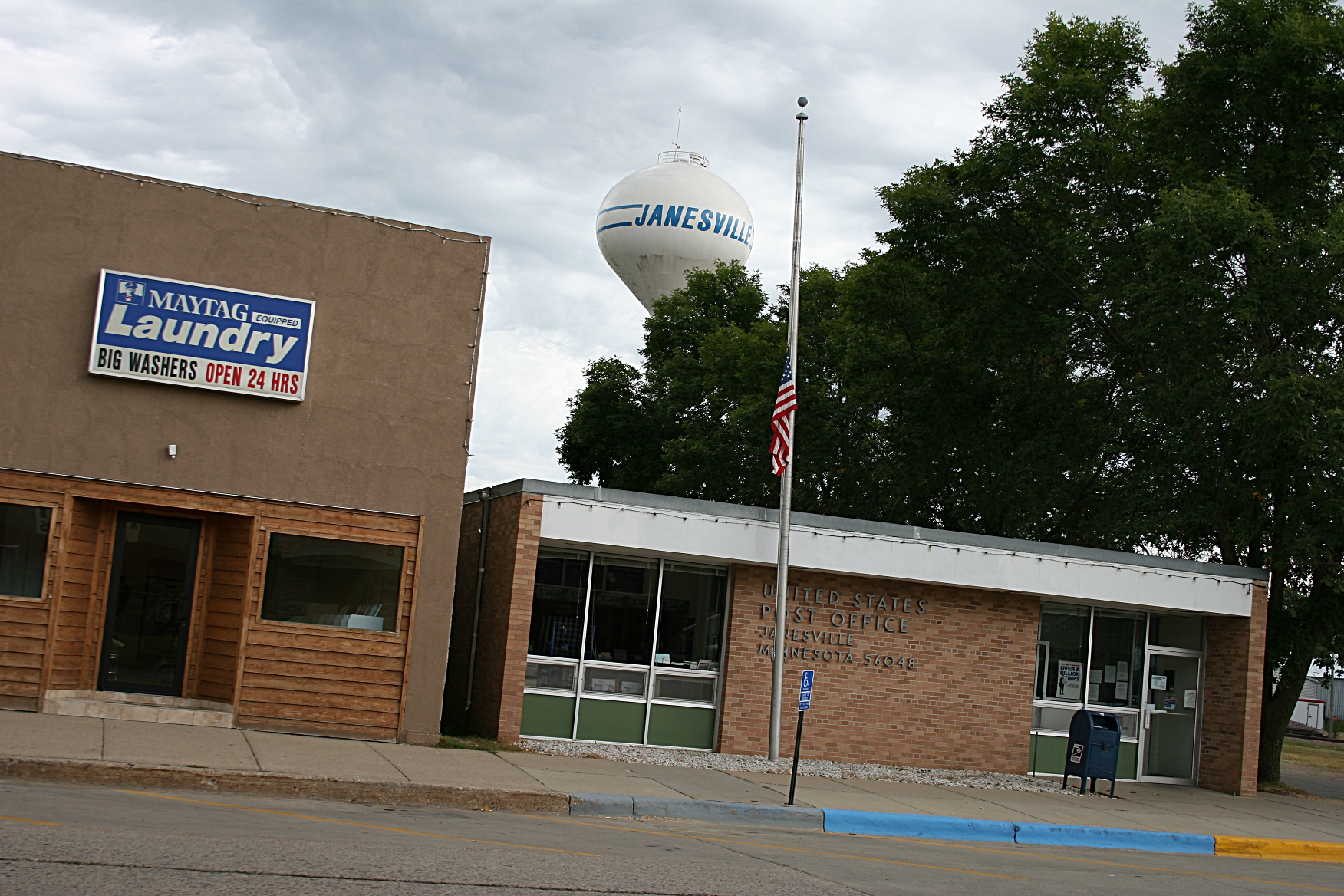
The post office, a community meeting place in small towns like Janesville.

NOTE: All of these images were taken in downtown Janesville on a Sunday afternoon in August.

© Copyright 2011 Audrey Kletscher Helbling
 

The lists you don’t want to be on in Minnesota November 22, 2011

DO YOU KNOW someone critically-injured or killed in a motor vehicle accident who was not wearing a seat belt?

I do.

So when I picked up The Faribault Daily News and read this front page headline, “County on new motorist deaths list,” I was not pleased, not at all.

My county of Rice is already on the list of Minnesota’s 13 deadliest counties for impaired driving. (Click here to see that list.) Now we’re on that latest “State’s 20 counties with highest percentage of unbelted deaths” list, according to a recent study released by the Minnesota Department of Public Safety Office of Traffic Safety. (Click here to read that report.)

From 2008 – 2010, Rice County had 14 motor vehicle fatalities. Nine of those individuals, or 64 percent, were not wearing seat belts.

Ranking at the top of this list you don’t want to be on are rural Kanabec and Wadena counties, each with three fatalities, all three unbelted. Nearly every county on the list of 20 lies in a rural area.

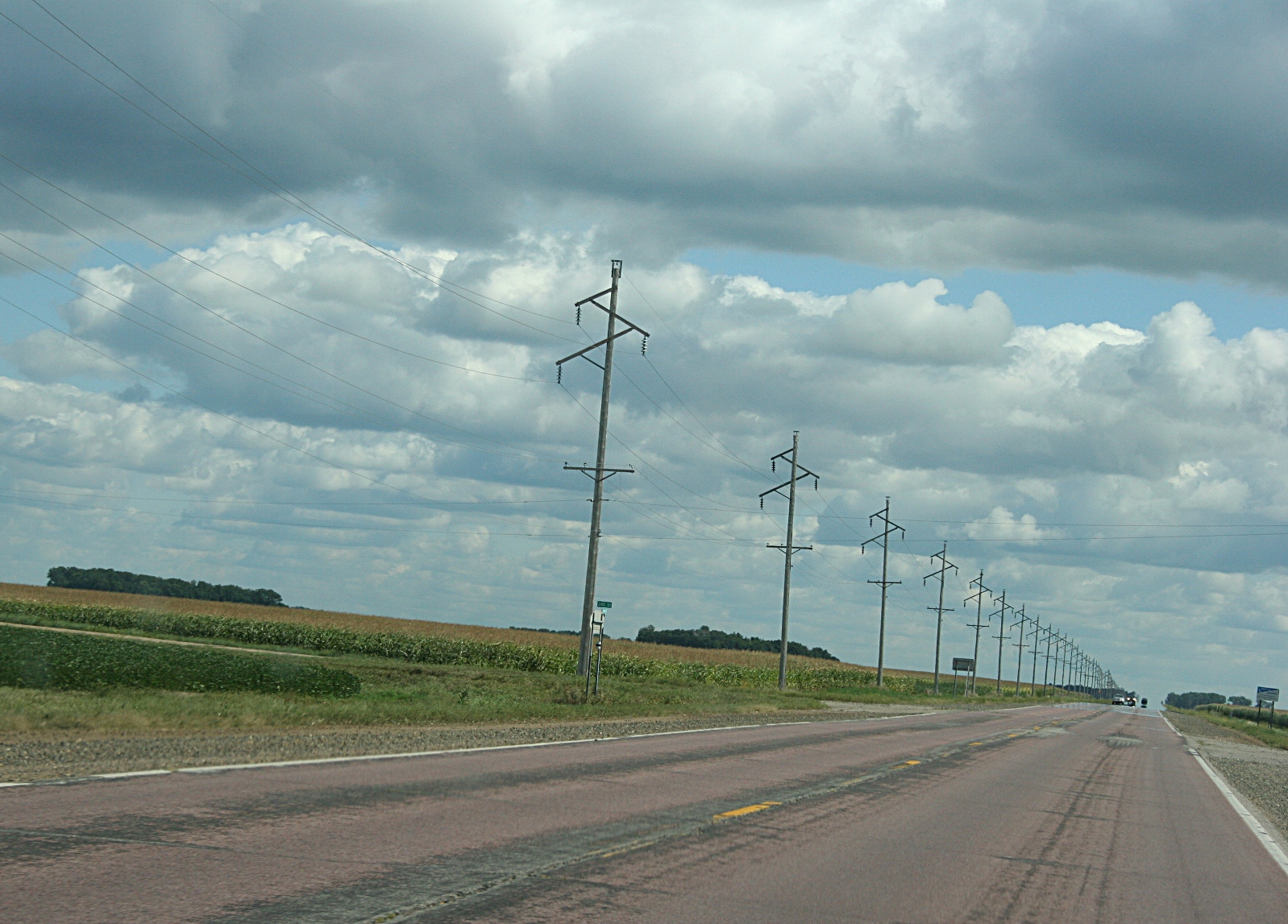
A rural southwestern Minnesota highway.

Certainly, statistics do not tell the full story of these deaths. Many factors can contribute to losing your life in a motor vehicle accident. Yet, buckling up is the one simple action you can take to increase your chances of escaping death or severe injury in a crash. Common sense tells you if you’re not strapped in place, you’re most likely going to be ejected or partially-ejected from your vehicle during a serious accident.

Why would you risk traveling without buckling up?

I’d like to pose that question not only to my fellow residents in Rice County, but also to those living in Redwood County in rural southwestern Minnesota where I grew up.

Redwood County, with a population of only 16,059, ranked third on the unbelted fatalities list with five of the six individuals killed from 2008 – 2010 not buckled in.

Perhaps Minnesotans living in less-populated areas like Redwood County possess a false sense of security regarding travel on rural roads. I know that region of Minnesota well. You can sometimes drive forever without seeing another motorist. And seldom do I see a law enforcement vehicle. But that should not stop drivers and passengers from wearing seat belts.

As much as I detest the traffic congestion and often times crazy driving in the metro area, I know that I am statistically safer on Twin Cities highways than I am on rural roadways.

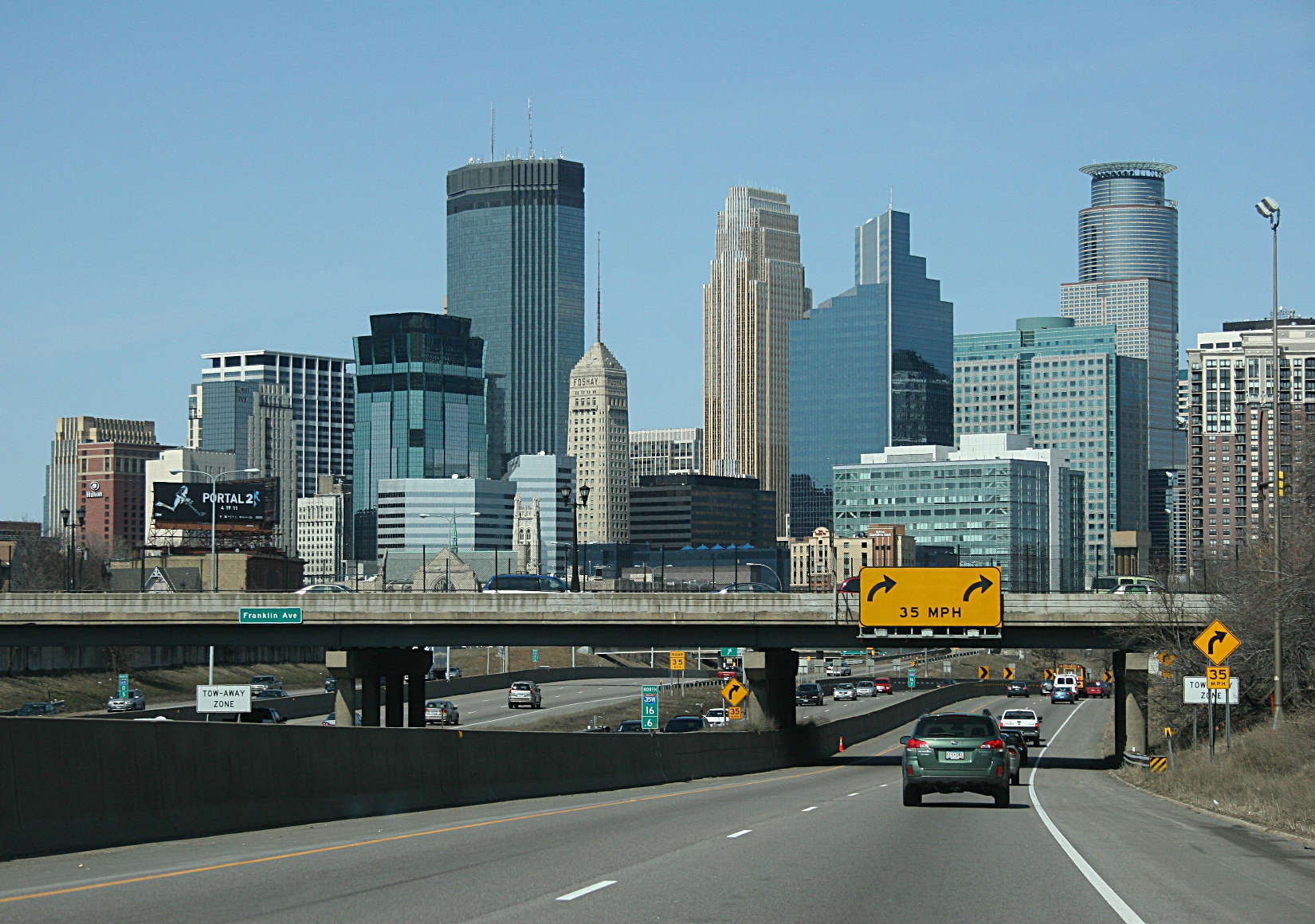
A rare, uncongested drive through Minneapolis.

That brings us back to Rice County in southeastern Minnesota along Interstate 35. I don’t consider my county—with a population of 63,034, the state’s 13th most populous county and an hour from downtown Minneapolis—to be rural although we certainly have plenty of farms and back roads.

Why are people failing to buckle up here? How does that relate to driving while impaired?

When a law enforcement officer stops a driver in Rice County for failure to wear a seat belt, does the officer ask why the motorist is not buckled in? Can that question legally be asked?

Recently, two Faribault High School students were ejected from a vehicle during a crash. The unbelted driver, a 17-year-old member of the FHS football team, suffered a neck injury and was released shortly after the accident, according to an article in The Faribault Daily News. His unbelted 16-year-old passenger was critically-injured.

I hope the two teens involved, and their families, will approach local school officials to use this as a teachable moment to promote seat belt usage. As parents of most teens will tell you, an experience shared by a peer can accomplish what all the lecturing in the world by a parent cannot.

Minnesota high schoolers interested in promoting seat belt usage can compete for a $1,000 prize in the “Buckle Up Teens! TV Commercial Challenge” contest sponsored by the state’s Office of Traffic Safety. Entry deadline for the 30-second TV public service announcement is April 16, 2012. (Click here for information about this competition.)

Realistically, I realize that no matter how hard we try collectively to increase seat belt usage in Minnesota to 100 percent via contests, education, laws, enforcement of laws and more, we’ll never reach perfection. But we’re getting close at 92 percent of Minnesotans now buckling up, according to the state Traffic Safety office.

Residents of Rice and Redwood counties, and all those other 18 counties on the state’s “unbelted fatalities list,” please buckle up. Honestly, I don’t like reading stories about traffic deaths that could have been prevented.

DO YOU BUCKLE UP every time you get into a motor vehicle? Why or why not? Share your personal reasons, your story.

© Copyright 2011 Audrey Kletscher Helbling
 

You can help: Establishing “water coolers of literacy” in rural Minnesota November 17, 2011

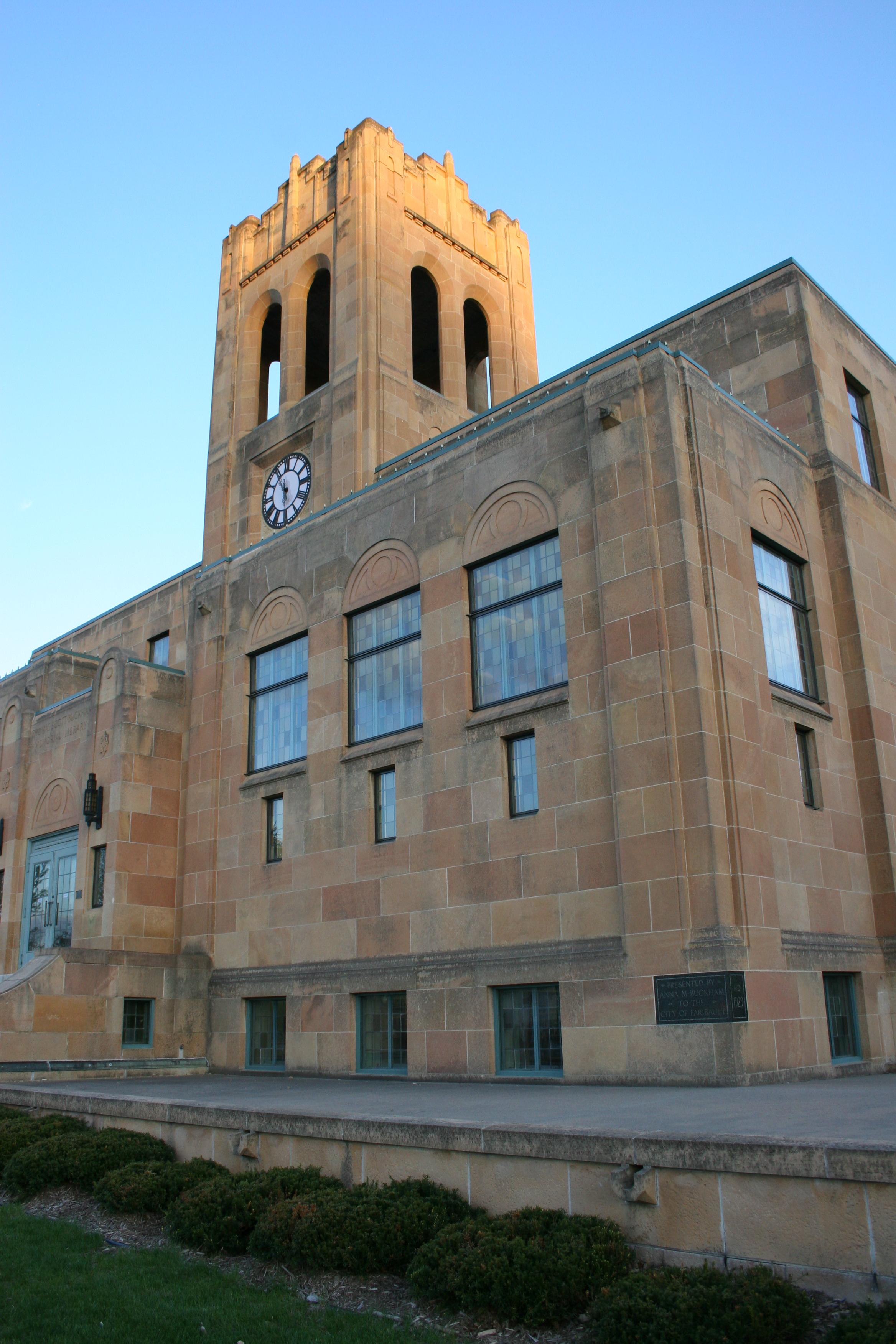
Buckham Memorial Library, Faribault

WHEN A NOTICE arrived in my e-mail in-box on Monday that Kathryn Stockett’s The Help was available for me at the local public library, I was thrilled. I’d been number 45 on the waiting list. I figured maybe I’d get the book in say seven years, long after I had forgotten it. Instead I waited only a few months.

Around 6:30 p.m. Monday, on my way to a church meeting, I stopped at Buckham Memorial Library in Faribault to pick up this bestselling novel. Much to my dismay, the library appeared closed. It was. And then I remembered the budget cuts that had trimmed evening hours to only Tuesdays and Thursdays.
As frustrated as I sometimes am about shortened night-time hours, I shouldn’t complain. At least I have a library in my community, unlike my hometown of Vesta in southwestern Minnesota. Like two dozen other small towns in Redwood, Cottonwood, Murray and Pipestone counties, Vesta residents rely on the services of the Plum Creek Bookmobile to deliver library materials. (Click here to learn more about that bookmobile.)

Once a month the bookmobile pulls onto Vesta’s Main Street, just as it does in towns like Currie, Iona, Revere and other towns you’ve probably not heard of unless you live or grew up in that rural area of Minnesota.

Given how often I use the Faribault library, I’d have a tough time with only once-a-month library access via a bookmobile. But I know that residents of these rural communities, like my 79-year-old mom, are grateful for their library on wheels.

Can more be done, though, to get books into the hands of these rural residents more frequently? I don’t expect that will come via public library systems with already financially-strapped budgets.

That’s why I’m particularly excited about the nonprofit Little Free Library project, co-founded two years ago by Todd Bol, a native of Stillwater now living in nearby Hudson, Wisconsin. I spoke at length with Bol earlier this week about this endeavor which places birdhouse-sized mini libraries mostly in front yards and in some public locales.
A Little Free Library seems the ideal way to fill a void in small towns without libraries.

But the problem lies in connecting to these sparsely-populated areas and growing these libraries. Bol wanted to pick my brain on how to best reach these communities and spread the word about opening a Little Free Library.
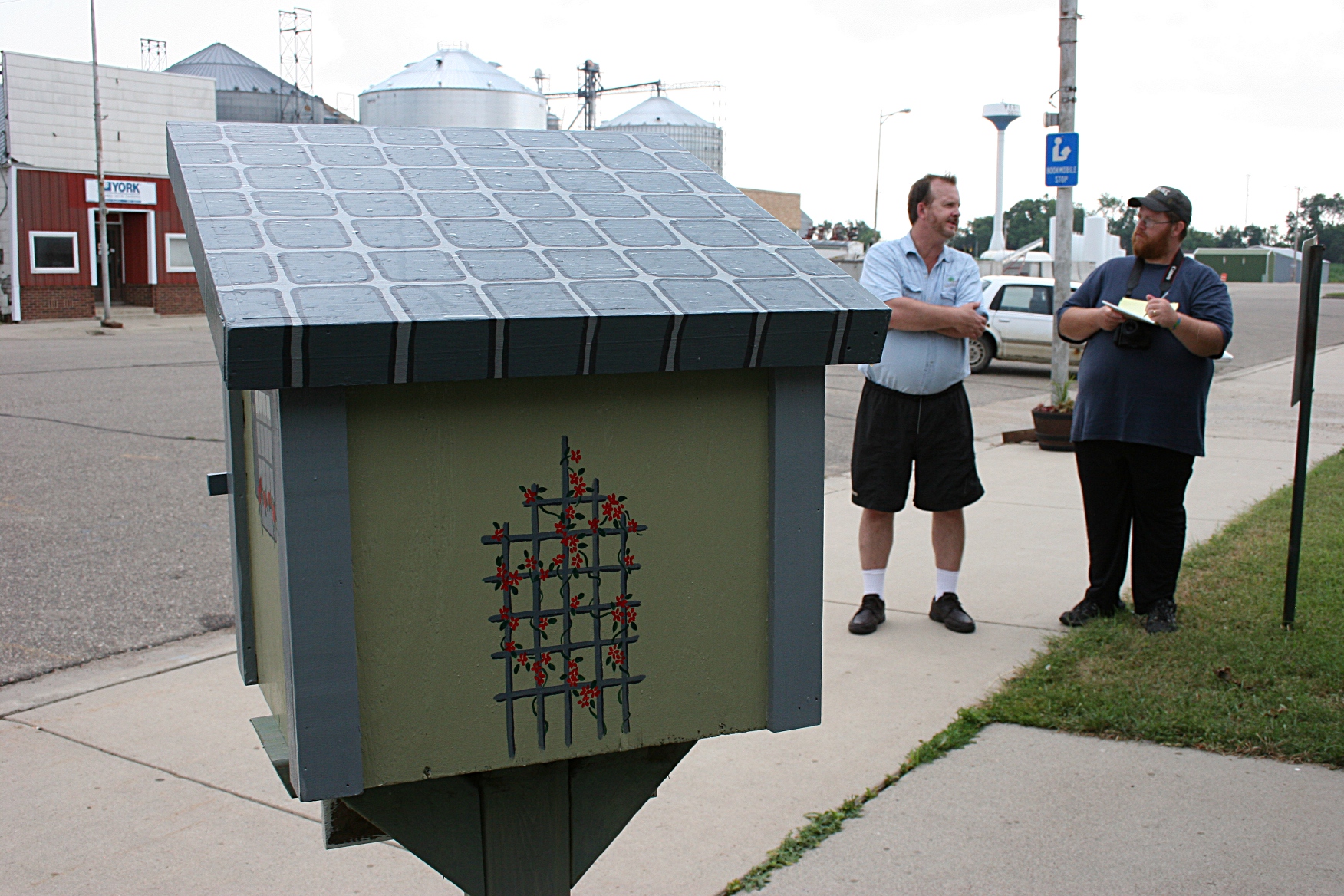
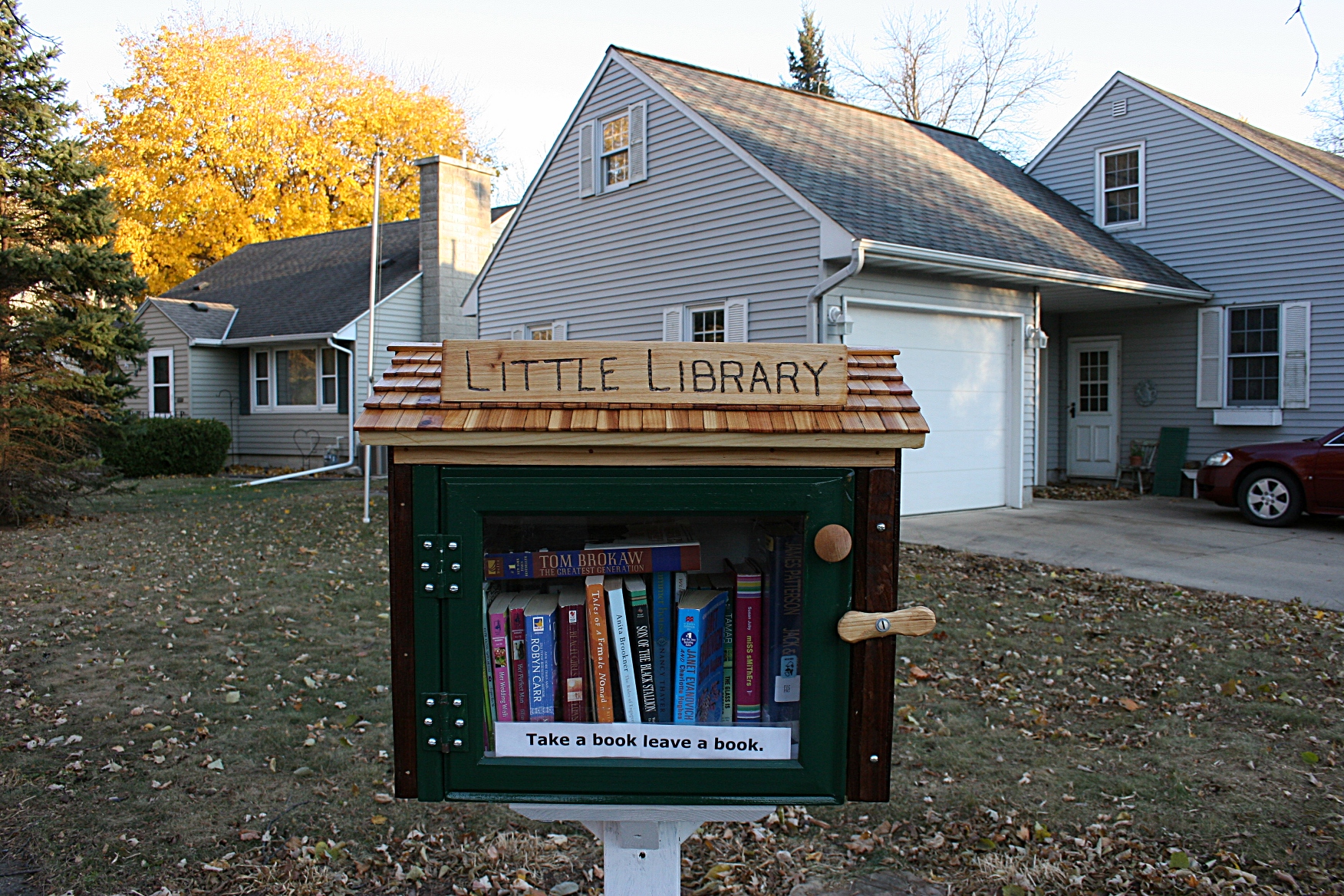
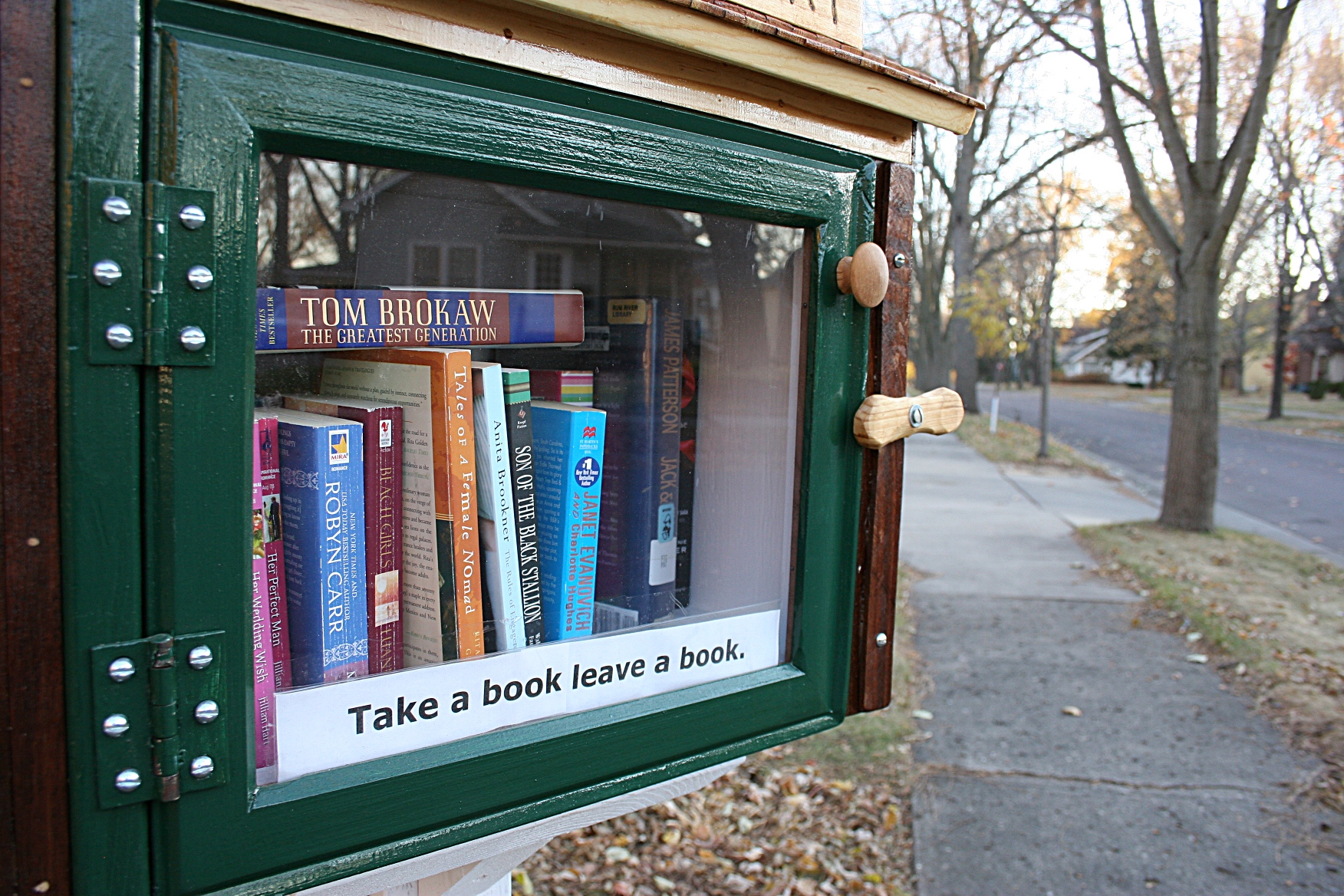
A recently-opened Little Free Library in a southwest Faribault neighborhood.

Several weeks ago a little library opened in Faribault. I learned about Dale and Joan Smith’s front yard library in the local daily newspaper on the same day I read about one opening in Detroit Lakes. Minnesota now has about a dozen Little Free Libraries with orders for some five more, Bol says. Two of those are going to Lakefield near Worthington in the southwestern corner of the state.

That’s the area I want to target for these libraries which operate on the premise of “Take a book, leave a book.” No library cards. No fee. No anything except a steward of the library and the sharing of donated books.

In a blog post published last week about the Smiths’ library, I challenged Vesta area residents to open a Little Free Library. Thus far, no one has responded.

Bol’s nonprofit is there to help, offering everything from advice to publicity to ready-built mini libraries. Those physical libraries range from a basic no-frills model priced at $375 to original art deluxe models listed at $1,000.

Or, like the Smiths in Faribault, you can build your own and then become a Little Free Library member, for a recommended $50 donation. That entitles you to benefits like a sign, sharing of your story online, listing on the LFL world-wide map and more. (Click here for membership details.)

With monies donated through the LFL’s “Pay It Forward” program, funding is available for underwriting library costs, for signs, donations of the library structure, etc.—all aimed toward helping others open village libraries. Currently the nonprofit is assisting soldiers with placing libraries in Afghanistan. No application process exists to apply for funds, but Bol hopes to eventually establish one.

Some 200 officially-registered Little Free Libraries have opened world-wide, according to Bol, who is especially excited about one planned for the Minneapolis Sculpture Garden. He’s also thrilled about an upcoming story in an Italian fashion magazine.

Defining himself as a “social entrepreneur by profession,” Bol focuses on change and making a difference. He views a Little Free Library as “a water cooler of literacy.” That comes from a man who says he “leans toward dyslexic” and reads primarily social engineering, quirky nonfiction and history books.

The Smiths of Faribault have filled their Little Library with a variety of books.

A LFL, Bol continues, becomes not only a place to get and give books, but also a community gathering spot, a “unique space of conversation” to discuss reading, books, education and more.

“There’s a sense of community being built through Little Free Libraries,” its co-founder says. He sees social interaction between neighbors who previously may not have met or spoken. A front yard library brings them together.

Bol remembers the moment he realized he was onto something with the Little Free Library concept. He had built and placed a schoolhouse-shaped library in his Hudson front yard honoring his mom, June A. Bol. When folks stopped by to shop at a garage sale he was holding and saw the mini library, they were intrigued. “That’s cute. Can I build it?” customers inquired.

From that spark of community interest, this social entrepreneur and his friend Rick Brooks of Madison, Wisconsin, ran with the idea and co-founded the Little Free Library movement.

Today Bol’s looking to engage others, like me, in spreading the word about these mini libraries. I didn’t come up with a brainstorm of an idea when we talked about how to best reach places like the small towns of southwestern Minnesota without libraries. I only suggested establishing a LFL in the area and then contacting small-town daily and weekly newspapers and radio stations in a publicity blitz.

He suggested a contest that would give away a Little Free Library, something he’s previously done.

Bottom line, it’s going to take networking to grow Little Free Libraries in more remote and rural areas.

Once the interest is established, it’s going to take individuals, families, neighbors and/or organizations to build and tend these libraries—perhaps a 4-H club or a 4-Her, a Boy Scout or Girl Scout, a church youth group, a Friends of the Library organization, a woodworker, a service club like Sertoma or Rotary or…

IF YOU HAVE ideas, any ideas, on how to grow Little Free Libraries in rural Minnesota, please submit a comment and share.

IF YOU HAVE a Little Free Library, plan to open one or need assistance in opening one, submit a comment. Most of all, tell others about this project.

FINALLY, if anyone is specifically interested in opening, building or funding a Little Free Library in my hometown of Vesta, let me know. It’s always been my dream to have a library in Vesta.

CLICK HERE for detailed information about the Little Free Library project.

© Copyright 2011 Audrey Kletscher Helbling