Minnesota Prairie Roots

Writing and photography by Audrey Kletscher Helbling

Window-shopping in Janesville, Minnesota September 14, 2011

Filed under: Uncategorized — Audrey Kletscher Helbling @ 7:06 AM
Tags: , , , , , , , , ,

I ENJOY WINDOW-SHOPPING. But when I window-shop, I’m not typically perusing merchandise to purchase. Rather, I’m shopping for signs to photograph. It’s cheaper that way; you don’t spend money except on your gas to reach whatever destination you choose.

For me, that is Main Street in Smalltown, Minnesota. Signage regulations are less strict in these rural communities, folks more trusting. I discover the most intriguing/interesting/unusual/creative signs here. Pick your adjective—all three would apply.

So let me take you today to Janesville, population 2,100, located along U.S. Highway 14 only 15 miles east of Mankato. I stopped there several weeks ago on my way to and from (yes, we stopped twice) Indian Island Winery with my husband.
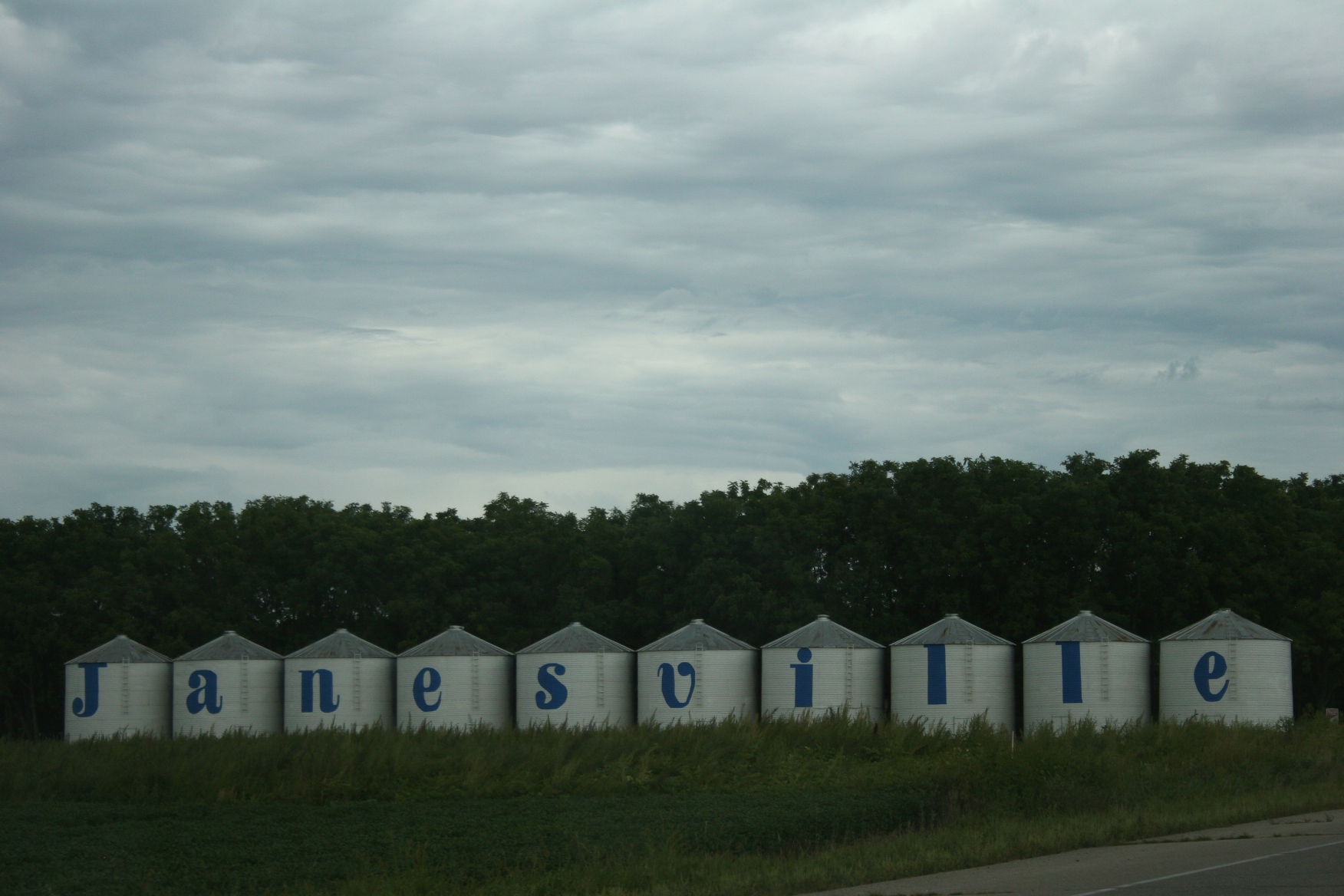
Entering Janesville from the west along old Highway 14, you'll see this grain bin signage welcoming you to town. I've always wondered: Did the farmer specifically build 10 bins to fit the town name? Or did someone come up to him after the fact and say, "You know, J-A-N-E-S-V-I-L-L-E would fit on your bins."

But before I show you my discoveries, here are two interesting tidbits about Janesville: The town has a nine-hole reversible golf course, one of among only a few in the U.S. If you know what that means, you know more than me. I am not a golfer.

Secondly, in a house near downtown Janesville, along old Highway 14, you’ll see a dummy peering through an upstairs attic window. It’s been there for years. Why? No one seems to know the truth. But its placement there has led to all sorts of speculation as imaginative as an imagination allows.

Now, moving along, I’m pleased to present photos of signage from Main Street, Janesville, Minnesota, for your entertainment. Enjoy.
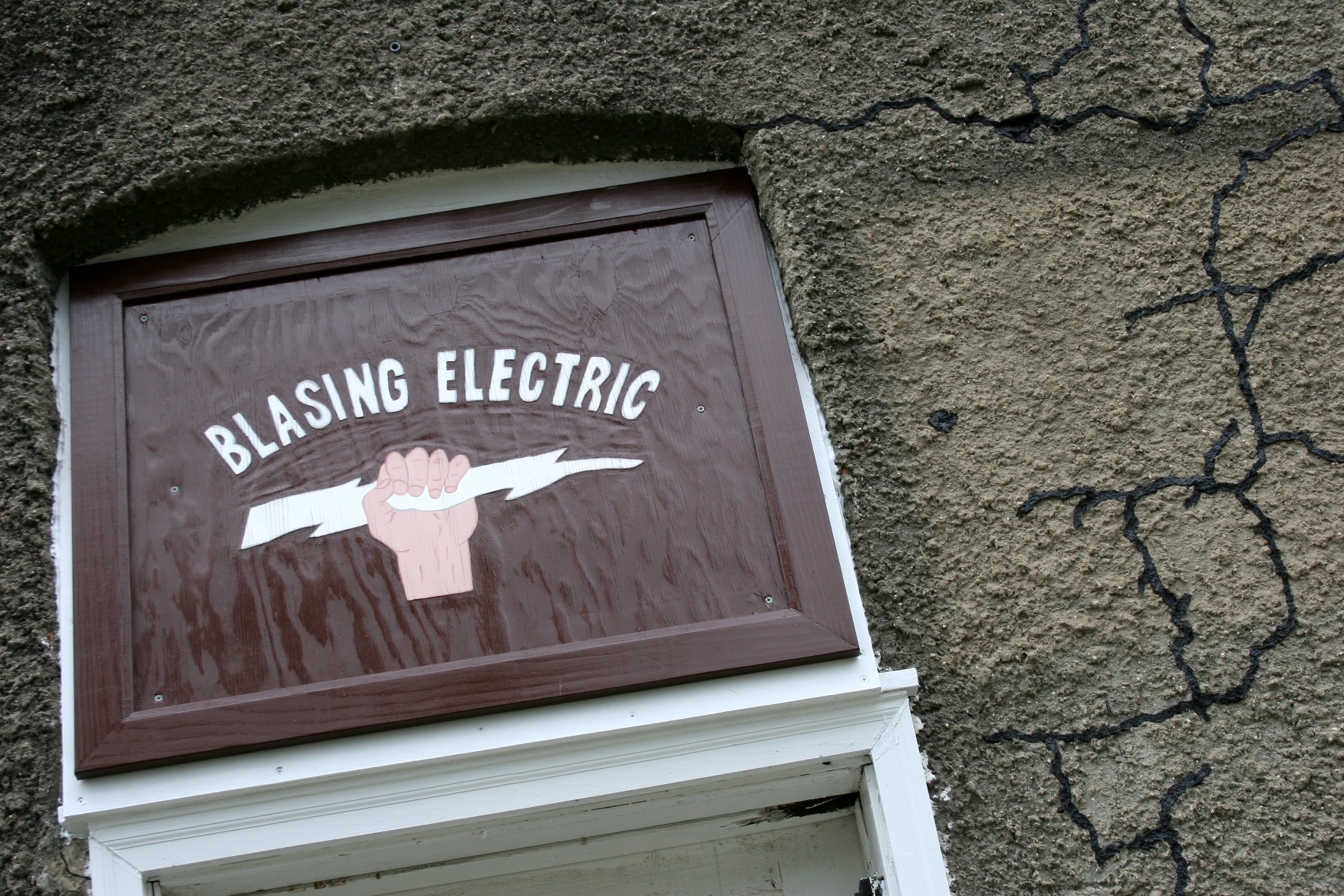
This handcrafted graphic sure makes for a memorable Blasing Electric sign hung on the side of a building across the street from the library.
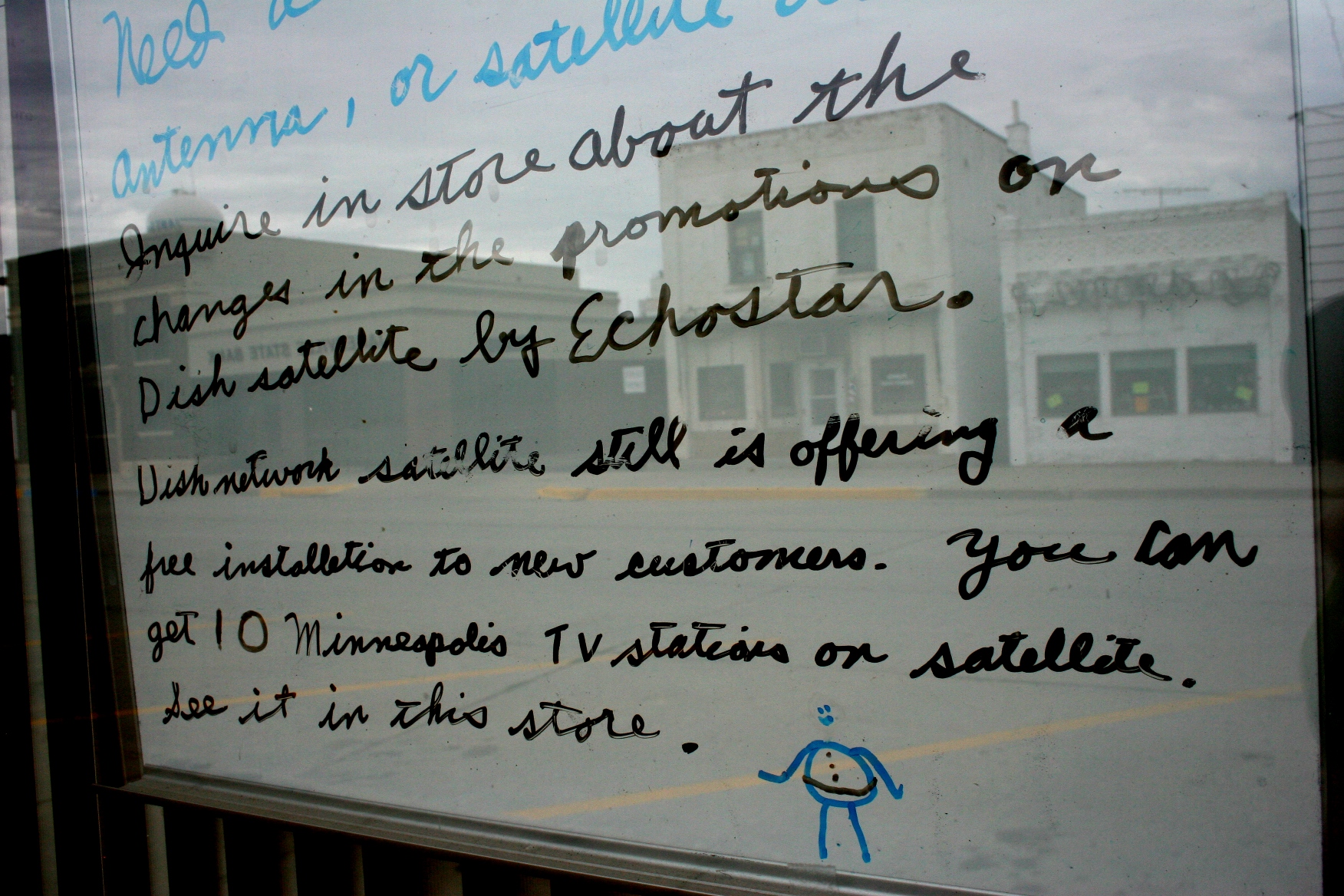
I know you folks in bigger towns, especially in the Twin Cities metro, take your television access for granted. But not so in rural Minnesota. Here's a pitch for better service posted on a window at Will's Radio & TV.
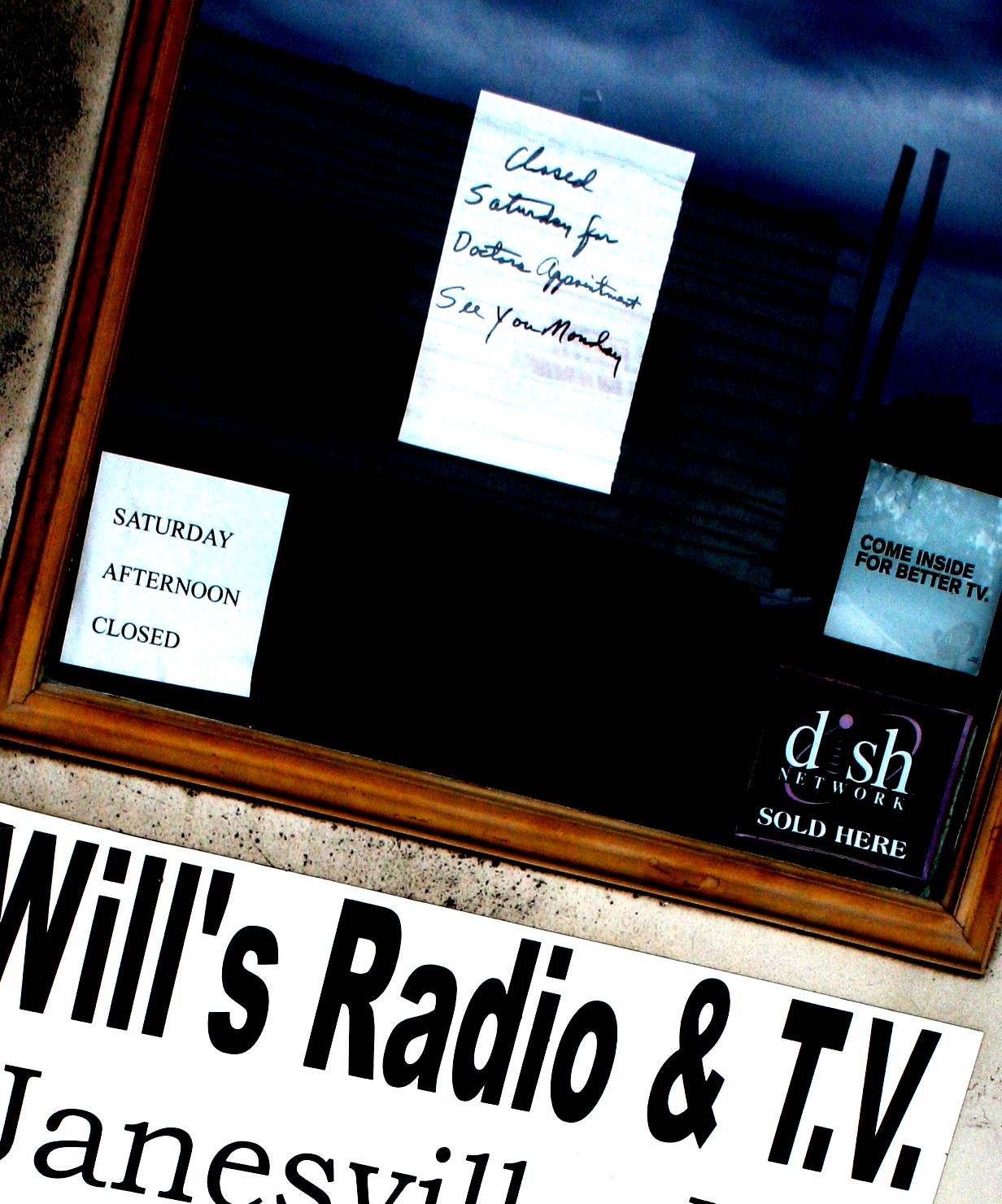
But you might not want to stop and check on that satellite service until Monday, according to this sign posted on Will's front door. Will is at a doctor's appointment.
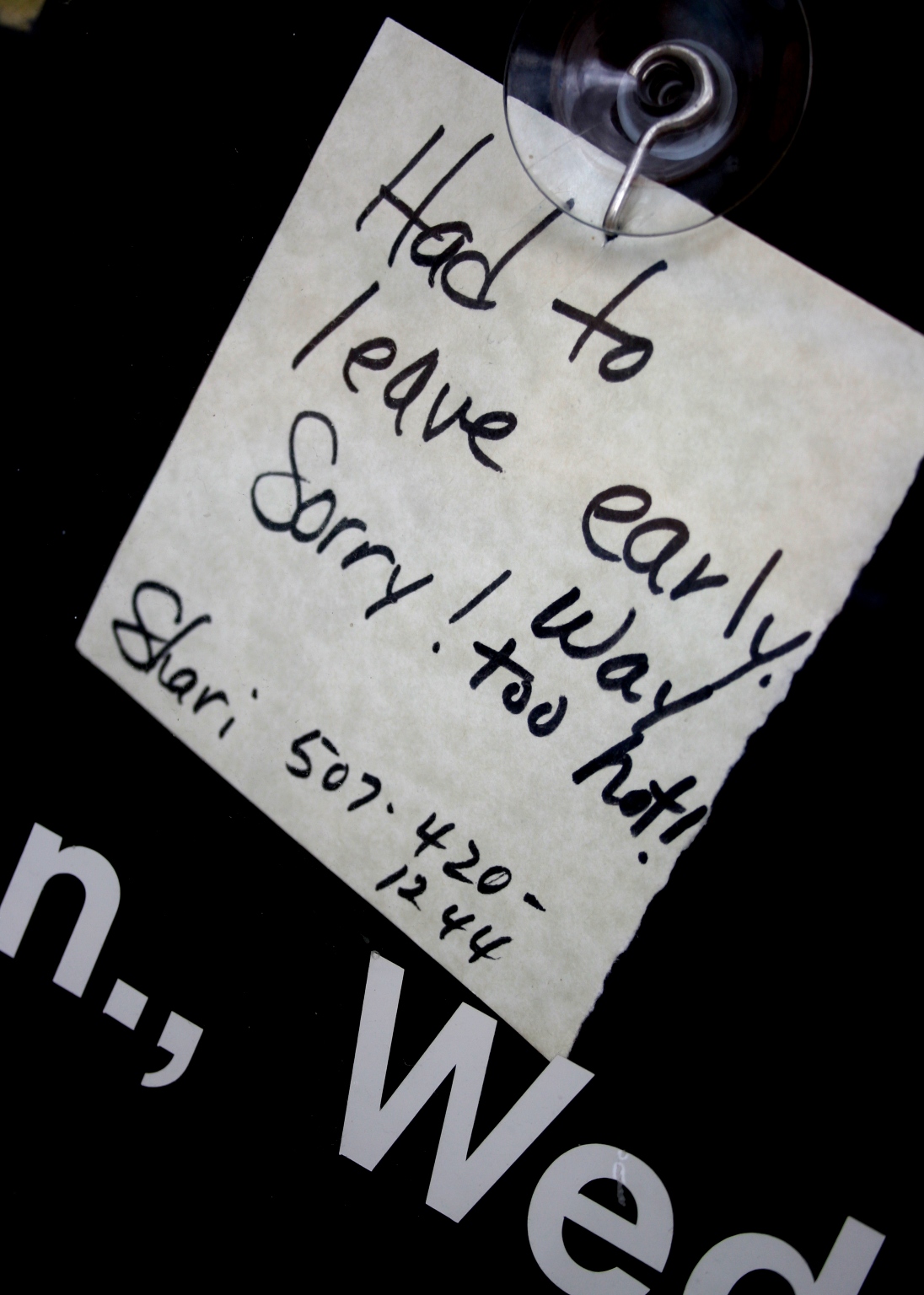
Hot weather also offers a good excuse to close up shop. I can't recall where this note was placed, but either on a beauty or sewing shop door.
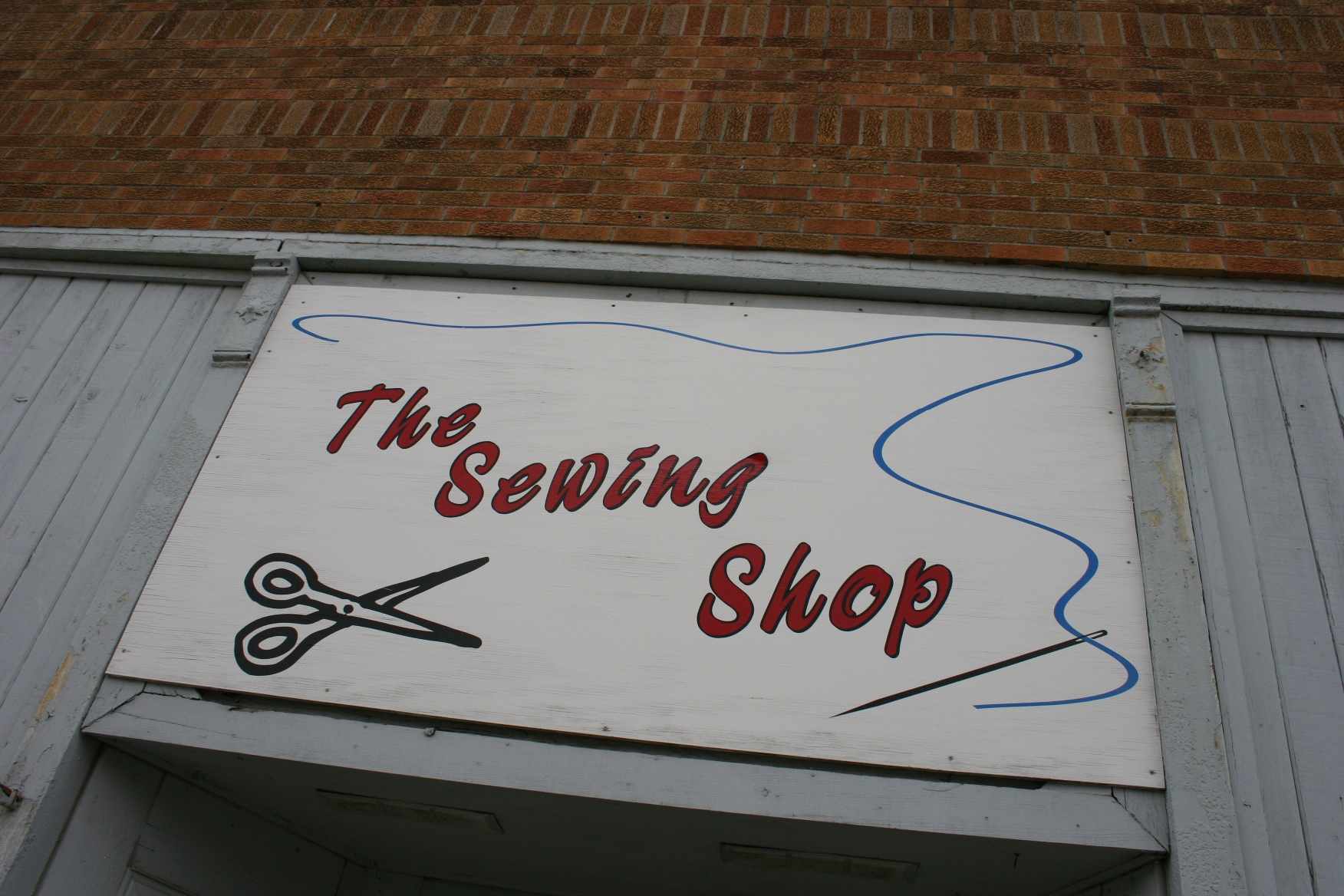
Homemade signs like this one are always a bonus find on small-town Main Street.

Jethro's Soda Shop, which is no longer open, sports a misspelled word. Can you spot it?

Finally, my last photo, which is not a sign, but merchandise in a window of the corner drugstore. The ruled tablet brought back grade school memories for me. Gotta love it. Main Street in Smalltown, Minnesota.

DID YOU FIND the incorrectly spelled word on the window of the former Jethro’s Malt Shop? That would be “BRAUT.” My husband contends that is the German spelling of “brat.” I contend he is wrong as my research shows that “die braut” in German translates to “bride” in English.

(NOTE: I edited most of the above images to better showcase the words.)

© Copyright 2011 Audrey Kletscher Helbling


A geography quiz & an award-winning tech program September 2, 2011

OK, readers, it’s time for a little geography quiz.

Where are these towns located?

  • Bellingham
  • Nassau
  • Madison
  • Marietta
  • Dawson
  • Boyd

If you know/guessed, or cheated and googled, you likely would have answered as follows:

  • Bellingham,Washington
  • Nassau in The Bahamas
  • Madison, Wisconsin
  • Marietta, Georgia or Marietta, Ohio
  • Dawson, Georgia
  • Boyd, Texas

However I would award you extra credit and move you to the head of the class if you gave these answers:

  • Bellingham, Minnesota
  • Nassau, Minnesota
  • Madison, Minnesota
  • Marietta, Minnesota
  • Dawson, Minnesota
  • Boyd, Minnesota

See, you can learn a lot by going online and reading information on sites like Minnesota Prairie Roots.

But not everyone has easy access to computers, or the technical skills to use one, especially in rural areas like those six small Minnesota towns in the list above.

The folks in Lac qui Parle County understand that. And they’ve done something about the problem by bringing computers to the people via a mobile computer lab, LqP Computer Commuter.

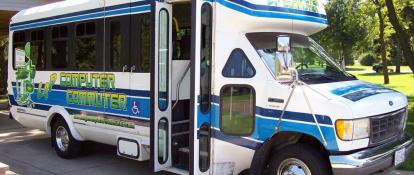
The LqP Computer Commuter (Photo from online Minnesota Community Pride Showcase application)

How’s that for an innovative idea, selected as one of 30 Minnesota Community Pride Showcase winners that will be recognized on Saturday at the Minnesota State Fair?

Back in Lac qui Parle County, the computer commuter (a converted small handicapped accessible commuter bus) hit the road last summer and now travels three days a week, parking for four hours in each town—Bellingham on Monday morning, then to Nassau in the afternoon; to Madison and Marietta on Tuesday; and to Dawson and Boyd on Friday.

According to information submitted in the Minnesota Community Pride Showcase application, the mobile program has been well-received and continues to grow. You can read details about LqP Computer Commuter by clicking here.

The Lac qui Parle Economic Development Authority website, where you'll find basic info about the LqP Computer Commuter.

Aiming to increase digital literacy in a county with less than 8,000 residents, many of them over age 60, the mobile computer lab provides the public with free access to seven laptops and a lab coordinator and trainer.

Twelve local partners from the public and private sector support the project.

To the team who brainstormed and hatched this idea and to those who back the program, I applaud you. You are meeting a need in rural Minnesota.

I understand. I grew up in southwestern Minnesota and am aware how isolation, lack of funding, and more, often mean fewer opportunities.

When I was a child living on a farm outside of Vesta, I wanted nothing more than a library in town. Decades later my hometown of around 300 still doesn’t have a library, but at least the Plum Creek Bookmobile rolls onto Main Street once a month.

I expect residents and business people in Lac qui Parle County are thrilled to see the LqP Computer Commuter roll onto their Main Streets once a week.

I hope this idea catches on in other areas of rural Minnesota, and through-out the country. Rural residents should have as much access to technology, and the skills to use that technology, as those of us who live in more heavily-populated areas.

FYI: To read the list of winners in the Minnesota Community Pride Showcase, click here. The 30 winners will be recognized on Saturday at the Minnesota State Fair, where they also have an exhibit space. The fair has also awarded $500 to each winner.

Three programs in my county of residence, Rice County, are among those to be honored for their community efforts: Faribault Summer Youth Programs, Rice County Olympic Day and Northfield LINK Center.

© Copyright 2011 Audrey Kletscher Helbling
 

It takes a strong man or woman to farm August 2, 2011

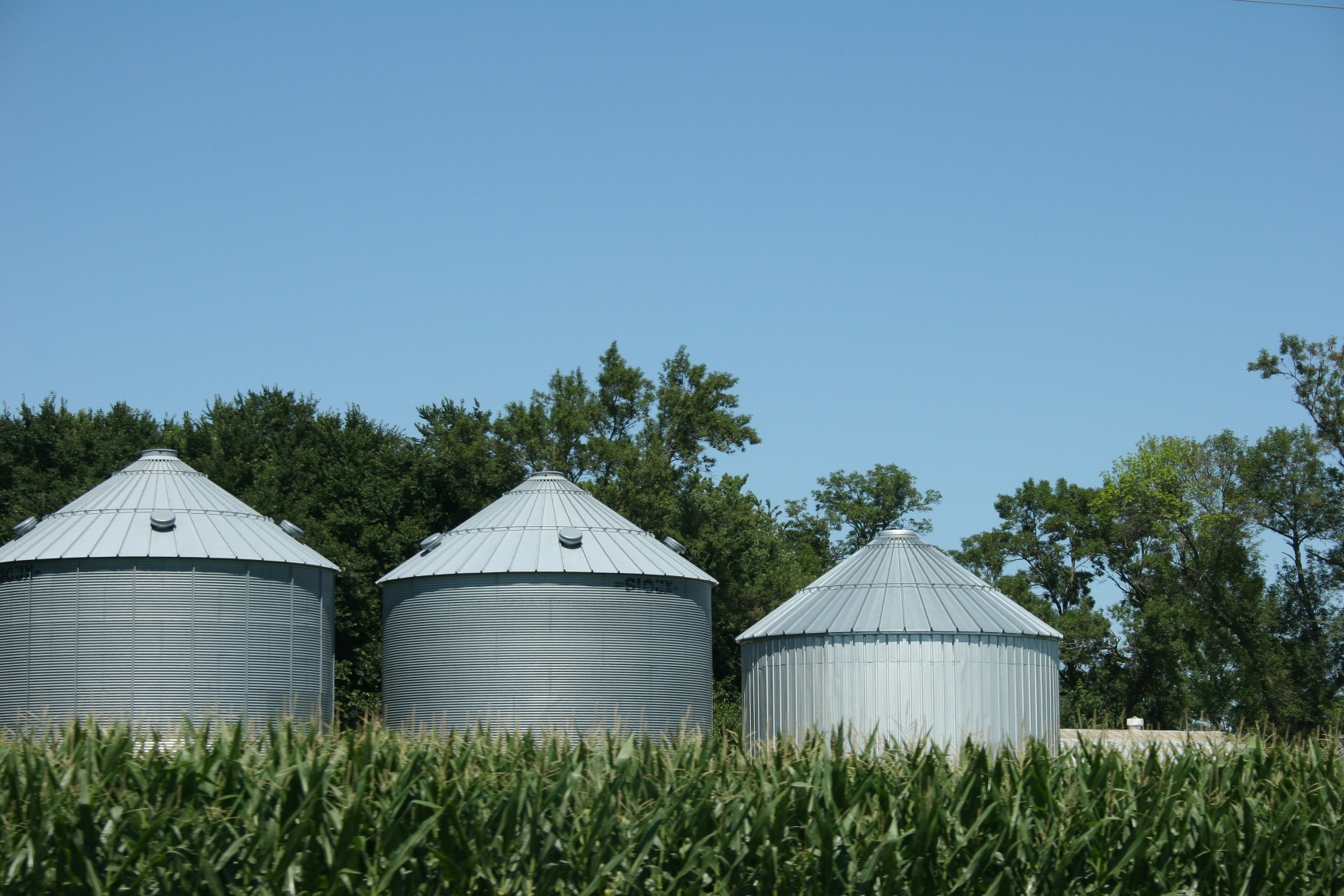
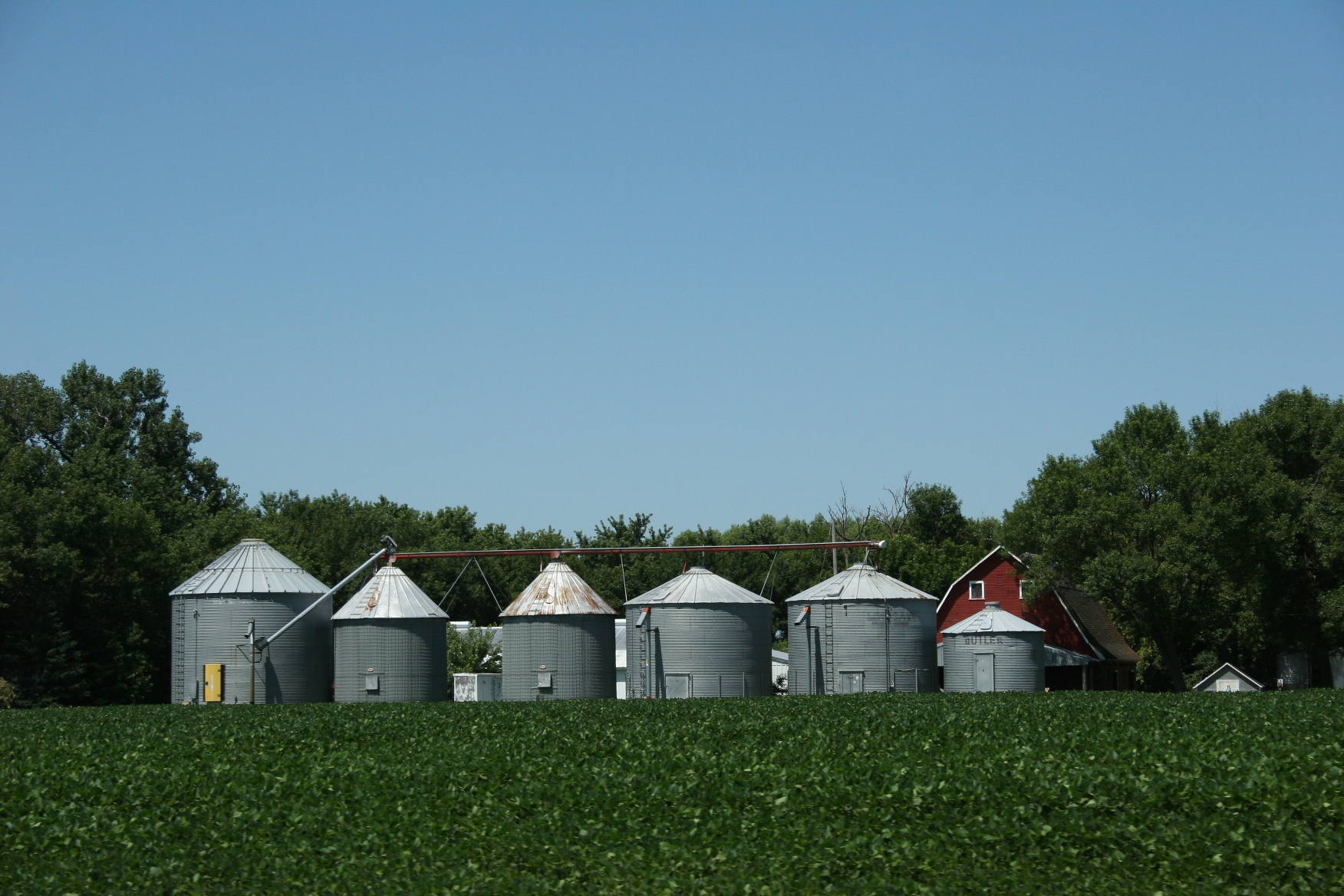
Bins on a farm place somewhere along the back roads between New Ulm and Morgan.

“I COULD NEVER BE MARRIED to a farmer or be a farmer,” I told my cousin Kevin as we stood outside the Vesta Community Hall Friday evening discussing the July 1 windstorms and tornadoes that ravaged my native southwestern Minnesota.

Kevin farms south of Echo, where he lost three grain bins, trees, and, if I remember correctly, an auger, to high winds. He’s looking at replacement and upgrade costs of more than $140,000. And a good chunk of that will not be covered by insurance. Investing so much money in his farm now, at near 60 years old, doesn’t come easily for him, he claims. But he doesn’t have an option if he is to continue farming.

As he was sharing his story, he said, “I told the wife I need to…” Kevin, 56, got married late in life (six years ago), so I still have to remember sometimes that he’s with Kris, a wonderful woman.

It takes a strong man or woman to live a life of farming. As much as I love the farm, I couldn’t farm. I couldn’t handle the financial stress, the “I told the wife I need to” replace the grain bins or I need to borrow money for a new tractor or the beans were hailed out…

I’d stress over borrowing all that money and over the financial risks inherent in farming.  Will commodity prices be up or down when I want to sell the corn and beans? Should I sign a contract now or wait? Should I buy that piece of equipment, build that machine shed? Will I get a decent crop? I’m not a gambler or a risk taker, even though I grew up on a crop and dairy farm.

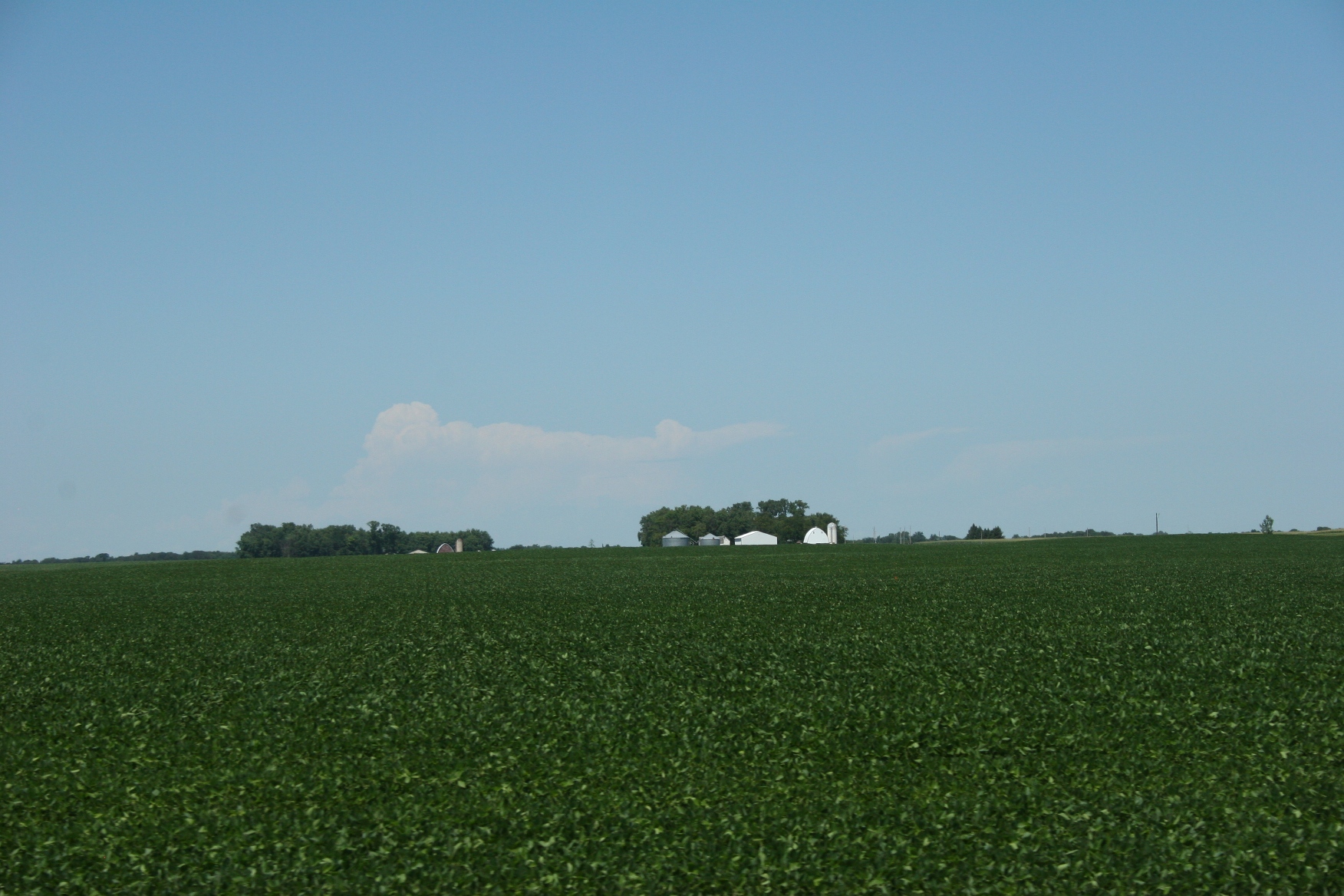
Soybean and corn fields stretch into forever in southwestern Minnesota. I shot this image on Friday between New Ulm and Morgan.

For many Minnesota farmers, this year has been especially challenging. Crops were planted late due to wet field conditions. Then the heavy rains fell, drowning out entire sections of fields. Next, strong winds and hail devastated beans and corn.

For the first time that I can ever recall, I saw black fields near my hometown of Vesta. My cousin told me the fields had been replanted and then the storms came when it was too late to replant again.

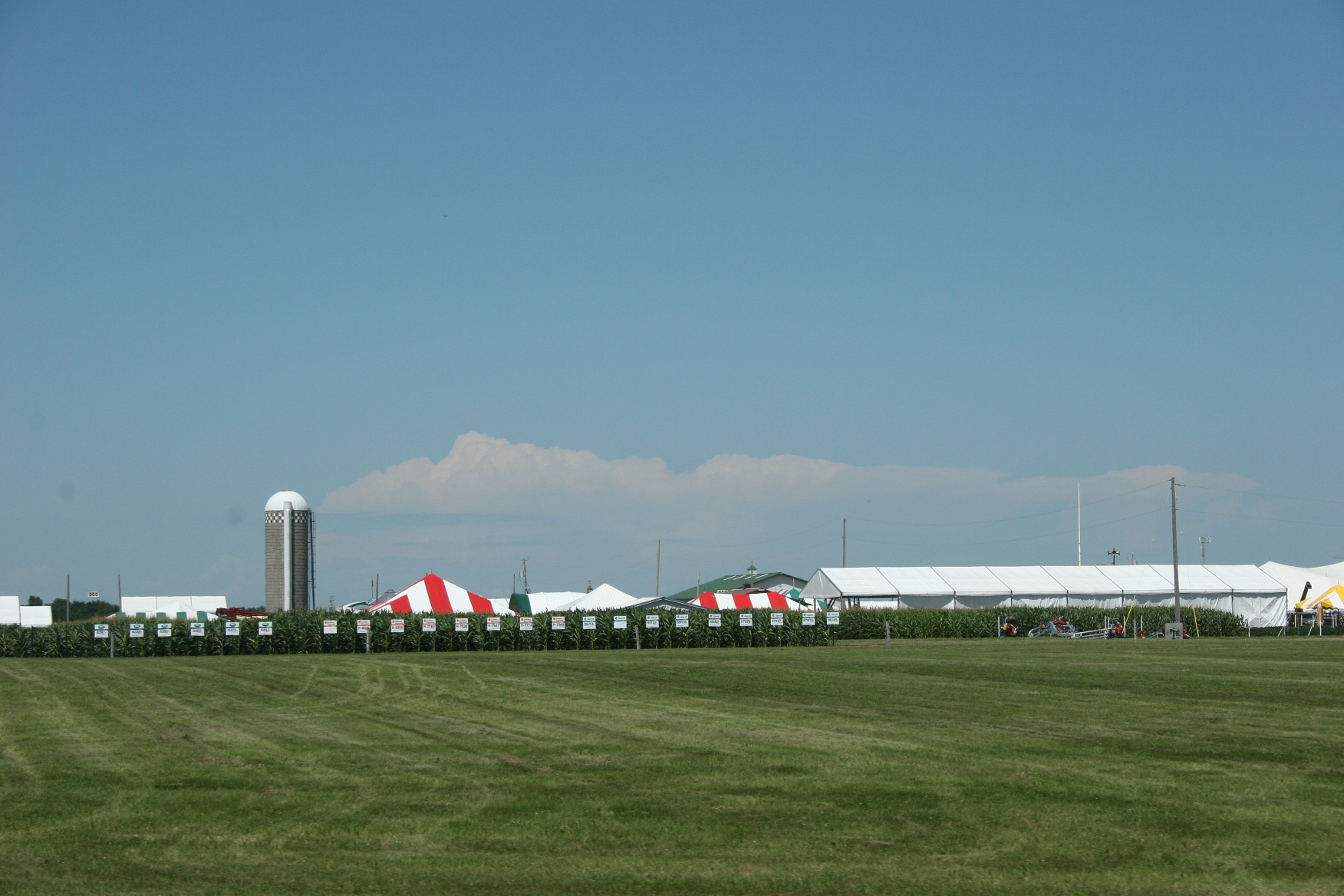
Three days this week, beginning today, farmers, agri-business reps and others will gather at the historic Gilfillan Farm between Morgan and Redwood Falls for Farmfest. There, in the heart of Minnesota’s farm country, I bet if you eavesdropped on a conversation or two or ten, you’d hear some farmer say, “I told the wife I need to…”

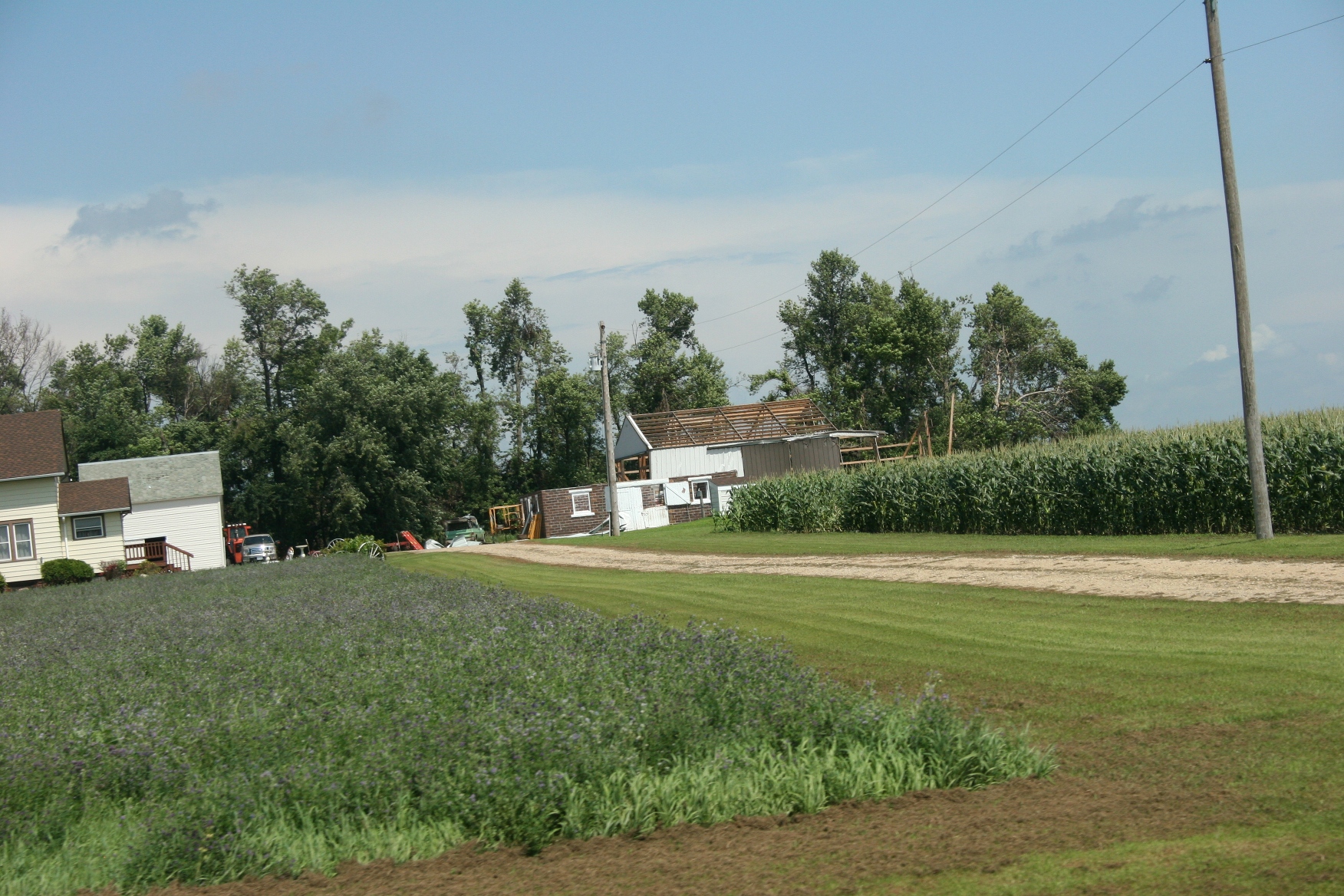
I spotted this damage to a building on a farm just north of Belview, which was hit by a July 1 tornado.

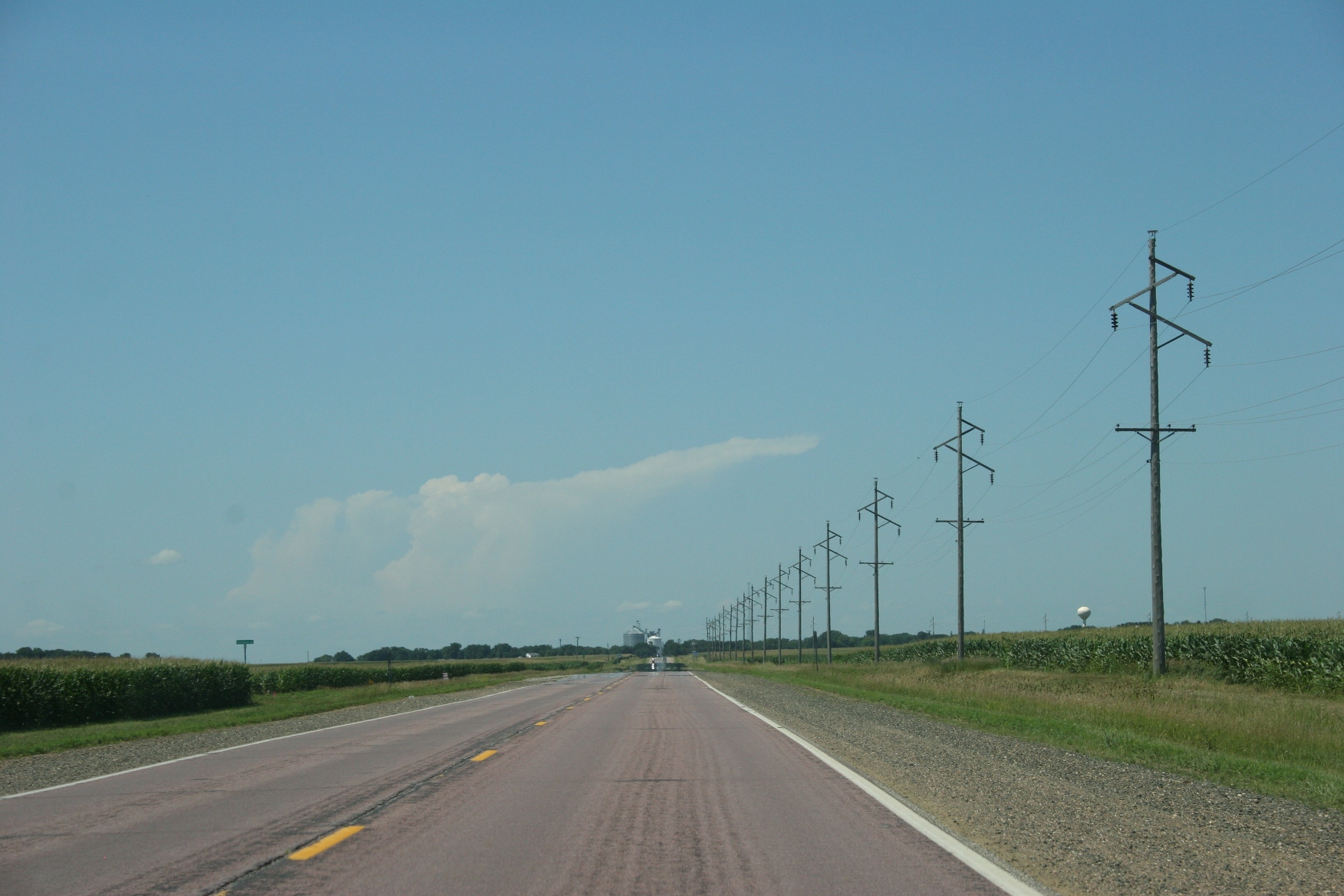
I took this shot traveling Minnesota Highway 67 west toward Morgan Friday afternoon. Follow this road and you'll end up at Farmfest. You can see Morgan's water tower and grain elevator complex in the distance.

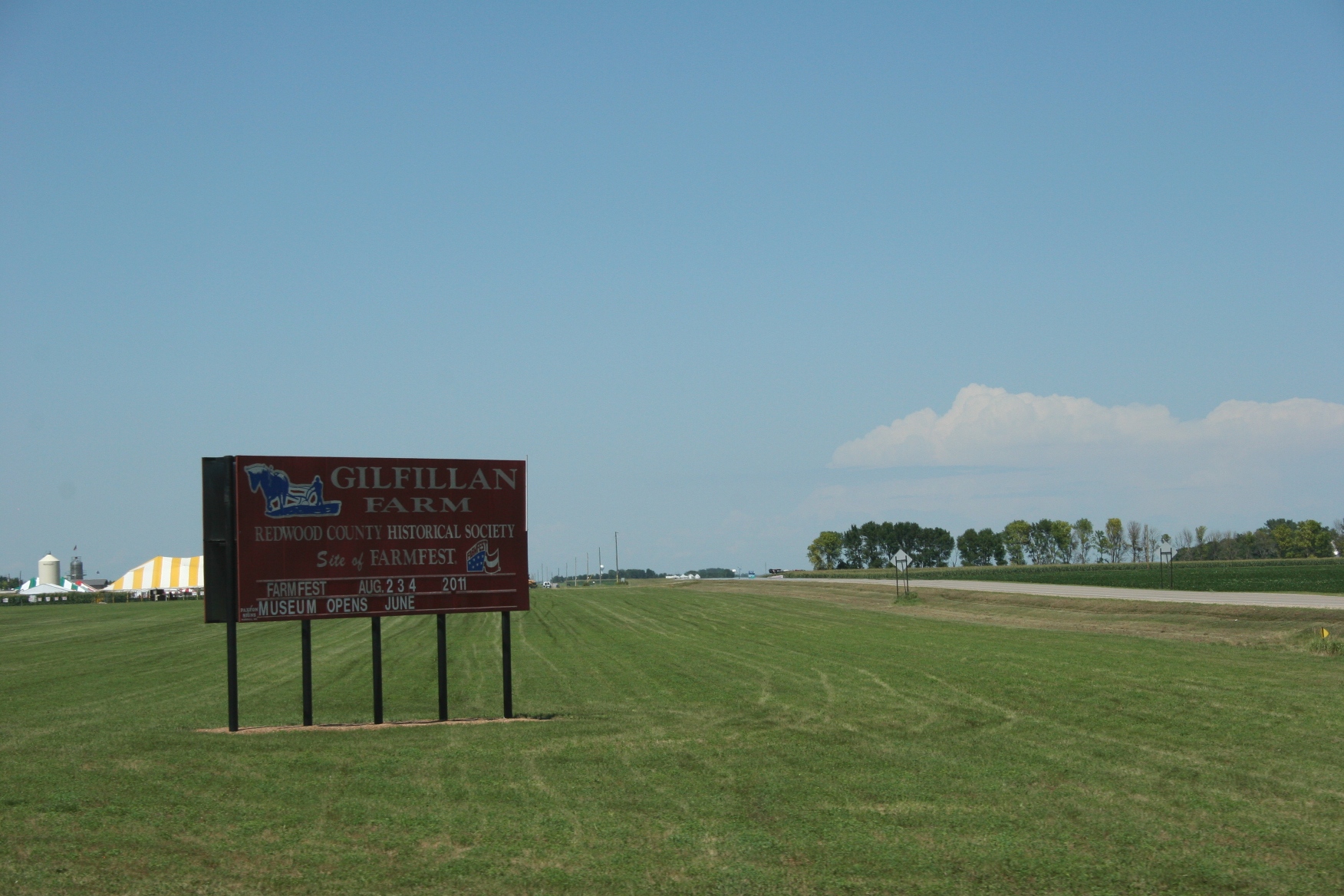
Farmfest at the historic Gilfillan Farm runs today through Thursday.

When I drove by the Farmfest grounds Friday afternoon, tents were already in place for the event.

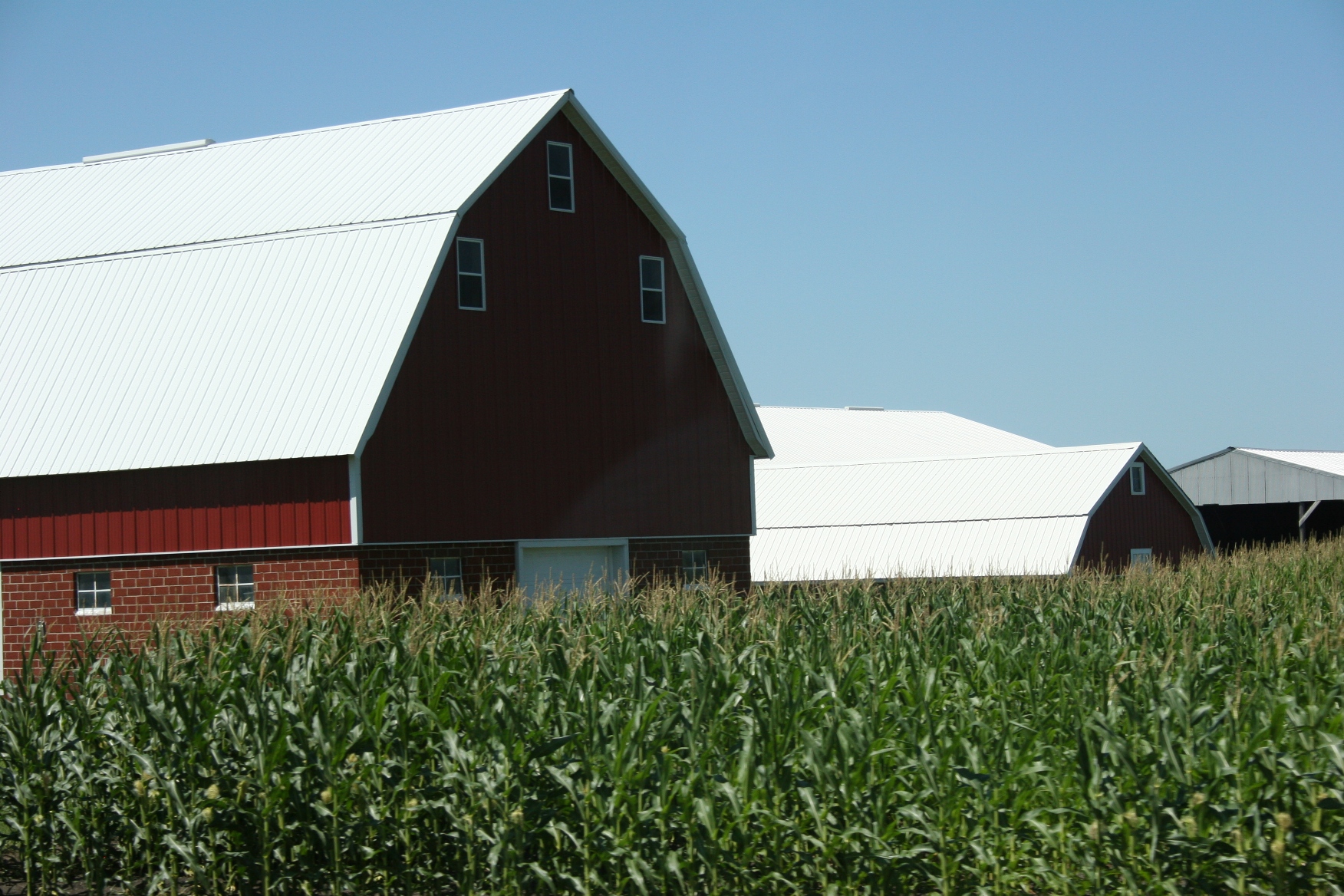
A barn, outbuildings and a corn field between New Ulm and Morgan.

Bins on a farm site along the back road between New Ulm and Morgan.

© Copyright 2011 Audrey Kletscher Helbling

 

Summer showers in the sweltering heat July 19, 2011

A hose was for more than watering the garden or cattle when I was growing up on the farm. Read on.

WITH THE CURRENT HEAT WAVE we’re experiencing in Minnesota, I’ve been thinking a lot about the weather of yesteryear. And here’s what I’ve concluded. Unless the weather impacted some major event in my life or ranked as exceptional, I really can’t specifically remember one summer to the next or one winter to the next. Fall and spring sort of get lost in the mix of seasons.

That is the reality of my long-term memory.

For me, the summers of my youth on a southwestern Minnesota crop and dairy farm were defined, not by the weather, but by playing “cowboys and Indians” (yes, I realize that is not politically correct today, but it was the reality of the 1960s), by after-chores softball games on the gravel farmyard and by evening showers with a garden hose.

Let me explain that last one. I lived for the first dozen years of my life in a cramped 1 ½-story wood-frame farmhouse with my farmer-father, my housewife-mother and four siblings. The third brother was born later, after we moved into the new house.

The old house didn’t have a bathroom. That meant we took a bath once a week, on Saturday night, in an oblong tin bath tub that my dad lugged into the kitchen. Yes, we shared bath water. And now that I consider it, given we labored in the barn daily, we must have really stunk by Saturday night.

Sometimes in the summer, when the weather was especially hot and humid, we showered. After my dad finished milking cows, he would thread the green garden hose through an open porch window outside to the east side of the house. Then, with one of us “standing guard” where the driveway forked, within a stone’s throw of the tar road, we began the process of showering.

One-by-one we took our turn standing naked on the grass, soap bar in one hand, garden hose in the other, scrubbing away the sweat and animal stench, the bits of ground feed and hay and silage, the dirt that clung between our toes.

And all the while we showered, we worried that a relative or a neighbor might turn into the farmyard or an airplane might fly overhead, as if a pilot could see us from high in the prairie sky.

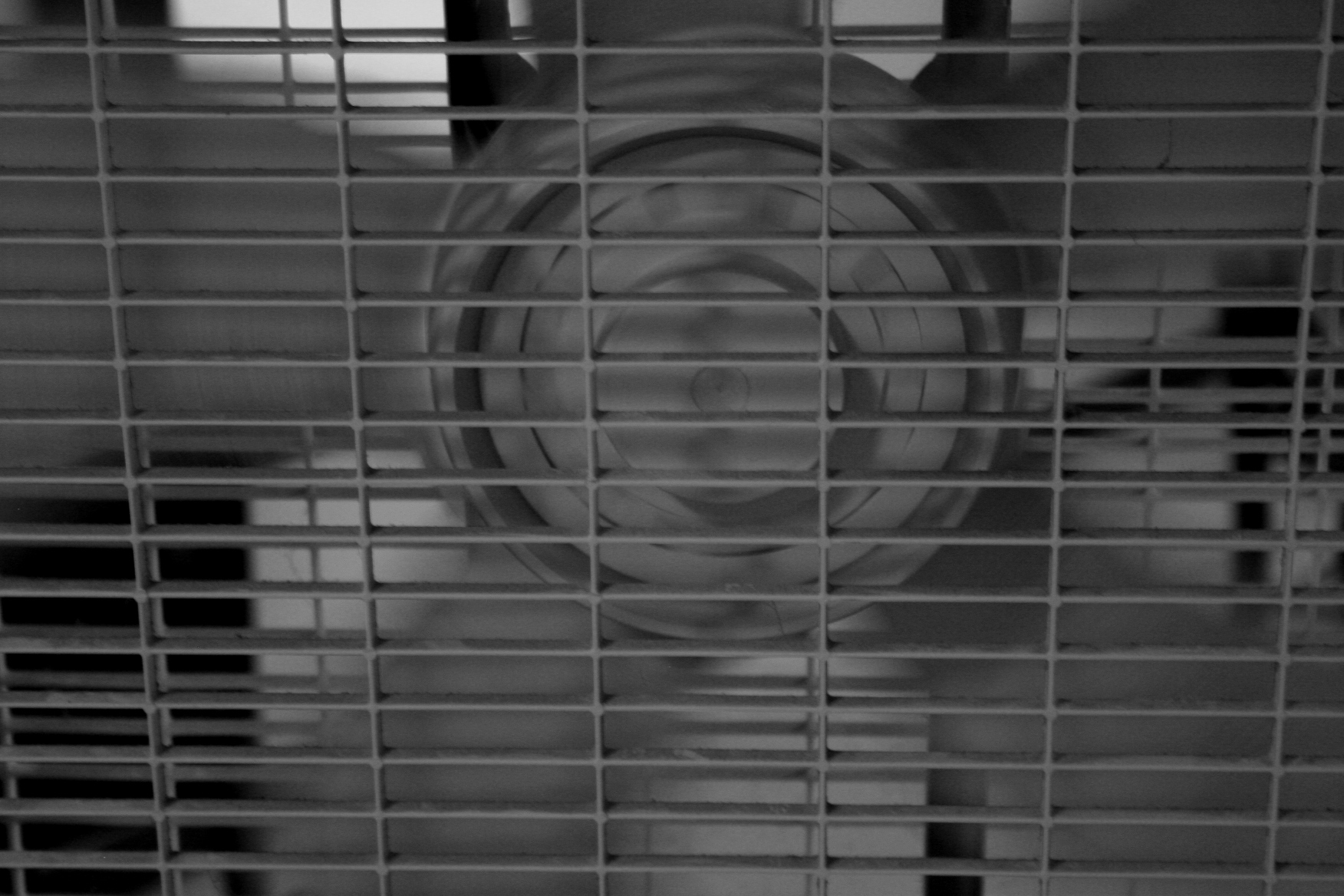
So during a hot stretch like we’re experiencing right now in Minnesota, I remember those primitive summer showers on the farm. I recall, too, the single turquoise box fan we owned—the one reserved for my hardworking farmer-father who endured heat and flies as he bent to wash another udder, to attach another milking machine, all to earn money to feed his growing family.

And I think, as I sit here at my computer in my air-conditioned office just around the corner from the bathroom with the combination bathtub and shower that I have it good, darned good.

Growing up on the farm, we had one box fan similar to this one.

DO YOU HAVE summer memories like mine, or another weather-related story? Submit a comment and share.

Copyright 2011 Audrey Kletscher Helbling
 

National Weather Service confirms July 1 tornadoes in southwestern Minnesota July 7, 2011

THE NATIONAL WEATHER SERVICE confirms what many Minnesotans had already figured out. Several tornadoes touched down during a massive storm system that began near the South Dakota/Minnesota border late Friday afternoon, July 1, and swept as far east as northwestern Wisconsin.

In my home area of Redwood County, two tornadoes were confirmed—both in the northwestern section of the county.

According to the NWS Chanhassen office, an EF-1 tornado with maximum winds of 95 – 105 mph began approximately six miles west of Vesta and continued for some 21 miles to the northeast. The maximum half-mile wide twister moved across Belview, which saw the most widespread tree damage in the surveyed area. The tornado then crossed the Minnesota River and ended two miles into eastern Renville County. Click here to read my previous post on the storm damage in Belview.


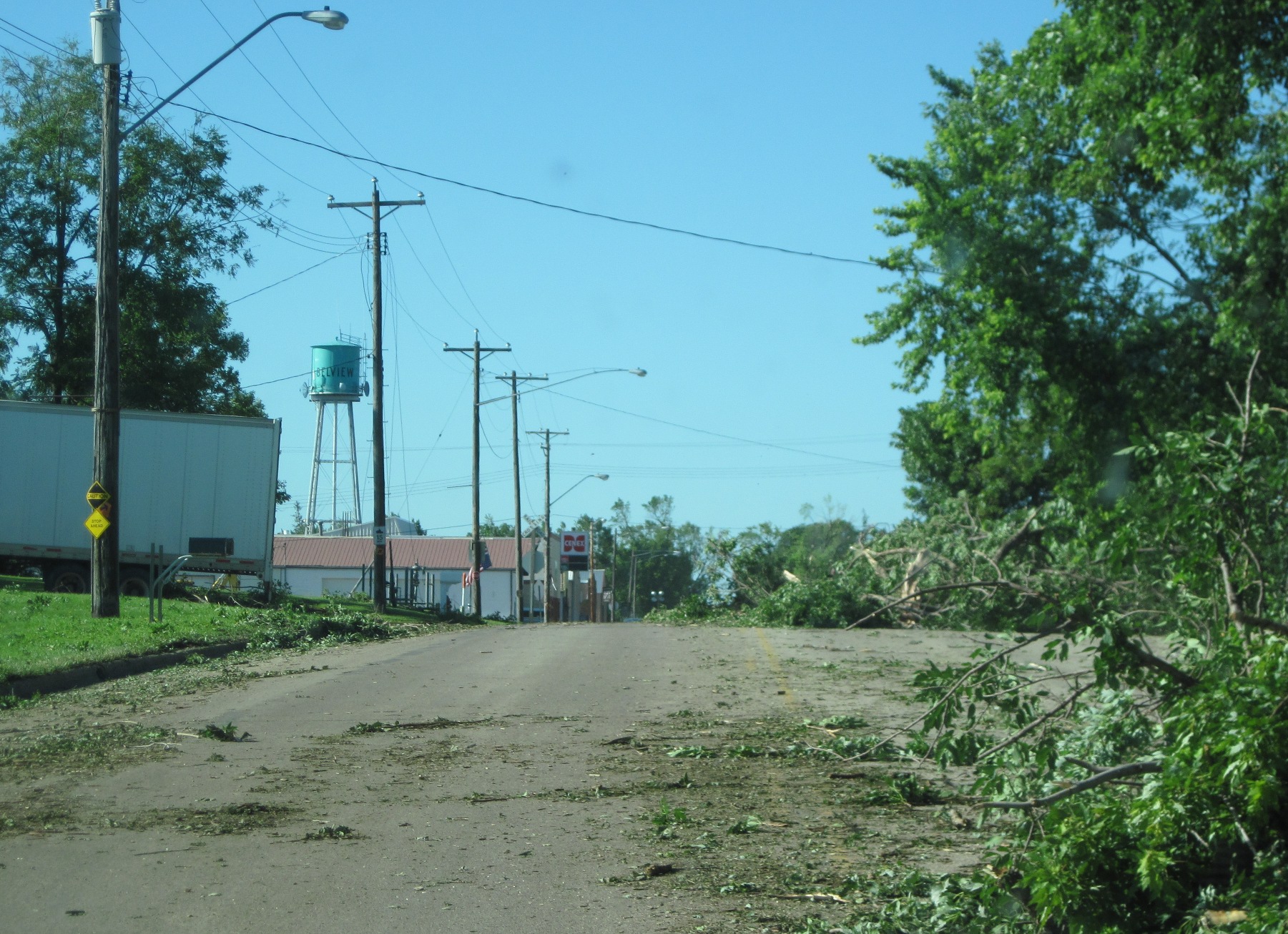
Trees blocked the street north of the Belview City Park following the tornado that passed through this Redwood County community of 375. Photo courtesy of Merlin and Iylene Kletscher.

The second EF-1 Redwood County tornado just nipped the northwestern corner of the county traveling a 2 ½-mile path. The tornado hit the farm of my cousin, Marilyn Schmidt, and her husband, Dan. To see the damage there, click on this post published yesterday on Minnesota Prairie Roots.


This tractor rigged with chains holds up a wall of a shop on Dan and Marilyn Schmidt's Wood Lake area farm. The building was severely damaged by Friday's twister. I'm showing this photo specifically for the reader who yesterday questioned how a tractor could hold up a wall. Photo courtesy of Heather Rokeh.

Three other tornadoes were confirmed in southwestern Minnesota—the most-damaging an EF-2 in Tyler with winds estimated at 115 mph. Check out the storm assessment of this 3-mile long tornado in Lincoln County near the South Dakota border by clicking here onto the NWS Sioux Falls website.

You’ll also find information there on an EF-1 twister that struck the Ruthton area in Pipestone County with wind speeds of 100 – 110 mph.

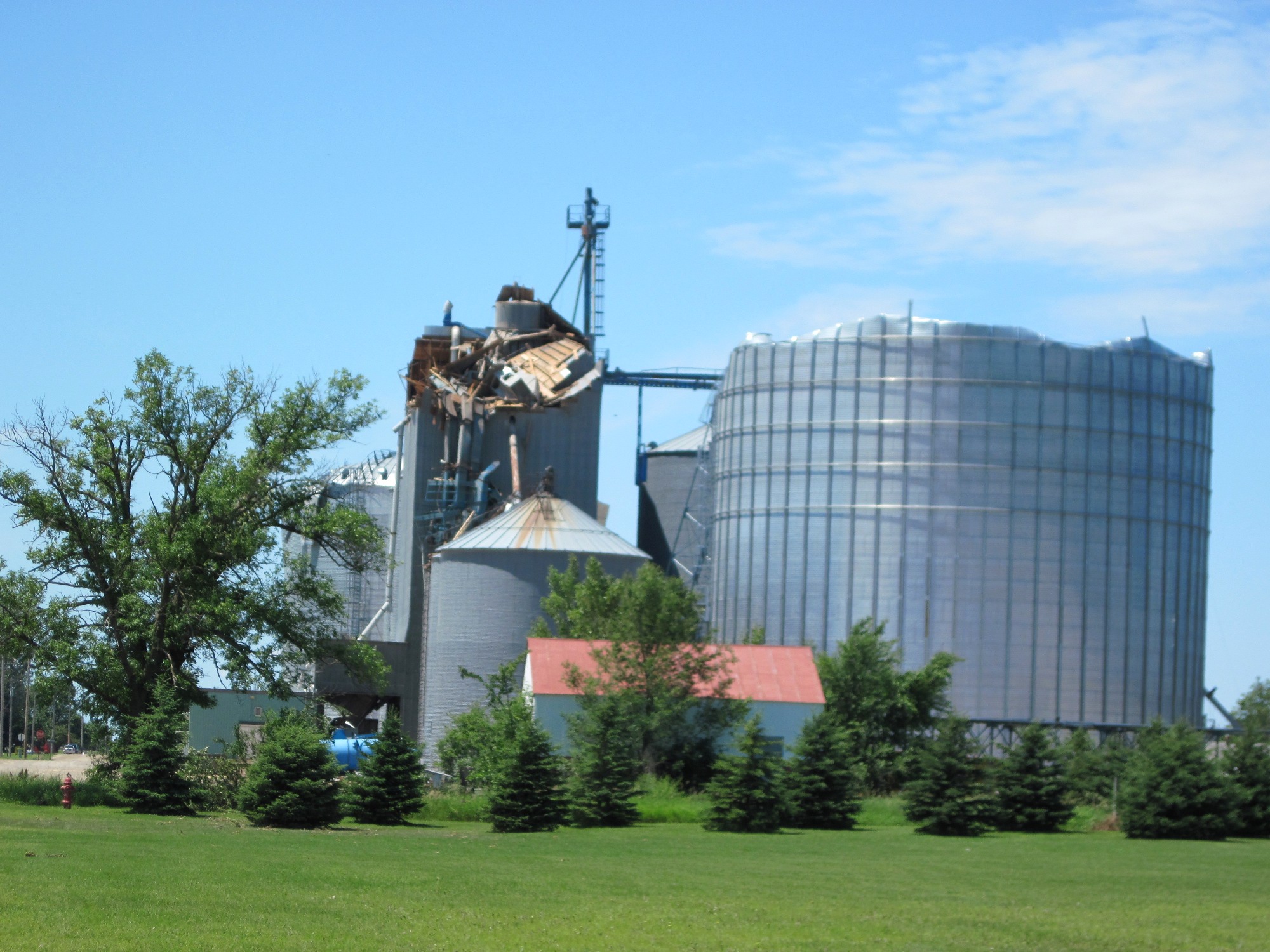
Strong winds, not a tornado, apparently caused the damage in my hometown of Vesta. The Chanhassen office of the NWS lists the storm there as “a series of downbursts” with wind speeds of 90 – 100 mph. Destruction in Vesta included dozens of downed trees, a roof partially-lifted from St. John’s Lutheran Church (my home church), smashed grain bins, damage to the elevator and more. To learn more about the damage in Vesta, read my previous blog post by clicking here or click here to read a story published in The Redwood Gazette.

St. John's Evangelical Lutheran Church in Vesta with the roof half ripped off by strong winds during the Friday afternoon storm. Photo courtesy of Brian Kletscher.

The NWS also determined that an EF-1 tornado with wind speeds of 100 – 110 mph cut a 300-yard-wide, 2 1/2 –mile swath northeast of Danube, lifting much of the roof from at least one home.

Check out the two NWS websites for maps, photos and more detailed information on the storms and the resulting damage.

Also visit the Belview Blue Jays Facebook page, where you’ll find photos of storm damage and other information from Belview.

IF YOU HAVE INFORMATION and photos you would like to share of storm damage, please submit a comment and I will follow-up with an email to you.

Based on my blog readership yesterday and Tuesday, interest in the southwestern Minnesota storms remains high. Yesterday Minnesota Prairie Roots blog views totaled 1,129, my highest daily total since launching this blog. On an average day, I get around 400 views.


Damage suggests tornado hit Wood Lake farm July 6, 2011

DAN AND MARILYN SCHMIDT had just arrived for the July Fourth holiday weekend at a west central Minnesota lake when they got the phone call from their daughter, Heather Rokeh. She was calling from Marshall with news that a storm had swept through town. It was late Friday afternoon, July 1.

Dan asked about their farm 20 miles northeast of Marshall. Heather suggested that “it wouldn’t be a bad idea to have someone check it out.”

And so Heather’s sister, Amy St. Pierre, and Amy’s husband and daughter went to the farm, surveyed the damage, then called the Schmidts. The couple returned that night to inspect their Wood Lake area farm.

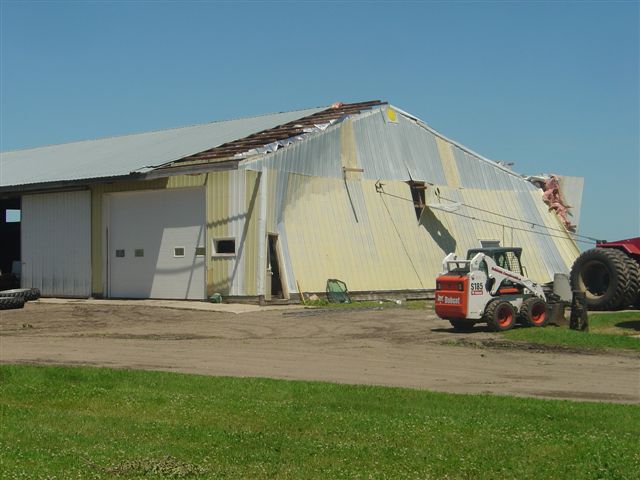
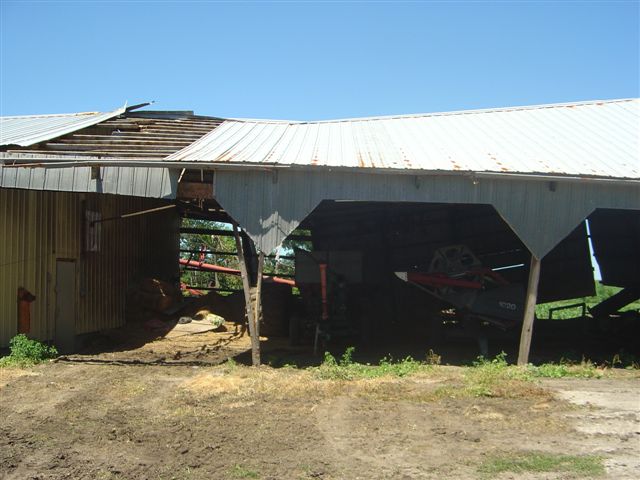
Every building had been damaged. Hail pounded holes in the siding on the house, where shingles and an antenna were blown off. The door of the Quonset building had been ripped away with part of the board trim speared into the ground.

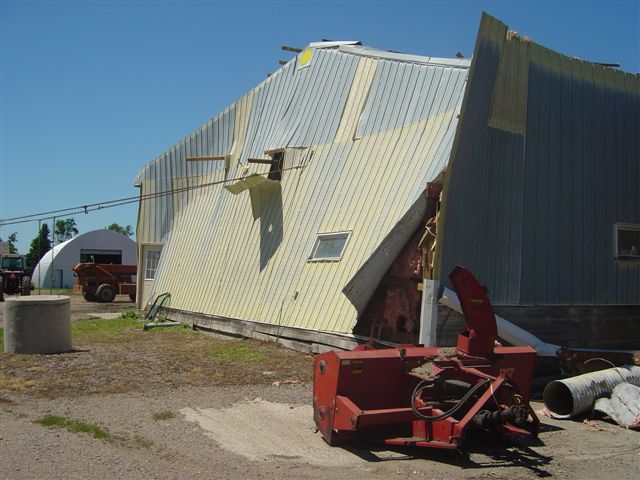
Half the roof was blown off the shop, collapsing an interior wall. That wall is now being held up by two chains and a tractor until items inside can be removed and the building demolished.

Another view of the caved-in shop wall.

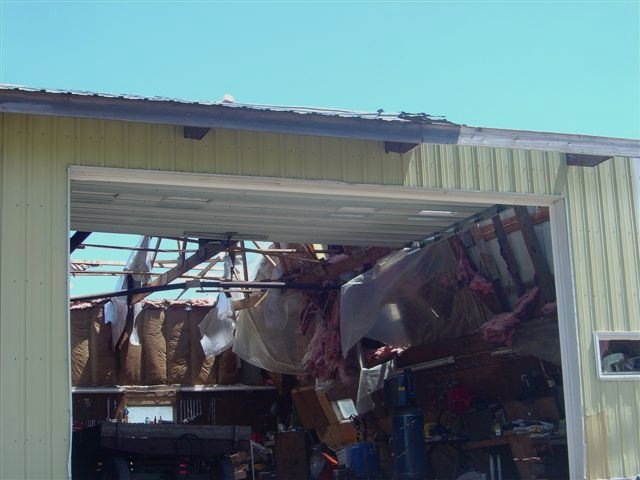
The exposed interior of the shop.

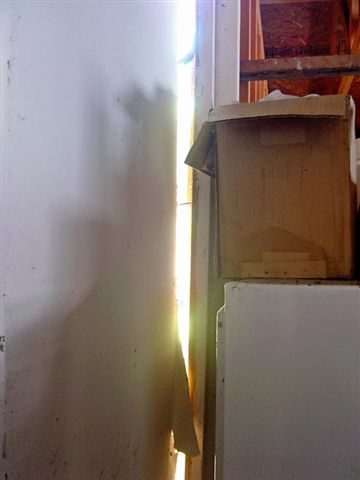
Trees were down or uprooted. Branches littered the farmyard. On one of the two houses on the farm site, the garage was pulled away from the house, leaving a visible gap.

Here you see light shining through the space where an attached garage was separated from the house during Friday's storm.

“A lot of these things spelled out tornado for us,” says Heather. “The twisting of the trees, things stuck in the ground and the twisted buildings all suggest tornado to us.”

Whether straight-line winds or tornado, Heather remains grateful: “We are so thankful no one was injured.”

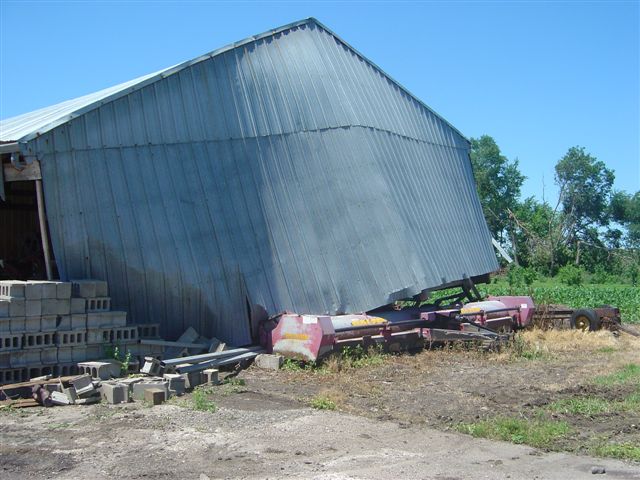
This lean-to, connected to a hog barn, was lifted up, twisted and set back down on top of a stock chopper. The hog barn was OK, but the lean-to was deemed unsafe and removed on Saturday.

This photo shows a portion of the lean-to that was lifted and dropped onto the stock chopper pictured here.

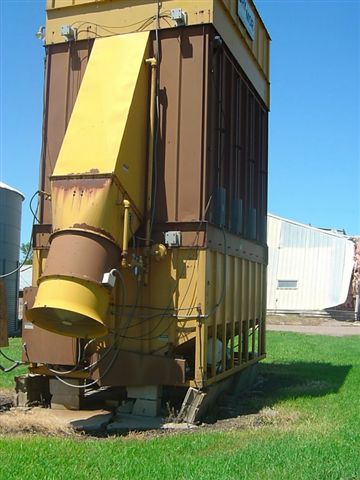
This grain dryer was moved and it is now sitting crooked on its foundation. The cement slab foundation was cracked and cement blocks are now sitting at an angle.

IF YOUR FARM, HOME or community was damaged during the July 1 storm in southwestern Minnesota, I’d like to hear from you. Submit a comment summarizing your storm experience, the damage to your property or town, and progress toward recovery. If you have photos to share, like those above from my cousin Heather, let me know and I’ll be in touch.

Also check out my previous posts on storm damage in my hometown of Vesta and in neighboring Belview.

PHOTOS BY HEATHER ROKEH Copyright 2011

Text copyright 2011 Audrey Kletscher Helbling
 

Belview pulls together after destructive storm

THREE MONTHS AGO Merlin and Iylene Kletscher closed on the purchase of a foreclosed house along Main Street in Belview. They plan to sell their lake home near New London and move back to Iylene’s hometown, also within 10 miles of Merlin’s hometown of Vesta.

My aunt and uncle want to be closer to family and friends and back in a small town like Belview with a population of 375.

They chose the Main Street fixer-upper, among other reasons, for all the beautiful trees on the property.

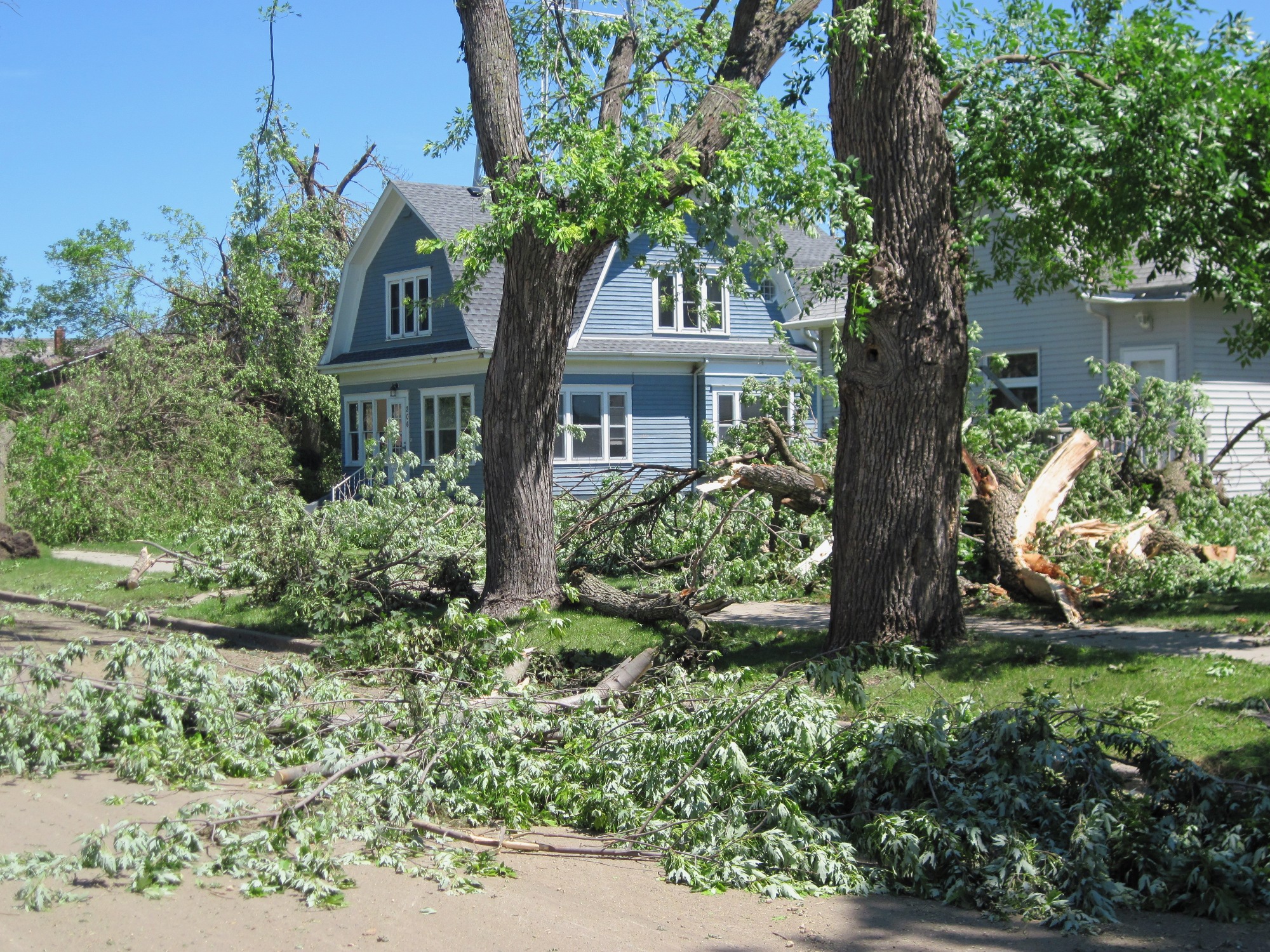
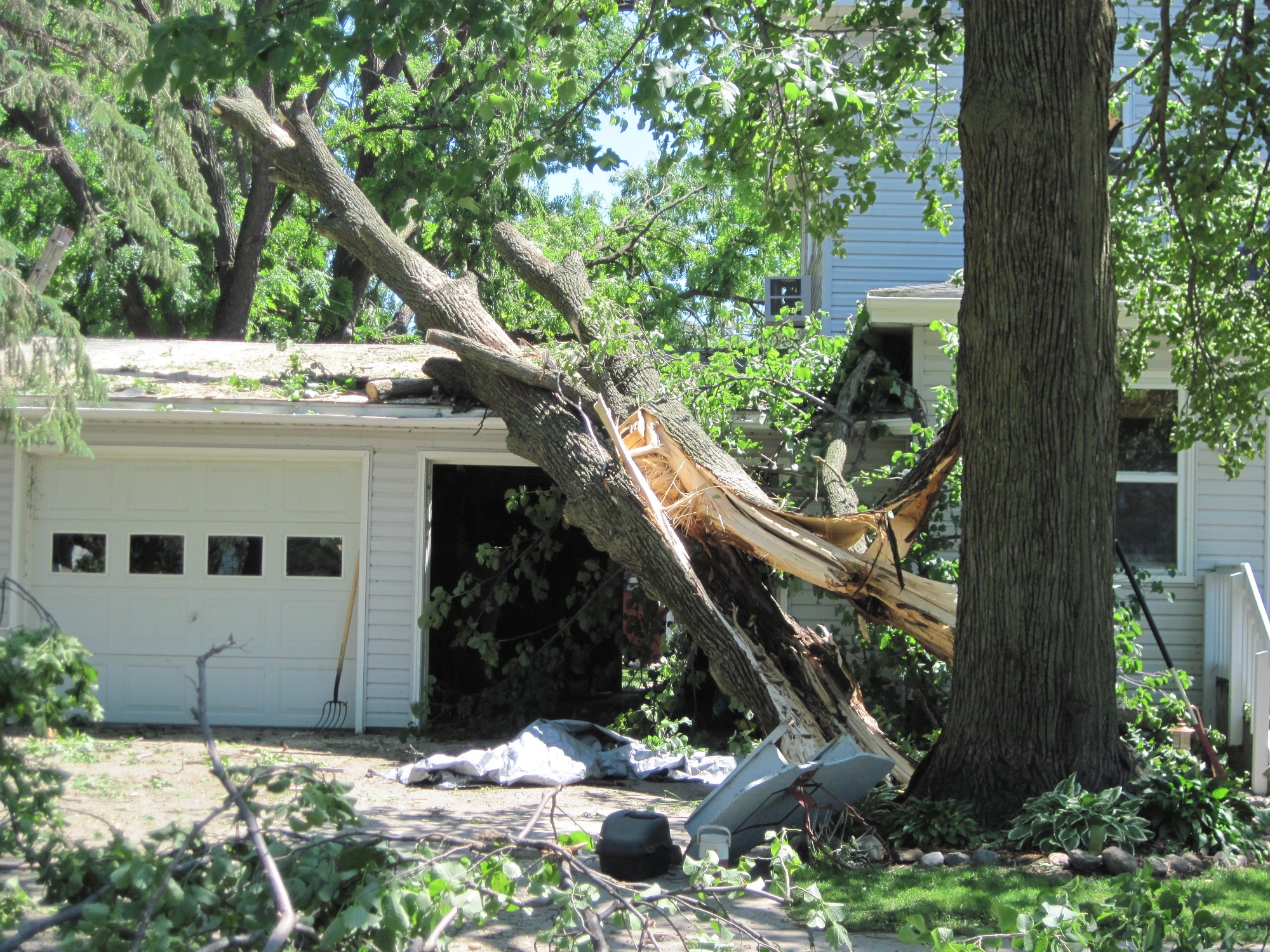
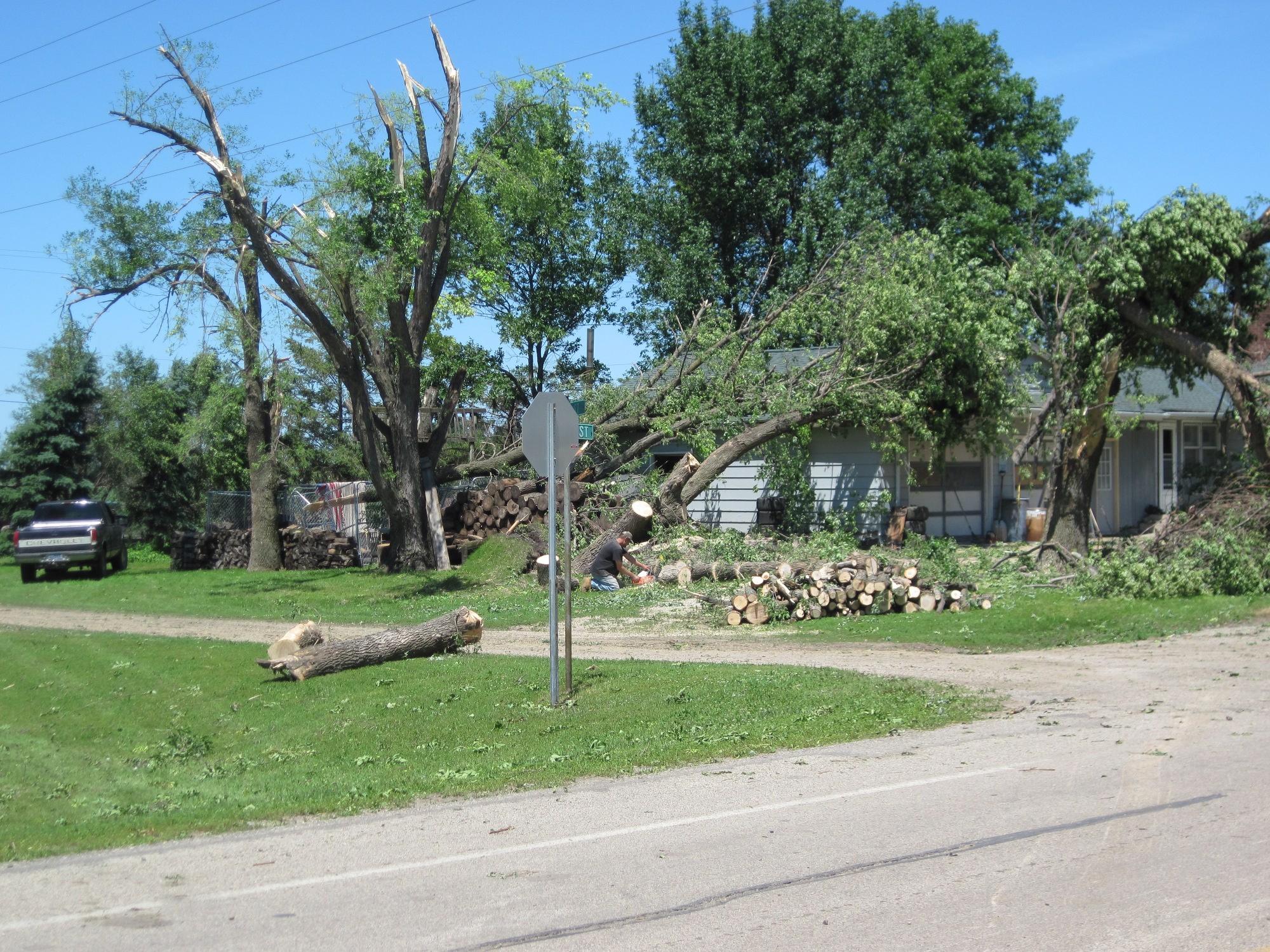
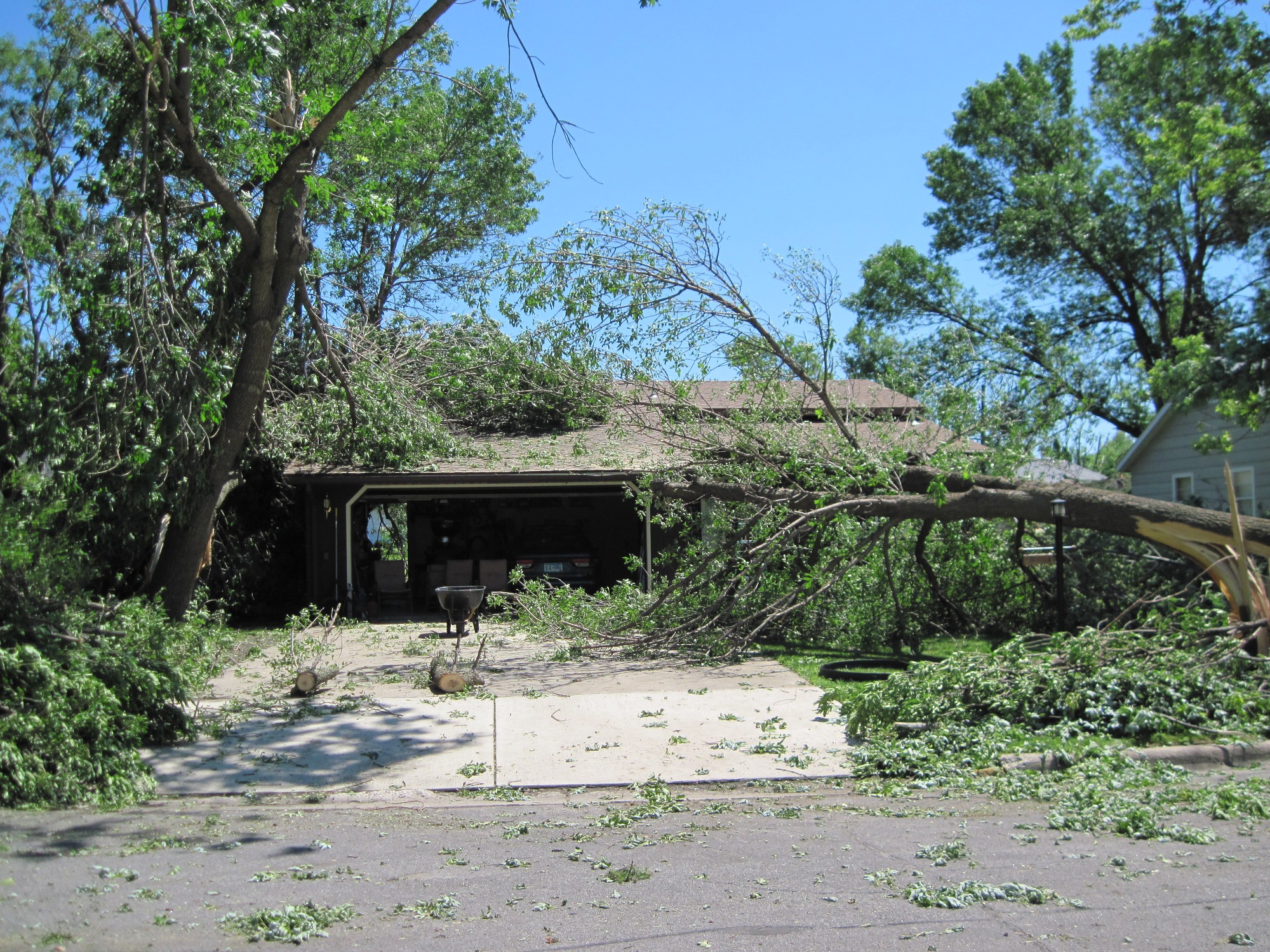
Today most of those trees are gone, toppled in a storm that swept through Belview and a wide-spread area of southwestern Minnesota late Friday afternoon. The storm ripped off roofs, took down power lines and trees, smashed grain bins and elevators and more as fierce winds roared across the flat prairie.

Merlin and Iylene Kletscher's home on the left, surrounded by downed trees.

Now Merlin and Iylene, like so many others in this area of Minnesota, are dealing with insurance companies and contractors as they clean up and repair their homes and businesses.

“The new chimney we had installed is leaning,” my uncle says. “The new shingles are missing ridge caps. We have broken windows and torn screens, etc.” The couple had just installed new windows in their home and made other major improvements.

Despite all of that damage to a house he and Iylene have worked so hard to restore, my uncle doesn’t seem at all discouraged. Rather, he praises Belview’s reaction to the storm: “Belview is amazing in that the people just pull together…I can’t say enough good things about the fire department and city employees and council. While we were there, trucks, tractors, 4-wheelers, payloaders, backhoes and pickups went by our house about one every 30 seconds pulling trees, debris or branches to the MPCA-approved burn site on the northeast edge of town.”

It seems the city was prepared for a natural disaster such as Friday’s storm. Log onto the city website and you’ll find a “CONSUMER ALERT: SUMMER STORM SEASON” posted by City Clerk Lori Ryer on May 24 encouraging residents to prepare for summer storms.

Entering Belview from Sacred Heart at 9 a.m. on July 2.

The city of Belview's water department building.

The ferocity of Friday’s storm is impressive. “Our neighbor across the street in Belview said that during the height of the storm, he couldn’t see his mother’s house right next door!” Merlin shares. “Chad Krinke (next door neighbor and relative) said two inches of rain fell in 20 minutes—he called us about a half hour after it hit, giving a report on our house damage. The city was blocked off, so no one could get in unless they had specific ties to someone in the city.”

Trees blocked the street north of the Belview City Park.

Jerry Hagen's house, across the street from Merlin and Iylene's home in a July 2 photo.

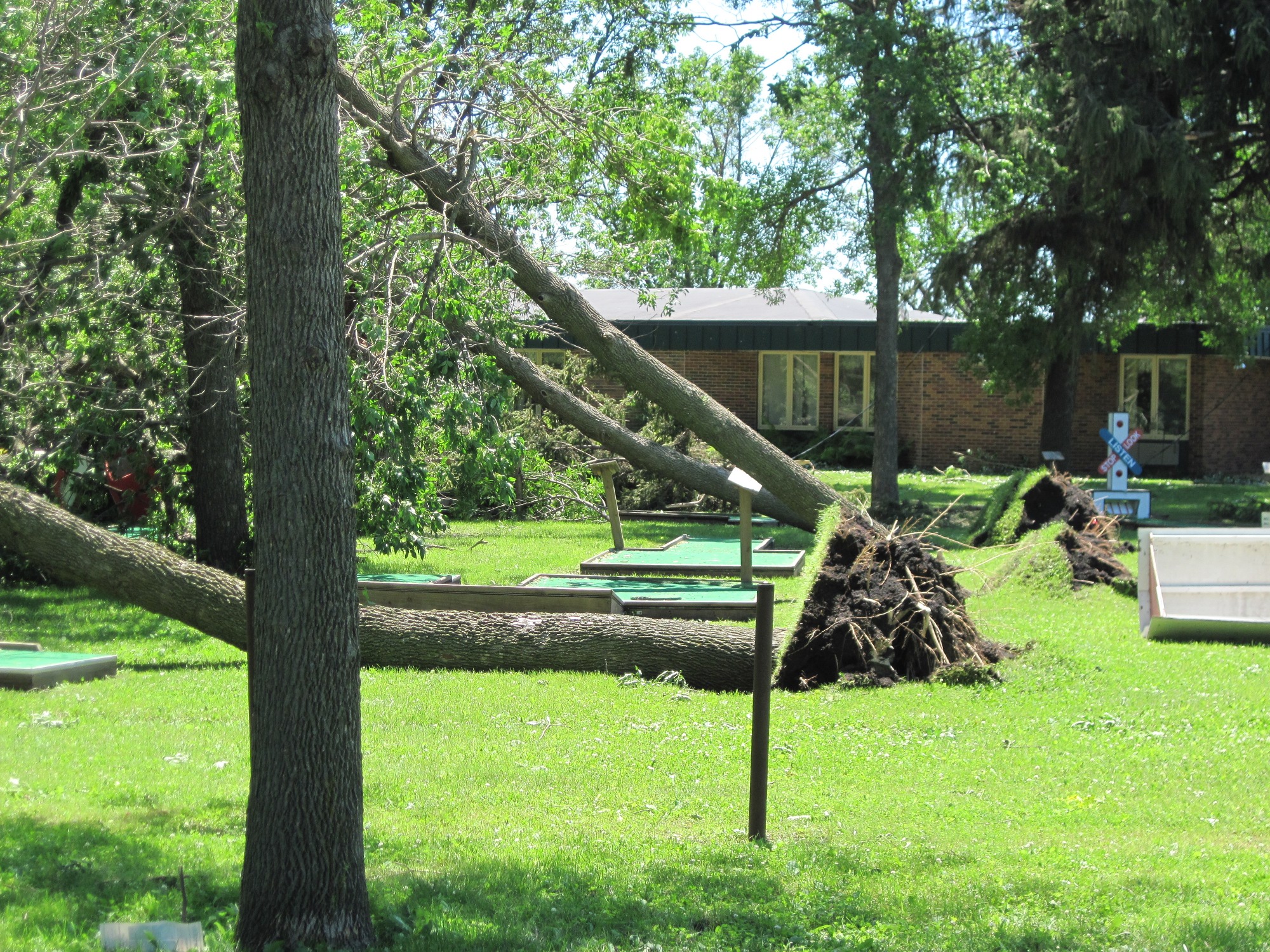
Residents of Parkview Home, next to the city park, were evacuated Friday night. This photo shows the nursing home and mini golf in the park. The rubber roof of the nursing home was peeled off during the storm.

Storm damage at the home of the Rev. Daniel Faugstad family.

Damage along South Main Street.

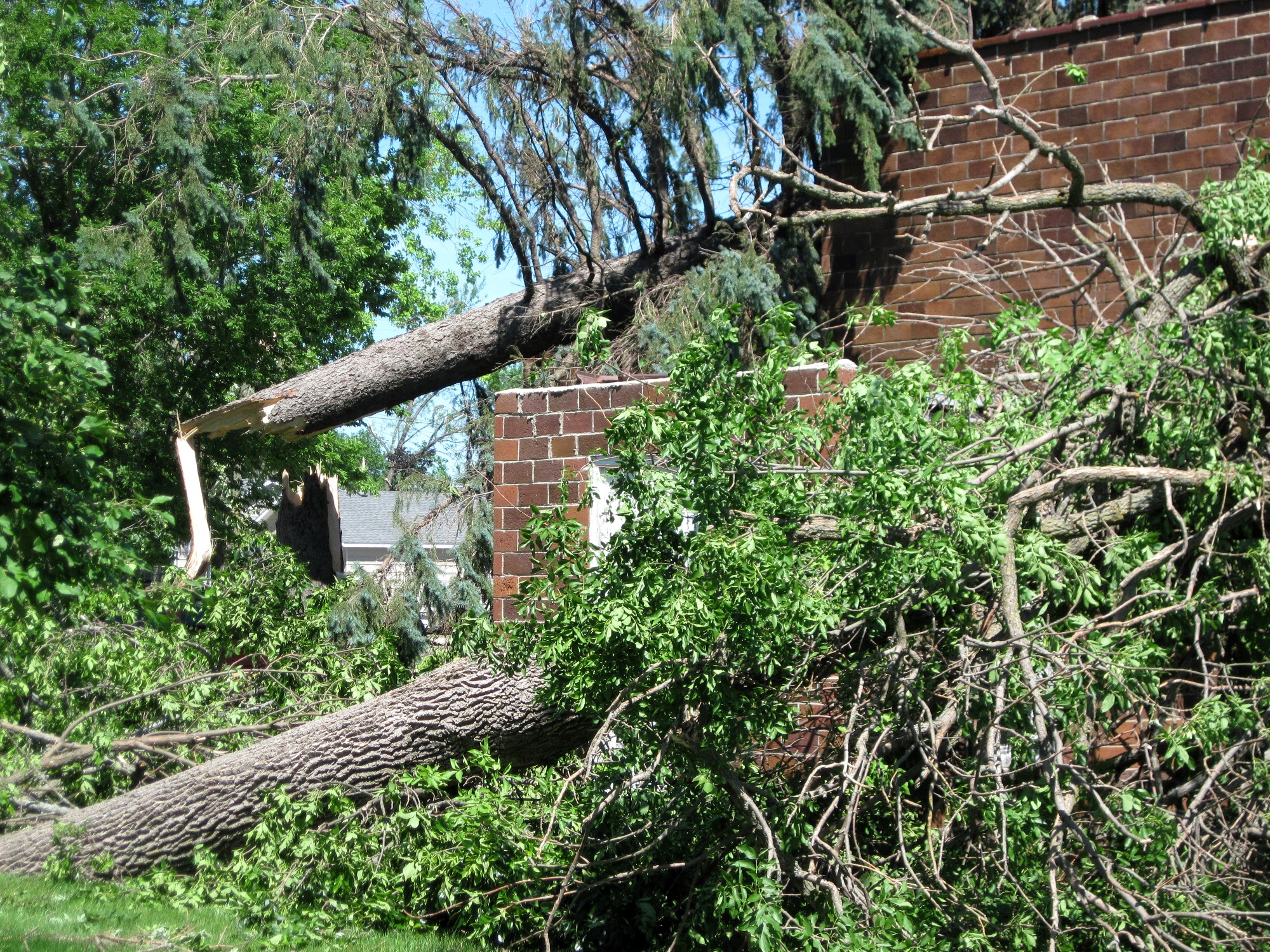
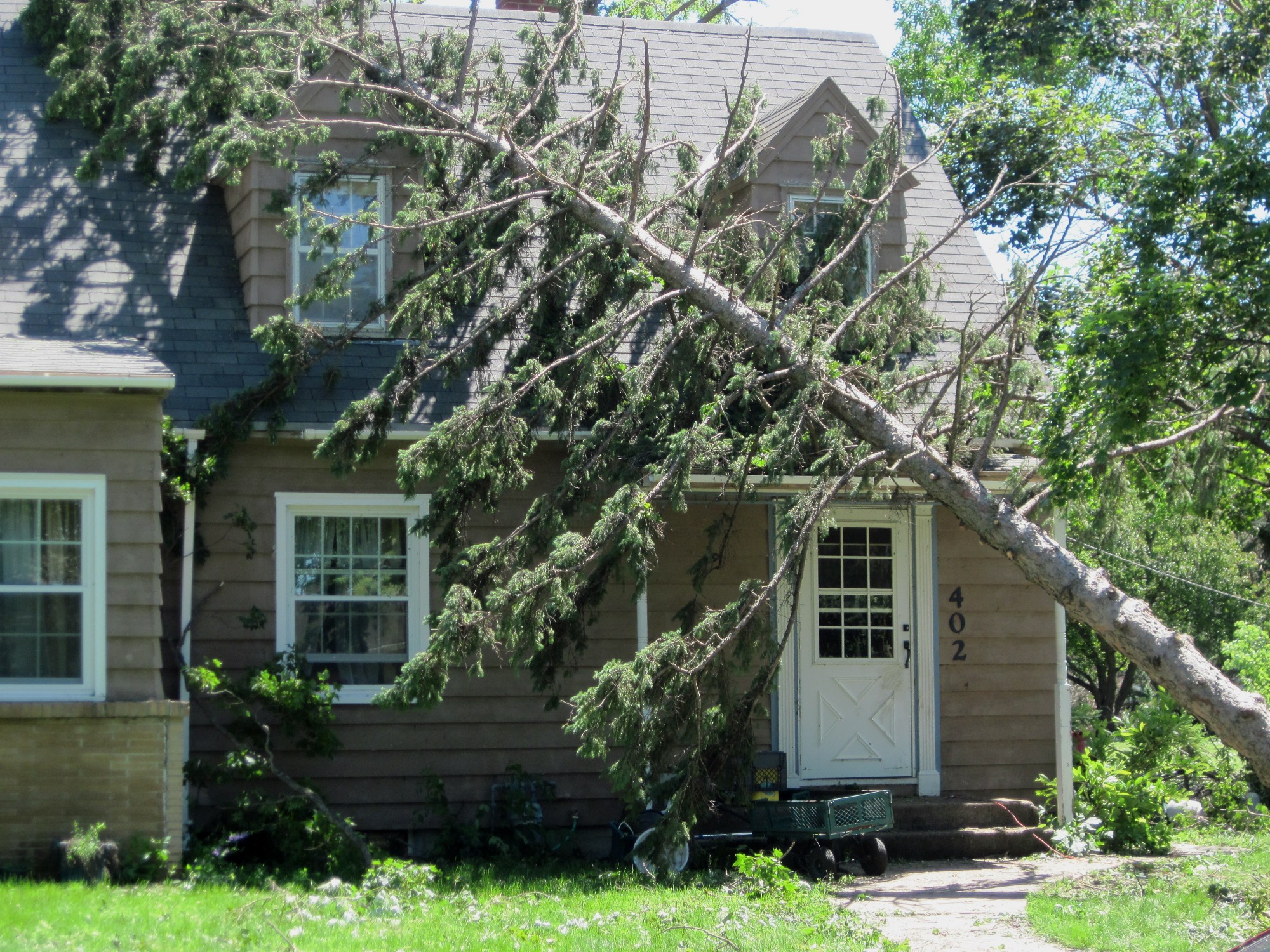
Another tree toppled onto a house.

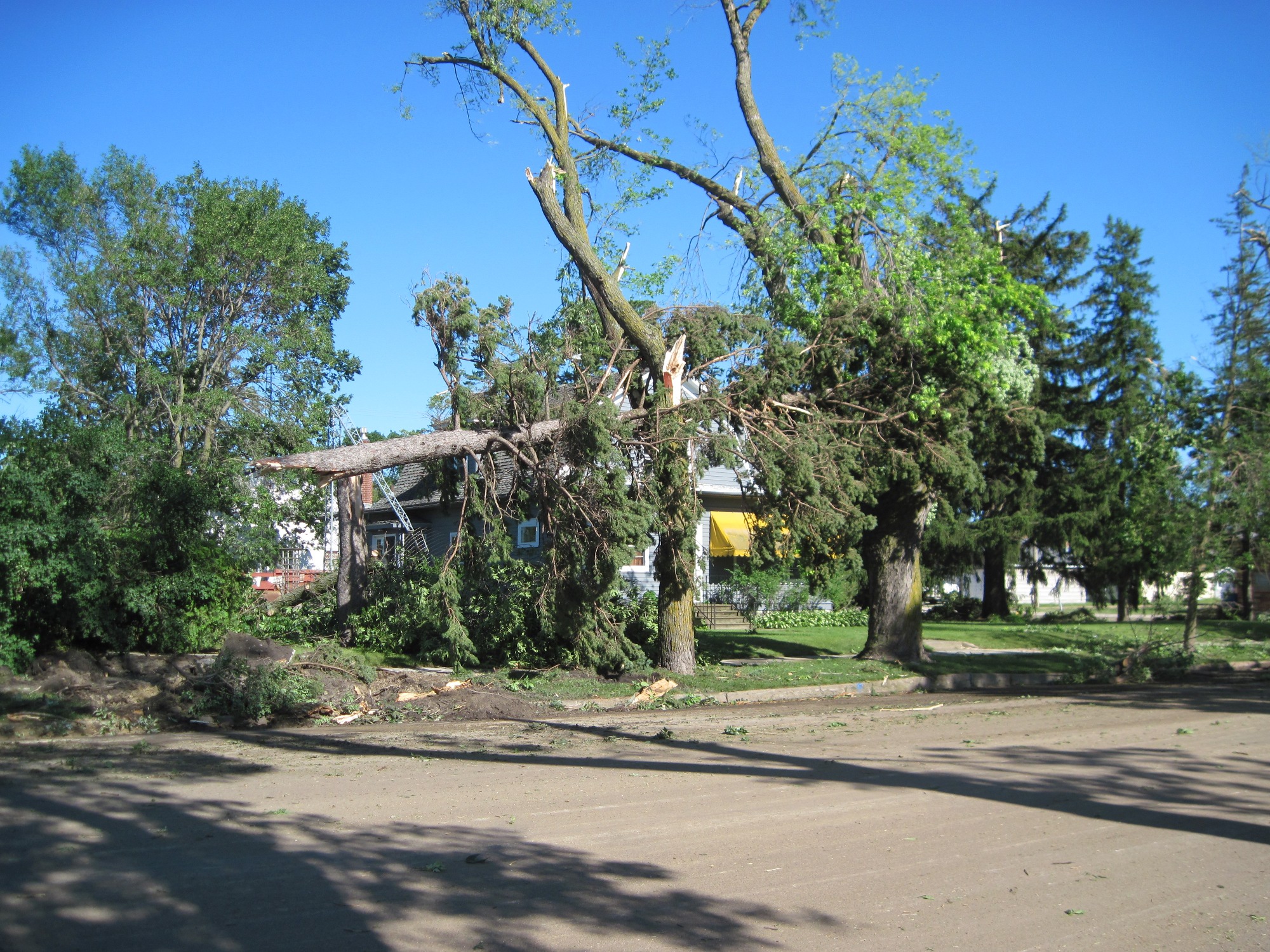
More residential storm damage in Belview.

Merlin also reports that a farmer just west of nearby Vesta (my hometown) recorded a high wind speed of 110 mph on his wind velocity meter during the storm. I have not yet confirmed that information. Vesta was also hard hit by the storm. Click here to read that story and view photos of the damage.

The damaged bins and elevator at Meadowland Farmers Elevator in Vesta.

Neighboring Belview and Vesta are only two of the many, many small towns in southwestern Minnesota hit by Friday’s storms. I expect that hundreds of farm places were also ravaged. For the most part, the disaster has not been covered by metro media and that bothers me—a lot.

IF YOU LIVE in southwestern Minnesota and were impacted by the storm, please submit a comment telling me about your personal experiences (where were you/did you seek shelter/what was the storm like, etc.), damage to your property or town, and recovery progress. I am also looking for photos to publish, so contact me via a comment and I will follow-up by emailing you.

PHOTOS COURTESY of Merlin and Iylene Kletscher

© Copyright 2011 Audrey Kletscher Helbling
 

Oh, blessed summer eve on a Minnesota farm June 30, 2011

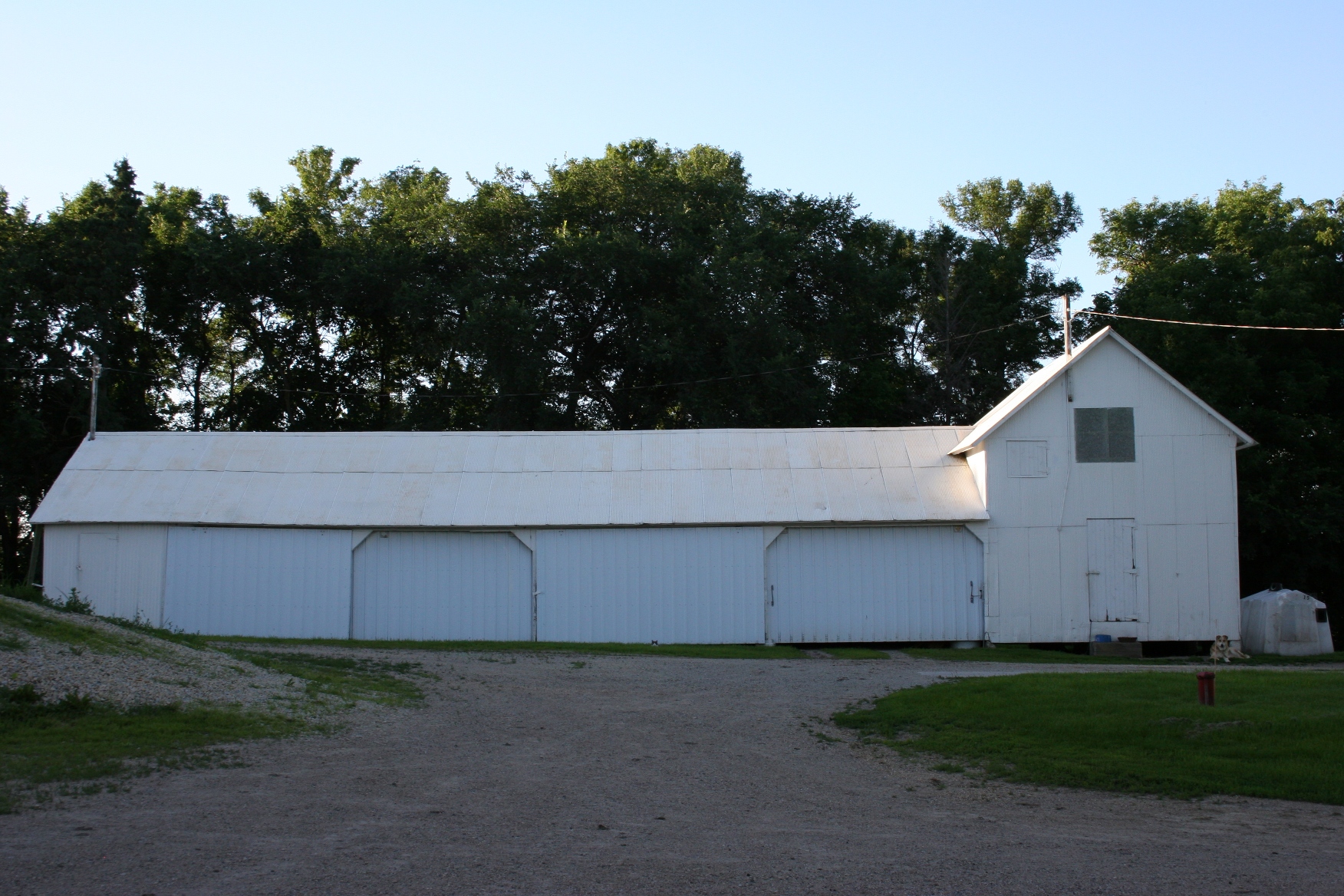
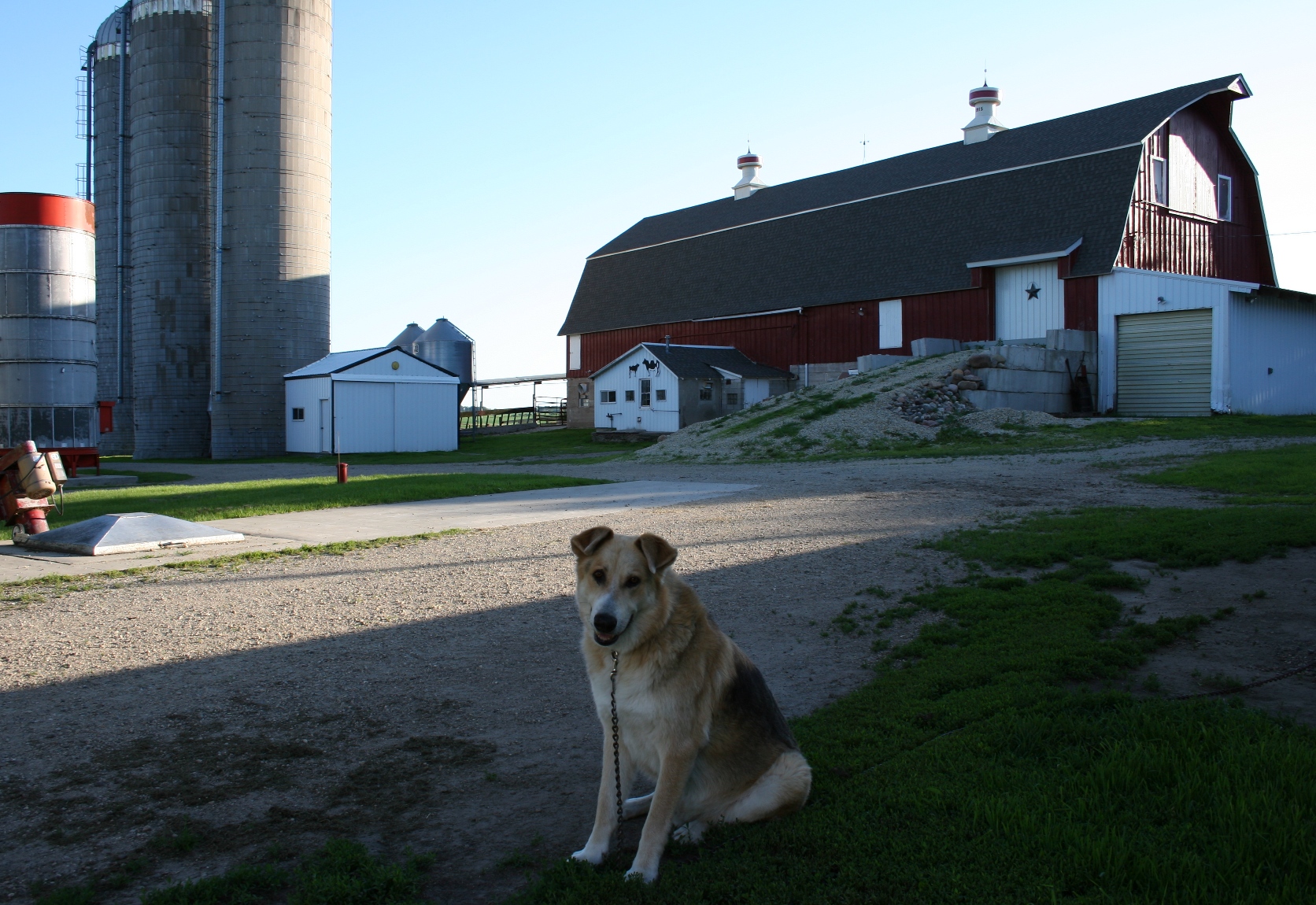
If you look closely, you will see the farm dog in front of the 1915 farmhouse to which a machine shed was added.

WIDE SWATHS OF SHADOWS sliced across the farmyard as the sun edged toward the horizon on a whisper of a summer night.

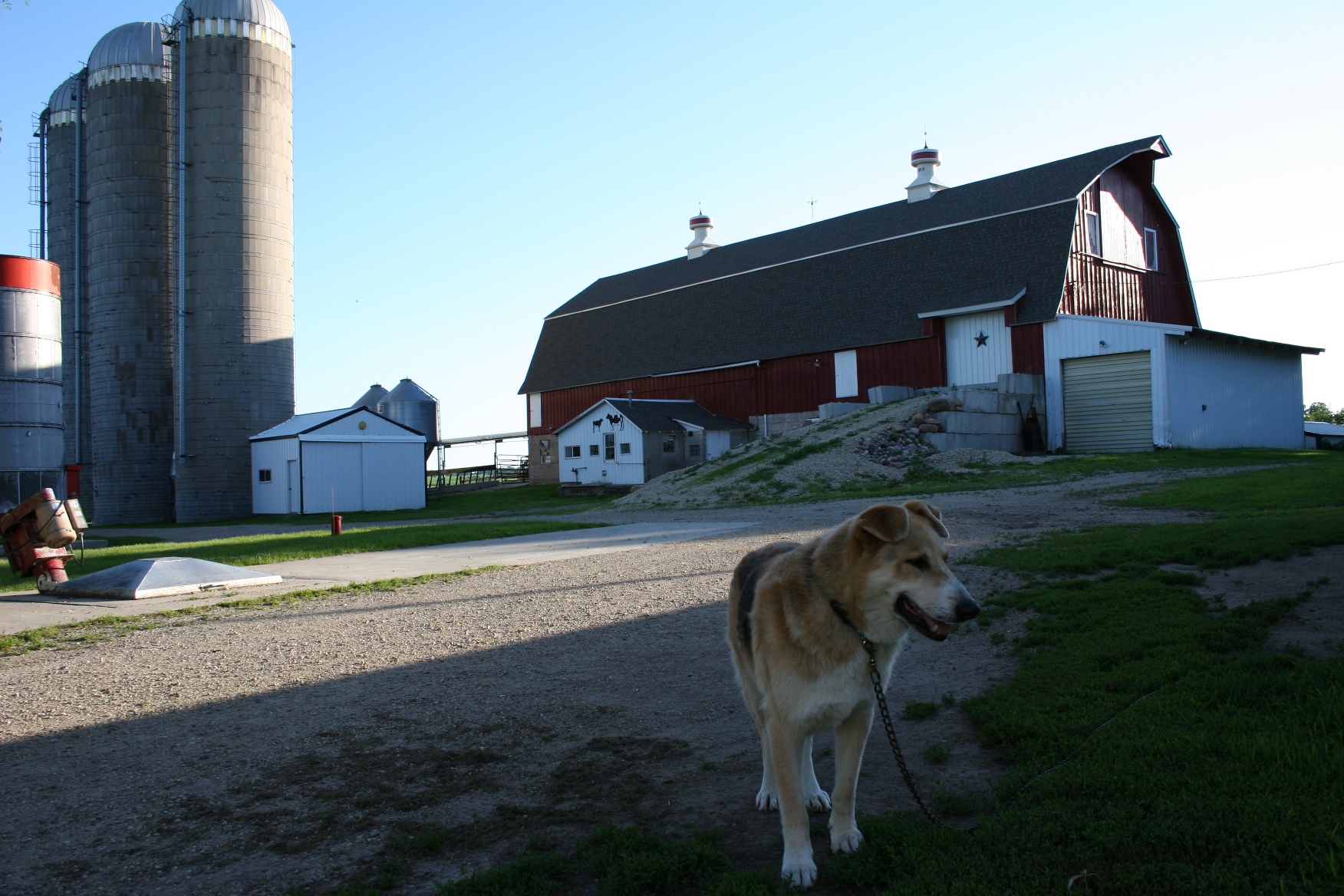
The old farm dog, tethered to a chain next to the 1915 farmhouse-turned-granary-turned storage shed, rose from his resting place on a paw-worn patch of grass. Water and food bowls rested on the single cement step nearby, within his reach.

The dog didn’t bark, didn’t lunge, just let me be as I moved into his territory. He stood, paced and then eased onto his haunches, acknowledging my non-threatening presence as I dropped to one knee to view the world from his perspective.

I wanted only to photograph this guardian of the farm on a summer evening as absolutely picture-perfect as any day you’ll get in Minnesota. Still. Serene. Colors sharp like new crayons. Sunlight, eye-blinding bright to the west, on the other side of the barn, outside the dogs’ reach.

This June evening, for these few hours, this watchdog could not roam the farmyard. He could only eye the visitors seated across the gravel drive at a picnic table. Friends gathered for pizza and lemonade sweetened with fresh strawberries and then more berries atop angel food cake and ice cream topped off with whipped cream.

Laughter punctuated conversation. Then bibles flipped open to words written upon pages thin as butterfly wings. The shrill call of a cardinal pierced the silence between ideas shared and scripture read.

Then, as the farm dog watched, the friends bowed their heads in a prayer of thanksgiving—gratitude to God for protecting the owners of this farm from serious injury in a motor vehicle accident the previous day. A rear-end collision. Truck spinning, tipping onto its side along a Minnesota highway. Glass in teeth and waistbands and hair.

None of this the guard dog knew on this most blessed of summer evenings on a Minnesota farm.

TODAY, JUNE 30, has been designated as “Maroon Day” in Minnesota, historically the deadliest day on our state’s roadways. Since 2000, more fatal crashes have occurred on this final day of June, leading into the July Fourth holiday, than on any other day of the year. Statistics show 30 fatal crashes resulting in 35 deaths.

All of Minnesota’s nearly 600 state troopers, in their signature maroon vehicles, will be patrolling today.

Buckle up. Drive carefully and be safe.

© Copyright 2011 Audrey Kletscher Helbling
 

Thou shalt not photograph the Amish June 14, 2011

TEMPTATION TEMPTED ME on Saturday afternoon, wrapping her slippery fingers around mine, tightening her grip, nudging my index finger toward the shutter button.

But Right resisted, reminding Temptation, “Thou shalt not photograph the Amish.”

The battle waged for a good 15 minutes on a grassy wedge of land along a main route through Osakis, southeast of Alexandria.

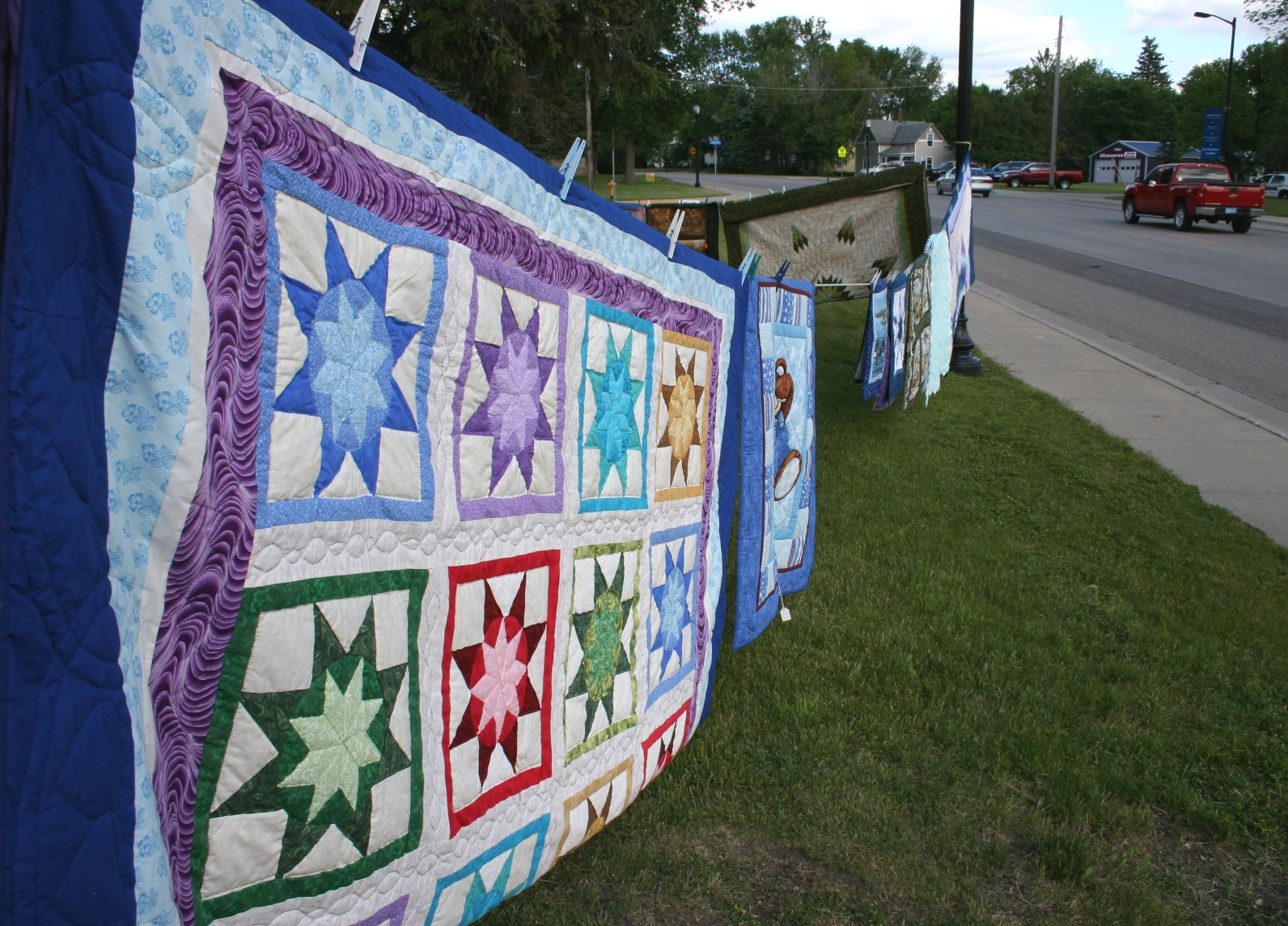
Here quilts, clipped to clothesline strung between a light post and trees, drew my husband and me off the road. When we turned onto the side street and I spotted the black buggy, I couldn’t believe our luck. I’ve wanted, always, to encounter the Amish up close and photograph them.

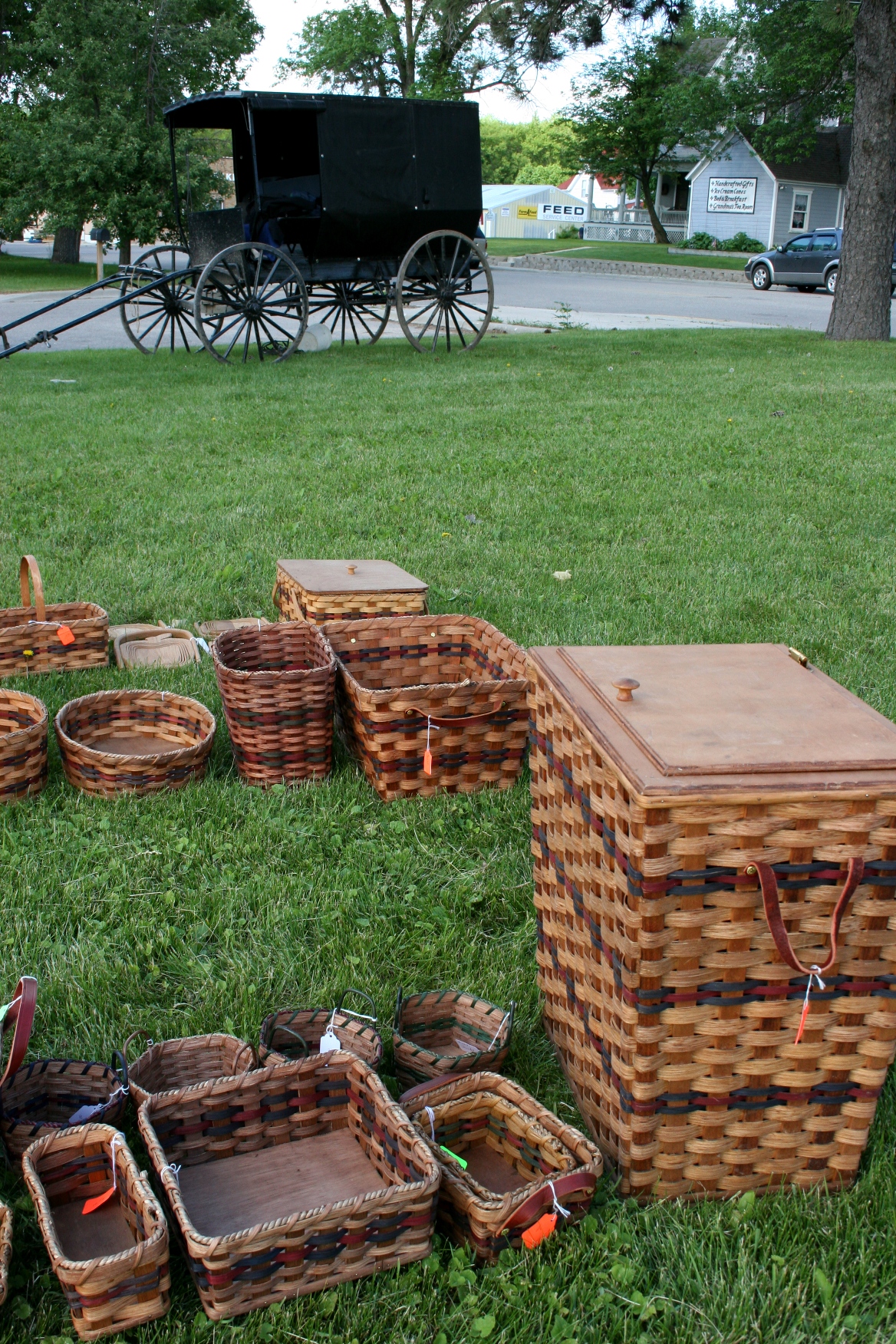
The Amish buggy parked at a roadside market in Osakis.

But then Right niggled my conscience: “Thou shalt not photograph the Amish.”

At least without asking, I thought, although Temptation urged me to click the shutter button of my camera immediately and then ask. But I didn’t. “Is it OK if I take your picture?” I inquired of the bonneted mother cozied with her two black-bonneted daughters on a blanket spread upon the grass.

“No.”

What did I expect? That she would say “yes” and smile for the camera. So I tried again. “How about if I photograph you from the back?”

“No.”

I tried for the third time. “Can I photograph your quilts and baked goods?”

The Amish mom agreed, as long as I didn’t include her or her two pre-teen daughters in my photos. But I was still tempted, oh, so tempted, to sneak them into the images. Would they notice if I edged the camera lens over the clothesline while photographing the quilts?

Right prevailed and I photographed the hand-stitched blankets, the rows of baskets, the preserves and homemade noodles and that black buggy, minus its passengers and minus the horse that was tethered in the shade of trees behind nearby buildings.

I should also have photographed the fly swatters and woven rugs, but I didn’t want to push my luck, appear too pushy and offend these Amish.

Beautiful, hand-stitched quilts stretched on the clothesline.

Preserves and a few baked goods remained when we arrived at this mini Amish market late Saturday afternoon.

This close-up photo shows the detailed stitching in these hand-stitched Amish quilts.

Hand-woven baskets for sale by the Amish.

All the while the two young girls watched me like a hawk. I could feel their eyes following me, boring into my conscience. I wondered what they were thinking. Were they interested in my fancy schmancy camera, or did they simply wish me gone?

Were they worried that I would photograph them, thereby stealing their souls or creating a graven image, or whatever reason the Amish have for shunning photos of themselves?

I remained so focused on possible covert photo ops that I failed to notice details, except those black bonnets, the blue and plum dresses and the wide, plain copper-colored wedding band on the mother’s ring finger (which I wanted to photograph). I wish I had noticed their shoes.

I also failed to ask many questions of the trio. I learned that they live 10 miles east of Osakis, that the buggy trip takes an hour and that they come to town every Saturday (not in winter, of course) to peddle their goods. All of this the mother shared in a brogue that I couldn’t place, but which reminded me of a far-away homeland, of the thick tongue of an immigrant.

While the mother spoke, her two daughters perched, respectful, still and mute as statues, until I looked directly into the brown eyes of one and asked whether she had made any of the market merchandise.

“Cookies,” she blurted, her face blossoming into an appreciative smile.

I wished in that moment, more than any, that I could have photographed her happiness, shown you the delight blooming upon that young Amish girl’s face when I paused to acknowledge her presence, to include her, to boost her self-confidence.

But I could not. “Thou shalt not photograph the Amish.”

Not on this June Saturday afternoon in Osakis.

The one item we purchased, a superb (except for the burned crust), flavorful $6 pie oozing with tasty red raspberries. FYI, there were no cookies remaining or I would have bought some.

© Copyright 2011 Audrey Kletscher Helbling
 

You could be a model, James June 13, 2011

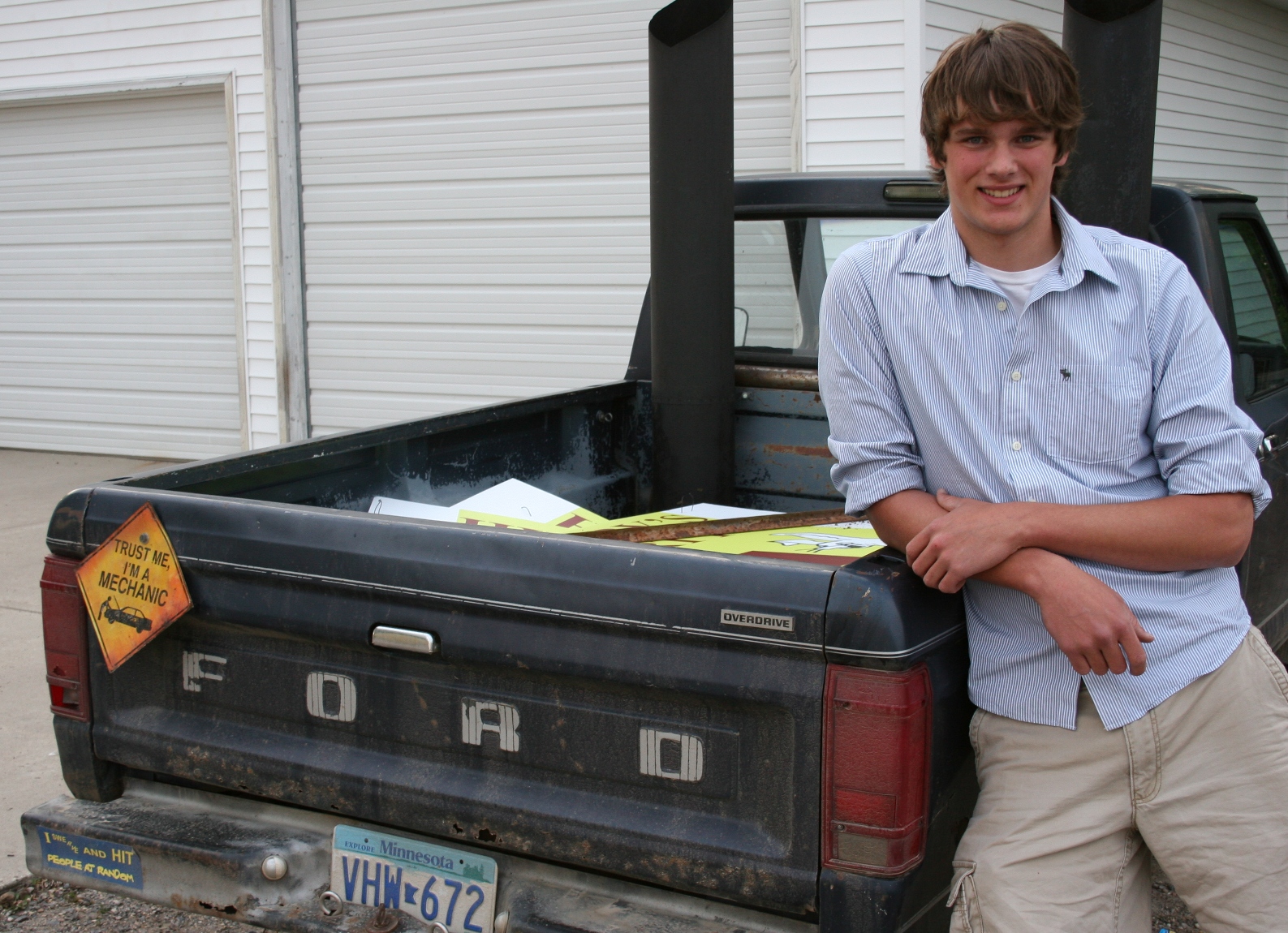
James and his Ford Ranger pick-up truck.

“JAMES, HAS ANYONE ever told you that you could be a model?” I asked as he leaned against the bed of his Ford Ranger pick-up truck for a quick photo shoot by me.

He didn’t really answer, which I’m to take as a “yes.”

With his all-American boy good looks, this fresh-faced Minnesota farm kid (adult, actually) could easily grace the pages of a fashion magazine, a print ad or even a television commercial.

His personality matches his boy-next-door appearance. James, not Jim or Jimmy, is down-to-earth, quiet, maybe even shy, with a playful smile and spirit.

Not that I know James all that well. He’s my niece Hillary’s boyfriend. But since my niece lives 2 ½ hours away, I haven’t spent much time with her significant other.

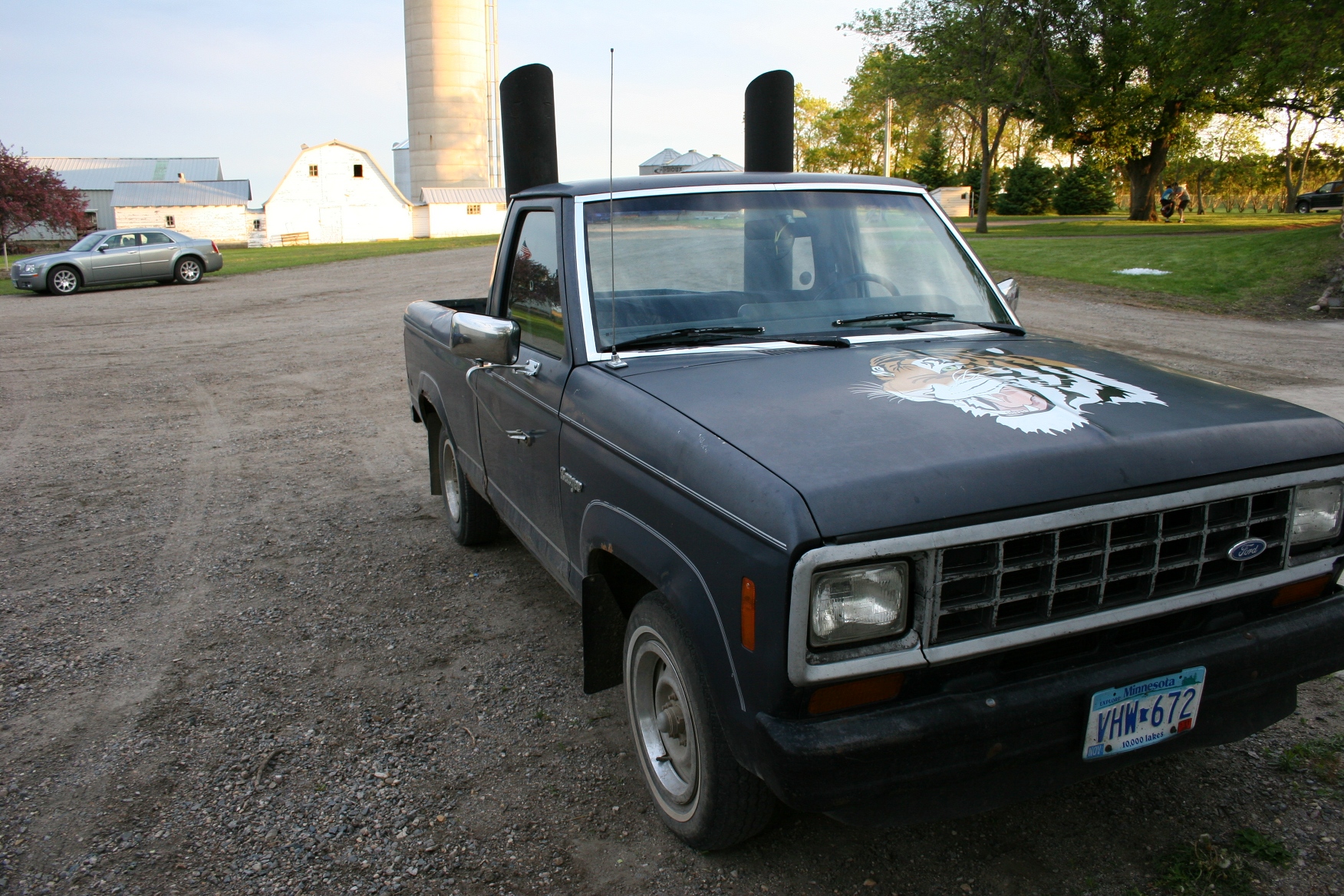
It was James’ Ford Ranger that caught my eye as he came barreling onto the home place (aka the farm where I grew up) during Hillary’s recent high school graduation reception. You can’t miss his truck with the stove-pipe-size exhaust pipes jutting out of the pick-up bed.
Impressed with the duo stacks, I moved in closer to check out James’ wheels. And then I discovered the redneck streak in this seemingly demure South Dakota State University agricultural engineering student.

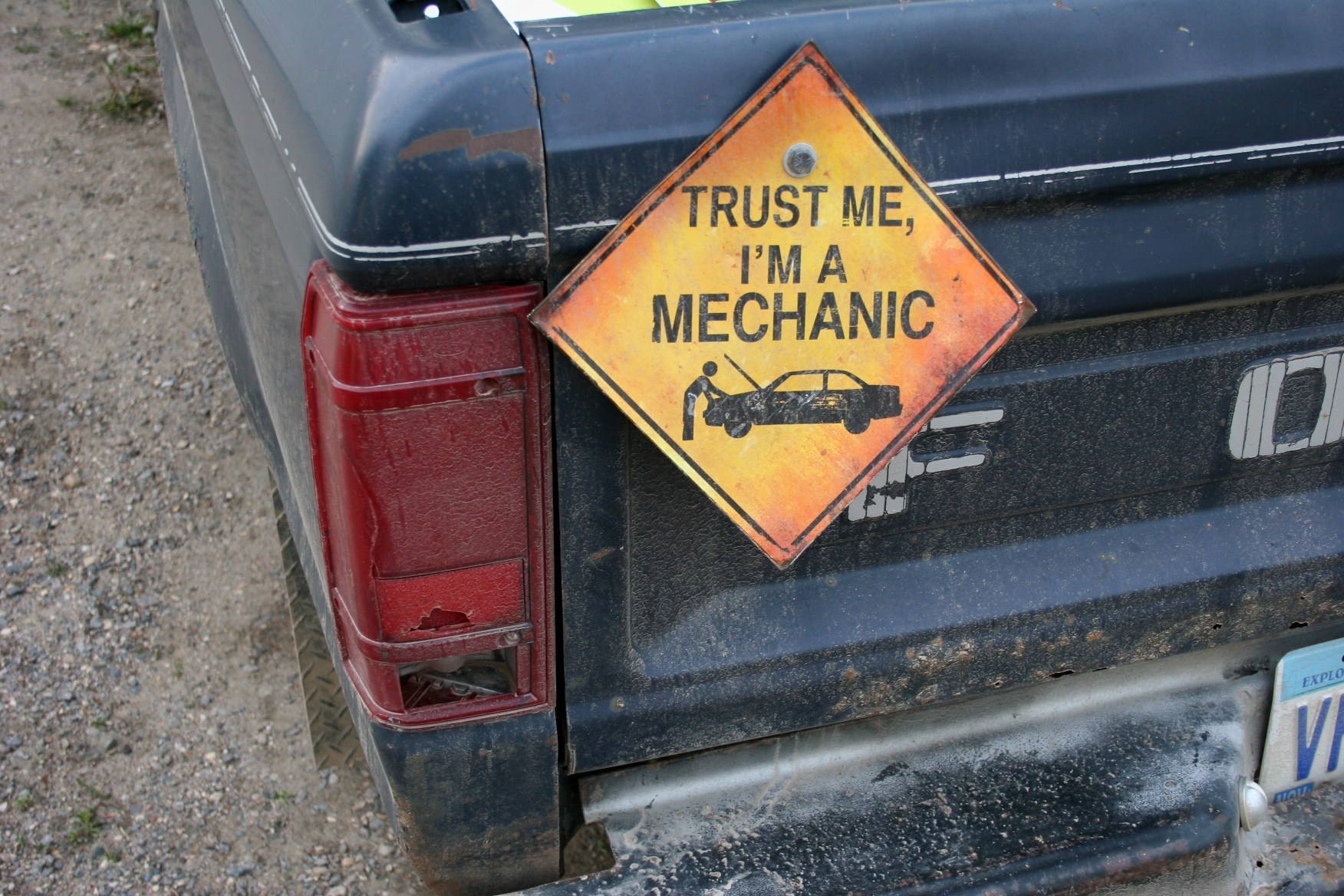
Check out these bumper stickers:

As good an explanation as any for a dirty vehicle.

This bumper sticker doesn't reflect on James' driving skills, only his sense of humor. Don't take the message seriously, please.

Farm youth like James are typically quite adept at all things mechanical.

What do these tell you about James? Obviously he possesses a sense of humor. He’s also capable of keeping a vehicle running and confident enough to tell you.

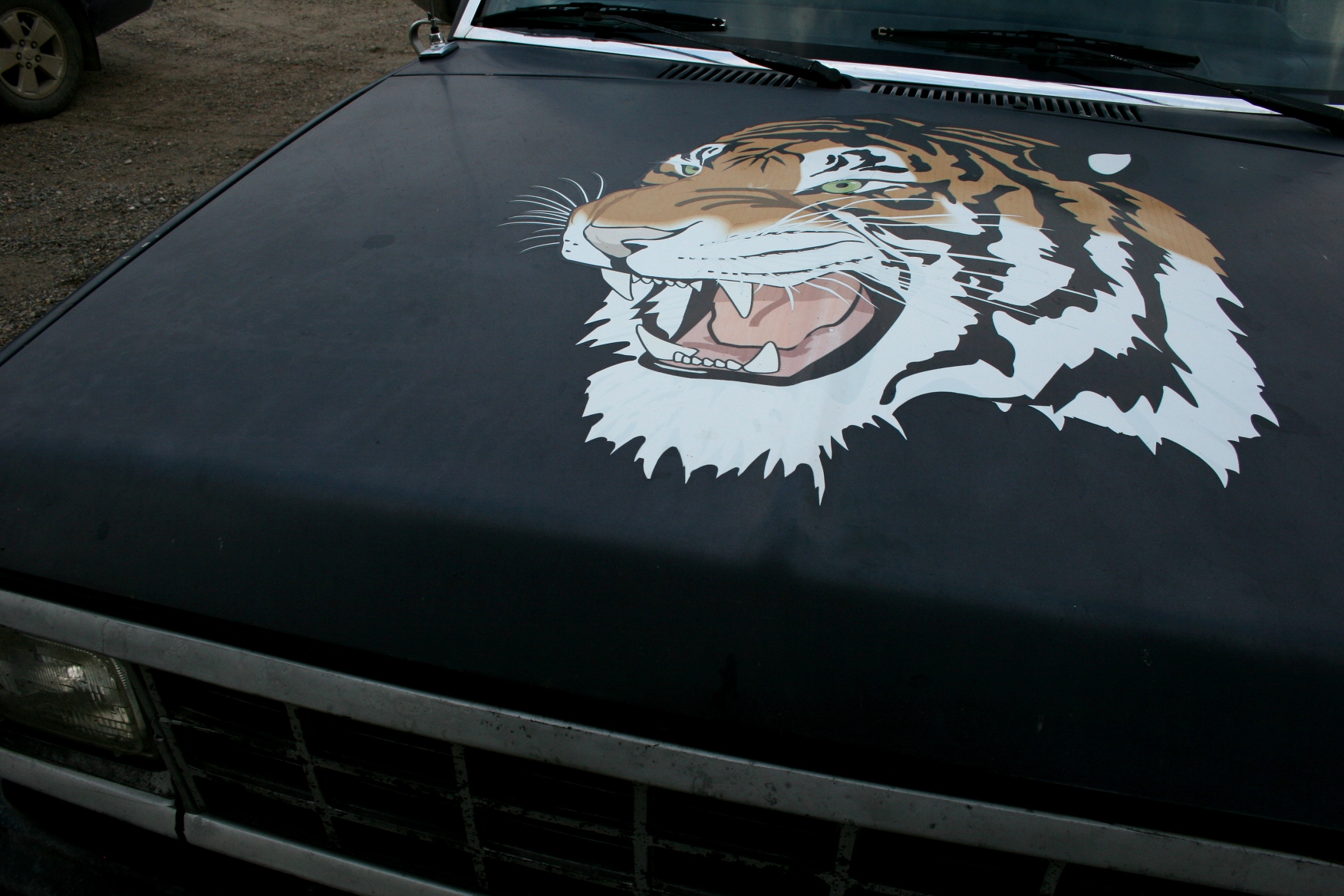
But, wait, there’s more. His pick-up hood sports a tiger head, as in the mascot of Marshall High School, James’ alma mater. James also owns school spirit.

The tiger, Marshall High's mascot, defines the pick-up hood.

I really don’t have anything more to say about this southwestern Minnesota farm boy or his wheels, except to re-emphasize that I think James could be a model, maybe for Ford or John Deere. I wouldn’t want him to get into anything too Californian or New Yorkish so as to change his appealing rural charm.

What’s your opinion? Could/should James give modeling a shot to fund his college education? This idea is mine, not his, just to be clear.

One last shot of James' Ford Ranger pick-up truck, parked on the farm where I grew up just outside of Vesta in southwestern Minnesota.

© Copyright 2011 Audrey Kletscher Helbling