Minnesota Prairie Roots

Writing and photography by Audrey Kletscher Helbling

Touring an historic mill in Morristown June 4, 2013

I WISH MY MEMORIES of the old feed mill were imprinted upon the pages of a book. Indelible ink. Words recorded so that I would always remember. The smell. The sound. The sights. The everything encompassing this agricultural business in my southwestern Minnesota prairie town.

I recall so little—the wooden steps leading to the feed mill; the ground feed residue lingering in the air and on surfaces; the ever-deafening grinding noise of machinery chomping grain; handsome operator Wally Anderson with his shock of white hair who lived in a well-kept corner house several blocks north; and the summer a ventriloquist sat in front of Vesta’s feed mill with a dummy perched on his knee.

The Morristown Feed Mill in Morristown, Minnesota.

The Morristown Feed Mill in Morristown, Minnesota.

Those faint wisps of recollection filtered through my thoughts on Saturday as I meandered through an historic 1860 grist mill along the banks of the Cannon River in Morristown. Once a year this rural southeastern Minnesota community opens the mill for tours and grinds wheat and corn.

A replica waterwheel built in 1997 by Theodore E. Sawle.

A replica waterwheel built in 1997 by Theodore E. Sawle.

I won’t even pretend to understand all I viewed and photographed at this mill once powered by a waterwheel, later by electricity.

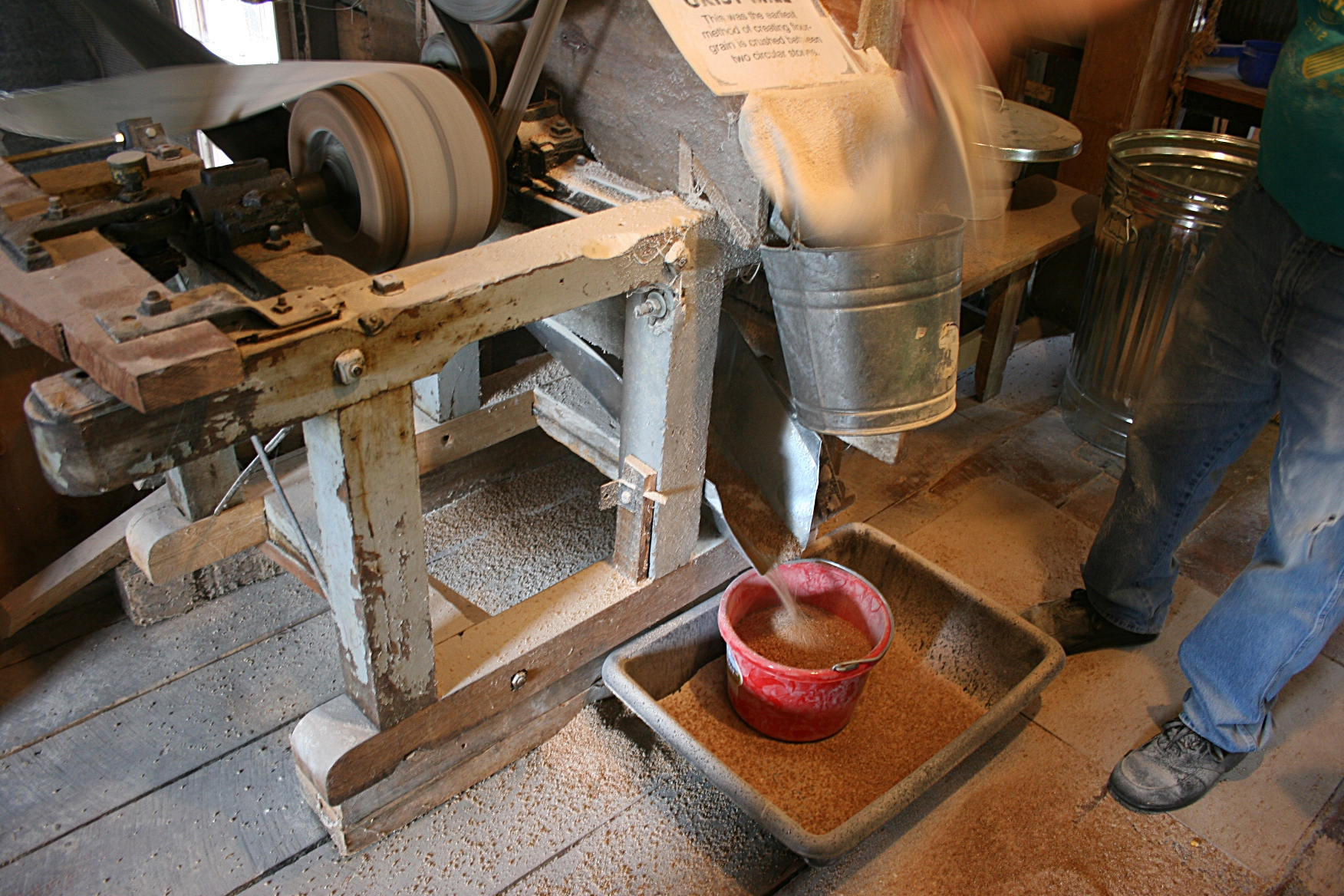
A volunteer grinds wheat into flour in the old grist mill. Each time the waterwheel turns, it spins the millstone 17 times in the process of crushing grain between stones. The volunteer's wife bakes Communion bread for the local Methodist church.

A volunteer grinds wheat into flour in the old grist mill. Each time the waterwheel turns, it spins the millstone 17.5 times in the process of crushing grain between stones. The volunteer’s wife bakes Communion bread for the local Methodist church.

Initially, the mill opened in 1855 as a sawmill. But, within years, the business was replaced by Hershey Grist Mill, a mill for grinding grain into flour and livestock feed. On the afternoon I toured, a volunteer was grinding wheat into flour with the waterwheel powering the grinder. I had intended to buy a bag of the $2 wheat flour, but forgot in the midst of my photographic focus.

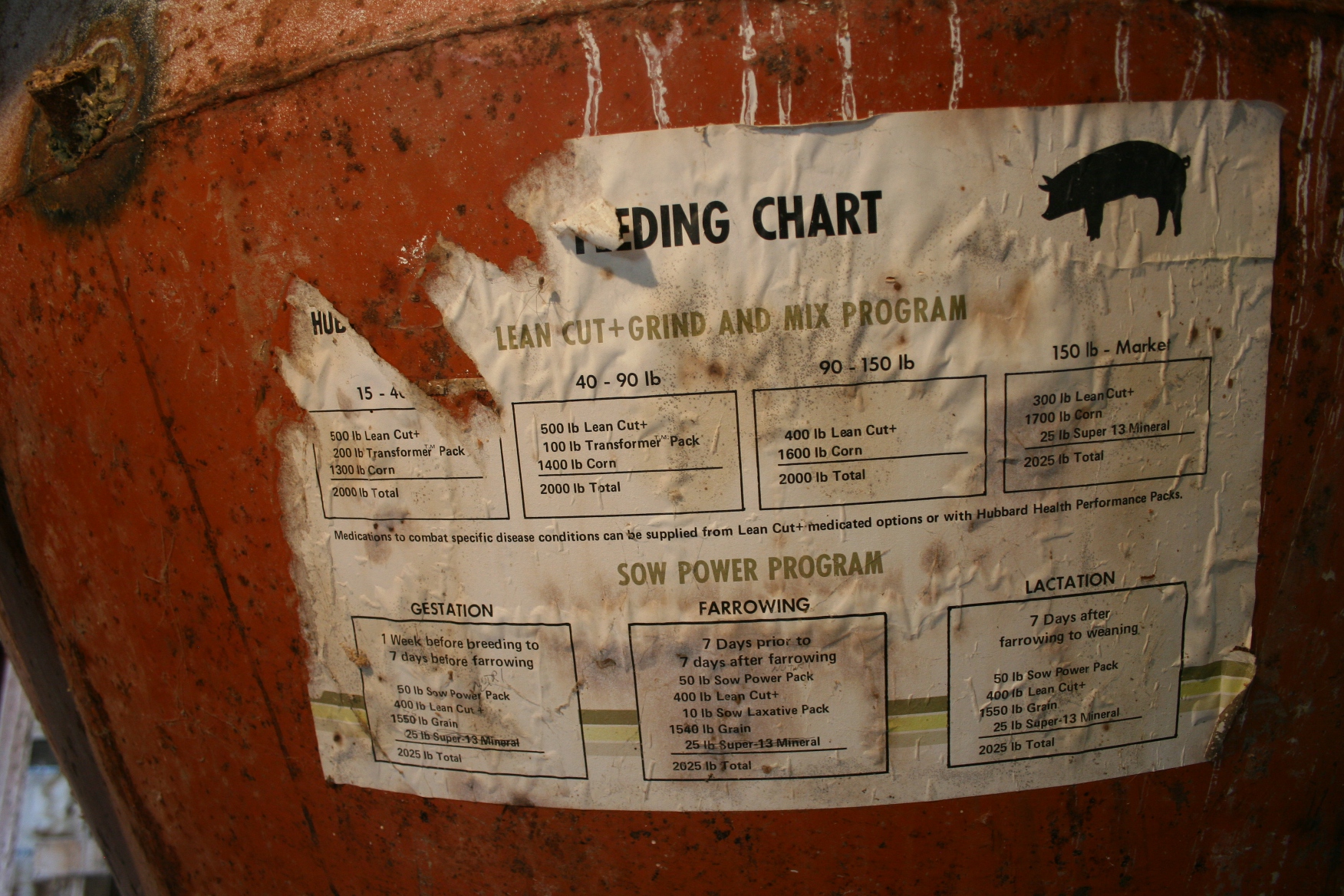
Guidelines for pig feed.

Guidelines for pig feed posted on a mixer.

The Morristown Historical Society today cares for the facility which closed in the 1970s as the Morristown Feed Mill, purveyor of livestock feed. For those like me, who grew up on a farm but have long ago left the land, such endeavors to preserve the rural past are deeply appreciated.

The conveyor belt powered by the waterwheel. This operates the grinder.

The waterwheel turns these pulleys and belts which operate the grinder.

While I walked the old wooden floor of the feed mill, descended stairs into the cluttered utility room where a dangerous conveyor belt cycled and afterward climbed stairs to the second floor, I reconnected with my rural roots.

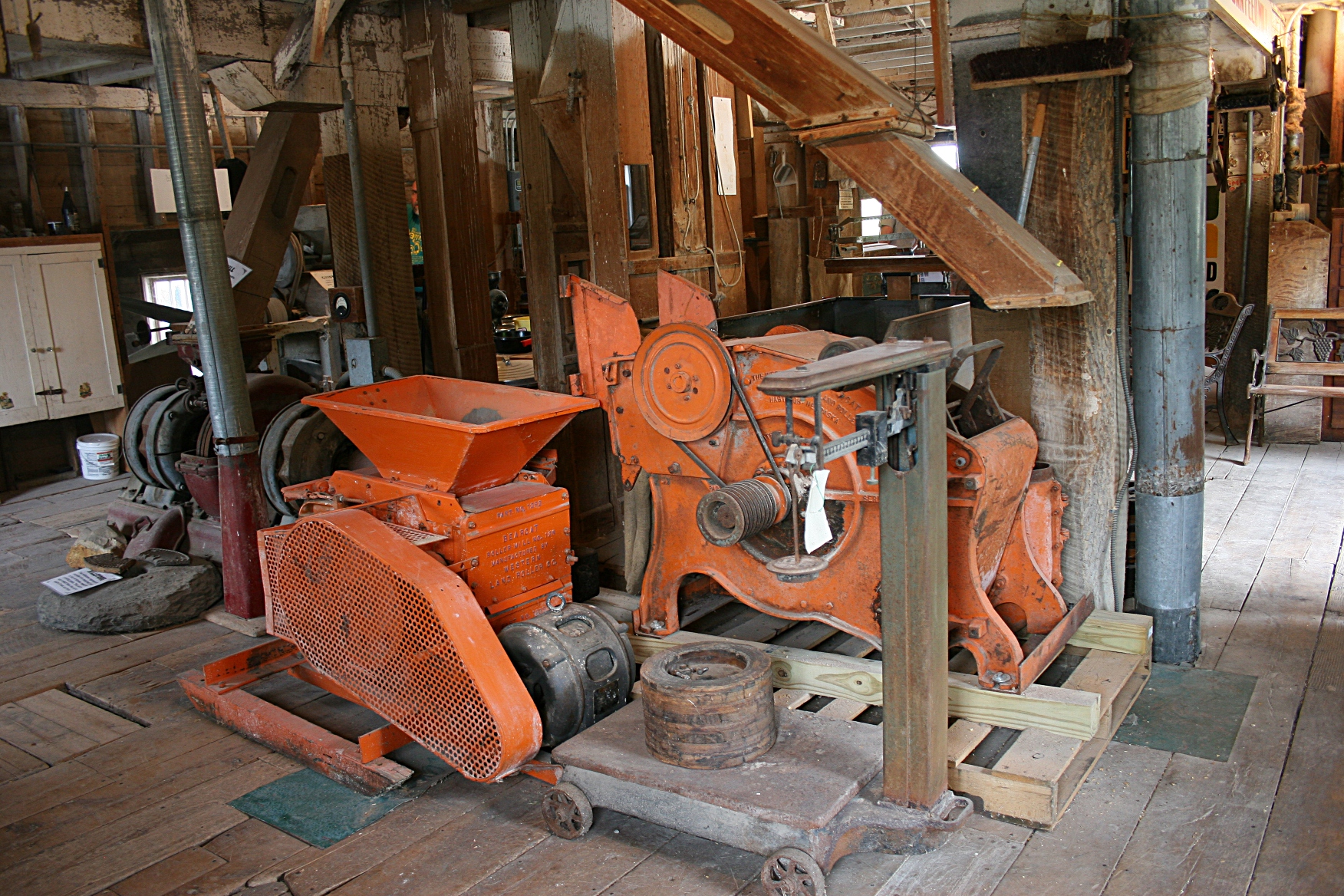
The old feed mill is stocked with lots of vintage grinding equipment.

The old feed mill is stocked with lots of vintage mill equipment.

And it may not have been in the way you most likely would expect. For me, the experience was mostly about the dust—knowing I needed to protect my camera from the fine grain dust which permeates a place like this, layers on the skin, hovers in the air, filters into memories.

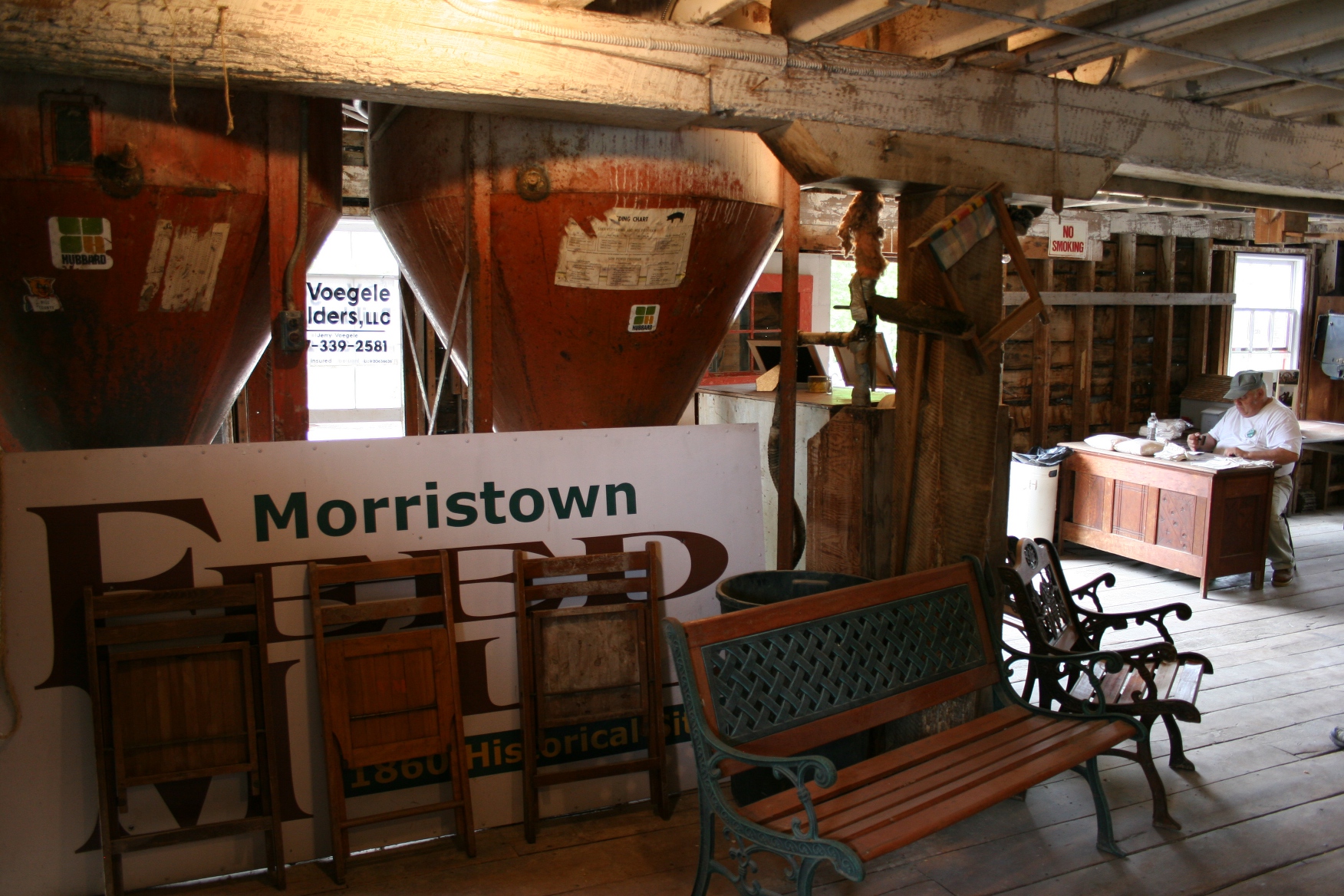
Inside the feed mill, where a volunteer stamps cloth bags with Morristown Feed Mill.

Inside the feed mill, a volunteer stamps cloth bags with Morristown Feed Mill. Behind the sign are two mixers.

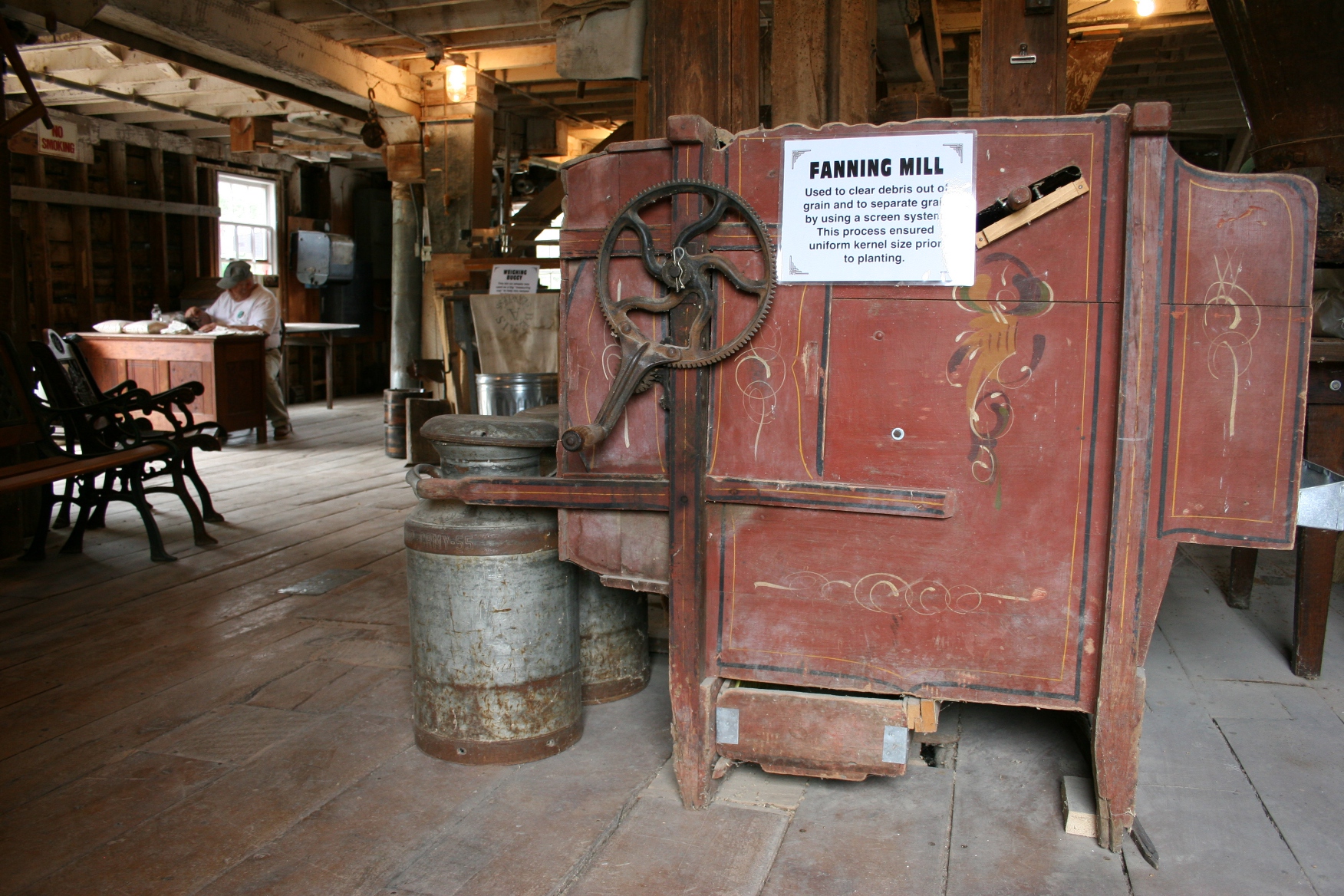
An old fanning mill cleans the grain for planting.

An old fanning mill cleans the grain for planting.

When I heard mention of mice, I was a little nervous about going into the utility room.

When I heard mention of mice, I was a little nervous about going into the utility room.

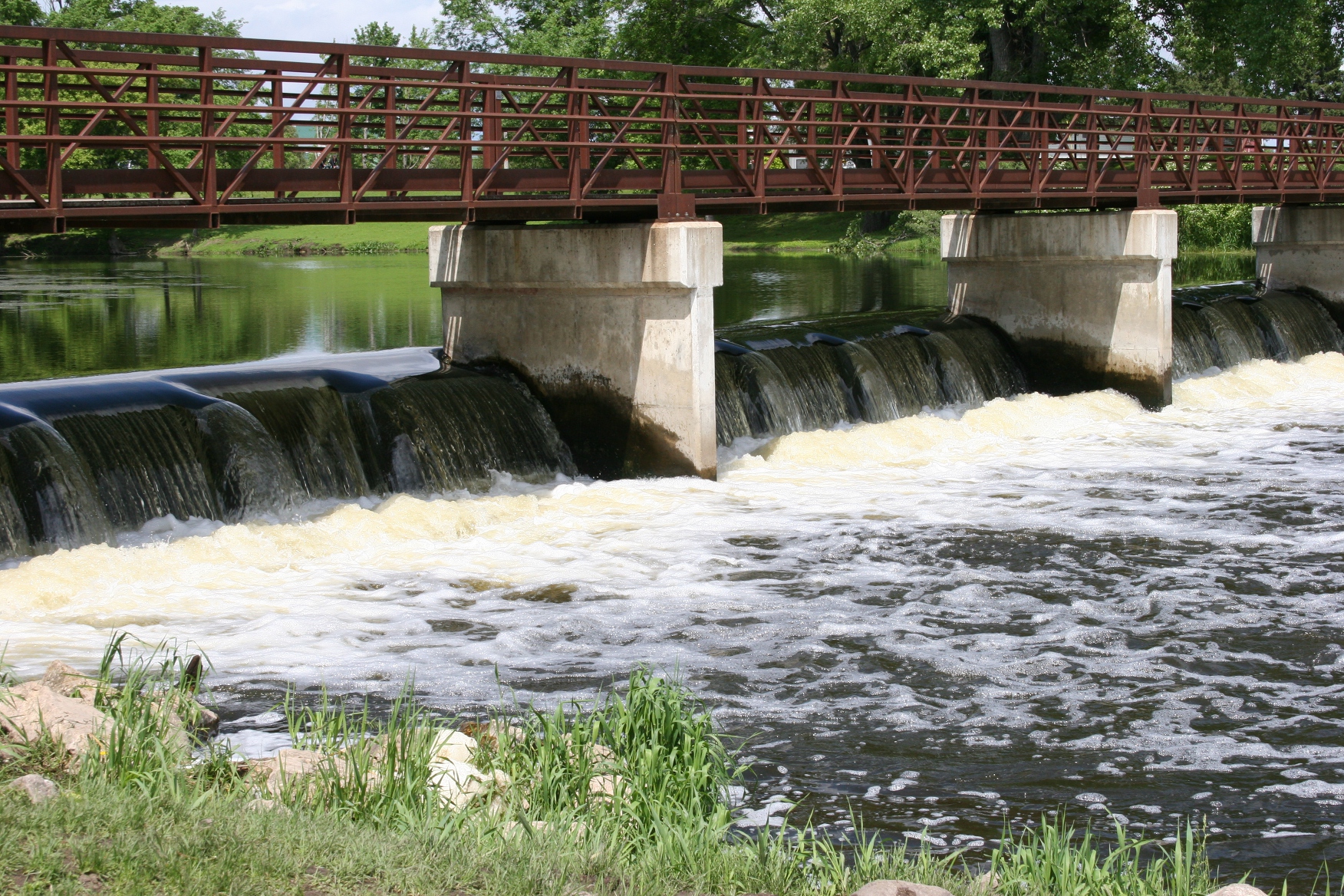
The Cannon River dam right next to the mill.

The Cannon River dam right next to the mill.

FYI: As a side note, the mill sheltered several refugees from the U.S. – Dakota Conflict of 1862.  Check back for more mill photos.

© Copyright 2013 Audrey Kletscher Helbling


A photographic tour of downtown Fergus Falls May 30, 2013

A snippet of Fergus Falls' downtown.

A snippet of Fergus Falls’ historic and pedestrian friendly downtown.

I SINCERELY HOPE the fine people of Fergus Falls in west central Minnesota appreciate their historic downtown. It’s a gem.

A stroll through the downtown business district on a recent Thursday evening left me gaping at the detailed architecture, words imprinted in granite, sculpted eagles and sculpted otters, stately brick buildings, a lovely old theatre, quaint signage and art, yes, art.

This Otter Tail riverside community of nearly 14,000 along Interstate 94 an hour southeast of Fargo impresses me. Join me on a photographic tour and I expect you will feel likewise.

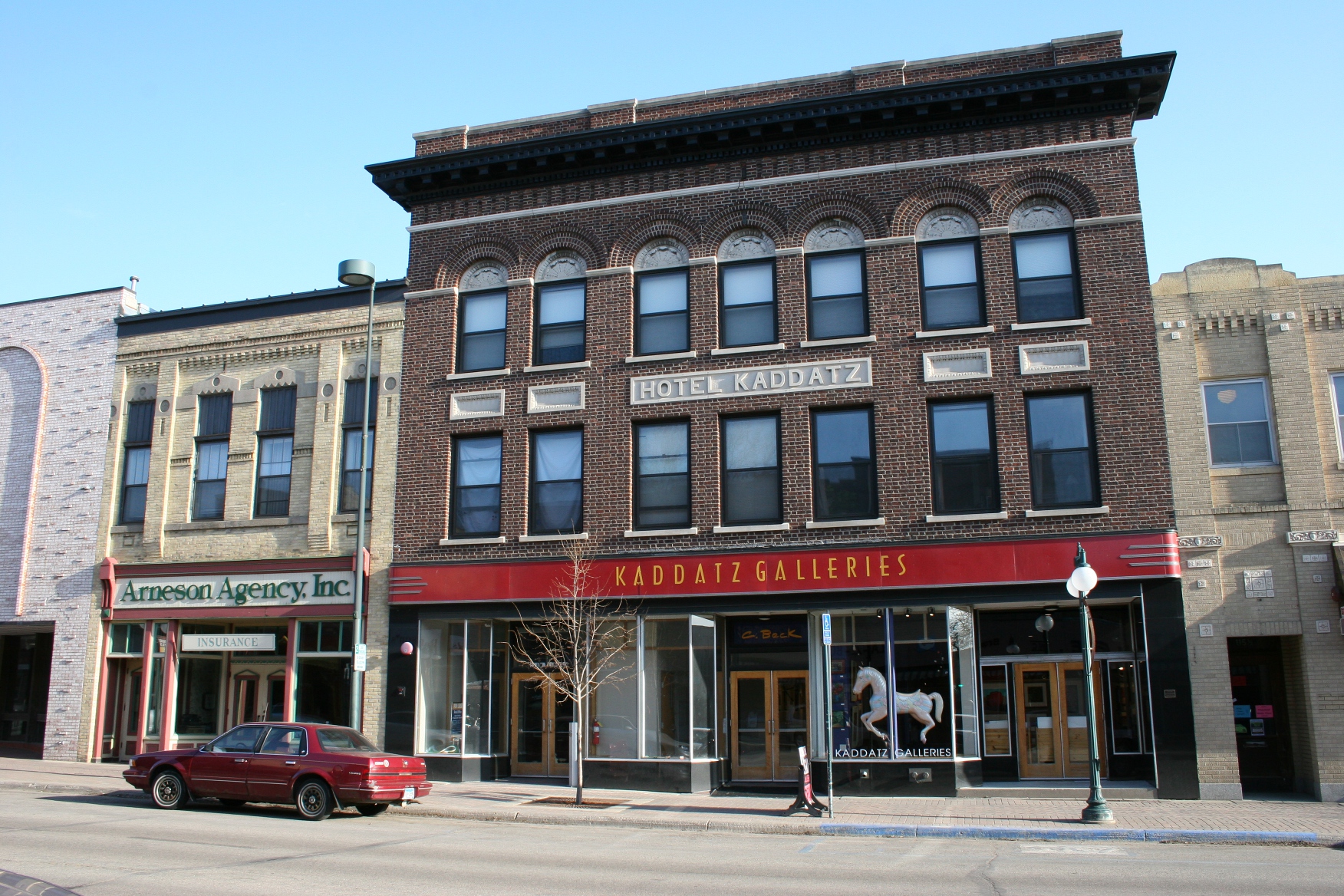
The Kaddatz Galleries features the work of noted Fergus Falls artist Charles Beck, known for his woodcut prints.

Kaddatz Galleries features, among other art, the work of noted Fergus Falls artist Charles Beck, known for his woodcut prints.

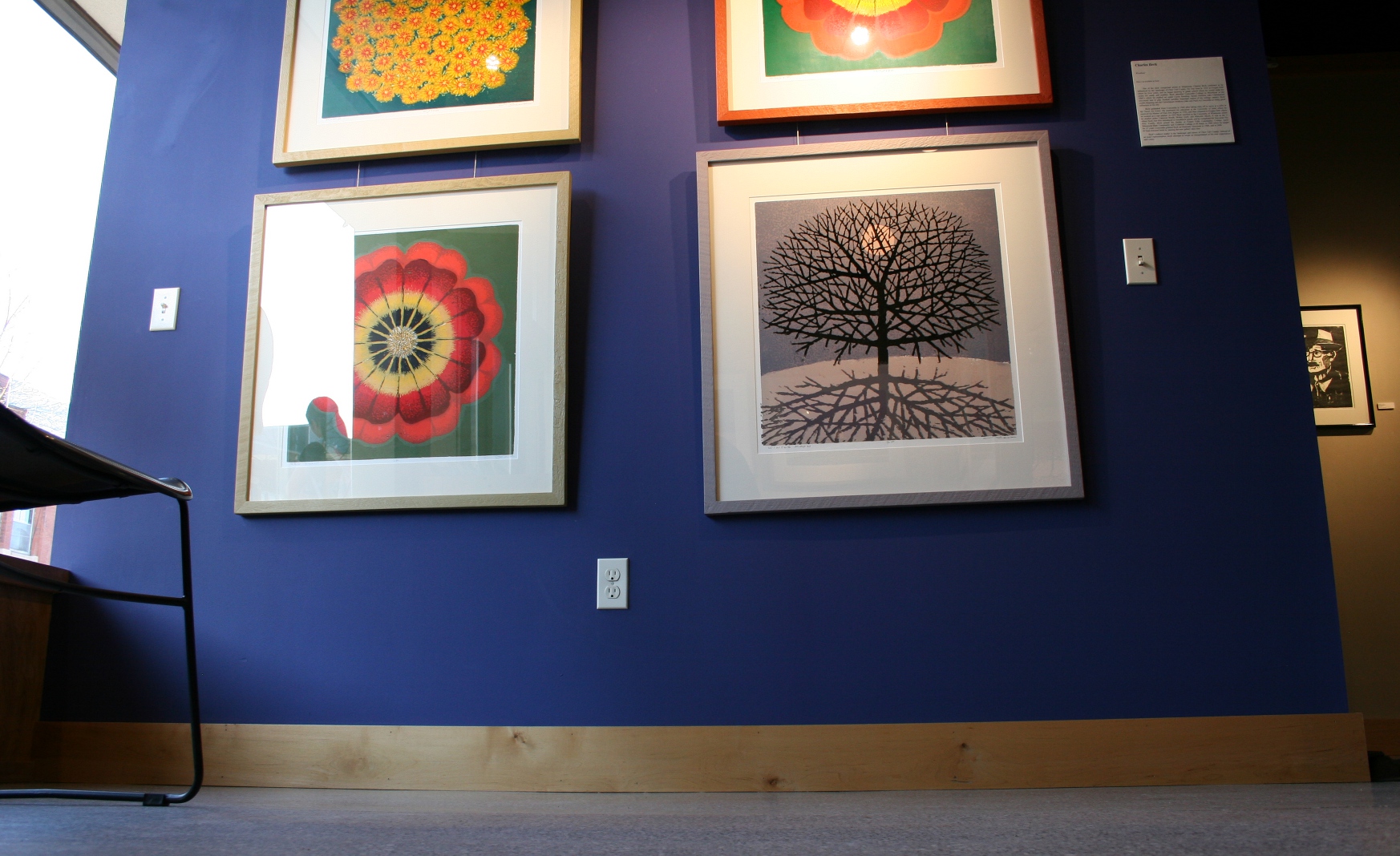
Examples of Charles Beck's woodcut prints in the Kaddatz Galleries.

Examples of Charles Beck’s woodcut prints in the Kaddatz Galleries.

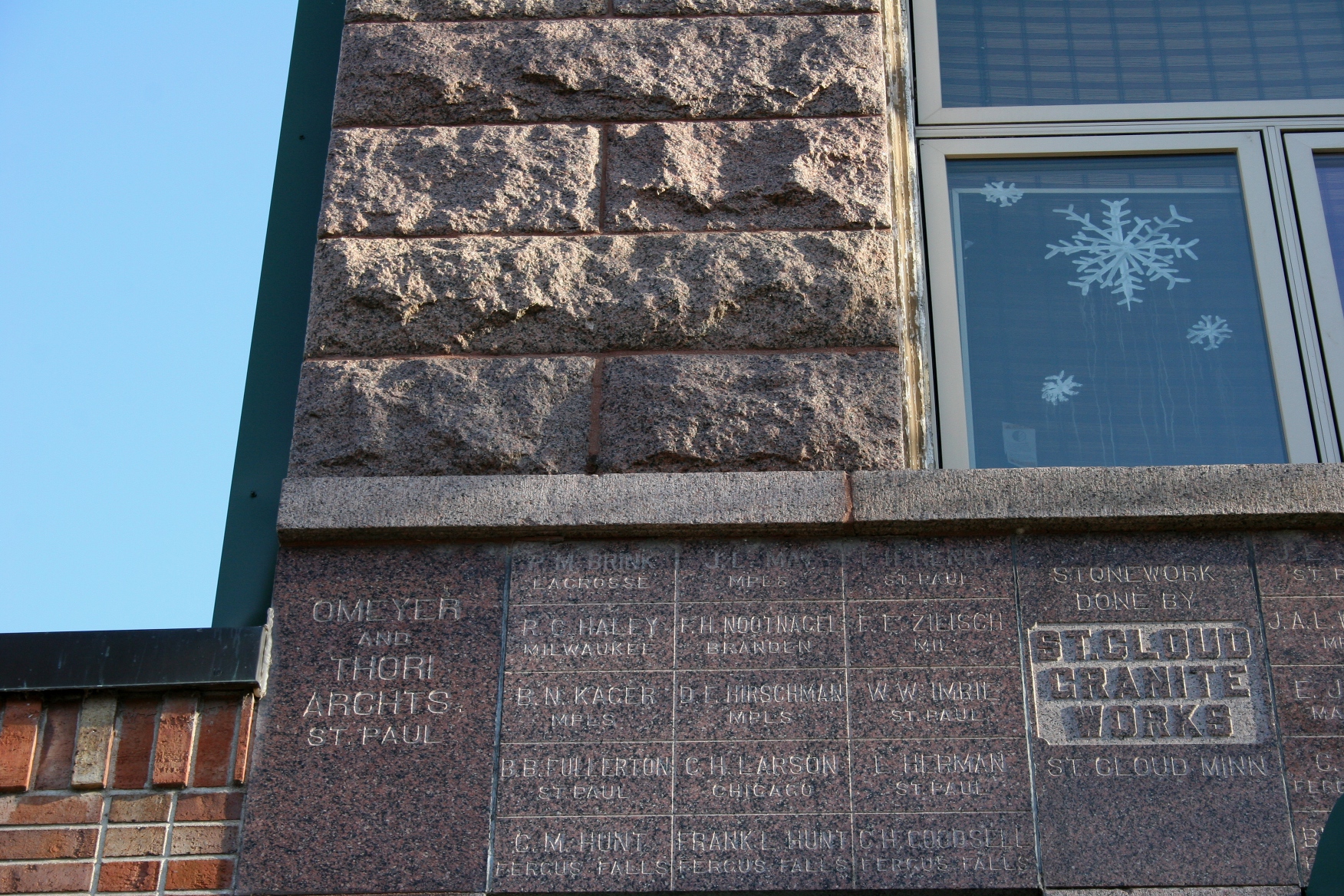
Words chiseled in granite on the front of a building. I would love to know the story behind this.

Words chiseled in granite…I would love to know the story behind this. The inscriptions cover the bottom front of the building.

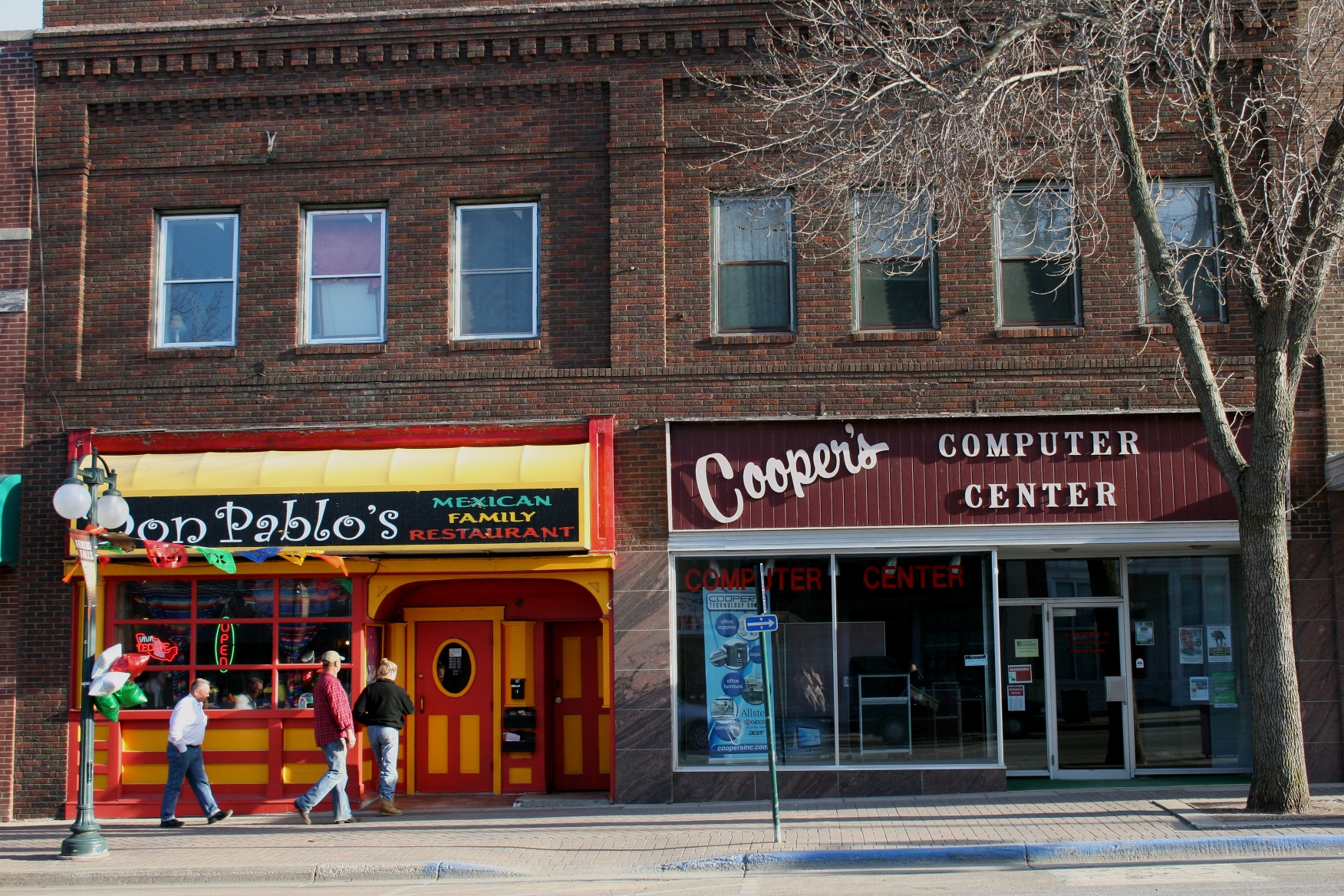
A Mexican restaurant adds a jolt of color to the downtown.

A Mexican restaurant adds a jolt of color to the downtown.

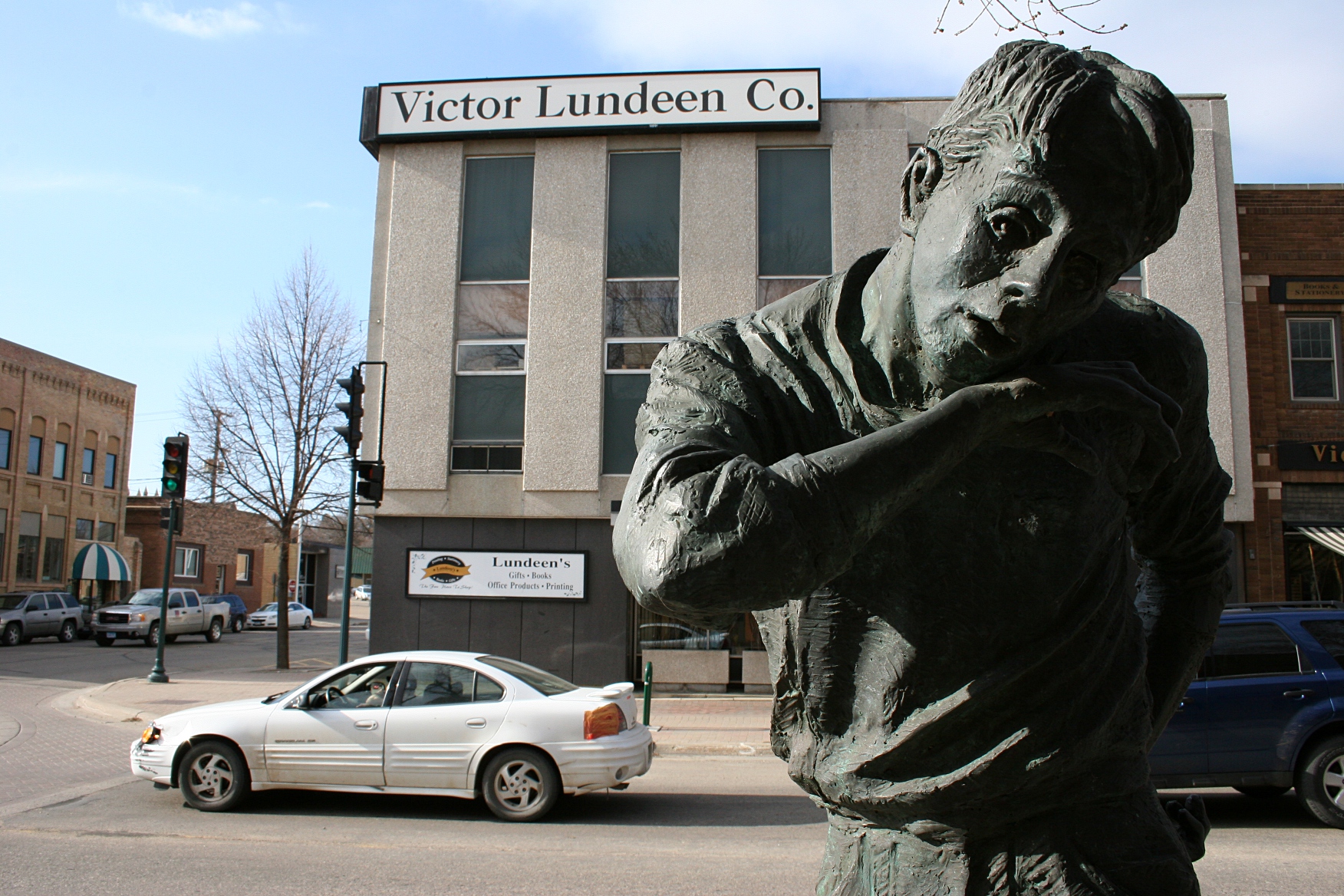
When I inquired at Kaddatz Galleries about the identity of this street corner statue, I didn't get an answer.

When I inquired at Kaddatz Galleries about the identity of this street corner statue, I didn’t get an answer. The gracious gallery tender says plans are in place to identify public art. Good idea.

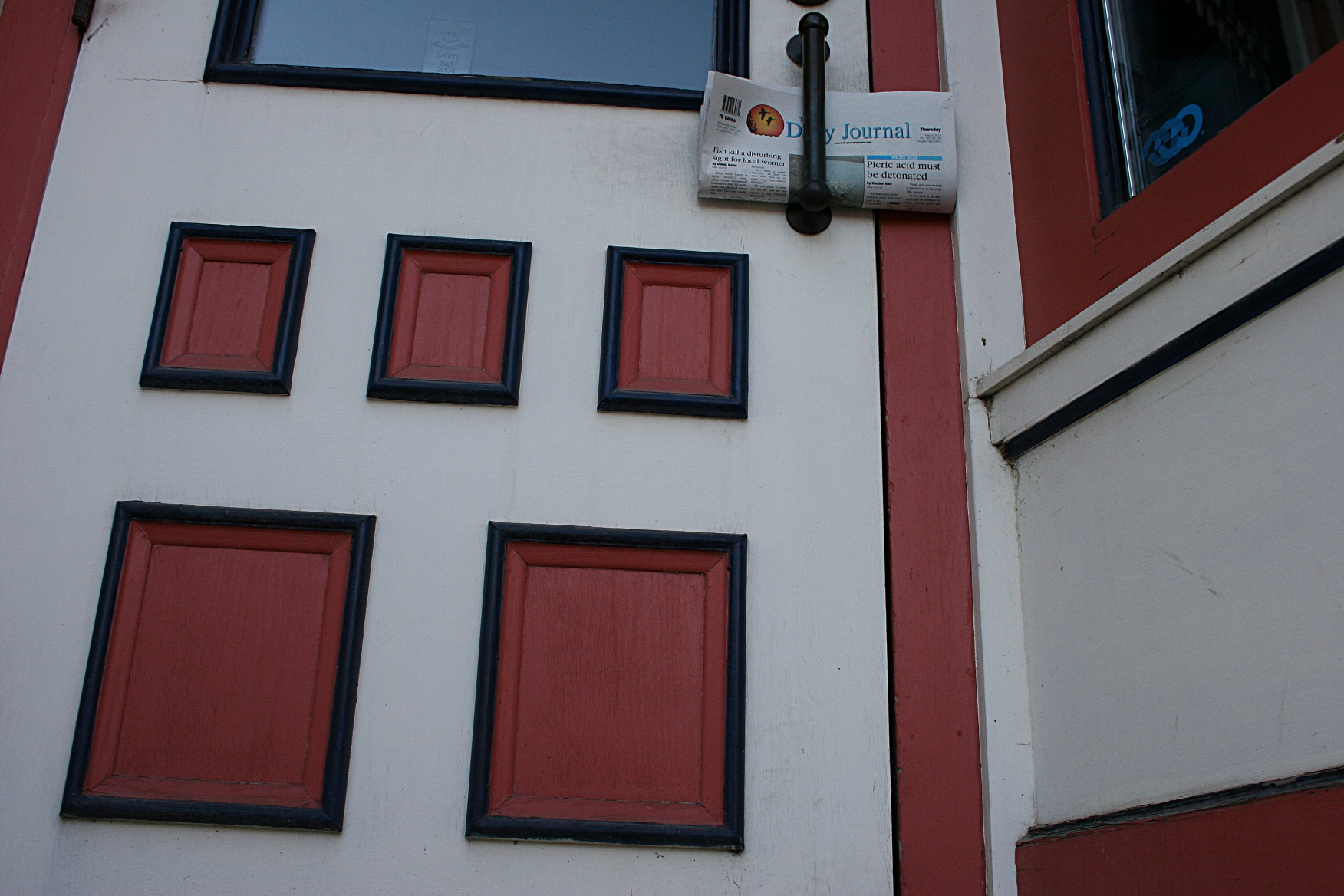
I spotted The Fergus Falls Daily Journal tucked into a door handle downtown.

I spotted The Fergus Falls Daily Journal tucked into a door handle downtown.

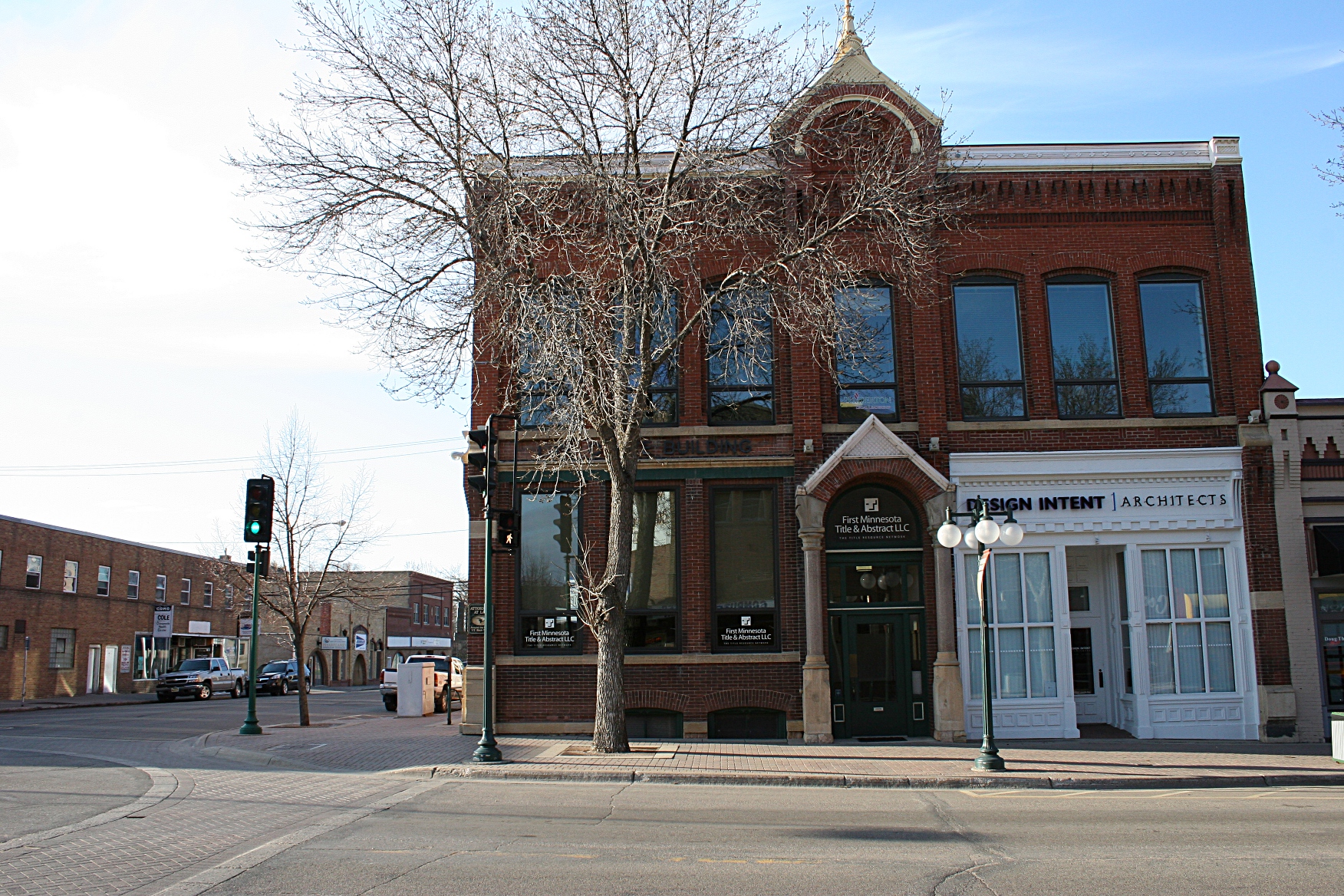
Another stately corner building.

Another stately corner building.

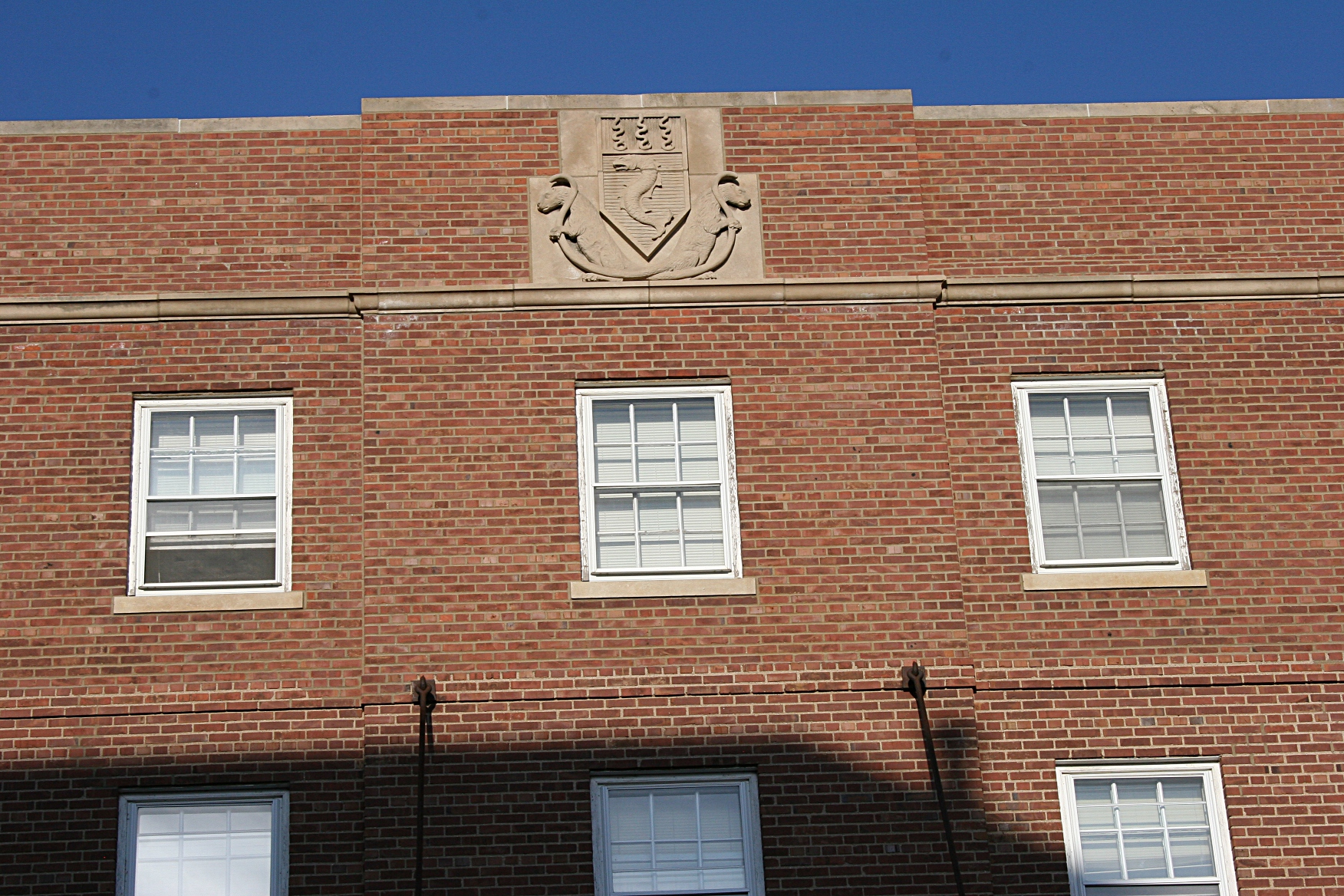
I stared for awhile at this sculpture atop the historic River Inn before realizing these are otters. The inn sits along the banks of the Otter Tail River.

I stared for a while at this sculpture atop the historic River Inn before realizing these are otters. The inn sits along the Otter Tail River. I believe this building today houses only apartments and does not operate as an inn.

A downtown barbershop complete with a barber's pole charms visitors like me.

The Uptown Barber Shop, complete with a barber’s pole, charms visitors like me.

This hulking federal building houses courtrooms and the post office.

This hulking federal building houses courtrooms and the post office.

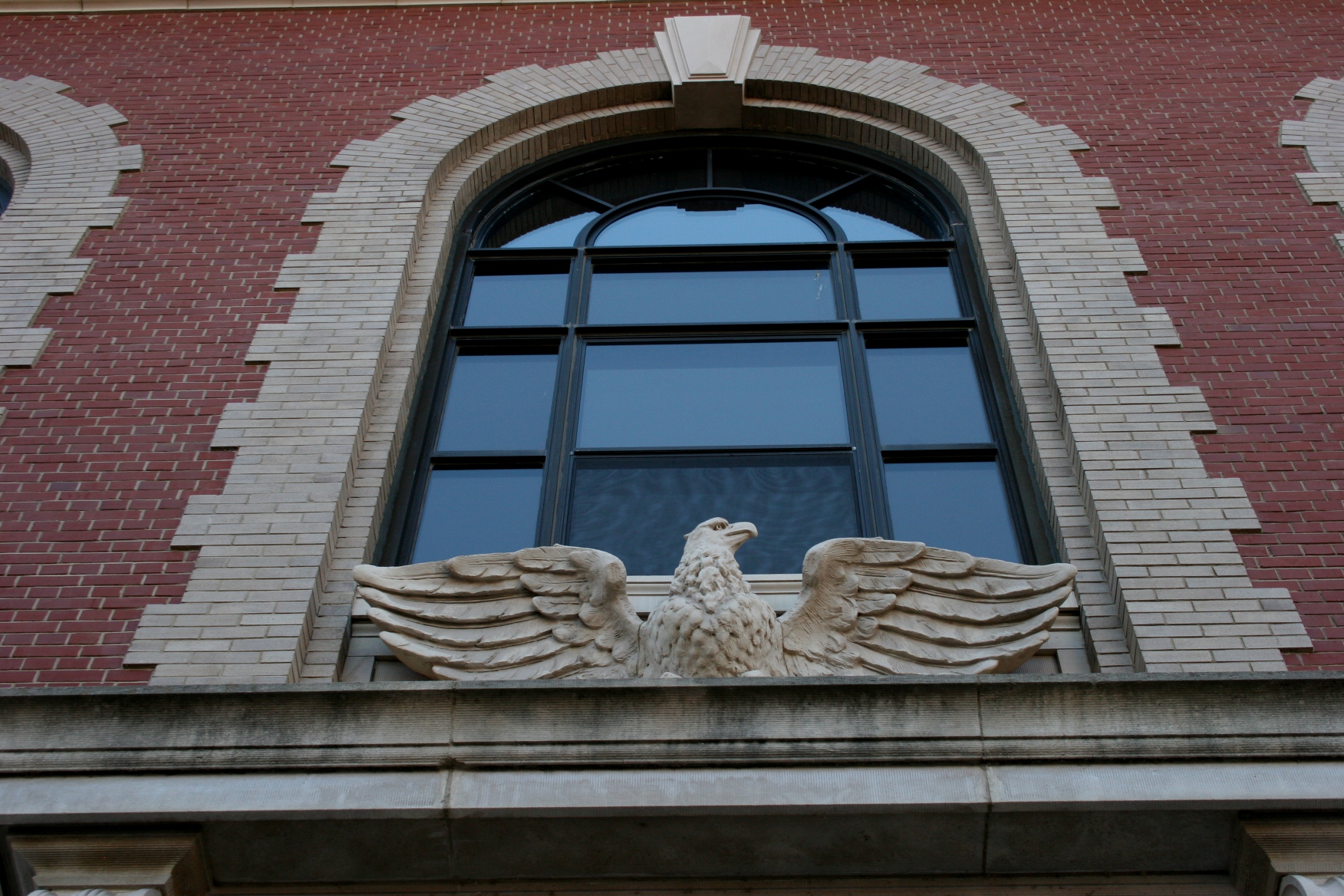
Stunning eagle sculptures span the entries into the federal building.

Stunning eagle sculptures span the front entries into the federal building.

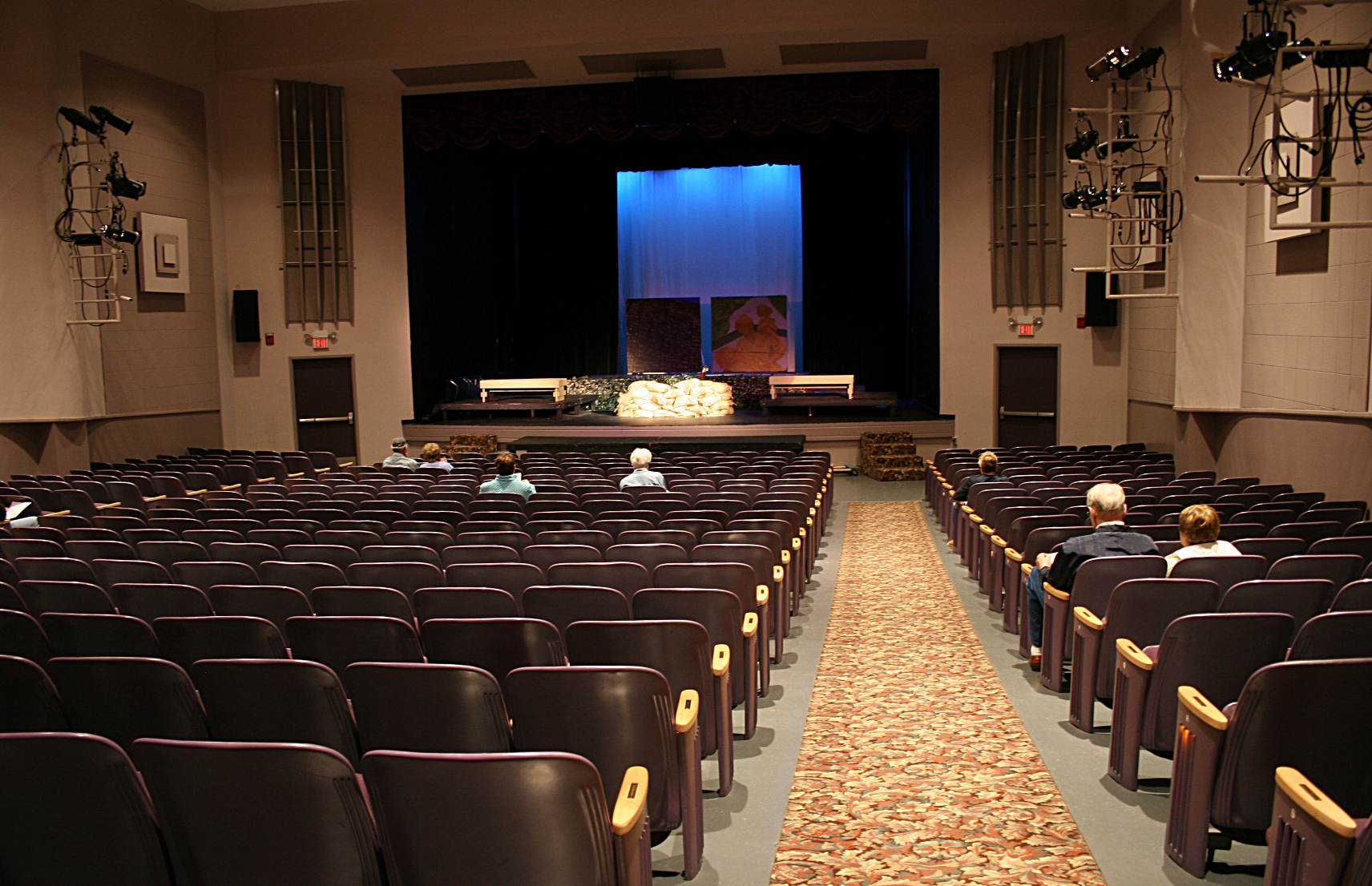
Audience members filter into an historic theatre for a play presented at a Center for the Arts.

Audience members filter into an historic theatre for a play presented at A Center for the Arts.

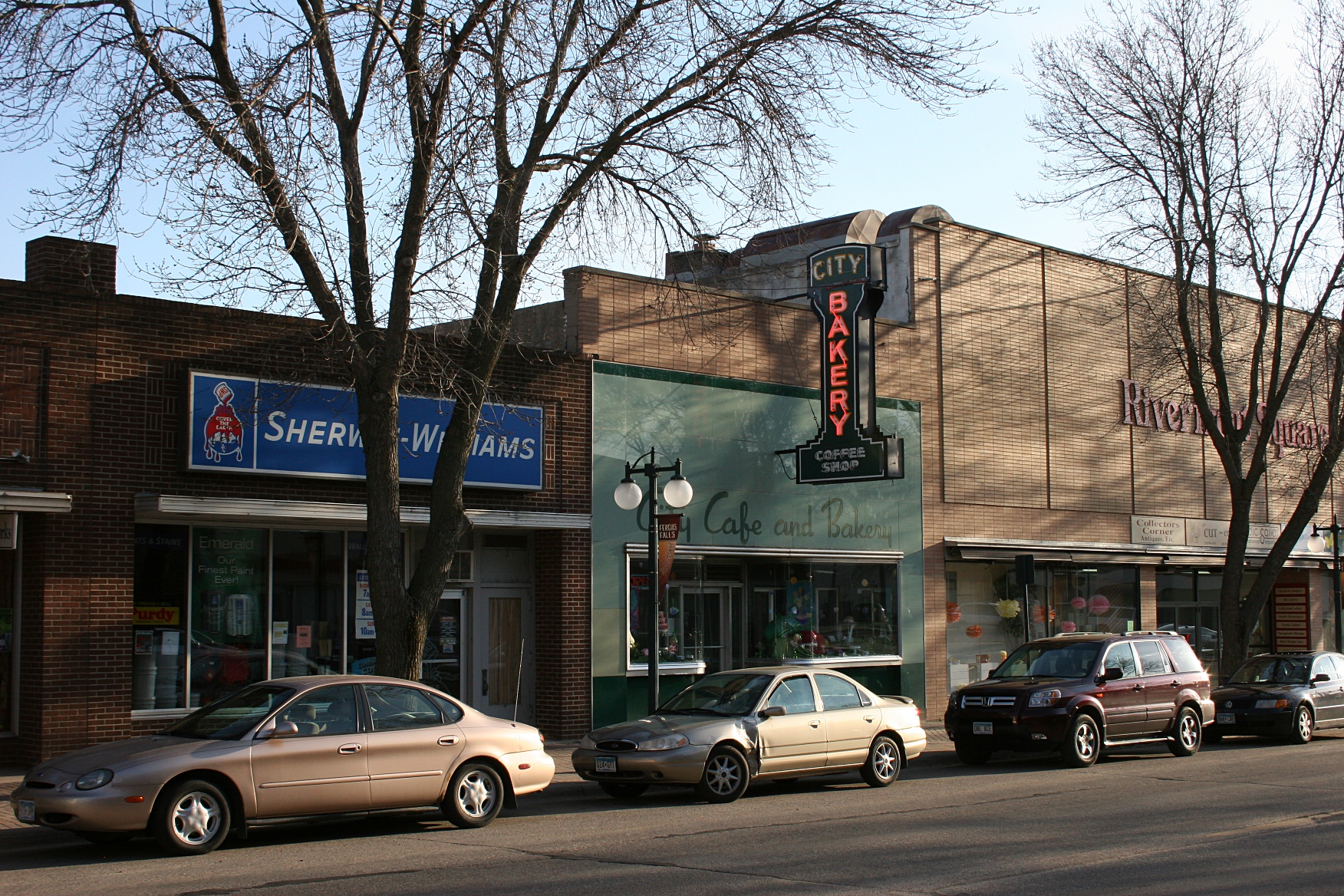
Just another shot of businesses in downtown Fergus Falls.

Just another shot of businesses in downtown Fergus Falls.

FYI: To view previous posts from Fergus Falls, use my blog search engine to check my archives. I posted last week and during the week of June 12-18, 2011, on my first visit to Fergus Falls.  Also, watch for more posts from this community.

© Copyright 2013 Audrey Kletscher Helbling
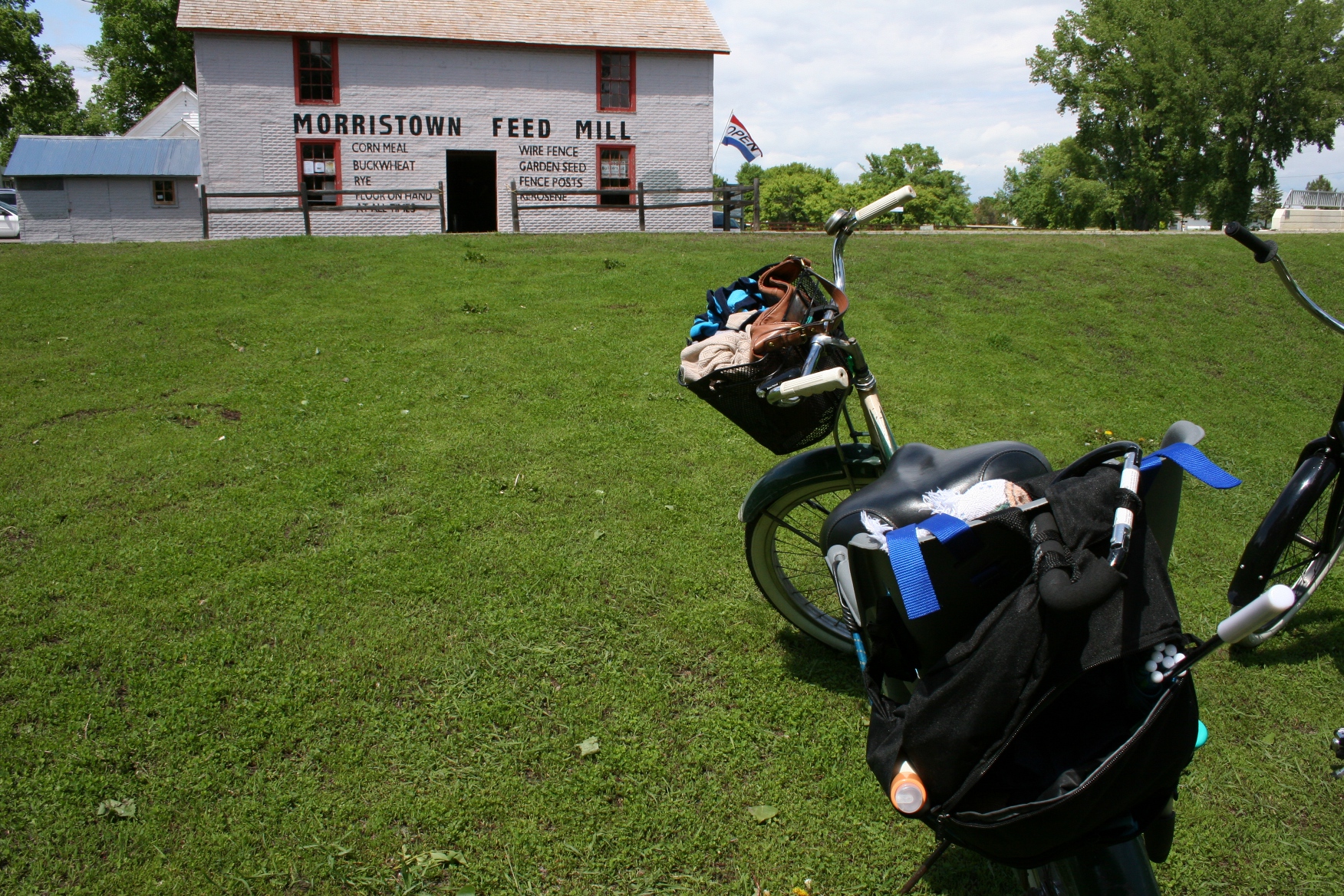
 

Touring Rothsay, the “Prairie Chicken Capital of Minnesota” May 17, 2013

DAILY, THOUSANDS OF TRAVELERS zip by Rothsay on Interstate 94, mostly oblivious to this rural Wilkin County community which claims notoriety as the “Prairie Chicken Capital of Minnesota.”

If not for the 18-foot high prairie chicken statue perched atop a hill overlooking the interstate, few would notice Rothsay. (Click here to view my previous prairie chicken post.)

Small

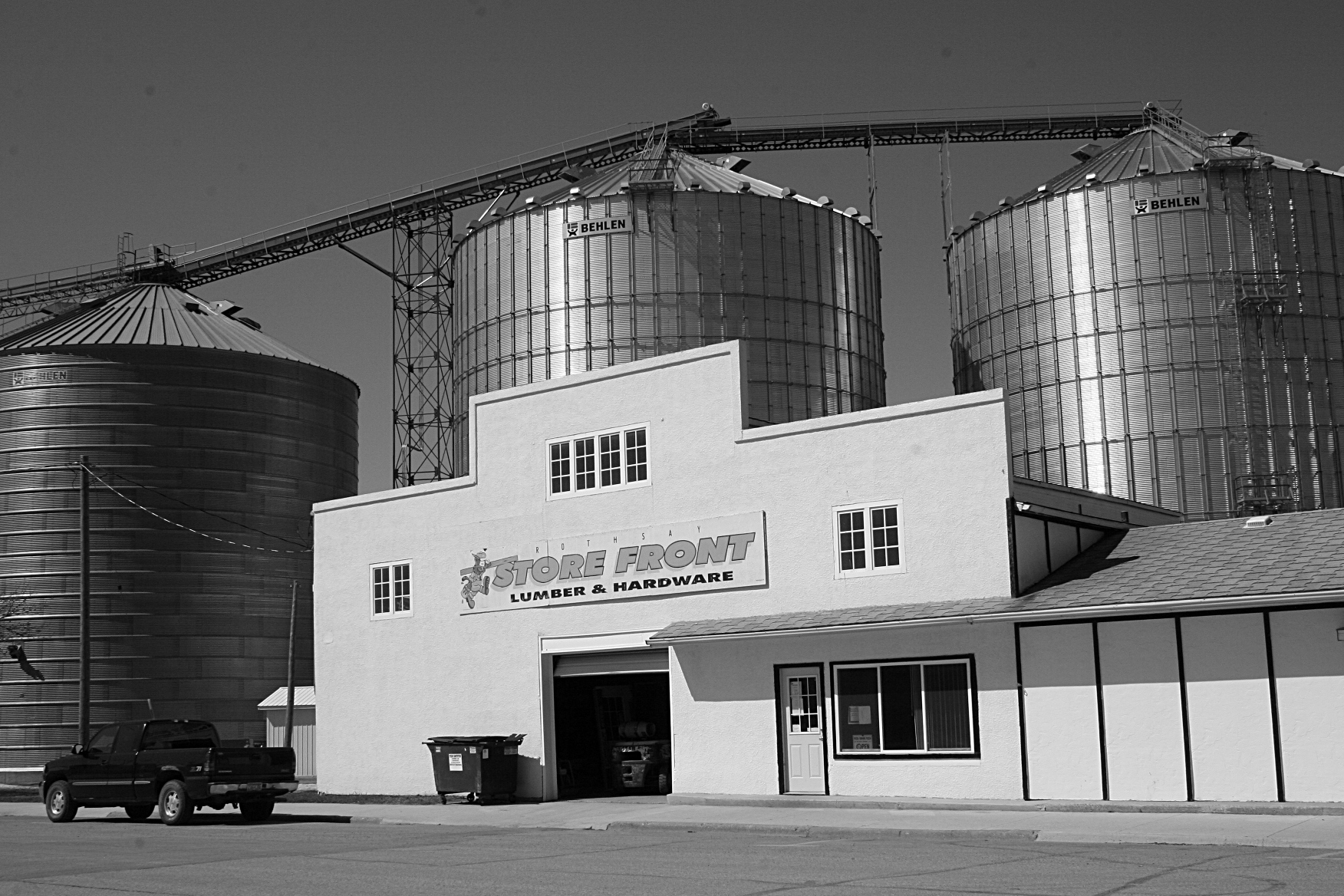
The local combination lumberyard and hardware store, a mainstay of small towns.

But this community of nearly 500 is worth a stop for anyone who appreciates small towns as I do. I delight in the businesses which define communities like this—the local co-op, hardware store and lumberyard. The bank. The home-grown eateries and one-of-a-kind shops. The efforts to preserve history.

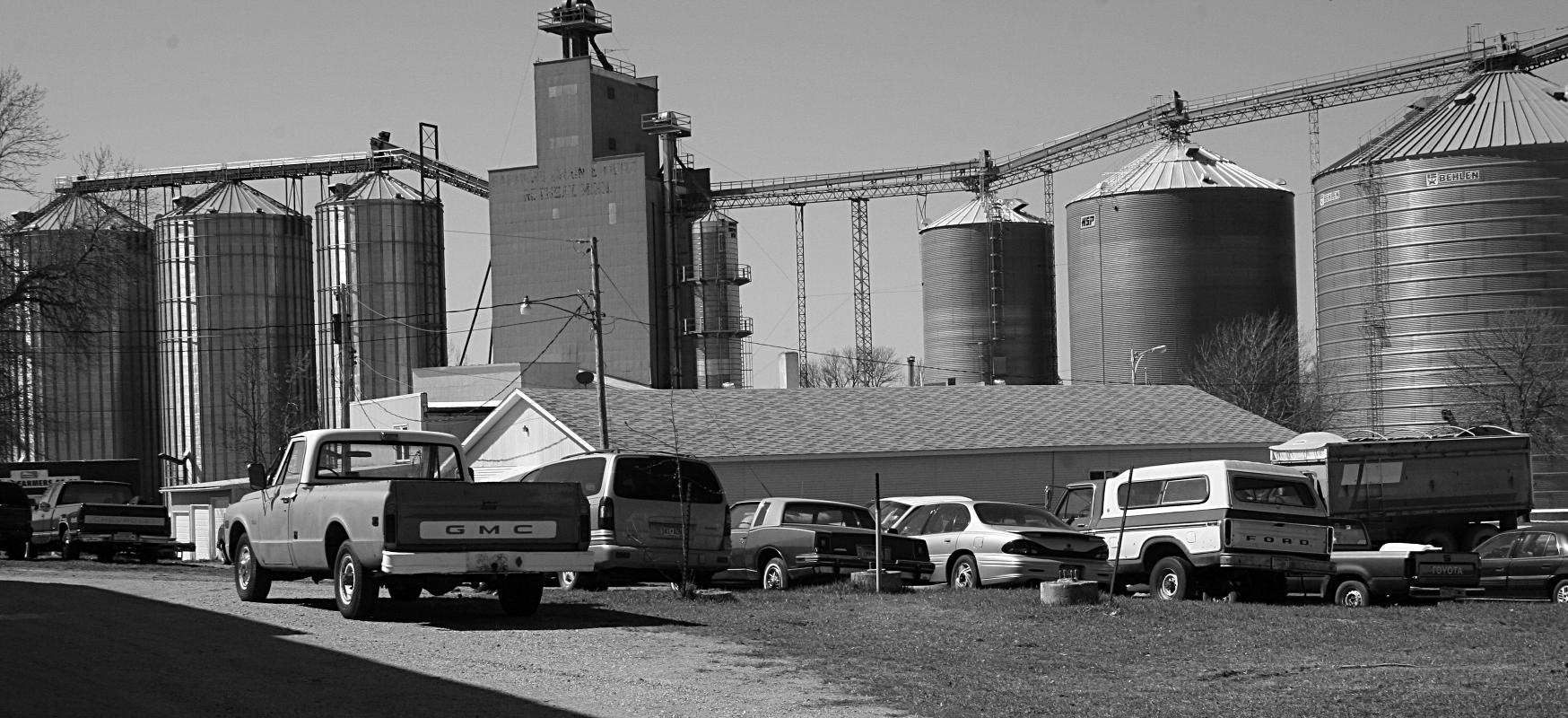
Vehicles parked behind the body shop.

Vehicles parked behind the automotive body and repair shop.

Even the vehicles parked along the quiet streets, the unlocked bikes beside the school, tell a story.

On this stop in Rothsay, I had only time for a quick photographic perusal. That was enough to satisfy my desire to view this community, to feel its heartbeat.

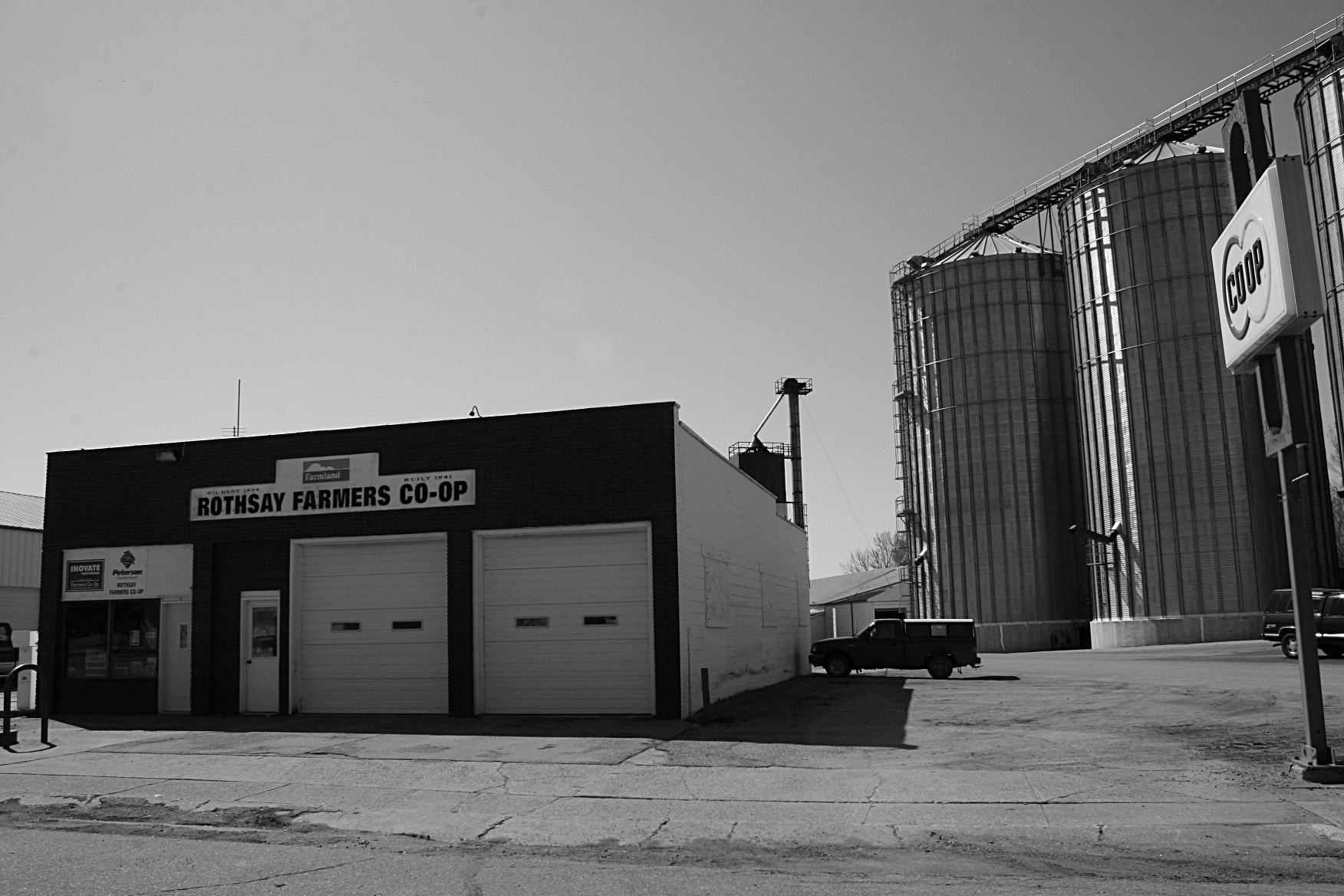
Most rural communities are home to a cooperative.

Most rural communities are home to a famer’s cooperative.

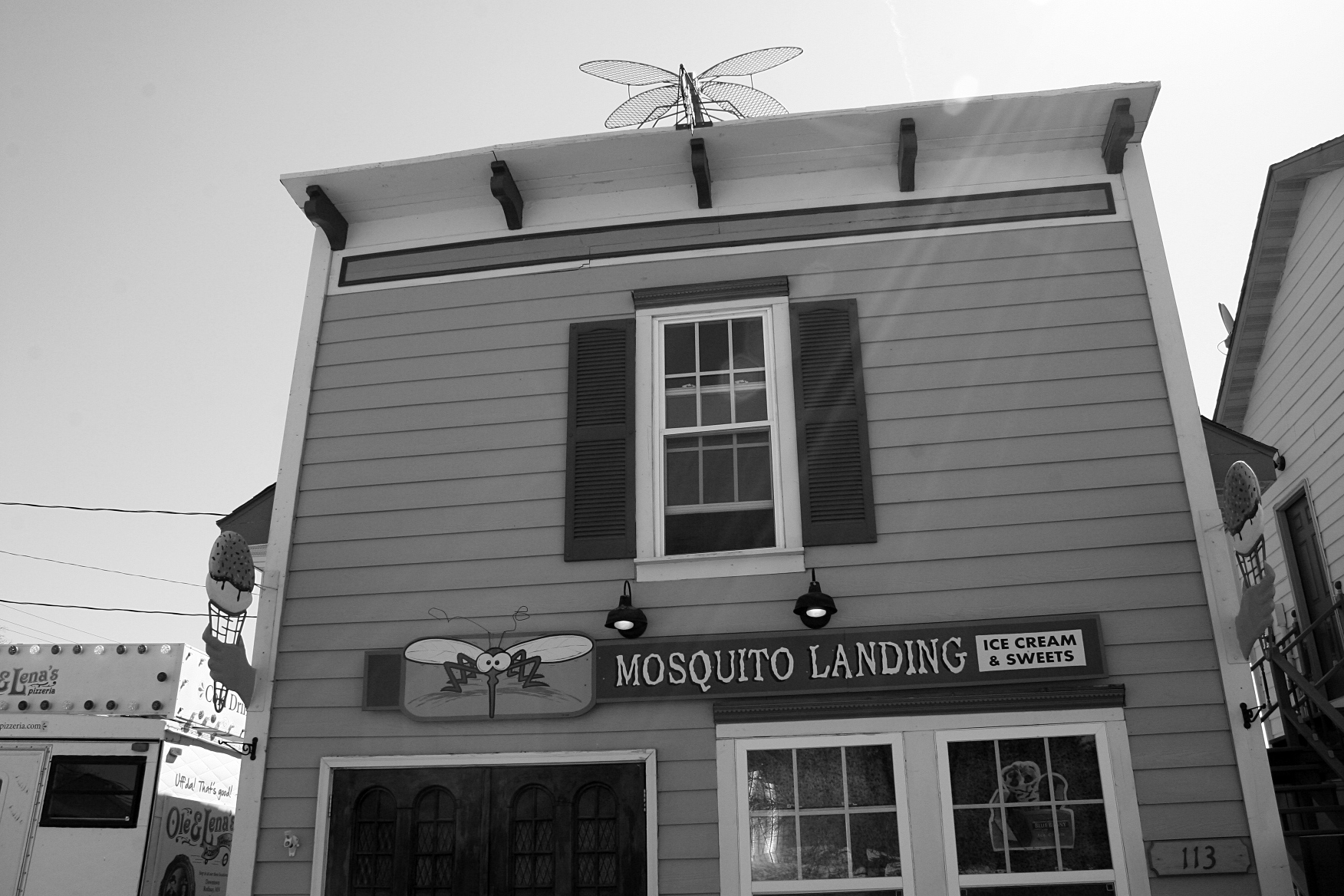
I just had to appreciate the name of this ice cream shop in Rothsay, with a mosquito atop the roof.

I just had to appreciate the name of this ice cream shop in Rothsay, with a mosquito atop the roof.

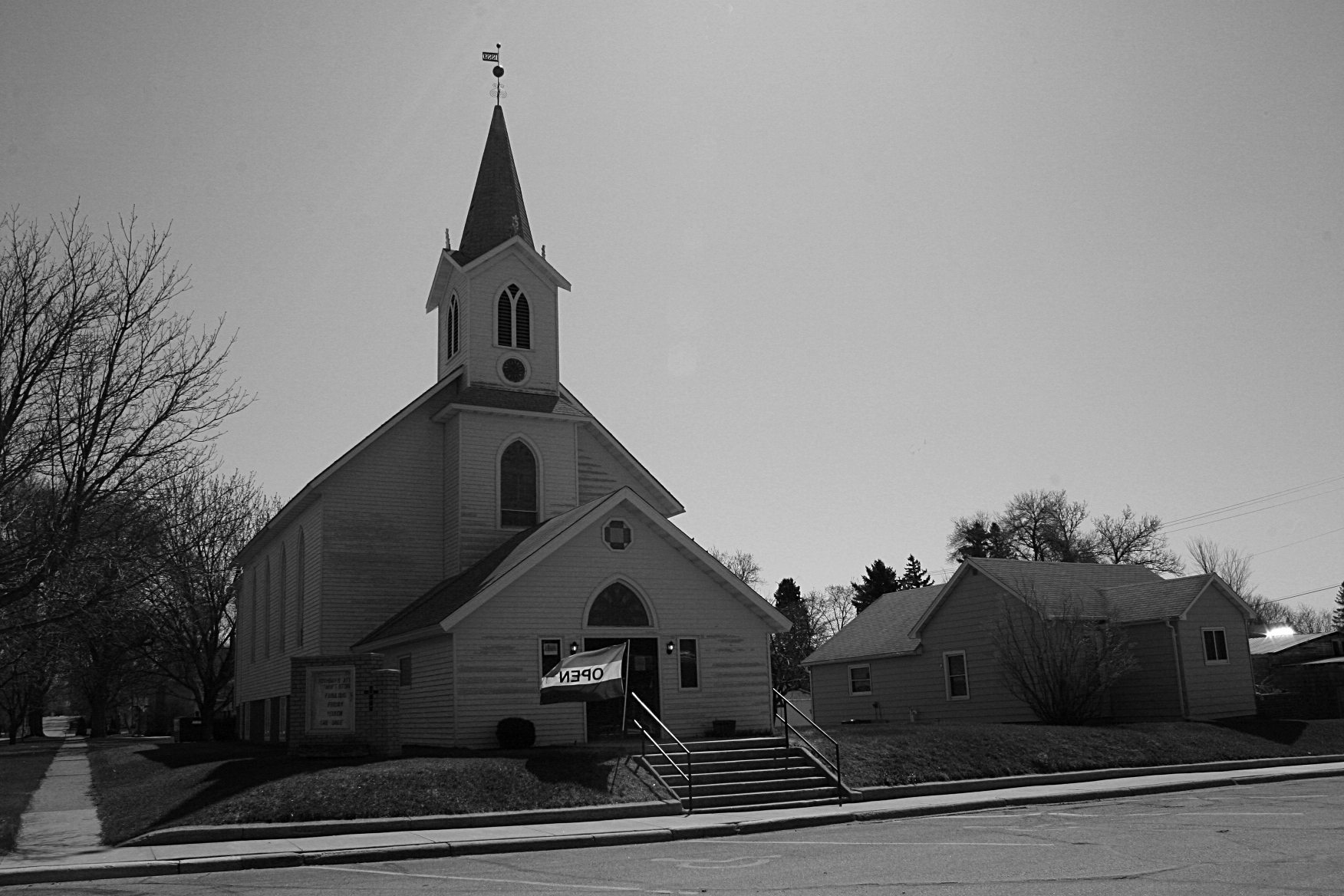
A church turned thrift store.

A church turned thrift store.

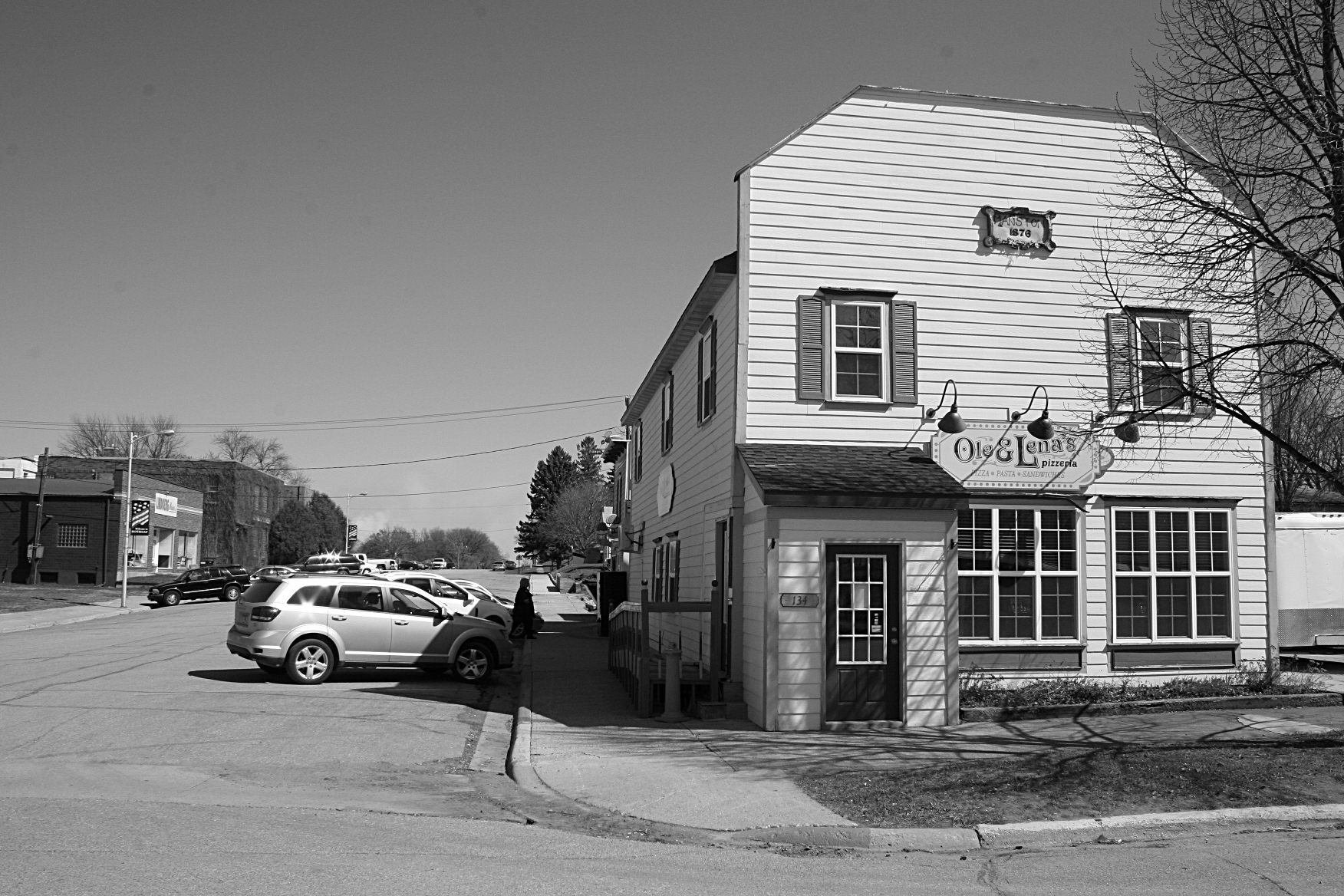
Ole and Lena's Pizzeria serves pizza, pasta and sandwiches. No lutefisk listed on the outdoor sign.

Ole and Lena’s Pizzeria serves pizza, pasta and sandwiches. No lutefisk or lefse listed on the outdoor sign.

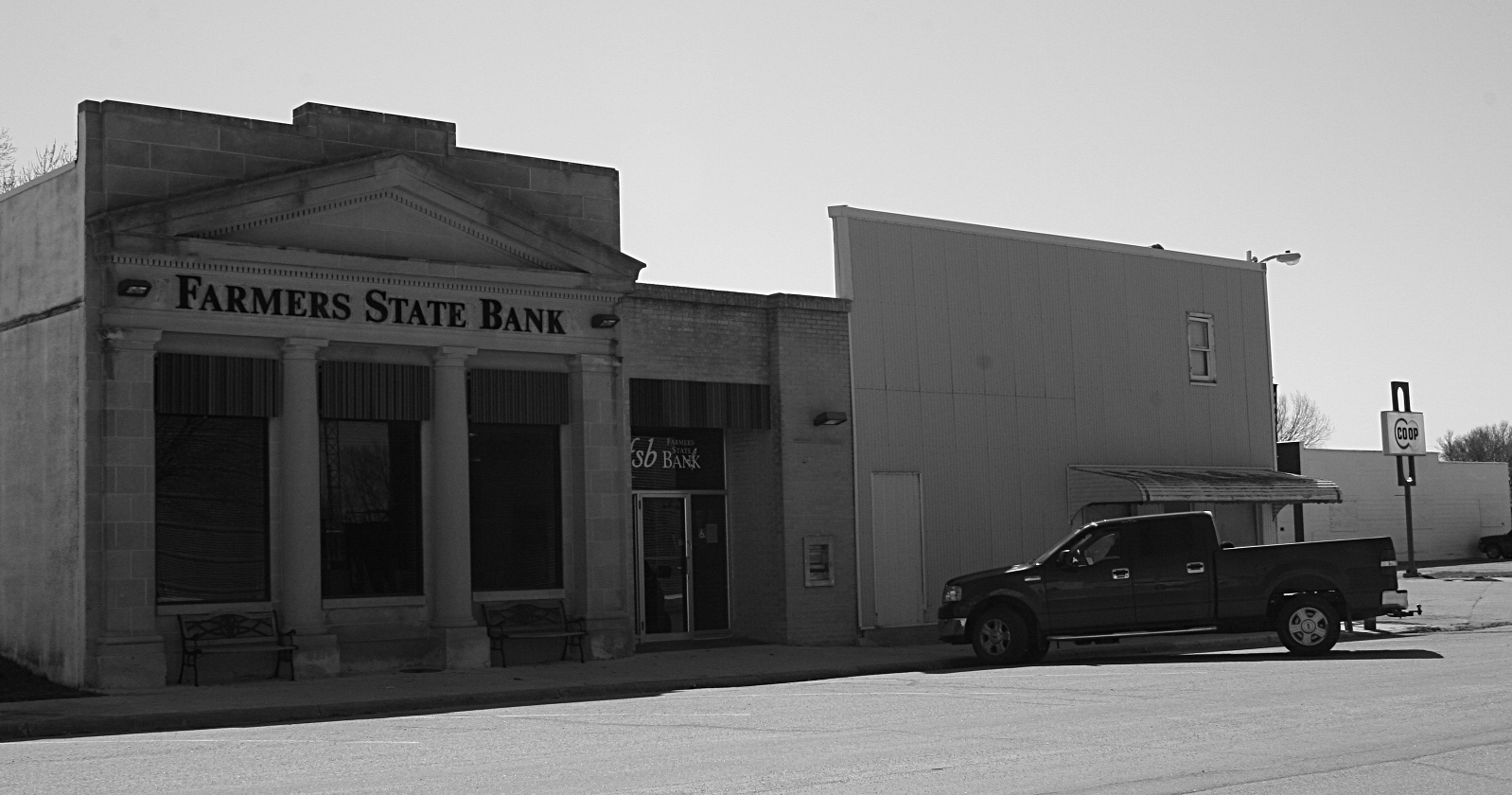
Typically the nicest building in town, the bank.

Typically the nicest building in town, the bank.

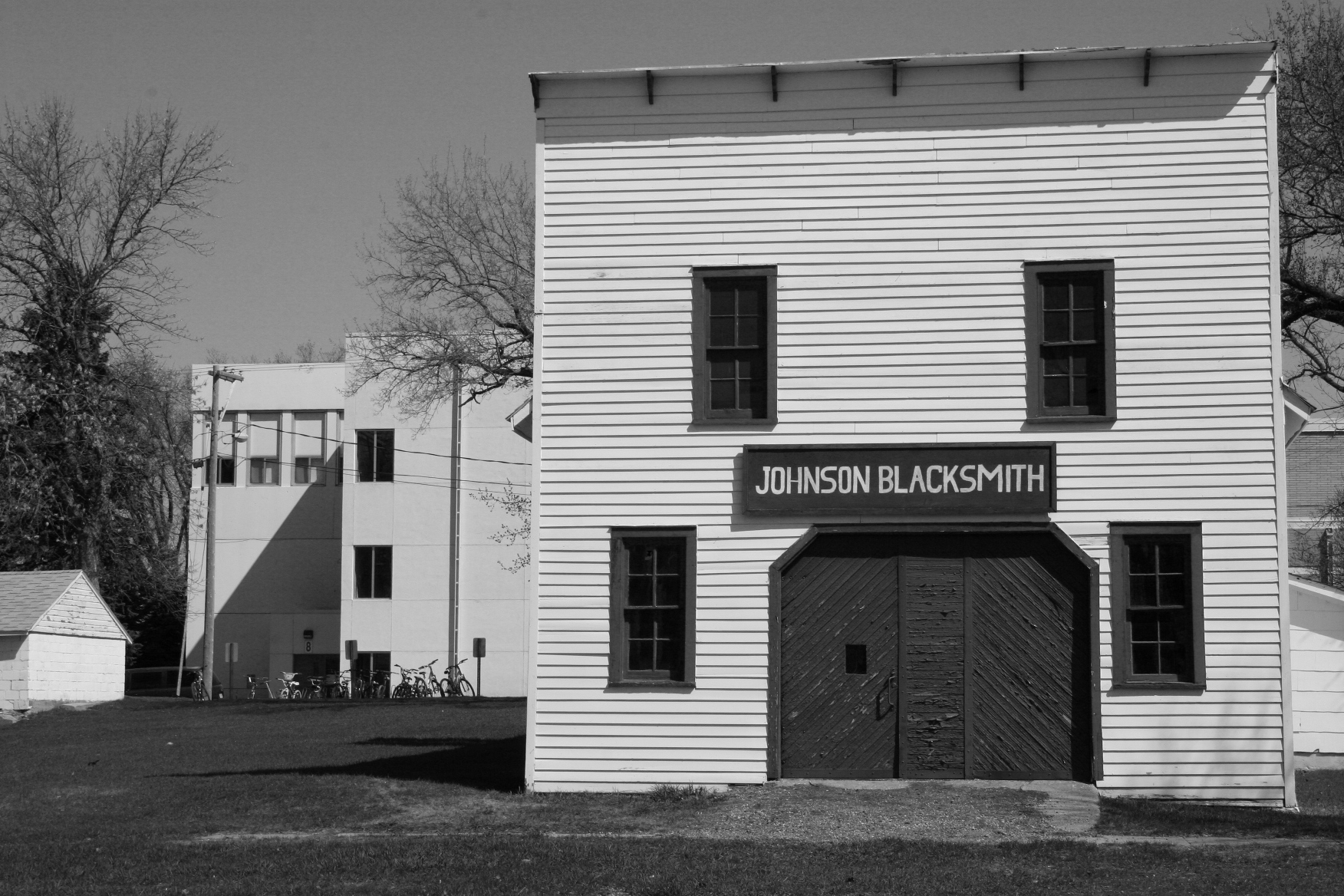
From what I observed, this is an historic blacksmith shop, not a working one. Note the bikes in the background parked outside the public school.

From what I observed, this is an historic blacksmith shop, not a working one. Note the unlocked bikes in the background parked outside the public school.

FYI: Click here to read my previous post about the Wilkin County Sheriff’s Department office in Rothsay.

© Copyright 2013 Audrey Kletscher Helbling
 

Law & order in Rothsay May 16, 2013

SMALL TOWNS, TIME AND AGAIN, draw me in to explore.

It is the unpretentious genuineness, the make-do, no-frills approach to life that appeals to me. Folks in small towns typically are not trying to impress. Rather, they are simply living their lives—being good neighbors, working hard, getting by on what they have.

I’m not saying big city residents don’t do likewise. I just think the evidence of simpler living is more visible in our rural communities.

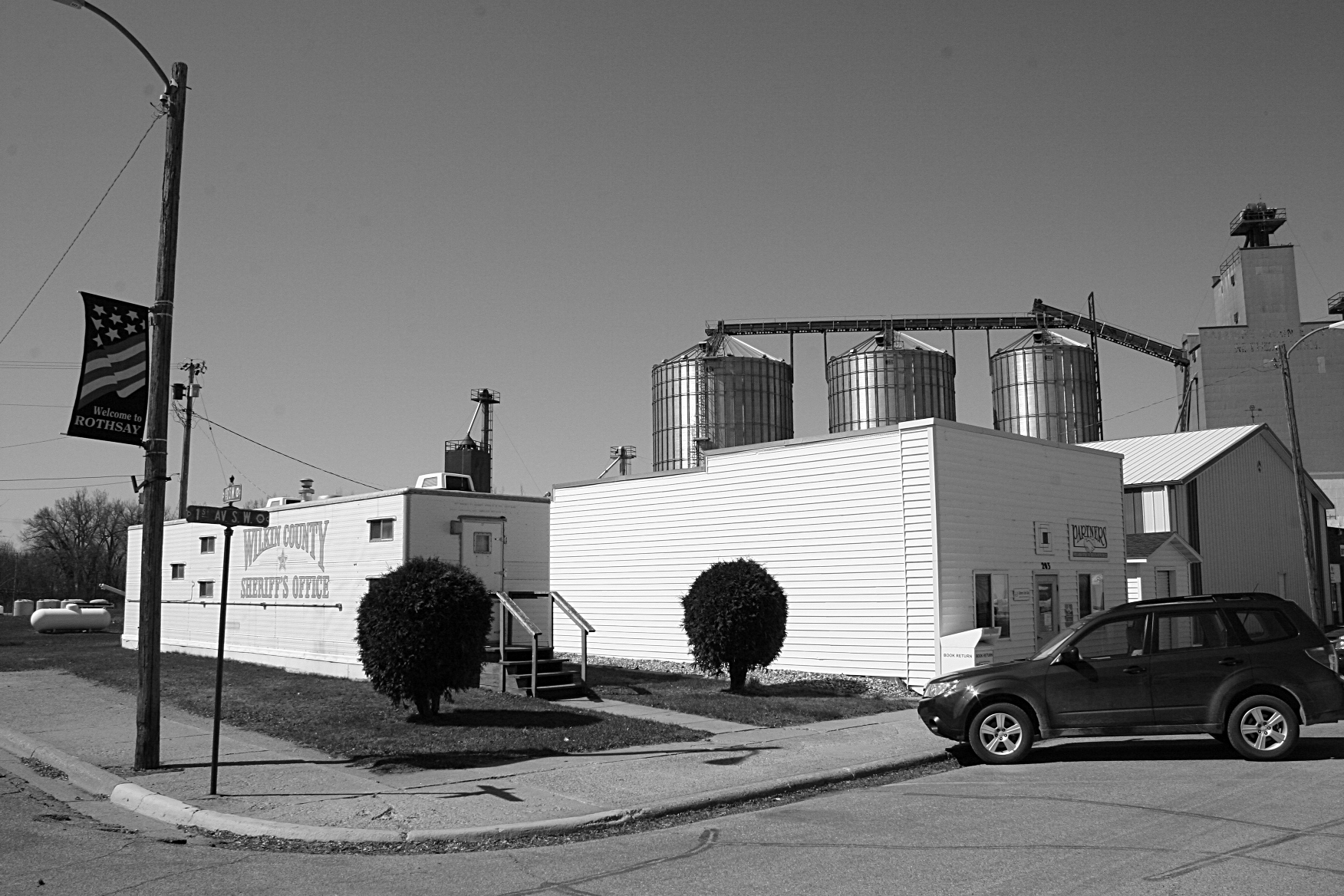
Wilkin County Sheriff's Dept. 1

Take Rothsay, population around 500. Just look at the building which houses the Wilkin County Sheriff’s Department in Rothsay, which lies along Interstate 94 some 35 minutes southeast of Fargo.

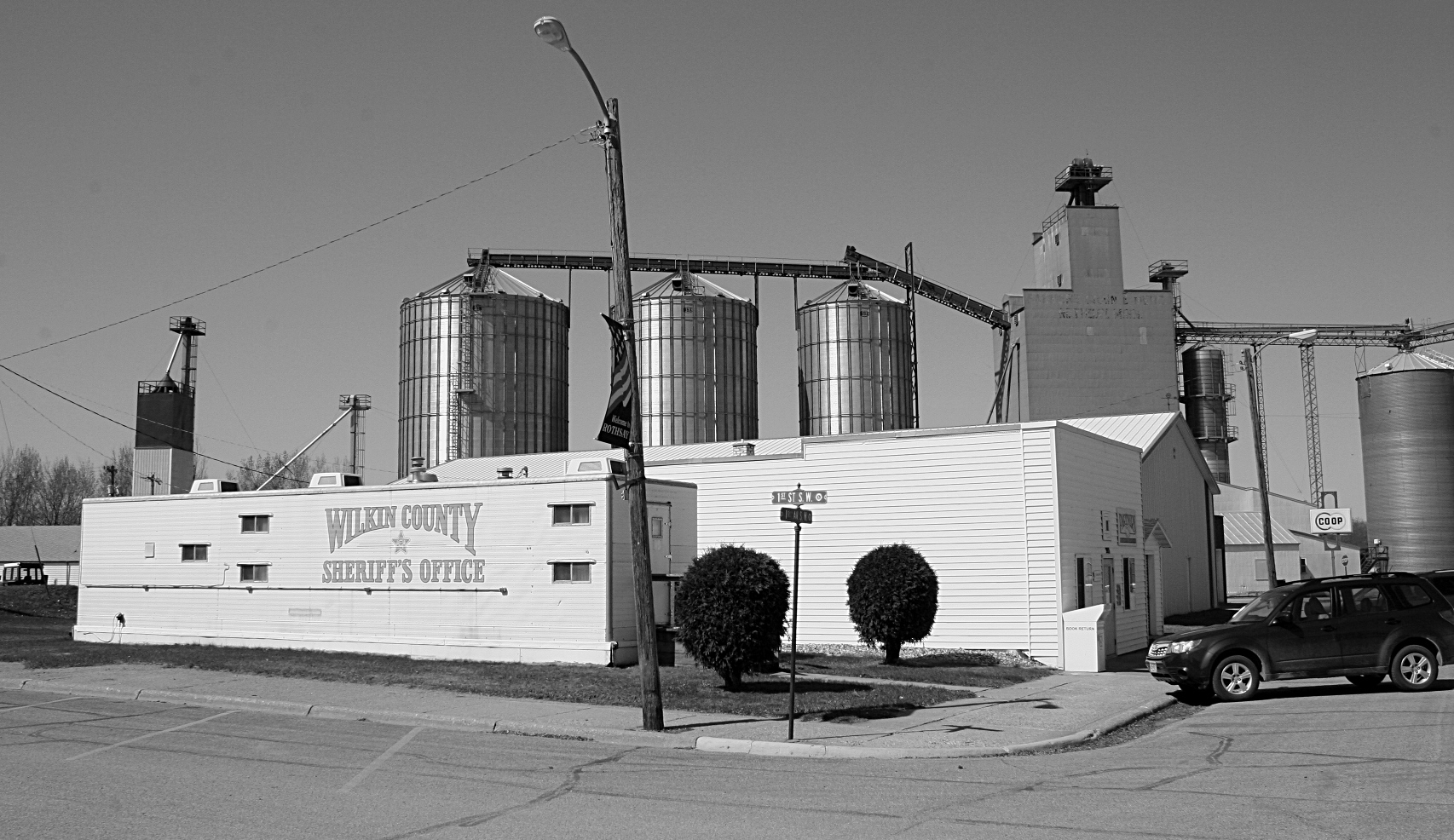
Wilkin County Sheriff's Dept. 2

Nothing fancy about this vintage trailerhouse, apparently a satellite office for the sheriff’s department based in the county seat of Breckenridge 30 miles distant.

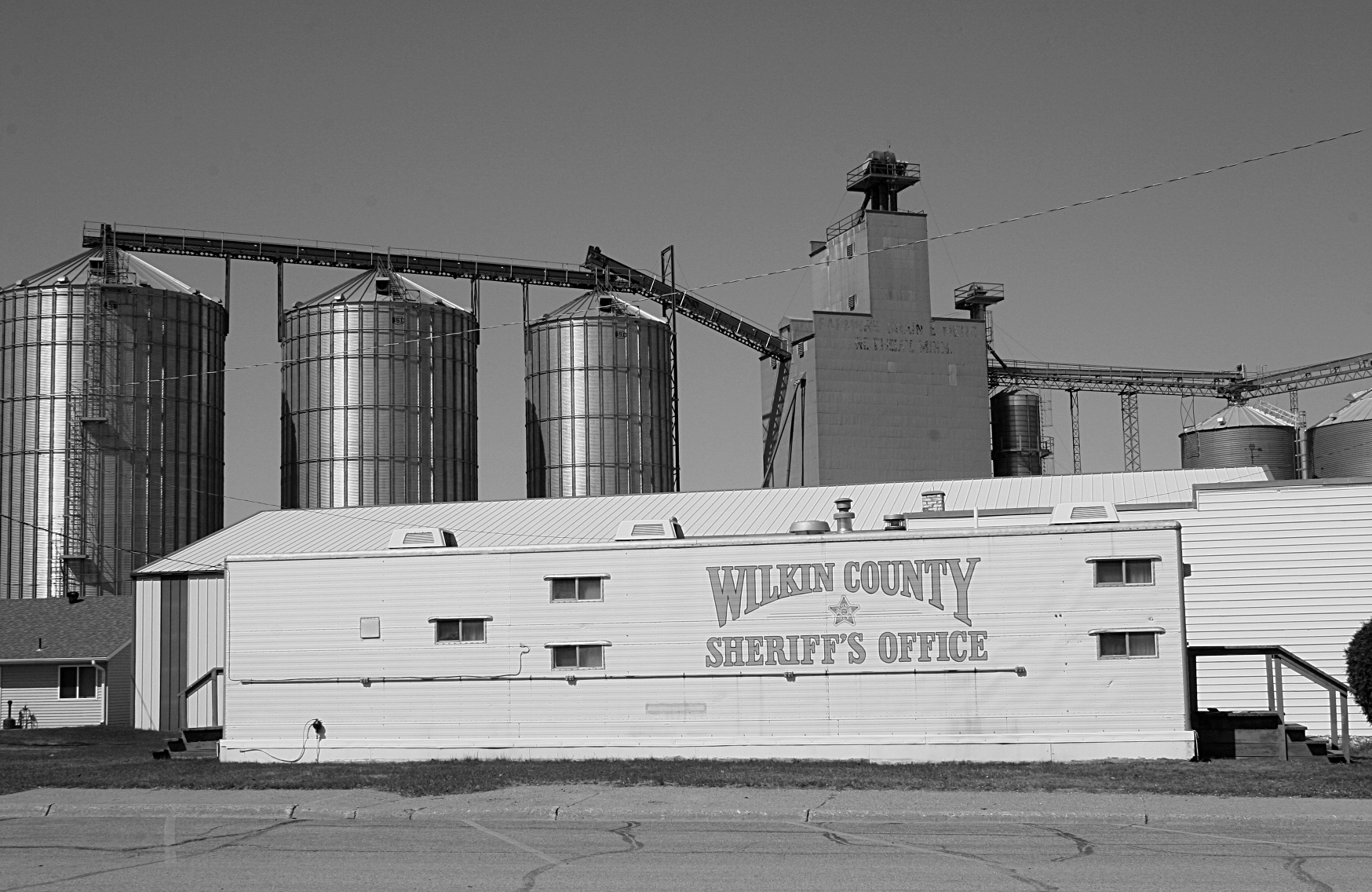
Wilkin County Sheriff's Dept. 3

My husband and I were, should I say, awestruck when we pulled into the downtown business district and spotted this law enforcement headquarters. We’d never seen a sheriff’s office quite like this one.

I knew I’d found a gem, another slice of small-town Minnesota worthy of preserving via a photo shoot.

FYI: Check back tomorrow for more photos from Rothsay.

© Copyright 2013 Audrey Kletscher Helbling


Connecting to Rachael Hanel’s “Memoir of a Gravedigger’s Daughter” May 9, 2013

gravedigger coverPICKING UP MINNESOTA WRITER Rachael Hanel’s We’ll Be the Last Ones to Let You Down—Memoir of a Gravedigger’s Daughter, I wonder how I can possibly relate to a book focused on death.

But I can, in many ways. I am, like Hanel, a native southern Minnesotan. That is telling. We are a people who tend to keep our emotions in check, even in grief.

Hanel’s association with death begins before age three, when her father, Paul Hager, becomes a gravedigger. Hanel grew up frequenting 20 Waseca area cemeteries under her family’s care. Their business motto, “We’ll be the last ones to let you down,” seems the perfect title for a memoir that is at times light-hearted, but mostly serious.

Imagine summers in a cemetery, flitting among gravestones or reading books while your father digs holes to receive the dead and your mom mows lawn. And imagine the day you understand that names, dates and words on tombstones reveal stories. I expect we all experience that epiphany at some point during our childhoods, realizing the numbers and letters on cold stone represent lives lived. But the daughter of the gravedigger wants more, asking her storytelling mother to share the stories of the deceased.

Hanel cites numerous examples of tragedies in the Waseca area—the September 11, 1959, deaths of seven members of the Zimmerman family whose car was struck by a train and the deaths of Busy Bee Cafe waitress Cheryl Tutttle and her young daughter—in sharing the graveyard stories which existed as a natural part of her childhood.

About two-thirds of the way into her 192-page memoir, Hanel writes:

My family went to wakes like some families went to movies.

Despite that familiarity with death, Hanel and her family find themselves reeling at the unexpected loss of her father to cancer when she is only 15. They know death, but not grief. Therein lies a major component of Hanel’s memoir in her personal struggles with grief and the fracturing of her family upon her father’s death.

This then-teen, who always leaned to the artistic—appreciating art in her childhood home, art in cemeteries, art in the rural Minnesota landscape—turns to words for solace. She seeks books that will tell her how to connect to her dead father. She tames her grief, she says, “by writing words on the page.”

Hanel also relies on her strong Catholic faith. Praying the rosary is her constancy.

Ironically, several years later, after she has married at the young age of 19, Hanel starts a job writing obituaries at the Mankato Free Press. It is the same newspaper where I worked as a news reporter, but never as an obit writer (although I did report on tragic deaths), for nearly two years, long before Hanel’s arrival. Eventually she, too, becomes a reporter there.

It is not that professional commonality, though, or Hanel’s general love of writing or her faith that cause me to feel most connected to this reporter turned author. Rather it is her understanding of small-town Minnesota. And her appreciation for the land. Hanel writes of biking near Elysian as farmers work the fields, upturning the earth for planting.

This gravedigger’s daughter writes:

I breathe in the freshly turned soil and that is all I want to breathe, night and day.

That I understand, from the perspective of a farmer’s, not a gravedigger’s, daughter.

Minnesota author Rachael Hanel. Photo by Steve Pottenger.

Minnesota author Rachael Hanel. Photo by Steve Pottenger.

© Copyright 2013 Audrey Kletscher Helbling
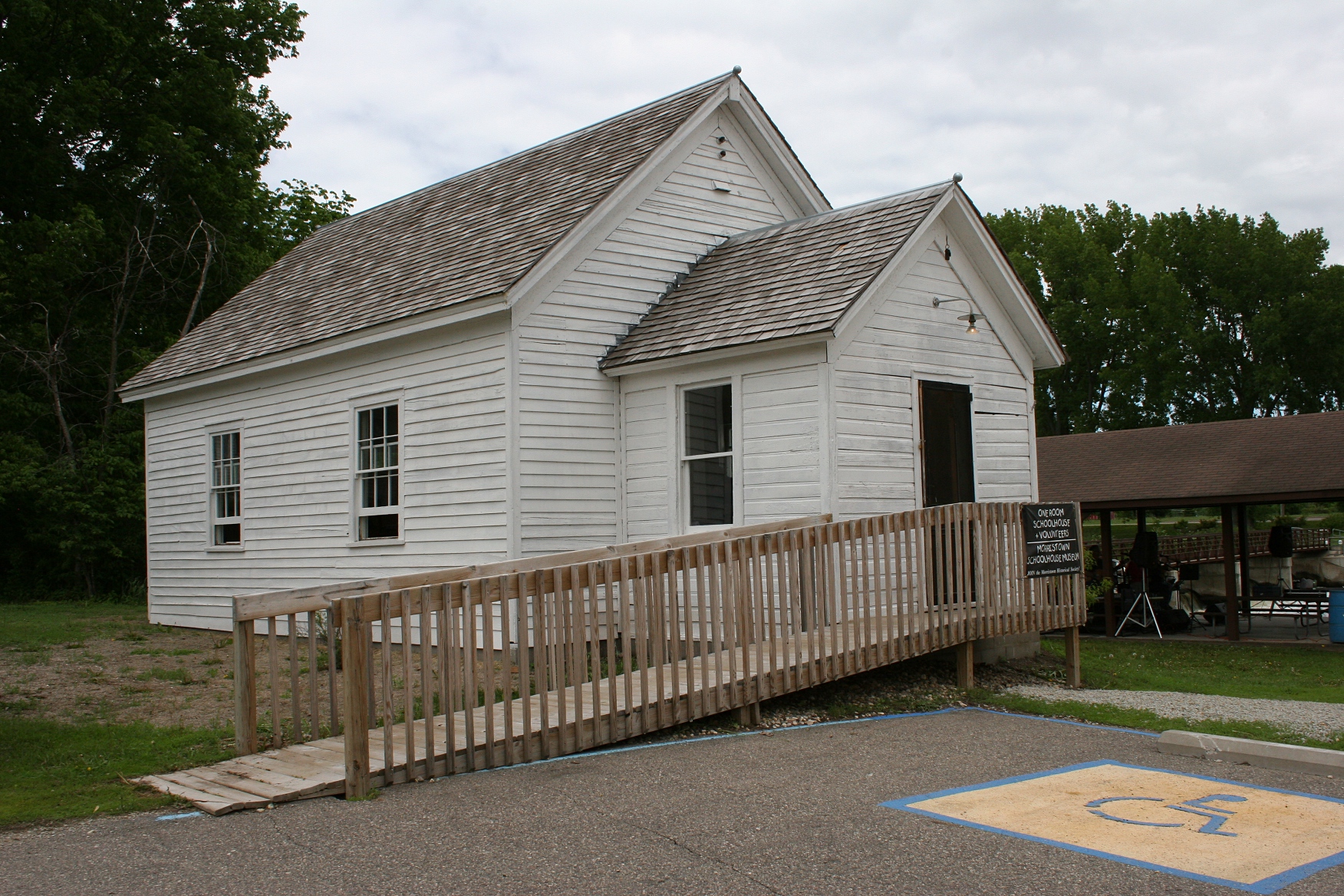
 

A photographic escape to Two Rivers, Wisconsin May 3, 2013

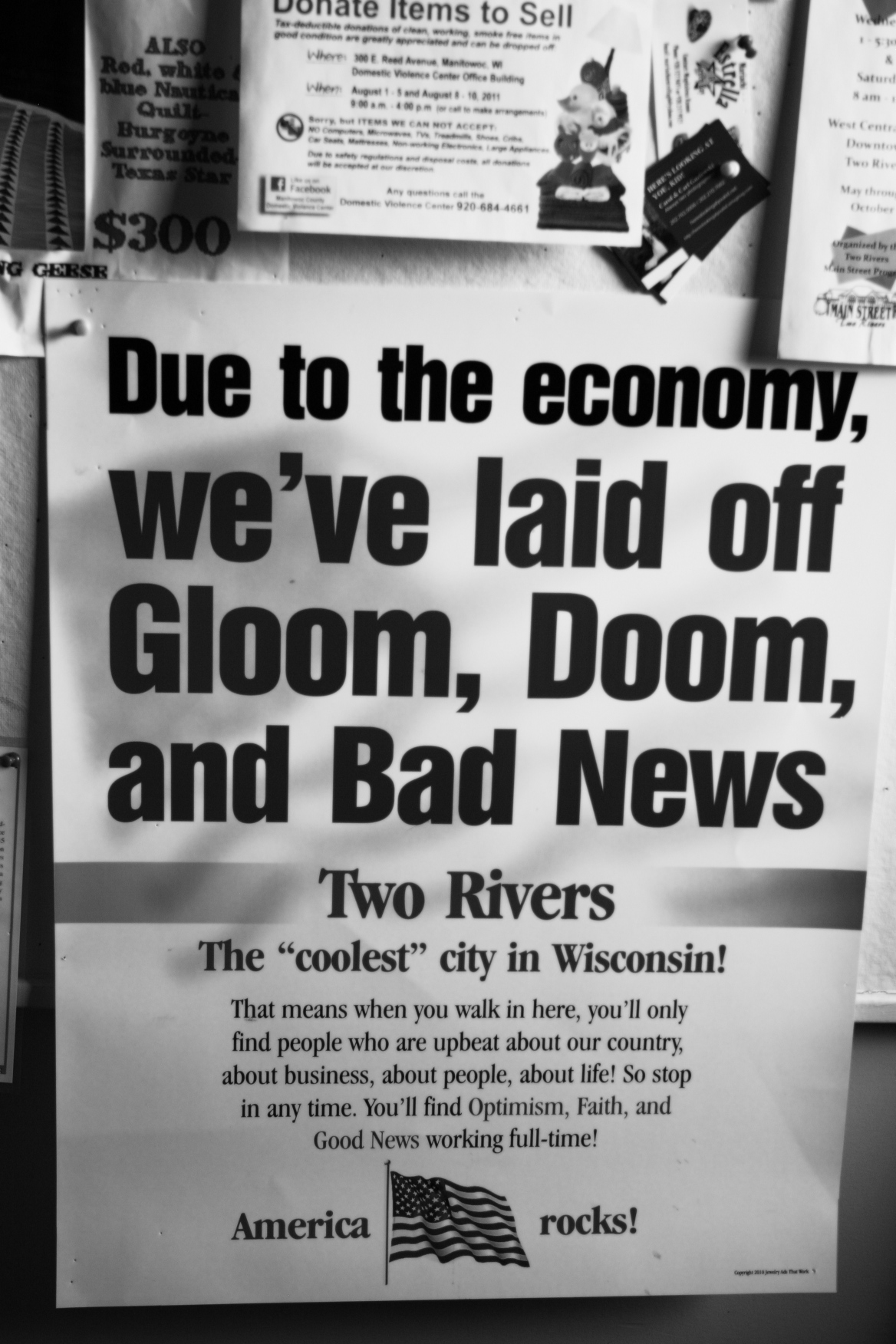
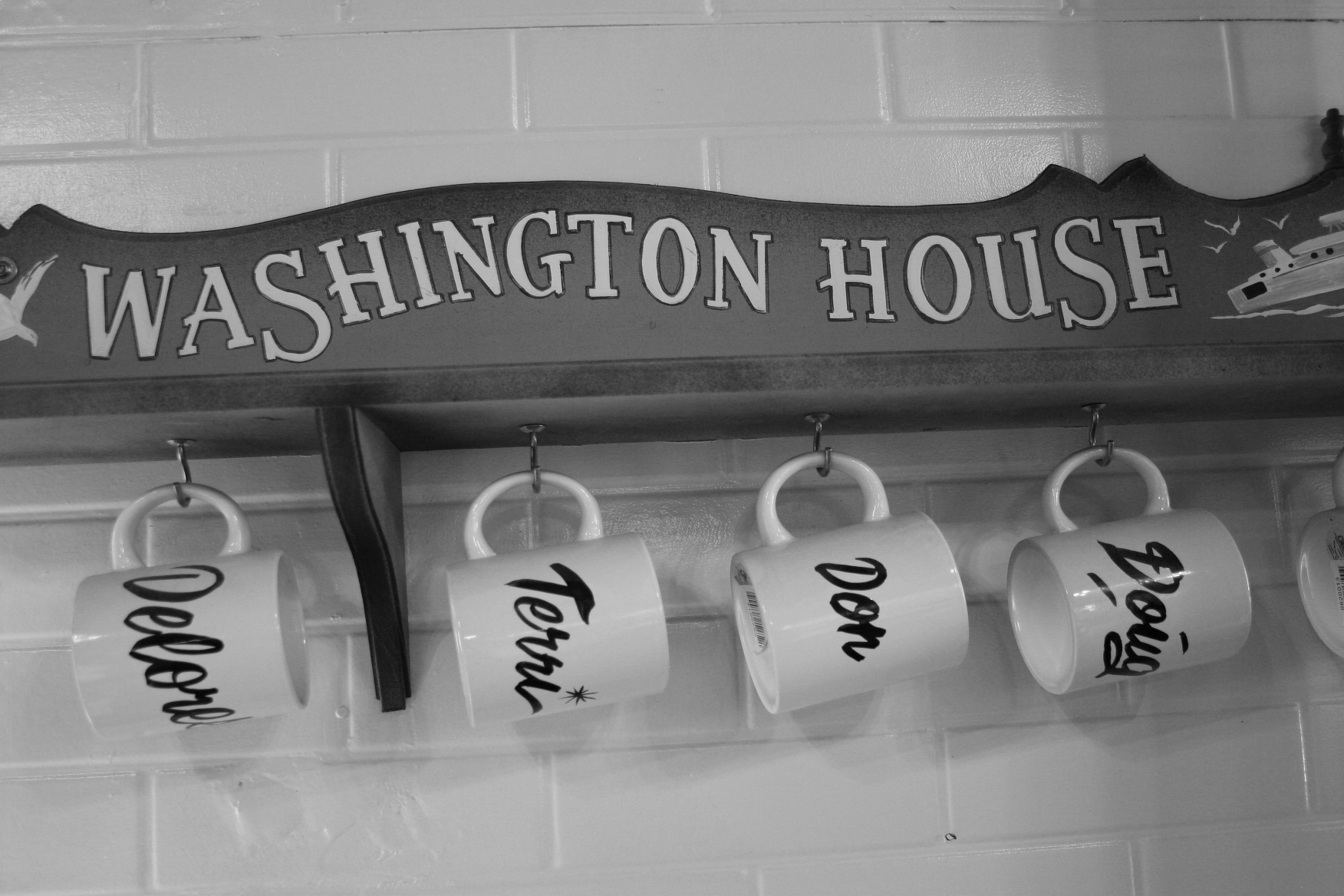
A sign inside the historic Washington Museum and Visitor Center in Two Rivers.

A sign inside the historic Washington Museum and Visitor Center in Two Rivers.

HAVE YOU EVER DRIVEN into a community you’ve never visited and fell totally, absolutely, head-over-heels in love with the place?

For me, that would be Two Rivers, along Lake Michigan in northeastern Wisconsin.

Nearly two years have passed since I toured this community which claims to be the birthplace of the ice cream sundae. I love ice cream as much as the next person and savored my sundae at Berners’ Ice Cream Parlor, established in 1881.

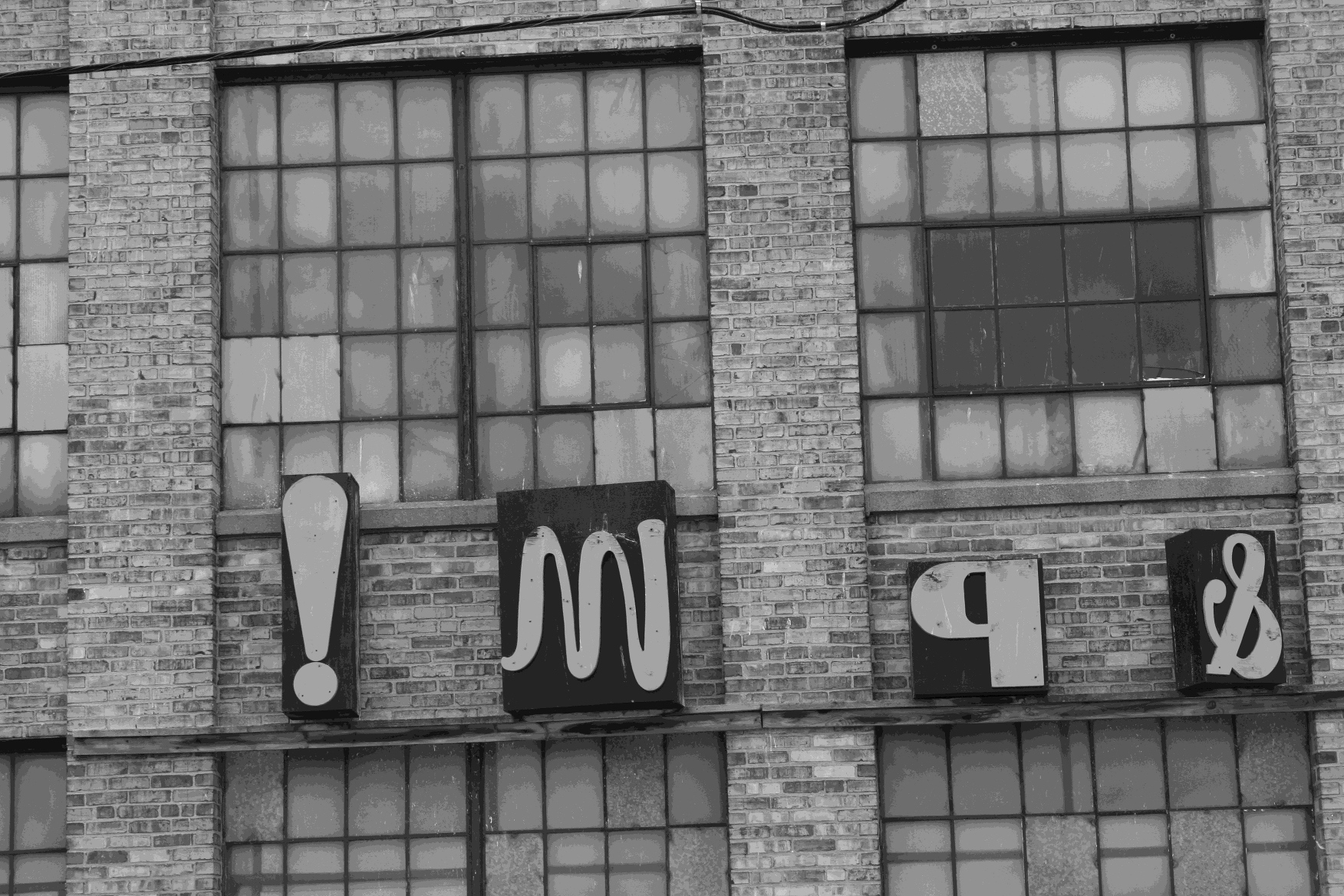
Signage on the exterior of the Hamilton Wood Type Museum.

Signage on the exterior of the Hamilton Wood Type Museum.

But even more so, I loved the Hamilton Wood Type & Printing Museum across the street, a magnet for artists and former newspaper types like me who view print as art and not just a means to publish news. I wrote about the museum shortly after my family’s visit there in August 2011. Click here to read that post.

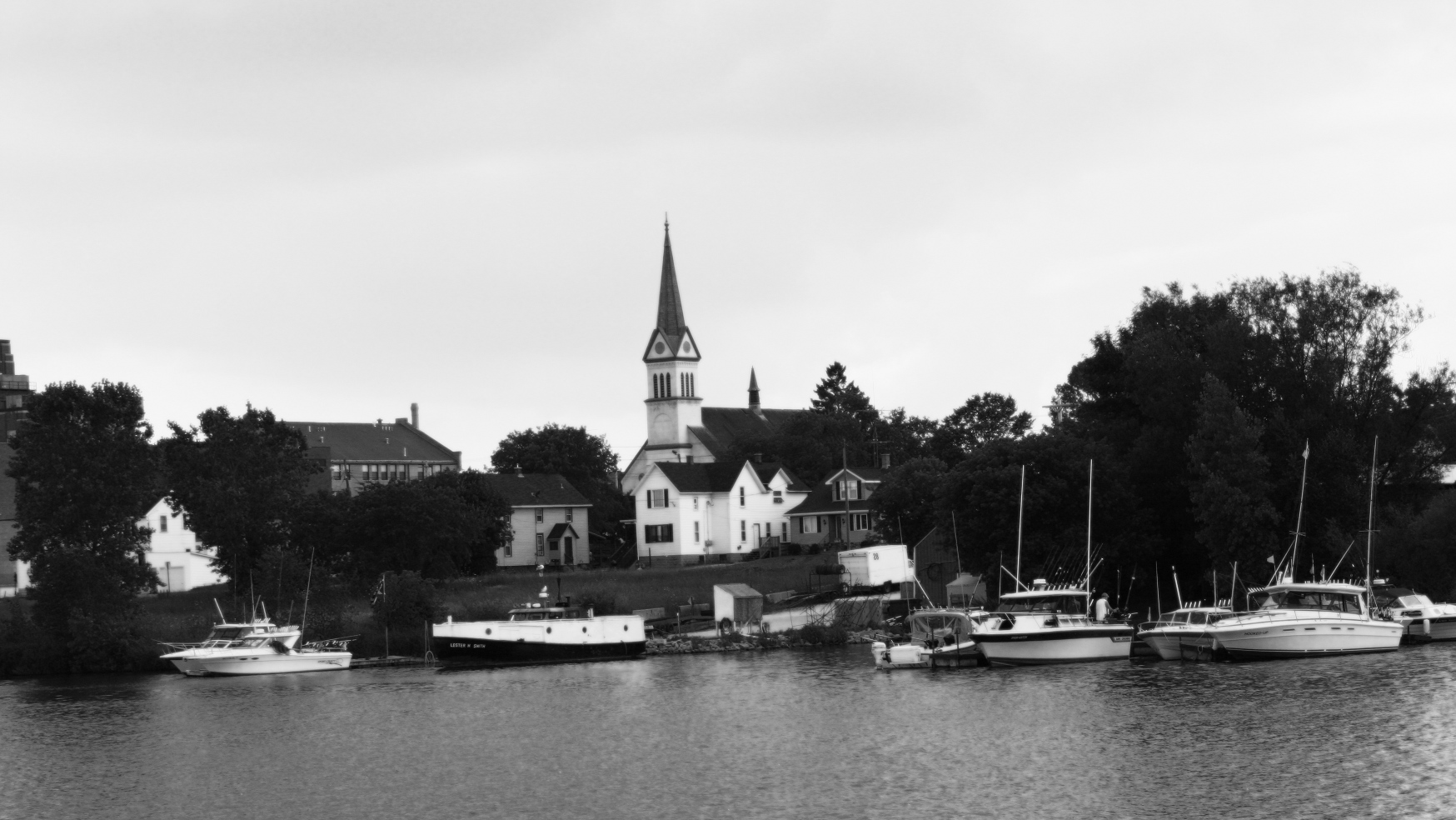
A view of Two Rivers from the historic fishing village.

A view of Two Rivers from the historic fishing village.

Besides treats and type, Two Rivers wooed me with the Rogers Street Fishing Village. From there I photographed a dreamy, idyllic view of the town complete with a white steepled church in the background. Although I’ve never been to New England, I imagine the scene might be similar to a quaint fishing village there.

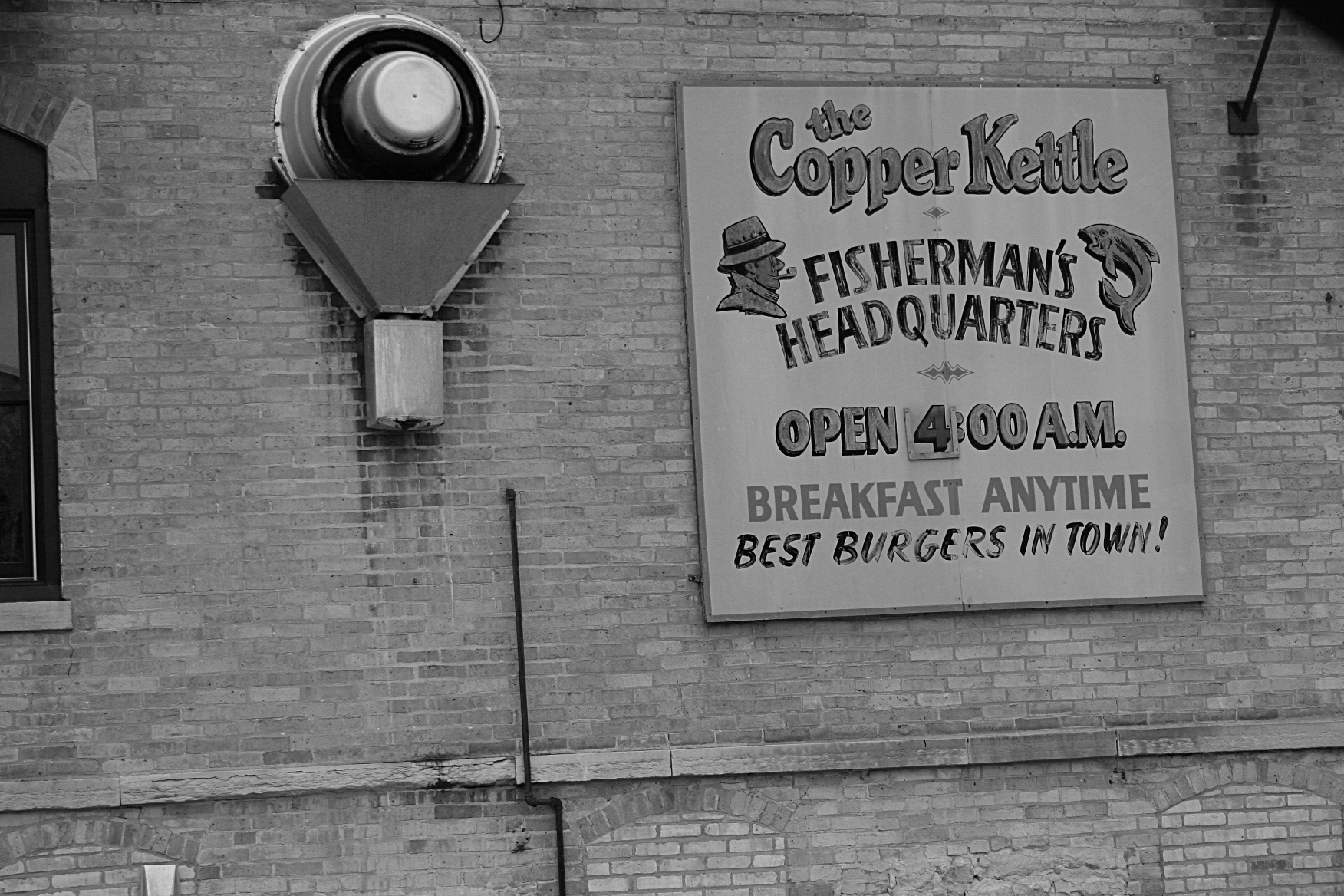
Cool signage.

Cool signage.

And then there’s the signage in Two Rivers—those details I notice because, well, I tend to notice details. I appreciate artful signage that beckons me.

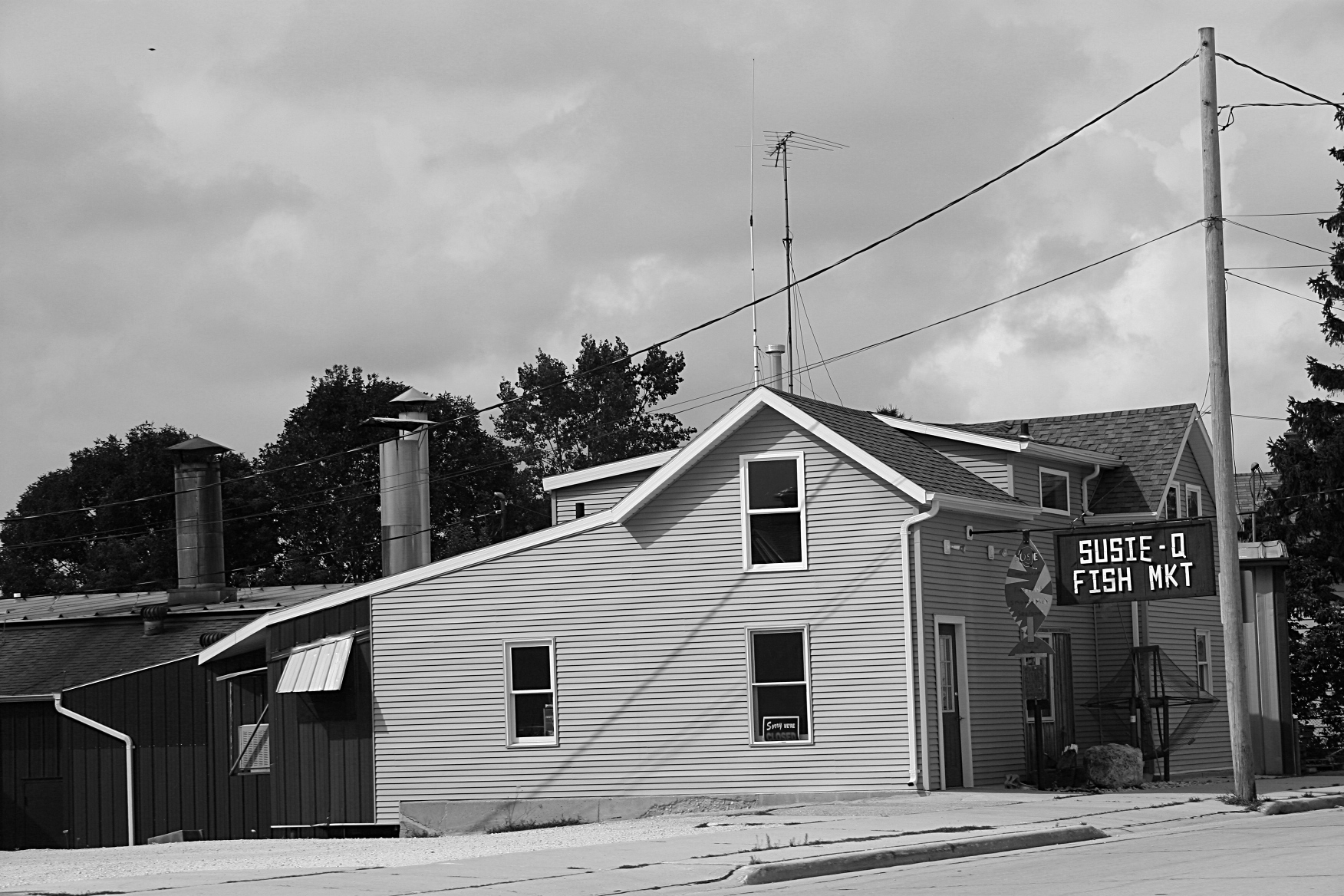
Although I didn't stop at this fish market, the exterior charmed me.

The exterior of Susie-Q Fish Market charmed me.

Today I long to return to Two Rivers 356 miles to the east. But for this moment, viewing photo memories must suffice to lift my winter weary spirits, to erase the doom and the gloom and the visual of the snow which is falling here again this morning.

I will imagine for this day that I am among the good folks of Two Rivers, in a community where optimism, faith and good news prevail.

BONUS PHOTOS:

A snippet of small town life inside the Washington House.

A snippet of small town life inside the Washington House.

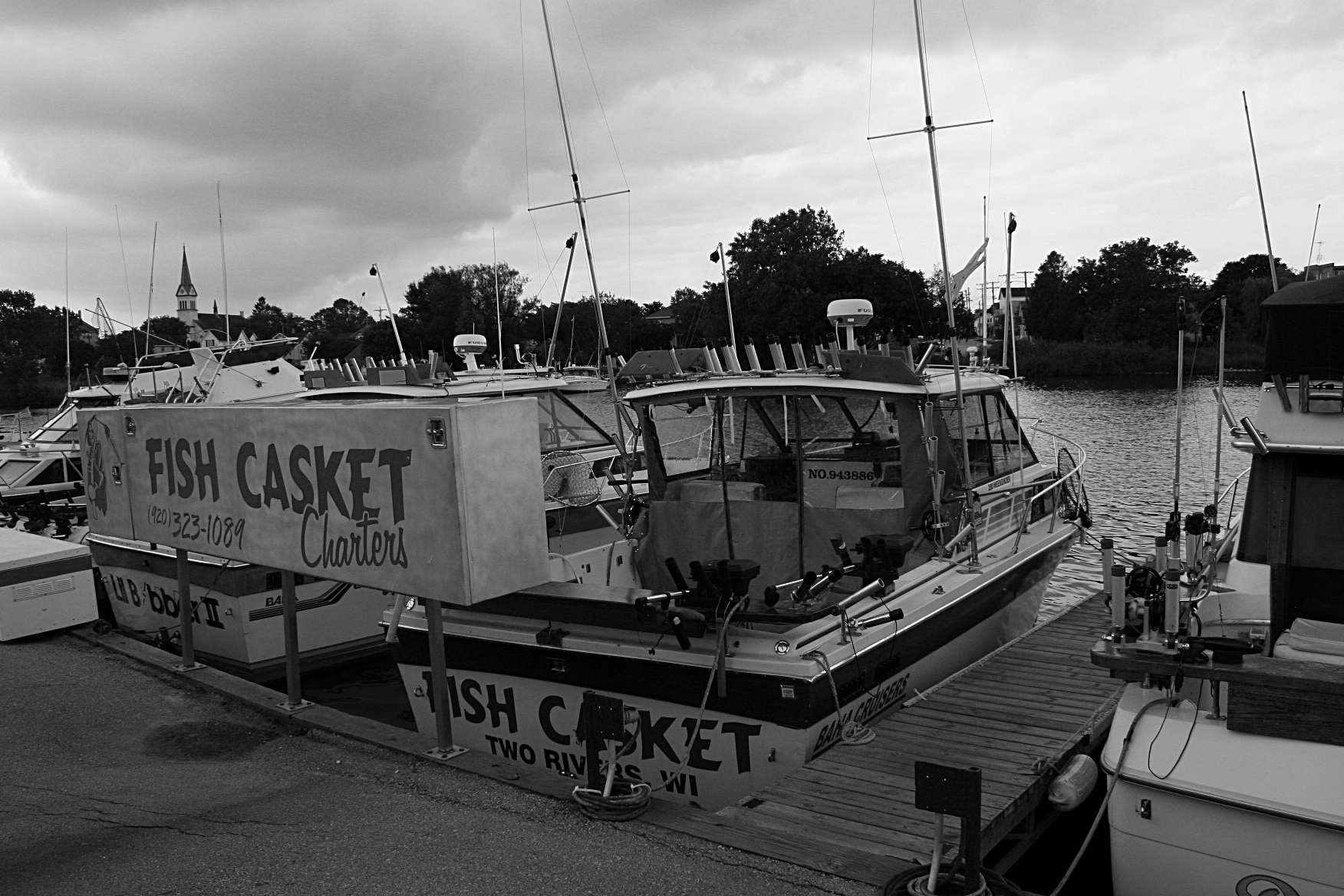
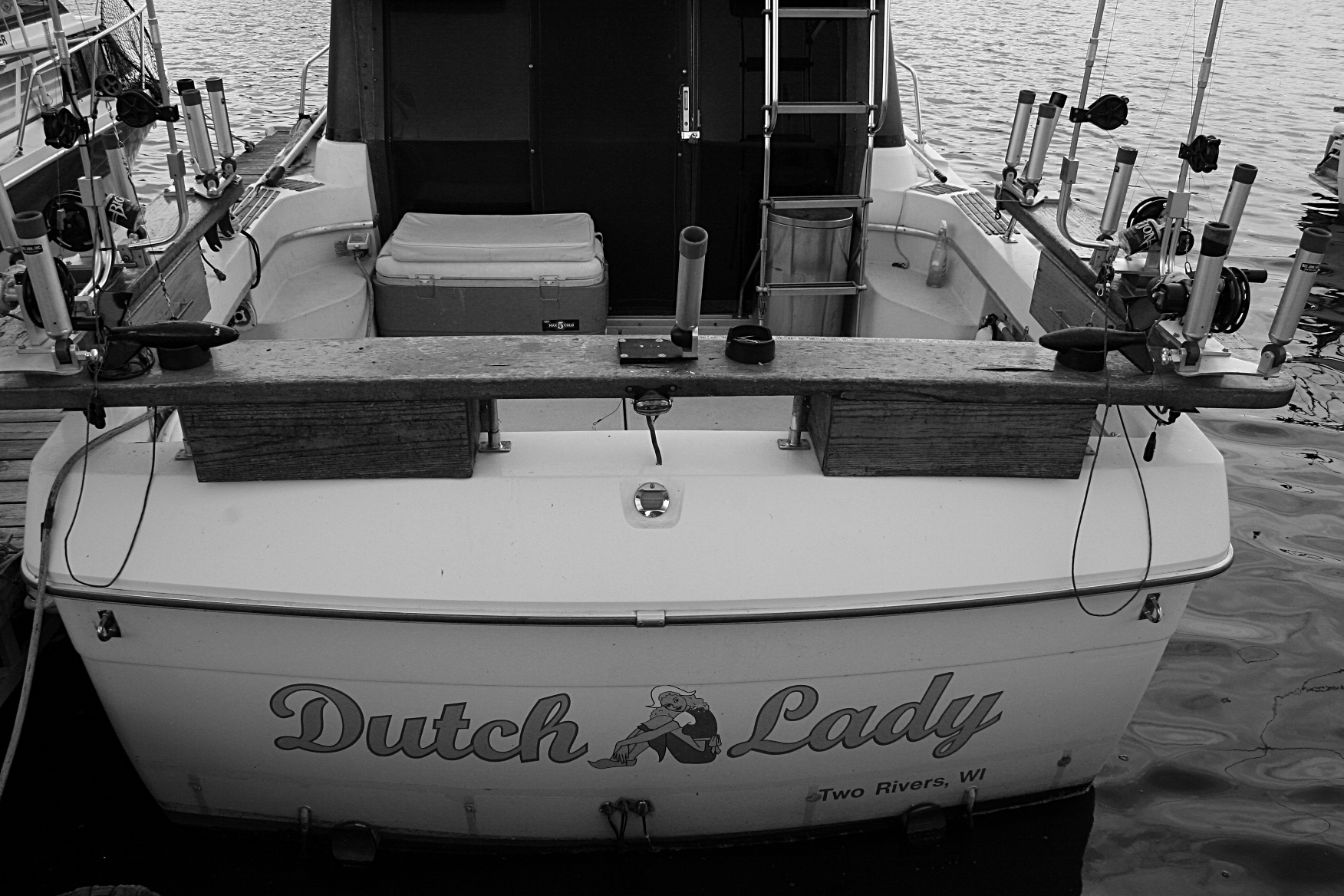
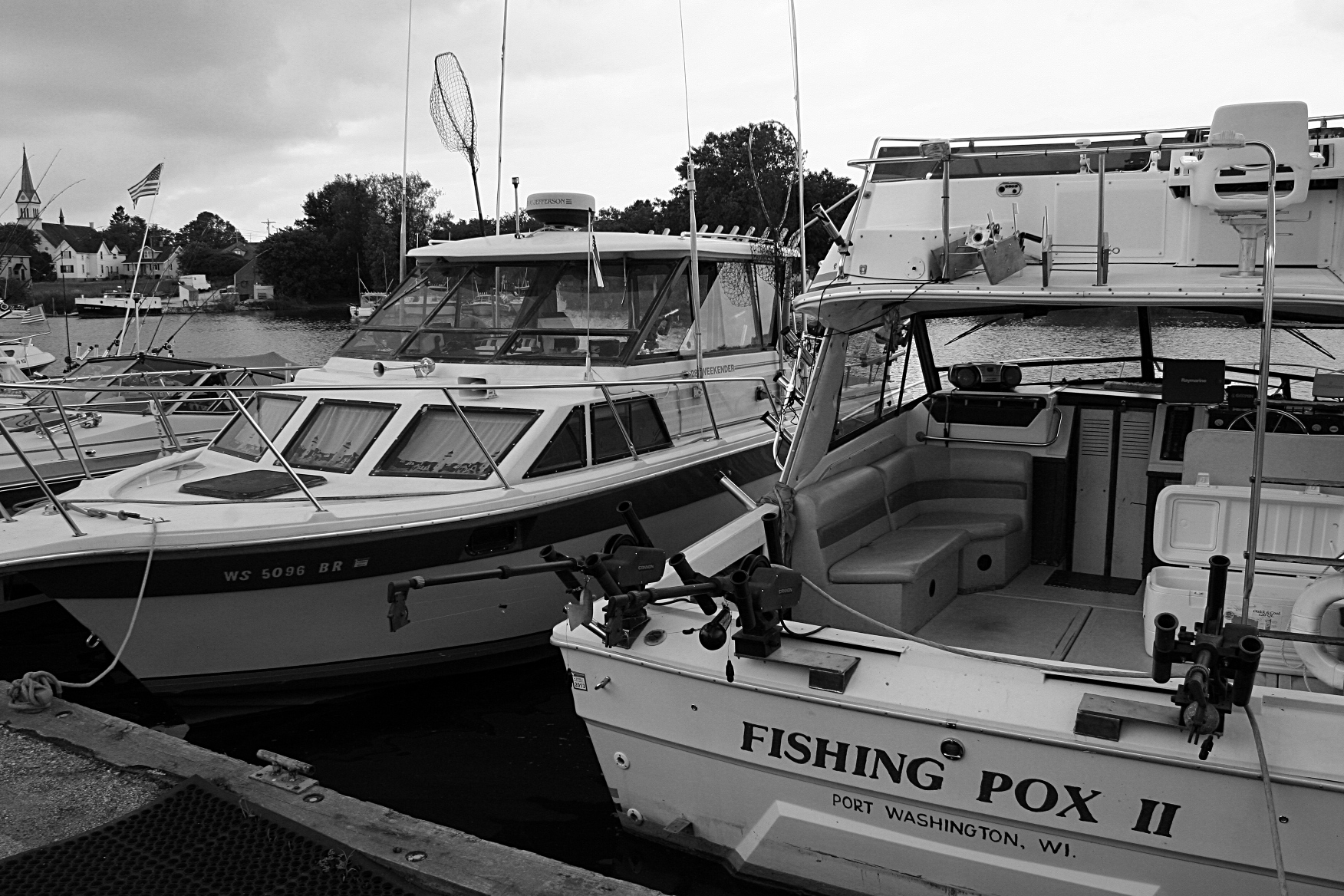
I was amused by the names of the docked boats.

I was amused by the names of the docked boats.

The Dutch Lady

Dutch Lady

Why would you name your boat Fishing Pox

Why would you name your boat Fishing Pox II? Is there a Fishing Pox I?

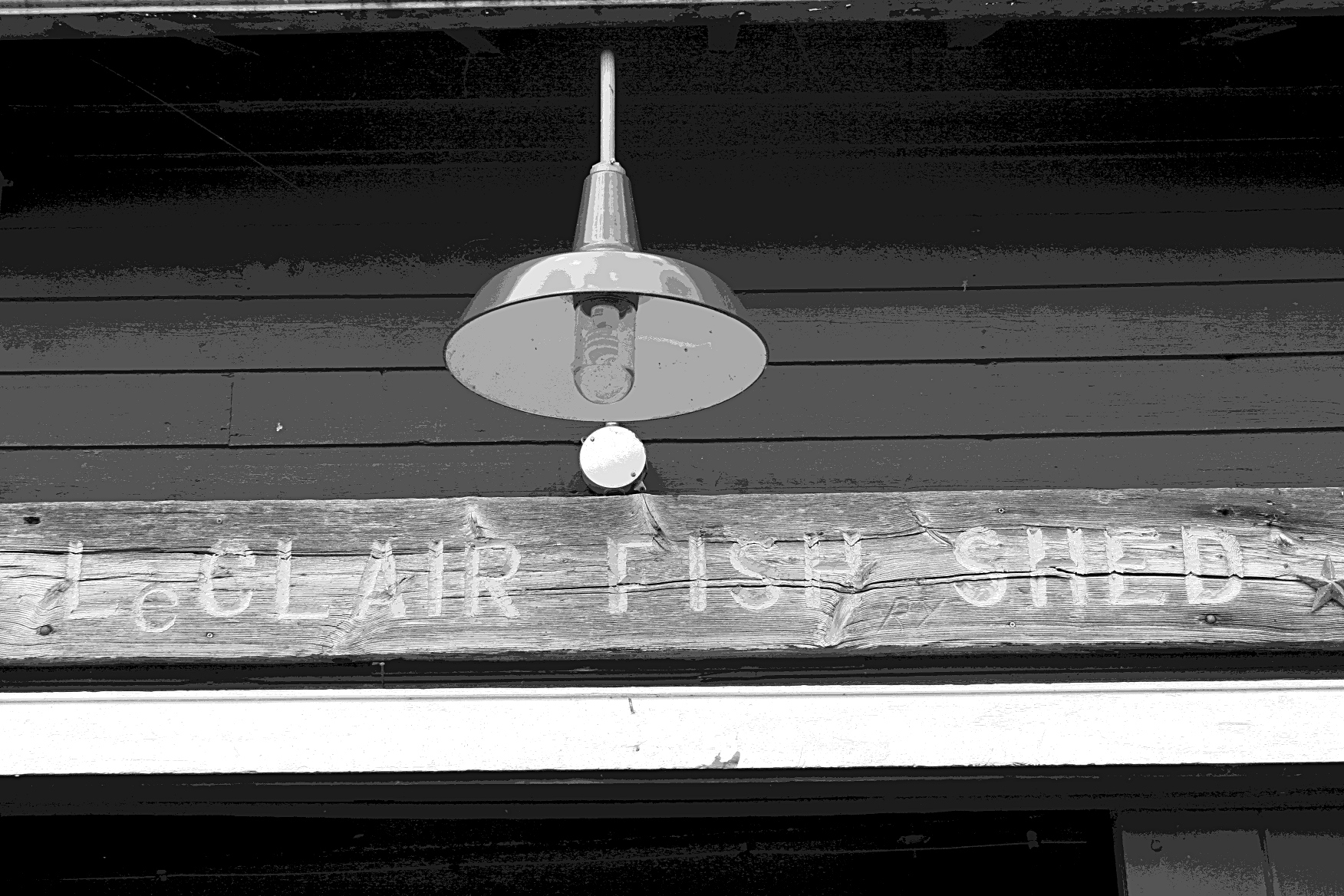
A simple fish shed sign in the fishing village.

A simple fish shed sign in the fishing village.

© Copyright 2013 Audrey Kletscher Helbling


Sweet finds in Montgomery, Part V: Pizza and Big Honza April 15, 2013

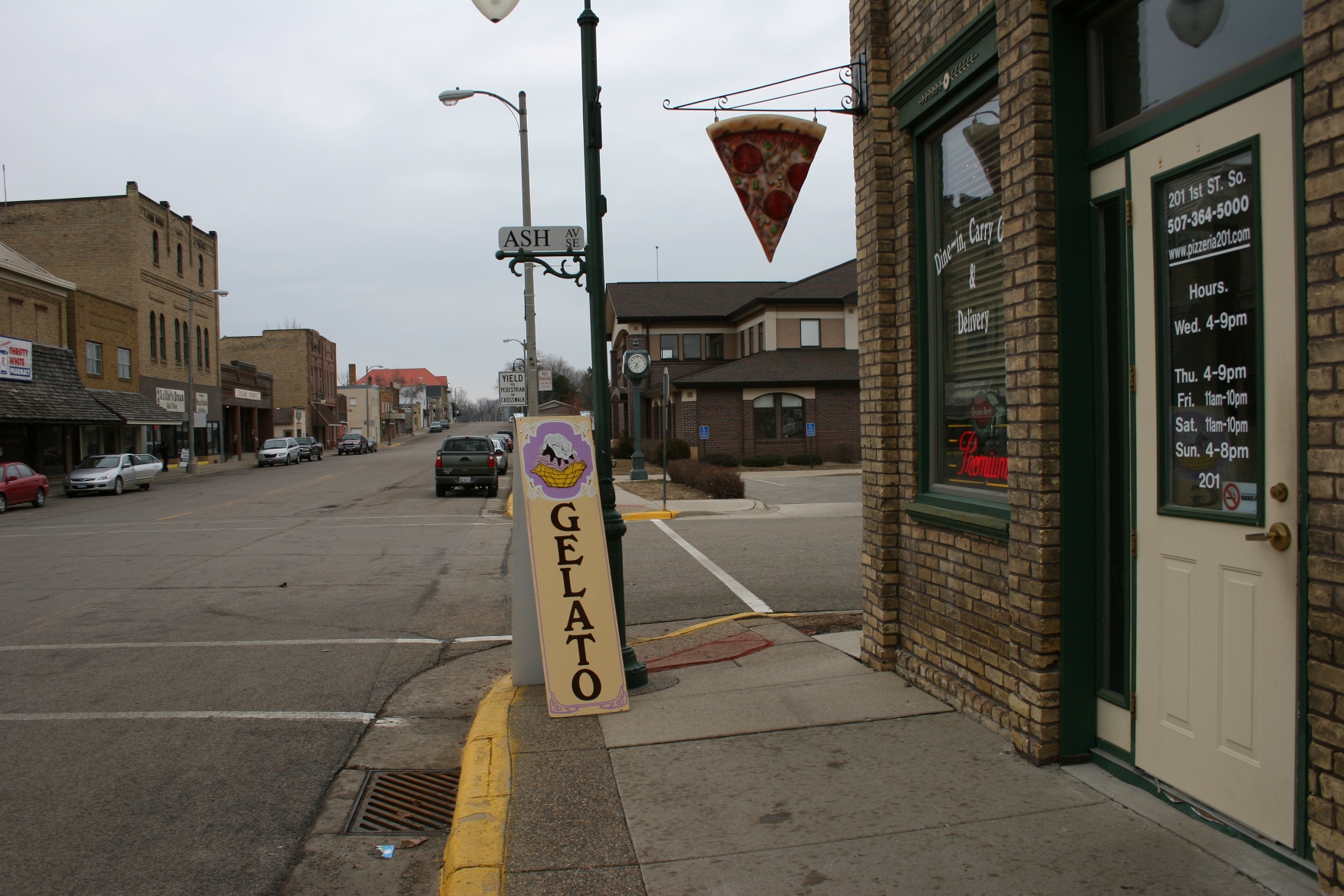
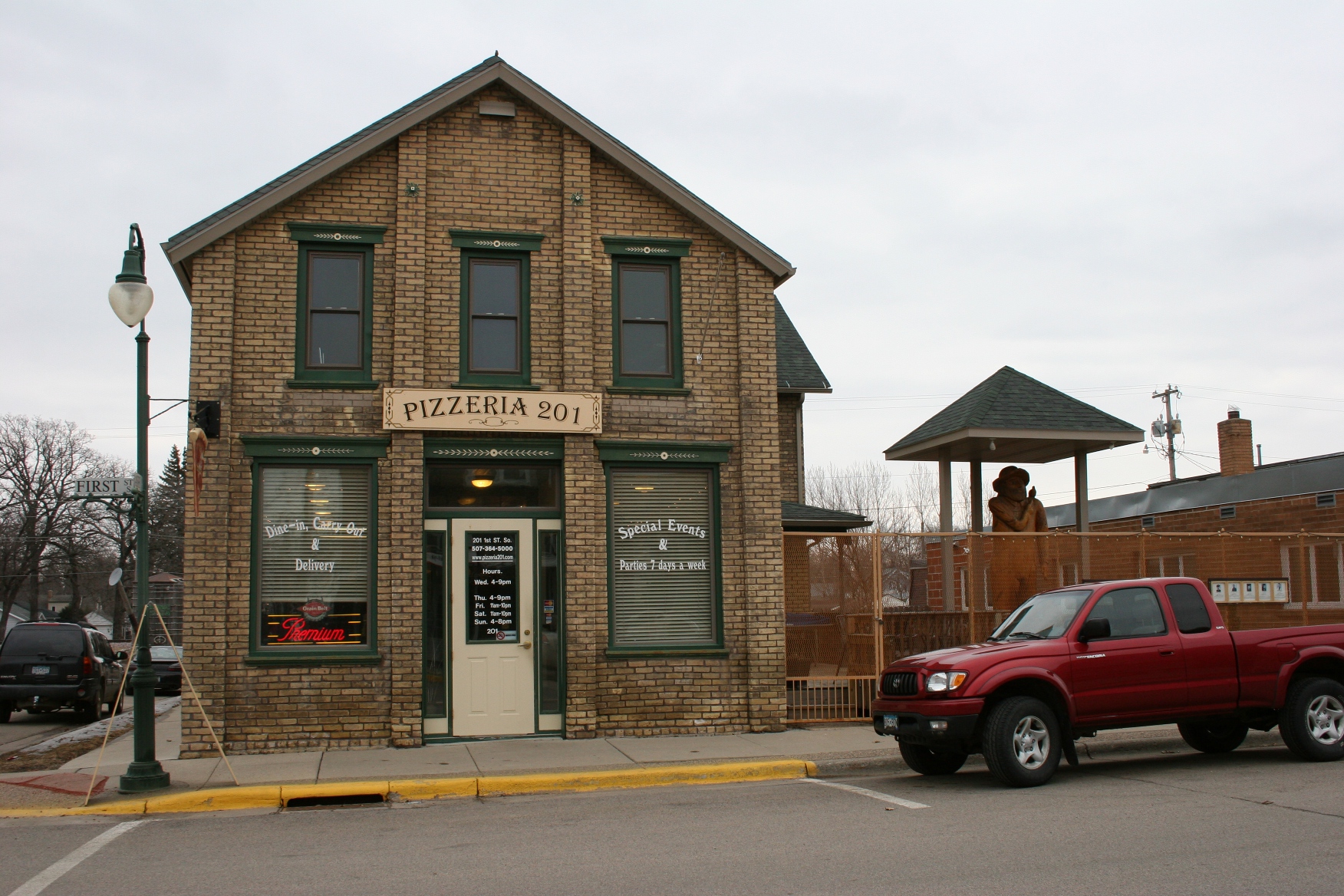
Pizzeria 201 is located at 201 First Street South in downtown Montgomery.

Pizzeria 201, right, is located at 201 First Street South in downtown Montgomery.

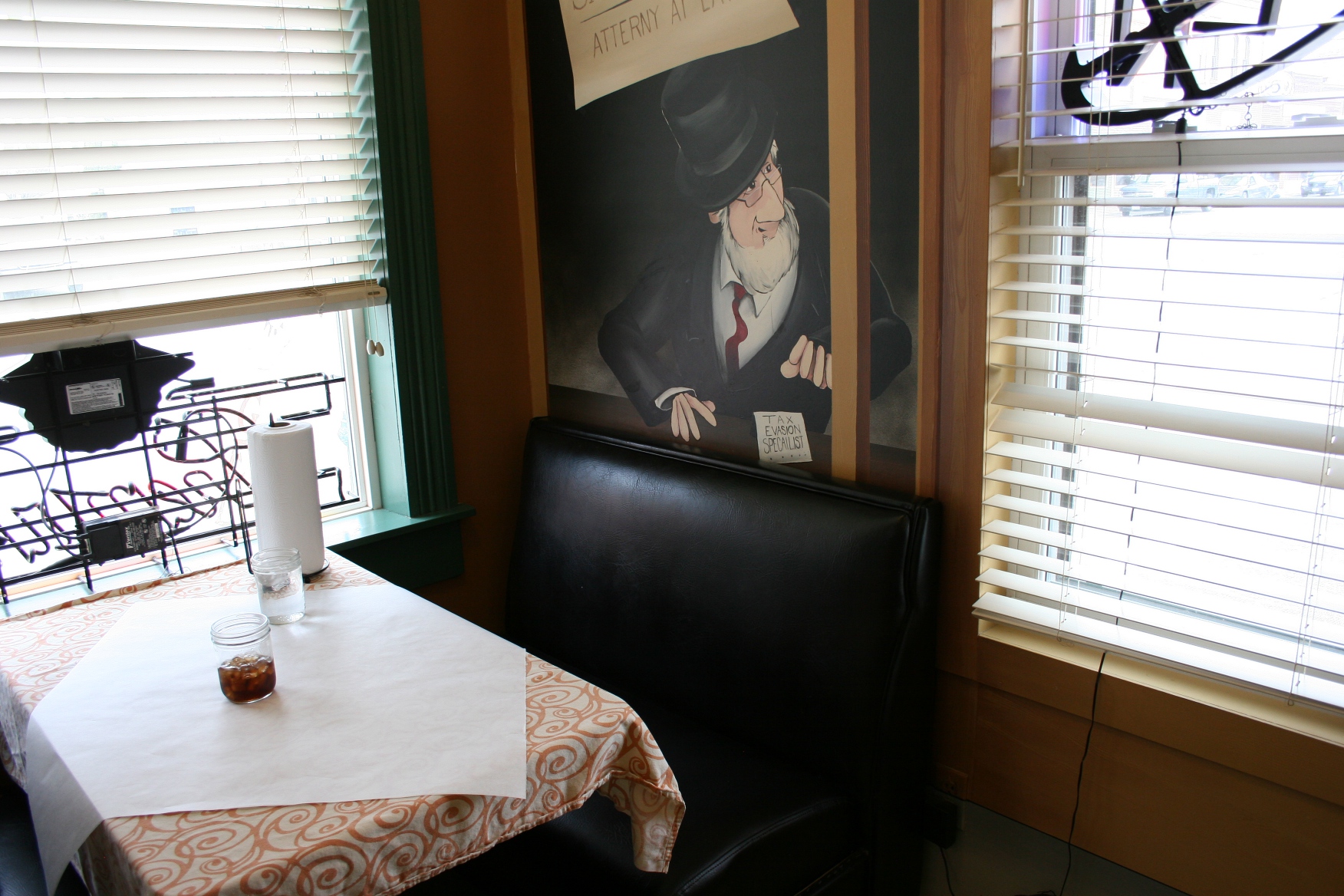
SETTLED INTO A FRONT corner booth at Pizzeria 201 in downtown Montgomery, my husband and I watch the comings and goings at Franke’s Bakery as we wait for our Flamin’ Bleu pizza.

Our corner booth.

Our corner booth.

The popular Czech bakery is one busy place on a Saturday afternoon, as is the Pizzeria, 201 First Street South. After a few hours of perusing downtown shops, with an earlier stop at the bakery, we are hungry and ready to try out this recommended eatery.

Although I would have selected a pizza loaded with vegetables, I agree to the Flamin’ Bleu suggested by my not-so-veggie-lovin’ spouse.

“You do know it has celery and onions on it, don’t you?” I ask.

Although tasty, Flamin' Bleu was not quite what Randy expected. He expected chunks of bleu cheese topping the pizza. But then we are bleu cheese fanatics with award-winning bleu cheeses produced in our home community of Faribault.

Although tasty, Flamin’ Bleu was not quite what Randy expected. He envisioned chunks of bleu cheese topping the pizza. But then we are bleu cheese fanatics with award-winning bleu cheeses produced in our home community of Faribault. We have high expectations with bleu cheese.

He does, but orders anyway, drawn in by the Gorgonzola, hot buffalo sauce, buffalo chicken and bleu cheese crumble toppings. Pizzeria offers a wide variety of pizzas from the classic pepperoni to Hog Heaven, German (topped with sauerkraut) and more, plus several dessert selections. The beef and pork toppings come from a Le Sueur County family farm.

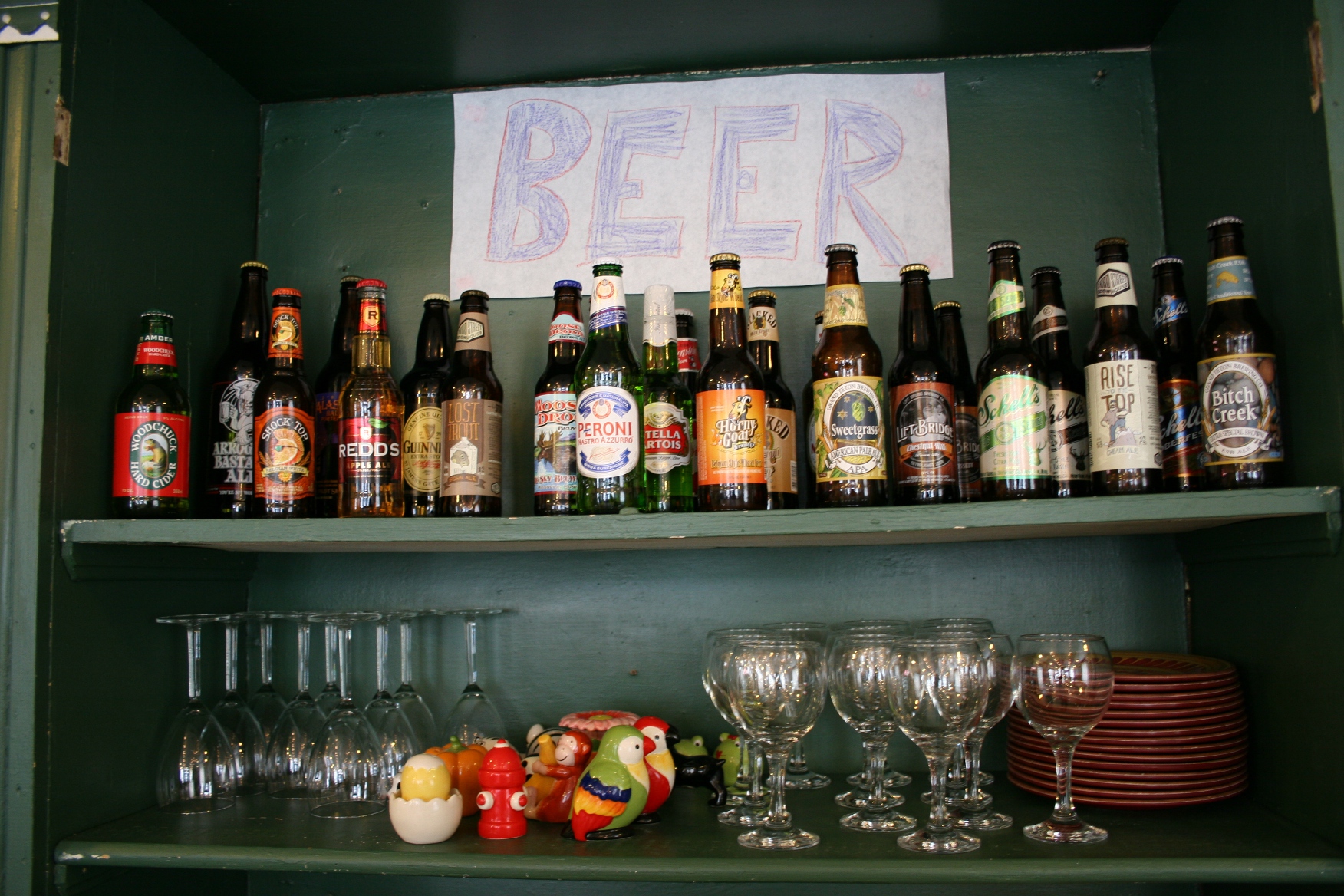
Pizzeria 201 also has occasional wine tour and beer tastings.

Pizzeria 201 also has occasional wine tour and beer tastings.

Not hungry for pizza? The restaurant also offers sandwiches, calzones, soups and salads and pasta dishes.

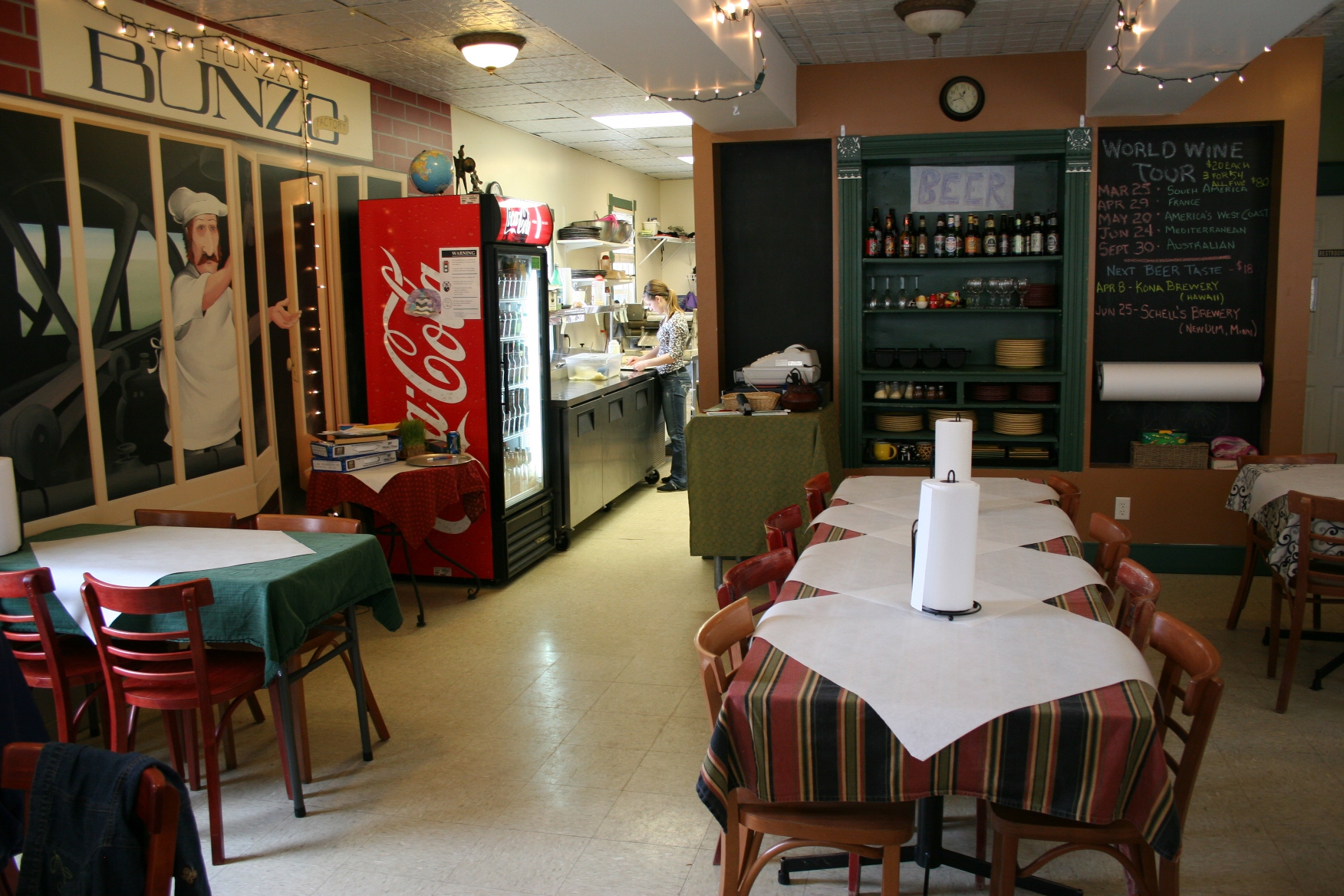
Pizzeria's inviting space.

Pizzeria’s inviting space.

While I snap photos, Randy orders, afterward sharing that the waitress asked whether he wanted our pizza sliced in squares or triangles. Neither of us can ever remember being asked that at a pizza place. Quite thoughtful, really.

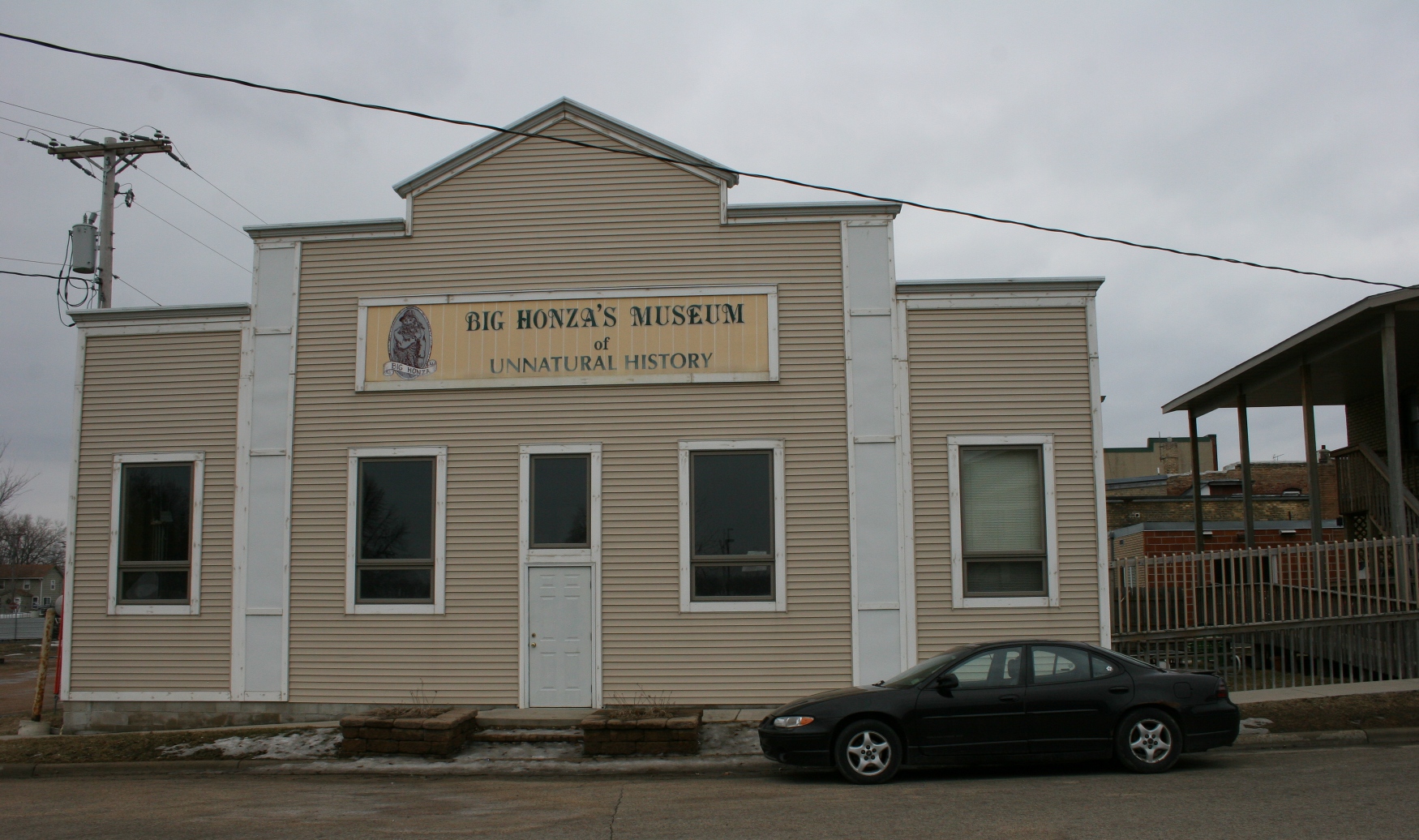
Big Honza's Museum of Unnatural History, right behind Pizzeria 201.

Big Honza’s Museum of Unnatural History, right behind Pizzeria 201.

Also, when I inquire whether we can get into Big Honza’s Museum of Unnatural History, right next door, the waitress agrees to open up for us when we finish our pizza.

That's the carving of Big Honza Giganticzech, to the right of Pizzeria 201.

That’s the carving of Big Honza Giganticzech, to the right of Pizzeria 201.

So after eating a portion of our Flamin’ Bleu sliced in triangles and served with beverages poured in pint jars, we exit the Pizzeria and walk around the corner to view Montgomery’s version of Paul Bunyan Land. An over-sized wood carving of Big Honza Giganticzech stands next to the pizzeria.

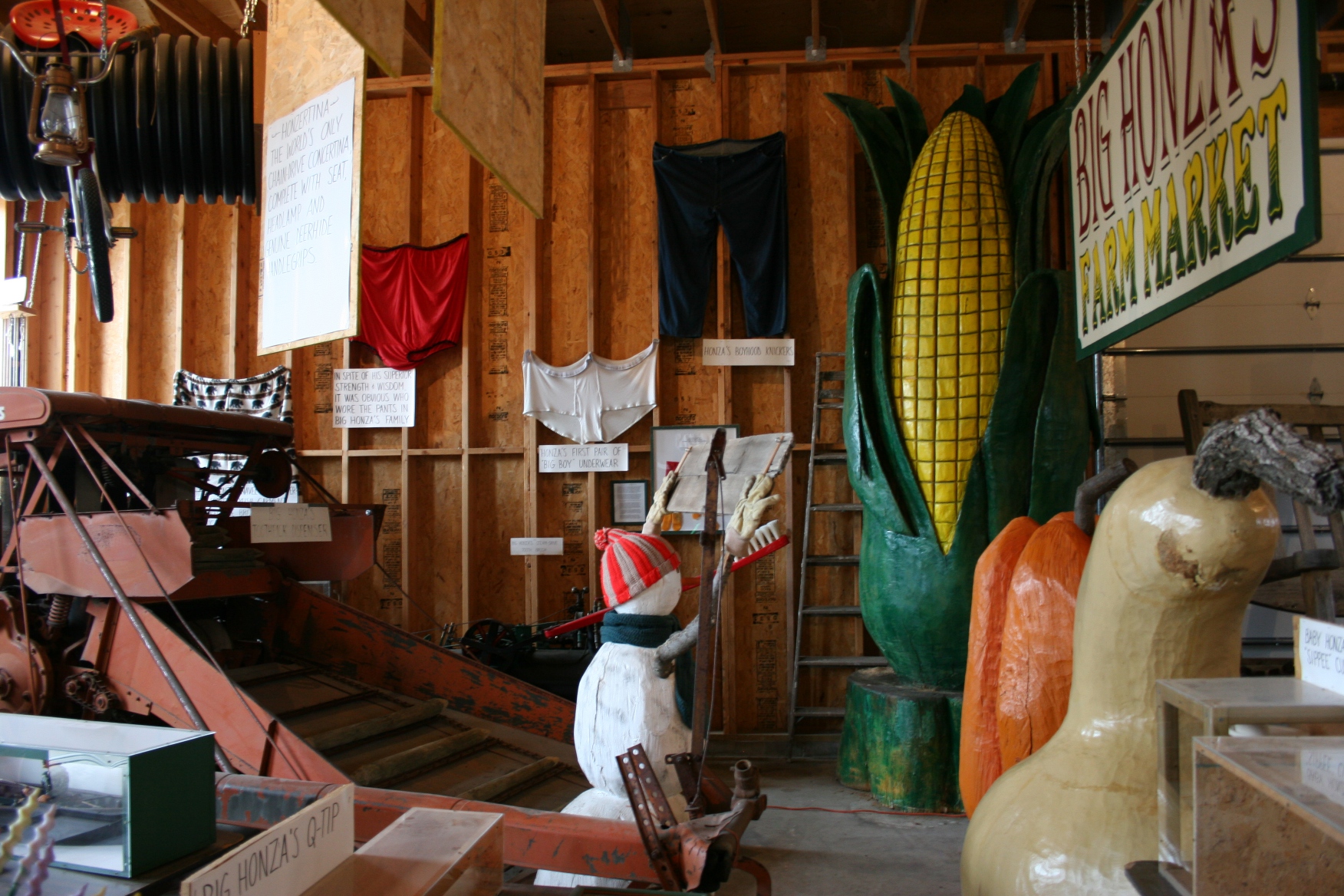
During our self-guided tour in the unheated museum, we meander past an assortment of Big Honza oddities assembled by area resident John Grimm, owner of Hilltop Hall, Montgomery’s arts and cultural heritage center. You just have to laugh at this humorous collection of weird stuff.

A snippet of what you will see in the museum, including Big Honza's Farm Market, a nod to the local canning company.

A snippet of what you will see in the museum, including Big Honza’s Farm Market, a nod to the local canning company.

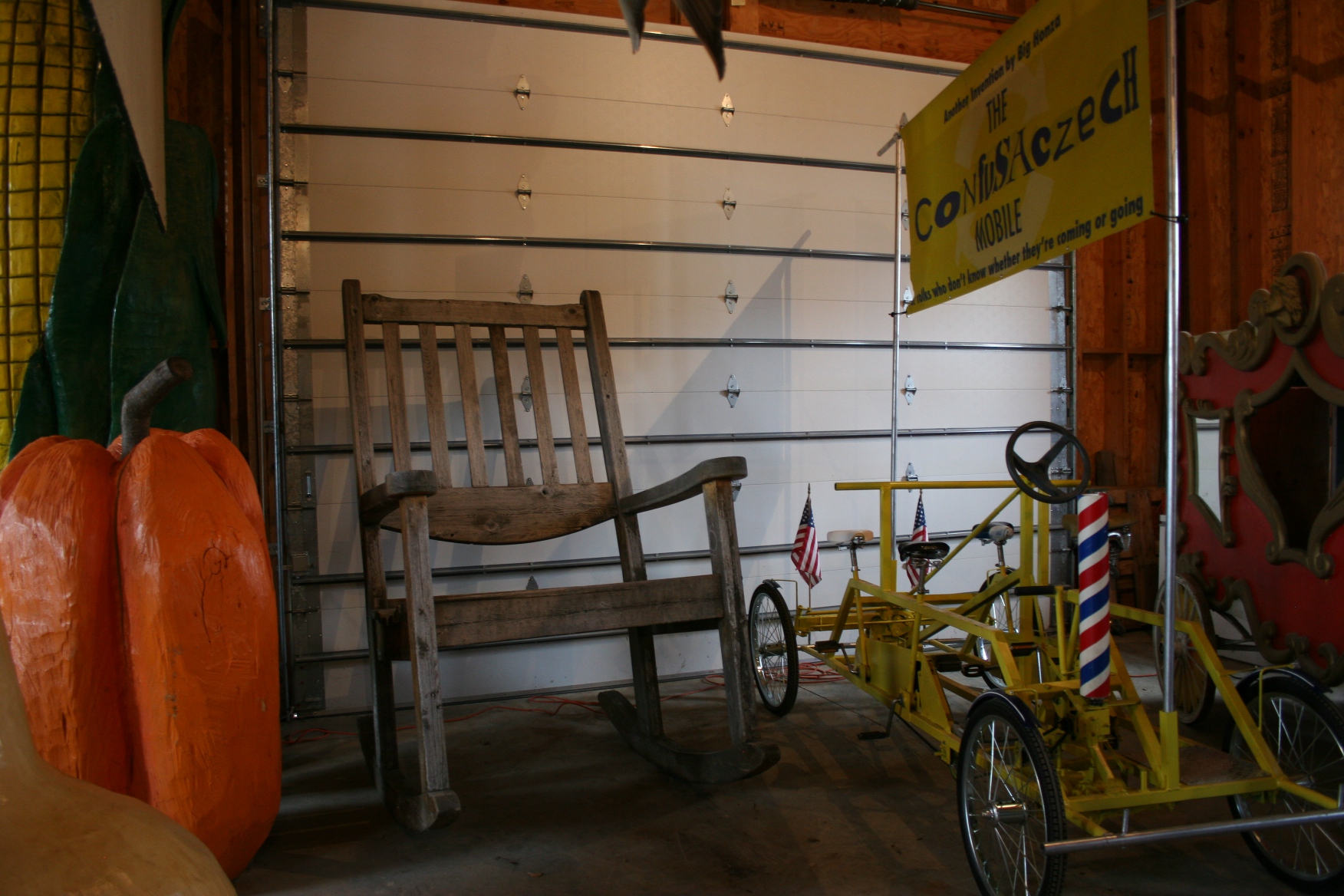
Big Honza's chair and more.

Big Honza’s chair and more.

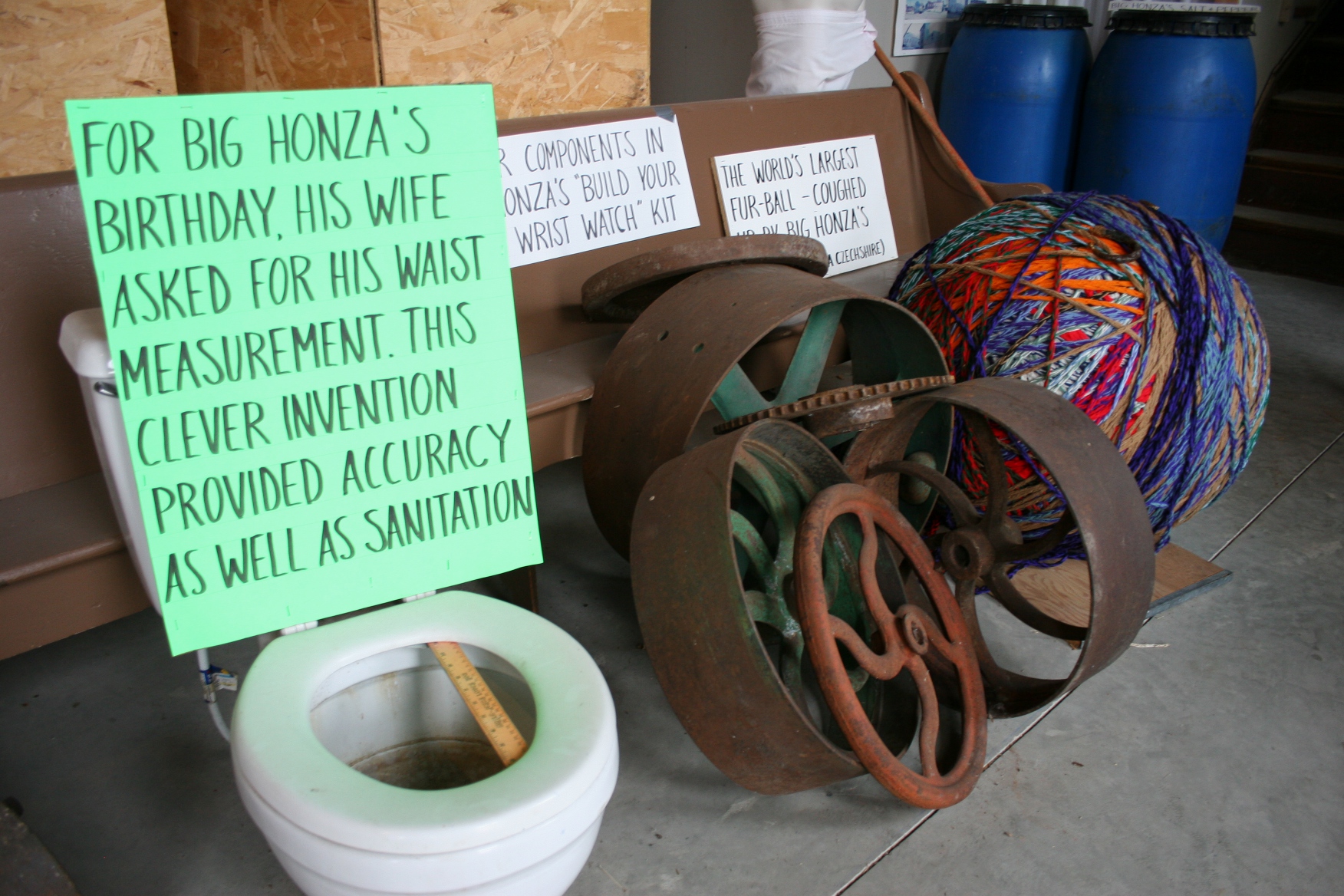
Potty humor.

Potty humor.

On that note, this ends our tour of Montgomery. I’d encourage you, if you haven’t already done so, to read my entire series of stories (April 7 to today) from this south-central Minnesota Czech community of some 3,000 known as The Kolacky Capital of the World. Also check out my archives of March 4 – 8 for previous posts from Montgomery.

The whole point of this series has been not just to showcase Montgomery. It is about highlighting small towns—anywhere. All too often we dismiss small towns or overlook them with the misconception they have nothing to offer. That is so far from the truth. Every town has businesses, venues, people and events which define it as some place special.

I challenge you to look in your backyard for those places. If you live in the big city, venture out to a rural area. If you live in a small town or medium-sized city, drive to a nearby small town you’ve never explored.

If you’ve already done this sort of thing, shoot me a comment and share those small-town gems you’ve discovered. I’d love to hear from you.

© Copyright 2013 Audrey Kletscher Helbling
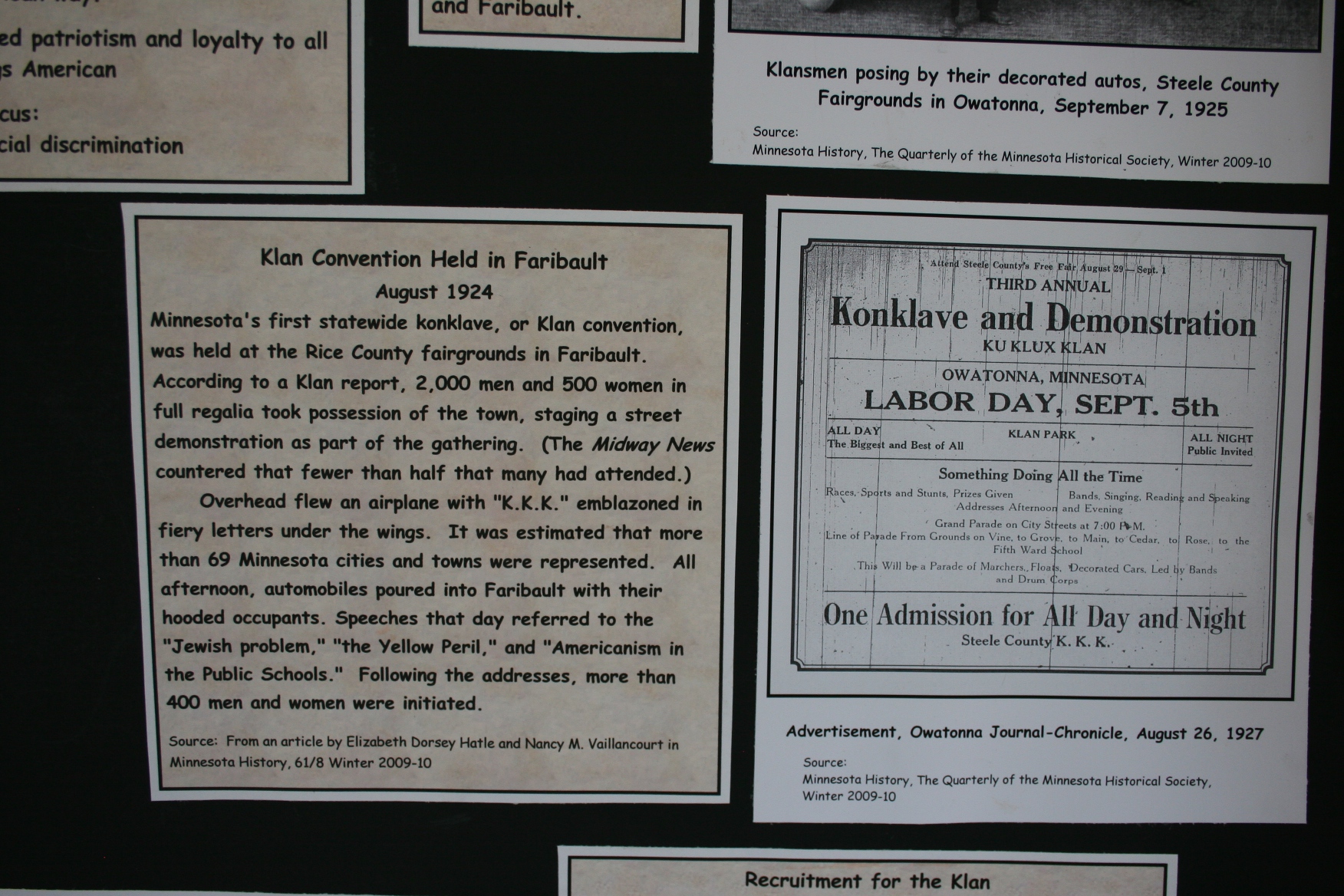
 

Sweet finds in Montgomery, Part IV: Discovering LaNette & Carol’s shops April 13, 2013

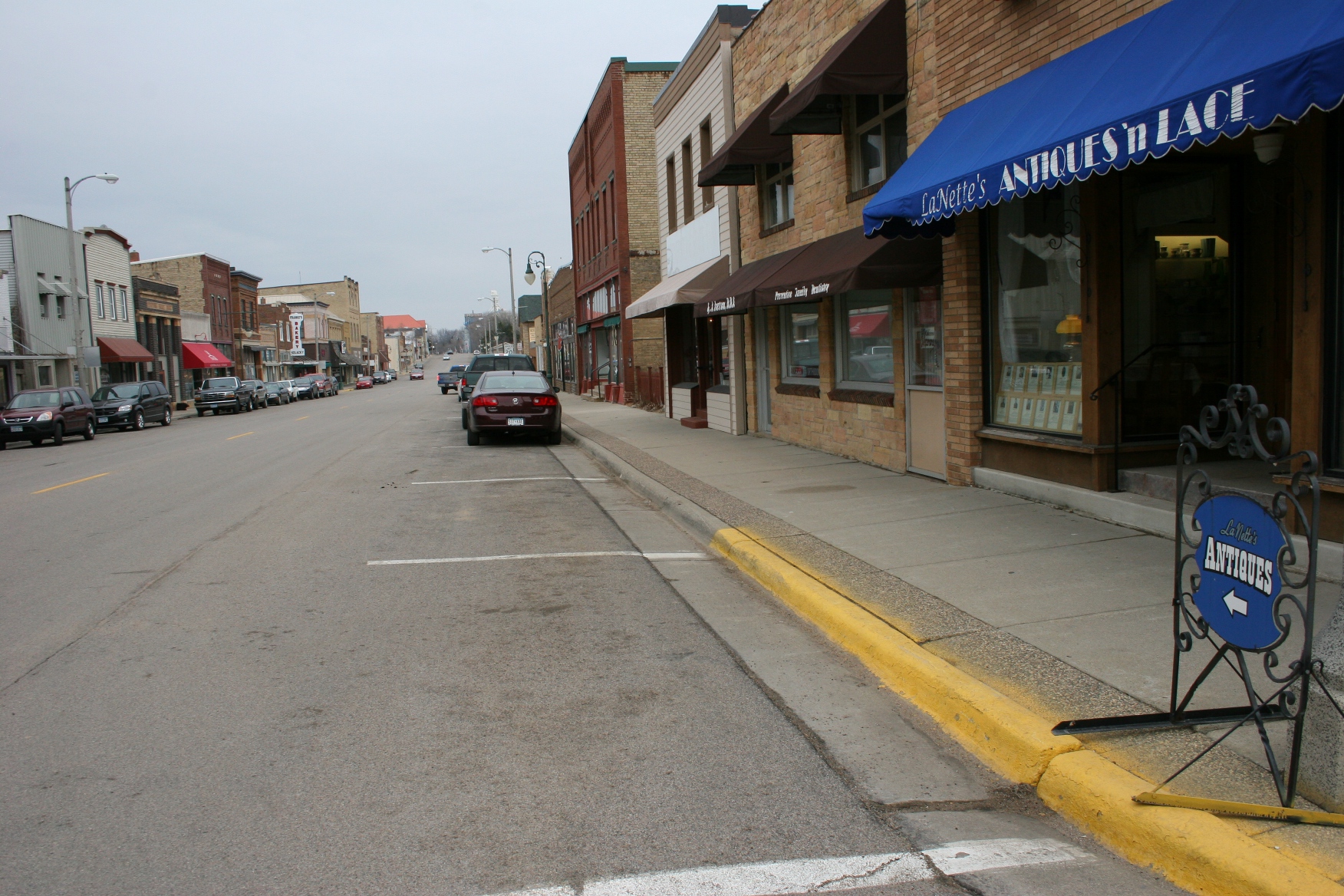
A shot of First Street in Montgomery with LaNette's on the right.

A shot of First Street in Montgomery with LaNette’s on the right.

YOU NEED ONLY STEP inside LaNette’s Antiques ‘N Lace to experience her passion for antiques, window treatments, chocolate and coffee.

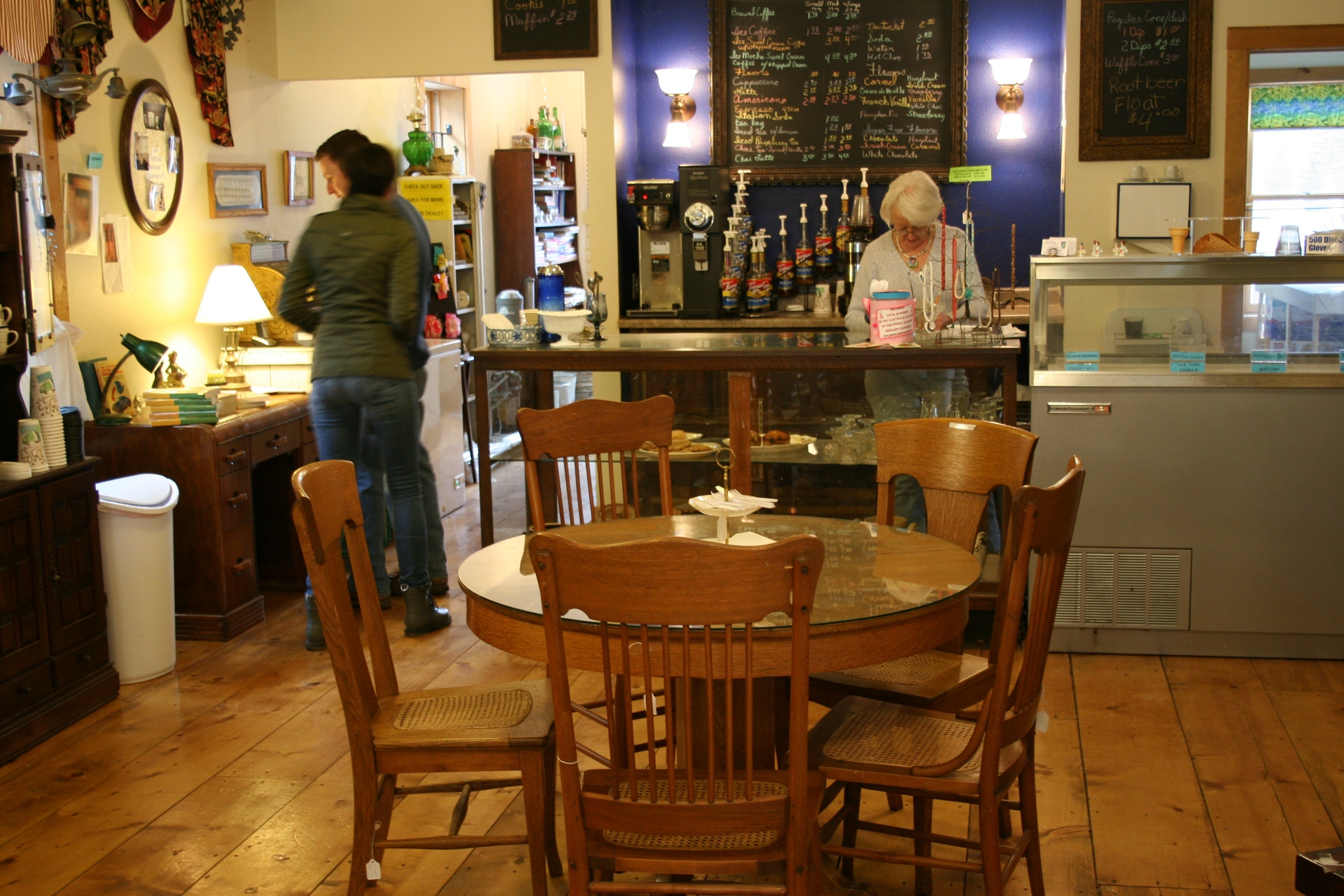
Shoppers can relax with a cup at a table and then buy the table and chairs if they wish. Note the beautiful wood floor, which is not original to the store. LaNette bought some pine planks at the lumberyard to recreate the vintage look.

Shoppers can relax with a cup of jo or other treat at a table and then buy the table and chairs if they wish. Note the beautiful wood floor. LaNette bought pine planks at the lumberyard to stain and seal in creating the vintage look. Also notice samples of LaNette’s custom window treatments.

They’re all there in her inviting corner shop in downtown Montgomery which features everything from her customized window treatments to local artisan products to antiques and collectibles, plus coffee, tea, ice cream and chocolate.

That's LaNette behind the counter.

That’s LaNette behind the counter.

Add owner LaNette Kuelper’s friendly welcome—she’s a genuine people person—and you’ll feel like you’ve known her for years, although you’ve only just met her.

Shoppers can settle in and watch activity along First Street in this cozy corner of LaNette's shop.

Shoppers can settle in and watch activity along First Street in this cozy corner of LaNette’s shop.

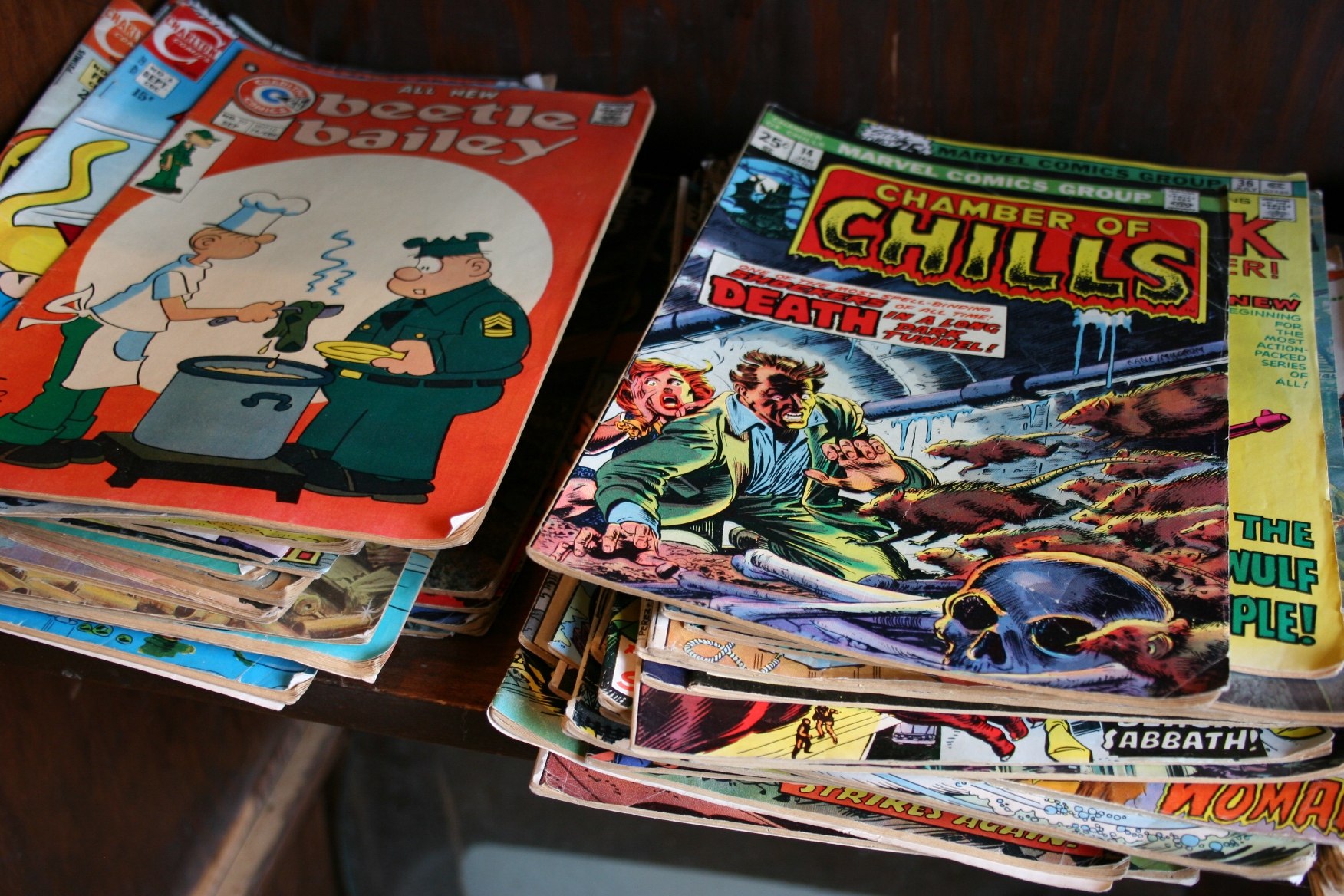
Colorful comic books found in a tiny back room of the store.

Colorful comic books found in a tiny back nook at LaNette’s.

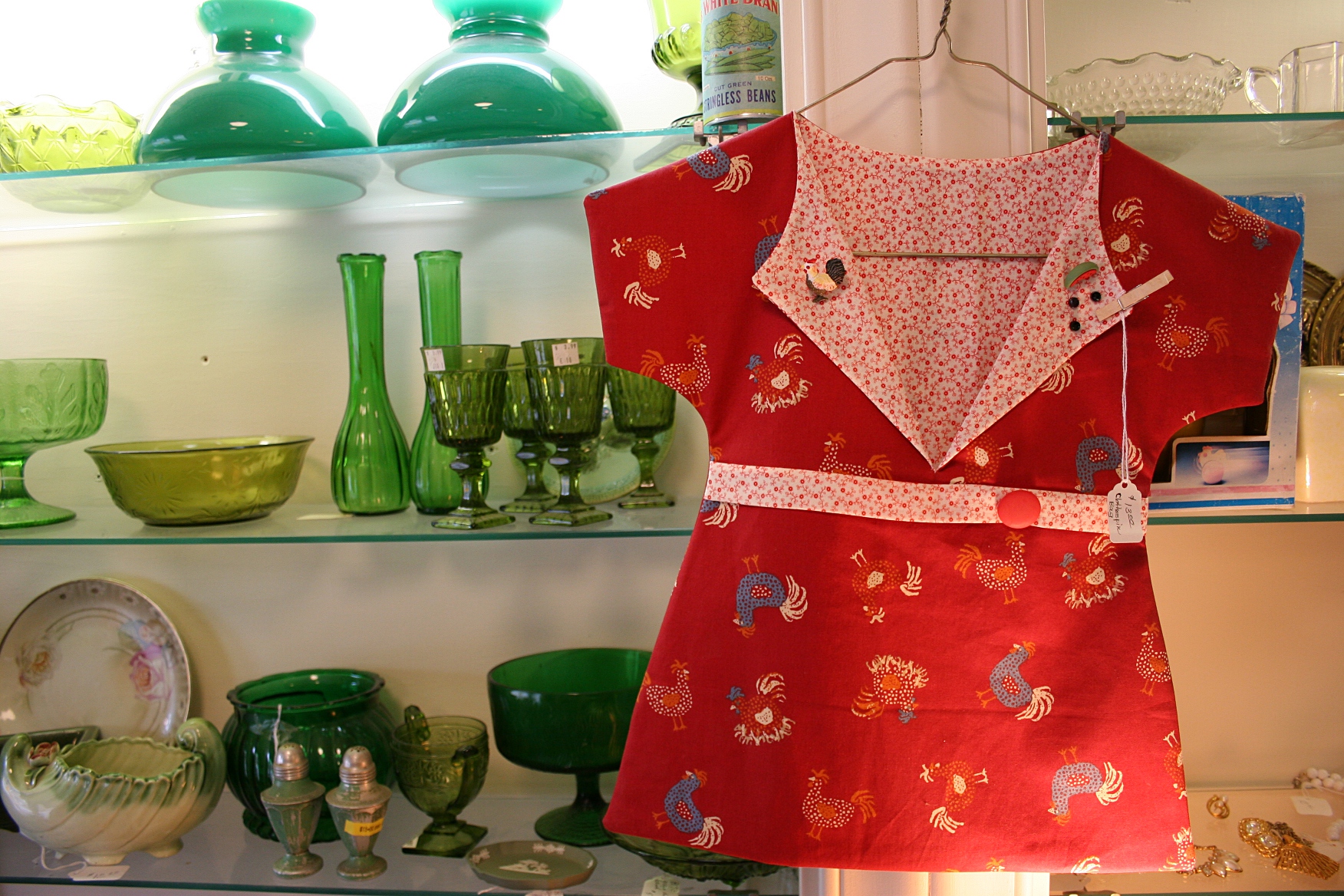
Vibrant handcrafted clothespin bags and glassware are among the merchandise offerings.

Vibrant handcrafted clothespin bags and glassware are among the merchandise offerings.

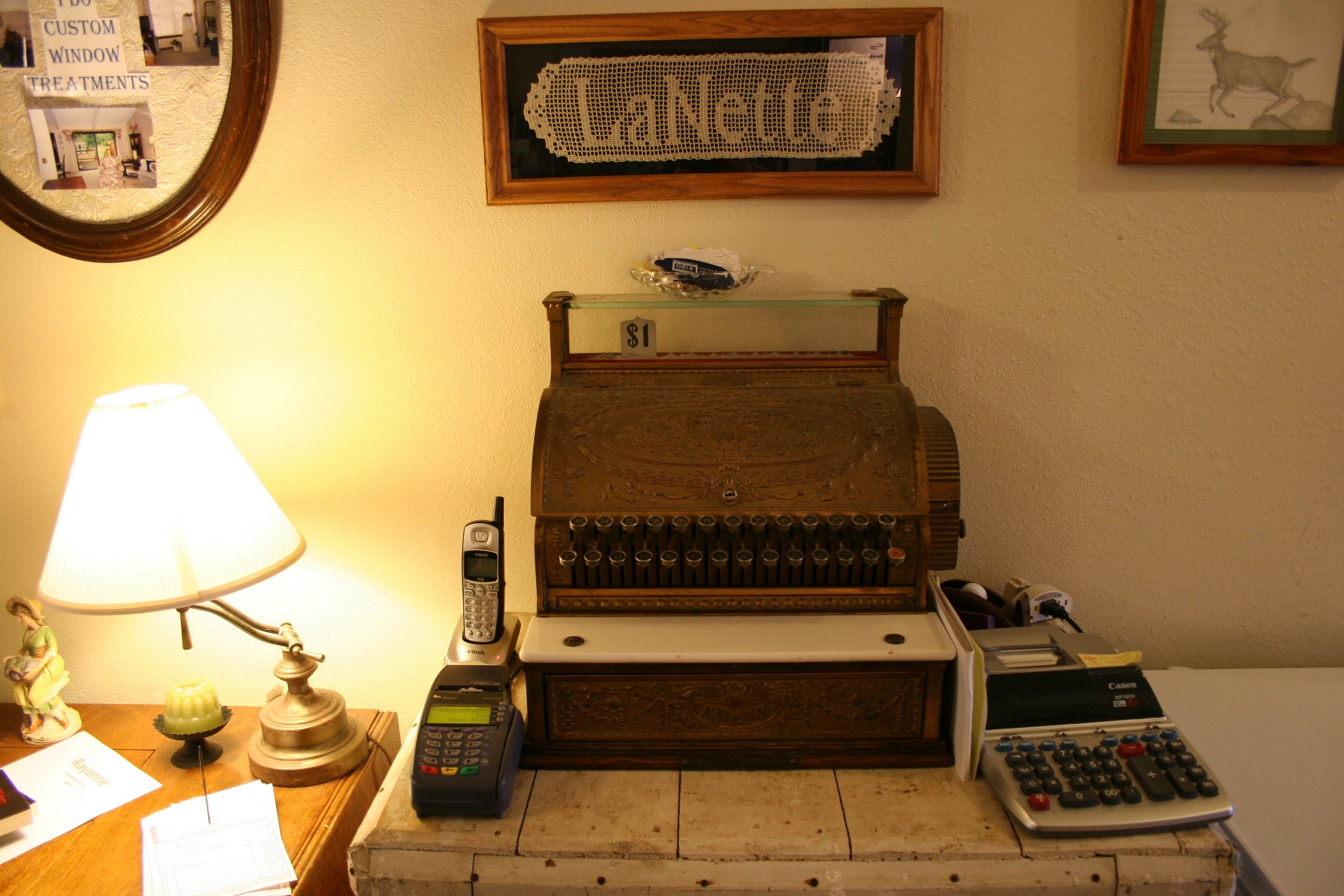
LaNette's delightful vintage cash register.

LaNette’s delightful vintage cash register.

LaNette is among the array of hospitable shopkeepers my husband and I met on a recent Saturday visit to this south-central Minnesota community of some 3,000 known as The Kolacky Capital of the World, tracing to the area’s rich Czech heritage.

The presence of the Czech heritage is so strong here that Montgomery celebrates with an annual summer Kolacky Days celebration, hosts the annual Miss Czech Slovak MN Pageant and is home to a Czech import shop.

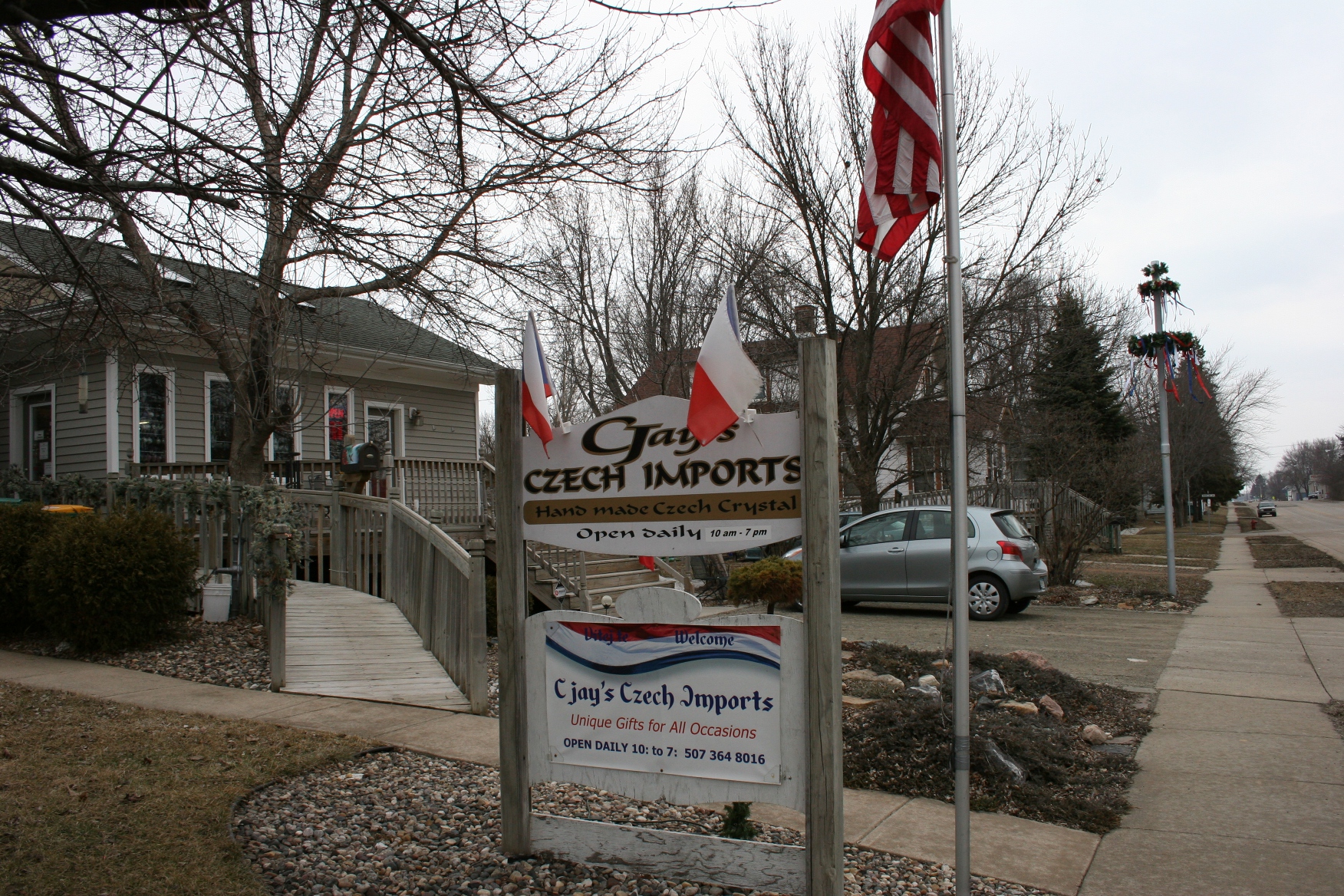
Cjay's Czech Imports, 506 Fourth St. S.W.

Cjay’s Czech Imports, 506 Fourth St. S.W.

At Cjay’s Czech Imports, we met owner Carol Kotasek, raised by her Czech grandmother and fluent in Czech. You can hear a hint of dialect in her speech, a comforting connection to The Old Country.

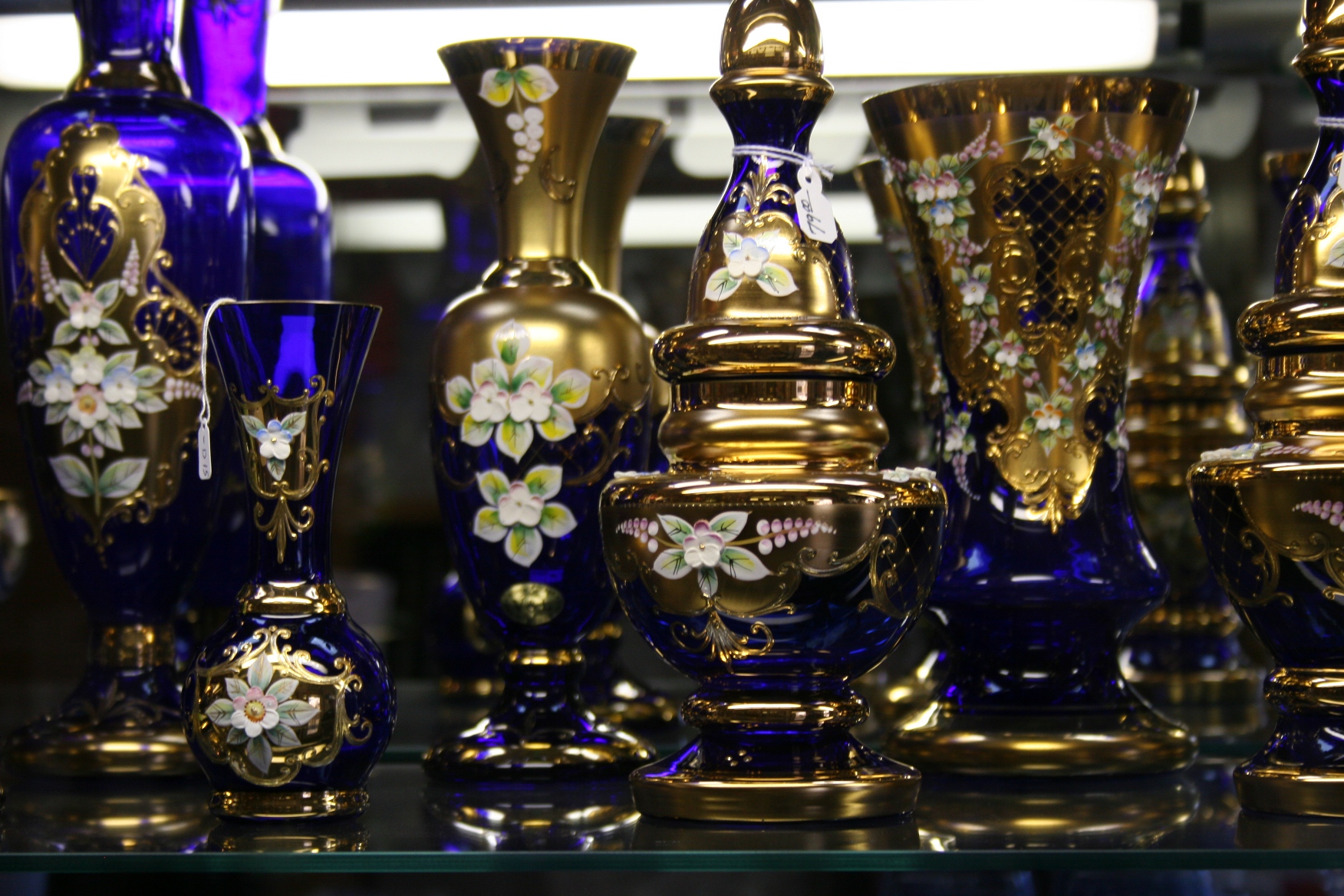
Beautiful glassware imported from the Czech Republic.

Beautiful glassware imported from the Czech Republic.

Carol regularly travels to the Czech Republic to purchase the handcrafted artisan merchandise which graces her cozy shop on the southwest side of Montgomery along Minnesota State Highways 13/21. She knows her artists by name—Bohunka, Myška, Krupička…

Being 100 percent German, and once fluent in Deutsch, I find the names foreign. Carol must spell the names, pointing out the accent marks above consonants.

There’s something particularly endearing in this exchange—the spelling of unfamiliar names, the hint of dialect, Carols’ appreciation of fine Czech craftsmanship—that touches my soul. That we should all cherish our heritage with such passion.

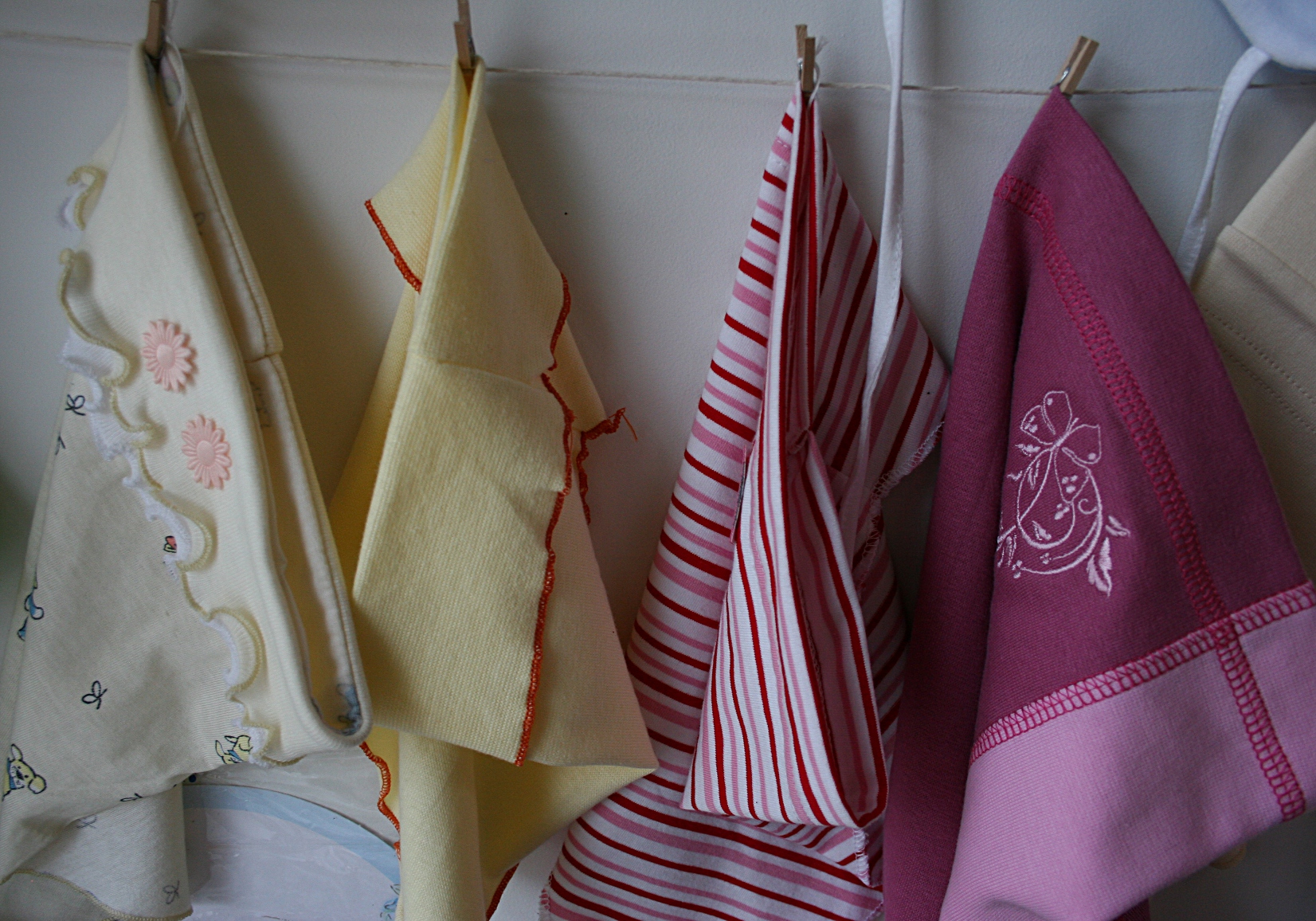
Caps popular with Czech girls.

Caps which are very popular with little girls in the Czech Republic.

Handcrafted toys and information about the craftsman from the Czech Republic.

Handcrafted toys and information about the craftsman from the Czech Republic.

More stunning Czech artisan glassware.

More stunning Czech artisan glassware.

FYI: Cjay’s Czech Imports, 506 Fourth St. S.W., is open daily from 10 a.m. – 7 p.m. Click here to link to the store’s website.

LaNette’s, 225 First St. S., is open from 6 a.m. – 6 p.m. Monday – Thursday and from 6 a.m. – 3 p.m. Friday – Saturday. Closed Sunday. Click here to reach LaNette’s Facebook page.

Please check back for one final post from Montgomery. I’ll take you to a local pizza place and inside a one-of-a-kind museum. If you have not read my earlier posts, go back to Sunday and start reading about Montgomery. Also check my March 4 – 8 archives for stories published after a previous visit.

© Copyright 2013 Audrey Kletscher Helbling


Sweet finds in Montgomery, Part III: Inside the bakery & the drugstore April 12, 2013

Franke's Bakery opened in 1914.

Franke’s Bakery opened in 1914.

NO VISIT TO MONTGOMERY would be complete without a stop at Franke’s Bakery, noted for kolacky, a fruit-filled (or poppy seed-filled) pastry beloved by this community of mostly Czech descendants.

One busy place on a Saturday.

One busy place on a Saturday. To the left, Jule Franke and Mary Ann Kaisersatt work the counter.

In business for 99 years, this bakery bustles with customers dropping in for sweet treats, breads and coffee room chat.

This 18-month-old Montgomery resident stopped in with her dad, grandma and sister for a treat Saturday morning.

This 18-month-old Montgomery resident stopped in with her dad, grandma and sister for a treat Saturday morning.

“You just missed your dad,” noted a baker parceling out sweets to a customer on a recent Saturday morning. “I saw him on the street.”

The tiled exterior entry to Franke's with a sign on the lower part of the door reading: "Kolacky Days Celebration  Czechoslovakian American Heritage.

The beautiful exterior entry to Franke’s with a sign on the lower part of the door that reads: “Kolacky Days Celebration Czechoslovakian-American Heritage.” Montgomery celebrates Kolacky Days each July. You can bet this bakery is especially busy then preparing the ethnic pastry for the celebration.

Yes, this bakery, this south-central Minnesota community, is that kind of place, where everybody seemingly knows everybody and their whereabouts. And I mean that in the kindest of ways.

My Bavarian bismarck. FYI, Franke's ships its baked goods, so feel free to order. The bakery makes this promise: "We bake our breads and rolls fresh everyday the old fashioned way without all those preservatives.

My Bavarian bismarck. FYI, Franke’s ships its baked goods, so feel free to order. The bakery makes this promise: “We bake our breads and rolls fresh everyday the old fashioned way without all those preservatives.”

Randy and I bopped in for 75-cent bismarcks, mine Bavarian (custard-filled), his raspberry, before continuing our perusal of Montgomery’s downtown business district.

Posted on businesses throughout downtown Montgomery, you will find photos and military biios of veterans. This is the Montgomery Veteran's Project, a way of honor the town's veterans.

Posted on businesses throughout downtown Montgomery, you will find photos and military biios of veterans. This is the Montgomery Veteran’s Project, a way of honor the town’s veterans.

When I noticed the lovely floral sign marking Herrmann (how non-Czech is that name?) Drug, Cards & Gifts, I just had to stop at this local pharmacy and general merchandise store marketing everything from shampoo to kitchenware to gifts and Titans school apparel.

The drugstore sells Titans apparel for the local school.

The drugstore sells Titans apparel for the Montgomery-Lonsdale-Le Center school, Tri-City United.

My husband insisted I photograph these "made in China" towels from American Mills. He wants me to submit this to Jay Leno.

My husband insisted I photograph these “Made in China” towels from American Mills and sold at Herrmann Drug. He wants me to submit this to Jay Leno.

I was impressed with the selection; no need to run to some Big Box store when you have Herrmann Drug. And how lucky this town of nearly 3,000 is to have a pharmacy…and so much more.

Herrmann Drug's pharmacy is located at the rear of the store.

Herrmann Drug’s pharmacy is located at the rear of the store.

READERS: We’re not finished yet with our tour of Montgomery. Check back for two more posts. And if you missed my Montgomery stories from earlier this week, backtrack to Sunday and start reading.

To read a previous post on Franke’s Bakery, click here.

And to read about the Montgomery Veteran’s Project, click here.

© Copyright 2013 Audrey Kletscher Helbling


Sweet finds in Montgomery, Part II: Thrifting April 11, 2013

LONG BEFORE REPURPOSING, upcycling and recycling became fashionable, I realized the value in shopping second-hand.
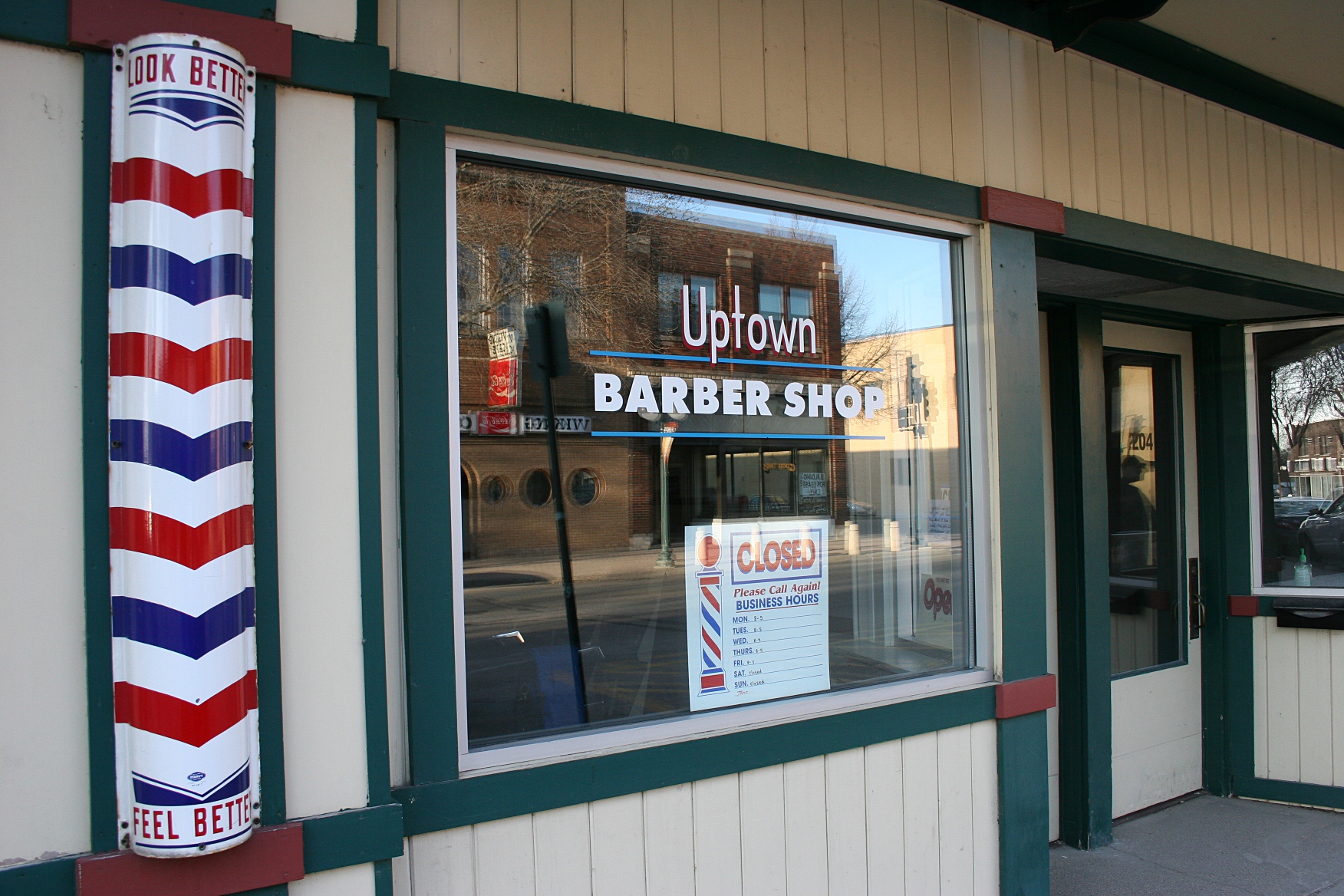
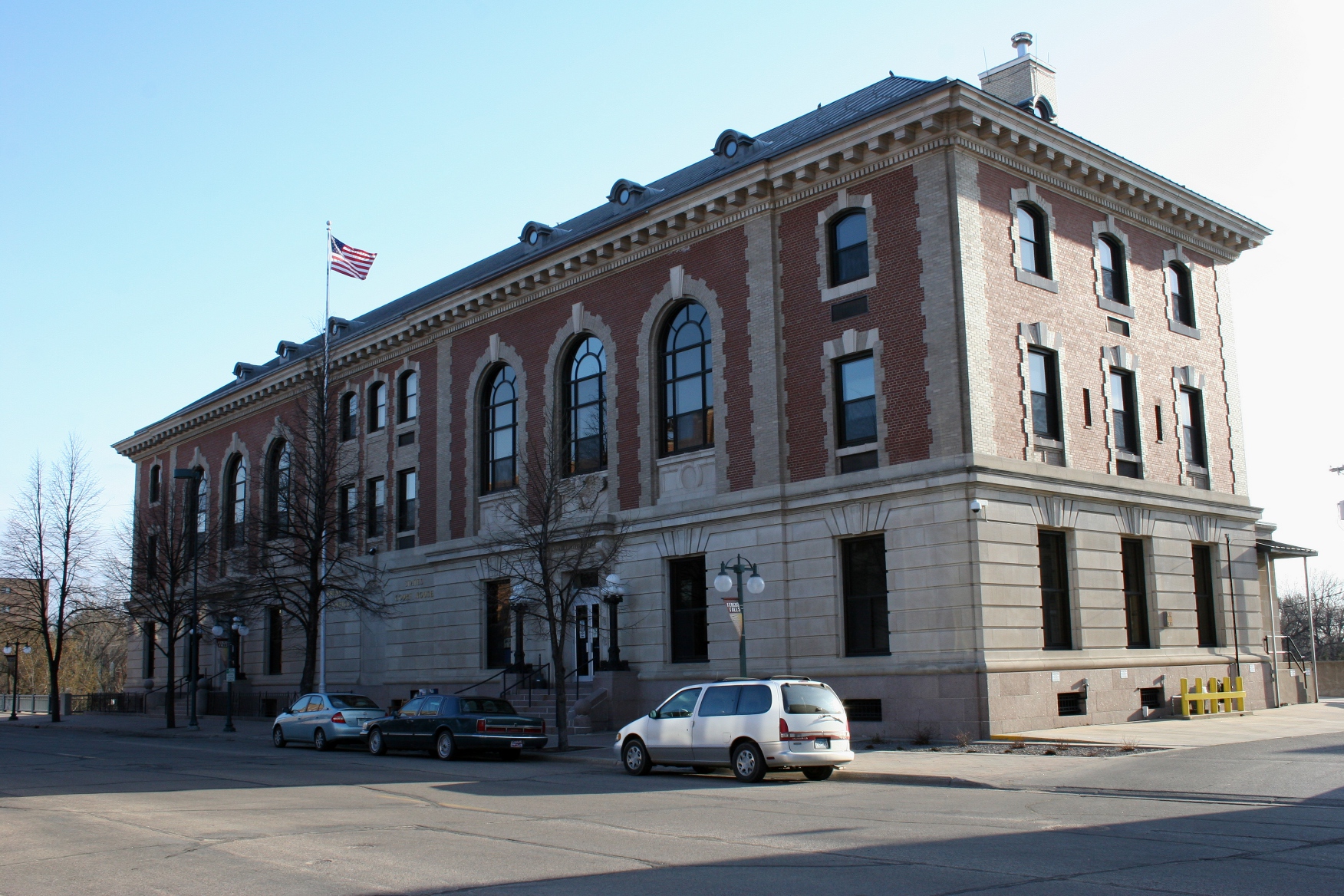
Sweet Repeats, a thrift shop in downtown Montgomery, Minnesota.

Sweet Repeats, a thrift shop in downtown Montgomery, Minnesota.

Thus you can imagine my excitement when I discovered not one, but two, thrift stores in downtown Montgomery during a recent visit.
In this second installment focusing on the businesses my husband and I perused in this small south-central Minnesota community on a recent Saturday, I highlight those two thrift stores.

A sampling of the merchandise inside Sweet Repeats.

A sampling of the merchandise inside Sweet Repeats.

First stop was Sweet Repeats, which offers a wide variety of merchandise ranging from furniture to glassware, old tools, books, clothing and everything in between. Sifting through all the merchandise takes considerable time; I’m certain I missed some gems. But, because the building wasn’t heated—or at least it felt that way to me—I shopped at a faster speed.

I kept circling back to this chair, one of four paired with a rectangular glass-top table. I love the bones, the artsy design of this chair as well as the fabric. But I walked away from it, but not before testing the chair, which was too hard for my comfort.

I kept circling back to this chair, one of four paired with a rectangular glass-top table. I love the bones, the artsy design of this chair as well as the fabric. I walked away from it, but not before testing the chair, which was too hard for my comfort.

How well I remember S & H and Gold Bond stamps.

How well I remember S & H and Gold Bond stamps.

I stopped long enough, though, to reminisce when I saw an S & H Green Stamps book, recalling my mom saving, licking and pasting those stamps into books to redeem for merchandise. Funny I can’t remember a single item she got with stamps, only the stamps and the booklets.

Just like the camera my mom used when I was growing up.

Just like the camera my mom used when I was growing up.

I also admired a Brownie Hawkeye Camera while Randy eyed a set of poker chips like his grandparents pulled out on Saturdays.

Sweet pieces of Frankoma pottery.

Sweet pieces of Frankoma pottery.

For the collector, Sweet Repeats offers some sweet pieces of Frankoma pottery. I don’t know going prices on such collectibles. But the owners of this thrift store seem quite aware of value, meaning if you expect to score a steal simply because this is small-town Minnesota, you likely would be wrong.

Love the name, Bird's Nest, of this thrift store.

Love the name of this thrift store: Bird’s Nest.

Just up the street at The Bird’s Nest Thrift Store, a cozy non-profit shop that supports local projects, the merchandise offerings are mostly clothing and basic household necessities. I scored a summery straw purse for $2, perhaps a gift to an aunt or maybe I’ll just keep it for myself.

A nice selection of purses at the Bird's Nest.

A nice selection of purses at the Bird’s Nest.

The "make-an-offer" wedding dress.

The “make-an-offer” wedding dress.

Randy and I also examined a wedding dress as our eldest is shopping for a gown. The volunteer male tending the store was totally clueless as to any details about the unmarked, unsized dress stained with wine on one sleeve. But he offered to call Myrna while I photographed the gown.

You simply have to appreciate such a nicety which reflects the overall friendliness that prevails in Montgomery. These people are just plain nice, friendly folks. Exactly what I’d expect in a small town.

CHECK BACK for the next installment featuring downtown Montgomery businesses my husband and I visited. To read previous posts, click here and then click here.

And if you missed my first piece on an old-fashioned barbershop in Montgomery, click here.

© Copyright 2013 Audrey Kletscher Helbling