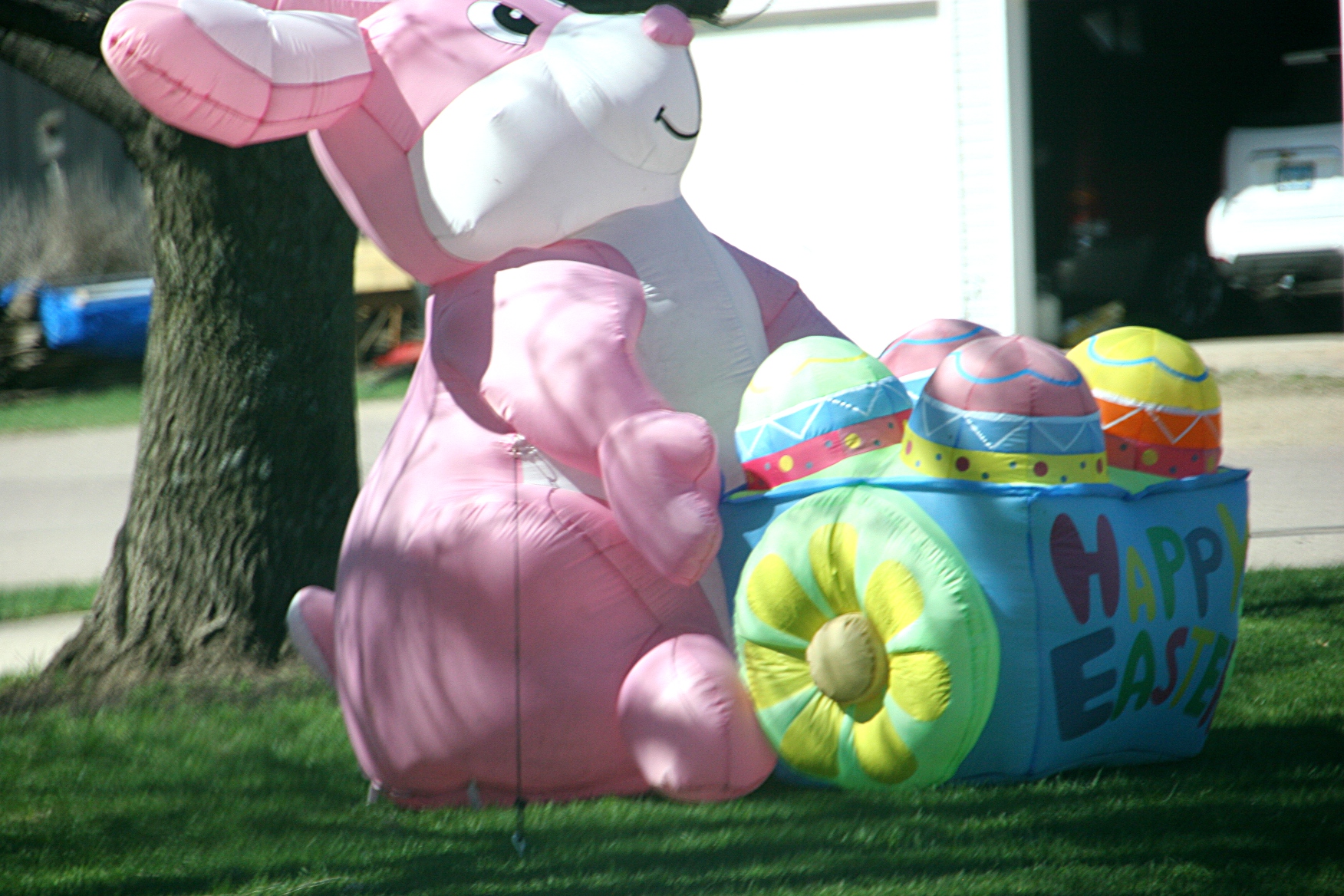
An inflatable Easter bunny photographed in Courtland (west of Mankato) many Easters ago. (Minnesota Prairie Roots copyrighted file photo)
LAST EASTER I FAILED as a mom. I failed to mail a chocolate bunny to my adult son who lives in Boston. It wasn’t that I forgot, but rather that I didn’t want to spend the money for a chunk of chocolate which seemed overpriced at the time. I also really didn’t think my son cared all that much about getting a bunny from me. He did.
So this year, more than a week before Easter, I picked up a 3-ounce solid chocolate bunny for $2.97 and mailed it for $8.10. Not exactly fiscally smart. But sometimes you can’t put a price on tradition, love and expectations of a loved one.
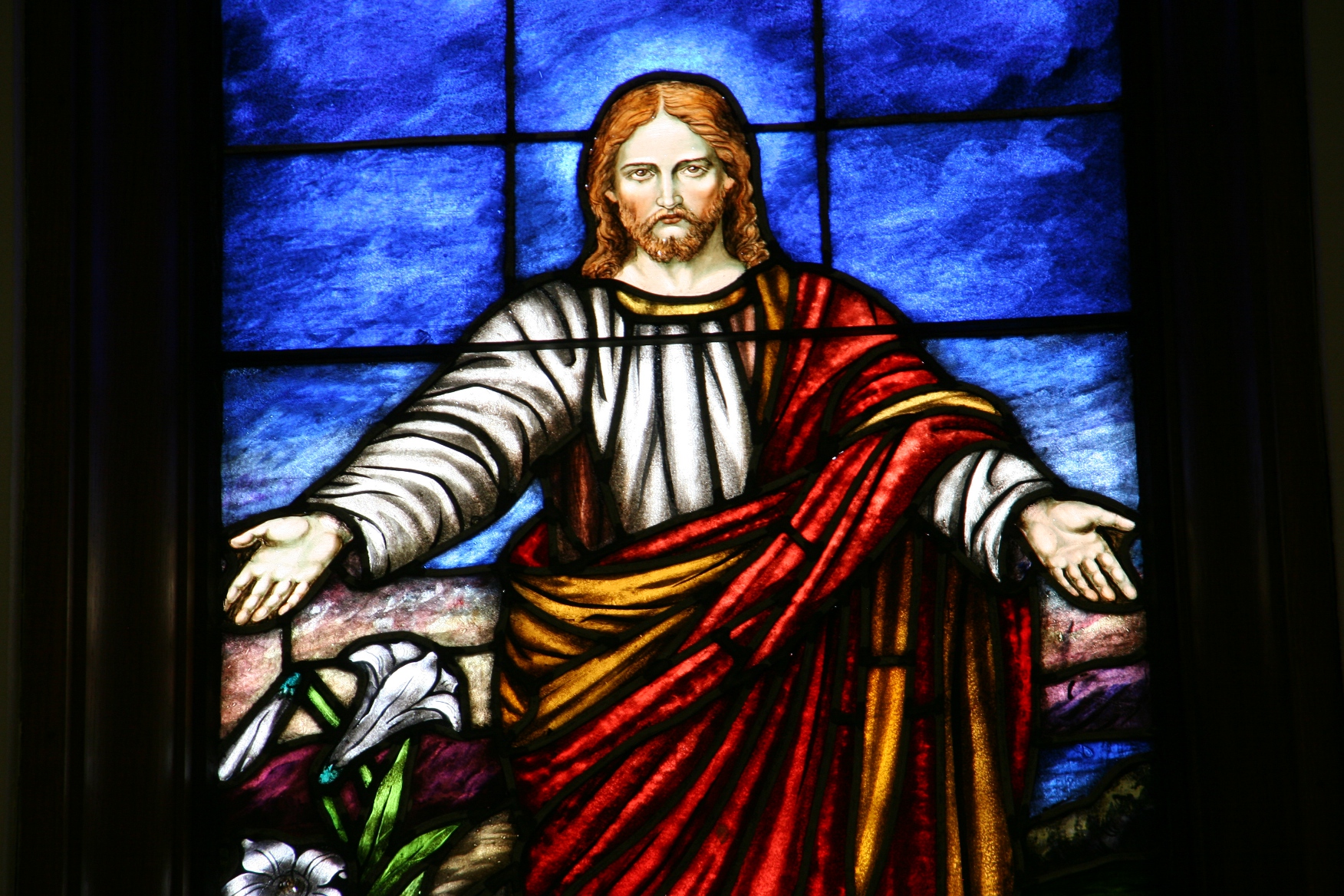
A stained glass window inside Holden Lutheran Church, rural Kenyon, depicts the crucifixion of Jesus. (Minnesota Prairie Roots copyrighted file photo)
That got me thinking about Easter traditions, both secular and faith-based. Easter, for me, has always been a mix of each with the primary focus on celebrating Christ’s resurrection.
Eggs dyed with my mom several years before her death. (Minnesota Prairie Roots copyrighted file photo)
As a child, I dyed eggs with my five siblings and parents, something I continued with my three children. As a child, I set my repurposed yellow plastic cottage cheese container, filled with plastic grass, on the kitchen table. The next morning my siblings and I awakened way too early to search for our Easter “baskets” hidden somewhere inside our farmhouse.
I’m sure Mom would have preferred we slept in. But you can’t curtail a child’s excitement over getting candy, a rare treat back in the day. The goal was always to find our baskets before heading to worship services at St. John’s Lutheran Church in Vesta.
If we could get away with it, we inked our arms with temporary tattoos from the Easter egg dyeing kit. Mom preferred we wait until after church to stamp our skin. But we kids didn’t always listen.
We did, however, listen when Mom told us to get ready for church, the boys in their suits or other dress clothes and us girls in our Easter dresses and bonnets. Or as my sister still reminds me, in the ugly yellow daisy dress handed down from me to her.
My vintage 1960s purse, which I still have. (Minnesota Prairie Roots copyrighted file photo)
I still remember with great fondness the ensemble—a lime green skirt and jacket with a sleeveless floral top—stitched by my godmother one Easter. I carried a lime green purse, completing the fashionable look. Oh, how I wish I still had that 1960s outfit. Perhaps my granddaughter could wear it. Or maybe not. She might just tell me, “To be honest with you, Grandma…,” as she did recently about a frozen cheese pizza she didn’t like.
My favorite Easter hymn. (Minnesota Prairie Roots copyrighted file photo)
Once my siblings and I arrived at St. John’s in our Easter finery, we scampered up the steep steps to the balcony. There we joyously sang “I Know That My Redeemer Lives” with other Sunday School students. That remains my favorite Easter hymn.
While decades have passed since those childhood Easters back on the southwestern Minnesota prairie, the lessons I learned and the faith that grew inside me remain strong.
The risen Lord centers a trio of stained glass windows above the altar inside Trinity Lutheran Church, Wanamingo. (Minnesota Prairie Roots copyrighted file photo)
Now, as the aging matriarch of the family, I find our Easter celebration evolving. My eldest daughter and her husband often host Easter dinner. And if I don’t worship at my own church, Trinity Lutheran, I join her family for worship in their Lakeville church, ironically named St. John’s.
Halfway across the country, my son will likely be alone on Easter. But he will at least have the chocolate bunny I mailed to him from Minnesota, without fail this year.
A monarch butterfly feeds on a milkweed flower. (Minnesota Prairie Roots copyrighted file photo)
ON A RECENT AFTERNOON, I looked up from washing dishes and out the kitchen window to see a solitary monarch butterfly flitting among milkweeds. Something as common as a butterfly remains, for me, one of summer’s simplest delights. Along with milkweeds and fireflies.
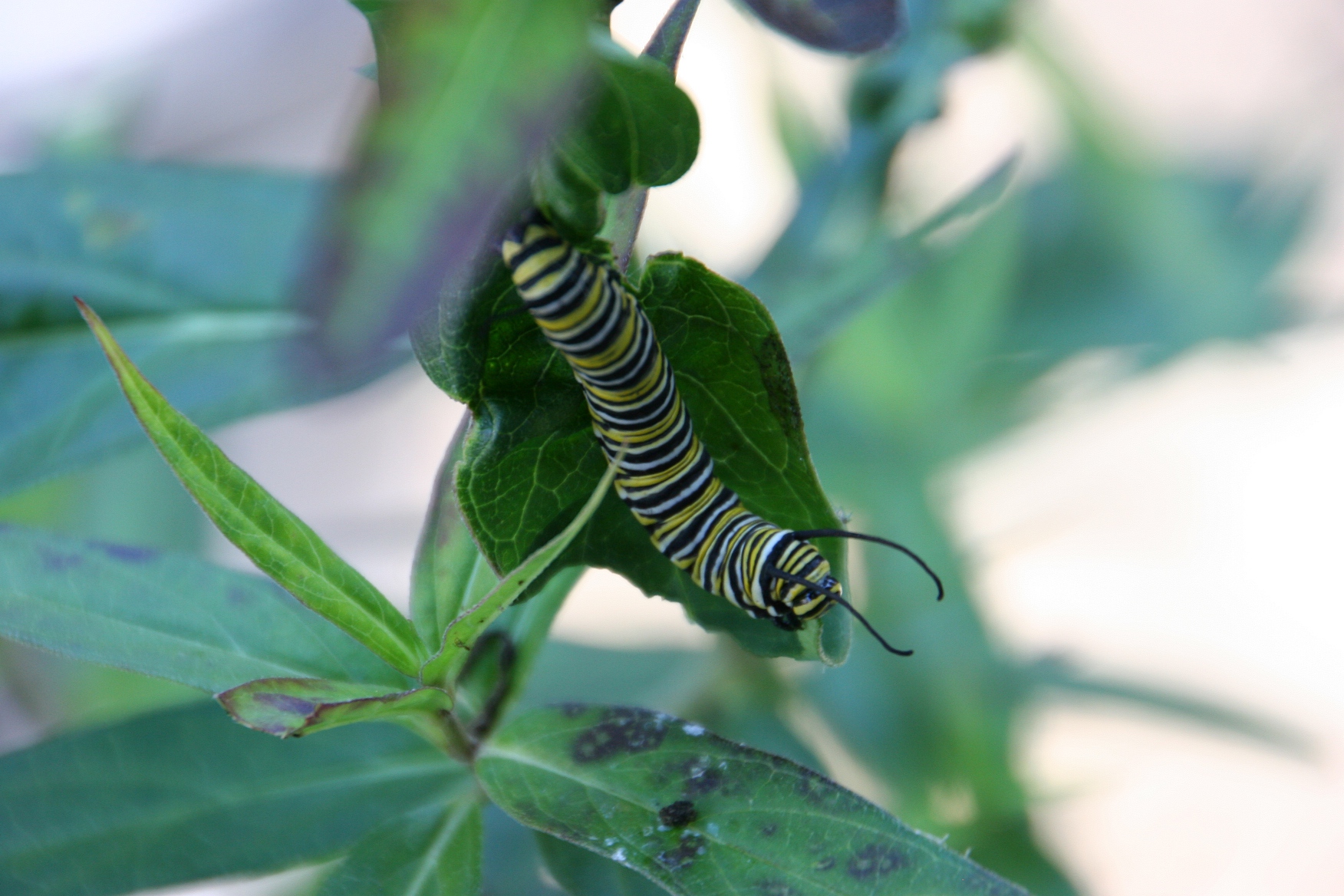
A monarch caterpillar on milkweed. (Minnesota Prairie Roots copyrighted file photo)
This year I have a bumper crop of milkweed plants growing in and along flowerbeds and retaining walls. I stopped counting at 24 plants. I have no idea why the surge in milkweeds. But I am happy about their abundance given monarchs need milkweed. It is the only plant upon which the monarch lays eggs and the sole source of food for monarch caterpillars.
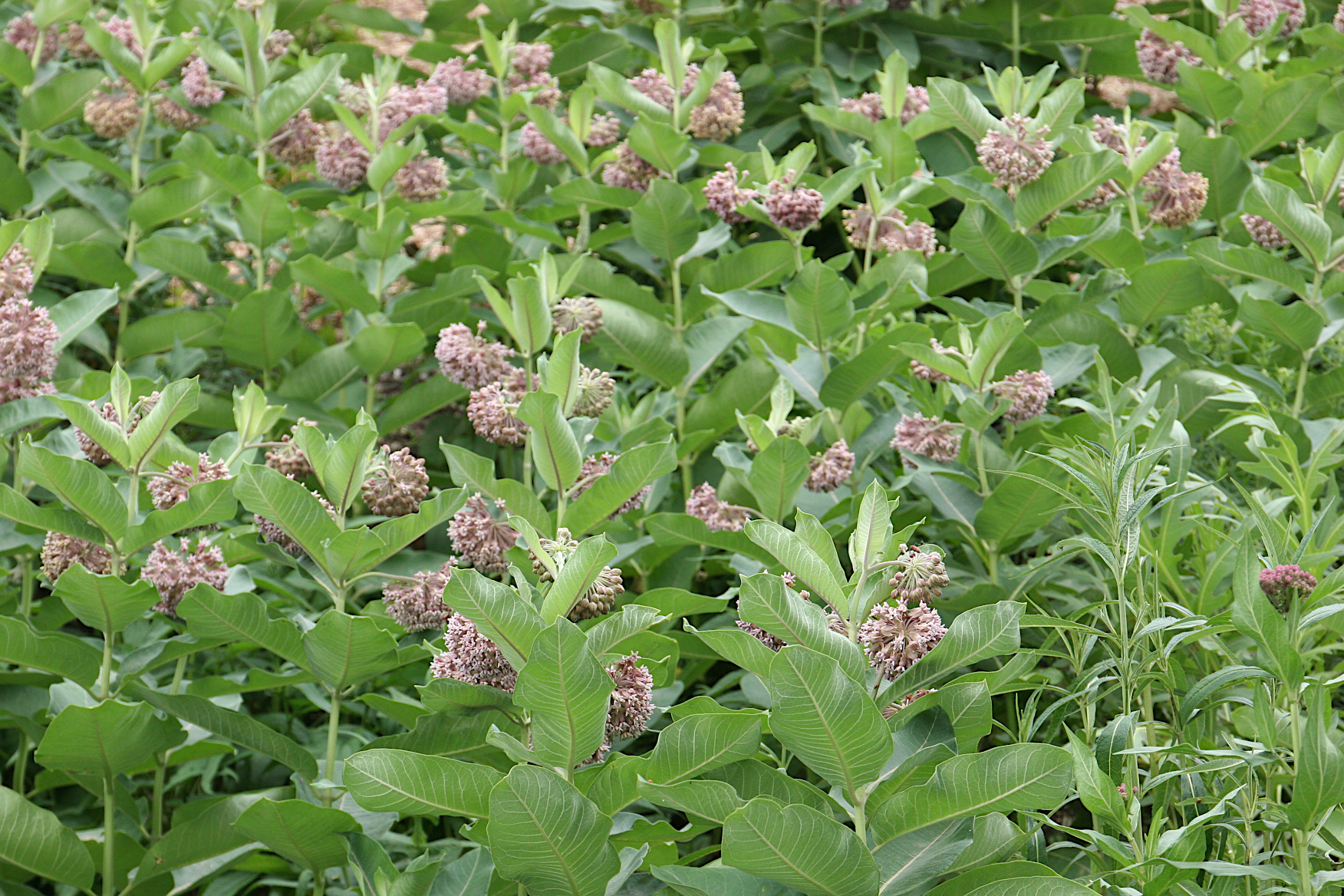
A crop of milkweeds in a public garden. (Minnesota Prairie Roots copyrighted file photo)
My farmer dad, if he was still alive, would likely offer a different opinion about milkweeds. As children, my siblings and I walked rows of soybean fields eradicating milkweeds, thistles and the notorious cocklebur. This was called “walking beans,” a job that we hated, but was necessary to keep fields mostly weed-free without the use of chemicals.
I never considered then that I might some day appreciate milkweeds, the “weed” I pulled from the rich dark soil of southwestern Minnesota. On many a hot and humid afternoon, sweat rolled off my forehead and dirt filtered through the holes of my canvas tennis shoes while hoeing and yanking unwanted plants from Dad’s soybean fields and on my cousin John’s farm.
Today I instruct my husband not to pull or mow any milkweed plants in our Faribault yard. Randy understands their value, even if he didn’t walk beans on his childhood farm. He more than made up for that lack of field work by picking way more rocks than I ever did. Morrison County in central Minnesota sprouts a bumper crop of rocks compared to my native Redwood County, where I also picked rocks.
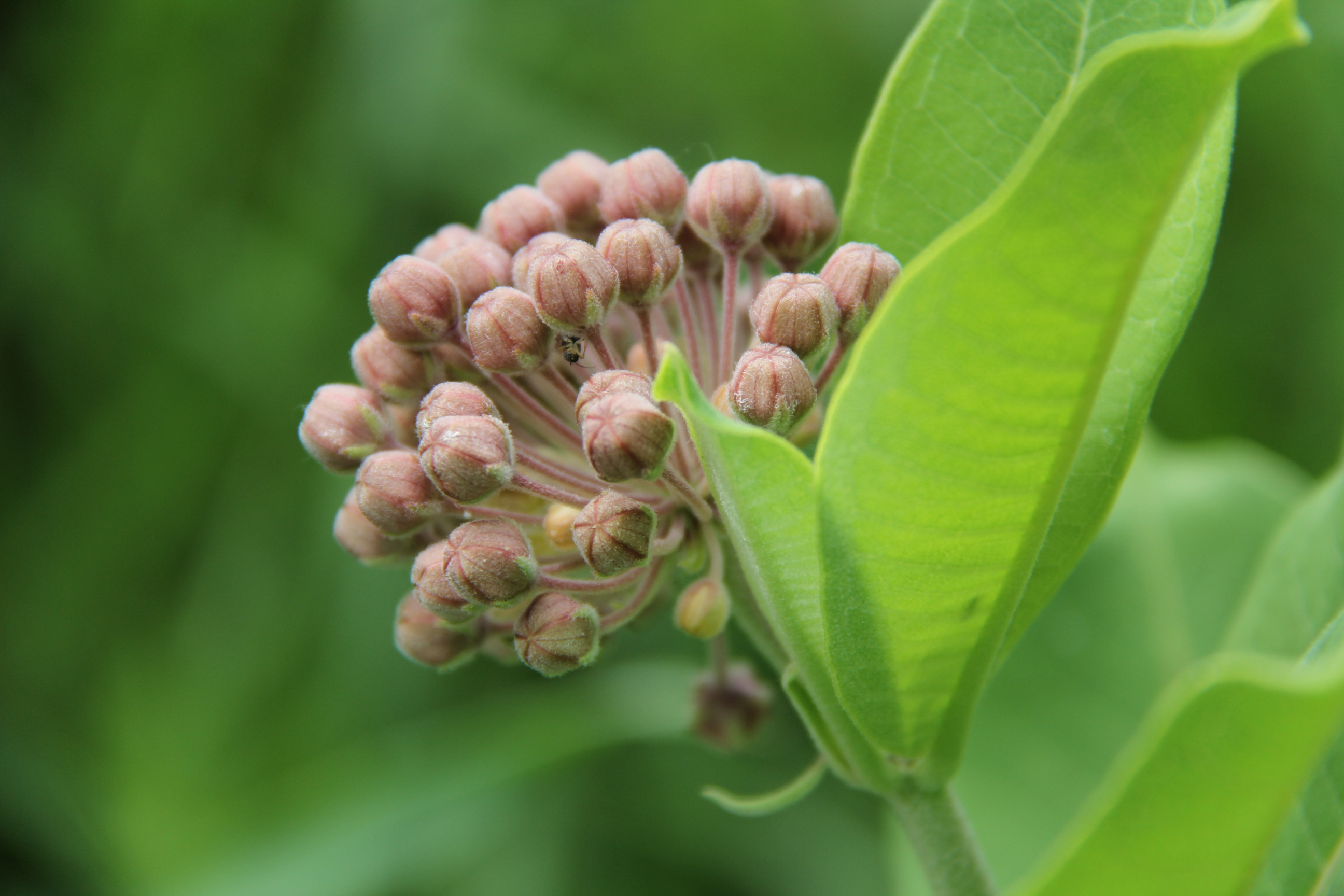
A milkweed about to open. (Minnesota Prairie Roots copyrighted file photo)
But back to milkweeds. I love the scent of the dusty rose-colored common milkweed. So if you drive by my Faribault home or walk through River Bend Nature Center or Central Park or past Buckham Memorial Library and see me dipping my nose into a cluster of milkweed flowers, that’s why.
As summer progresses, I’m curious to see how many monarchs soar among the milkweeds in the tangled messes of plants that define my untamed flowerbeds. Thankfully our next door neighbor appreciates milkweeds also and is OK if the wind carries seeds onto his property.
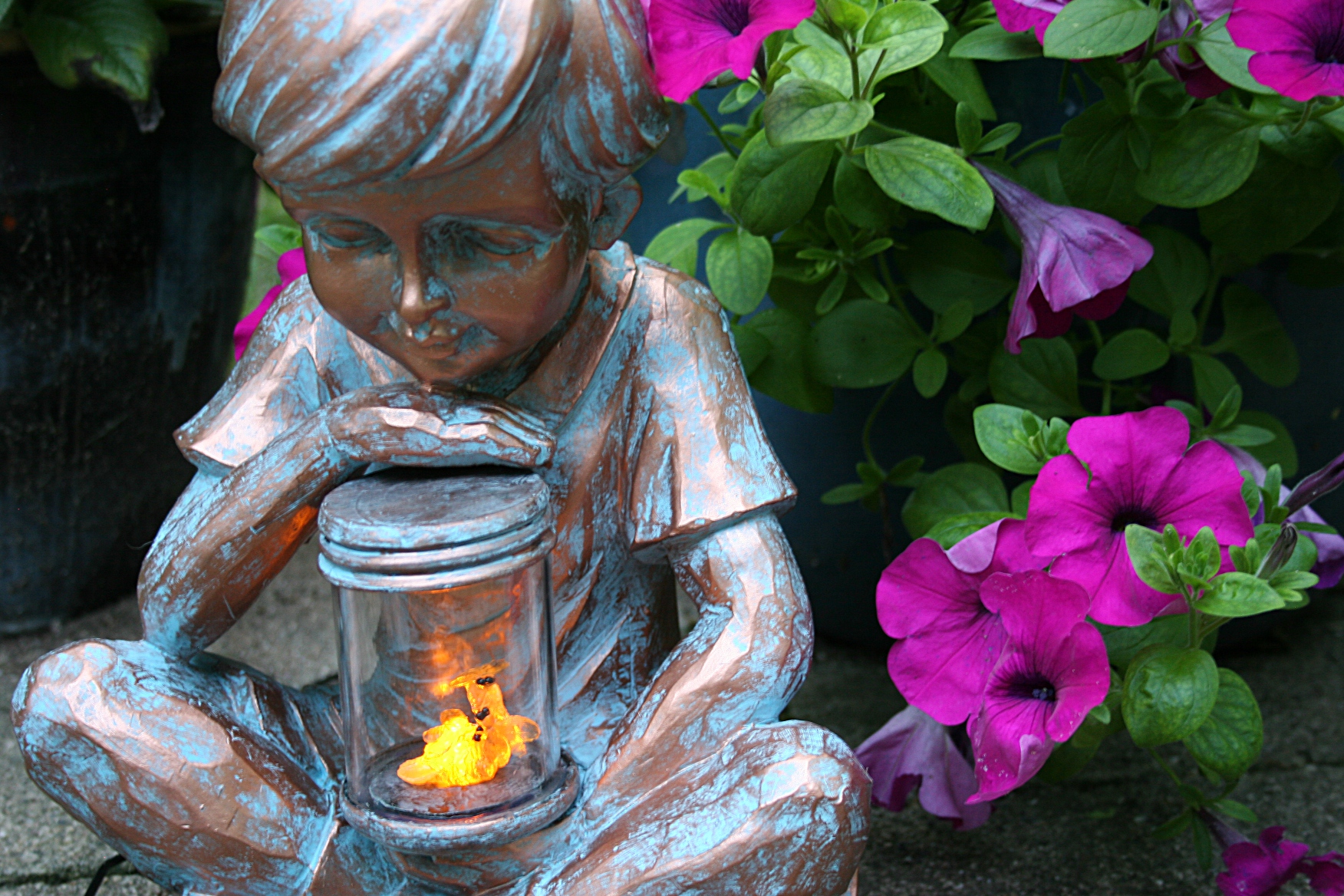
Fireflies glow in the garden art honoring my nephew Justin. (Minnesota Prairie Roots copyrighted file photo)
I’ve already seen fireflies aplenty in our backyard, which abuts a wooded hillside. And recently, while driving home in the early dark of a summer evening, Randy and I saw hundreds of fireflies lighting up grassy road ditches. It was truly magical, reminding me of childhood sightings and of Eric Carle’s children’s picture book, The Very Lonely Firefly. I had a copy for my kids, battery included to light up firefly illustrations. And, until it stopped working, I had a solar-powered firefly garden sculpture honoring my nephew Justin, who loved light and fireflies and died at age 19 in 2001 of Hodgkins disease.
Often what we love is about much more than simply whatever we love. I see, in writing this story, that my love of milkweeds, monarchs and fireflies connects to memories. Summer memories. Farm memories. Family memories. These are the stories we carry within us, that help define who we are, whether we consider a milkweed to be a weed, or a flower.
TELL ME: What simple summer things delight you and why?
A bison photo by Jim Brandenburg hangs to the left and the photographer talks about his work in a video, right, inside the Brandenburg Gallery. (Minnesota Prairie Roots copyrighted file photo 2013)
IN MY EYES, he was Minnesota’s best-known photographer. Exceptionally talented. No one even comes close to matching the wildlife and nature photography of Jim Brandenburg. He died April 4 at the age of 79. Not only has Minnesota lost a creative icon, but so has the world. Brandenburg’s prolific work was featured in National Geographic Magazine, earning him the publication’s coveted Lifetime Achievement Award in 2023. His award-winning photos were widely-published internationally. He also published numerous books featuring collections of his photos.
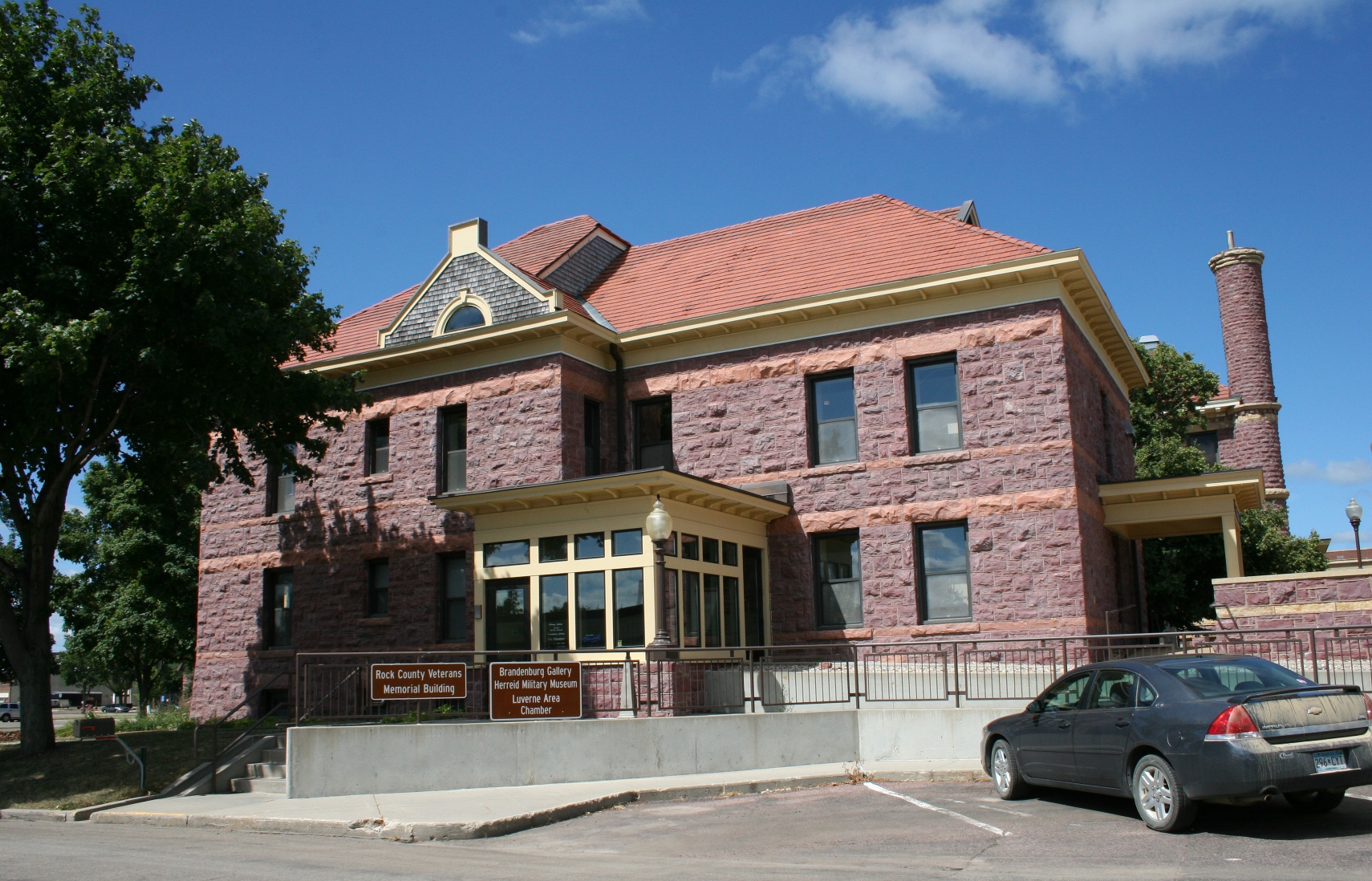
The entry to the Brandenburg Gallery, located in the Rock County Courthouse square. (Minnesota Prairie Roots copyrighted file photo 2013)
But there is perhaps one lesser-known place where Brandenburg’s images can be found. And that’s in the Brandenburg Gallery inside the historic Rock County Courthouse in his hometown of Luverne. That’s in the extreme southwestern corner of Minnesota. The prairie. My prairie.
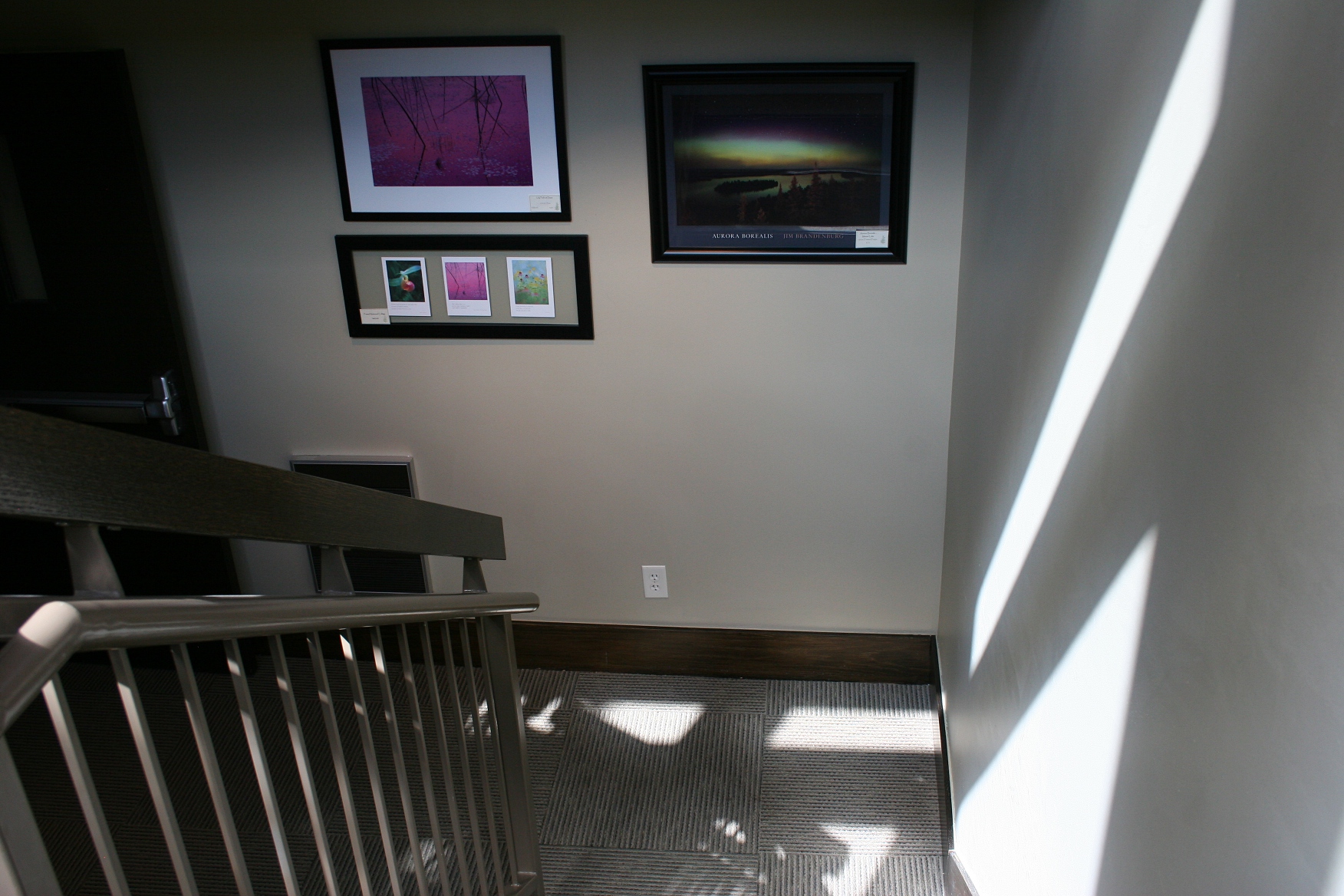
Light plays upon walls, floors and Brandenburg photos in a stairway display. (Minnesota Prairie Roots copyrighted file photo 2013)
Eleven years ago I toured that gallery, studying and enjoying a sampling of Brandenburg’s images. Many in this collection are prairie-themed. Because I’m a photographer, I viewed his photos with a more focused perspective, noticing angles, light, background and all the components which come together in creating an outstanding image.
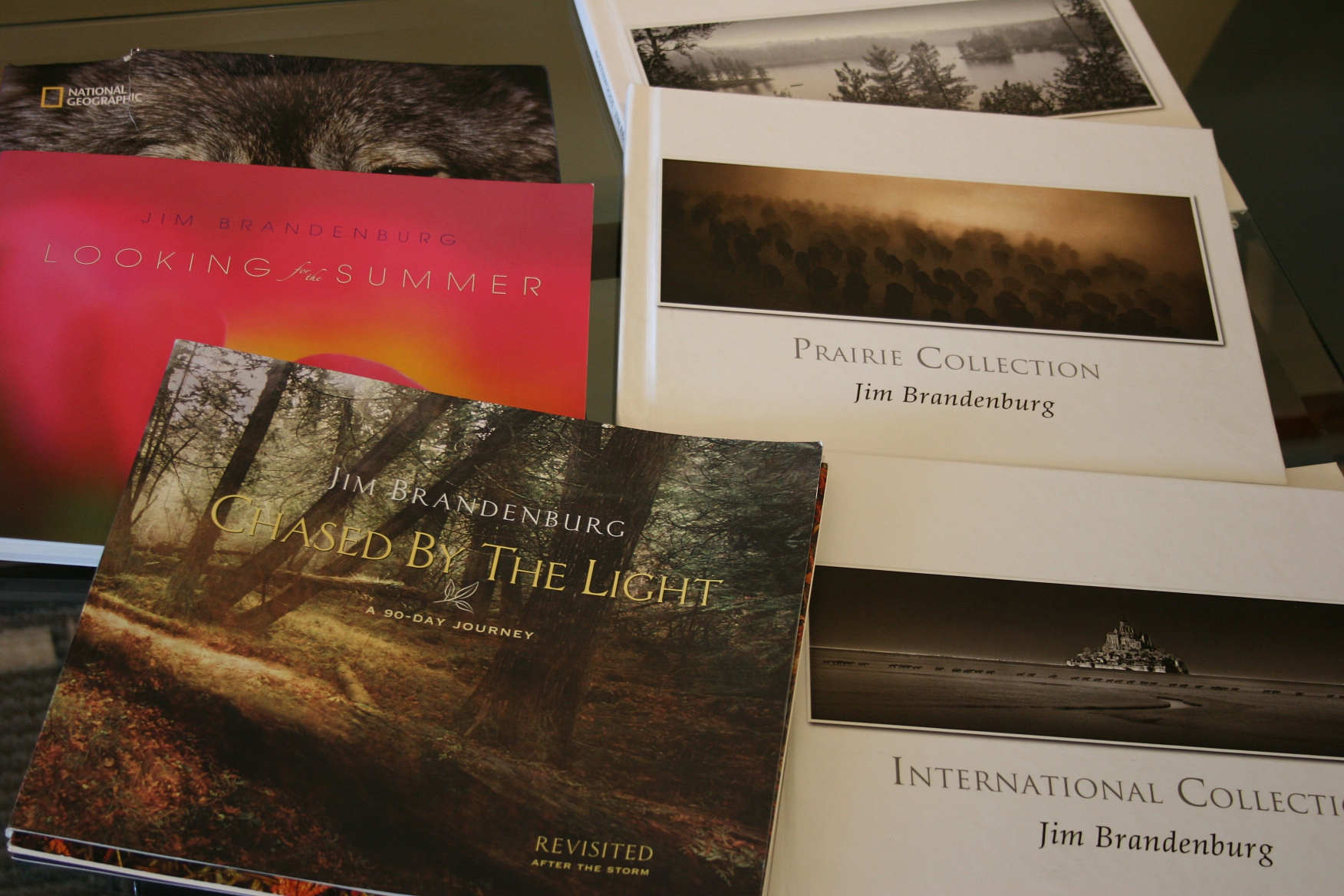
Some of Brandenburg’s photo books. (Minnesota Prairie Roots copyrighted file photo 2013)
Every photographer understands that light is the very basic element to consider in shooting photos. Brandenburg challenged himself to take a single picture per day between the autumnal equinox and the winter solstice. The result is his collection of photos, Chased by the Light: A 90-Day Journey, a favorite of mine among his books.
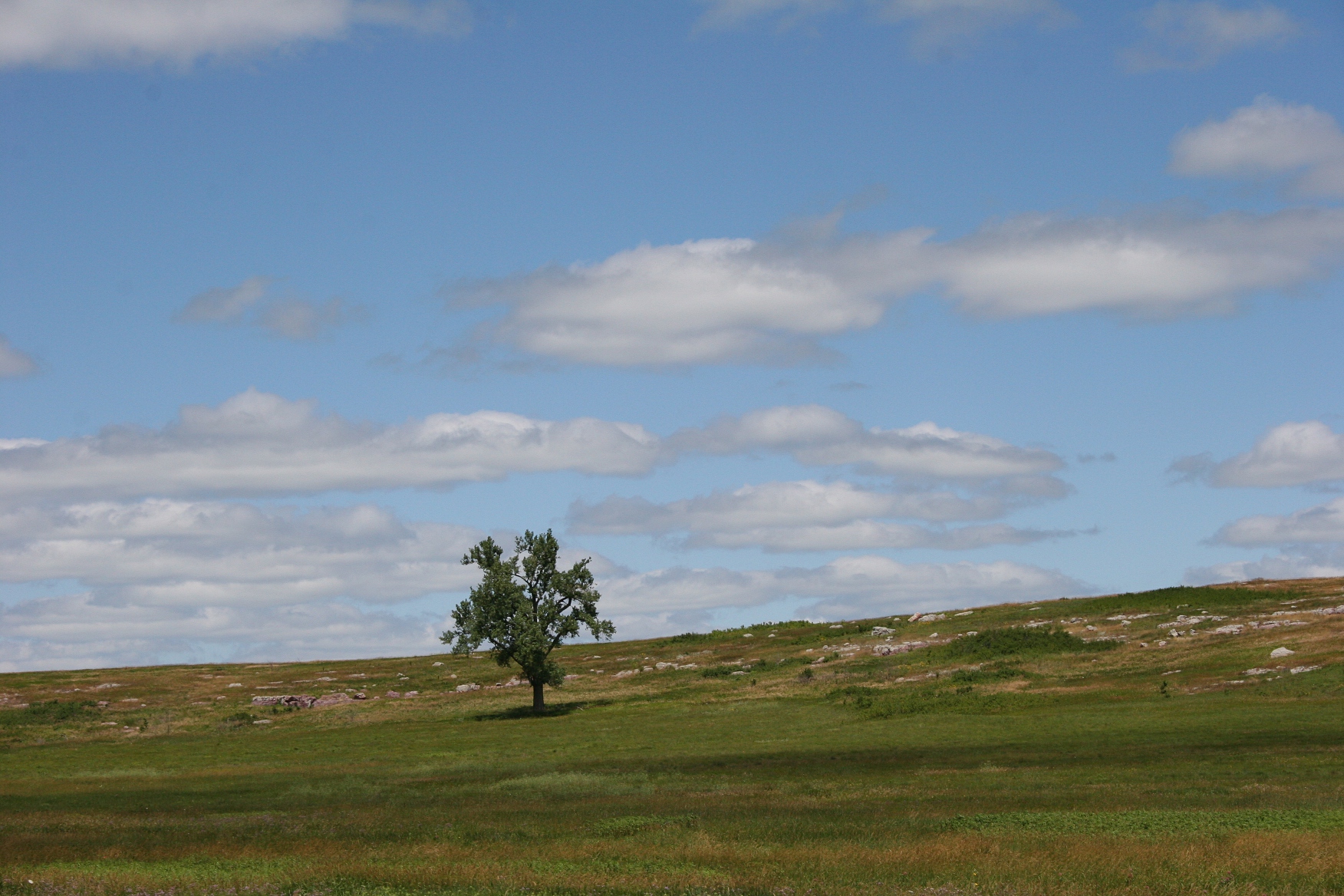
Beautiful natural scenery on the prairie near Blue Mounds State Park. The part of the prairie where I grew up is not rocky like this and is a bit further north. (Minnesota Prairie Roots copyrighted file photo 2013)
When I traveled to Luverne in 2013 to visit the Brandenburg Gallery and other attractions, including Blue Mounds State Park, I was returning to the wide open land and big skies of the prairie, the place that shaped me as a person, photographer and writer. The same can be said for Brandenburg. He loved the prairie and, in fact, established the Brandenburg Prairie Foundation aimed at southwest Minnesota native prairie education, preservation and expansion. His organization partnered with the U.S. Fish and Wildlife Service to purchase nearly 1,000 acres of untilled Rock County prairie, creating Touch the Sky Northern Tallgrass Prairie National Wildlife Refuge.
Those environmental efforts are revealing. Brandenburg cared deeply about the land, especially the prairie. After college, he returned to the prairie and worked as a picture editor at The Worthington Daily Globe. While there, he freelanced for National Geographic Magazine. And so his career developed until he became that homegrown photographer whose work so many worldwide grew to appreciate and love.
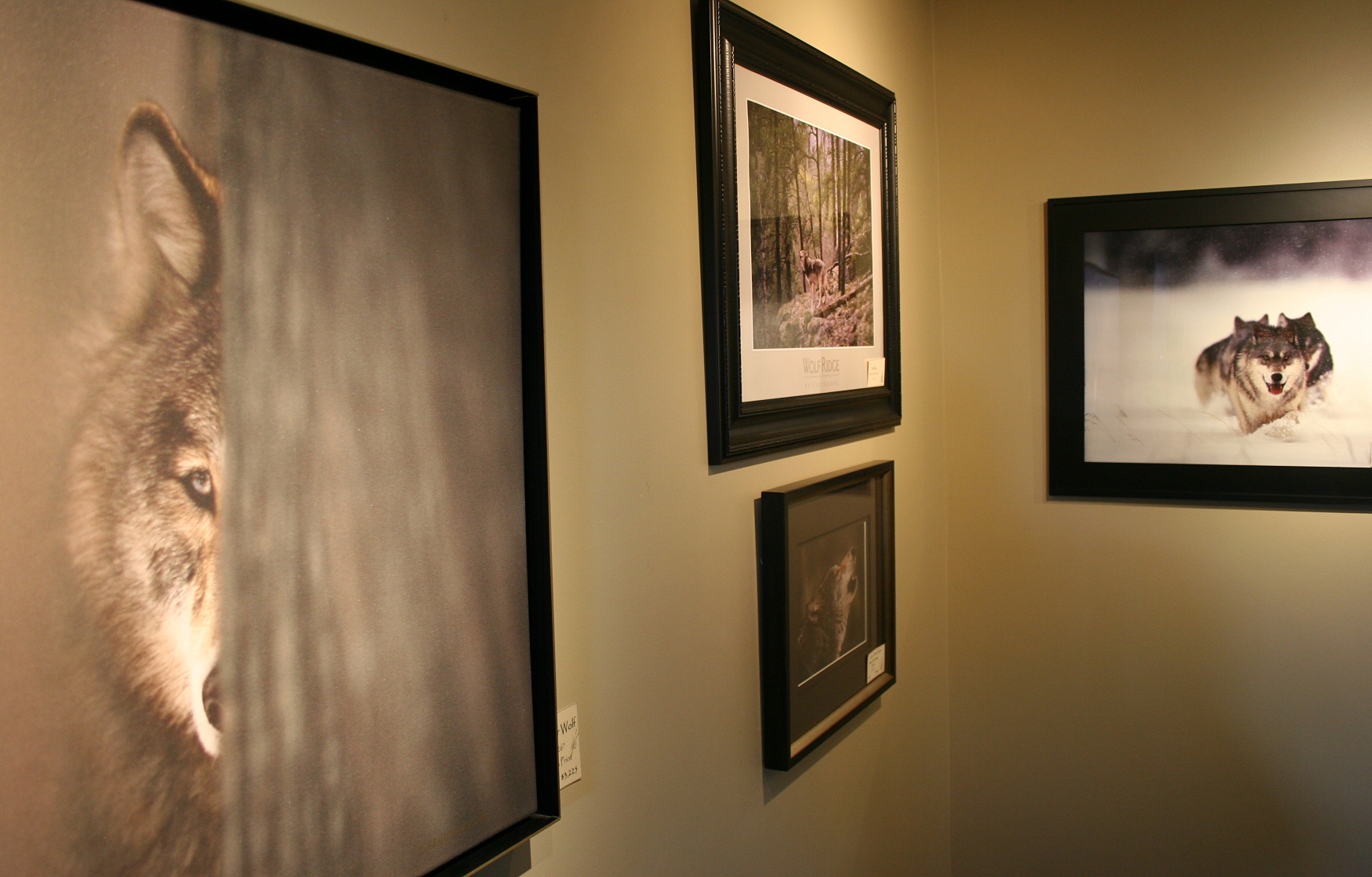
Wolf photos displayed in the Brandenberg Gallery. Brandenburg’s published books include Brother Wolf–A Forgotten Promise. (Minnesota Prairie Roots copyrighted file photo 2013)
I admire photographers who excel in the craft. And Brandenburg certainly excels in wildlife photography, a specialized field that requires much more than understanding photo basics. Photographing wildlife requires incredible patience and knowledge of animals. I have neither. But when you look at a Brandenburg photo, it’s like you are right there up close with the subject. Perhaps a wolf—one of his favorite subjects. Or bison. You can see the deep respect Brandenburg holds for these creatures of the wild.
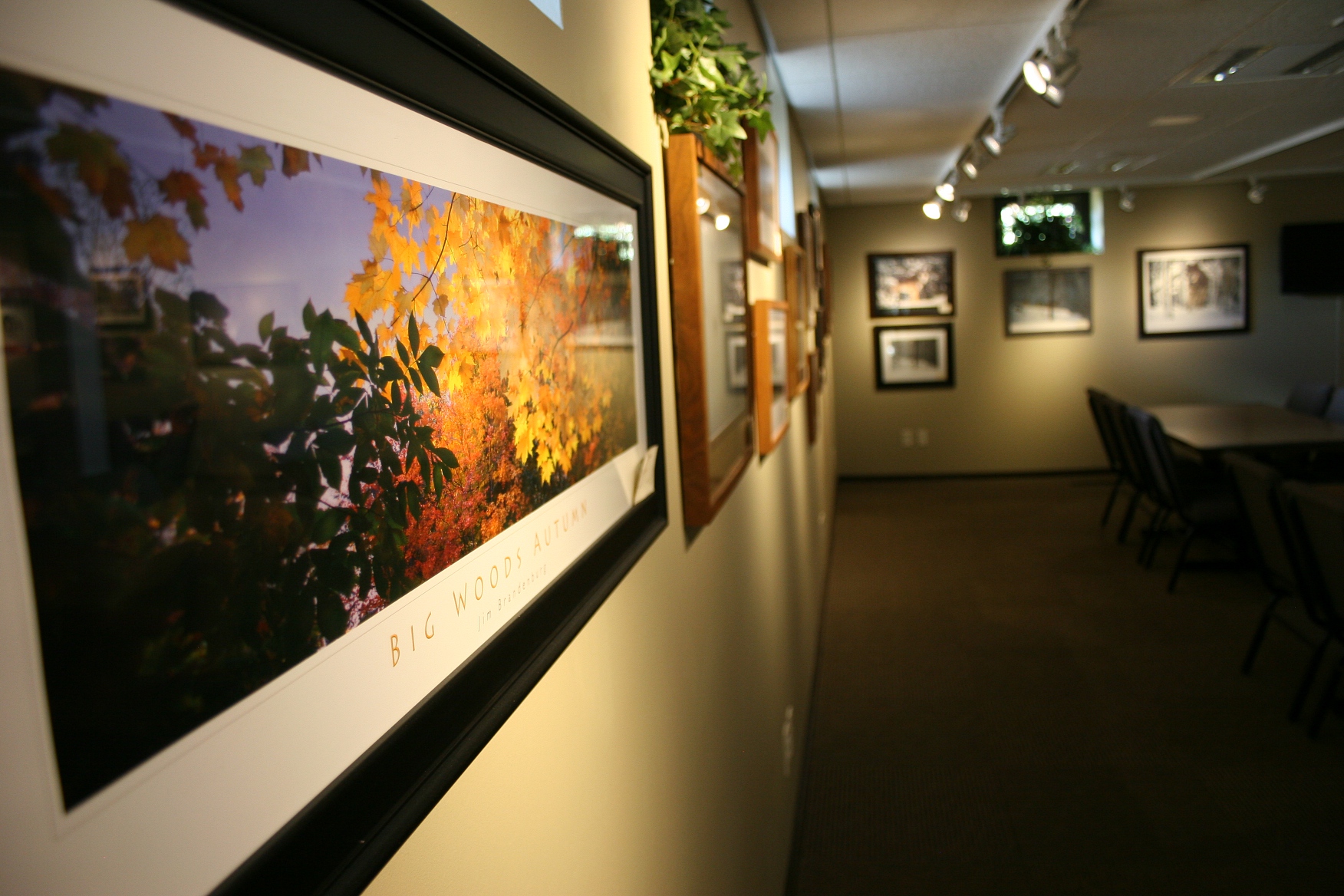
A familiar scene to me, autumn leaves photographed in the Big Woods of Minnesota, within 20 miles of my home and showcased in the Brandenburg Gallery. (Minnesota Prairie Roots copyrighted file photo 2013)
And then there’s landscape photography which, when done well, draws you into a scene and evokes an emotional response. Again, Brandenburg has this seemingly effortless ability to capture the essence of a place and connect it to his audience.
Minnesota has lost an incredibly gifted photographer. But Brandenburg’s legacy lives on in his work, a gift to all of us. And one place to find that is in the Brandenburg Gallery in Luverne. On my beloved prairie. On Brandenburg’s beloved prairie.
FYI: The Brandenburg Gallery, 213 E. Luverne St., is owned and operated by the Luverne Area Chamber of Commerce. It’s open from 8 a.m.-5 p.m. Monday-Friday and from 10 a.m.-5 p.m. Saturday. Admission is free. All photos featured in this post were taken with permission of the Brandenburg Gallery in 2013.
Me, in the red jumper, with my siblings Doug (back) and front, left to right, Monica, Brian and Lanae on Christmas Eve 1964in our childhood home. (Minnesota Prairie Roots copyrighted file photo)
NOSTALGIA SHAPES my Christmas tree choice, as I expect it may yours. I want a tree that is short-needled, imperfect, leaning toward Charlie Brownish. That type of unshaped tree is the tree of my childhood Christmases on a southwestern Minnesota dairy and crop farm.
UPDATE:Ken’s Christmas Trees, 1407 Fourth St. NW., Faribault, has closed for the season. (Minnesota Prairie Roots copyrighted photo December 2024)
In the old 1 ½-story wood-frame farmhouse where I lived the first 11 years of my life with my parents and four of my five siblings (Brad wasn’t yet born, the new house not yet built), our Christmas tree sat on the end of the Formica kitchen table. The house was too small to put the tree elsewhere. An oil-burning stove occupied much of the tiny living room, which would be the usual spot to place a tree.
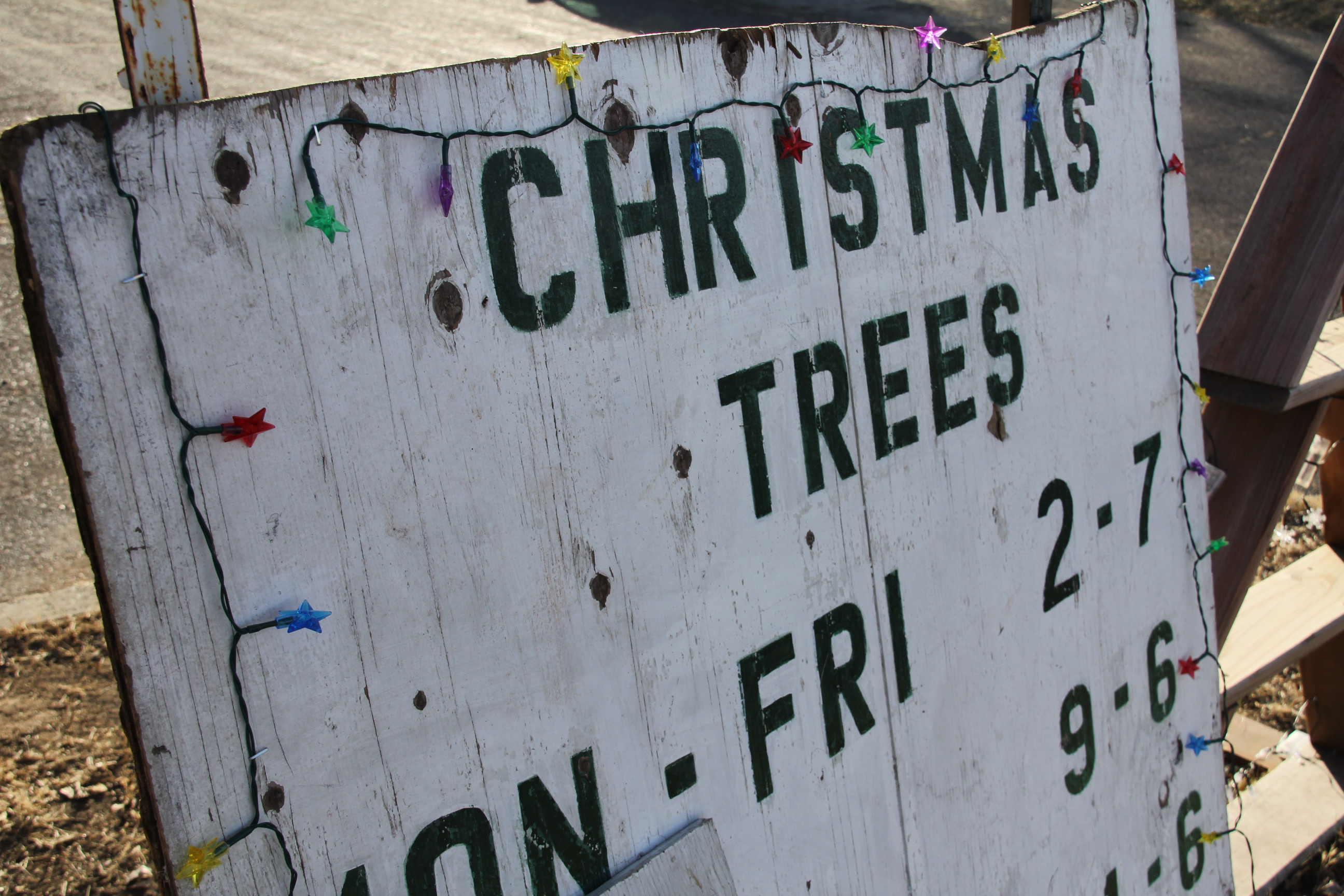
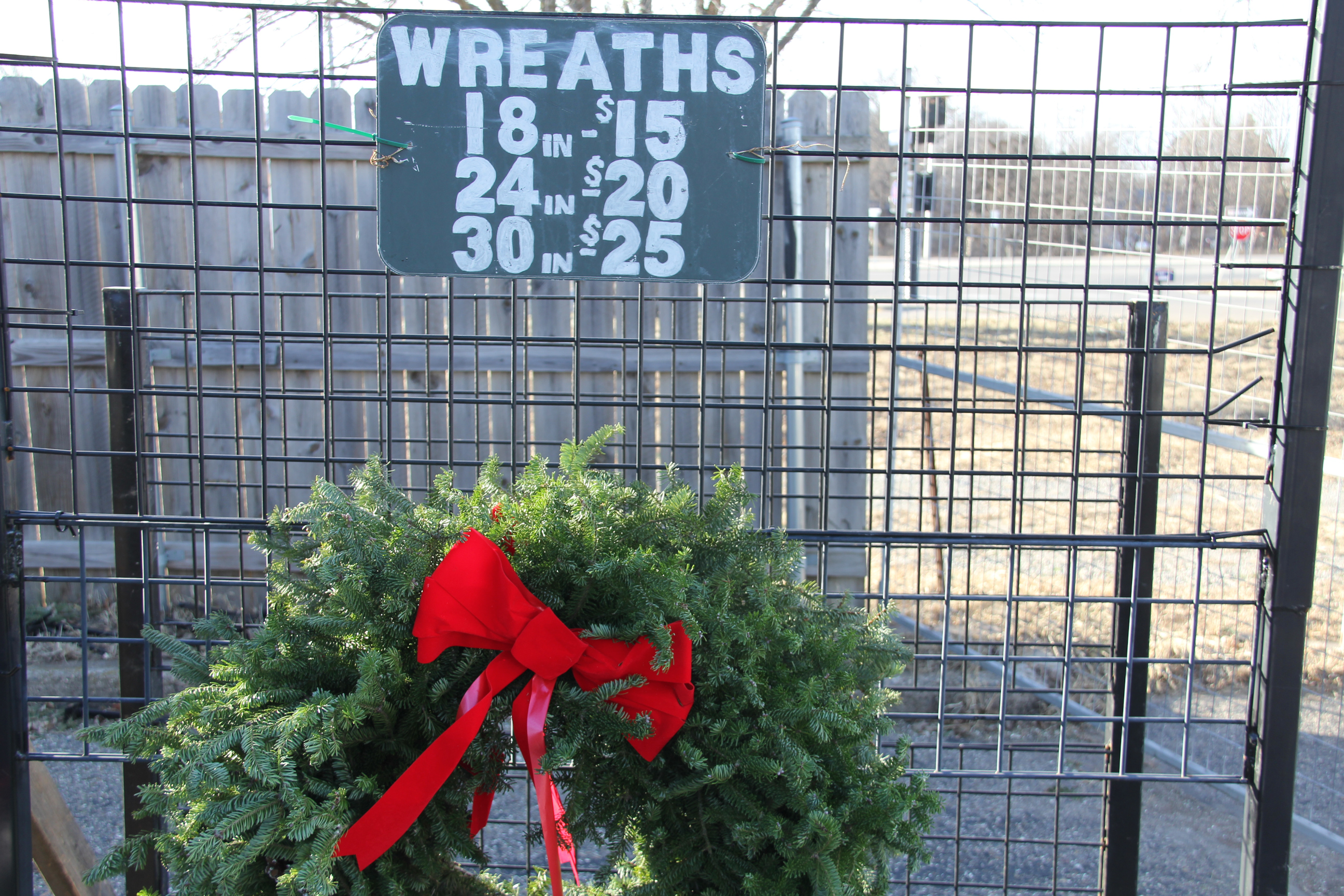
A touch of red at Ken’s Christmas Trees, which also sells wreaths and evergreen garland. (Minnesota Prairie Roots copyrighted photo December 2024)
I loved that the tree sat on the table, which was draped with a red-and-white checked oilcloth tablecloth matching the red-and-white checkered linoleum tile floors. Kitchen walls were painted yellow on top with some type of red-bordered gray wall covering below. A maroon Naugahyde rocker sat in front of the trap door leading to the dirt-floored cellar.
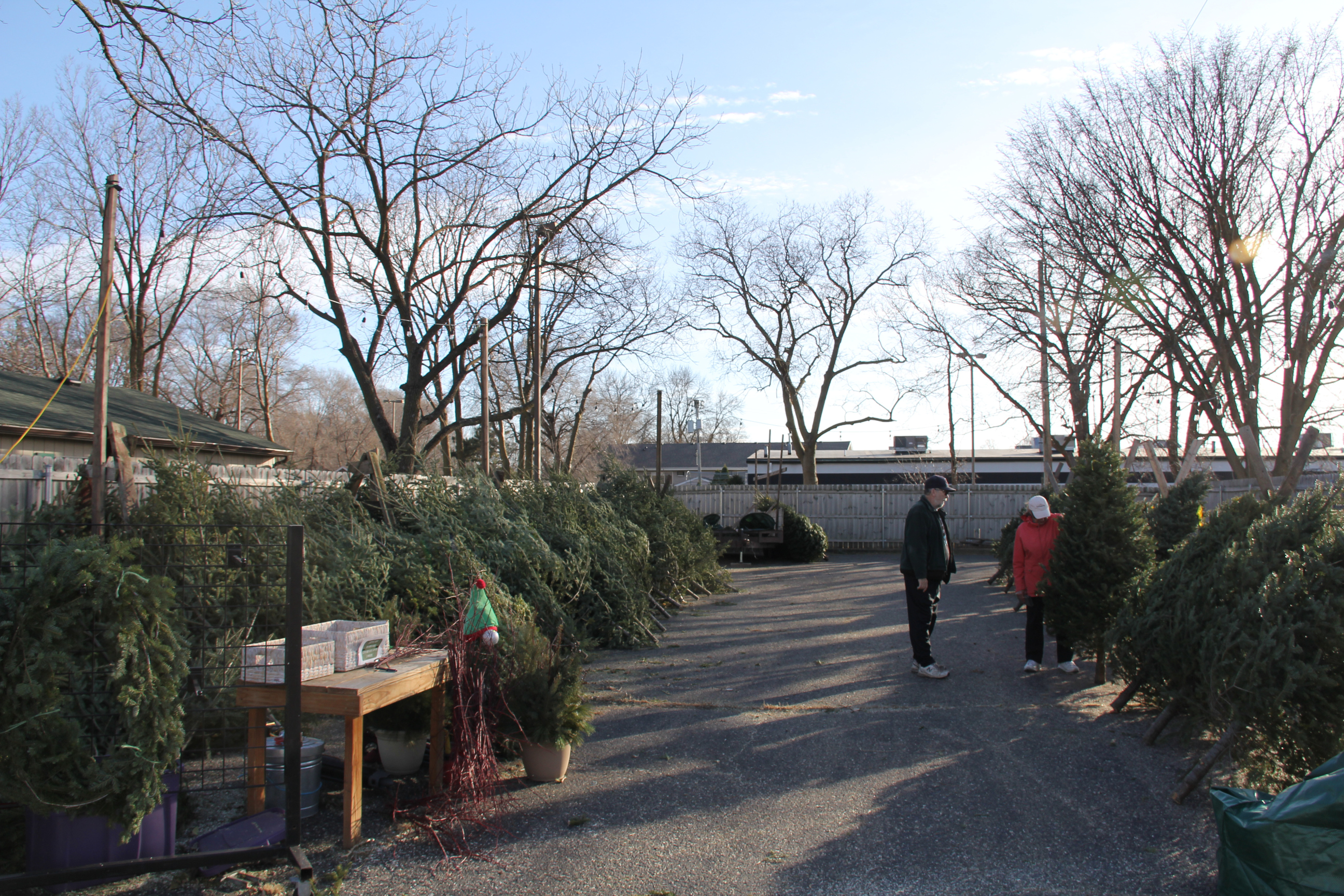
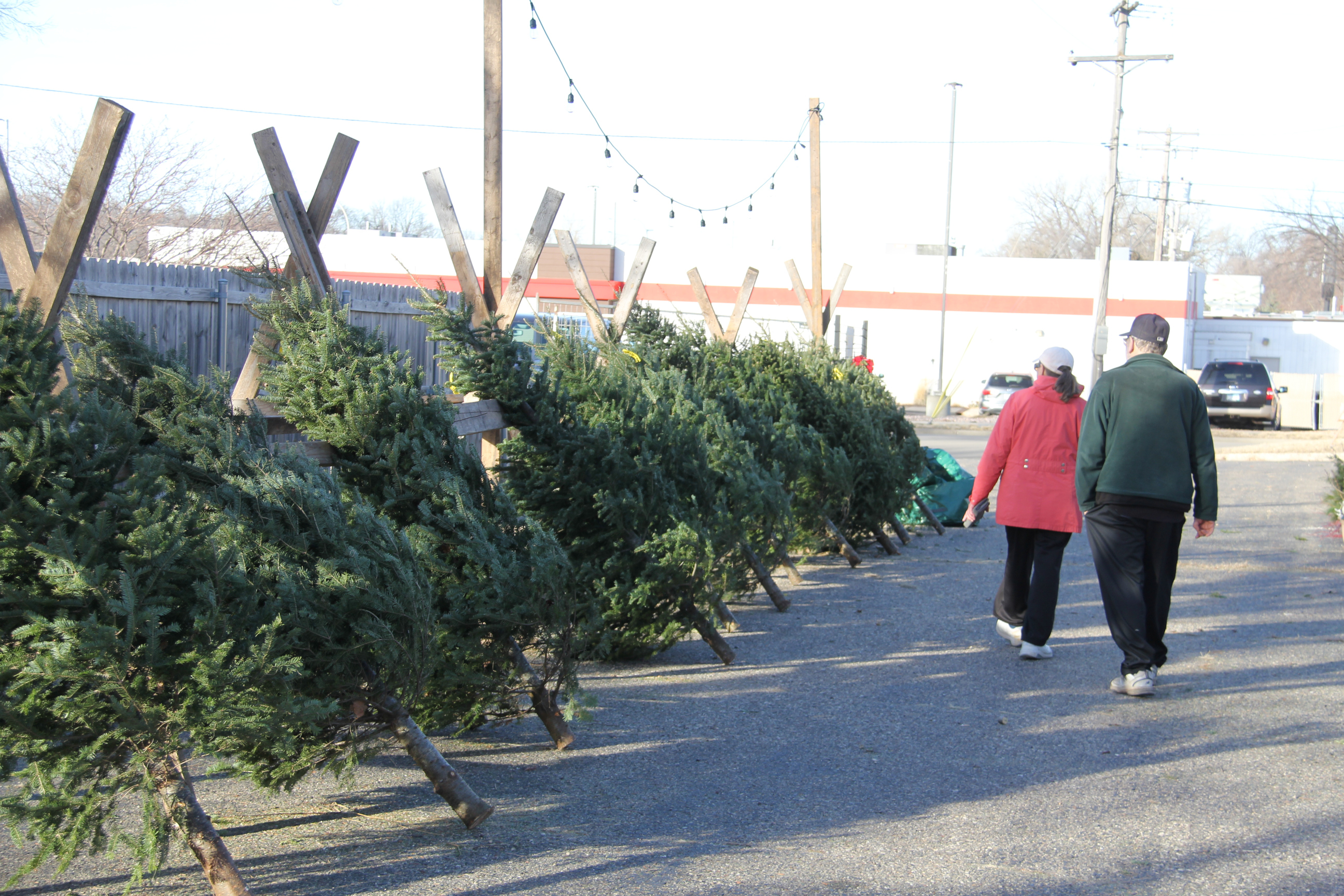
An overview of Ken’s Christmas Trees, located in a lot next to Jersey Mike’s. (Minnesota Prairie Roots copyrighted photo December 2024)
In that setting, Dad placed our grocery store Christmas tree. On the kitchen table, on the end next to the window facing west. Imagine gathering there in the dark of December, Dad in from doing chores, Mom dishing up meat, boiled potatoes, gravy and a side vegetable to pass around. Homemade bread piled on a plate. Milk from our cows poured into cups. Meals during the holiday season held a bit of magic because of that tiny Christmas tree.
Tinsel sparkled in the glow of holiday lights. To this day, I drape tinsel on my tree even if it’s a bit of a hassle. I love the old-fashioned look, the memories connected to tinsel.
This paper Baby Jesus goes on my Christmas tree every year. It’s from the 1960s, from my Sunday School Christmas lesson. (Minnesota Prairie Roots copyrighted file photo)
I remember favorite ornaments, too. The wax lamb, which Mom cautioned not to hang too close to the heat of a bulb. The glittery gray dove. The mini white church with a red window, hung near a red bulb so the window glowed. The colorful vintage round ornaments that we handled with care lest they break, and some did. I have a few of those. And then the paper baby Jesus, nestled in a manger, and an angel robed in white. I have both, cut from Sunday School lessons and looped with yarn to hang from evergreen boughs.
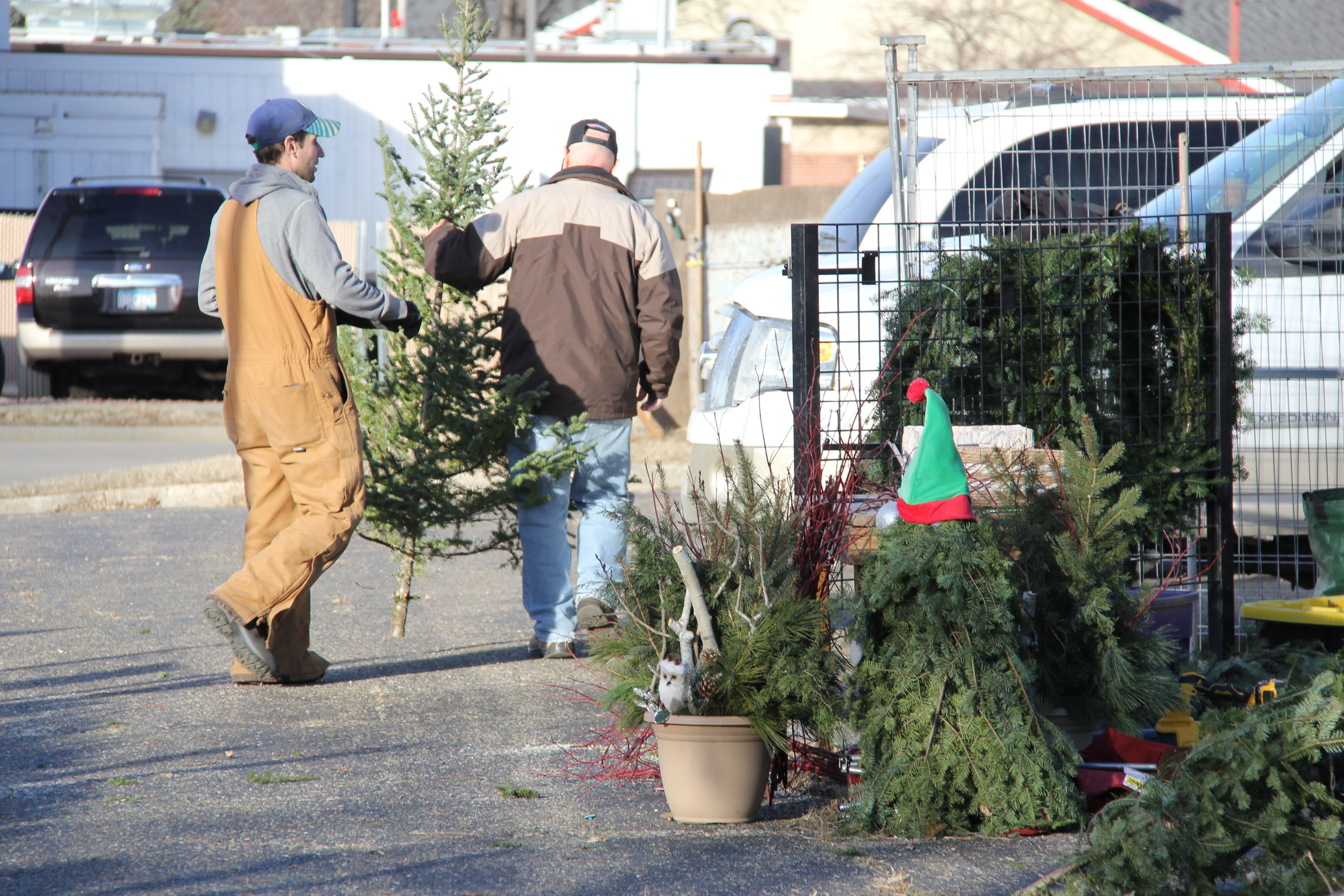
My husband,Randy, accompanied by Ken’s son, carries our $37 tree to the van. (Minnesota Prairie Roots copyrighted photo December 2024)
When I shop for my Christmas tree each December, usually at Ken’s Christmas Trees in Faribault, these visuals guide me. I am, I suppose, attempting to recapture those Christmases of yesteryear. A time when, unencumbered by the responsibilities of adulthood, I experienced the absolute joy of the season. There were no worries—only that of remembering my line for the Sunday School Christmas service.
This cut-out of Ken Mueller stood at the tree lot in 2023. Mueller faced a major health crisis this past year, but has since recovered. His kids are now running the tree lot. It’s all about family with the Muellers, too. (Minnesota Prairie Roots copyrighted file photo December 2023)
Today I experience Christmas through my grandchildren, Isabelle, 8, and Isaac, almost six. Next Christmas another little one—my second daughter is due to deliver a boy in January—will add to the magic of the season. Kids have a way of infusing anticipation and unbridled joy into Christmas.
Shoppers search for the “perfect” tree, for them, at Ken’s lot. (Minnesota Prairie Roots copyrighted photo December 2024)
When my core family (minus the pregnant daughter and her husband, who live 260 miles away) gather around my Charlie Brownish tree in the living room (not the kitchen) on Christmas Eve, I hope they feel the magic. The magic and joy that come in being together, especially with the son in Minnesota from Boston. Celebrating the birth of Christ. Celebrating family. Understanding that, no matter what tree decorates a home, it is the homecomings, the conversation and laughter that matter most. The love we feel for one another centers our family celebrations.
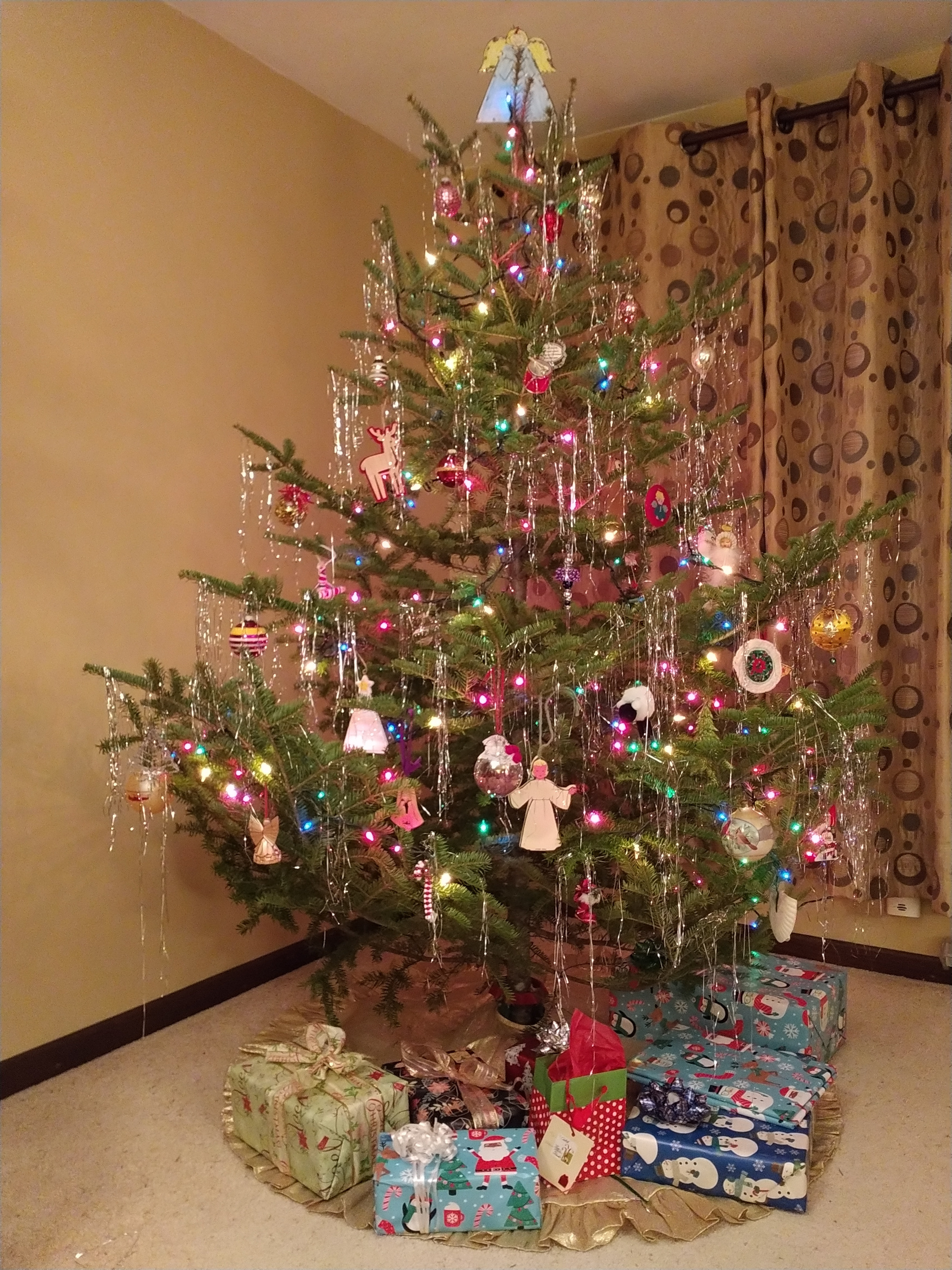
Our 2023 Christmas tree purchased at Ken’s tree lot and placed in a corner of our living room. (Minnesota Prairie Roots copyrighted file photo December 2023)
The tree is simply a decoration, a memory, a focal point. In the living room. Not atop the kitchen table.
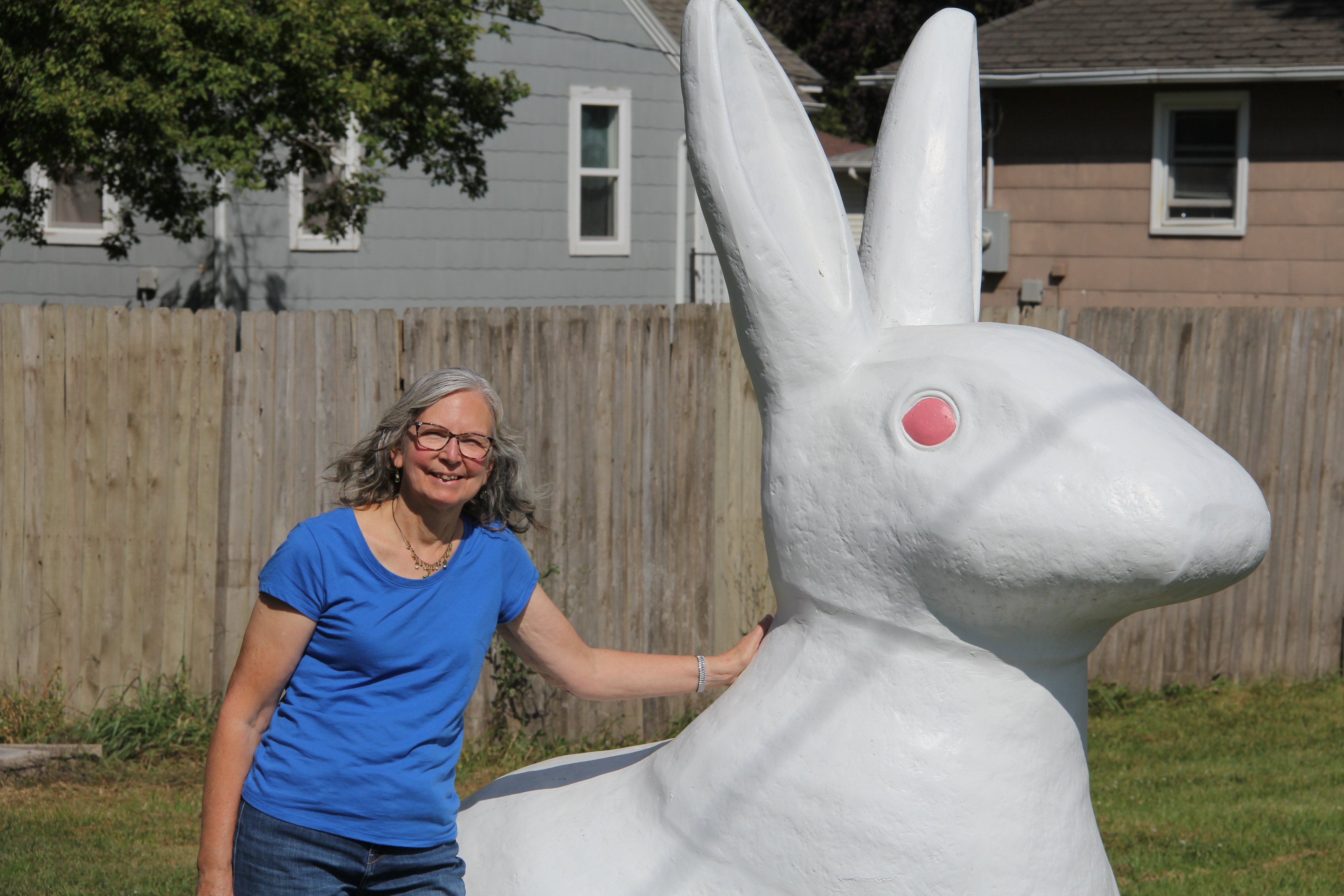
First up upon arriving in Wabasso for my 50th class reunion, a photo with the roadside white rabbit sculpture. (Photo credit: Randy Helbling)
WE MAY NEVER PASS this way again. Ah, but we have. On a recent Saturday, I gathered with some 30 of my Wabasso High School classmates to celebrate our 50th class reunion. In Wabasso, a small farming community 45 miles west of New Ulm on the southwestern Minnesota prairie.
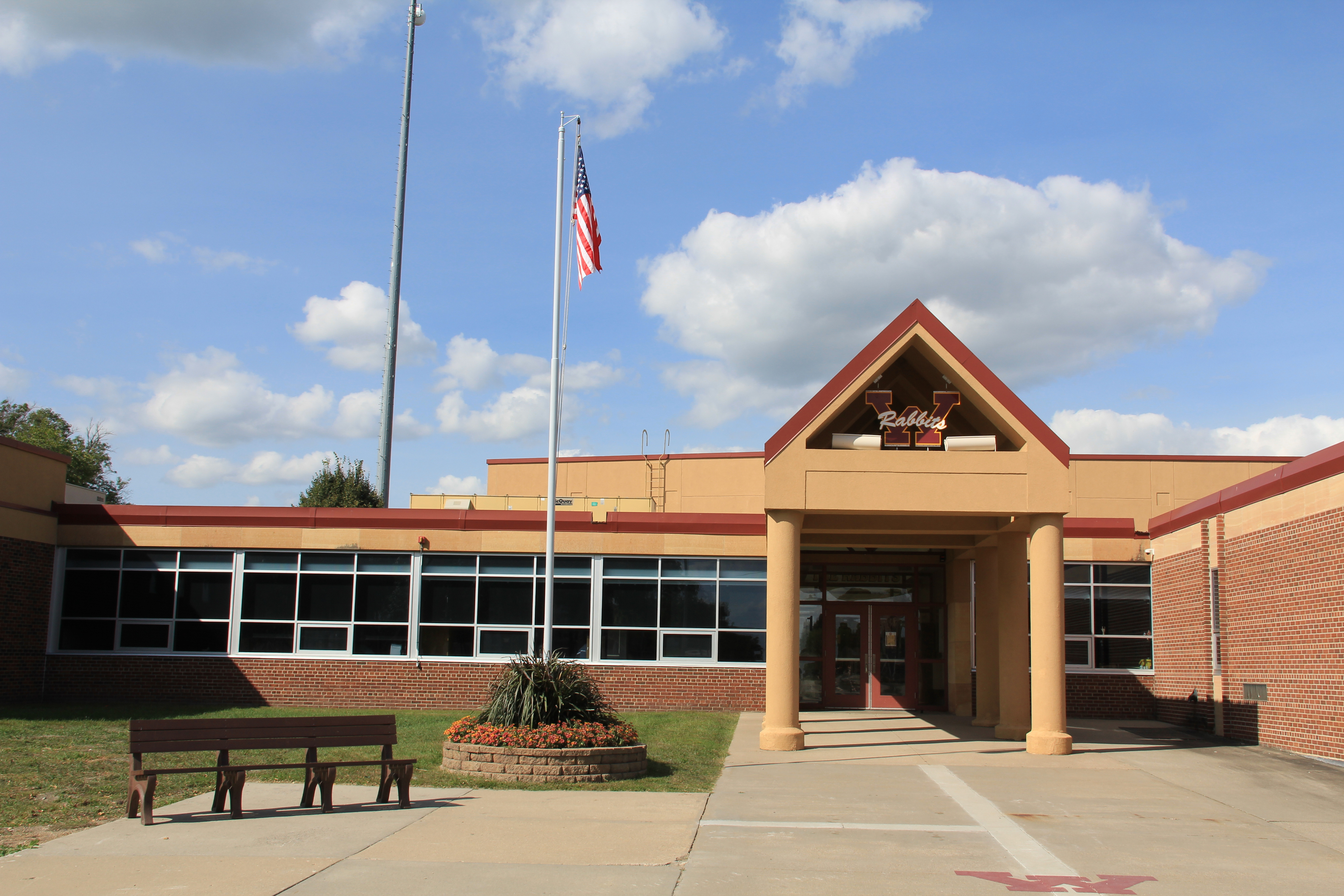
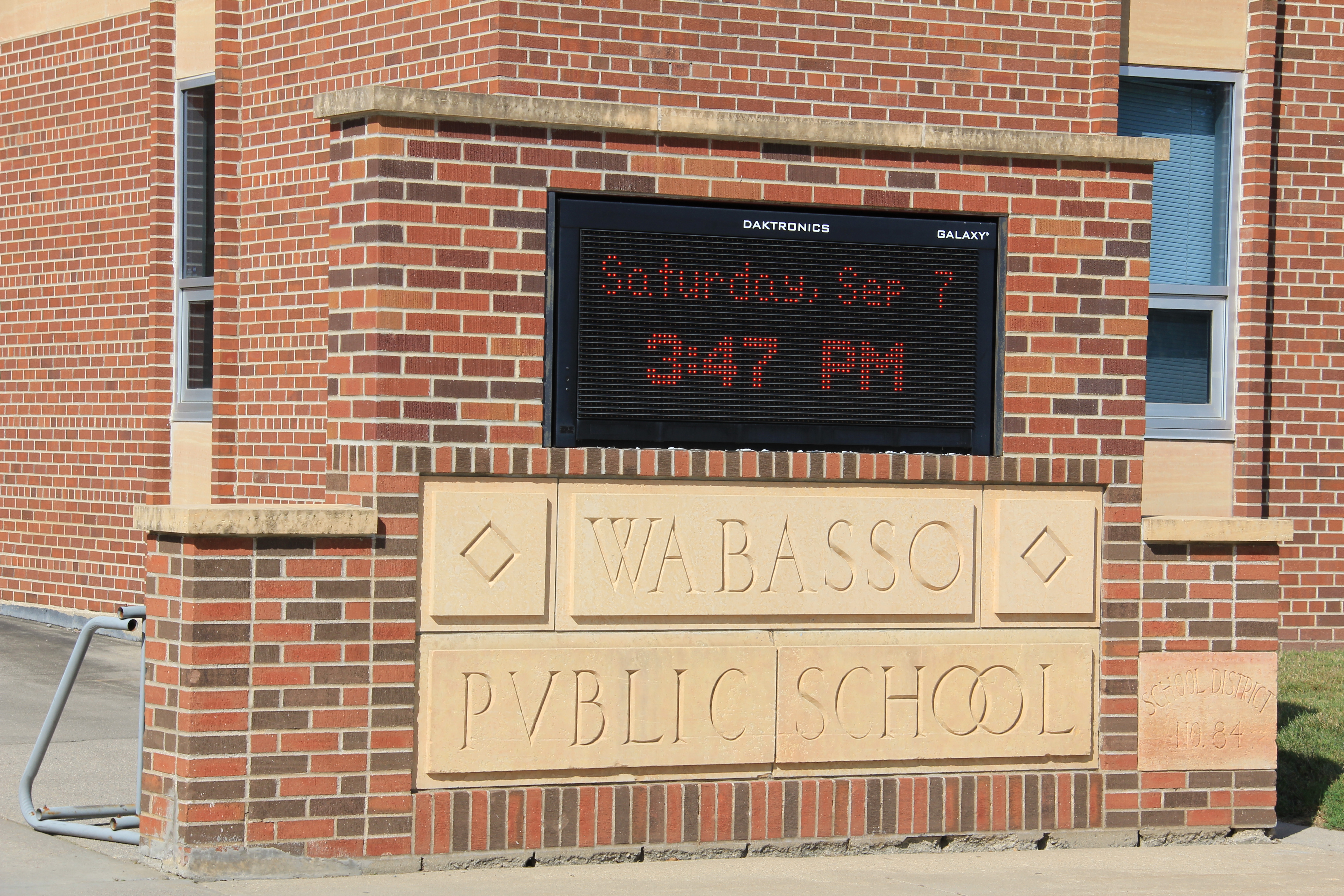
The front entrance to Wabasso Public Schools. The overhang with pillars was added after my days there. (Minnesota Prairie Roots copyrighted photo September 2024)
The cover of my WHS yearbook. (Minnesota Prairie Roots copyrighted photo September 2024)
Signage at the front of the school blends the old and the new. (Minnesota Prairie Roots copyrighted photo September 2024)
I’ve attended many reunions through the decades since 89 of us graduated in May of 1974. I’ve enjoyed every gathering, especially those in latter years when no one cared any more about who was a jock or an academic achiever or a wild one or any label we may have carried through our high school days. Today we are simply individuals who share a history of attending school together. Learning. Having fun. Making memories.
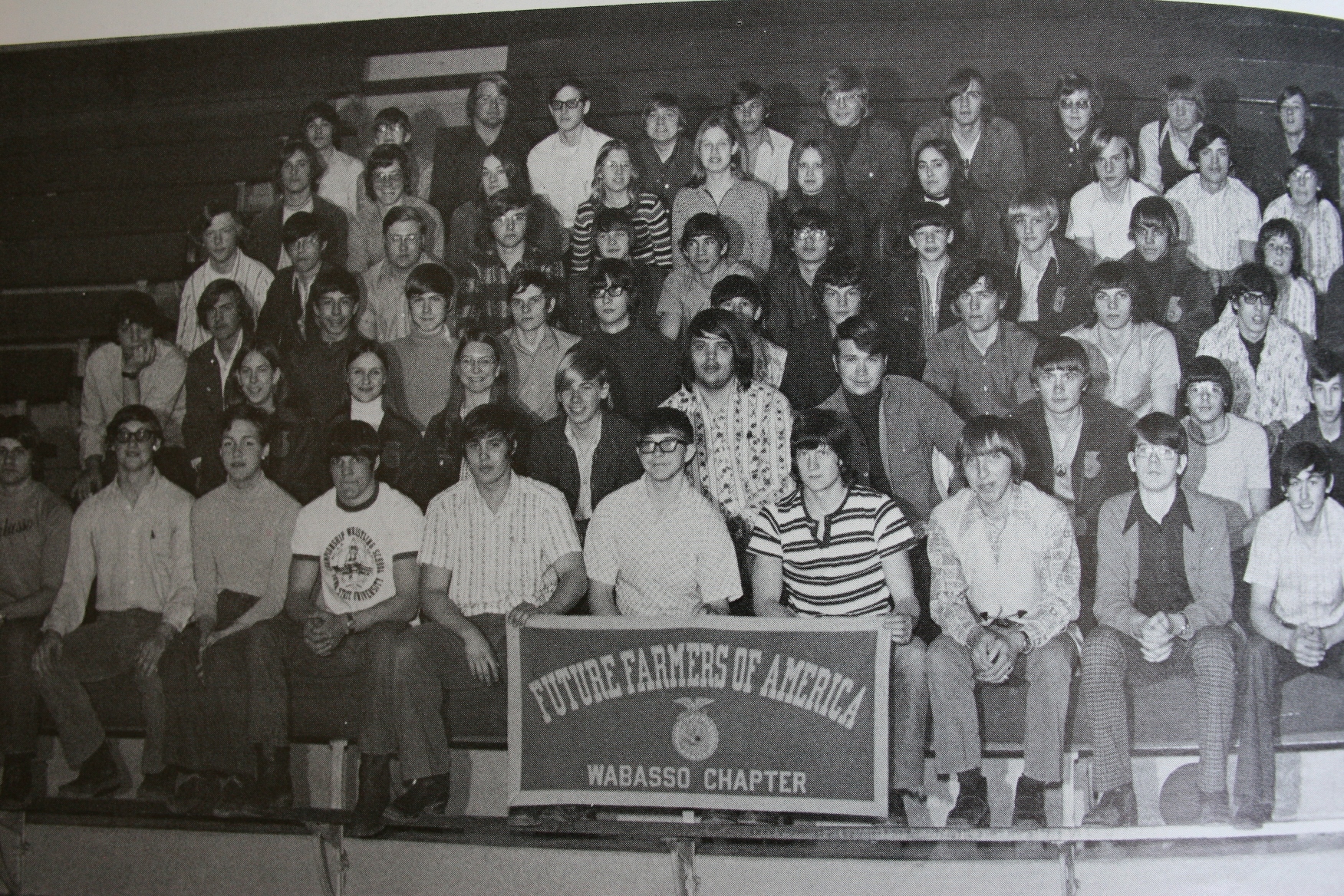
The 1973 – 1974 Wabasso High School FFA chapter consisted of mostly male students. I am among the few females featured in this photo. I’m seated in the second row, third girl on the right. (Photo credit: WHS yearbook)
Coming of age in the 1970s during the Vietnam War, we were a bit of a rebellious bunch testing our teachers’ patience. I was among those who wore a prisoner of war bracelet, embraced the peace symbol, wrote anti-war poetry. Mostly, though, I was quiet, studious, a rule follower. But I did blaze the way for young women at my high school by becoming the first girl to join the WHS Future Farmers of America Chapter. Decades later, a niece would become the state FFA president.
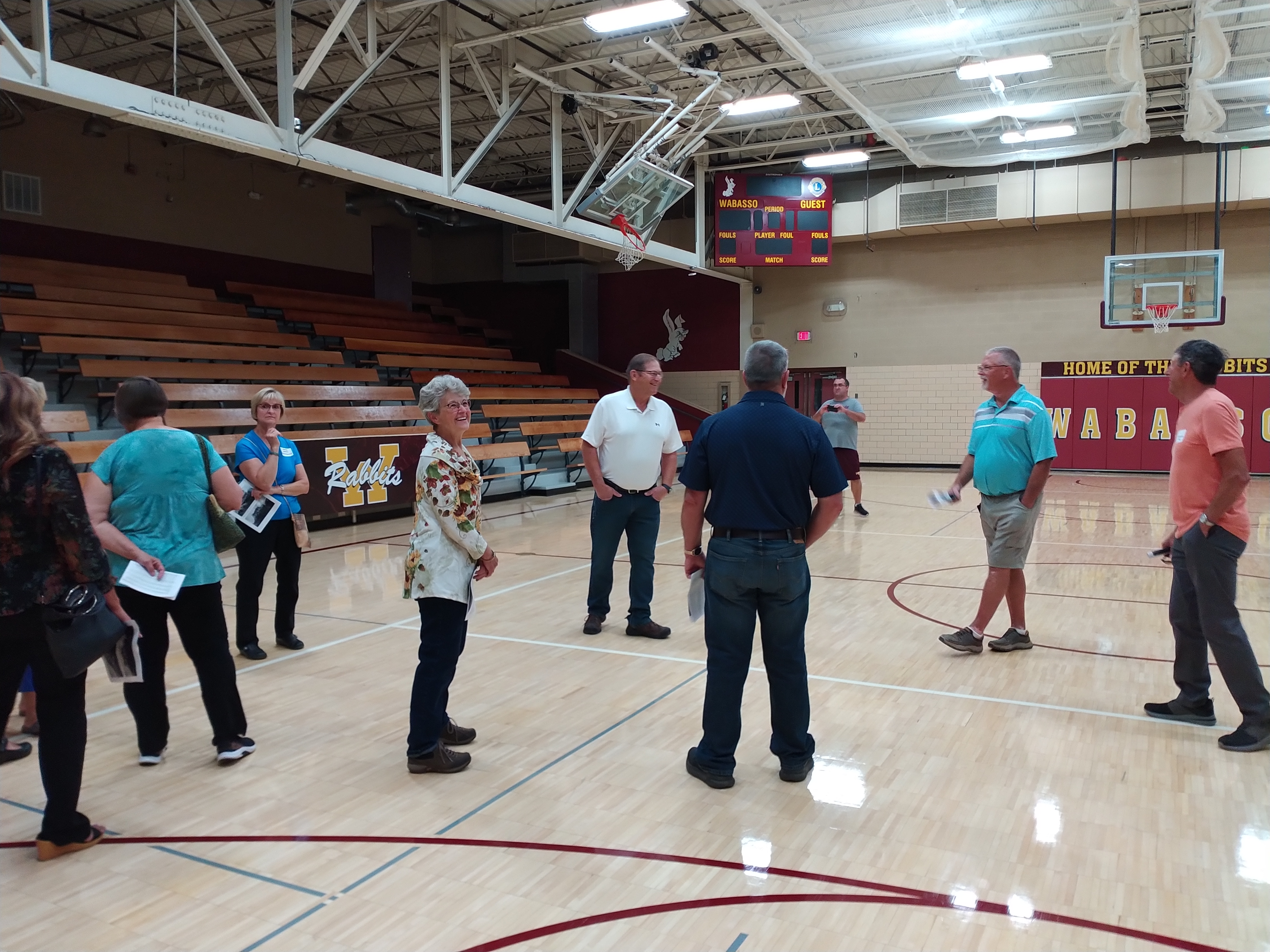
We were given a lengthy tour of the school. (Minnesota Prairie Roots copyrighted photo September 2024)
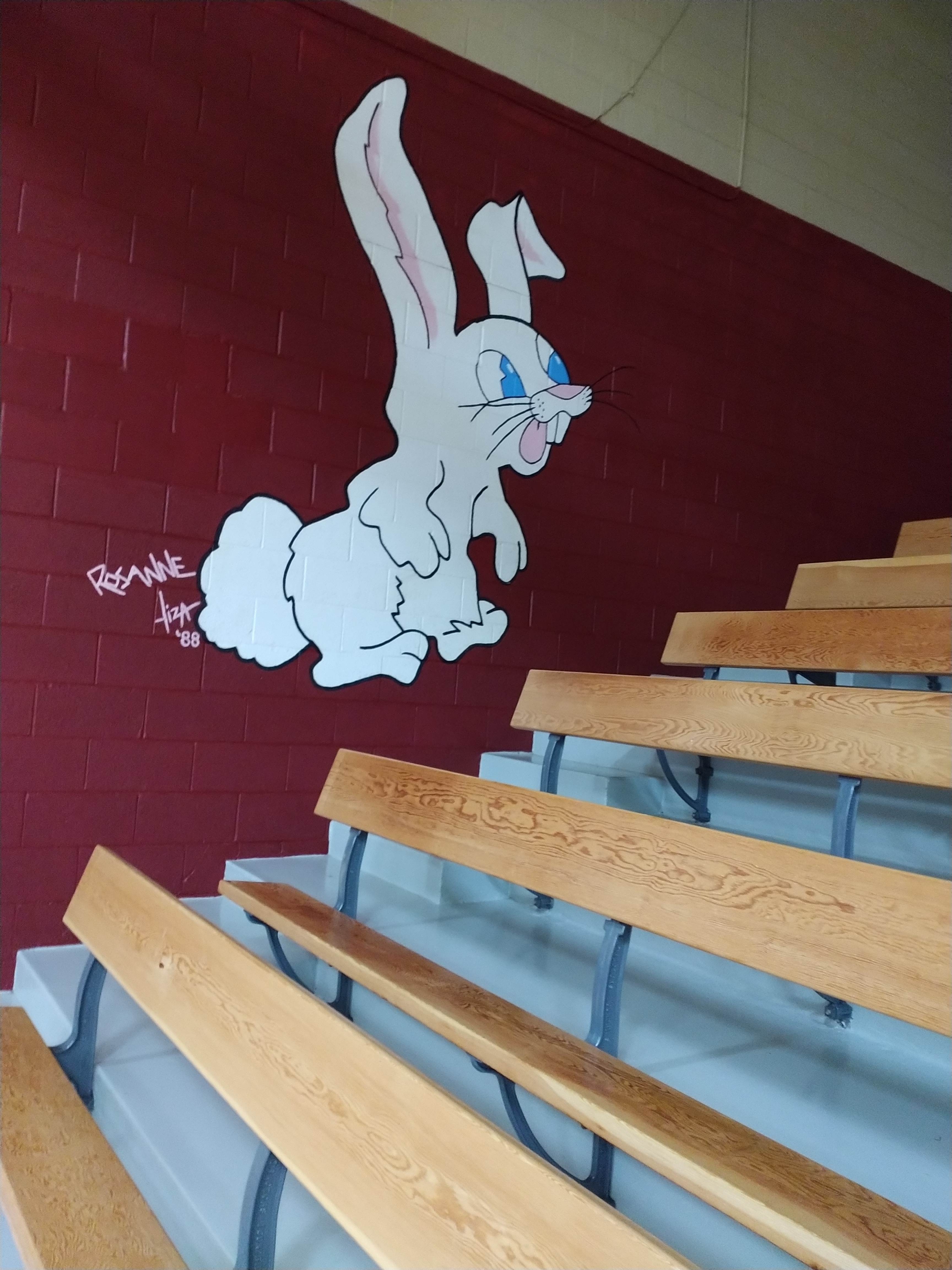
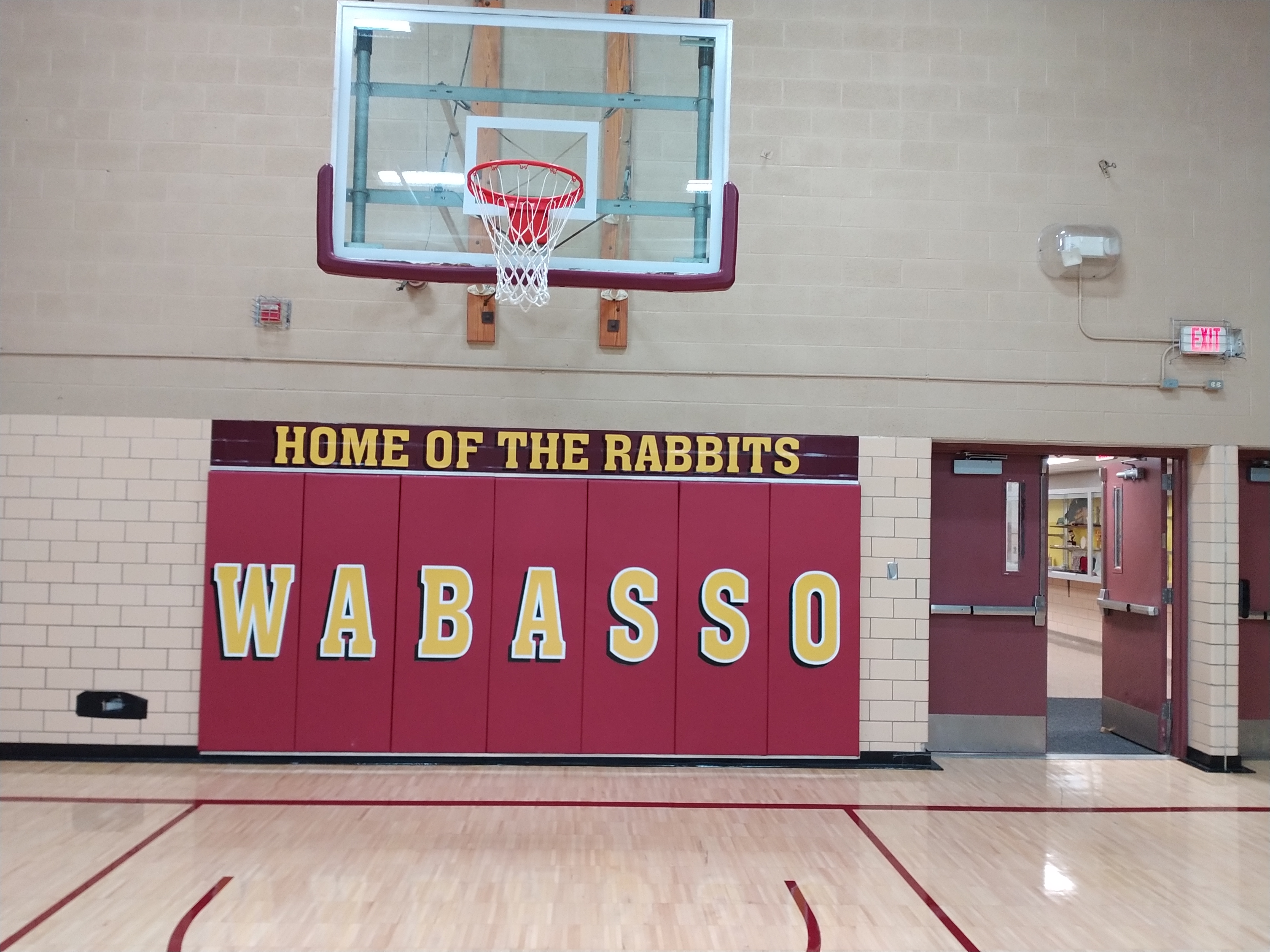
No one cared about any of that when we got together 50 years later, first touring the halls of our former school. Home of the Rabbits. Yes, Rabbits. Wabasso, meaning “white rabbit,” comes from the Dakota language. I’m proud of our school mascot, which is unique and connects to the history of the region. It honors the town name and the Dakota people who were the original inhabitants of this land and still live in the nearby Upper and Lower Sioux Indian communities.
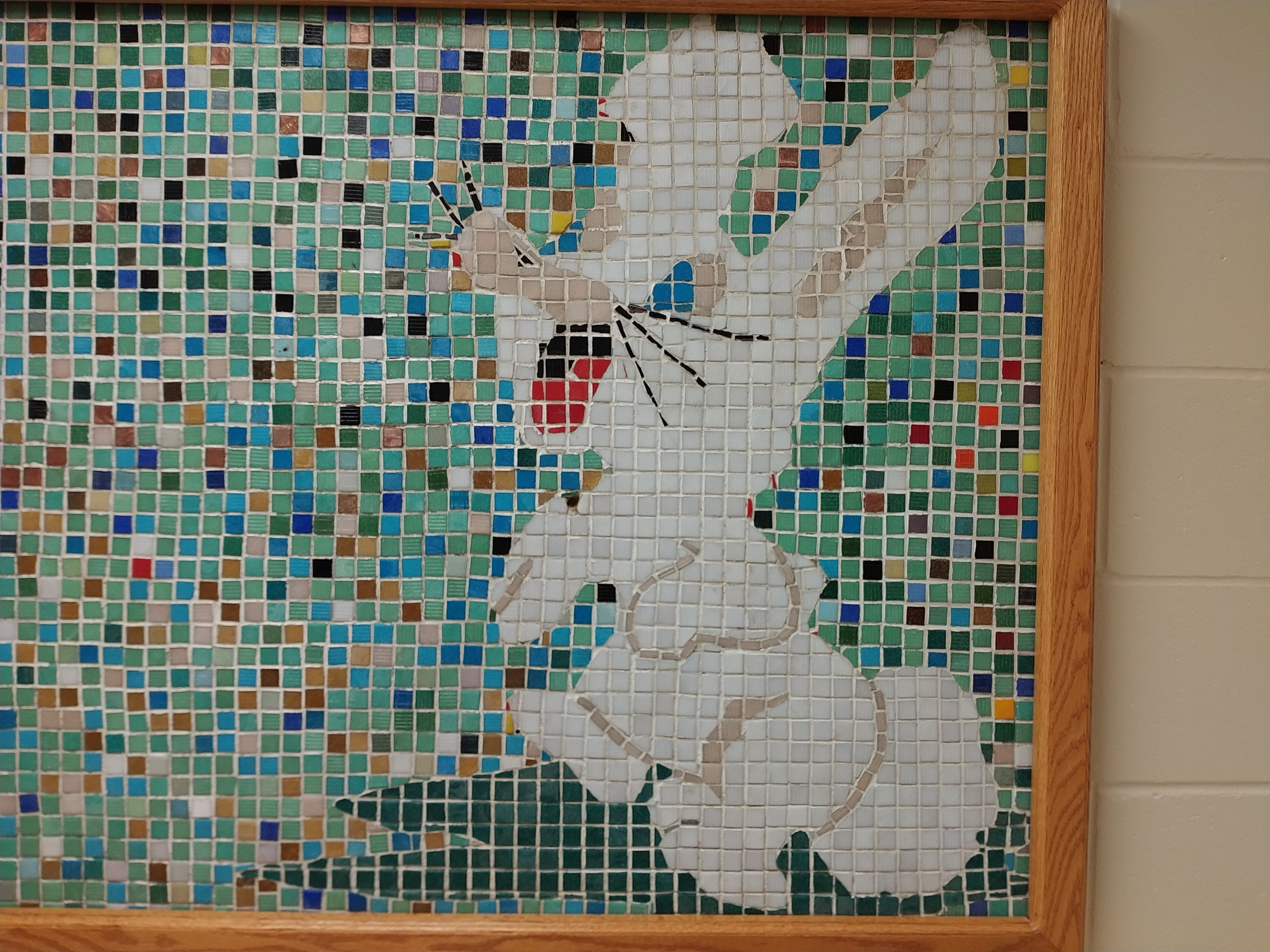
This Rabbit mosaic once hung on the side of the front office counter. It now hangs in a school hallway. (Minnesota Prairie Roots copyrighted photo September 2024)
The original Rabbit mascot on a gym wall. (Minnesota Prairie Roots copyrighted photo September 2024)
Rabbit pride showcased in the gym. (Minnesota Prairie Roots copyrighted photo September 2024)
As the superintendent of schools led us through the school, I found myself drawn to the many artistic renditions of Thumper, our rabbit mascot. I don’t care for the updated, fierce version that now graces a wall in the new gymnasium. It’s not that I oppose change. I just don’t like the mean look on the rabbit’s face, his appearance of being on steroids. No thank you. I much prefer the old rabbit, the one that appears gentle and friendly. Thankfully, plenty of the original Thumpers remain in a school building I barely recognize.
Oversized photos, including this one of the 1973 homecoming court, are displayed in a hallway of images. (Minnesota Prairie Roots copyrighted photo September 2024)
Building additions, removal of the storied stack, shuffling and changing of classrooms altered the school significantly. The home economics room is now the art room. The shop a classroom. The cafeteria is new, spacious, bright and beautiful. And the new library, although much brighter and modern in appearance, holds far fewer books than the library of my high school years, something several of us noticed and mentioned to the superintendent.
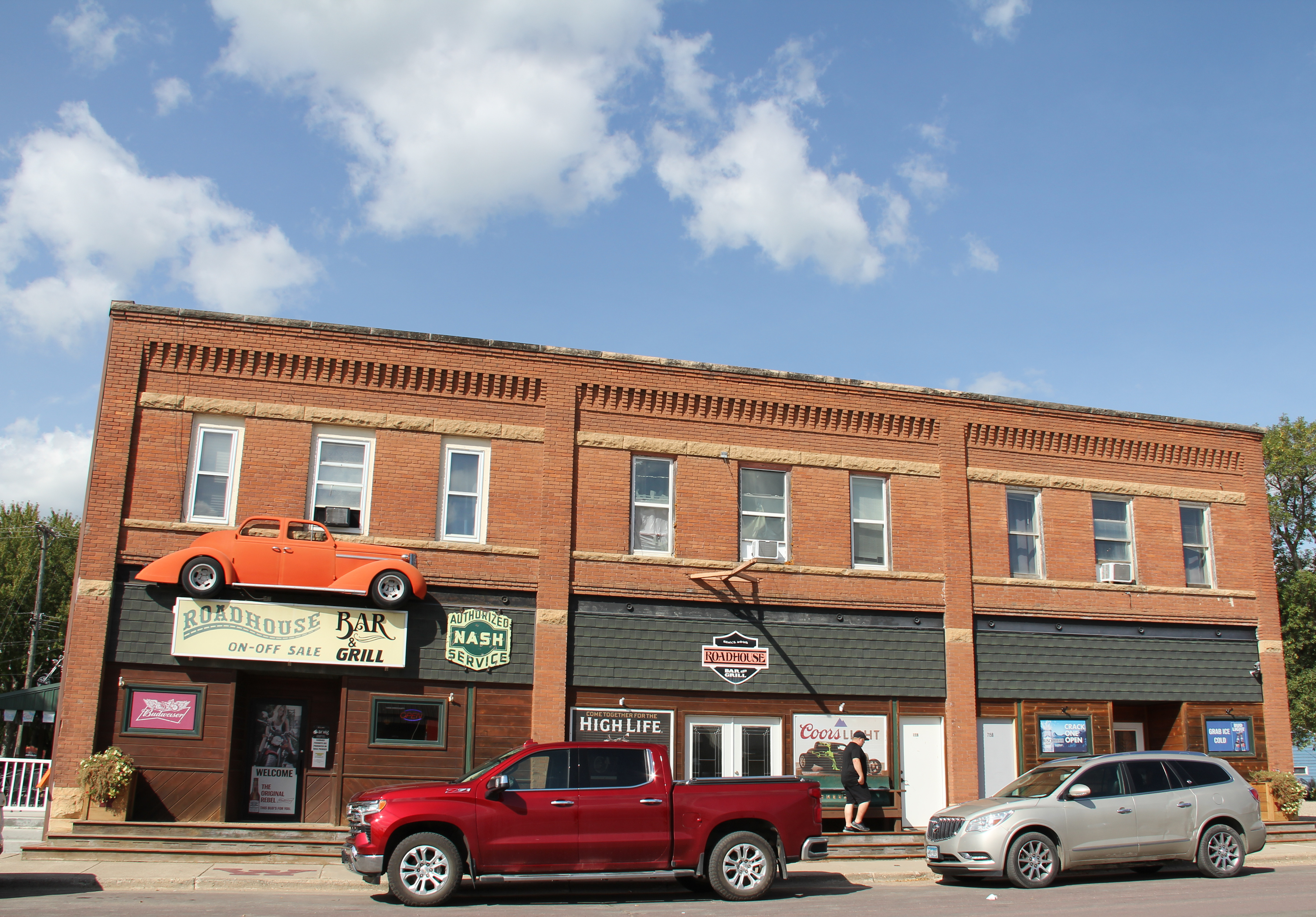
The Roadhouse Bar & Grill sits on a corner along Wabasso’s main street. It’s an especially popular summertime spot with weekly roll-ins. (Minnesota Prairie Roots copyrighted photo September 2024)
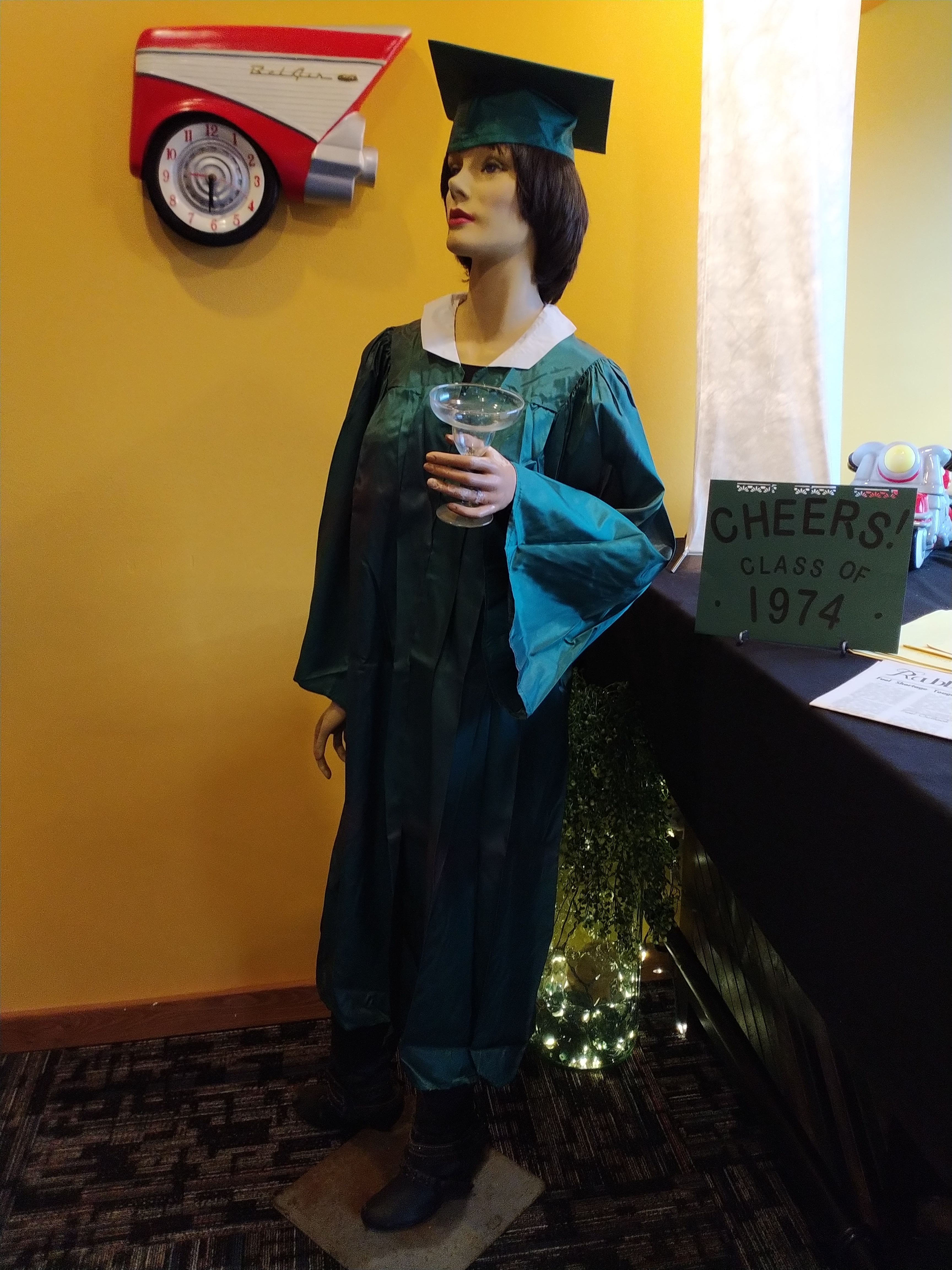
The reunion committee set up this mannequin wearing a Class of 1974 graduation gown. (Minnesota Prairie Roots copyrighted photo September 2024)
This shows just a part of Meadowland Farmers Cooperative, which anchors the business community. (Minnesota Prairie Roots copyrighted photo September 2024)
What I did notice, too, was a closeness I felt among classmates as we walked hallways and classrooms and even the old locker rooms. That feeling remained after the tour, down at the Roadhouse Bar & Grill. There we perused photos and memorabilia. Hugged. Laughed. Mourned the loss of 15 classmates. Built burgers at the burger bar. Gathered outside for a group photo. Clustered around patio tables for conversation as the sun set, brushing the sky in a subtle pink hue. All the while the ventilation fans from the grain bins across the street roared in a steady din.
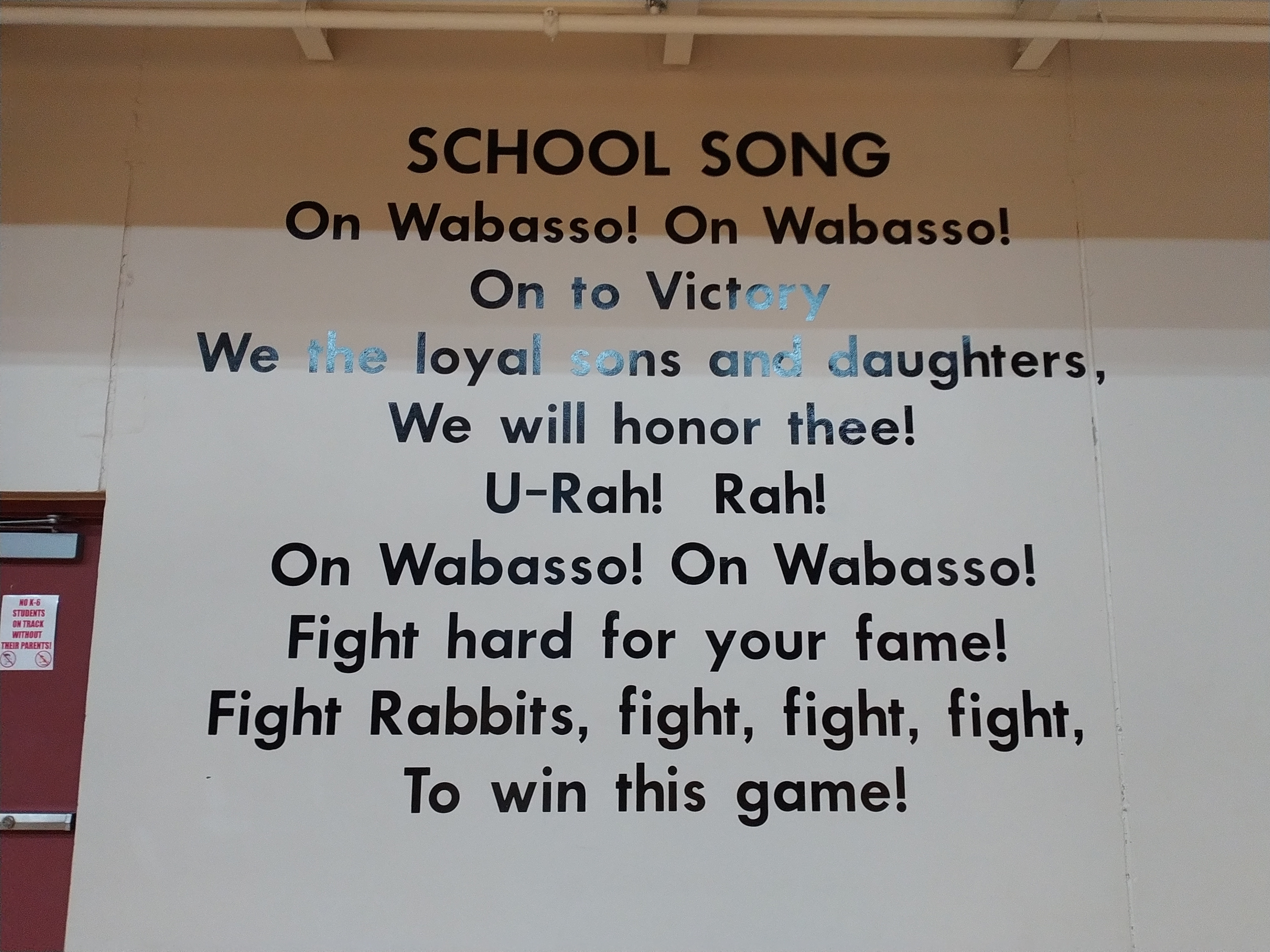
Wabasso’s school song, printed on a gym wall. (Minnesota Prairie Roots copyrighted photo September 2024)
“We May Never Pass This Way Again.” That titled the Seals & Croft tune we chose as our class song. It was our second choice. The administration nixed “Dead Skunk in the Middle of the Road.” There was no mention of skunks—at least that I heard—at our 50th reunion. But Rabbits, oh, yes, Rabbits. We are forever and always Rabbit proud.
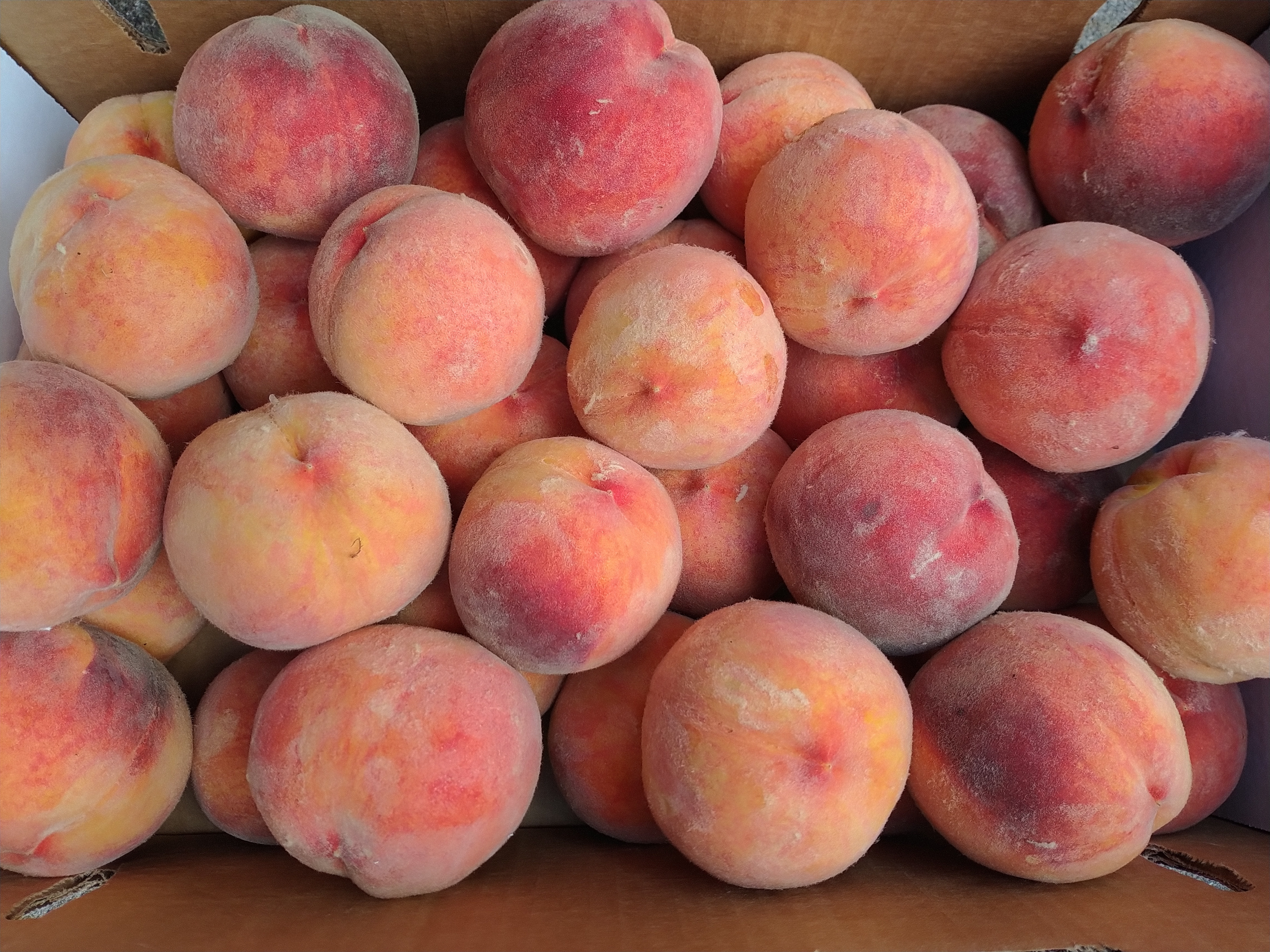
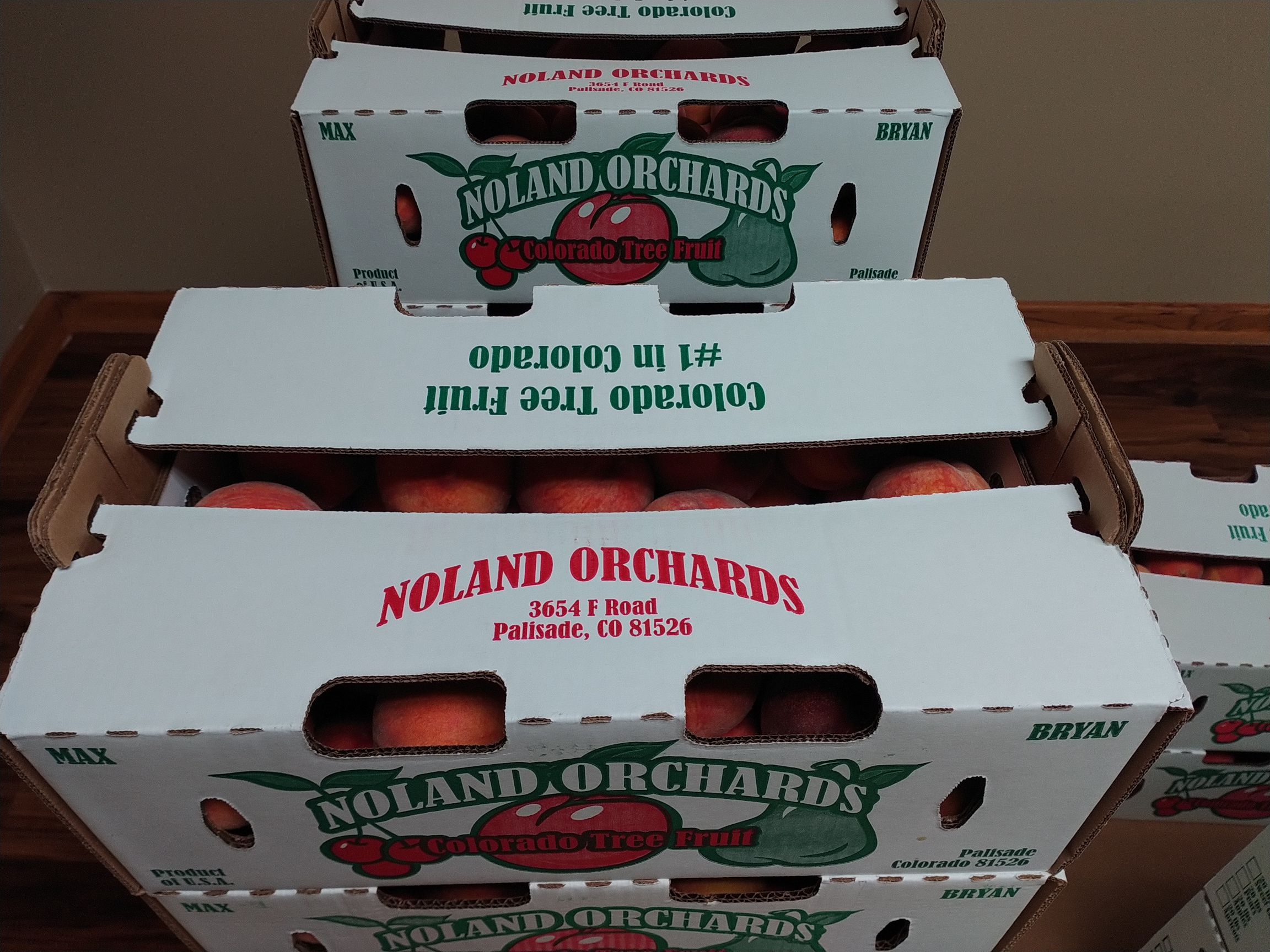
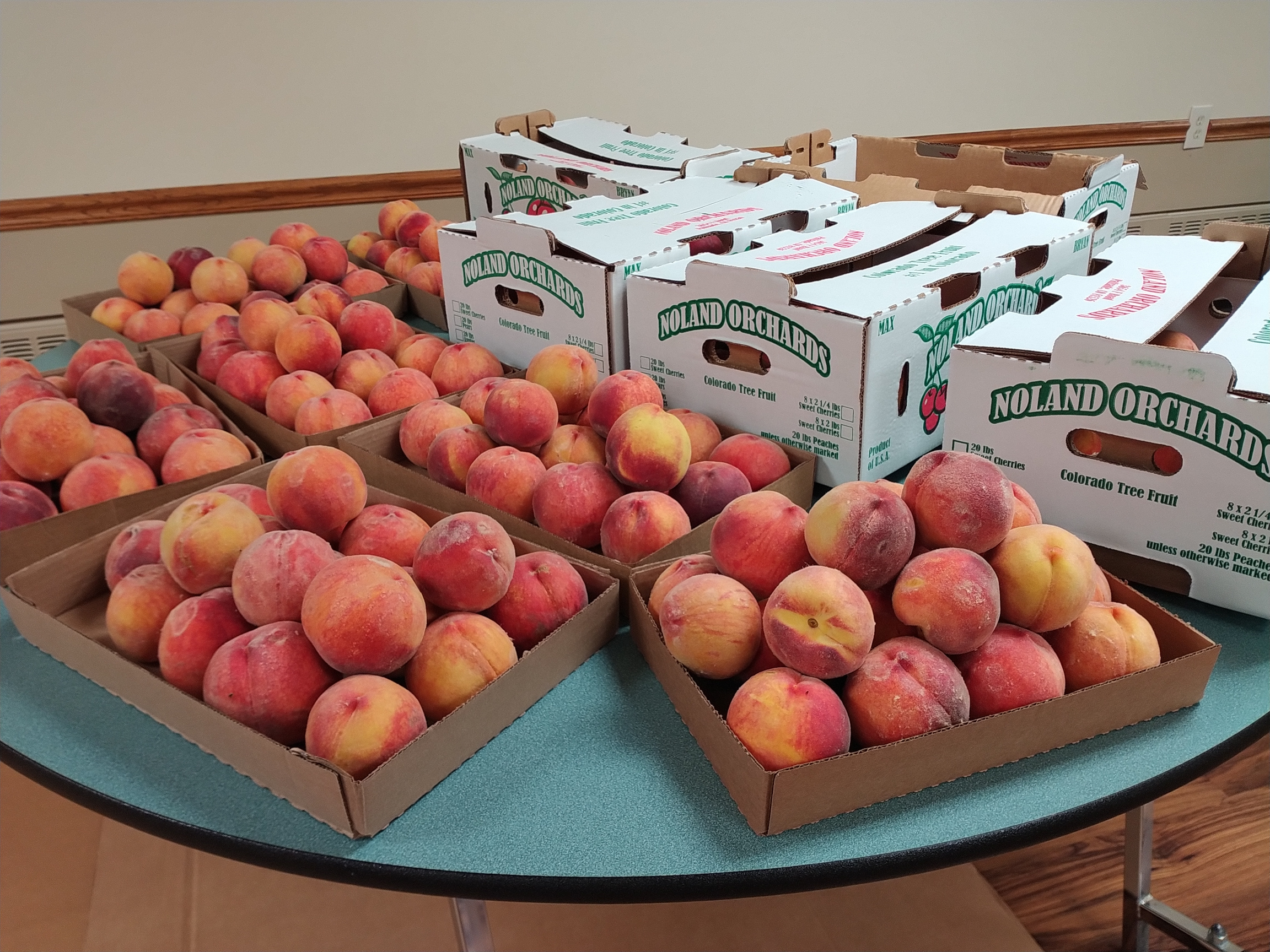
Peaches fill a box and now my fridge. (Minnesota Prairie Roots copyrighted photo August 2024)
PEACHES PACK my refrigerator. Several ripen in a brown paper bag on the kitchen counter. Big, beautiful Colorado peaches.
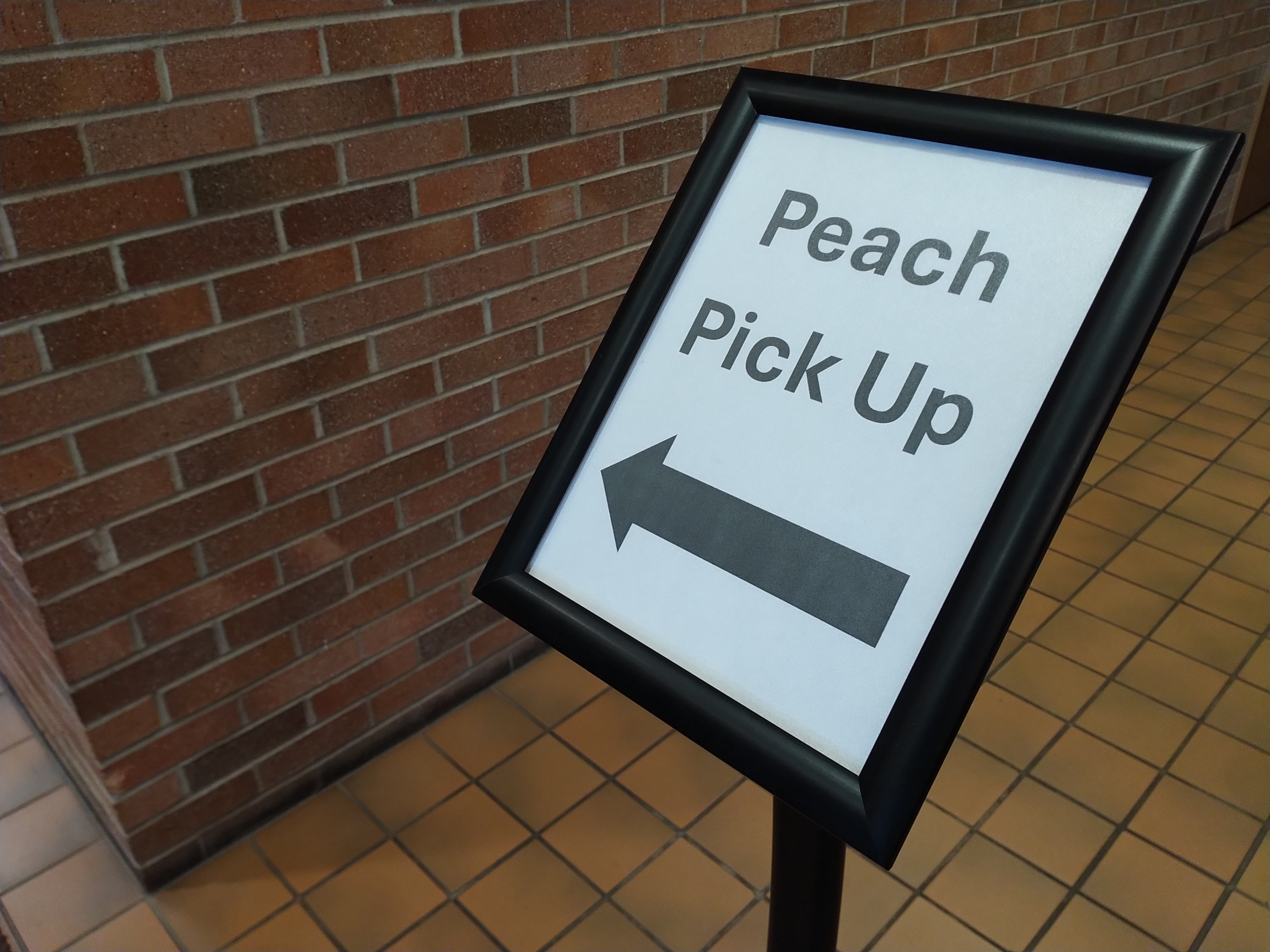
Signs directed people into the peach pick up spot in the basement. (Minnesota Prairie Roots copyrighted photo August 2024)
Earlier this week, Randy and I picked up a 20-pound case of peaches in the basement of First English Lutheran Church. That’s a lot of peaches—around 40—for two people to eat. But I love peaches. And we’ll share some with our eldest daughter and her family.
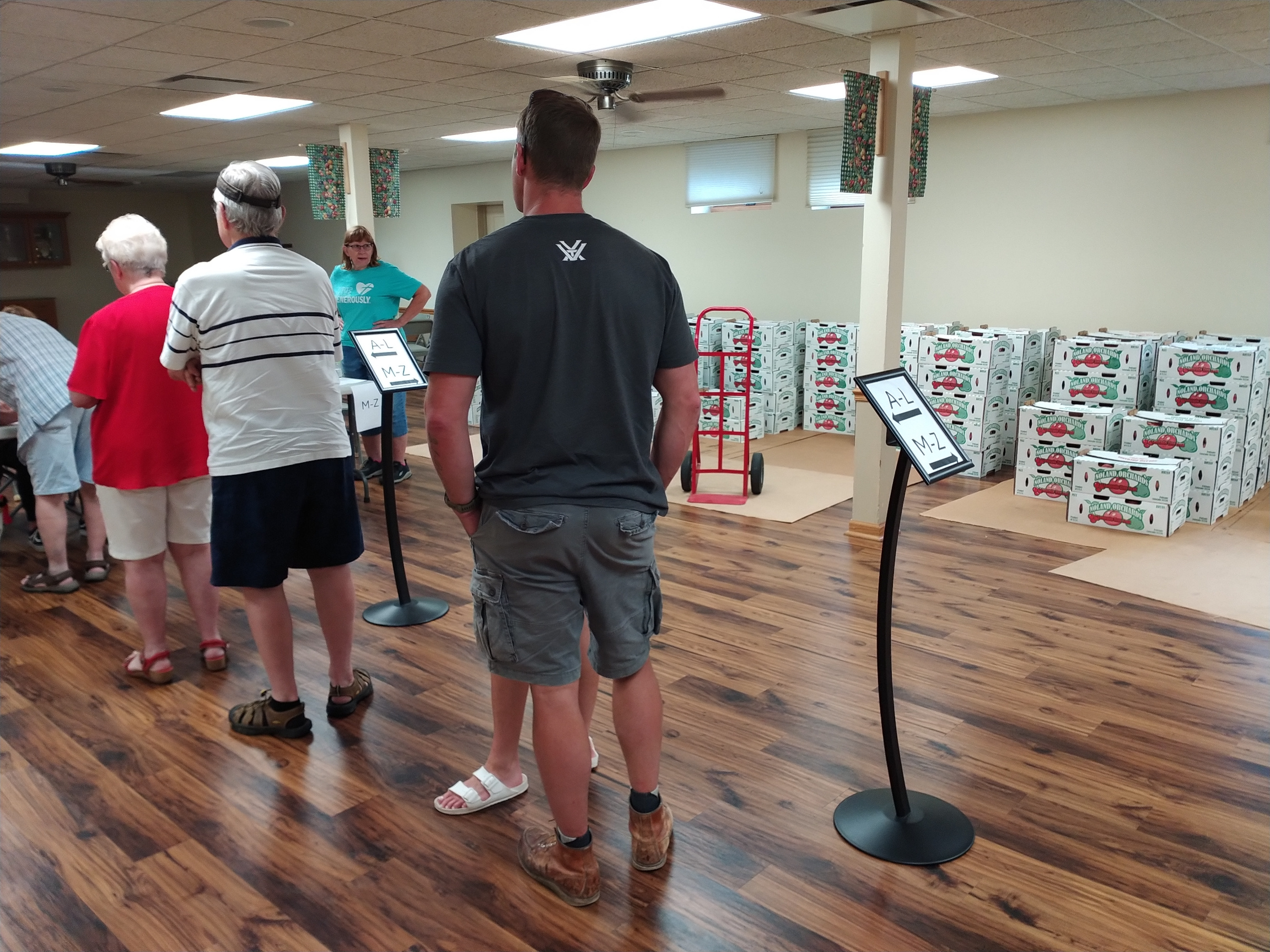
People wait in line for their peaches at First English Lutheran Church. (Minnesota Prairie Roots copyrighted photo August 2024)
A steady stream of people flowed into the cold church basement late Tuesday afternoon for their pre-ordered peaches, sold as a fundraiser by the youth group. We paid $37 for our full box. That’s $1.85/pound. I have no idea if that’s a “good” price. It doesn’t matter. I prefer peaches shipped directly from the grower. I also like supporting local church youth, because I was once that mom of kids raising monies for mission trips and youth gatherings.
Peaches no longer come in wooden crates, but in cardboard boxes. (Minnesota Prairie Roots copyrighted photo August 2024)
Peaches, though, mean more to me than simply supporting a good cause and eating one of my favorite fruits. Peaches take me back to summer on the farm, into the kitchen. There my mom pried open a wooden crate of peaches wrapped in pinkish tissue paper (saved for later use in the outhouse). Then she dropped the peaches into a large kettle of boiling water to remove the skins. Next, she halved or sliced the peaches into Mason and Ball quart jars. Topped with lids and ringed, the jars went into the pressure cooker. Once removed, the jars cooled and sealed. Then we carried the jars to the cellar.
Beautiful (and delicious) Colorado peaches sold at First English. (Minnesota Prairie Roots copyrighted photo August 2024)
I admire farm women like my mom who labored to preserve fruits and vegetables to feed their families during the winter months ahead. And winters on the prairie were long and harsh. Many a cold, snowy evening, Mom would pull open the kitchen floor trap door and send me down the open wooden steps into the depths of the dank, dark, dirt-floored cellar lit by a single light bulb. There I selected a quart jar from the wooden shelves. Whatever fruit Mom wanted. Pears, cherries, plums, apples, peaches. The preserved fruit would complete our meal of meat, boiled potatoes with gravy, a side vegetable (pulled from the freezer) and homemade bread.
We ate well. Good food without preservatives. Beef from our cattle. Vegetables from our garden. Apples from local trees. And then all those fruits, purchased in crates and preserved. No additives. Just simple, good food.
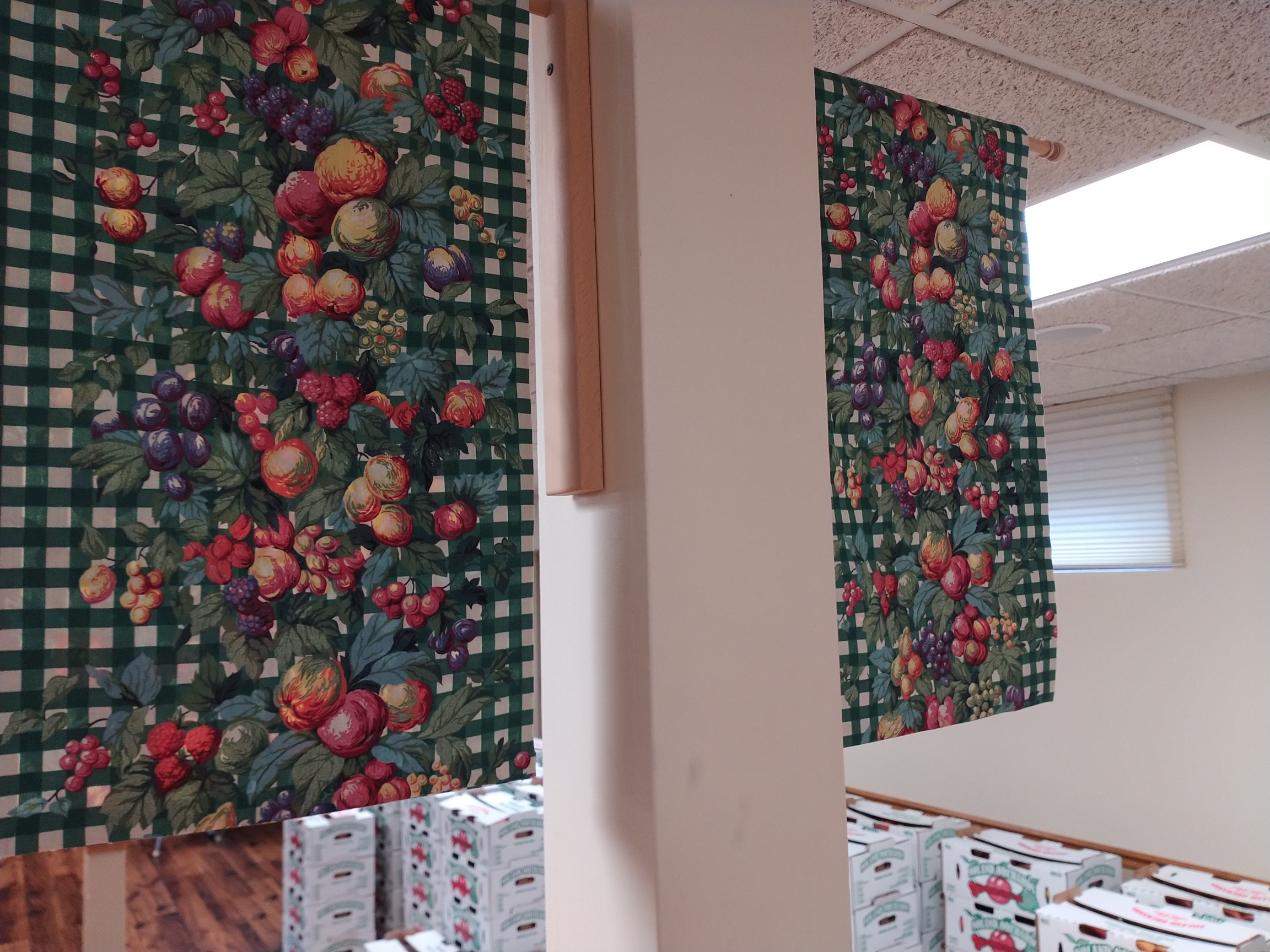
Fruit-themed banners add a festive flair to peach pick up. (Minnesota Prairie Roots copyrighted photo August 2024)
I always thought I would follow my mom’s example of planting a big garden and preserving food. But I never did. I live on a mostly shady lot in town. I raised only three children, not six like her. I have easy access to multiple grocery stores, unlike her. Fresh fruit is readily available. I prefer fresh. And, if I’m really honest with myself, I never wanted to labor in the kitchen for hours during the hot summer putting up fruits and vegetables.
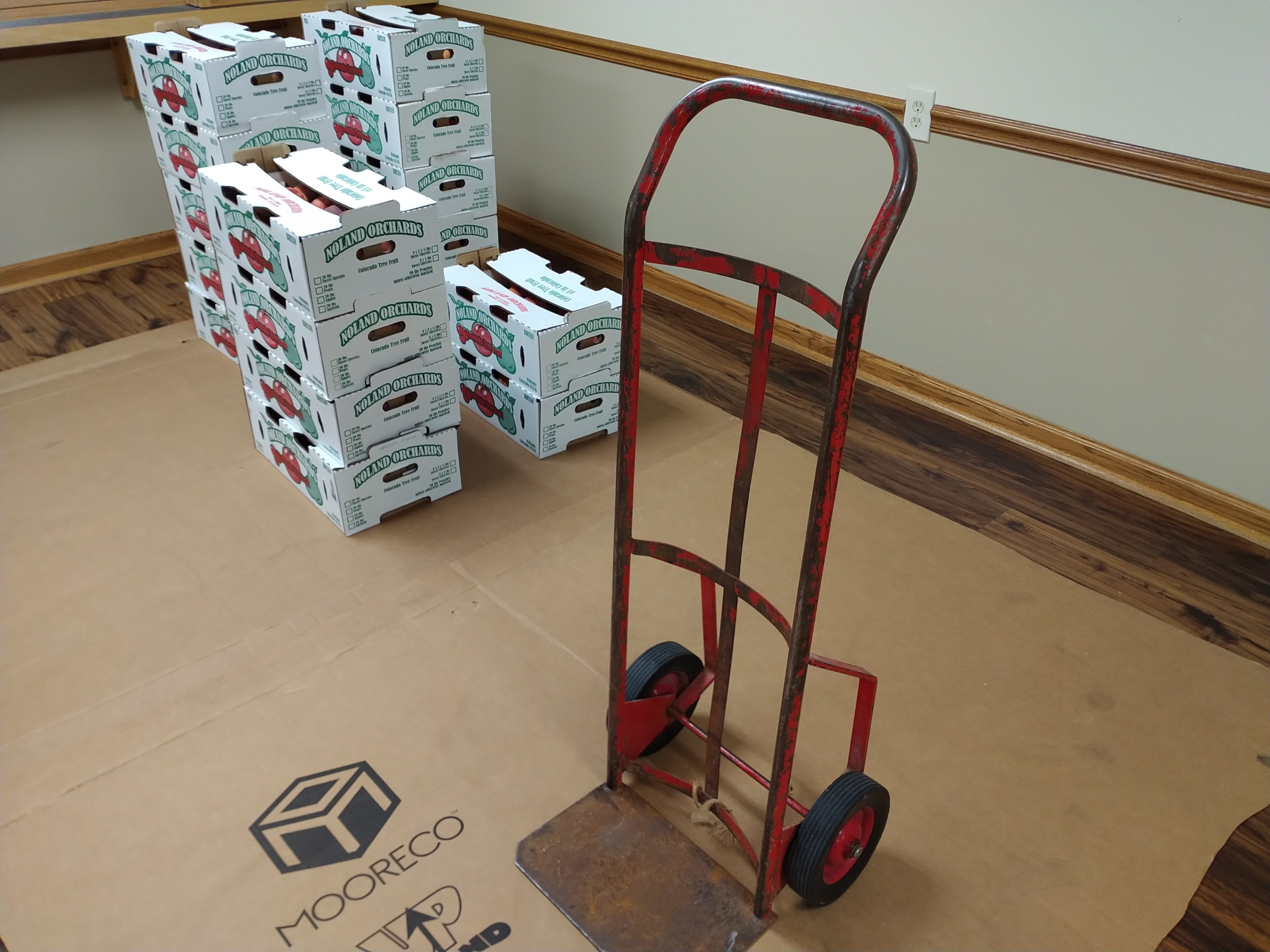
Carts were ready for volunteers to wheel peach cases to vehicles. (Minnesota Prairie Roots copyrighted photo August 2024)
Still, I buy that case of peaches from First English. All those peaches, minus the tissue paper wrappings reused in the outhouse. In many ways, I am honoring my mom, hardworking farm woman of the Minnesota prairie. As I pull ripened peaches from a brown paper bag to slice into my morning oatmeal, to eat with a meal or to incorporate into a crisp, pie or galette, I think of Mom. She, who showed her love for family not in words or hugs, but rather in rows and rows of quart jars filled with fruit. Jars shelved on planks in the dank, dark depths of the dirt-floored cellar.
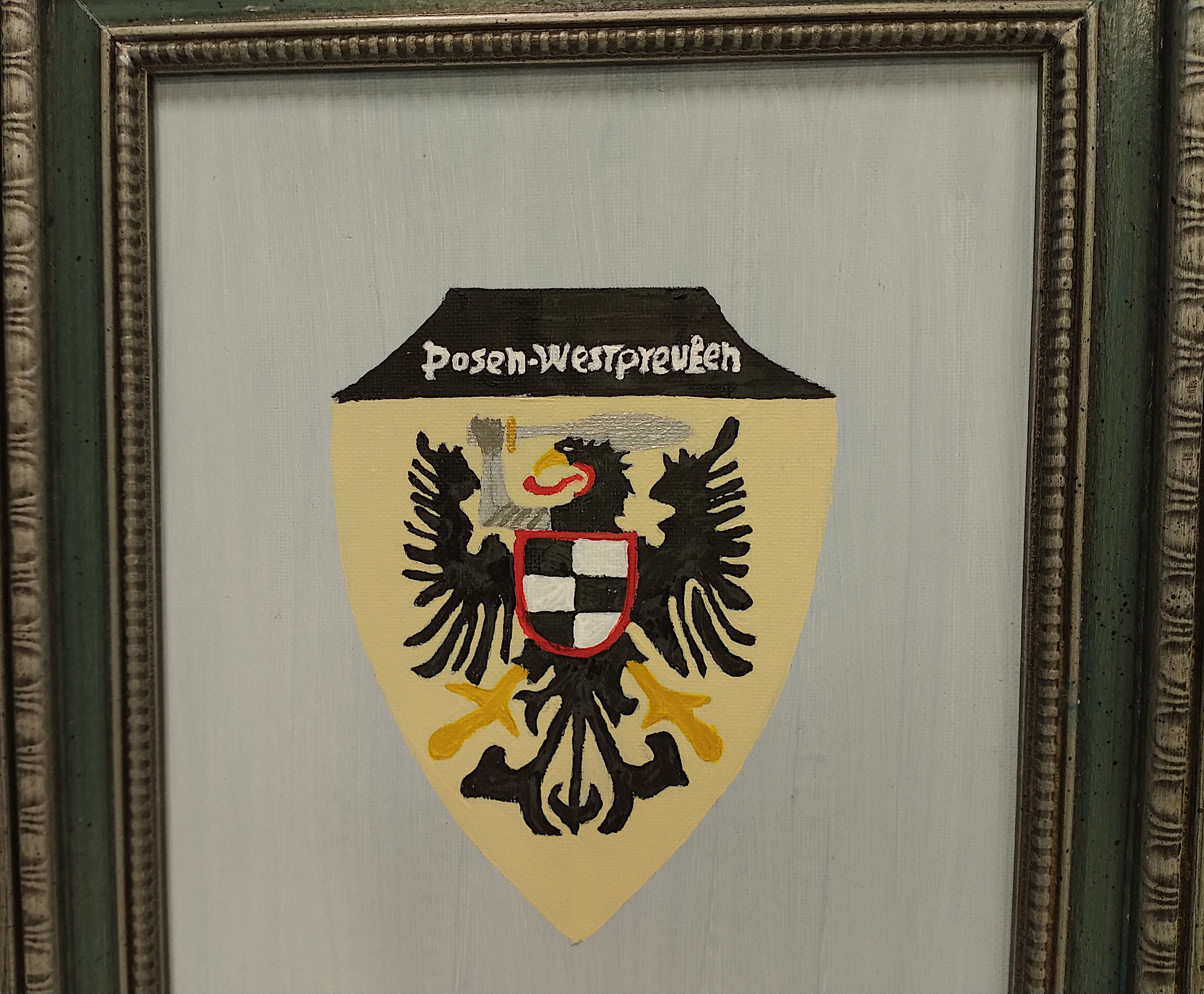
The Kletscher Family Coat of Arms of Posen-West Prussia. (Minnesota Prairie Roots copyrighted photo July 2024)
REUNITING. RECONNECTING. REMEMBERING. Those words define reunions, whether among family or friends. Summer marks prime reunion time in Minnesota, including for me, especially this year.
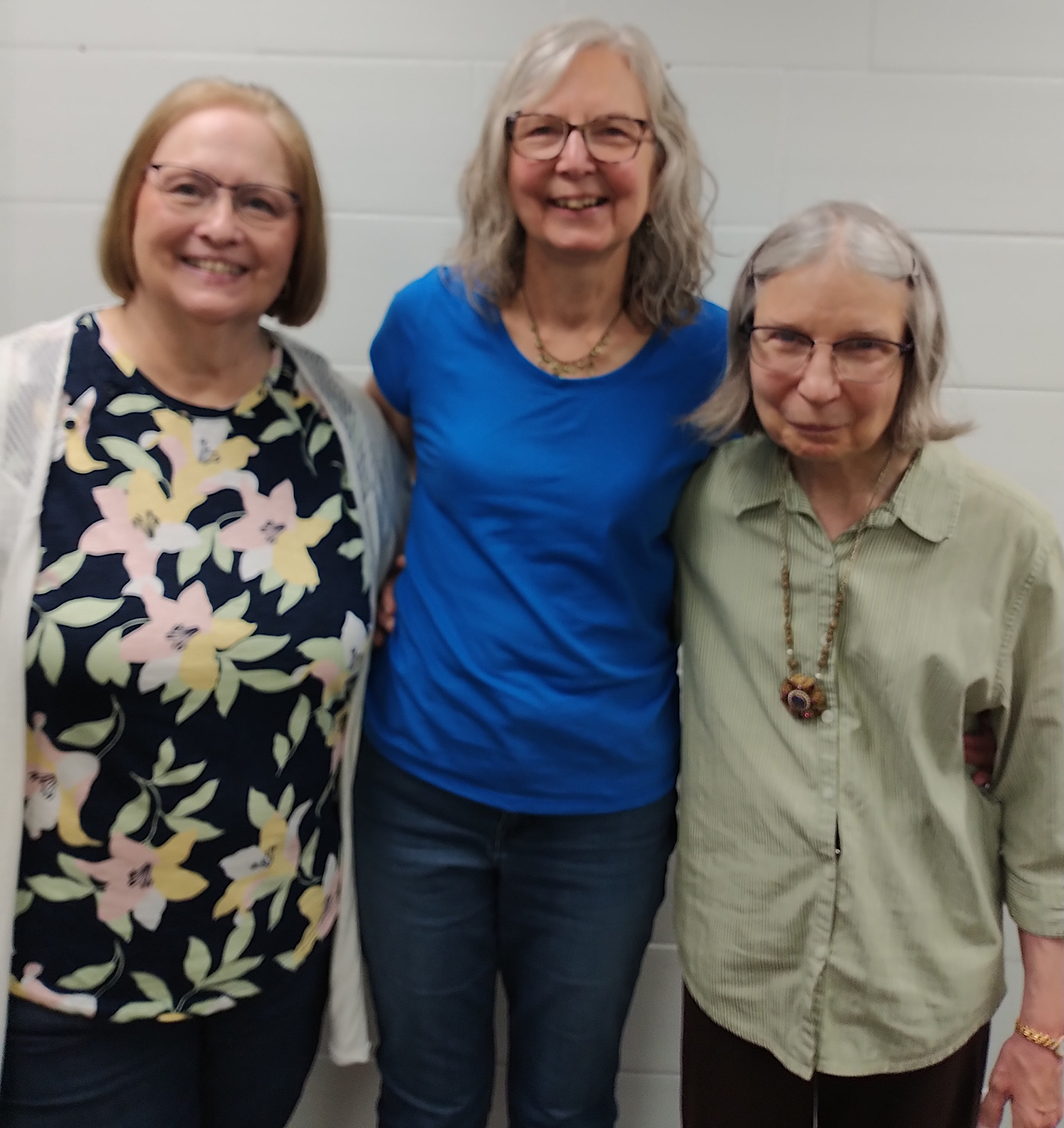
I’m flanked by cousins, Joyce, left, and LeAnn. We were born within months of each other and grew up spending lots of time together at family gatherings. (Photo credit: Kirt Kletscher)
From Pine River in northern Minnesota to Vesta on the southwestern Minnesota prairie to the Twin Cities and elsewhere, I’ve reconnected with people who are important to me, with whom I share roots and/or connections. And it’s been a joy because the older I grow, the more I realize that time is not a given and we need to gather and appreciate one another. With hugs, love and care.
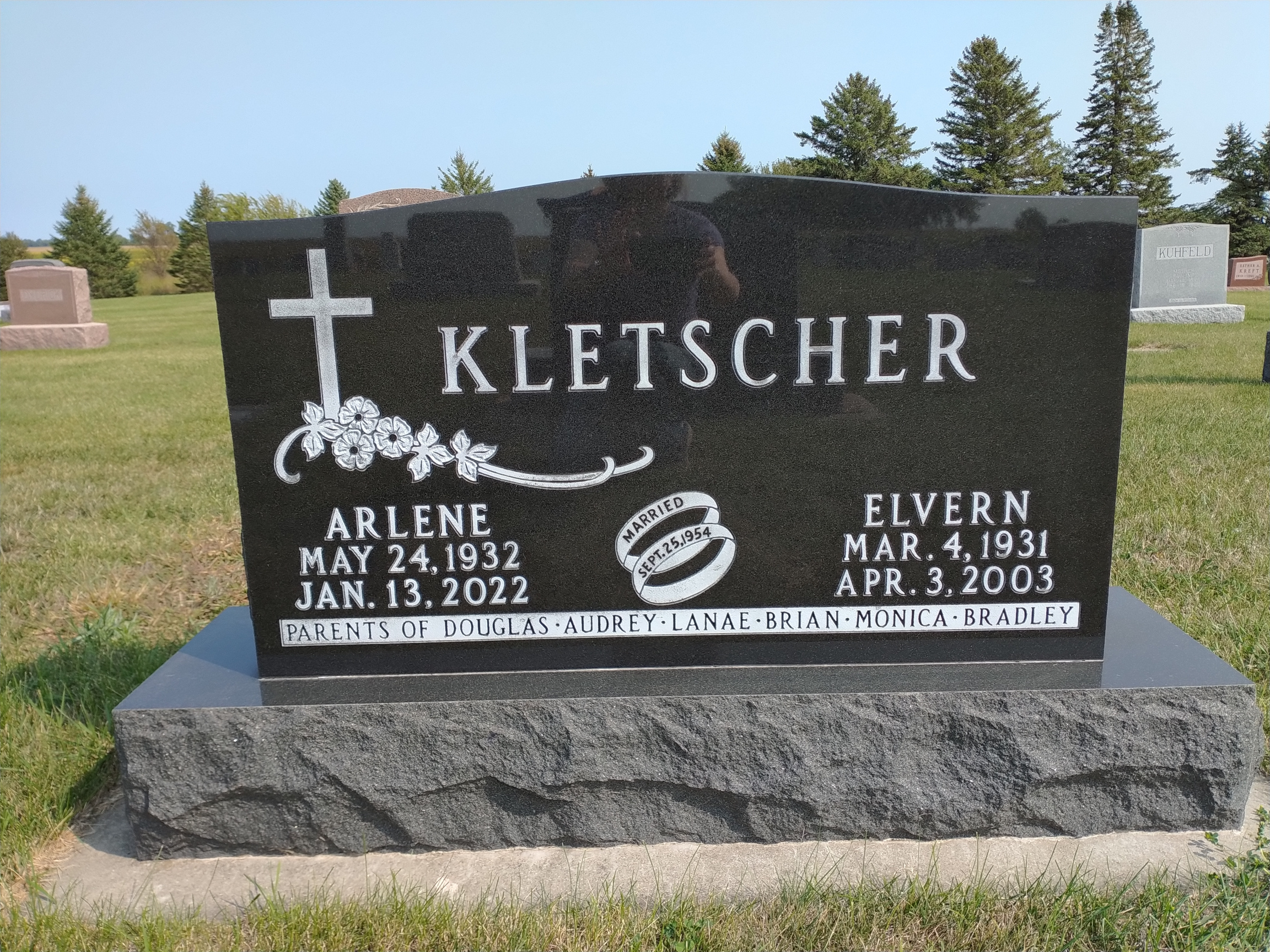
Myparents’ tombstone in the Vesta City Cemetery. (Minnesota Prairie Roots copyrighted file photo September 2022)
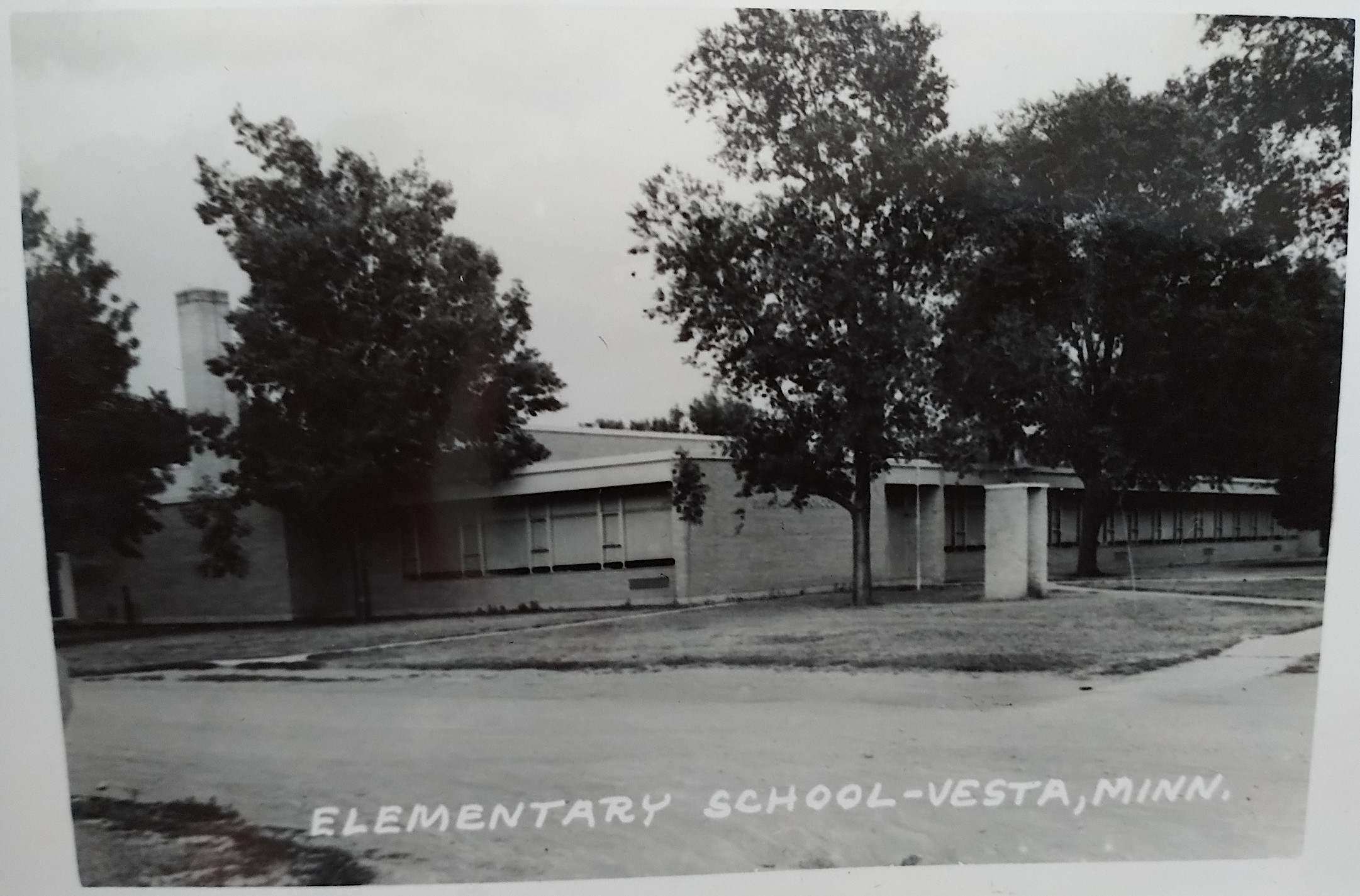
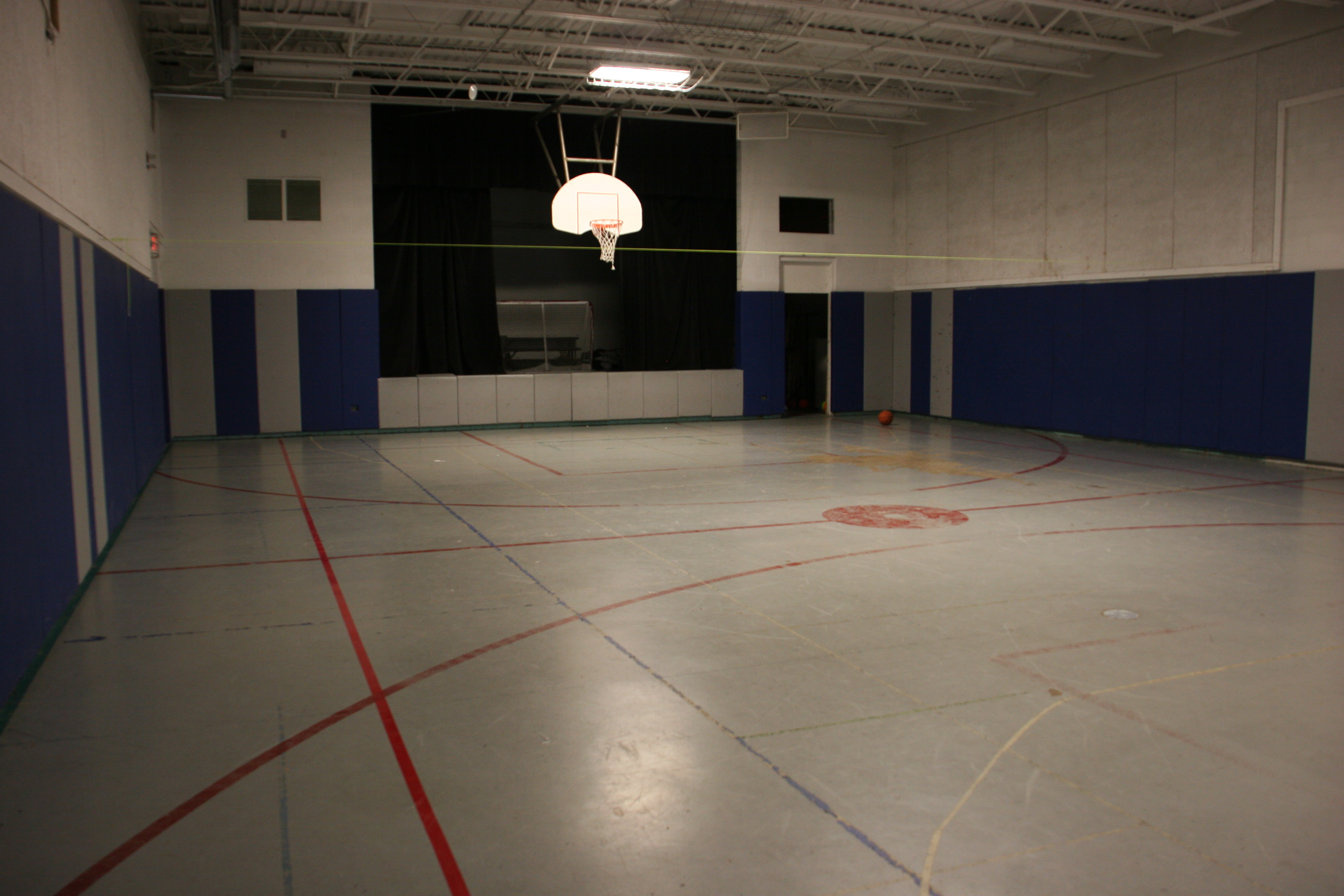
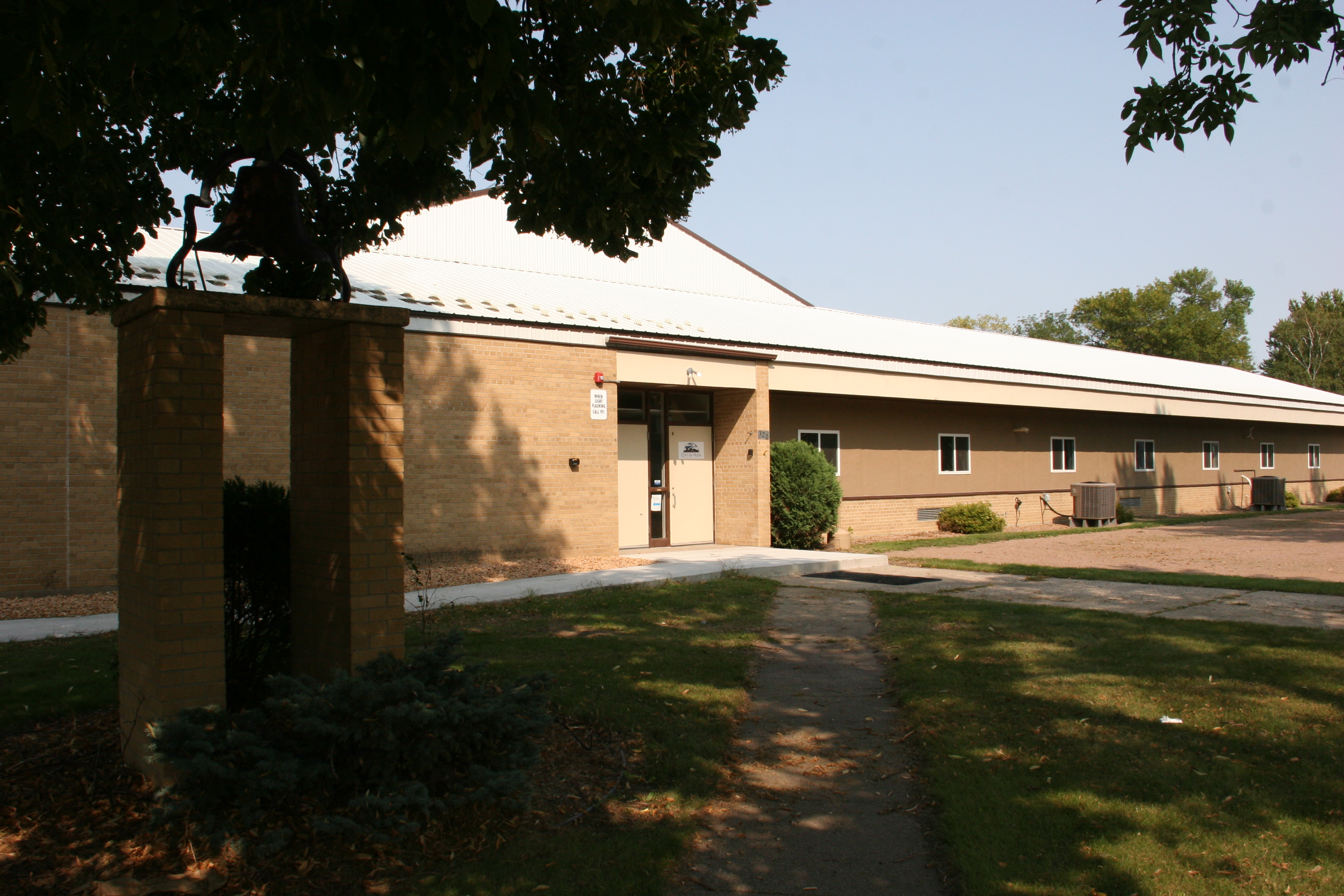
My most recent reunion happened July 28, when Randy and I traveled 2.5 hours west to my hometown of Vesta in Redwood County for the Kletscher Family Reunion, held annually on the last Sunday in July. First we stopped at the cemetery to visit the gravesites of my parents, grandparents and other family members. I wiped away tears before we followed the gravel road into town, to the reunion site, the former Vesta Elementary School, now turned city hall and community center.
Vesta Elementary School in the 1960s.
The old school gym, site of the family reunion. (Minnesota Prairie Roots copyrighted file photo September 2022)
The school today, as a city hall and community center. (Minnesota Prairie Roots copyrighted file photo September 2022)
To walk back into the building where I spent my first six grades learning to read, write, spell, do math and more felt comforting and disconcerting, like stepping back into a school that no longer looks the same, but still holds the same memories. Clapping erasers outside on the east brick wall. Listening to Mrs. Kotval read Laura Ingalls Wilder’s books after lunch. Scrawling letters in a penmanship book. Weaving a rug from rags. Building snowforts. Jumping rope on the front sidewalk. Performing on the stage. So many memories in this space.
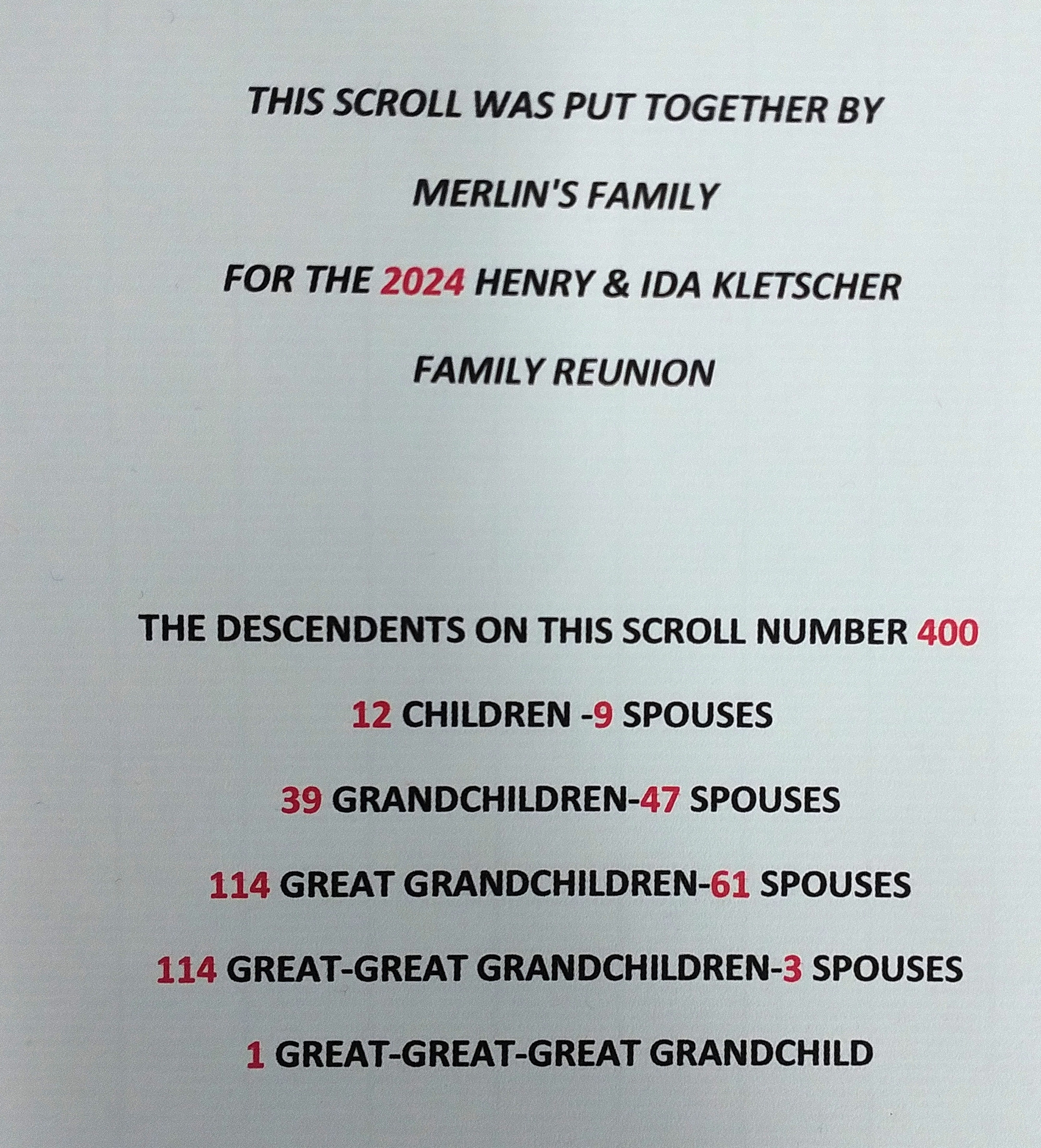
A summary of a 30-page family tree/scroll. (Minnesota Prairie Roots copyrighted photo July 2024)
And on Sunday, that space also held some 60-70 descendants of Henry and Ida Kletscher, parents of twelve, two dead in infancy and only three surviving today. The family tree, printed on 30 pieces of paper, stretched across several tables. I am one of 39 grandchildren, my children among 114 great grandchildren of Henry and Ida in a line that today also includes 114 great great grandchildren and one great great great grandchild. We are a large and prolific bunch that continues to grow. That we still gather annually is a testament to the strength of family bonds. I grew up near my paternal grandparents, aunts, uncles and cousins, spending lots of time together.
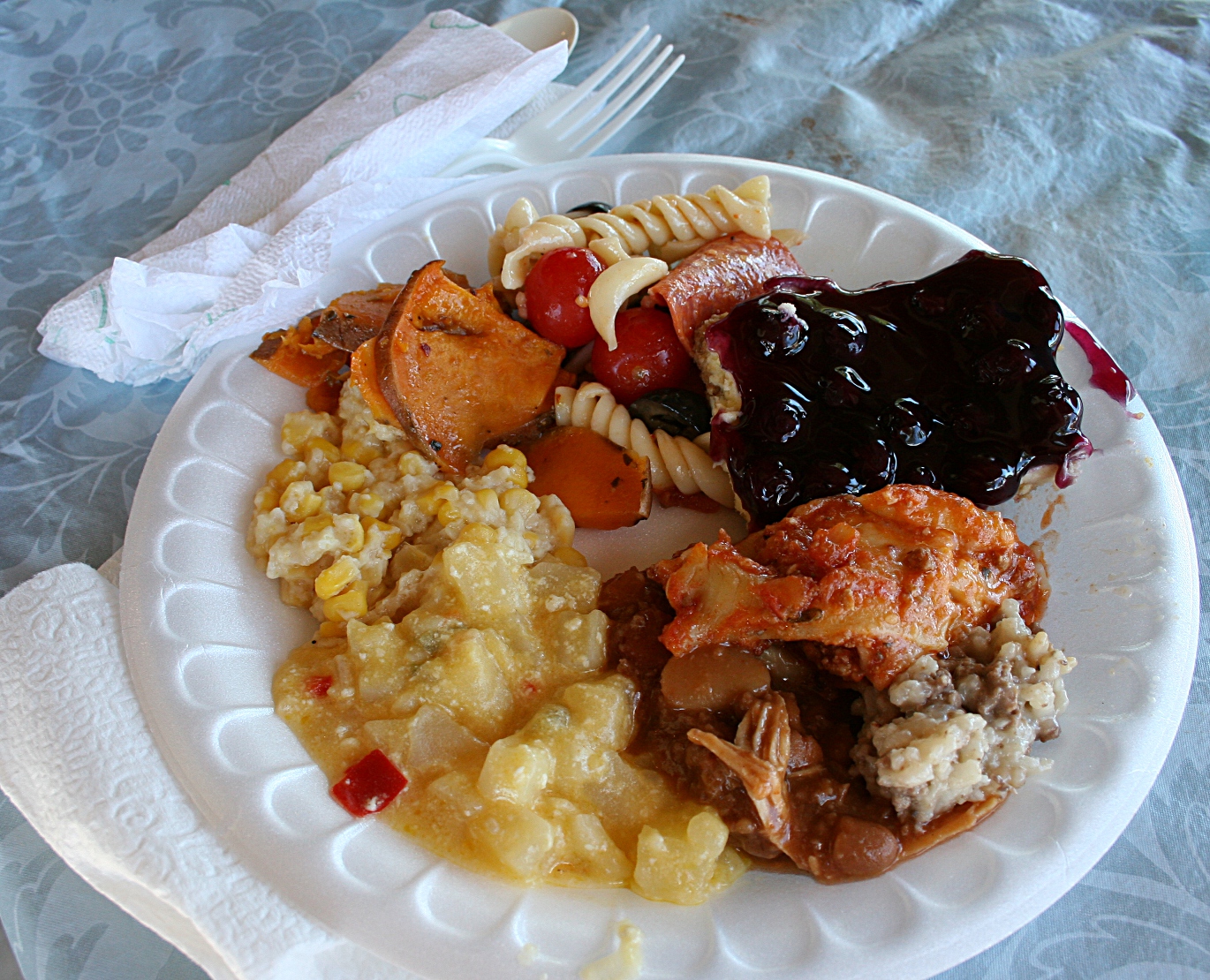
Everyone brings food for the potluck. There’s always blueberry dessert. The spread covers several tables. (Minnesota Prairie Roots copyrighted file photo July 2013)
But my generation and those thereafter have scattered well outside Redwood County. Family arrived from Wisconsin, Iowa, North Dakota and all parts of Minnesota from Blaine to Delano to Alexandria to Owatonna, Faribault, Waseca, and many other communities near and far. Those from even more distant locations like the East Coast did not attend.
As at all reunions, I intentionally circulated, attempting to converse with everyone at some point. This gathering, conversations were not so much about the past as about the present. We talked kids, grandkids, retirement (or not), health challenges, home improvement projects… There was a lot of phone scrolling, too, to show photos of grandchildren.
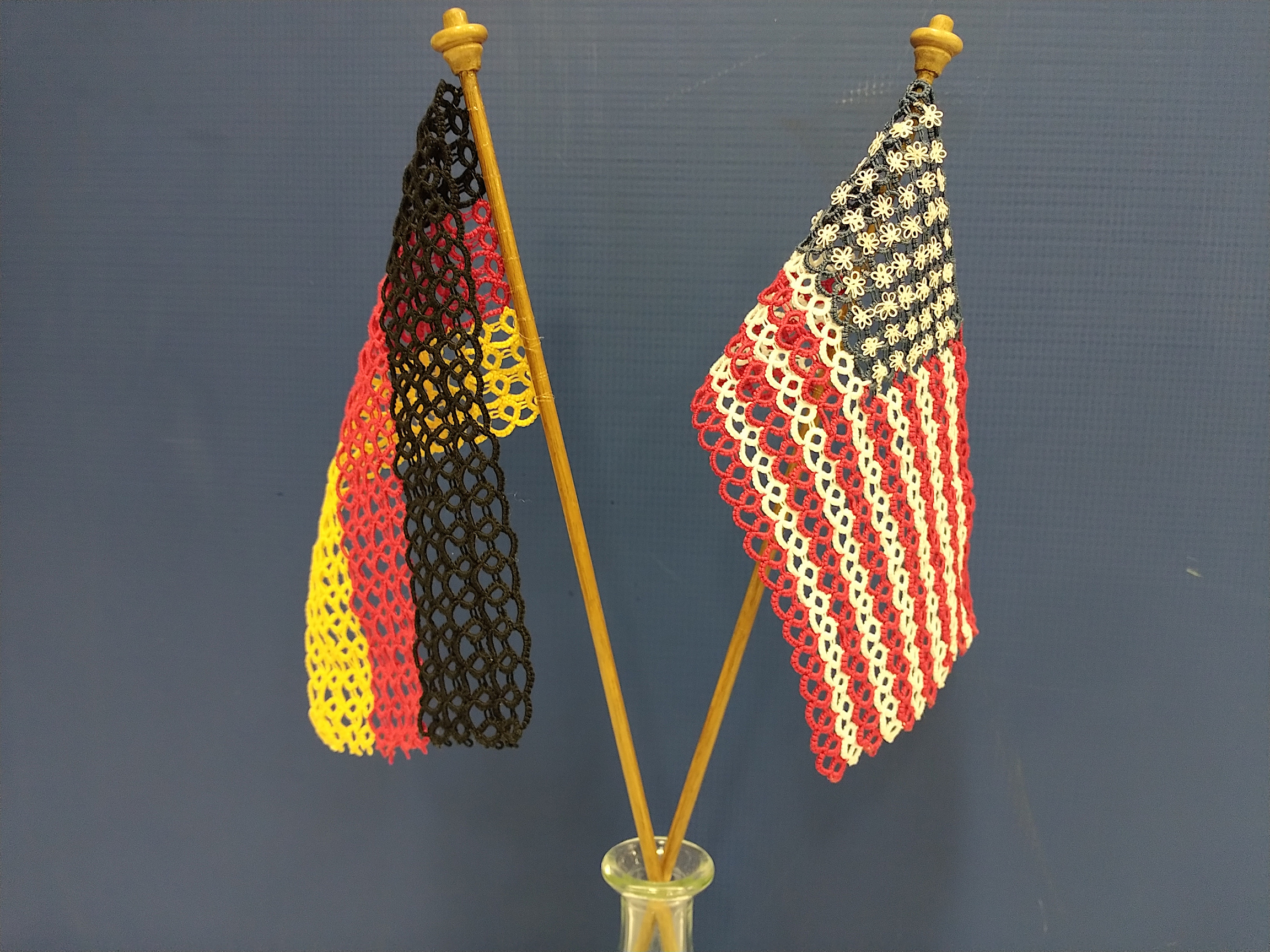
Aunt Iylene tatted these flags celebrating our German heritage and the Kletscher family’s new home in America. (Minnesota Prairie Roots copyrighted photo July 2024)
I cooed over new baby Wren; met Aubrey from West Fargo, going into first grade and whose name was easy for me to remember (and mine for her); saw photos of a wedding dress under construction by bride-to-be Sarah; encouraged Andy, who is in a drug trial study at Mayo Clinic for his debilitating heart condition; listened to Lynn’s recitation of a humorous poem her teacher didn’t appreciate back in the day; admired Aunt Iylene’s tatting projects (which she gave away on Sunday and which honor Grandma Ida, who also tatted); listened to stories of heartaches and challenges and life.
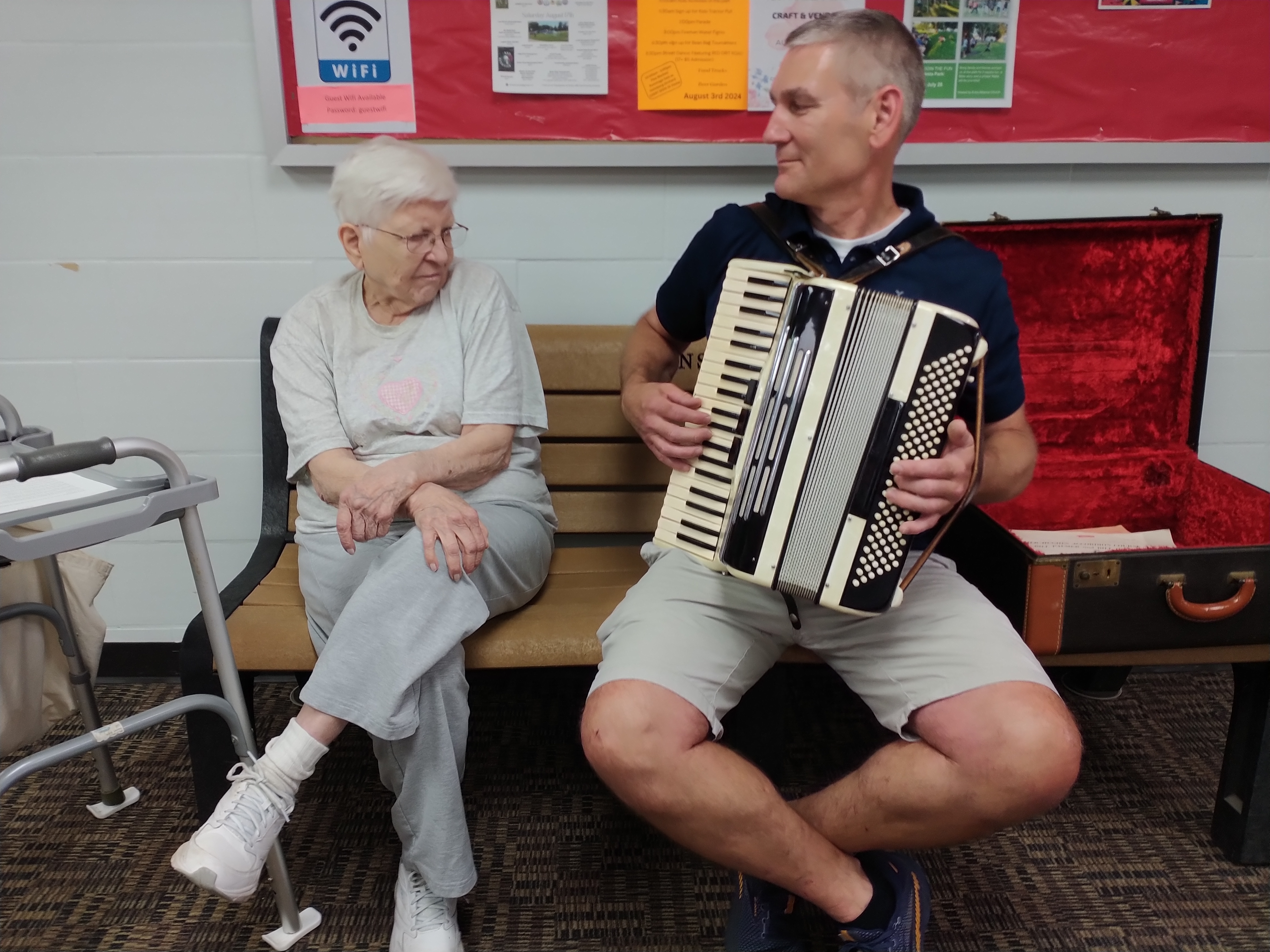
A highlight of the reunion was watching and listening to Kirt play Ardyce’s accordion. (Minnesota Prairie Roots copyrighted photo July 2024)
And then there was the impromptu concert by my cousin Kirt, who plays accordion. He brought his and was also gifted, at the reunion, with Aunt Ardyce’s 73-year-old accordion, a gift to her from her parents when she was only thirteen. She took lessons briefly as did two of her children. But the instrument has mostly sat in its case for seven decades…until Kirt picked it up and commenced to play, but only to a select few of us in the entry hallway. To watch my 86-year-old aunt, seated next to her nephew, listening intently to “her” accordion brought me such joy. I couldn’t help but think how happy this moment would have made my grandparents.
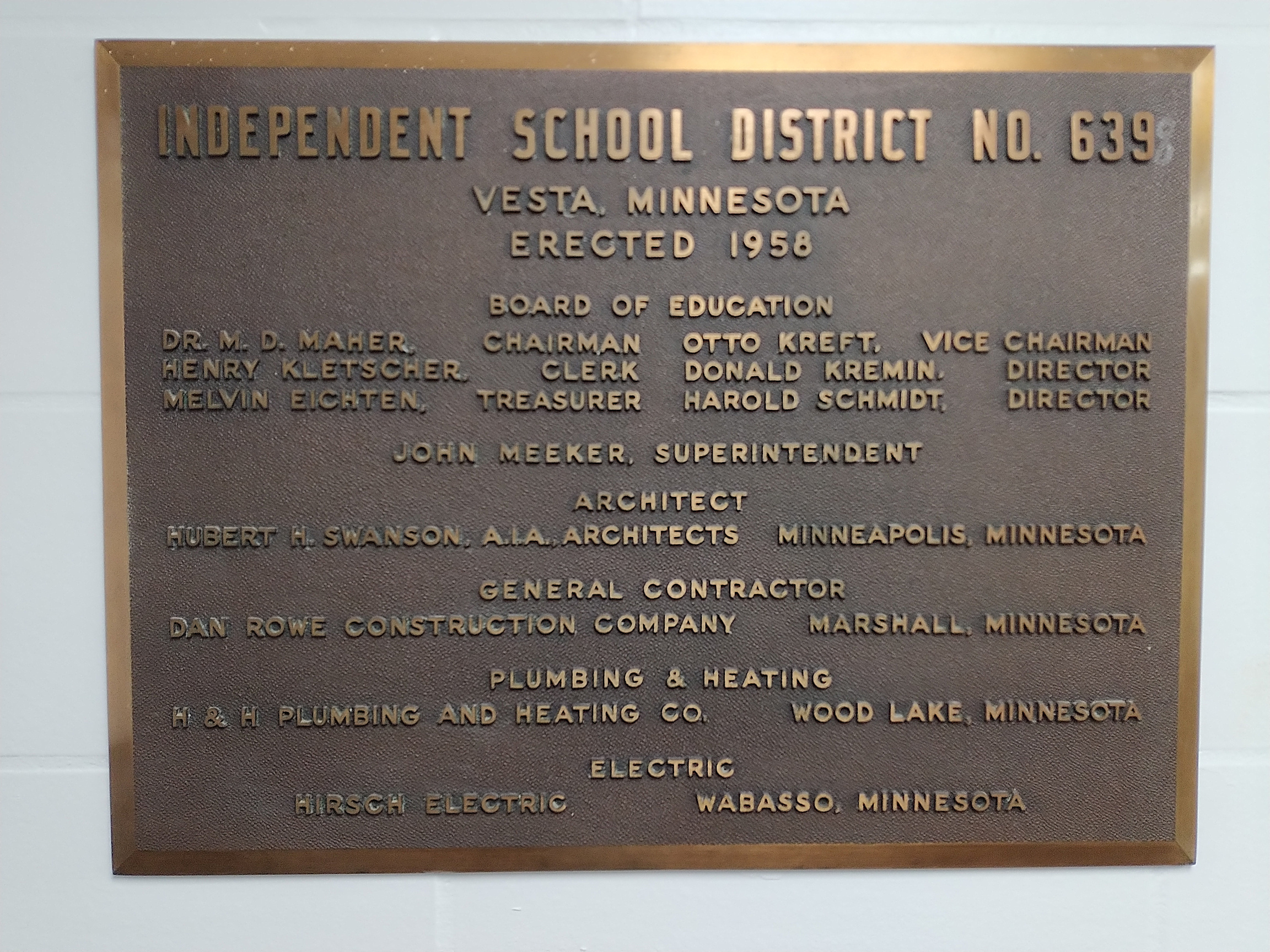
A plaque honors my grandpa and others who were instrumental in construction of Vesta Elementary School. (Minnesota Prairie Roots copyrighted photo July 2024)
We were here, in this place, because of Henry and Ida. Henry served as clerk of Independent School District #639 when the Vesta School was built in 1958. To think that, 66 years later, Grandpa’s descendants would gather here to celebrate family felt incredibly right. Two hours after we ate a potluck lunch (which always includes blueberry dessert), we honored Henry and Ida with 1919 root beer floats. My grandparents were married in November 1919.
Here we were in 2024, a family still going strong—reuniting, reconnecting, remembering and honoring the legacy of Henry and Ida Kletscher. Henry, the 25-year-old farmer, who married Ida just days before her eighteenth birthday 105 years ago.
#
FYI:In addition to the Kletscher Family Reunion, I’ve reconnected in July with Sue, a blogging friend; aunts from New Jersey and Missouri and family from Minneapolis; my son from Boston; and met three of Randy’s cousins originally from North Dakota. There are more gatherings to come with a Helbling Family Reunion in two weeks and 50-year class reunions for Randy and me in September.
IT WAS A TUESDAY in January 1964. Wash day in the Kahmann household. Outside, a ground blizzard raged, reducing visibility on the southwestern Minnesota prairie. The events of that morning, of that day, would forever change the lives of siblings Karl, Patsy, Eric, Andy, John, Paul, Kevin, Katy, Karen, Phillip, Jim and Beth, and their parents, Jack and Della.
That sets the scene for House of Kahmanns, a memoir by P.G. (Patsy) Kahmann, oldest daughter, second oldest among 12 children. Sixteen months earlier, the family moved from Kansas City, Missouri, to Minnesota when Jack, a traveling salesman in a farm business, was relocated. They settled near their maternal grandparents, into a rental home by Granite Falls.
I expect Jack Kahmann was driving in weather and road conditions similar to this. (Minnesota Prairie Roots copyrighted file photo, January 2020, used for illustration only)
This is familiar land to me in a familiar time. I was not quite eight years old in January 1964, living on a farm some 30 minutes away in neighboring Redwood County. I understand full well the fierce prairie wind that whips snow into white-out conditions. On that blustery morning, as Jack and Della and Della’s parents set out for medical and business appointments in Minneapolis, leaving the oldest, Karl, to care for the youngest children, Patsy and her school-age siblings boarded the school bus.
Rosary beads. (Minnesota Prairie Roots copyrighted file photo used for illustration only)
Patsy was in English class when she got the devastating news. There had been a crash. A bread truck driven by an unlicensed 14-year-old ran a stop sign and then a yield sign before slamming into the 1957 Chevy driven by Jack. Della, mother of a dozen, was the most seriously injured. “How many Hail Marys will it take to save my mother’s life?” Patsy asks herself.
An altar in a southern Minnesota Catholic church. (Minnesota Prairie Roots copyrighted file photo used for illustration only)
Faith, a strong Catholic faith, threads through this story. The Kahmanns were devout, prayerful, always in church. The church, or rather the local parish priest, would play the primary role in turning the initial tragedy into even more intense pain, suffering, separation and trauma for the family. Father Buckley demanded that the 12 children be placed with Catholic families while their parents recovered at a hospital 70 miles away. That, even though a Lutheran couple offered to move into the Kahmanns’ farm home and care for the children. Together.
At this point in the book, I felt my anger flashing. Anger over the inhumanity of a man of the cloth who is supposed to exude compassion, care and love. More atrocities by the priest followed. By the time I read the epilogue, I was irate, forgiveness far from my mind.
Love and forgiveness were taught in the Kahmann home. (Minnesota Prairie Roots copyrighted file photo used for illustration only)
But the Kahmanns were a loving and forgiving family. (Not necessarily of that priest.) One evening after they are all reunited, Jack asks his family to pray blessings upon the driver of the bread truck. Three-year-old Phillip mishears. “God bless the red truck!” he shouts. Laughter erupts. I needed that humor in a story weighing heavy upon my soul.
I wanted to step into the pages of the book and hug those kids and make everything better. Just as Millie Bea did when the Kahmanns lived in Kansas City and Jack was traveling around the country and Della needed extra help with the kids. The book flips back and forth in time and place between Missouri and Minnesota, before and after the crash.
The Kahmanns were not unfamiliar with trauma. In June 1955, Andy’s hand was nearly severed in a hand cement mixer. A Kansas City surgeon successfully reattached his limb, even though a priest told Jack that his son’s hand had been amputated. That was untrue.
Family love is such a strong theme in this book. (Minnesota Prairie Roots copyrighted file photo used for illustration only)
Through all of this, themes of love, strength and resilience thread. The Kahmann siblings clearly looked out for and loved one another and got through some pretty awful stuff. Their motto, Patsy writes, was “No one died. We all survived.” They never talked about the accident. I’m not surprised. Who did back then? Eventually the family would relocate to Bird Island, 32 miles directly east of Granite Falls. It was a new start in a new place following their 75 days apart, “75 days of confusion, anxiety and foreboding.”
And now, with publication of House of Kahmanns—A Memoir, A story about family love and shattered bonds, about finding each other in the aftermath, perhaps these siblings are talking about all they endured. For Patsy, it is also about keeping a promise. In the book dedication she writes: To Mom and Dad/I promised you I would write this story. And she did, with honesty, pain and a great deal of strength.
My friend Joy’s chickens. (Minnesota Prairie Roots copyrighted file photo)
I’M NO CHICKEN farmer. I’m not even particularly fond of roaming chickens (ducks or geese). But this time of year on “Chick Days,” I feel nostalgic, remembering the delivery of newly-hatched chicks. They arrived on my southwestern Minnesota childhood farm via the U.S. Postal Service, cheeping raucously and, I’m certain, desiring to escape their cardboard boxes.
A snippet of a promo for “Chick Days” at a local business.
Today, chicks still ship via mail, but need to be picked up at the post office or at a local supplier on “Chick Days.” That may be at a farm store, a grain elevator, a feed store…
A boarded up hatchery in southwestern Minnesota. (Minnesota Prairie Roots copyrighted file photo)
Gone are the days when chick hatcheries were found in many farming communities. But this is not Mayberry anymore. Rural America has changed significantly since I was growing up in the 1960s and 1970s with businesses now shuttered, buildings vacated.
A 1950s or 1960s era greeting card from a hatchery in Minneota, Minnesota. (Minnesota Prairie Roots copyrighted photo April 2024)
But, if you look closely enough, dig deep enough, ghosts of those businesses remain, including chick hatcheries. Among the vintage greeting cards my mom saved (she saved everything), I found a holiday card from Dr. Kerr’s Hatchery. That was in Minneota; that’s Minnesota minus the “s.”
Minneota sits on the prairie northwest of Marshall in Lyon County. This small town is perhaps best-known as the home of the late Bill Holm, noted writer and English professor at Southwest Minnesota State University. Among his work, Boxelder Bug Variations, a collection of poetry and essays about, yes, boxelder bugs. Minneota celebrates Boxelder Bug Days annually.
But it doesn’t celebrate chicks, as far as I know, or the hatchery with the unusual name of “Dr. Kerr’s Hatchery.” There’s a story behind that moniker. I just don’t know what that may be.
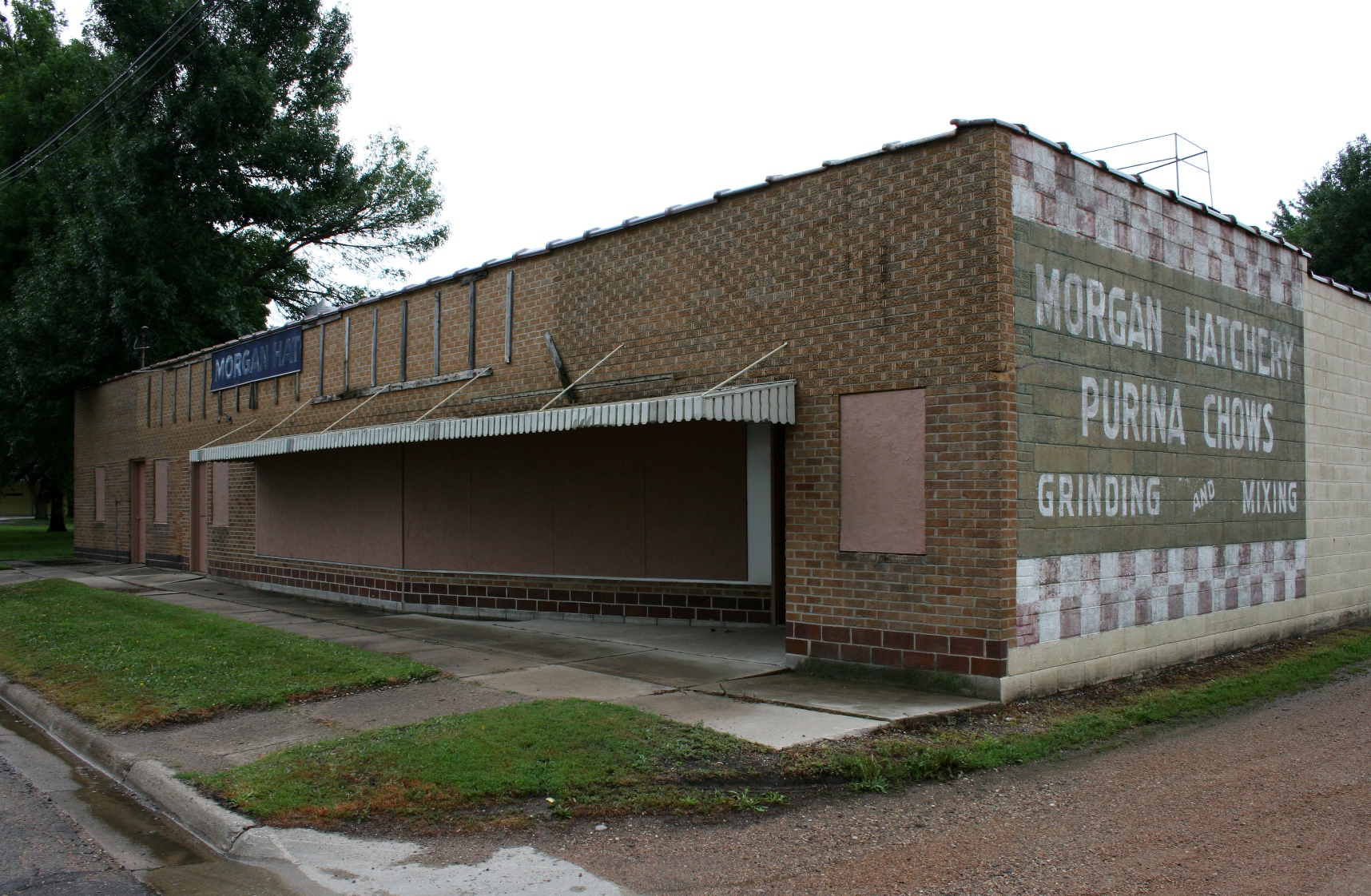
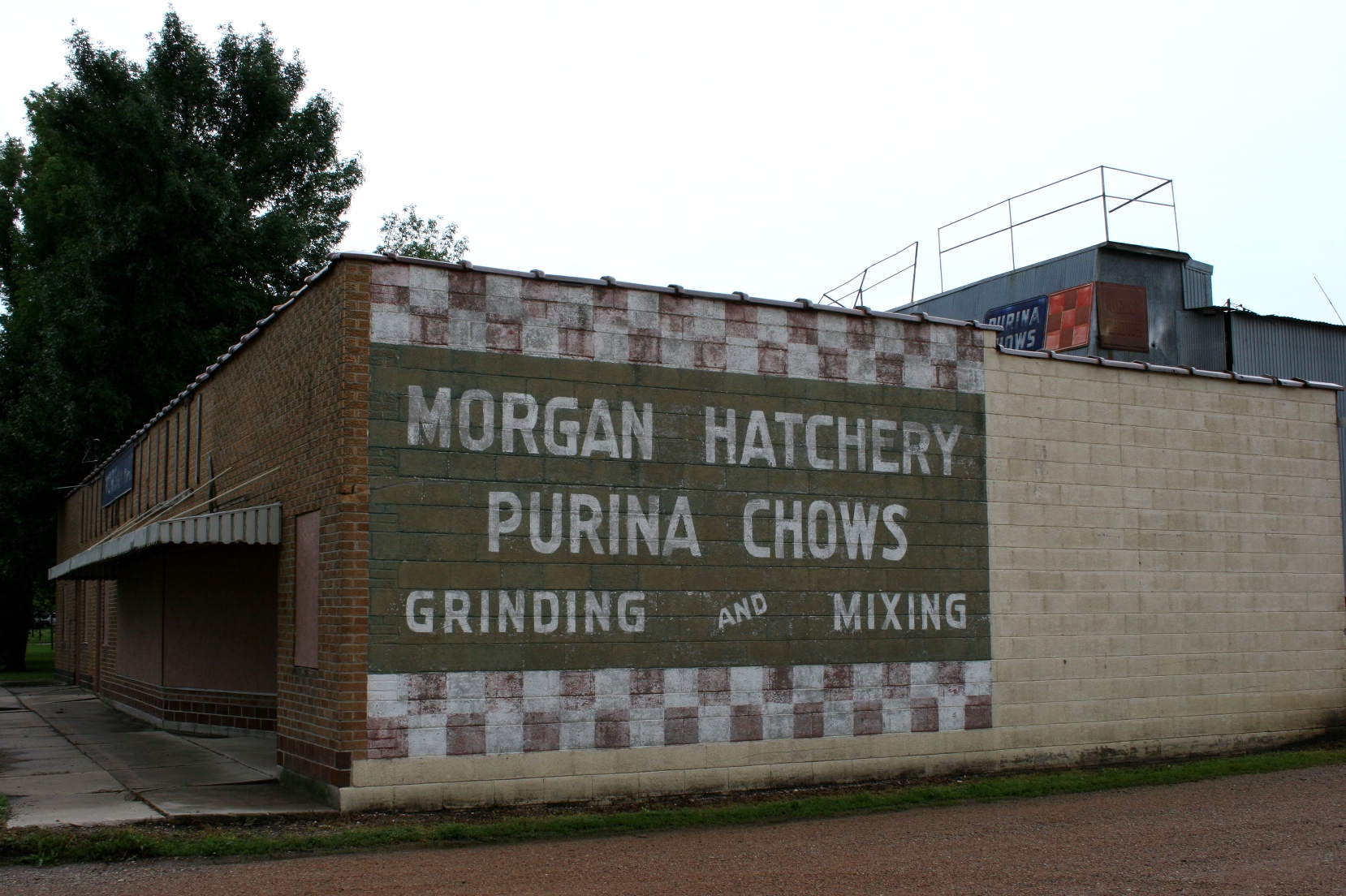
Signage is a reminder that this building once housed a hatchery in Morgan. (Minnesota Prairie Roots copyrighted file photo)
I do know, though, that Morgan, 60 miles to the east of Minneota, also had a hatchery, aptly named Morgan Hatchery. I photographed the exterior of the former hatchery and feed store in 2013 while en route to my hometown of Vesta.
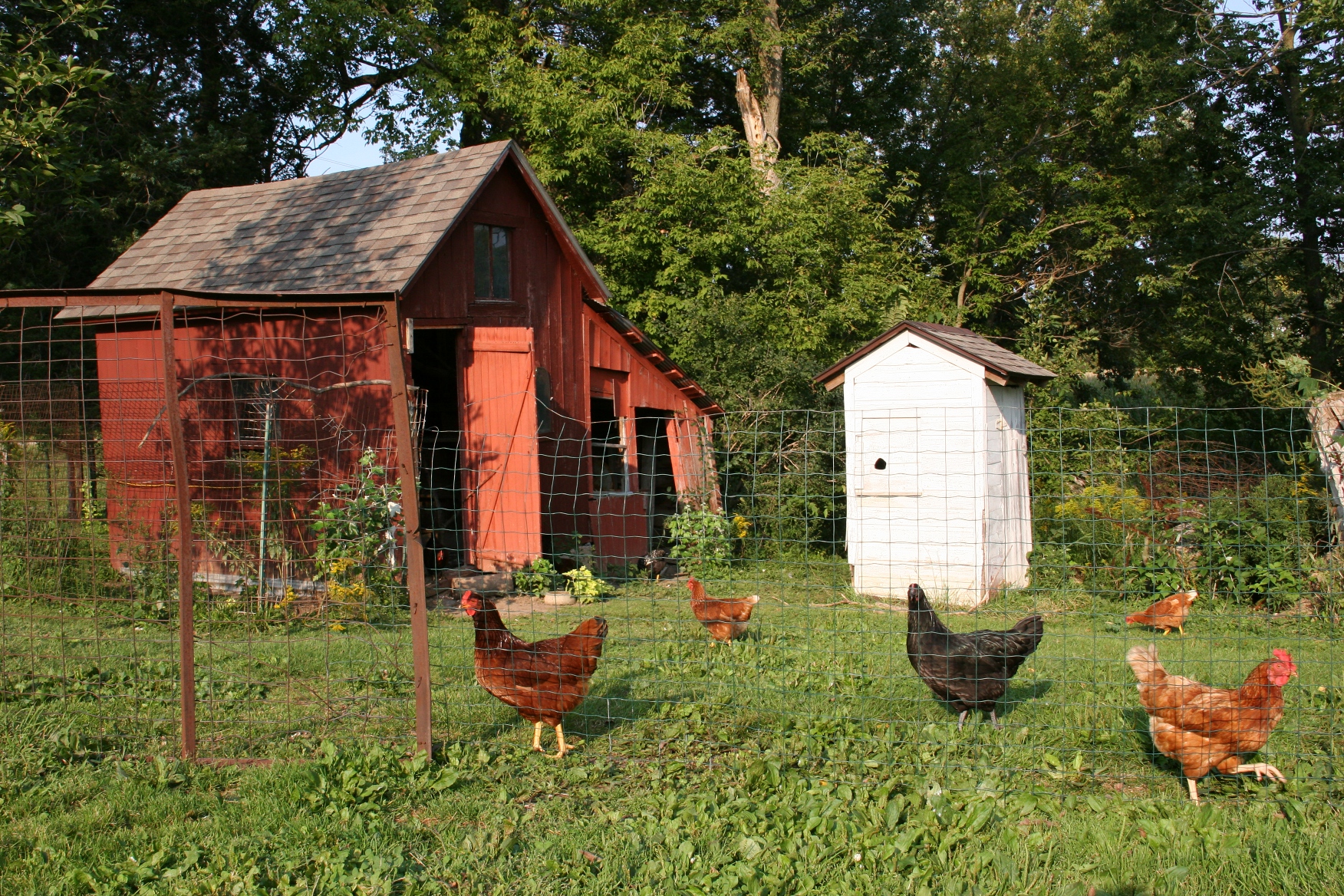
Chickens are fenced next to the red chicken coop on Joy’s rural acreage. Sometimes they also roam free aroundthe yard. (Minnesota Prairie Roots copyrighted file photo)
Thoughts of home take me back to those chicks delivered by the mailman, as we called letter carriers back in the day. After retrieving the box (es) of chicks from aside the roadside mailbox, Mom released them into the chicken coop. There they clustered around shallow water dishes under the warmth of heat lamps. I don’t recall many details other than the fluffy fowl feathering all too soon. For me, the chicks’ transition toward adulthood quickly ended my adoration.
A fenced rooster at my nephew and niece’s rural acreage. (Minnesota Prairie Roots copyrighted file photo)
There’s a reason I dislike being in close proximity to chickens: pecking hens and a vicious rooster. Gathering eggs from angry hens as a young girl proved an unpleasant chore. And avoiding a mean rooster proved impossible. One day Dad had enough of the rooster attacking his children. He grabbed an ax and that quickly ended the hostile encounters. I still hold trauma from that rooster. But I’ve gotten better about being around chickens. However, if I even pick up on a hint of meanness, I flee.
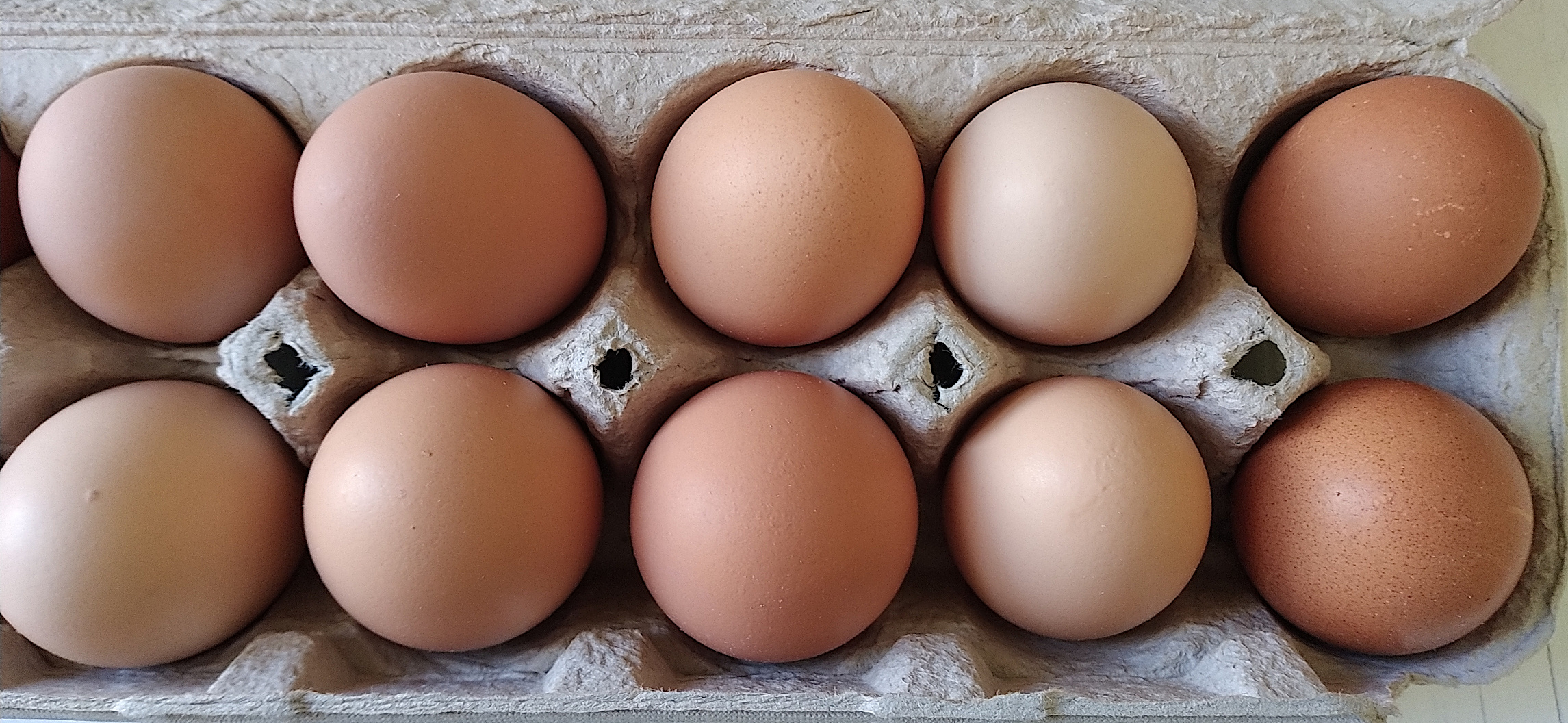
Farm fresh eggs from Nancy and Loren’s chickens. (Minnesota Prairie Roots copyrighted photo April 2024)
The difference in eggs, with the yolk from a store-bought mass-produced egg on the left and a farm fresh egg on the right. (Minnesota Prairie Roots copyrighted photo April 2024)
Given my history, I’ll never own chickens. But I eat chicken. And I eat eggs. I especially like farm fresh eggs from free-range chickens. The dark orangish-yellow yolk hue, the taste, are superior to mass-produced eggs.
A maturing chick. (Minnesota Prairie Roots copyrighted file photo)
And I still think chicks are cute, even if they quickly morph into feathered birds I’d rather not be around.
The cover of Elizabeth Johanneck’s new book features the art of her grandfather, Arnold Kramer. (Minnesota Prairie Roots photo July 2023)
DECADES REMOVED from southwestern Minnesota, Twin Cities writer Elizabeth Johanneck and I remain rooted to the prairie—the land and people and smalls towns which shaped us. We both grew up on Redwood County farms, were Wabasso High School classmates and today hold a deep respect and fondness for the place we once called home.
Beth, as she’s known to me, recently published a book,If You Can’t Make it to Heaven, at Least Get to Seaforth—The Monica Stories and Then Some. This book features short stories and snippet observations in Beth’s humorous storytelling style, plus paintings and photos. These could be my stories, my memories, just with different characters and settings. Any prairie farm kid likely will feel the same.
ABOUT SEAFORTH & MONICA
But where is Seaforth? And who is Monica? Seaforth, population 77, is a farming community located along County Road 7, south of Minnesota State Highway 19 in central Redwood County. It’s near my hometown of Vesta, seven miles to the northwest. Monica Fischer is Beth’s friend, former co-worker and a character. A baby shoe in a pot of egg coffee and pantyhose found clinging inside a pant leg during Catholic Mass are among the many entertaining Monica stories that left me laughing aloud. By the time I’d finished reading this section of the book, I felt like I knew Monica well. Everyone should have a friend like her.
GROWING UP ON THE MINNESOTA PRAIRIE IN THE 1960s
And everyone should be so fortunate to have experienced rural Minnesota life in the 1960s, as Beth and I did. It is Part 2, “Random Nonsense of a MN Country Mouse,” that I find most similar to my childhood. Both farmers’ daughters with many siblings, Beth and I share the commonalities of being raised on the land among aunts and uncles and cousins and grandparents and immediate family who loved us deeply.
As in “The Monica Stories,” Beth writes about her personal experiences in a casual conversational style. It’s as if she and I are chatting over cups of coffee, and Beth does like her coffee. I connect with her stories about “the grove,” jars of pocket gopher feet in the freezer, grab bags, bloodsuckers, The Weekly Reader, hearing corn grow and more.
Her humor-infused short stories stretch into adulthood, into becoming a parent and grandparent. These are not earth-shattering remembrances, but rather observations about everyday life and events that could be mine, could be yours, but are definitively Beth’s.
NIBBLES OF COUNTRY INSIGHTS
In a section titled “Country Mouse Nibbles,” Beth shares her thoughts on topics in a sentence or two, the first being “When You Are Raised Close to the Land.” I fully understand—the smell after autumn harvest, looking to the west for approaching storms, filled fruit jars crowding root cellar shelves… And “Holding onto Memories”—Distant cheers from a local ball game are souvenirs worth saving for winter. Truly poetic words.
FEATURING THE ART OF “MINNESOTA’S GRANDPA MOSES”
There is much to be cherished in this book beyond pages and pages of rural memories and insights. Beth also intersperses photos, most from Seaforth. But it is Part 3, “Paintings by Arnold Kramer, Minnesota’s ‘Grandpa Moses,’” which is an historic agrarian art treasure. Following his retirement, Seaforth farmer Arnold Kramer took up painting, visually documenting early to mid-1900s rural life and scenes. He became well-known for his folk art style paintings done in primary colors. Beth’s book holds the only printed collection of paintings by her grandfather. The self-taught artist created more than 400 works of art and was dubbed “Minnesota’s Grandpa Moses” by the University of Minnesota at the peak of his creativity in the 1960s.
Book signing promo courtesy of Elizabeth Johanneck.
Beth’s book is also available for purchase at Chapter Two Bookstore in Redwood Falls and online at Amazon and Barnes & Noble. Both her book and Cindy’s achieved bestseller status on Amazon following their release.
Julie Kramer, author of bestseller Stalking Susan, praises Beth’s book in her back cover endorsement, calling it “a delightful collection from a farm girl who grew up near the Minnesota home of Laura Ingalls Wilder.” I agree. Fully.




















 Minnesota Prairie Roots
Recent Comments