Minnesota Prairie Roots

Writing and photography by Audrey Kletscher Helbling

The prairie part of Minnesota December 9, 2015

Filed under: Uncategorized — Audrey Kletscher Helbling @ 5:00 AM
Tags: , , , , , , ,
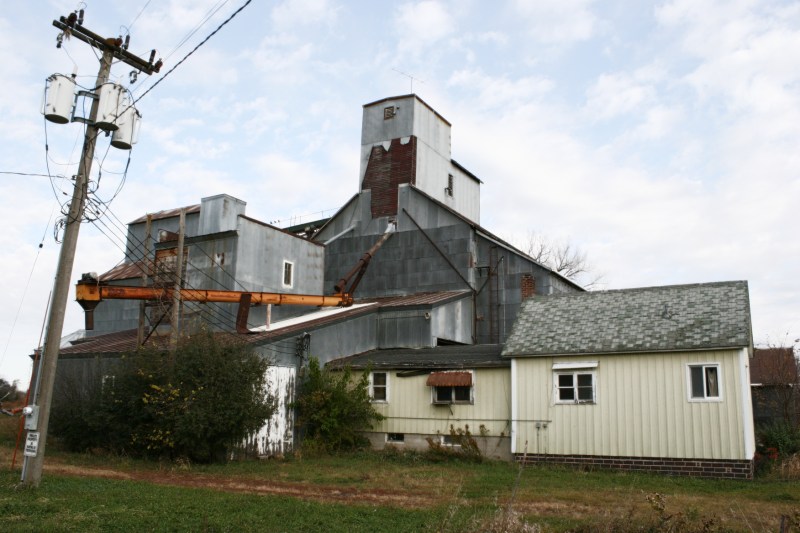
The grain elevator in Seaforth, in Redwood County, Minnesota, closed long ago.

The grain elevator in Seaforth, in Redwood County, Minnesota, closed long ago.

MINNESOTA IS MORE than the Twin Cities, St. Cloud, Rochester and Duluth. It’s also farms and small towns like Vesta, Sleepy Eye, Gaylord and St. James. I’ve lived in all of those rural areas and, for the past 33 years, in Faribault.
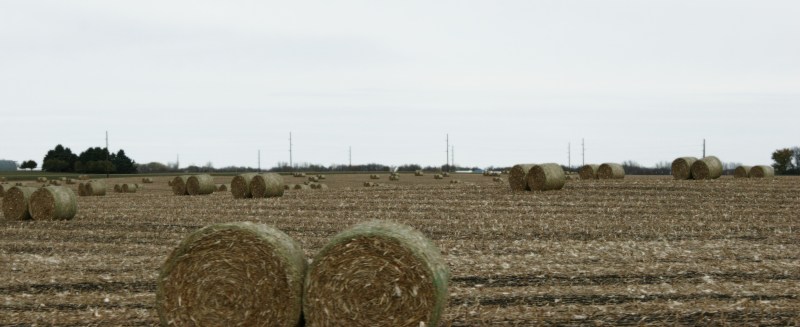
Cornstalk bales litter fields between Redwood Falls and Morgan.

Cornstalk bales litter fields between Redwood Falls and Morgan.

My husband was raised on a farm near Buckman in central Minnesota. Heard of it? Few people have. Likewise, not all that many Minnesotans know of Vesta, my hometown. Both communities are small—several hundred residents.

A vintage car travels eastbound along U.S. Highway 14 toward Nicollet.

A vintage car travels eastbound along U.S. Highway 14 toward Nicollet.

When folks ask where I grew up, I typically respond Vesta, bookmarked by “between Redwood Falls and Marshall.” If I get a blank look, I add “west of New Ulm.” If the geographic location still remains a mystery, I continue with “west of Mankato.” Then I usually see a flicker of recognition.
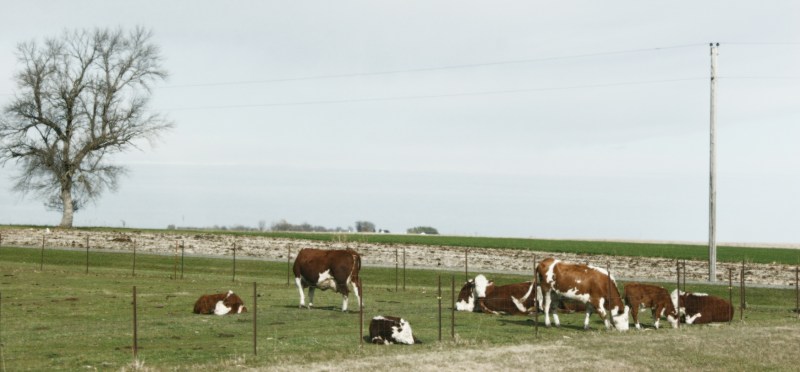
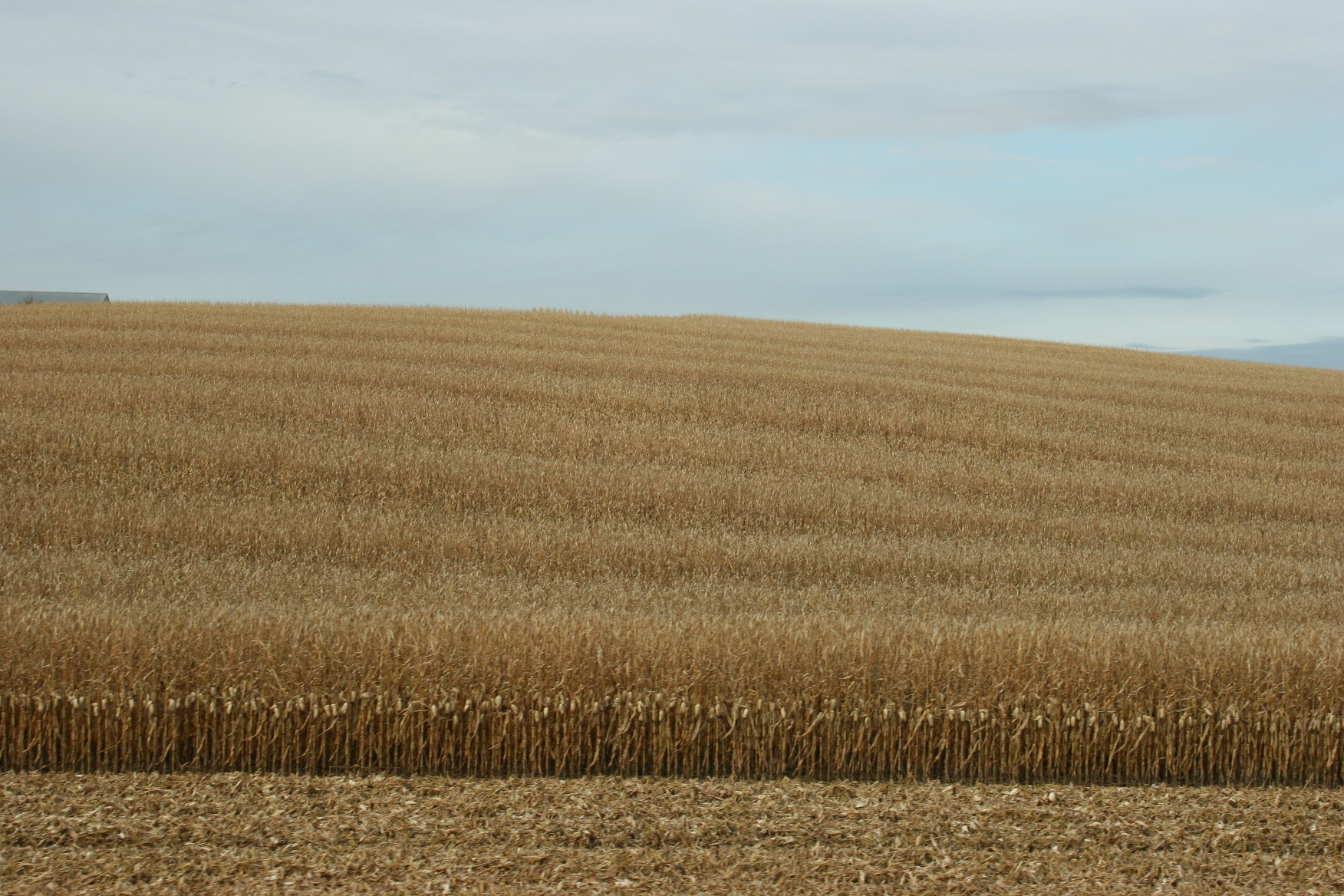
Occasionally you'll see cattle in a pasture. But mostly, farm land in southwestern Minnesota is used for crops like corn and soybeans.

Occasionally you’ll see cattle in a pasture. But mostly, farm land in southwestern Minnesota is used for crops like corn and soybeans.

My native southwestern Minnesota seems unappreciated by many who dismiss it as that boring prairie landscape en route to some place like Sioux Falls or the more distant destination of the Black Hills.
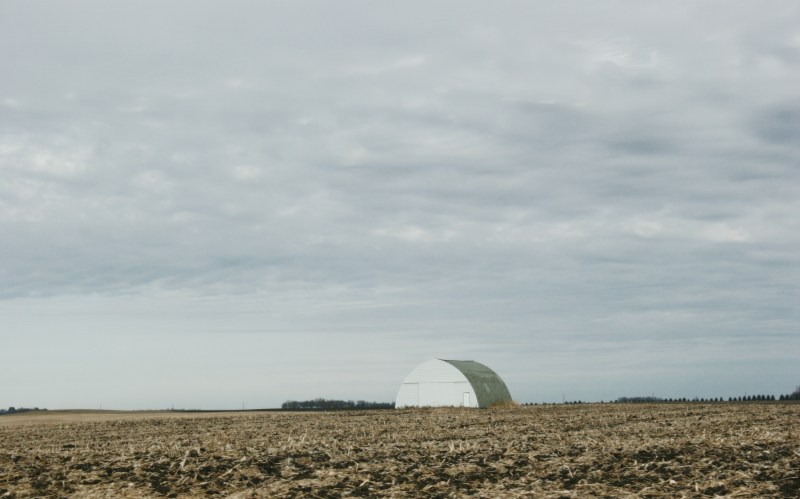
Fields and sky envelope a farm building just west of Wabasso.

Fields and sky envelope a farm building just west of Wabasso.

Appreciating the prairie, if you aren’t a native, takes a bit of effort. Wide skies and unhindered vistas can, I suppose, leave a landlocked city or hemmed-in by trees dweller feeling unsettled, untethered. There’s a sense of vulnerability and isolation on the prairie.
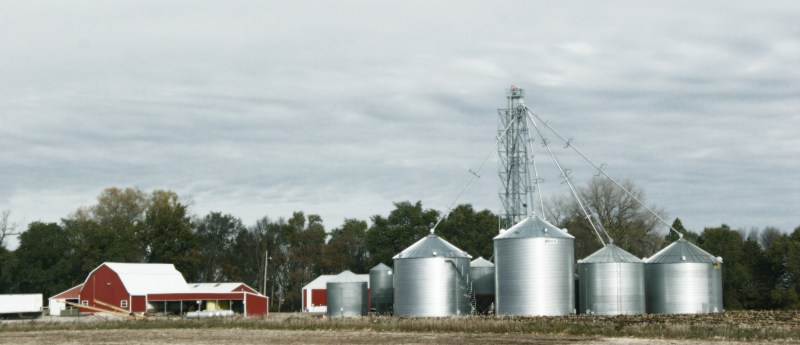
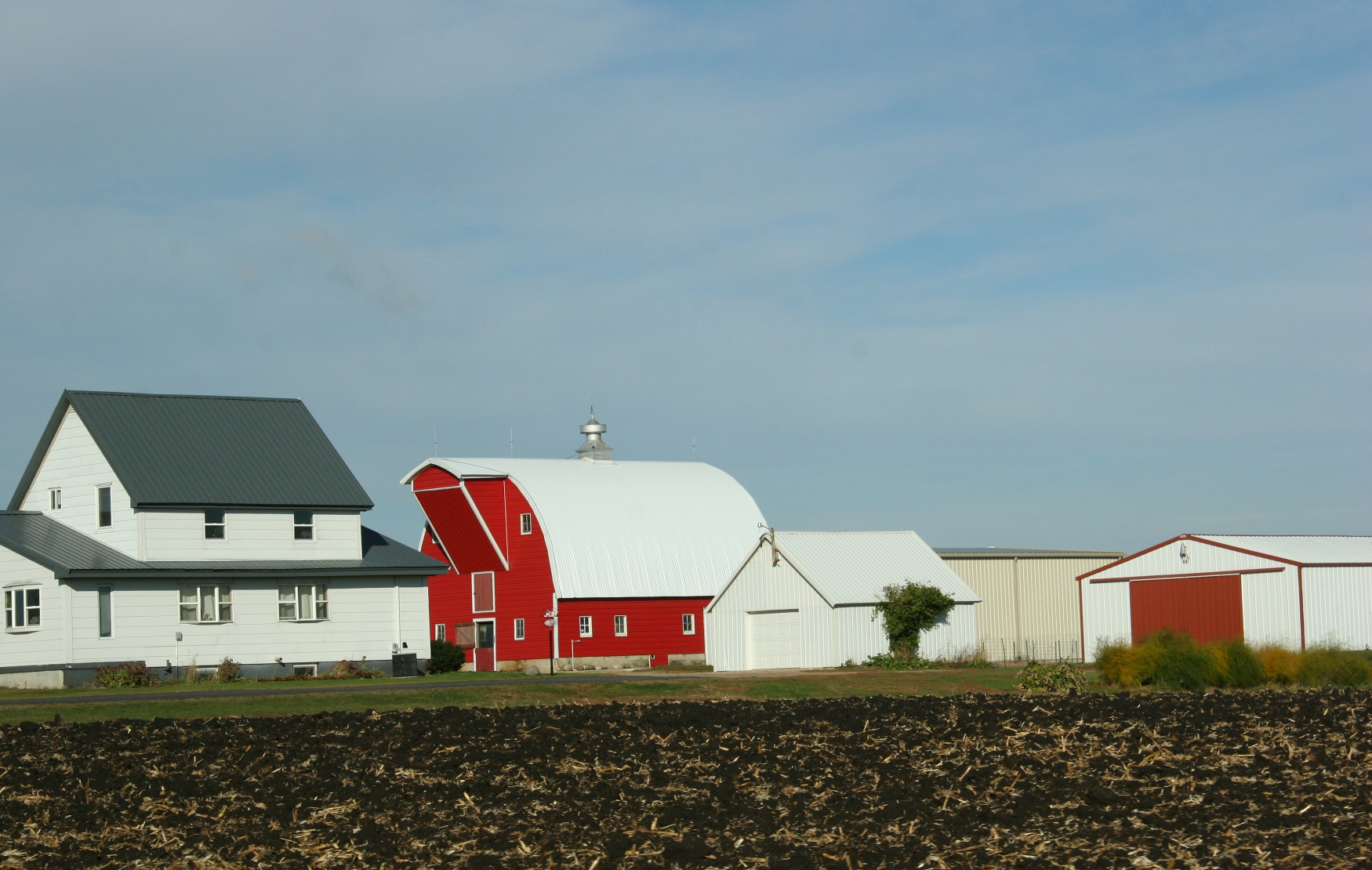
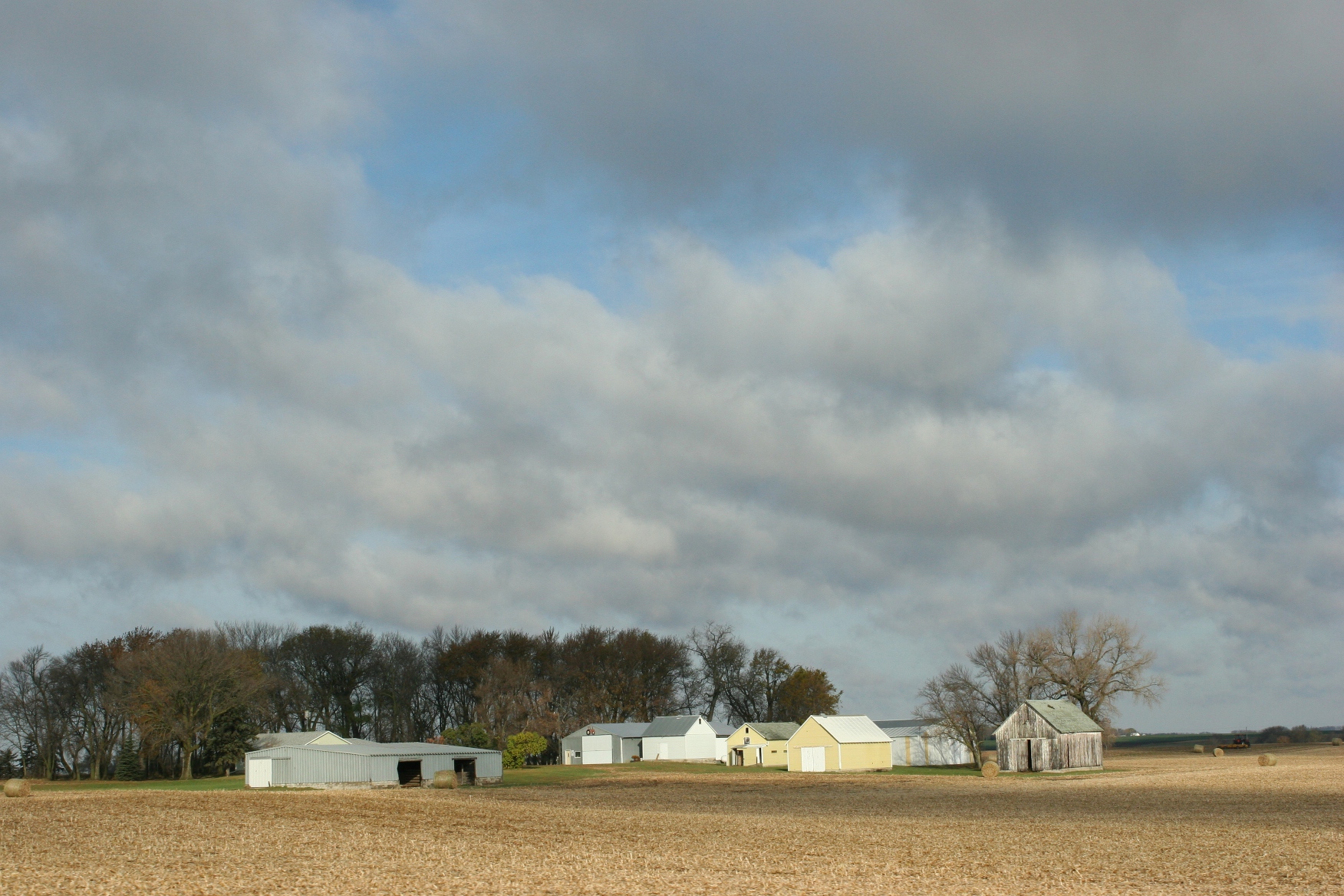
This farm site sits north of Lamberton in Redwood County.

This farm site sits north of Lamberton in Redwood County.

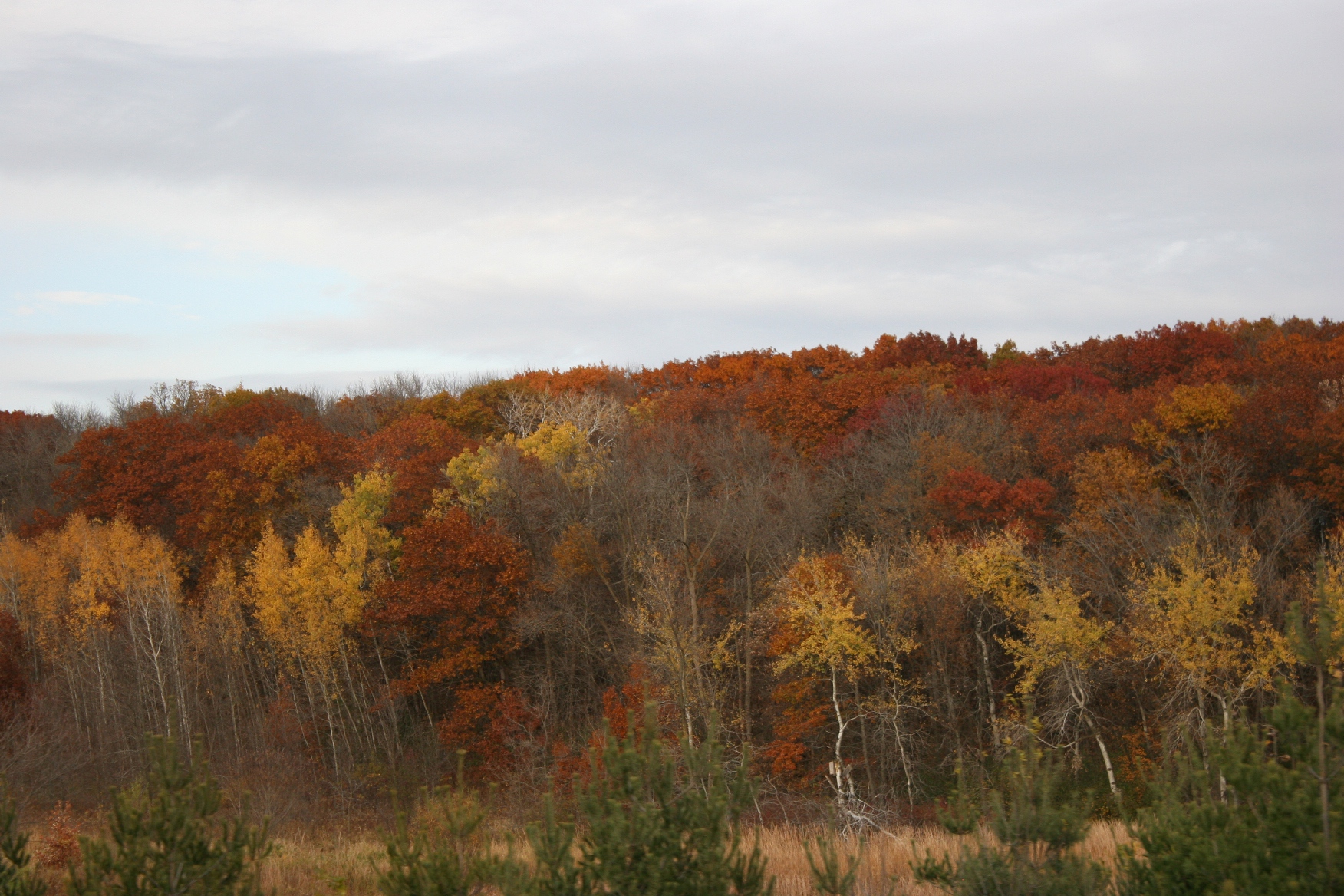
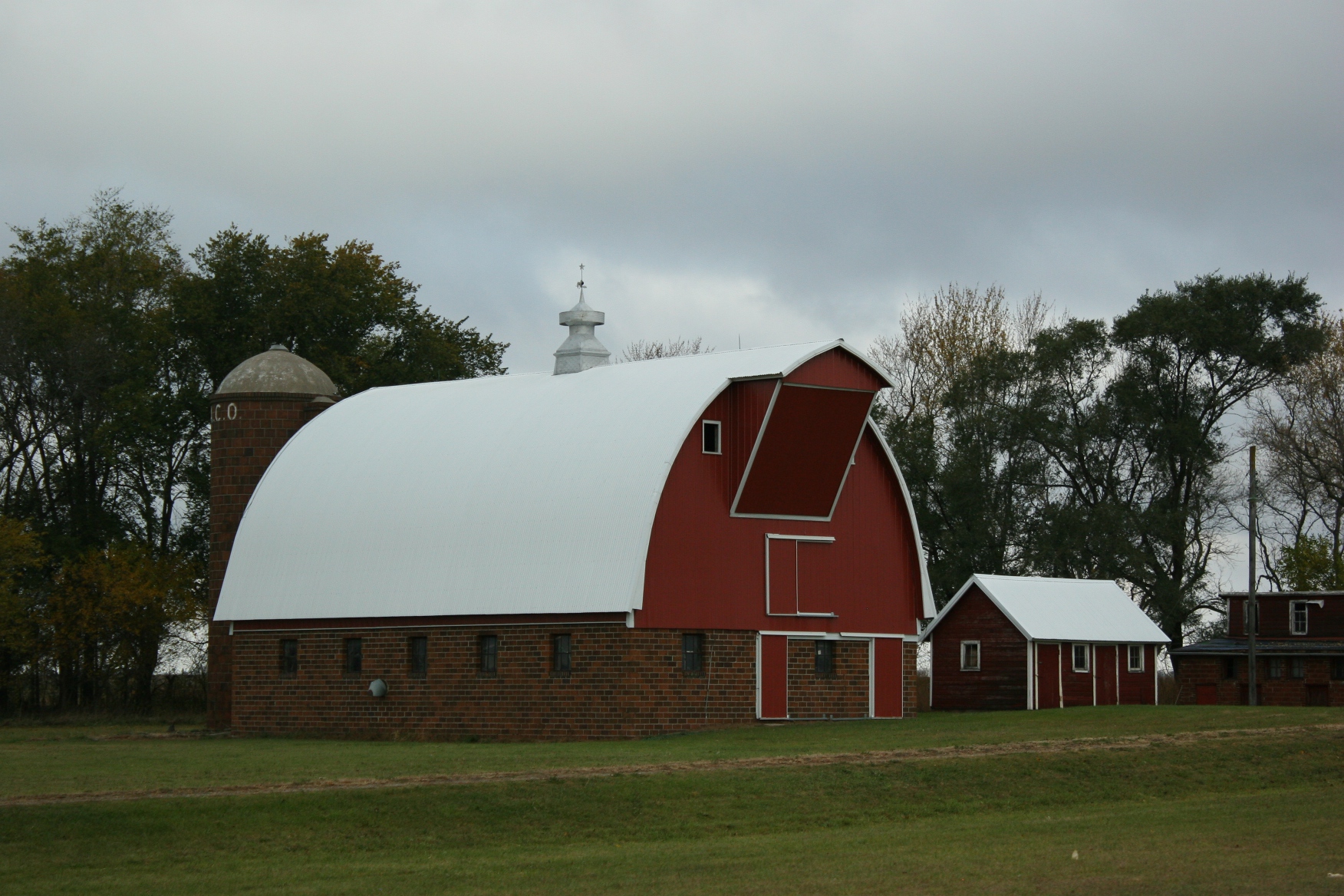
Land and sky overwhelm. Wind dominates. And for non-natives, that feeling of powerlessness within a landscape pushes away any thought of liking the prairie. Hurry. Power through the place. It’s just a bunch of farms and small towns and endless fields. But it isn’t. It is farm homes and red barns, grain elevators and water towers, corn and soybeans. Someone’s home. Someone’s land. Someone’s life. Someone’s livelihood. The prairie part of Minnesota. The place that shaped me as a person, a poet, a writer, a photographer. For that, I am grateful.

#

Note: All images were taken during my last visit “back home” in October and were edited to add a soft quality to the scenes.

© Copyright 2015 Audrey Kletscher Helbling


What makes a winning photo December 8, 2015

IT’S ALWAYS A THRILL, as a photographer, to be recognized for one’s work. It validates what I create with my camera and fuels my passion to continue pursuing photography.

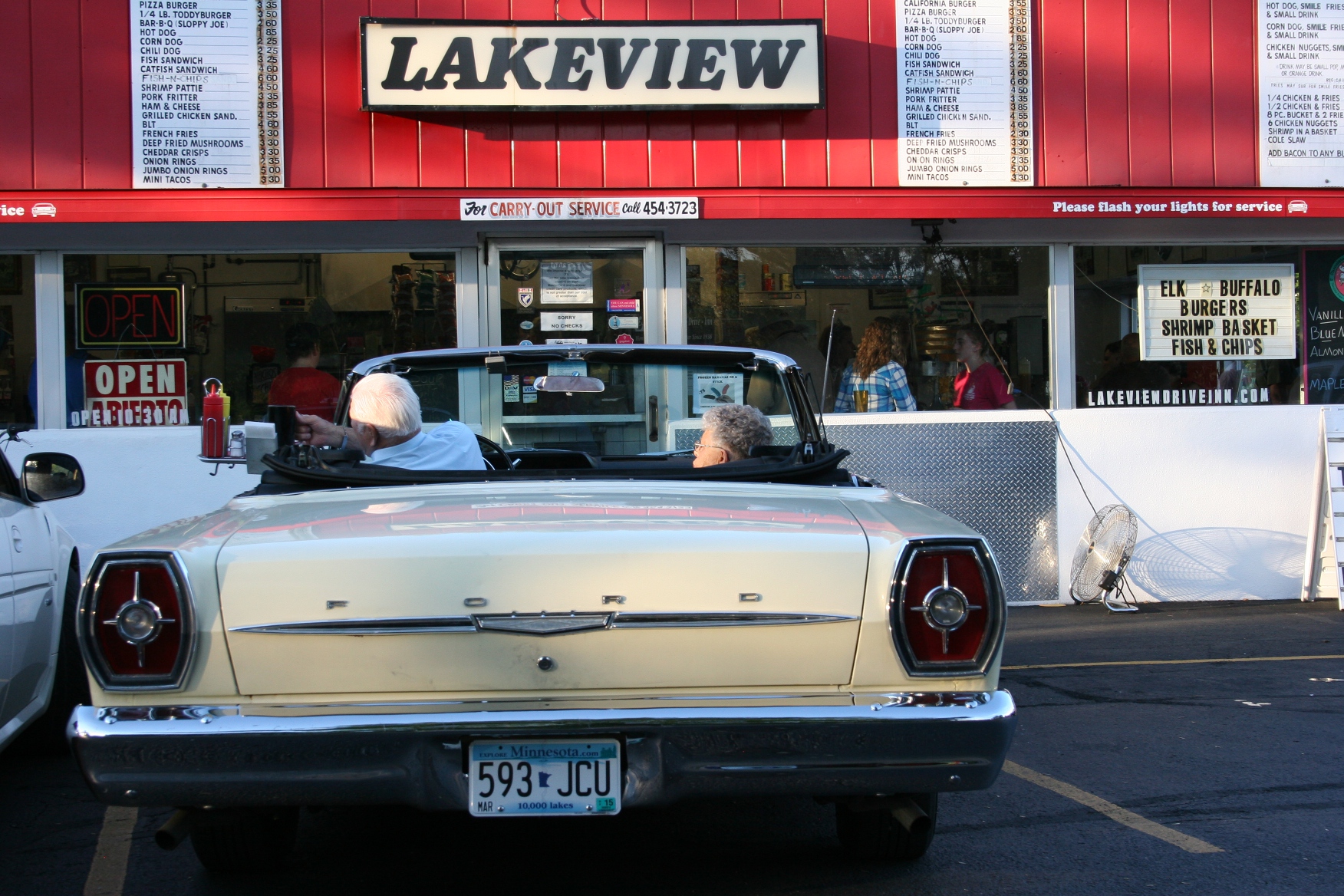
A few cars, some vintage, managed to sneak into the drive-in among all the tractors.

My winning photo: “A Dinner Date at the Lakeview Drive Inn”, Winona, Minnesota.

For the third time, a photo I entered in the National Mutual Benefit annual photo contest has placed. This year I earned honorable mention in the people category for my image, “A Dinner Date at the Lakeview Drive Inn.” I shot the scene in August 2014 at this iconic drive-in in the Mississippi River town of Winona, Minnesota. My husband and I were returning from a vacation to Iowa and Galena, Illinois, when we visited the Lakeview on a mid-week Farm Tractor Night.

Lighting—the golden hour of photography—was perfect. And the scene and setting were so iconic Americana that I was giddy about the photo possibilities. You just know as a photographer when photo ops abound.

I was familiar with the Lakeview, having dined there a few times while our eldest daughter attended nearby Winona State University. I’d also written and taken photos for a magazine feature story about this long-time eatery noted for its homemade root beer.

When I saw an elderly couple dining in their convertible, I framed the scene and clicked the shutter button. The result was a winning photo that captures a sweet moment in time and memories of yesteryear. Nostalgia.

Click here to see all of the winning photos in the 2015 National Mutual Benefit contest.

The bingo callers. My first place winning photo.

The bingo callers. My first place winning photo taken on July 4, 2013.

Last year I also entered a photo of an elderly couple to win first place in the people division of National Mutual’s photo contest for my “Fourth of July BINGO callers.” That scene was shot in 2013 at North Morristown. Again, I managed to recognize and snapshot a moment that is grassroots connective.

My first photo win, though, in a National Mutual contest came back in 2003 when I won first place in the scenery division for an image of a butterfly settled upon a daisy in my backyard. That was taken with my 35 mm film camera, before I owned my Canon DSLR. I’d show you that photo, too, except I have no idea where the print may be.

My new camera.

A mirrored self-portrait when I was trying out a different Canon earlier this year. I shoot with a Canon EOS 20D.

I love photography. Along with writing, it’s a creative outlet for me. But it’s also a source of income. Numerous people have found my work via this blog and purchased rights to use my images—on websites, in books, on annual reports, in magazines, as framed prints, in an educational app and more. I am pleased and thankful when others recognize and value my work. No, I do not give away my photos for credit and/or a link. Many people apparently think I do based on the numbers of inquiries offering that type of “payment.”

Email me at audrey at mnprairieroots.com if you are interested in purchasing digital rights to my images.

I use photography to tell a story in the most creative way I can. I am not a stand in the corner and shoot person. I squat and kneel and even lie on the ground if necessary to get the proper perspective. Sometimes I hold my camera above my head, aim the lens down and shoot. Other times I place the camera on the ground, tilt it up and click.

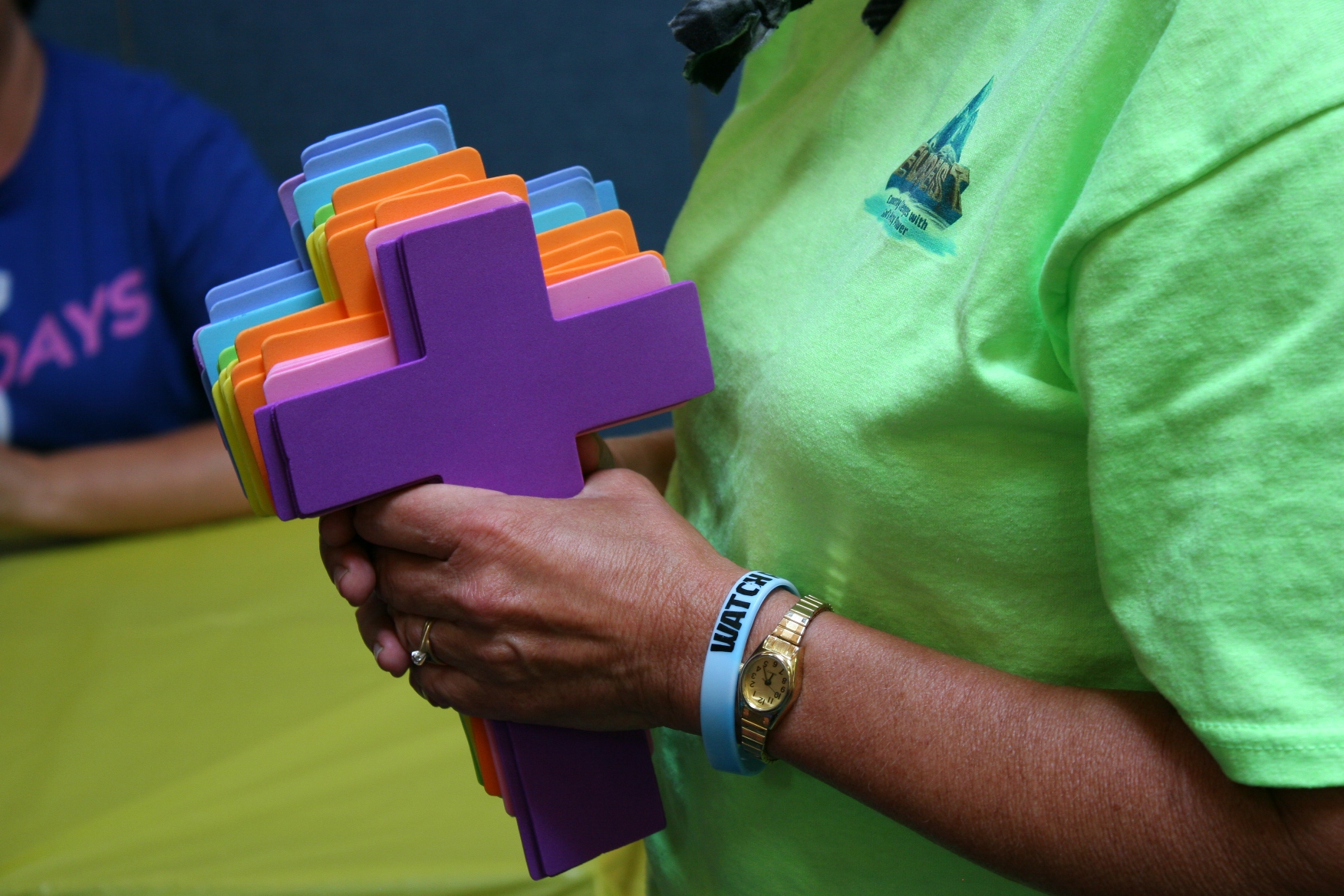
One of my favorite close-up VBS photos shows the VBS leader clutching crosses to be used in a craft project.

One of my favorite close-up VBS photos shows the VBS leader clutching crosses to be used in a craft project.

I shoot from afar and I shoot up close. During a stint of volunteering to photograph my church’s Vacation Bible School this summer, I took more than 1,000 photos in eight hours of work. And if anyone was expecting me to simply photograph obscure groups of kids, they were wrong. Sure, I snapped images of groups. But I also told the VBS story in detailed photos of hands and faces and other close-ups.

Many think taking good photos is all about the equipment. Yes, good equipment is nice. But it’s ultimately lighting, creativity, composition and observation skills (and sometimes luck) that lead to quality memorable images.

This quote by noted advertising and documentary photographer Elliott Erwitt summarizes well my thoughts on photography:

“Photography is an art of observation…I’ve found that it has little to do with the things you see and everything to do with the way you see them.”

I’ve been shooting long enough, first as a photojournalist (a necessity back in my days working as a small town newspaper reporter), to feel confident in my work, in my style. Thank you for appreciating me and my photography.

© Copyright 2015 Audrey Kletscher Helbling
 

In Kenyon: How a small town police chief connects via Facebook December 3, 2015

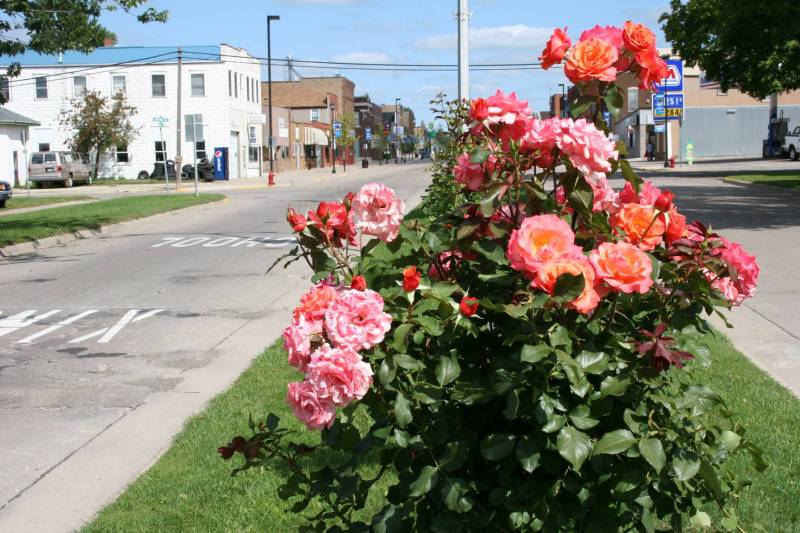
Kenyon's Boulevard of Roses cuts through Minnesota Highway 60.

Kenyon’s Boulevard of Roses cuts through Minnesota Highway 60. Minnesota Prairie Roots file photo.

ABOUT 15 MILES TO THE EAST of Faribault lies the town of Kenyon. Other than roses planted along the boulevard of Minnesota State Highway 60, Kenyon appears your typical southern Minnesota farming community. Hardware store. VFW. Restaurants. Grocery store. Municipal swimming pool. Police station.

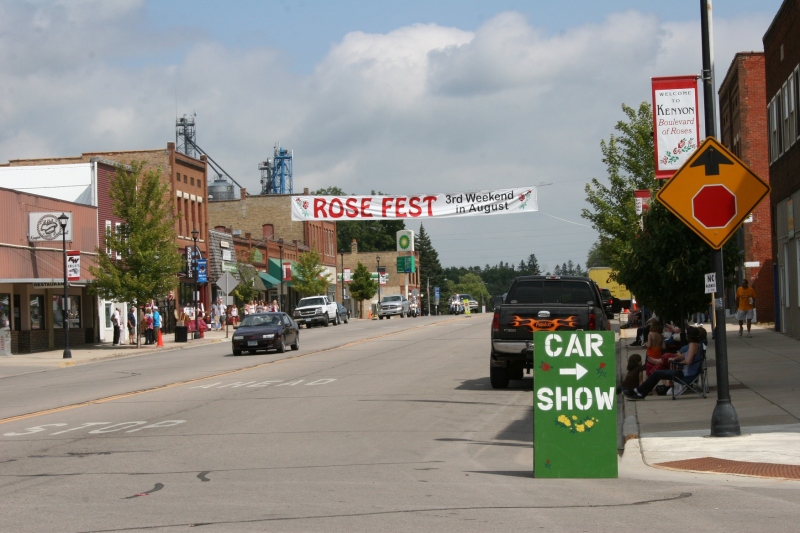
Kenyon, Minnesota, welcomes visitors to its recent Rose Fest.

Kenyon, Minnesota, welcomes visitors to its annual August Rose Fest. Minnesota Prairie Roots file photo.

But look a little closer, online closer, and you discover that things operate a little differently in Kenyon. Specifically in the police department. Police Chief Lee Sjolander, according to a recent story in the Kenyon Leader, “highlights the positive, human side of law enforcement with Facebook.”

And that he does, so I confirmed after checking out the Kenyon (MN) Police Department Facebook page penned by the Chief. With introspective, encouraging and uplifting words, often mixed with humor, this policeman shows care and compassion for those in his community of around 1,800.

Don’t just take my word for it. Read the Chief’s thoughts on thankfulness, safe driving, the challenges of his job and more. Read his encouraging words to a commenter who feels like an outcast. Read how his department is helping those in need at its annual Garage of Goodness, a give-away event set for noon to 4:30 p.m. December 5.

View the photos and read the stories in the Chief’s “My hands, my story” series.

Laugh at the postings in his “Life with my teenage daughter” series.

Cats roam the farm and kids chase after them.

Minnesota Prairie Roots file photo used for illustration only (not photographed in Kenyon).

See how he cares for wandering dogs and cats in Kenyon.

His posts get hundreds of likes.

In a day when law enforcement officers are less and less appreciated, it’s refreshing to see the support given to the Kenyon Police Department, to read the words of a police chief who cares deeply and passionately for those he serves.

#

Check back on Friday to read another story that originates in Kenyon.

© Copyright 2015 Audrey Kletscher Helbling


When health insurance costs become your biggest financial fear December 2, 2015

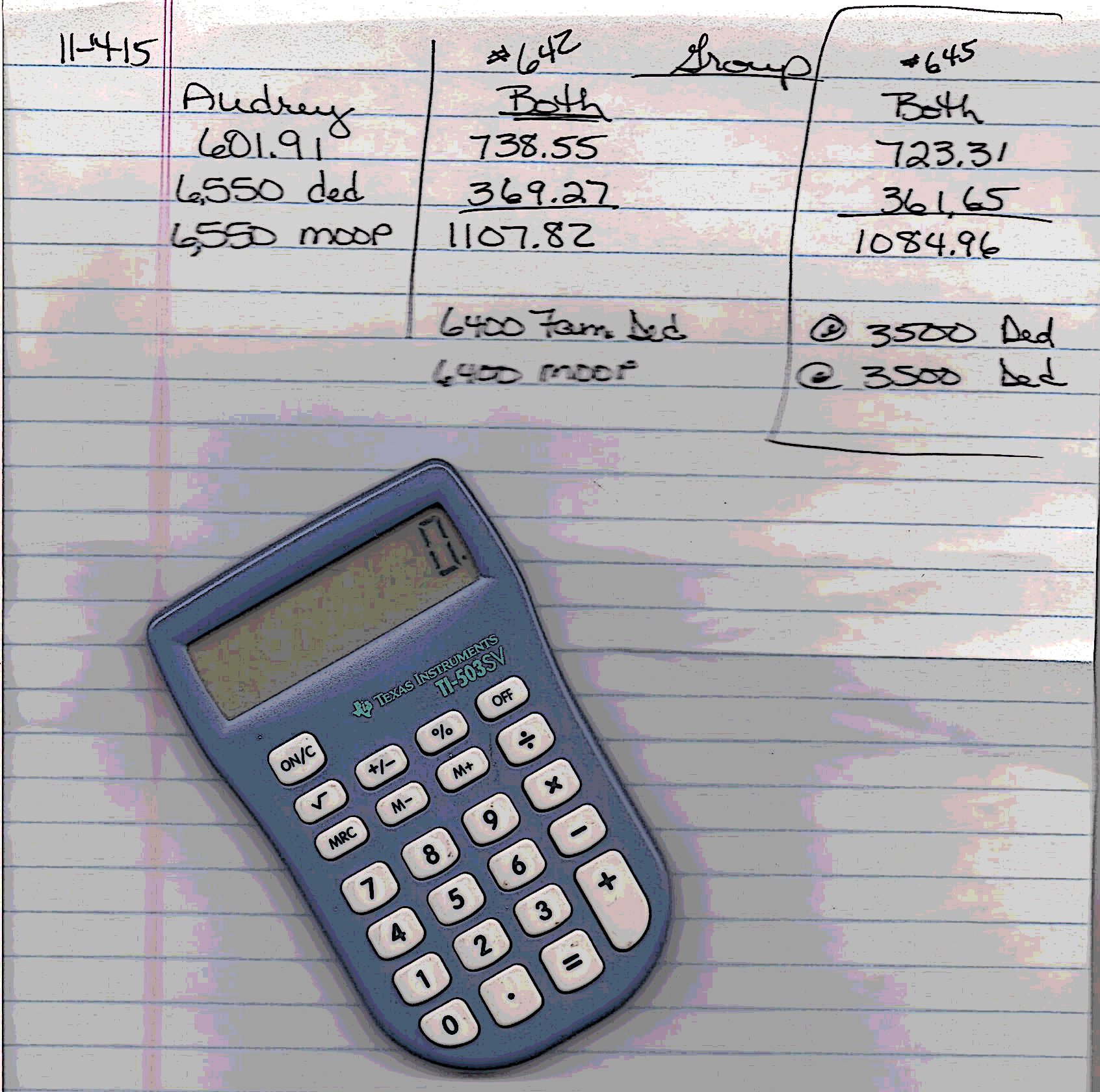
Insurance options and calculator - CopyI EXPECTED THE INCREASE. Yet, when I received notice of a $190 monthly hike in my health insurance premium, I reacted with shock. And anger. My new premium for an individual policy with a $6,550 deductible will be $602. Are you BLEEPING kidding me? That’s a 46 percent increase from my current $412/month premium. Plus, the deductible jumped $1,350 (from $5,200). For a “bronze” policy that basically offers only catastrophic coverage.

I decided to let the news simmer. Maybe time would ease the sticker shock, the worry about extracting more money from an already tight budget. Perhaps I would accept this as simply the way things are under the Affordable Care Act. That hasn’t happened. I’m still mad. There’s nothing affordable about my health insurance premium.

But anger doesn’t solve problems. I needed to make a decision and stop thinking that I could just as well drive down the highway and toss $7,224 out the window toward the offices of a company that advises me in its ad campaigns to Live Fearless with a Trusted Name. Really? The cost of health insurance is now my biggest financial fear.

The health insurance issue wasn’t going away. So I scheduled an appointment with our accountant (who also sells insurance for the aforementioned company) to discuss options. She is as upset as my husband and me about the escalating cost of health insurance.

In three columns on lined paper, she inked in the existing options—stick with my individual plan or choose one of two plans offered through my husband’s employer. We inquired about other plans, too, and I later followed up by visiting the MNsure website to compare plans. Since my husband’s employer offers health insurance, we can’t get a subsidy anyway and it would be minimal if we could.

We settled on a $3,500/person deductible company plan with a $723/person monthly premium. (With the Live Fearless company.) It made the most sense given the premium and deductible differences and the impact on our taxes (which is why we saw the accountant).

My husband’s employer pays half of his premium. That $361/month will help.

I will now pay $723/month rather than $412/month. My health insurance in 2016 will cost me $8,676 compared to $4,944 currently.

Add in another $204/month for our college son’s health insurance premium and our family will fork out $1,288/month for health insurance premiums in 2016. (Keep in mind that the employer will add $4,332 to the pot, pushing the total annual premium cost to $19,788) Affordable? No. But I suppose one could argue that, if we need to use our health insurance beyond our $3,500 deductibles (for my husband and me) and rack up substantial medical bills, we will consider the $15,456 we paid in 2016 premiums well spent.

Health insurance, for us and I suspect many, has become basically a catastrophic plan that keeps us from going to the doctor.

Thankfully, our home mortgage was paid off years ago. We have income. Both of us grew up in poor families, therefore are thrifty. Yet, at this stage in our lives nearing retirement, we shouldn’t have to worry about out-of-control, astronomical health insurance premiums.

Something has to give here. With so much of our income now going toward health insurance, we are not spending elsewhere. Or saving for retirement. Like our tightening family budget, the economy will feel the impact.

GO AHEAD, VENT. Tell me your health insurance woes. Solutions are welcome. I know my family is far from alone in facing these excessive health insurance costs.

Click here to read a related story published on MPR.

© Copyright 2015 Audrey Kletscher Helbling

 

Grieving with the people of Paris November 17, 2015

Filed under: Uncategorized — Audrey Kletscher Helbling @ 5:00 AM
Tags: , , , , ,

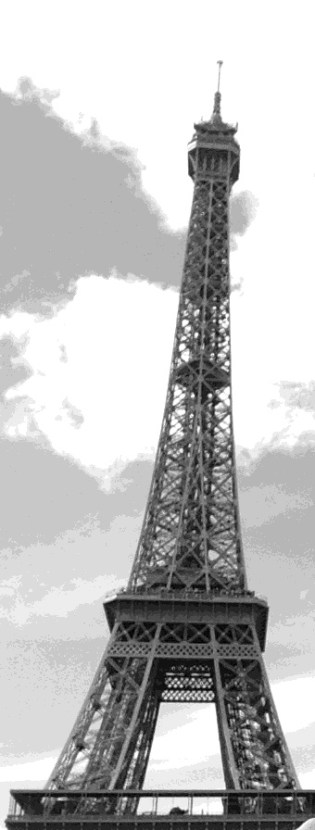
Eiffel Tower


DURING MY WEEKLY SUNDAY evening phone call to my mother, who lives in southwestern Minnesota, we talked about the terrorist attacks in Paris. Mom shared how she could not stop watching media coverage of the tragedy.

And then she asked about my eldest, confused as to when my daughter and her husband had been in Paris. Six months ago, I assured her. Not recently, as she thought.

I, too, had been thinking about the May trip and how thankful I was that my loved ones were safely back home in Minnesota. But then I thought of the mom in California who will never welcome her daughter home. And I considered all the other families grieving the deaths of loved ones. How could I possibly relate or understand?

But I can. As human beings we can understand grief. I need only view the still photos of the tragedy in Paris and the aftermath to feel the grief. As I click through image after image after image, my grief rises and spills into tears. These photos tell a story and record history in a way that no words ever can. All too often the media is criticized for focusing on the negative. But it is their job to cover events, good and bad.

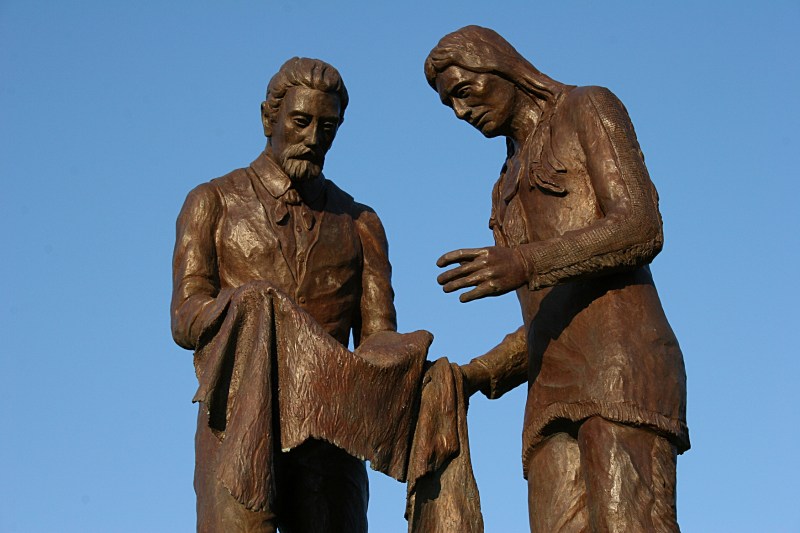
This sculptor of Alexander Faribault trading with a Dakota trading partner stands in Faribault's Heritage Park near the Straight River and site of Faribault's trading post. Faribault artist Ivan Whillock created this sculpture which sits atop a fountain known as the Bea Duncan Memorial Fountain.

This sculptor of Alexander Faribault trading with a Dakota trading partner stands in Faribault’s Heritage Park near the Straight River and site of Faribault’s trading post. Faribault artist Ivan Whillock created this sculpture which sits atop a fountain known as the Bea Duncan Memorial Fountain. Minnesota Prairie Roots file photo.

I’ve never been to France. I have no personal connection to the country. But I live in a Minnesota community with a French name—Faribault—founded by the son of a French-Canadian fur trader. French names like LeMieux, Archambault, LaCanne, Chappius, De Grood, Decoux and La Roche are common here. Whether these families are still connected to folks in the Old Country, I don’t know.

But we are all connected—no matter where we live—by the commonality of humanity and by grief, the most basic of human emotions. Today, and in the days since the most recent attacks in Paris and elsewhere, we are a world grieving.

© Copyright 2015 Audrey Kletscher Helbling
 

Hoping on November 6, 2015

Filed under: Uncategorized — Audrey Kletscher Helbling @ 5:00 AM
Tags: , , , , , ,
My great niece Kiera painted this stone, which I got at a recent family reunion.

My great niece Kiera painted this stone, which sits on my office desk as a reminder of hope.

“HOPE IS A VERB.”

Thank you, Patty Wetterling, for reminding me of that when you spoke to the media this week. For 26 years, Patty and her husband, Jerry, and their family, plus an entire nation, have hoped for the safe return of their son, Jacob. The 11-year-old was abducted in October 1989 by a masked gunman near their St. Joseph, Minnesota, home. Last week law enforcement named a “person of interest” in the case.

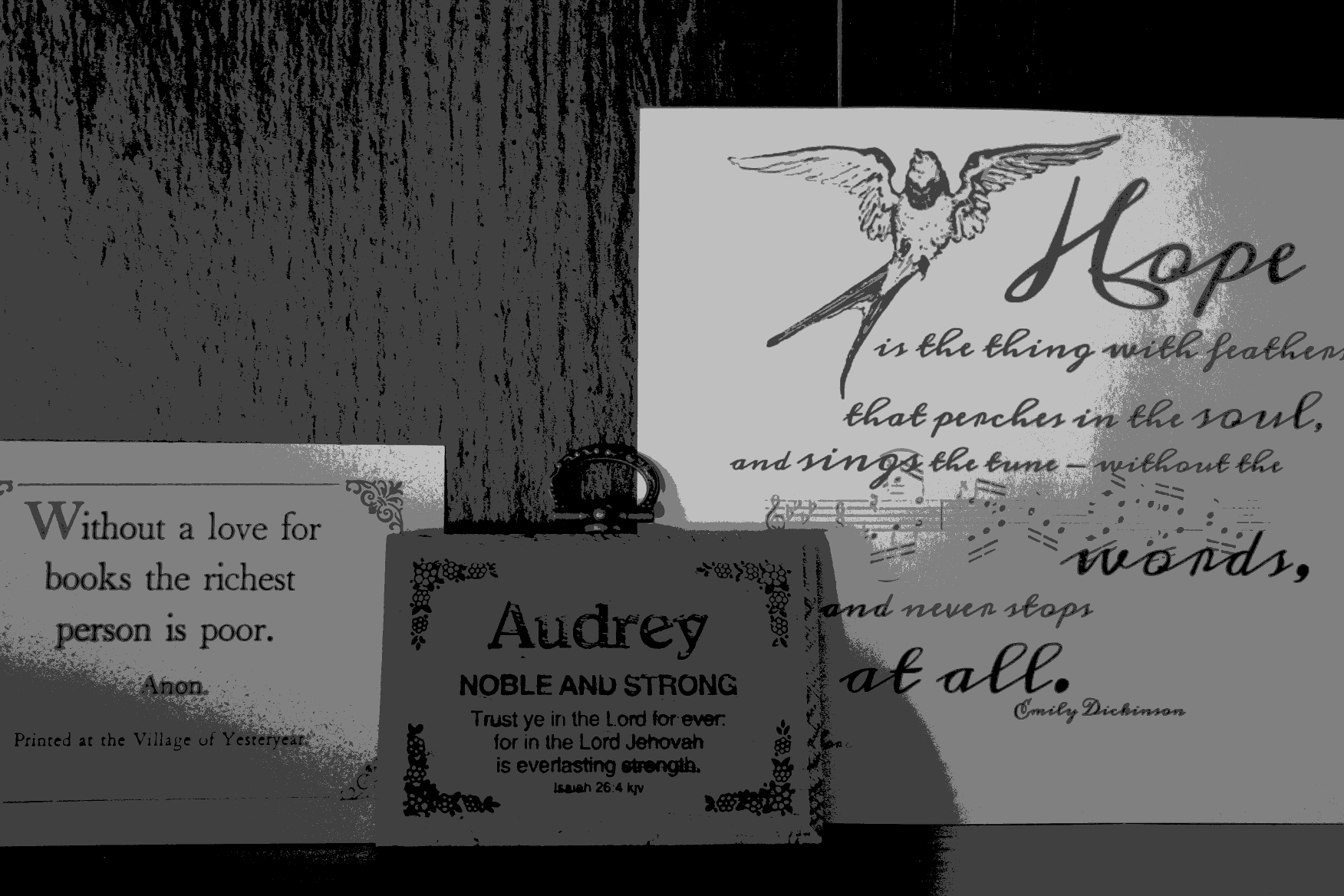
Inspirational quotes posted on my desk, on the shelf above my desktop screen.

Inspirational quotes posted on my office desk include a quote by poet Emily Dickinson, right.

In January, I chose “hope” as my word for 2015, following the example of my sweet friend Beth Ann, who blogs at It’s Just Life.

Pulling out my thesaurus, I find these synonyms for the verb, hope: aim, intend, plan, have it in mind, aspire, expect, look for, wish for, want.

To that list I might add trusting, believing that things will get better.

Hope can be elusive when the stresses and challenges of life overwhelm. It is easy to lose hope if difficult situations persist, when burdens weigh heavy upon your heart and days.

But then I hear statements like “Hope is a verb,” spoken by a mother who long ago had every reason to give up hope. Yet, Patty Wetterling has endured, taken action and continued to hope for answers in the disappearance of her son.

During their statement to the media this week, the Wetterlings emphasized the importance of the community in sharing information to help solve the case. Community. The community of Minnesota and beyond has supported the Wetterlings through this entire horrible ordeal spanning more than a quarter of a century.


Hope logo


Support is essential. Without support, hope flounders. Locally, I need only consider Hope Center, which helps and supports victims/survivors of sexual assault and domestic violence. There’s that word, hope, centering the Center’s name.

We all need family and friends who have our backs during difficult times—listening, encouraging, praying for, being there without judging or thinking they have all the answers or putting the focus on themselves rather than your needs.

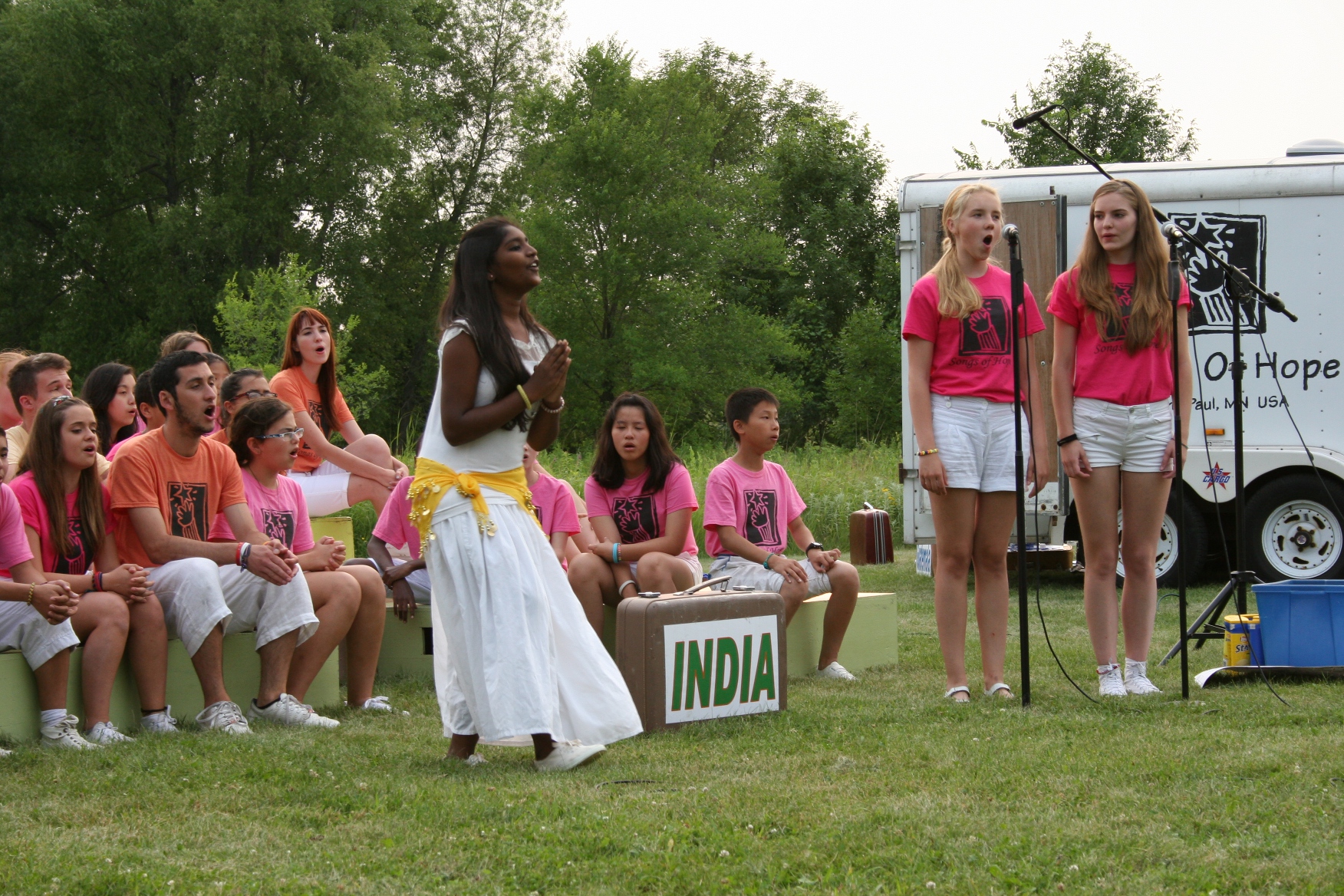
Songs of Hope performers present a selection from India.

Songs of Hope performers present a selection from India during a summer concert at River Bend Nature Center in Faribault. Minnesota Prairie Roots file photo 2014.

A year ago, I heard hope during a concert by Songs of Hope, a group of students from a St. Paul-based international performing arts summer camp. These singers from around the world performed with the enthusiasm of youth believing that world peace is possible. Their energy and passion showcased hope. Such positivity inspires hope.

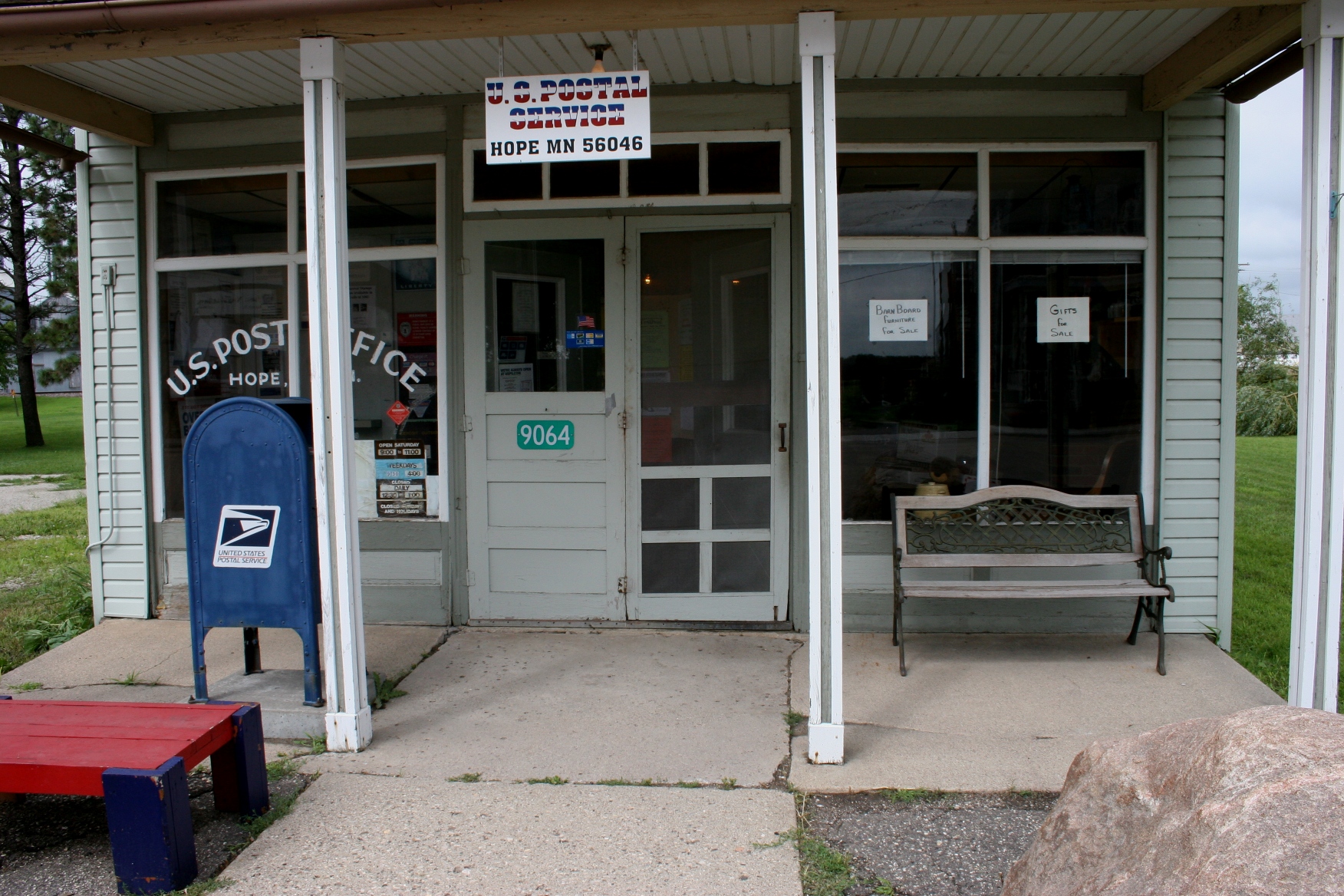
Take in the details: the red and blue bench, the double front doors, the rock out front...

The Hope Post Office has closed since I took this photo several years ago.

In southern Minnesota, just off Interstate 35 south of Owatonna, you’ll find a small town named Hope. A place. A proper noun, not a verb.

Hope. Noun or verb. It’s a powerful word, if only we believe it to be. You can offer hope to others by listening, by giving of your time and talents and financial resources, by caring, by showing compassion, by simply being there. Hold a confidence entrusted to you. Check in with someone facing a difficult situation. Care. Emulate hope.

TELL ME, how do you offer hope or hold onto hope?

© Copyright 2015 Audrey Kletscher Helbling
 

The shifting of seasons in Minnesota November 4, 2015

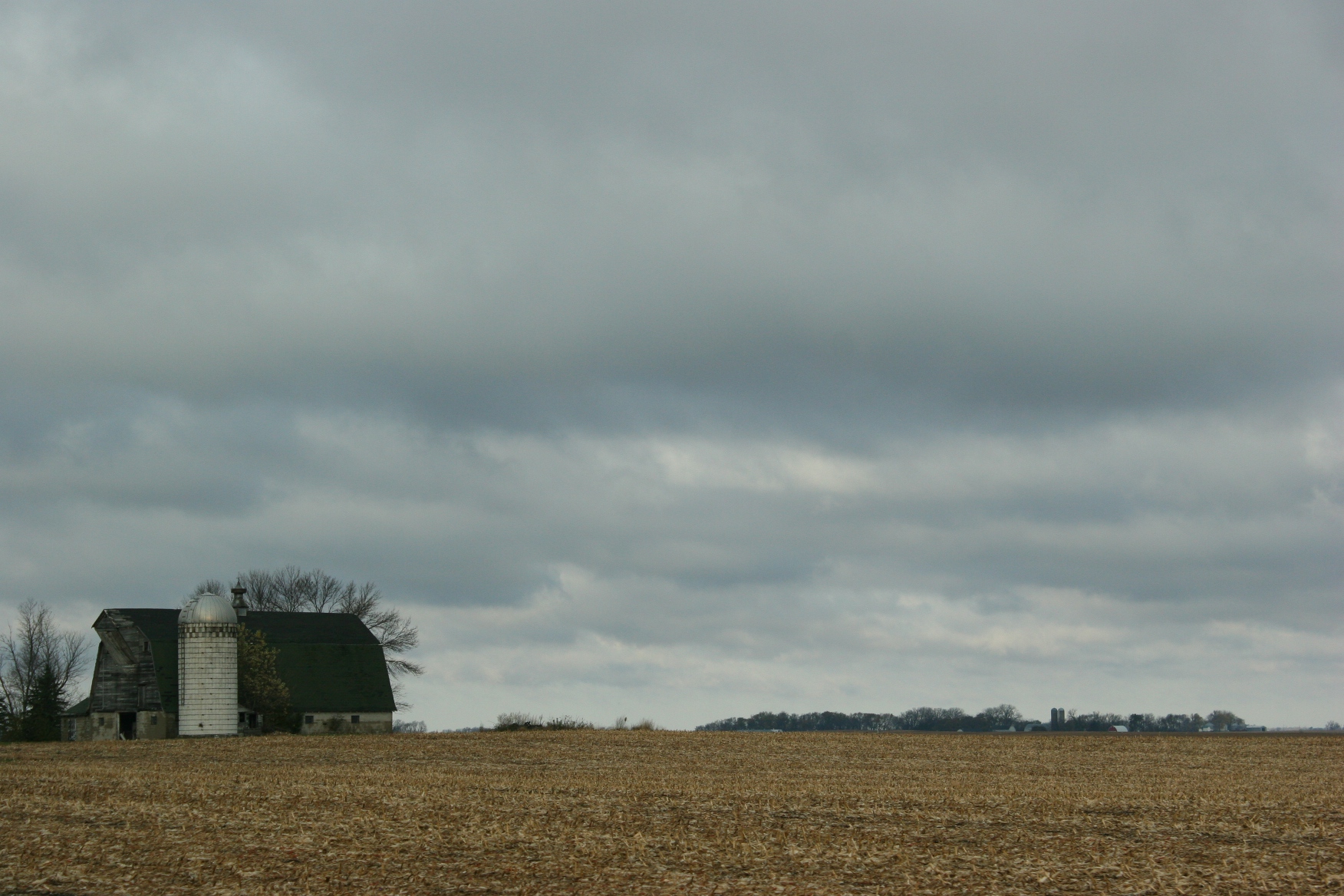
barn

Grey skies hang over a barn and harvested cornfield west of Sleepy Eye along U.S. Highway 14 on a late October morning.

AS THE SEASON SHIFTS here in Minnesota, I struggle to hold onto the light. To the color. To memories of lush landscapes and warm days.

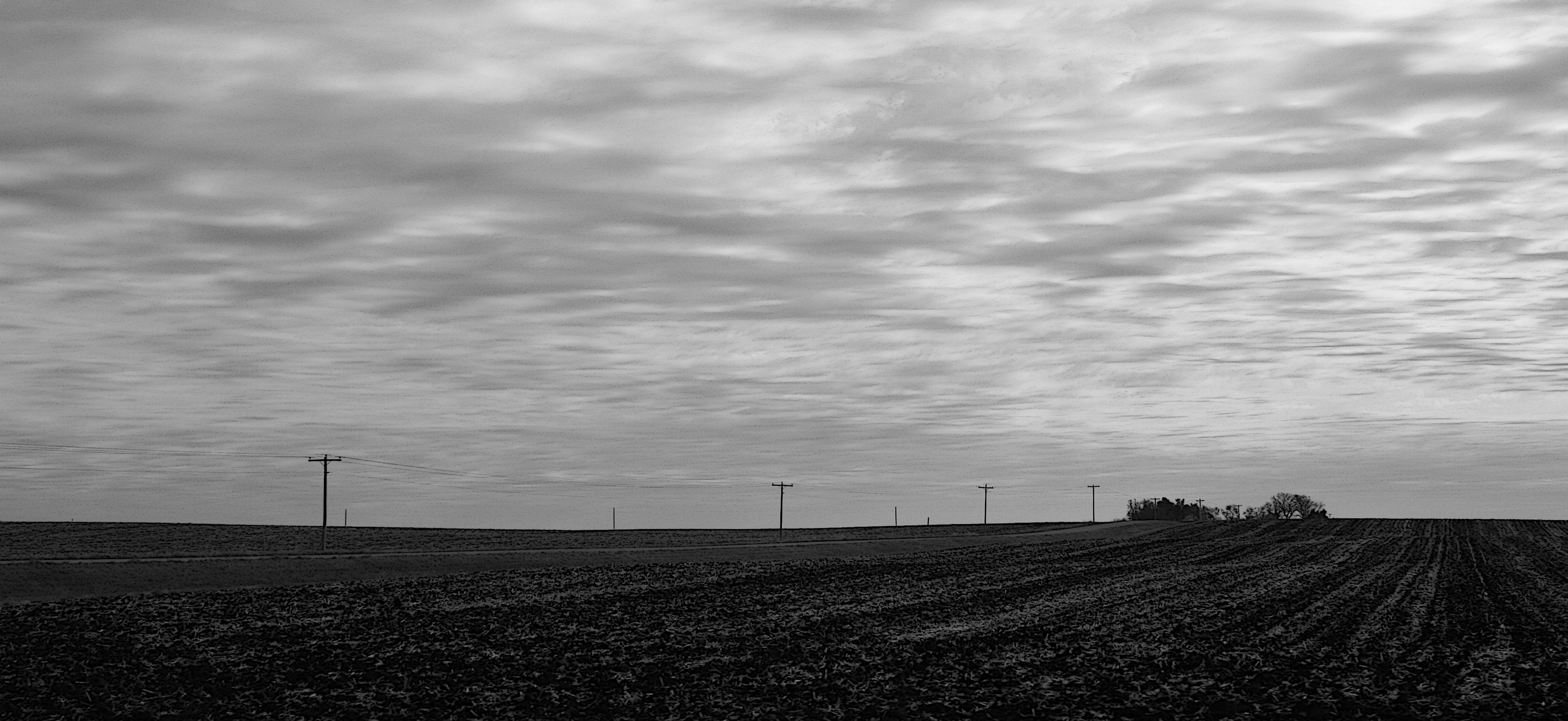
A bare field near Belview in southwestern Minnesota.

A bare field near Belview in southwestern Minnesota on a late October morning.

I am no fan of the transition months—November and March. I’ve always thought these the least visually inviting. Grey skies dominate. Cold winds rage. The land appears devoid of color. Black fields. Muted tones. Everywhere.

One of my favorite barns in the Springfield area along U.S. Highway 14 in southwestern Minnesota.

One of my favorite barns in the Springfield area along U.S. Highway 14 in southwestern Minnesota.

But then a barn flashes red in the monotone landscape.

Clouds break apart over a farm along U.S. Highway 14 in southwestern Minnesota.

Clouds break apart over a farm along U.S. Highway 14 in southwestern Minnesota.

Sun spotlights through the clouds beaming light upon the land. A patch of blue emerges overhead.

In the final days of October, my camera landed on this stunningly beautiful treeline near Shieldsville.

In the final days of October, my camera landed on this stunningly beautiful treeline near Shieldsville. I’ve seen some of the prettiest fall colors near my Faribault home. This is true every year.

Nearing the end of October, some corn remained to be harvested.

Nearing the end of October, some corn remained to be harvested.

Along U.S. Highway 14 east of Springfield, this brick barn stands strong and tall.

Along U.S. Highway 14 east of Springfield, this brick barn stands strong and tall.

I begin to notice patches of color—autumn leaves still hanging on, corn carpeting fields, defiant red barns still standing.

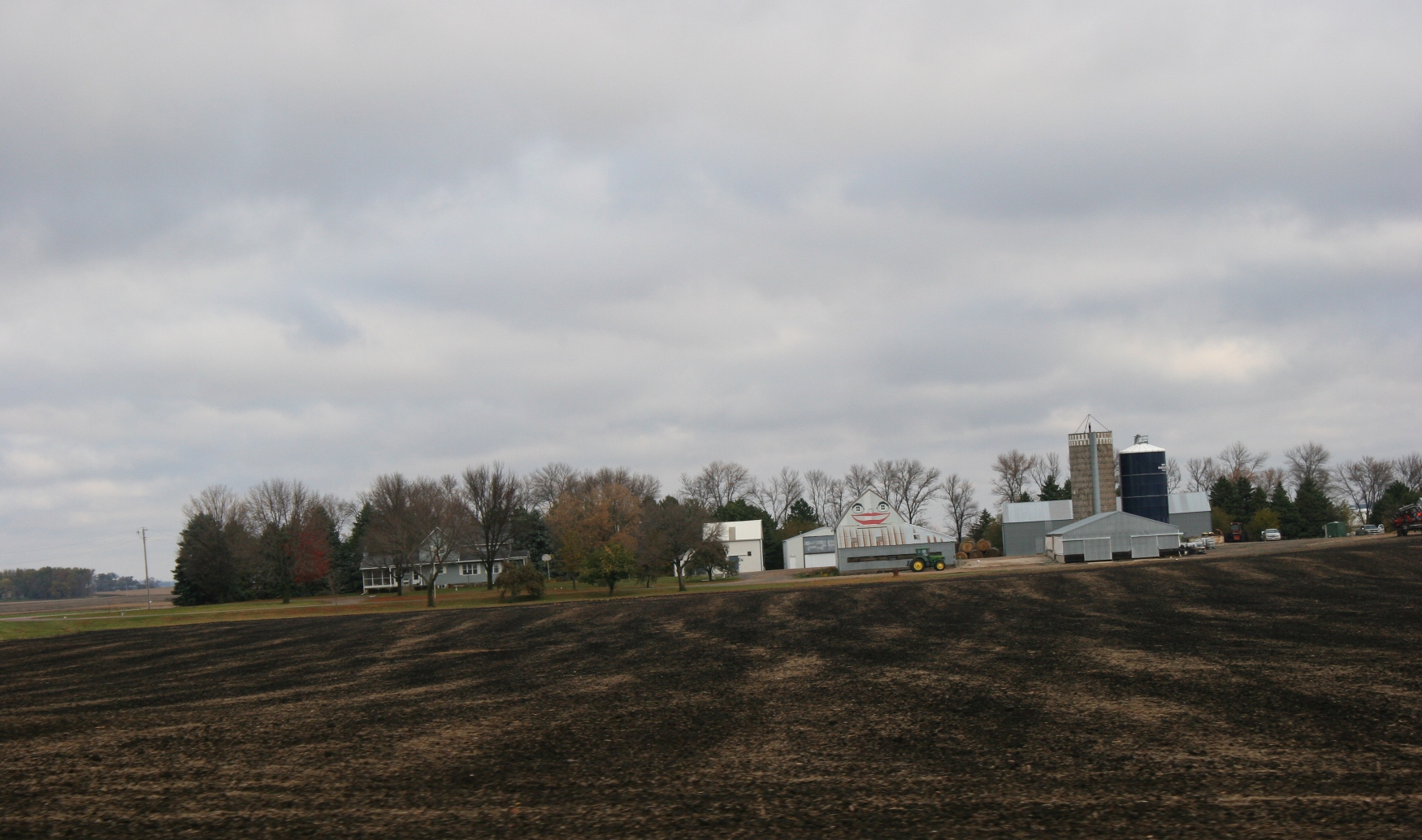
The barn with the smiling lips, between Sleepy Eye and Springfield, always makes me smile.

The barn with the smiling lips, between Sleepy Eye and Springfield, always makes me smile.

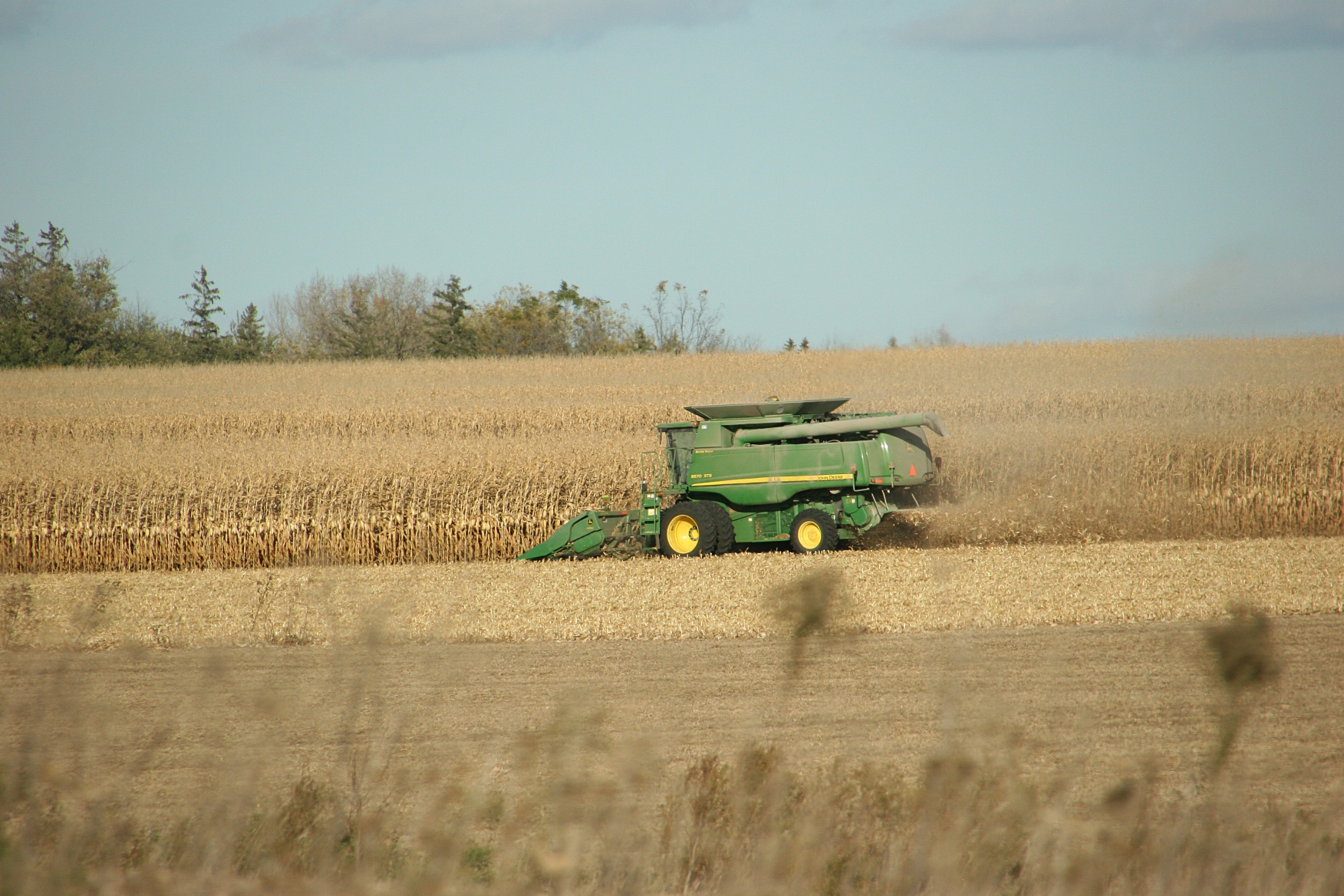
Harvesting corn along U.S. Highway 52 in the Rochester area in mid-October.

Harvesting corn along U.S. Highway 52 in the Rochester area in mid-October.

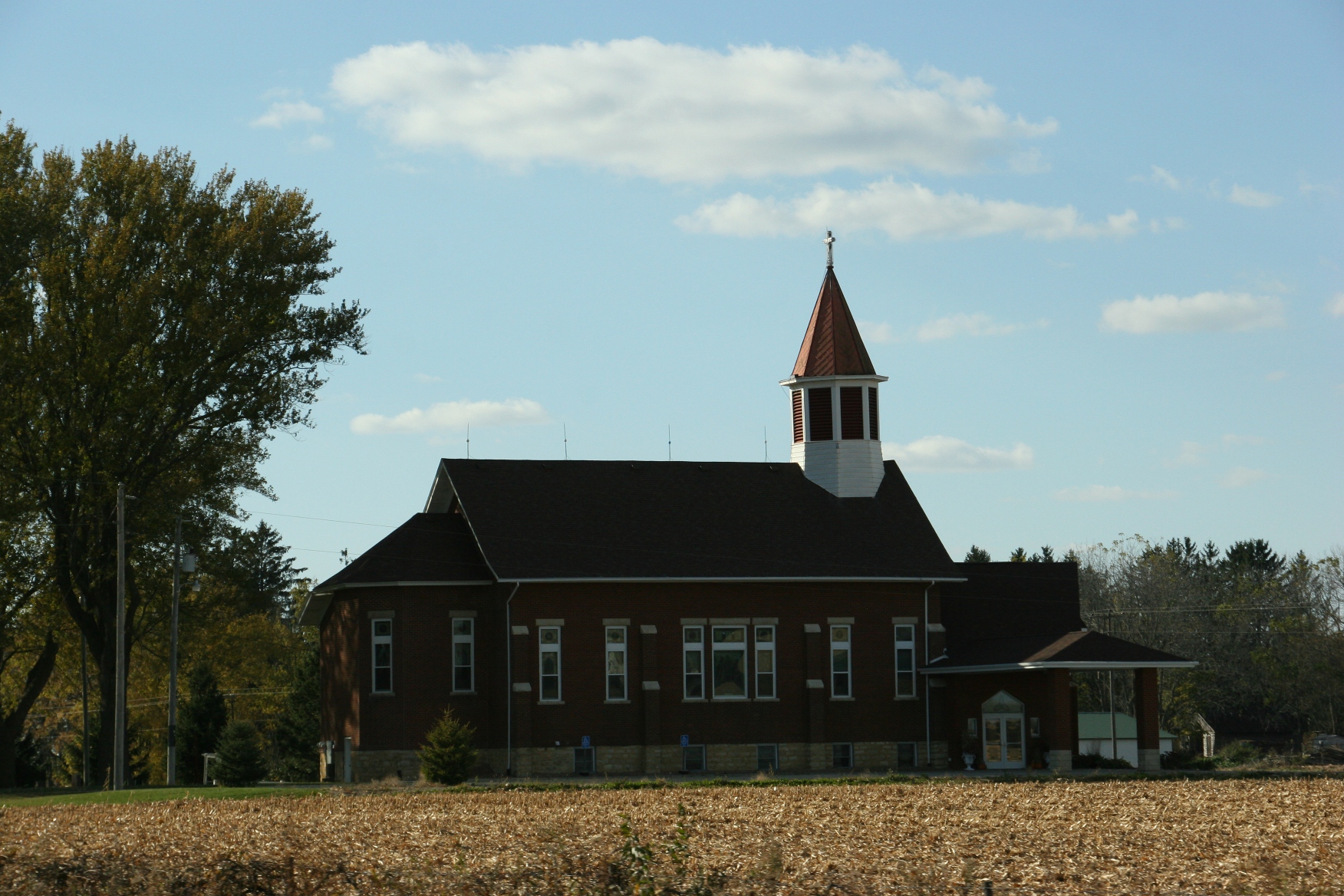
A country church along Interstate 90 near the Winona exit reminds me of blessings and thankfulness, especially at harvest time.

A country church along Interstate 90 near the Winona exit reminds me of blessings and thankfulness, especially at harvest time.

Reasons to smile. Reasons to appreciate November. This eleventh month raises my awareness of thankfulness. Thankfulness that I live in Minnesota, a state of four seasons, of changing landscapes, of bountiful harvests. And this week of unexpected November warmth.

© Copyright 2015 Audrey Kletscher Helbling
 

When watching high school football is about more than just the game November 2, 2015

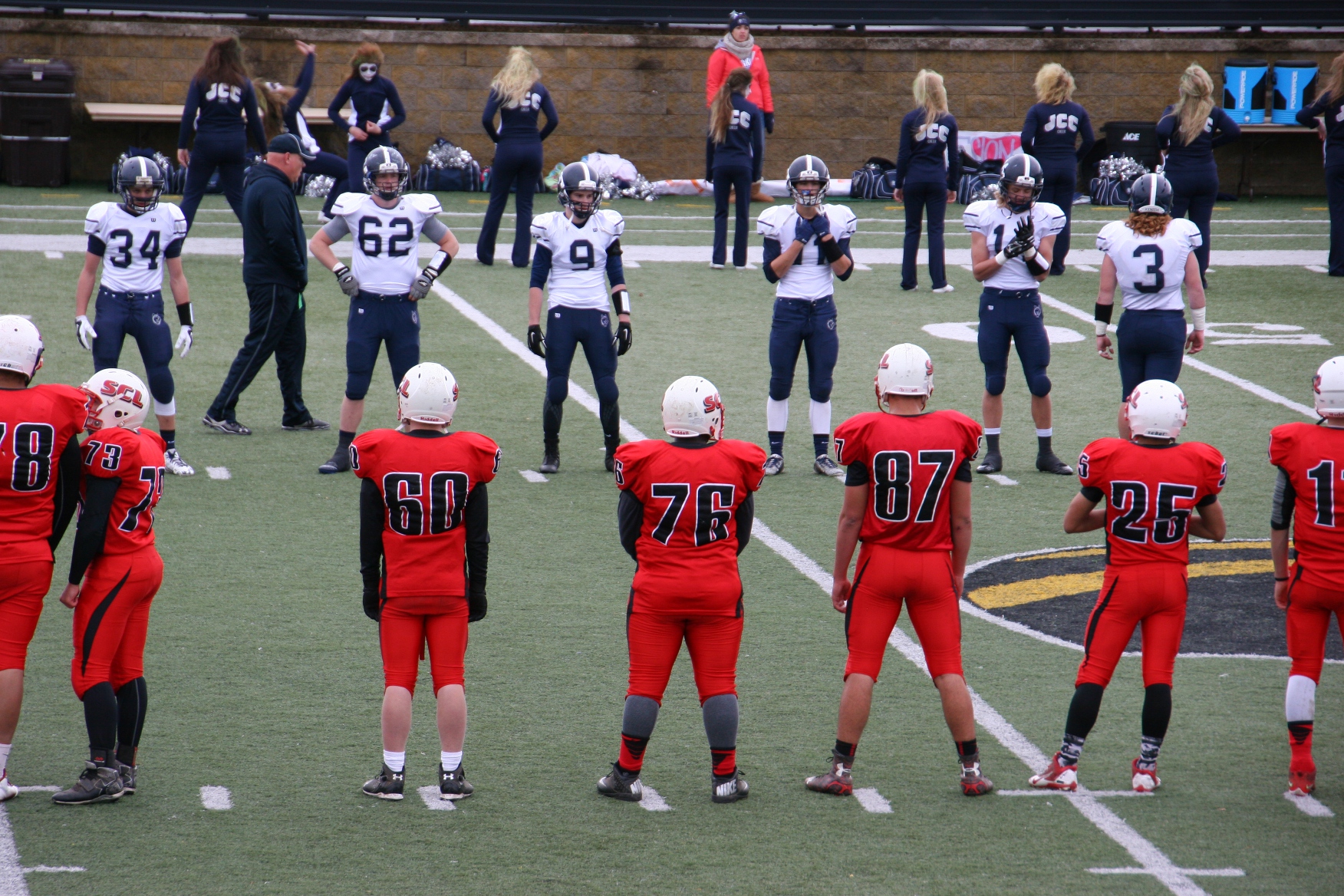
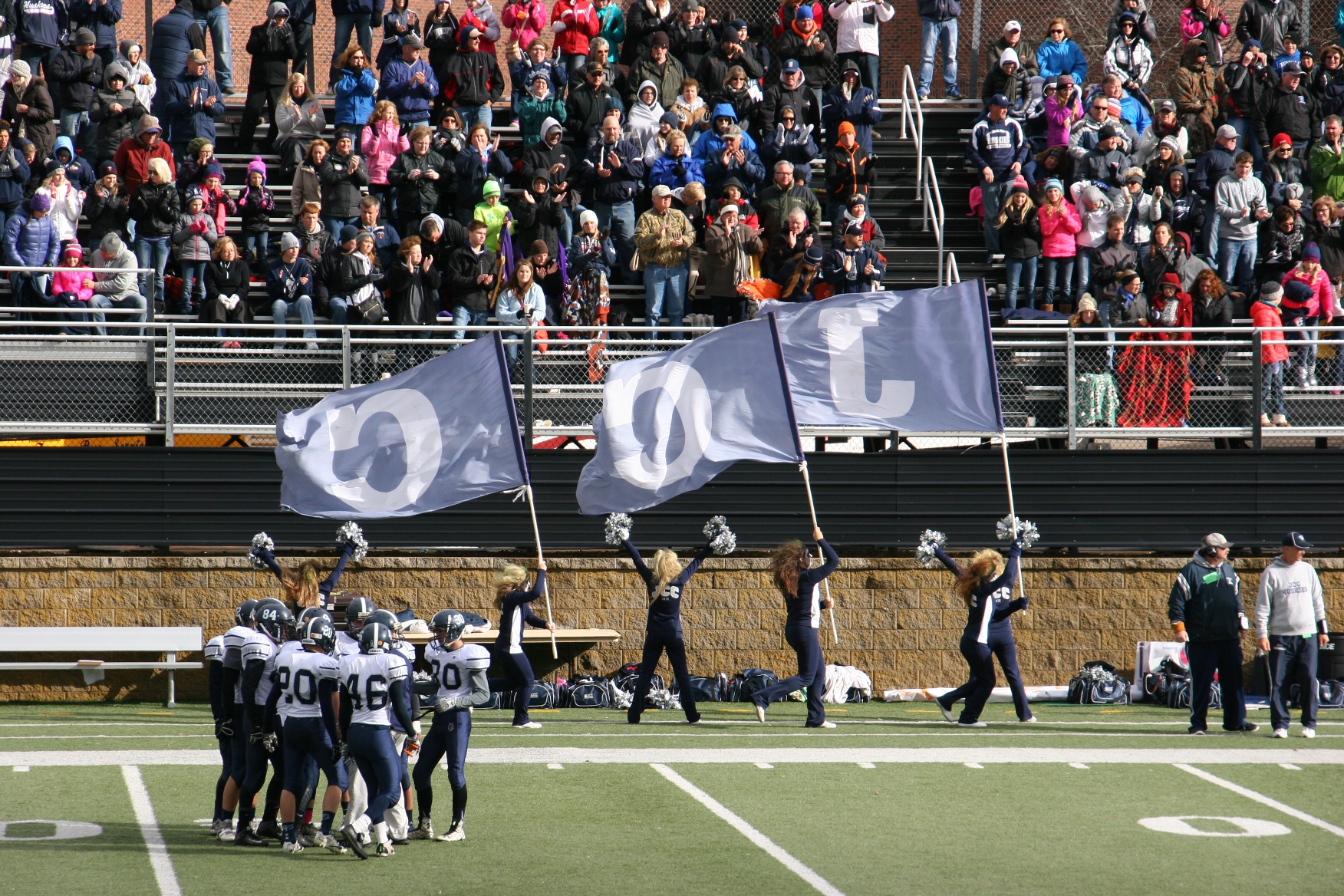
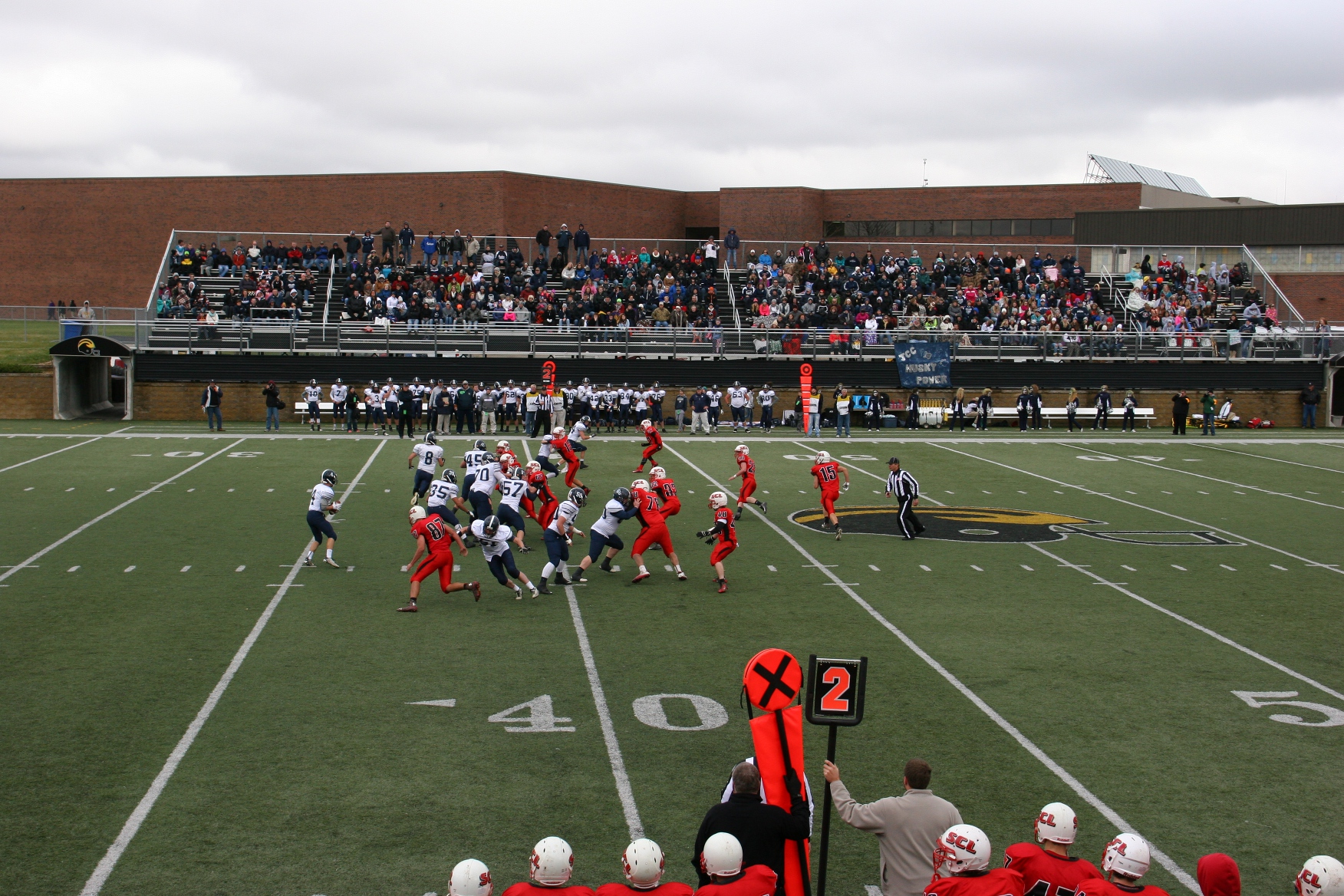
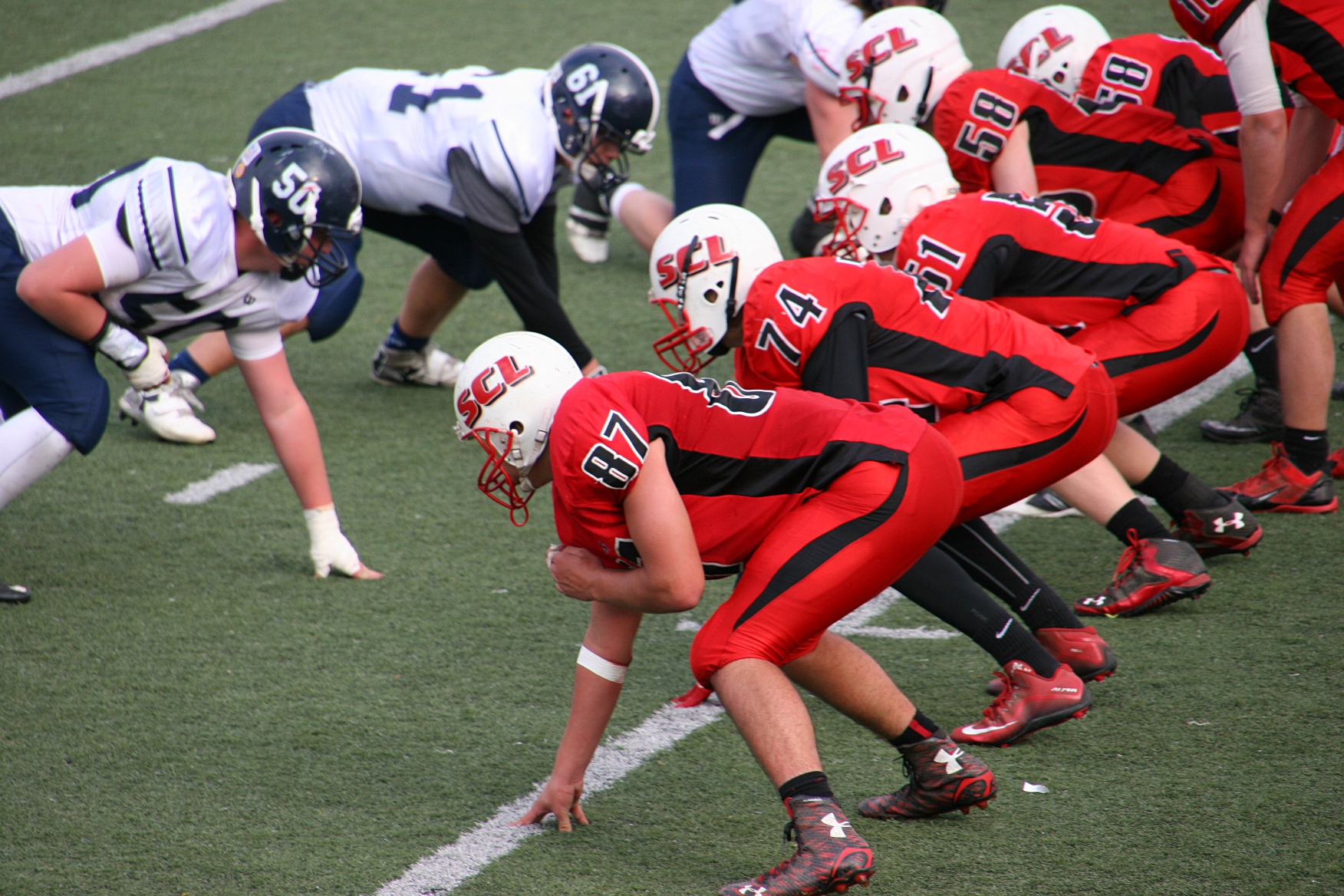
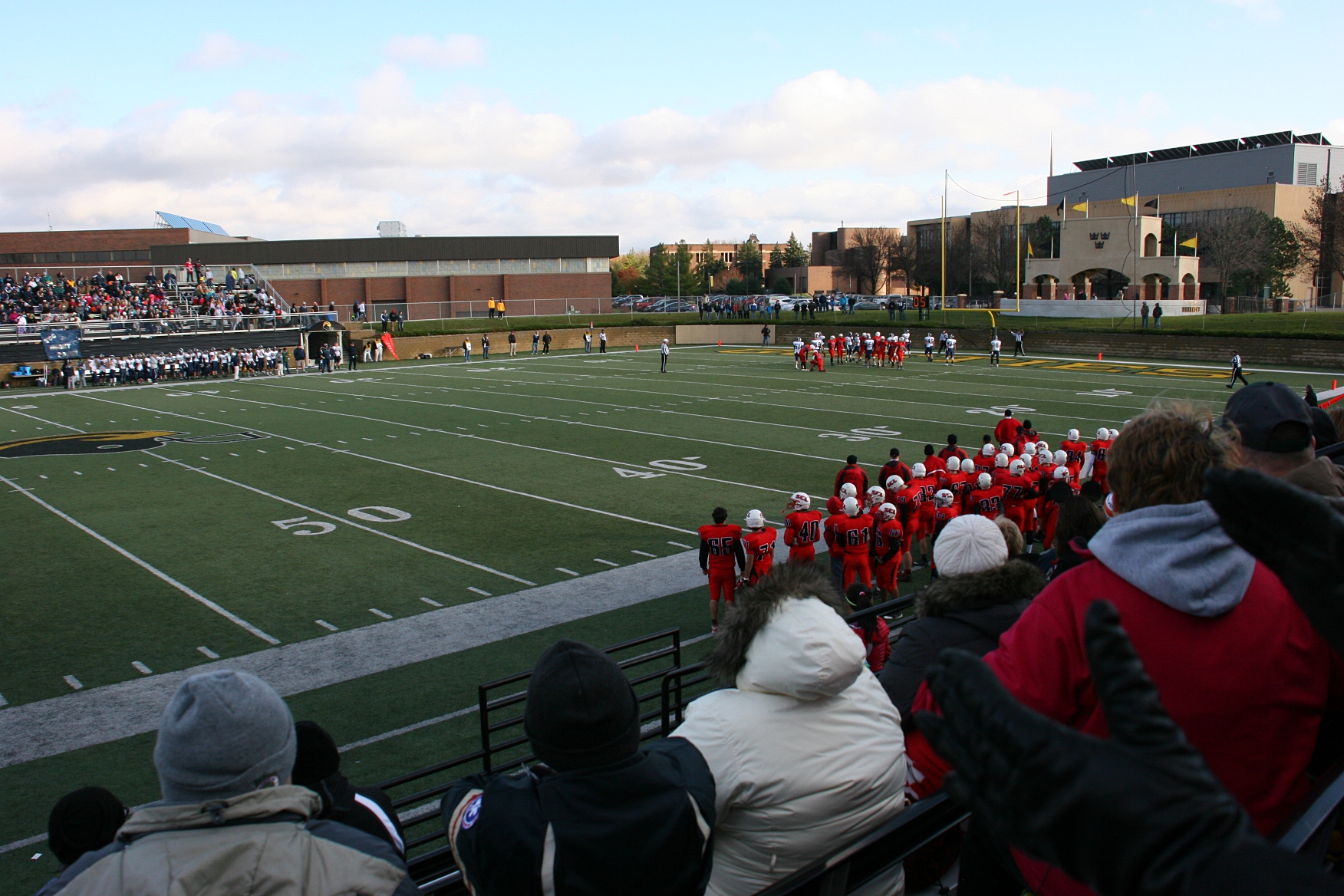
The St. Croix Valley Crusaders and the Jackson County Central Huskies line up before the game starts Saturday afternoon.

The St. Croix Lutheran Crusaders and the Jackson County Central Huskies line up on the football field before the game starts Saturday afternoon.

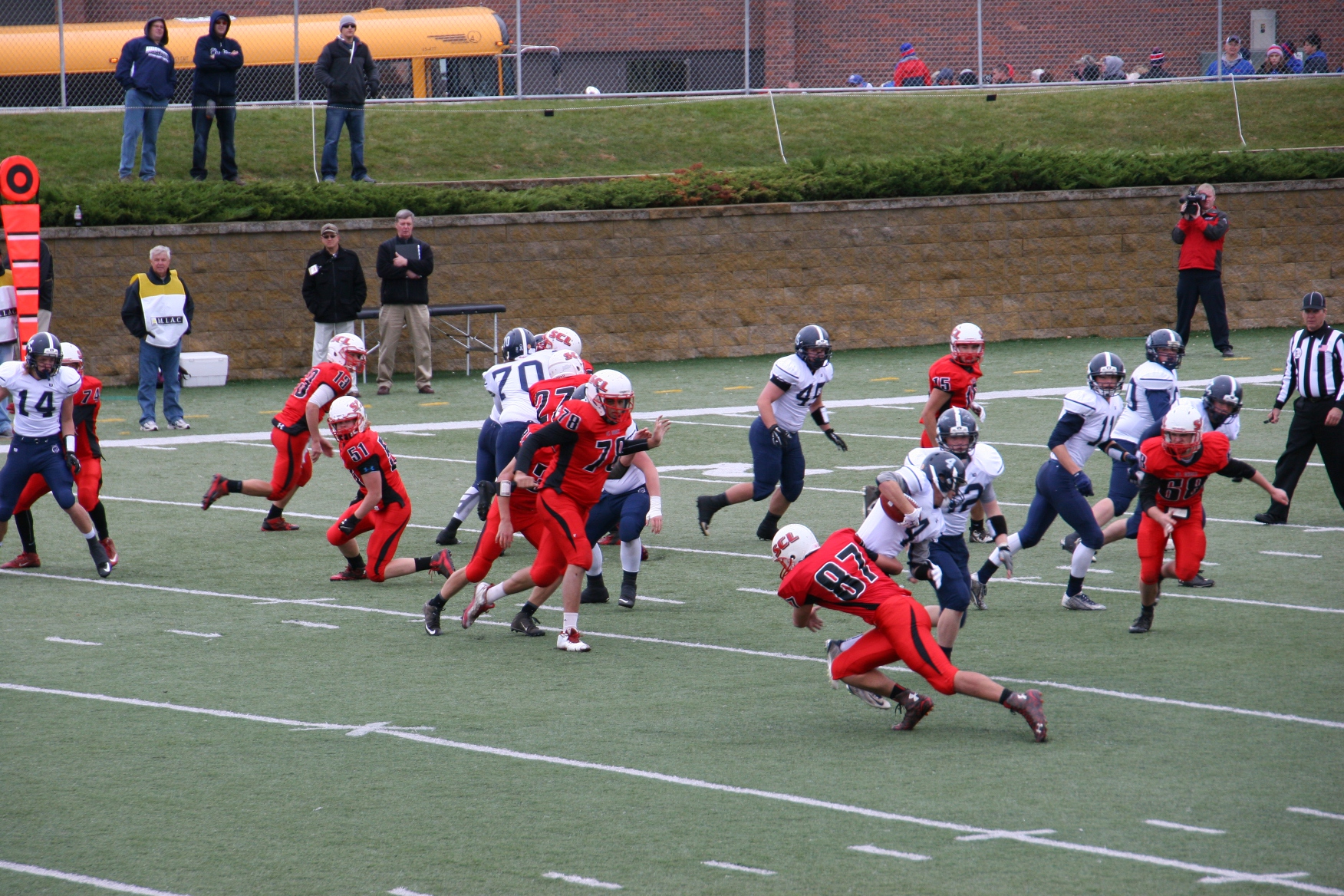
I DRESSED IN MY BUFFALO PLAID red and black on Saturday. Not because I wanted to portray Mrs. Paul Bunyan on Halloween. Rather, I was showing my support for the St. Croix Lutheran High School football team which Saturday afternoon competed against Jackson County Central in state play-offs. My nephew, Stephen (number 87), plays tight end for the red-attired Crusaders.


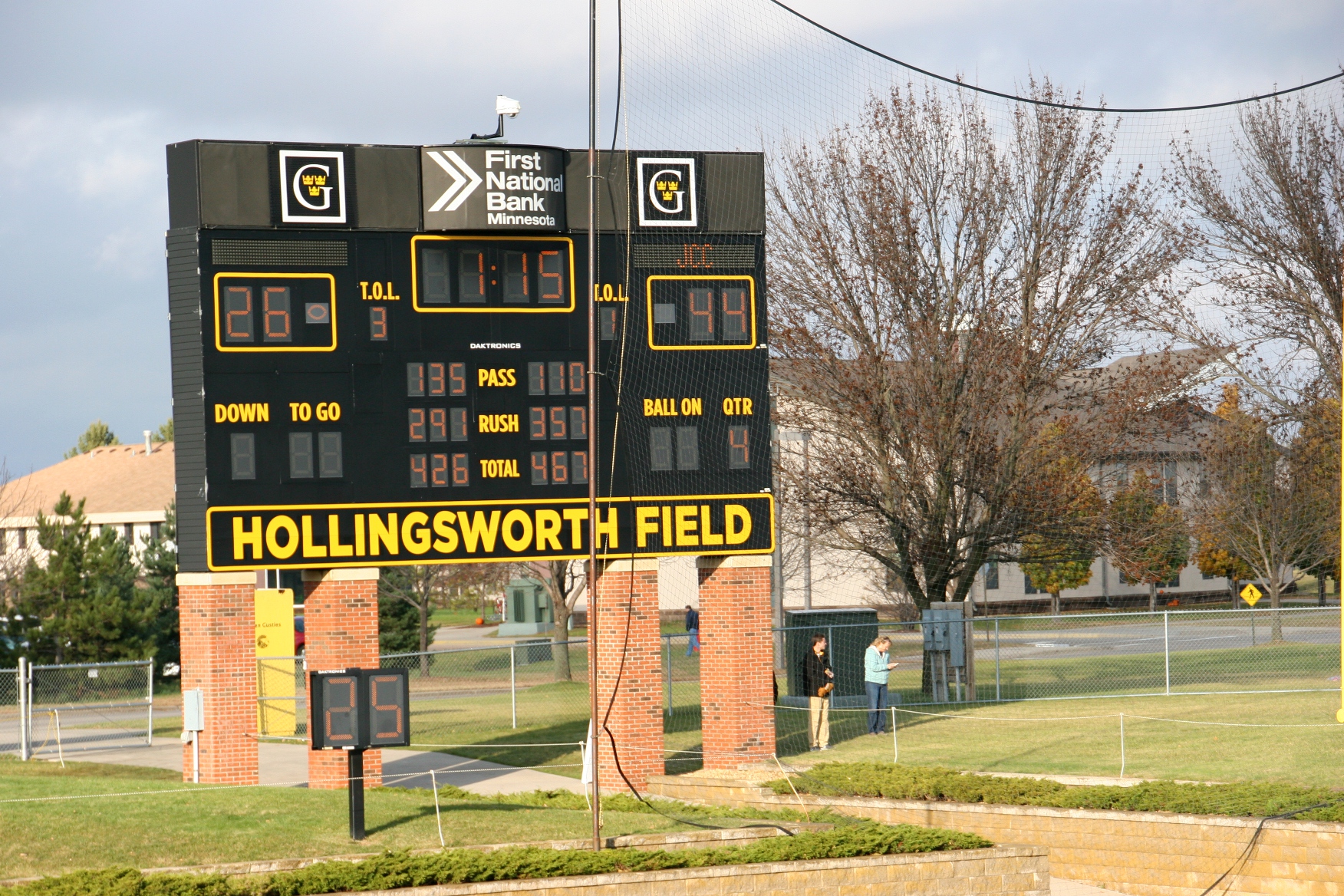
Football, 120 scoreboard


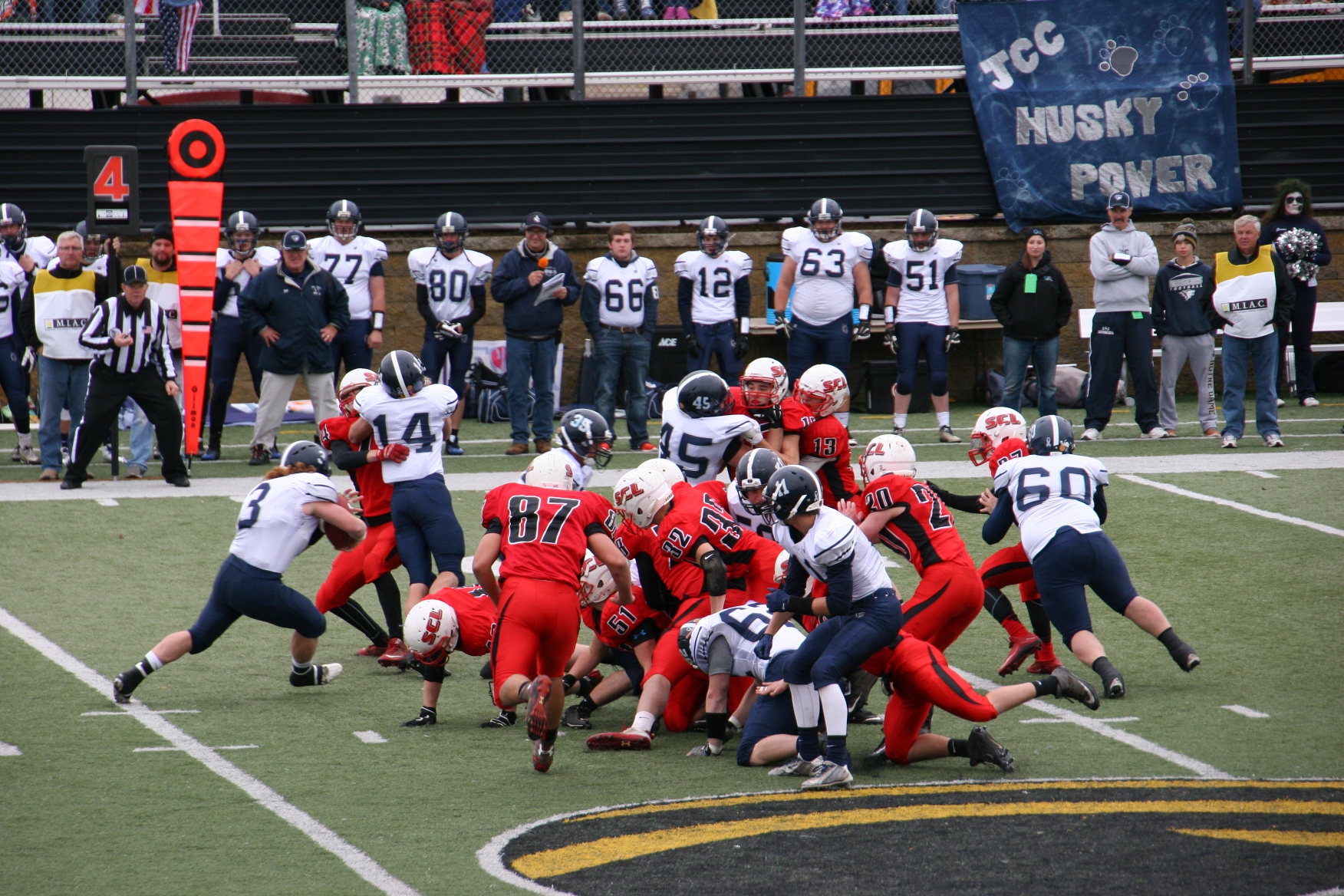
Sometimes the action looked like nothing but a pile of players to me.

Sometimes the action looked like nothing but a pile of players to me.

While the St. Paul based school pushed hard to win, they couldn’t defeat the Huskies, a husky and formidable team from southwestern Minnesota. The final score: 44 – 26.

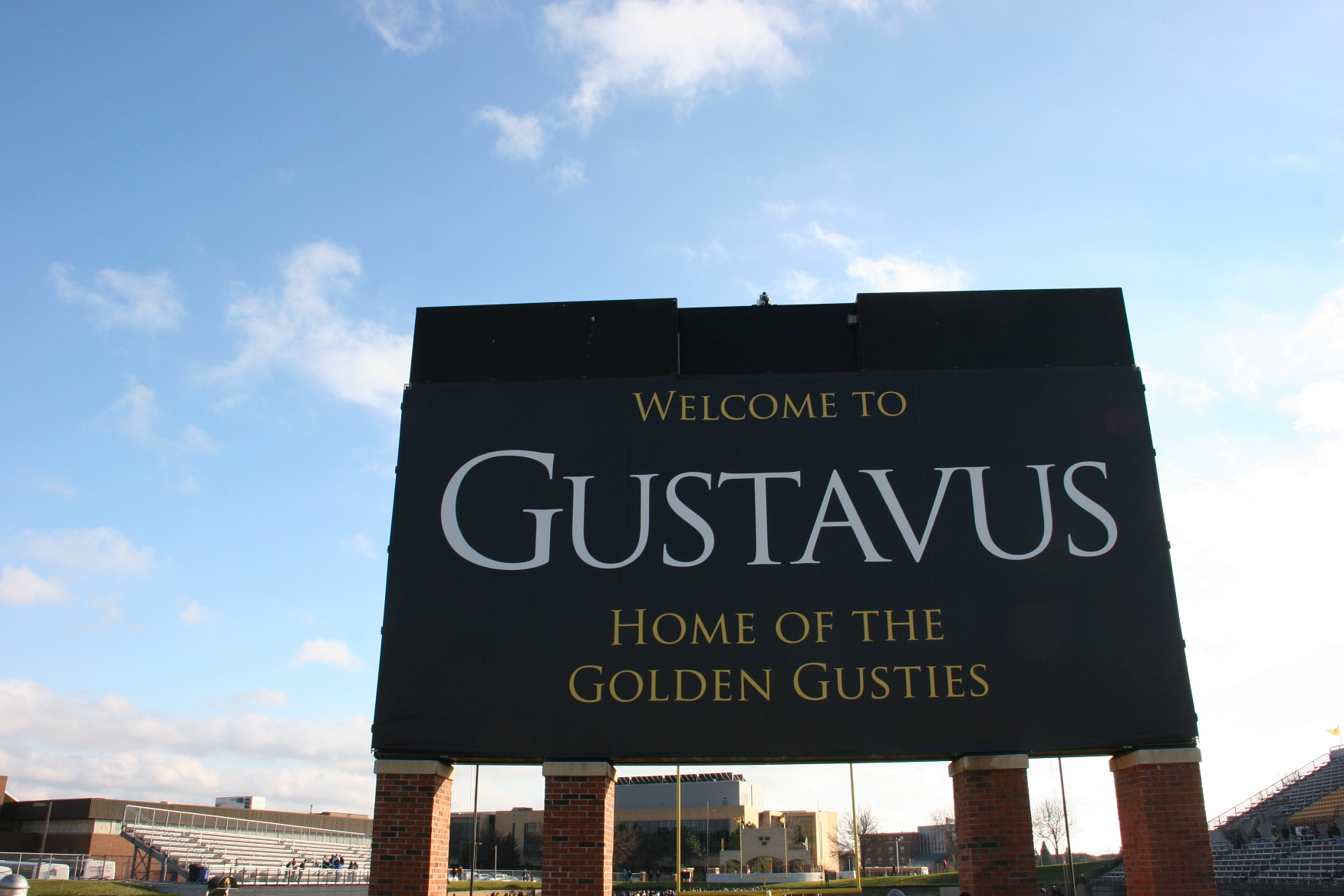
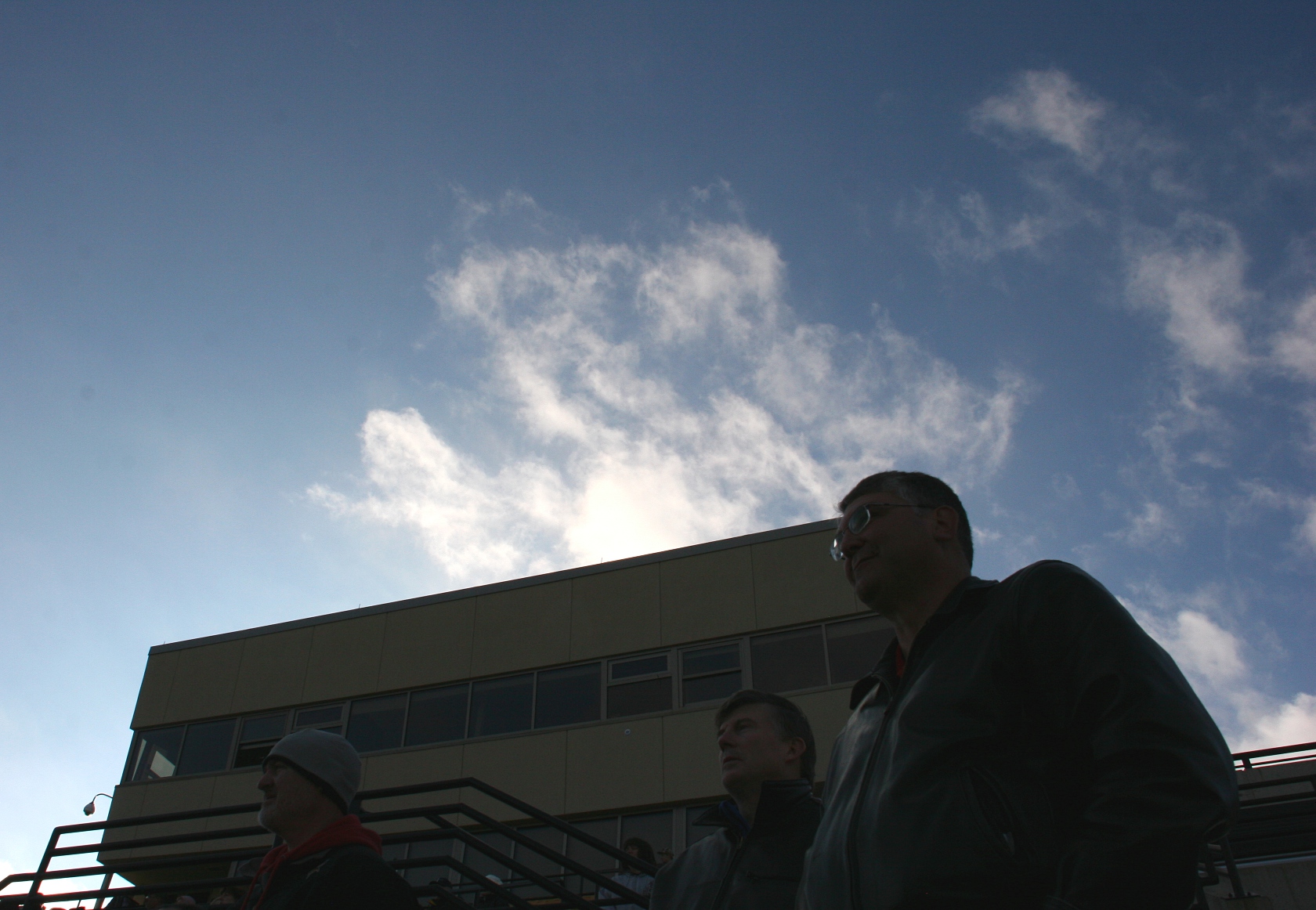
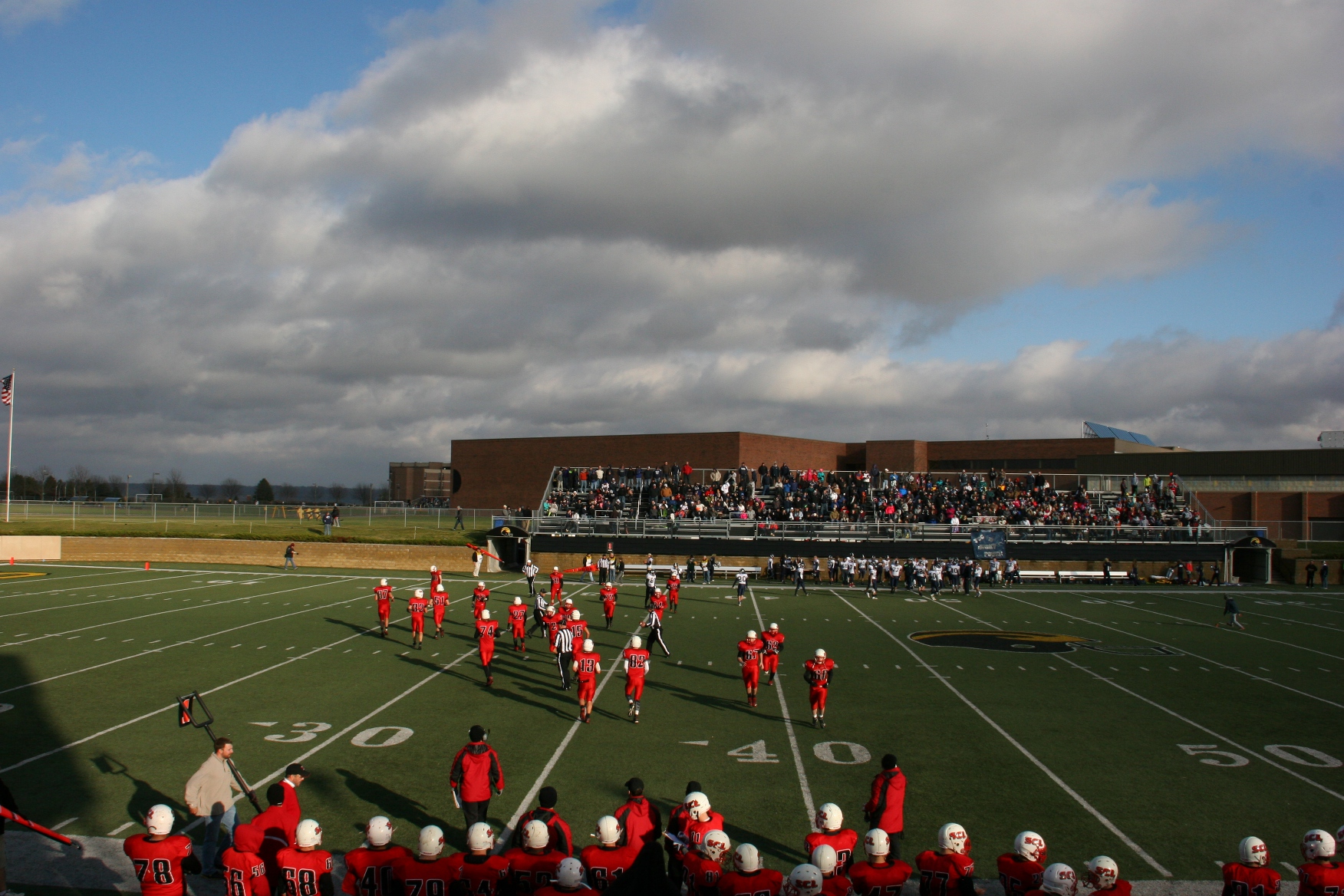
Gustavus Adolphus College in St. Peter hosted the game.

Gustavus Adolphus College in St. Peter hosted the game.

The Halloween themed sign held by the JCC cheerleaders.

The back of the Halloween themed sign held by the JCC cheerleaders.

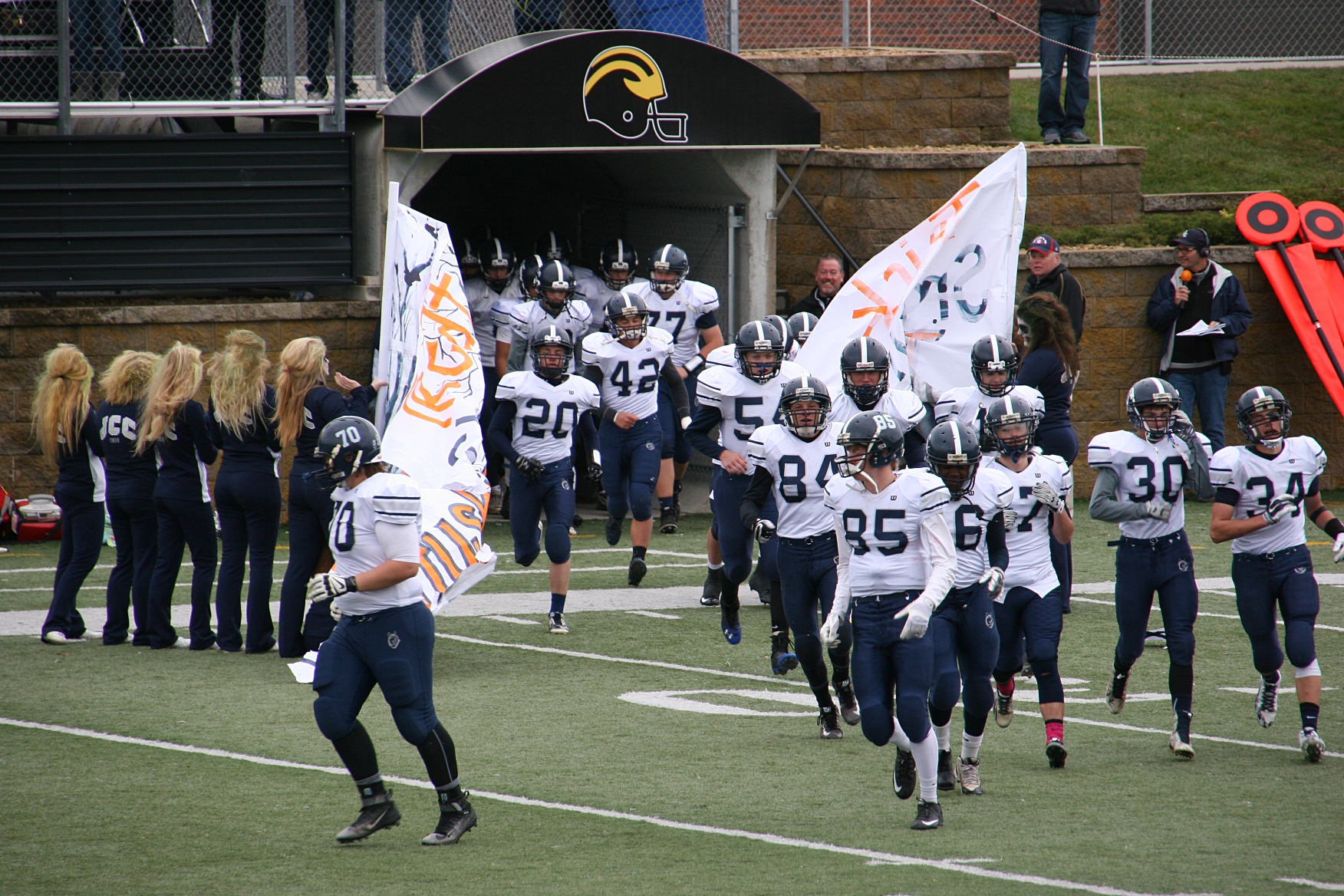
JCC players run through the sign and onto the field for the start of the second half.

JCC players run through the sign and onto the field for the start of the second half.

Certainly, seeing my nephew’s team win on the football field at Gustavus Adolphus College in St. Peter would have been a Halloween treat. But, JCC dominated, proving the truth in the words the players busted through before starting the second half:

Trick or treat, smell our cleats. The Huskies can’t be beat.

JCC cheerleaders fire up the crowd.

JCC cheerleaders fire up the crowd.

Crusaders fans, including Winnie the Pooh. Some students dressed in Halloween costumes.

Crusaders fans, including Winnie the Pooh. Some students dressed in Halloween costumes.

My brother, right, and friends watch the game.

My brother, right, and friends watch the game.

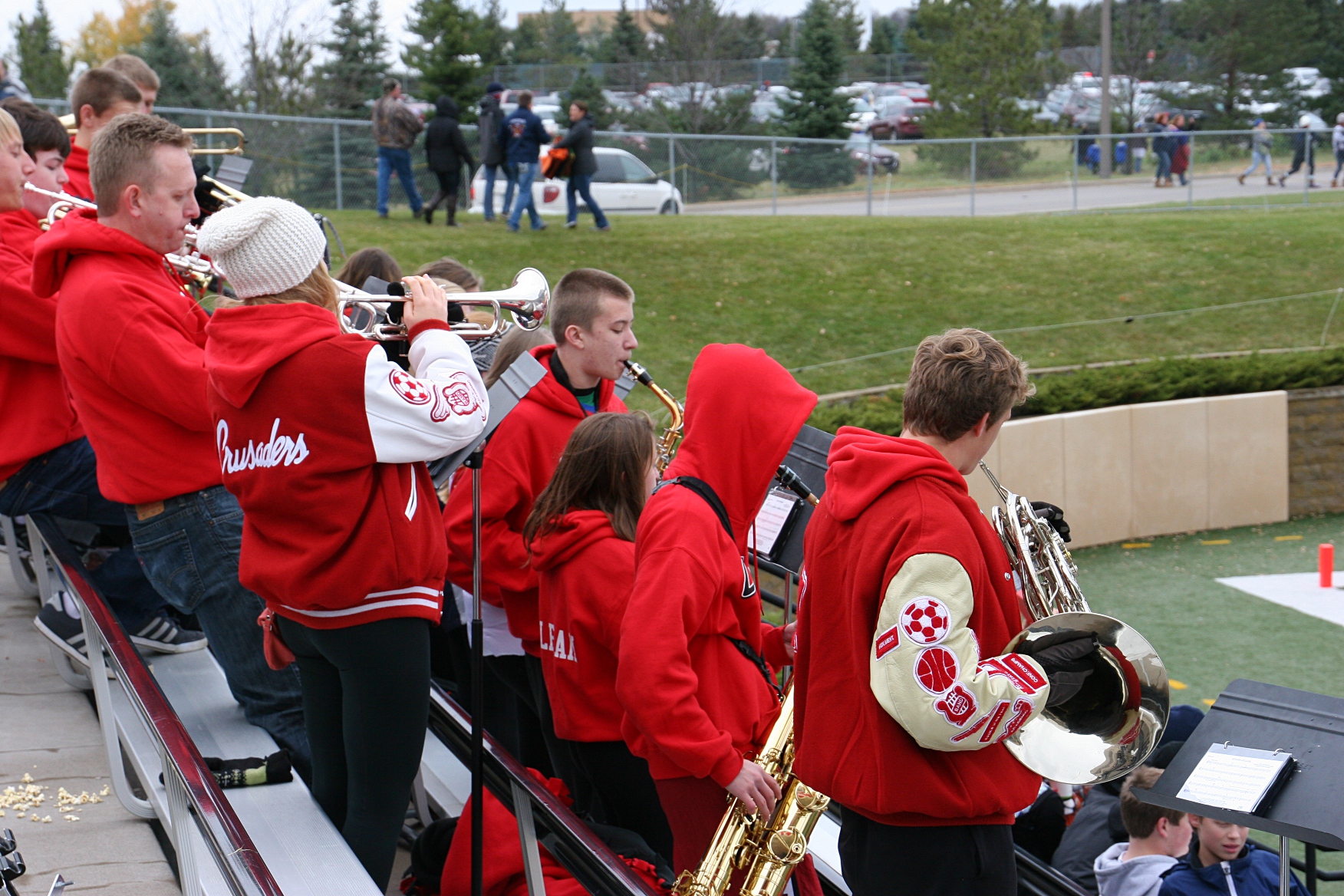
The Crusaders pep band infused school spirit.

The Crusaders pep band infused school spirit.

The spirit of JCC fans, led by enthusiastic cheerleaders, impressed me. Not that Crusaders fans weren’t supportive. We were. I can vouch for my sister-in-law’s continual encouraging screams. My youngest brother stood behind us, several bleacher rows away in an aisle, chewing gum super fast and focusing his eyes on the field the entire game. St. Croix Lutheran came with a pep band. But no cheerleaders. Students seemed subdued for a play-off game.

Occasionally, the clouds parted and sunshine shone upon the football field.

Occasionally, the clouds parted and sunshine shone upon the football field.

Ready for action...that's my nephew, Stephen, #87 in the front.

Ready for action…that’s my nephew, Stephen, #87 in the front.

Crusaders fans cheer on their team.

Crusaders fans cheer on their team.

I’m a quiet fan, too. I was here on this Saturday to support my nephew. Not in a super vocal way. Simply by my presence. If his team won, good. If they didn’t, they didn’t.

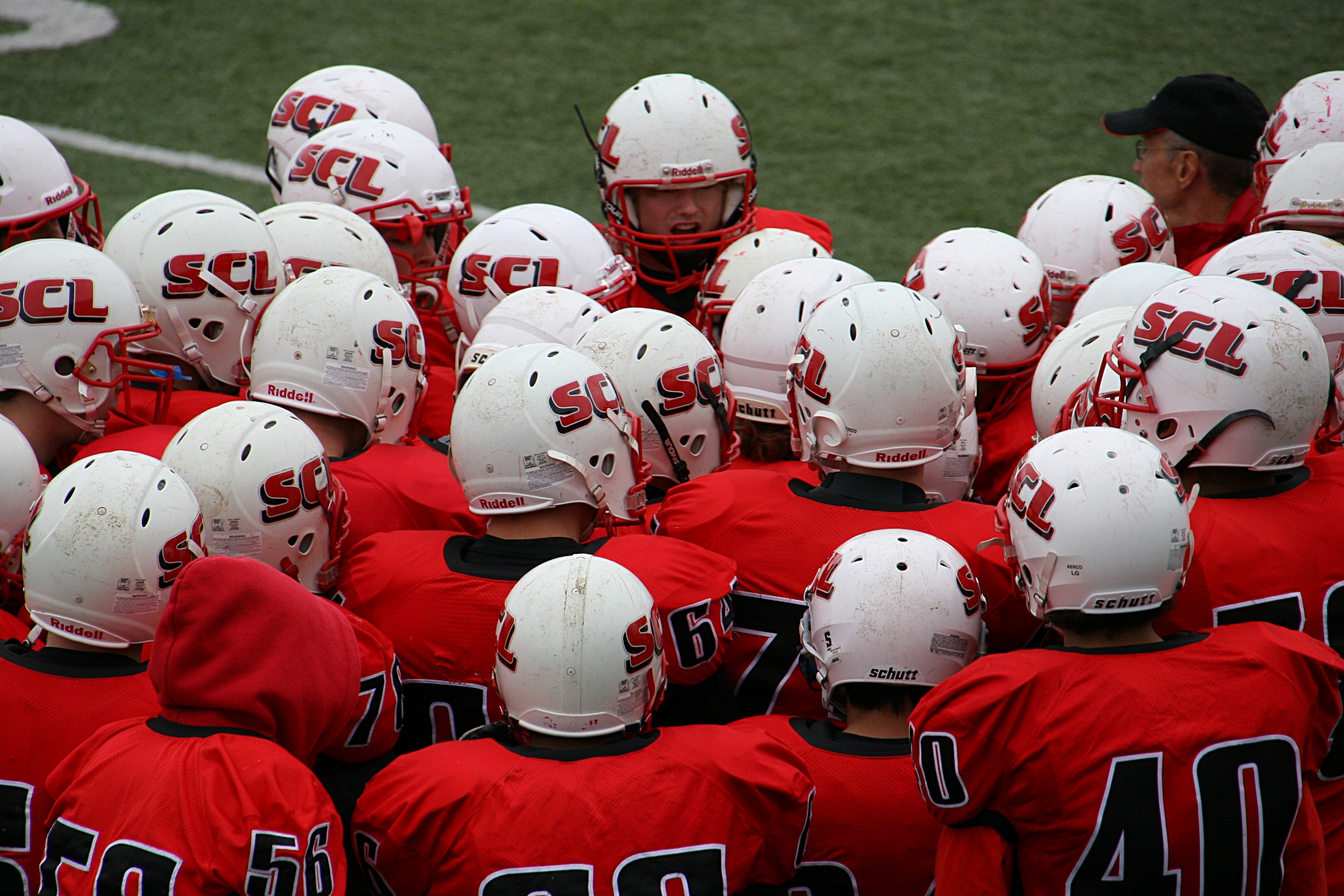
The Crusaders huddle.

The Crusaders huddle on the sidelines.

A ref makes a call.

A ref makes a call.

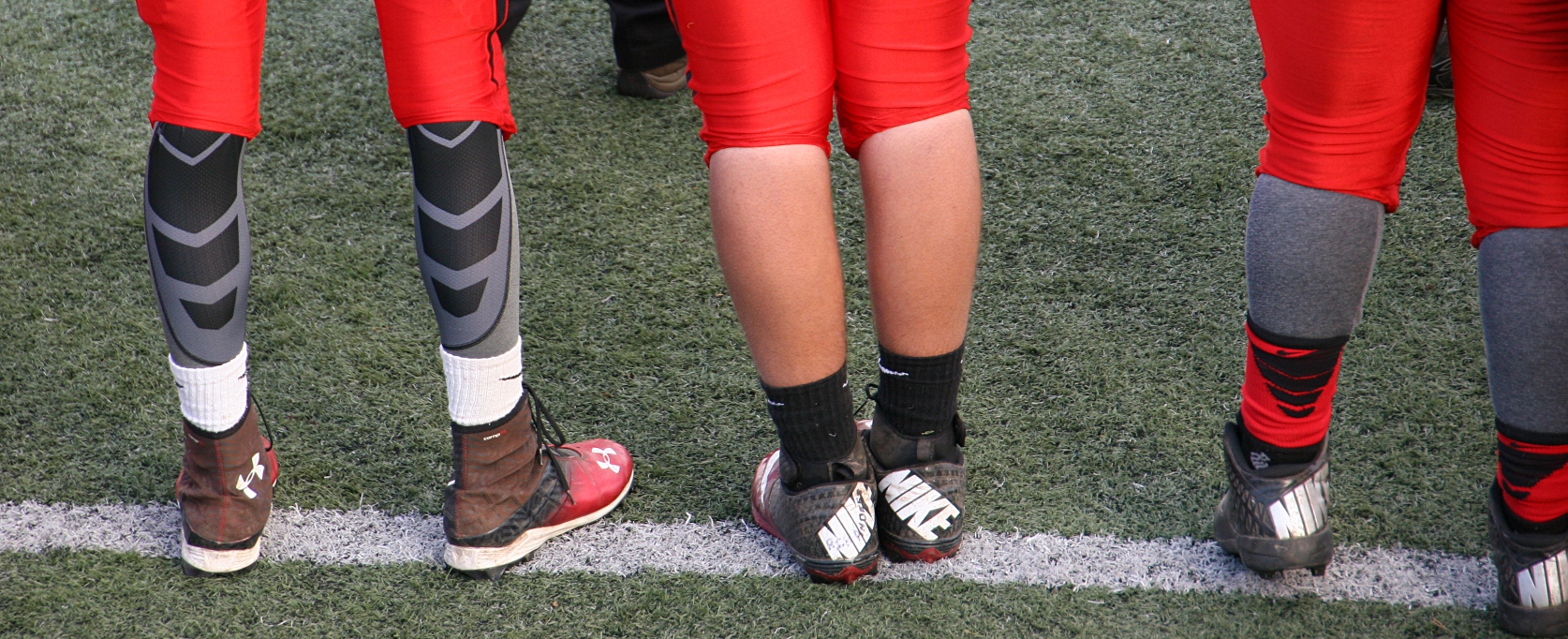
I found myself studying the varying footwear and leggings.

I found myself studying the varying footwear and leggings.

Repeatedly during breaks in the action, the announcer emphasized respect as highly-important in competition. I value respect; both teams showed respect for each other. But, bottom line, these teams play to win. That’s why they’re on the field.

A sign proclaims Husky Power.

A sign proclaims Husky Power.

It is easy, when you are as far behind as the Crusaders were during the game, when plays just aren’t working, when the other team repeatedly scores, to give up. I felt that in a sense Saturday. JCC was the stronger team. Even I, someone who does not watch football much, could see the Huskies’ dominating power.

Stephen, #87, tackles the JCC player carrying the football.

Stephen, #87, tackles the JCC player carrying the football.

ft

St. Croix Lutheran and Jackson County Central in action.

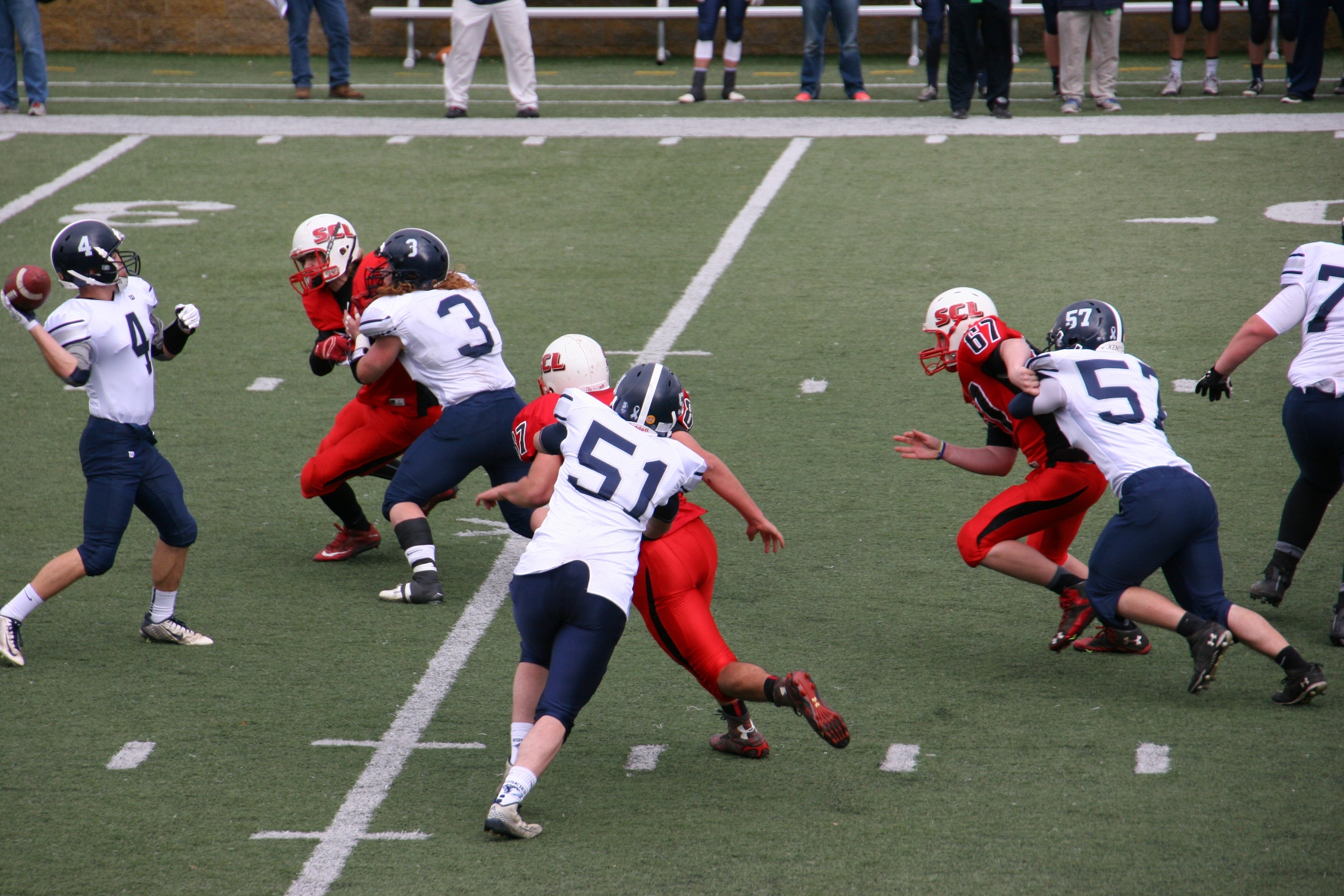
A JCC player prepares to throw the football, left.

A JCC player prepares to throw the football, left.

This is the first football game I’ve attended in probably 40 years. I don’t know many of the nuances of the game. But that’s OK. I understand the basics.

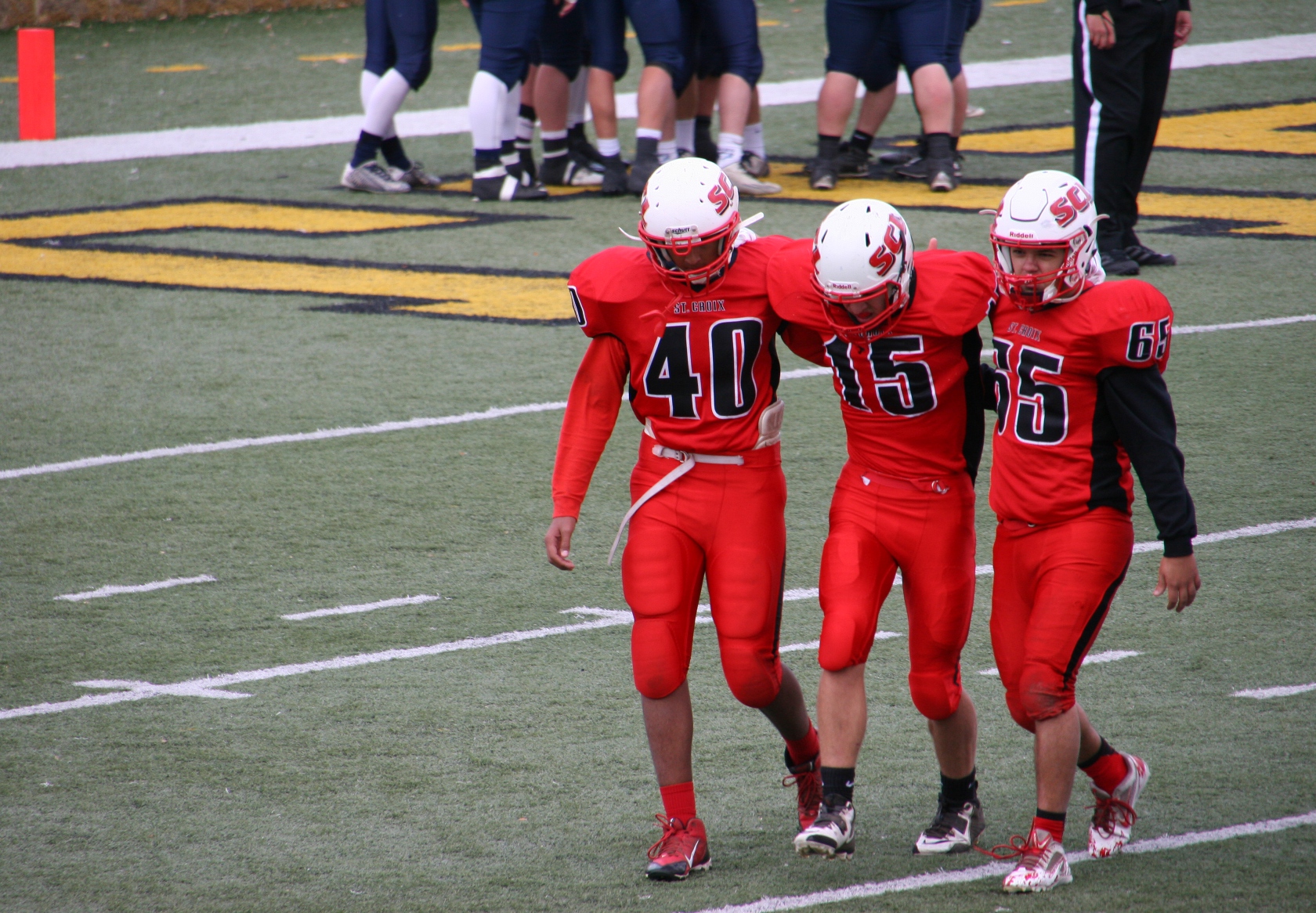
Several Crusaders players left the field with injuries.

Several Crusaders players left the field with injuries. Here teammates support one another.

And I understand the value in being with family—on this Saturday four of my five siblings and their spouses—to support Crusaders number 87. This is what families do. They support and encourage one another. In good times and difficult times.

© Copyright 2015 Audrey Kletscher Helbling
 

Part IV from Albert Lea: Snapshots around town October 30, 2015

Filed under: Uncategorized — Audrey Kletscher Helbling @ 5:00 AM
Tags: , , , , , , ,
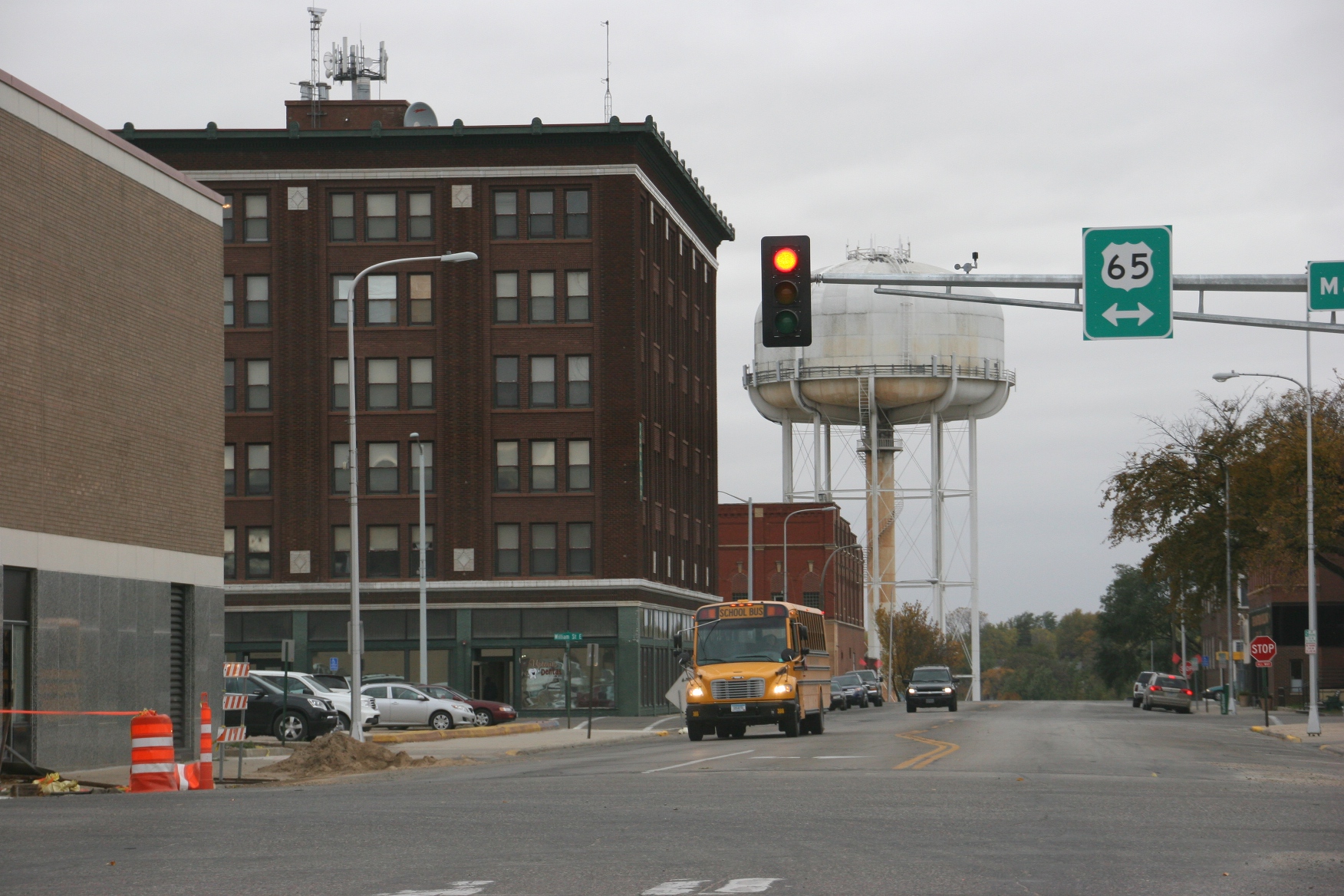
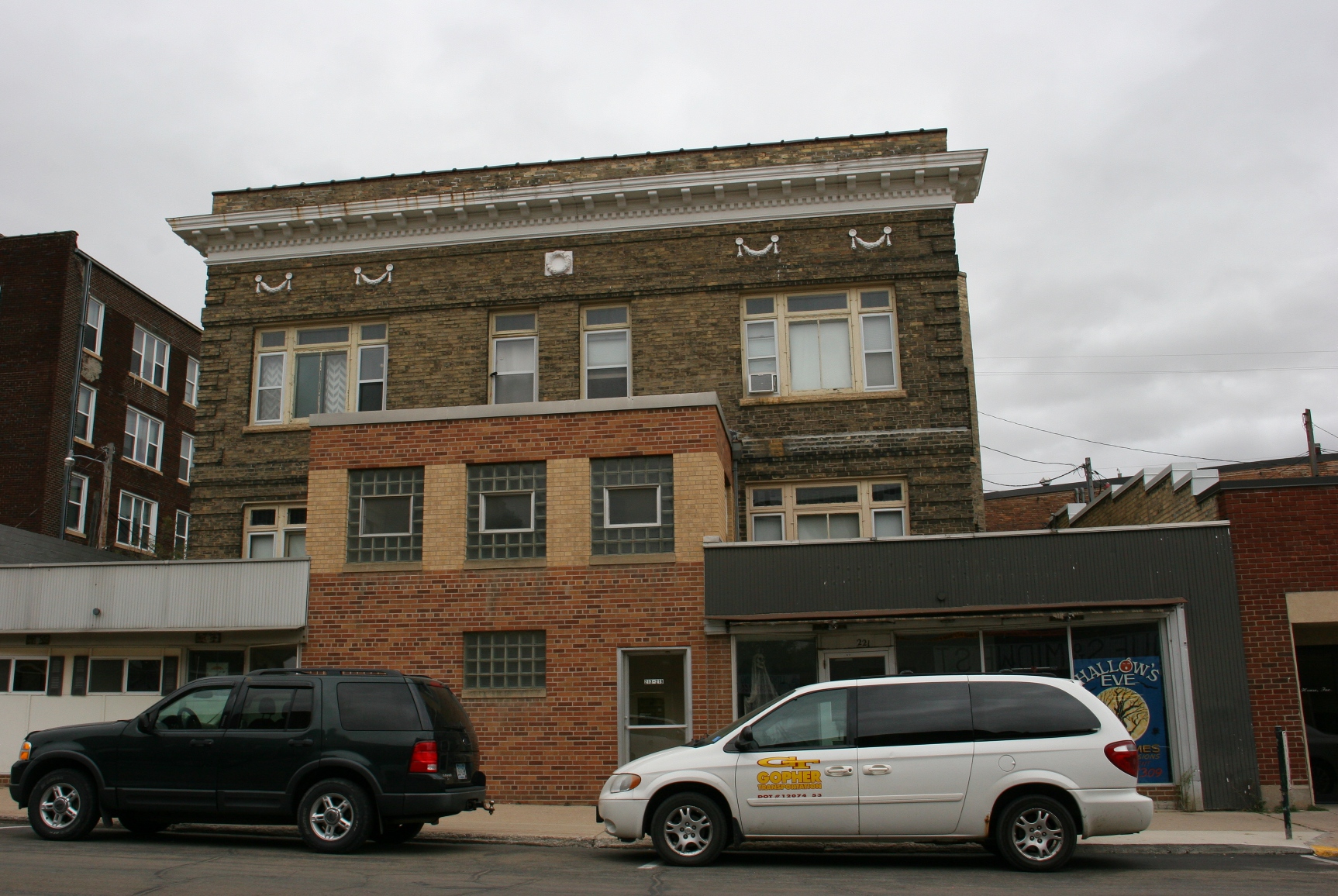
A street scene in downtown Albert Lea, Minnesota.

A street scene in downtown Albert Lea, Minnesota.

IN THE MANY COMMUNITIES I tour, I always seek the everyday scenes, the snapshot details that comprise a place. I may find the snapshot in an alley. Along a side street. In the heart of a downtown.

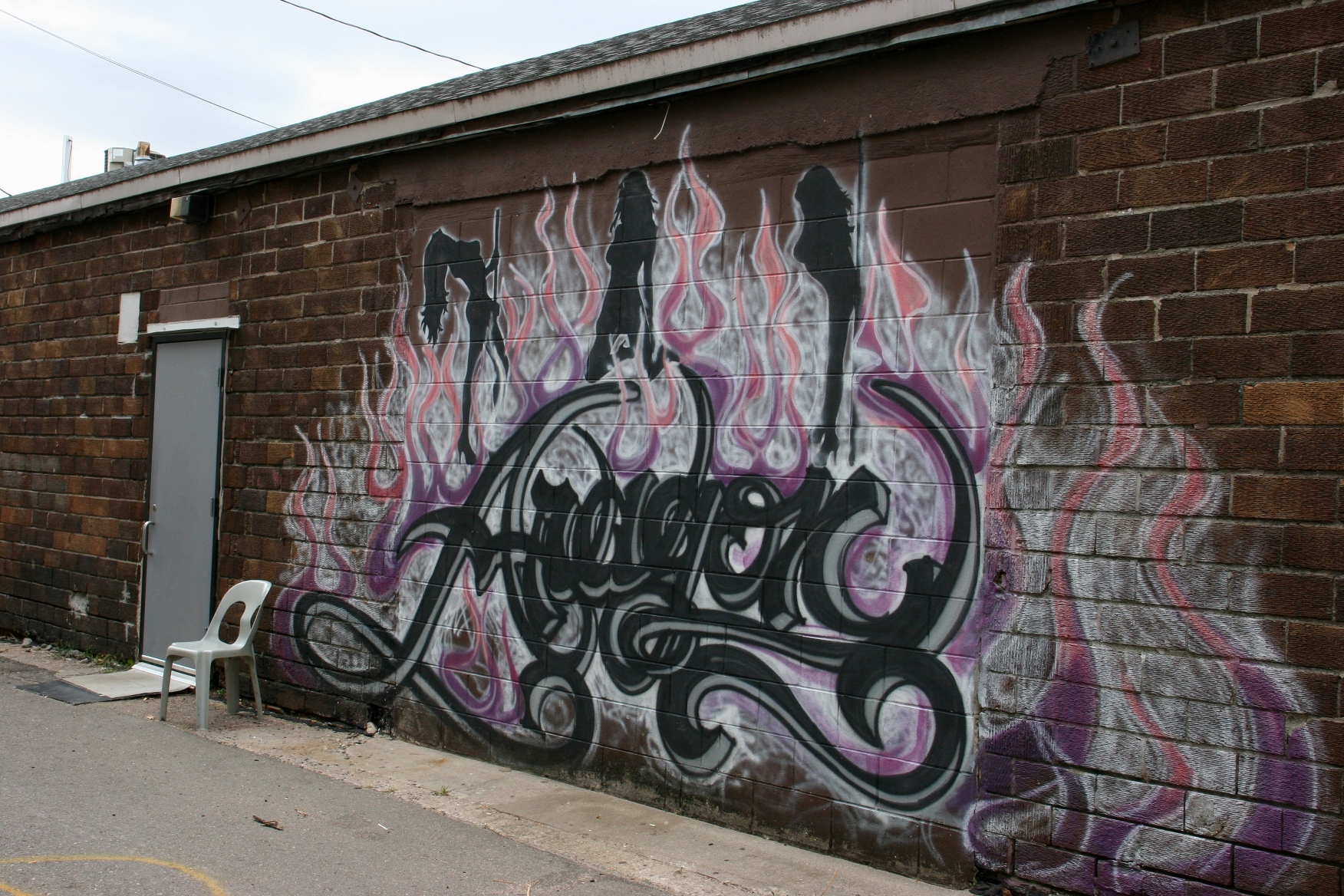
Alley-side bar art.

Alley-side bar art in downtown Albert Lea.

Wherever, I look, I see clues that reveal a town’s personality.

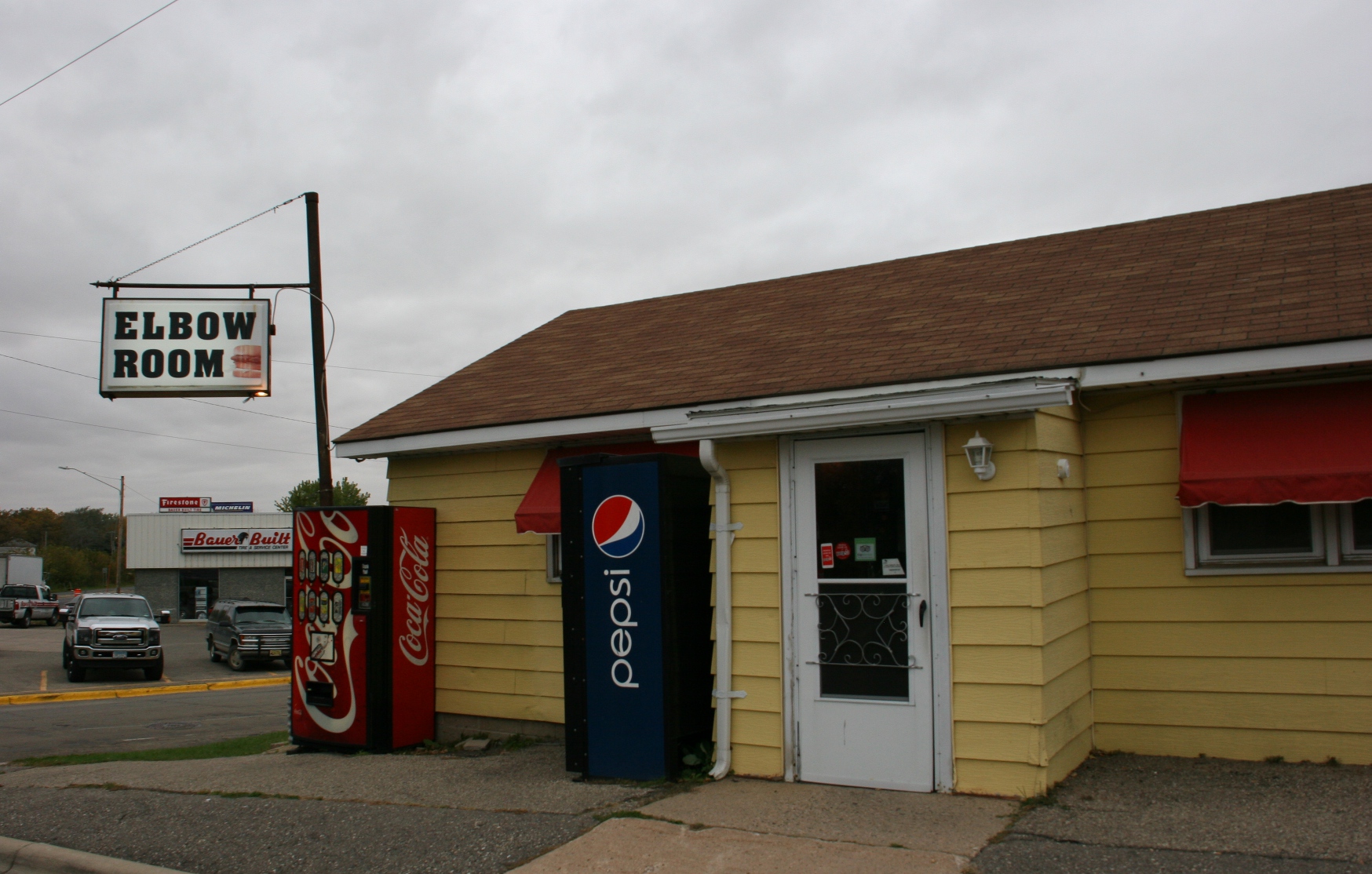
What a great name, Elbow Room.

What a great name, Elbow Room.

In business signs, I can spot humor and/or creativity.

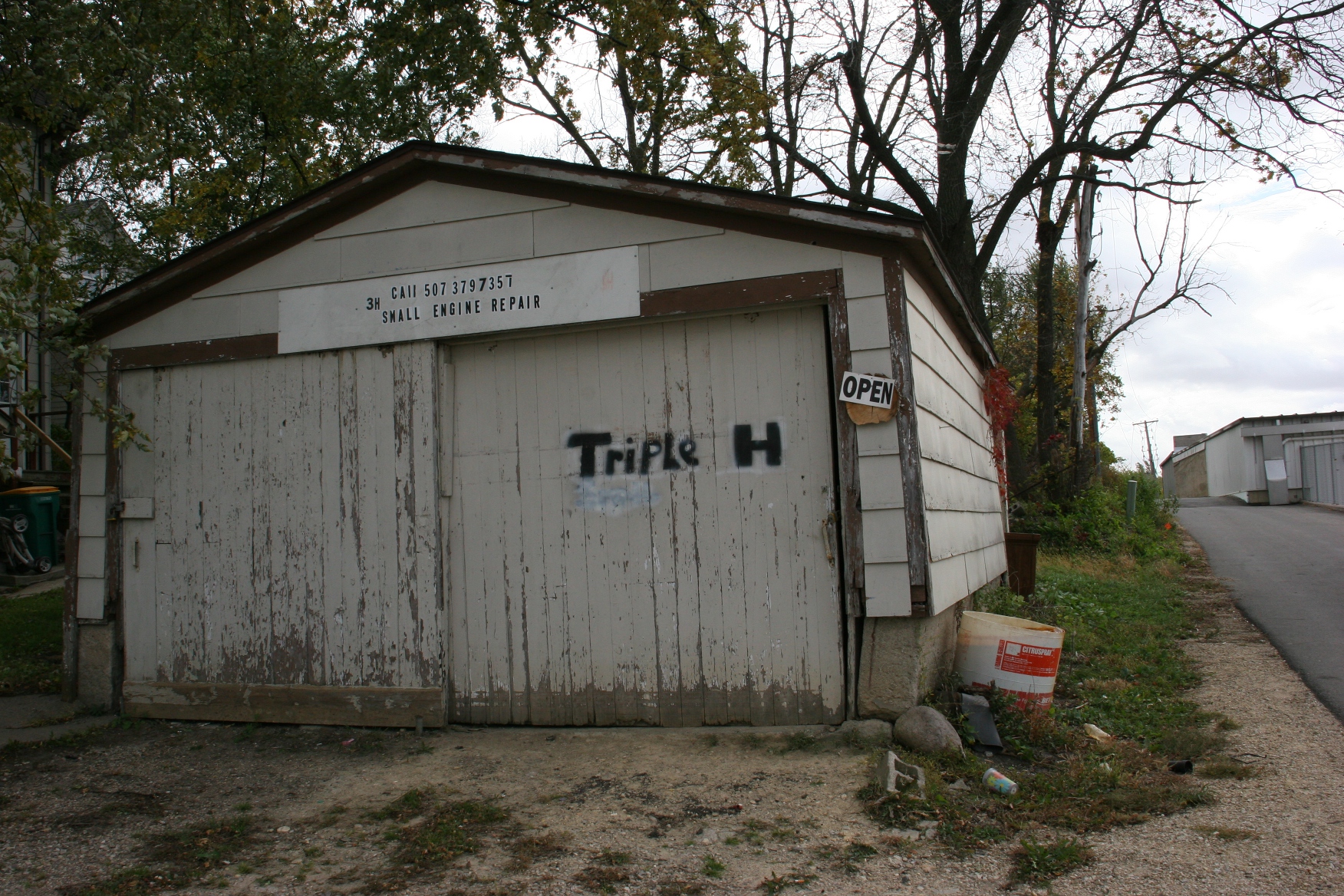
I appreciate the simplicity

No flashy signage here, but someone’s business, someone’s dream.

In conditions of buildings, I can identify pride or lack thereof. Or perhaps it’s simply a lack of funds to upkeep a structure. Or the desire to keep things simple.

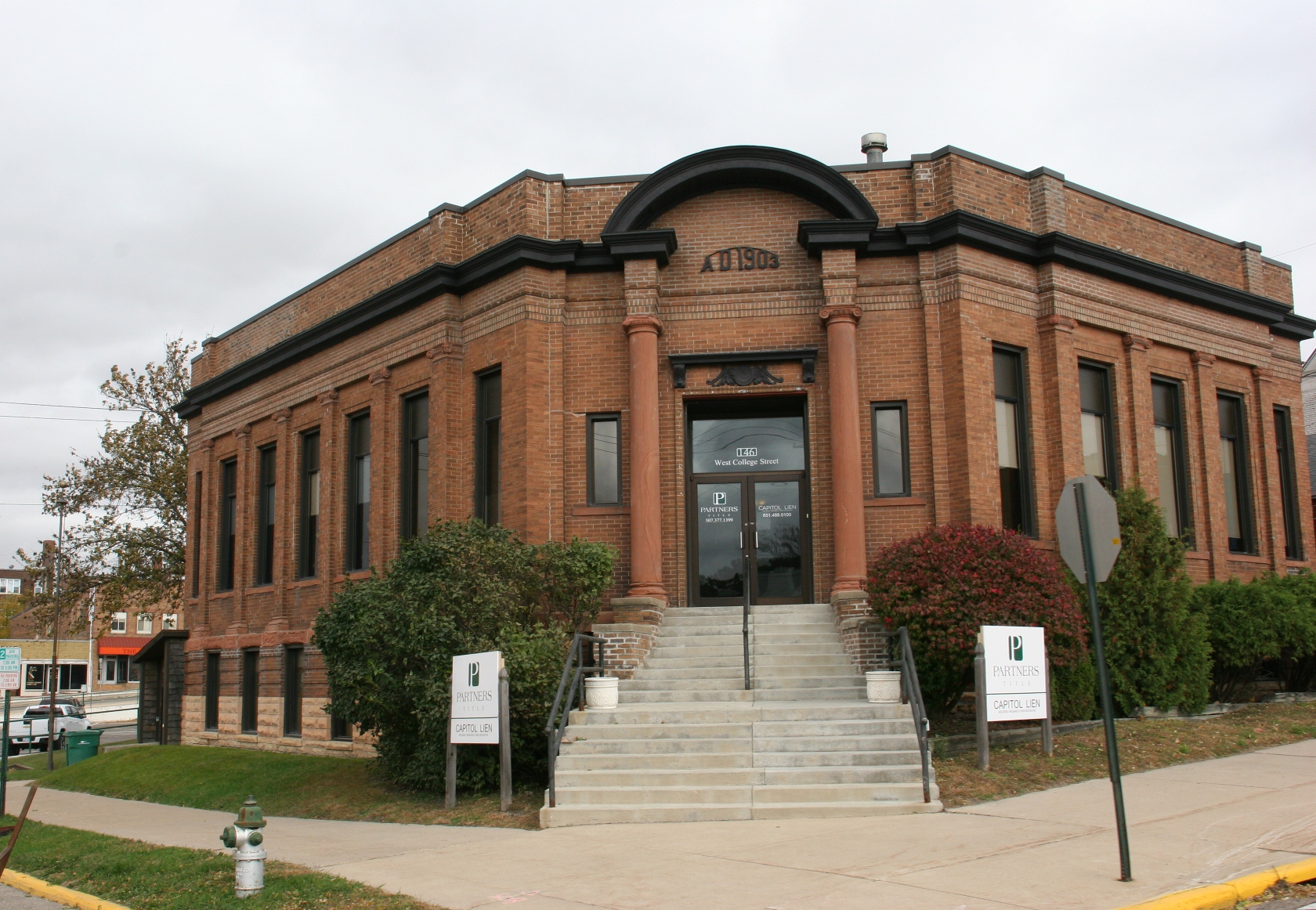
Downtown Albert Lea boasts a downtown Commercial Historic District with stunning architecture.

Downtown Albert Lea boasts a sprawling Commercial Historic District with lovely architecture.

One of the many stunning buildings in the historic downtown.

One of the many stunning buildings in the historic downtown.

Albert Lea provided plenty of snapshot details. I see a southeastern Minnesota community that appreciates its past through preservation of historic buildings. I see a town that’s working hard to save itself.

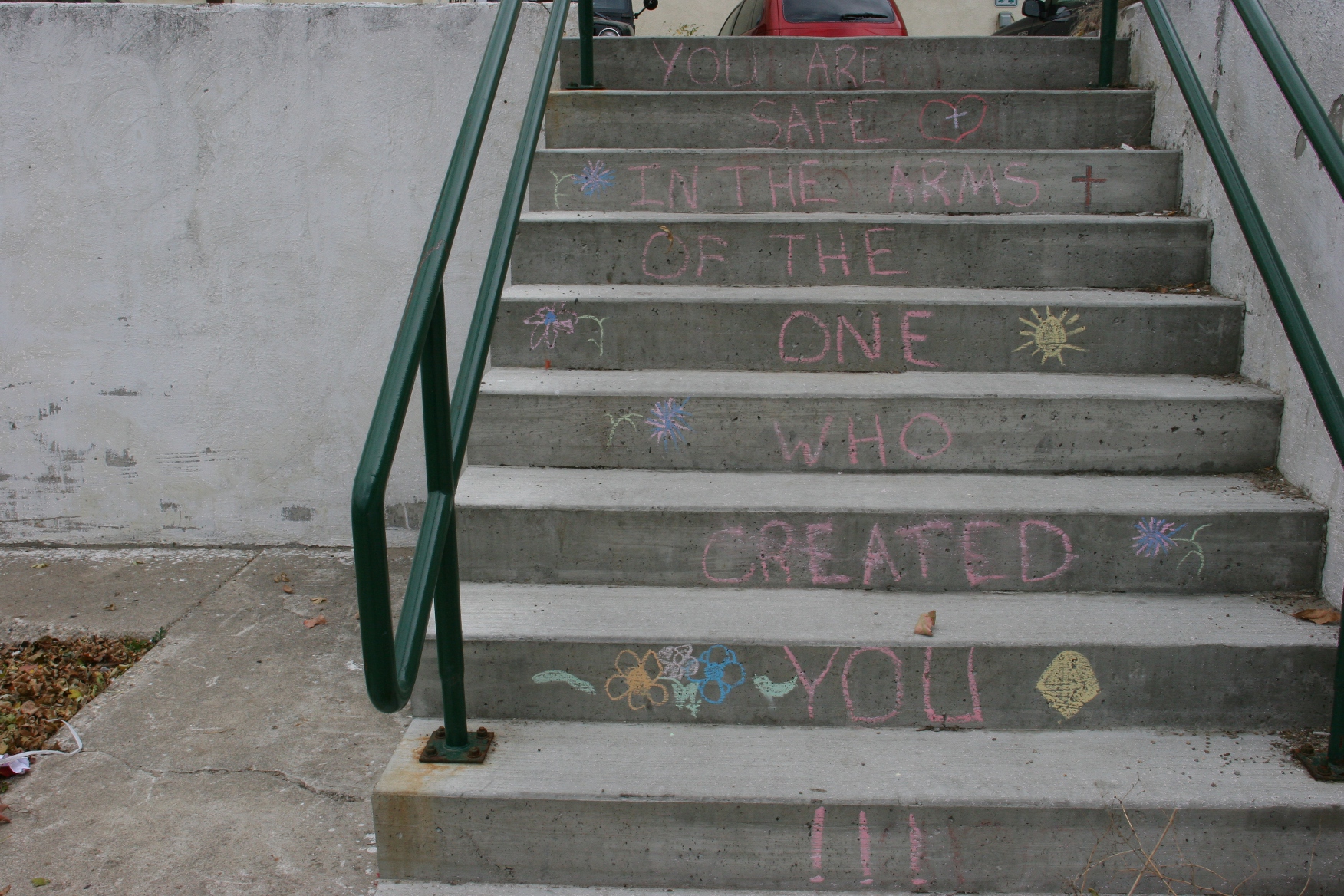
An inspiratinal message chalked onto steps leading to/from a downtown Albert Lea parking lot.

An inspirational message chalked onto steps leading to/from a downtown Albert Lea parking lot.

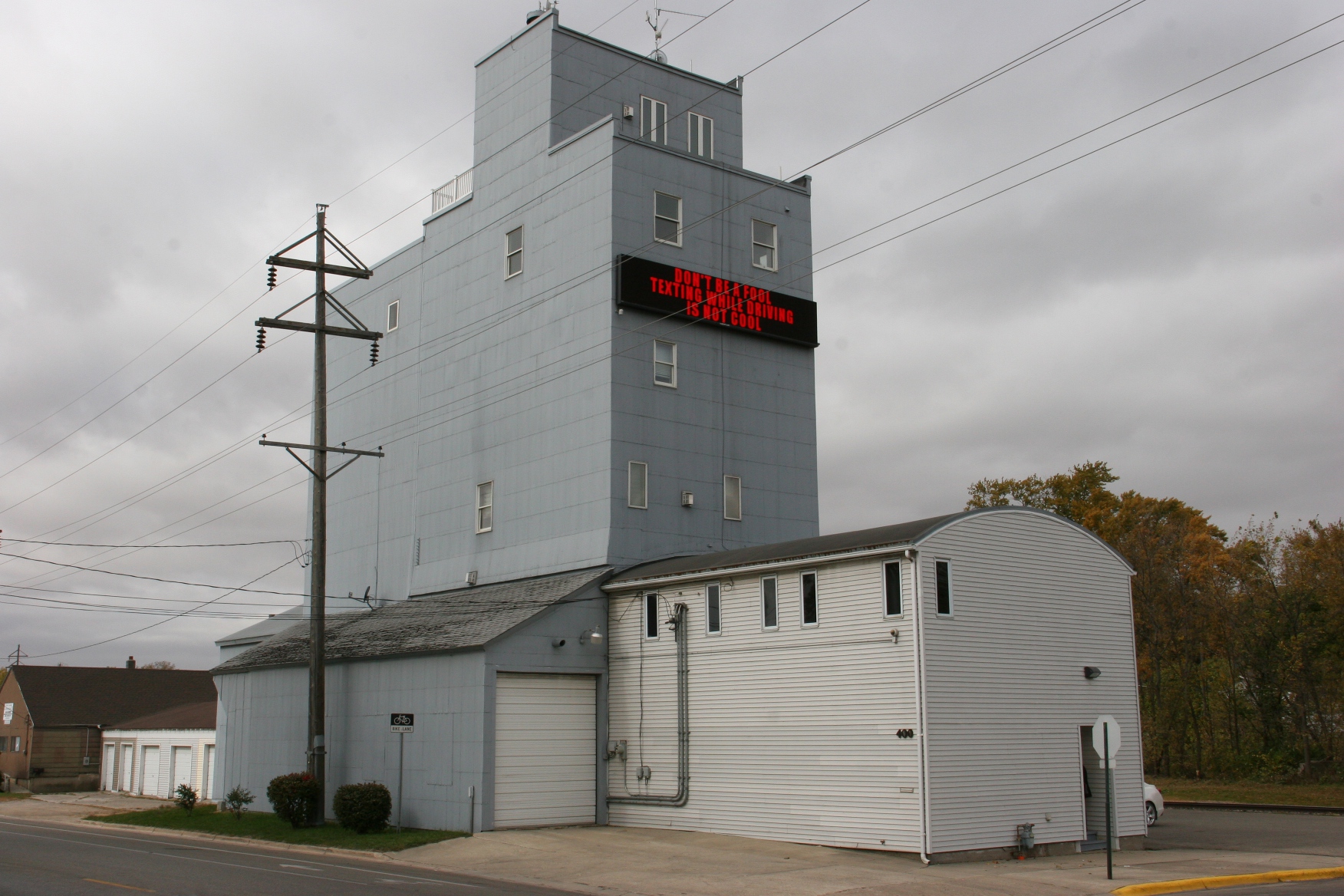
Community service messages and time and temperature flash across the board on an old grain elevator.

Community service messages and time and temperature flash across the board on an old grain elevator.

I see positivity and care in messages.

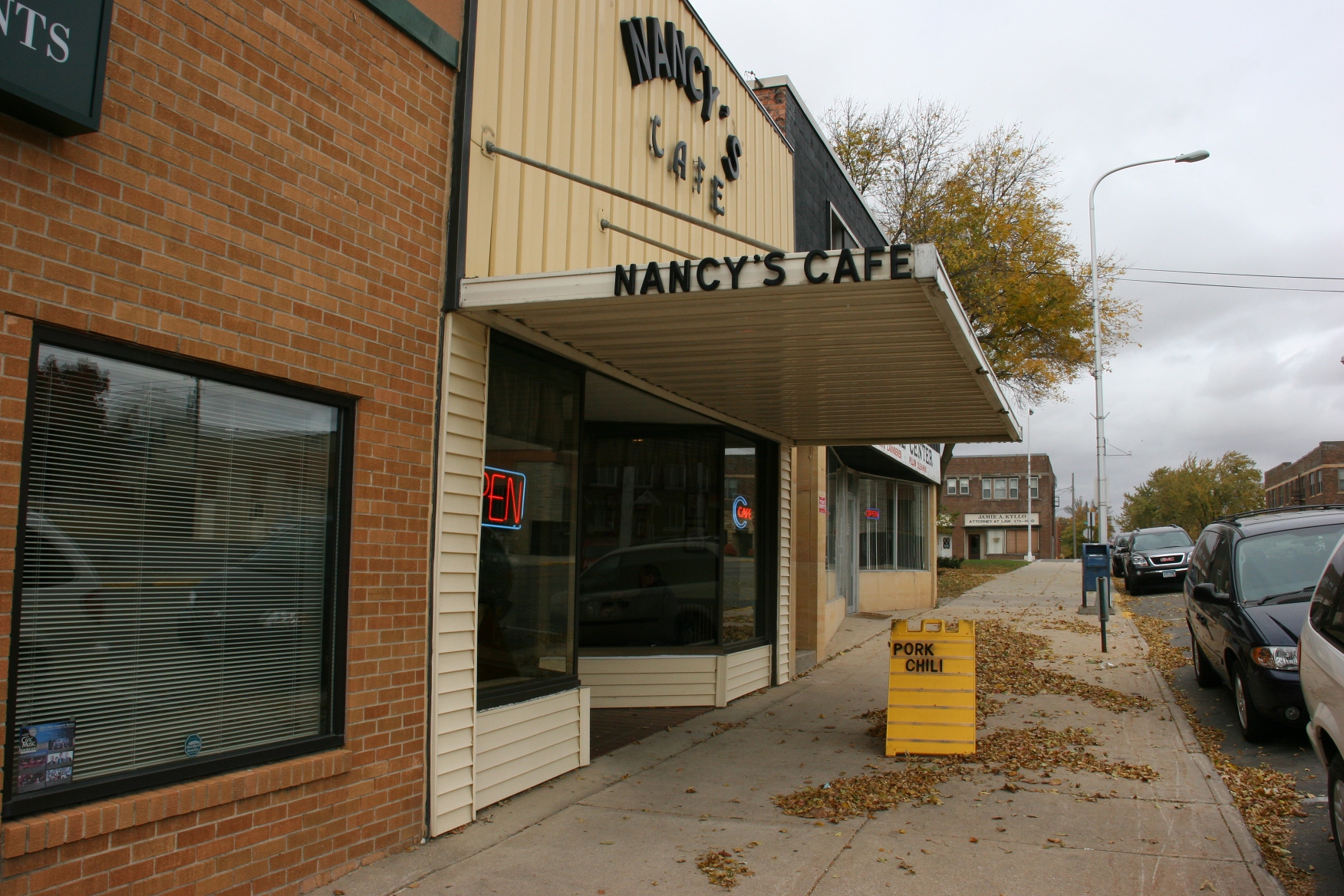
Nancy's Cafe, presents an iconic Main Street appearance.

Nancy’s Cafe, presents an iconic Main Street appearance.

Expect basics like his hand-formed hamburger patty at Nancy's.

Expect basics like his hand-formed hamburger patty at Nancy’s.

I see the mix of small town Main Street and chain businesses along Interstate 35 meeting travelers’ needs. A duo personality town.

This old grain elevator has been repurposed into another use. Note the upper level balcony and windows. I asked around town. But no one could tell me what's housed here.

This old grain elevator has been repurposed into another use. Note the upper level balcony and windows. I asked around town, but no one could tell me what’s housed here.

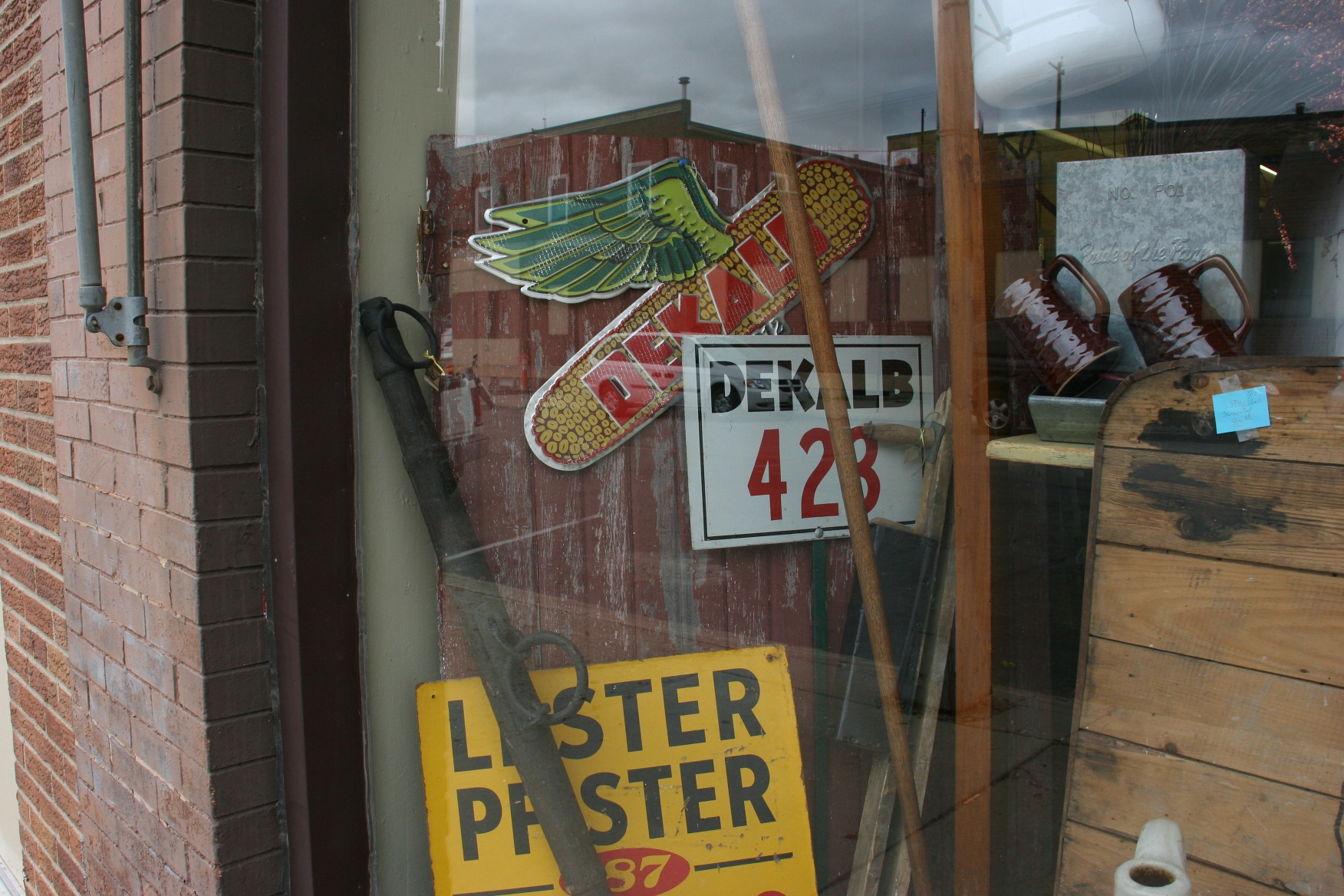
Agricultural merchandise is showcased in a downtown antique store window.

Agricultural merchandise is showcased in a downtown antique store window.

Agriculturally-born. Yet evolving into something else.

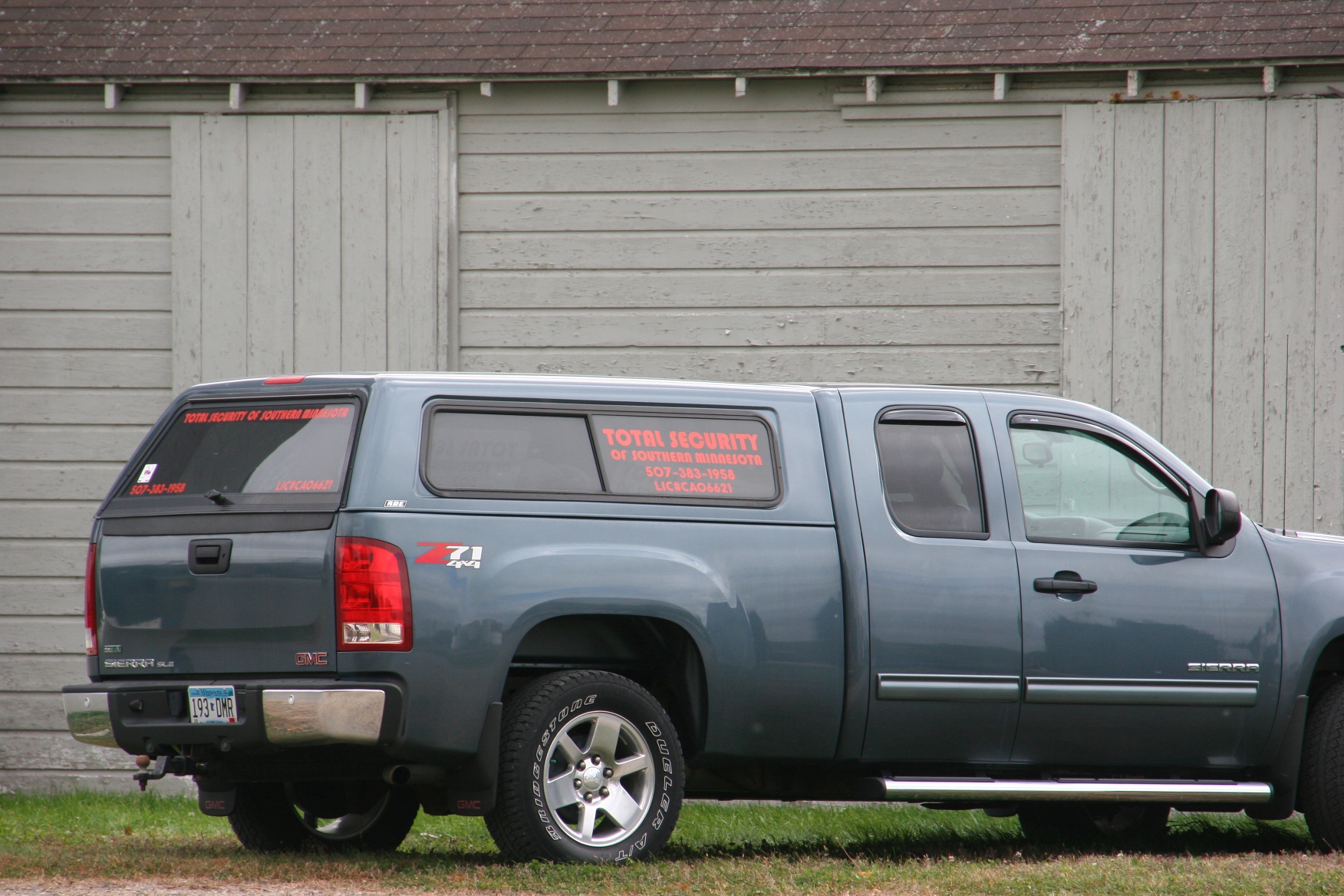
A Total Security truck parked next to the old grain elevator.

A Total Security truck parked next to the old grain elevator.

Every part, every building, every sign, every person, every scene snapshots into a single album—Albert Lea.

#

This concludes my four-part series on Albert Lea. To read my first three posts, click here and here and here.

© Copyright 2015 Audrey Kletscher Helbling
 

My reaction to developments in the Jacob Wetterling abduction October 29, 2015

Filed under: Uncategorized — Audrey Kletscher Helbling @ 5:53 PM

Tags: , , , , ,

ALL ACROSS MINNESOTA today, we are holding our collective breaths, hoping that news about a possible break in the 1989 abduction of Jacob Wetterling provides answers. Answers we’ve waited to get for 26 years.
An Annandale man, arrested for possession of child pornography, is now considered a “person of interest” in the October 22, 1989, abduction of 11-year-old Jacob near the Wetterlings’ St. Joseph home. He was questioned early on in the Wetterling case and several times thereafter.
Jacob’s abduction marked a change in parenting in Minnesota. I remember, as a young mother of two and three-year-old daughters, teaching my girls what to do in the event of a possible kidnapping. I didn’t want to scare them. Yet, because of what happened to Jacob, I felt compelled to educate my then preschoolers about stranger danger.
Rural Minnesota, especially, lost a bit of innocence on that October day when a masked man approached Jacob, his brother and a friend while they were riding bikes from a convenience store. The man disappeared with Jacob after threatening to shoot the other two.

It all seemed so random. A horrible crime in an ordinary place. Anytown in rural Minnesota. Jacob could have been our son, our nephew, our neighbor boy. He was the face of all Minnesota children. And his parents, especially Patty, were the faces we saw in the mirror. We feared this could happen to any of our families.

For 26 years, we have grieved and hoped and prayed with the Wetterlings. And maybe soon we will all have the answers we long for, that we need. Who took Jacob? Where is he? And why? Oh, why?

© Copyright 2015 Audrey Kletscher Helbling