Minnesota Prairie Roots

Writing and photography by Audrey Kletscher Helbling

Stone & Sky October 27, 2011

LARRY GAVIN once lived in Belview.

So, you’re likely thinking, “What does that matter and who is Larry Gavin and where the heck is Belview?”

Well, dear readers, especially readers of poetry, Larry Gavin is a poet. He moved to Belview, a southwestern Minnesota prairie town of 375, to study writing with great writers like Howard Mohr, Leo Dangel, Fred Manfred, Joe and Nancy Paddock, Phil Dacey, Robert Bly, Bill Holm, Don Olsen and many others. Do you recognize some of those names? You should.

I’m not trying to be uppity here. But Bly, who was born in Madison (Minnesota, not Wisconsin) and still lives in the western part of our state, is one of Minnesota’s most distinguished poets. Holm, a well-known essayist, author and poet, wrote numerous books, including Boxelder Bug Variations. Up until his death, he lived in his prairie hometown of Minneota (Minnesota without the “s”), where residents celebrate Boxelder Bug Days. Howard Mohr penned How to Talk Minnesotan, a must-read for every transplant to our state.
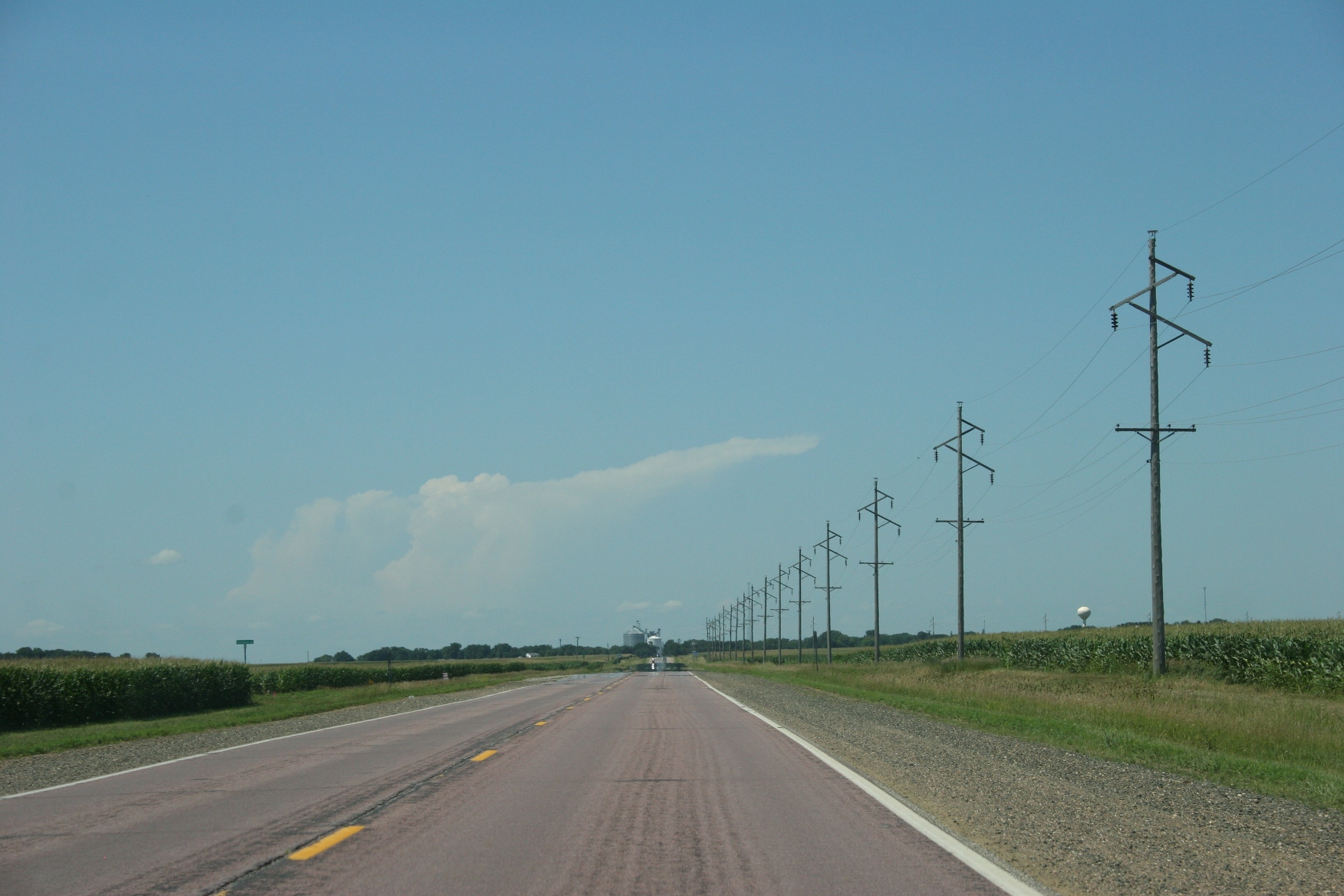
Driving through the southwestern Minnesota prairie near Morgan, about 25 miles from Belview.

Larry Gavin learned from these great writers of the prairie, where he lived for 15 years many years ago. Gavin made his home in Belview, just off State Highway 19 and some 10 miles or so from my hometown of Vesta. He served as the town’s mayor for two terms and taught English at Redwood Valley High School, back then Redwood Falls High School.

It is that connection to my home area and our shared love of language and writing and of the prairie that has connected me to Gavin, who today lives in Faribault and teaches English at Faribault High School. At least one of my daughters, if not both, has been taught by him.

We both won Roadside Poetry competitions–Gavin the first in 2008 and me, this past spring–and had our four-line poems showcased on billboards in Fergus Falls.

I once asked Gavin to read one of my poems at a local author event. Gavin is meant to read poetry. He has the kind of rich, deep voice from which words flow with the rhythm and inflection of someone who clearly loves language.
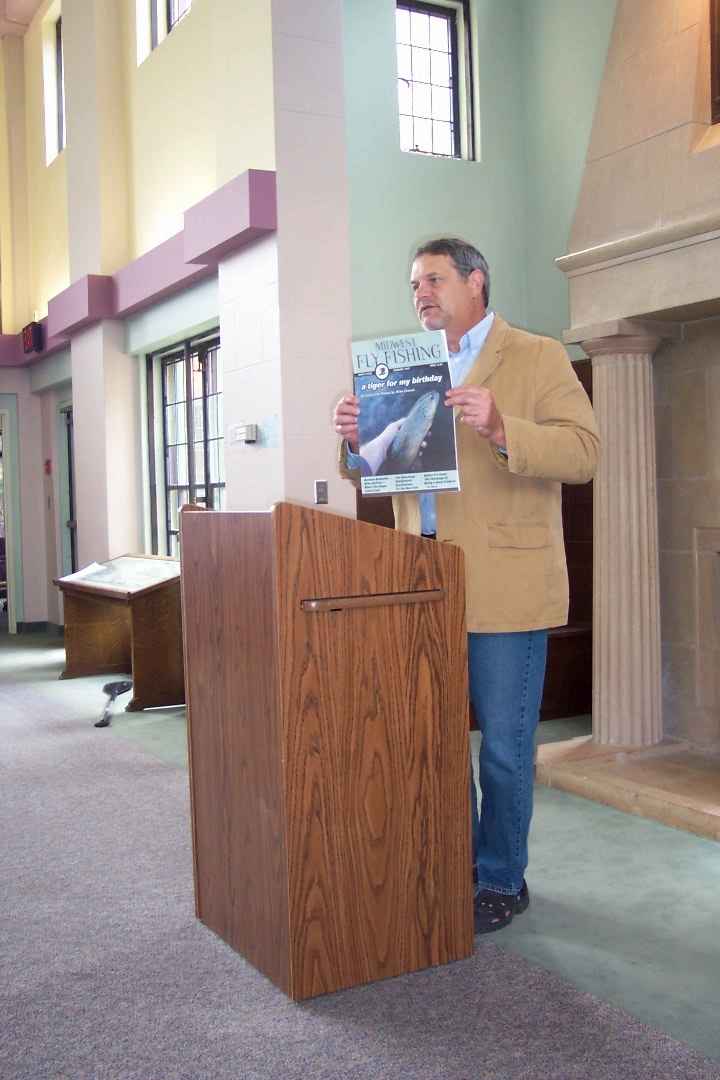
Larry Gavin during an author event at Buckham Memorial Library in Faribault.

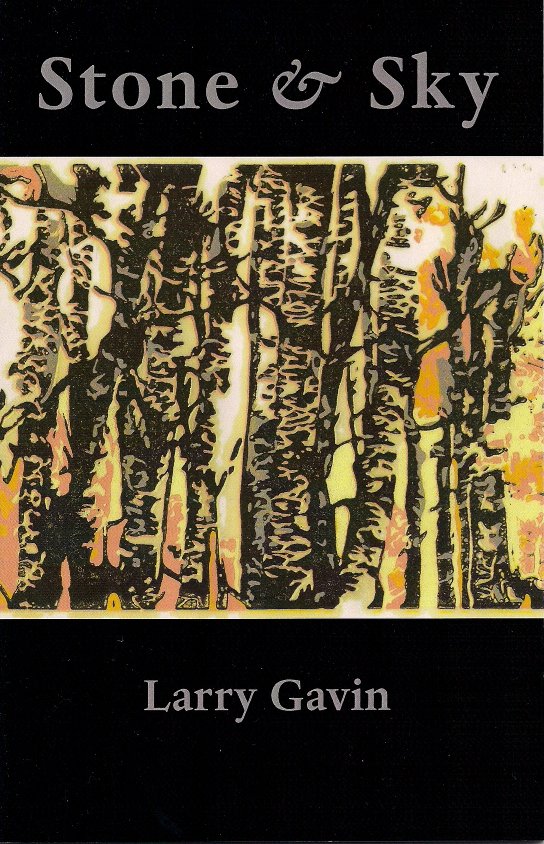
Gavin is also meant to write poetry. And he’s written enough to fill three slim books—Necessities, Least Resistance and his just-released Stone & Sky. All have been published by Red Dragonfly Press, a noted not-for-profit literary press based in Red Wing.

When I read Gavin’s poetry, I can sense his deep connection to the land and to nature, shaped, I would like to think, partially by his years on the prairie. When you live on the stark prairie, where the land stretches flat and far and where the sky dwarfs all else and where the wind blows nearly unceasing, you can’t help but write with a strong sense of place and with detail. I see that in Gavin’s poetry.

In his newest book, Stone & Sky, I read of woods and firewood, of raccoon tracks and a walk along a deserted street. Of stone and sky and snakes. I recognize places from here, in Faribault. I recognize, too, prairie-influenced writing.

I don’t pretend to understand every poem in Gavin’s latest collection. But poetry is always open to interpretation and that which I may not find meaningful today I may come to understand at a later time.

All that said, I posed a series of questions to Gavin, who has written more than poetry. For fifteen years he worked as a field editor for Midwest Fly Fishing magazine, taught at the magazine’s school in Montana in the summer and helped with the Chicago and Minneapolis fly fishing expos each spring. He currently writes for Outdoor News.
My questions to him, however, specifically address his poetry writing. I found his answers insightful and, at times, surprising.

Q:  How long have you been writing poetry, why, and when did you consider yourself a poet?

A:  I started writing poetry in sixth grade and that’s when I started considering myself a poet. I’ve written ever since.

Q: What inspires you and/or influences your poetry?

A:  Work inspires me. Everyday I get up and write something. I don’t miss a day. Inspiration has very little to do with it for me. I like working out ideas and problems in writing each day.

Q:  How would you define your poetry style and content?

A:  I consider myself an inheritor of the great romantic tradition of poetry. That, in my mind, goes from Wordsworth to Yeats and Hopkins to Robert Frost and Wallace Stevens, to Gary Snyder and others. The natural world as reflected and defined by human thought and feelings. The great gift we give to the world is our thoughts and feelings about big issues: transcendence, hope, justice, peace, and love.

Q:  This is your third collection of poetry issued by Red Dragonfly Press. What was the process to getting published by this well-respected Minnesota press?

A:  Scott King is the publisher and I submit a manuscript to him. He responds either yes or no and if he accepts it the manuscript gets in line to be published. The most recent book took about four years to appear. Publication is based on press funding and a variety of other factors. I’m patient and not particularly ambitious.

Q:  Tell me about the content and theme in your first two collections, Necessities and Least Resistance.

A:  They are very different from one another. The poems deal with the natural world as seen through simple objects and ideas. They attempt to make sense of complex subjects like love and our interaction with nature in a pure form of language, and the tools poetry gives us like meter and rhyme. The poems are an explication of the world in the context of the universal individual.

Q:  Stone & Sky just released. It’s an interesting title. How does the title tie in with the content? What is the common thread running through the poems in this collection?

A:  Stone & Sky stretches the boundaries of what is real. It looks at the world in a more magical way. Not magical as fabricated but more magical as mystical – as another way of being real. The language, the images, and the poems stretch the boundaries of what is real and hopefully get at reality in a new way. They are still anchored in the natural world, still anchored in the local, but the themes, like the title, are basic, elemental.

Q:  If you were to select your favorite poem in Stone & Sky, which would it be and why? How about a favorite line?

A:  Actually they are all favorites right now. And you have to remember, I’m on to new things after four years.

Q:  Your love of nature shines in your writing. So does your love of language. How do you combine the two into poetry that sings with descriptive lines? How do you know when you’ve “nailed it,” when you have a poem exactly where you want it?

A:  The old elements of poetry combined in new ways. Rhyme, meter, repetition – give poems life. Everything is a work in progress; they’re never really finished.

Q:  Are you working on another collection? Or are you simply just always writing poetry?

A:  My next collection is called The Initiation of Praise and I’ll start sending it out soon. I also have a selected works which focuses just on outdoor poems. I’m also working on some short stories, and I write an article each week as well.

READERS, Stone & Sky is available from Red Dragonfly Press at  www.reddragonflypress.org and also at Monkey See Monkey Read (in person or through internet sales), an independent bookstore at 425 Division Street, Northfield. Eventually, Stone & Sky will also be available through Amazon. Cover cost is $10.

© Copyright 2011 Audrey Kletscher Helbling

Photo and book cover courtesy of Larry Gavin


A bit of Sweden in Wisconsin October 26, 2011

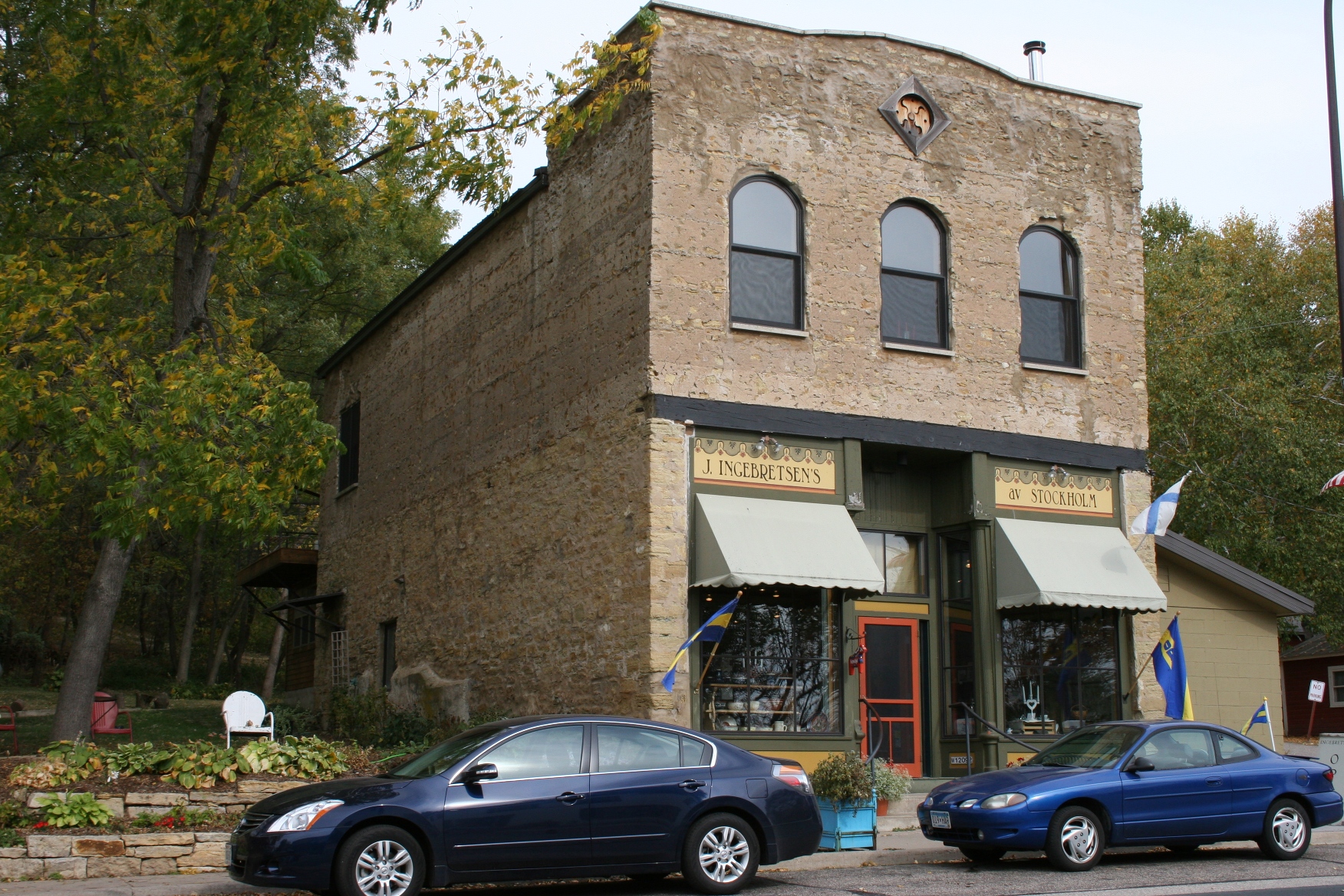
J. Ingebretsen's av Stockholm on a corner in Stockholm.

STEP INSIDE J. Ingebretsen’s av Stockholm along Wisconsin Highway 35 in Stockholm, Wisconsin, population 89, and a sense of serenity sweeps over you.

Perhaps it’s the Scandinavian influence. Or perhaps it’s the charm of this quaint Lake Pepin-side village casting a spell upon you that evokes a feeling of peace.

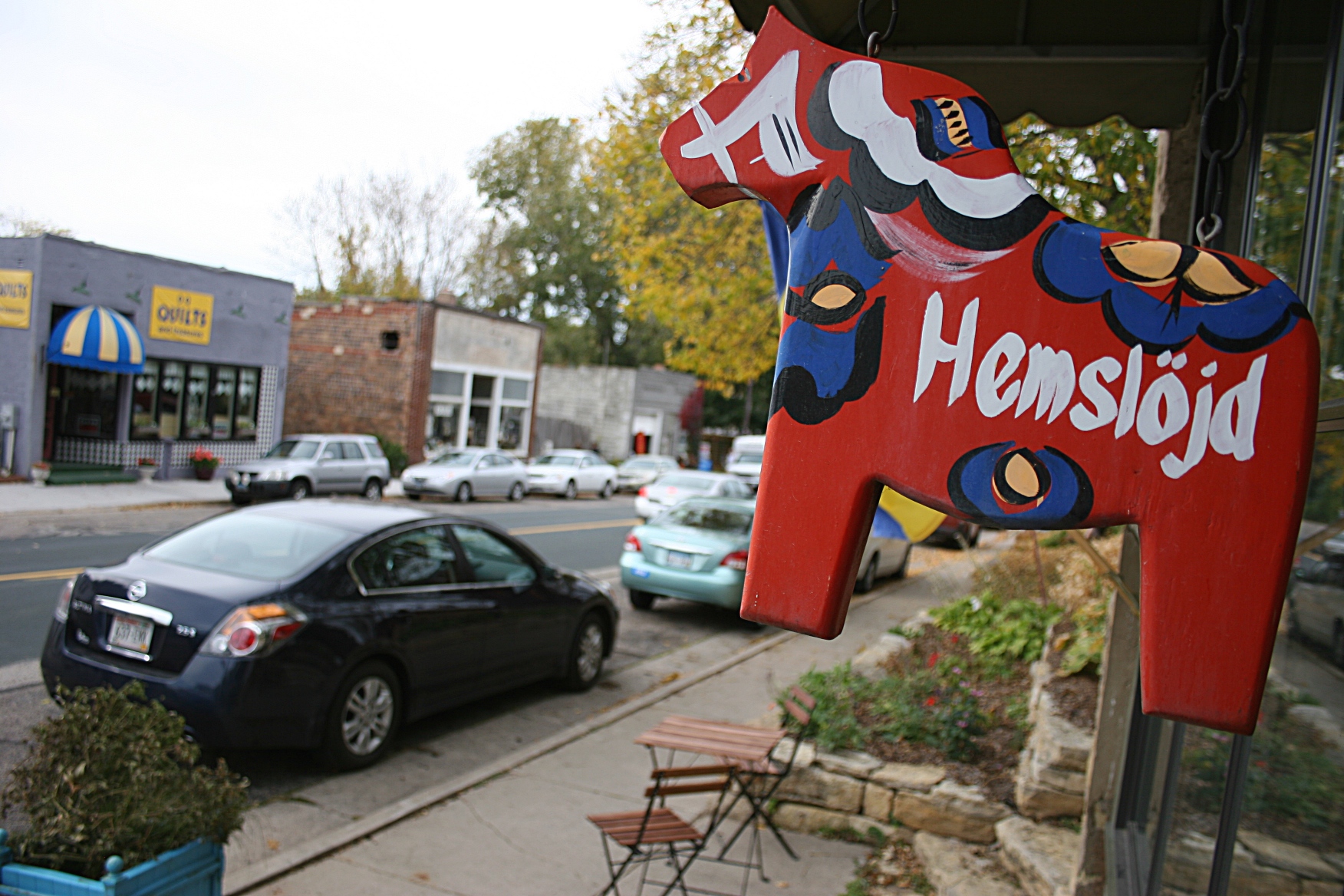
The sign suspended from the front of Ingebretsen's, if I got the translation correct, means "crafts." The dala horse is a popular Swedish symbol.

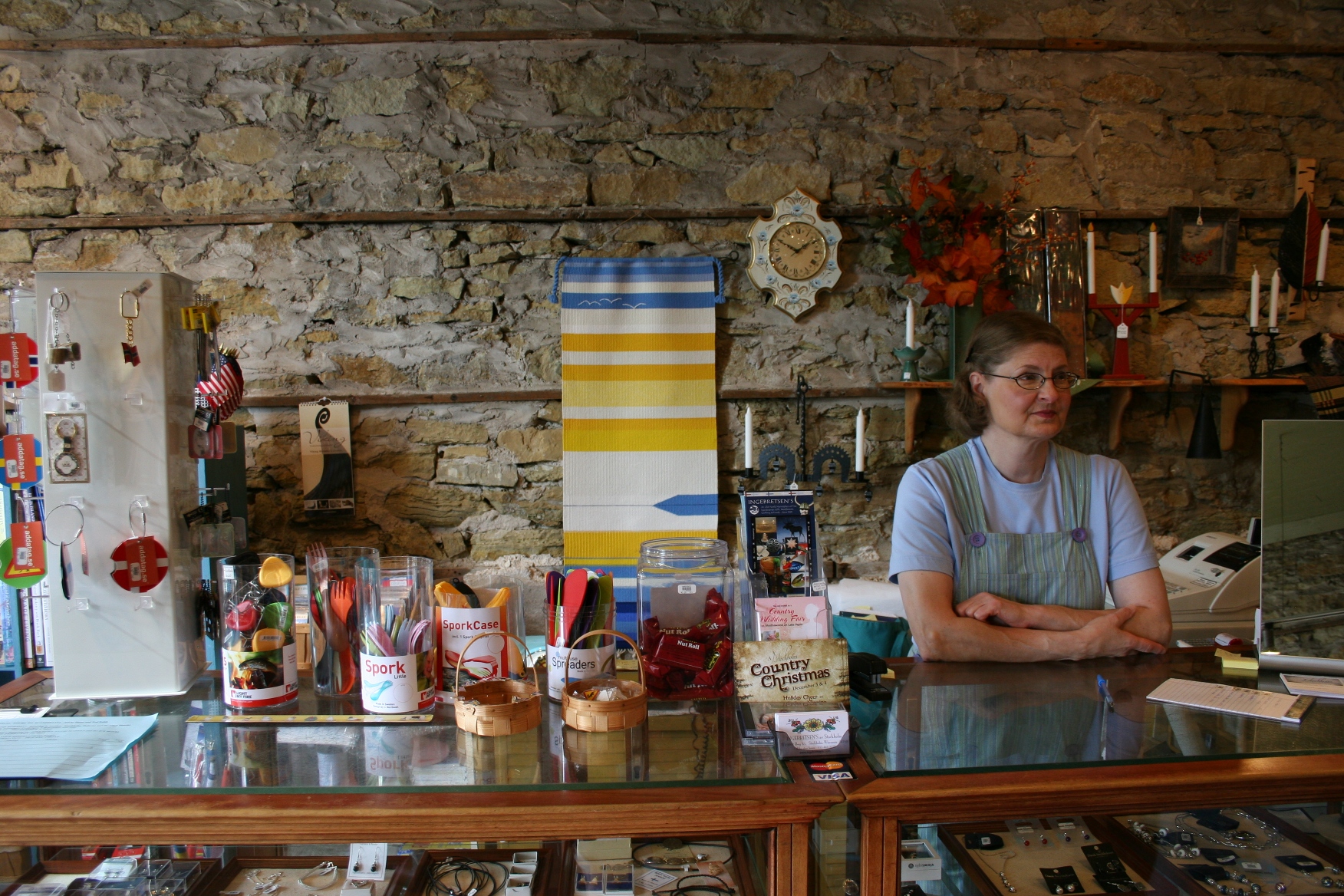
No matter the reason, the atmosphere inside Ingebretsen’s, a Scandinavian gift shop, conveys a sense of orderliness, simplicity and a feeling that all is right with the world, or at least in this part of western Wisconsin.

On a recent day trip from Minnesota across the Mississippi River, my husband and I discovered this wisp of a village, which, except for all those inviting shops lining the main drag and side streets, would likely stand as another shuttered small town.

But Stockholm hums with activity, its streets packed with vehicles, its sidewalks teeming with folks drawn here by the quaintness, the laid-back feel of this historic place, the smorgasbord of shops that range from precisely orderly Ingebretsen’s to cluttered, books-tilting Chandler’s Books, Curios.

Step inside Ingebretsen’s, an offshoot of the main store in Minneapolis, and you’ll forget the traffic only steps away along Highway 35. You’ll focus instead on the display of dala horses. You’ll draw your hand across woolen blankets that ward off the chill of autumn, soon-to-be winter. Your eyes will turn toward the earthen-hued pottery lining shelves.

Inside the front window of Ingebretsen's, lovely pottery.

A collection of dala horses inside Ingebretsen's, a traditional symbol of Sweden. As the story goes, woodcutters from the province of Dalarna whittled away the long winter months carving these toy horses for children.

Even the pleasant shopkeeper with her crisp apron and refined demeanor fit my image of a Scandinavian. I immediately fell in love with the rough stone that defines this historic building.

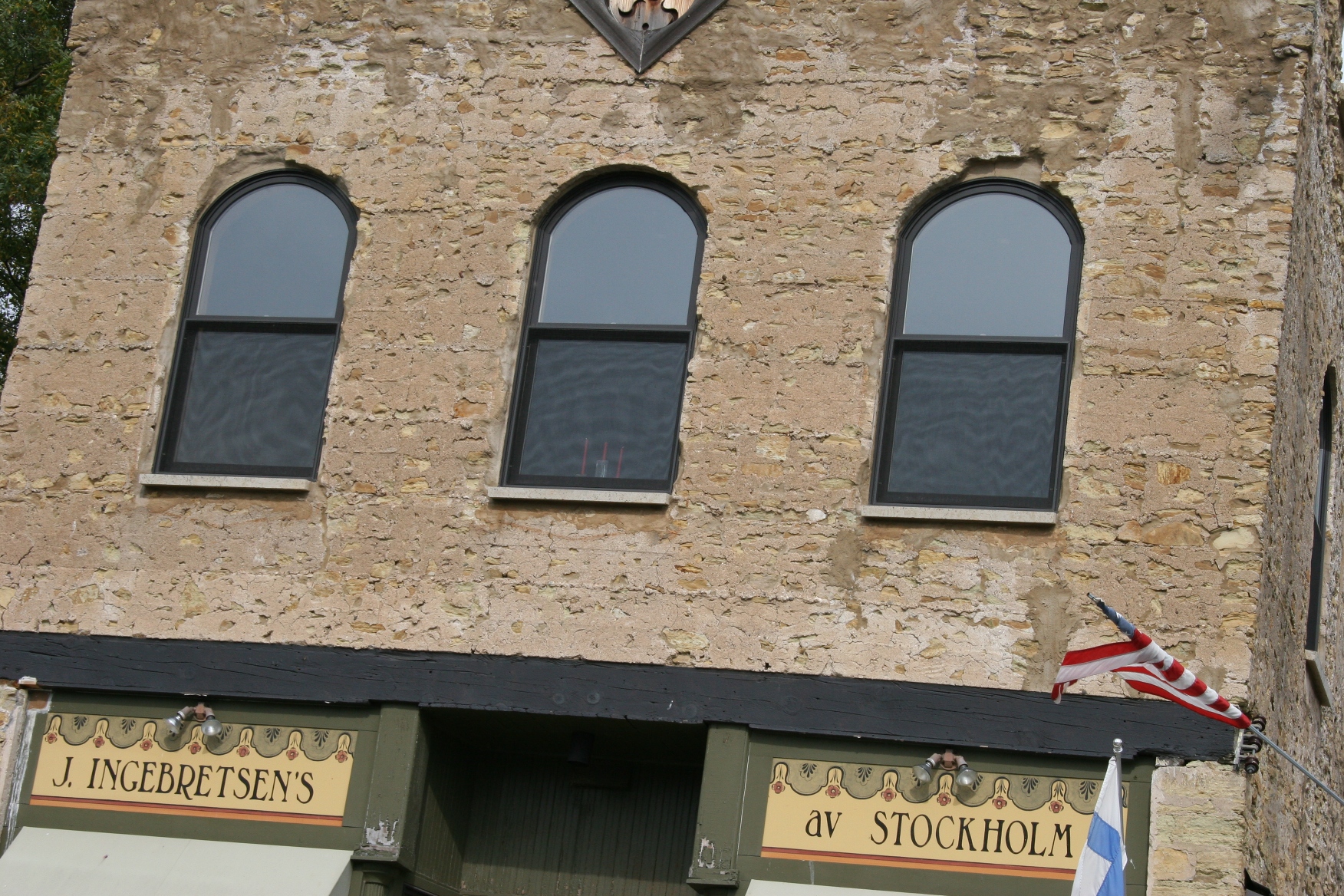
You’ll admire the rough stone walls of this 1878 building, first used as a general store, then as a hotel, hardware store, confectionary, barbershop, speakeasy and café. Before it was abandoned and then reborn several years later, in 2003, as this Scandinavian import shop in Stockholm.

Wisconsin. Not Sweden.

The upper level of the restored Ingebretsen's building.

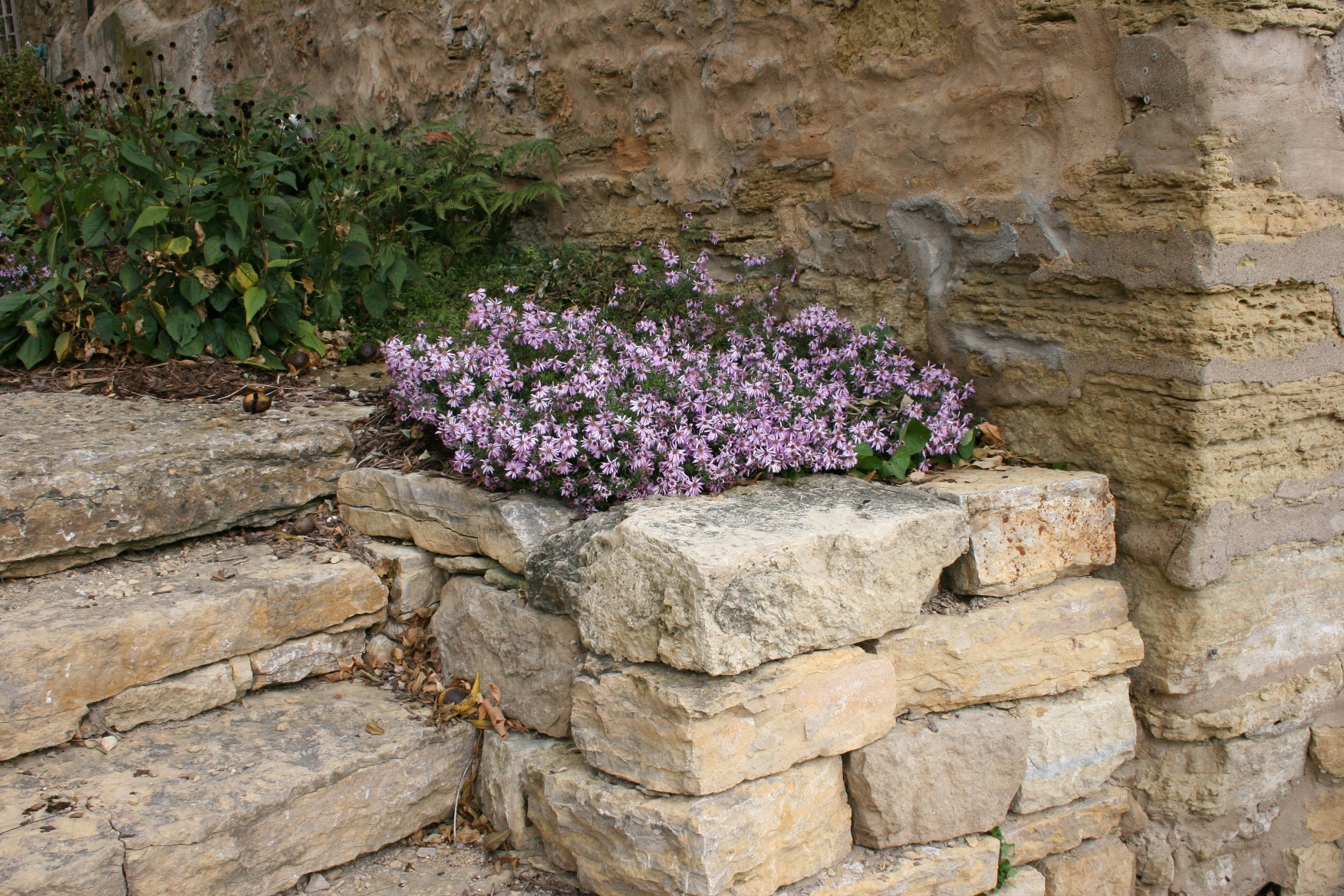
It's all about the details in Stockholm, like this clutch of flowers hugging stone at Ingebretsen's.

PLEASE READ my previous post published October 24 on Chandler’s Books and watch for more stories from Stockholm.

© Copyright 2011 Audrey Kletscher Helbling


Russell, the bookseller of Stockholm October 25, 2011

Filed under: Uncategorized — Audrey Kletscher Helbling @ 6:59 AM
Tags: , , , , , , , ,

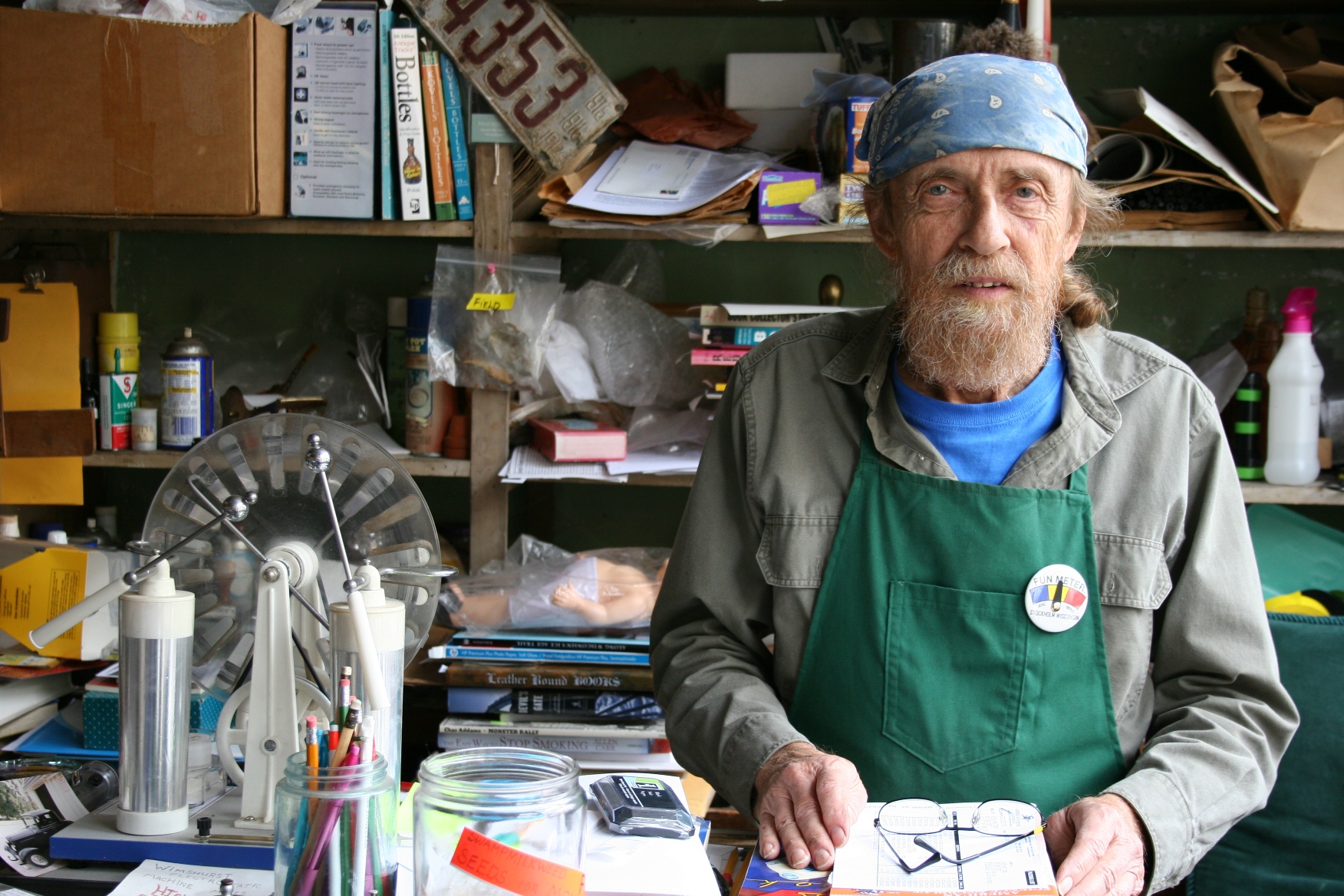
Bookseller Russell Mattson in his shop.

The old-fashioned screen door entry to Chandler's Books, Curios.

LET ME INTRODUCE YOU to Russell Mattson, purveyor of new and used books, amateur photographer, sometime candle maker, car nut and lover of Monarch butterflies.

I met him on a recent Monday afternoon in Stockholm. Wisconsin. Not Sweden.

We struck up a conversation in his Chandler’s Books, Curios, in this Mississippi River village of 89 founded in 1851 and dubbed the oldest Swedish settlement in western Wisconsin.

You’ll find a Swedish import shop here, run by the Norwegian Ingebretsens, and an array of other quaint shops and eateries and more in this charming small town along Wisconsin State Highway 35 south of Prescott, or southeast of Red Wing, if you’re from Minnesota, like me.

Russ originally hails from St. Paul; he’s lived in Stockholm for 38 years. For 31 years, he made candles at the Minnesota Renaissance Festival before retiring in 2003. His store, once called Candles and Lanterns, previously catered candles until that market deflated.

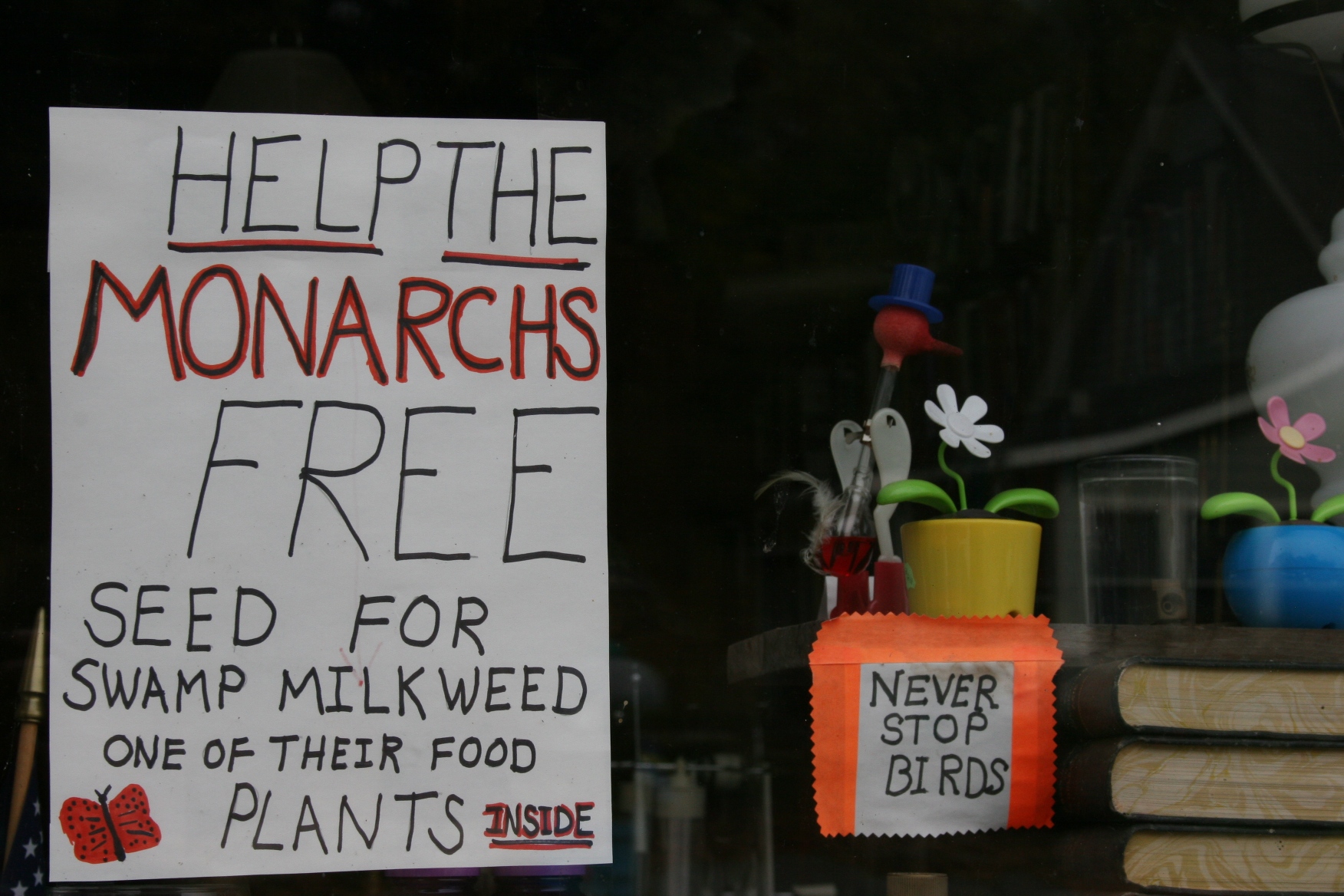
He still makes candles now and then. He also collects swamp milkweed seed to give away in his shop, encouraging others to grow milkweed as food for Monarch butterflies.

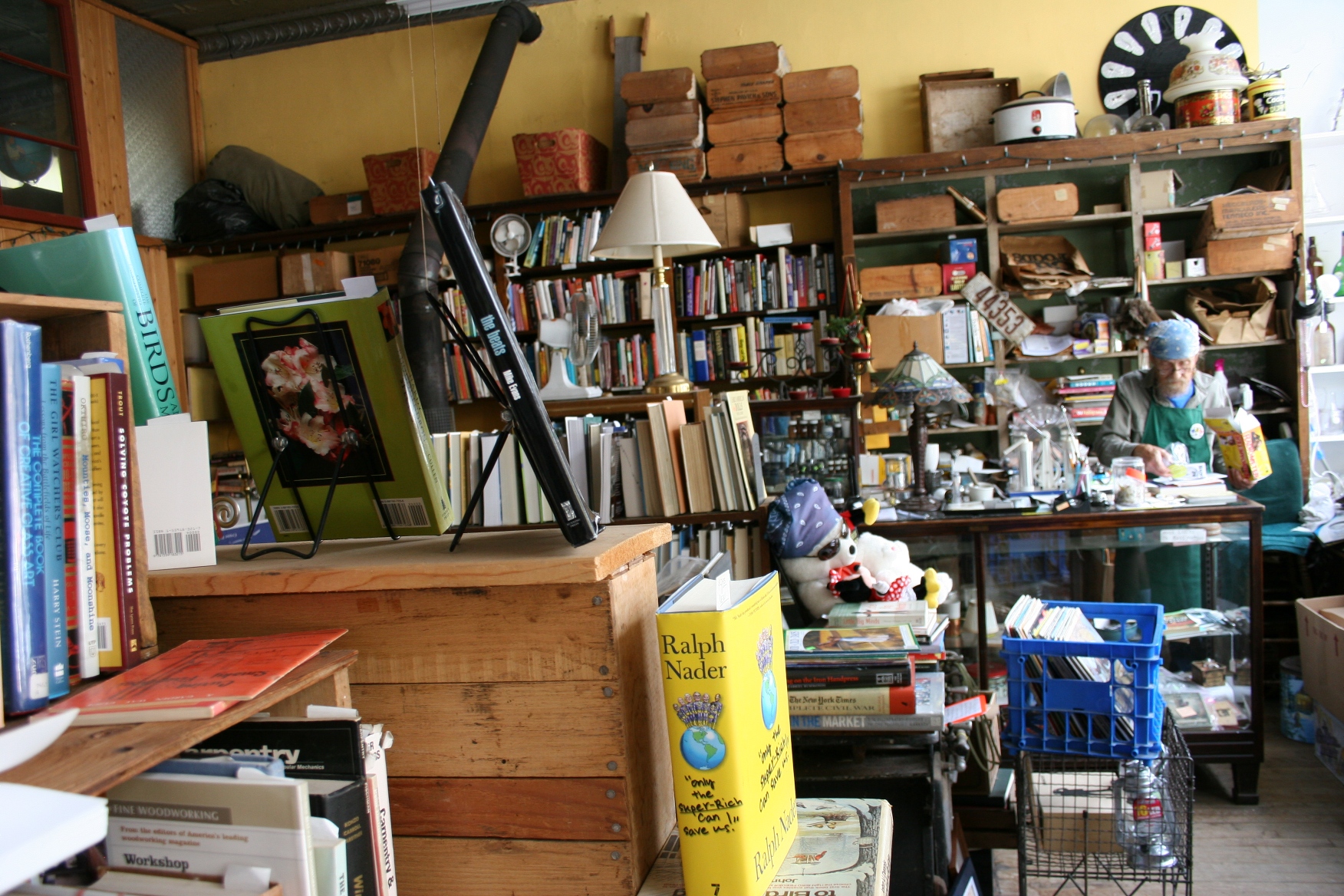
But mostly, Russ focuses on keeping the bookshelves stocked in this cramped, don’t-meet-another-customer-between-the-shelves bookstore.

You'll find lots of book, old vinyls and other curiosities, but not much wiggle room, in Russ' shop.

If you're seeking vintage used books, you'll find them here.

The bookshelves stretch nearly to the original tin ceiling in Russ' store.

Ask Russ what sells best and he’ll pause before pointing to the rack of car books and then pulling out photos of vintage cars he once drove, wishes he still owned.

That leads him to step outside to a display table and show off the photos he’s taken, some dating back decades. Of particular interest is a blurry black-and-white image of a locomotive that looks more painting than photo.

Russ took the picture of the Canadian National in northern Minnesota in 1955 when he was only 14. He’s pretty proud of the photo. Not because it’s the best image he’s ever taken. But because of how he took the shot. He snapped the photo with his Baby Brownie by placing binoculars in front of the camera lens.

All this I learned from Russell Mattson, purveyor of books, when I asked to take his photo on a Monday afternoon in October in Stockholm.

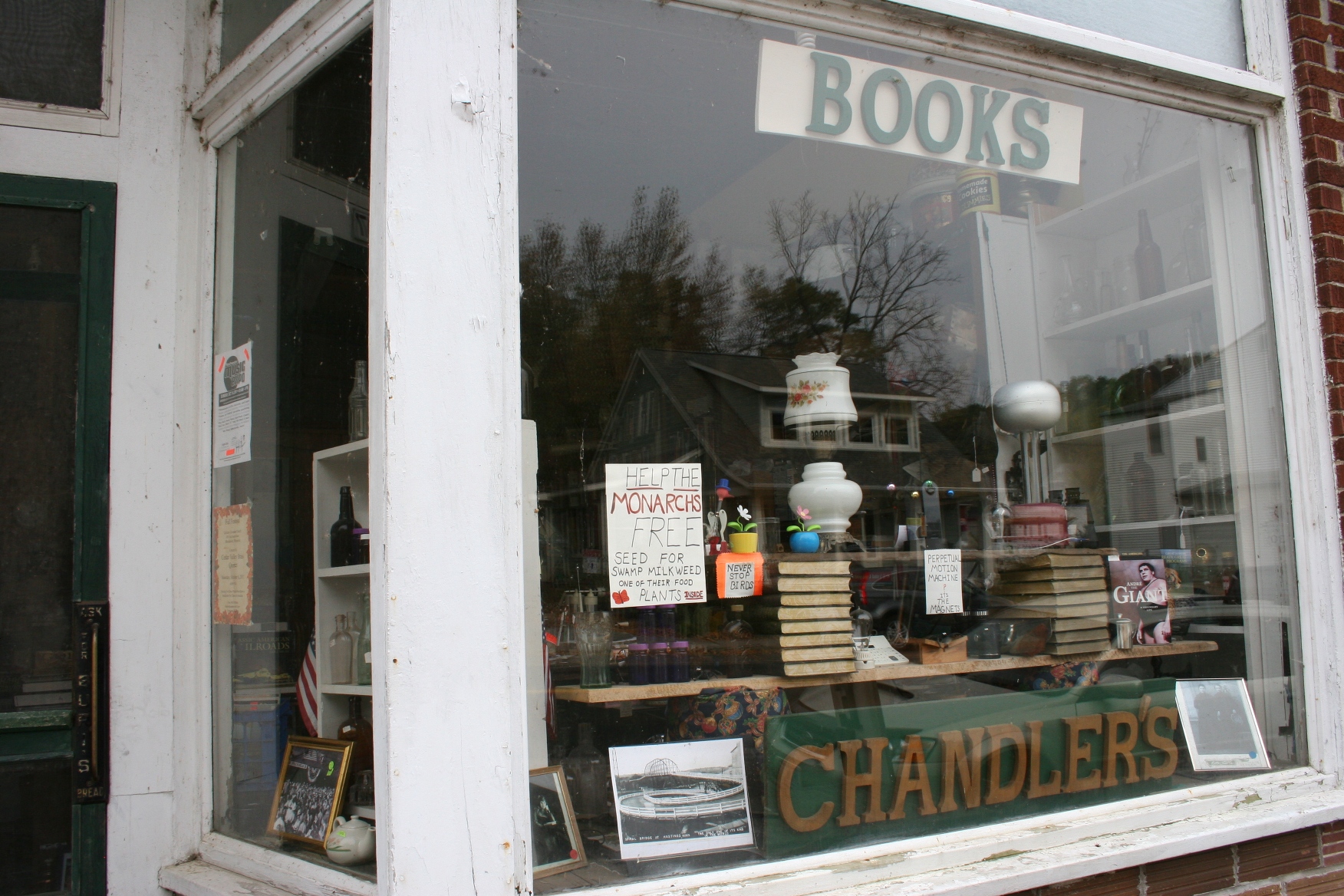
A front window of the bookstore features an eclectic mix of merchandise.

If you need swamp milkweed seed, you'll find it in a jar on the store counter. Help yourself. It's free.

Or perhaps you need a "new" phone. Russ has one for sale "from the slow old days."

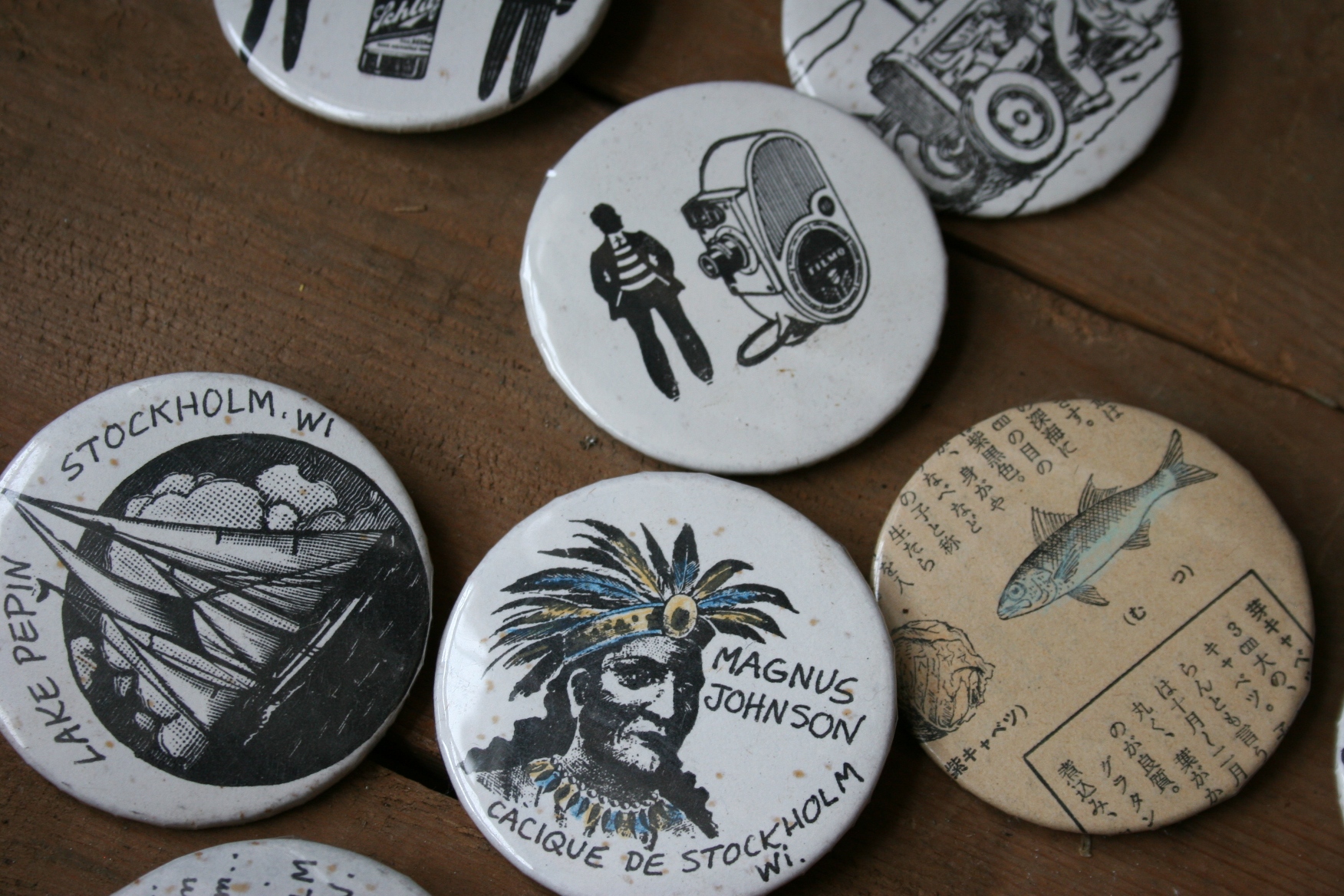
A collection of buttons inside an open drawer in the bookstore.

CHECK BACK for more photos from Stockholm, not Russ, and other Mississippi River towns in future posts.

© Copyright 2011 Audrey Kletscher Helbling


Minnesotan elected to national FFA office October 24, 2011

MY NIECE HILLARY KLETSCHER e-mailed me with exciting news from the Future Farmers of America national convention. Not news about her personally, but about Minnesota.

For the first time in 26 years, a Minnesota FFA Association member has been elected to office in the National FFA Organization. Jason Troendle, a May 2010 graduate of St. Charles High School and current Bethel University student, was elected secretary at the just-concluded national convention in Indianapolis.

And get this—this past Minnesota FFA president and now the current national secretary, is not even from a farm.

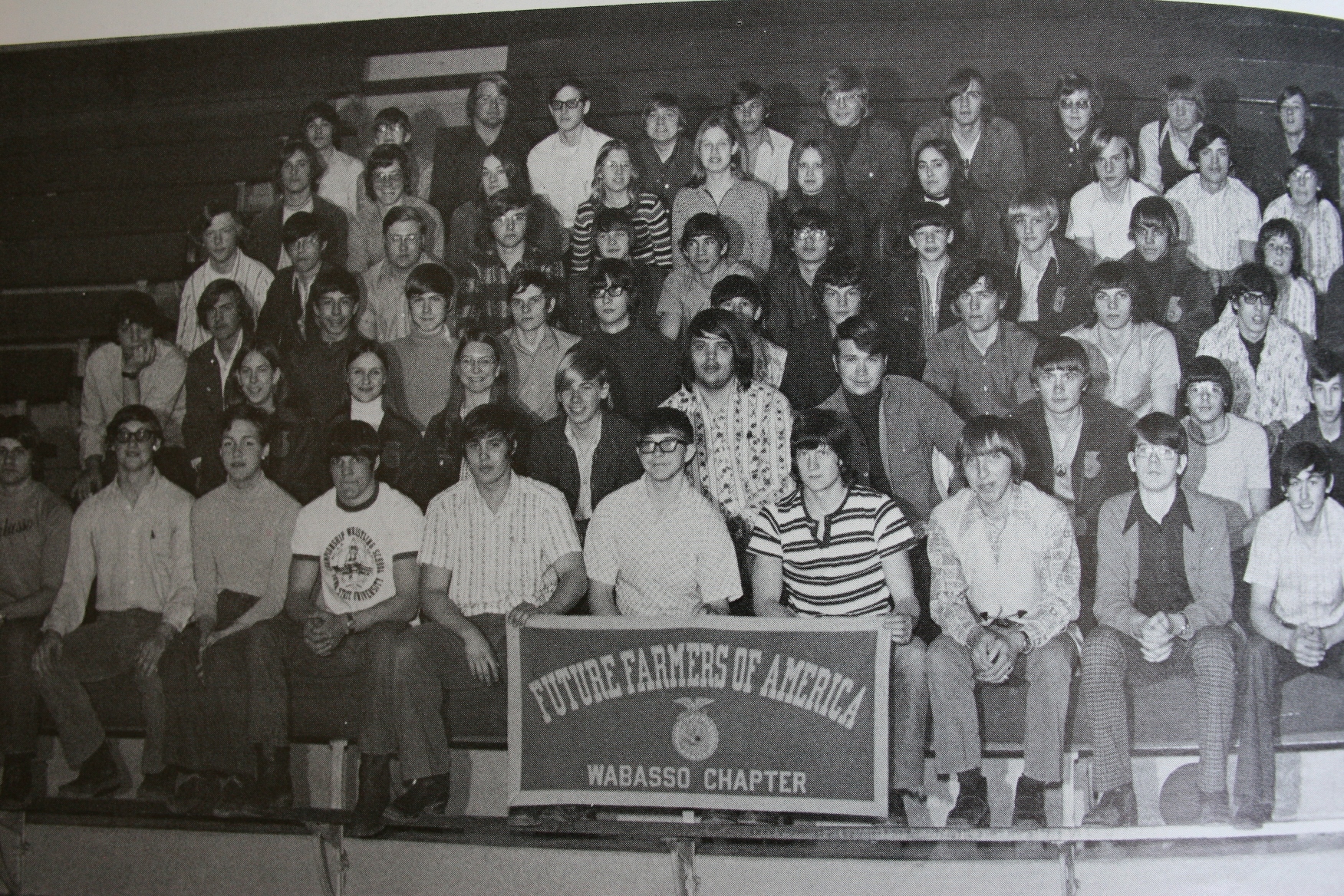
The 1973 - 1974 Wabasso High School FFA chapter consisted of mostly male students. I am among the few females featured in this yearbook photo. I'm seated in the second row, third girl on the right.

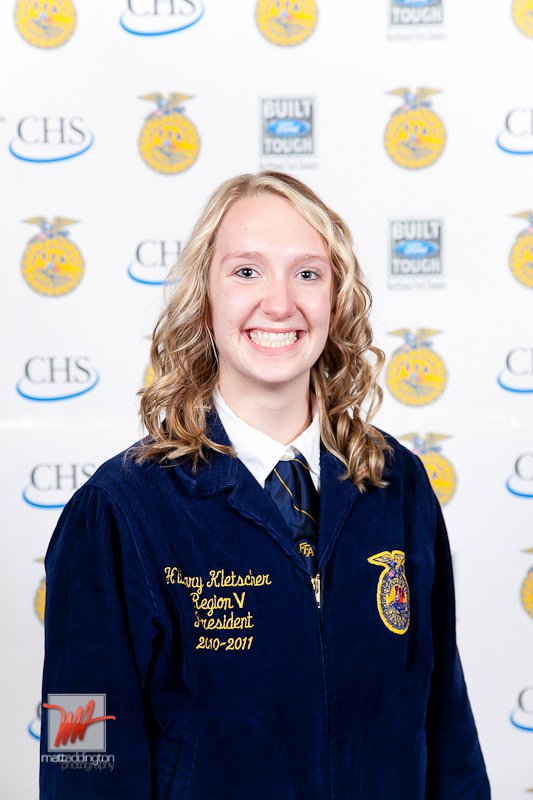
Current Minnesota FFA President Hillary Kletscher of Vesta.

When I was a member of the Wabasso High School FFA Chapter in southwestern Minnesota in the early 1970s, I think all of us were farm kids. I was, in fact, the first female to join the WHS chapter back when the organization was mostly male dominated. Things have changed in the past 30 – 40 years. And that’s a good thing.

You don’t need to be from the farm or planning a career in agriculture to be involved in this ag-focused organization. The new national secretary is majoring in economics and environmental studies.

My niece grew up on a farm, although family has not farmed the land but rented it out for the past several years. Hillary’s not planning to become a farmer either. She’s studying biological systems engineering at Iowa State University.

According to the Minnesota FFA website, “FFA makes a positive difference in the lives of young people by developing their potential for premier leadership, personal growth, and career success!”

I’ve seen firsthand how Hillary has benefited from FFA membership. She’s risen through the organization from WHS chapter president and then a regional officer to become Minnesota’s current state FFA president, a position she will hold until next May. She’s a well-spoken, driven, talented, successful 18-year-old.

Currently Hillary’s juggling her college studies with her FFA responsibilities. Last week she attended the national FFA convention as a Minnesota delegate. She’s also traveled throughout Minnesota, speaking, leading workshops, meeting with high school students and doing more than I could possibly list here.

She’s gone to Washington D.C. and, in January, will travel to China for a leadership conference.

Can you imagine Hillary’s resume and networking by the time she completes her term as Minnesota FFA president and upon her graduation from college in several years?

Can you imagine Jason’s resume and networking by the time he completes college and his term as national FFA secretary next October?

But certainly, beyond those individual benefits are the benefits to agriculture through the positive voices, work, commitment and leadership of these young people, our future.

WERE YOU/ARE YOU a FFA member? How did you benefit from membership? Tell me about your involvement.

You can also connect with current and past FFA members and others interested in agriculture through FFA Connect! Click here for more information.

© Text copyright 2011 Audrey Kletscher Helbling

Hillary Kletscher photo by Matt Addington Photography


Differences & bridges

I WANT TO SHARE two items with you today. Both are different, yet alike, because they’re about differences. Differences between cultures and differences between states.

Humbird Cheese, a popular tourist stop at Tomah, Wisconsin.

Let’s start with the humorous of the two, a little story from my second daughter, who lives in eastern Wisconsin.

Along with a photo, she sent this text message: “They teach them early in wi.”

I studied what appeared to be a child’s drawing of a hefty hunk of cheese and a mouse, along with words too miniscule to decipher on my cell phone screen.

M: “It was a drawing with a haiku in a surgery dept waiting rm. Can u read the haiku or is it too small?”

Me: “I can’t read it.”

M: “It says ‘I love to eat cheese. Swiss Colby pepperjack too. I’m almost a mouse.’ By devon age 9.”

Honestly, don’t you just have to laugh at the subject of this haiku. Of all “the things I love,” this 9-year-old Wisconsinite wrote about cheese?

Would a Minnesota child ever choose to write a cheese haiku?

Wisconsin, I love your cheese, really I do. And I love how your kids love your cheese.

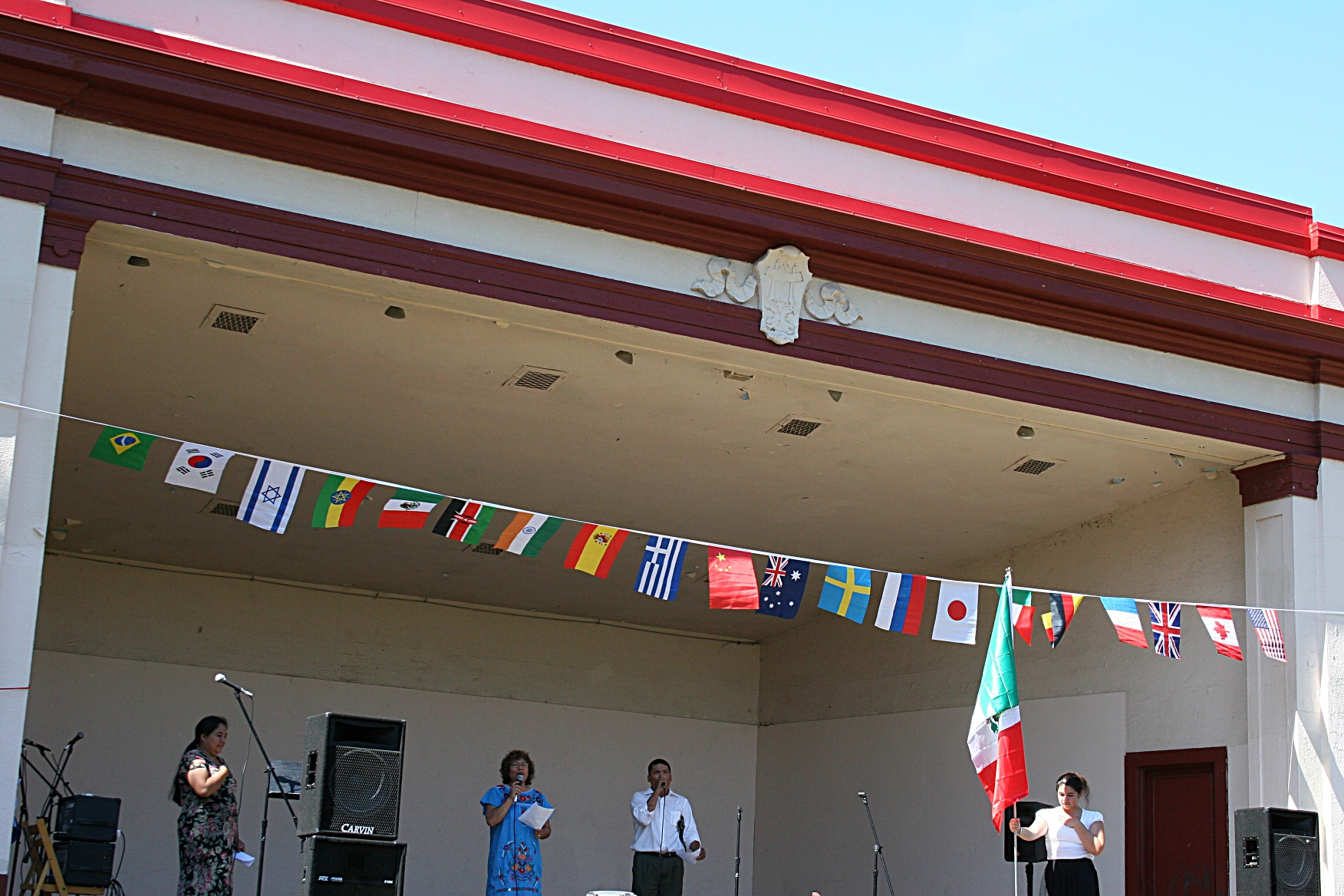
Numerous cultures were represented during the International Festival held in September at Central Park in Faribault. Here singers perform the Mexican national anthem in the band shell.

NOW TO THE OTHER  STORY about differences, written by sports reporter Brendan Burnett-Kurie and published Sunday on the front page of The Faribault Daily News. Here’s the headline for that top-notch feature, which should be required reading in every Faribault (maybe even Minnesota) classroom and home:

“The beautiful team…How the Cannon Valley soccer team bridged cultural gaps and came together around the game they love.”

I tipped Brendan off to this story after my good friend Mike Young told me about the soccer team at Cannon Valley Lutheran High School in Morristown. Mike serves as the school’s volunteer development director. Yes, you read that correctly. Volunteer.

But back to Brendan’s story. He wrote about the school’s recently-rejuvenated soccer team which includes a melting pot of students—of different ethnic backgrounds, different sizes, different ages and from different schools. (CVLHS, with less than 20 students, couldn’t field a team solely from within.)

It’s one of those feel-good stories that make you smile. These boys became a team and became friends. Differences didn’t matter to them. Not differences in their skin colors, their heights, their ages, their shoe sizes, their anything.

Brendan writes: “One day during practice they all took off their shoes and flipped over the tongues, comparing the sizes. Little fourth-grader Yianko Borrego had size 4 feet. The largest were size 13.”

These boys can all teach us a thing or a hundred about acceptance.

FYI: To read Brendan’s outstanding feature, click here.

© Copyright 2011 Audrey Kletscher Helbling


The season of church dinners October 23, 2011

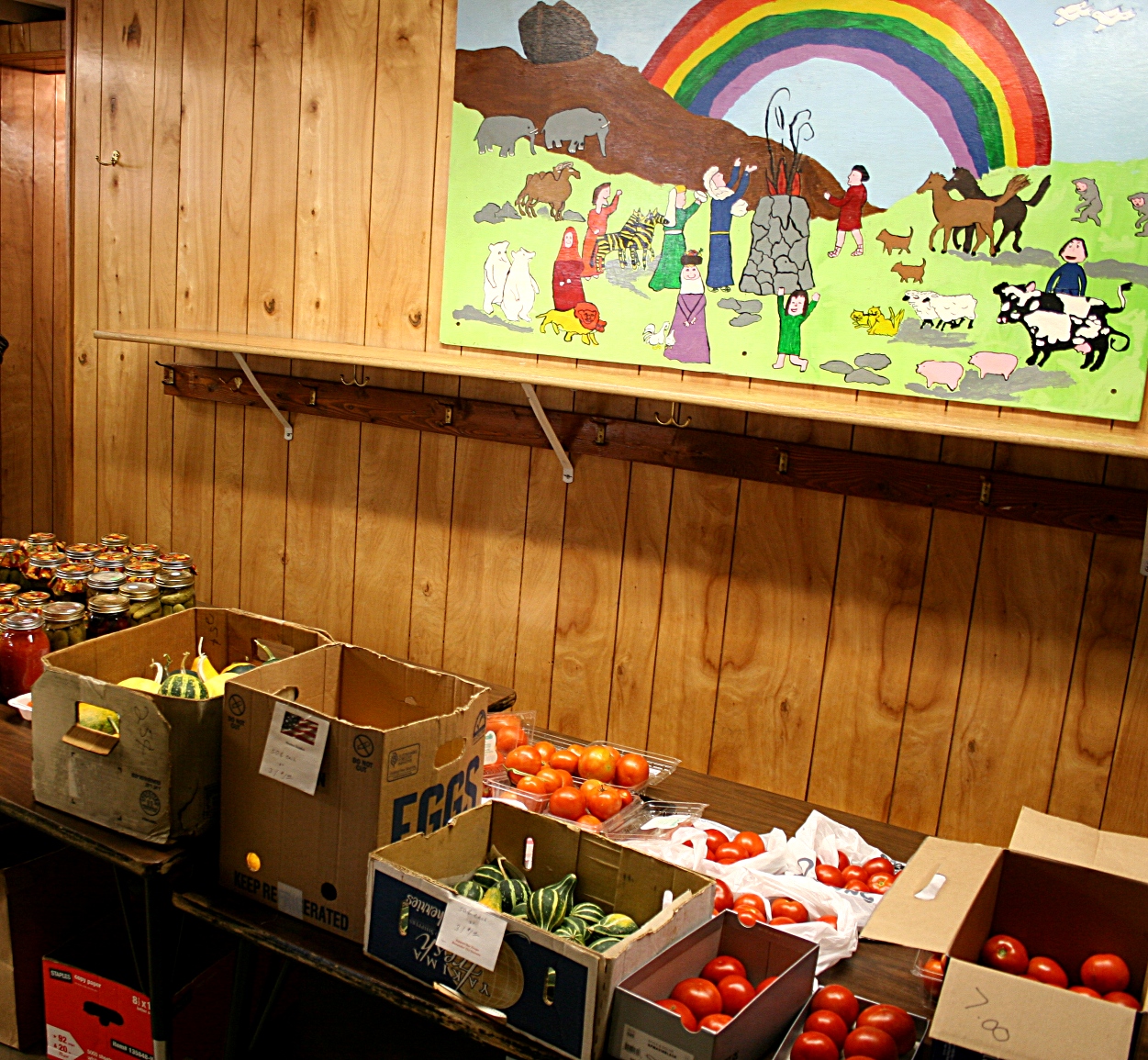
To everything there is a season, and a time for every harvest dinner in the church basement:

A time to be prepared

And a time to enlist volunteers;

A time to bake

And a time to pluck up that which is planted;

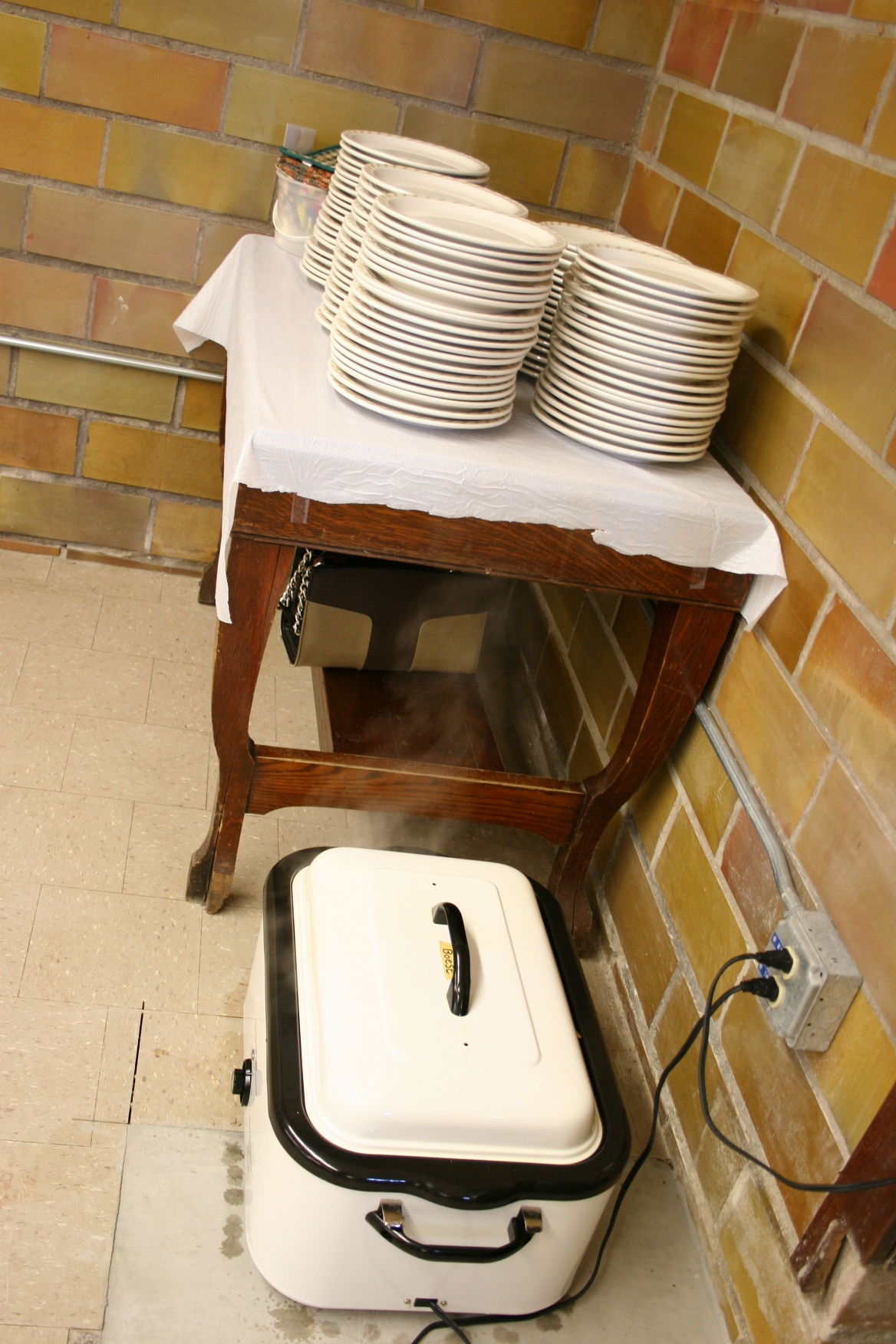
A time to pull out the plates and roasters

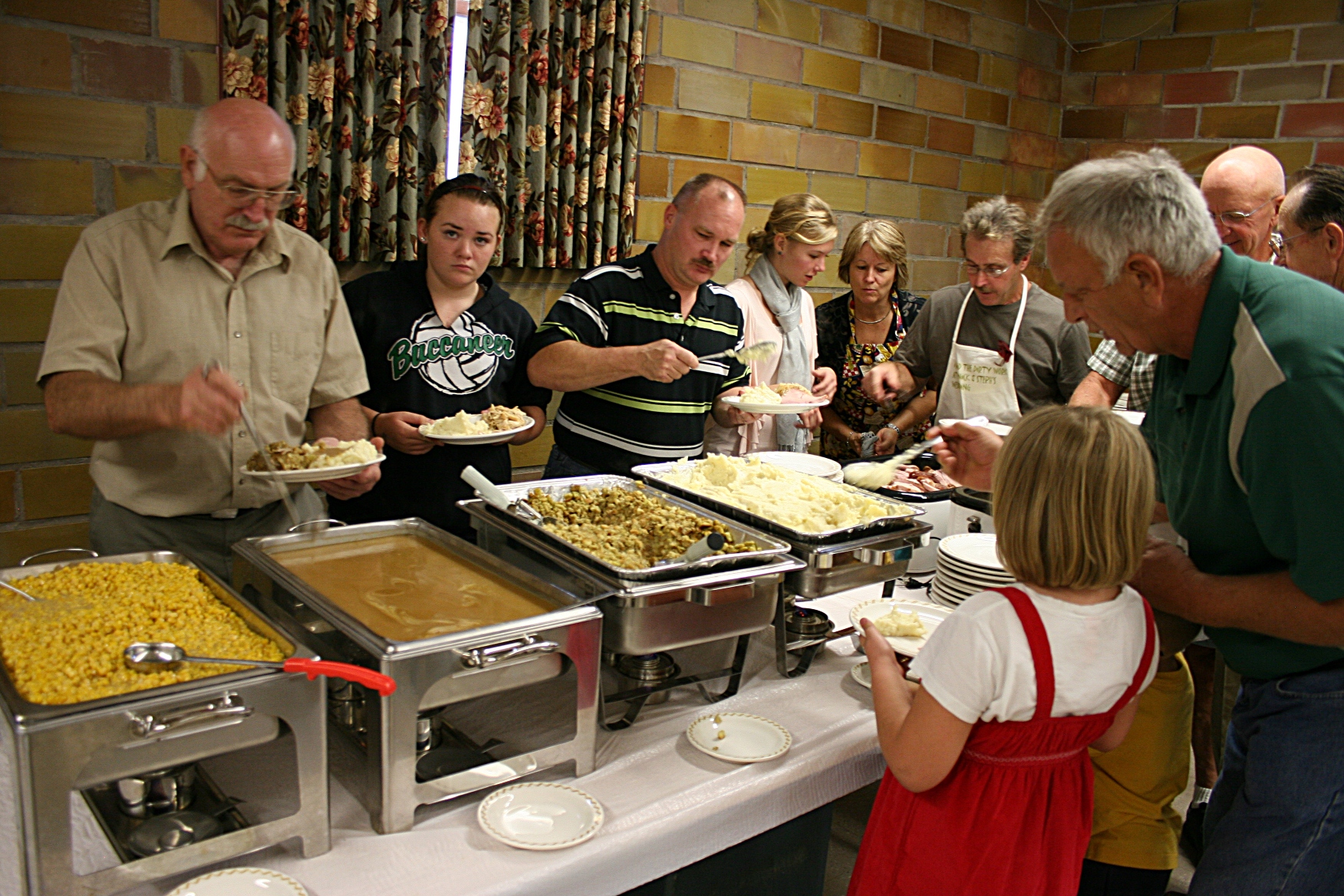
And a time to feed those who come seeking nourishment;

A time to serve the hungry waiting in line

And a time to dish up meals for those who want take-out;

A time to savor good home-cooking

in the company of family and friends;

A time to remember the past in old photos and conversation

And a time to welcome new friends into the fold;

A time to encourage those who labor tirelessly in the kitchen

And a time to be thankful for this land we love, in the season of harvest.

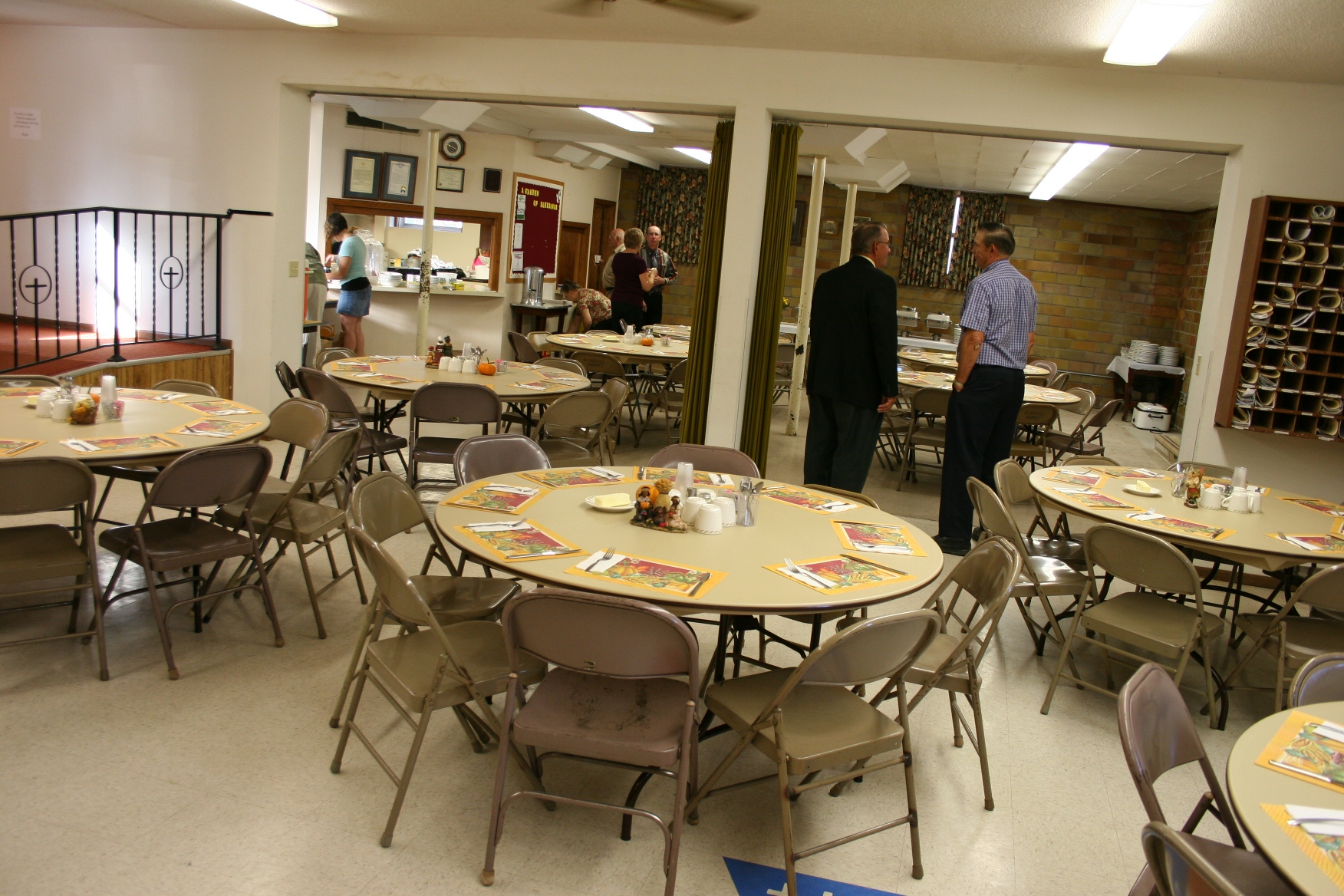
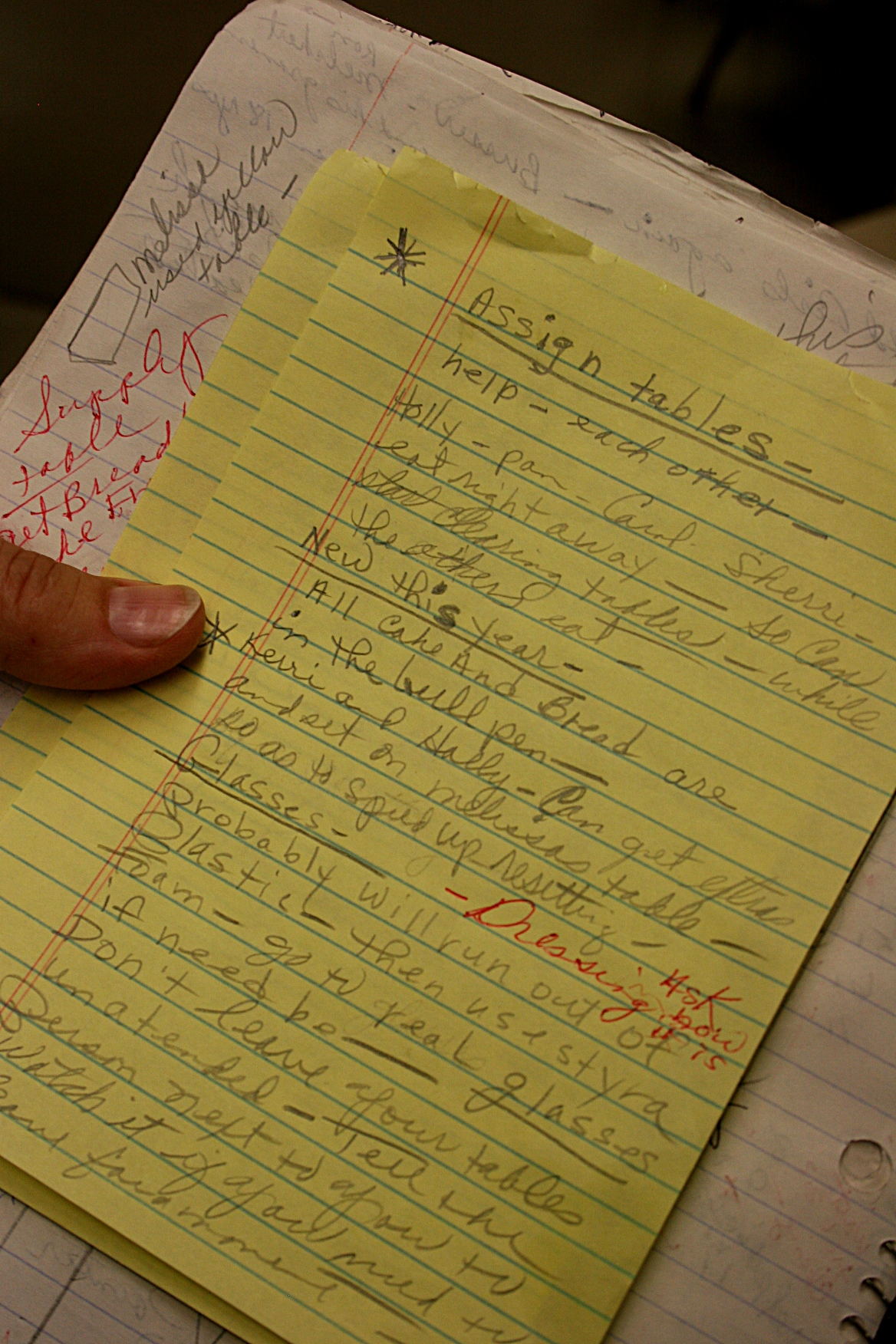
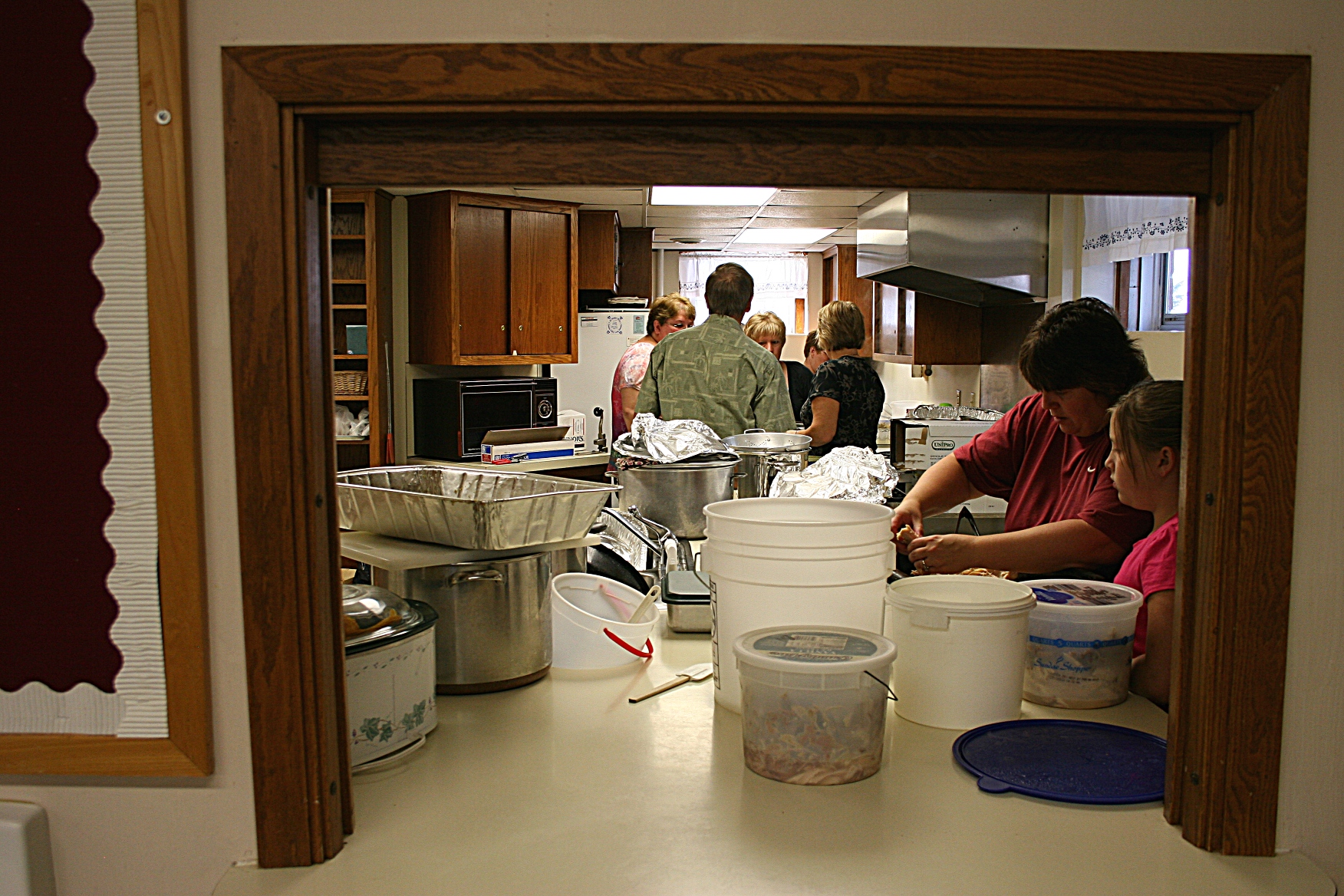
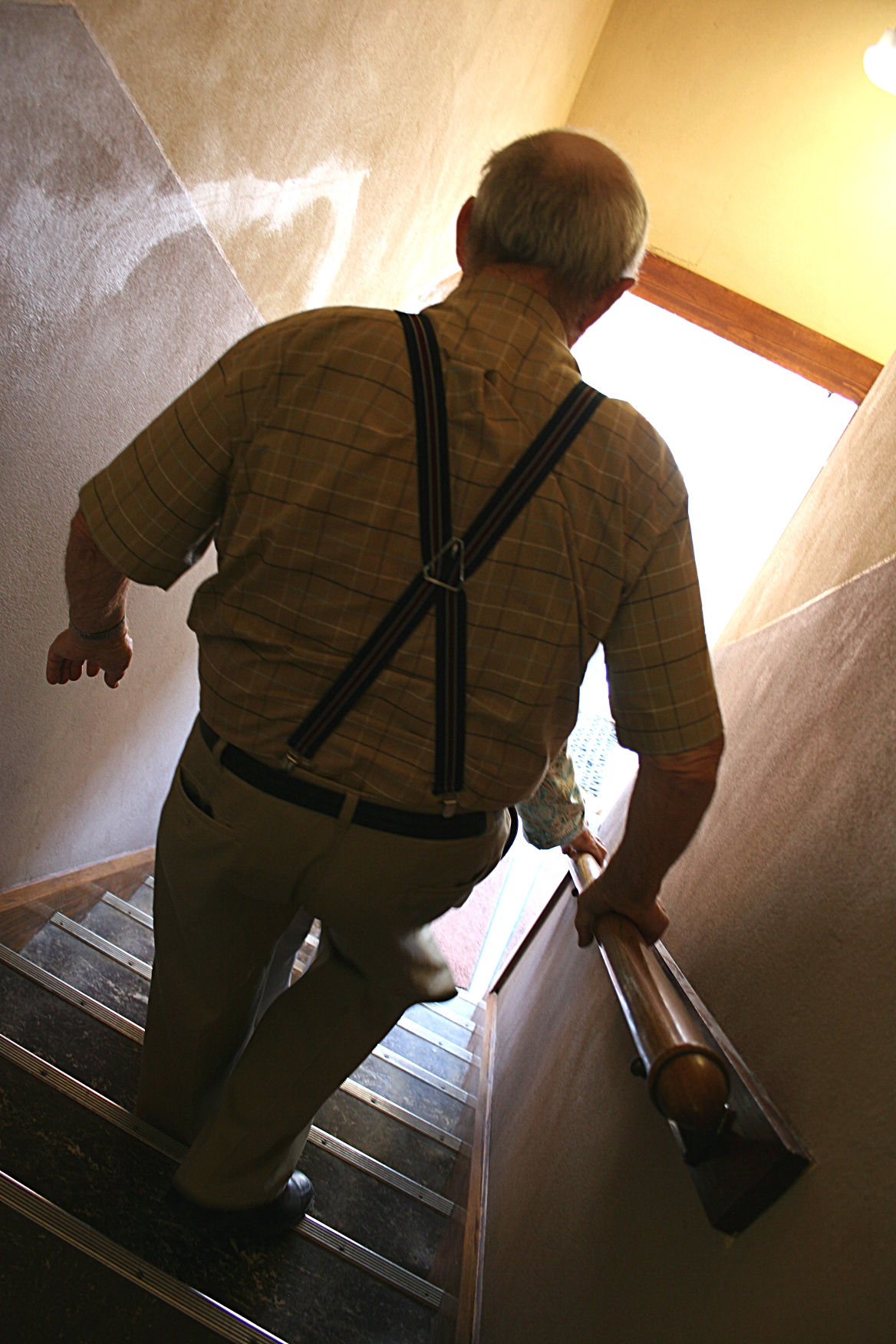
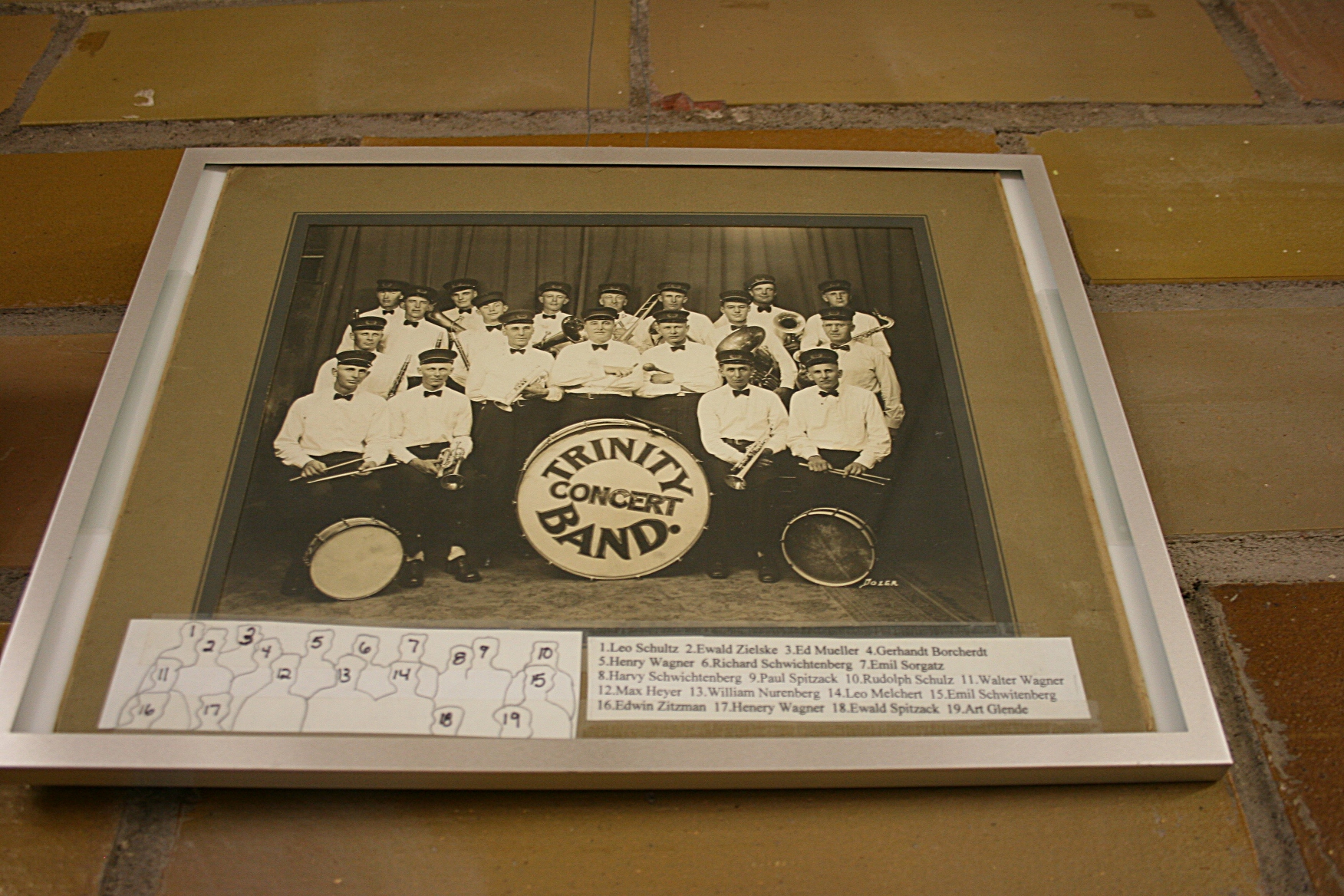
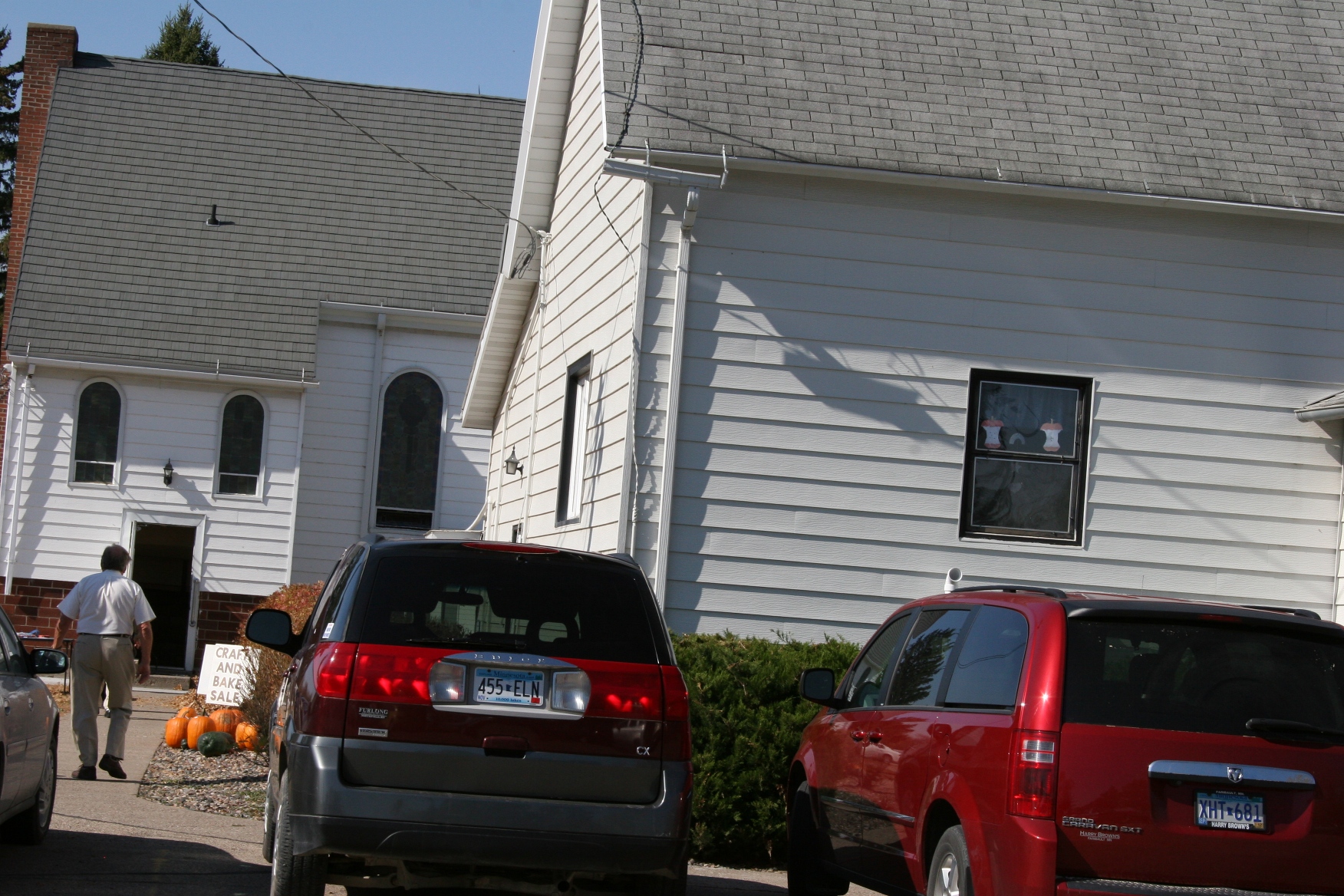
THESE PHOTOS were taken at the recent Trinity Lutheran Church, North Morristown, annual fall harvest dinner, country store and bake sale.

Copyright 2011 Audrey Kletscher Helbling


Enter this vintage photo contest October 21, 2011

This contest promo image of Mary Nachicas and Don Anderson comes from Nina Hedin of Glencoe, who blogs at ArtsyNina. As part of the prize package, Nina is offering a $25 gift certificate to Camp Honeybelle.

TODAY WE’RE GOING to talk photos.

First, I’d like you to dig out your old photo albums or shoeboxes full of vintage black-and-white images. I am looking for a candid photo (not a formal portrait) that portrays love.

Easy, right? Perhaps you have an old snapshot of your parents or grandparents together. How about a mother-daughter picture? Cousins? Siblings? A person with a favorite pet?

Anything that depicts love will do as long as the photo is vintage, black-and-white and candid.

OK, once you’ve found that single image, I want you to enter it in the Minnesota Moments magazine “Snapshots of Love” contest. You’ll find complete information about this competition by clicking onto the website, minnesotamoments.com, here.

You’ll need to do a teeny, tiny bit of writing to complete your entry. Simply state in a paragraph of 75 words or less what your photo tells you about love. Easy.

If your entry is selected as the winner—and, yes, I’m one of the judges—you will win a prize package valued at $150.

Here’s the prize list:

You do not need to subscribe to this magazine to enter the contest, although we’d certainly love to have you as a subscriber.

The first contestant sent a sweet image of her and her sister riding their shared tricycle on their Otter Tail County farm in 1948. I’m not sharing her story with you, but suffice to say her words moved me to tears.

Entries must be received by November 15.

OK, NOW THAT I have convinced you to enter “Snapshots of Love,” I want to assure you that, yes, indeed, it is possible to win a contest.

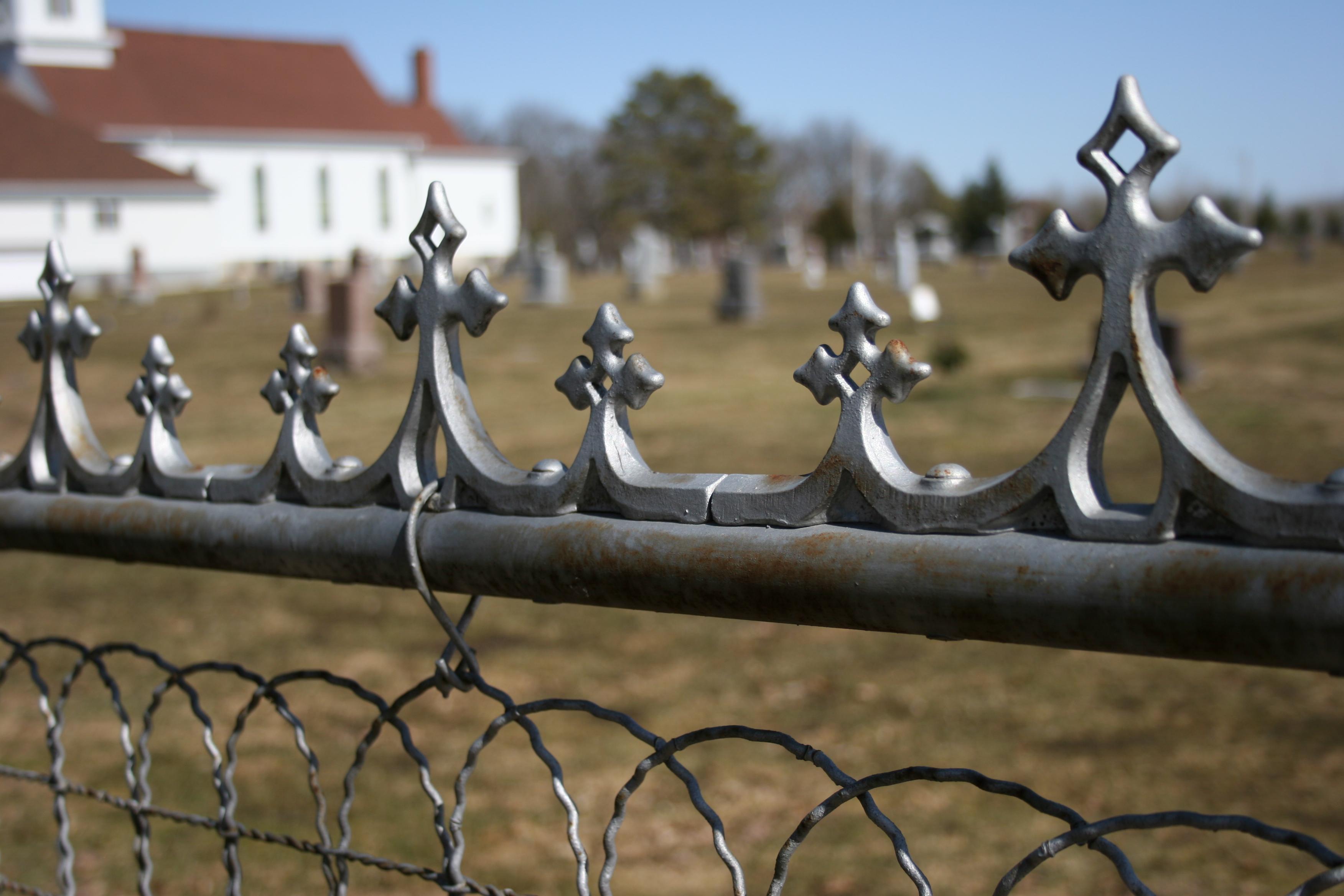
Here’s proof. Last year I entered an image in the Thrivent Financial for Lutherans 2011 calendar photo contest. My photo of the cross-topped cemetery fence at Urland Lutheran Church near Cannon Falls was selected from among more than 300 entries to grace the October page of the calendar. Judges were seeking “unique and inspiring images,” according to a letter I received from Thrivent.

My winning image of the Urland church cemetery fence.

The really interesting thing here is that when I took this photo, I didn’t know about the contest. I shot the image when my husband and I stopped at the country church and cemetery while on a Sunday afternoon drive. Months later, when I learned of the “Connecting with the Cross” themed calendar photo competition, I knew I had the perfect entry.

Urland Lutheran Church, rural Cannon Falls

So if you have one of those Thrivent calendars hanging on your wall, that’s my photo you’re looking at during October. You can click here to learn more about the image.

This is not the first time I’ve won a calendar photo contest. My close-up of autumn leaves in the woods made the November page of River Bend Nature Center’s 2007 “Sights and Seasons” calendar.

Prior to that, I won first place, and $100, in a national photo contest sponsored by National Mutual Benefit for a close-up image of a butterfly in my daisy patch.

So there, enter. You could win, too.

TELL ME, RIGHT NOW, in a comment to this blog post, that you will enter the “Snapshots of Love” contest. That would make me happy. If you have questions, ask away. Be sure also to check out the sponsor websites. That would make me happy, too.

© Copyright 2011 Audrey Kletscher Helbling


Diamonds & Guns

SO, I’M GOING to assume you’ve heard of the hard rock band Guns N’ Roses, right?

How about Diamonds & Guns?

I thought so.

I ran across the combo yesterday while browsing the local newspaper, The Faribault Daily News. We’re talking rock here, just not music.

For four days this week, through Saturday, if you spend $1,500 or more at Paffrath Jewelers in Owatonna, you’ll get a Weatherby Upland 12 gauge pump shotgun.

Dole out $3,000 or more on a purchase and you get a Browning full Camo 12 gauge shotgun.

“When you get that special gift for the woman in your life you should get something too!” the ad for Paffrath Jewelers reads. It’s aimed at guys looking to buy a diamond engagement ring.

Apparently the future hunter husband types appreciate this incentive as the ad states the sale is “back by popular demand.”

If this sales approach works for Paffrath, and apparently it does, good for this family-owned business with three stores in Minnesota. The other two are in Willmar and Alexandria. I’m uncertain whether this promotion applies to all three stores or just the one in Owatonna, which, by the way, has a Cabela’s store, every outdoorsman’s shopping paradise.

“You better hurry,” the ad urges.

Guys, just a little word of advice here: If you buy a diamond engagement ring at Paffrath during this Diamonds & Guns sale, you might want to keep that gun incentive part to yourself.


A flat tire, an upgrade & a crime October 20, 2011

Filed under: Uncategorized — Audrey Kletscher Helbling @ 7:29 AM
Tags: , , , , , ,

OUR DAUGHTER, the one who lives 5 ½ hours away in eastern Wisconsin, had a flat tire on her car Wednesday morning. Four days after she bought four new tires. What are the odds?

“I can’t believe it,” she texted.

I couldn’t believe it either. But then I remembered the lemon colored Mercury Comet I bought in 1978. It got two flat tires the same day I purchased it. The hue of the vehicle should have clued me in. Later, I would rename it “The Vomit.” An appropriate moniker, I might add.

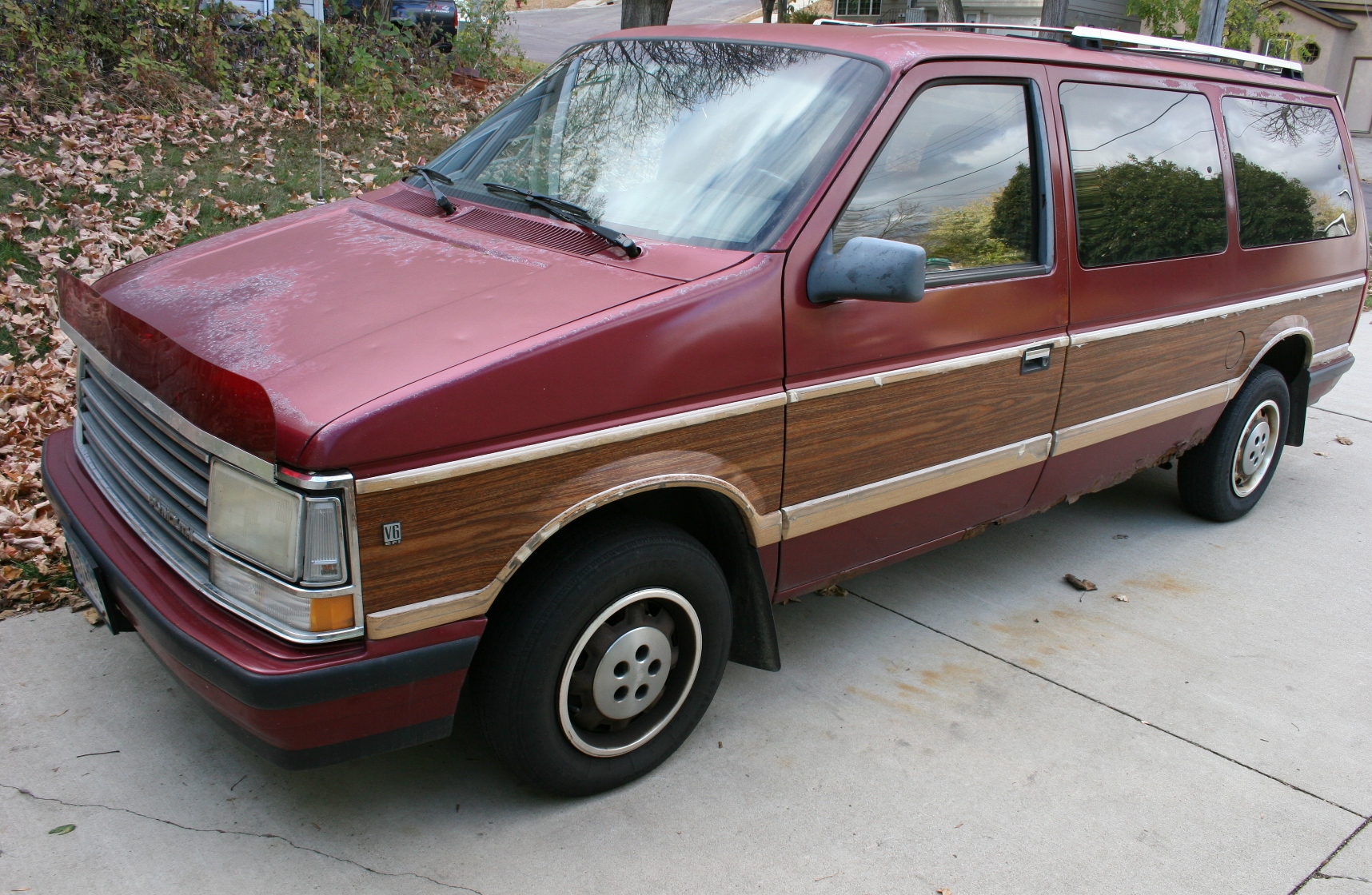
YESTERDAY WE BOUGHT a new van. New to us. To replace the 1988 Plymouth Grand Voyager. We really had no choice. The ‘88 needs tires. At an eye-popping $400 – $500 for four tires, it is not worth the investment in a hail-pocked, paint-peeling, rusting vehicle that has seen better days.

I suggested that perhaps we could sell the wood-grain paneled van as a collector’s vehicle. Then my husband mentioned that the Smithsonian has a Dodge Caravan in its collection. I did not believe him.

But then, as all truth-seeking journalists/wives will do, I googled the Smithsonian and learned that, yes, indeed, he was right. A 1986 Dodge Caravan exists in the Smithsonian National Museum of American History as a symbol of suburbia.

Now an affordable 2005 Dodge Grand Caravan, with 95,000 miles and right front fender damage from a deer strike rests in our driveway. It is a symbol of lower middle income Americans who are not all that particular about the age or beauty of a vehicle as long as it runs well and gets you (and college students and 20-somethings moved) from point A to point B.

The husband only wishes the van color was not white. Better than yellow, I say. Better than yellow.

ALL THIS CAR TALK reminds me of a little incident back in 2003. We sold our 1989 Dodge Aires to a young man for cash. A month later, the police came knocking on our door on Memorial Day weekend. We were out of town, so they went to our next-door neighbor’s house at around 10 p.m. asking questions.

Upon our return, our neighbor told us about the inquiry by law enforcement and handed us a business card from a Northfield police investigator. That evening we settled in to watch the 10 p.m. news. The lead story reported on a drive-by gang shooting at a Northfield trailer park.

I wasn’t surprised when the investigator showed up at our doorstep the next morning. Turns out the gun used in the shooting was stashed in the trunk of “our” car. Seems the reputed Minneapolis gang member, now charged with attempted murder, had failed to change the car title still registered in our names.

SO THERE, can you top that final car story?

© Copyright 2011 Audrey Kletscher Helbling


Gaining confidence as a poet October 19, 2011

I THINK ALL WRITERS, if we’re honest with ourselves, face insecurities about writing.

Can we write? Is our writing “good enough” to publish? Will anyone read, or even care about, what we write?

I’ve long overcome any issues I faced about journalism style writing. I’m confident in my abilities to pull together a good feature story or another journalistic piece given my educational background in mass communications and my years of experience in journalism. And with several years of blogging to my credit, I’m also confident in that writing style.

It’s poetry which has challenged my confidence. Although I’ve written poetry off and on since high school—which stretches back nearly four decades—I’ve never written much poetry, at least not enough to consider myself a true poet. Until now.

Finally, this year, with the publication of two poems in two Minnesota literary journals and winning the spring Roadside Poetry contest, I’m comfortable adding “poet” to my writing credentials.

Getting to the point of feeling comfortable with the term “poet” really began 11 years ago with publication of a poem in Poetic Strokes, A Regional Anthology of Poetry from Southeastern Minnesota, Volume 2. I considered that a stroke of good fortune. But when four more poems published in the next two volumes, I began to think that maybe, just maybe, I could write poetry. After all, I had competed against other writers to get into the Poetic Strokes anthologies.

Then I had a poem accepted for publication in The Lutheran Digest.

Next, I earned an honorable mention for my poem, “Hit-and-Run,” published last year in The Talking Stick, Forgotten Roads, Volume 19.

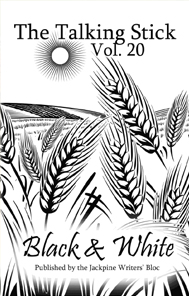
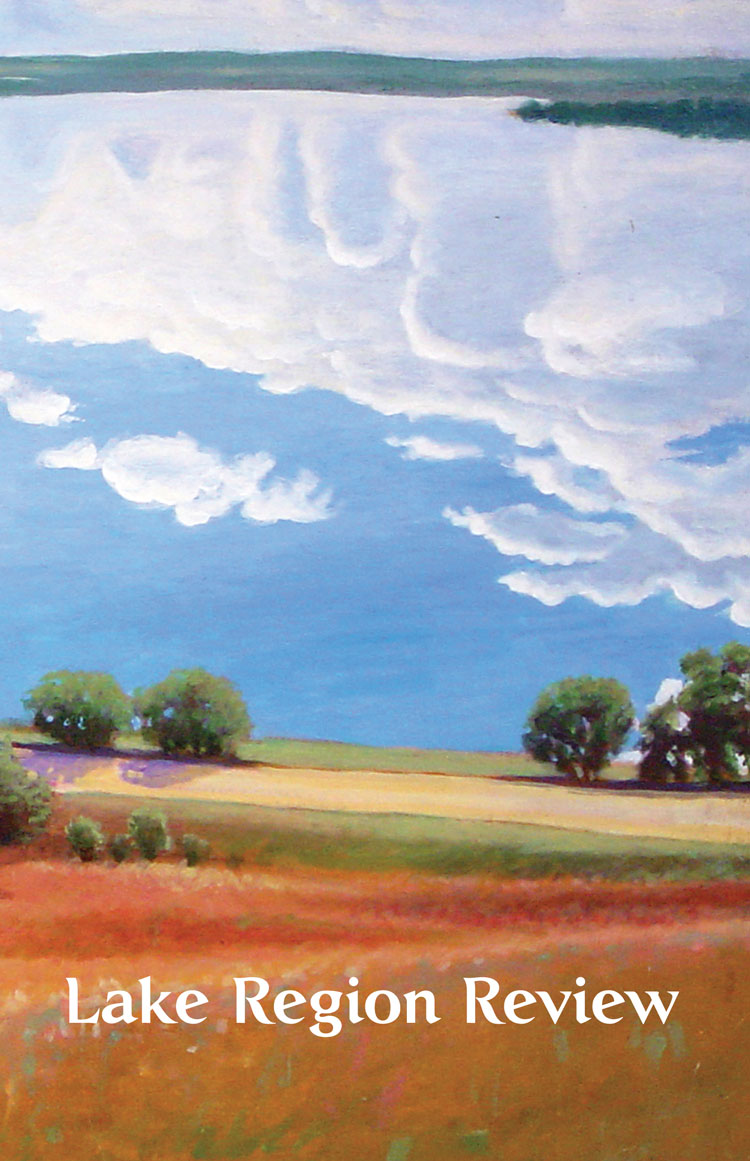
Finally, this year, I had an official poet epiphany when I entered three poetry competitions and was subsequently published on Roadside Poetry billboards, in The Talking Stick, Black & White, Volume 20 and Lake Region Review.

Although I don’t know how many poets I competed against in Roadside Poetry, I do have the numbers for the two literary journals. The Talking Stick this year published 140 pieces of poetry, creative nonfiction and fiction from 99 writers, me being one of them with my poem, “Abandoned Barn,” and my creative nonfiction, “Welcome Home.” That’s out of 326 submissions from 171 writers.

Look at the list of writers, and you may recognize a few names like Marge Barrett, Tim J. Brennan, Charmaine Pappas Donovan, Jerry Mevissen, Candace Simar…

It’s quite a process to get into The Talking Stick with five members of The Jackpine Writers’ Bloc reading all of the entries and then an editorial board meeting to vote and discuss. The top four to seven favorites in each category are then forwarded to celebrity judges—this year Kris Bigalk, Kevin Kling and Alison McGhee—to choose first and second place winners in each division.
As for Lake Region Review, the process of selecting the works for publication is equally as rigorous. Co-editors Mark Vinz—author, professor emeritus of English at Minnesota State University Moorhead and first coordinator of MSUM’s Master of Fine Arts in Creative Writing—and Athena Kildegaard—author and lecturer at the University of Minnesota Morris—worked with a staff of 10. They read more than 200 submissions before narrowing the field to 27 established and emerging writers.
I’m one of those 27.

And so is Leif Enger, author of the 2001 New York Times best-seller Peace Like a River, which happens to be a favorite book of mine. It’s nice to be in the company of someone who, like me, writes with a strong sense of place.

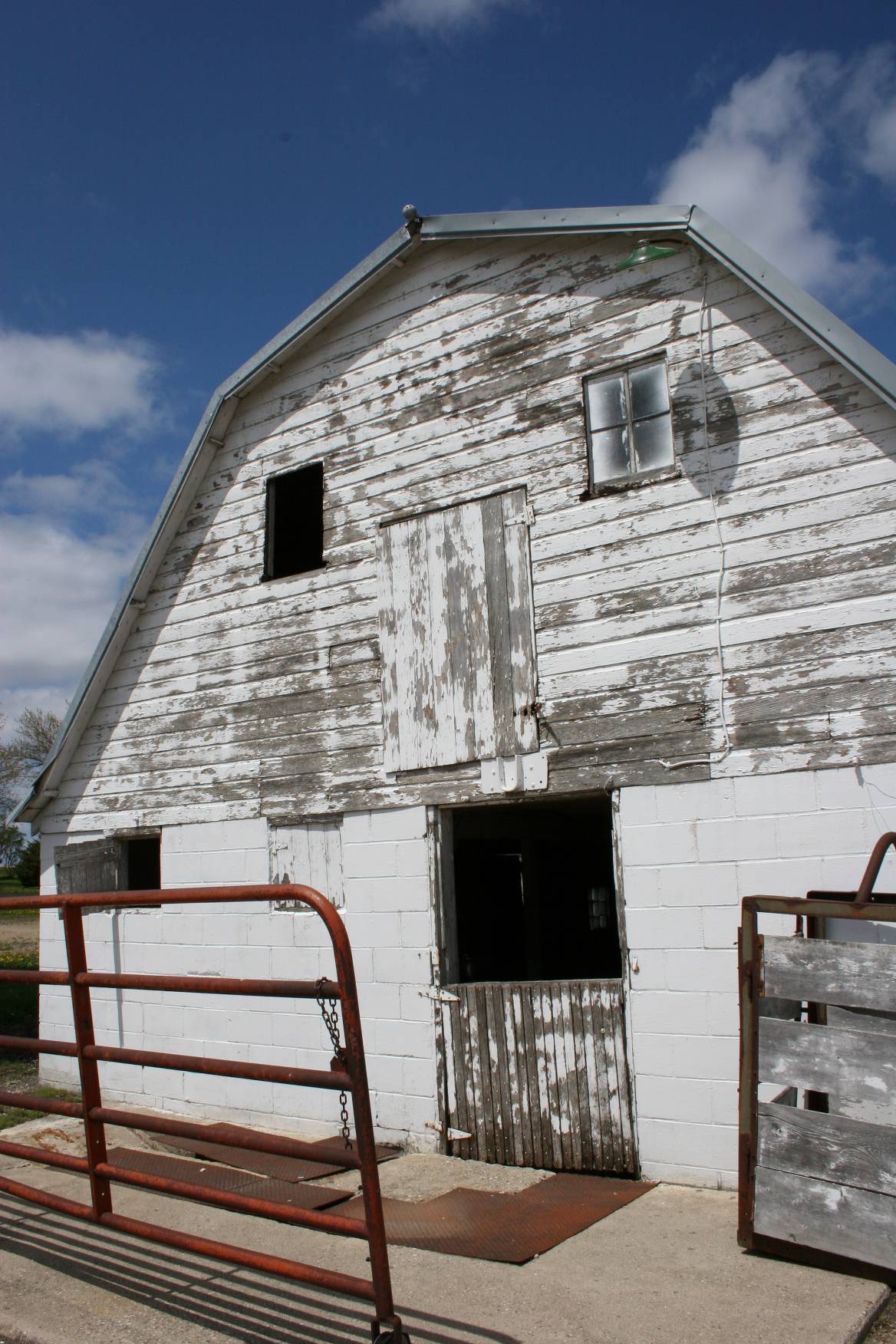
Most of my poetry connects to the southwestern Minnesota prairie, where I grew up on a dairy and crop farm. Specifically, the barn on the home place inspired my two distinct barn poems which published in The Talking Stick and Lake Region Review.

I don’t know what moved the editors of either publication to select my poems for inclusion in their literary journals. But I did incorporate lines such as “hot cow pee splattering into her gutters” and “rusty hinges creaking like aged bones.”

According to Co-editor Kildegaard at Lake Region Review, editors chose pieces that were “fresh, creative, lively, interesting. We were looking for writing that has something new to say.”

Apparently I had something new to say about the old barn.

The early 1950s barn on the Redwood County dairy farm where I grew up today stands empty of animals.

WRITERS FEATURED in the recently-published 212-page The Talking Stick, Black & White, Volume 20, are from, or have a strong connection to, Minnesota. Those published in the 138-page debut of Lake Region Review live primarily in west central Minnesota. Eight writers have been published in both collections.

The cover of Lake Region Review is a detail of an original landscape painting, “Christina Lake: View from Seven Sisters,” by American impressionist painter Stephen Henning of Otter Tail County.

IF YOU’RE A WRITER, specifically of poetry, did you/do you struggle with confidence issues? At what point did you/will you call yourself a poet?

FYI: For more information or to purchase copies of either literary journal featured here, click on the appropriate link below:

www.lakeregionreview.net

www.thetalkingstick.com

And click here for more information about Roadside Poetry.

© Copyright 2011 Audrey Kletscher Helbling