Minnesota Prairie Roots

Writing and photography by Audrey Kletscher Helbling

The Smithsonian in Hanley Falls & Hanley Falls in the Smithsonian (exhibit) September 20, 2012

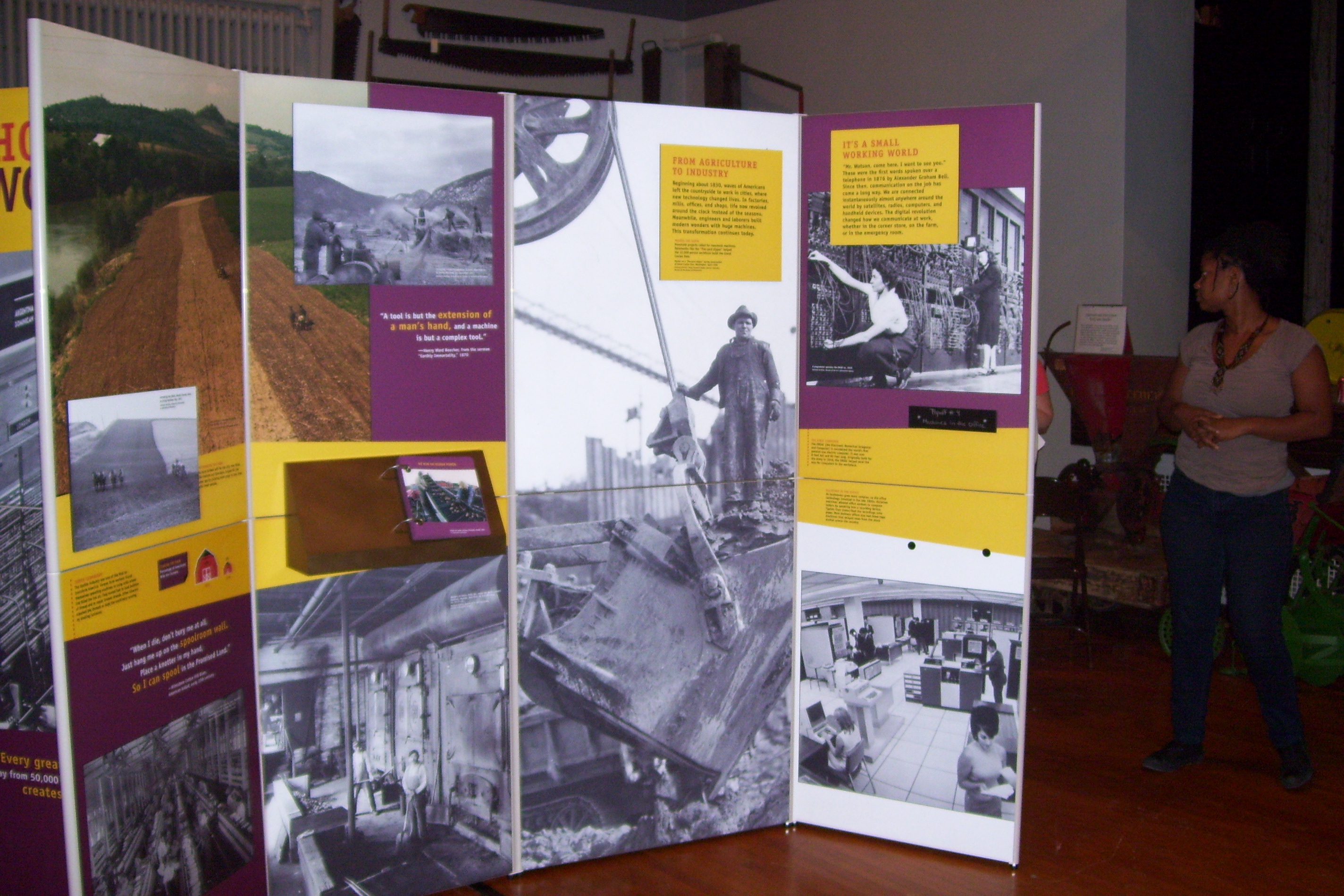
The Smithsonian’s Museum on Main Street exhibit, “The Way We Worked,” features snippets from Minnesota. Photo courtesy of Minnesota’s Machinery Museum, Hanley Falls, in rural southwestern Minnesota.

I DOUBT MANY of the 304 residents of Hanley Falls, rural Yellow Medicine County, Minnesota, have ever visited the Smithsonian or even traveled to Washington D.C.

But now this internationally-acclaimed museum has come to Hanley Falls via “The Way We Worked,” a Museum on Main Street project developed by the Smithsonian Institution Traveling Exhibition Service and adapted from an original exhibition from the National Archives.

Bottom line, if you can’t bring the people to the museum, bring the museum to the people.

Specifically, from now through October 20,  Minnesota’s Machinery Museum in Hanley Falls is hosting the exhibit on where, how, who and why Americans work.

But that’s not all. Hanley Falls is part of “The Way We Worked,” as are several other Minnesota places and people.

Says Museum Director Laurie Johnson: “It is an honor in itself to be hosting a Smithsonian Traveling Exhibit. To be an actual part of the exhibit traveling all over the U.S. is a very big honor.”

Hanley Falls’ place in the exhibit falls in the “Communities at Work” section and features a 1987 aerial view photo of Hanley Falls by Vincent H. Mart sourced from the Minnesota Historical Society. The MHS photographic collection includes 5,697 aerial views from around Minnesota photographed by Mart between 1962-1988.
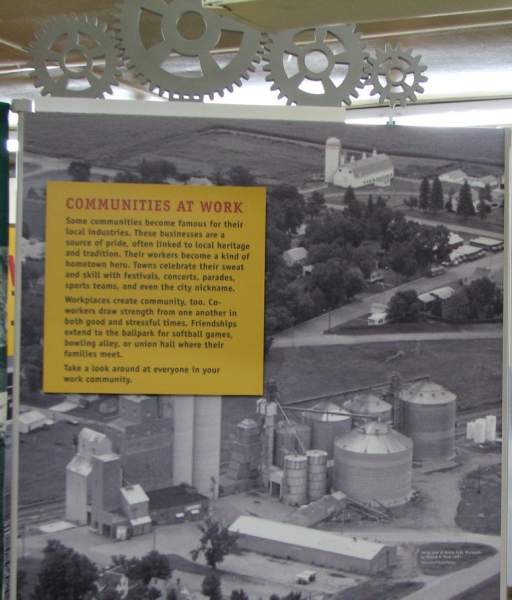
The 1987 Vincent H. Mart photo showing a portion of Hanley Falls and now part of the Smithsonian traveling exhibit. Photo courtesy of Minnesota’s Machinery Museum.

Mart’s black-and-white shot #5,655 in the MHS archives, and now in the Smithsonian exhibit as image 196, shows the then Hanley Falls Farmers Elevator (now the Farmer’s Co-op Elevator) on the west side of town, plus Bennett Transportation (bus company) and the fourth-generation Oftedahl family farm. As a side note, the elevator celebrated its 100th anniversary this past July on Minnesota’s Machinery Museum grounds with more than 2,000 in attendance.

According to Johnson, the scene in the photograph no longer looks the same. Several of the grain bins were damaged in a wind storm and the main office was  moved and an elevator built to the southwest of the Oftedahl farm. The old elevator remains and is still used by the Farmer’s Co-op.

The exhibit copy which accompanies the Hanley Falls photo reads, in part:

The reminders of a town’s main industry imprint its landscape and identity. Silos dominate the skyline in Hanley Falls, Minnesota as they do in most small, agricultural communities.

And here’s how Johnson summarizes what the Hanley Falls photo tells us about “The Way We Worked:”

Farming is a way of life here and has been for many generations. The exhibit talks about “community” and we are definitely a community that works, worships, (has) neighborhood get-togethers and plays together.

Johnson, who lives on a farm about 10 miles north of Hanley Falls, further explains that the local elevator, banks and gas station provide jobs in town. Some residents work in neighboring towns. Many are retired.
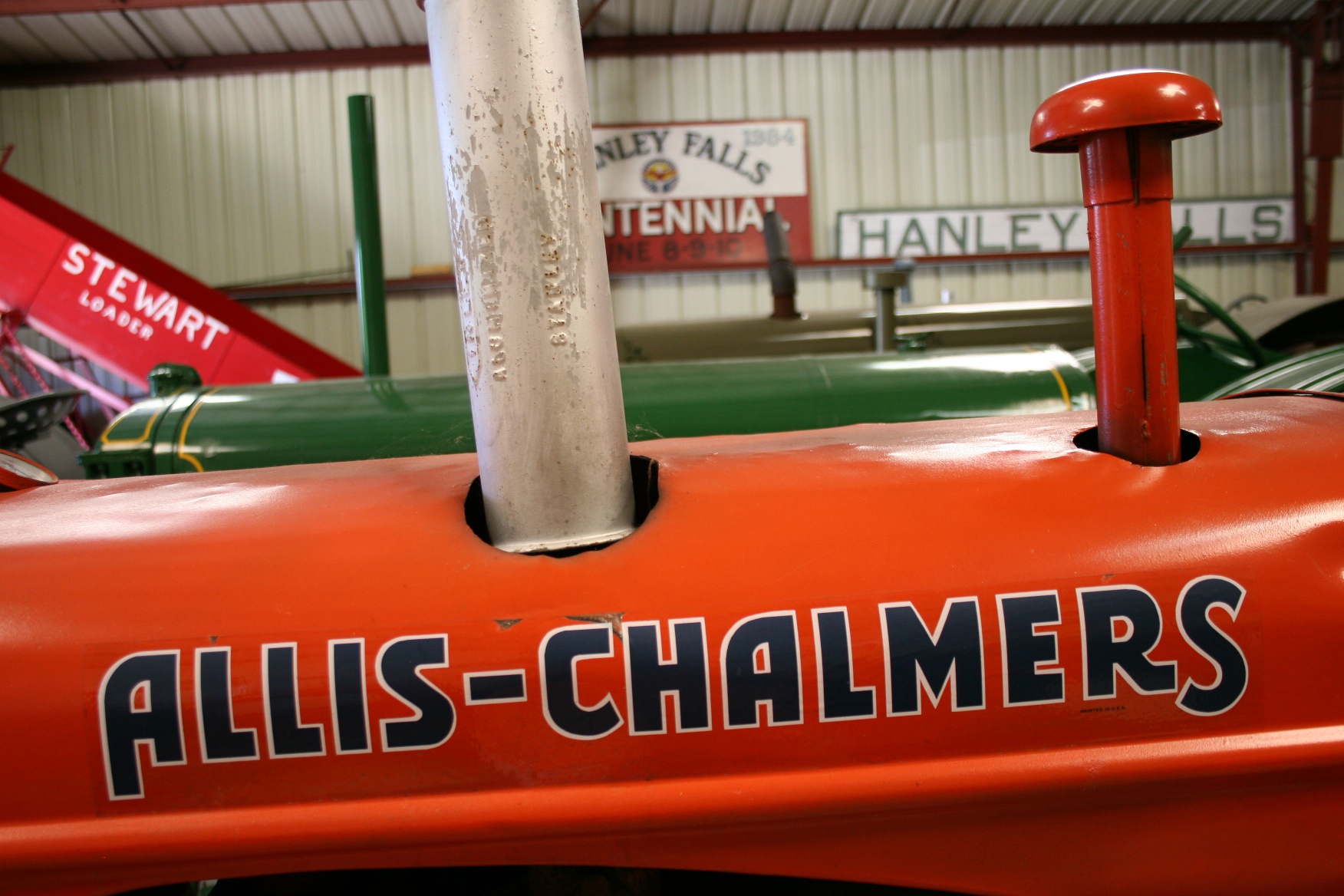
You’ll find plenty of old tractors and farm machinery, along with vintage cars and trucks, in the museum’s outbuildings. Minnesota Prairie Roots file photo.

Already the Smithsonian show is attracting more visitors to Minnesota’s Machinery Museum, defined by Johnson as “an agricultural museum recalling farm life in stories and artifacts from how we farmed with horses to a farm kitchen, bedroom, parlor and general store…preserving our agricultural heritage for generations.”
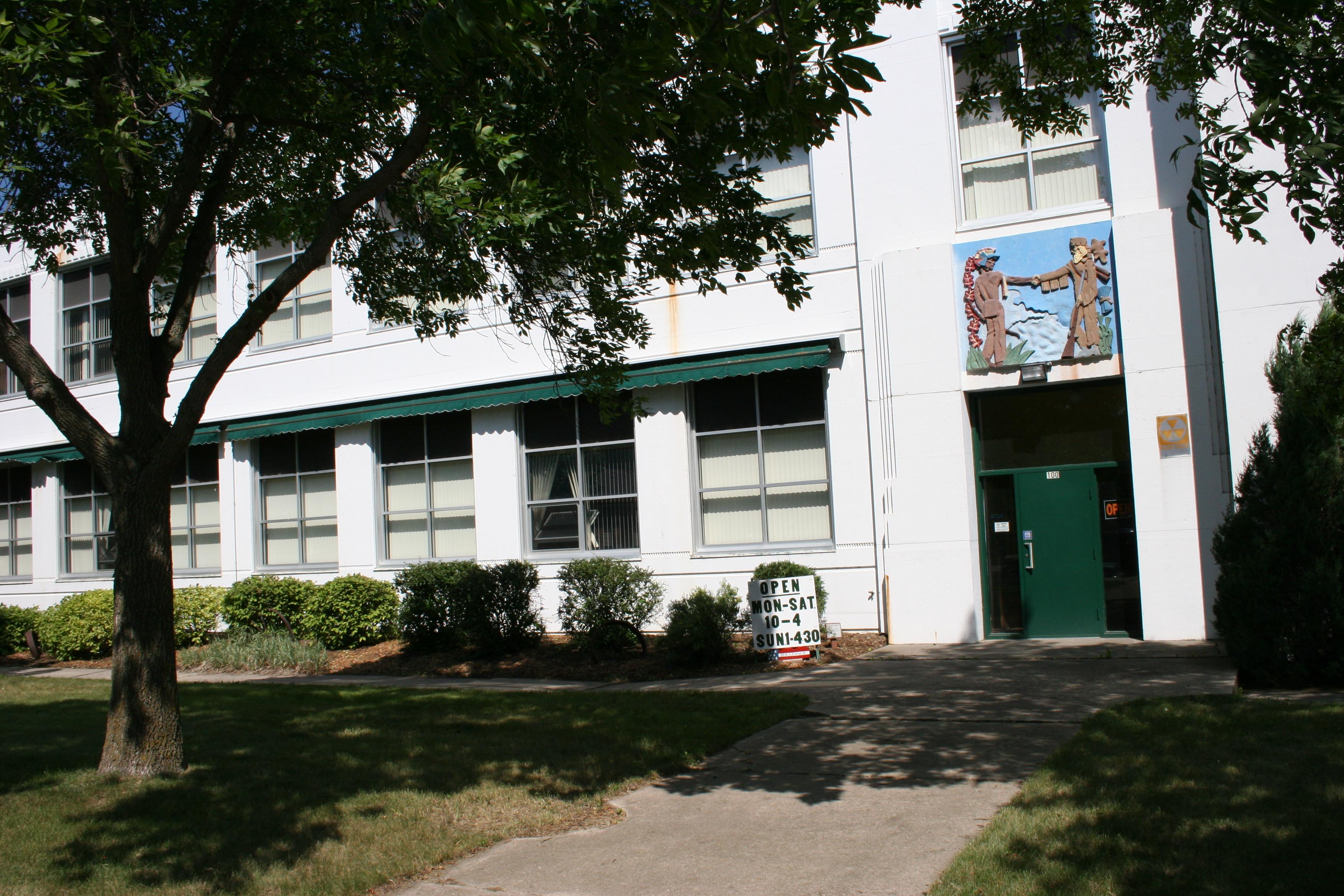
The entrance to the portion of the museum housed in the former school, a WPA building. Minnesota Prairie Roots file photo.

The five-building Yellow Medicine County museum complex, which includes the former Hanley Falls School built in 1939 by the Works Progress Administration, rests on six acres. You’ll find antique tractors, automobiles, gas engines, threshing equipment and other machinery and artifacts in the outbuildings.
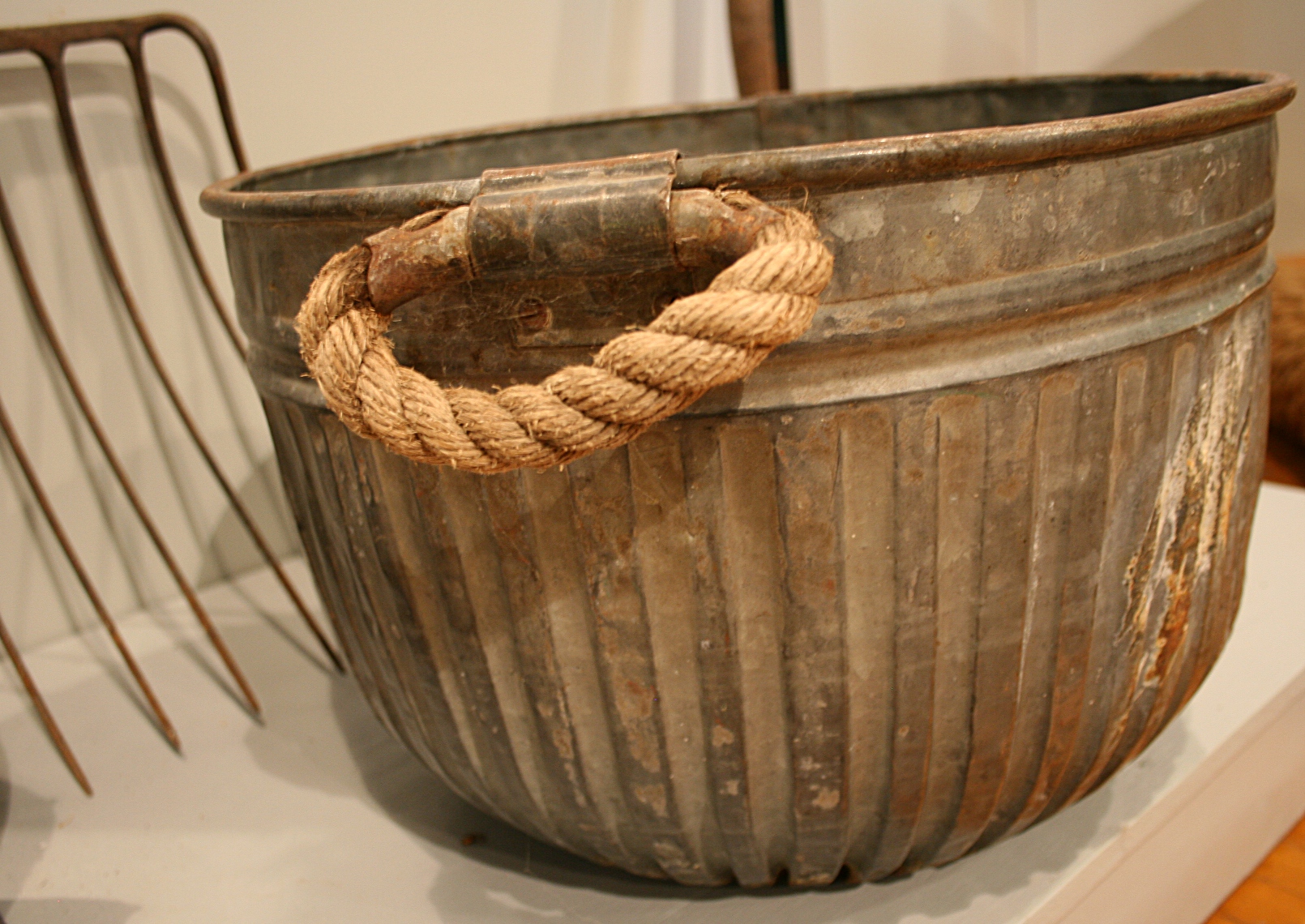
A bushel basket, one of the many ag items displayed at the museum. Minnesota Prairie Roots file photo.

Until October 20, you also can find five multi-sided kiosks featuring photos, videos, flip booklets and other interactive activities as part of the Smithsonian’s “The Way We Worked” exhibit.

Besides Hanley Falls, other Minnesota places/information in the show are a photo of women sorting sweet potatoes; quotes from Earl Bakken, founder of Minneapolis-based Medtronics, maker of the first self-contained pacemaker; a 1974 photo from Danheim Dairy in New Ulm; a SPAM Town banner; mention of the Moorhead Spuds (hometown pride for the town team); and a 1928 photo of St. Paul Gas and Light Company workers at a dance.

Johnson has no idea how the Hanley Falls photo became a part of this national touring exhibit. She discovered the town’s inclusion while vacationing in Tennessee, where she stopped to view the exhibit.
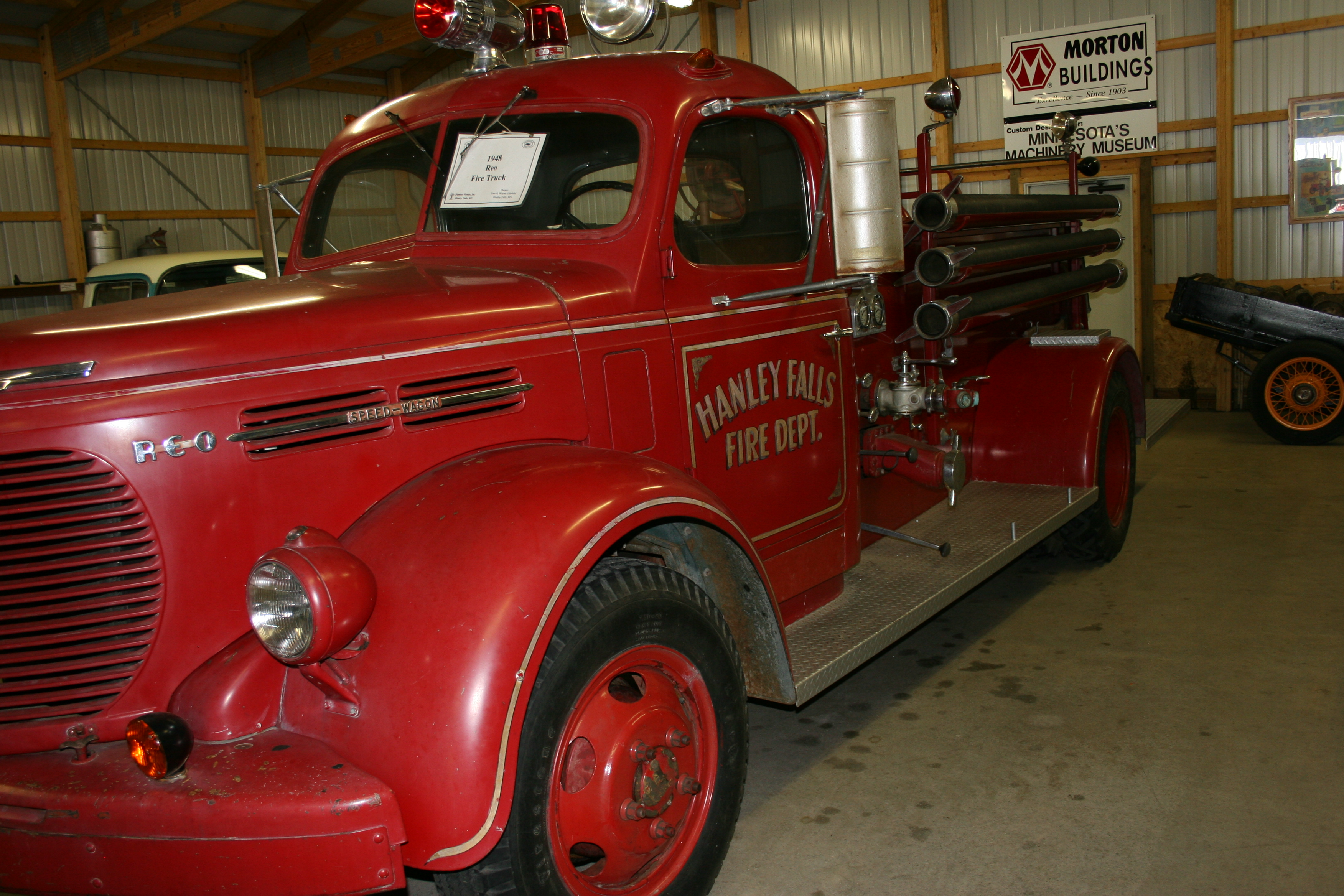
An old Hanley Falls fire truck is among vehicles housed in the outbuildings. Minnesota Prairie Roots file photo.

After leaving Hanley Falls, the exhibit will travel to five other Minnesota locations, including the Wright County Historical Society in Buffalo (Oct. 27 – Dec. 8); the Winona County Historical Society in Winona (Dec. 15 – Jan. 26); the Steele County Historical Society in Owatonna (Feb. 2 – March 16); the Virginia Area Historical Society in Virginia (March 23 – May 4); and the Depot Preservation Alliance in Baudette (May 11 – June 22).

In Hanley Falls, “The Way We Were” can be viewed between 10 a.m. – 4 p.m. Monday – Saturday or from 1 p.m. – 4:30 p.m. on Sunday. The museum season was extended to accommodate the show.

Admission to Minnesota’s Machinery Museum is free, but monetary contributions are accepted via a free will donation box.

Located in southwestern Minnesota, Hanley Falls sits nine miles south of Granite Falls or 20 miles north of Marshall along Highway 23. Go one block west of Highway 23 and then a block north to find the museum.
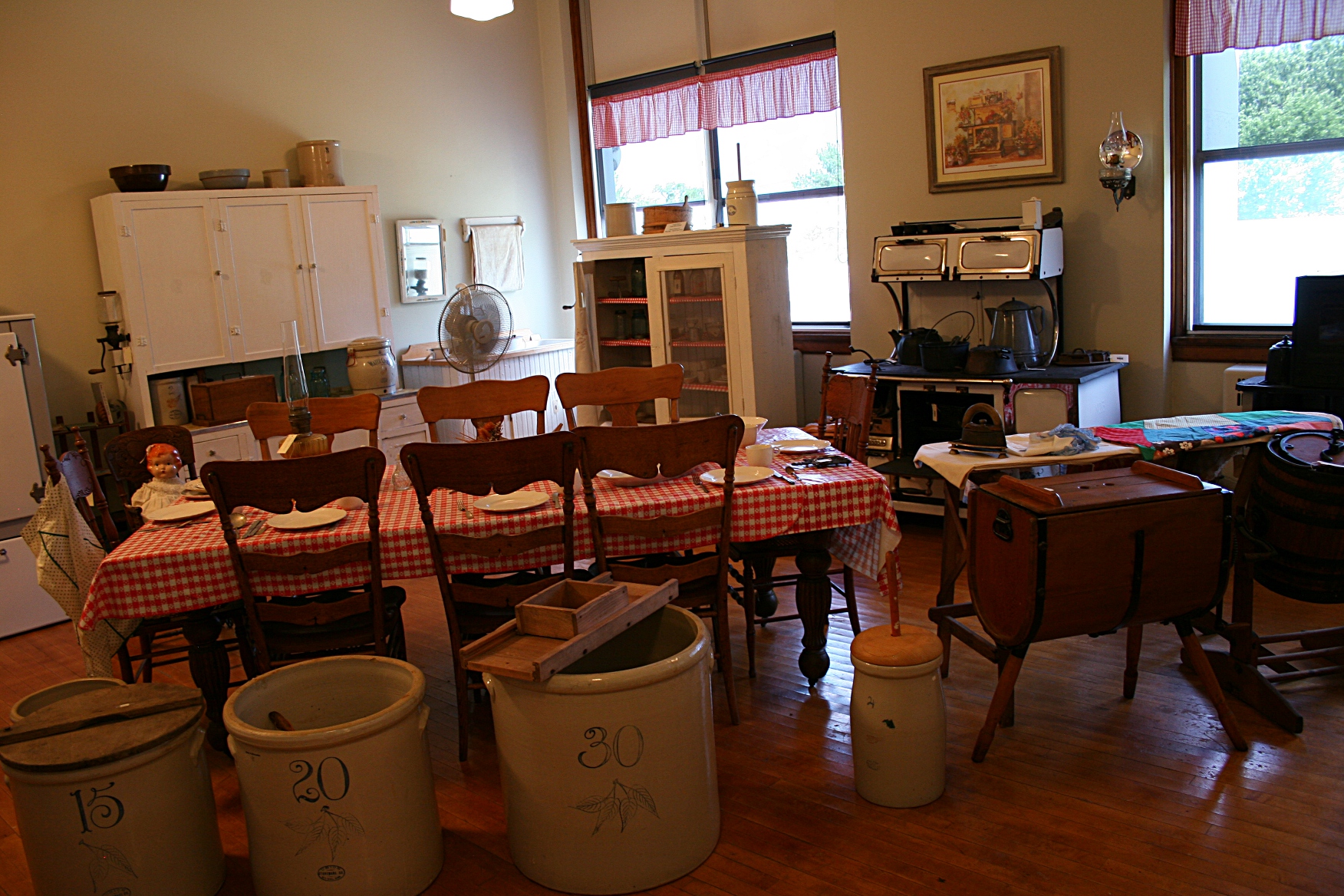
An old-style farm kitchen on the second floor of the museum. Minnesota Prairie Roots file photo.

“The Way We Worked” is presented in Hanley Falls in collaboration with the Minnesota Humanities Center. Funding, says Johnson, is via the Center; The Clean Water, Land & Legacy Amendment (Arts & Cultural Heritage Fund); the Smithsonian Institute; the National Endowment for the Humanities; and the United States Congress.

Minnesota’s Machinery Museum previously hosted the Smithsonian’s Museum on Main Street projects “Barn Again” and “Between Fences.”

FYI: To learn more about Minnesota’s Machinery Museum, click here to link to the museum website.

For more info about “The Way We Worked,” click here.

To view additional photos by Vincent H. Mart in the Minnesota Historical Society archives, click here.

© Copyright 2012 Audrey Kletscher Helbling


One person’s junk…Hot Sam’s Antiques, Part III September 19, 2012

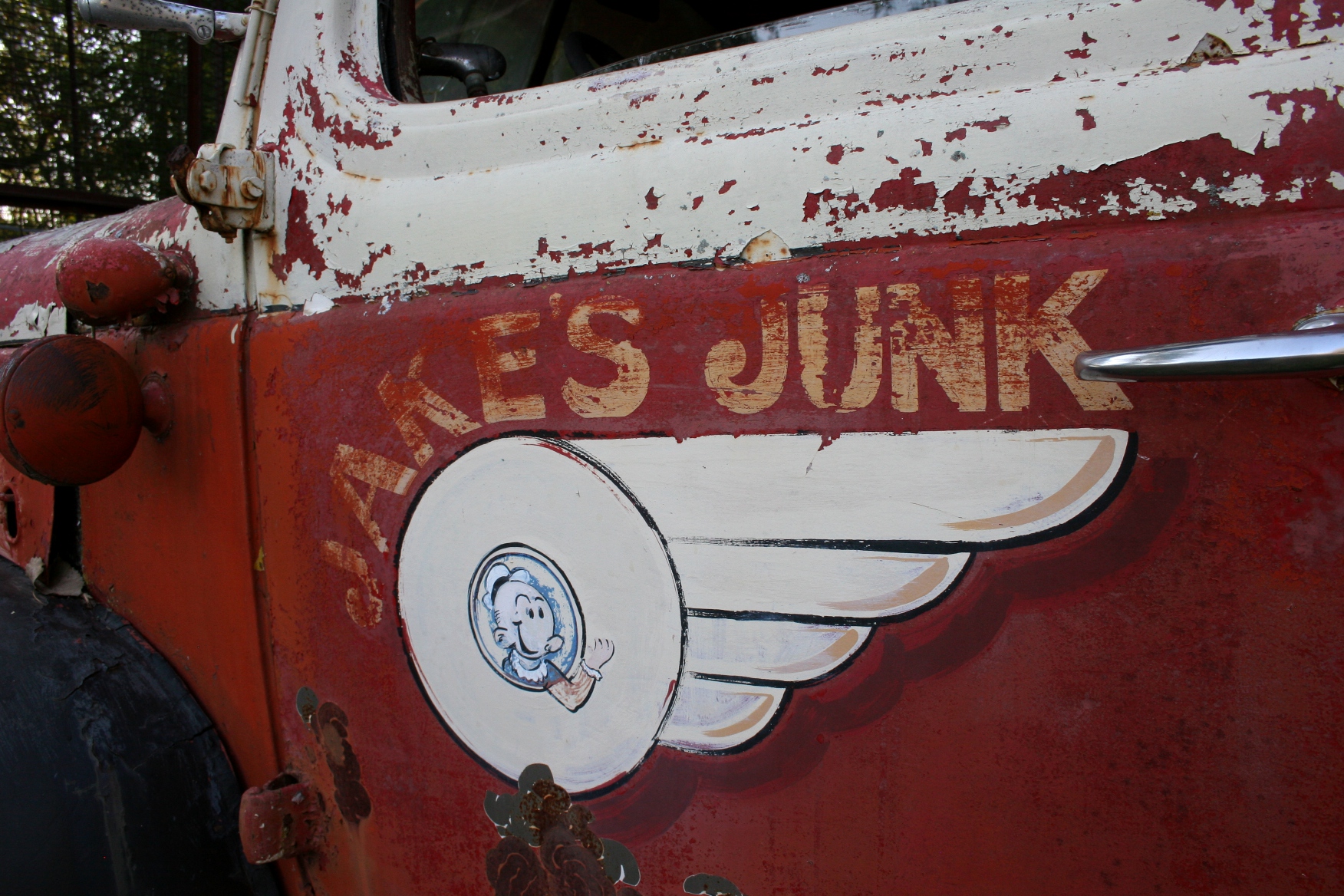
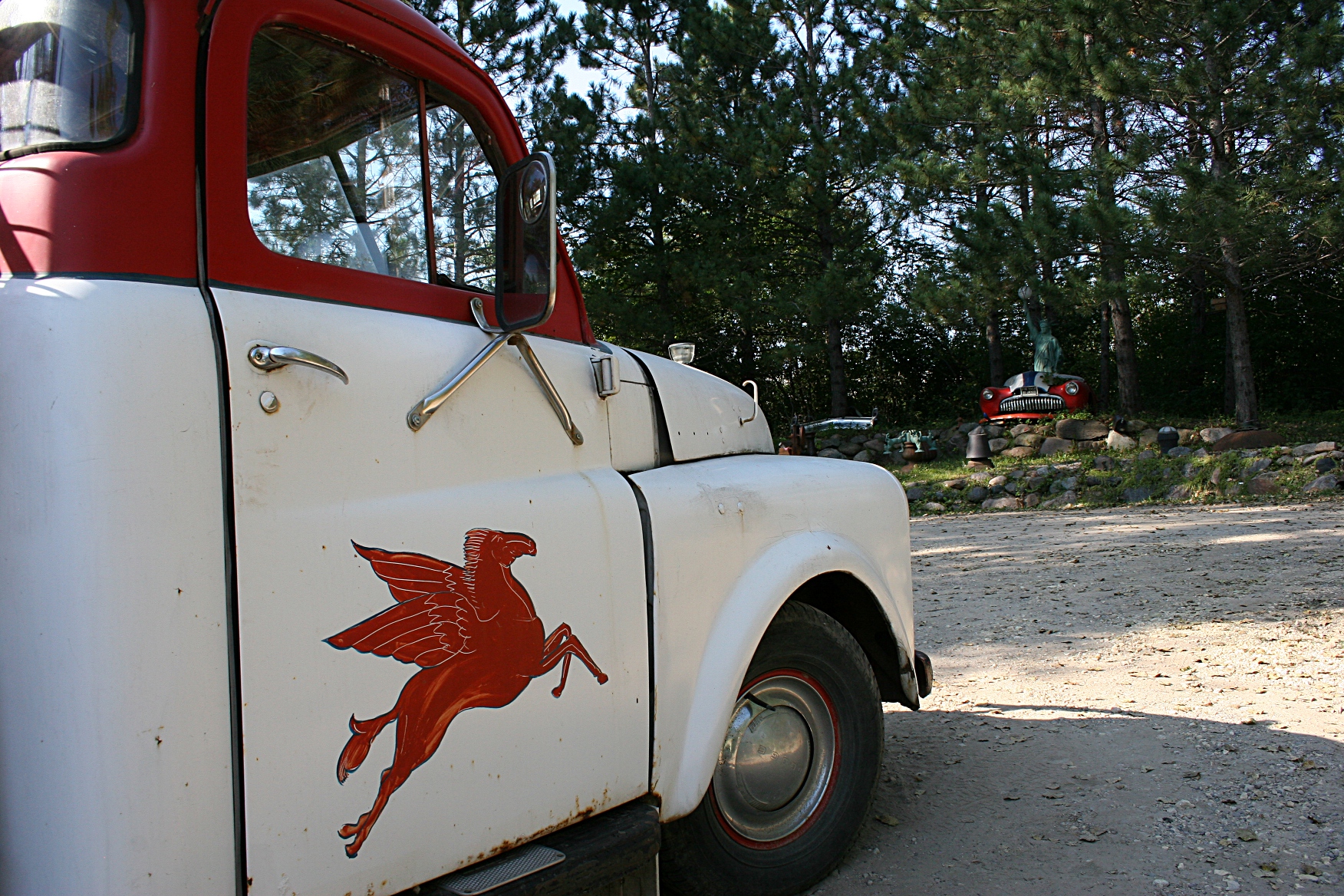
Truck door signage, a nod perhaps to Jake Hood, owner of Hot Sam’s Antiques, Lakeville, Minnesota.

ONE MAN’S (or woman’s) junk is another man’s (or woman’s) treasure.

That adage could aptly be applied to Hot Sam’s Antiques, rural Lakeville, Minnesota.

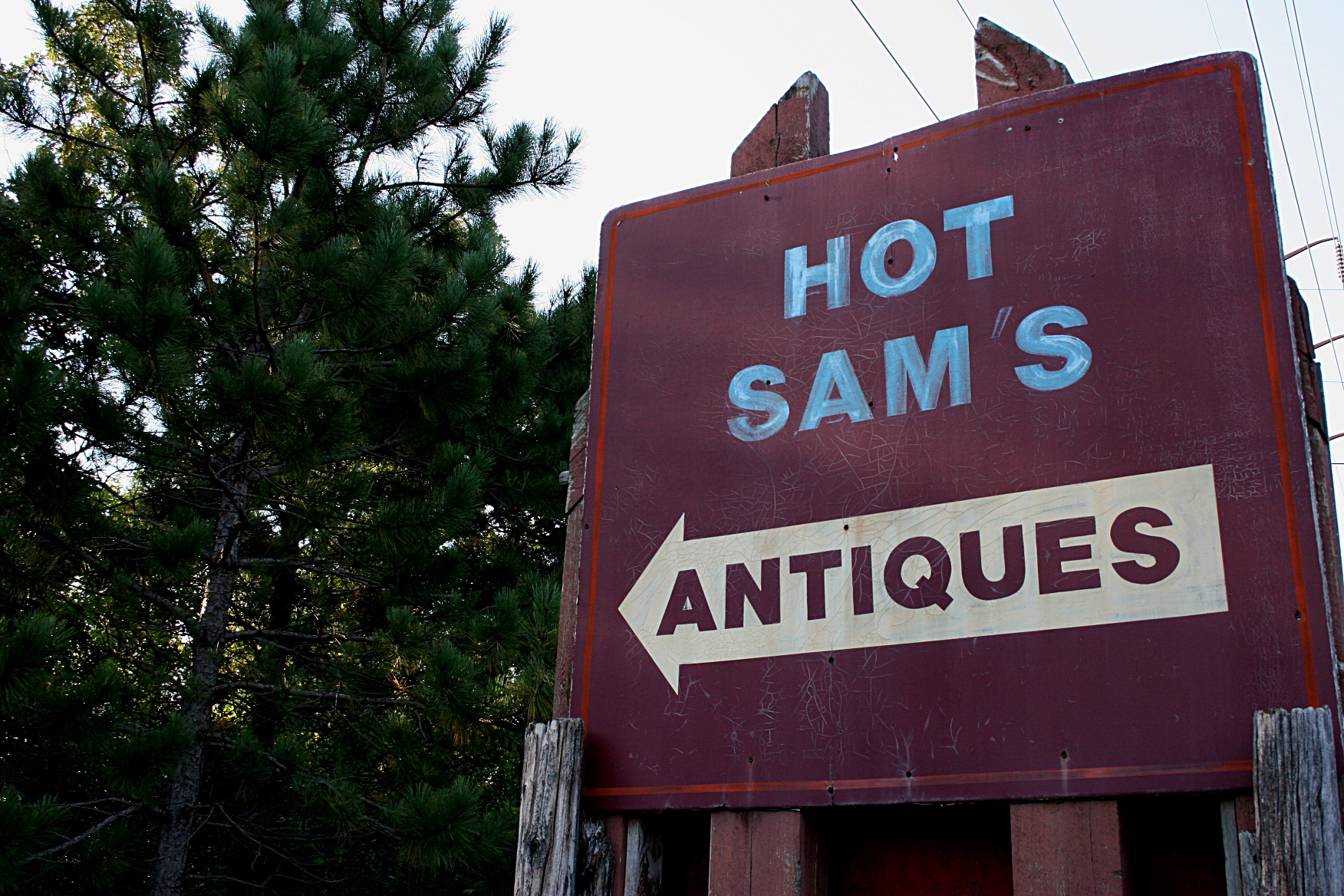
I’ve posted about this antique theme park twice already. Click here and here to read those stories. But Hot Sam’s deserves a third post. Why? Think upcycling and recycling.

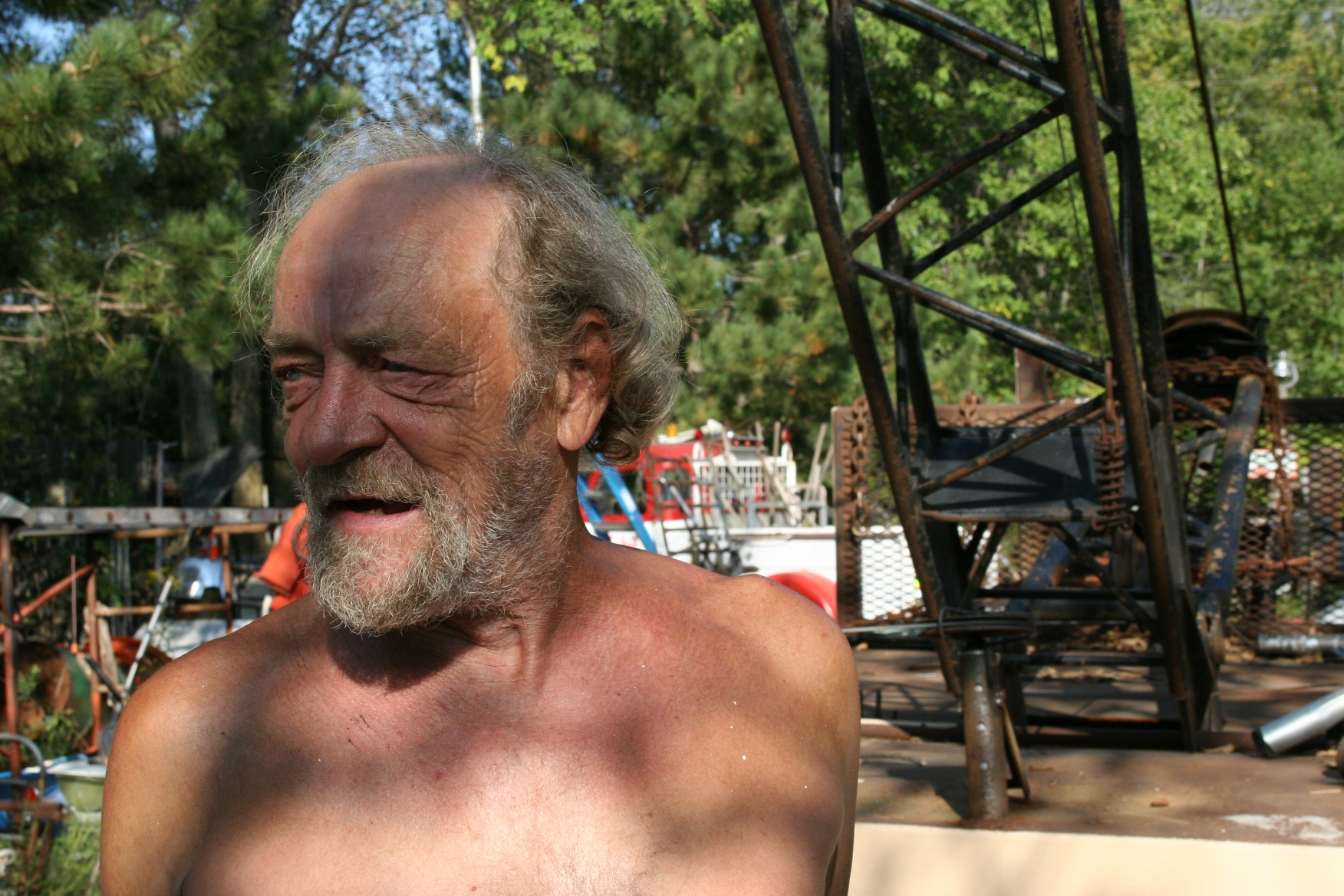
Barry, artist and upcycler of stuff at Hot Sam’s Antiques.

I appreciate businesses like Hot Sam’s Antiques which sell or re-purpose used stuff. We are too much a throw-away society although, in recent years, it’s become suddenly chic to upcycle or purchase vintage/used. I hope the trend lasts beyond the current economic depression.

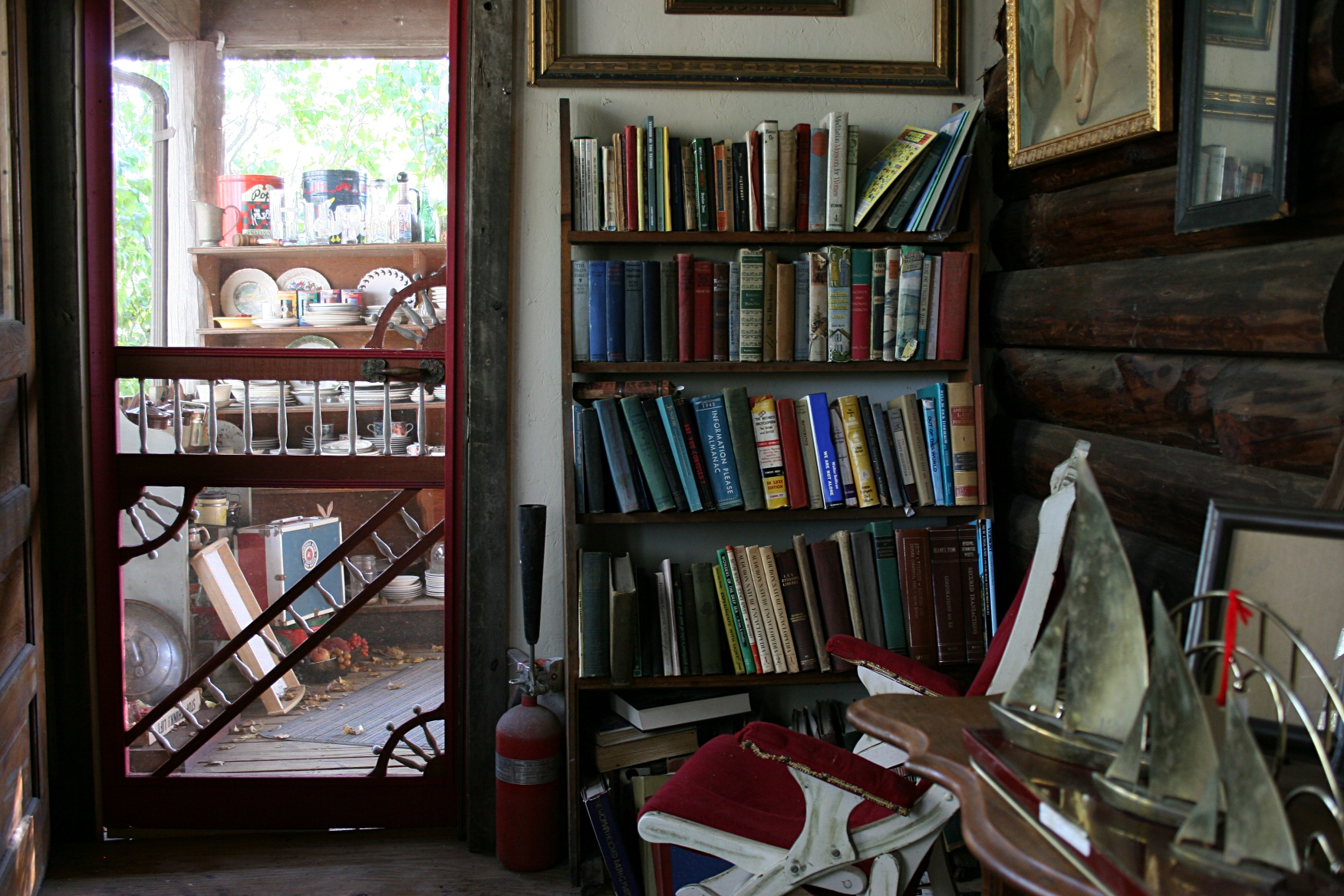
Inside the log cabin at Hot Sam’s is a bounty of antiques, collectibles and other used merchandise. The door leads to the wrap around porch, where you’ll find more goods.

For decades I’ve shopped at rummage sales and thrift stores. The bottom line is that I am careful with my money, a trait instilled in me while growing up in a farm family with little money. Think eating white rice with cinnamon and sugar for a meal. Think no birthday presents. Think shopping only for clothes hung on the sales rack.

My parents worked hard to provide for our family of eight, but it was not easy for them. I never realized, though, that we were poor until I grew into adulthood. That’s a credit to my parents’ love and care.

Because of my upbringing, I tend to bargain shop and put less value on material possessions than many in today’s society. For example, of all the furniture in the house my husband and I own, only five—the sofa, recliner, twin bed frame, entertainment center and my office desk—are pieces we bought new.

Likewise, nearly all of the art I own originates from rummage sales, thrift or antique stores, or recycled art sales.

There. That should explain why I appreciate places like Hot Sam’s Antiques.

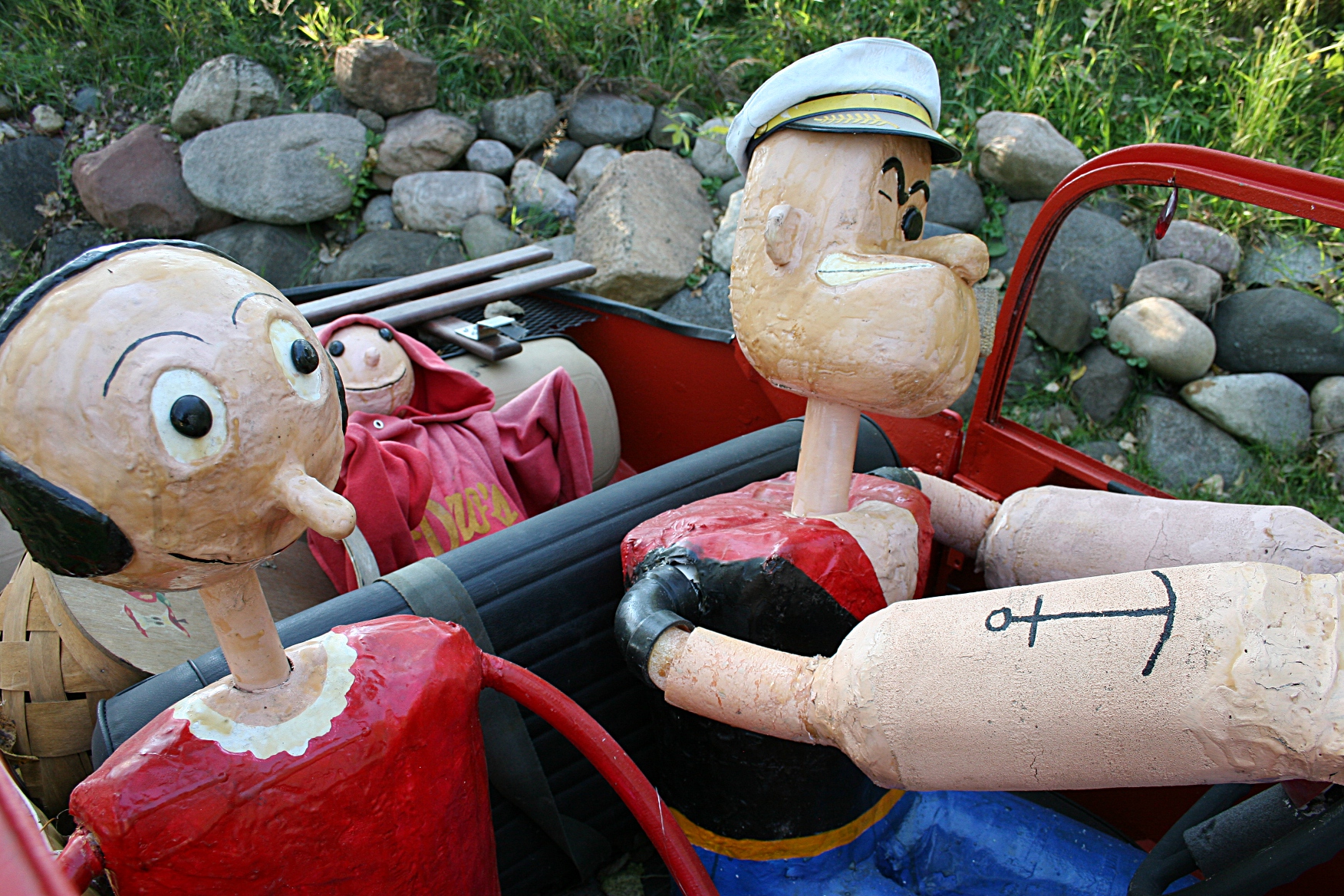
And I also like Hot Sam’s because of the creative art pieces such as Popeye and Olive Oil and Sweet Pea riding in the family car. I watched “Popeye” cartoons while growing up.

Somewhere in my memory bank I possess a memory of my dad telling us to watch for the flying red horse en route to visit relatives in the Cities. I couldn’t tell you now where that red horse was located, but I’m fond of this icon. In the background you”re correctly seeing a Statue of Liberty jutting from the front end of a partial vintage car.

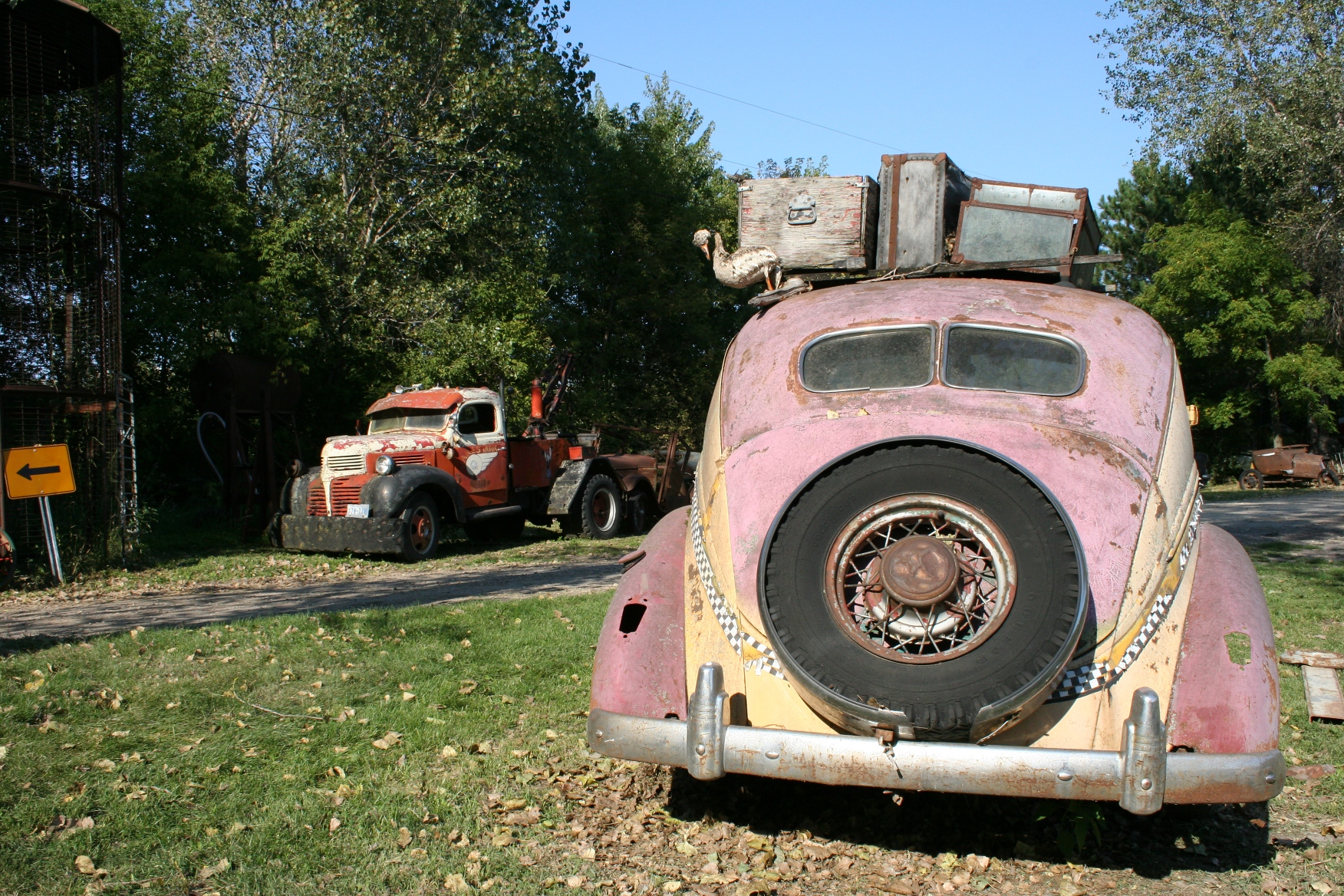
I rode in a taxi once in Chicago. It didn’t look anything like this one at Hot Sam’s. But that’s my single taxi experience.

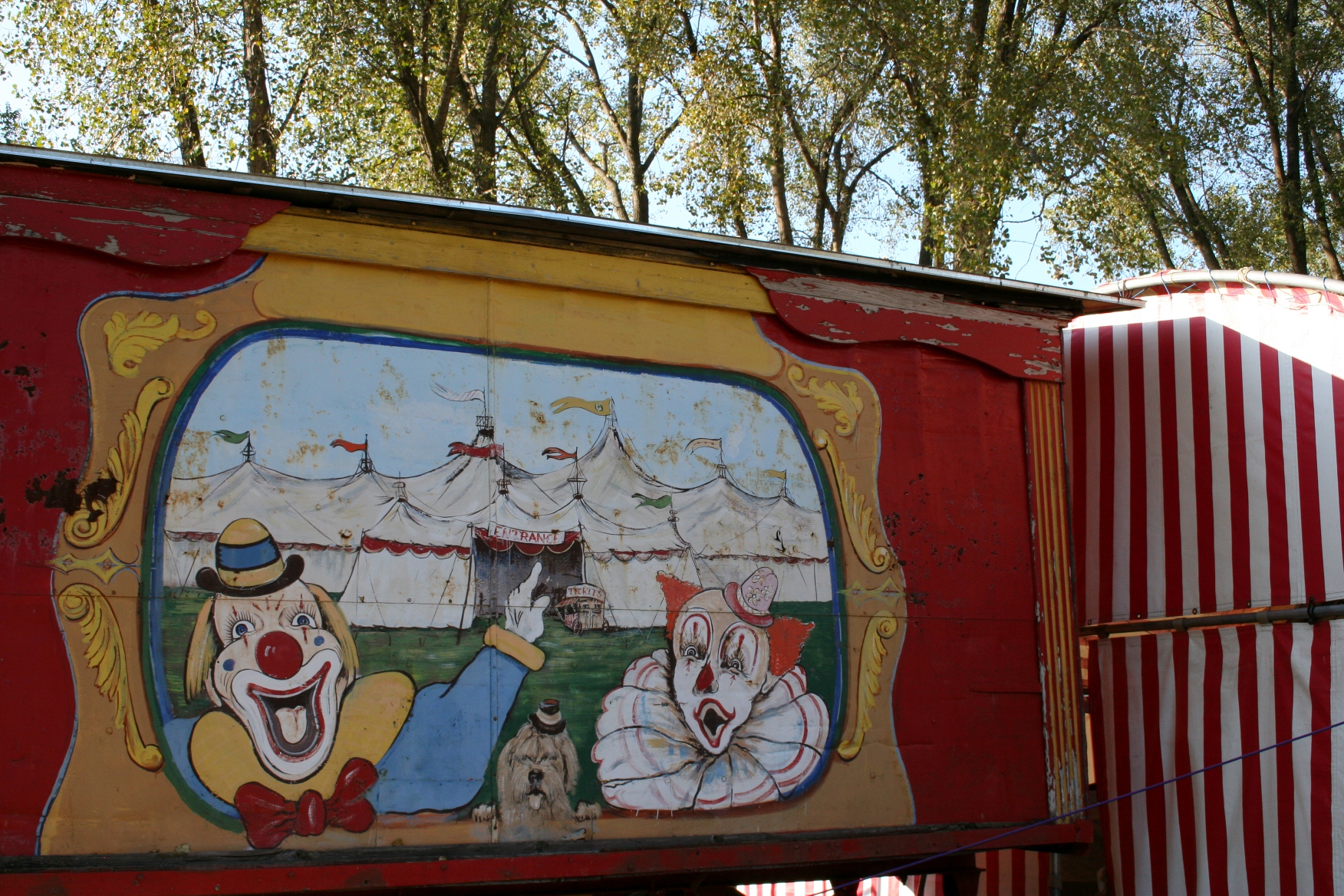
I’d like to attend a circus once… See why I love this place?

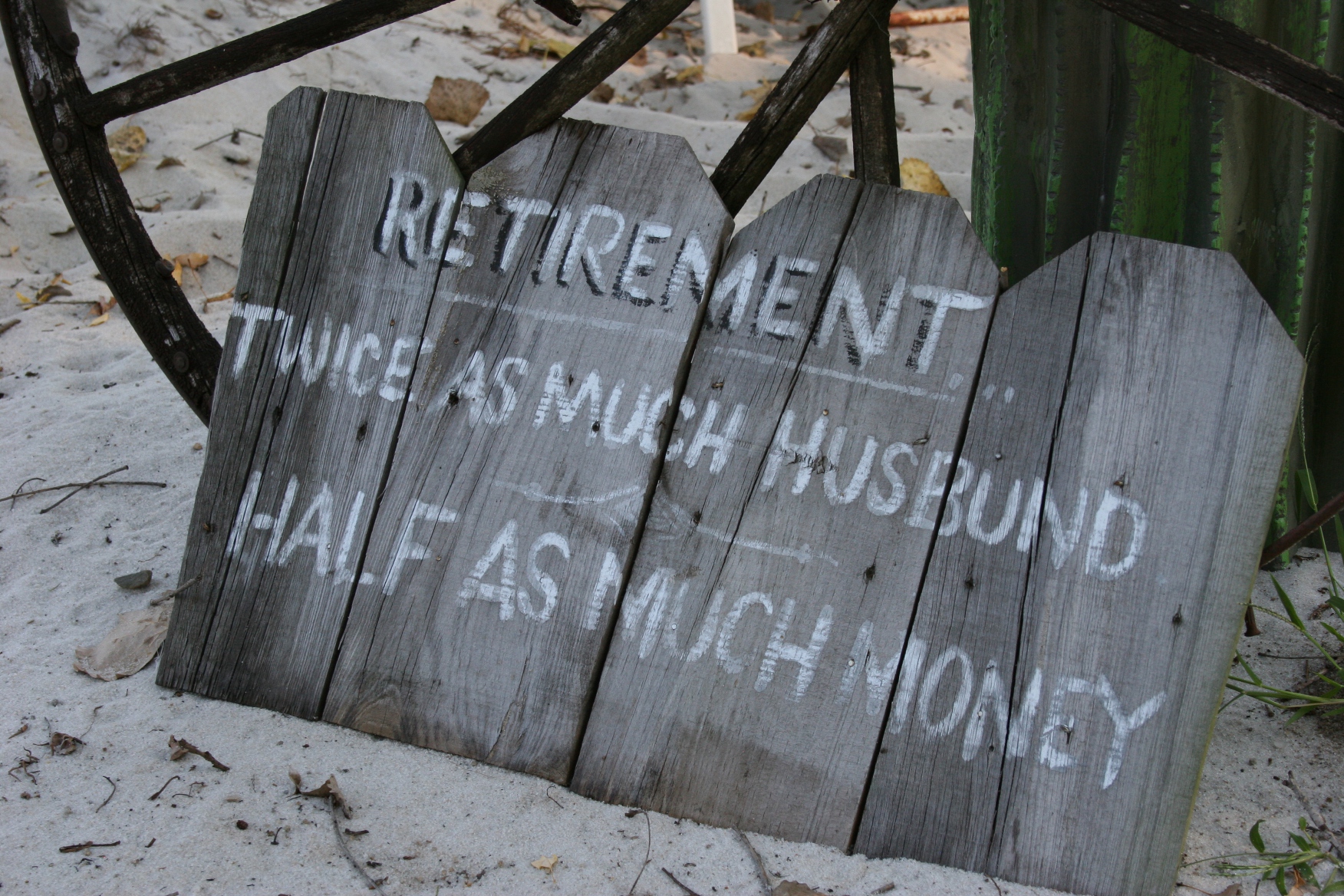
Ten years or more before I experience the validity of this statement.

© Copyright 2012 Audrey Kletscher Helbling
 

My adventure at a Minnesota “antique theme park,” Part II September 18, 2012

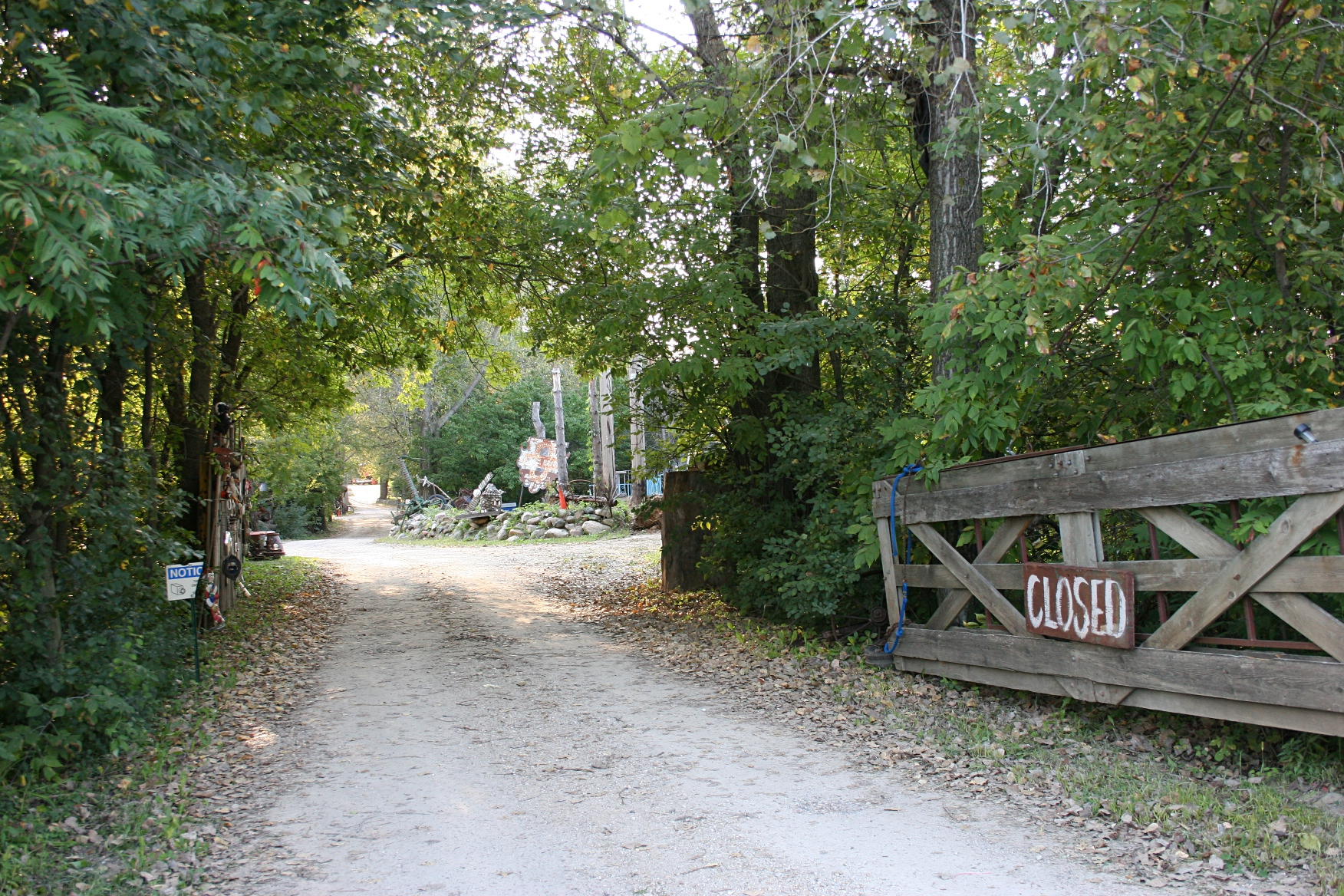
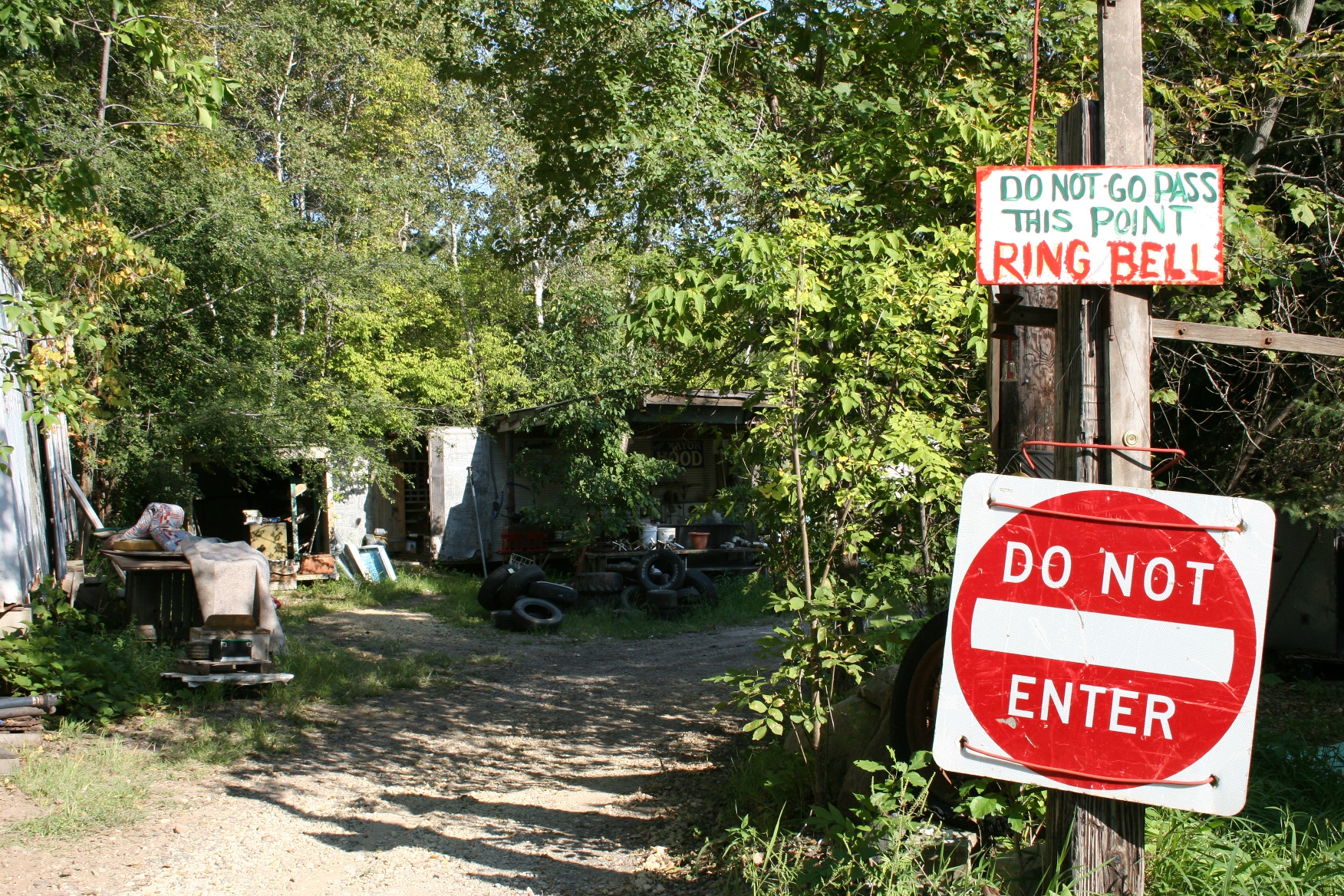
Would you follow this driveway into the woods? I did. And what an adventure.

“I’M A LITTLE SCARED,” I admitted as we turned off Pillsbury Avenue just south of Lakeville, Minnesota, onto a narrow, hard-packed gravel road. Thick dark woods crept to the edge of the driveway and my imagination ran wild with fairy tales that ended badly.

What lurked in those woods? I glanced toward my husband, who was guiding our van into the unknown. “I hope there’s not a big dog.” I imagined a ferocious canine, teeth bared, legs planted in a defensive stance.

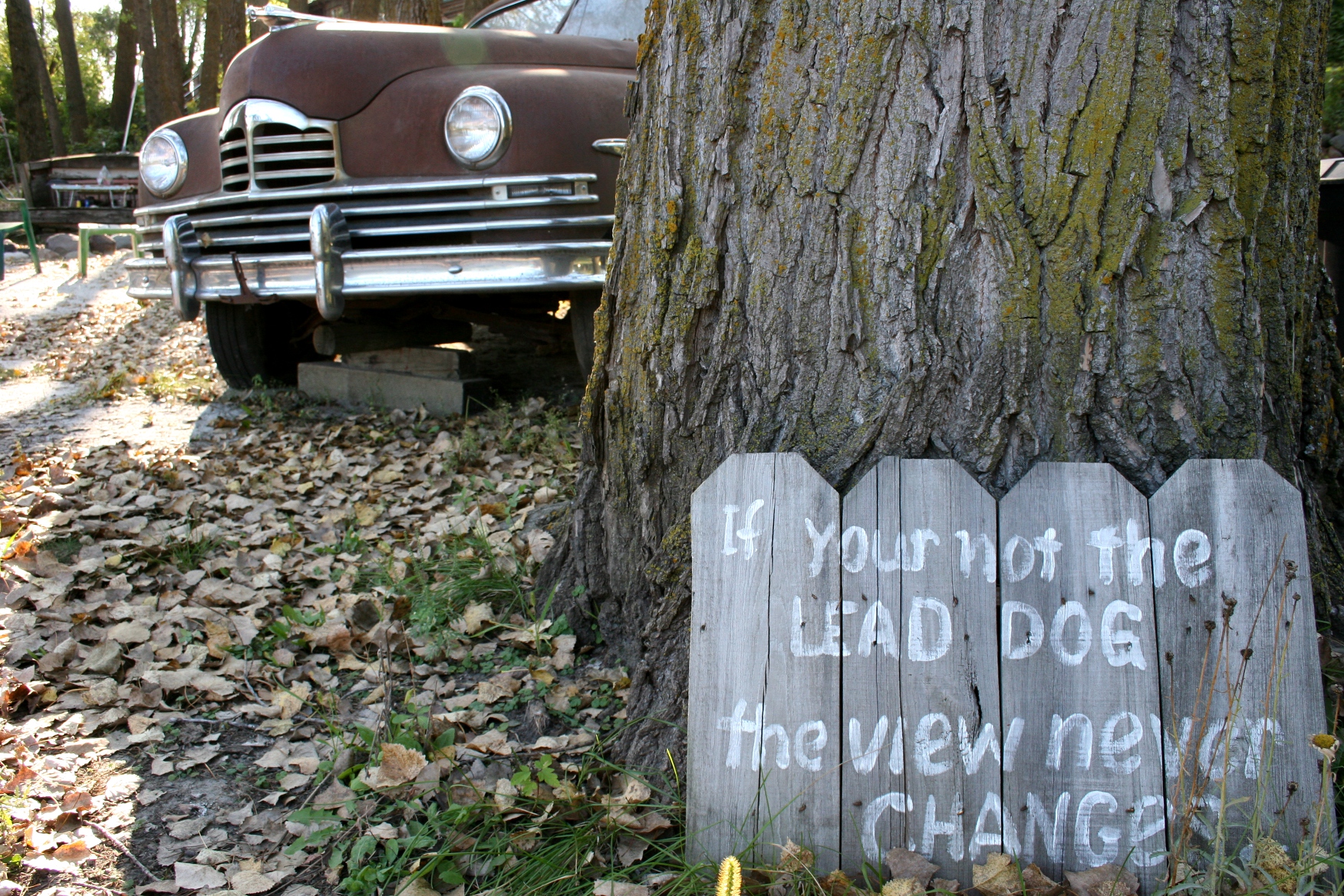
A dog-themed sign, one of many signs on the property. And, no, spelling is apparently not a priority here.

There were no guard dogs—unless you count the little dog interested only in pursuing a baby bunny and not humans. There were no bad endings.

But I wanted to warn you, lest you initially think like me and consider backing out even before you enter the wonderment which is Hot Sam’s Antiques.

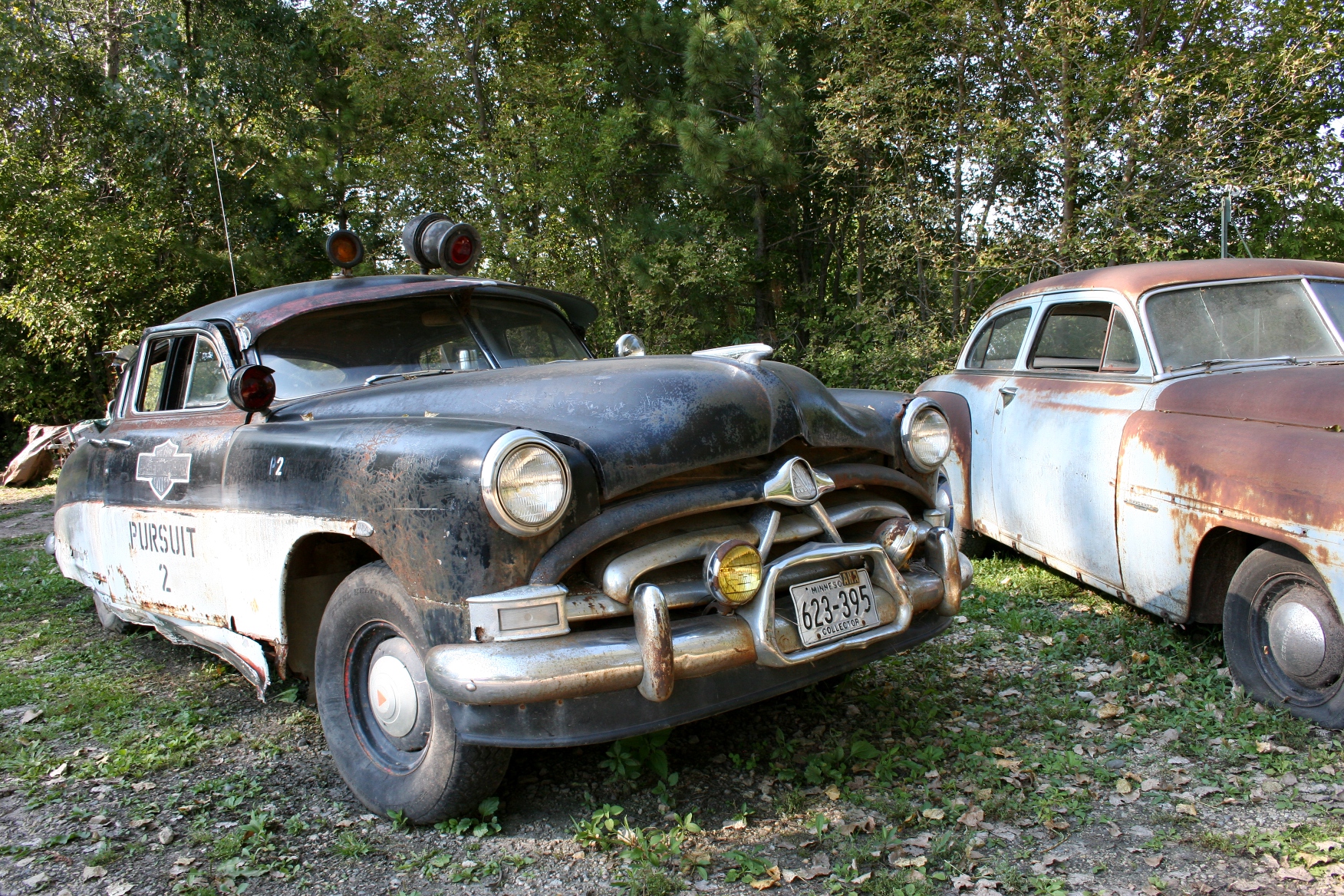
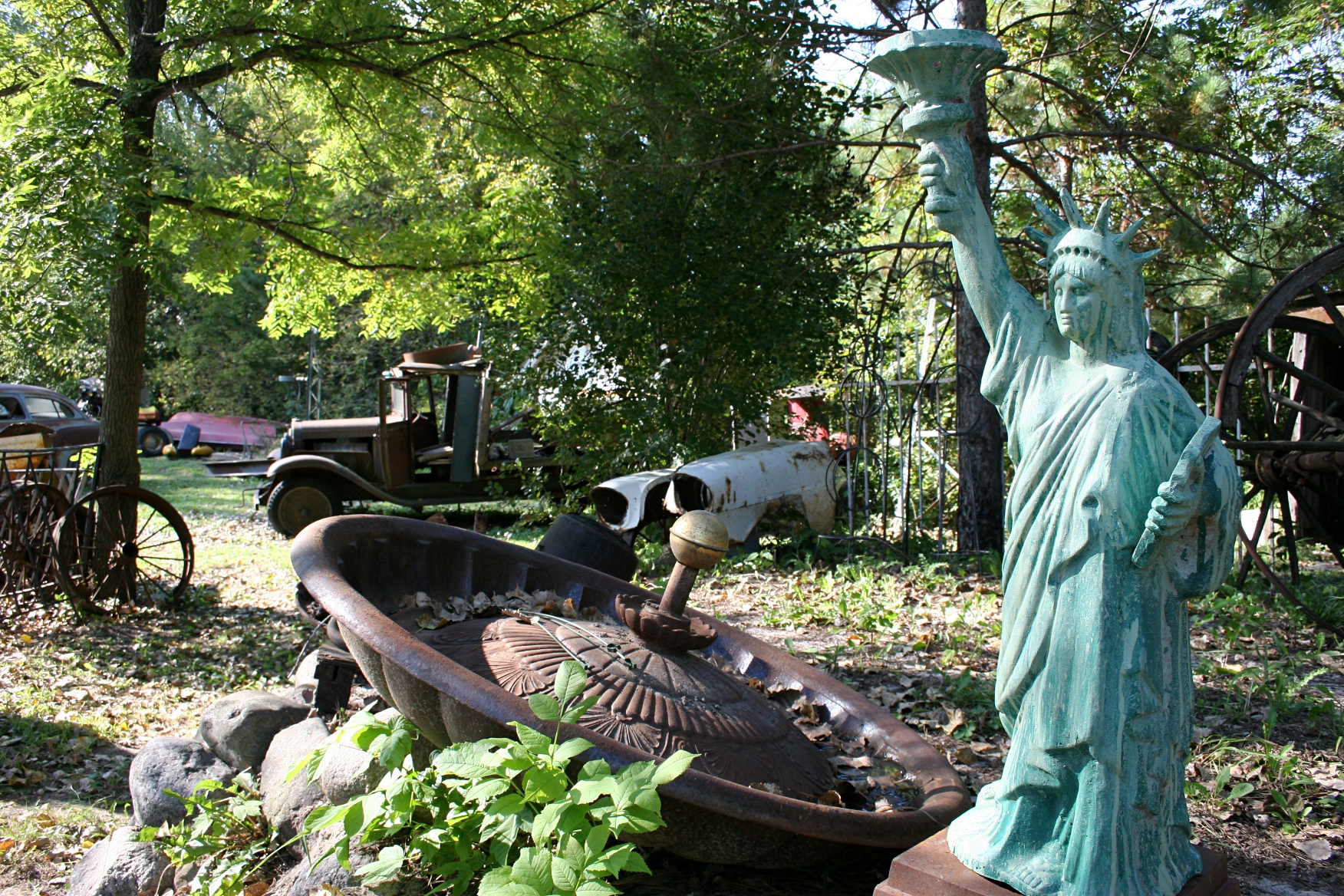
Junk cars line the driveway, left. And, yes, that’s a Statue of Liberty standing in that red junk car in the background.

This place is part junkyard, sculpture garden and antique shop.

If you like your picking places all nice and neat and tidy, then this may not be your shopping venue.

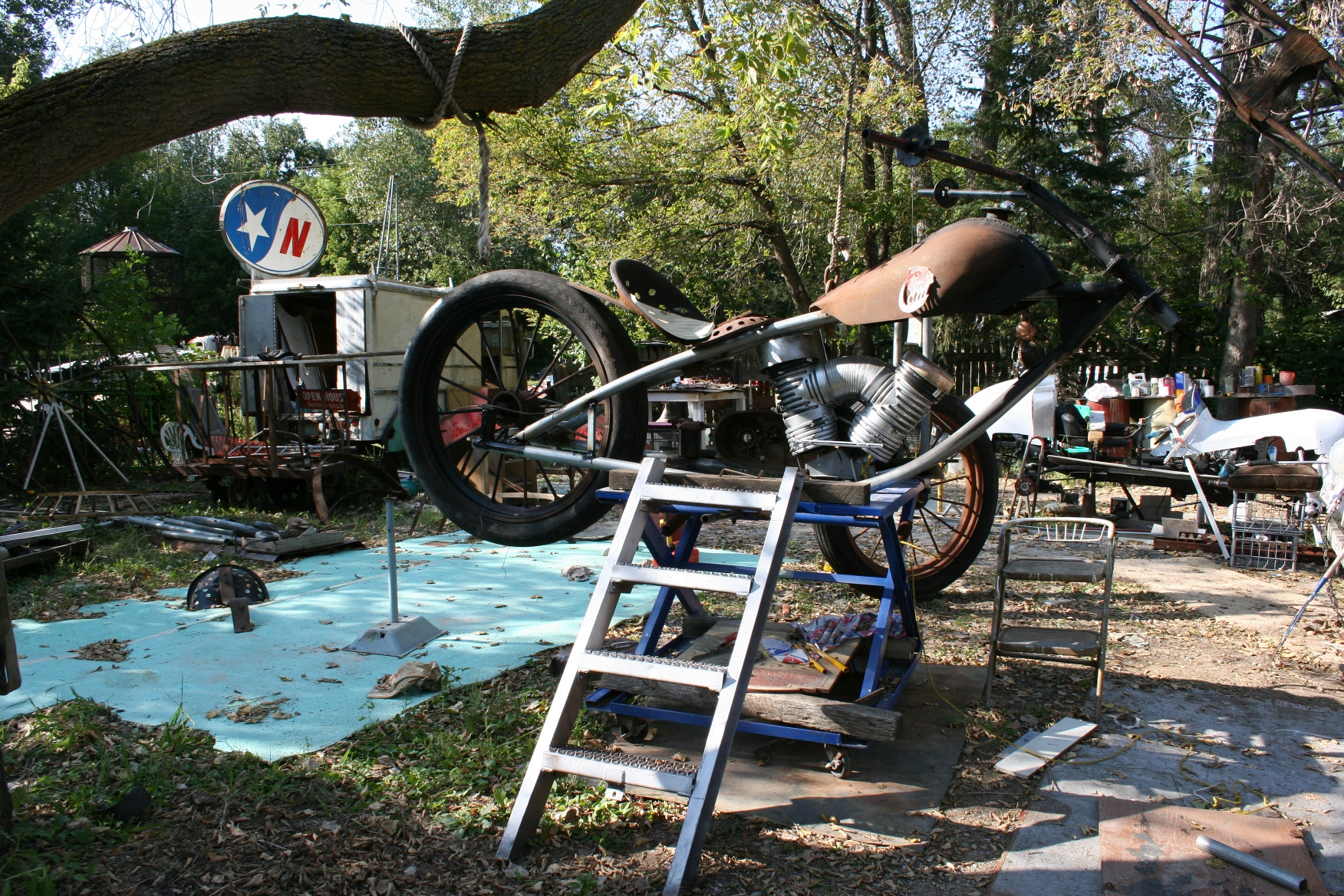
Under construction in the woods, an over-sized motorcycle sculpture currently lashed to a tree limb among the junk.

But if you are adventuresome, don’t mind scuttling around junk (aka art/fabulous finds/treasures), have lots of time to meander and appreciate a one-of-a-kind place bursting with creativity, then, welcome to Hot Sam’s Antiques.

FYI: Click here to read my first post introducing you to Hot Sam’s Antiques. I have so much to show you that I will be writing a third post.

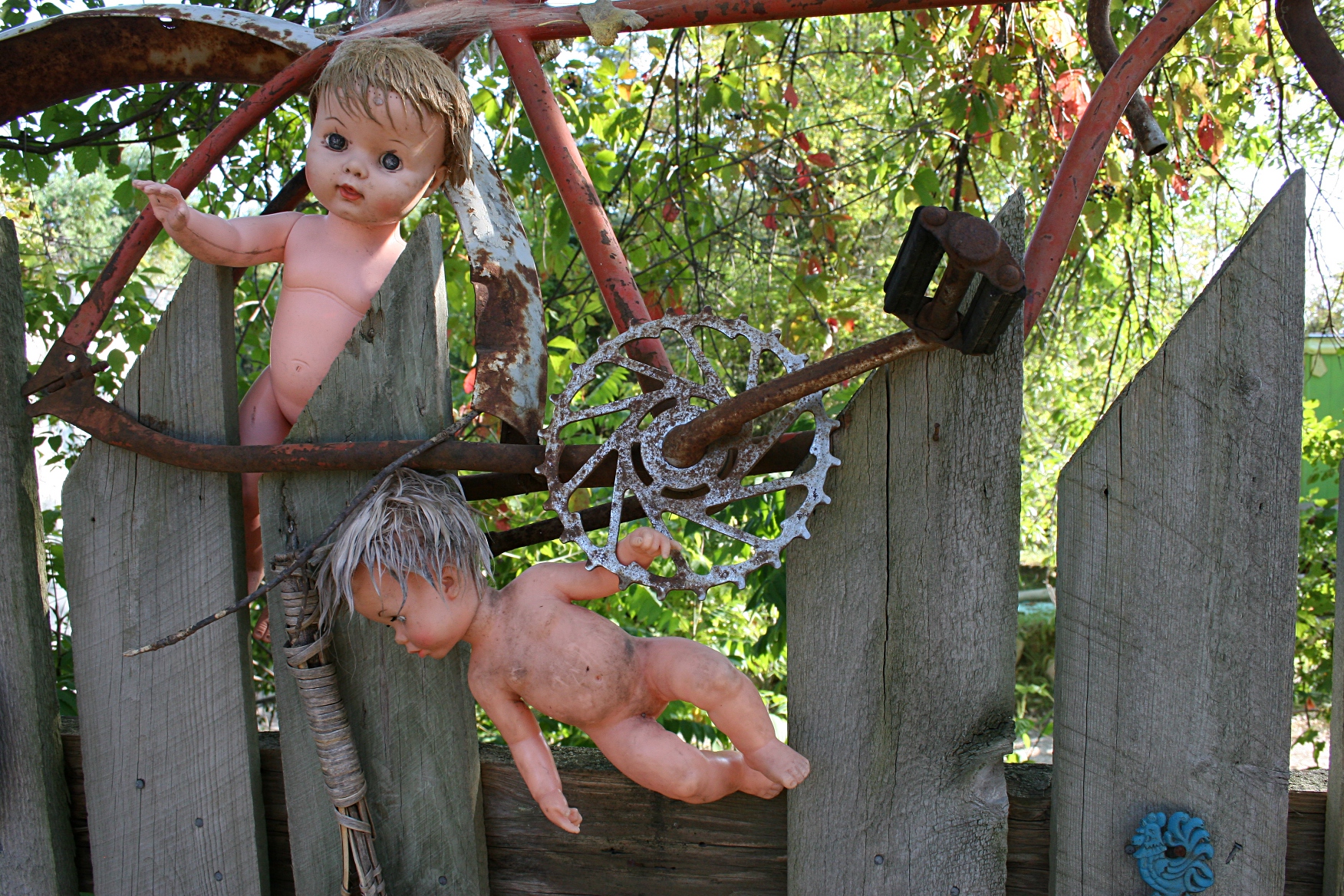
Along the driveway, you’ll see this fence decorated with an eclectic collection of stuff.

Just more abandoned vintage cars along the side of the driveway.

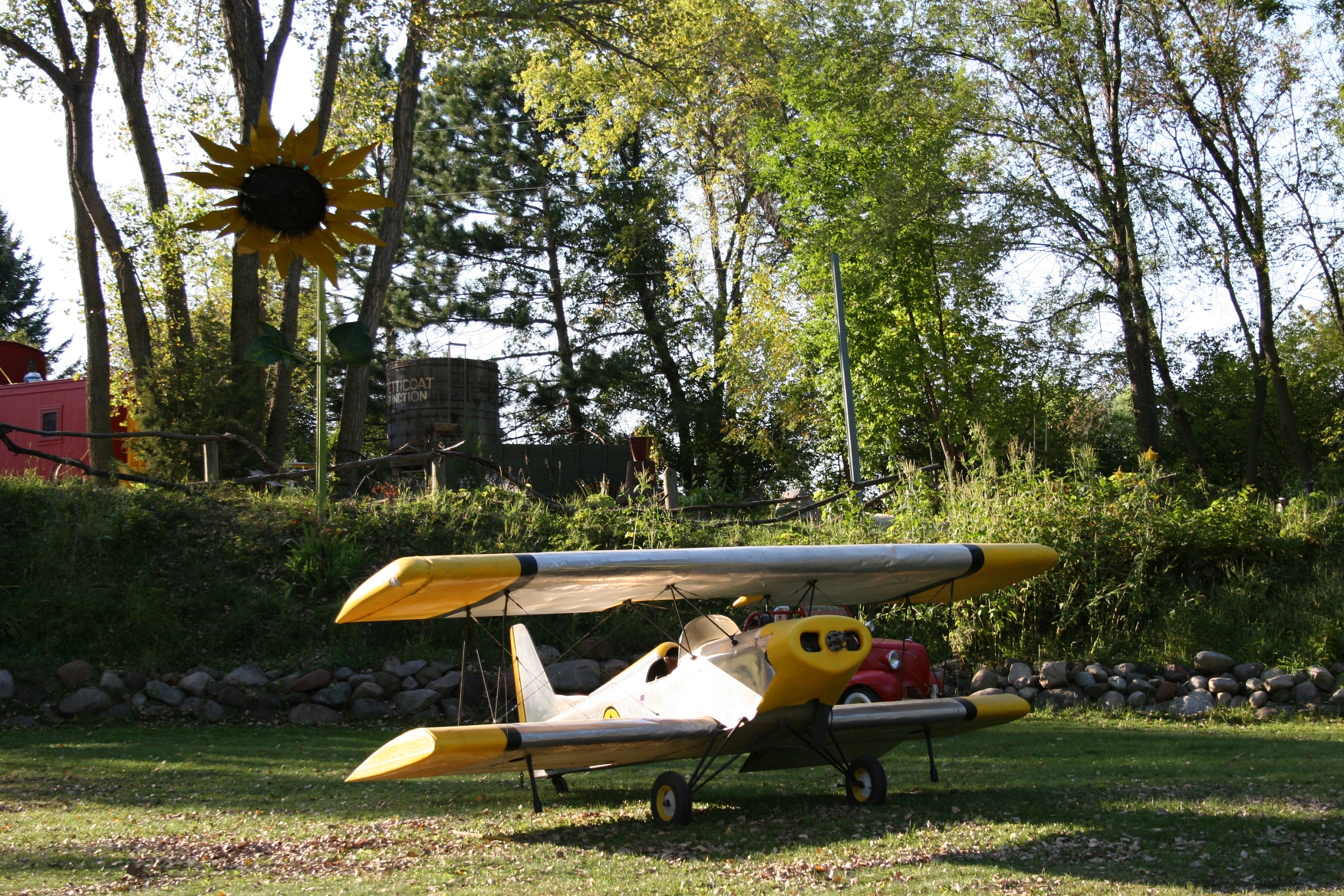
One of two planes on the property; the other one’s nosedived into the swampland. Yup, that’s a train in the background, behind the gigantic sunflower and to the left.

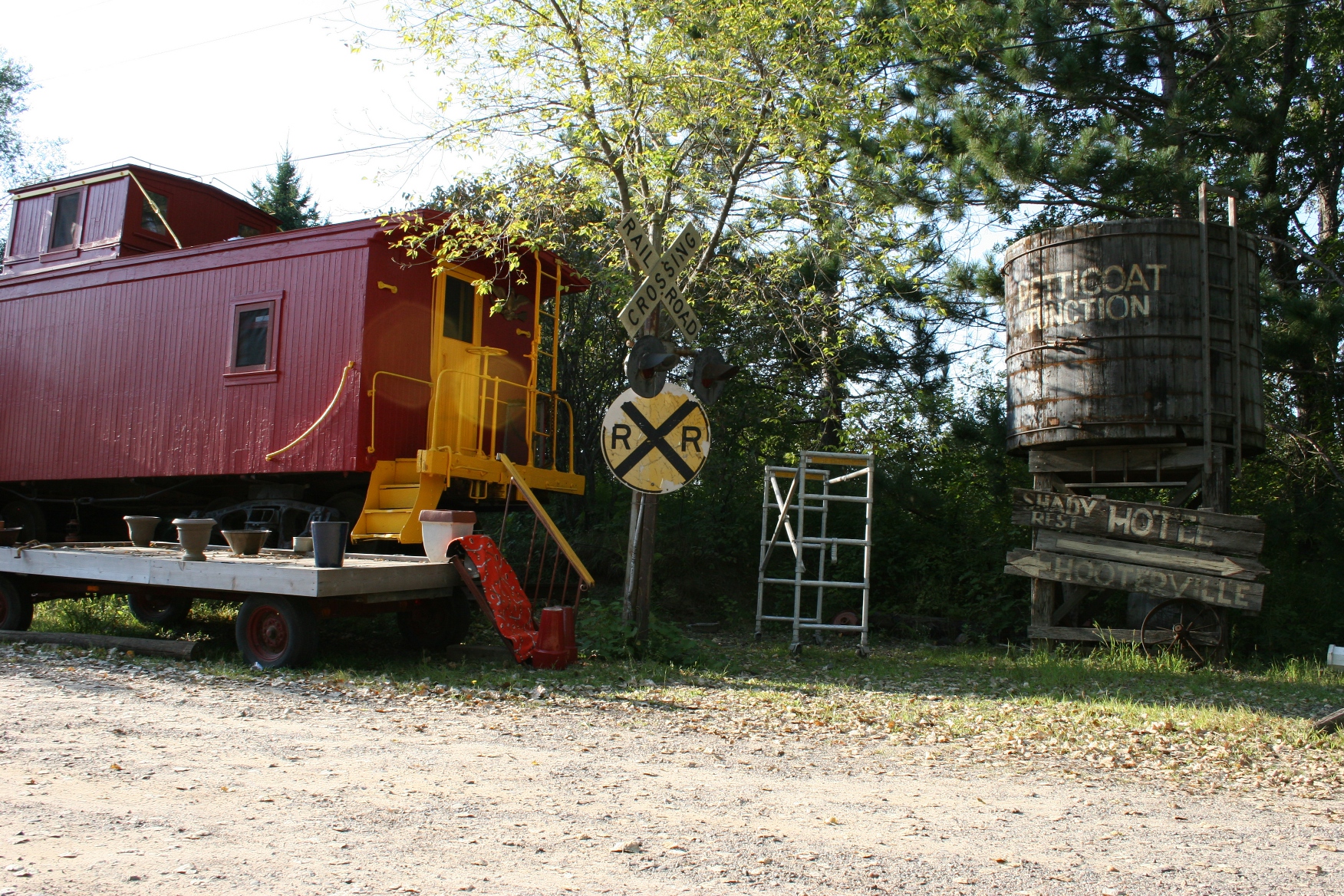
Following its theme park theme, Hot Sam’s pays tribute to the 1960s television sitcom, “Petticoat Junction,” via several on-site train cars (including this caboose) and a water tank. You’ll find antiques and collectibles inside the boxcars.

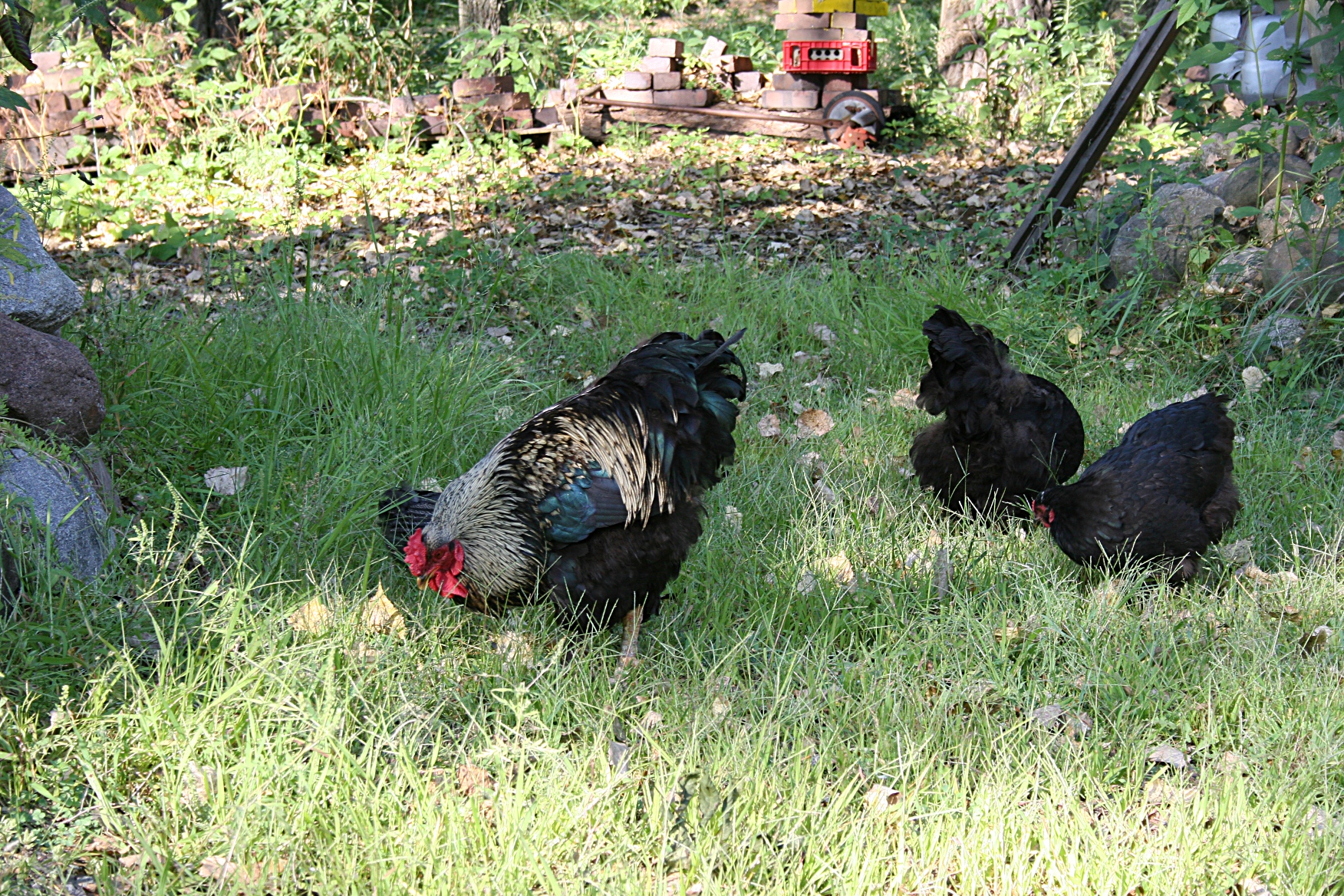
Anyone who knows me and how much I fear chickens will appreciate that I actually photographed these fowl roaming at Hot Sam’s.

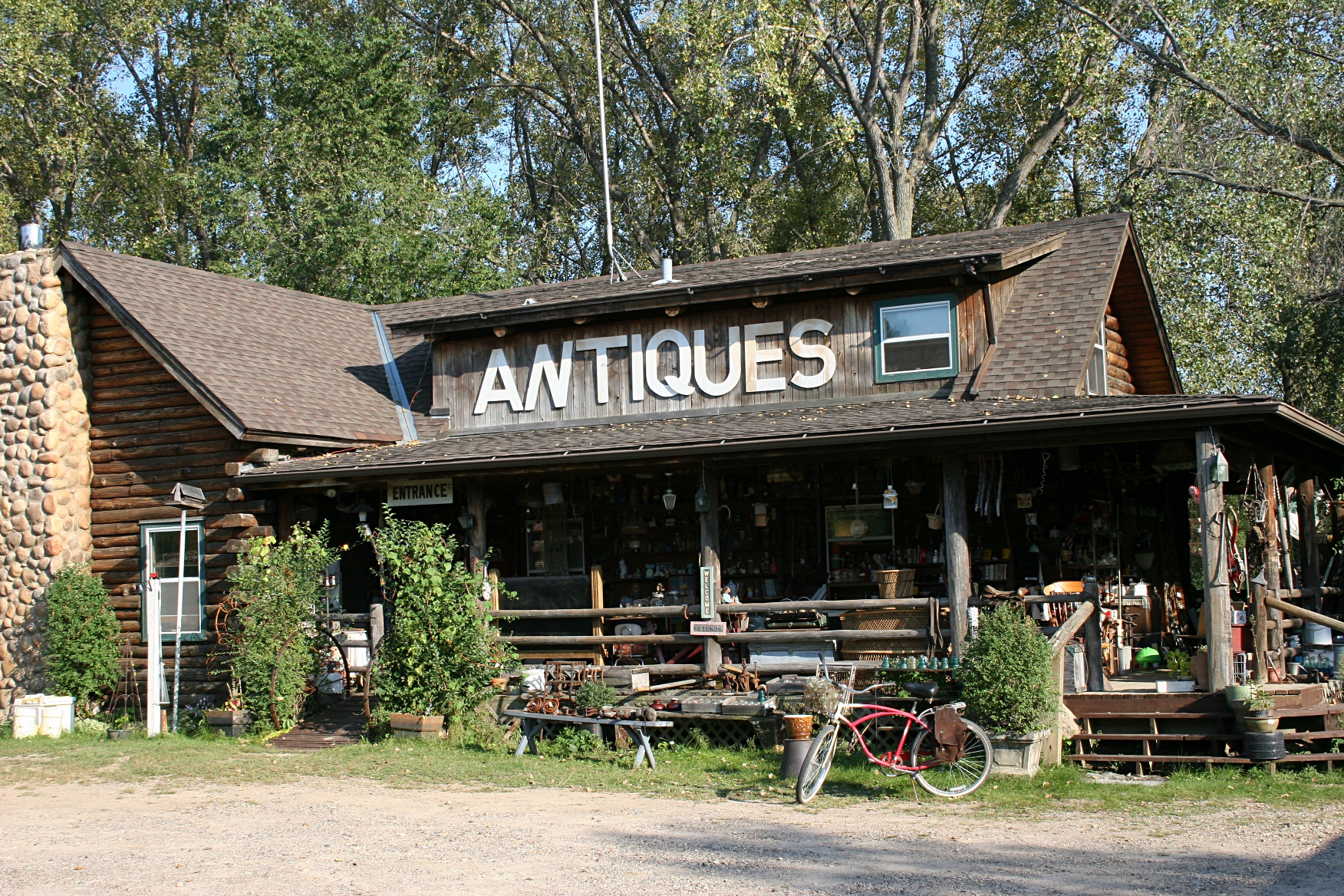
This log cabin is simply bursting with antiques and collectibles, inside and out.

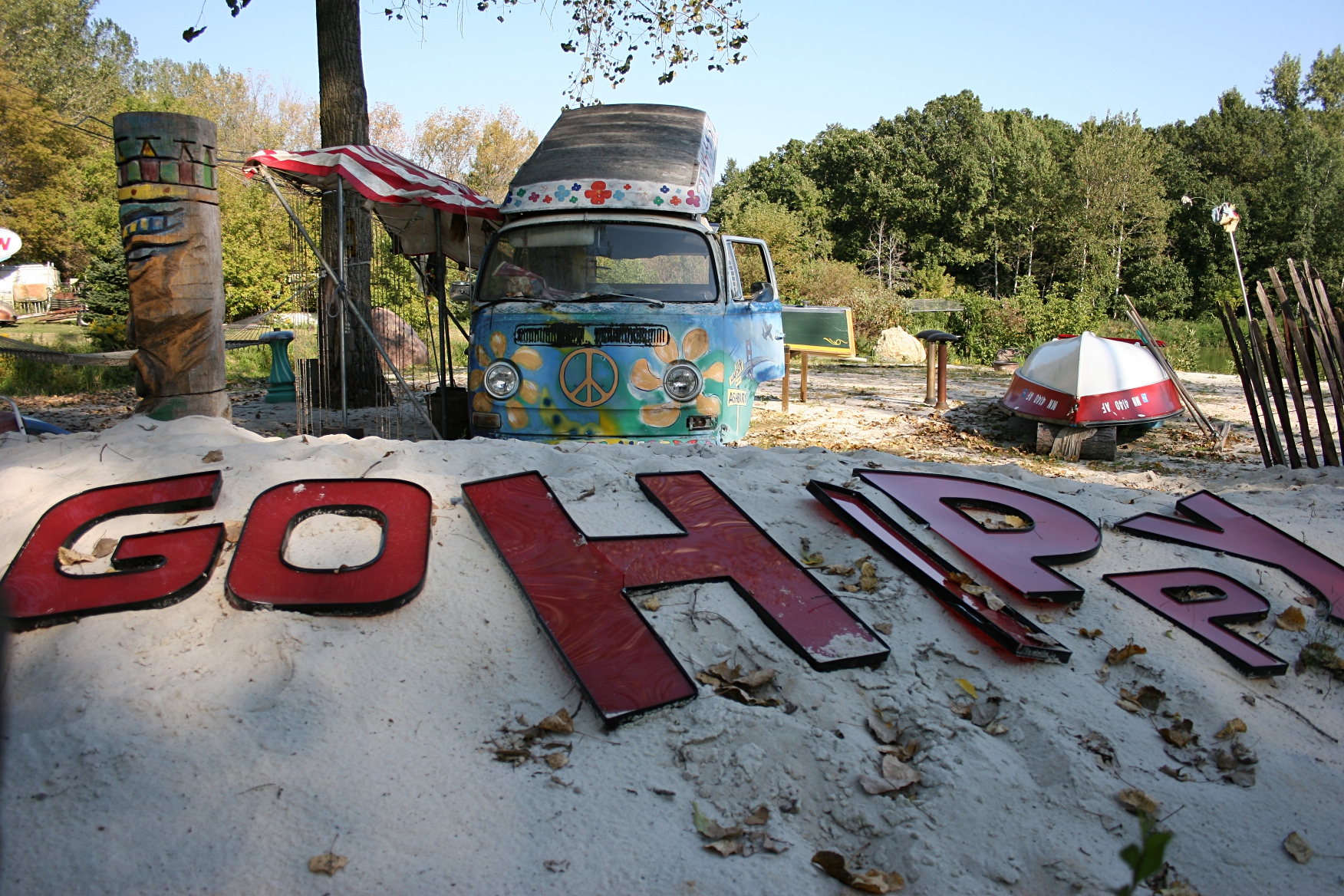
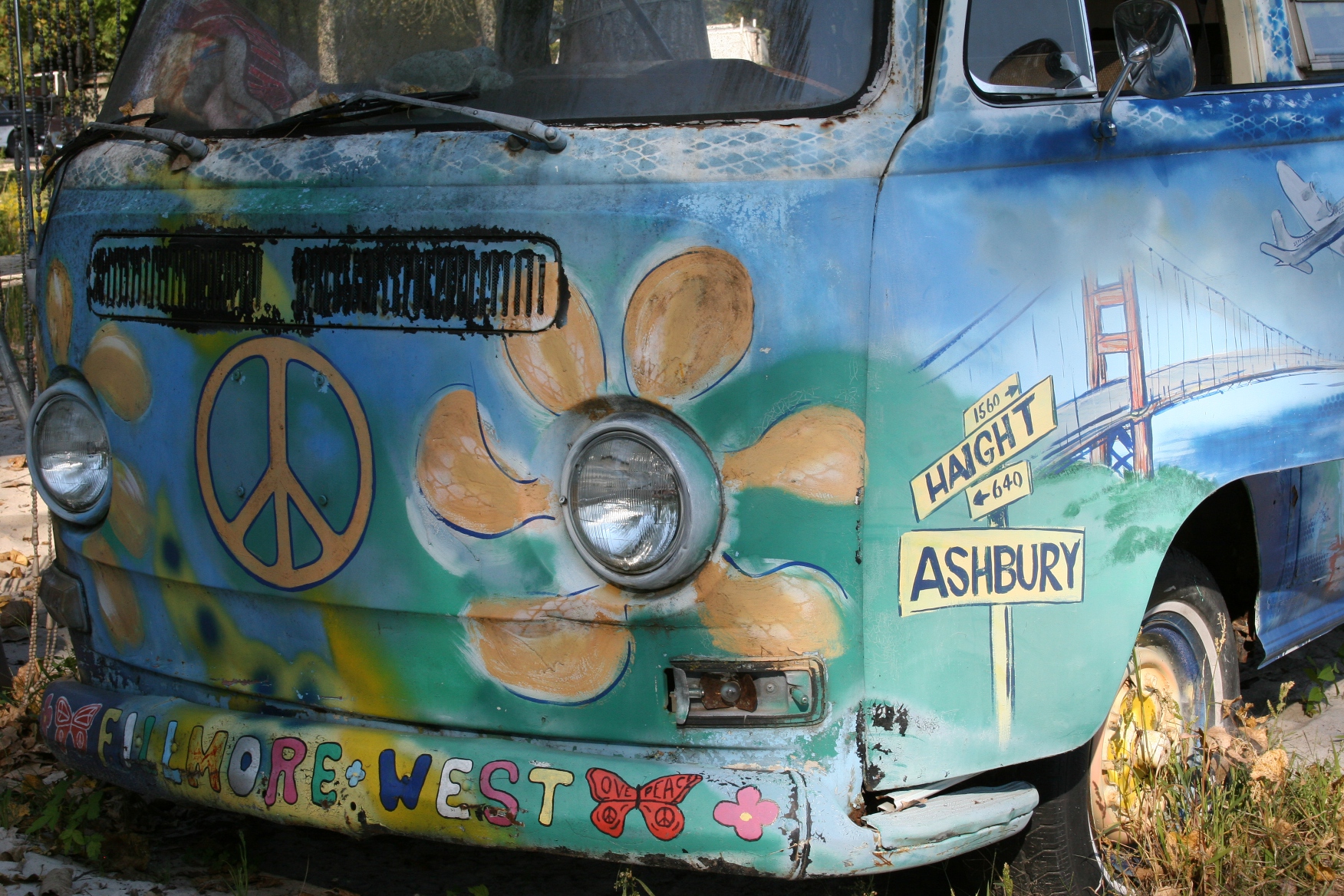
The hippie van, parked along the beach in the theme park area of Hot Sam’s.

I was tempted, quite tempted, to disobey these signs. Next visit…

© Copyright 2012 Audrey Kletscher Helbling
 

Touring Hot Sam’s, an “antique theme park” near Lakeville September 17, 2012

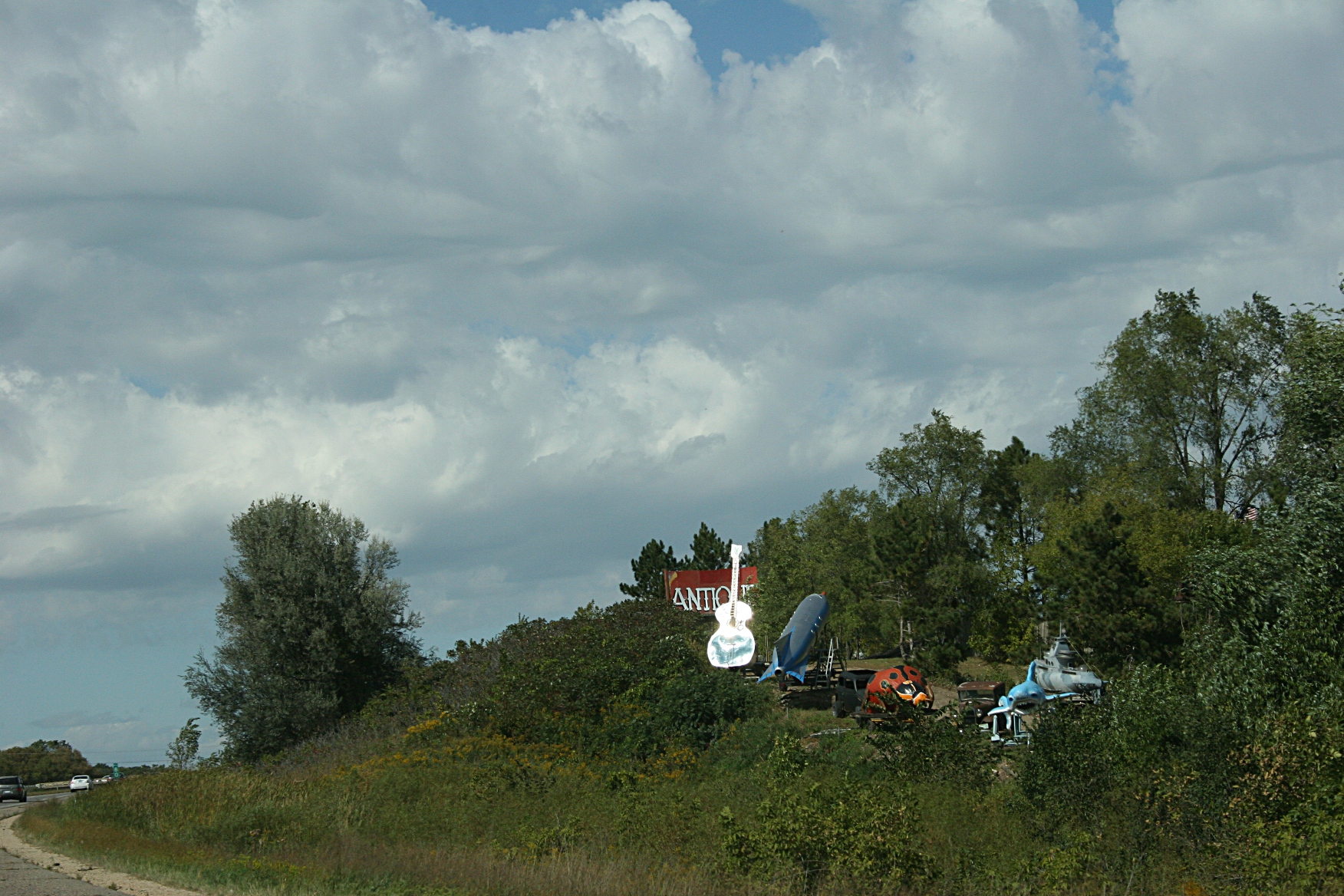
Northbound on Interstate 35 just south of Lakeville, you’ll see this roadside art marking the location of Hot Sam’s Antiques.

YOU’VE SEEN THE ECLECTIC COLLECTION, I’m sure, if you’ve ever traveled Interstate 35 northbound near Lakeville.

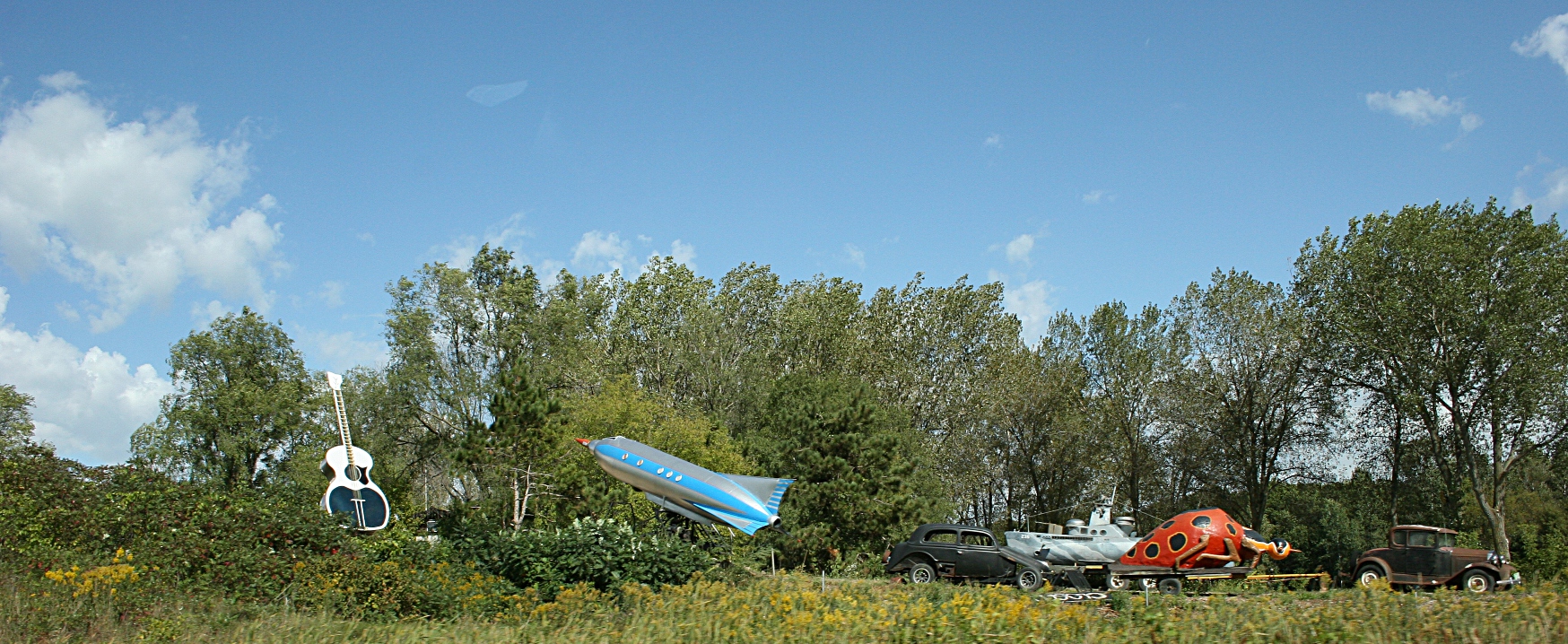
Just another view of the eclectic art collection, shot while traveling the interstate. No stopping for this photo.

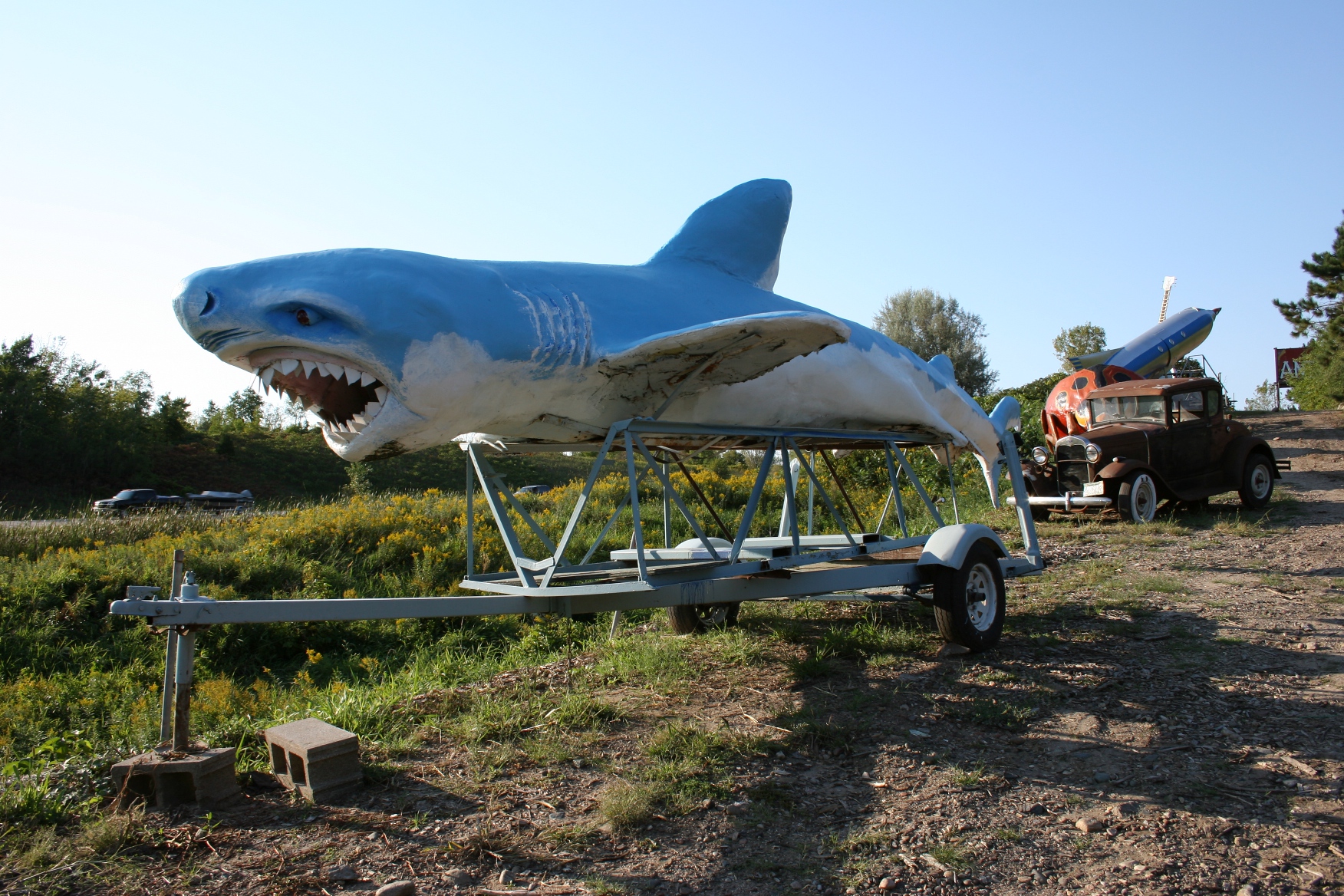
You’ll see the fearsome shark first as you’re driving north on I35.

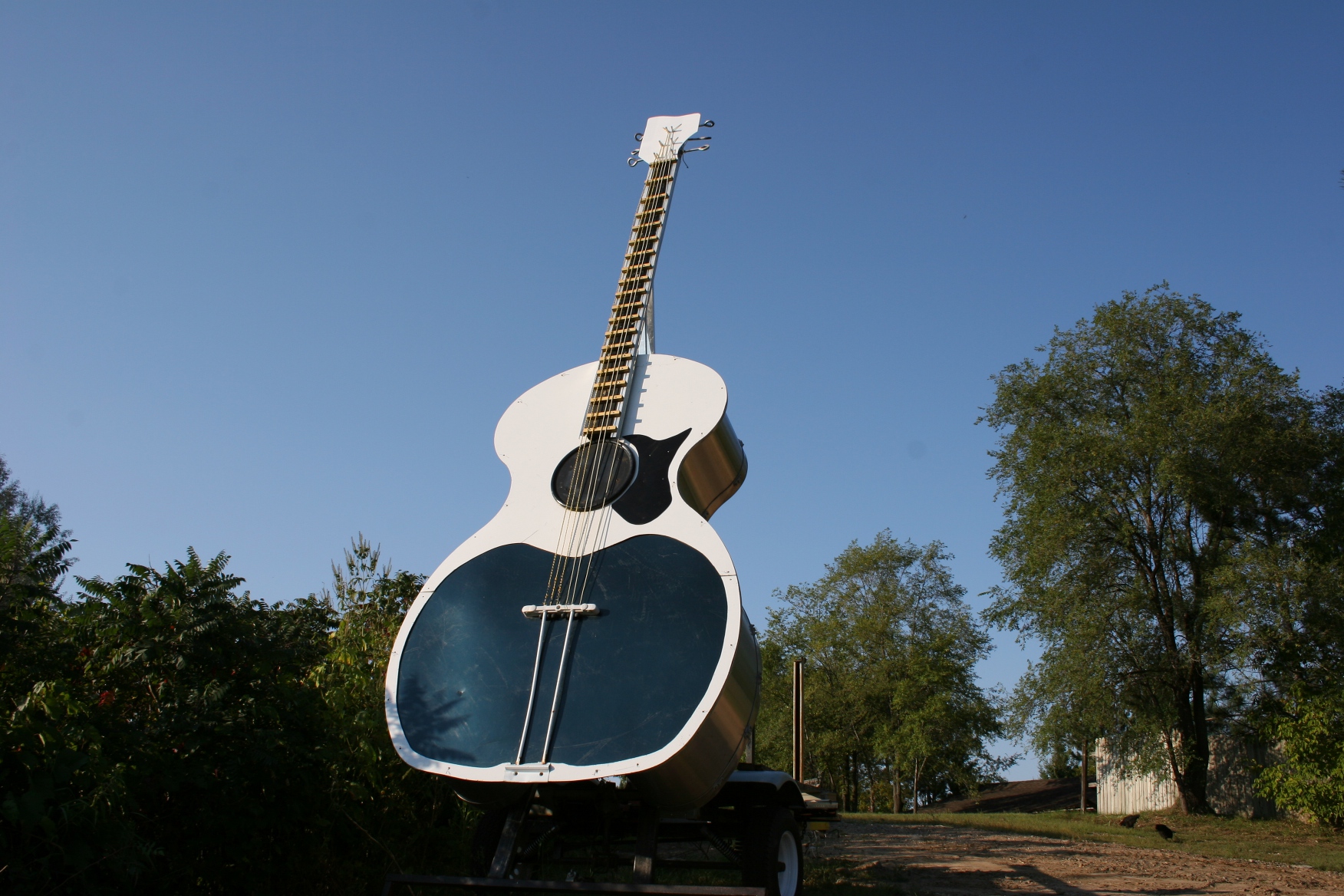
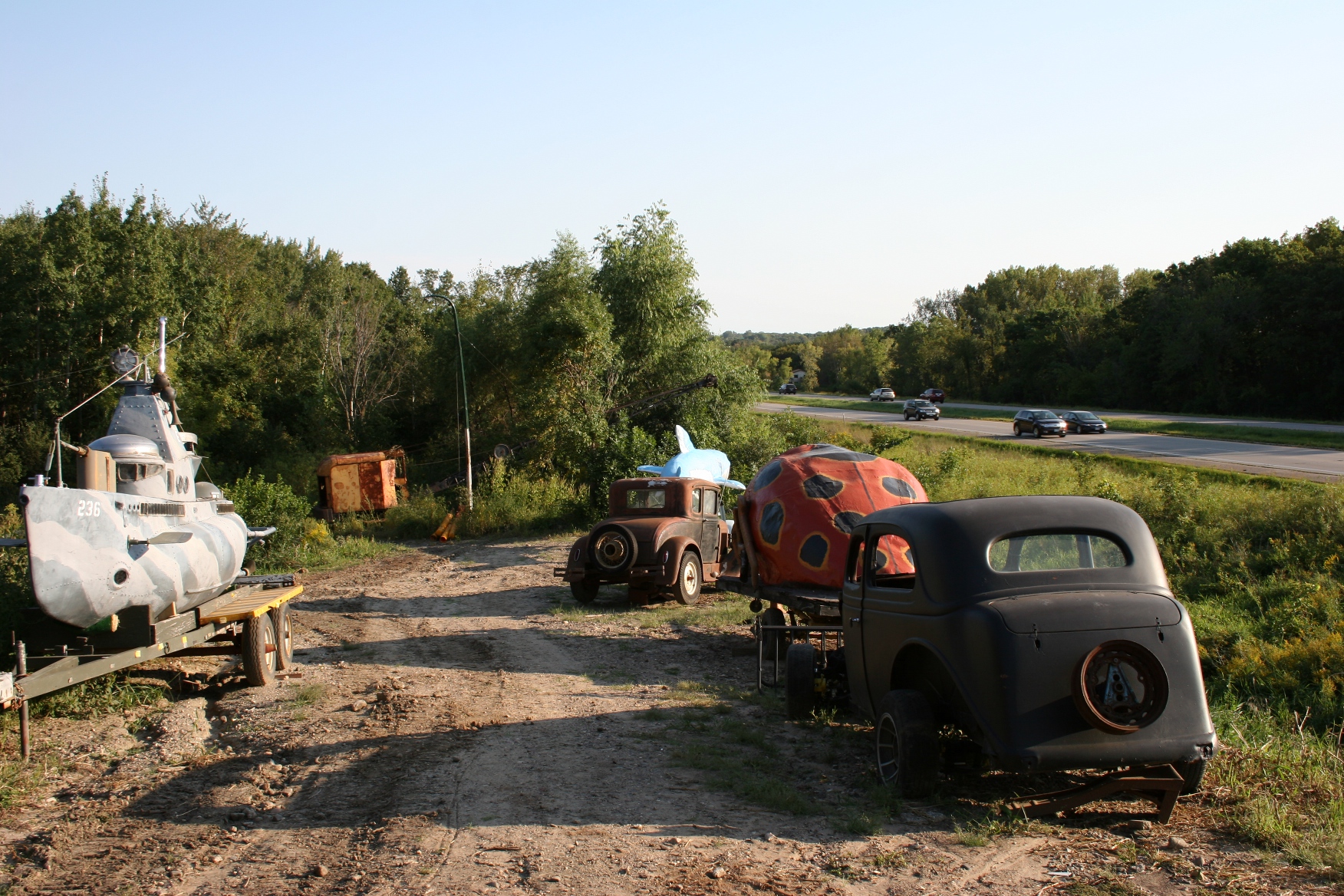
Just south of exit 81 atop a hill on the east side of the interstate, a red ANTIQUE sign draws your eye to a mish-mash of stuff. Several rusting cars. A rather vicious looking blue shark (although I’m sure you don’t notice the detailed sharp teeth while racing along the interstate at 70 mph). A lady bug. A rocket and a submarine. And, heck, there’s an oversized guitar, too.

At the north end of the line, the ginormous guitar.

A view from atop the hill, in the middle of the eclectic collection.

For 30 years I’ve seen the changing collection and always wondered about Hot Sam’s Antiques. Now, after a recent Saturday afternoon visit, I need wonder no more.

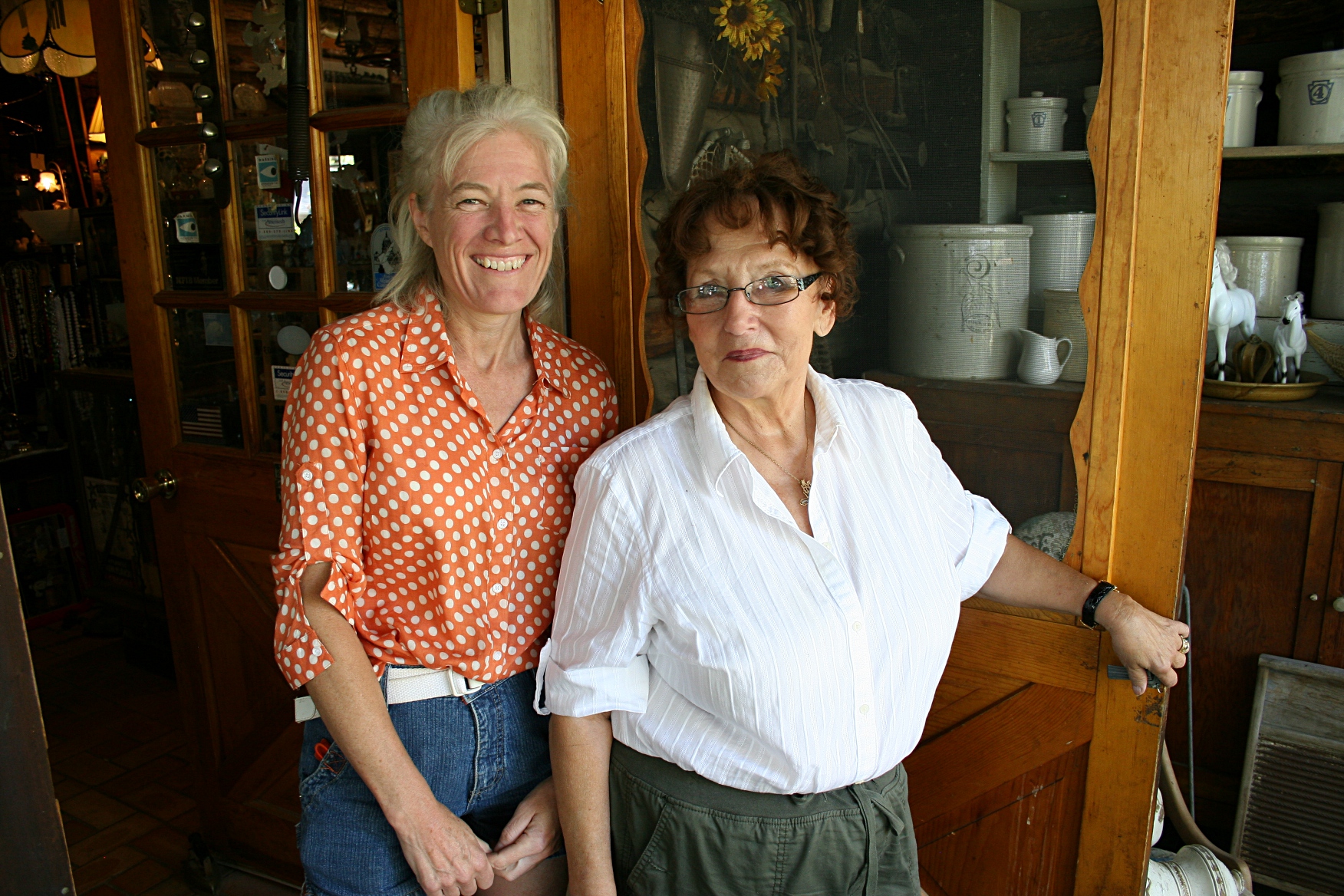
Kathy Sakry, left, and Aina Puritis on the front porch of the log cabin.

Honestly, how to begin to describe this place seems an impossibility, until I meet Aina Puritis—pronounce that Latvian first name with a silent “A” and a long “i”—a part-time employee of three months. “I’ve never seen anything quite like this,” I tell Aina.

“You got that right, honey,” she agrees, then offers her definition. “It’s an antique theme park, a mix of this and that.”

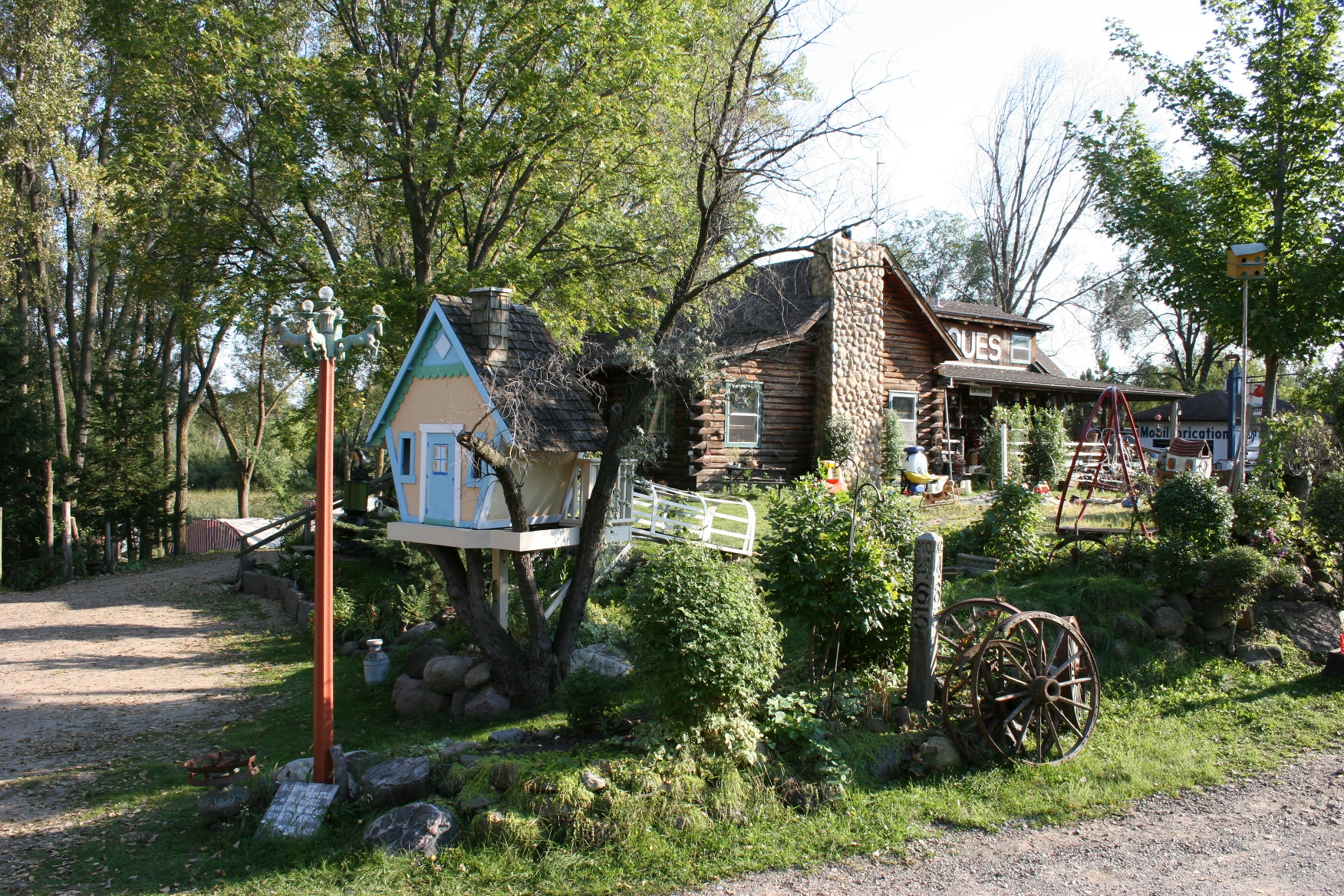
The log cabin, back and to the right, is packed with antiques and collectibles. I spotted the charming, cottage style treehouse, left, but didn’t even check to see if I could explore inside. I was running short on time.

Aina nails Hot Sam’s with that description because, in addition to thousands of antiques and collectibles crammed inside and outside a log house, outbuildings and train cars and scattered upon the grass and through the woods and along the sides of the narrow gravel drive, you’ll discover a wonderment of creations fitting a theme park.

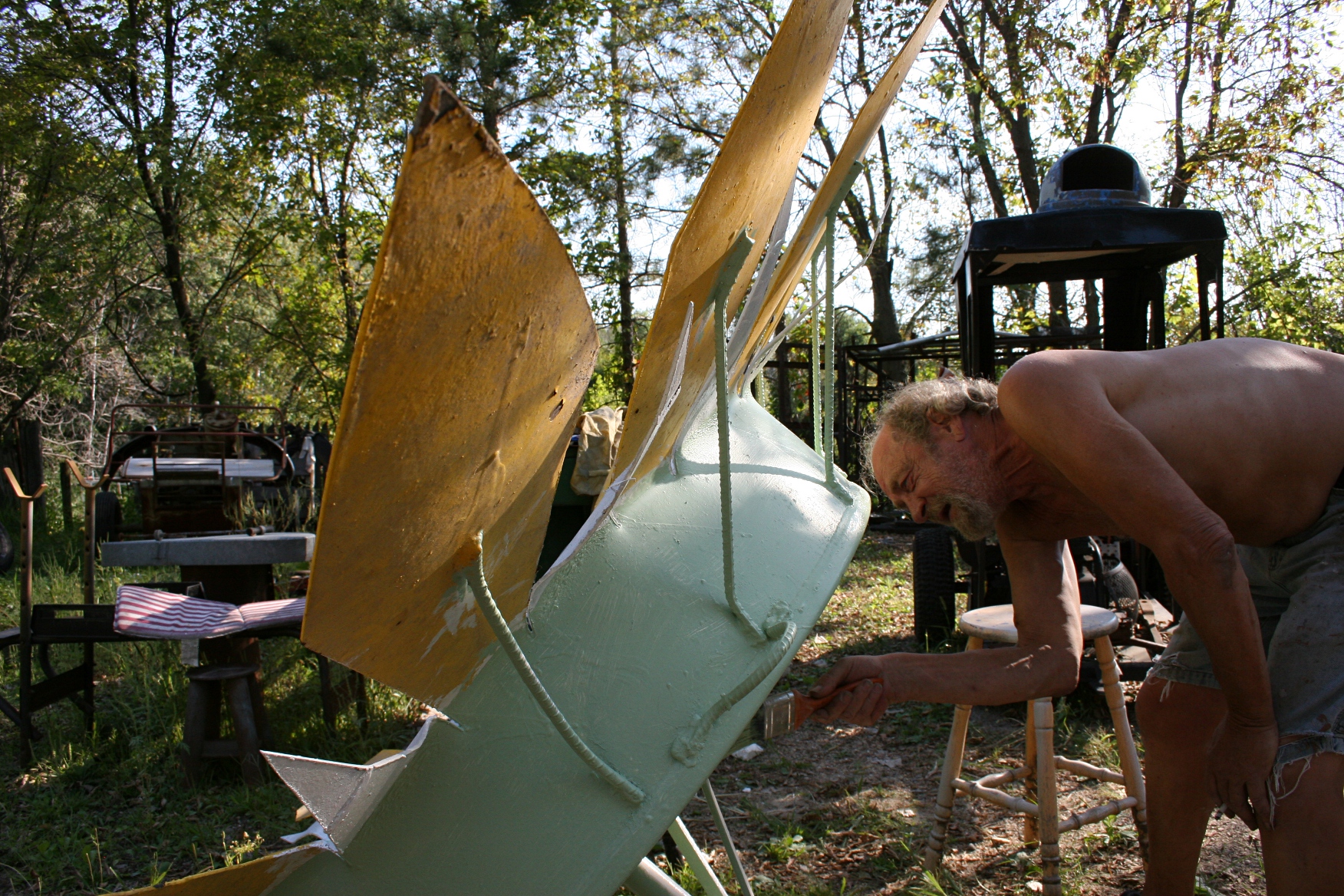
Barry was painting a giant sunflower when I came upon him among the junk in the woods.

You might find Barry (no last name offered), a retired laser cutter turned artist, back in the woods among all the junk working on his latest sculptures—painting a giant sunflower or building an oversized motorcycle roped and suspended from a tree limb.

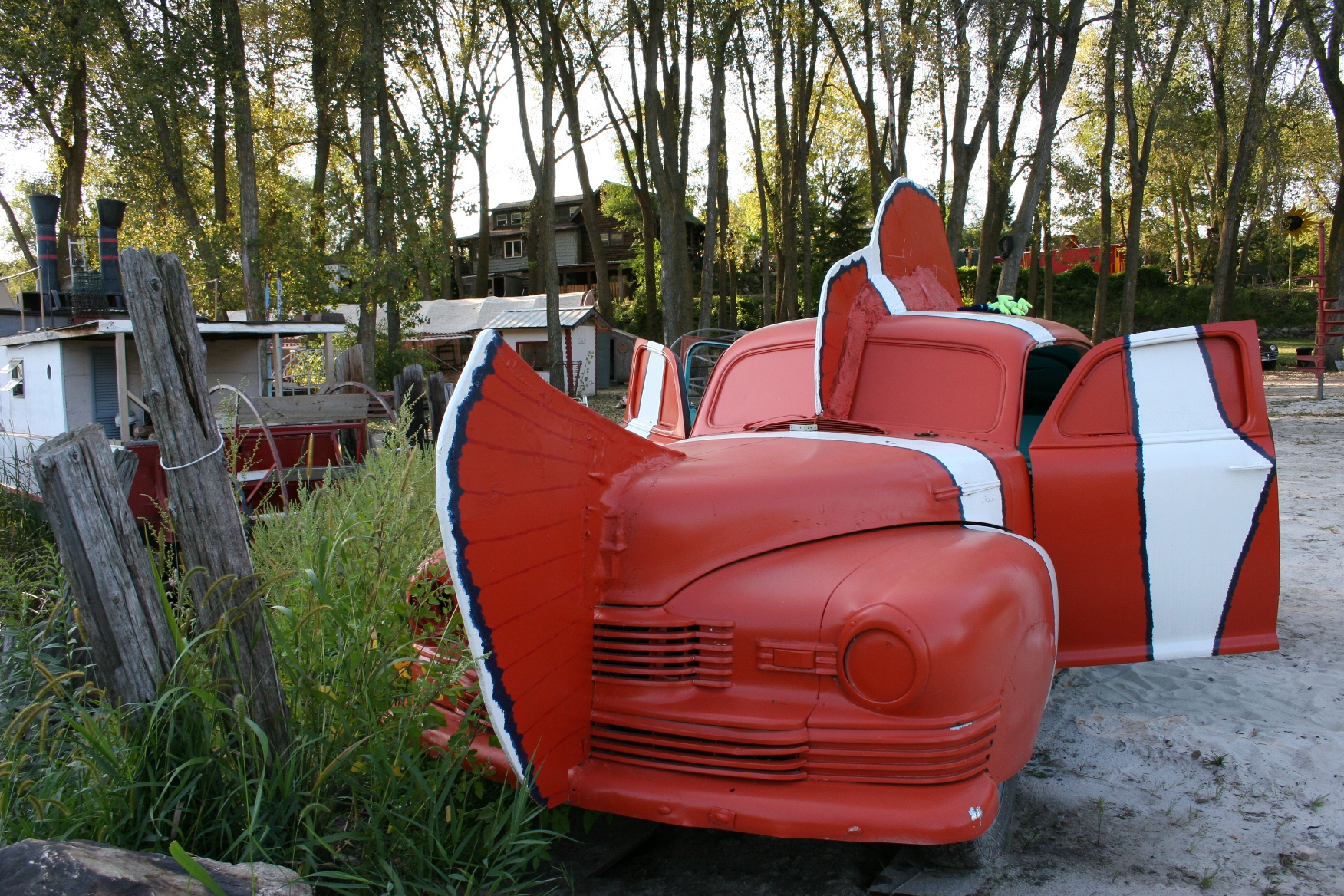
Nemo from the back, looking toward the log cabin on the hill, center, a boat on the left and train cars in the distance to the right.

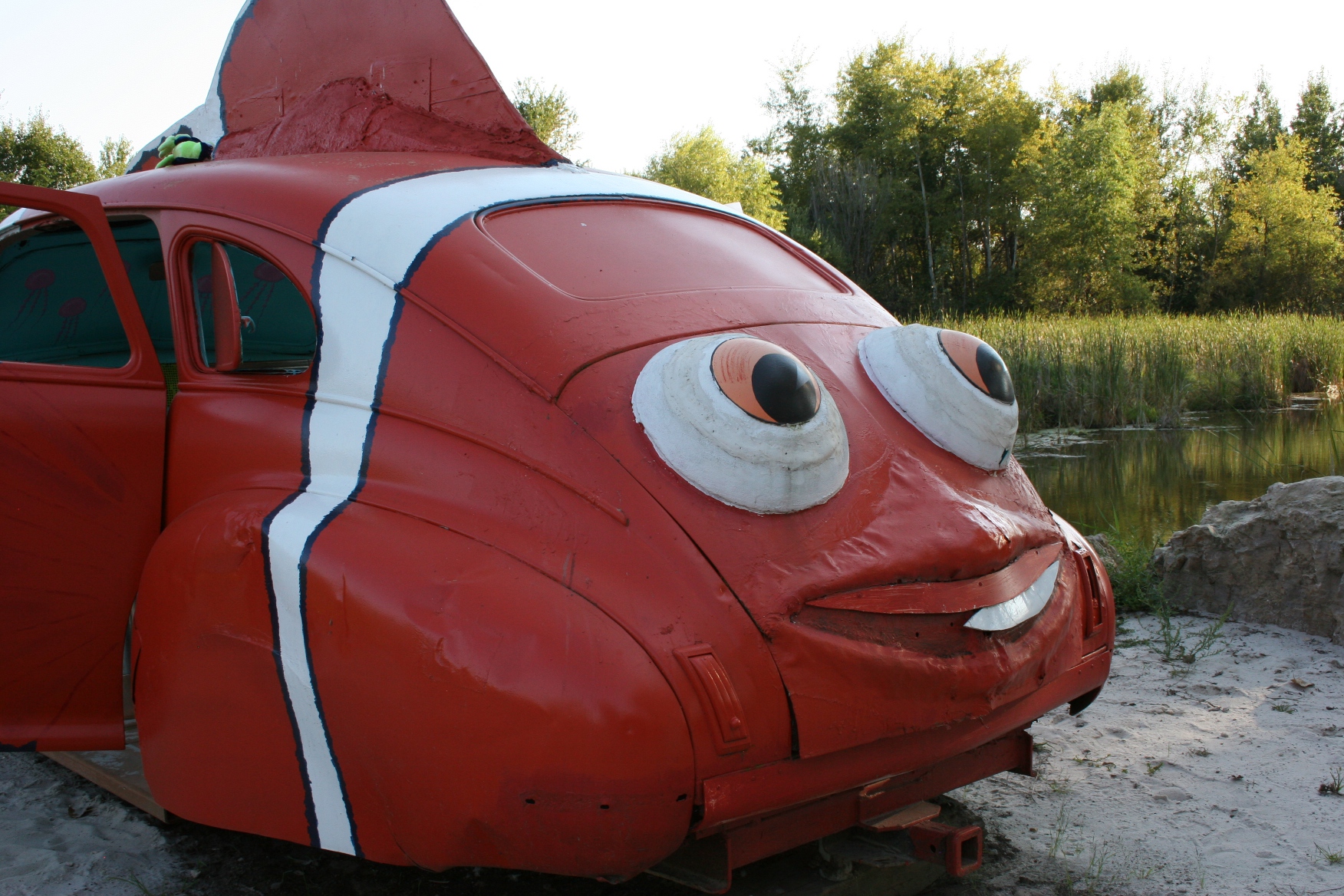
He takes credit for transforming a vintage car into the Disney cartoon fish Nemo via orange paint, the addition of fins and eyes and some major interior redecorating. Nemo’s beached in sugar fine sand along a ribbon of water which meanders into the 10-acre property.

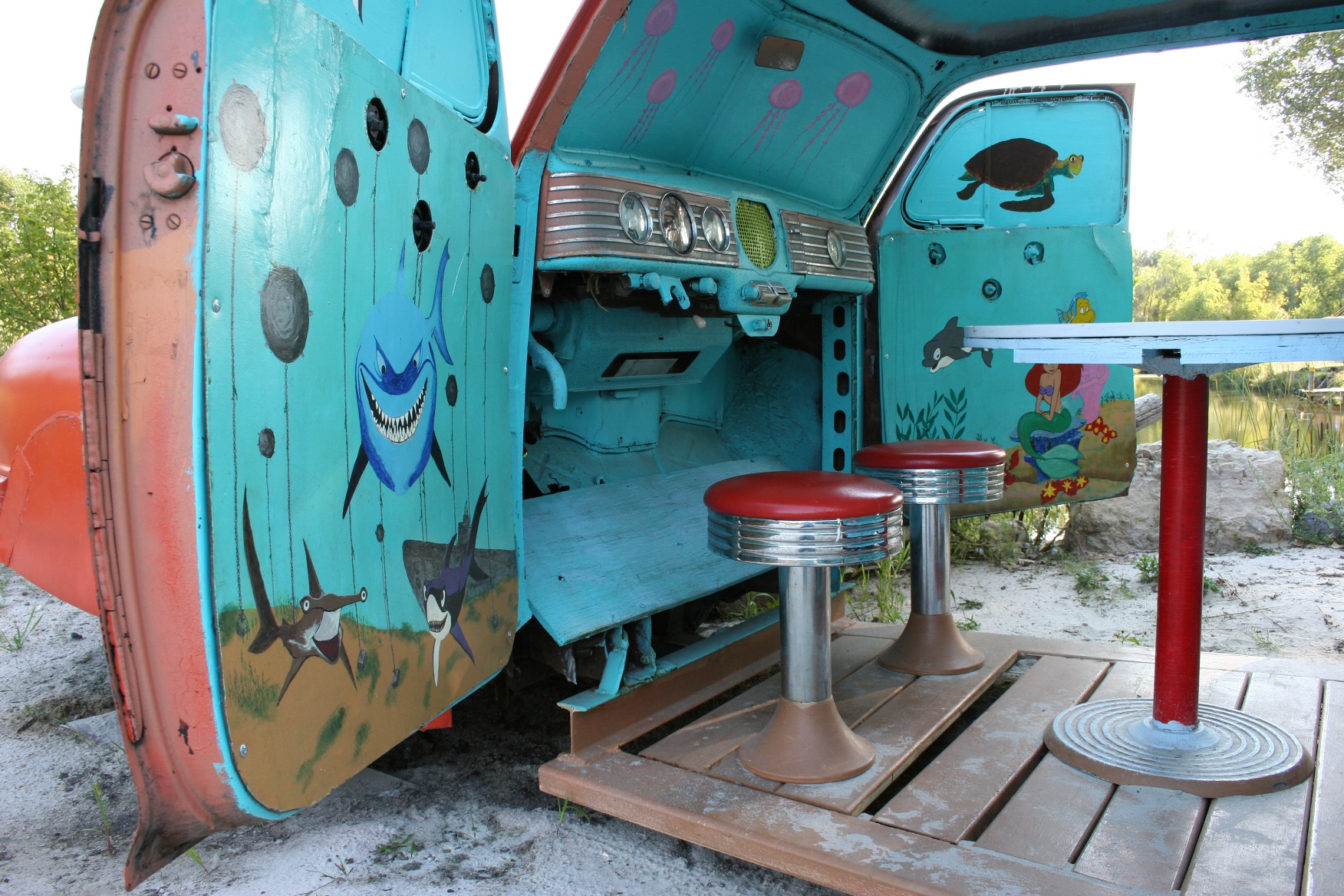
Inside Nemo, my absolute favorite part of the entire antique theme park. Who would ever think you could turn an old car into something so incredibly magical?

The tropical beach scene seems oddly out of place given the native swampland grass and surrounding woods and the autumn leaves littering the sand. But no one claims anything’s exactly as it should be at Hot Sam’s.

A close-up of the hippie van parked in a beach setting with fine white sand and even a hammock.

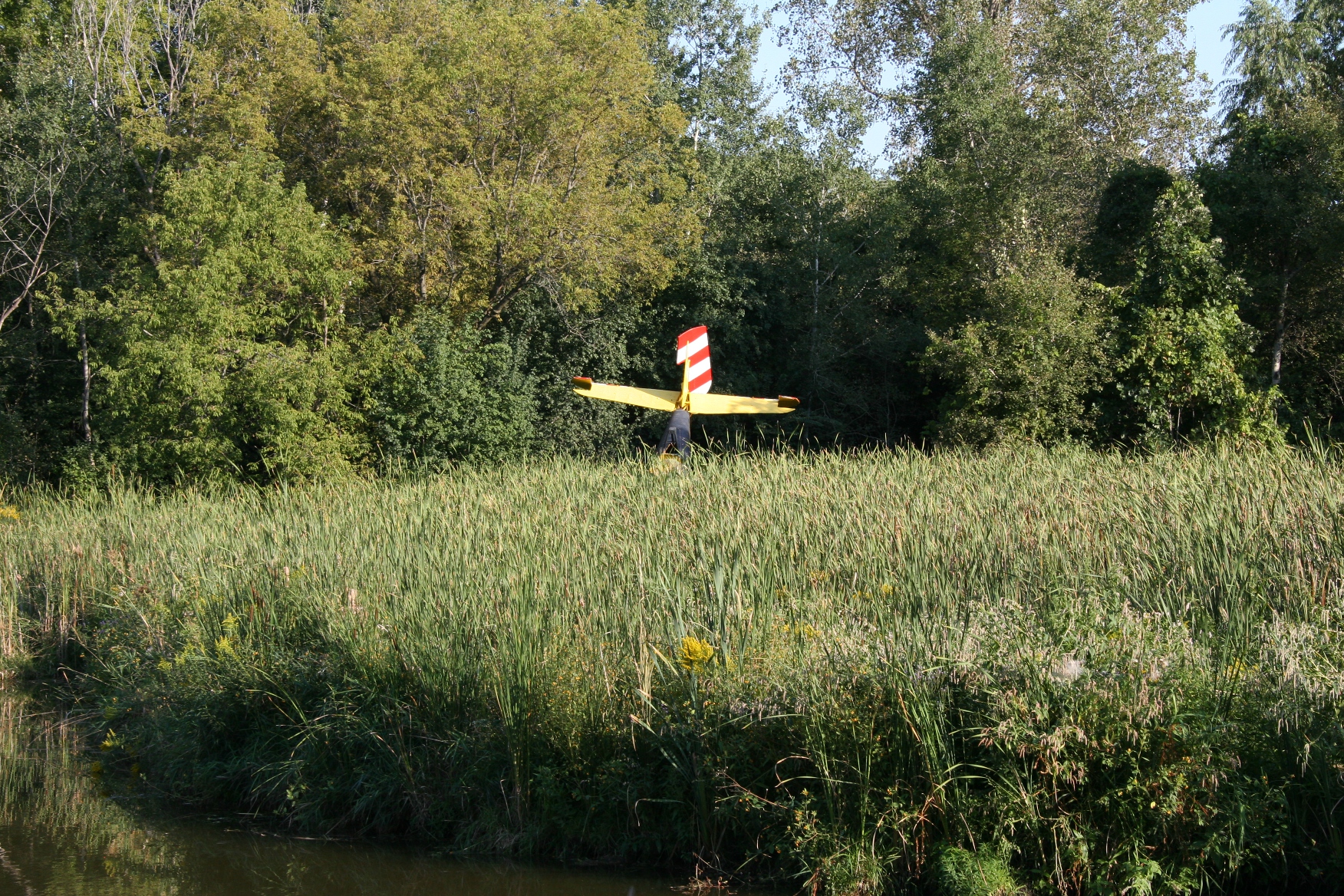
That’s part of the appeal, to see a peace-out hippie van parked on the beach; the wreck of the S.S. Minnow from the 1960s T.V. sitcom, Gilligan’s Island, hugging the shore; the canary yellow tail of a crashed airplane poking through the swampland grass across the water.

“It became a labor of love,” Kathy Sakry says of this whole intriguing place. She’s the significant other of Jake Hood, who, along with his mother, Gladys Hood, 26 years ago transformed a field with a two-car path into Hot Sam’s Antiques. Nine years prior to that, the business was located in Burnsville. Gladys died in December 2010.

Kathy prefers not to explain the story and inspiration behind the antique theme park, choosing instead to hand over a reprint of an article written by Gladys and published in Reader’s Digest. To summarize, Gladys’ father, Hyreeg, an Armenian immigrant living in Detroit, collected scrap metal to raise money for a flagpole upon which he flew a U.S. flag symbolizing his pride in becoming an American.

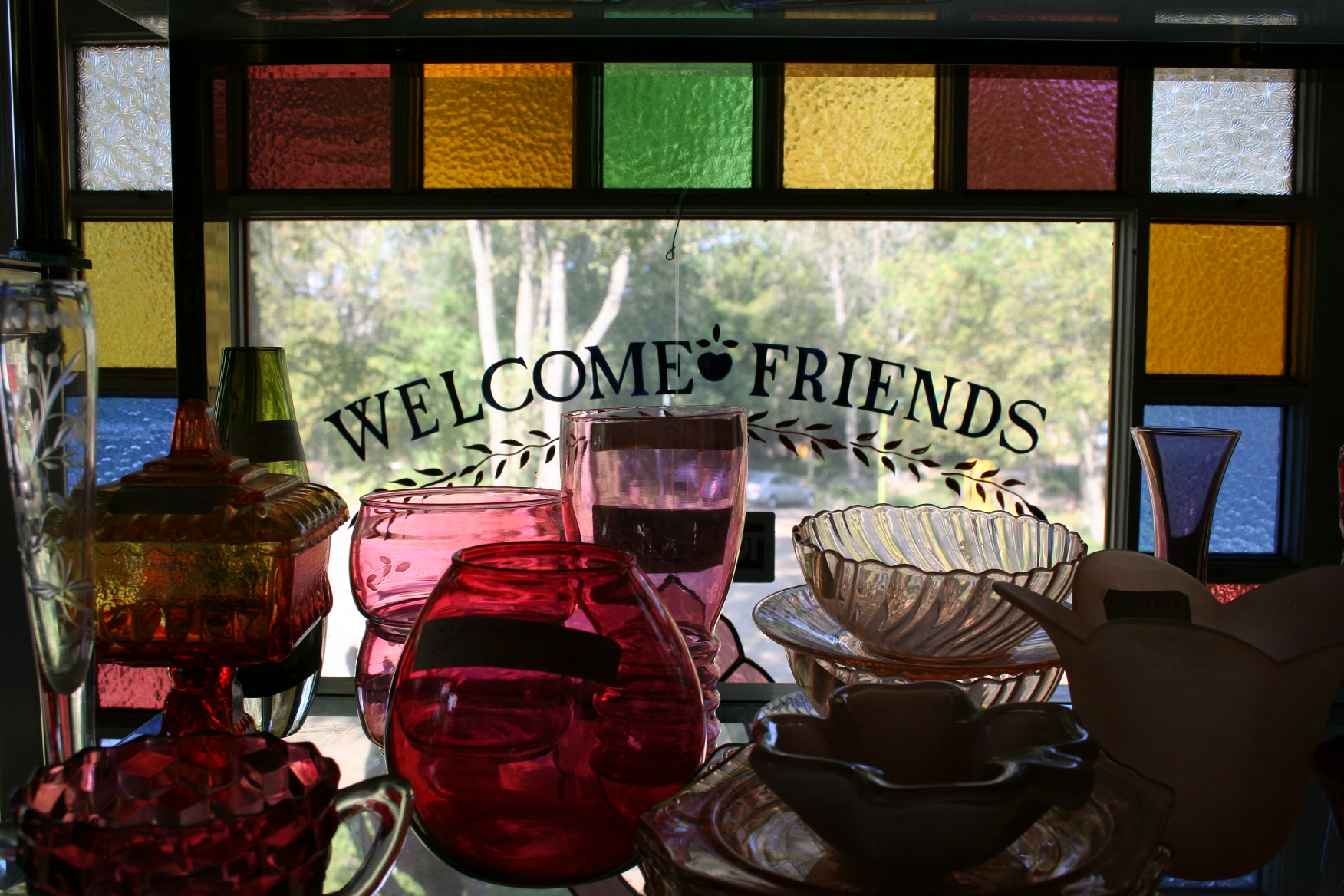
Inside the log cabin, I found this collectible glassware and this welcoming sign, which seems to exemplify the welcoming spirit of Hot Sam’s Antiques.

Gladys wrote in 2002 that she acquired her father’s love for hard work and collecting (she would go “picking” with him as a child) and continued his legacy via her business. She collected for practical and recycling reasons and for the joy of sharing in the memories of those who visit Hot Sam’s.

I saw at least three Statues of Liberty on the property.

Whether a tribute to her father’s patriotism or not, numerous replicas of the Statue of Liberty are planted on Gladys’ tangible slice of the American dream.

About that business name… Kathy says Hot Sam was Gladys’ nickname, a name she preferred to her given Gladys, which taunting youngsters reinvented into, well, you can figure that out, during her childhood.

Then Kathy shares more about Gladys and a clearer picture emerges of this strong woman. She once raced cars, breaking the land speed record on Daytona Beach in 1956.

This mock, crashed airplane is positioned across swamp grass on the property.

Despite her prior days of daring, competitive racing in a man’s world and of traveling, Gladys seldom left Hot Sam’s once established, Kathy relates. And when she did, it was to attend air shows with her adopted daughter, airline and aerobatic pilot Julie Clark. The bi-plane and staged, mock plane crash at Hot Sam’s are perhaps visual connections to Julie, whose birth father was murdered in 1964 while piloting a plane which subsequently crashed, killing all 44 aboard. Or perhaps the planes reflect Gladys’ general affection for air shows.

While wandering the grounds of Hot Sam’s, you have to wonder where Jake and Gladys acquired all this stuff and Kathy says only that they are buyers and sellers. She wants me to talk to Jake and sets off to find him. But I am anxious to photograph this magical antique theme park in the perfect, golden hour around sunset. I never do connect with Jake.

I am not the only photographer here on this late Saturday afternoon. I meet a young couple and their two children primping for a family photo shoot with St. Louis Park-based portrait photographer Jess Sandager of Olive Avenue Photography. Later I meet up with the family and photographer near the beach. Jess tells me Hot Sam’s is well-known in the photo industry.

Although I’d like more details, I won’t keep Jess from the waning, perfect light.

I watch for a minute as Jess works her camera, photographing the little boy on a tractor and then mom and baby.

The beached Nemo.

Father and son, in the meantime, are now heading toward the orange fish on the beach, toward Nemo—dad walking, son running…

Watch for this sign at 22820 Pillsbury Avenue South directing you onto the narrow gravel road into Hot Sam’s Antiques.

FYI: To get to Hot Sam’s Antiques from Interstate 35, take exit 81 near Lakeville and go east on Dakota County Road 70 about half a mile to the stoplight. Then turn south onto Kenrick Avenue/County Road 46. Continue approximately 1 1/2 miles on Kenrick, which turns into Pillsbury Avenue. Hot Sam’s is located on the west side of the road at 22820 Pillsbury Avenue South, Lakeville. You’ll see a sign.

Hours are from 10 a.m. – 6 p.m. weekdays (except closed on Thursday) and Saturday and from noon to 6 p.m. on Sunday.

Check back for more photos from Hot Sam’s because there’s so much more I need to share with you.

© Copyright 2012 Audrey Kletscher Helbling
 

A Minnesota arts collage, from theater to poetry September 15, 2012

FOR A FEW SECONDS THERE, I searched the dictionary of my brain for that word which temporarily eluded me. Collage. That would be it.

Remember when that art form was especially popular, when, as a school assignment, you had to scrounge up ten zillion magazines and then snip out images themed to a specific subject and glue it all in a jumbled mess onto a piece of paper?

Today I present a collage—not a jumbled mess, though—of art.

Let’s take the biggest focal piece first. A Hudson.

A Hudson, like this one I photographed several years ago at a Faribault car show, centers “The Car.” Do not expect, though, to see a real Hudson on stage, only the shape of one.

The Hudson centers the stage at the Paradise Center for the Arts during a production of The Car by Carol Wright Krause. My husband and I saw this play by the Faribault-based The Paradise Community Theatre Friday evening. I’d rate it as one of the best I’ve ever seen performed locally.

Here’s a summary of the play written by director Gabe Talamantes:

The Car is about a family’s car, which as Ed (a character in the five-person drama) puts it “is a miracle of modern American engineering.” This miracle car is a character in itself, a highly theatricalized version of a 1954 Hudson. It takes us on a journey into the lives of the Banners and the challenges an all American family faces as they struggle through two decades of change at home and abroad. We will see how they choose to overcome such difficulties.

Now, why am I so enthusiastic about The Car? Because it moved me to tears. When a theatrical performance can evoke such a strong emotional reaction from me, I will embrace it with unbridled enthusiasm.

That break-down moment for me came near the end of the play, when Vietnam War veteran Hal Banner (played by Todd Ginter), broke down in the arms of his father, Ed Banner (Chuck Larsen). He was no hero, Hal said, pointedly telling his father that he (Ed) would never understand the horrors of war. And then Hal got specific, talking about seeing the eyes of those he killed.

That’s when the tears trickled down by cheeks and I struggled mightily to keep from sobbing. In that moment, I heard my Korean War veteran father, not Hal/Todd. My dad, too, spoke of seeing the eyes of those he killed on the front lines in Korea.

Later, when I congratulated Todd on his performance, he told me that he had talked to several veterans in preparation for his role. And it was the eyes which they spoke of and which he knew he needed to emphasize in that heartrending father-son conversation. It is easily the most powerful moment in the play.

I wondered how many audience members might be veterans and at that moment suppressing war memories and feelings, as my father did.

But this play is about so much more than war. It also addresses the issue of prejudice when Hal brings home a Japanese wife, portrayed by Carrie Jendza whose mother came here from Korea some 40 years ago. Carrie presents a stunning performance as do Susan Dunhaupt as Ed’s wife, Geneva, and Faribault High School sophomore Emily Remmey as Beth Banner, Hal and Sumiko’s daughter.

The prejudice starts right away when Ed Banner insists on calling Sumiko the Americanized “Sue.” He slides in references to “slant eyes” (there’s the “eye” thing again) and other derogatory comments.

In real-life, prejudice is an issue in Faribault, home to many Latino, Somali and Sudanese family. It is no secret that prejudice exists in my community. You can read about it in a previous post by clicking here.

I didn’t spot a single minority in the audience Friday evening,  not unusual despite Faribault’s sizable minority population.

There, that’s all I’m telling you about The Car, other than to advise you to see this powerful and memorable production. It’s community theater at its best for the superb acting and the unforgettable messages delivered.

Faribault artist Vivian Jones created this watercolor, “It Was Grandma’s Car,” for the current “car pARTS” show.

Additional performances of The Car at the Paradise, 321 Central Avenue, Faribault, are set for 7:30 p.m. on September 15, 20, 21 and 22 and at 2 p.m. September 16. Call (507) 332-7372 or click here to reach the Paradise website. According to info published in the theater program, production of The Car is made possible through a Minnesota State Arts Board Operating Support Grant.

While you’re at the play, be sure to check out the exhibit, “car pARTS,” in the Carlander Family Gallery.

The Beat logo.

NOW LET’S PLACE another piece in that art collage. On-air poetry.

In July, Northern Community Radio began airing poetry on its weekday morning show during a segment called The Beat.

On Monday my poem, “Her Treasure,” will air on 91.7 KAXE (89.9/Brainerd) and on 90.5 KBXE. Now I won’t be able to listen to whomever reads my poem between 7:30 a.m. – 8 a.m. and again between 3:30 p.m. – 4 p.m. Faribault is well outside the coverage area which extends from Thief River Falls to Hermantown to Pierz. Eventually, though, I’ll be able to listen to the reading of my poem online.

You can listen to The Beat via online streaming. (I’m not smart enough to figure that out and my former in-house techie now lives at NDSU in Fargo.)

I’m in the company of some mighty fine poets, from novices to Minnesota’s 2011 poet laureate, Joyce Sutphen, to well-known Minnesota writer Will Weaver. You can check out the current listing of The Beat poems/poets by clicking here.

The poems chosen for airing were selected through a juried process.

Connie Ludwig, right, and I pose for a photo with her watercolor, “Pantry Jewels” (above my head) inspired by my poem, “Her Treasure.” This photo was taken in April at Crossings at Carnegie in Zumbrota.

Just, FYI, “Her Treasure” is the same poem featured in “Poetry Artist Collaboration XI” at Crossings at Carnegie in Zumbrota last April. To read my poem, click here.

I love this whole concept of The Beat, of Northern Community Radio’s “daily reminder that, in Minnesota, poetry matters, and Minnesota poets prove that every day.”

You can expect a forthcoming detailed post from me on this project funded by Minnesota’s Arts & Cultural Heritage monies.

The cover of last year’s The Talking Stick 20.

NEXT, LET’S PLACE the third piece in this arts collage. More poetry, plus fiction and creative nonfiction.

Today I’m missing out on a book release party for The Talking Stick 21 in the Park Rapids area. This anthology, published by The Jackpine Writers Bloc, represents some fine writing by Minnesota writers. You can, referencing back to The Beat, listen to the poetry of Sharon Harris, a Jackpine member and one of the key producers of the collection.

I’ve been published in two previous volumes of The Talking Stick (including receiving an honorable mention for my poem, “Hit-and-Run,” in volume 19) and will be published again in this newest volume. My poem, “Broken,” was chosen from among 275 submissions for publication.

To learn more about The Talking Stick, click here. To learn more about The Jackpine Writers’ Bloc, click here.

THAT’S IT. Now, go ahead, add your own pieces to this art collage via your comments.

© Copyright 2012 Audrey Kletscher Helbling
 

Adjusting to college (mom & son) & reacting to a bomb threat on the NDSU campus

Filed under: Uncategorized — Audrey Kletscher Helbling @ 8:11 AM
Tags: , , , , , , , , ,

EDITOR’S NOTE (that would be me): I was writing this post on Friday when my son called at 10:04 a.m. to tell me the campus of North Dakota State University had been evacuated due to a bomb threat. I was into the fifth paragraph of this post at the time. It is now 3:01 p.m. on Friday and I will attempt to pick up where I left off, although the content, I expect, will differ from what I’d originally intended.

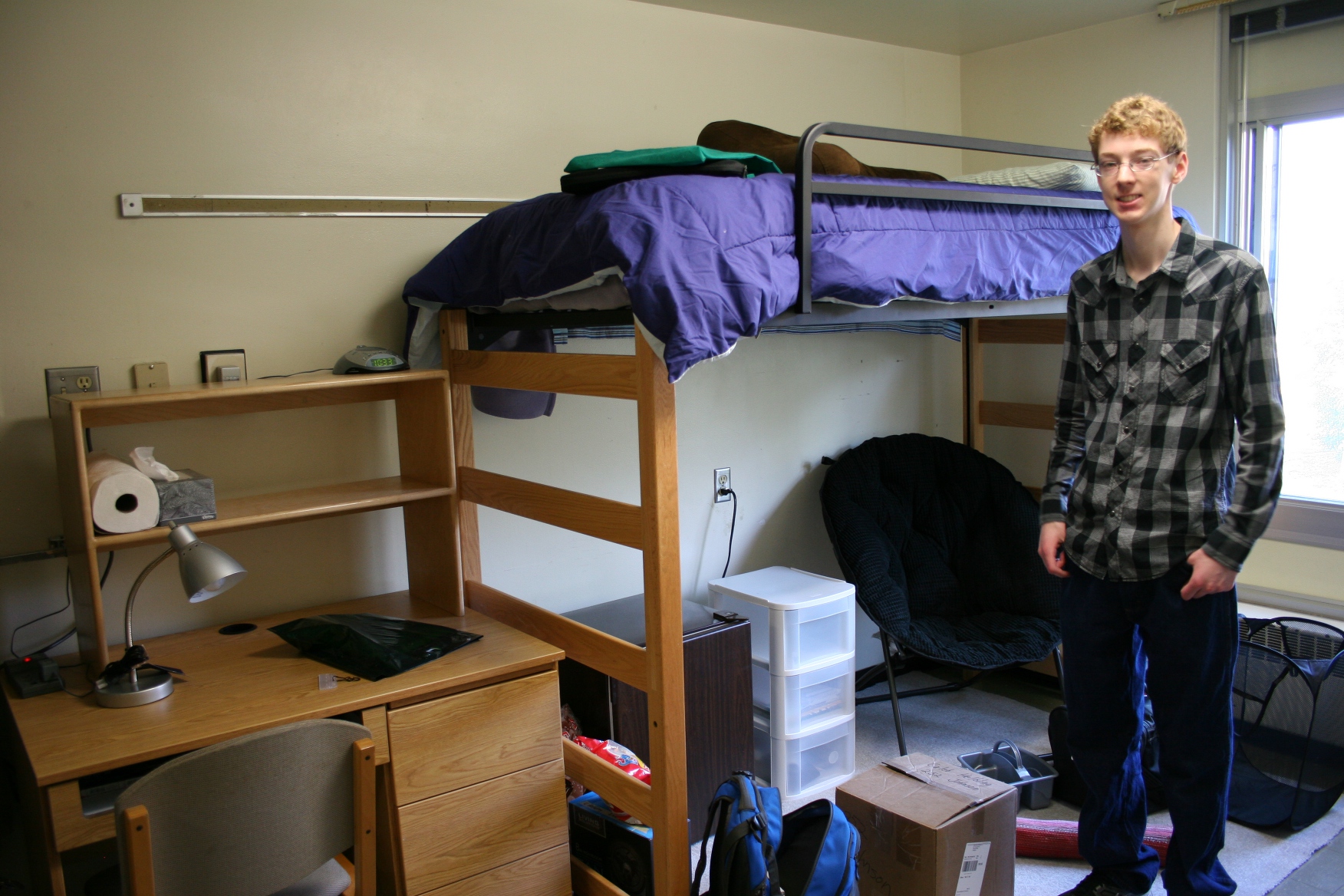
My 18-year-old son, shortly before my husband and I left him in his dorm room on the campus of North Dakota State University four weeks ago. On Friday morning the entire campus was evacuated due to a bomb threat.

TWENTY-EIGHT DAYS/four weeks/one month have passed since my husband and I left our youngest at North Dakota State University, one state/285 miles/five hours away in Fargo.

Since then family and friends have asked how I’m doing. They never ask Randy, I suppose because dads typically don’t admit they miss their children so who would think of asking.

I was poised to tell you that I’m mostly fine, but then, snap, just like that I miss my boy so much I want to cry. I long for the unexpected moments when he would walk into my office and ask, “Mom, can I have a hug?” And then I would wrap my arms around him and savor the tender moment, knowing he still needed me.

I’m not so certain about that need part anymore.

But then the focus of this post changed, snap, just like that, when I thought about Jared, a 19-year-old who lost his life Tuesday afternoon in a farm accident near Janesville. He was trapped inside a grain bin and died before rescuers could release him from the suffocating corn.

I knew Jared because he and his twin brother, Jordan, once attended the same Christian day school as my children and the same church I attend. I don’t know when the family moved away, but that matters not.

I can still picture those two (then) little boys and their mother, Julie, worshiping at Trinity. And now Julie has lost Jared and Jordan has lost his twin brother and a family, and friends, grieve.

And I wonder how a mother can bear such grief.

And I wonder how I can be so selfish and think about myself and how I’m feeling.

Honestly, it’s not like I’m not going to see my 18-year-old. He’s tentatively planning a trip back to Faribault next weekend. I’m happy and elated and so excited.

Then I pause and consider my sister-in-law and brother-in-law and how their 19-year-old son died the summer before he was to start his freshman year of college. And I wonder how a mother and father, even 11 years later, can bear the grief of losing their boy, my nephew, too soon to cancer.

You never know what life will bring. I never expected yesterday morning to answer my cell phone and learn from my son that his college campus—in Fargo, North Dakota, of all places—had been evacuated due to a bomb threat. I felt helpless and desperate for information and wishing I could snatch him away into the safety of my arms and protect him from the evil that exists in this world.

Perhaps this is the dilemma of mothers everywhere, always and forever. We strive to push our children toward independence. And then, when they leave, we long to have them back, safe in our arms, close in the circle of our love.

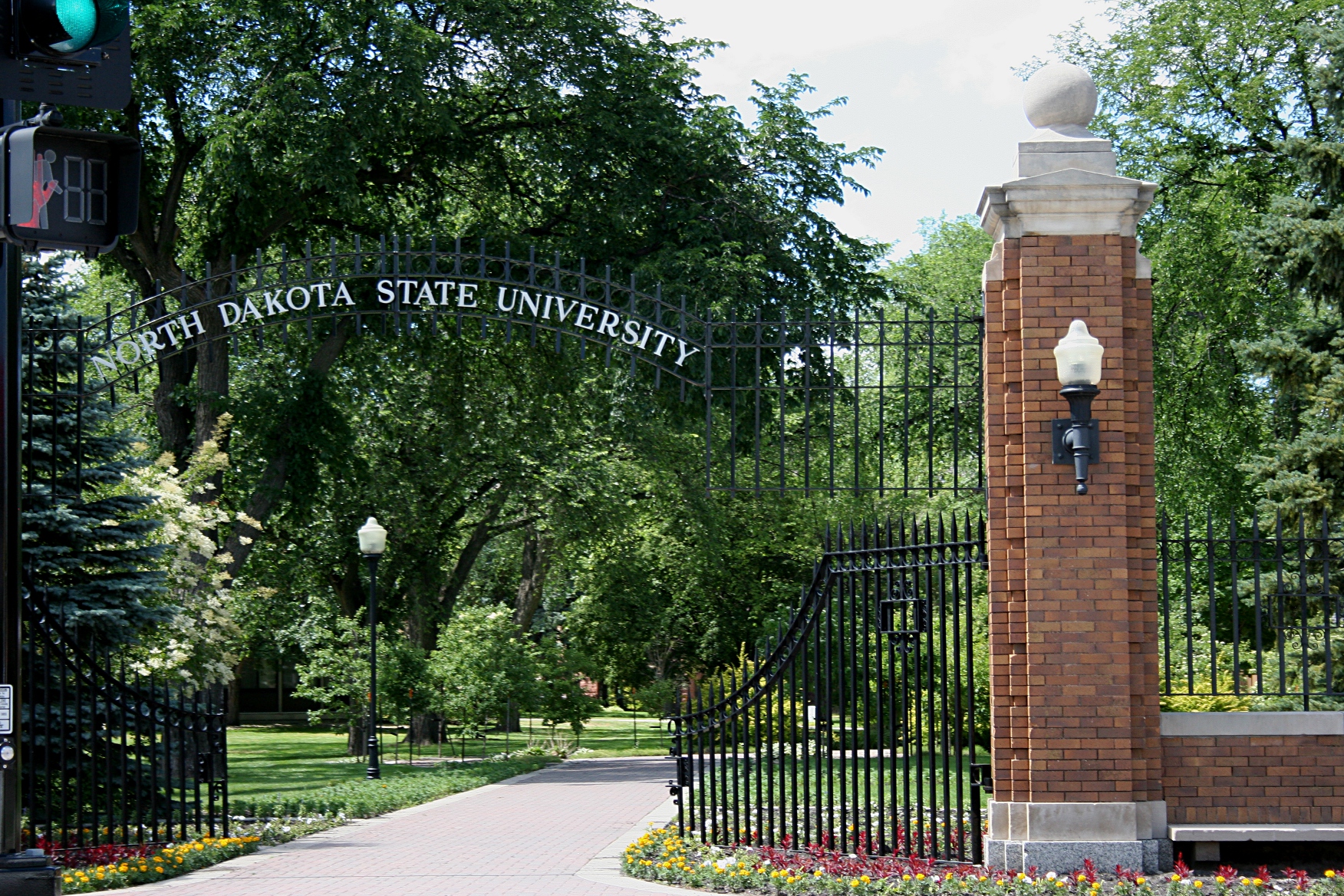
File photo of the main entrance to North Dakota State University in Fargo.

AND NOW, YOU ASK, how is my college freshman son doing?

Initial responses to that question were limited to two words: “Fine, Mom.” And what, exactly, did that mean? I worried because my son is more reserved, most definitely not a social butterfly.

My husband and eldest urged me to give him time and stop worrying. They were right.

He’s now joined a board game club and a computer club (and will be competing soon in some competition in Illinois and he’s taking his resume because big companies like Twitter and Facebook will be there and it’s a great opportunity to network). He’s met other unicyclers and is trying to start a unicycle club. On Tuesday he starts working and volunteering for Chicago-based Bolder Thinking at the NDSU Technology Incubator as part of his Entrepreneurial Scholarship. He’s formed a limited liability company and will be doing some consulting work (sorry, can’t give you details on that).

And in between all that, he’s carrying 17 college credits.

Yes, the college freshman son is, by all reports (as of Friday), doing well.

His only real complaint thus far: living in the dorm. The reason: the noise.

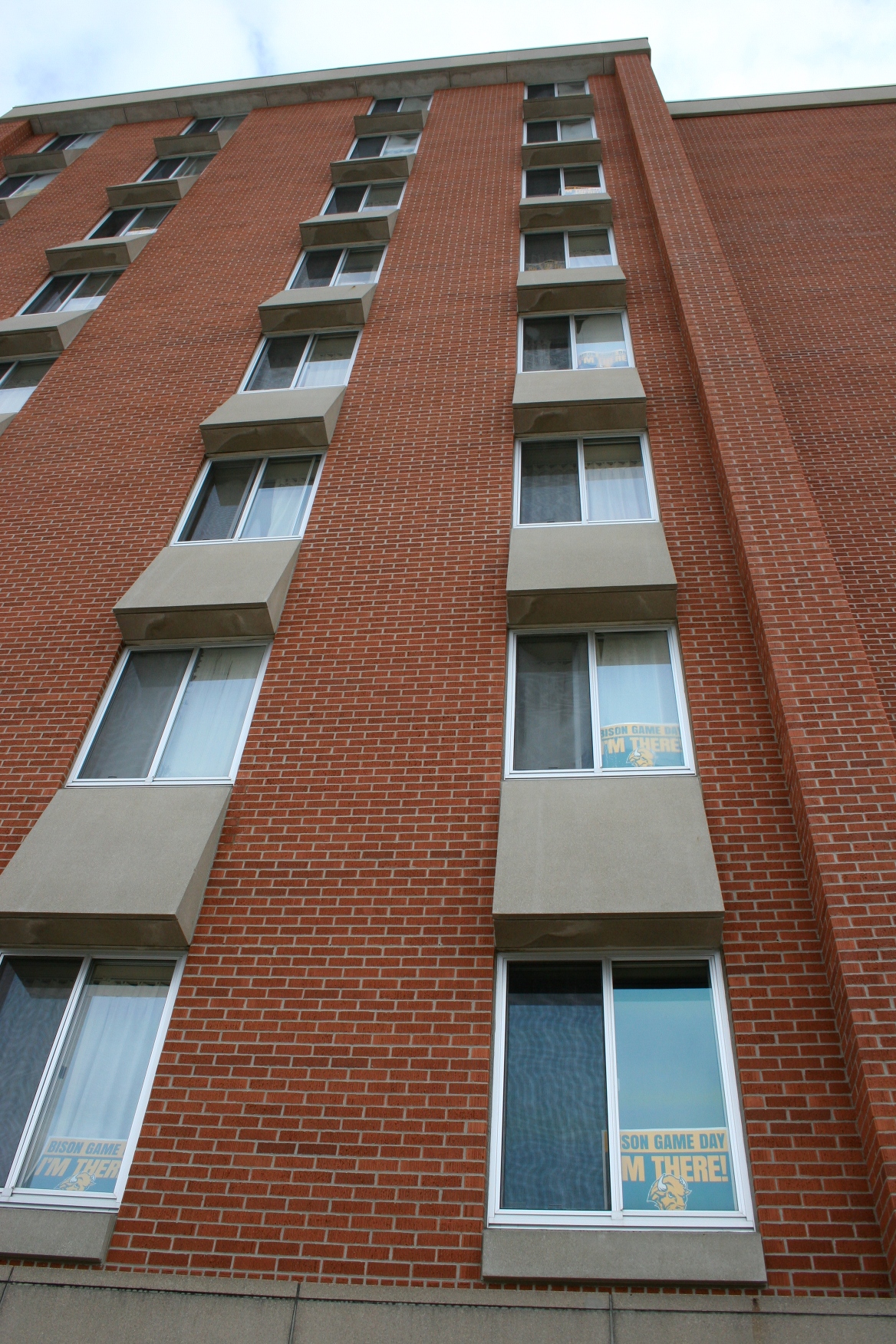
File photo of a dorm at North Dakota State University.

ABOUT THAT BOMB THREAT: A reporter for the Associated Press, who follows my blog (who knew?), contacted me Friday morning to ask about interviewing my son regarding the evacuation at NDSU. You can read the AP story by clicking here.

Thank you to everyone who offered their support to me via emails, comments and phone calls as this event unfolded Friday at NDSU. I am humbled by your concern and support. Such care reinforces my belief that the goodness in this world far outshines that which is bad.

© Copyright 2012 Audrey Kletscher Helbling
 

This mother worries while her son waits out a bomb threat at NDSU September 14, 2012

Filed under: Uncategorized — Audrey Kletscher Helbling @ 11:06 AM
Tags: , , ,

OK, this is one of those moments when this mom worries, wishing only that her son could be back home, safe under her roof.

My son, who attends North Dakota State University in Fargo, is currently across the street from his dorm after a bomb threat was received and a campus evacuation ordered.

Typically this would not scare me so much. But this week marks the 11th anniversary of 9/11 and anti-American sentiments are running high in Egypt and Libya and elsewhere.

There have also been two other bomb threats in the Fargo region this week, one at Hector International Airport, directly across the street from the NDSU campus, and at the airport in nearby Grand Forks, according to an article in The Fargo Forum. That, in itself, is frightening enough.

The Minneapolis Tribune also reports a bomb threat at the University of Texas in Austin this morning from a man claiming to have planted bombs on campus. According to a source quoted in that article, the caller had a Middle Eastern accent and claimed to have ties to al-Qaida.

Coincidence or not?

My son called me about the bomb threat, to which he was alerted via a phone call. He knows nothing other than what I am sharing with him and he is relying on me for updates. He doesn’t have access to the internet. Students are milling around where he is now, directly across the street from campus. Where is he supposed to go? He’s only lived in Fargo for four weeks and it’s not like he has anyone to welcome him into their home, to provide support and updates while this is all unfolding.

Is he safe where he is now, two traffic lanes away from his dorm.

“I hope they don’t blow up my dorm,” he said.

What am I supposed to say? How can I reassure him?

I’m back here in southern Minnesota, 285 miles and five hours away.

I haven’t been able to access the NDSU website.

I am waiting, just like my boy.

Copyright 2012 Audrey Kletscher Helbling
 

The little brick house in Waterville

Filed under: Uncategorized — Audrey Kletscher Helbling @ 7:14 AM
Tags: , , , , , ,

YOUR HOUSE NEEDN’T BE a mansion to impress me.

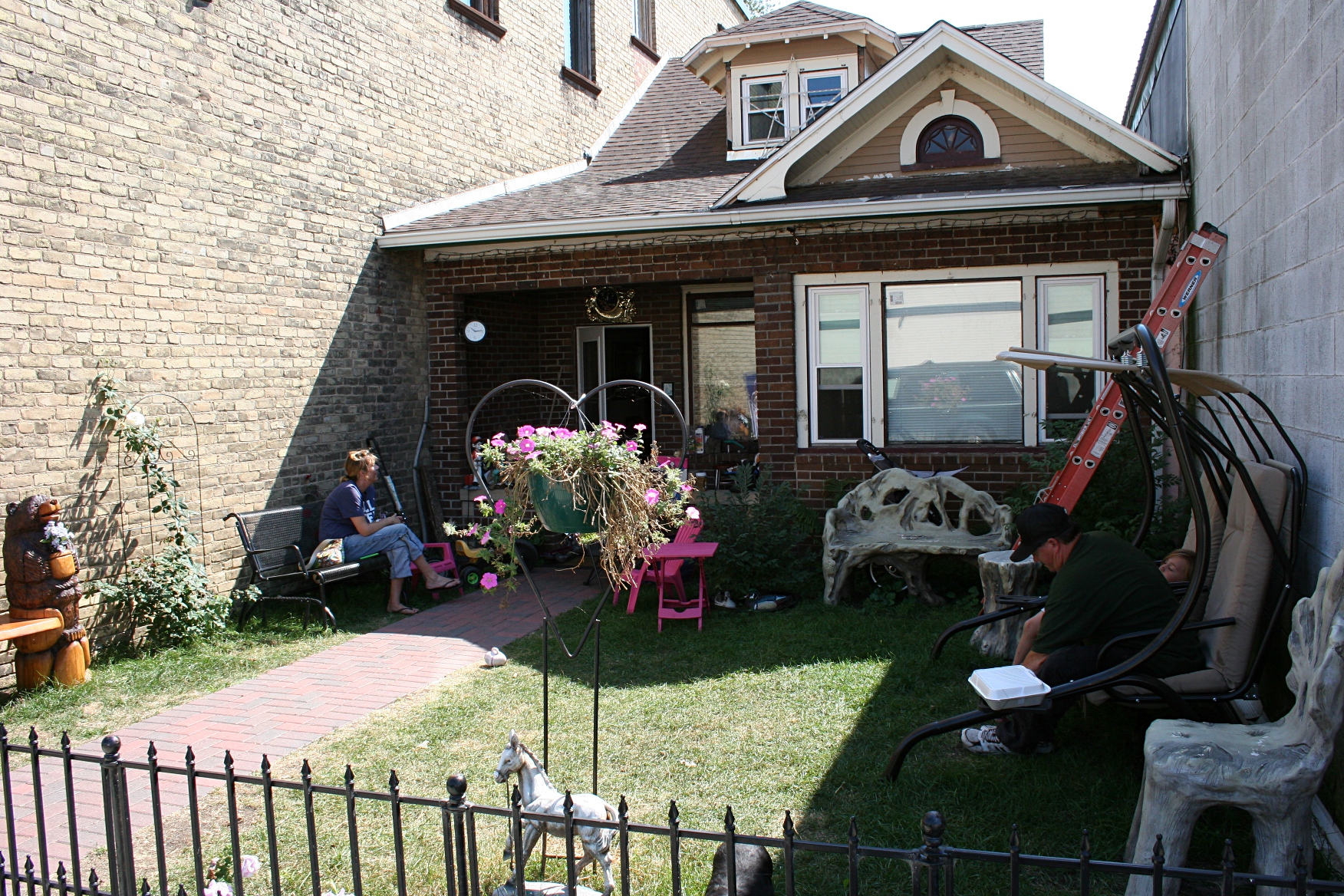
Just look at this sweet little brick house along Main Street in downtown Waterville.

I’ve never seen a house sandwiched like this, wall-to-wall, between two buildings and tucked into a totally unexpected place.

The owner ducked out of the scene just before I shot this single photo. She loves her home, she said, and that was about it. I didn’t want to overstay my “Can I take a picture of your house?” welcome since she clearly was entertaining guests.

But I really wanted to walk around the fence, right up the brick path and through the front door, just so I could see if the little brick house is as quaint inside as it is outside. And how dark, or light, is it inside that house anyway?

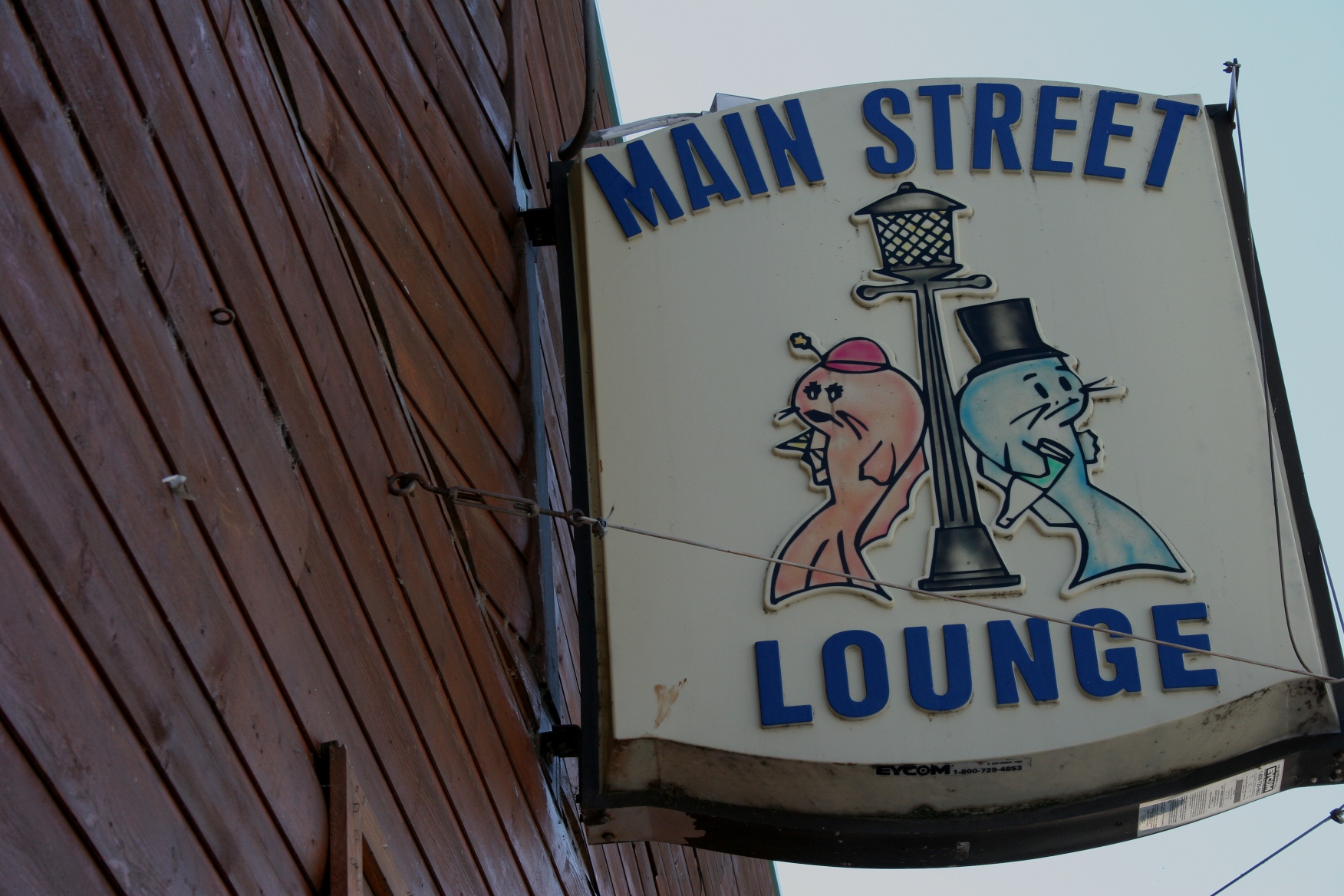
I counted at least four benches where I could sit a spell and chat. Maybe ask about that horse by the fence, the bear bench by the brick wall, how this house came to be, if patrons from the neighboring Corner Bar and Main Street Lounge ever cause problems. You know, stuff like that.

#

FYI: This ends, for now, my stories from Waterville. To read my first post about this southern Minnesota lakeside community, click here.

To read my second post about a quaint coffee shop, which also serves as a place for local artisans to sell their creations, click here.

© Copyright 2012 Audrey Kletscher Helbling
 

A maple bacon sundae & other delights at a Waterville coffee shop September 13, 2012

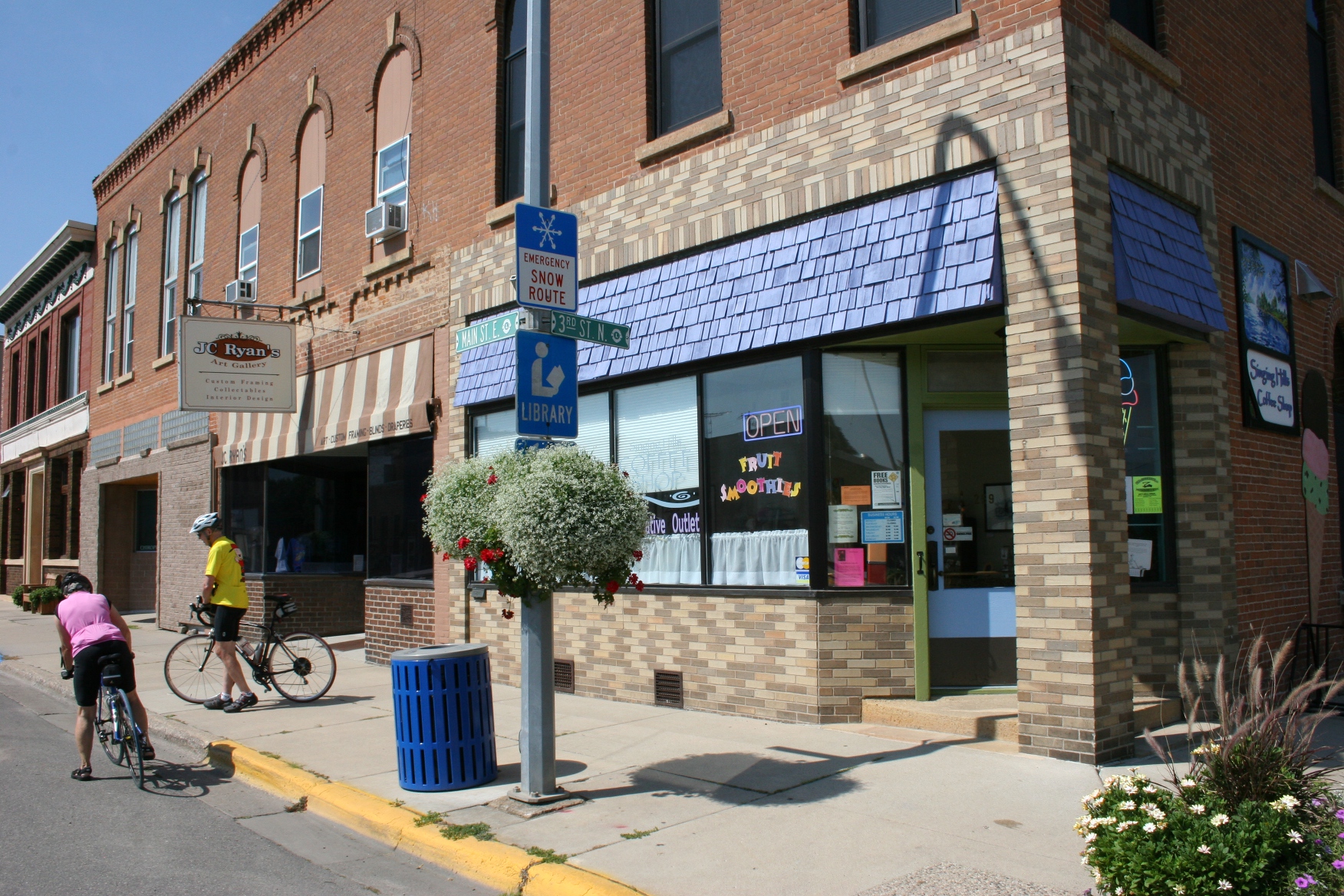
Singing Hills Coffee Shop, at the corner of Main and Third Streets in downtown Waterville in southern Minnesota.

KATHY GREW UP in Detroit, worked 20 years as a deck officer on a freighter for the Merchant Marine, met her husband at a Halloween party, birthed two daughters in her 40s and then, with no business experience, opened a coffee shop in December 2010.

That’s the life synopsis of the woman behind Singing Hills Coffee Shop in the southern Minnesota lakeside community of Waterville, best known for its bullheads and Buccaneers—as in the local high school champion football and basketball teams.

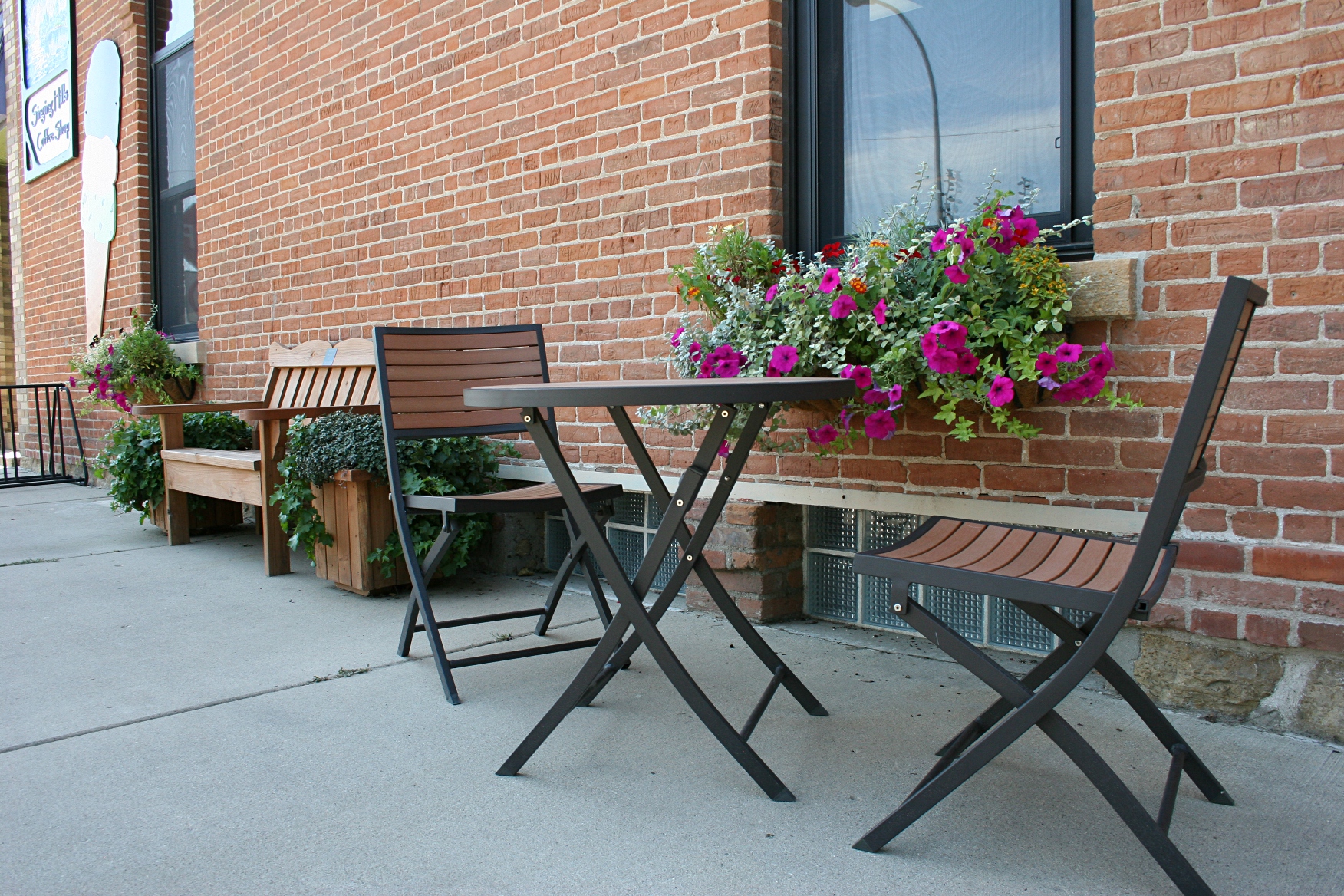
Inviting outside dining at the Singing Hills Coffee Shop.

One-third of a stately, anchor brick building on a corner of Waterville’s Main Street houses the coffee shop. It’s as inviting on the outside—with bistro tables and a bench and window baskets popping with hot pink petunias and luscious ivy spilling from pots—as it is inside.

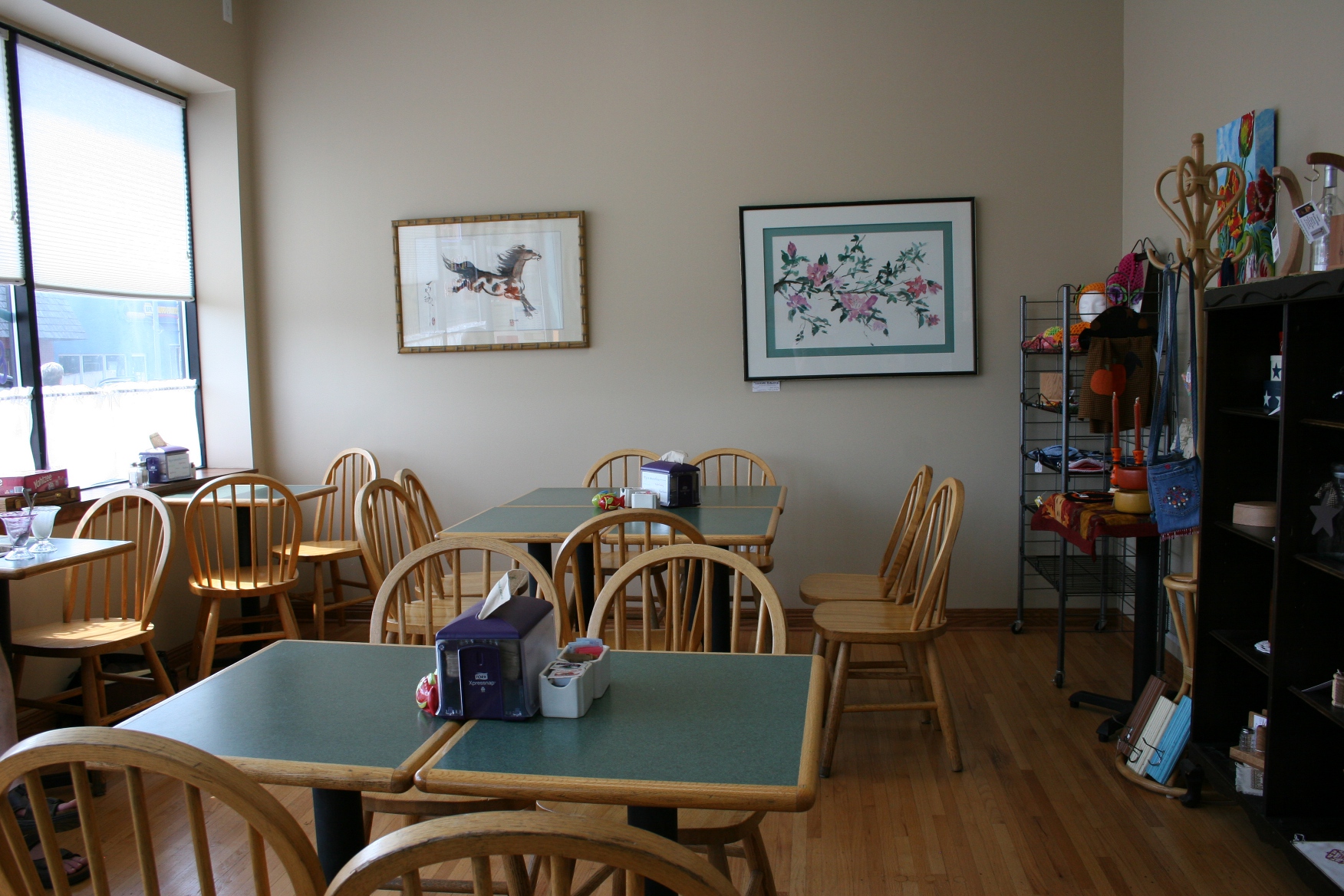
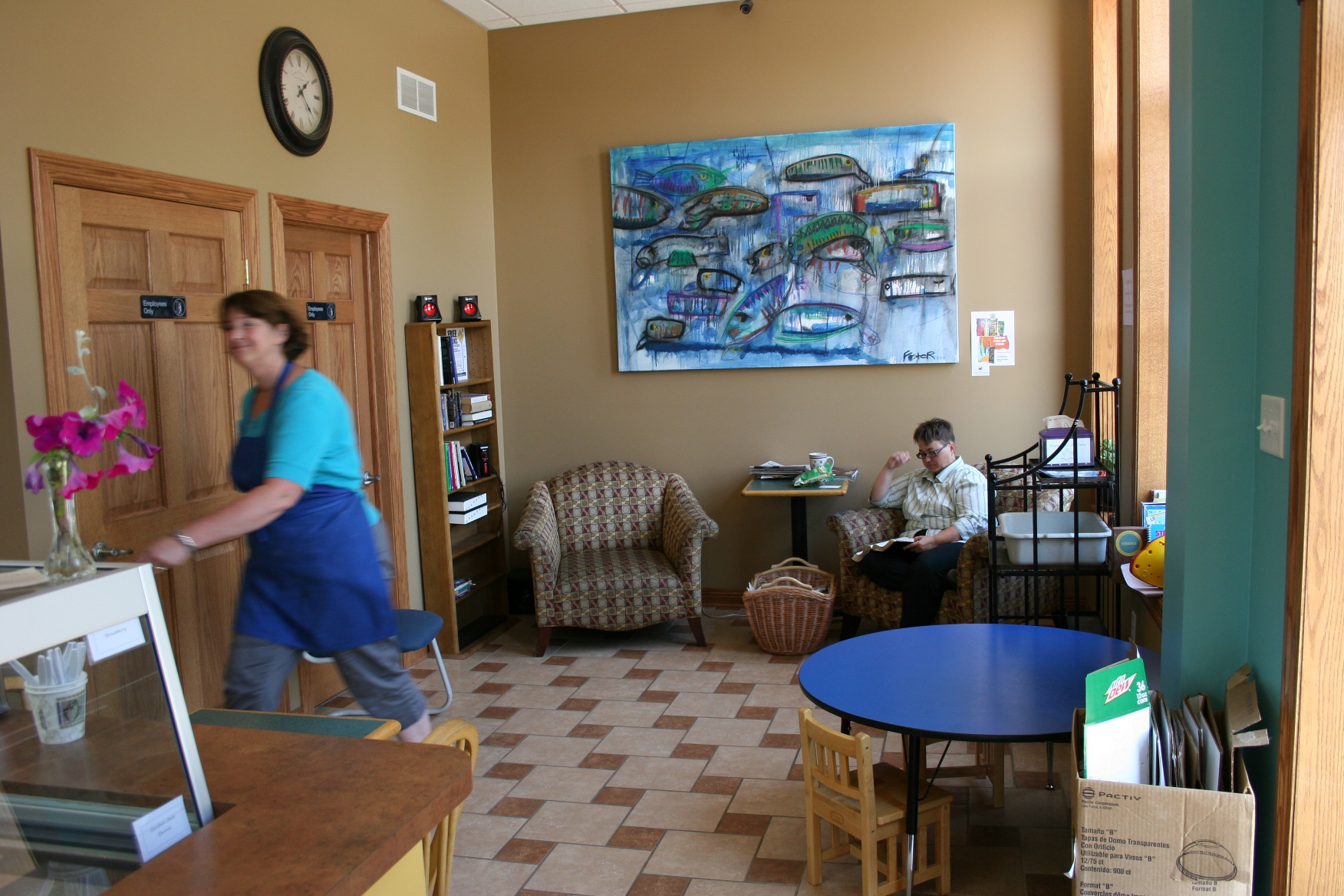
The bright, cozy dining area of the coffee shop with local arts and crafts displayed on shelves to the right and on walls.

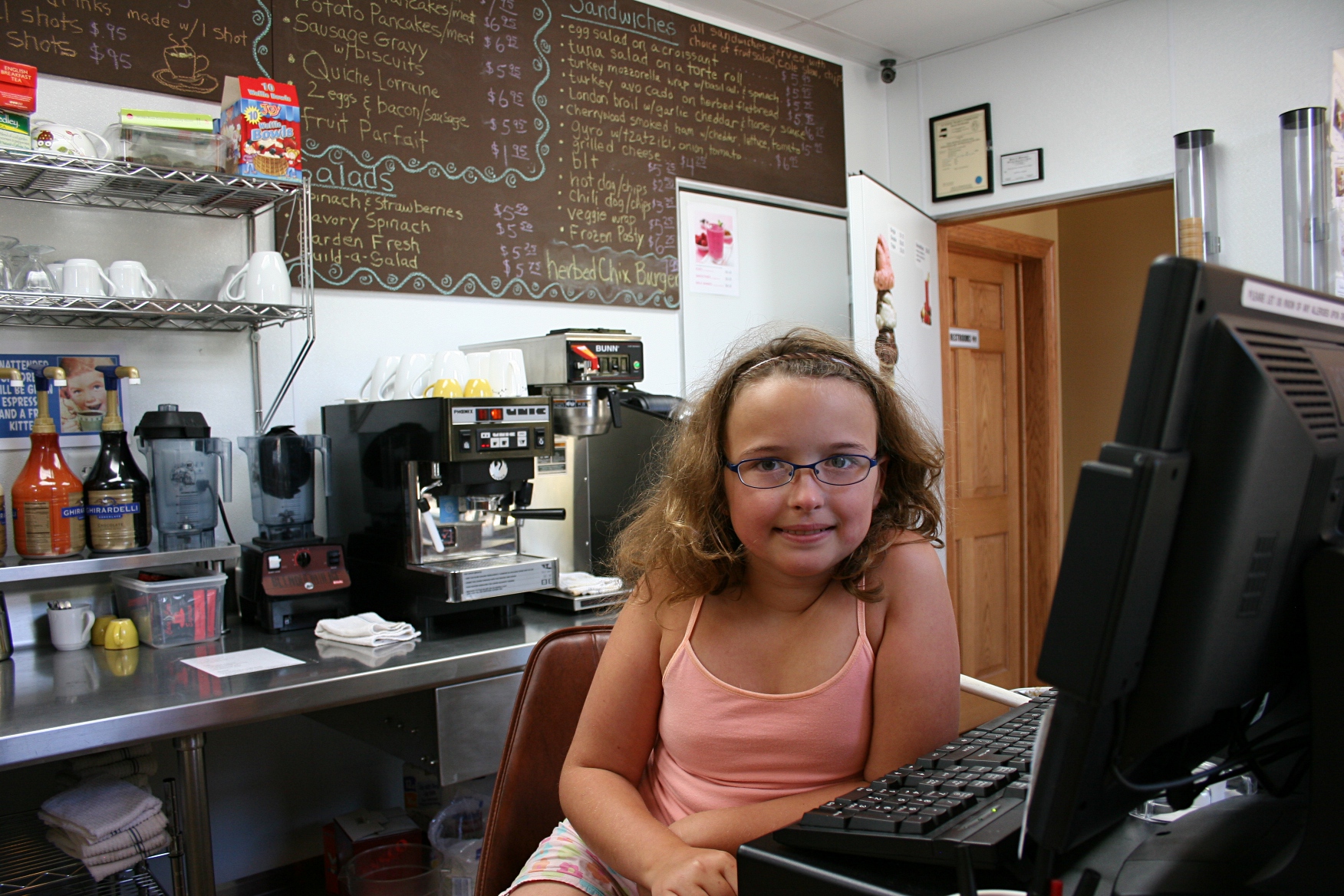
Kathy’s daughter, Marina, waits on customers.

On an early Sunday afternoon, 45 minutes before the 2 p.m. closing, Kathy hustles to prepare sandwiches and ice cream treats while her 10-year-old daughter, Marina (yes, her name is a nod to Kathy’s time on the water), takes orders, accepts payment and makes change.

Kathy hurries back to the kitchen to prepare orders while customer and friend, Kari, relaxes in a back coffee shop corner. Tim Foster’s “American lures” painting (oil paint, oil pastels and graphite on canvas) anchors the wall. It was inspired, he says, by old fishing lures. Kathy would like to purchase the $450 painting as a permanent installment in her shop. I suggested she collect tips to help her buy it. Foster sells his mostly abstract and surreal paintings through his website and studio, at Hogan Brothers in Northfield and via art shows. Kathy saw “American lures” at the 2012 Sakatah Arts Experience in Waterville and invited Foster to bring his painting to her coffee shop.

In a comfy corner chair, Kathy’s friend, Kari, is reading her bible, seeking comfort at the recent, unexpected loss of her 36-year-old cousin. Light floods the homey space warmed by walls the hue of honey on two sides and a contrasting robin’s egg blue on the other.

A printed sign on a slim spot between two towering windows reads:

Conduct Code—Love your neighbor as yourself. Treat other people the way you want to be treated!

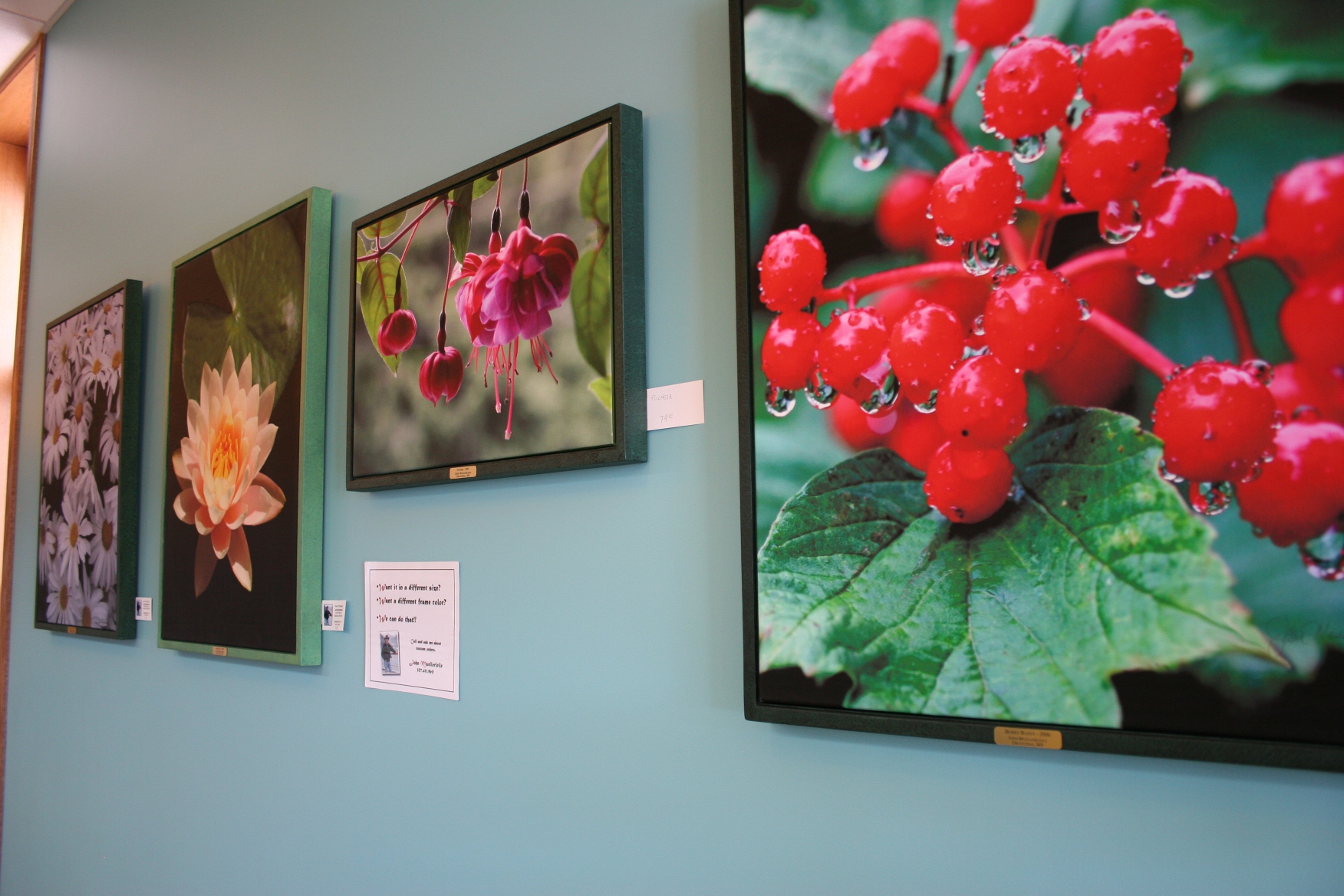
Owatonna resident John Muellerleile’s fine art photography on display and for sale.

Kathy welcomes customers and artists here, into this corner haven in a town that thrives on summer-time business from resort guests, cabin dwellers and users of the recreational Sakatah Singing Hills State Trail.

Her customers come here for the ever-popular smoothies and the favorite turkey avocado sandwich, for the coffee and the espressos and other beverages, for the breakfast and soup and sandwiches and salads and baked goods and ice cream treats.

On this Sunday, my husband and I have driven 15 miles for an ice cream treat upon the recommendation of our friend, Joy, who raves about the maple bacon sundae.

As Randy places our order with Marina, I chat with Kari in the corner, take photos and admire a focal point, 6-foot by 4-foot oil painting by Tim Foster of Northfield. His fish-themed art piece, titled “American lures,” is “so Watervillian,” Kathy tells me later, fitting this lakeside town which celebrates bullheads at an annual June festival. There’s a deeper meaning to the painting in which words like “love” and “prove it” and “Federal Reserve Bank” are hidden, Kathy says, but we don’t get into details.

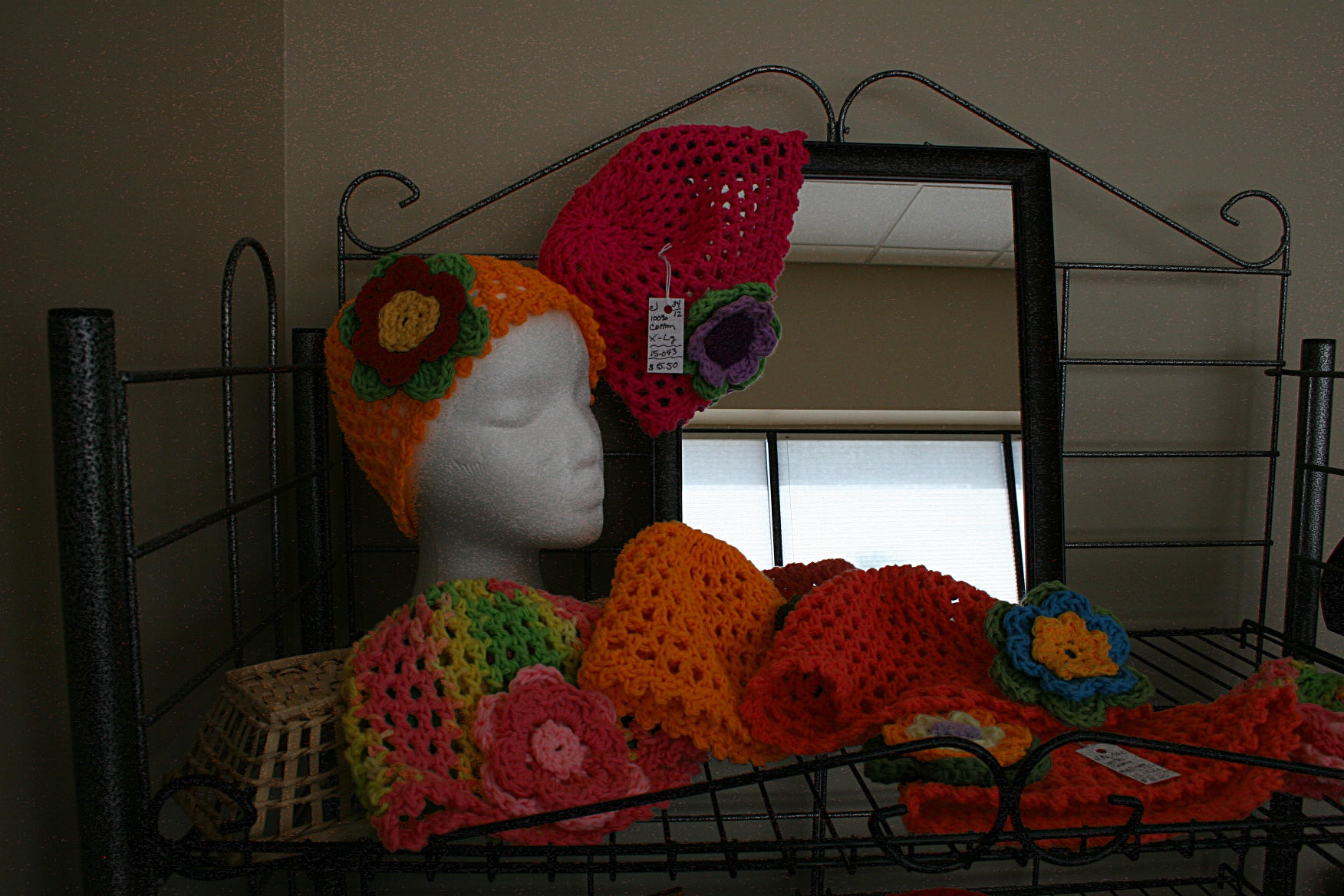
An example of the handcrafted work of local artisans for sale in the coffee shop.

Kathy works with the nonprofit Waterville Local Cooperative Outlet to provide a marketplace for some 8-10 local artisans and crafters. Their creations—from woodcrafts to crocheted caps, paintings, photos and more—are displayed on walls and on shelves through-out the coffee shop.

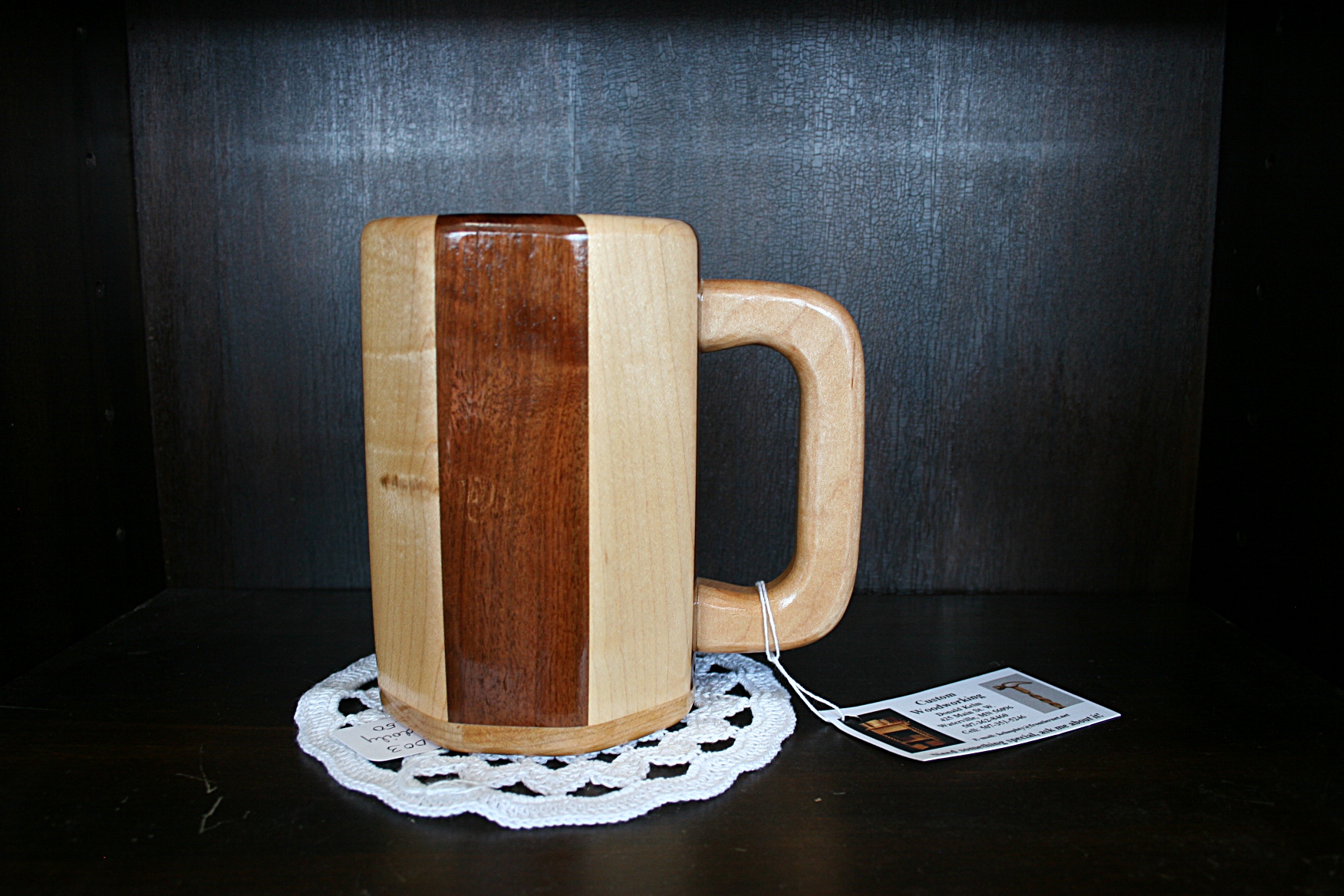
Donald Kelm of Waterville, a custom woodworker, created this mug.

Engaging the arts community exemplifies Kathy’s efforts at community development. That extends to the food aspect of her business, too. She wanted, she says, more dining options than bar food burgers and fries for the town she and her family now call home. And Kathy offers that with a sandwich menu which doesn’t include a single burger. The closest thing to fries are the chips accompanying sandwich orders.

On her sandwich menu, you’ll find choices like egg salad on a croissant; veggie wrap with hummus, provolone, red onion, red pepper and spinach; and cherrywood smoke ham with garlic cheddar, tomato and mustard sauce. You can build your own sandwich, order a cup of soup.

Hungry for a bakery treat? Kathy has selections from cupcakes to pie to traditional Upper Peninsula style pasties, a tribute to her native Michigan.

Singing Hills Coffee Shop’s delicious maple bacon sundae.

But, on this Sunday, I’ve come only to sample the maple bacon sundae with spicy maple-glazed pecans, homemade maple caramel and bacon, yes, bacon, on vanilla ice cream. My husband questions my choice. I don’t, and find the sweet and salty mix a perfect complement to the ice cream. I’d give the maple bacon sundae a five-star recommendation.

An equally tasty blueberry sundae.

My less daring spouse orders a blueberry sundae and is equally pleased with his selection.

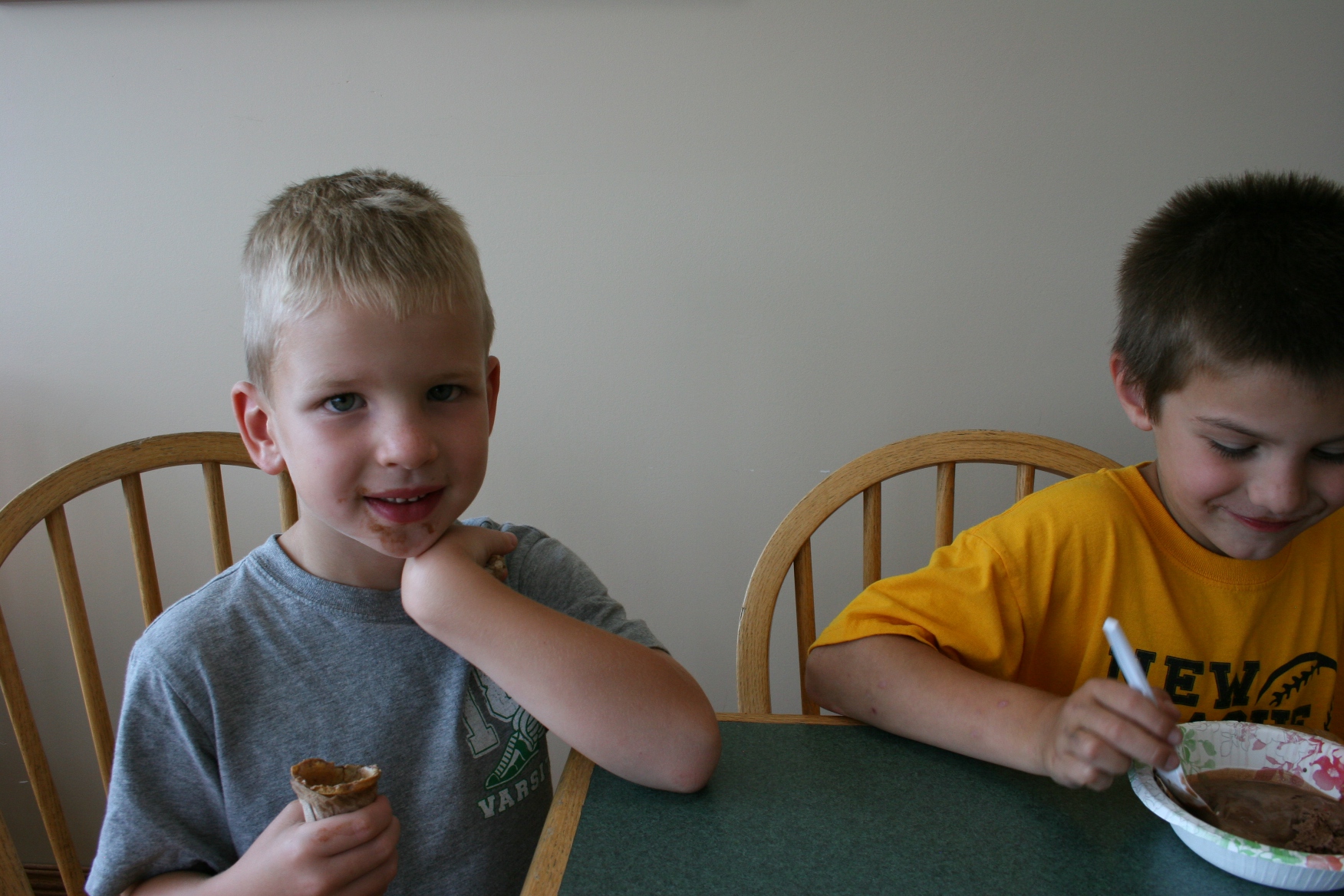
These two boys came with their moms, and a sister of one, for ice cream treats. The boy on the right told the boy on the left that he had a mustache. Then I told the boy on the right that he had an ice cream mustache, too.

A retired couple who spend their summers at a Waterville resort rave about the sandwiches while two moms ordering ice cream for themselves and their kids endorse the ice cream.

Kathy, though, admits that business growth was slow during her first year and that she’s still learning, given her inexperience as a businesswoman. With summer winding down, she’s cutting back on hours. Singing Hills Coffee Shop is closed now on Mondays and Tuesdays, but open from 8 a.m. – 5 p.m. Wednesday – Saturday and from 8 a.m. – 2 p.m. on Sunday.

On October 14, the coffee shop will close for the season and then reopen in mid-April.

So, if you want to try that maple bacon sundae…

FYI: For more information about Singing Hills Coffee Shop in Waterville, click here to reach the shop’s website.

To learn more about the arts scene in Waterville, specifically the annual Sakatah Arts Experience, click here.

For more info about Northfield artist T. Andrew Foster, click here to visit his Creative Space Art Studio website. 

Copyright 2012 Audrey Kletscher Helbling
 

A Sunday afternoon drive to Waterville, Minnesota, Bullhead Capital of the World September 12, 2012

Filed under: Uncategorized — Audrey Kletscher Helbling @ 6:55 AM
Tags: , , , , , , ,

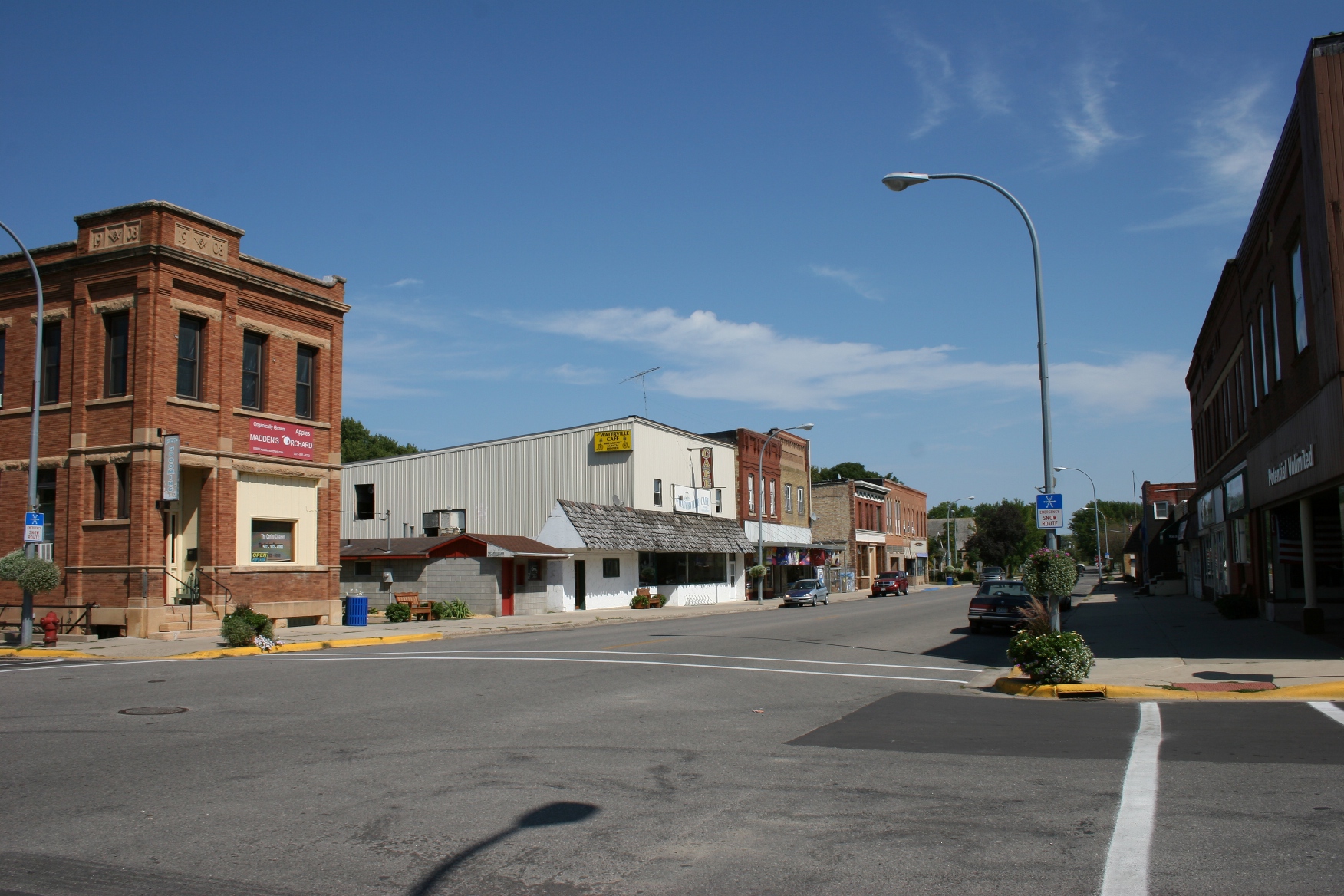
Main Street Waterville, Minnesota, on a Sunday afternoon in September.

THE THING ABOUT SMALL TOWNS is this. They’re not boring cookie cutter places with chain stores and look-alike subdivision houses occupying space in the middle of nowhere. I know, I know, you likely disagree about that “boring and middle of nowhere” if you live in a sizable city.

But these small towns possess individuality and character. And by small town, I mean a community of 5,000 or fewer residents. Just want to be clear on the definition.

Exploring small towns is something I enjoy, probably because I grew up on a dairy and crop farm near Vesta, current population around 330 or so, among the corn and soybean fields of southwestern Minnesota.

I’m intrigued by these communities which are most often ignored as simply, sigh, another place to slow us down as we rush from one destination to the next. I’m as guilty as the next traveler in feeling that way.
But sometimes I intentionally slow down. In recent years my husband and I have embraced Sunday afternoon drives, not unlike the Sunday drives of my youth. Dad would guide the family car along the washboard gravel roads of Redwood County, sometimes venturing into neighboring Yellow Medicine County, so we could look at the crops.
While Randy and I sometimes take gravel roads, our ultimate destination is typically Main Street.  We meander to a nearby small town, park our vehicle, get out and walk. It is then that we discover the quirks, the character, the feeling of community and closeness which define a given town.

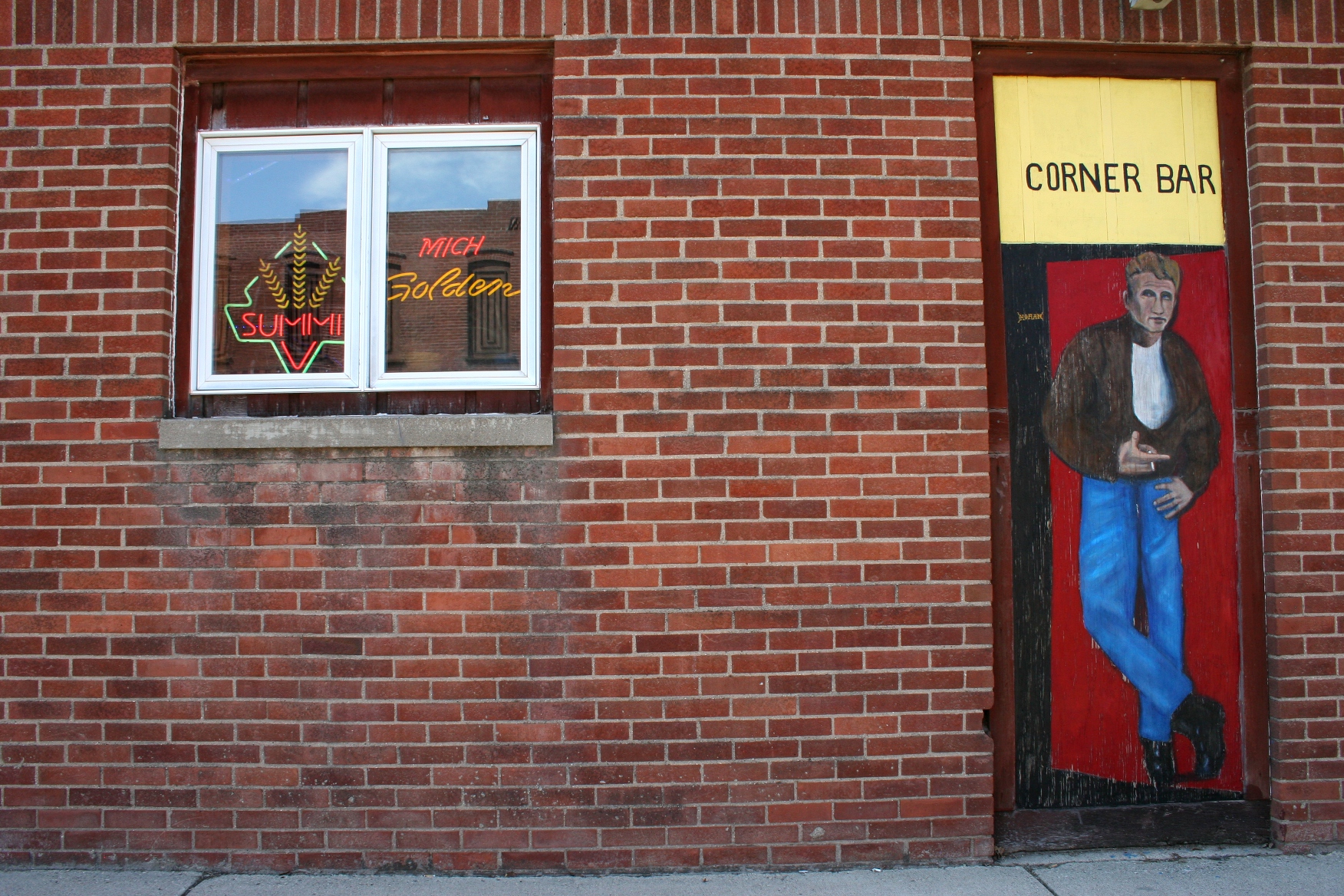
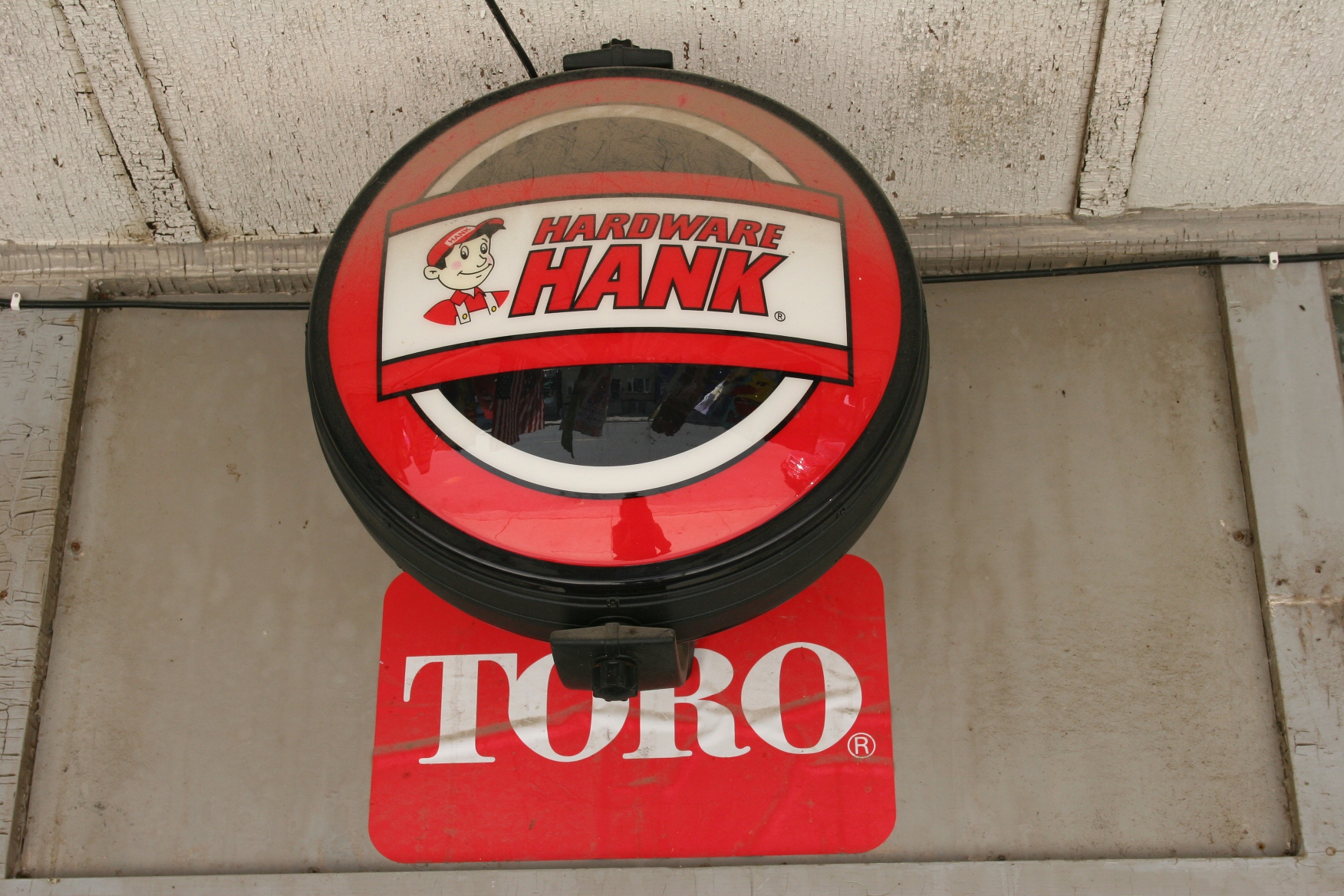
Our most recent Sunday jaunt took us to Waterville, only 15 miles from Faribault. I’ve been into this lakeside town of nearly 1,900 perhaps half a dozen times, just to drive through it, tour Ron’s Hardware (a story in itself, but it was closed the Sunday we were there), enjoy an ice cream treat and, many years ago, to grab a burger and beer at the Corner Bar.

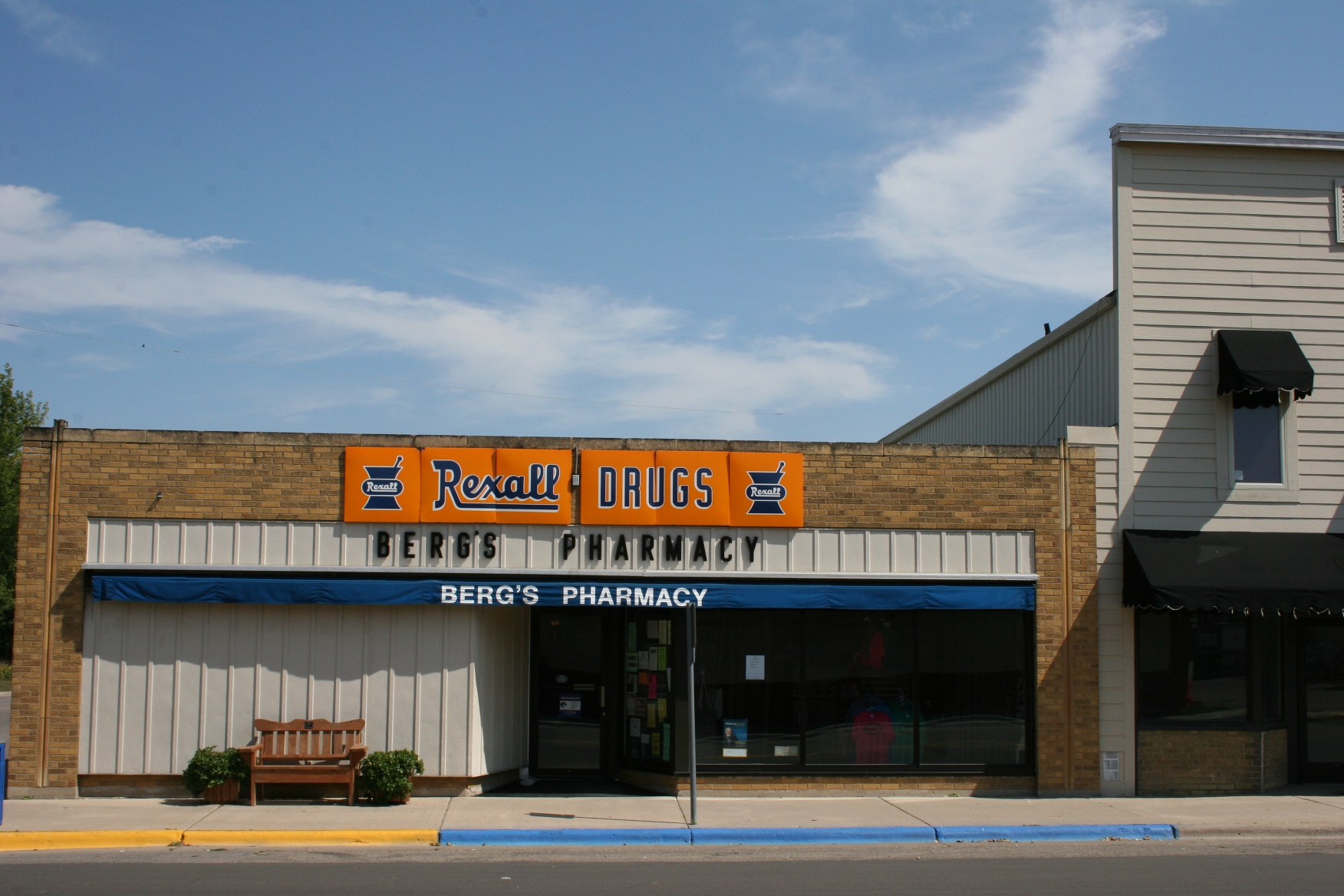
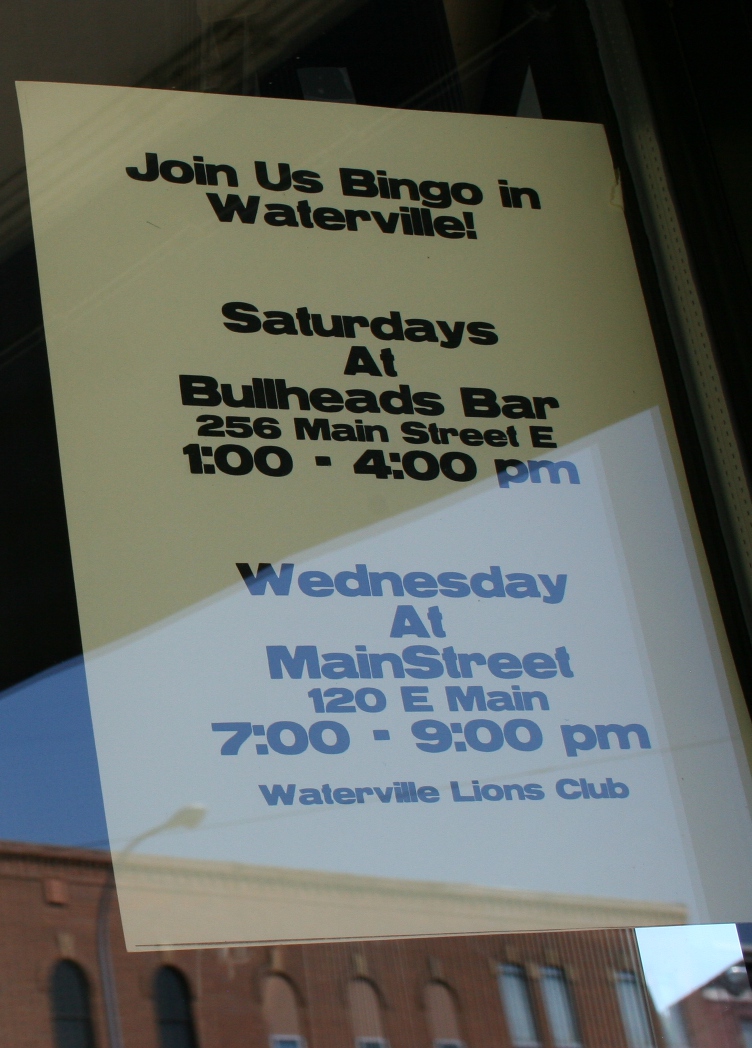
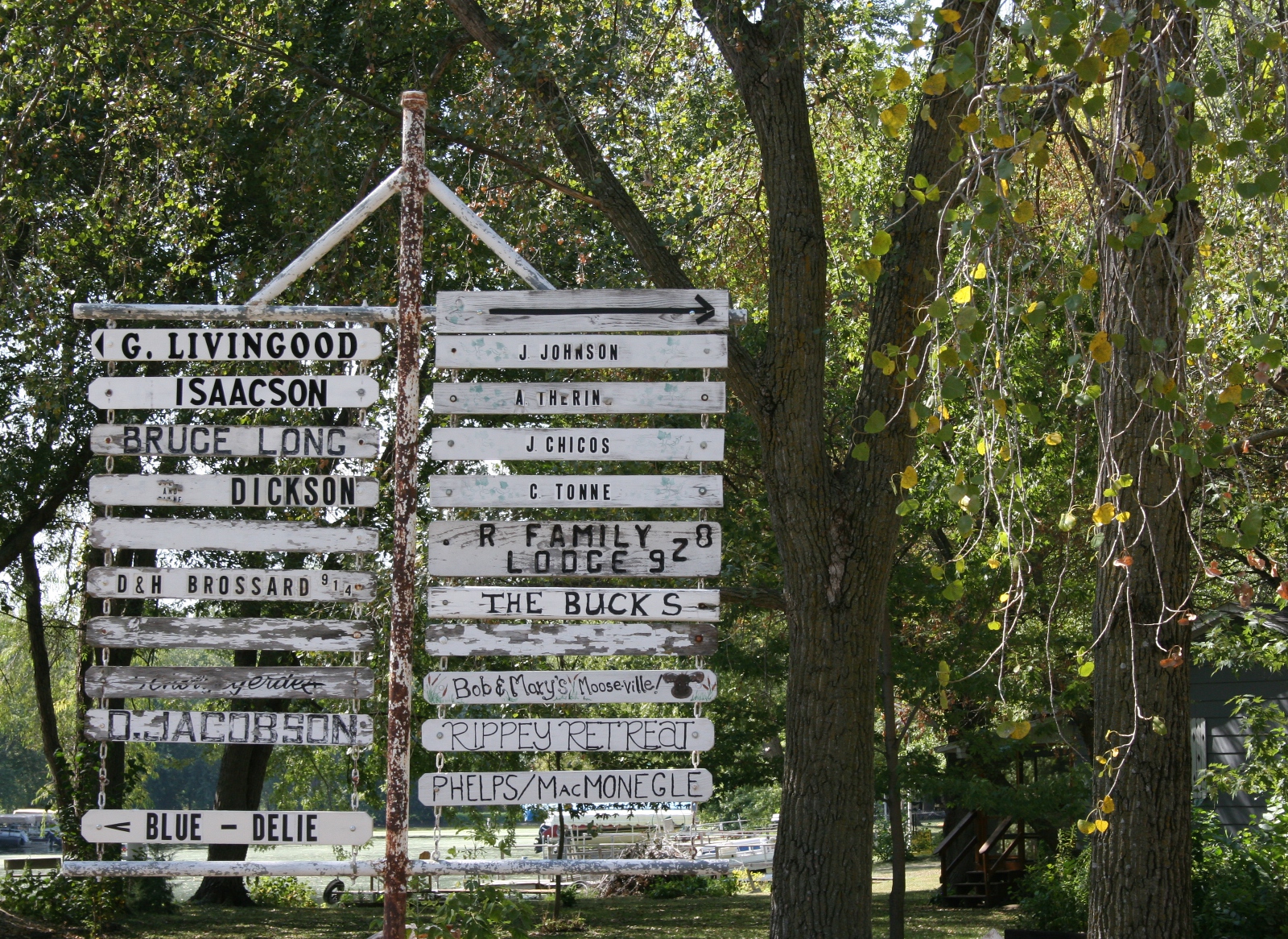
Mostly, though, Waterville has been a town my family zips past along Minnesota Highway 60 en route west. By doing that, I’ve missed out, missed out on the defining details. And the easiest way to notice those details, when Main Street businesses are mostly closed on a Sunday, is to check out the signage.

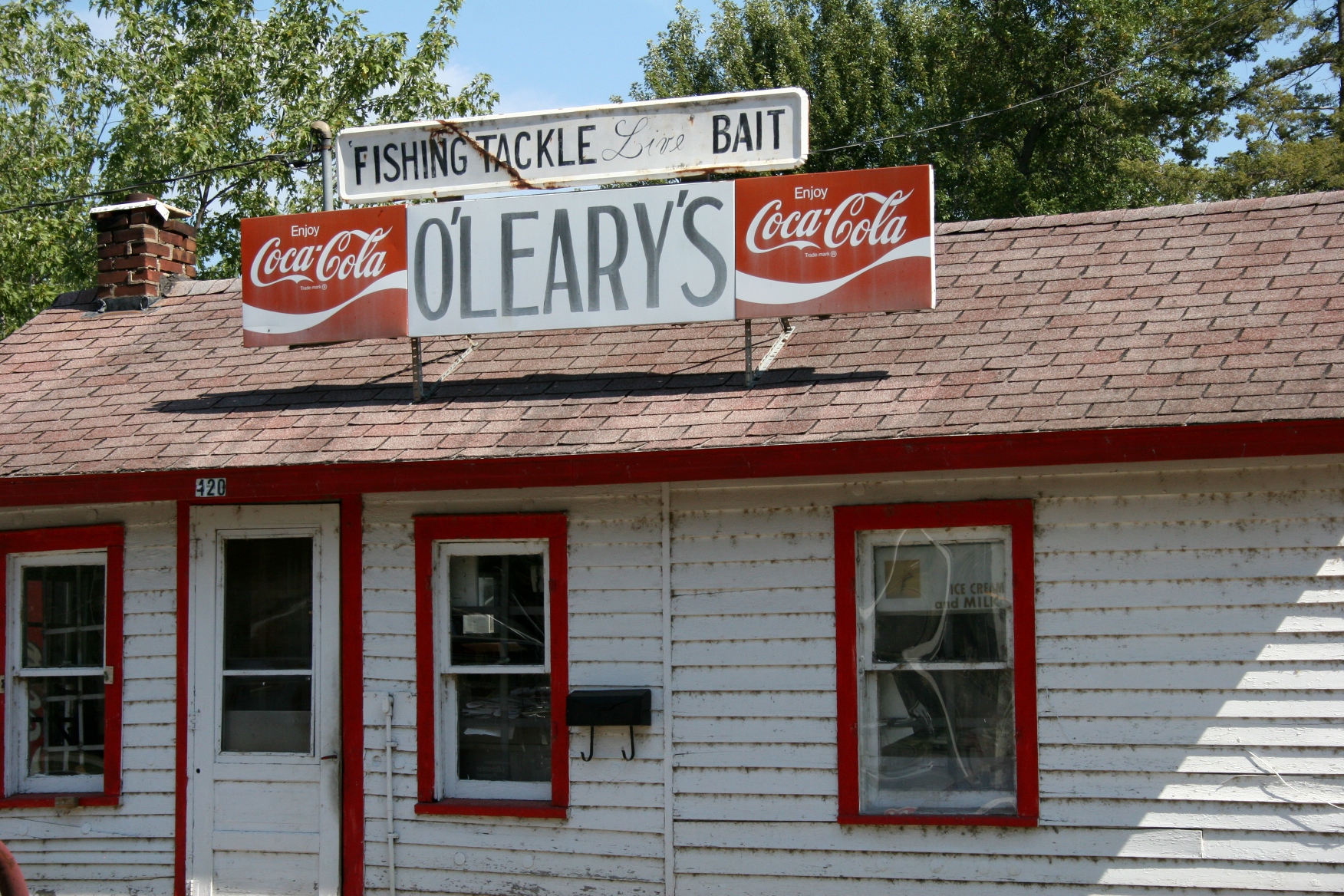
Welcome to Waterville, Minnesota, Bullhead Capital of the World, where signs hint at this community’s individuality and character.

CHECK BACK FOR A FUTURE post featuring one of Waterville’s newest businesses.

© Copyright 2012 Audrey Kletscher Helbling