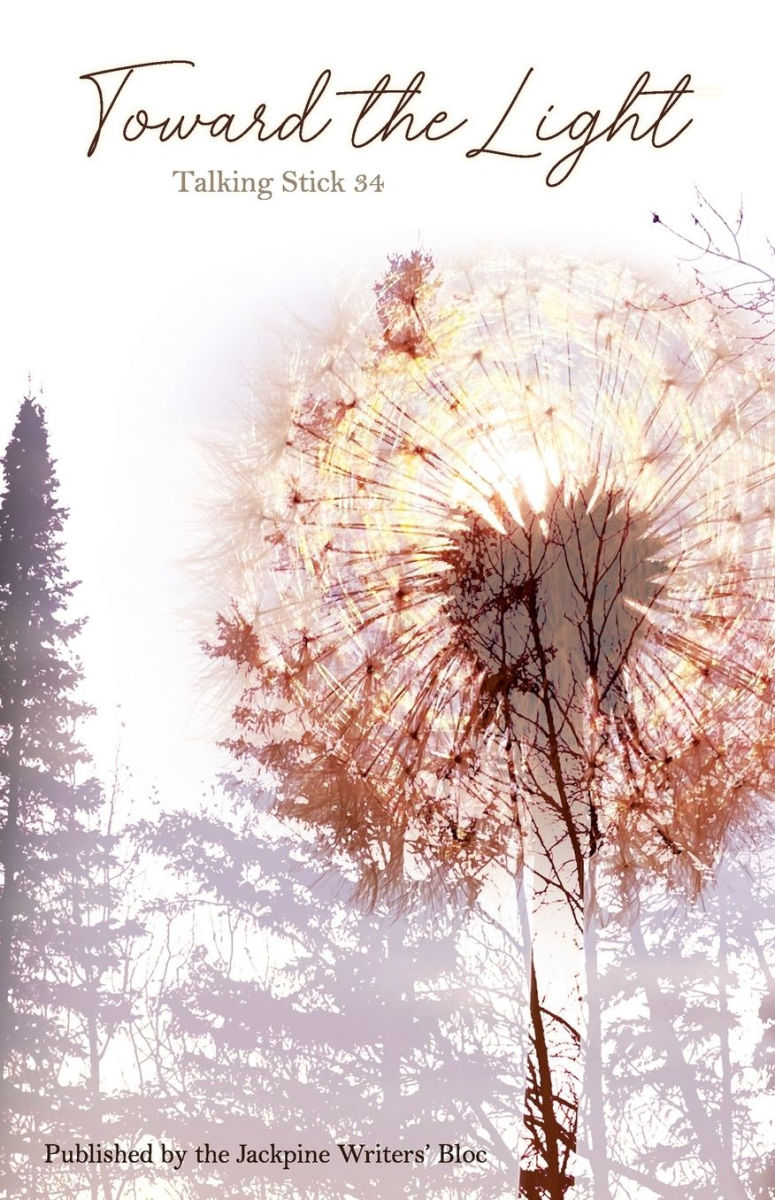
Two of my poems and a work of creative nonfiction are published in this literary anthology. (Book cover sourced online)
FOR THE 16thCONSECUTIVE YEAR, my writing has been selected for publication in the Talking Stick, a literary anthology published by the Jackpine Writers’ Bloc based in northern Minnesota.
The editorial board chose two of my poems, “Up North at the Cabin” and “Where There’s Smoke, There’s Fire,” and a work of creative nonfiction, “Birthing Everett,” for publication in volume 34, titled Toward the Light. The recently-released book features 128 pieces of writing by 76 writers either from Minnesota or with a strong connection to the state.
I consider it an honor to be published in the Talking Stick, which includes the work of talented writers ranging from novice to well-known. I especially appreciate that entries are blind-judged so each piece stands on its own merits. There were 275 submissions from 119 writers for this year’s competition.
Grandpa Randy and grandchildren Izzy and Isaac follow the pine-edged driveway at the northwoods lake cabin. This is my all-time favorite cabin photo. (Minnesota Prairie Roots copyrighted file photo 2020)
I’m particularly excited about two of my pieces published in Toward the Light. Anyone who’s ever spent time at a lake cabin will enjoy my “Up North” poem as it centers on nature and family togetherness. I was in my sixties before I first experienced cabin life. Now I’m building memories with my grandkids each summer at a family member’s lake cabin. That centers this poem.
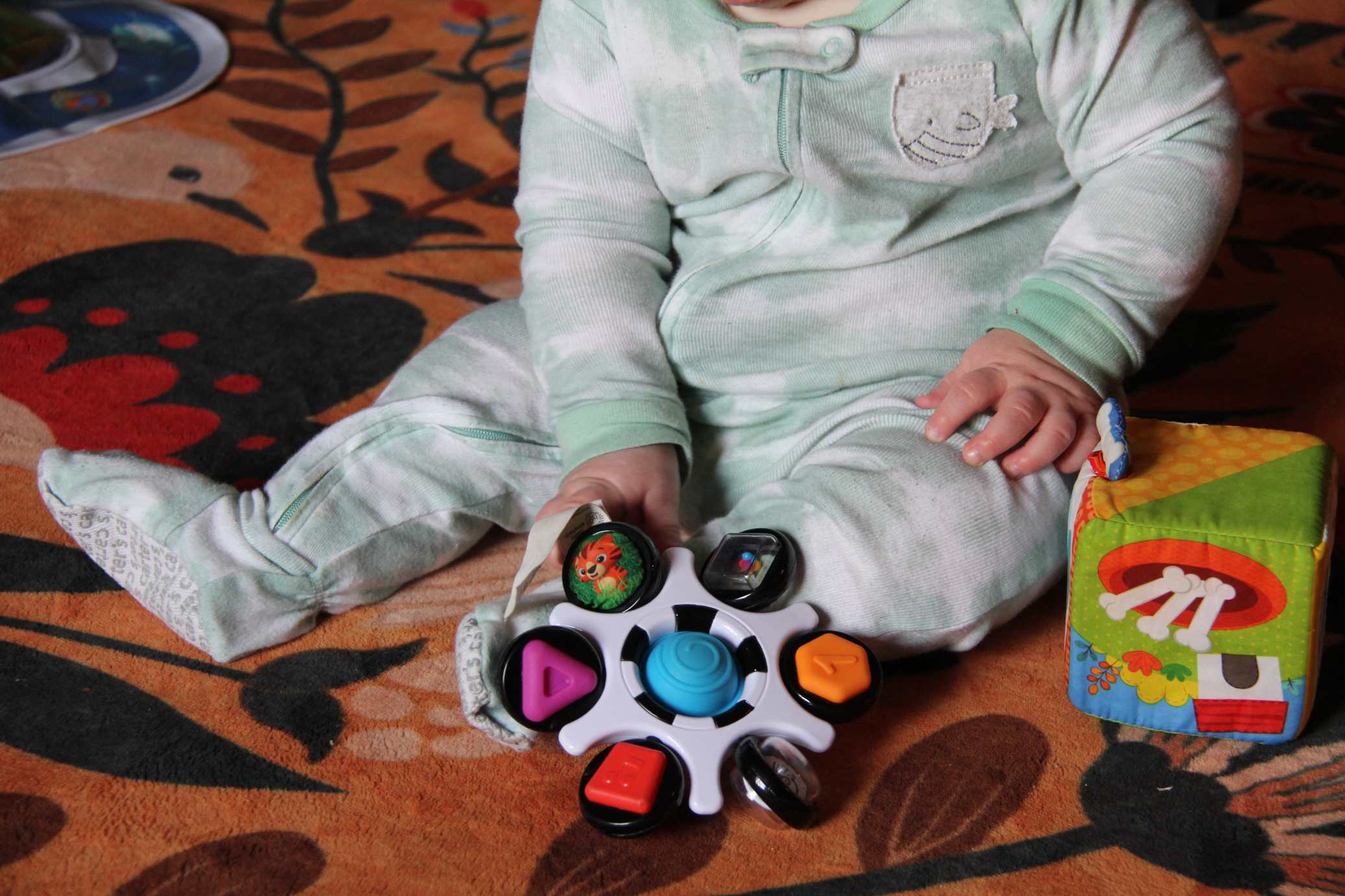
My grandson Everett, nine months old, plays with his toys in his Madison, Wisconsin, home. (Minnesota Prairie Roots copyrighted photo October 2025)
A grandchild also focuses “Birthing Everett,” a deeply personal story about the birth of my 10-pound grandson in January. My daughter Miranda nearly died during childbirth. I knew I needed to write about this to heal from my own trauma of nearly losing her. I will be forever grateful to the medical team at UnityPoint Health-Meriter Hospital in Madison, Wisconsin, for saving Miranda’s life. You just don’t think of women dying during childbirth any more, but it can, and does, happen.
Combining soybeans in rural Rice County, Minnesota. (Minnesota Prairie Roots copyrighted file photo October 2022)
WHEN I FIRST READ the message bannering the United States Department of Agriculture website during the current government shutdown, my jaw dropped. In a two-sentence statement, “The Radical Left Democrats” are blamed for the closure of the federal government. How unprofessional, I thought, to so blatantly put politics out there on a website designed to help America’s farmers. But then again, why should this surprise me?
United States Secretary of Homeland Security Kristi Noem is doing the same in a video message blaming Democrats for the shutdown. She expects this to be broadcast in airport terminals. Many are opting not to air her clearly political statement. And they shouldn’t. It’s unprofessional and wrong in more ways than I can list, no matter what your political affiliation may be.
But back to that message on the USDA website. It goes on to say that President Donald Trump wants to keep the government open “and support those who feed, fuel and clothe the American people.” Now that is certainly a noble statement at face value, one we could all applaud. Who doesn’t want to support our farmers? But in the context of what the President has done to farmers, the statement seems laughable.
Rural Minnesota, planted in corn and soybeans. (Minnesota Prairie Roots copyrighted file photo October 2024)
Here in the heartland, farmers have lost a major market for soybeans, my state’s top agricultural export. China has stopped buying soybeans from not only Minnesota, but America. That’s billions of dollars in lost income. And all because of the ongoing trade war between the U.S. and China, begun by the man who slapped tariffs—now averaging 58 percent—on Chinese imports with a threat to increase that to 100 percent. I’m no economist. But even I understand China’s retaliatory tariffs and actions to tap other markets for soybeans. They went to Brazil and Argentina.
And now President Trump proposes sending $20 billion in aid to Argentina, all tied to an upcoming election there. Why would we bail out a country exporting their soybeans to China while our own financially-strapped farmers are suffering because they’ve lost a key market? This makes no sense to me. Again, I’m not an economist or a politician, simply an ordinary American citizen, with a farm upbringing (and who decades ago freelanced for the Minnesota Soybean Growers Association), questioning the logic of any of this.
Even without the Argentinian component tossed into the mix, there’s more. President Trump has proposed an aid package for farmers to help them get through the financial crisis he created via his tariffs and the resulting trade war with China. That aid would come from the money collected from tariffs. Now I know farmers—my dad was one—are fiercely independent and would rather have a market for their cash crops than government aid. If not for the tariffs…
Trucks await the harvest. (Minnesota Prairie Roots copyrighted file photo October 2022)
As the harvest continues here in Minnesota, I can’t help but feel for those who work the land, who continue to face so many uncertainties, financial challenges and stressors. Interest rates on loans remain high. Market prices remain low. Land rents continue to rise. Equipment and other costs are high. And on and on, including the loss of the long-standing soybean export market to China, which quite likely may never be reclaimed.
This is becoming a crisis situation for farmers—those who feed, fuel and clothe Americans. From fields to small town Main Street, rural America is hurting. And politically-biased blame words published on a government website aren’t helping.
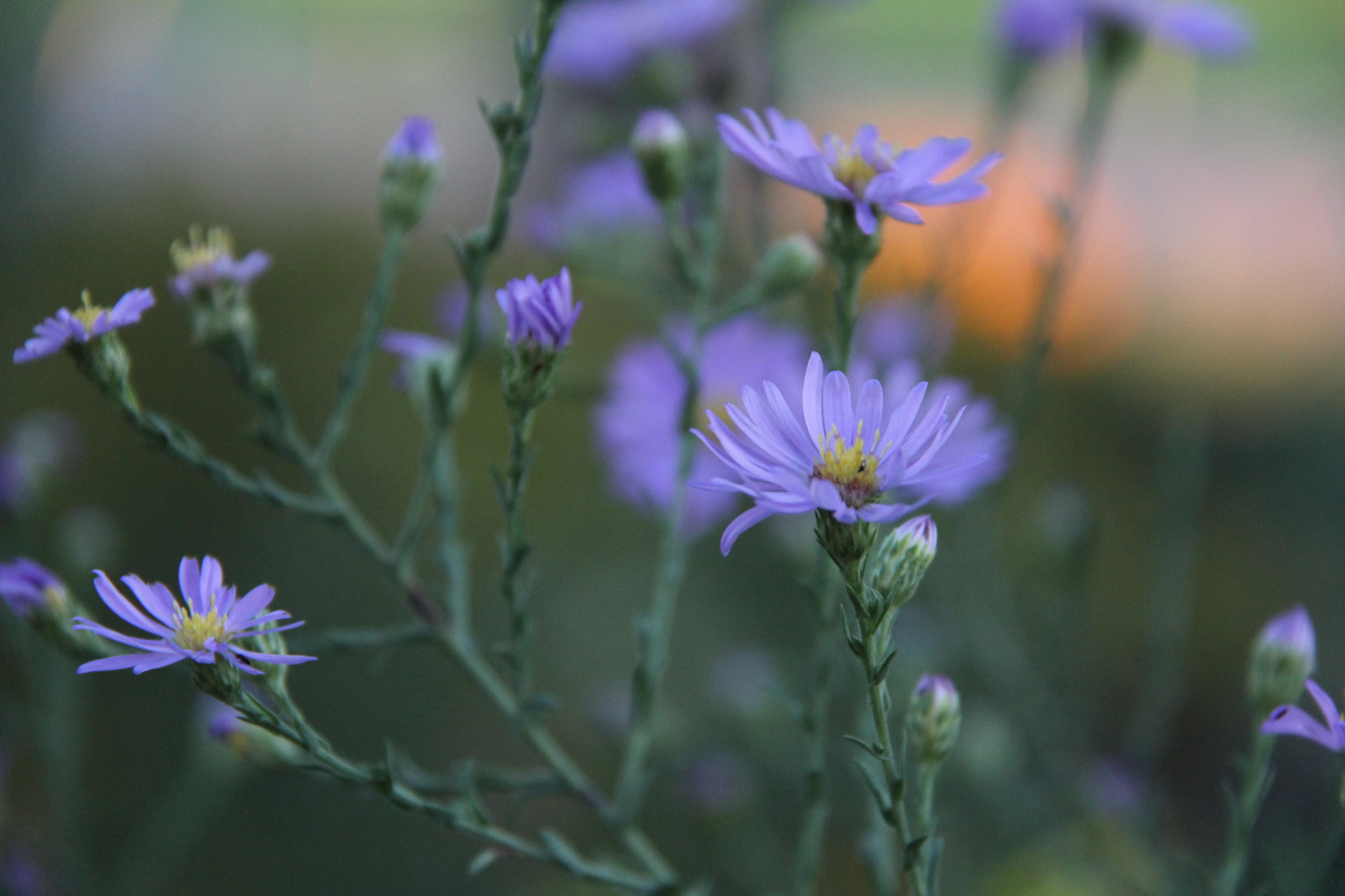
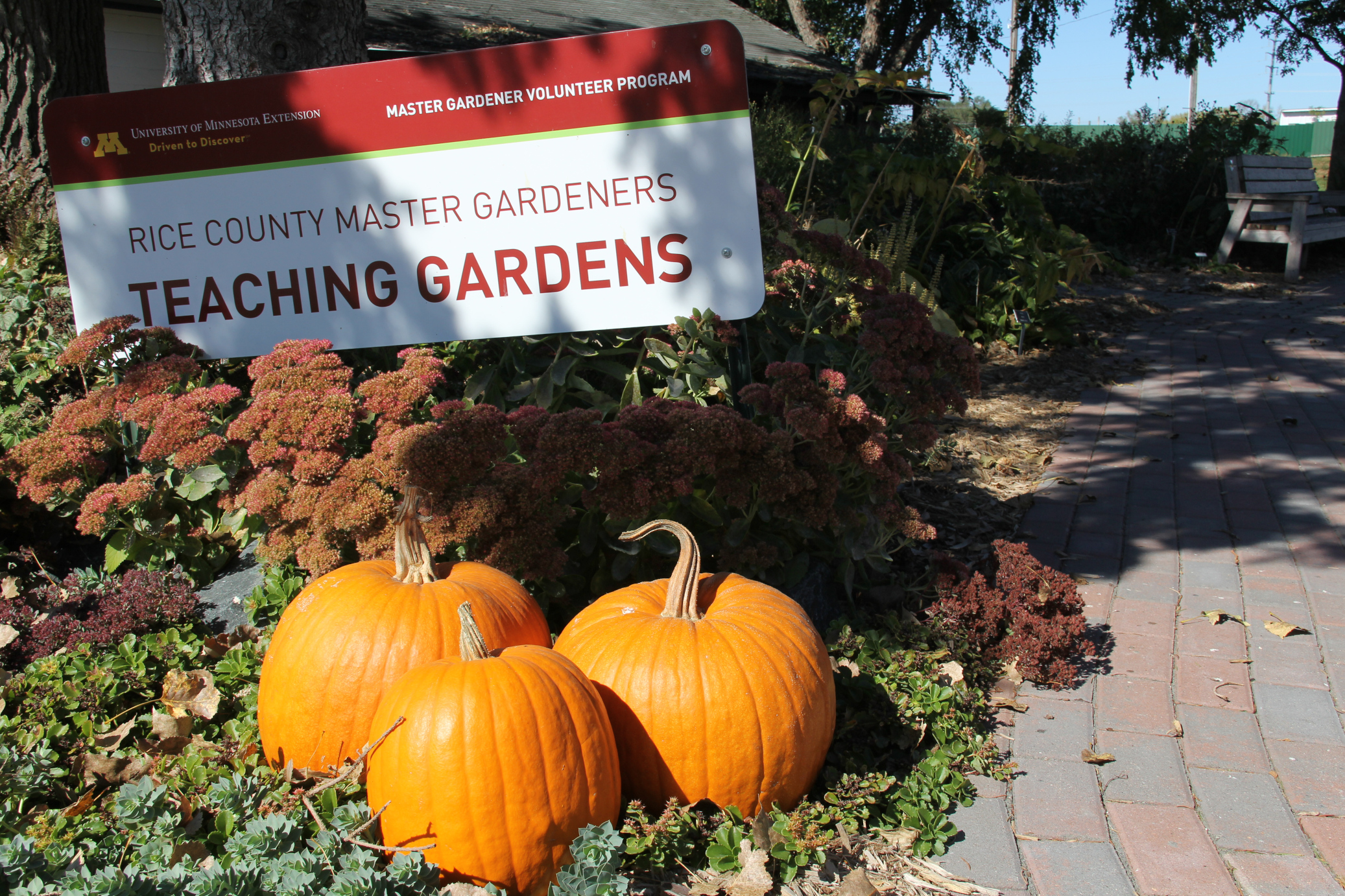
Flowers blooming a few weeks ago in the Rice County Master Gardeners Teaching Gardens. (Minnesota Prairie Roots copyrighted photo September 2025)
IN THIS FLEETING TIME before winter arrives, I find myself drawn to end-of-the-season blooms. And plenty remain, clinging to summer past, attaching to autumn present, but some already ceding to the inevitable cold and snow yet to come.
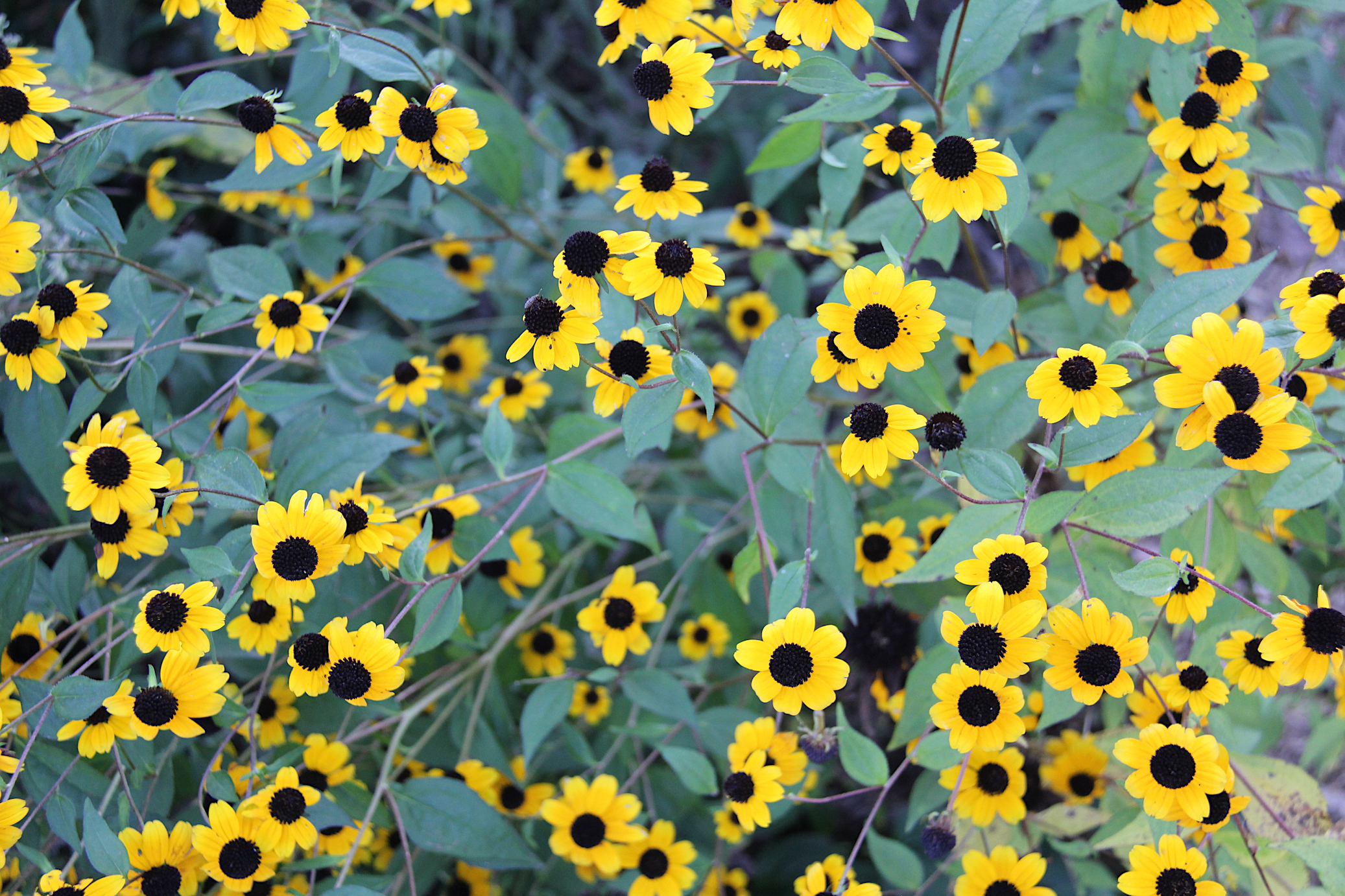
A mass of brown-eyed (I think) susans. (Minnesota Prairie Roots copyrighted photo September 2025)
Even as days grow shorter and nightfall presses dark upon the land, these flowers remain. And I delight in them wherever they stand, bend into the wind, catch the light of the morning and evening sun.
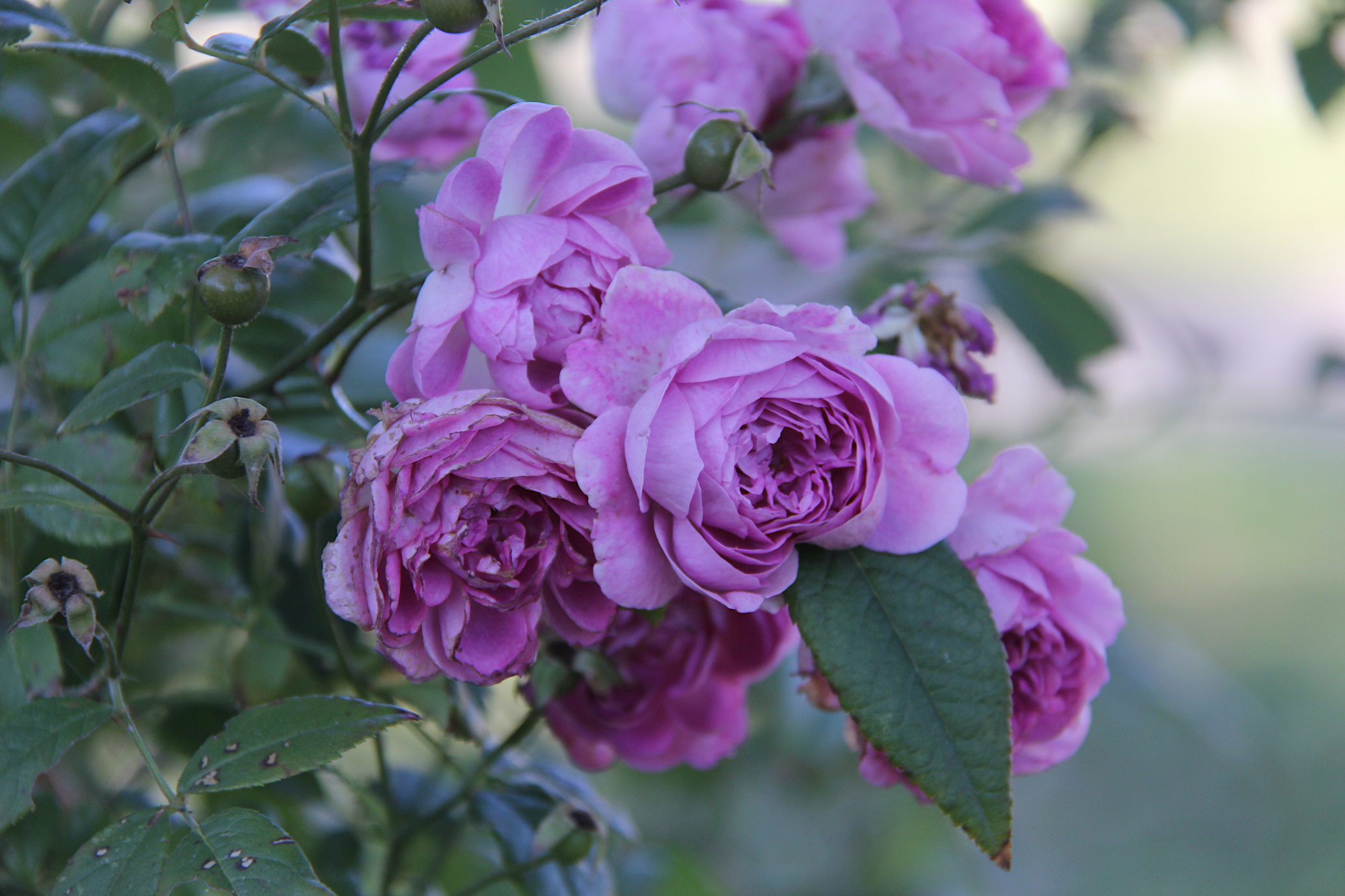
The roses are still blooming. (Minnesota Prairie Roots copyrighted photo October 2025)
Most surprising, perhaps, are the roses that linger. I dip my nose close, expecting the heady scent of perfume, only to be disappointed. They smell ever so faint, a scent barely noticeable.
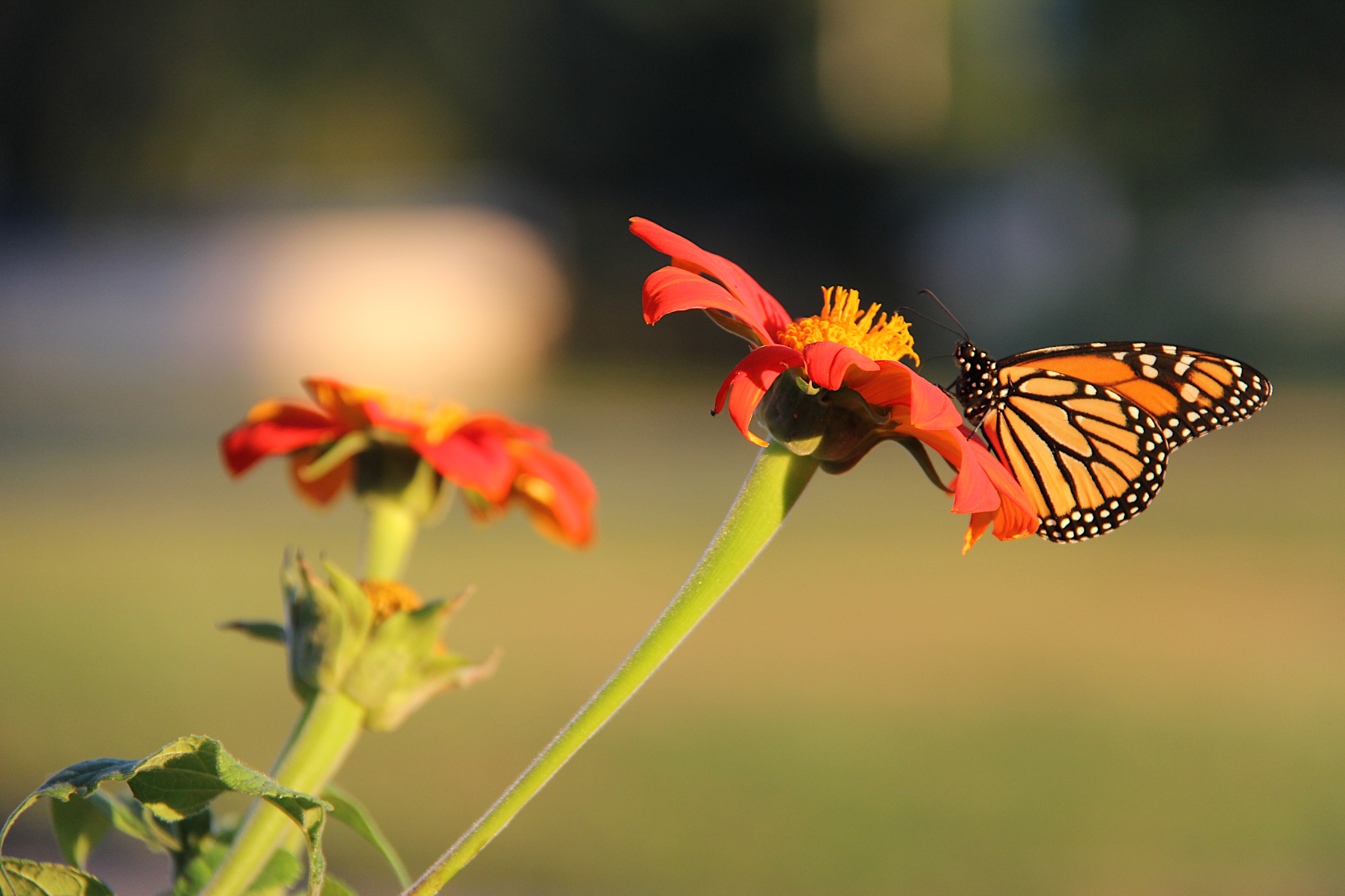
When I took this photo in late September, Monarchs flitted among zinnias. (Minnesota Prairie Roots copyrighted photo September 2025)
Zinnias flash color, a beacon for monarchs.
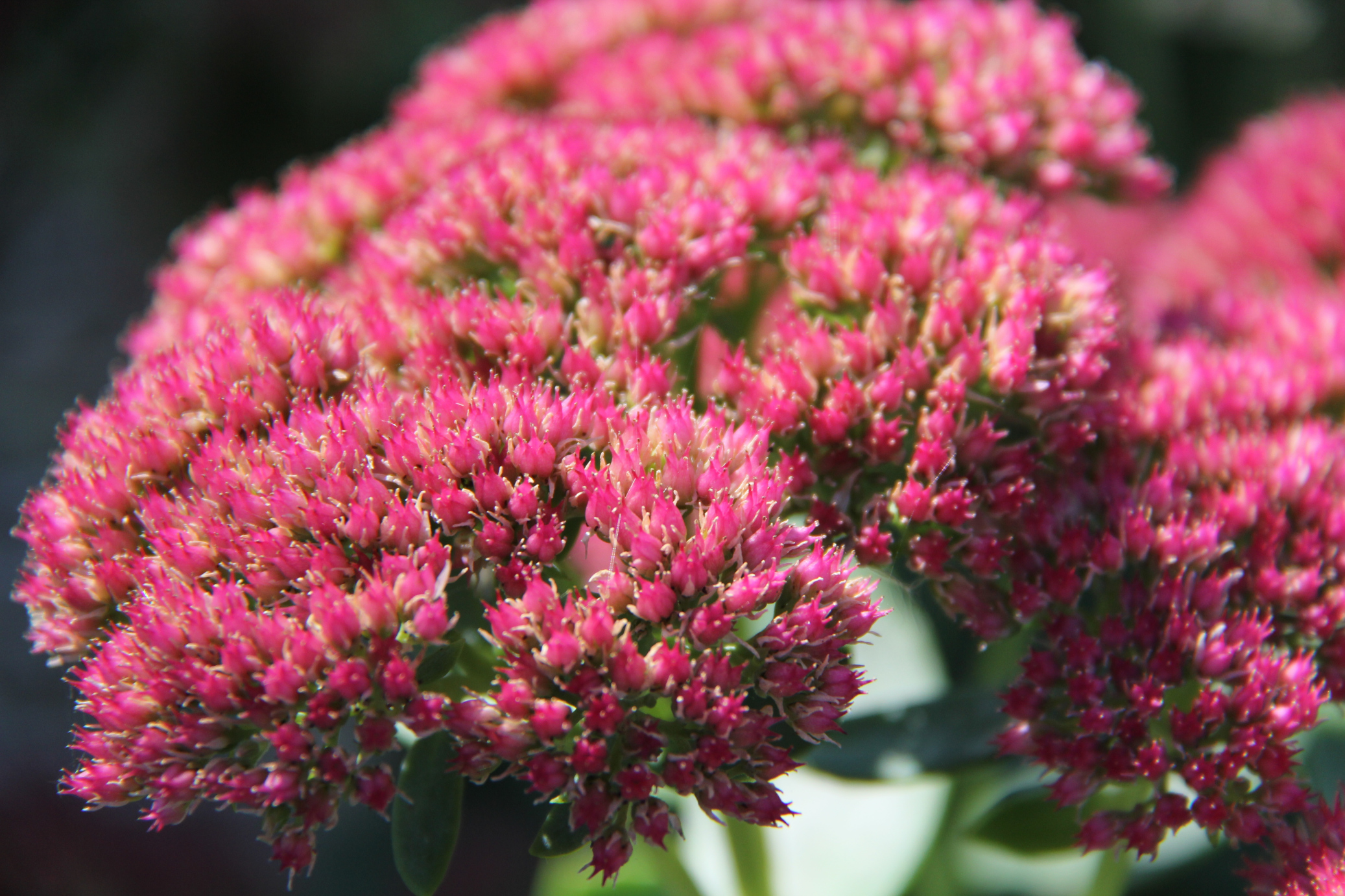
Stunning sedum, absolutely beautiful in the evening light. (Minnesota Prairie Roots copyrighted photo October 2025)
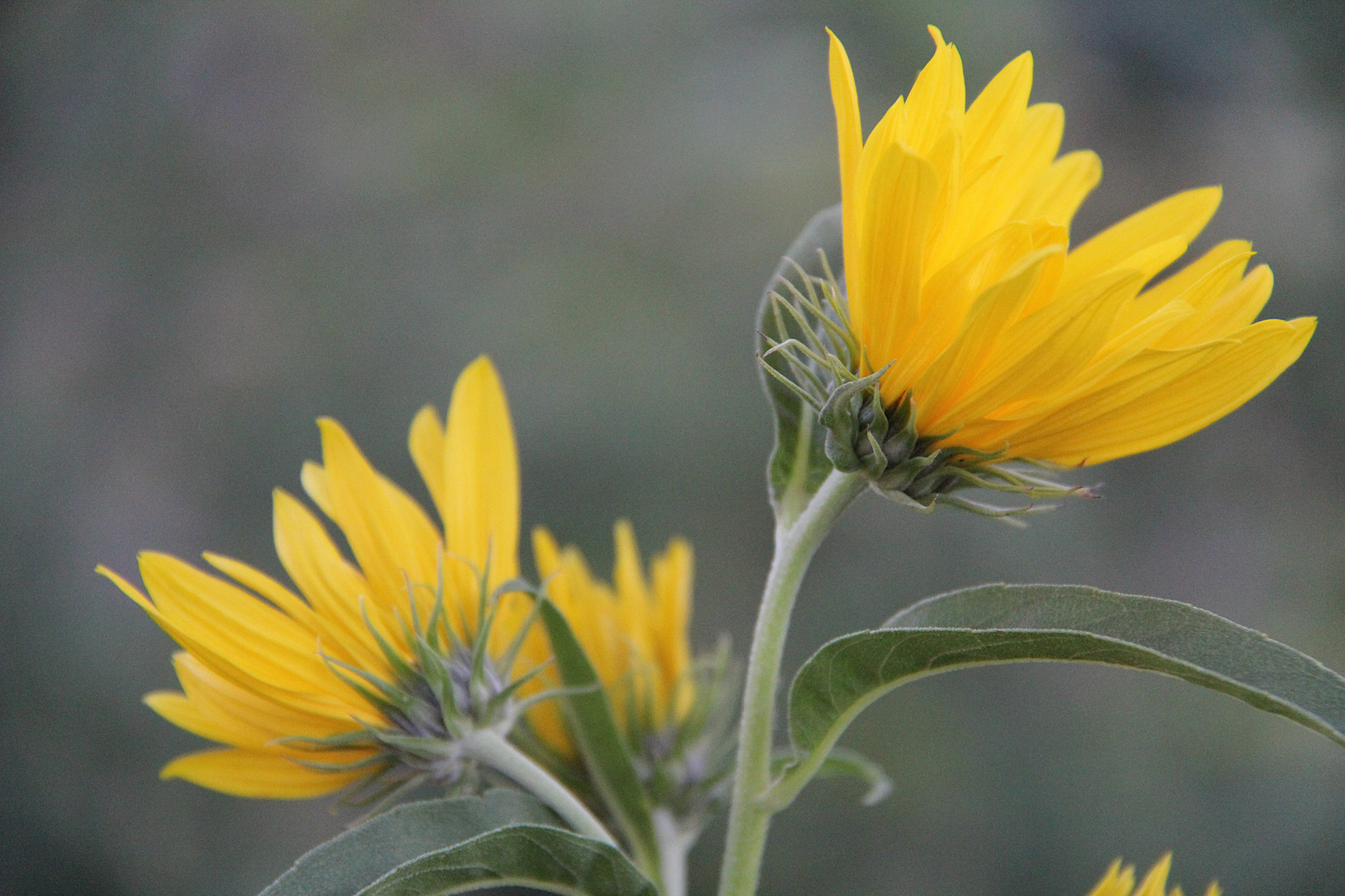
Sedum and seed heads and sunny yellow flowers all cozy together, some spent, some still determined to survive as the season shifts toward winter.
Paver pathways weave through the gardens which include benches, a water feature, rock snakes and more. (Minnesota Prairie Roots copyrighted photo October 2025)
I feel this sense of urgency to focus my eyes on flowers, to imprint upon my memory their glorious beauty. And so I wander among the blooms and dying blooms in the Rice County Master Gardeners Teaching Gardens in Faribault.
Photographed up close or at a distance, these flowers are lovely in the evening light of autumn. (Minnesota Prairie Roots copyrighted photo September 2025)
I love this oasis on the Rice County Fairgrounds next to the historical society. It offers a peaceful respite just off heavily-trafficked Second Avenue where vehicles rush by, their drivers seemingly unaware of the nearby gardens.
The garden includes two rock snakes, this flower stone among the many forming the serpent. (Minnesota Prairie Roots copyrighted photo October 2025)
But I long ago discovered this spot. Perfect for a picnic. Perfect for wandering. Perfect for photographing flowers. Perfect for reflecting and learning and enjoying. I’m grateful for every volunteer who lovingly tends this garden so I can come here. Sit. Walk. Photograph. Snapshot the scene for future reference.
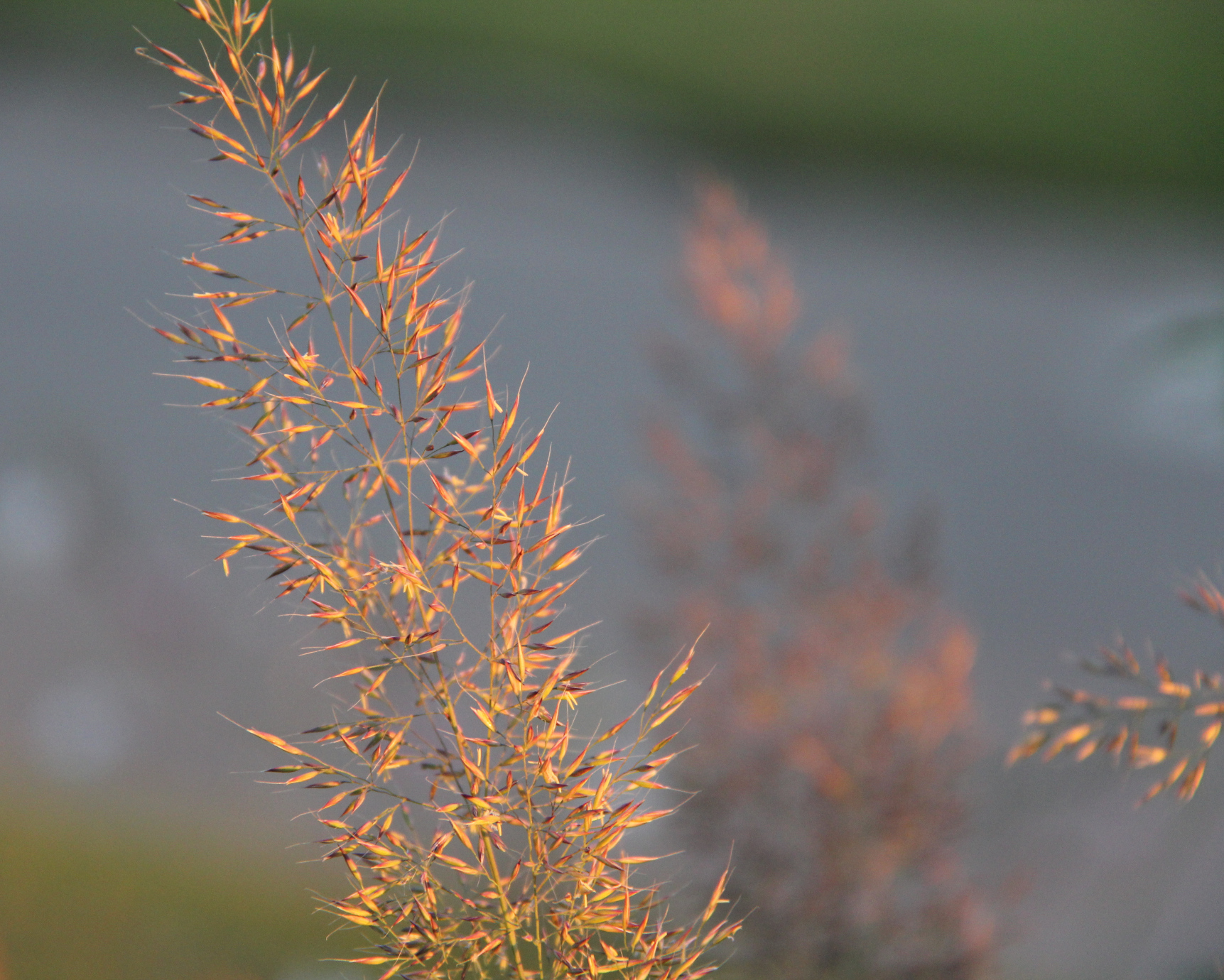
A grass stem glows in the light of sunset. (Minnesota Prairie Roots copyrighted photo September 2025)
When winter comes with its wind and deep-freeze cold and snow, I will remember the pink roses, the bold brown-eyed susans, the grass glowing in the sunlight.
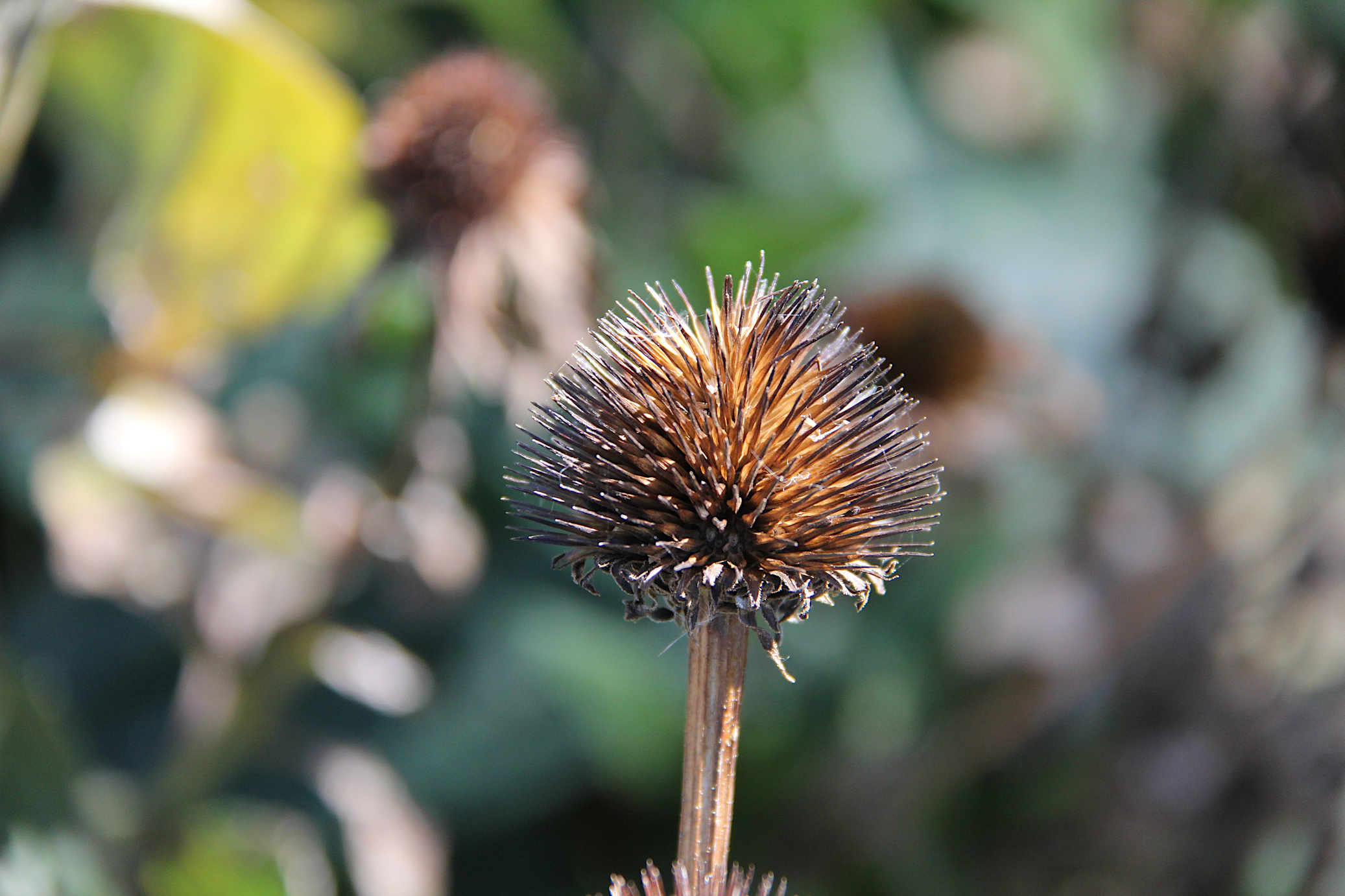
A coneflower seed head. (Minnesota Prairie Roots copyrighted photo October 2025)
And when winter drags on, I will remember this place and how, when spring arrives, the perennials will resurrect and pop through the earth. I will remember, too, how seeds sown in the soil will sprout and push green shoots through the earth to leaf and blossom and bring me summer joy.
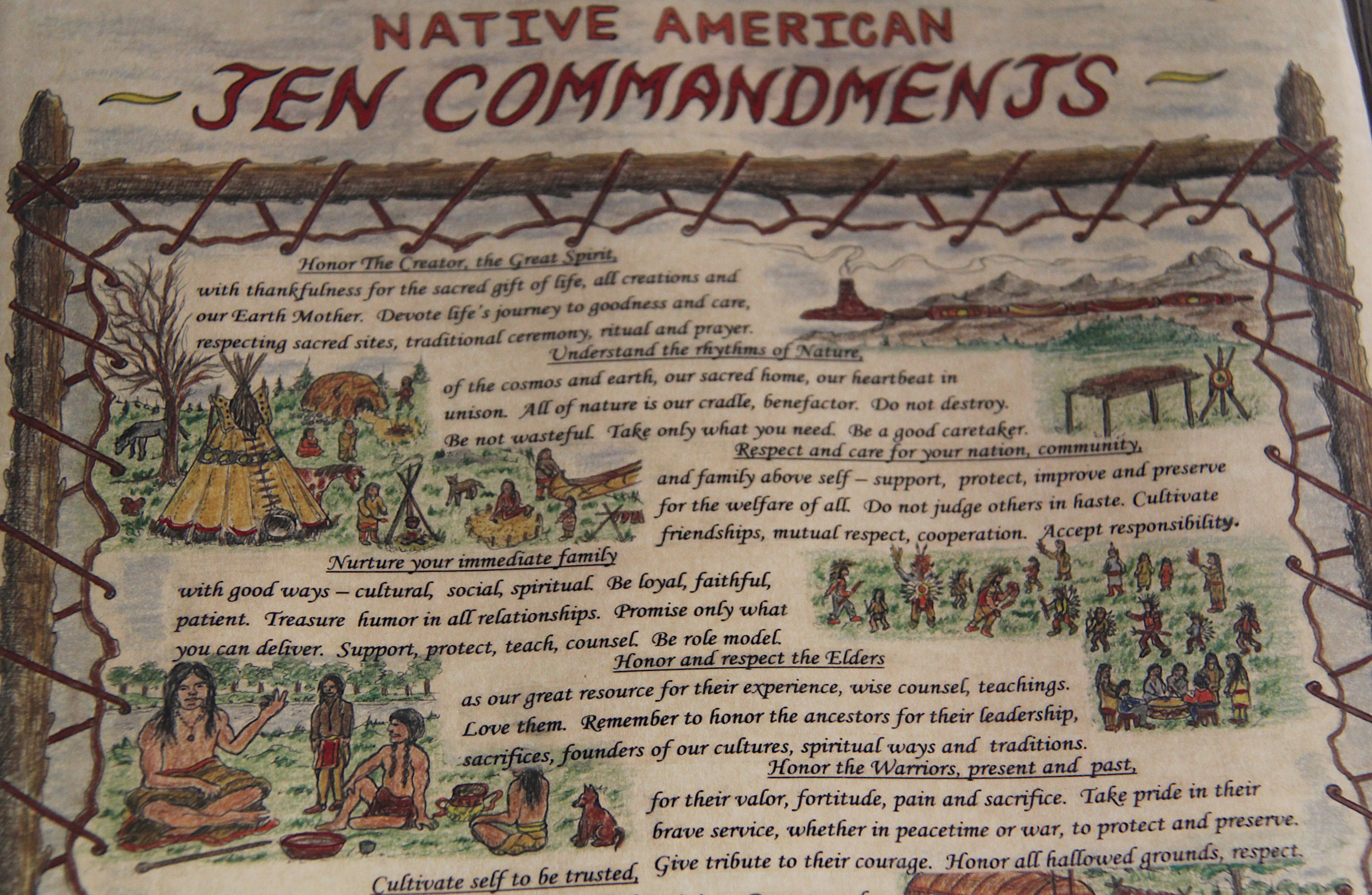
This shows a portion of the “Native American Ten Commandments” I found in a Waterville shop. (Minnesota Prairie Roots copyrighted photo October 2025)
POKING AROUND IN SMALL TOWN Waterville on Saturday, I happened upon an unusual piece of wall art, “Native American Ten Commandments,” in a shop run by Ron, former hardware store owner and an interesting man with lots of stories to tell. I left feeling like he would be my go-to source for anything I ever wanted to know about Waterville.
But I didn’t ask Ron about the Native American wall art hanging so high on the wall I struggled to read and photograph it. Rather, I thought about this art and the title of the piece in the context of today, October 13, Indigenous Peoples Day in Minnesota, as proclaimed by Governor Tim Walz.
I considered how the words “Ten Commandments” seem more European than Native. Perhaps a different title would be more fitting for this summary of cultural and spiritual values. Despite that heading, I found the content of these “commandments” to be positive and reflective of Native beliefs and culture as I understand them to be.
These words popped out at me: earth, nature, respect, care, protect, honor, traditions, family and community.
We would all do well to read, then reread, those words and contemplate their importance. Today, more than ever, I feel like we need to reconnect with the land, to build community, to recognize the importance of respect.
Today I pause to remember and celebrate Native Americans, who lived here first, who have long held a spiritual closeness to the earth, who deserve this special day of honor, Indigenous Peoples Day.
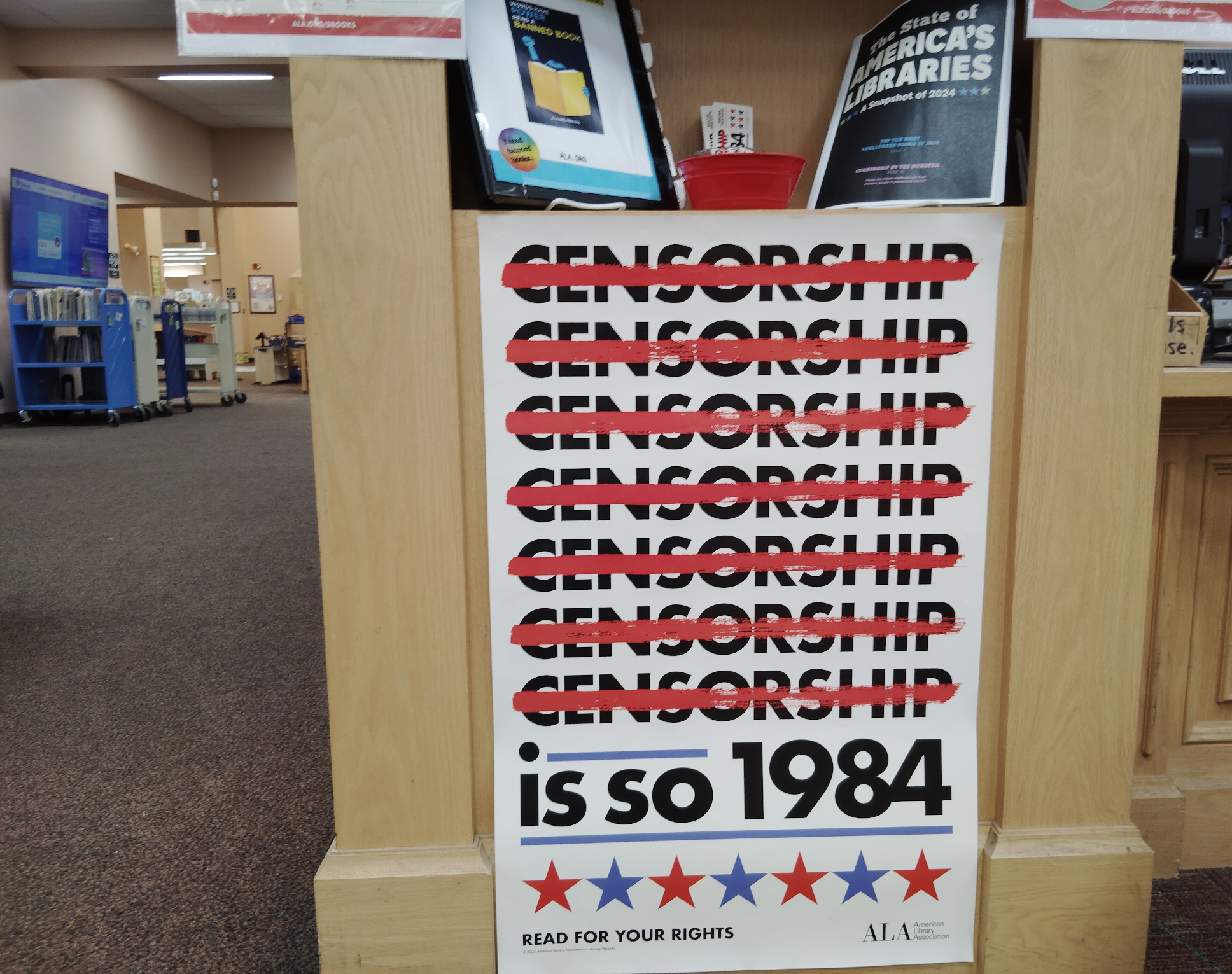
This American Library Association poster anchors the Banned Books Week display at my local library. (Minnesota Prairie Roots copyrighted photo October 2025)
AS A WRITER, journalist and avid reader, I’m a firm believer in free speech. Never have I seen that right more threatened in America than it is today. It’s downright scary—efforts by the federal government to suppress voices (already occurring), promises of retribution (now being carried out), abuse of power (happening on so many levels) and much more that threatens our very freedoms, our democracy. I could go on and on.
But today I want to focus on Banned Books Week, which ends tomorrow. Thursday evening I gathered with a group of volunteers for an appreciation event at Books on Central in Faribault, a used bookshop founded by the Rice County Area United Way. While I don’t volunteer there (yet), I’ve blogged about the bookstore numerous times because I love books and I love that monies from BOC book sales help nonprofits in my area. We weren’t there to discuss banned books, though, but rather to celebrate volunteerism and this small bookshop which has become much-beloved by the Faribault community and beyond.
It was not lost on me as I sat there surrounded by books, listening to volunteers share their passion for this place and for books, that everyone who walks in the door is surrounded by choices. As it should be. Choose what you want to read or want to share with others.
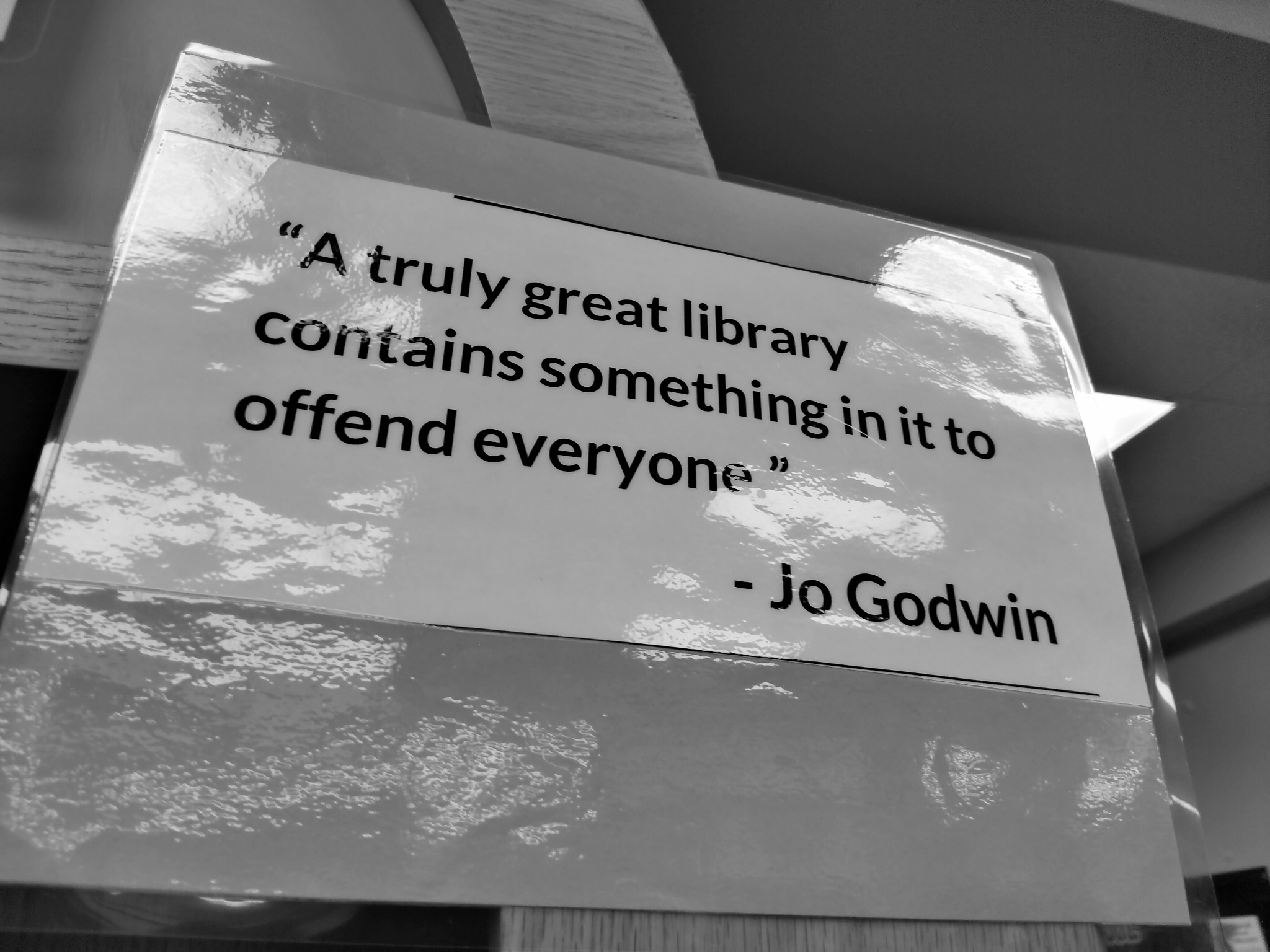
A powerful and fitting quote for Banned Book Week displayed at Buckham Library. (Minnesota Prairie Roots copyrighted photo October 2025)
Yet, there are individuals, organizations, elected government officials and others who want to determine what we can read by banning books from libraries, schools and elsewhere. That, my friends, is censorship. And I’m not OK with that. If I find the content of a book to be offensive, then I can stop reading it or never open it in the first place. Likewise parents can monitor their child’s reading materials just as they would online content.
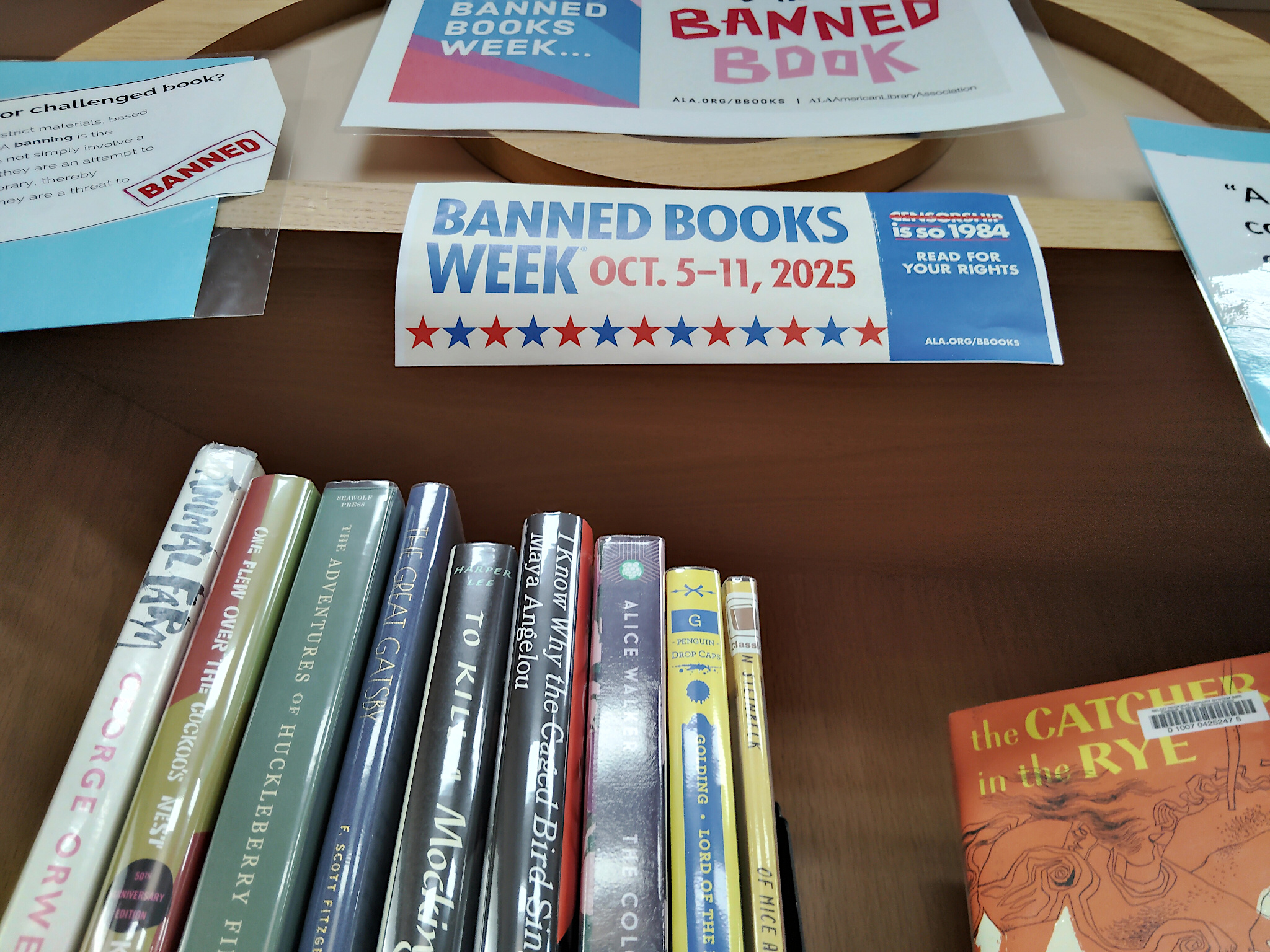
A sampling of books that have been banned in various places in America. These were included in a display at my library. (Minnesota Prairie Roots copyrighted photo October 2025)
In the words of the American Library Association’s 2025 Banned Books Week theme, “CENSORSHIP is so 1984.” That’s a reference to George Orwell’s prophetic 1949 novel, 1984, about a totalitarian government. That’s a simplistic summary. But the book is particularly relevant to today. I intend to check it out from my library to reread.
Bracelets available at Buckham Library support the RIGHT TO READ. (Minnesota Prairie Roots copyrighted photo October 2025)
After the bookshop appreciation event Thursday evening, I stopped at Buckham Memorial Library to see if staff had created a Banned Books display as they have in the past. They did. After I read the information and looked at a sampling of books that have been banned (not from my library), I grabbed a green bracelet imprinted with this message: CENSORSHIP is so 1984. READ FOR YOUR RIGHTS.
I will continue to read. I will continue to write. And I will continue to embrace, support and advocate for free speech. I have a voice. I refuse to be silenced.
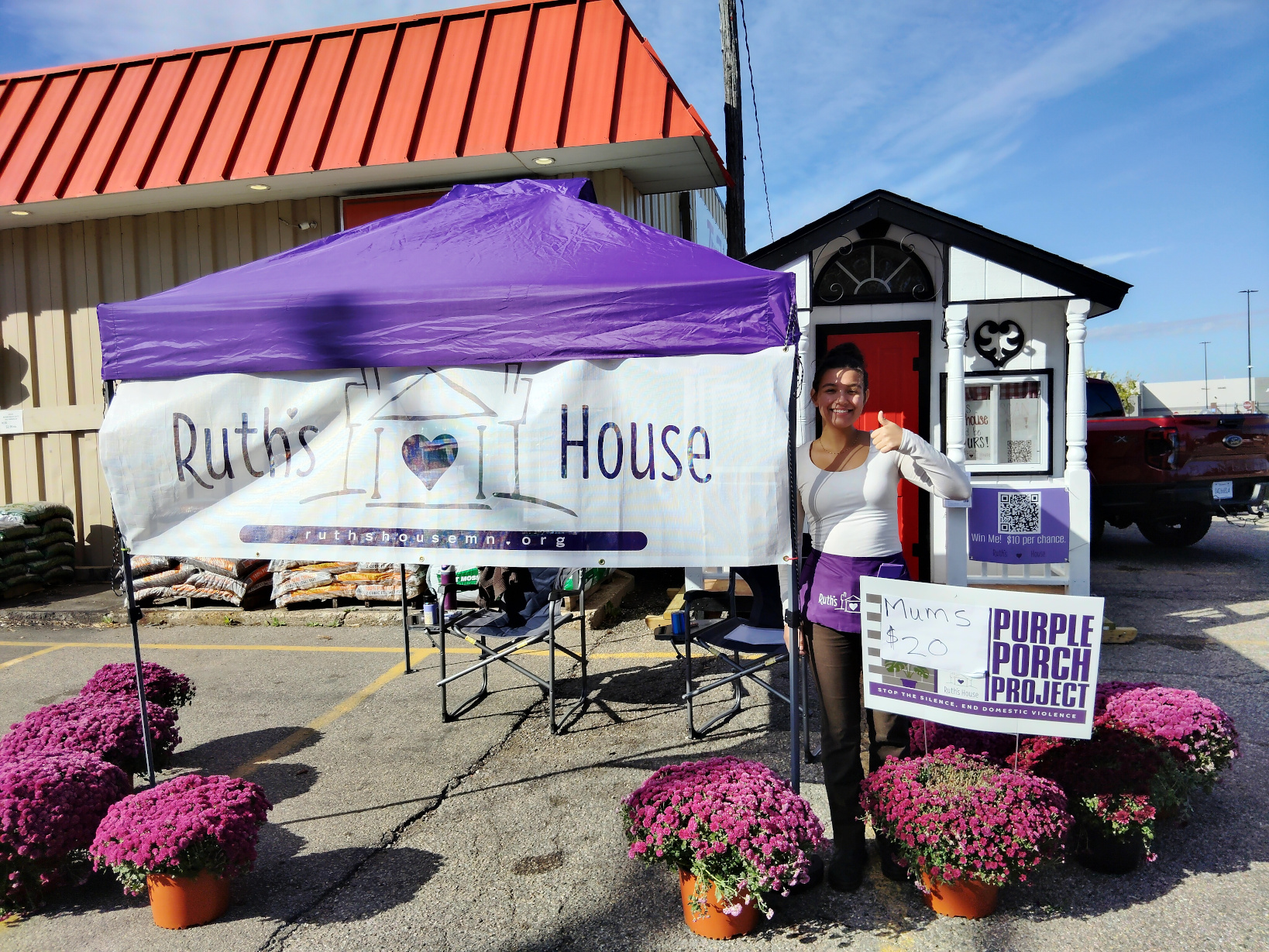
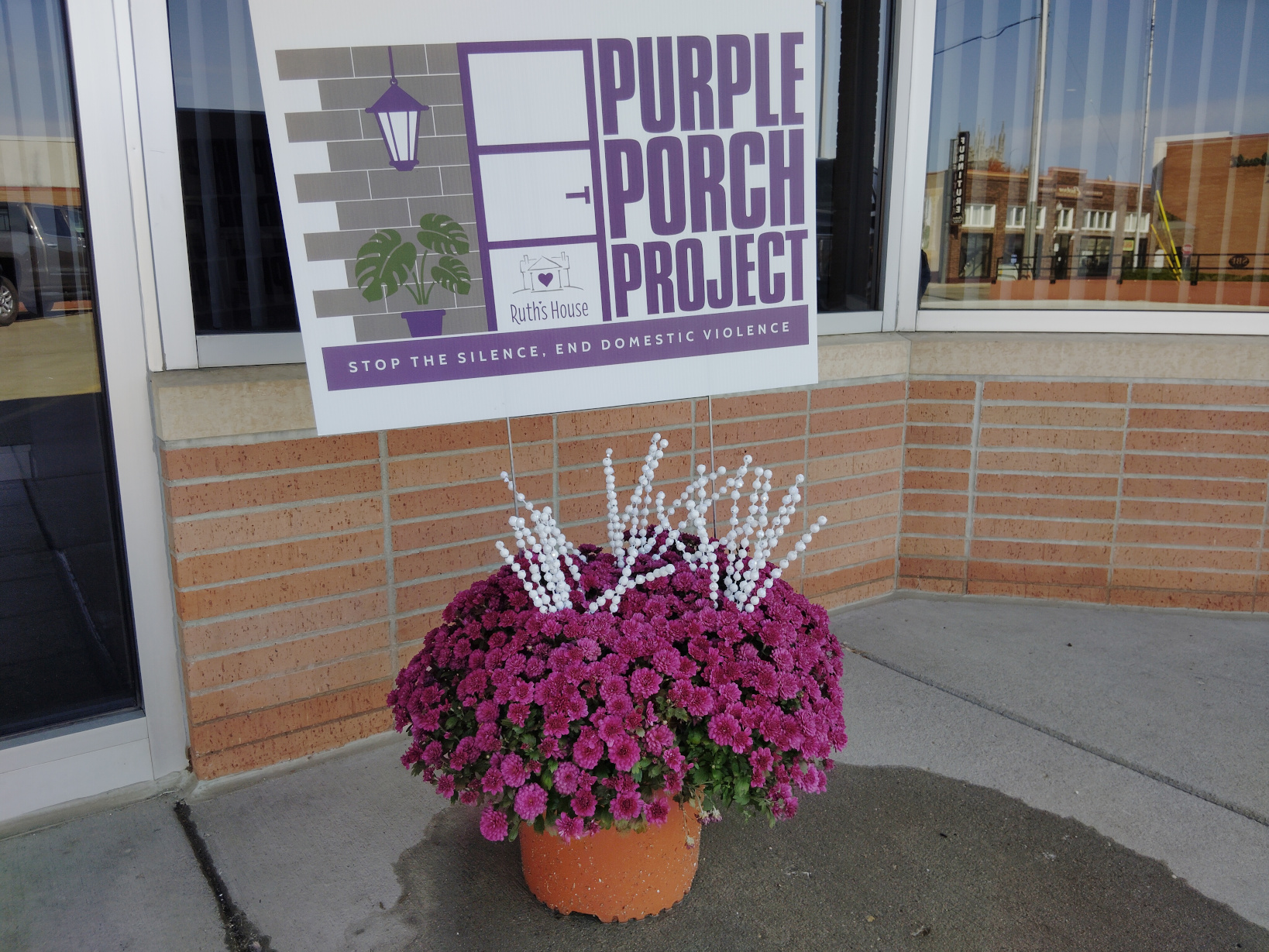
Ruth’s House sells mums and more outside Faribault Fleet Supply Tuesday morning. (Minnesota Prairie Roots copyrighted photo October 2025)
MASSIVE PURPLE MUM plants packed a wagon parked outside Faribault Fleet Supply when I stopped by Tuesday morning to pick up a multi-purpose plant spray.
Nearby, two women staged mums on the pavement next to a purple canopy bannered with “Ruth’s House.” A sign placed among the mums identified this as the “Purple Porch Project. STOP THE SILENCE, END DOMESTIC VIOLENCE.”
October marks Domestic Violence Awareness Month, a nationwide effort to raise awareness about the signs of domestic violence and ways to stop it, support survivors and advocates, and provide information and resources to those who are in positions of leadership and policy-making. Purple is the identifying color for this month-long endeavor.
The State Bank of Faribault promotes the Purple Porch Project outside a parking lot entrance to the bank. (Minnesota Prairie Roots copyrighted photo October 2025)
Ruth’s House, marketing the purple mums, is an emergency/transitional shelter in Faribault for women and children in crisis and a sober living space for women transitioning from in-patient treatment. Those who temporarily move into Ruth’s House may be homeless due to domestic violence, poverty, substance abuse disorder, health challenges or other issues.
Whatever the reasons for their homelessness, I’m thankful my community has a house to call home for these women and their families. Likewise, I’m grateful for HOPE Center, another local organization that supports survivors of domestic violence and sexual assault with Hope, Outreach, Prevention and Education.
Both Ruth’s House and HOPE Center rely heavily on individual and community financial support, and also on government grants, to operate. And we all know that counting on government funding right now is tenuous at best. Thus fundraisers like Ruth’s Purple Porch Project are happening with the sale of $20 purple mums; a $100 Purple Porch décor kit (includes a handcrafted purple door wreath, 66 feet of purple string lights, a purple mum and a yard sign symbolizing unity); a $25 DIY purple wreath kit; and a $20 Ruth’s House yard sign.
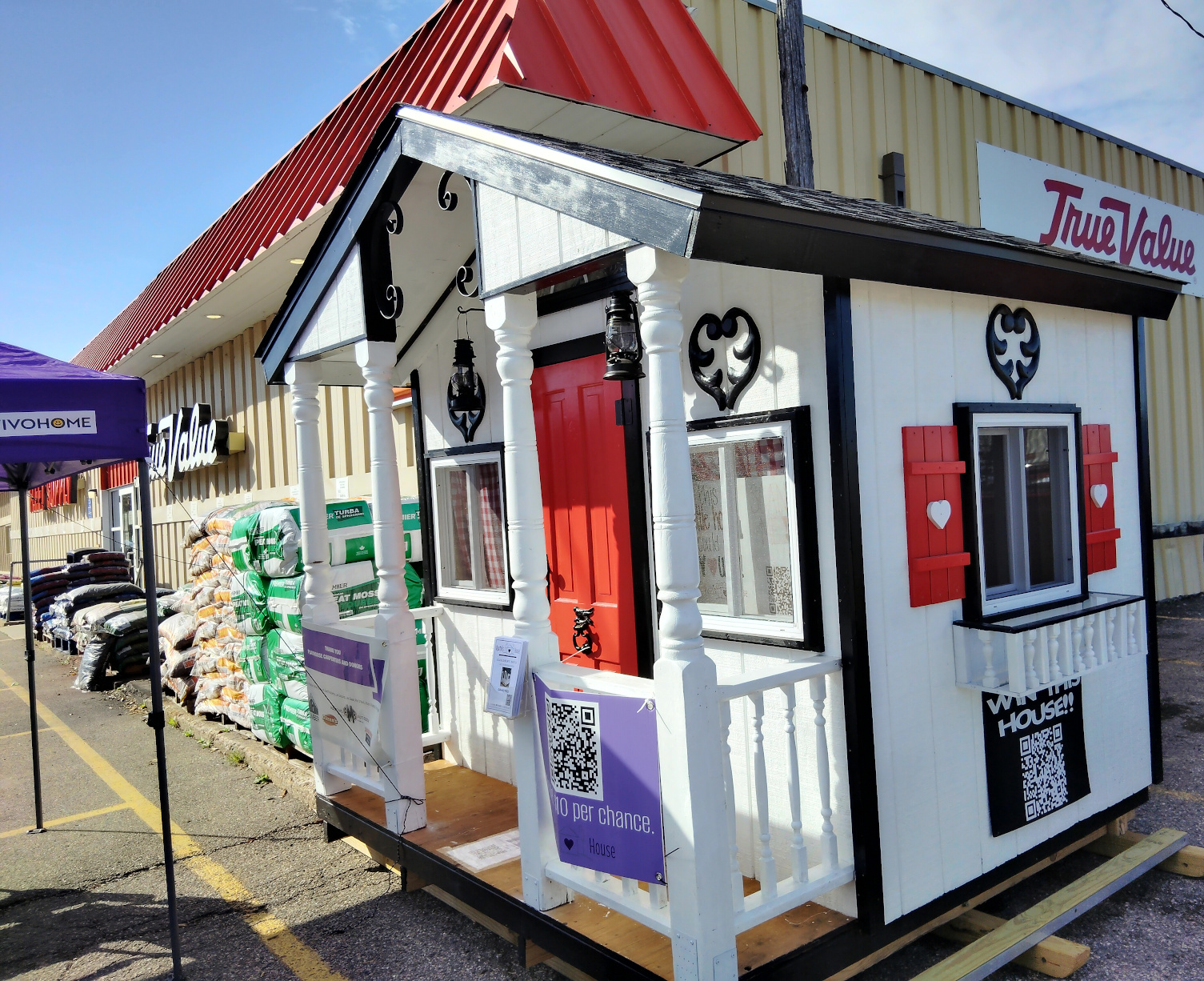
This children’s playhouse, displayed outside Faribault Fleet Supply, is the grand prize in the Ruth’s House raffle. (Minnesota Prairie Roots copyrighted photo October 2025)
Additionally, Ruth’s House is selling $10 raffle tickets for a children’s playhouse, wooden swing set, bike and helmet, arts & crafts table and chair set, play kitchen with table and two chairs; and a family game night basket. Ticket sales will help fund children’s programs at the emergency shelter.
Mostly, I want you to pause for a moment and reflect on domestic violence. And if you don’t know that much about it, take time to learn. (Click here.) So many misconceptions exist about domestic violence with that oft asked question of “Why doesn’t she just leave?” It’s not that easy. It’s complicated and difficult and even potentially dangerous without a safe plan in place.
Do what you can. Support. Encourage. Love. Advocate. Be there. Listen. Help. It takes all of us, individually and collectively, to stop domestic abuse and violence.
I love the pops of color these seasonal stands add to the landscape, setting the mood for October and the fun festivities the month brings.
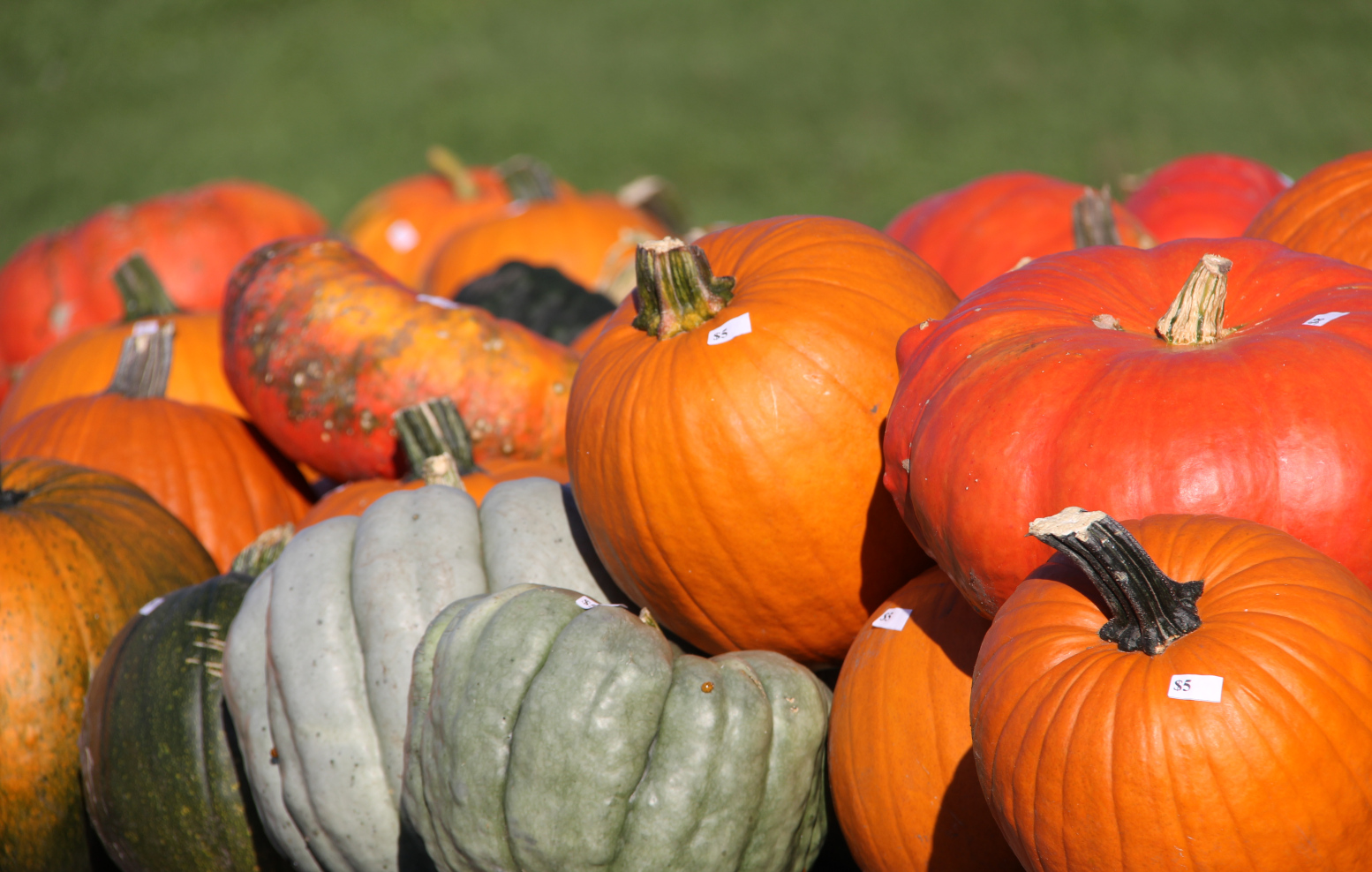
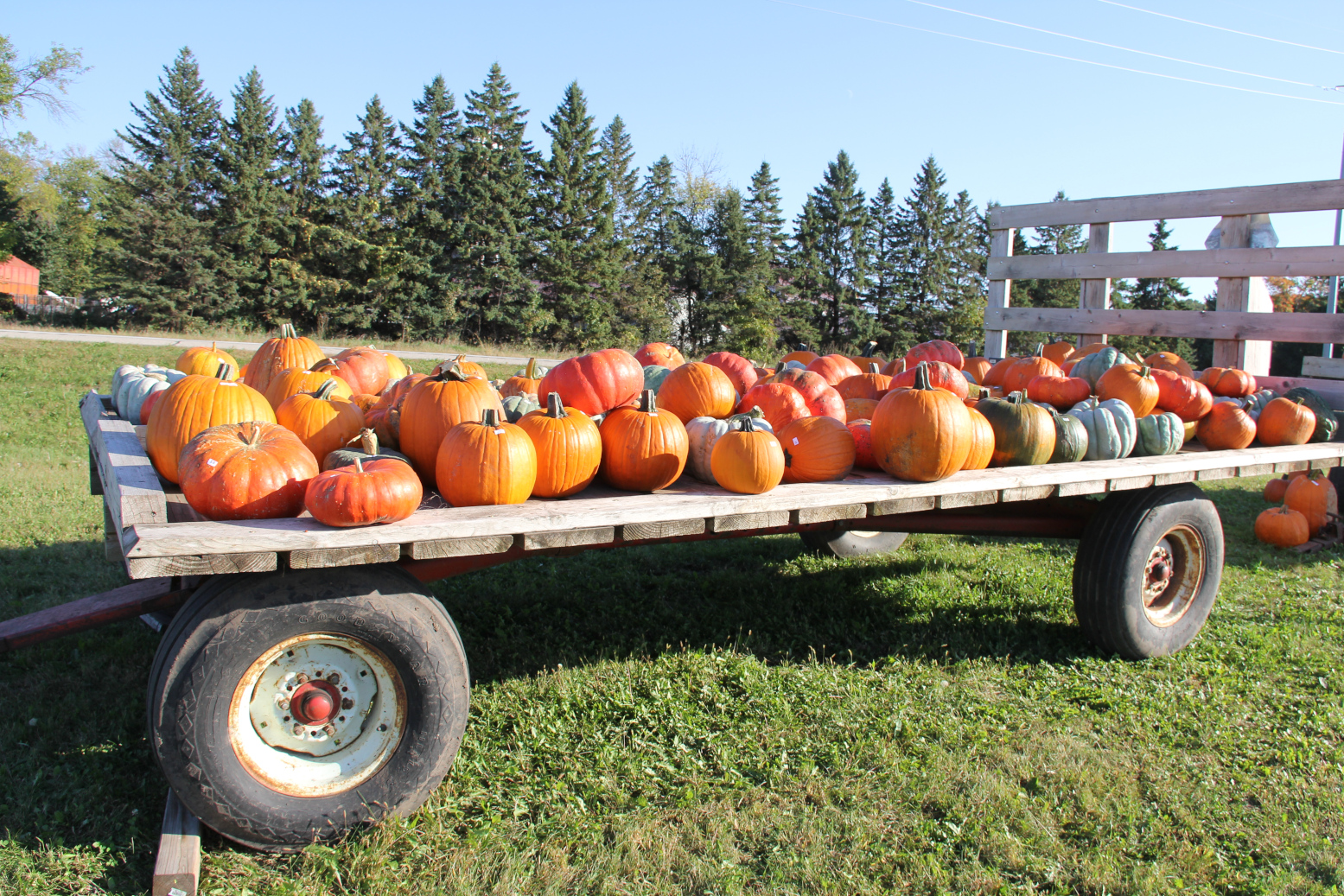
Pumpkins of all sizes and shapes for sale at the Little Prairie stand. (Minnesota Prairie Roots copyrighted photo September 2025)
Growers gather in the pumpkins, heaping them atop wagons for ease of display and purchase.
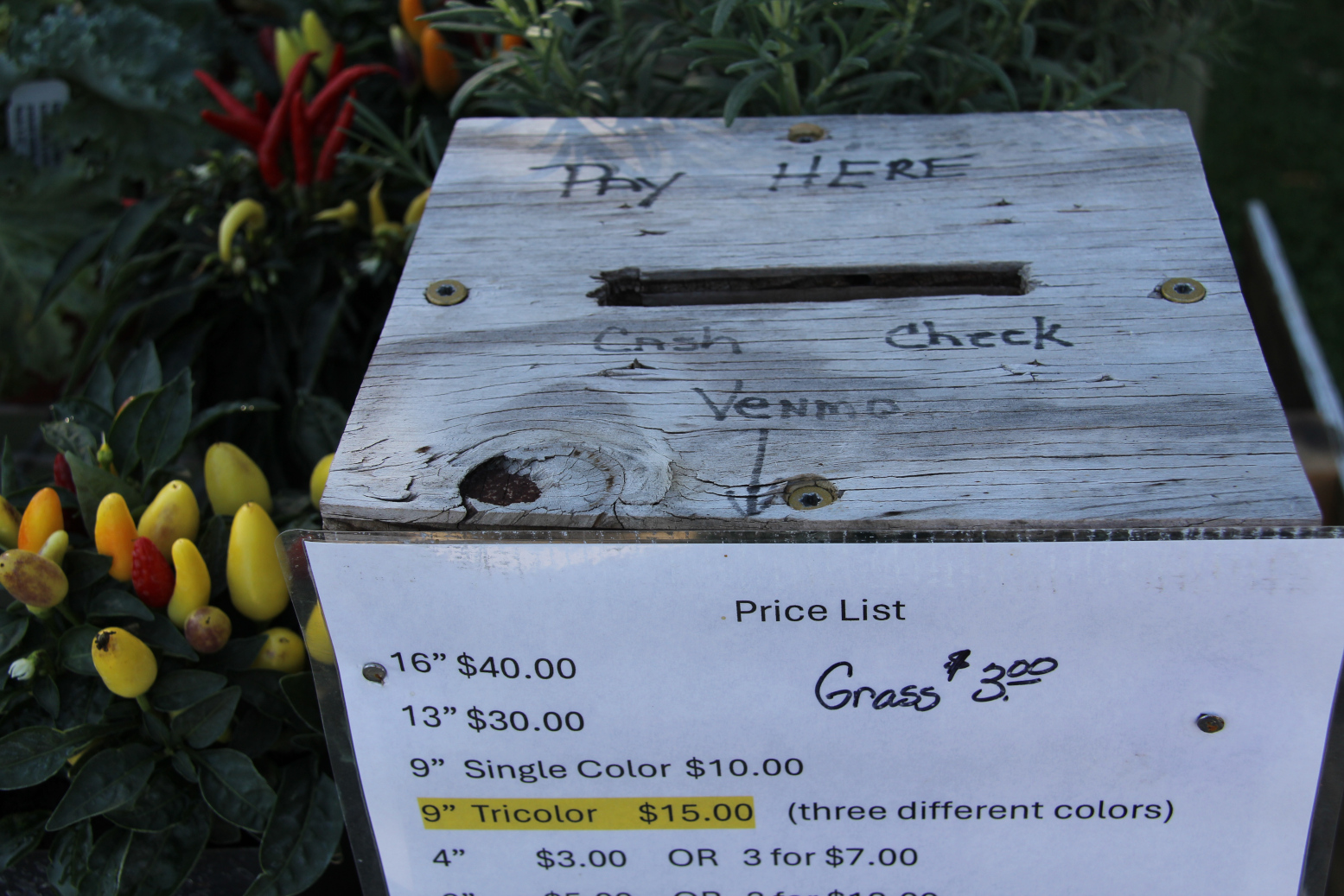
A payment box and price list for mums and other plants at a seasonal roadside stand in Stanton. (Minnesota Prairie Roots copyrighted photo September 2025)
Buying is made easy with secure drop boxes, pay on the honor system via cash, check or Venmo. I love the trust the sellers place in the buyers.
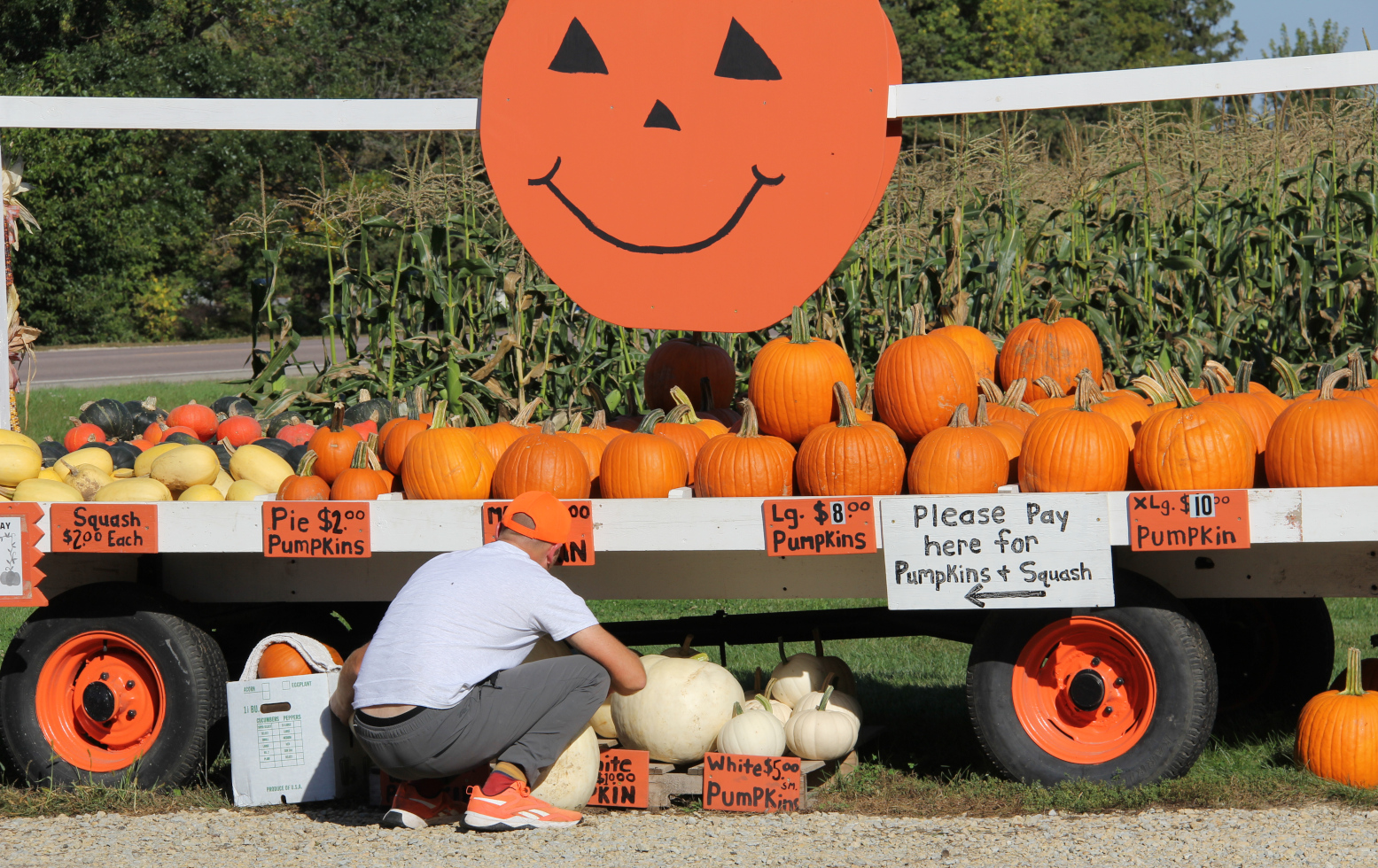
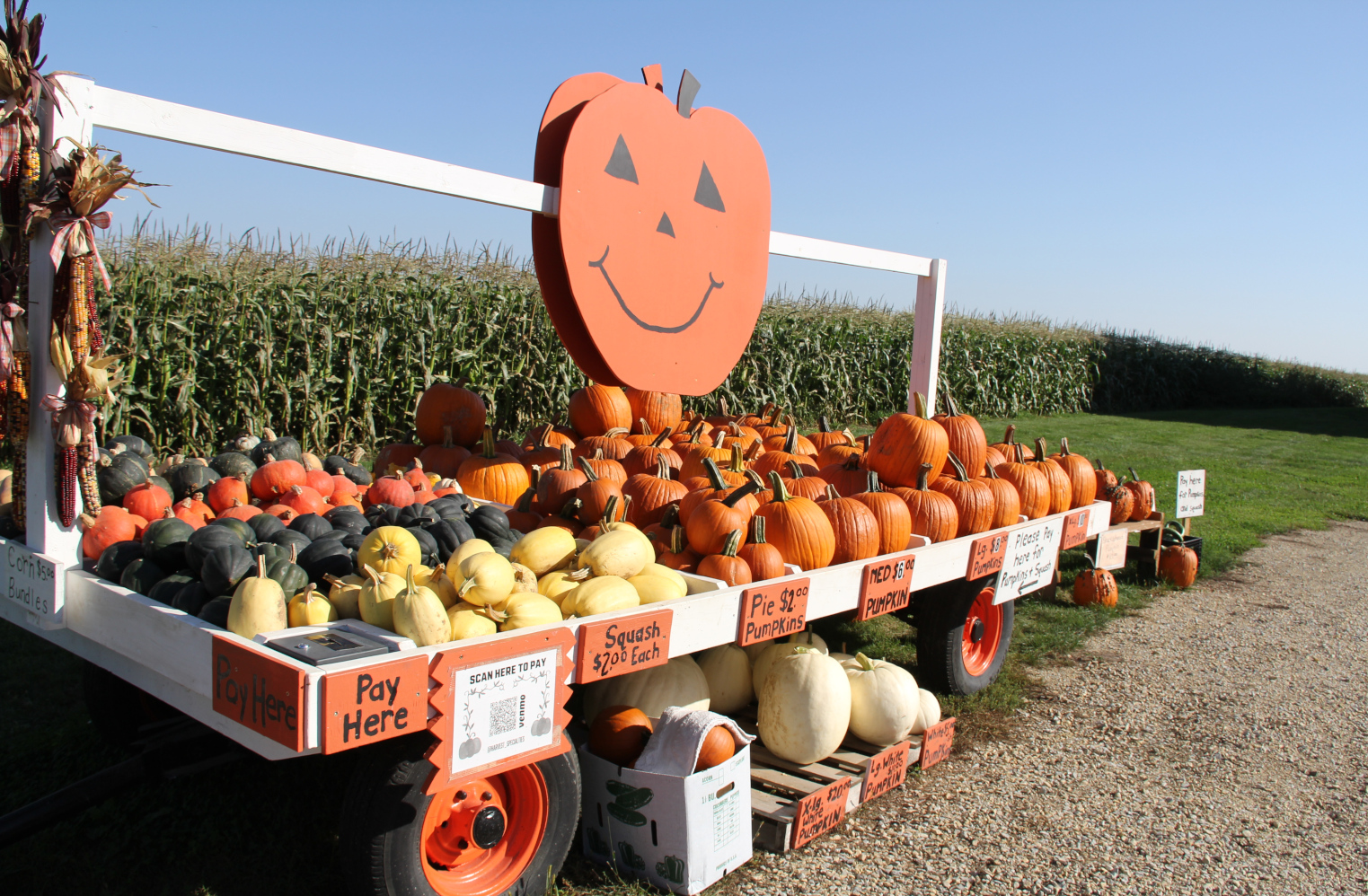
Oversized pumpkin art directs passing motorists’ attention to the Stanton pumpkin stand backed by a cornfield. (Minnesota Prairie Roots copyrighted photo September 2025)
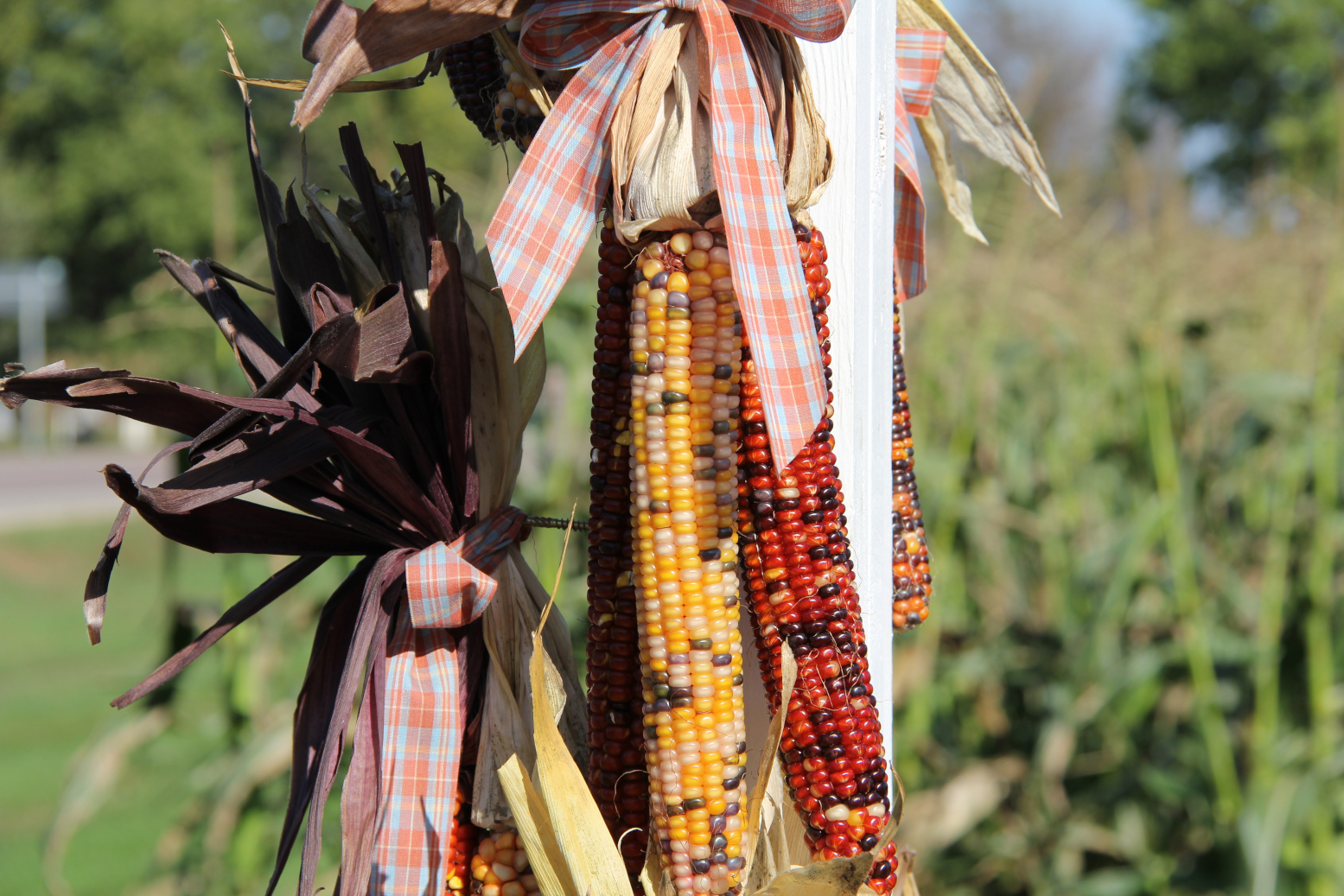
Decorative Indian corn decorates the pumpkin wagon at Stanton. (Minnesota Prairie Roots copyrighted photo September 2025)
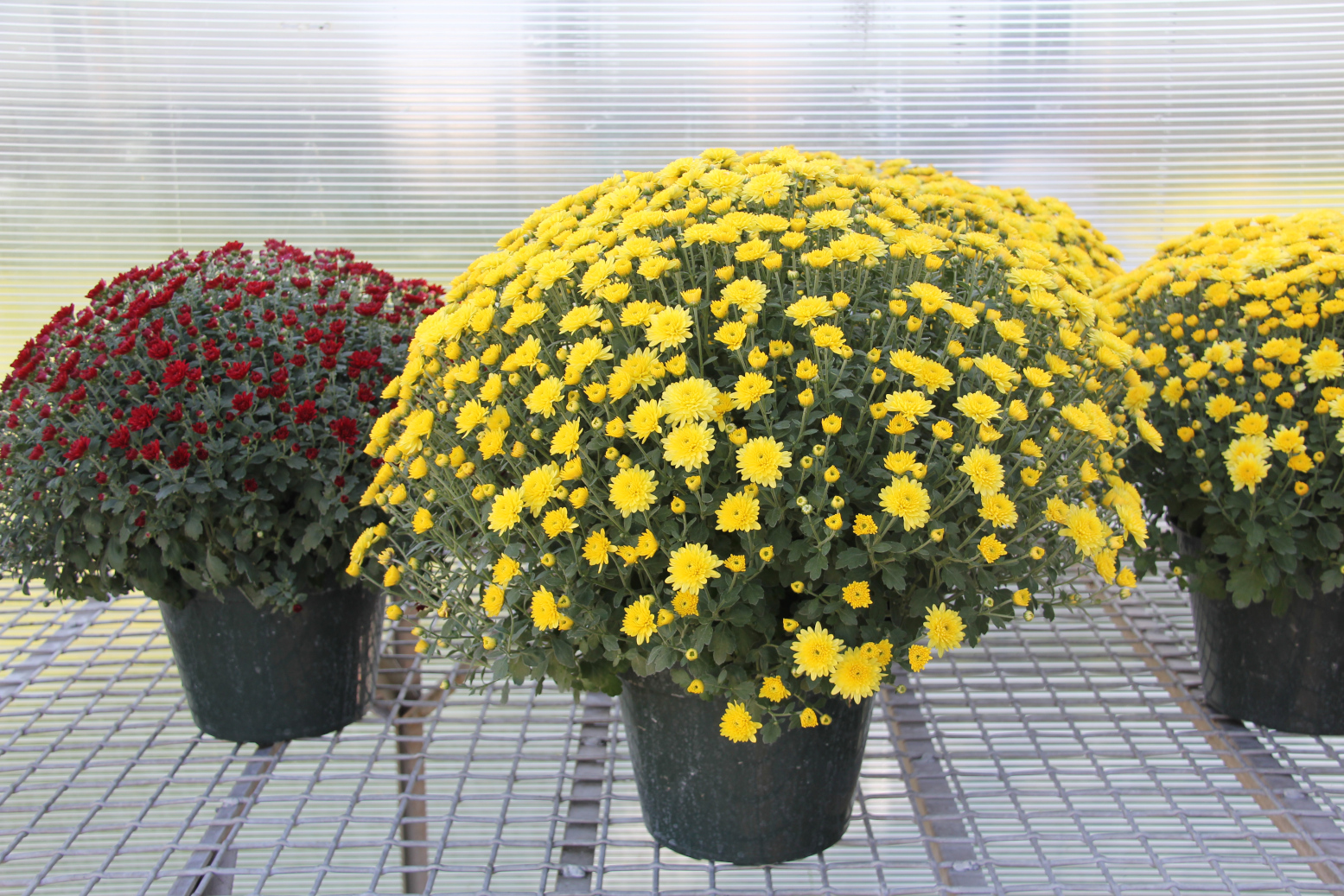
Beautiful potted mums for sale at the Stanton stand. (Minnesota Prairie Roots copyrighted photo September 2025)
I love, too, the signage, art and seasonal decorations which draw customers to stop and shop for pumpkins and often other goods like squash and mums.
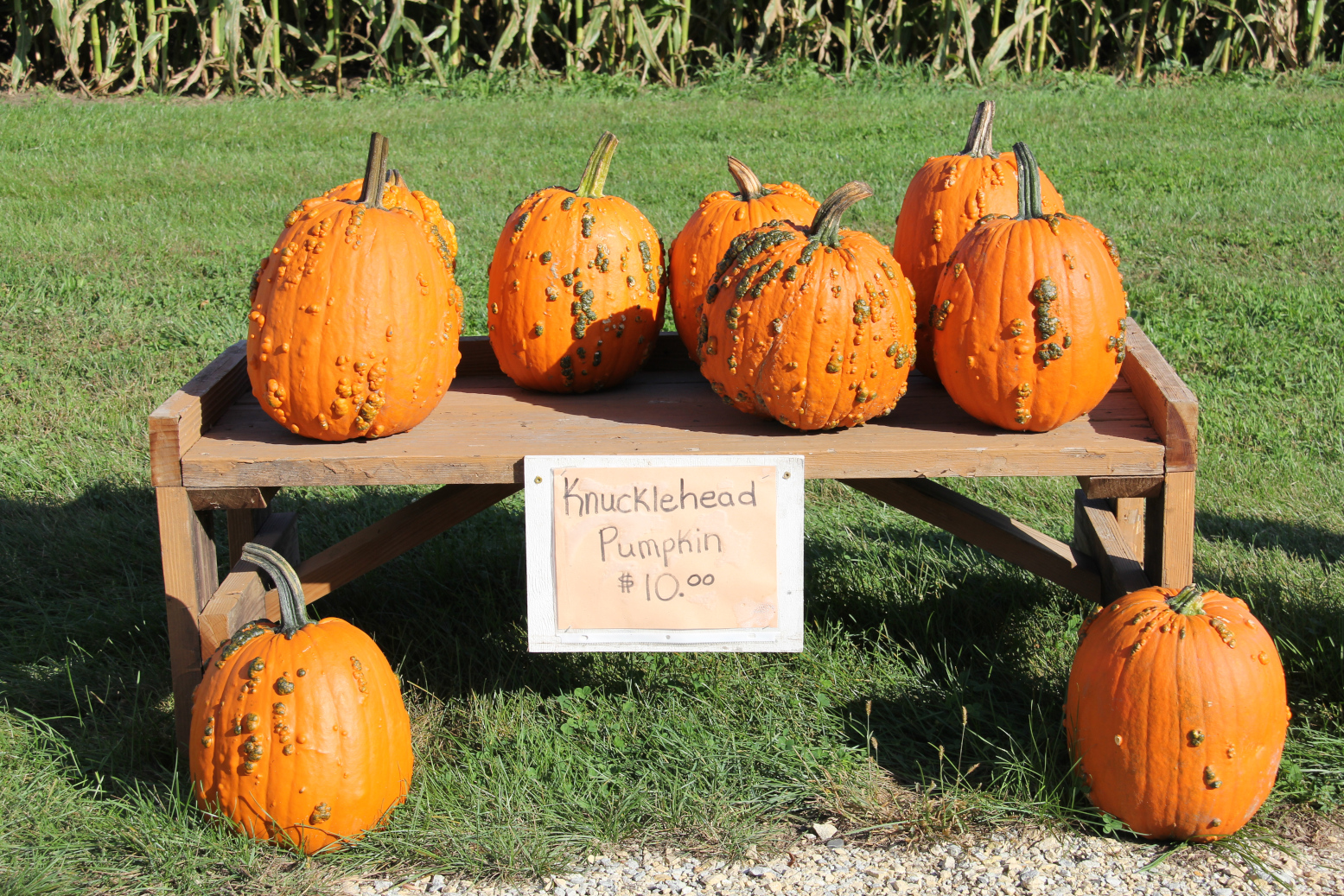
Knucklehead pumpkins get their own display area at the Stanton stand. (Minnesota Prairie Roots copyrighted photo September 2025)
It all feels so good and earthy and connective, this buying direct from the grower who seeds, tends, harvests, markets. Locally-grown at its most basic.
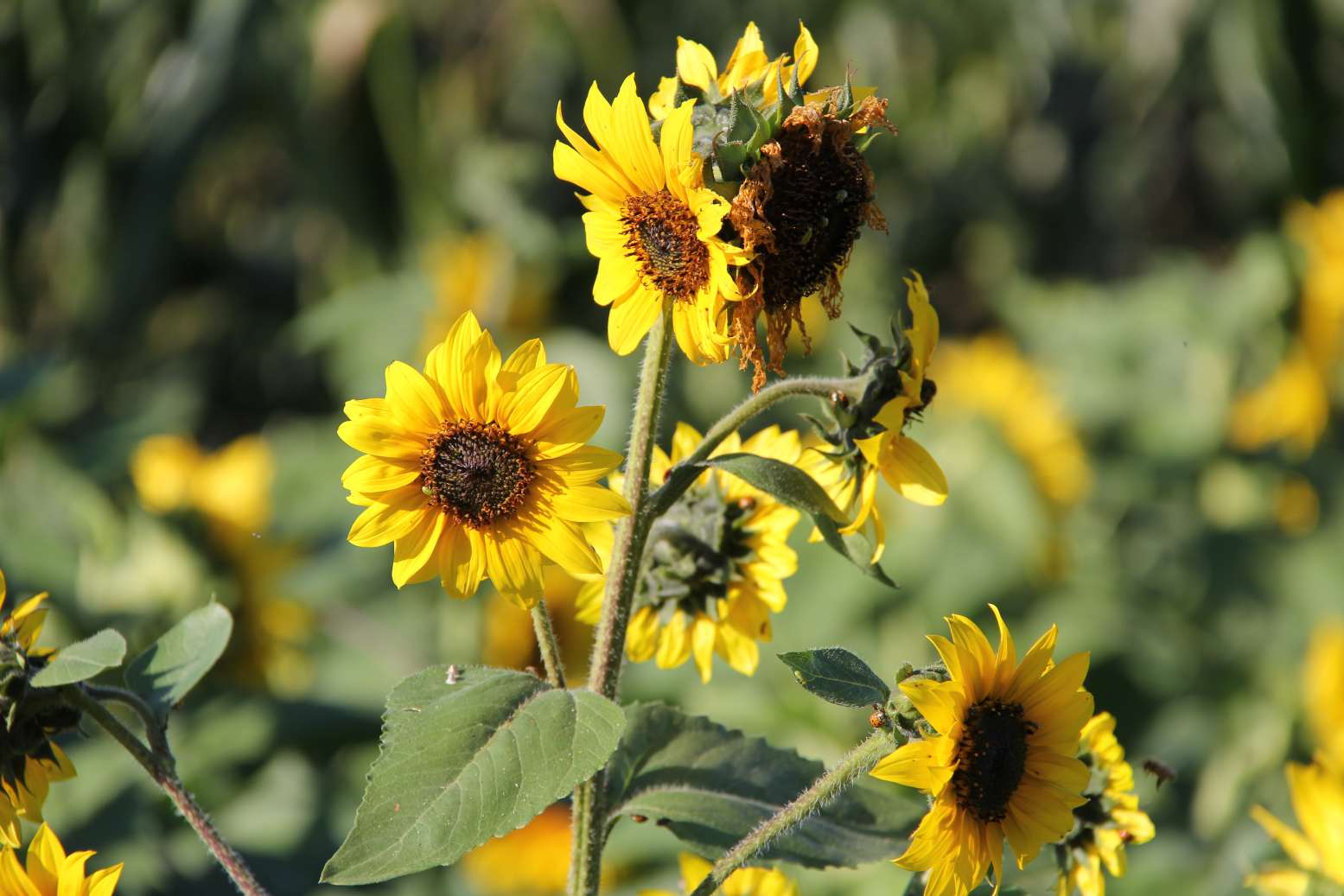
A field of sunflowers, ideal for photo ops, grows next to pumpkins and corn at the Little Prairieroadside market. (Minnesota Prairie Roots copyrighted photo September 2025)
I love, too, how rural pumpkin stands pop up next to cornfields and occasionally sunflower fields. Sunflowers make me smile with their bright yellow blossoms. Sort of like thousands of smiley faces beaming happiness upon the land.
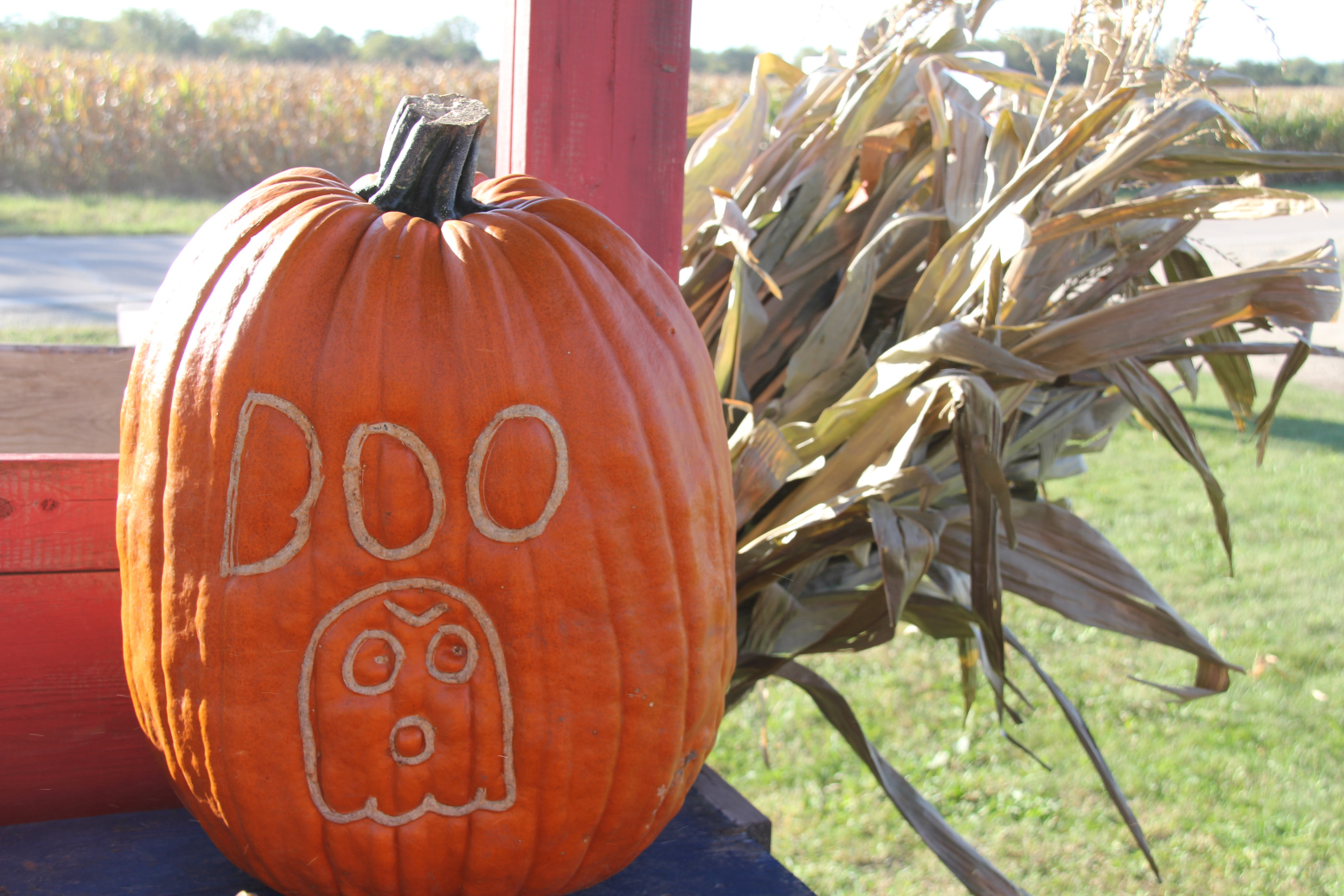
Getting in the spirit of Halloween on the Little Prairie pumpkin wagon along Highway 3. (Minnesota Prairie Roots copyrighted photo September 2025)
All these pumpkins placed for purchase prompt memories of Halloweens past. Of pulp and seeds scooped from pumpkins. Of pumpkins carved into jack-o-lanterns with toothy grins. Of jack-o-lanterns set on front steps and candles extinguished by the wind. Of pumpkins buried in drifts of snow in the Halloween blizzard of 1991 which dropped up to three feet of snow on parts of northern Minnesota and somewhat less here in southern Minnesota, but still a 20-inch storm total.
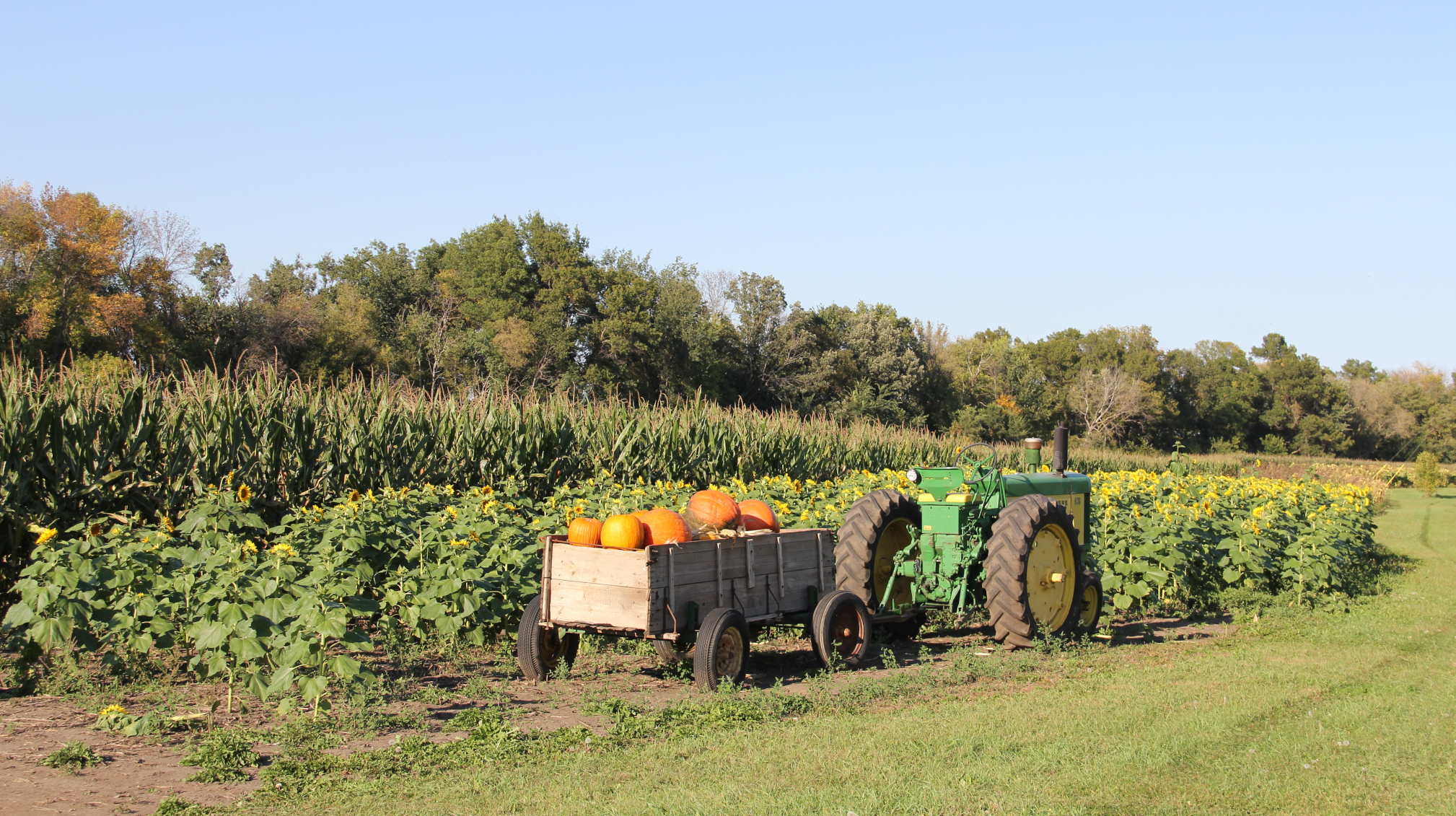
Pumpkins heap a wagon parked next to sunflower and corn fields at the Little Prairie stand along Highway 3. (Minnesota Prairie Roots copyrighted photo September 2025)
Pumpkins represent more than a prop or seasonal decoration. They represent nostalgia, stories, the past, the present, the timelessness of tradition. Those are the reasons I can’t pass a pumpkin stand without feeling grateful, without remembering the childhood Halloween when I clamped a molded plastic gypsy mask onto my face or the Halloween I fingered cow eyeballs (really cold grapes) at a party in the basement of a veterinarian’s home or all the years I crafted Halloween costumes for my three kids.
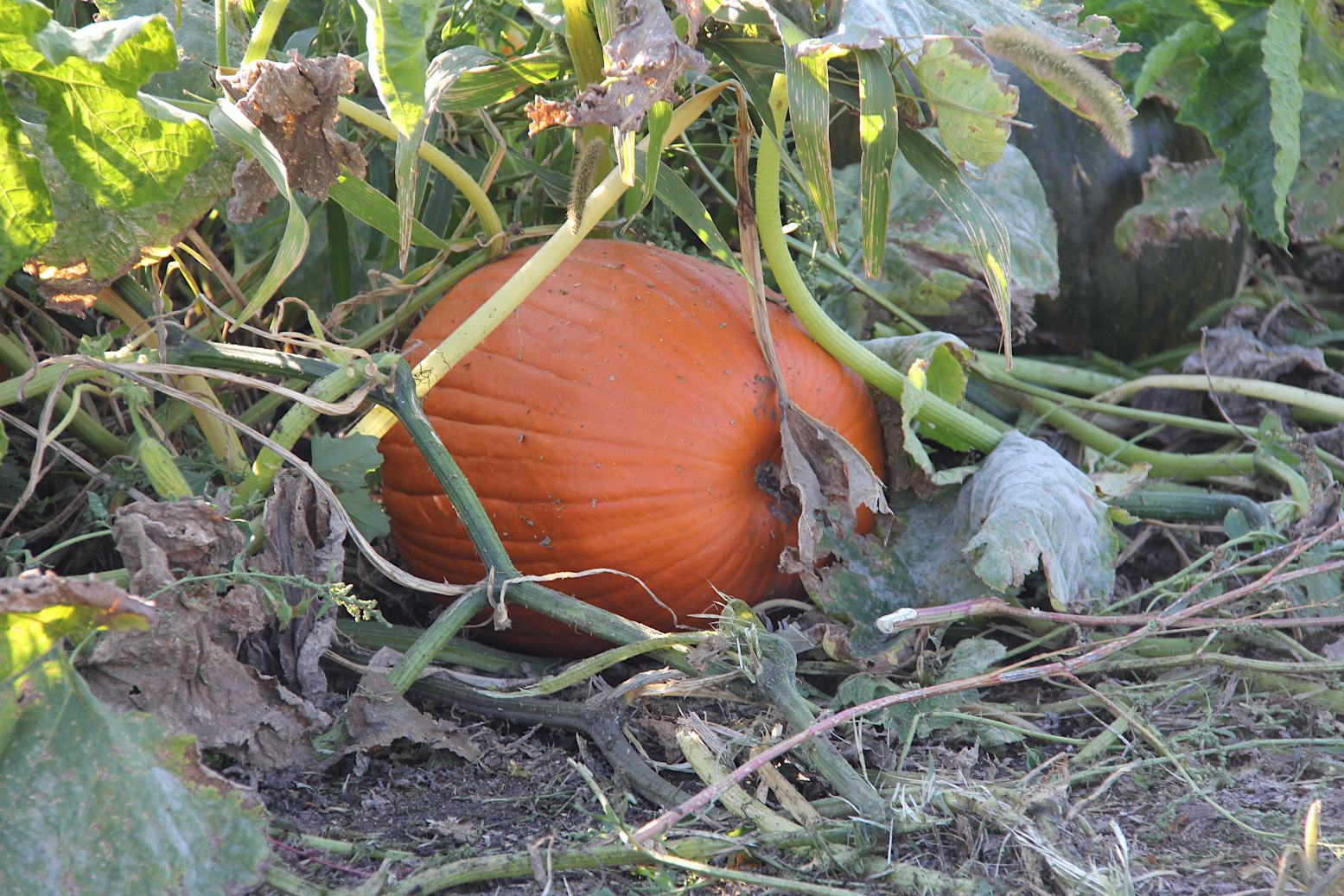
Unpicked pumpkins in the Little Prairie field. (Minnesota Prairie Roots copyrighted photo September 2025)
Then there’s the year I helped my father-in-law harvest pumpkins from his muddy patch in the cold and rain so he could take them to a roadside market in central Minnesota. Because of that experience, I understand the occasional challenges of getting pumpkins from vine to sale.
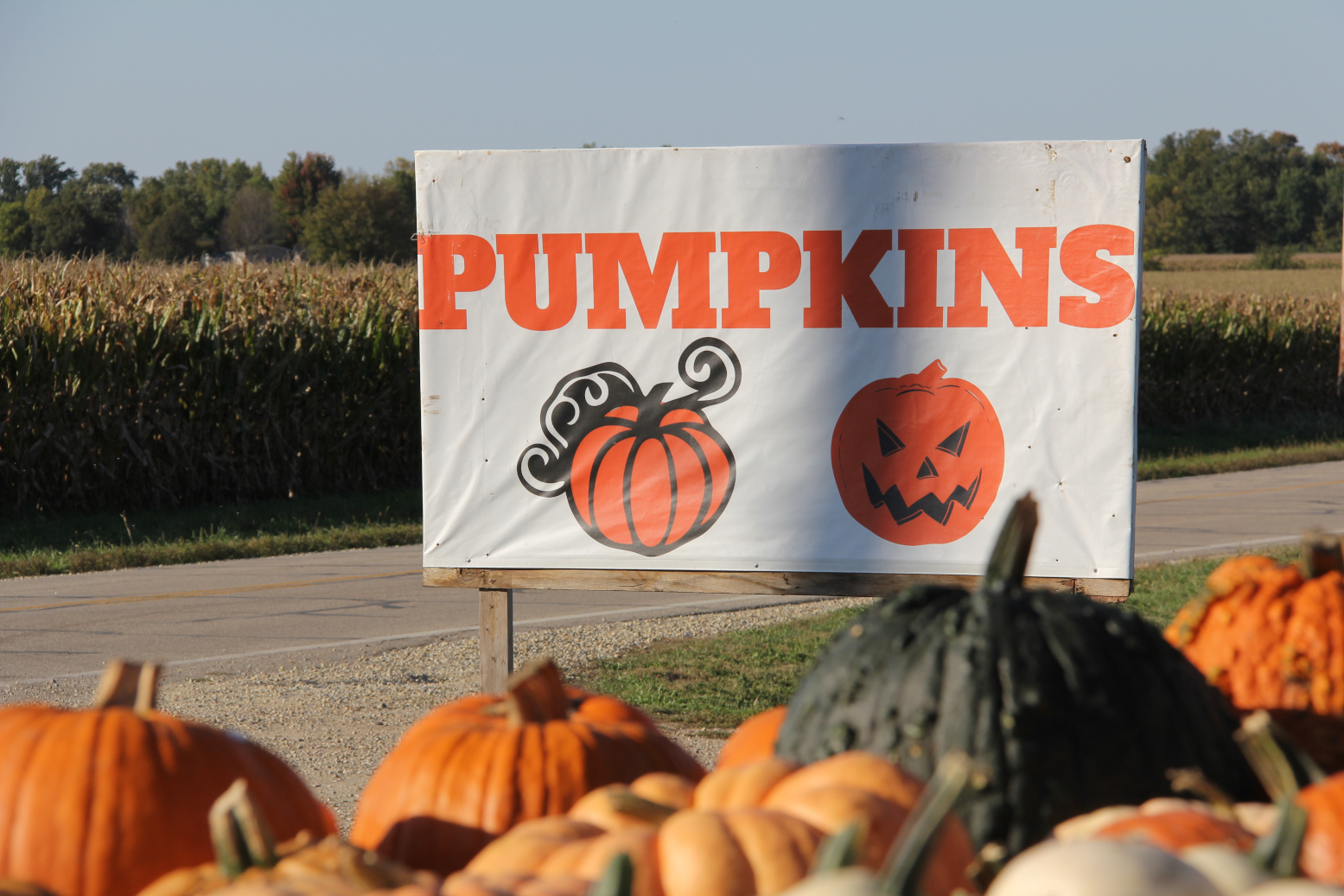
A cornfield backdrops the pumpkin wagon and signage at the Little Prairie pumpkin stand. (Minnesota Prairie Roots copyrighted photo September 2025)
I appreciate the growers who are offering all of us the beauty of autumn, the fun and fright of Halloween, and the gratitude of Thanksgiving with each pumpkin grown, picked and placed for sale at a roadside stand.
TELL ME: What does a pumpkin represent to you? Do you buy from roadside stands or elsewhere? I’d like to hear.
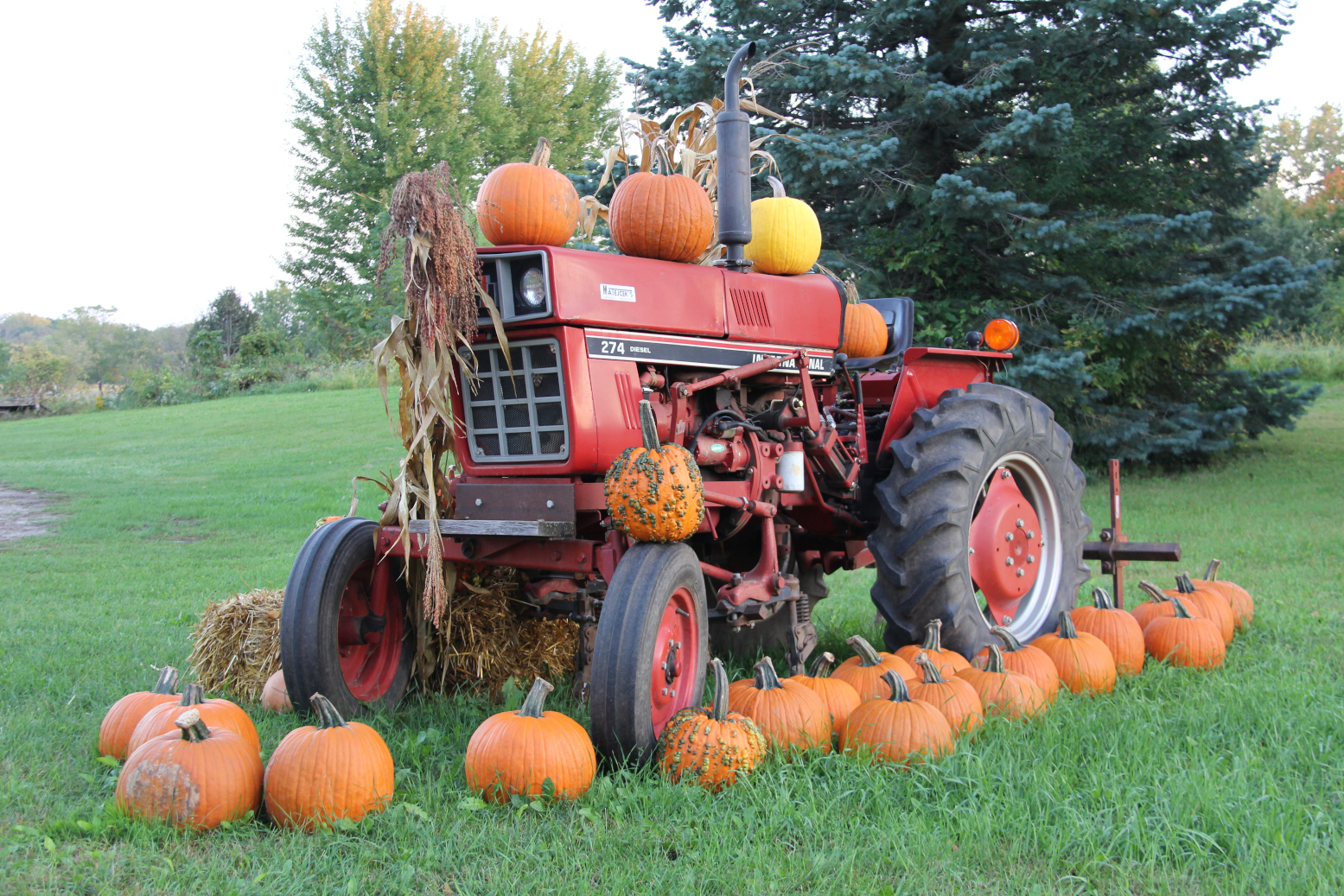
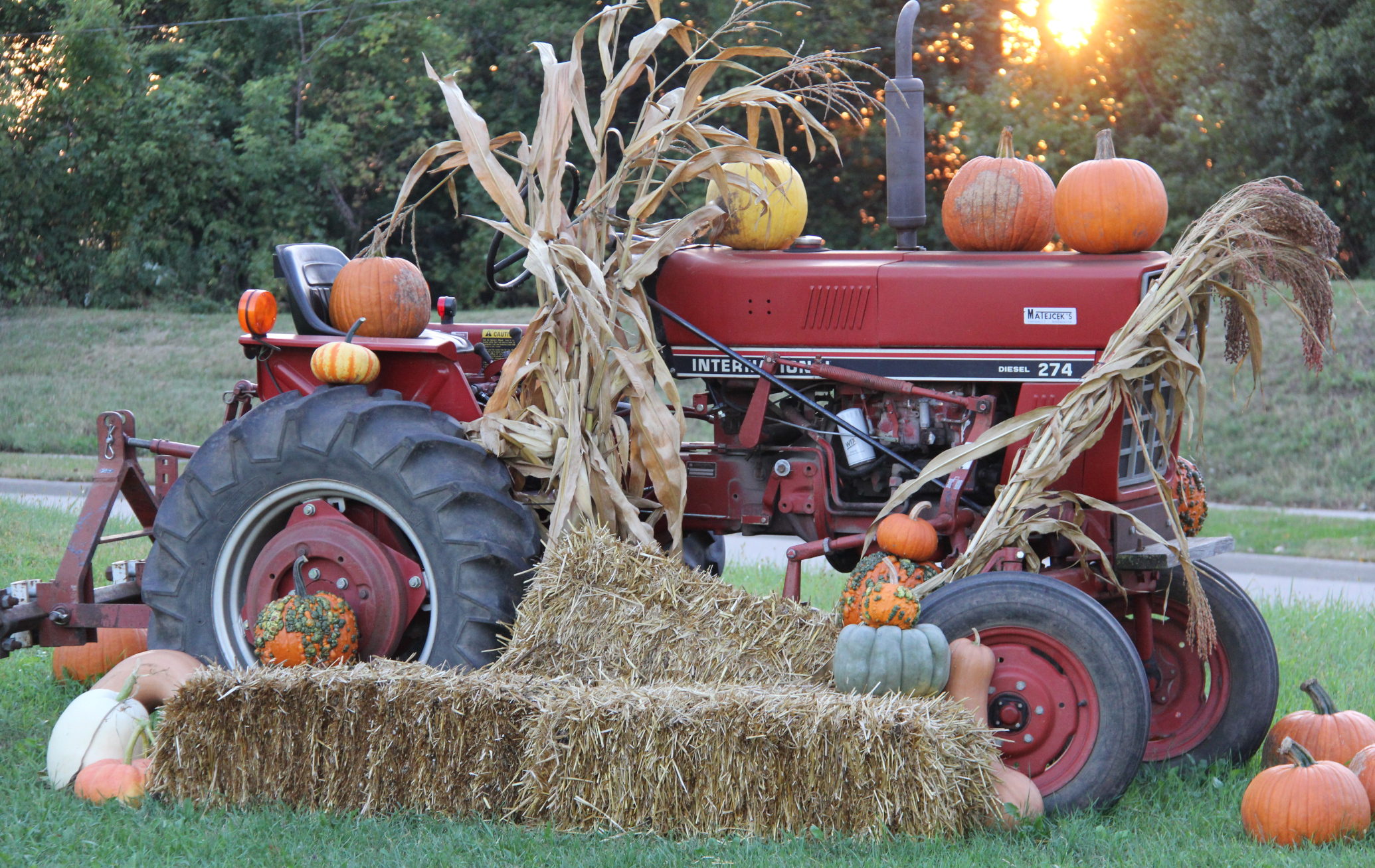
Parked at Thomas Gardens in Faribault, a late 1970s or early 1980s International tractor centers an autumn photo op scene. (Minnesota Prairie Roots copyrighted photo September 2025)
ON THE EVENING of the autumn equinox, I headed to Faribault’s east side, crossing the viaduct over the Straight River to Thomas Gardens along St. Paul Road. The business was closed upon my arrival, which mattered not to me. I was here to photograph an International 274 tractor and pumpkins during “the golden hour.” That’s an hour before sunset or an hour after sunrise when the warm, soft glow of the setting or rising sun proves particularly lovely for taking photos.
The setting sun shines through an opening in the treeline as I shot this image. (Minnesota Prairie Roots copyrighted photo September 2025)
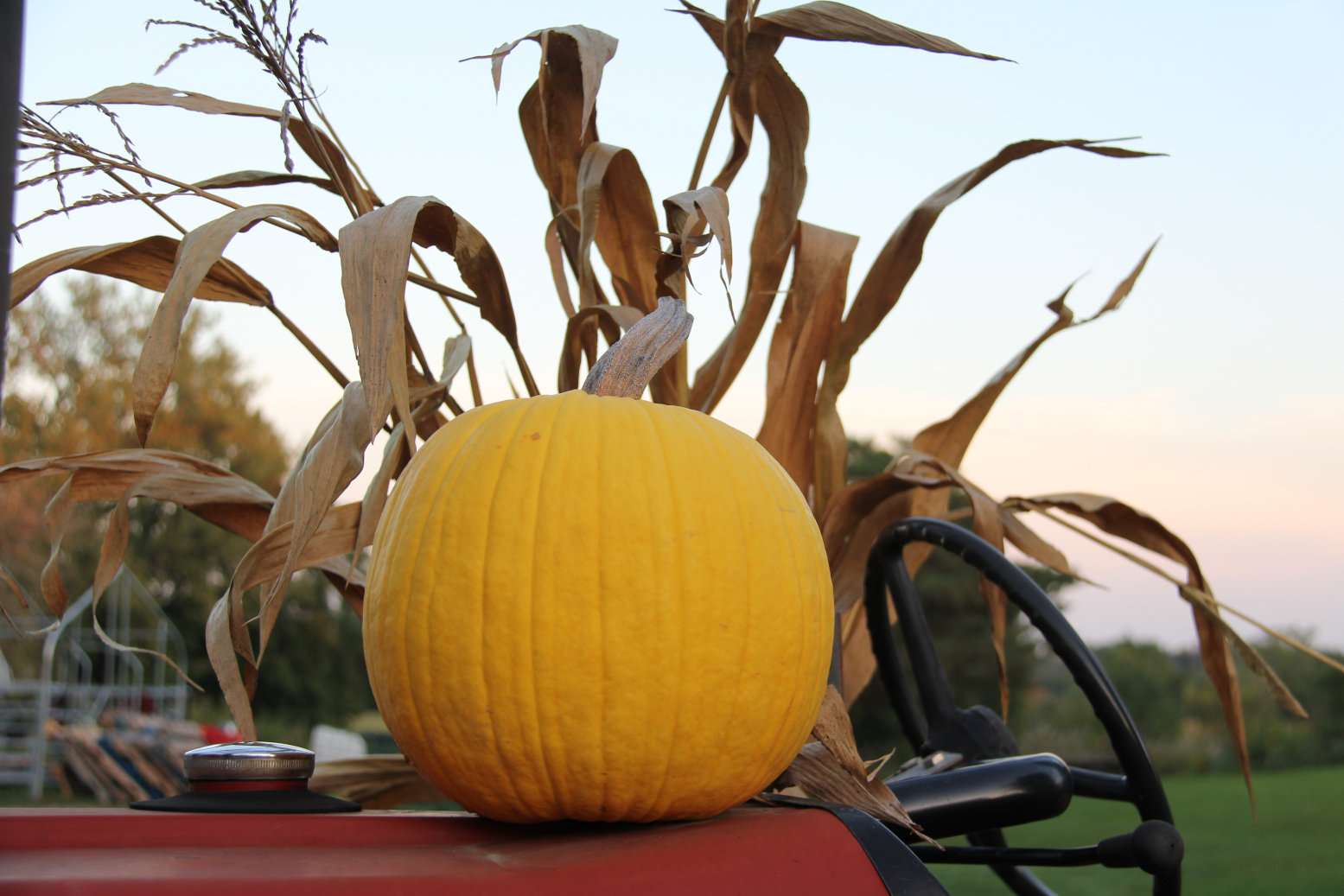
As I framed the tractor, staged as a photo prop in an autumn scene of straw bales, varied colorful pumpkins and corn shocks, I noticed the golden orb of the sun peeking through the treeline across the street. I remained ever cognizant of the light, diminishing with each snap of the shutter button.
(Minnesota Prairie Roots copyrighted photo September 2025)
(Minnesota Prairie Roots copyrighted photo September 2025)
(Minnesota Prairie Roots copyrighted photo September 2025)
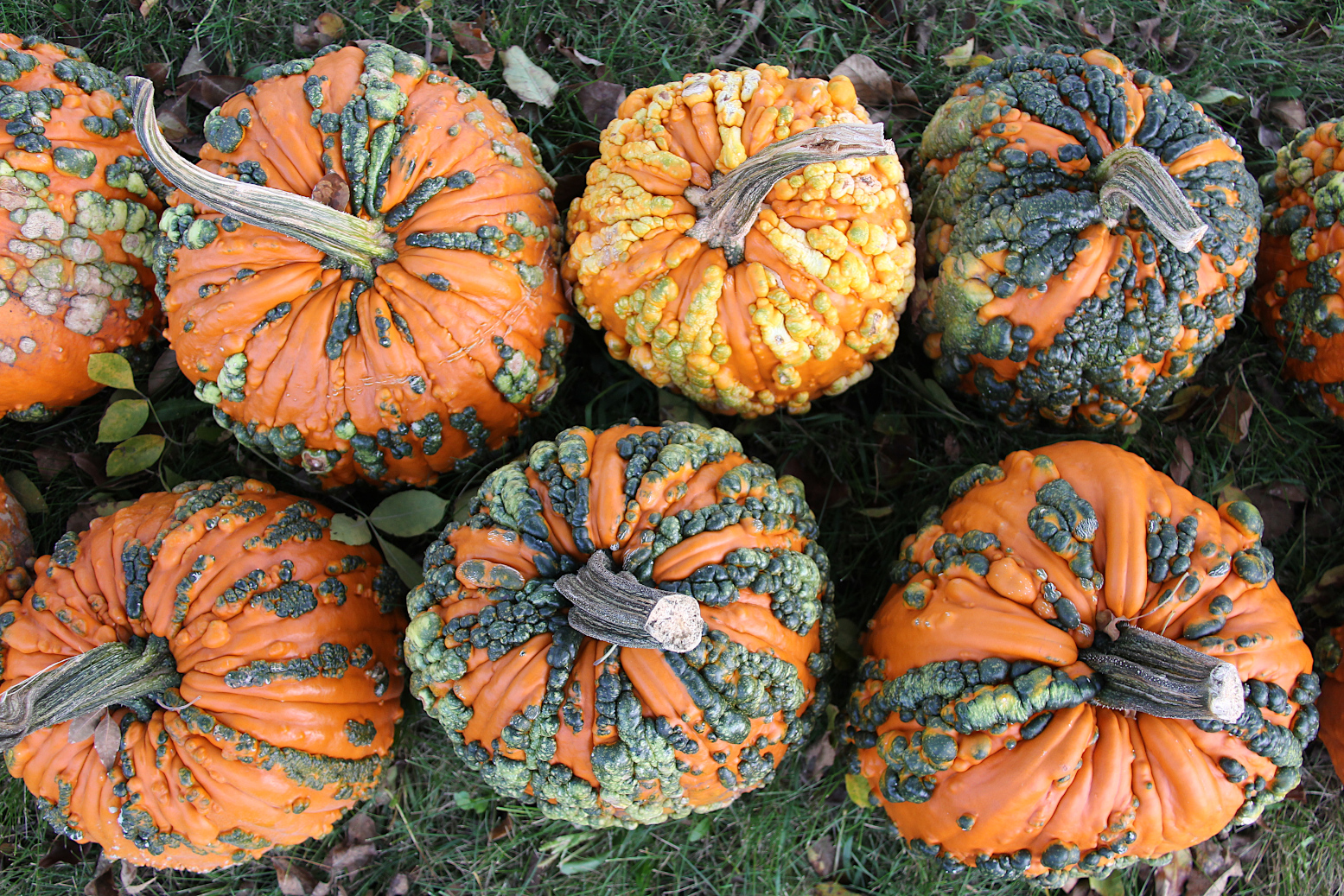
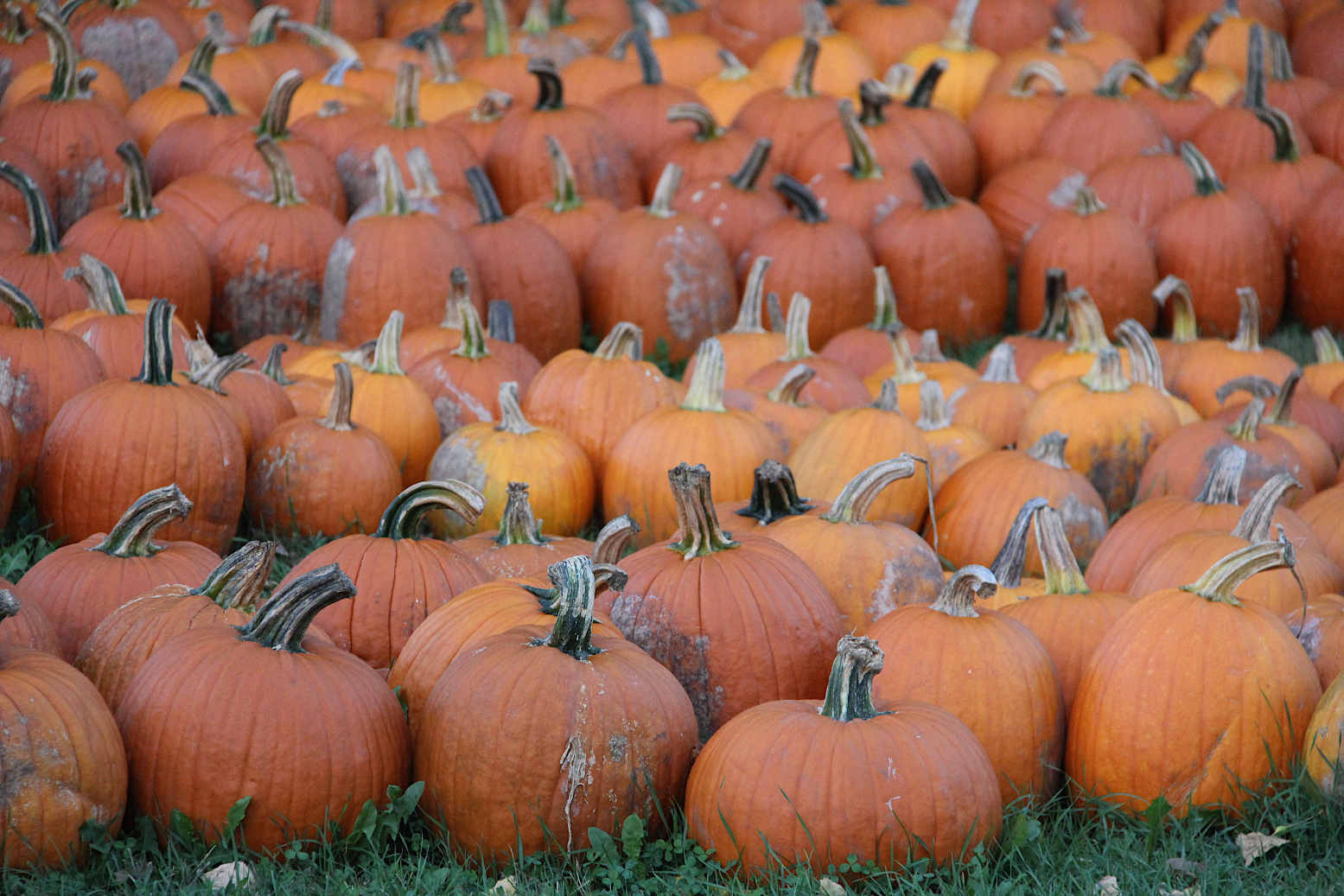
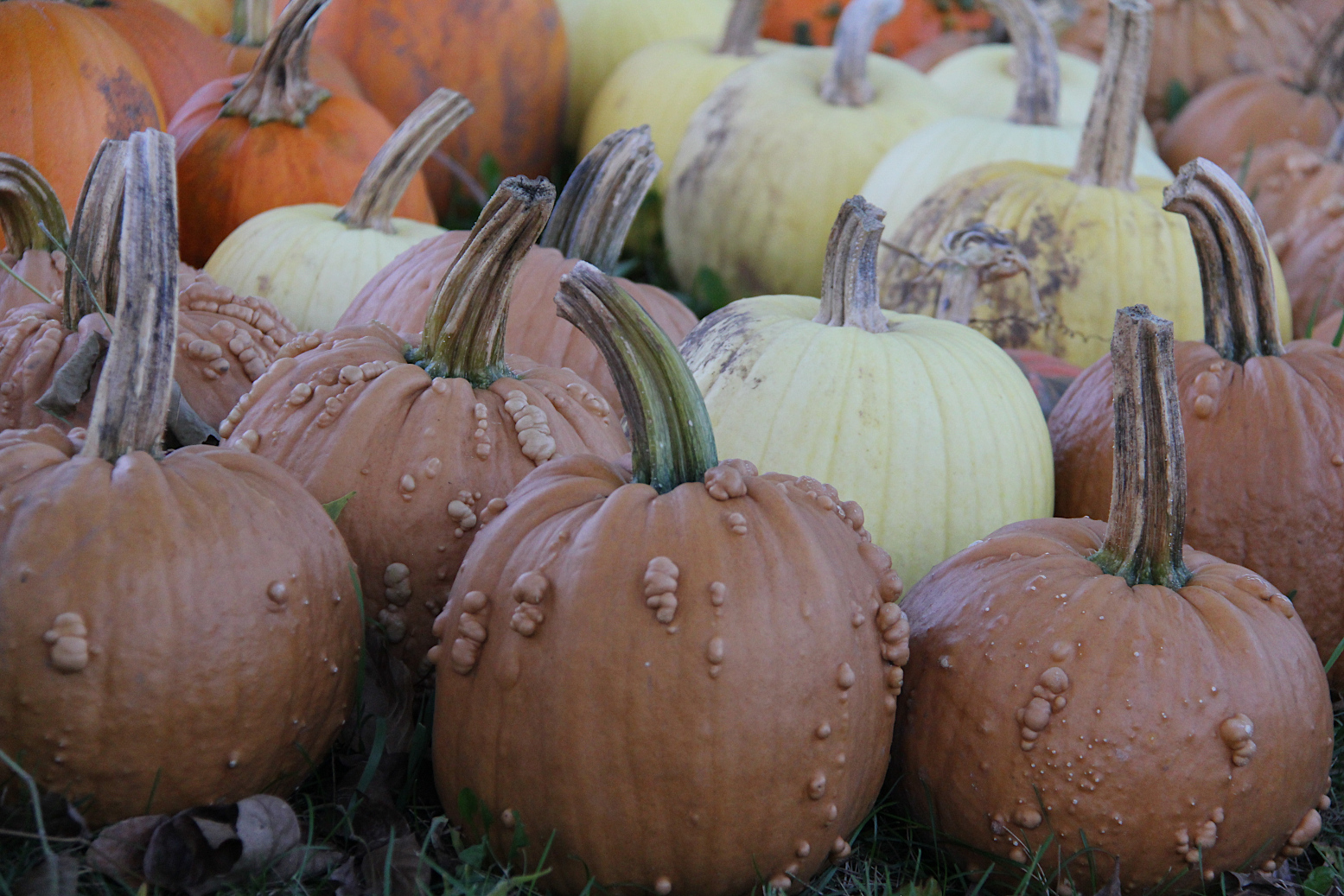
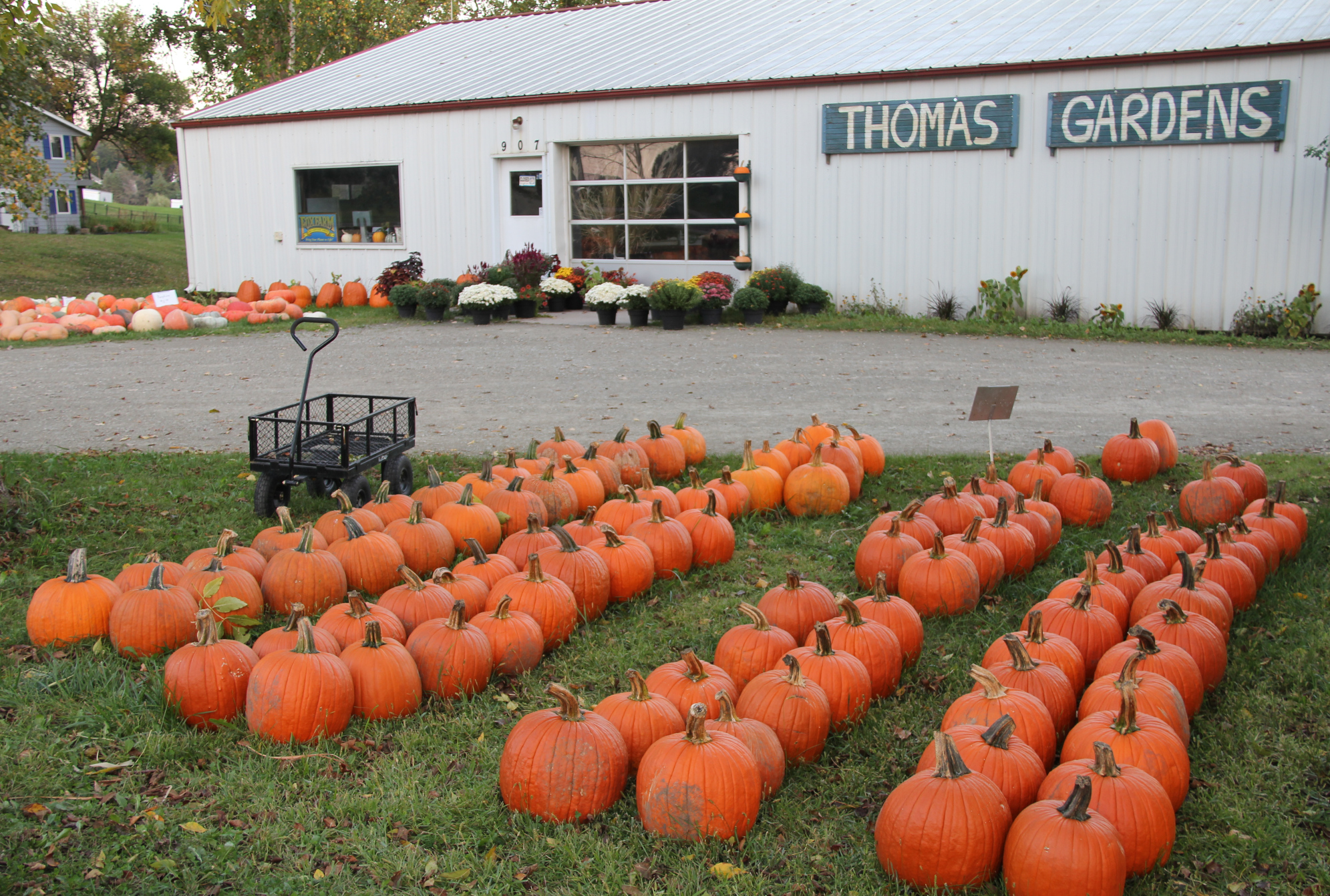
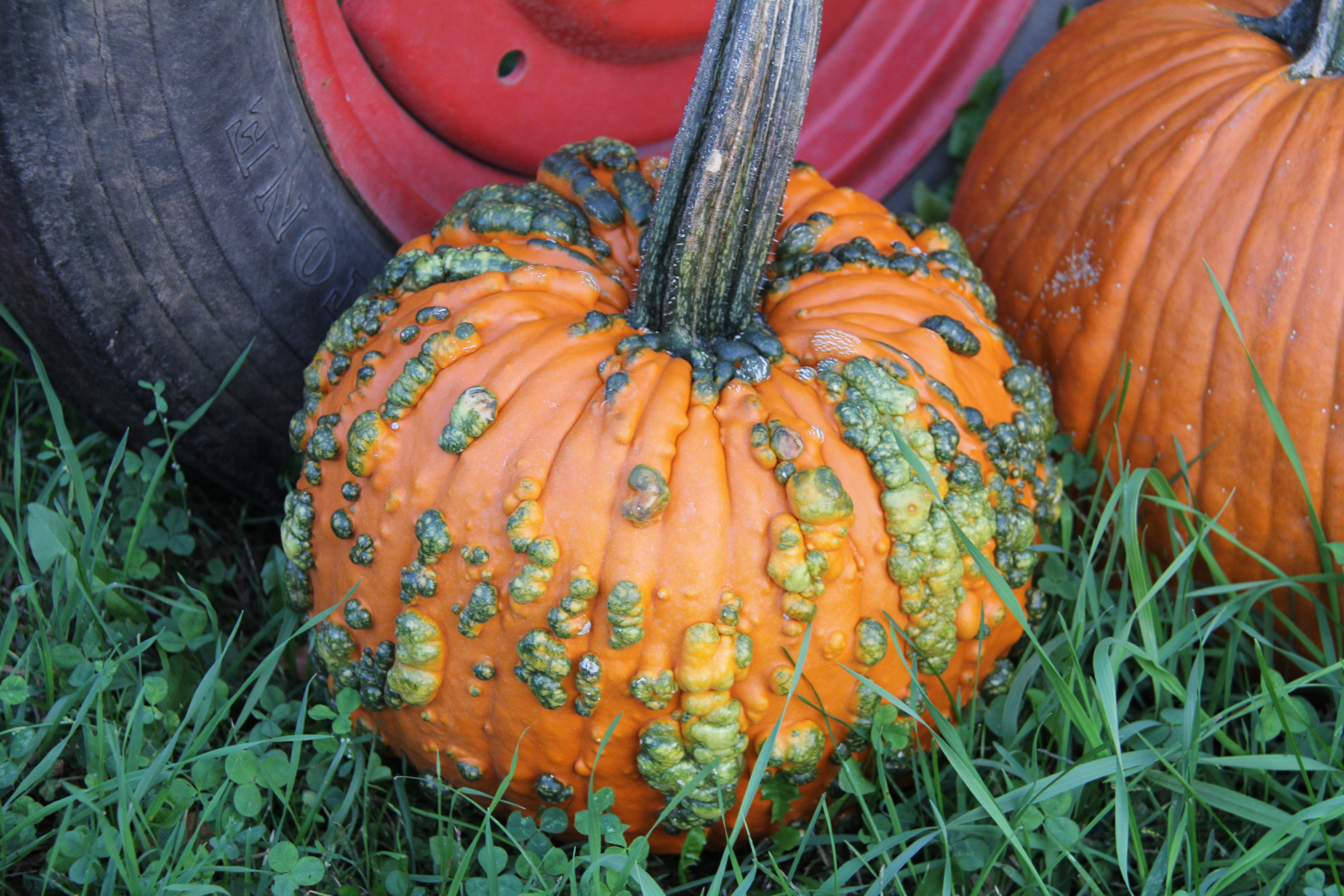
I felt giddy as I photographed first that tractor and then masses of pumpkins outside the building. Colors popped in the perfect light. Multi-hued pumpkins. Deep orange ones. White ones. Yellow ones. Pumpkins with warty bumps, others smooth. Sooooo many pumpkins scattered across the street-side yard.
Thomas Gardens is housed in this building along St. Paul Road on Faribault’s east side. (Minnesota Prairie Roots copyrighted photo September 2025)
I remember when the previous owners of 50-plus years piled pumpkins onto flatbed trailers parked inside and outside Twiehoff Gardens & Nursery. Matt and Stefanie Thomas bought the business in 2019. Matt grew up on a dairy farm near Dundas, which pleases me given I was also raised on a dairy farm. Like me, he understands hard work. On his business website, Thomas writes about teaching his three kids the value of hard work, teamwork and family values. This seems a good place to do that.
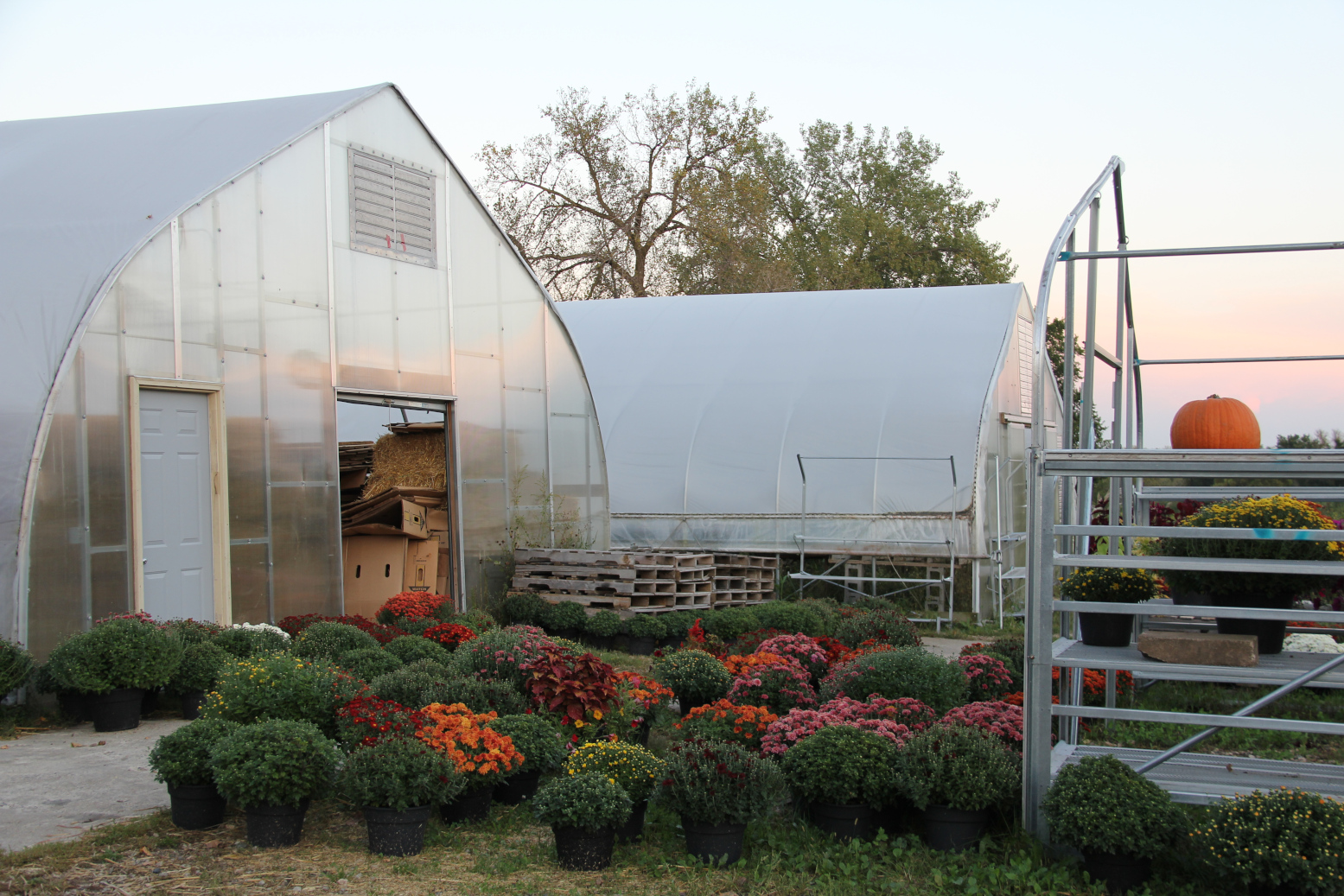
Mums for sale outside the greenhouses. (Minnesota Prairie Roots copyrighted photo September 2025)
Here the Thomas family grows and sells garden-fresh vegetables, flowers and plants, plus markets honey, maple syrup, Christmas trees and more from their pole shed style building, greenhouses and the yard where I roamed with my 35mm Canon EOS 60D camera.
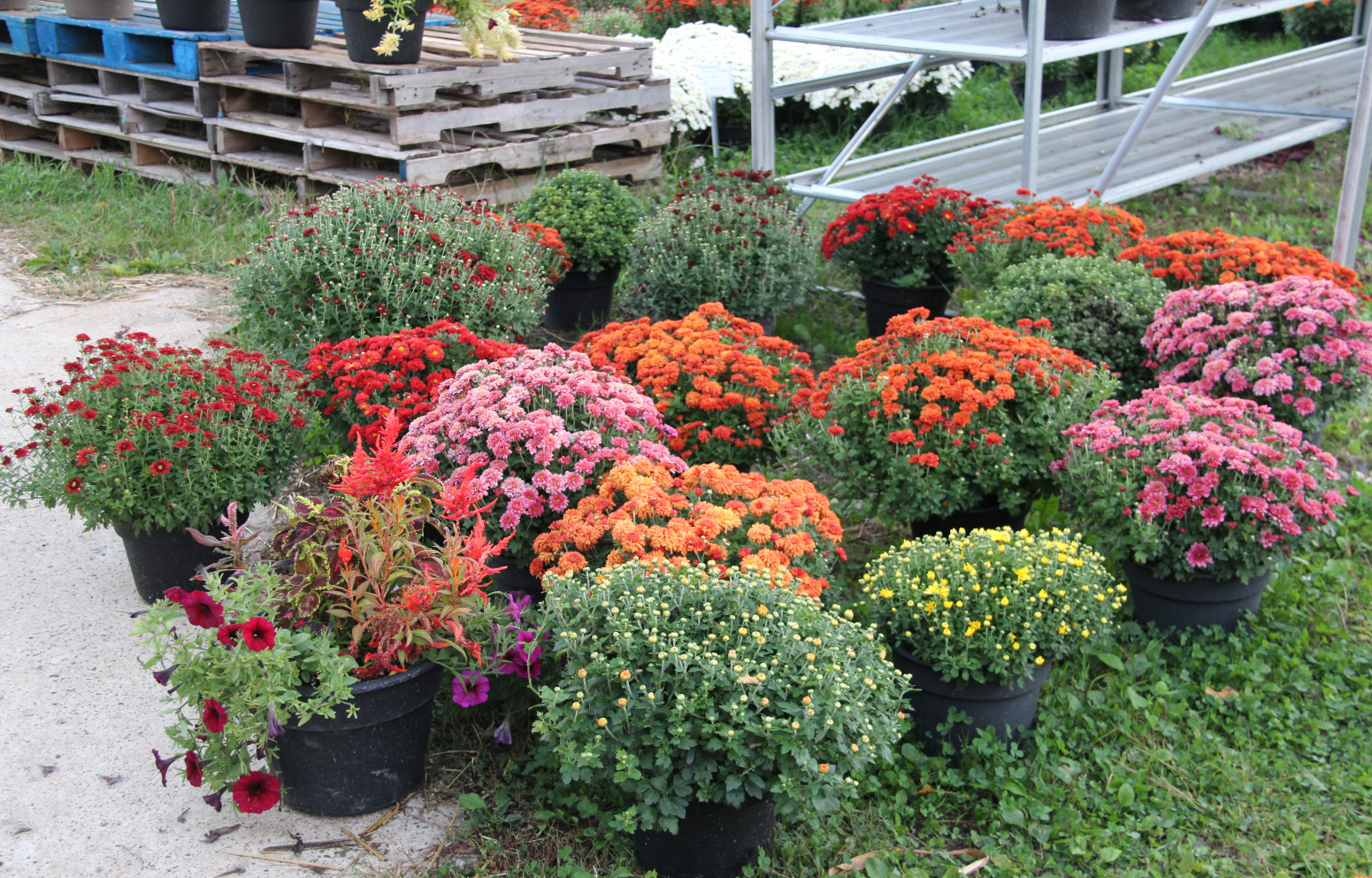
Mostly potted mums, but a few other flowers and plants, are for sale in autumn. (Minnesota Prairie Roots copyrighted photo September 2025)
When I finished photographing the tractor and all those pumpkins, I moved onto the flowers, mostly mums. The flower of fall. Single colors and multi colors in pots. Oranges, yellows, rose, even white.
A pumpkin tops the tractor against a corn shock with a tint of pink in the sky. (Minnesota Prairie Roots copyrighted photo September 2025)
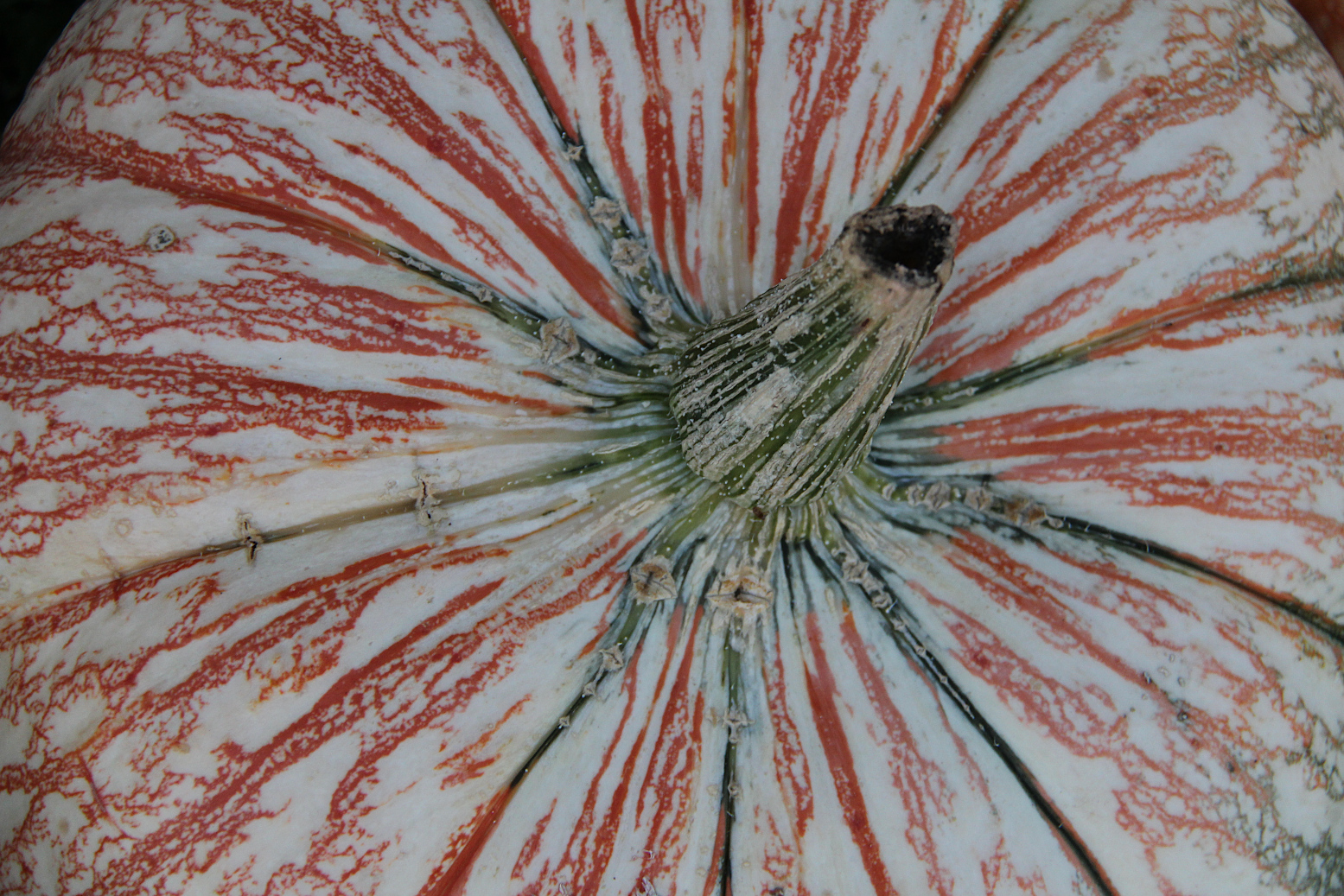
I aimed my camera lens down for a closeup photo of a massive striped pumpkin. (Minnesota Prairie Roots copyrighted photo September 2025)
Pumpkins set next to a tractor tire pop color in the grass. (Minnesota Prairie Roots copyrighted photo September 2025)
I remained caught up in my photography until I glanced back at the tractor and the treeline. In that moment I realized I really wanted to watch the sun set at City View Park, just down the road a bit. It’s a beautiful site overlooking Faribault next to a city water tower and across the street from Trump’s Apple Orchard. We occasionally picnick here and watch the Fourth of July fireworks at this hilltop location.
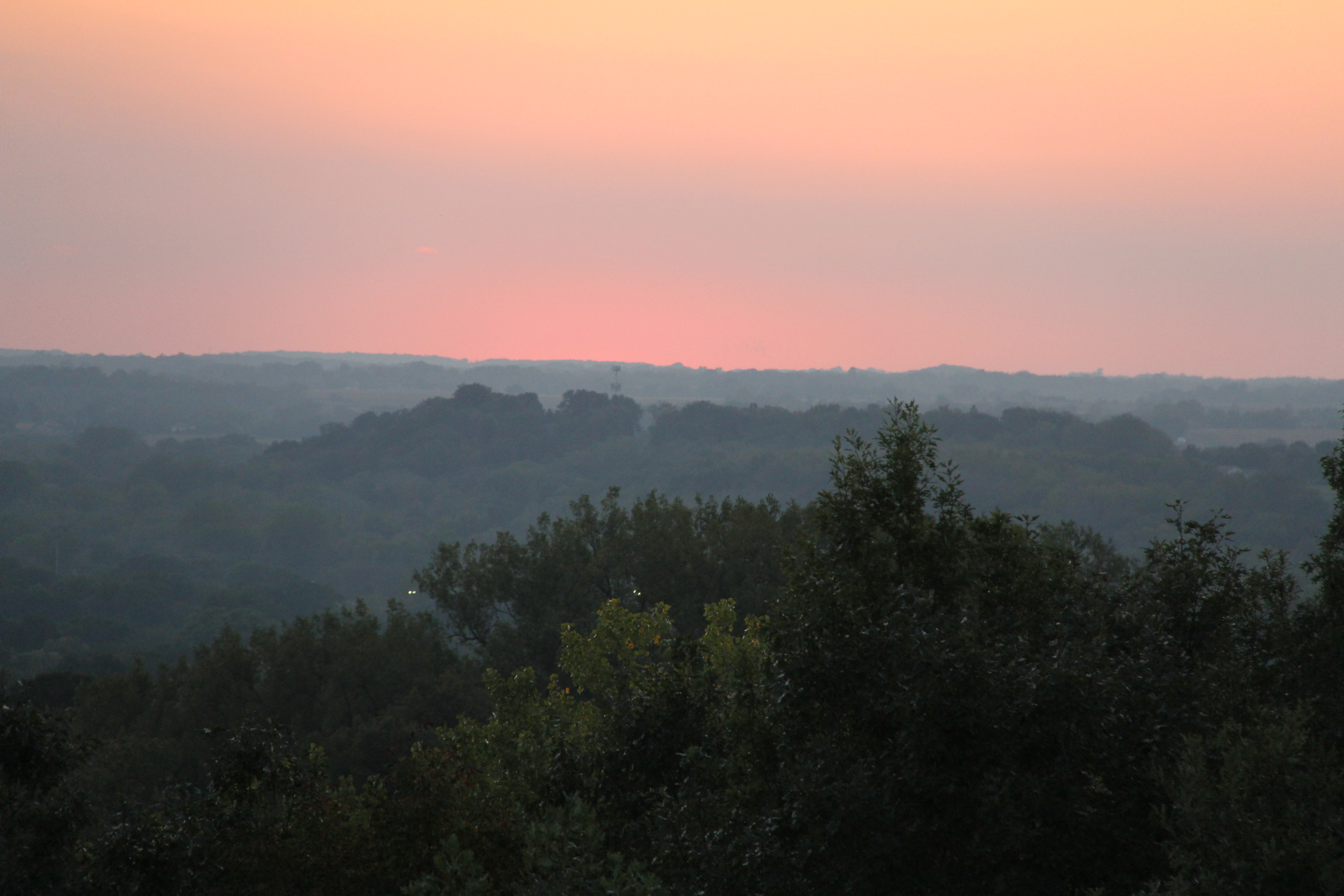
Just after sunset at City View Park, Faribault. (Minnesota Prairie Roots copyrighted photo September 2025)
But Randy and I arrived too late. I could see, as we pulled into the small parking lot, that the orange ball of the sun had already dropped leaving a skyline tinged with pink. Disappointment coursed through me.
Yet, others didn’t miss the sunset. Three teenage boys sat on a park bench facing the city overlook. As I walked toward them, I wondered why they were here, what they might be doing. Yes, I admit I thought they might be up to no good. I was wrong. They were here watching and photographing the sunset with their smartphones. I asked to see their pictures and they pulled out their phones and showed me the beauty I missed by my delayed arrival.
I took the opportunity then to praise them—to tell them how wonderful it was to see them outdoors, appreciating the sunset. Moments like this, generational interactions like this, conversations like this, matter. These youth understood the value of pausing to sit and watch the sun set across their city on the first evening of autumn. And I recognized the value of acknowledging that.







 Minnesota Prairie Roots
From words on a government website to soybean markets & a crisis in rural America October 15, 2025
Tags: agriculture, America, China, commentary, farm crisis, farming, messaging, opinion, rural America, rural Minnesota, soybean market, soybeans, tariffs, trade war, United State Department of Agriculture
WHEN I FIRST READ the message bannering the United States Department of Agriculture website during the current government shutdown, my jaw dropped. In a two-sentence statement, “The Radical Left Democrats” are blamed for the closure of the federal government. How unprofessional, I thought, to so blatantly put politics out there on a website designed to help America’s farmers. But then again, why should this surprise me?
United States Secretary of Homeland Security Kristi Noem is doing the same in a video message blaming Democrats for the shutdown. She expects this to be broadcast in airport terminals. Many are opting not to air her clearly political statement. And they shouldn’t. It’s unprofessional and wrong in more ways than I can list, no matter what your political affiliation may be.
But back to that message on the USDA website. It goes on to say that President Donald Trump wants to keep the government open “and support those who feed, fuel and clothe the American people.” Now that is certainly a noble statement at face value, one we could all applaud. Who doesn’t want to support our farmers? But in the context of what the President has done to farmers, the statement seems laughable.
Here in the heartland, farmers have lost a major market for soybeans, my state’s top agricultural export. China has stopped buying soybeans from not only Minnesota, but America. That’s billions of dollars in lost income. And all because of the ongoing trade war between the U.S. and China, begun by the man who slapped tariffs—now averaging 58 percent—on Chinese imports with a threat to increase that to 100 percent. I’m no economist. But even I understand China’s retaliatory tariffs and actions to tap other markets for soybeans. They went to Brazil and Argentina.
And now President Trump proposes sending $20 billion in aid to Argentina, all tied to an upcoming election there. Why would we bail out a country exporting their soybeans to China while our own financially-strapped farmers are suffering because they’ve lost a key market? This makes no sense to me. Again, I’m not an economist or a politician, simply an ordinary American citizen, with a farm upbringing (and who decades ago freelanced for the Minnesota Soybean Growers Association), questioning the logic of any of this.
Even without the Argentinian component tossed into the mix, there’s more. President Trump has proposed an aid package for farmers to help them get through the financial crisis he created via his tariffs and the resulting trade war with China. That aid would come from the money collected from tariffs. Now I know farmers—my dad was one—are fiercely independent and would rather have a market for their cash crops than government aid. If not for the tariffs…
As the harvest continues here in Minnesota, I can’t help but feel for those who work the land, who continue to face so many uncertainties, financial challenges and stressors. Interest rates on loans remain high. Market prices remain low. Land rents continue to rise. Equipment and other costs are high. And on and on, including the loss of the long-standing soybean export market to China, which quite likely may never be reclaimed.
This is becoming a crisis situation for farmers—those who feed, fuel and clothe Americans. From fields to small town Main Street, rural America is hurting. And politically-biased blame words published on a government website aren’t helping.
© Copyright 2025 Audrey Kletscher Helbling