Minnesota Prairie Roots

Writing and photography by Audrey Kletscher Helbling

Celebrating an evening of poetry & art in small town Minnesota May 11, 2014

Crossings at Carnegie in Zumbrota.

Guests arrive at Crossings at Carnegie in Zumbrota on Saturday evening.

POETS AND ARTISTS, family and friends arrived from nearby Rochester, as far away as Fargo, and from within a few blocks of Crossings at Carnegie in Zumbrota Saturday evening.
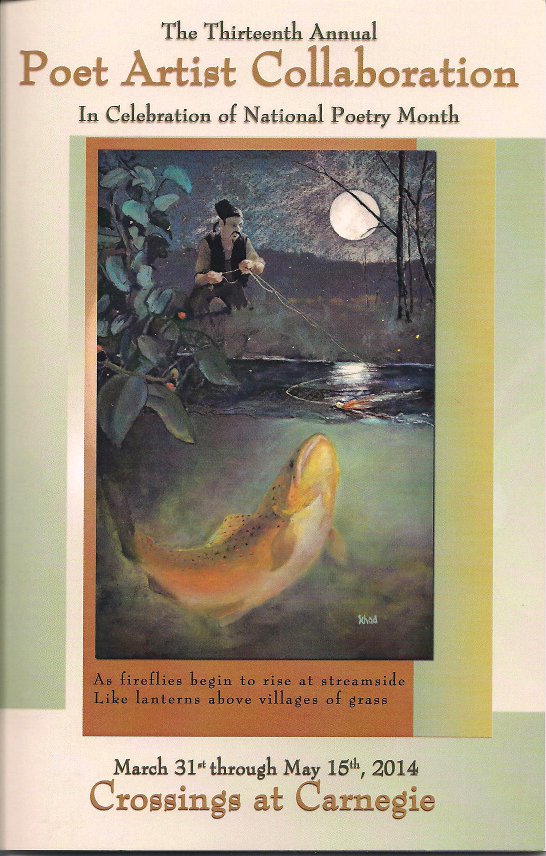
The published collection of poems and art with cover art, "Li Bai at the South Fork," a pastel by Mike Schad, created for last year's collab. Also featured is a line from the poem (with the same name) by Justin Watkins.

The published collection of poems and art with cover art, “Li Bai at the South Fork,” a pastel by Mike Schad, created for last year’s collab. Also featured is a line from the poem (with the same name) by Justin Watkins.

They came to celebrate the pairing of art and poetry in the Poet-Artist Collaboration XIII.
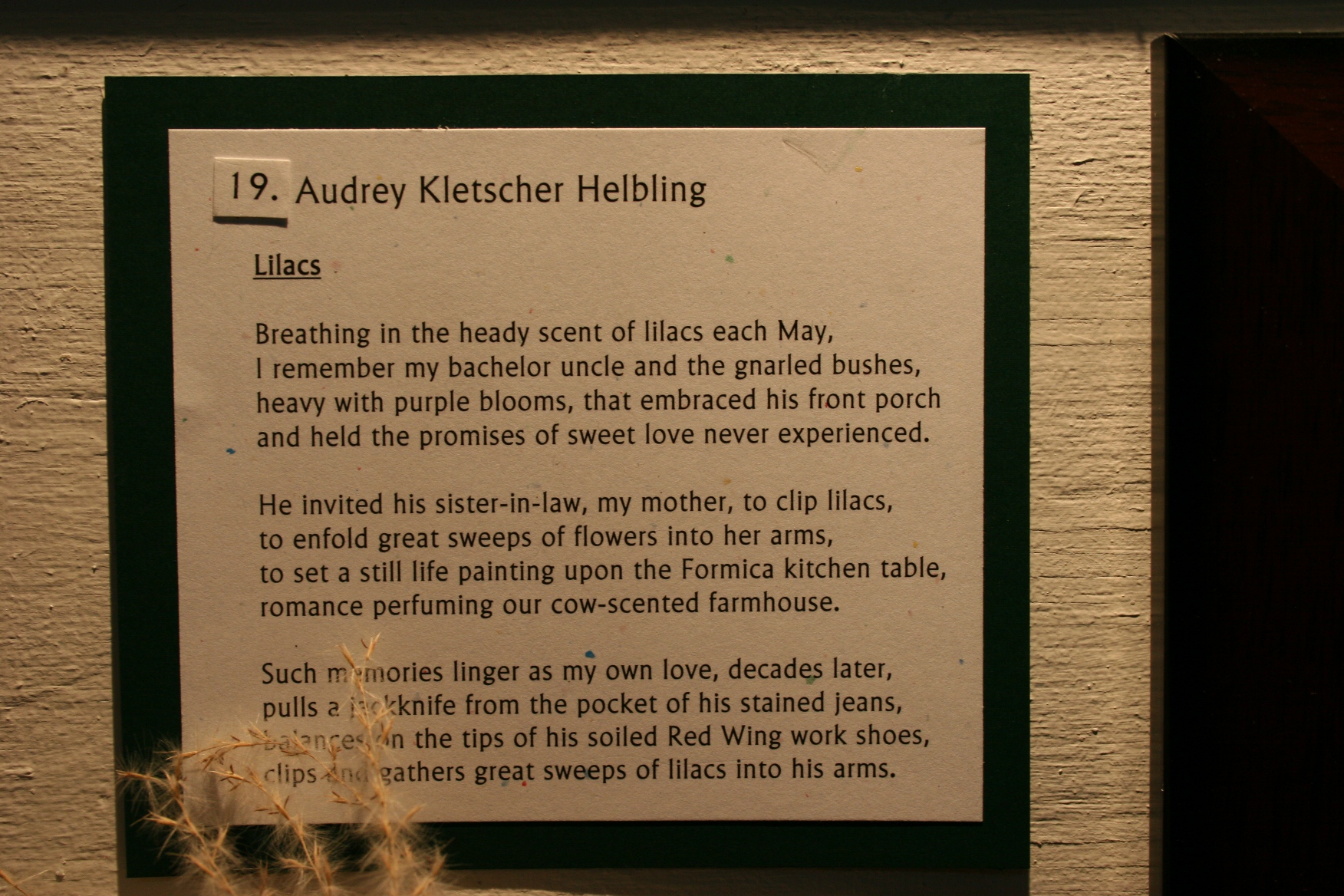
My poem, "Lilacs," which was selected as a "Work of Merit" at the 2013 Northwoods Art and Book Festival in Hackensack.

My poem, “Lilacs,” which was selected as a “Work of Merit” at the 2013 Northwoods Art and Book Festival in Hackensack, and now displayed at Crossings at Carnegie as part of the Poet-Artist Collaboration XIII.
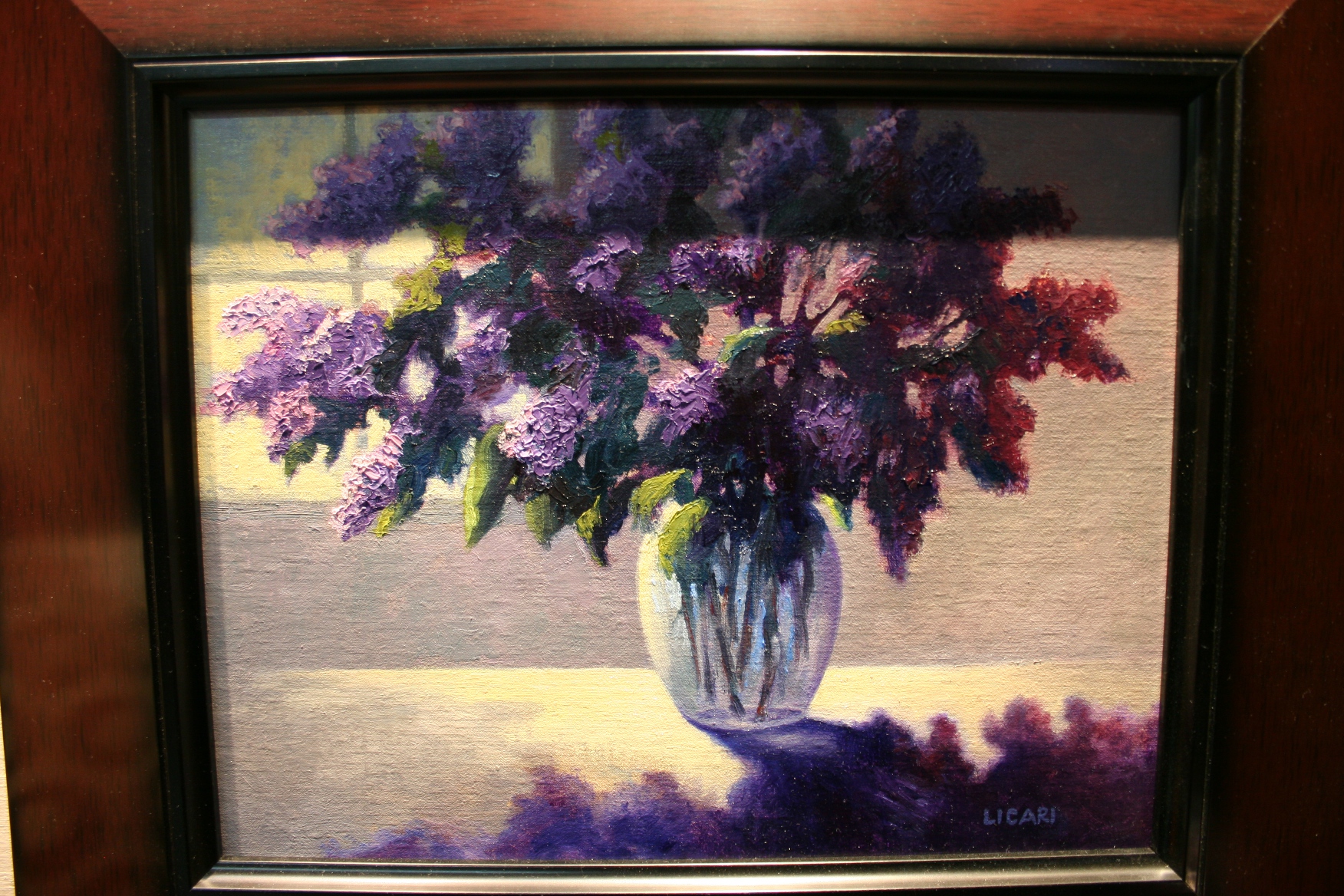
Jeanne Licari's absolutely stunning interpretation of my poem. Her "Lilacs on the Table" is oil on mounted linen.

Jeanne Licari’s absolutely stunning interpretation of my poem. Her “Lilacs on the Table” is oil on mounted linen.
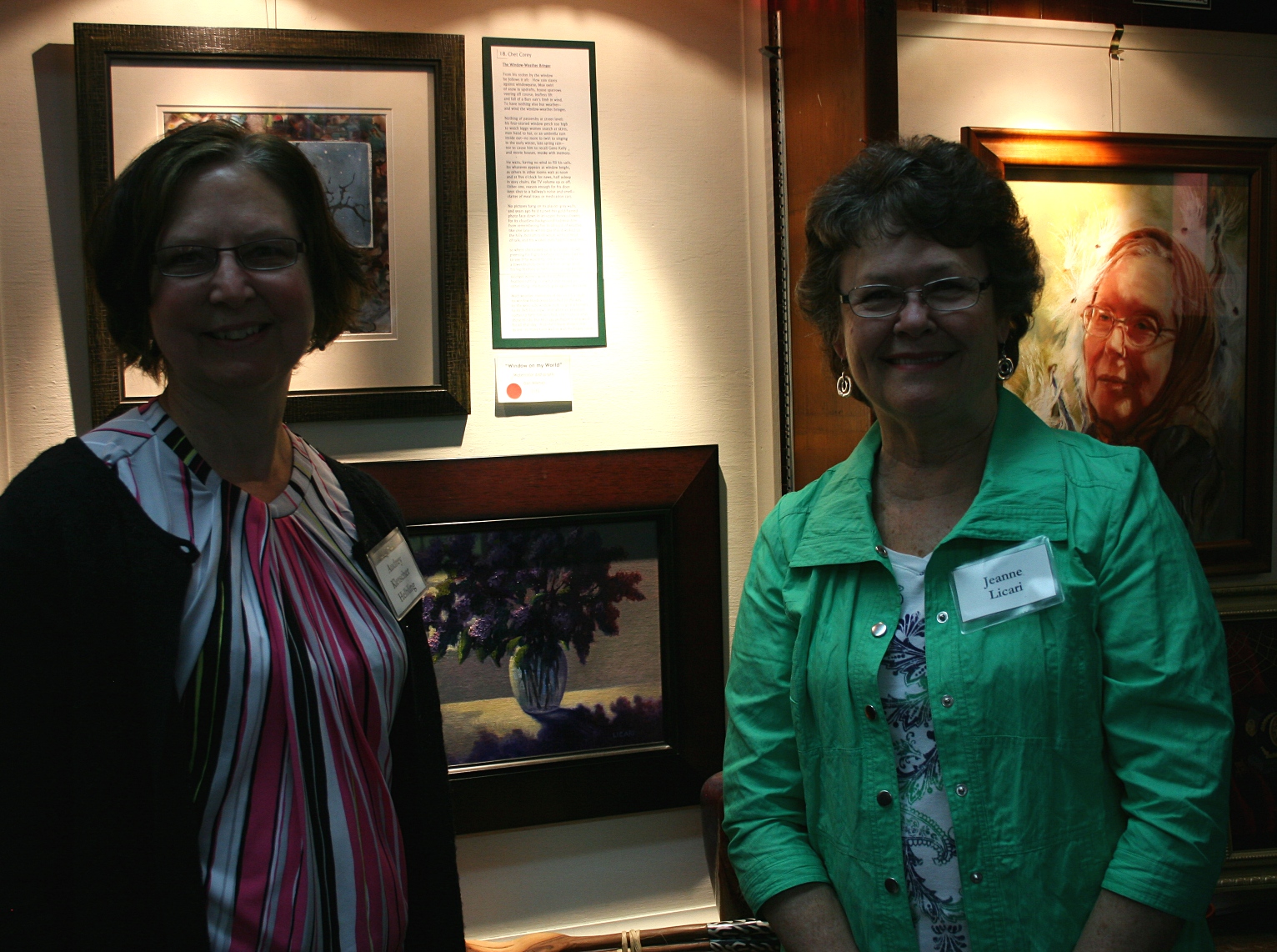
Me on the left with "my" artist, Jeanne Licari.

Me on the left with “my” artist, Jeanne Licari.

I was there to read “Lilacs,” and to meet my artist, Jeanne Licari of Rochester, who created “Lilacs on the Table,” a still life oil on linen inspired by my poetry.
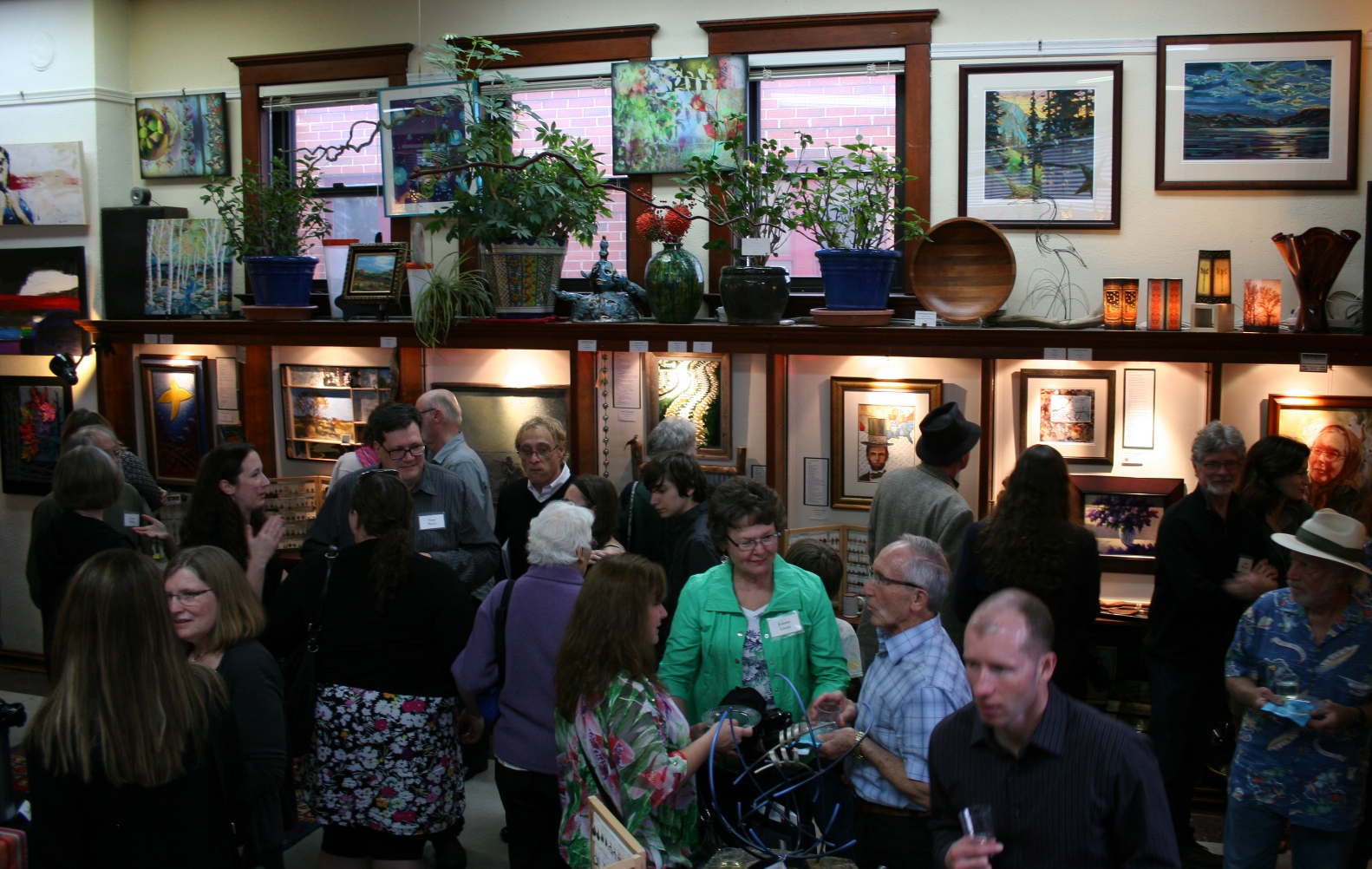
It was shoulder to shoulder people at the poet and artist reception.

It was shoulder to shoulder people at the poet and artist reception. Poems and paired art are featured in the alcoves along the wall. Twenty-six poems and paired art are included in the exhibit.

What a delightful evening, mingling in this privately-owned small town arts center crammed with art and art appreciators.
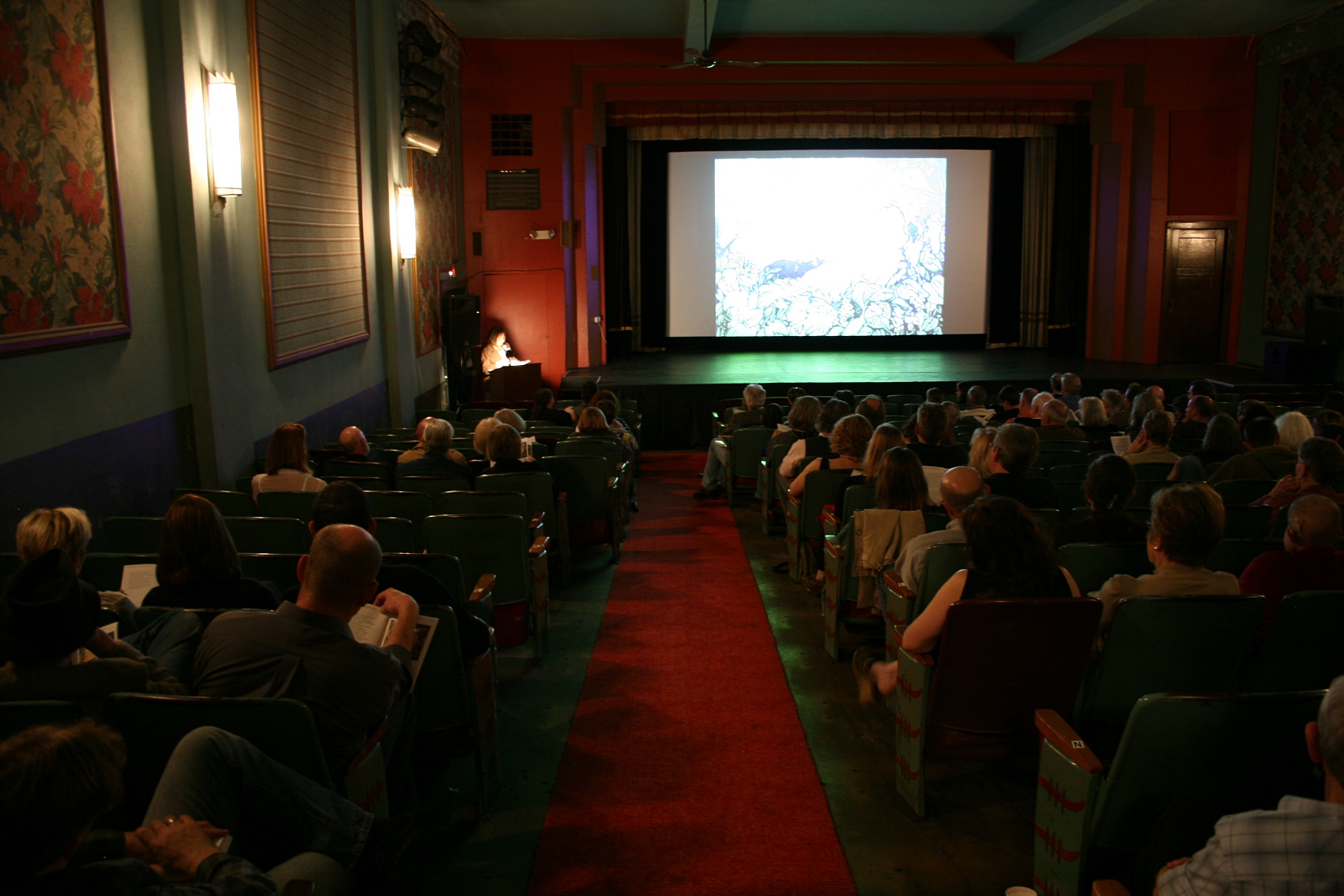
Inside the historic State Theatre, artists and poet presented to a nearly full house.

Inside the historic State Theatre, artists and poets presented to a sizable crowd.

After we’d wined and nibbled, chatted and admired, we gathered in the next door historic State Theatre for 90 minutes of poetry readings and artist and poet talk.

From an abstract oil and acrylic on canvas to a watercolor of a Honeysuckle, to pastels, mixed media and even an oil on canvas of a 57 Chevy framed by barbed wire and fence posts, a plethora of art flashed onto the big screen in the darkened theatre.

As I listened to my fellow poets and these artists, I sensed, more than anything, a deep passion among all of us for the art of creating. That passion flowed in carefully crafted poems—lines of words that spoke of love and of memories, of cranes and of spiders, of storms and more. That passion flowed, too, in paint stroked upon canvas, in stitching and ink and the softness of watercolors.

To be a part of this event, in the company of such talent, truly inspires.
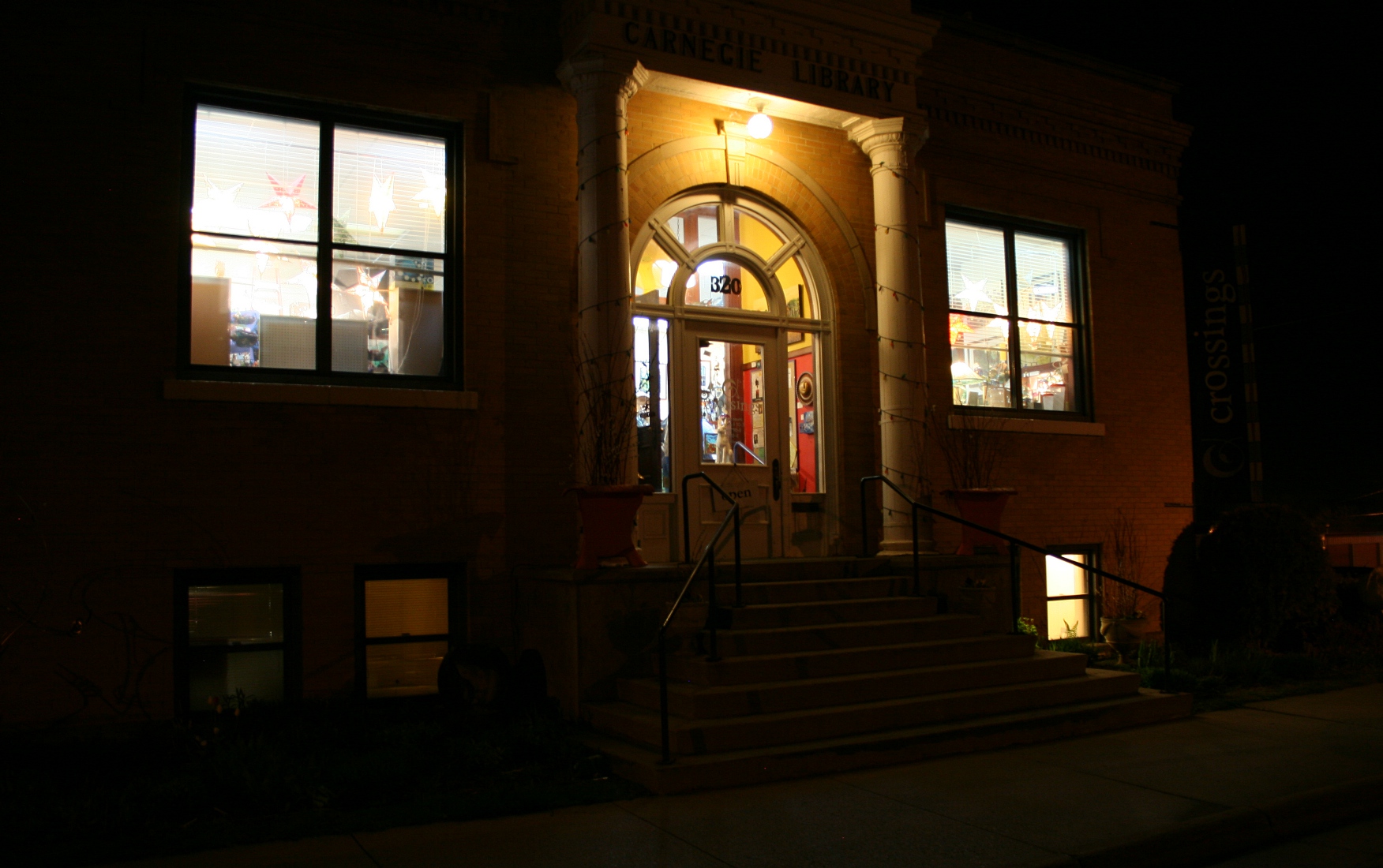
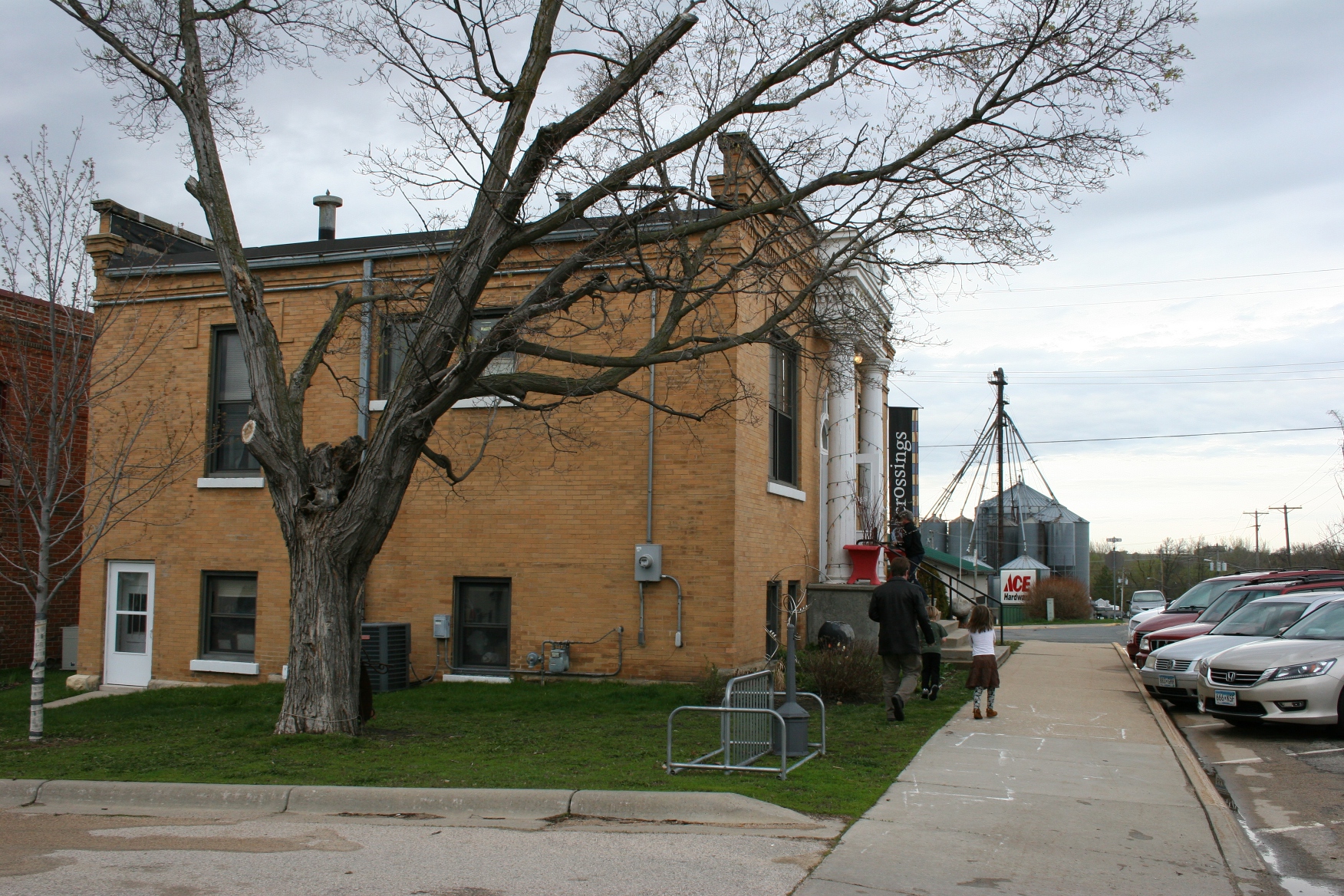
Leaving Crossings at Carnegie, I snapped this image of the former Carnegie library.

Leaving Crossings at Carnegie, I snapped this image of the former Carnegie library.

FYI: The Poet-Artist Collaboration XIII exhibit continues through this Thursday, May 15, at Crossings at Carnegie, 320 East Avenue, Zumbrota. The artwork is available for purchase.

Click here to read how my poem inspired artist Jeanne Licari.

And click here to read how my poem, “Her Treasure,” inspired artist Connie Ludwig of Goodhue in the Poet-Artist Collaboration XI.

Check back for a follow-up post on another reason Saturday evening’s celebration was a memorable one for me.

© Copyright 2014 Audrey Kletscher Helbling


Thoughts on motherhood May 9, 2014

Filed under: Uncategorized — Audrey Kletscher Helbling @ 6:00 AM
Tags: , , , , ,
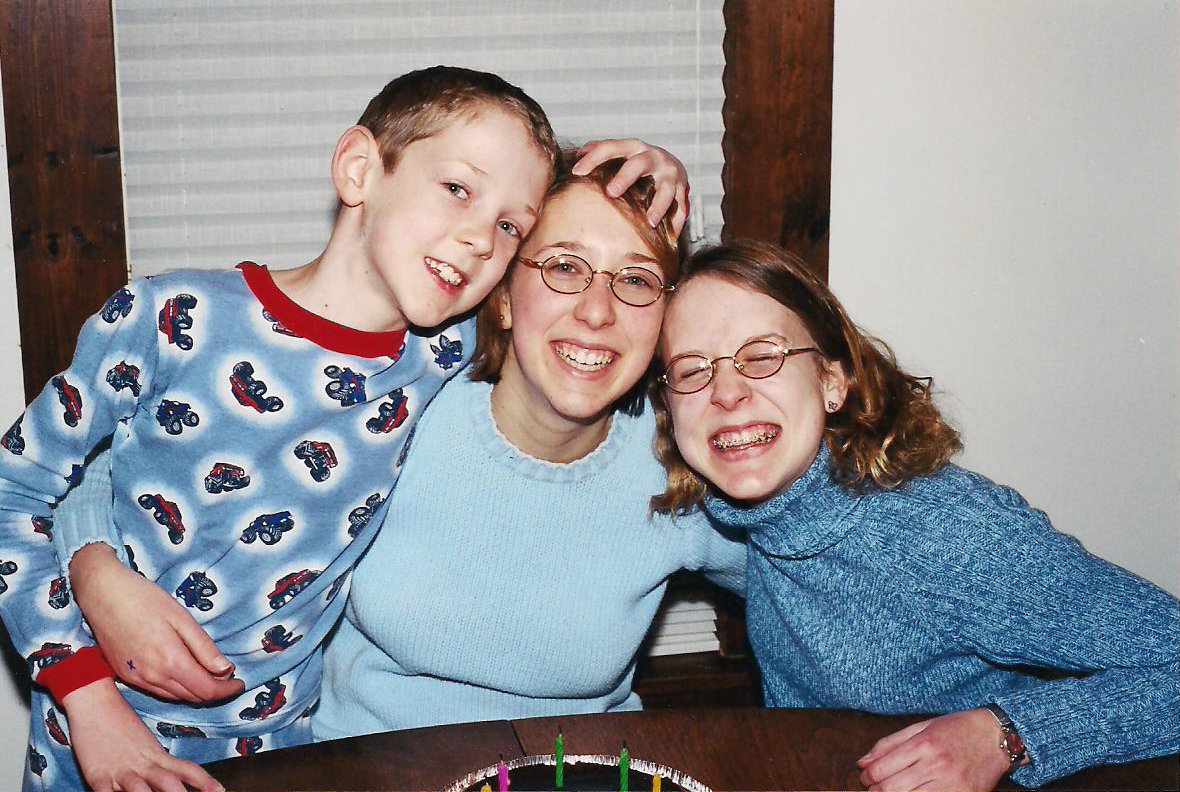
I love this crazy, loving photo of my three kids, taken in February 2003.

I love this crazy, fun-loving photo of my three kids, taken in February 2003.

HOW DO YOU DEFINE a mother’s love?

Endless, unconditional, unshakable, fierce, enduring? I would choose all.

Yes, I’m repeating myself with some of these adjectives. But so what.

I am a mother of three now grown children, all in their twenties. I always find “adult children” to be an oxymoron. Yet, no matter the age of our offspring, they remain always our children. Once a mother, always a mother. You never stop caring and worrying and, for me, praying.

Have my kids frustrated and maddened me? Sure they have. But I expect I’ve done the same. None of us—parent or child—is perfect. Far from it.

As a mother, I try to do the best I can. I’ve praised when deserved. I listen. I offer advice when necessary. After all I do have a few decades more of experience and wisdom. I support my children. Not always their actions and decisions, but them. There’s a difference.

I cherish my kids. I love them enough to let them go. And we’re not talking geographical distance, although two of my trio live 1,300 and 300 miles away. I’m referencing that proverbial cutting of the apron strings, that realization that this has been my goal, to raise and then let go.

There are days when I’d like to turn back the clock, to swoop my three back into our home,

Busted in October of 1988 sneaking cookies and "hiding" in the corner of the kitchen to eat them.

My daughters, busted in October of 1988 sneaking cookies and “hiding” in the corner of the kitchen to eat them.

to admonish preschoolers for sneaking cookies from the cookie jar before lunch (all the while stifling laughter),

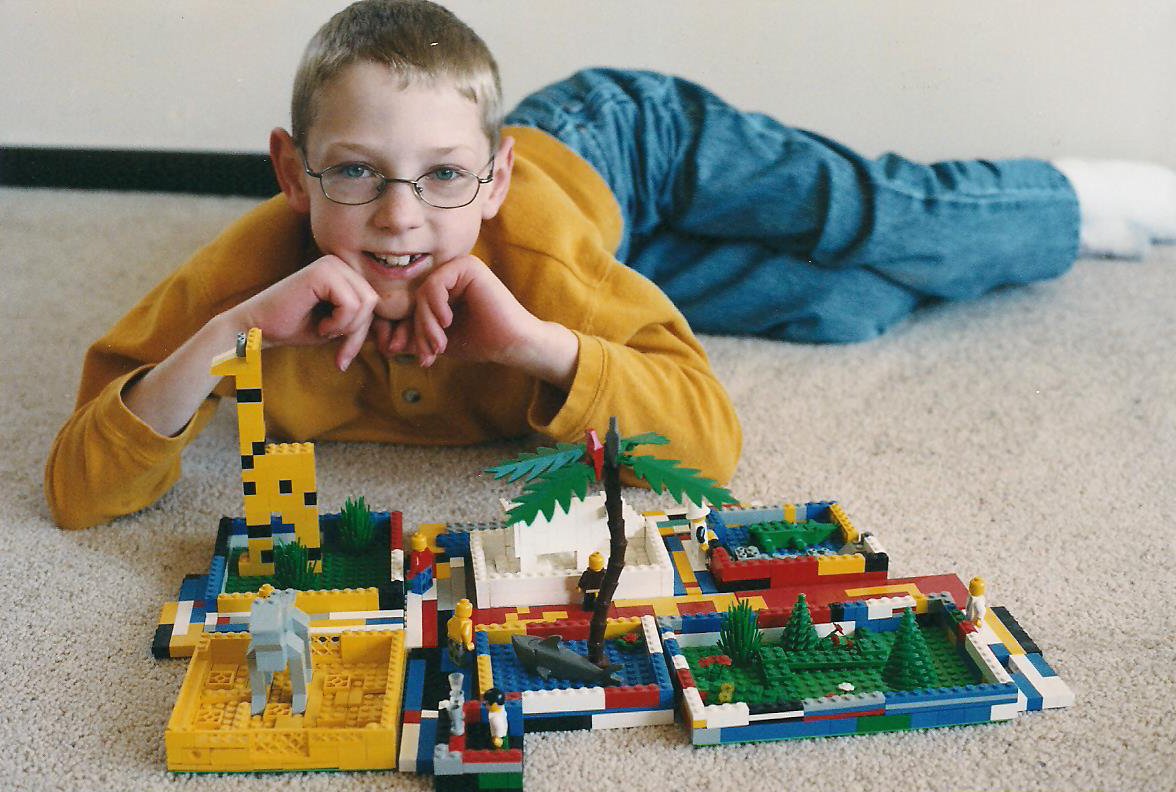
My Tufts University computer science and mathematics majors son played with LEGOs constantly while growing up. This photo was taken in June 2003.

My current Tufts University computer science and mathematics majors son played with LEGOs constantly while growing up. This photo, taken in June 2003, shows the zoo he created using his imagination. No LEGO kit involved here.

to step upon an errant LEGO,

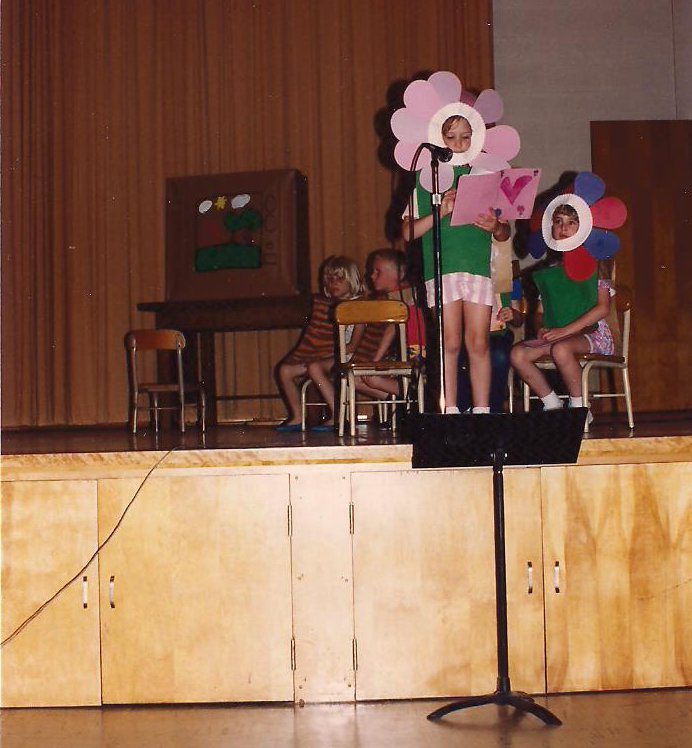
My eldest stars as a flower in the May 1992 school play, "Leo the Late Bloomer."

My eldest (standing) stars as a flower in the May 1992 Trinity Lutheran School play, “Leo the Late Bloomer.”

to sit through one more end of the school year musical in a stuffy gymnasium.

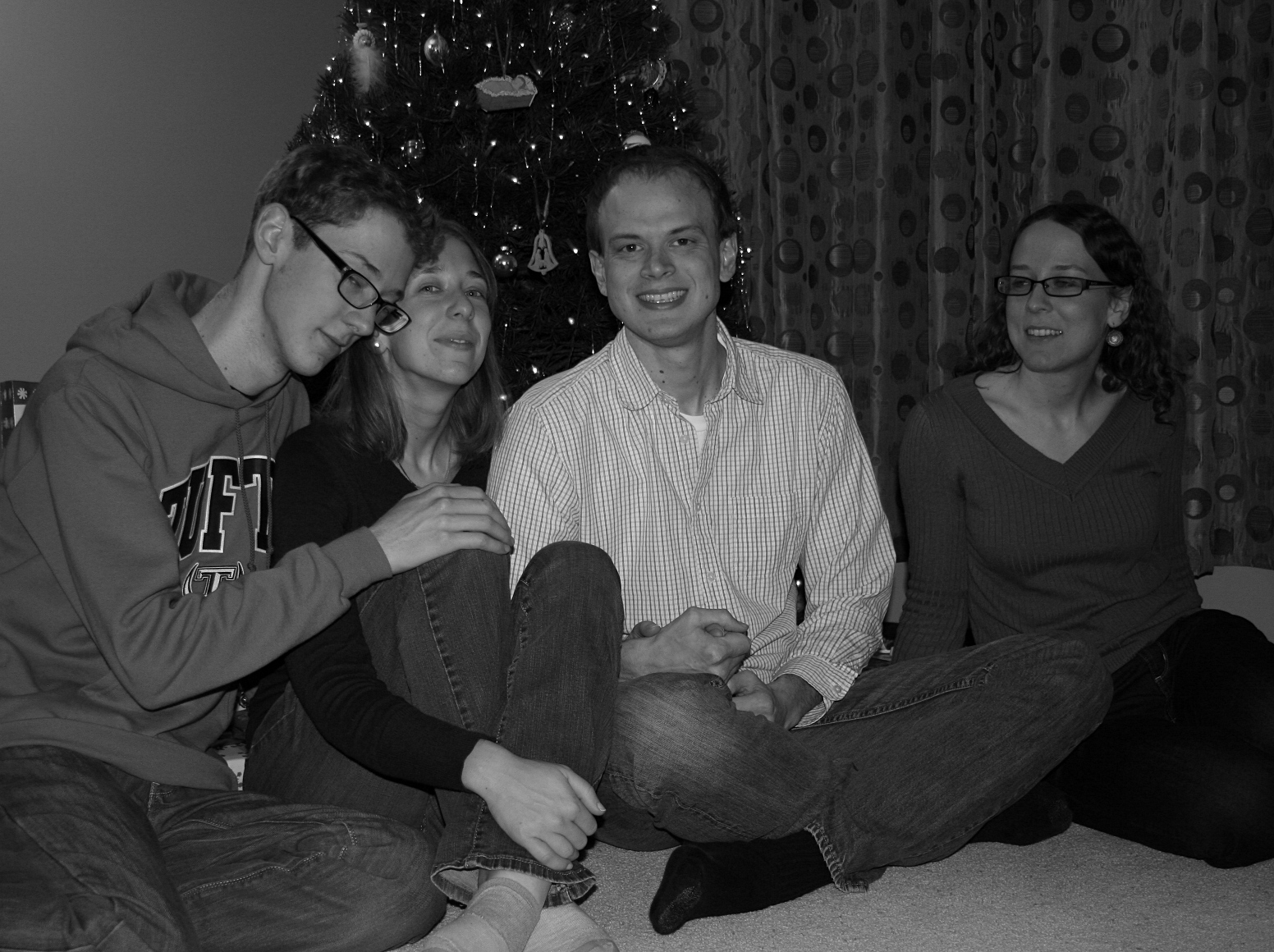
The son, left, the eldest, the son-in-law and the second eldest daughter.

The son, left, the eldest, the son-in-law and the second daughter. Minnesota Prairie Roots file photo, December 2013, the last time my kids were together.

But time has passed. Snap. Just like that my kids are grown up, two working, one married, another still in college (and working this summer).

I am nearing sixty.

My own mother recently entered a nursing home.

Life changes.

But a mother’s love endures. Forever.

#

HAPPY MOTHER’S DAY to all of you moms out there!

And to my three children and my son-in-law, I love each of you now and forever.

© Copyright 2014 Audrey Kletscher Helbling
 

Rural driveway May 8, 2014

Filed under: Uncategorized — Audrey Kletscher Helbling @ 6:00 AM
Tags: , , , , , ,

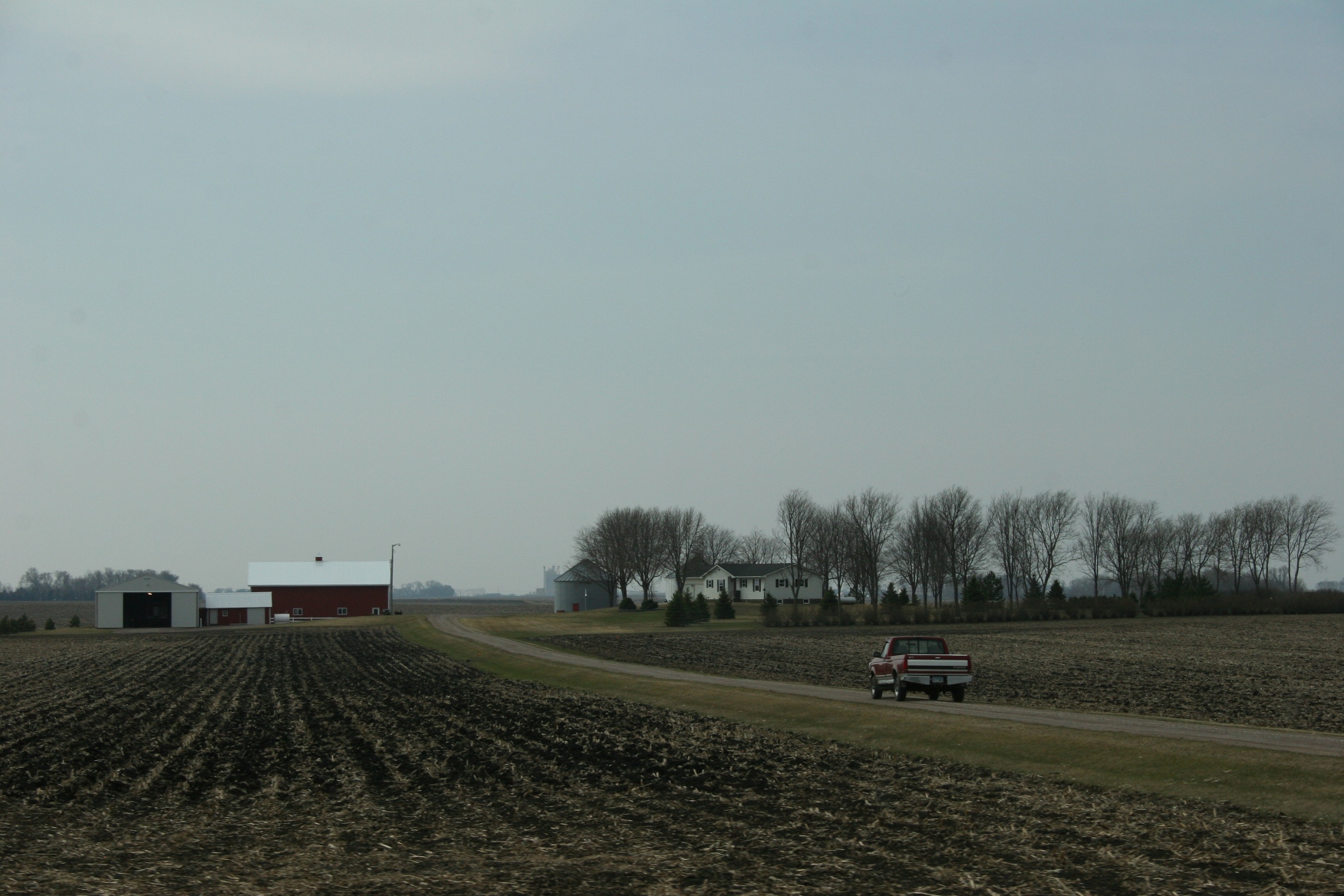
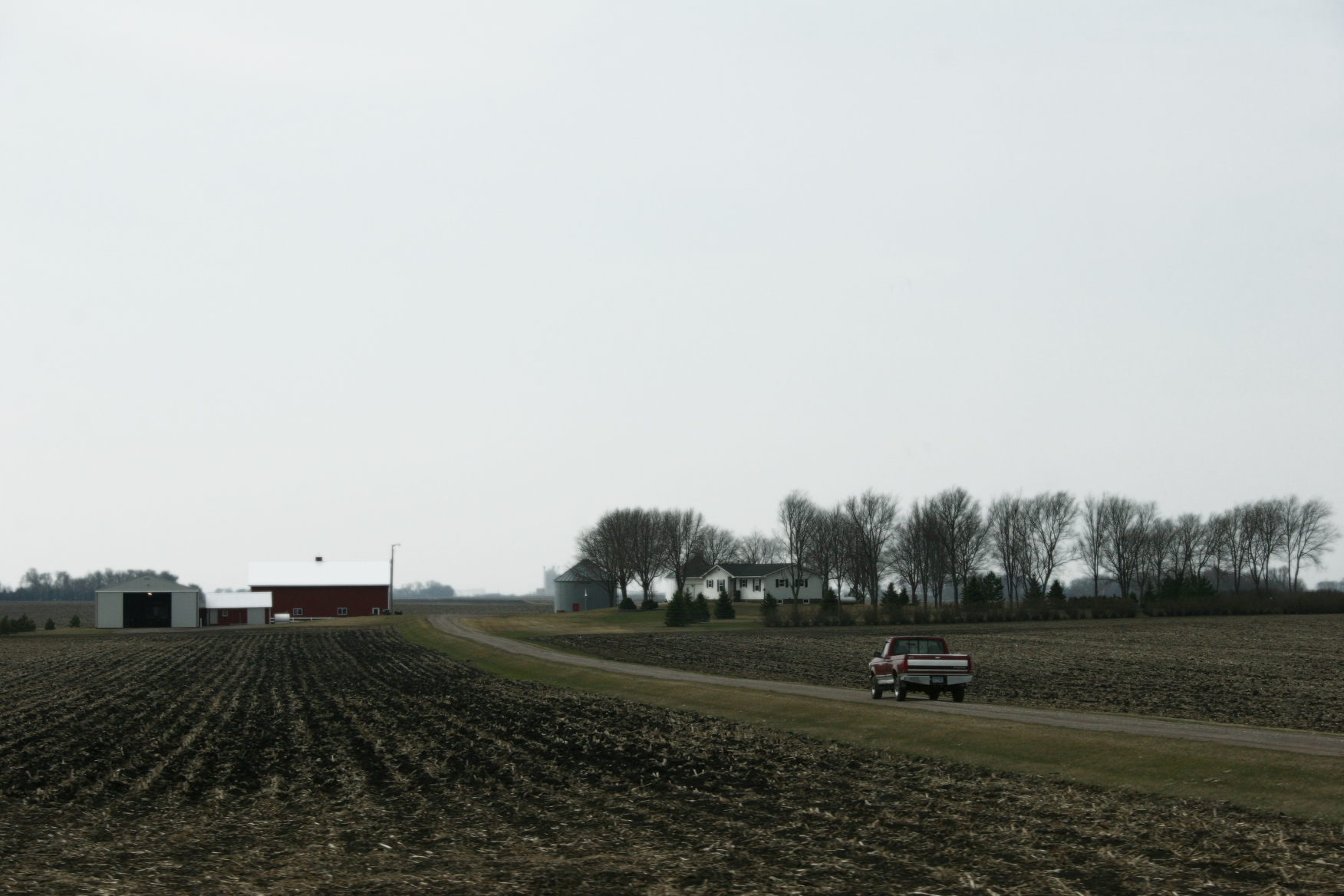
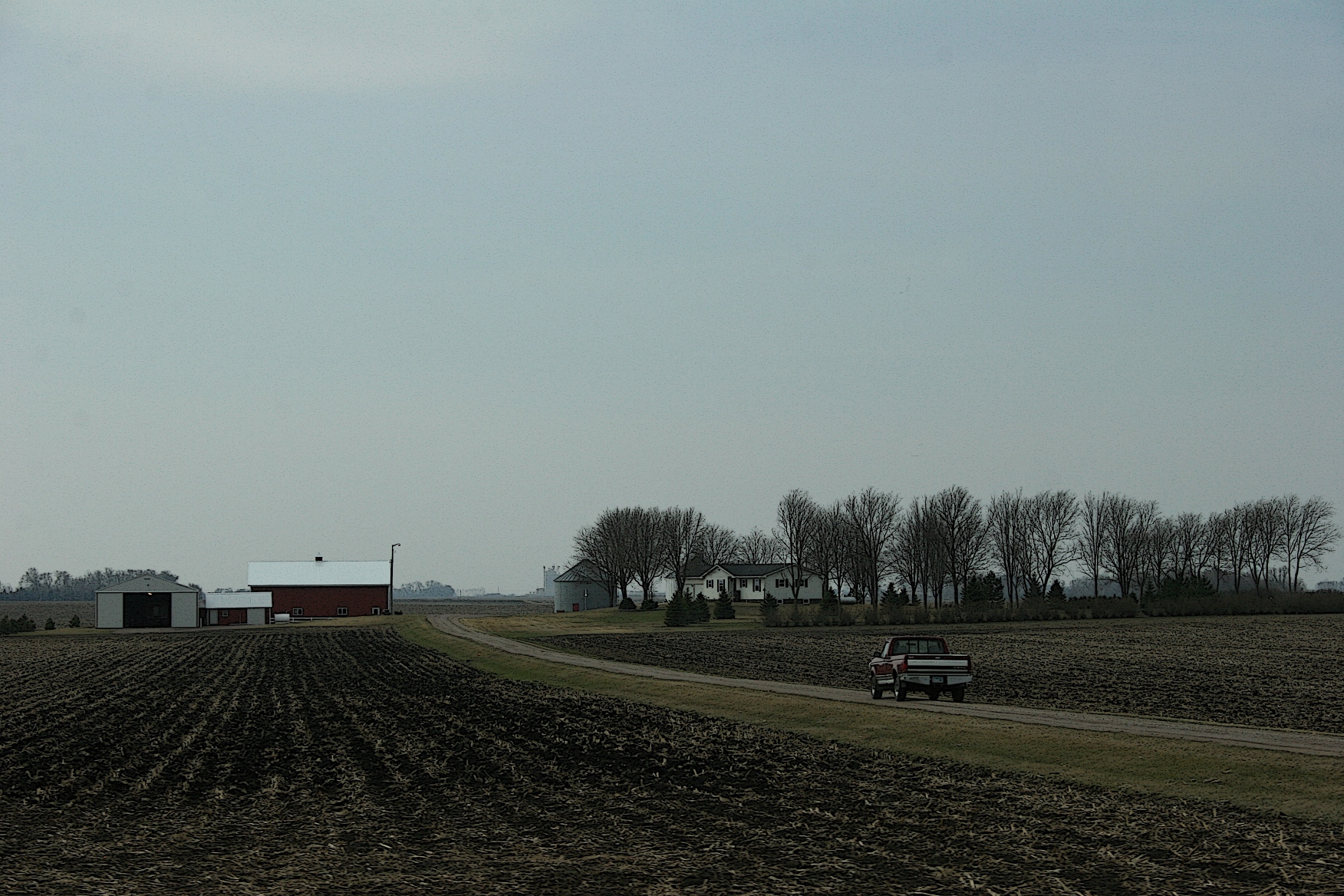
I KEEP FLIPPING between the three photos.

Pick-up, unedited

Original.

Pick-up between Sleepy Eye and Morgan

Edited.

Pick-up between Sleepy Eye and Morgan 2

Or edited.

But I can’t choose a favorite.

I like them all.

I like the lines of the field and drive, how my eyes are drawn to follow that pick-up into the farmyard.

I like the muted tones of grey and blue and those splashes of red in truck and outbuildings.

I like the ribbons of greening grass trimming the driveway, the bare trees edging the farm site.

This rural scene, along Brown County Road 29 southeast of Morgan, pleases me for the memories it holds. Not of this farm, but of my childhood on the farm. My heart is happy every time I travel back to southwestern Minnesota, past the fields and farms, gravel roads and grain elevators…through small towns…

© Copyright 2014 Audrey Kletscher Helbling


Establishing my voice: Writing rooted in rural Minnesota May 7, 2014

I ARRIVED HOME on a recent Saturday afternoon to the answering machine blinking.

When I reached Sharon Harris of the northern Minnesota based Jackpine Writers’ Bloc a few moments later, I was pleased to hear her news. I’d placed second, she said, in the poetry division of The Talking Stick 23 competition with my poem, “Sunday Afternoon at the Auction Barn.”

Such news could not have come at a better time. Just the day prior, my mother had entered a nursing home. I needed to hear something positive.

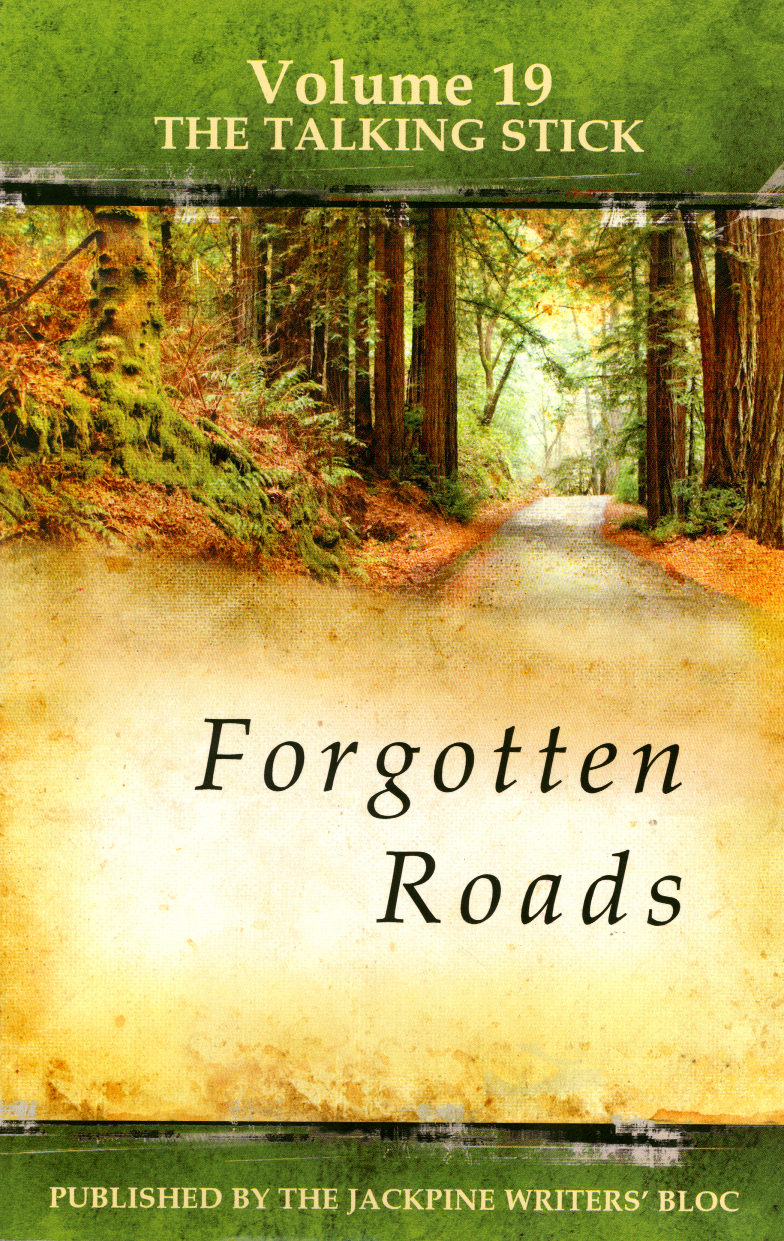
TS 19 in which my poem, "Hit-and-Run," received honorable mention.

TS 19 in which my poem, “Hit-and-Run,” received honorable mention.

Getting work accepted into this well-respected literary journal is always an honor. This marks my fifth year in the book in six years of submitting. Twice I’ve earned honorable mentions, for my poem “Hit-and-Run” and for my short story, “The Final Chapter.”

And now this year, I bumped up a spot to get that second place award. Another poem, “The Promised Land,” and a short story, “Eggs and Bread,” will also publish in volume 23.

The Talking Stick editorial team read and considered more than 300 submissions (of poetry, fiction and creative non-fiction) before forwarding their top picks in each of the three divisions to selected “celebrity” judges. Poet Margaret Hasse judged this year’s poetry.

Finishing second, I not only receive a $100 cash prize, but also Hasse’s comments on “Sunday Afternoon at the Auction Barn.” She writes:

I loved how you turned a humdrum occasion of bidding on antiques in an old barn into a closely observed and luminous occasion. The writer John Ciiardi once wrote that close and careful observation can “leak a ghost.” The surprise of your poem was the elevation of a commercial or material enterprise into a spiritual gathering—with a fellowship, liturgy, reverent respect, and people who commune. The ending—visual and concrete—was just right. The poet Franklin Brainerd wrote a poem something to the effect, “in a world of crystal goblets, I come with my paper cup.” There’s something both unpretentious and appealing about “sipping steaming black coffee from Styrofoam cups.”

Hasse gets it. She totally understands my poem, how each well-crafted line defines, as she says, a “spiritual gathering” in a small town auction barn.

If I could share my auction poem with you today, I would. But I’ve signed a contract not to do so for a year.

Suffice to say, this poem, like nearly every other poem I’ve written and/or had published, is rooted in my rural memories, my connection to the land and/or my appreciation for rural Minnesota.

Turek's Auction Service, 303 Montgomery Ave. S.E. (Highway 21), Montgomery, has been "serving Minnesota since 1958." Daniel Turek, Sr., started the third-generation family business now operated by Dan, Jr. and Travis Turek. They sell everything from antique vases to real estate.

Turek’s Auction Service, 303 Montgomery Ave. S.E. (Highway 21), Montgomery, has been “serving Minnesota since 1958.” Daniel Turek, Sr., started the third-generation family business now operated by Dan, Jr. and Travis Turek. They sell everything from antique vases to real estate.

Specifically, a photograph I took this past winter of a Montgomery, Minnesota, auction barn prompted the idea for this winning poem. I also drew on my experiences attending auctions, albeit not in recent years, to pen the 12 lines of verse.

Likewise, “Lilacs,” a poem I will read this coming Saturday evening, May 10, during the Poet-Artist Collaboration XIII reception at Crossings at Carnegie in Zumbrota, was inspired by my rural rooted memories. (Click here to learn more about that poet-artist collab.)

When I consider my poetry, I clearly hear the rural voice in my words. There’s nothing pretentious about me. I remain, as I always have been, rooted to the land in my writing.

FYI: The Talking Stick 23 publishes late this summer with a book release party set for Saturday, September 13, in the Park Rapids area. To purchase past volumes of the anthology, click here.

© Copyright 2014 Audrey Kletscher Helbling
 

Bringing the magic of prom to a Minnesota nursing home May 6, 2014

Filed under: Uncategorized — Audrey Kletscher Helbling @ 6:00 AM
Tags: , , , , , , , ,


TIS PROM SEASON in Minnesota, that annual rite of spring which throws teenage girls into a spin over finding just the right dress, getting a fabulous up-do, planning photo sessions and doing whatever to create the perfect evening.

That’s all delightful, to live in a fairytale world.

But what a group of girls in rural southwestern Minnesota did on the day of their high school prom impresses me more than all the magical glitz and glam.

They took the time last weekend to share prom with the residents of a small town nursing home.

This my mother, who recently moved into Parkview Home in Belview, shared with me during our weekly Sunday evening phone conversation.

If those teens could have eavesdropped on our exchange, they would know just how happy they made my mom by stopping at their workplace before prom to show off their Cinderella selves.

Mom didn’t comment specifically on the dresses, although she did on the “fancy hair.”

And, she noted, some of the girls brought their dates, who, she laughed, looked a bit bored and “were probably wondering when they could leave.”

I don’t doubt her observation. Physically Mom is limited in her abilities. But mentally she is still, as they say, sharp as a tack.

This isn’t about my mother, though, who also profusely praised those prom-goers as kind and thoughtful.

Rather, this is about these young women and, yes, their dates, too. I am impressed by their care, kindness and generosity of spirit. They could have gone on their way, without a thought of stopping at Parkview. But they did. And for that, this daughter is grateful.

© Copyright 2014 Audrey Kletscher Helbling
 

A Minnesota prairie sunset May 5, 2014

Filed under: Uncategorized — Audrey Kletscher Helbling @ 6:00 AM
Tags: , , , , ,

MY HUSBAND SCURRIED back to my mother’s house, told me to grab my camera and hurry.

And hasten we did.  Between her house and the neighbors, along the grass alley a block. Turn west at my uncle and aunt’s house. Fast-walk another block.


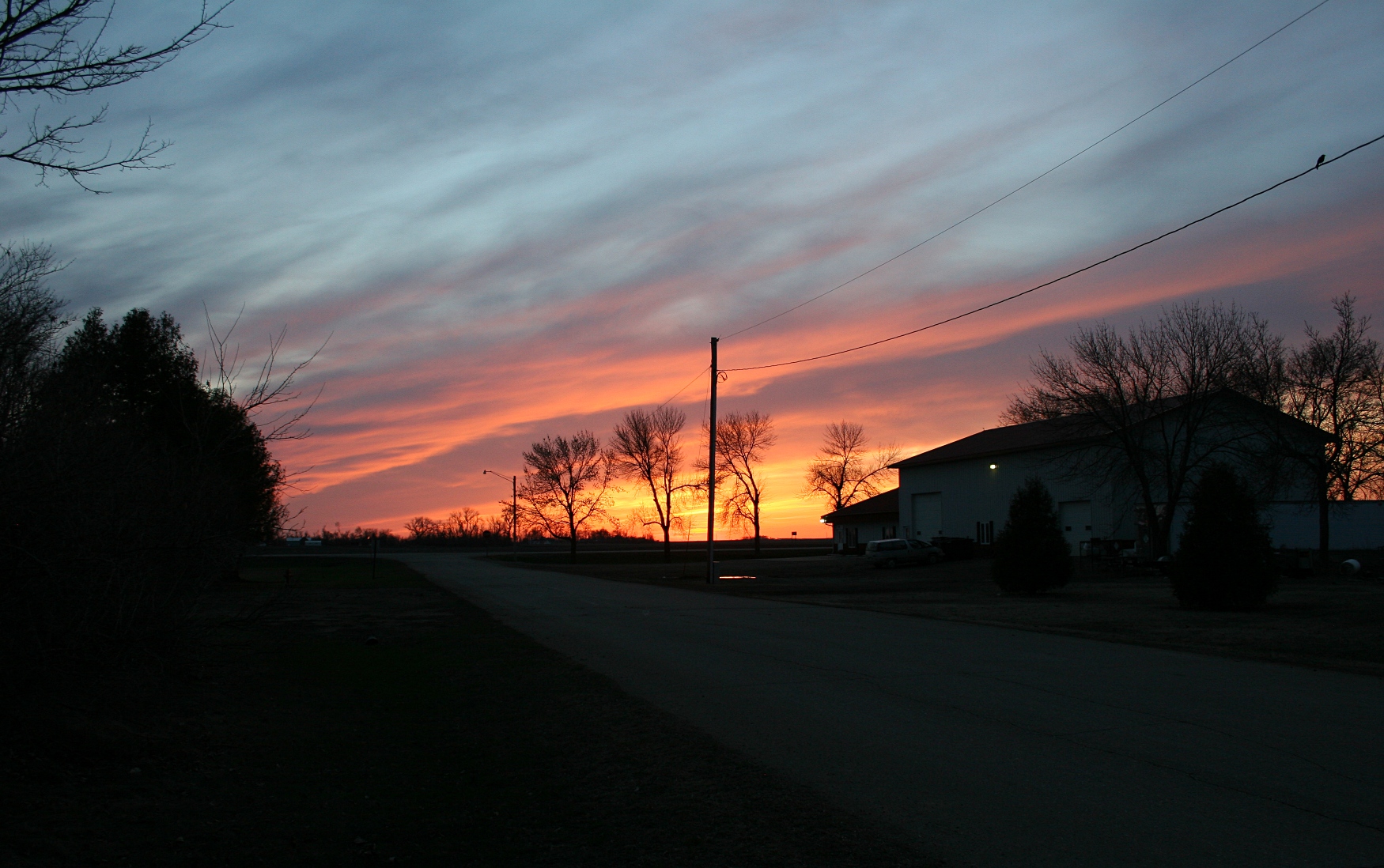
Prairie sunset 52


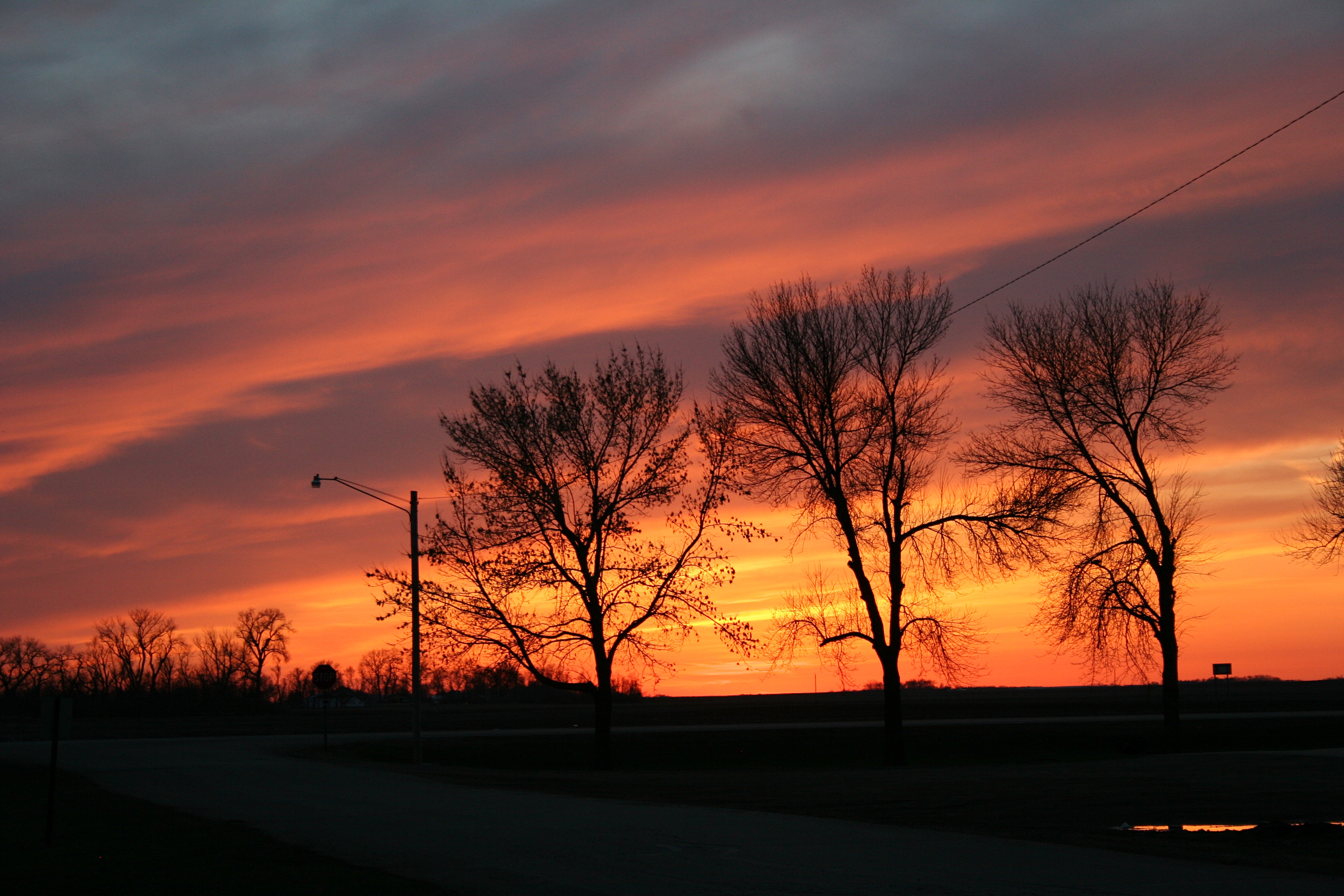
Focus on the setting sun, the sky colored in layered shades of orange and yellow, pink and purple.


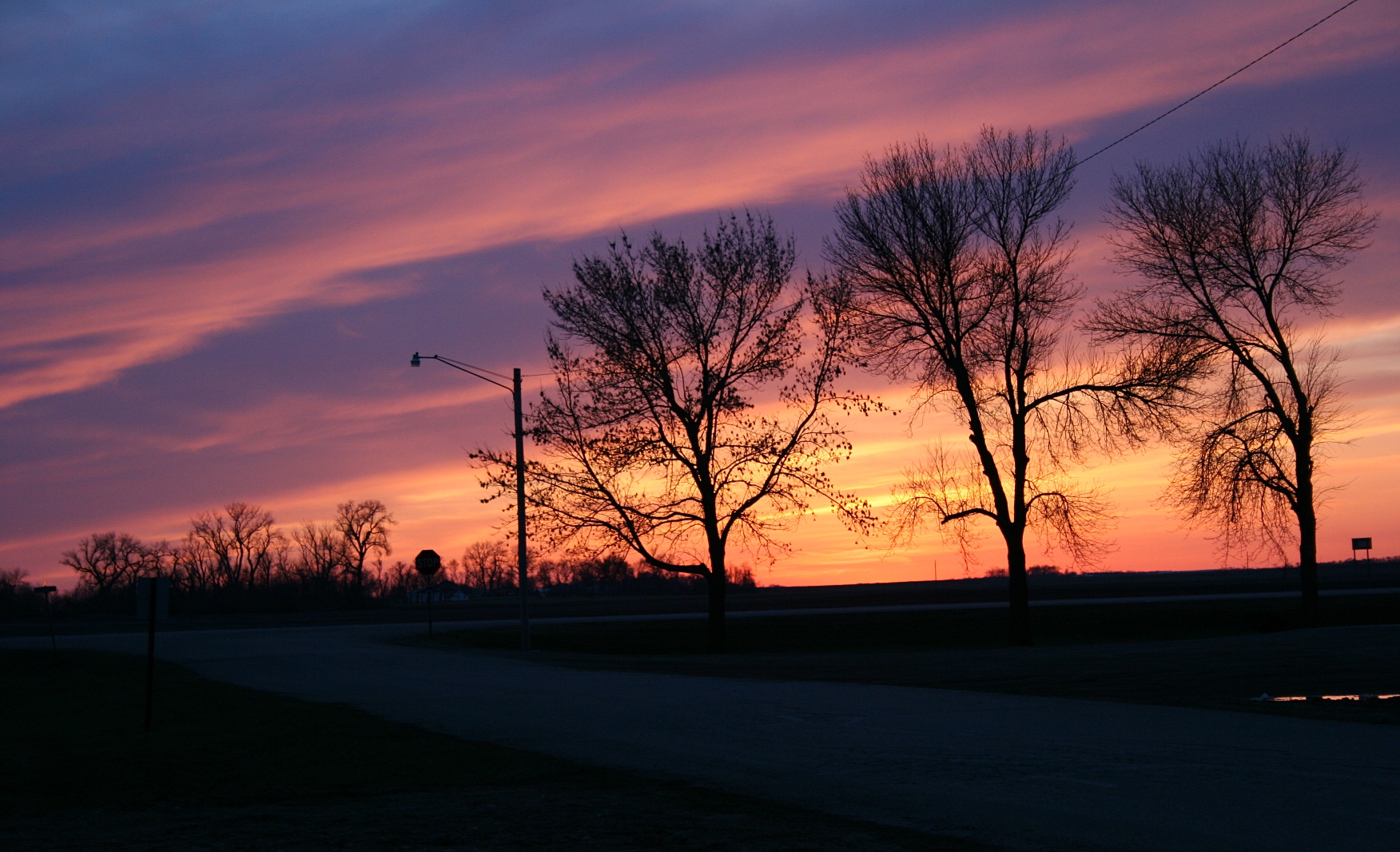
Prairie sunset 54


Oh, how I love the sunset on my beloved prairie in my hometown of Vesta, Minnesota.


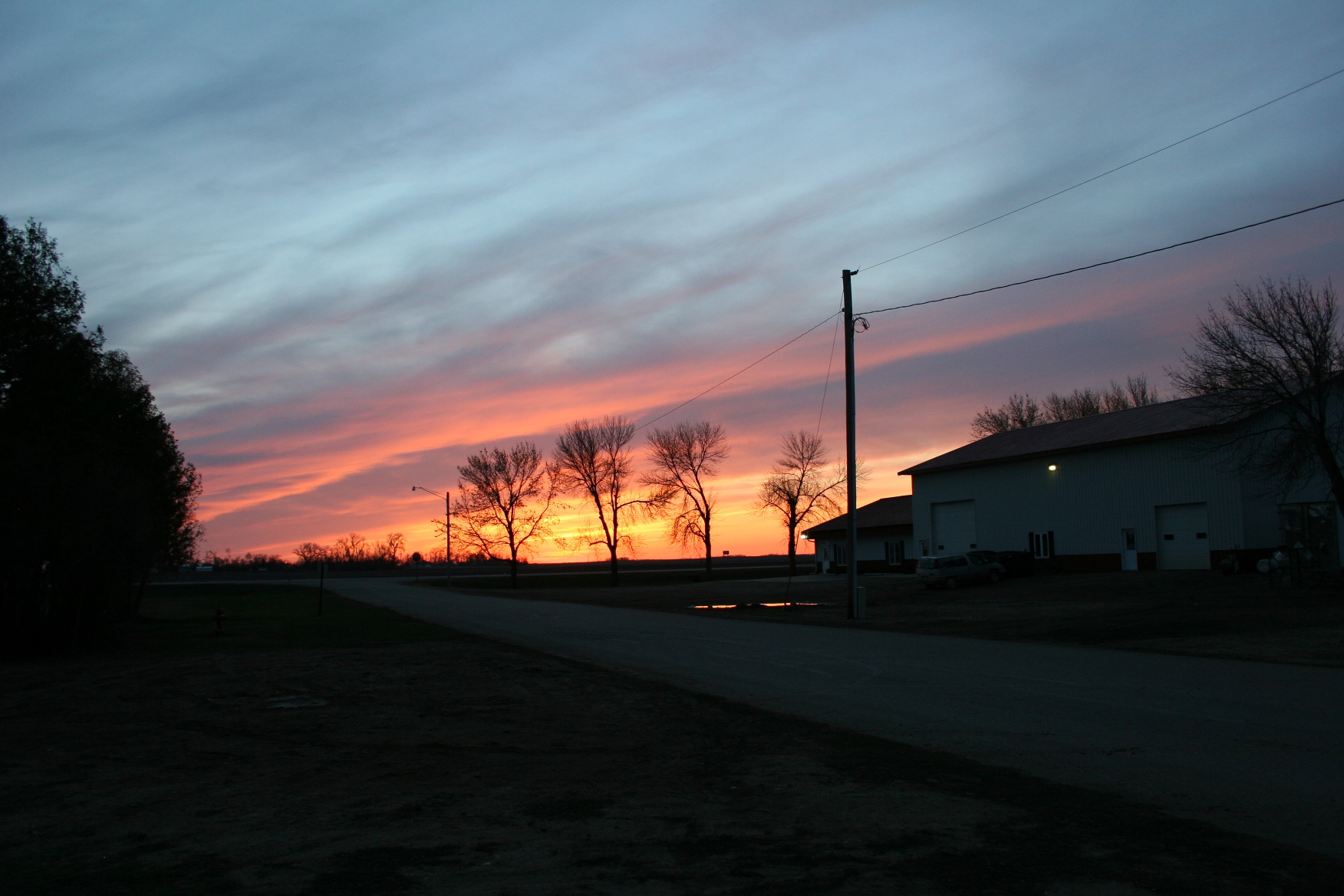
Prairie sunset 55


I can never get enough of it.


Prairie sunset 56


This moment when day transitions into evening with beauty unequal on a land that stretches flat into forever.

Spectacular sunset, like poetry sweeping across the prairie sky.

Copyright 2014 Audrey Kletscher Helbling


How the planned attack on a Waseca school impacts me personally May 2, 2014

HOW DOES ONE BEGIN to write about a school tragedy averted?

That is my challenge as I reflect on the events of the past days in which a 17-year-old Waseca High School student allegedly planned to carry out a Columbine type massacre in his southern Minnesota school.

The school where my youngest sister and a friend teach and which my niece attends. The school I just drove past last Sunday while visiting my other sister in Waseca, a rural community of nearly 10,000 only a half hour drive away.

A 17-page court document outlines the charges against John David LaDue, described in media reports as a normal kid, a good kid. Now he faces multiple charges, including first degree premeditated attempted murder, in a plot to kill his family, a school resources officer and others in his school. (Click here to read the charges against LaDue and a Statement of Probable Cause filed in court documents.)

An arsenal of weapons, bombs and bomb-making equipment were found in his bedroom and a storage locker and a journal documented his plans, according to court records.

This could have been another Columbine, another Virginia Tech, another Sandy Hook, another American school tragedy. And this time it impacts those I love.

I’ve found so often in my life that, until an event touches me personally, I cannot fully understand or comprehend. It is something that happens somewhere else, to someone else. Not this time.

And not in the past: a dear friend’s father murdered; a SWAT team sweeping through my neighborhood in search of a murder weapon in a drug deal gone bad; my son struck by a hit-and-run driver; the frantic middle-of-the-night screams of a woman being assaulted across the street from my home; a frantic young man ringing my doorbell seeking protection from a gang of men in pursuit of him; a brother-in-law and sister-in-law’s niece murdered in a case of domestic violence, the son of a high school classmate and hometown neighbor hunkered down at Virginia Tech during the massacre of 32 there in April of 2007…

Now this.

It would be easy to despair, to wonder what this world is coming to. But I’m going to take my cue from Waseca School Superintendent Thomas Lee, who in a May 1 press conference (click here to read his entire statement) said in part: “We can either believe that this (arrest of John LaDue) occurred as a result of a lucky break or, as I do, choose to believe that God was looking out for all of us.”

Furthermore, Lee continues with these words worthy of reflection:

On another note I respectfully submit that these kind of events that have been happening in schools across this country should be a warning sign to us all. These events are like “canaries in the mines” – an indicator that something is deeply wrong in our culture. These kinds of events are unique to our American culture. They are certainly not found anywhere else in the world, except in very few isolated cases. Why are they unique to our American culture? What is it in our culture that fosters these kind of events? There will be many opinions about this – our obsession with violence, our tv shows and movies, lack of parenting, the prevalence of guns, corporate greed and of course, gridlock in our government. I suggest that these are all symptoms of a significantly degraded culture. We all know that nothing is guaranteed in this life but it is time that we collectively look into the mirror with honesty and integrity – that we ask ourselves how our choices are contributing to this degradation, and determine what we can do individually to stem the downward slide. We need to do everything possible to look out for one another – especially our kids.

The superintendent is spot on correct. Nothing is guaranteed in this life. And we need to look out for one another, especially our kids.

© Copyright 2014 Audrey Kletscher Helbling
 

A sweet May Day tradition

Filed under: Uncategorized — Audrey Kletscher Helbling @ 6:01 AM
Tags: , , , , , , ,

THE UNEXPECTED RAPID ring of the doorbell jolted me from my writing.

Who would summon me to the door shortly after 9 a.m.?

I should have known, should have been on alert.

But I’d forgotten all about May Day and the tradition of depositing a basket on a doorstep, pressing the doorbell and then dashing away unseen.


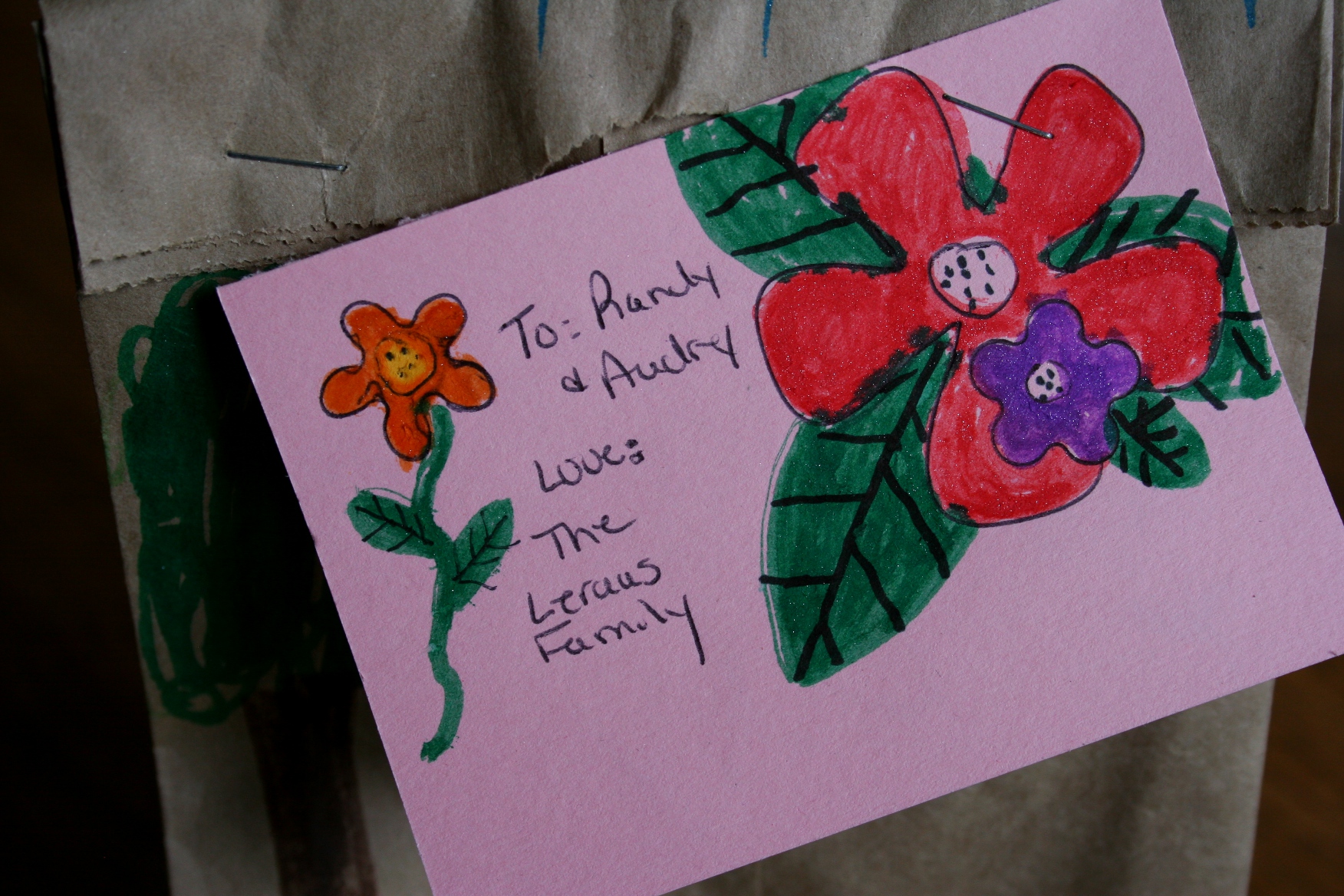
May Day bag gift tag


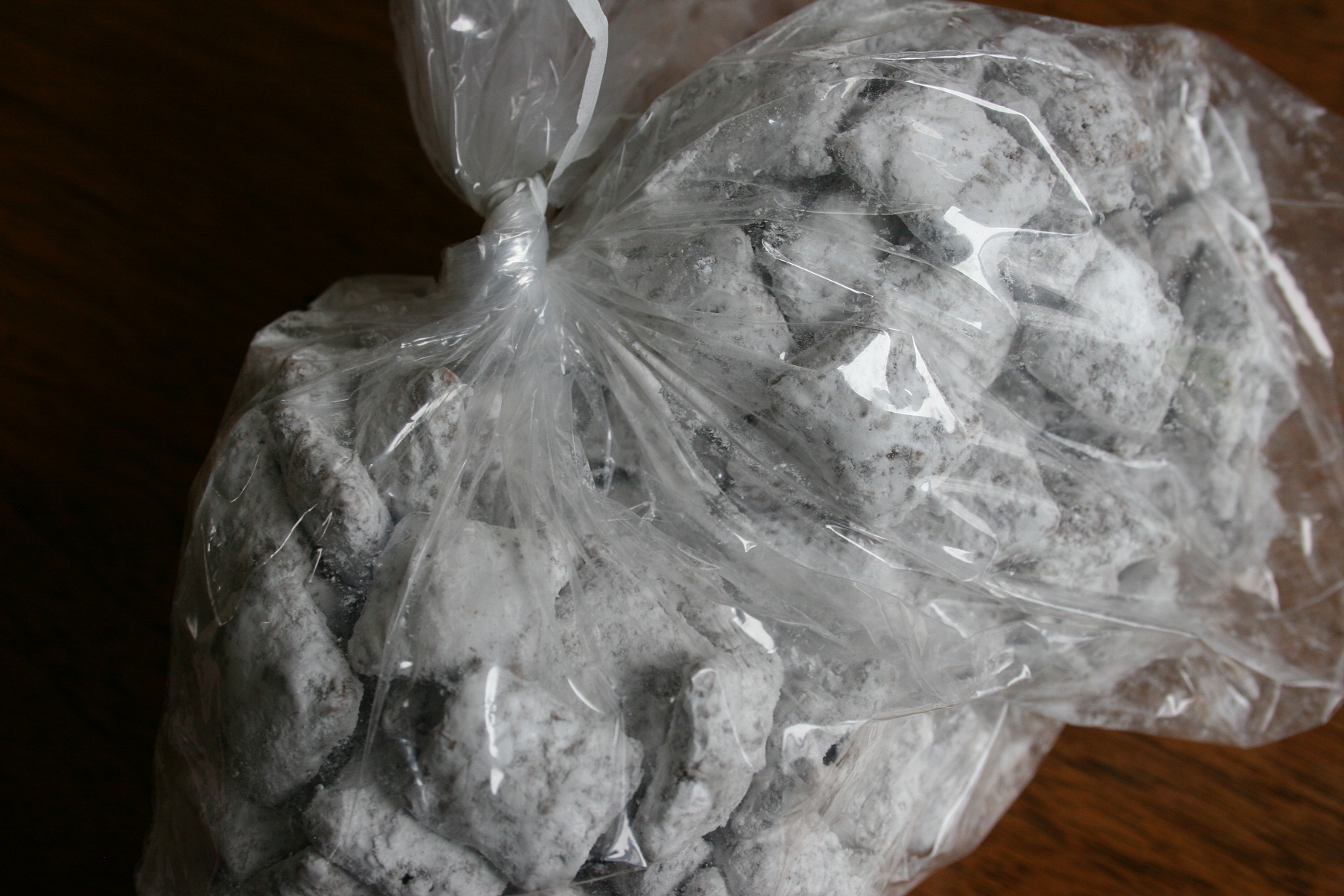
As in past years, dear friends have gifted me and my husband with a treat on May 1. Magic marker floral artwork. A plastic bag of puppy chow tucked inside a brown paper bag.

Yummy puppy chow bagged and placed inside a decorated brown paper bag.

Yummy puppy chow bagged and placed inside a decorated brown paper bag.


While I appreciate the treat of rice cereal squares blended with peanut butter and chocolate and coated with powdered sugar, I value even more the thoughtfulness and kindness of this family.

Our friends, Tammy and Jesse, are raising their four children to be kind, caring, compassionate and loving, just like them. What a blessing this God-loving family has been in my life.

Their May Day surprise brightened an otherwise gloomy morning of grey skies dripping rain.

© Copyright 2014 Audrey Kletscher Helbling
 

A must-see Wisconsin museum features paperweights, really old glassware & more May 1, 2014

THEY JOKED ABOUT MY SUGGESTION we tour a paperweight museum.

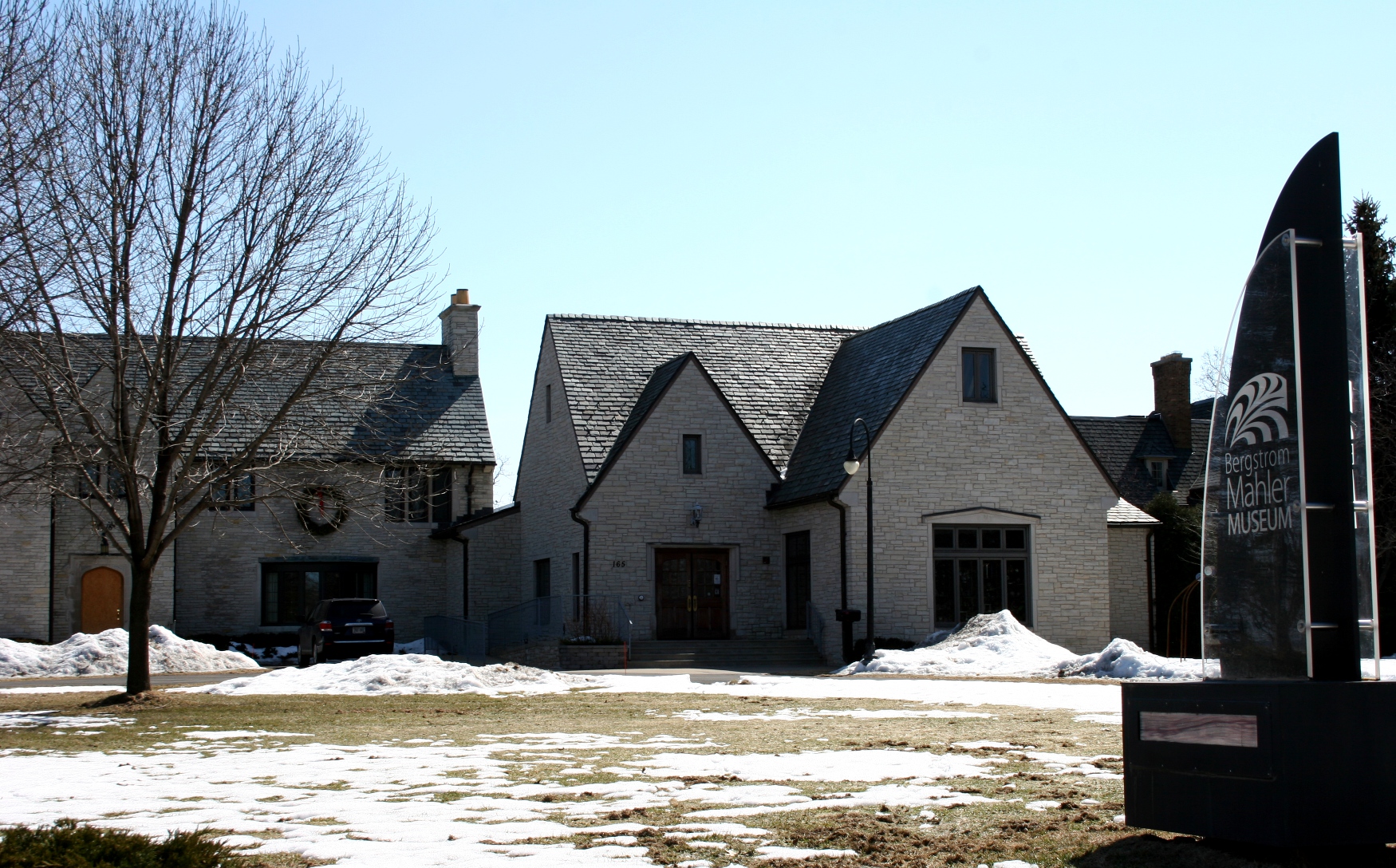
The museum is housed in an historic home (and addition) along the shores of Lake Winnebago across from a park.

The museum is housed in an historic home (and addition) along the shores of Lake Winnebago across from a park.

But they weren’t laughing once we arrived at the Bergstrom-Mahler Museum in Neenah, Wisconsin.

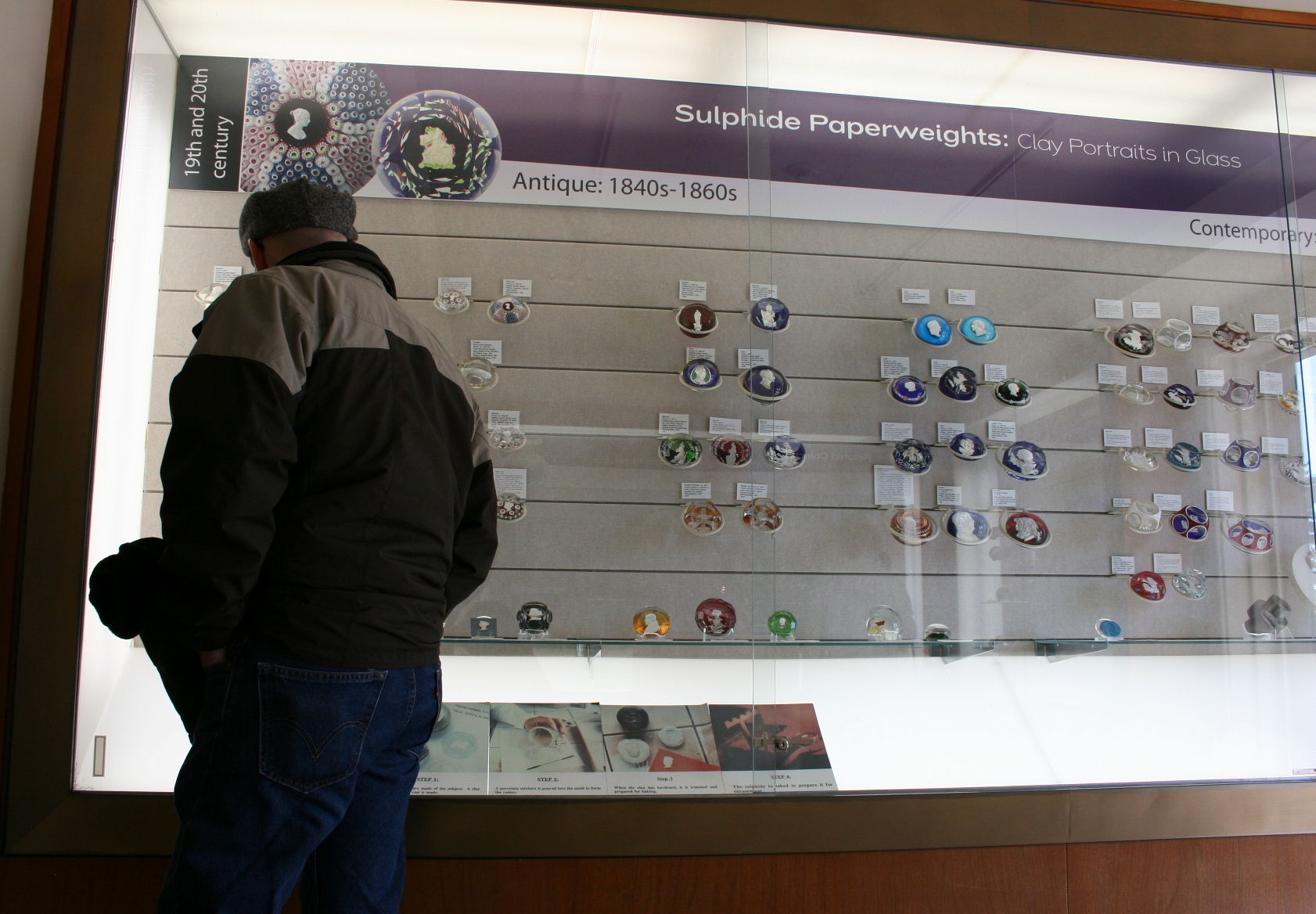
My husband, Randy, checking out a section of paperweights.

My husband, Randy, checking out a section of paperweights.

If I’d done my research rather than simply skimming a website, I could have advised my husband and daughter Miranda that the museum features more than one of the world’s largest collections of antique and contemporary glass paperweights.

Much more.

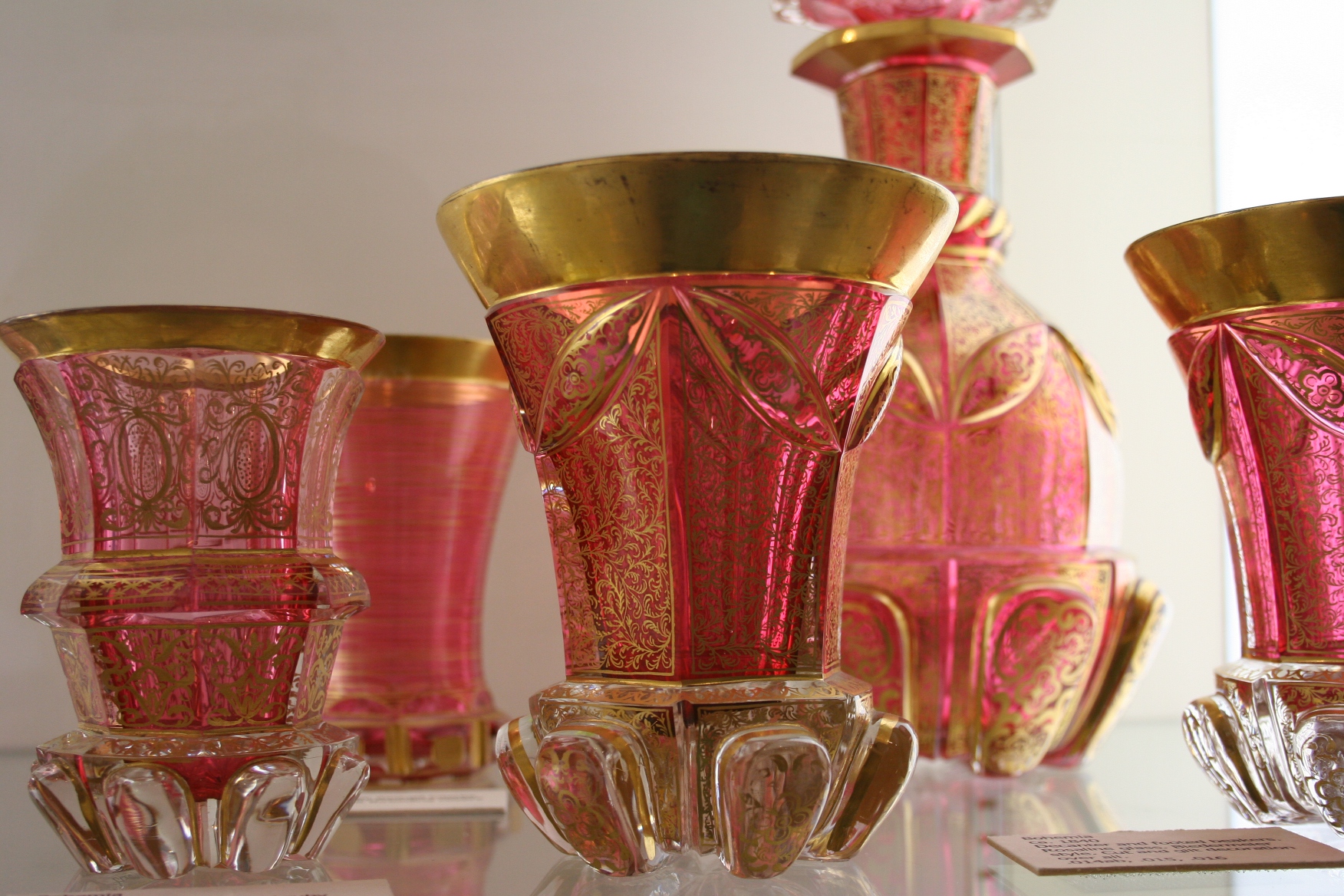
Examples of the beautiful glassware.

Examples of the beautiful glassware.

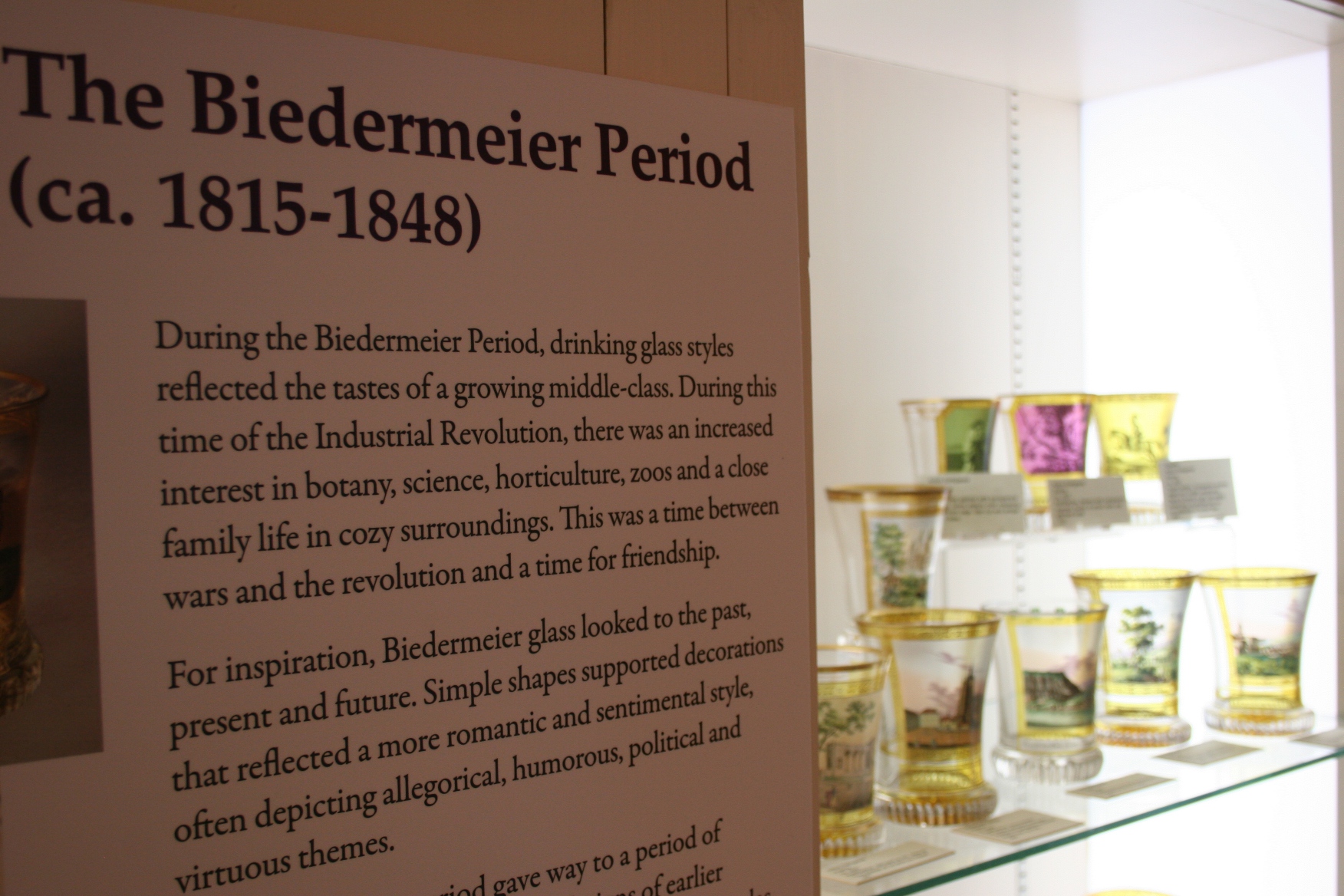
This museum and glass studio housed in a 1929 Tudor mansion and addition along the west shore of Lake Winnebago also showcases really old Germanic glassware. We’re talking glass spanning three centuries, the earliest dating to 1573.

This is some aged glassware.

This is some aged glassware.

“Impressed now?” I asked them. And they were.

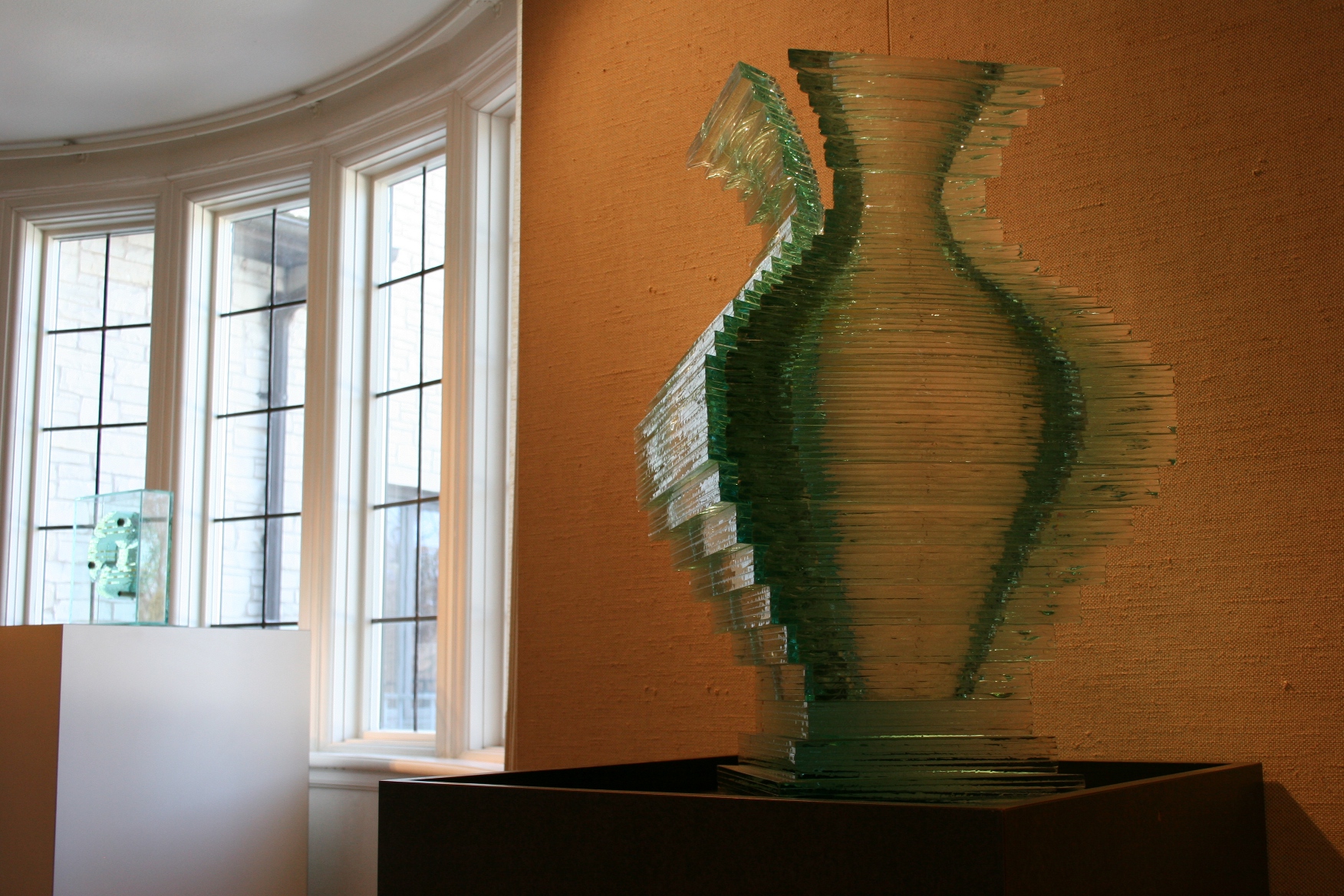
One of the contemporary sculptures displayed.

One of the contemporary sculptures displayed.

To impress us even more, the museum includes an exhibit of exquisite contemporary glass sculptures, some part of the permanent collection and some on loan. I was allowed to photograph only those pieces that are owned by the museum.

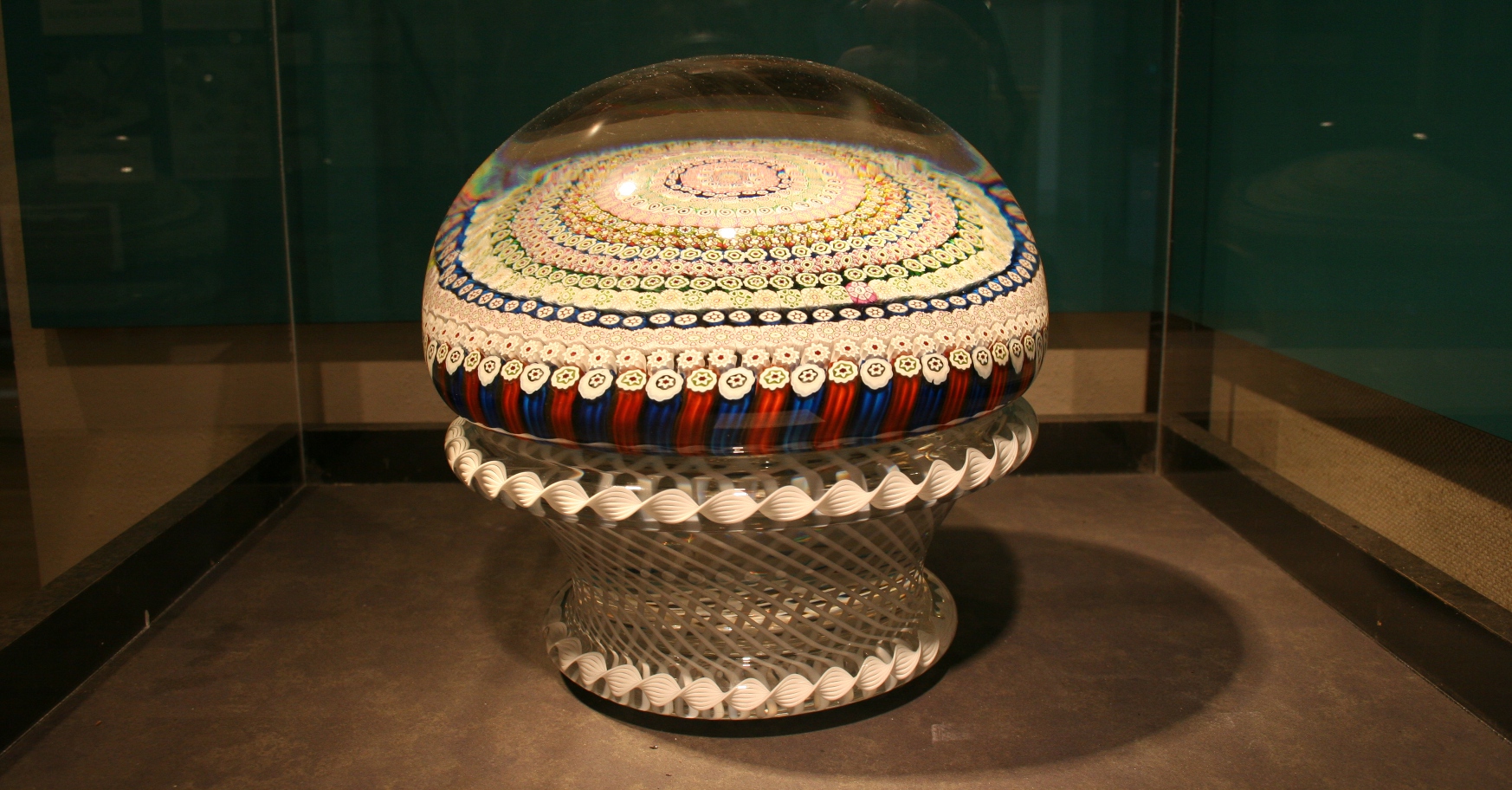
gigantic paperweight

The Super Magnum Piedouche is one of 10 such paperweights created. This one is dated 1973 and weighs 55 pounds.

All through-out our visit, I wondered at the value of the thousands—2,300 objects in the paperweight collection alone—of pieces shown. An inquiry of a museum worker did not elicit a value, although I learned that the museum is currently attempting to purchase a certain contemporary sculpture and still needs to raise $9,000. She didn’t know how much had already been raised. I imagine a lot.

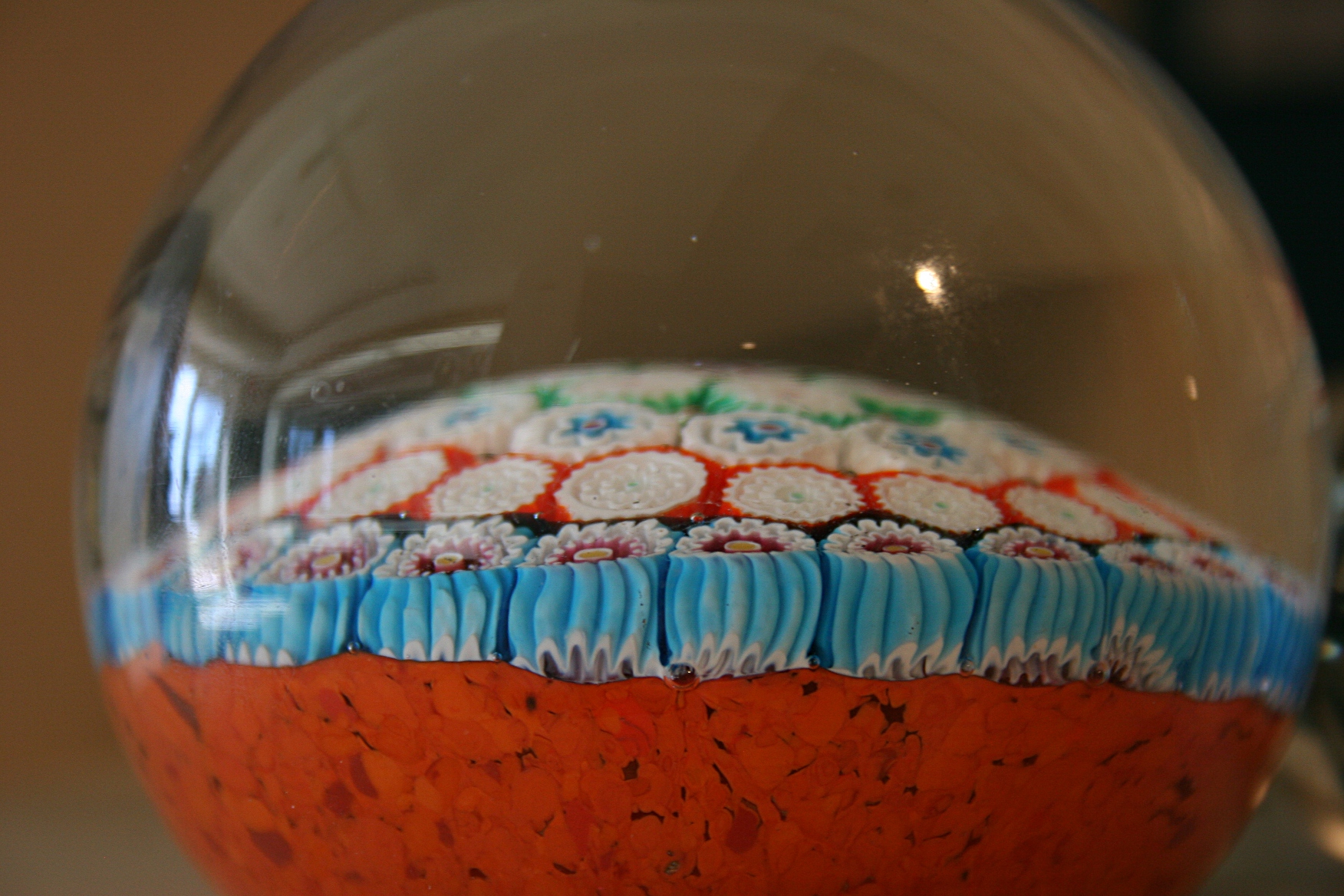
A close-up side view of a paperweight.

A close-up side view of a paperweight.

And to think this all started with Evangeline Bergstrom’s memories of playing with her grandmother’s paperweight.

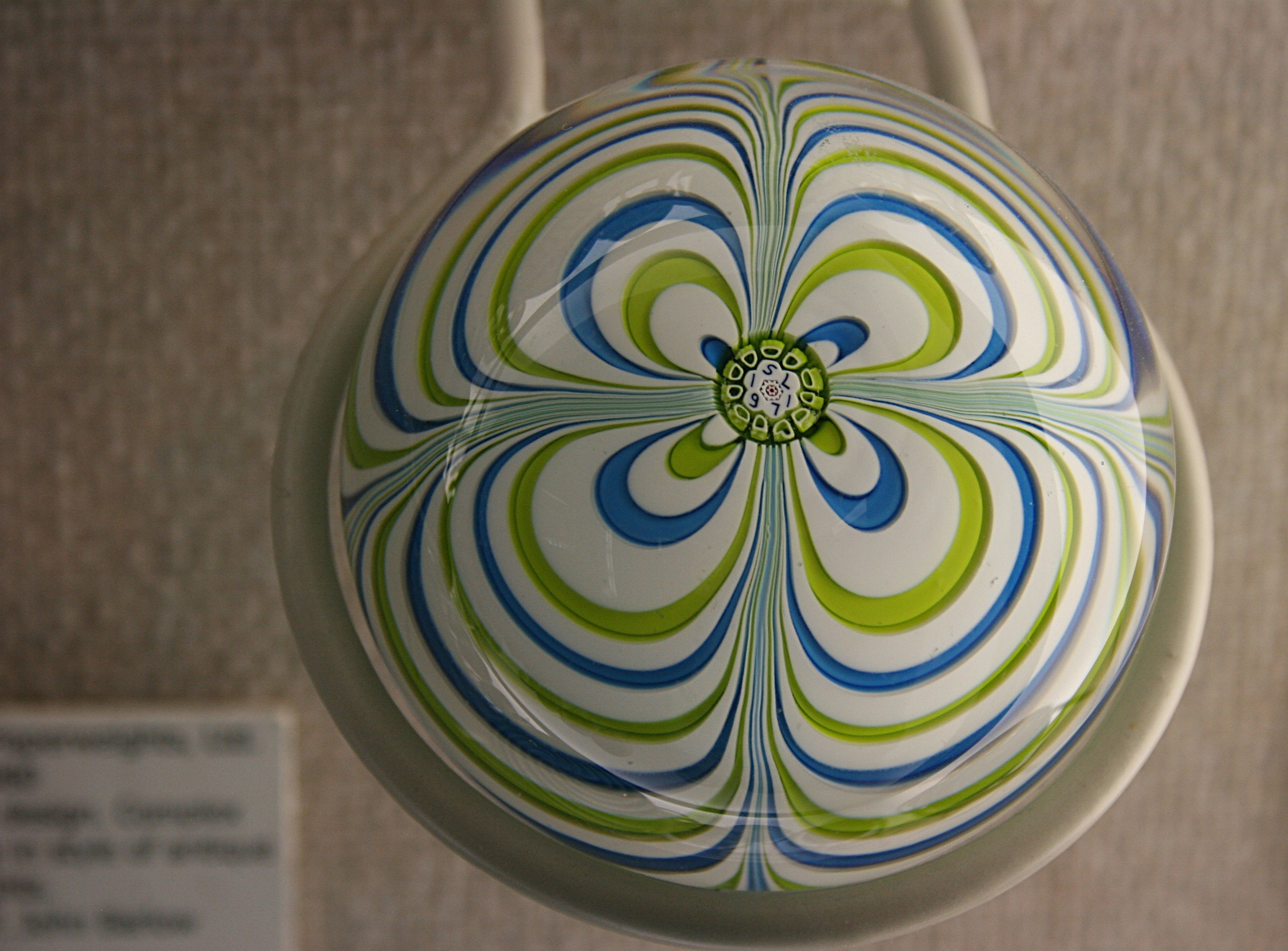
These paperweights are truly works of art.

These paperweights are truly works of art.

Long story short (and you can read the long story by clicking here), Evangeline’s husband, John Nelson Bergstrom, bequeathed the couple’s home to the city of Neenah with instructions to build a museum upon his wife’s death for her paperweight collection.

In 1959, that museum opened, imprinting the legacy of the Bergstroms (John co-founded the Bergstrom Paper Company with this father) upon this eastern Wisconsin city.

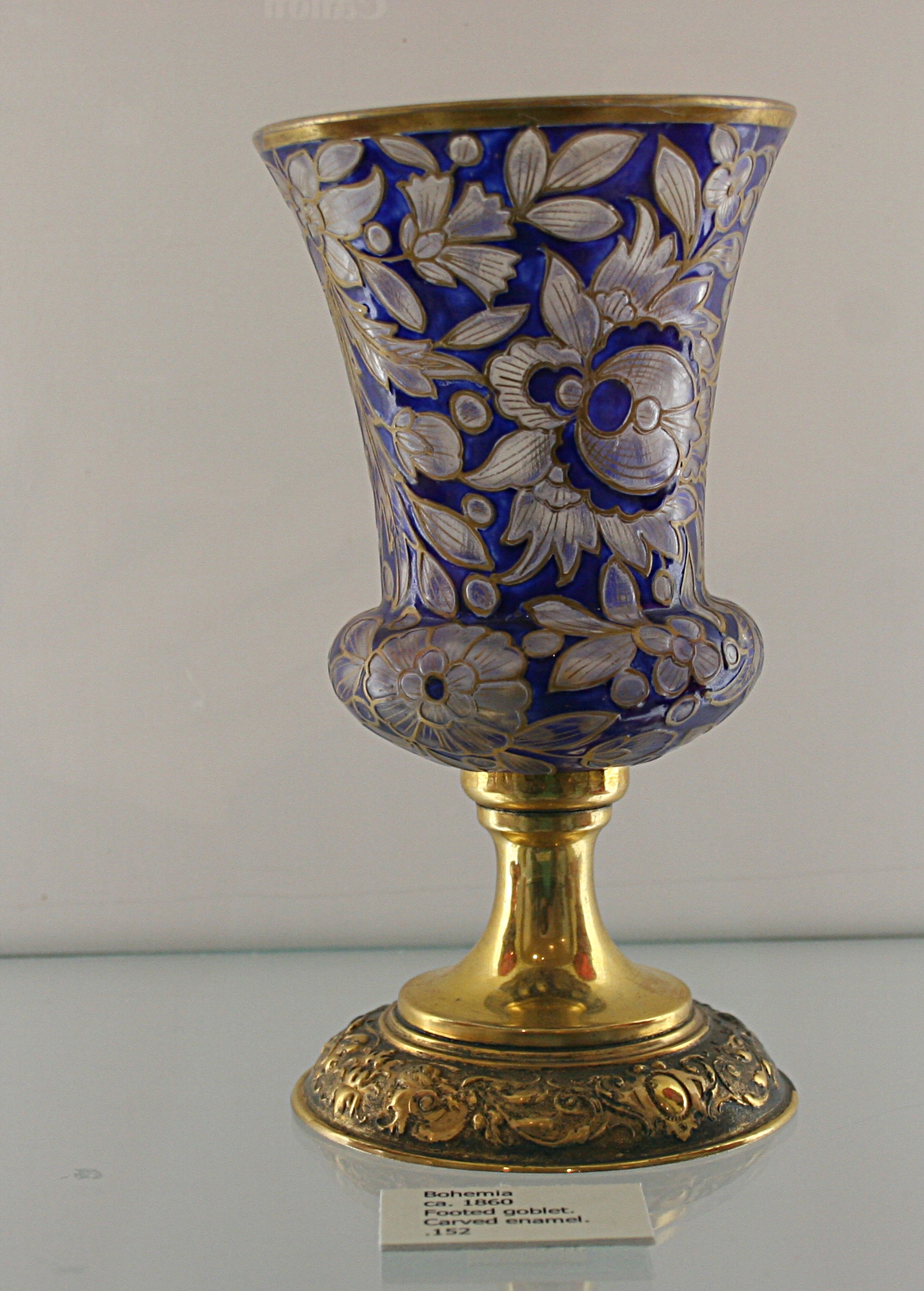
A carved enamel goblet, ca. 1860, Bohemia.

A carved enamel goblet, ca. 1860, Bohemia.

Likewise, another paper industry leader and Neenah native, Ernst Mahler, gifted a glass collection to the Bergstrom-Mahler Museum. In 1994, the museum received the Germanic glassware Mahler had purchased in 1931 in Austria for his wife, Carol.

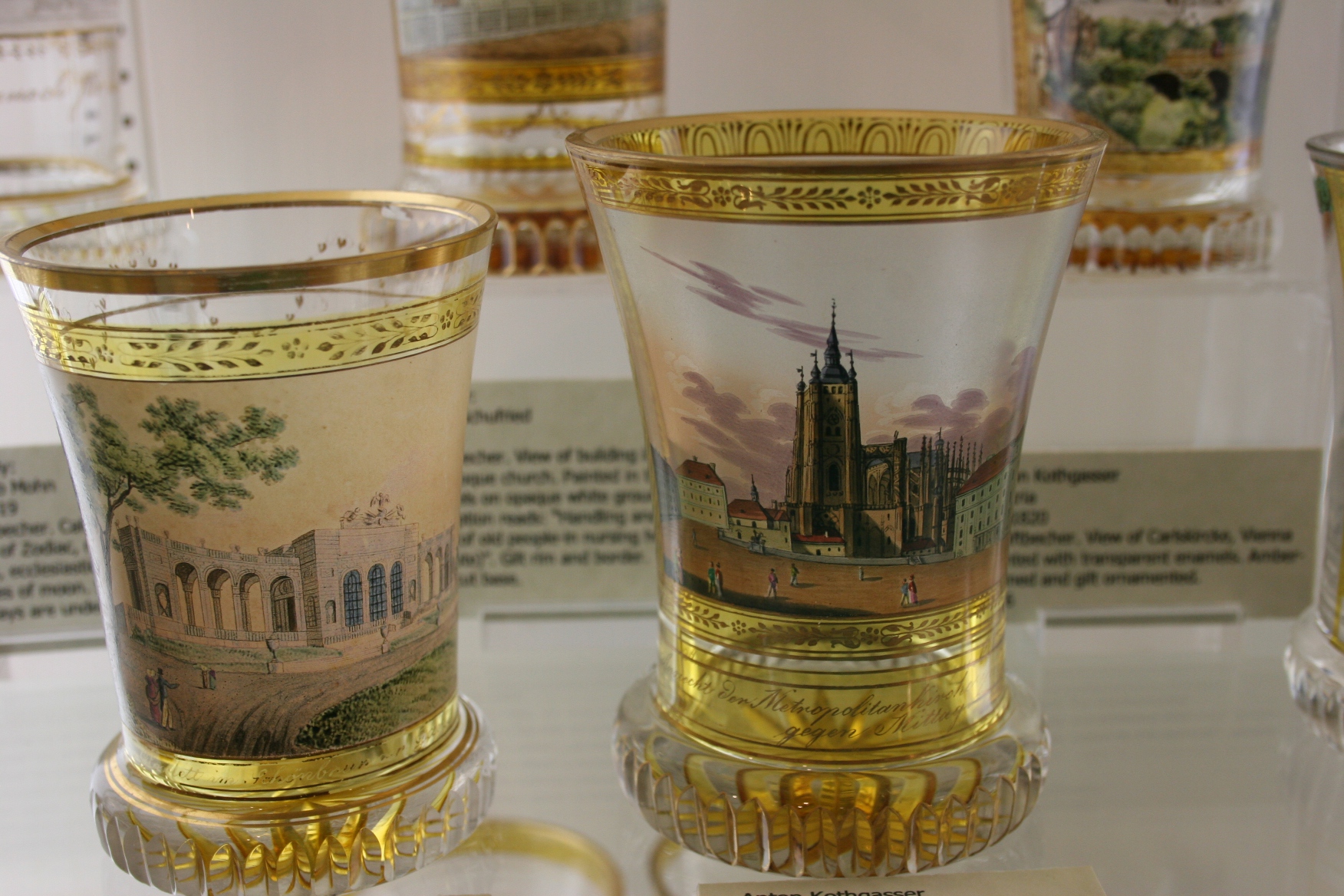
History and art detailed on glasses.

History and art detailed on glasses.

I found this aged glassware especially intriguing given the detailed scenes on many of the pieces. It’s fabulous art.

Dated 1693. Cheers.

Dated 1693. Cheers.

If only we could have sampled a dark German beer in one of those over-sized glasses…

Bottom line, don’t underestimate the appeal of a paperweight collection even if you, like my daughter, consider paperweights to be rather useless. Those in the Bergstrom collection possess great artistic and historical value well worth viewing, well worth appreciating.

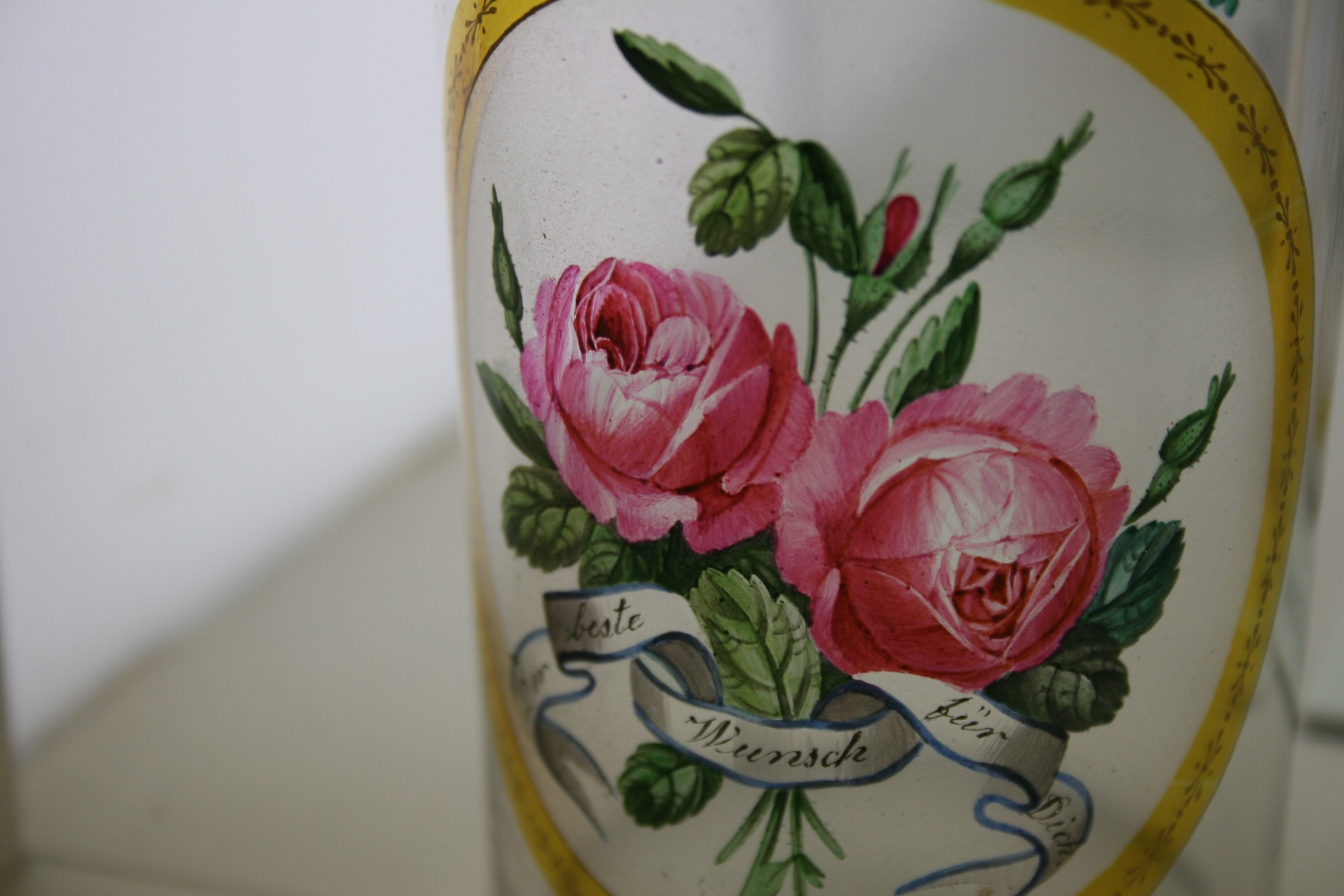
Detailed floral art on glassware.

Detailed floral art on glassware.

Ditto for the other glass art featured in the museum.

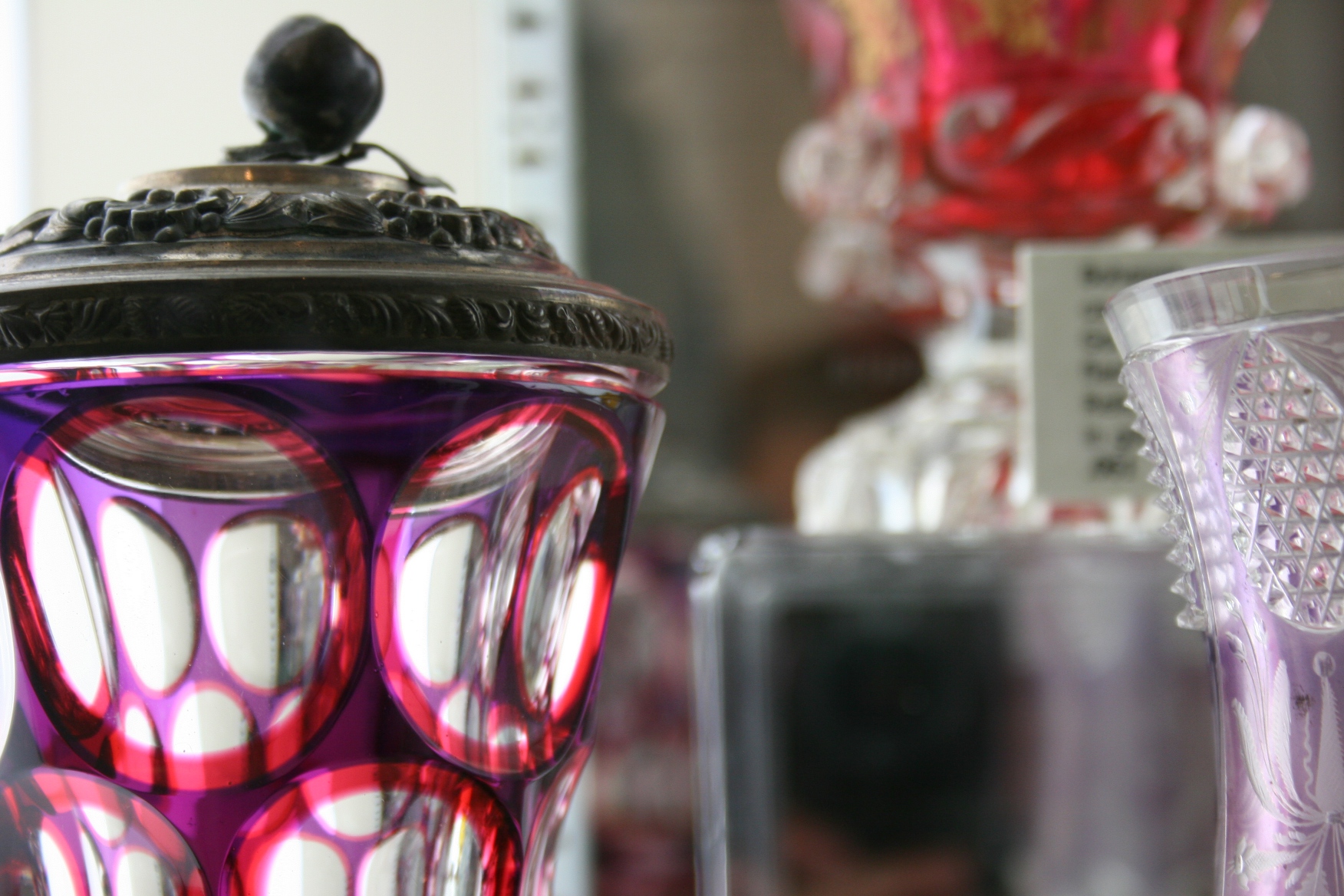
Glassware in an array of colors.

Glassware in an array of colors.

FYI: The Bergstrom-Mahler Museum, 165 North Park Avenue, Neenah, is open from 10 a.m. – 4:30 p.m. Tuesday-Saturday and from 1 p.m. – 4:30 p.m. Sundays, closed holidays and a few other days.

Admission is, get this, free, although donations are welcome.

mandalas

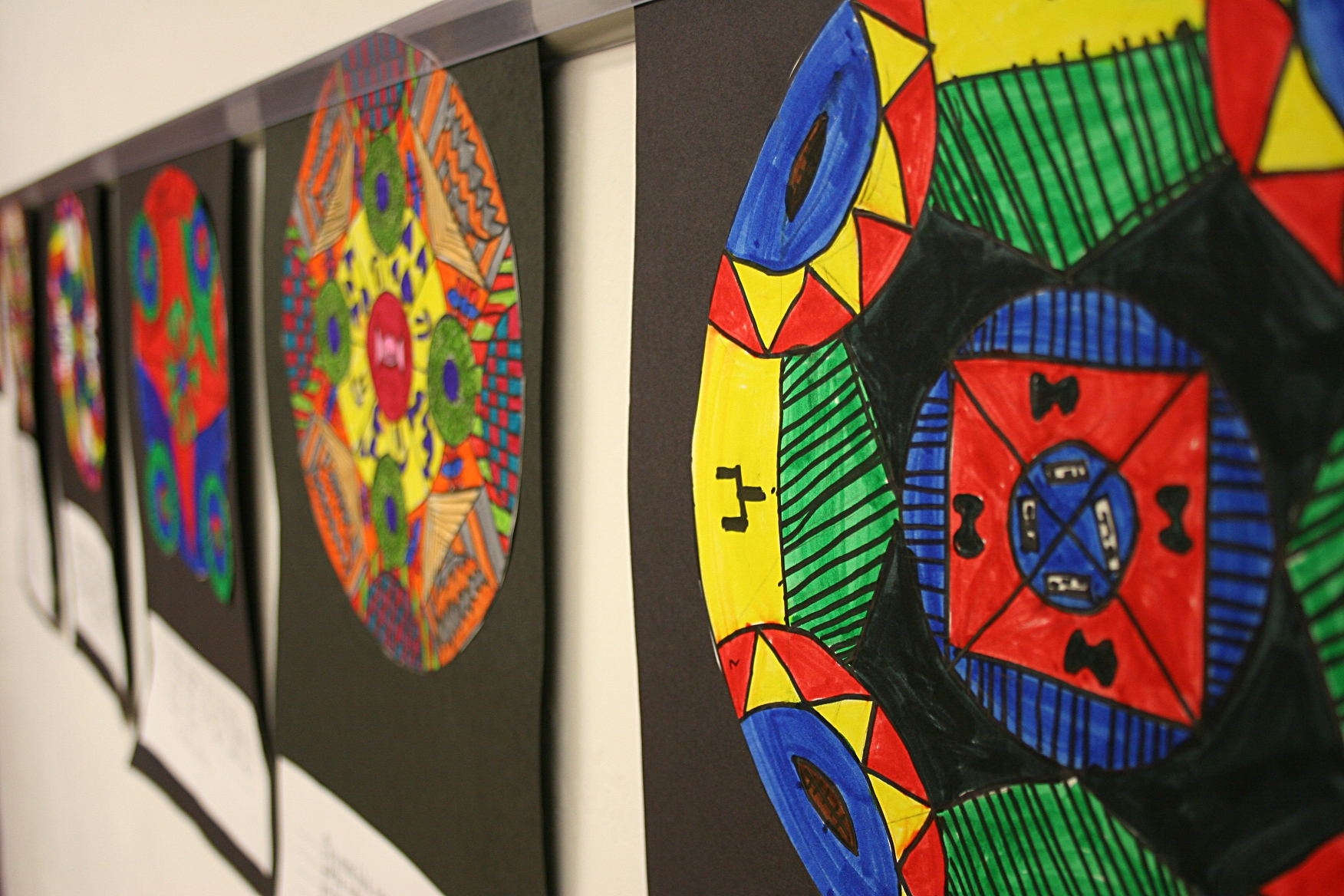
Fifth and sixth graders at Edison Elementary School in Appleton studied Tibetan Sand Mandalas and then created paper versions, temporarily on display in the lower level of the museum.

At the time of our visit in late March, glass pieces created by students in the Fox Valley area were exhibited. But I was not allowed to photograph these works, some of them mighty impressive.

Annually, the museum’s collection of Victorian glass baskets are also shown, primarily during the spring and summer.

TO VIEW ANOTHER post from the community of Neenah, Wisconsin, click here.

© Copyright 2014 Audrey Kletscher Helbling
 

“Love Story” revisited April 30, 2014

Filed under: Uncategorized — Audrey Kletscher Helbling @ 6:00 AM
Tags: , , , , , , , , ,
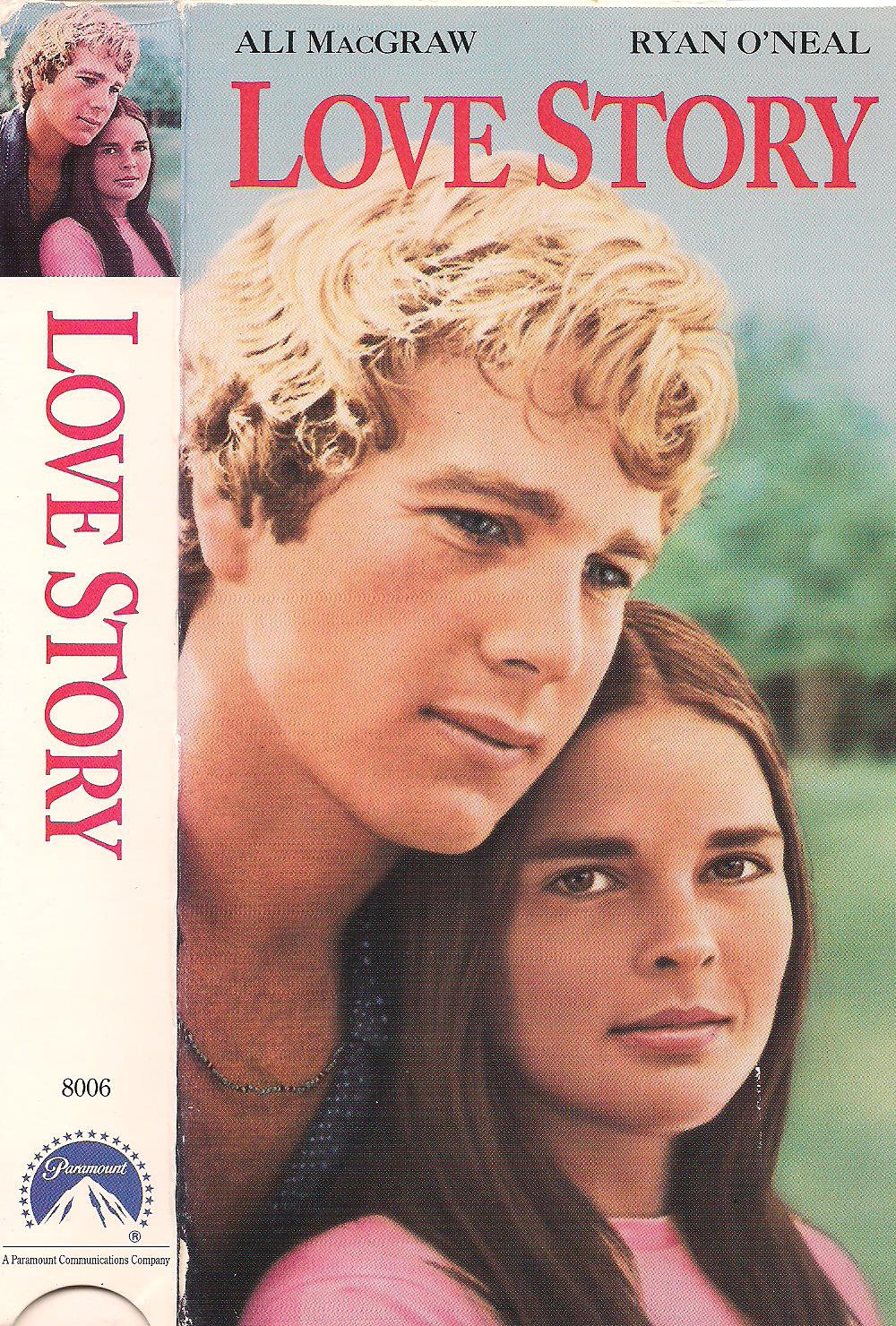
I now own a VHS copy of Love Story, purchased from the discard shelf at my local library.

I now own a VHS copy of Love Story, purchased from the discard shelf at my local library.

“Love means never having to say you’re sorry.”

FORTY-FOUR YEARS AGO, with the release of the film Love Story, those words quickly became a part of pop culture. They rolled off the lips of adolescents like me, a then high school freshman, who could fall easily, blissfully in love with the latest movie star featured in Tiger Beat magazine.

Now, four-plus decades later, I don’t quite believe the “love means” phrase spoken twice in the award-winning Paramount Pictures flick starring Ryan O’Neal and Ali MacGraw. Love does mean asking for forgiveness when you’ve wronged a loved one.

Despite that change in perspective, I still rank Love Story by writer Erich Segal as one of my all-time favorite movies. The plot, on the surface, seems hopelessly simple: Wealthy Harvard student Oliver Barrett IV falls in love with Jennifer Cavelleri, a Radcliffe student from a working-class family. Oliver’s father disapproves of Jenny and a rift develops between father and son. Eventually, Jenny dies of leukemia.

As a dreamy-eyed teen, I failed to see beyond the surface plot. But there’s so much more depth to this film than a romantic story that ends tragically. It just took decades, and numerous times viewing this movie, to figure that out. I had to get past the relationship between Oliver and Jenny, past my sadness over Jenny’s death, to understand.

So the last time I watched Love Story, just weeks ago, I really listened to the dialogue.

“I never see his face,” Oliver says of his father.

“Does he wear a mask?” Jenny asks.

“In a way,” Oliver replies.

That brief exchange speaks volumes to the stiff and formal relationship between Oliver and his father. The elder Barrett expects much of his son. But he does not expect him to marry below his social class.

“I mean she’s not some crazy hippie,” Oliver says of Jenny. I laugh when I hear that now. “Hippie” sounds so dated. But in 1970, when Love Story hit the big screen, rebellious, anti-establishment, free-loving, independent-thinking young people were, indeed, pegged as hippies.

“If you marry her now, I’ll not give you the time of day,” Oliver Barrett III tells his son.

So the line is drawn in the sand. Oliver chooses love over money and marries Jenny, even says in his wedding vows, “I give you my love, more precious than money.”

At this point in the movie, I nearly stand up and cheer, if not for my sadness over the broken relationship between father and son. Life is too short to sever ties with loved ones over differing opinions and expectations. Life is too short to choose money over love.

Surprisingly, I have not wept this time while watching Love Story. I wonder why. Perhaps it is because my approach to the film has been more analytical than emotional. I am also seeing, for the first time, two love stories (or lack thereof)—one between a man and a woman and the other between a father and son.

And I have been caught up in noticing the details—the rotary dial phone, the over-sized dark eyeglasses, the mini-skirts—that denote this as a 1970 film. I am taking in the beautiful winter scenery; the instrumental theme music, the lyrics “How do I begin to tell the story of my love,” replaying in my mind; and the one word in the film, “preppie,” that still irritates me after four decades.

I am regretting, too, that I no longer have the black and white poster of Ryan O’Neal and Ali MacGraw that once hung above my bed, in the lime green room with the candy stripe carpeting.

CLICK HERE TO READ how Love Story connects to a shop in Neenah, Wisconsin.

© Copyright 2014 Audrey Kletscher Helbling