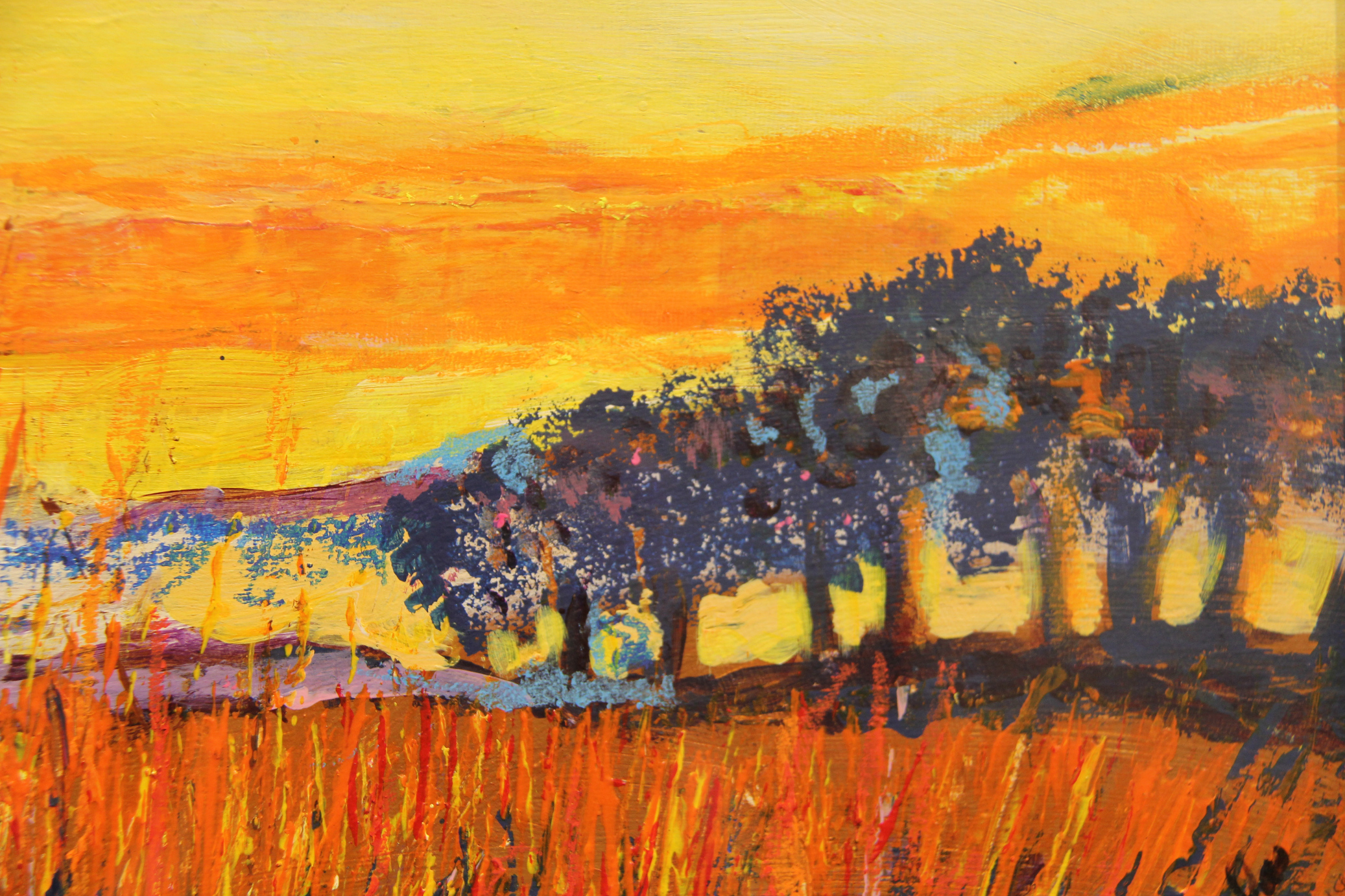
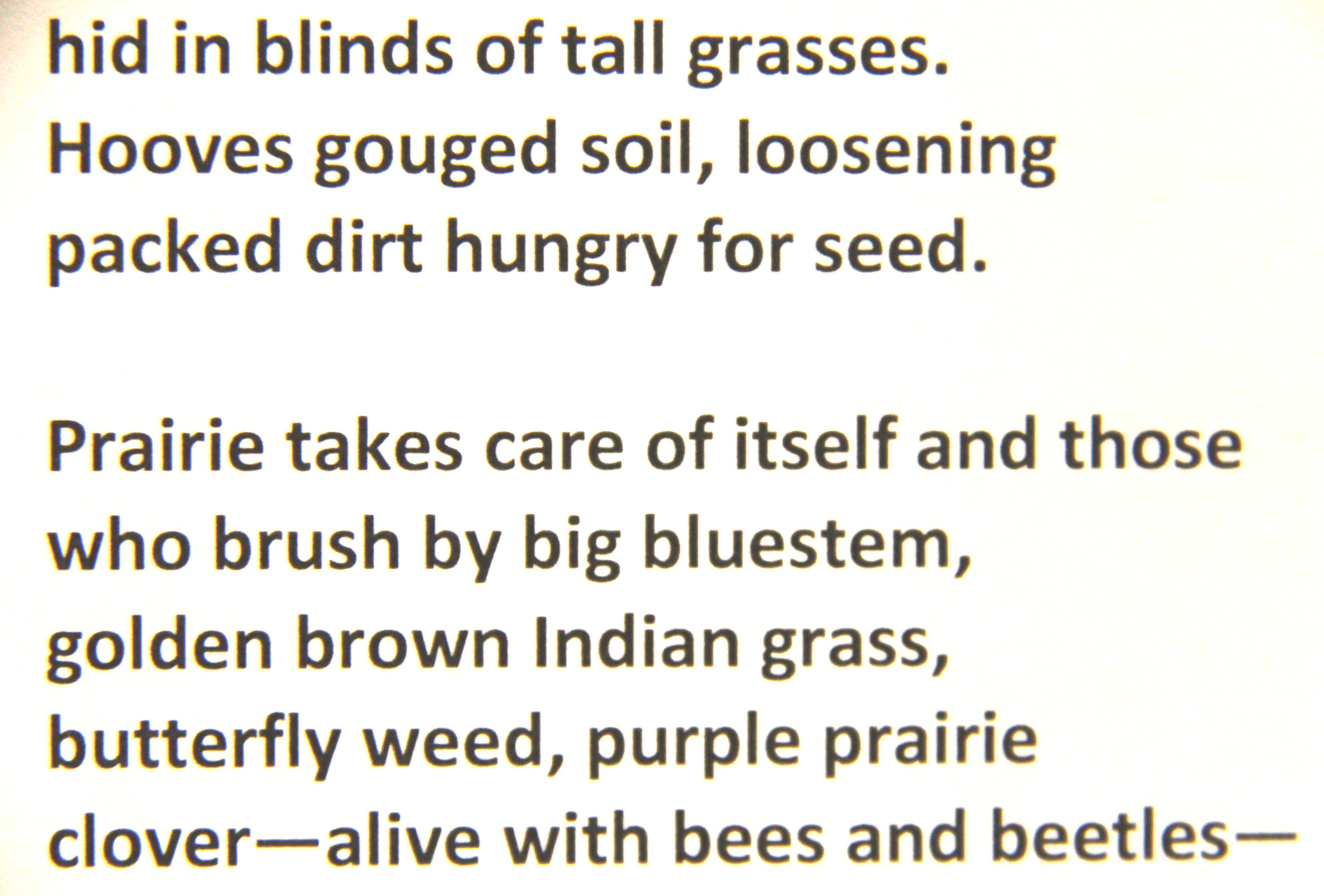
Here are some lines from Northfield poet Becky Boling’s poem, “Red Prairie,” inspired by “Wisconsin Sunset.” (Minnesota Prairie Roots copyrighted photo October 2025)
As a long-time writer and photographer, who is also a published poet, I’ve participated in similar collabs in nearby Zumbrota. I found it a whole lot of fun not only to write poems, but especially to see how an artist interpreted my poetry. I expect those participating in this pairing of poetry and visual art in Northfield feel the same. The work in this show is visual art inspiring poetry.
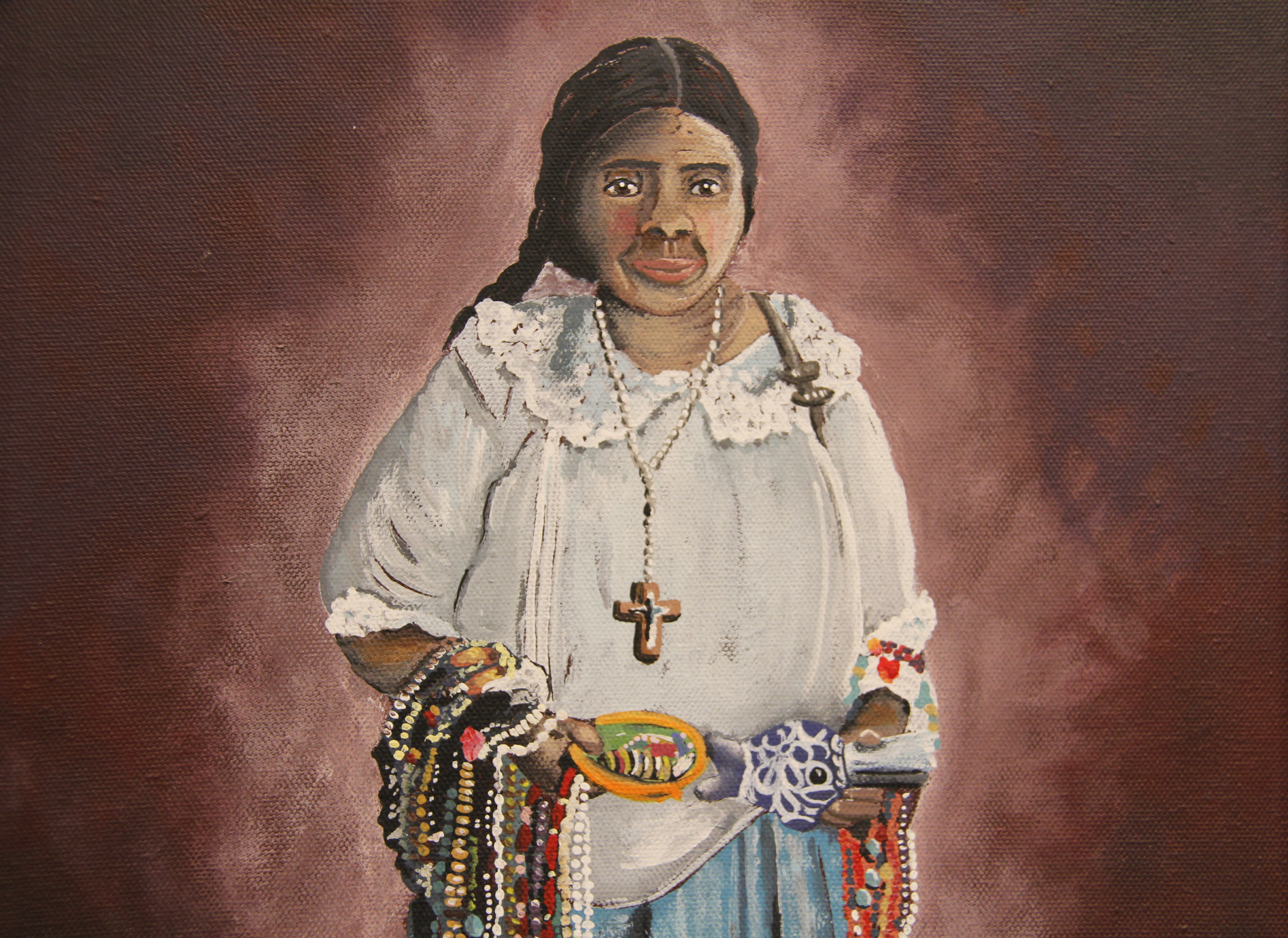
“Brave,” a poem by Orick Petersen, is paired with Sharon Henry’s painting, “The Bead Lady.”
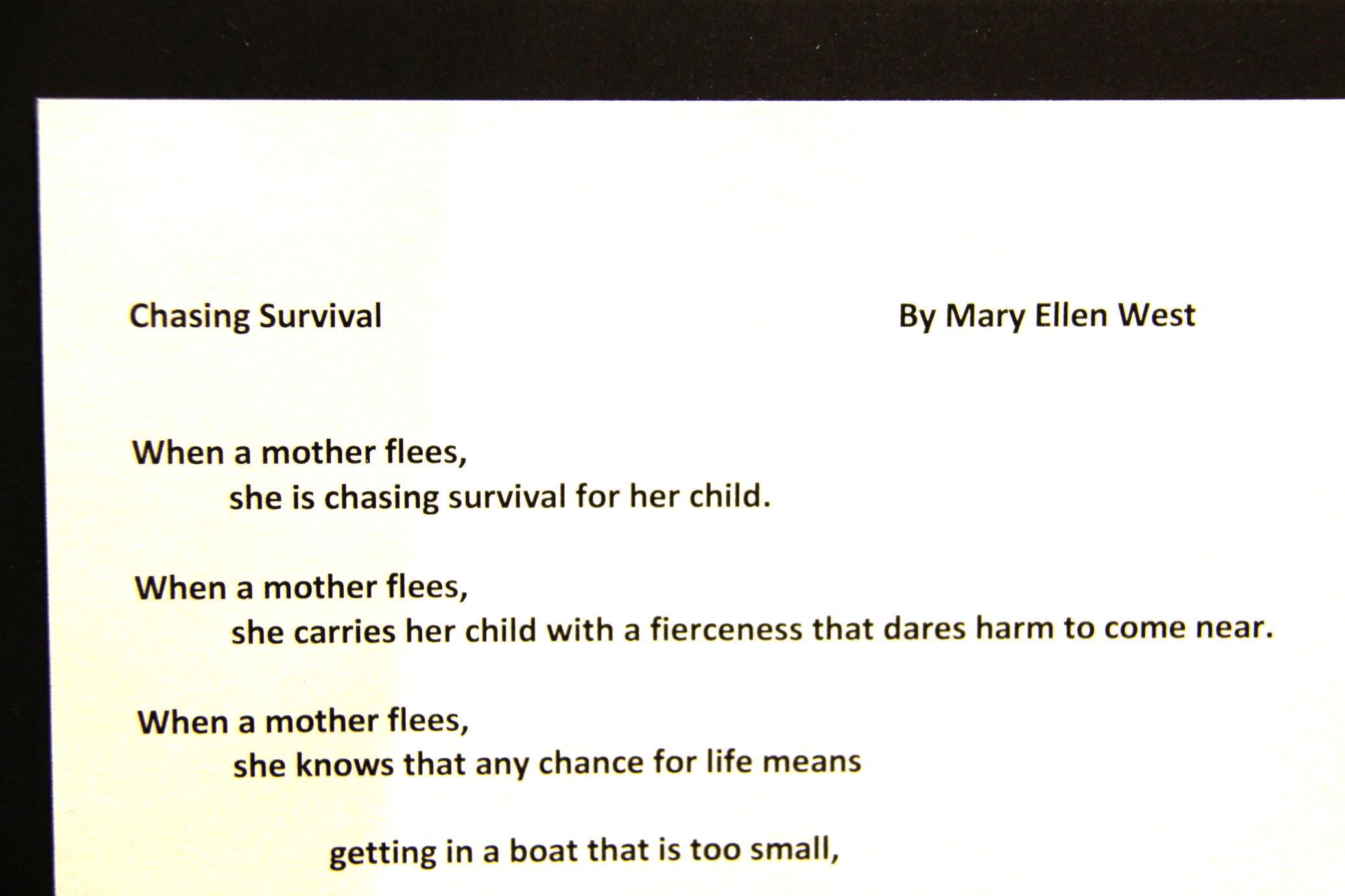
This shows several lines from a thought-provoking poem inspired by an equally thought-provoking photograph of a mother and child by Dean Neuburger. (Minnesota Prairie Roots copyrighted photo October 2025)
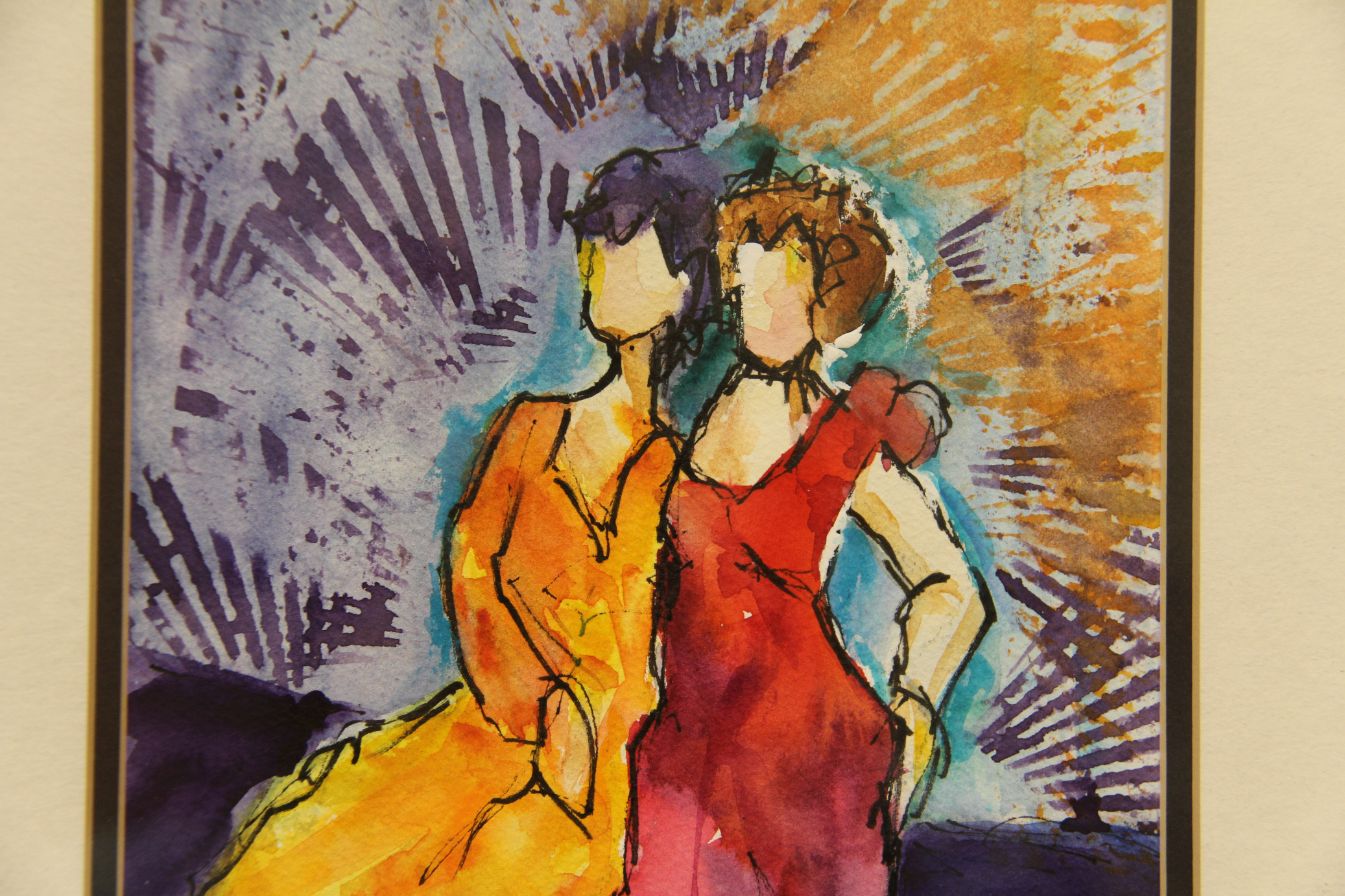
Marty Amundson’s watercolor and ink, “Sisters Still,” inspired Marie Gery’s poem, “30th High School Reunion.”
I feel fortunate to live in a region rich in the arts. The arts expose us to new ideas, thoughts, beauty and more. The arts open us to a world wide beyond our own. The arts can serve as a catalyst for positive change. The arts represent voice, a way for us to speak via our creativity.
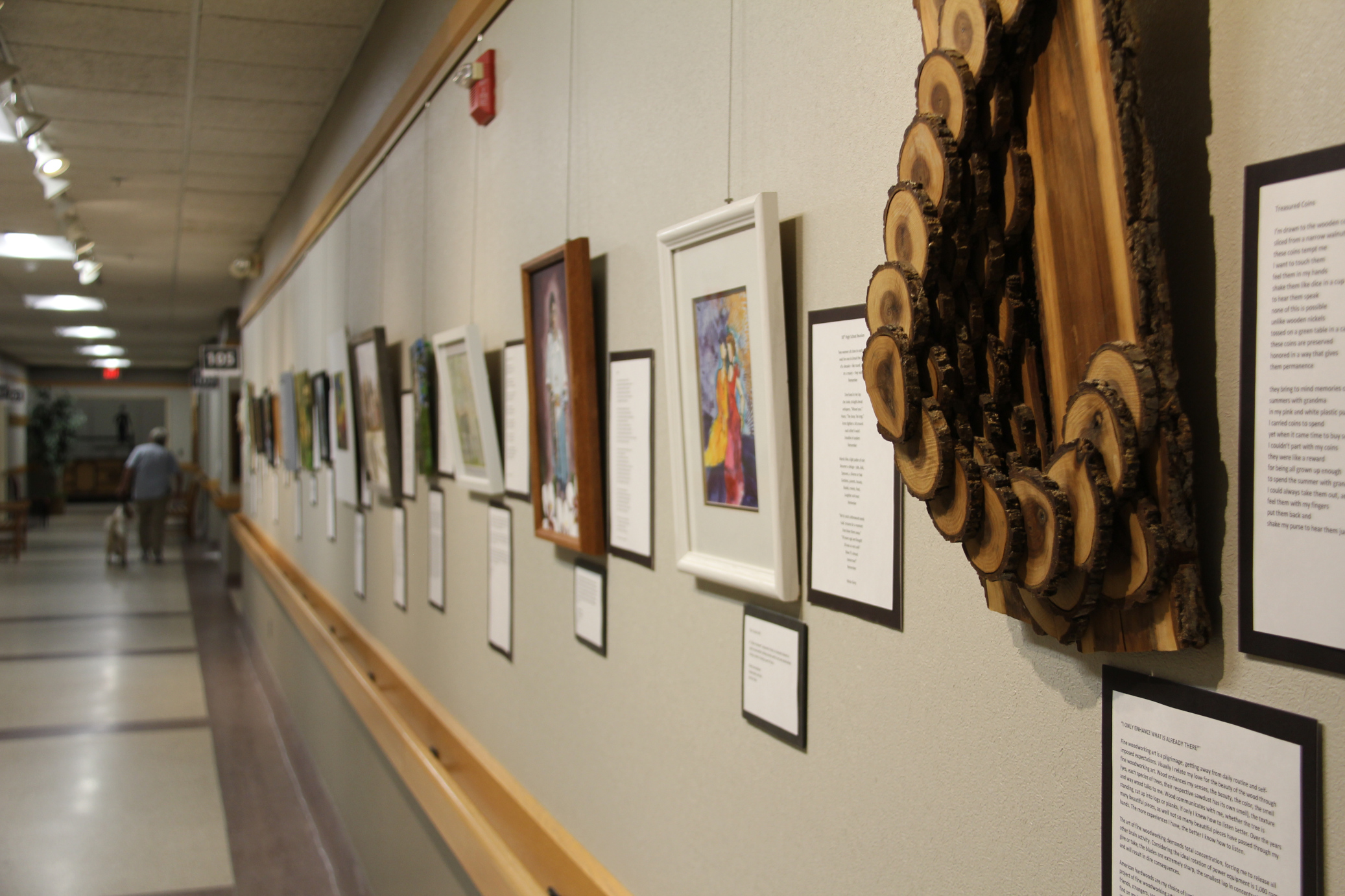
Art and poetry stretch along a hallway at FiftyNorth. (Minnesota Prairie Roots copyrighted photo October 2025)
In “Echoes & Shadows,” artists express themselves in carefully crafted words and in a variety of visual art that seems to fit its inspirational poetry. Painting, appliqueing, woodworking, photography, collage…all are part of this collaboration.
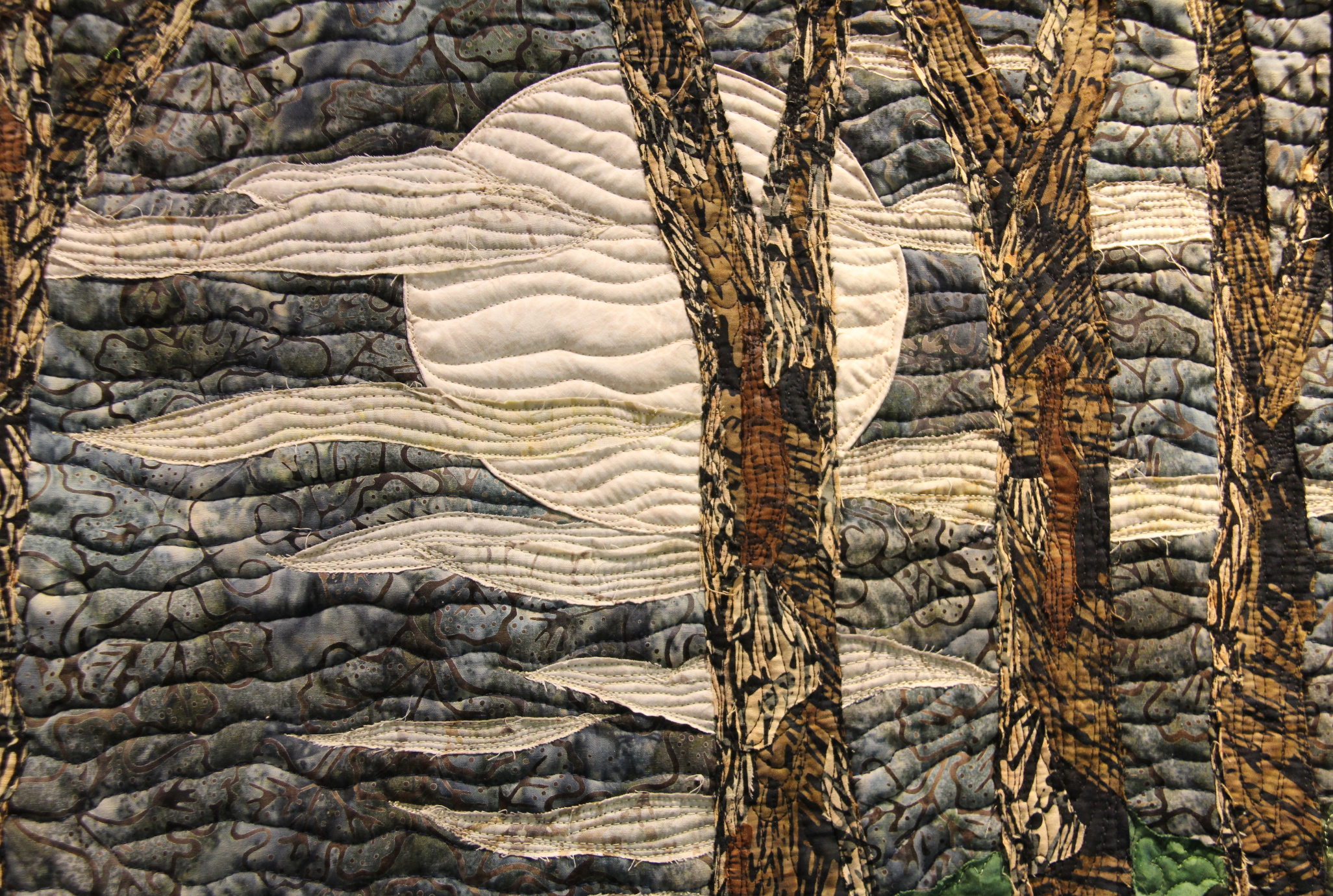
Lake Superior in northern Minnesota inspired Kathy Weed to create “Moon Glow” in textile art. (Minnesota Prairie Roots copyrighted photo October 2025)
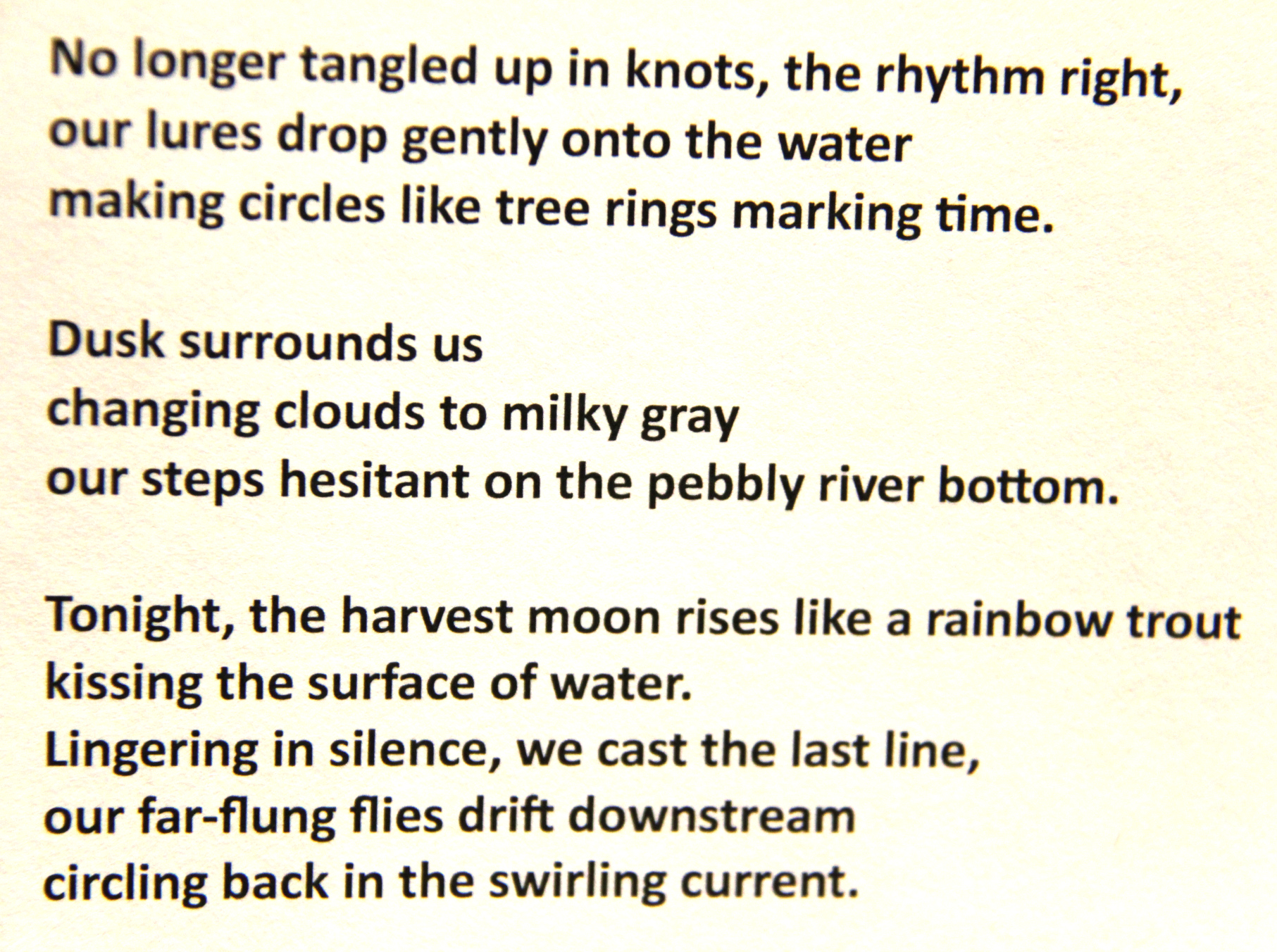
And then Jane Sarles Larson wrote “Circling Back” to pair with Kathy Weed’s art. (Minnesota Prairie Roots copyrighted photo October 2025)
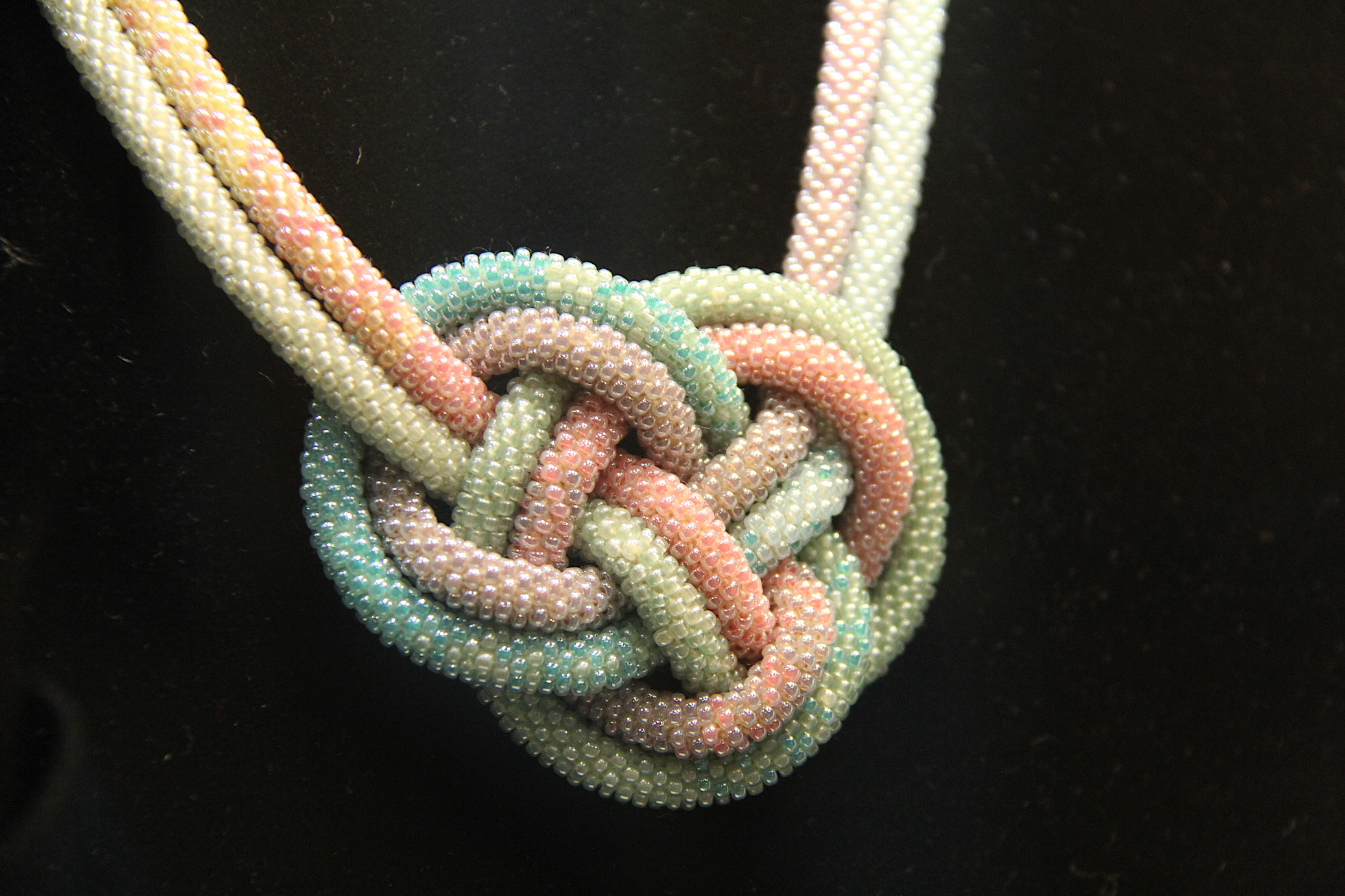
More knots…Judy Saye-Willis’ necklace inspired Marie Gery’s poem, “Knotty Reality.” (Minnesota Prairie Roots copyrighted photo October 2025)
I like that word, “collaboration.” It means working together. Even that seems especially meaningful today.
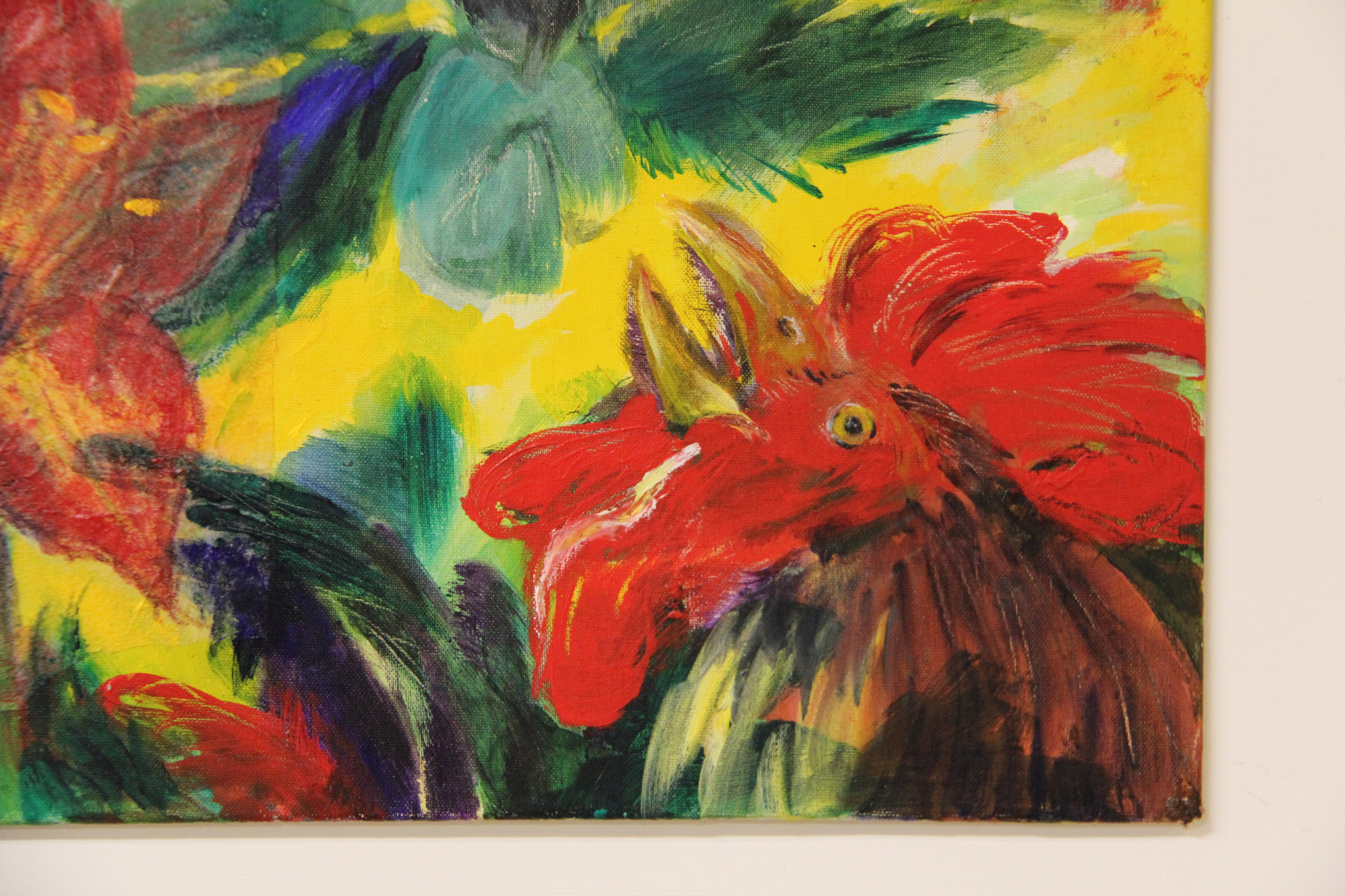
Riki Kolbl Nelson’s “Conversation” acrylic and collage of a rooster and angel inspired Chuck Huff to write “Tilt and Meridian.” (Minnesota Prairie Roots copyrighted photo October 2025)
In this pairing of art and poetry, I see collaboration, how literary art and visual art play off and balance one another, centering the two pieces of art into one unified piece without sacrificing individuality. Creatives are, after all, uniquely creative even when working together.
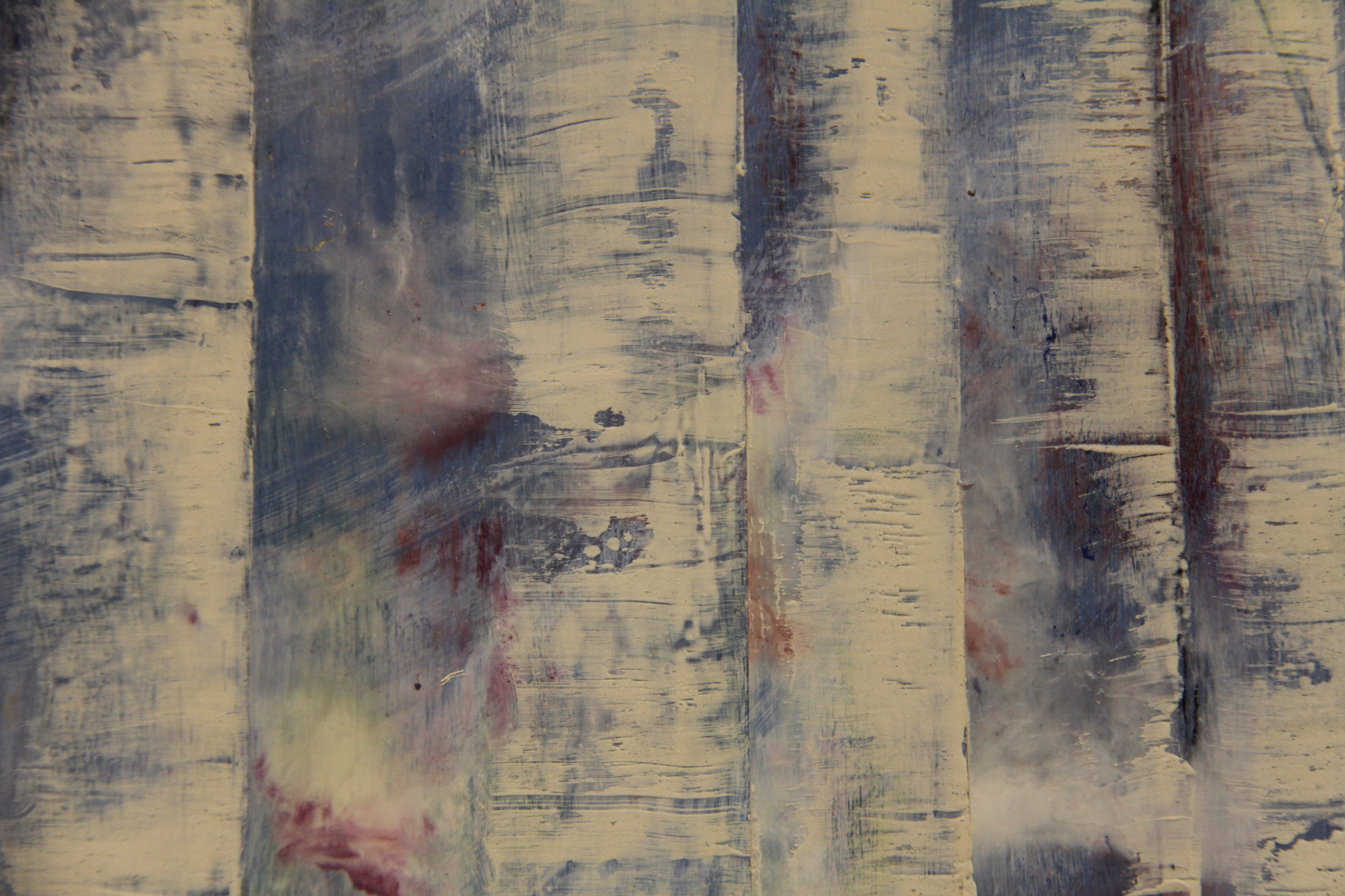
Barbara Bauer’s encaustic medium art inspired D.E. Green to write “Stand of Birches.” (Minnesota Prairie Roots copyrighted photo October 2025)
Promotional information about the FiftyNorth poetry and art collaboration, “Echoes & Shadows,” references a quote from poet Carl Sandburg: “Poetry is an echo, asking a shadow to dance.” Oh, how lovely those words. And how fitting for a collaboration that echoes and dances.
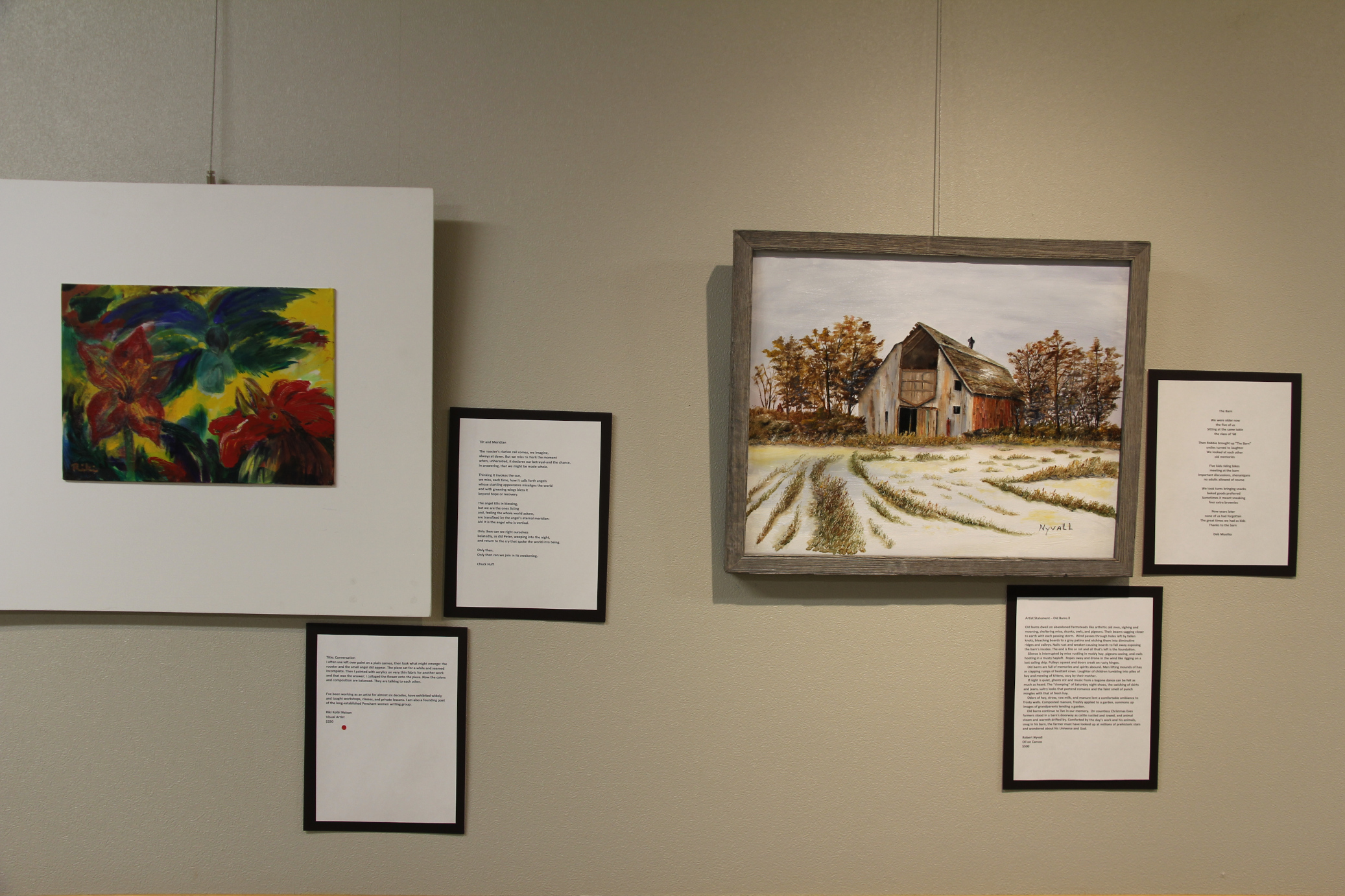
Pairings of poetry and art by Riki Kolbl Nelson, left, with poem by Chuck Huff and a barn painting by Robert Nyvall with accompanying poem, “We Are Older Now,” by Deb Muotka on the right. (Minnesota Prairie Roots copyrighted photo October 2025)
FYI: The “Echoes & Shadows” exhibit closes on October 31. To view the exhibit online, click here. Note that I photographed the art and poetry in this post with permission of FiftyNorth. In most cases, I’ve opted to show only part of the creative works. In featuring the poems, I’ve edited the images.
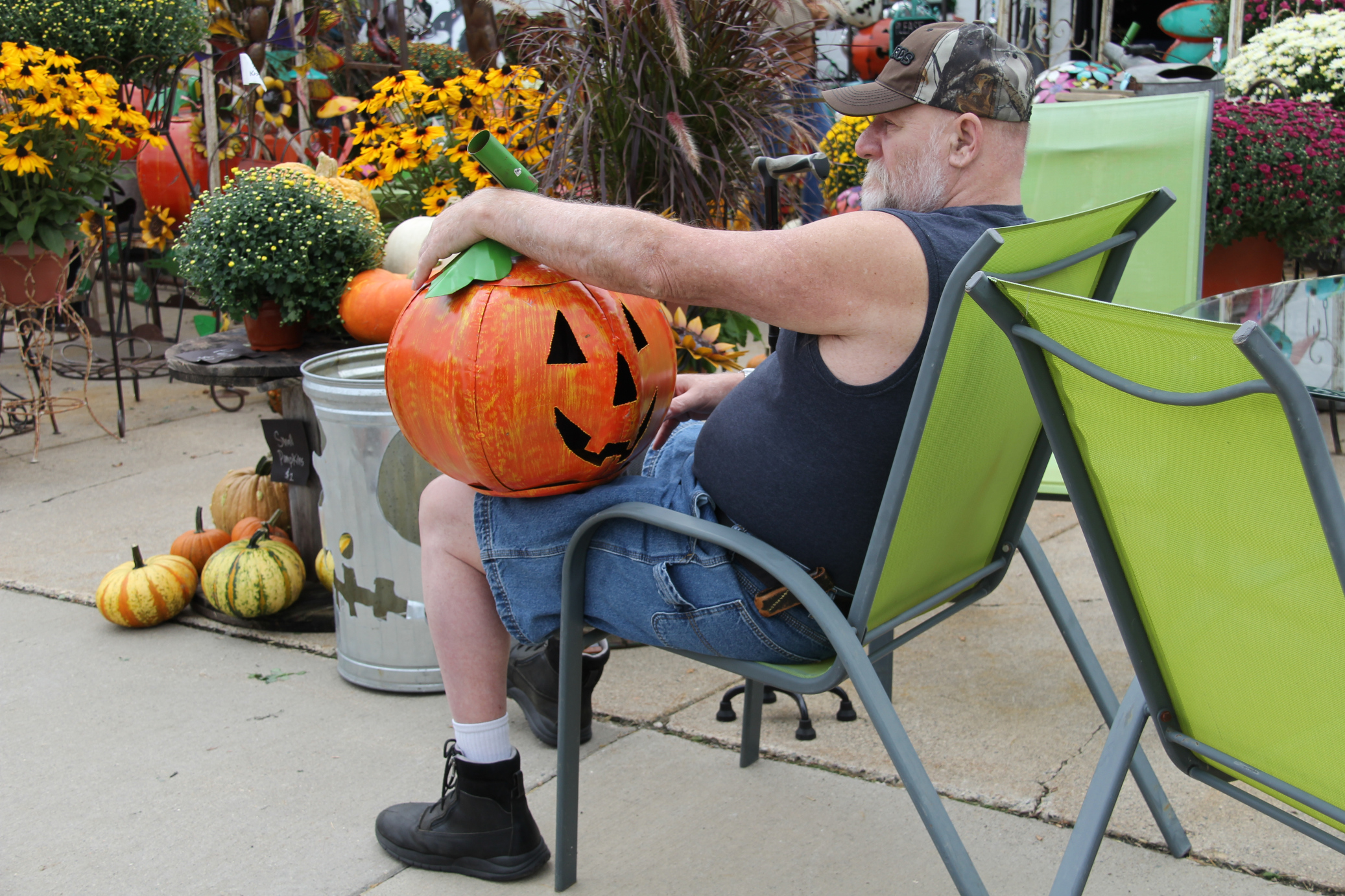
Outside RR Revival/Rusty Rabbitiques in Lonsdale, this guy waits with a decorative metal pumpkinin my favorite market photo. (Minnesota Prairie Roots copyrighted photo September 2025)
DAYS BEFORE THE AUTUMN EQUINOX, I found myself in small town Lonsdale at a craft and flea market. Located in northwestern Rice County, this community of just under 5,000 with easy access to Interstate 35 to the east, is experiencing both residential and business growth.
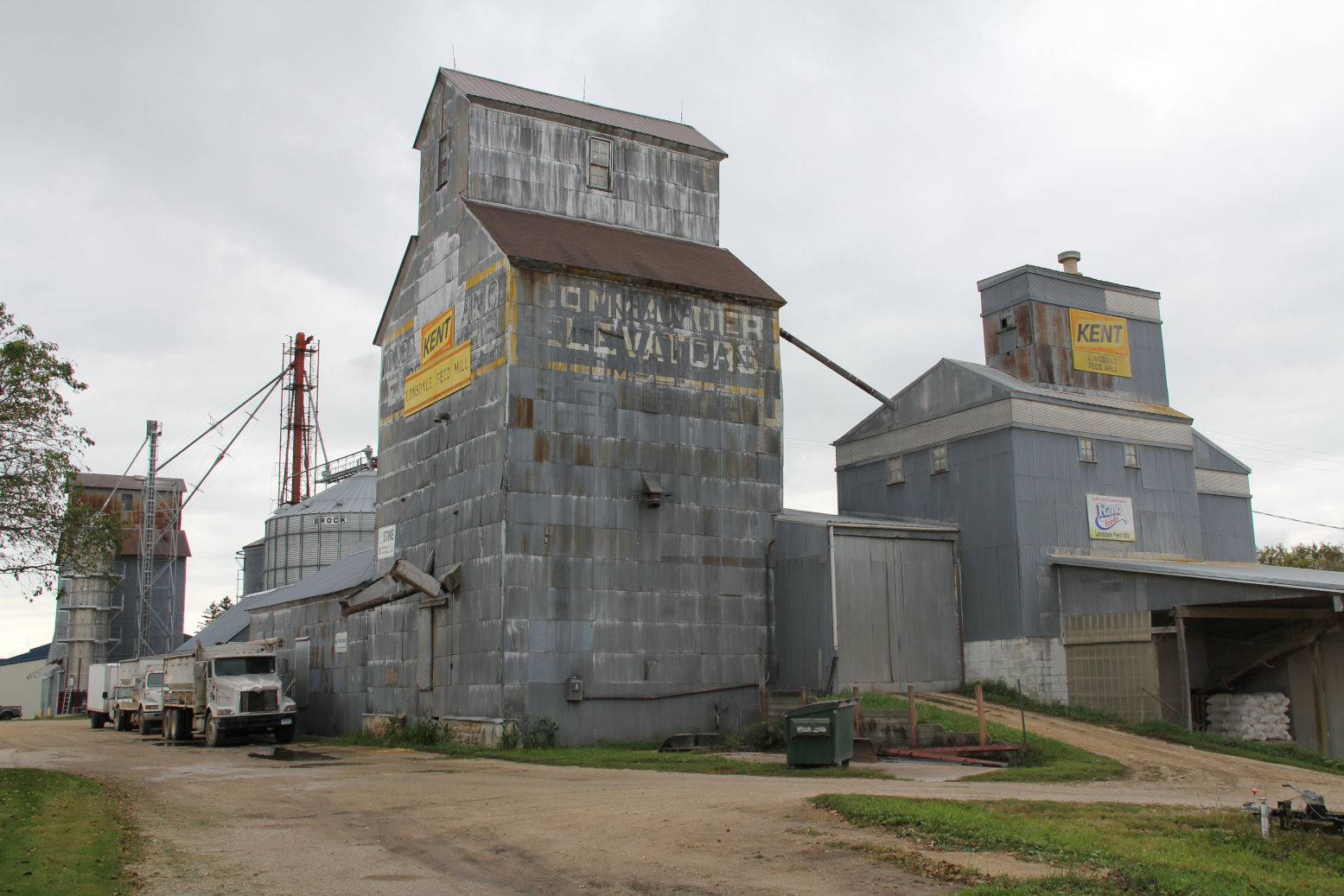
The aged grain elevators of Lonsdale near the market site. (Minnesota Prairie Roots copyrighted photo September 2025)
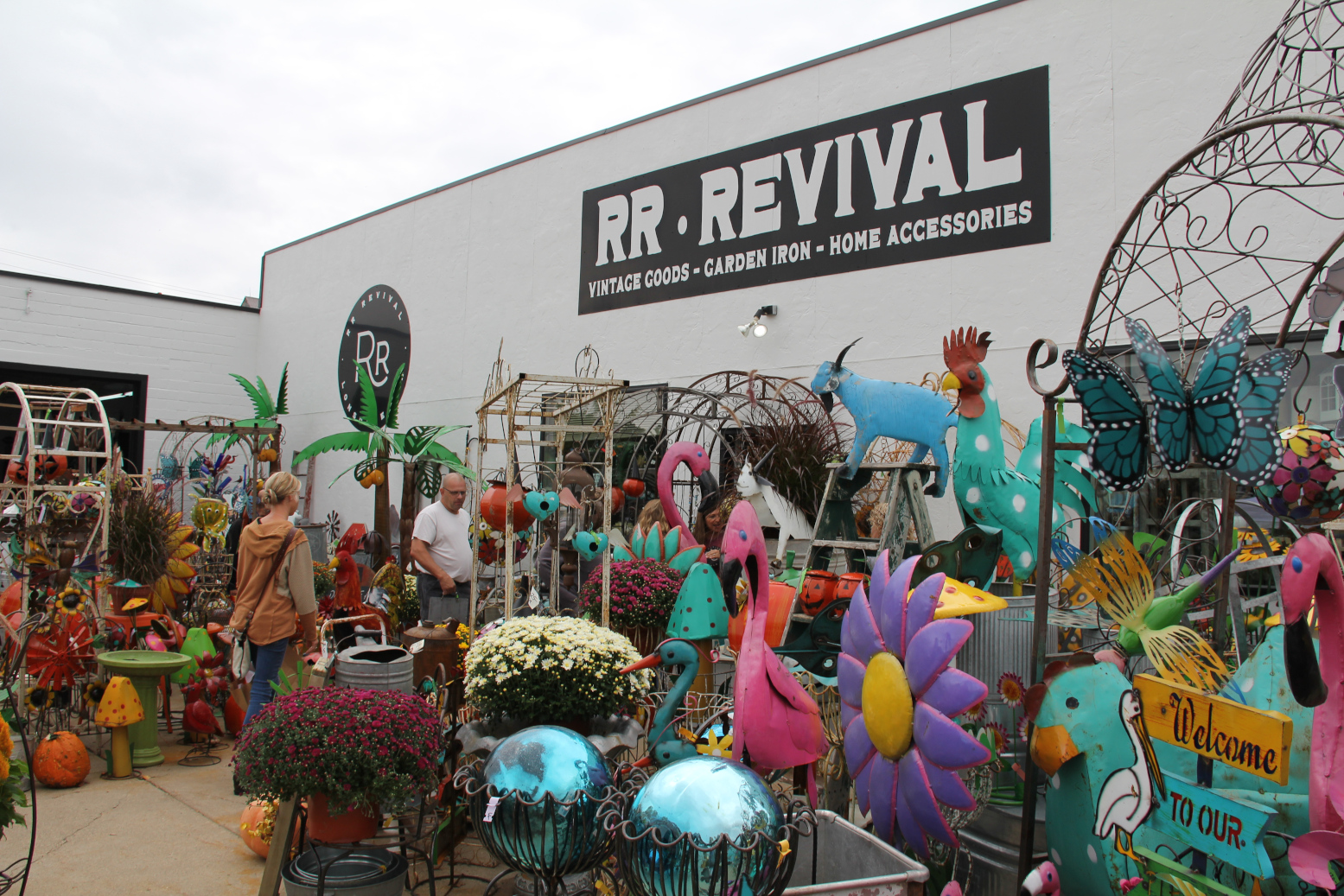
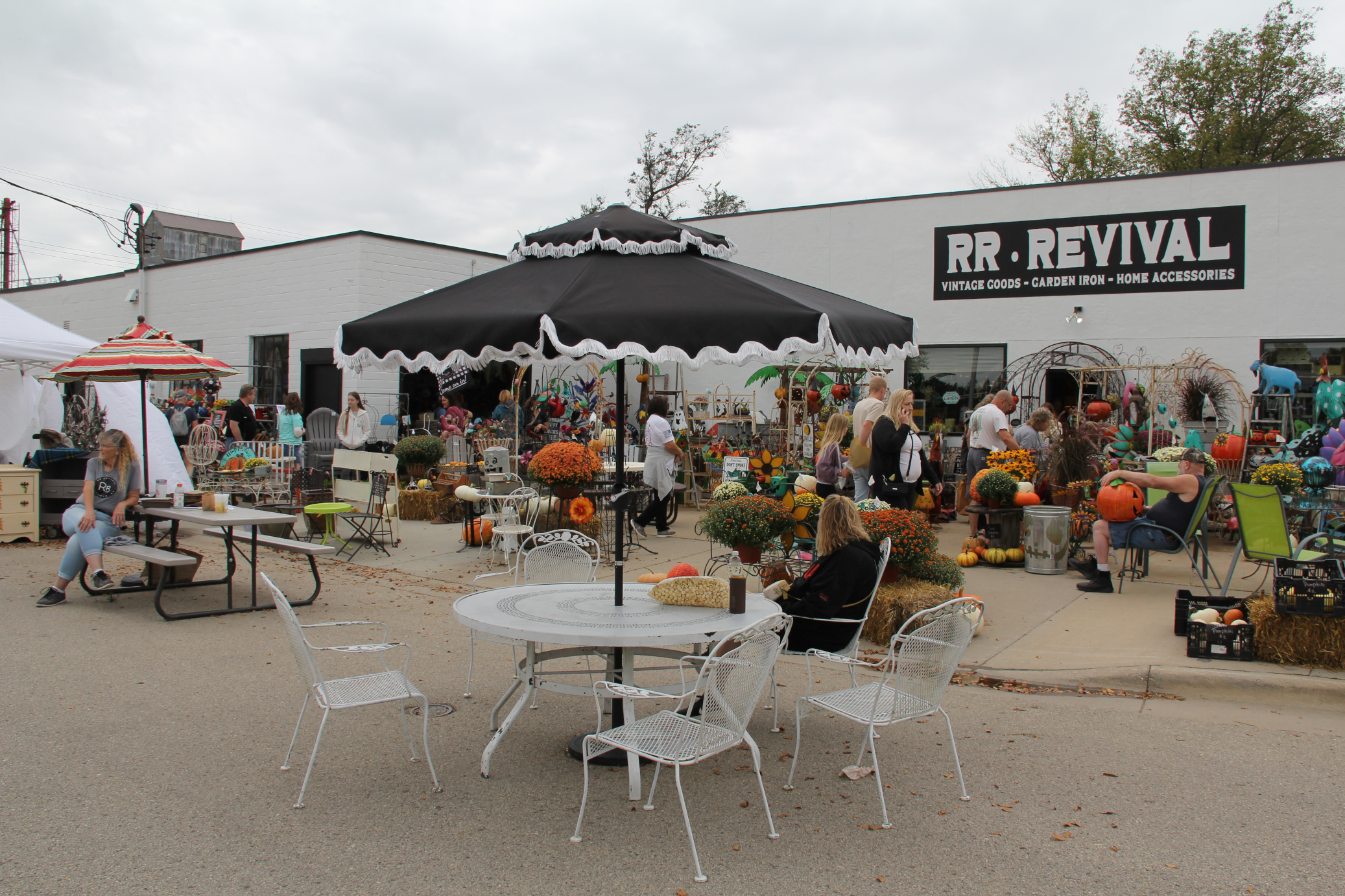
Yet, it retains its rural character, most notable in the aged grain elevator complex rising high above the town. Those grain elevators provided the backdrop for the recent weekend sale centered around RR Revival/Rusty Rabbitiques, a spacious vintage goods, garden iron and home accessories business.
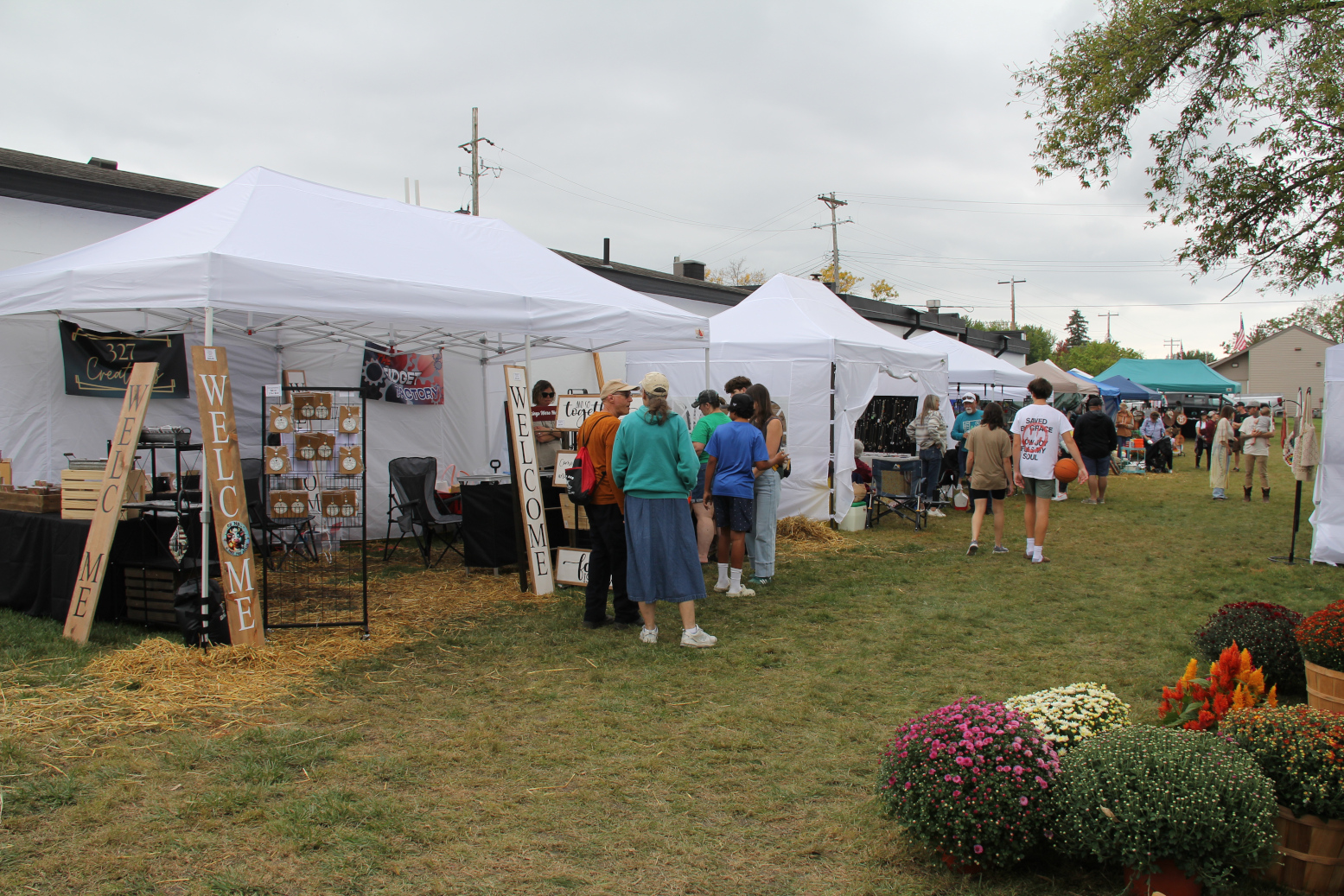
Vendors set up shop outside RR Revival. (Minnesota Prairie Roots copyrighted photo September 2025)
Vendors set up shop near RR Revival to sell food, crafts, flea market and other goods. That included mushrooms, floral bouquets, jewelry, upcycled clothing, hand-painted seasonal décor and much more. If you weren’t in a fall mood when you arrived, you would be upon departure.
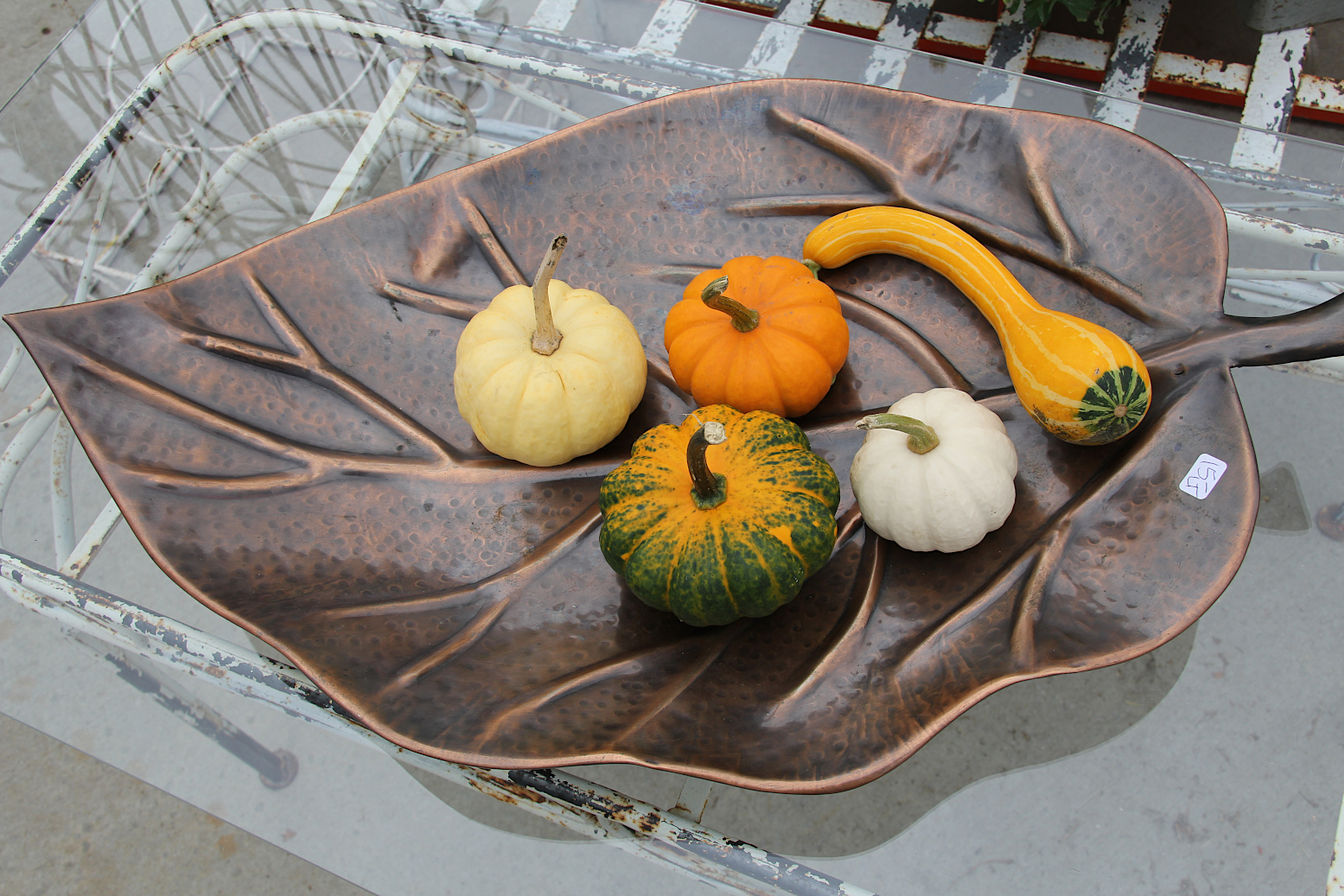
An artful display of seasonal merchandise for sale at RR Revival. (Minnesota Prairie Roots copyrighted photo September 2025)
Flowers for sale burst in autumn hues. (Minnesota Prairie Roots copyrighted photo September 2025)
RR Revival is packed inside and out with goods. (Minnesota Prairie Roots copyrighted photo September 2025)
Pumpkins and mums, ghosts and scarecrows, flowers and gourds in autumn hues, all set the stage to welcome the change in seasons. I even saw a young girl trying out her “Wizard of Oz” Dorothy costume, complete with red shoes, for Halloween.
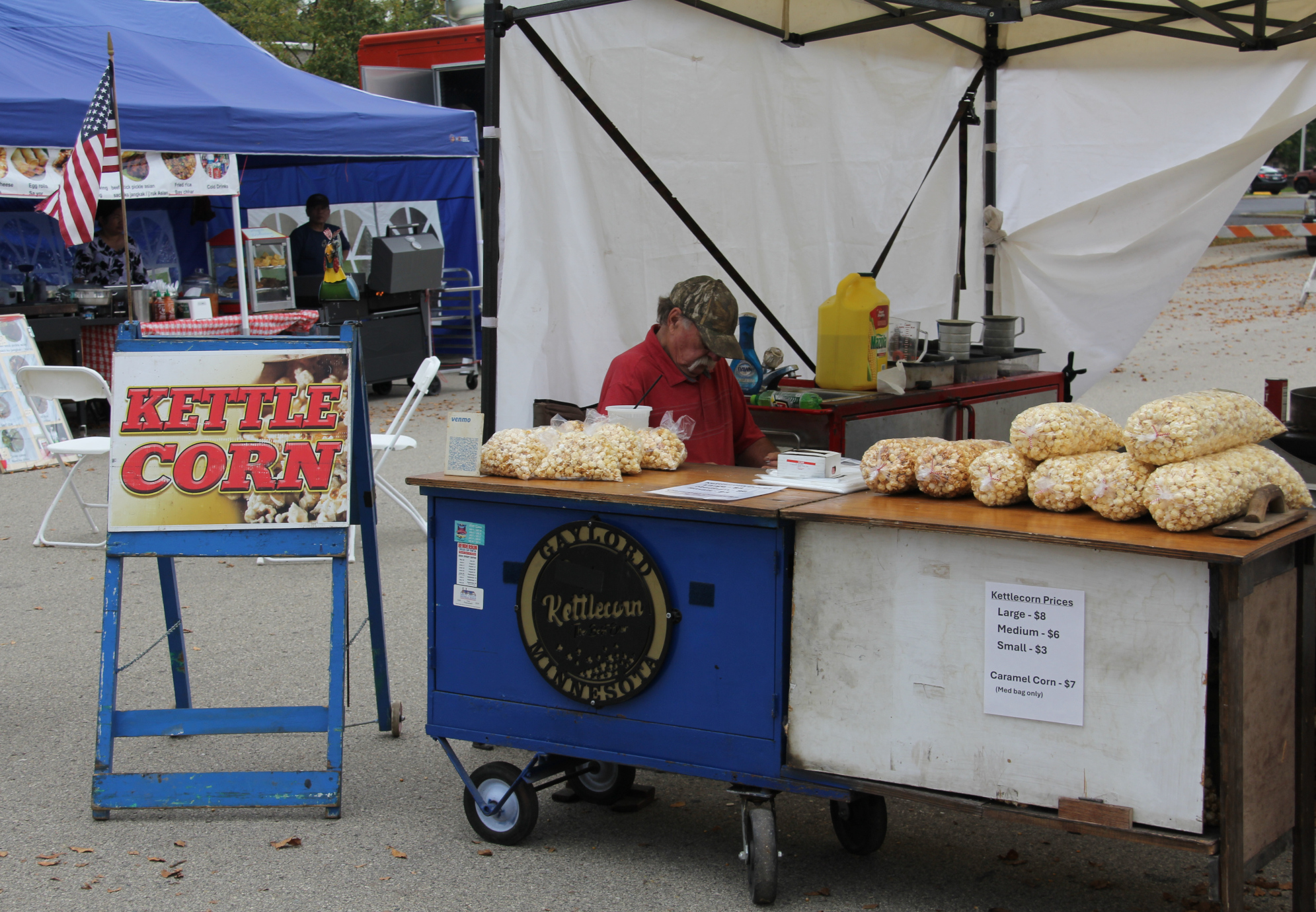
Among the numerous food vendors set up in the street, this one from Gaylord and selling kettle corn. (Minnesota Prairie Roots copyrighted photo September 2025)
As I wandered, the caramel scent of kettle corn wafted through the air.
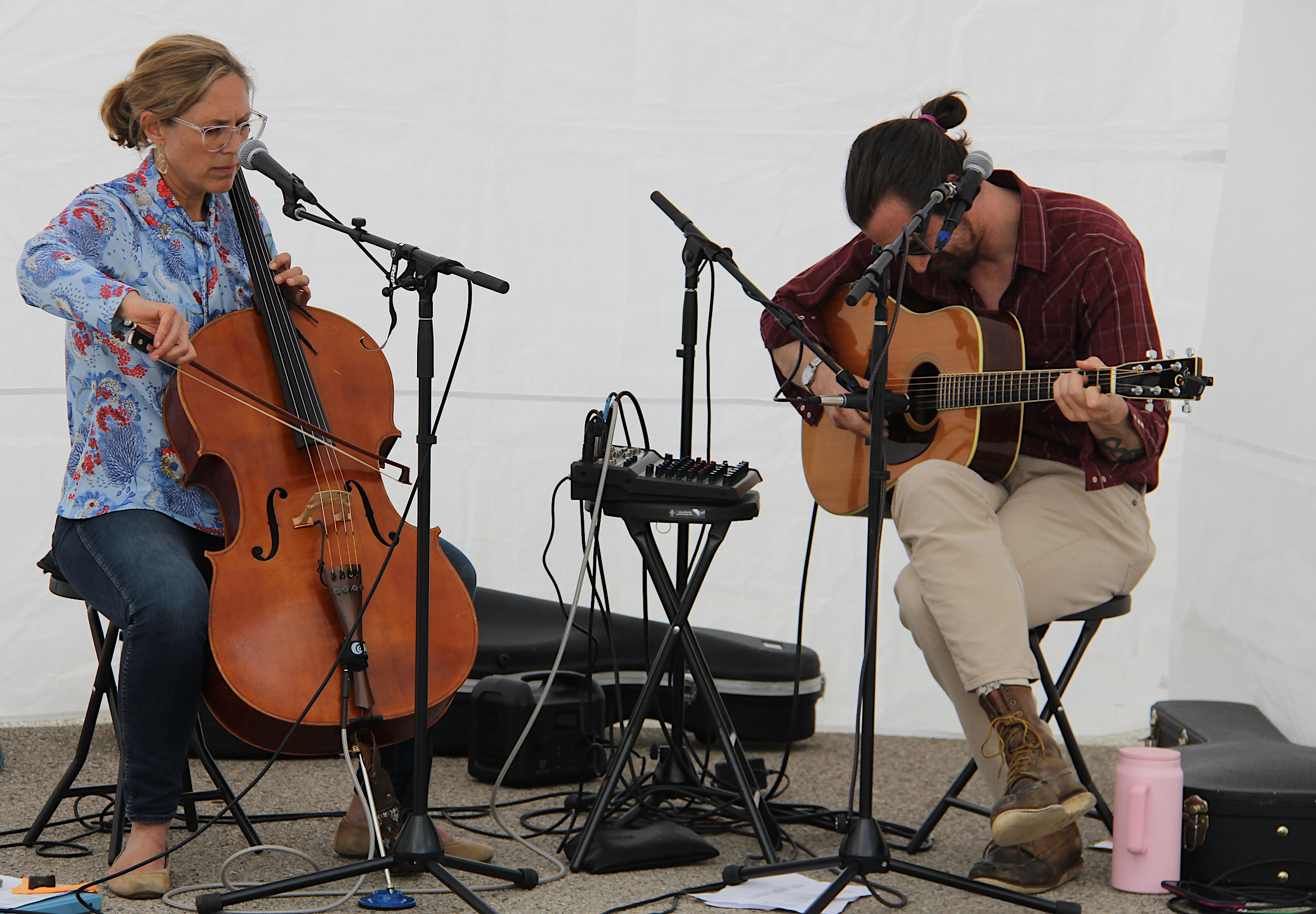
This duo added to the market with their music. (Minnesota Prairie Roots copyrighted photo September 2025)
Musicians played in the shelter of a small tent pitched on the street near RR Revival.
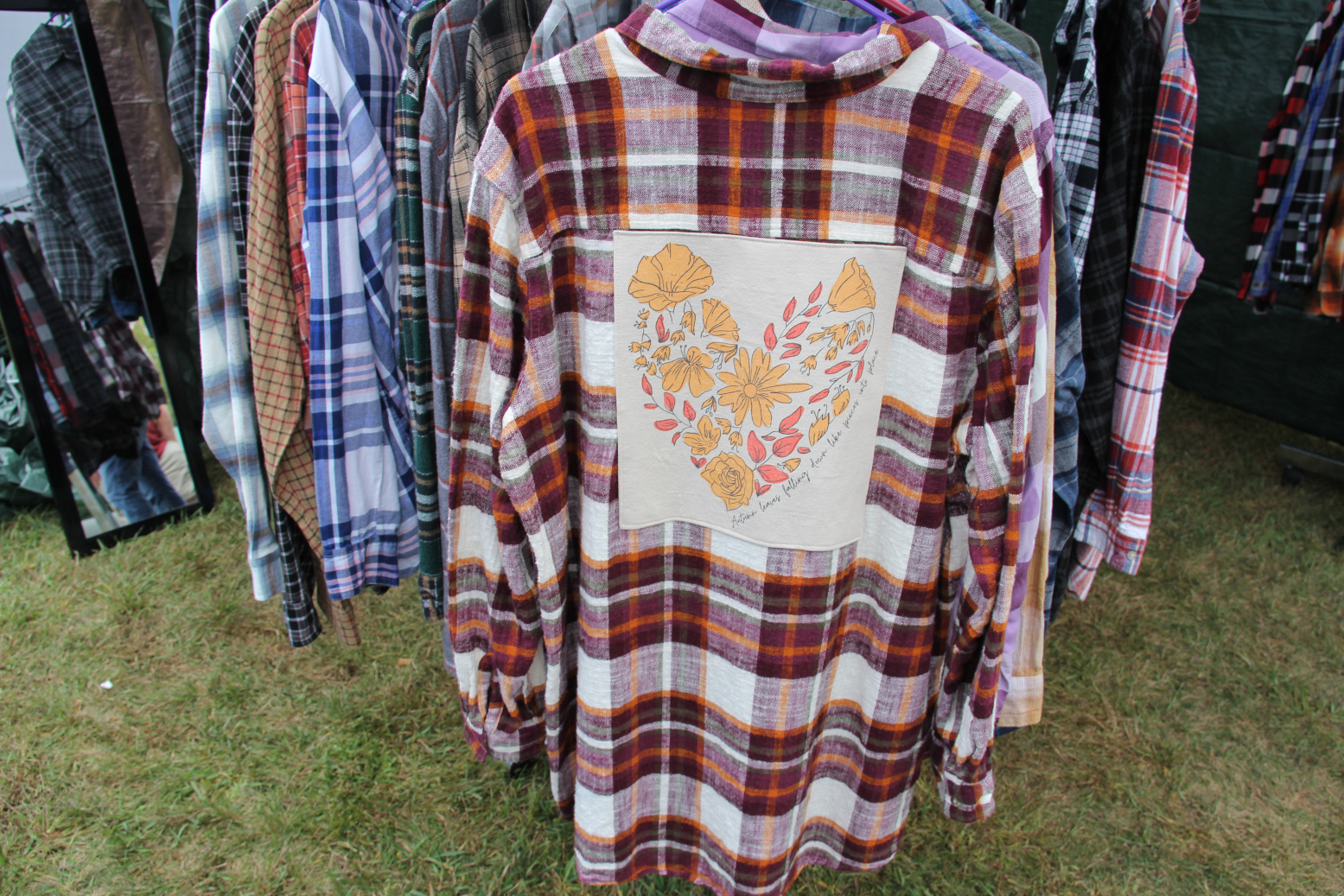
Upcycled shirts from The Thrifty Toad Shop included this autumn-themed one and others themed to sports, music, movies and much more. Ellorie is based in Cottage Grove and also sells on etsy. (Minnesota Prairie Roots copyrighted photo September 2025)
I appreciated the smallness of this craft and flea market and the ease with which I could meander and chat with sellers. The creativity and ingenuity of artisans always amazes me. Take Ellorie at The Thrifty Toad Shop. An avid thrifter, she turned her love of thrifting into a business. She buys second-hand shirts (mostly flannel) and graphic tees then upcycles them by cutting and sewing the t-shirt designs onto the backs of flannel shirts. I love this idea of reusing second-hand clothes, of creating something visually interesting and different. I’m no fashionista. But for someone like me who wears a lot of t-shirts and flannel (come autumn), Ellorie’s shirts are the perfect fit.
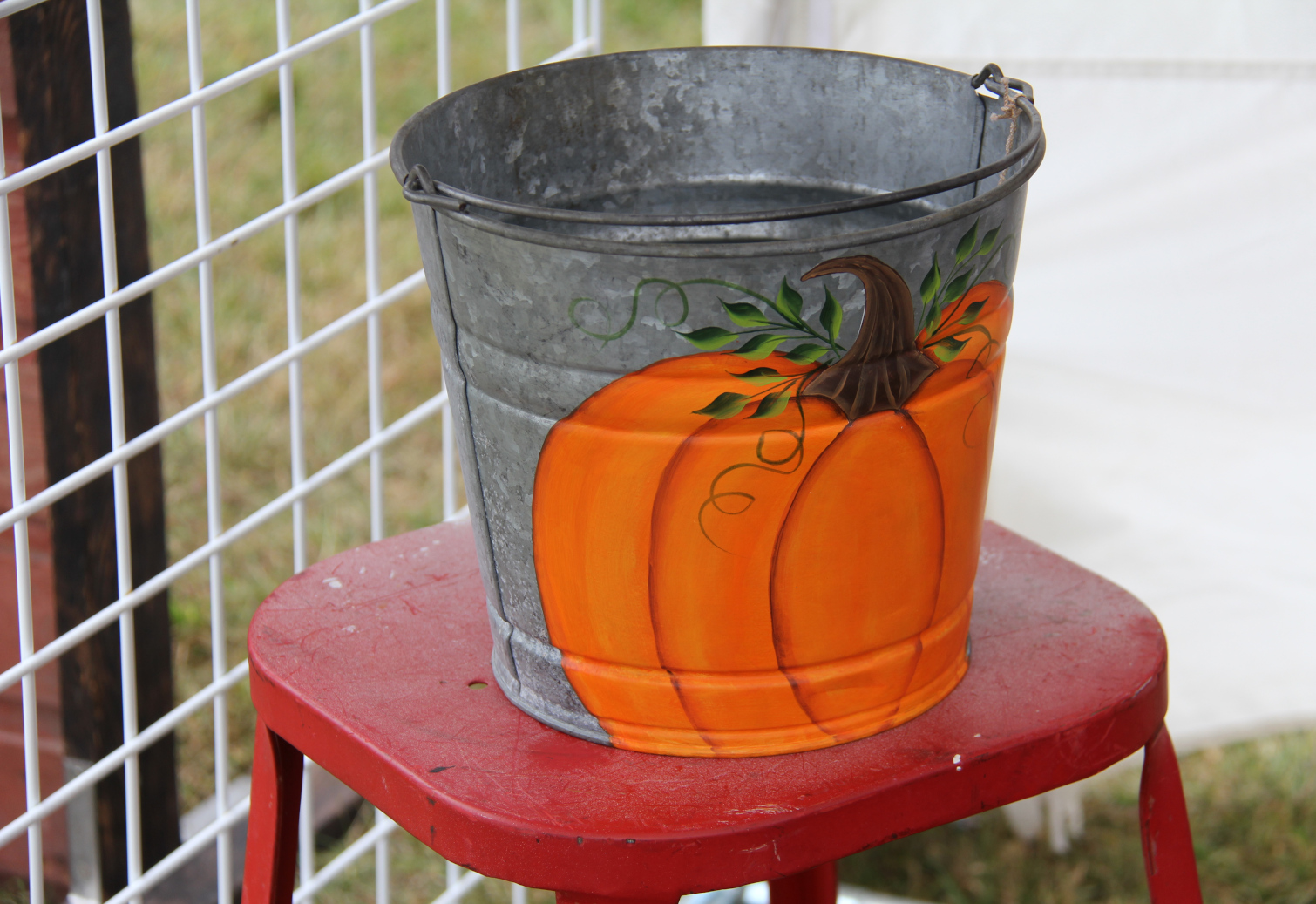
An example of the art created by Patti of A Touch from the Heart Creations based in Chaska. Patti brought mostly autumn and Christmas art to the market. (Minnesota Prairie Roots copyrighted photo September 2025)
Under another tent, Patti of A Touch from the Heart Creations also upcycles, painting seasonal designs onto old shovels, spades, pails, gas cans and more.
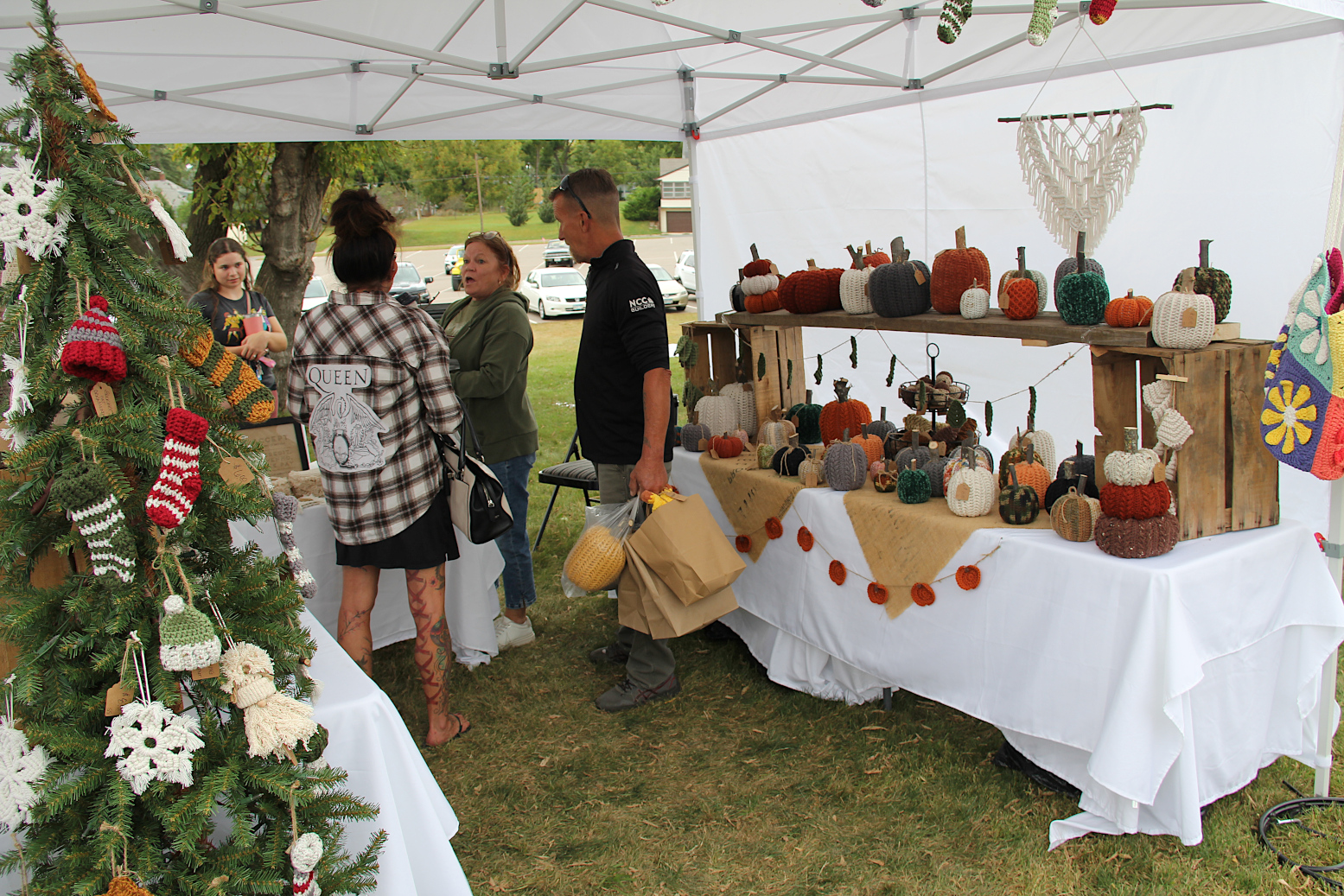
Shellie, from nearby Webster, chats with customers inside the tent displaying her mostly autumn and Christmas-themed crocheted creations. (Minnesota Prairie Roots copyrighted photo September 2025)
At Shellie’s Stitches Everything Crochet, it’s all about crocheting—Christmas trees, snowmen, pumpkins and, well, whatever this crafter wants to make and vend.
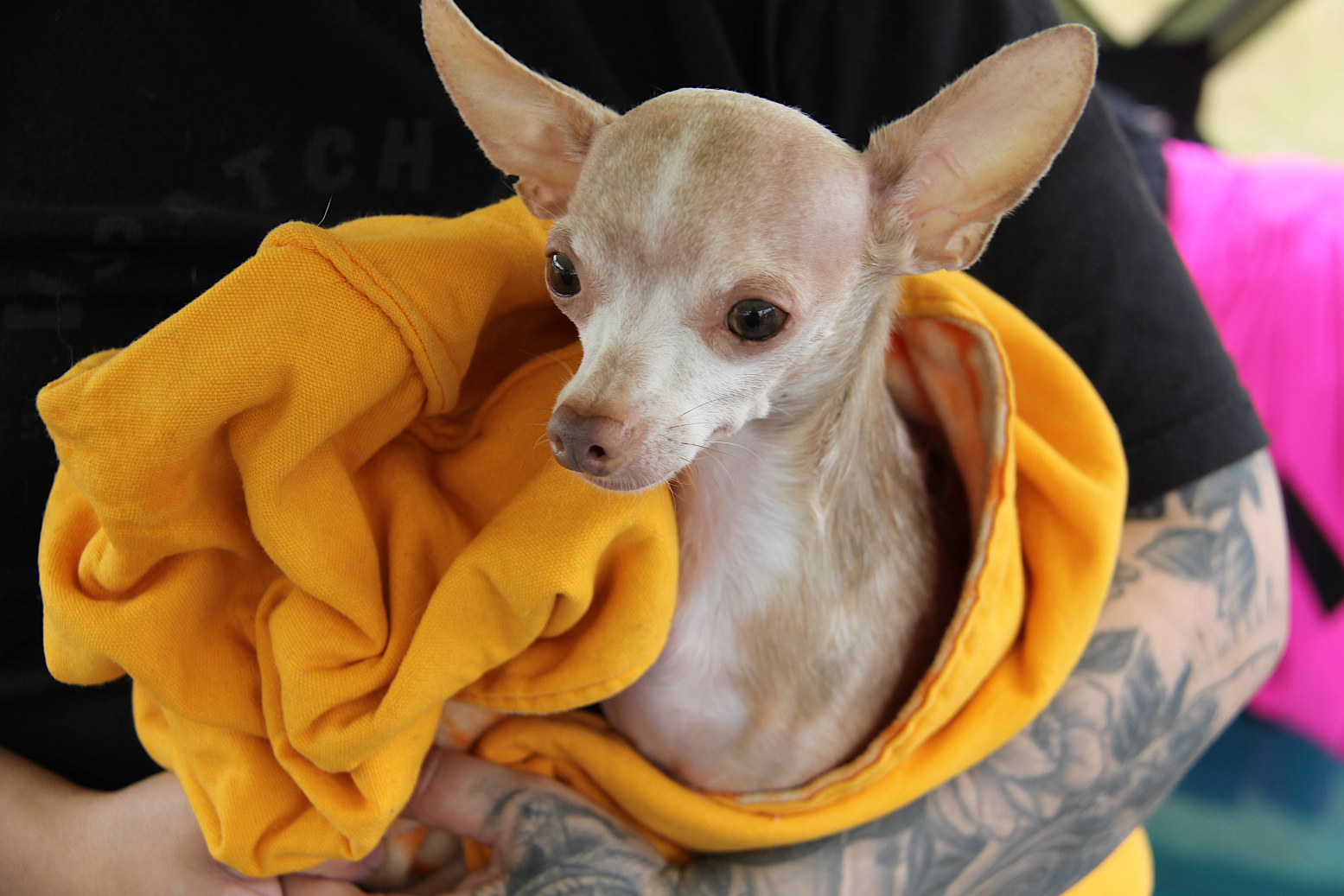
A representative from Dispatch Dogs of Lonsdale was on hand to talk about supporting dogs in need through fostering, transporting and fundraising. (Minnesota Prairie Roots copyrighted photo September 2025)
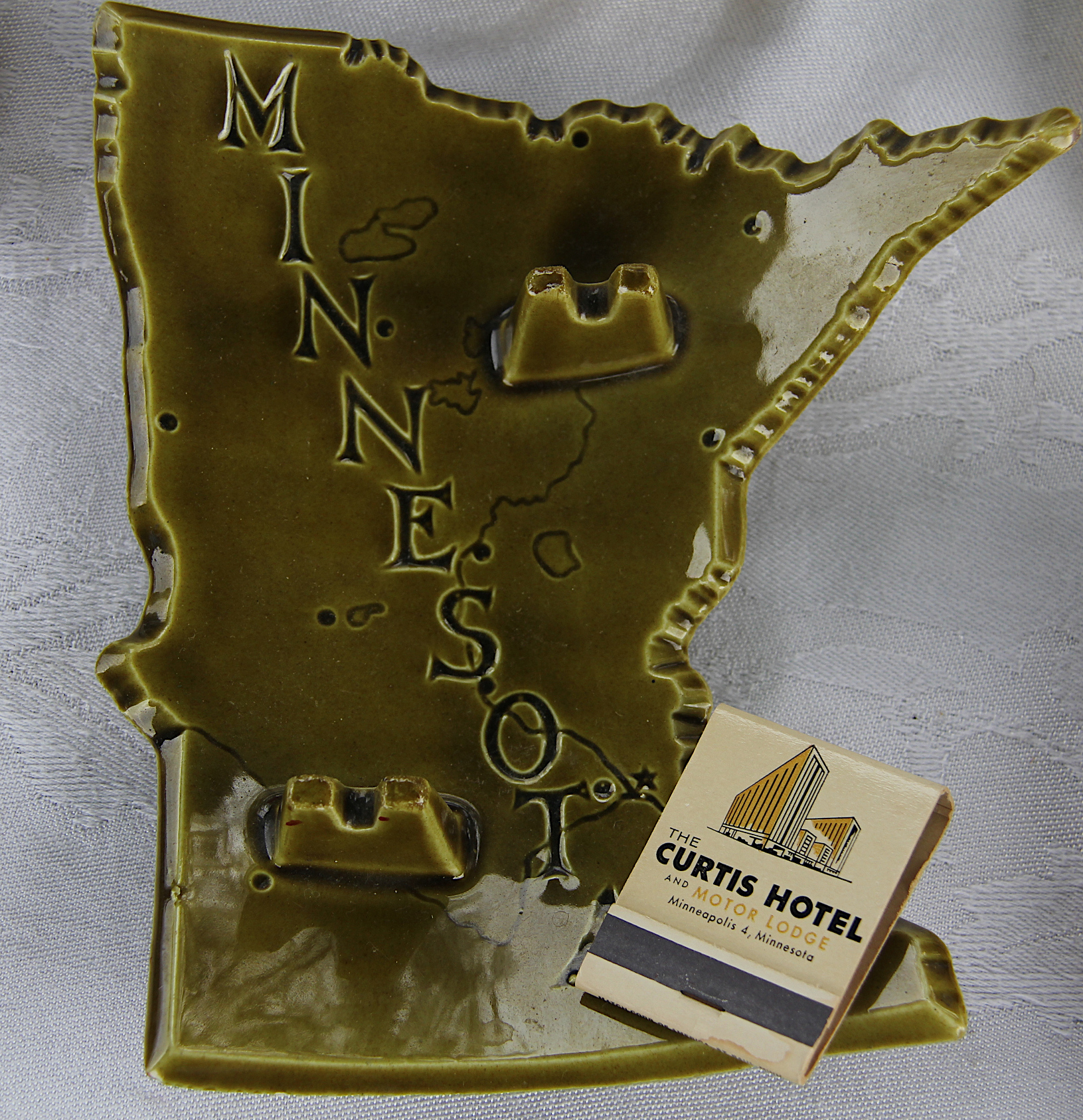
Loved this Minnesota shaped vintage ashtray with key town names and locations on the back and for sale from a flea market vendor. (Minnesota Prairie Roots copyrighted photo September 2025)
RR Revival organized the market. (Minnesota Prairie Roots copyrighted photo September 2025)
This event, along Railway Street near the grain elevators in Lonsdale and billed as the RR Revival Flea Market, proved a wonderful way to welcome autumn.
This thrift shop is packed with goods and is one I’ve shopped before. A small ice cream shop has been added to the space. (Minnesota Prairie Roots copyrighted photo September 2025)
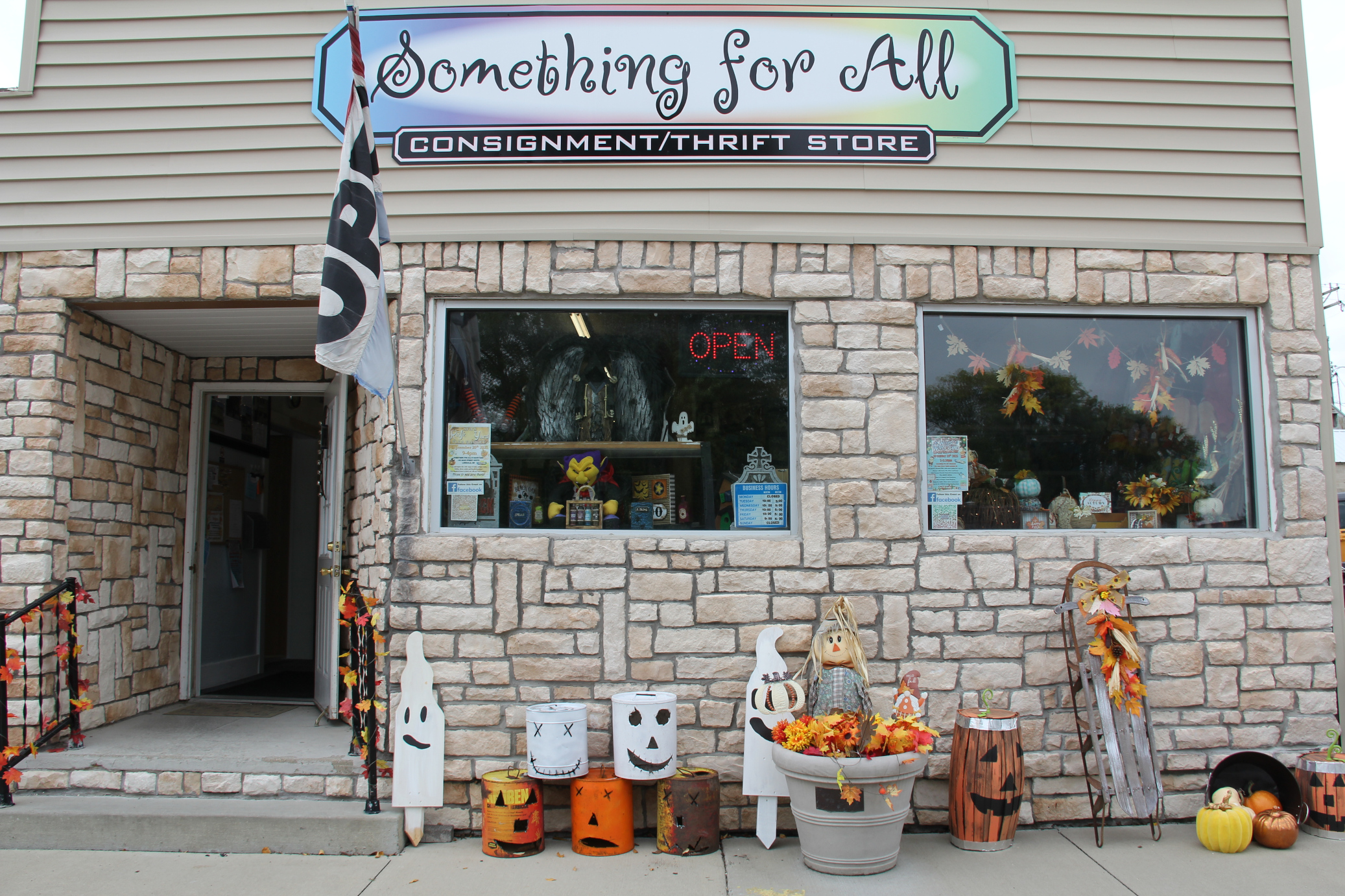
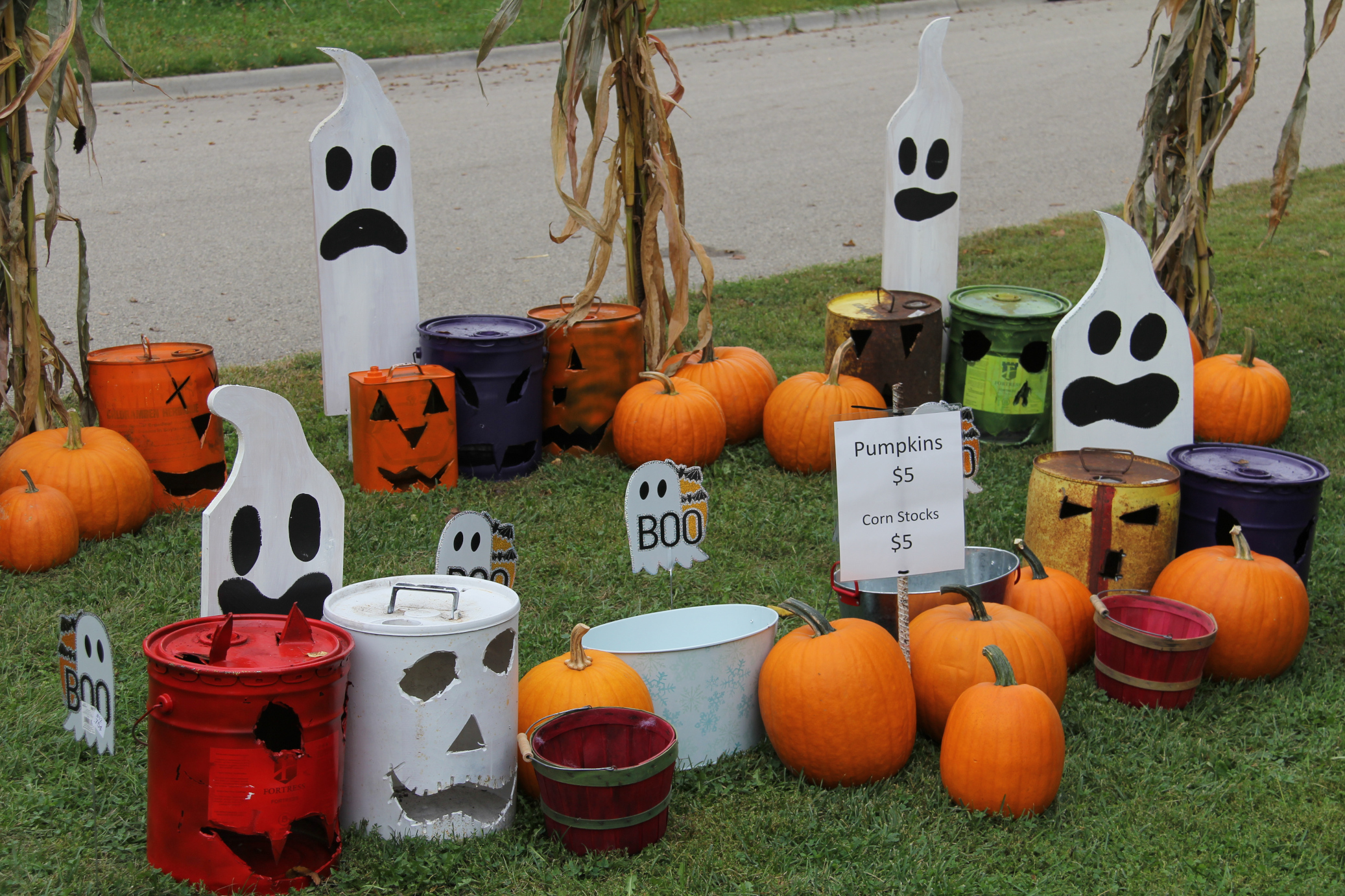
Two blocks away, the Something for All Consignment/Thrift Store also drew me inside to shop in the building’s nooks and crannies. Outside the shop, kids (mostly) could pose behind seasonal photo cut-outs, decorate a mini pumpkin, play with an oversized Jenga. There were wooden ghosts, jack-o-lanterns crafted from gas can, fiery salsa and more for sale, too.
Halloween decor and pumpkins for sale outside Something for All. (Minnesota Prairie Roots copyrighted photo September 2025)
I left Lonsdale without a single purchase. But what I bought was a few hours of contentment and enjoyment in a small town with a grain elevator, a familiar rural landmark that will always claim a piece of my heart.
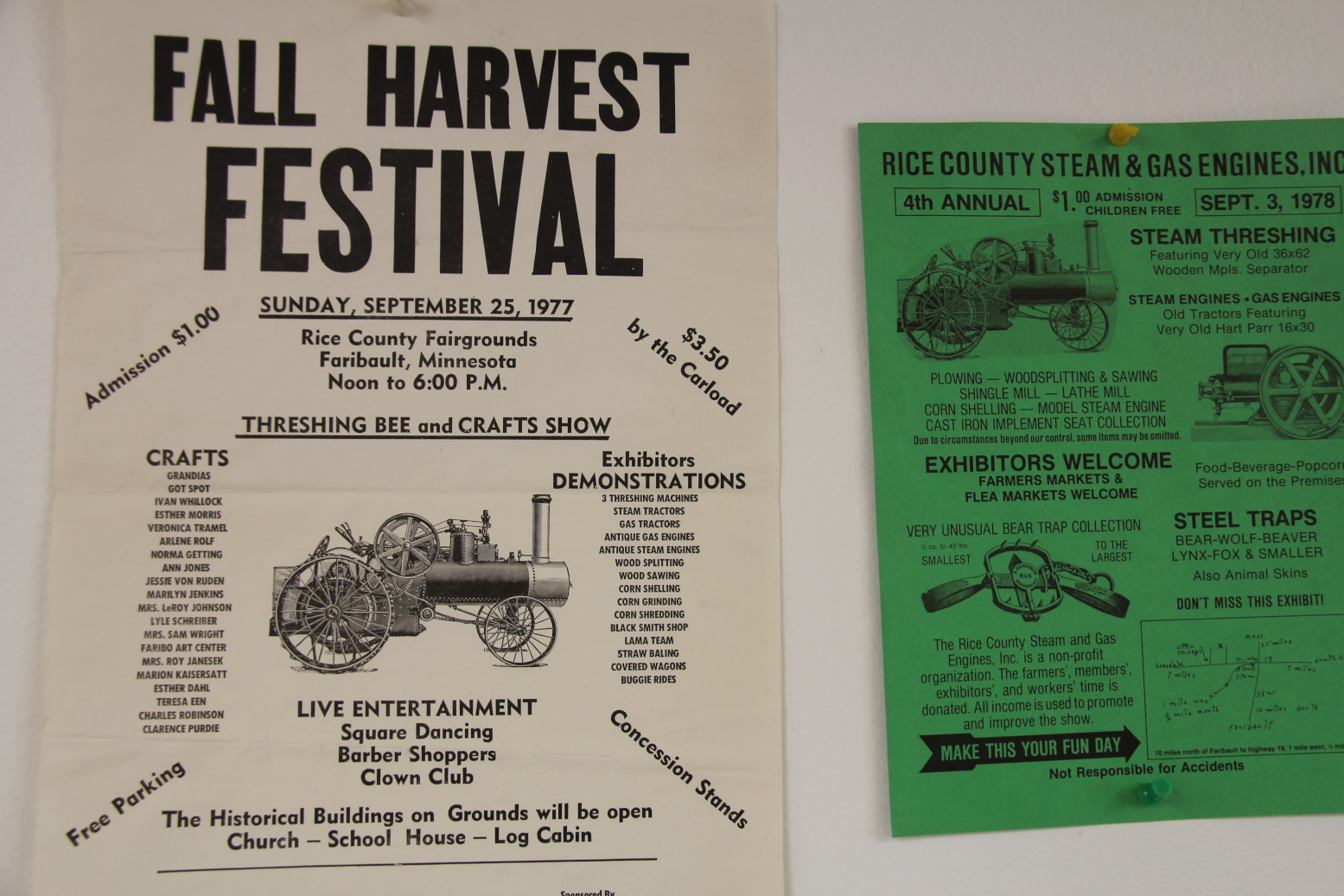
Vintage posters displayed from the early years of the current Rice County Steam & Gas Engines Fall Show, before the name and location changed. (Minnesota Prairie Roots copyrighted photo August 2025)
ART EXISTS EVERYWHERE, even at a farm-themed event. My photos from the Rice County Steam & Gas Engines Fall Show last Saturday in rural Dundas prove that. As a creative, I view life through an artistic lens. So I’m naturally drawn to photograph items that others may not necessarily see as art.
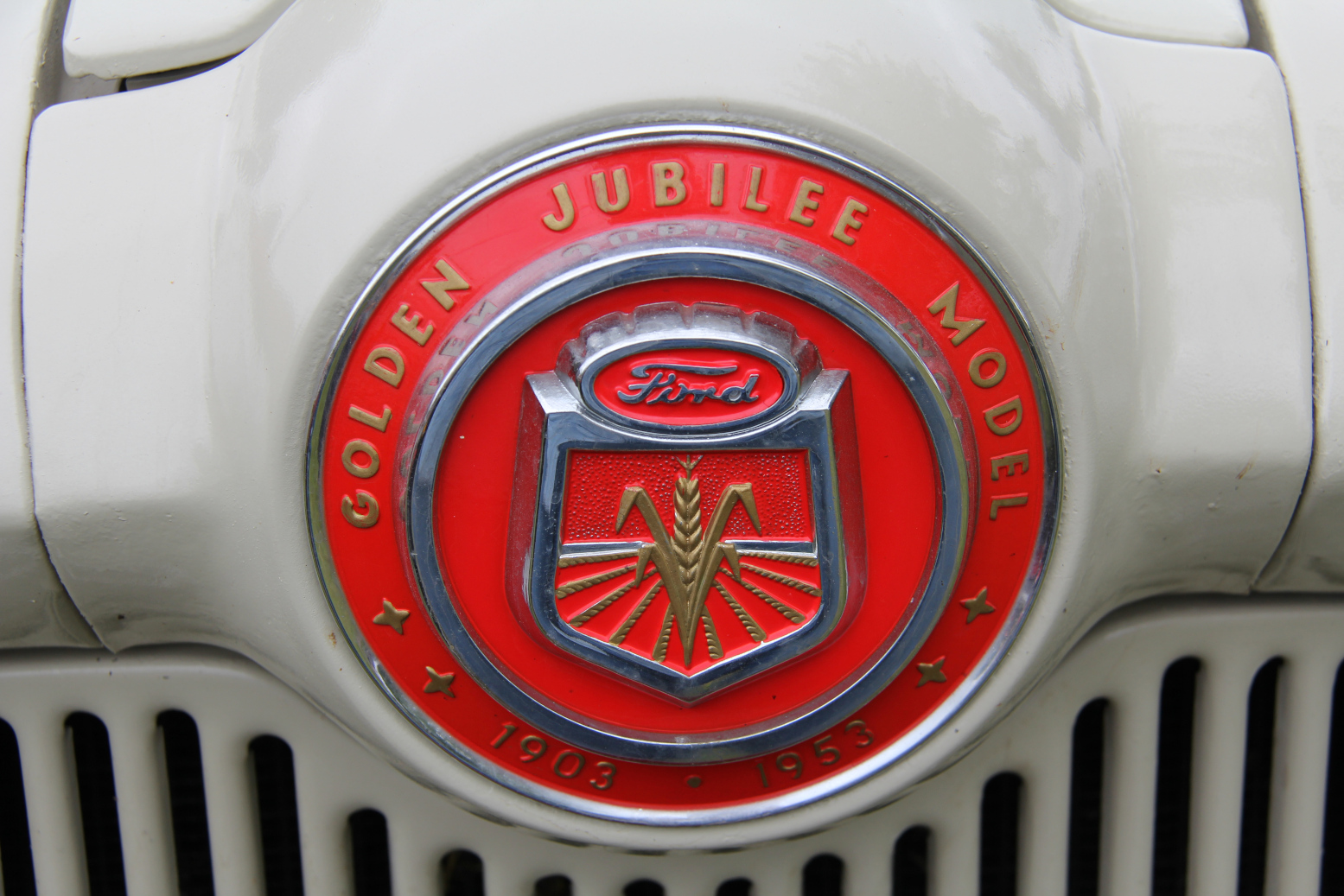
I see tractor emblems, including this one on a vintage Ford, as works of art. (Minnesota Prairie Roots copyrighted photo August 2025)
In this photo essay, you’ll view a sampling of the “art” I discovered. I found art on vintage tractors, on clothing, at the flea market, especially at the flea market, and beyond.
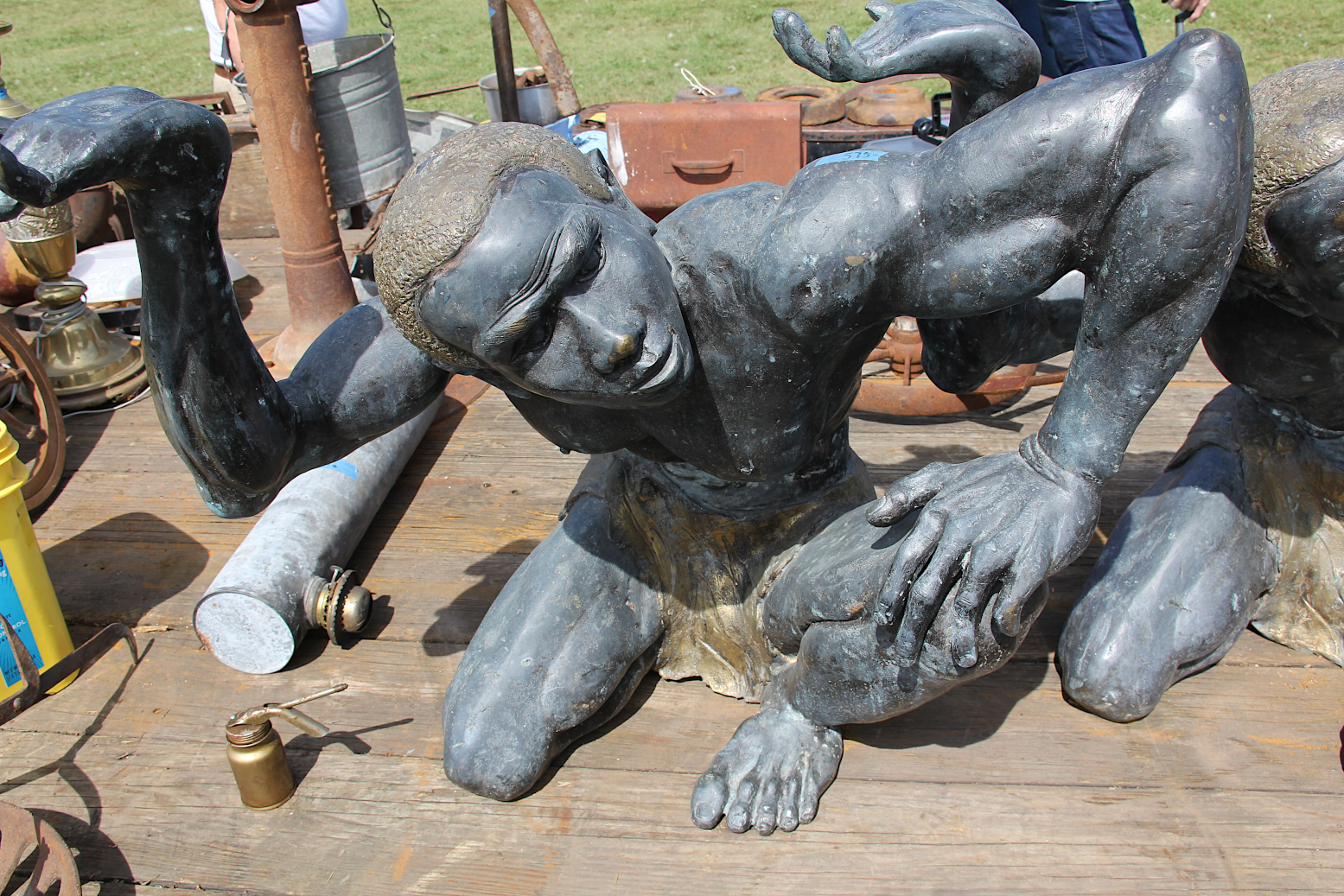
Two brass sculptures offered by a vendor. They are not solid brass, so not as heavy as they appear. (Minnesota Prairie Roots copyrighted photo August 2025)
Let’s start there, among market vendors selling a variety of goods ranging from toy tractors to glassware to home décor and everything in between. The art that drew my deepest interest—two massive brass sculptures of African men—sat on a flatbed trailer. They were nothing short of spectacular. Such grace. Such power in their muscular arms and legs. Truly, truly stunning. Seller Daniel Bell of Faribault, who calls himself a picker, found the matching pair in Iowa. The sculptures once supported tabletops, now missing. He’s priced each at $575. I can connect you with Dan if you’re interested.
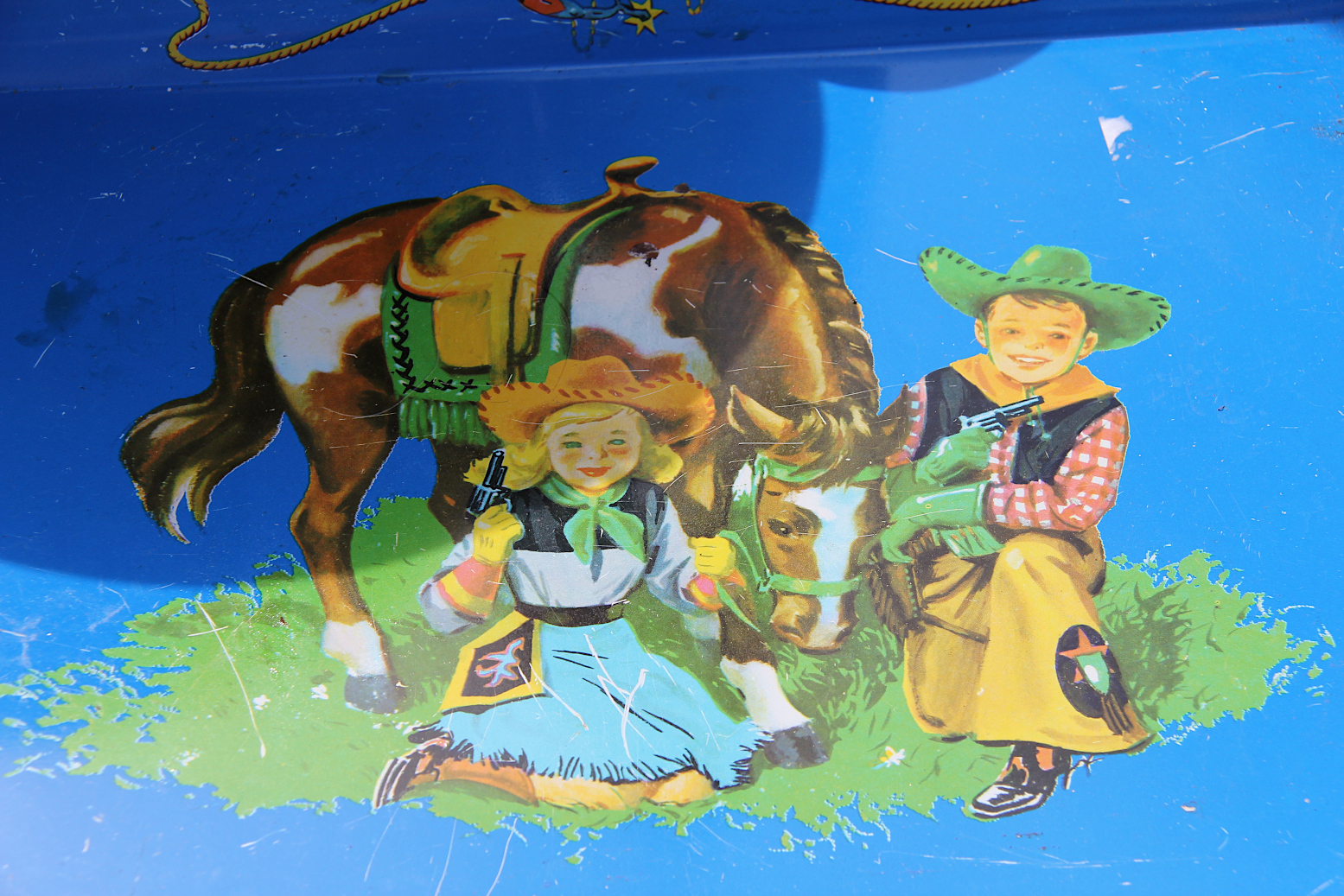
Vintage tray art from the 1950s. (Minnesota Prairie Roots copyrighted photo August 2025)
Almost as interesting, and certainly thought-provoking in 2025, is a 1950s image of children dressed in western attire and brandishing pistols. When I reflect on that scene printed on a tray, I remember how I, too, owned a toy cap gun and played “Cowboys and Indians.” That all seems so terribly wrong now when viewing this as an adult in a world riddled by gun violence. I’m thankful for changed attitudes and perspectives about our Indigenous Peoples and about toy guns.
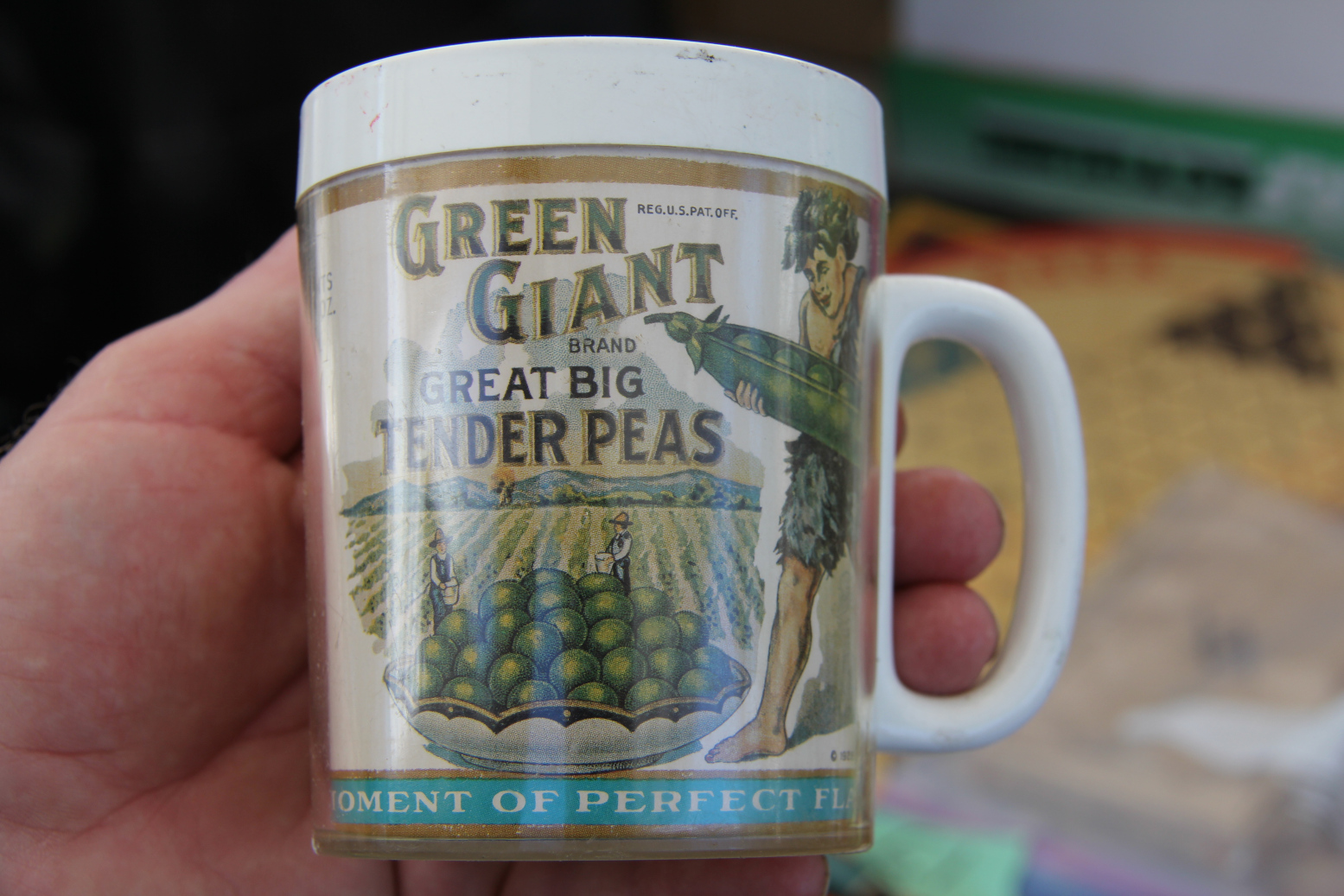
A Jolly Green Giant themed plastic mug. (Minnesota Prairie Roots copyrighted photo August 2025)
I spotted art on a plastic coffee mug from Minnesota Valley Canning Company featuring the Green Giant brand of GREAT BIG TENDER PEAS. The back side of the mug is imprinted with the story of the Jolly Green Giant. I should have purchased the cup, which belonged to the father of the flea market vendor. He worked at the canning company in Le Sueur until its 1995 closure. This mug is more than a mug. It’s a collectible piece of regional literary and visual art.
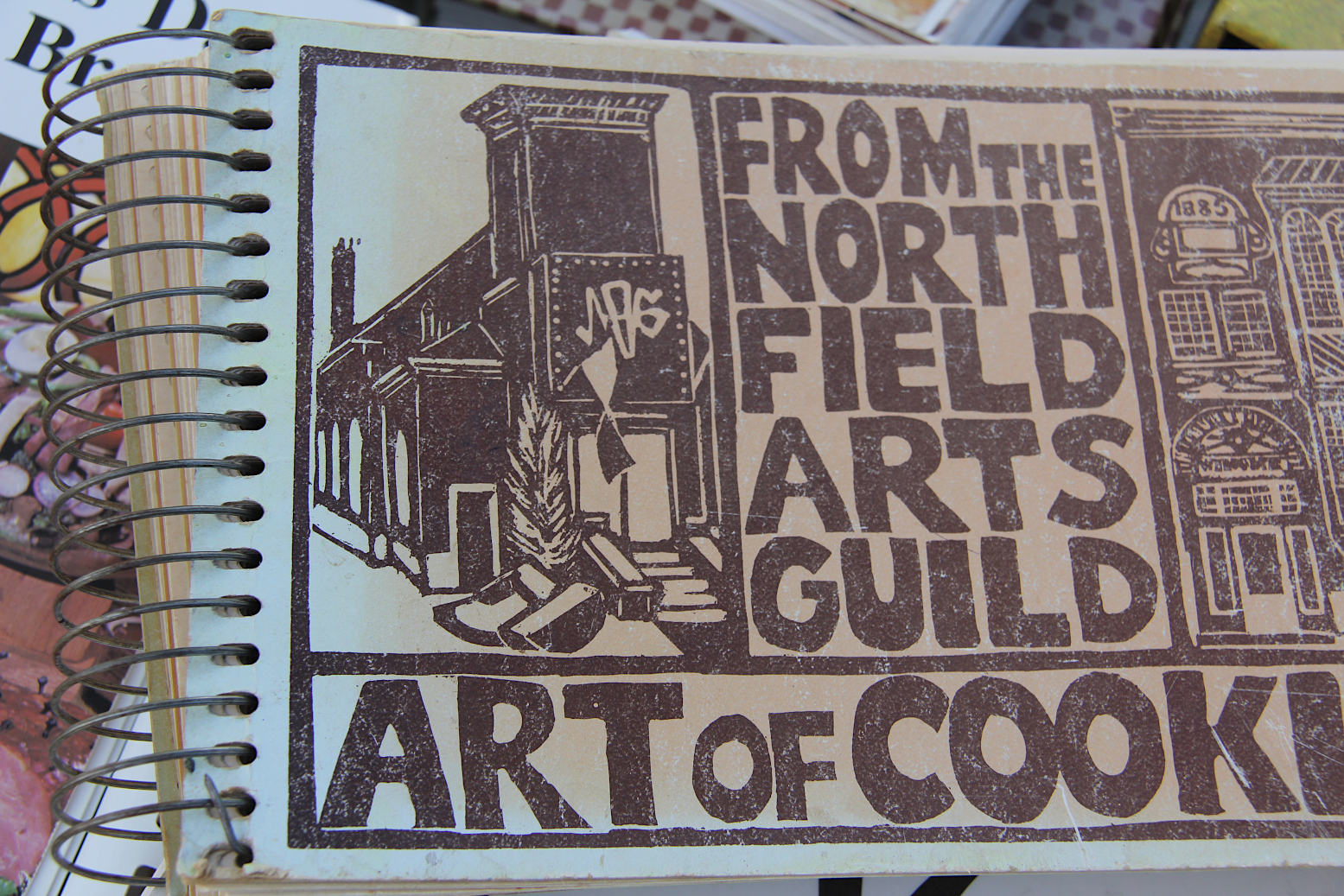
The artsy cover of the 1984 Northfield Arts Guild commemorative cookbook. (Minnesota Prairie Roots copyrighted photo August 2025)
And then I found art on the cover and inside the Northfield Arts Guild’s 25th anniversary cookbook from 1984. Not unexpected, it features the art of rural Northfielder Fred Somers, whose work I admire.
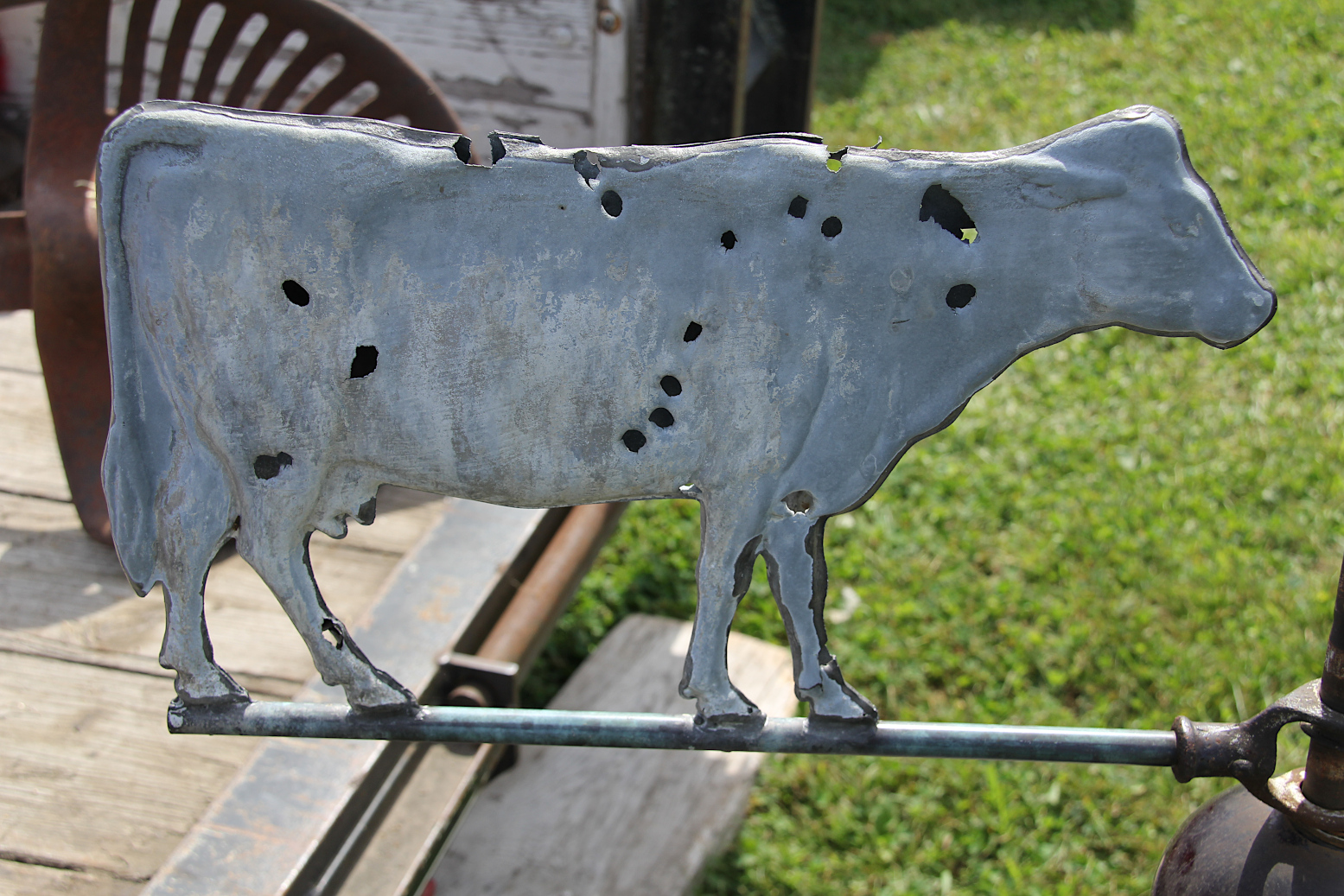
A damaged work of art. (Minnesota Prairie Roots copyrighted photo August 2025)
At another vendor, I spotted a bullet-riddled cow weather vane, a form of functional rural art. And apparently a shooting target, too. I saw a horse weather vane inside a showgrounds building.
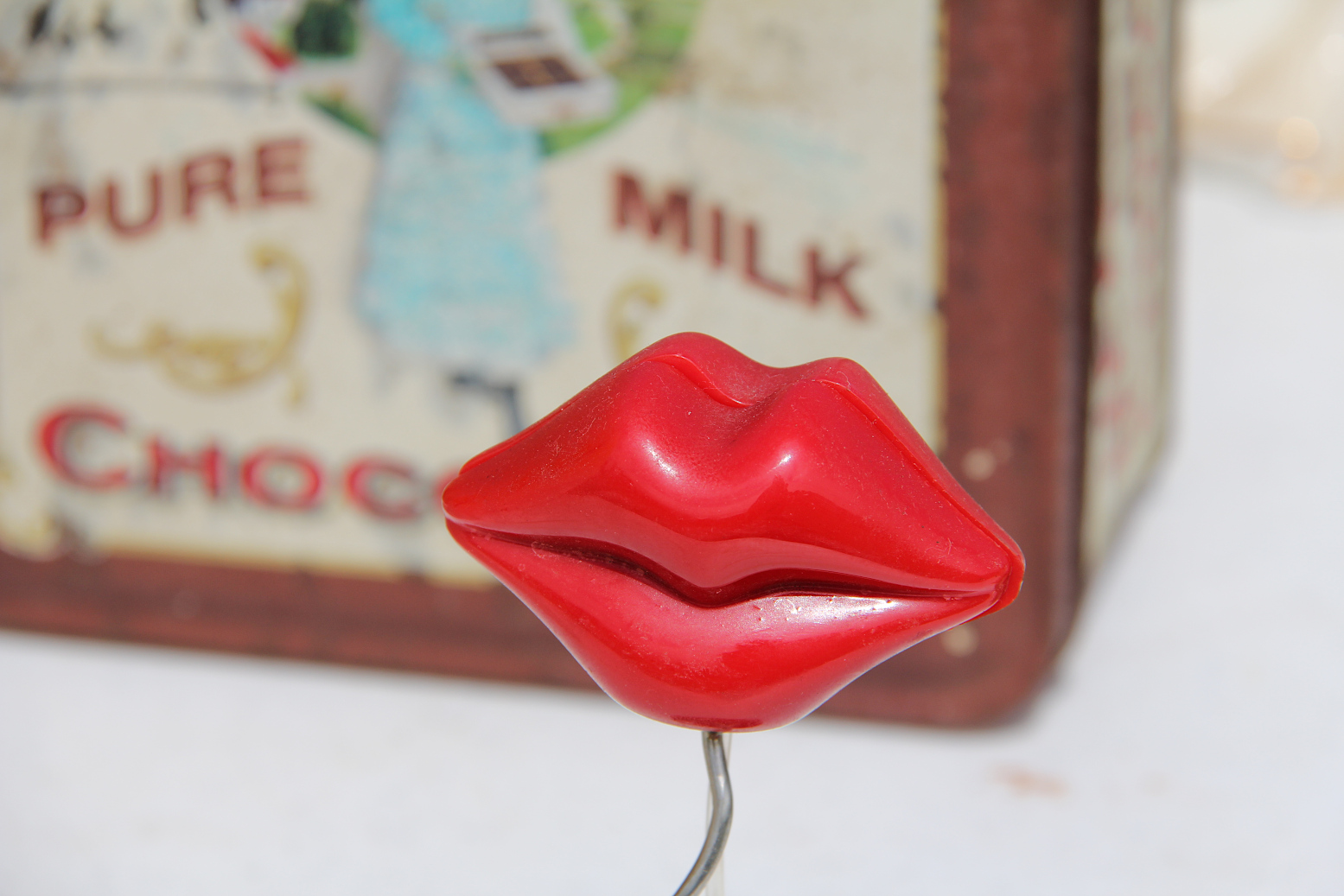
Pop art in my eyes. The vendor saw the lips as otherwise, as a bill holder. (Minnesota Prairie Roots copyrighted photo August 2025)
And then there were the duck decoys, the red plastic lips and the jar full of colored plastic clothespins, all viewed as art by me.
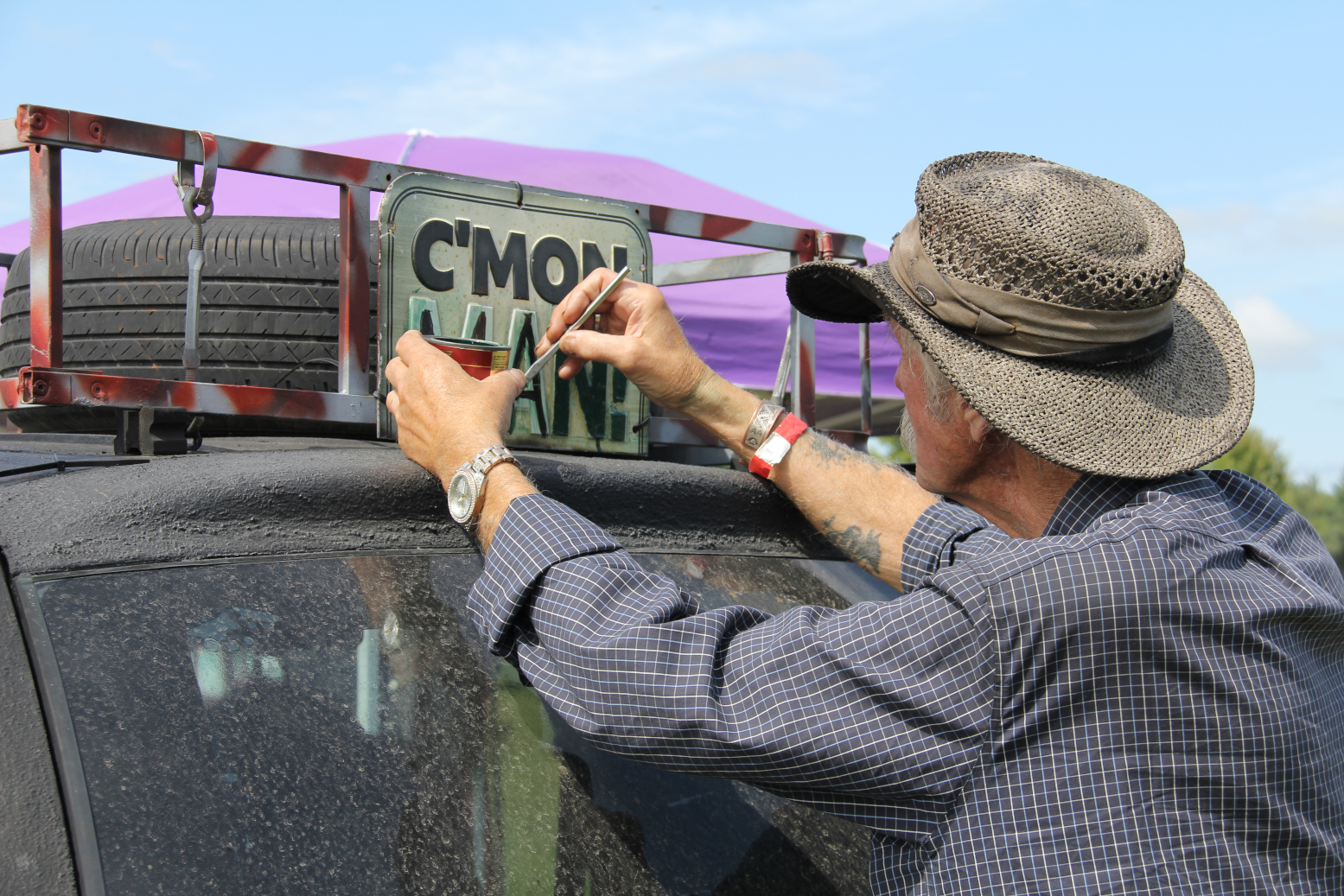
The leather goods vendor paints while manning his stand. (Minnesota Prairie Roots copyrighted photo August 2025)
I even saw a vendor painting, freshening up the words “C’MON MAN!” on his van. He was selling mostly leather belts, an inventory purchased when a leather goods shop closed.
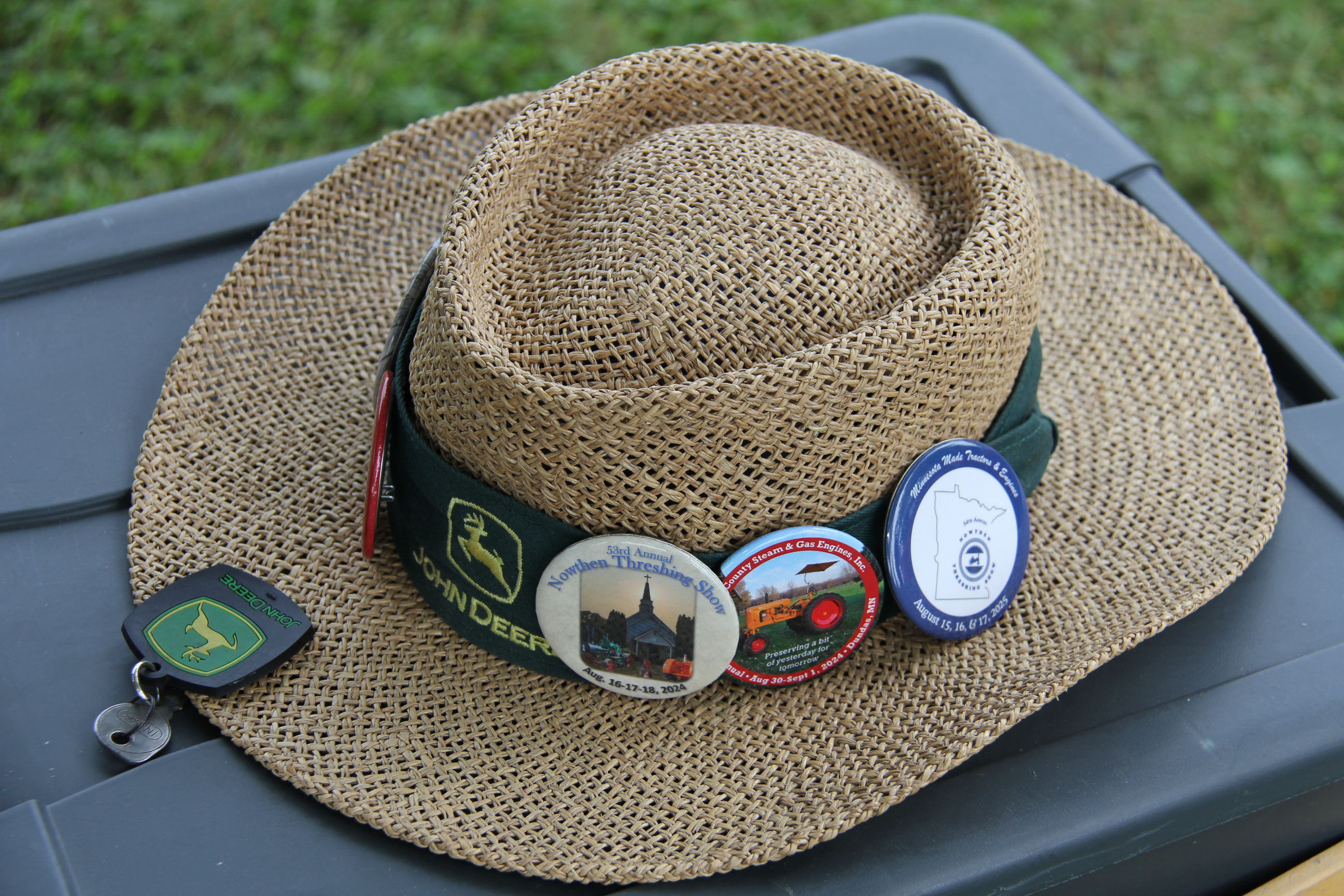
Show buttons on a straw hat and even a keychain are forms of art. (Minnesota Prairie Roots copyrighted photo August 2025)
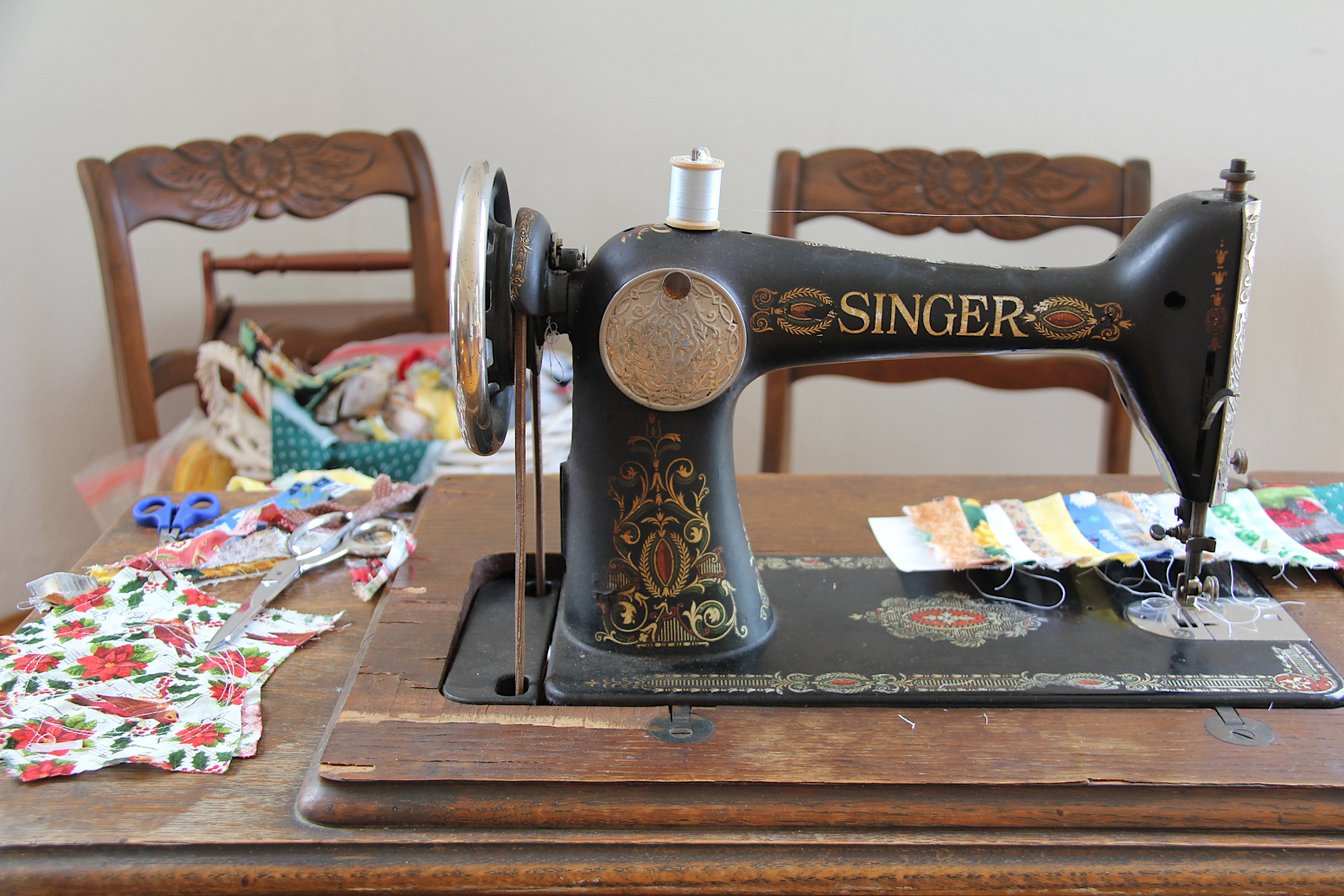
Creative arts of yesteryear shown inside the old farmhouse. (Minnesota Prairie Roots copyrighted photo August 2025)
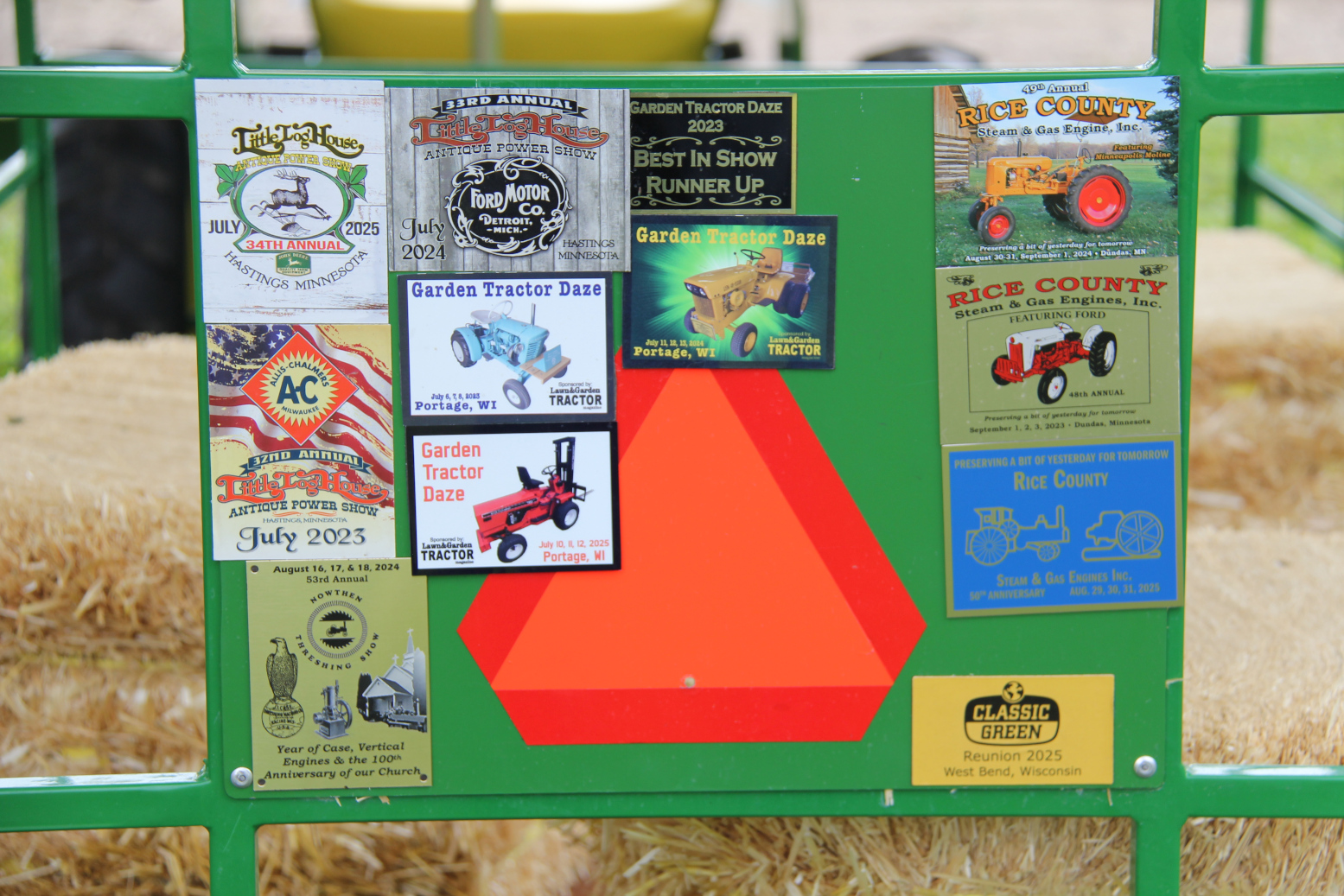
Elsewhere around the showgrounds, art exists also. I discovered it on commemorative buttons, stickers and signs. Inside the 1912 farmhouse a vintage sewing machine and fabric scraps highlighted the creative arts.
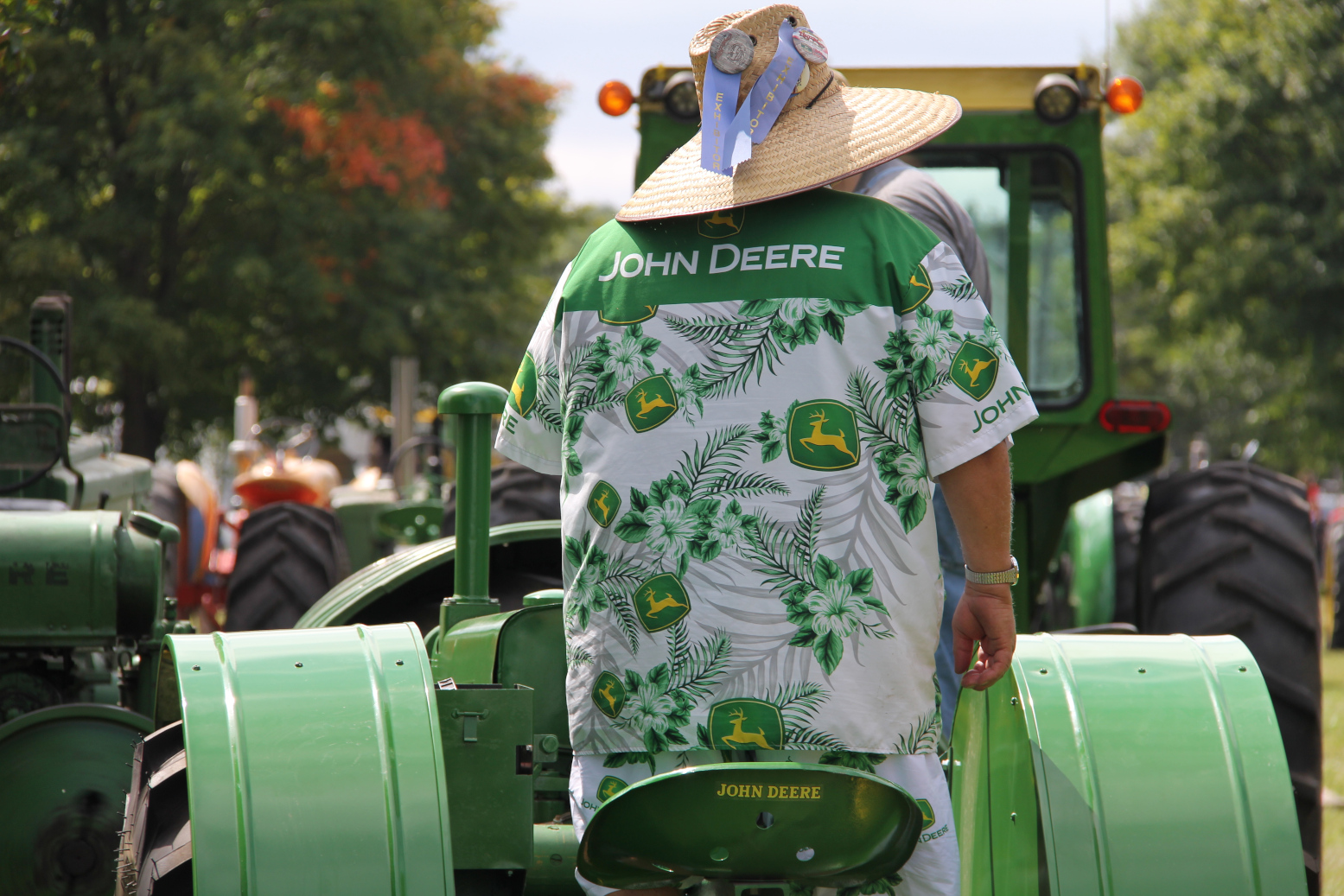
Brand loyalty in fashion. (Minnesota Prairie Roots copyrighted photo August 2025)
I even found fashion art—in a John Deere/Hawaiian shirt worn by a John Deere tractor owner.
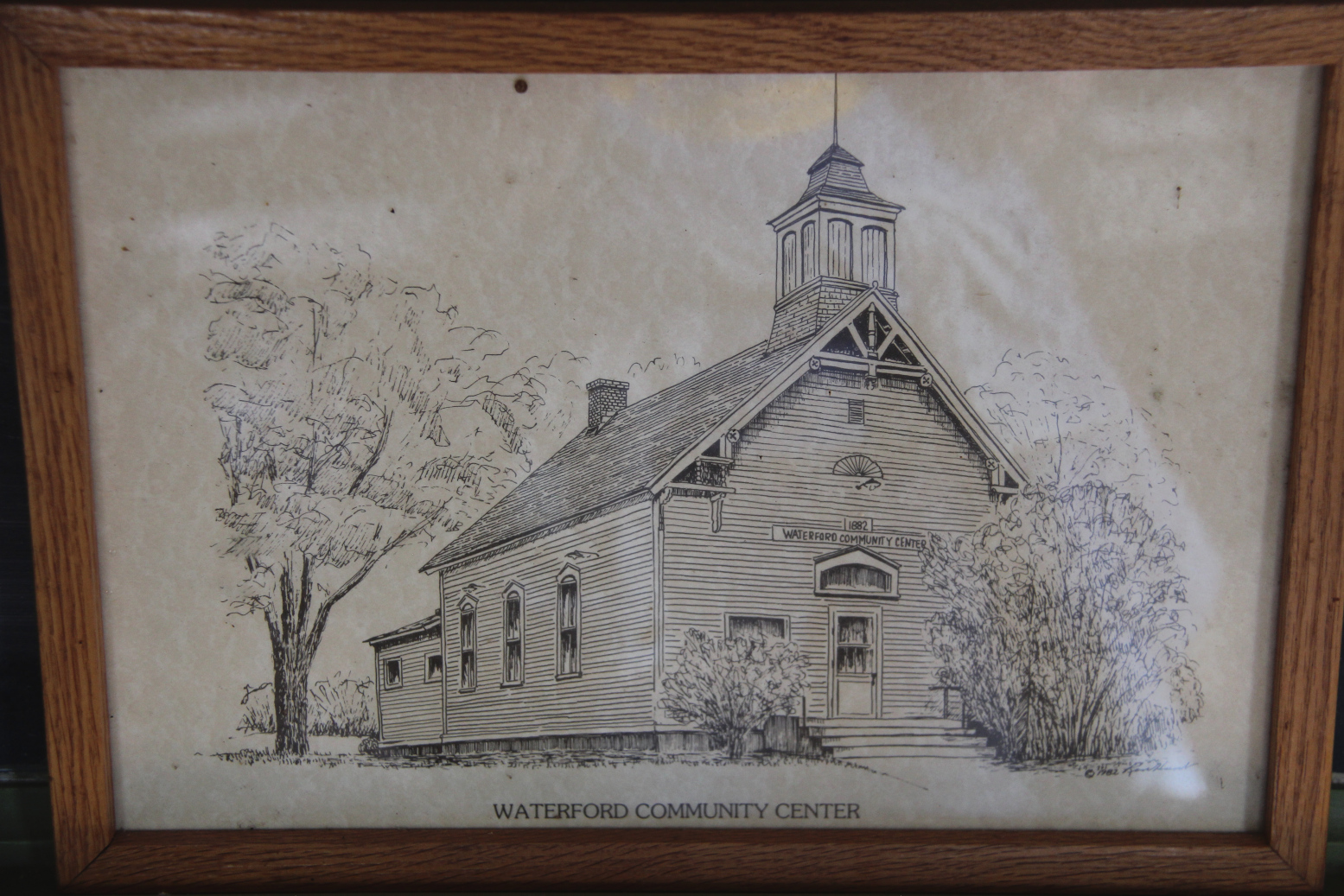
Among the art displayed inside the old Waterford School and then community center. (Minnesota Prairie Roots copyrighted photo August 2025)
Art (prints and photos) graces a wall of the Waterford Community Center, once a one-room school, moved onto the Steam & Gas Engines showgrounds and opened to the public this year.
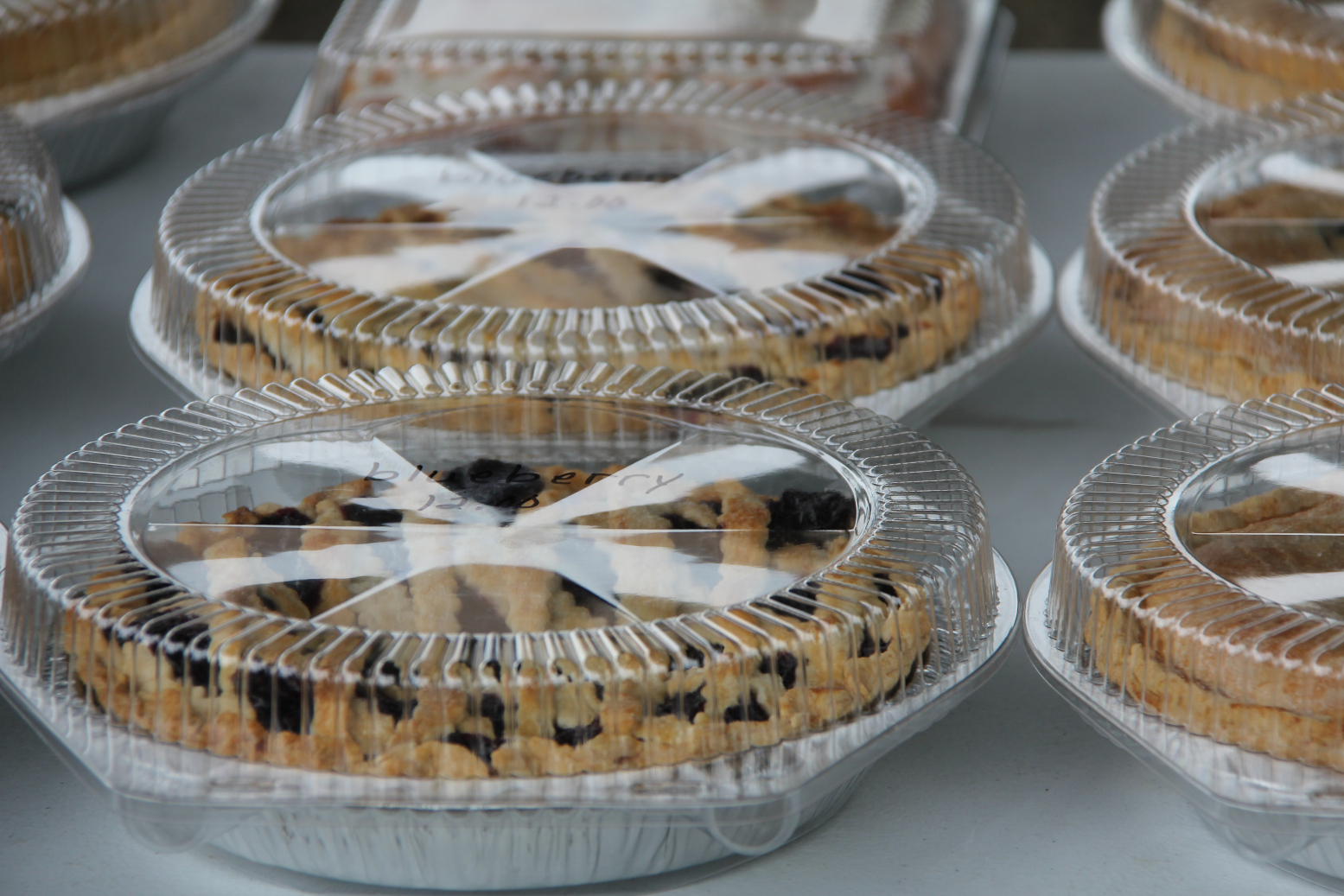
The culinary arts in pies crafted by the Amish. (Minnesota Prairie Roots copyrighted photo August 2025)
And then there are the culinary arts as perfected by an Amish family selling handheld fruit pastries and pies plus homemade ice cream crafted on-site as attendees watched. They are new-to-the-show vendors. The peach pastry and ice cream, oh, my, so delicious. They sold out of pies and handhelds.
I see this collage of farm show stickers as art. (Minnesota Prairie Roots copyrighted photo August 2025)
This may be a show themed to farming of yesteryear. But, as I discovered, art also abounds. Sometimes you just have to look through an artistic lens to see it.
An angler fishes in Horseshoe Lake, rural Merrifield, on an August evening. (Minnesota Prairie Roots copyrighted photo August 2025)
IN MID AUGUST, Randy and I headed nearly 200 miles north of Faribault for our second stay of the summer at a family member’s cabin in the Brainerd lakes area. This trip our eldest daughter and her family joined us for several days. There’s nothing quite like time with the grandkids at the lake. Time to play, to relax, to make memories. And that we did. I cherish our days together Up North.
We mostly hung out on the beach or in the cabin. Weather conditions were not ideal with cool temps and strong winds prevailing when all six of us were there together. Yet, we got outdoors—the kids running along the sandy beach, digging a hole along water’s edge, enjoying the placid water on a warm and sunny day before the weather changed.
Looking upward toward the pines from a lakeside hammock. (Minnesota Prairie Roots copyrighted photo August 2025)
MAKING MEMORIES
I led the 6 and 9-year-olds on a scavenger hunt. We searched for a feather, a mushroom, a nest…that which nature offers like a gift if only we pause to see and appreciate. Randy taught Isaac to play Marbles on a homemade wooden board. It’s a long-time favorite of the extended Helbling family. We played Yahtzee and Connect 4, on an over-sized outdoor board. The puzzlers among us (not me) pieced together a lemonade stand. We headed into town for massive scoops of ice cream, a cabin tradition. And one day we picked peas from our sister-in-law and brother-in-law’s plot in a community garden. Later I taught Isaac how to shell them. The kids delighted in a timed Ninja course at a Crosslake playground and posed for photos behind Paul Bunyan family cut-outs at another park. We devoured s’mores around the campfire.
A campfire is the place to share stories, create memories. (Minnesota Prairie Roots copyrighted photo August 2025)
This is the stuff of memories. Simple. Uncomplicated. Mostly unplanned. Moments that connect us, deepen bonds.
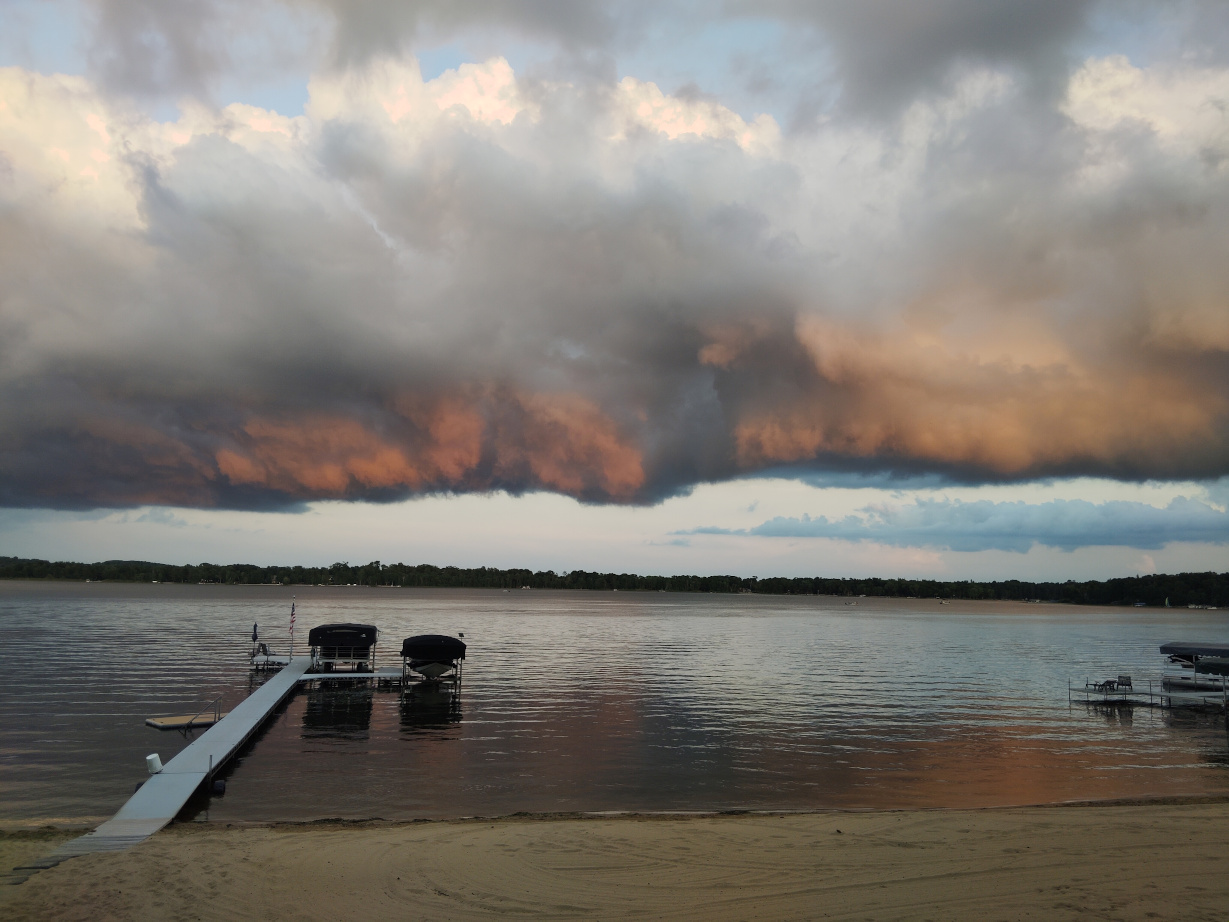
Moody clouds at sunset over Horseshoe Lake. (Minnesota Prairie Roots copyrighted photo August 2025)
Being outdoors, away from home and work and schedules and the demands of everyday life, opens us to the joys of vacationing. The haunting call of a loon and the sighting of a bald eagle perched atop a pine proved exhilarating. A bank of moody, pink-tinged clouds slung low in the evening sky drew all of us to focus on and admire the scene.
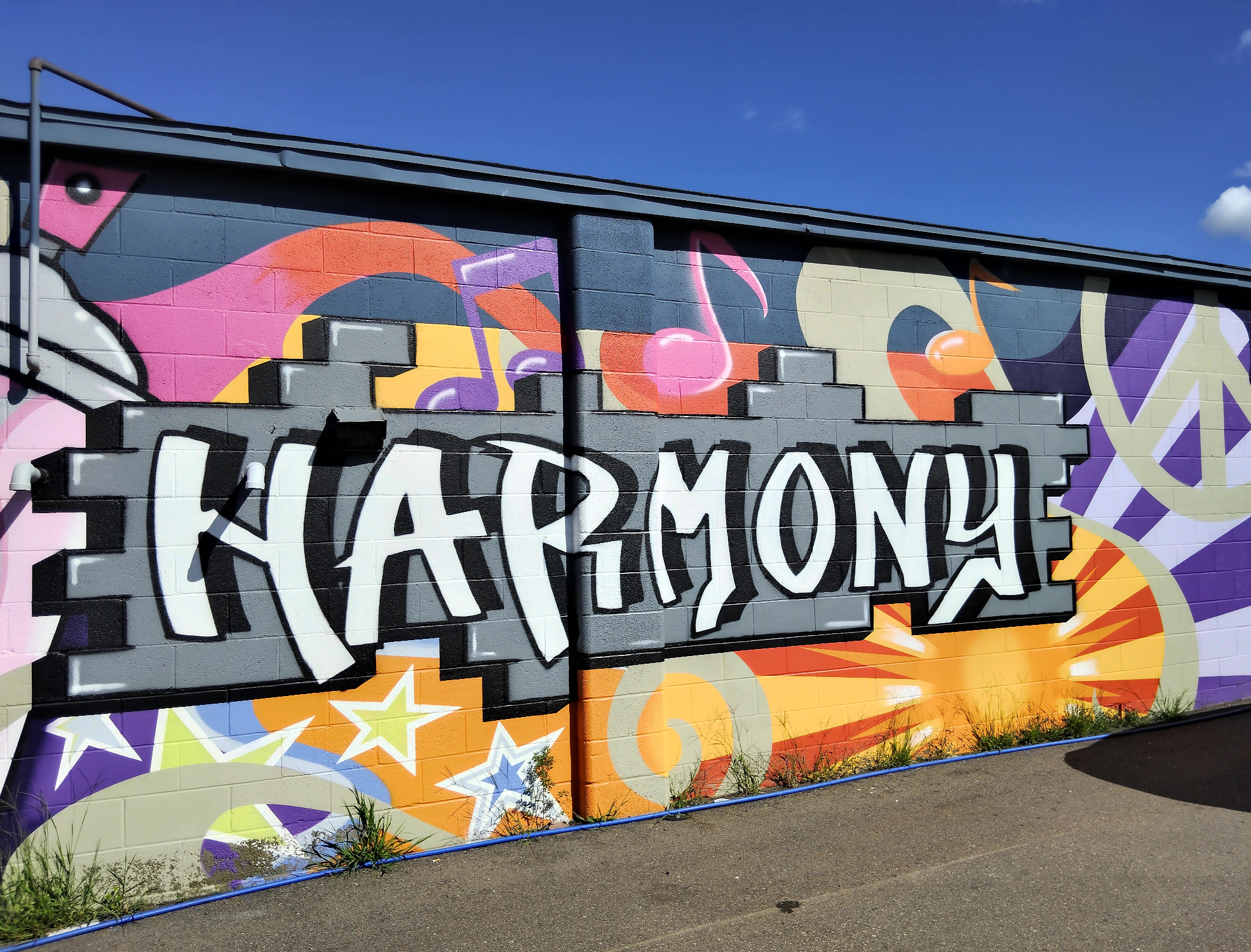
A mural in Crosby. (Minnesota Prairie Roots copyrighted photo August 2025)
MORE CHERISHED MOMENTS
When the grandkids and their parents left several days before us, our world seemed too quiet. No more kids scampering up and down the loft ladder. No more requests to go to the beach. No more…
But, sans kids, there were still moments to be cherished. Lakeside dining with friends at Breezy Point. Popping in to chat with a Faribault friend who lives in Nisswa now and works for the Chamber of Commerce. And then a chance encounter with adults with disabilities on an outing at Mission Park, rural Merrifield. I learned that visually-impaired Shannon, who uses a white cane and carries over-sized yellow sunglasses, likes to sing. I asked her to sing for me. And she did—to a movie soundtrack of ”My Heart Will Go On” by Celine Deon. I thought my heart would burst with joy as this young woman first mouthed the words, then sang them quietly and then louder as I encouraged her. It’s one of those moments I will forever treasure. Me nearly in tears and everyone inside that picnic shelter smiling during this impromptu weekday morning concert.
A mural by Adam Turman in downtown Crosby highlights recreational activities in the Cuyuna Lakes area. (Minnesota Prairie Roots copyrighted photo August 2025)
SOUTHERN MINNESOTA CONNECTIONS ON THE RANGE
On the way home, there were more delights during a stop in Crosby, an Iron Range community that is evolving into a destination with its many outdoor activities, shops and murals. I spotted a mural by Minneapolis artist Adam Turman, whose work can be found on murals in Northfield and on Faribault Mill products. He’s a favorite muralist of mine. I saw also, much to my delight, Faribault Mill blankets and Caves of Faribault cheeses in separate shops. I felt Faribault-proud seeing those wool blankets and exceptional cheeses for sale in Crosby.
ICE CREAM, GREEK STYLE
But it was the homemade ice cream—Rave Creamworks’ Super Premium—at Victual in Crosby that got rave reviews from me. Randy and I shared a large scoop of Baklava ice cream laced with flaky phyllo dough, chopped walnuts and honey. It is the shop’s bestseller among 24 choices, so said the teen behind the counter. I loved this creamy ice cream, which I expect my friend, Father Jim Zotalis at the Cathedral of Our Merciful Saviour in Faribault, would appreciate given his Greek heritage. Baklava is a Greek pastry. Even in that ice cream I felt a connection to southern Minnesota. We can leave home, but we never really do.
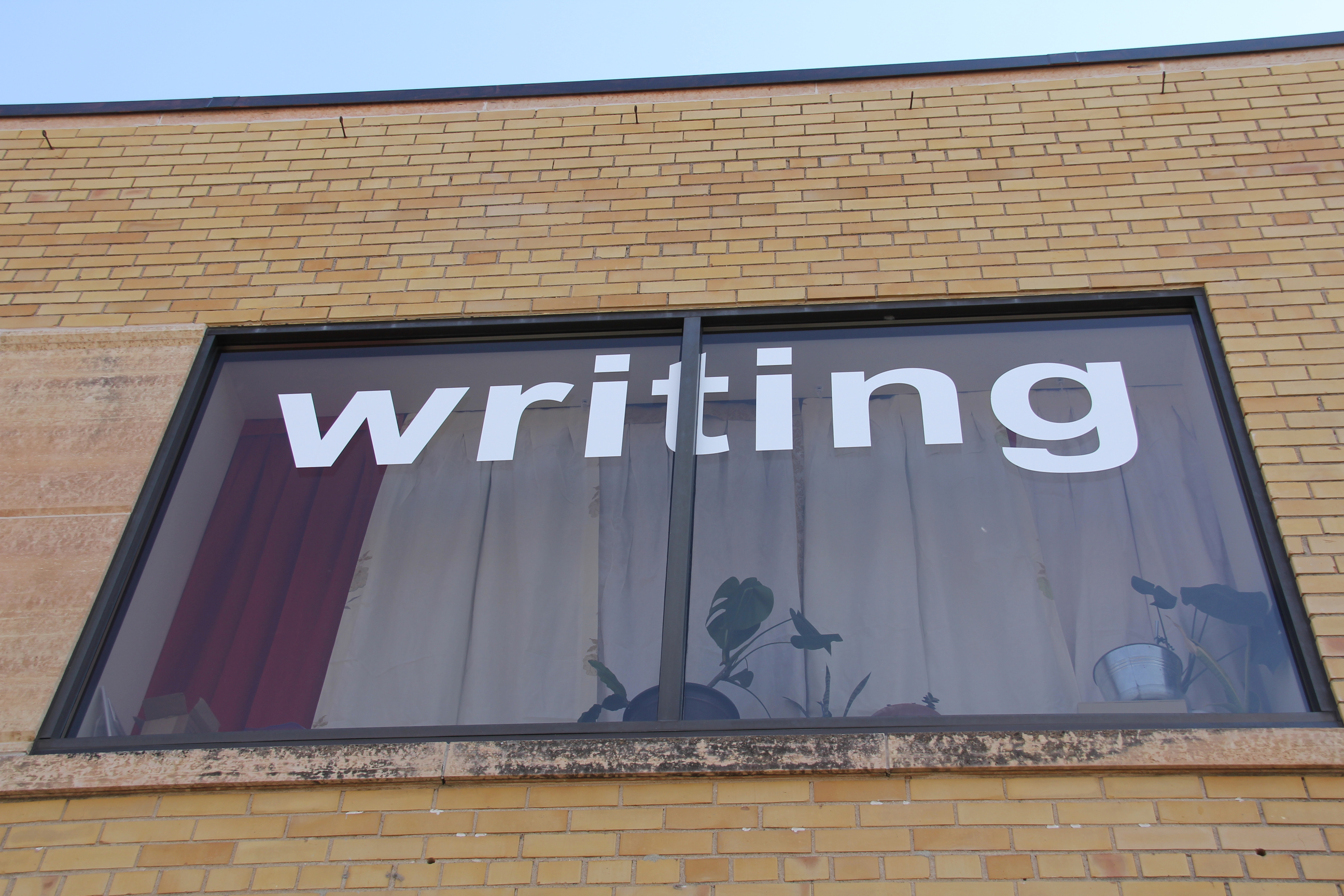
I looked to a second floor window of the Arts Center of Saint Peter to see this word. (Minnesota Prairie Roots copyrighted file photo October 2024)
AS A WRITER, I’m drawn to words. Perhaps that’s why I appreciate signs, slogans, even interesting messages on t-shirts such as “I put ketchup on my ketchup.” I spotted a guy in Faribault recently wearing a ketchup tee and told him I liked his shirt. I appreciated the humor. It was his second compliment of the day, he said. I’m not surprised given an American obsession with the condiment. I mean, my older brother squirted ketchup on his potatoes when we were kids. And most people can’t eat fries without ketchup. I can.
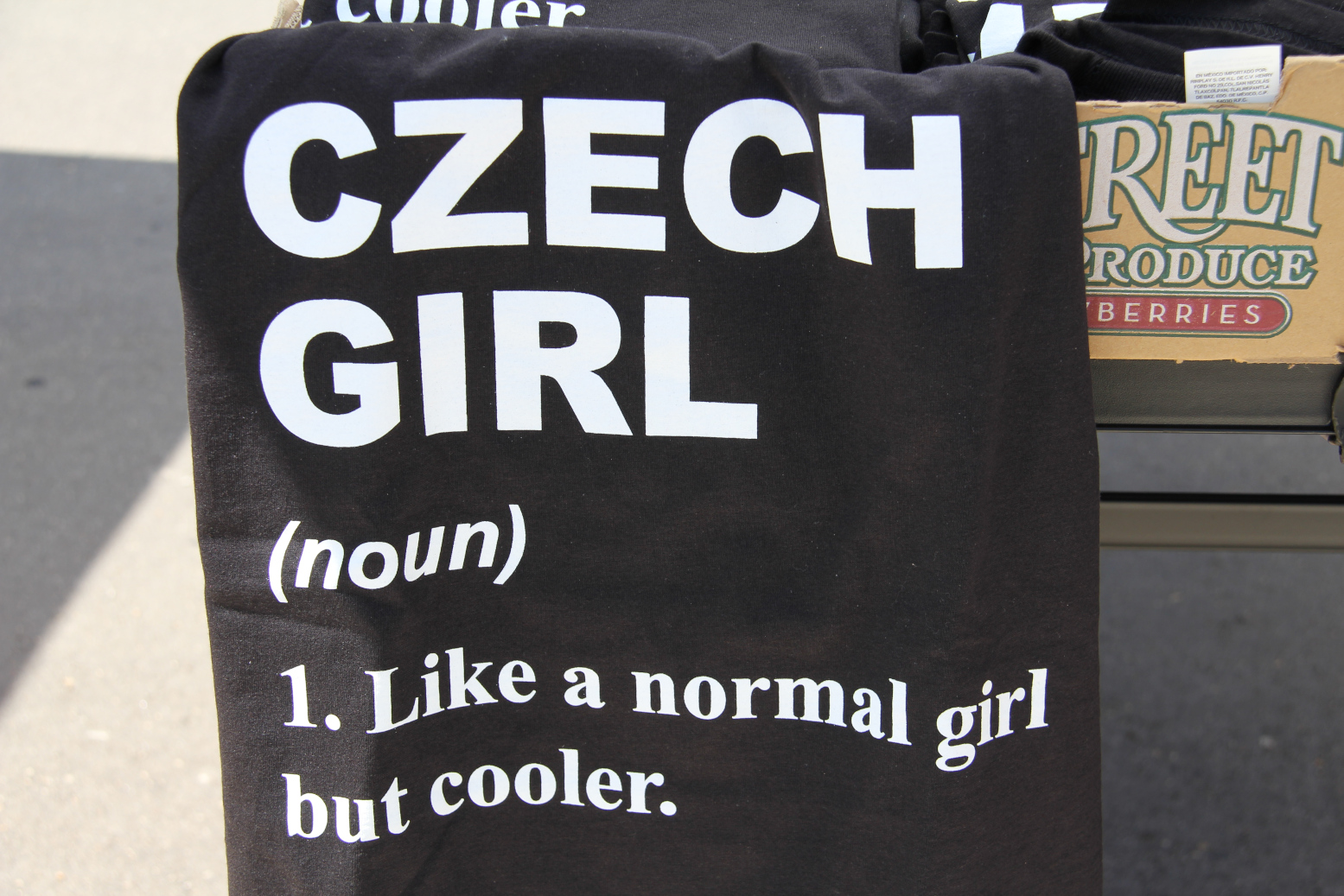
A t-shirt sold by a vendor at Montgomery, Minnesota’s Czech May Day. (Minnesota Prairie Roots copyrighted photo May 2025)
Then there’s the t-shirt I saw for sale earlier this year at a Czech celebration in Montgomery. In white letters on black fabric, the noun, Czech girl, was defined “like a normal girl but cooler.” I guess I will never be Czech cool since my heritage is German.
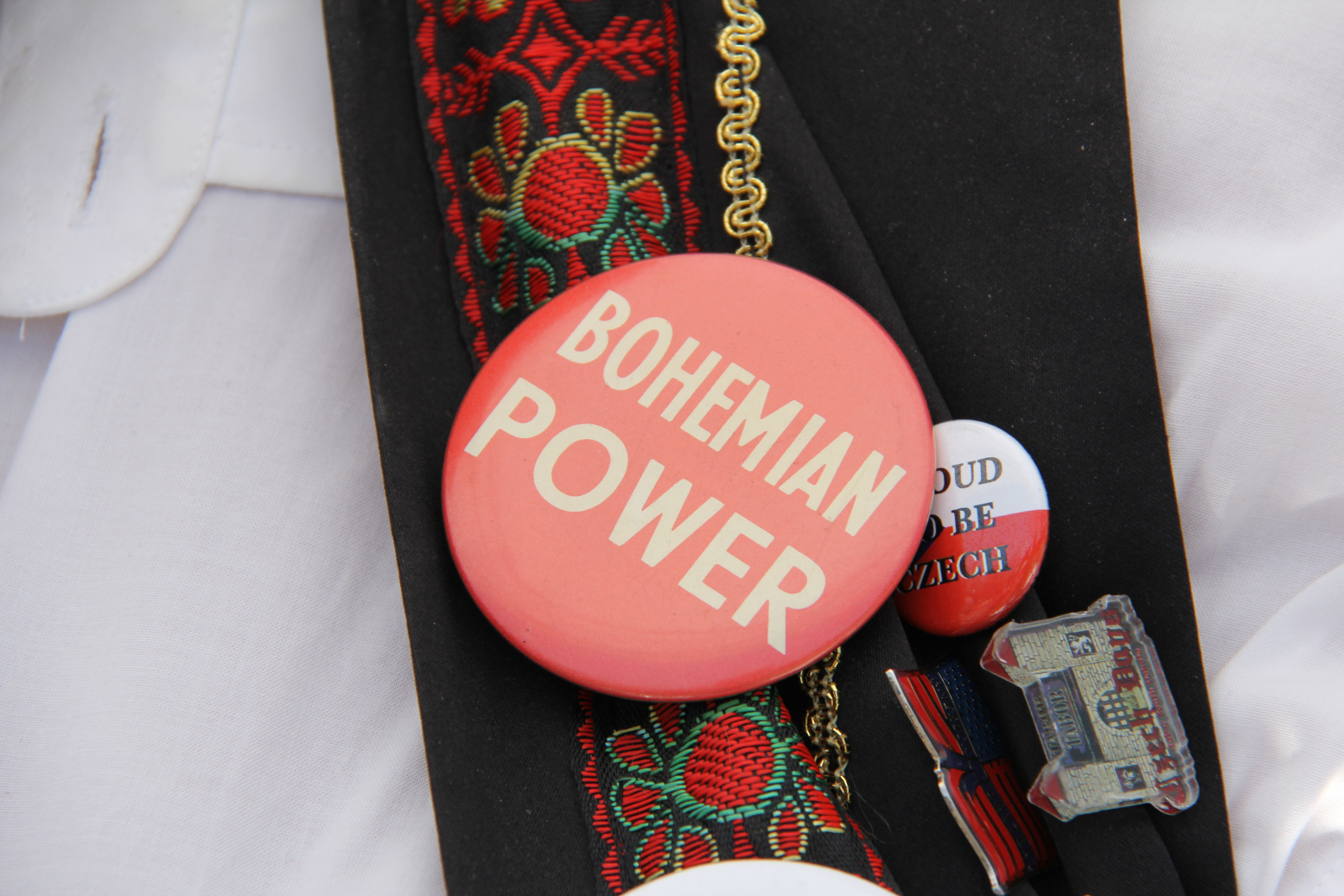
Bohemian pride in Montgomery. (Minnesota Prairie Roots copyrighted photo May 2025)
Nor will I hold Bohemian power or pride as printed on two buttons worn by a man in traditional Czech attire at the same Montgomery event. He was in the right place, Minnesota’s Czech triangle, to be sporting those ethnic-proud buttons.
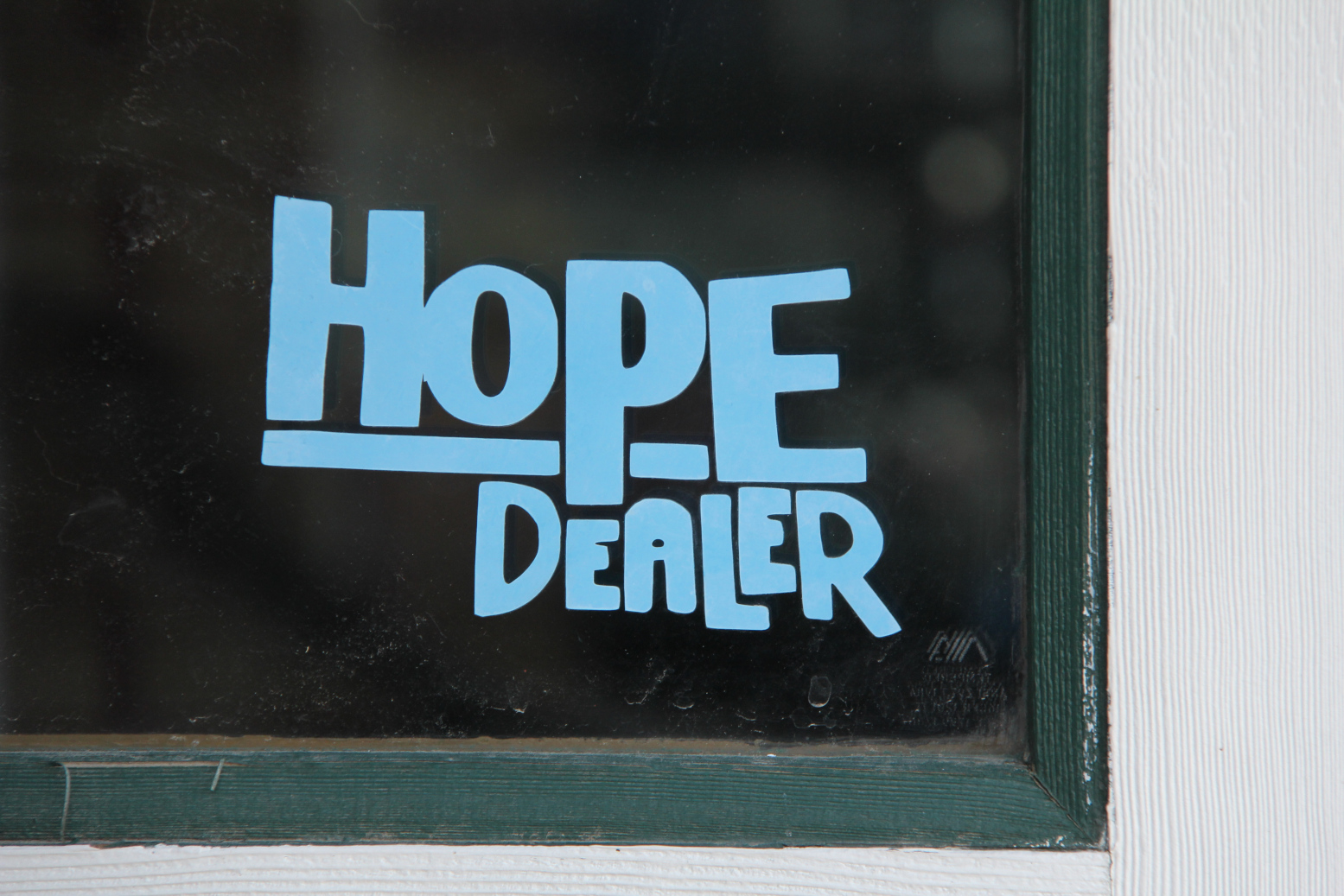
Powerful words in Montgomery, Minnesota. (Minnesota Prairie Roots copyrighted photo May 2025)
But I saw one identifier in Montgomery that proved relatable. And that was “Hope Dealer” displayed on a downtown storefront window. Hope happens to be one of my favorite words, one I’ve leaned into often during challenging times in my life. There’s nothing quite like hope to focus thoughts on difficult days. In Montgomery, “Hope Dealer” marks a substance abuse treatment center, which offers hope to those who walk through the door. The noun applies to me when I offer hope to someone who needs to be uplifted, encouraged and supported, maybe even inspired.
Identifying license plate on a Captain Marvel-themed car. (Minnesota Prairie Roots copyrighted photo June 2025)
Sometimes superheroes inspire as seen on a flashy purple car parked at a downtown Faribault Car Cruise Night this summer. Captain Marvel themed the car. The Minnesota license plate, CPTMRVL, did not escape my notice. This car owner clearly identifies with the positive superhuman powers of Captain Marvel.
Identifying art at Makeshift Accessories. (Minnesota Prairie Roots copyrighted photo April 2025)
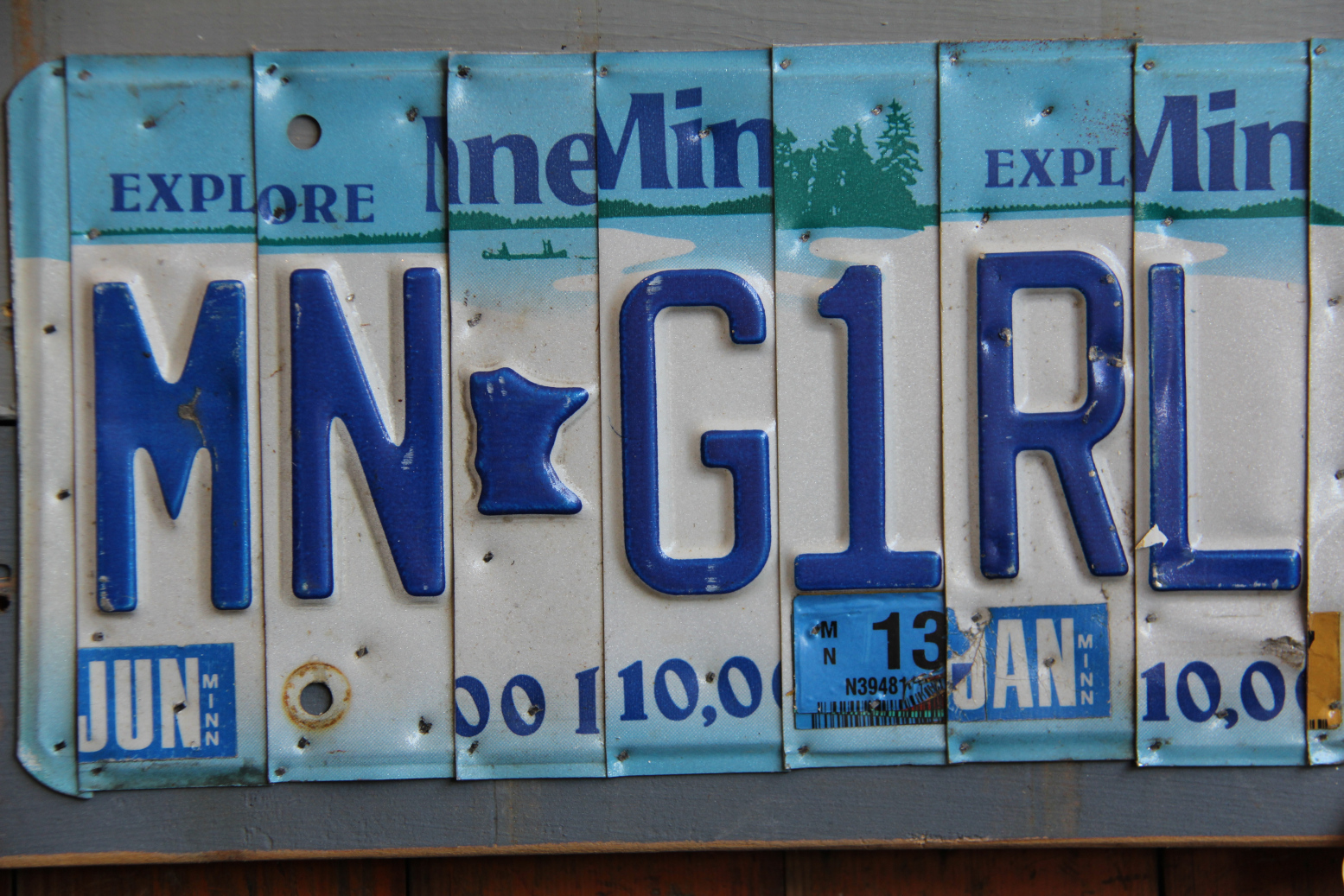
Over in Northfield at Makeshift Accessories, a home-grown shop featuring art crafted from primarily recycled materials, I found a sign that fits me—MN G1RL. It’s made from Minnesota license plate letters and a single number cobbled together. The rustic look appeals to me. But mostly, it’s the words I appreciate. I am a life-long Minnesota girl. If I were to define MN G1RL, I’d write “like a normal girl but stronger.” You’ve got to be strong to survive our long, harsh winters (although they are not as long and harsh as they once were).
Whether you’re from Minnesota or elsewhere matters not. Whether you’re into superheroes or not doesn’t matter to me. Whether you’re Bohemian or German or some other ethnicity matters not either. Whether you douse everything in ketchup or not, I don’t care.
But it does matter to me that you hold hope. It matters to me that you can read that singular word and feel the optimism it carries. You can carry hope in your heart. And you can dispense hope within your community through your words and actions. While you do that, notice the signs, slogans and interesting messages that surround you, that are part of everyday life wherever you live. Words matter. So says this southern Minnesota writer.
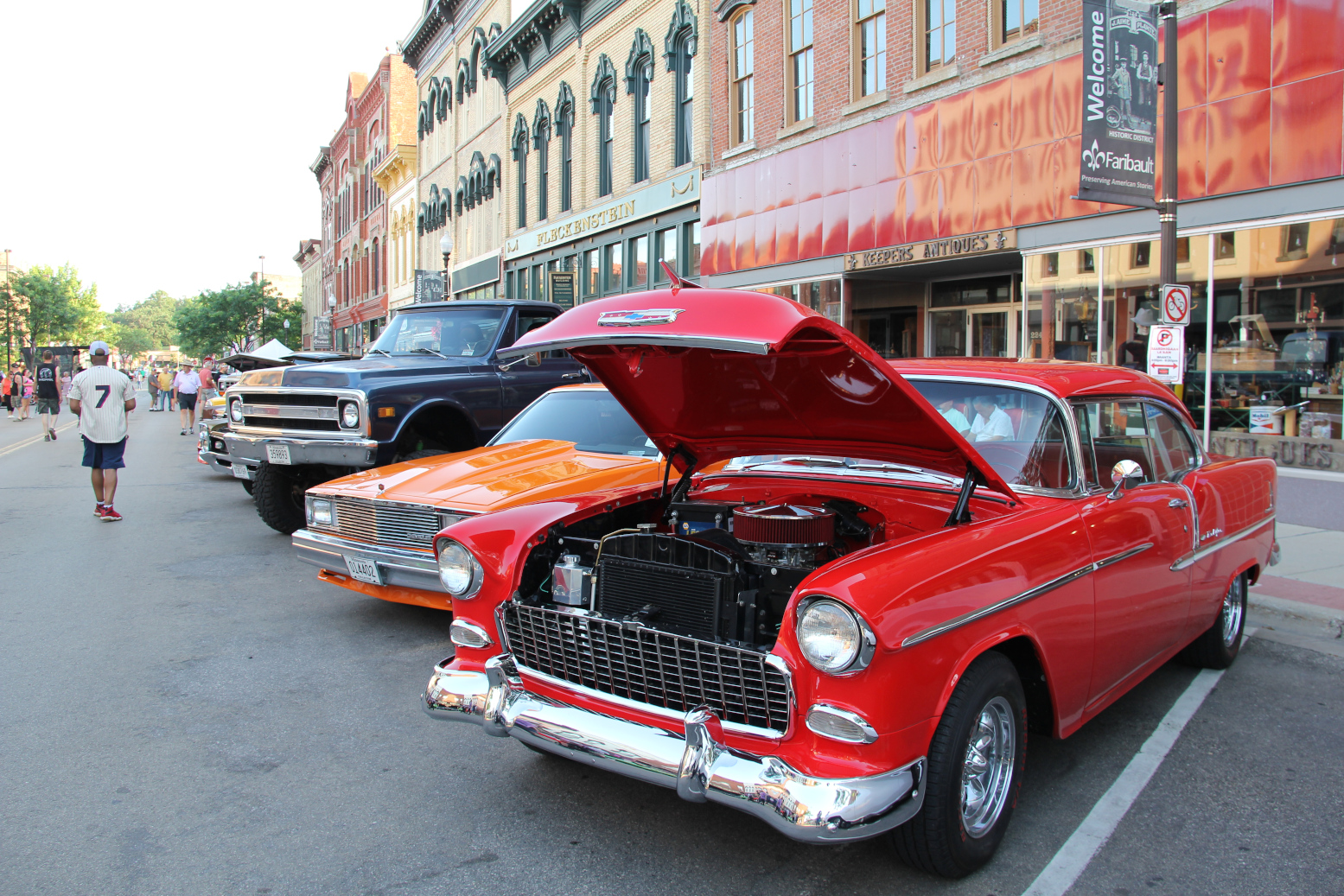
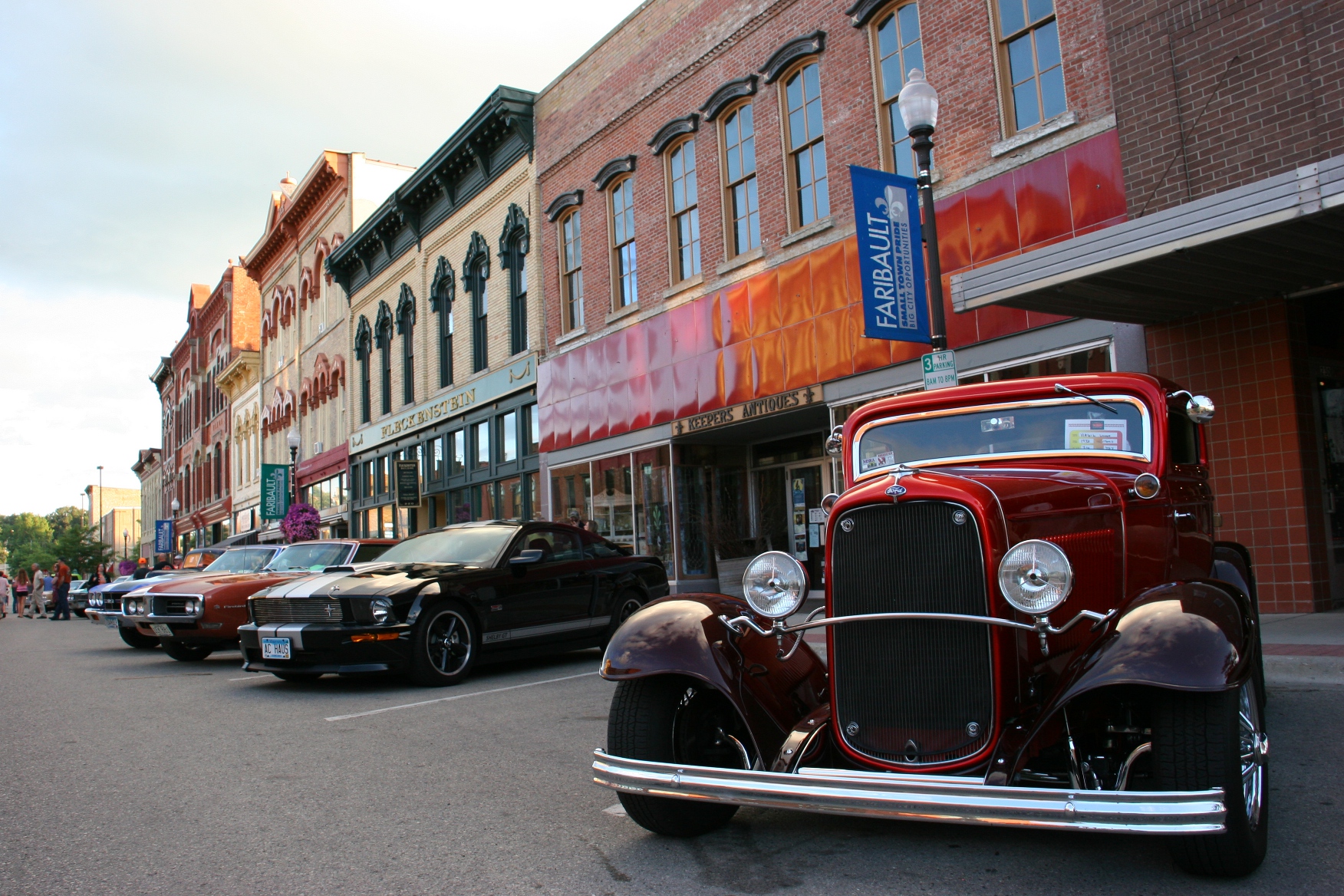
Faribault’s Car Cruise Night features mostly vintage vehicles parked in our historic downtown. (Minnesota Prairie Roots copyrighted photo June 2025)
ON A SULTRY SUMMER SOLSTICE EVENING, hundreds converged on Faribault’s Central Avenue for the monthly Car Cruise Night. Our downtown offers an ideal backdrop of historic buildings for the many vintage and antique vehicles and sports cars showcased in a four-block area.
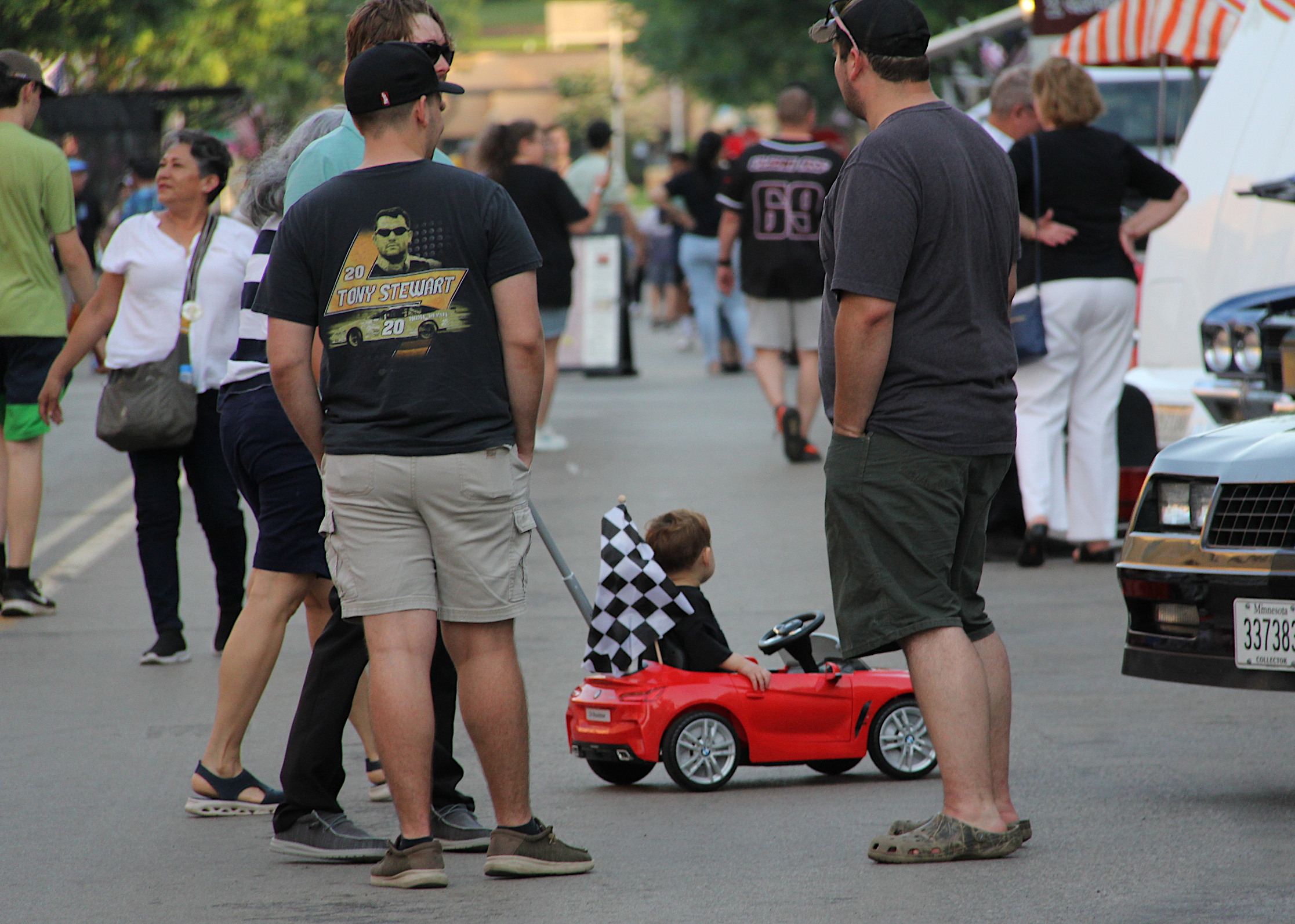
Among all the full-size vehicles was this kids’ mini car. (Minnesota Prairie Roots copyrighted photo June 2025)
But this event is about much more than cars and trucks. It’s also about community. About coming together. About connecting with hugs and one-on-one conversations. Young and old alike come here, infusing energy into the downtown during a season when everyone wants to be outdoors, heat and humidity aside.
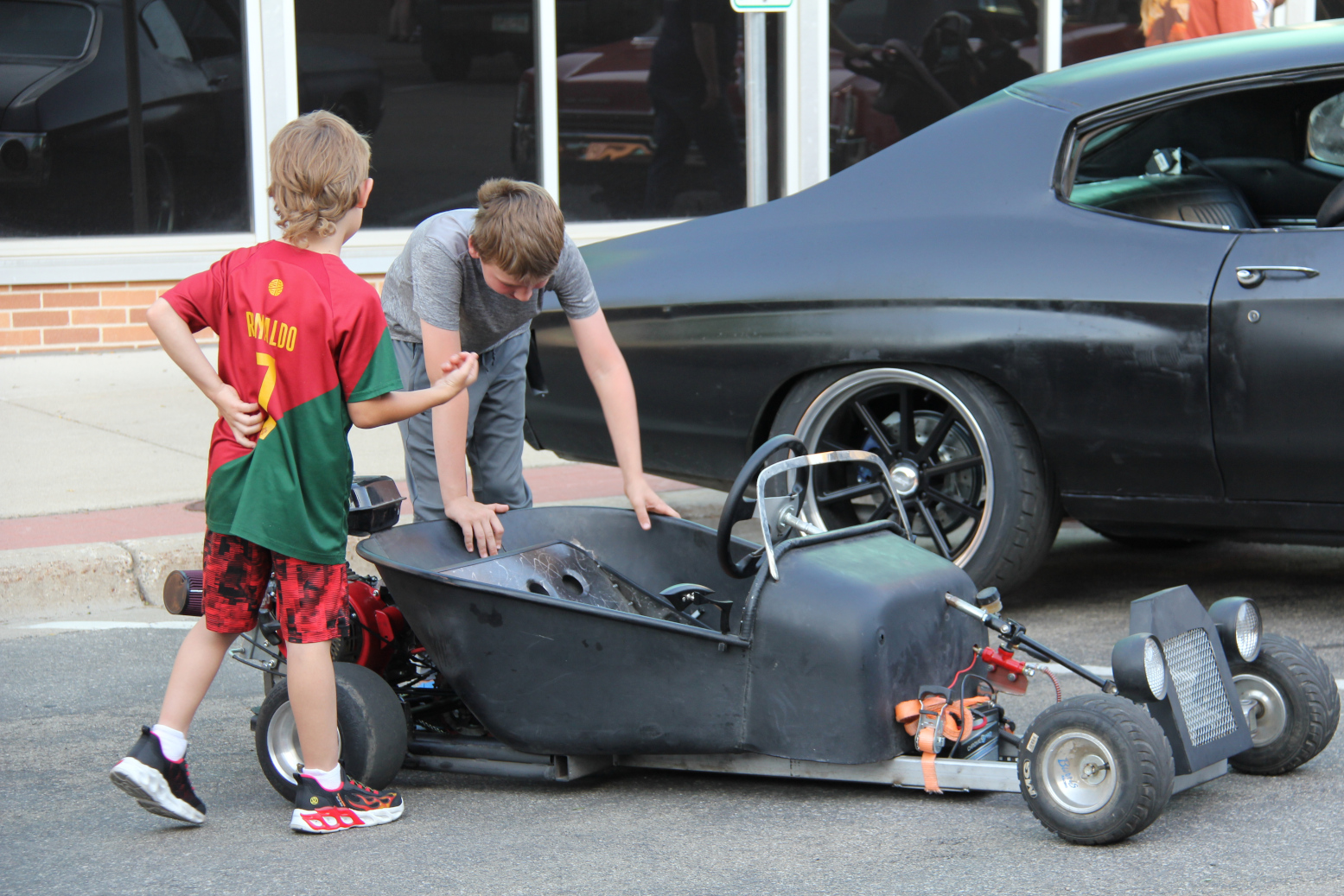
These boys were definitely interested in wheels, including this go kart. (Minnesota Prairie Roots copyrighted photo June 2025)
Some bring their dogs. Others bring their babies and toddlers and kids of all ages for an evening out. Something to do. The excitement of some—especially two pre-teens who thought they spotted a Lamborghini—felt palpable. It was not a Lamborghini. But for the boys, in a singular moment, they held high hopes.
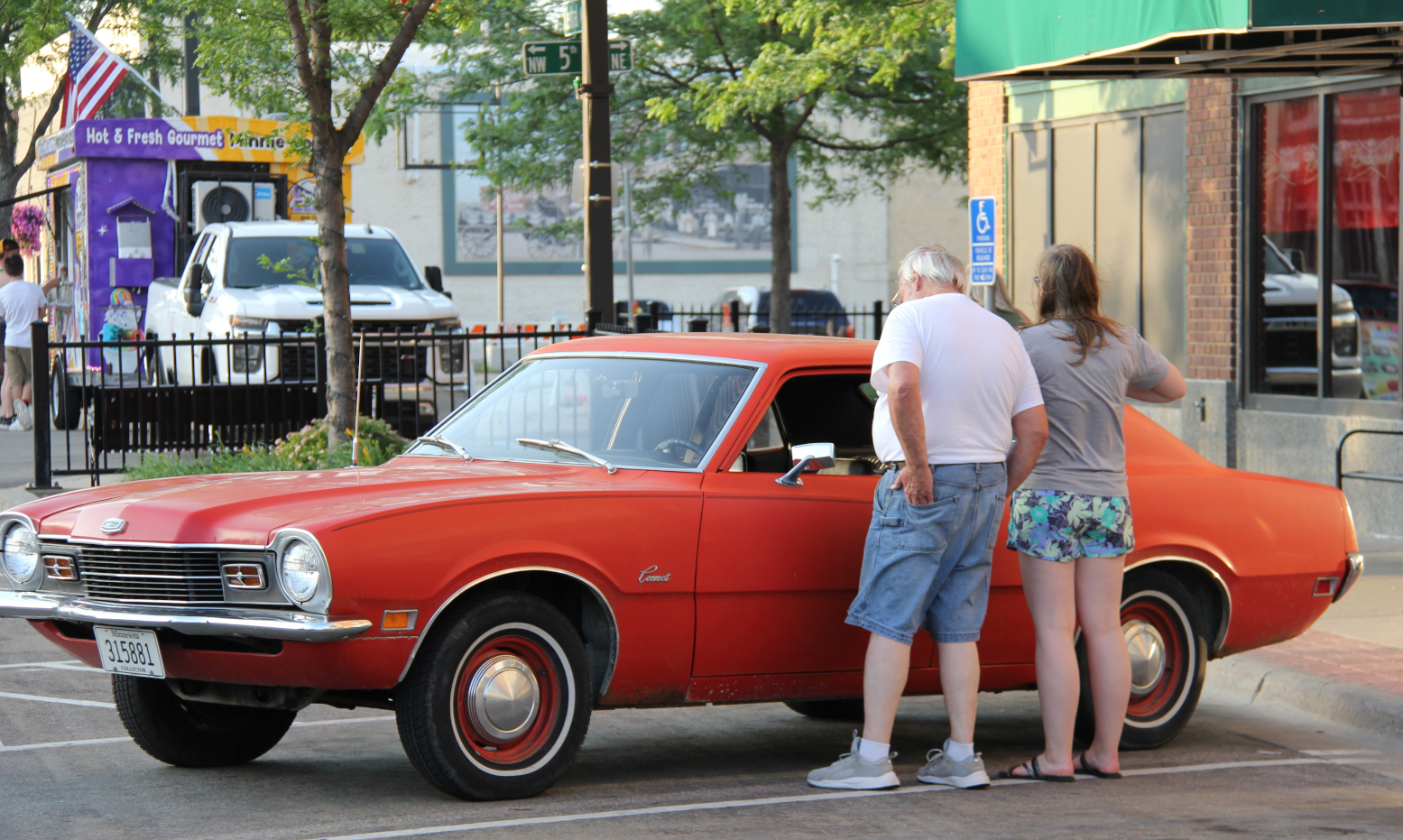
A vintage Mercury Comet. (Minnesota Prairie Roots copyrighted photo June 2025)
I got excited when I spotted, from a distance, a car outside Boxer’s Bar that looked remarkably like a Mercury Comet. My husband confirmed that the red four-door was, indeed, a Comet. My first car was a 1976 two-door canary yellow Comet, which I nicknamed, well, let’s just say a word that rhymes with Comet. I spent way too much money repairing that vehicle. Plus, the driver’s door wouldn’t close in the winter. I digress. Perhaps the owner of the red Comet has had much better than lemon luck.
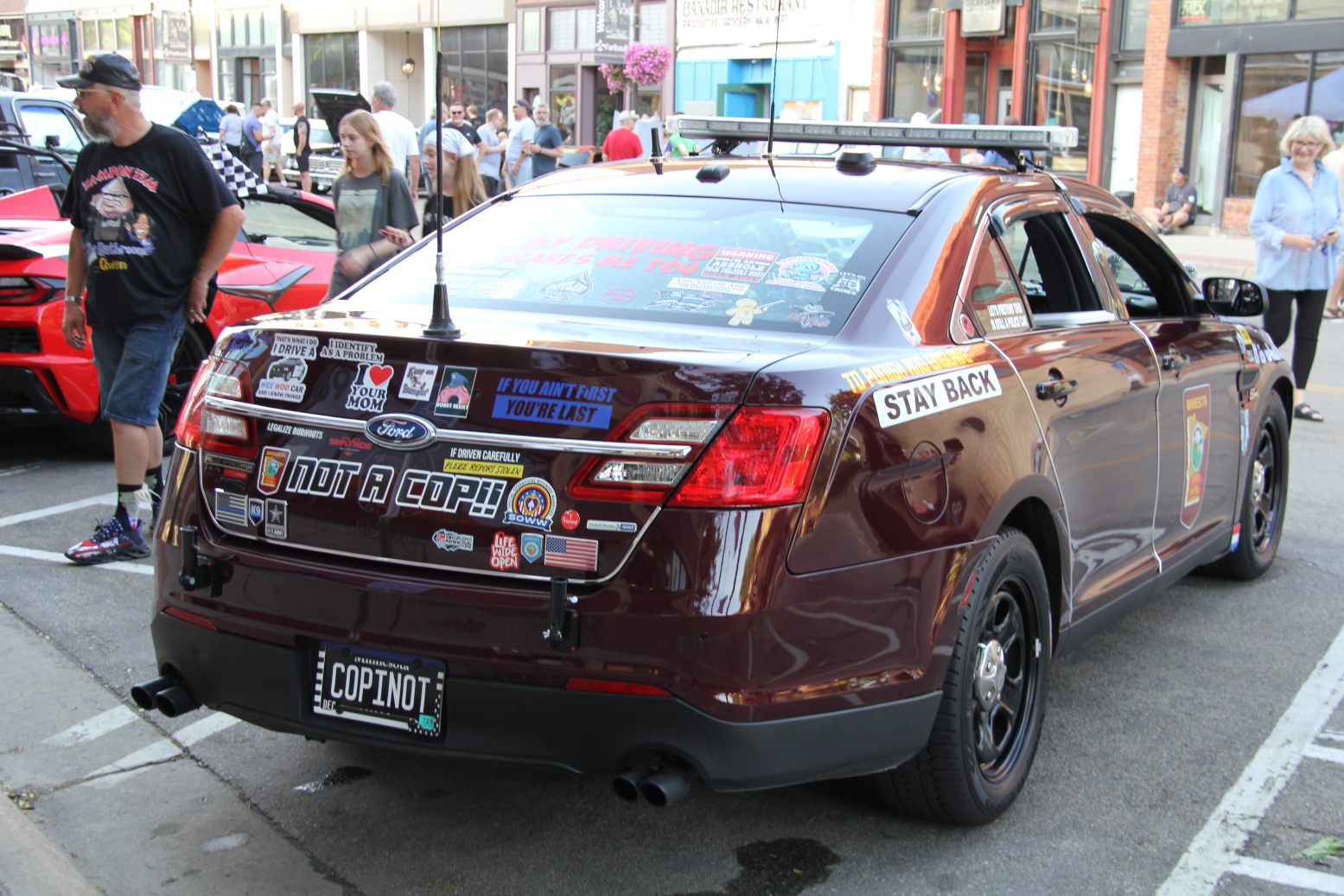
This retired Minnesota State Patrol car drew a lot of interest. (Minnesota Prairie Roots copyrighted photo June 2025)
Car Cruise participants will share stories about their vehicles if you ask. Most settle onto lawn chairs on the sidewalk and watch as people circle their treasures on wheels. A retired Minnesota State Patrol cruiser, a 2015 Ford Taurus Interceptor, attracted plenty of attention with so many flashing, pulsating lights that I had to look away. It gave me pause, especially in light of recent events in Minnesota. But signage and license plates made it clear this Taurus is no longer an active duty patrol car. I appreciated that clarity.
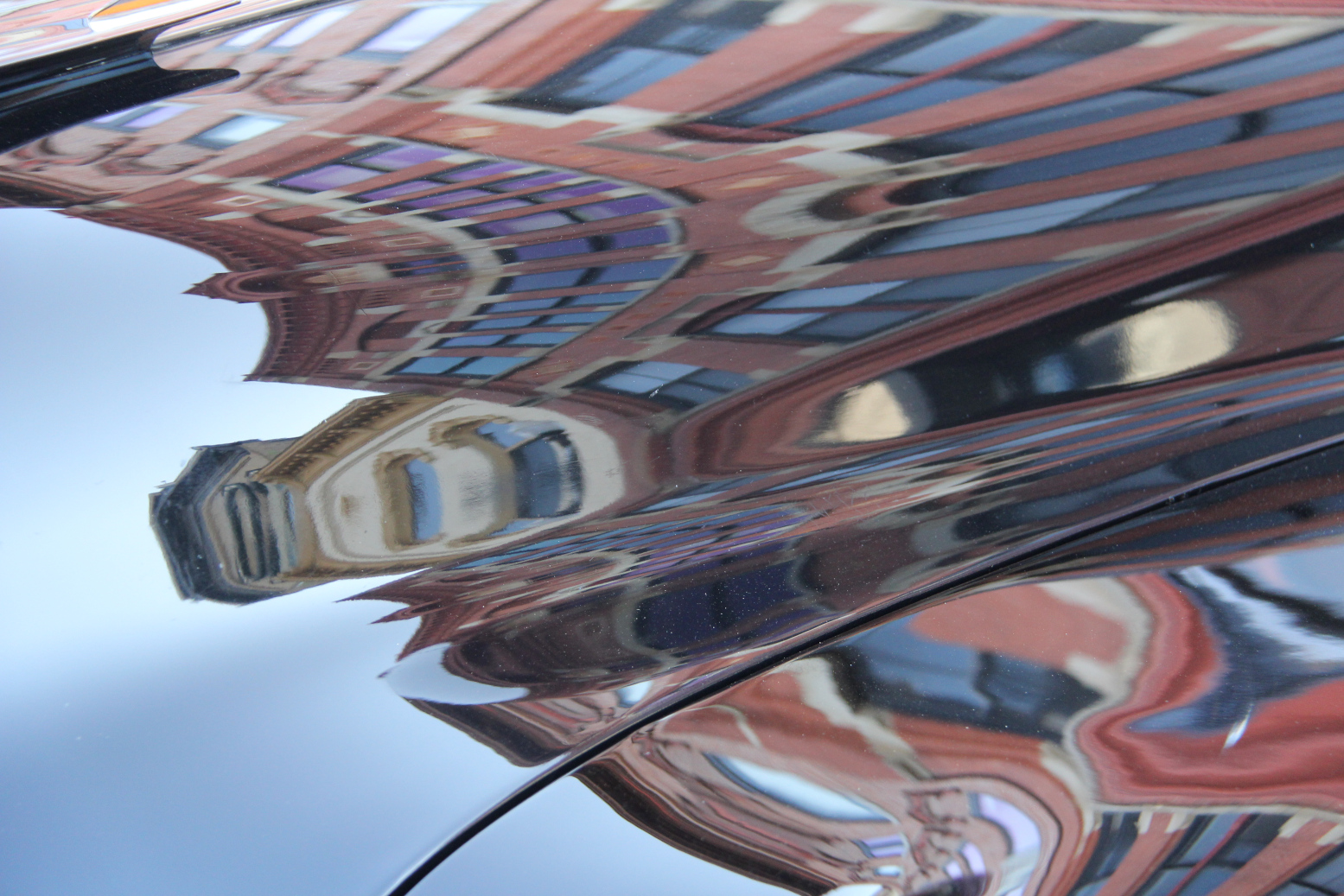
Historic buildings reflected on a shiny 1948 Chrysler. (Minnesota Prairie Roots copyrighted photo June 2025)
And then there’s pride in ownership showcased in shiny, spotless vehicles waxed to perfection. Flawless. Brian Boelke of Mazeppa polished his 1948 Chrysler to mirror image shine. I was fascinated by the reflection of historic buildings curving across the hood and sides of his black car. Abstract art. Beautiful. I wonder if others noticed.
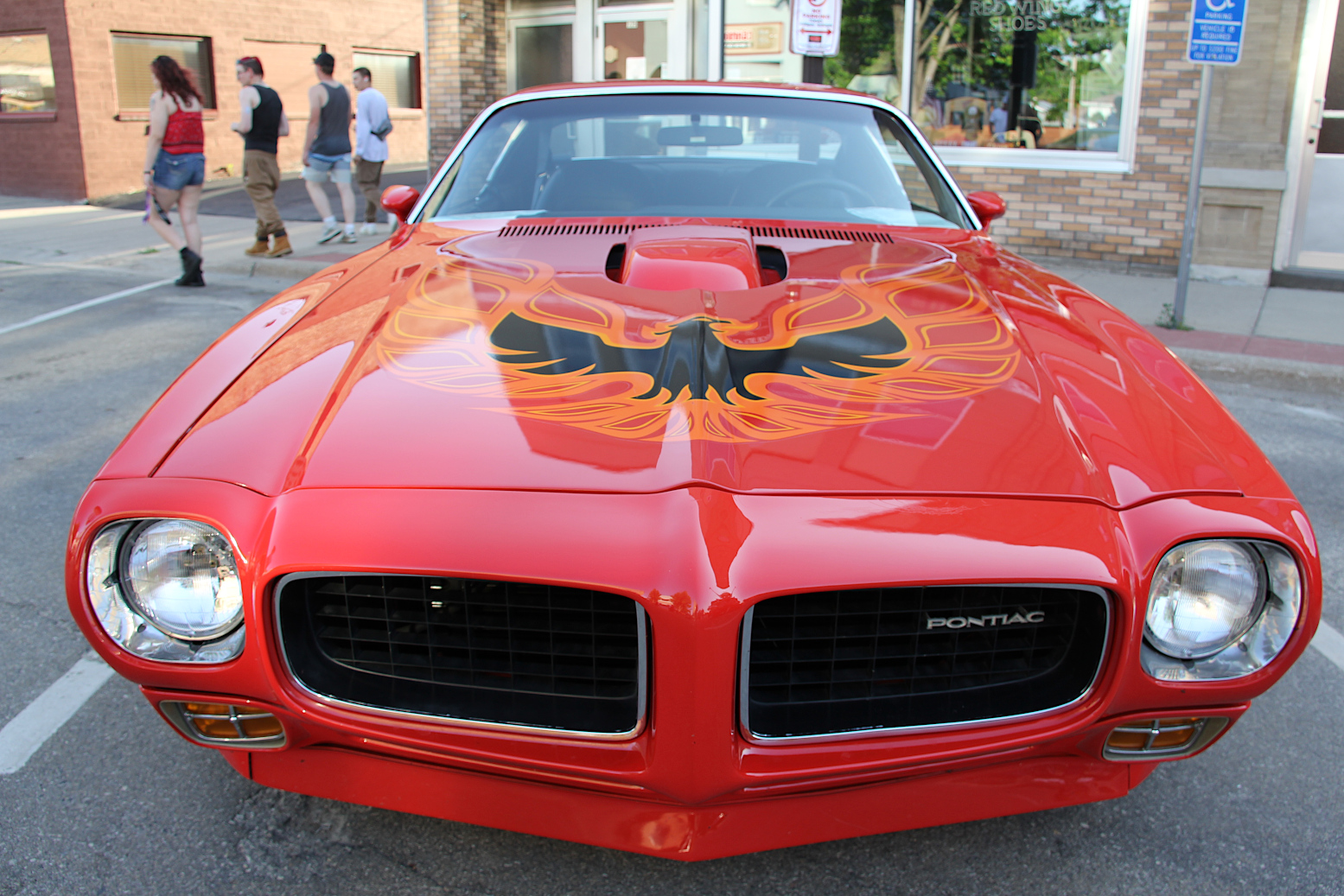
The hood art of a 1973 Pontiac Firebird. (Minnesota Prairie Roots copyrighted photo June 2025)
I view Car Cruise Night through an artistic lens, Central Avenue like a gallery of auto art.
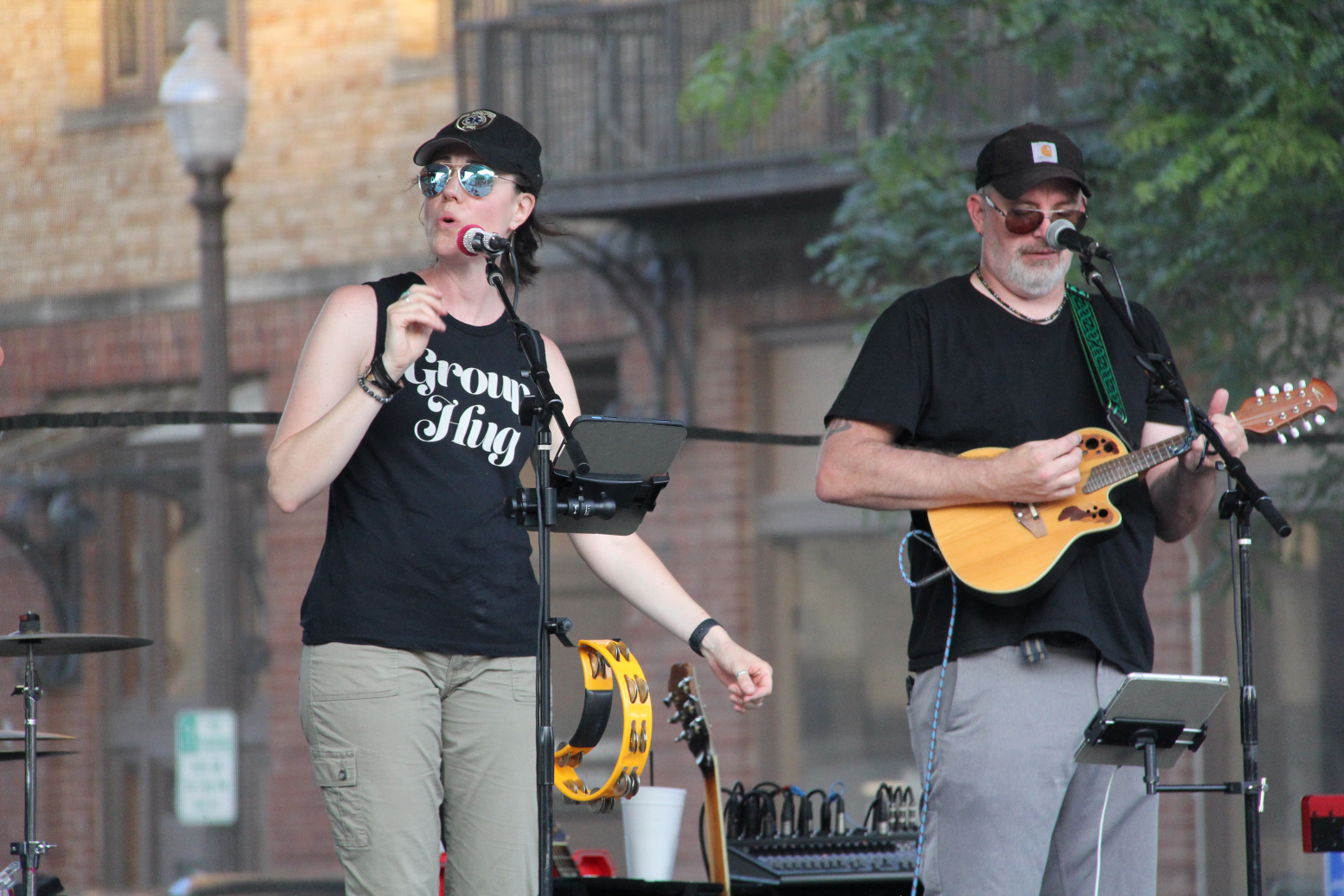
Two members of the Jason Paulson Band perform. (Minnesota Prairie Roots copyrighted photo June 2025)
The performing arts are also part of this monthly summertime event. On the longest day of the year, the Jason Paulson Band beat a rhythm of Americana music from an intersection outside the beloved hometown Signature Bar & Grill. People walked by. Some danced. Others relaxed on history-themed benches or settled onto a vintage Tilt-a-Whirl car anchored outside third-generation family-owned Burkhartzmeyer Shoes. Friends paused mid-street to talk.
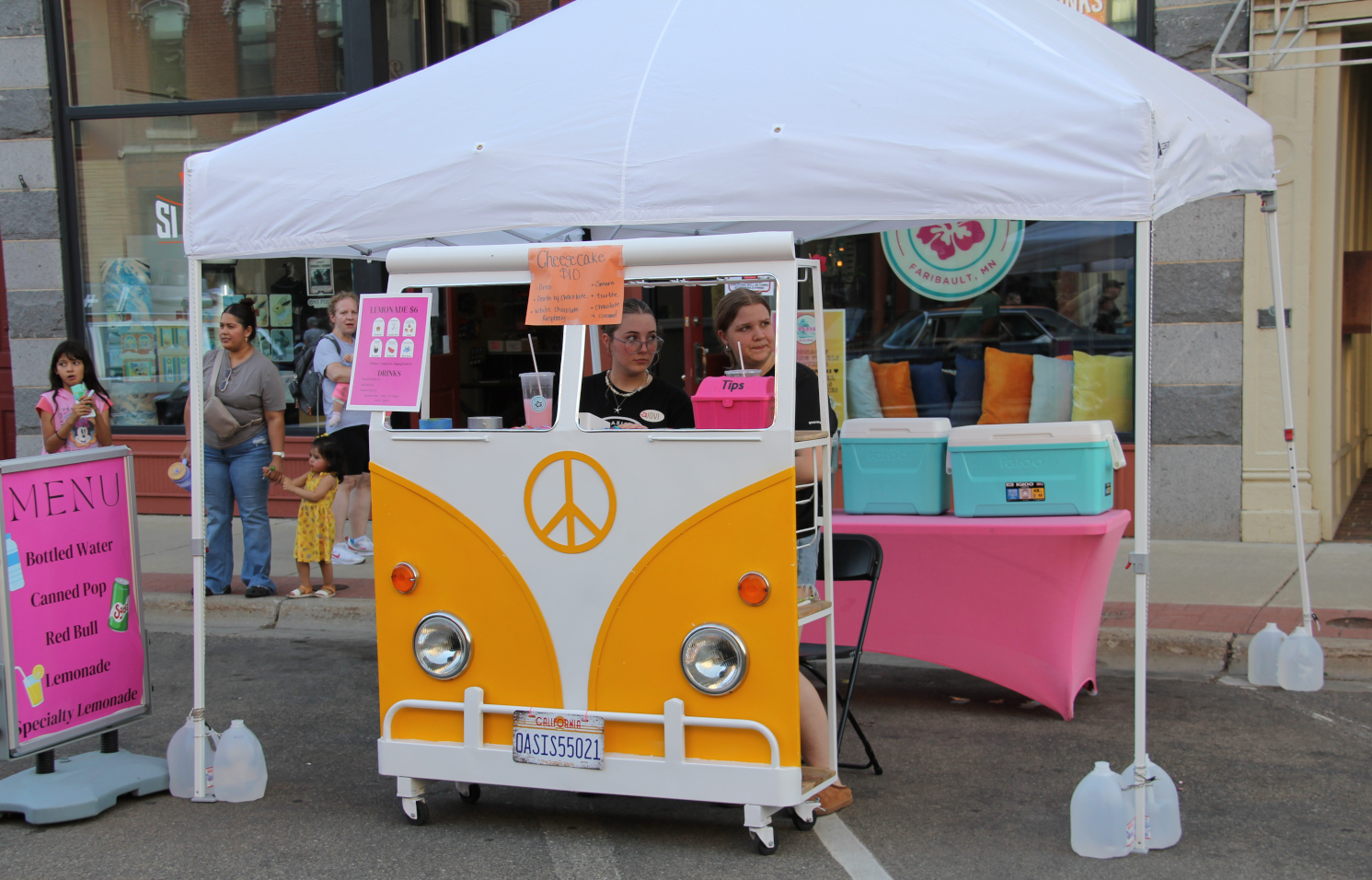
Even The Oasis 55021 food stand was themed to the Car Cruise. (Minnesota Prairie Roots copyrighted photo June 2025)
For the hungry and thirsty, there were plenty of options from downtown businesses and food trucks and stands. I spotted a boy eating his last mini donut, a favorite fair food of mine. I didn’t cave to temptation, until back home when I scooped up chocolate chip ice cream.
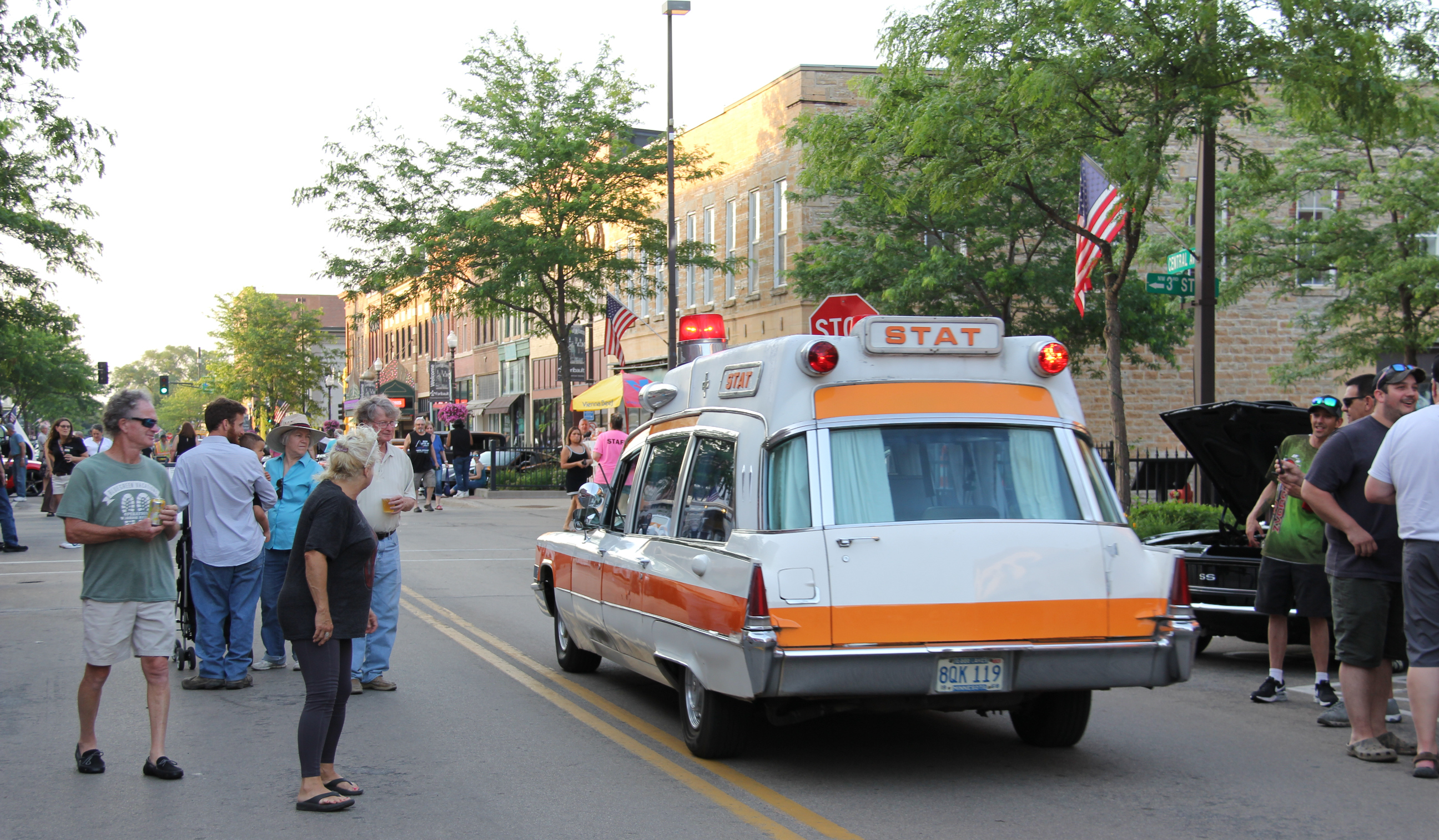
Another crowd-pleaser, Craig and Kathy’s vintage ambulance. (Minnesota Prairie Roots copyrighted photo June 2025)
As cars and trucks began pulling away from their parking spots along Central Avenue with the Car Cruise winding down, Randy and I listened briefly to the band before heading home. I was feeling overheated, in need of a cool place and a long cold drink of water after taking 108 photos on this summer solstice evening in southern Minnesota.
FYI: Upcoming Car Cruises are set for 6-9 p.m. Friday, July 18, and Friday, August 15, in downtown Faribault. The final cruise will be held Saturday, September 19, at Faribault Harley Davidson.
This sculpture of Alexander Faribault and a Dakota trading partner stands in Faribault’s Heritage Park near the Straight River and site of Faribault’s trading post.(Minnesota Prairie Roots copyrighted file photo)
HOW DO YOU DEFINE heritage? I ask that question because this week my southern Minnesota community celebrates Heritage Days.
I would define heritage as a cultural or ethnic background. I am, for example, of German heritage.
So one would likely assume then that Heritage Days focuses on heritage. It did. Once. But no more. Not primarily. Rather, this multi-day event in Faribault seems more a June get together with the usual food, music, parade, craft fair and such of any summer community gathering.
It’s not that my city of some 24,000 lacks in cultural and ethnic diversity to theme Heritage Days. We are a bit of a melting pot with our newest residents arriving from Somalia and Sudan. Early on, the French, Irish, Germans and others settled here to shape and grow Faribault. Latinos also define a sizable part of our population. Many others have come from multiple countries to this place along the Cannon and Straight Rivers. Most are generations removed from the homeland. Some, though, are first-generation immigrants.
Jeff Jarvis created and handed out this mini booklet about the Wahpekute Band of the Dakota at a previous presentation at Books on Central. (Minnesota Prairie Roots copyrighted file photo)
But back to Heritage Days. Looking through the long list of events, I see several opportunities to learn about local heritage and history. The first happens at 6:30 p.m. Wednesday, June 11, at the Cathedral of Our Merciful Saviour. Regional artist and historian Jeff Jarvis will talk about “The Wakpekute Dakota & Early Faribault History.” I’ve previously heard Jarvis speak on the Dakota, original inhabitants of the land. He’s done his research. I highly recommend attending his presentation. I’m always surprised by how little long-time residents seem to know about the Dakota and their long ago presence in what would become Faribault. Jarvis presents an informative lesson in local Native heritage.
Likewise, the Rice County Historical Society Museum will be open, free of charge, from 10 a.m.-5 p.m. Thursday-Saturday. It’s a good place to see Native American and other artifacts, learn about our early fur trading and additional local history, learn about notable people like Chief Taopi and Bishop Henry Whipple, and more. Bishop Whipple founded and served the Cathedral where Jarvis is speaking.
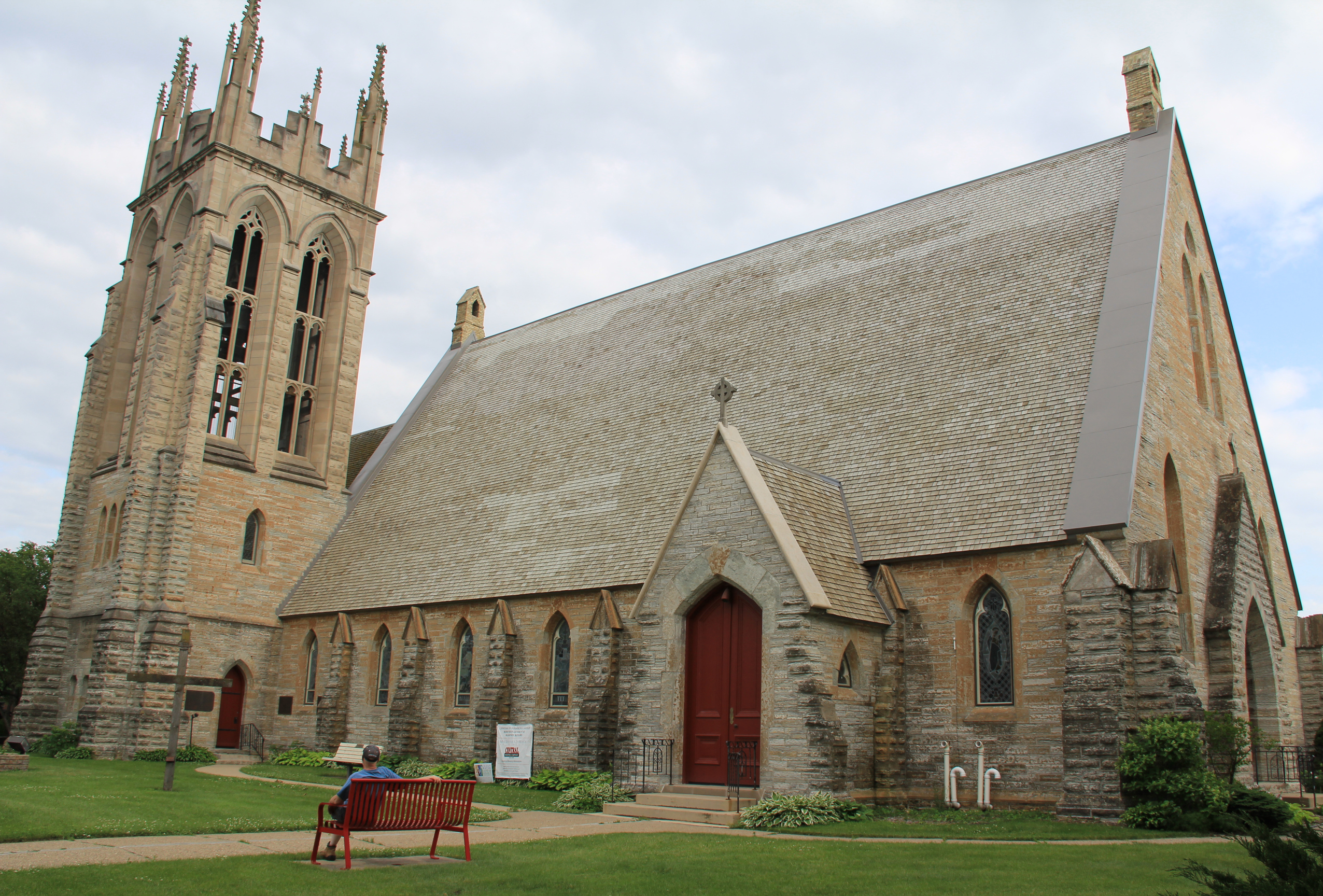
The historic Cathedral of Our Merciful Saviour sits across from Central Park and is a must-see in Faribault. (Minnesota Prairie Roots copyrighted file photo 2024)
The historic Cathedral will be open for tours at 11:30 a.m. Sunday, June 15, following a 10 a.m. Ecumenical Service including bluegrass music. This massive cathedral—and, yes, it really is a cathedral—is important in local Dakota history as the bishop worked closely with Native Americans, some of whom worshipped here.
Fur trader and town founder Alexander Faribault, who was of Dakota and French Canadian heritage, also worked closely with the Dakota. His wood-frame house will be open for free tours from 11 a.m.-3 p.m. Saturday, June 14.
Downtown Faribault features well-kept aged buildings in our historic district. I photographed this scene during a Car Cruise Night. There’s a Car Cruise here Friday, June 13, from 6-9 p.m. (Minnesota Prairie Roots copyrighted file photo)
The Rice County Historical Society will also offer a guided Downtown Walking Tour on Friday and Saturday with two time slots of 11 a.m. and 2 p.m. The $5 tour, led by RCHS Program and Outreach Coordinator Kiran Loewenstein, begins at Central Park. Anticipated to take 1-1 ½ hours, the tour route follows Central Avenue with a focus on the historic district and buildings and early general Faribault history. I expect that will offer ample opportunity to not only learn about early history and heritage, but also to see the heritage of our newest residents in downtown core ethnic businesses.
Two more opportunities to embrace local history (although not officially part of Heritage Days) are inside the State Bank of Faribault along Central Avenue. Local streetscapes and landscapes by Father Jim Zotalis, spiritual leader of the Cathedral, are displayed in a pop-up exhibit in the bank lobby. And for those interested in Faribault’s brewing history, the bank holds an extensive collection of Fleck’s beer memorabilia form long ago Fleckenstein Brewery. Both are accessible during business hours only.
Faribault artist Kate Langlais painted this acrylic portrait of Pope Francis, displayed at the Paradise Center for the Arts, Faribault, in 2022. (Minnesota Prairie Roots copyrighted file photo March 2022)
HER COMMENT SUMMARIZES what many Catholics and others are likely thinking this week as they mourn the passing of Pope Francis on Easter Monday. Dorothy Storch writes this on the Facebook page of the Church of St. Patrick, Shieldsville. a rural southern Minnesota church near me: “Our Pope of peace and mercy, kindness and love. A man of God.”
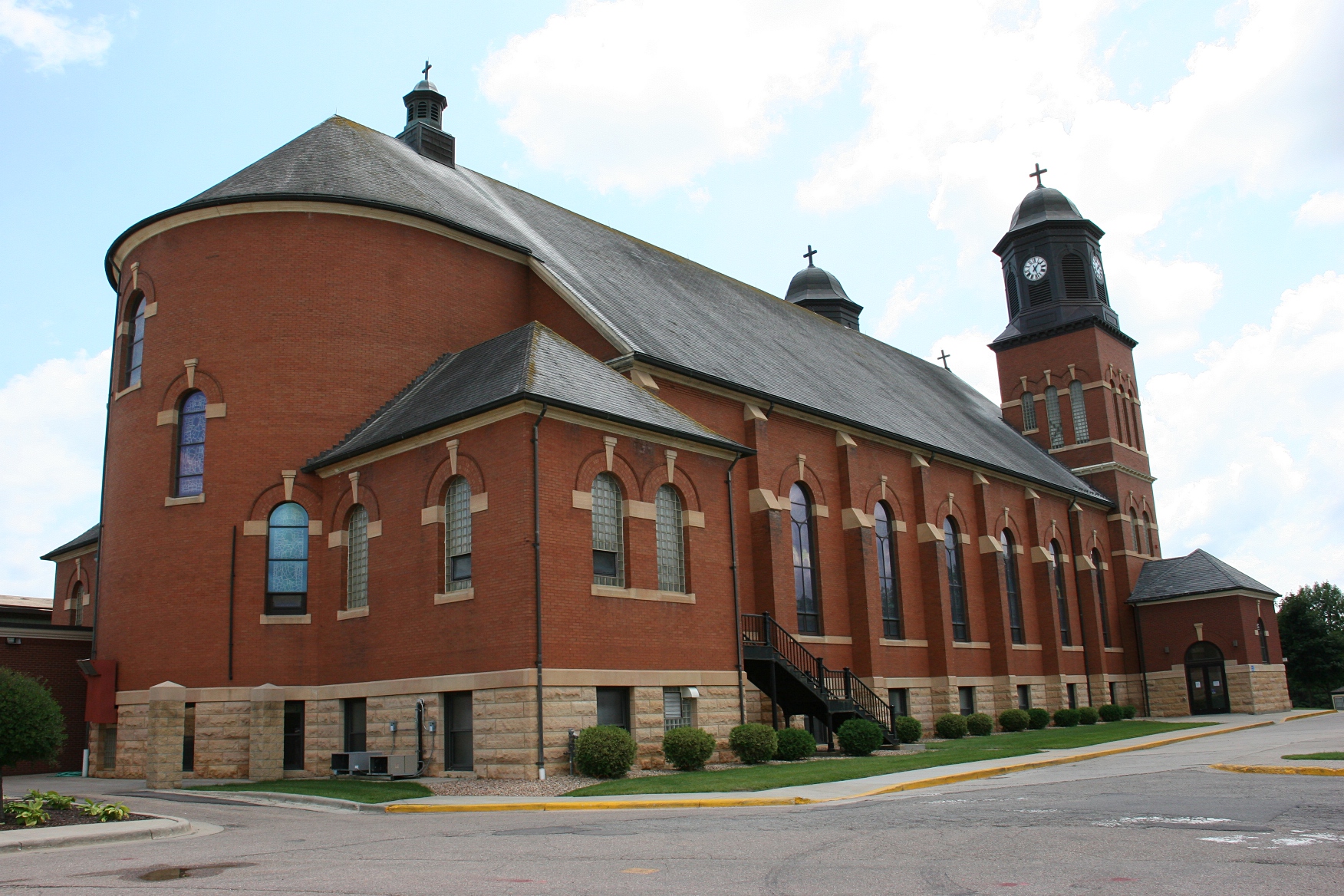
A side and rear view of St. Wenceslaus Catholic Church, New Prague. (Minnesota Prairie Roots copyrighted file photo)
Perhaps that could be written about previous popes and other faith leaders. But not always. And not with the depth of admiration for Pope Francis, often termed “The people’s pope.” He changed things up in the Catholic church, opening minds and hearts and relating to people in a way that made him seem more like one of us.
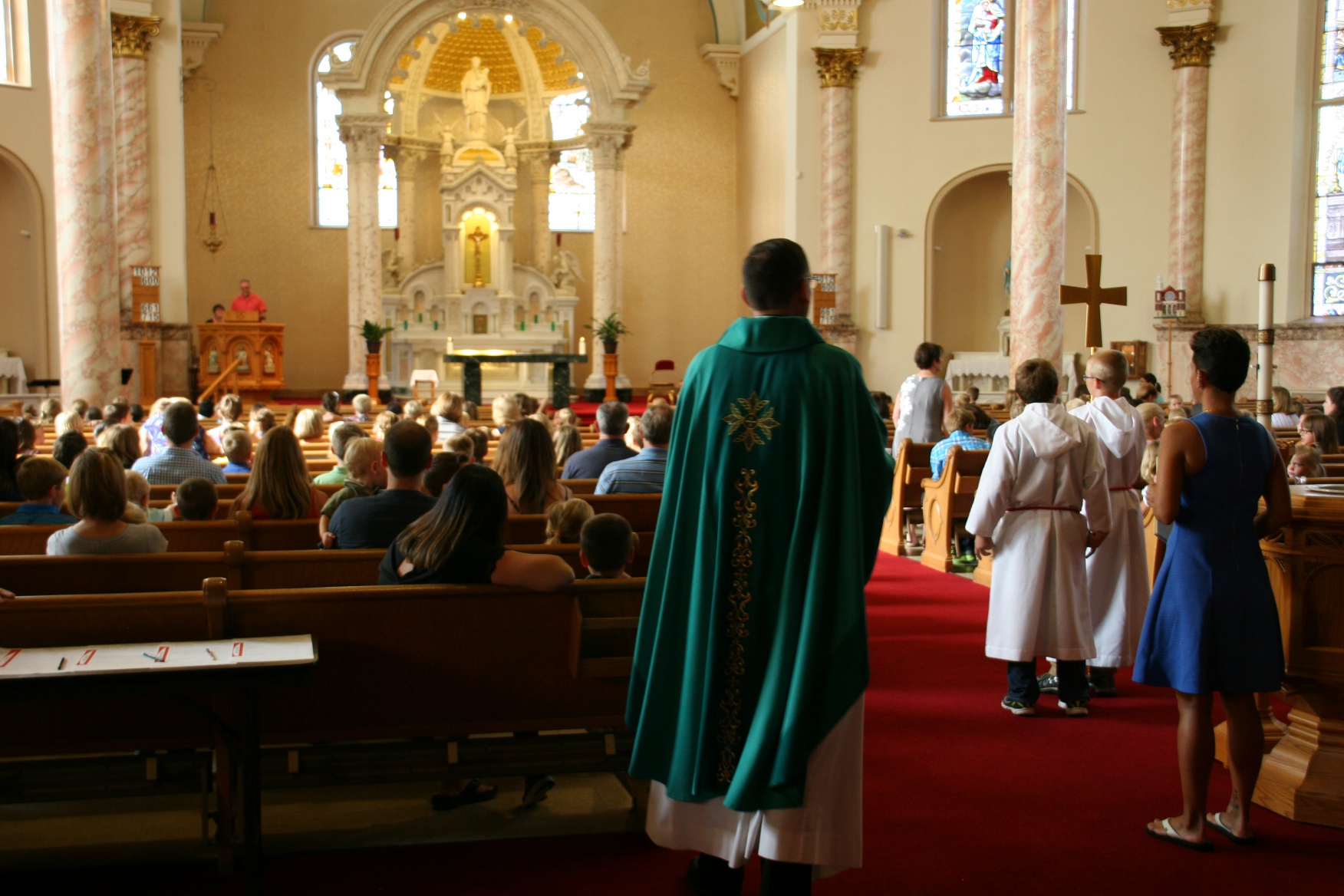
Mass, about to begin at the Basilica of Saint Stanislaus Kostka in Winona. (Minnesota Prairie Roots copyrighted file photo)
A posting on the Facebook page of the Church of St. Dominic, 16 miles to the northeast of Shieldsville in Northfield, explains: “His life was a shining example of humility, compassion, and servant leadership. Pope Francis reminded us through both word and action what it means to care for the poor, to welcome the outcast, and to live simply with a heart open to God. He walked closely with the people, always pointing toward mercy by living our faith with the same grace and humility.”
Loving words from the Bible in the heart of downtown Faribault. (Minnesota Prairie Roots copyrighted file photo)
Even though I am not of the Catholic faith, I’ve heard, read and seen enough media reports about Pope Francis to understand that he was, indeed, a compassionate man of both words and actions. Words, especially when you are a faith leader, require positive action. Pope Francis visited inmates, embraced those with disabilities, met with migrants, washed feet and much more. Washing someone’s feet is truly an act of humility and service.
“Faysel,” who fled the war in Somalia.Kate Langlais created this portrait for an “I Am Minnesota” project featuring our state’s newest immigrants. (Minnesota Prairie Roots copyrighted file photo)
Pope Francis advocated for migrants, immigrants, refugees and others, calling for compassion and care. Born Jorge Mario Bergoglio to Italian immigrants in Argentina, this first pope of the Americas understood the plight of immigrants and other marginalized populations. He wasn’t afraid to speak up, to take a stand for what he thought was right, what Jesus would have him, and all of us, say and do. He gave voice to the voiceless, to those silenced by power, policies, politics and life-altering destructive actions. He built bridges, not walls.
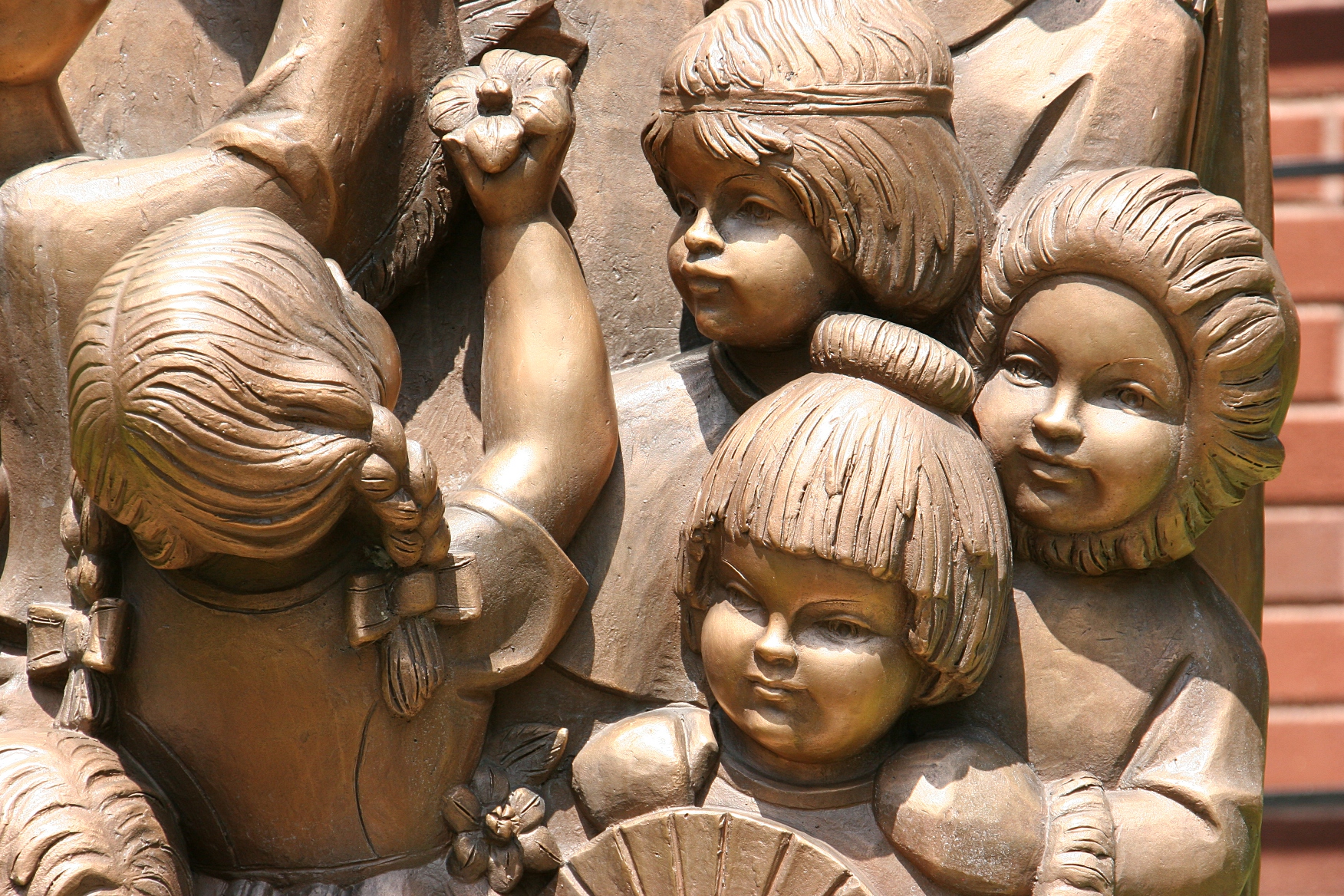
Children of many ethnicities are part of the Mary statue in Mary’s Garden at St. Wenceslaus Catholic Church, New Prague. (Minnesota Prairie Roots copyrighted file photo)
In acknowledging the passing of Pope Francis, a post on the New Prague, Minnesota, Catholic Community Facebook page calls him “a figure who has left an indelible mark on the Catholic Church and the world.” I agree with that assessment of a man who cared deeply about people, and about the environment. We could all learn from this thoughtful pope who intentionally took the papal name of Francis from Saint Francis of Assisi, a man of faith focused on poverty, peace and protecting the earth.
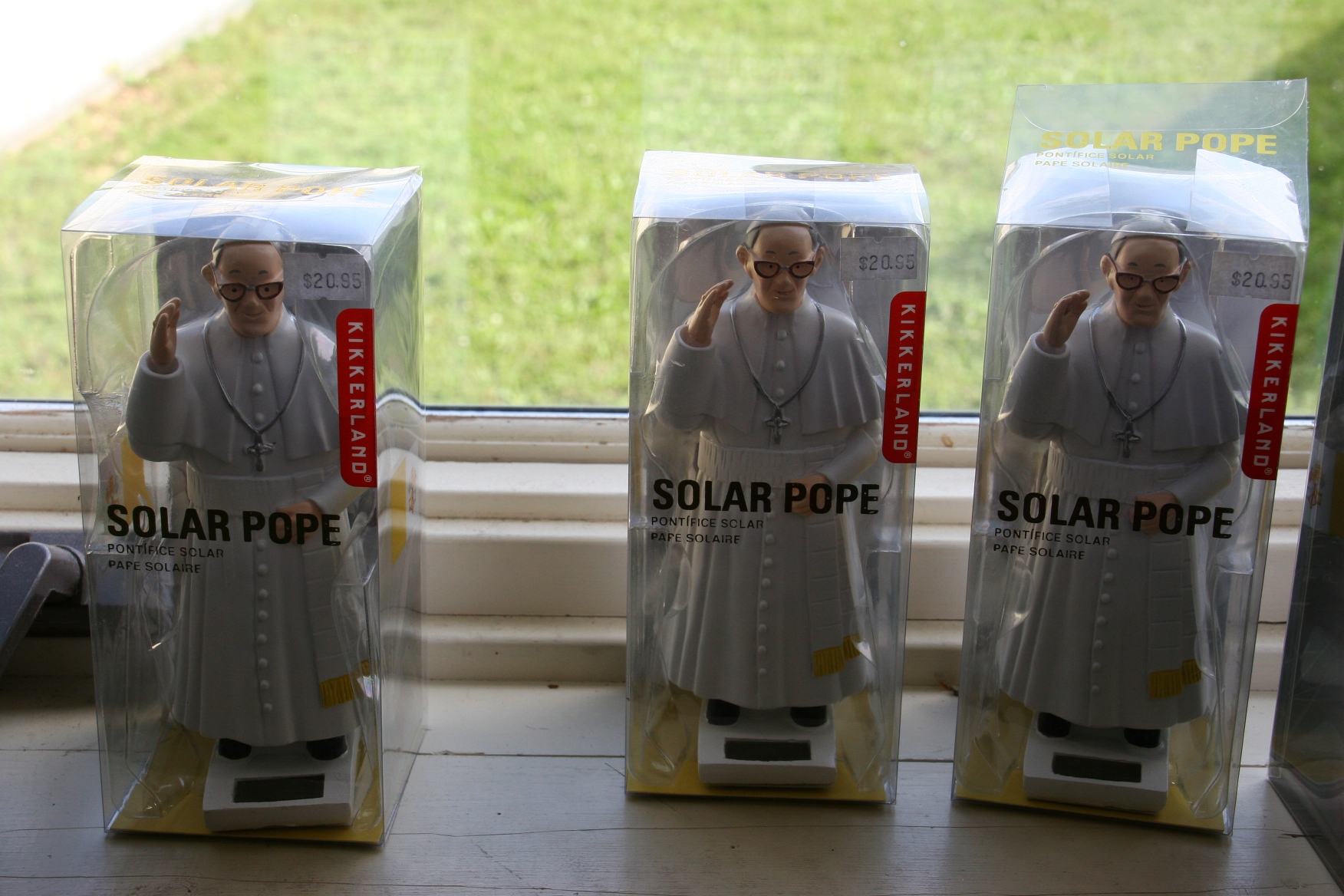
I expect Pope Francis would have laughed at these solar popes (not of him) which I photographed many years ago at LARK Toys in Kellogg, Minnesota.Minnesota Prairie Roots copyrighted file photo)
I love how Pope Francis loved. And I love how he loved to laugh. In 2024, he invited comedians from around the world to the Vatican, underscoring the importance of laughter, recognizing its healing power. I recently watched a video clip of him kissing an infant dressed in papal garb along a parade route. A member of his security team brought the baby girl to the pope riding in his Pope Mobile. His broad smile said it all. Pope Francis didn’t find the costumed infant to be disrespectful of him, but rather a reason to laugh. I need to laugh more. We all need to laugh more.
“Peace and Love,” an acrylic portrait by Angelina Dornquast. Photographed in an exhibit at the Paradise Center for the Arts, Faribault. (Minnesota Prairie Roots copyrighted file photo October 2024)
What a legacy Pope Francis leaves. It is my hope that the next pope selected by the conclave of cardinals will continue in the path of humility, compassion and kindness. I want Dorothy Storch from St. Patrick’s in rural southern Minnesota to describe the new pope as “our Pope of peace and mercy, kindness and love,” just as she did Jorge Mario Bergoglio, the son of immigrants. He who humbly served with compassionate words and actions, becoming a much-beloved and respected world faith leader.
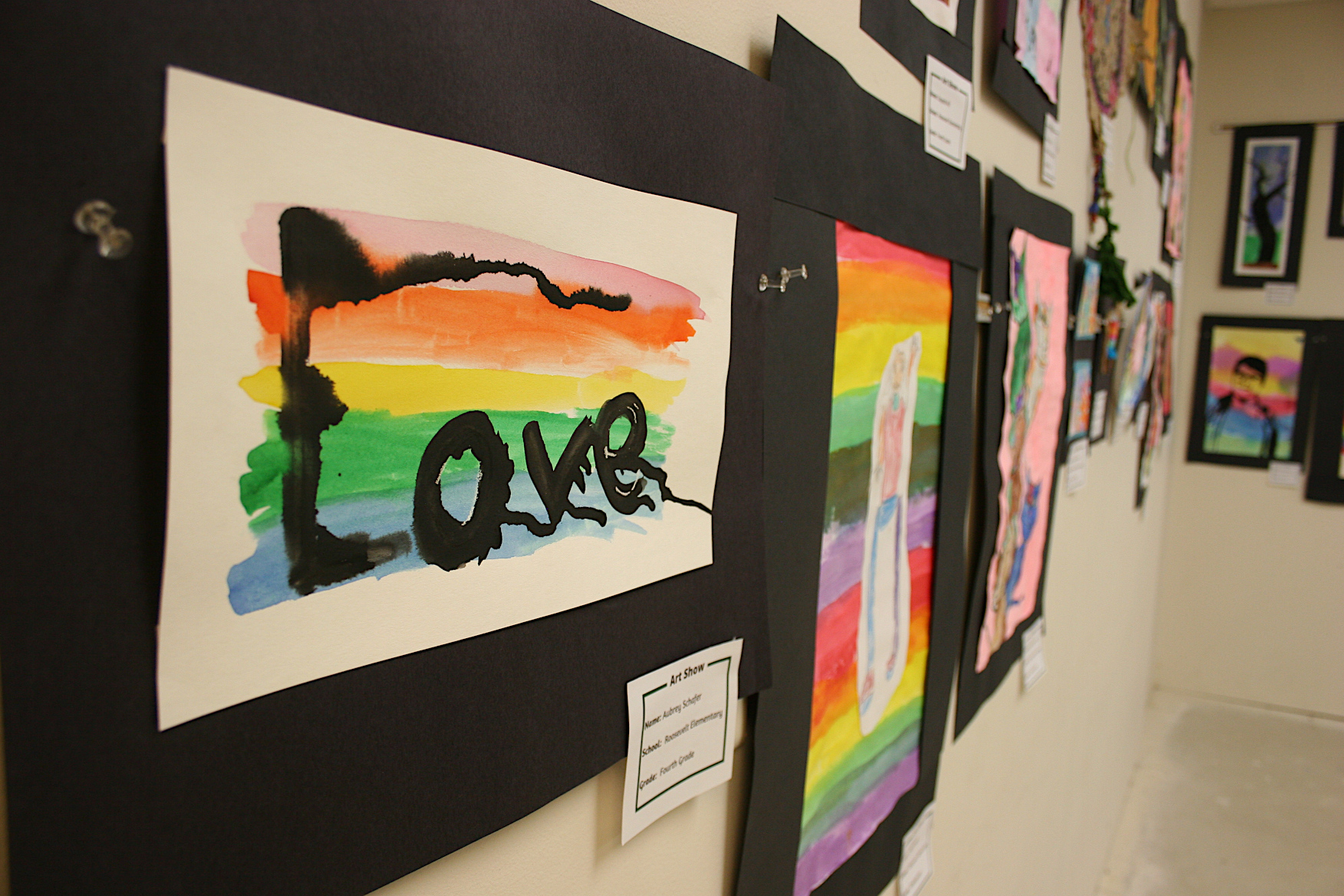
Love at a past student art show at the Paradise Center for the Arts. (Minnesota Prairie Roots copyrighted file photo)
May Pope Francis, now lying inside a simple wooden coffin, rest in peace at the Basilica of Saint Mary Major, which sits in an area of Rome heavily-populated by immigrants. With his coffin and burial choices, “the people’s pope” makes a strong statement even in death about living with grace, humility and compassion, loving all, always.
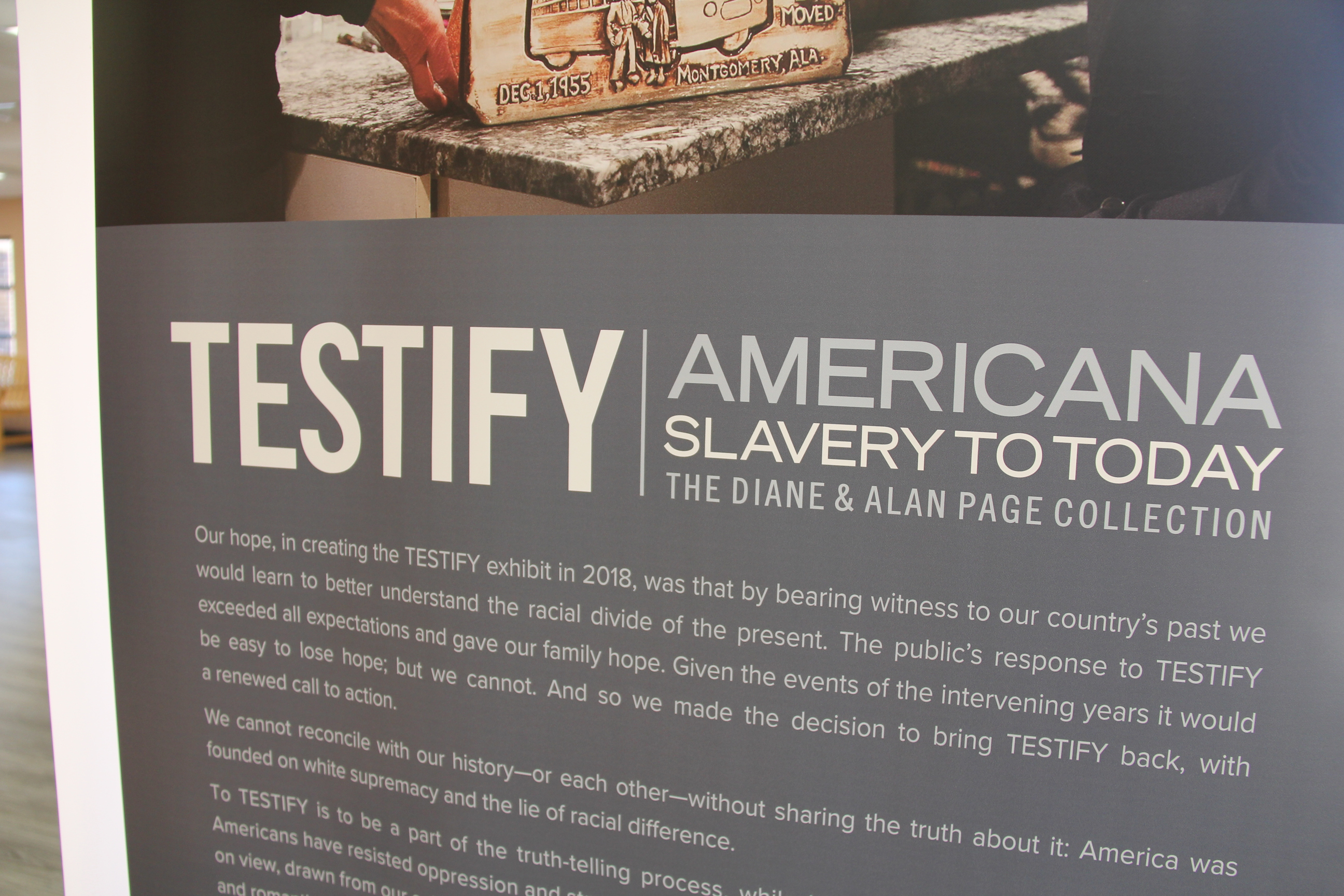
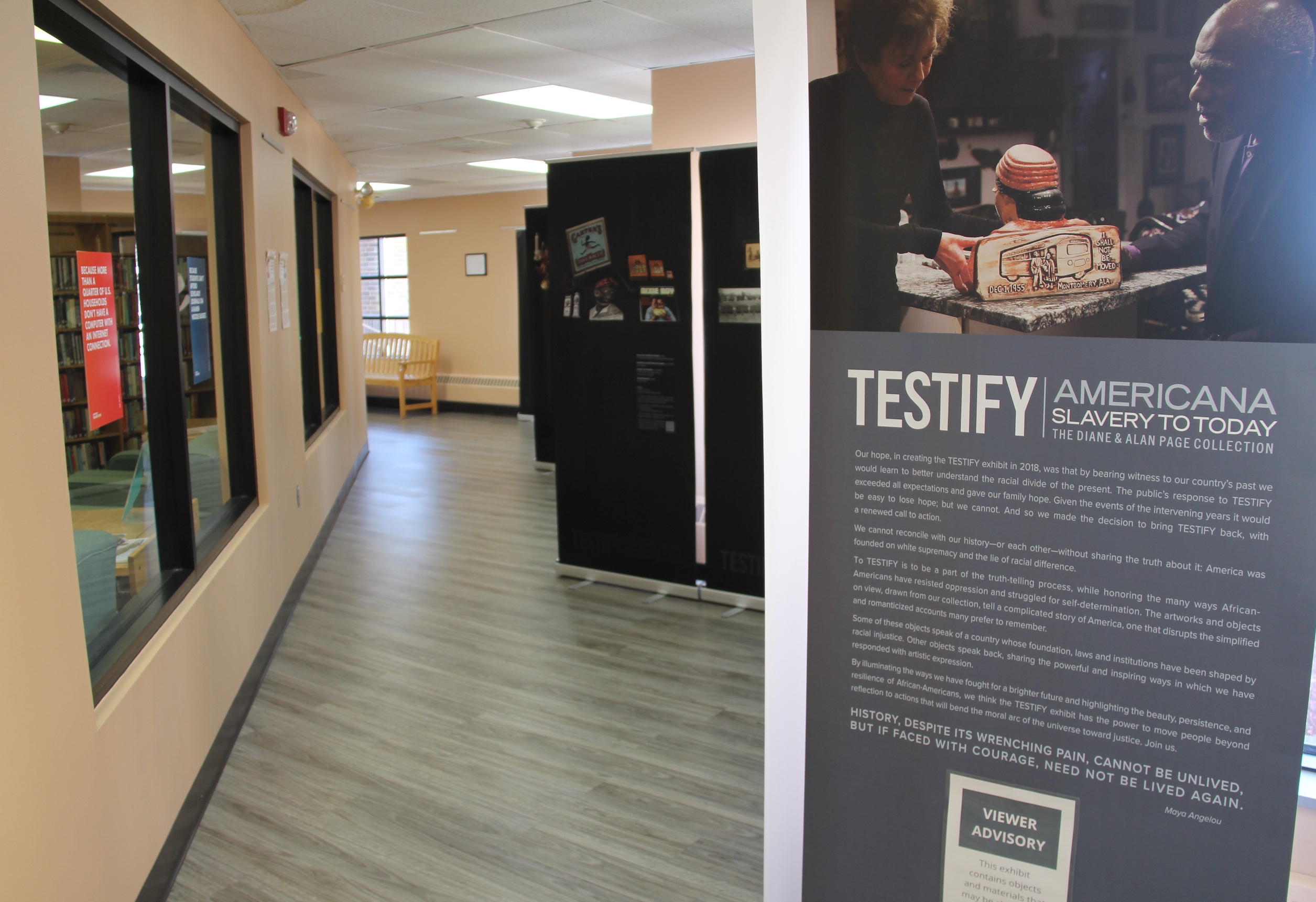
The first panel explains the “Testify” exhibit. (Minnesota Prairie Roots copyrighted photo April 2025)
THE IMAGES AND WORDS left me feeling simultaneously unsettled, uncomfortable, disturbed, enlightened, impressed, angry and incredibly sad. My emotional reaction is not surprising after viewing the traveling exhibit, “Testify—Americana Slavery to Today,” at my local public library.
The 16 “Testify” panels stretch along the hallway connecting the library and community center in Faribault. (Minnesota Prairie Roots copyrighted photo April 2025)
The exhibit features photos of select African American art and artifacts from The Diane and Alan Page Collection. Alan Page, who is Black, was a Minnesota Supreme Court justice and, in the 1970s, a defensive lineman for the Minnesota Vikings. He’s in the NFL Hall of Fame. Diane, who was White, worked in marketing and was a businesswoman and notable philanthropist. She led the way in securing the art and artifacts in the couple’s collection.
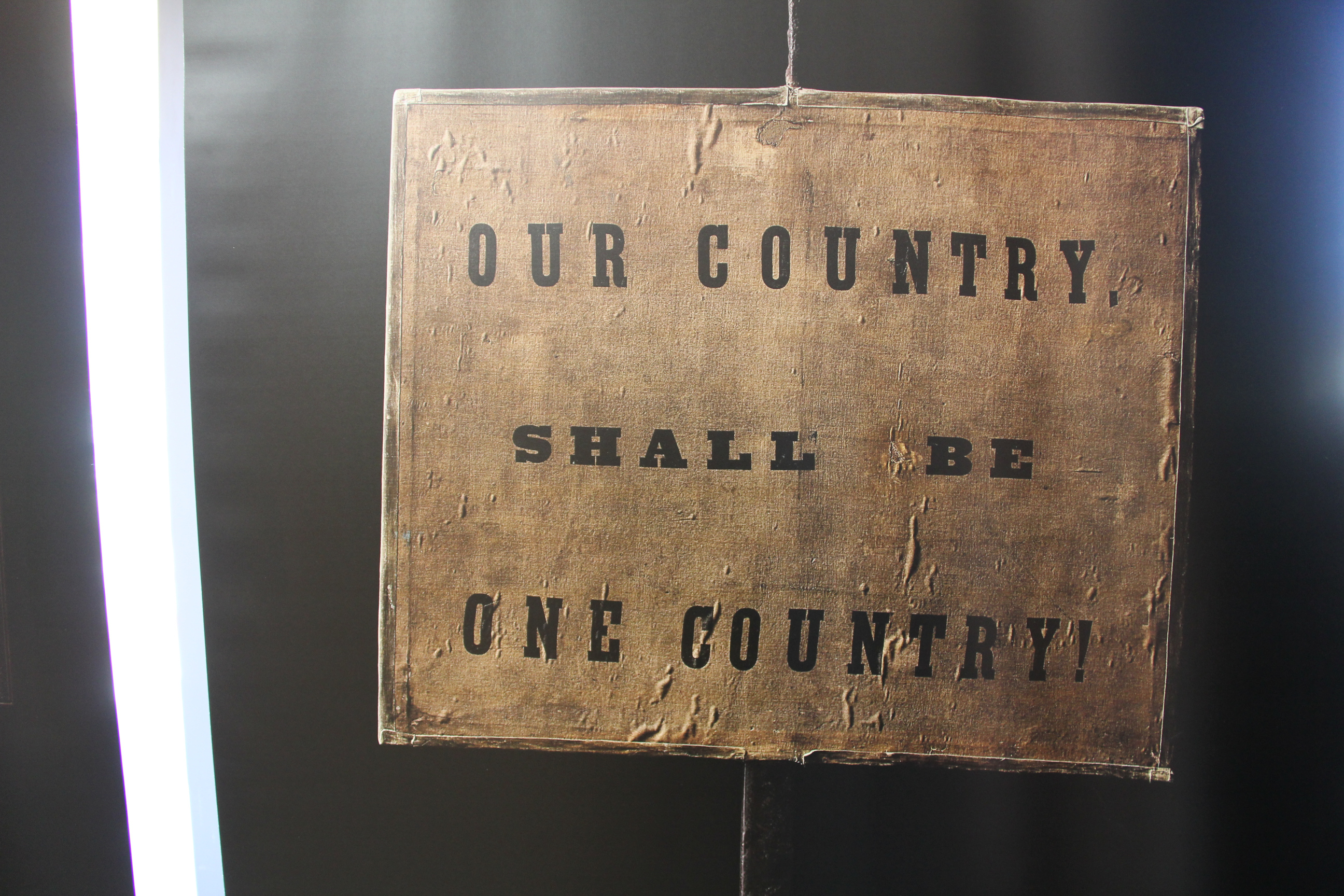
This 1864 banner may have been carried by freedmen at a rally or march. During the 1864 election of Abraham Lincoln, both political parties came together to reject slavery. (Minnesota Prairie Roots copyrighted photo April 2025)
I’m grateful Buckham Memorial Library (through SELCO, the regional library system) brought this exhibit to Faribault for the public to see. We can all learn from history, deepening our understanding. We begin to recognize perspectives and biases and can then move toward change and healing.
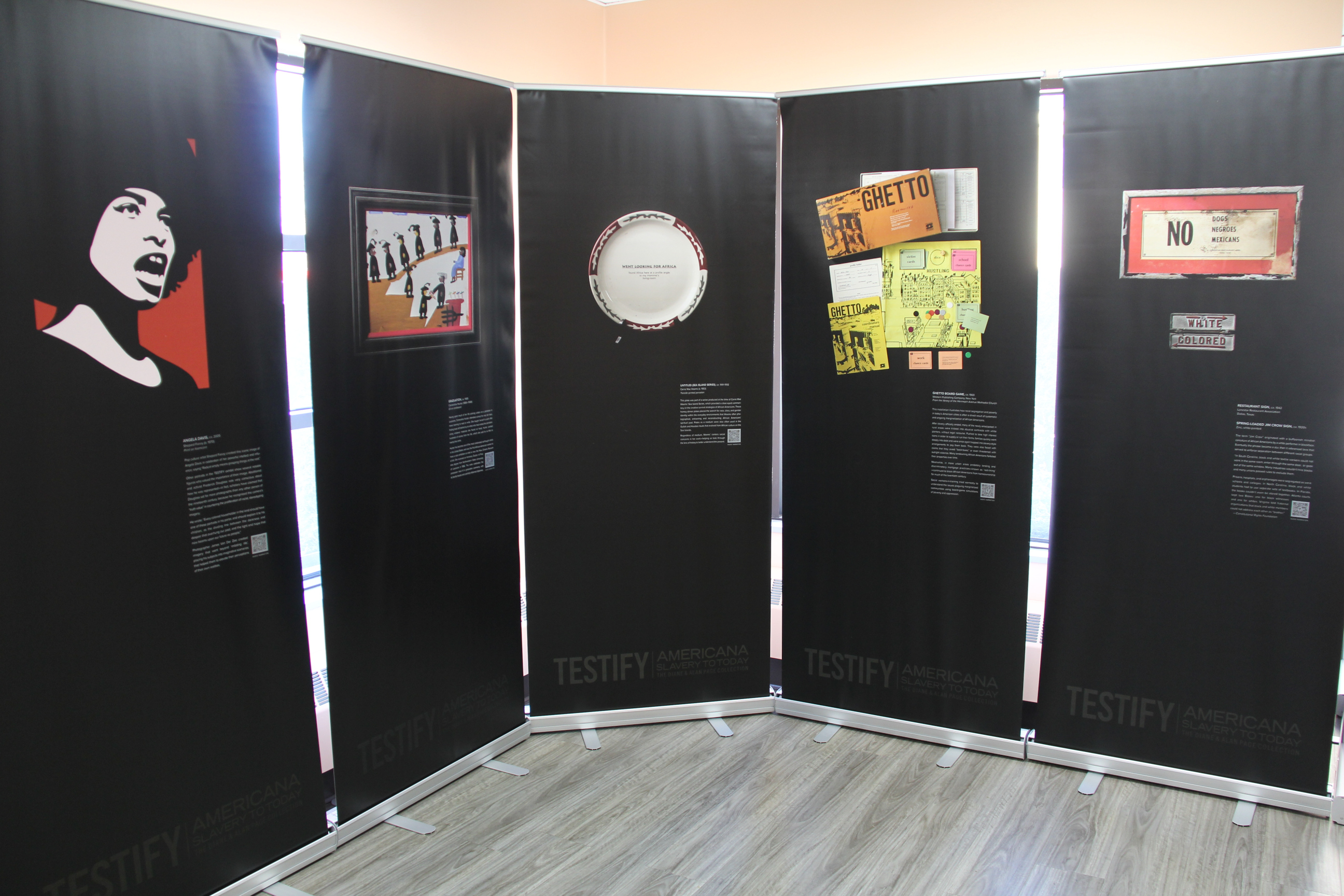
The last five panels cover a span of topics. (Minnesota Prairie Roots copyrighted photo April 2025)
As I walked my way along the 16 towering photo panels paired with text, I began to more fully appreciate the suffering, the abuse, but also the fortitude, of African Americans. Despite everything, they retained strength and resilience.
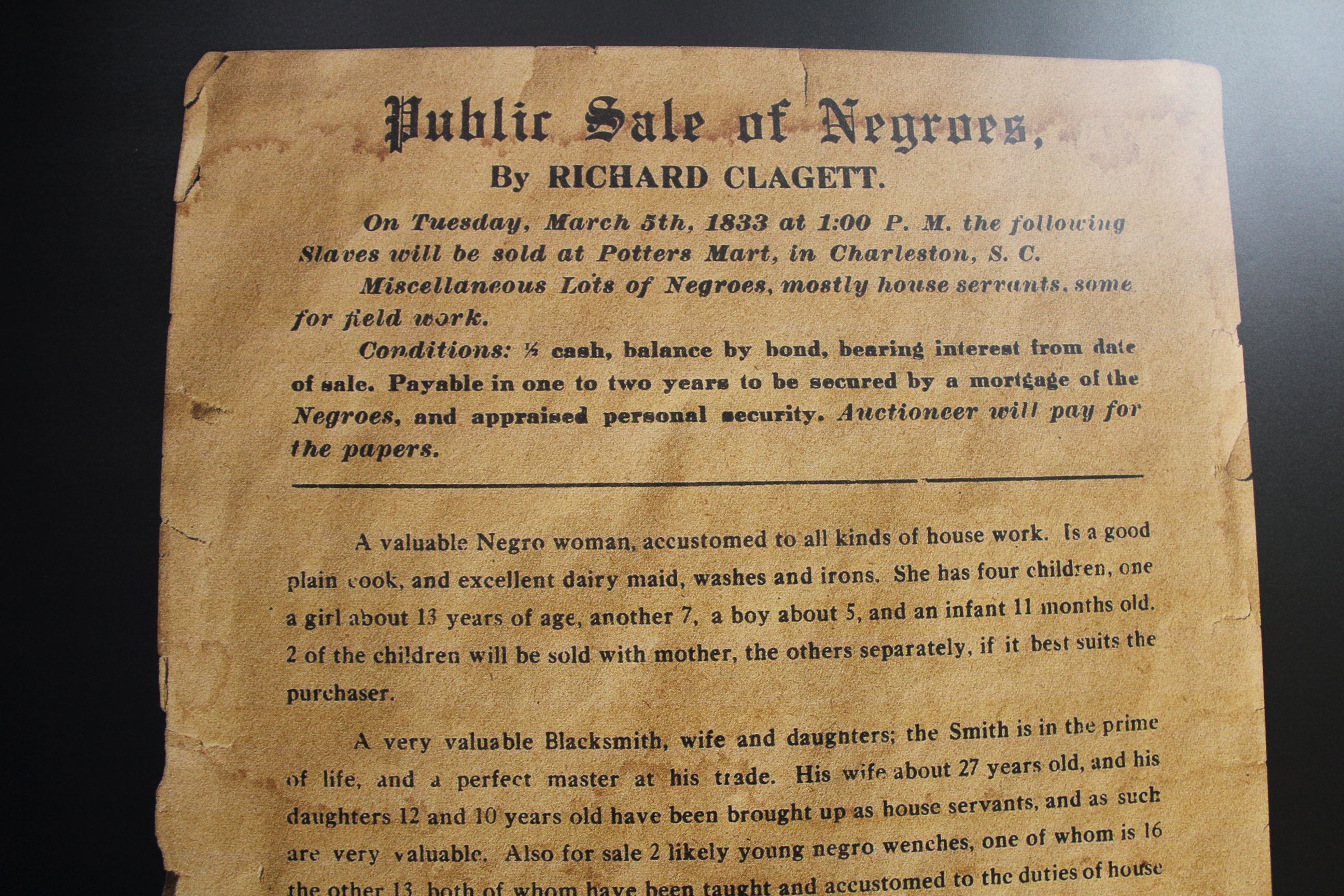
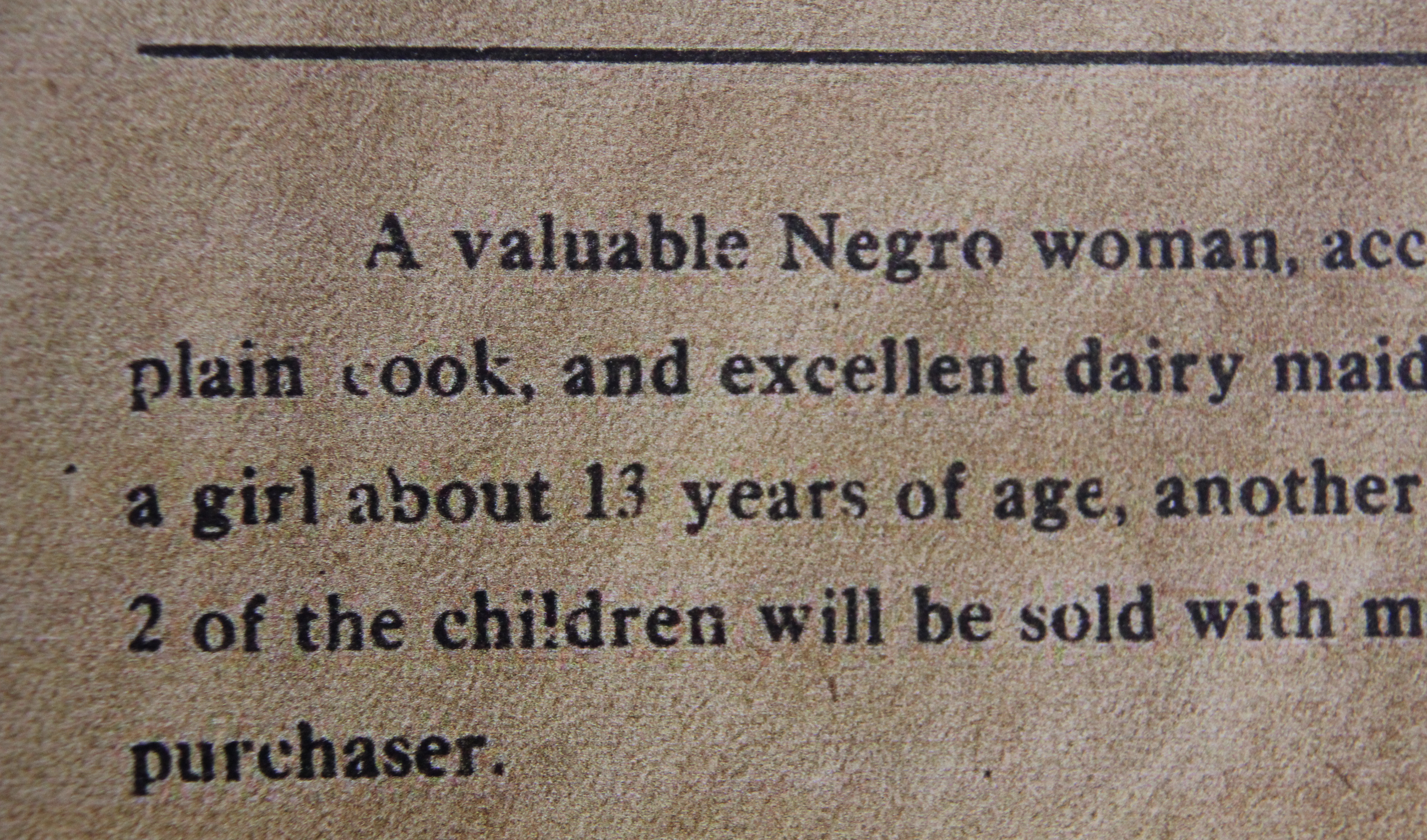
Notice of an 1833 slave auction in Charleston, South Carolina. (Minnesota Prairie Roots copyrighted photo April 2025)
Yet, how hard it must have been at times to hold hope, especially from slavery to the time of Jim Crow laws. When I read a Public Sale of Negroes notice from 1833, I read words of degradation. I cannot imagine being that “valuable Negro woman,” that “very valuable blacksmith,” the slaves in “miscellaneous lots of Negroes” who were auctioned off like so much property. What humanity does to one another seems unimaginable, unfathomable. Yet, it still happens today, just in different ways.
A description of a slave to be sold at the 1833 auction. (Minnesota Prairie Roots copyrighted photo April 2025)
As disturbing as that slave bill of sale was, a group photo of nine unclothed Black toddlers in a professional studio portrait titled “Alligator Bait” proved profoundly disturbing to me. So much so that I can’t bear to show this 1897 image to you. The accompanying text states that historians researched whether hunters actually used African American children as alligator bait. Results were inconclusive, which is telling.
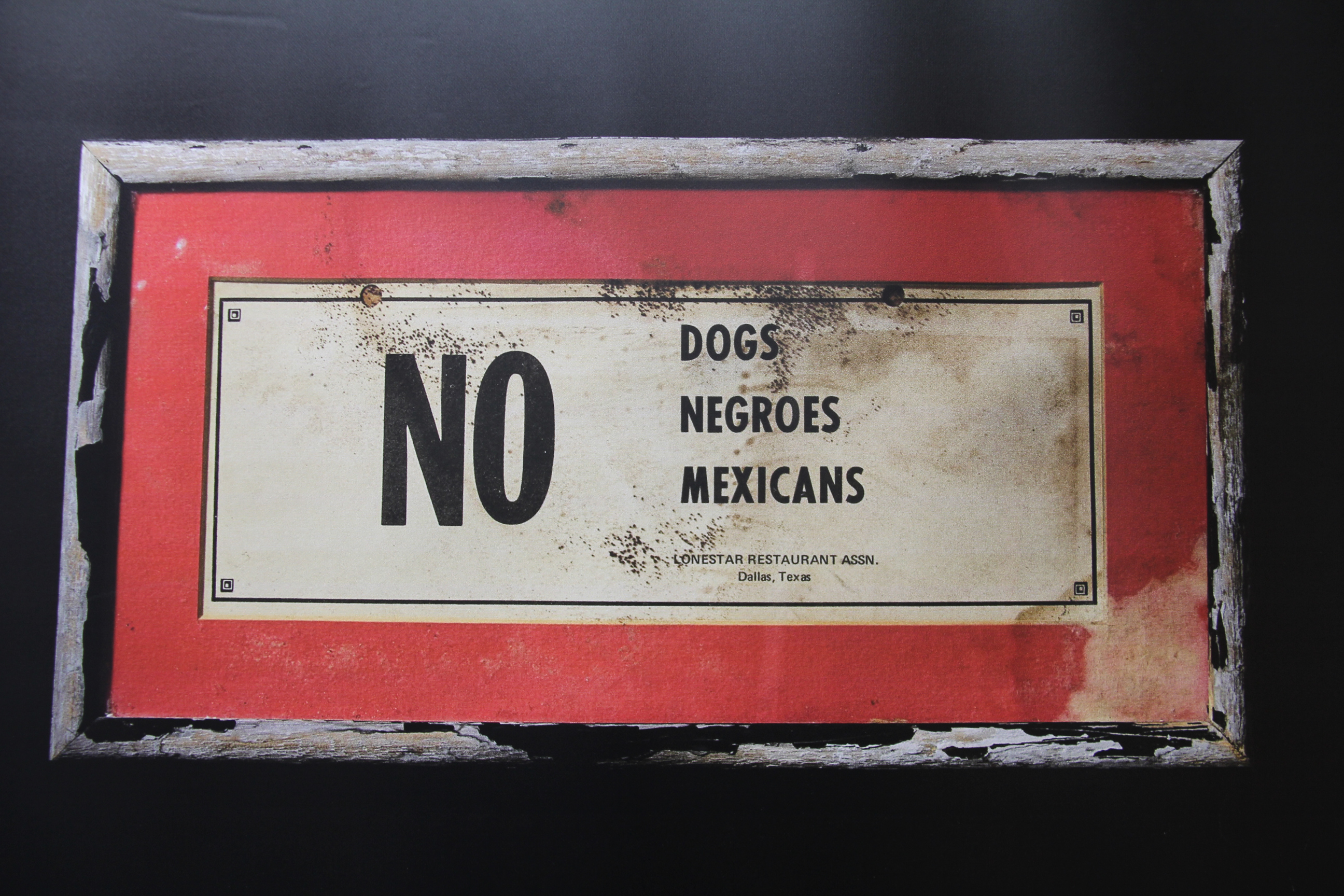
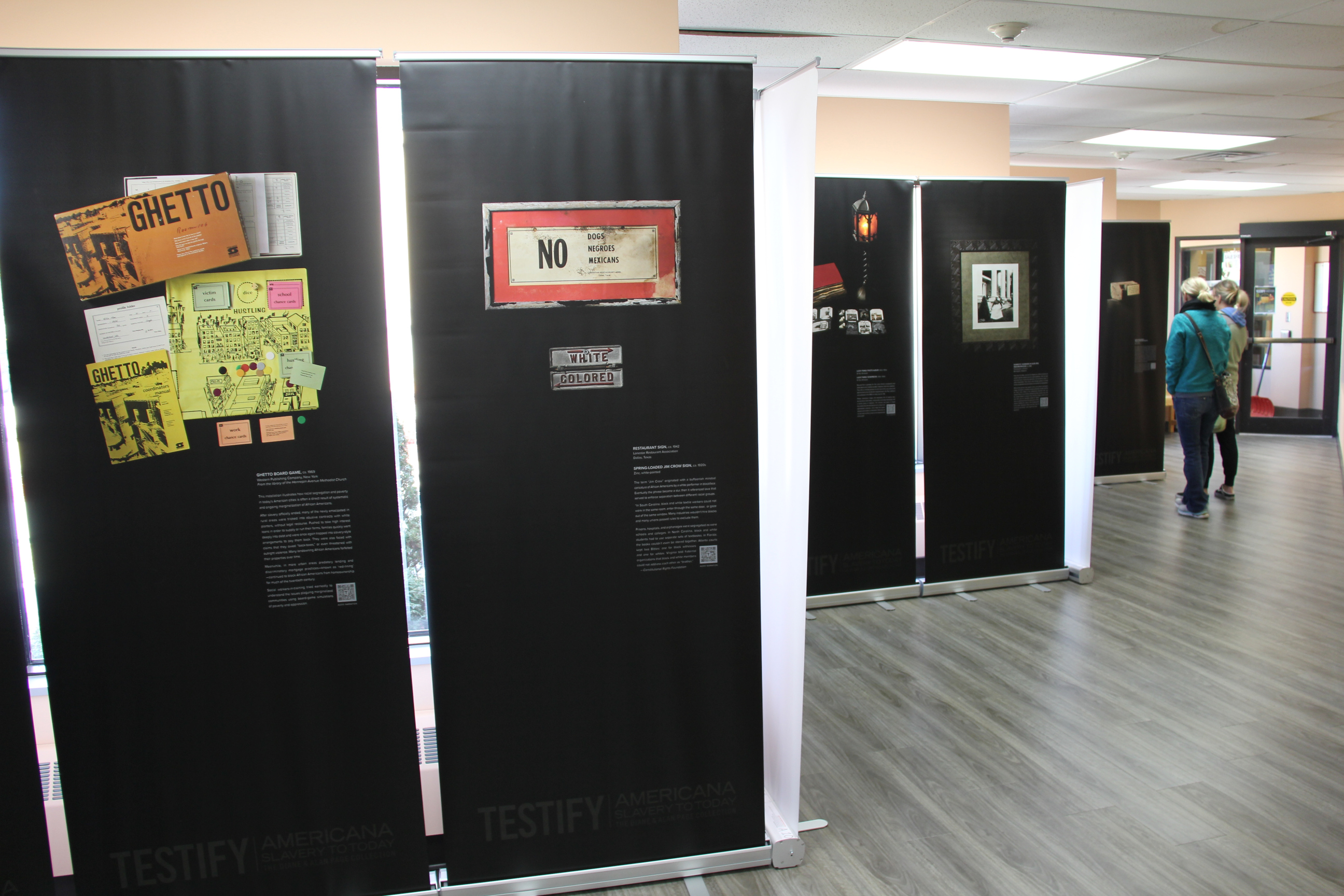
An unwelcoming 1942 sign from the Lonestar Restaurant Association in Dallas, Texas. (Minnesota Prairie Roots copyrighted photo April 2025)
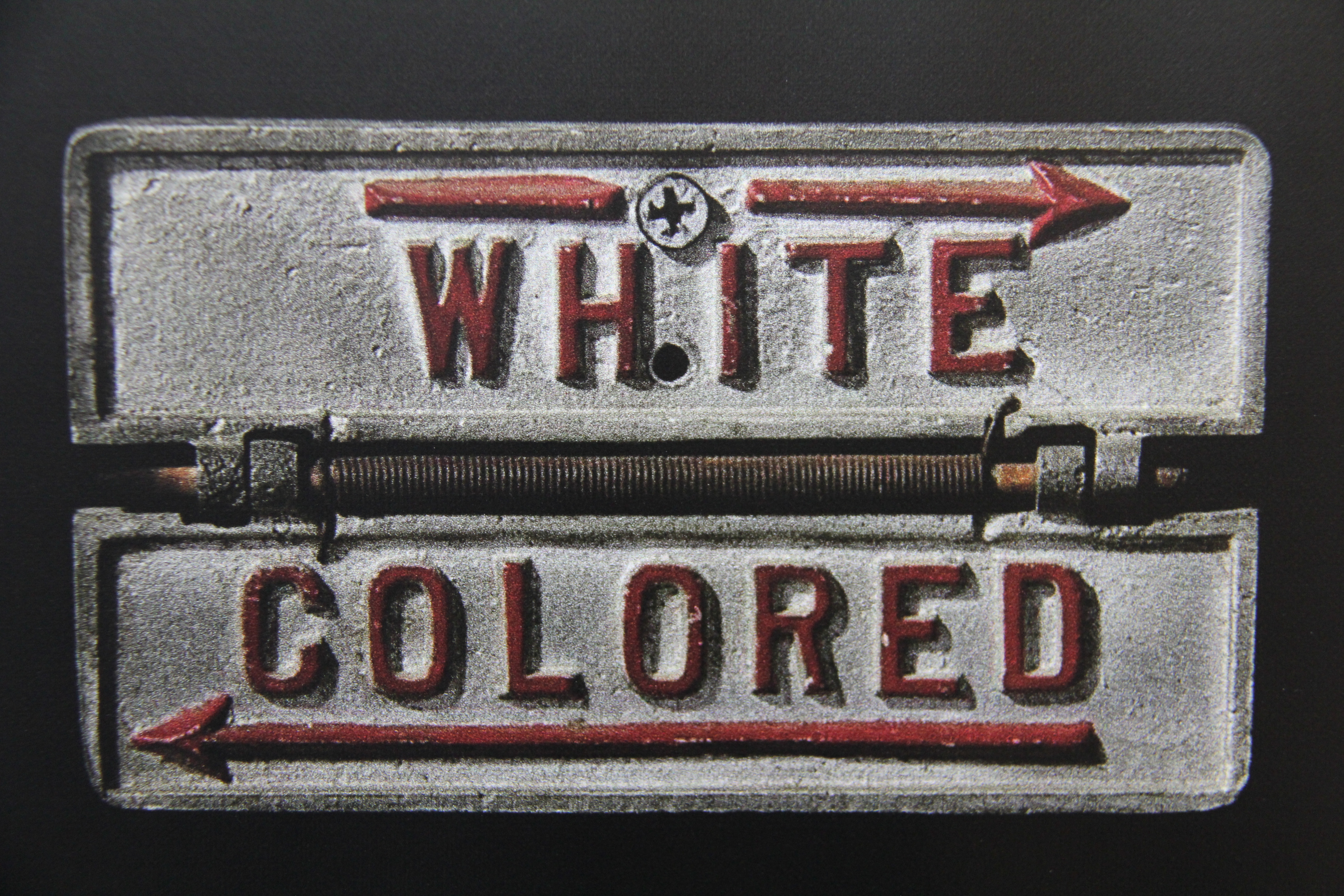
A 1920s spring-loaded Jim Crow sign. (Minnesota Prairie Roots copyrighted photo April 2025)
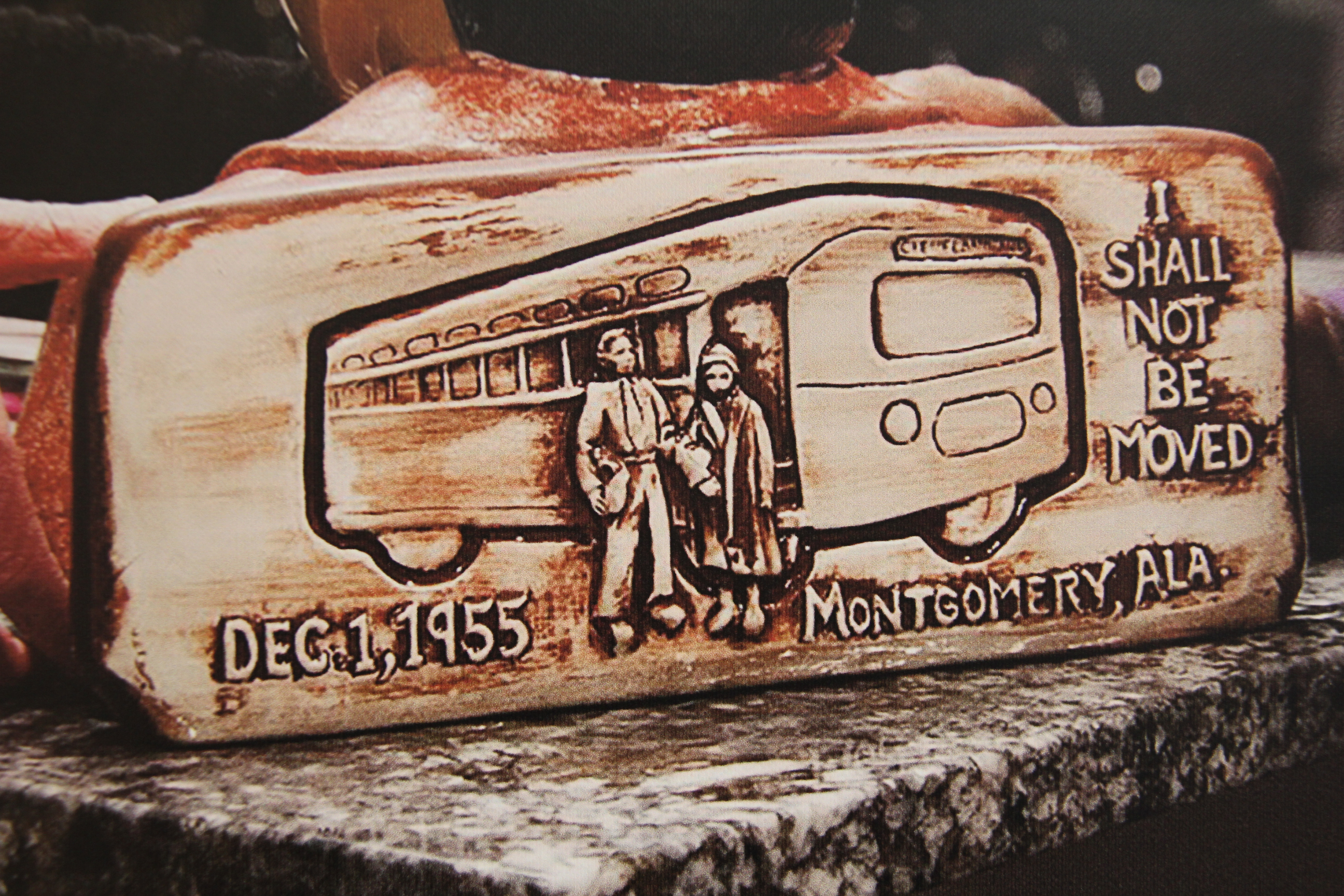
Protest art from the Civil Rights Movement. (Minnesota Prairie Roots copyrighted photo April 2025)
A sign banning “dogs, Negroes and Mexicans” and another pointing Whites one way and “Colored” people the other prompted thoughts of, well, things have not changed all that much. Of course, they have, but not really if you dig deep or, conversely, read today’s headlines.
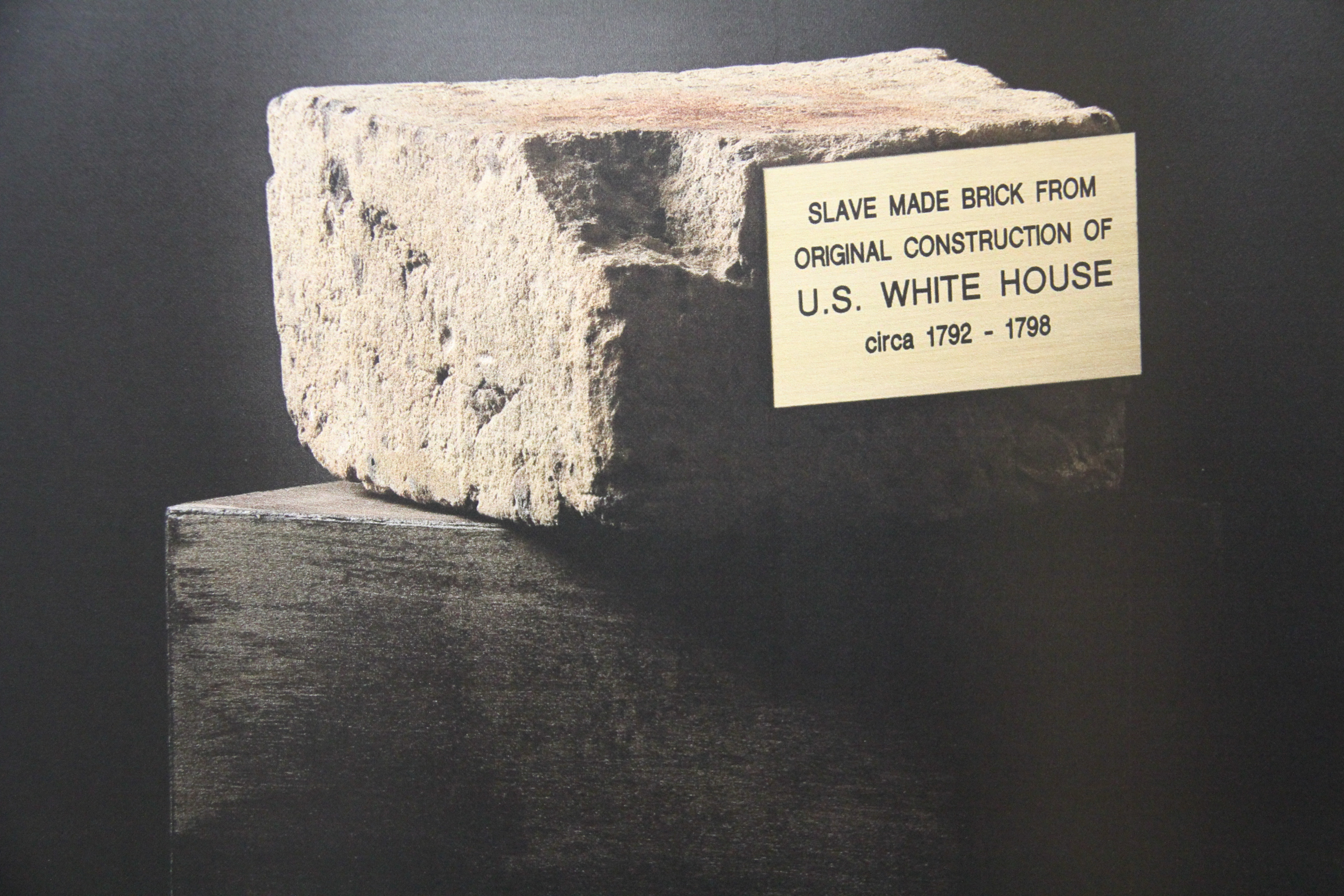
A brick crafted by slaves for the White House. (Minnesota Prairie Roots copyrighted photo April 2025)
I want to backtrack for a minute to the first photo I saw in the exhibit. It was of a single brick, circa 1792-1798. This singular object drove home the point that this country was built on the backs of slaves, like those who molded and laid the bricks for government buildings in Washington DC. That includes the White House and many U.S. Capitol buildings, according to the exhibit text. Unpaid slave labor. Think about that for a minute or ten.
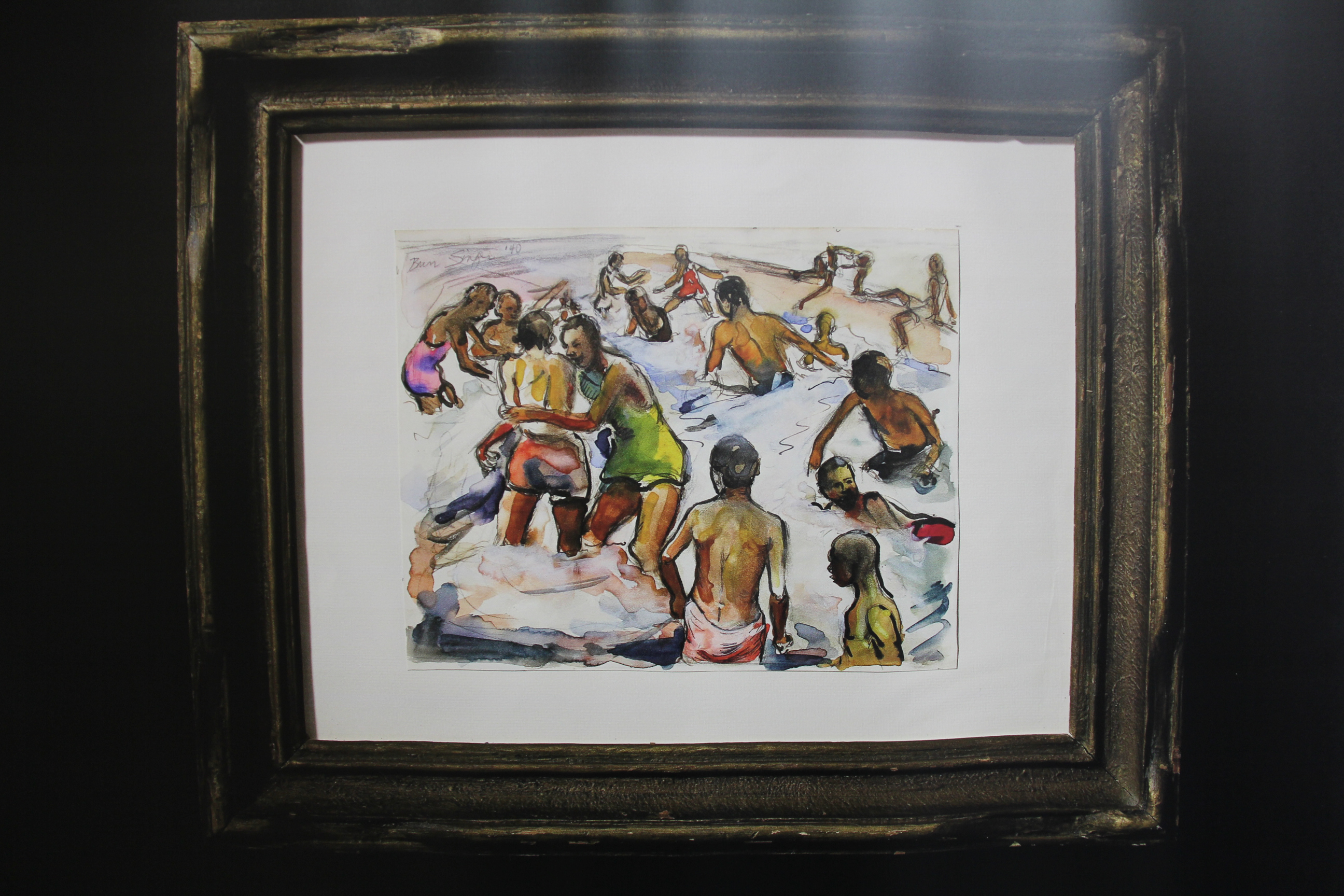
“Only on Thursdays,” a 1940 painting by Burr Singer. (Minnesota Prairie Roots copyrighted photo April 2025)
There’s lots to contemplate in the “Testify” exhibit. That includes the watercolor art of Burr Singer titled “Only on Thursdays.” If you just looked at the art without the title and context, you might think it was simply a depiction of African Americans swimming. But it’s not. Thursday was the only day Blacks could use the Pasadena public pool. This painting makes a statement.
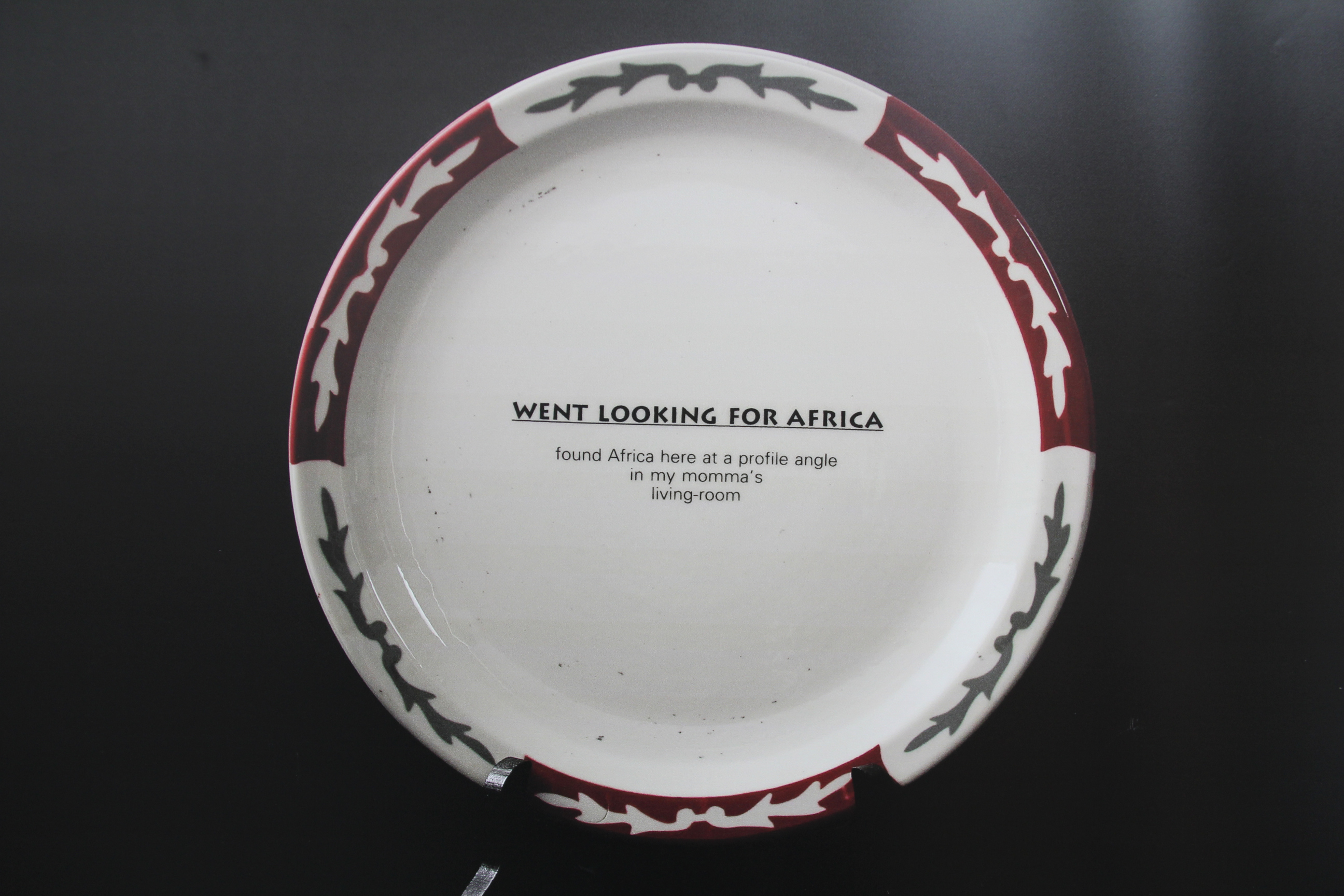
This 1991-1992 plate in Carrie Mae Weems’ Sea Island Series honors the creative survival strategies of African Americans. (Minnesota Prairie Roots copyrighted photo April 2025)
This exhibit makes a statement. Through images and words, it shines a light on the past, on Black history, on the atrocities of slavery and segregation and racism (both subtle and overt). Through “Testify,” truth-telling emerges for all to view and contemplate.
The panel to the far left shows a photo of the board game GHETTO. Social workers in training used the game to understand issues facing marginalized communities. (Minnesota Prairie Roots copyrighted photo April 2025)
FYI: “Testify—Americana Slavery to Today” is on display until April 23 in the corridor linking Buckham Memorial Library to the Faribault Community Center.The photos and information included in this story are only a sampling of what you will see in the exhibit.The Mabel Public Library hosts the exhibit from April 25-May 7.
NOT EVERYONE LIKES THEM. Rabbits, that is. They can be a nuisance, nibbling, even devouring, garden flowers and vegetables. I understand that justified dislike. My oldest daughter, who has been trying to establish a flowerbed in front of her Lakeville home, battles rabbits every year. They win, mostly.
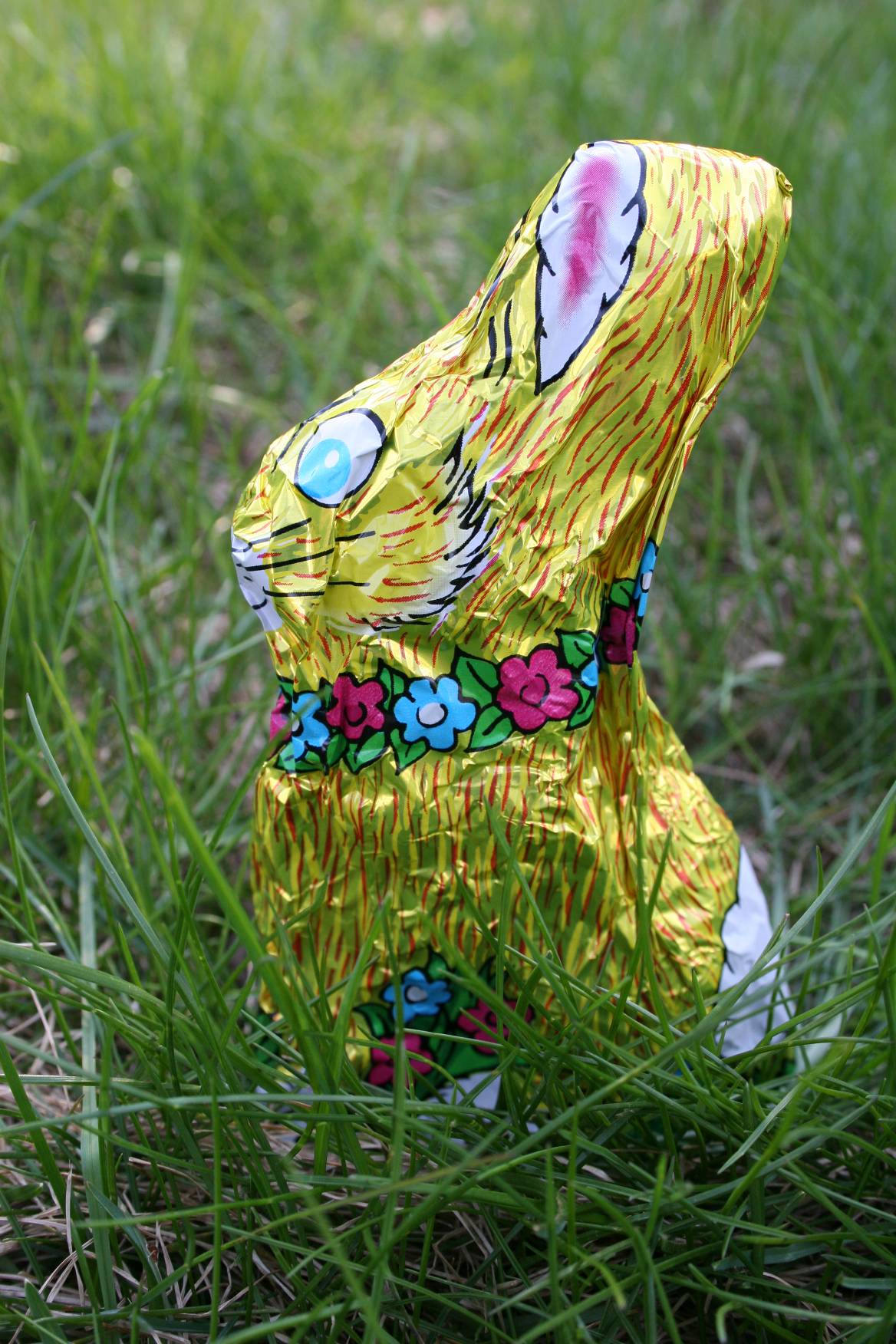
There will be no chocolate bunnies purchased by me this Easter. (Minnesota Prairie Roots copyrighted file photo)
But this week, rabbits are in good favor. Or should I say at least one rabbit is welcomed. That would be the Easter Bunny, bearer of candy. I will like him a whole lot if he drops a delivery of Reese’s pieces eggs (peanut butter candy in a crunchy shell) off at my house…because I limited my Easter candy purchase to one bag. I bought Robin eggs, which are malted milk candy in a crunchy shell, for Randy as they are his favorite. And they were reasonably priced at $2.48 for a 9-ounce bag. Cost—around $5 for most bags of candy—kept more candy out of my shopping cart. Not even the grandkids or my two out-of-town adult children will get chocolate bunnies from me this year. They’ll have to hope the Easter Bunny comes through.
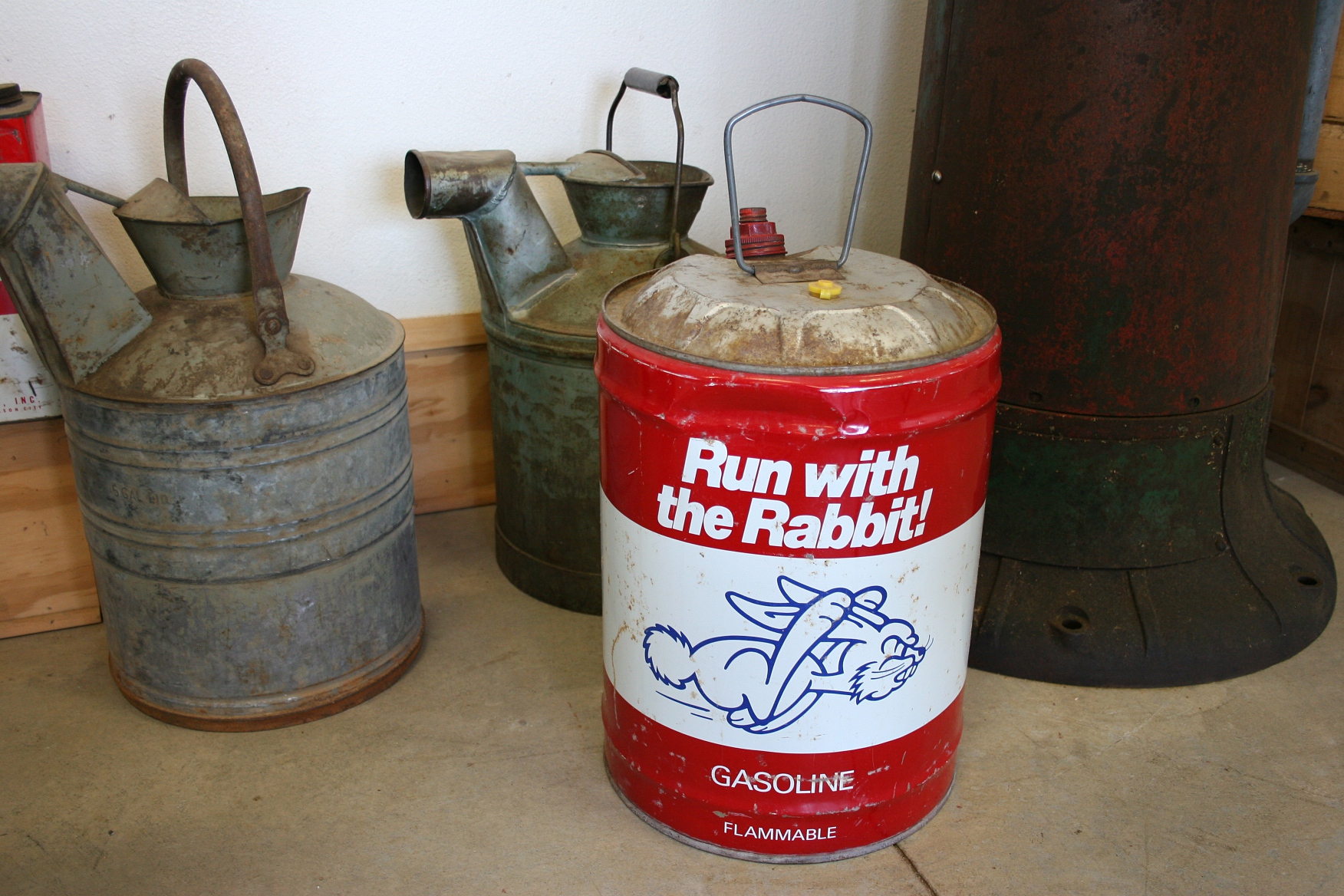
Among the many gas cans my middle brother collects is this Rabbit-themed one, which I love. (Minnesota Prairie Roots copyrighted file photo)
Ah, Rabbits. I really do like them. I’m amazed at their swiftness, hopping across yards, including mine, at seemingly record-breaking speed. Yet, they can also sit statue still and commence a stare-down.
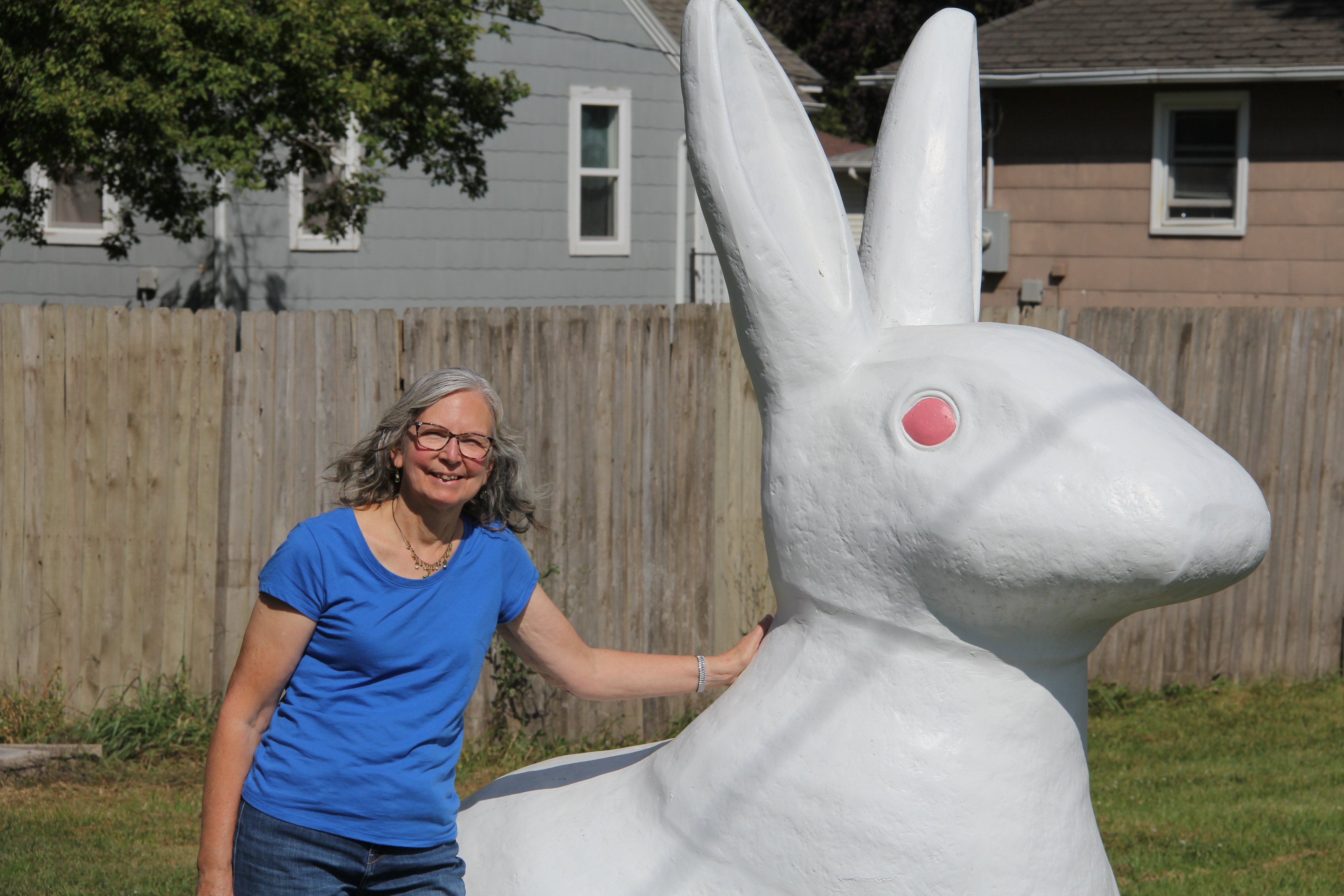
Me, posing with the rabbit statue in Wabasso when I was back in town for my 50th high school class reunion in September 2024. (Minnesota Prairie Roots copyrighted file photo by Randy Helbling)
That brings me to the mammoth rabbit statue which sits along Minnesota State Highway 68 in Wabasso in southwestern Minnesota. I attended high school in this rural community named after a Native American word meaning “white rabbit.” Our school mascot was Thumper. No jokes, please. I heard plenty of bunny jokes decades ago. I am forever proud to be a Wabasso Rabbit. I mean, who has a school mascot that interesting and unique? A name that actually connects to history and place and is found in Henry Wadsworth Longfellow’s poem, “The Song of Hiawatha.”
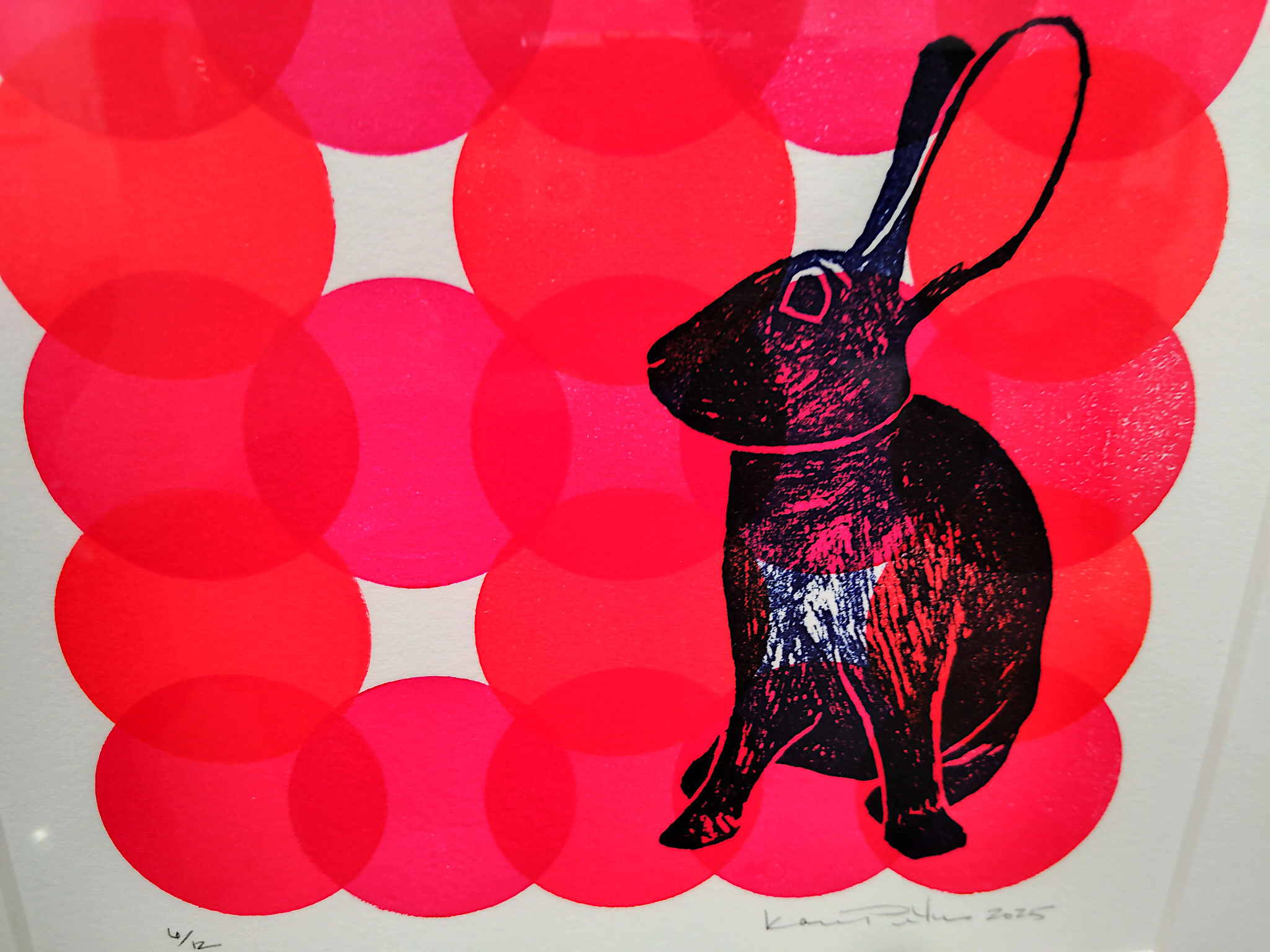
This shows part of a relief print, “Neon Love Rabbit,” by Karen Peters. (Minnesota Prairie Roots copyrighted photo April 2025)
Just the other evening I saw some unique rabbit art at the Paradise Center for the Arts. I was sitting at the annual PCA membership meeting when I spotted this art in the gallery. When the meeting concluded, I hopped (well, not quite, but the word fits here) over to look at the work of Minneapolis artist Karen Peters. She explores color through printmaking, creating relief prints. Rabbits are among the subjects of her prints.
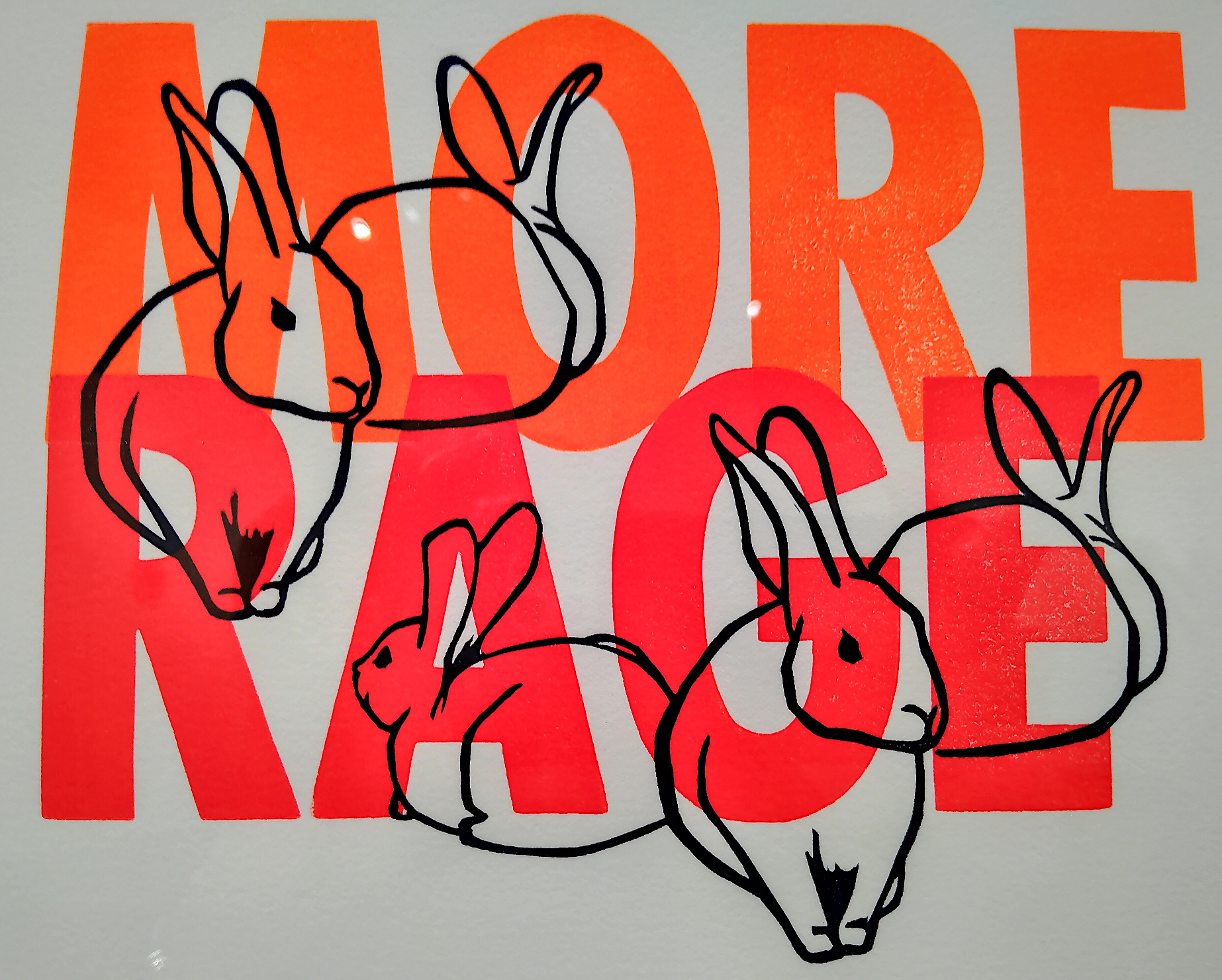
Now I expect my eldest daughter, given her dislike of rabbits, would probably favor Peters’ “More Rage” print. Amber has raged more than once about invasive rabbits and their path of destruction.
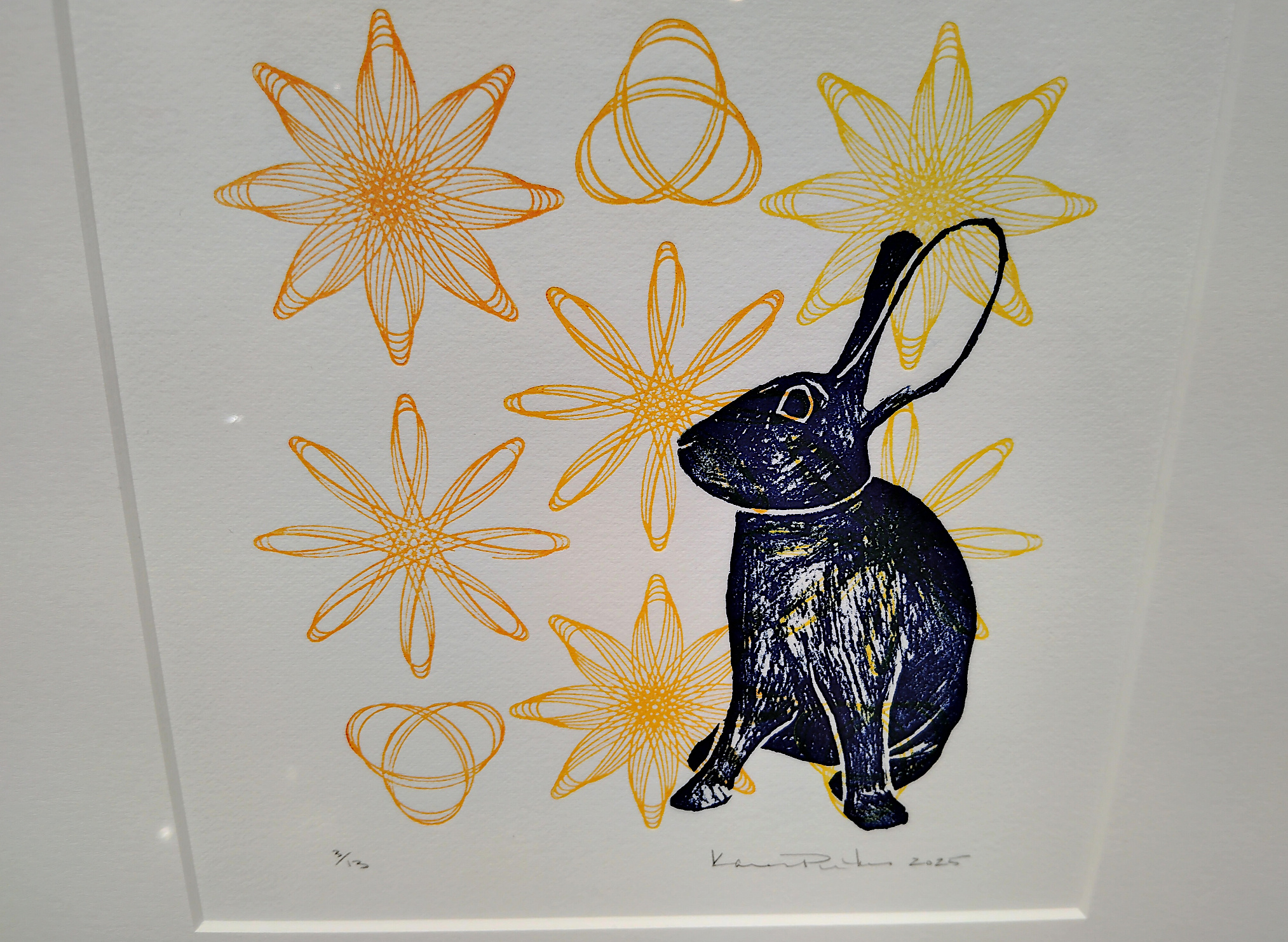
“Spiro rabbit,” a relief print by Karen Peters. (Minnesota Prairie Roots copyrighted photo April 2025)
Me? I rather like Peters’ “Spiro rabbit” print with its contrast of black rabbit lurking among yellow flowers created with a Spirograph. The last time the grandkids stayed overnight, I pulled out the Spirograph, a geometric drawing device that has been around since 1965, way back when I was a kid. That Peters used this popular art tool to bloom flowers into her rabbit print shows out-of-the-box creative thinking.
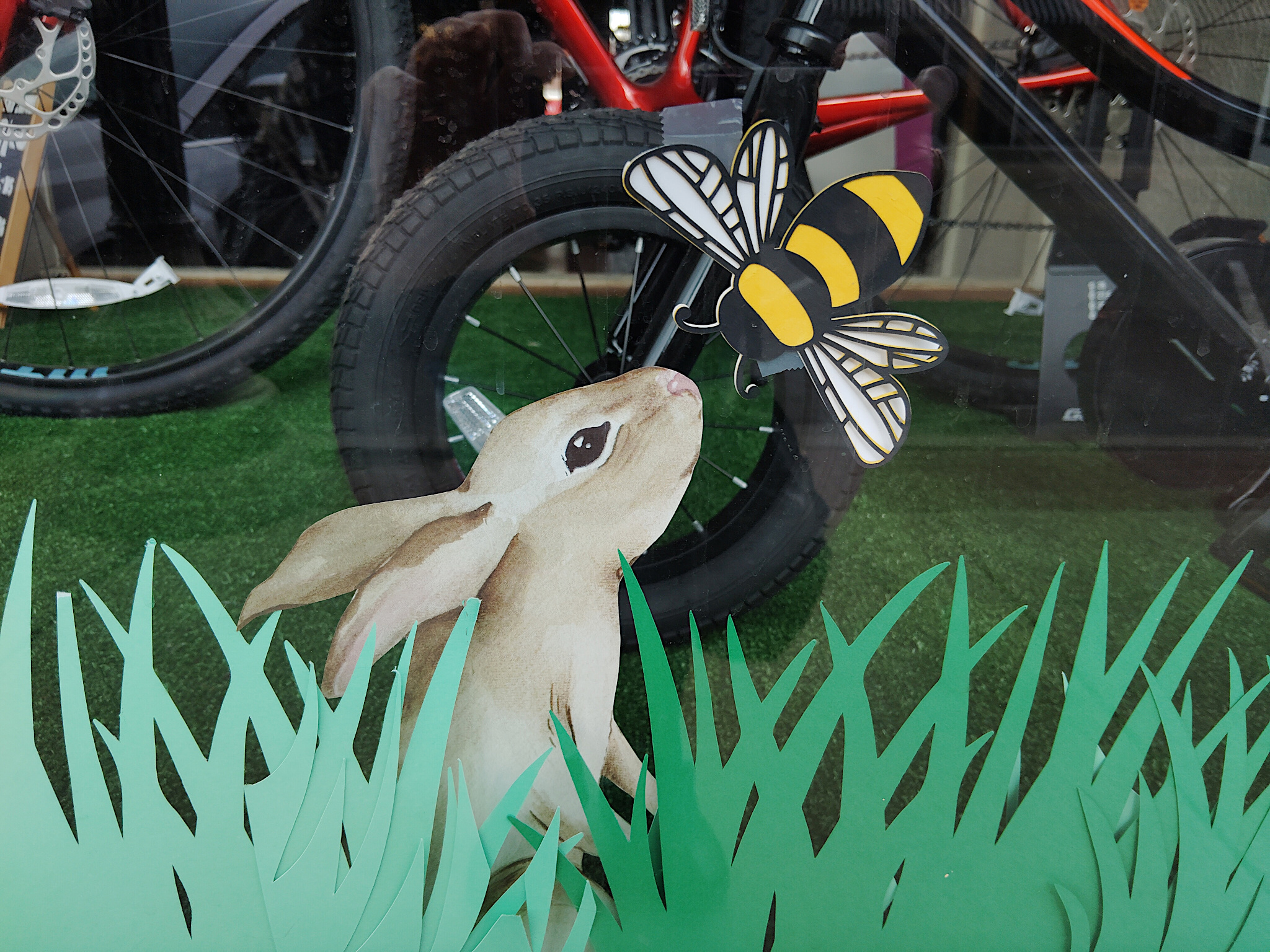
A spring scene set against a backdrop of bikes in the front window of Mill Town Cycles. (Minnesota Prairie Roots copyrighted photo April 2025)
Upon leaving the Paradise, I passed by Mill Town Cycles, glancing at the window display to see more creativity. You guessed it. There was another rabbit, this one poking through the grass to sniff a bee. It was a cute scene, perfect for spring, perfect for Easter.
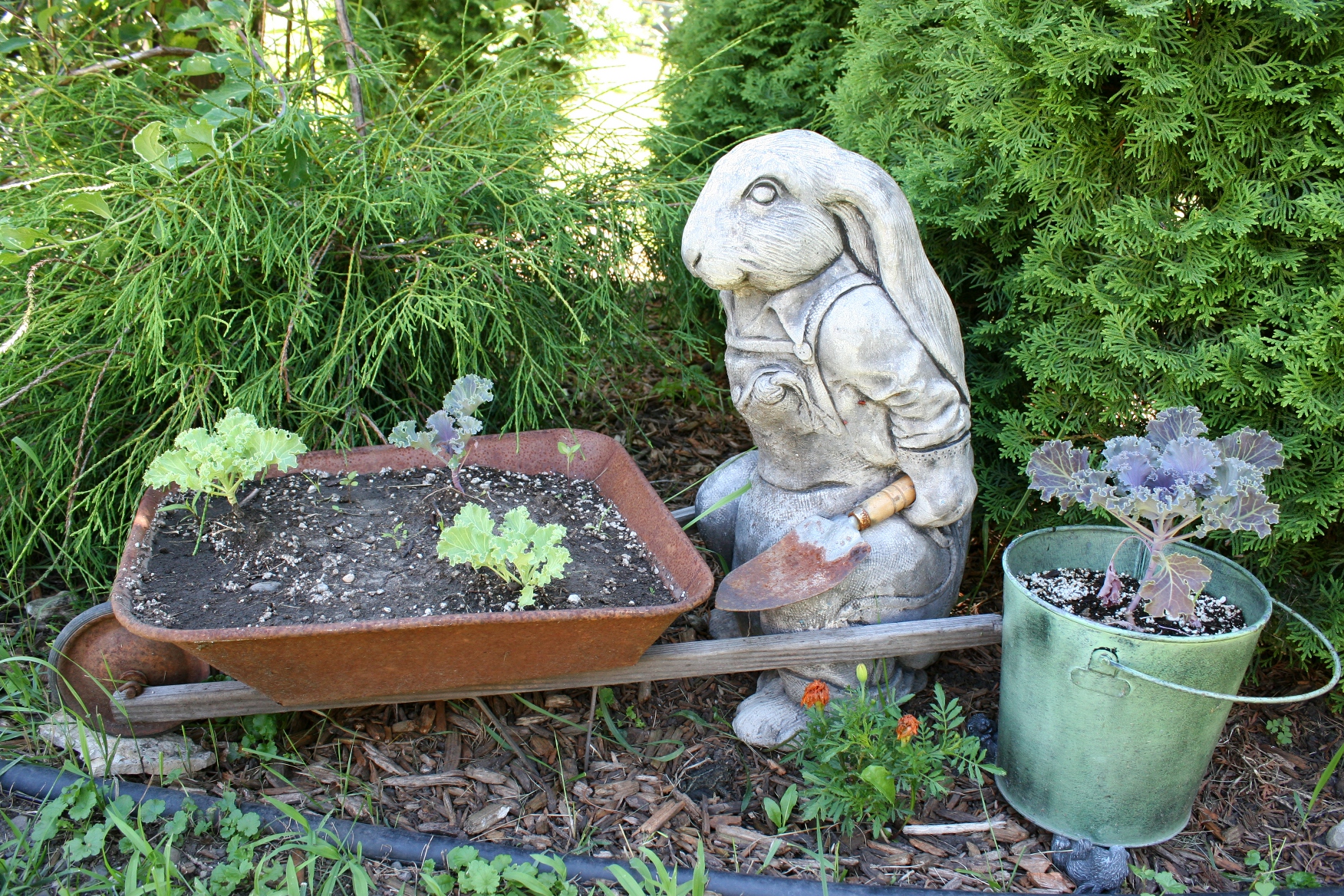
Garden art of a rabbit gardening. (Minnesota Prairie Roots copyrighted file photo)
Whether you like rabbits or not, universally-speaking, the Easter Bunny seems like a rabbit we can all love. As long as he stays out of the garden. And brings lots of candy.
#
FYI: The art of Karen Peters, Justin Peters, Clayton Hubert, Scott Maggart, Gail Gaits, Sushila Anderson and Bethlehem Academy students will be on display until May 10 at the Paradise Center for the Arts in historic downtown Faribault.I photographed the art of Karen Peters with permission of the PCA. The white spots in my photos of her framed art are unavoidable glare on the glass.















 Minnesota Prairie Roots
Recent Comments