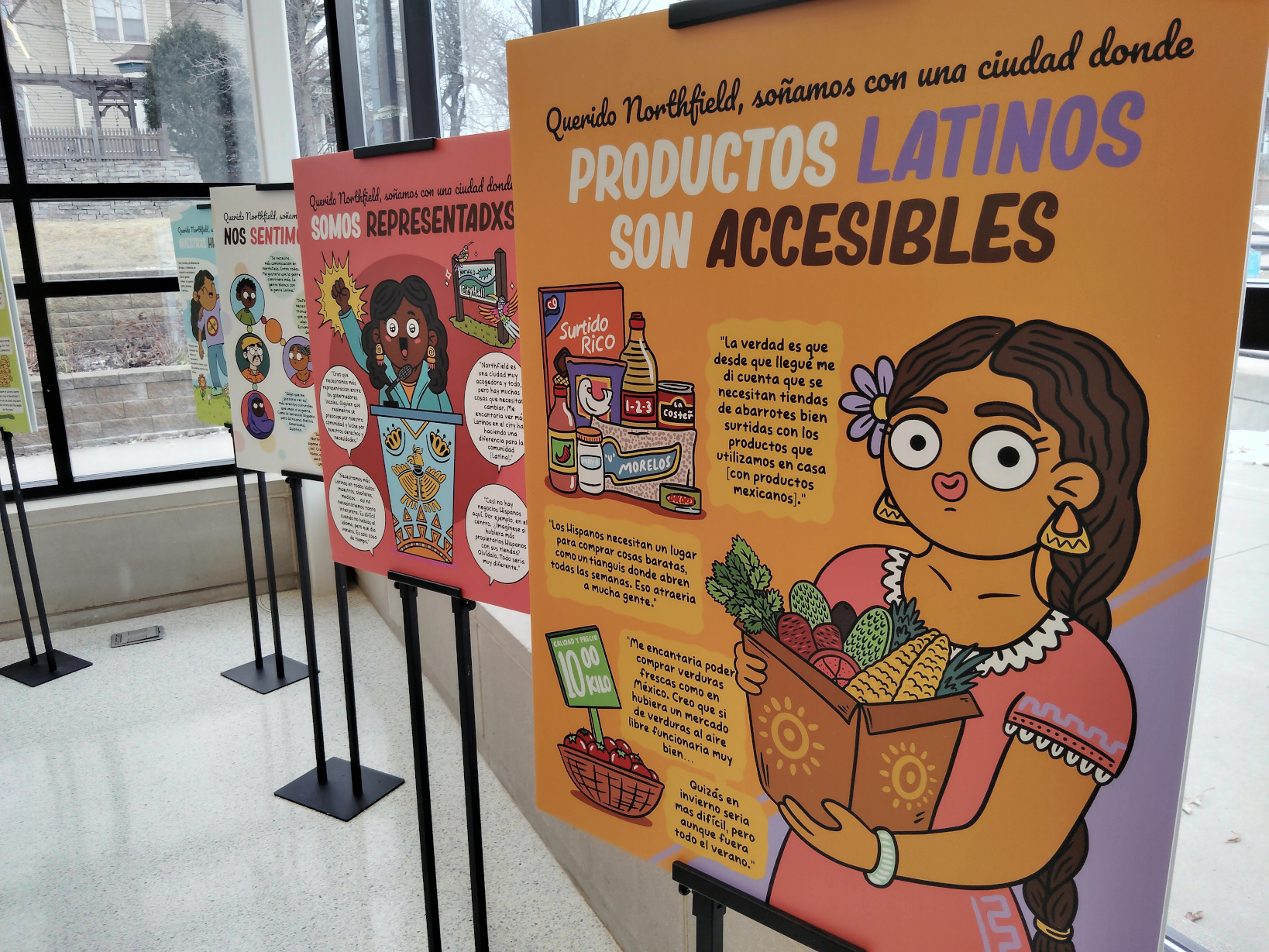
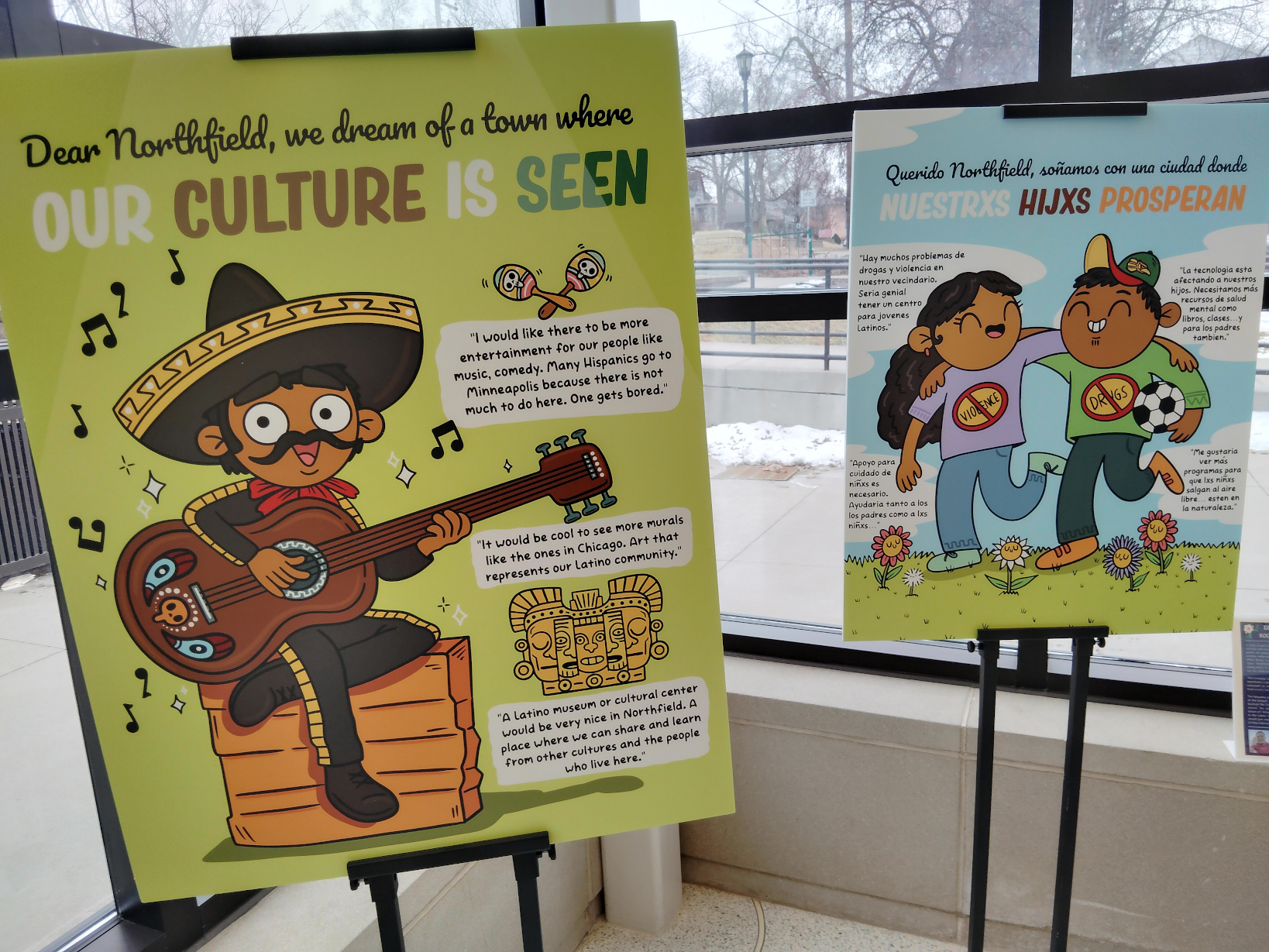
Panels created by Rocky Casillas Aguirre are written in both Spanish and English, on display recently at the Northfield Public Library. (Minnesota Prairie Roots copyrighted photo February 2026)
I APPRECIATE WHEN LEADERS think outside the box, using creative ways to gather and share information.
Take a project in the southern Minnesota riverside college town of Northfield, home to more than 2,000 Latinos, representing some 10 percent of the city’s population. A 2023 city-inspired effort led by a collective of local Latino artists and activists was tasked with developing a connective public art project focused on Latino voices.
Getting the conversation going…(Minnesota Prairie Roots copyrighted photo February 2026)
Among the results was a poster campaign, “Dear Northfield,” by Latino artist Rocky Casillas Aguirre. He interviewed 100 Latino residents, asking this question: “If you could write a letter to the people who govern our city, what would you tell them?”
The results are colorful, eye-catching panels that reveal invaluable insights from Northfield’s Latino population. I recently saw six of Aguirre’s art posters displayed in the atrium of the Northfield Public Library, a community gathering spot.
At first glance, the artwork reminds me of illustrations in a children’s picture book or drawings in a cartoon. That’s a signature style of Aguirre, born in Mexico, raised in Northfield and a resident for more than 20 years. His art grabs attention in vivid cultural colors.
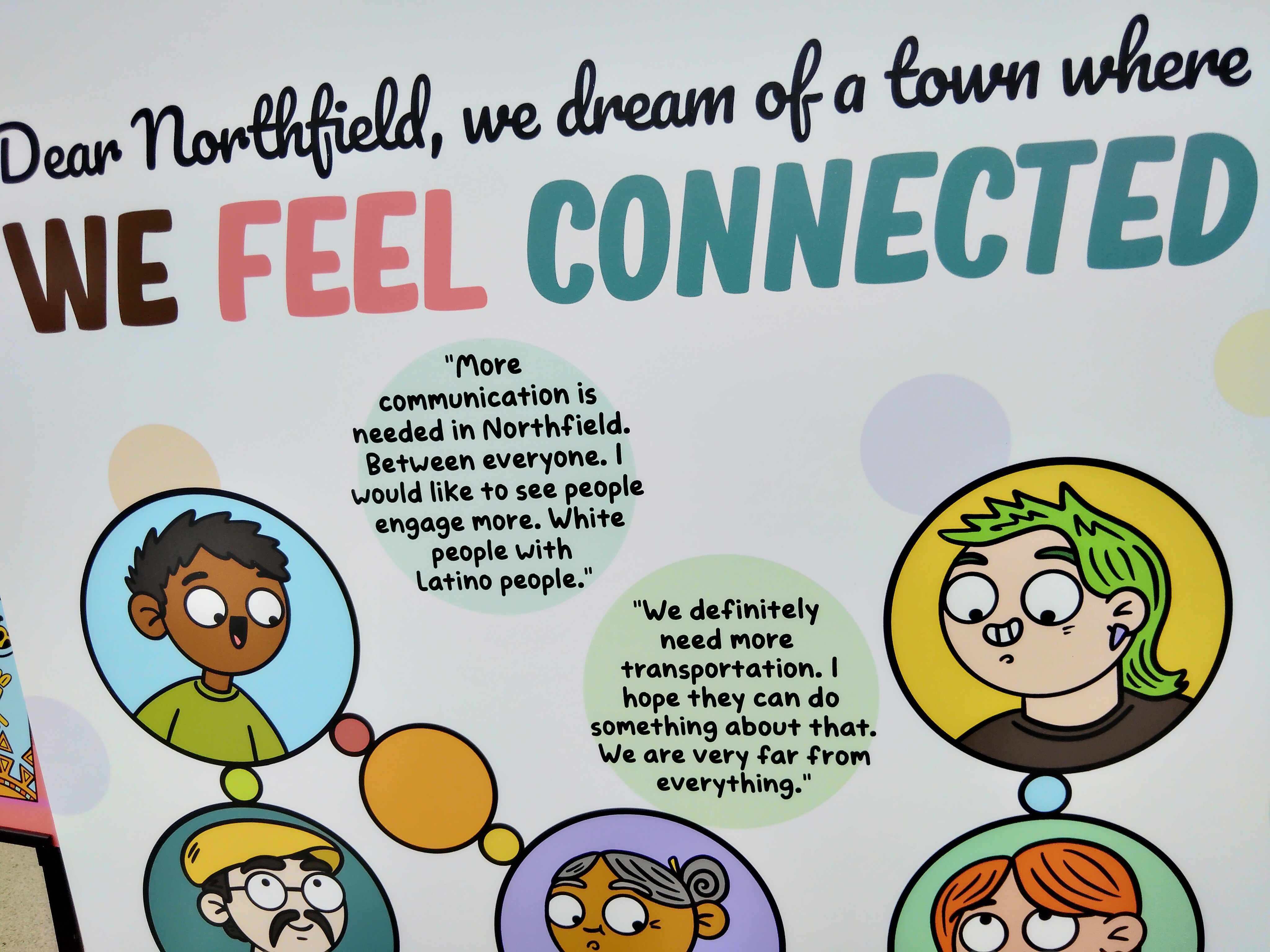
But it is the comments on those posters which especially deserve a close look as they address topics like housing, transportation, food, culture, communication and connection.
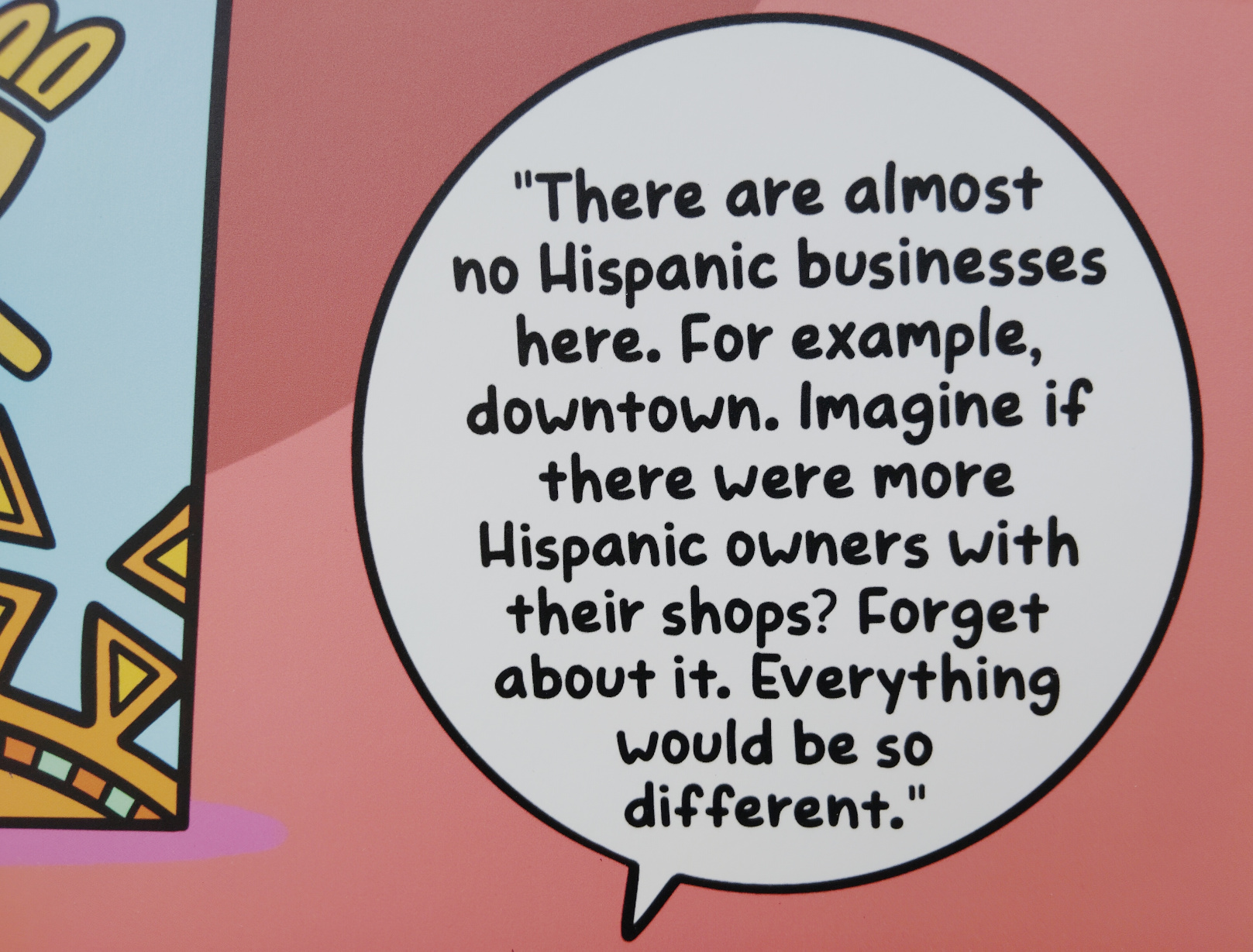
On the topic of local businesses… (Minnesota Prairie Roots copyrighted photo February 2026)
In their own words, Latino residents of Northfield share their thoughts, their concerns, their hopes, their dreams. They wish for Latino businesses downtown, shops where they can buy Mexican-made products, foods familiar and comforting to them.
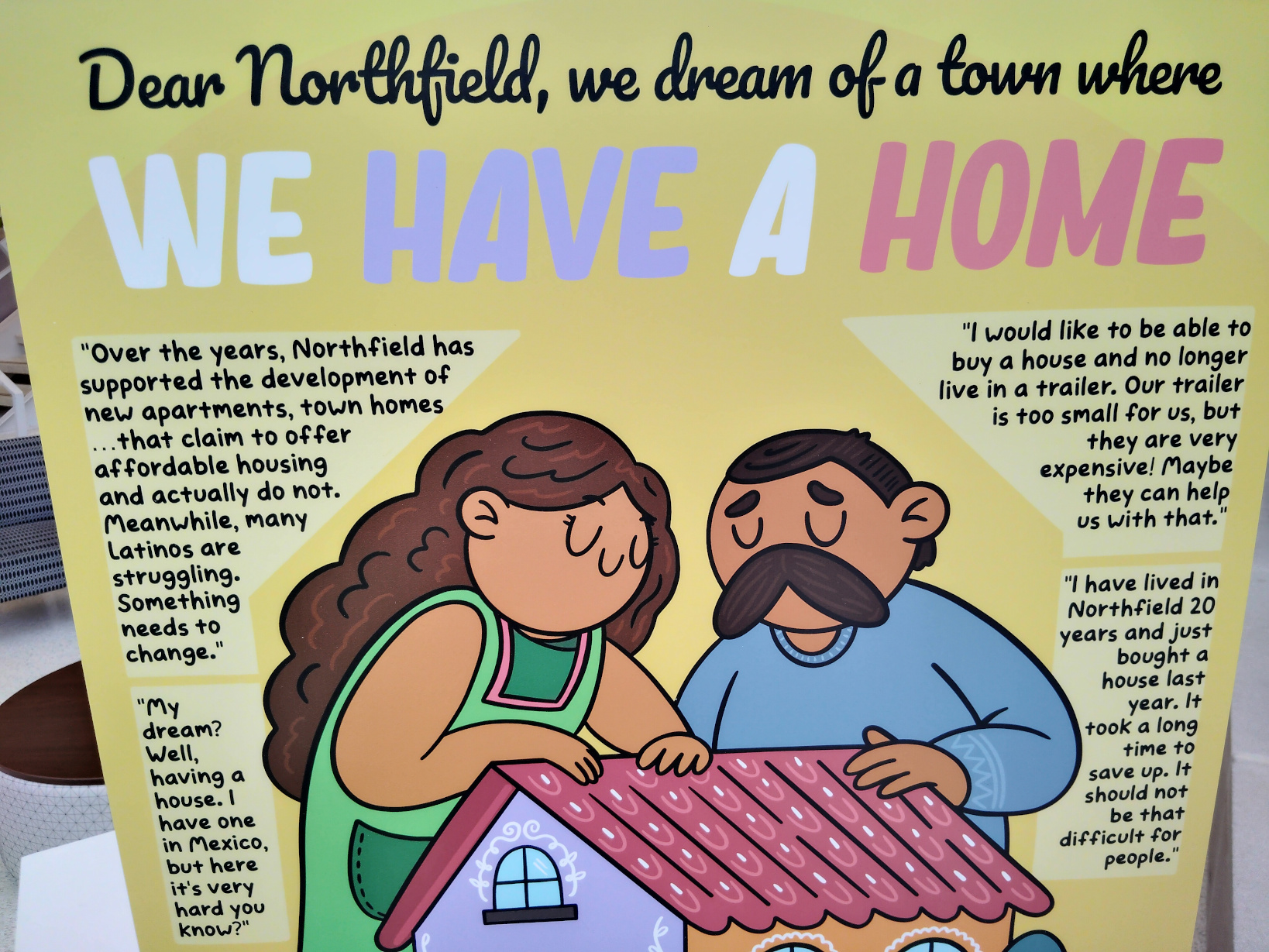
On the topic of housing… (Minnesota Prairie Roots copyrighted photo February 2026)
They want affordable housing, options other than living in trailer houses and apartments.
On the topic of culture and entertainment… (Minnesota Prairie Roots copyrighted photo February 2026)
They want local Latino-based cultural choices in music, entertainment and art, specifically naming murals. That seems doable in Northfield, which has always embraced public art and has multiple murals.
They want more options for youth, like a Latino youth center.
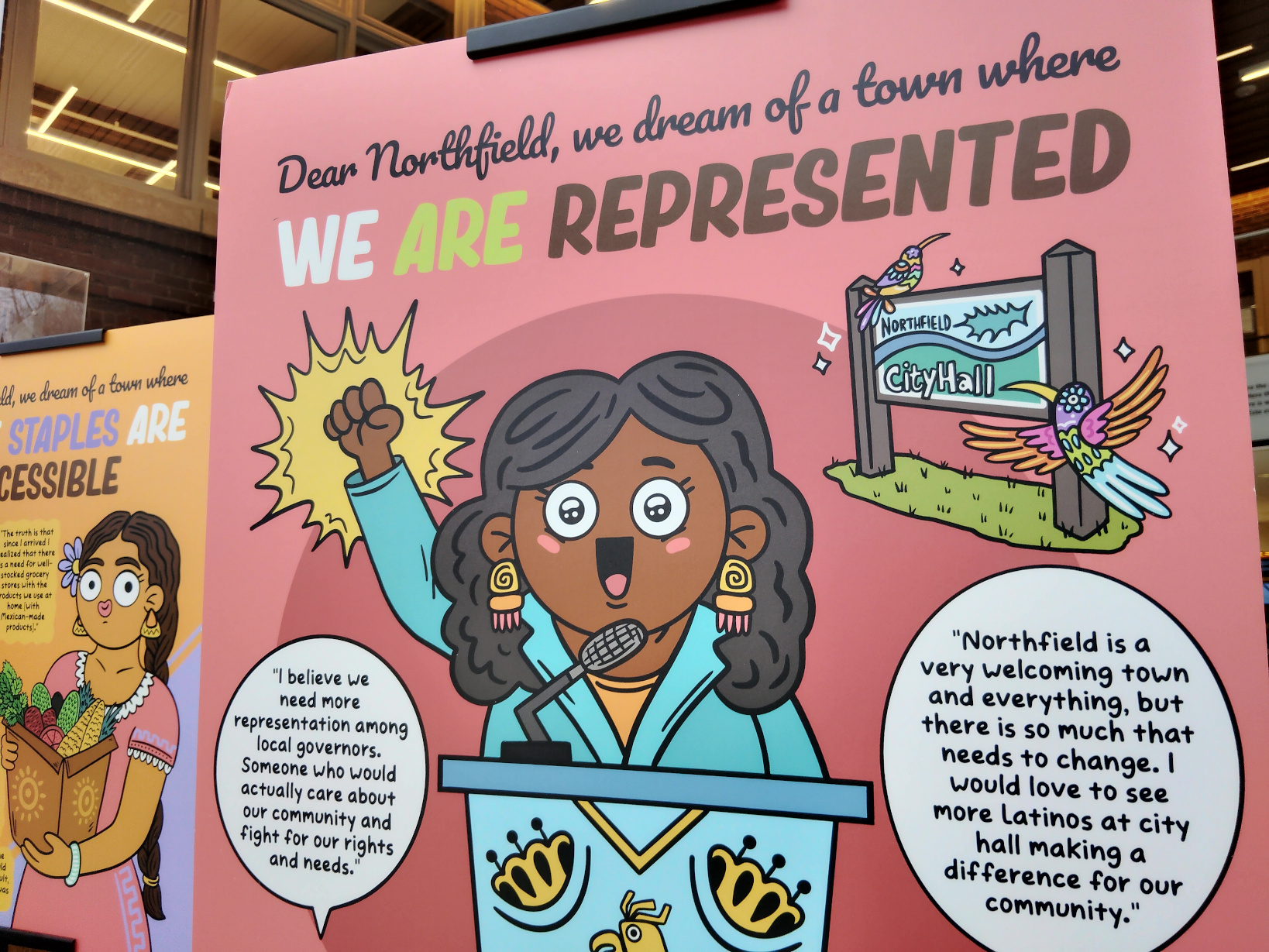
On the topic of representation in local government… (Minnesota Prairie Roots copyrighted photo February 2026)
They want more representation in city government and increased connections and engagement between white people and Latinos.
None of these seem like particularly big asks, although some certainly take time and money to implement. It’s good to get the conversation going.
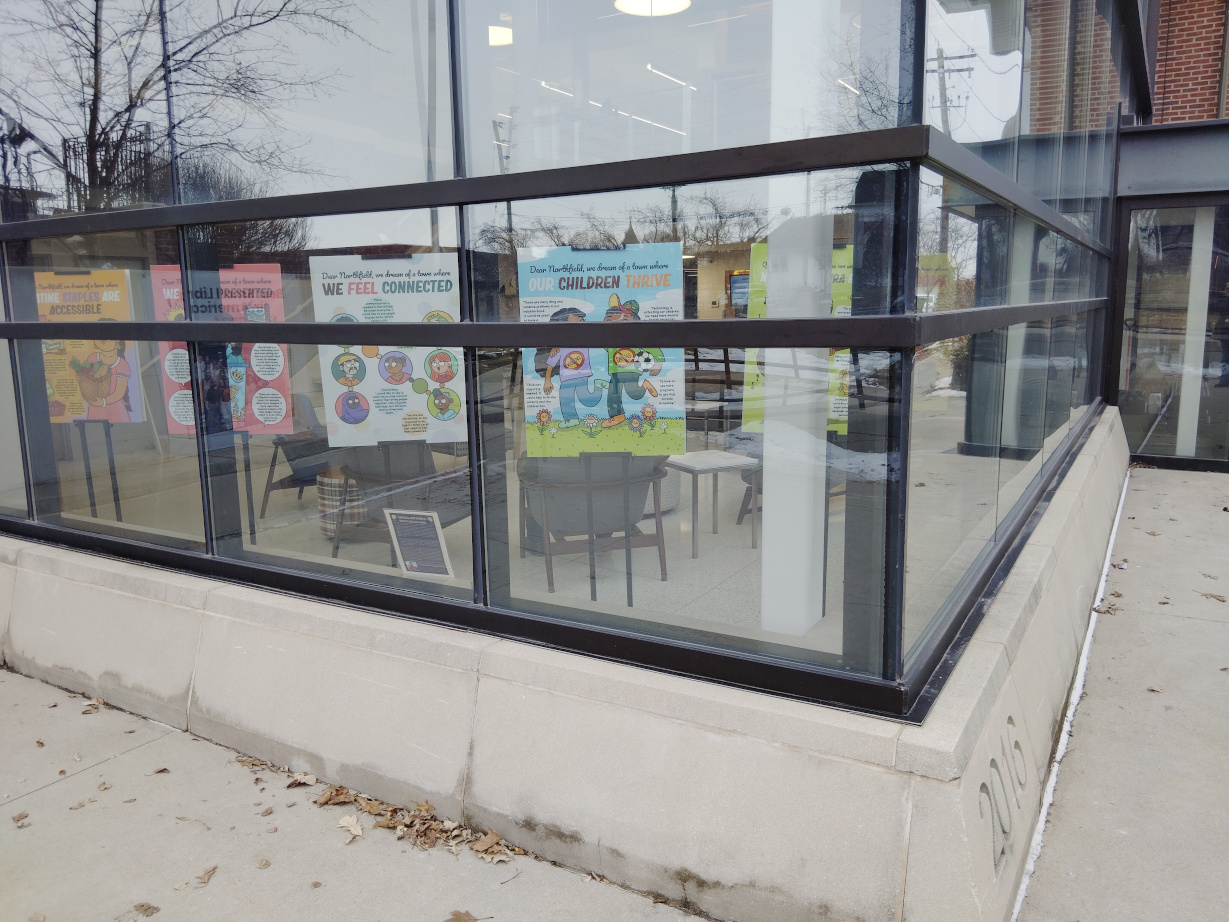
The panels as viewed from outside the Northfield Public Library. (Minnesota Prairie Roots copyrighted photo February 2026)
I hope other communities follow Northfield’s example and use art as a way to share information that will help build a stronger, better and more culturally-aware and diverse city. A place where everyone can thrive, no matter their color, no matter their language, no matter their culture.
Some places are culturally-diverse, others not. This new mural at the Congregational Church of Faribault United Church of Christ reflects Faribault’s diversity. (Minnesota Prairie Roots copyrighted file photo September 2025)
I GREW UP in southwestern Minnesota, in rural western Redwood County where diversity was absent unless you count religious affiliation or ancestry as diversity. You were either Lutheran or Catholic with a few Methodists, Presbyterians and Brethren thrown in the mix. And you were of German, Irish, Polish or Scandinavian descent, but mostly German. And your skin color was certainly white, unless you were among the Native Americans living on the eastern side of the county.
I left Redwood County for college in the early 1970s. Not much has changed in racial demographics in that rural area, population hovering around 15,000, with the exception of a sizable Hmong population resettling in small town Walnut Grove. Leaving the prairie, a place I loved and still love, broadened my perspectives.
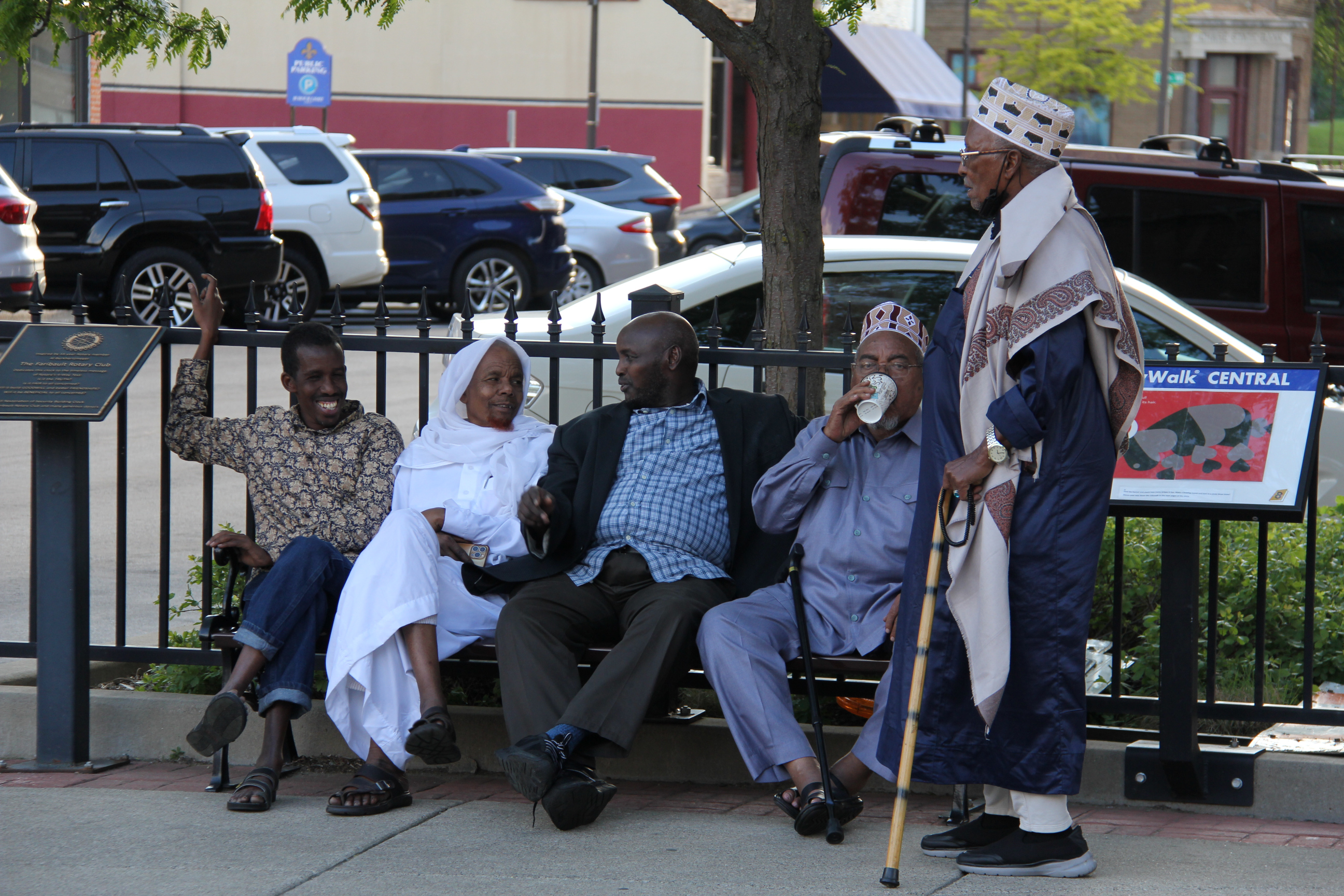
Many Somalis live in downtown Faribault above businesses. They often meet on street corners to visit. (Minnesota Prairie Roots copyrighted file photo May 2024)
Today I live on the eastern side of Minnesota in Faribault, a city of around 25,000 about an hour south of Minneapolis. Mine is a diverse community, home to many Hispanics, Latinos and Somalis. They work here, raise families here, open businesses here and add much color and culture to this city I’ve called home since 1984. Somalis are the newest of Faribault’s immigrants and the group which still struggles with animosity toward them. That makes getting to know them and their stories especially important.
Lul Abdi shows off beautiful wood crafts from Kenya and Somalia at a past International Festival in Faribault (Minnesota Prairie Roots copyrighted file photo)
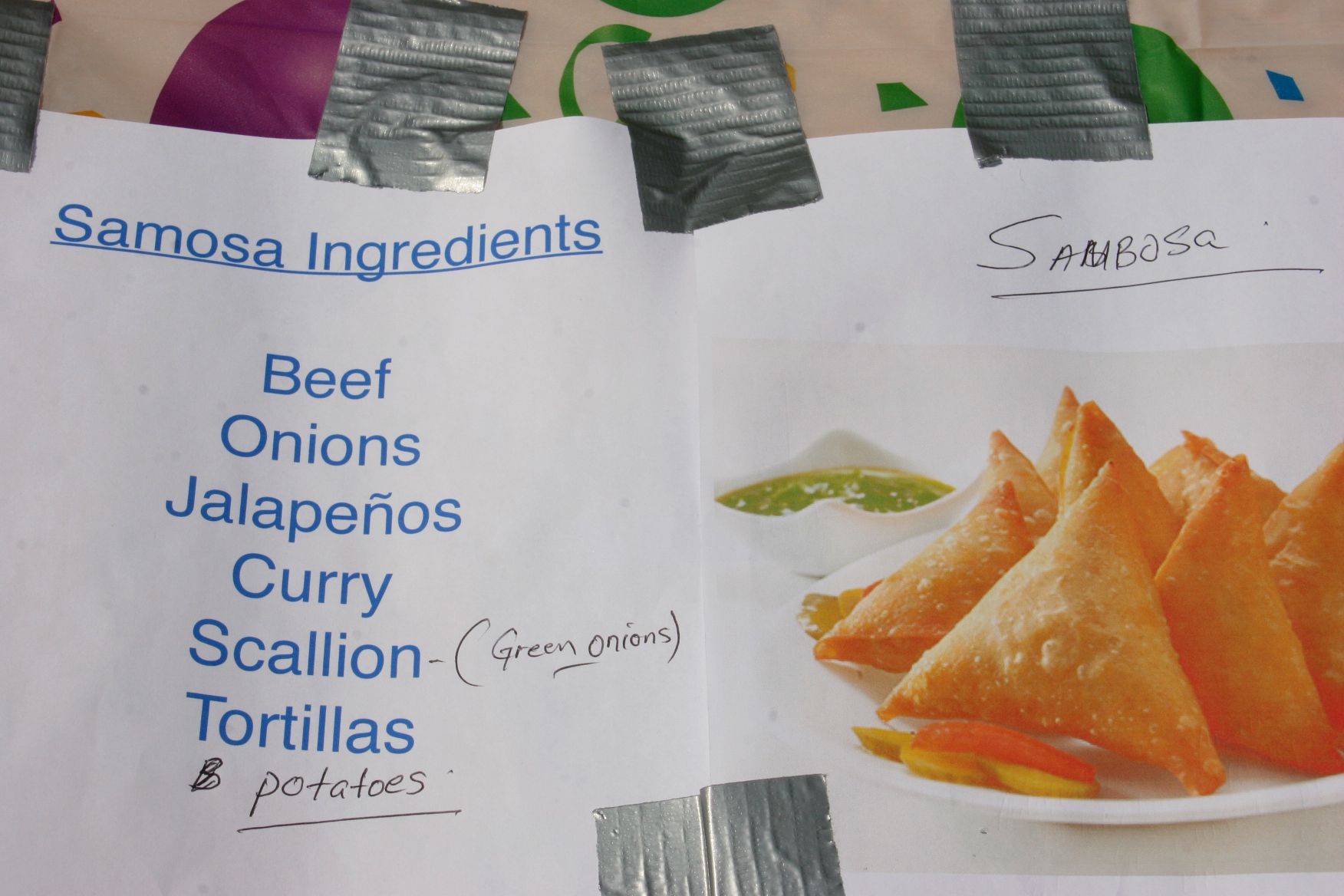
I’ve attended Somali cultural events, diversity celebrations, talked with local Somalis, photographed them, drank their delicious hot tea, eaten their savory sambusas, walked into their shops, tried to learn about and embrace these residents of Faribault.
I love living in a community with such diversity. Not everyone here feels as I do and would prefer Faribault remain white and non-diverse, as it was when they were growing up. That saddens me. I often think, if only people would take the time to connect one-on-one, to listen, they would begin to see that we are all human, even if different.
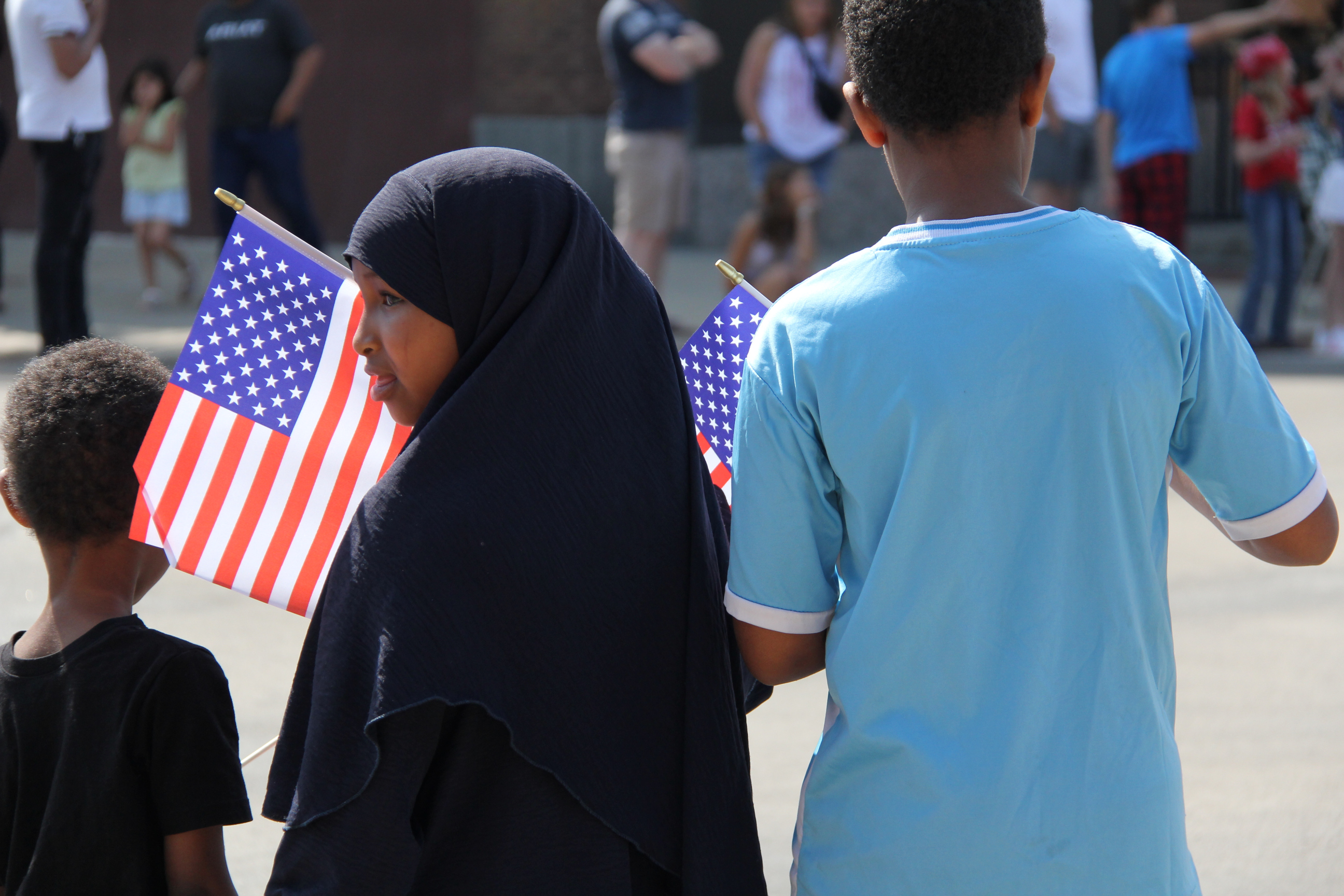
Somali children watch Faribault’s 2025 Memorial Day parade. (Minnesota Prairie Roots copyrighted file photo May 2025)
Instead of fearing others who may not speak the same language, eat the same foods, wear the same clothes, practice the same religion, we can choose to embrace one another. In an ideal world, that would happen. But it takes time, effort and an open heart and mind to get there.
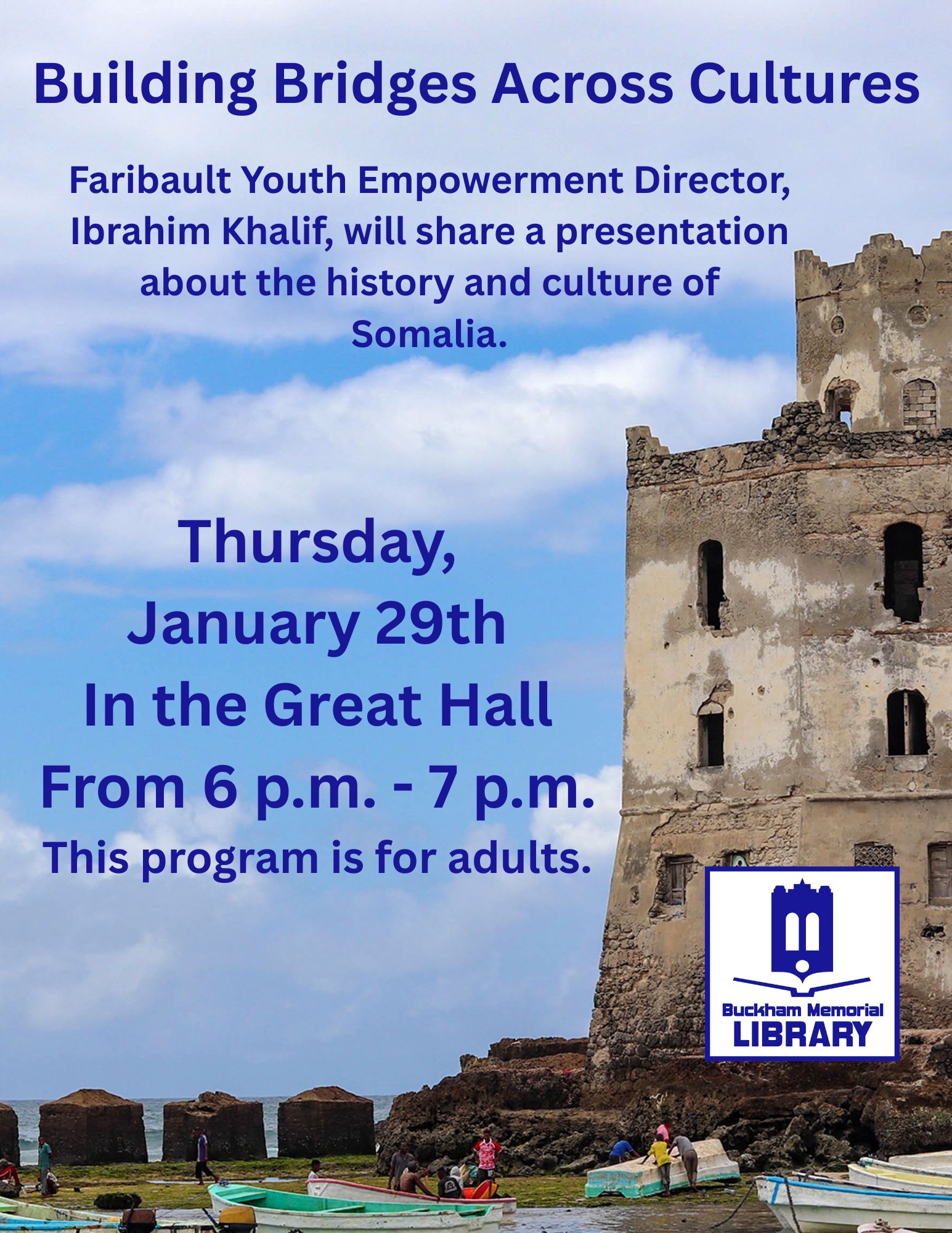
(Promo courtesy of Buckham Memorial Library)
At 6 pm this Thursday, January 29, Buckham Memorial Library is hosting a talk, “Building Bridges Across Cultures,” by Ibrahim Khalif, director of Faribault Youth Empowerment. He will present on the history and culture of Somalia in the library’s Great Hall. The event is part of the library’s adult programming efforts.
This talk is certain to be interesting and informative. The title alone, with the words “building bridges,” reflects my feelings on what needs to happen in my community. A bridge gets you from one side to the other, to a different destination. But to get from one side to the other, you need to first build a bridge together then willingly cross it, not remain firmly planted and divided on a riverbank, unwilling to move.
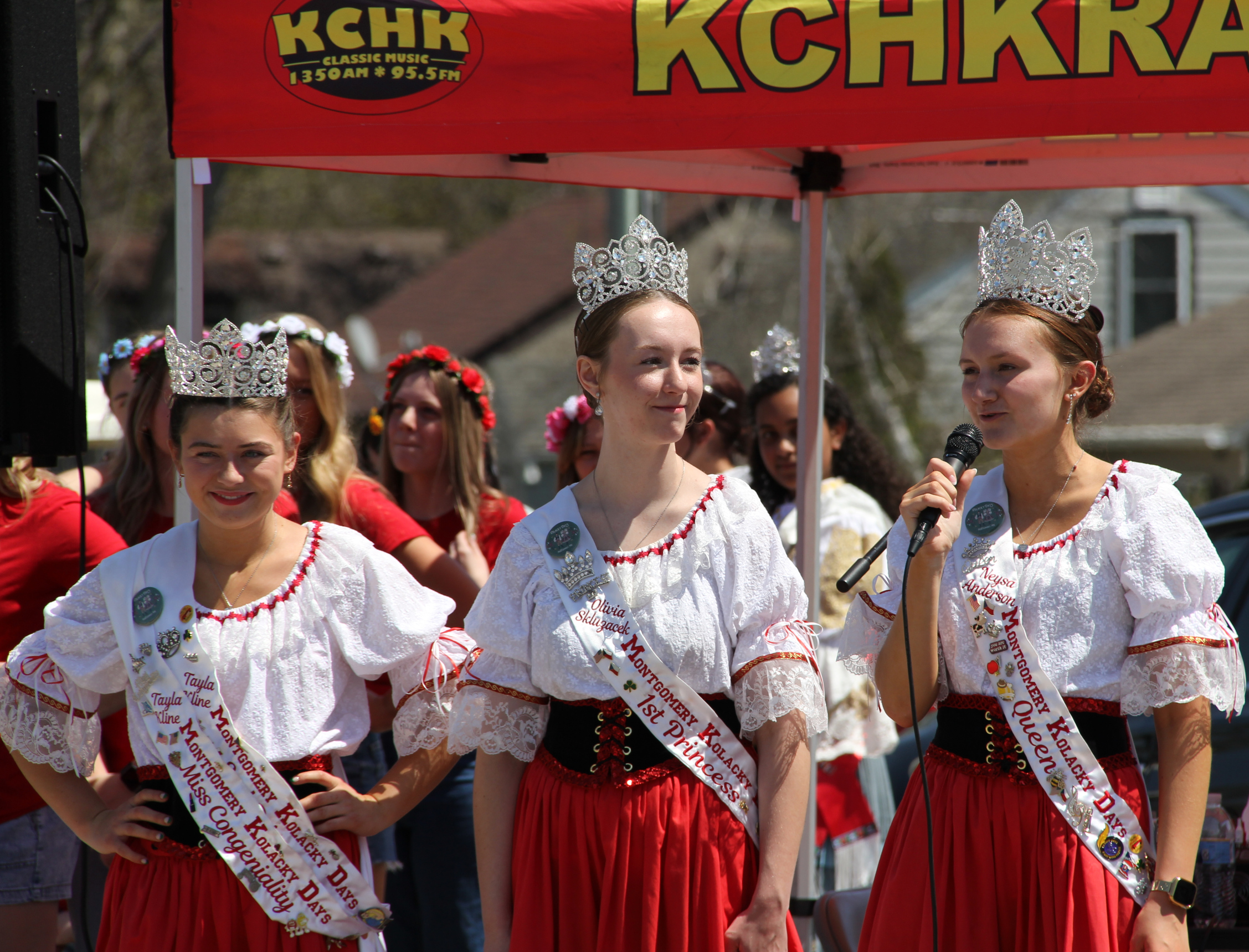
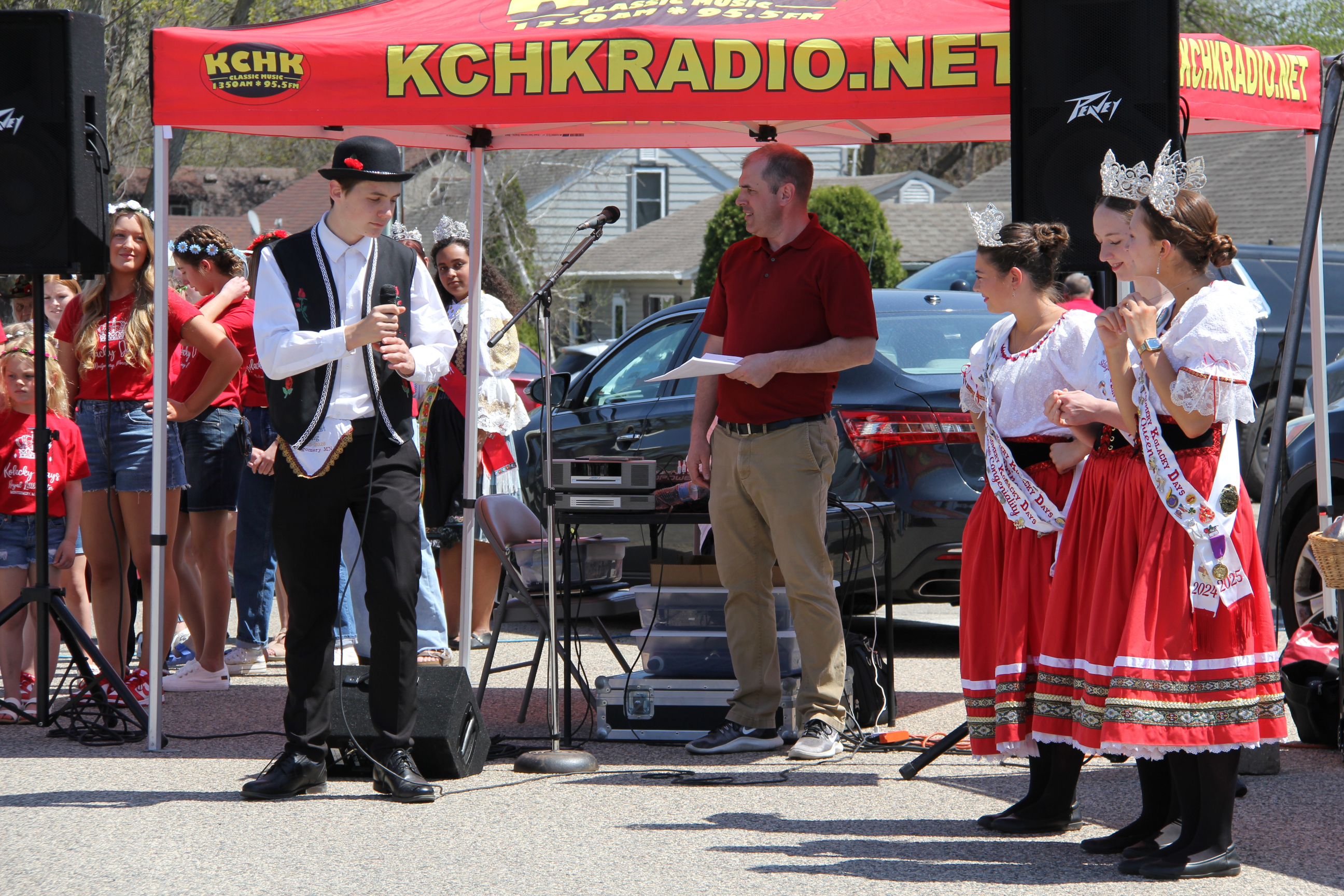
Montgomery Kolacky Days royalty introduce themselves at the Czech May Day KCHK Radio tent, from left to right, Miss Congeniality Tayla Kline, 1st Princess Olivia Skluzacek and Queen Neysa Anderson. (Minnesota Prairie Roots copyrighted photo May 2025)
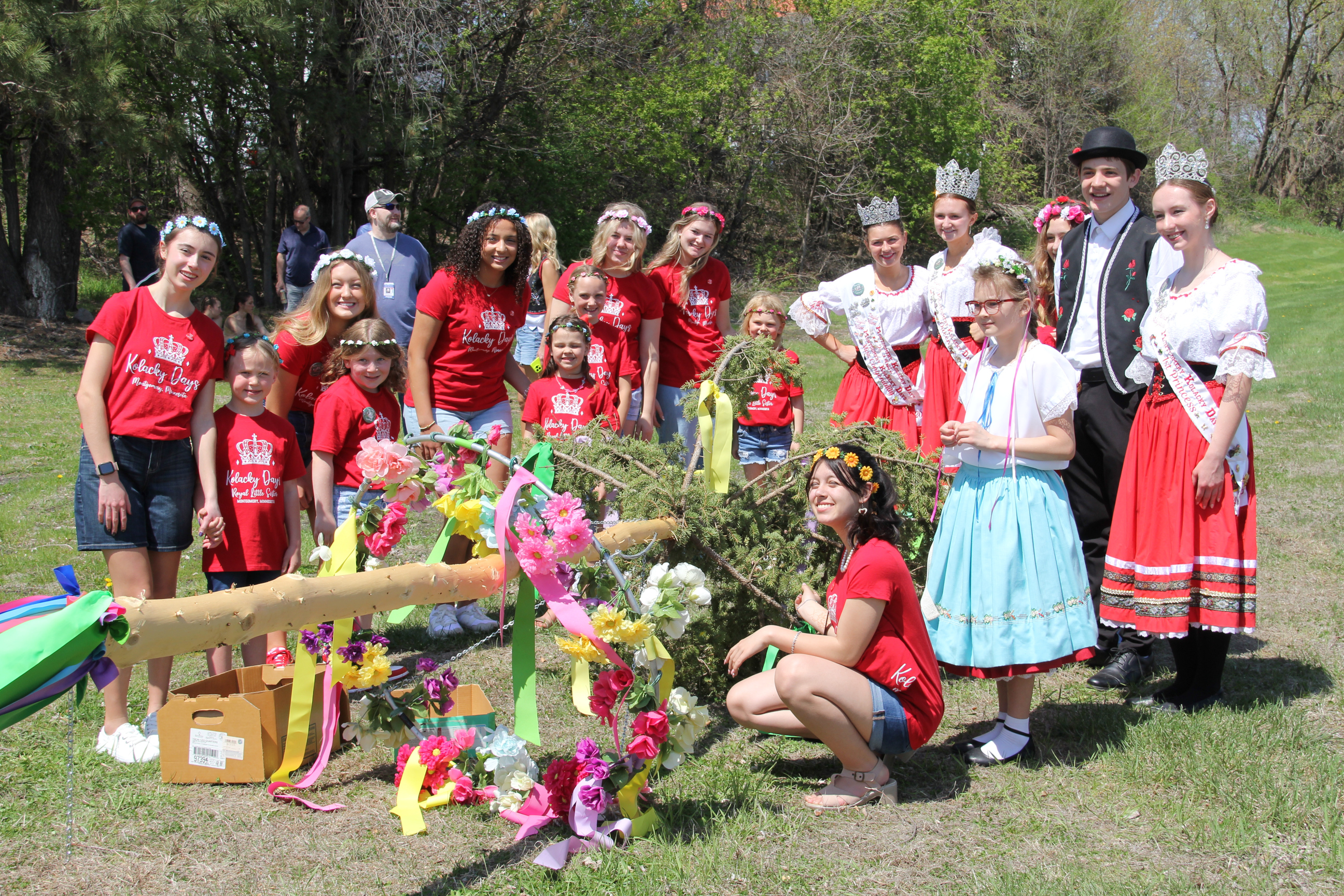
NEARLY EVERY SMALL TOWN community celebration comes with royalty. And Montgomery, Minnesota, is no exception. While attending Czech May Day in this Le Sueur County town on Sunday afternoon, I saw a whole lot of royalty.
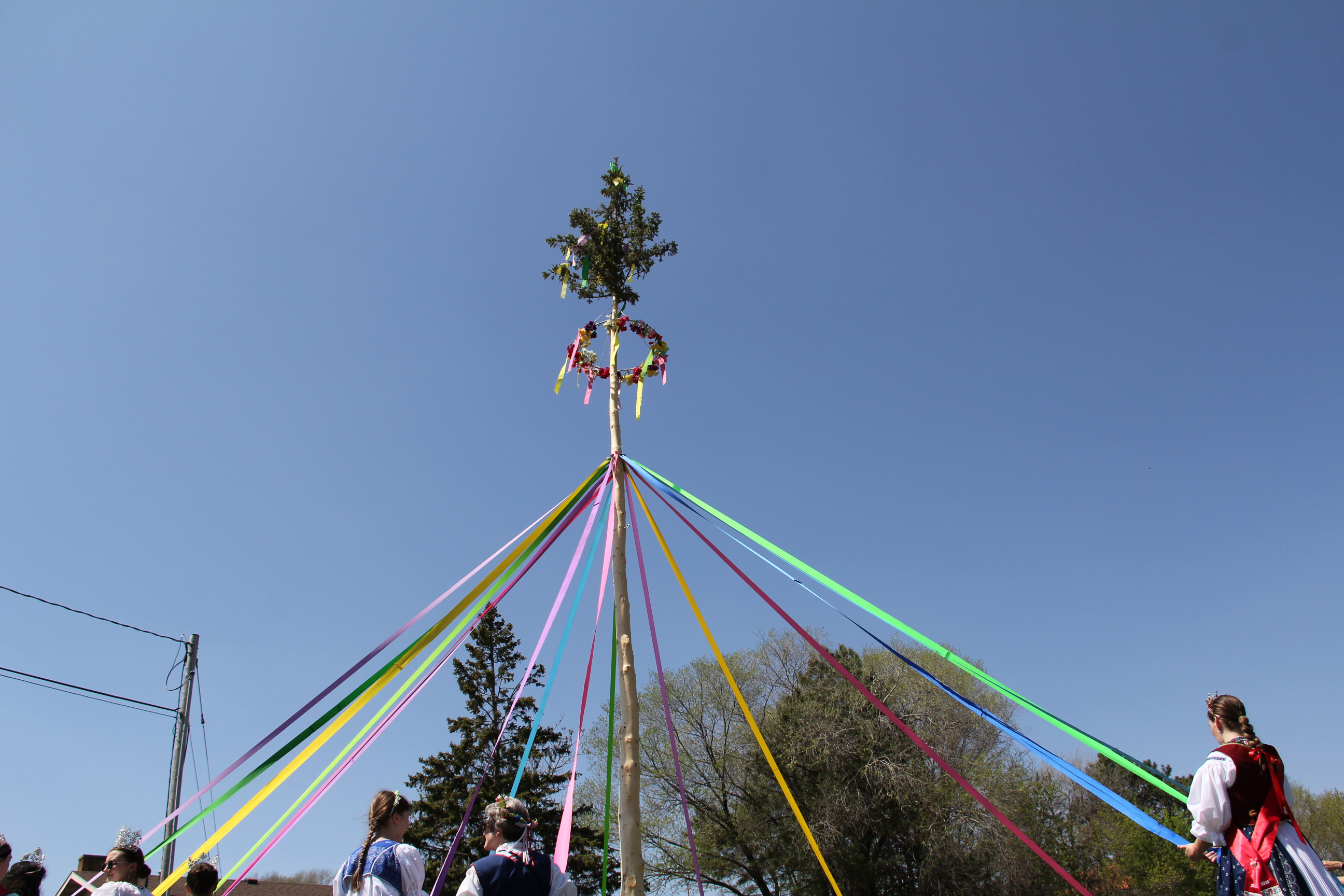
Gathering around the May Pole for a royal photo before the pole raising. (Minnesota Prairie Roots copyrighted photo May 2025)
I am impressed by the poise and confidence of these young women who represent not only their community, but also their Czech heritage. They are well-spoken, graceful, truly deserving of their royal positions.
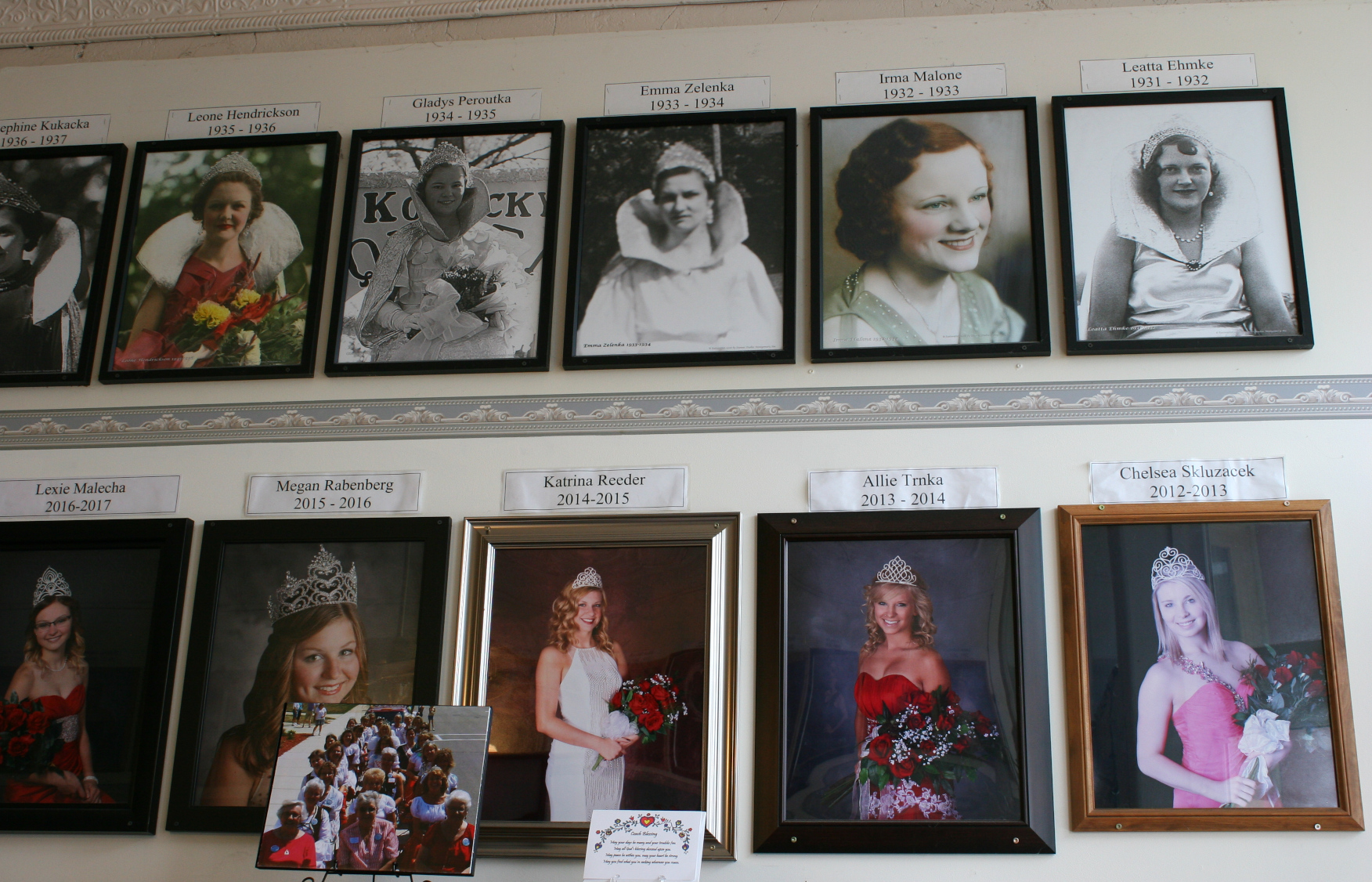
A sampling of the Kolacky Days queen portraitsringing the walls of the Arts & Heritage Center of Montgomery. (Minnesota Prairie Roots copyrighted file photo)
Since 1931, Montgomery has crowned princesses and a queen during its annual late July Kolacky Days celebration. Kolacky is a Czech treat, a sweet bun with a fruit or poppyseed filling. Montgomery calls itself the Kolacky Capital of the World and perhaps rightly so. These folks love this Czech pastry, which is baked in home kitchens and by the thousands at Franke’s Bakery, a community staple since 1914.
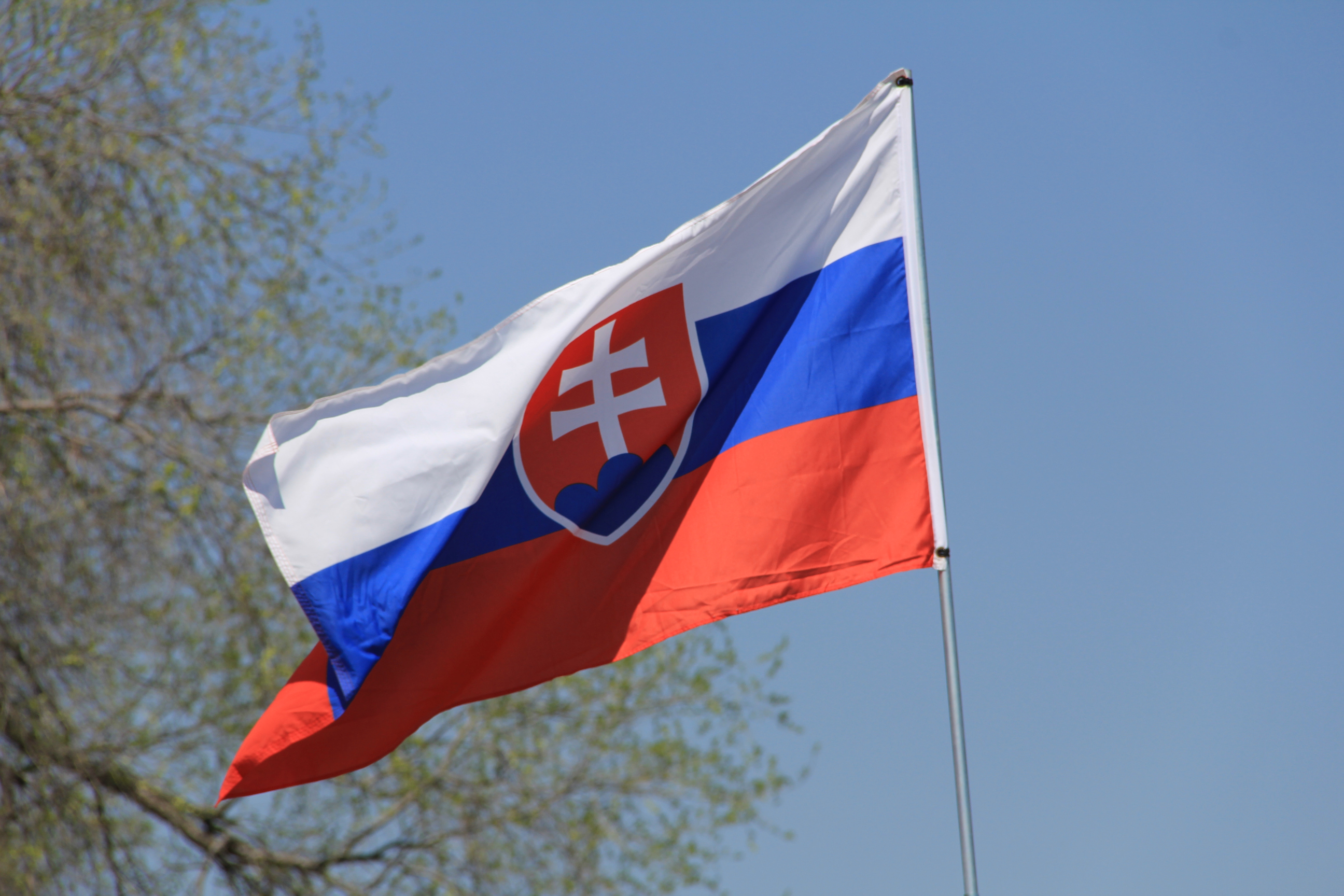
The flag of Slovakia, which was once part of Czechoslovakia, flies at the Czech May Day celebration. The flag of the Czech Republic also flew. (Minnesota Prairie Roots copyrighted photo May 2025)
Montgomery’s 2025-2026 Masopust King Isaak Worm introduces himself. (Minnesota Prairie Roots copyrighted photo May 2025)
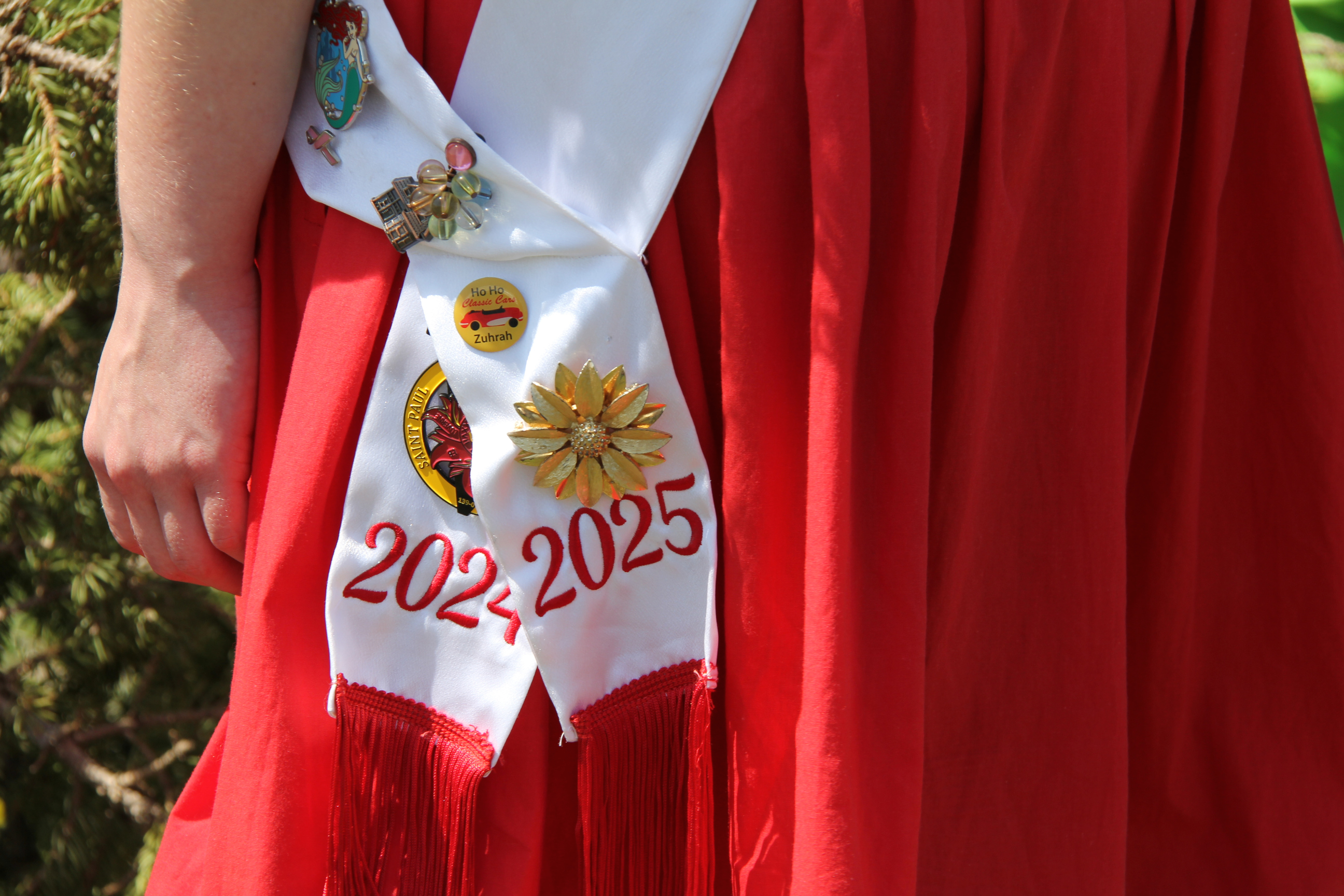
A royal sash. (Minnesota Prairie Roots copyrighted photo May 2025)
There’s a whole lot of pride in being of Czech ancestry and I love that about Montgomery. These folks share their heritage, teaching all of us about culture, food, traditions and more still celebrated and honored generations removed from the homeland. They celebrate Czech Masopust (which has a Masopust king), Czech May Day and Kolacky Days.
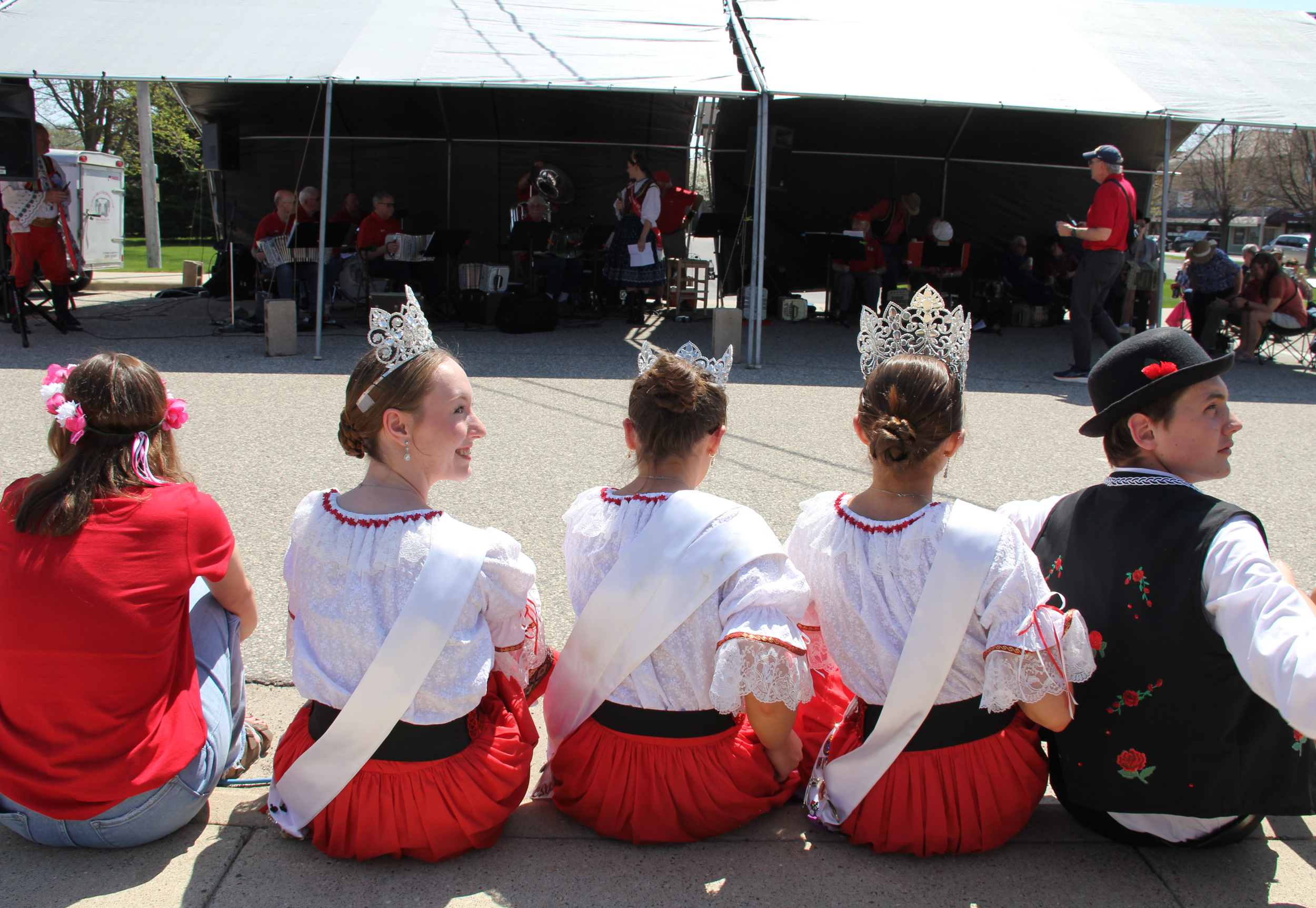
Royalty take a break to visit and enjoy the May Day entertainment. (Minnesota Prairie Roots copyrighted photo May 2025)
You’ll find Montgomery’s royalty at these events, promoting community and heritage. Area high school juniors living within a five-mile radius of Montgomery or neighboring Kilkenny are eligible to enter the Montgomery Kolacky Days queen competition. They are judged in three categories: interview, talent and evening gown.
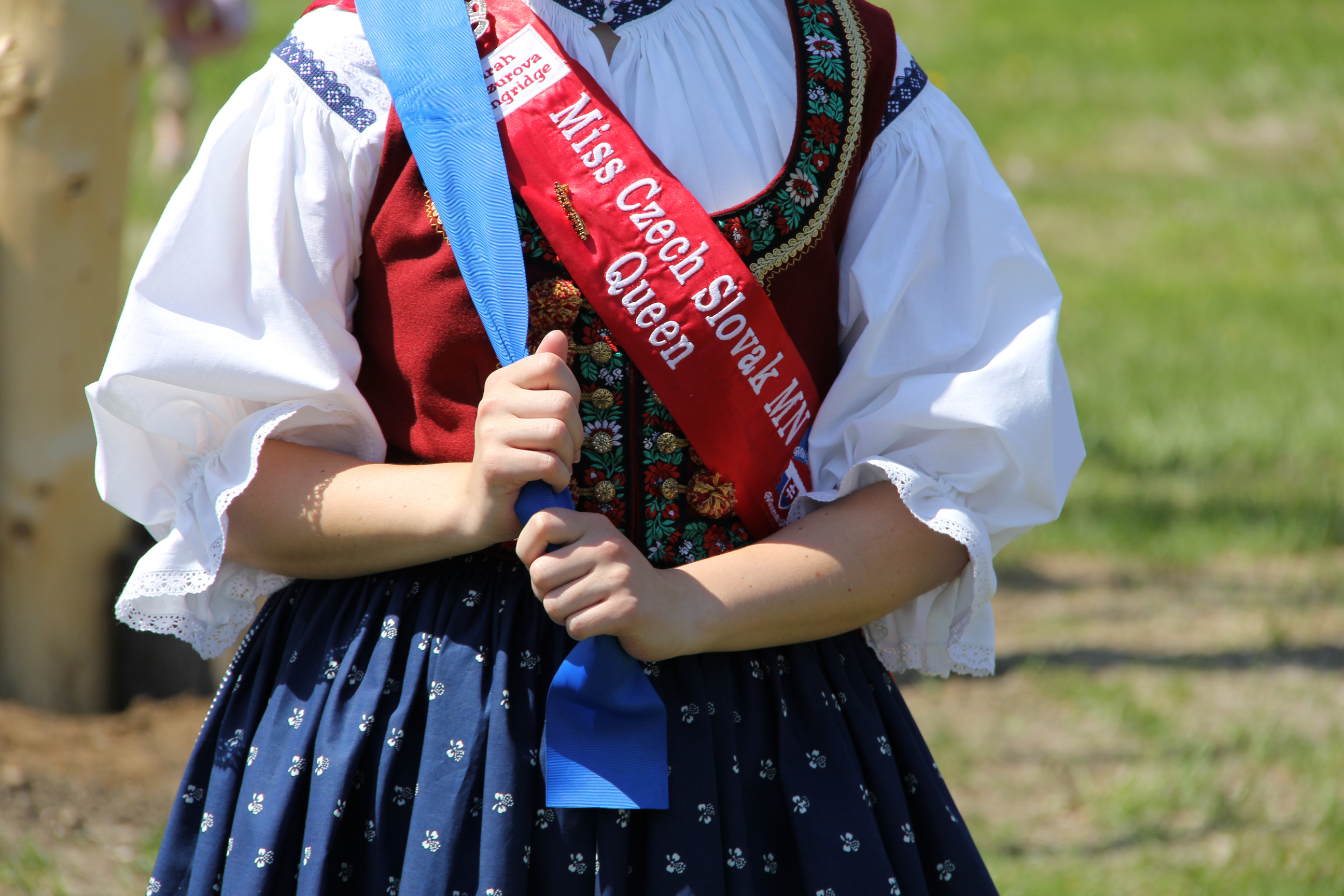
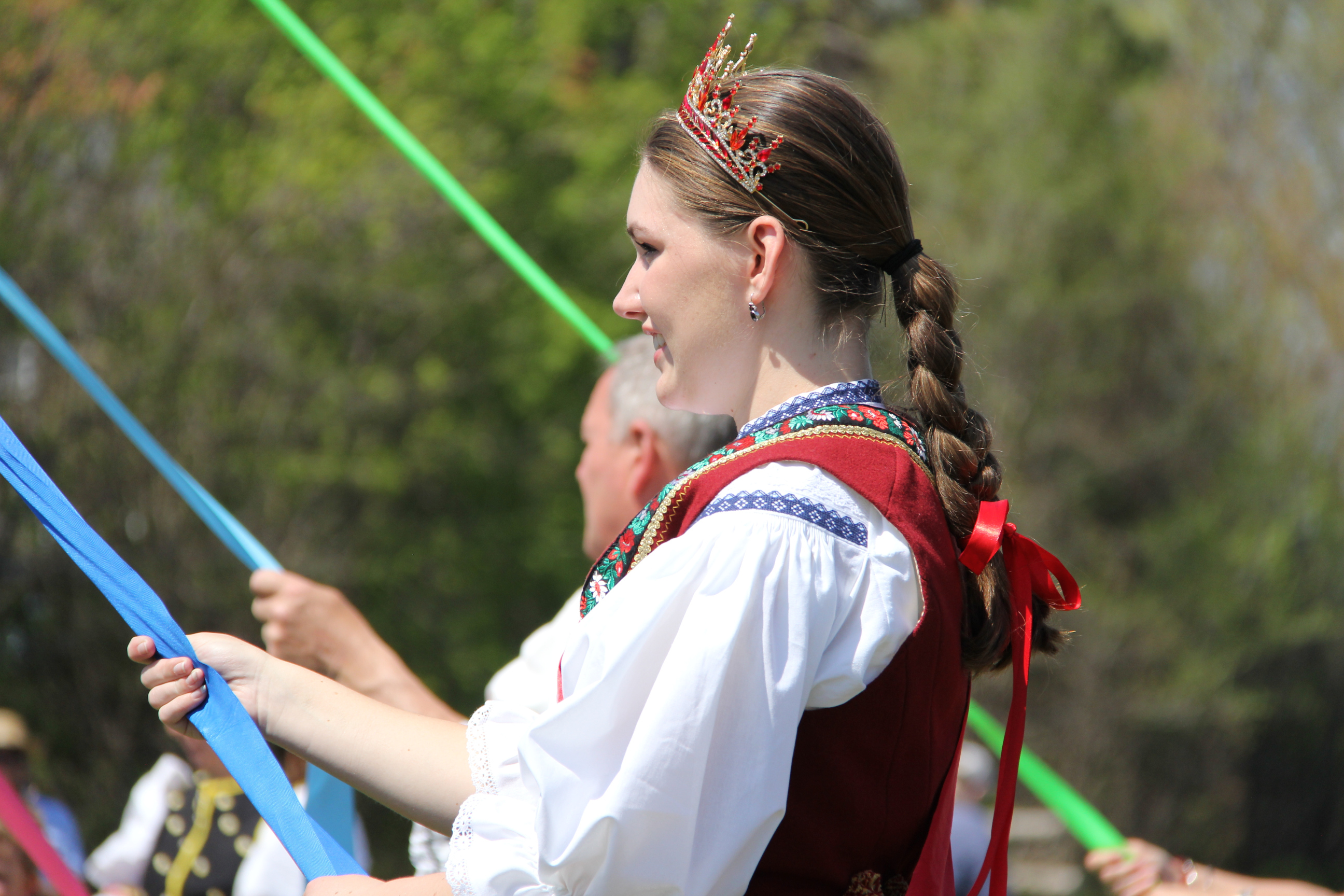
On the state level, Miss Czech Slovak Minnesota represents the Bohemian heritage. Here she holds a May Pole ribbon in Montgomery. (Minnesota Prairie Roots copyrighted photo May 2025)
Those chosen as the queen, first and second princesses and Miss Congeniality must then attend 15 specific events during their year-long reign. Now that takes time and commitment. They are rewarded with not only scholarships, but also new friendships, travel and a wonderful opportunity to shine a spotlight on Montgomery and its Czech and Slovak heritage.
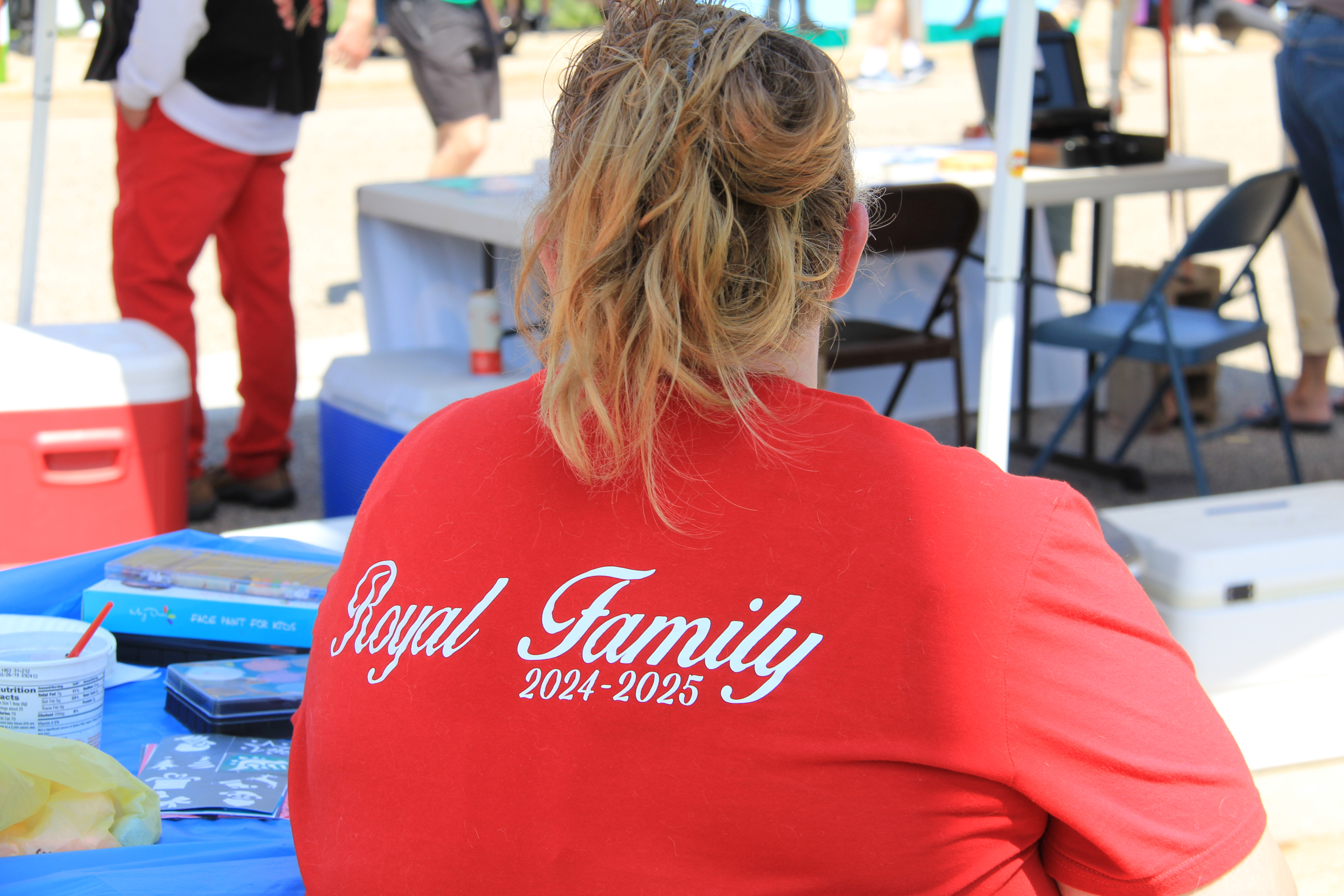
I saw lots of these red royal family t-shirts at Czech May Day. (Minnesota Prairie Roots copyrighted photo May 2025)
I observed lots of support for these young women who represent Montgomery in traditional Czech costumes at events throughout Minnesota. Their families sport red t-shirts with “Royal Family” emblazoned across the back. Elementary-aged girls also wear red tees reading “Kolacky Days Royal Little Sister.” Future princesses or queens perhaps.
Miss Czech Slovak Minnesota Queen Sarah Langridge of Prior Lake holds a May Pole ribbon. She moved from Europe to Minnesota at age eight. (Minnesota Prairie Roots copyrighted photo May 2025)
Even the current Miss Czech Slovak Minnesota queen attended Czech May Day in Montgomery entertaining the crowd in song, but mostly gracing everyone with her presence.
Gathering around the May Pole. (Minnesota Prairie Roots copyrighted photo May 2025)
As these young women mingled and later wound ribbons around a May Pole, I considered how much they care about their Czech culture and heritage—enough to carry on a royal tradition of 91 years.
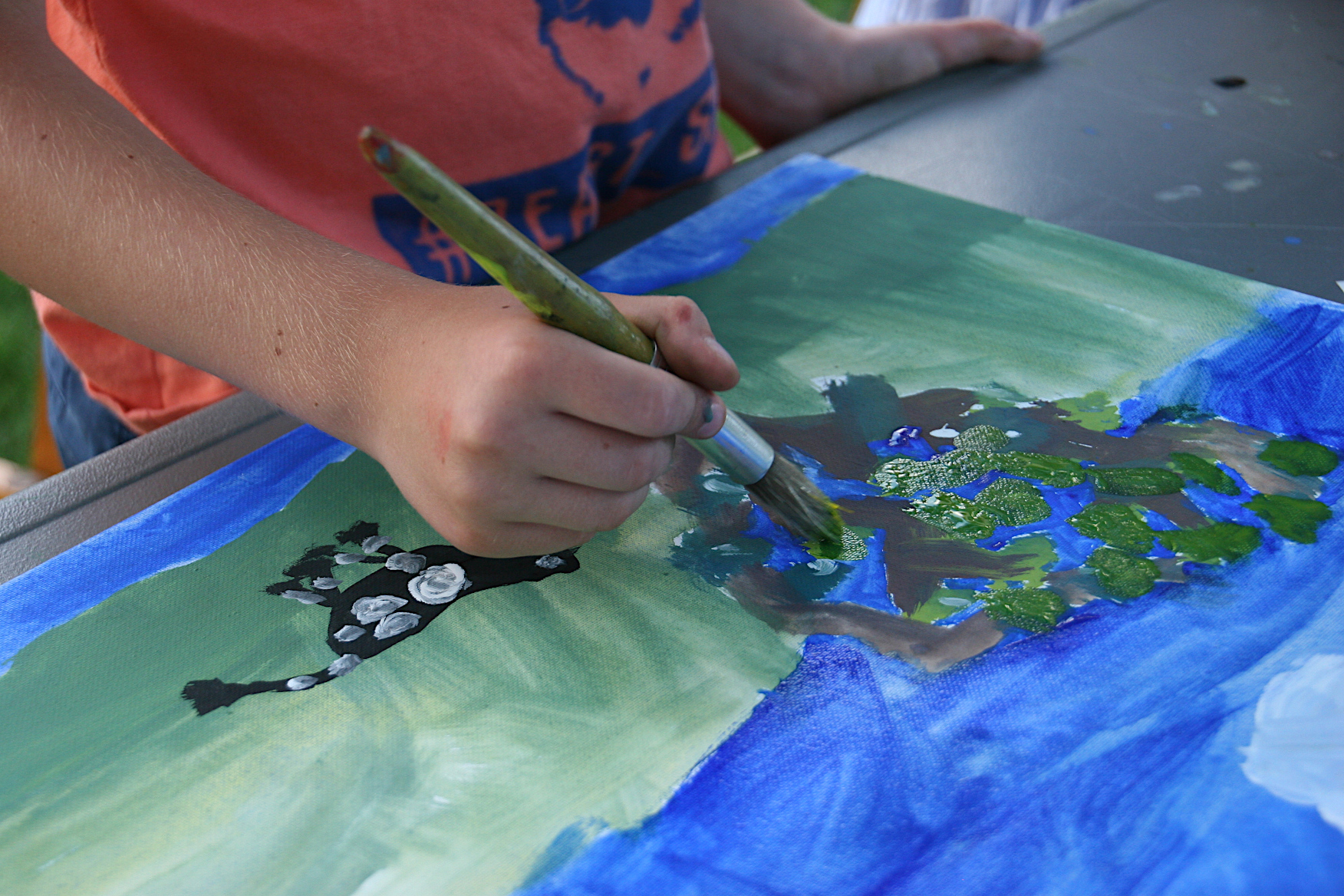
A young concert-goer creates art at a past Art in the Park event. (Minnesota Prairie Roots copyrighted file photo August 2020)
THREE DECIDEDLY DISTINCT EVENTS are happening in my area Thursday evening and on Sunday. One focuses on the visual and performing arts, another on a pre-Columbian Aztec deity, the other on weddings.
First up, the Paradise Center for the Arts is offering free arts activities for all ages beginning at 6 p.m. Thursday, June 20, as part of Faribault’s summertime Concerts in the Park series. Teaching artists Kate Langlais and Julie Fakler will lead the hands-on art making in Central Park. At 7 p.m., Grand Rapids-based Adessa & the Beat performs a mix of country, classic rock and pop covers from the park bandshell.
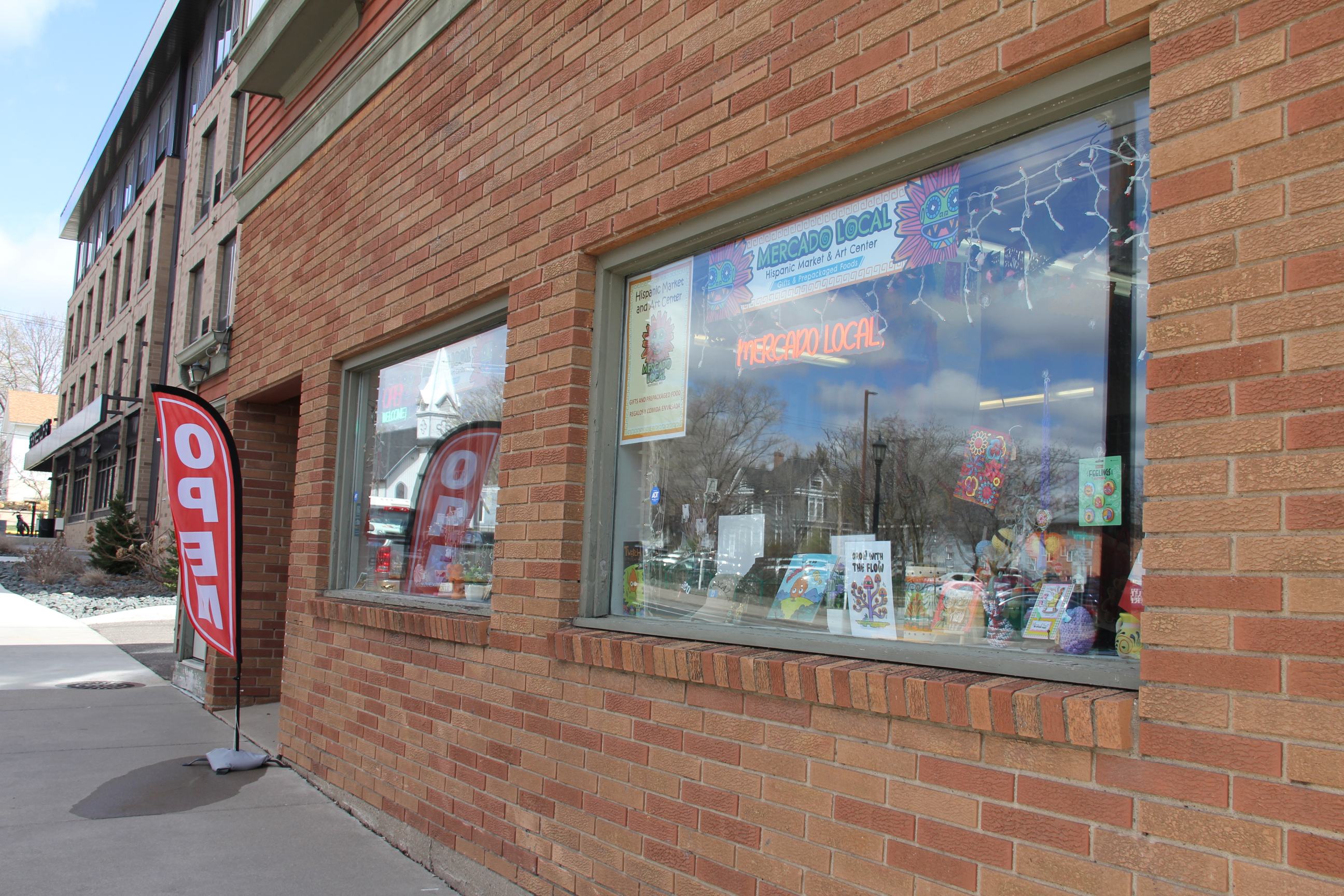
Inside the Mercado Local marketplace. To the far right on signage is the shop logo created by Rocky Casillas. It is his version of the Aztec deity, Quetzalcoatl. (Minnesota Prairie Roots copyrighted file photo April 2024)
Also on Thursday evening in neighboring Northfield, Mercado Local, a marketplace for immigrant vendors and the home base for Rice County Neighbors United, hosts artists Rocky Casillas and Leslie Mendez. They will talk about art inspired by the Aztec feathered serpent, Quetzalcoatl. Casillas designed a version of the colorful snake as the Mercado Local logo. Mendez then crafted her own serpent inspired by Casillas’ art.
Mercado Local, located off Division Street just behind the Reunion restaurant. (Minnesota Prairie Roots copyrighted file photo April 2024)
Attendees at the 7-8:30 p.m. June 20 event in the Mercado Local community and art room at 108 Fifth Street E. can create their own Quetzalcoatl art.
In addition to art talk and hands-on art, Mexican food will be served. It’s a great opportunity to learn about and connect with other cultures while celebrating the arts.
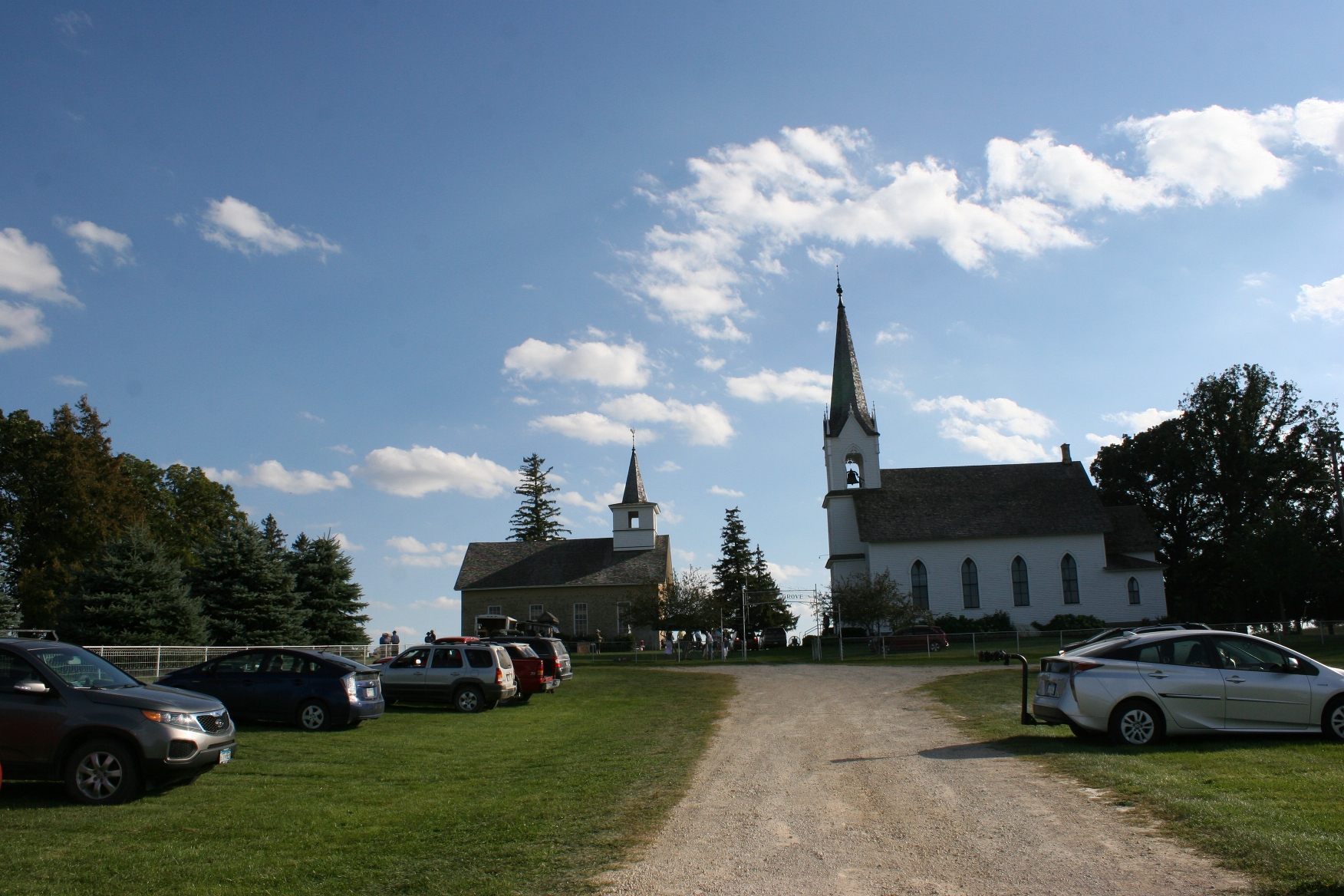
The historic Valley Grove churches, rural Nerstrand. (Minnesota Prairie Roots copyrighted file photo)
Then on Sunday, June 23, two historic Norwegian churches near Nerstrand Big Woods State Park will host “Celebrating Weddings at Valley Grove” from 2-4 p.m. The Valley Grove Preservation Society is inviting anyone who has attended a wedding at the Valley Grove country churches, been married there or who is planning a wedding at the hilltop site, to attend. Even those of us who have no wedding connection to these churches are welcome to join the celebration.
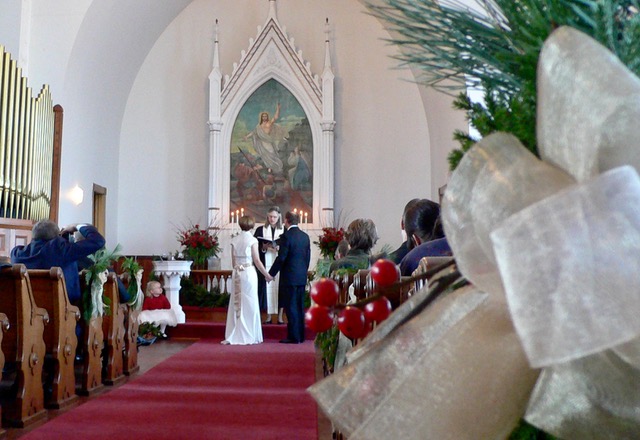
A wedding in the wooden church at Valley Grove. (Photo courtesy of Valley Grove Preservation Society)
Wedding stories and photos can be shared from 3-3:45 p.m. in the wooden church. Besides stories, people are encouraged to wear or bring photos of their wedding attire. To add to the celebration, there will be Nordic music plus coffee, lemonade and cookies. No wedding cake. But I expect some guests will bring photos of wedding cakes.
A photographer will be on-site to take photos for a donation with proceeds going to ongoing restoration projects at Valley Grove, located at 9999 155th Street E, Nerstrand.
What a lovely way to spend a June afternoon. Celebrating love at a bucolic location, one of my favorite country spots in Rice County.
POETRY. Say that singular word and most people likely stop listening. But listening is precisely what you should do when you hear “poetry.”
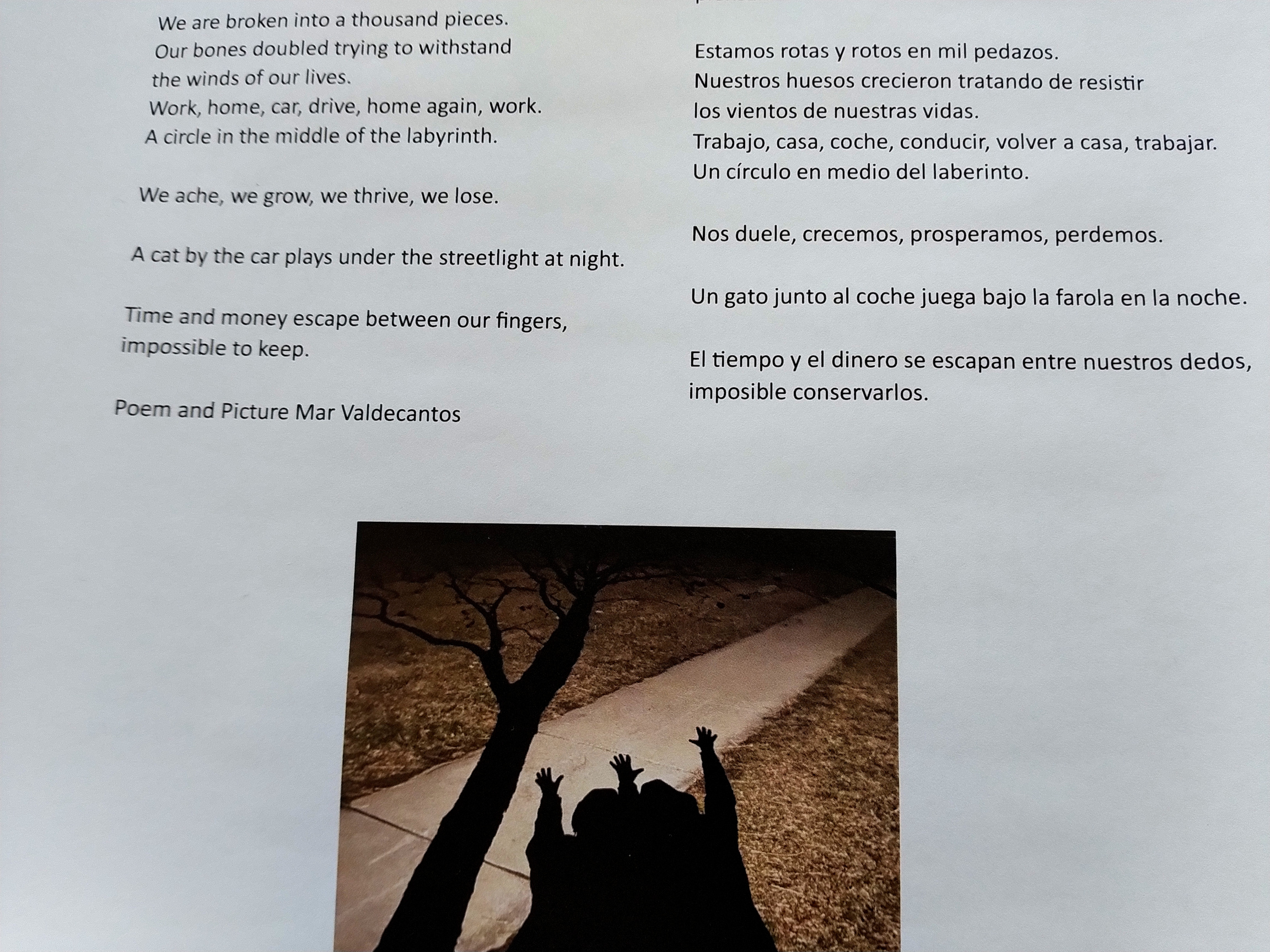
An original poem and photo by Mar Valdecantos, director of Rice County Neighbors United. (Minnesota Prairie Roots copyrighted file photo April 2024)
Poems are meant to be read aloud, to be heard. I didn’t always understand that. But when I started attending and participating in poetry readings many years ago, I realized that poems, like music, need to be vocalized to fully experience them.
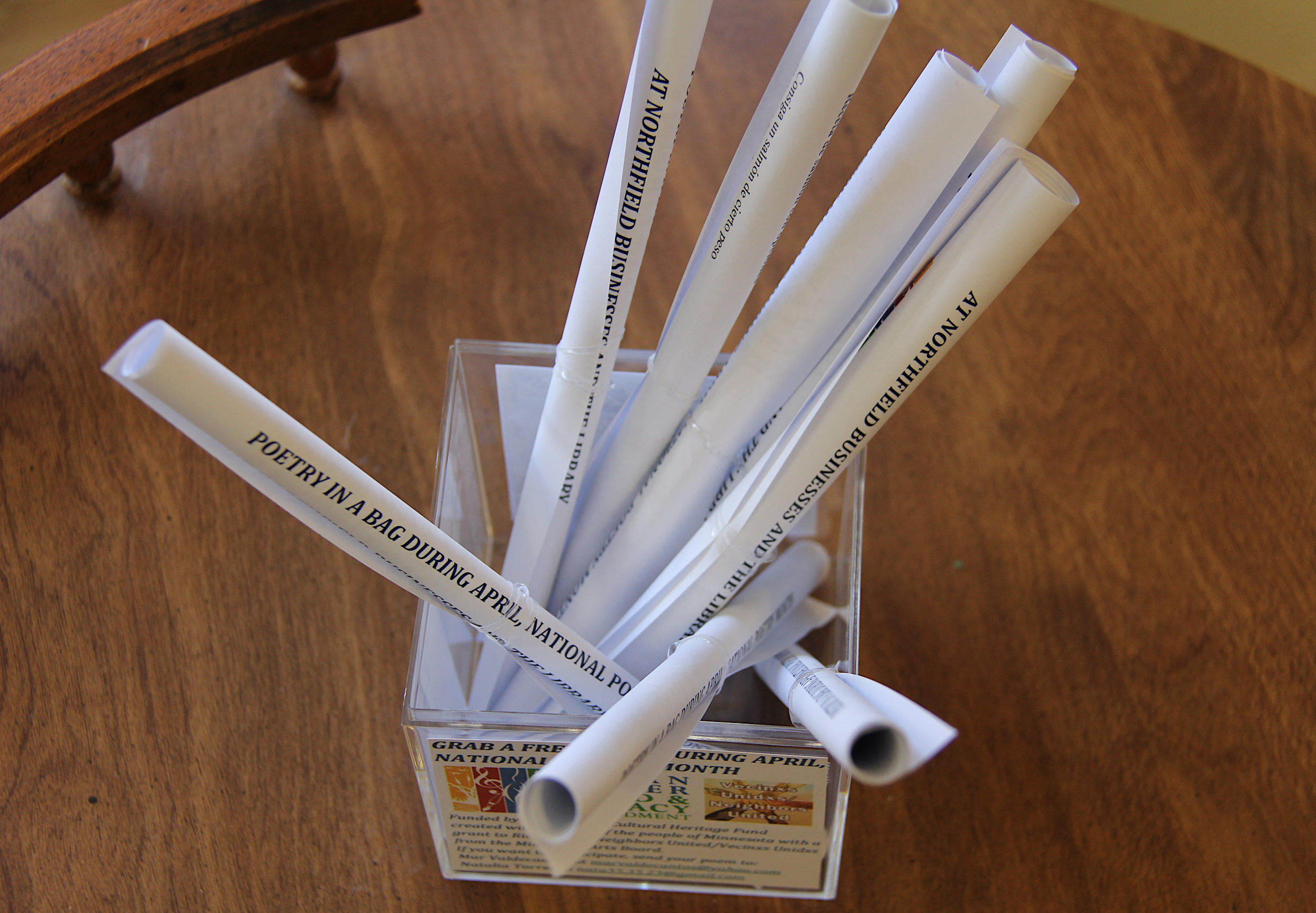
Rolled up poems were boxed (not bagged) and placed at local businesses. (Minnesota Prairie Roots copyrighted file photo April 2024)
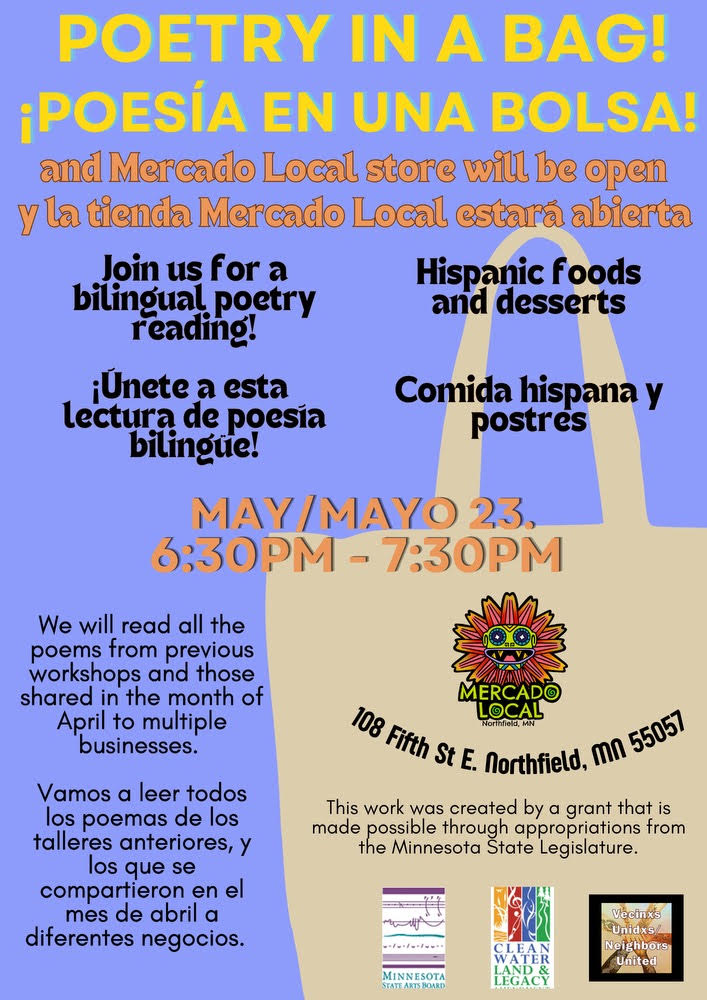
Thursday evening, May 23, I will be among poets and poetry lovers participating in a community poetry reading at Mercado Local, 108 Fifth St. E., Northfield, to celebrate “Poetry in a Bag!” Through this project of Rice County Neighbors United, original and favorite poems were collected, printed, then distributed to area businesses during National Poetry Month in April and into May. Customers were welcome to take a rolled up poem printed in both English and Spanish.
Mercado Local, located just off Division Street in Northfield. (Minnesota Prairie Roots copyrighted photo April 2024)
So this bilingual project is as much cultural as culture. That’s part of the mission of RCNU—to connect cultures, to increase visibility of immigrants and refugees in the community, to empower them. Mercado Local serves as a home base for the advocacy organization with its store, art center and community room.
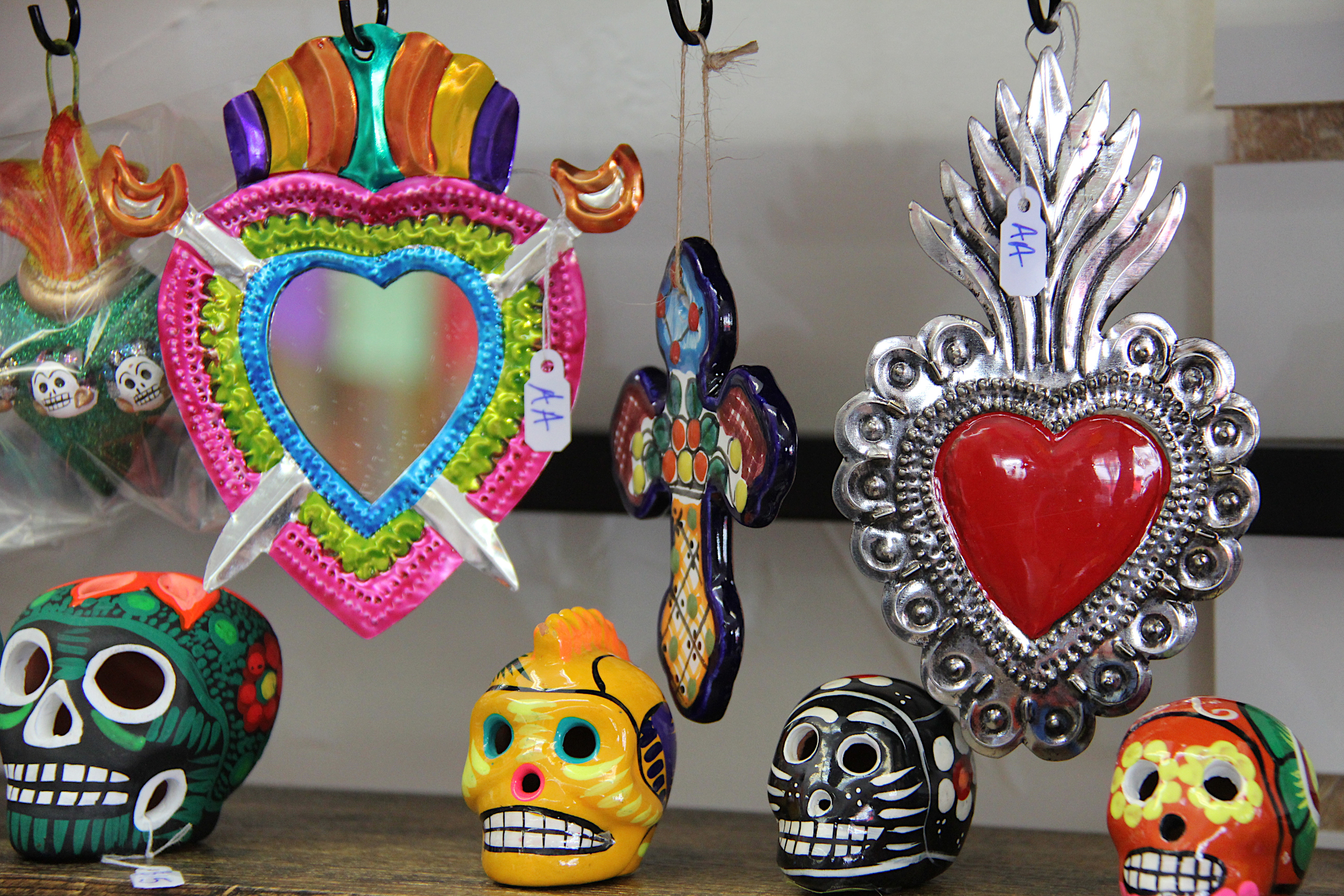
A sampling of the merchandise inside the Mercado Local store. (Minnesota Prairie Roots copyrighted file photo April 2024)
The store will be open during Thursday’s 6:30-7:30 pm gathering in the community space. I’ll be there reading the six original, previously-published poems I submitted for “Poetry in a Bag!” Likewise Northfield poets will read their poems. It’s certain to be a connective experience.
For sale in the store at Mercado Local. (Minnesota Prairie Roots copyrighted file photo April 2024)
The free public event also features Hispanic foods and desserts, a sure way to bring people together. Already “Poetry in a Bag!” has done that personally, connecting me with Northfield poets previously unknown to me. I expect to make more new friends on Thursday when I read poetry, listen to poetry, sample Hispanic foods and immerse myself in a culture different than mine.
Plenty of offerings inside the Mercado Local store. (Minnesota Prairie Roots copyrighted file photo April 2024)
Two cultures connecting via words and food. Now that’s poetry to my ears, food for my soul.
Pick a poem from a box at Mercado Local (and other locations) as part of a poetry initiative rooted in Northfield. (Minnesota Prairie Roots copyrighted photo April 2024)
PRINTED POETRY PLACED in public pleases me. Pleases me because putting poetry out there places this literary art into hands that might not otherwise pick poetry. I mean, if we’re honest, how often do we purchase a poetry book or pull a poetry volume from the 811. section of the library? Probably not all that often.
Among colorful merchandise sold by immigrant vendors at Mercado Local in Northfield. (Minnesota Prairie Roots copyrighted photo April 2024)
That is why I love the latest poetry project in my area—“Poem in a Bag.” Rice County Neighbors United, an advocacy group for low income and immigrant community members, recently launched this project in Northfield, a city rich in the arts, including poetry. Mar Valdecantos, RCNU advocate director and also a poet, writer, visual artist and art teacher, is leading this endeavor.
Grab a poetry scroll from the box. (Minnesota Prairie Roots copyrighted photo April 2024)
The concept is simple. Collect, translate, print and place poems inside a box (not a bag) in locations accessible to the public. The poetry, both original and favorites, is paired with local original art, including that of Valdecantos. Anyone can grab a poetry scroll and have instant access to literary and visual art.
Northfield is home to a sizeable Hispanic population. Immigrant vendors sell their art and more at Mercado Local. (Minnesota Prairie Roots copyrighted photo April 2024)
But there’s more. The poems are printed in Spanish and in English. I can’t read Spanish. (My second daughter can; she’s a former Spanish medical interpreter and translator.) That doesn’t matter. What matters is that each poem is printed in two languages, reflecting, respecting and celebrating cultural diversity in our region of southern Minnesota.
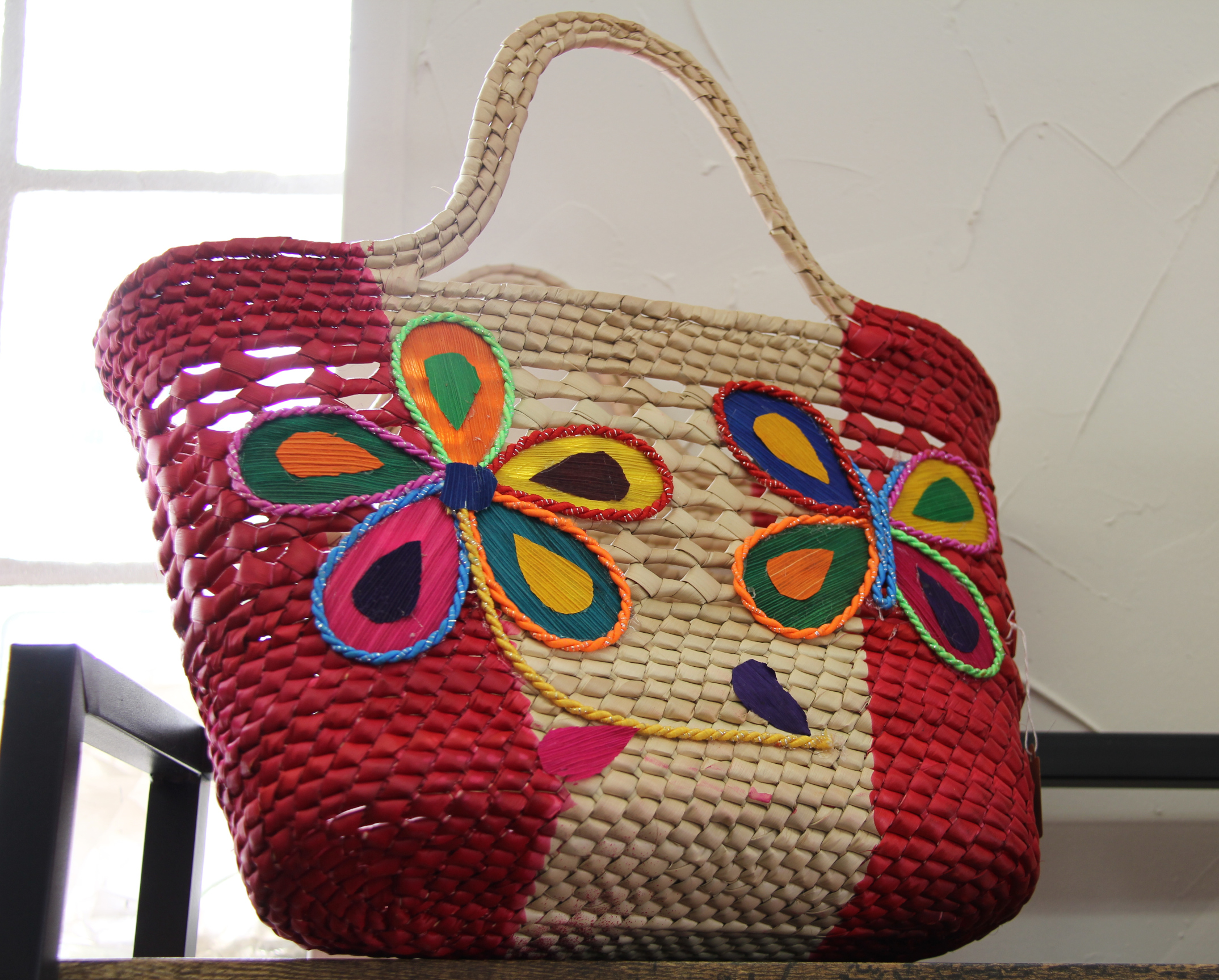
The merchandise inside Mercado Local, including this woven tote, is a colorful, visual delight. (Minnesota Prairie Roots copyrighted photo April 2024)
Rice County Neighbors United aims to raise cultural awareness via events and activities like “Poem in a Bag,” funded by a grant from the Minnesota Arts & Cultural Heritage Fund. The arts have always been a way to connect peoples, to communicate, to inspire and more. Whatever our differences, art is universal, linking us in our humanity.
A portion of the poem, “Streetlight at Night,” and art by Mar Valdecantos. All poems are printed in Spanish and in English. (Minnesota Prairie Roots copyrighted photo April 2024)
Poems submitted for this National Poetry Month project cover a range of topics, some specific, others broader. Sunrise, empanadas, children, cancer, loneliness, life, winter, salmon, even a dead mouse, are among the subjects of original poems. I’ve lent several poems for the project.
More cultural offerings at Mercado Local. (Minnesota Prairie Roots copyrighted photo April 2024)
And then there is the poetry of renowned poets—Latin American, Cuban, American—selected and submitted as favorite poems. Nature, the mother-child relationship, a white rose and service to others theme these. They, too, are accompanied by art.
Mercado Local is located in the heart of downtown Northfield, just off Division Street. (Minnesota Prairie Roots copyrighted photo April 2024)
Art in all its forms is powerful. Rice County Neighbors United recognizes that, celebrating creativity and entrepreneurship at Mercado Local, a marketplace for immigrant vendors and also an art center, community room and education space located at 108 5th Street East in Northfield.
Mercado Local explodes with color. The “Poem in a Bag” box is on the cashier’s counter. (Minnesota Prairie Roots copyrighted photo April 2024)
“Poem in a Bag” poems are available at Mercado Local and at other Northfield businesses (currently Content Bookstore, Imminent Brewery and radio station KYMN) and at the Northfield Public Library. Valdecantos aims to get poetry boxes into more Northfield businesses. In Faribault, “Poem in a Bag” can be found at Books on Central, a used bookshop run by the Rice County Area United Way.
This is an ambitious undertaking, one Valdecantos hopes to repeat next April during National Poetry Month. She intends to extend this year’s “Poem in a Bag” into May with a poetry reading set for 6:30-8 pm Thursday, May 23, in the community room/art space at Mercado Local. I appreciate all of this. To place poetry in public places, to use art to connect cultures, is truly a welcoming, neighborly gift to our culturally diverse communities.
(Minnesota Prairie Roots copyrighted file photo September 2022)
IN THE PAST YEAR, my desire to learn more about Native American culture has heightened. My new interest followed a talk in September 2022 by then Rice County Historical Society Director Susan Garwood about “The Indigenous history of the land that is now Rice County, Minnesota.” This county, this community, in which I live was home first to Indigenous peoples, long before the first settlers, the fur traders, the Easterners who moved west.
This sculpture of Alexander Faribault and a Dakota trading partner stands in Faribault’s Heritage Park near the Straight River and site of Faribault’s trading post. Ivan Whillock created this art which sits atop the Bea Duncan Memorial Fountain. (Minnesota Prairie Roots copyrighted file photo)
I knew that, of course. But what I didn’t know was that the Wahpekute, one of the seven “Council Fires” of the Dakota Nation, used the current-day Wapacuta Park just up the hill from my house for honoring their dead.
This Faribault city park, where my kids once zipped down a towering slide, clamored onto a massive boulder, slid on plastics sleds, was where the Wahpekute many years ago placed their dead upon scaffolding prior to burial. That ground now seems sacred to me.
That it took 40 years of living here to learn this information suggests to me that either I wasn’t paying attention to local history or that my community has not done enough to honor the First Peoples of this land.
(Book cover sourced online.)
Whatever the reason, I have, on my own, decided to become more informed about Indigenous peoples. And for me, that starts with reading. I recently headed to the children’s section of my local library and checked out the book, The Forever Sky, written by Thomas Peacock (a member of the Fond du Lac Band of Lake Superior Anishinaabe Ojibwe) and illustrated by Annette S. Lee (mixed-race Lakota-Sioux of the Ojibwe and Lakota-Sioux communities).
These two Minnesotans, in their collaborative children’s picture book, reveal that “the sky and stars all have stories.” Oh, how I value stories. And the stories shared in this book, these sky stories, are of spirits and animals and the Path of Souls, aka The Milky Way, and…
I especially appreciate the book’s focus on the northern lights, explained as “the spirits of all of our relatives who have passed on.” The descriptive words and vivid images make me view the northern lights, which I have yet to see in my life-time, through the eyes of Indigenous peoples. The changing blues and greens are their loved ones dancing in the night sky. Dancing, dancing, dancing. How lovely that imagery in replacing loss with hope and happiness.
The Forever Sky has created an awareness of Native culture previously unknown to me. Just like that talk a year ago by a local historian aiming to educate. I have much to learn. And I am learning via books found not only in the adult section of the library, but also among the children’s picture books. That writers and illustrators are covering topics of cultural importance in kids’ books gives me hope for the future. My grandchildren, even though they will never see the vast, dark, star-filled sky I saw nightly as a child of the prairie, are growing up much more informed. They will understand cultures well beyond their own heritage. And that encourages me.
I happened upon this book while searching for recently-published astronaut and geography books for my 4-year-old grandson. I never did find those sought-after titles. Not that it mattered. What I discovered instead were three must-read books: My Powerful Hair, Boycott Blues—How Rosa Parks Inspired a NationandWe Are Better Together.
Parks is certainly familiar to me as the Black seamstress who in 1955 refused to give up her seat to a white man on a city bus in Montgomery, Alabama. That sparked a bus boycott and the Civil Rights Movement. Likewise, working together to effect change, to improve our world, to help one another is a familiar theme.
“The Native Man, His Eagle & His Chanupa,” an oil painting by Dana Hanson and part of her 2018 “Healing the Land” exhibit at the Owatonna Arts Center. (Minnesota Prairie Roots copyrighted file photo 2018, used for illustration only. Art copyrighted by Dana Hanson.)
THE IMPORTANCE OF HAIRREVEALED
It is the story on hair, though, which proved a particularly teachable read. My Powerful Hair focuses on Native Peoples’ hair and its importance in their culture, their history, their lives. Through the writing of New York Times bestselling and award-winning author Lindstrom, who is Anishinaabe/Metis (and an enrolled citizen of the Turtle Mountain Band of Ojibwe), and Indigenous artist Littlebird of Oregon’s Confederated Tribes of Grand Ronde, I learned the symbolism and power of hair in Native American culture. Admittedly, this is something I should have known, having grown up on the southwestern Minnesota prairie between the Upper Sioux and Lower Sioux Indian Reservations (today termed “communities”). I thought I was informed. But I wasn’t, not about hair.
Told from the perspective of a young Native girl, My Powerful Hair explains the reasons Native Peoples grow their hair long. And keep it long. Hair holds stories, memories, strength, sorrow, connections to each other and to Mother Earth. And more. Page after page, the narrator shares events in her life that weave into her hair. When Nimishoomis (her grandfather) taught her to fish, her hair reached her ears. When her cousins taught her to make moccasins, her hair flowed past her shoulders. In the sharing of these moments, I began to understand the power of hair in Native American culture.
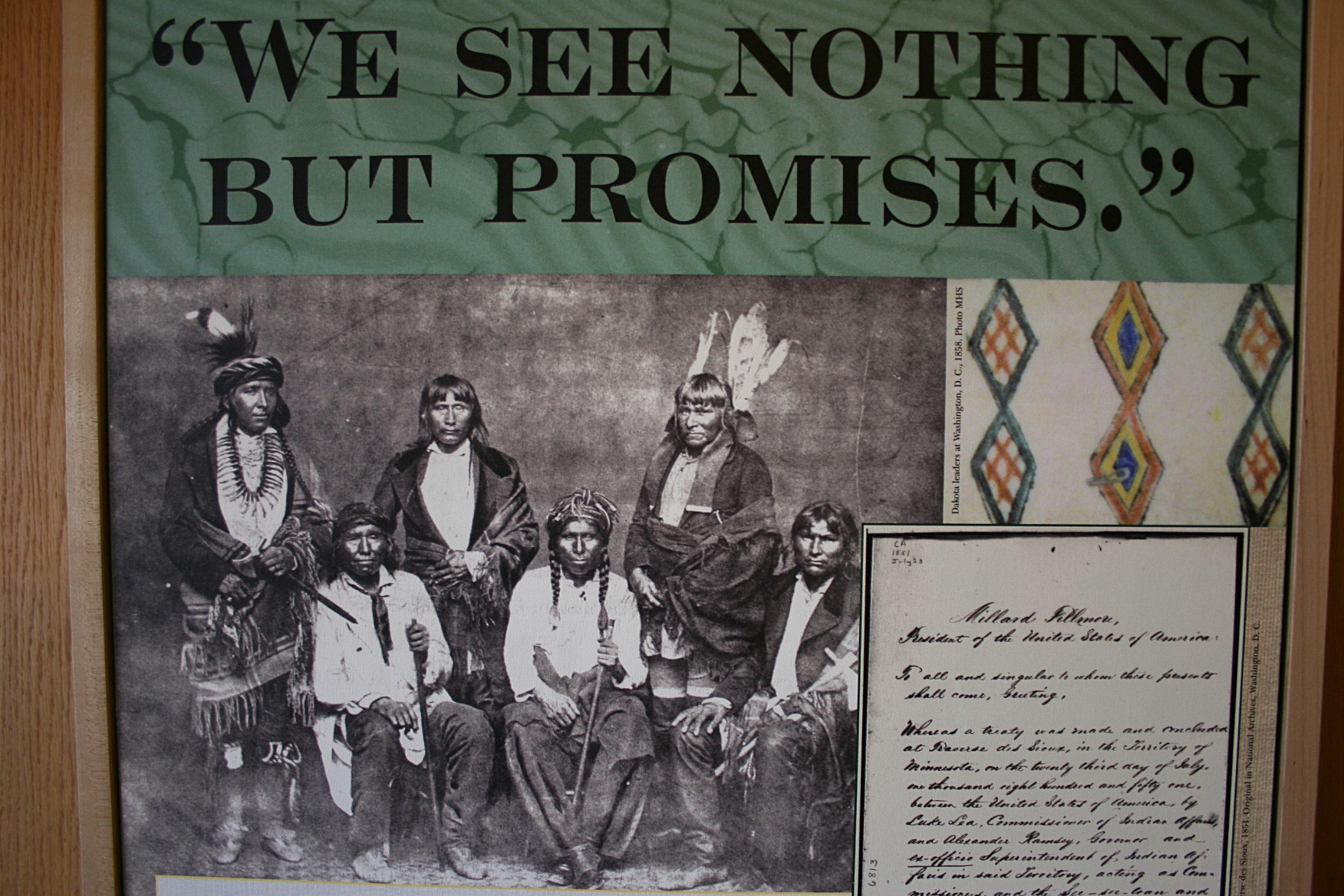
A photo panel at the Traverse des Sioux Treaty Center in St. Peter shows Dakota leaders photographed in Washington D.C. in 1858. The photo is from the Minnesota Historical Society and is used here for illustration only.
FORCED HAIRCUTS
I also understood fully, for the first time, the trauma inflicted upon Indigenous individuals forced long ago by white people to cut their hair. The writer and illustrator don’t hold back. In the first few pages, a young Nokomis (grandmother) is in tears as the hands of a Catholic nun grasp, then cut, her braids. It’s an emotionally impactful visual.
But this was reality at Indian boarding schools, within faith communities and elsewhere back in the day, in a time period when efforts focused on erasing Indigenous culture, on conforming Native Peoples to European ways. It was wrong.
Displayed at Bridge Square during Northfield’s Earth Day celebration in 2022. (Minnesota Prairie Roots copyrighted file photo April 2022, used for illustration only)
“A TERRIBLE INJUSTICE”
A blogger friend from the central Minnesota lakes region recently shared a bit of her family’s experience per my request. Of unverified (records were often destroyed) Cherokee ancestry, Rose speaks of her mother’s trauma after being sent to a Catholic girls’ school in Crookston. “Mom didn’t tell us much about her experience there,” Rose says, “only that they made her cut her long black hair. My mom never cut her hair again for the rest of her life. She saw the forced haircut as a terrible injustice.” Injustice seems a fitting word.
In an author’s note, Carole Lindstrom shares the same trauma, documented, she writes, in a photo of her grandmother and two great aunts with their black hair shorn above their ears. They were forced into an Indian boarding school in the early 1900s.
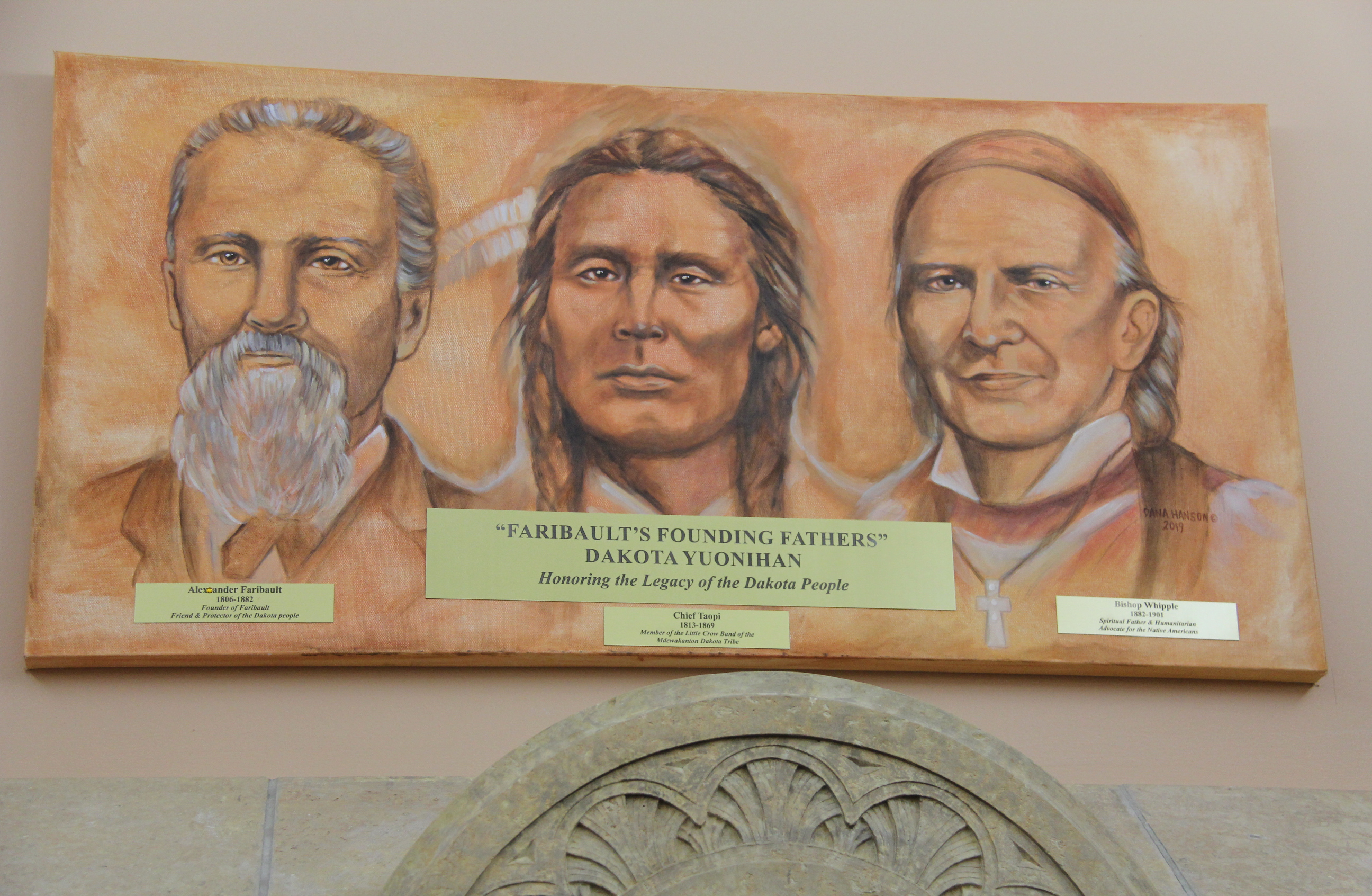
“Honoring the Legacy of the Dakota People” focuses this artwork by Dana Hanson. Chief Taopi centers the painting with Alexander Faribault to the left and Bishop Henry Whipple on the right. The word “Yuonihan” means honor or respect. This art hangs inside Buckham Memorial Library. (Minnesota Prairie Roots copyrighted file photo November 2022. Art copyrighted by Dana Hanson.)
POWER IN STORIES, IN HERITAGE, IN RESPECT
Rose is thankful for books like My Powerful Hair. “I am glad that stories like this are being told,” she says. “Much First Nations history nearly disappeared. And many First Nations keep their ceremonies and other information ‘secret’ so it won’t be distorted or misused by people who don’t understand, or who seek to harm them.” Based on history, that seems warranted.
This Minnesota woman has one more reason to feel grateful for children’s picture books by Indigenous Peoples. Her grandchildren are of Ojibwe heritage; their other grandmother lives on the White Earth Nation in northwestern Minnesota. “My hopes for my grandchildren are that they learn all they can about their Ojibwe ancestors and customs and values,” Rose says. “I hope they can choose what lessons they want to carry forward in their own life. I hope they are fantastic examples of how people from different backgrounds can get along and respect and love one another.”
And so I learned, not only from Rose, but from reading My Powerful Hair. Stories woven into our hair matter. For they are powerful.
Somalians are very much a part of the Faribault community, photographed here at a Downtown Car Cruise Night. (Minnesota Prairie Roots copyrighted file photo)
For a community like mine, with a sizable Somali population, this book proves a natural draw. I always appreciate learning more about my new Faribault neighbors from the east African country of Somalia. The more we know about each other, the more comfortable and connected we feel. Disconnect and conflict often arise from lack of knowledge, fear of the unknown and differences. Differences in dress, food, language, culture, faith.
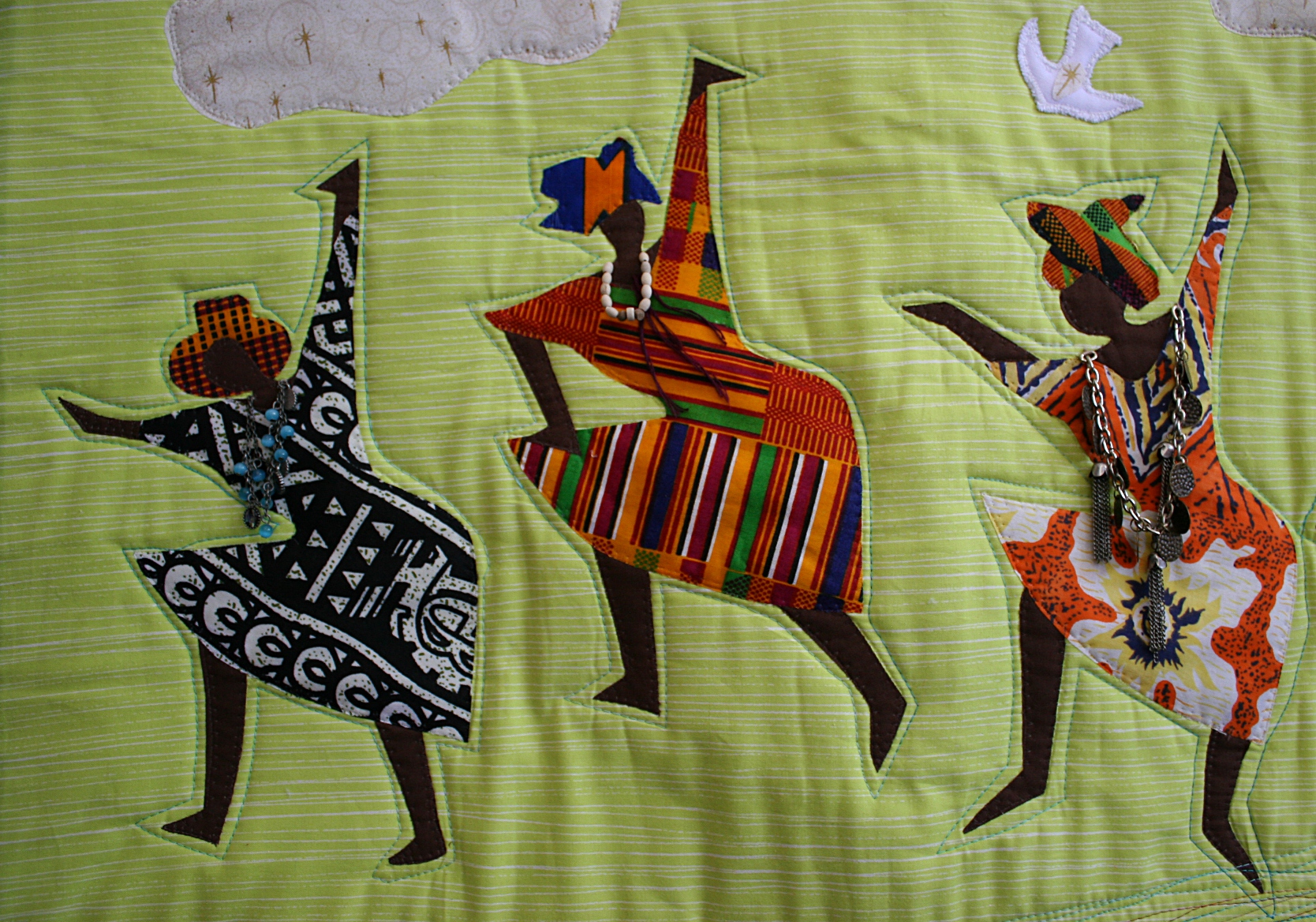
Nigerian-themed quilt art by my friend Susan Griebel. The fabric is from the collection of her mother-in-law, Margaret Griebel. Margaret’s husband was a Lutheran missionary in Nigeria, where the family lived. (Minnesota Prairie Roots copyrighted file photo)
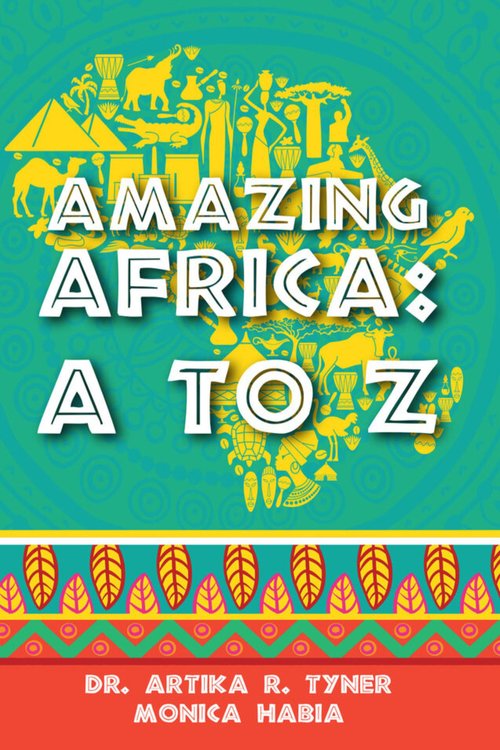
This book bridges differences via facts and art that carries a signature African style of intense patterns and colors. With every new bit of information, with every turn of the page, I feel more and more connected to this continent of 54 countries. For example, the word hospitality, chosen to represent the letter “H” in this alphabet book, strikes me as exactly what I hope for in Faribault. Africans believe no one is an island; rather everyone is part of the community, the text reads in part. Two clasped hands visually reinforce that belief.
Lul Abdi shows off beautiful wood crafts from Kenya and Somalia at a past International Festival Faribault (Minnesota Prairie Roots copyrighted file photo)
Events like the Faribault Diversity Coalition’s summer International Festival Faribault and now occasional public talks by immigrants and others are ways we join hands and grow community. I’ve seen the art of my neighbors from Africa. I’ve heard the music, tasted the sambusa, admired colorful clothing… Faribault’s newest residents add a depth and richness to my southern Minnesota city.
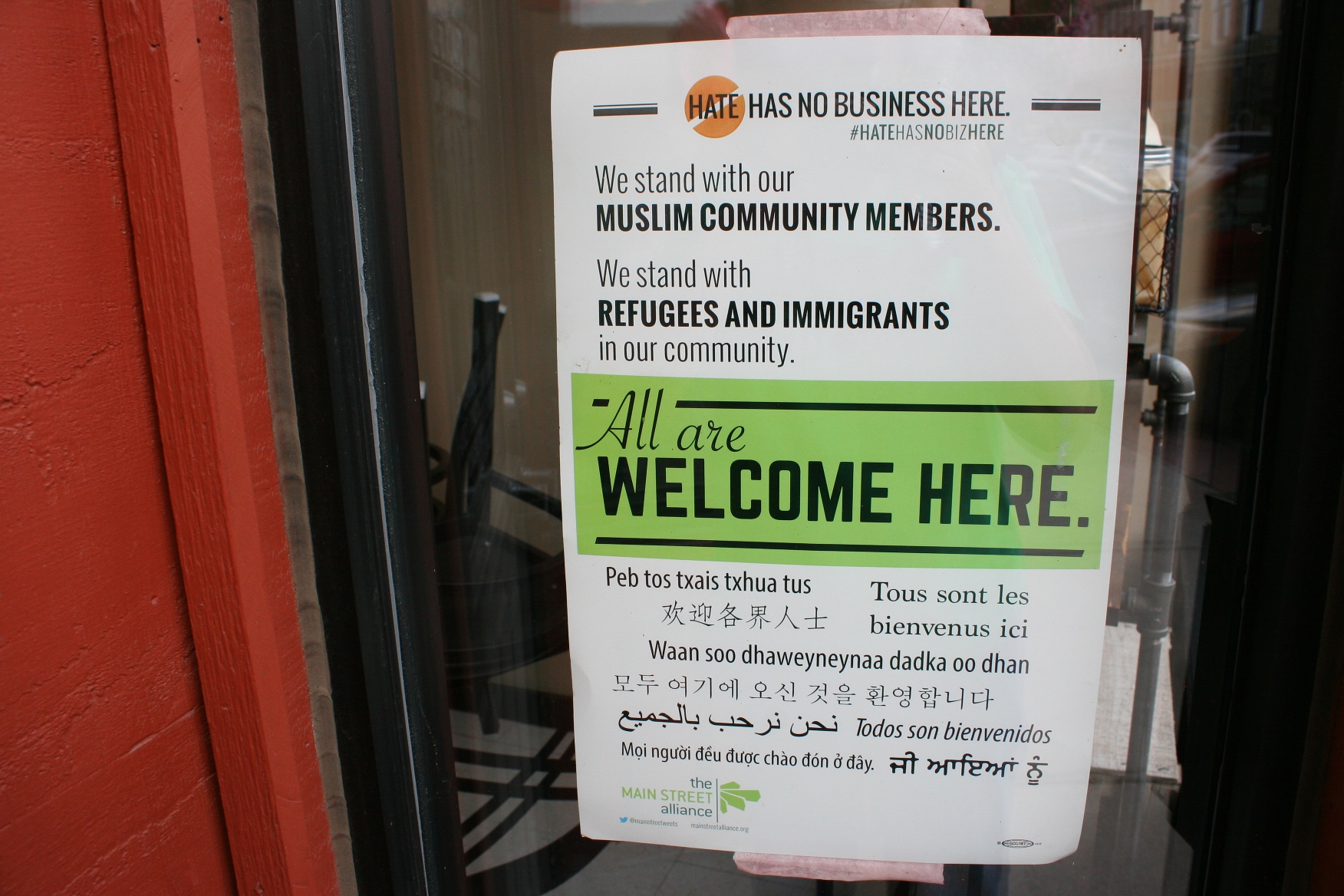
A sign posted in a downtown Faribault business storefront window several years ago. (Minnesota Prairie Roots copyrighted file photo)
Consider African proverbs, chosen in Amazing Africa: A to Z to represent the letter “P.” These wise sayings span cultures. The authors include this powerful Swahili proverb, among several, at the end of the book: “Unity is strength, division is weakness.” If only we all read and take those words to heart. I firmly believe that we, as individuals and as community, need to be here for one another. We truly are stronger when not divided.
A sign lists Somali food sold at a past International Festival Faribault. (Minnesota Prairie Roots copyrighted file photo)
As I read of 1,000 languages spoken throughout Africa, I think of the Somalians now living in my community. Many have overcome war, poverty and other unimaginable challenges to settle in Minnesota. And now they must also overcome language barriers and resentment. If only we would all pause for a moment and remember that, for most of us Minnesotans, English was not the native tongue of our immigrant forefathers. Mine spoke German. Others spoke Norwegian, French, Dutch…
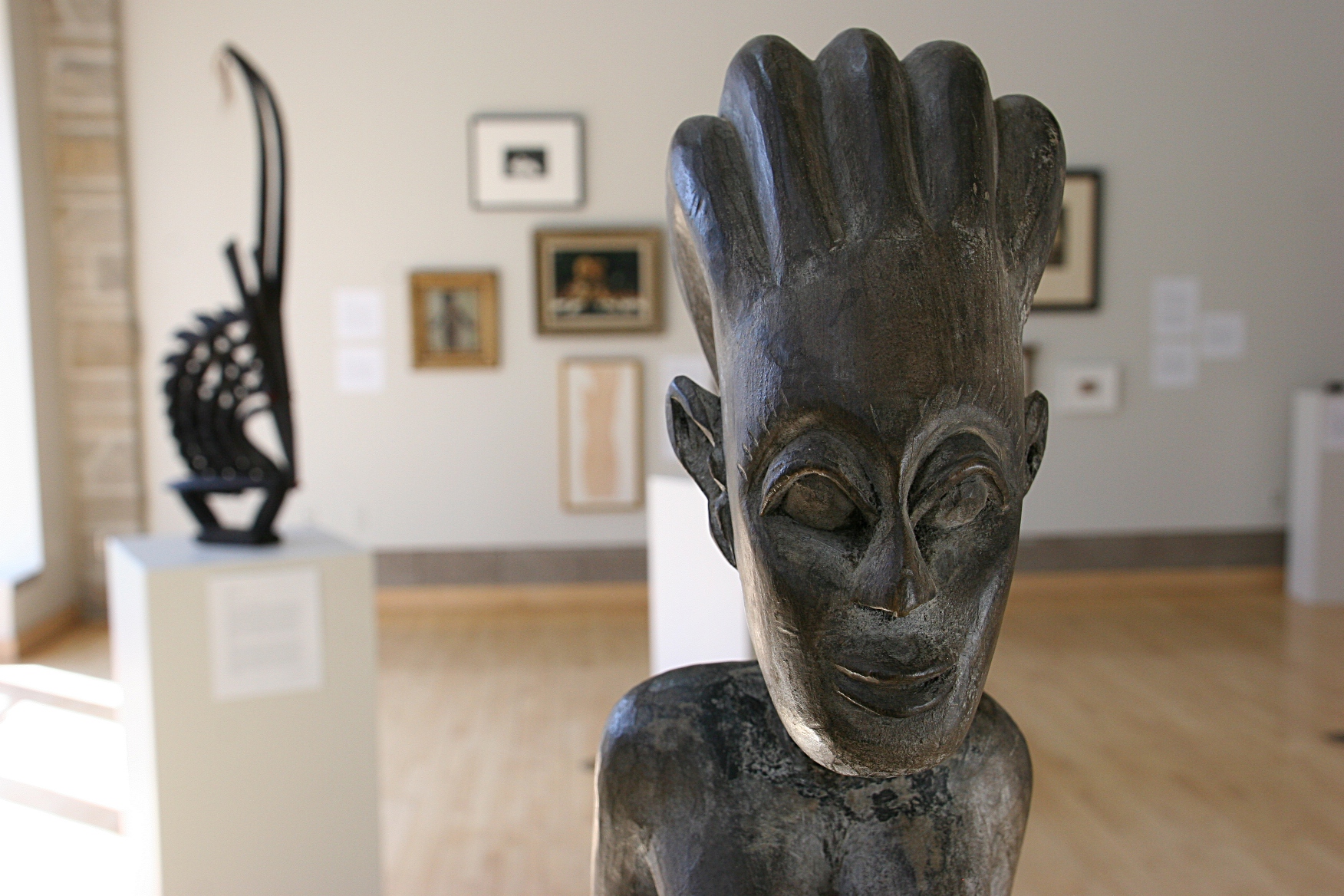
A wood sculpture from Africa, artist unknown, and titled “Seated Maternity Figure.” Exhibited at St. Olaf College, Northfield, in 2015. (Minnesota Prairie Roots copyrighted file photo April 2015)
I certainly can’t pronounce all of the words published in this book about Africa. Words like Uhuru, Yamoussoukro, Ugali and more. But I can appreciate the beauty of language, the way these words speak the rhythm of the continent of Africa.
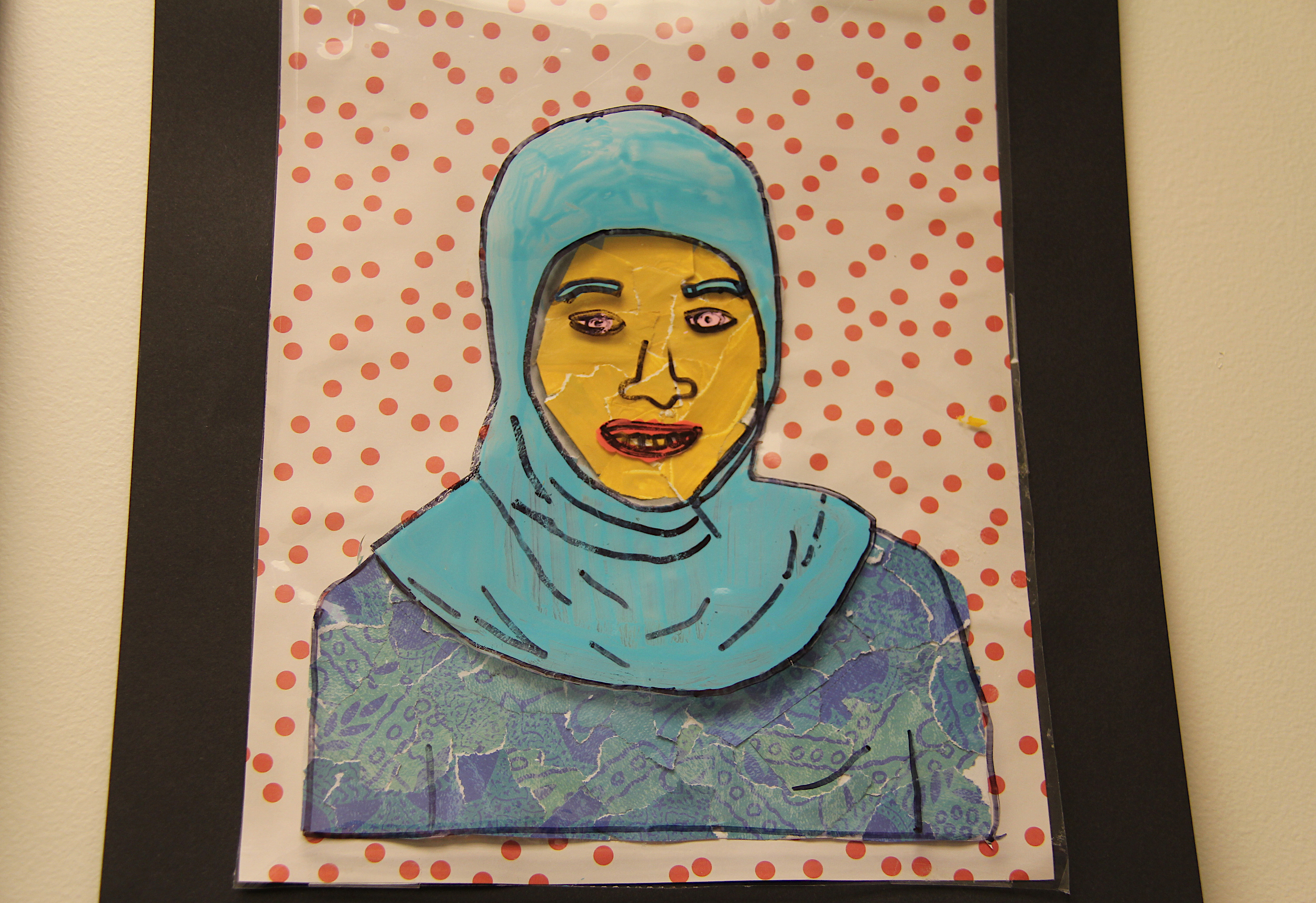
Bisa Butler inspired art created by fourth grader Ilwad and exhibited at a Student Art Show in Faribault. Butler is an award-winning African American textile artist. (Minnesota Prairie Roots copyrighted file photo March 2023)
Africa is the story of slavery, of dancing, of the world’s largest waterfall, of greatness, of so much richness and depth. You’ll find that, see that, read that in Amazing Africa: A to Z.
FYI: Dr. Artika Tyner, co-author of this book (and many others) and also a motivational speaker, educator and attorney, will speak on her journey towards justice from 6-7 pm Tuesday, May 16, at Buckham Memorial Library, Faribault. She is part of the Southeastern Libraries Cooperating 2023 Minnesota Author Tour. In her work, she focuses on racial and economic justice and social change. Tyner founded the nonprofit, Planting People Growing Justice Leadership Institute.
I previously reviewed Tyner’s children’s book, Justice Makes a Difference—The Story of Miss Freedom Fighter, Esquire. To read that book review, click here.
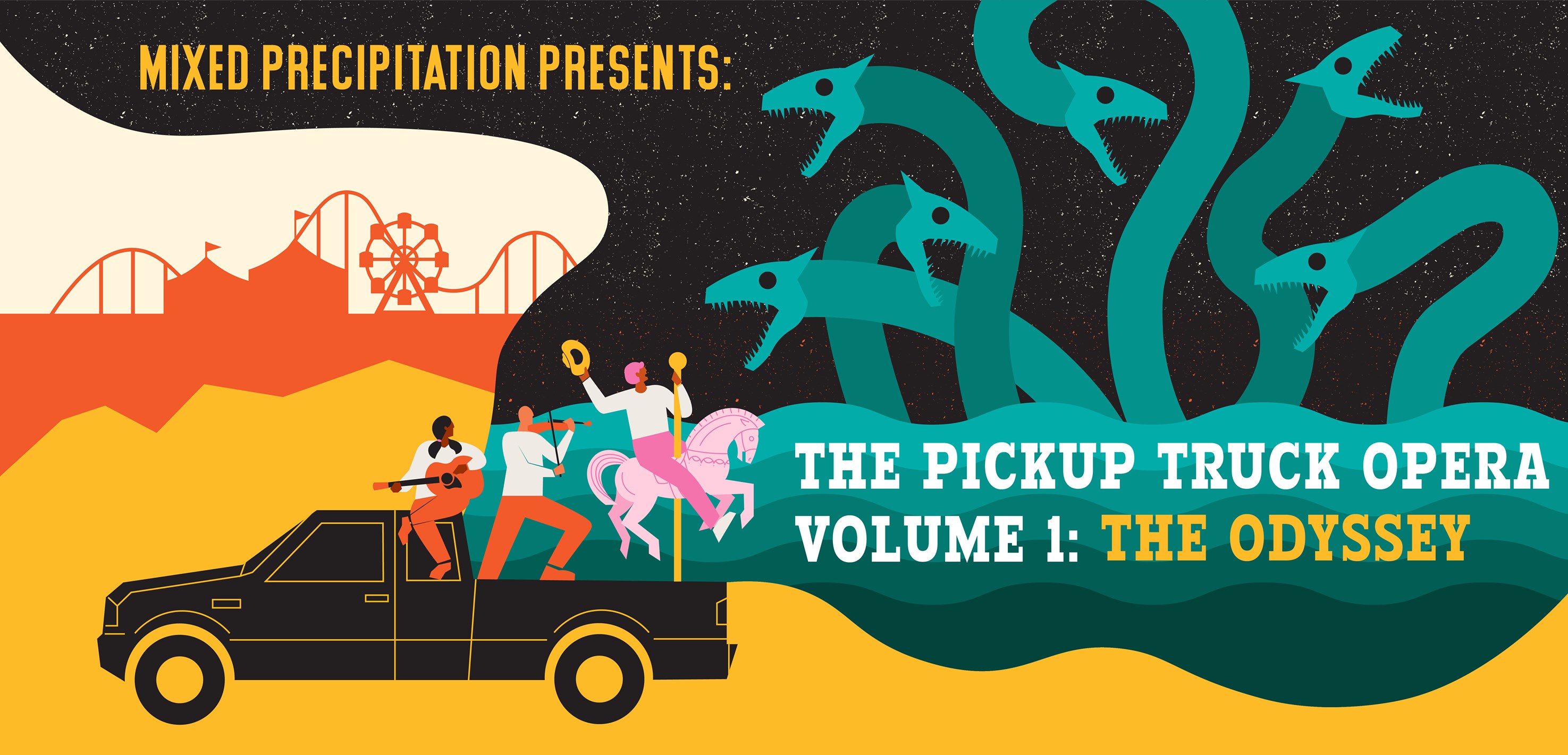
A promo for Mixed Precipitation’s on-the-road performance. Graphic source: Mixed Precipitation.
IN ONE WEEK’S SPAN, I heard opera for the first time and then seven days later listened to an internationally-known Somali singer perform. Both right here in Faribault. In Central Park.
What a delight to experience these performing arts locally, to be exposed to something new to me.
If I’m sounding a bit giddy, it’s because I am. I love the arts and feel grateful for our local Paradise Center for the Arts. Yet, I often yearn to see more. But I don’t want to go into the metro. And, truth-be-told, there’s always cost to consider. Even in attending local arts events. I expect others in Faribault face the same barriers.
So I feel such gratitude for our long-running free summer Concerts in the Park series. And I feel thankful, too, for sponsoring groups like the City of Faribault Parks & Recreation Department and the Paradise Center for the Arts and the local businesses and residents who helped fund the special events I attended recently.
When Mixed Precipitation brought its The Pickup Truck Opera, Volume 1: The Odyssey to Faribault on August 26, I wondered how I would respond. I didn’t quite know what to expect. I needn’t have concerned myself as the adaptation of Homer’s Odyssey proved lively and entertaining with dancing and over-sized puppets and toe-stomping music. Plus opera. And it was performed on the grass, in front of the historic bandshell from the bed of a blue pickup truck. I felt like I was in a small village of yesteryear being entertained by a traveling troupe.
Dalmar Yare. Photo source: Faribault Parks & Rec Facebook page.
The feel was completely different on September 2, when I set up my lawn chair in Central Park to hear and watch Dalmar Yare, a Somali entertainer from Minnesota and with family ties to Faribault. He describes his music as a blend of traditional Somali styles with hints of western influence.
I quickly found myself swinging my crossed left leg to the tempo of the upbeat music. I didn’t understand what Yare sang in a language foreign to me. But I understood the joy I felt, the joy I saw. Throughout the park, local Somali children, teens and adults gathered to listen. Many danced, especially the kids. It seemed part concert, part celebration, part reunion. Simply joyful.
While I listened, I observed the crowd. I noted the open affection of Somali youth for one another. Young men draped arms over shoulders as did teen girls. Preschool girls in their flowing dresses and hijabs ran hand-in-hand across the park. I noticed, too, a stunningly beautiful 20-something layered in a golden dress and matching hijab, fashionable mini purse dangling from her shoulder. The vibrant colors and patterns of dresses and hijabs swirled like a kaleidoscope. An ever-changing gallery of art.
Dressed in my casual attire of jeans, a tee and a zipped sweatshirt with the hoodie occasionally pulled up to provide warmth and protect me from the rain, I felt under-dressed and conscious of my white-ness. And that’s OK; I needed to feel this. I only wish more long-time Faribault residents would have attended.
Photo source: Sod House Theater
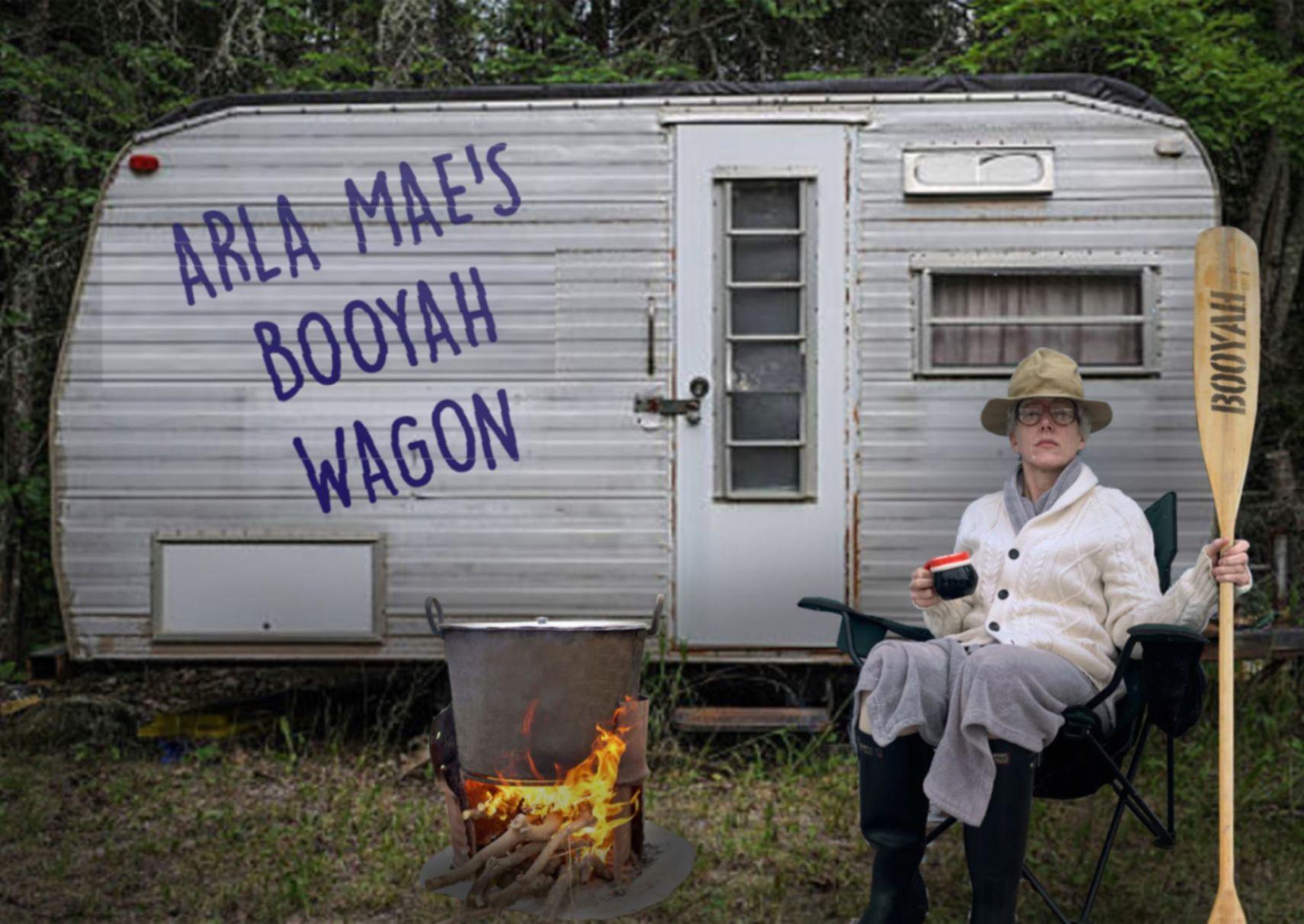
Now this week I’ll learn about booyah, a rich and flavorful stew that is supposedly an Upper Midwest tradition, although I’ve never eaten it. Booyah will theme the Sod House Theater musical comedy about Arla Mae, a rural Minnesotan claiming to operate the state’s first food truck out of which she serves her famous booyah. The play aims to spotlight buying and eating fresh local food. Thus the involvement of James Beard Award-winning chef Ann Kim in creating a special booyah recipe for the production. So what goes into this stew, which is traditionally cooked outdoors in large kettles over a wood fire? You name it: a mix of meats and an assortment of vegetables—onion, potatoes, rutabagas, cabbage, carrots, celery, peppers…
I envision a collage of shapes and colors. Art in a kettle. Art that is new to me. Served to me. Right here in Faribault. In Central Park.
#
NOTE: “Arla Mae’s Booyah Wagon” will also be performed in neighboring communities on these dates and at these locations:
Keepsake Cidery, rural Dundas, 6 pm on Thursday, September 23
Pleasant Grove Pizza Farm, rural Waseca, 6 pm on Friday, October 1
Northfield Central Park, Northfield, 6 pm on Thursday, October 7













 Minnesota Prairie Roots
Recent Comments