Minnesota Prairie Roots

Writing and photography by Audrey Kletscher Helbling
A look back, a look ahead: How school shapes us, expands our world September 6, 2023

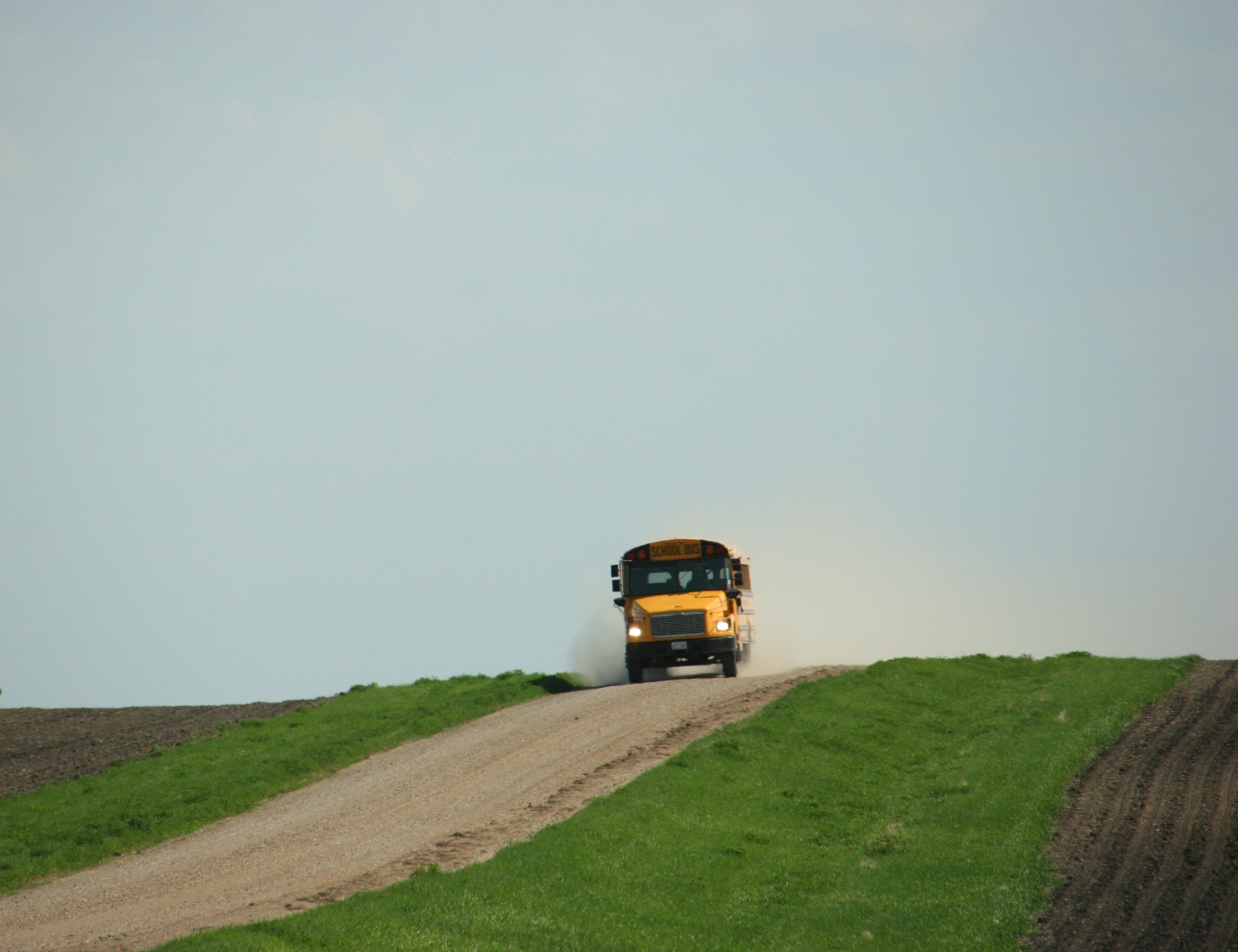
A bus follows a back country road near Morgan in southwestern Minnesota. (Minnesota Prairie Roots copyrighted file photo May 2018)

SHE WANTS TO SAVE the earth. It’s a lofty and noble goal for my granddaughter, who started second grade on Tuesday. Each year, on the first day of school, her mom documents basics about Isabelle on a small chalkboard. That includes a response to “What I want to be when I grow up.” This year Izzy aims to be an environmentalist. As a first grader, her professional goal was becoming a game designer. And on the first day of kindergarten, she wanted to own a toy store and also be a mom.

It’s interesting how Izzy’s interests evolve as she ages, as she grows her world and knowledge and connections with others. The possibilities are endless for her generation. I hold such hope in these young people, just beginning their formal educations.

And I hold hope, too, when I see a photo of Izzy and three neighborhood friends waiting at their urban bus stop. “Smart, Brave, Beautiful” banners Bethel’s tee. What a reaffirming message. For all of them. And how reaffirming that they are of differing ethnicity, their skin tones varied and, indeed, beautiful.

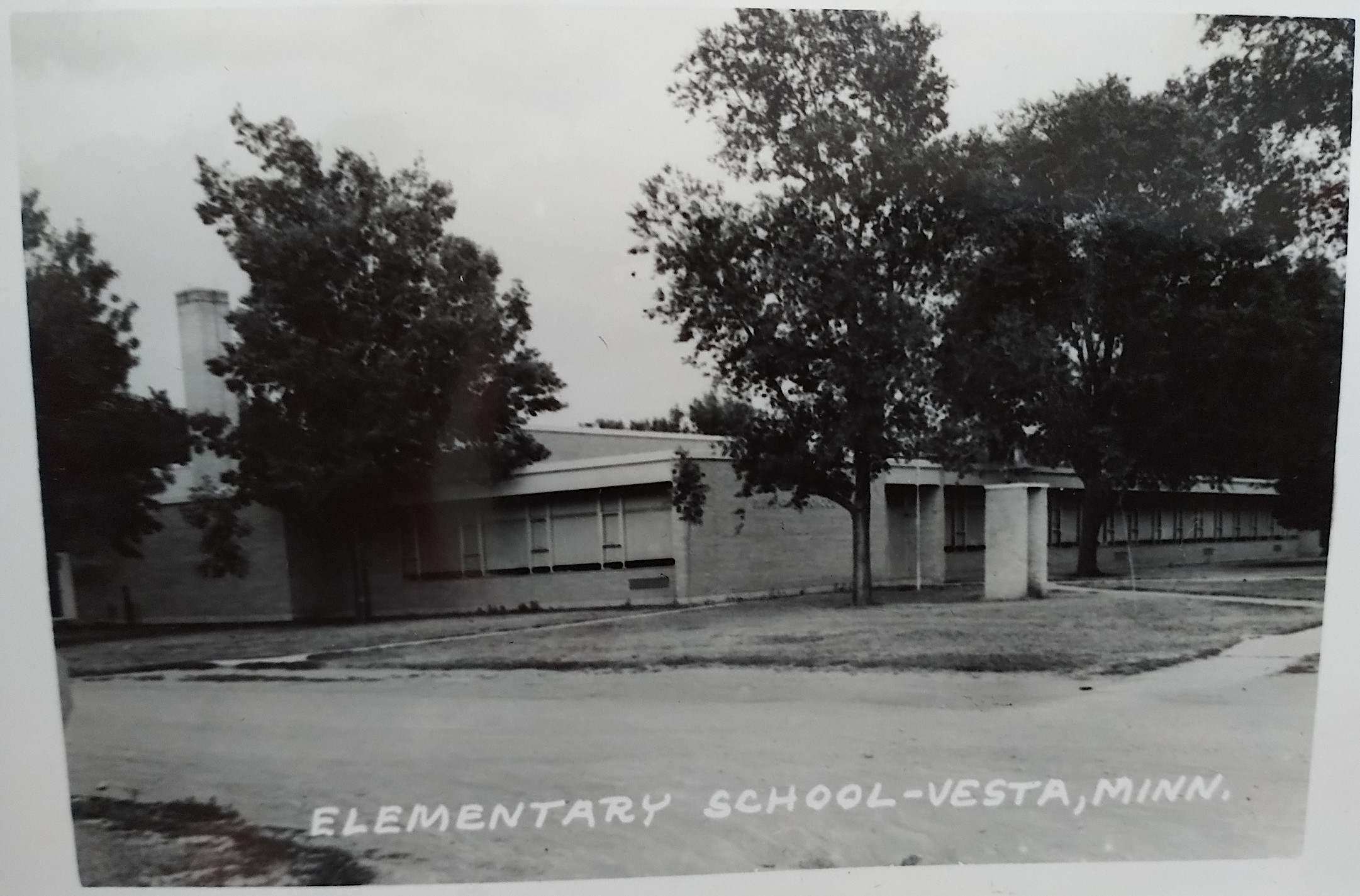
My elementary school, circa 1960s, located in Vesta in Redwood County. The school closed decades ago. (Photographer unknown; photo sourced from my personal photo album)

Sixty years have passed since I was a second grader in a small southwestern Minnesota elementary school, where my paternal grandfather served on the school board. My classmates and I were mostly farm kids, all white. We wrote in “Big Chief” lined tablets which today would not, should not, fly. Attitudes differed in the 1960s. Words like diversity, respect and environmentalist were not part of our everyday vocabulary.

A serene country scene just north of Lamberton in southern Redwood County. (Minnesota Prairie Roots copyrighted file photo September 2013)

But words, overall, held my interest all those decades ago. I have Mrs. Kotval to thank for sparking my love of words, of reading, and eventually of writing. Each day after lunch, she read to her third and fourth graders from “The Little House” and other chapter books. Through the writing of Laura Ingalls Wilder, who lived many years earlier in nearby Walnut Grove, I began to appreciate the nuances of the prairie. And I learned the importance of descriptive, detailed writing. Wilder engaged all of her senses to describe the prairie and life thereon in her series of wildly popular books. With her love of the natural world, this writer unknowingly documented the environment for me, my children and for my second grade granddaughter, today an aspiring environmentalist.

Early on, I aspired to be an elementary school teacher. But that changed as I grew my world, my knowledge, my connections. Words focused my passion. Unlike most of my elementary school classmates, I loved penmanship—letters and words flowing in script across the pages of my penmanship book. I loved spelling. I loved reading, even in a school and town without a library and thus with limited access to books. And by high school, that love of words expanded to writing.

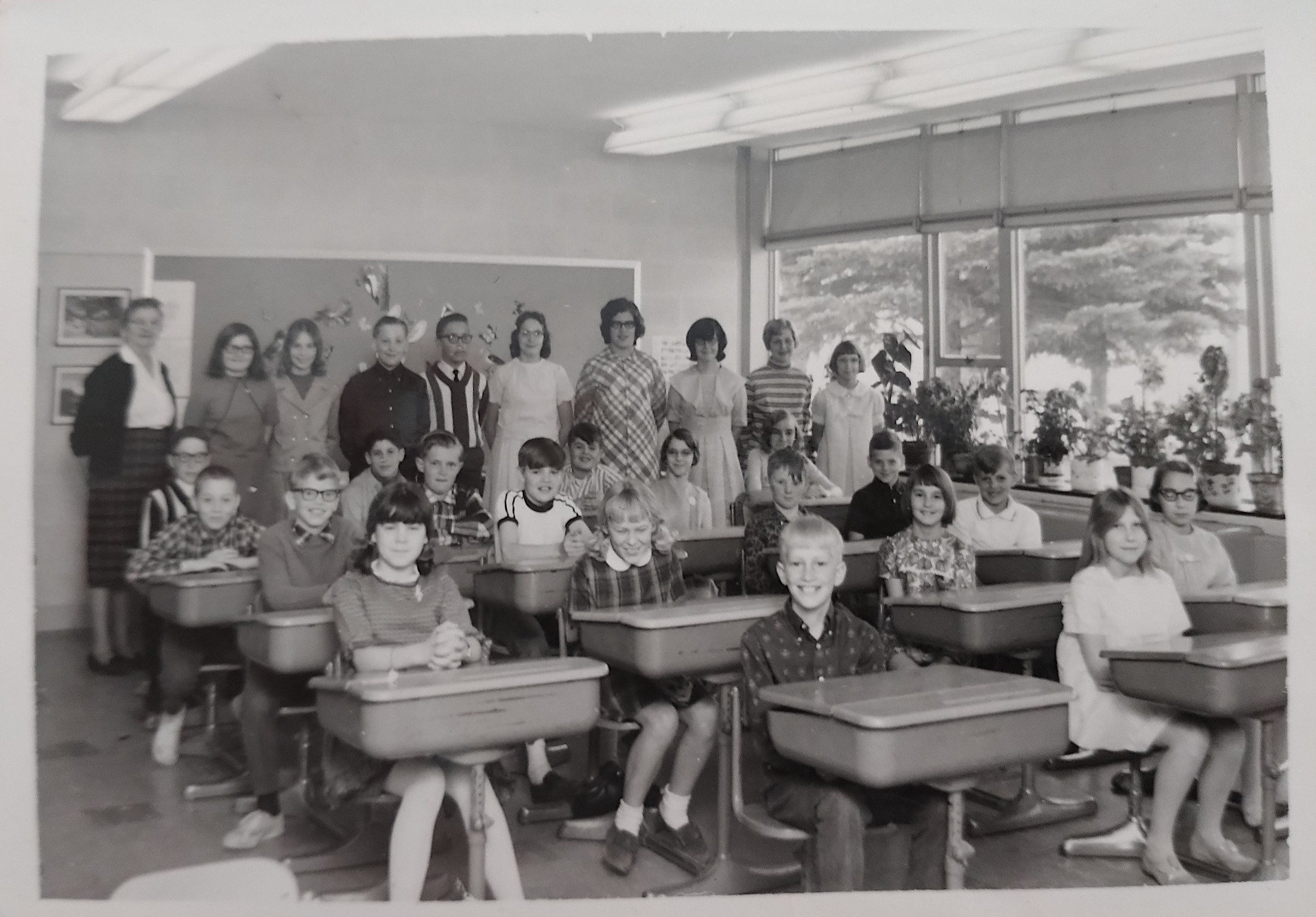
Fifth and sixth graders at Vesta Elementary School in the late 1960s. I’m in the back row, far right, next to the windows. (Photographer unknown; photo sourced from my personal photo album)

I want to pause here and stress the importance of passionate teachers in fostering students’ interests. From Mrs. Kotval reading to her students after lunch to junior high English teacher Mrs. Sales teaching me all the parts of grammar to high school teacher Mr. Skogen requiring students to keep journals, their influence on me and my eventual career was profound. I would go on to earn a college degree in mass communications, leading to a career as a journalist, writer, poet and photographer.

That brings me full circle back to Laura Ingalls Wilder, who early on influenced my detail-rich writing and photographic styles. In 2017, I became professionally connected to the author via “The World of Laura Ingalls Wilder—The Frontier Landscapes That Inspired The Little House Books.” Author Marta McDowell chose three of my photos (including one of prairie grasses at sunset) to illustrate her 396-page book documenting Wilder’s life and relationship to her environment. Perhaps some day my granddaughter will open the pages of McDowell’s book and find the photos taken by her grandmother. Whether Isabelle becomes an environmentalist or something vastly different, I expect she will always care about the earth and her role in saving it.

© Copyright 2023 Audrey Kletscher Helbling
 

Reflections on commencement from the mom of a postgraduate grad May 16, 2023

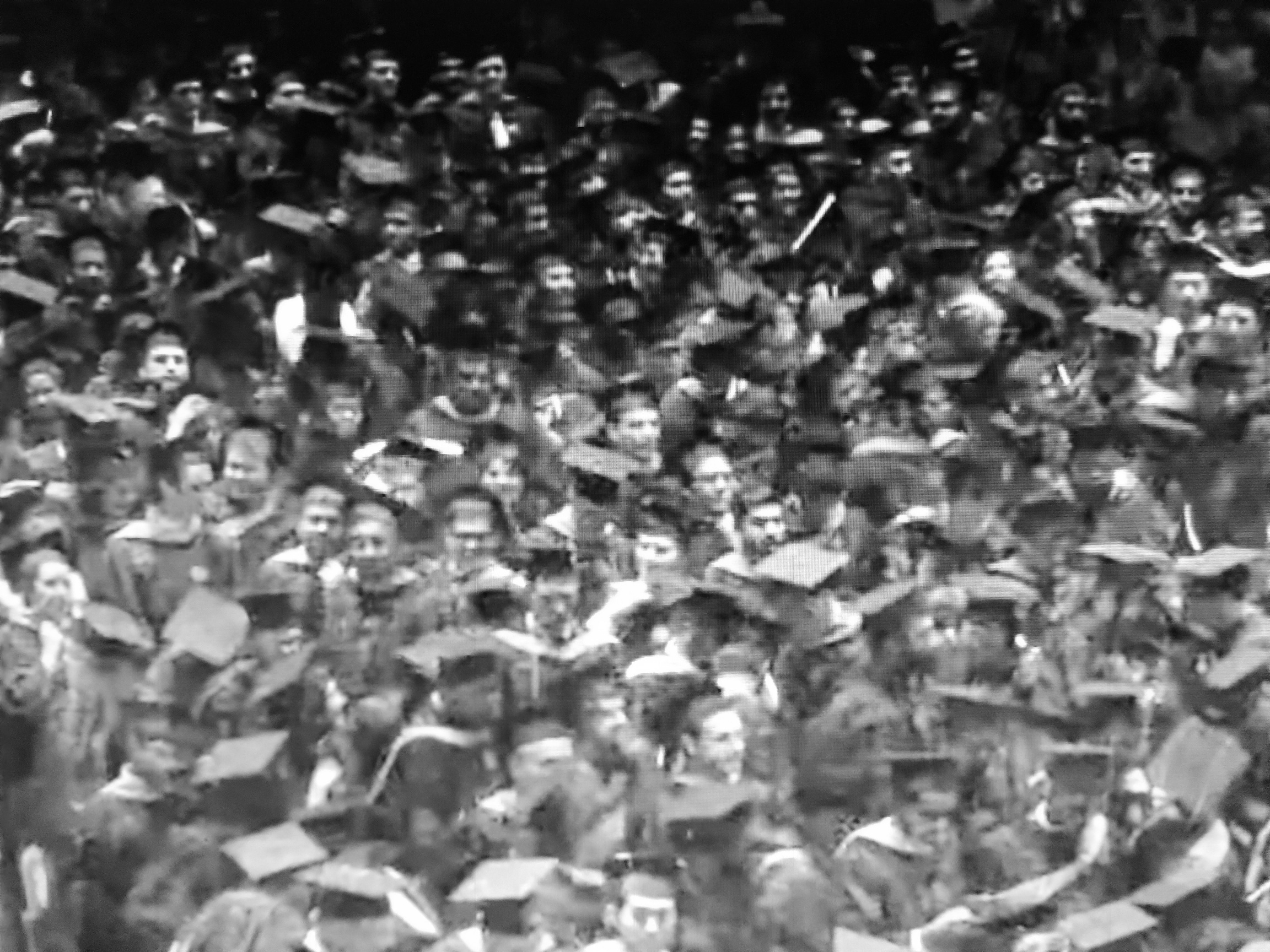
An edited computer screen image of students about to graduate Sunday evening from Purdue University. (Minnesota Prairie Roots copyrighted photo May 2023)

“YOU ARE READY and the world needs you….The world needs your energy and talents.” Versions of those statements are likely being repeated by keynote speakers during college commencements across the country. Sunday evening, Kathleen Howell, professor of Aeronautics and Astronautics at Purdue University, delivered those words to master’s and doctor of philosophy students receiving their diplomas, my son among them.

Purdue’s Boilermaker mascot was on-site for weekend commencement ceremonies. (Photo credit: Randy Helbling)

From hundreds of miles away in southern Minnesota, I watched livestreaming of the lengthy ceremony. My vestibular neuronitis symptoms prevented me from making the long trip to Indiana. But Randy was there, sitting in packed Elliott Hall of Music for hours waiting to see Caleb walk across the stage to accept his master’s diploma.

Purdue’s college president, left, and other staff filled the stage Sunday evening in this computer screen photo. (Minnesota Prairie Roots copyrighted photo May 2023)

As speakers go, Howell did a stellar job of addressing graduates, reflecting on their time at Purdue and the future. And I’m not just saying that. I’ve attended college commencements thrice through the years and have heard some not so good speakers, especially the Wisconsin politician who apparently thought he was at a campaign rally rather than a university graduation.

The rising moon. (Minnesota Prairie Roots copyrighted file photo)

But back to West Lafayette, Indiana, and that speech by Howell. She shaped her address around a quote from President John F. Kennedy’s “moon speech,” quite appropriate given her area of expertise and involvement with the space program. In his talk about space exploration at Rice University in Houston, Texas, in September 1962, JFK said, “We chose to go to the moon in this decade and do the other things, not because they are easy, but because they are hard.”

Graduates, families and friends gather pre-commencement at Purdue Sunday evening. (Photo credit: Randy Helbling)

Howell took that quote and expanded, suggesting grads reflect on what they’ve learned and the lessons they’ve learned. How they’ve chosen the things that are hard, pushed through hard times, modified their paths, come out stronger and more resilient. Her words, I expect resonated with many. They did with me as a parent. Howell encouraged the new degree-holders to trust themselves, to always recognize that not everything is accomplished alone. I appreciated her specific acknowledgment of those who supported, continue to support, these new graduates.

All in all, Howell’s keynote address was upbeat, uplifting, encouraging. I never once just wanted her speech to end so the ceremony could proceed. But when it did and doctorate candidates began the process of being “hooded,” I admittedly grew impatient.

Caleb, pre-commencement. (Photo credit: Randy Helbling)

Eventually, Caleb walked across the stage and I found myself overcome with emotion. He’d worked hard, met challenges to reach this point and I felt incredibly proud and grateful and many other feelings rolled into that moment. Howell’s speech caused me to reflect on Caleb as a little boy and his interest in space, not space travel as much as the solar system. He even had a star chart. His star, though, shines not in the skies, but in computer science. Caleb will be among those Purdue students who go on to create technological advancements. He’s already off to a good start with his undergrad accomplishments, independent research and work experience in the years between earning his bachelor’s (from Tufts University) and master’s degrees.

For all those parents who are watching their “kids” graduate, this is your moment, too. As Professor Howell said, none of us can do this alone. Not us. Not these new graduates. And especially not the first men on the moon.

© Copyright 2023 Audrey Kletscher Helbling
 

Immersing myself in student art at the Paradise April 4, 2023

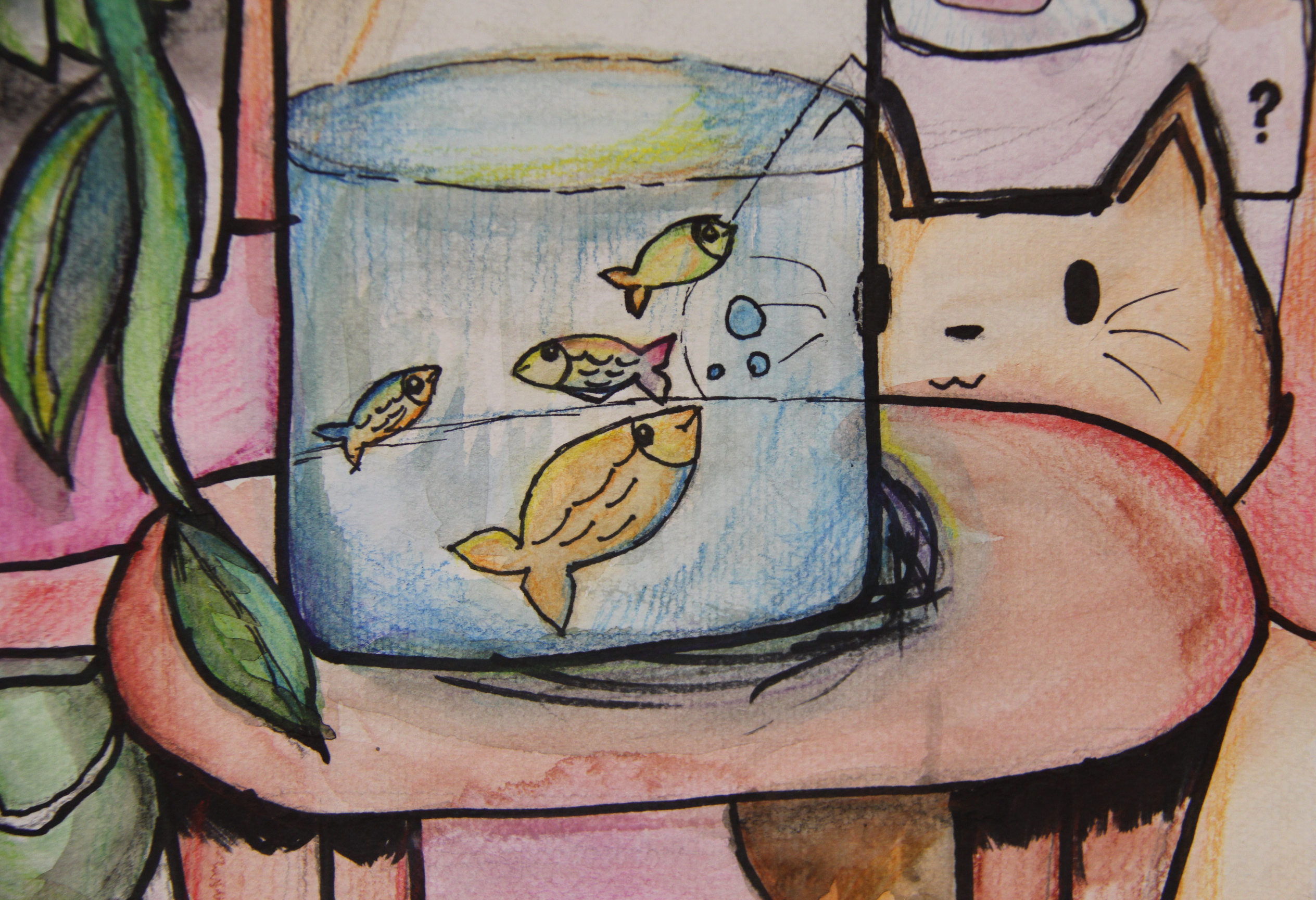
Art created by Briana, Faribault Middle School sixth grader. (Minnesota Prairie Roots copyrighted photo March 2023)

THAT LOOKS LIKE an illustration in a children’s picture book” I think while viewing a drawing of a cat eyeing fish in a fish bowl. But I’m not paging through a book. Rather I’m appreciating a work of art by Faribault Middle School sixth grader Briana in the All Area Student Art Show at the Paradise Center for the Arts. The exhibit with student art from eight schools closes April 8.

A sampling of artwork in this exhibit, here the art of Faribault Middle School students. (Minnesota Prairie Roots copyrighted photo March 2023)

Likewise, I envision other art on t-shirts, note cards, mugs, places beyond the walls of this Minnesota center for the arts in historic downtown Faribault.

I am grateful to the Paradise Center for the Arts showcasing student art annually. (Minnesota Prairie Roots copyrighted photo March 2023)

Yet, on this day I value this student art in its role as part of a gallery exhibit, showcased to the public. This annual show is always such a delight in the variety of art, the talent, the way these young artists pour themselves into their work. Some pieces, more than others, offer glimpses into personalities and interests.

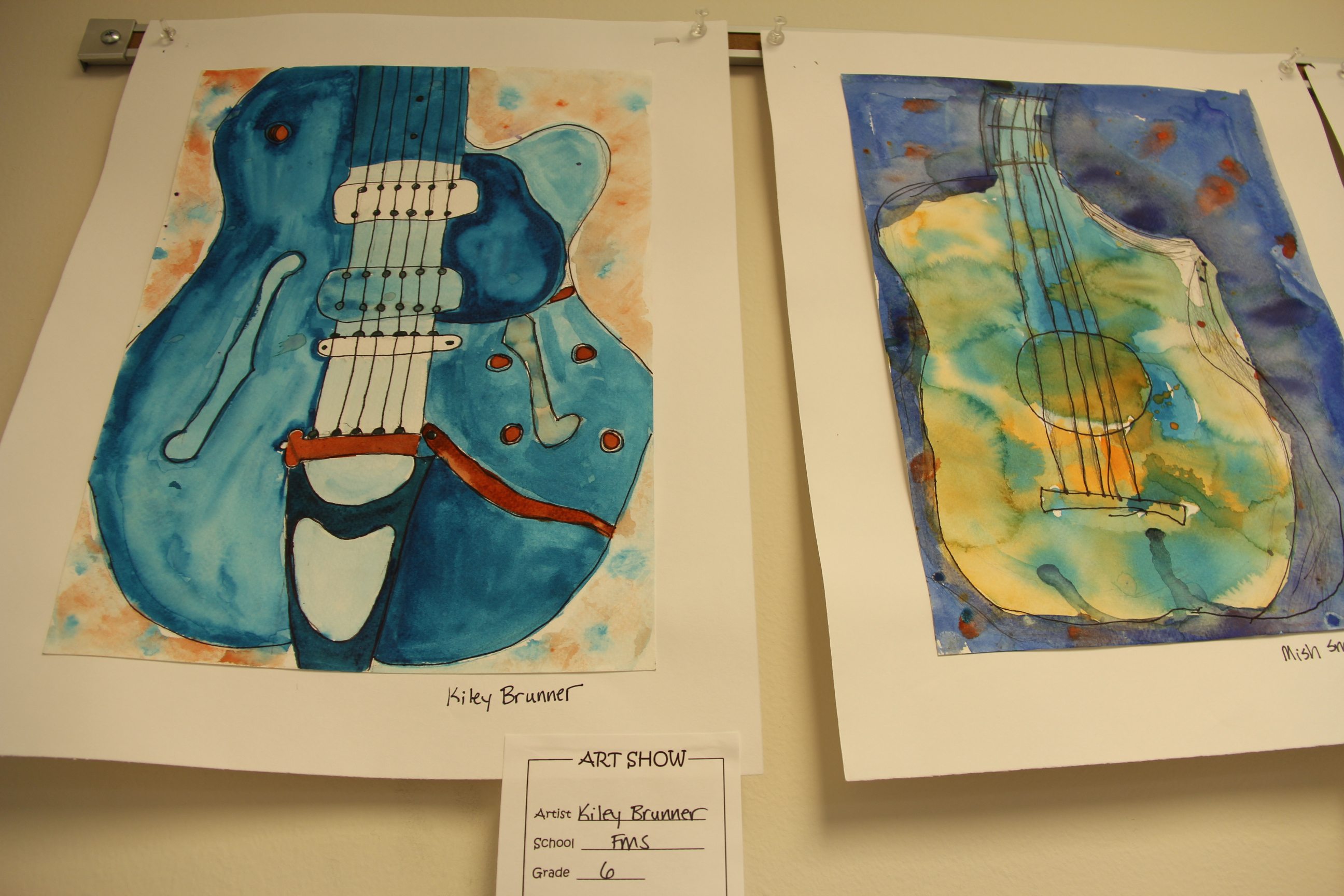
Making music via the visual arts. Guitars by Kiley, left, and Mish of Faribault Middle School. (Minnesota Prairie Roots copyrighted photo March 2023)

I can feel my fingers press into the strings of a guitar, the beat of music filling the room.

Paper collages by Faribault Middle School eighth graders Claire, left, and Maddie. (Minnesota Prairie Roots copyrighted photo March 2023)

I can hear the rhythmic thump of a basketball upon the floor, feel my foot connecting with a soccer ball, see a tennis ball fly across the net toward me. I can hear a dog panting, feel its presence nearby.

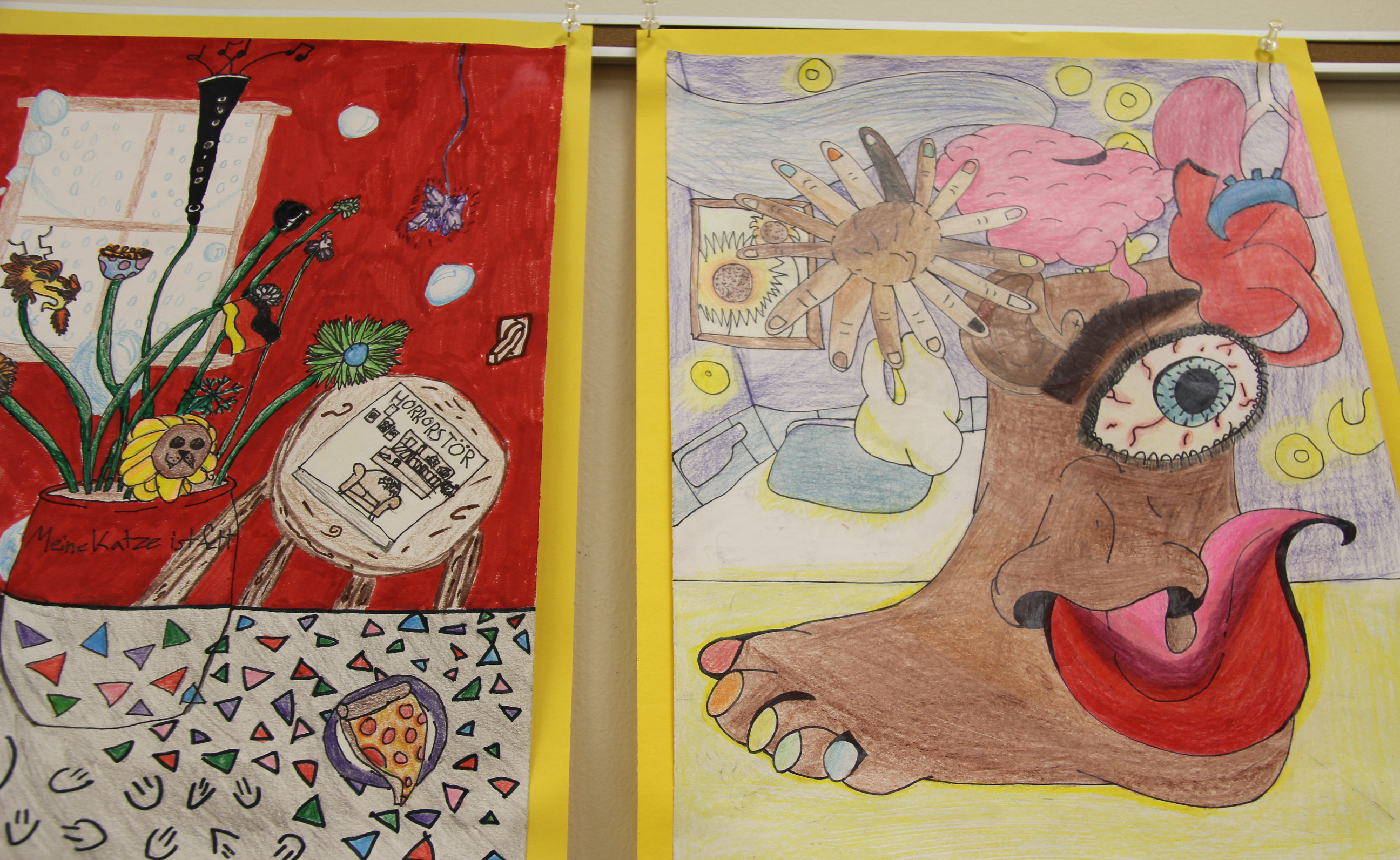
Two especially creative pieces of art from Kylie, left, and Cassie, Faribault Middle School sixth graders. (Minnesota Prairie Roots copyrighted photo March 2023)

I can see my beautiful multi-hued nails, a reflection of this beautiful, diverse world.

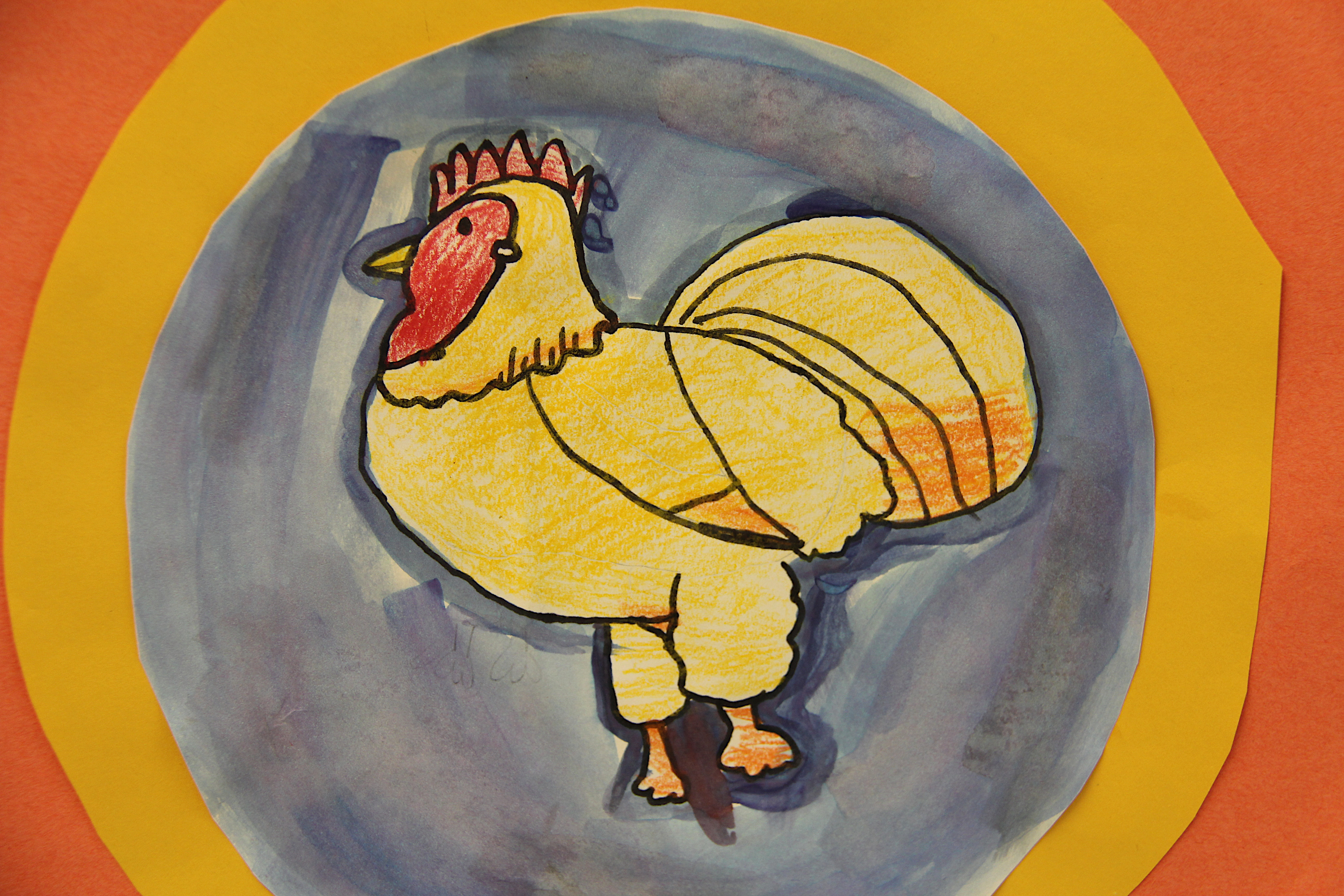
Belinda, Roosevelt second grader, created this bold rooster. (Minnesota Prairie Roots copyrighted photo March 2023)

I can hear the rooster crowing, the chicken clucking, the dog barking.

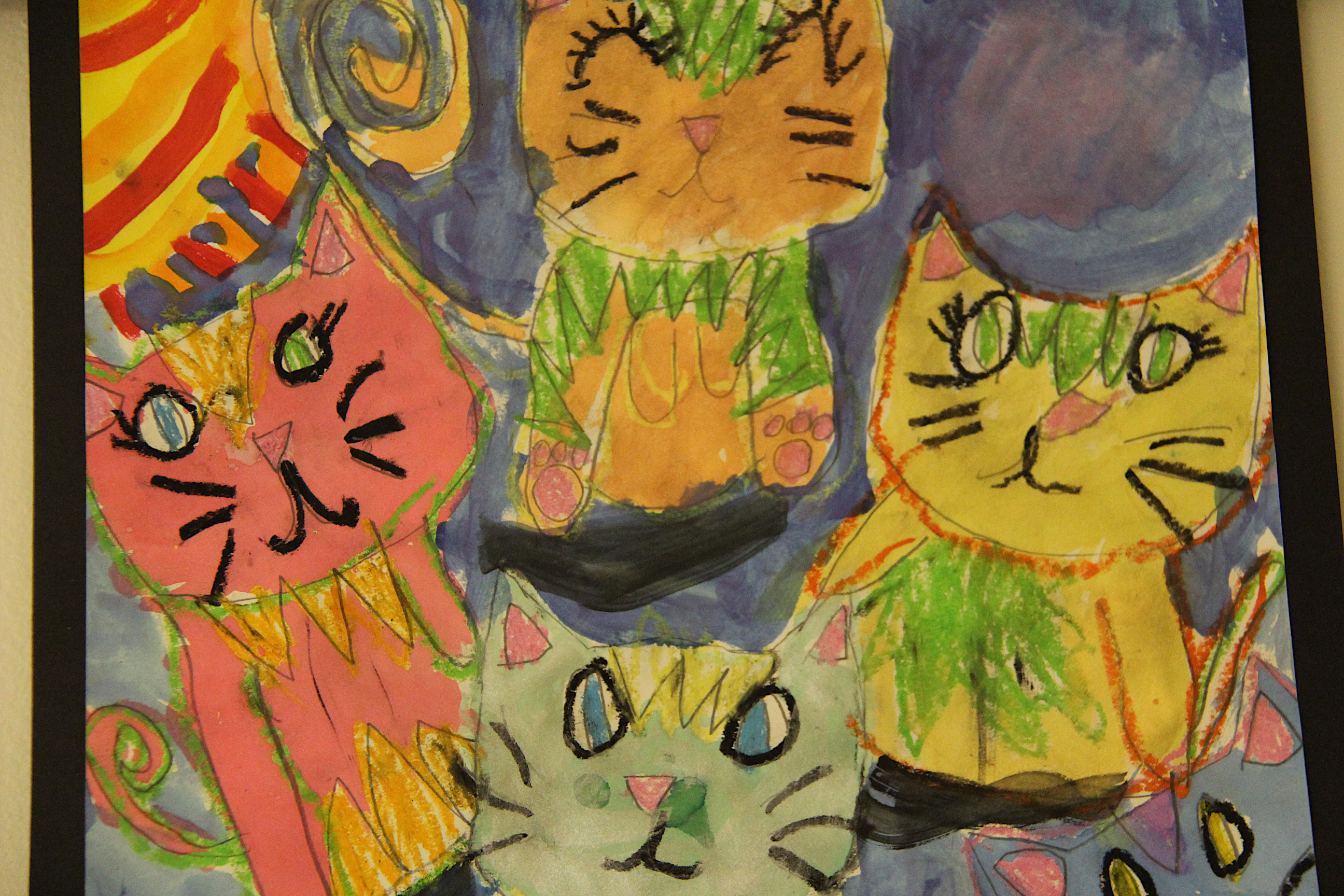
A collection of kitties drawn by Kennedy, first grader at Roosevelt. (Minnesota Prairie Roots copyrighted photo March 2023)

I can feel a hundred cat eyes on me, watching, waiting.

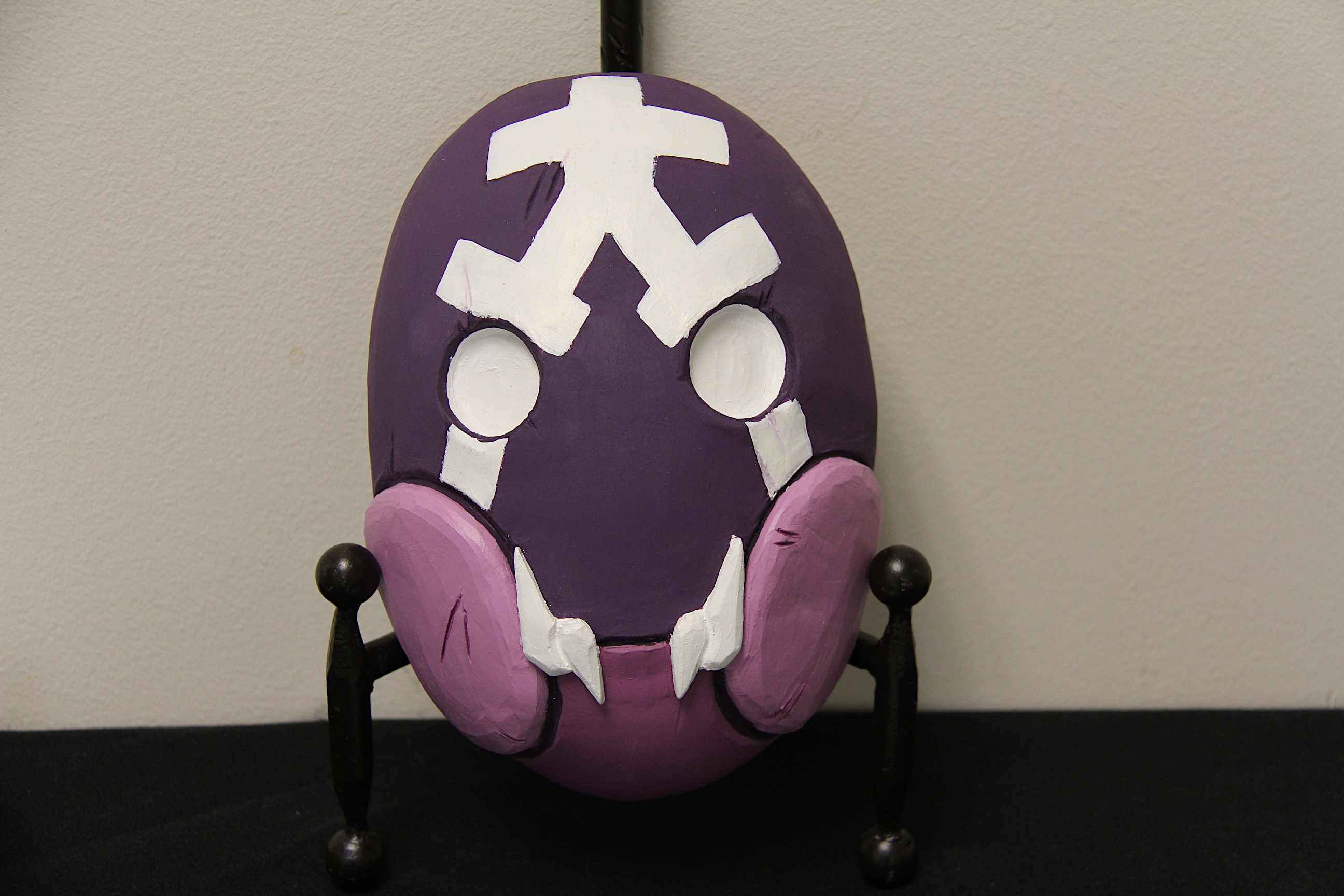
Holly, a senior at Faribault Area Learning Center, crafted this mask. (Minnesota Prairie Roots copyrighted photo March 2023)

It doesn’t take much to immerse myself in this student art, to experience it. Art can take us places. Geographically. Mentally. Back in time, forward in time. Into an imaginative place. Into a real place. Art can be healing and therapeutic and so many other things. Art can make a statement.

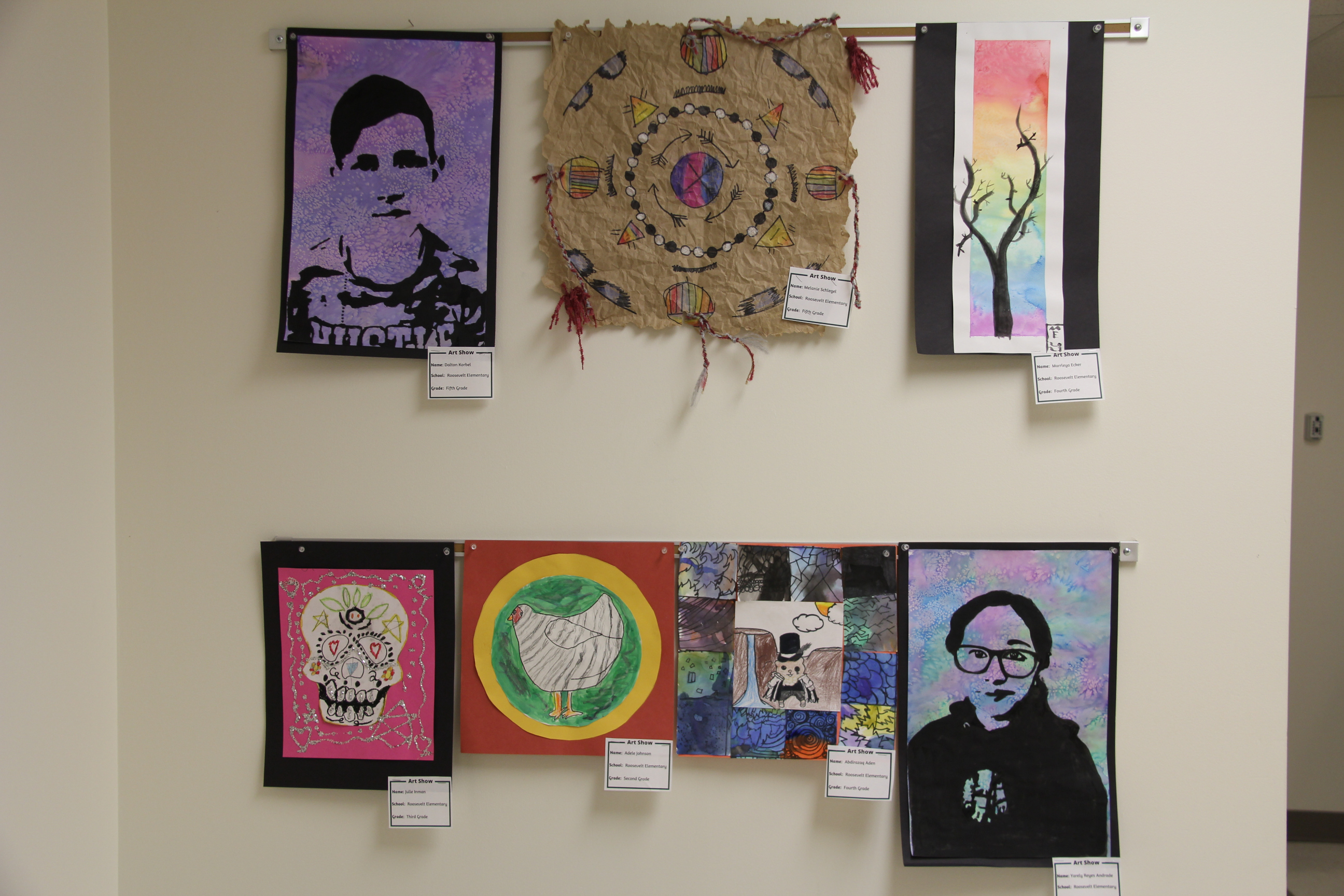
A sampling of art by students from Roosevelt Elementary School. (Minnesota Prairie Roots copyrighted photo March 2023)

To confine art’s purpose to a sentence or two would be like locking ideas inside a box. It can’t be done. As long as creatives create, the expanse of art’s reach is endless. Today these youth have shown me their evolving, developing creativity. And that gives me hope in a world that needs art today more than ever.

FYI: This concludes my three-part series on the All Area Student Art Show. Please click here to read my first post on nature-themed art in this exhibit. And then click here to see portraits created by these students.

The PCA is open from noon-5pm Wednesday-Friday and from 10am-2pm Saturday at 321 Central Avenue North in Faribault.

© Copyright 2023 Audrey Kletscher Helbling
 

The art of the portrait by southern Minnesota students March 29, 2023

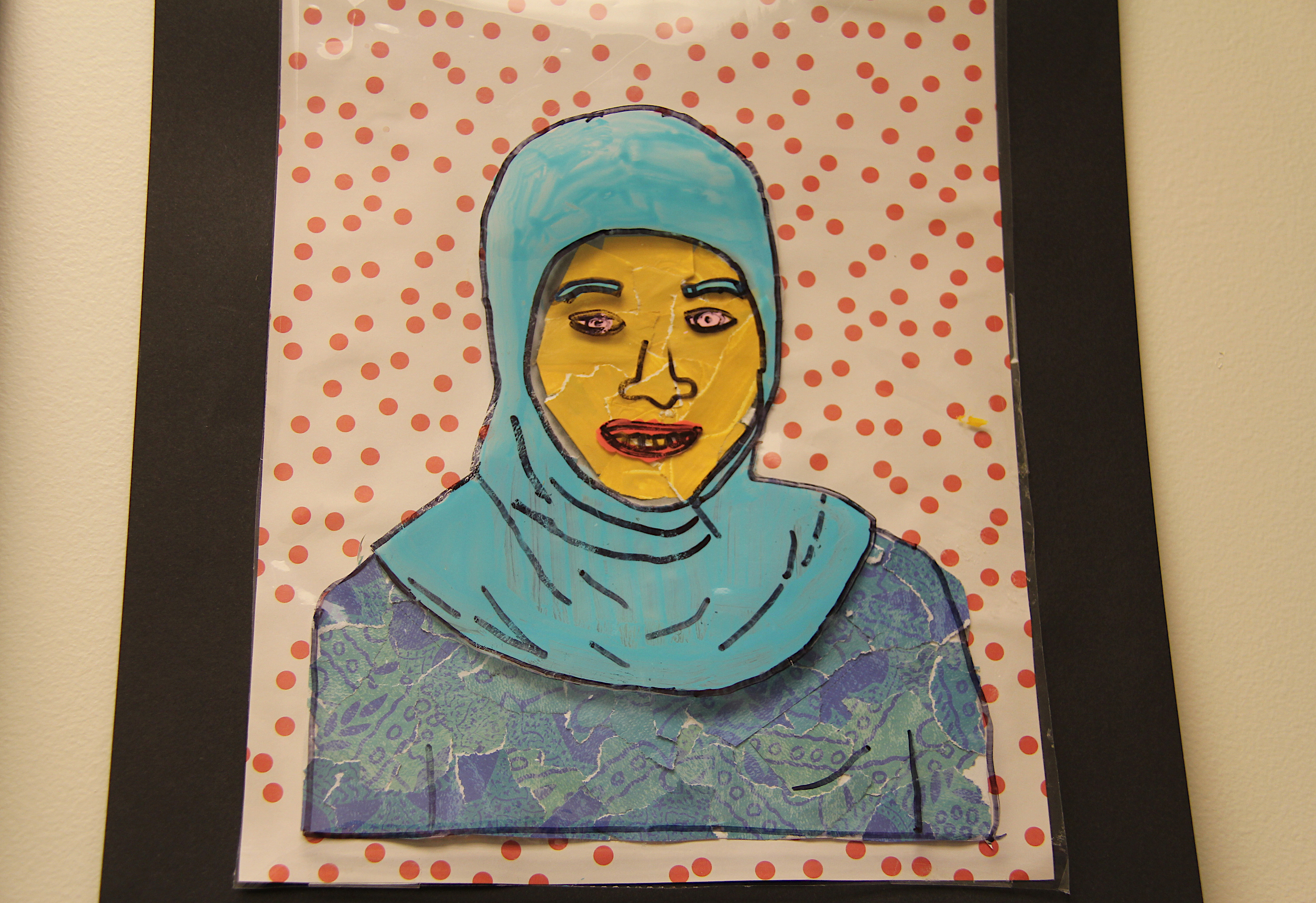
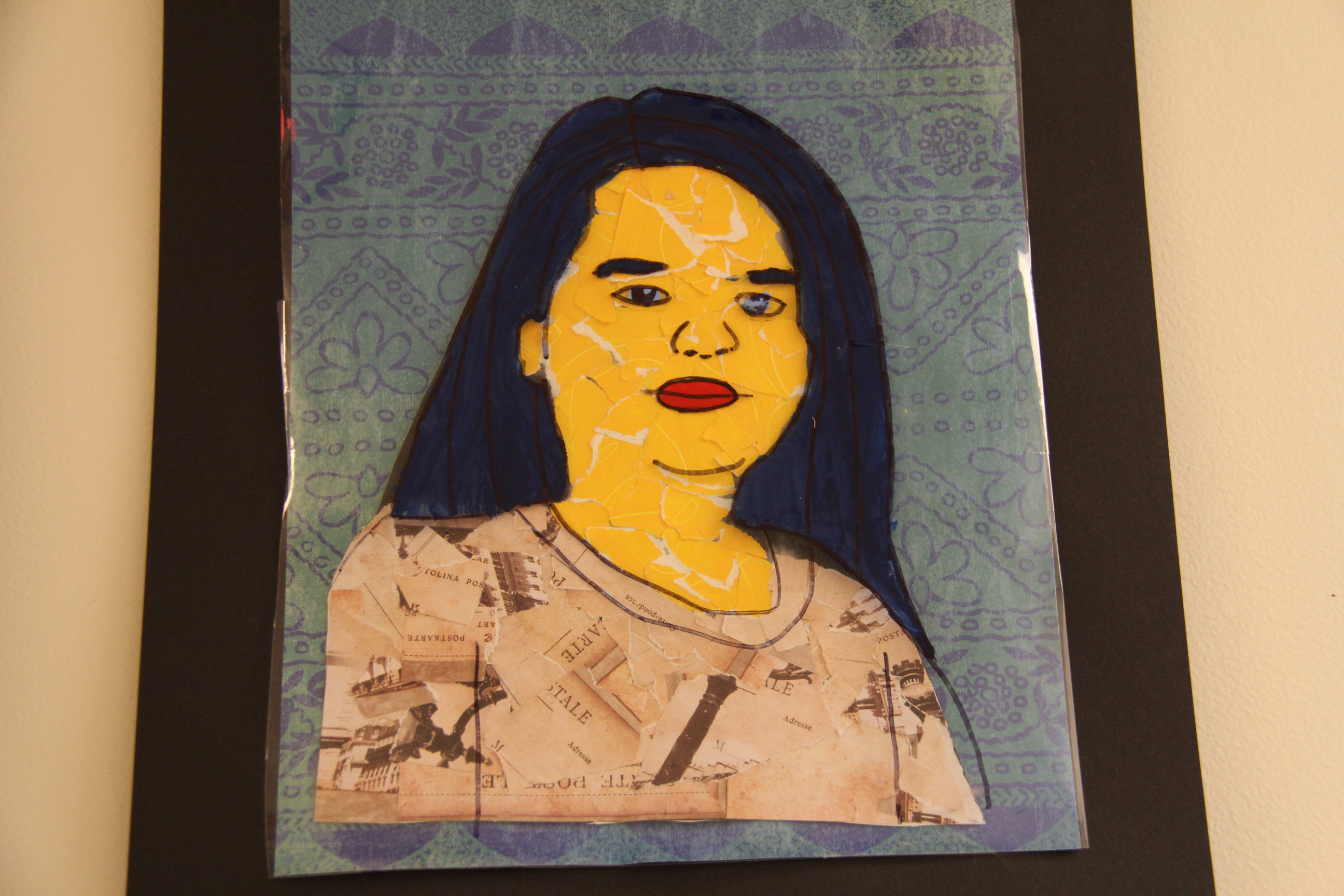
“Bisa Butler-Inspired Collage Portrait” by Ilwad, Lincoln Elementary School fourth grader. Bisa Butler is an award-winning African American textile artist. (Minnesota Prairie Roots copyrighted photo March 2023)

WHAT DO YOU NOTICE first in a human face? Perhaps it’s eyes or a smile, or the lack thereof. Or maybe you see the whole without attention to the details that comprise a face. However you view someone on the exterior, it is the interior which holds the essence of a person.

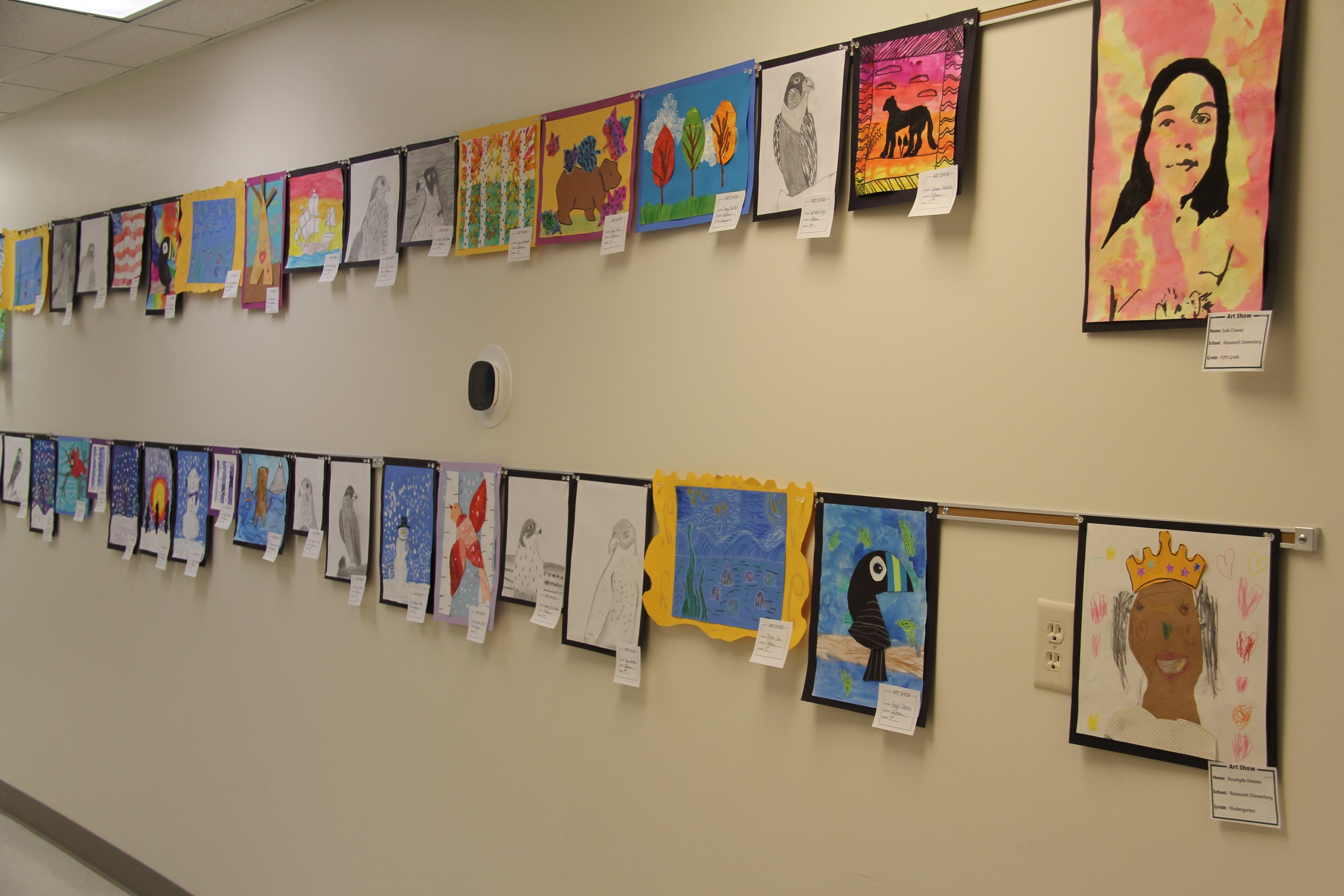
An assortment of student art lines hallways and a room. (Minnesota Prairie Roots copyrighted photo March 2023)

With that thought, I present selected photos of portraits from the All Area Student Art Show at the Paradise Center for the Arts in Faribault. The second floor exhibit of art from eight schools continues until April 8.

Another Bisa Butler-inspired portrait collage, this one by Lincoln fourth grader Rain. (Minnesota Prairie Roots copyrighted photo March 2023)

If I could, I would sit down with these young artists and ask: “What do you notice first in a human face? Is the essence of this person in the portrait you created? What process did you use to make this portrait?” I am assuredly an inquisitive writer of many questions. I am a listener, an observer, a gatherer of information. I expect answers to my inquiries would vary.

Students from Bethlehem Academy drew these portraits. They are by Martin, left to right, Dania and Mera. (Minnesota Prairie Roots copyrighted photo March 2023)

But one thing is certain. The artists behind the portraits saw a face—whether in a mirror, a photo, his/her imagination, etc. Then their individual perspectives, interpretations, skills factored into creating these portraitures.

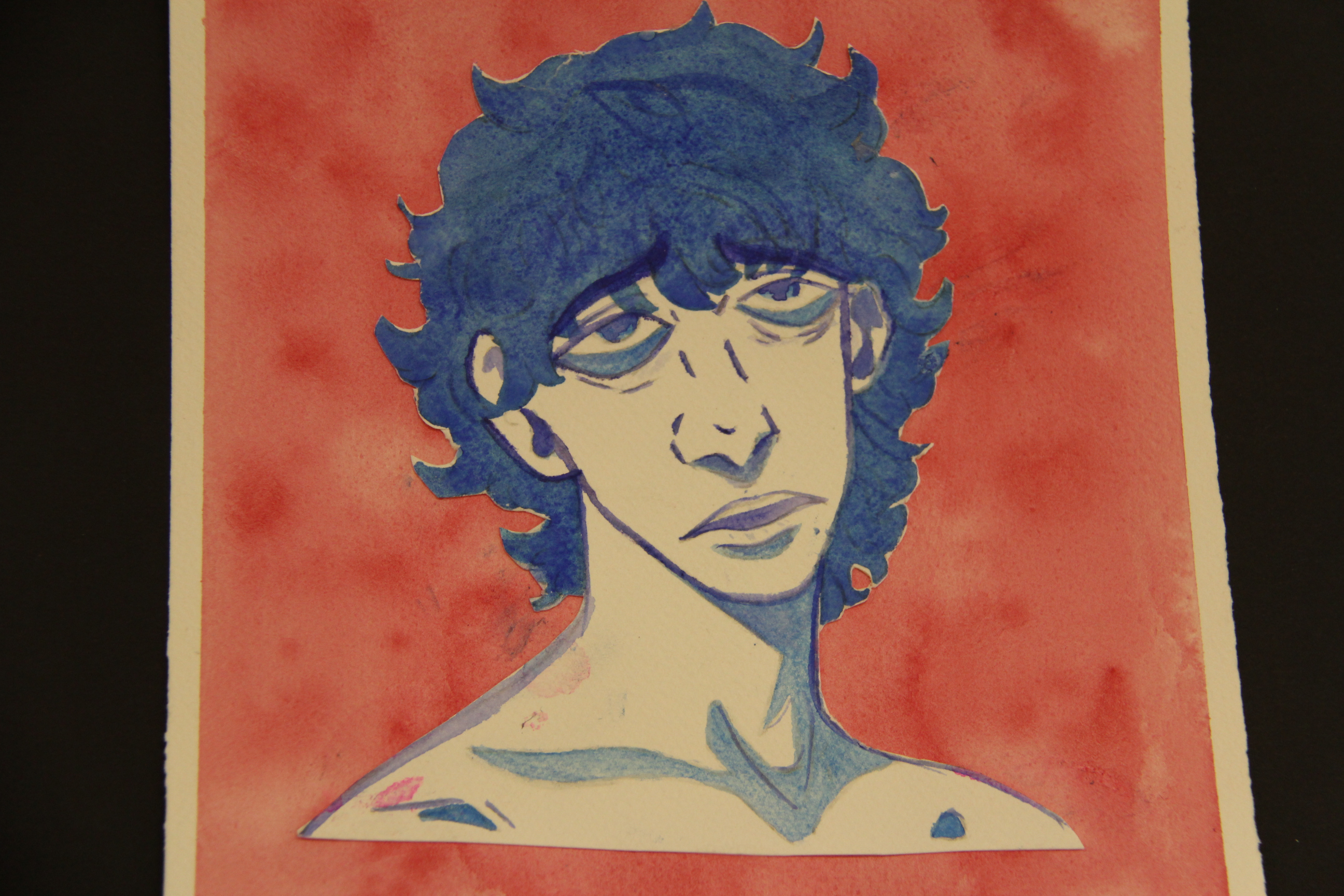
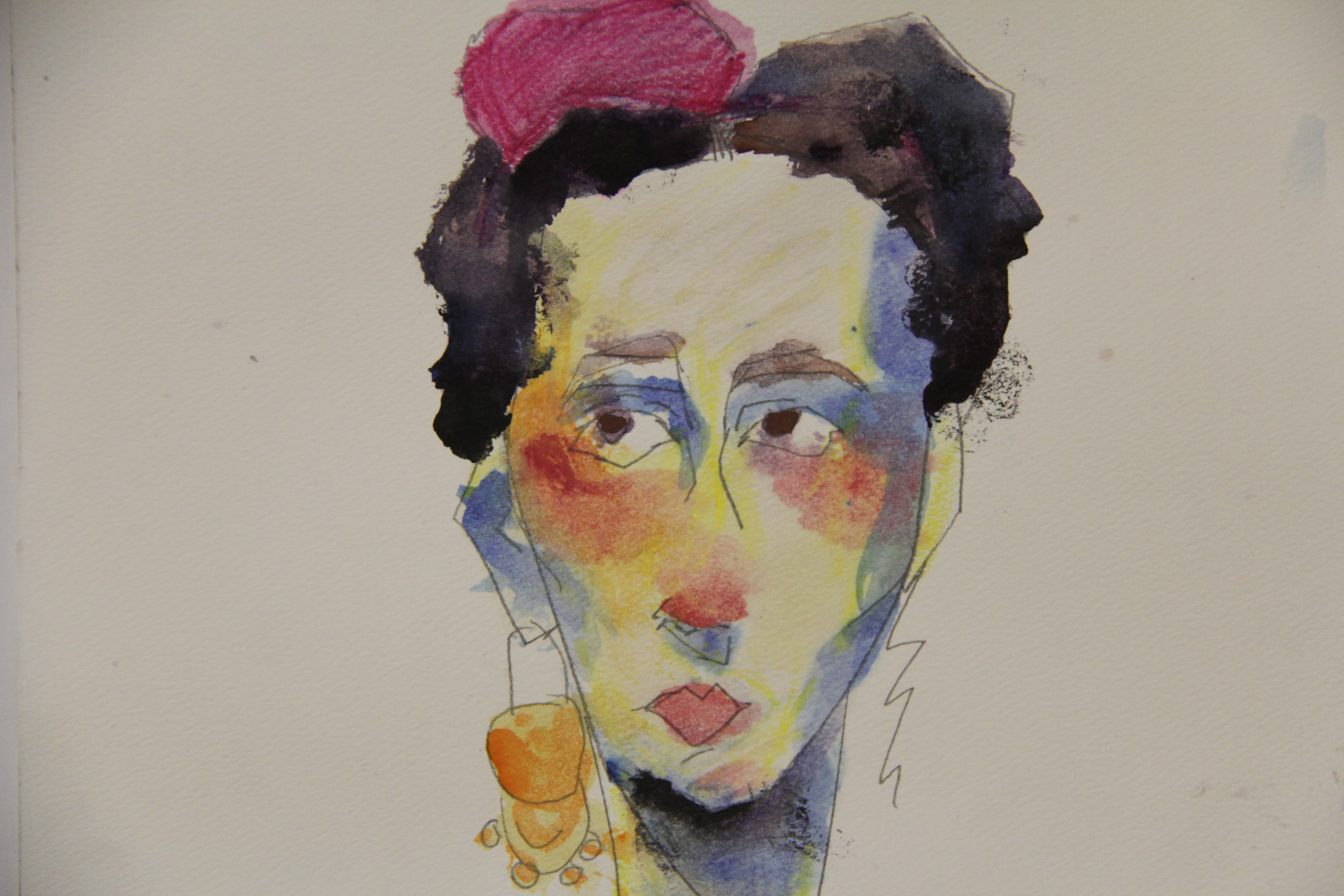
Dexk, a senior at Faribault Area Learning Center, painted this watercolor portrait. (Minnesota Prairie Roots copyrighted photo March 2023)

If I study each work of art, I see personality traits emerging in the subjects. Reserved. Joyful. Tentative. Compassionate. Inquisitive. Even especially creative. I could be right. Or I could be wrong in my observations. Faces can reveal a lot, but can also hide a lot.

A portrait by Yarely, Roosevelt fifth grader. (Minnesota Prairie Roots copyrighted photo March 2023)

I recognize that for these young artists, such deep thoughts may not have presented themselves. And that’s OK. Perhaps just the challenge of creating a portrait was enough without the added distraction of introspection.

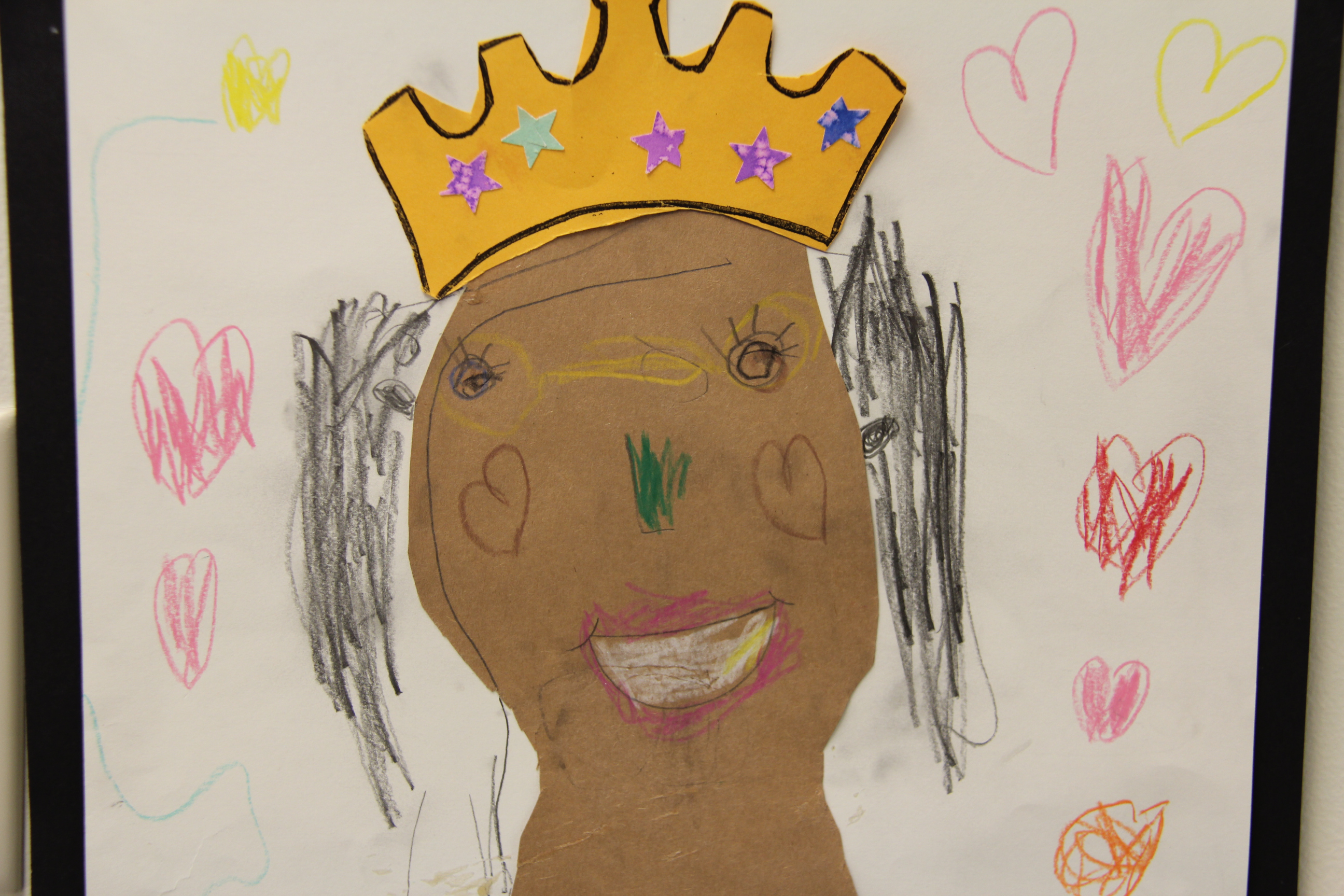
Roosevelt Elementary School kindergartner Ruweyda created this joyful portrait. (Minnesota Prairie Roots copyrighted photo March 2023)

I admire the talent of these student artists ranging from kindergartners to seniors in high school. While I don’t hold any art training, portraits seem particularly difficult to create. They would be for me, unless I captured a portrait with my camera. And even then I don’t claim to be a portrait photographer, except in the journalistic style.

One in a series of developing portraits by Alaina, Faribault Middle School eighth grader. (Minnesota Prairie Roots copyrighted photo March 2023)
Portraits anchor a corner, top row, in the student art exhibit. (Minnesota Prairie Roots copyrighted photo March 2023)
“Winter Self-Portrait Mixed Media” by Evelynn, Lincoln Elementary School first grader. (Minnesota Prairie Roots copyrighted photo March 2023)

When the youth artists in the Faribault art show look at their work and look in the mirror, I hope they see beautiful, creative faces. I hope they see the talent they hold. I hope they understand that they are unique and valued and supported. I hope, too, that creativity continues to be an important part of their lives, a lens through which they can see the world and then share it with others.

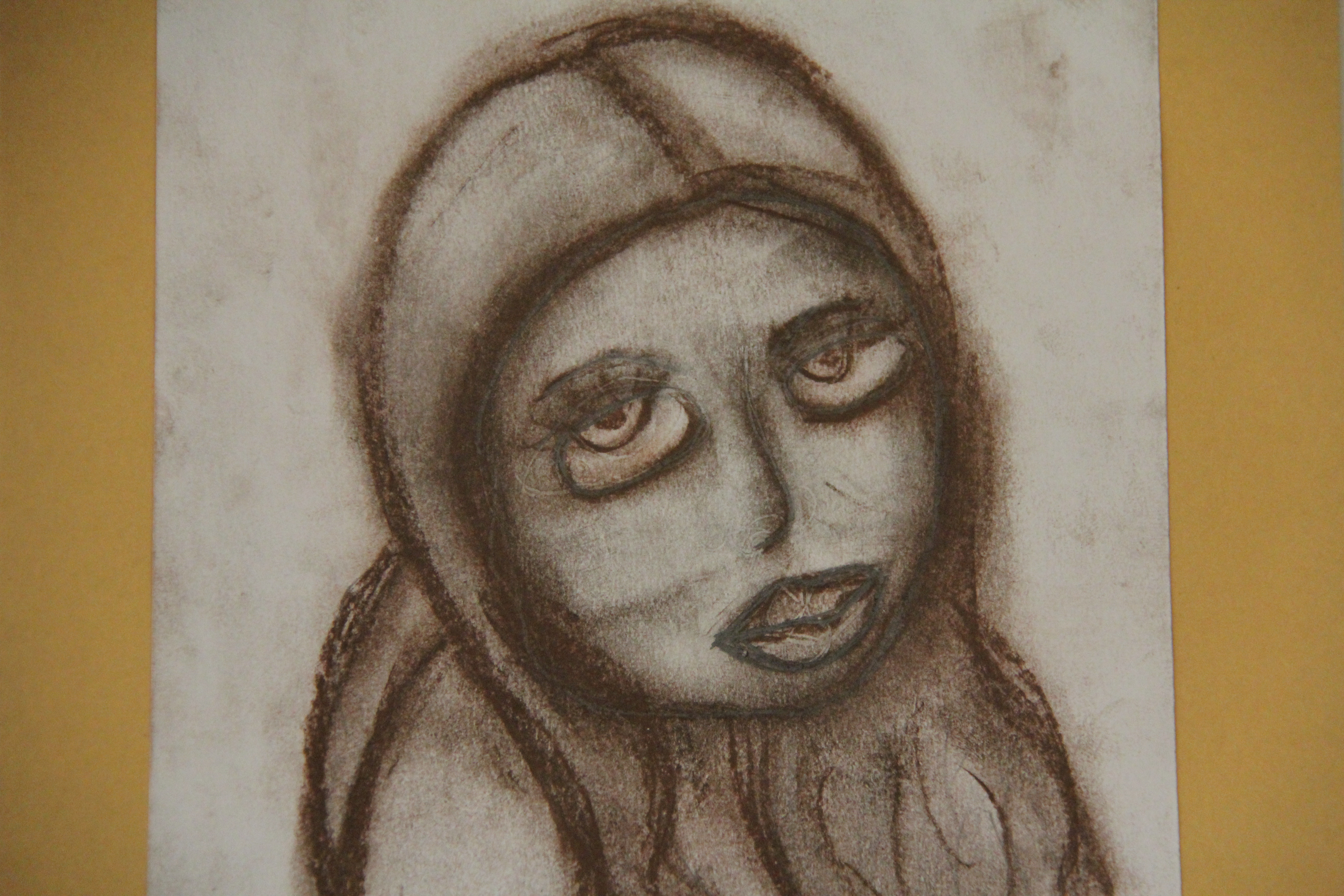
A soulful portrait by Grace, Waterville-Elysian-Morristown School eighth grader. (Minnesota Prairie Roots copyrighted photo March 2023)

Art matters. And so do each and every one of these developing young artists. They are our future, wherever their talents take them in this world.

FYI: Paradise gallery hours are noon – 5 pm Wednesday – Friday and 10 am – 2 pm Saturday. This exhibit runs until April 8. Photos were taken with permission of the Paradise. Original copyrights to the art are owned by the individual artists.

© Copyright 2023 Audrey Kletscher Helbling
 

Focusing on nature-inspired student art in Paradise exhibit March 27, 2023

Colorful fish art by Dallas, 3rd grader, Roosevelt Elementary School. (Minnesota Prairie Roots copyrighted file photo March 2023)

I APPRECIATE ART. All of it. From performing to literary to visual, art inspires me, uplifts me, causes me to pause and think. Art makes me feel joyful. I am so thankful I live in a Minnesota community where art is valued.

The beautiful Paradise Center for the Arts in downtown Faribault. (Minnesota Prairie Roots copyrighted photo March 2023)

The Paradise Center for the Arts centers the arts in Faribault. From theatrical performances to concerts to gallery shows and more, the opportunity to embrace the arts awaits me inside this historic venue. How grateful I am for that.

This poster posted inside the Paradise lists all the schools participating in the 2023 student art exhibit. (Minnesota Prairie Roots copyrighted photo March 2023)

Recently I toured the All Area Student Art Show, an annual exhibit featuring the art of students from area schools—this year eight. From kindergartners to high school seniors, the talent of these students is beyond impressive. Even more, I love that they are given this opportunity to share their work with the public. I often think how this builds self-confidence and encourages these kids to perhaps pursue art, or, at the least, to value it.

Jocelyn, an 11th grader at the Faribault Area Learning Center, created this butterfly. (Minnesota Prairie Roots copyrighted photo March 2023)
Lincoln kindergartner Reggie created this “Symmetry Butterfly Specimen in Mixed Media.” (Minnesota Prairie Roots copyrighted photo March 2023)

As I slowly walked three hallways where student art lines walls and then entered a room exhibiting more artwork, I pondered what I would photograph. I knew I needed to choose samples from each school. I also wanted a range of ages and art mediums, and also to showcase what spoke to me. Art is, in many ways, deeply personal, whether in creating or viewing.

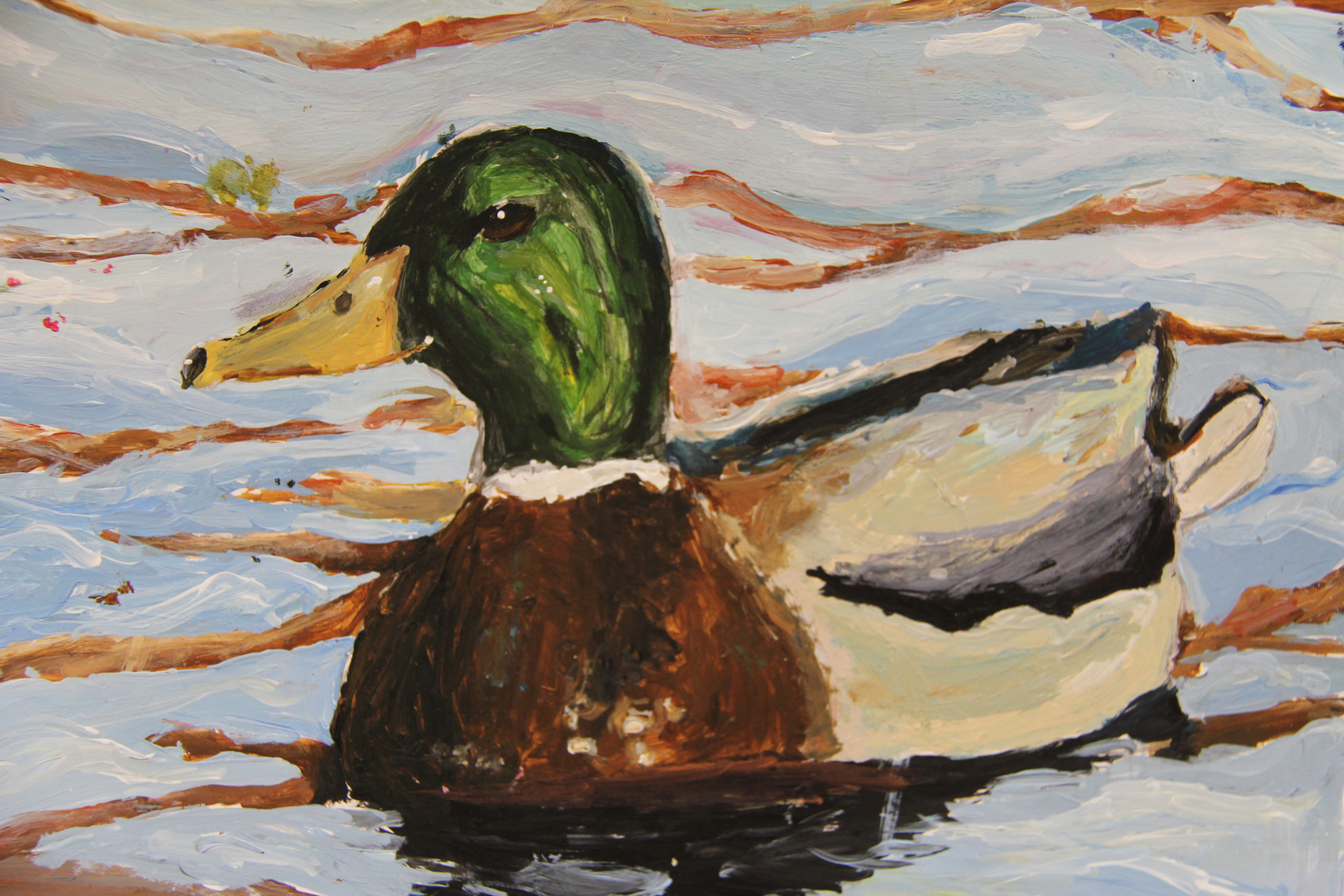
Mallard drake by Adeline, Cannon River STEM School, 7/8 grade. (Minnesota Prairie Roots copyrighted photo March 2023)

Granted, this art was mostly guided by teacher assignments. But still, that leaves space for each artist to infuse his/her style into a piece. Copying art is different than creating art. These students create art.

A block print by Madison, 7th grader at Waterville-Elysian-Morristown Schools. (Minnesota Prairie Roots copyrighted photo March 2023)

Showing you the art I photographed requires more than one post. I took an excess of images, which tells you something about how much I enjoyed this second floor exhibit. Like an editor edits an author’s writing, I had to go through my photos frame by frame and edit. And then I grouped the photos by theme to make this all manageable.

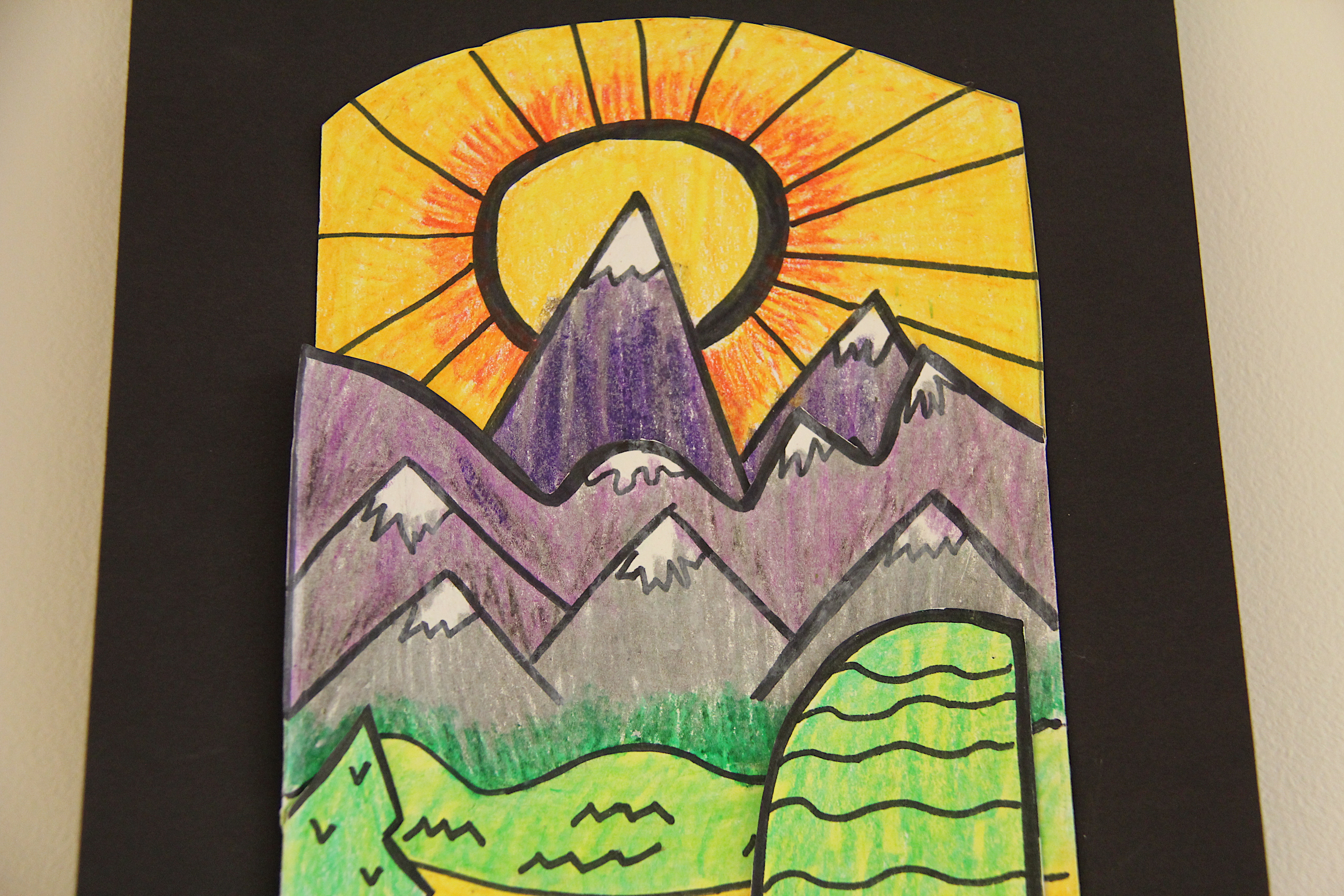
“Tri-Fold Cut Landscape in Crayon” by Addyson, Lincoln Elementary School 5th grader. (Minnesota Prairie Roots copyrighted photo March 2023)
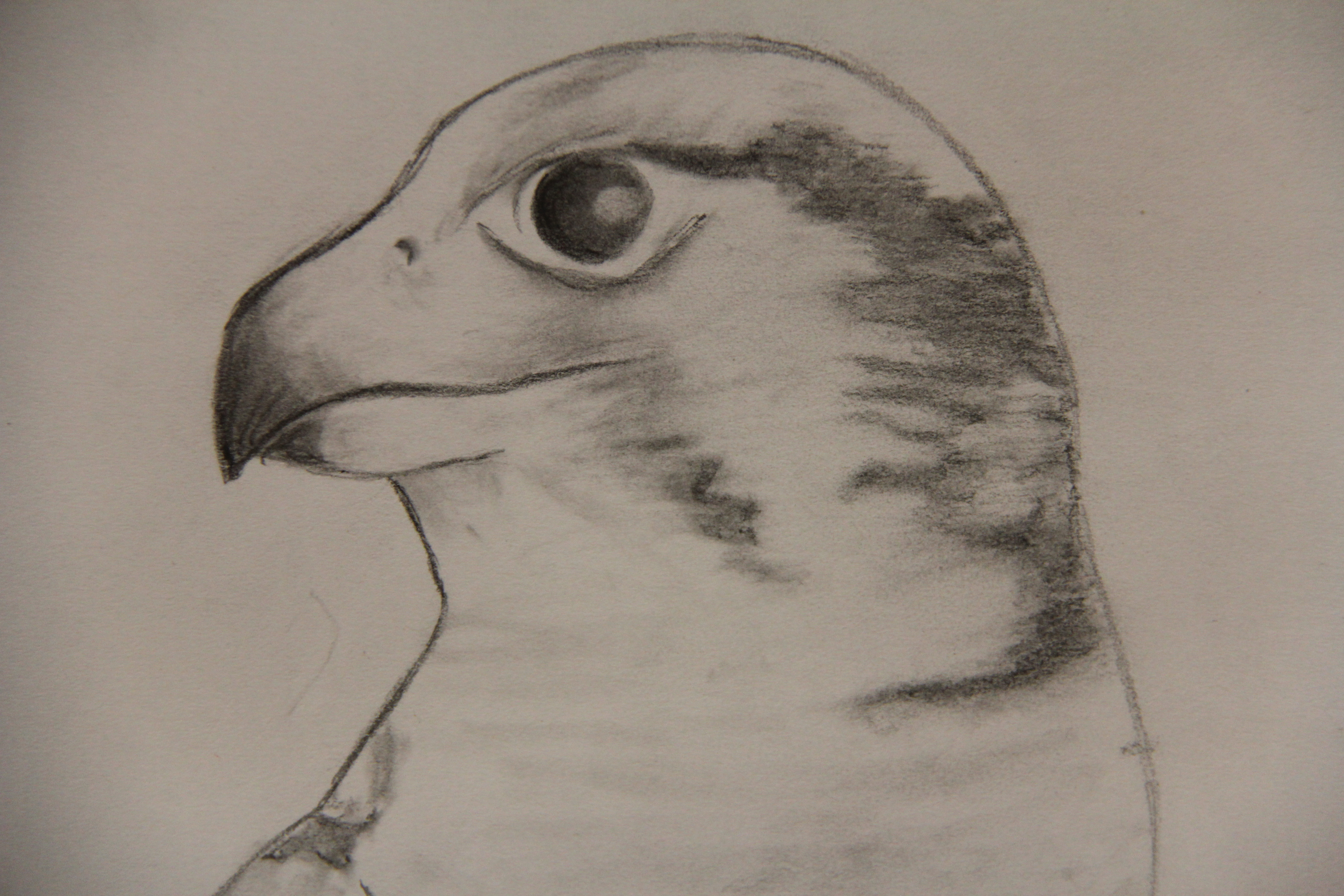
A hawk by Jefferson Elementary School 5th grader Annalicia. (Minnesota Prairie Roots copyrighted photo March 2023)
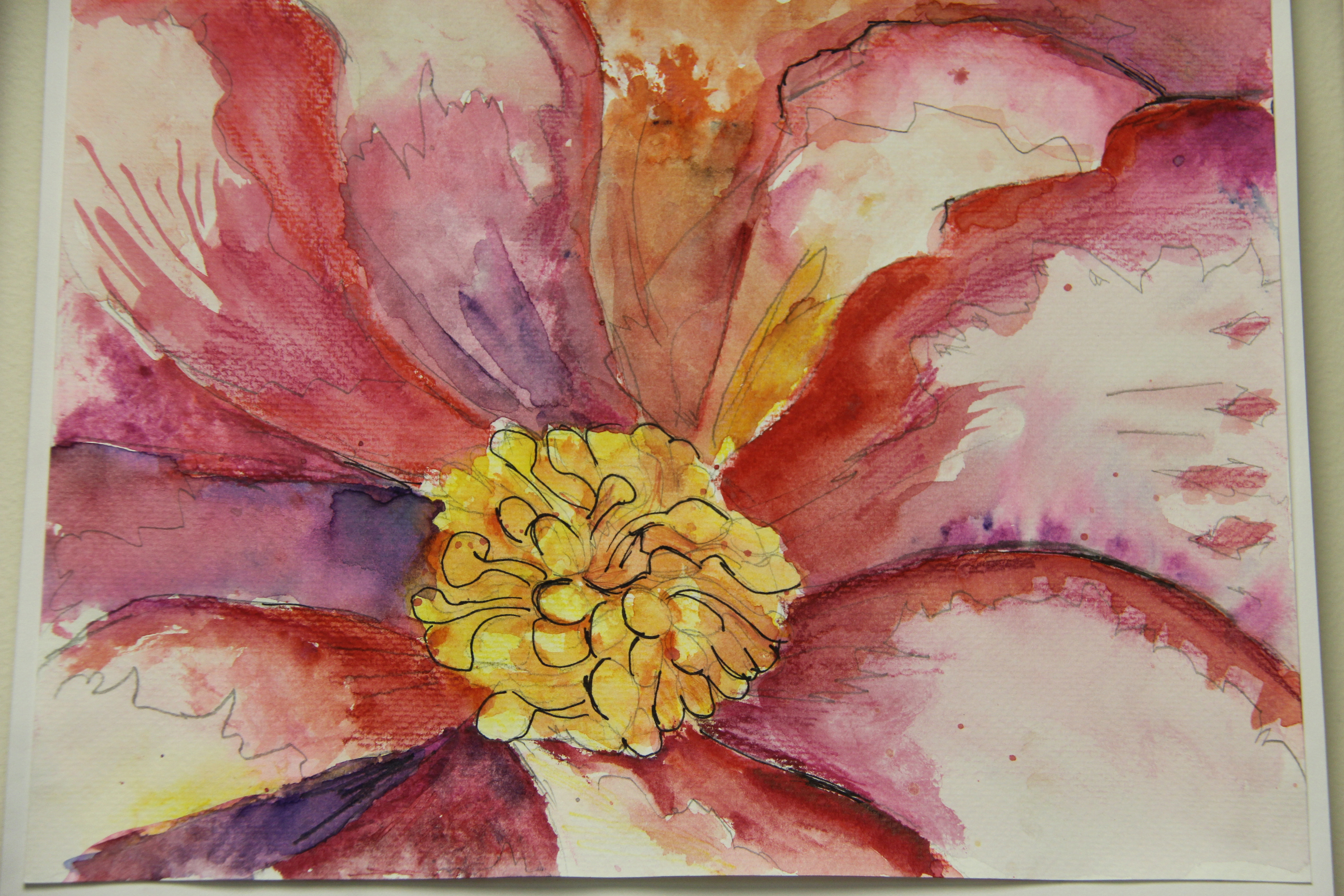
A watercolor flower by Alaina, 8th grade, Faribault Middle School. (Minnesota Prairie Roots copyrighted photo March 2023)

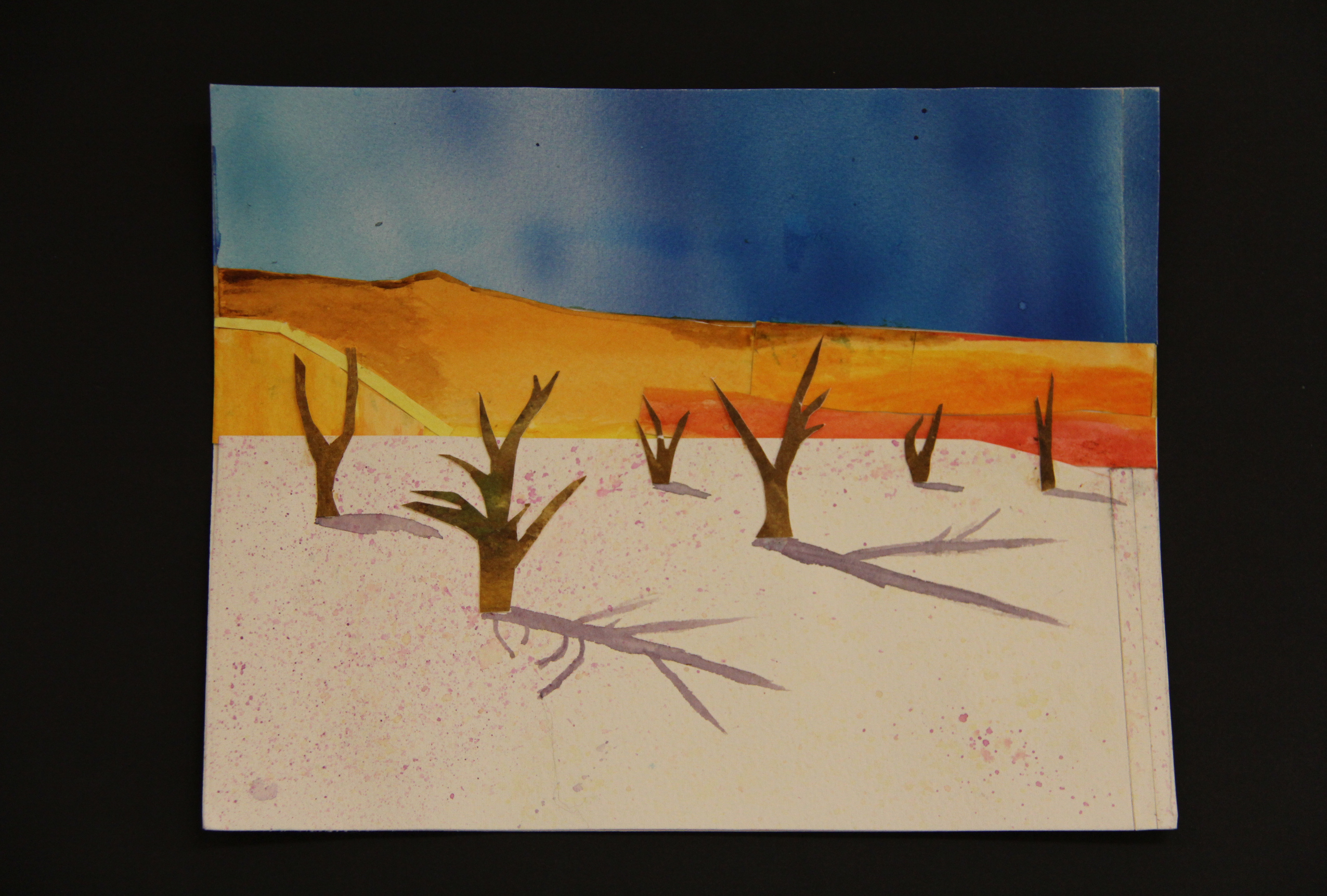
Today’s post is nature-themed. From vivid butterfly to sun-splashed landscape to subdued bird of prey drawn in charcoal, these artistic renditions of our natural world create a sense of wonderment. What a beautiful world we live in, from garden flower to mountain grandeur. These student artists see that, imagine that, create it.

Faribault Area Learning Center 12th grader Josh created this treescape. (Minnesota Prairie Roots copyrighted photo March 2023)

Being in nature takes me to a place that quiets my spirit, feeds my soul, calms me. It doesn’t take much—the rush of water, a vivid blue sky, the silhouette of a tree branch, a blazing sunset. This nature-themed art offers escape, restoration, a momentary respite from our busy lives. I hope these student artists realize the impact of their creativity.

A trio of nature-inspired art by Roosevelt Elementary School students Jeffry, left, Hadia and Steven. (Minnesota Prairie Roots copyrighted photo March 2023)

I hope, too, that these teachers realize how much I value their work in guiding and inspiring their students. Art is as important as any subject in school. I think how art provides not only a way to express creativity but how it also factors into mental health. Just the physical act of using one’s hands can diminish anxiety, ground thoughts, perhaps even spark joy. The benefits are endless from both personal and educational perspectives.

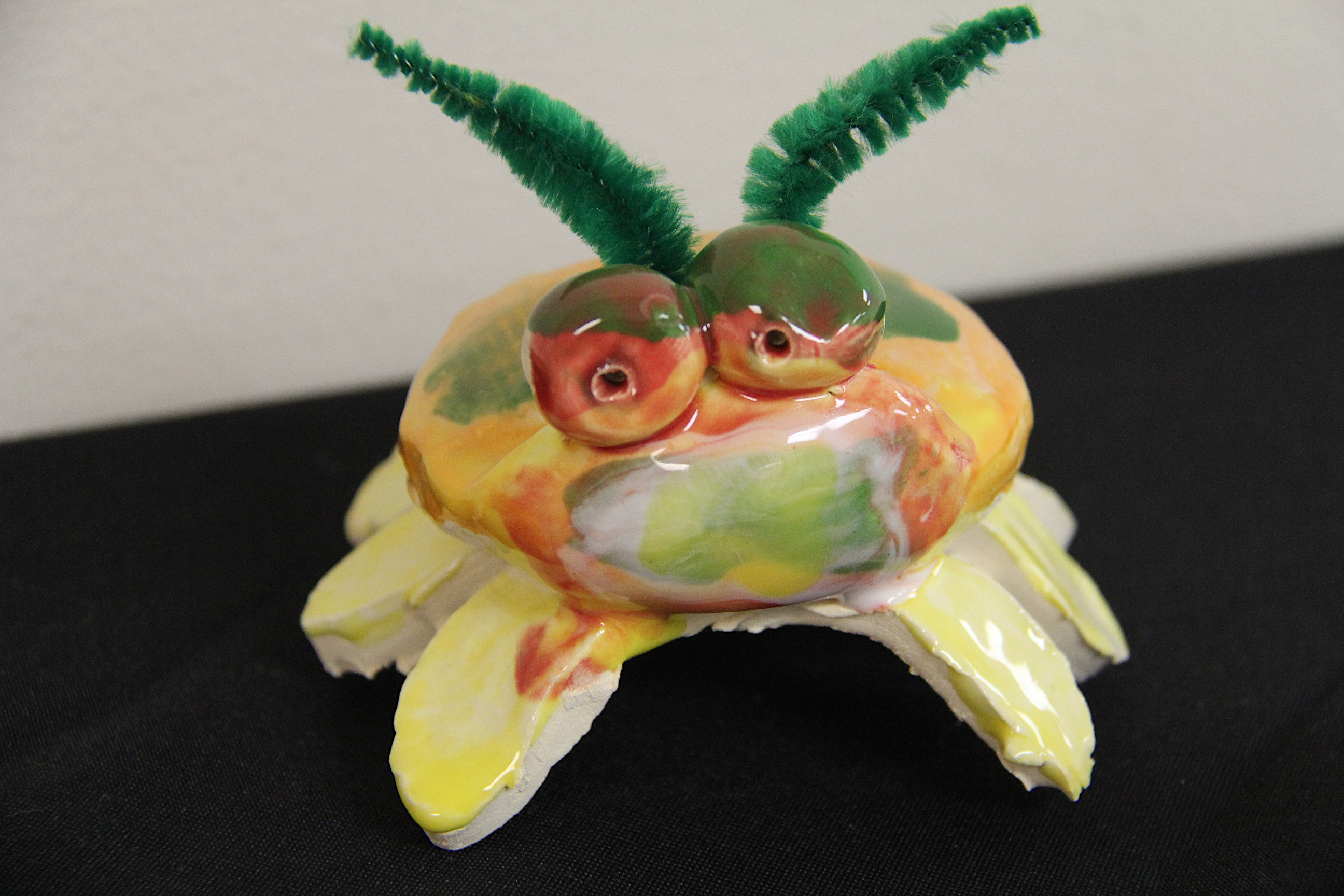
A Ceramic “Squish” Bug with Shoe Impression by Leyton, kindergartner at Lincoln Elementary School. (Minnesota Prairie Roots copyrighted photo March 2023)

My appreciation for this student art show stretches across a spectrum of gratitude. How thankful I feel for these young artists, for the educators who guide them and for the arts center that values their artwork.

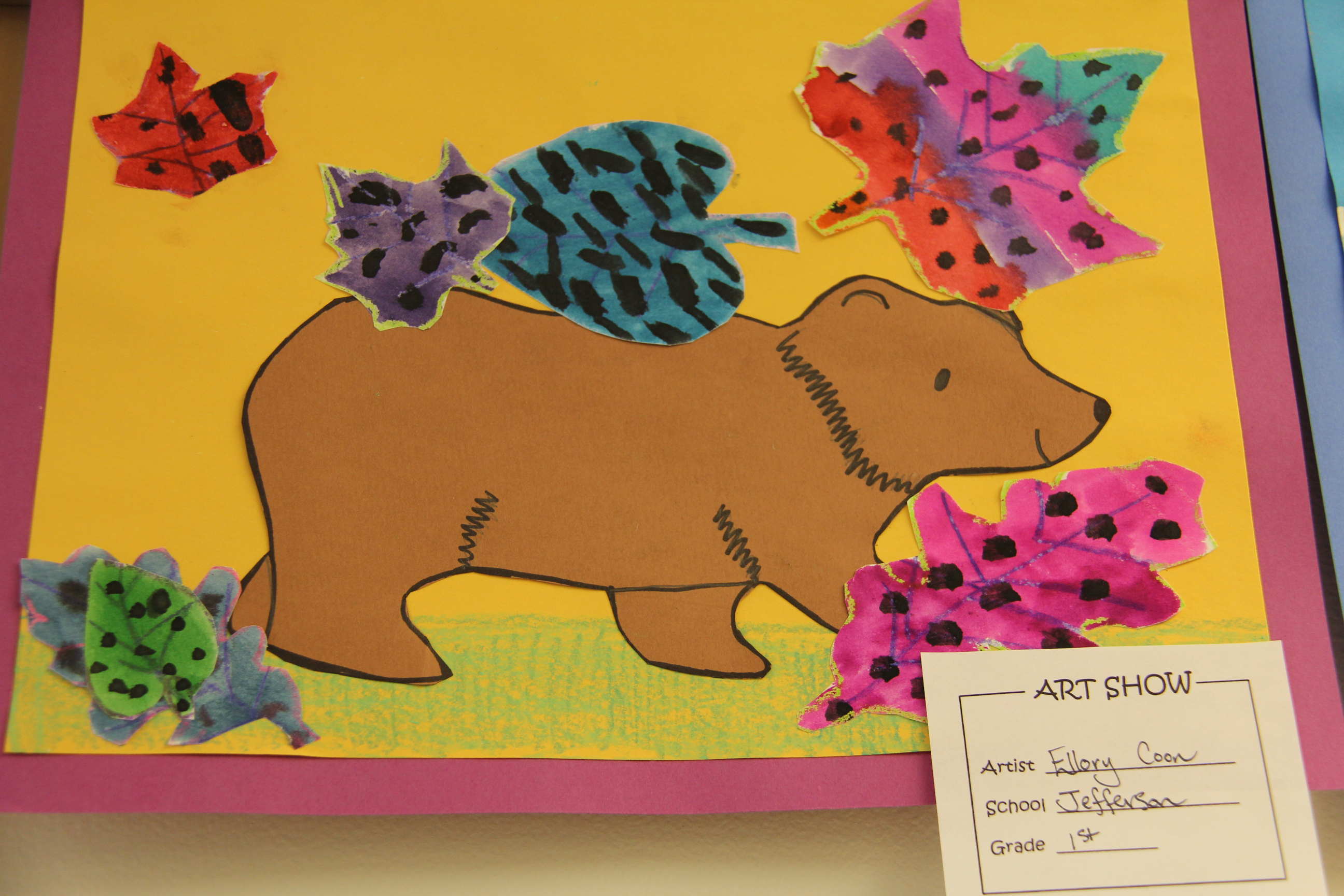
Colorful, patterned leaves fall around a bear created by Jefferson 1st grader Ellory. (Minnesota Prairie Roots copyrighted photo March 2023)

FYI: The All Area Student Art Show will run until April 8 at the Paradise Center for the Arts, 321 Central Avenue North, Faribault. Gallery hours are noon – 5pm Wednesday-Friday and 10 am-2 pm Saturday.

Art was photographed with permission from the Paradise. Individual artists hold original copyrights to their art. Please check back for more posts on this student art show.

© Copyrighted 2023 Audrey Kletscher Helbling
 

Make that pie, please, not pi March 14, 2023

Filed under: Uncategorized — Audrey Kletscher Helbling @ 12:06 PM
Tags: , , , , , , , ,
A sign marks the pie booth at the North Morristown, Minnesota, Fourth of July celebration. This is my kind of “pi.” (Minnesota Prairie Roots copyrighted file photo)

ON THIS, PI DAY and the International Day of Mathematics, I openly admit that I dislike math. I’ve never been good with numbers, never got the early intervention in grade school to help me with the dreaded fractions and other math challenges. And let’s not even discuss how much I disliked word problems. Reflecting as an adult, those problems seem particularly useful in everyday mathematics application. But back in the day, I could not wrap my brain around solving them. And back in the day, my school did not offer extra help to students struggling in any subject.

Moving into junior high school, my dislike of math only intensified. One particular math teacher, who shall go unnamed, scared me to death. He would call students to the blackboard to solve math equations. Talk about intimidating, terrifying and humiliating for those of us who were not good in math, but which he expected to be good in math because, hey, he was. I hope teachers no longer do that—call students to the front of the class to solve math problems.

Then came high school and the dreaded, required algebra. That I made it through that class without failing is still almost incomprehensible. Again, my brain could not understand what letters and exponents had to do with numbers. To this day, I don’t get it and I’m all too happy to leave algebra back in the early 1970s.

Thankfully, the next generations have not inherited my math deficiencies. My son holds a math minor to supplement his computer science degree. And my two grandchildren excel in math. The first grader is in an advanced math class. I can ask Isabelle to solve a math equation well beyond what a nearly 7-year-old should know and I can almost see her brain spinning as she pops out the answer, boom, just like that.

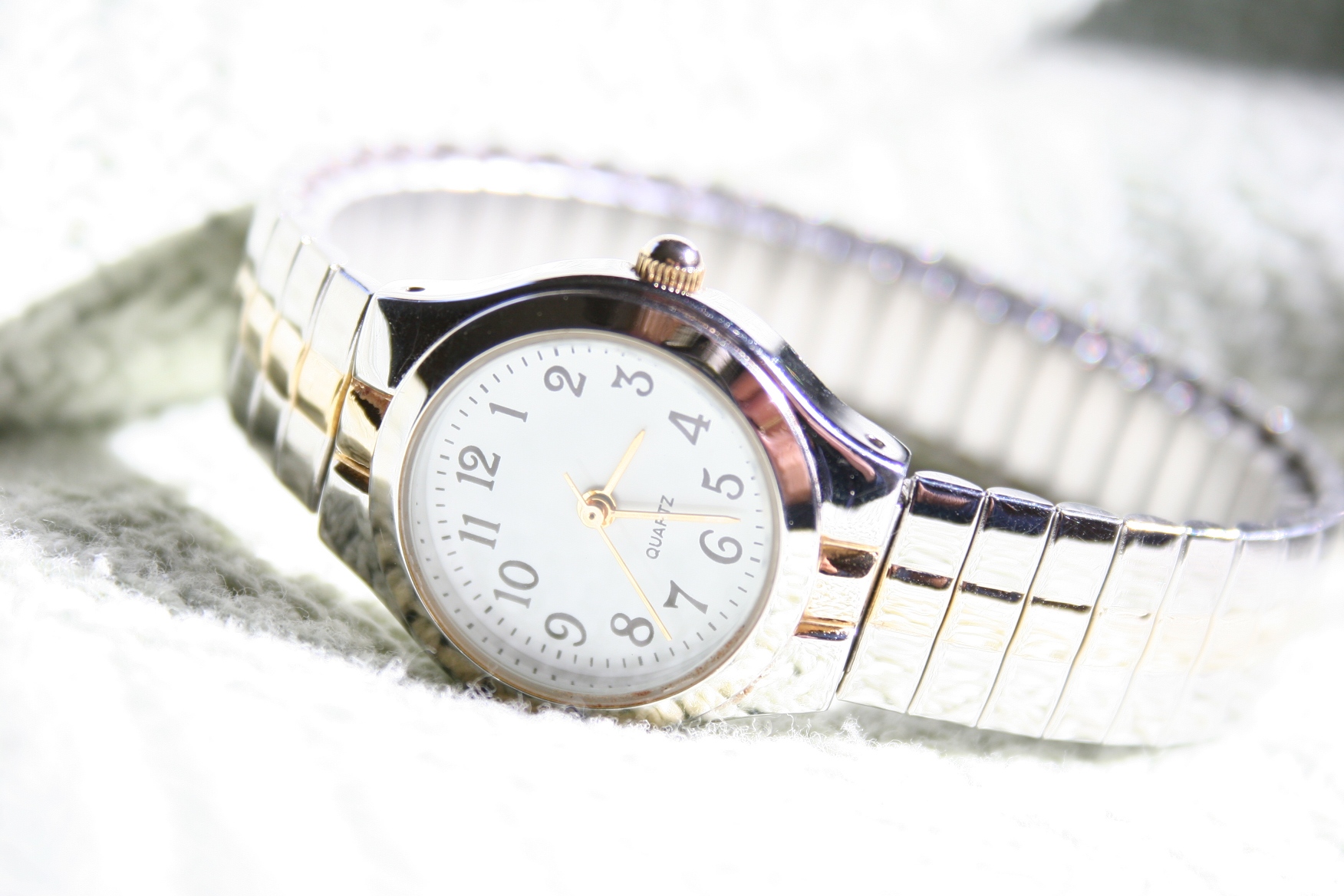
A previous wristwatch of mine. (Minnesota Prairie Roots copyrighted file photo)

Isaac, who recently turned four, shows the same developing math strengths. When he stayed with us last week, he was writing digital time in squares across sheets of paper. He started with 1:00, finished at 1:59 and then started with 2:00, reaching 2:59. Early on, he was fascinated by my wristwatch, which I often removed from my arm and slipped onto his. He also liked my vintage alarm clock collection and our wall clock. But mostly, Isaac simply loves numbers.

That their dad, Marc, holds a math degree and works as an actuary likely factors into the grandkids’ math interests and skills. I am grateful they won’t struggle with math like their grandma did all through school.

And then there’s my sister-in-law Rosie, a retired math teacher. No questioning that she loves math.

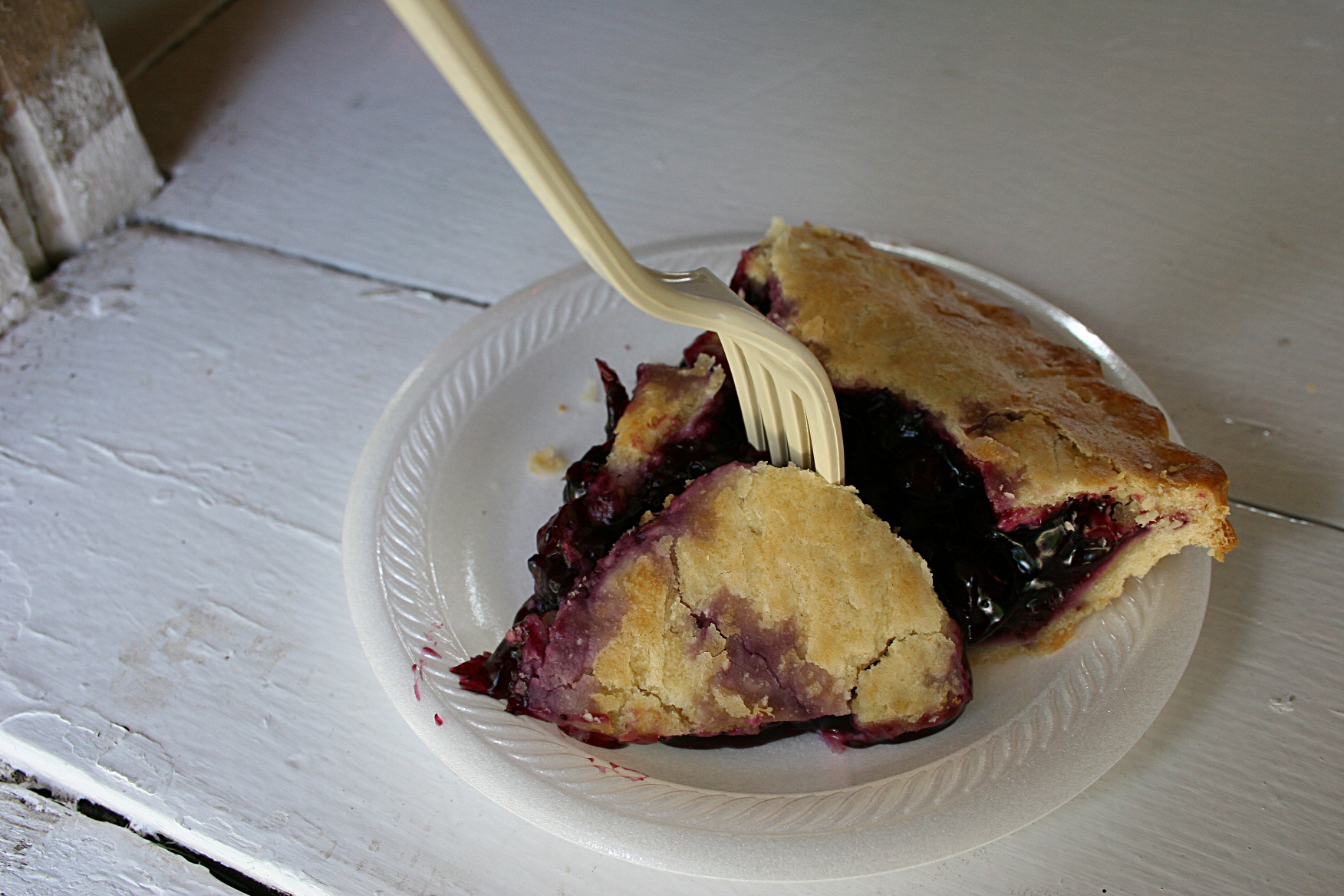
Homemade blueberry pie purchased at the North Morristown Fourth of July celebration. (Minnesota Prairie Roots copyrighted file photo)

But me? Nope. Math-lovers may be celebrating Pi Day today (what does “pi” even mean?), but not me. I’d rather have the pie you can eat, thank you.

TELL ME: Are you good in math? Do you like math? Did you have any experiences like mine in school?

© Copyright 2023 Audrey Kletscher Helbling
 

Music, memories & a heartwarming moment November 17, 2022

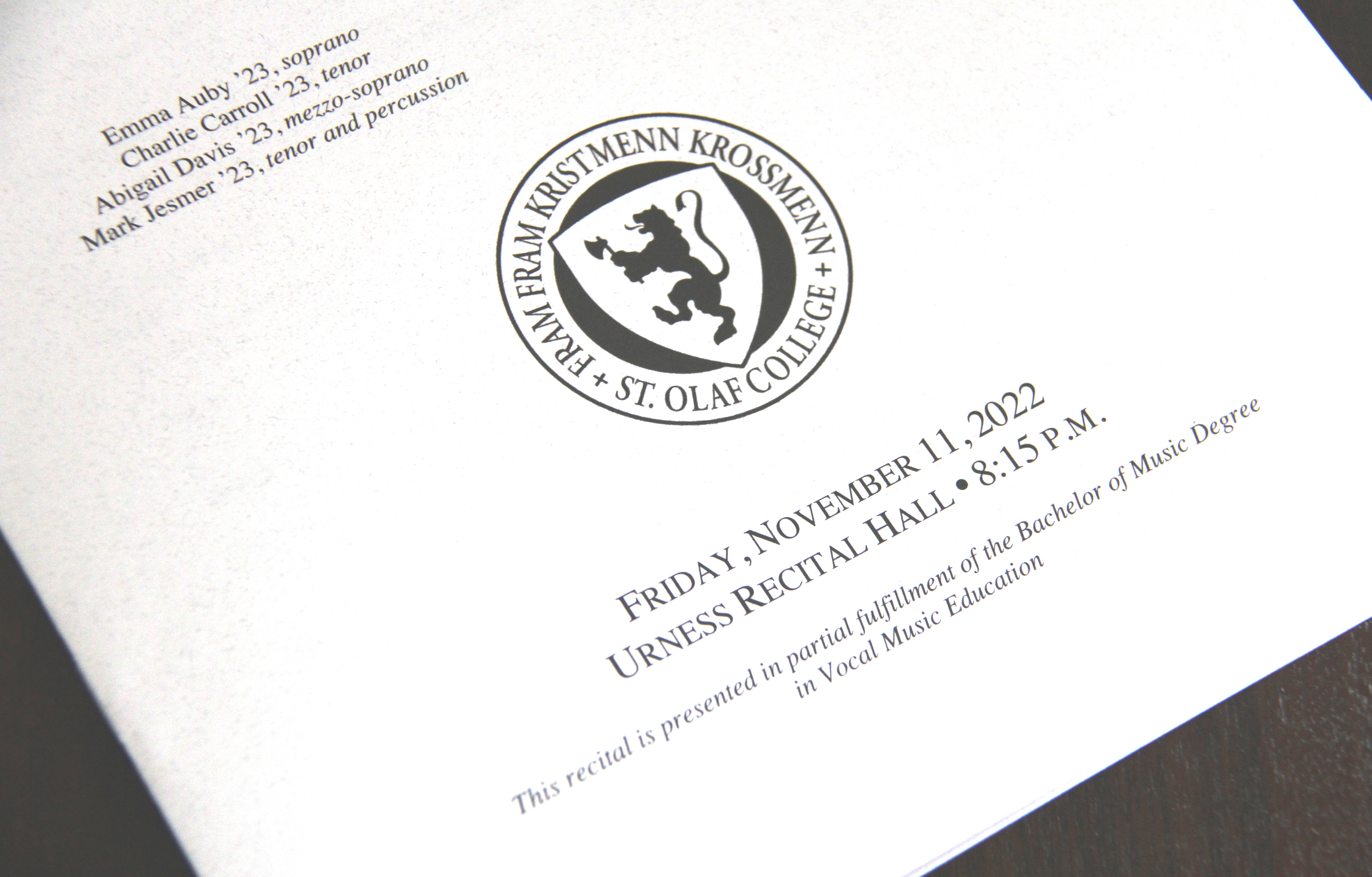
This shows a portion of the recital program cover. (Minnesota Prairie Roots copyrighted & edited photo November 2022)

RECENTLY I ATTENDED a senior voice recital for a vocal music education major whom I cared for as a preschooler. His mom, my friend Jane, invited me. I was delighted to join the family in celebrating Nick’s musical accomplishments and those of another music student, Josie.

I didn’t know quite what to expect. I’ve never been to a senior voice recital at a college. And I haven’t seen Nick in a really long time. He and his family moved from southern Minnesota to Duluth when he was about four. Sure, I’ve seen the yearly Christmas photos. But that’s not the same as seeing someone in person after a significant time span.

When Nick walked onto the performance stage in that beautiful recital hall at St. Olaf College in Northfield, my jaw nearly dropped. The preschooler I remembered had stretched lean and tall. Yet the Nick I recalled was still there, just a grown-up version of himself.

Then, when Nick opened his mouth and a deep bass-baritone boomed, I experienced another jaw-dropping moment. There was no resemblance to the voice of the four-year-old who loved to sing pa-rum pum pum pum, repeating the refrain from “Little Drummer Boy” as he played on my living floor all those years ago. Yet, the same love of singing remained, now refined and flowing with ease from the depths of a young man clearly gifted in and passionate about music.

From my side seat, I had a good view of Nick and his mom, who never stopped smiling. It was such a joy to watch both of them and to hear “my” little boy, all grown up, performing with such skill, such talent, such grace and, occasionally, drama.

Afterwards, I approached Nick, realizing he wouldn’t recognize me. But, since he knew I was coming, he was prepared and wrapped me in a hug. It was a heartwarming moment, this embrace from the little boy who once held, and always will hold, a piece of my heart.

© Copyright 2022 Audrey Kletscher Helbling
 

Considering deafness (& blindness) while walking at MSAD in Faribault November 10, 2022

A sign posted on a pillar at MSAD and viewed when exiting the campus. (Minnesota Prairie Roots copyrighted photo May 2022)

HAVE YOU EVER CONSIDERED what it would feel like to be deaf or blind, or both? I remember pondering that from a young age after learning about Helen Keller, who was unable to see and hear. I asked myself which would be harder. I concluded that I’d rather lose my hearing than live in darkness.

I lost most of my hearing in my right ear in 2011. (Minnesota Prairie Roots copyrighted file photo)

Realistically, both present challenges. And, because I am neither blind nor deaf, I really can’t fully understand what it means to live with those disabilities. I do, however, have a partial understanding of deafness.

Achieve. Care. Thrive. ACT banners a sign outside Lauritsen Gym at MSAD. (Minnesota Prairie Roots copyrighted photo May 2022)

Nearly 12 years ago, I lost most of my hearing in my right ear, diagnosed as sudden sensory hearing loss. I know the exact moment it happened. Visits and tests with a local ENT doctor and an ear specialist at the University of Minnesota led to the conclusion that my hearing loss was caused by a viral infection. My hopeful reaction was this—I could get a hearing aid. That is not an option for my type of hearing loss. Thus I’ve learned to live with near deafness in my right ear. Yes, it’s annoying and bothersome that I can’t hear whispers in my right ear, that I can’t tell the location of sound, that white noise and too many conversations at one time make hearing really difficult, that I need people on my left side when they are talking to me. But I manage with one ear.

Bannering the Minnesota State Academy for the Deaf in Faribault, the school’s mascot. (Minnesota Prairie Roots copyrighted photo May 2022)

I’ve been advised by my medical team that, if I ever experience hearing issues with my good left ear, I should consider it a medical emergency and seek immediate care. I will.

Stunning Noyes Hall Auditorium on the MSAD campus. (Minnesota Prairie Roots copyrighted photo May 2022)

I live in a community especially attuned to sight and hearing. Faribault is home to the Minnesota State Academies for the Deaf and the Blind. Here, at two separate campuses on the east side of town, students from all over Minnesota attend residential academies for preschool through high school.

An early childhood scarecrow displayed next to the ball field and green space which center the MSAD campus. (Minnesota Prairie Roots copyrighted photo October 2022)

A Gopher pumpkin head represents the Minnesota State Academy for the Blind mascot. (Minnesota Prairie Roots copyrighted photo October 2022)

Side-by-side scarecrows from each academy. Trojans, left at MSAD and Gophers, right at MSAB. (Minnesota Prairie Roots copyrighted photo October 2022)

Occasionally on weekends I walk the campus for the deaf. It’s a beautiful setting of mostly historic buildings (many on the National Register of Historic Places) ringing a green space. I last walked there right before Halloween to view the annual scarecrow display. It’s been a school tradition for many years, a bit scaled back now.

Detailed building identifiers of old. (Minnesota Prairie Roots copyrighted photo May 2022)
Identified as a residential hall for boys. (Minnesota Prairie Roots copyrighted photo May 2022)
Art on Pollard Hall. (Minnesota Prairie Roots copyrighted photo May 2022)

When on the MSAD campus following sidewalks that take me past buildings where deaf students learn, live, gather, I consider how difficult it must be for families to separate on weekdays. (Some families live locally, thus are not separated.) Yet, I understand the necessity of residential schools that focus on educating and preparing these young people for life. They learn to navigate in a hearing world. And, I expect they learn, too, that their disabilities do not define them, that they can pursue their hopes and dreams.

Sprawling Tate Hall is majestic, historically and architecturally stunning. (Minnesota Prairie Roots copyrighted photo May 2022)

When on the MSAD campus, I consider also how we sometimes take our senses for granted, until they become diminished or we lose them. Aging, or something like my sudden sensory hearing loss, open the door to understanding, to a deepened sense of awareness, to empathy and compassion.

I feel grateful for the reminders, the lessons learned when I walk the Minnesota State Academy for the Deaf campus. To ponder deafness and blindness connects me to a segment of our population which faces challenges beyond my full understanding. To walk these grounds for a short time stretches my mind, opens my heart, broadens my perspective.

FYI: Limit your time on either academy campus to weekends, when students are not there. Be aware that building construction is also underway so follow posted rules.

© Copyright 2022 Audrey Kletscher Helbling
 

Thoughts from southern Minnesota on Indigenous Peoples’ Day October 10, 2022

A photo panel at the Traverse des Sioux Treaty Center in St. Peter shows Dakota leaders photographed in Washington D.C. in 1858. The photo is from the Minnesota Historical Society. Broken promises led to the 1862 war. (Minnesota Prairie Roots file photo)

TODAY, INDIGENOUS PEOPLES’ DAY, I think of the US-Dakota War of 1862. When as a high school student I studied that war, I felt an immediate connection to the event which occurred in my home county and neighboring counties in southwestern Minnesota. My interest sparked because this happened in my backyard. Today I have a much better understanding of the 1862 conflict among the native Dakota peoples, the settlers and the government. My learned “white” perspective has shifted, my viewpoint has broadened. That has come through listening, reading, educating myself.

A public art installation at Northfield’s 2022 Earth Day celebration. Northfield has a Land Acknowledgement Agreement. (Minnesota Prairie Roots copyrighted file photo April 2022)

I see the same shift in attitudes throughout our nation, state and communities today. Land acknowledgment agreements are being written. There’s an awareness that indigenous peoples are the original inhabitants of the land, including in my home county of Redwood and my home of the past 40 years, Rice County.

I recently learned that the Wahpekute, part of the Dakota Nation, placed their dead on scaffolding on land just up the hill from my Faribault home. Land that is now a city park. After a year, the bones of the deceased were moved a few blocks away to a permanent burial grounds. That cemetery is not marked as such. Up until a presentation by Susan Garwood, director of the Rice County Historical Society, I was unaware that Peace Park was a sacred place, not simply a triangle of land with a WW II memorial along busy streets. Efforts are underway in Faribault to landmark such places of importance, to honor the Dakota.

A must-read novel based on fact.

It starts at a grassroots level, this unraveling of the truth, this recognition, this acknowledgment. I’ve toured museum exhibits, read books, attended presentations and more to assure that I am informed. I highly-recommend reading the award-winning book, The Seed Keeper by Diane Wilson. (Click here to read my review.)

I value that awareness of Indigenous Peoples’ food, culture, history and more is growing. In Minneapolis, diners can enjoy North American traditional indigenous food at award-winning Owamni by The Sioux Chef, for example.

Back in my home county, the Lower Sioux Indian Community is working hard to assure its culture remains strong through ongoing traditional events and teaching of the Dakota language.

A bison herd has been reintroduced to the prairie at Minneopa State Park near Mankato. (Minnesota Prairie Roots copyrighted file photo 2019)

I still have much to learn about the Indigenous Peoples of Minnesota. That I admit. Perhaps much of it is really unlearning. Today I pause to honor those who called this place, this southern Minnesota, home first, back when prairie grasses stretched high, bison roamed and the land was respected.

© Copyright 2022 Audrey Kletscher Helbling
 

From the 70s to today, caring about Earth September 12, 2022

A massive wind turbine at Faribault Energy Park dwarfs my husband, Randy, walking near it. (Minnesota Prairie Roots copyrighted photo July 2022)

COMING OF AGE in the early 1970s, I held a general awareness of environmental concerns. A respect for the earth and the environment was beginning to emerge as young people and others raised their voices.

Cattails flourish in the park wetlands. Restoration, rather than draining, of wetlands is the norm today. (Minnesota Prairie Roots copyrighted photo July 2022)

I remember the anti-littering campaigns. The concerns about water and air pollution. The efforts to limit billboards. I recall, too, Earth Shoes, although I’m uncertain what that footwear had to do with anything environmental.

This trail leads to the wind turbine, a teaching tool inside Faribault Energy Park. (Minnesota Prairie Roots copyrighted photo July 2022)

Perhaps previous generations cared, too, but it seems the young people of the 70s started a new environmental movement that pushed personal and societal responsibilities in caring for our planet. Those efforts continue today, but with additional focuses: climate change, alternative energy, electric-powered vehicles and more. Today’s young adults are among those leading the way in discussions and effective change.

I grow milkweeds in my Faribault yard. I photographed this milkweed flower with an unknown insect atop at the energy park. (Minnesota Prairie Roots copyrighted photo July 2022)

I feel such hope. Within my own family circle, my eldest daughter and son-in-law compost food and bio-degradable paper products. My son owns an e-bike, not a car, his primary mode of transportation between his Indiana apartment and Purdue University. We recycle, donate or give away items we no longer need. Every little bit helps. My young granddaughter wears hand-me-downs from her cousins. Just like her mother before her, whom I outfitted primarily via rummage sale purchases.

Unlike this dead frog flattened on a road at the energy park, thrifting/recycling/upcycling is very much alive. (Minnesota Prairie Roots copyrighted photo July 2022)

Thrifting is in vogue. I recently spoke with a shop owner in Northfield who said local college students flock to her antiques and collectibles store to buy vintage clothing from one particular vendor.

Solar panels inside the park focus on alternative energy. (Minnesota Prairie Roots copyrighted photo July 2022)

Across the Minnesota countryside, solar fields are replacing crop fields. Wind turbines are popping up, too, adding to those that have been around for decades.

Bold red berries burst color into the park’s landscape. (Minnesota Prairie Roots copyrighted photo July 2022)

It makes a difference—these seemingly small and big changes. A shift in attitudes with a new-found appreciation for our natural world can preserve, and hopefully, improve this place we call home.

A sign posted inside Faribault Energy Park lays out the rules. (Minnesota Prairie Roots copyrighted photo July 2022)

Faribault Energy Park, owned and managed by the Minnesota Municipal Power Agency, aims to model environmental responsibility and innovation, according to its website. The power plant is a dual-fuel (natural gas and fuel oil) facility which runs only during periods of high demand for electricity.

Dirt roads wind around two ponds. (Minnesota Prairie Roots copyrighted photo July 2022)

Although I’ve never been inside this power plant (tours are offered, primarily to schools), I’ve walked the grounds many times. The MMPA created a public park here on its 35 acres of wetlands. I love following the dirt roads that wind around ponds. And while it’s not the most peaceful place given the location along busy Interstate 35, the park still holds an appeal for me.

Beauty even in a thistle growing along pond’s edge. (Minnesota Prairie Roots copyrighted photo July 2022)

On this particular visit, I didn’t see any waterfowl, unusual, but perhaps not due to avian influenza. (Minnesota Prairie Roots copyrighted photo July 2022)

One of many birds observed inside the park. (Minnesota Prairie Roots copyrighted photo July 2022)

That enjoyment comes in vegetation—cattails, flowers, trees, grasses—and in the birds, including waterfowl.

Anglers fish this pond next to the Faribault Energy Park power plant. (Minnesota Prairie Roots copyrighted photo July 2022)

Other visitors fish here, in the large pond next to the power plant. This is also an educational grounds with a massive wind turbine and a stand of solar panels in place.

I especially like walking this park around sunset. (Minnesota Prairie Roots copyrighted photo July 2022)

Combined, these elements remind me that I cannot take the natural world for granted, that I need to be environmentally-aware, that I need to do my part to protect and preserve Earth. I continue to learn, some 50 years after an awareness sparked within me that I really ought to care about this planet on a personal level.

© Copyright 2022 Audrey Kletscher Helbling