Minnesota Prairie Roots

Writing and photography by Audrey Kletscher Helbling

The educating & healing continue 150 years after The U.S.-Dakota War December 28, 2012

STUDYING MINNESOTA HISTORY decades ago, I learned about “The Sioux Uprising of 1862” and even wrote a term paper on the topic bearing that title.
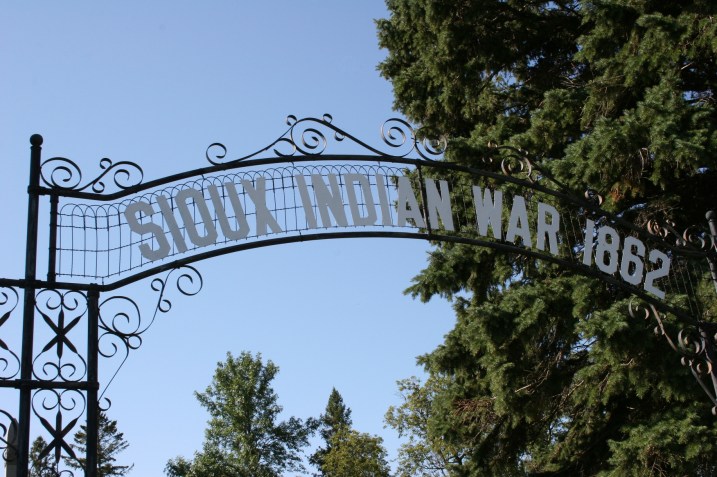
This archway leads to the Wood Lake State Monument, on the site of the battle which ended the U.S.-Dakota Conflict of 1862.

This archway leads to the Wood Lake State Monument, on the site of the battle which ended the U.S.-Dakota Conflict of 1862.

I thought nothing negative of that word, Sioux, which translates to “snake.” The Ojibway, once enemies of the Dakota, gave the tribe that name. I did not know; it was the word I was taught.

That I even studied “The U.S.-Dakota War of 1862,” the proper terminology for the six-week war fought primarily in my native southwestern Minnesota 150 years ago, seems remarkable. So many in Minnesota never knew of this conflict in our state’s history.

I don’t pretend to know every detail of the war between the Dakota and the white settlers and soldiers. But I do remember that I grew up with a fear of “Indians,” reinforced by the television westerns especially popular during my formative years and by the history lessons delivered about The Sioux Uprising of 1862, as it was then called.

Those classroom lessons were decidedly one-sided: The whites were the good guys, the Indians the bad guys. That line of thinking was wrong, oh, so wrong. I realize that now, having reached that conclusion decades ago.

The maltreatment of the Dakota by greedy traders, broken treaty promises, starvation, efforts to convert and transform the Dakota people into Christian farmers, expulsion from their homeland and more contributed to the war.

Yet, even the Dakota disagreed about the need to wage this battle. Some helped settlers escape to safety while others plundered and killed. My own maternal forefathers fled the New Ulm area to St. Peter, making this war a part of my personal family history.
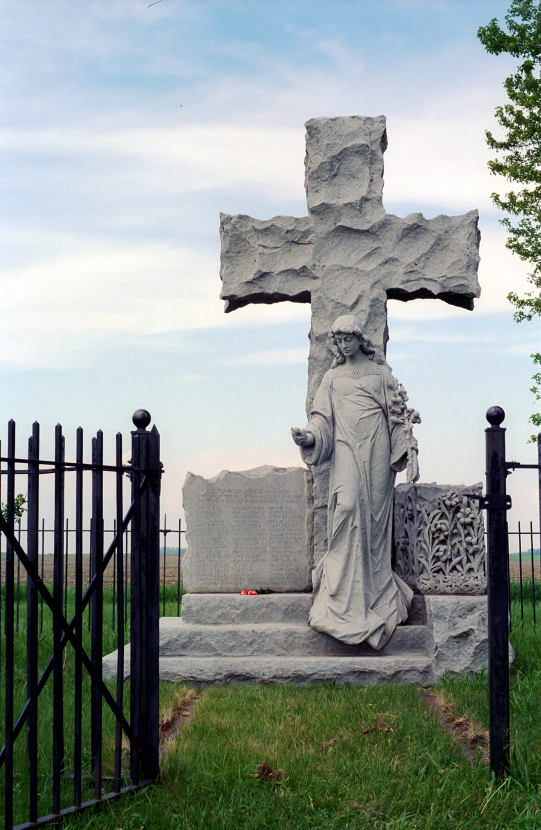
The Milford State Monument along Brown County Road 29 west of New Ulm commemorates the deaths of 52 settlers who were killed in the area. Located along the eastern edge of the Lower Sioux Reservation, Milford had the highest war death rate of any single township.

The Milford State Monument along Brown County Road 29 west of New Ulm commemorates the deaths of 52 settlers who were killed in the area. Located along the eastern edge of the Lower Sioux Reservation, Milford had the highest war death rate of any single township.

While I carry no ill will toward the Dakota, I will tell you, unequivocally, that feelings still run deep in southwestern Minnesota. I am also honest enough to admit that perhaps I would feel differently if my family members had been massacred or if I was of Dakota, instead of German, heritage.

Although time can heal, it doesn’t always. Misconceptions and misguided expectations, even after 150 years, exist on multiple sides of the issue. I won’t delve into that here, but I do think the healing is still ongoing, forgiveness (on both sides) still not attained.
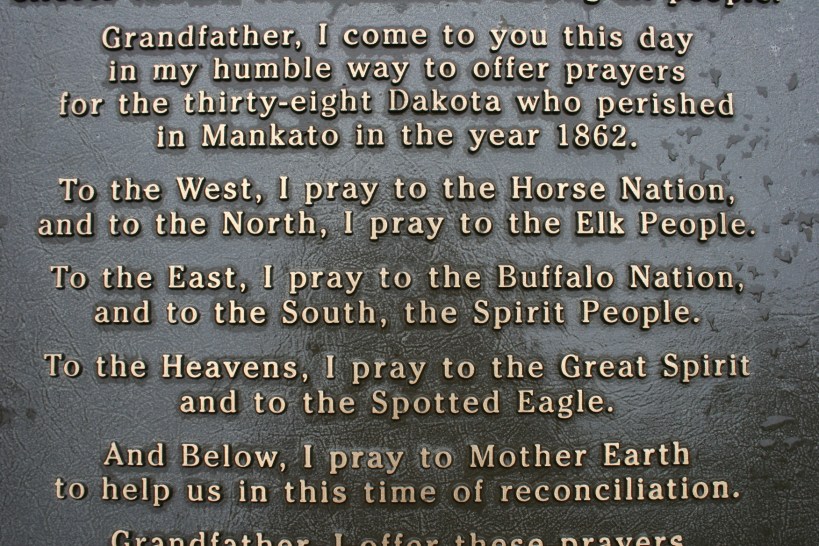
Words on a marker in Reconciliation Park in Mankato where 38 Dakota were hung on Dec. 26, 1862.

Words on a marker in Reconciliation Park in Mankato where 38 Dakota were hung on Dec. 26, 1862. On Wednesday, a new Dakota 38 Memorial was dedicated listing the names of the 38 men who died here. This file photo was taken of an existing plaque in the park.

In a ceremony in Mankato on Wednesday marking the 150th anniversary of the hanging of 38 Dakota, Mayor Eric Anderson proclaimed this the year of “forgiveness and understanding.”

The Dakota also called upon all to “forgive everyone everything.” Those words will be engraved into Kasota stone benches to be installed next summer at the site of the new Dakota 38 Memorial dedicated in Reconciliation Park on Wednesday.

Strides toward understanding and forgiveness, and education, can perhaps finally heal the still festering wounds of this long ago war.

TO VIEW PHOTOS from the event in Mankato on Wednesday, click to link here to Minnesota Public Radio.

TELL ME, ESPECIALLY if you grew up in Minnesota, did you study The U.S.-Dakota War of 1862? Also, are Minnesota students today being taught about this war?

© Copyright 2012 Audrey Kletscher Helbling


CHRISTmas blessings December 25, 2012

Filed under: Uncategorized — Audrey Kletscher Helbling @ 10:05 AM
Tags: , , , , , , , , ,
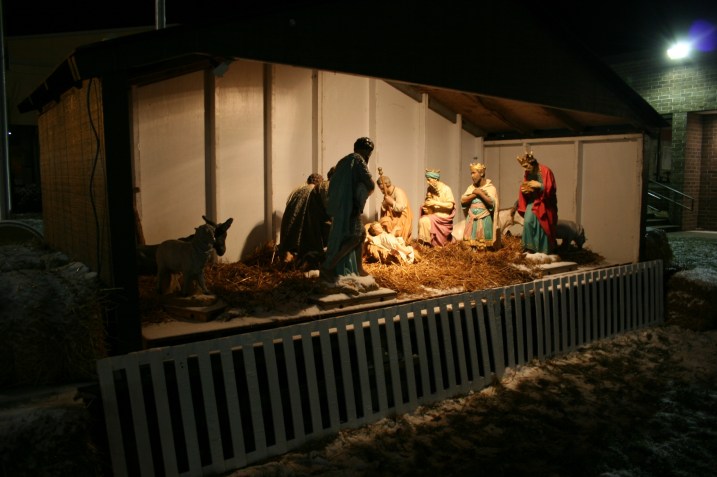
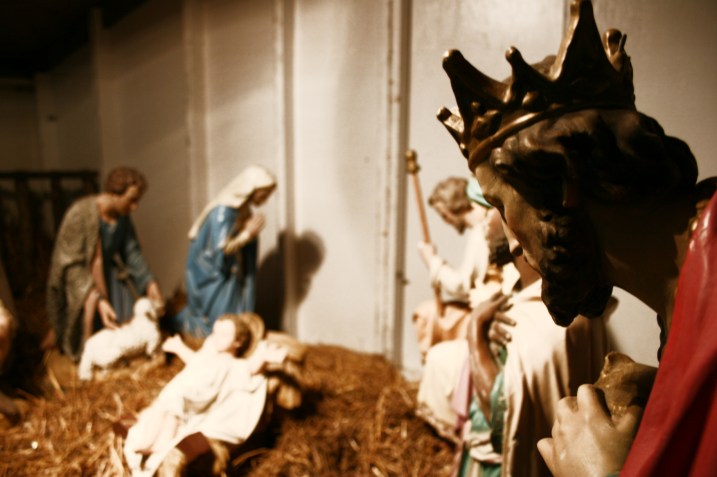
This Nativity scene has graced the lawn of Buckham Memorial Library and the Faribault Community Center for all the years I have lived in my southeastern Minnesota community, which would be 30.

This Nativity scene has graced the lawn of Buckham Memorial Library and the Faribault Community Center for all the years I have lived in my southeastern Minnesota community, which would be 30.

FROM MY FAMILY to yours, I wish you a most blessed CHRISTmas. And, yes, I capitalize that first syllable because the Saviour centers my Christmas celebration and I hope it does yours also.

This Nativity set, donated, I believe, by the Knights of Columbus, is a rich part of my community's history and a work of art. If anyone knows the history of this Nativity set, please submit a comment with details.

This Nativity set, donated, I believe, by the local Knights of Columbus, is a rich part of my community’s history and a work of art. If anyone knows the history of this Nativity, please submit a comment with details.

While they were there, the time came for the baby to be born, and she gave birth to her firstborn, a son. She wrapped him in cloths and placed him in a manger, because there was no room for them in the inn.

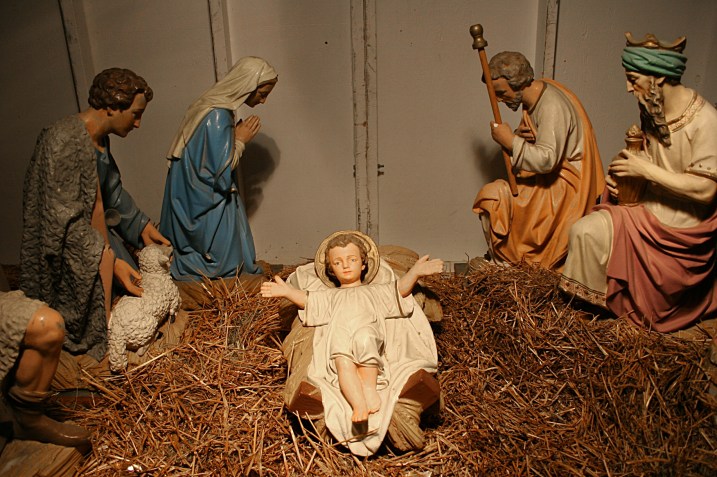
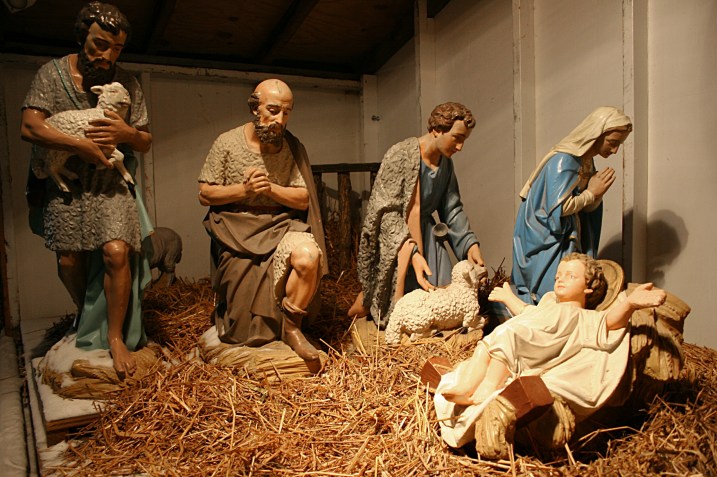
One side of the scene shows the shepherds in the stable.

One side of the scene shows the shepherds in the stable.

And there were shepherds living out in the fields nearby, keeping watch over their flocks at night. An angel of the Lord appeared to them, and the glory of the Lord shone around them, and they were terrified. But the angel said to them, “Do not be afraid. I bring you good news of great joy that will be for all the people. Today in the town of David a Savior has been born to you: he is Christ The Lord.”

Although the wise men did not arrive at the birth of Christ, they are typically depicted in nativities. I added the "star" with an editing tool to enhance the image.

Although the wise men did not arrive at the birth of Christ,  but much later, they are typically depicted in nativity scenes. I added the “star” with an editing tool to enhance the image.

After they had heard the king, they went on their way, and the star they had seen in the east went ahead of them until it stopped over the place where the child was. When they saw the star, they were overjoyed.

Can you imagine the reverent joy the wise men felt in seeing their Saviour?

Can you imagine the reverent joy the wise men felt in worshiping their Saviour?

On coming to the house, they saw the child with his mother Mary, and they bowed down and worshiped him. Then they opened their treasures and presented him with gifts of gold and of incense and of myrrh. And having been warned in a dream not to go back to Herod, they returned to their country by another route. (Click here to learn more about the wise men and when they visited the Christ Child.)

© Photos copyright 2012 Audrey Kletscher Helbling
Text credit goes to gospel writers Matthew and Luke.


Musings of a Baby Boomer upon touring a museum exhibit in Moorhead November 15, 2012

I’M WONDERING IF the rest of you baby boomers out there feel as I do, that youthful years have vanished, poof, just like that.

I need only look in the mirror to see the patches of ever spreading gray (time for a dye, again), the lines and creases and sagging skin to realize that Age has crept into my life to the point that I no longer can deny her presence.

Age has also shoved me into the corner of those who are overwhelmed by technology. It’s like the boxing gloves never come off as I resist, rather than embrace, technological changes. No Facebook or Twitter for me. No PayPal or paying bills online. And what is a smart phone and an iPad?

I am not joking, people. I need to enroll in a Technology 101 course or persuade the 18-year-old son, who is pursuing a degree in computer engineering, to tutor me.

Interestingly enough, this musing relates to a recent tour of  The Historical and Cultural Society of Clay County exhibit, “The BOOM 1945-1960 in Clay County,” at the Hjemkomst Center in Moorhead.

While I was only a few years old at the end of that boom period, much of what I saw in that exhibit, including the outhouse, looked pretty darned familiar:

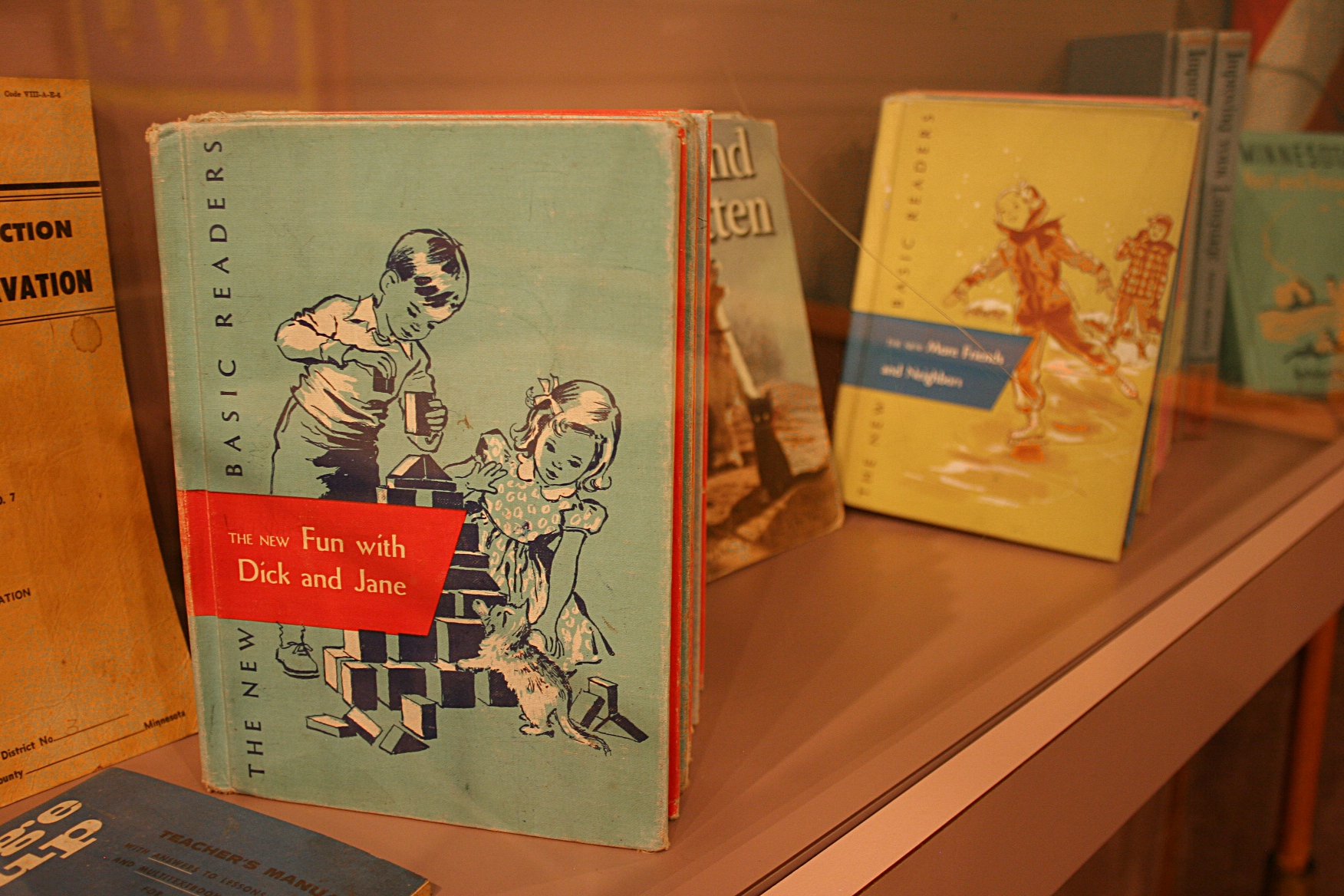
These books are shelved in a mock boom era one-room schoolhouse display. I own that exact Dick and Jane book.  I love Dick, Jane, Sally, Tim, Spot and Puff. They taught me to read. Oh, I mean my teacher taught me to read via that book series.

Fun with Dick and Jane book. Check.

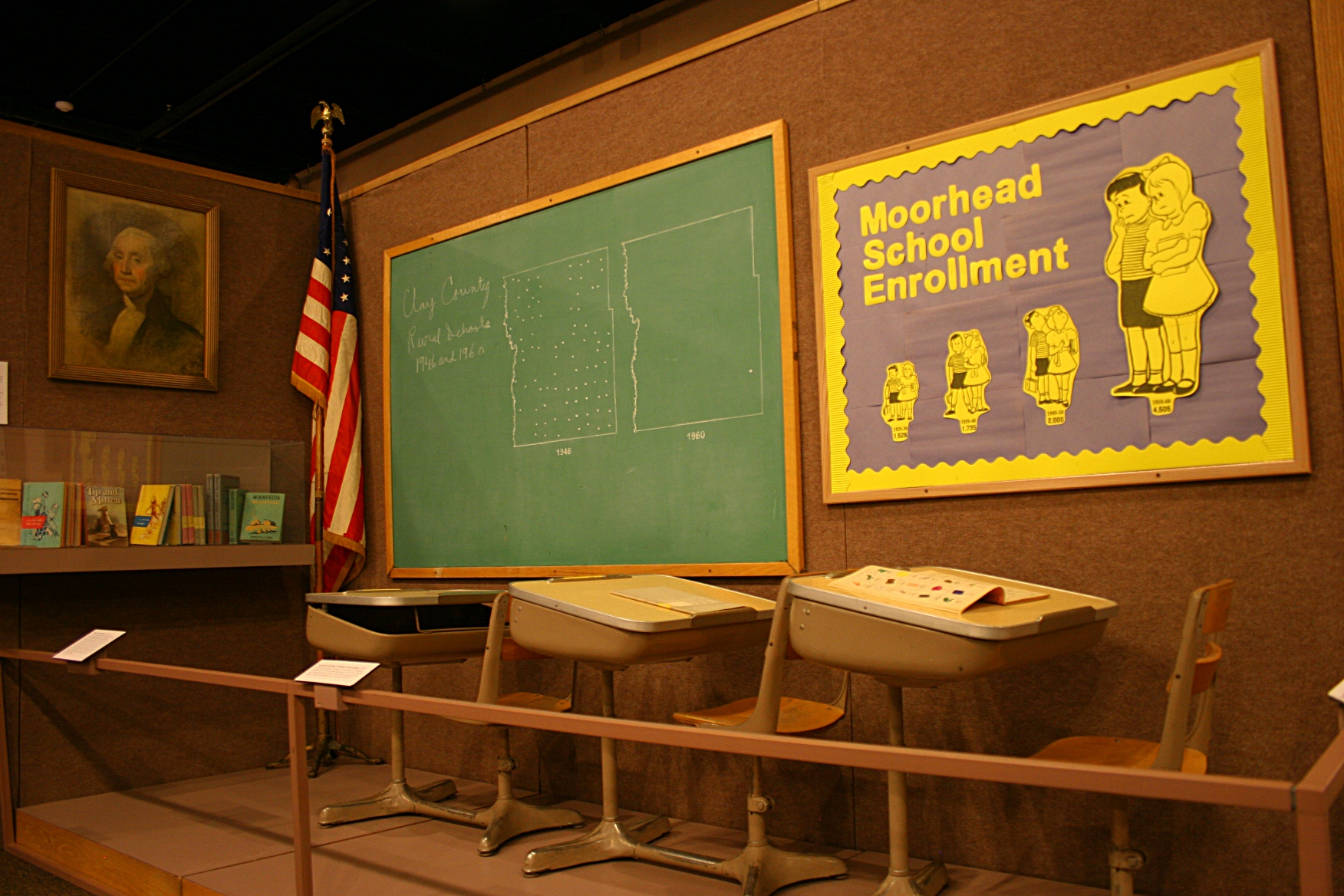
So familiar to me, desks just like I sat in through my years at Vesta Elementary School. The blackboard, though, is not correct. Ours was black, not green.

Rows of school desks. Check.

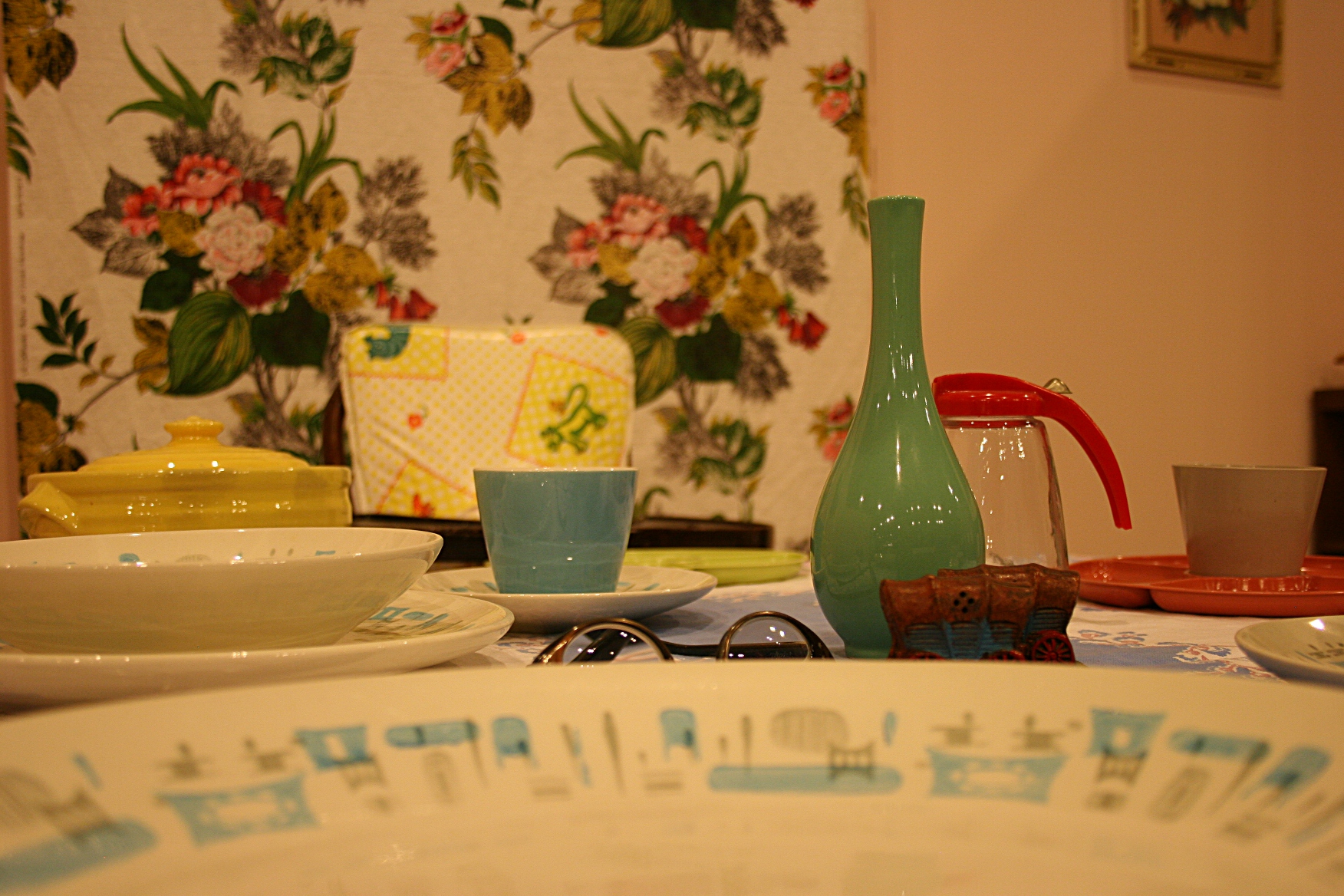
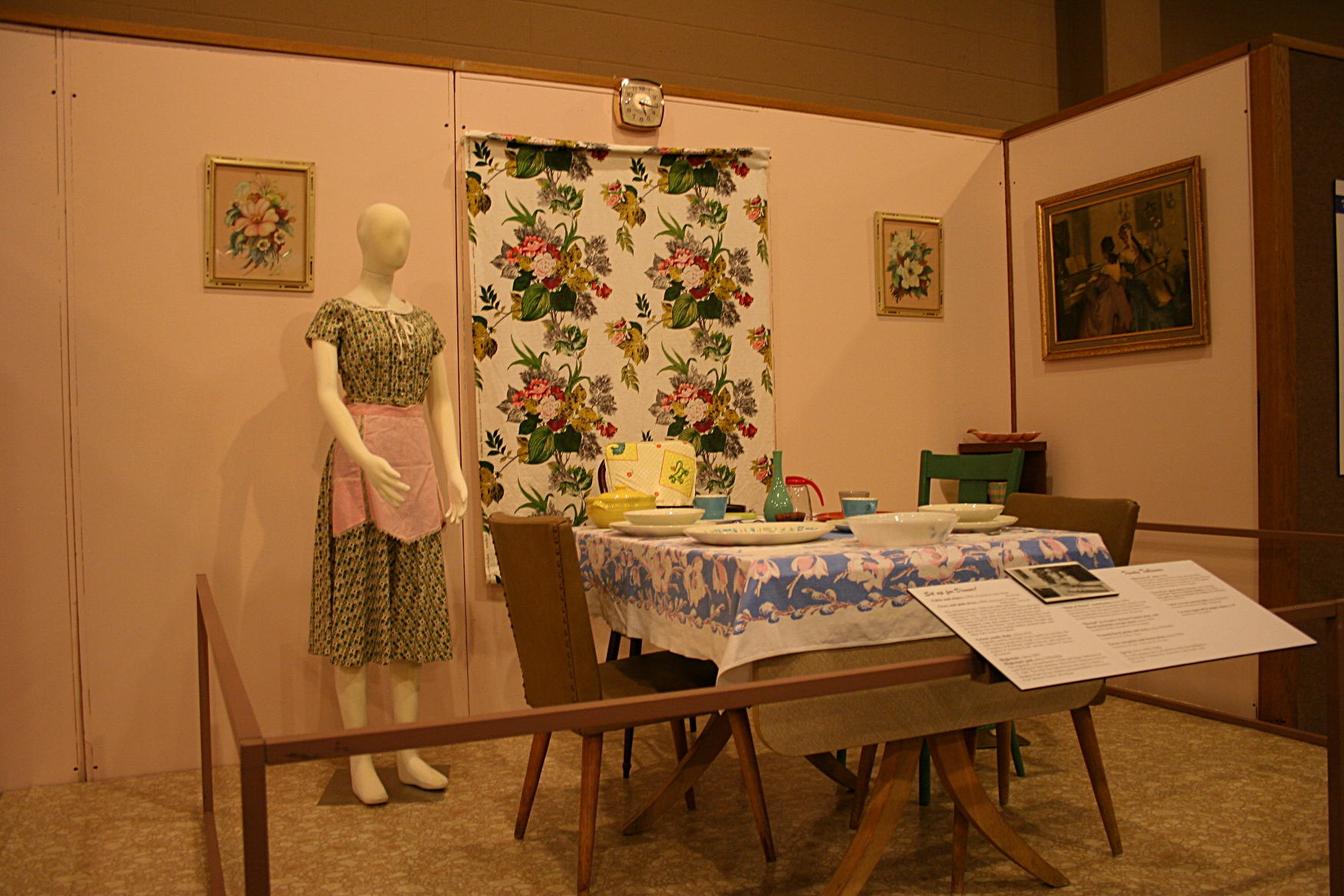
I remember the floral print plastic curtains which once hung in the tiny wood-frame house where I grew up on the southwestern Minnesota prairie. Today I collect vintage tablecloths like the one draping the table here. And, yes, I use them. Come to dinner at my house and you’ll find one gracing the table. I love retro.

A floral print curtain and floral print tablecloth. Check.

Tucked behind the close-up of the vintage plate, you’ll spy eyeglasses. I’ve worn prescription eyeglasses since age four, including the cat eye style and dark brown framed ones.

Dark-framed eyeglasses and vintage tableware. Check.

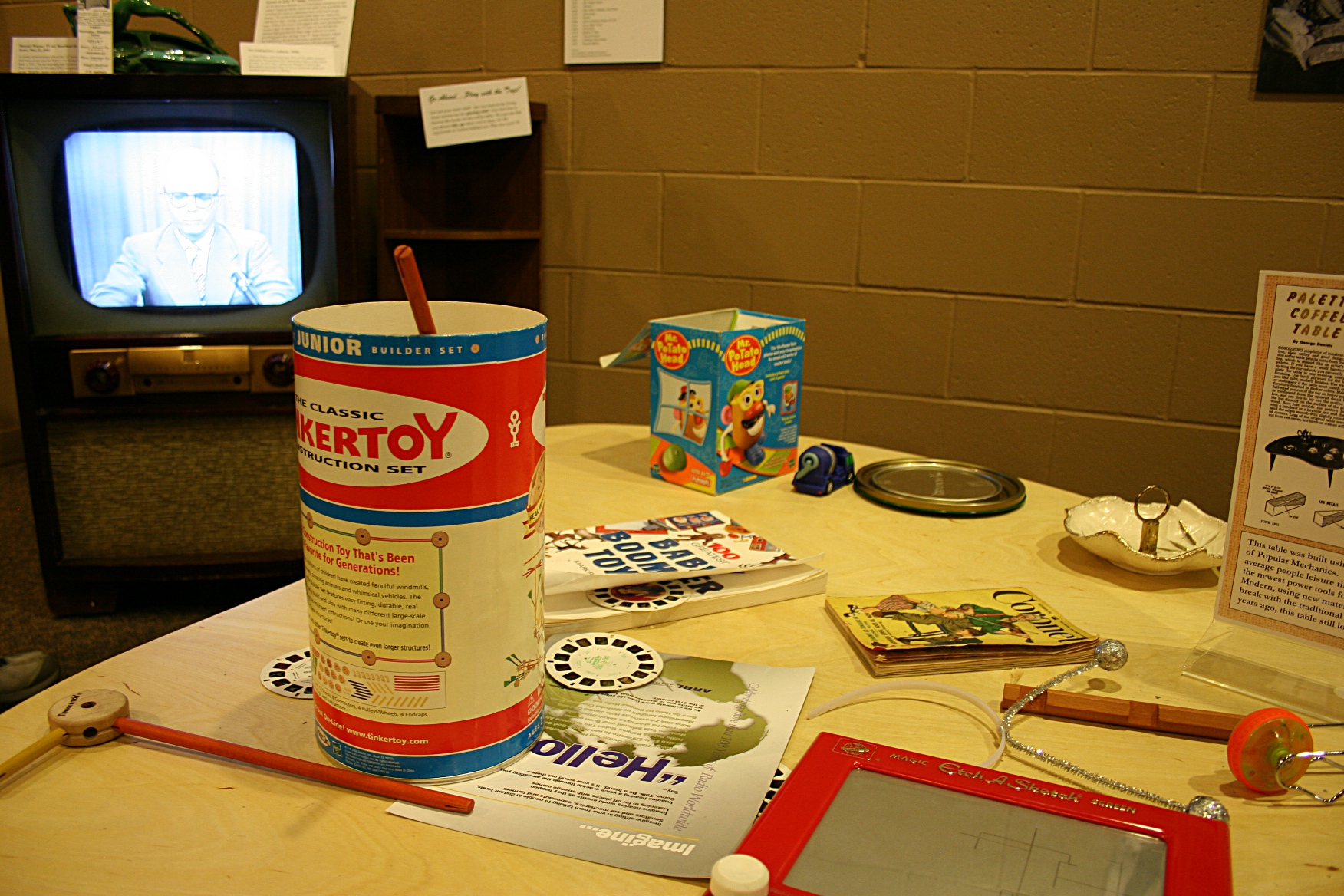
Popular Baby Boomer toys, ones my children, born between 1986 and 1994, also played with. Some toys truly are timeless, although I expect the View-Master isn’t. I played with Mr. Potato Head in the background, but he was not a favorite.

An Etch a Sketch, View-Master reels and Tinker Toys, all among my favorite childhood toys. Check, check and check.

There was not a piece of technology in sight save the old grainy black-and-white television.

© Copyright 2012 Audrey Kletscher Helbling
 

Long-time North Mankato hardware store closing November 2, 2012

Filed under: Uncategorized — Audrey Kletscher Helbling @ 7:01 AM
Tags: , , , , , , ,

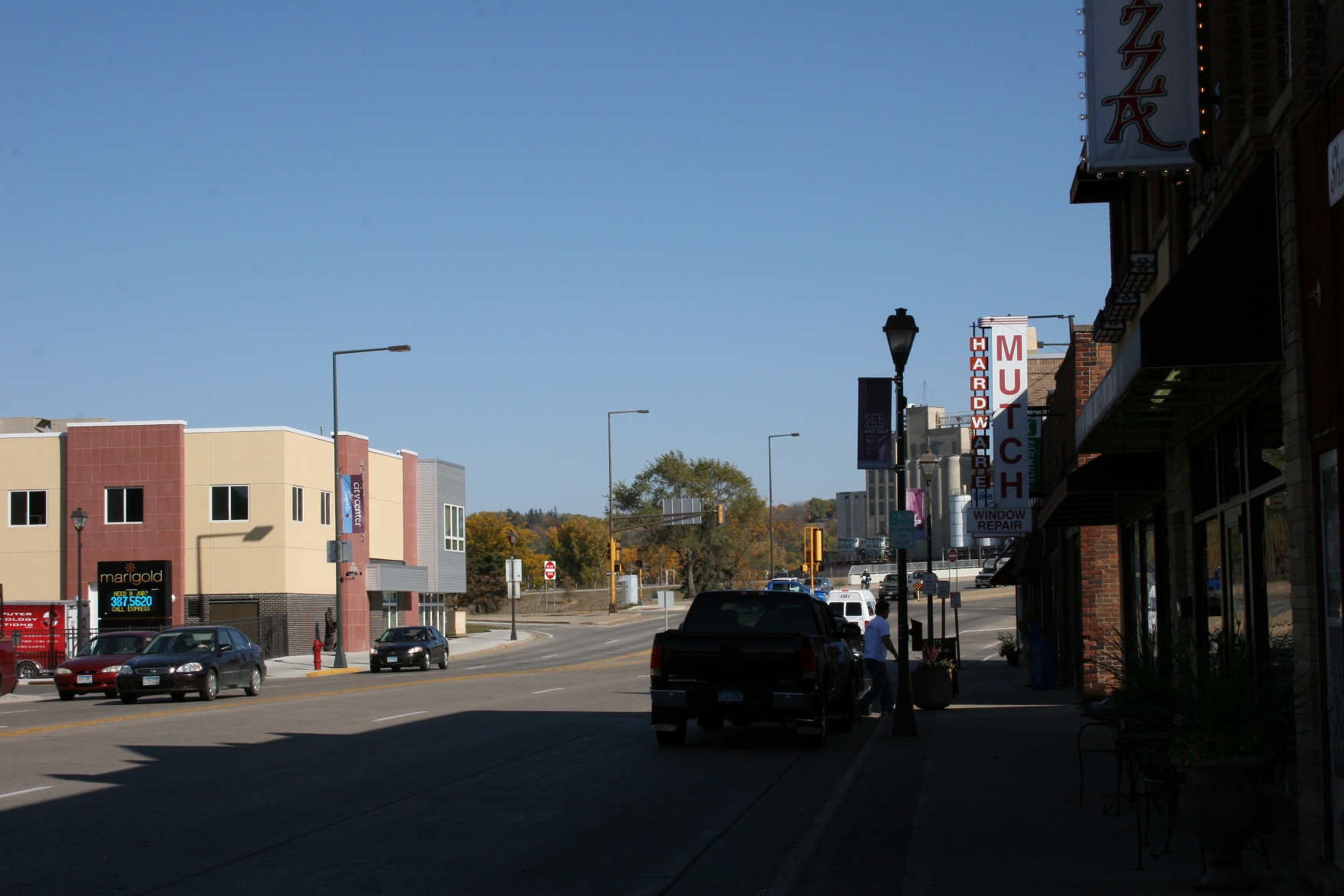
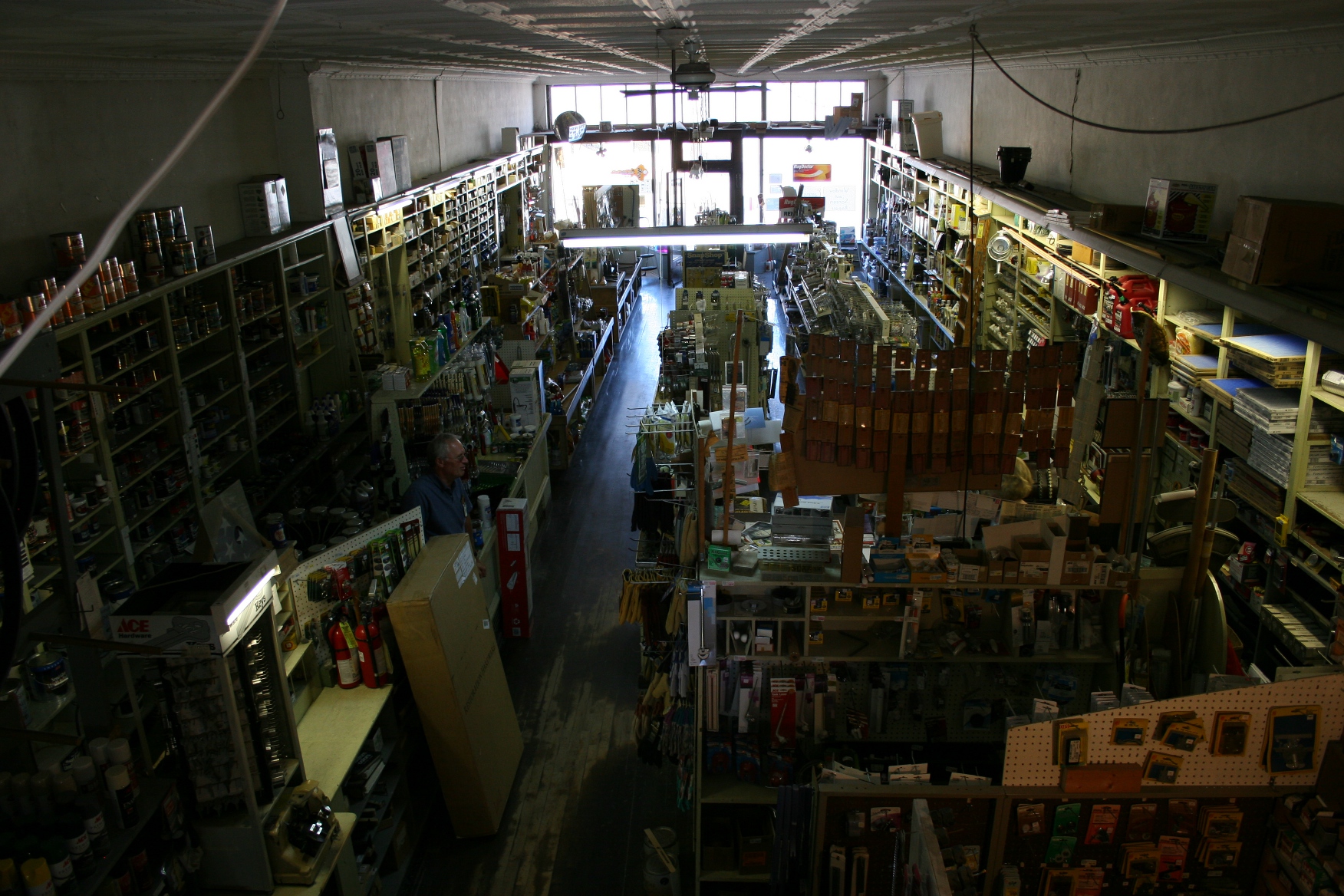
A view of the North Mankato business district where Mutch Northside Hardware is located.

TWICE IN THE PAST MONTH, I have visited businesses which have since announced plans to close. First I wrote about the Historic Highland Store and Cafe (click here to read that story), slated to close shortly before Thanksgiving.

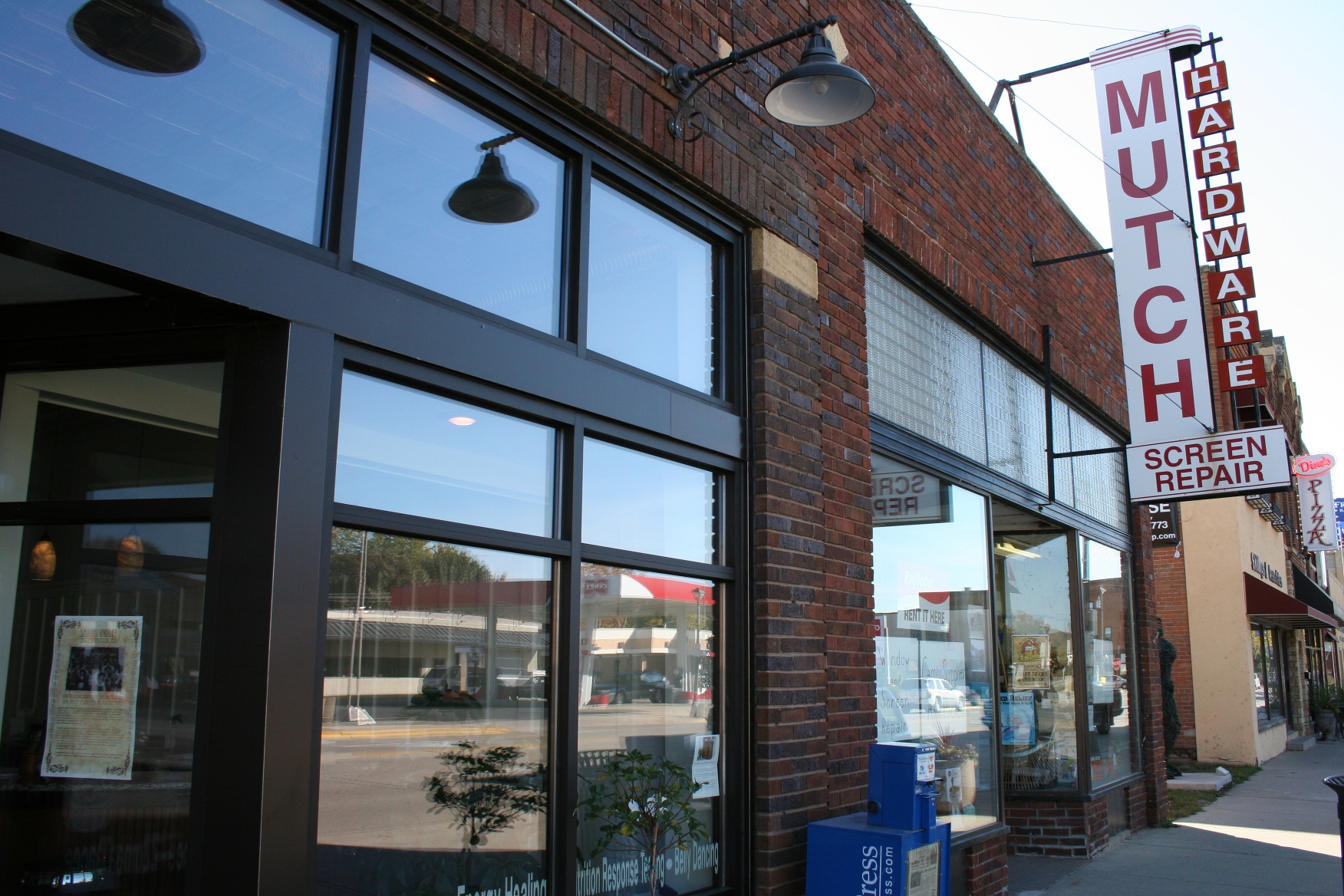
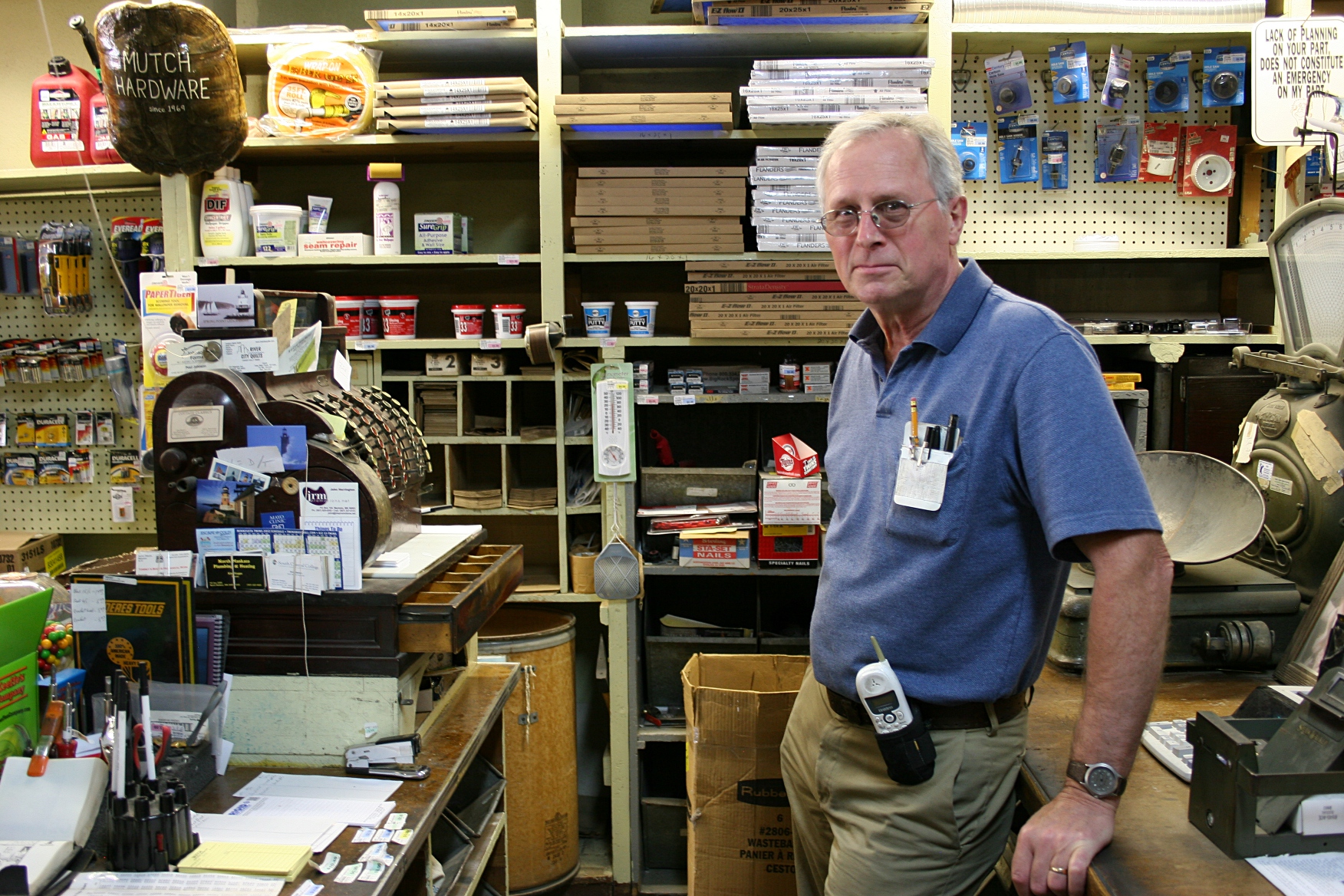
The owners of Mutch Hardware are retiring this month.

Now, even before I could post about it, I’ve learned that old-fashioned Mutch Northside Hardware in North Mankato will shut its doors this month. During neither visit was even the slightest hint made to me that these places would soon close.

I really do not know what to say. I do not bring bad luck. I can only conclude that my visits were meant to be, that through my photography I am helping preserve pieces of Minnesota business history. And in the instance of the hardware store, I am also preserving the memories and legacy of the Mutch family.

A view of the old-fashioned hardware store from the upstairs office.

WHEN I MET Dave and Sandy Mutch a month ago, it was a quiet Monday afternoon in their North Mankato hardware store just across the Minnesota River bridge from Mankato.

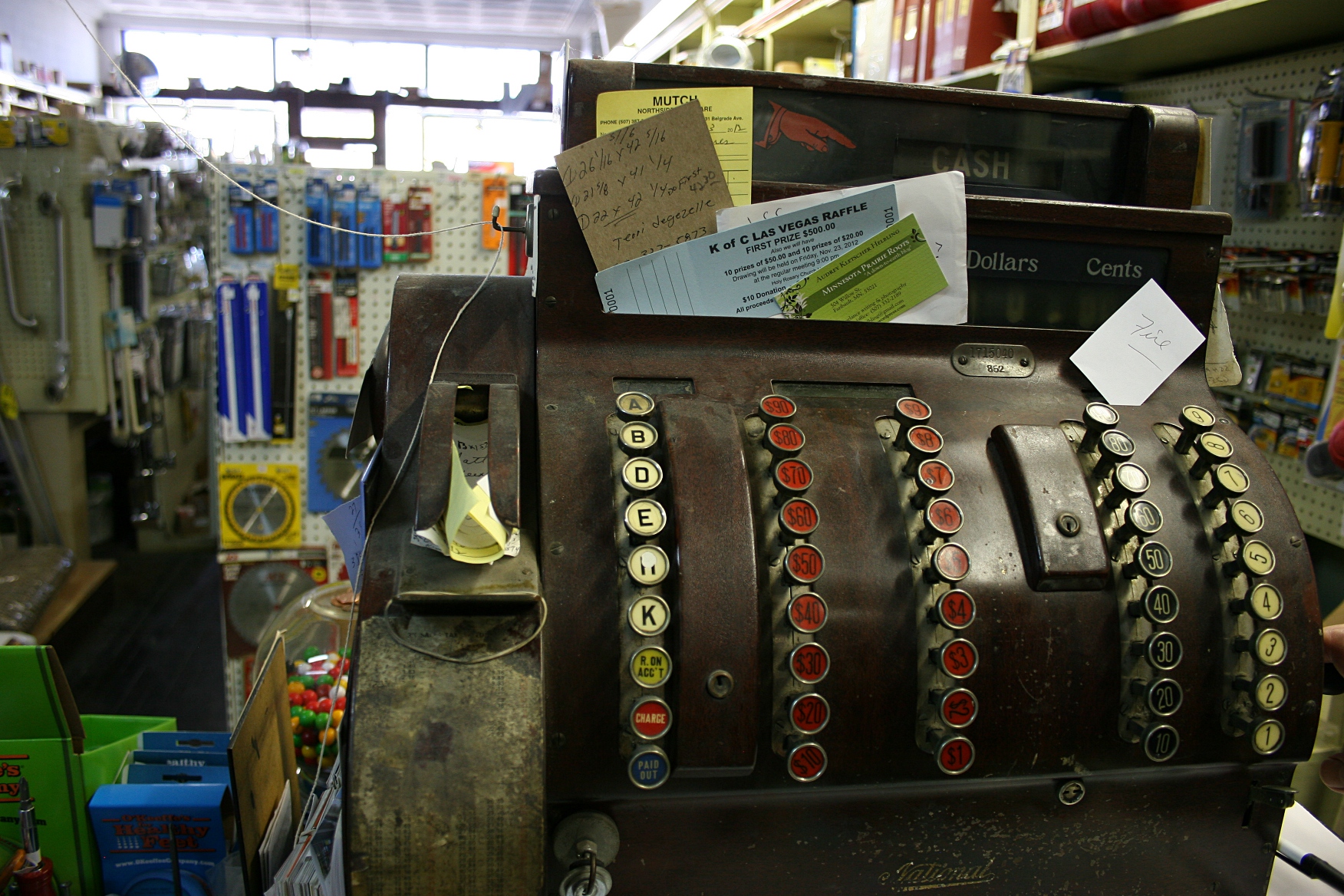
Dave Mutch behind the original store counter with the original cash register and the original scale (behind him).

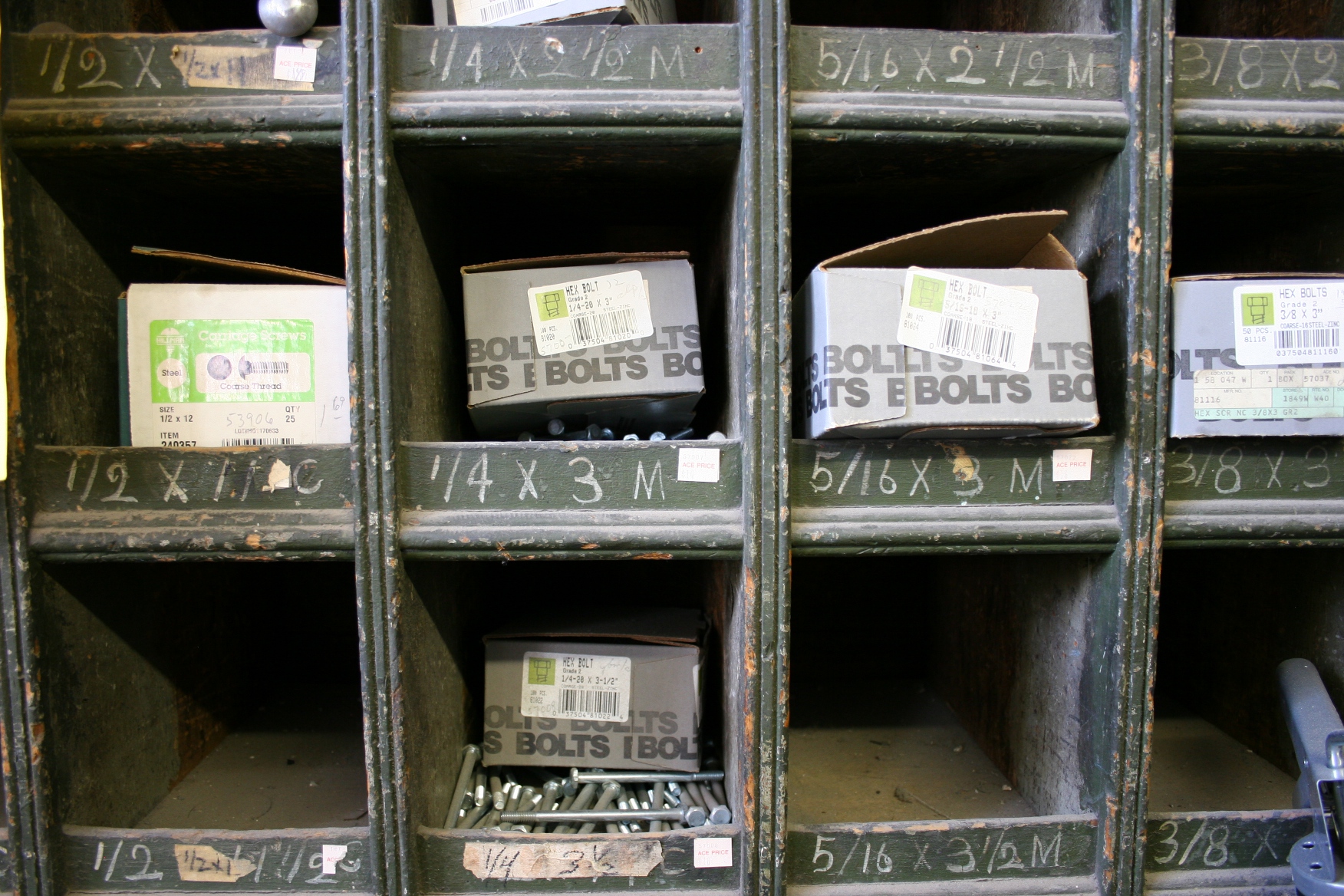
Dave was putzing in the back of the store while Sandy worked up front. And as I started poking around, roaming between the narrow aisles, noticing things like bulk nails in bins, an outdated rotary dial telephone, the antique hand crank cash register, a wall calendar dating back to 1969, the creaking wood floor, notes from customers, baseball cards and a turtle shell, Dave eased away from his work.

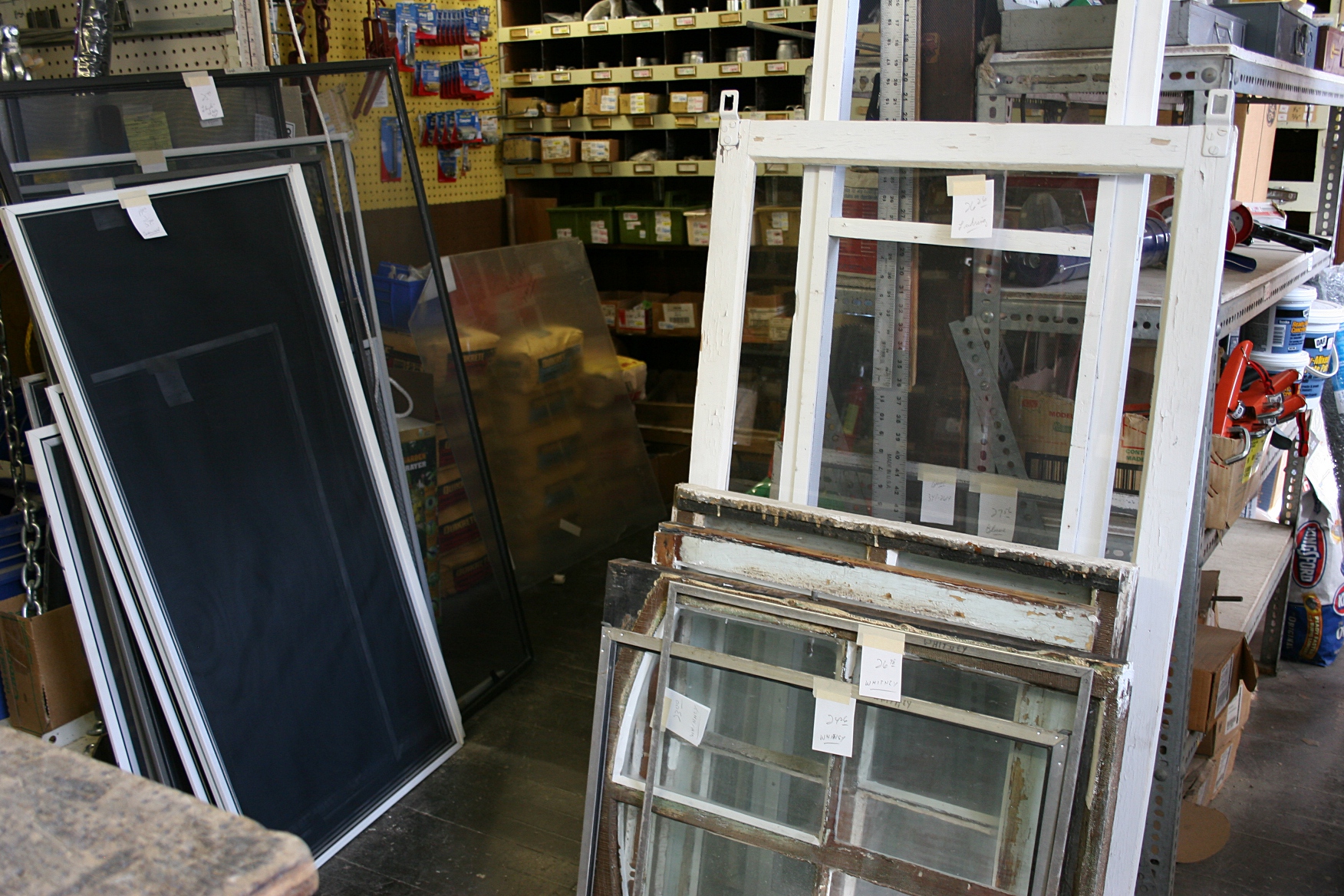
The store specializes in window repair.

I met a man content with life, happy to help customers—to fix their windows, duplicate keys, mix paint. He seemed in no hurry, his conversation flowing at a slow and easy pace.

Bulk bins of yesteryear, still in use.

I wondered aloud to Dave how his mom-and-pop business could compete against big box retailers. “We’re willing to do what other people won’t do,” he said then. He also noted that his store stocks merchandise that others don’t, although he did not offer specifics.

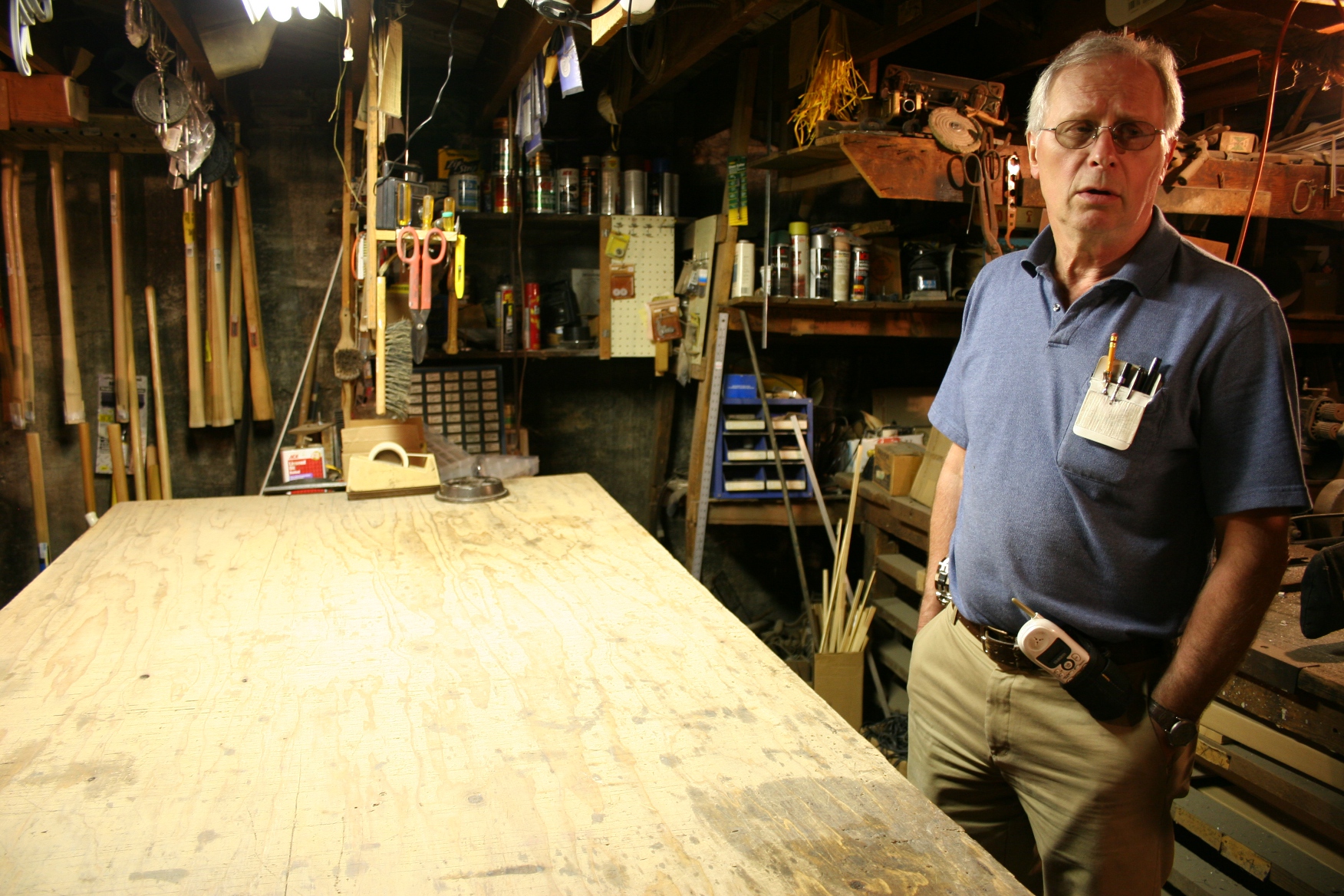
In this basement workshop space, Dave has spent many an hour through the decades repairing windows.

That focus on friendly customer service was clear to me as Dave led me into the basement of his building constructed and opened in 1926 as a hardware store. He works on windows in the depths of that basement, which also holds excess store merchandise. Eighty-six years as a neighborhood hardware store, and in the Mutch family since 1969. Remarkable.

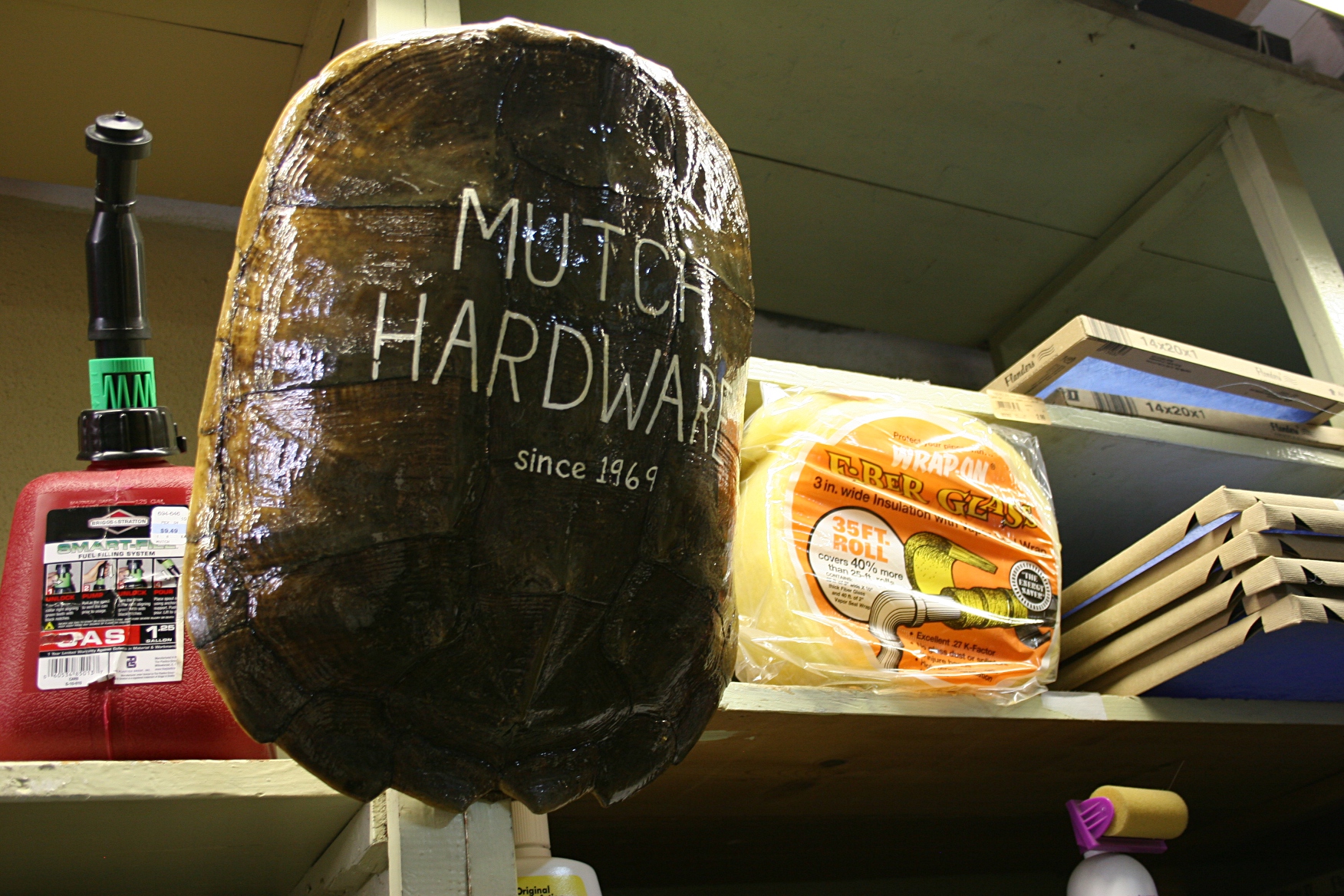
This dated turtle shells marks the year Harold and Bernice incorporated Mutch Northside Hardware.

Dave’s parents, Harold and Bernice, incorporated Mutch Northside Hardware in 1969, opening in January 1970. Dave worked part-time at his parents’ hardware store while studying business at Mankato State University. He purchased half of the business in 1972. By 1979, he and Sandy, who holds a degree in social work, were full-time owners.

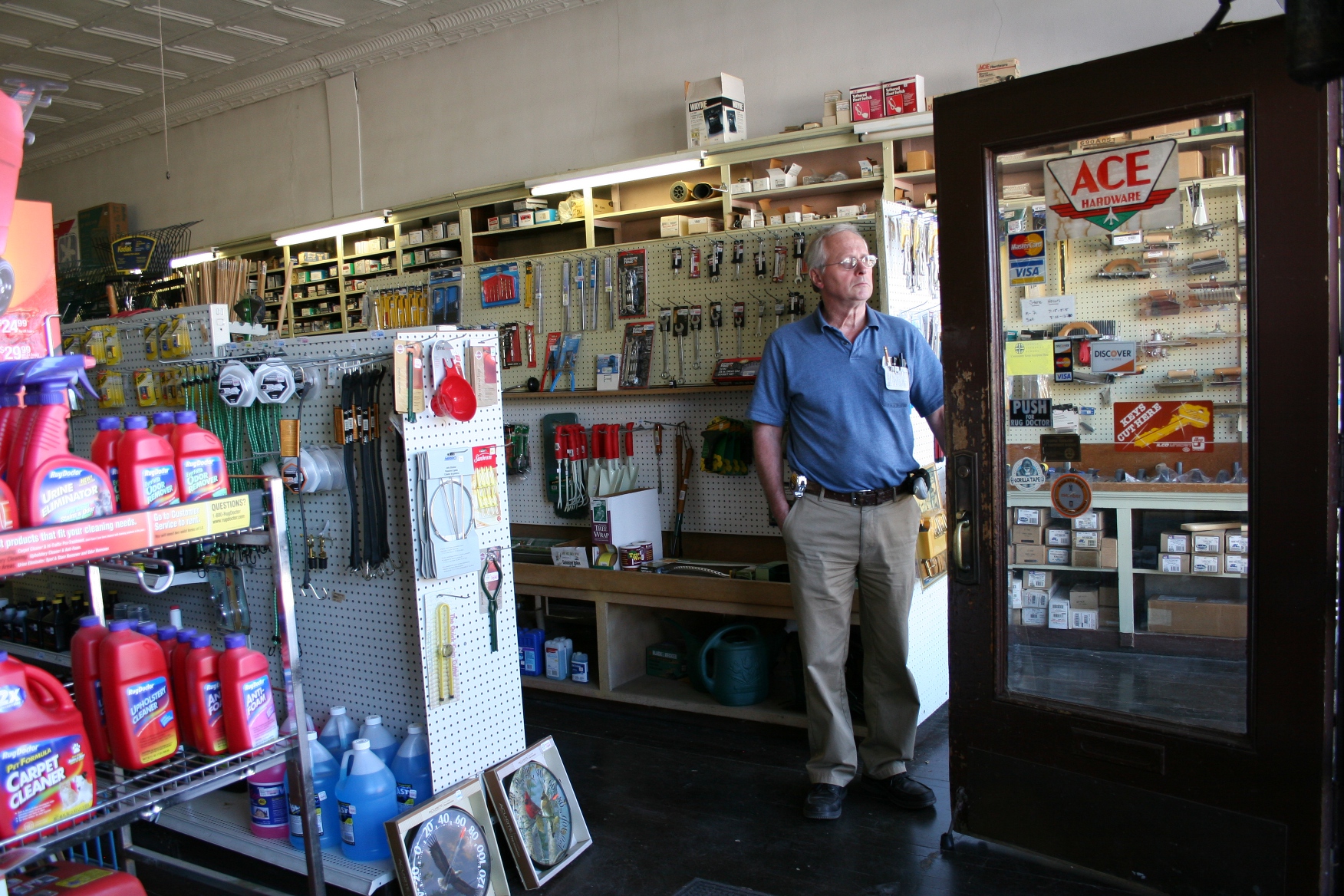
Soon Dave will close and lock the front door for the last time.

Soon they will be retirees. They’ll hold a closing sale and auction and then put the building up for sale.

With this long-time hardware store closing, I have to wonder who will repair the torn screens, who will replace the broken window glass, who will meet the hardware needs of the Mankato area residents dependent on Mutch Hardware for supplies and advice? Who will replace the Mutches’ friendly service? Where will customers find the one-of-a-kind merchandise not stocked at big box retailers?

Who? Where?

There’s a lot to be said for places like Mutch Northside Hardware. A lot.

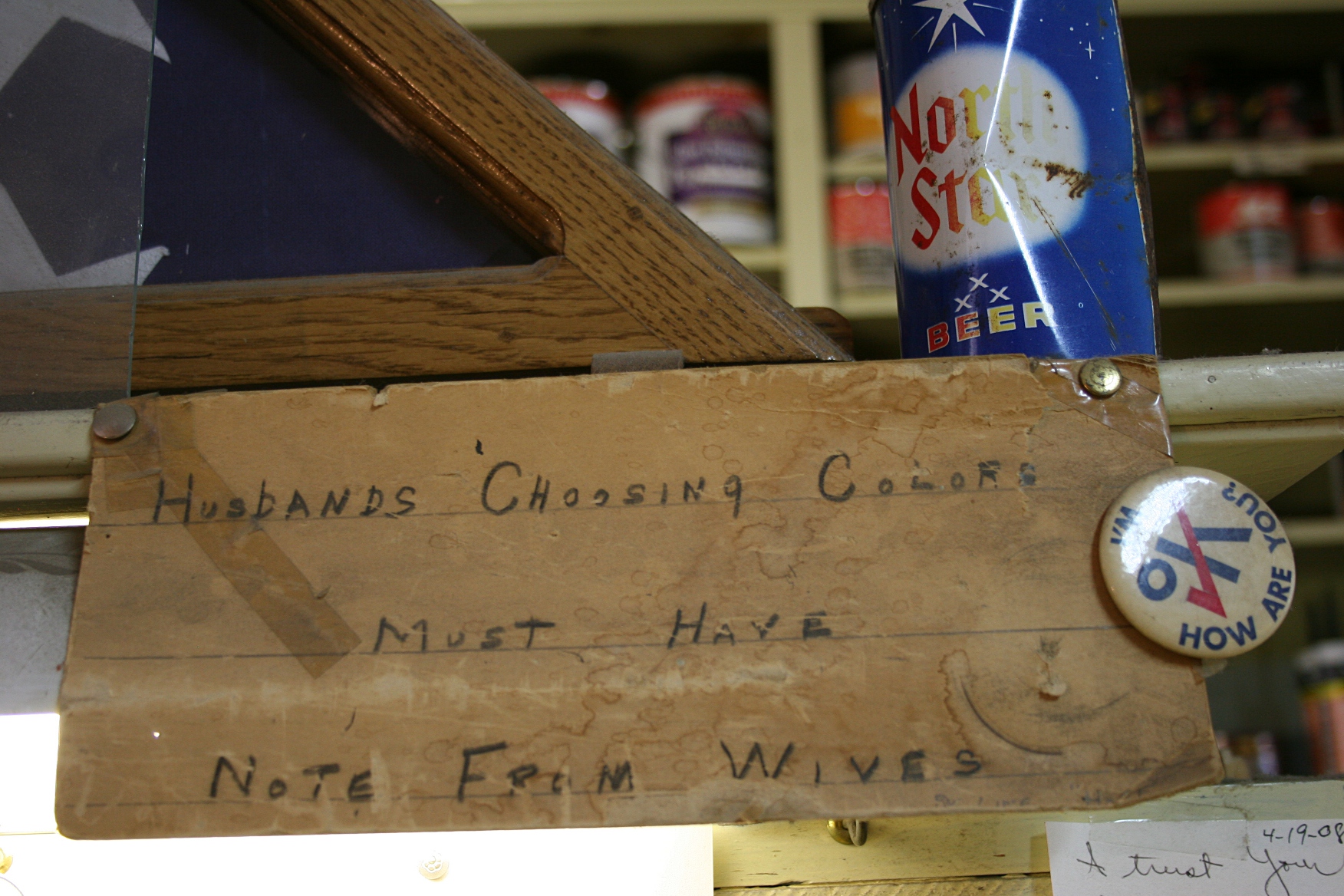
An aging sign posted in the store along with notes from mothers giving their children permission to purchase paint, etc.

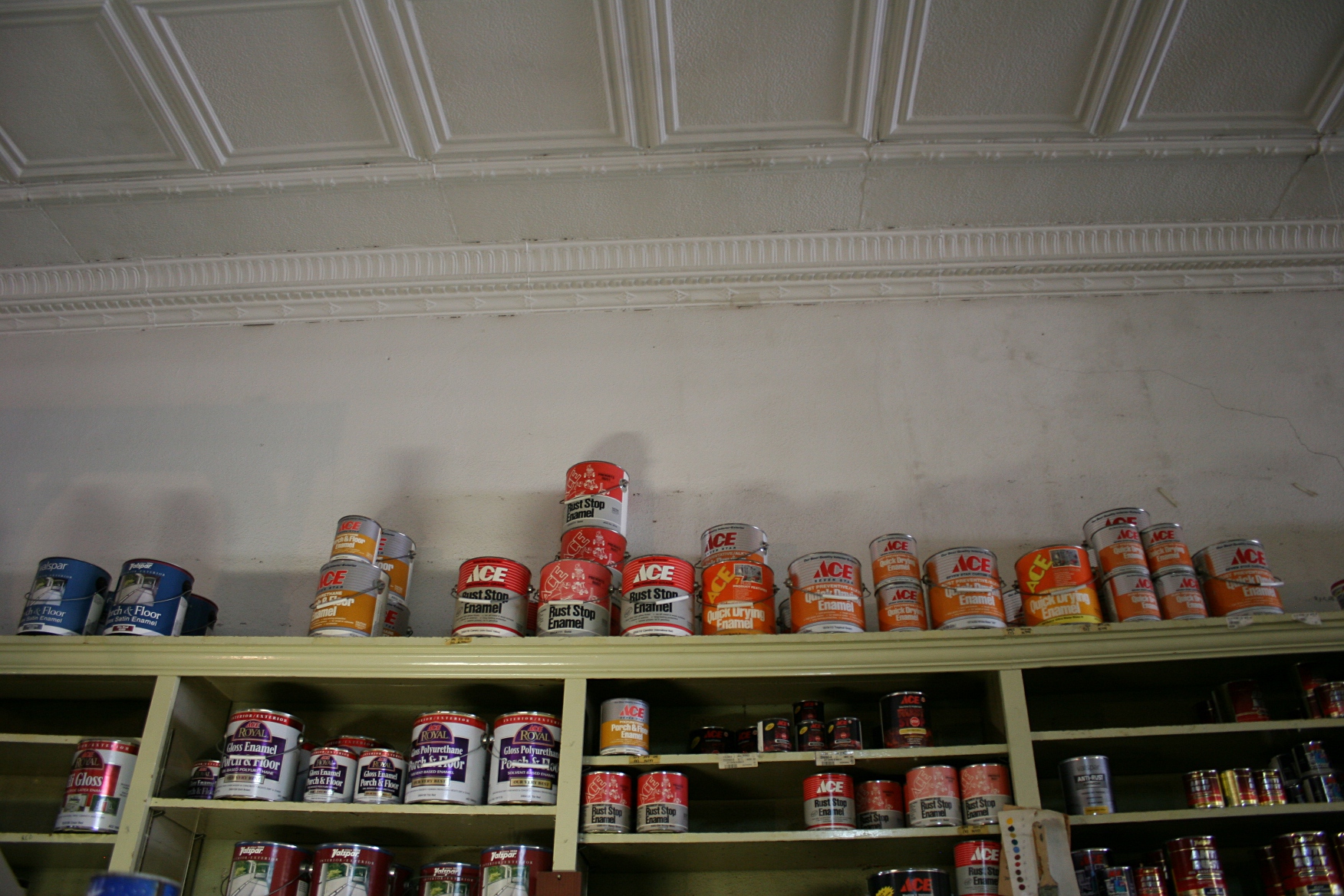
Cans of paint rim the top shelf next to the original tin ceiling in the 1926 building.

Before the Mutch family bought the business, it was Austin North Side Hardware, as noted in this 1969 calendar still hanging in the store.

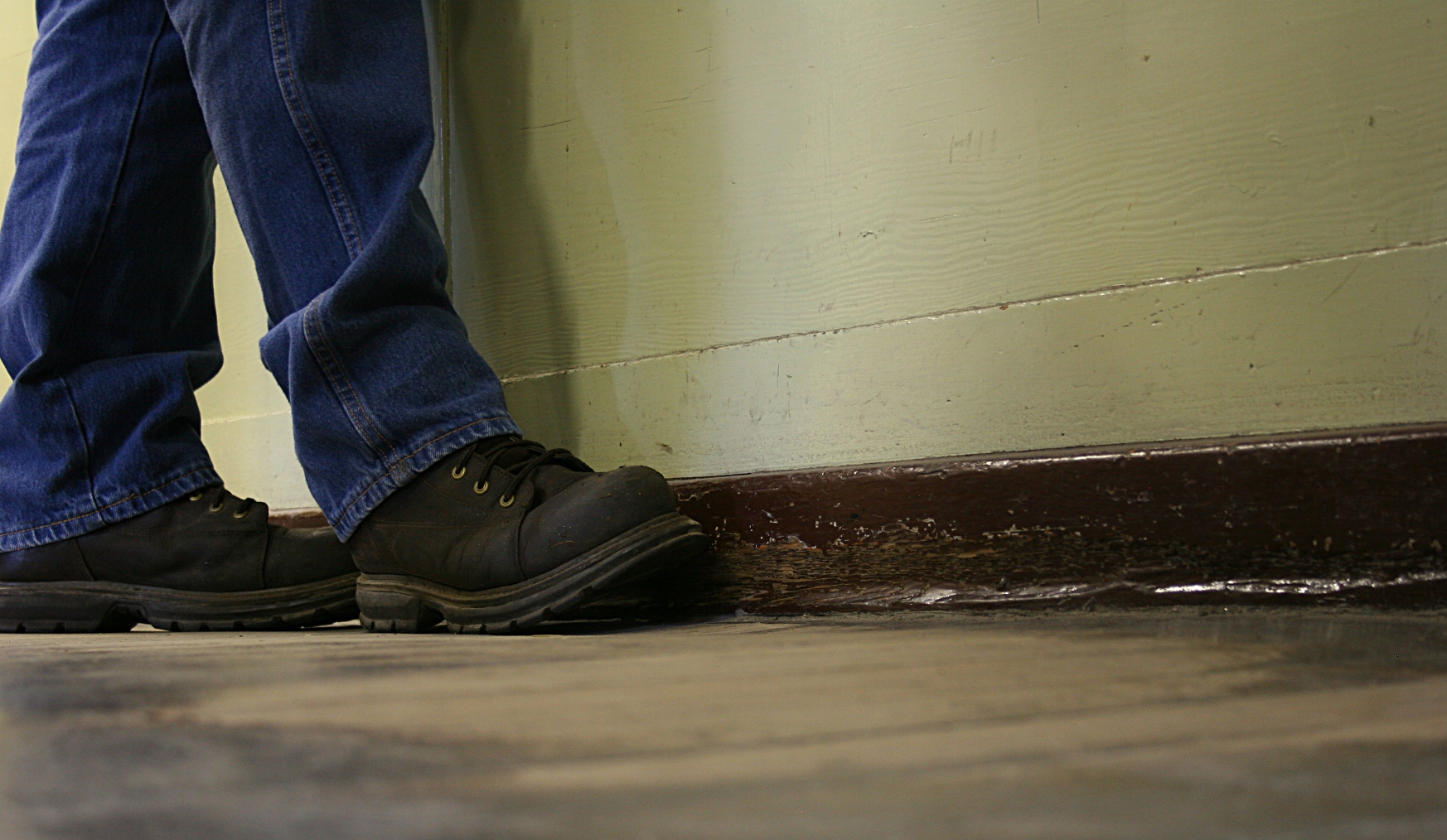
A customer steps up to the original check out counter, where the wood floor is especially worn.

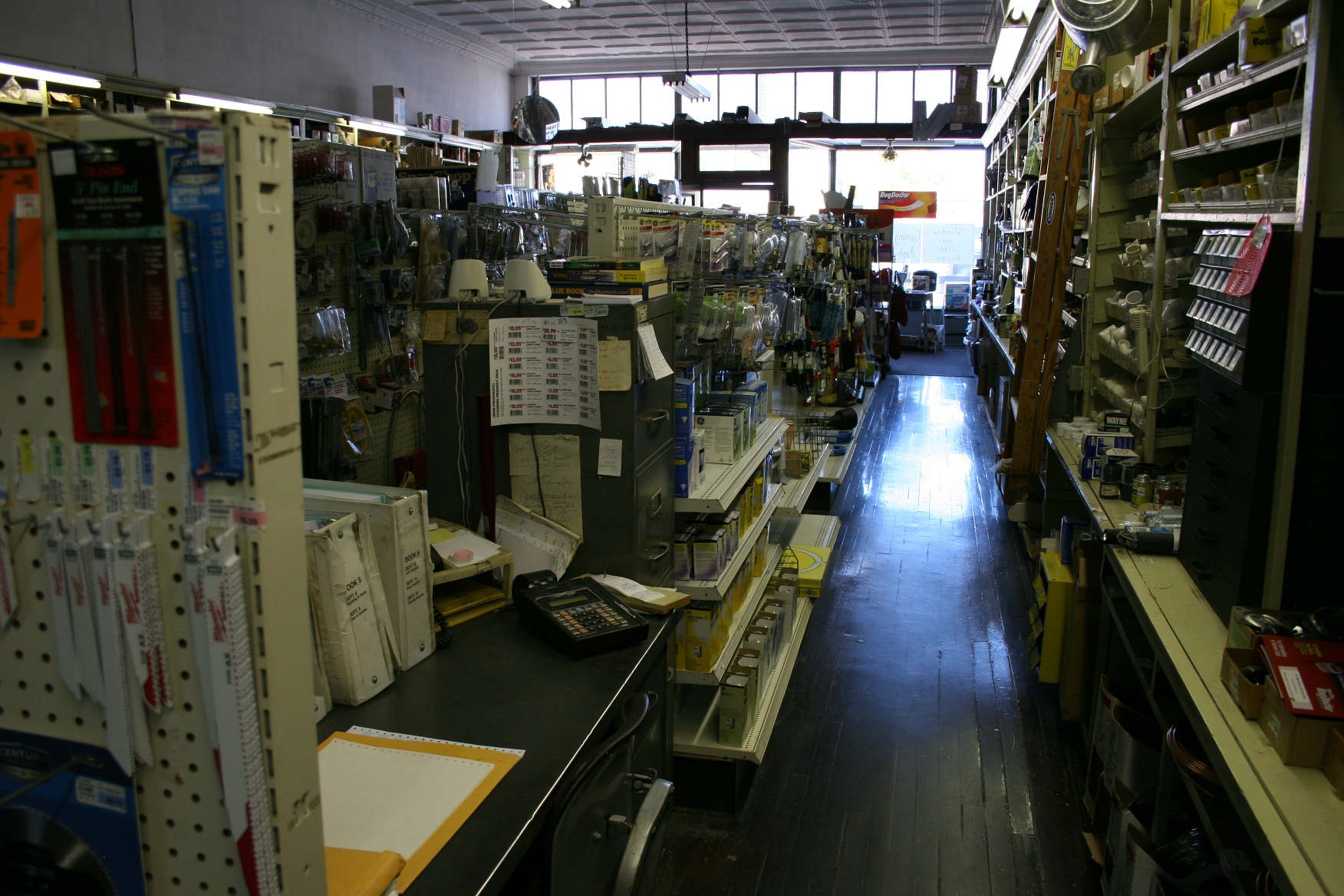
One of several narrow aisles crammed on both sides with merchandise.

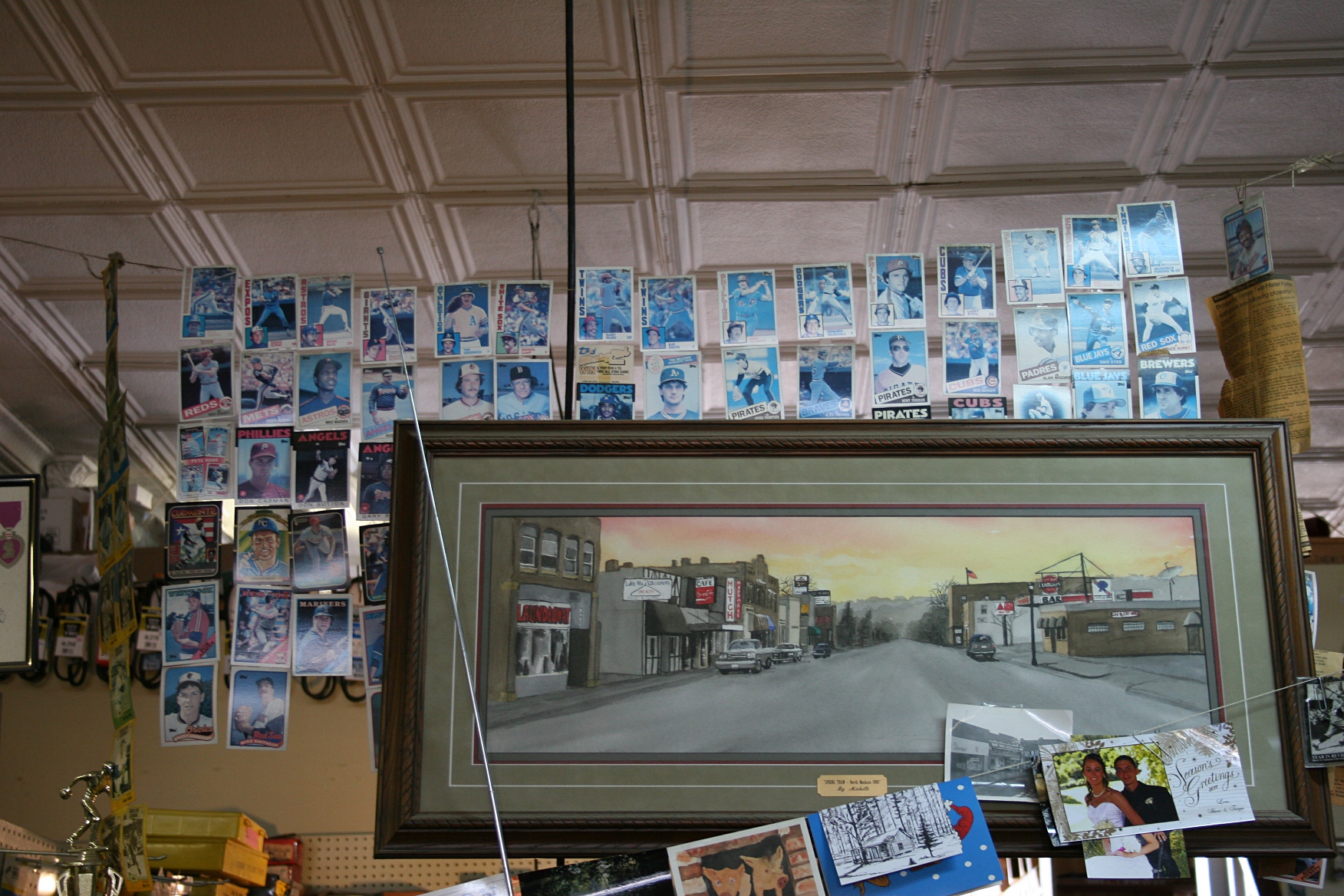
Baseballs cards and a painting of the North Mankato business district add to the cluttered and nostalgic charm of Mutch Hardware.

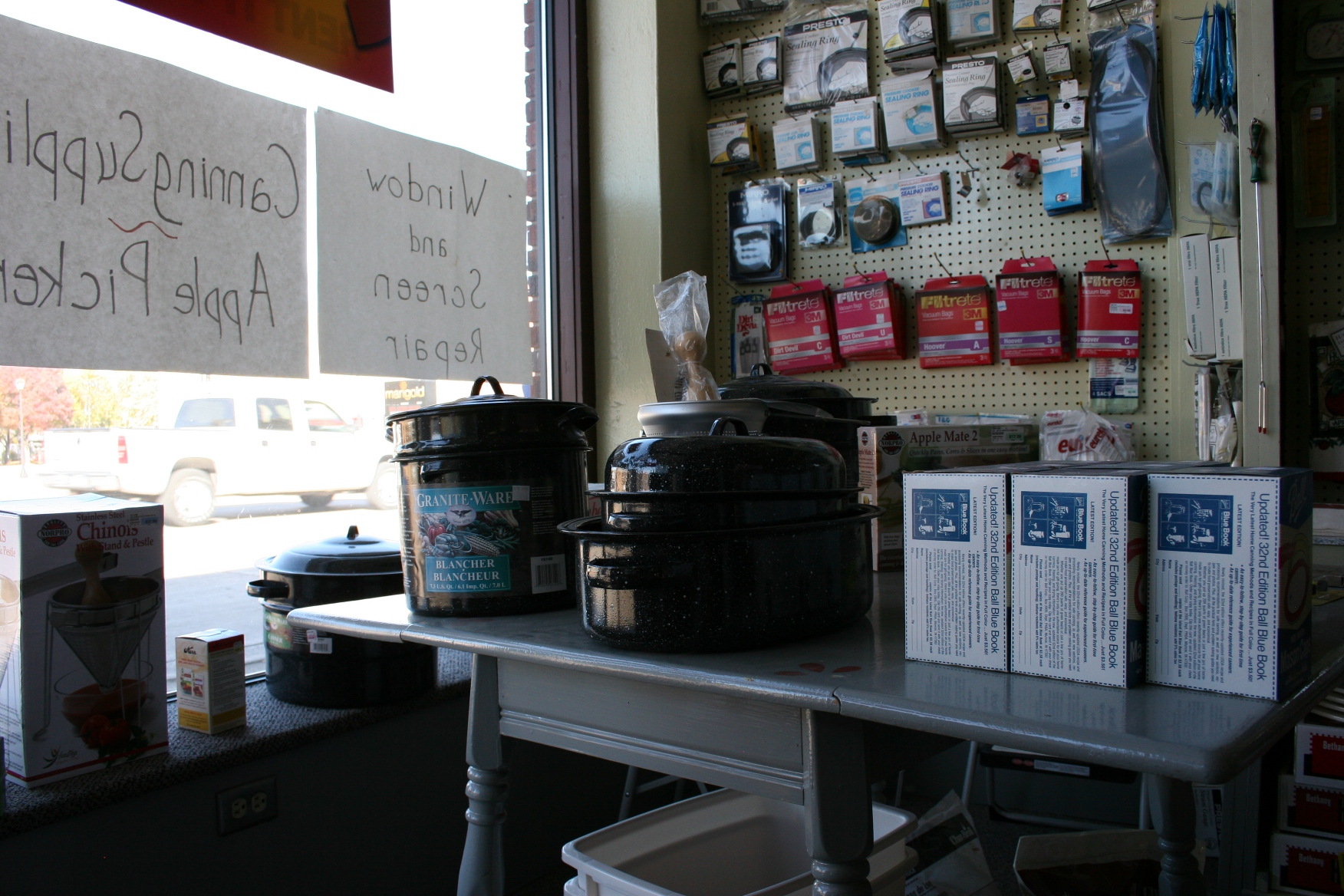
A seasonal front window display beckons gardeners. Hand-lettered signs in the window advertise window and screen repair and canning supplies. The Mutches did not advertise, relying instead on word-of-mouth to promote their business, Dave said.

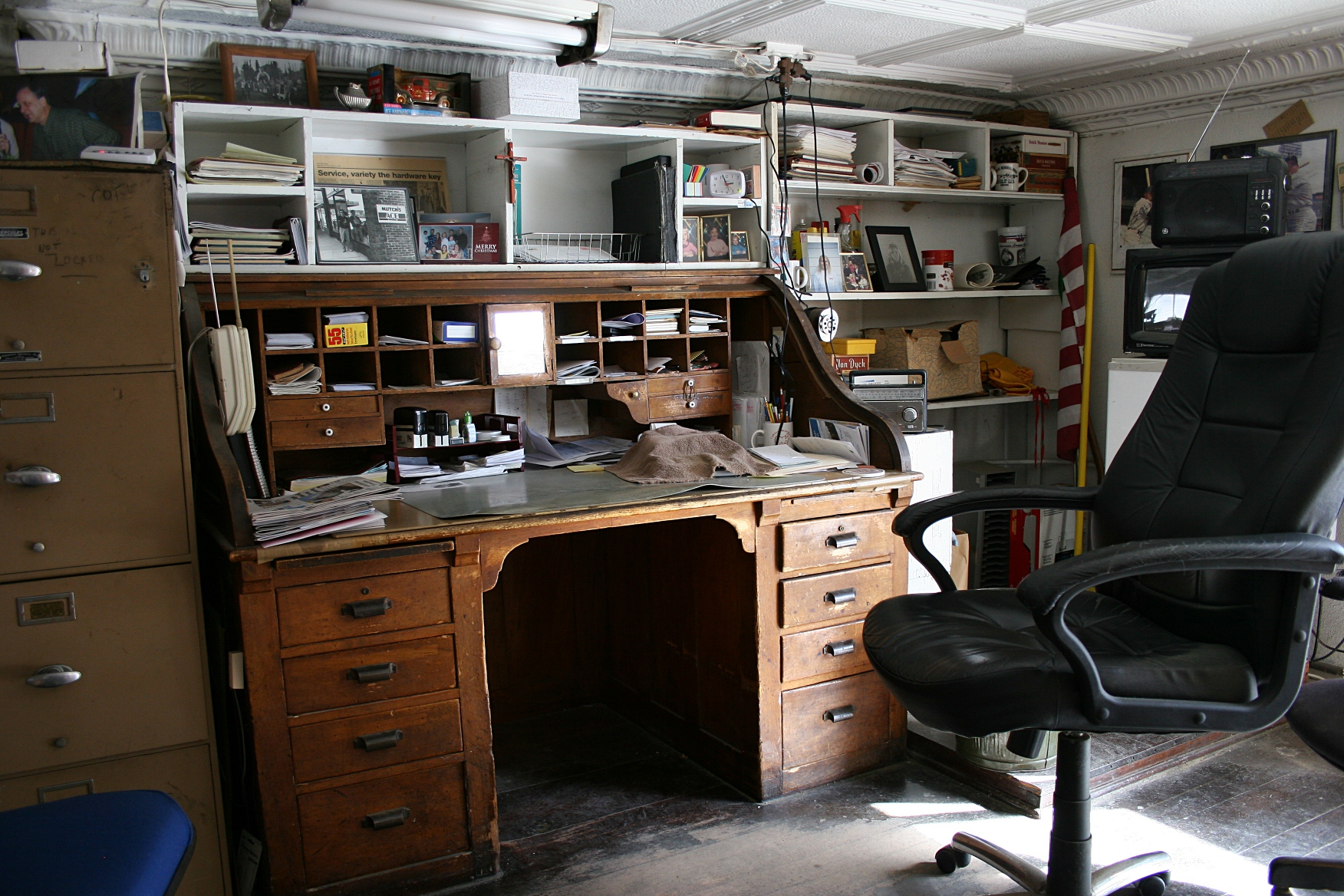
The upstairs office with the low tin ceiling and the original rolltop desk.

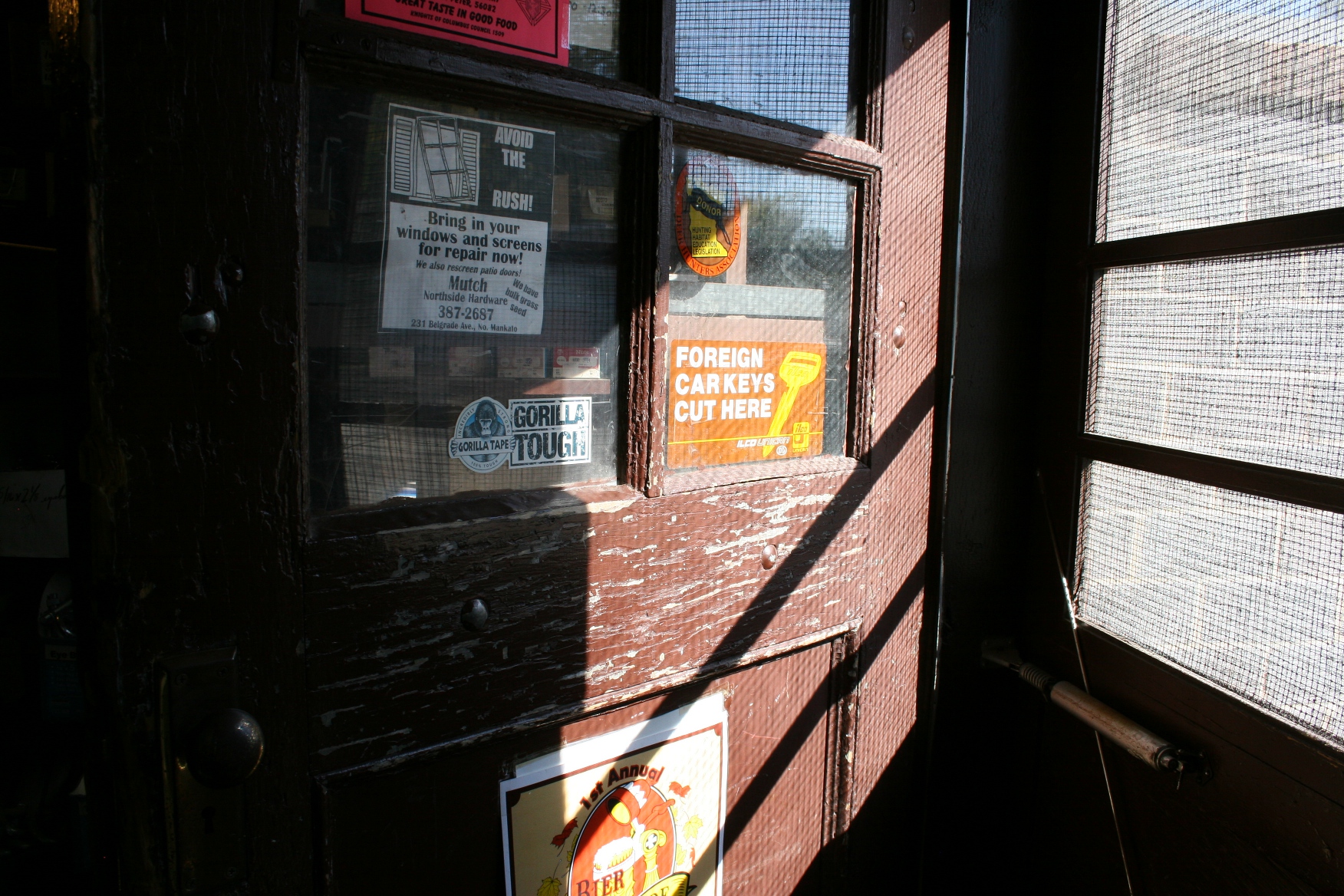
The back door.

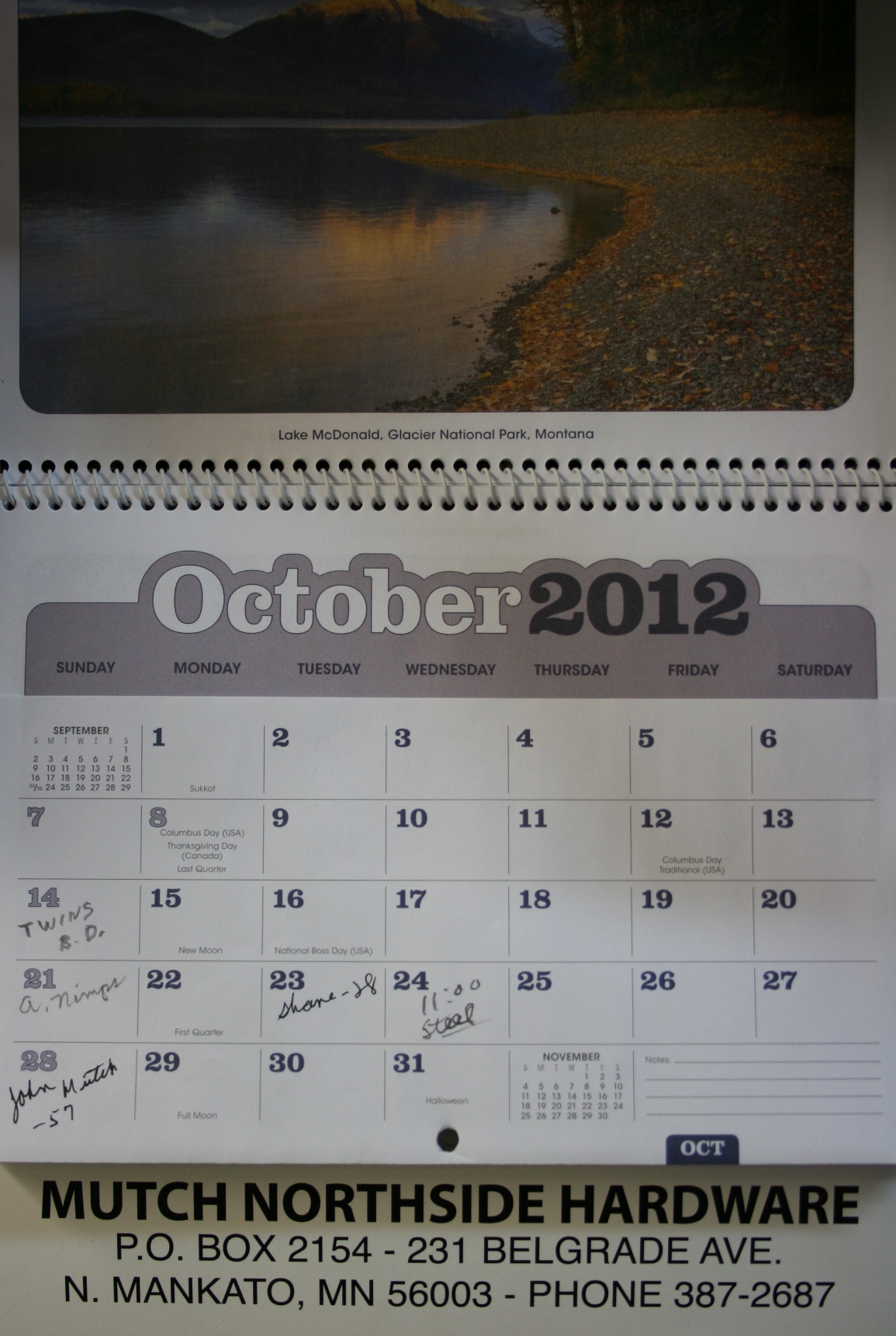
Mutch Hardware’s last calendar.

Soon Mutch Hardware will ring up its final sales on this cash register dating to the early 1900s and close the doors on 86 years of continuous hardware store history in North Mankato.

© Copyright 2012 Audrey Kletscher Helbling
 

The Smithsonian in Hanley Falls & Hanley Falls in the Smithsonian (exhibit) September 20, 2012

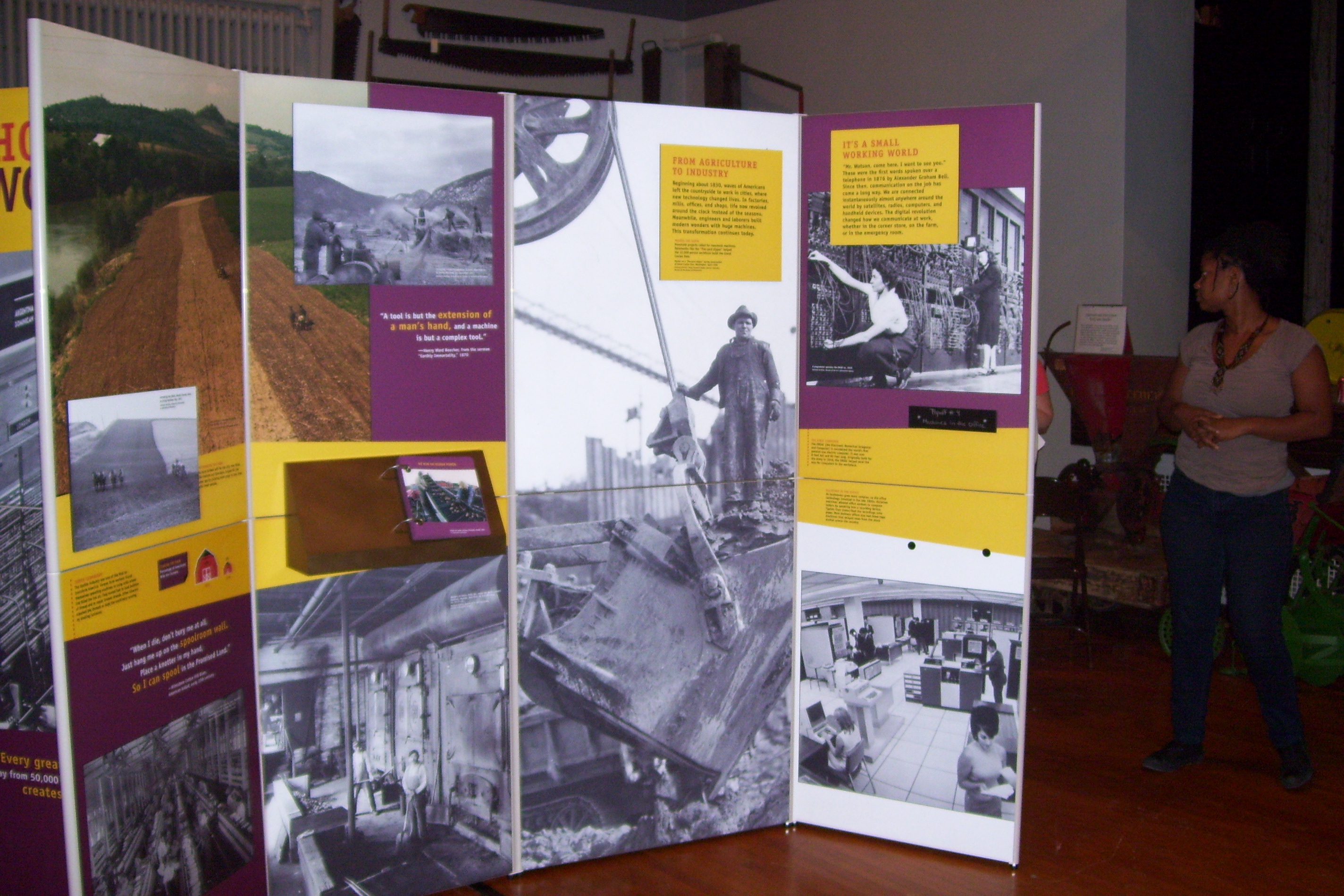
The Smithsonian’s Museum on Main Street exhibit, “The Way We Worked,” features snippets from Minnesota. Photo courtesy of Minnesota’s Machinery Museum, Hanley Falls, in rural southwestern Minnesota.

I DOUBT MANY of the 304 residents of Hanley Falls, rural Yellow Medicine County, Minnesota, have ever visited the Smithsonian or even traveled to Washington D.C.

But now this internationally-acclaimed museum has come to Hanley Falls via “The Way We Worked,” a Museum on Main Street project developed by the Smithsonian Institution Traveling Exhibition Service and adapted from an original exhibition from the National Archives.

Bottom line, if you can’t bring the people to the museum, bring the museum to the people.

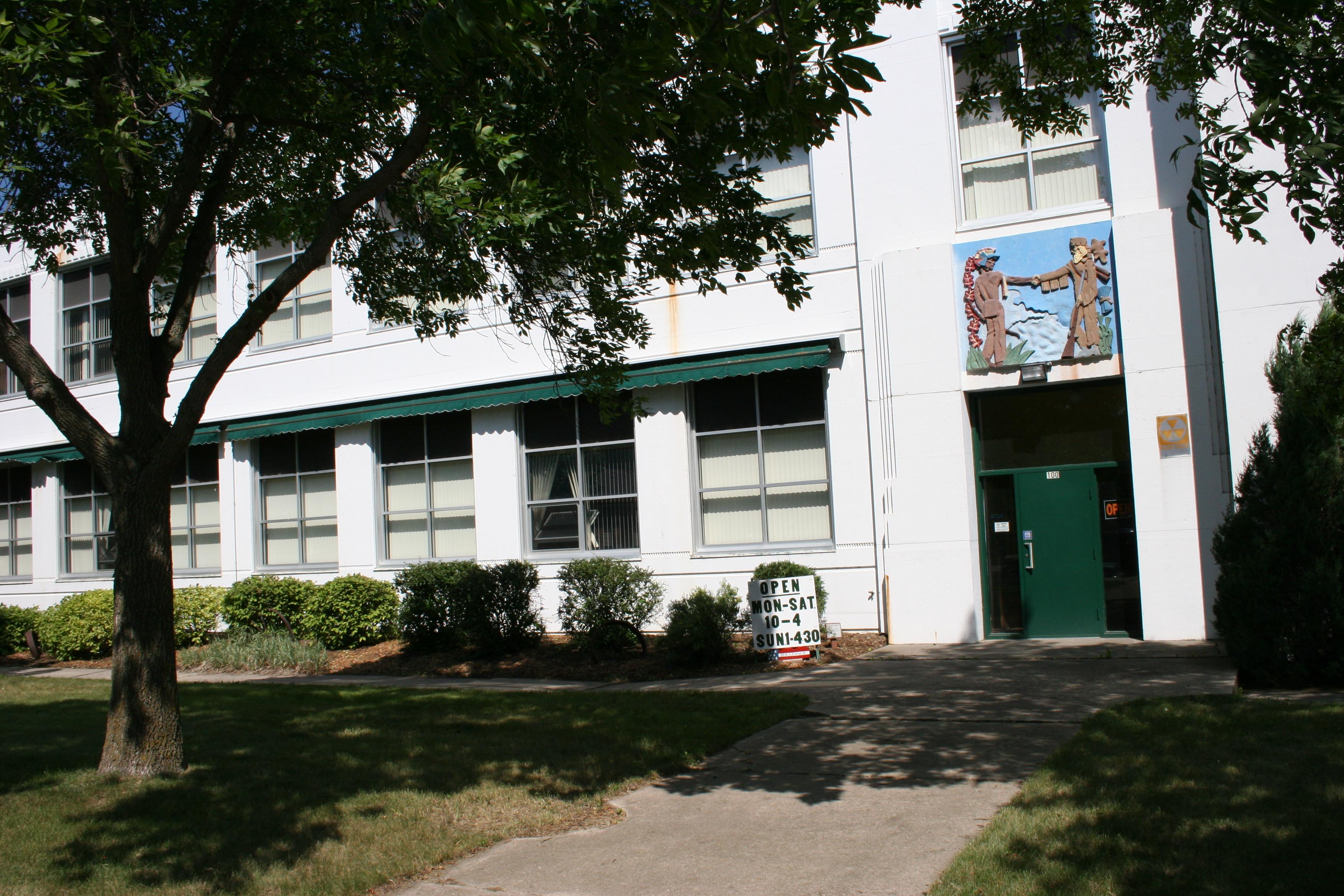
Specifically, from now through October 20,  Minnesota’s Machinery Museum in Hanley Falls is hosting the exhibit on where, how, who and why Americans work.

But that’s not all. Hanley Falls is part of “The Way We Worked,” as are several other Minnesota places and people.

Says Museum Director Laurie Johnson: “It is an honor in itself to be hosting a Smithsonian Traveling Exhibit. To be an actual part of the exhibit traveling all over the U.S. is a very big honor.”

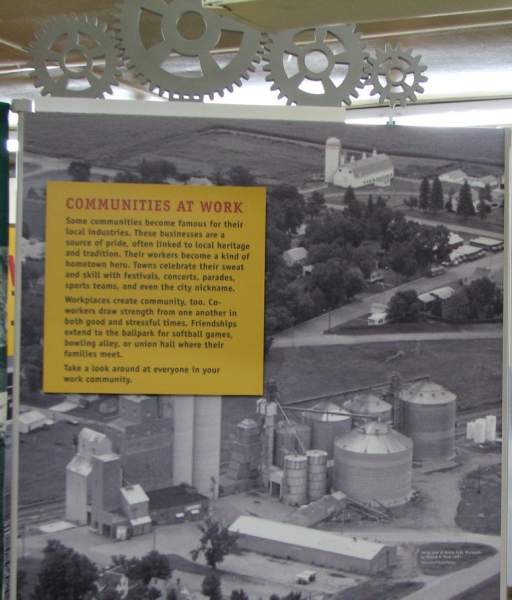
Hanley Falls’ place in the exhibit falls in the “Communities at Work” section and features a 1987 aerial view photo of Hanley Falls by Vincent H. Mart sourced from the Minnesota Historical Society. The MHS photographic collection includes 5,697 aerial views from around Minnesota photographed by Mart between 1962-1988.

The 1987 Vincent H. Mart photo showing a portion of Hanley Falls and now part of the Smithsonian traveling exhibit. Photo courtesy of Minnesota’s Machinery Museum.

Mart’s black-and-white shot #5,655 in the MHS archives, and now in the Smithsonian exhibit as image 196, shows the then Hanley Falls Farmers Elevator (now the Farmer’s Co-op Elevator) on the west side of town, plus Bennett Transportation (bus company) and the fourth-generation Oftedahl family farm. As a side note, the elevator celebrated its 100th anniversary this past July on Minnesota’s Machinery Museum grounds with more than 2,000 in attendance.

According to Johnson, the scene in the photograph no longer looks the same. Several of the grain bins were damaged in a wind storm and the main office was  moved and an elevator built to the southwest of the Oftedahl farm. The old elevator remains and is still used by the Farmer’s Co-op.

The exhibit copy which accompanies the Hanley Falls photo reads, in part:

The reminders of a town’s main industry imprint its landscape and identity. Silos dominate the skyline in Hanley Falls, Minnesota as they do in most small, agricultural communities.

And here’s how Johnson summarizes what the Hanley Falls photo tells us about “The Way We Worked:”

Farming is a way of life here and has been for many generations. The exhibit talks about “community” and we are definitely a community that works, worships, (has) neighborhood get-togethers and plays together.

Johnson, who lives on a farm about 10 miles north of Hanley Falls, further explains that the local elevator, banks and gas station provide jobs in town. Some residents work in neighboring towns. Many are retired.

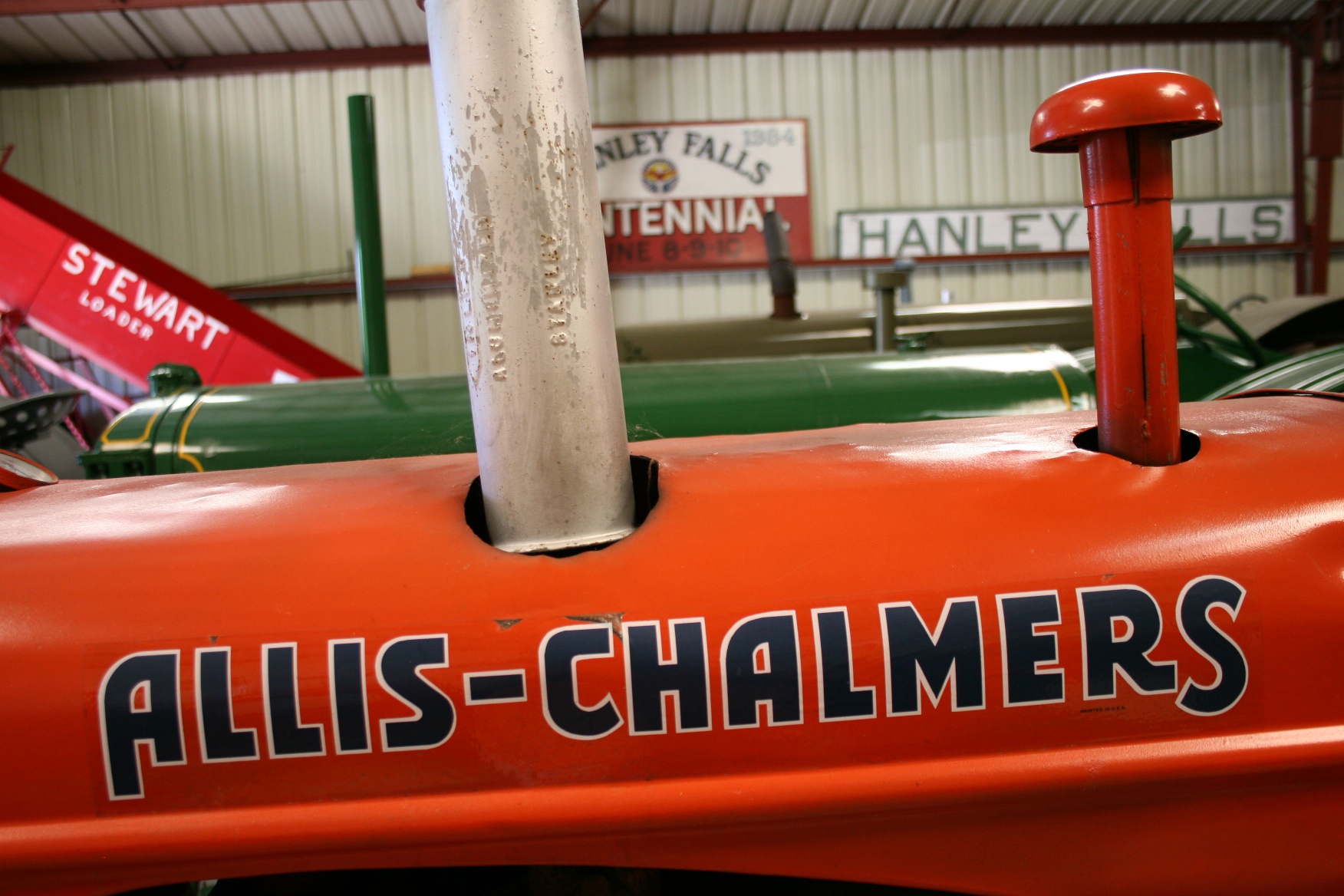
You’ll find plenty of old tractors and farm machinery, along with vintage cars and trucks, in the museum’s outbuildings. Minnesota Prairie Roots file photo.

Already the Smithsonian show is attracting more visitors to Minnesota’s Machinery Museum, defined by Johnson as “an agricultural museum recalling farm life in stories and artifacts from how we farmed with horses to a farm kitchen, bedroom, parlor and general store…preserving our agricultural heritage for generations.”

The entrance to the portion of the museum housed in the former school, a WPA building. Minnesota Prairie Roots file photo.

The five-building Yellow Medicine County museum complex, which includes the former Hanley Falls School built in 1939 by the Works Progress Administration, rests on six acres. You’ll find antique tractors, automobiles, gas engines, threshing equipment and other machinery and artifacts in the outbuildings.

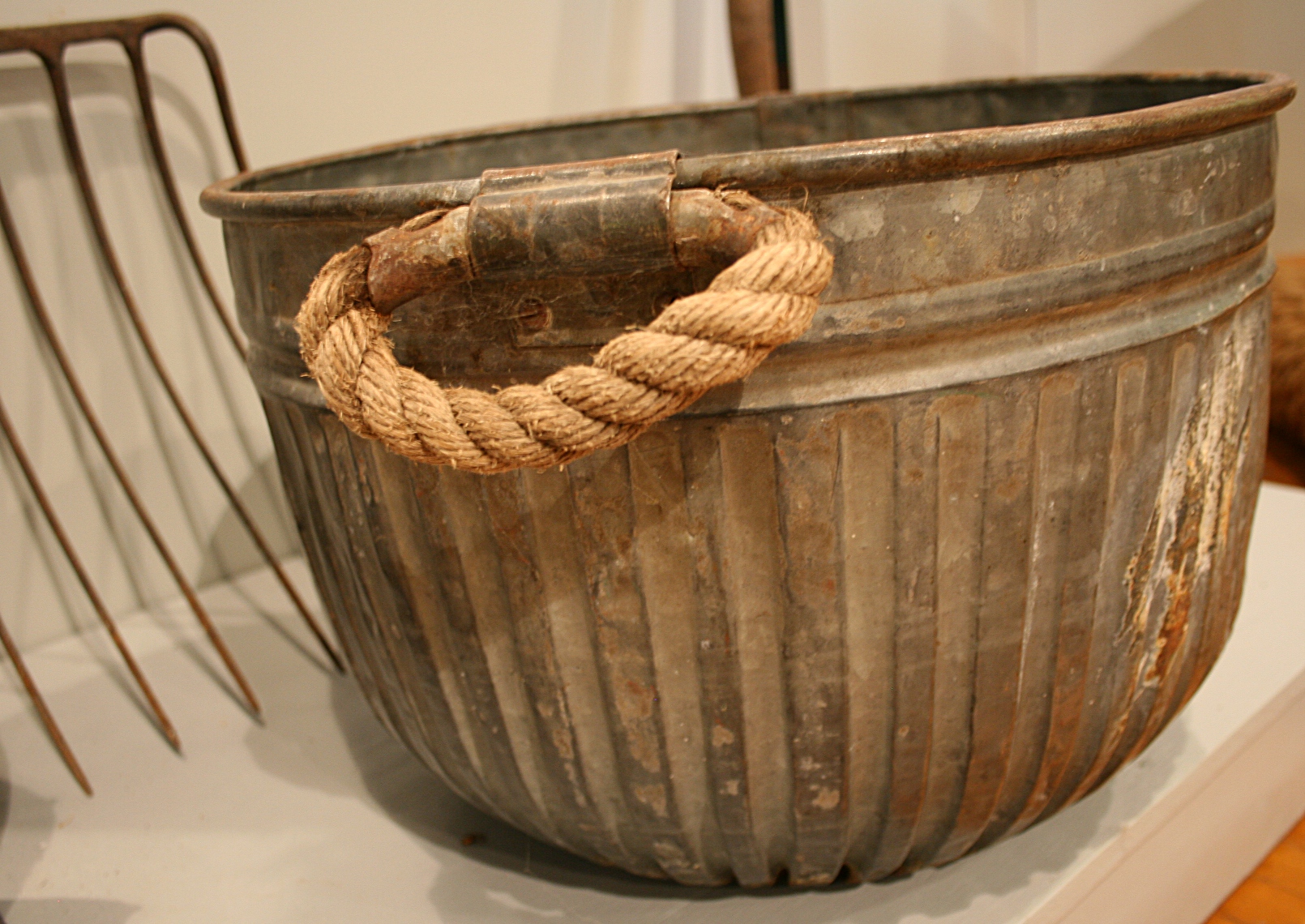
A bushel basket, one of the many ag items displayed at the museum. Minnesota Prairie Roots file photo.

Until October 20, you also can find five multi-sided kiosks featuring photos, videos, flip booklets and other interactive activities as part of the Smithsonian’s “The Way We Worked” exhibit.

Besides Hanley Falls, other Minnesota places/information in the show are a photo of women sorting sweet potatoes; quotes from Earl Bakken, founder of Minneapolis-based Medtronics, maker of the first self-contained pacemaker; a 1974 photo from Danheim Dairy in New Ulm; a SPAM Town banner; mention of the Moorhead Spuds (hometown pride for the town team); and a 1928 photo of St. Paul Gas and Light Company workers at a dance.

Johnson has no idea how the Hanley Falls photo became a part of this national touring exhibit. She discovered the town’s inclusion while vacationing in Tennessee, where she stopped to view the exhibit.

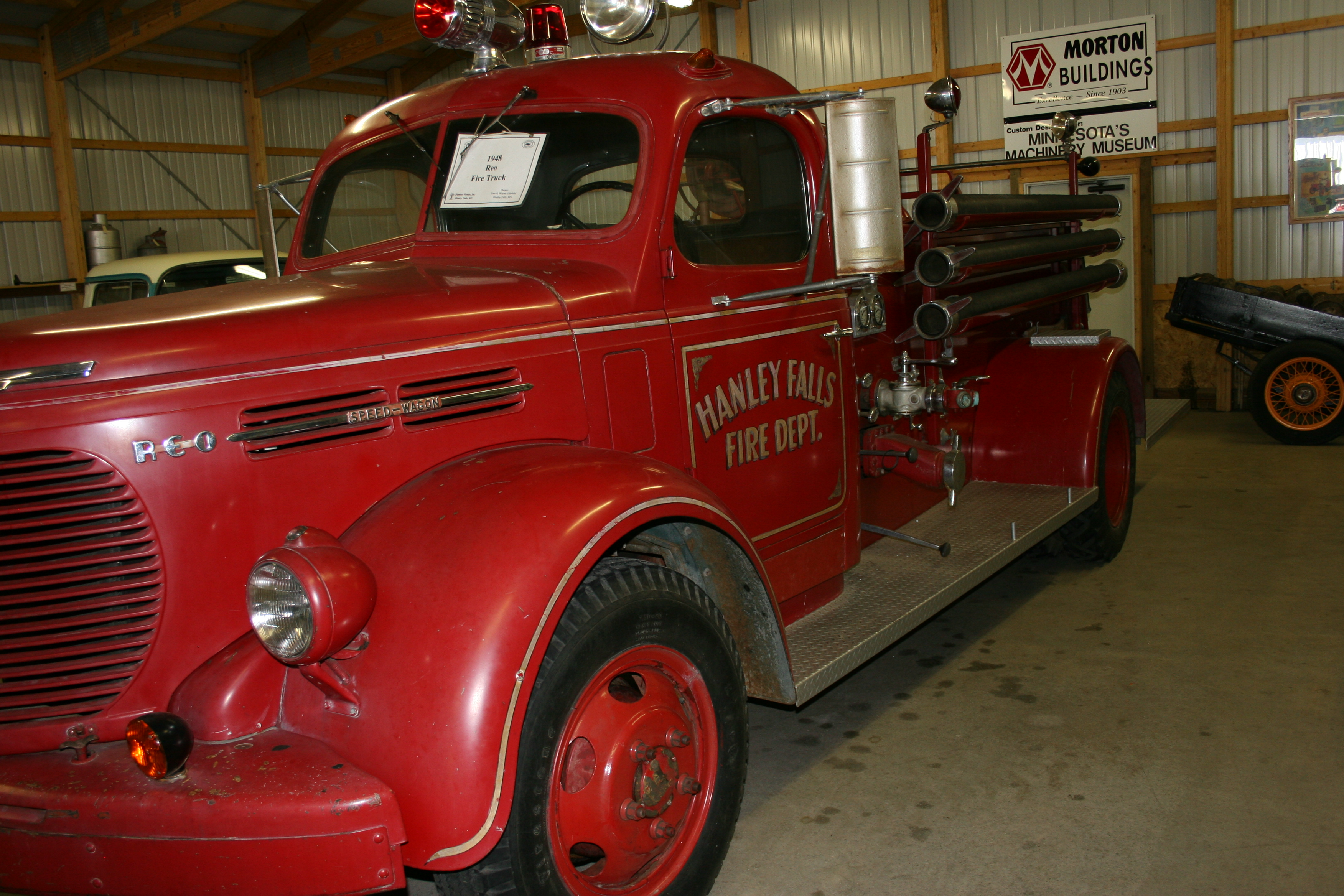
An old Hanley Falls fire truck is among vehicles housed in the outbuildings. Minnesota Prairie Roots file photo.

After leaving Hanley Falls, the exhibit will travel to five other Minnesota locations, including the Wright County Historical Society in Buffalo (Oct. 27 – Dec. 8); the Winona County Historical Society in Winona (Dec. 15 – Jan. 26); the Steele County Historical Society in Owatonna (Feb. 2 – March 16); the Virginia Area Historical Society in Virginia (March 23 – May 4); and the Depot Preservation Alliance in Baudette (May 11 – June 22).

In Hanley Falls, “The Way We Were” can be viewed between 10 a.m. – 4 p.m. Monday – Saturday or from 1 p.m. – 4:30 p.m. on Sunday. The museum season was extended to accommodate the show.

Admission to Minnesota’s Machinery Museum is free, but monetary contributions are accepted via a free will donation box.

Located in southwestern Minnesota, Hanley Falls sits nine miles south of Granite Falls or 20 miles north of Marshall along Highway 23. Go one block west of Highway 23 and then a block north to find the museum.

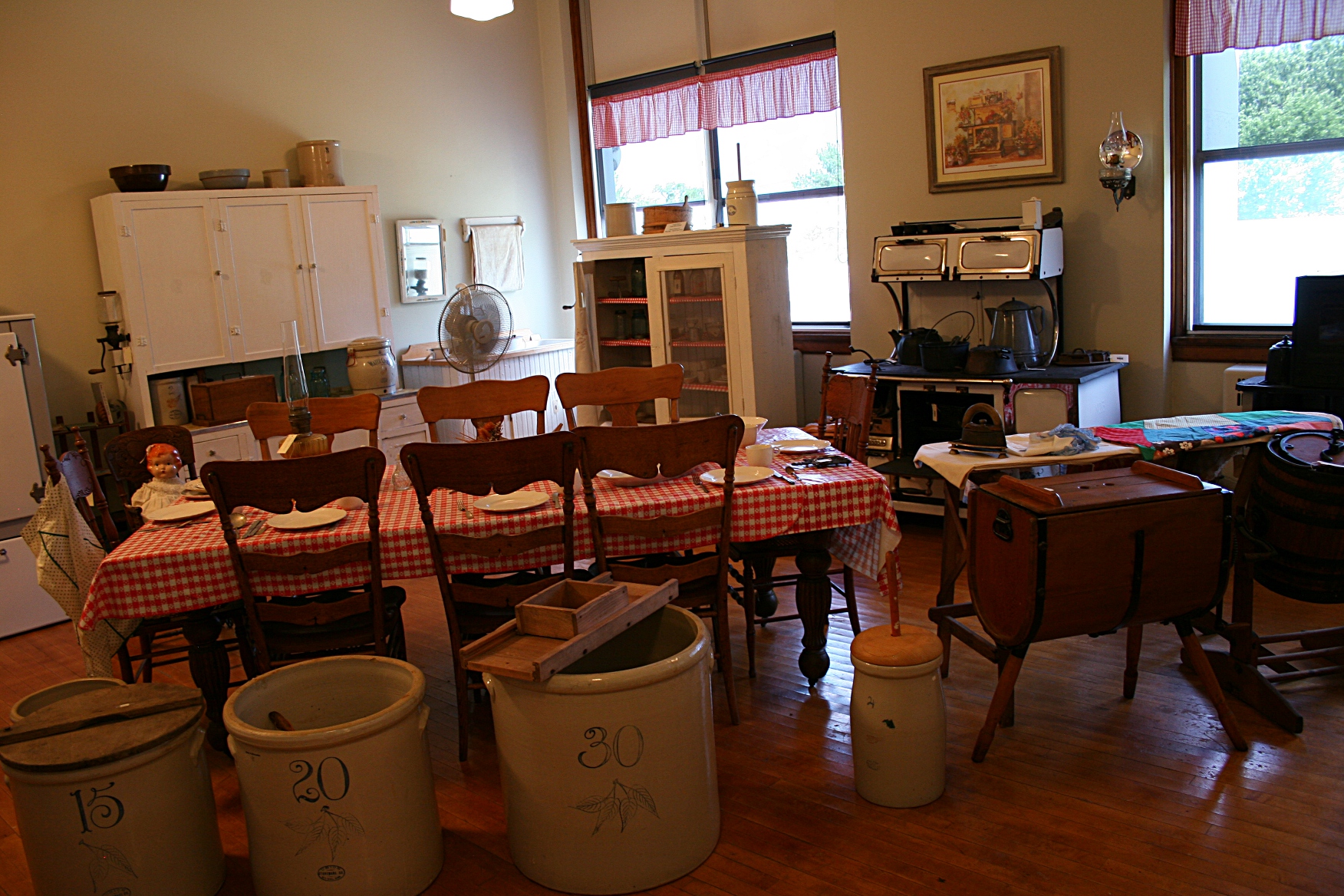
An old-style farm kitchen on the second floor of the museum. Minnesota Prairie Roots file photo.

“The Way We Worked” is presented in Hanley Falls in collaboration with the Minnesota Humanities Center. Funding, says Johnson, is via the Center; The Clean Water, Land & Legacy Amendment (Arts & Cultural Heritage Fund); the Smithsonian Institute; the National Endowment for the Humanities; and the United States Congress.

Minnesota’s Machinery Museum previously hosted the Smithsonian’s Museum on Main Street projects “Barn Again” and “Between Fences.”

FYI: To learn more about Minnesota’s Machinery Museum, click here to link to the museum website.

For more info about “The Way We Worked,” click here.

To view additional photos by Vincent H. Mart in the Minnesota Historical Society archives, click here.

© Copyright 2012 Audrey Kletscher Helbling


In Faribault: Scholar to address Lincoln’s response to the U.S.-Dakota War of 1862 September 5, 2012

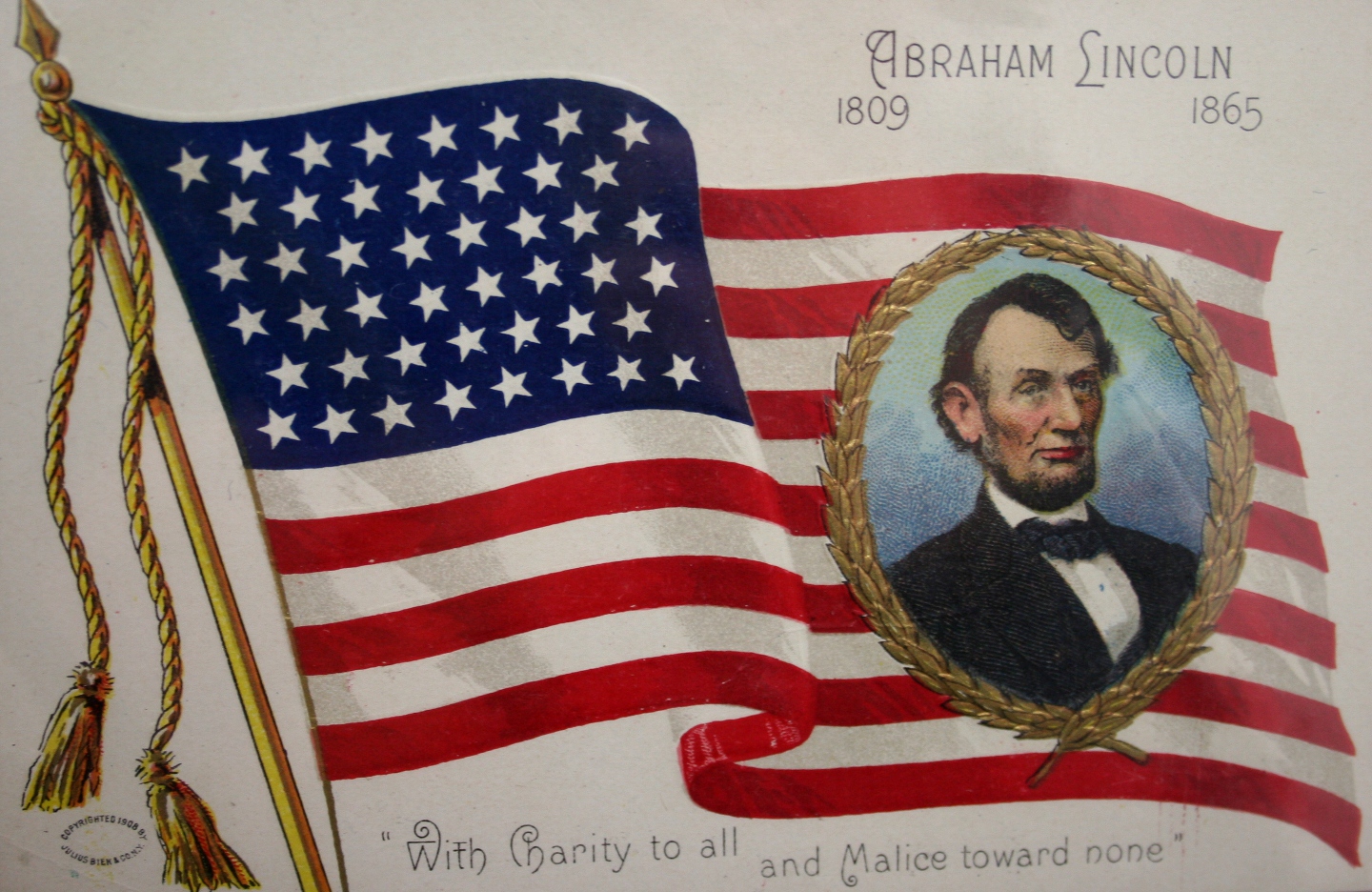
A Lincoln postcard which a collector brought to a Cannon Valley Civil War Roundtable meeting several years ago.

THE FIRST TIME I ATTENDED a Cannon Valley Civil War Roundtable meeting nearly three years ago, I arrived expecting to view slave documents. The presenter, however, left the papers at home and brought, instead, memorabilia specifically related to Abraham Lincoln.

He did not disappoint. I viewed vintage postcards and original photos of Lincoln, Civil War buttons and replicas of Mary Todd Lincoln’s White House china, among many other items.

An 1840 Philadelphia Derringer, like the pistol used to assassinate President Abraham Lincoln.

What impressed me the most, however, was the collector’s 1840 Philadelphia Derringer, exactly like the pistol with which John Wilkes Booth assassinated Lincoln. The weapon was nearly small enough to hide in the palm of my hand.

Visuals like that teach me more about history than any textbook ever will. So do guest speakers. They address the monthly meetings of the Roundtable whose 25 members are interested in preserving and interpreting the Civil War.

Now the Faribault-based Cannon Valley Civil War Roundtable is bringing in a scholar of Abraham Lincoln to kick off its eighth year as an organization. You needn’t be a Roundtable member to attend; I’m not.

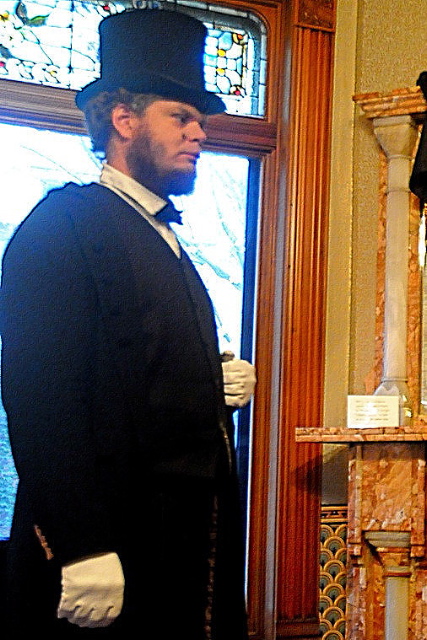
Bryce Stenzel of Mankato portraying President Abraham Lincoln. Stenzel, among other things, directs Lincoln’s Traveling Troupe, a group of students and community actors who bring Lincoln’s life and legacy to life via a dramatic, living history portrayal and authentic re-enactment.

Bryce Stenzel of Mankato, who developed a first-person portrayal of Abraham Lincoln in 1989 and since has traveled around the country presenting, will present “1862: Lincoln Trials by Fire” at 7:30 p.m. Thursday, September 20, at the Faribault American Legion, 112 Fifth St. N.E.

He will address, Stenzel says, “the ‘State of the Union’ as it existed in 1862 and Lincoln’s response to the U.S.- Dakota War, against the backdrop of the American Civil War and the issuance of the Preliminary Emancipation Proclamation on September 22, 1862.”

It’s a timely topic given this year marks the 150th anniversary of the U.S. – Dakota War.

Specifically, Stenzel details, his upcoming program “is a means for Faribault to acknowledge its unique connection to the U.S. – Dakota War by paying homage to its native son, Bishop Henry Whipple. Even though no fighting took place in Faribault, your community played an active role in influencing the final outcome.”

This historian, who has authored eight books on local historical and Lincoln-related topics, possesses an advanced history degree and has taught social studies/history at all levels, including college, has long taken a personal interest in the U.S. – Dakota War. His great-great grandmother and her two-year-old daughter escaped a band of Dakota warriors by hiding in tall prairie grasses. And his great-great grandfather served with the Fifth Minnesota Regiment and fought in the decisive Battle of Nashville in 1864.

Stenzel grew up in Mankato, where 38 Dakota were hung in the largest mass execution in U.S. history. President Lincoln commuted the death sentences of 265 Dakota.

Says Stenzel:

The central question of my presentation is why did Lincoln feel compelled to intervene at all, when he didn’t have to? In fact, from a political standpoint, Lincoln committed political suicide—most Minnesotans at the time believed it was both right and necessary to hang the Indians as a means of preventing such a tragedy from ever happening again. It is useful for the modern audience to consider that what was “politically correct” in the 19th century, is no longer. Historical interpretation changes with time.

Dan Peterson, a member of the Cannon Valley Civil War Roundtable who has heard Stenzel speak, fully endorses him: “(Stenzel)) reminds me of my love for Abraham Lincoln just to be in his audience or close to him. Lincoln is on our money, our named streets, one state capitol, highways, buildings, businesses, cars and more. You just cannot get away from him.”

FYI: Tickets to the dinner and program are on sale now at the Rice County Historical Society in Faribault or from Chuck Peterson (507-301-2470), Jan Stevens (507-244-0500) or Dan Peterson (507-459-3140). Cost is $22 for non-members and $20 for paid-up members of the Cannon Valley Civil War Roundtable.

Tickets for the meal of pork ribs with trimmings must be purchased by Saturday, September 8. The event begins at 5 p.m. on September 20 with a social and then dinner at 6 p.m.

If you want to attend just the Lincoln presentation by Stenzel, the cost is $10 for adults, $5 for students 16 and older, and free for those under 16. The program begins at 7:30 p.m.

The Cannon Valley Civil War Roundtable meets the third Thursday of each month at 7 p.m. at the Faribault Senior Center with a speaker at each meeting. In October, the topic will be the New Ulm raid as part of the U.S. – Dakota War; in November, the Antietam Battlefield; and in December, the annual Civil War food potluck (probably with possum soup, hardtack and more, Peterson promises).

© Copyright 2012 Audrey Kletscher Helbling
Bryce Stenzel photo courtesy of Bryce Stenzel


Threshing oats at the Rice County Steam & Gas Engine Show September 4, 2012

Filed under: Uncategorized — Audrey Kletscher Helbling @ 6:42 AM
Tags: , , , , , , , ,

Grayden Moorhouse of Randolph holds freshly-threshed oats.

GRAYDEN MOORHOUSE unfurls his palm, revealing some two dozen oat kernels before dropping several into my hand.

He wants me to try them, to separate the meat from the hull with my teeth and spit the shell onto the ground.

I try, without success, and then he hands me a single kernel already hulled.

All the while I am thinking this:

I shoveled plenty of oats in my day growing up on a dairy and crop farm. And why would I want to eat raw oats, which I associate with cattle feed?

But Grayden is one of those guys who seems convincing and I like the strong sound of his name and, heck, what’s life without trying something new occasionally?

So I eat the single oat kernel and that is enough for me. I’d rather eat my oats in oatmeal.

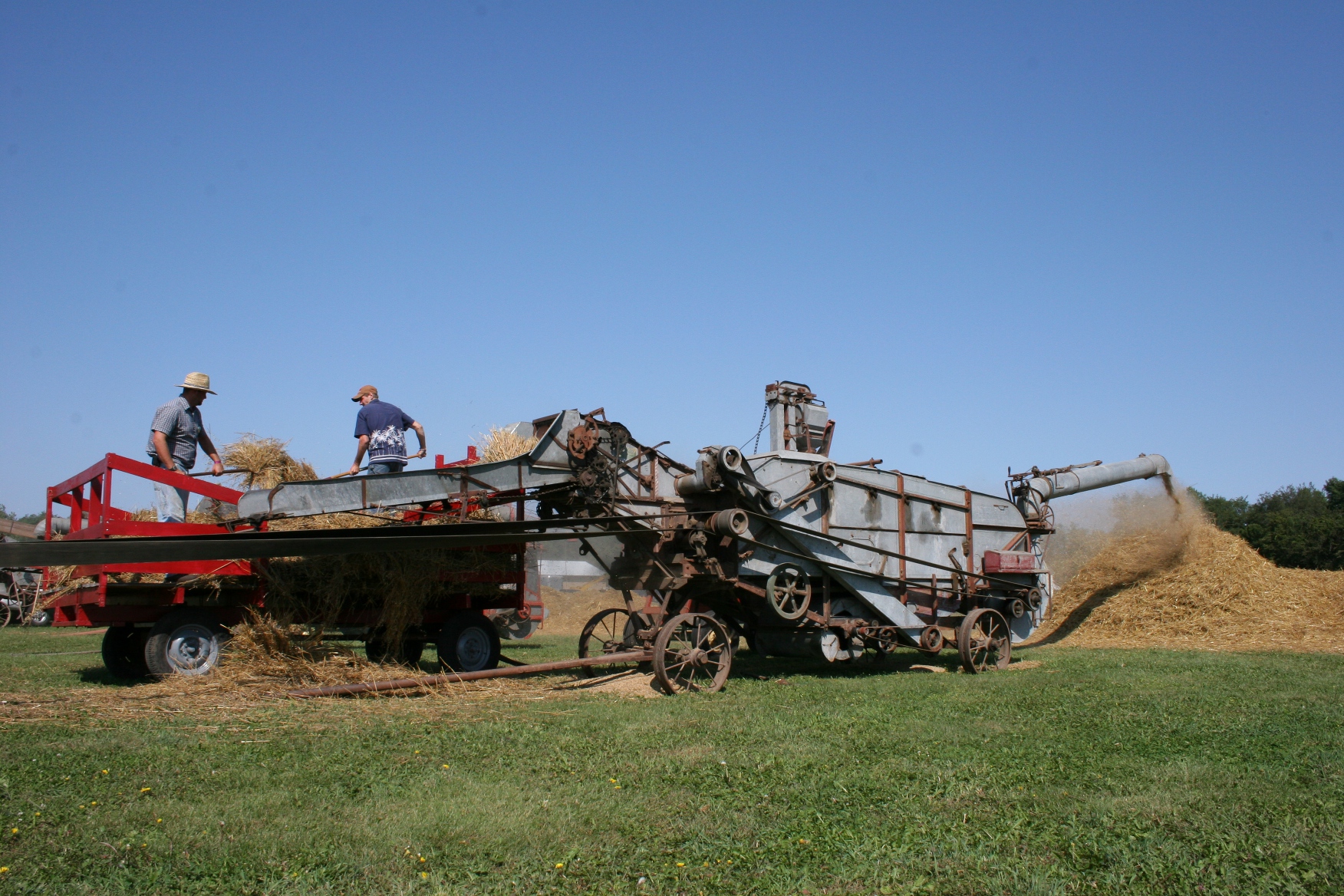
Now that I’ve ended that introductory narrative, let’s follow the path of how those oat kernels ended up in Grayden’s hand via this photo essay from the Rice County Steam and Gas Engine Show this past weekend in rural Dundas.

Shoveling the raw oats into the conveyor system.

An overview of the threshing equipment and process of separating the oats kernels from the stem.

Bill Becker of rural Northfield mans the Minneapolis Moline which powers the threshing operation.

More shoveling of oat bundles, a dusty, dirty job.

The dust flies as men and machine work.

Plenty of farmers and retired farmers watch, remembering…

While horses plow a nearby field (left), the threshing crew continues working.

And the straw pile grows.

Finally, meet Grayden Moorhouse, whose strong name, it seems to me, belongs in a western.

FYI: Please check back for more posts from the steam and gas engine show. You’ll meet one interesting character and an incredible teen, plus ride along with me on the back of a truck.

© Copyright 2012 Audrey Kletscher Helbling
 

In which I learn a lot about the James-Younger Gang bank raid in Northfield September 3, 2012

CHRISTIAN HAKALA WEAVES the story of the bank robbery with the skills of a seasoned storyteller, his voice rising as the tension mounts, his hands gesturing, his eyes locking with those of a rapt audience.

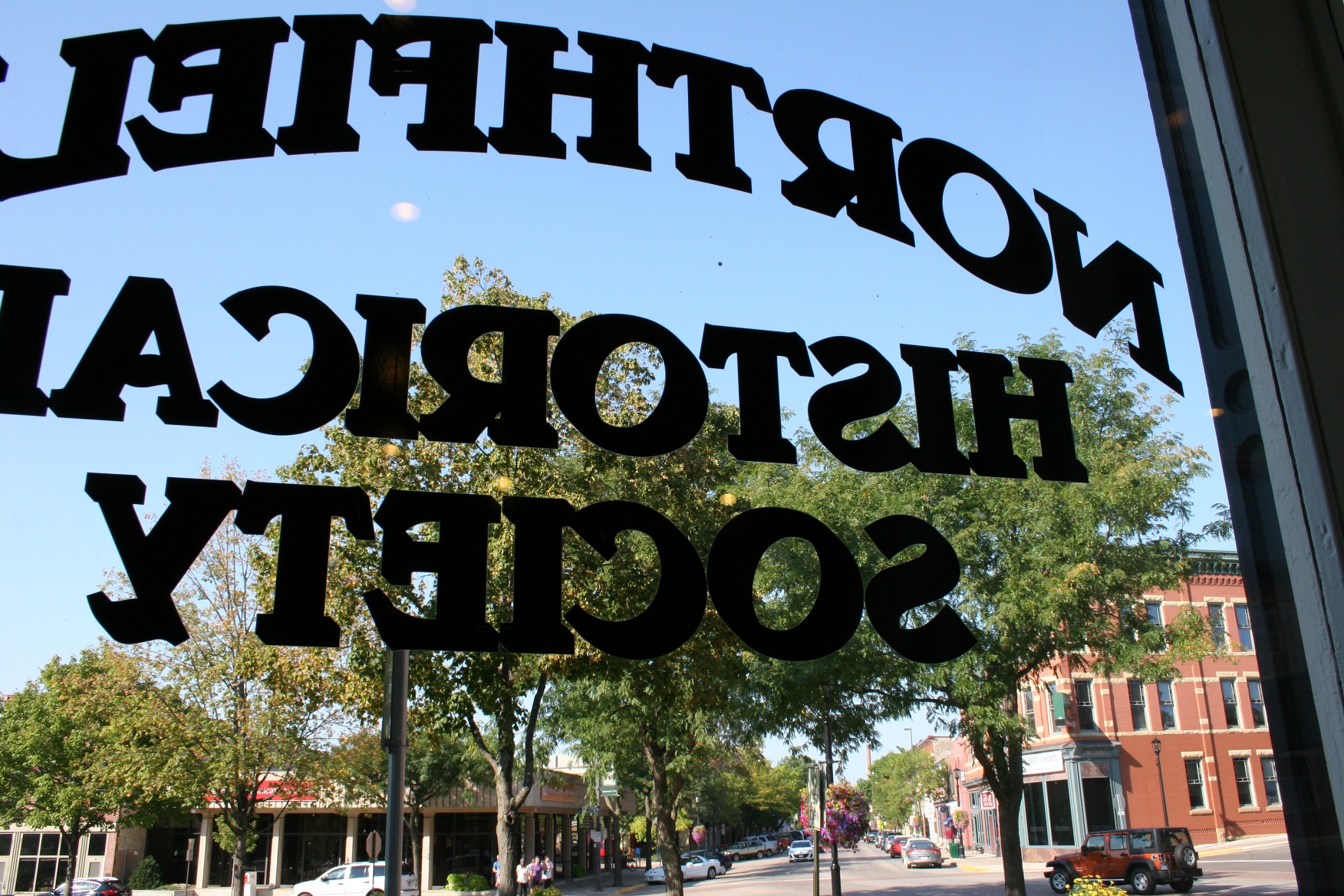
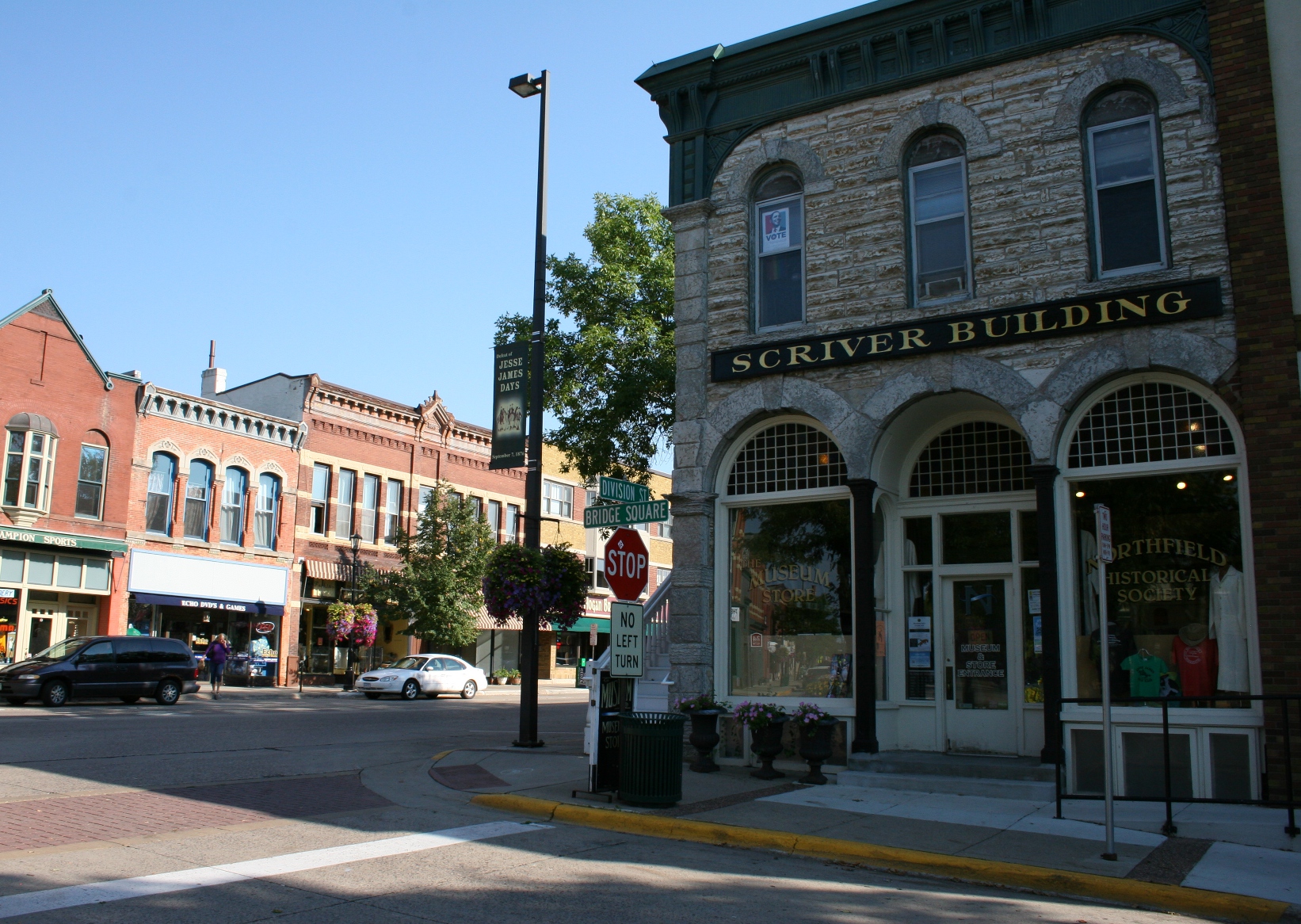
Looking through a front window of the Northfield Historical Society museum toward Division Street.

It is Sunday afternoon and I am with a small group touring the Northfield Historical Society. I have come here with my husband to view the temporary U.S.-Dakota War of 1862 exhibit as it relates to Rice County.

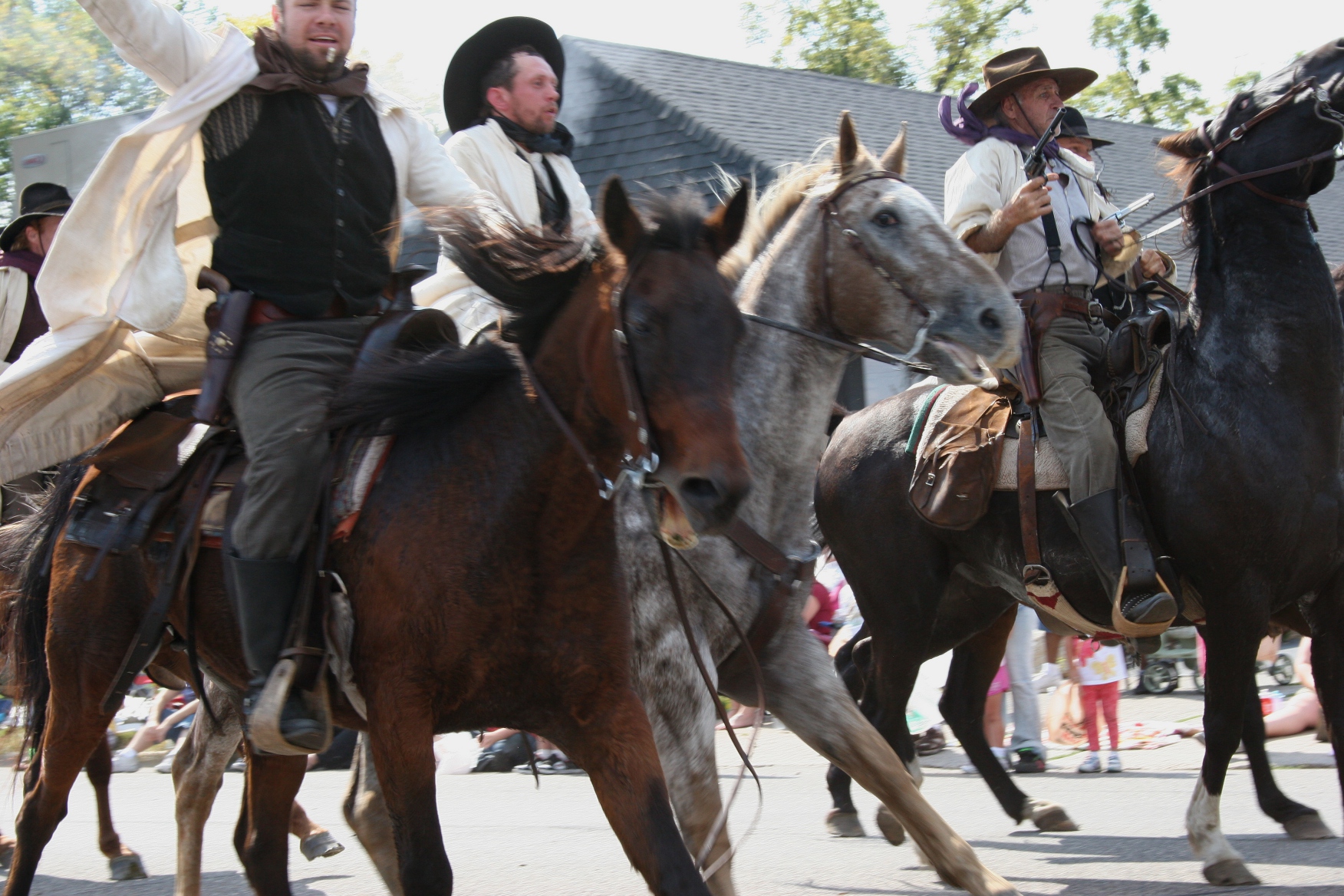
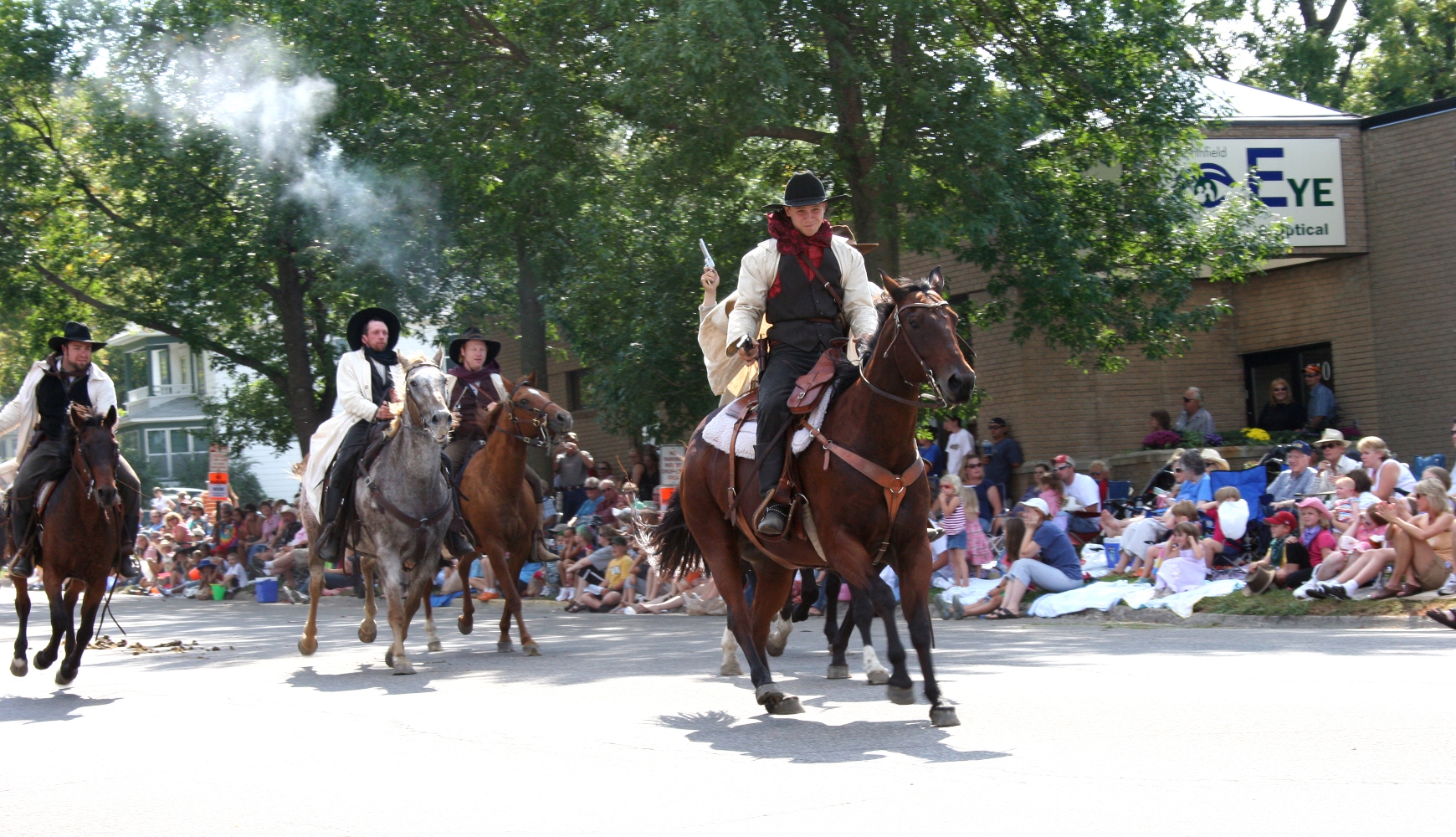
The James-Younger Gang re-enactors riding in The Defeat of Jesse James Days parade perhaps five years ago.

But I find myself, instead, captivated by Hakala’s intriguing play-by-play account of the James-Younger Gang bank robbery of September 7, 1876, as he leads us through the historical society and into the bank. I am embarrassed to admit that I’ve never visited this museum, site of perhaps the most historic bank robbery in U.S. history, even though I live only 15 miles away and once worked briefly as a newspaper reporter in this town.

This week some 100,000 visitors, according to Hakala, are expected in Northfield for the annual Defeat of Jesse James Days celebration September 5-9.

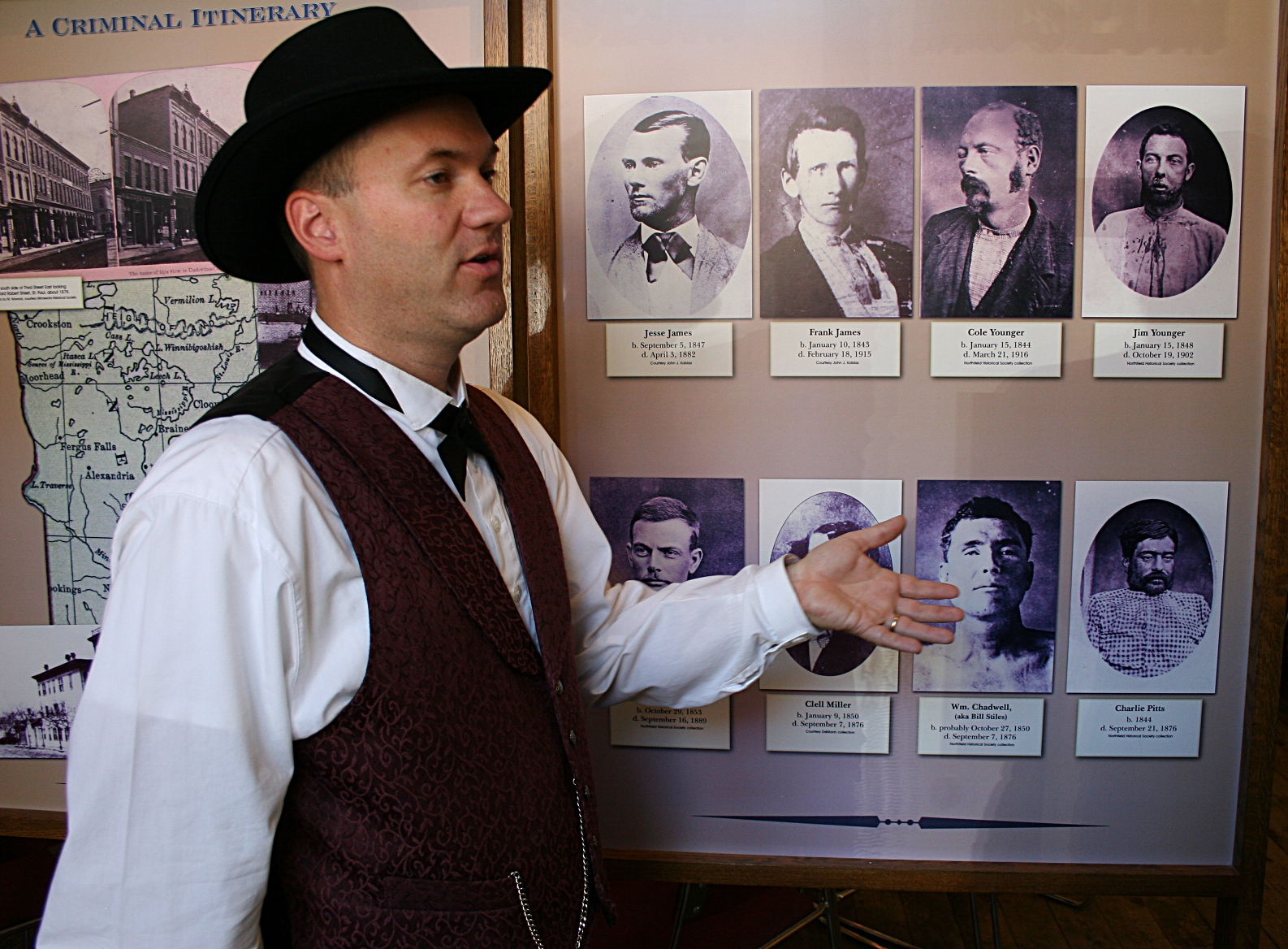
Christian Hakala talks about gang members involved in the Northfield bank raid, pictured to his left: Frank and Jesse James; Cole, Bob and Jim Younger; Clell Miller; William Chadwell; and Charlie Pitts.

The former history teacher, and now a fund raiser at Carleton College in Northfield, serves on the historical society board, volunteers as a tour guide and role plays a townsperson in the annual re-enactments of the bank robbery. His knowledge of the crime is precise, right down to the minute on the original bank clock, stopped at 1:50 p.m., the time of the deadly and unsuccessful robbery.

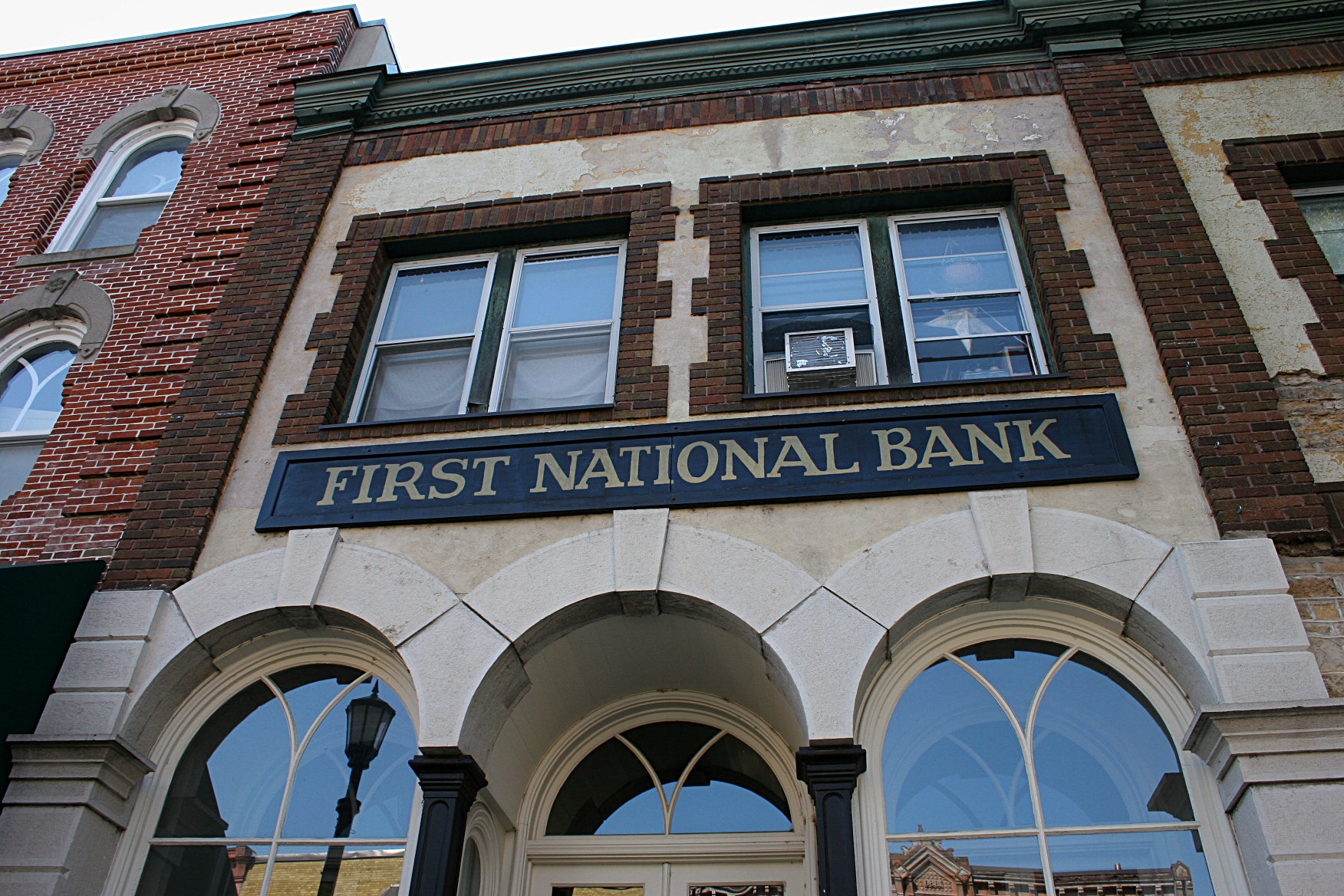
The front of the original First National Bank of Northfield. I didn’t photograph the entire building as the sidewalk in front of the bank was torn up and blocked for installation of sidewalk poetry.

It was all over in seven minutes with four shot dead, including acting cashier Joseph Lee Heywood who refused to allow the robbers into the vault; Swedish immigrant Nicolaus Gustafson; and outlaws Clell Miller and William Chadwell.

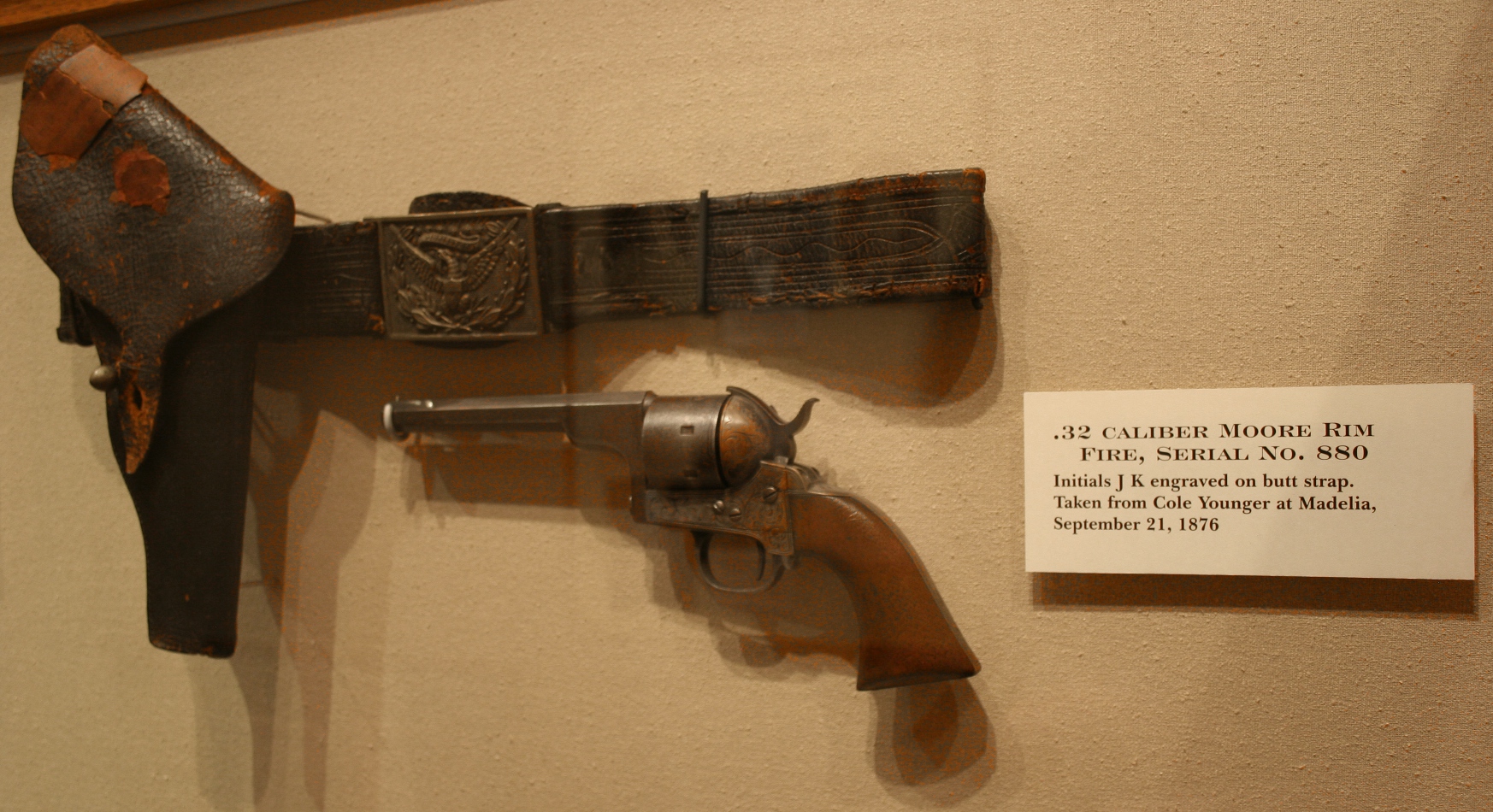
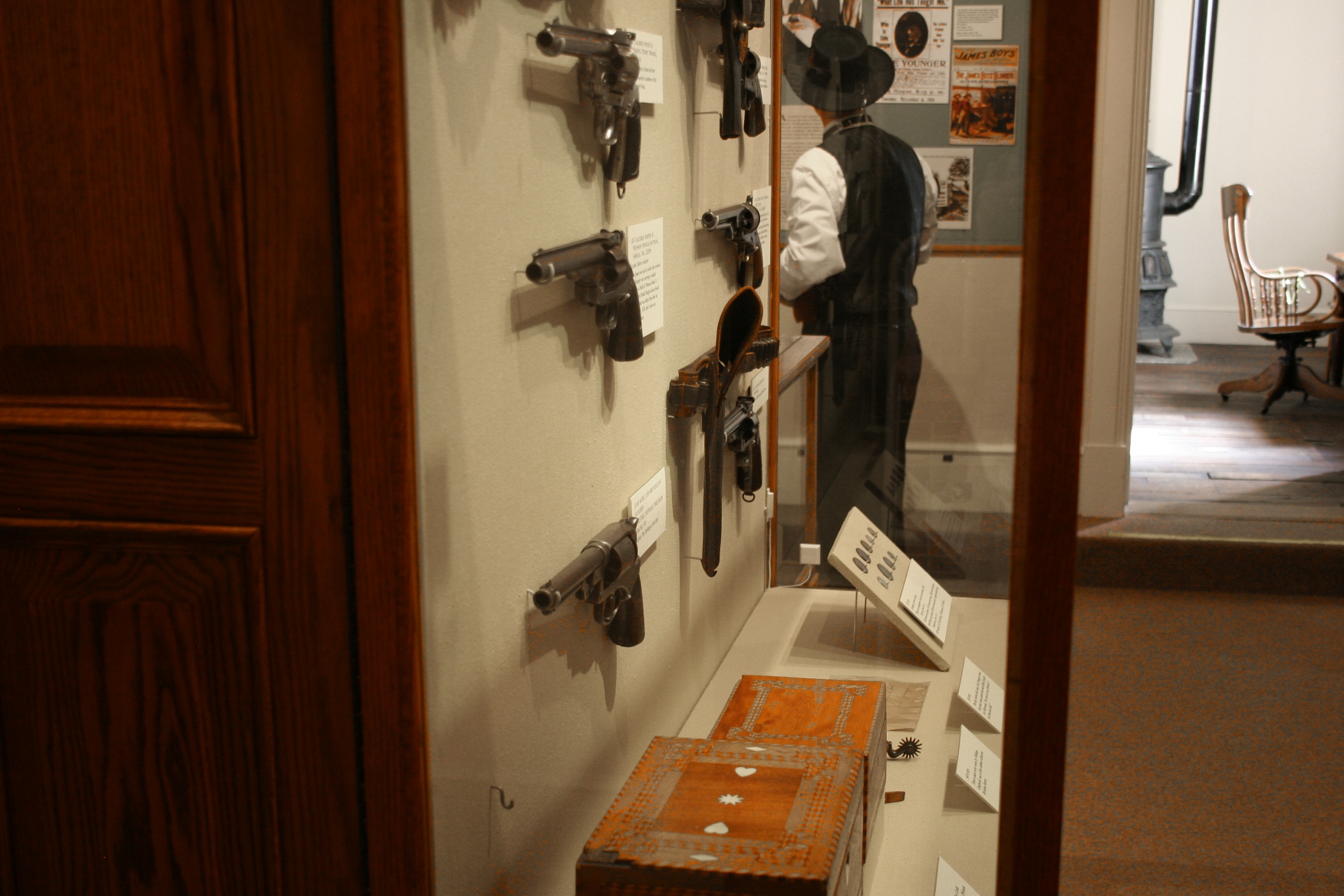
The gun confiscated from Cole Younger when he was captured two weeks later near Madelia. I shot this glass-encased weapon in available light, without a tripod and without flash, meaning quality is not there in this image.

Not until the end of the tour does Hakala reveal that efforts are currently underway to exhume and determine if the presumed body of gangster Miller, buried in his home state of Missouri, truly is Miller.

Hakala explains: Then-medical student Henry Wheeler, who shot Miller from an upper story level of a building across the street from the bank, dug Miller from his grave and shipped the body from Northfield to his Michigan medical school for dissection and study. Later, Wheeler would return the supposed body of Miller to his family in Missouri. But, as the story goes, Wheeler kept a skeleton, purported to possibly be Miller, in a closet of his Grand Forks, N.D., medical practice office. That skeleton is today owned by a private collector.

The Miller family, Hakala says, is cooperating in proposed plans to positively identify the body buried in Missouri via forensic testing. The body was badly decomposed and thus not identifiable by the time it was received by the Miller family for burial.

Wheeler’s actions, Hakala further says, would not have been all that unusual for the time period with a likely attitude of “I killed the guy. He’s mine.”

This recent development simply adds to the mystery and drama and varying versions of events and details which have long accompanied the James-Younger bank raid in Northfield. Hakala, a northeastern Minnesota native who has also lived and taught in Missouri, knows how perspectives and stories differ based on source locations.

Yet, Hakala assures that the minute-by-minute account he relates of the actual bank robbery is based on the eyewitness testimony of a bookkeeper, collaborated by a teller who also witnessed part of the hold-up.

The only portion of the original bank you’ll see in this post is to the right in the background, caught when I was photographing this display case in the adjoining museum space which is in a separate building.

I can’t possibly share with you here the entire scenario Hakala presented in his tour on Sunday. Nor can I show you images, because photography is not allowed inside the original First National Bank of Northfield. But I can tell you that walking upon the very same rough floor boards trod by outlaws with a 10-year history of successful raids on trains and in banks, eying the massive black vault (closed, but unlocked at the time of the crime) and seeing blood stains on the bank ledger makes an impression.

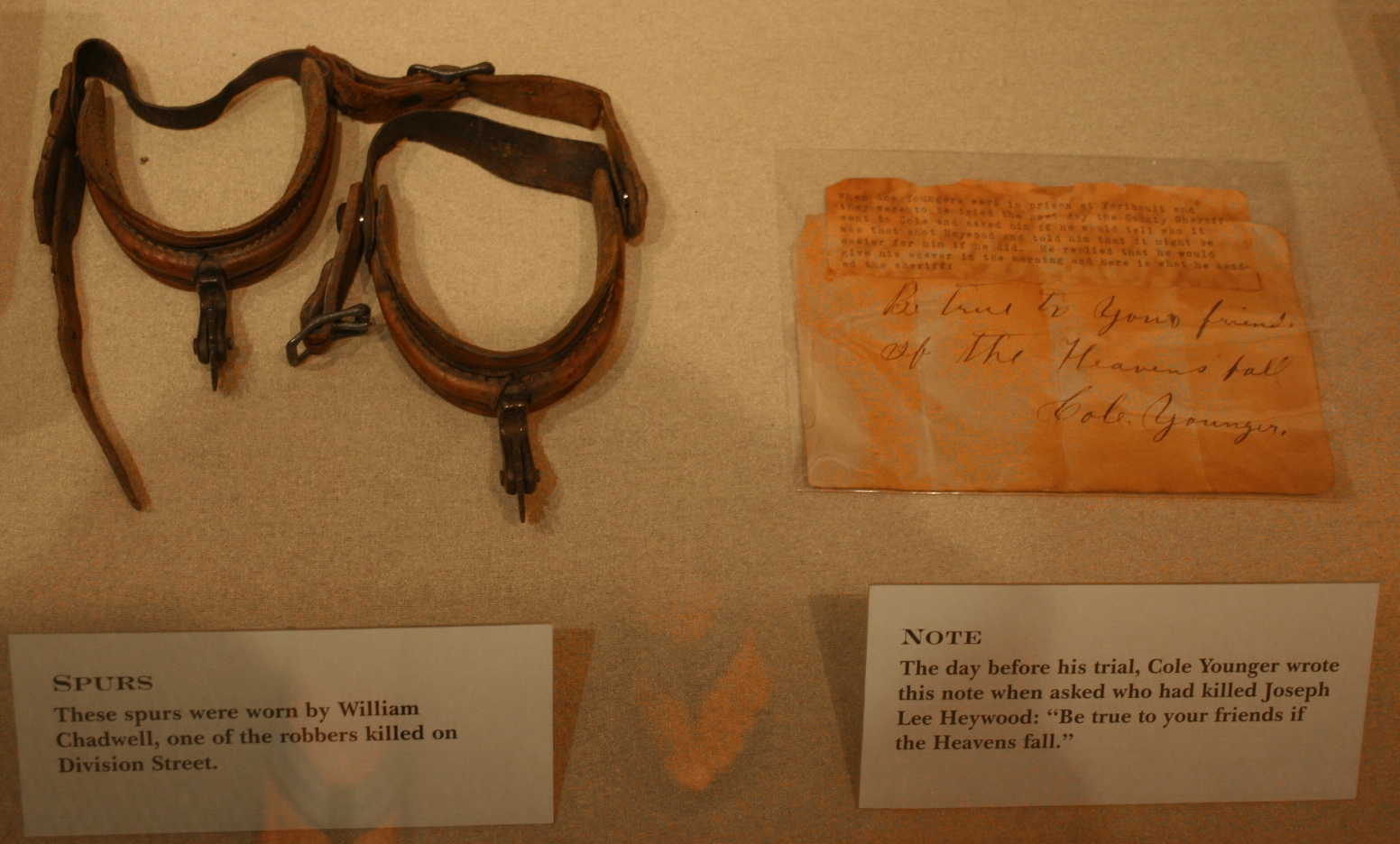
These two items in a display case caught my attention. On the right is a note written by Cole Younger the day before his trial. When asked who killed Joseph Lee Heywood, he answered. “Be true to your friends if the Heavens fall.” In other words, he wasn’t telling. To the left are spurs worn by outlaw William Chadwell, who was shot and killed on Division Street during the raid.

However, here are some select pieces of information presented by Hakala which I find particularly interesting:

  • Jesse and Frank James’ father was a Baptist minister.
  • The James-Younger Gang invented the “stick ’em up” bank hold-up, conducting the first bank raid during daylight business hours, in which no war was going on, in Northfield.
  • One theory surmises that the James-Younger Gang was trying to get back at the Union by robbing banks.
  • In following with that anti-Union theory, Hakala notes that Union General and post Civil War provisional governor of Mississippi Adelbert Ames was a member of the Northfield family—coincidentally Jesse Ames and sons—which owned the local Ames (flour) Mill. Adelbert’s father-in-law was Benjamin Butler, a Union general much-despised by Southerners. This could explain why the gang targeted Northfield since the Ames’ family had money in the First National Bank.
  • While there was $15,000 in the Northfield bank vault, the outlaws made off with only $26.70 in cash, and not from the vault, which was protected by hero/cashier Heywood.
  • The unarmed Heywood was shot out of frustration and “cold-blooded meanness” (Hakala’s words, not mine). He was also slit across the throat, just enough to scare him, and pistol-whipped.
  • Northfield townspeople were throwing cast iron skillets, tossing bricks and aiming birdshot at the trapped gang members as they tried to ride away from the narrow canyon-like street setting in Northfield.
  • A posse of some 1,000 people formed to track down the gang.  The three Younger brothers were shot and captured in a gun battle at Hanska Slough near Madelia. Charlie Pitts was killed there. Frank and Jesse James escaped to Missouri.
  • Jesse James was killed by a friend and fellow gang member, Robert Ford, in 1882 for the reward money.
  • Postcards featuring photos of the dead outlaws, Clell Miller and William Chadwell, were sold to the public after their bodies were taken to a professional photography studio in Northfield and photographed.
  • It is written into a lease on an apartment across the street from the original First National Bank that re-enactors can use the apartment each year for bank raid re-enactments. An actor is stationed in the upper level room to portray medical student Henry Wheeler shooting, and killing, Clell Miller.

Another shot of the James-Younger Gang re-enactors riding in The Defeat of Jesse James Days parade several years ago.

If you wish to witness the seven-minute bank raid re-enactment, this is the week to do so. Performers will shrug into their long linen dusters, tuck their sidearms in place, saddle up and shoot it out at the Northfield Historical Society Bank Site & Museum, 408 Division Street in downtown Northfield.

Re-enactments are set for 6 and 7 p.m. Friday, September 7—the actual date of the robbery—and at 11 a.m. and 1, 3 and 5 p.m. on Saturday and at 11 a.m. and 12:30 p.m. on Sunday.

A copy of a wanted poster posted next to the front door of the museum.

For a complete listing of The Defeat of Jesse James Days activities, click here.

For more information about the bank site and museum, click here.

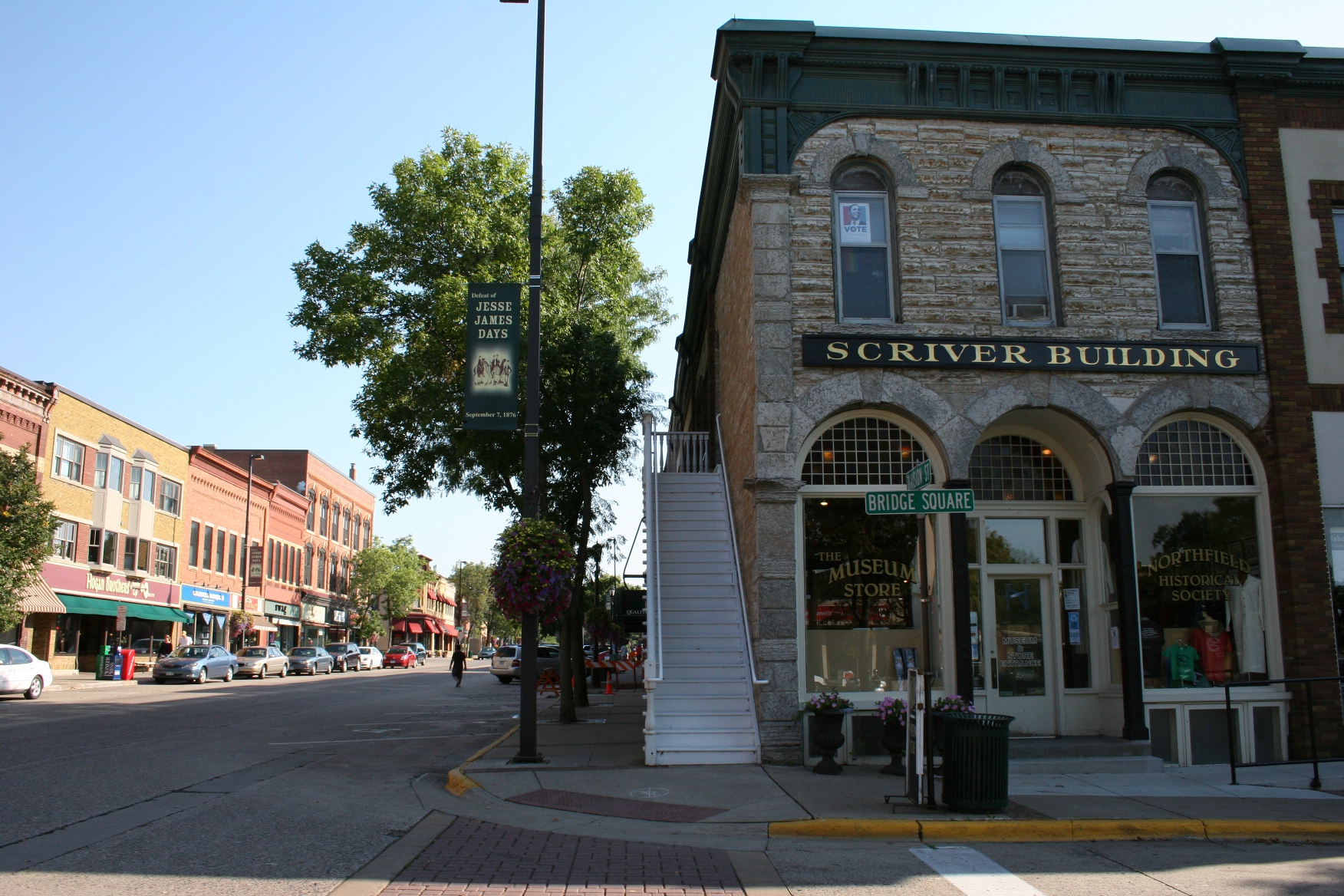
The front of the museum. If you look underneath the white steps, you’ll find three holes ringed in black, supposedly bullet holes made during the raid. It’s conjecture with nothing proven, according to Christian Hakala, who has his doubts about the holes being made by bullets. That’s Division Street on the left.

The original Ames Mill, once owned by Jesse Ames and sons, and today owned by Malt-O-Meal. It’s located around the corner and across the river from the bank. The company’s hot cereal is made here in the old flour mill.

© Copyright 2012 Audrey Kletscher Helbling
 

New exhibit highlights Rice County in the U.S.-Dakota War of 1862 September 2, 2012

IT IS EASY TO FORGET SOMETIMES, because I grew up in the region of Minnesota where the U.S.-Dakota War of 1862 was centered, that residents of the county in which I now live also played an integral role in the conflict.

Specifically, Rice County residents Bishop Henry Whipple and Alexander Faribault, after whom my community of Faribault is named, are key persons often noted in historical information written about the war.

I am always surprised that relatively few people from outside of southwestern and central Minnesota know so little about the bloody, six-week war between the Dakota and the white settlers and soldiers given it is a major, defining event in Minnesota history.

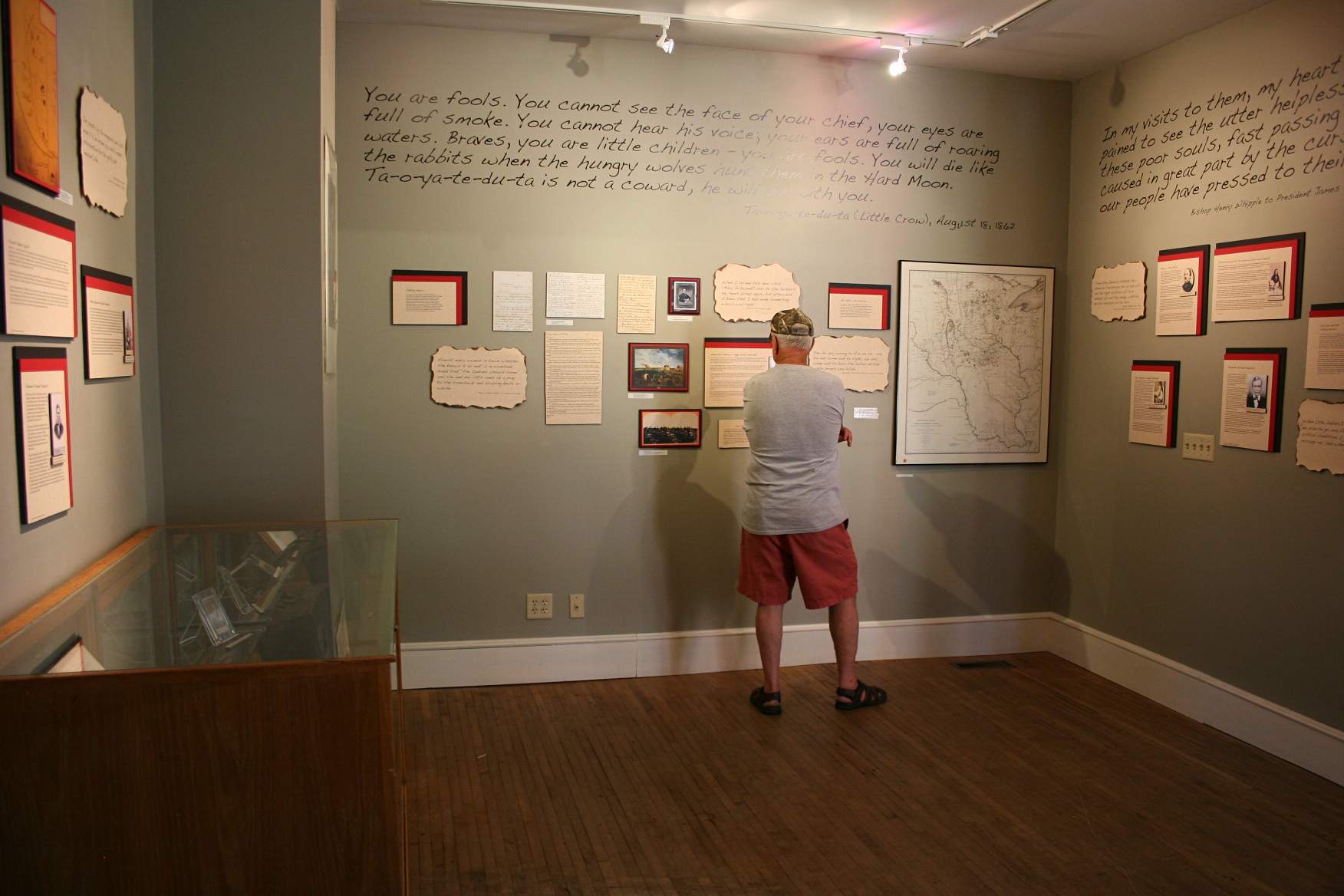
An overview of 1862, Through Rice County’s Eyes, which opened August 22 in Northfield.

However, awareness has grown considerably this year on the 150th anniversary of the war, including right here in Rice County. The Northfield Historical Society, partnering with the Rice County Historical Society, is currently showcasing an exhibit, 1862, Through Rice County’s Eyes.

I recently checked out the Northfield exhibit, which features mostly memorable quotes, volumes of summarized information and copies of photos. It’s a lot of reading.

But if you’re interested in educating yourself, it’s worth the time and concentration needed to absorb the information presented in this exhibit. And I’ll admit to occasionally skimming the postings because I am more of a visual, multi media, show-and-tell kind of history learner. I also had a pretty good background of knowledge going into the exhibit.

This sculpture of Alexander Faribault trading with a Dakota trading partner stands in Faribault’s Heritage Park near the Straight River and site of Faribault’s trading post. Faribault artist Ivan Whillock created this sculpture which sits atop a fountain known as the Bea Duncan Memorial Fountain.

I knew, for example, that fur trader Alexander Faribault was one-quarter Dakota and married to Mary Elizabeth Graham, whose mother was a family member of a Dakota chief. I knew, too, that Faribault was involved in the negotiating and translating of land treaties between the government and the Dakota before the war and that he benefited financially.

I was aware that Alexander Faribault sheltered the Dakota.

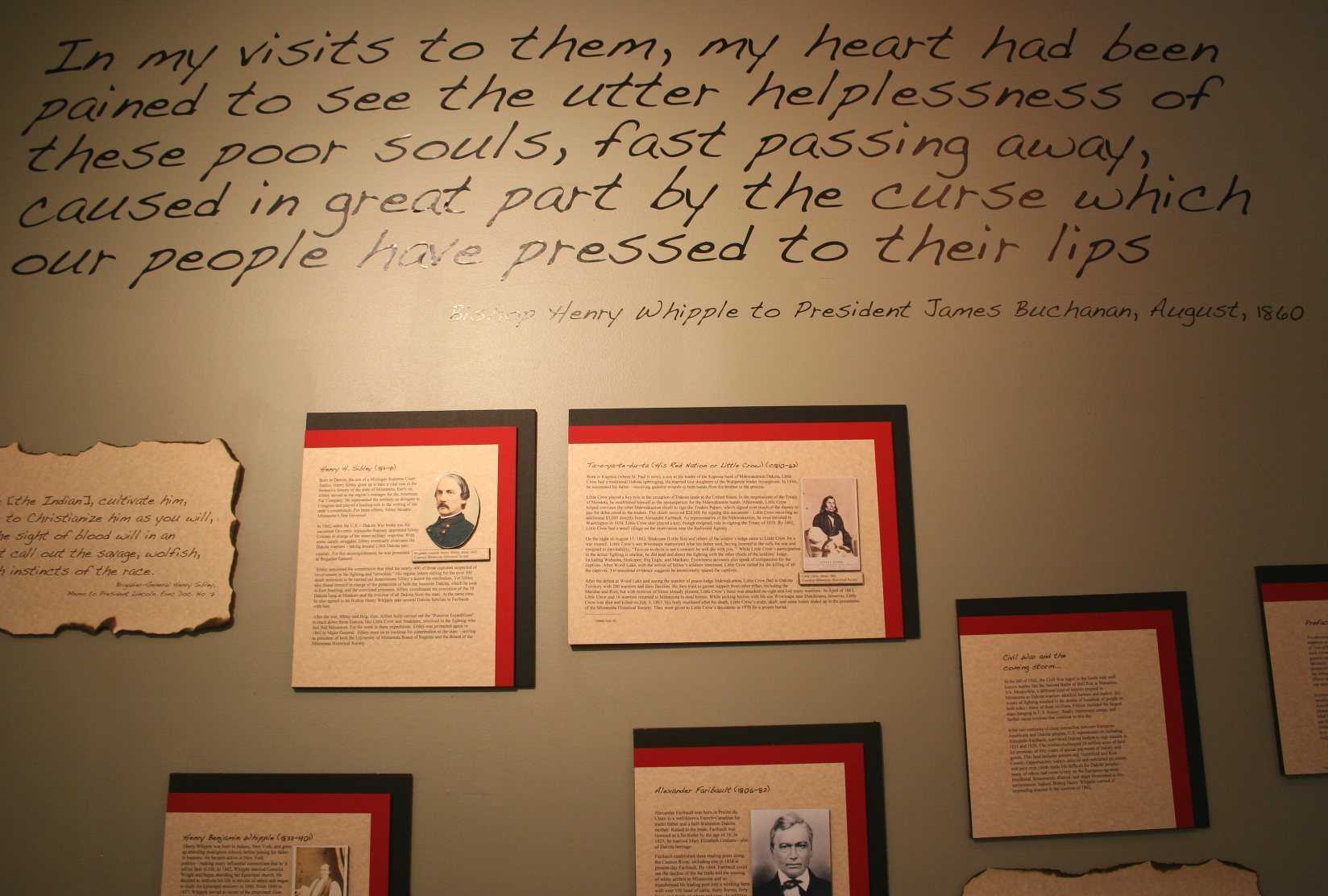
Above the photos and info is this quote by Bishop Henry Whipple to President Buchanan in August 1860: “In my visits to them, my heart had been pained to see the utter helplessness of these poor souls, fast passing away, caused in great part by the curse which our people have pressed to their lips.”

But I had forgotten that Bishop Henry Whipple, a long-time advocate for the rights of the Dakota and known to them as “Straight Tongue,” worked to find a safe refuge for them in the city of Faribault.

Alexander Faribault opened his land to the Dakota. Information in the exhibit states:

This land was the only safe-haven of its kind in a state now prejudiced in fear and anger against anyone with Dakota blood.

According to info in the exhibit, Alexander Faribault, whom you recall was one-fourth Dakota, also experienced prejudice against him. By 1869, this once successful fur trader, flour mill owner and politician had to sell his land and assets, including the land occupied by the Dakota.

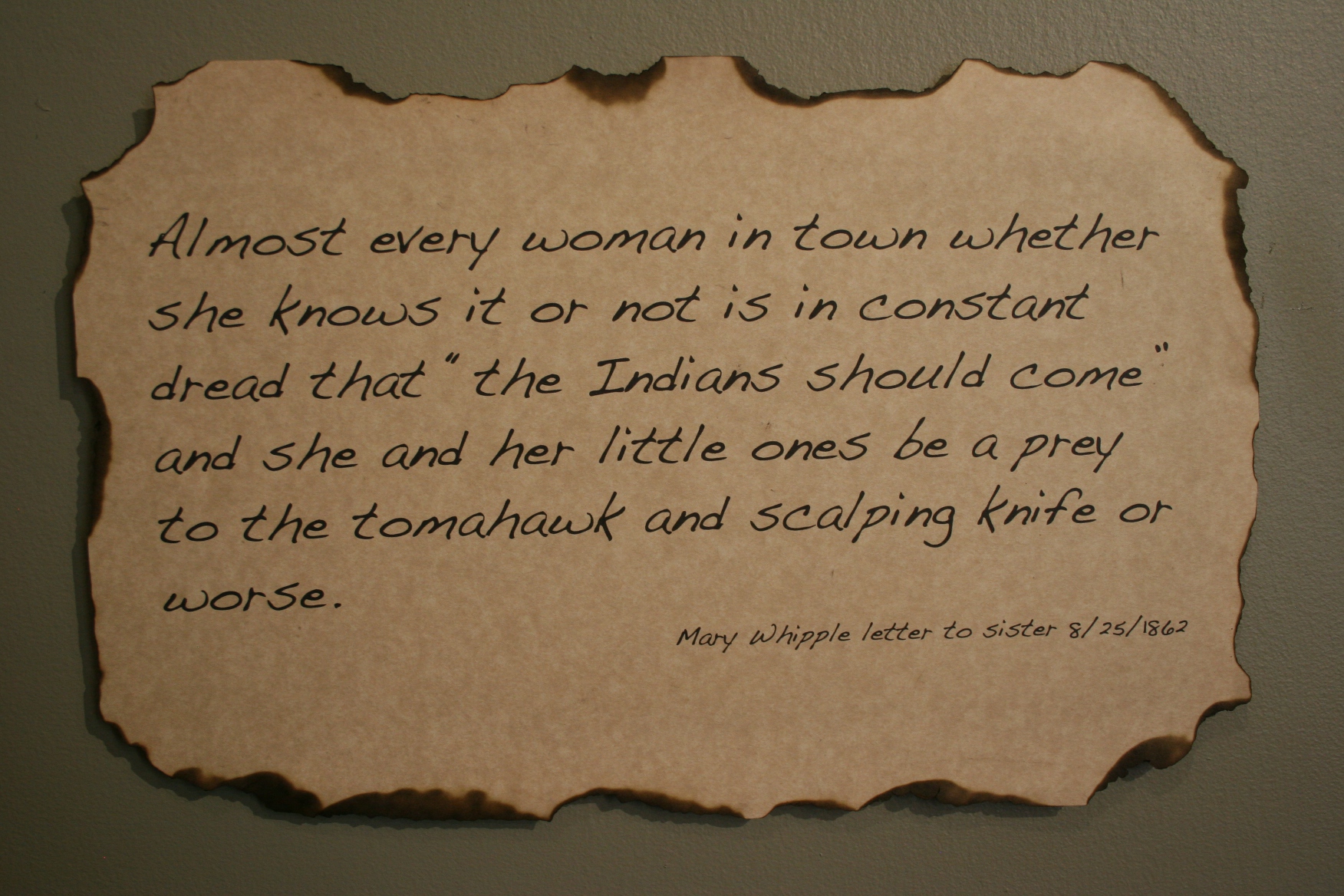
Equally interesting is the quote, below, attributed to Mary Whipple. Even though her husband, the bishop, worked tirelessly to help the Dakota, fear still existed in his home community.

A quote from a letter written by Mary Whipple to her sister during the U.S.-Dakota War.

Perhaps the most interesting fact I learned relates to that of Lt. Rollin Olin, a decade-long resident of Northfield. He was second in command of the Third Minnesota Regiment at the Battle of Wood Lake—the final battle of the war—and a member of a five-man military tribunal which tried the Dakota following the war. He signed more than 300 death sentences for nearly 400 Dakota charged with murder, rape and/or robbery.

For me, that raises the obvious question: How could someone who fought against the Dakota judge them without bias? All members of the tribunal, in fact, had fought the Dakota. The answer, of course, is that Lt. Olin and the other four could not.

Likewise, the Northfield Historical Society is wisely careful to indicate that its new, temporary exhibit may not please everyone or include everything on the topic of Rice County’s connection to the war. On the NHS website, you’ll read this disclaimer:

As varied as these and other local perspectives may be, any exploration of the U.S.-Dakota War of 1862 suffers from the inevitable limitations facing every historical examination—limitations such as scope and biases, past and present, which impact the telling and perception of the stories and data. In presenting the exhibit 1862, Through Rice County’s Eyes this fall, NHS endeavors to draw visitors into thoughtful interest and discussion of this momentous event and its aftermath by sharing local connections. Come and critically examine this exhibit.

The exterior of the Northfield Historical Society, 408 Division Street, Northfield.

FYI: To learn more about 1862—Through Rice County’s Eyes, click here to the NHS website.

To learn more about the Minnesota counties, county by county, involved in the U.S.-Dakota War of 1862, click here.

© Copyright 2012 Audrey Kletscher Helbling
 

A sweet surprise: An old sorghum mill on a southern Minnesota elk farm & more August 10, 2012

HOW MANY TIMES HAS MY FAMILY driven Minnesota Highway 60 east of Elysian, unaware of Okaman Elk Farm to the south not far from the highway? Too many.

My husband Randy and I almost missed Okaman’s again last Sunday as we traveled along Waseca County Roads 3 and 5. If not for the colorful miniature train transporting kids and adults along the shoulder of the road, we likely would have passed right by.

Passing by the Okaman Elk Express in our car on a Sunday afternoon.

But that train stopped us in our tracks and caused us to turn around and drive back to the farm.

There we discovered much more than a plain old elk farm. We also found family-friendly activities, a farmers’ market, art, animals and history.

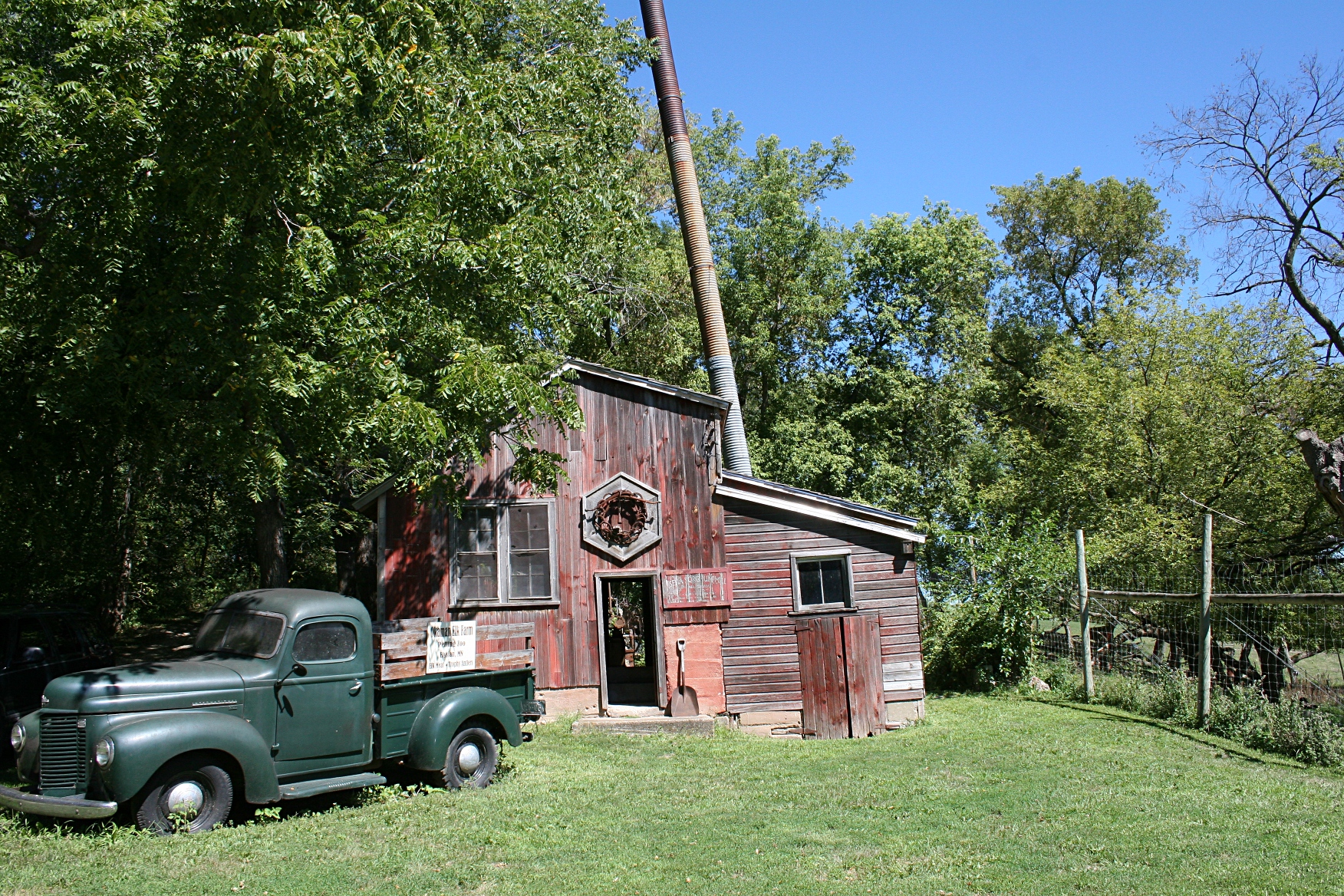
The historic Seha Sorghum Mill.

In 1991, Don and Joyce Kaplan bought this historic place to raise elk and then sell the meat. Their business sits on the site of Okaman, a town established in 1855 between Lake Elysian and Lily Lake. Here, according to a posted sign, several hotels, a theater, the Buckout Flour Mill, the Okaman School and the Seha Sorghum Mill were located.

Inside the sorghum mill.

It is that 1895 sorghum mill, which produced and sold sorghum syrup until 1953, that most interested me. Randy and I poked our way through and around the old mill trying to determine how the whole operation worked. I think he understood the process much better than me.

Apparently wagons of sorghum were unloaded atop the hill behind the mill where the canes were crushed and the juice then flowed into steam-heated cookers, or something like that.

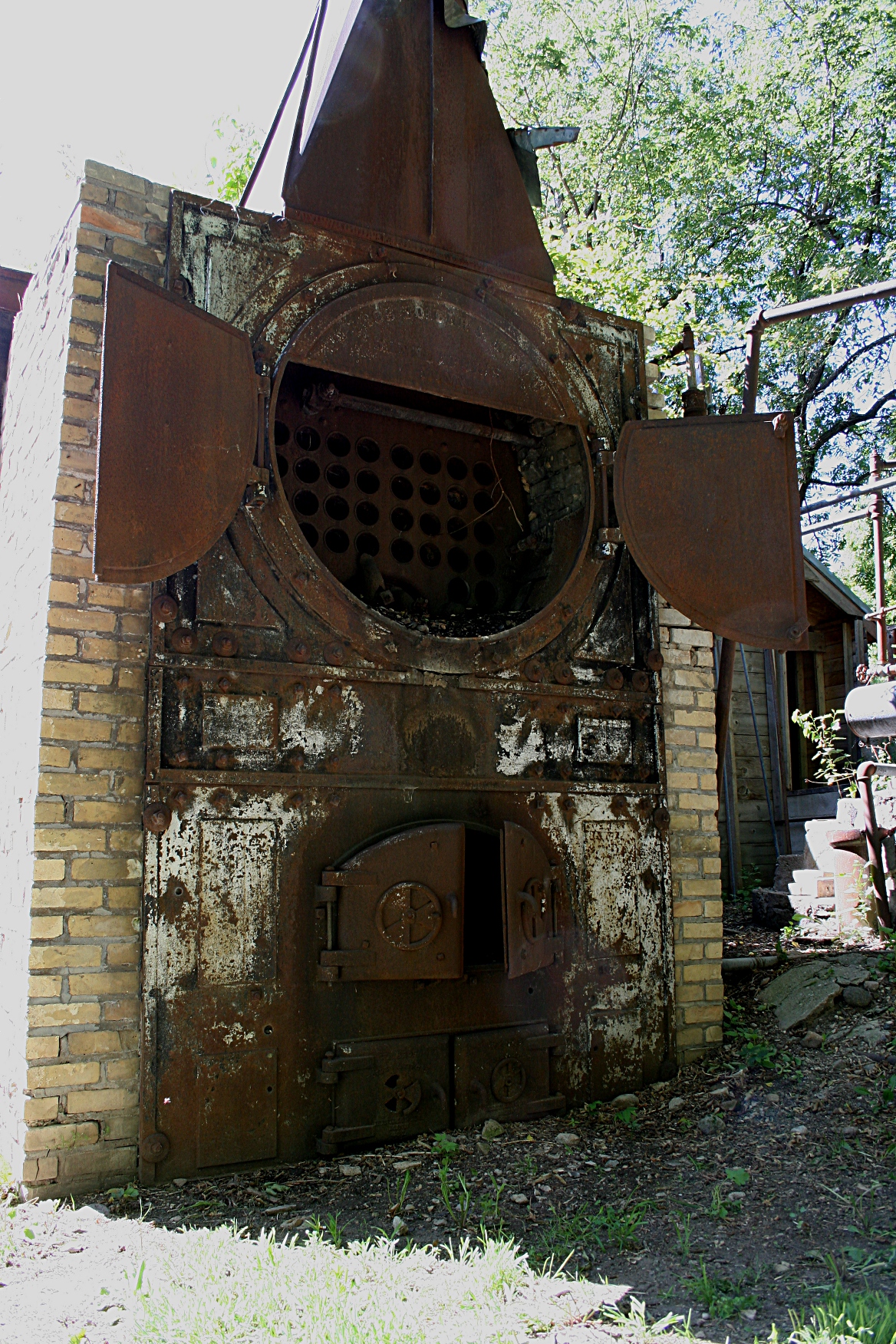
The original steam boiler stands behind the sorghum mill.

According to the Waseca County Historical Society website, Cornelius L. Seha built the mill, today the only known historical sorghum mill remaining in Minnesota and added to the National Register of Historic Places in 1979.

Because the mill today is basically an old building and steam boiler with weeds and brush growing around the holding tanks, equipment and structures, everything is left open to self-interpretation. Perhaps someday this historic site can be restored and specific educational information posted.

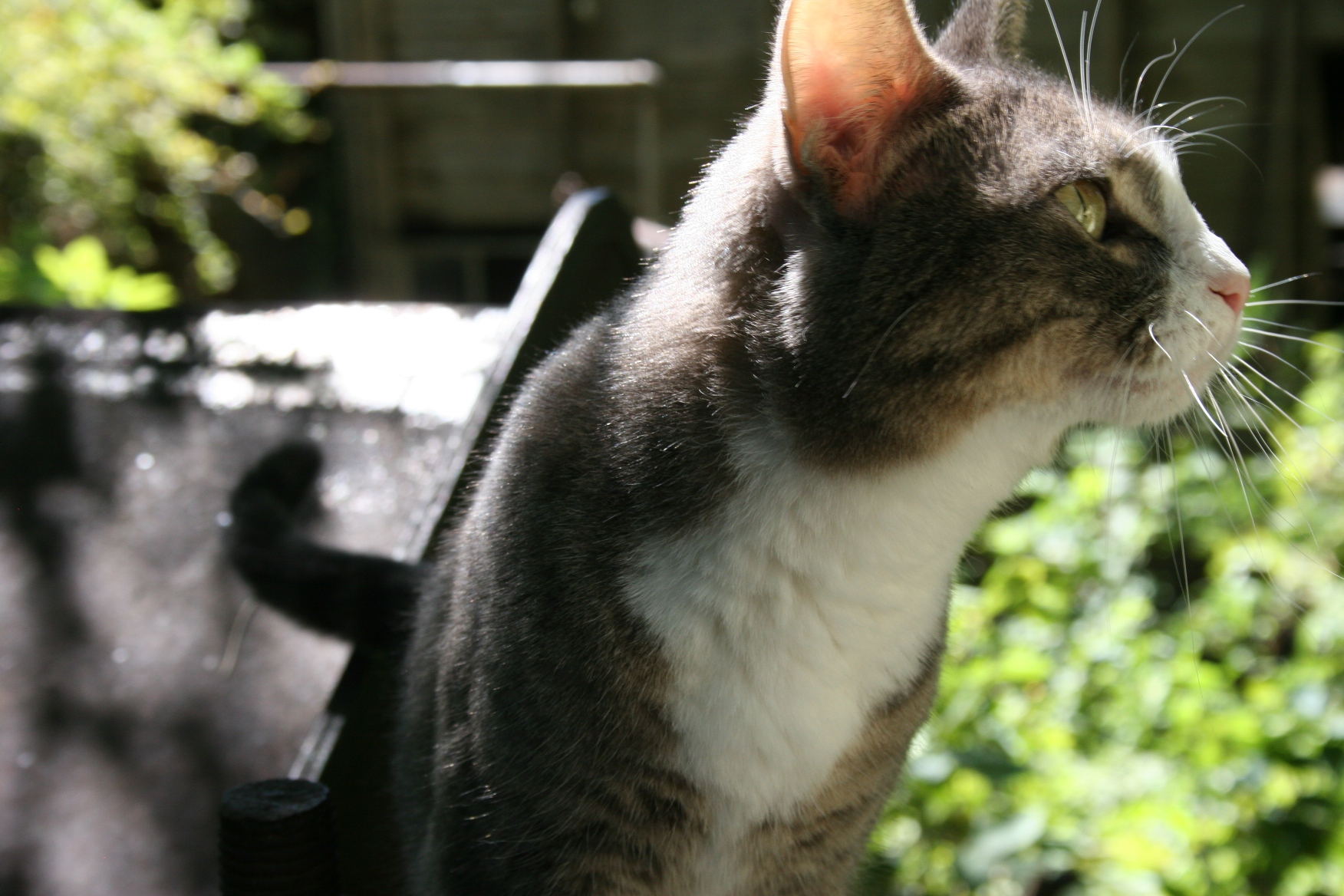
Cats roam the farm.

Then, perhaps, the younger farm visitors will be more interested in the historic buildings. They are, for now, focused on  the donkeys and alpacas, the goats and elk and dog, and especially, the cats and kittens. Or perhaps the playground equipment.

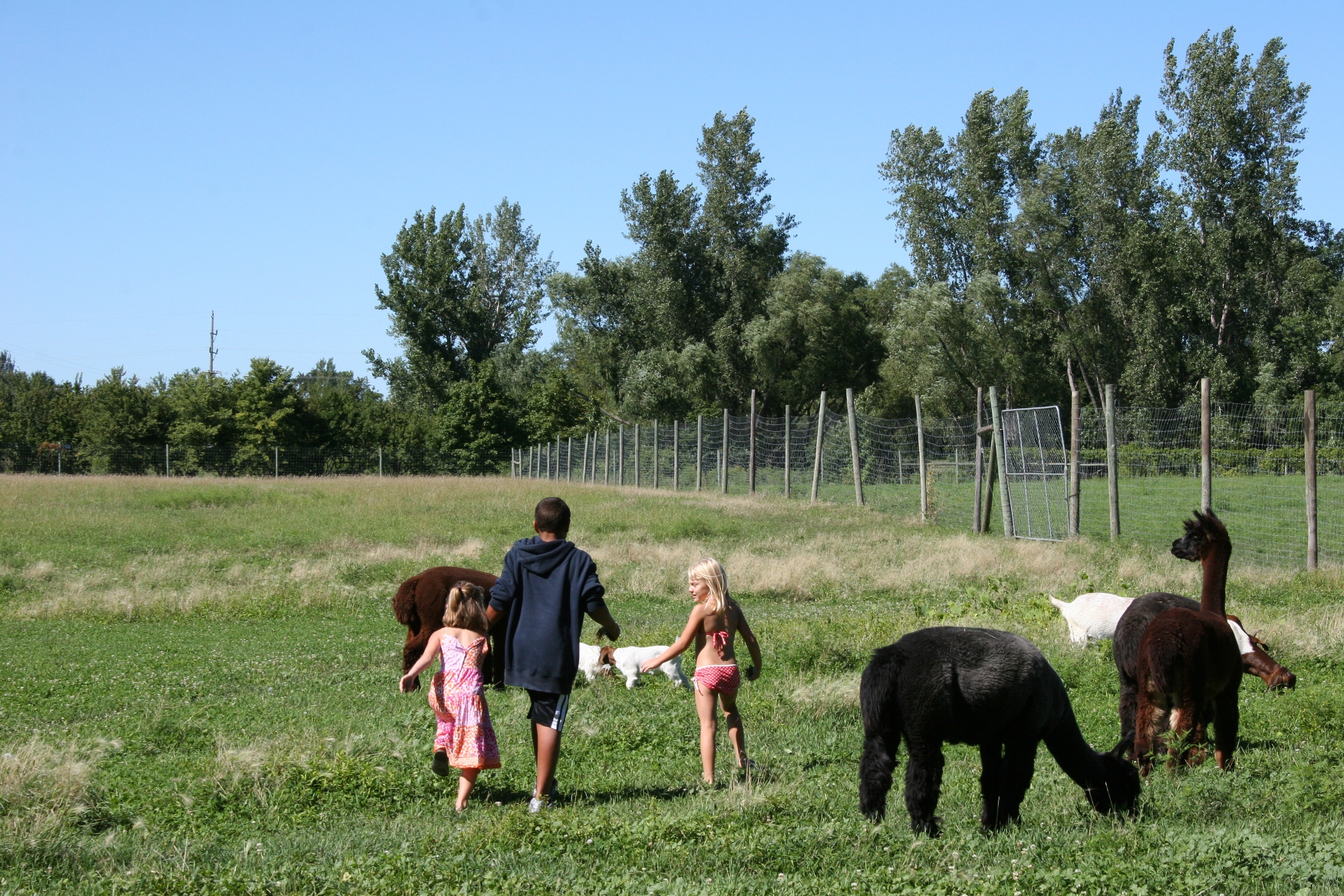
Visitors are free to wander the pasture with the alpacas, donkeys and goats.

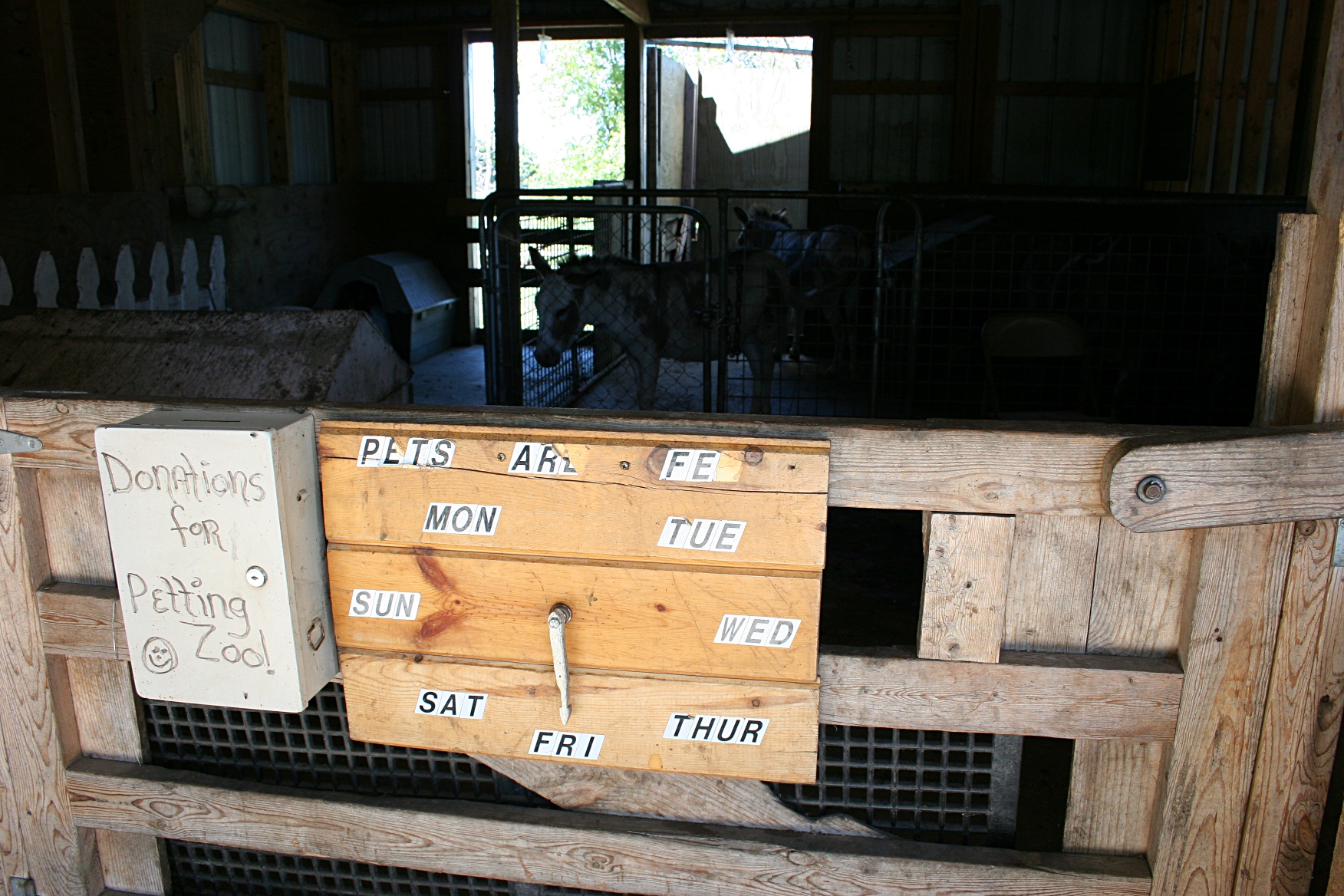
Loved this sign at the petting zoo telling visitors that the animals are fed daily.
The farm is open seven days a week to the 3,000 – 4,000 visitors who stop by annually, says Joyce Kaplan. The Kaplans may not always be around, but guests are invited to peruse the place on their own. Just follow a few rules like:

You can enter the petting zoo pens or pastures at your own risk. Please don’t allow children to chase the animals and no dogs allowed. Close gates behind you.
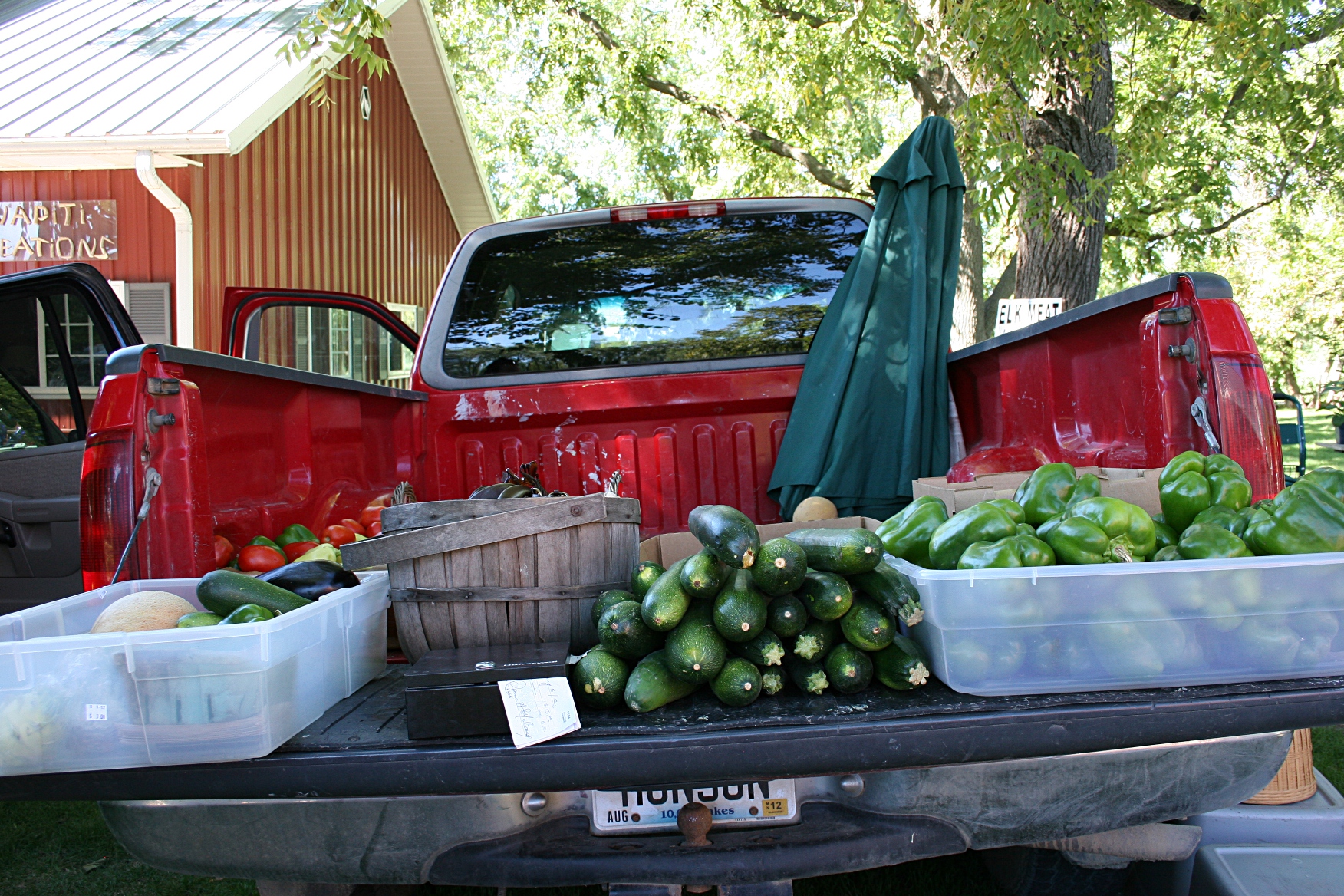
Veggies from R & C Produce of Otisco.

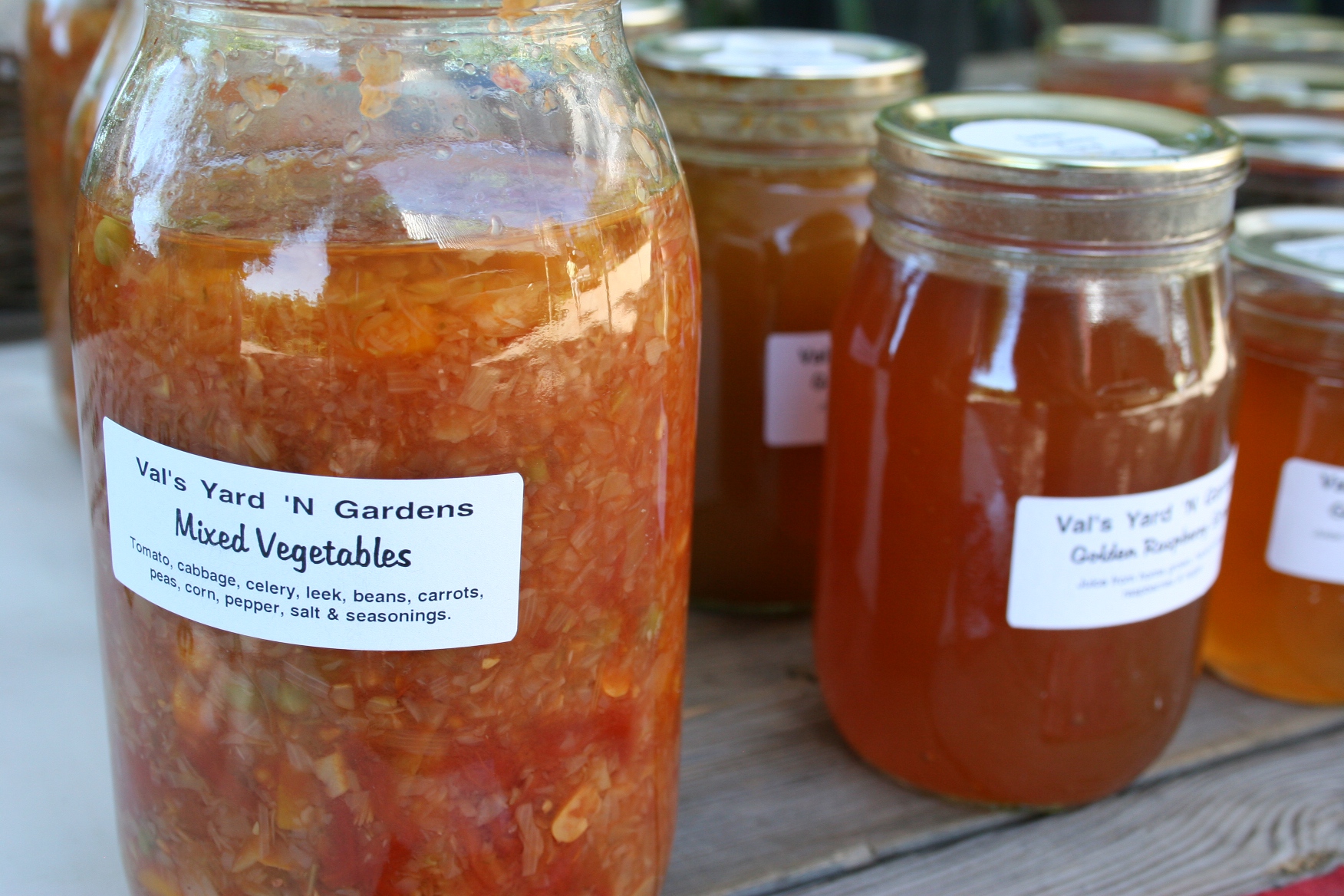
Canned mixed veggies from Val’s Yard ‘N Gardens (Joe & Val Zimprich of Le Center).

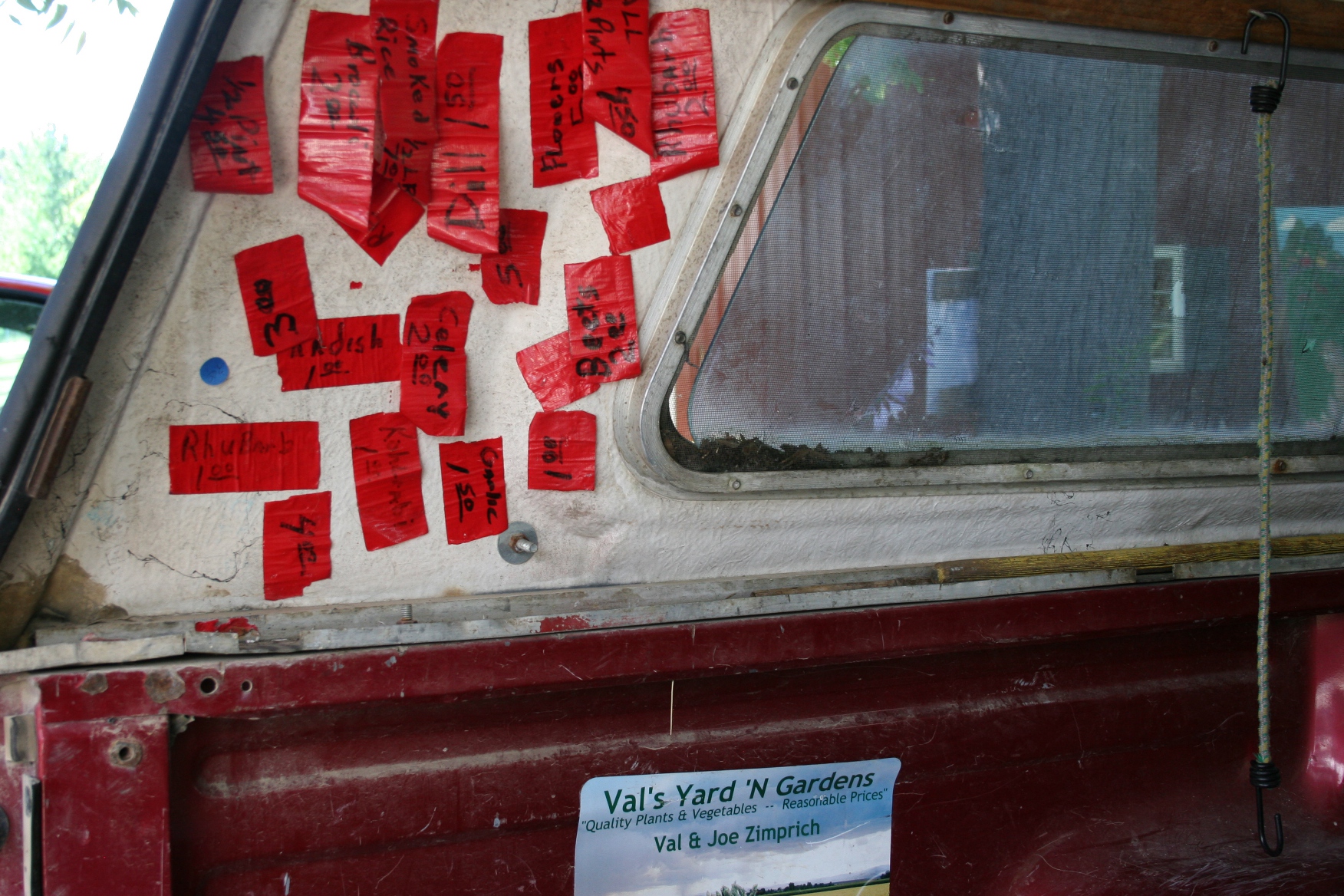
Reusable price stickers in the back of the Zimprichs’ truck.

While the farm is always open, on Sundays from 1 p.m. – 4 p.m. during the summertime harvest and into October, farmers’ market vendors set up in the farmyard peddling their garden fresh produce and other products.
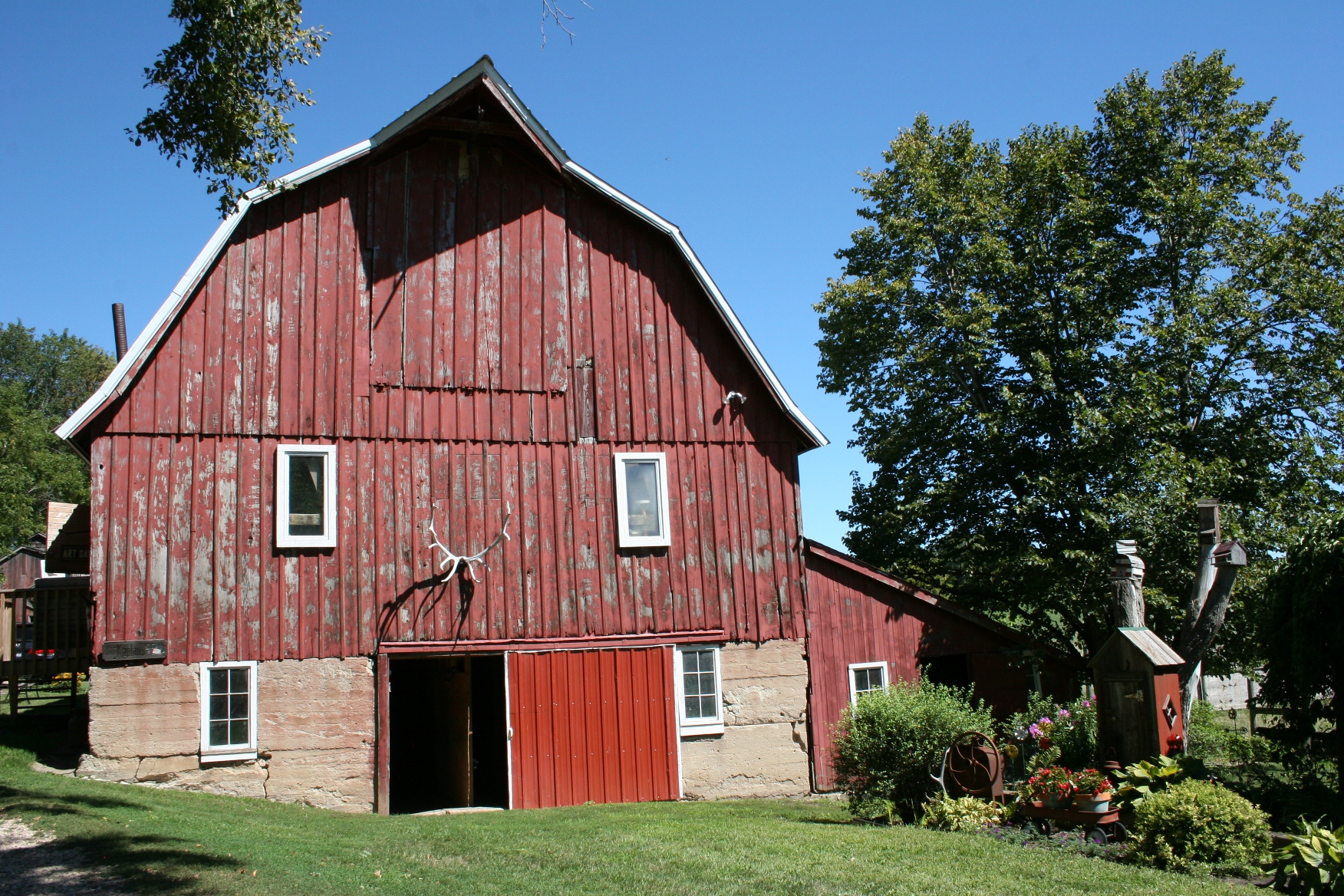
An art gallery is housed in an old barn.

That beautiful old barn, with an art gallery and studio in the haymow.

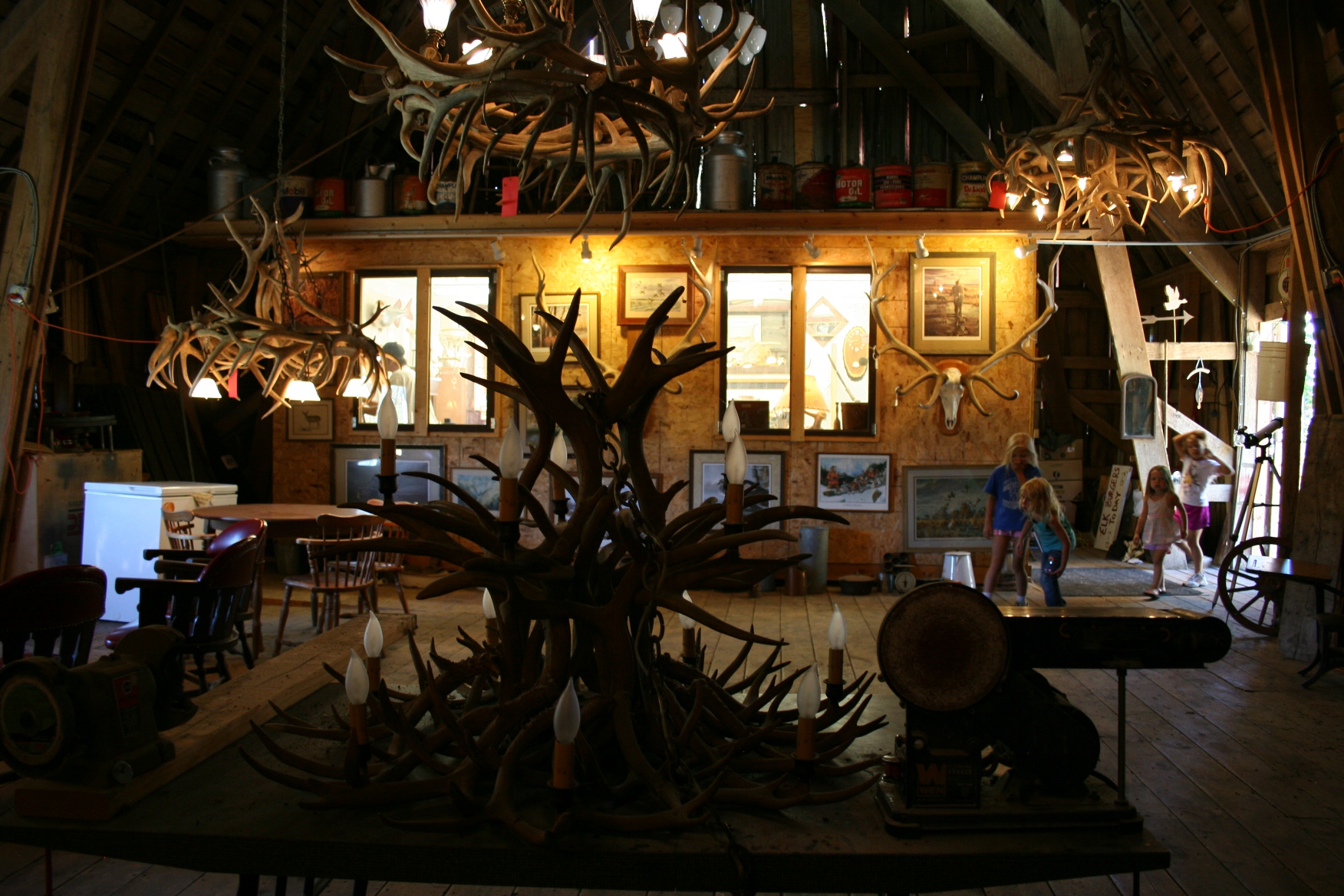
Antler art, including chandeliers, inside the art gallery with Paul Ristau’s art studio behind the windows pictured here.

Inside the gift shop and adjacent art gallery, you’ll find gifts anytime and the creations of artist and craftsman Paul Ristau, who renovates homes and businesses and is a mason specializing in stone fireplaces. He was doing some tile work for the Kaplans and ended up as their in-house artist focusing on the creation of antler art. He has a workshop in the haymow-turned-art-gallery where his elk antler chandeliers are a focal point.

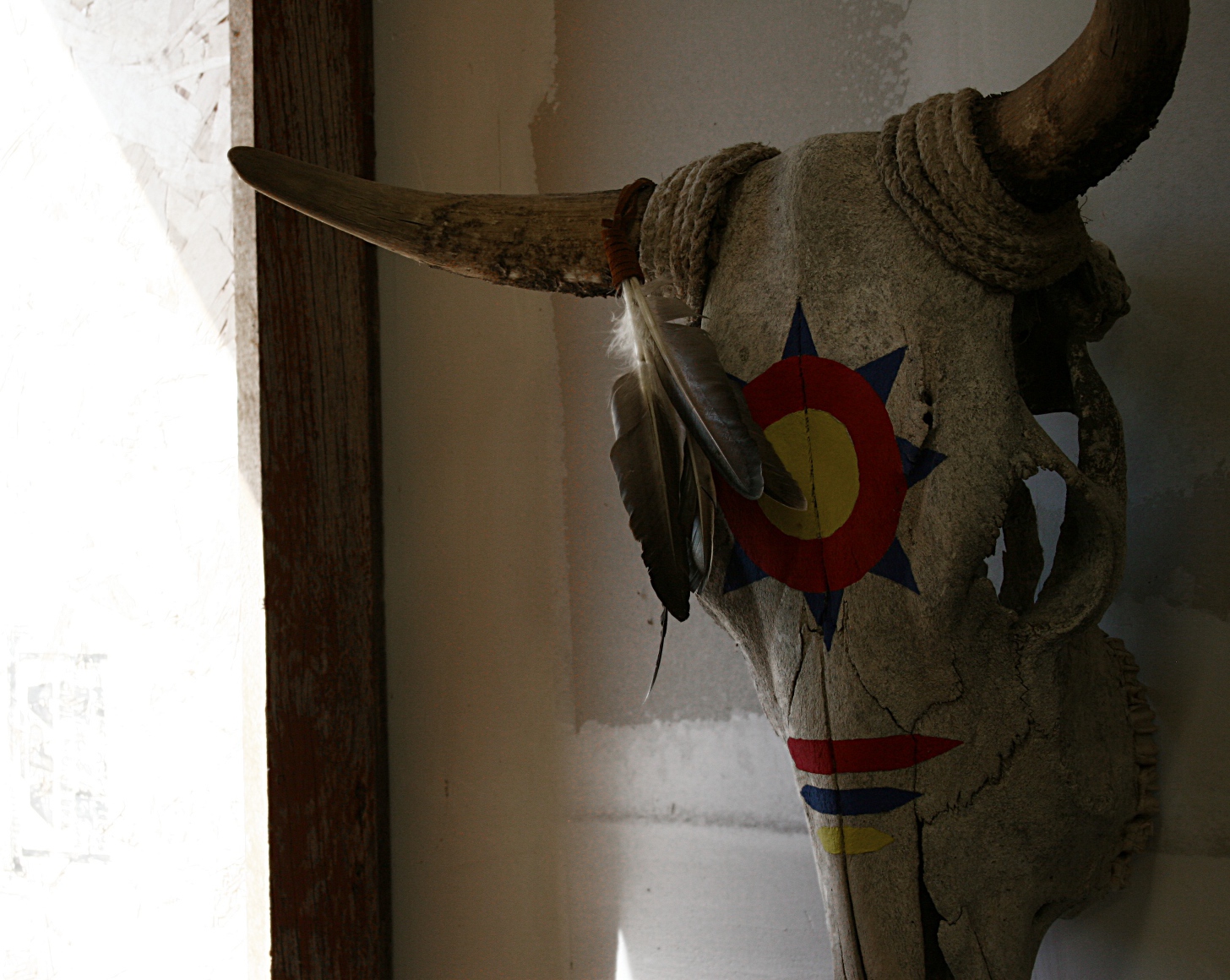
A Native American influence on art hung in Paul Ristau’s studio.

A Native American influence is visible in Ristau’s art given his interaction with those living on the White Earth Indian Reservation where he once drove bus.

Of course, the farm also sells elk meat, inside the original 1893 homestead. The farm is now down to 23 elk, according to Joyce Kaplan who says she grew up on a farm and has been cleaning barns all her life and maybe it’s time soon to stop cleaning barns.

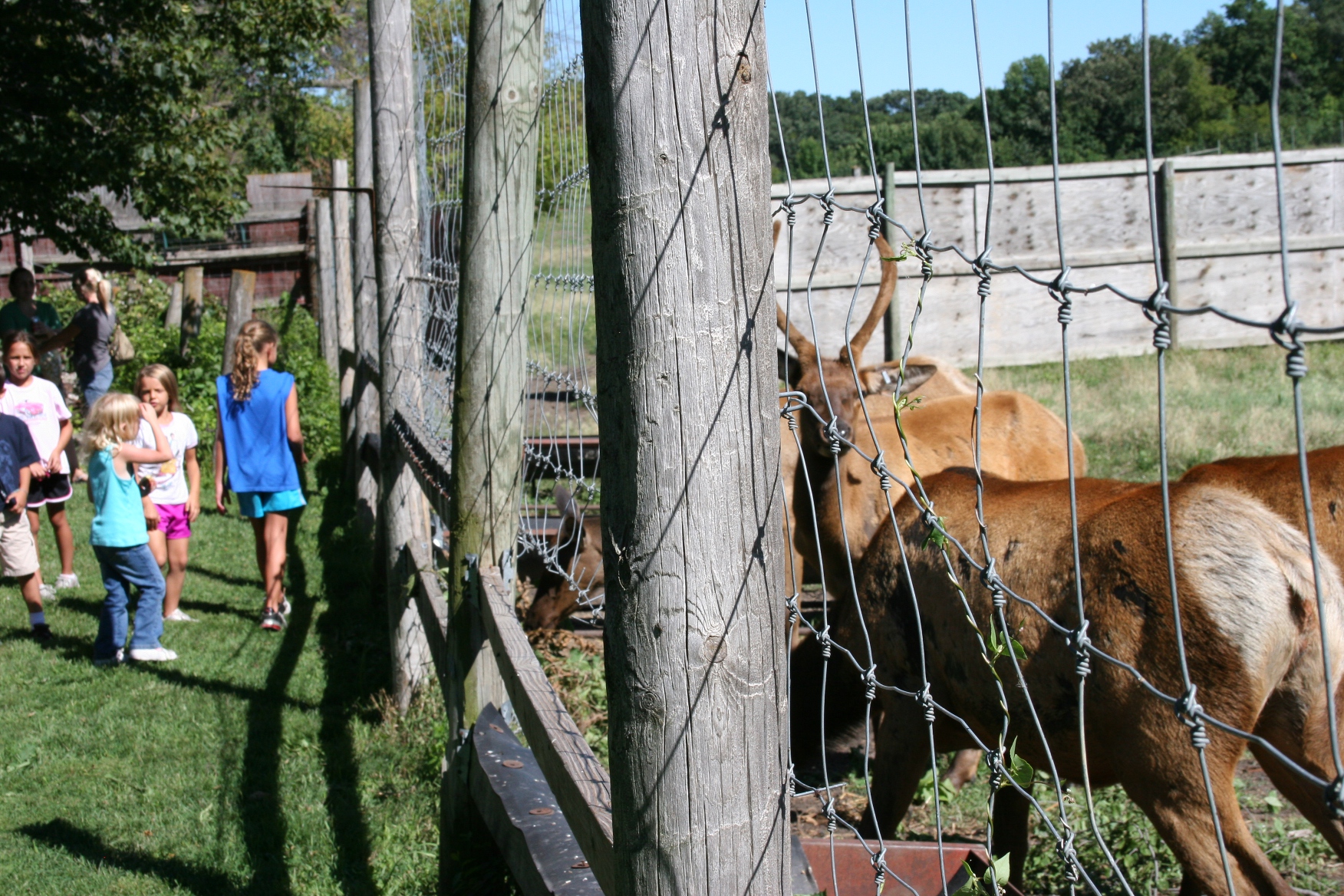
The final activity of the day, feeding apples to the elk.

On the Sunday I visited, her husband was handing out apples so the kids could feed the elk.

And the Okaman Elk Express was chugging along the shoulder of the roadway, thrilling the kids and, bonus, drawing in visitors like my husband and me.

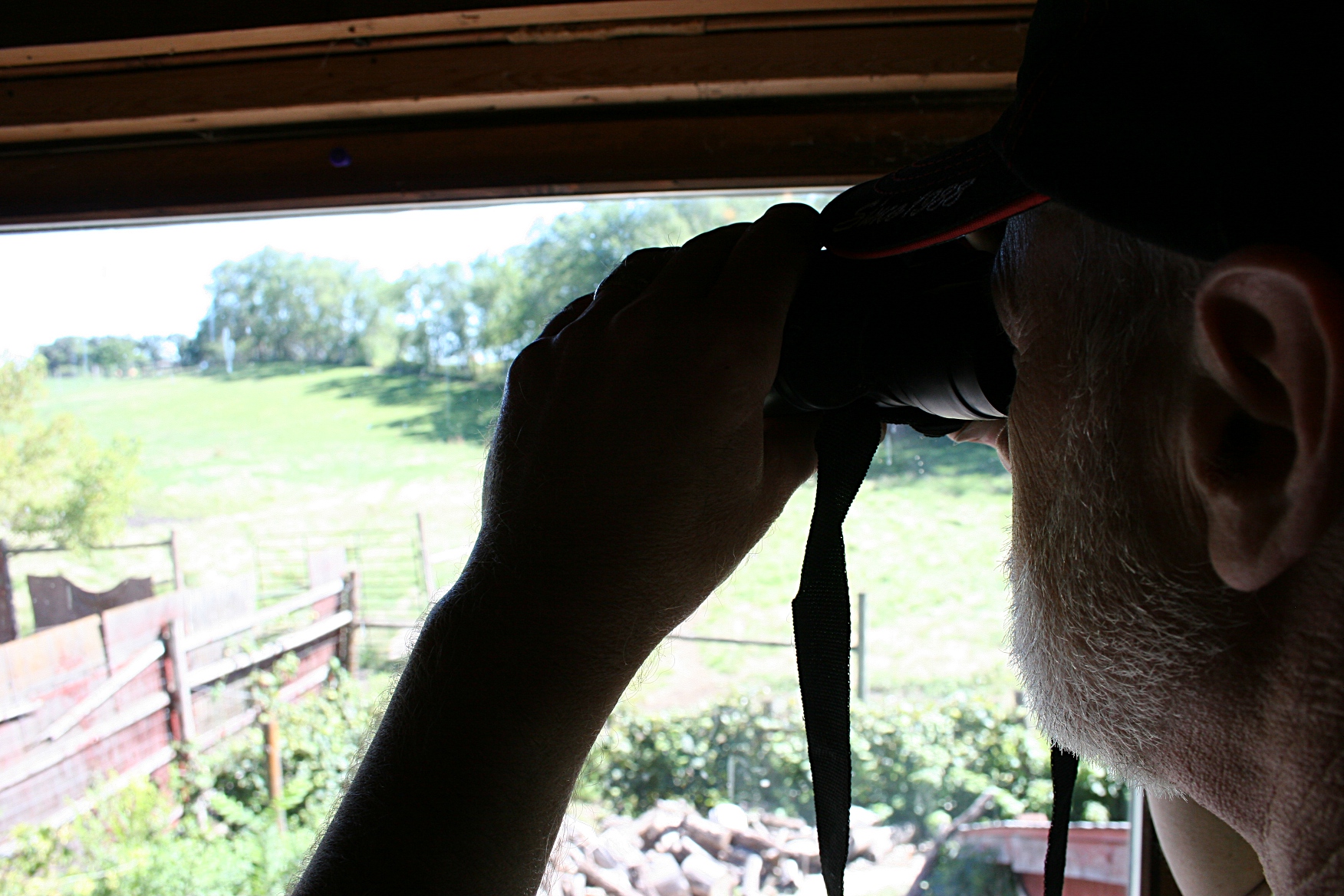
You’ll find binoculars in the barn to view the elk in the pasture.

FYI: To find Okaman Elk Farm, take Minnesota Highway 60 east of Elysian 1 ½ miles and then turn south to the intersections of Waseca County roads 3 and 5. The farm is open year-round. Click here to reach the farm’s website.

© Copyright 2012 Audrey Kletscher Helbling