Minnesota Prairie Roots

Writing and photography by Audrey Kletscher Helbling

Reflections on Independence Day July 4, 2011

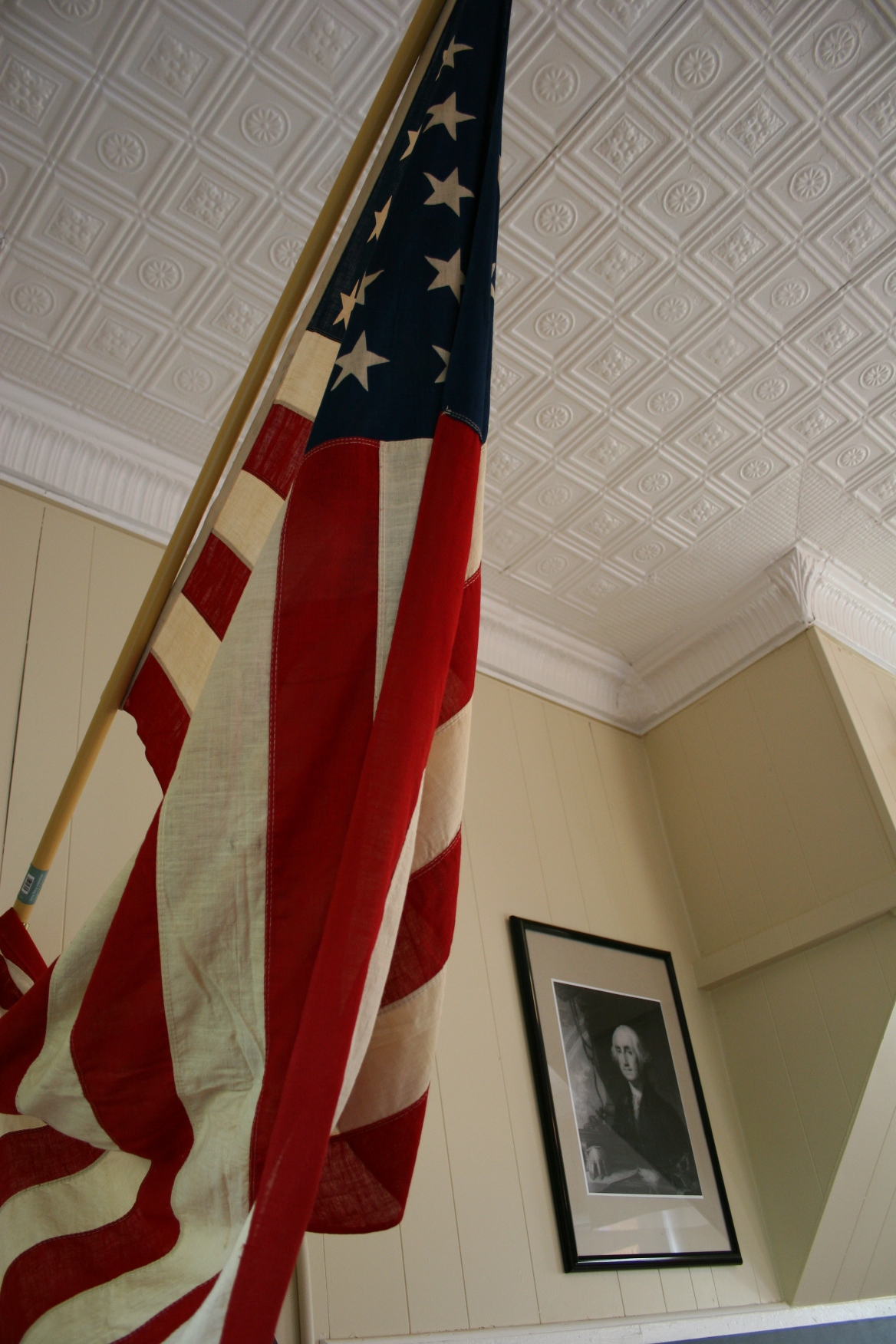
A flag and portrait of George Washington at the former District 20 Millersburg School, now a museum.

“I PLEDGE ALLEGIANCE to the flag of the United States of America and to the Republic, for which it stands, one nation under God, indivisible, with liberty and justice for all.”

As a child, my school days began with that pledge. My classmates and I arose from our desks at Vesta Elementary School, turned toward the American flag in the corner, placed our hands across our hearts, fixed our eyes upon the stars and stripes, and recited the pledge in unison.

I doubt we ever thought too much about the rote words we spoke. They were simply part of our routine, something we did, although I do recall feeling a sense of pride in speaking those words daily.

So much has changed in the decades since then. The Pledge of Allegiance, in most cases, has been banned from public schools in the name of political correctness. We are no longer one nation under God. While the U.S. remains one country, we as individuals are certainly divided in our views of anything and everything. That’s as it should be in a democracy. Liberty and justice have managed to prevail.

As we celebrate our nation’s Independence Day, it would be wise for all Americans to reflect on the Pledge and the words of other documents and songs that focus on the flag and freedom.

We hold these truths to be self-evident, that all men are created equal, that they are endowed by their Creator with certain unalienable Rights, that among these are Life, Liberty and the pursuit of Happiness.—The Declaration of Independence, signed on July 4, 1776

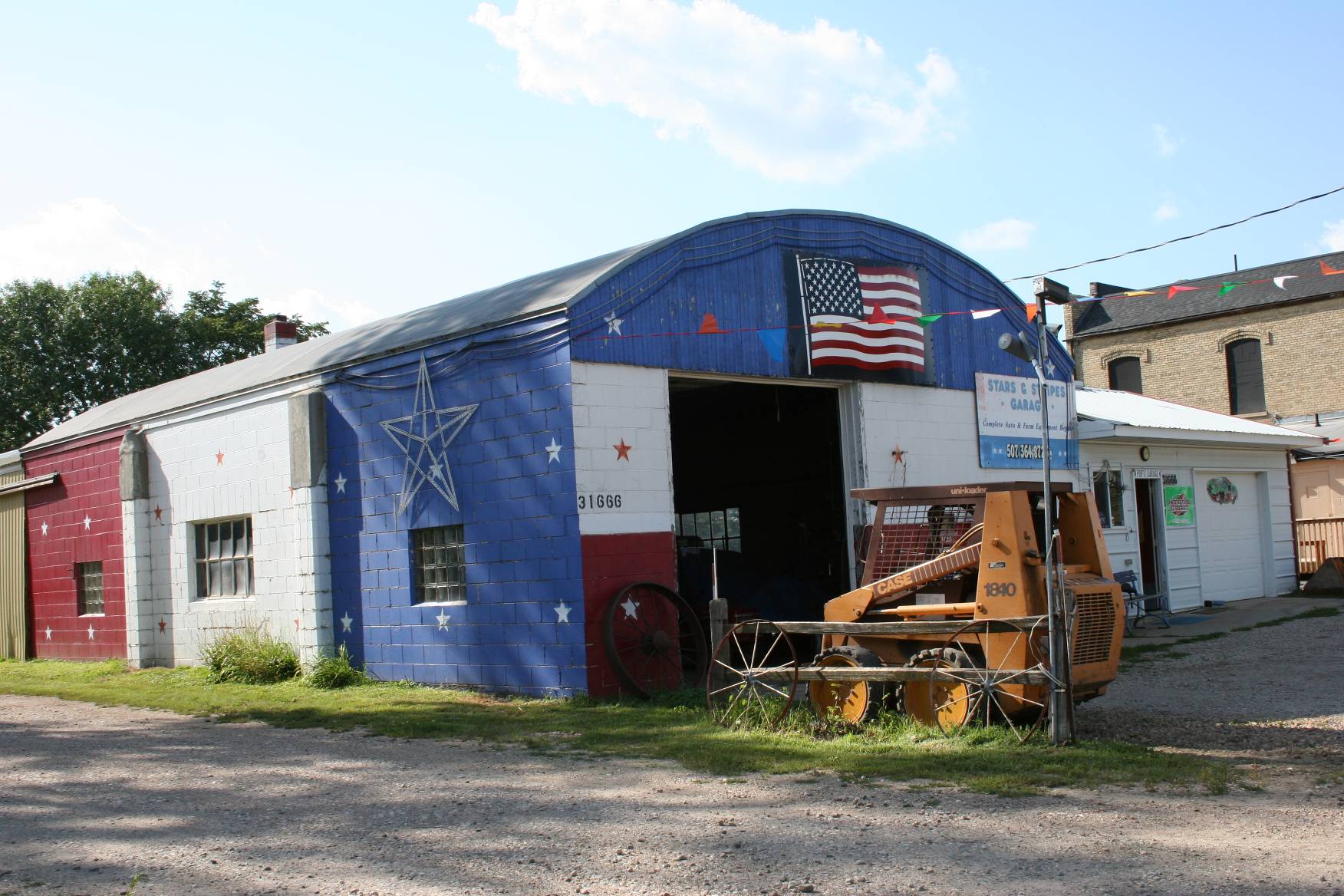
Vietnam veteran Joel Kukacka's patriotic garage in the hamlet of Heidelberg, Minnesota.

Oh, say does that star-spangled banner yet wave
O’er the land of the free and the home of the brave?
—The Star Spangled Banner

An American flag painted on a shed in Dundas in southeastern Minnesota.

Congress shall make no law respecting an establishment of religion, or prohibiting the free exercise thereof; or abridging the freedom of speech, or of the press; or the right of the people peaceably to assemble, and to petition the Government for a redress of grievances.—The Bill of Rights, Amendment I

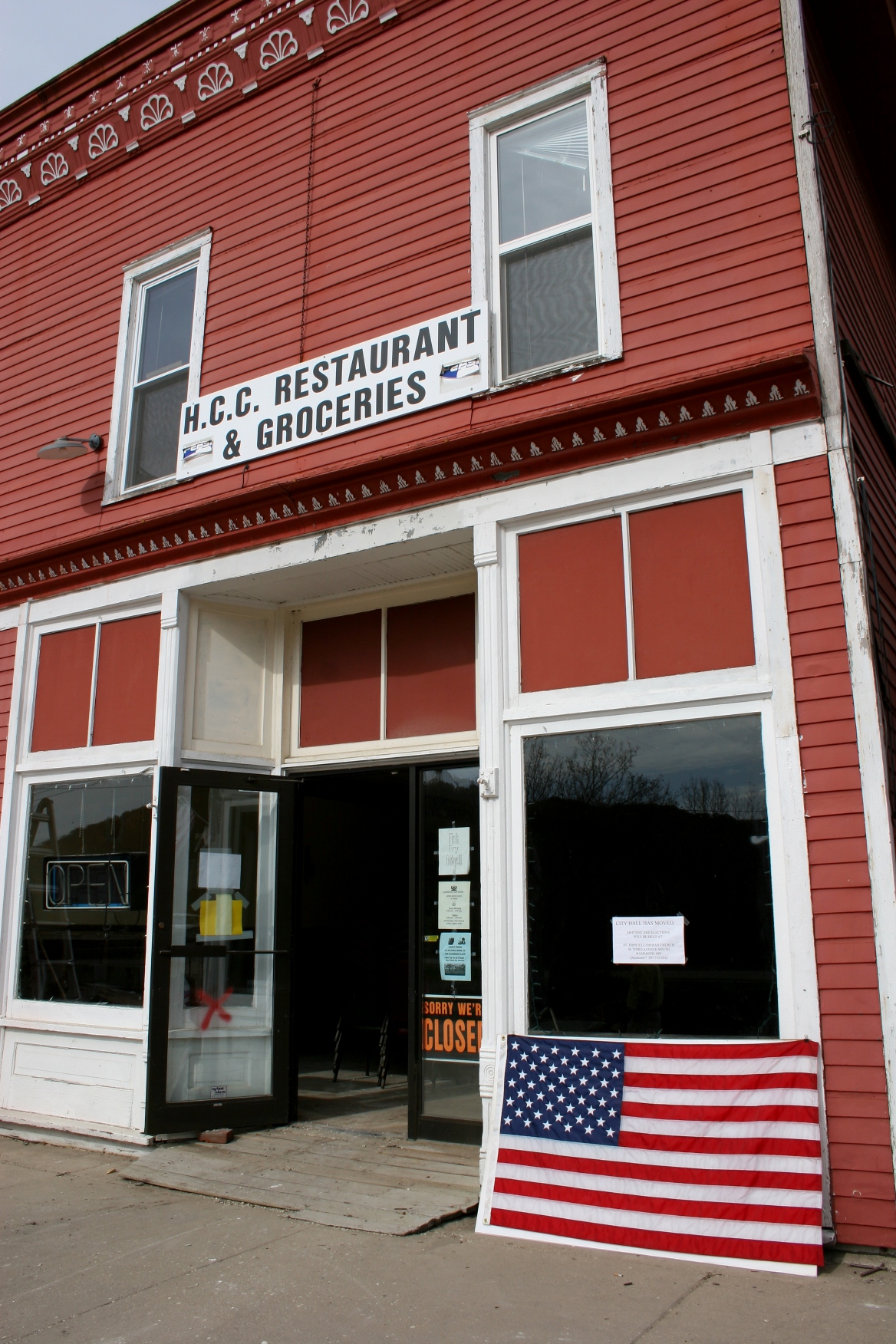
Weeks after a devastating Sept. 2010 flash flood in Hammond, in southeastern Minnesota, an American flag marked a ravaged business.

God bless America,
Land that I love,
Stand beside her and guide her
Thru the night with a light from above;

From the mountains, to the prairies,
To the oceans white with foam,
God bless America,
My home, sweet home.
God bless America,
My home, sweet home.

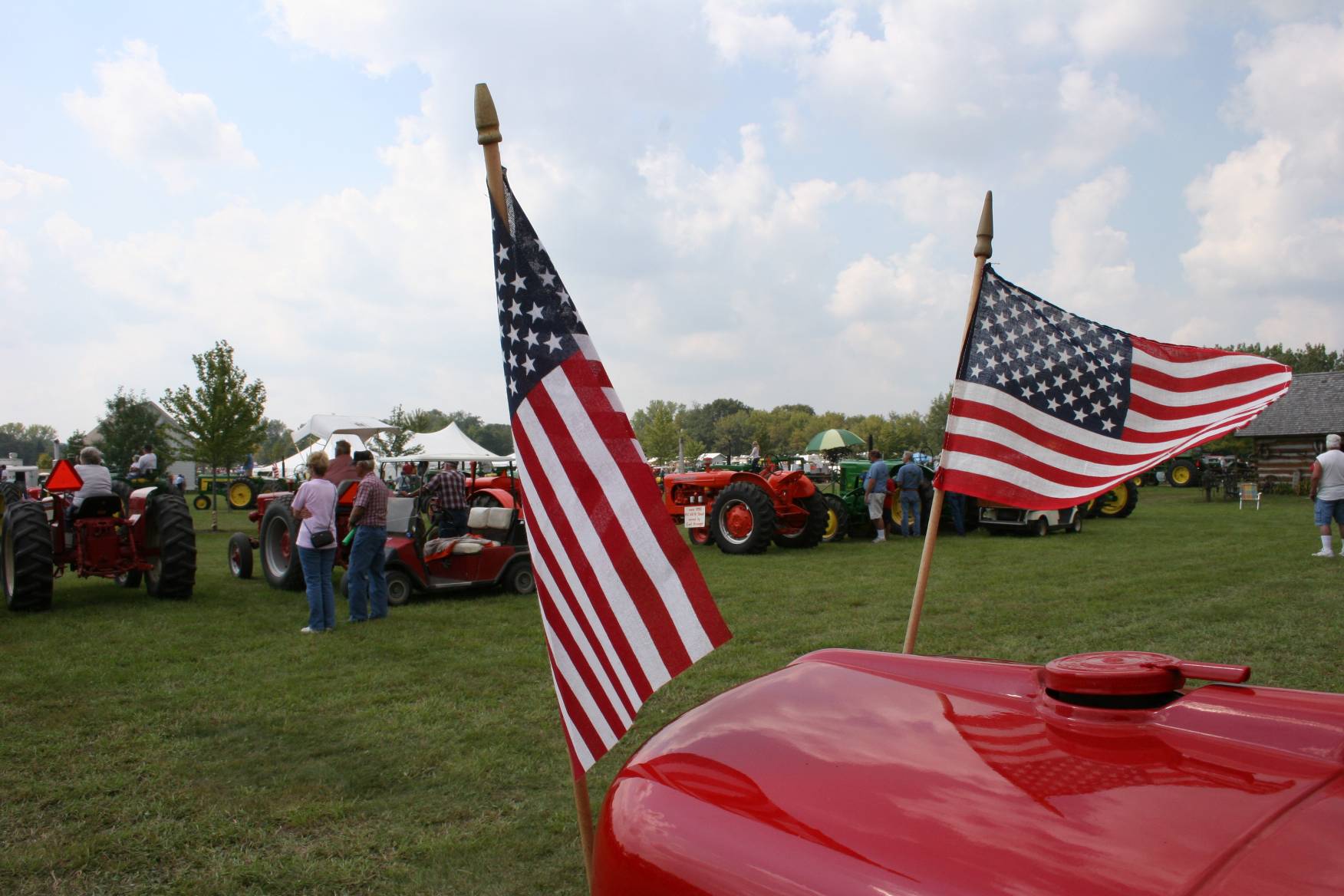
Flags decorate a vintage tractor at the Rice County Steam & Gas Engines Show near Dundas.

© Copyright 2011 Audrey Kletscher Helbling


A misplaced torch at a veterans’ memorial July 1, 2011

TYPICALLY, I WOULD NOT criticize a veterans’ memorial project. I respect those who have served our country and those who lead efforts to honor them via public memorials.

However, last week when I saw the latest addition to the in-progress Rice County Veterans Memorial Expansion Project at the county courthouse in Faribault, I could not believe what I was seeing.

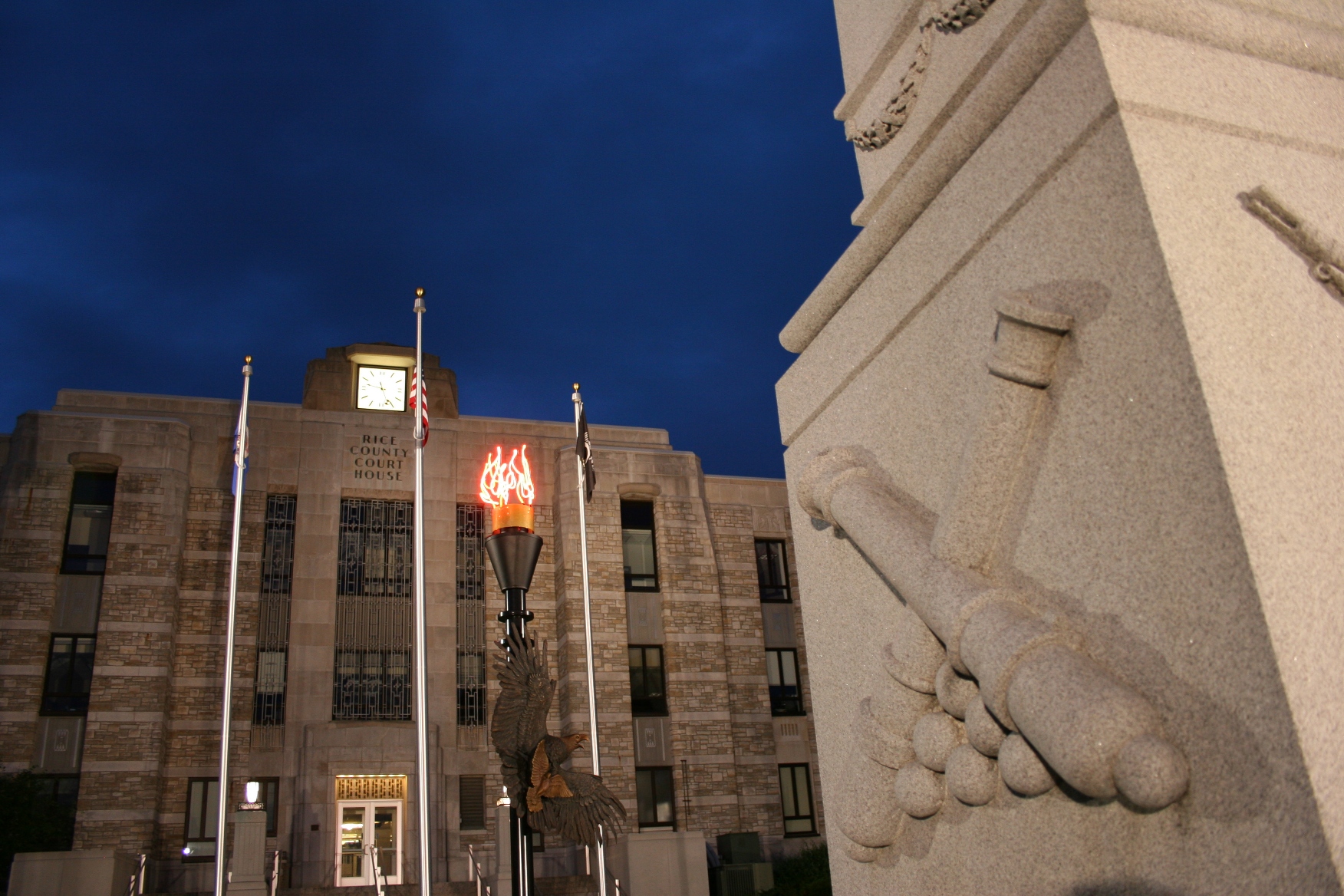
There, guiding my eyes toward a center bronzed eagle and dove, was a flashing neon flame depicting “our never ending vigilance.”

The new, fake torch at the Rice County Veterans Memorial at the courthouse in Faribault. Here you see the wing tip of the bronzed eagle below the torch. I have not edited this image taken one evening last week.

My initial reaction has not changed since I stopped that night to closer inspect and photograph this neon torch better suited for a casino—anything but a veterans’ memorial.

As we all know, first impressions count. In this case, the neon flame certainly does not fit. This is supposed to be a place of reverence, of quiet meditation, of respectful honor for those who have served the United States of America. A fake, flickering fire does not portray that message of honor.

I am disappointed.

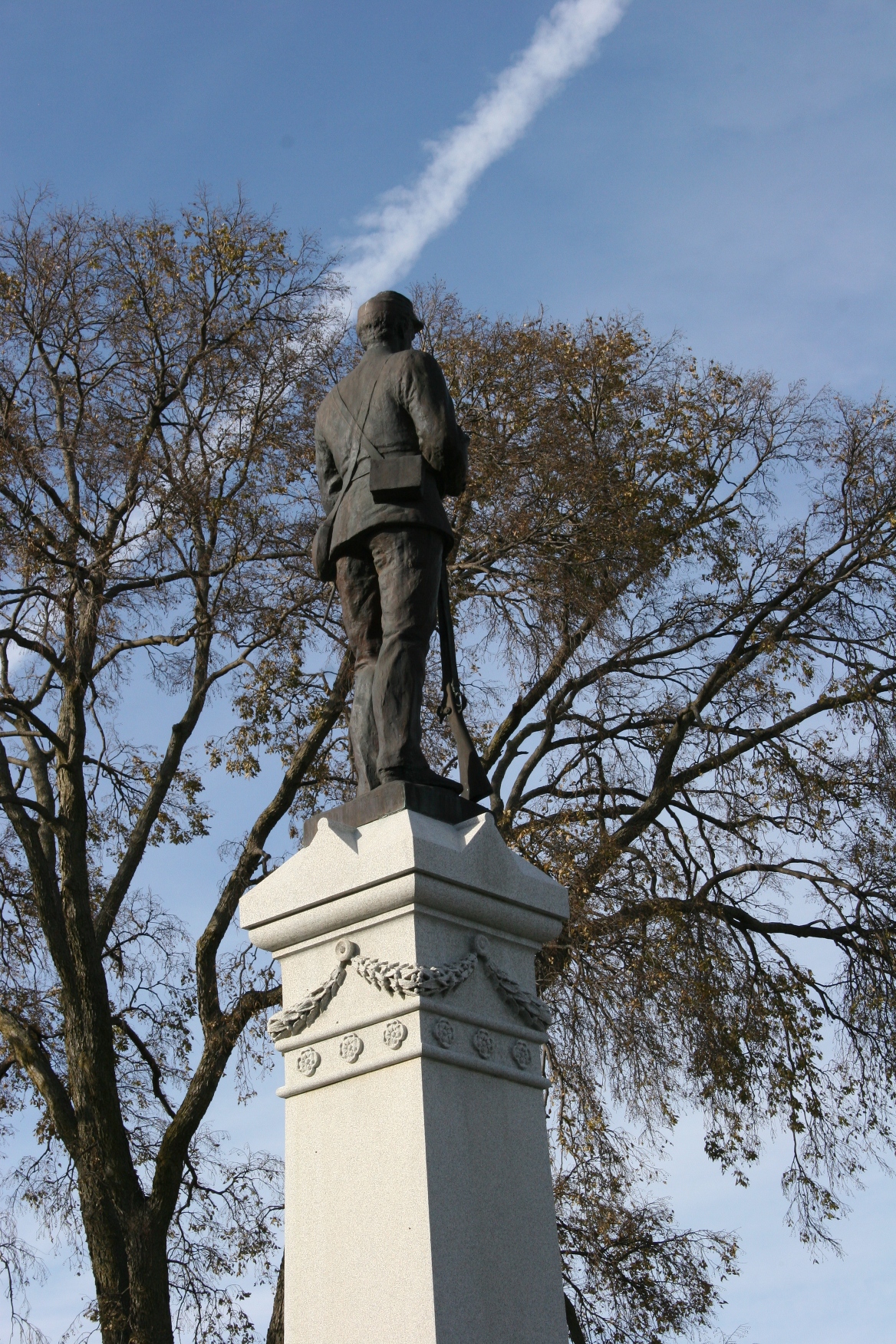
Prior to installation of this imitation torch, a fuel-fed torch burned near the historical Civil War statue which has long graced the courthouse lawn. Apparently that flame went out all too often, leading to its removal and installation of the Vegas style torch.

The long-standing Civil War statue sets a historical mood for the Rice County Veterans Memorial. I shot this image last fall.

To the right, in this unedited photo, you'll see a side view of the historical Civil War marker. In the center is the torch and the bronzed eagle and dove with flags and the courthouse in the background.

I could go on and on about how much I dislike this cheapening alternative, how it fails to fit the historical context of this place, the courthouse architecture or the long-standing Civil War marker. I won’t because I’ve said enough.

View my photos and tell me what you think. I’d like your opinion.

But even more, if you agree that this style of torch does not belong at a veterans’ memorial, offer a solution. I have none. Except to pull the plug.

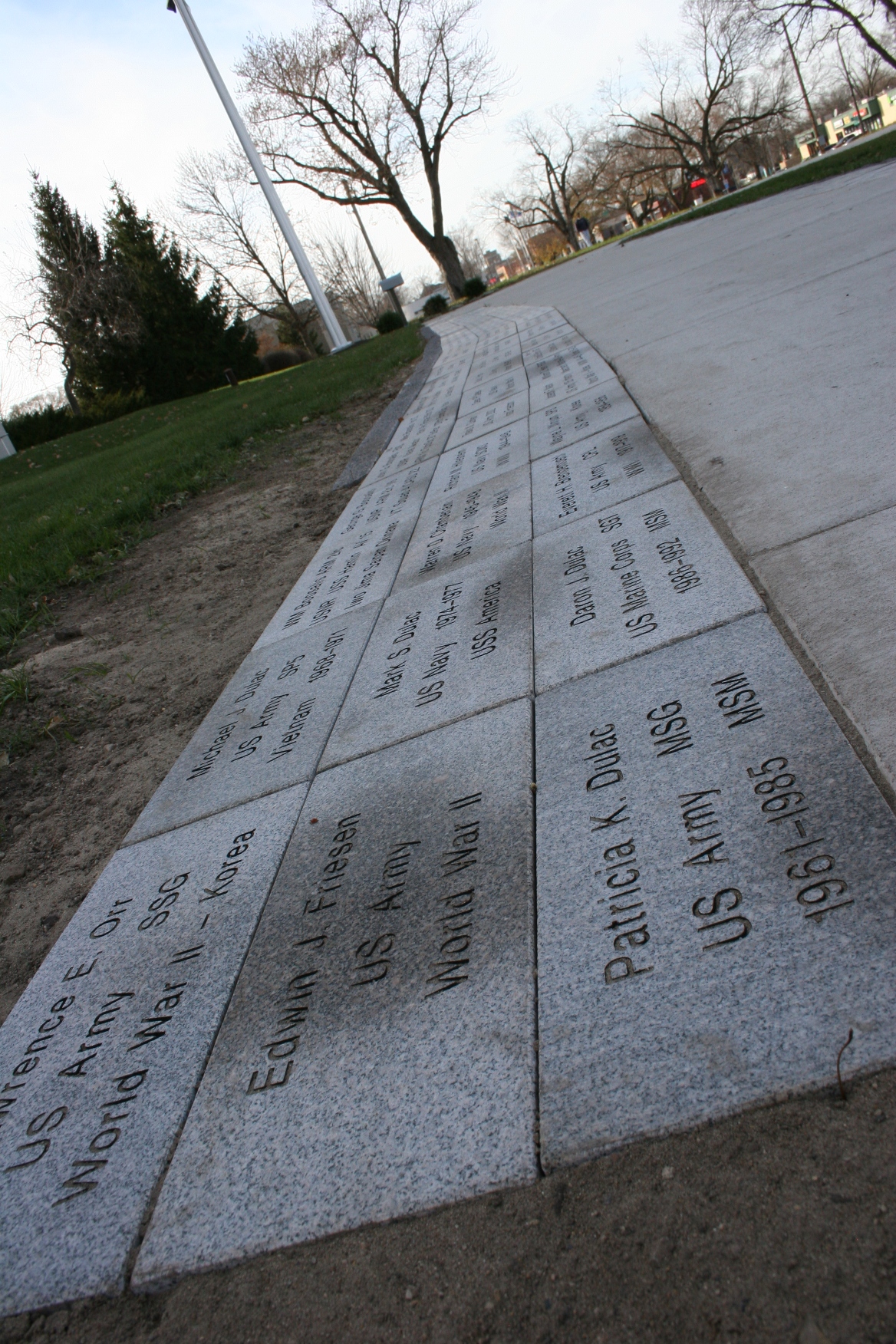
Honorary pavers line sidewalks leading to the center of the Rice County Veterans Memorial in this image taken last fall.

© Copyright 2011 Audrey Kletscher Helbling


Hail St. Mary’s of Melrose June 26, 2011

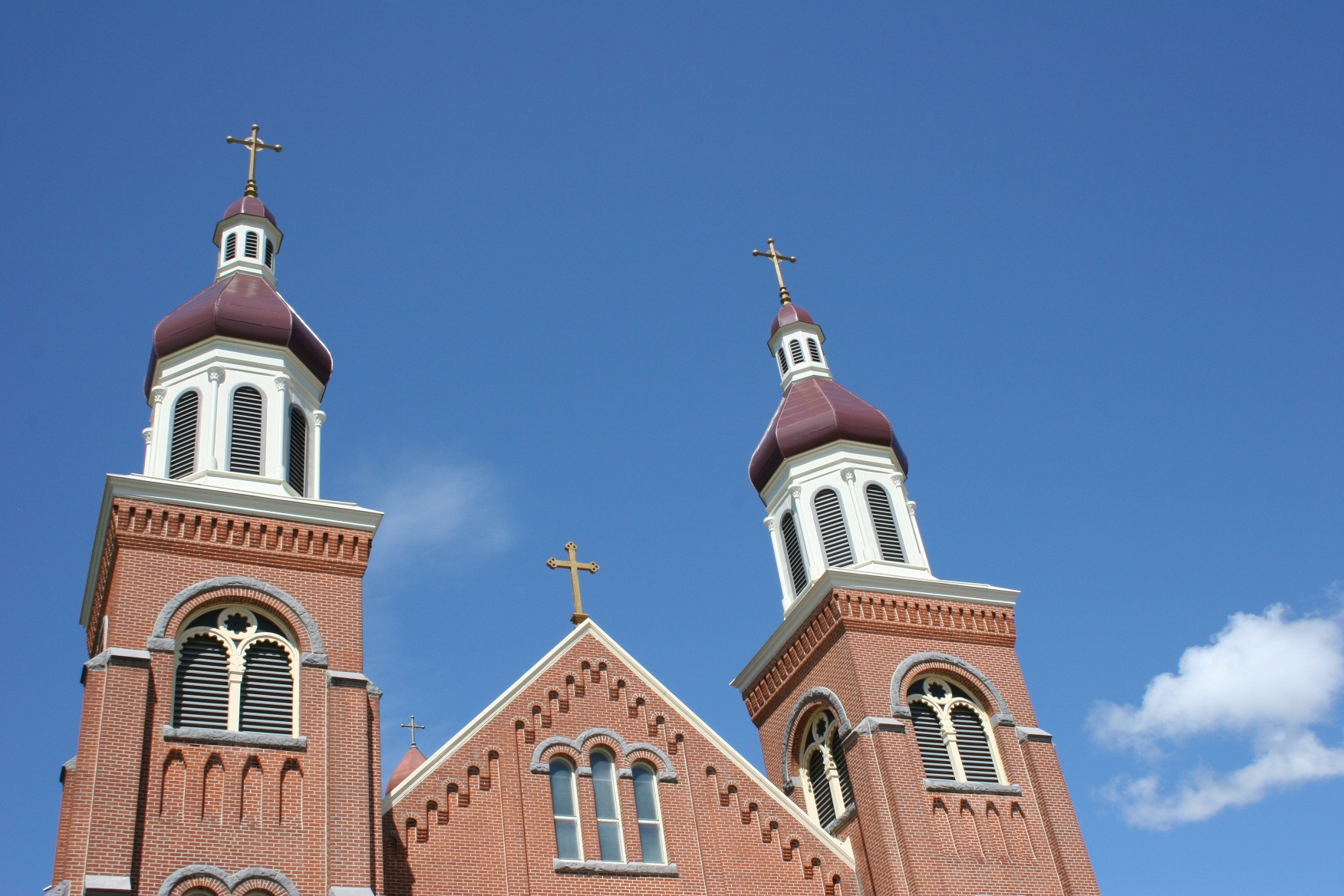
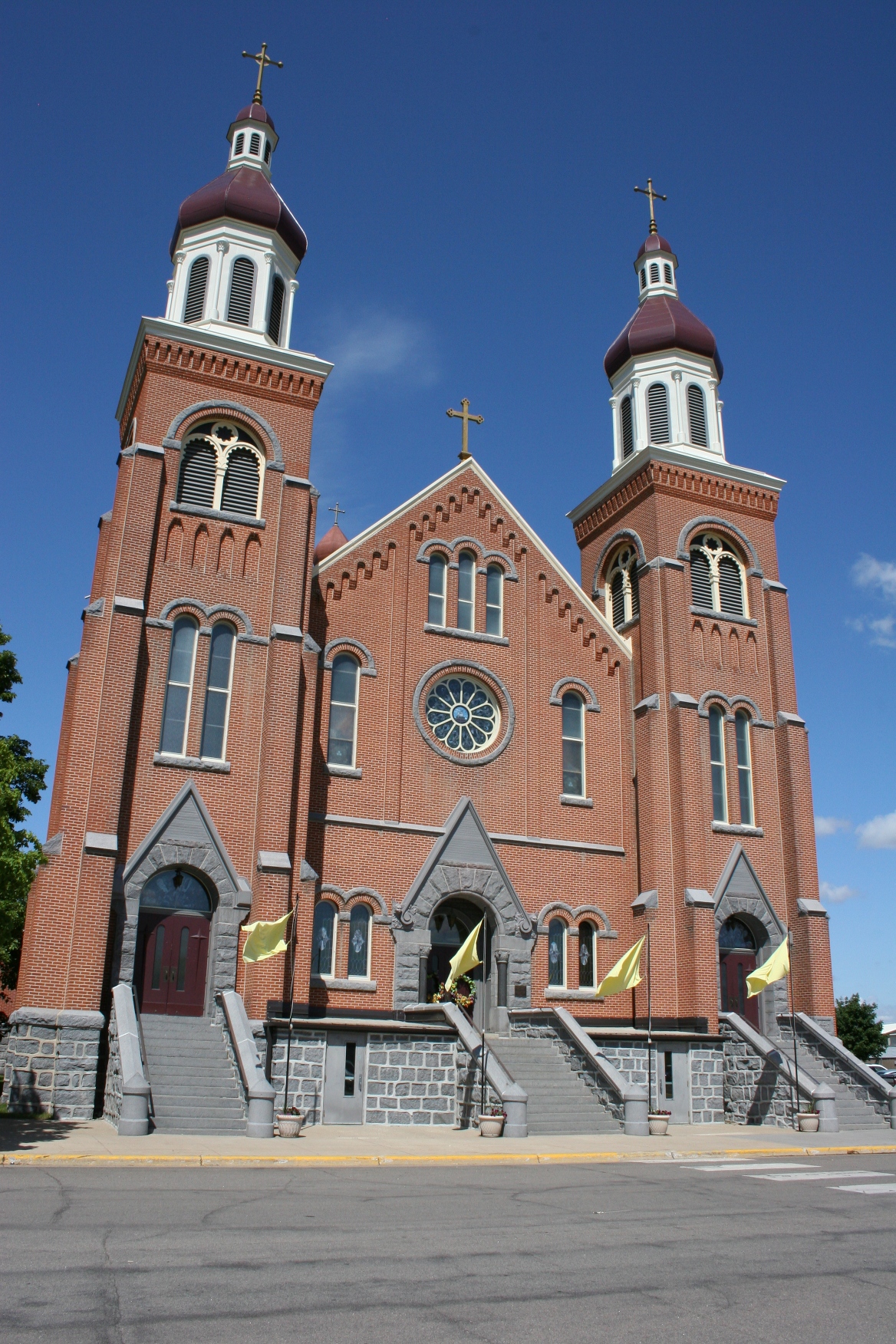
The steeples of St. Mary's Catholic Church of Melrose.

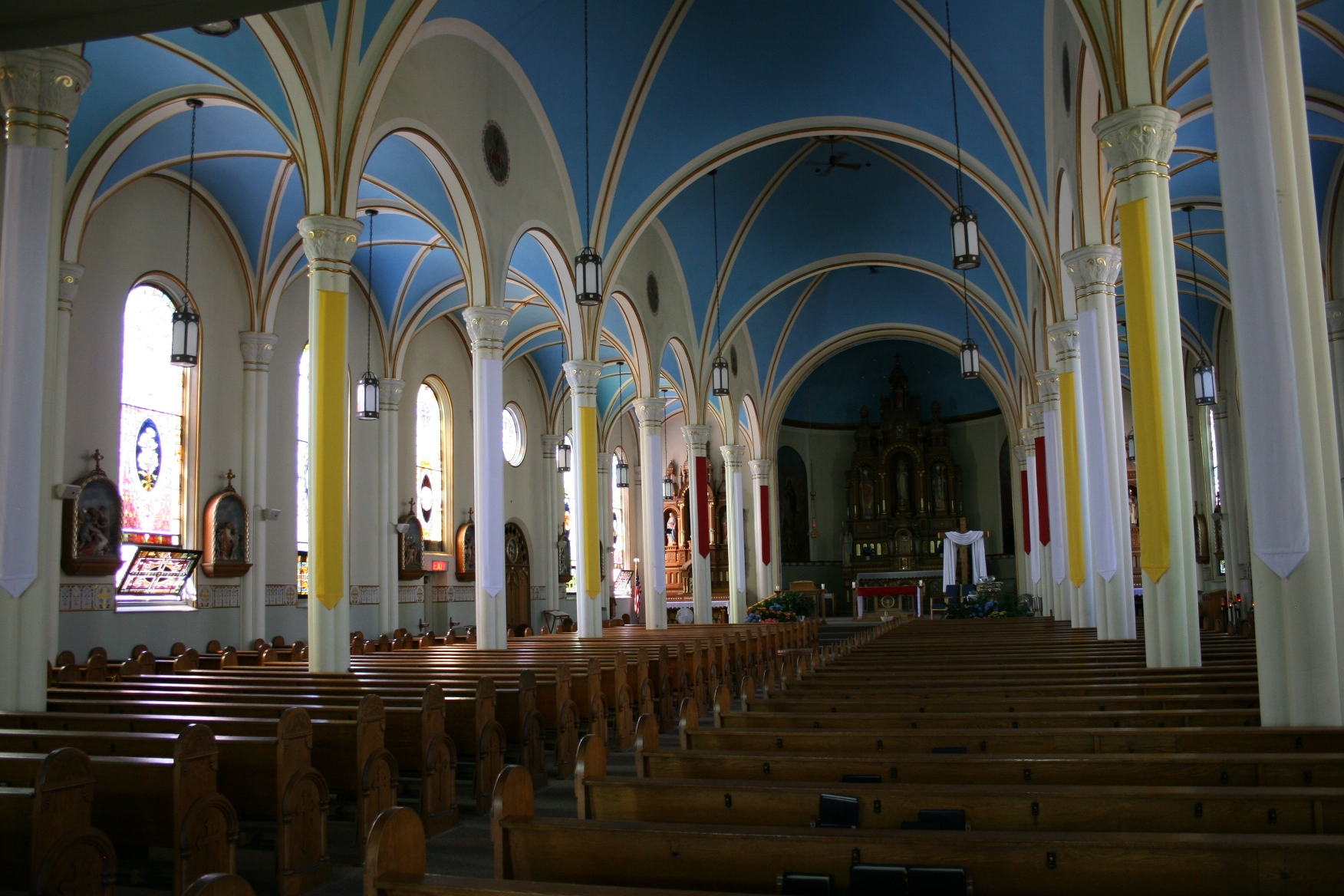
I STOOD THERE. Just stood there. For minutes, taking in the glorious splendor before me.

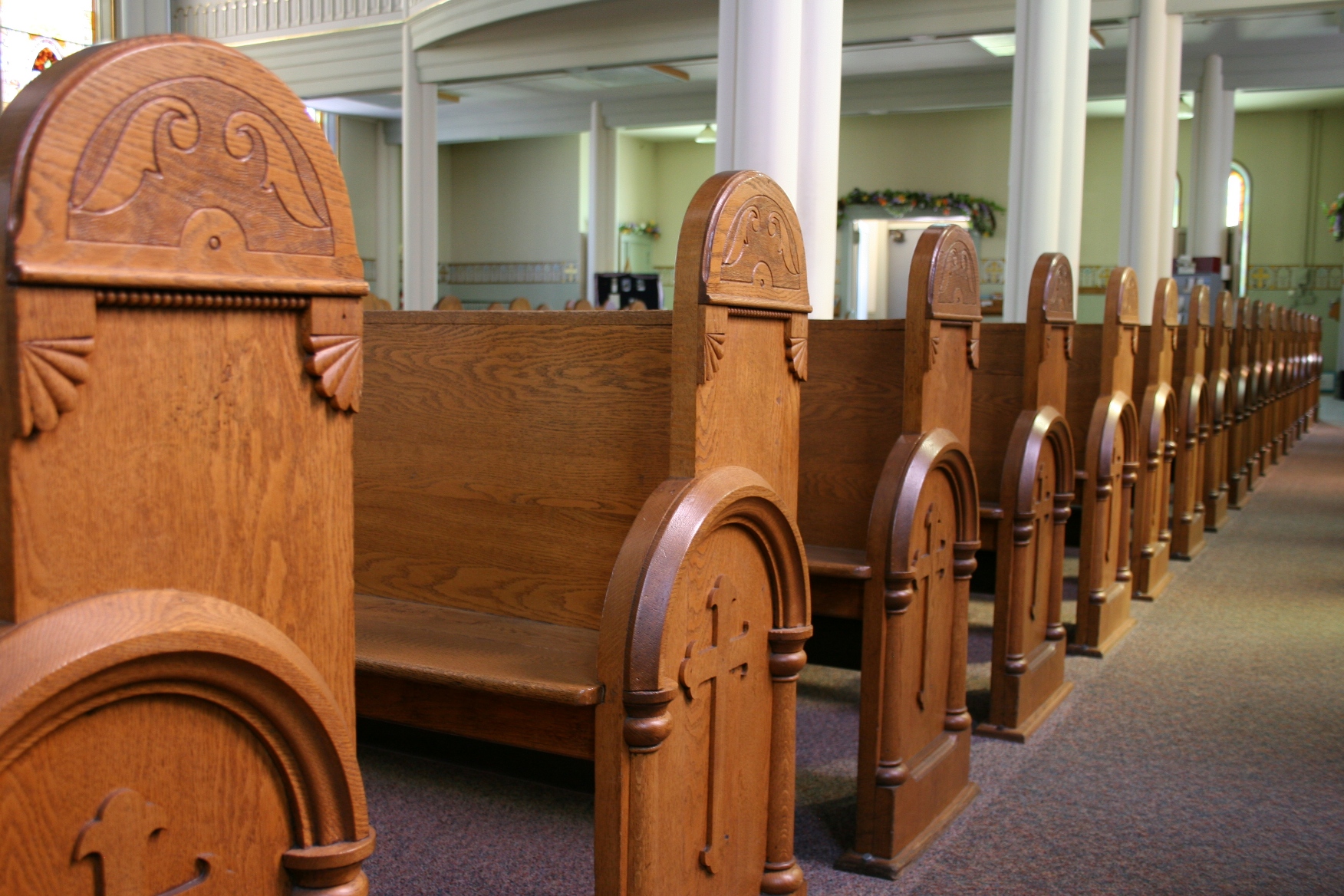
The cornflower blue of the arched ceiling. The pillars. Pews—endless carved pews stretching from the fonts of holy water to the steps leading to the altar.

A view from the back of St. Mary's Catholic Church looking toward the main altar.

I didn't even try to count the hand-carved pews that grace this church. But they are many.

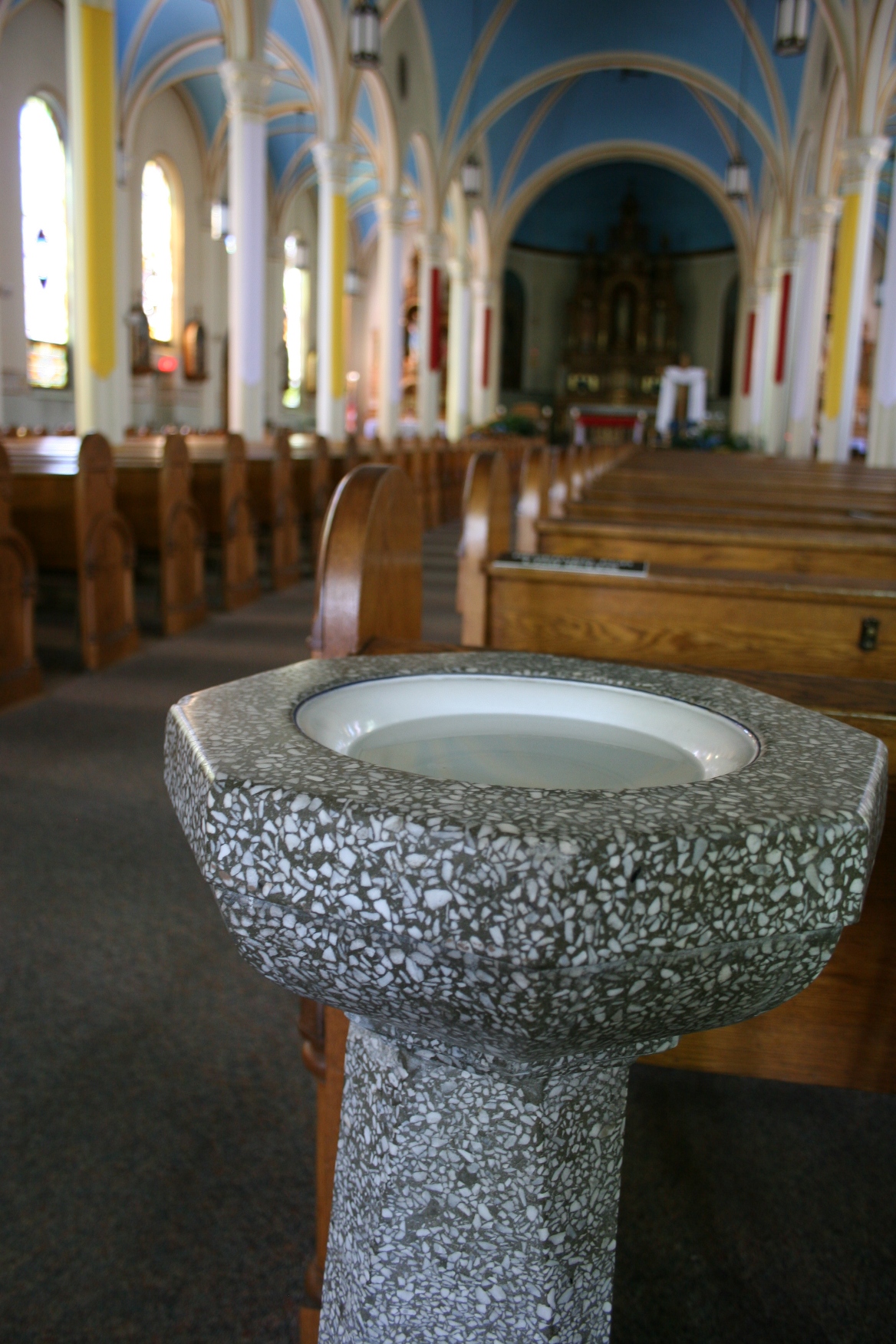
A stone font holding holy water at the back of the church.

Such beauty. Such holiness. Such wonderment.

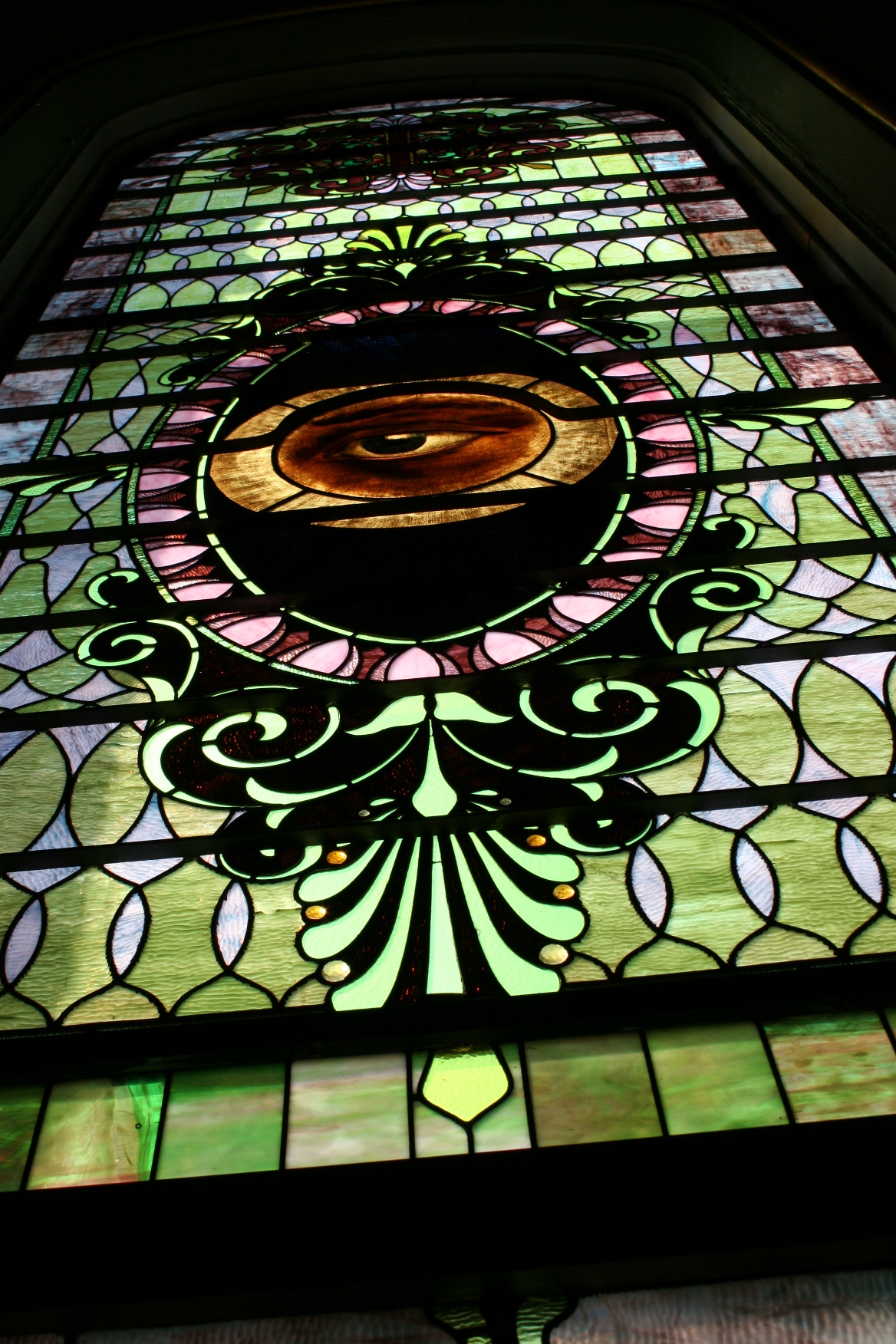
Opulent, stained glass windows bedecking the sanctuary like jewels on a crown.

One of too many stained glass windows to count.

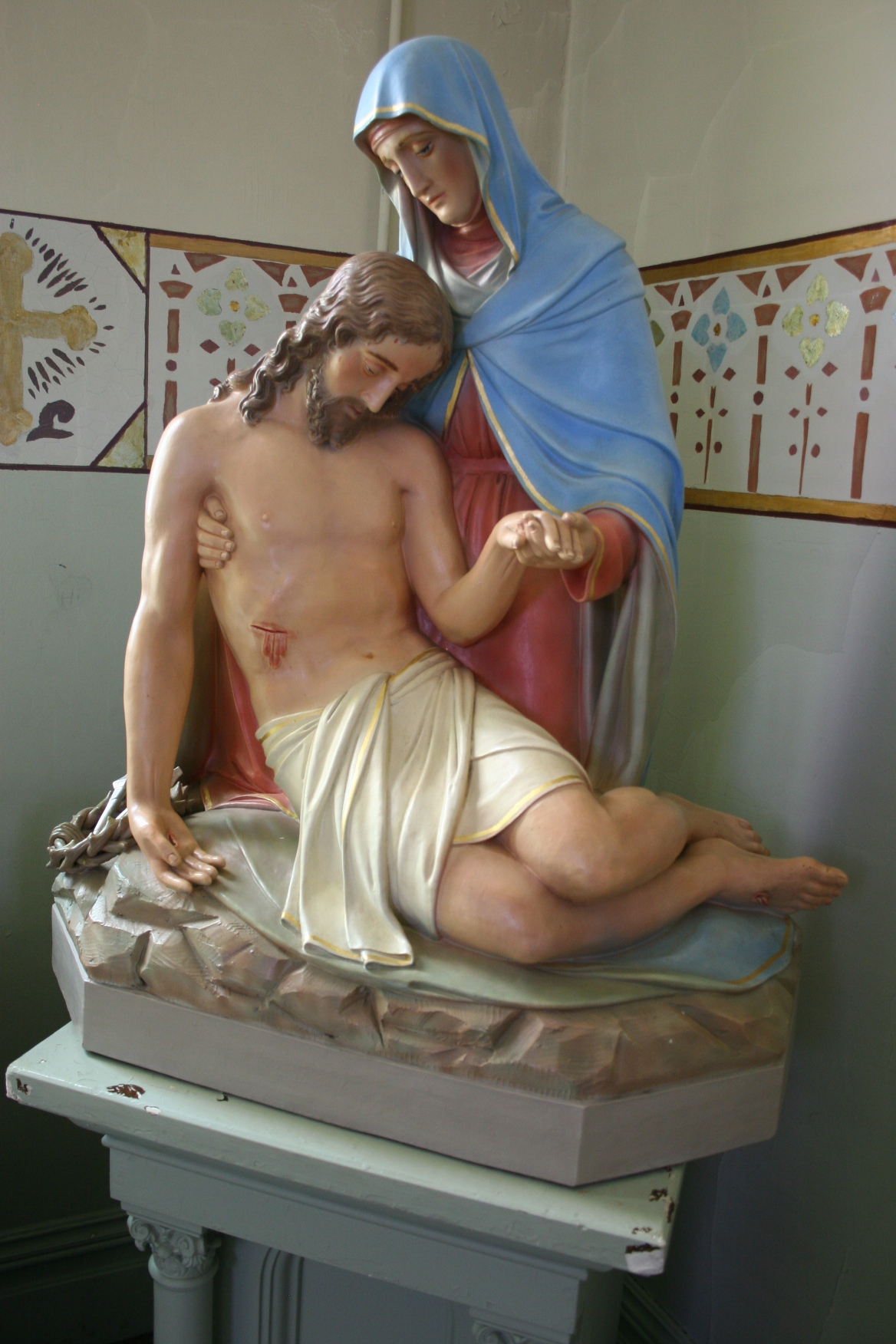
Statues fit for the finest of museums.

This statue of Jesus and Mary sits at the back of the church.

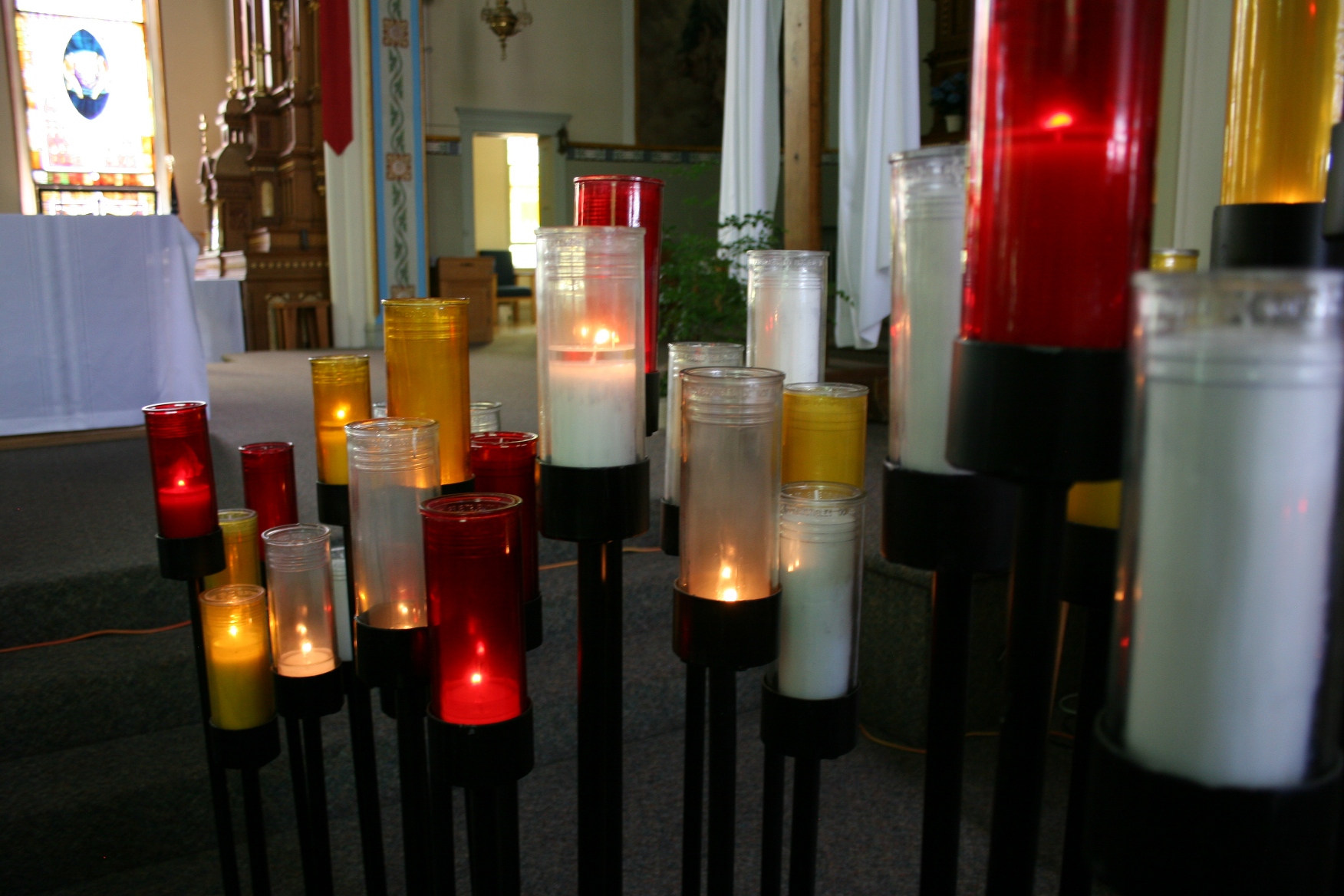
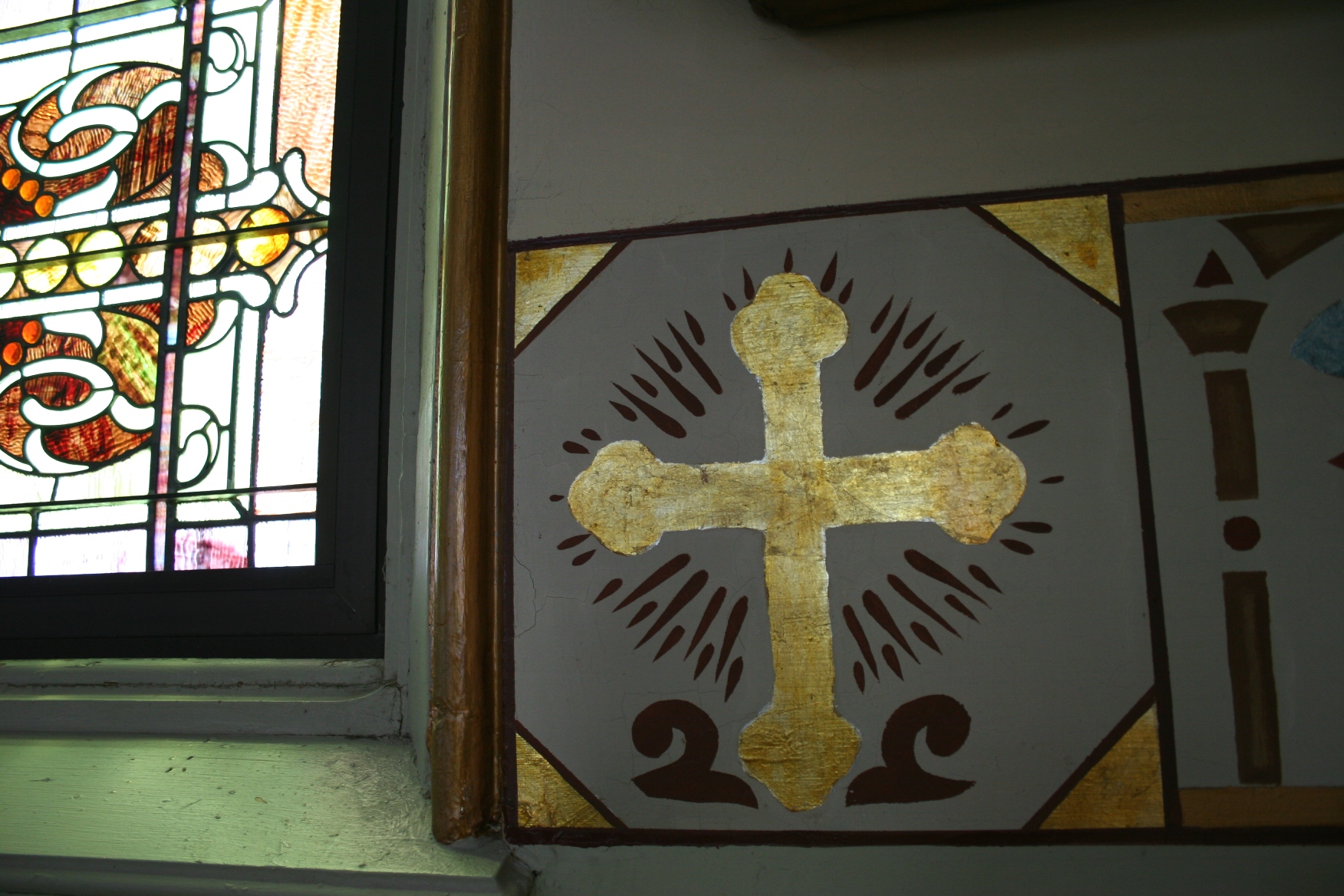
And then I moved, not sure which direction to go, wondering how I could possibly see every detail. Prayerful hands. Flickering candles. The frayed ends of the bell pull. Gold-leaf stenciled crosses. Worn wood. Angels in flight above the altar.

Clustered candles of prayer at St. Mary's.

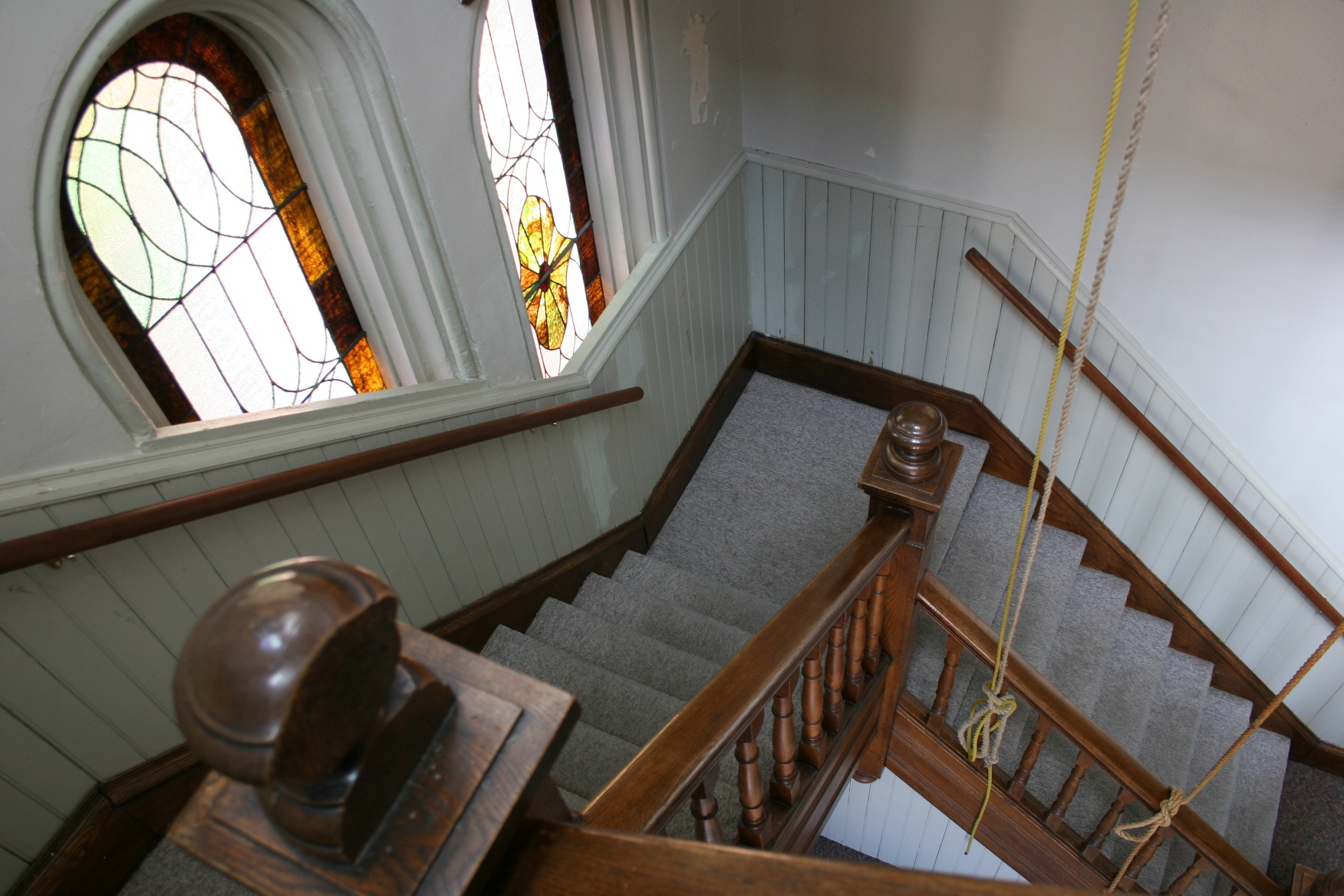
Bell ropes dangle by the balcony stairway. Two stairways lead to the balcony.

A gold-leafed stenciled cross borders a side wall of the sanctuary.

My eyes swept across the Church of St. Mary’s, or St. Mary’s Catholic Church of Melrose. Choose the moniker you prefer.

The name and the denomination of this 1898 church mattered not to me. I cared only for the heavenly feel of this holy place.

How could I not be impressed by this multi-steepled house of worship next to the turkey plant and soaring above the landscape 100 miles northwest of the Twin Cities?

How many times, if you travel Interstate 94 in central Minnesota, have you noticed those steeples while zipping by Melrose, but never taken the time to drive into town? Placed on the National Register of Historic Places in 1993, this Catholic church is worth a stop if you appreciate craftsmanship, art, history and reverent beauty beyond belief.

The church rises above the land, defining Melrose.

The 113-year-old building was constructed by the parishioners of St. Boniface and renamed St. Mary’s when St. Boniface and St. Patrick’s parishes merged in 1958.

History runs deep here. You will see it in the hitching post out front, smell it in the incense, hear it in the creak of steps leading to the locked balcony.

And if you listen closely, you can almost hear the whispered prayers of those who have come here on bended knees to lift up their sorrows to the Lord.

#

I COULD NOT POSSIBLY share my many photos of St. Mary’s with you in one blog post. Please check back for more images in a future post.

© Copyright 2011 Audrey Kletscher Helbling


A historic bank and White Buffalo Calf Woman June 23, 2011

SET ME IN FRONT of an architecturally-stunning historic building and I’m in history heaven.

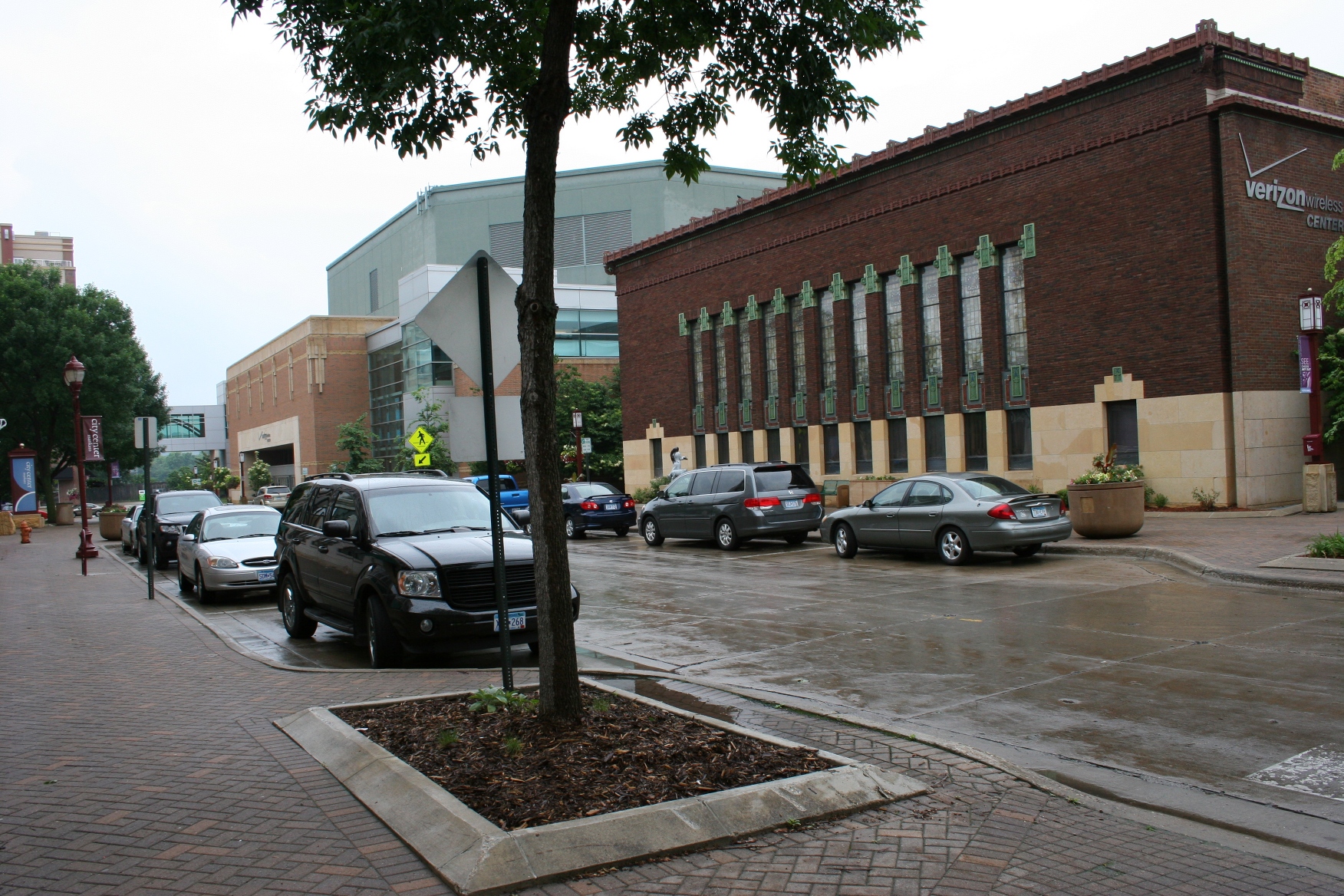
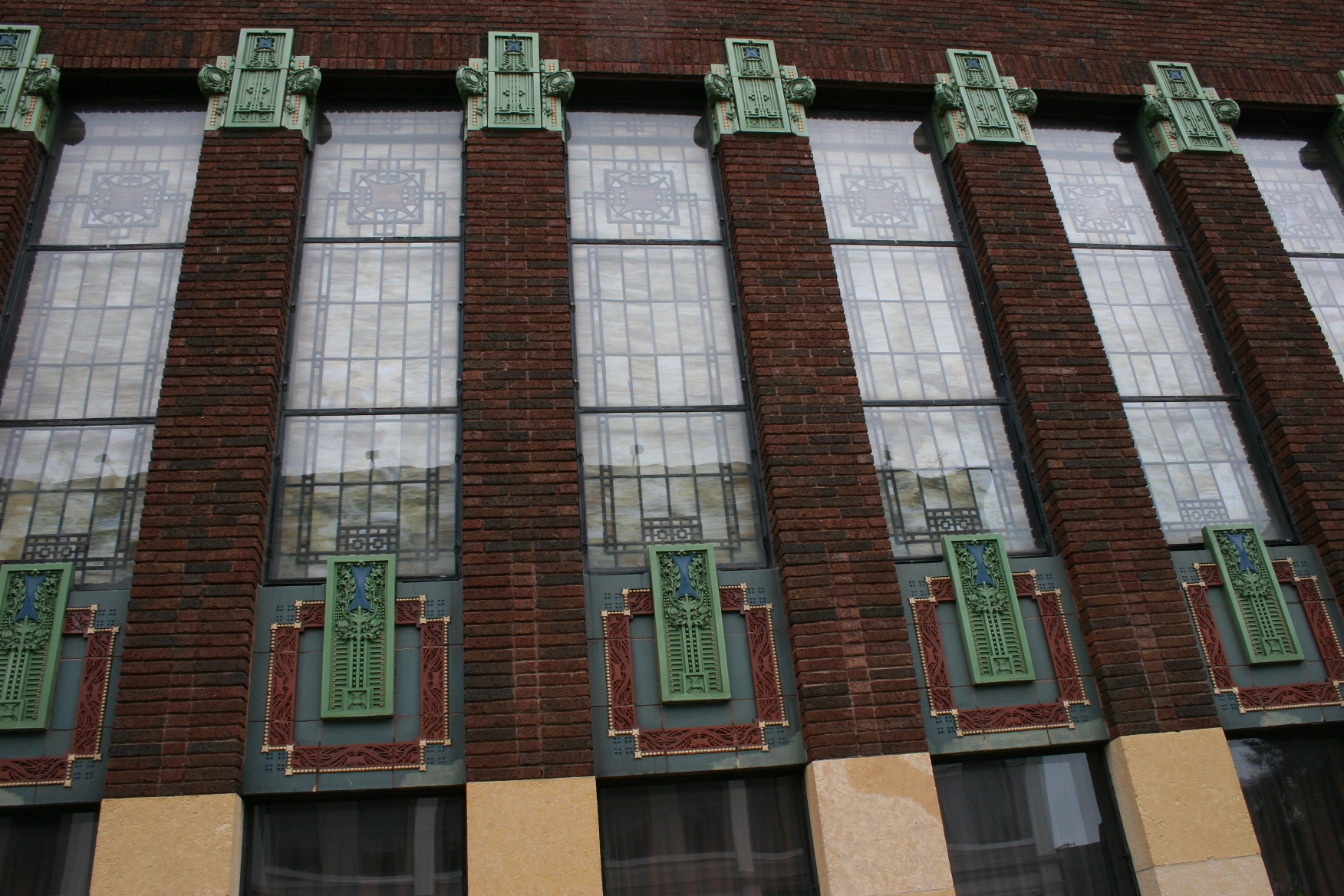
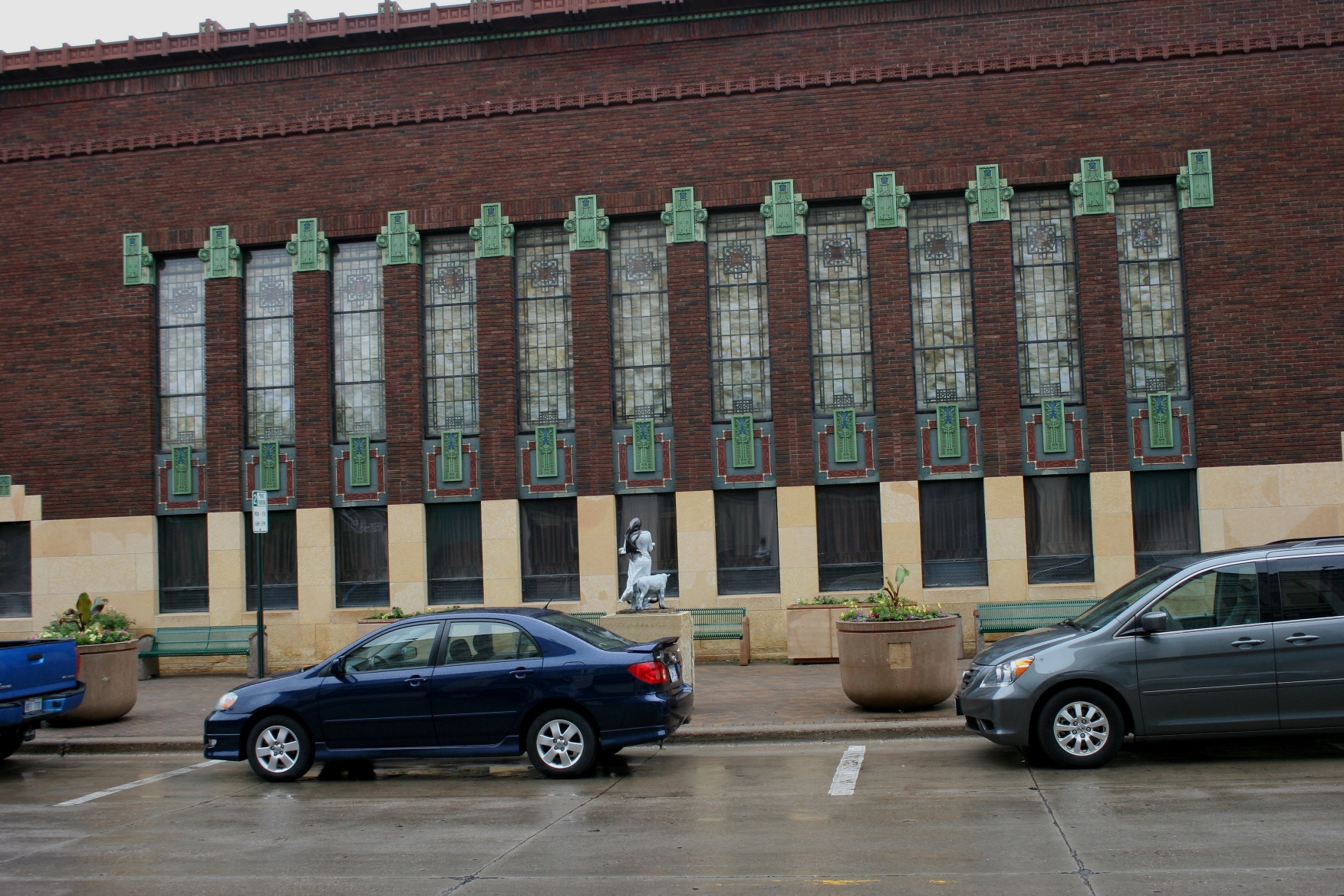
Just look at the lines, the colors, the window leading, the carvings…of the Old First National Bank of Mankato building, now a Verizon Wireless Center reception hall.

I didn’t step inside the former bank, didn’t even try a door. I was content last Saturday afternoon to view the exterior with its Prairie School style architecture.

“It’s like that bank in Owatonna,” my husband said as we gawked at the building built of brick, Mankato limestone and terra cotta along Civic Center Plaza in downtown Mankato.

He was, of course, referring to Chicago architect Louis Sullivan’s “jewel box,” National Farmer’s Bank in Owatonna, a brick building with terra cotta accents, splendid for its stained glass windows, arches and other architectural details.

The Mankato building features Frank Lloyd Wright-inspired stained glass and detailed ornamentation along the roof line.

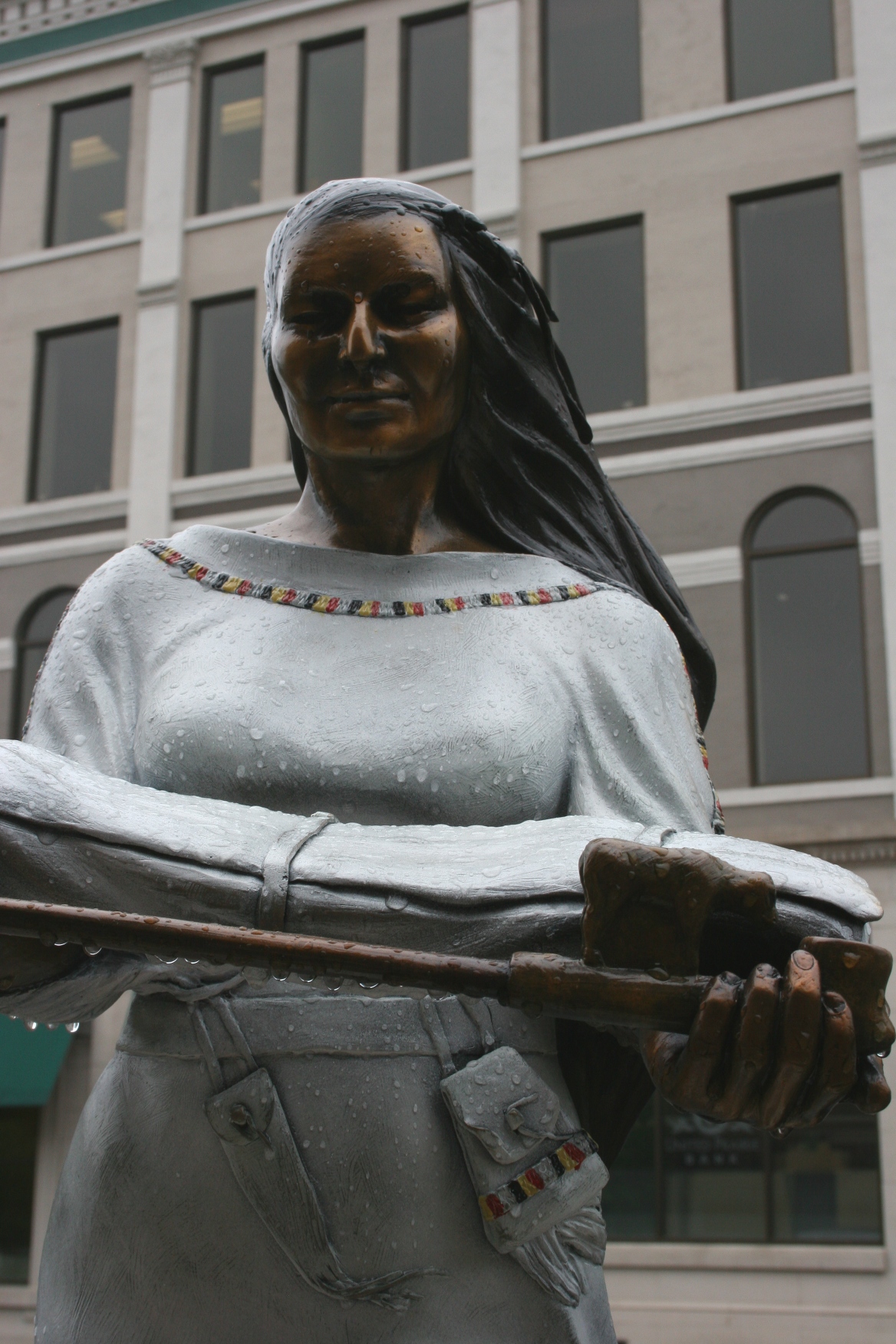
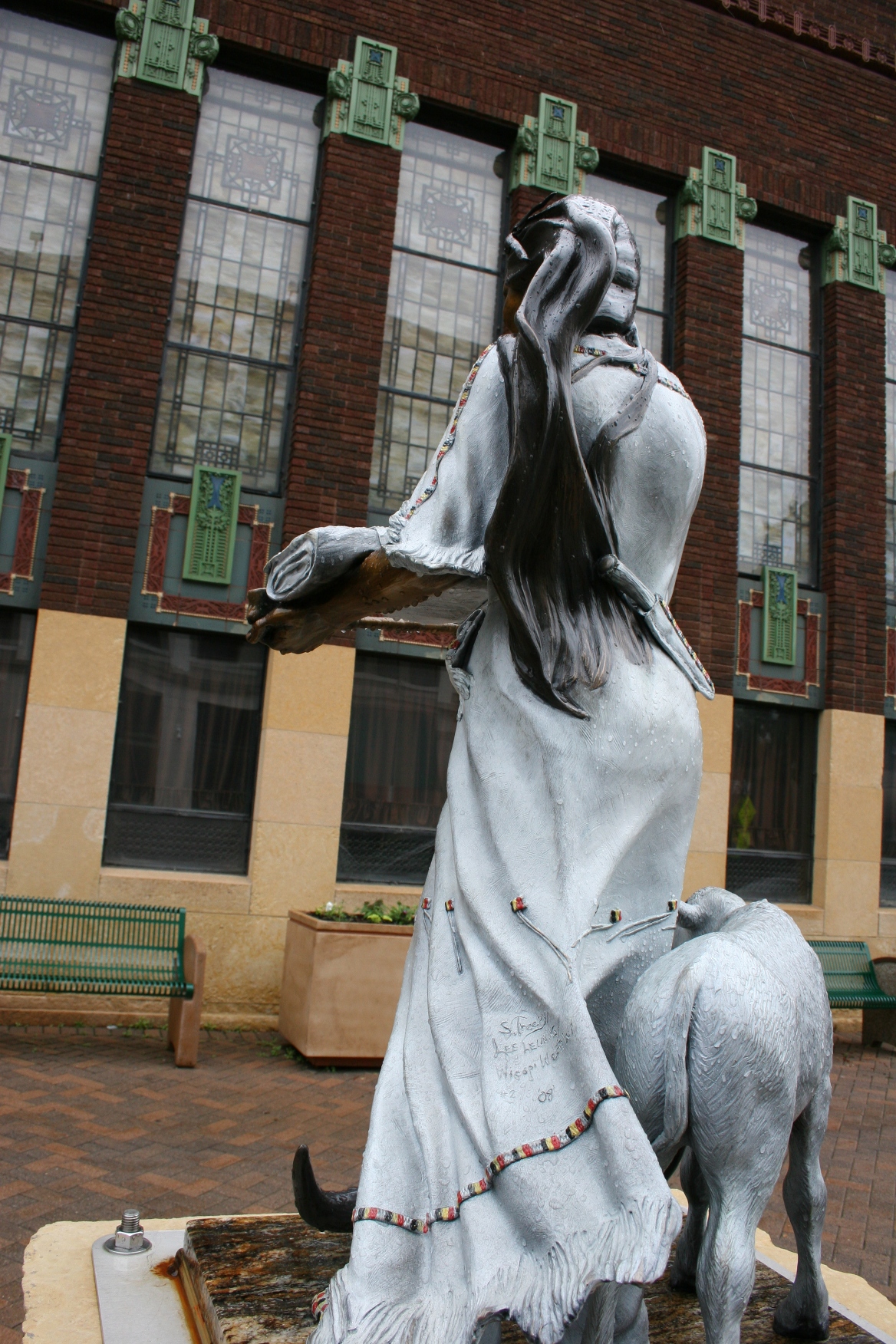
And now it also showcases a bronze sculpture of White Buffalo Calf Woman by South Dakota artists Lee Leuning and Sherri Treeby as part of Mankato’s City Art Walking Sculpture Tour.


If you peer at the woman’s face, examine her beaded moccasins and the trim on her buckskin dress and pouch, you’ll notice how the colors mimic those of the historic bank building. Whether this Native American sculpture’s placement was planned or accidental, I don’t know, but it fits seamlessly with the historical vibe of the locale, enhancing the whole art viewing experience.

The city of Mankato, apparently named after a varied translation of the Dakota word Mahkato, meaning “blue earth,” owns a place in Minnesota and national history for the mass hanging of 38 Dakota here on December 26, 1862. Three hundred warriors were accused of killing civilians and soldiers and of other crimes during the U.S.-Dakota Conflict. After a public outcry, President Abraham Lincoln commuted the sentences of all but 38. Certainly, Mankato is not proud of this moment in history. But efforts have been made to honor the Dakota at monuments in the city.

And now sculptures like White Buffalo Calf Woman also help heal and educate the public about the Native American culture. According to information on the sculpture placard, this prophetess is the only religious icon accepted by all Native American tribes. She “brings a message of healing, hope and peace among the races to all the people.”

More than just art, I also got a history lesson along a Mankato city street on a Saturday afternoon in June.

PLEASE VIEW MY JUNE 20 post for more photos and information about the Walking Sculpture Tour. Additional images will be forthcoming.

© Copyright 2011 Audrey Kletscher Helbling


A look back at a 1951 graduation speech about communism June 5, 2011

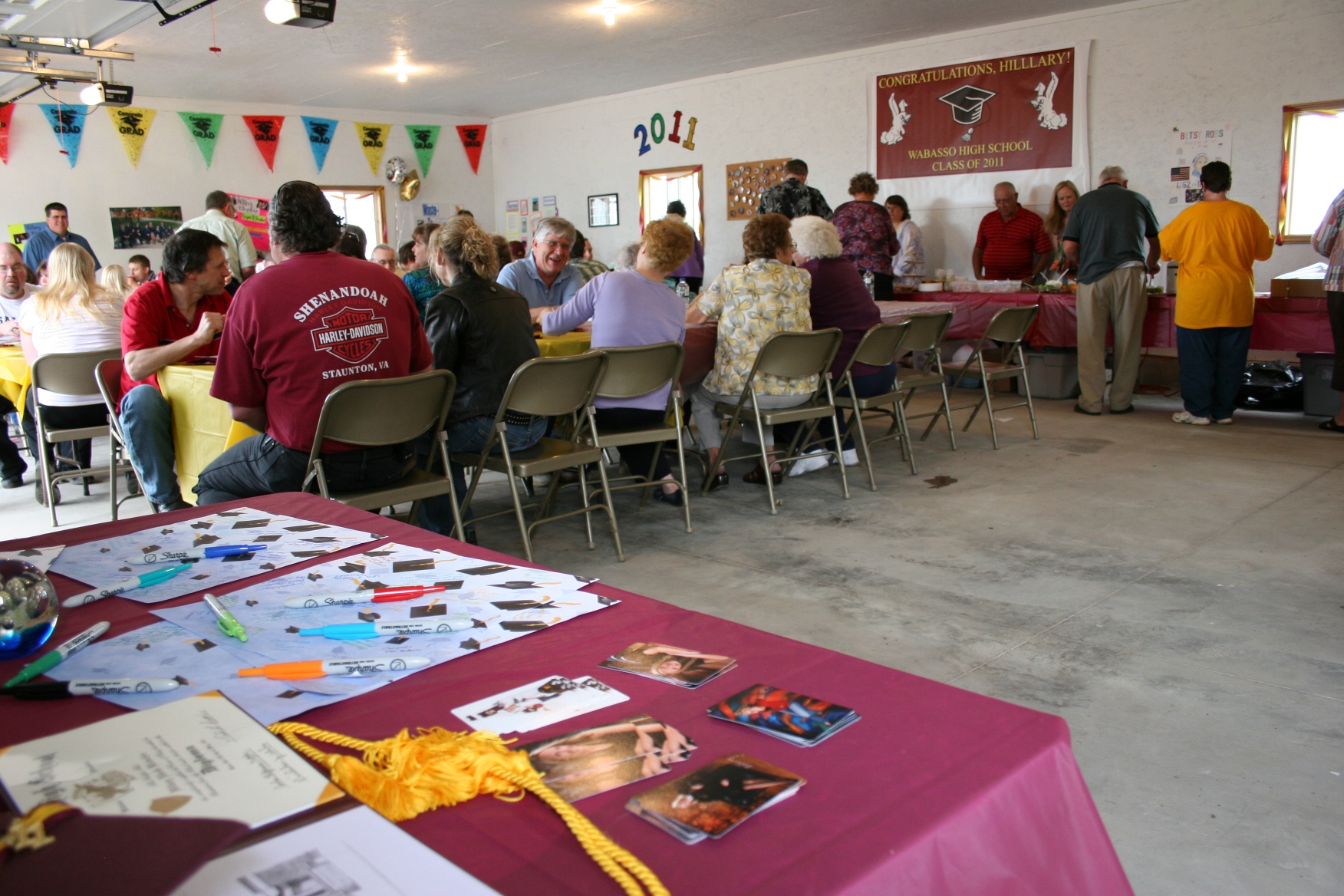
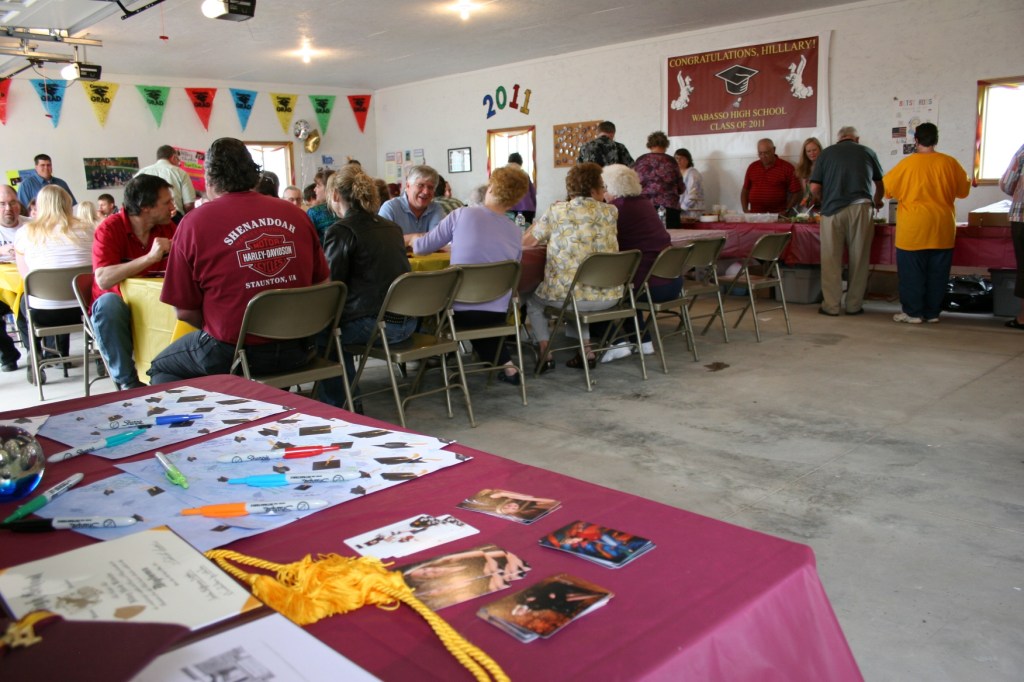
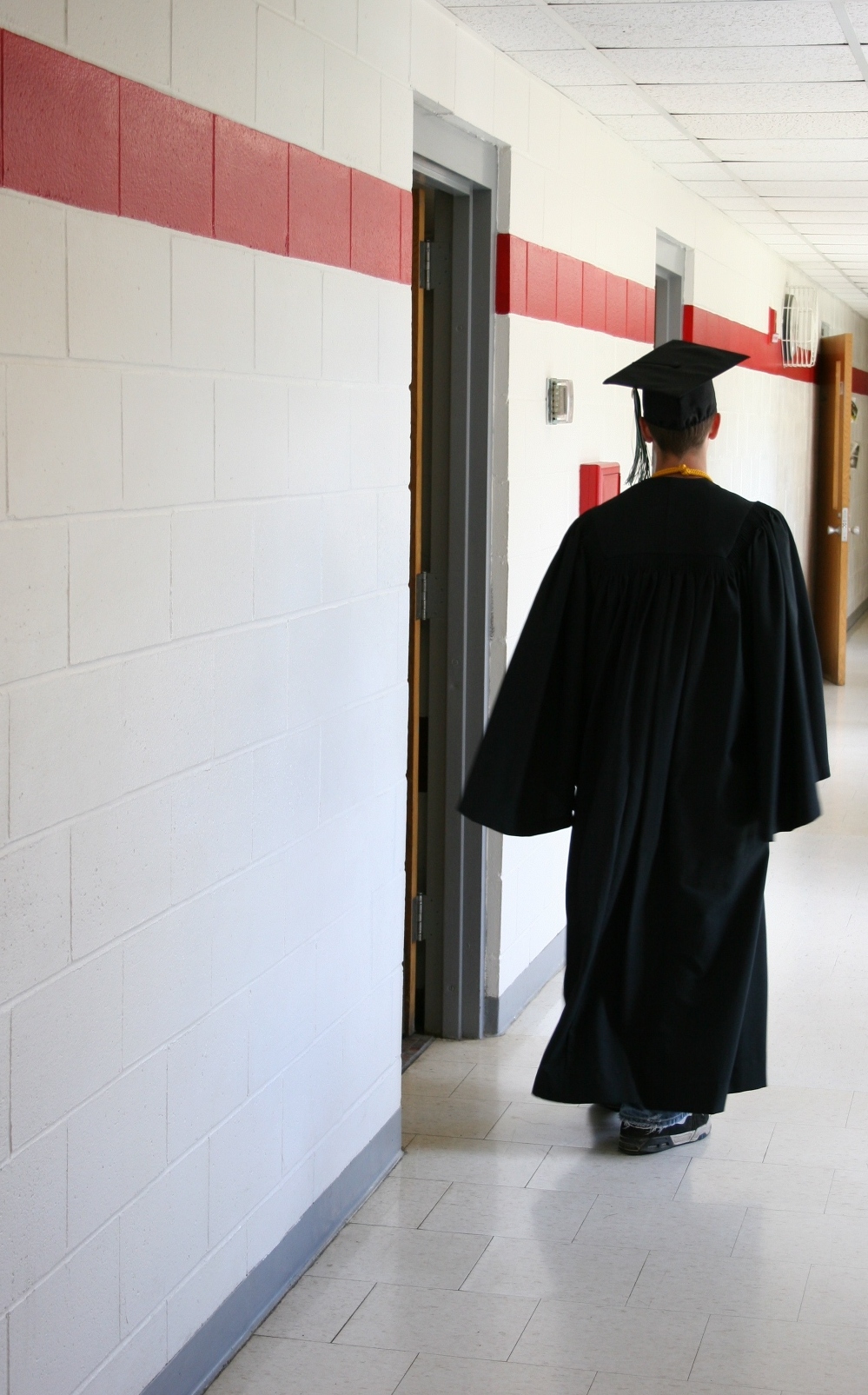
I recently attended this graduation reception for my niece Hillary, who graduated from Wabasso High School.
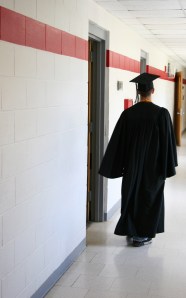
A soon-to-be 2010 graduate of Westbrook-Walnut Grove High.

IF YOU’RE LIKE ME, you’ve received invitations to numerous high school graduation receptions. You’ll make the rounds, shaking hands with the new graduates, inquiring about their future plans, congratulating their parents and then grabbing something to eat (pacing your food intake) before moving on to the next reception.

If you’re like me, you also have not attended a single graduation ceremony, unless your child is graduating or you are invited to a small-town high school where seating is not limited to four spaces per graduating senior’s family.

Therefore, you probably have not heard a student commencement speech in some time.

About a week ago my niece graduated as valedictorian of  Wabasso High School, my alma mater, and gave a graduation speech, of which I’ve received a copy. Hillary spoke about the past and how it weaves into the future. “As we become the people we are meant to be, we can hold onto the memories of yesteryear and the hopes of tomorrow,” she said in part. “The one thing that will always remain constant is the change in our lives.”

Now compare that to the speech (see below) given by Hillary’s grandmother, my mother, at Wabasso High School 60 years ago. Class of 1951 valedictorian Arlene Bode spoke about “Our Part in the Fight Against Communism.”

When my mom first told me the title of her speech, I laughed. “Who gives a graduation speech about communism?” I asked, and laughed again.

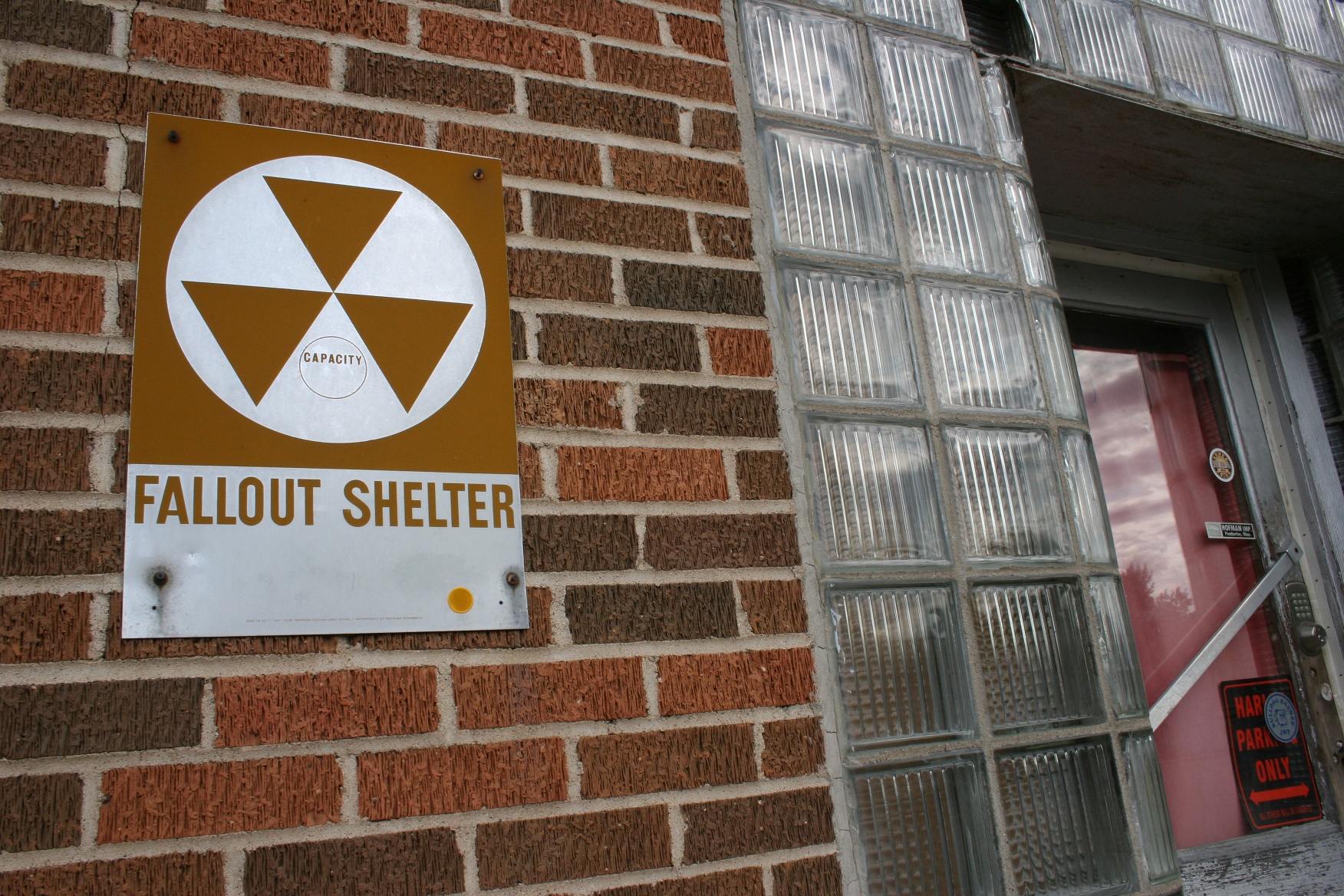
An old fallout shelter sign on a building in downtown Pemberton in southern Minnesota.

Then my 79-year-old mother reminded me of the time period—the Cold War, the fear of the Soviet Union, the Korean War, fallout shelters—and I understood. She doesn’t recall whether she chose the topic or whether the subject was assigned. But the content gives some youthful, historical insight into the world six decades ago:
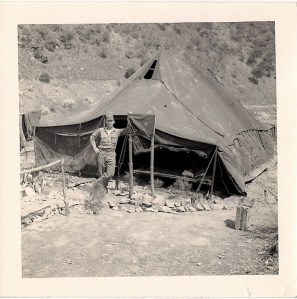
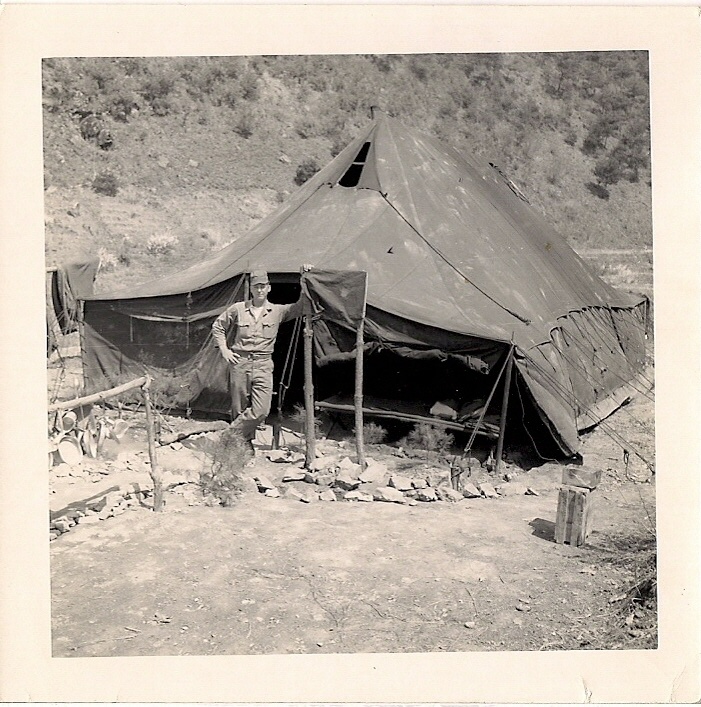
My father, a Korean War veteran, in Korea in 1953.

“WE, THE GRADUATING SENIORS, wish to take this opportunity to express our sincere gratitude to our parents, teachers, and all others who have helped us obtain our education.

OUR PART IN THE FIGHT AGAINST COMMUNISM

Communism is threatening the peace and security of our country. This is being brought more and more to our attention each day by the governmental leaders of the United States. We are sending our boys to Korea. We are conducting investigations to reveal any communist workers who may be in our government. We are sending Voice of America broadcasts behind the Iron Curtain to inform the people of how democracy works. But this is not enough. The tide of communism is moving ever forward. Most of Europe is communistic and it is spreading rapidly in Asia. This has happened just in the last few years. We must stop this tide before it is too late. It behooves us as graduating seniors to help in the fight against communism while there is still time.

Of course we must know what we are fighting against. The mere word communism is not enough. We must know what it means. The word communism is derived from the Latin word communis meaning common. It is said that communism is the distribution of income to each according to his need. They believe that all natural resources and most businesses should be owned by the government. They also believe in community ownership of property. This is the true meaning of communism, but it has an even greater meaning here in the United States. Senate hearings have shown that it is a politically controlled conspiracy, promoted by a foreign nation, for the overthrow of our government. If they should accomplish this overthrow it would be a decisive step toward placing the entire world under communistic government. According to Kenneth Goff, author of “Confessions of Stalin’s Agent,” the communist party has six main points in its program: Abolition of all governments, inheritance, private property, patriotism, family, and religion.

The communists strike first at the poorer class of people and at those who are not satisfied with present day conditions. They promise these people that under communism they will have all they want, such as rest, leisure, and social security paid by the State. But this is far from what really happens. What really happens is that these people lose their personal freedom and whatever they do is for the benefit of the communist party.

If we have an understanding of what communism means and how it works we can fight against it. Here are some of the things we can do.
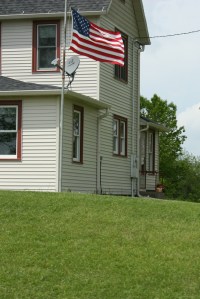
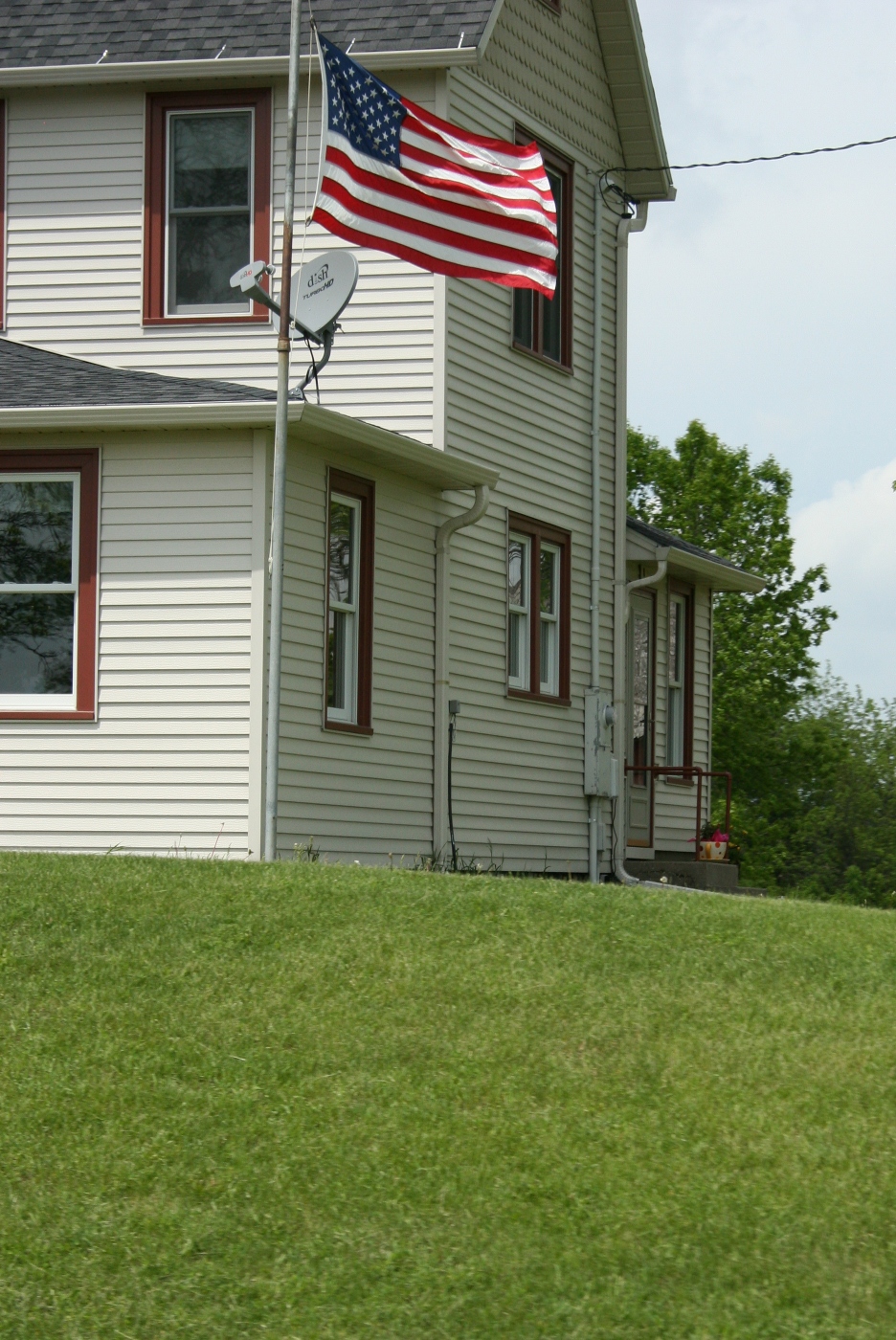
Patriotism displayed on a rural Minnesota home.

We must at all times practice democracy. Democracy means a sharing of respect, a sharing of power, and respect for the dignity of man. Democracy is promoted by a balanced economic distribution and an enlightenment of the people. We should see that parliamentary procedure is used in all organizations to which we belong such as, church organizations, community organizations, and women’s clubs. It is important to secure the wishes of the majority of the people without wasting time.

We must set a good example by being democratic in our every day life and in our dealings with others by working toward a definite goal in life, setting up ideals to follow, being a neighbor to all people regardless of their race, color, or religion, showing good judgment in all we do.

In a few years we will have a voice in our government and we must do our best to keep communists out of it. We can do this by voting at each election, which is one of the privileges of living in a democracy and one which we must never lose. But just casting a vote is not enough. We should know who we are voting for by studying the policies of each candidate to see what he stands for.

If each and every one of us practices democracy wherever we are we have done our part in the constant fight against communism. The part we play may seem small, but every little bit counts if we are to win over communism.”

AFTER READING MY MOM’S SPEECH several times, I wondered how often we as Americans pause to consider the freedoms we likely take too much for granted.

“We must at all times practice democracy. Democracy means a sharing of respect, a sharing of power, and respect for the dignity of man.”

WHAT’S YOUR TAKE on this 1951 graduation speech? Are any of her comments relevant today? What particularly struck you about this speech? I’d like to hear your specific reactions.

© Copyright 2011 Audrey Kletscher Helbling

Graduation speech © Copyright 1951 Arlene Bode Kletscher (Except for corrected errors in spelling, this speech is published here as originally written.)

2011 graduation speech excerpts © Copyright 2011 Hillary Kletscher


Chauncey, a Civil War soldier June 4, 2011

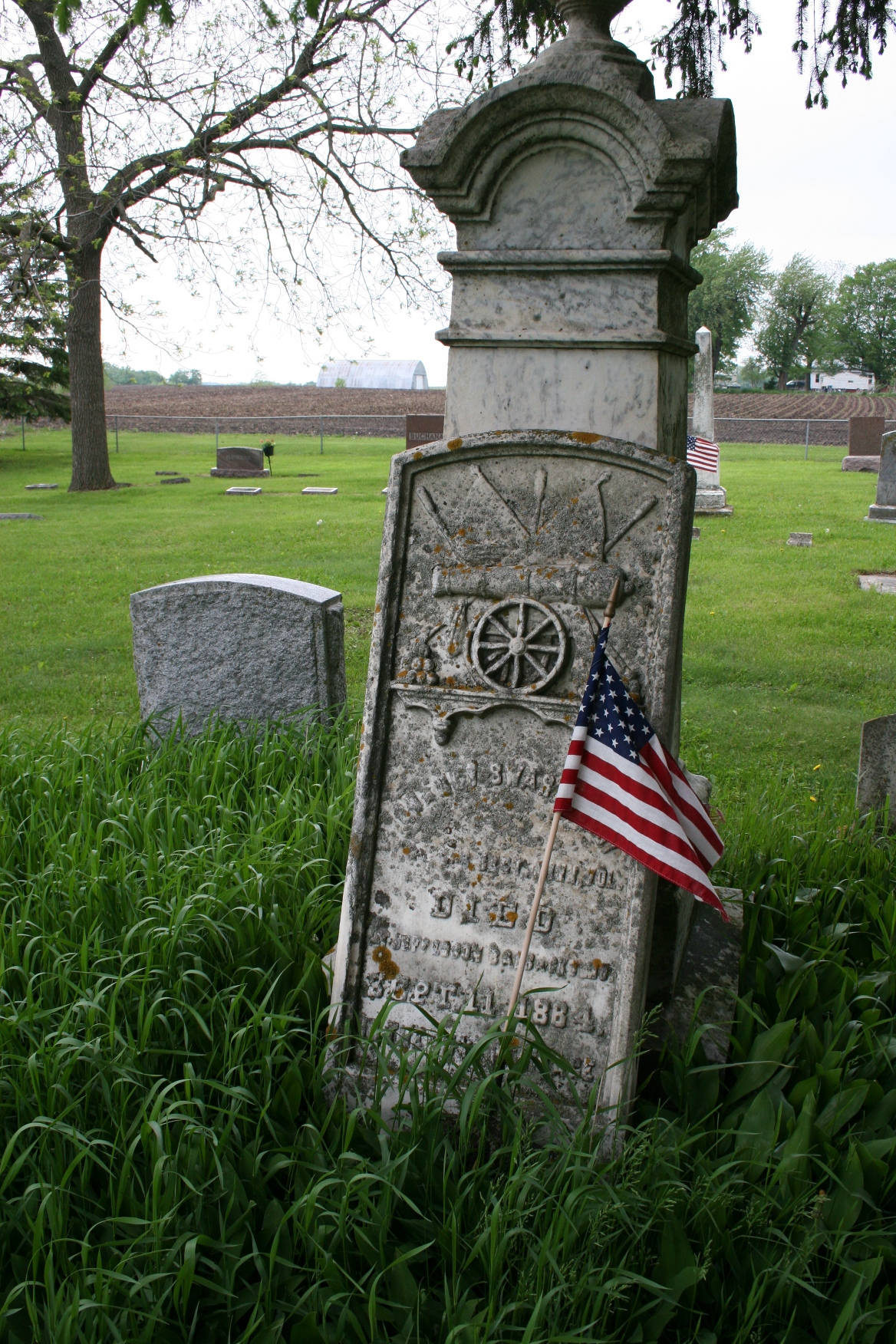
The grave of Chauncey Swartwoudt at the Cannon City Cemetery.

THE NAME ON HIS TOMBSTONE is barely readable as my husband, Randy, struggles to decipher the letters that form “Chauncey Swartwoudt.”

I like how the name rolls off my tongue—the Chauncey part at least. I’m unsure how to pronounce his surname.

He means nothing to me. His is just another tombstone marked by an American flag, among many in a Minnesota country cemetery.

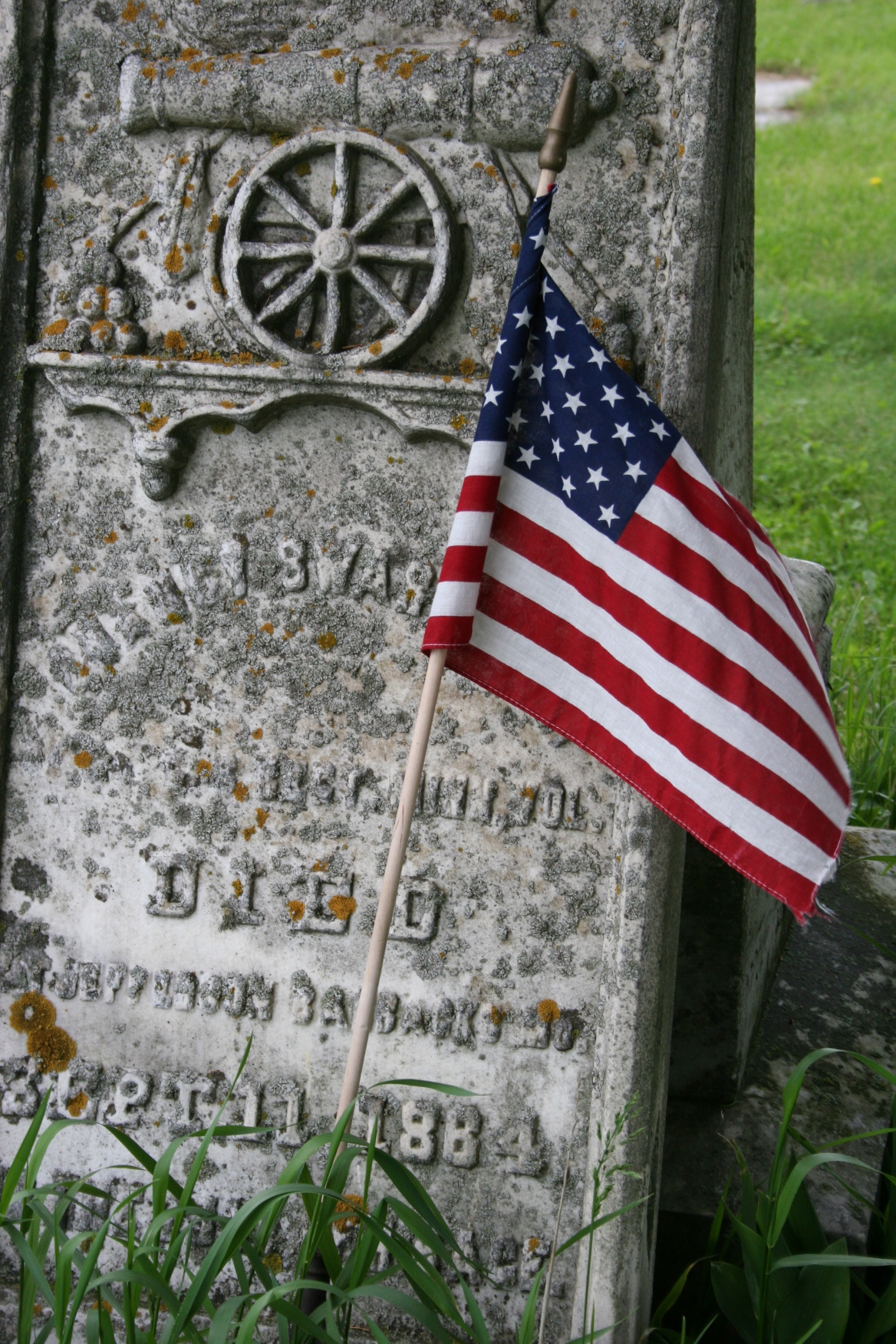
A close-up of Chauncey's tombstone, decorated for Memorial Day.

Yet, because of the size of this grave marker and the rectangular border surrounding it, I am drawn to this spot in the Cannon City Cemetery on Memorial Day.

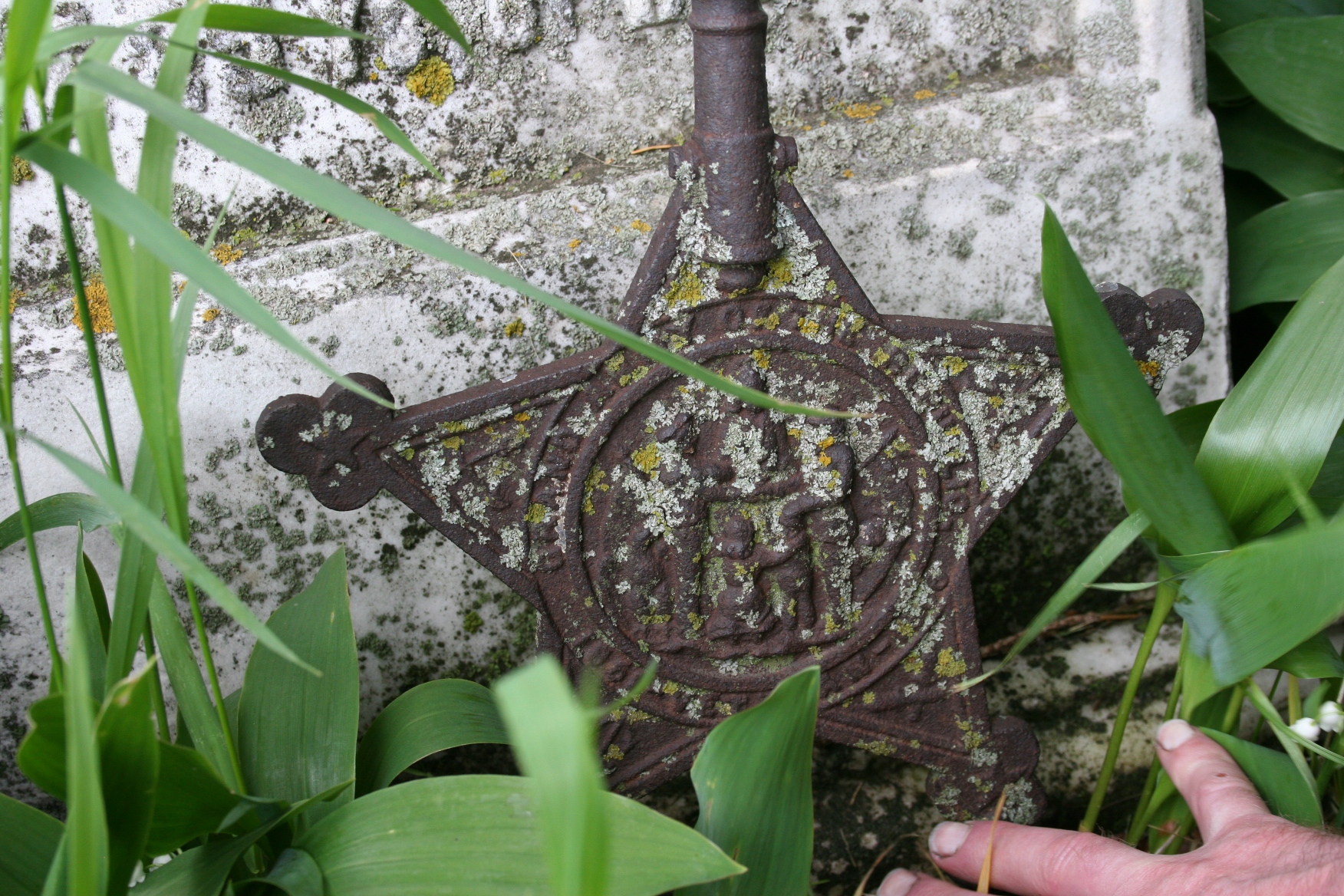
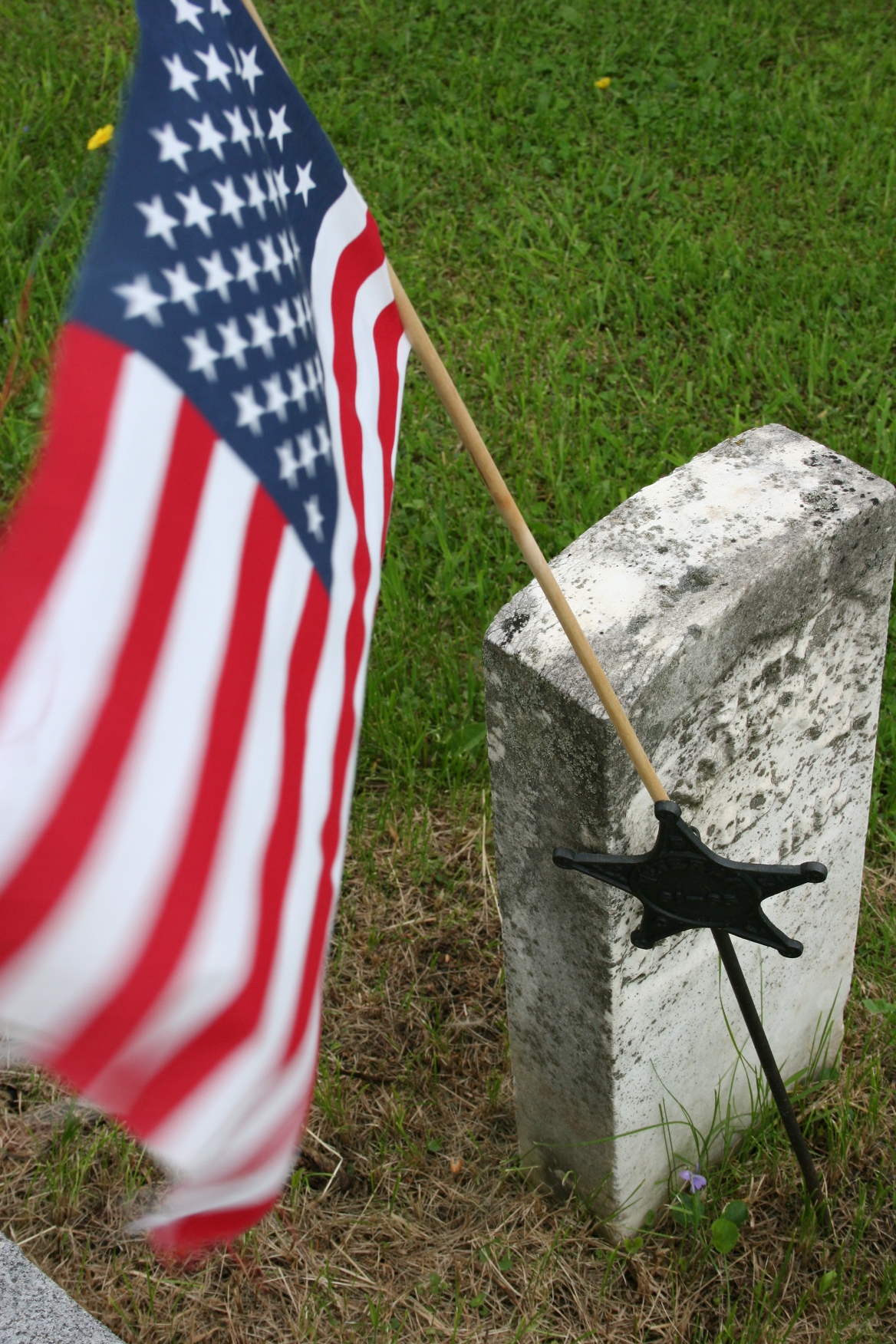
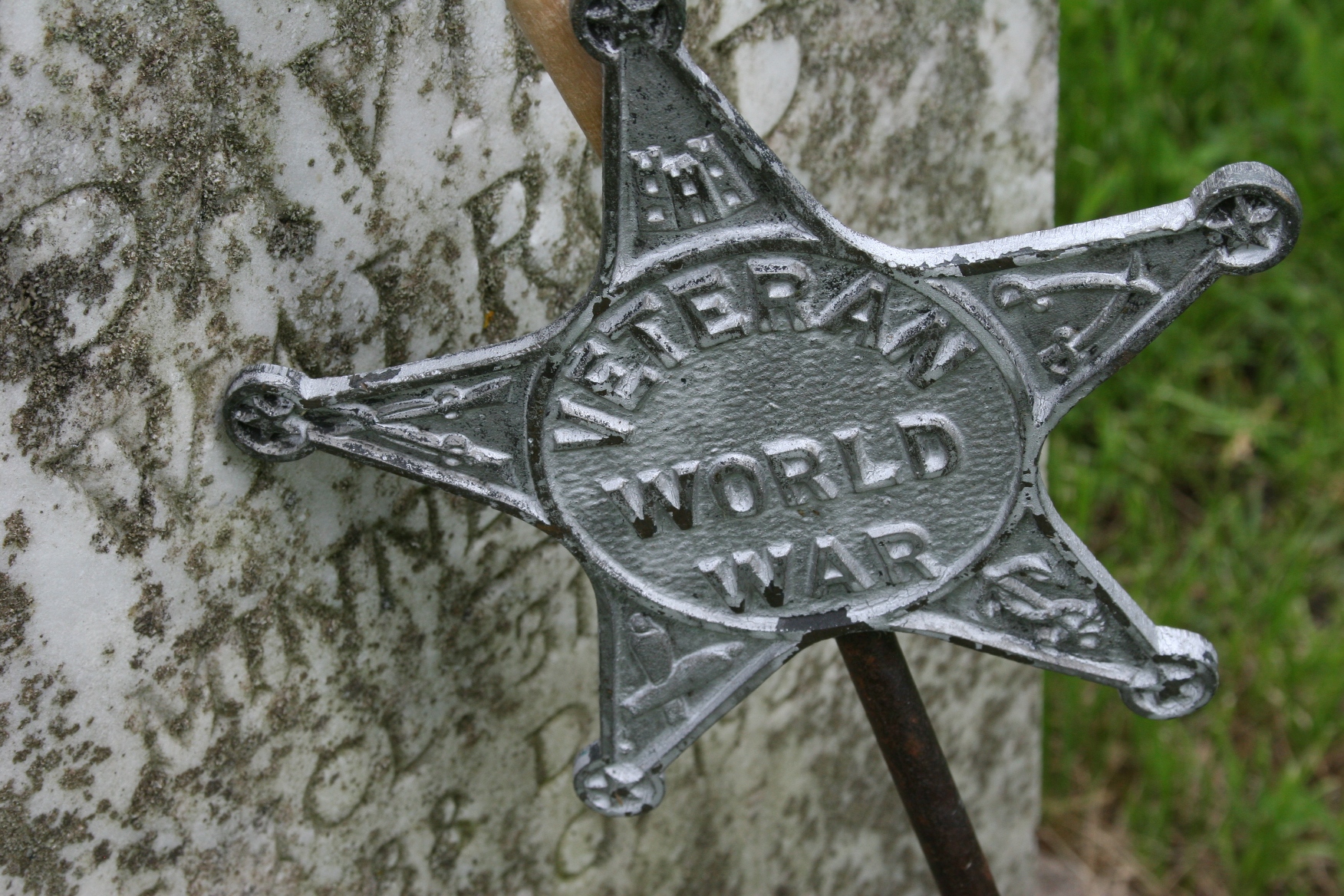
When I lean in close, I discover more. Or, more accurately, Randy uncovers a veteran’s star with difficult-to-read words. He decodes “The Grand Army of the Republic.” GAR equals veterans of the Union Army who served in the Civil War.

Randy pulls back foliage to reveal a GAR star with words that are barely readable and a design that we can't clearly see. Does anyone know what design graces the center of these old GAR stars?

Chauncey was mustered into the military on August 8, 1862, at the age of 22. He served as a Union Army private with Company C, Sixth Minnesota Volunteer Regiment. Two years, one month and three days later, on September 11, 1864, at the age of 24, he died at Jefferson Barracks in St. Louis, Missouri.

He was a soldier, the son of Henry and Catherine and brother of Charles. (He may have  had other siblings, but my quick research reveals only Charles.)

Nine years after Chauncey’s death, on March 15, 1873, Charles and Elizabeth Swartwoudt named their new-born son after his uncle. Little Chauncey lived only three years.

This is all I know about the elder Chauncey who fought in the Civil War, who died far from his Minnesota home. A young man of only 24, his entire life ahead of him.

Why did he die?

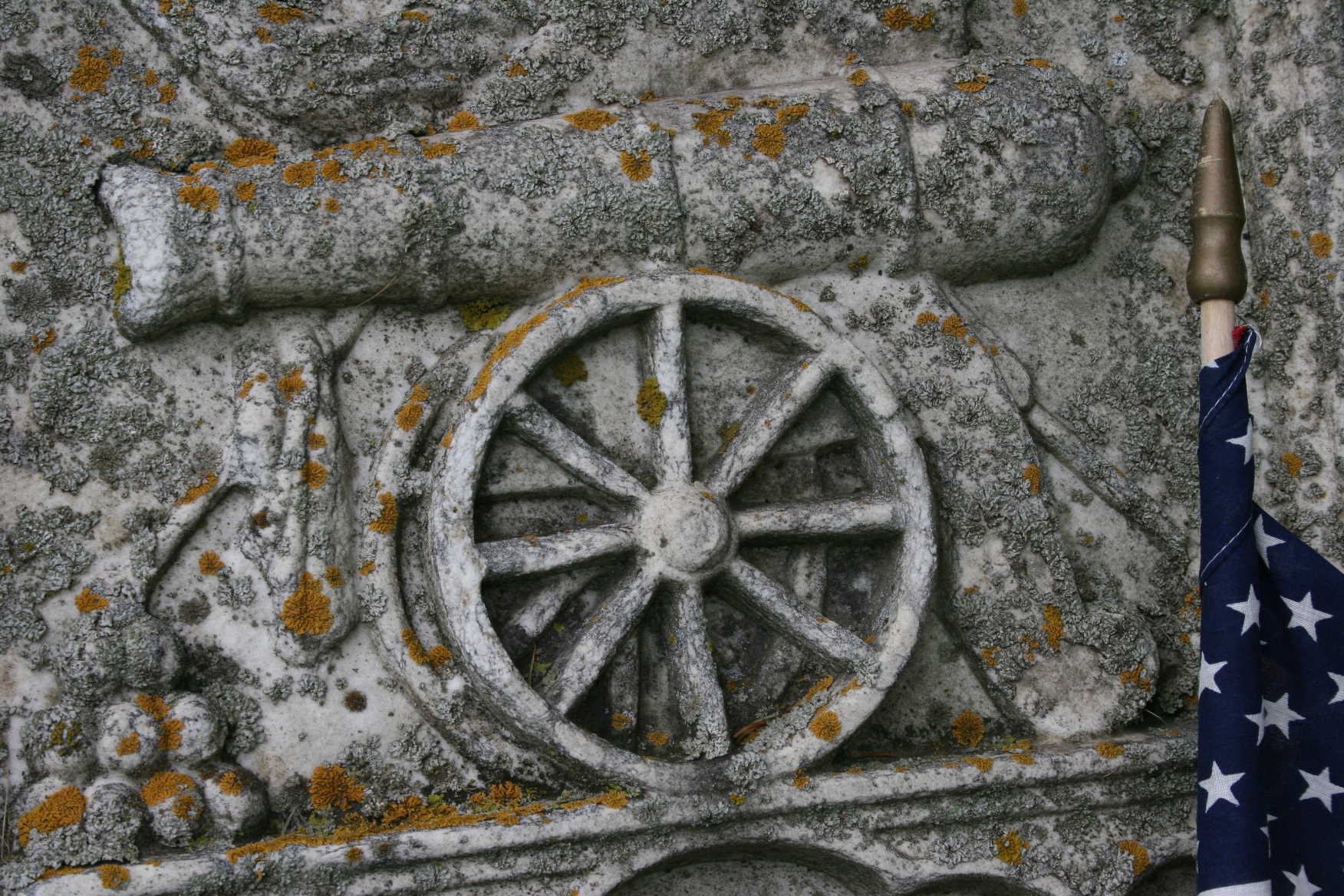
Detailed artwork, in the form of a cannon and cannonballs are engraved on Chauncey's tombstone.

Why is a cannon, with stacked cannonballs, etched into the cold stone of his grave marker? I’ve visited many Minnesota cemeteries and never seen such detailed art on the marker of a Civil War soldier.

It’s not like I should care. I have no connection to Chauncey. Yet I do care. He was a soldier, a son, a brother. I am a mother and a sister. He came home in a box. And a mother wept.

© Copyright 2011 Audrey Kletscher Helbling
 

The patriotic traditions of Memorial Day in Minnesota May 31, 2011

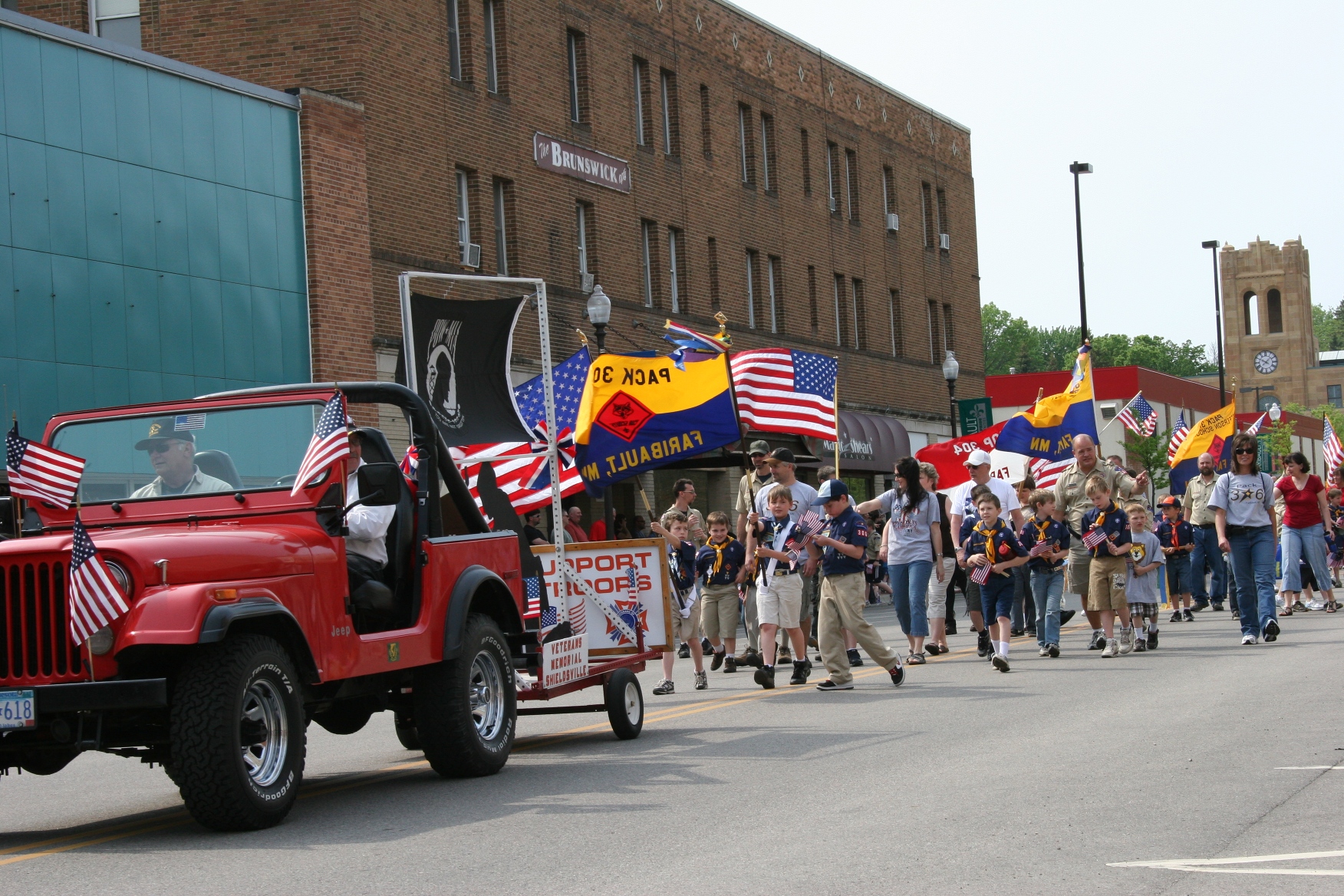
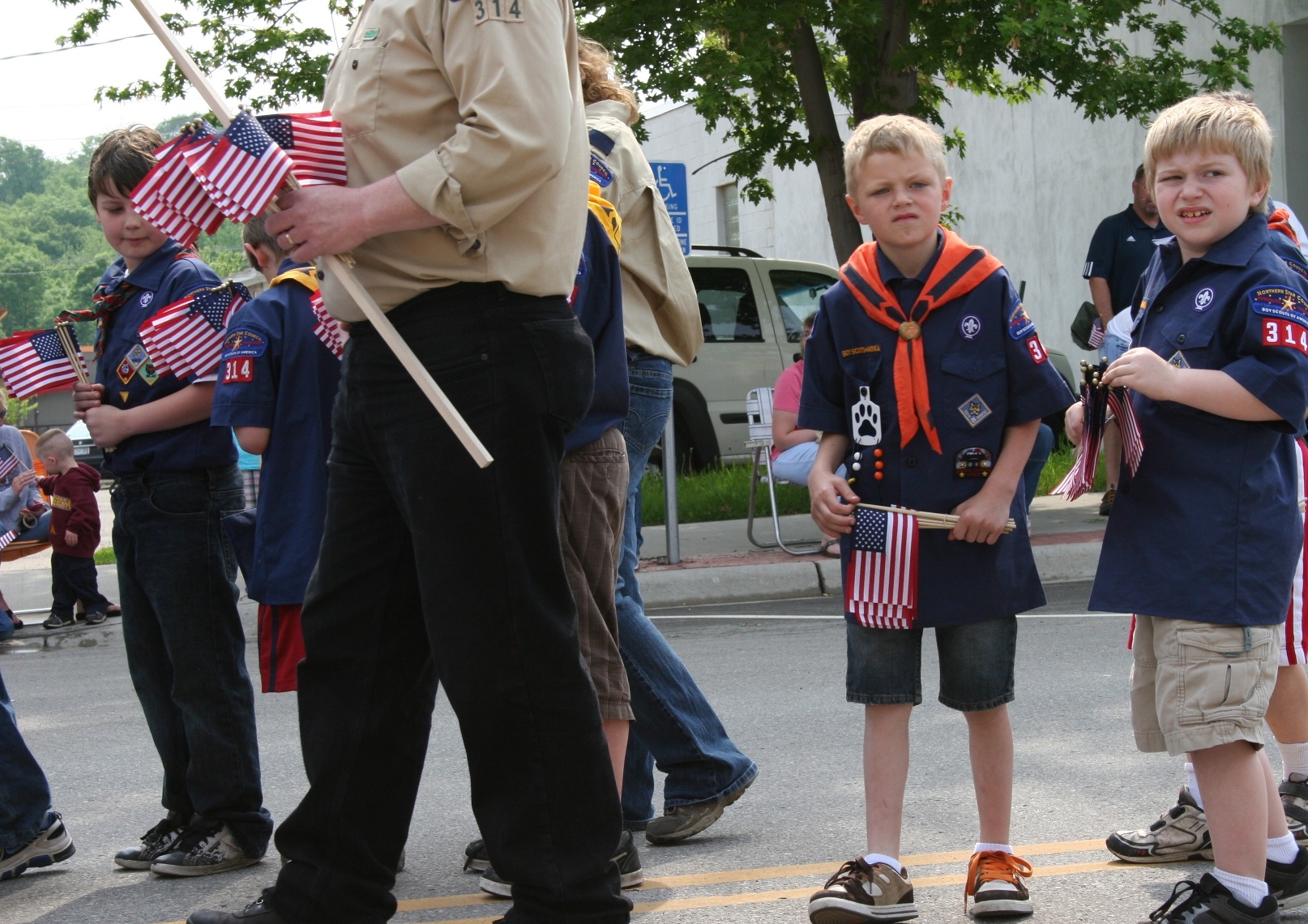
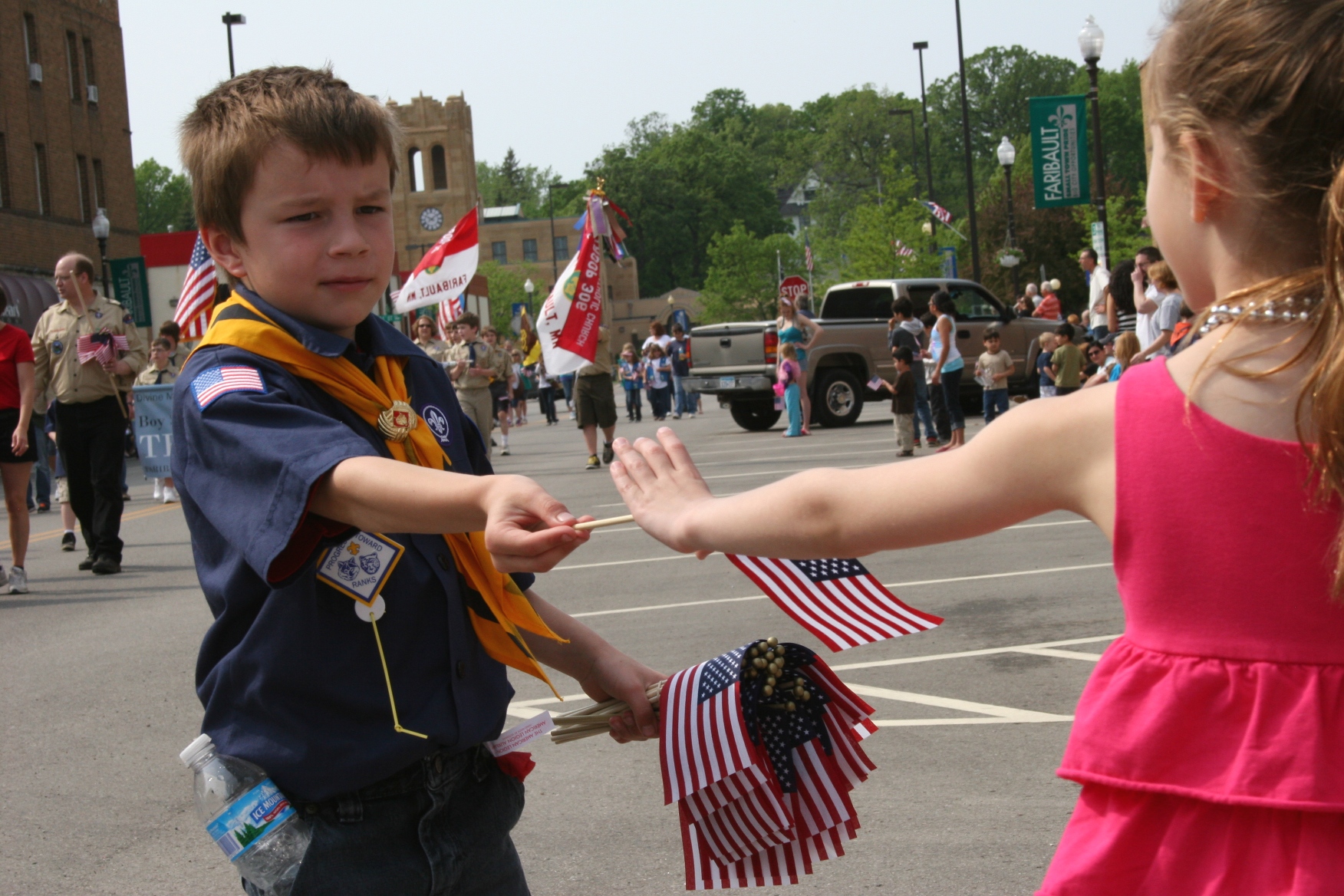
Boy Scouts march down Faribault's Central Avenue, giving away small American flags, on Memorial Day.

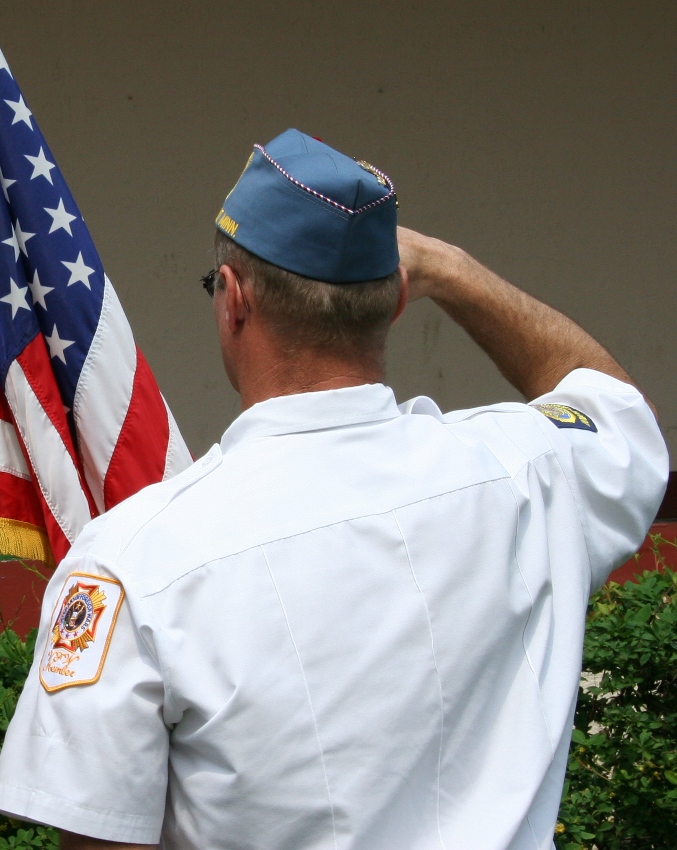
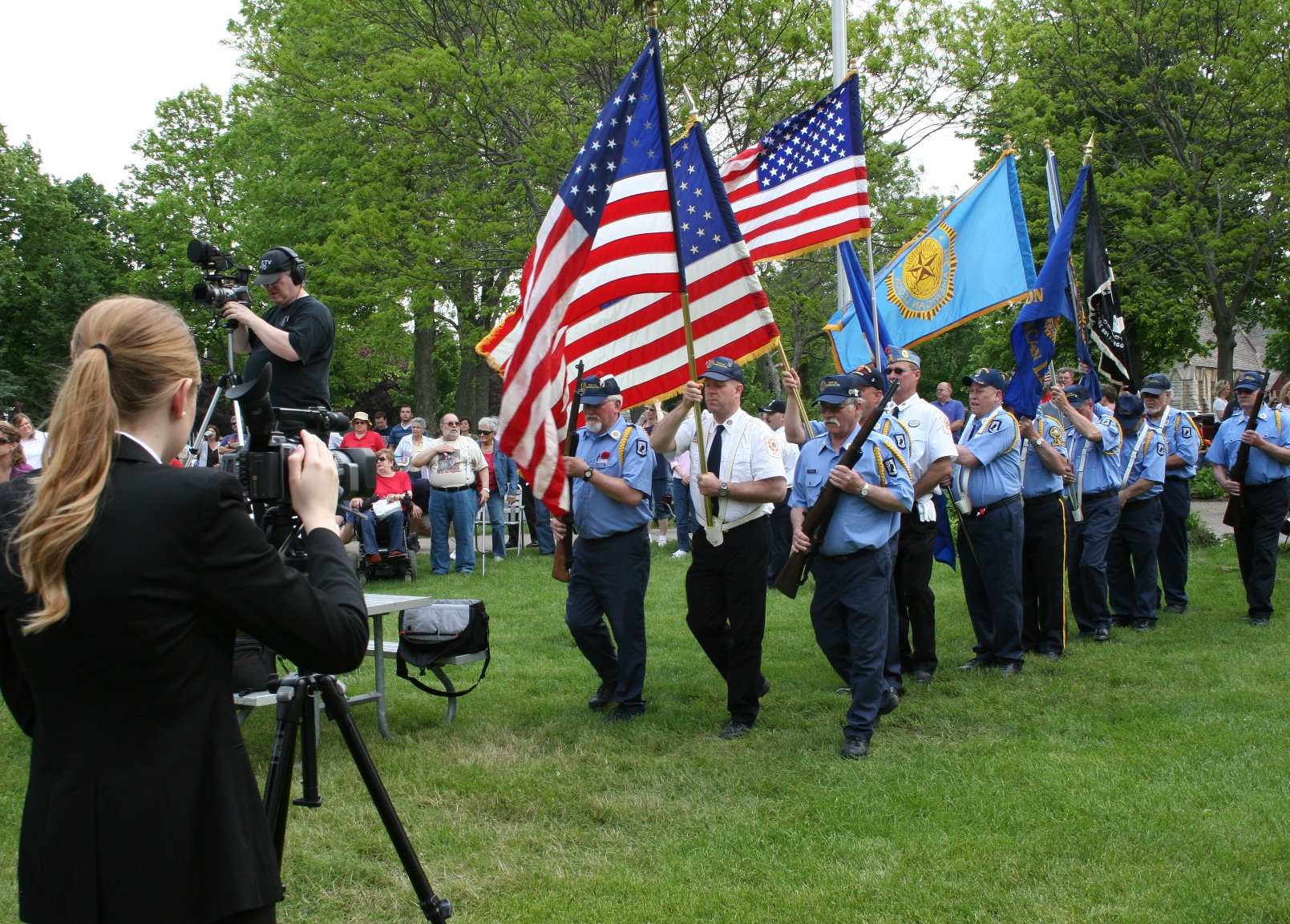
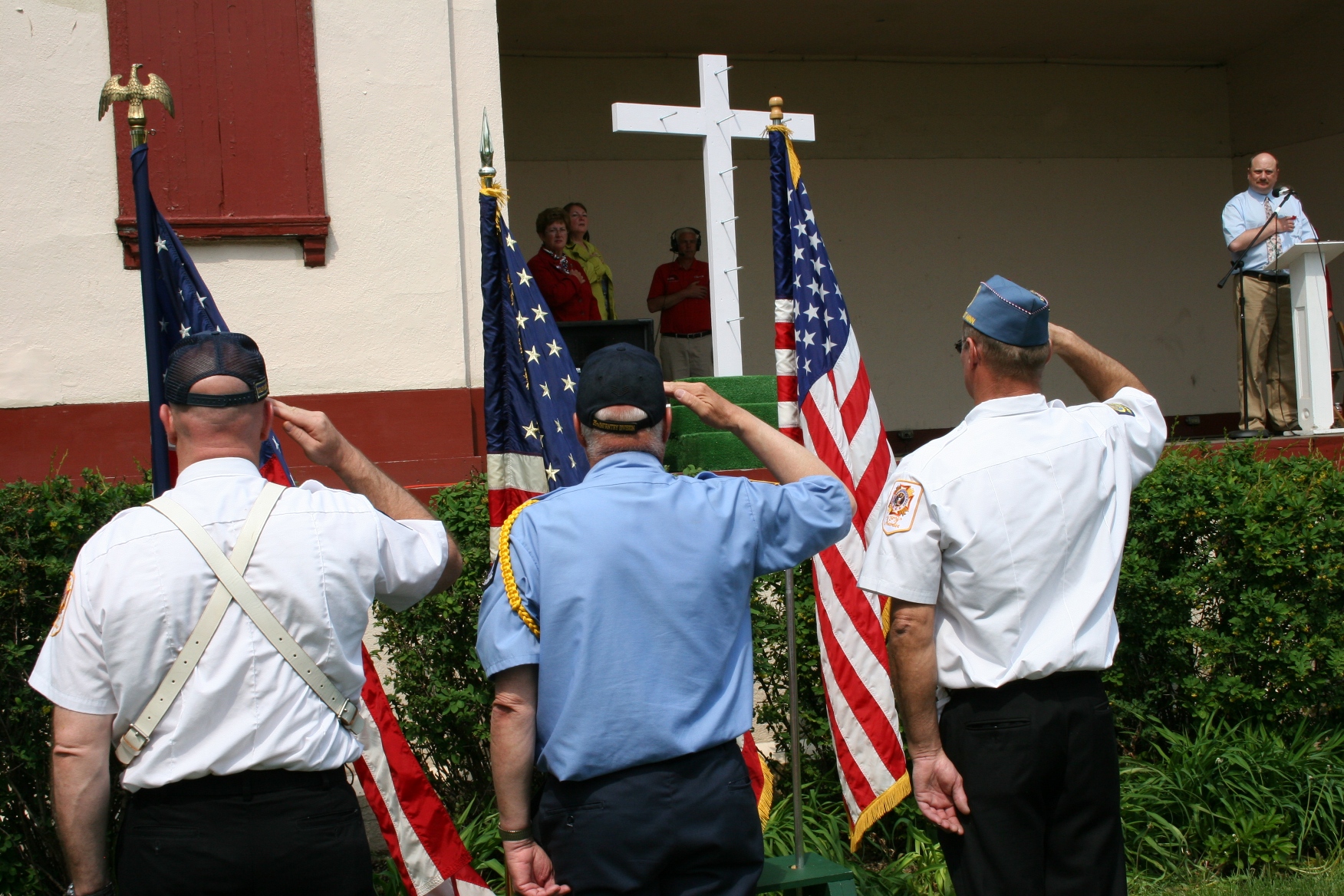
A member of the Color Guard salutes at the Memorial Day program in Central Park.

YES, DEAR READERS, I have yet another Memorial Day post to share with you. But I cannot help myself. My parents reared me to respect this day as a time to honor our war dead.

Every year of my childhood, we attended the Memorial Day program in my hometown of Vesta on the southwestern Minnesota prairie. I continued that tradition with my children by taking them each year to the Memorial Day parade in Faribault.

It is a tradition my husband and I continue, minus the kids—two of whom are grown and gone and the third a teen that cannot be roused from bed for the 10 a.m. parade.

Now I smile at the young families who gather along the curb in downtown Faribault to watch the veterans and Boy Scouts, the old cars and horses, the Girl Scouts and the Shattuck-St. Mary’s crack squad, the police cars and fire truck and marching bands.

Little hands reach for American flags distributed by the walking, sometimes running, Boy Scouts.

Clutched fists wave American flags.

It’s all so patriotic.

After the parade, the crowd gathers at nearby Central Park for more patriotism and I am reminded of my dad, a Korean War vet, who marched so many times with his Color Guard in parades and programs.

In the park bandshell, the guests of honor sit, rise and tell us they have little to say before offering these words:

“Your wars aren’t all won on the battlefield. They’re also won at home.”

“If you know a veteran, just say, ‘thank you.’ It means so much to them—something Vietnam vets were short of.”

“I salute all veterans here.”

“God bless everybody.”

“God bless America.”

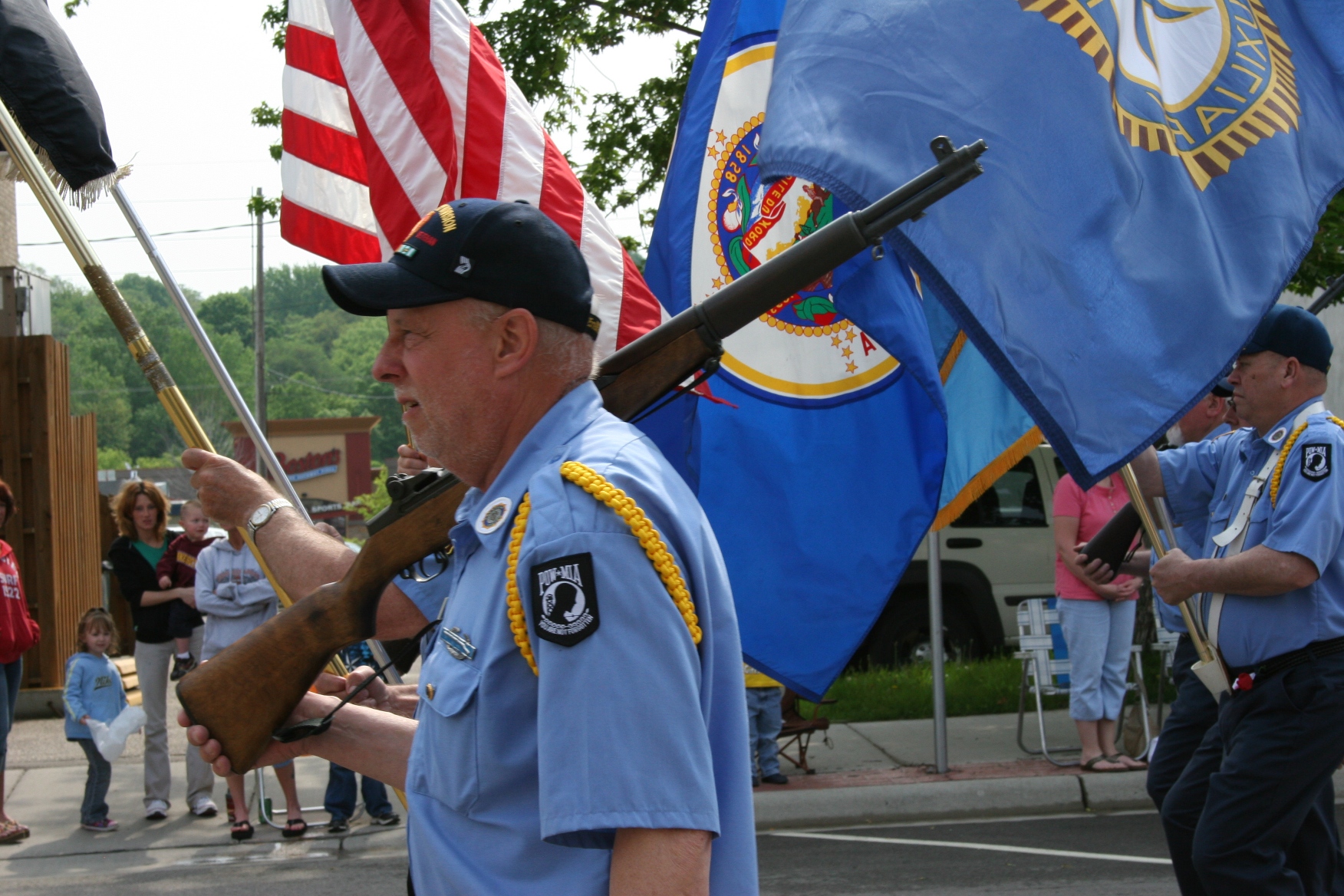
The Color Guard leads the way in the Faribault Memorial Day parade.

These Boy Scouts seem a bit indecisive, while other Boy Scouts race toward the crowd to hand out American flags.

Every year the Boy Scouts give away flags during the parade.

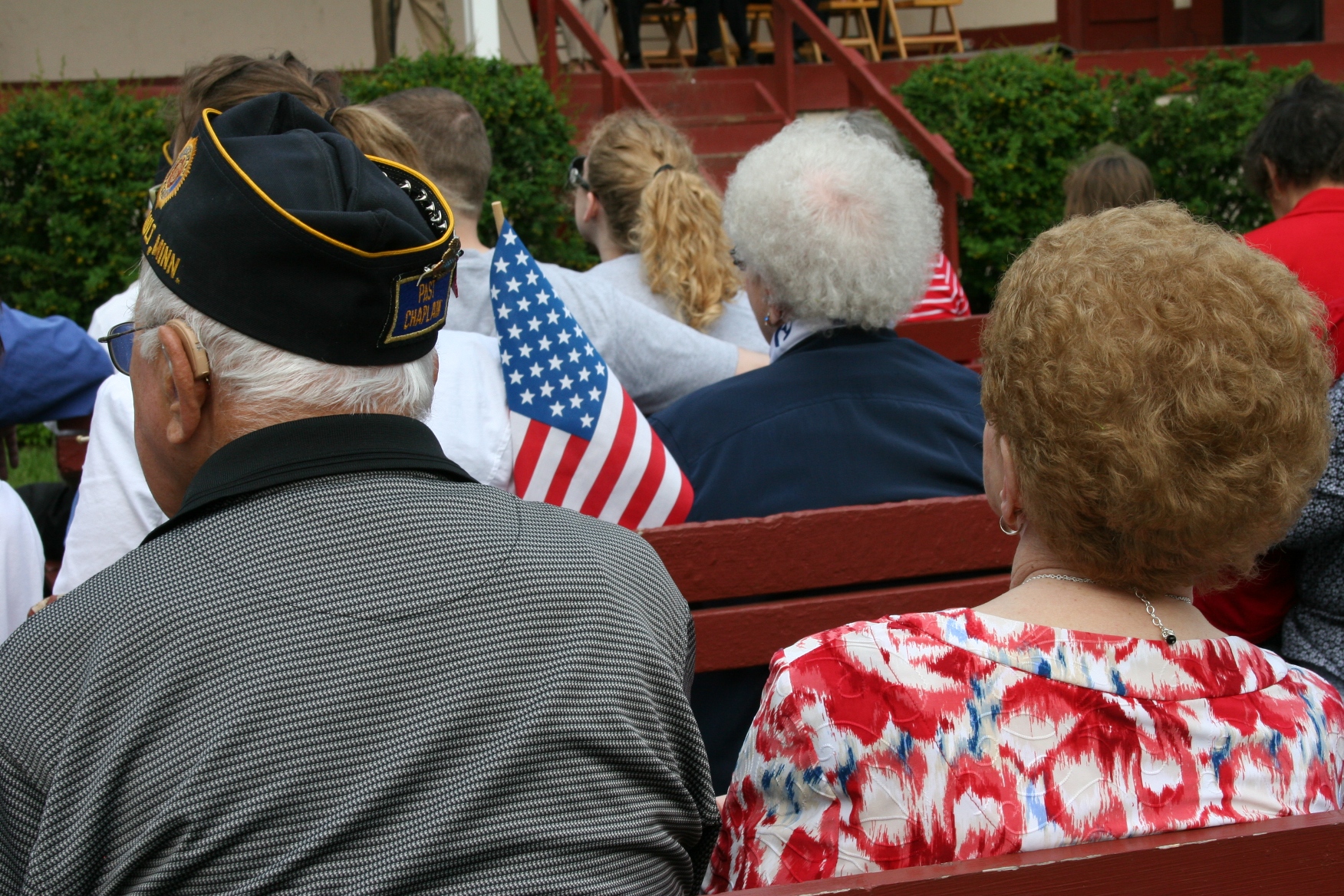
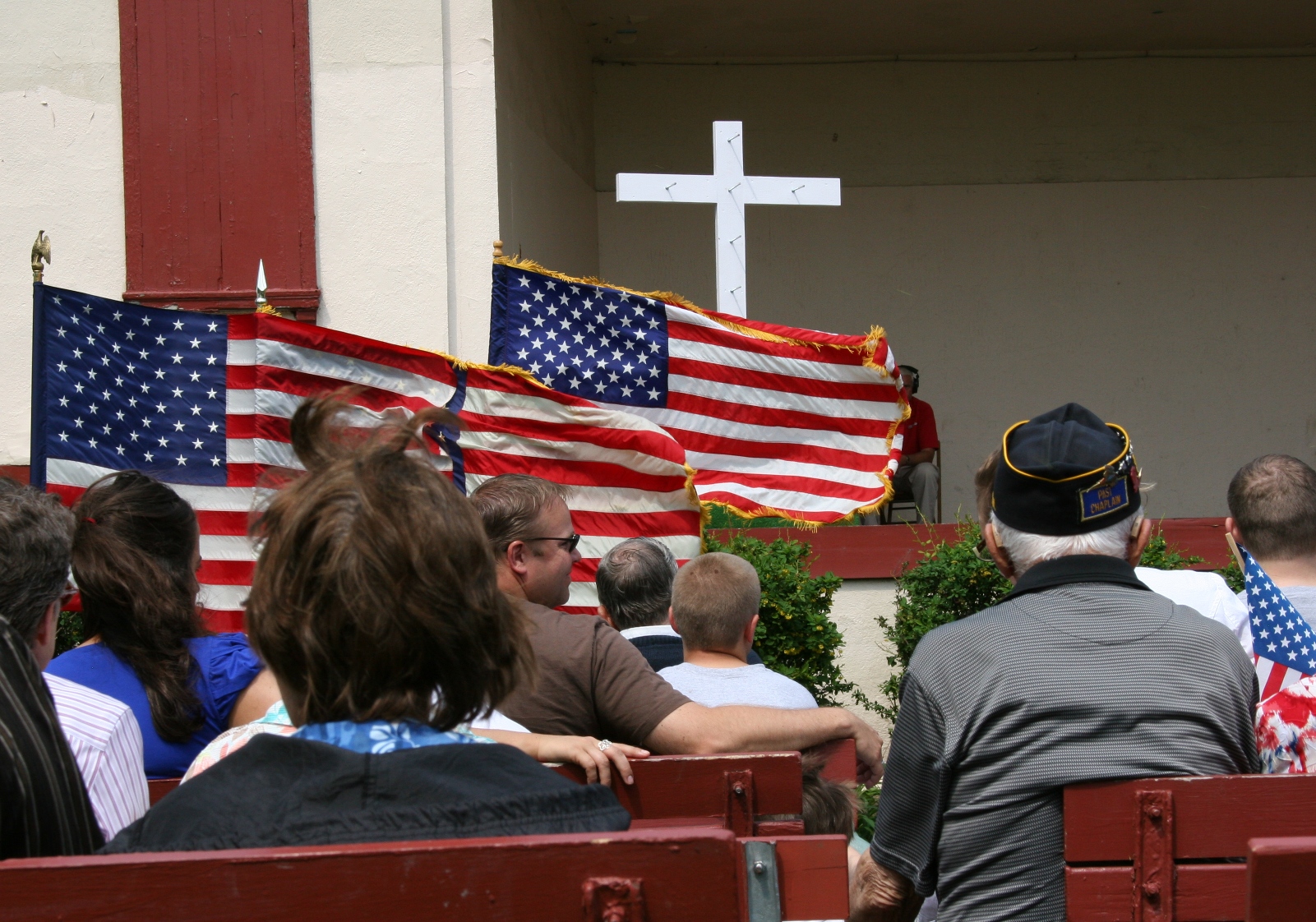
A veteran and others wait for the Memorial Day program to start at Central Park.

The Color Guard advances and the Memorial Day observance begins in Central Park.

The Color Guard soldiers salute. Emcee and radio announcer Gordy Kosfeld, on stage at the podium, will later tell us: "Memorial Day should be a time of reflection, not a holiday."

A strong wind blew the Color Guard flags set next to the bandshell stage at Central Park.

© Copyright 2011 Audrey Kletscher Helbling
 

Memorial Day at Cannon City May 30, 2011

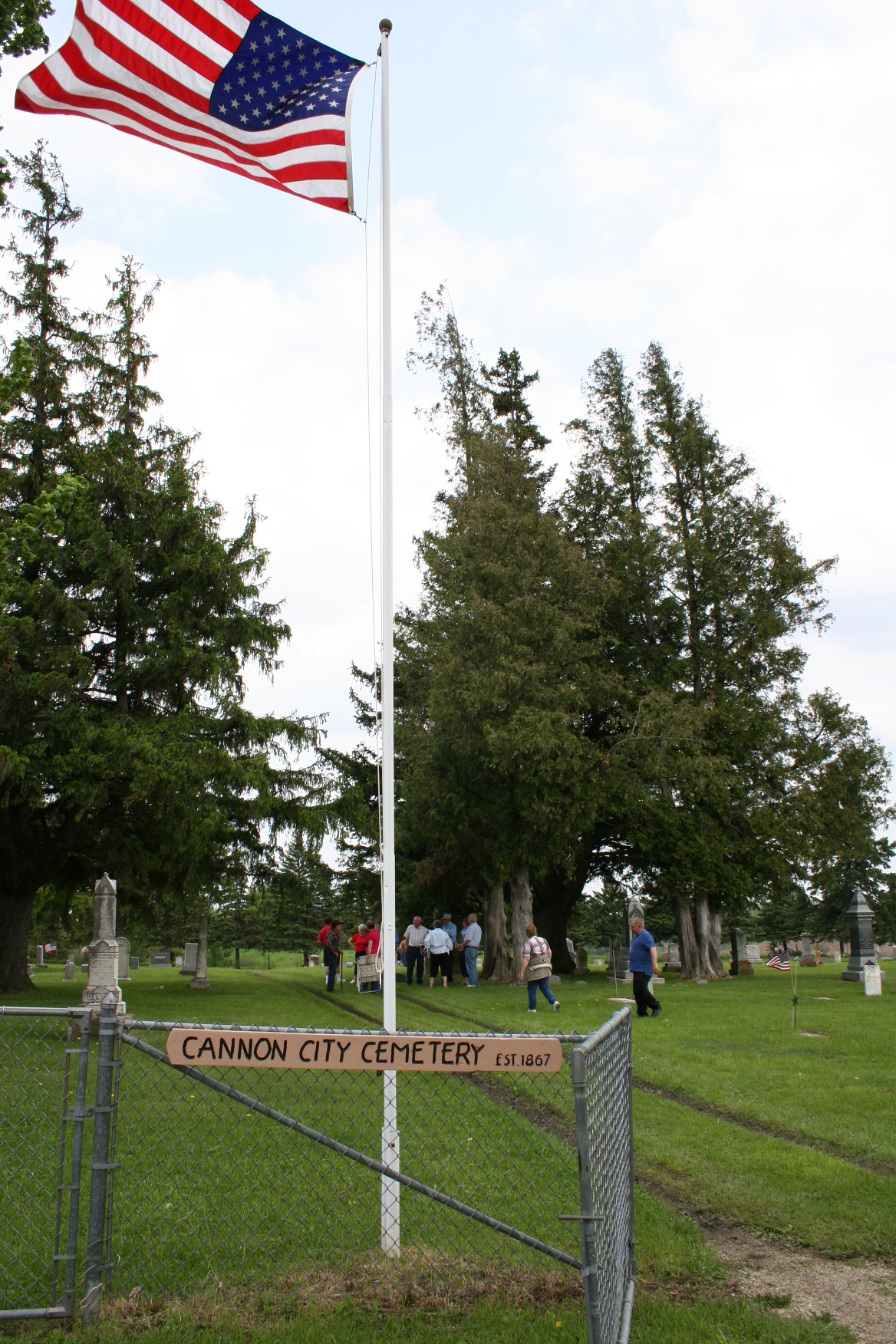
About 30 people gather at the Cannon City Cemetery for an afternoon Memorial Day observance.

IN THE SHELTER of the spruce, of the pines, we formed a semi circle, clustered together in this small country cemetery to honor the veterans buried here, 22 of them from the Civil War.

Ezekiel and Samuel. Spencer and Charles. Henry and Theodore. Emcee Mel Sanborn read the list of names as the wind whipped his words into sometimes inaudible, unintelligible syllables at the Cannon City Cemetery.

Since the late teens or early 1920s, folks have gathered in this Rice County cemetery every Memorial Day, initially called “Decoration Day,” to honor the war dead. Civil War veteran Elijah Walrod was quoted as saying that his son Luther “would strike up the Death March and lead the procession” from the nearby Cannon City School, along the country road to the cemetery.

School children—some of them in attendance at the 2011 Memorial Day observance—once marched with flags and flower bouquets and lilac wreaths and then, afterward, celebrated at the school picnic.

When the school closed in the 1960s, the Cannon City Cemetery Board took over the annual Memorial Day observance, a tradition that continues today, minus the Death March from the country school. It is an unpretentious, informal program that is touching and moving and heartfelt. Americana through and through.

My husband and I came here on this muggy afternoon to experience a small-town Memorial Day observance. We were the strangers among those who had grown up here and had loved ones buried in this ground butted against the rich black soil of farm fields.

Yet, we were welcomed like family and I felt as if I had stepped back in time to the Memorial Day observances of my youth—the days of patriotic songs and playing of taps and reading of “In Flanders Fields.” I mouthed the words silently: “In Flanders Fields the poppies grow between the crosses row on row…” These poetic lines I knew nearly from heart, having recited them as a young girl on the stage of the Vesta Community Hall some 125 miles from this cemetery.

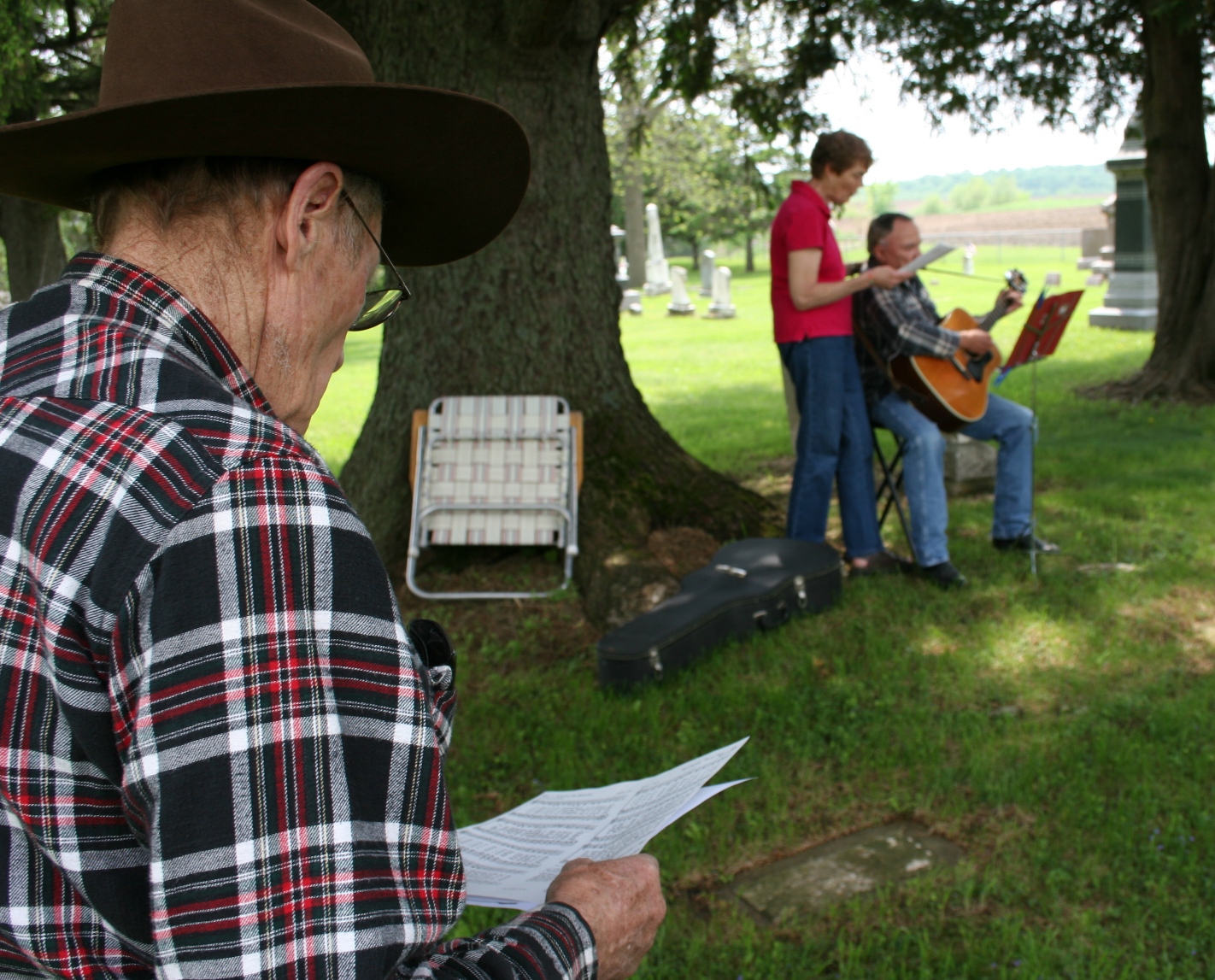
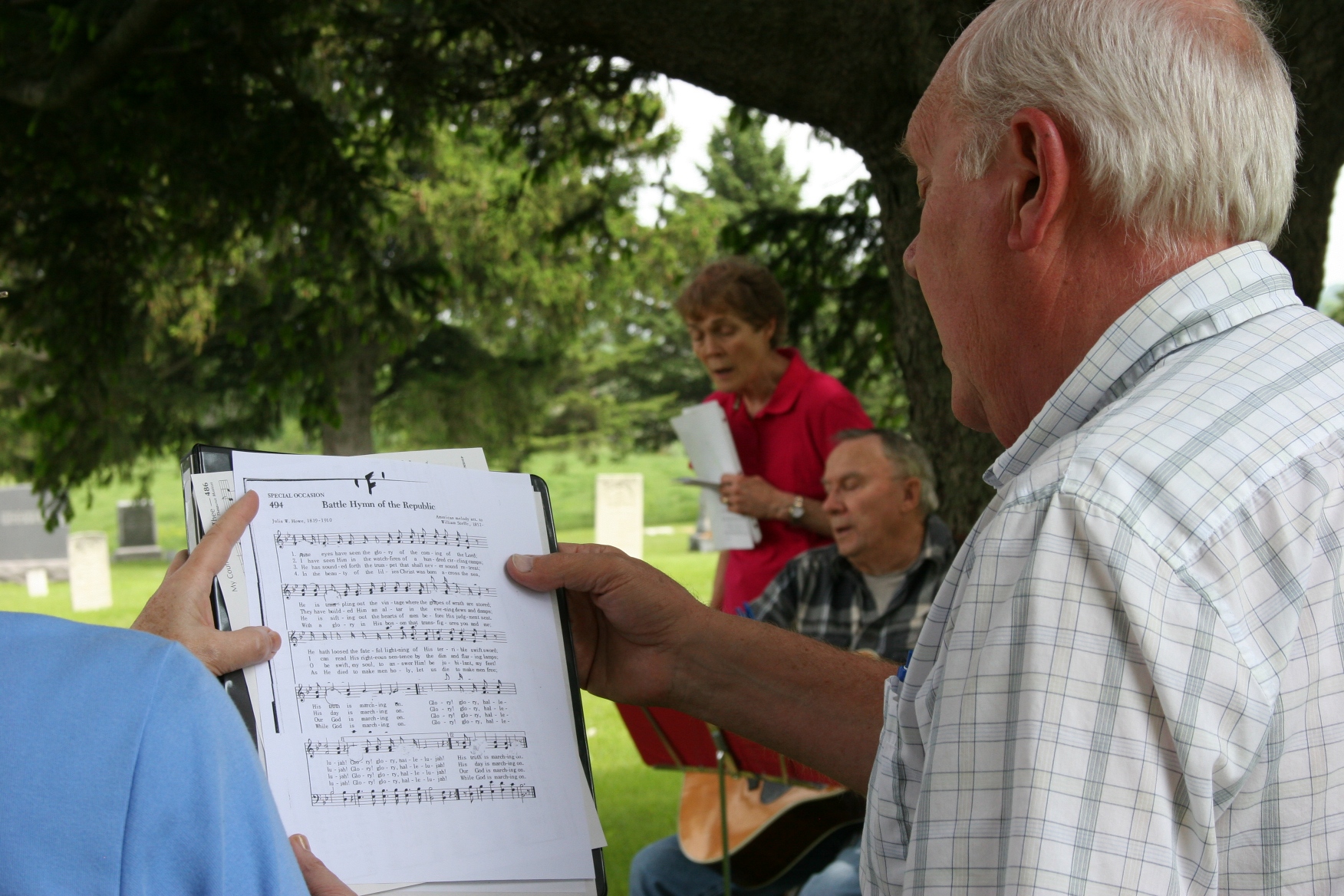
As Don Chester strummed his guitar and clamped his harmonica, we sang “My country, ‘Tis of Thee” “The Battle Hymn of the Republic” and other patriotic songs.

Bob (didn't get his last name) sings as Don and Judy Chester lead the group in song. Bob attended Cannon City School and participated in Memorial Day programs here as a student.

Song sheets were handed out to attendees. Here Mel Sanborn sings "The Battle Hymn of the Republic."

When Steve Bonde blasted “The Star Spangled Banner” on his trumpet, we sang along, turned toward the flag at the cemetery entrance, the brass quelling voices that drifted away with the word-flogging wind.

It mattered not how well or how loudly the 30 or so of us sang. It mattered not that a young girl darted inside the semi circle to pluck a dandelion from the grass. It mattered not that the occasional airplane droned out our voices. We were focused on the songs, “The Gettysburg Address” read by Audrey Sanborn Johnson, and, finally, Bonde’s mournful playing of taps.

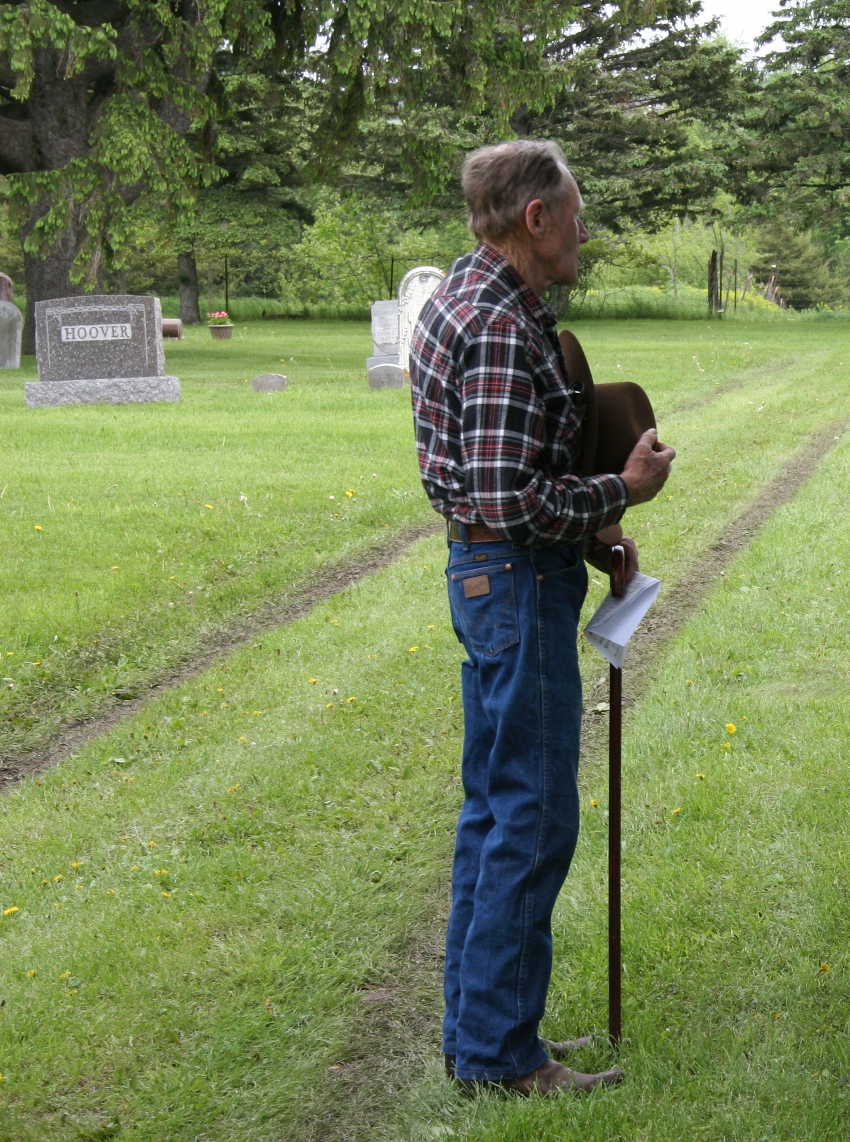
Long-time Cannon City resident Bob respectfully removes his cowboy hat during the playing of taps, a tribute that moves me to tears.

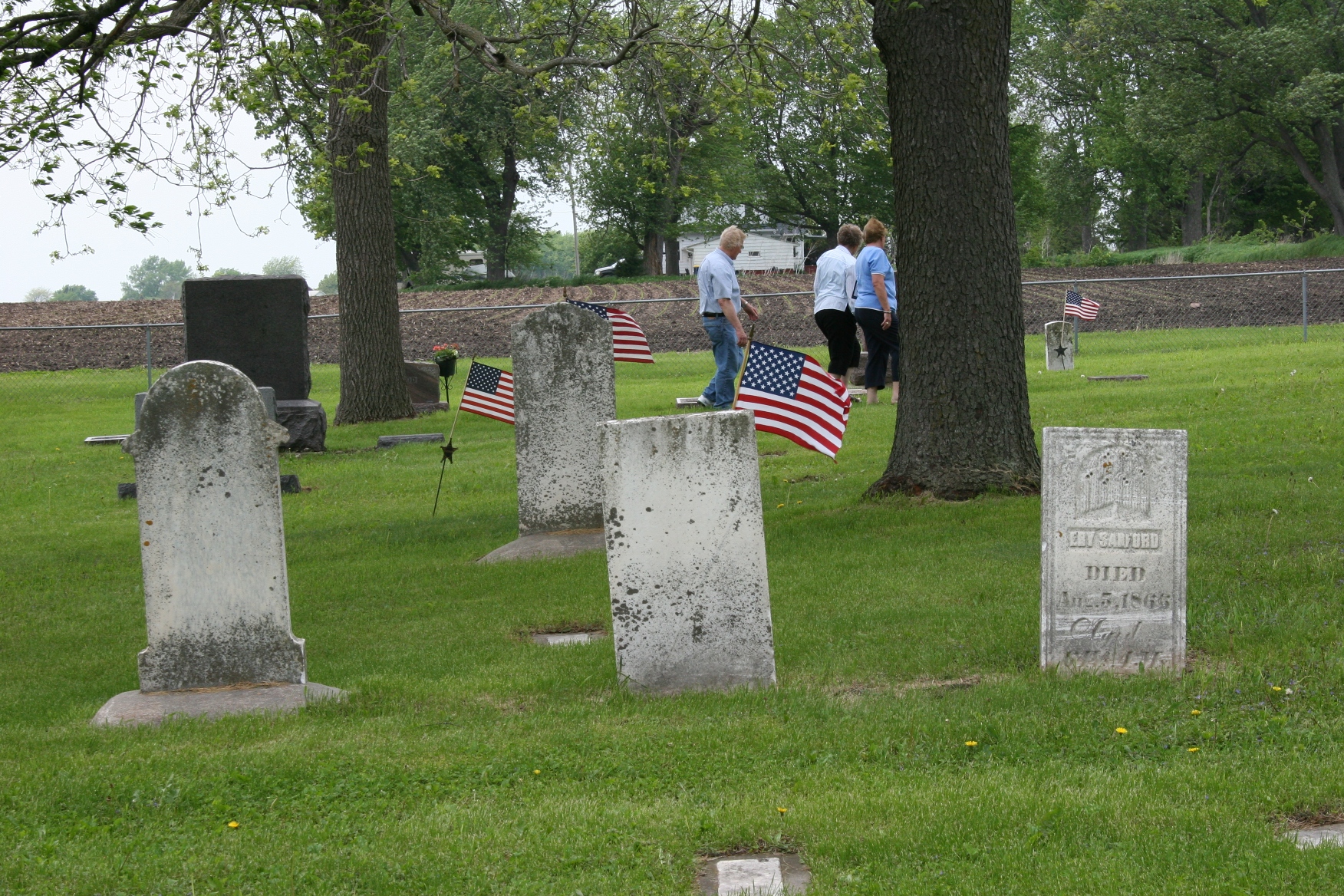
When the final note ended, the small group drifted, scattering across the cemetery to visit the graves of loved ones. I wandered, drawn by American flags to the final resting places of veterans. Names I did not know in an unfamiliar cemetery I was walking for the first time.

After the program, attendees visited gravesites.

Yet, despite the unfamiliarity with this place or these people, I felt connected to them by the reason I was here—to reflect upon the sacrifices made by so many American men and women in defense of our freedom. America. Land of the free and home of the brave.

A flag waves in the wind on a soldier's grave.

A star marks a veteran's tombstone.

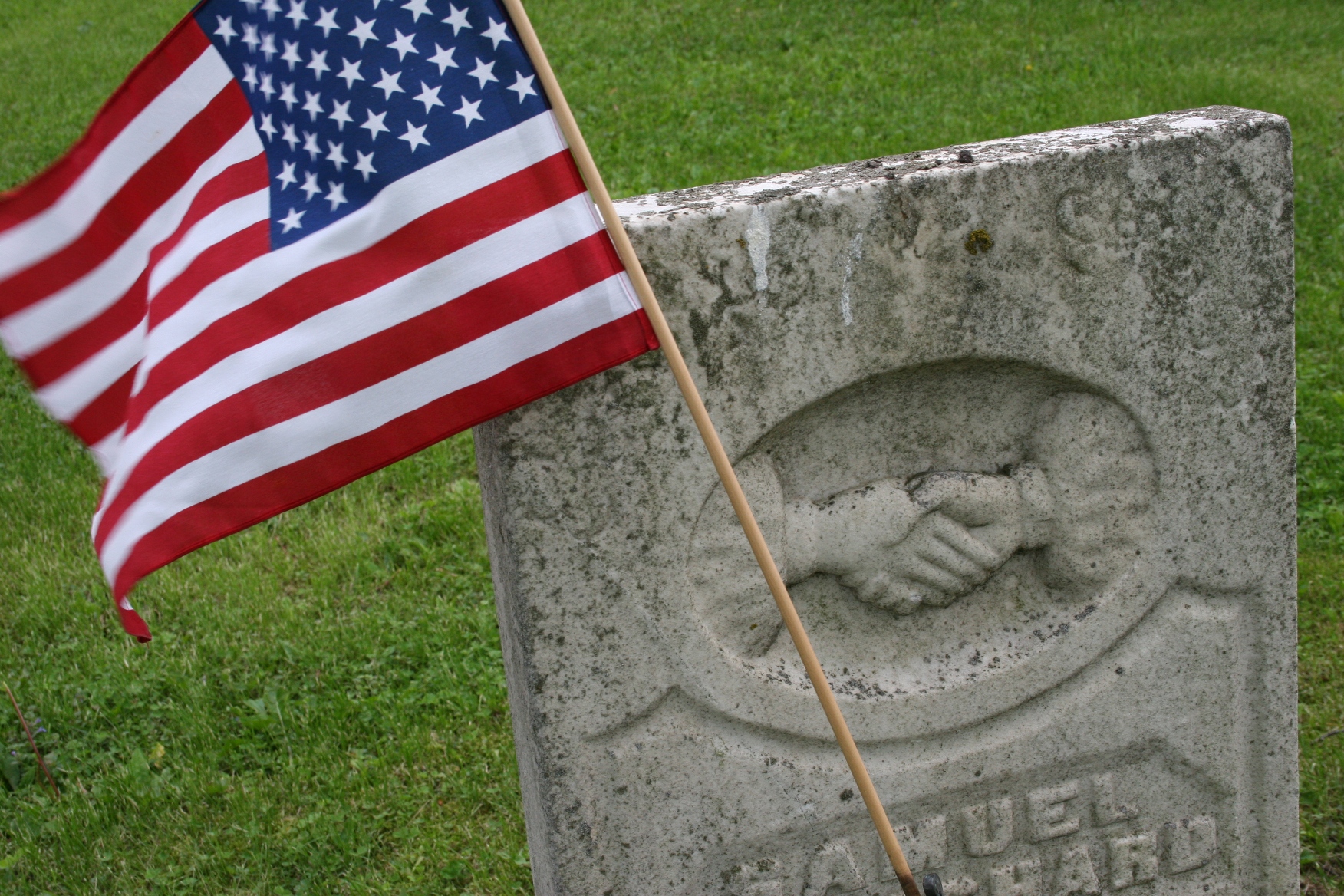
Can anyone explain the symbolism of these clasped hands on a veteran's grave?

A flag marks the entrance to the Cannon City Cemetery.

© Copyright 2011 Audrey Kletscher Helbling
 

Reflecting on graduation speeches by three generations of Minnesota women May 27, 2011

Wabasso High School, where my niece will give a speech tonight as class valedictorian. My mom and I also graduated from WHS, although the building looks much different than when we graduated in 1951 and 1974.

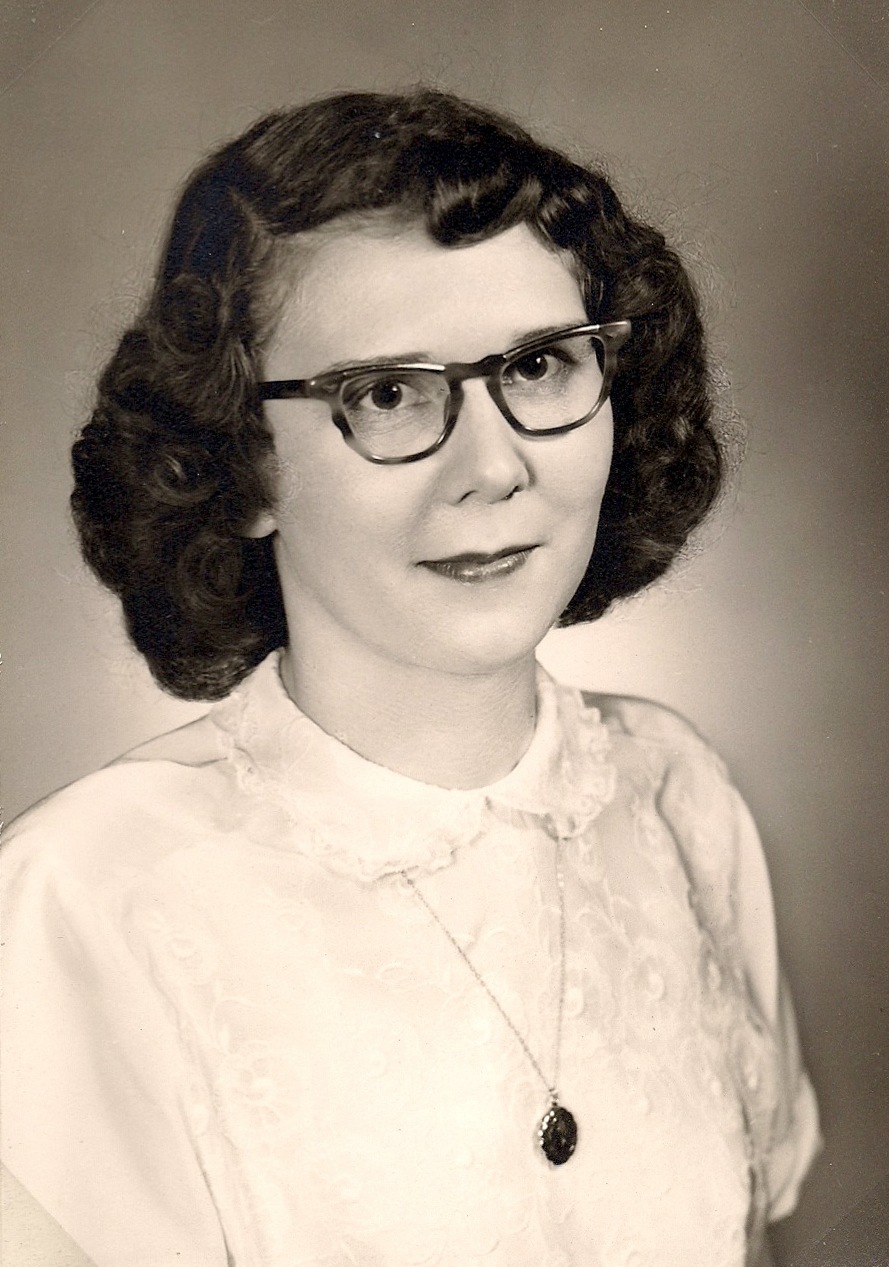
Arlene Bode Kletscher's 1951 graduation portrait.

SIXTY YEARS AGO 18-year-old Arlene Bode stepped onto the stage at Wabasso High School and gave a commencement speech, “Our Part in the Fight Against Communism.”

While that seems an unlikely, unsuitable, topic for an address by the class valedictorian, my mom says you need to remember the time period in which she wrote and gave that speech.

This was 1951, at the height of the Cold War, the era of bomb shelters and fear of the Soviet Union.

My mom espoused patriotism, encouraging her southwestern Minnesota classmates “to be patriotic and vote…so we can keep our freedom,” she recalls. She has a copy of that speech tucked inside her WHS diploma.

She found the speech recently when pulling out her diploma to show her granddaughter, Hillary Kletscher, who graduates tonight, also from Wabasso High.

Hillary, like her 79-year-old grandmother, is the class valedictorian and will speak at commencement. When I texted Hillary early Thursday afternoon, she hadn’t yet titled her speech. But, she said, the “main subject is change and how it’s good but we have to hold onto what we learn from the past.”

I won’t be there to hear my niece’s address. But I intend to ask her for a copy, just like I plan to get a copy of my mom’s speech, which I’ve never seen. These are parts of our family history, words reflecting the time periods in which they were written, words of hope and wisdom and patriotism (at least in my mom’s case).

Hillary will step onto the WHS stage tonight and speak on change, yet remembering the past.

Audrey Kletscher Helbling, 1974 WHS graduate.
That my mom kept her speech through six decades impresses me. I say that specifically because I have no idea where to find the speech I gave at my graduation from Wabasso High School in 1974. It’s packed in a box somewhere in a closet in my home, but I possess neither the time nor energy to dig it out.

I remember only that, as class salutatorian, my farewell address included a poem. What poem and by whom, I do not recall.

In 2006, my daughter Miranda graduated as valedictorian of Faribault High School and gave a commencement speech. Given that occurred only five years ago, I should remember the content. I don’t. I recall only that she held up a test tube to make a point.

I am also making a point here. Thankfully much has changed in the 60 years since my mom spoke on “Our Part in the Fight Against Communism.” While the world today remains in turmoil, at least the intense fear, felt by the Class of 1951 during the Cold War, no longer exists.

We have also moved beyond the turbulent 60s and 70s, a time of rebellion, anti-establishment, and anti-war sentiments and discontent over the Vietnam War experienced by my class, the Class of 1974.

By 2006, when my second daughter graduated, we as a nation were beginning to recover from 9/11, yet we lived in an increasingly security-focused society.

Today my niece graduates in a day of continuing economic uncertainty, when young people are struggling to find jobs and when Baby Boomers like myself worry about our jobs and retirement.

Yet, through it all—the Cold War, Vietnam, September 11 and a challenging economy—we remain four strong women living in a free country where we, individually, spoke freely, representing the classes of 1951, 1974, 2006 and 2011.

© Copyright 2011 Audrey Kletscher Helbling
 

A Civil War enthusiast’s day at the Minnesota State Capitol May 20, 2011

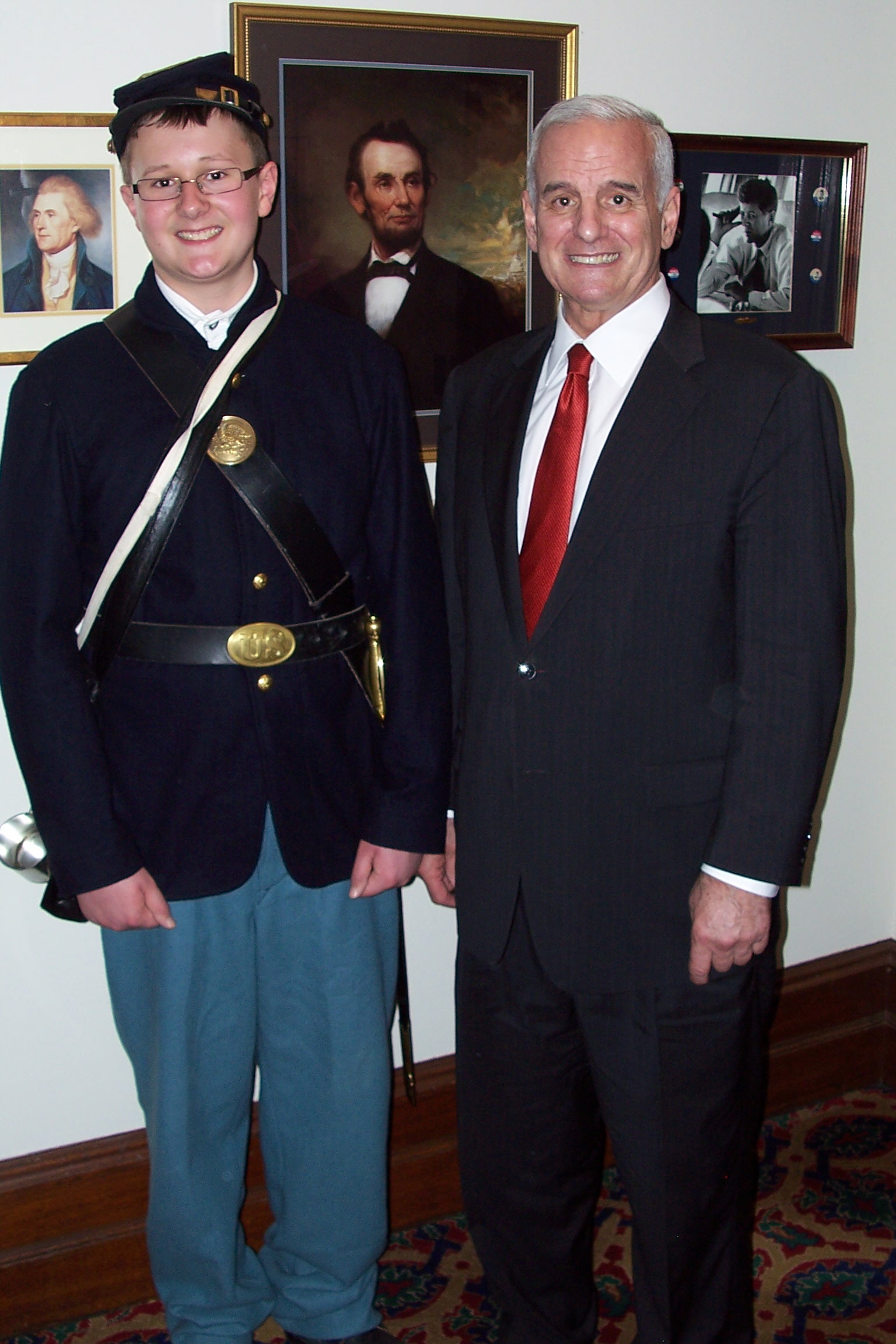
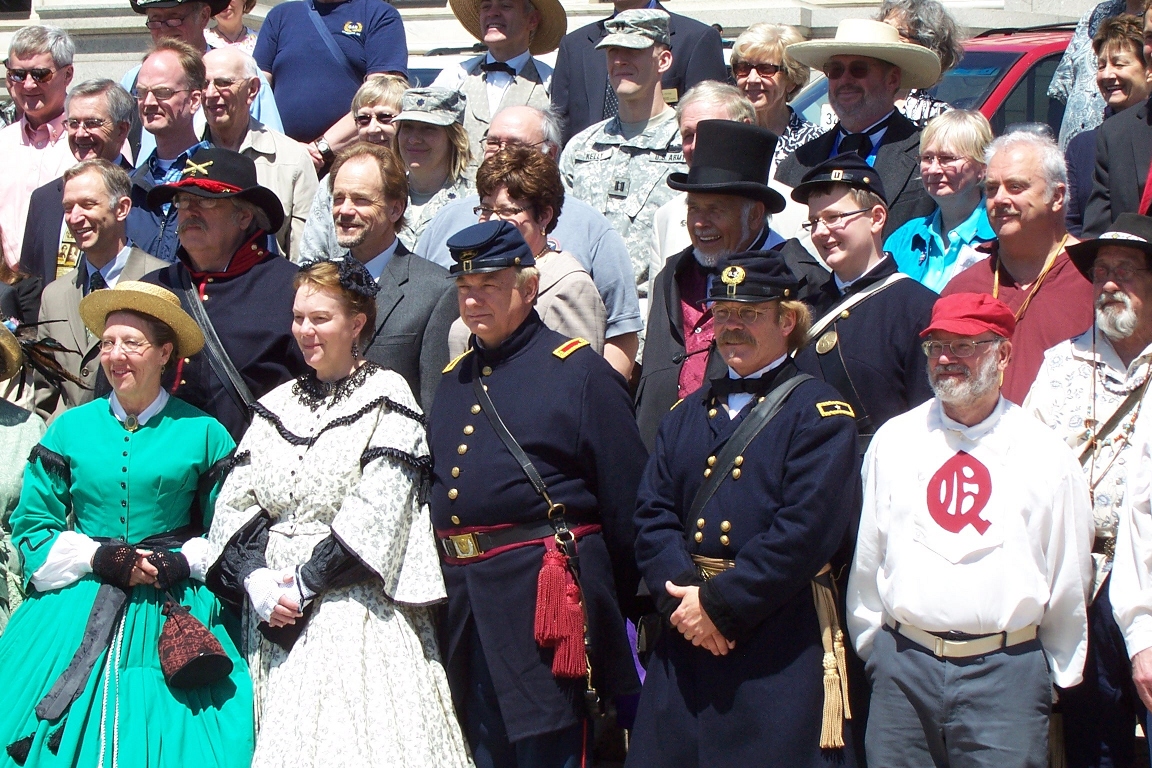
Brandon Peeters poses in his Union uniform at the Minnesota State Capitol.

WITH TELEVISION CAMERAS around him, Brandon Peeters of Owatonna led the Pledge of Allegiance during a Civil War Sesquicentennial Day program at the Minnesota State Capitol on Wednesday.

It was a proud moment for his mom, Cindy Hokanson. “We had a great day at the Capitol,” Cindy says. “Brandon was so honored to meet so many people.”

And I expect they were equally pleased to meet this engaging seventh grader who enthuses about the Civil War, his history passion. He channels his interest in to teaching others about the war, participating in re-enactment and roundtable groups, visiting battlefields, learning and more. He’s also applied to serve on the Governor’s Civil War Commemoration Task Force.

That’s all pretty impressive stuff.

You certainly have to admire an individual with such passion, especially when he’s only 13.

Minnesota Governor Mark Dayton and Brandon Peeters.

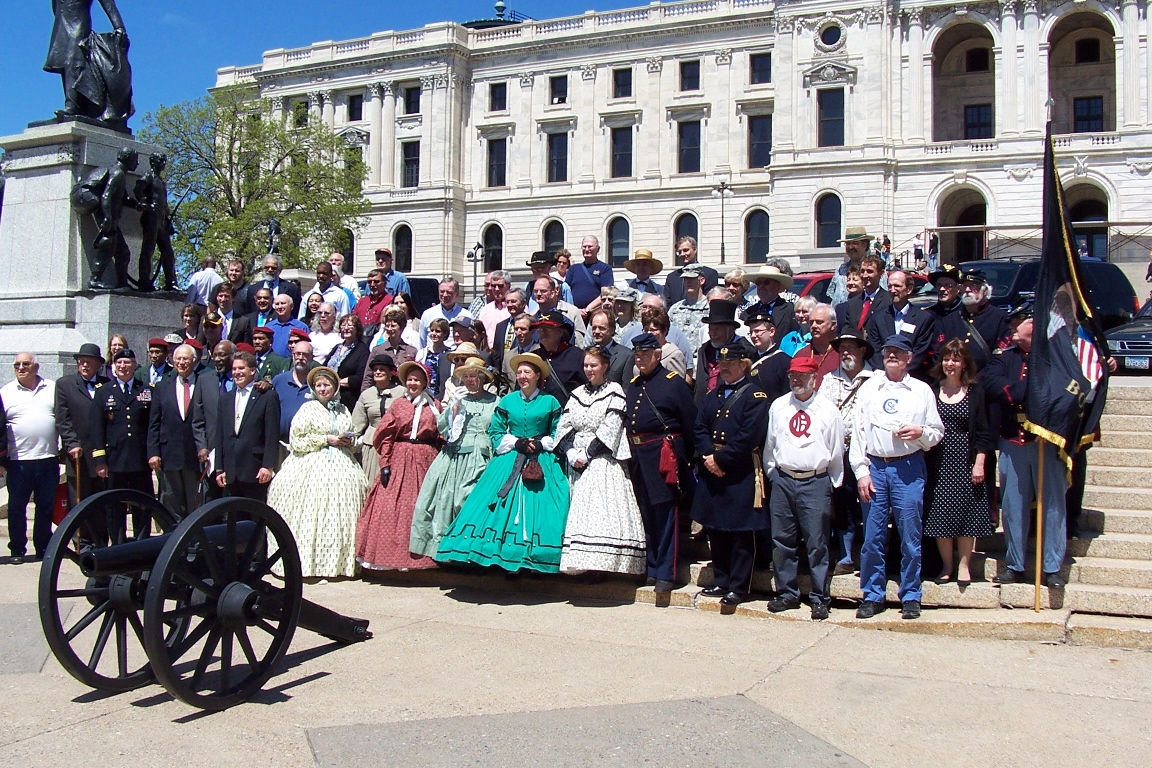
Those gathered at the Capitol posed for a group photo. Brandon is in the second row.

Three Civil War cannons given to the First Minnesota Infantry Regiment were on display at the Capitol.

© Text Copyright 2011 Audrey Kletscher Helbling
Photos courtesy of Cindy Hokanson