Minnesota Prairie Roots

Writing and photography by Audrey Kletscher Helbling
“Standing at the Grave,” an immigration story November 21, 2025

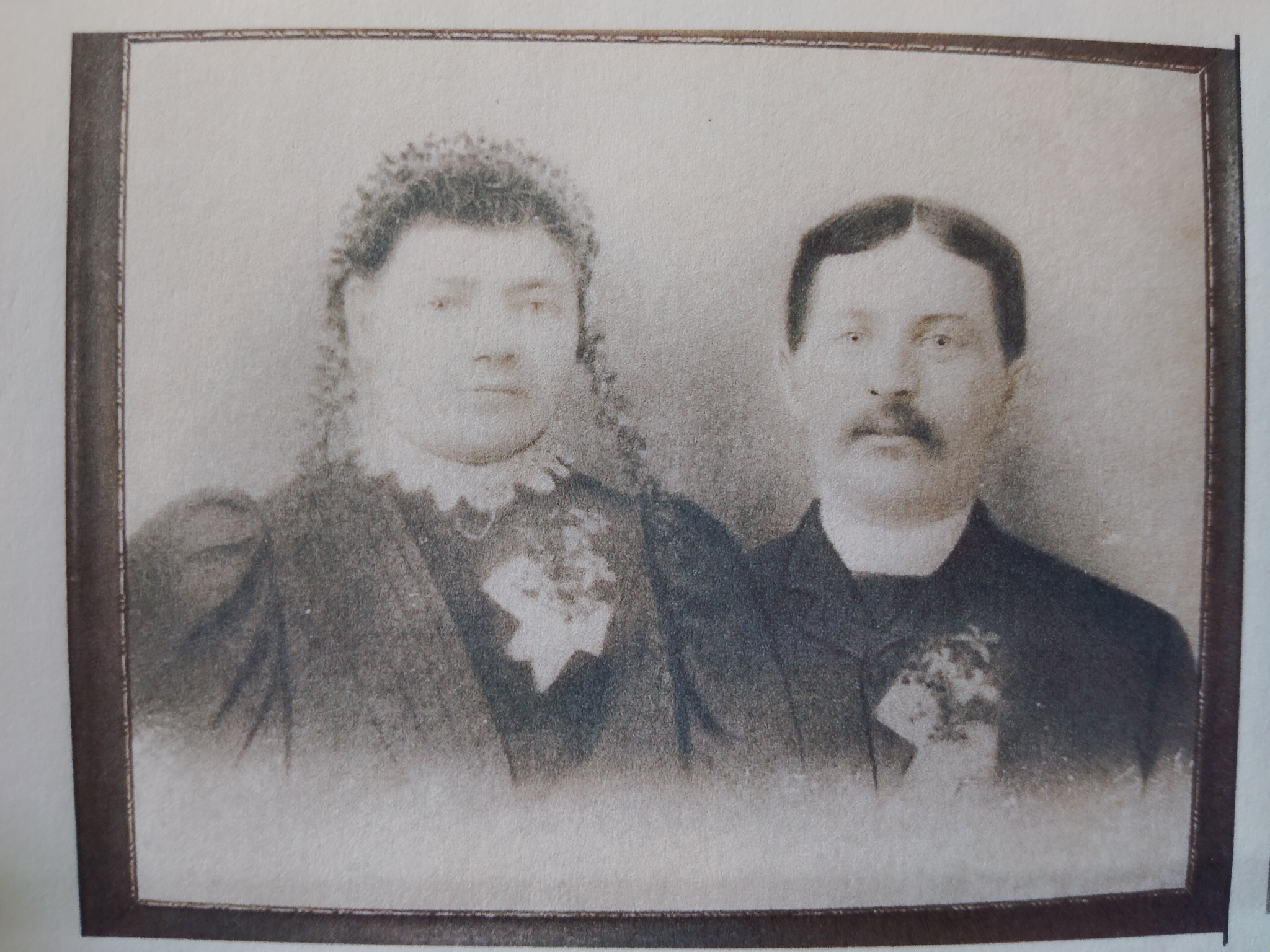
My great grandparents, Rudolph and Mathilda Kletscher, married in 1891. (Photo source: Kletscher Family Tree 2008 produced by Merlin and Iylene Kletscher)

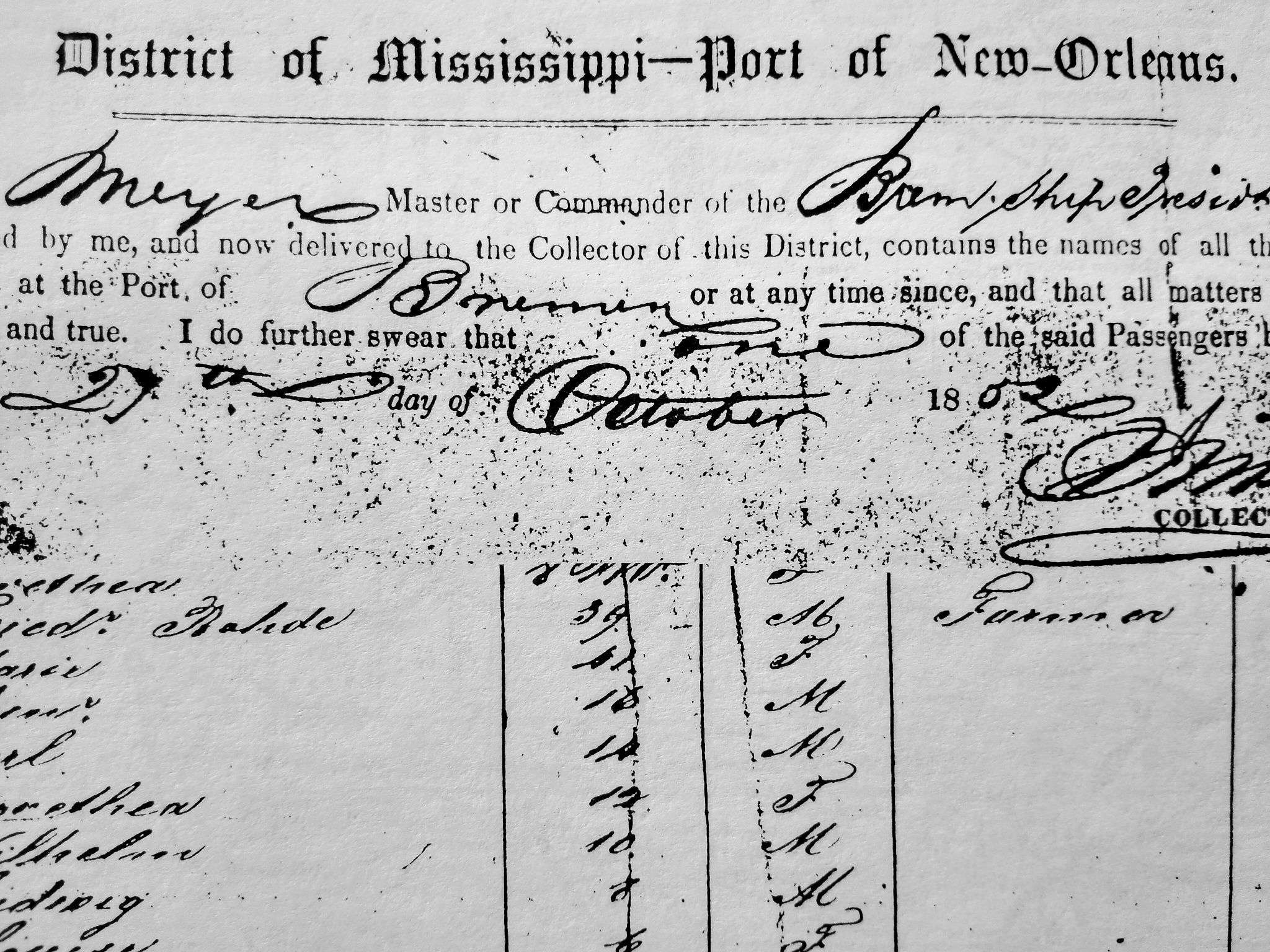
UNLESS WE ARE NATIVE AMERICANS, immigration is part of our family history. On my maternal side, Friedrich and Maria Bode arrived from Germany at the port of New Orleans in October 1852. They would settle in Illinois. Most of the family eventually moved to Minnesota. On my paternal side, my great grandfather, Rudolph Kletscher, landed in Baltimore from Germany in 1886, several years later journeying west to put down roots in southern Minnesota.

I pulled this information from pages of family history uncovered and compiled by family members who have researched our roots in Germany. I am grateful for their work, for the names, dates and places recorded for reference. Sometimes there are stories, or tidbits of stories. But mostly the research reveals documented facts only, not stories.

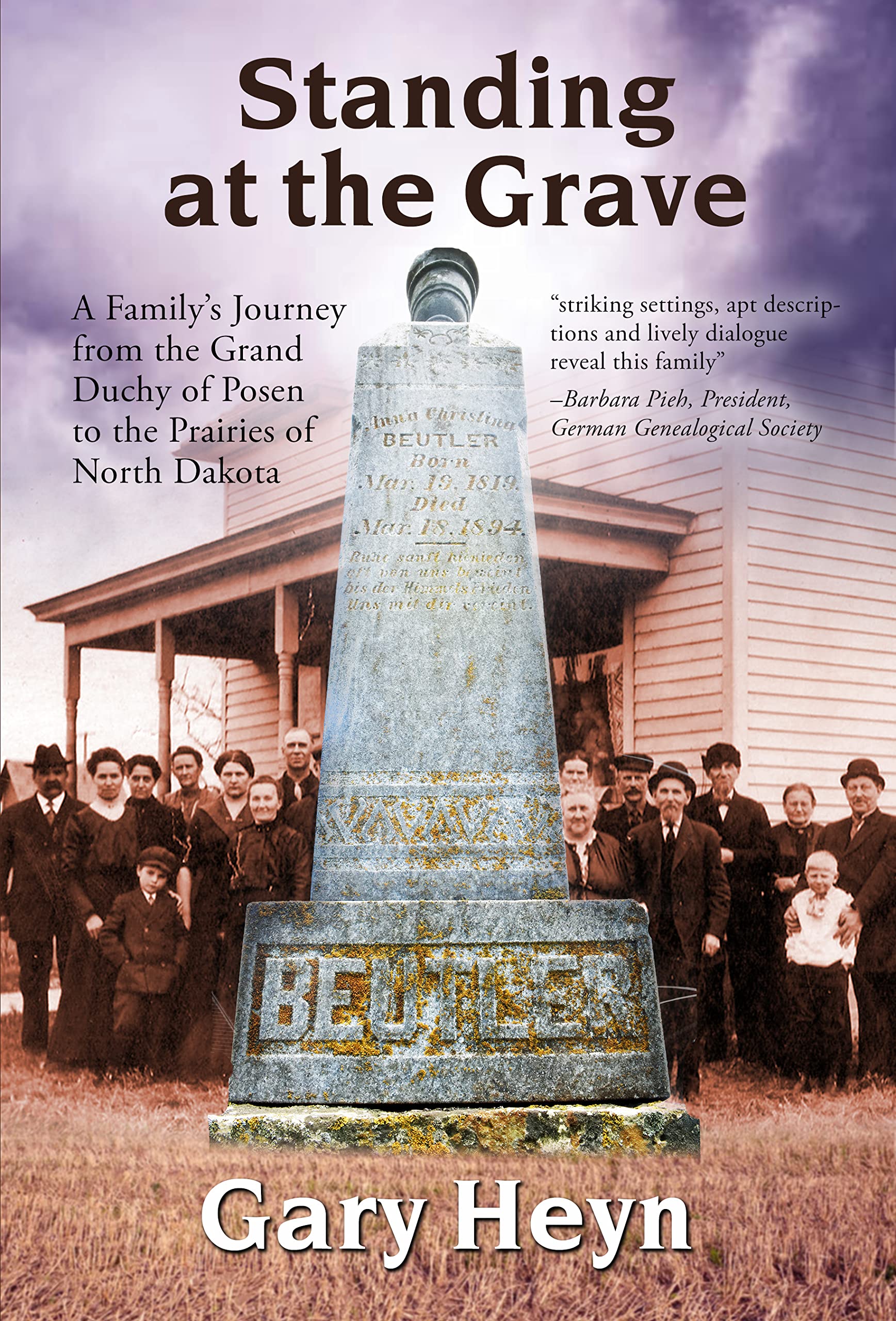
(Book cover sourced online)

It is the stories that interest me most, which explains my interest in reading Standing at the Grave—A Family’s Journey from the Grand Duchy of Posen to the Prairies of North Dakota by Minnesotan Gary Heyn. Books on Central in Faribault hosted Heyn on Thursday evening during a monthly literary event. I was among those in attendance, listening to Heyn read and then answer audience questions. I’d just finished reading his book about his ancestors who immigrated to America from Prussia (now Poland) beginning in 1867 shortly after the Civil War ended.

His ancestors could have been mine. Any of ours. Heyn took basic facts confirmed thorough research at the Minnesota History Center, church records, a Polish history website, old newspapers, even the National Weather Service and gleaned during several trips to Poland to form the foundation for his stories. The dialog and interactions are fictional slices of personal life in Prussia and then in America. Heyn’s characters really come alive when he reveals their fears, their worries, their hardships, griefs, challenges and more in intimate storytelling.

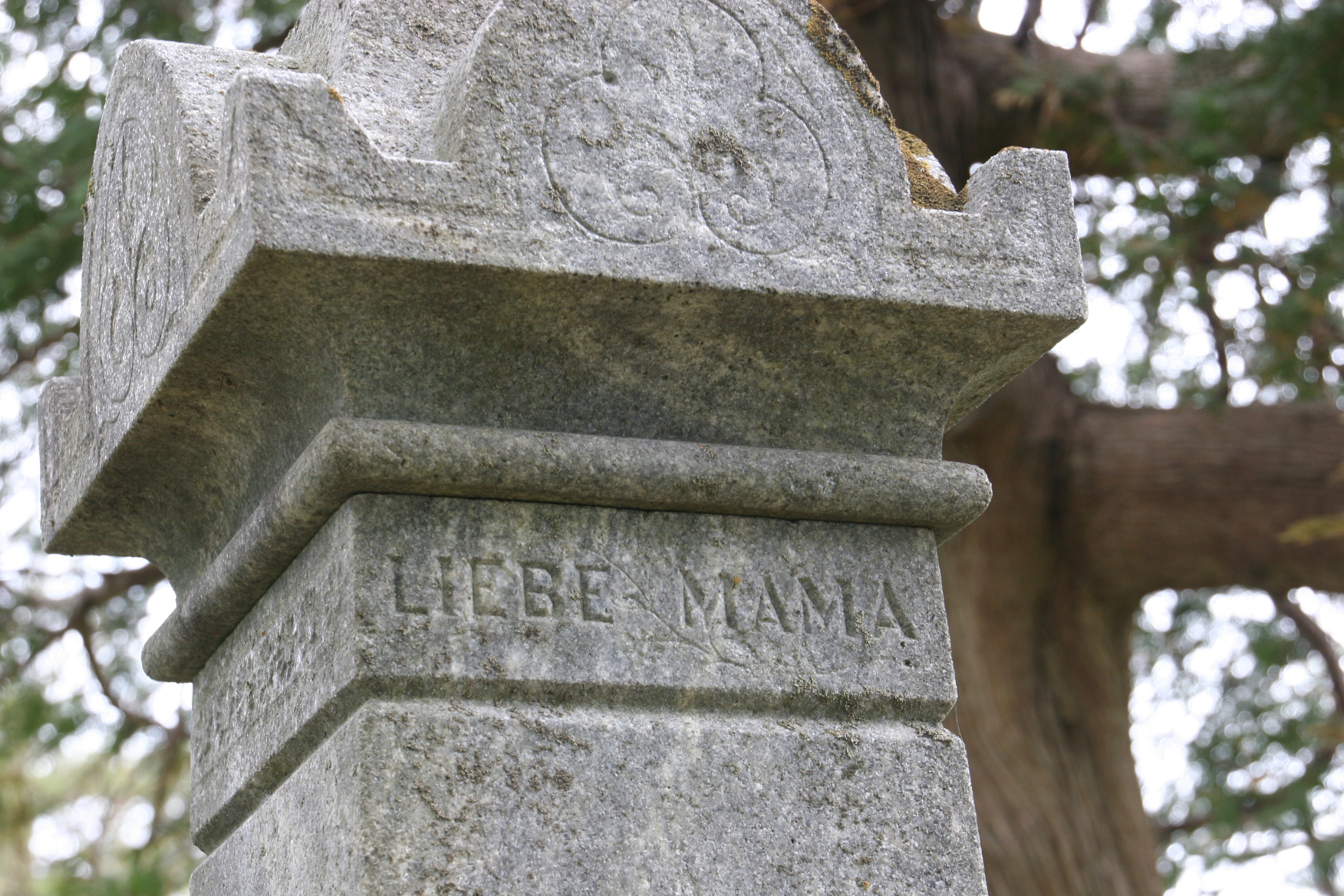
A tombstone in the Immanuel Lutheran Church Cemetery, Potsdam. The German word “LIEBE” means love in English. A Heyn family member is buried in this cemetery. (Minnesota Prairie Roots copyrighted file photo May 2022)

These are, at times, really hard stories. Of death by disease. Of death by accidents. Of death by suicide. Of death by botulism. I appreciate that the author doesn’t avoid tough topics. I understand the worries about weather and crop failure, vicariously stand at the graves of loved ones, recognize the depression a young mother experiences as she looks across the expansive North Dakota prairie, feeling isolated and alone.

But those difficult stories are balanced by the joys of births, of weddings, of the opportunity to claim land through the Homestead Act, to live and love and grow family in a new land rich in opportunity.

Main character, family matriarch Anna, follows her family to America many years after the first, eventually fulfilling her life-long dream of once again owning land, this time 160 acres in North Dakota. Most of the family found land in southern Minnesota, in the Rochester area where the author grew up and first heard the stories of his great grandmother. She lived with his childhood family. That sparked his interest in family history and genealogy, which, after his retirement as an accountant, led to writing Standing at the Grave.

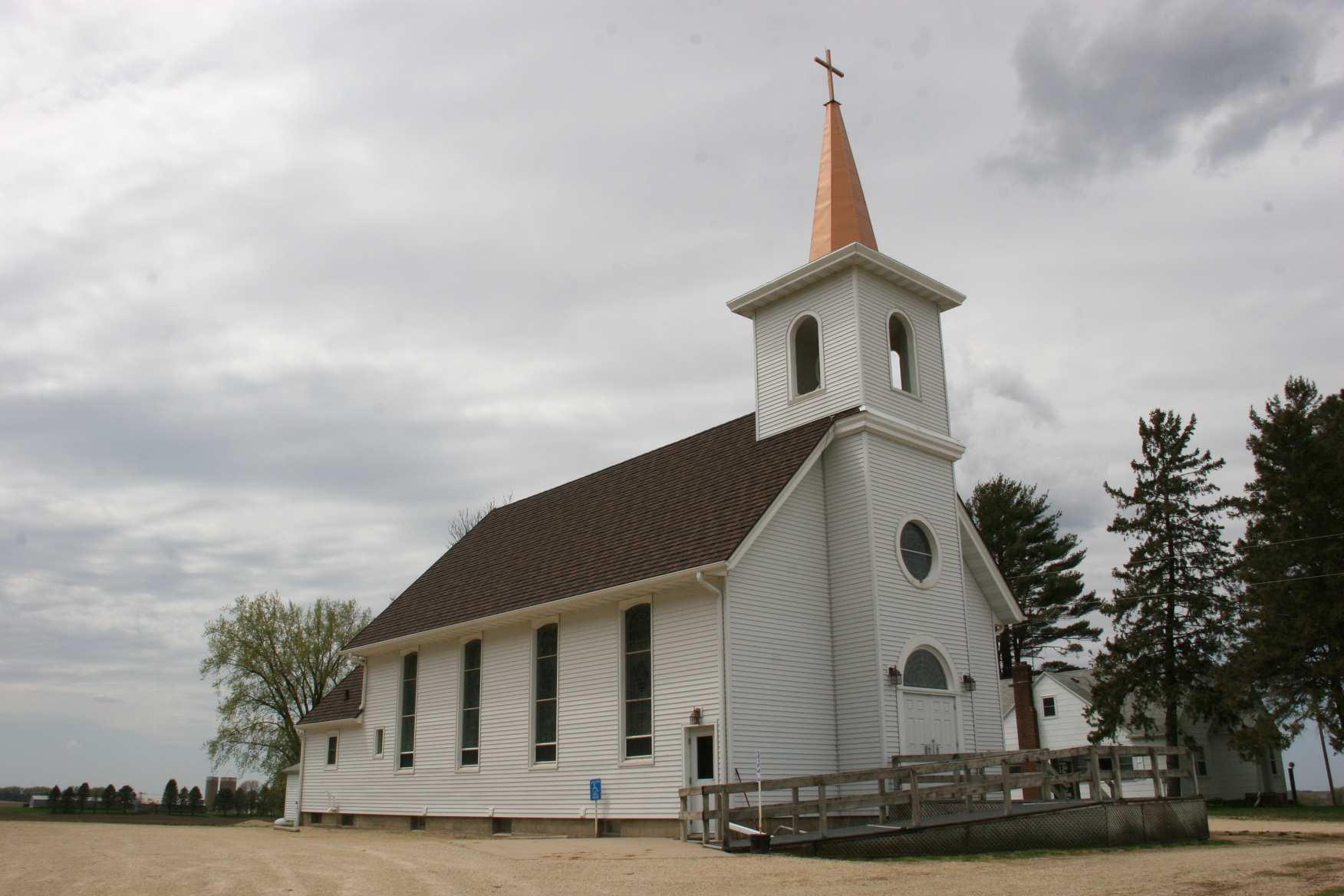
Immanuel Lutheran Church, Potsdam. (Minnesota Prairie Roots copyrighted file photo May 2022)

Southern Minnesotans, especially, will feel at home in places like Elgin, Grand Meadow, Pleasant Valley, Owatonna and more. I’ve even visited and photographed Immanuel Lutheran Church in Potsdam, where Anna stood on the front steps and scanned the countryside below the hilltop church. I’ve walked the cemetery, where Heyn’s ancestor, Willie, lies buried in an unmarked grave.

As much as I appreciate the storytelling in this book, I also appreciate its relevancy to today. Heyn family members new to America in the late 1800s are told to speak English, not German. Sound familiar? (My own mother, who died at age 89 in 2023, spoke German as her first language.) These newcomers to America felt like foreigners, often choosing to live among others from their homeland. Among those who shared their language, culture and customs, who liked bier, sauerkraut, Weihnachtsstollen and Glühwein.

But in times of challenges, Heyn reveals in one story, “…the citizens of this neighborhood, born all across the globe, banded together to help another working man.” That coming together of many nationalities repeats in his book, even as conflicts arise.

A passenger ship list from the port of New Orleans. (Source: The Bode Family book by Melvin & Lois Bode, 1993)

Heyn, in his writing, reveals the challenges, the dreams, the hopes, the resilience and resolve of his immigrant ancestors. These were strong individuals who relied on each other, their faith and their inner strength to cross a vast ocean for a new life in America. This is their story, but also a universal story of immigration, as relatable today as then.

This book helped me better understand those who came before me from Germany to America from a personal perspective. This book also reminds me of the struggles immigrants still face today in America, especially today.

© Copyright 2025 Audrey Kletscher Helbling
 

Two authors: One talks pandemics, the other immigration November 15, 2025

(Book cover sourced online)

WHENEVER AN AUTHOR appears locally to read from and discuss his/her book, I try to attend. I love reading and learning. I enjoy listening to other writers talk about the craft of writing as I read and write nearly every day.

Among authors who will be in my area soon are Dr. Michael Osterholm and Gary Heyn. Let’s start with Osterholm, who will appear at The Grand Event Center in Northfield at 7 pm Monday, November 17, to read from his book, The Big One—How We Must Prepare for Future Deadly Pandemics, co-authored by Mark Olshaker. He will also engage in conversation with Debby Walser-Kuntz, professor of biology at Carleton College in Northfield.

Osterholm, an internationally-renowned epidemiologist and director of the University of Minnesota Center for Infectious Disease Research and Policy, is a familiar name, especially to Minnesotans. During the COVID-19 pandemic, he was tapped as an expert. I, for one, found him to be an invaluable and trusted source of information during the pandemic. His knowledge and research into infectious diseases stretches well beyond COVID, though.

My history with Osterholm goes back decades to the late 1970s when I was just out of college working at a small town Minnesota weekly newspaper, The Gaylord Hub. Osterholm came to Gaylord during a hepatitis outbreak at the local school. While details of that health issue have long faded, I recall that this highly-contagious disease was connected to a band teacher and musical instruments. I remember photographing Osterholm, also starting his career, and writing a news story about what was unfolding at the school.

The original coronavirus as depicted by the CDC in 2021. (Sourced online)

On November 17, Osterholm will focus on pandemics, sure to be an enlightening talk at this 7-8:30 pm first come first serve seating (doors open at 6 pm.) event at The Grand, 316 Washington Street in Northfield and hosted by local independent bookshop, Content Bookstore.

(Book cover sourced online)

While Osterholm will present in a large venue, author Gary Heyn will appear in a much smaller, intimate setting, the Rice County Area United Way’s Books on Central. The used bookshop is housed in a former jewelry store at 227 Central Avenue North, Faribault. Heyn, a retired corporate executive turned historian, genealogist and writer upon his retirement, will read from and talk about Standing at the Grave: A Family’s Journey from the Grand Duchy of Posen to the Prairies of North Dakota. This free literary event is set for 6 pm Thursday, November 20.

I’m about a third of the way through Heyn’s book and I can attest that it is a captivating read, the kind of book I don’t want to put down. It’s relatable when considering my German immigrant ancestors and also in the context of immigration issues today. Once I’m finished with the book, my husband will also be reading it. His ancestors, the Helblings, moved from Germany to then Russia (current day Ukraine) before journeying to America and a new life in North Dakota.

Insights into immigration, tracing family history and stories are always of interest. Heyn will read from the chapters of his book about three mothers from Gembitz Hauland, an historic German-Polish village, who were reunited in Steele County 18 years after sending their children to America. To type those words is enough to break my heart. I cannot imagine how difficult that must have been for those three mothers. But it happened. Over and over and over again.

I encourage you, if you live in my area, to attend these upcoming author talks. These are opportunities to learn via the expertise and creativity of those inspired to write.

FYI: To view other upcoming author events offered by Content Bookstore, click here.

© Copyright 2025 Audrey Kletscher Helbling
 

“Anonymous mother” & a call to action November 5, 2025

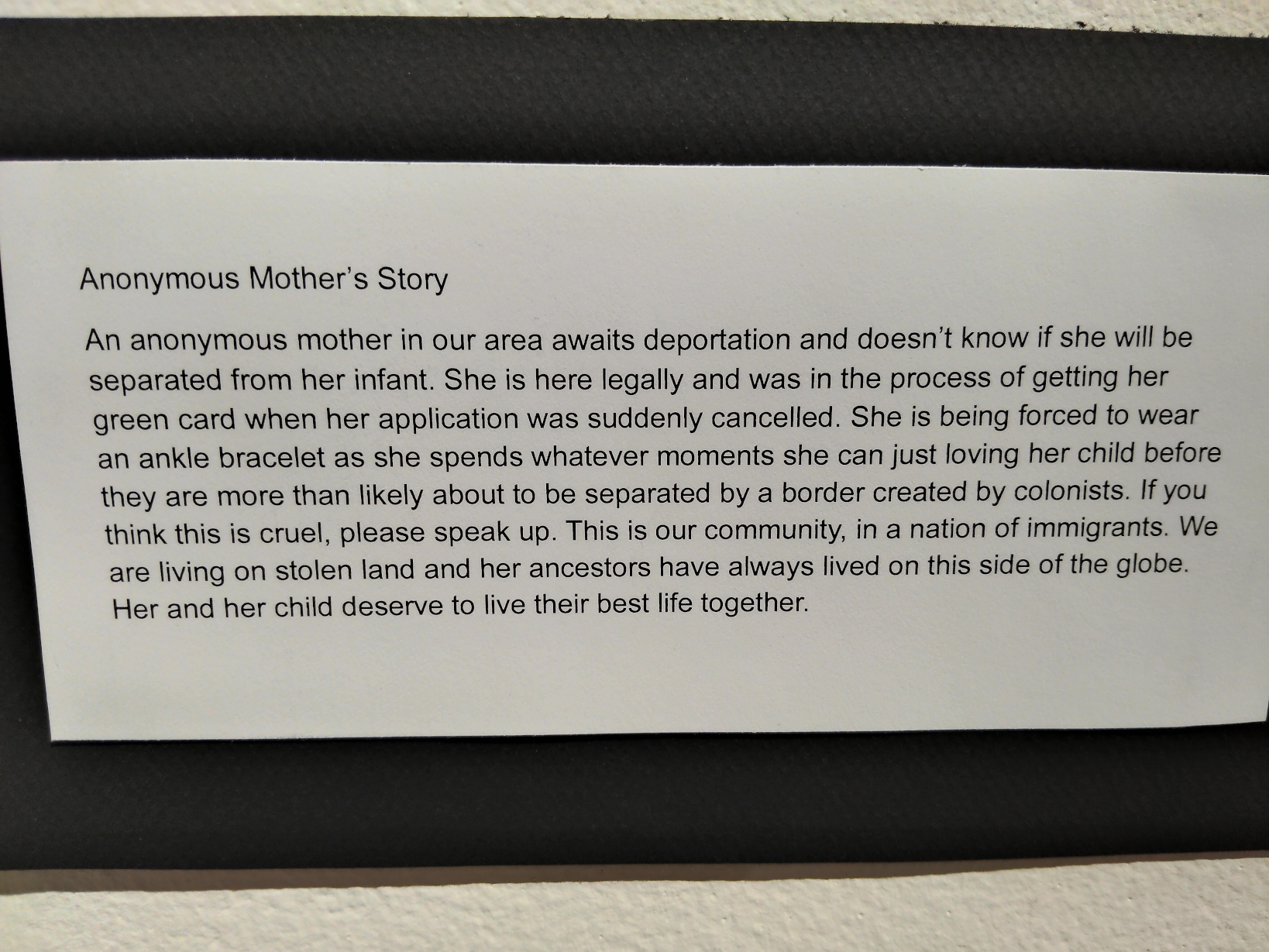
An anonymous mother’s story and commentary as written by Kate Langlais for her “I Am Minnesota” project. (Minnesota Prairie Roots copyrighted photo October 2025)

I ALMOST MISSED IT. “Anonymous Mother’s Story” positioned next to “The Young Mother” charcoal portrait in the “I Am Minnesota” exhibit by Faribault artist Kate Langlais. But there it was, tucked in the corner near the light switches in the Paradise Center for the Arts main gallery.

The exhibit features some 20 portraits and stories of first and second-generation immigrants from my community. None is more relevant than that of the young mother who now faces deportation and separation from her infant. Here are key words in her story: young mother. here legally. green card. application suddenly canceled. awaiting deportation. ankle bracelet. cruel and inhumane.

We’ve all heard countless media reports of people snatched from the streets and elsewhere by masked agents of the federal government, unlawfully detained without due process, separated from family, deported… That is, indeed, cruel, inhumane, heartbreaking and wrong. Even when immigrants are following all of the rules, all of the laws to legally live here, they find themselves targeted.

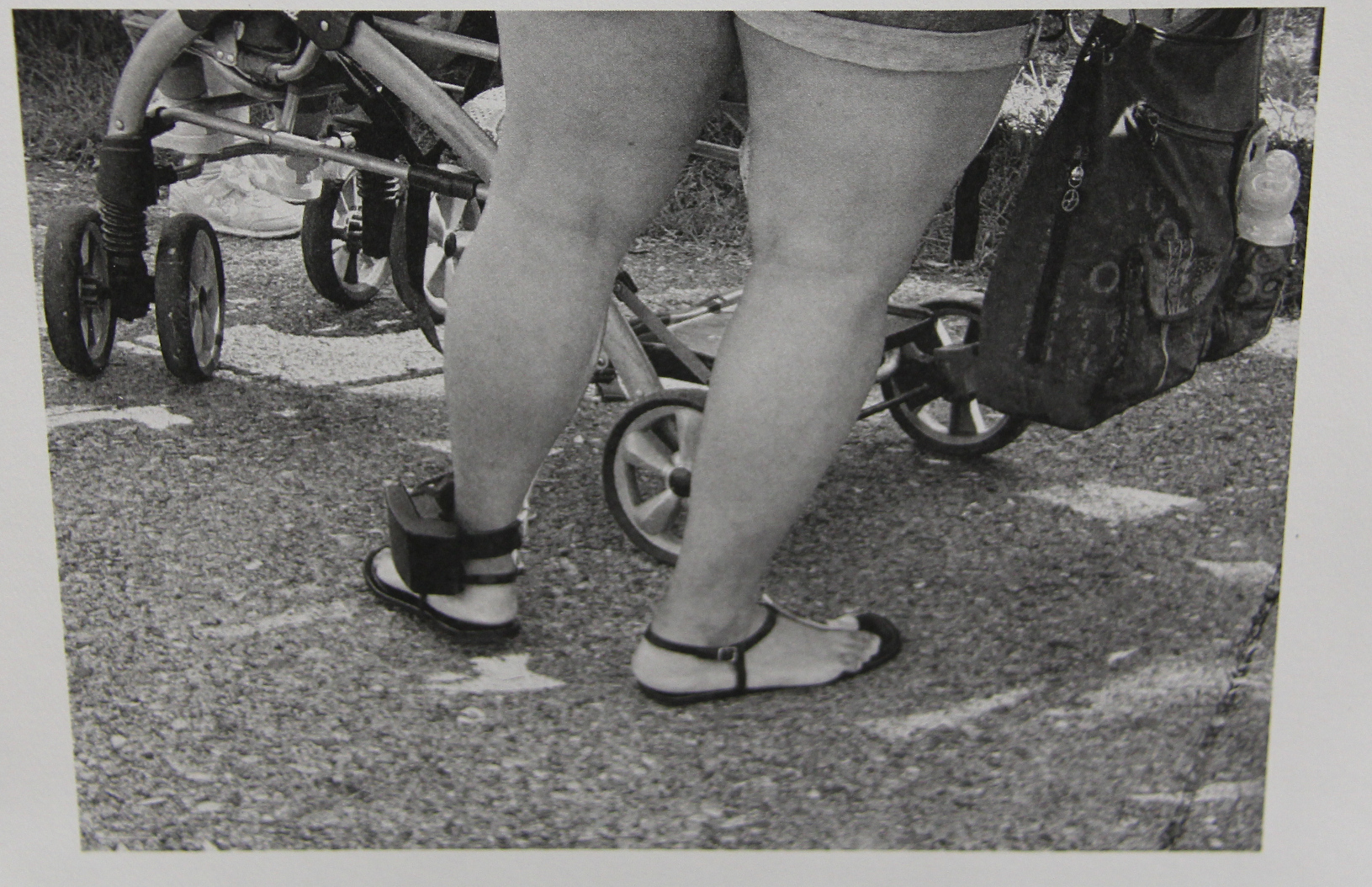
Martha Brown took this photo of the anonymous mother which is included, along with text, in the “I Am Minnesota” exhibit. (Minnesota Prairie Roots copyrighted photo October 2025)

To read the story of this young mother from my area, to see the faceless portrait, and then to also view a photo taken by Martha Brown, candidate for Minnesota House District 19a, deeply touched me. Brown photographed only the young woman’s legs and the wheels of her baby’s stroller. That was absolutely the right and compassionate thing to do.

The intentionally-framed image is more effective and powerful than if Brown had photographed the woman’s face. Every single person who sees this image should understand the reasons for anonymity. In a statement with the photo, Brown urges southern Minnesotans to reach out to their U.S. congressman “to stop this cruel and inhumane treatment.”

Langlais’ inclusion of the anonymous mother’s portrait and story, along with Brown’s photo and words, is perhaps the most important part of the “I Am Minnesota” exhibit. And to think, I nearly missed it there in a corner of the gallery. Don’t miss this exhibit, which closes on November 15 at the Paradise Center for the Arts. It’s located in historic downtown Faribault, a place many immigrants call home.

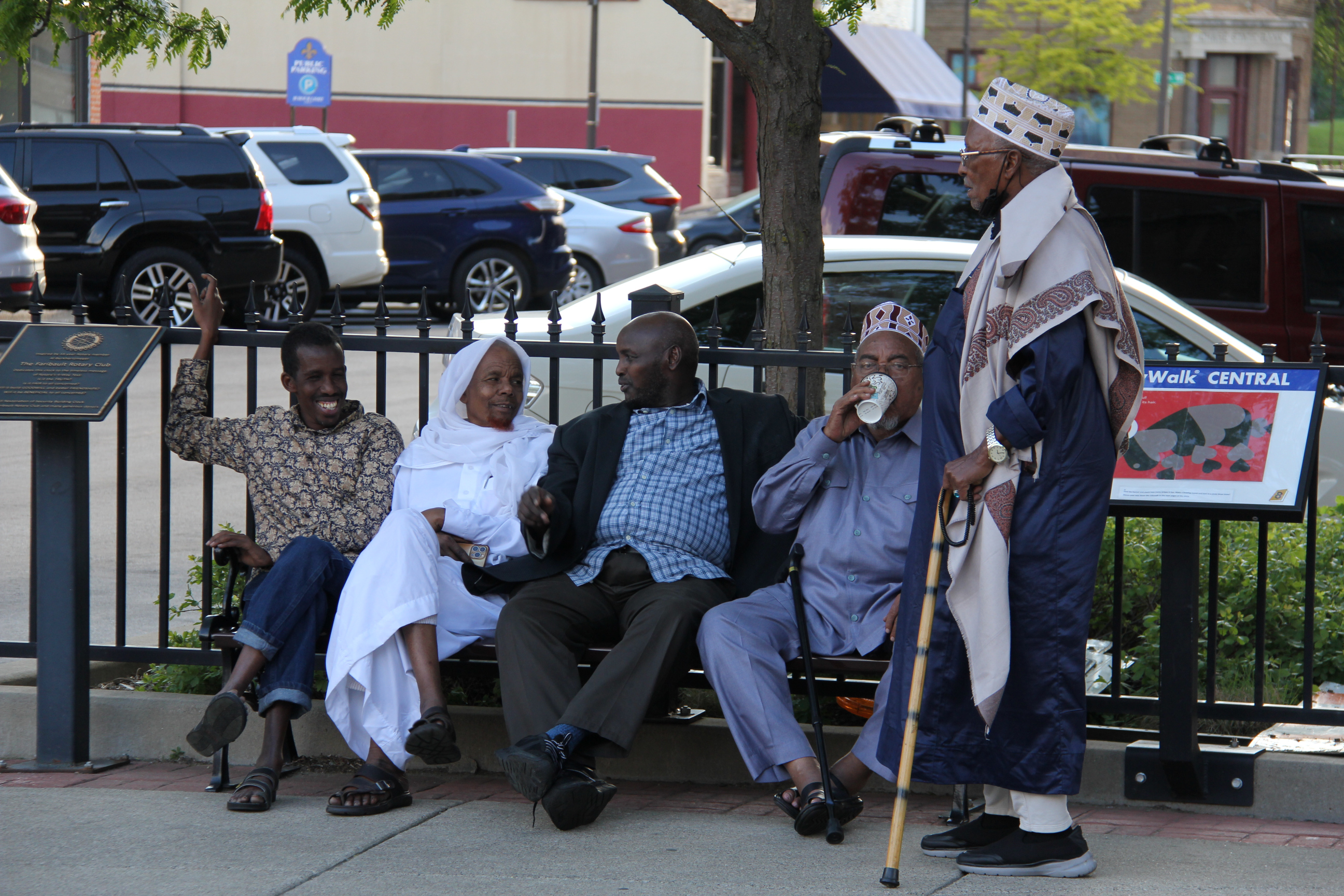
One of my favorite images from downtown Faribault shows a group of Somali men visiting on a street corner. (Minnesota Prairie Roots copyrighted file photo 2024)

FYI: The Northfield Public Library is hosting “Bridging Communities: A Celebration of Somali Culture” from 1-4 p.m. Saturday, November 8. The event features interactive dance workshops led by the Somali Museum of Minnesota Dance Troupe; a performance by the Faribault Middle School Choir; and a participatory sing-along of Somali songs. Other activities include henna art, face painting, bilingual Somali storytelling, a scavenger hunt with prizes and more. The library is collaborating with Somali community partners and St. Olaf and Carleton colleges to bring this event to Northfield.

NOTE: I photographed the “I Am Minnesota” exhibit with permission of the Paradise. I also received permission from Martha Brown to include her photo in this post.

© Copyright 2025 Audrey Kletscher Helbling
 

Reflections from Minnesota rooted in Ukraine February 25, 2022

I pulled stories from a family history book for a family history trivia contest at a 2017 Helbling reunion. (Minnesota Prairie Roots copyrighted file photo 2017)

YESTERDAY I PULLED A SPIRAL-BOUND family genealogy book from an upstairs closet. Compiled in 1993 by my sister-in-law Vivian, the book details the families of Alfred Helbling and Rosa Schaner Knoll Helbling. For someone like me who married into the Helbling family, it takes effort to understand the information therein, especially with second marriages (due to deaths) and stepchildren.

A stone building in southern Wisconsin, used for illustration only. (Minnesota Prairie Roots file photo)

But I’m clear on one fact—the Helbling ancestors are considered “Germans from Russia.” As the family tree shows, the Helblings trace their roots back to Wingen, Alsace in the Rhine River Plain. Like many Germans, they left their homeland for Russia when Russian Czarina Catherine the Great (a former German princess) promised free farmland and more to immigrants. My husband Randy’s great great great great grandfather and his family were among the founding fathers of the Catholic colony of Speier in 1809. That’s in the southern area of current day Ukraine near the Black Sea port city of Odessa.

So now you understand why I pulled that family genealogy book from the closet. The unfolding invasion of Ukraine (including in Odessa) resonates with me in a way that is personal. This land, now under attack by the Russian military, was once home to the Helbling family. They arrived in this area with hopes and dreams.

As often happens in history, leadership and policies change. That prompted Randy’s great grandparents, Russian-born Valentine and Emina Helbling, to emigrate to the U.S. from Russia. They arrived in Mandan, North Dakota in May 1893. Accompanying them were their three sons, including 5-year-old Alfred, Randy’s grandpa.

“Threshing on the home place, rural St. Anthony, North Dakota,” a painting by my father-in-law. Thomas Helbling. (Minnesota Prairie Roots copyrighted file photo)

I’m always amazed at the generational closeness of my husband to his family’s homeland. Mine is a generation farther removed (from Germany). In 1898, Valentine and Emina homesteaded a claim near St. Anthony south of Mandan. That young boy who traversed the ocean from Russia with his parents would also farm there as would Randy’s father, Tom. When Randy was seven, his family uprooted and moved to central Minnesota.

As I consider all of this family history, I wonder at the dreams and challenges. To leave your home country behind, understanding you would never return, takes fortitude. I can only imagine the fortitude Ukrainians must tap in to today as they face a Russian invasion.

Early in his marriage, Alfred Helbling faced an unspeakable loss—the tragic death of his first wife. Katherine, 27, apparently lost her balance, fell into a well and died while retrieving a container of milk stored inside.

Artwork created by Gracie for a 2018 student art show at the Paradise Center for the Arts, Faribault. (Minnesota Prairie Roots file photo March 2018)

Today people are dying in Ukraine, a country that suddenly doesn’t seem all that far away. An ocean and some 5,200 miles separate this land from Minnesota. But when I page through the spiral-bound genealogy of the Helbling family, I feel much closer. Closer in a way that causes me to feel emotional. Upset. Concerned. Worried about not only the future of Ukraine, but also of this world.

FYI: If you’re interested in learning more about “Germans from Russia,” click here to reach North Dakota State University’s “Germans from Russia Heritage Collection” website.

© Copyright 2022 Audrey Kletscher Helbling
 

WW I from a Steele County, Minnesota, personal perspective April 16, 2019


YOU CAN SPEND considerable time reading all of the information included in a World War I exhibit at the Steele Country History Center in Owatonna. But I am more a Cliffs Notes reader when it comes to museum-based history. I scan to gain a general overall understanding and then choose to focus more on content that interests me most.


“Fight the foe with the hoe.”


The “Over Here, Over There: The Great War” exhibit presents Steele County’s role in WW I, both on the battlefield and at home. It’s an incredible research project. Well done. Detailed and personalized. I’ve come to expect such historical accuracy and professionalism in homegrown exhibits at this southern Minnesota museum.


As I ducked into military and medical tents, listened to the sounds of machine gun fire,


took in the wall of nearly 1,100 soldiers’ names,


admired military medals,


pulled copies of soldiers’ letters from mailboxes,


observed blacklisted books of German poetry,


considered the sacrifices of Wheatless Wednesdays and Heatless Mondays, I contemplated how this war affected every aspect of life. Not just for those military personnel in battle, but for the everyday American.


And when I read the section on immigration, I contemplated how little has changed. How the issues of yesterday—back then the hatred of Germans—today has only a new color, a new ethnicity. I read: Mass immigration created social tensions. Many native-born citizens demanded assimilation and wanted less immigration.

I don’t intend for this post to spark intense discussion on immigration issues. But the immigration section of this exhibit certainly resonated with me. I am of German heritage. If my grandparents were still living, I would question them about issues they faced because of their ethnicity.

It saddens me to think how, still today, social tensions and demands for assimilation and hostility toward immigrants remain. Strong. Often hateful. As if we didn’t all come from immigrants. As if we aren’t all human beings worthy of love and respect and a place to call home.


All of that aside, I’d encourage you to tour “Over Here, Over There: The Great War.” There is much to be culled from this exhibit whether you read every single word or browse through the information. In history we learn. If only we’d retain those lessons so history does not repeat itself.


© Copyright 2019 Audrey Kletscher Helbling


“Sweet Land, the musical” proves as memorable & moving as the film October 13, 2017

The program cover from Thursday evening’s performance of “Sweet Land, the musical.”


SEATED ONLY ROWS from the intimate stage in an historic Faribault theater, I felt part of the set, part of the scene, part of the story that unfolded before me in “Sweet Land, the musical.”

What a gift to see this St. Paul-based History Theatre performance right here in my community, in the late 1800s Newhall Auditorium on the campus of Shattuck-St. Mary’s School. I appreciate that History Theatre, through a grant from the Minnesota State Arts Board, is touring this show in Greater Minnesota. Even though I live only an hour from the Twin Cities metro, I don’t attend theater there due to cost and, well, the hassle of driving and parking. Tickets for the Faribault performance were only $20.


A promo from the “Sweet Land” film website.


I walked into Newhall Auditorium with high expectations. Ali Selim’s independent film “Sweet Land,” upon which the musical is based (and rooted in Minnesota writer Will Weaver’s short story, “A Gravestone Made of Wheat”), rates as one of my all-time favorite movies. Filmed in my native southwestern Minnesota prairie, the setting of wide skies and land, naturally draws me in.

But it is the challenges faced by German immigrant Inge Altenberg, come to America in 1920 to marry Norwegian farmer Olaf Torvik, that make this story memorable and especially relevant today. As I listened to character Pastor Sorenson warn, “She (Inge) is not one of us,” I reflected on how we welcome, or don’t welcome, immigrants to Minnesota.


Faribault native Ann Michels in the lead role of Inge Altenberg alongside Robert Berdahl as Olaf Torvik on-stage at the History Theatre. While the movie was filmed in the Montevideo area of southwestern Minnesota, the musical sets the story farther north in the Park Rapids/Hubbard County area. Photo courtesy of the History Theatre.


I was especially pleased that the History Theatre performance did not deviate from the film storyline, following it right down to the cup of coffee brewed by Inge and which the pastor declared too strong for his liking. Details like these are important because they connect with the audience in a relatable way.

Performers also connected via music. A musician even stroked a cello (or maybe it was a bass; I’m uncertain) to mimic the moo of a cow during a barn scene. Music from a violin, piano and, surprise, an accordion, and more followed the storyline plot from fast-paced and dramatic to soulful and reflective.

I felt the intensity of emotions in Inge as she struggled to learn English, in Pastor Sorenson as his voice boomed suspicion from the pulpit, in Olaf as he battled to hold his feelings in check.

My nearness enhanced my experience, especially during a softball game when actors moved off the stage, so close their gloved hands nearly touched audience members. As the musical progressed, I saw sweat sliding down performers’ faces.

During an apple pie making scene, I almost expected the scent of cinnamon to waft through the theater. While it didn’t, I caught the nuances of the interaction between Inge and her neighbor. When Inge called the pie strudel, Brownie corrected her. “No, apple pie.”

That’s the thing about this story, this film, this musical—seemingly subtle exchanges prompt the audience to think, to ponder whether the coffee someone brews really is too strong or whether it is our reactions that run too strong.


FYI: “Sweet Land, the musical” is showing at the Sheldon Theatre in Red Wing at 7:30 p.m. on Saturday, October 14, and at Memorial Auditorium Performing Arts Center in Worthington at 7 p.m. on Sunday, October 15, closing out the tour to communities in Greater Minnesota.

The lead actress role of Inge is played by Faribault native Ann Michels, who gave an outstanding performance to an appreciative hometown audience. The musical is part of the Fesler-Lampert Performing Arts Series offered at Shattuck-St. Mary’s School. This marks my first time attending a show here and you bet I’ll be back. The Vienna Boys Choir comes to the historic Faribault theater at 7:30 p.m. on November 16.

Special thanks to my husband, Randy, for gifting me with tickets to “Sweet Land” for my birthday.


“Sweet Land” coming to Faribault & I’m in September 18, 2017

I KICKED BACK in the recliner attempting to read while my eyelids fluttered in fatigue. Randy relaxed nearby on the sofa, eyes focused on the Faribault Daily News. He started to say something, then stopped. “Never mind,” he said. Now that grabbed my attention. But I didn’t press. I figured if he wanted to tell me whatever, he eventually would.


The next morning Randy flipped open the paper and pointed to a display ad for the Fesler-Lampert Performing Arts Series at Shattuck-St. Mary’s School in Faribault. Targeting his finger on the October 12 performance of “Sweet Land, the musical,” he asked me to order tickets. This, he said, would be my birthday gift, albeit late and on his birthday. Mystery solved.


Ann Michels in the lead role alongside Robert Berdahl. Photo courtesy of the History Theatre.


I am delighted with this birthday gift to a musical I had hoped to see on stage at the History Theatre in St. Paul. But we never got there and now the performance starring Faribault native Anne Michels as German immigrant Inge Altenberg is coming to my community, to the campus of a noted college prep school just across the viaduct from my home.

The Faribault performance is among seven on a summer and fall travel tour of “Sweet Land” to towns in greater Minnesota. Other upcoming shows are in Detroit Lakes, Grand Rapids, Red Wing and Worthington.


A promo for the film from the Sweet Land website.


My excitement for this musical traces to my deep love of the award-winning independent film, Sweet Land, based on Minnesota writer Will Weaver’s short story, “A Gravestone Made of Wheat.” The movie, filmed in my native southwestern Minnesota prairie, tells the story of a mail-order bride and the challenges she faces as a German immigrant. The topic is especially relevant today.

Yet Sweet Land is much more. It’s a story that also focuses on the love between two people in a place where the land weaves a strong presence into the storyline.

To have this opportunity to see Sweet Land locally rather than travel into the metro is a gift, birthday or not.


FYI: Click here for more information about the History Theatre’s tour of “Sweet Land, the musical.” Click here for specific info about the Faribault show.

© Copyright 2017 Audrey Kletscher Helbling


Take two: A second look at the film “Sweet Land” & immigration issues February 6, 2017

sweet-land-envelope-copy

The letter Inge received from Olaf, in the fictional film Sweet Land.

She is not one of us. We speak a common language. We have a common background, a common culture. She is not one of us.
#

We have to be careful about this sort of thing…German nationals. German nationals engage in prostitution. They harbor dangerous political convictions. Are you aware of the Espionage Act of 1916?
#

English only in the church. English.
#

You’re German. It’s a bad influence. You’re German. It’s a disruption to my community. You make coffee that’s too black.

She makes good coffee, not like the women in church.
#

I was fearful of her differences, but I was hopeful she could join us on our path….Do not allow your good lives to be poisoned by these two.
#

This is German food?

No, just food.
#

You don’t have the papers.

sweetlandposter_mini

Promotional from Sweet Land website.

LAST WEEK I REWATCHED Sweet Land, an award-winning independent film released in 2005. The movie, based on Minnesota writer Will Weaver’s short story, “A Gravestone Made of Wheat,” and filmed on my native southwestern Minnesota prairie, rates as a favorite of mine.

sweet-land-farmhouse-copy

Olaf Torvik’s home on the prairie. The film was shot in and around Montevideo, Minnesota.

I appreciate the early 1920s setting, the music, the story and, now, its relevancy to today. The above dialogue comes from Sweet Land, which focuses on the challenges faced by Inge Altenberg, summoned to America by Norwegian farmer Olaf Torvik. He expects a Norwegian mail order bride as do others in the community. But Inge is not Norwegian; she is German.

Thereafter, the conflict begins with “She is not one of us.”

The land and love shape the story.

The land and love weave into this story. Here Inge and Olaf dance on the prairie.

I won’t give away the plot, which includes a love story. But I will tell you that I watched the movie this time from a much different perspective, in the context of current day immigration issues in our country. Sadness swept over me.

Please watch this thought-provoking, conversation-starting film. It’s a must-see whether you make coffee that’s good, judged as too black or you don’t brew coffee at all. It’s still coffee.

FYI: Sweet Land, the musical opens April 29 at History Theatre in St. Paul. It runs for five weeks, Thursday – Sunday, until May 28. Will I go? I’d love to…

RELATED: Saturday afternoon a sizable crowd gathered on the Rice County Courthouse grounds in my community for a peaceful protest. Please click here to watch the video, Faribault, Minnesota Immigration Ban Protest 2-4-17, posted by Terry Pounds. Faribault is home to many immigrants and refugees, including from Somalia.

A photographic exhibit of refugee children who fled Syria, leaving everything behind, is showing at the American Swedish Institute in Minneapolis. Photos for Where the Children Sleep were taken by award-winning Swedish photojournalist Magnus Wennman. In order to increase community access to the exhibit, the ASI is providing free admission on Wednesdays in February. The exhibit runs through March 5. Where the Children Sleep launches the Institute’s 2017 “Migration, Identity and Belonging Programming.”

Review © Copyright 2017 by Audrey Kletscher Helbling