Minnesota Prairie Roots

Writing and photography by Audrey Kletscher Helbling

Thoughts on writing a winning poem August 19, 2013

EVERY TIME I PEN a poem, I wonder, will it inspire, touch, resonate with the reader? Is my poem worthy to be seen by others? Is the poem truly finished, ready to reveal? Or should I hold on to it longer, refine it, anguish over whether I’ve chosen the right word, the right phrase?

At some point I must tell myself, “You’re done.” I must make that leap of faith, overcome those self doubts and share what I’ve written.

For me that usually comes in entering a poetry competition. Even if I’m confident I’ve written a decent poem, it’s still scary to put yourself out there. But I have and I’ve discovered, in the process, that I can write poetry.
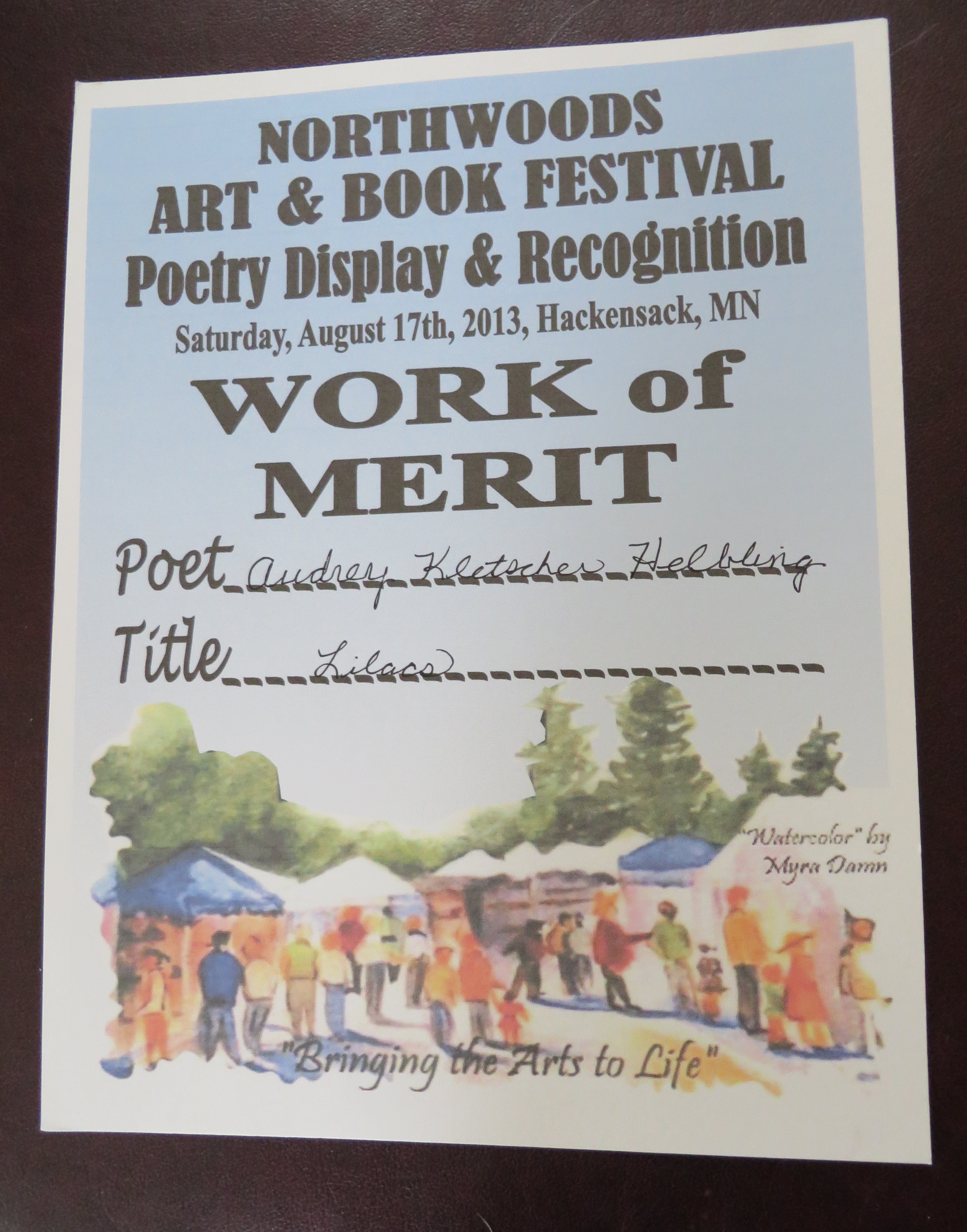
My award.

My most recent award. You can click on the “About” section of my blog to see the other honors I’ve garnered for my poetry. Photo courtesy of Sue Ready.

That was reaffirmed for me again this past Saturday when my poem, “Lilacs,” was selected as one of six Works of Merit in the sixth annual Poetry Recognition Event during the Northwoods Art and Book Festival in Hackensack.
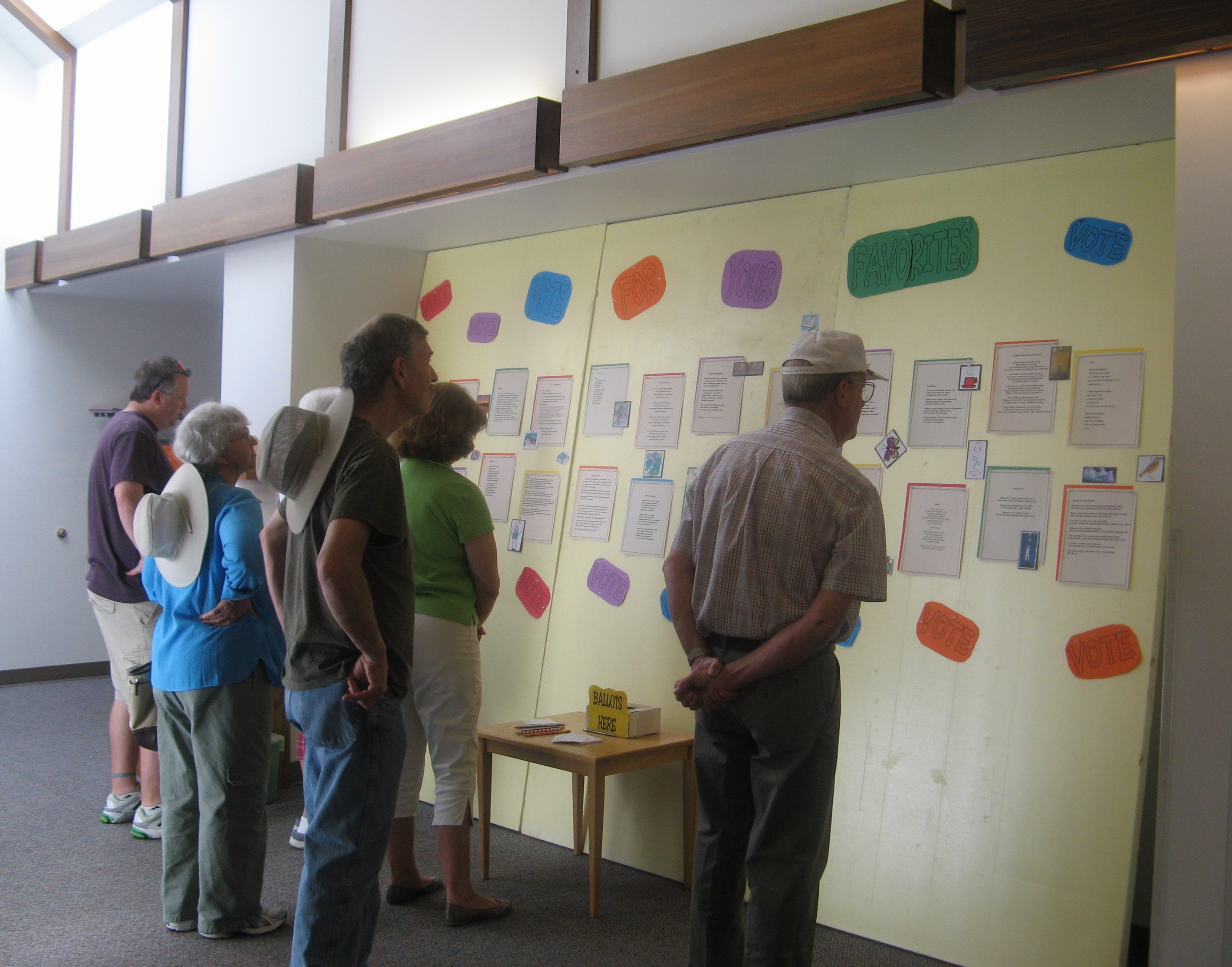
Attendees at the Northwoods Art & Book Festival view showcased poems and then vote for their favorite in the Popular Choice awards.

Attendees at the Northwoods Art & Book Festival view showcased poems and then vote for their favorite in the Popular Choice awards. Photo courtesy of Sue Ready.

I’m in the company of other Minnesota poets, Louise Bottrell, Marlys Guimaraes, Miriam Kagol, Joanne Moren and Candace Simar, chosen by a poetry committee for the merit honor.

Lilac, close-up

Sweet lilacs.

As I often do, I turned to my past, to my memories of growing up on a southwestern Minnesota farm, to write “Lilacs.” I remembered the annual gathering of lilacs from the bush on my Uncle Mike’s farm, the next field over. And I connected that memory to today:

Lilacs

Breathing in the heady scent of lilacs each May,
I remember my bachelor uncle and the gnarled bushes,
heavy with purple blooms, that embraced his front porch
and held the promises of sweet love never experienced.

He invited his sister-in-law, my mother, to clip lilacs,
to enfold great sweeps of flowers into her arms,
to set a still life painting upon the Formica kitchen table,
romance perfuming our cow-scented farmhouse.

Such memories linger as my own love, decades later,
pulls a jackknife from the pocket of his stained jeans,
balances on the tips of his soiled Red Wing work shoes,
clips and gathers great sweeps of lilacs into his arms.

Plenty of lilacs to gather in the spring.

Plenty of lilacs to gather in the spring.

To read poems by two of the other merit winners, click here to reach the website of Poetry Committee Chair Sue Ready, herself a poet. The winning poems will also be published in Hackensack area newspapers.

I am grateful to those like Sue and others and to the Northwoods Arts Council, which sponsors events like that in Hackensack. Without these opportunities, I might still be that poet wondering if my poetry rates as good enough for anyone to read other than me.

Copyright 2013 Audrey Kletscher Helbling


Memories of the June 13, 1968, Tracy tornado: “Pain, anguish and blood…” June 12, 2013

HE DOESN’T RECALL the details like it was yesterday.

Yesterday, after all, was 45 years ago.

Eric Lantz, 16, of Walnut Grove, shot this award-winning photo of the Tracy tornado as it was leaving town. He often took photos for the Walnut Grove Tribune, owned by his uncle, Everett Lantz. This image by Eric was awarded third place in the 1968 National Newspaper Association contest for best news photo.

Eric Lantz, then 16, of Walnut Grove, shot this award-winning photo of the Tracy tornado as it was leaving town on the evening of June 13, 1968. He often took photos for the Walnut Grove Tribune, owned by his uncle, Everett Lantz. This image by Eric was awarded third place in the 1968 National Newspaper Association contest for best news photo. Copyrighted photo courtesy of Scott Thoma with original copyright retained by Eric Lantz.

But for Mankato resident Steve Ulmen, certain memories of the aftermath of the deadly Tracy tornado of June 13, 1968, stick with him.

He was only 22 then, a college student and a senior member of the Mankato Civil Air Patrol squadron dispatched on a search and rescue mission to Tracy 90 miles away in southwestern Minnesota. They were the first responders, handling crisis management until other local and state officials arrived.

A residential street, once covered in branches and debris, had to be plowed to allow vehicles to pass. Photo by The Tracy Headlight Herald and courtesy of Scott Thoma, Tracy native and author of Out of the Blue, a book about the Tracy tornado.

A residential street, once covered in branches and debris, had to be plowed to allow vehicles to pass. Photo by The Tracy Headlight Herald and courtesy of Scott Thoma, Tracy native and author of Out of the Blue, a book about the Tracy tornado.

Ulmen remembers entering Tracy, feeling overcome by the sheer devastation. The F5 tornado, with wind speeds surpassing 300 mph, killed nine and injured 125. Destruction was massive.

“It looked like we were driving into a dump site, or a burned out slum, or what I would imagine a bombed out city would have looked like after World War II,” Ulmen recalls.

With experience as a hospital orderly, he was assigned to the emergency room at the Tracy hospital—removing victims from ambulances and placing them on gurneys and moving others around.

Some of the injured at the Tracy Hospital. Photo by The Tracy Headlight Herald and courtesy of Scott Thoma.

Some of the injured at the Tracy Hospital. Photo by The Tracy Headlight Herald and courtesy of Scott Thoma.

“There were victims coming in and lying on stretchers even in the hallways, as it was a small hospital,” Ulmen remembers. “Some were suffering from fractures, some from cuts and scratches. All were in one degree of shock or another and needed assistance and someone to talk to them and try and calm them down.

“There was pain, anguish, and blood, that I remember. As long as casualties kept coming in, we stayed on duty.”

The CAP squadron, comprised of cadets (high school age, 18 and under) to supervising senior members, volunteered for several days in the ravaged community. Among other duties, the patrol established a communications system based out of “an old military surplus deuce and a half 4-wheel drive vehicle” equipped with “radios of every description.”

Surveying the destruction at Tracy Elementary School, which was destroyed. Photo by The Tracy Headlight Herald and courtesy of Scott Thoma.

Surveying the destruction at Tracy Elementary School, which was destroyed. Photo by The Tracy Headlight Herald and courtesy of Scott Thoma.

Ulmen remembers the satisfaction he felt in helping those in distress.

Among his memories, Ulmen recalls a particular incident, one he still wonders about now 45 years later. “I was driving either my vehicle or an emergency vehicle, I forget which, and I went through an intersection. The stop sign was bent and twisted from the tornado and wasn’t pointing at the street I was on; it looked like it was pointed at another street. Nevertheless, the local cop saw me run the stop sign, pulled me over, and gave me a ticket,” Ulmen says. “Some thanks for coming all the way from Mankato and volunteering my service to a community in distress. My superiors were not impressed with this either, but I ended up having to pay the ticket as I recall.

“It is funny what you remember from 45 years ago.”

FYI: The community of Tracy is marking the 45-year anniversary of the deadly tornado with special events on Thursday, June 13. Click here to learn more in a post published here several days ago.

To learn more about Steve Ulmen, who served with the CAP for 17 years until he was about 27, click here. Ulmen, who is retired after 34 years of working in the corrections field, is also a published writer. He’s written a western screenplay, later rewritten and published as his first western novel, Toby Ryker. He then published a sequel, Deadwood Days. His most recent works include a book of historical fiction, Blood on the Prairie—A Novel of the Sioux Uprising (actually the first book in the Toby Ryker trilogy), and Bad Moon Arising, a fictional story based on his experiences as the first probation officer in LeSueur County beginning in 1969.

Ulmen and his wife of 42 years, Ida Mae, live in Mankato, his hometown.

© Copyright 2013 Audrey Kletscher Helbling


Yes, I sent this to Jay Leno June 11, 2013

I HOPE THE SON of my long ago boss possesses a sense of humor. When I received my June 6 issue of The Gaylord Hub, a community newspaper in Gaylord in southern Minnesota, I chuckled at the in-house subscription renewal ad published on the classified ads page.

Fortunately, I am not about to expire. Or at least I hope not.

Published in the June 6 issue of The Gaylord Hub.

Read the ‘Hub’scription ad published in the June 6 issue of The Gaylord Hub.

And, yes, I mailed this to The Tonight Show with Jay Leno for consideration.

Now, please continue reading of my association with, and deep appreciation for, The Gaylord Hub in a letter addressed to the current publisher and editor, Joe Deis.

#

Dear Joe,

Thirty-five years have passed since I arrived at your dad’s weekly newspaper fresh out of college with a journalism degree ready to set the world afire. Or at least Gaylord, Minnesota.

Your father, Publisher and Editor Jim Deis, set up a corner office furnished with a desk and chair and equipped with a phone and a Remington manual typewriter. He also handed me a stash of thin yellow paper upon which to type my news stories. (Yes, I can hear the quips about yellow journalism.)

Being the first reporter ever hired to cover happenings in Gaylord, I came to The Gaylord Hub in 1978 as a bit of a shock to the locals. Here was this 21-year-old out-of-towner suddenly asking questions, quoting public officials and seeking out stories beyond the usual Legion Fish Fry.

I was particularly disliked by the school superintendent; by a certain teacher, whom I quoted (how dare you do that) at a school board meeting; and by a local realtor, whom I had also quoted at a city council meeting. I will never forget their anger—which to this day I find totally unsuited to men in these positions. When you speak at a public meeting, expect to be quoted.

Your dad, bless him, totally backed me up. On everything. He knew my standards, my dedication, my journalistic ethics in getting it right. Today I still hold to the highest standards in decency, fairness and accuracy.

For two years I covered news and events in Gaylord, transitioning from greenhand to experienced in all aspects of community journalism—reporting to photography to lay-out to overseeing the final product at the printing plant to delivering the bagged newspapers to the post office.

I covered major fires (church, school and chicken barn), wrote about tragic accidents, sat through endless public meetings, found local angles in national news stories, covered the controversy over chicken barns and more.

Joe, I shall be forever grateful for your dad’s guidance those first years as a reporter. Every newbie needs a mentor and Jim was mine.

All these decades after exiting Gaylord for work at another weekly newspaper and thereafter a southern Minnesota daily, I still get The Hub each week. I read the familiar names, sometimes in the obituaries now (including your dad). And I think back on those long ago years of entering journalism shortly after Watergate was exposed by Washington Post reporters Bob Woodward and Carl Bernstein.

The profession was wide open then; I had my pick of jobs.

So much has changed. While community newspapers like yours still exist, many papers today are owned by large media companies. With that often comes a loss of community connection and care. Not always. But finances, more and more, take precedence over the editorial side. The internet, certainly, has factored into the demise of the newspaper as we once knew it.

Times change. I got out of the newspaper profession decades ago, knowing the long and odd hours would not be conducive to raising a family. My family became my focus and I’ve never regretted that choice.

Yet, during those years away, I never lost my passion for writing and have returned to writing, although not at a newspaper. (Click here to read a list of the projects I’ve pursued in recent years.)

All of that said, I find it remarkable, Joe, that you are carrying on the tradition of community journalism established first by your grandfather, Frank “Chick” Deis, and then by your father, Jim. Three generations running a small town newspaper. Outstanding, from my perspective.

Warm regards,

Audrey, “The Cub from The Hub

© Copyright 2013 Audrey Kletscher Helbling


Remembering the June 13, 1968, killer tornado in Tracy, Minnesota June 10, 2013

Eric Lantz, 16, of Walnut Grove, shot this award-winning photo of the Tracy tornado as it was leaving town. He often took photos for the Walnut Grove Tribune, owned by his uncle, Everett Lantz. This image by Eric was awarded third place in the 1968 National Newspaper Association contest for best news photo.

Eric Lantz, then 16, of Walnut Grove, shot this award-winning photo of the Tracy tornado as it was leaving town on June 13, 1968. He often took photos for the Walnut Grove Tribune, owned by his uncle, Everett Lantz. This image by Lantz was awarded third place in the 1968 National Newspaper Association contest for best news photo. Copyrighted photo is courtesy of Scott Thoma with original copyright retained by Lantz.

TORNADO WARNING. Those two weather words, more than any other, cause me to panic. For good reason.

I was not quite twelve when an F5 tornado, with wind speeds surpassing 300 mph, struck the nearby community of Tracy on June 13, 1968. The twister left nine dead, 125 injured and buildings demolished.

I remember, a day or two afterward, our family piling into our Chevy for the 25-mile drive through southwestern Minnesota farm country to view the devastation. Twisted trees. Flattened homes and businesses. Boxcars haphazardly tossed.

This photo by the Tracy Headlight Herald shows a damaged boat and overturned car sitting atop the rubble after the Tracy tornado.

This photo by the Tracy Headlight Herald shows a damaged boat and overturned car sitting atop the rubble after the Tracy tornado. Photo courtesy of Scott Thoma.

A catastrophic scene like that impresses upon a young mind a deep fear and respect for the power of a tornado.

Added to the visual impact was my father’s spotting of the tornado from our farm those many miles to the north and east as he did the evening milking. He thought the twister was much nearer. Decades later, a less severe tornado would hit the farm place, and the community, where I grew up. Two summers ago, severe winds also ravaged my hometown of Vesta.

This Thursday, the residents of Tracy and others will gather to commemorate the 45th anniversary of the Tracy tornado touchdown.

The photo by Eric Lantz illustrates the cover of Scott Thoma's just-published book.

The photo by Eric Lantz illustrates the cover of Scott Thoma’s book.

Tracy native Scott Thoma of Willmar, who wrote Out of the Blue, a book about the Tracy tornado, is among those on the Tracy Tornado Memorial Committee and the coordinator for Thursday’s program. The June 13 event will feature an evening of remembrance and fundraising and a coming together of community.

At 7:03 p.m., the moment the killer twister touched down in Tracy, attendees will honor the nine who died with a moment of silence in Central Park. Thoma will read their names and a bell will toll for each: Ella Haney, 84; Mildred Harnden, 75; Barbara Holbrook, 50; Ellen Morgan, 75; Fred Pilatus, 71; Paul Swanson, 60; Walter Swanson, 47; Nancy Viahos, 2; and Otelia Werner, 75.

Longtime resident, the Rev. Homer Dobson, will “say a few words,” Thoma says.

A photographer for the Tracy Headlight Herald captured this scene at the demolished Tracy Elementary School.

A photographer for the Tracy Headlight Herald captured this scene at the demolished Tracy Elementary School. Photo courtesy of Scott Thoma.

I expect the commemoration will be an emotional event, and rightly so. Even with the passage of nearly five decades, grief lingers. And each time a tornado devastates a community and lives are lost, such as in Moore, Oklahoma (struck, like Tracy, by an F5), memories resurface, fear rises.

Besides remembering the nine, the community will continue raising funds for a new tornado memorial to replace the one falling into disrepair. Over $10,000 have been raised with about $5,000 more needed for the six-foot high black granite monument that will sit along U.S. Highway 14 near the “Tornado Tree” sculpture. That steel tree, built in 1989, replicates the original tornado tree, a gnarled elm that withstood the forces of the twister.

An artist's rendering of the tornado monument. The words on the bench will read "Tracy Tornado Monument" and an engraving of Eric Lantz's tornado photo will be etched below the clock and above the story. Image courtesy of Scott Thoma.

An artist’s rendering of the tornado monument. The words on the bench will read “Tracy Tornado Monument” and an engraving of Eric Lantz’s tornado photo will be etched below the clock and above the story. Image courtesy of Scott Thoma.

The new three-sided marker will feature the story of the tornado and a well-known photo by Eric Lantz etched on the front, according to Thoma. Names and ages of the tornado victims will be listed on another side. And on the back side, visitors will find a stone bench.

On all three sides, a clock will be etched into the stone, stopped at 7:03 p.m., the time the tornado reached the Tracy city limits.

The memorial is expected to be done this summer and unveiled during Boxcar Days, an annual community celebration, on September 2.

In the meantime, there’s still memorial money to be raised and Thoma is doing his part, donating $3 to the monument fund for every book sold. He is selling Out of the Blue from 11 a.m. – 3 p.m. Thursday at the Tornado Tree Memorial along Highway 14. Root beer floats will also be available with all proceeds directed to the memorial.

Thoma will talk about the tornado and his book at 4 p.m. at the Tracy Library. I read and reviewed Out of the Blue a year ago and you can read that review by clicking here.

As is customary with most small town events, there’s a meal involved in the Tracy tornado anniversary. Folks will gather at the fire hall from 5 p.m. – 8 p.m. for a “freewill donation potluck supper,” Thoma says. The Tracy Community Band plays at 7 p.m. across the street in Central Park. And at 8 p.m., somewhere in town, the Tracy Library will show the movie Twister.

If you’re interested in buying a copy of Out of the Blue and/or donating to the Tracy Tornado Memorial fund, email Thoma at scott@thomabooks.com or call (320) 894-6007.

You can also order his book online by clicking here.

If you lived through the Tracy tornado or have any stories to share about the storm, please submit a comment. I’d like to hear from you. Other comments are also welcome.

© Copyright 2013 Audrey Kletscher Helbling


Touring an historic mill in Morristown June 4, 2013

I WISH MY MEMORIES of the old feed mill were imprinted upon the pages of a book. Indelible ink. Words recorded so that I would always remember. The smell. The sound. The sights. The everything encompassing this agricultural business in my southwestern Minnesota prairie town.

I recall so little—the wooden steps leading to the feed mill; the ground feed residue lingering in the air and on surfaces; the ever-deafening grinding noise of machinery chomping grain; handsome operator Wally Anderson with his shock of white hair who lived in a well-kept corner house several blocks north; and the summer a ventriloquist sat in front of Vesta’s feed mill with a dummy perched on his knee.

The Morristown Feed Mill in Morristown, Minnesota.

The Morristown Feed Mill in Morristown, Minnesota.

Those faint wisps of recollection filtered through my thoughts on Saturday as I meandered through an historic 1860 grist mill along the banks of the Cannon River in Morristown. Once a year this rural southeastern Minnesota community opens the mill for tours and grinds wheat and corn.

A replica waterwheel built in 1997 by Theodore E. Sawle.

A replica waterwheel built in 1997 by Theodore E. Sawle.

I won’t even pretend to understand all I viewed and photographed at this mill once powered by a waterwheel, later by electricity.

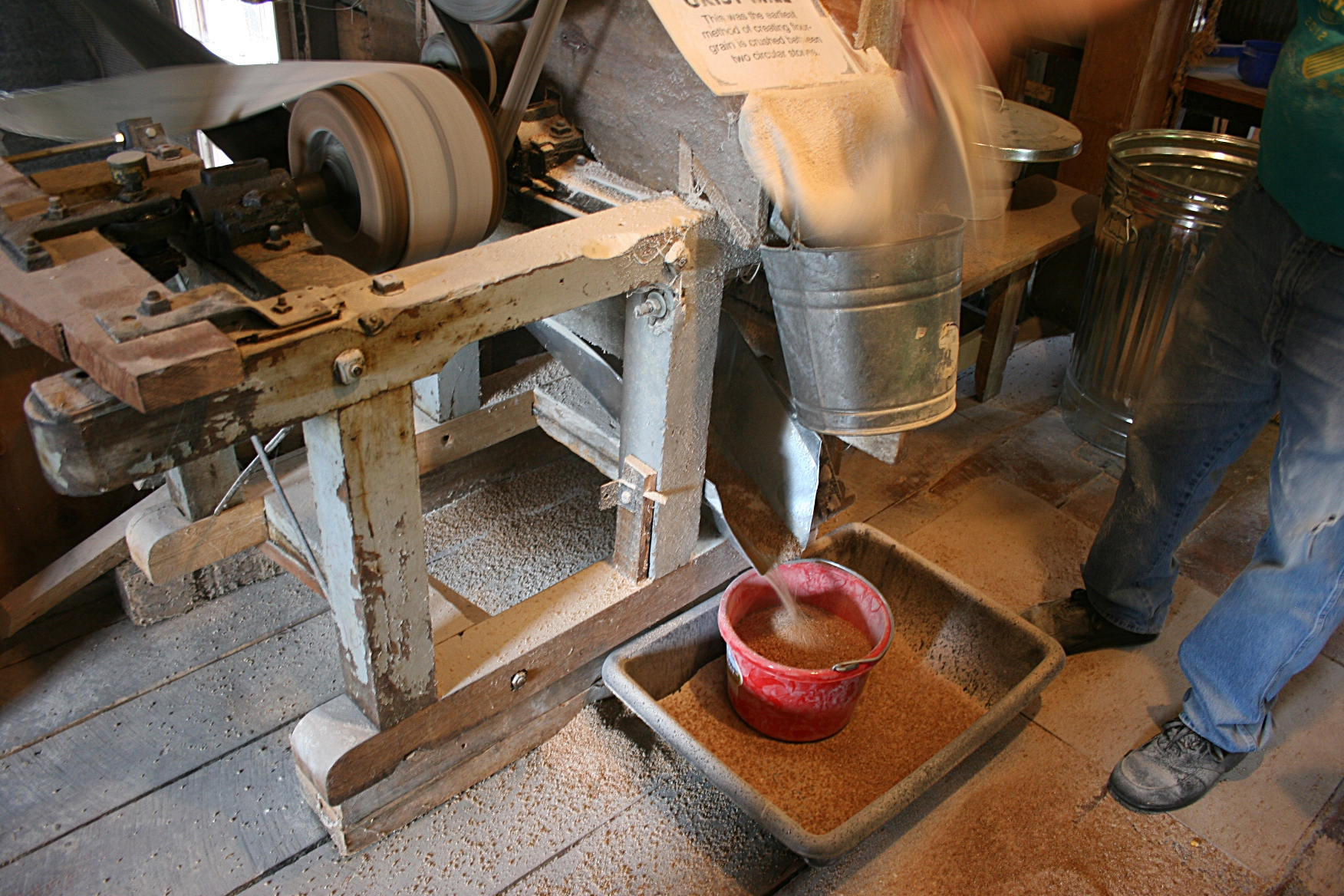
A volunteer grinds wheat into flour in the old grist mill. Each time the waterwheel turns, it spins the millstone 17 times in the process of crushing grain between stones. The volunteer's wife bakes Communion bread for the local Methodist church.

A volunteer grinds wheat into flour in the old grist mill. Each time the waterwheel turns, it spins the millstone 17.5 times in the process of crushing grain between stones. The volunteer’s wife bakes Communion bread for the local Methodist church.

Initially, the mill opened in 1855 as a sawmill. But, within years, the business was replaced by Hershey Grist Mill, a mill for grinding grain into flour and livestock feed. On the afternoon I toured, a volunteer was grinding wheat into flour with the waterwheel powering the grinder. I had intended to buy a bag of the $2 wheat flour, but forgot in the midst of my photographic focus.

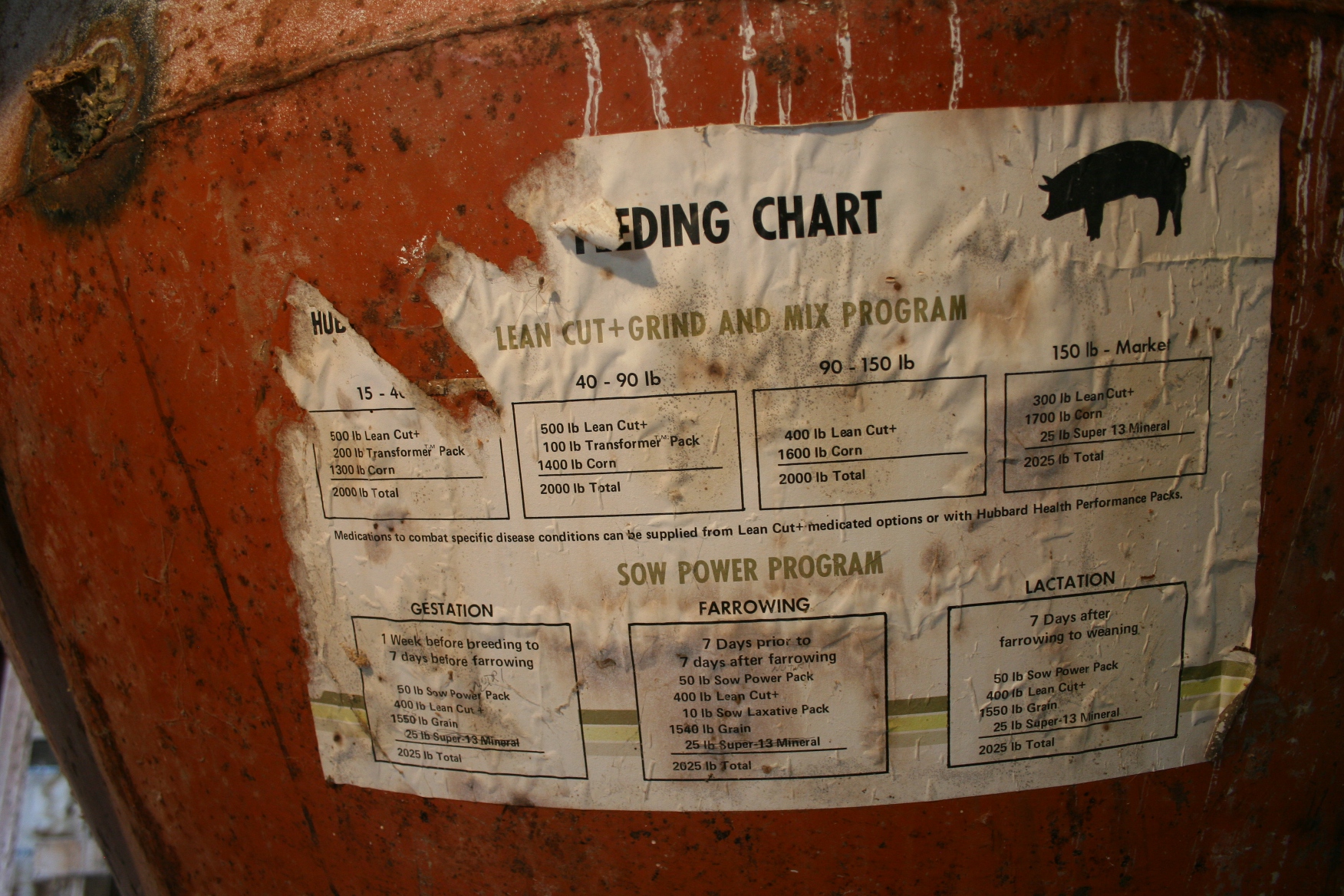
Guidelines for pig feed.

Guidelines for pig feed posted on a mixer.

The Morristown Historical Society today cares for the facility which closed in the 1970s as the Morristown Feed Mill, purveyor of livestock feed. For those like me, who grew up on a farm but have long ago left the land, such endeavors to preserve the rural past are deeply appreciated.

The conveyor belt powered by the waterwheel. This operates the grinder.

The waterwheel turns these pulleys and belts which operate the grinder.

While I walked the old wooden floor of the feed mill, descended stairs into the cluttered utility room where a dangerous conveyor belt cycled and afterward climbed stairs to the second floor, I reconnected with my rural roots.

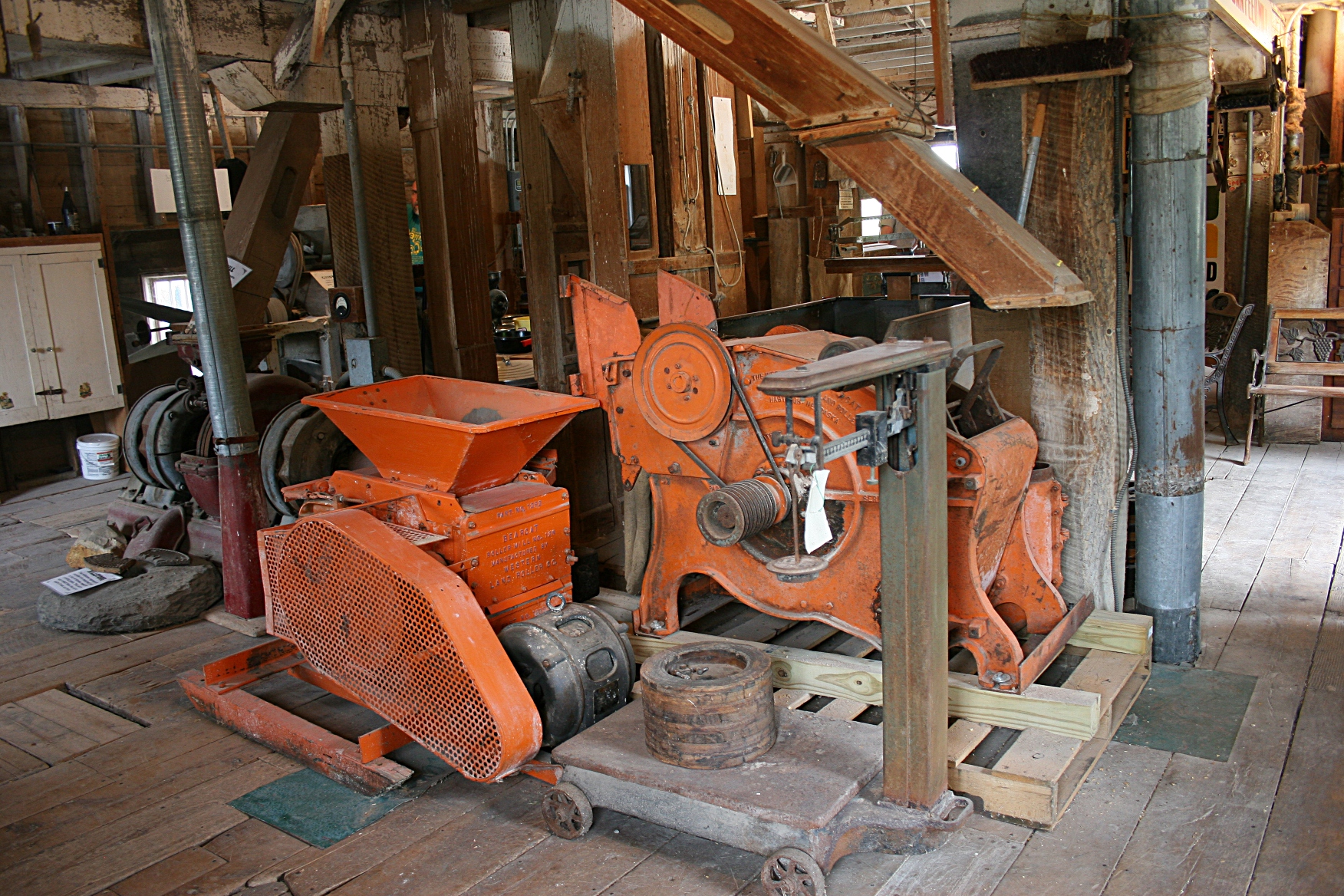
The old feed mill is stocked with lots of vintage grinding equipment.

The old feed mill is stocked with lots of vintage mill equipment.

And it may not have been in the way you most likely would expect. For me, the experience was mostly about the dust—knowing I needed to protect my camera from the fine grain dust which permeates a place like this, layers on the skin, hovers in the air, filters into memories.

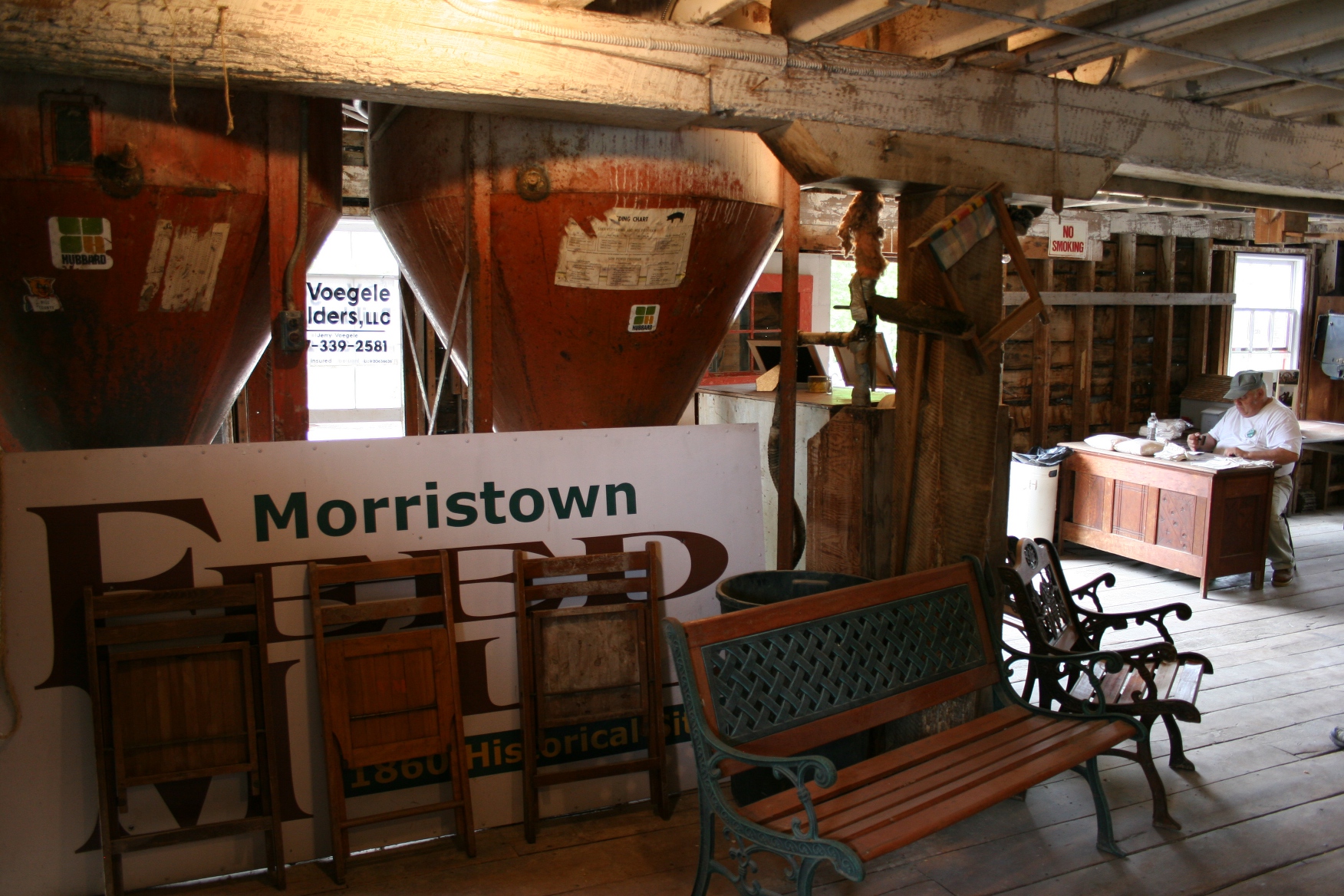
Inside the feed mill, where a volunteer stamps cloth bags with Morristown Feed Mill.

Inside the feed mill, a volunteer stamps cloth bags with Morristown Feed Mill. Behind the sign are two mixers.

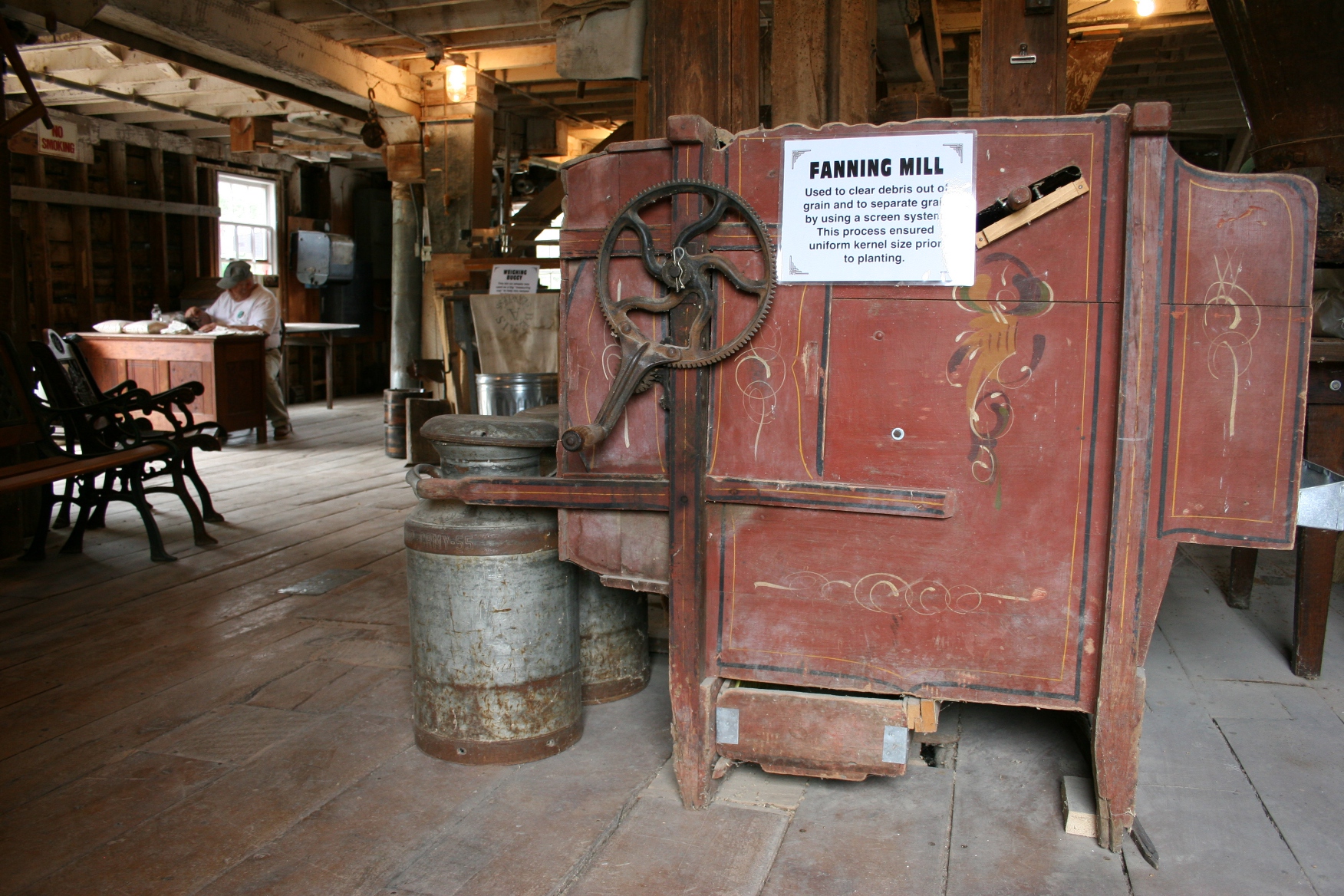
An old fanning mill cleans the grain for planting.

An old fanning mill cleans the grain for planting.

When I heard mention of mice, I was a little nervous about going into the utility room.

When I heard mention of mice, I was a little nervous about going into the utility room.

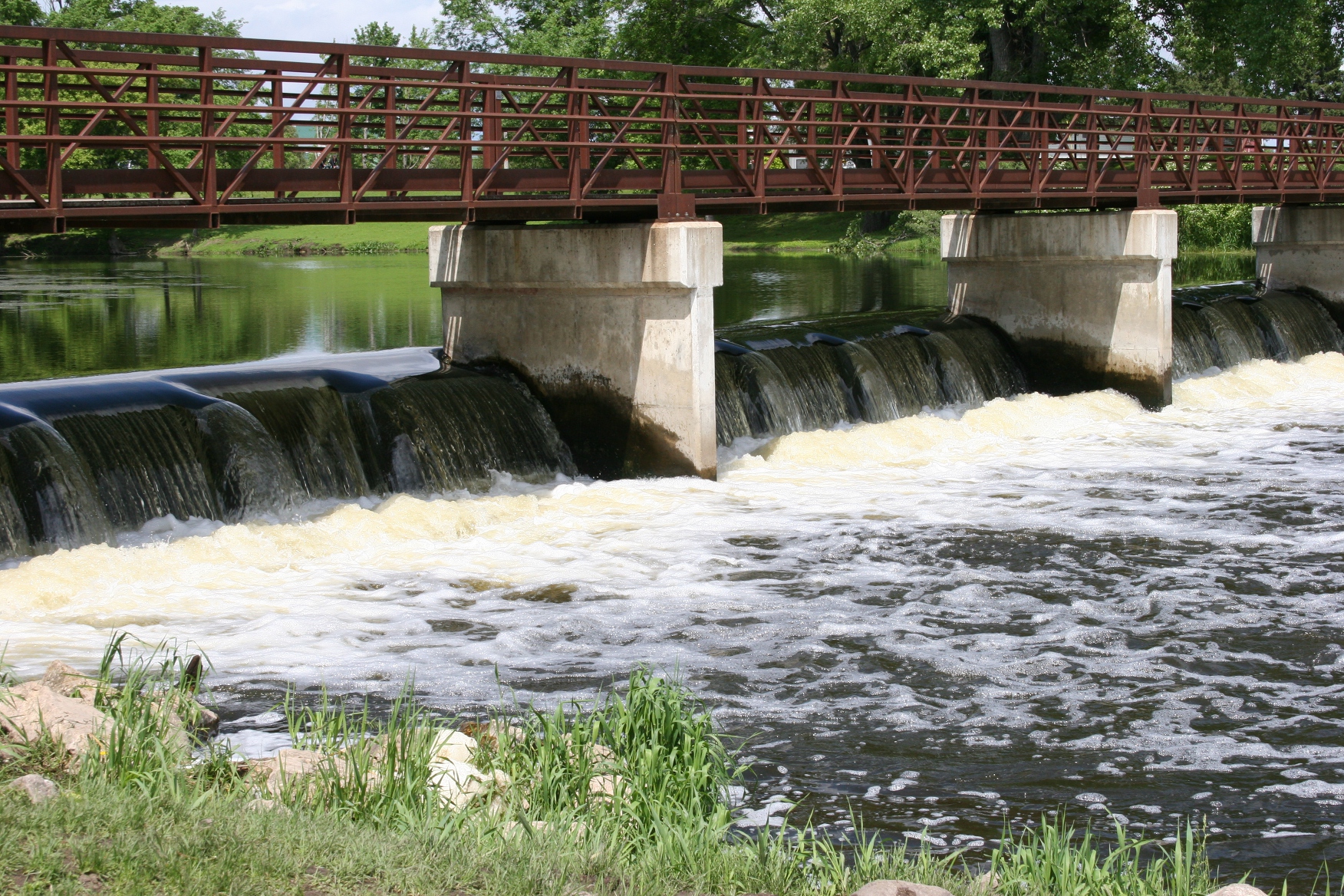
The Cannon River dam right next to the mill.

The Cannon River dam right next to the mill.

FYI: As a side note, the mill sheltered several refugees from the U.S. – Dakota Conflict of 1862.  Check back for more mill photos.

© Copyright 2013 Audrey Kletscher Helbling


Touring a third-generation family print shop in Fergus Falls May 23, 2013

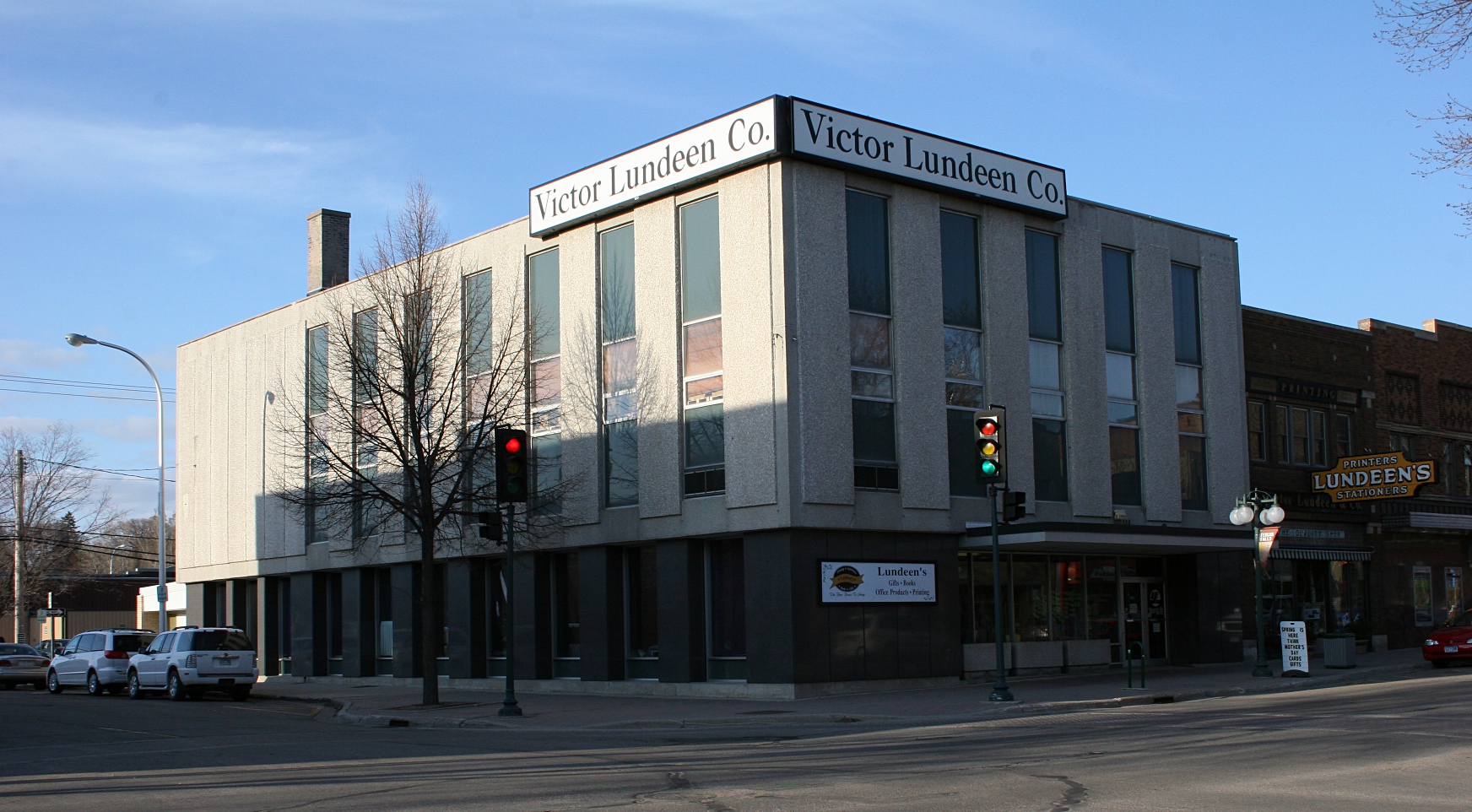
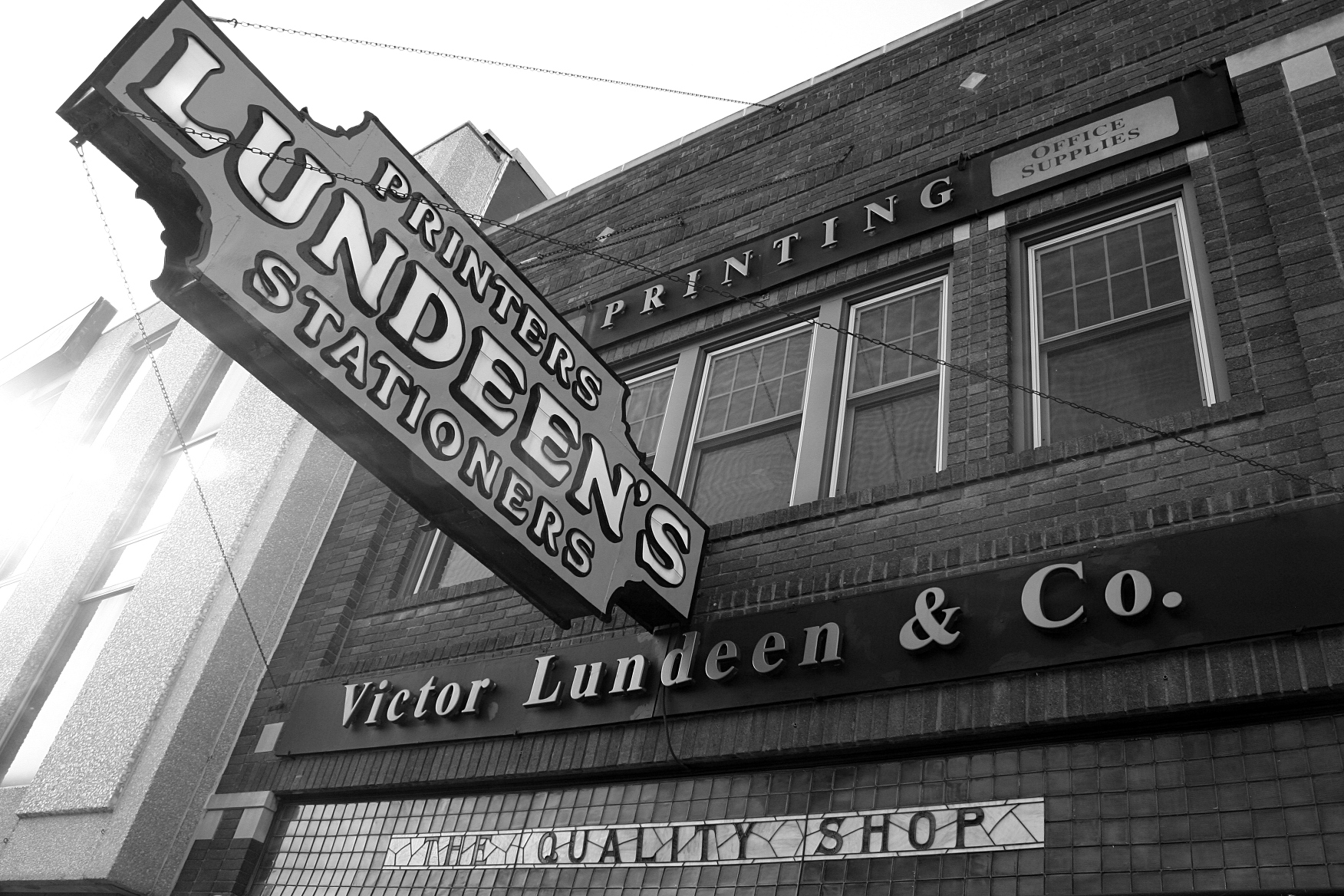
The Victor Lundeen Company, located in the 100 block of West Lincoln Avenue, downtown Fergus Falls.

The Victor Lundeen Company, located in the 100 block of West Lincoln Avenue, downtown Fergus Falls.

ON A RECENT IMPROMPTU TOUR of a third-generation family-owned print shop in Fergus Falls, I couldn’t contain my giddiness over drawers of aged logos/artwork, handcrafted stamps, stacks of paper, even the vintage cabinets and stools and carts.

I was just giddy over all this handcrafted vintage art tucked into drawers.

I was just giddy over all this handcrafted vintage art tucked into drawers.

The 99-year-old Victor Lundeen Company is the type of place that appeals to a writer like me, with ink flowing through my veins.

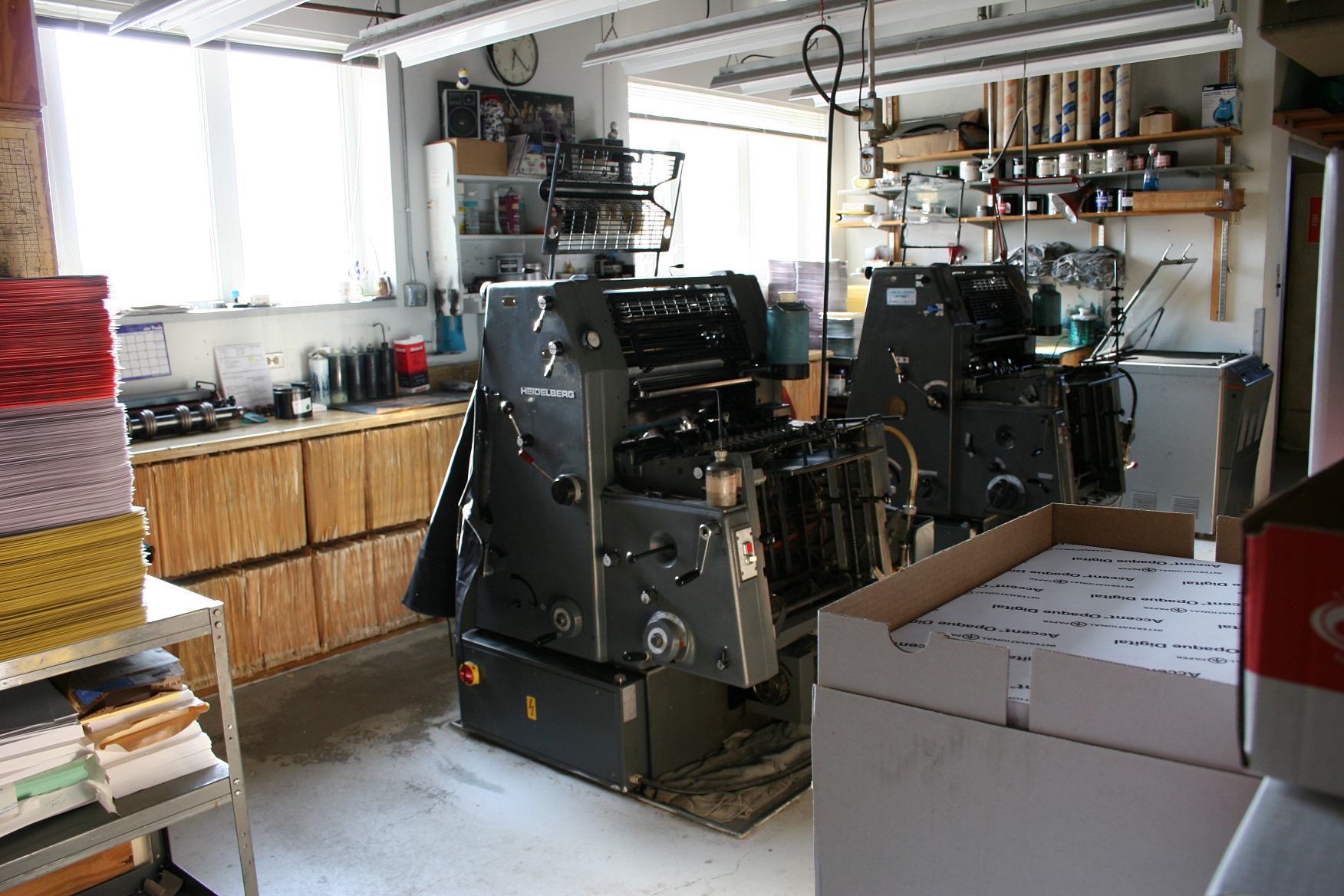
The 1960s Heidelberg offset presses, still used in the second floor print shop.

The 1960s Heidelberg offset presses, still used in the second floor print shop.

Ah, the ink. The smell of ink. I just stood there beside owner Paul Lundeen’s vintage 1960s Heidelberg offset presses, breathing in the distinct scent of ink imprinted upon my memory.

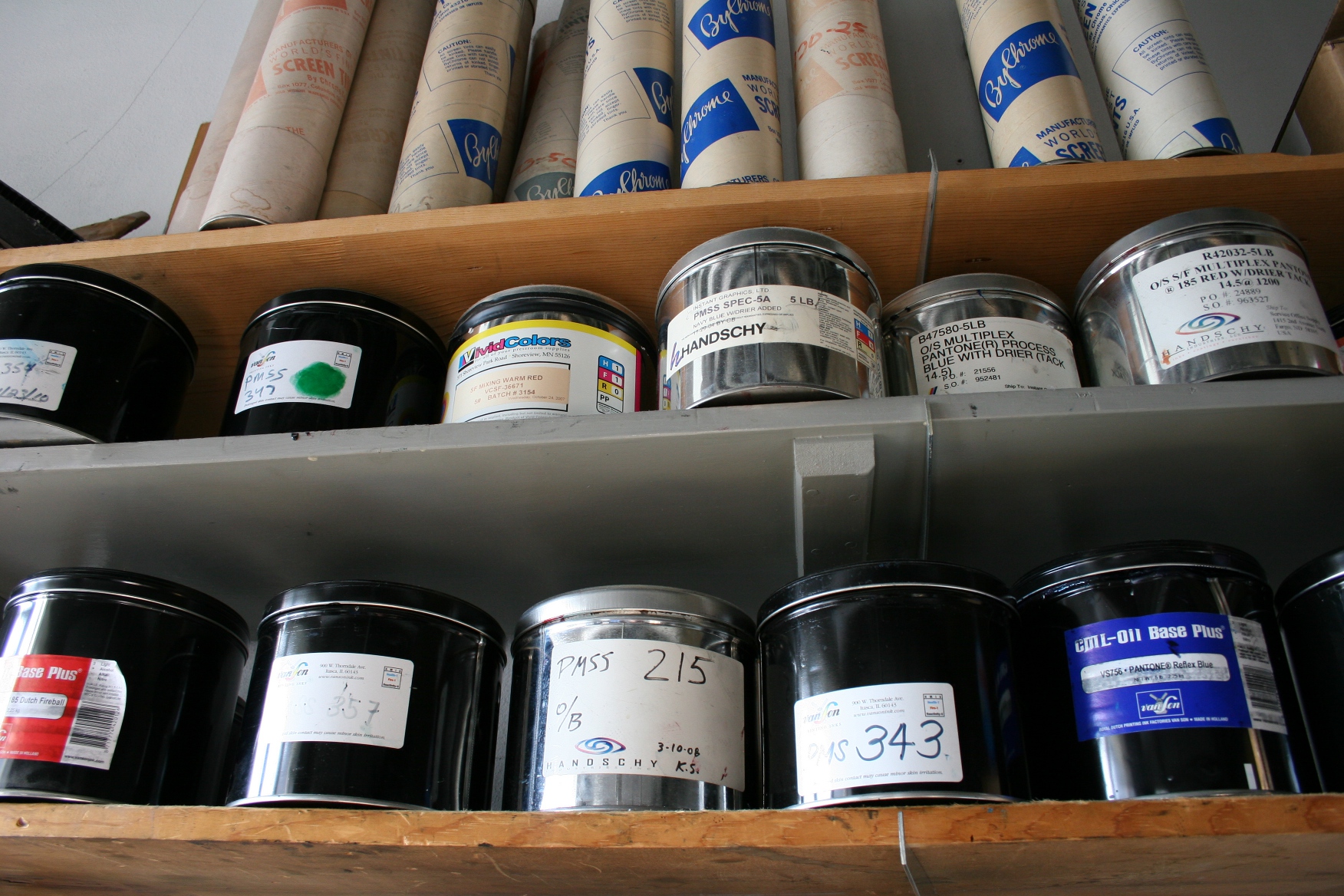
Cans of ink line shelves.

Cans of ink line shelves.

Decades ago, working at The Gaylord Hub as a young newspaper reporter and photographer fresh out of college, I first smelled that ink, heard the clack-clack-clack of ancient machines printing auction bills. I watched Frank “Chick” Deis set type on the old letterpress.

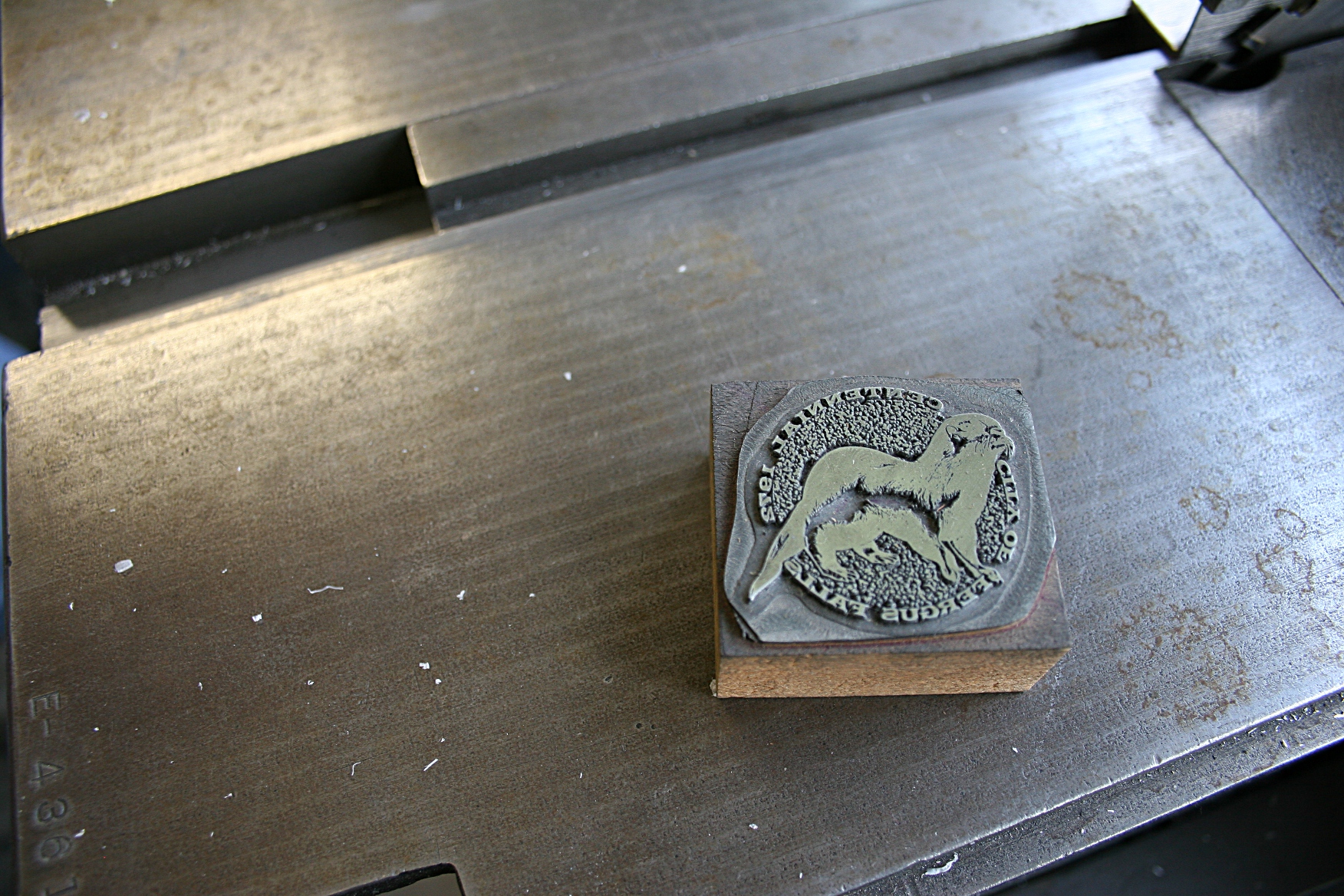
While digging through all that vintage art, we found this City of Fergus Falls Centennial Seal of an otter. The city is located  in Otter Tail County.

While digging through all that vintage art, we found this City of Fergus Falls Centennial Seal of an otter. The city is located in Otter Tail County. The Lundeens recently sold all but one letterpress.

Such memories endear me to places like Victor Lundeen Company, started in 1914 by Victor Lundeen, Sr., who bought out a Fargo print shop and moved the equipment to his hometown of Fergus Falls. Today the company is owned by Victor Lundeen, Jr., and his son, Paul Lundeen.

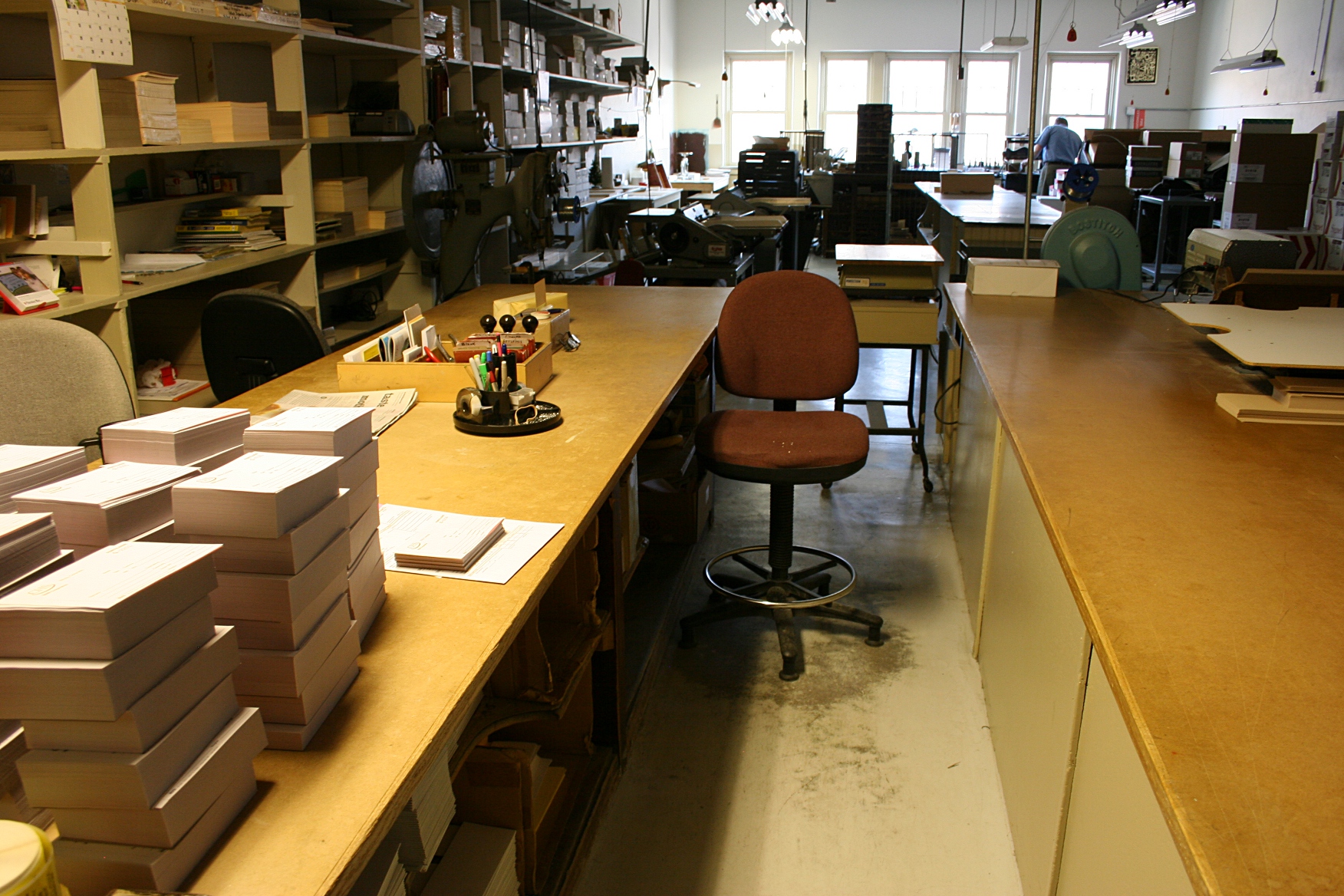
A portion of the print shop looking toward the bank of street-side windows.

A portion of the print shop looking toward the bank of street-side windows.

I find it especially impressive, in this advanced technological age, that printing businesses like the Lundeen Company can survive, even seemingly thrive. This Fergus Falls firm has apparently found its niche in focusing on agri-business needs primarily in Minnesota, the Dakotas and Montana, but also extending to grain elevator businesses nationwide.

That said, this family-owned print shop, which employs eight in production (30 total in all aspects of the company), also values the individual walk-in customer. Paul didn’t specifically tell me that during our tour. Rather, I surmised that when, for example, I noticed the corner area where employees engrave gold foil names onto bibles for Confirmation gifts. Just like my King James bible imprinted with my name and given to me by my parents on my Confirmation Day in 1970.

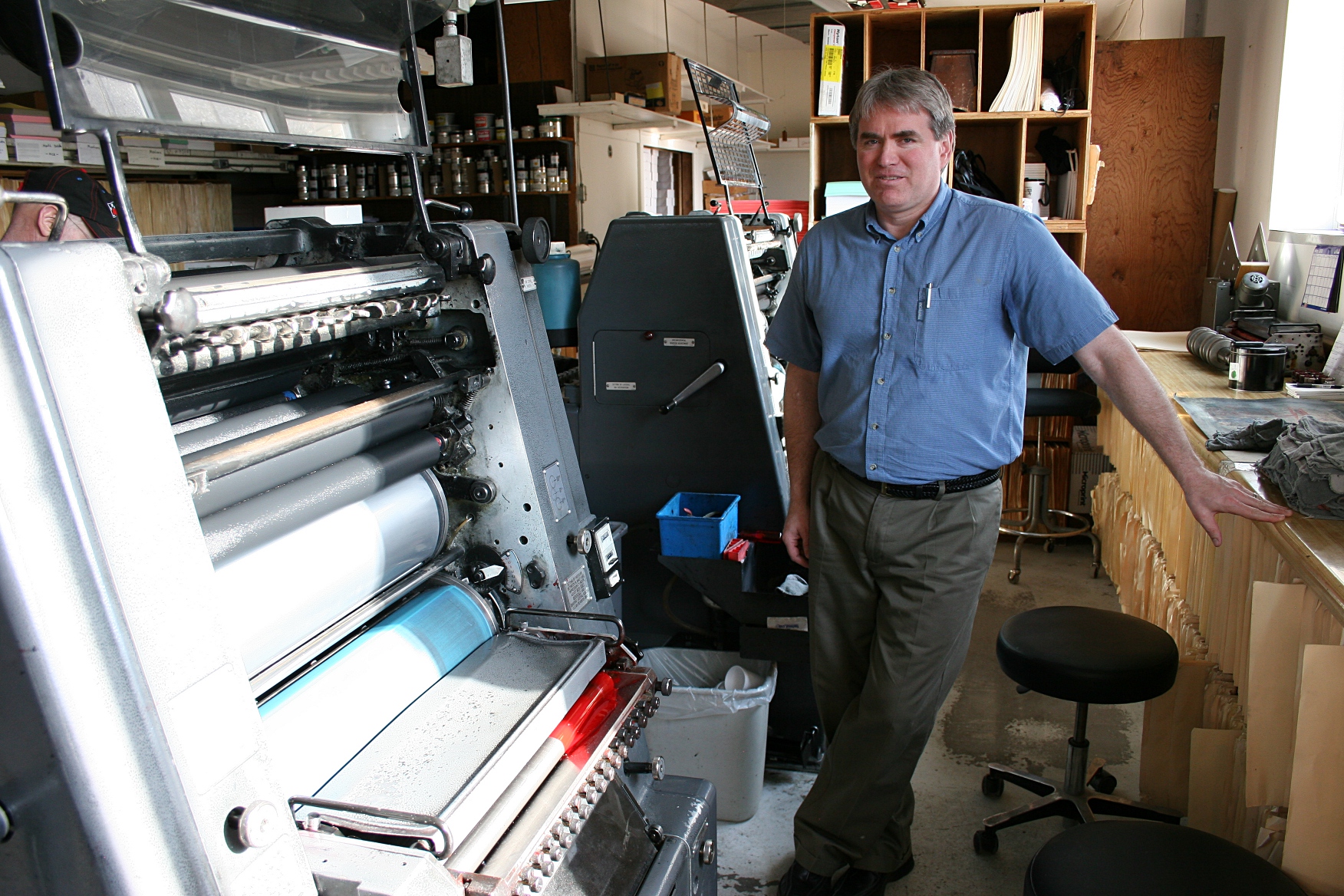
Tour guide Paul Lundeen inside his print shop.

Tour guide Paul Lundeen inside his print shop.

And then there’s Paul himself, who welcomed my husband and me on a Thursday evening like we were long-time friends rather than out-of-towners checking out his store and other downtown businesses during an overnight stay in Fergus Falls. I mean, what businessman shows you the original safe of the former First National Bank of Fergus Falls shortly after meeting you? Paul did just that.

The independent bookstore portion of Victor Lundeen Company on the first floor. Gifts and office supplies are also sold here.

The independent bookstore portion of Victor Lundeen Company on the first floor. Gifts and office supplies are also sold here. I even asked if the store carries Lake Region Review, a regional anthology in which I’ve been published. It does.

His office supply/bookstore/gift shop/printing business occupies two connected buildings, one of them the old bank, in the heart of this historic downtown.

History in the signage.

History in the signage.

Such hospitality reaffirms my belief that chain stores have nothing on businesses like Victor Lundeen Company, which clearly values the importance of outstanding customer service and friendliness.

You can bet, thanks to Paul Lundeen and to Pat Connelly, whom I met later that evening at Dairyland Drive In (that’s a forthcoming post), I left Fergus Falls the next morning with the warmest of feelings for this west central Minnesota community.

BONUS PHOTOS:

Paper packed near the presses.

Paper stacked near the presses.

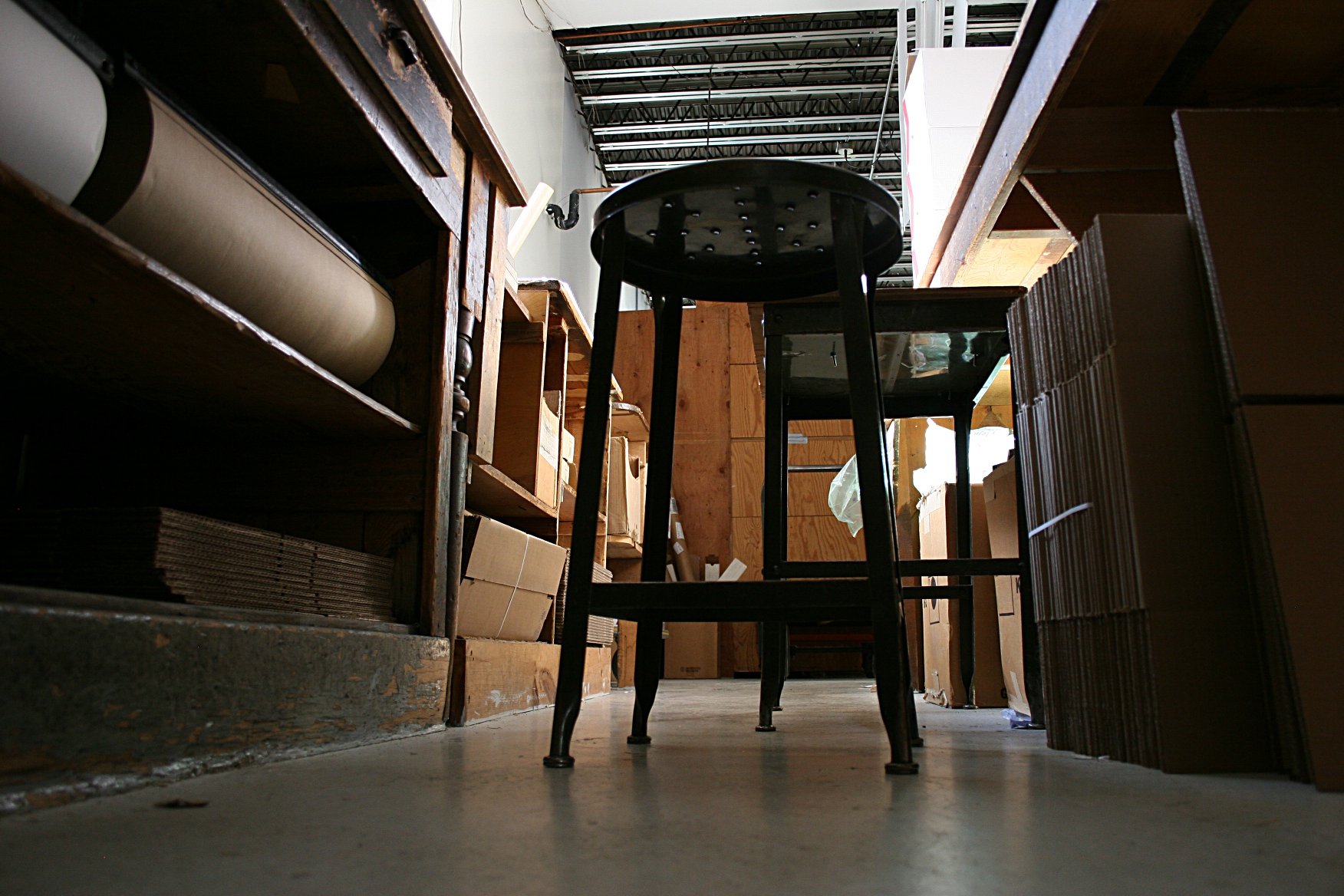
A vintage stool caught my eye.

A vintage stool, between counters, caught my eye.

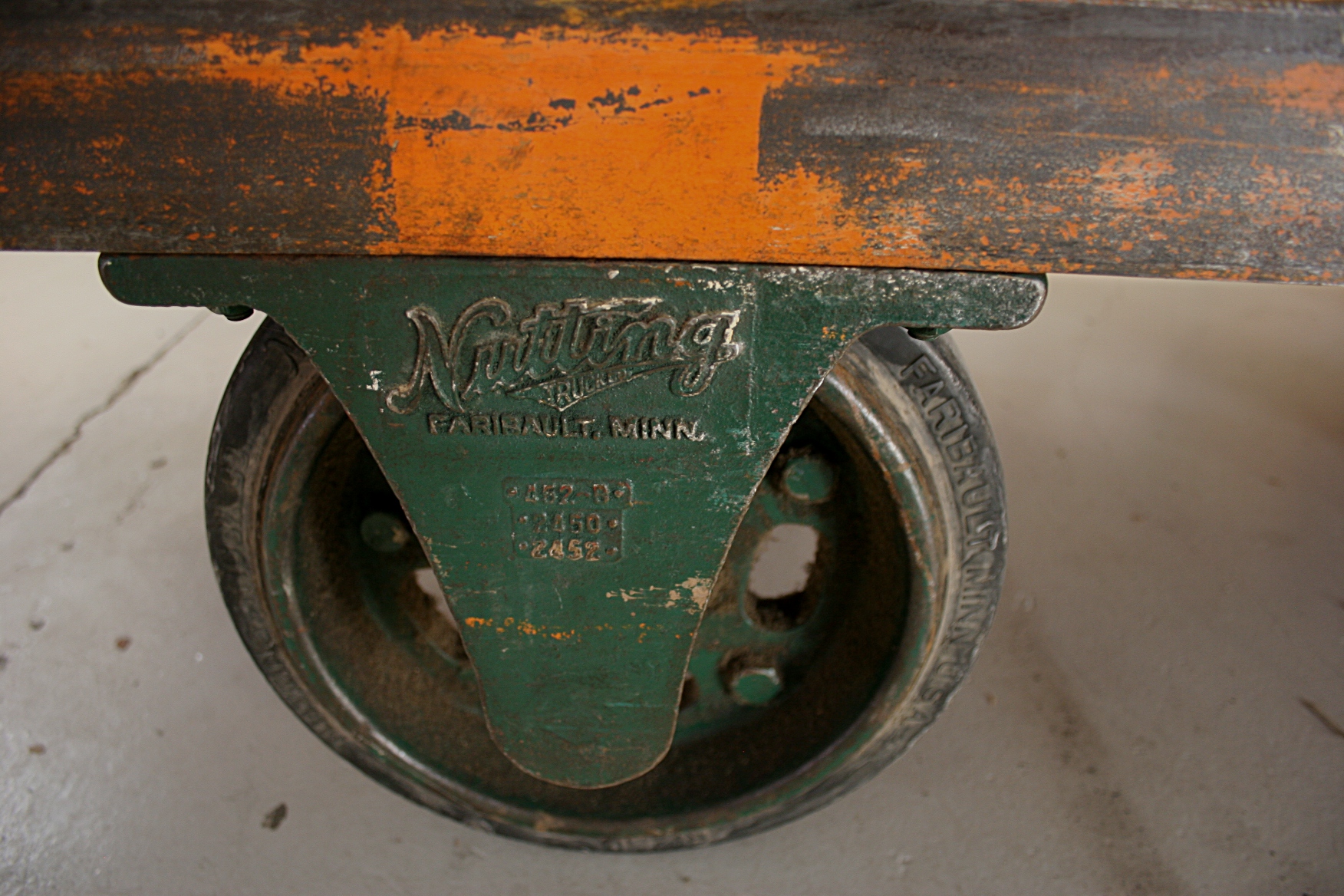
My husband noticed the wheels on a cart, made at the former Nutting Company in our community of Faribault.

My husband noticed the wheels on a cart made at the former Nutting Company in our community of Faribault.

I aimed my camera down to shoot this lovely old cabinet.

I aimed my camera down to shoot this lovely old cabinet.

The art of well-known Fergus Falls resident Charles Beck, noted for his woodcut prints, featured in two books printed by Victor Lundeen Company. The books are sold in the bookstore. Across the street, you can view Beck's art at the Kaddatz Galleries.

The art of well-known Fergus Falls resident Charles Beck, noted for his woodcut prints, featured in two books printed by Victor Lundeen Company. The books are sold in the bookstore. Across the street, you can view Beck’s art at the Kaddatz Galleries.

TO VIEW PREVIOUS posts from Fergus Falls, see yesterday’s post and check my mid-June 2011 archives. Watch for more stories from this delightful community.

© Copyright 2103 Audrey Kletscher Helbling


Boots and blooms April 27, 2013

Filed under: Uncategorized — Audrey Kletscher Helbling @ 9:29 PM
Tags: , , , , , , , , ,

IF YOU ARE AN ELEMENTARY school student of the 1960s, like me, you can relate to this post. If you are not, pretend that you are and imagine sitting at your desk, mimeographed math worksheet and box of eight thick Crayola crayons at your fingertips.

Your teacher, we’ll call her Mrs. Olson, instructs you to circle the one item among the pictures that does not belong.

You pull a nubby green crayon from the box of colors because green is your favorite. You’re pretty sure you can use green because Mrs. Olson has not instructed you otherwise. You wish to be obedient.

You study the pictures and crook your elbow around your paper. David is seated across the aisle and you have caught him several times peeking at your math worksheets. Mrs. Olson does not like cheaters. Neither do you.

You study the five images.

Blooms

Blooms, purple

Boots

Blooms, pink

Blooms, blue

Without hesitation, you circle the second picture of the single purple bloom.

The next day Mrs. Olson returns your paper with an “S+” and a smiley face scrawled beside your name.

DEAR READERS, would you have circled the single bloom? I expect most of you would have drawn a circle around the boots. But, remember, this is a math worksheet. We are learning numbers. All of the pictures, with the exception of the purple bloom, show multiples.

I assure you, this marks a rare occasion when I will teach you a math lesson, for I struggled mightily with numbers and still do.

THESE EDITED PHOTOS were taken at Donahue’s Greenhouse in Faribault. I am still wondering how those boots fit in among all those flowers at Donahue’s.

© Copyright 2013 Audrey Kletscher Helbling

 

In loving memory of my farmer dad April 3, 2013

Filed under: Uncategorized — Audrey Kletscher Helbling @ 7:56 AM
Tags: , , , , , , , ,
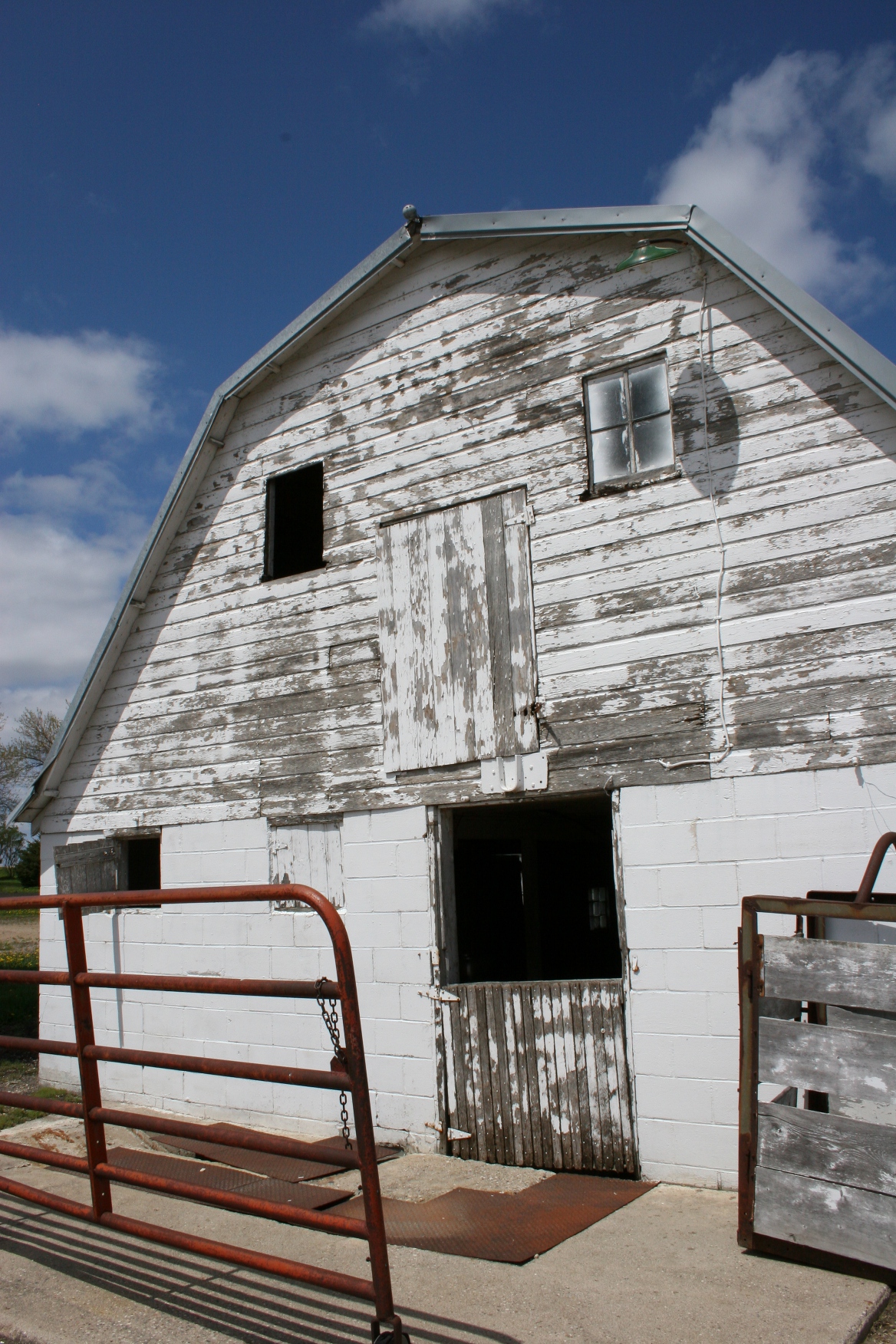
The barn where I labored alongside my father while growing up on the southwestern Minnesota prairie. File photo.

The barn where I labored alongside my father while growing up on the southwestern Minnesota prairie. File photo.

CALL ME THE BARD of barns, if you will, for barns have inspired me to pen poetic words and to compose poetic photos.

There is something about a barn rising strong and majestic or sagging with the burden of age that moves me. I am reminded of my childhood years toiling in the barn—scraping manure, wheeling ground corn in the wheelbarrow, forking silage.

Cats clumped in corners. Buckle overshoes slapping against cement. WCCO booming “Point of Law.”

Fly specks. Pink baby mice. Long sandpaper cow tongues.

The milkhouse, attached to family barn. File photo.

The abandoned milkhouse, attached to family barn. File photo.

Stuck drinking cups overflowing. Twine on bales. Pails of frothy milk.

Cracked, chapped bleeding hands slimed with Cornhuskers lotion.

Footsteps of my father. Time with Dad. Gone 10 years ago today.

A snippet of the land my father farmed, my middle brother after him. The land and farm site are now rented out.

A snippet of the land my father farmed, my middle brother after him. The land and farm site are now rented out.

© Copyright 2013 Audrey Kletscher Helbling


I know that my Redeemer lives March 31, 2013

Filed under: Uncategorized — Audrey Kletscher Helbling @ 2:29 PM
Tags: , , , , , , , , , ,
A cross in Trebon Cemetery, 10 miles northwest of Faribault in Shieldsville Township.

A cross in Trebon Cemetery, 10 miles northwest of Faribault in Shieldsville Township.

I know that my Redeemer lives;
What comfort this sweet sentence gives!
He lives, He lives, who once was dead;
He lives, my ever-living head.

He lives triumphant from the grave;
He lives eternally to save:
He lives all-glorious in the sky;
He lives exalted there on high.

This, one of my favorite hymns, I sang with the congregation of Trinity Lutheran Church in Faribault this Easter Sunday morning.

The words are imprinted upon my memory from childhood Easters, of singing from the balcony of St. John’s Lutheran Church in Vesta with my Sunday School classmates.

I know that my Redeemer lives. I knew that then. I still know that now. He is risen. He is risen, indeed.

Wishing you a most blessed Easter in our risen Lord.

Copyright 2013 Audrey Kletscher Helbling


“It was a dark and stormy night…” March 15, 2013

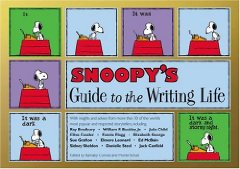
Snoopy's GuideJUST THINKING about the scene—my husband and kids lying belly down on the carpet reading the Sunday funnies—makes me smile.


My mother’s heart swelled with love to witness this weekly connection between father and daughters/son. Back then, I considered only that bonding aspect, that break from full-time mothering, the laughter that spilled from the living room.

I’ve never been a reader of comics, considering them a waste of time. Besides that, I’m a serious person, not inclined to reading anything remotely humorous. But now, at age 56, it is not too late to admit that I was wrong. Comics offer not only laughter, but insights into life and much more. Duh.

Thanks to Minnesota writer Sue Ready, who blogs at Ever Ready, I discovered the value in comic strips via her recommended reading of Snoopy’s Guide to the Writing Life, published in 2002 by Writer’s Digest Books and edited by Barnaby Conrad and Monte Schulz.

It was the title, not the comedic aspect, which grabbed my attention. I am always interested in reading about writing and this volume offers insights from noted authors like Ray Bradbury, Fannie Flagg and Danielle Steel, among about two dozen others.

Their advice, though, isn’t presented in a straight-forward manner. Rather, the selected writers are prompted by cartoonist Charles M. Schulz’s Snoopy strips, specifically featuring Snoopy the writer at his doghouse rooftop typewriter.

Why had I forgotten that Snoopy was a writer? Perhaps because I have not read all that many Peanuts cartoons.

Snoopy faces the sometime issues of writer’s bloc, criticism (from the ever present loud-mouthed Lucy), rejection and more. But the problems somehow seem funny when faced by Snoopy and not me.

The canine is stuck on beginning his stories with “It was a dark and stormy night,” or a slightly revised version. How often do we writers also become stuck, writing in the same way or, even worse, writing how we think we should write?

Author Fannie Flagg advises:

The joy about writing is that as long as you write from your heart, a thousand English degrees cannot compete with that.

How true. Readers can sense when you write from your heart.

I found Snoopy’s Guide to the Writing Life packed with pieces of useful advice, some which I already knew, some not. Here are some paraphrased gems I plucked from the book:

  • Too much time on the typewriter (translate computer) can cause double vision. (Correct.)
  • Avoid boring descriptions and heavy explanations.
  • Understand your subject and your market.
  • Surprise is an important element of humor (and writing in general, might I add).
  • Stop seeking approval and advice and trust your instincts.
  • “Try to leave out the parts that readers skip” (direct quote that I could not paraphrase).
  • Plot develops from character, a point emphasized by more than one writer.
  • Just write. Every day.

Now, one of my favorite lines comes from Monte Schulz, the son of Peanuts creator Charles M. Schulz. Monte surmises that writers write “for the music of beautiful language.” I love that phrase because I totally get what he means. As a writer, and especially as a poet, my heart rejoices when I find the exact word or line which makes my poem sing. It is a glorious moment.

Then, on the second to last page of Snoopy’s Guide, writer J.F. Freedman throws in that element of surprise, at least for me, when he writes:

 Great comic strips…are a fine introduction into literature, and are damn good writing in and of themselves…

And after reading (in this book) more than 180 “Snoopy at the typewriter” comic strips, likely more comics than I’ve read in my life, I’d agree with Freedman. Damn good writing, indeed.

WHAT WRITING TIPS can you offer? Let’s hear them.

© Copyright 2013 Audrey Kletscher Helbling