Minnesota Prairie Roots

Writing and photography by Audrey Kletscher Helbling

After a natural disaster…the fear, the loss and reaching out to help April 29, 2011

I COULD WHINE, moan and grumble all day about the recent weather here in Minnesota. Rain. Cold. Snow showers. More rain and more cold. The cycle never ends.

But then I pick up today’s newspaper, turn on the television, switch on the radio or go online and my mouth clams. I have nothing, nothing, about which to complain.

I have not lost my home, my possessions, my business, my community, family or friends to killer tornadoes like those in Alabama, Mississippi or Georgia. Wednesday’s storms have been termed “the deadliest outbreak of tornadoes in nearly 40 years.”

To view the devastation, to hear the survivors, to even think about the utter destruction brings me to tears. I cannot fathom, do not want to fathom, such total devastation, loss of life and injury.

Tornadoes scare the h double hockey sticks out of me. I can trace that fear back to the June 13, 1968, tornado in Tracy, about 25 miles from my childhood home. I was an impressionable 11 ½-year-old when the tornado raced through this southwestern Minnesota farming community, killing nine. My family drove to Tracy, saw the flattened homes, the pick-up stix jumbled trees, the boxcars tossed aside like dropped toys. You don’t forget memorable images like that.

Decades later a tornado struck my childhood farm, damaging a silo and silo room, tossing farm wagons effortlessly about in the field. Those images, too, remain forever imprinted upon my memory.

Last week I saw snapped trees and minor damage to buildings along Wisconsin Highway 21 near Arkdale, which was struck by an April 10 tornado.

A view of storm damage to trees while traveling along Wisconsin Highway 21 west of Arkdale.

A felled tree by an apparently untouched home in Arkdale, Wisconsin.

In the distance, trees were damaged by a tornado that cut a 17-mile path from Arkdale to near Coleman in Wisconsin on April 10.

Less than a year ago, on June 17, 2010, a tornado outbreak swept through Minnesota, killing one person in Mentor in Polk County, another in Almora in Otter Tail County and the third near Albert Lea in Freeborn County.

How many of us have already forgotten about those tornadoes as we move on to the next natural disaster news story?

Yet, for those personally affected, the story never really ends. The chapters continue with the rebuilding of homes and lives, the haunting nightmares, the emotional aftershocks. Lives have been forever rewritten.

Tornadoes. Hurricanes. Tsunamis. Earthquakes. Fires. Floods.

Survivors manage to pull their lives back together with the help of family, friends, neighbors and even strangers.

After a flash flood devastated Hammond in southeastern Minnesota last September, a group of Dakota County Technical College architectural technology students reached out.  They’ve worked with Hammond resident Judy Johnson in drafting remodeling plan options for her damaged home. You can read their story by clicking here. These students represent the good that emerges from the bad, the spirit of giving that makes me proud to be a Minnesotan.

I’ve followed the situation in Hammond since visiting that community shortly after the flood. I haven’t lifted a hammer to assist with recovery there. Rather, I’ve used the one tool that I possess—my words. I’ve crafted words into stories that I hope are making a difference. After reading my blog posts, two groups of volunteers have gone to help in Hammond.

That’s what it takes, each of us using our resources—whether that be words or money or skills or whatever—to help our neighbors in need.

© Copyright 2011 Audrey Kletscher Helbling


Help rebuild the parks in flood ravaged Hammond, Minnesota April 28, 2011

An aerial view of Hammond during the flash flood of September 2010. Photo courtesy of Micheal Mann & Tina Marlowe.

SEVEN MONTHS AFTER the raging Zumbro River ravaged the small southeastern Minnesota community of Hammond in a flash flood, residents are still struggling to recover.

That recovery reaches beyond the rebuilding of homes and lives.

Hammond needs more, like help rebuilding its parks.

Hammond resident Tina Marlowe, who was the subject of a series of blog posts I published in March, was recently elected to the Hammond City Council. She’s making it her mission to rehabilitate the East End Park and Ball Field, the basketball court and the Children’s Park.

But Tina can’t do this alone. She’s counting on the generosity of others to donate monies, materials and manpower (womanpower) to the Hammond Park Flood Recovery Project.

First, though, consider what’s been lost. The merry-go-round in the Children’s Park was swept down river to Jarret and was substantially damaged. The ground cover in the park is gone. Picnic tables, grills, fire rings, garbage cans and more were washed away. FEMA will replace some items, but not all.

Hammond's riverside park was all but destroyed by the flood. Marks on the shelter roof show how high the water rose. A baseball field next to the shelter, with a fence around it, is covered by receding floodwaters. Jenny Hoffman took this photo at 10 a.m. on Saturday, September 25, 2010.

The bridge connecting east and west Hammond is barely visible during the flood, which also overtook the town's parks. Photo courtesy of Micheal Mann & Tina Marlowe.

Tina wants to not only rebuild Hammond’s parks, but she wants to improve them, make them more family-friendly, with updated equipment.

Here are some of her ideas: “I would love to put a Pirate Ship System down at the East End. This is a popular camping and gathering area and I thought it would be very symbolic for the kids.

I would also like to put in an outdoor fitness area up at the Children’s Park. These are becoming a very popular alternative to the gym and would serve the community well when you consider our location. What a great financial alternative for families in this area. We would include equipment for adults and the children so the entire family can come down to the park and get some great exercise outdoors—and what better scenery!”

Tina’s vision is a multi-step process that she says could take years to achieve. She has set goals and is determined to help her town of about 230 residents (pre-flood).

Right now she’s asking for cash donations and donations and/or reasonable offers of used playground equipment (like that offered on public surplus from churches and schools), ground cover (sand, wood chips or chipped rubber) and green-treated lumber for dug-outs.

Can you help? If you can, submit a comment with your contact information (which I won’t publish) and I’ll take it from there.

Or, you can call Tina directly at 507-753-2166.

Cash donations should be sent to:

City of Hammond

320 East Center Street

Hammond, MN. 55991

Along with your cash donation, please submit a letter stating that the funds are for the Hammond Park Flood Recovery Project. Include a return address so appropriate charitable giving tax information can be sent to you.

If you are a teacher or the leader of a children’s/youth group, or just a parent, perhaps you can take this project on and rally your kids to help the kids of Hammond.

If you own or work for a company that can provide playground equipment or other materials, considering donating to the cause.

If you are a carpenter capable of building a pirate ship, offer to build one.

If you’re a Boy Scout, student or other young (or older) person looking for a project, you can probably assist in some way. Ask. Offer to help.

I am convinced that Tina’s visions for Hammond’s parks, for her community, can become a reality. Likewise, I believe that all of this can happen within a much shorter time frame than Tina thinks. Let’s aim for this summer.

You can make that happen, for the children of Hammond.

© Copyright 2011 Audrey Kletscher Helbling
 

Oh, Wisconsin, I do love thee April 27, 2011

I was expecting downtown Appleton to look like historic Faribault with a pedestrian-friendly two-lane central street. Instead I found big city bustle and a busy four-lane running through the heart of downtown.

My husband and I, along with our son, spent Easter weekend in Appleton, Wisconsin, with our second oldest daughter.

IF YOU READ my Monday blog post, you know about the “Guess that state” contest that offers no prize. The prize is knowing you could (maybe) figure out where I celebrated Easter.

That would be in Wisconsin.

Yes, my husband, son and I spent the Easter weekend just east of Minnesota, in the Dairyland state, the home of the Green Bay Packers.

Specifically, we were in Appleton, the birthplace of Harry Houdini and the current home of my second oldest daughter. It is a 5 – 5 ½- hour drive from Faribault depending on how fast you drive and how many bathroom breaks are taken.

It is interesting how, when you travel in another state, you feel kind of like a foreigner. My husband and I tend to notice the details that distinguish regions. Of course, in Wisconsin, cheese and Packers’ green and gold stand out above all else.

But we also noticed, in the central area of the state where we drove along Wisconsin Highway 21, all of the small-town taverns and unincorporated towns, the buggy tracks and horse poop along the shoulders of the highway, the deer stands, the areas for growing potatoes and cranberries, many “for sale” signs on wooded properties, and lots and lots and lots of deer carcasses in the ditches and along the roadway. Oh, and for one short section, the dead muskrat may have outnumbered the total dead deer count for 100 miles.

Aside from those observations, we saw some interesting signage. For example, in school zones, “when children are present,” the speed limit is 15 mph.

The Willow Creek Cheese Factory Outlet was shut, not closed, according to this sign.

One particular business was not “closed,” it was “shut.”

A parcel of rural real estate, what we would term a “hobby farm” in Minnesota, was dubbed a “Farmette for sale.”

Dead-end streets in Appleton were posted as “No outlet.” It took me awhile to figure out that meant dead-end.

Brat fries were the big weekend fundraiser at Appleton grocery stores. The term “brat fry” was new to us. It means grilling.

We were especially amused by this sign in a field: “Certified weed-free hay.” Now, I wonder what the farmer was smoking when he wrote that sign. Cheddar cheese?

Oh, Wisconsinites, I really do like your state so I hope you take this post in humor, as it’s meant. If you want to cross the border and poke some fun at us Minnesotans, feel free. You’re always welcome here. Just leave the green and gold attire at home.

If you’d like to bring some cheese, do. I love Wisconsin cheese.

A small sampling of the cheeses available at Simon's Specialty Cheese in Little Chute. I'll take you inside this can't miss store in a future post.

NOW FOR THOSE READERS who are wondering where I shot the images in my “Guess that state” post published on Monday, here are the answers:

1.  HELICOPTER:  On the outskirts of Tomah just off I-94

2.  SHIP ROCK:  Near Coloma in Adams County

3.  BRAU HOUSE:  Downtown Appleton

4.  WE SALUTE OUR DAIRY FARMERS:  Simon’s Specialty Cheese Retail Store, Little Chute

5.  NEON ORANGE BUILDING:  A Mexican restaurant (sorry, didn’t get the name) in Wautoma

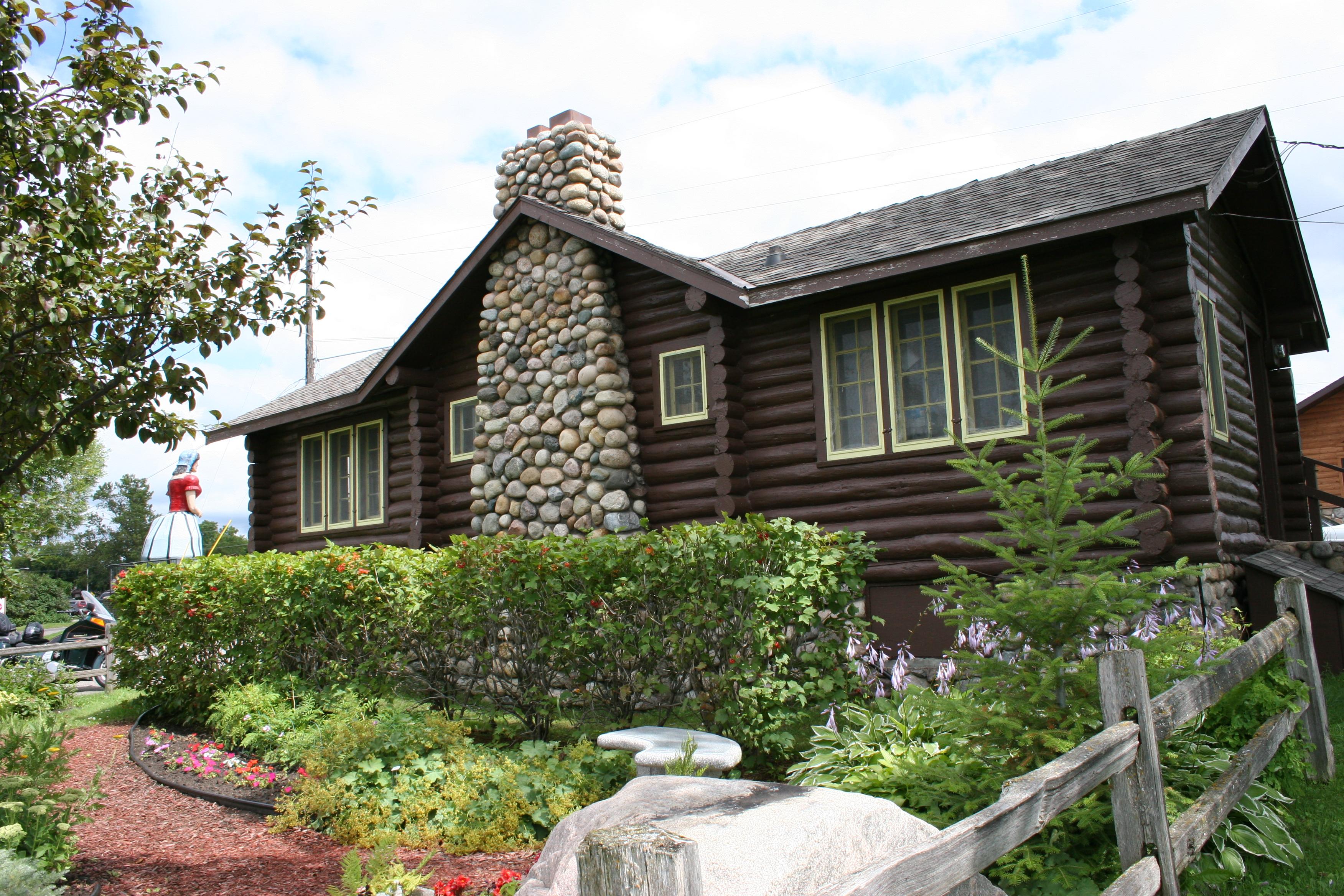
6.  STONE BUILDING:  The History Museum at the Castle in downtown Appleton. Magician Harry Houdini claims Appleton as his birthplace.

7.  AMISH FARM:  Near Coloma

8.  BRAT FRY SIGN:  Along an Appleton street

9.  GOLD FIRE HYDRANT:  Appleton

© Copyright 2011 Audrey Kletscher Helbling
 

Count me in on Roadside Poetry April 26, 2011

“We’ve selected YOUR poem for our spring Roadside Poetry installment!”

For nearly a month now, I’ve kept that exciting, boldfaced news mostly to myself, sharing it with only my immediate family, my mom and a few select friends and extended family members.

But now that the billboards are up—yes, I said billboards—I no longer feel obligated to keep this a secret.

I won the spring Roadside Poetry competition and my poem now sprawls across four billboards, Burma Shave style, 50 yards apart in Fergus Falls.

That’s it, my poem, the winning poem, which is posted along North Tower Road west of Minnesota State Community and Technical College in Fergus Falls, just down the road from Fleet Farm. Take exit 54 off I-94 on the west edge of Fergus.

Paul Carney, the project coordinator who delivered the good news to me via e-mail in early March, tells me that 100,000 vehicles drive by the billboards each month. “How’s that for readership?” he asks.

Well, mighty fine, Paul. Mighty fine.

Getting my poetry out there in this unusual, highly-public venue really is an honor for me, adding to my poems already published in two magazines and four, soon-to-be five, anthologies.

The mission of The Roadside Poetry Project “is to celebrate the personal pulse of poetry in the rural landscape,” according to roadsidepoetry.org. The first poem went up in September 2008 and was, interestingly enough, written by another Faribault resident, Larry Gavin, a writer and Faribault High School English teacher.

The poems, all seasonally-themed, change four times a year. Mine will be up through the third week of June when a summer poem replaces it. Yes, entries are currently being accepted for the summer competition.

About now you’re likely, maybe, wondering how I heard about this contest. I honestly cannot remember. But I do remember thinking, “I can do this.” So one night I sat down with a notebook and pencil and started jotting down phrases.

Like most writers, I strive to find the exact/precise/perfect/right words.

I scribbled and scratched and thought and wrote and crossed out and jotted and erased and counted and filled several notebook pages.

These poems do not simply pop, like that, into my head, onto paper.

To add to the complexity of this process, poets are tasked with creating poetic imagery that describes the wonderment of the season, all in four lines. But there’s more. Each line can include no more than 20 characters.

Now that character limitation, my friends, presents a challenge. Just when I thought I had nailed a phrase, I counted too many characters. Again and again, I had to restart until, finally, I had shaped and molded the poem I would submit.

“I love the language and the imagery,” project leader Paul said of my winning spring poem.

Honestly, when I wrote this poem, I could feel the sun warming my back as I stooped to drop slips of zinnia seeds into the cold, damp earth. Visualizing has always been a part of my creative process. Choosing the words “vernal equinox” simply seemed so much more poetic than the single, plain word, “spring.”

Even though Paul loved my poem and it fit the contest guidelines, there was a problem: Audrey Kletscher Helbling. Count and you get 23 characters and two spaces in my name, putting me five over the 20-character limit.

I understood the space limitations, but explained to Paul that I really wanted Audrey Kletscher Helbling, not Audrey Helbling, on the billboard because that’s my professional name. He agreed to see if the sign-maker could fit my full name and keep it readable. From my experience years ago writing newspaper headlines, I knew that the letters “l” and “i” took less space than other letters. The sign-maker was able to honor my request.

I haven’t been up to Fergus Falls yet to see my poem and Audrey Kletscher Helbling splashed across four billboards. But a trip will be forthcoming.

FYI: Paul Carney hopes to expand Roadside Poetry, supported in Fergus Falls by the Fergus Area College Foundation, to other locations in Minnesota. However, additional funding is needed to finance start-up, printing and other costs. If you would like to support this public art venue, have questions, need more information or wish to enter the seasonal contest, visit roadsidepoetry.org.

© Text copyright 2011 Audrey Kletscher Helbling

Photos courtesy of Paul Carney


Defining Easter eggs in Seattle April 21, 2011

Filed under: Uncategorized — Audrey Kletscher Helbling @ 7:39 AM
Tags: , , , , , , , , ,

I spotted these over-sized Easter eggs in the front yard of a home along Second Street Northwest in Faribault.

HAVE YOU HEARD about “spring spheres,” the latest politically-correct terminology—at least on the West Coast—for Easter eggs?

Apparently a Seattle teacher would allow a high school volunteer to bring candy-filled plastic eggs into her classroom only if she called them “spring spheres.”

Now, how ridiculous is that?

As soon as the volunteer pulled the eggs out of a bag and after the teacher pronounced them “spring spheres,” the third graders promptly called them “Easter eggs.”

You can’t fool kids into believing an oval is a sphere and Easter isn’t Easter. These Seattle students clearly know their shapes, and their holidays.

More Easter decorations in that Faribault front yard.

© Copyright 2011 Audrey Kletscher Helbling
 

Detour into Fergus Falls to see… April 20, 2011

Filed under: Uncategorized — Audrey Kletscher Helbling @ 8:49 PM
Tags: , , ,

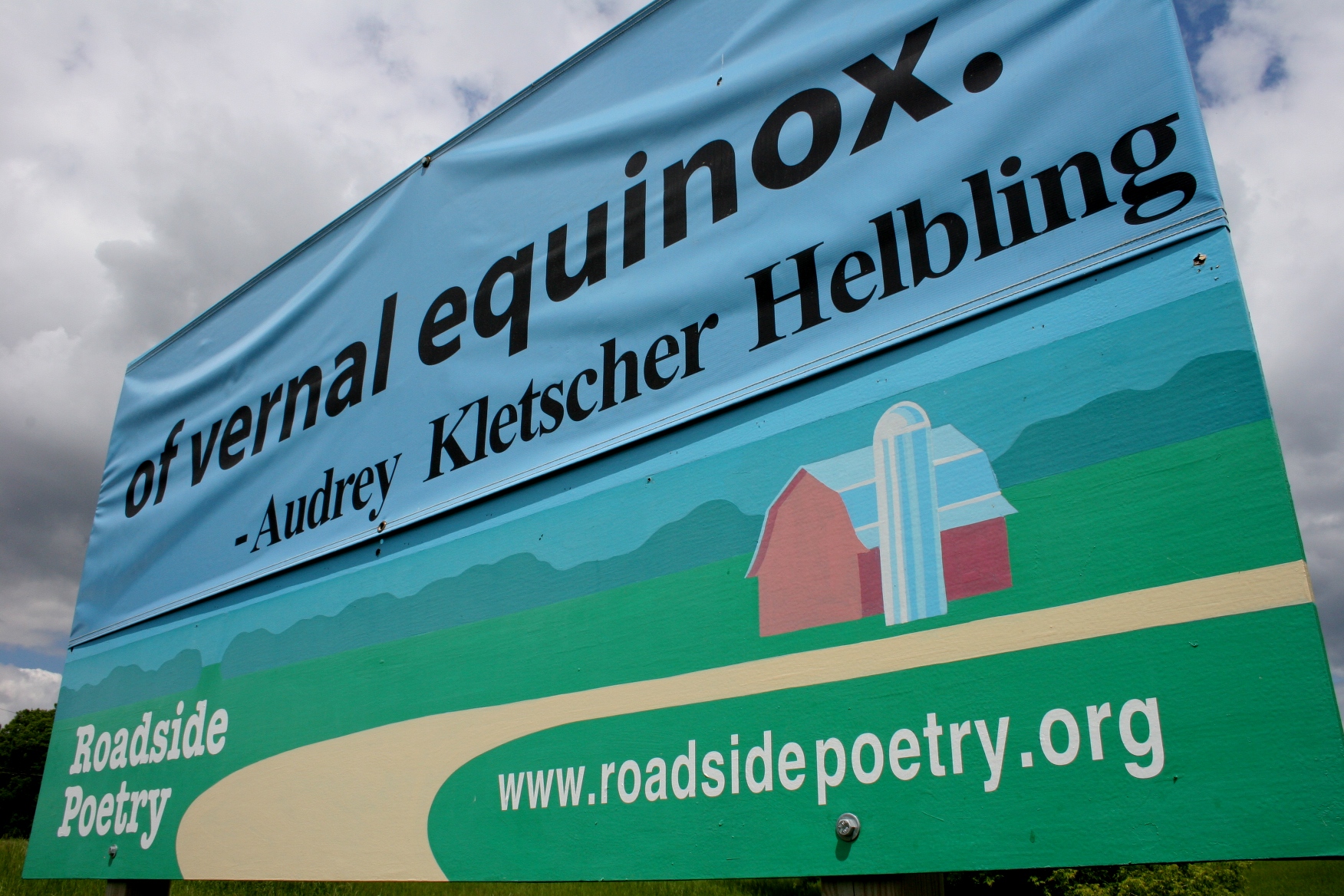
IF YOU’RE TRAVELING this holiday weekend along I-94 in the western part of Minnesota, take exit 54 and swing into Fergus Falls.

Drive several blocks until you’re in the vicinity of Minnesota State Community and Technical College.

Just down the road from Mills Fleet Farm along North Tower Road on the west side of the college, look toward the grassy boulevard as you’re rounding the curve.

You’ll read a name you recognize, right out there for the whole world (or at least those traveling North Tower Road) to see.

Next week I’ll explain this mysterious post. If you’re among those who understand what I’m talking about here, shhhhhhhhhh.

I promise, dear readers, this exciting news will be worth the wait.

© Text copyright 2011 Audrey Kletscher Helbling
 

For the love of reading

I’VE ALWAYS LOVED to read.

And I’ve passed that love of reading on to my three children, two of whom are now adults and one who is 17. They are all readers.

Even before my girls started school, I read the Little House books by Laura Ingalls Wilder to them.

Every summer, the folks of Walnut Grove, Minnesota, produce an outdoor pageant based on Laura Ingalls Wilder's Little House books. Many pageant attendees arrive at the show site dressed in period attire and then climb aboard a covered wagon prop there.

Then I read the Betsy-Tacy book series by Maud Hart Lovelace to my girls. I even nicknamed my second daughter Tib, after the curly-haired, fun-loving Tib in Lovelace’s books. To this day, our family occasionally, fondly, calls her Tib.

A snippet of a mural by artist Marian Anderson in the Maud Hart Lovelace Children's Wing at the Blue Earth County Library in Mankato, Minnesota. The painting depicts the main characters in Lovelace's books, from left, friends Tib, Tacy and Betsy.

Now that I think back on those days of snuggling on the couch with my two girls and later with my son, I am impressed that these preschoolers would sit still for long chapter books. But they did. Of course, I also read picture books and easy-reader books to them.

Long after my trio stopped sitting on my lap or leaning into my shoulders, listening to the stories I read, they continued reading.

Even my boy, my teen. This surprises me. At 17, he still pops out the leg rest on the reclining couch, stretches out his lanky body, grabs a book and reads. For hours. He also reads in bed when he should be sleeping.

There was a time, during his elementary and middle school years, when I checked under his bed for a flashlight and books. He got smart to that and simply hid them elsewhere. So I stopped searching, not wanting to squelch his love of reading even if it meant he wasn’t getting enough sleep.

Today he still reads when he should be sleeping. While I encourage him not to read into the wee hours of the morning, I can’t exactly stop him.

Right now he has two dozen science fiction books stacked in the middle of his bedroom floor: I, Robot and Second Foundation by Isaac Asimov, The Invisible Man and The War of the Worlds by H.G. Wells, Ringworld by Larry Niven, 1984 by George Orwell, Stranger in a Strange Land by Robert A. Heinlein…

Science fiction books stacked on my teen's bedroom floor.

Some of the books have copyrights nearly as old as me.

My son found these books at a used book sale sponsored by the local branch of the American Association of University Women. The AAUW holds the sale annually to raise funds for local reading projects. It’s a worthy cause.

Well, Saturday, we “donated” $25 to the cause, dropping that amount for a box full of two dozen science fiction books, a Star Wars video, two Bach CDs, a nonfiction book about Iowa and a vintage elementary school textbook. The last two items on that list were my selections. I seldom buy books for myself, preferring to check them out from the library because I’ll read a book only once. My teen will read a volume multiple times.

I picked up a 1951 edition of this children's textbook at the used book sale. One of the women working the sale said she used it in her classroom and really liked the book. So did I. But I purchased it for the beautiful vintage art.

I found this brand new book for my niece, who will graduate from high school in about a month. She will attend an Iowa university. I thought she might enjoy this children's nonfiction book that will introduce her to her new home state. Either that or she'll think her aunt (me) is crazy for giving her such an unusual gift. If anyone else wants an Iowa book, you'll find a box full at the sale.

Typically I would not pay $25 for nearly 30 used books, some of them well-used. But how could I deny these books to my teen, who said he can’t even find some of the older books in the library system? Yes, he has a well-used library card.

The older women working the book sale seemed impressed with my gangly teen who managed to fill an entire cardboard box with books. They even offered him a several-dollar discount when I told him he would need to pay half the cost of the books. I only thought it fair. I’ve never been the type of mom to buy my kids something simply because they want it. The son didn’t argue.

I had to restrain myself from buying an armful of children’s picture books. For years I bought used books for the library at the Christian day school my children attended. After I stopped volunteering a dozen years later, breaking that buying habit took a bit of resolve.

Since I passed on the many fabulous children’s books, I did the next best thing. I e-mailed two friends with young children and encouraged them to shop at the sale.

HOW ABOUT YOU, do you buy books at used book sales, garage or rummage sales or elsewhere? Have you always loved to read? And, if you have children, do they also love being read to or reading on their own?

FOR ANYONE WHO lives in the Faribault area, today, April 20, is the final day of the book sale, which runs from 3 p.m. – 7 p.m. in the old Hallmark store at the Faribo West Mall. I’m pretty certain you’ll find plenty of deals on books as the AAUW will just want “to get rid of” their remaining inventory.

© Copyright 2011 Audrey Kletscher Helbling
 

Presenting Leonardo da Vinci’s The Last Supper at a Minnesota church April 19, 2011

The parking lot at St. John's United Church of Christ, Wheeling Township, is nearly full 20 minutes before the congregation's annual performance of The Last Supper Drama.

AS THE FINAL wisps of daylight dissipate into darkness, the church windows glow with the subtle warmth of welcome on this Palm Sunday evening.

Inside, worshippers are already gathering in the tightly-knit pews, eyes focused on the long table before them.

As I wait, seated in a pew tucked under the rim of the balcony, I study the stained glass windows, the suspended ceiling lights where lady bugs cling, the golden cross high above the altar.

Then, shortly after 8 p.m., after the hymn and the invitation and recitation of The Lord’s Prayer, the drama begins unfolding—for the 49th consecutive year.

St. John’s United Church of Christ, Wheeling Township, is presenting its annual The Last Supper Drama.

The Rev. Lora Sturm provides brief historical background on Leonardo da Vinci’s The Last Supper painting, the visual basis for the evening’s drama.

Leonardo da Vinci's painting of The Last Supper inspired the dramatic presentation at St. John's. This print was donated to the church in memory of Arnold Keller.

And then the lights fade, slowly, until a spotlight shines only on the cross. Soon that light and the organ light are extinguished, plunging the sanctuary into near darkness save for the remnants of daylight filtering through the stained glass windows.

A quiet reverence, a sense of anticipation, falls upon the congregation in the moments of silence and darkness before the actors begin filing into the church. Small clusters of men, seemingly engaged in conversation, without words to be heard, walk toward the table set with bread and a chalice and a bag of silver, although I am not sure whether the betrayal money was there initially or was carried in by Judas, the betrayer.

In darkness, these actors, these 12 disciples, pose themselves, replicating the positions da Vinci painted into his famous The Last Supper painting. But no one plays the role of Jesus, represented instead by an empty chair draped in white cloth.

The actors position themselves to replicate da Vinci's The Last Supper, except for Jesus, who is represented by the empty white chair in the middle of the table setting.

When the lights flick on, the frozen scene catches me off guard, even though I’ve previously seen the performance. The stillness fills me with a certain sense of peace, yet uneasiness.

I know what is coming. Words from Scripture that will tell of Jesus’ forthcoming death. The accusation that one of the 12 will betray Christ. It is the moment da Vinci depicts in his art—that moment when the disciples learn that one of them will give up their Lord to death.

Yet, in this script penned by a St. John’s pastor, Walter Rasche, 49 years ago, it is the depth of faithfulness that causes me to pause and look inside. Would I be so faithful as to become a martyr, to die, like the disciples, by stoning or crucifixion or beheading?

In their monologues, each disciple speaks honestly of his struggles, his lack of faithfulness, his travels to preach the gospel, and, then, the blessed words of a better and more abundant life found in following Christ.

The actors freeze as they role-play the disciples.

Five of the six disciples sitting to Jesus right with Christ represented by the empty white chair.

The disciple/actors to Christ's left, including first-time actor, 13-year-old Kyle Keller, the youngest cast member.

Judas’ words—that he regrets betraying Christ with a kiss, turning him over to the authorities for 30 pieces of silver—sting.

Judas, front, betrays Jesus with a kiss and 30 pieces of silver.

But the pastor’s prayer afterward encourages and uplifts me: “…hear your voice calling us to follow you…you call us to simply follow…”

And then her benediction blesses me with peace: “The Lord bless thee and keep thee…”

As the actors exit, as the worshipers file out of the sanctuary, I linger, waiting for the opportunity to shoot photos, which weren’t allowed during the performance. The men return, pose at the table, some of them telling me how they watched this drama as boys and now role-play as men.

This year a boy-becoming-a-man, 13-year-old Kyle Keller, plays the part of Philip, standing behind his father, Keith, who has assumed the role of Matthew. The seventh grader is the youngest participant ever in the St. John’s re-enactment. He was talked into playing the part, but says now that he’ll be back.

With two casts, the actors (most of them) return every other year to assume the same character roles. Some travel from the Twin Cities back to this, their home church near Nerstrand Big Woods State Park. They speak and gesture like seasoned actors, some growing beards for the occasion, others sporting fake, glued-on facial hair. Sharon Meyer jokes that she has the shaver charging at home, ready to shave off her dairy farmer husband’s beard. Alan Meyer has played the part of Andrew in the evening’s performance.

Occasionally, a new cast member like Kyle is recruited. He’s the grandson of Elsie Keller, who stands after the service next to a print of The Last Supper angled onto an easel in the church narthex. The Keller family gave the print to the church in memory of Elsie’s husband, Arnold, who died in 1999. On Palm Sunday the print is moved from its usual spot in the fellowship hall to this place of honor.

Elsie Keller, 85, stands next to The Last Supper painting given to St. John's in honor of her husband, Arnold.

The evening takes on special significance for this 85-year-old as she watches Thomas and thinks of her husband. Arnold played Thomas in the debut performance at St. John’s and continued with that role for many decades thereafter. Elsie, who was baptized, confirmed and married at St. John’s, as was her husband, hasn’t missed a single performance of The Last Supper Drama.

Her son, Craig Keller, the church organist, tells me that the drama originally was staged on a Wednesday during Lent. At one time there were two evening performances and even an afternoon presentation with the windows covered in black plastic to block out the light.

On this evening, some half-dozen church pews remain empty and I wonder why this place is not packed with a standing-room only crowd.

I’ve been deeply impressed with so many facets of the drama—by the level of commitment within this country congregation to continue a nearly 50-year tradition, by the professionalism of the actors, by the words they’ve shared that make the painting and Scripture and apostles come to life and, certainly, by the actors’ ability to freeze without barely an eye blink or a twitch. How do they do it?

The congregation's original chalice is used each year in the drama.

"Take eat, this is my body..." bread on the table during The Last Supper Drama.

FYI: Next year plan to attend the 50th presentation of The Last Supper at 8 p.m. on Palm Sunday. St. John’s United Church of Christ, Wheeling Township, is located about a 15-minute drive east of Faribault on Minnesota Highway 60 and then north on Rice County Road 24. At this point, I expect organizers may add activities to commemorate the 2012 anniversary production.

Credit goes to the following for their parts in presenting this year’ production: directors Shirley Little and Kelly Dahl; co-director Pauline Wiegrefe; organist Craig Keller; narrator Don Katra; prompter Steve Wille; lighting, Ben Heil; greeters Steve and Deb Wille; the youth fellowship ushers; the church council coffee hour servers; pastor Lora Sturm; and actors Alan Meyer, Grant Meese, Craig Mueller, Kyle Keller, Todd Lien, Thad Monroe, Keith Keller, Doug Spike, Marty Budde, Brian Little, Randy Tatge and Paul Meyer.

Thank you all for this exceptional gift during Holy Week.

© Copyright 2011 Audrey Kletscher Helbling
 

I’ll skip the sushi April 18, 2011

WHAT FOOD IMAGES pop into your mind when I say “Japanese restaurant?”

Rice? Vegetables? Sushi?

That’s the extent of my Japanese culinary knowledge.

But that will change with the opening of a Japanese restaurant in my mid-sized Minnesota town. I noticed a sign last week in an empty strip mall space along State Highway 60 in Faribault advertising this new restaurant.

A Japanese restaurant is opening in the strip mall in the 600 block of Fourth Street/Highway 60 in Faribault.

Although I don’t eat out all that often and once tried homemade sushi, promptly spitting out the wrapped raw fish and rice, I appreciate another dining option in my community.

We have plenty of fast food and pizza places and restaurants that serve traditional American fare.

We have several Mexican restaurants (like Gran Plaza Mexican Grill and El Tequilla Family Mexican Restaurant) and a Mexican bakery.

Baked goods at a Mexican bakery (once at the center of controversy because of its exterior paint color) in downtown Faribault. The bakery has changed ownership since I took this photo.

Faribault also has three Chinese restaurants, a Somali eatery and a recently-opened Thai restaurant (that I have yet to patronize, but about which I’ve heard rave reviews).

The Southern China Cafe is among four restaurants in town serving Chinese food.

Banadir, a Somali restaurant, is located in historic downtown Faribault.

Now we’ll soon have Japanese cuisine to throw into the cultural mix.

To those of you who live in larger metropolitan areas, the opening of a Japanese restaurant may not seem like a big deal. But in outstate Minnesota, where our dining choices are more limited and where getting the locals to try something new, like God forbid sushi, this ethnic restaurant opening is worth noting.

I have no idea whether the new Japanese restaurant will serve sushi. But I expect it will.

I hope Faribault area residents are daring enough to step outside of their safe pizza, burgers and fries, steak, batter-fried walleye, enchilada, lutefisk comfort zones to try Japanese food. Count me in the door to sample Japanese food, just not the raw fish sushi.

© Copyright 2011 Audrey Kletscher Helbling
 

No April fooling April 17, 2011

Filed under: Uncategorized — Audrey Kletscher Helbling @ 10:03 AM
Tags: , , , , , , , , ,

IF YOU LIVE in Minnesota, you can get fooled into thinking spring has arrived…until you wake up one morning and snow covers the ground. This is mid-April for gosh sakes, not March.
Weren’t temps a humid 80 degrees a week ago?

Wasn’t I raking leaves in short sleeves?

Digging out the flip flops?

Throwing open the windows to air out the stale, closed-in house after a long, long winter?

Wasn’t I suggesting that I pick up romaine lettuce at the garden shop and plant it? But my husband stopped me, warned me that temps could still drop to freezing. I listened, for once. Thankfully. But he didn’t say anything about snow. Oh, no, not snow.

I was fooled, duped, misled into believing spring had arrived.

Saturday morning I followed the limestone path through my backyard to check on the flowers that had already erupted. I paused to photograph the walkway. The circles, created by snow dripping from tree branches, made an interesting pattern. Faribault received 1 1/2 inches of snow overnight Friday into Saturday morning.

A few days ago I intended to photograph my daffodils, but, of course, I didnt. Now they are drooping in the snow.

Snow encases the daffodils Saturday morning.

I hope the budding tulips can survive the cold and snow.

Copyright 2011 Audrey Kletscher Helbling