Minnesota Prairie Roots

Writing and photography by Audrey Kletscher Helbling

It’s OK if you don’t have pickle bumps September 23, 2010

I’LL ADMIT TO MORE than a bit of skepticism about a children’s picture book titled Pickle Bumps for Baby Dill. “What kind of book is that?” I wondered before calling the author, Bob Fulton.

Well, exactly as the title suggests, this is a story about Baby Dill, a pickle born without bumps. But that’s not all. You see, after speaking with Fulton and upon reading his book, I learned the real purpose. And it’s much more than a story about cute, talking pickles.

Fulton delivers a strong message via the Dill family and Baby Dill’s friends. The message: “It’s OK to be different.”

That’s a message especially fitting for this time of year, the beginning of school.

I would speculate that many students have, in recent weeks, felt like they don’t quite fit in with their classmates. Maybe they aren’t wearing the latest fashions. Maybe they’re in a new school, struggling to make friends. Maybe they’re shy, quiet. Maybe their hair or their skin is the “wrong” color. Maybe they’re struggling with learning.

Maybe, like Baby Dill, they wonder why they are different from everyone else.

Fulton addresses that concern, which leads the Dill family on a shopping trip for pickle bumps. In the end, Baby Dill decides, with the support of his friends, that he would rather remain bump less.

While Fulton’s story has a positive ending, I know that isn’t always reality. In real life, kids bully, tease, make fun of, pick on, humiliate—whatever words you want to choose—those who are different. For all too many kids, there are no understanding friends to stand by and support them.

A book like Fulton’s offers encouragement. “We like you just the way you are,” Baby Dill’s friends tell him. That’s a message that needs to reverberate through-out our schools, our homes, our communities.

Pickle Bumps for Baby Dill would be a good addition to any elementary school classroom or library. While aimed at preschoolers and lower elementary students, the story also appeals to 10 – 12-year-olds, Fulton says. Having experienced bullying myself while in junior high school, I applaud any efforts to help students, parents and teachers address the issue.

The college educator—he taught chemistry for 39 years at St. John’s University and The College of Saint Benedict—has even added a list of 12 questions at the end of his book to prompt discussion.

He shares, too, that his book evolved from telling stories to his grandchildren and a specific request from his youngest grandson to “Tell us a story about a pickle.”

Fulton did and then put his tale into writing in Pickle Bumps for Baby Dill, published by Pickle Bump Press. Melissa Meyer, originally from Saint Joseph, Minn., illustrated the book.

#

AS A SIDE NOTE, please be aware that October is National Bullying Prevention Month. Check out the PACER Center Web site for information that can help you address bullying. Perhaps by working together, through understanding and listening and empathy, we can help reduce the bullying that is all too prevalent in our society, especially in our schools.

© Copyright 2010 Audrey Kletscher Helbling


Sign, sign, everywhere a sign in Pemberton September 22, 2010

A welcome to Pemberton sign along State Highway 83.

PEM-BER-TON. The word rolls off my tongue in three syllables, a cadence of sound that names a southern Minnesota town.

I’d never been to this community southeast of Mankato on Minnesota Highway 83, only heard of it tacked onto the end of Janesville-Waldorf-Pemberton Public Schools.

But Saturday evening I was in Pemberton for a wedding reception and dance. I arrived early, wanting to explore this town of about 250 before heading over to the former school turned community center.

My quick tour revealed the usual run-down, boarded-up old buildings balanced by a well-groomed park and newer homes. Mostly, though, I was intrigued by the signs on downtown buildings.

Pemberton's main street was quiet on Saturday except for wedding guests driving through downtown.

When was the last time you saw a FALLOUT SHELTER sign? I found one tacked onto the front of a boarded brick building whose original purpose I wouldn’t even want to guess. The faint writing at the bottom of the sign warned: NOT TO BE REPRODUCED OR USED WITHOUT DEFENSE DEPARTMENT PERMISSION.

For those of you who grew up during the 1960s, during the Cold War, like me, a FALLOUT SHELTER sign brings back memories of teachers instructing students to duck under desks and protect their heads, as if that was going to do any good in the event of a nuclear attack.

My husband recalls the particular concern about Communist attacks given his central Minnesota school’s “close” proximity to North Dakota missile silos.

Thankfully those Cold War days of hysteria are behind us and many, many years have passed since I’ve seen a FALLOUT SHELTER sign.

A Fallout Shelter sign on a downtown brick building. Another sign, on the door, warns: Harley Parking Only: All Others Will be Crushed.

The brick building upon which the Fallout Shelter sign is posted.

Across the street, I spotted a weathered PIONEER SEEDS sign on an old garage and, as a boy pedaled past on his bicycle, considered how carefree small-town life can sometimes be. I never allowed my children, when they were elementary-aged, to ride their bikes solo in Faribault. But that’s the difference between small towns and mid-sized cities like mine.

An old Pioneer Seeds sign drew my eye to this building.

And you won’t see a sign like this in most towns: WANTED DEER HIDES—Trade For Gloves. Another sign identified a corner white wood frame building with gaudy blue paint trim as White Fox Fur & Feather Company, supplier of natural materials for the fly fishing industry, according to the company Web site.

Turn your deer hides in here, at White Fox Fur & Feather Company, in exchange for gloves.

I wondered if any of the other wedding reception attendees noticed the downtown signs that tell the story of Pemberton, past and present.

At Jamie’s Pemberton Pub, a pit stop for the wedding party, signs informed me of Mexican Night, Texas Hold ‘Em, Pitcher Night, All day Happy Hour, a Steak Fry and the small-town bar standby, karaoke. Obviously, this is “the place” in Pemberton.

Jamie's Pemberton Pub seems to be the happening place in Pemberton.

I wondered about WOOD N STUFF, about the wood stuff built inside the non-descript building with the overhead garage door. The building could use a bit of polishing, maybe some decorative wood work, to draw customers. Or maybe the place is closed.

What types of products are made at Wood N Stuff?

Closed. The Pemberton Café, likely once the local hot spot for coffee and cards, sits forlorn, windows shuttered, grass sneaking through the cracks in the sidewalk, in a scene all too common in rural Minnesota.

The abandoned Pemberton Cafe on the town's main street.

Yet, despite the abandoned buildings, the closed school, Pemberton survives, anchored like all farming communities by the grain elevator. This is home, a town with a busy convenience store, a post office, a beautiful community center, a park for the kids and a FALLOUT SHELTER.

Approaching Pemberton from the east, the grain elevator and bins mark the skyline.

© Copyright 2010 Audrey Kletscher Helbling


A Sunday afternoon at Valley Grove September 21, 2010

Filed under: Uncategorized — Audrey Kletscher Helbling @ 7:22 AM
Tags: , , , , , , , ,

PRAIRIE GRASSES and wild flowers dipped in the wind, swaying to the folksy music of Hütenänny. And I thought, as l listened, of the movie, Sweet Land, filmed in southwestern Minnesota and based on Minnesota writer Will Weaver’s book.

But I wasn’t in the southwestern part of the state. Rather, I stood atop a prairie hillside in southeastern Minnesota, in the backyard of the Valley Grove churches, delighting in the rhythm of the Nordic music so fitting for this place settled by Norwegian immigrants.

A view of the Valley Grove churches from the prairie that edges the churchyard.

Valley Grove visitors can walk through a restored prairie, where wildflowers grow.

On this Sunday afternoon in September, folks gathered outside and inside the 1862 stone church and the neighboring 1894 white clapboard church, in the graveyard, underneath the majestic sprawling oak where the musicians played, and on the prairie, close to the land.

Visitors spread quilts upon the grass and enjoyed the music of Hutenanny.

A group of mostly Northfield area musicians performed as Hutenanny at the Valley Grove Country Social. On Sunday evenings they perform as the Northern Roots Session at the Contented Cow in Northfield.

A member of Hutenanny dresses country for the folksy Nordic music performed at Sunday's Social.

In the churchyard, next to the simple wooden church, youngsters swish-swished goat milk into a pail, admired colorful caged chickens and crafted ropes to twirl high above their heads.

Kathy Zeman of next-door Simple Harvest Organic Farm gave a young boy lessons in milking a goat.

Fresh eggs and caged chickens attracted lots of interest.

Along the fenceline that guards the duo hillside churches near Nerstrand, families waited to board a horse-drawn wagon that would take them along a path past the churchyard, up and down the prairie hill, where, if they looked, the land stretched down to farms and to woods tipped in the first rustic colors of autumn.

A horse-drawn wagon carried visitors on a path through the 50-acre prairie.

Inside the 1894 historic church, a musician pressed pedals and keys and tugged at pulls as the faithful lifted their voices in reverent song. “Praise to the Lord, the Almighty,” they sang, followed by “Amazing Grace.”

Organists performed several concerts inside the 1894 Valley Grove Church on a pipe organ built in St. Louis and installed in 1911.

Art and bluebirds and old photos. Sunshine, mixed with clouds. Memories shared, new memories made. Photos snapped. Gravesites visited. Hugs exchanged. All comprised the Valley Grove Country Social, a soul-satisfying way to spend a Sunday afternoon in September in Minnesota.

An archway at the entry to the Valley Grove churchyard.

The Valley Grove churches are on the National Register of Historic Sites.

Old-fashioned hydrangea bushes nestle against the clapboard church.

The spire of the 1894 church can be seen for miles.

The Valley Grove Preservation Society is working to preserve the buildings, land and history for future generations.

CHECK OUT THESE PLACES/GROUPS referenced in this Minnesota Prairie Roots blog post:

Bluebird Recovery Program of Minnesota

Simple Harvest Organic Farm

The Contented Cow

Northern Roots Session

ALSO CHECK OUT my previous Valley Grove posts published Oct. 9, 19 and 31, 2009, and Nov. 2, 2009, on Minnesota Prairie Roots.

© Copyright 2010 Audrey Kletscher Helbling


Step into yesteryear at the stark, yet welcoming, Ottawa Town Hall September 17, 2010

The Ottawa Town Hall was built in 1860 from local limestone.

I ABSOLUTELY COULD NOT believe my good fortune. After peering through a front window into the old town hall and wondering why the lights were on, I pulled (or pushed; I can’t recall which) on the front door. Much to my elation, the door gave way.

Let me preface this by saying that in the past when I have clicked door latches or turned knobs on historic buildings, mostly churches, I’ve met resistance, meaning I was locked out.

I tried the door latch and the door was, to my surprise, unlocked.

But, ah, to feel the door sway, allowing me entrance, gave me that momentary feeling of surprised satisfaction. And look, just look, at what awaited me inside the Ottawa Town Hall.

Inside, the stark room stretched out before me.

Simplistic beauty best describes the interior of this former general store constructed in 1860 from local limestone and today among six Ottawa buildings on the National Register of Historic Places.

To find this village platted in 1853 along the Minnesota River, follow winding Le Sueur County Road 23 northeast of St. Peter. And when you get there, after reading the historical marker and picking up a self-guided tour brochure from the town hall kiosk, try the door.

If you’re as fortunate as me, you’ll step into yesteryear, onto scuffed wood-plank floors, into a building that has been the Ottawa Town Hall since 1902.

If you’re like me, you’ll stand there for a moment or two or three taking in the atmosphere of this place. You can see history in the beadboard walls and ceiling, in the stage flanked by steps and adorned with a scenic canvas curtain reminiscent of melodrama days, in the lone American flag, in the curved-back wooden chairs stacked precisely along the wall.

The stage intrigues me. Who performed here? Do actors and actresses ever grace this stage today?

I tugged at the two side doors that would have given me access to the stage. But, alas, they were locked.

I stroked the stiff canvas of the stage curtian and admired the painted florals.

Ottawa Town Hall chairs

Even the stacked chairs seemed a sculpture of historic art.

If you like “fancy,” you won’t appreciate the starkness of a room awash in white under the blazing light of bare bulbs.

For me, though, there’s something about this town hall that soothes, comforts, makes me feel right at home, as if the door was meant to be left unlocked, the lights switched on in an inviting welcome.

Though rather plain, the town hall possesses a certain welcoming charm.

© Copyright 2010 Audrey Kletscher Helbling
 

Harvest time in Minnesota: God bless our farmers & keep them safe September 16, 2010

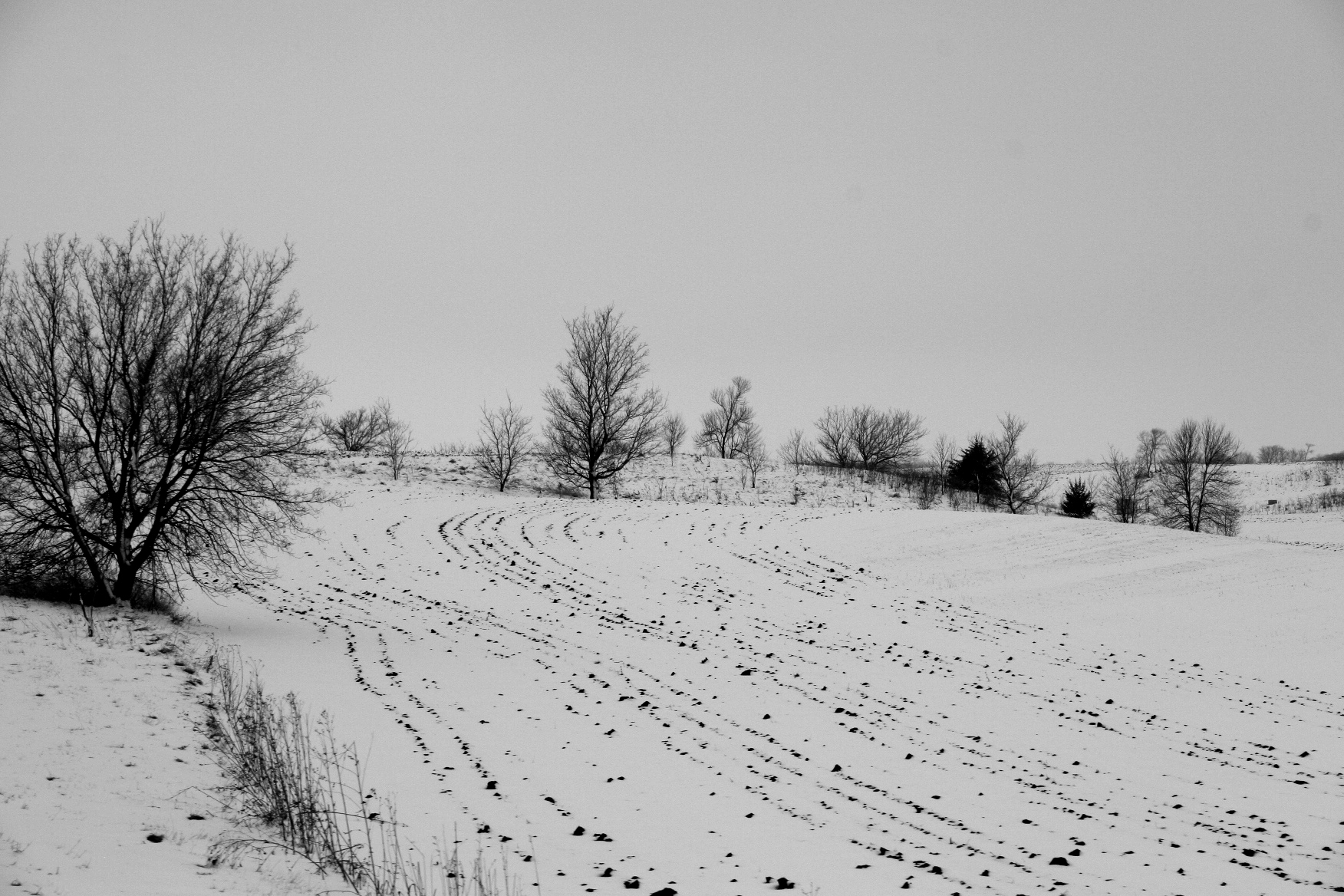
LIFE GETS ESPECIALLY BUSY this time of year in rural Minnesota as farmers gear up for harvest. They’re readying their equipment, preparing to move into the ripening corn and soybean fields. Some have already been out chopping corn.

As the days progress swiftly toward winter, farm work too moves at an often frantic pace with long days behind the wheel of a combine or a tractor or a truck. With those increased work hours come fatigue and the very real danger that one slip, one wrong move, could endanger a farmer’s life.

That’s why I’m glad to see projects like the Farm Fatigue Program, a collaboration of the Hutchinson and Glencoe Chamber of Commerce ag business committees. The two groups have teamed up to deliver donated items—like safety glasses, ear plugs, sun screen, apples, water and candy—to farmers laboring in the fields. Members also deliver a message of thanks and a reminder to stay safe, according to the Hutchinson Area Chamber of Commerce Convention and Visitors Bureau.

In the past two years the Hutch and Glencoe committee members have distributed 300 bags to farmers while patrolling the back roads and highways of McLeod County for several days during peak harvest. When the orange-sweatshirt-clad delivery men and women spot a farmer working the fields, they stop.

The Hutchinson group offered the program for eight years before partnering with Glencoe.

Just to the south in Sibley County, a rural church is also doing its part to remind farmers to “be safe.” This Sunday, September 19, Trinity Lutheran Church, located nine miles southeast of Gaylord on County Road 8, is hosting a Tractor Roll-In and Harvest Blessing Service at 10:30 a.m. “Drive your tractor or combine to church, or just come!” event promotional material encourages. “Come experience the Spirit of the Lord of the Harvest.”

Bishop Jon Anderson of the Evangelical Lutheran Church in America Southwestern Minnesota Synod and Trinity’s pastor, the Rev. William Nelsen, will bless attending farm families.

But the congregation is thinking beyond local farmers and their safety. Proceeds from an after-dinner service will benefit farmers in South Africa, where members of Trinity and its sister congregation, St. Paul’s, recently traveled.

I’m impressed with the strides that the Gaylord, Hutchinson and Glencoe groups are taking to thank farmers and promote safety. For me, farm safety is personal. While growing up on a southwestern Minnesota dairy and crop farm in the 1960s and 1970s, I was always aware of the dangers inherent to farming. My bachelor uncle Mike, who was like a second father to me, lost the tips of several fingers in a wagon hoist accident. Another distant relative lost an arm.

And then there’s my father-in-law, who on October 21, 1967, attempted to unplug a corn chopper. His hand was pulled into the spring-loaded rollers, which trapped his arm. Blades sliced off his fingers. I know the details of that accident because my husband, then 11 years old, ran for help, thus saving his father’s life. (Click here to read an account of that accident.)

An Allis Chalmers corn chopper, like this one recently exhibited at the Rice County Steam & Gas Engines Show, claimed my father-in-law's left hand and much of his arm in a 1967 accident. That's my husband, Randy, who saved his dad's life by running for help. Randy remembers the accident just like it happened yesterday.

Randy showed me the spring-loaded corn chopper roller, where his dad's hand was pulled in and trapped.

My father-in-law lost his left hand and much of his arm in that farm accident. For years he sported a hook arm, but today wears a prosthetic hand and arm. He’s adjusted well. He had no choice.

Thankfully, farm equipment today is much safer than the farm equipment from decades ago.

Just look at the dangers farmers faced as shown in this threshing demonstration at the recent Rice County Steam & Gas Engines Show. Thankfully items like exposed belts are mostly an issue of the past.

Yet, fatigue, haste or a lack of caution can still cause a tragedy in the field, on the farm or even along a country road or highway.

So when I hear about projects like the Farm Fatigue Program or the Tractor Roll-In and Harvest Blessing Service, I’m especially thankful.

Farmers, please be safe this harvest season.

#

IF YOU KNOW of any other community farm safety programs here in Minnesota, please share the information in a comment. We all need to work together to keep farmers safe during harvest, and year-round.

© Copyright 2010 Audrey Kletscher Helbling
 

My unforgettable “road” poem publishes in The Talking Stick, Forgotten Roads September 15, 2010

TYPICALLY WHEN I write poetry, I turn to my past, to childhood memories.

That’s evident by my poems published in three volumes of Poetic Strokes, A Regional Anthology of Poetry from Southeastern Minnesota:  “Abandoned Farmhouse,” “Prairie Sisters,” “Walking Beans,” “Saturday night baths,” and “A school without a library.”

Occasionally I deviate from that trip down memory lane. “Lord, My Rock” published in the fall 2004 issue of The Lutheran Digest and “Tribute to a Korean War Veteran” published in the May/June 2009 issue of Minnesota Moments magazine.

My latest in-print-poem also detours from my typical subject of childhood days, although it stays on the road of memories, albeit this one a heart-wrenching, emotional recent memory.

“Hit-and-Run” has just published in The Talking Stick, Forgotten Roads, Volume Nineteen, debuting this Saturday at a Book Release Party in the Northwoods Bank Community Room in Park Rapids.

The poem looks back to May 12, 2006, the day my then 12-year-old son was struck by a hit-and-run driver while crossing the street just a short distance from our home. Thankfully, my boy was not seriously injured. But the driver was never found and the memories of that horrible incident still linger. Now I’m sharing, in poetic verse, how that morning unfolded emotionally for me. Certainly, I have not forgotten this road.

Apparently my words resonated with the editors who reviewed the 200-plus poems submitted in this literary competition. “Hit-and-Run” was among the top seven poems selected by the editorial board for prize consideration by noted Minnesota poet Heid Erdrich. My poem earned an honorable mention.

“A terrifying imagery/memory,” Erdrich partially wrote in her evaluation.

Indeed.

If you would like to read my poem, the other winning poems and the fiction and creative non-fiction published in this latest collection by writers with a connection to Minnesota, check out the online purchasing options at The Jackpine Writers’ Bloc. The Park Rapids/Menahga-based group annually publishes The Talking Stick, which is sold by the Writers’ Bloc and several northern Minnesota bookstores.

I’ve read two of the past anthologies and I promise that you will enjoy some top-notch writing by emerging and established Minnesota writers. The Talking Stick has an excellent, long-standing reputation and I’m proud to be published in it.

If you’re a writer, consider entering the 2011 The Talking Stick competition. Submissions call for the 20th volume goes out in December with a March 1, 2011, submission deadline.

Finally, if you’re in the Park Rapids area this weekend, consider attending the book release party, which begins at 1 p.m. Writers published in The Talking Stick, Forgotten Roads, will read their works beginning at 2 p.m. No, I won’t be there as I have another commitment. But you’ll meet plenty of other Minnesota writers anxious to sell their books or compare notes on this journey we call writing.

© Copyright 2010 Audrey Kletscher Helbling


How some Minnesota schools are serving healthier meals September 14, 2010

DECADES AGO when my relatives from the Cities (Minneapolis and St. Paul, for you non-Minnesotans), visited my southwestern Minnesota childhood farm, they would scoop up fresh garden produce by the bags full to take home. We didn’t mind, if we had extras, and were happy to share the bounty of the land.

I’ll admit, though, that even back then I felt a bit smug about our ability as farmers to provide food for the city dwellers. They had small gardens, but certainly could not grow what we could on our acres and acres of soil.

Today, as a city dweller, I’m the one carting home fresh garden produce from the country. No longer smug, I humbly accept the eggplant, tomatoes, spinach, cucumbers, okra, green beans, zucchini and other fruits and veggies that my country-dwelling family and friends share. I could live on fresh vegetables; I love them that much. But in my scrunched yard, I have room only for growing tomatoes and lettuce.

Some of the garden-fresh vegetables I got from my brother a few days ago.

Eating local, eating fresh, seems the healthy, trendy thing to do these days.

So when I read in the September 9 issue of The Gaylord Hub (a weekly newspaper where I worked in the 1970s) that students at the Sibley East, Arlington campus, will eat garden-fresh vegetables in their lunches this year, I took note.

According to the article, last spring students and staff planted a one-acre vegetable garden, which has produced beans, potatoes, cucumbers, onions, cabbage and squash. Later the garden will yield pumpkins, carrots and kale. Food service staff has been busy freezing the beans and making salsa and refrigerator pickles. The other vegetables will be incorporated fresh into meals.

Four grants are helping to fund the Farm to School Program project, which is more labor intensive and costly than a regular school food service offering.

Some Minnesota schools are growing onions in gardens.

Sibley East students grew cabbage, which will be made into coleslaw.

I don’t know if I’ve had my head in the refrigerator or what, but I don’t recall hearing about the Farm to School Program, which has been around nationally since the late 1990s and began in Minnesota in 2005.

Today a check of the Farm to School Program Web site reveals that an “estimated 69” Farm to School programs exist in Minnesota. (Sixty-nine doesn’t sound like an estimate to me but rather like a precise number.) Seventeen existing programs are profiled on the site.

Several districts, including Alexandria and Dover-Eyota, have planted apple trees.

Some Minnesota school districts have planted mini apple orchards.

In Bemidji, students at Solway Elementary School planted a garden and are now eating fresh, and frozen, vegetables. Others, including Dover-Eyota, plus Little Falls and Minneapolis Public Schools, are buying locally-grown produce.

Over in Montevideo, the public schools hosted an educational tomato-tasting event.

Down in the southeastern corner of the state, Winona Area Public Schools students are eating bison burgers and hot dogs thanks to a partnership with a local bison farm.

I liked what I read about these districts partnering up with local growers and producers. Even more, I like that some districts are taking the initiative and getting students involved by planting gardens and mini-orchards. Hands-on involvement, in my opinion, creates ownership, which spawns success.

Despite my excitement about the 69 Farm to School programs in Minnesota, I wonder why more districts are not involved. According to 2008-2009 statistics from the Minnesota Department of Education Web site, the state had 336 public-operating elementary and secondary independent school districts and 153 charter schools with a total of 2,006 public schools as of July 1 (2009).

Although I don’t know this for a fact, I suspect that funding is a problem in this tough economy and tight budgets. Perhaps also apathy and apprehension exist among parents, students, administrators and food service personnel. Finicky taste buds are likely a consideration given this generation is growing up on lots of processed foods and fast food.

Last winter I watched Jamie Oliver’s Food Revolution on television as Oliver sought to get fresh, healthy foods into a West Virginia school. The task proved difficult as food service workers, students and others didn’t exactly embrace the health-conscious meals.

But that doesn’t mean we shouldn’t keep trying. I would like to see more Minnesota schools join the Food to School Program and provide healthier meals for a student population that truly needs a healthier diet, both at home and in our schools.

Ditto for us adults. We certainly could learn to eat better too by buying (or accepting from family and friends) more locally-grown, fresh produce or growing our own.

© Copyright 2010 Audrey Kletscher Helbling
 

If only I could have gotten inside this prairie antique store September 13, 2010

LATE SUNDAY MORNING we turned off the Laura Ingalls Wilder Historic Highway in Springfield, pulled by the prairie winds.

That would be Prairie Winds Antiques, an appropriate name for a business on the edge of this farming community on the wind-swept prairie of southwestern Minnesota.

My sister Lanae had stopped there the day before and picked up an antique—shelves or a box or something—I never saw it.

“There’s an antique store in Springfield?” I asked, even exclaimed when she raved about the place.

“Oh, yeah,” she said.

And that was enough to draw me to Prairie Winds Antiques. So, Sunday, as my husband, son and I were returning to Faribault from a weekend in rural Redwood County, the guys indulged me (sort of) and we pulled off U.S. Highway 14.

I must clarify that this stop did not come without protest from the teenager in the back seat who was reading a book and was overtired from a night of star-gazing under the inky black expanse of prairie sky.

But we stopped anyway, and lucky for him, but unlucky for me, Prairie Winds Antiques was closed, despite the OPEN sign.

Despite the OPEN signage, Prairie Winds Antiques was locked late Sunday morning.

That didn’t stop me from poking around the exterior of the shop, where a cluttered yard full of antiques and collectibles sat exposed to the elements. Pails, tables, signs, farm machinery, garden art, soda bottles, wash tubs, bicycles, sleds, an old car…lots to peruse in the presence of an impatient son.

Even outdoors, you'll find lots of antiques and collectibles at Prairie Winds Antiques.

So I hurried as quickly as I can hurry around old stuff, snapping a few photos and wondering if the pile of stuff that looked like it was in a pile of junk to be burned was really a pile to be burned. I was tempted to take the painted wooden bird with the spindly wire legs from the burning pile because it reminded me of the kitschy painted wooden yard art my grandpa staked in his front yard.

But I didn’t.

You can bet that the next time we’re driving U.S. Highway 14—the road west so many years ago for those brave, adventuresome pioneers—that we’ll pull into Prairie Winds Antiques again. I need to get inside that place. Oh, yeah.

The wooden crates crammed with old soda bottles remind me of the days of my youth when pop was a treat reserved for special family celebrations like birthdays.

On-site prairie grasses dip and sway in the wind around old farm equipment at Prairie Winds Antiques on the west edge of Springfield.

This Flying Red Horse is attached to the garage at the antique shop. I've always had an affinity for this gas station symbol. As a youngster, when our family traveled once a year to visit relatives in Minneapolis, our dad always told us to "Watch for the Flying Red Horse." I don't recall why or where that horse was located; it may have been a landmark to direct us to the right road. I wish I could remember.

I spotted this grasshopper clinging to the edge of a long, weathered table sitting in the yard at the antique store. I immediately thought of the grasshoppers that, in the days of Laura Ingalls Wilder, infested this land and destroyed crops. Wilder wrote about the grasshoppers in her "Little House" books.

I do not like real chickens, not one bit. But these two free-range fake birds charmed me. I cannot even believe I just wrote that.

© Copyright 2010 Audrey Kletscher Helbling
 

Returning to my Minnesota prairie roots September 12, 2010

THIS AFTERNOON, my husband, son and I returned from a weekend trip to my beloved prairie, southwestern Minnesota. The journey brought stops along the way and back—one which stretched into a 2-hour lunch at The Dam Store, a food/live bait/tackle place just outside Rapidan near Mankato.

This homey joint, which sits next to the Rapidan Dam on the scenic Blue Earth River, advertises the “BEST DAM HAMBURGERS AND PIE BY A DAM SITE.” That’s no lie. But you won’t read about it here. I’m planning a magazine feature story on this kitschy 100-year-old café/store. That explains the lengthy lunch hour (or rather two), of a cheeseburger and fries and dam good homemade chocolate caramel pecan pie, that evolved into interviews and photo-taking.

You'll find great hamburgers and homemade pies at The Dam Store, an unassuming century old eatery.

As we traveled west toward our destination in rural Lamberton in Redwood County, I filled my camera with images from the road, setting a fast shutter speed and zooming down the passenger-side car window or aiming through the windshield whenever a photo op arose.

All along that drive, I gawked at the sky, the wide, wide prairie sky that I can never get enough of no matter how many times I view it.

Likewise, I cannot get enough of this land where I grew up. Here the soil and sky and wind taught me how to see and smell and feel and listen, and because of that, how to write with a detailed, grassroots style.

Returning to southwestern Minnesota renews my gratefulness for roots that reach deep into the earth. Even though I left this land 36 years ago, I remain forever connected to the prairie, “home” in my heart.

Driving U.S. Highway 71 in southwestern Minnesota, you can see a sky and land that stretches beyond forever.

Empty corn cribs on the prairie await another harvest. Or perhaps they are no longer used.

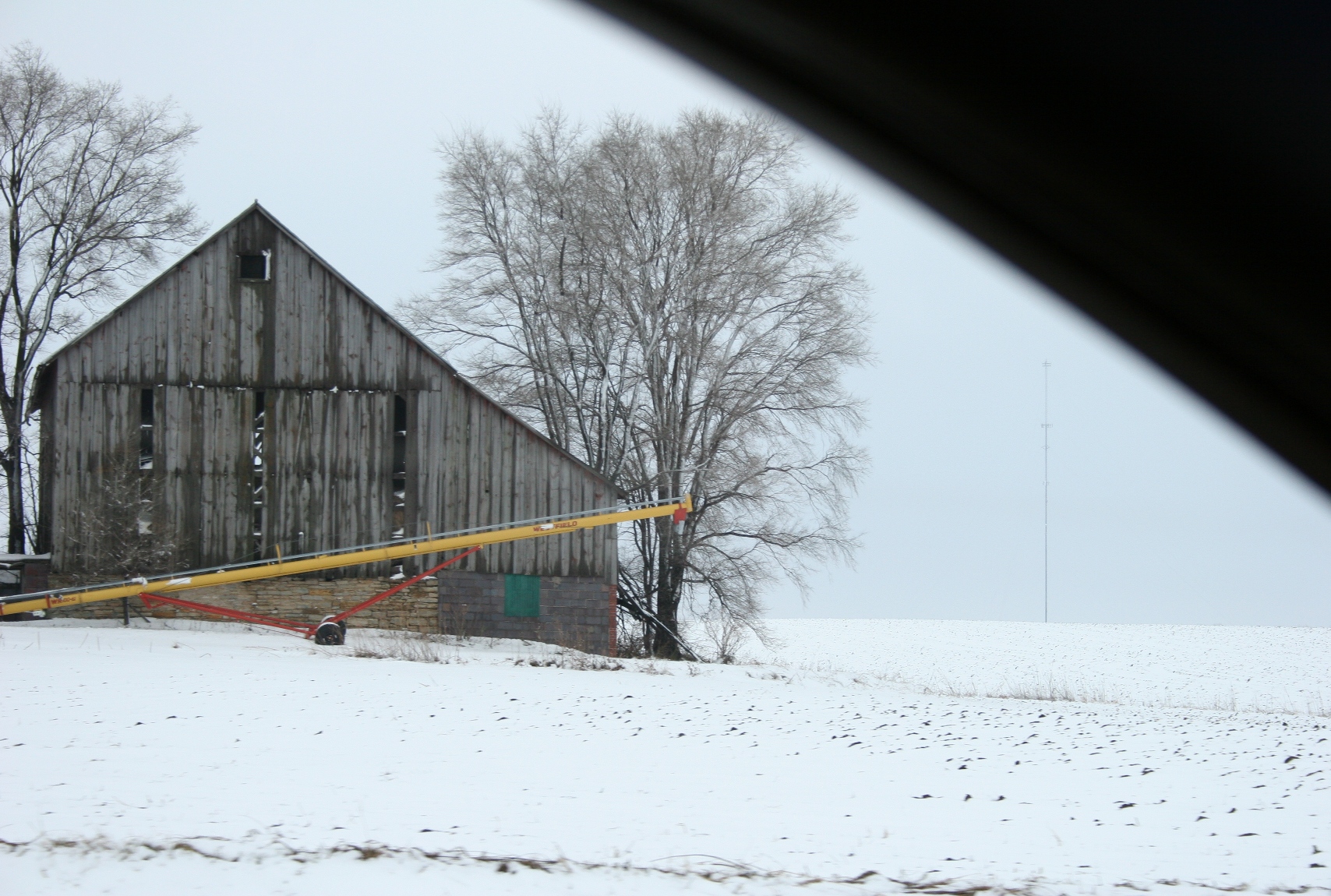
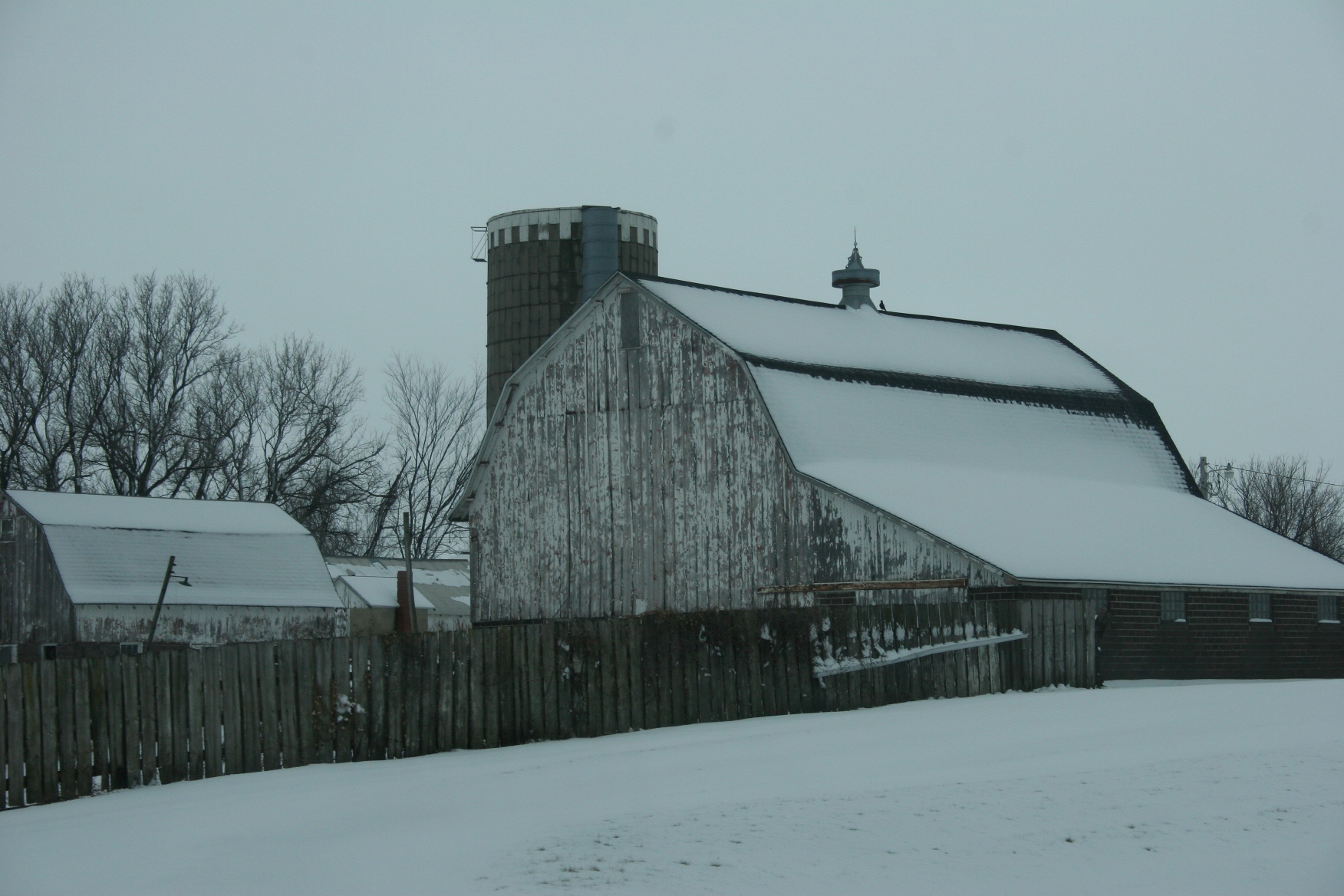
Even a collapsed barn possesses a certain beauty on the prairie. While I saw many barns in disrepair or falling apart, I also saw many that still stand, strong and proud in this wind-swept land.

Sheep and a horse graze in a roadside pasture.

A lone silo leaves me wondering, "What happened to the barn?"

(I shot the landscape photos while we were traveling along U.S. Highway 71 between Minnesota Highway 30 and U.S. Highway 14 in southwestern Minnesota on Saturday.)

UPON OUR RETURN to southeastern Minnesota, I grabbed today’s Faribault Daily News from the mailbox to find my photo, and a feature story about me, splashed across the front page. Several days ago reporter James Warden interviewed me about my blogging.

I’ll be honest and tell you that I’d been dodging the interview with James because I’m a bit uncomfortable in the spotlight. I much prefer the other side of the notebook and camera.

Even though I would have preferred my story tucked discreetly inside the pages of the newspaper, I cannot contain my enthusiasm for James’ reporting and writing. He captured the essence of me and my blogging style by using words and descriptions and details that would be fitting of a Minnesota Prairie Roots blog post.

If you’d like to check out journalist James’ take on me and my blogging, click here.

© Copyright 2010 Audrey Kletscher Helbling


Saddle up and ride on over to Northfield for The Defeat of Jesse James Days September 10, 2010

Filed under: Uncategorized — Audrey Kletscher Helbling @ 7:35 AM
Tags: , , , , ,

THIS WEEKEND, IF YOU’RE IN NORTHFIELD, you’d swear you were in Texas or Wyoming or Montana. This southeastern Minnesota community of about 20,000 transforms into a hang-out for cowboys and cowgirls during The Defeat of Jesse James Days, which runs through Sunday.

From a professional rodeo to a western style steak fry, a theatrical performance of Jesse, bank raid re-enactments and lots more, a western theme prevails. And it’s all to mark the townspeople’s courageous stand 134 years ago against the James-Younger Gang.

On September 7, 1876, the outlaws rode into town intent on robbing the First National Bank. They didn’t expect to find a defiant Joseph Lee Heywood, who refused to open the bank vault. Heywood was killed as were Swedish immigrant Nicolaus Gustafson and two of the would-be robbers.

The restored First National Bank, pictured here, is now home to a museum and the Northfield Historical Society.

A marker at Christdala Swedish Lutheran Church near Millersburg honors Swedish immigrant Nicolaus Gustafson who was shot point blank by outlaw Cole Younger. The church marker tells Gustafson's tragic story.

Since 1948, Northfield has celebrated The Defeat of Jesse James Days, today one of Minnesota’s biggest community festivals. If you’ve never attended, saddle up this weekend and head on out to this historic river town that, as cliché as it sounds, is quaint and charming.

Here, a river walk hugs the Cannon River, inviting visitors to stroll and peruse the artwork set up during the Riverfront Fine Arts Fair Festival this weekend or, on other Saturdays from early June to the end of October, the 9 a.m. – 1 p.m. Riverwalk Market Fair. The Market Fair also includes local produce and artisan foods.

This weekend's art fair will be similar to the Saturday Riverwalk Market Fair held from June through October along Northfield's riverwalk in the historic downtown.

Marsha Kolstad Morrill Kitchel displayed her artwork on a recent Saturday during the Riverwalk Market Fair.

A vendor sold fresh-baked fruit tarts at a riverside stand during the summer Saturday market.

Northfield’s abundance of eateries (some with outdoor riverside dining) and homegrown shops with everything from beads to antiques, books, local art and much more, draws visitors into a historic downtown that bustles with activity, but in a leisurely sort of way. Be forewarned, though, that during The Defeat of Jesse James Days, this town is a zoo.

Yet, Northfield is a pedestrian-friendly city where motorists actually yield to pedestrians, where a town square complete with fountain and popcorn wagon and summer concerts seems so “Norman Rockwell,” where the river walkway links a downtown defined by old buildings, where, honestly, you’ll feel comfortably at home.

This stray kitten showed up while I was dining recently on the patio of The Tavern, a downtown Northfield eatery.

And this weekend you’ll feel even more comfortable if you’re sporting the dress code of the day—western attire

Last year when I attended The Defeat of Jesse James Days Sunday afternoon Grand Parade, I spotted more cowboy hats and cowboy boots than I’ve ever seen in a single locale. On nearly every community float, even those from the big city, princesses replaced sparkling strapless gowns and crowns with western shirts, vests and jeans (or denim skirts) and cowgirl hats.
Western attire is protocol for princesses in the Grand Parade, which starts at 2 p.m. on Sunday.

The princesses bring their horses too when they appear in the parade.
They also brought their horses—plush pink ponies, wooden rocking horses, stick horses…with a few twirling lassoes and country western music to boot. Well, you get the picture.
Even the James-Younger Gang showed up with their guns ablazin’ as their horses galloped down Division Street.

Locals dress the parts of the James-Younger Gang for the Grand Parade and bank raid re-enactments, held through-out the weekend. Arrive early if you want to see the downtown shoot-outs.

Despite all that horse and outlaw hoopla, the parade presents one particularly memorable oddity. Northfield-based Malt-O-Meal gives away individual serving packages of dry cereal to parade-attendees.

I’ve received only one better parade freebie in my lifetime. Many years ago in Morrill in central Minnesota, a local bar handed out free cups of beer, which flowed freely from a parade float keg. Now that’s a parade even an outlaw could appreciate.

© Copyright 2010 Audrey Kletscher Helbling