Minnesota Prairie Roots

Writing and photography by Audrey Kletscher Helbling

Heading back home to the southwestern Minnesota prairie for Christmas December 26, 2010

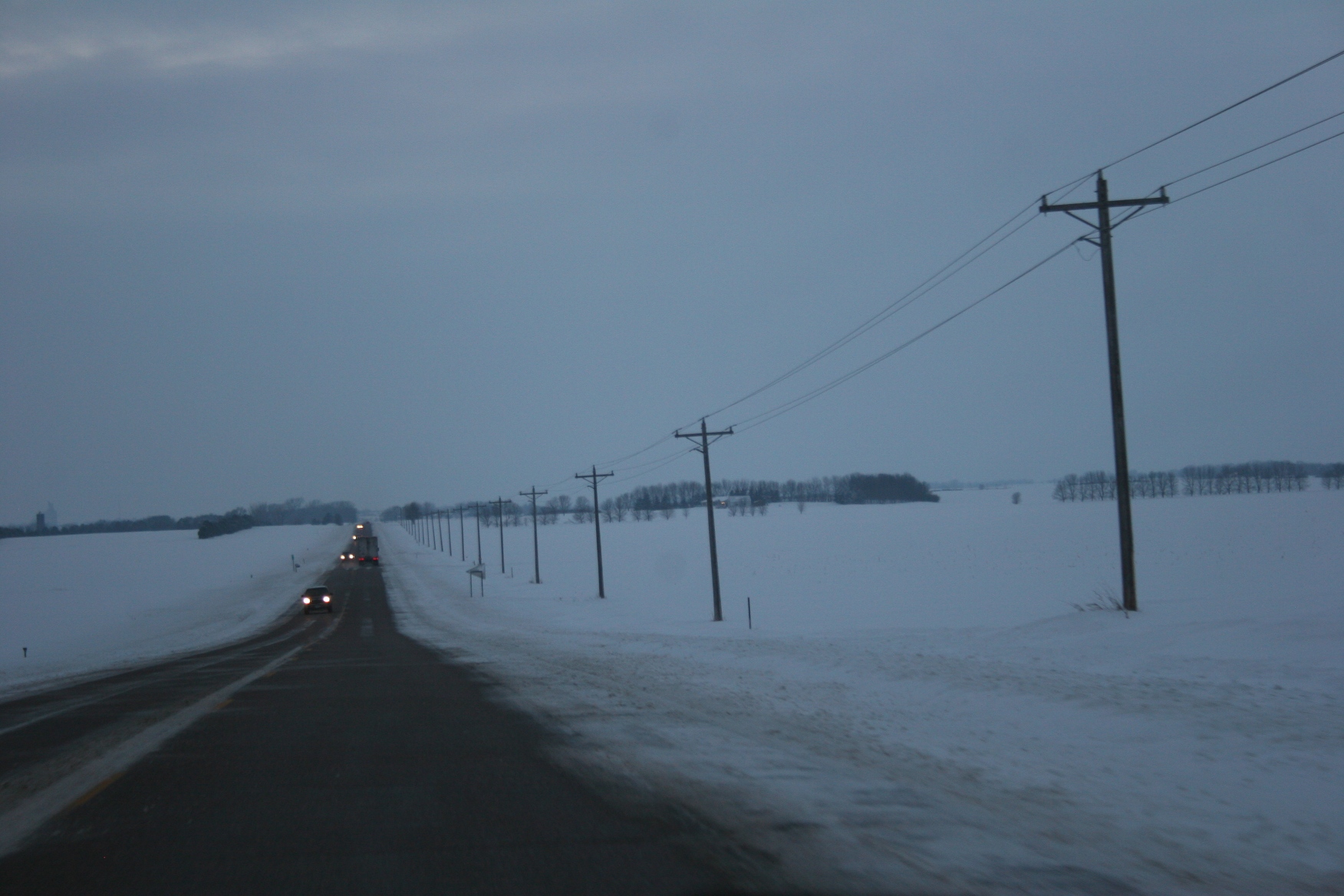
We drove along U.S. Highway 14 as we traveled to southwestern Minnesota for Christmas. This stretch is between the Sanborn corners and Lamberton.

FOR THE FIRST TIME in decades, my family and I celebrated Christmas Eve with my mom and four of my five siblings, and their families, “back home” on the southwestern Minnesota prairie.

It was my mom’s wish that all of us be there, attending Christmas Eve church services with her at our home church, St. John’s Lutheran in Vesta.

Our Christmas together was as wonderful and memorable and as full of laughter and love as I expected it would be.

Initially, I doubted that we would make the 2 ½-hour trip west given the steady snow that began falling early Christmas Eve, slicking the highways and creating difficult driving conditions. But by the time we left Faribault around 2:30 p.m. Friday, the snow had stopped and major highways were clear.

So, with the trunk packed full of luggage, air mattresses and sleeping bags, presents and coolers, the five of us crammed ourselves into the car (along with pillows and board games on our laps) for the journey to Redwood County. We were headed first to my brother’s house just north of Lamberton.

When we got to New Ulm, nearly 1 ½ hours into the trip, I dug my camera out of the camera bag wedged near my feet and snapped occasional photos of the prairie. It is the land I most love—the place my kids call “the middle of nowhere.”
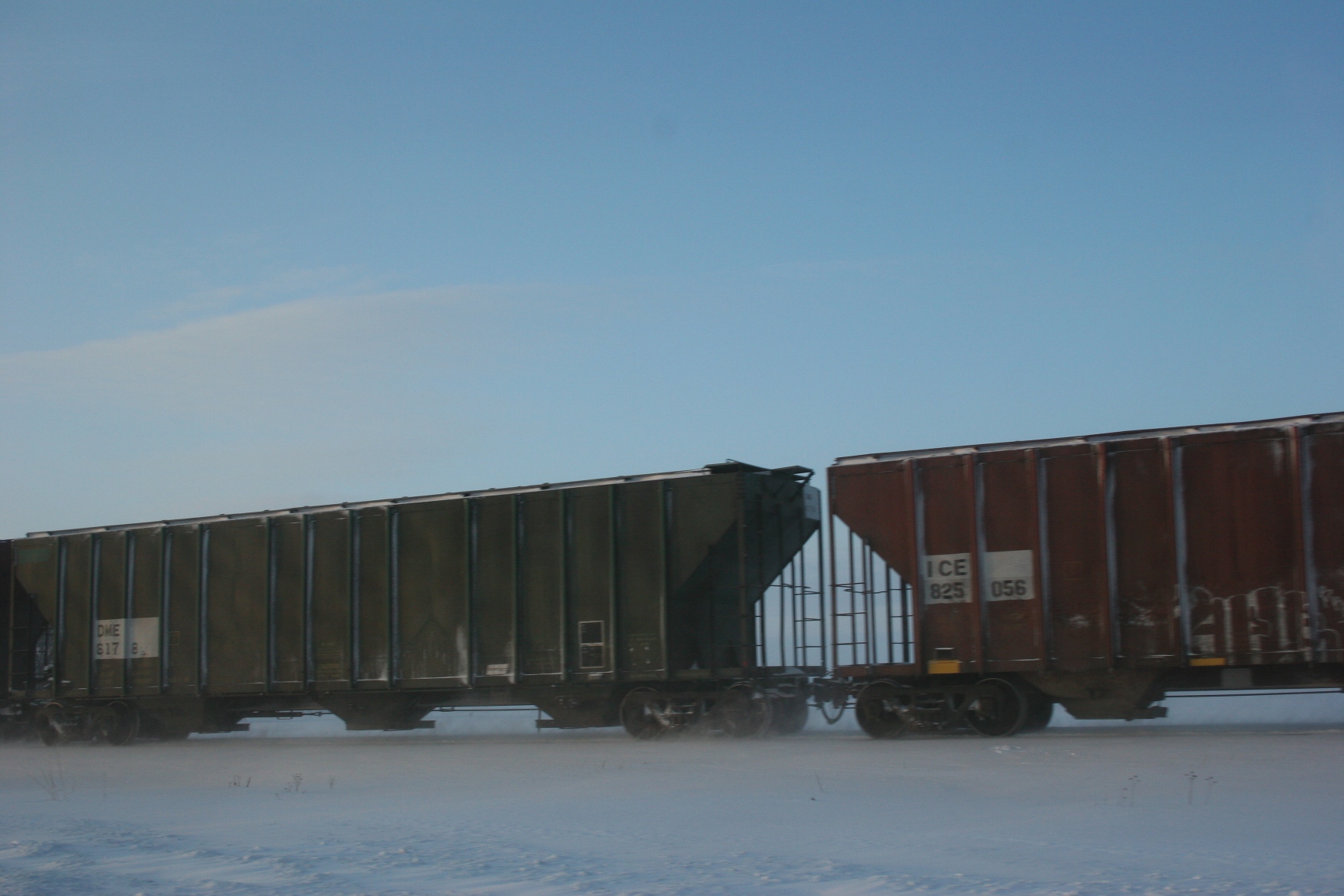
A train travels east along U.S. Highway 14 between Essig and Sleepy Eye while we travel west.

I love this land of plowed fields and wide open spaces, of small-town grain elevators occasionally punctuating the vast skies, of cozy farm sites sheltered by barren trees.

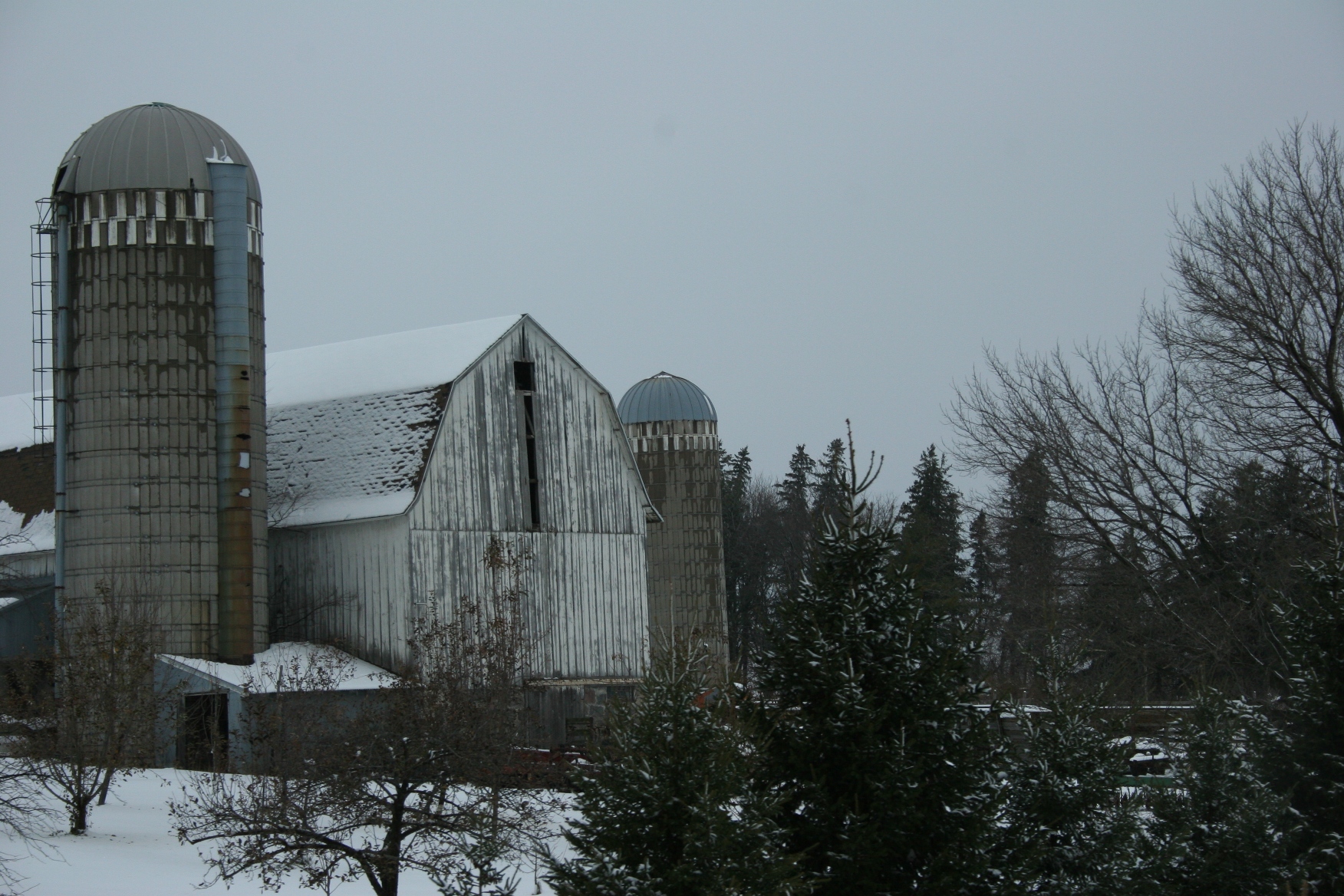
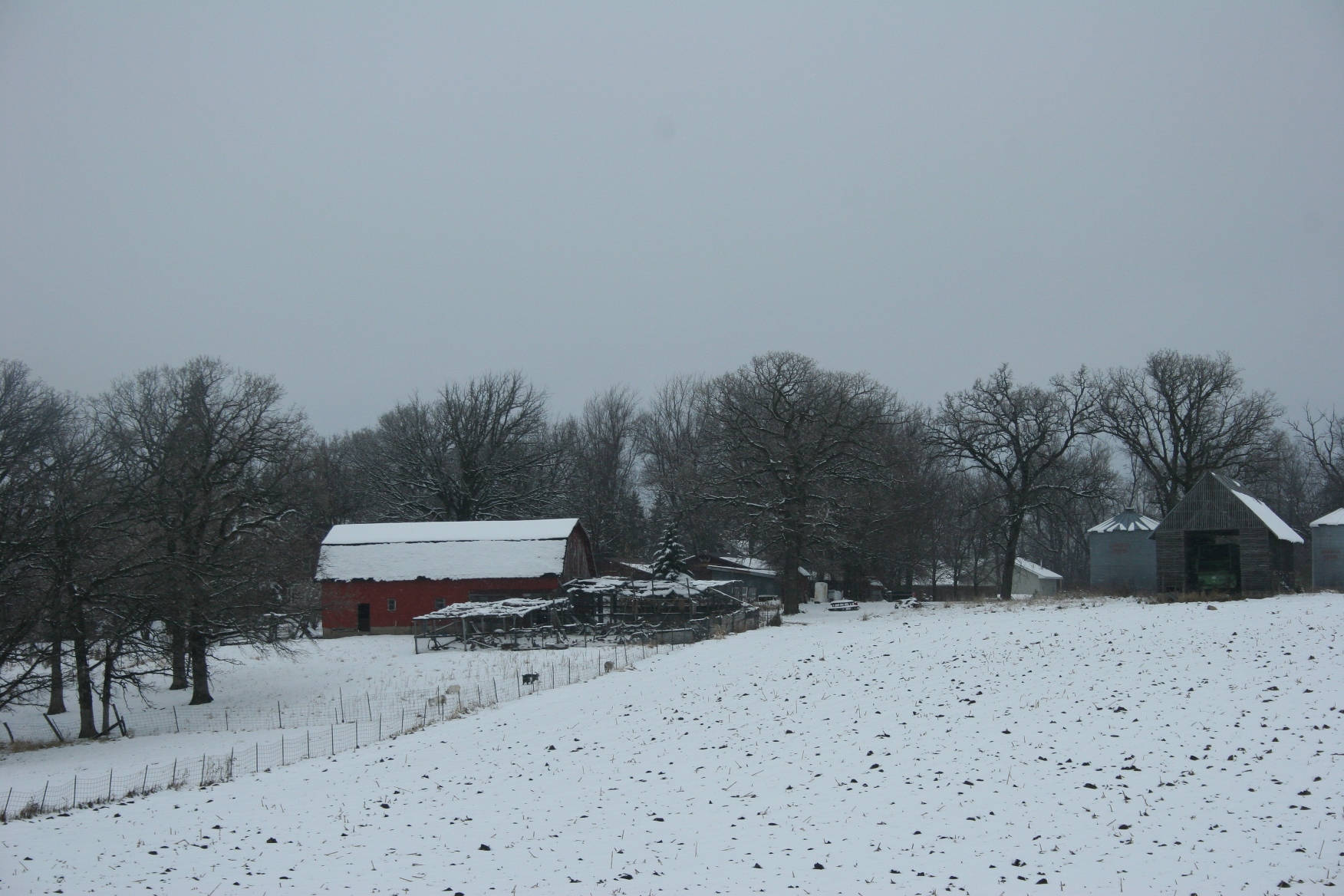
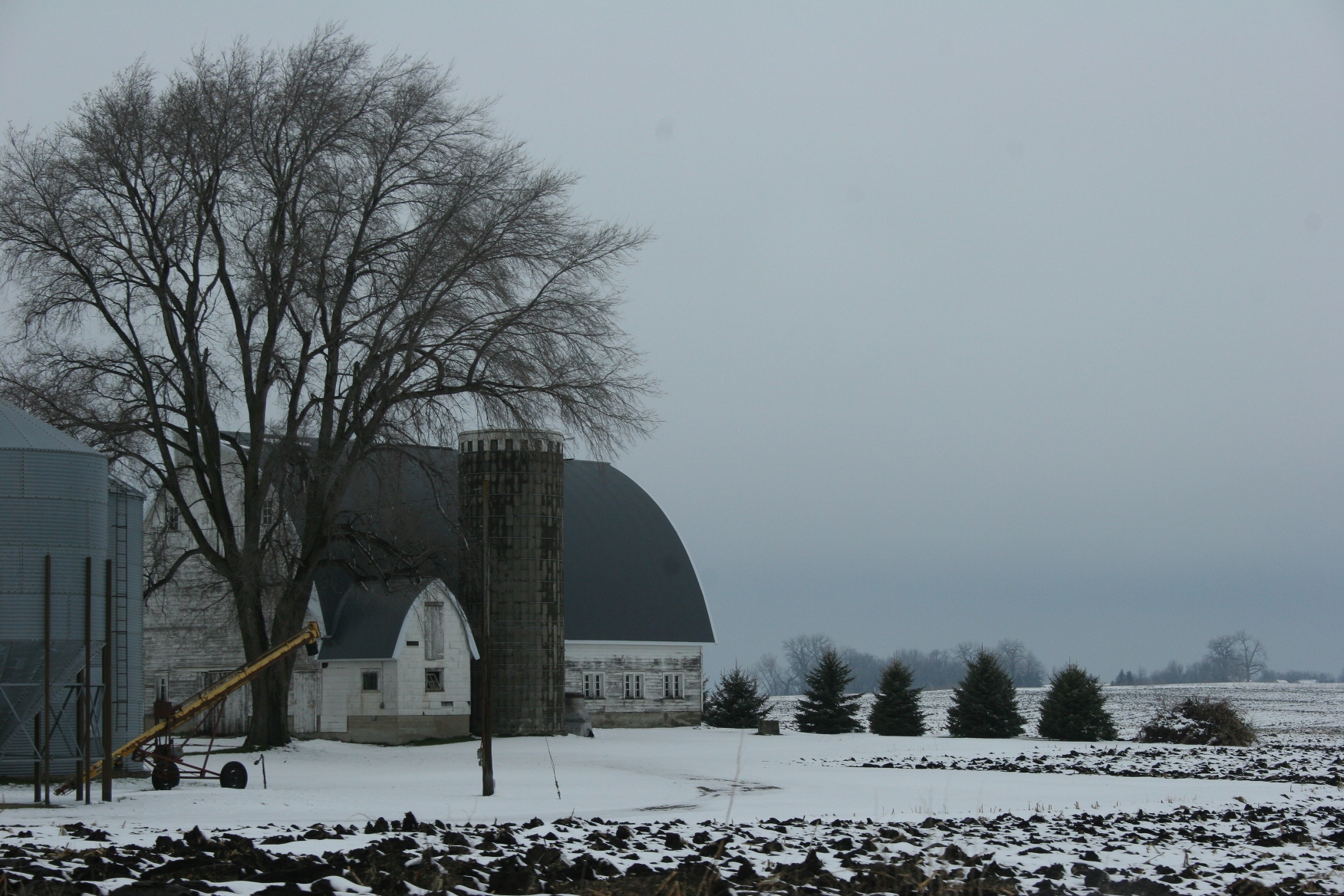
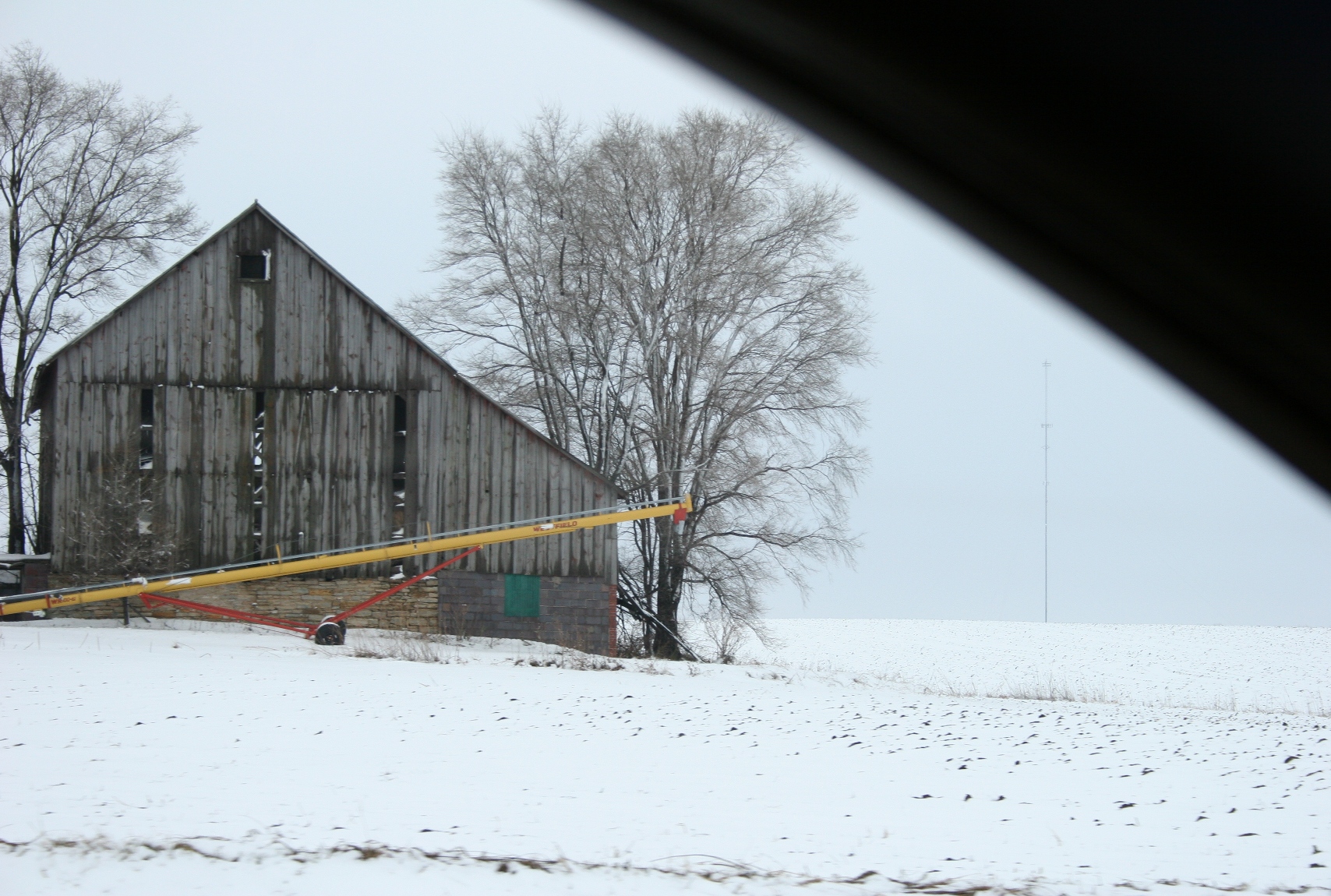
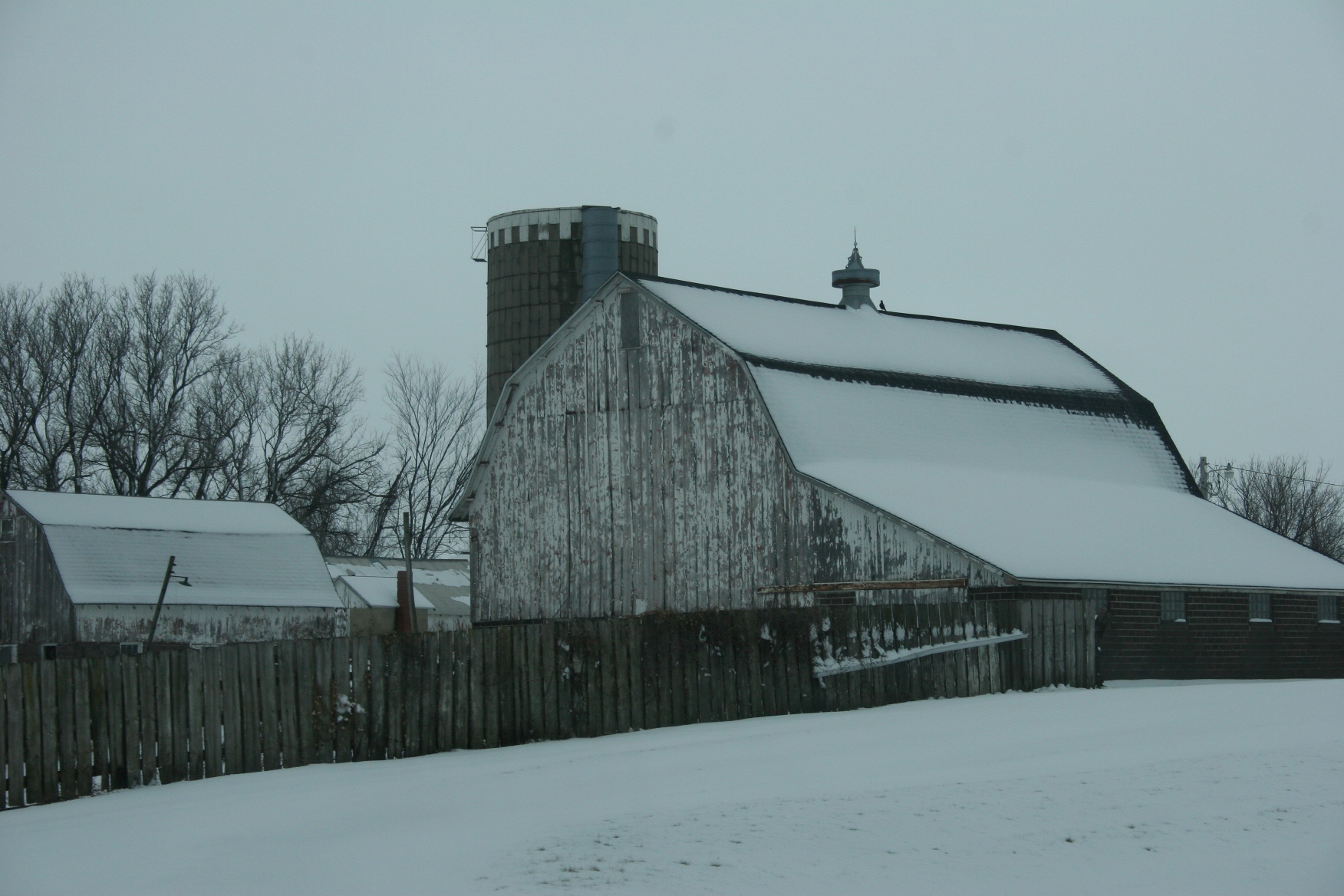
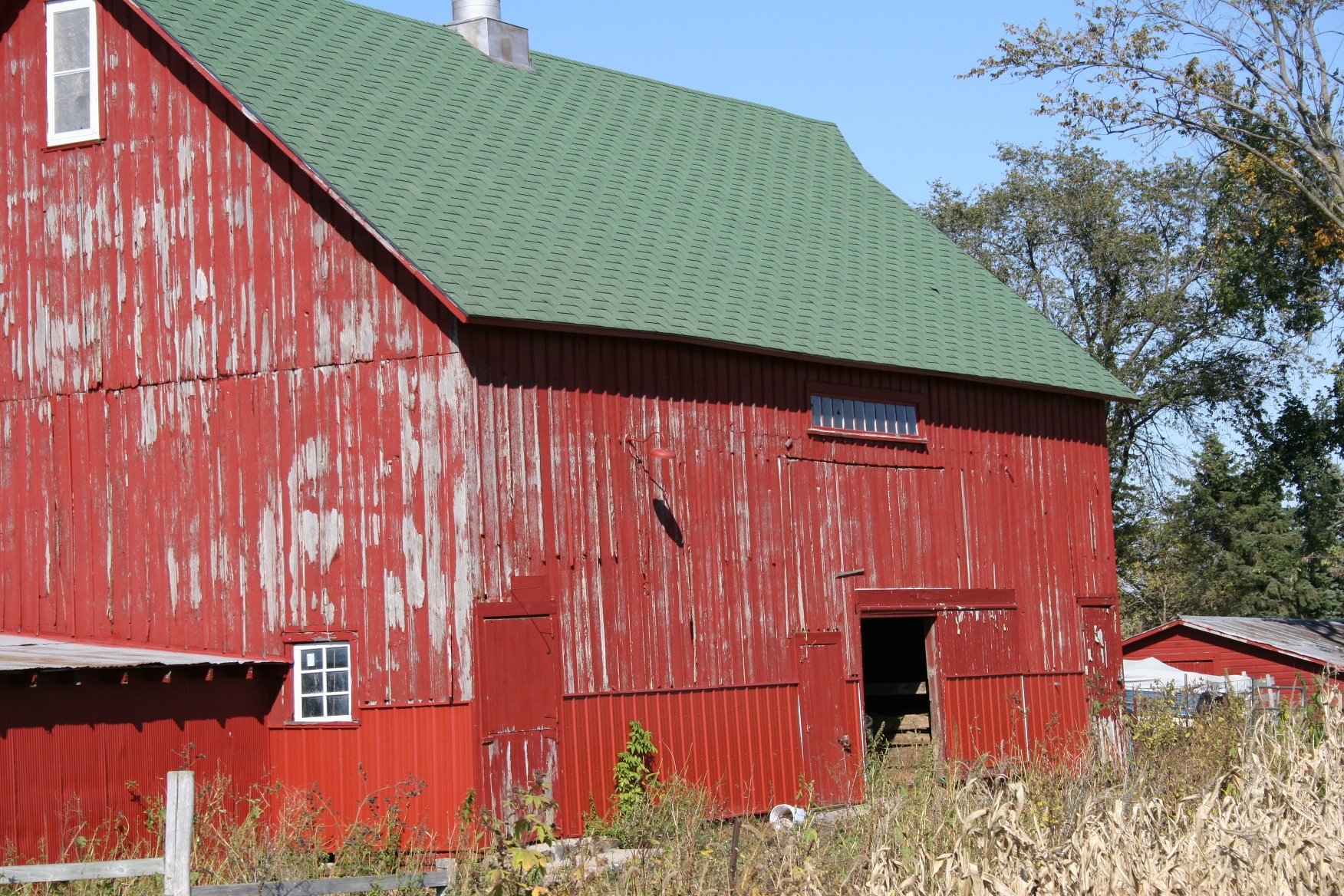
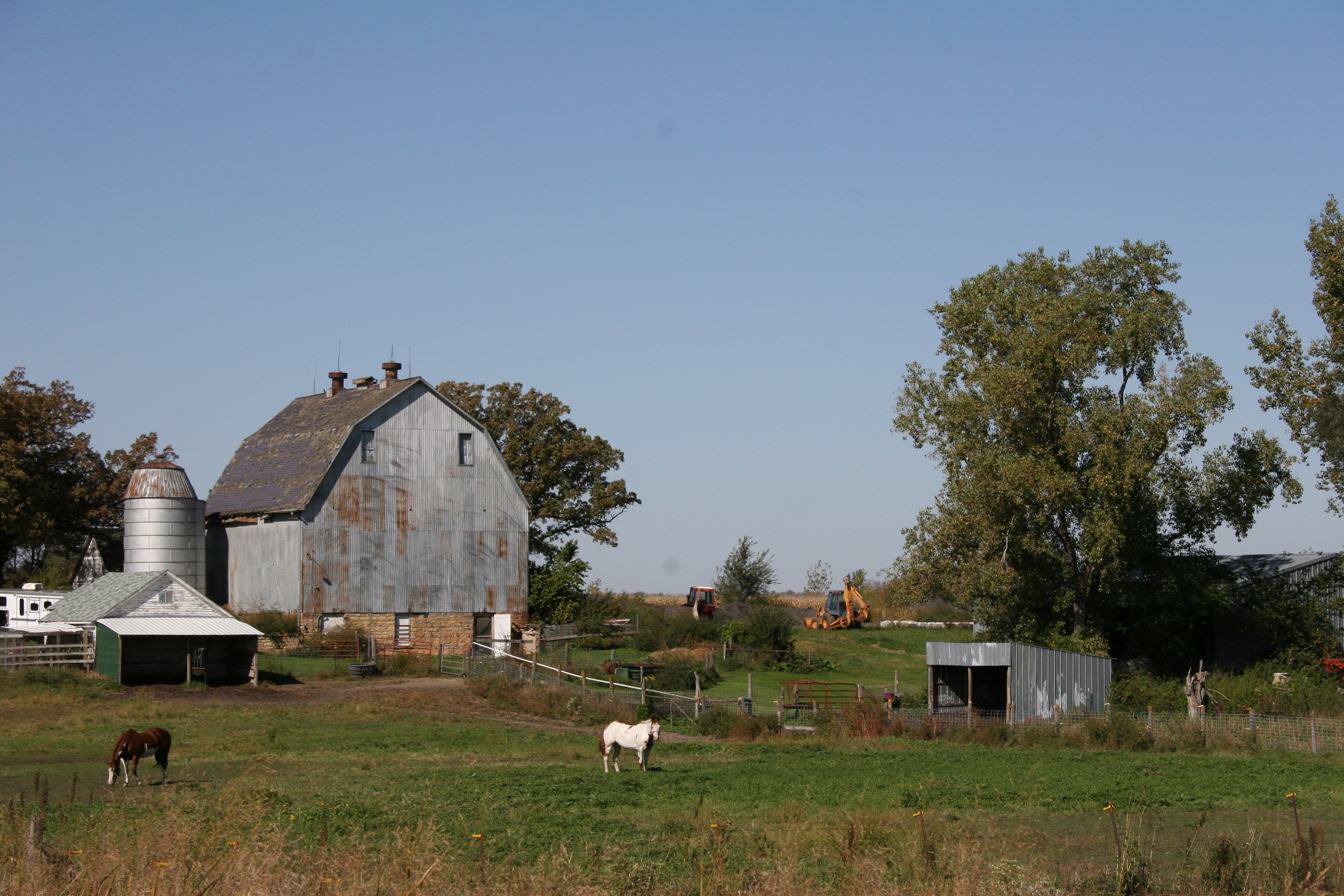
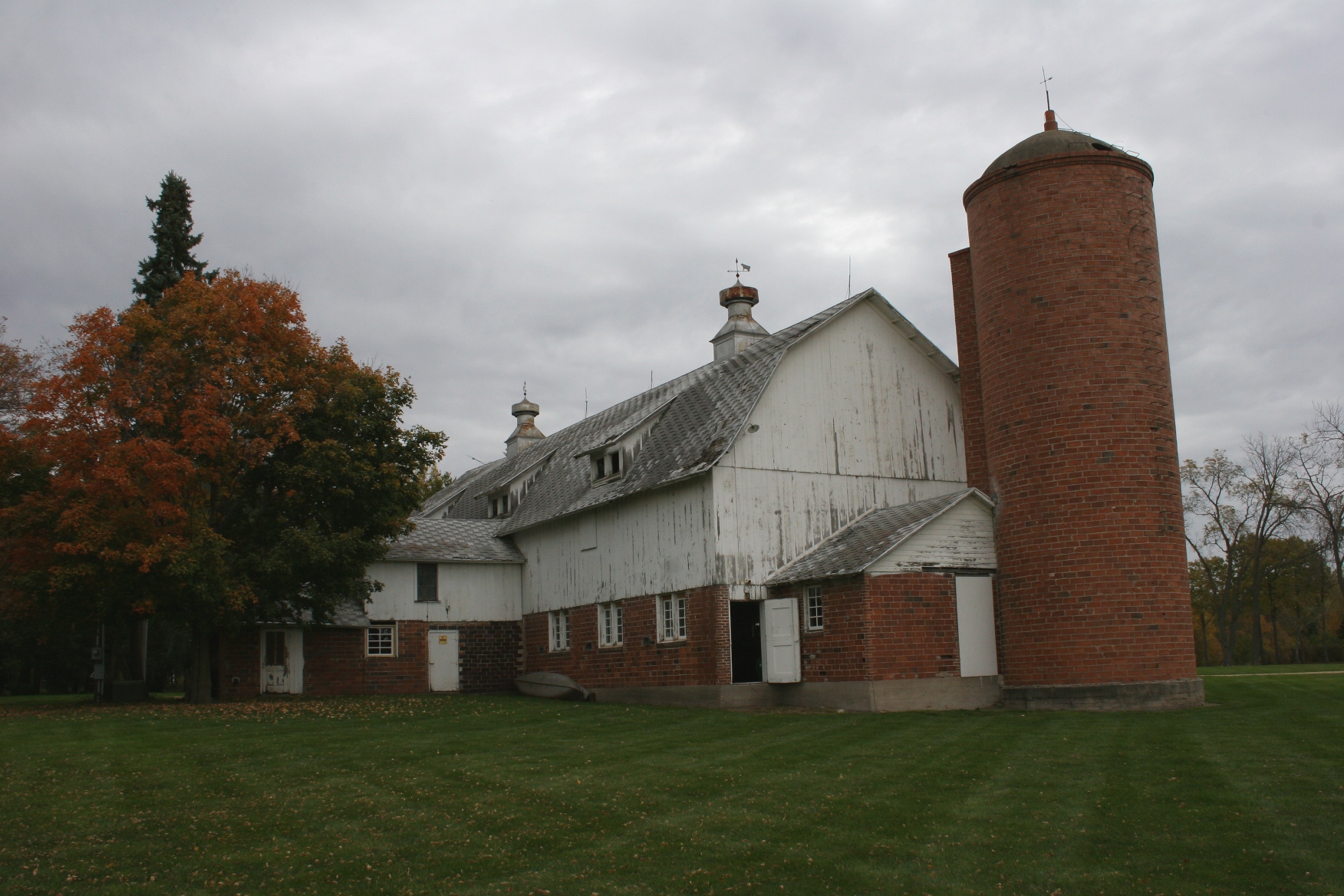
I love, especially, the red barns accented by the fresh-fallen snow, portraying an agrarian beauty that perhaps only someone who grew up on a farm can appreciate.

As much as I have disliked all of the snow we’ve had this winter, I saw only a beautiful winter wonderland when I was back home for Christmas on the prairie.
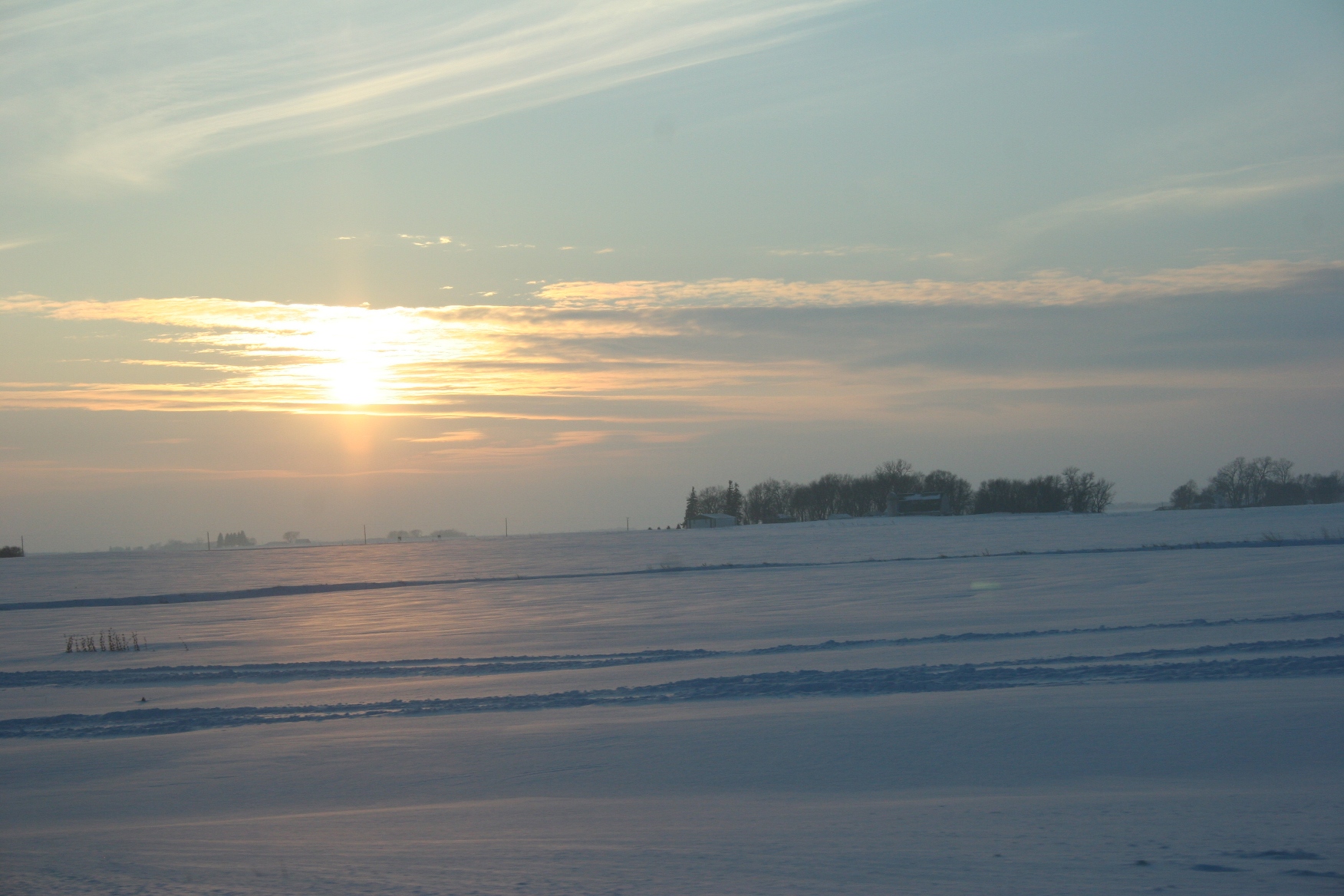
The sun begins setting over the prairie as we head west, passing through Sleepy Eye and Springfield before reaching Lamberton. We saw only occasional glimpses of sun on a mostly gray day.
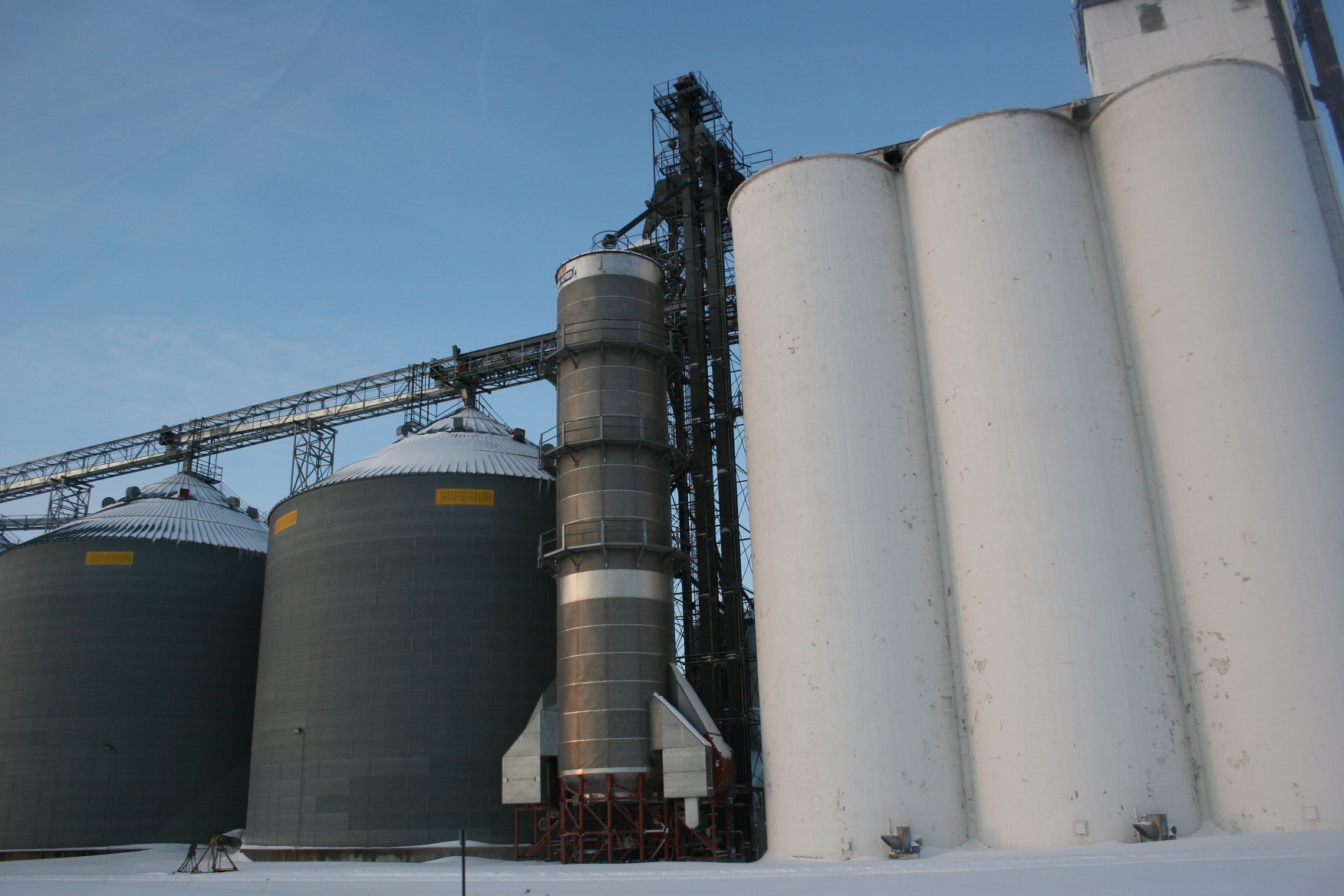
The elevators in Sleepy Eye. Small-town prairie elevators like this can be seen for miles away.
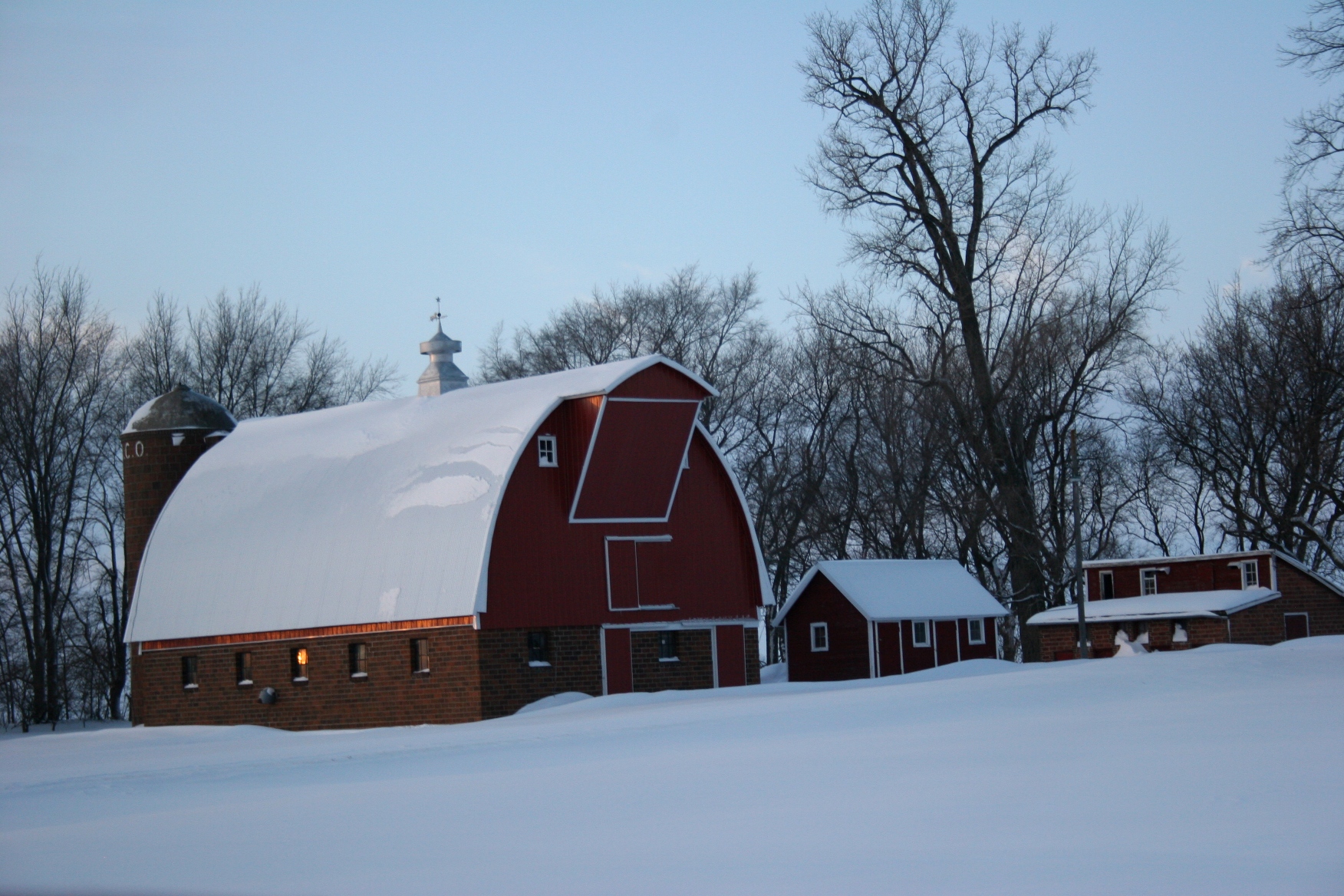
One of many picturesque barns along U.S. Highway 14.
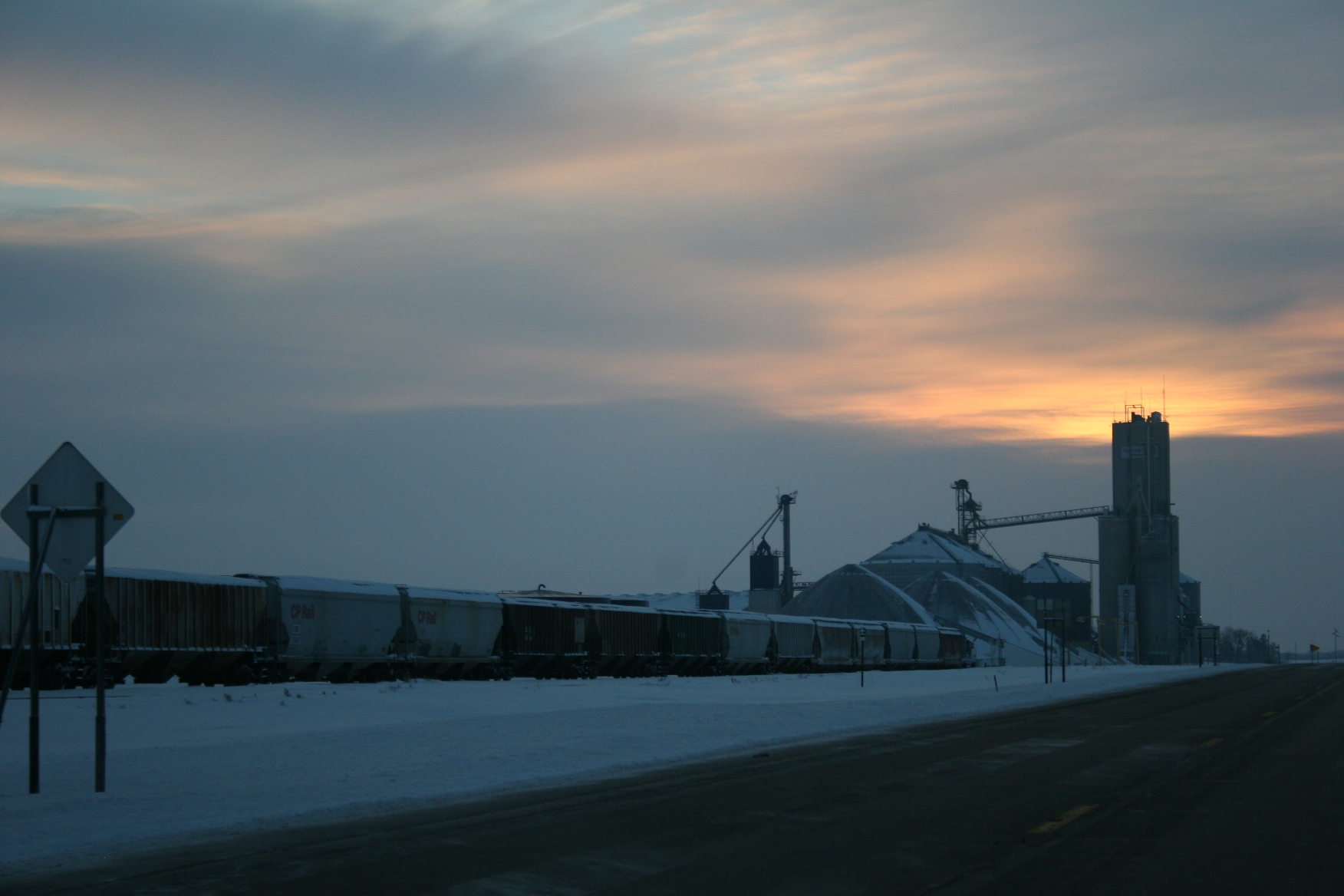
Elevators and trains are a common site along U.S. Highway 14 in the rich farmland of southwestern Minnesota. We've nearly reached our destination when I photograph this elevator complex near sunset.

© Copyright 2010 Audrey Kletscher Helbling


An auction at the Clear Lake Farmer’s Elevator December 23, 2010


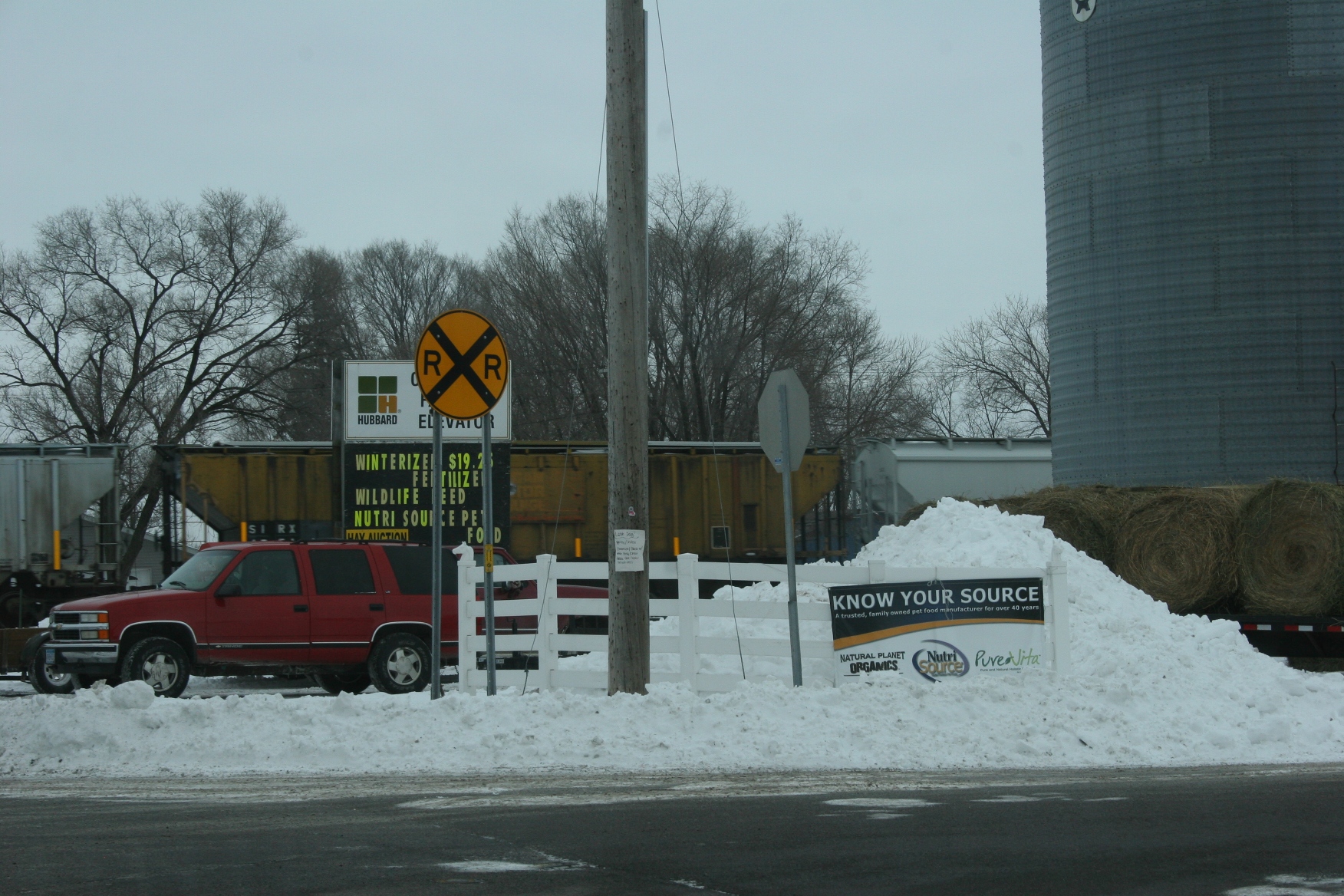
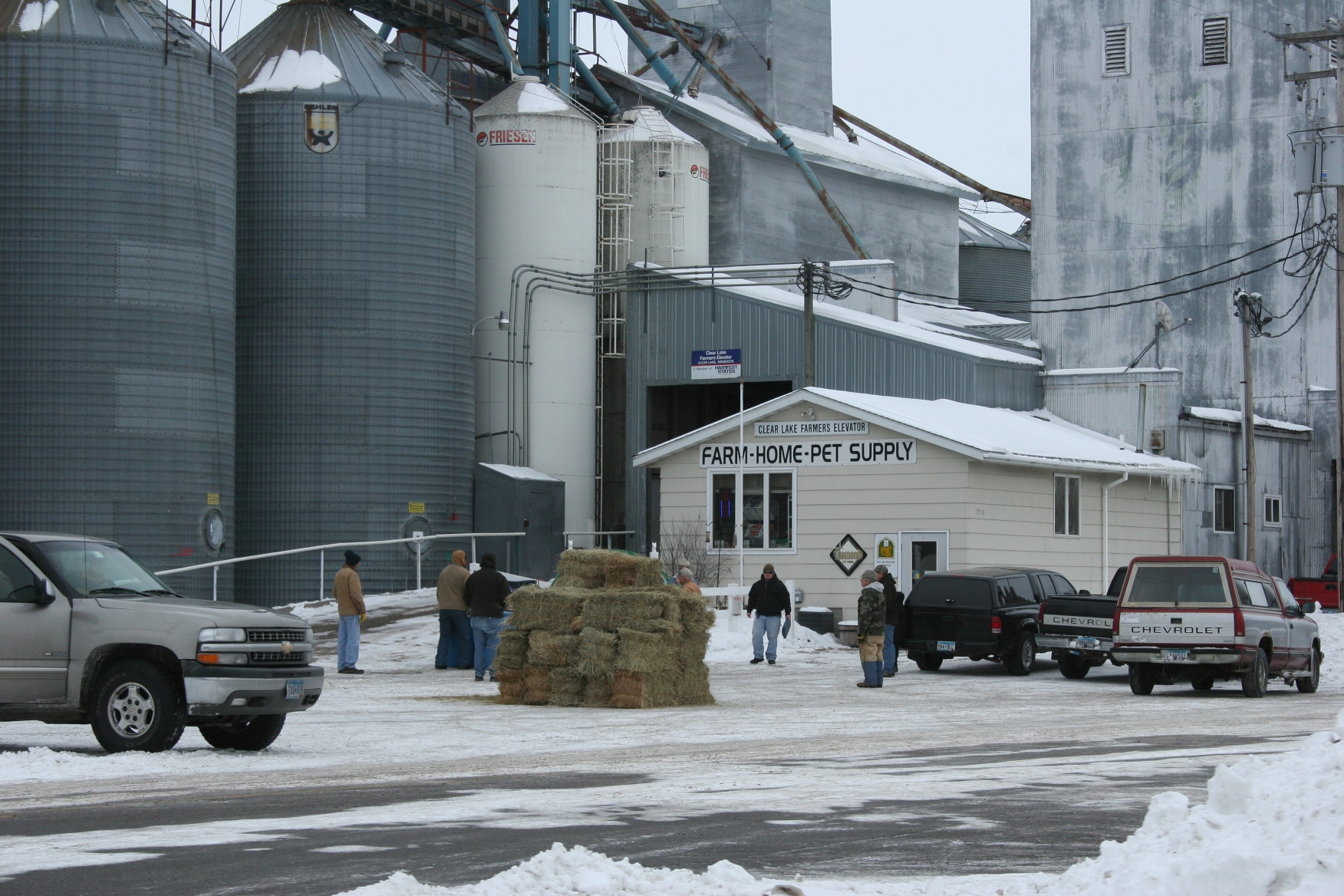
I shot this image while waiting for a train by the Clear Lake Farmer's Elevator.

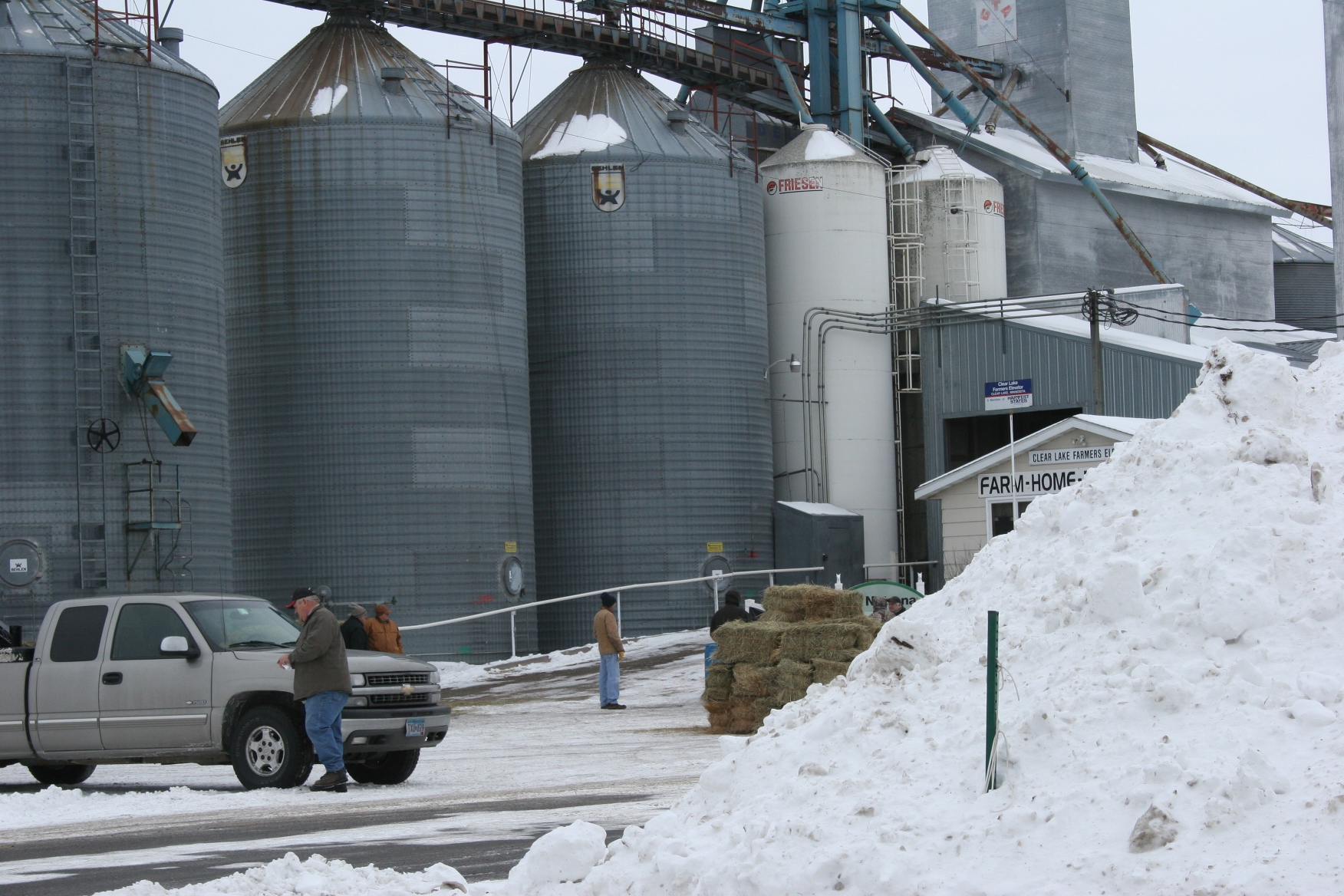
HEY, DO YOU ENJOY attending auctions? Ever heard of a consignment hay auction? I hadn’t either, until Saturday morning when my family drove through Clear Lake en route to St. Cloud.

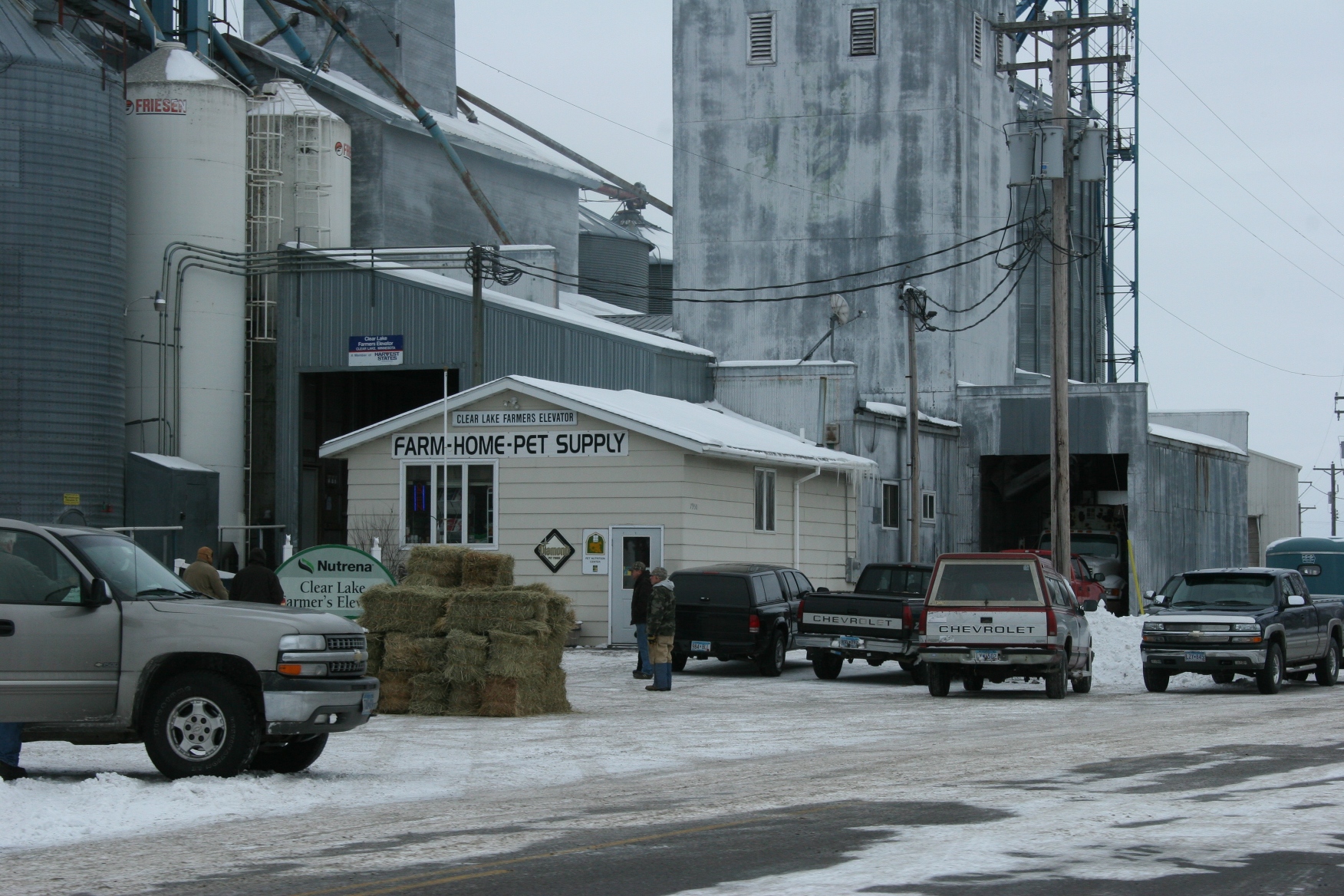
We were waiting for a train to pass through town when I noticed pick-up trucks parked near the Clear Lake Farmer’s Elevator and some guys loitering next to a stack of hay. My husband quickly spied the hay auction sign to his left.

I quickly pulled out my camera because I recognized this small-town occurrence as something worth photographing, but which likely never has been photographed.

The whole scene had a Garrison Keillor quality about it, almost like we’d driven up to the Lake Wobegon Farmer’s Elevator.

It was something about the starkness and grayness of the setting, the way the men stood, the rural feel of the whole place that drew me in and kept me clicking the camera shutter.


A snow pile blocked my view of the hay auction until we inched forward.

On the third Saturday of each month, October - April, the Clear Lake Farmer's Elevator holds a consignment hay auction beginning at 10:30 a.m. The elevator is just off U.S. Highway 10 in Clear Lake southeast of St. Cloud.

When I saw the photos, I was pleased as punch with the results. Capturing snippets of small-town Minnesota life like this reconnects me to my rural roots and, in some small way, preserves an important part of our agricultural history.


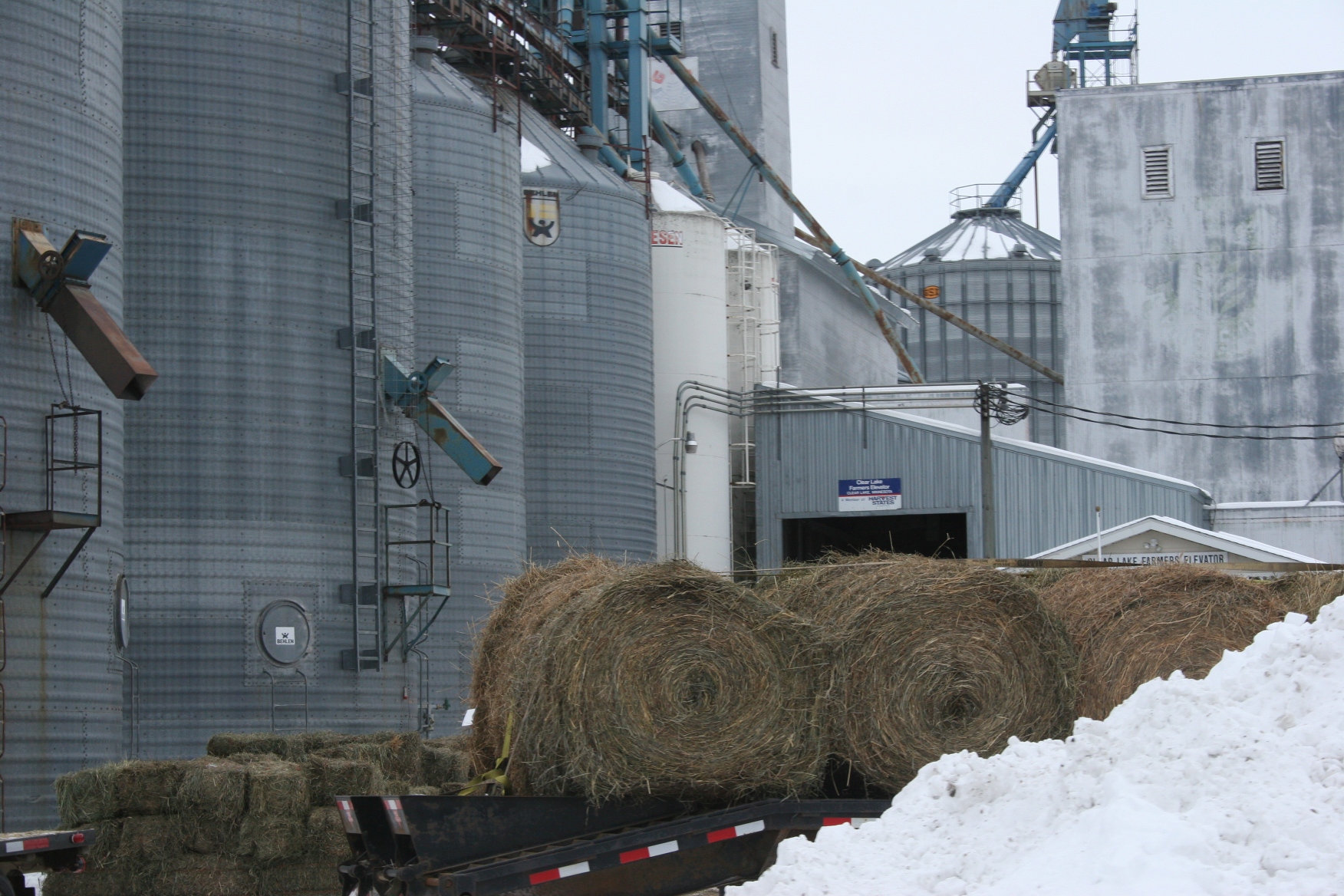
Small square grass bales sold for $2.25 - $3.20 bale at Saturday's auction, according to online auction results.

Round grass mix bales sold for $39 each. "We still have people asking for straw and bags of ear corn to feed birds, etc.," the online auction info reads.

© Copyright 2010 Audrey Kletscher Helbling
 

Boosting my photography confidence December 9, 2010

WE ALL LIKE to win.

My husband once won a trip to the Bahamas.

A few years ago I won a bag of groceries.

I’ve also placed in several photo contests during the past decade—a few times at the local nature center and once in a nation-wide competition sponsored by a life insurance company. That first place national win earned me $100.

Every time one of my photos wins an honor, my confidence soars. While I feel quite confident as a writer, I’ve always had some insecurities about my photography skills. I’m a writer first and the photography simply evolved as a sideline necessity.

Today, after years of practice, I can unequivocally state that I enjoy photography. Yet, the doubt still lingers. Are my photos good enough and does anyone like them?

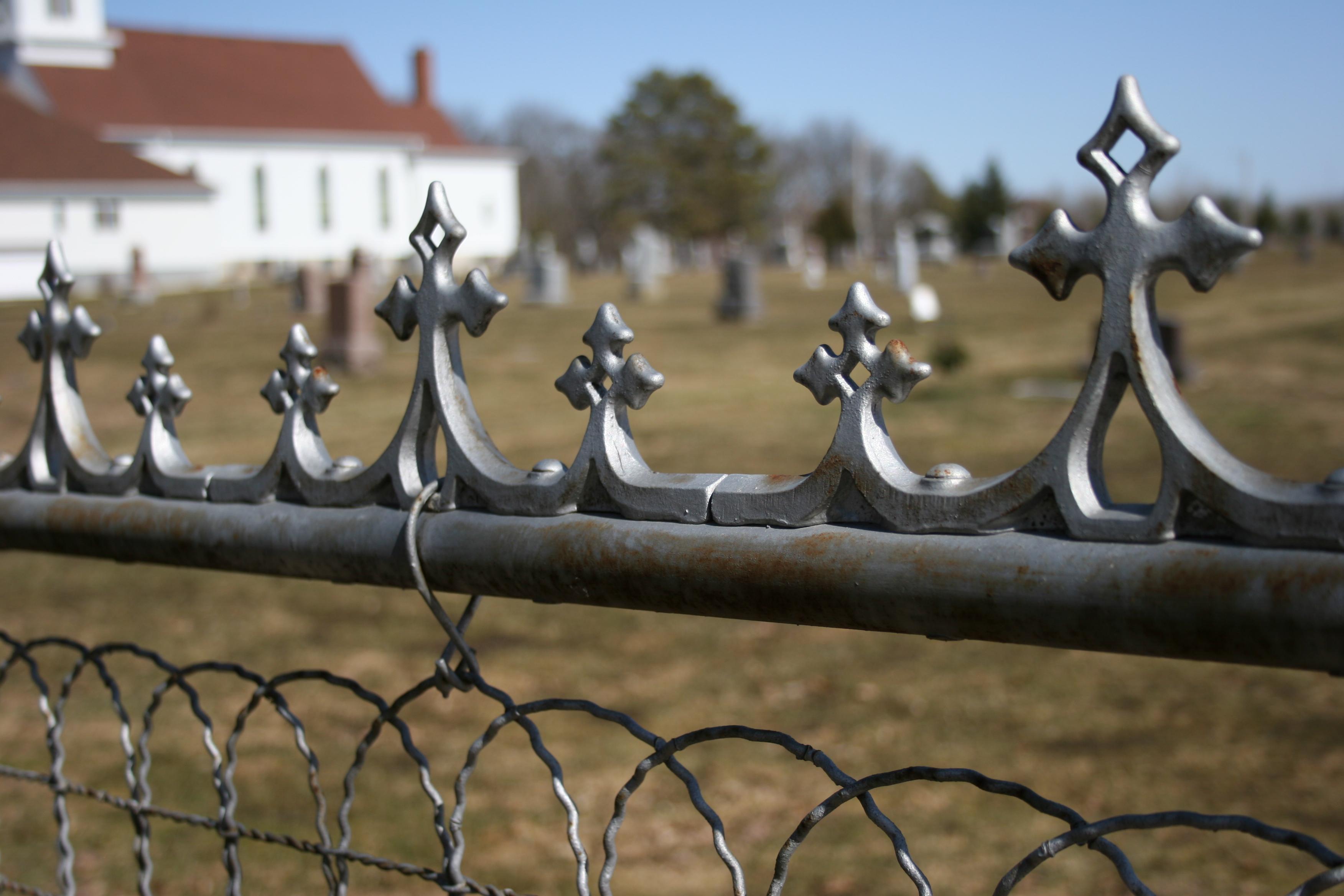
Apparently the folks at Thrivent Financial for Lutherans liked the photo I submitted for a 2011 wall calendar competition. My image of an old cross-topped fence surrounding the Urland Lutheran Church Cemetery in rural Cannon Falls now graces the October page of the Thrivent “Connecting with the Cross” calendar.


My winning image of the church cemetery fence. The calendar photo has been slightly cropped and darkened.

“We looked for unique and inspiring images, and yours was one of them,” Tim Schwan, vice president of Church and Community Engagement wrote in a congratulatory form letter I received. “We received more than 300 submissions. Among many high-quality contenders, yours stood out.”

Now if those words aren’t validating, I don’t know what would be. While I may not be as technically savvy as some/many photographers, I do possess an eye for detail that allows me to find and compose good pictures.

Interestingly enough, I did not shoot my winning fence image specifically to enter this contest. In fact, I was unaware of the Thrivent photo calendar competition when I took the picture in late March while on a Sunday afternoon drive with my husband in the Sogn Valley area of southeastern Minnesota. We both love old country churches. So when we came upon Urland Lutheran, we stopped, walked the church grounds and I started clicking.


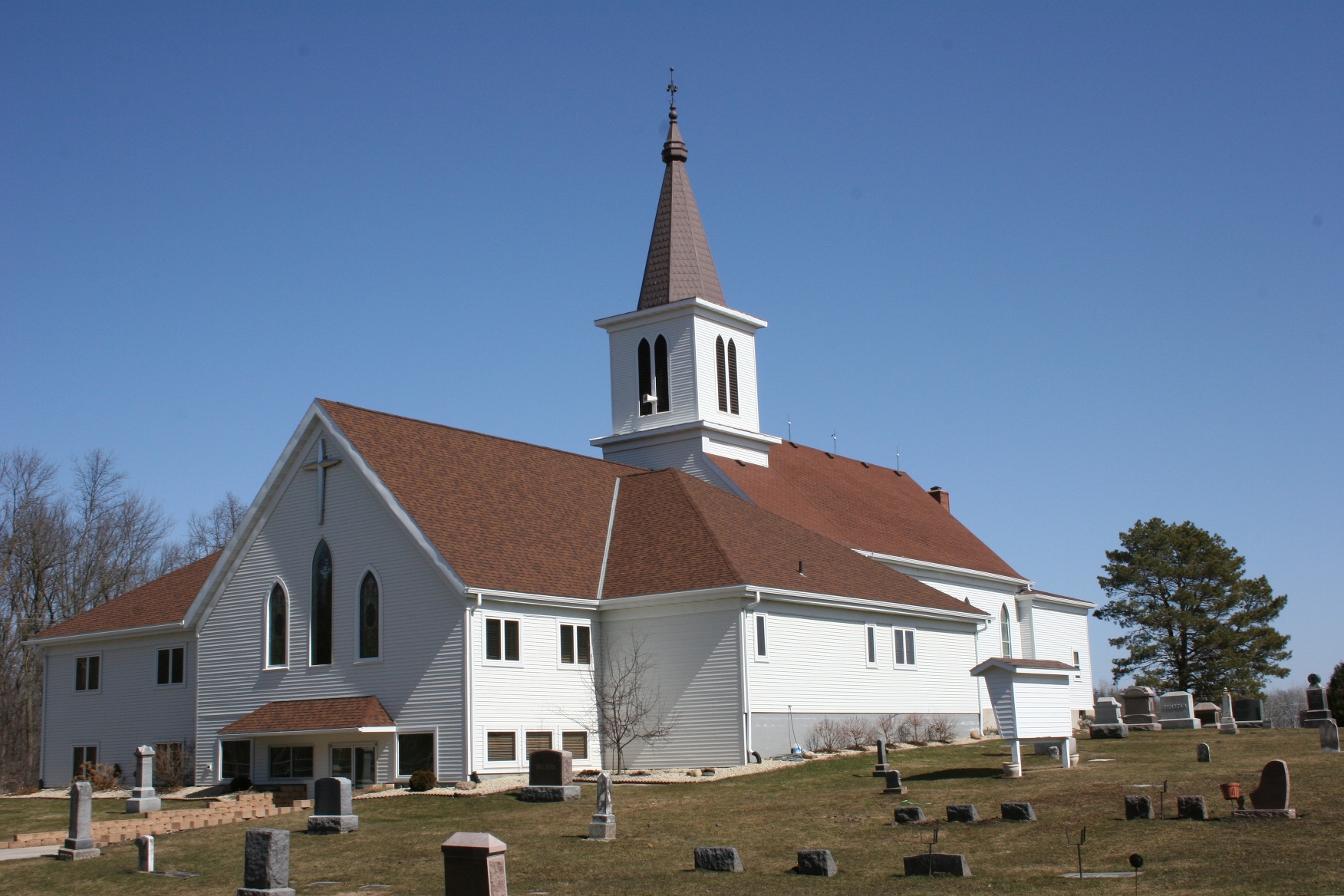
Urland Lutheran Church, rural Cannon Falls

Country churches offer so many photo ops along with lots of beauty and history.

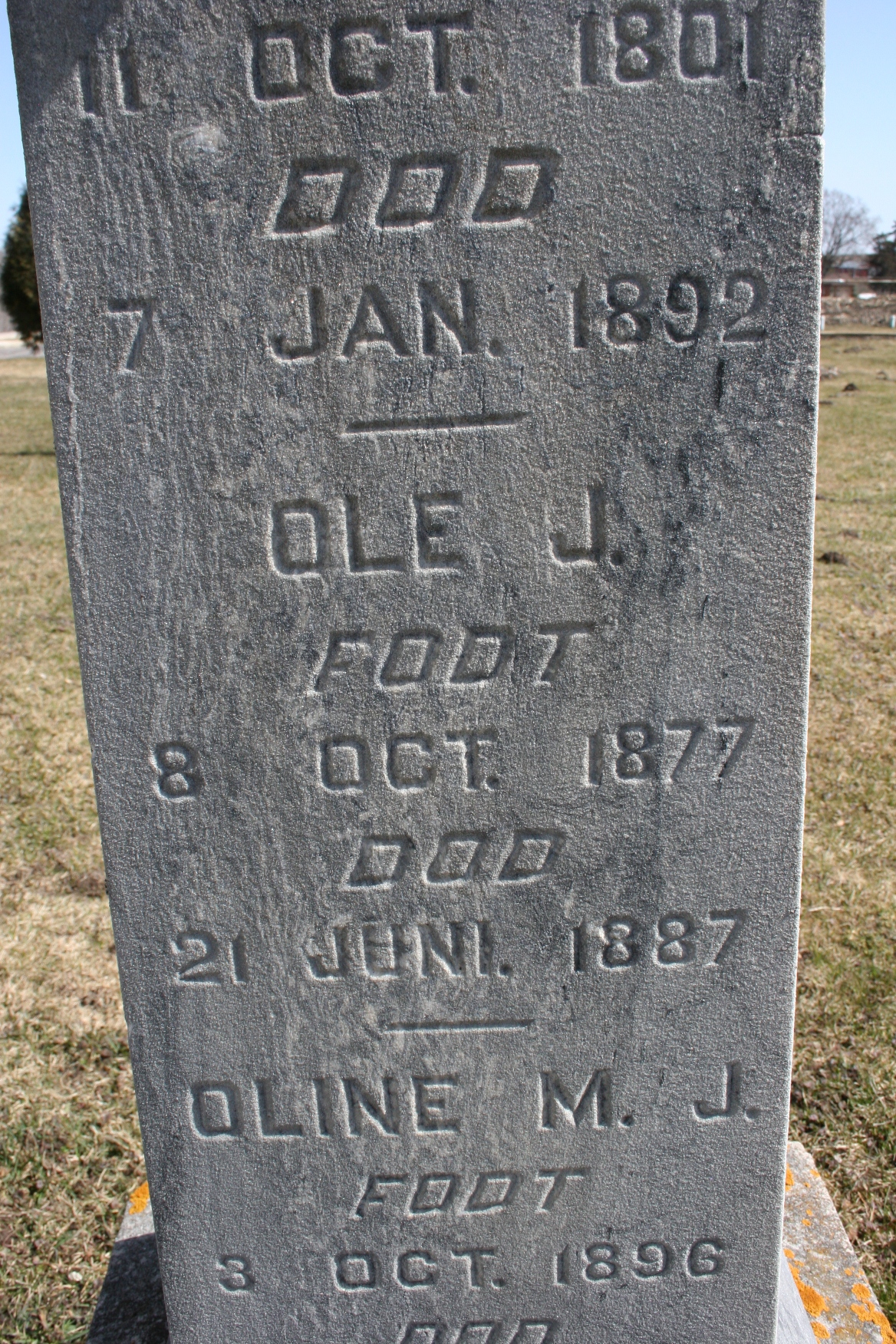
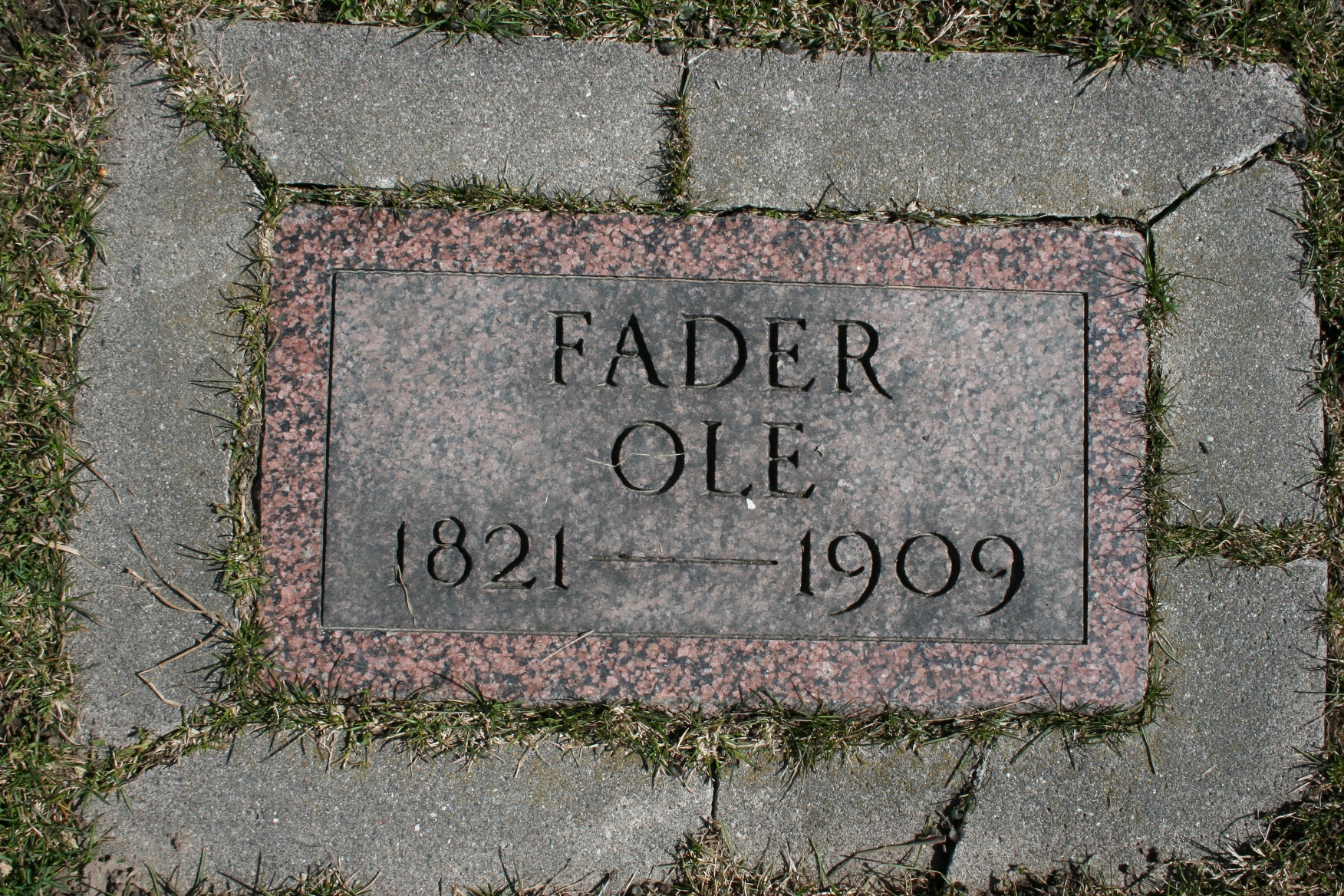
Urland Lutheran Church dates back to 1871 and is named after Urland in the Sognefjord area of Norway, home to many of the families that formed the rural Cannon Falls congregation. Names like Ole and Ragna on church cemetery tombstones point to the strong Norwegian heritage.


Ole is a common name on markers in the Urland cemetery.

Another Ole tombstone at the Urland Lutheran Church Cemetery points to the congregation's Norwegian heritage.

Behind every photo lies a story. And that’s the story behind my winning calendar image.


A close-up side view of Urland Lutheran. Unfortunately the church was locked when we were there.

I DON’T KNOW the stories behind the other 11 calendar page photos. But all portray a cross, as required by contest guidelines. Among the more unusual photos—crossed icicles, a cross-shaped thorn, and children holding quilts and standing in a cross formation inside a church sanctuary.

I’m hopeful that Thrivent will publish the winning images and information about each photo on the company’s website.

The other photo contest winners are Cindy Carlson of Northfield, MN; Jyll Malotky of Prior Lake, MN; Fred Von Ruden of Owatonna, MN; Roy Christell of Lake Saint Louis, MO; Martin Lohrmann of Philadelphia, PA; Walt Timm of Jefferson City, MO; Lynn Radtke of Blaine, MN; Chris Denning of Helena, MT; Carla Gauthier of Saginaw, MI; Susan Ryan of Chicago, IL; and Anitra Frazier of Dolton, IL.

Now, if you’re wondering how you can get one of these calendars, well, you must be a Thrivent member.

Sorry.

AS A SIDE NOTE, many years ago my daughter Miranda placed in a Thrivent Kids’ Club calendar contest. She drew a picture of alligators flying kites on the beach. I think she won for the very same reason I did. Her creation stood out as unique.

© Copyright 2010 Audrey Kletscher Helbling
 

A Minnesota winter day in photos December 7, 2010

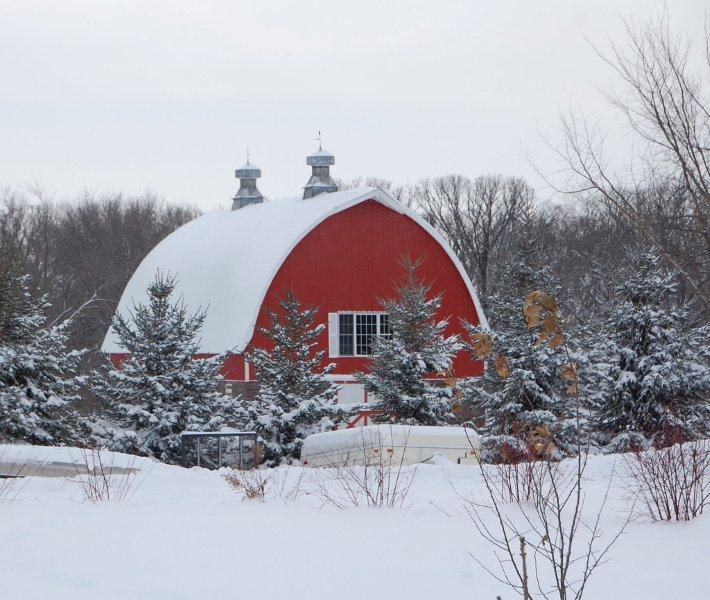
This refurbished barn overlooks the Minnesota River near Belle Plaine. The owners installed new windows, resided the barn and added a small deck off the hayloft, which has been remodeled into a party room. It was the site of a family member's July wedding.

YOU ARE IN FOR A TREAT today as I’m going to feature some guest photos by Harriet Traxler of Carver. I’ve never met Harriet and only recently began corresponding with her via e-mail.

But she has a wonderful little hobby that is near and dear to my heart. Harriet is a self-taught photographer who enjoys photographing everything from children to nature, animals and barns. Like me, she pretty much “wears” her Nikon D40 camera.

Next to photographing barns, Harriet most enjoys taking pictures of birds. Several years ago she took a photo that included 24 cardinals. Cardinals seem to especially like feeding on black oil sunflower seeds, she says.

It is her barn photos that first caught my attention. She has photographed more than 1,000 barns in Sibley County and compiled those images in 19 books which she prints and binds. If you’ve followed Minnesota Prairie Roots for awhile, you know that I also enjoy photographing old barns. In fact, right now, my camera is filled with barn (and other) images from a weekend trip to eastern Wisconsin.

But back to Harriet, if you’re interested in old barns and/or enjoy the photos posted here, stop by her website at barnsofsibleycounty.com. You may even want to consider purchasing one (or two or more) of Harriet’s barn books as a Christmas gift/gifts.

Even if you’re not from Sibley County where these barns were photographed, I promise you will enjoy these barn and other rural photos. One of my favorite images in Harriet’s books shows a herd of Holsteins gazing at her from behind a barbed wire fence with a farm site, including a red barn, in the background.

I’ll bring you some of Harriet’s stunning barn photos in the future.

But for today, this photographer is graciously allowing me to showcase several images taken on Saturday, after a major winter storm dumped up to a foot of snow on some parts of Minnesota. Harriet truly captures the beauty of this snowfall. And that is what we Minnesotans sometimes need—to see the beauty rather than all the hard work and inconveniences a major snowfall creates in our lives.

Enjoy and thank you, Harriet, for allowing me to share your photos on Minnesota Prairie Roots.

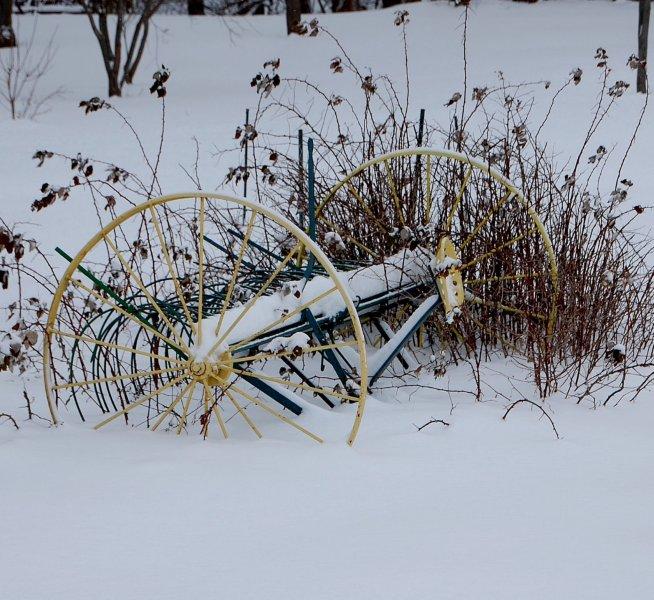
Farm equipment engulfed in snow makes for a scenic image.

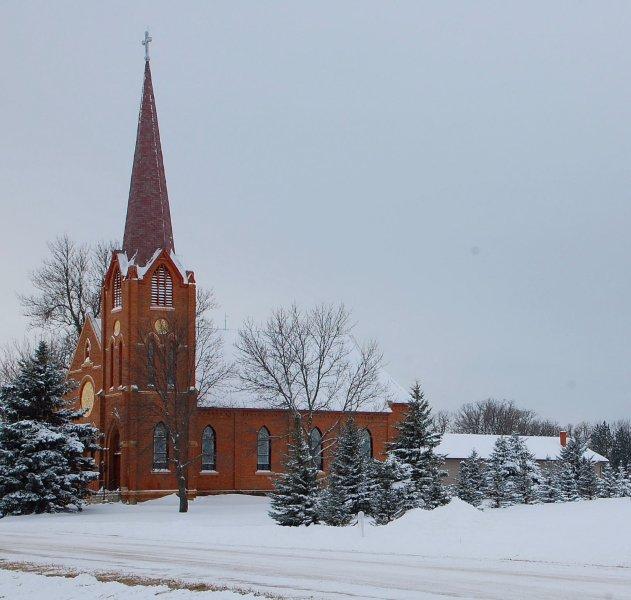
St. John's Catholic Church in Faxon Township, Sibley County, dates back to the 1870s. It is often called "St. John's in the cornfield," Harriet says, because cornfields typically surround the church during the growing season.

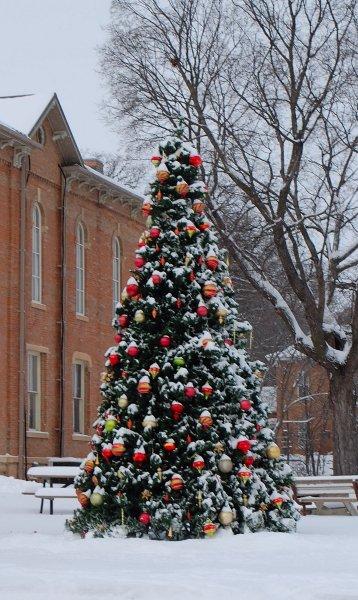
Harriet didn't tell me where she shot this outdoor Christmas tree. But isn't it beautiful?

Text © Copyright 2010 Audrey Kletscher Helbling
Photos © Copyright 2010 Harriet Traxler


Photographing barns November 19, 2010


A barn between Morristown and Waseca in a photo I shot last Sunday.


HARRIET TRAXLER OF CARVER has done exactly what I would someday like to accomplish. She has photographed a county full of barns and self-published 19 books, including two versions of Barns of Sibley County and books for each of the county’s 17 townships. She’s also created a 2011 barn calendar.

Traxler photographed 1,100-plus barns.

I’ll write more about Traxler’s barn project in a future post because I’ve only skimmed two of her books. The pair just arrived in my mailbox yesterday.

But I’m so giddy about what I’ve seen that I couldn’t wait to tell you. Anyone who loves old barns will absolutely appreciate Traxler’s books and her efforts to preserve barns through photography.

Now that I’ve shared my excitement over those barn books, I’ll show you a few more barn photos that I shot last Sunday along Rice County Highway 16 and Waseca County Highway 7 between Morristown and Waseca. These were taken through car windows—no waiting for the right lighting, no stopping to compose them. They are what they are and I think worthy of sharing with you. Enjoy.


Barn along Waseca County Highway 7


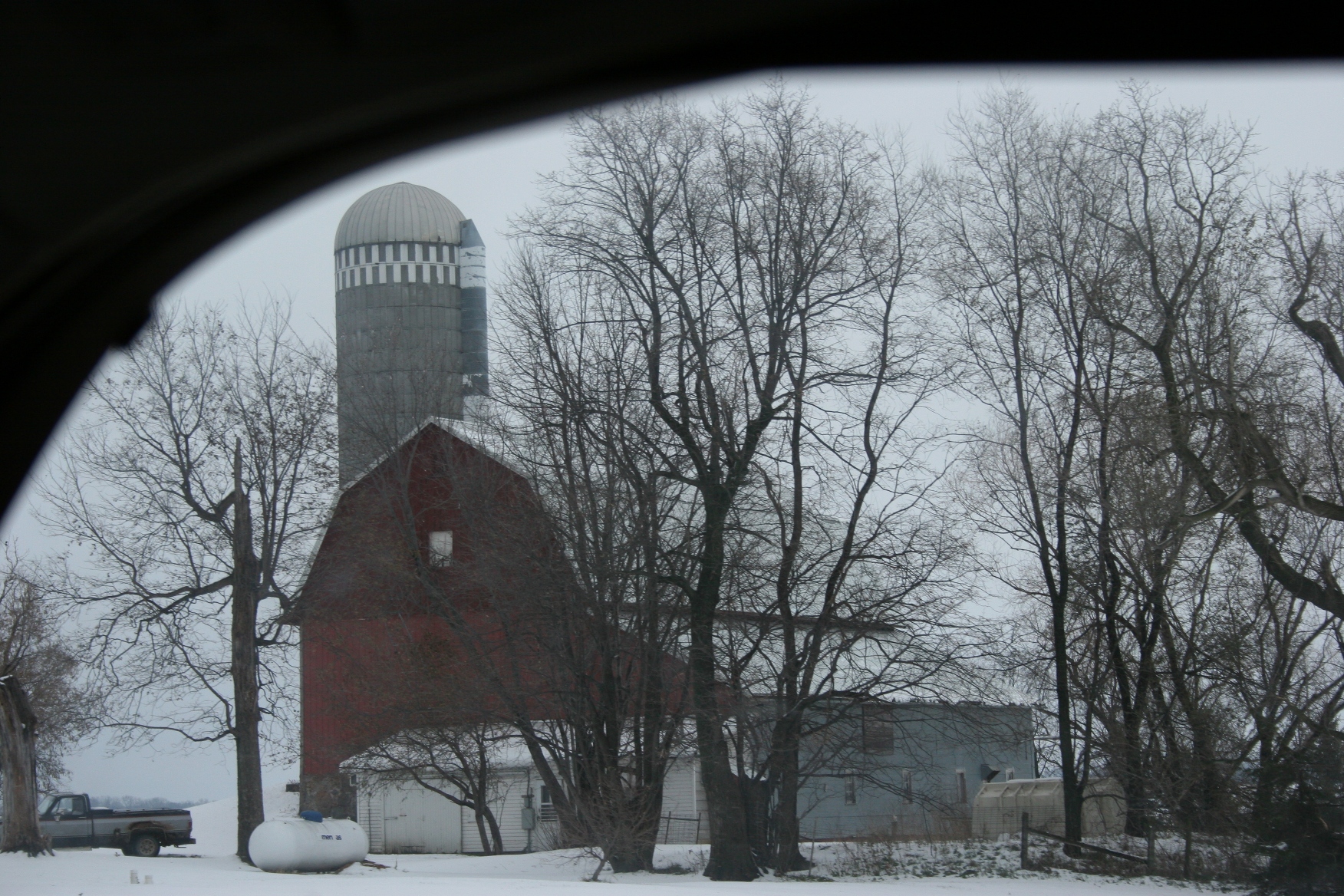
The driver's side rear car window frames this barn scene in a quick shot.


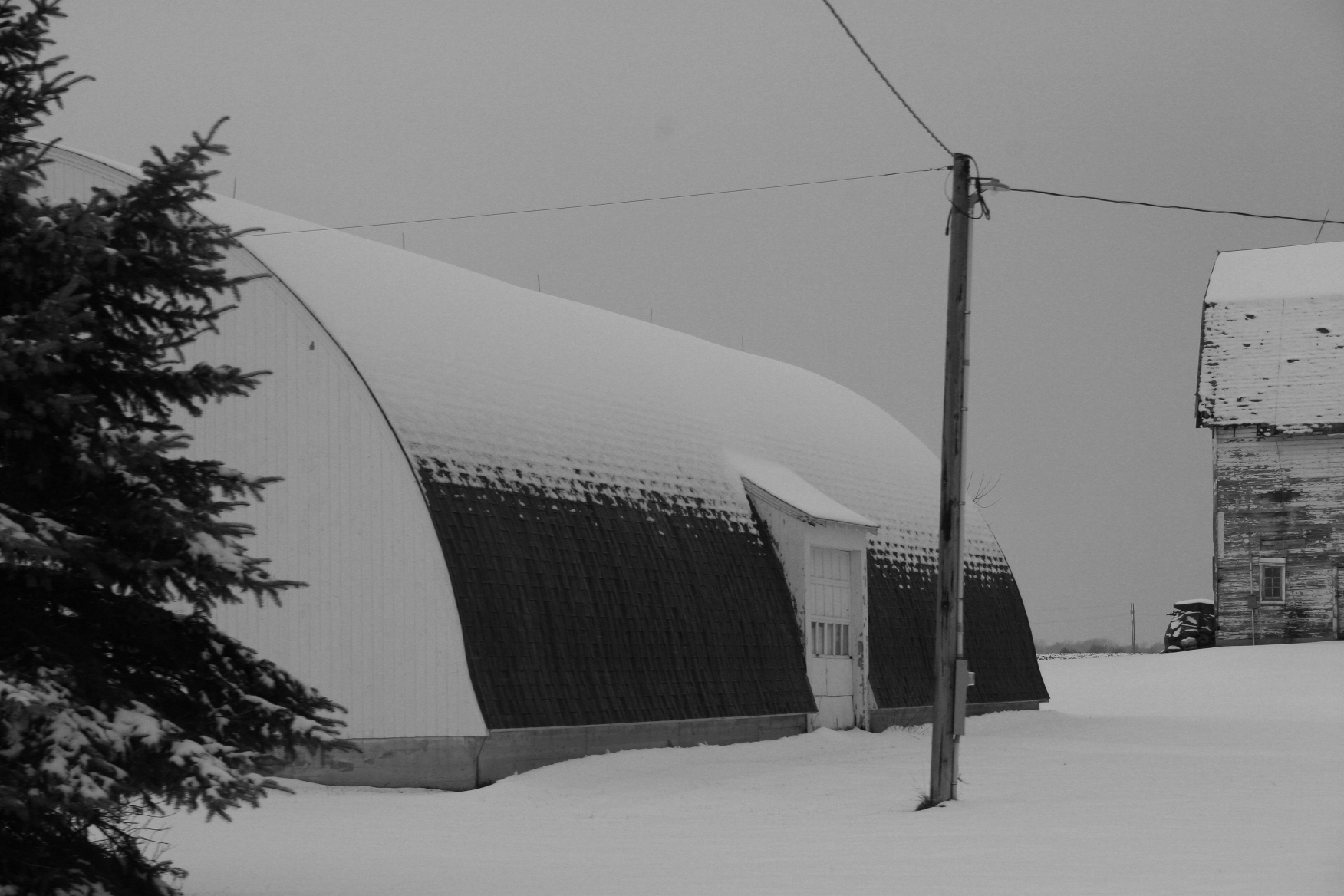
A machine shed with a barn-like appearance. Love the roof line.


Near the intersection of Waseca County Highway 7 and Minnesota Highway 13.


© Copyright 2010 Audrey Kletscher Helbling
 

Barns along Rice County Road 15 November 16, 2010

Filed under: Uncategorized — Audrey Kletscher Helbling @ 8:31 AM
Tags: , , , , , , ,


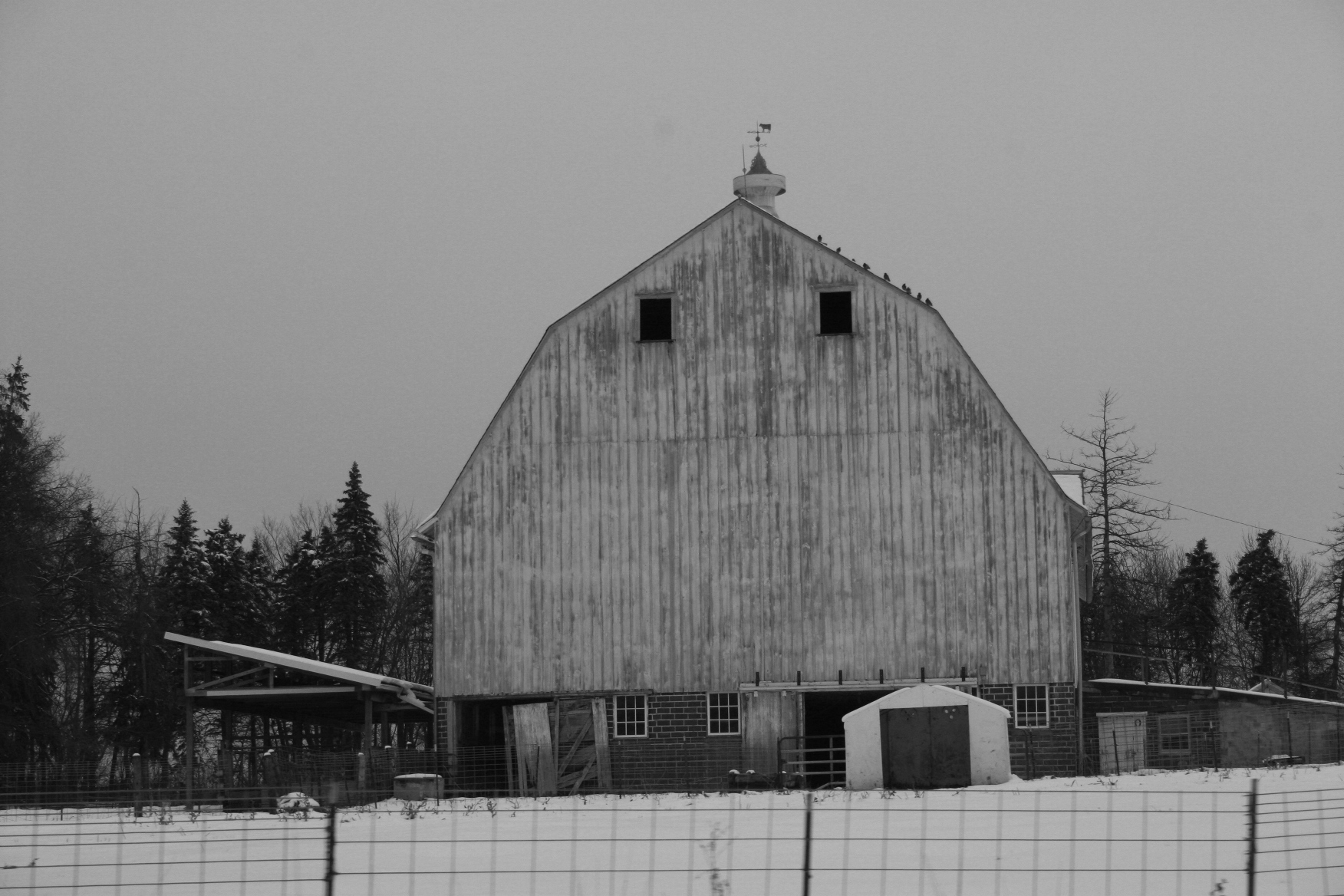
White barn along Rice County 15


FOR YEARS WE’VE DRIVEN the back road from Faribault, through Morristown, to visit family in Waseca. The route slices through fields and past farm places that snuggle close to the roadway.

Sunday afternoon en route to Waseca and riding in the passenger front seat of our car with camera in hand, I was ready to capture the beauty of our first snowfall. I decided to focus on barns, which, if you’ve followed Minnesota Prairie Roots, you know I appreciate.

My blog statistics show that you, my readers, share my love of old barns.

So enjoy these barn images, taken through the car windows as my husband and I traveled along Rice County Road 15 between Faribault and Morristown. I’m pleased with how they turned out given I had little time to compose the shots.

Now just imagine what I could produce if I actually took the time to stop, get out of the car and take the photos. But we were in a hurry.

And, as my husband says, if we stopped every time I wanted to take a picture, we’d never get anywhere.


I couldn't believe how this picture turned out as I shot it through the driver's side window. The line of the car perfectly mimics the barn's roof line.


The owner of this barn, a friend of ours, re-roofed his barn this summer.


Of all the shots I took, this is my favorite because of its composition and because of the black earth peeking through the fresh, thin layer of snow.


I edited this to black-and-white even though there is little difference from the original white barn against the snow.


© Copyright 2010 Audrey Kletscher Helbling
Check back for more barn photos from that road trip to Wascea.


Happy Halloween October 31, 2010

Filed under: Uncategorized — Audrey Kletscher Helbling @ 9:36 PM
Tags: , , , ,

THE TRICK-OR-TREATERS, all eight of them, have come and gone.

The candy bowl remains filled with plenty of chocolate for a day or two of snacking.

I’ve switched off the front entry light and locked the door on another Halloween.

I hopes yours, like mine, was sweetened by candy and brightened by the wide smiles of jack-o-lanterns and of happy, happy kids.

I edited my jack-o-lantern photo just because, well, it’s Halloween. This is version one. Rather plain, huh? Continue scrolling down to the next image.

So…I added color. I’ve always loved lime green.
The real jack-o-lantern, no photo editing involved.

Copyright 2010 Audrey Kletscher Helbling


Barns full of memories October 6, 2010

Filed under: Uncategorized — Audrey Kletscher Helbling @ 7:39 AM
Tags: , , , , , ,

I photographed this barn along Le Sueur County Road 21 while on a recent drive to see the fall colors.

LIKE COUNTRY CHURCHES and abandoned farmhouses, old barns draw me close, calling me to not only look, but to truly see.

All too often these days, though, my view is periphery, a quick glimpse from a car window of a barn that stands straight and strong or crooked and decaying.

Because these are not my barns on my property, I typically settle for photographing them from the roadway, although I would like nothing more than to meander my way around the farmyard.

Barns evoke memories—of sliding shovels full of cow manure into gutters, of dumping heaps of pungent silage before stanchions, of pushing wheelbarrows overflowing with dusty ground feed down the narrow barn aisle, of dodging streams of cow pee, of frothy milk splashing into tall metal pails, of Holsteins slopping my skin with sandpaper tongues.

Such memories come from years of hard work on my childhood dairy farm in southwestern Minnesota. That barn stands empty now, has for longer than I care to remember. No cows. No kids. No farmer. No nothing.

I have only my memories now and those barns, those roadside barns, which symbolize the hope, the fortitude and the dreams of generations of Minnesotans.

The early 1950s barn on the Redwood County dairy farm where I grew up is no longer used and has fallen into disrepair.

A close-up image of the red barn (above), snapped while driving past the farm.

Another barn in Le Sueur County.

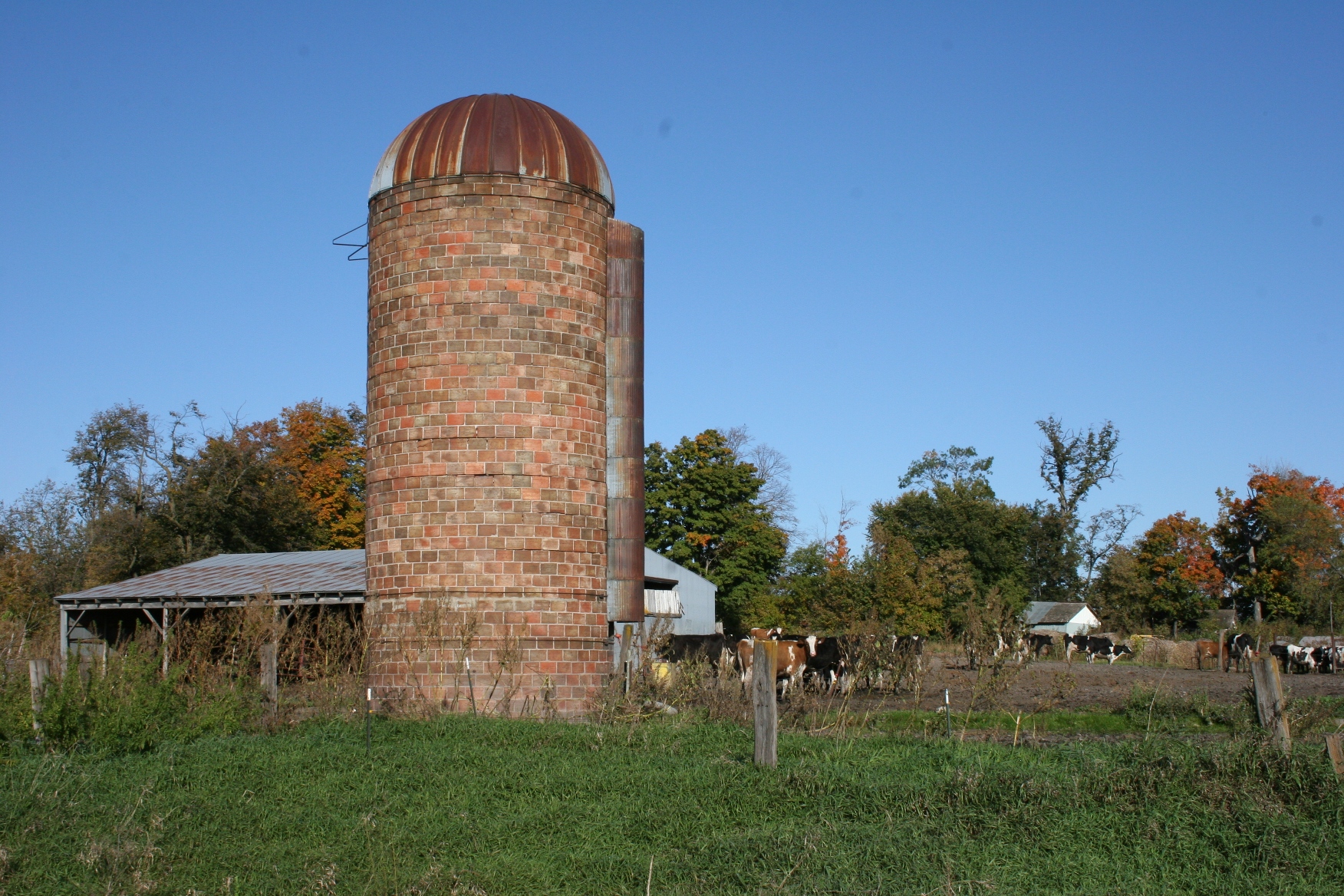
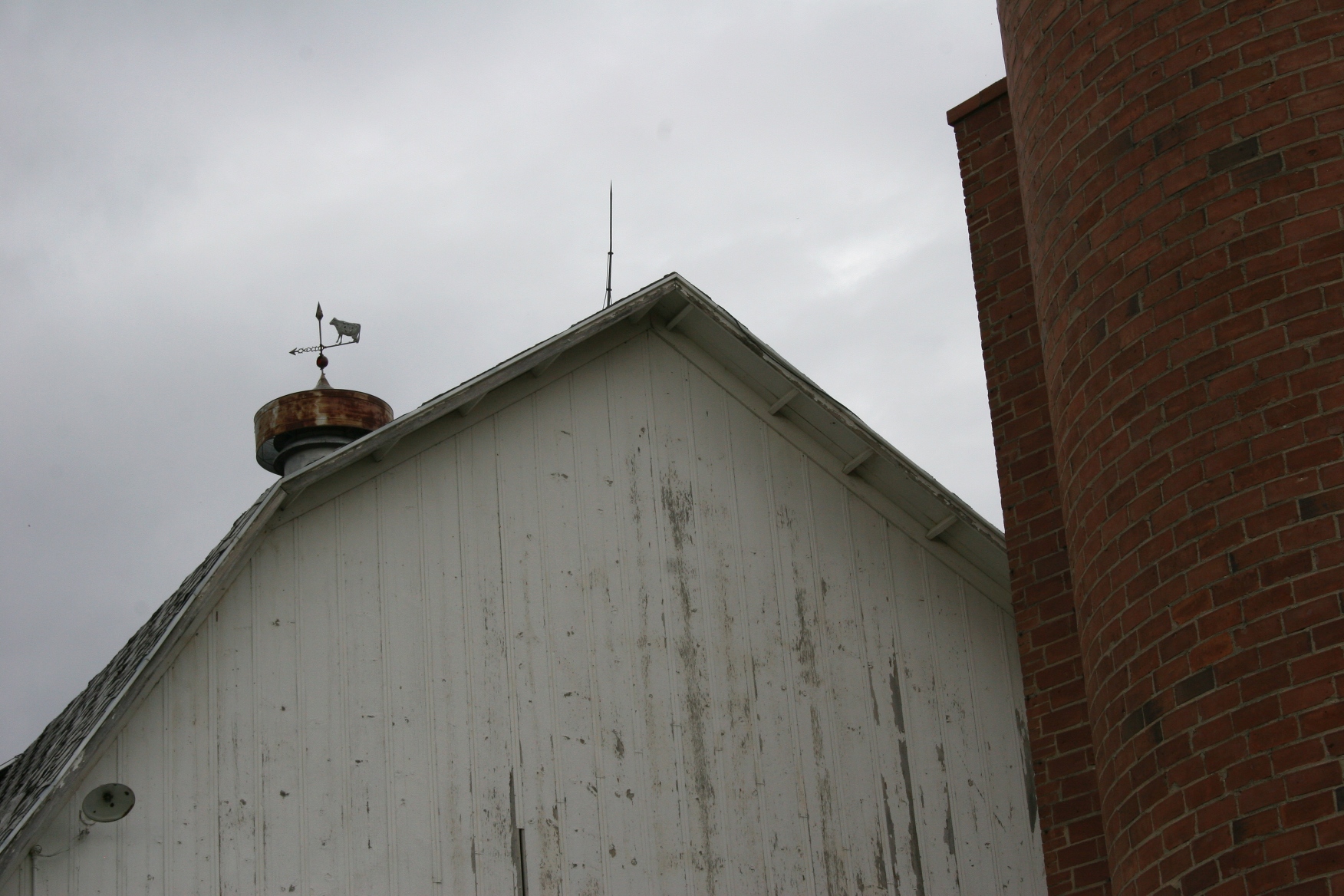
Old silos, like this one along Rice County Road 10, also intrigue me. Growing up on a farm, I climbed into the silo to throw down silage for the cows. Below my brother scooped up the silage to feed cows on his side of the barn. It took me awhile to figure out what he was doing, and that was making me do half his work.

If ever a barn could impress, it would be this one I spotted on the Le Sueur/Blue Earth County line, I believe along Le Sueur County Road 16. I doubt I've ever seen such a stately barn.

Here's another angle of the sprawling old barn. Yes, I trespassed and tromped across the lawn to capture this photo. Imagine the dances you could host in this haymow. What a fine, fine barn.

I zoomed in even closer to capture the barn roof and a portion of the silo.

© Copyright 2010 Audrey Kletscher Helbling
 

Faribault flooding, more photos September 27, 2010

Filed under: Uncategorized — Audrey Kletscher Helbling @ 9:48 AM
Tags: , , , , , ,

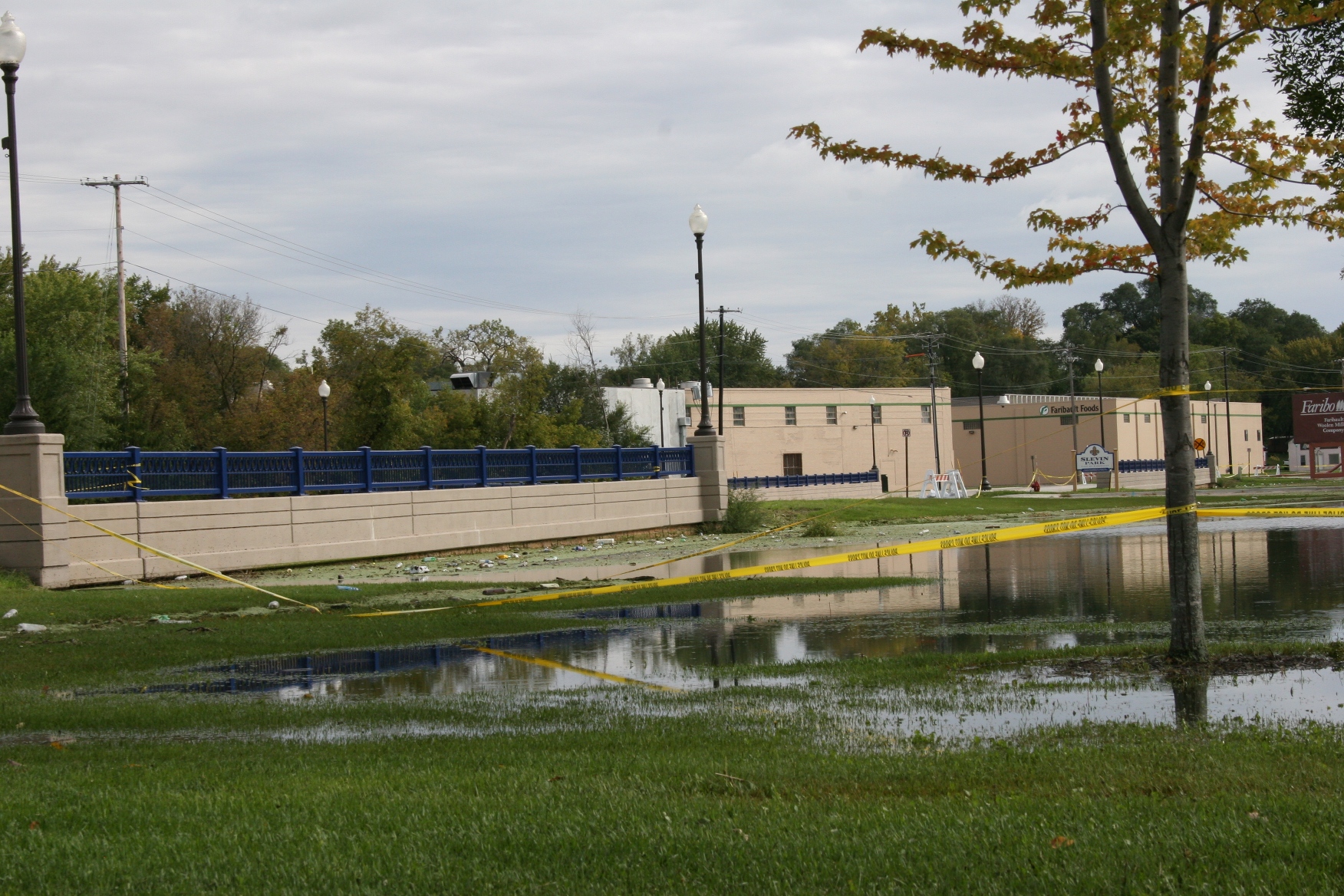
This image, taken Saturday afternoon, shows flooded Second Avenue N.W. looking toward Faribault Foods' offices and canning company on the left, and the former Faribo Woolen Mill and Alexander North Park on the right.

FOR ANYONE WHO’S TIRING of my flood photos, I offer no apologies. Right now we Faribault residents are a bit obsessed with the natural disaster that has struck our town.

As I’ve toured the flooded areas during the past several days, I’ve discovered a sense of community that I’ve never felt in my 28 years here. As we gather along the banks of swollen rivers, peer over bridges, stand beside flooded roads, we understand that we are not only witnessing history, but we are a part of history.

That bonds us. We exchange stories—of raw sewage in basements, of failed sump pumps, of  “I’ve never seen the river this high.” While our stories may differ in detail, the setting, here, in our Midwestern community along the Cannon and Straight rivers, is the common thread that weaves together our experiences.

We can’t stop taking photos, which, pieced together, become a patchwork quilt of memories, of history, of stories.

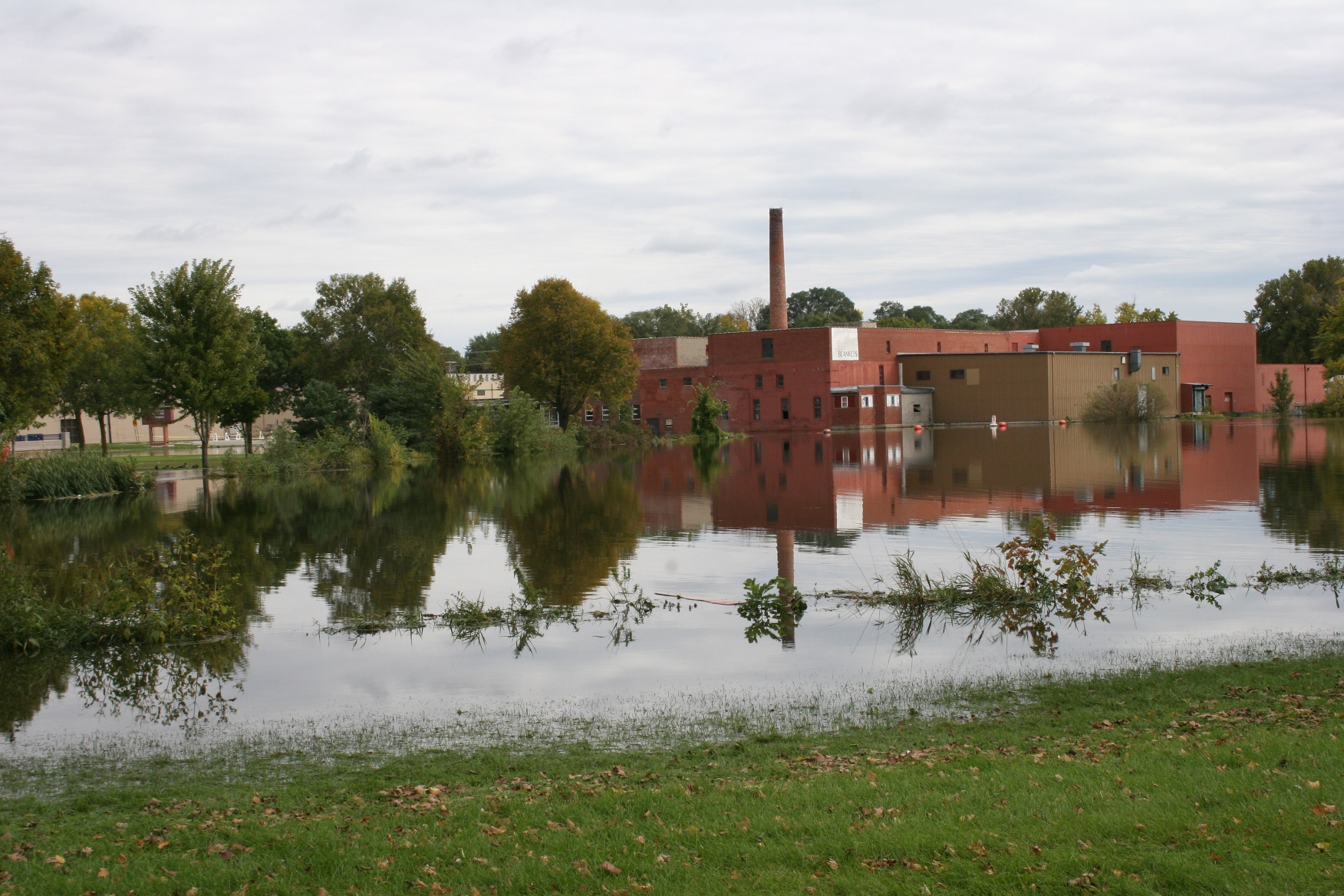
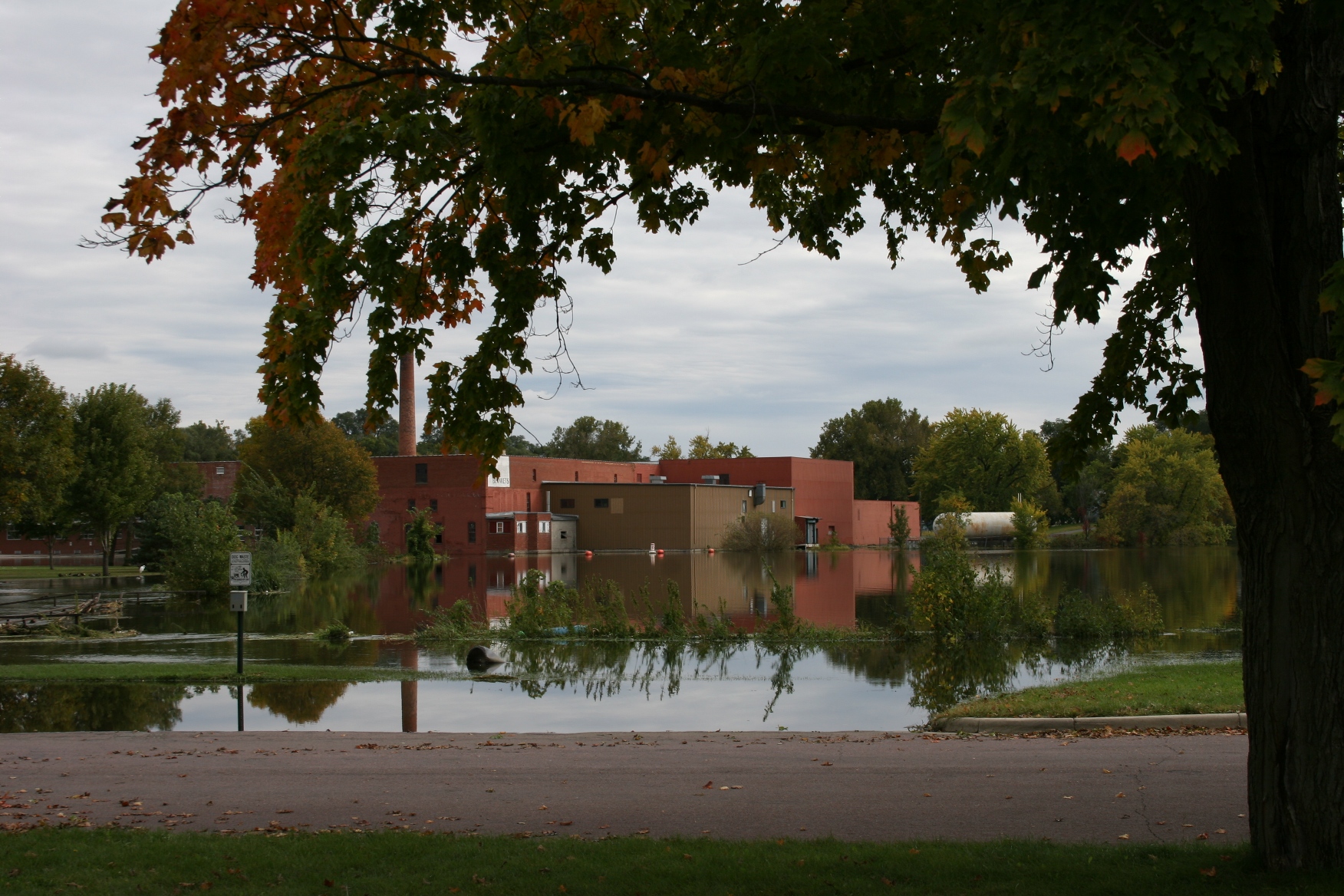
This shot taken from North Alexander Park frames the former Faribo Woolen Mill along the banks of the flooded Cannon River. The two dams here are no longer visible, river water touches the bottoms of the two bridges and some park land is under water.

The flooded Cannon River by the former Faribo Woolen Mill on the right and Faribault Foods canning company on the left along Second Avenue N.W.. The Woolen Mill dam is no longer visible.

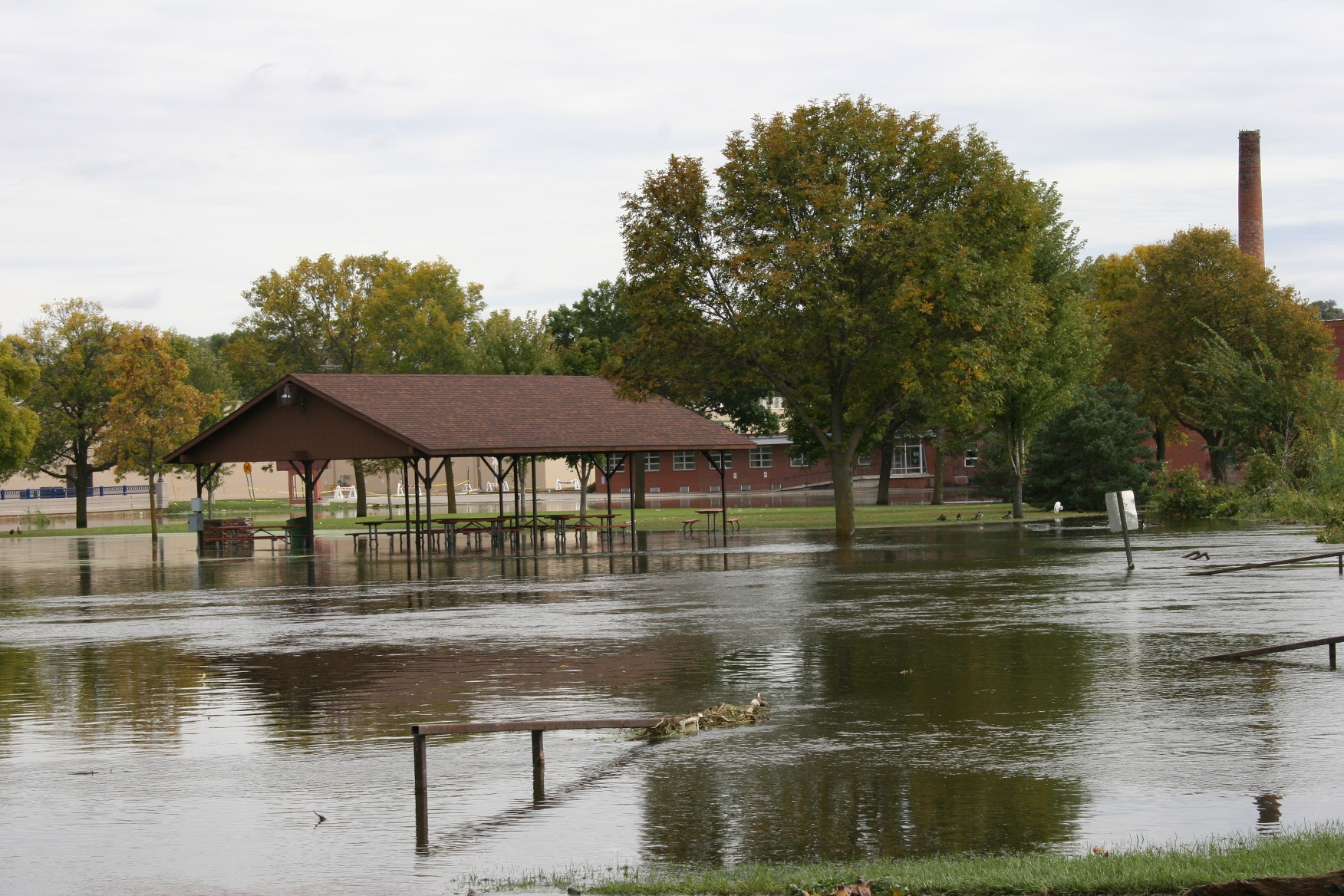
This picnic shelter in Father Slevin Park, on a wedge of land between two branches/two dams of the Cannon River by the former Faribo Woolen Mill was covered with river water.

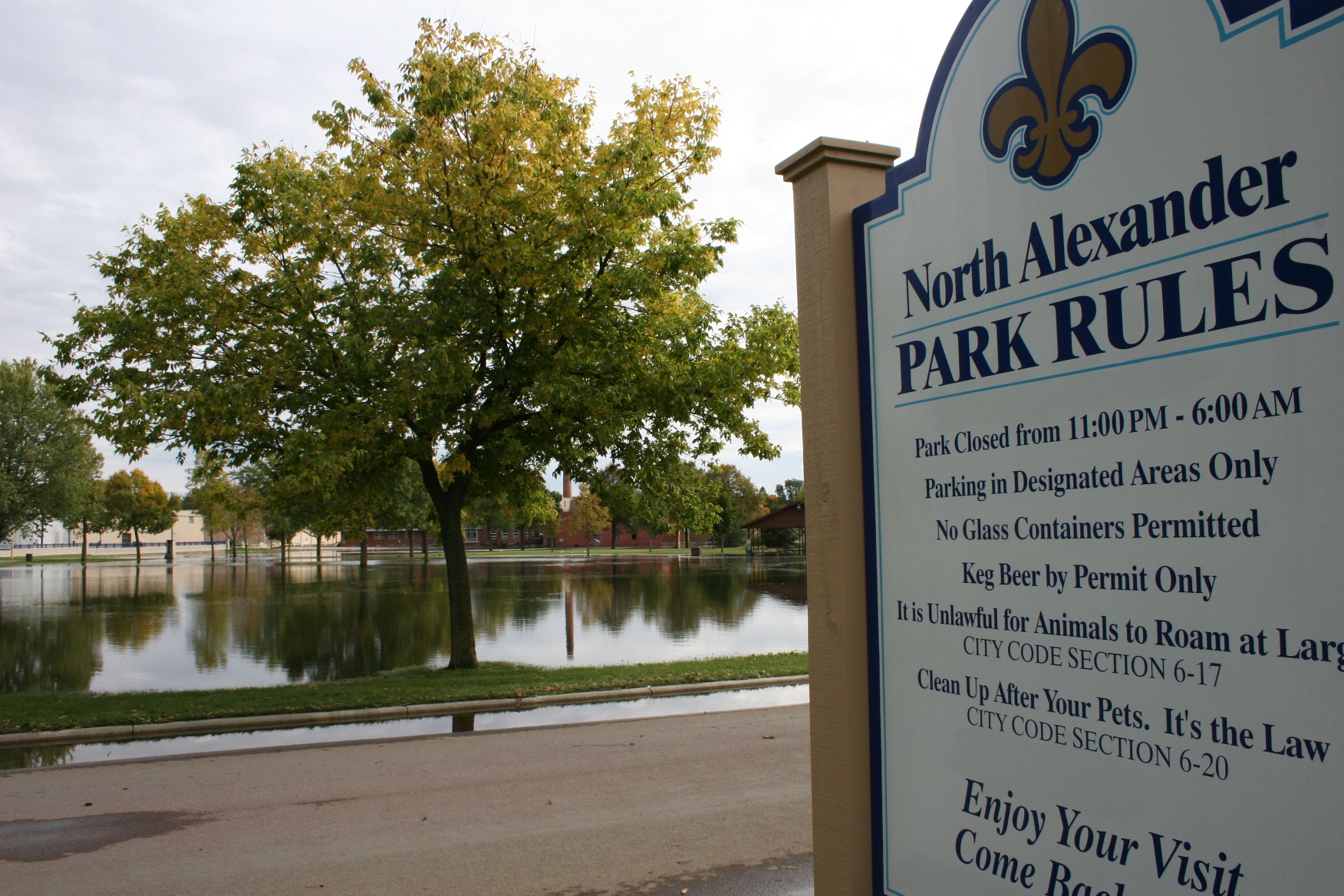
Cannon River waters edged onto park land near the entrance to North Alexander Park.

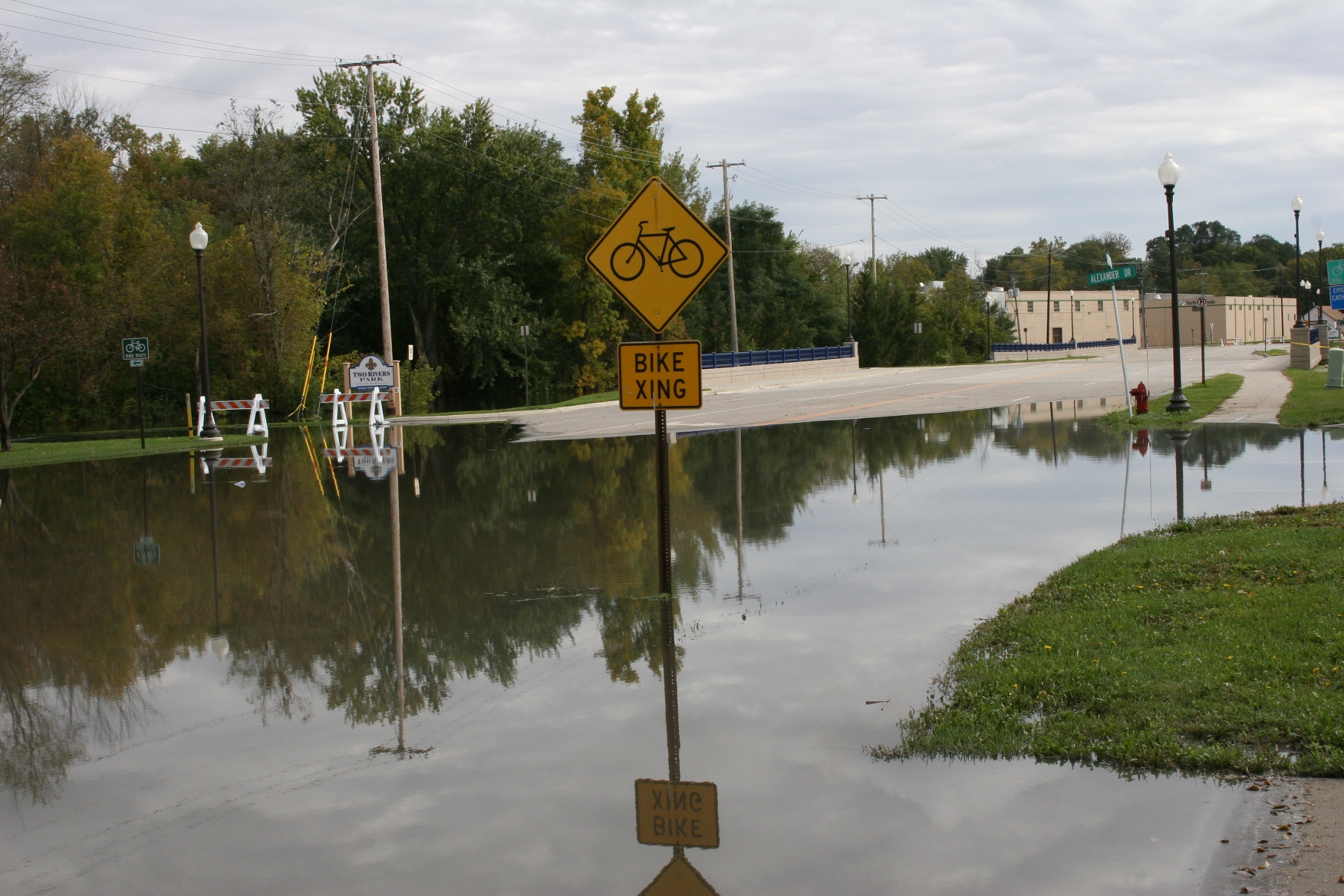
Water from the swollen Cannon River covers the roadway into North Alexander Park.

The Cannon River skims both bridges along Second Avenue N.W. To the right is Faribault Foods canning plant.

The bike trail to the left (not pictured) near Second Avenue N.W. is flooded.

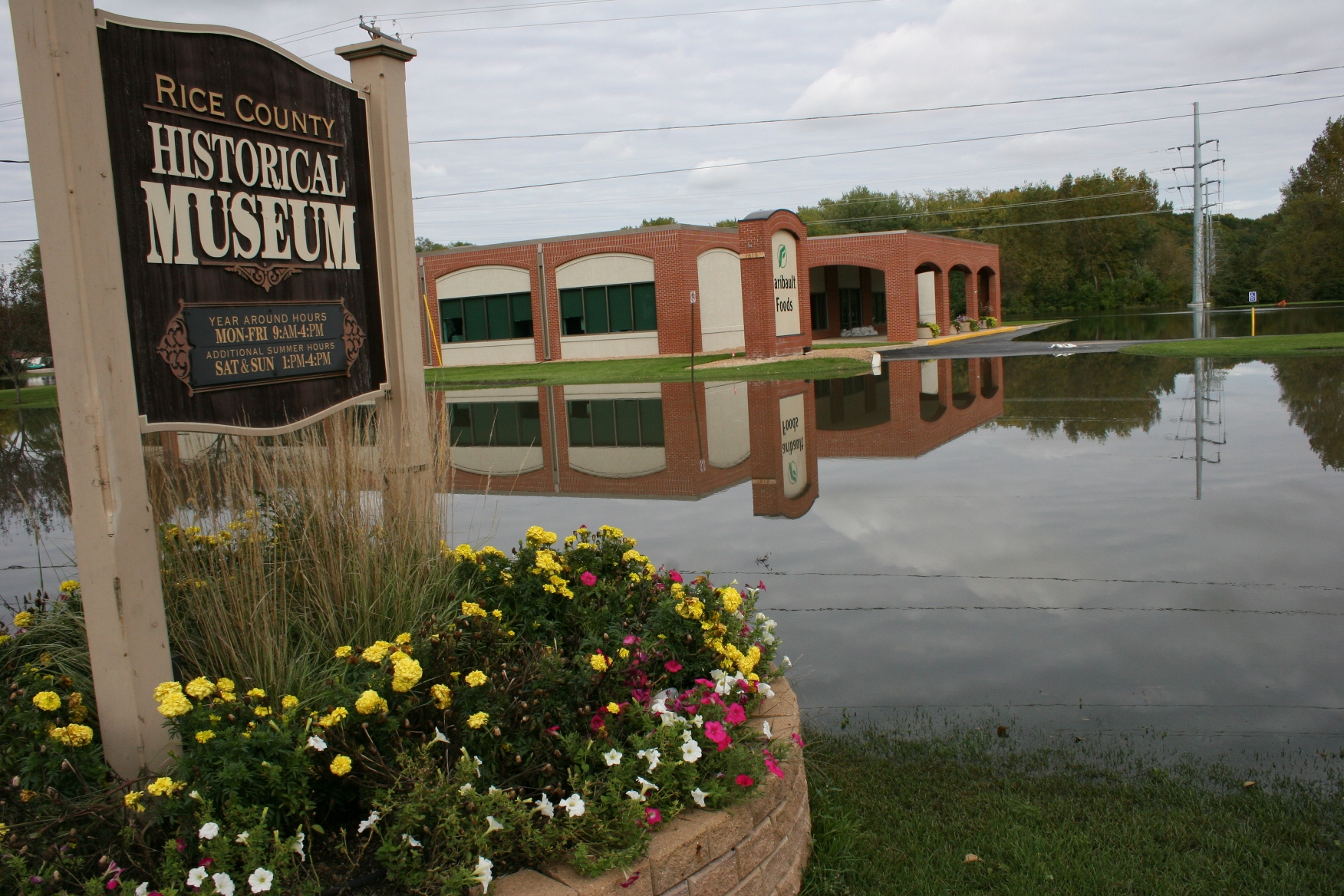
I shot this scene along Second Avenue N.W. by the Rice County Historical society. Homeowners through-out Faribault have been pumping water, or raw sewage, from basements.

#

ALL OF THESE FLOOD PHOTOS were taken Saturday afternoon, September 25, 2010, from North Alexander Park and along Second Avenue N.W. by the Rice County Historical Society.

© Copyright 2010 Audrey Kletscher Helbling
 

Flood art in Faribault September 25, 2010

Filed under: Uncategorized — Audrey Kletscher Helbling @ 10:10 PM
Tags: , , , , , ,

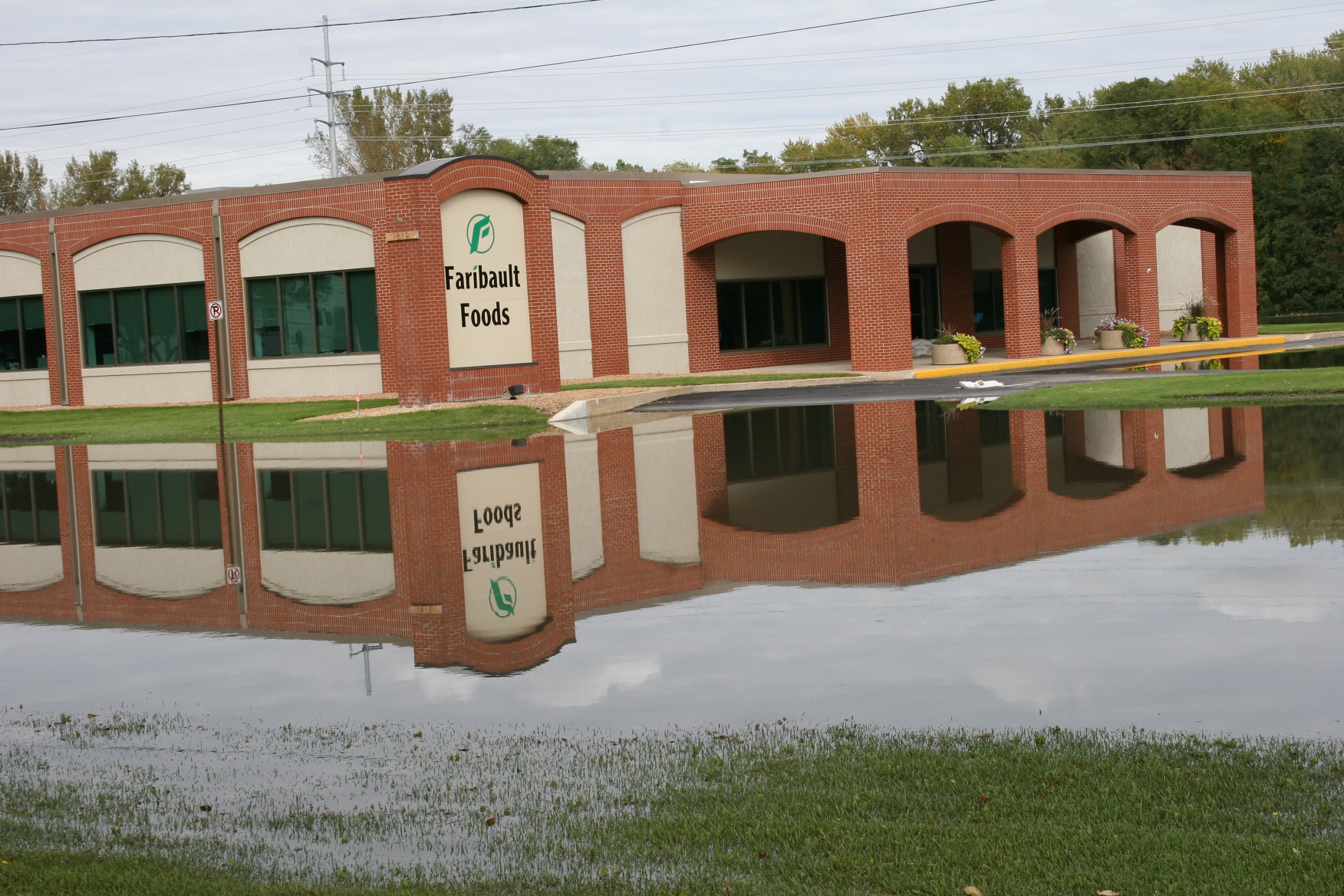
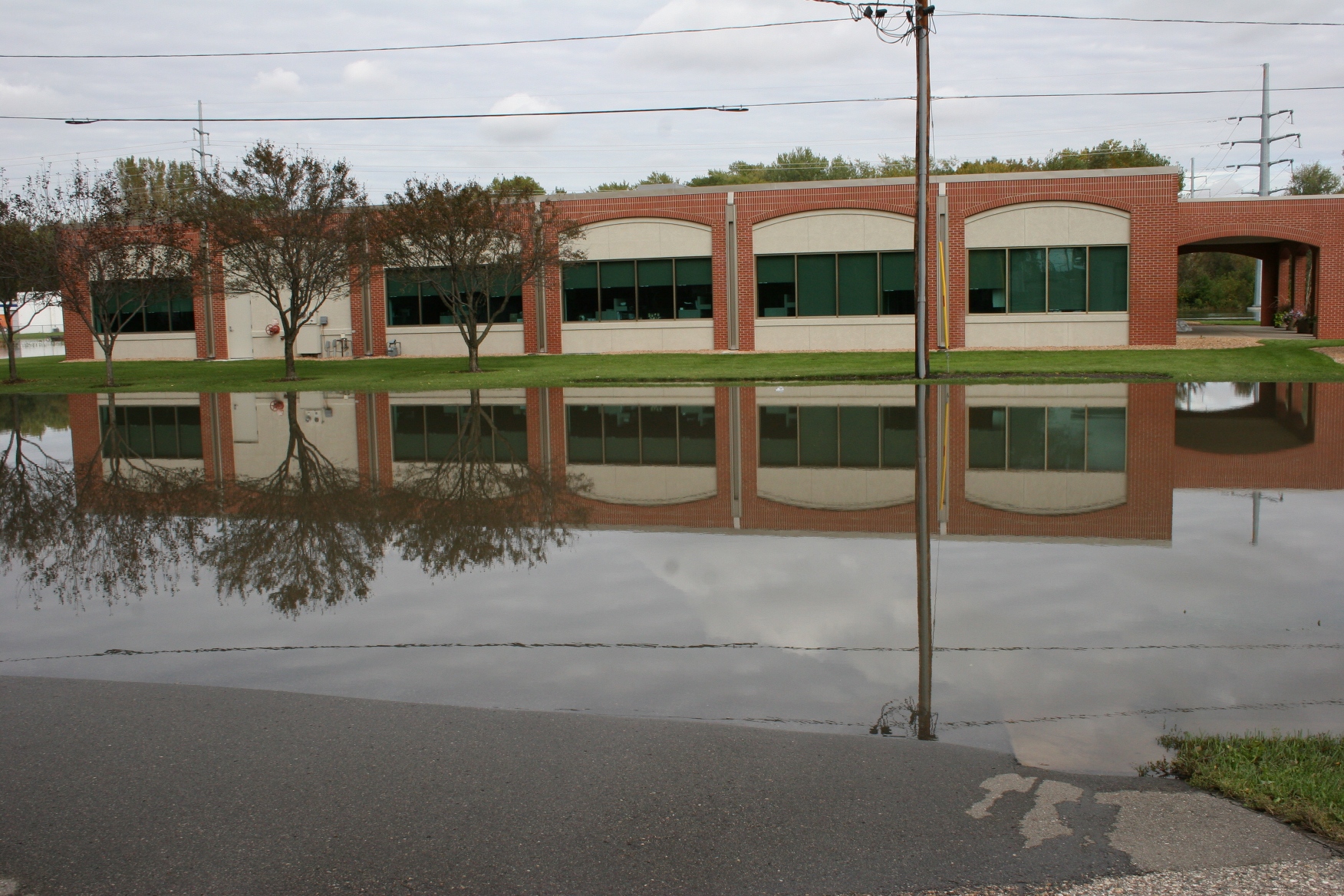
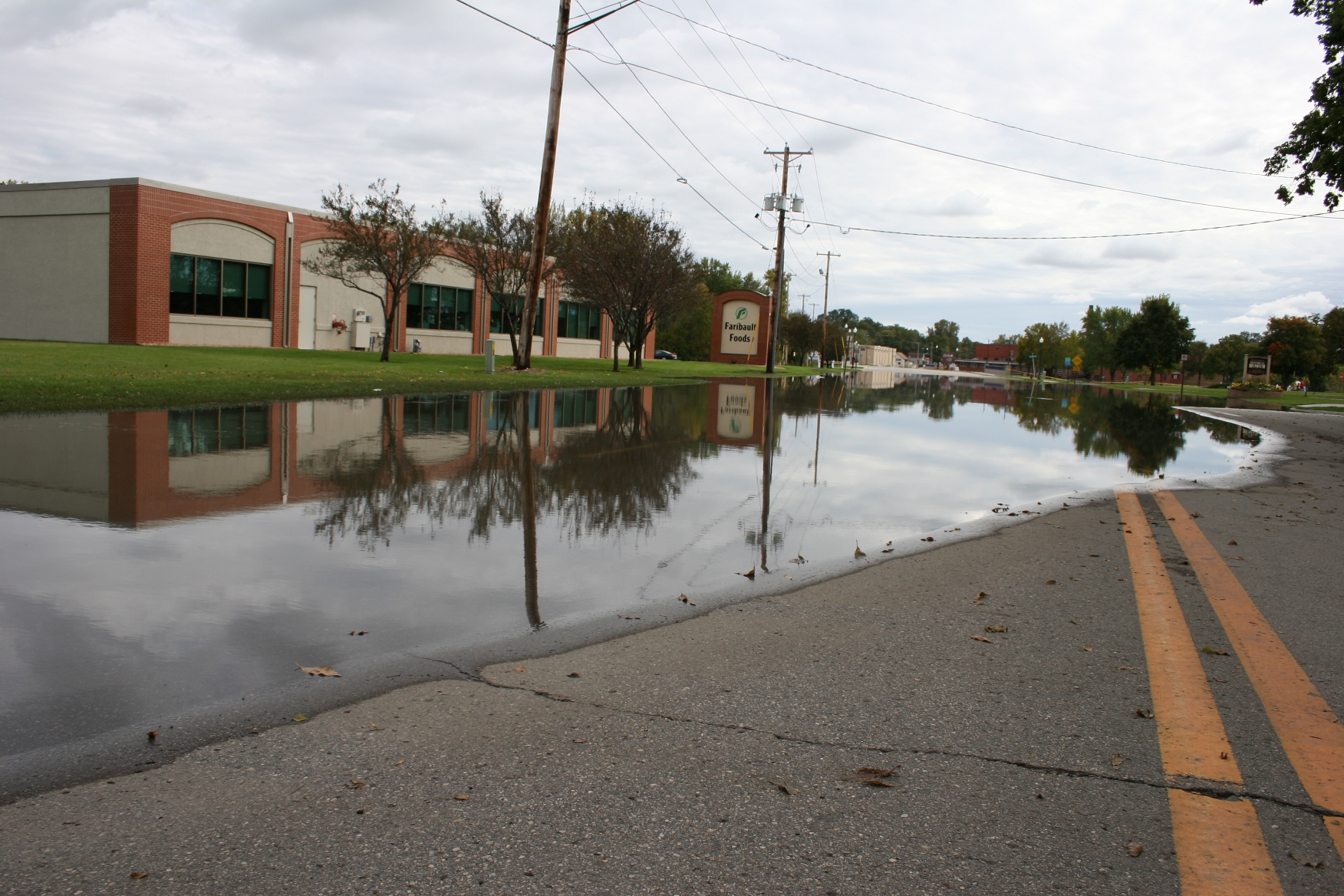
IF BEAUTY CAN BE FOUND in floodwaters, then today I discovered it in these images I composed of Faribault Foods’ offices along Second Avenue N.W. across from the Rice County Historical Society.

Faribault's September 2010 flood will go down in the history books.

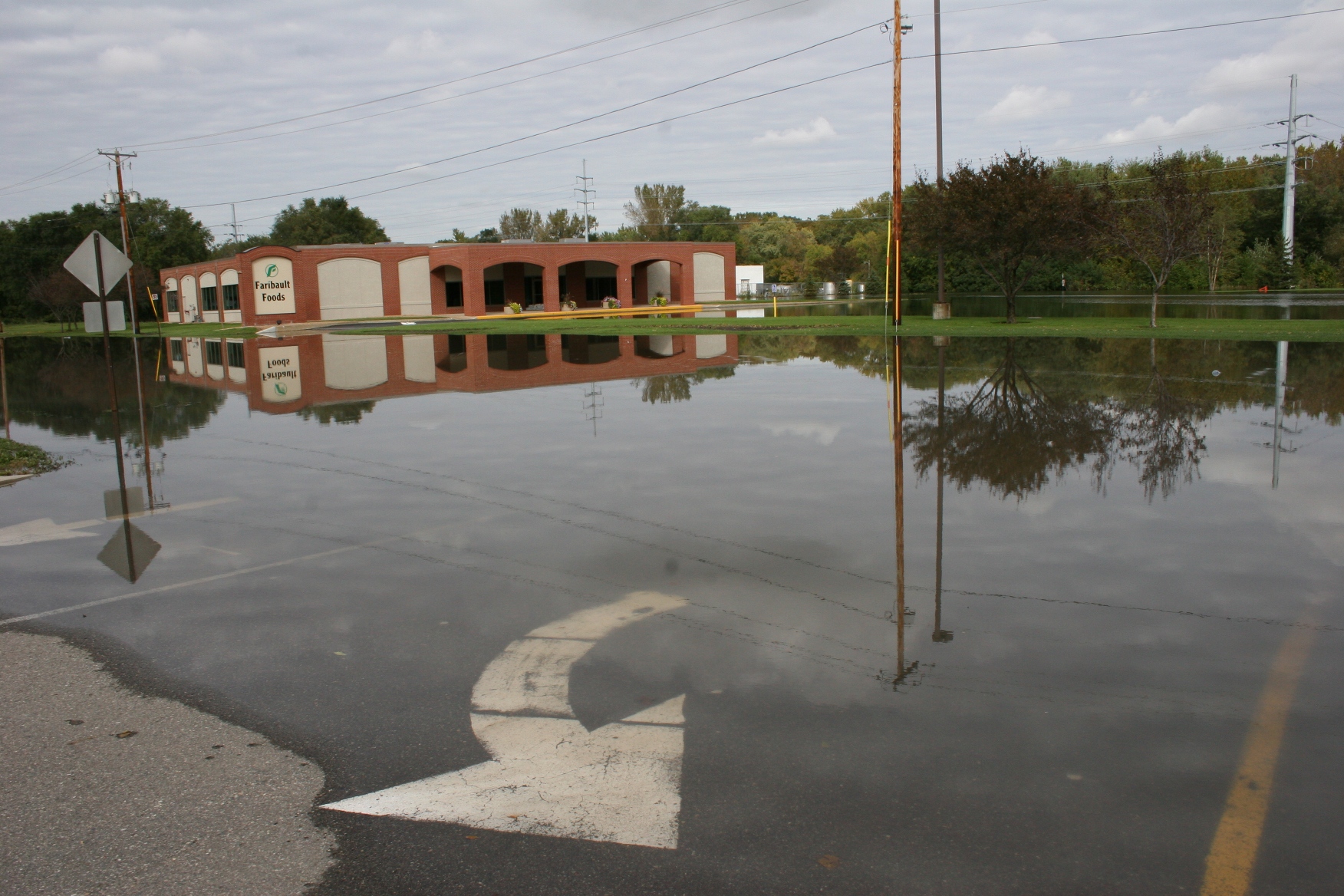
With “just right” lighting, with the building and landscape and sky reflecting upon the water in the flooded street, the scenes seem almost surreal. My unedited photos possess a serene quality that belies the angst the floodwaters have caused for residents and business owners and government officials.
A roadway arrow directs motorists from Second Avenue N.W. into North Alexander Park.

Just across the street, a resident pumped 3 ½ feet of raw sewage from his basement.

But you would never think that, viewing these images, this flood art.
The light and reflection create a surreal image of Faribault Foods.

This is my favorite image of the Faribault Foods' office. To me this appears more a painting than photo.

© Copyright 2010 Audrey Kletscher Helbling