Minnesota Prairie Roots

Writing and photography by Audrey Kletscher Helbling

Oh, blessed summer eve on a Minnesota farm June 30, 2011

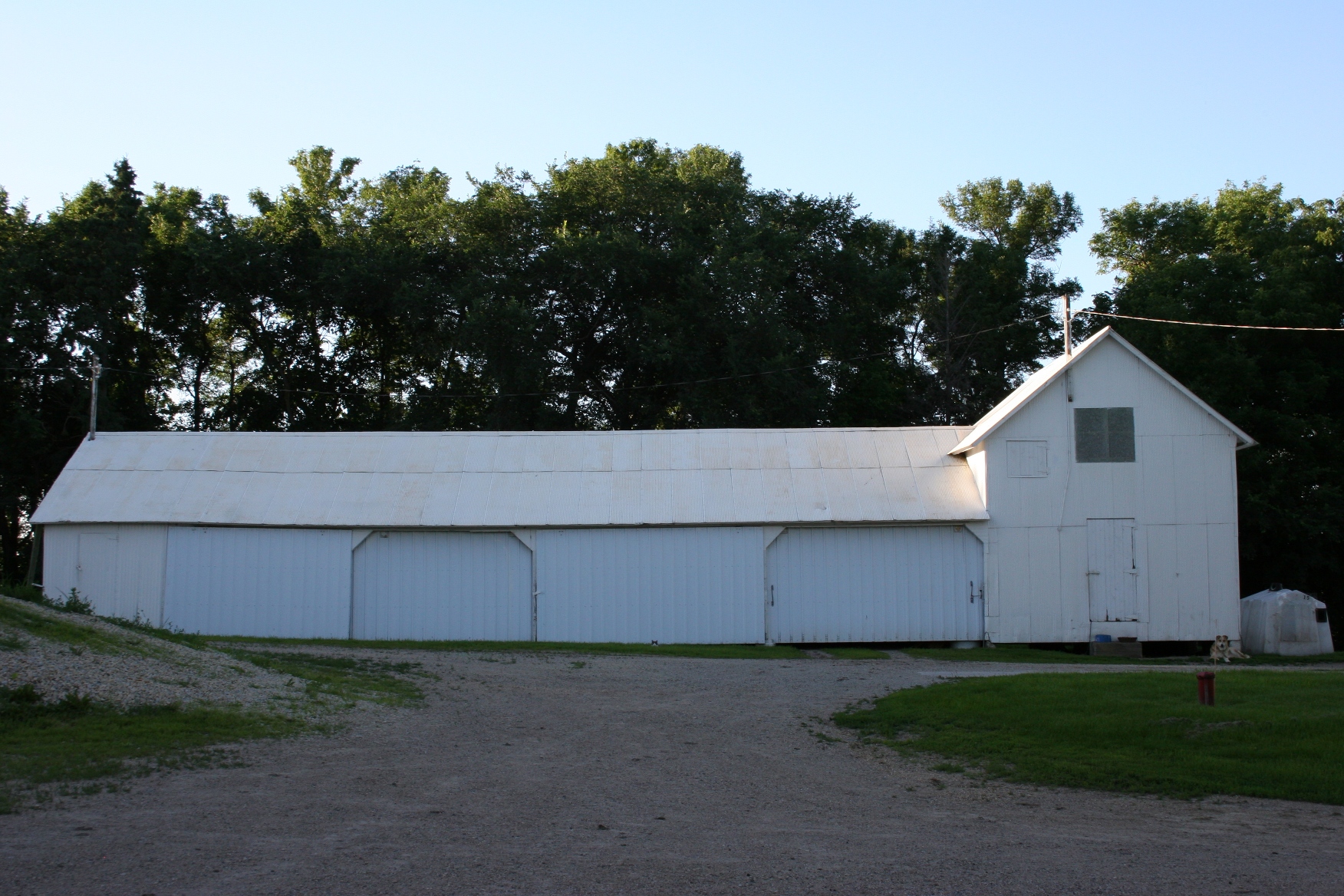
If you look closely, you will see the farm dog in front of the 1915 farmhouse to which a machine shed was added.

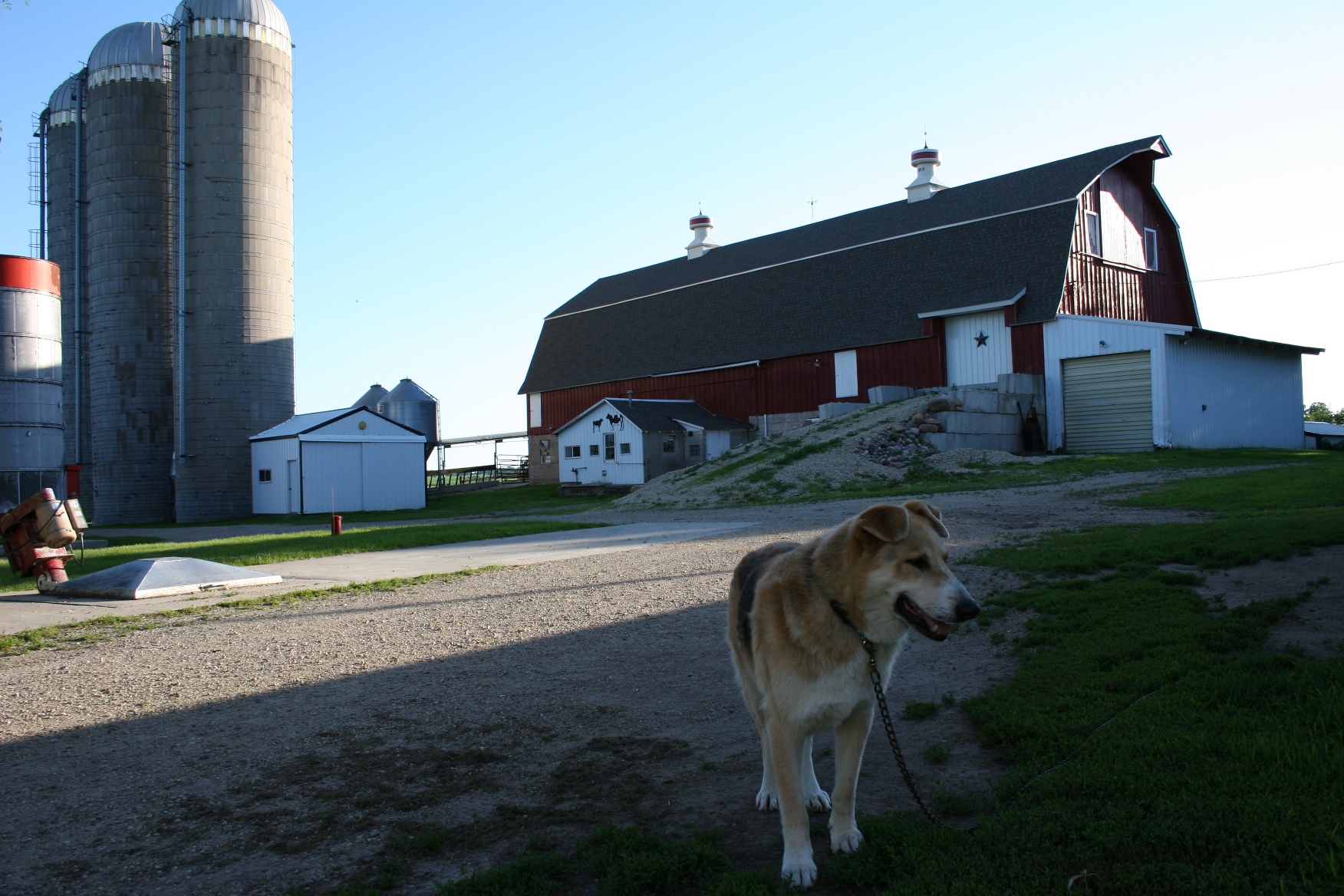
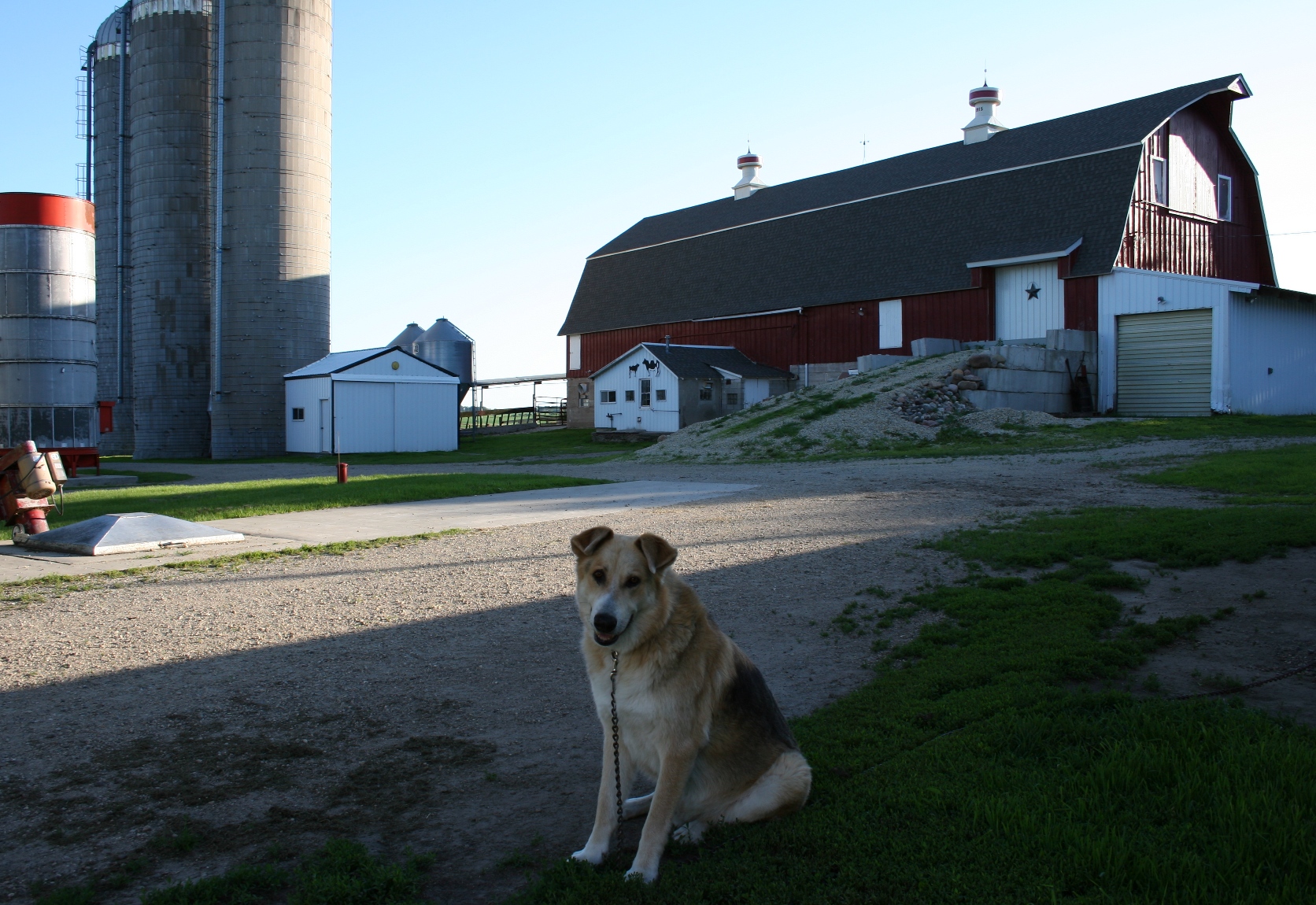
WIDE SWATHS OF SHADOWS sliced across the farmyard as the sun edged toward the horizon on a whisper of a summer night.

The old farm dog, tethered to a chain next to the 1915 farmhouse-turned-granary-turned storage shed, rose from his resting place on a paw-worn patch of grass. Water and food bowls rested on the single cement step nearby, within his reach.

The dog didn’t bark, didn’t lunge, just let me be as I moved into his territory. He stood, paced and then eased onto his haunches, acknowledging my non-threatening presence as I dropped to one knee to view the world from his perspective.

I wanted only to photograph this guardian of the farm on a summer evening as absolutely picture-perfect as any day you’ll get in Minnesota. Still. Serene. Colors sharp like new crayons. Sunlight, eye-blinding bright to the west, on the other side of the barn, outside the dogs’ reach.

This June evening, for these few hours, this watchdog could not roam the farmyard. He could only eye the visitors seated across the gravel drive at a picnic table. Friends gathered for pizza and lemonade sweetened with fresh strawberries and then more berries atop angel food cake and ice cream topped off with whipped cream.

Laughter punctuated conversation. Then bibles flipped open to words written upon pages thin as butterfly wings. The shrill call of a cardinal pierced the silence between ideas shared and scripture read.

Then, as the farm dog watched, the friends bowed their heads in a prayer of thanksgiving—gratitude to God for protecting the owners of this farm from serious injury in a motor vehicle accident the previous day. A rear-end collision. Truck spinning, tipping onto its side along a Minnesota highway. Glass in teeth and waistbands and hair.

None of this the guard dog knew on this most blessed of summer evenings on a Minnesota farm.

TODAY, JUNE 30, has been designated as “Maroon Day” in Minnesota, historically the deadliest day on our state’s roadways. Since 2000, more fatal crashes have occurred on this final day of June, leading into the July Fourth holiday, than on any other day of the year. Statistics show 30 fatal crashes resulting in 35 deaths.

All of Minnesota’s nearly 600 state troopers, in their signature maroon vehicles, will be patrolling today.

Buckle up. Drive carefully and be safe.

© Copyright 2011 Audrey Kletscher Helbling


The endearing smiley face June 29, 2011

Filed under: Uncategorized — Audrey Kletscher Helbling @ 7:39 AM
Tags: , , , , , , , , , ,

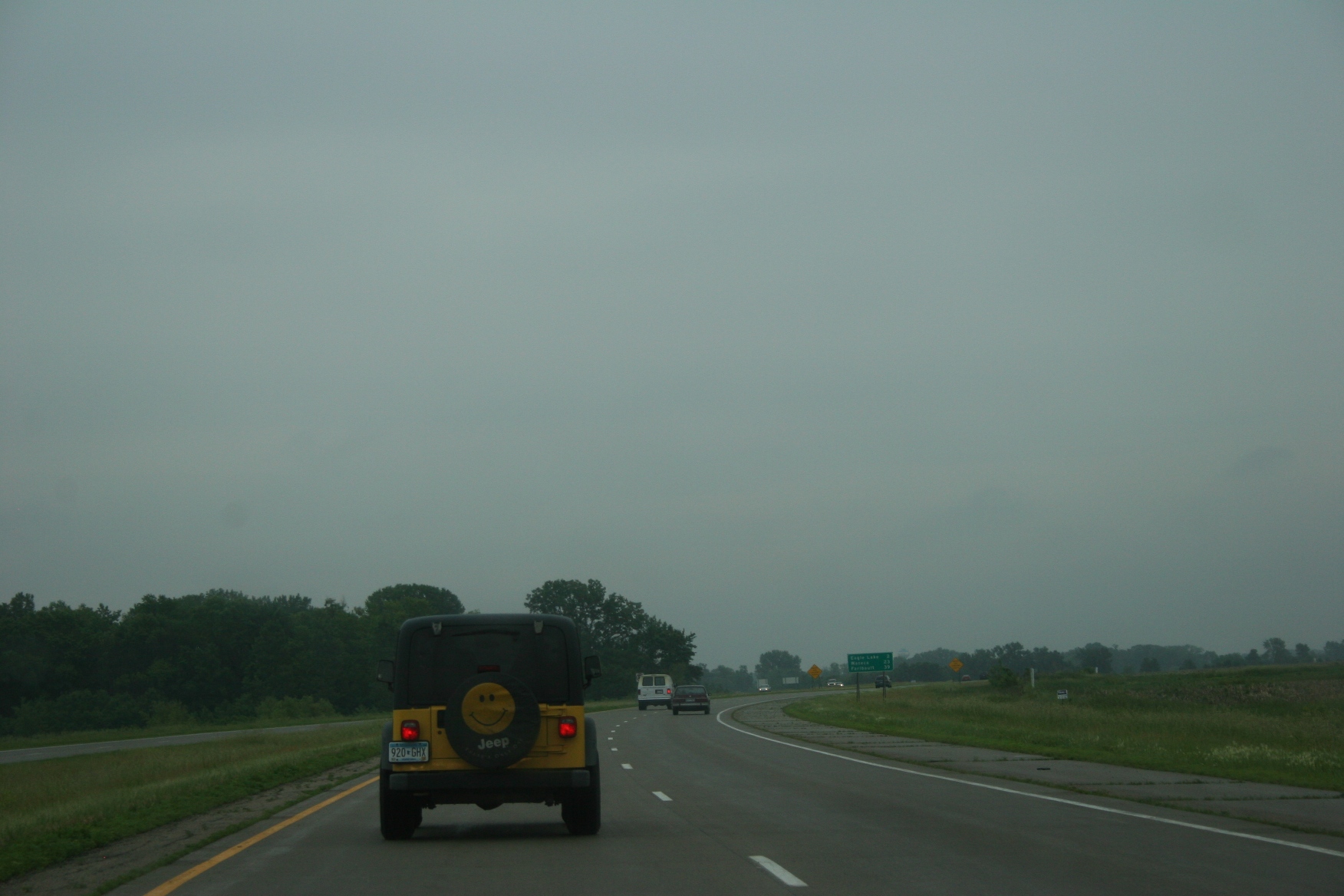
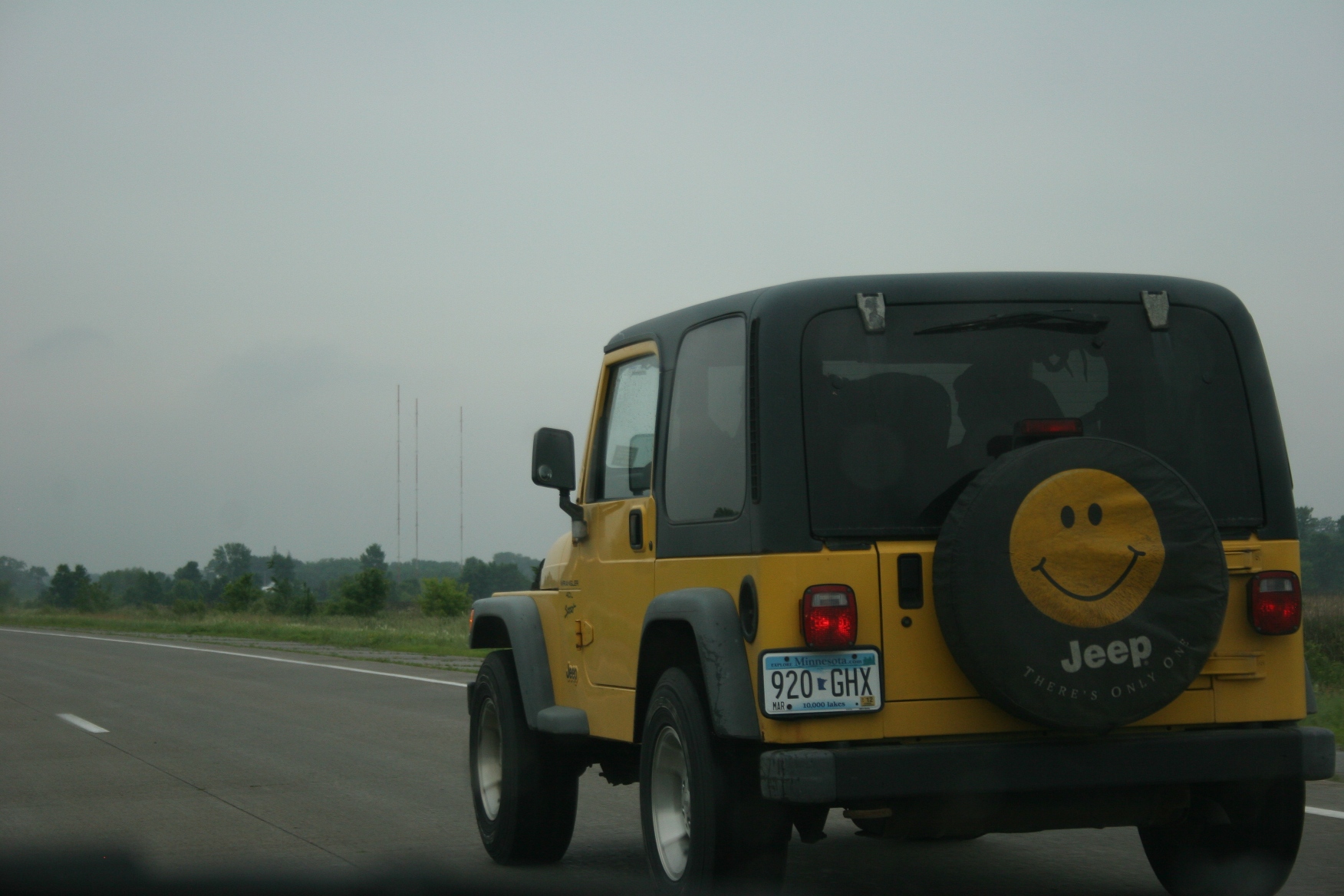
I URGED HIM to speed up, to catch up to that yellow jeep ahead of us.

“I want to take a picture,” I explained, and my husband obliged although he thought me a bit crazy.

And maybe I am sometimes. But that canary yellow jeep, the single visual jolt of brightness on yet another recent dreary weekend, tripped something in my brain.

If you live in Minnesota, I expect you’ll understand. I mean, honestly, weren’t you tired of all the cold and rain and gloom on the heels of a long and snowy winter? (Remind me of that tomorrow when the temperature is predicted to reach 100 degrees or higher.)

So, given that context, the yellow jeep with the smiley face wheel cover made me smile as we traveled on U.S. Highway 14 between Mankato and Eagle Lake recently.

Smiley faces, no matter where I spot them, always increase my happiness quotient.

My appreciation of smiley faces stretches back further than I’d like to admit these days. This happiness symbol popped up everywhere when I was in high school, which would be, yes, the 1970s. Oh, how I wish I still had my smiley face bulletin board and my smiley face button.

So there, that should explain why I wanted to photograph the yellow jeep on a drizzly Saturday afternoon along a Minnesota highway. The smiley face represents a link to my past, to those turbulent teen years when I needed a bright smile as much then as I sometimes still need one some four decades later.

I can’t think of another symbol with such upbeat universal appeal. Can you?

Do you, like me, have fond memories of the smiley face? I’d like to hear.

© Copyright 2011 Audrey Kletscher Helbling


At the WordWalk: Why I won’t eat tuna June 28, 2011

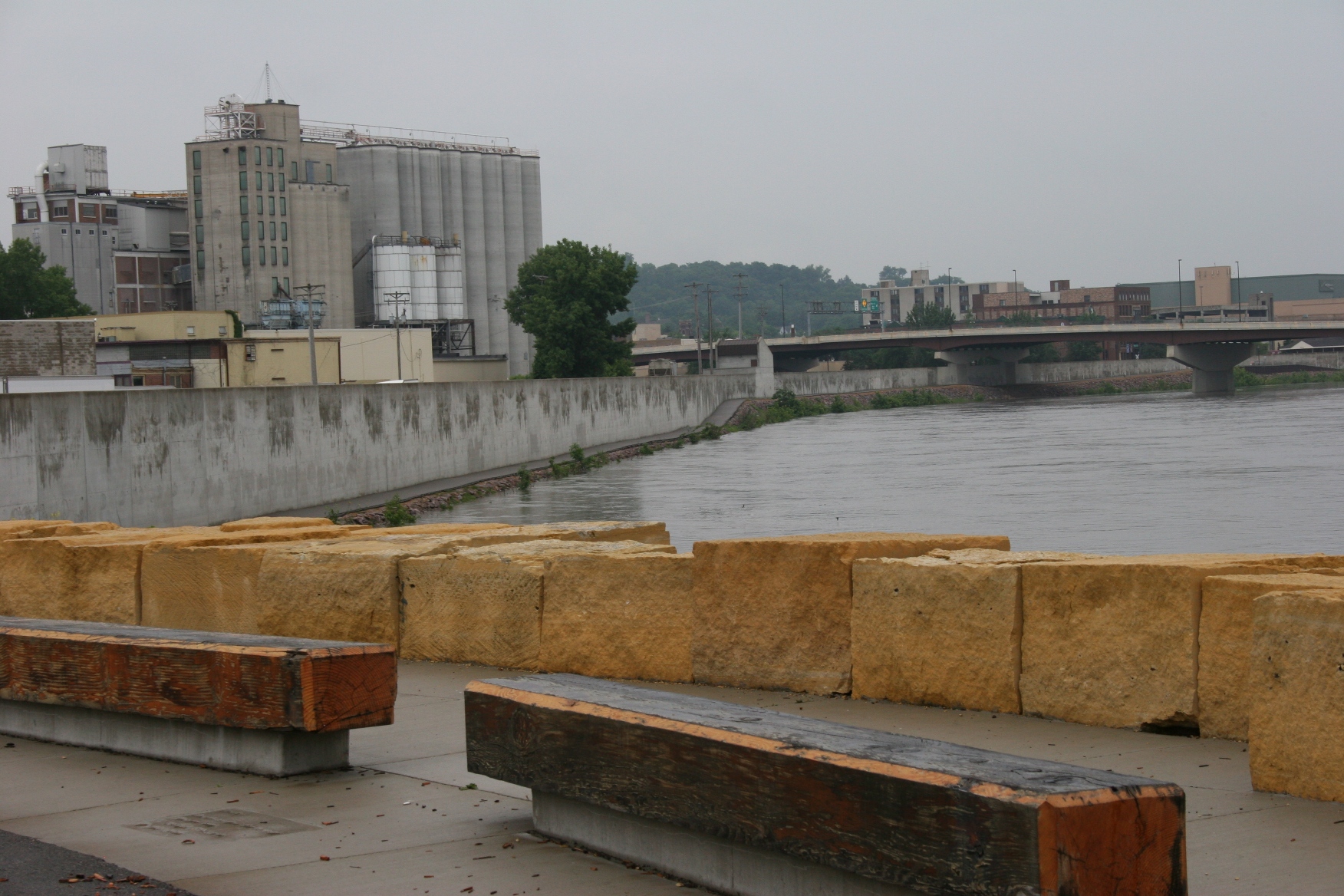
A view of the Minnesota River as seen from Riverfront Park, looking toward downtown Mankato.

THE MANKATO PARK SEEMS, in many ways, an ideal setting for poetry.

The usually playful Minnesota River bumps against the land here, acting on this Saturday afternoon like a willful, unruly child.

On the other side of Riverfront Park, across the tracks, historic buildings stand like forlorn children, neglected, waiting for someone to care.

Overhead, moody skies pout.

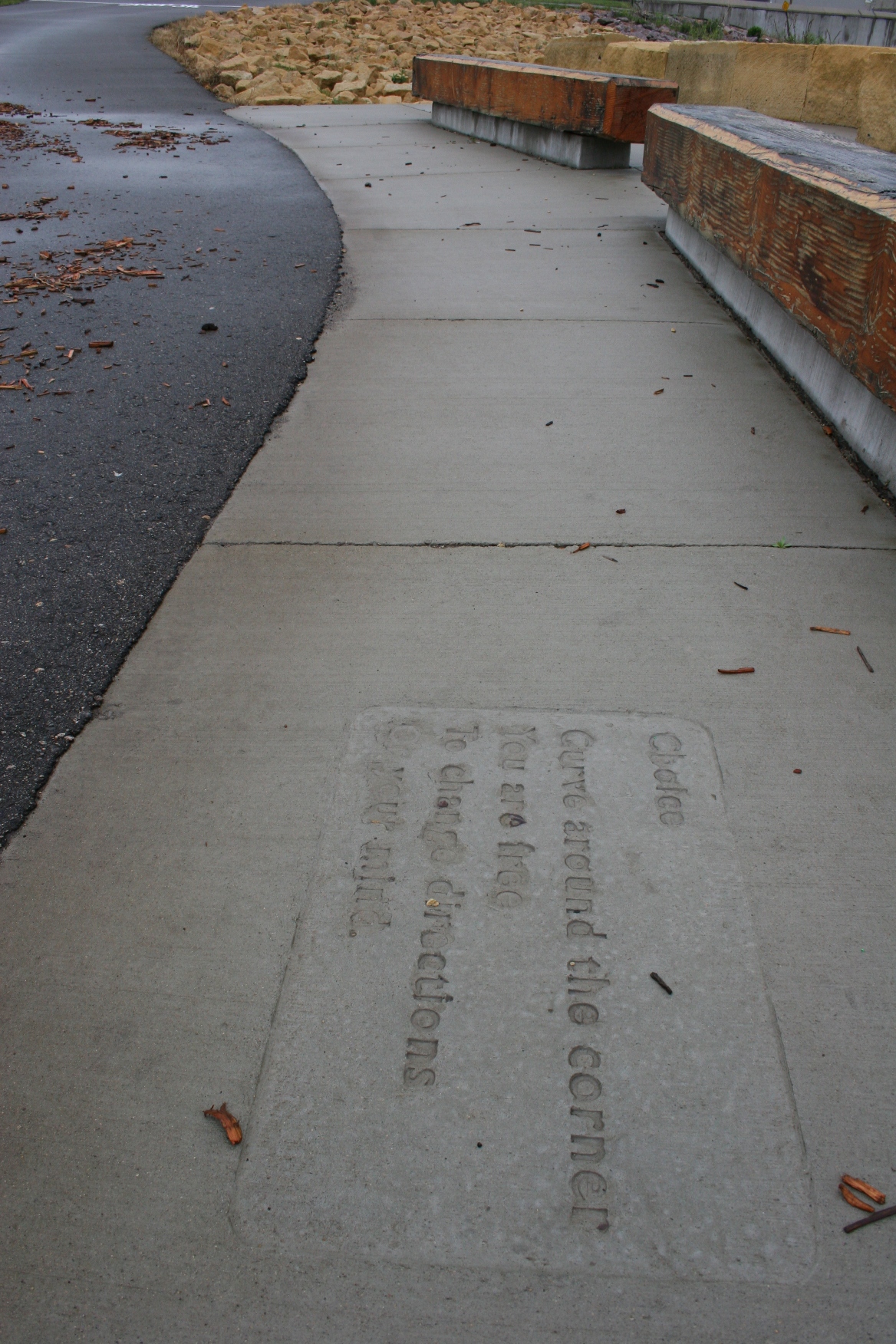
I have come here at this late afternoon hour to read the poetry imprinted upon cement. Occasionally the sky spits rain at me as I follow the gray sidewalk which mimics the gray day.

"Curve around the corner/You are free/To change directions/Or your mind," reads this poem by Marlys Neufeld of Hanska.

I read:

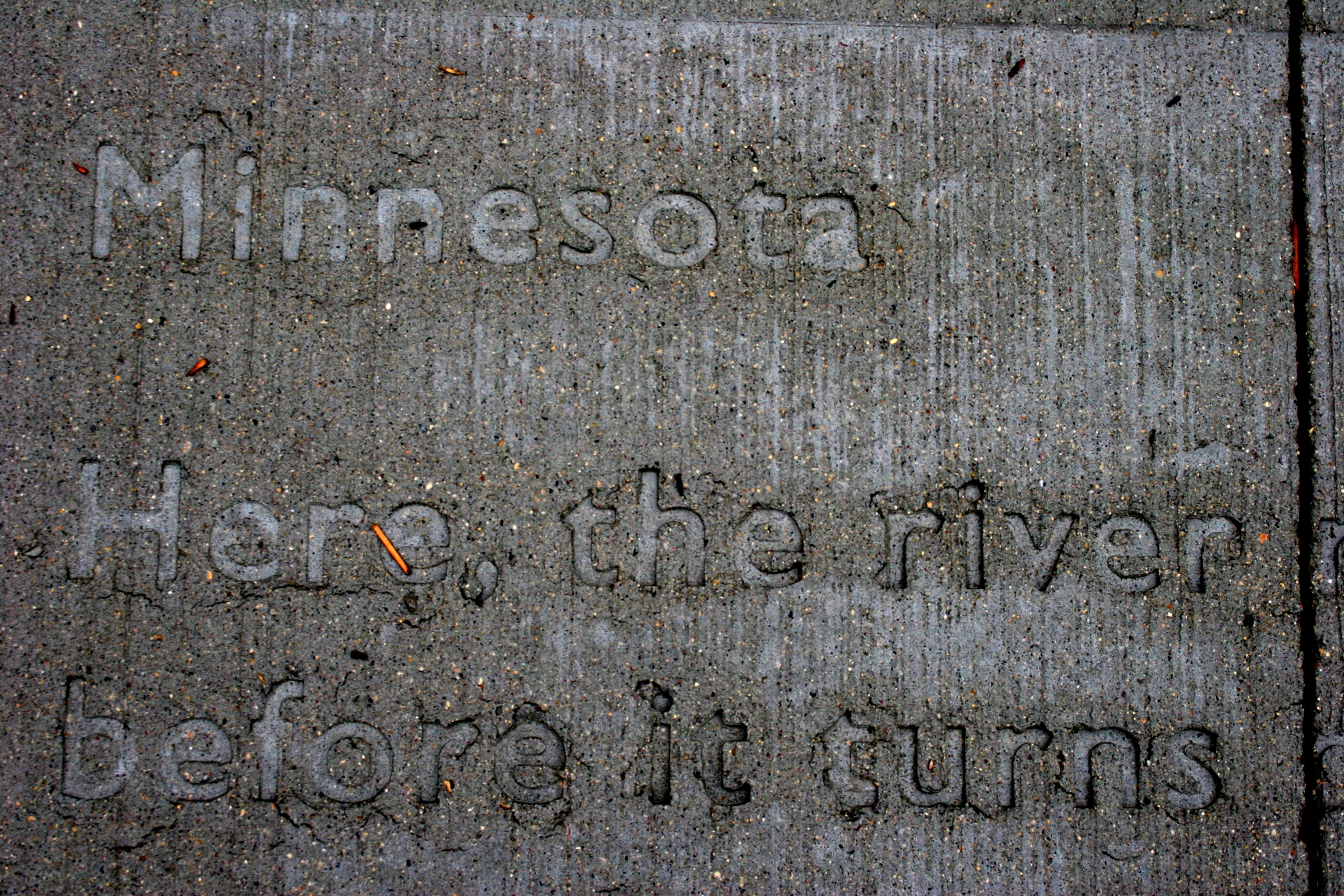
Minnesota

Here, the river rests its elbow

before it turns north to meet

the father of them all.

Here we made 38 mistakes

we now try very hard

not to forget.

A snippet of the poem, "Minnesota." I've edited this image so that you can better read the words. The poems are, unfortunately, a bit difficult to read because of a lack of color contrast between the letters and the cement.

The poem by Ikars Sarma of Mankato refers to the hanging of 38 Dakota here on December 26, 1862. A heavy thought to match the heaviness of the sky, the raging of the river, the anger that still simmers over this shameful moment in this city’s history.

I move on.

Susan Stevens Chambers of Good Thunder writes:

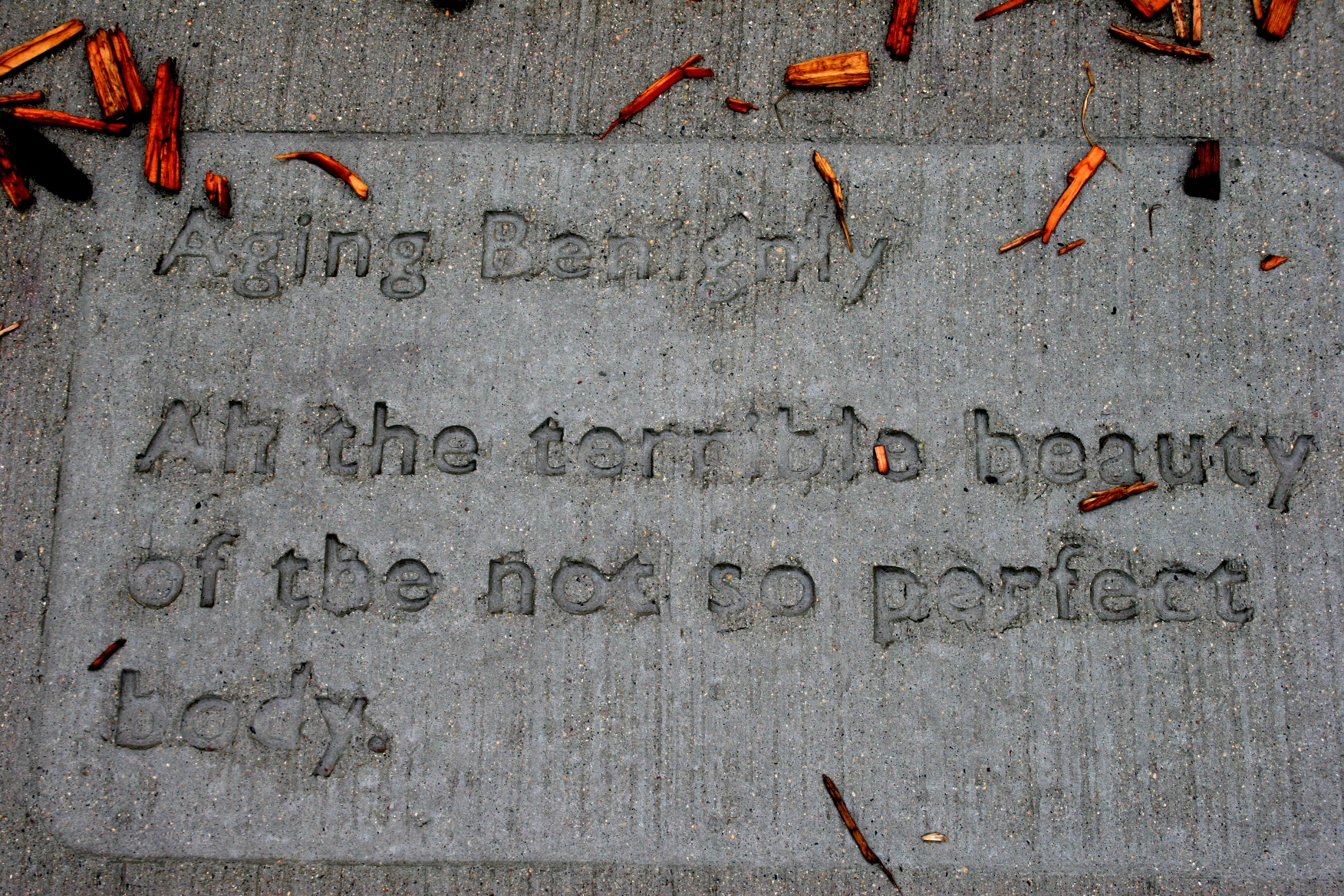
Aging Benignly

Ah the terrible beauty

of the not so perfect

body.

In this edited photo, read Susan Stevens Chambers' poem about aging.

Nearby kids scramble up a rock wall as I struggle to lift my aging bones from the sidewalk where I have bent close to read and photograph Chambers’ poem.

Then I laugh at the words penned by Mankato resident Yvonne Cariveau:

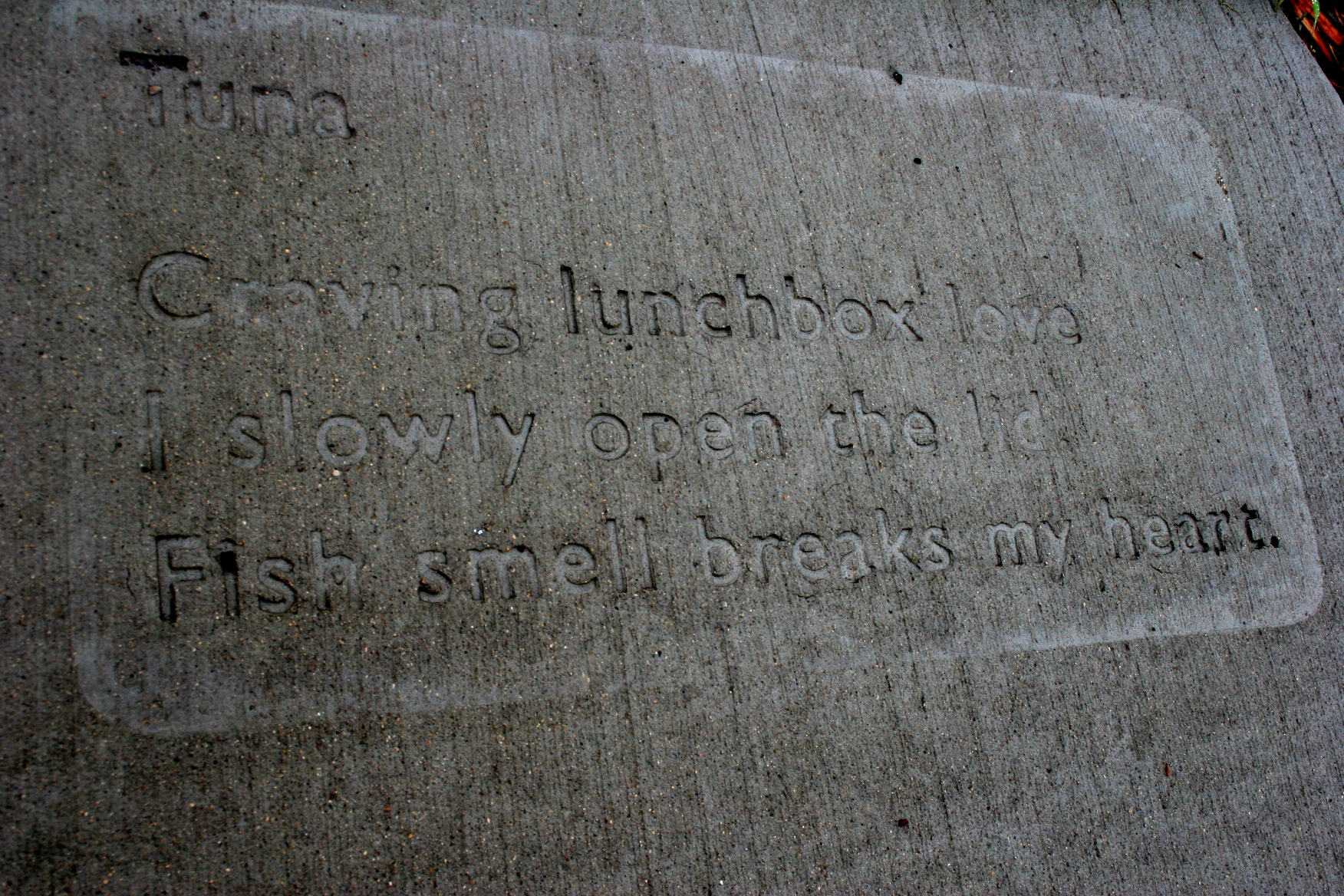
Tuna

Craving lunchbox love

I slowly open the lid.

Fish smell breaks my heart.

The poem that causes me to remember all the tuna I ate during my last two years of college.

Exactly. I ate too much tuna in this college town between 1976 and 1978. I could write my own poem about cramming tuna sandwiches while cranking out stories at the Mankato State University (I still can’t call it Minnesota State University, Mankato) student newspaper, The Reporter.

Deadlines and words.

Words and deadlines.

Tuna. Words. Deadlines.

Cariveau’s writing reminds me of those years so long ago when I was young and only beginning my journey into the poetry of life.

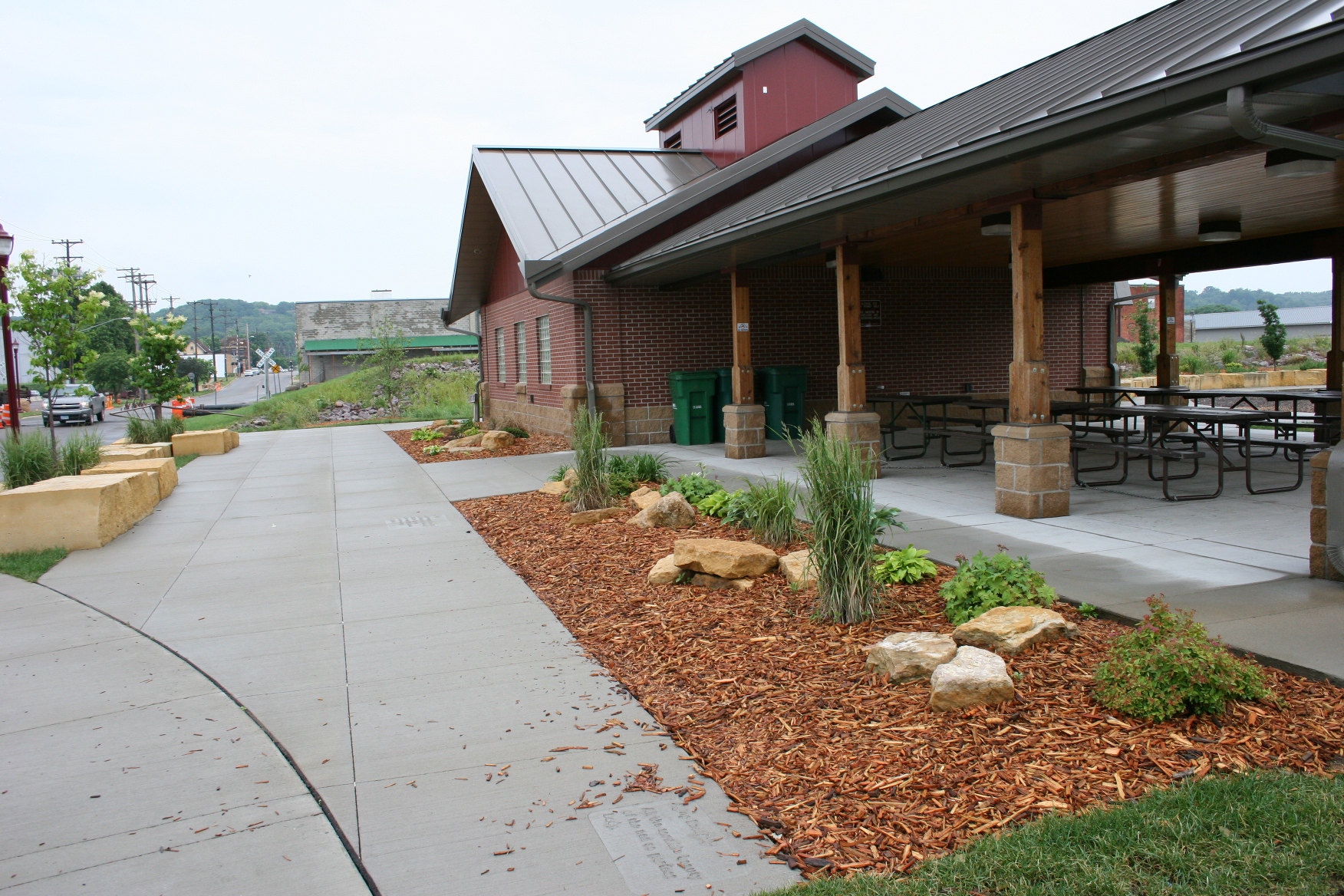
WordWalk poems are imprinted on the sidewalk circling this restroom/shelter facility at Riverfront Park in Mankato.

FOR MORE INFORMATION about Mankato’s public sidewalk poetry, WordWalk, click here and here. At least two other Minnesota cities, of which I am aware, have sidewalk poetry: St. Paul and now Northfield.

WHAT’S YOUR OPINION on sidewalk poetry? Do you like it, or not? Would you like to see more such public poetry in Minnesota communities? Why or why not?

© Copyright 2011 Audrey Kletscher Helbling


Appreciating mom-and-pop businesses like Mutch Hardware June 27, 2011

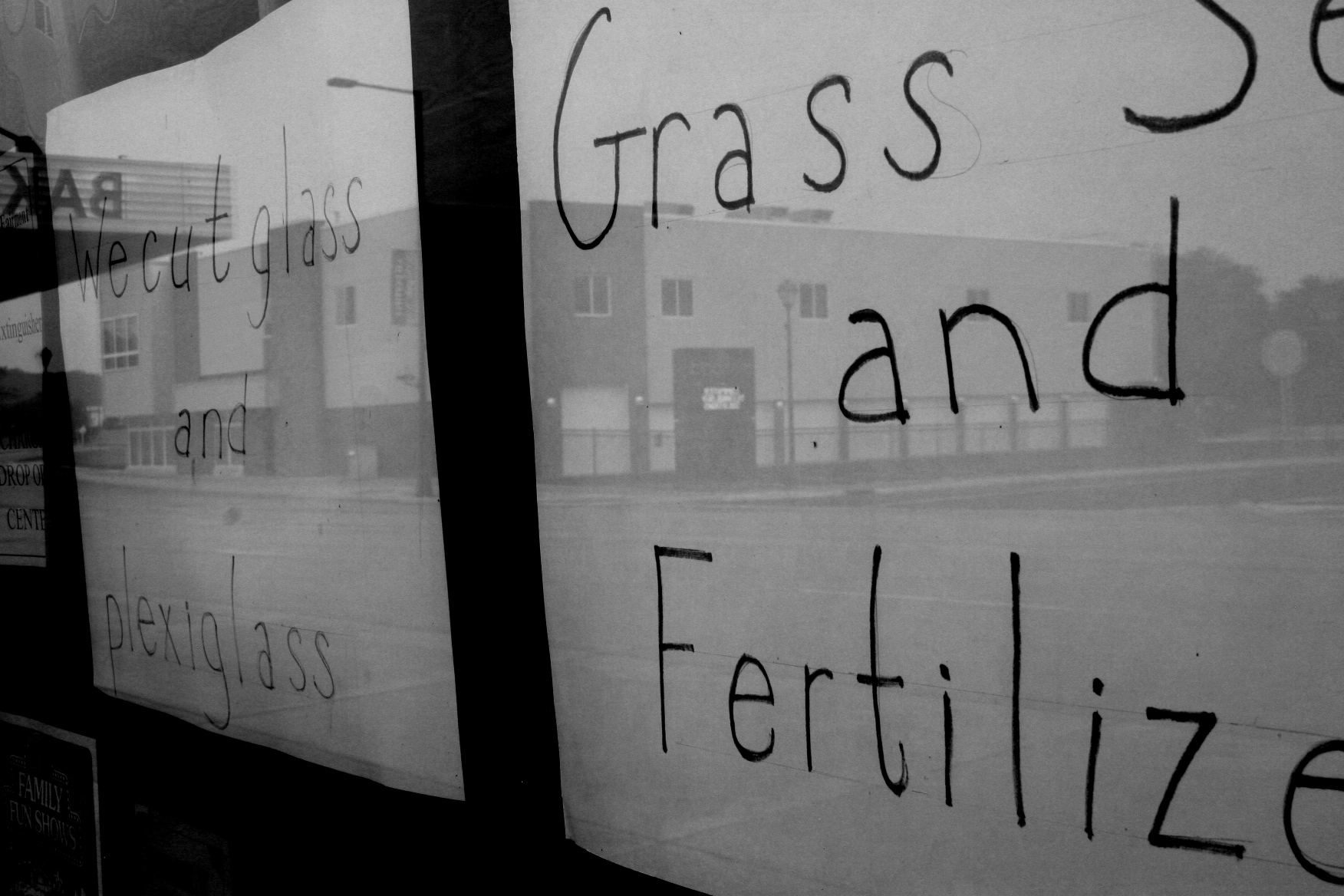
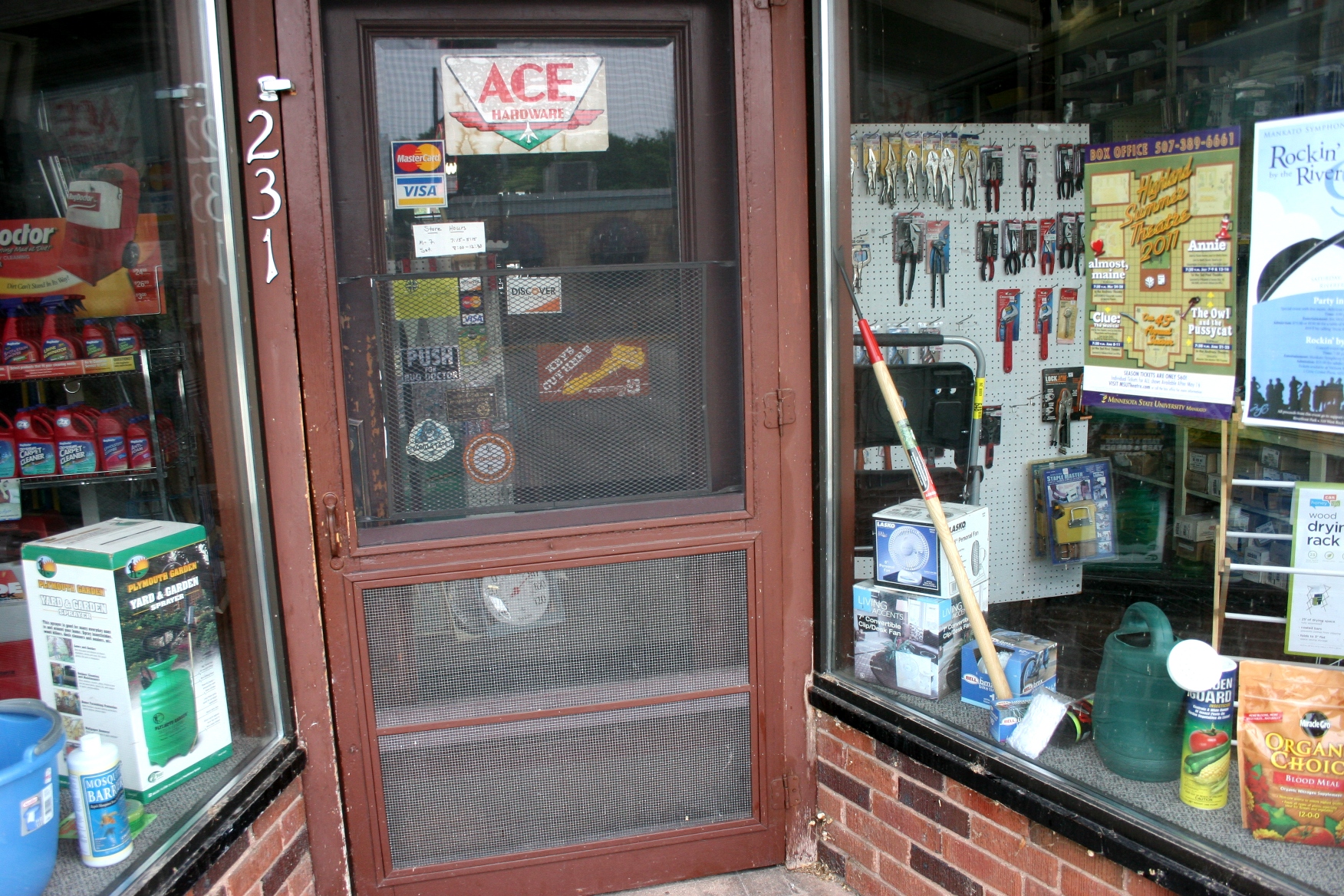
Buildings across the street reflect in the windows of Mutch Northside Hardware in North Mankato where these signs hang on a front plate-glass window.

“Grass Seed and Fertilizer.”

“We cut glass and plexiglass.”

I didn’t need grass seed or fertilizer or any glass cut. Yet, the signage drew me to the storefront plate-glass window of the hardware store along Belgrade Avenue in North Mankato. How often do you see business signs like this with letters printed in near-perfect penmanship between two penciled ruler lines on white tagboard?

After I admired the simplicity of this advertising in a world of mass-produced, flashy, signage, I noticed the old screen door. That did it. I was smitten with this place, this Mutch Northside Hardware that, from the exterior, reminded me of the small town hardware stores of my youth.

You know, the kind of store where you can buy everything and anything. The place packed with merchandise from floor to ceiling, aisles narrow as a sidewalk crack. Nails and bolts jumbled in scarred cubbies. Belts dangling from hooks on pegboard. Wooden floors that creak.

Mutch Hardware is crammed with merchandise, some of it displayed in the window fronts.

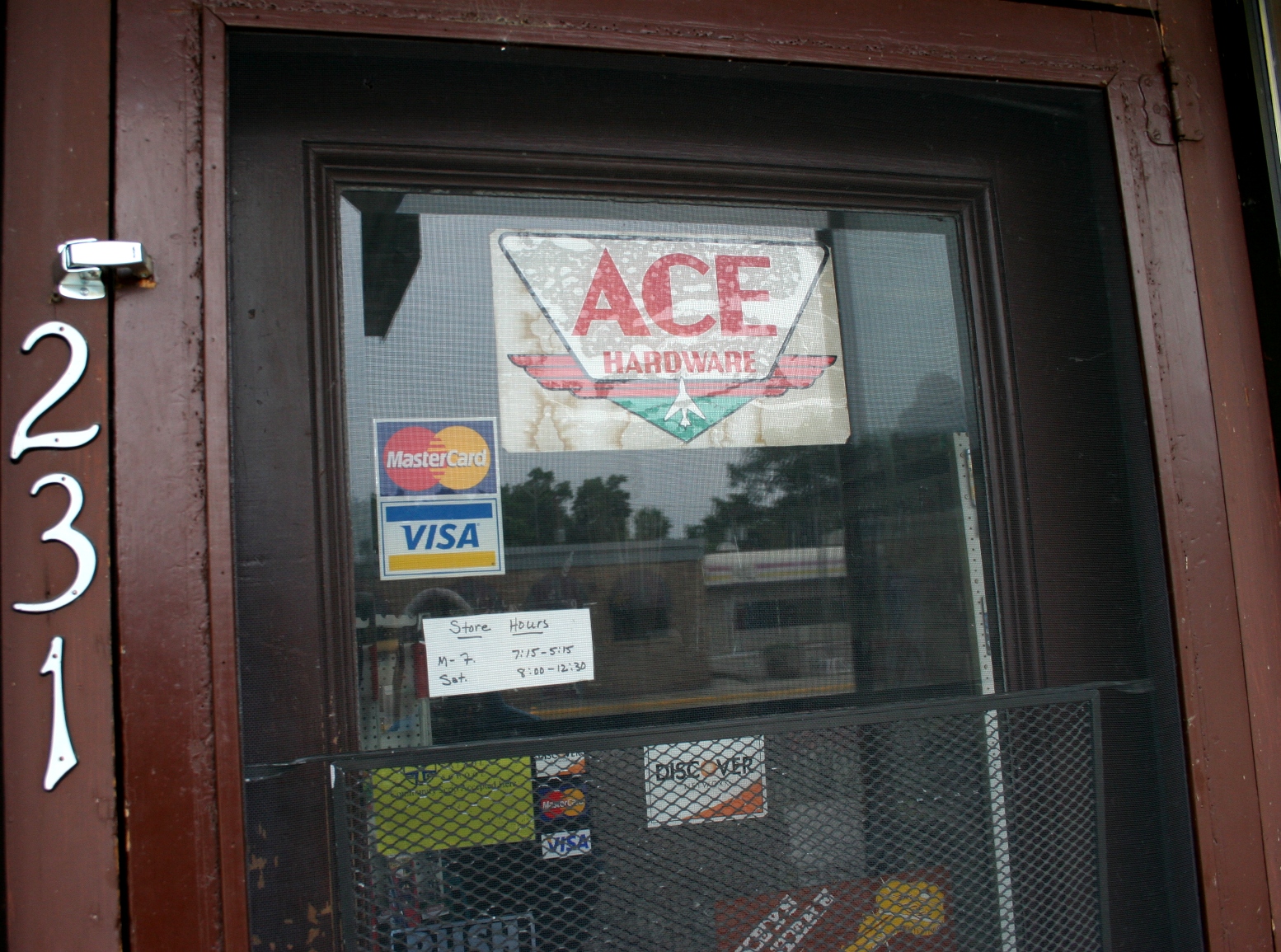
An old ACE Hardware sign decorates the front door where a handwritten sign is posted listing store hours.

I could almost hear the vintage screen door slam shut behind me as I stood outside the closed hardware store, hands cupped around my eyes, peering inside. It was late Saturday afternoon and I was hours too late to step inside Mutch Hardware, much to my disappointment.

But that didn’t stop a flood of memories from washing over me. Memories of going to town with my dad, stopping at Joe Engel’s Hardware store on Vesta’s main street to pick up a few bolts or maybe a belt or something else for the farm.

My siblings and I had another reason for hitching a ride to the southwestern Minnesota hardware store with our dad. Joe Engel’s supplied our ammo—coiled rolls of red-perforated paper pocked with gun powder for our toy cap guns. This was the 1960s, and even though not politically-correct today, an era of playing “Cowboys and Indians.” I remember those days with a depth of fondness that I doubt today’s tech-oriented kids will ever experience.

I would like to take each of them inside a business like Mutch Hardware, where I expect helpful, personal service, care and friendliness accompany each purchase. Places like this seem rare in our fast-paced world of big box stores run by corporations in far away cities. Few mom-and-pop stores can survive in today’s economy. That is reality.

I’m not a prima donna; I shop chain stores as much as anyone. Yet when I see a business such as Mutch Northside Hardware in North Mankato, I take notice. I appreciate the hardworking men and women who, as independent business owners, still offer us a shopping option.

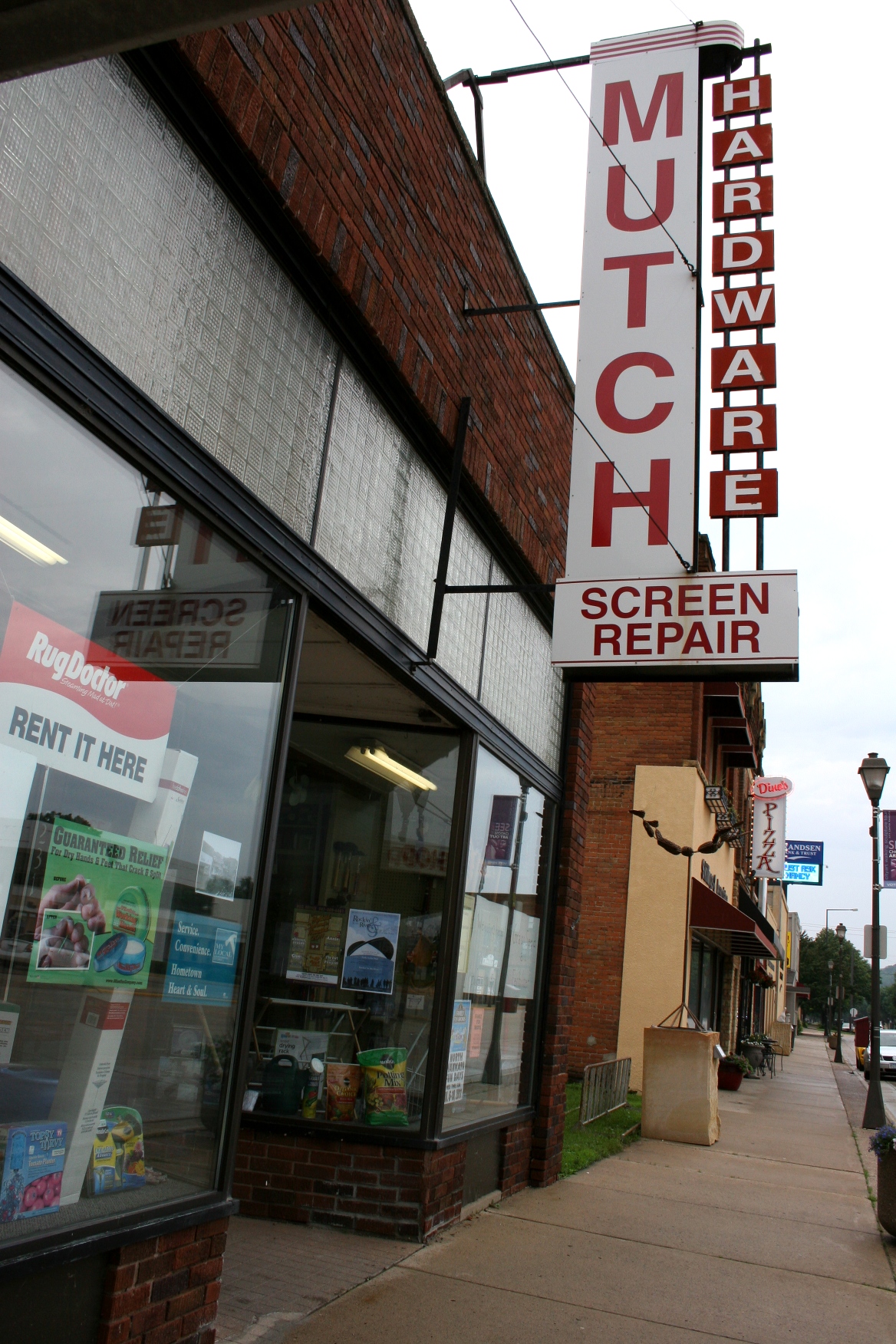
Outside Mutch Northside Hardware, a place reminiscent of bygone days.

DOES AN OLD-FASHIONED mom-and-pop type business like Mutch Northside Hardware exist in your community, or do you know of one somewhere? I’d like to hear. Tell me about it by submitting a comment.

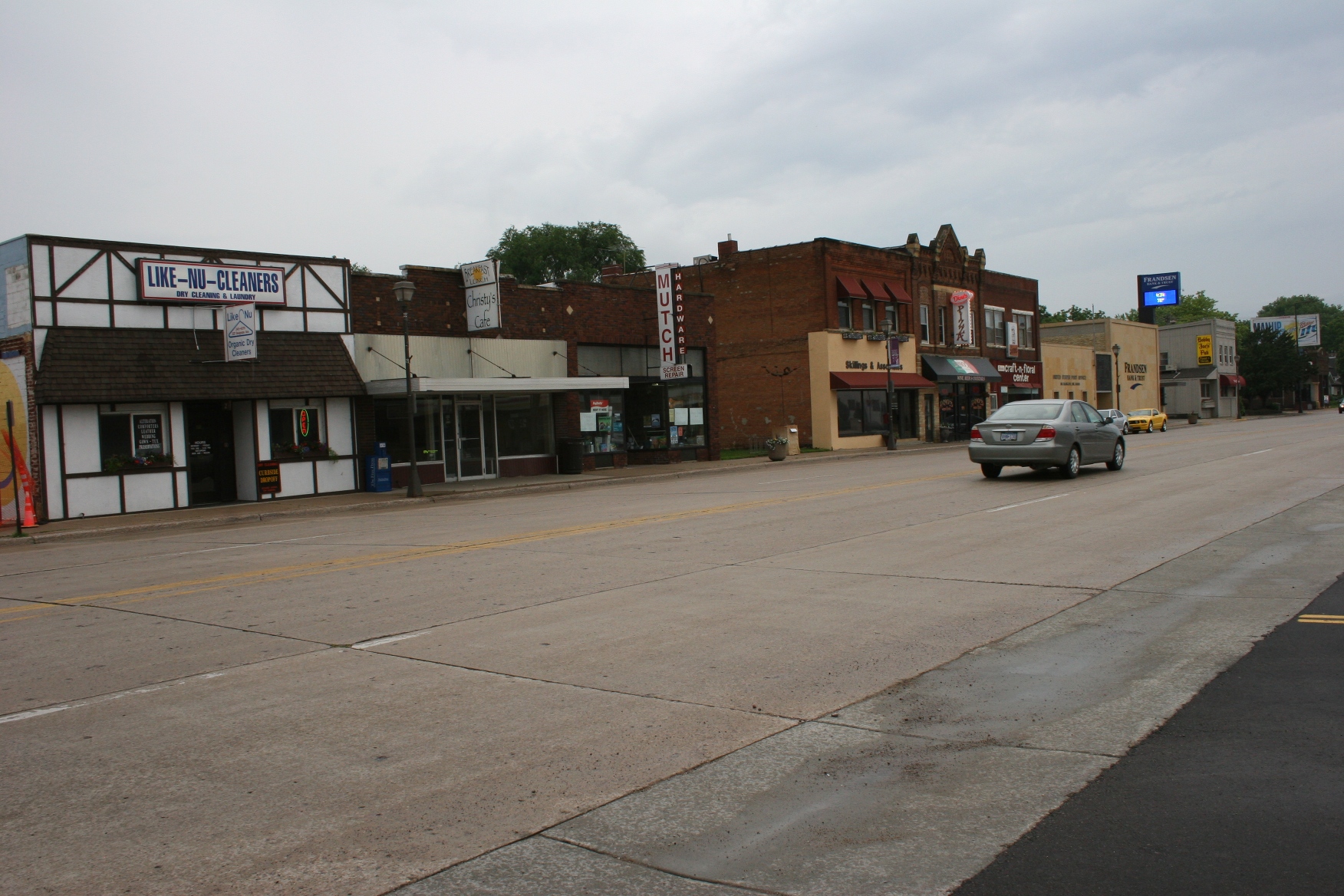
This image of a section of Belgrade Avenue in North Mankato shows the following businesses, from left: Like-Nu-Cleaners, Christy's Cafe, Mutch Northside Hardware, Skillings & Associates, Dino's Gourmet Pizzeria, Craft-n-Floral Center, the U.S. Post Office, Frandsen Bank & Trust and Bobby Joe's Pub.

© Copyright 2011 Audrey Kletscher Helbling


Hail St. Mary’s of Melrose June 26, 2011

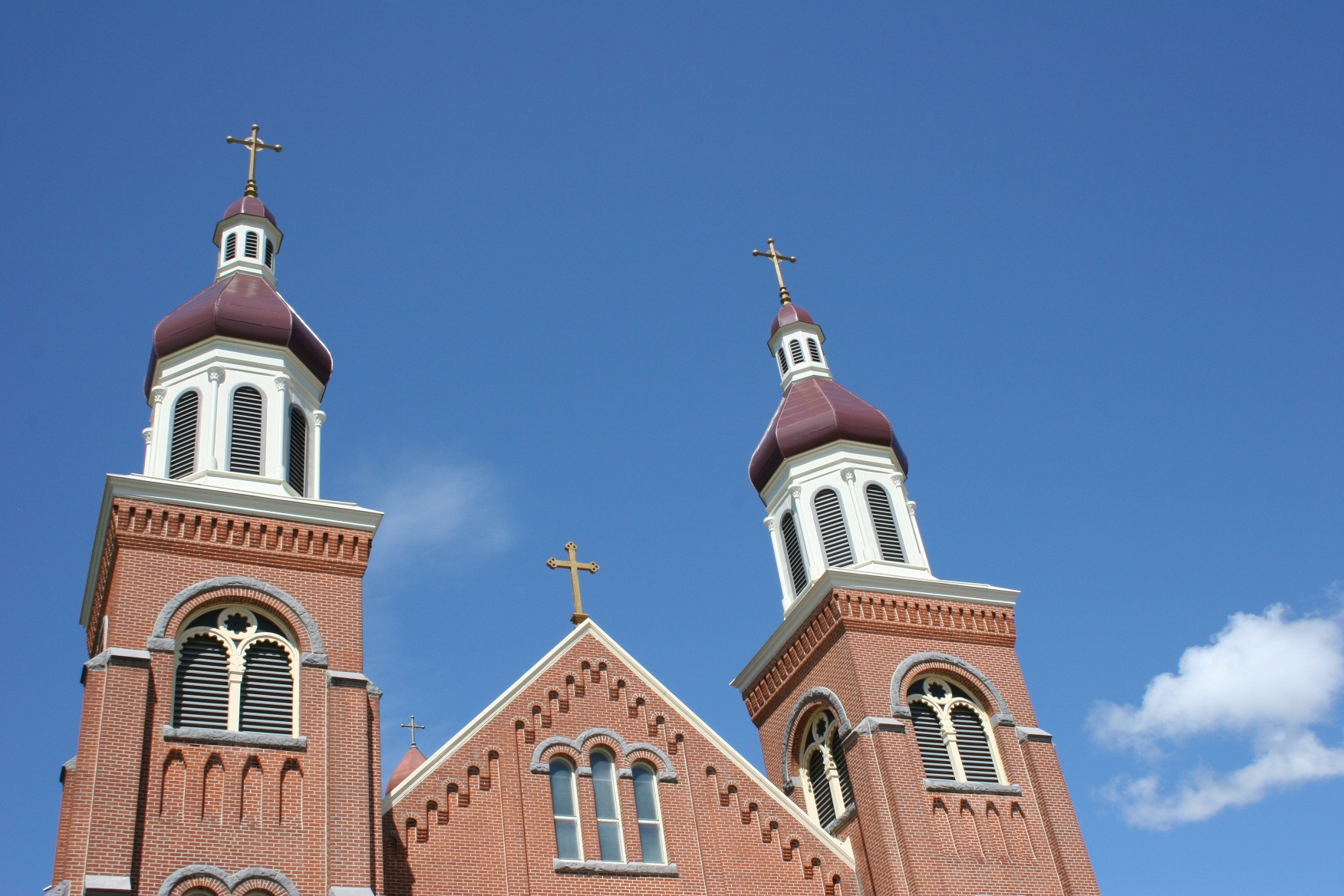
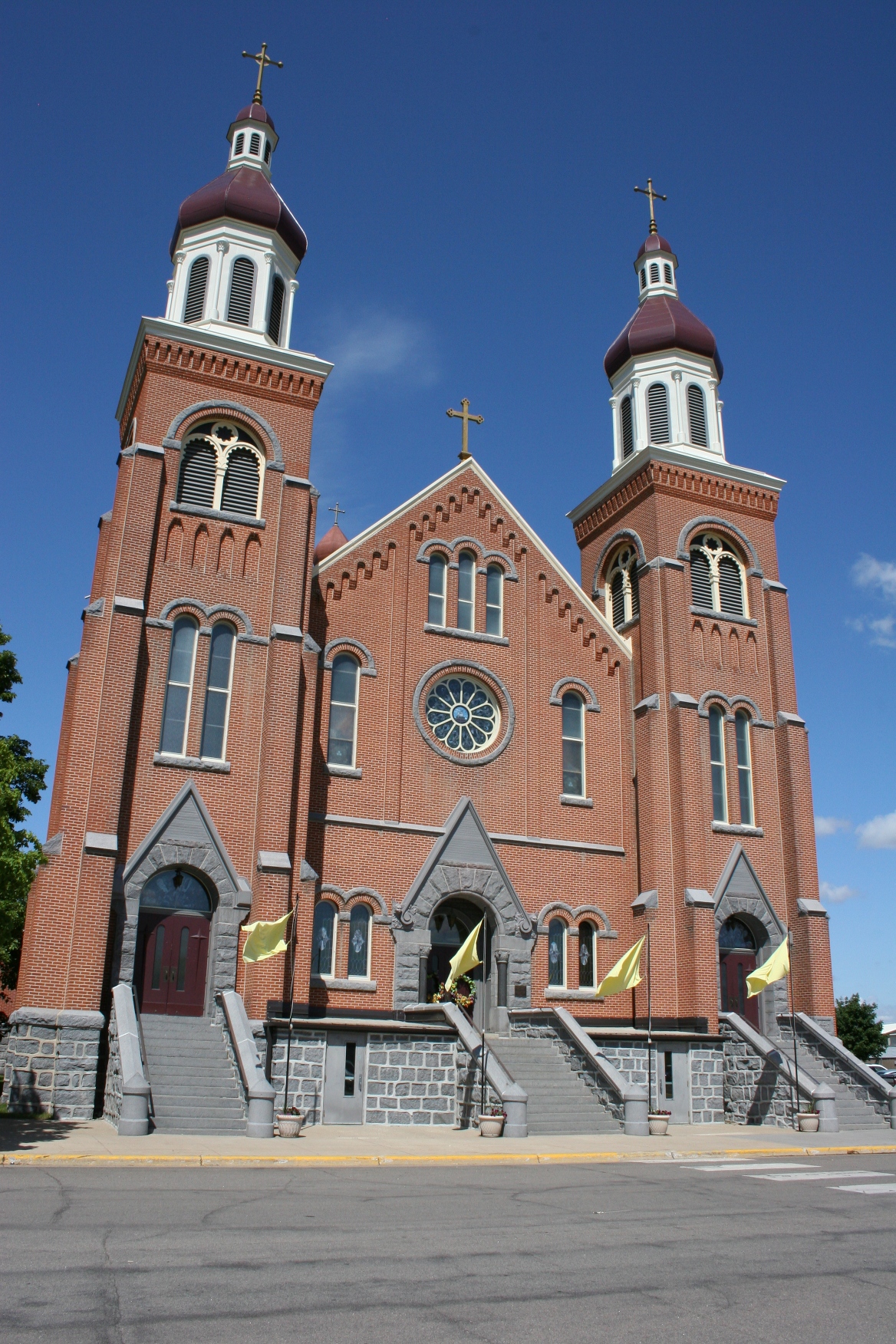
The steeples of St. Mary's Catholic Church of Melrose.

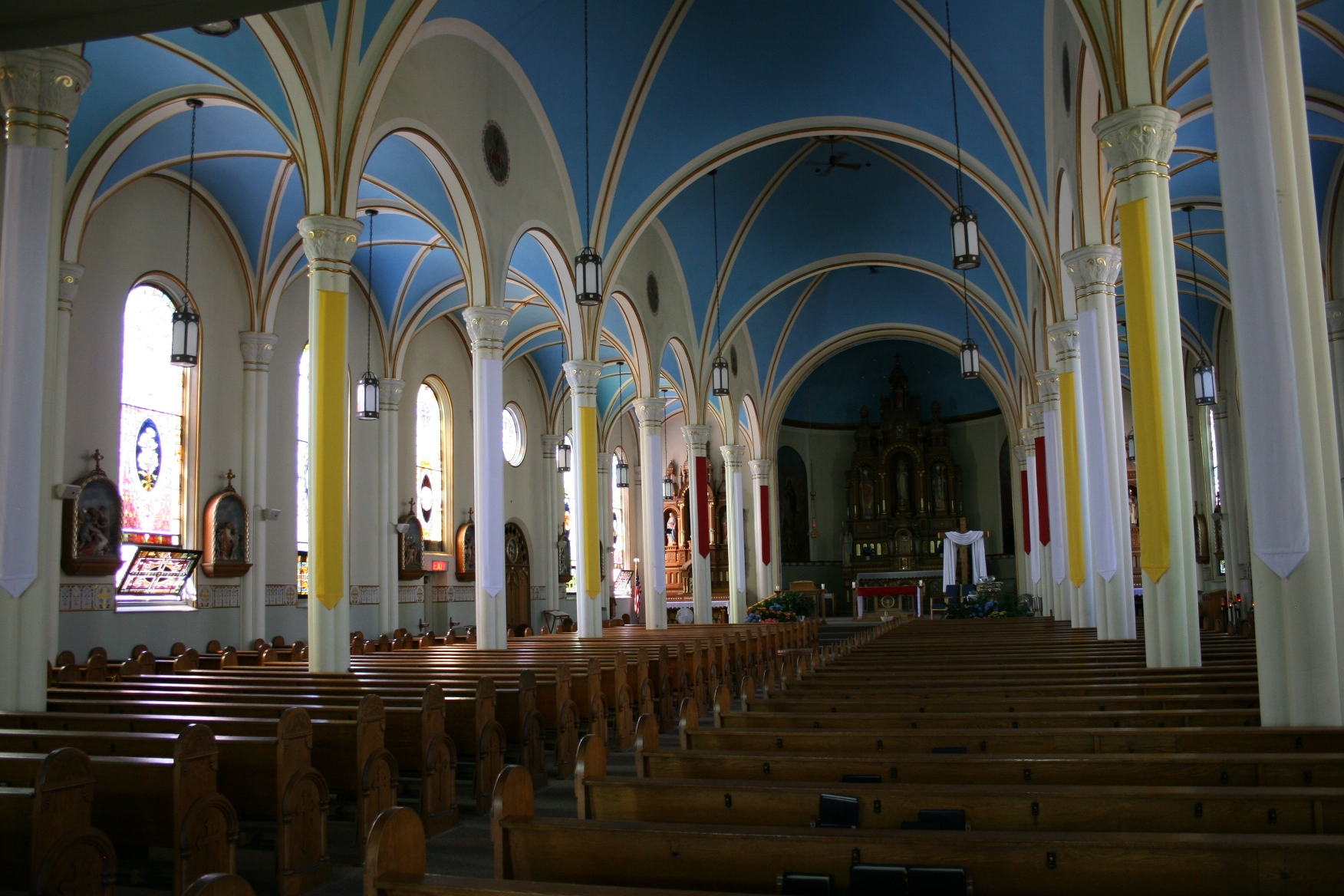
I STOOD THERE. Just stood there. For minutes, taking in the glorious splendor before me.

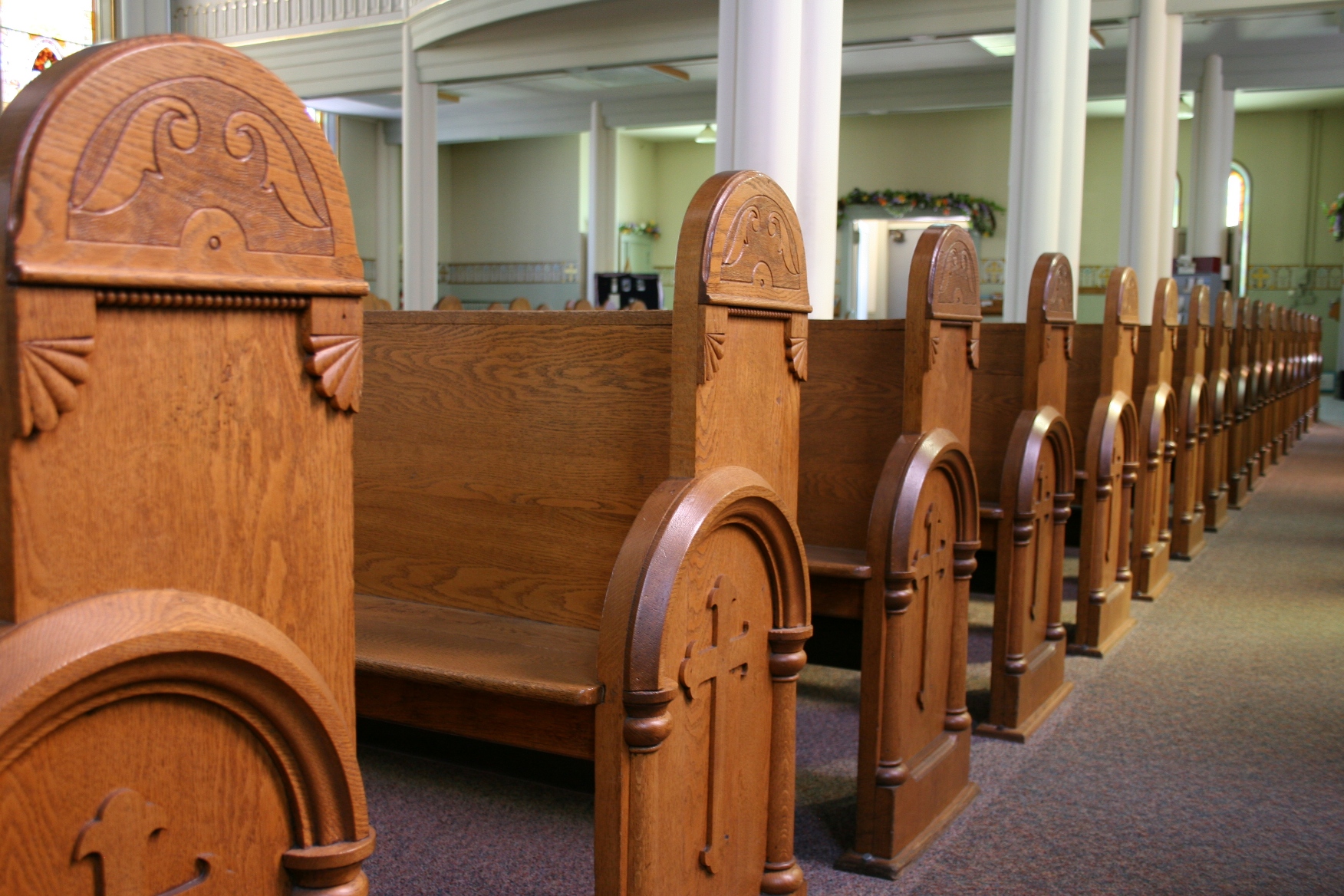
The cornflower blue of the arched ceiling. The pillars. Pews—endless carved pews stretching from the fonts of holy water to the steps leading to the altar.

A view from the back of St. Mary's Catholic Church looking toward the main altar.

I didn't even try to count the hand-carved pews that grace this church. But they are many.

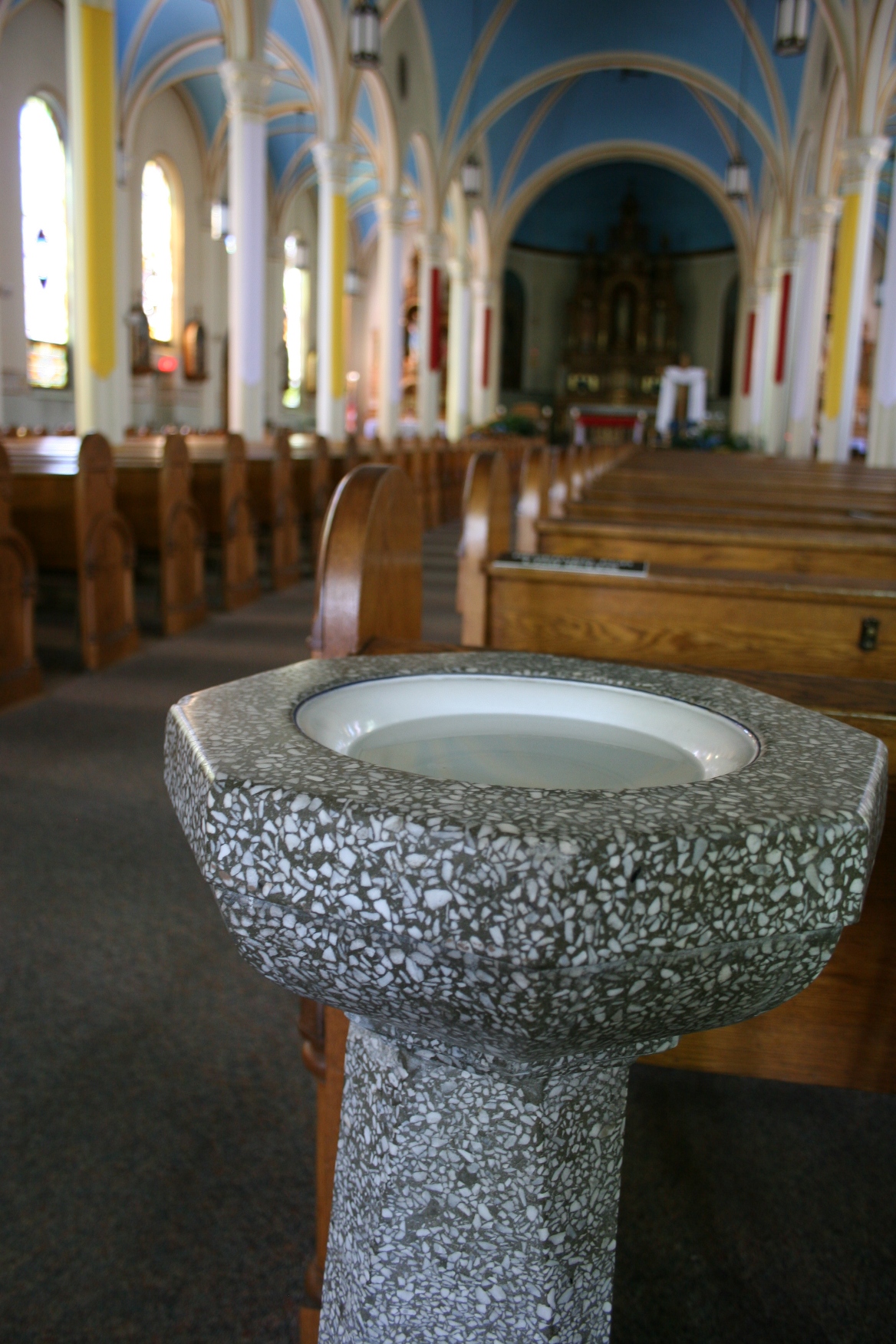
A stone font holding holy water at the back of the church.

Such beauty. Such holiness. Such wonderment.

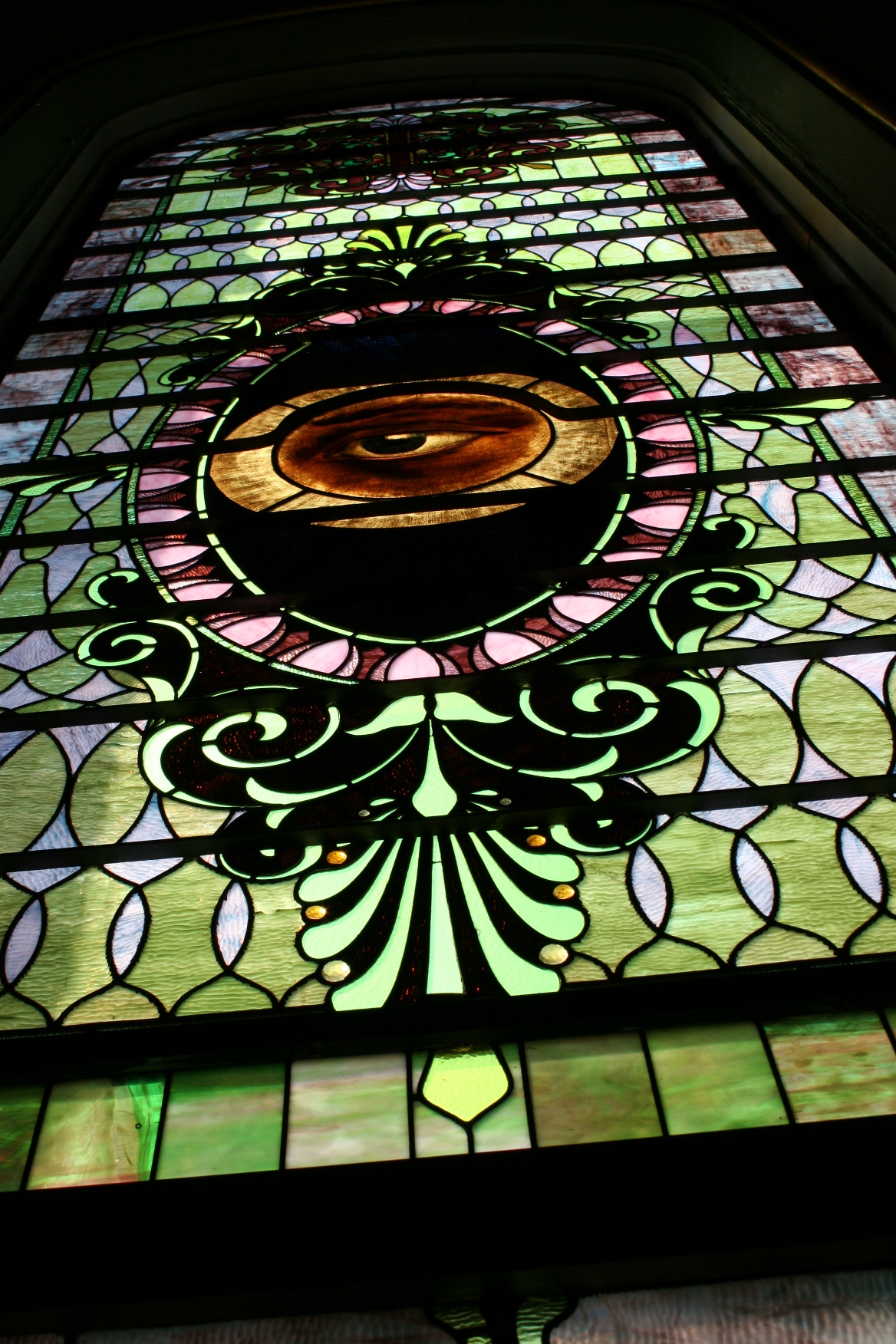
Opulent, stained glass windows bedecking the sanctuary like jewels on a crown.

One of too many stained glass windows to count.

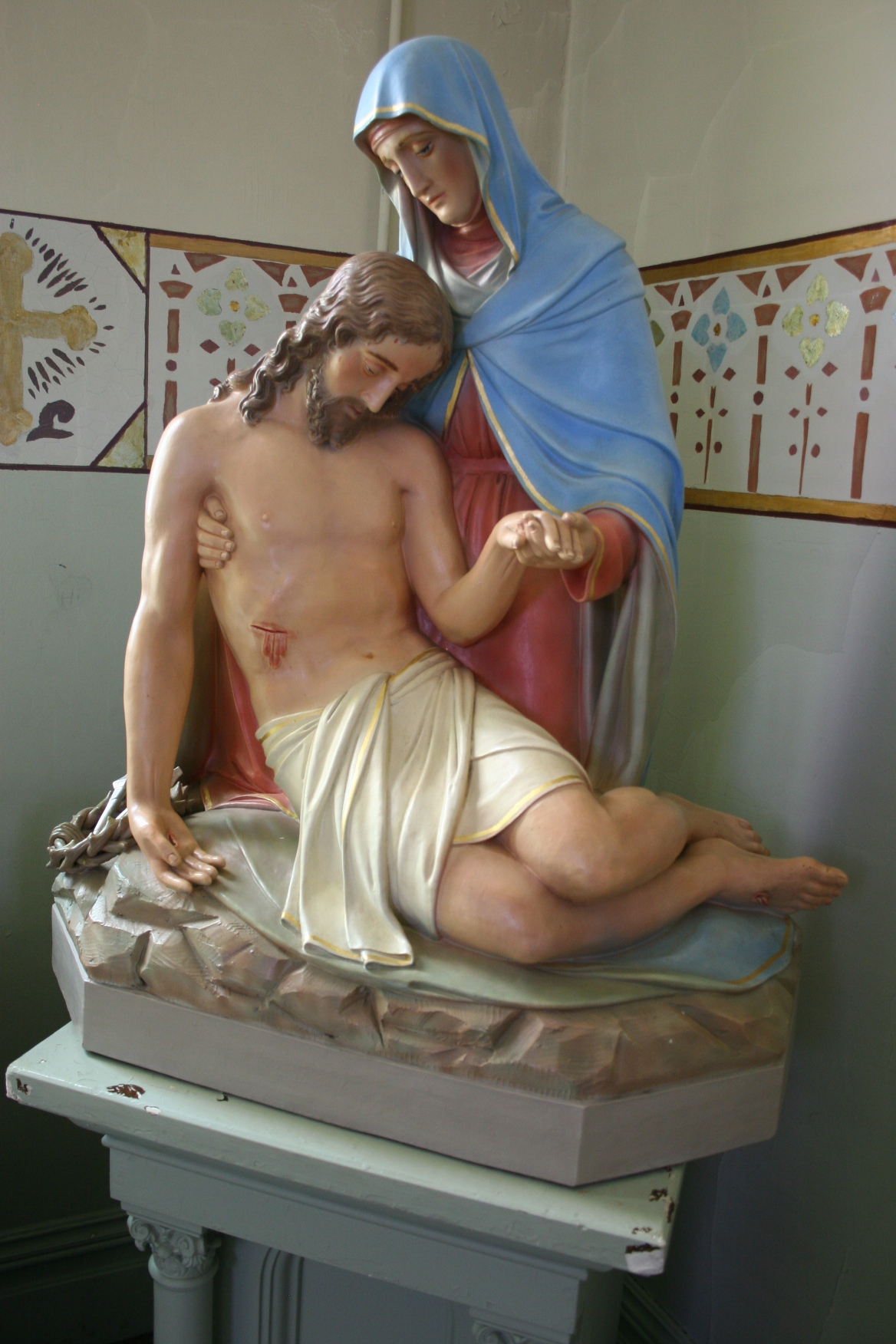
Statues fit for the finest of museums.

This statue of Jesus and Mary sits at the back of the church.

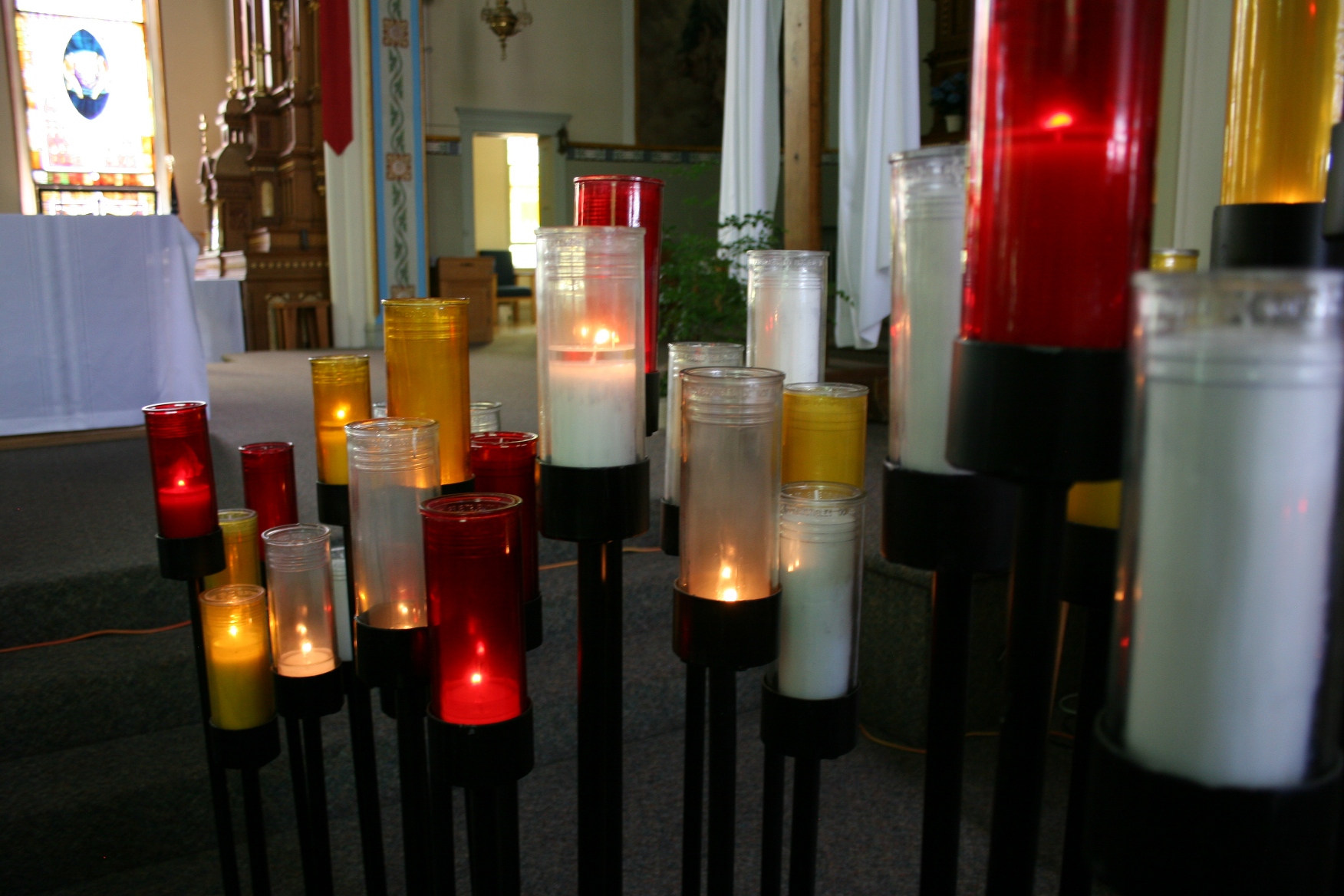
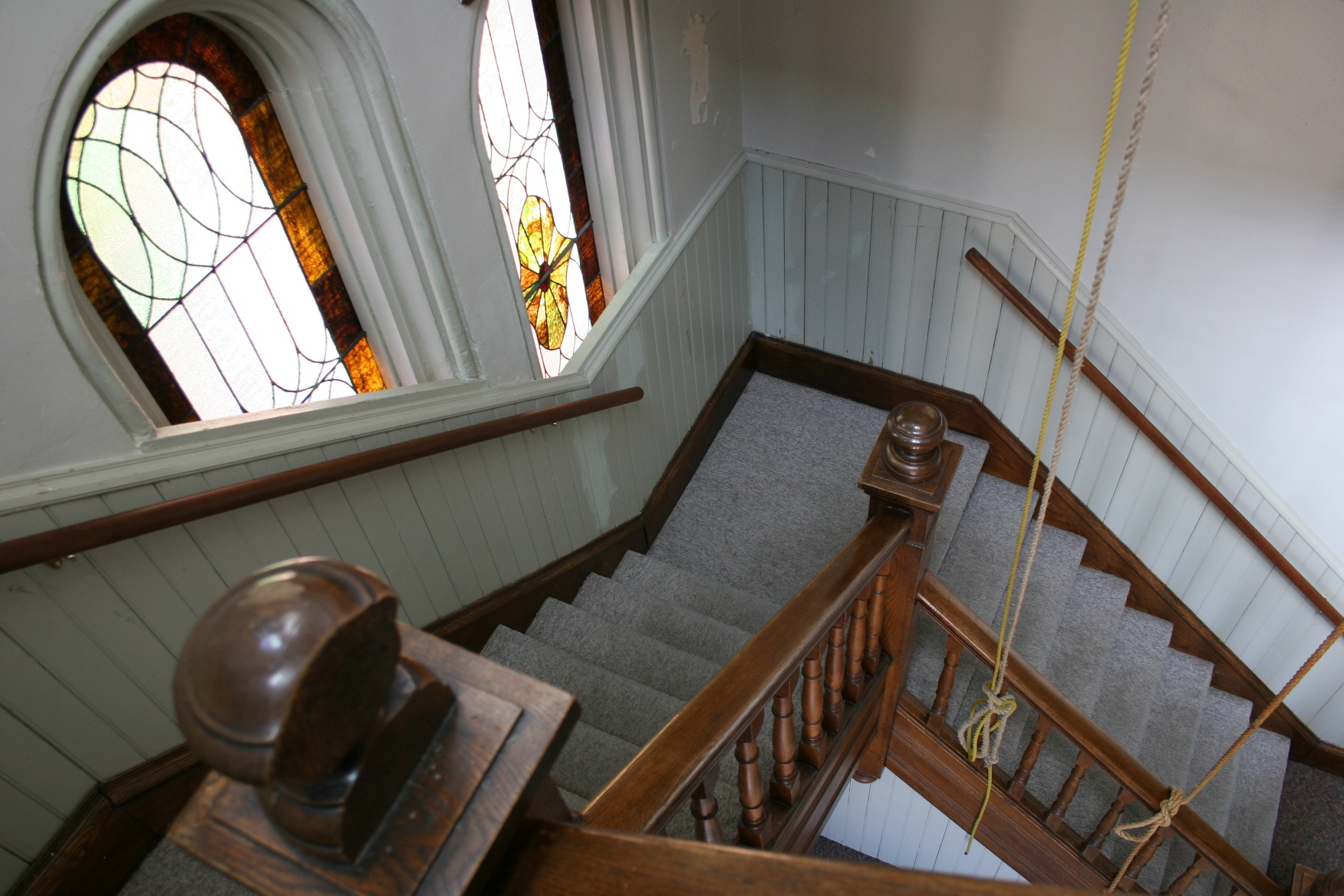
And then I moved, not sure which direction to go, wondering how I could possibly see every detail. Prayerful hands. Flickering candles. The frayed ends of the bell pull. Gold-leaf stenciled crosses. Worn wood. Angels in flight above the altar.

Clustered candles of prayer at St. Mary's.

Bell ropes dangle by the balcony stairway. Two stairways lead to the balcony.

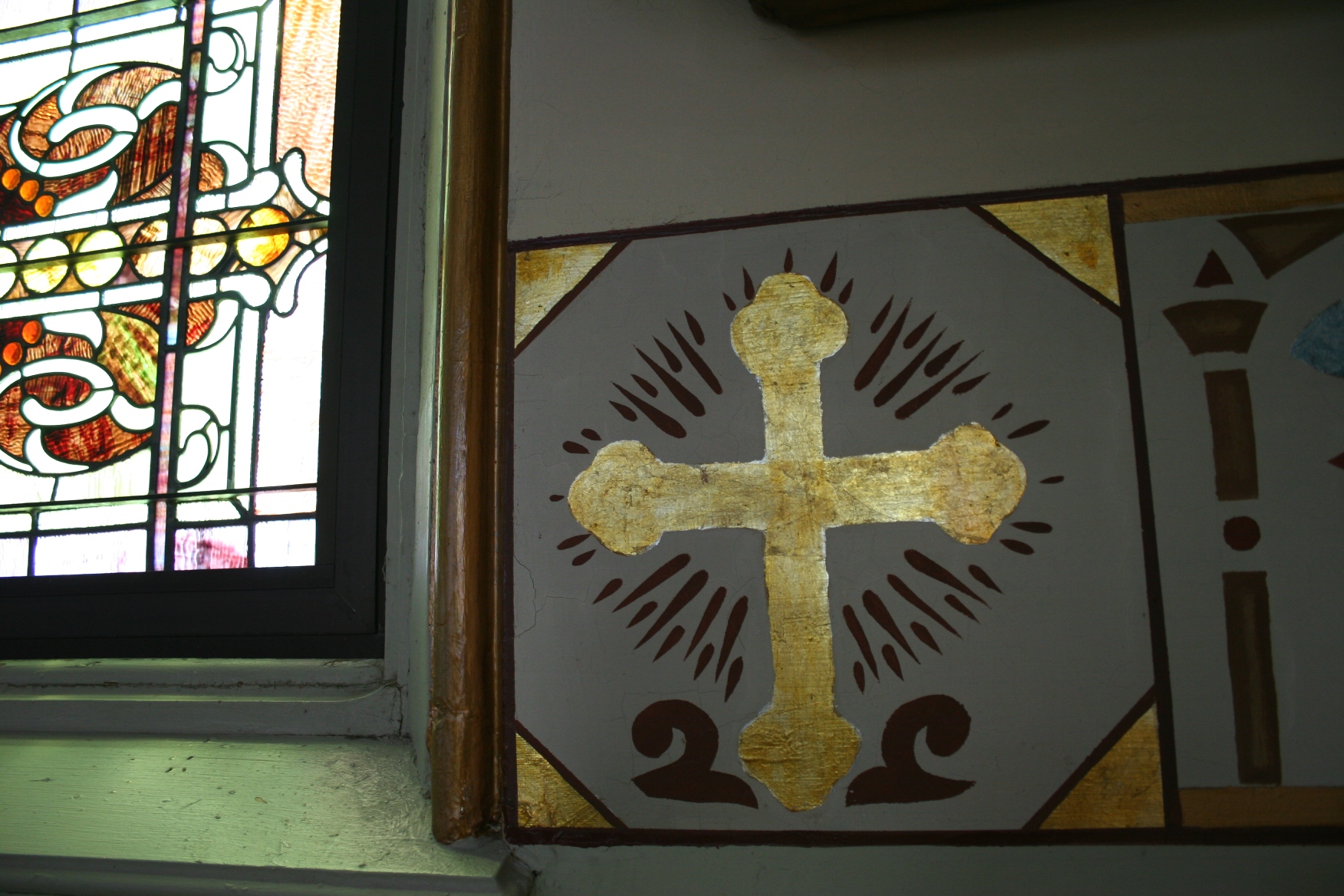
A gold-leafed stenciled cross borders a side wall of the sanctuary.

My eyes swept across the Church of St. Mary’s, or St. Mary’s Catholic Church of Melrose. Choose the moniker you prefer.

The name and the denomination of this 1898 church mattered not to me. I cared only for the heavenly feel of this holy place.

How could I not be impressed by this multi-steepled house of worship next to the turkey plant and soaring above the landscape 100 miles northwest of the Twin Cities?

How many times, if you travel Interstate 94 in central Minnesota, have you noticed those steeples while zipping by Melrose, but never taken the time to drive into town? Placed on the National Register of Historic Places in 1993, this Catholic church is worth a stop if you appreciate craftsmanship, art, history and reverent beauty beyond belief.

The church rises above the land, defining Melrose.

The 113-year-old building was constructed by the parishioners of St. Boniface and renamed St. Mary’s when St. Boniface and St. Patrick’s parishes merged in 1958.

History runs deep here. You will see it in the hitching post out front, smell it in the incense, hear it in the creak of steps leading to the locked balcony.

And if you listen closely, you can almost hear the whispered prayers of those who have come here on bended knees to lift up their sorrows to the Lord.

#

I COULD NOT POSSIBLY share my many photos of St. Mary’s with you in one blog post. Please check back for more images in a future post.

© Copyright 2011 Audrey Kletscher Helbling


A native Minnesotan reports from flooded Minot June 23, 2011

MY BROTHER-IN-LAW, Neil, lives in Minot.

But he ranks as one of the lucky residents of this North Dakota city. His house lies outside—albeit less than a mile away—and several hundred feet above the flood zone.

Yet, this Air Force man and Minnesota native isn’t sitting idly by because his home has not been threatened. He’s pitching in to help those who face the reality of losing their houses in the worst flooding since 1969.

In an e-mail I received from Neil early this morning, he shares information, insights and, yes, even advice about the current situation—which he terms “exhausting and discouraging”—in his adopted hometown. The overwhelmed Souris River in Minot is expected to crest on Sunday, some five feet higher than any previous flood stage in recorded history for the area, Neil says. The old record was set in 1881, before Minot was founded.

So that’s the situation facing this city, where some 12,000 residents, more than a quarter of the population, have been evacuated and where, says Neil, dikes in several neighborhoods were breached on Wednesday.

Neil has assisted two families in exiting the city.

He writes: “I helped a lady from our church on Monday night as she moved everything either to the second floor or attic. What didn’t go upstairs went into a horse trailer that her brother brought in from out of town late that night. She seemed to take things in stride. Her house was also flooded in ’69 (before it was her house), but came through it okay. It’s extremely well built, nearly 100 years old. This lady trusts that God will provide for her needs, even if her house washes down the river.”

Neil next joined efforts to help his boss’s family. His boss is deployed to Afghanistan.

“I lost track of how many people were there to help them,” Neil writes. “We also helped them three weeks ago, when we moved everything out of their sopping wet basement to the upper floor and garage. Because of the shortage of time allowed to evacuate, we left almost everything there that time. Because of the expected height of the floodwaters and the advance preparation time, we decided to clear everything out of their house this time.”

Yet, Neil continues, “There were easily several pickup loads of stuff that we left behind simply because there wasn’t enough time/energy/resources to move it all.”

At this point my brother-in-law pauses and suggests that we all re-evaluate our possessions, deciding what we really need and what we don’t. “Go through your house and garage and get rid of anything that you haven’t laid eyes on or used in the past three years.” He intends to do exactly that at his Minot home, which is currently on the market; he’s been reassigned to an Air Force base in Missouri.

When Neil and his wife, who is already in Missouri, purchased their house several years ago, they purposely stayed away from the flood zone. “A contractor that we spoke to before buying a house told us the down sides of several locations in this town. One specific neighborhood that he told us to steer clear of is the exact one that we helped my boss’s family move out of; he told us that he wouldn’t even consider building a house down there because the whole area was under water in the flood of ’69,” Neil says.

And then my brother-in-law adds this final statement: “Dikes give people a false sense of security.  No one presently living in this town will ever doubt that again!”

© Copyright 2011 Audrey Kletscher Helbling


The Ice Man and his dog June 20, 2011

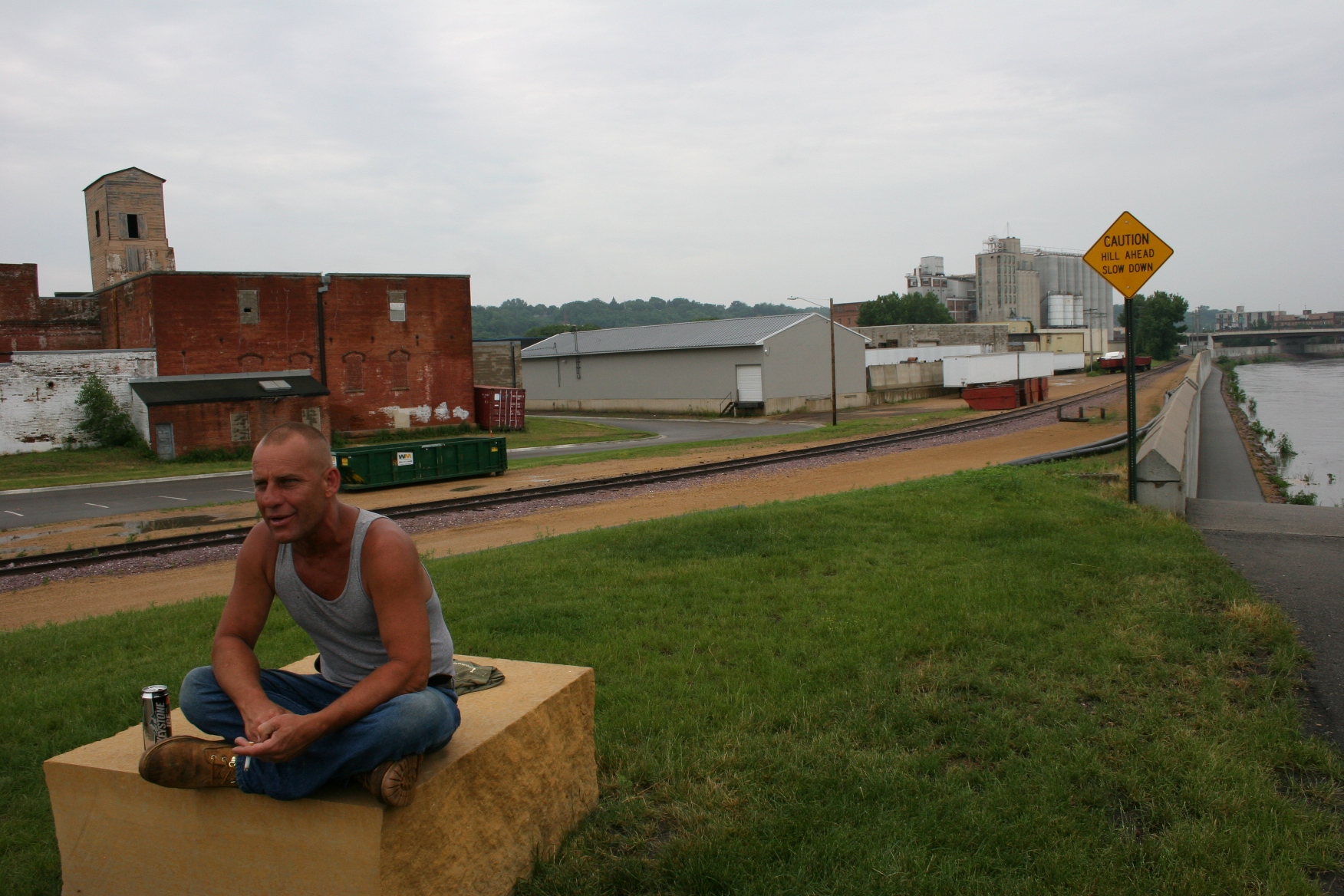
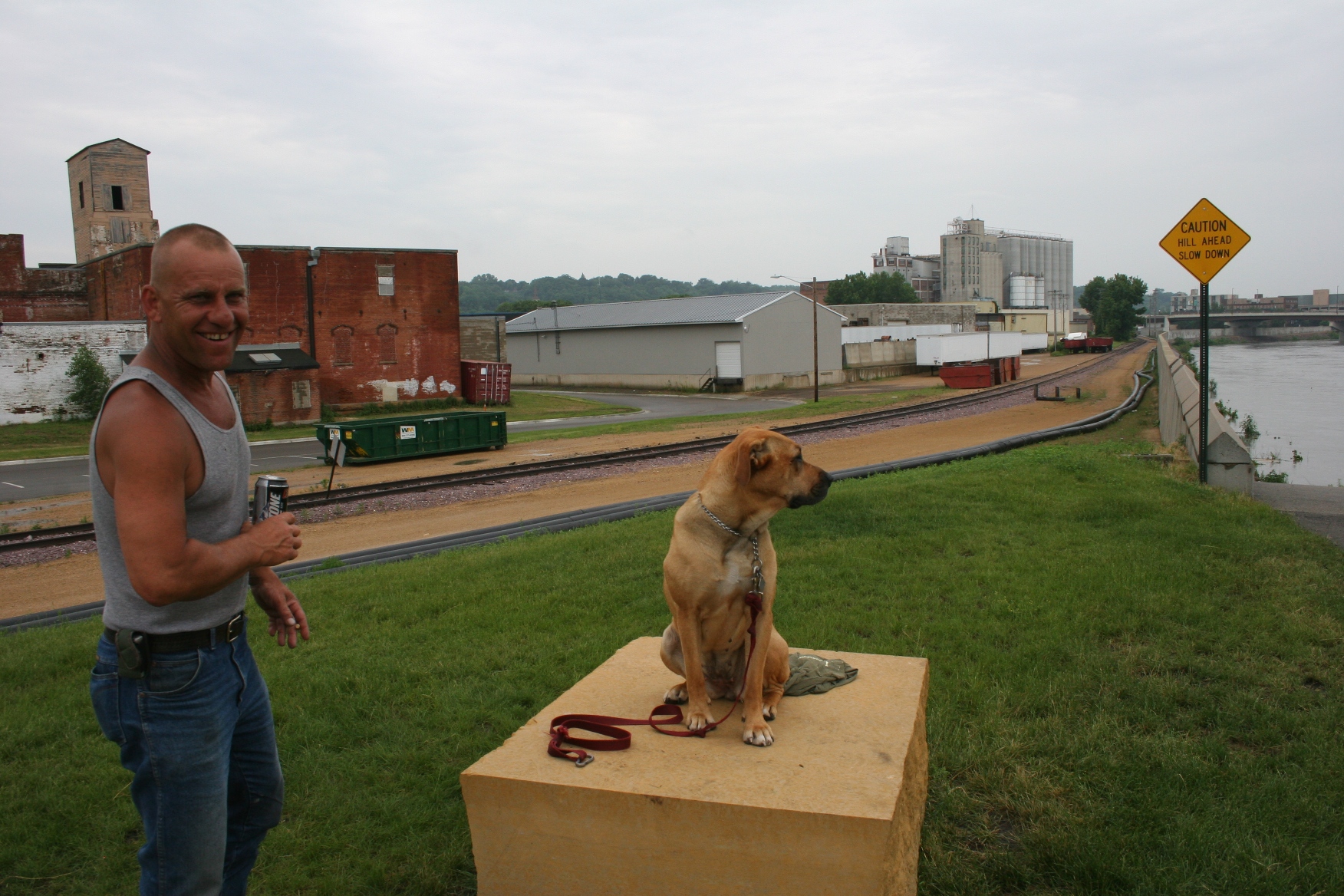
I’LL NEVER SEE THIS GUY again, this man in the muscle shirt with hair shaved scalp-close, fingers cradling a cigarette, a can of Keystone Ice nearly knocking at his knee as he slumps, cross-legged, on a block of Kasota stone by Riverfront Park in Mankato.

Lines harden his forehead. Shadows darken his eyes. Skin exposed to summer sun has already bronzed his face, his upper body, his muscular arms.

I wonder about his life, but don’t ask. Have he and his two buddies, passing the time nearby on their own blocks of hard, hard stone, had hard lives? I can almost see it in their eyes, imagine their lives. Jobs lost. Relationships broken. Regrets. Bars. Beer and cigarettes. Maybe whiskey and women.

But I don’t pry, and only he—the guy with the Keystone Ice—volunteers any information, speaks to me after I approach the trio because I see a photo opportunity in a man and his dog, brick buildings and a riverside railroad track. My eyes sweep across the scene, pushing the view into the lens of my camera, into these images that tell a story.

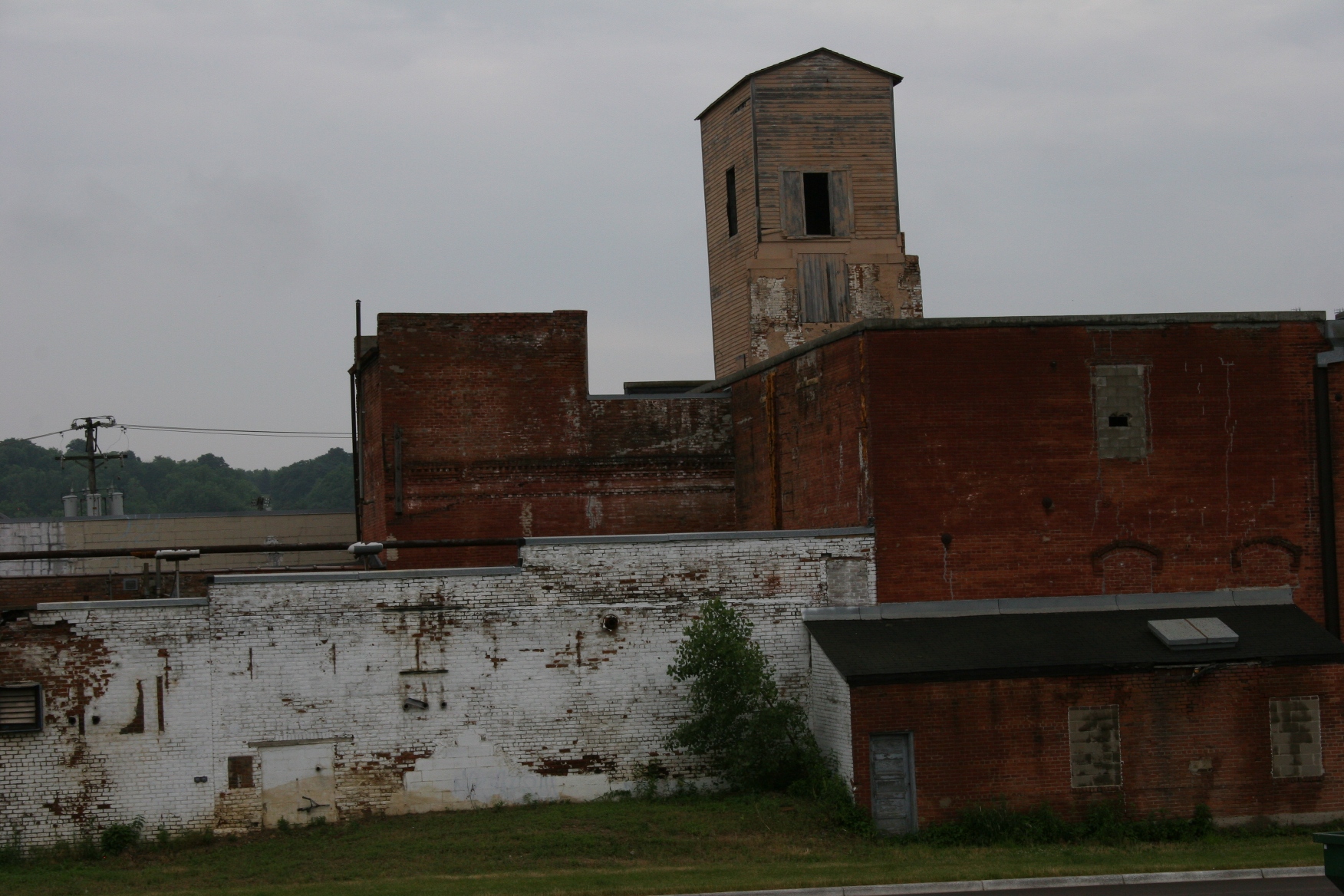
Rugged life in a river town. A blue collar man’s grimy, steel-toed work shoes. Elevators. Train tracks leading away. Peeling paint. Boarded-up buildings which The Ice Man wishes were torn down and which I tell him should be refurbished.

We disagree. But he still smiles a smile as wide as the manic, muddy Minnesota River raging past the park.

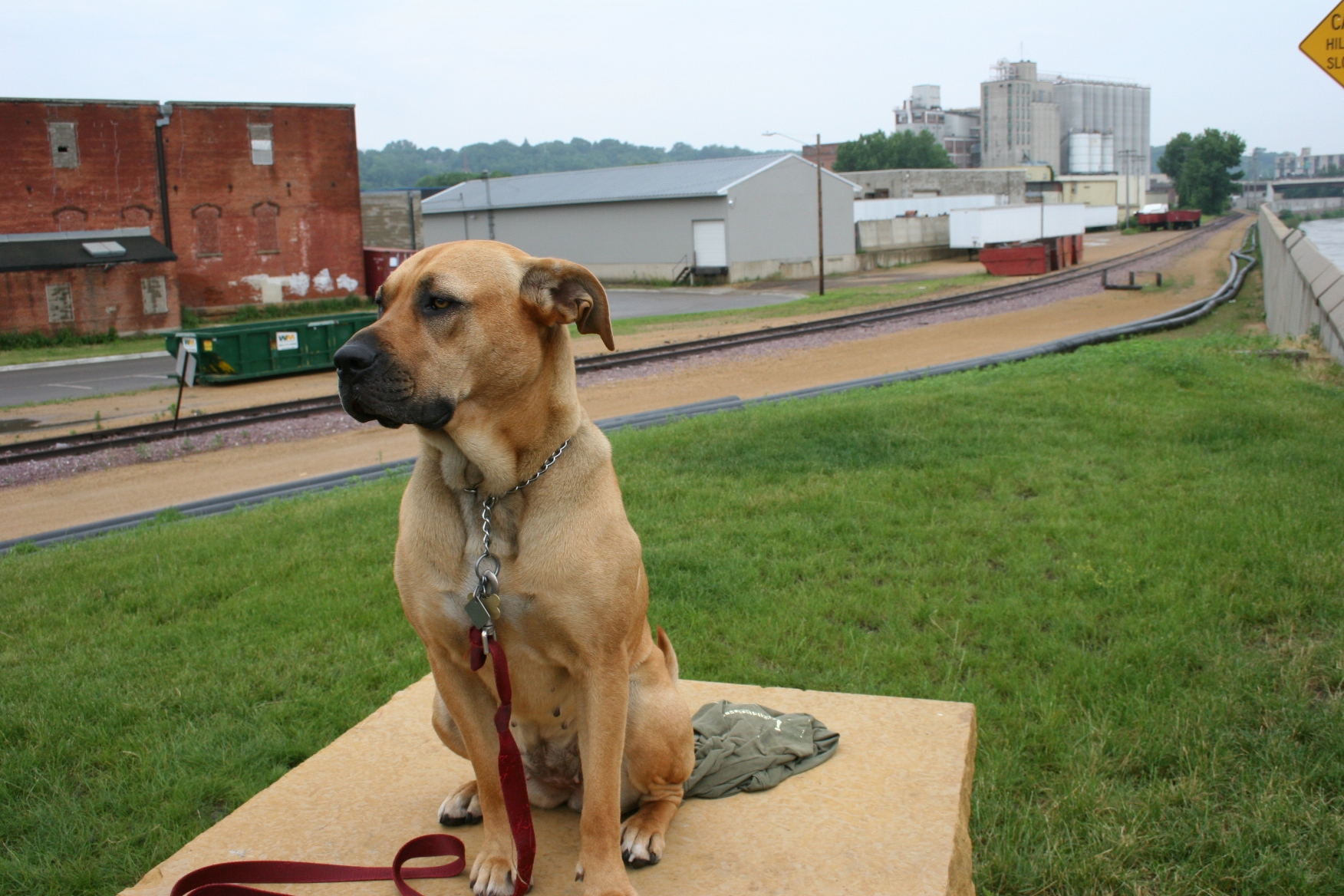
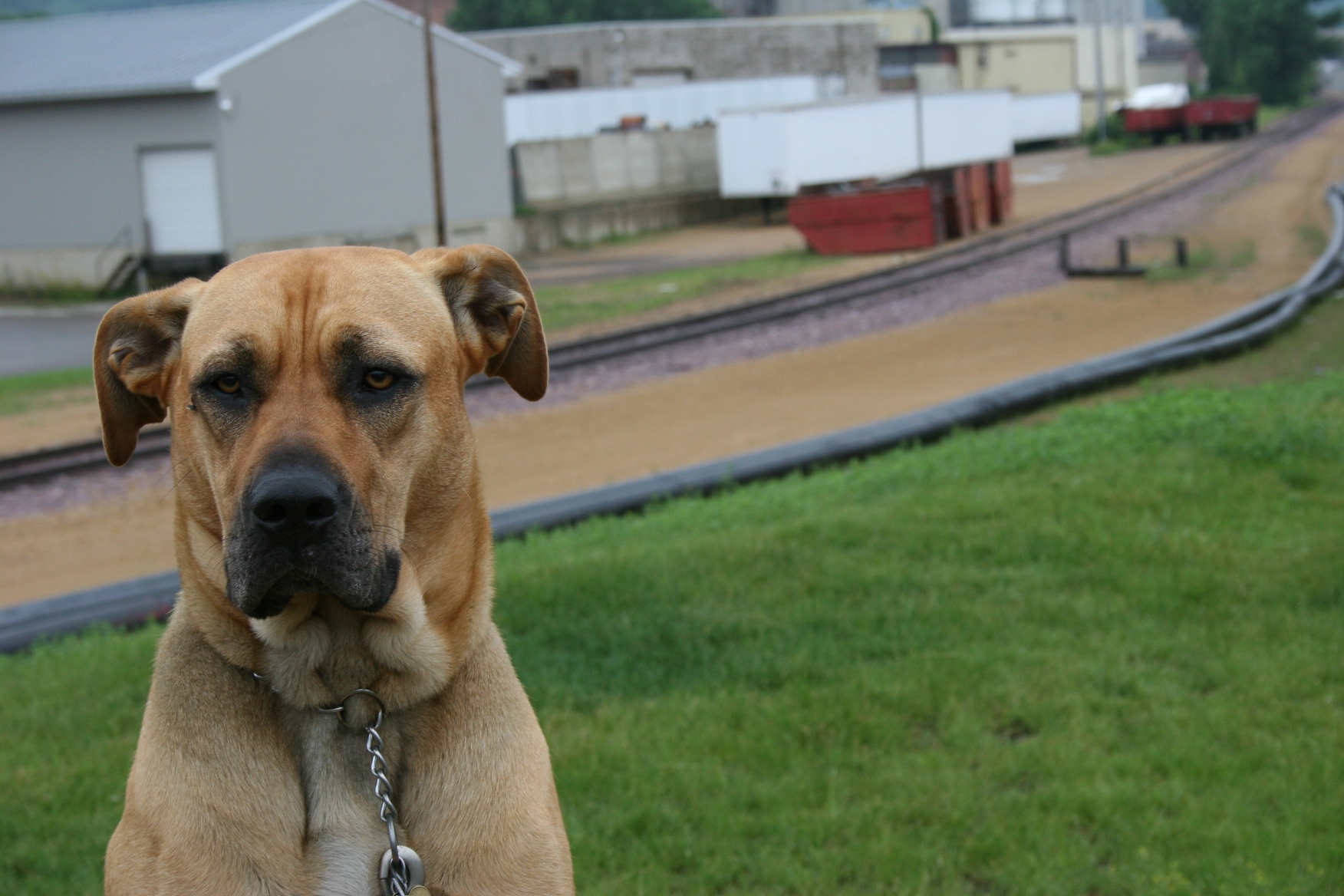
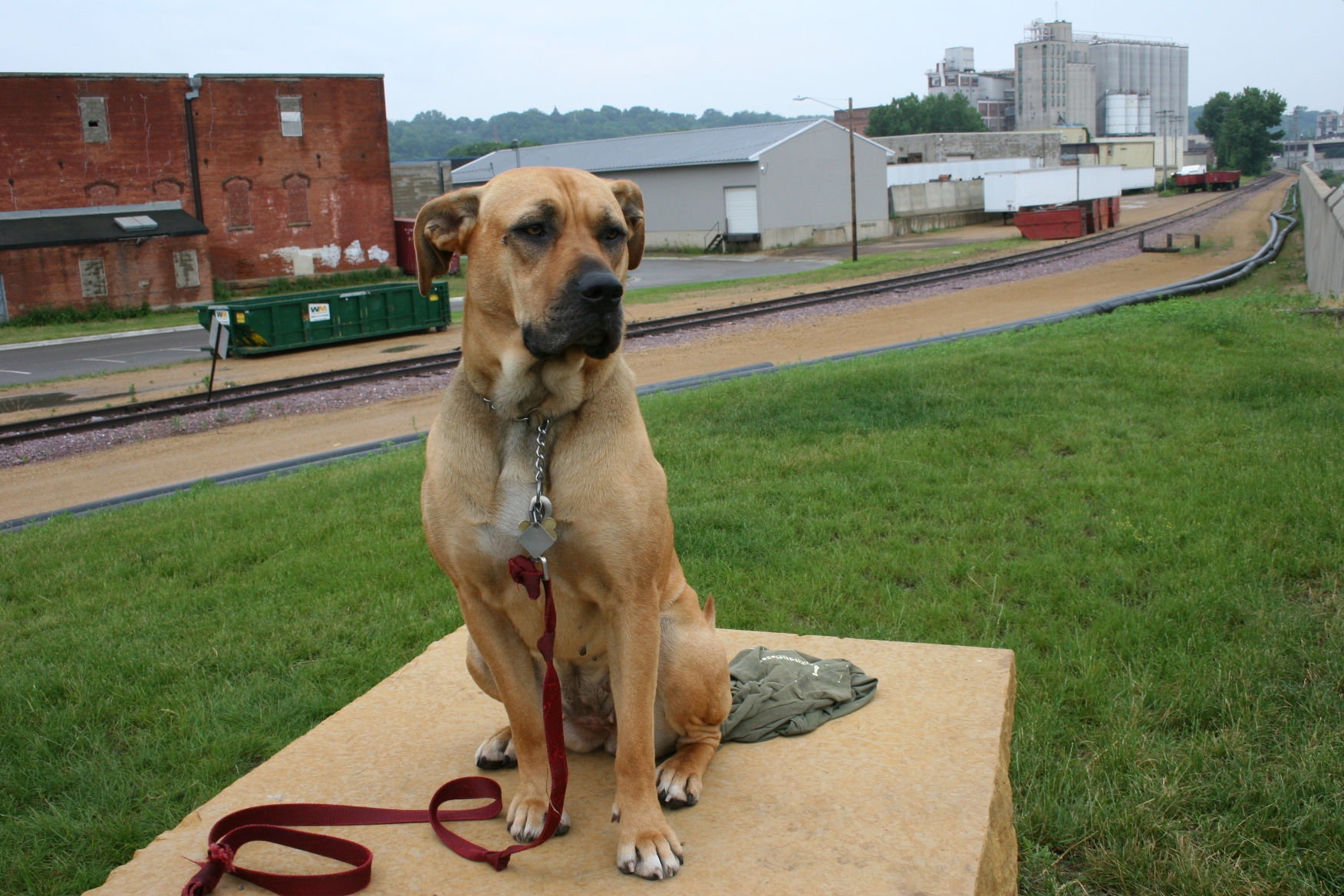
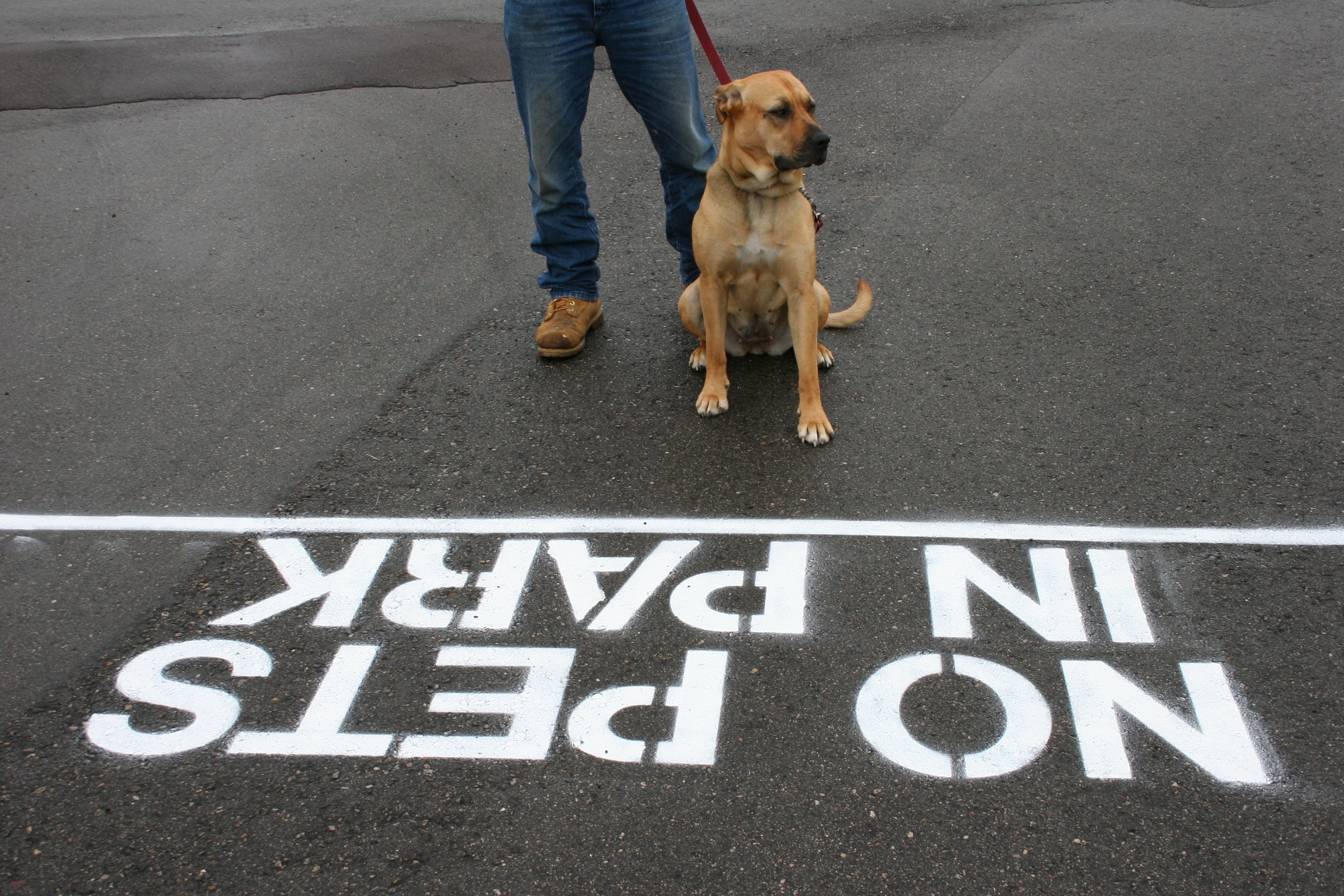
He tells me then, after I snap a series of photos, that he can’t take his dog—a service dog, he claims, and says he has the card to prove it—into Riverfront Park. Dogs are banned from some Mankato parks and this is one of them.

He suggests I photograph his dog next to the white line and words sprayed onto the tar: NO PETS IN PARK.

At first I balk, say, no, I won’t do that.

But then I reconsider, give The Ice Man his defiant moment. As his dog struggles to cross the line into the park, he tugs on the leash, holding her back. He’s already told me how, a day earlier, he hasn’t crossed the line to hear a $15 outdoor concert staged here. Instead, he’s followed the trail nearer the venue site, listened to the music from there. He’s clearly proud of his evasive, I’ve-outsmarted-them tactic.

Then we part ways. I continue reading poetry imprinted upon a sidewalk circling the park’s trail head building. He returns to his hard stone to swig his Keystone Ice beer and smoke his cigarettes.

His life is so different from mine. Yet, for five minutes we’ve connected and the poetry of his life shows in these images of The Ice Man and his dog.

© Copyright 2011 Audrey Kletscher Helbling


Rock ‘n rolling in Hamburg June 18, 2011

LAST SUNDAY MY HUSBAND and I drove into Hamburg, just because we’d never been there. It was along the meandering path we chose for our trip back to Faribault from west central Minnesota.

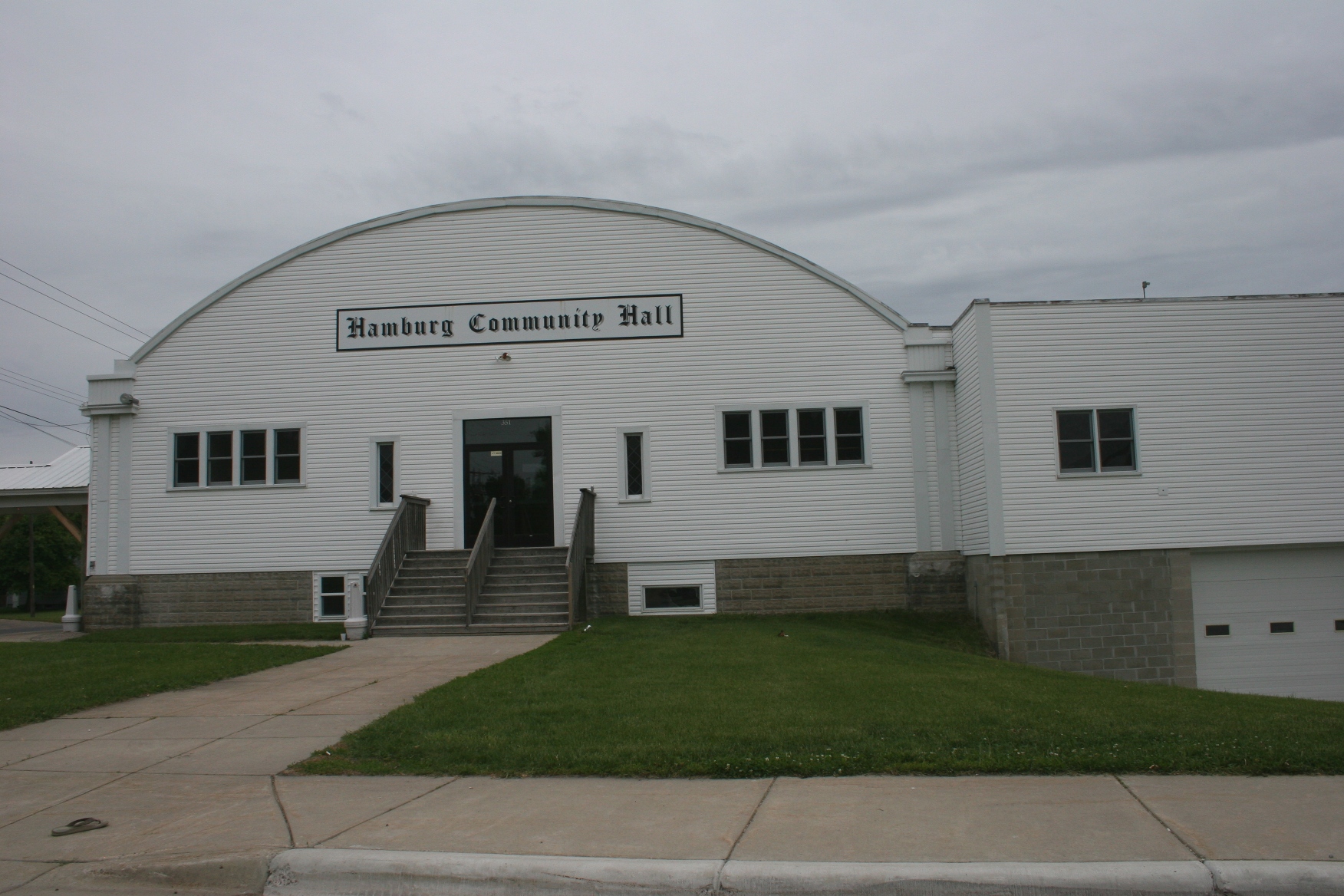
We didn’t hang around in Hamburg, simply went into town, turned around and drove back out. As we passed the community hall in this town of around 500, I snapped this photo. I appreciated the vintage look of the building and wondered how many times locals have gathered here to celebrate.

I imagined dance feet scuffing oak floors, brides launching bouquets, crepe paper streamers sagging from the ceiling, gray-haired ladies sipping coffee, accordions weaving in and out.

I did not imagine Rock ‘N Roll Wrestling. Who would?

But when I later did an online search of Hamburg, I discovered wrestling at the community hall. Surprise. Tonight wrestlers will rock the walls of the community hall as pro-wrestler Rock ‘N Roll Buck ZumHofe brings his wrestling show back to his hometown beginning at 7:30 p.m.

So much for my contemplative visions of a wedding reception and dance or a 50th wedding anniversary party, although I expect those are also part of this building’s history.

Tonight it’s all about wrestling, which I may have watched when I was a kid (and even as recently as 30 years ago.) Vern Gagne, Dr. X, The Crusher, and, yes, even Rock ‘N Roll Buck ZumHofe, are names I remember.

No, I won’t be in Hamburg tonight to relive my days of pro-wrestling devotion at this town’s annual Zummerfest celebration. My interest has vanished and is now limited to the occasional glimpse I catch of wrestlers when the guys in my house are flicking television channels.

However, I expect plenty of faithful fans to fill the old hall. If you wish you could be there but can’t make tonight’s gig, Rock ‘N Roll Wrestling will be in nearby Glencoe on June 25 and in Wabasha on June 26.

According to ZumHofe’s website, you’ll be treated to “old fashion fun wrestling in a format that is nostalgic as well as new and highly entertaining.”

DO YOU HAVE MEMORIES of watching pro-wrestling on television or in person? Do you still watch/attend these wrestling bouts?

AND IF YOU HAVE memories of the Hamburg Community Hall or know anything about its history, please submit a comment. I’d like to hear your stories.

© Copyright 2011 Audrey Kletscher Helbling


In loving memory of Rhody C. Yule June 16, 2011

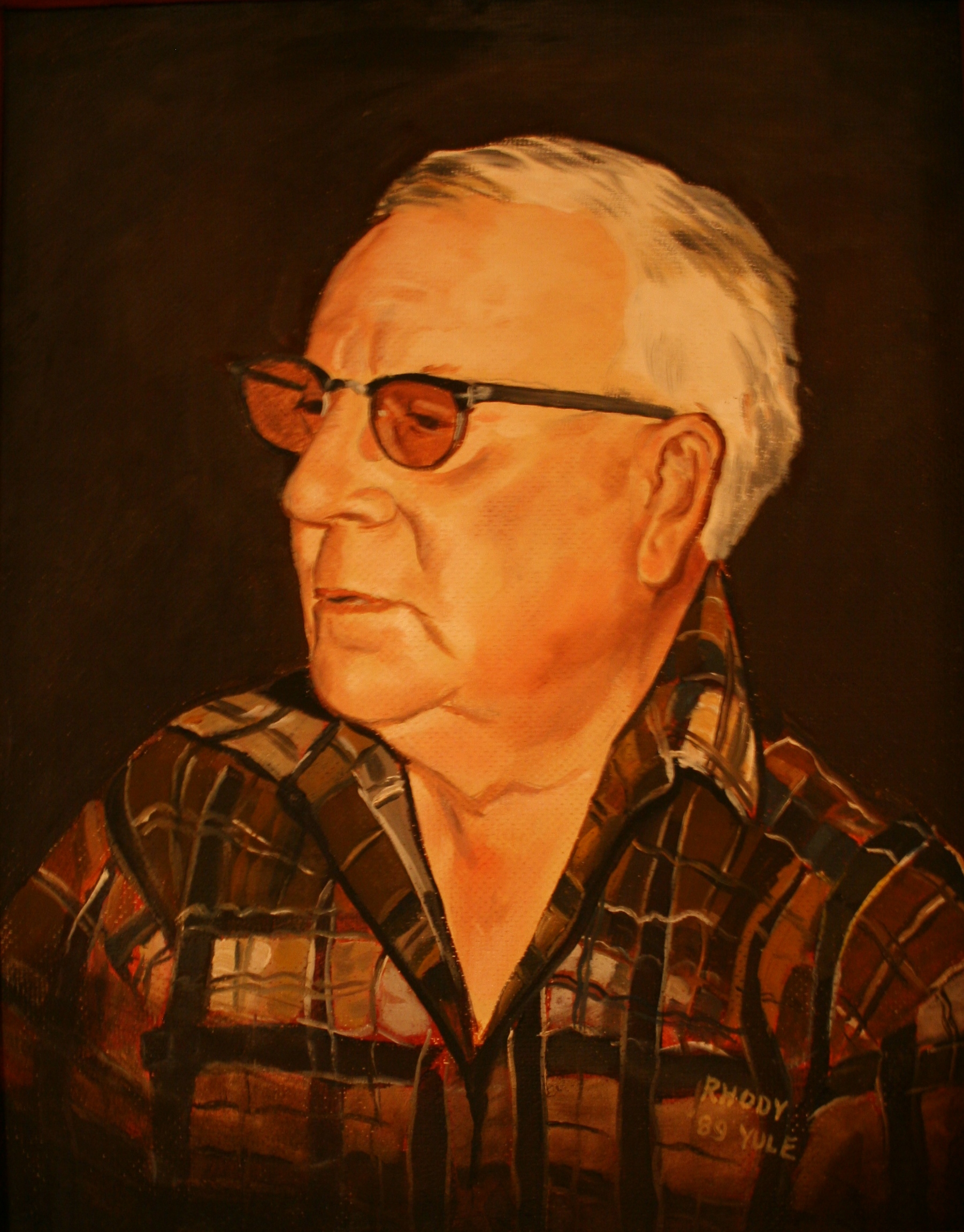
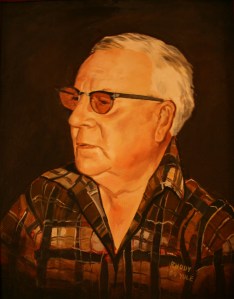
Rhody's self-portrait, 1989

WEDNESDAY AFTERNOON we eulogized and buried my 92-year-old artist friend, Rhody Yule.

I have known Rhody for less than two years, having met him quite by happenstance in the fall of 2009. While driving by his rural Faribault home, I spotted celebrity portraits hanging on his garage, stopped to photograph them and then went to his front door.

There I met this sprite of a man and his yapping dog, Jo-Jo.

With his dog shut in the kitchen because I feared being bitten, Rhody shared the story of his life with me and my husband, Randy, strangers until then. I did not hesitate to ask about the paintings hung in his cozy living room and on his garage. He did not hesitate to share that he had been painting since age 16.

Even on that first visit, I learned so much about a man who would come to mean so much to me. His wife, Shirley, had fallen and was living in Hastings. Oh, how he missed her. His only child, Paul, died in a car accident in 1977 at age 23. Oh, how he missed him.

Rhody told us about his military service, including time in Nagasaki, Japan, cleaning up after the atomic bomb. He showed us photos and paintings on that first visit and grass-woven sandals from Japan snugged inside a wooden box he had crafted.

I thought to ask, thank God, if he had ever publicly exhibited his art. He hadn’t. That became my mission, to get a gallery show for this life-long artist. His first mini-show, of his religious paintings, came in September 2010, when he was invited to Christdala Church near Millersburg. He had, many years prior, done a painting of the church. Randy and I coordinated that exhibit, then loaded the paintings into our van and set them up outside this historic country church. Rhody and I spoke briefly at that event and he assured me that, despite our nervousness, we did well.

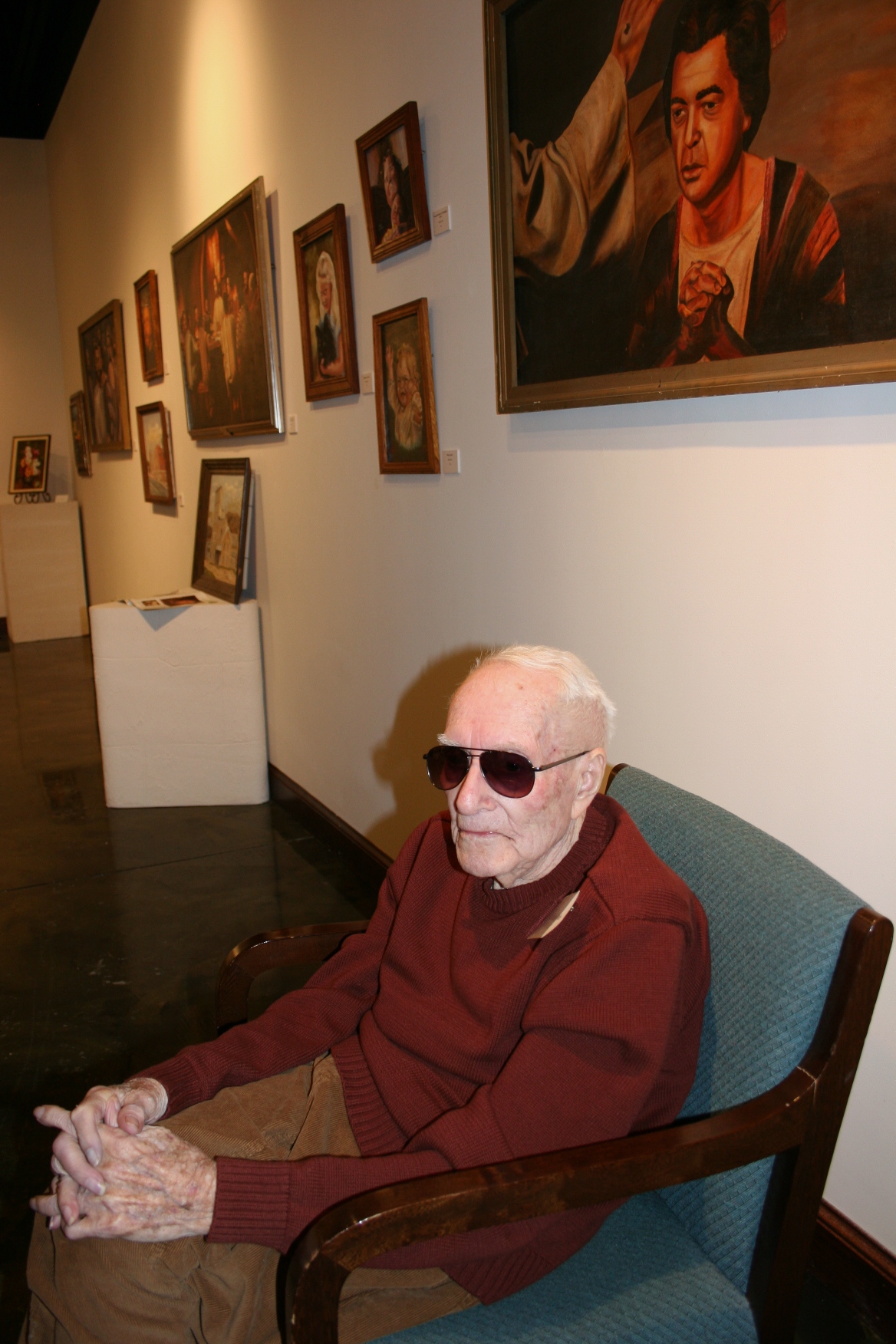
At Christdala, I distributed mini fliers for his upcoming gallery show at the Paradise Center for the Arts in Faribault. I had applied for the exhibit on his behalf and, in January, with the assistance of family and friends and volunteers, “A Lifetime of Art: The Rhody Yule Collection” opened to a packed gallery.

In typical Rhody fashion, this man of gentle spirit and quiet humility took it all in, never once boasting, but enjoying every second of his evening. This marked a shining moment for him in his 92 years of life and I was honored to have helped him achieve this public recognition of his art.
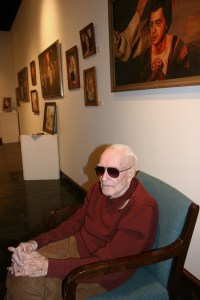
Rhody, minutes before his gallery show opened in January 2011.

RHODY’S FUNERAL SERVICE on Wednesday, while tinged with grief, also caused us to laugh out loud at his humor. We reminded each other of his forgiving attitude, his unshakable faith, his always positive attitude.

Just days before his death,  my husband Randy and I visited one last time with Rhody. Physically his body had deteriorated to a shell of the man he had been, but his mind and spirit remained strong. We saw him on a good night.

In that last hour with our friend, we reminisced about his gallery exhibit as I, one-by-one, held up photos I had taken that evening. He was too weak to grasp the images. And then we paged through several of his photo albums with pictures of a younger Rhody, a freckle-faced Paul, a beautiful Shirley.

I thought to myself, “You will be with them soon, Rhody. Soon.”

Rhody did not fear death. Yet he wished to live, even thought he might recover. I knew better. When I mentioned Millersburg, Rhody was ready for a night out and a beer at his favorite eating establishment there. Family and friends celebrated with him last fall in Millersburg at a patriotic-themed freedom party. His idea. His celebration after overcoming a recent, temporary loss of his personal freedom.

Rhody had more living to do. I learned at his funeral that this WW II veteran wanted to travel on a Washington D.C. Honor Flight to see the war memorials. It breaks my heart that he did not live long enough for that to happen.
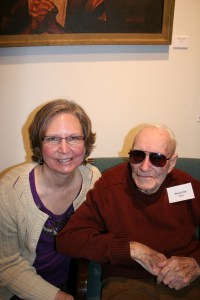
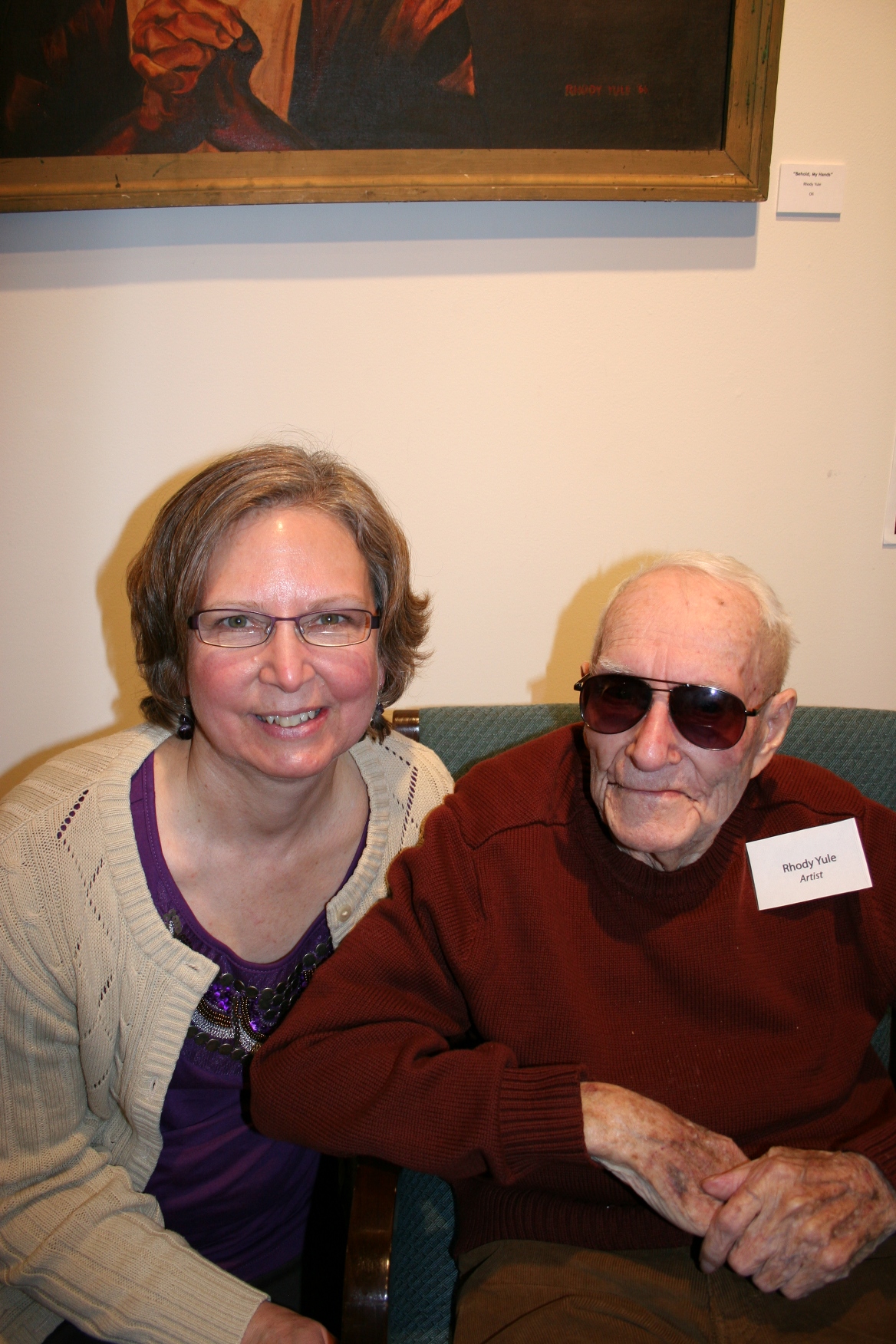
Me and Rhody at his opening night gallery reception.

He prayed every night for the soldiers to come home.

He was smartly dressed for burial in his military uniform, which hung loosely on the gaunt body of a man who once stood strong in service to his country.

Those honoring his memory were directed to donate to the Rice County Veterans Memorial Expansion Project.

A spray of patriotic red and white flowers adorned with a blue ribbon decorated Rhody’s carved wooden casket, a casket so appropriate for a man who crafted wooden boxes and also picture frames (for his art). Had he been physically capable, I expect Rhody may have built and carved his own casket.

But Rhody is gone now and, as the eulogist, the Rev. Ron Mixer, said, Rhody is busy painting sunrises and sunsets in heaven. He suggested we look for a signature “Y” in the clouds.

Rhody has left those of us who knew and loved him with more than his legacy as an artist and the thought that he is still painting. He has gifted each of us with his spirit of forgiveness and kindness, his humor and humility, his desire for fun, a love of life and a faith that endured challenges.

I knew Rhody such a short time. But how blessed that time has been.

We drove through nearly-torrential rain Wednesday afternoon to the rural Cannon City Cemetery to bury Rhody beside Shirley. As we gathered under the tent and next to it, sheltered by umbrellas gripped tight against the whipping wind, members of the Central Veterans Association fired an honorary salute to their brother soldier. Taps mourned. An aging veteran presented a folded American flag to Rhody’s step son in a voice choking with gratitude and emotion.

Soon the rain stopped and the sun wedged through the clouds as if Rhody was there, telling us to wipe away the tears. He would have wanted us to celebrate his life, and we did, but only if we didn’t brag about him.
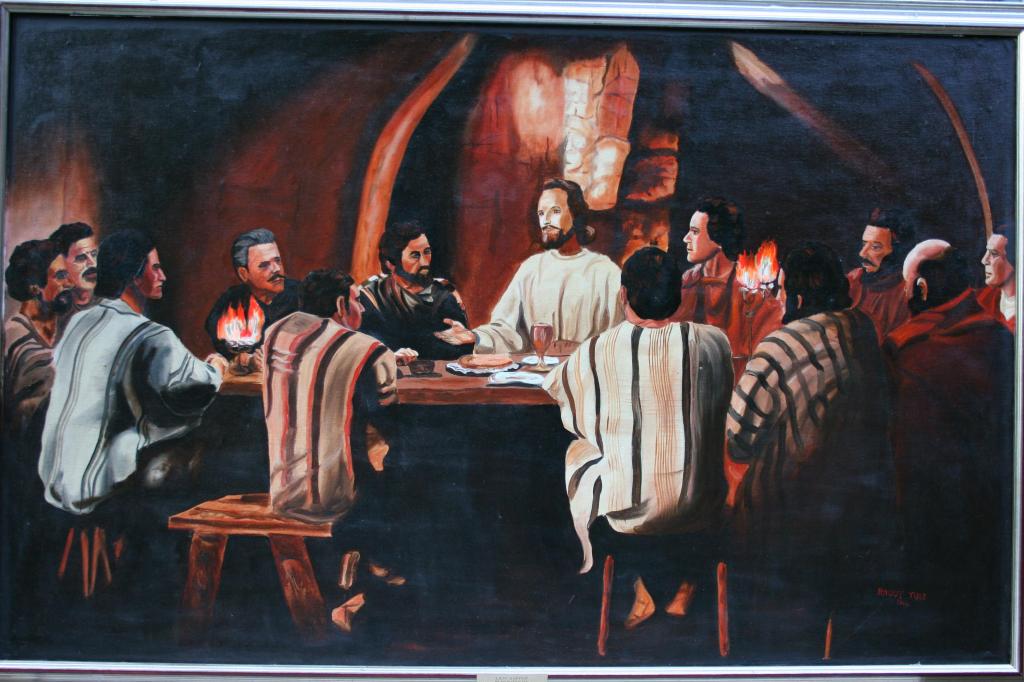
Rhody's favorite painting, "The Last Supper," which he painted in honor of his beloved son Paul.

© Copyright 2011 Audrey Kletscher Helbling


Thou shalt not photograph the Amish June 14, 2011

TEMPTATION TEMPTED ME on Saturday afternoon, wrapping her slippery fingers around mine, tightening her grip, nudging my index finger toward the shutter button.

But Right resisted, reminding Temptation, “Thou shalt not photograph the Amish.”

The battle waged for a good 15 minutes on a grassy wedge of land along a main route through Osakis, southeast of Alexandria.

Here quilts, clipped to clothesline strung between a light post and trees, drew my husband and me off the road. When we turned onto the side street and I spotted the black buggy, I couldn’t believe our luck. I’ve wanted, always, to encounter the Amish up close and photograph them.

The Amish buggy parked at a roadside market in Osakis.

But then Right niggled my conscience: “Thou shalt not photograph the Amish.”

At least without asking, I thought, although Temptation urged me to click the shutter button of my camera immediately and then ask. But I didn’t. “Is it OK if I take your picture?” I inquired of the bonneted mother cozied with her two black-bonneted daughters on a blanket spread upon the grass.

“No.”

What did I expect? That she would say “yes” and smile for the camera. So I tried again. “How about if I photograph you from the back?”

“No.”

I tried for the third time. “Can I photograph your quilts and baked goods?”

The Amish mom agreed, as long as I didn’t include her or her two pre-teen daughters in my photos. But I was still tempted, oh, so tempted, to sneak them into the images. Would they notice if I edged the camera lens over the clothesline while photographing the quilts?

Right prevailed and I photographed the hand-stitched blankets, the rows of baskets, the preserves and homemade noodles and that black buggy, minus its passengers and minus the horse that was tethered in the shade of trees behind nearby buildings.

I should also have photographed the fly swatters and woven rugs, but I didn’t want to push my luck, appear too pushy and offend these Amish.

Beautiful, hand-stitched quilts stretched on the clothesline.

Preserves and a few baked goods remained when we arrived at this mini Amish market late Saturday afternoon.

This close-up photo shows the detailed stitching in these hand-stitched Amish quilts.

Hand-woven baskets for sale by the Amish.

All the while the two young girls watched me like a hawk. I could feel their eyes following me, boring into my conscience. I wondered what they were thinking. Were they interested in my fancy schmancy camera, or did they simply wish me gone?

Were they worried that I would photograph them, thereby stealing their souls or creating a graven image, or whatever reason the Amish have for shunning photos of themselves?
I remained so focused on possible covert photo ops that I failed to notice details, except those black bonnets, the blue and plum dresses and the wide, plain copper-colored wedding band on the mother’s ring finger (which I wanted to photograph). I wish I had noticed their shoes.
I also failed to ask many questions of the trio. I learned that they live 10 miles east of Osakis, that the buggy trip takes an hour and that they come to town every Saturday (not in winter, of course) to peddle their goods. All of this the mother shared in a brogue that I couldn’t place, but which reminded me of a far-away homeland, of the thick tongue of an immigrant.

While the mother spoke, her two daughters perched, respectful, still and mute as statues, until I looked directly into the brown eyes of one and asked whether she had made any of the market merchandise.

“Cookies,” she blurted, her face blossoming into an appreciative smile.

I wished in that moment, more than any, that I could have photographed her happiness, shown you the delight blooming upon that young Amish girl’s face when I paused to acknowledge her presence, to include her, to boost her self-confidence.

But I could not. “Thou shalt not photograph the Amish.”

Not on this June Saturday afternoon in Osakis.

The one item we purchased, a superb (except for the burned crust), flavorful $6 pie oozing with tasty red raspberries. FYI, there were no cookies remaining or I would have bought some.

© Copyright 2011 Audrey Kletscher Helbling