Minnesota Prairie Roots

Writing and photography by Audrey Kletscher Helbling

Investing in community: the story of a small town Minnesota movie theatre’s survival January 14, 2025

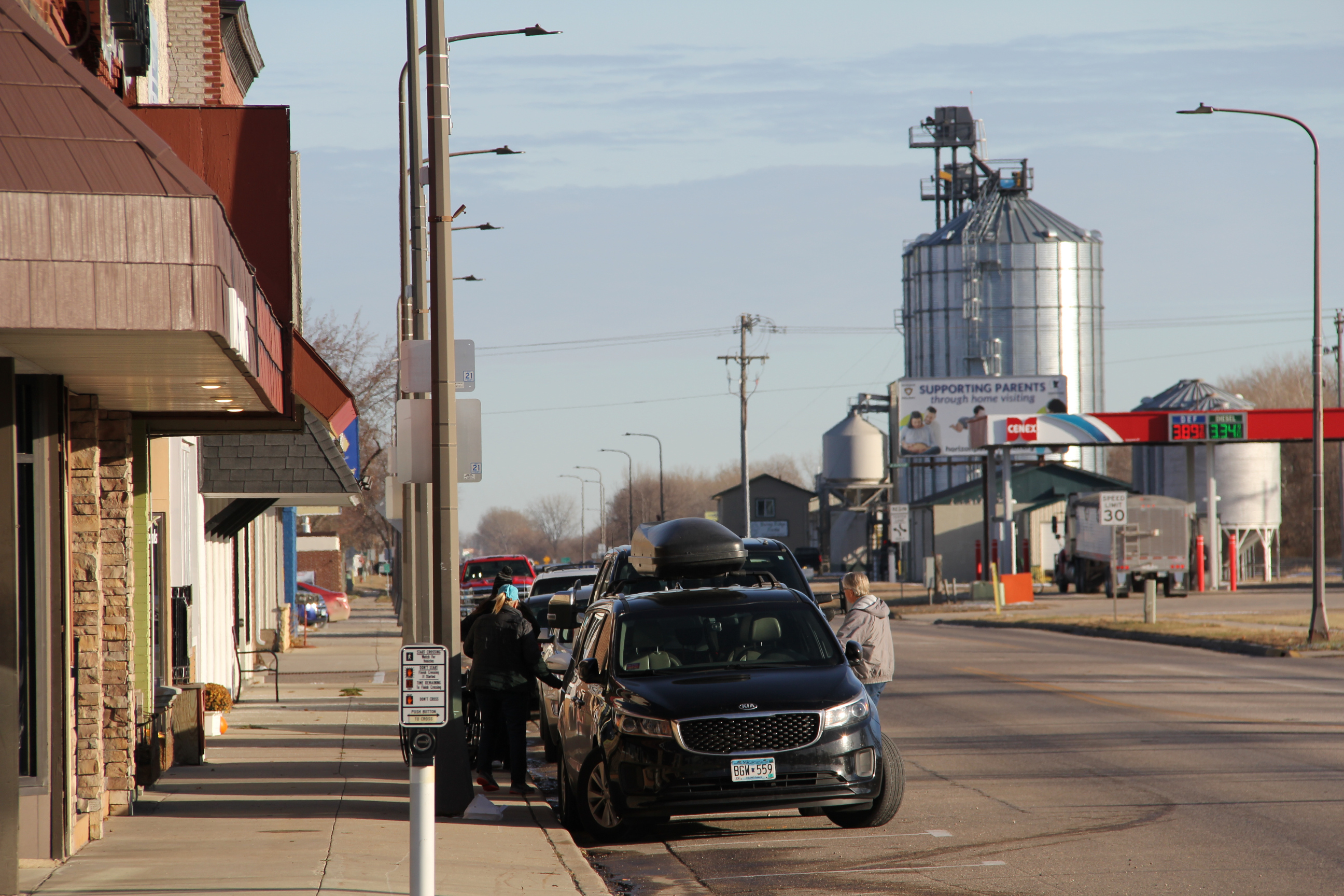
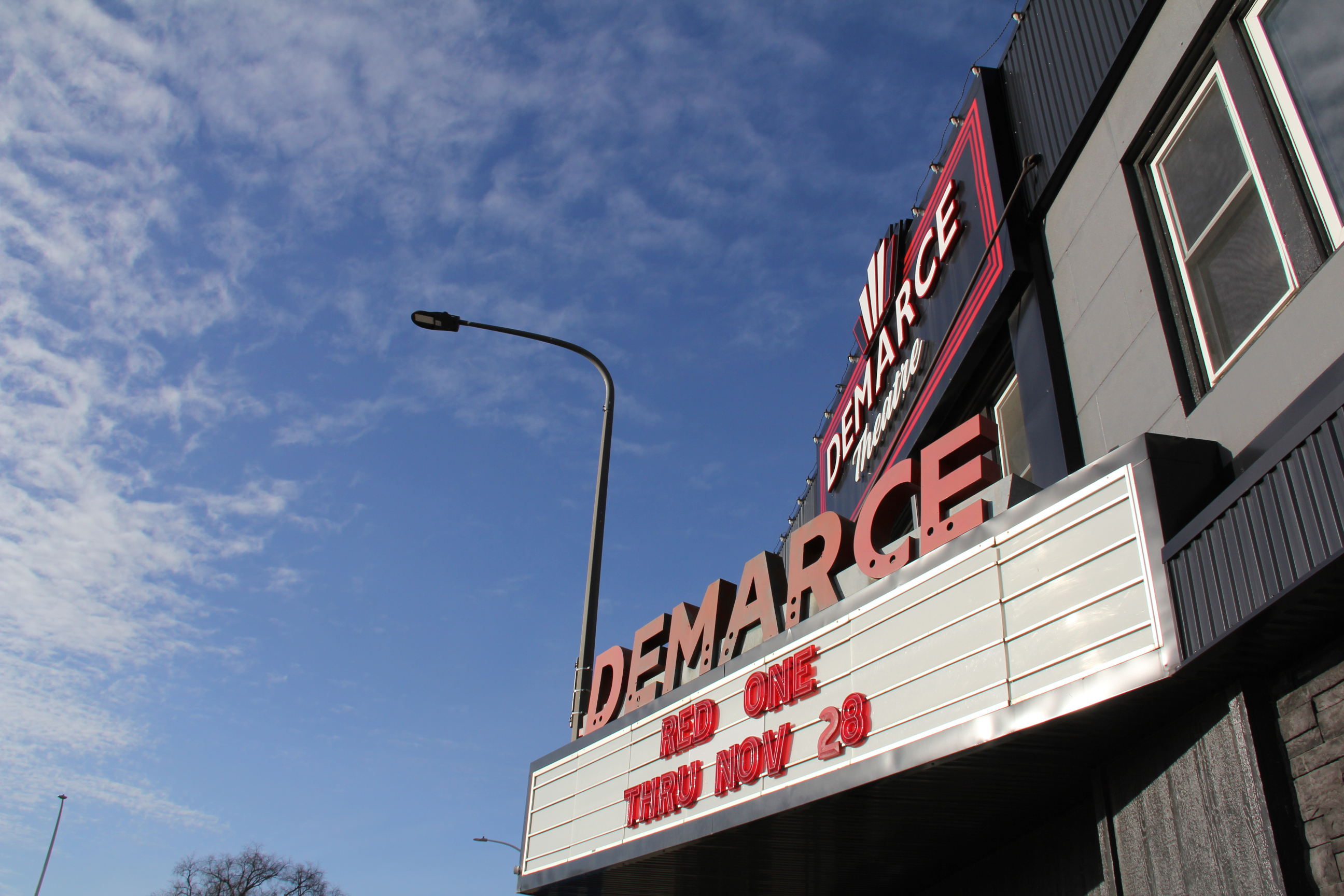
Benson, Minnesota, along Atlantic Avenue. (Minnesota Prairie Roots copyrighted photo November 2024)

IN THE FAR REACHES of west central Minnesota, two counties in from the South Dakota border, the small farming community of Benson perches on the prairie. It’s a place many might consider the middle of nowhere. But Benson is home to some 3,400 residents, the county seat of Swift County and a town I recently passed through on my way to visit family in neighboring Morris.

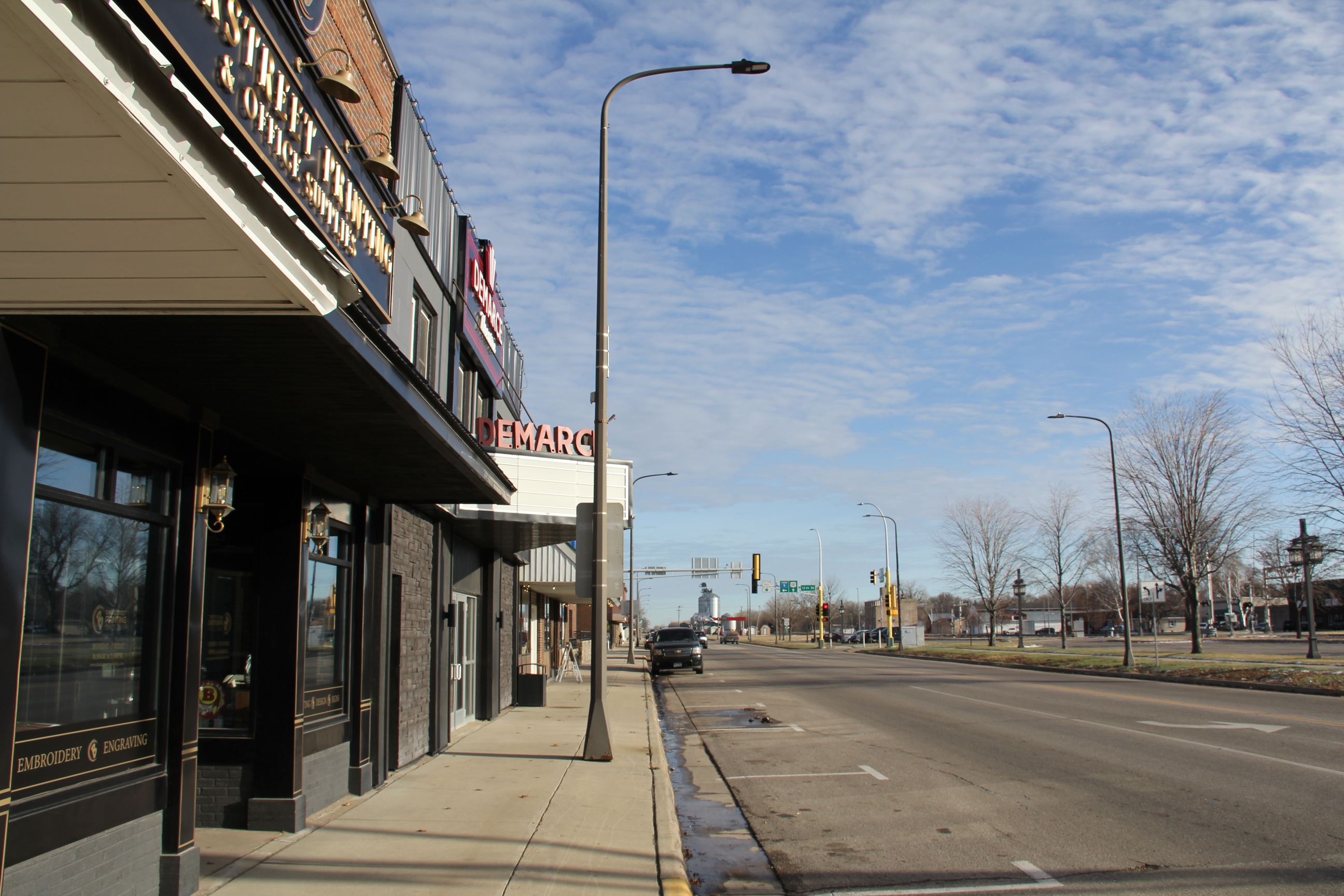
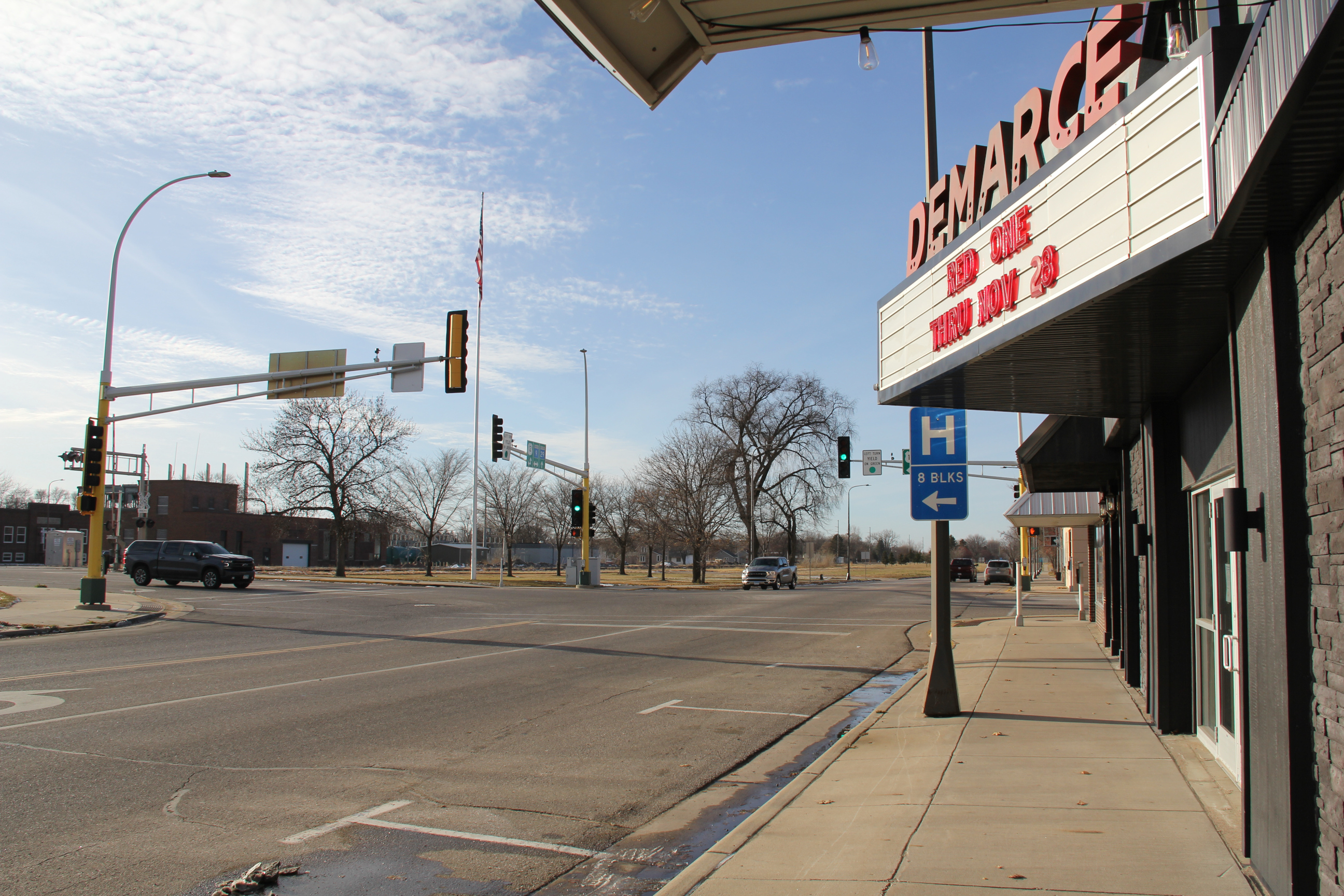
A wider Atlantic Avenue street shot photographed near the Demarce Theatre. (Minnesota Prairie Roots copyrighted photo November 2024)

For me, Benson would not be just another dot along the map to my destination. I wanted to stop briefly and photograph the DeMarce Theatre, which my cousin Tim and his wife, Susie, own. Or so I thought. After photographing the theatre exterior, I learned from the proprietor of Rustic Class, a Benson consignment shop, that the Kletschers no longer own the business. That news never traveled to me on the family grapevine.

The Demarce Theatre, when Tim and Susie Kletscher purchased it in 2011. (Photo credit: Tim Kletscher)

I was disappointed, of course, to hear this. Tim and Susie bought the 1925 theatre in 2011, invested thousands of dollars to upgrade to digital projection and a silver screen, operating the business until May 2020. By that time, Tim, a Benson Elementary School teacher, was tapping into his retirement account to keep the business afloat. That’s all history. But I’m grateful to my cousin and his family for the near-decade they kept the theater operational.

The new owners updated the movie theatre inside and out. (Minnesota Prairie Roots copyrighted photo November 2024)

And I’m grateful to the new owners, Randy and Pam Marran of St. Michael for purchasing the theatre, revamping and reopening it in June 2022. I understand small Minnesota prairie towns like Benson and how even one business closure matters to the people who live there. Like anywhere, people want to see their town thriving, not dying. They want local entertainment options. Distances are far on the prairie.

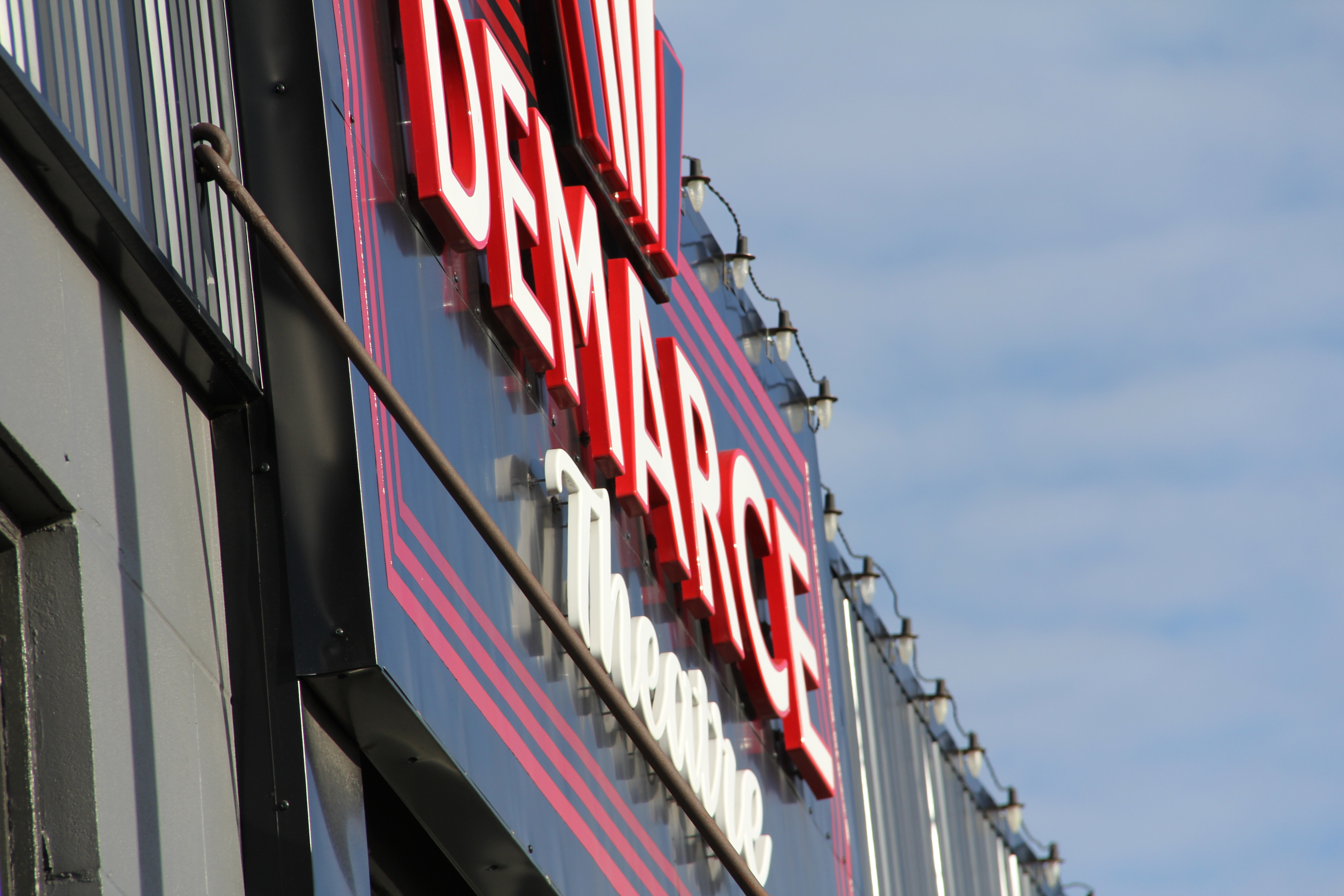
The front of the theatre received a complete facelift. (Minnesota Prairie Roots copyrighted photo November 2024)

That the Marrans, like my cousin, recognized the value of a theatre in Benson speaks to their understanding of this rural region. Pam grew up here with family still in the area. Their daughter Tyler manages the theatre. Like the Kletschers before them, the couple has poured plenty of time and money into the theatre with interior remodeling, installation of used leather seats, and a new facade and marquee. They’ve made an investment in Benson.

No need for Benson residents to drive out of town to see a movie. (Minnesota Prairie Roots copyrighted photo November 2024)

As I consider this, I can’t help but think that my city of nearly 25,000 does not have a movie theatre. While I’m not privy to details concerning its closure many years ago, I do know that locals were driving out of Faribault to a south metro theatre to see shows. Today that continues with three theatres within 20 minutes of my community.

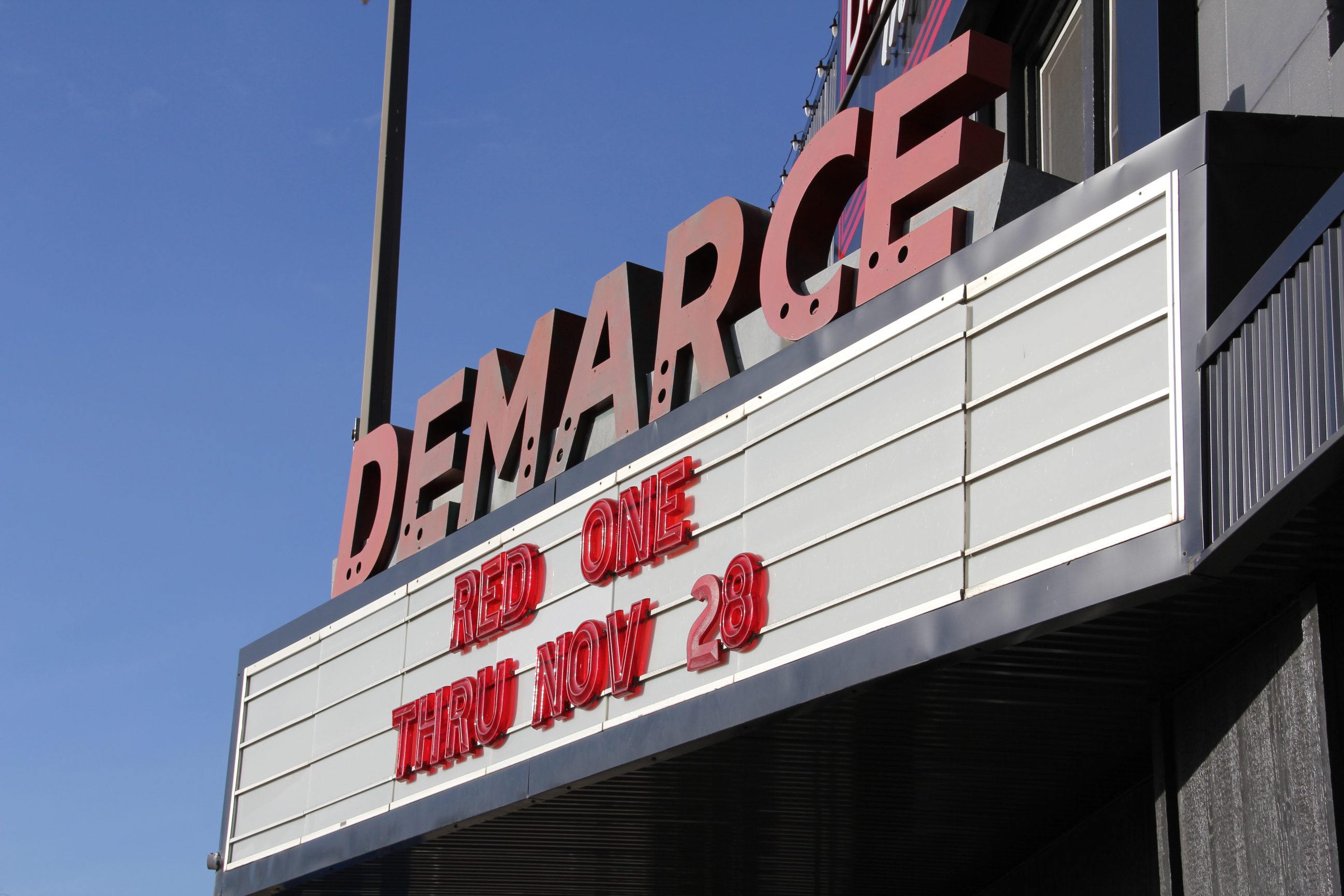
Back in November, this movie was showing at the Demarce Theatre. (Minnesota Prairie Roots copyrighted photo November 2024)

I expect on cold winter evenings like we’re experiencing now in Minnesota, the good folks of Benson are thankful to have a movie theatre in town—a place to escape into a film, to connect with friends and family, to down a soda or an alcoholic beverage, to purchase pizza, a pretzel or mini donuts, to dip fingers into a big bucket of buttery movie popcorn.

Likewise, movie theatres remain open in towns near Benson. There’s the Grand Theatre in Madison, the Millennium Theatre in Montevideo and the Morris Theatre in the college town of Morris. None of these prairie places are particularly large population-wise with 1,500-5,200 residents. But still they have theatres, a spot for locals to watch a movie about Minnesota native Bob Dylan in “A Complete Unknown” or “Sonic the Hedgehog 3.” Admittedly, I am not a movie-goer, having last stepped inside a movie theatre in May 2019, then requesting a refund not long into the film due to its violent content. (In fairness to me, I went with the guys in my family and knew nothing about the movie.)

A residential neighborhood within blocks of the Demarce Theatre. (Minnesota Prairie Roots copyrighted photo November 2024)

That the residents of Benson, Madison, Montevideo and Morris have movie theatres in their towns is remarkable really. In Benson, my cousin Tim and his wife, Susie, and now the Marran family, recognized the value of investing in their community, in this place perched on the Minnesota prairie just 40 miles from the South Dakota border.

© Copyright 2025 Audrey Kletscher Helbling


On the road to Fargo through small town Minnesota December 6, 2024

Filed under: Uncategorized — Audrey Kletscher Helbling @ 5:00 AM
Tags: , , , , , , , , , , , ,
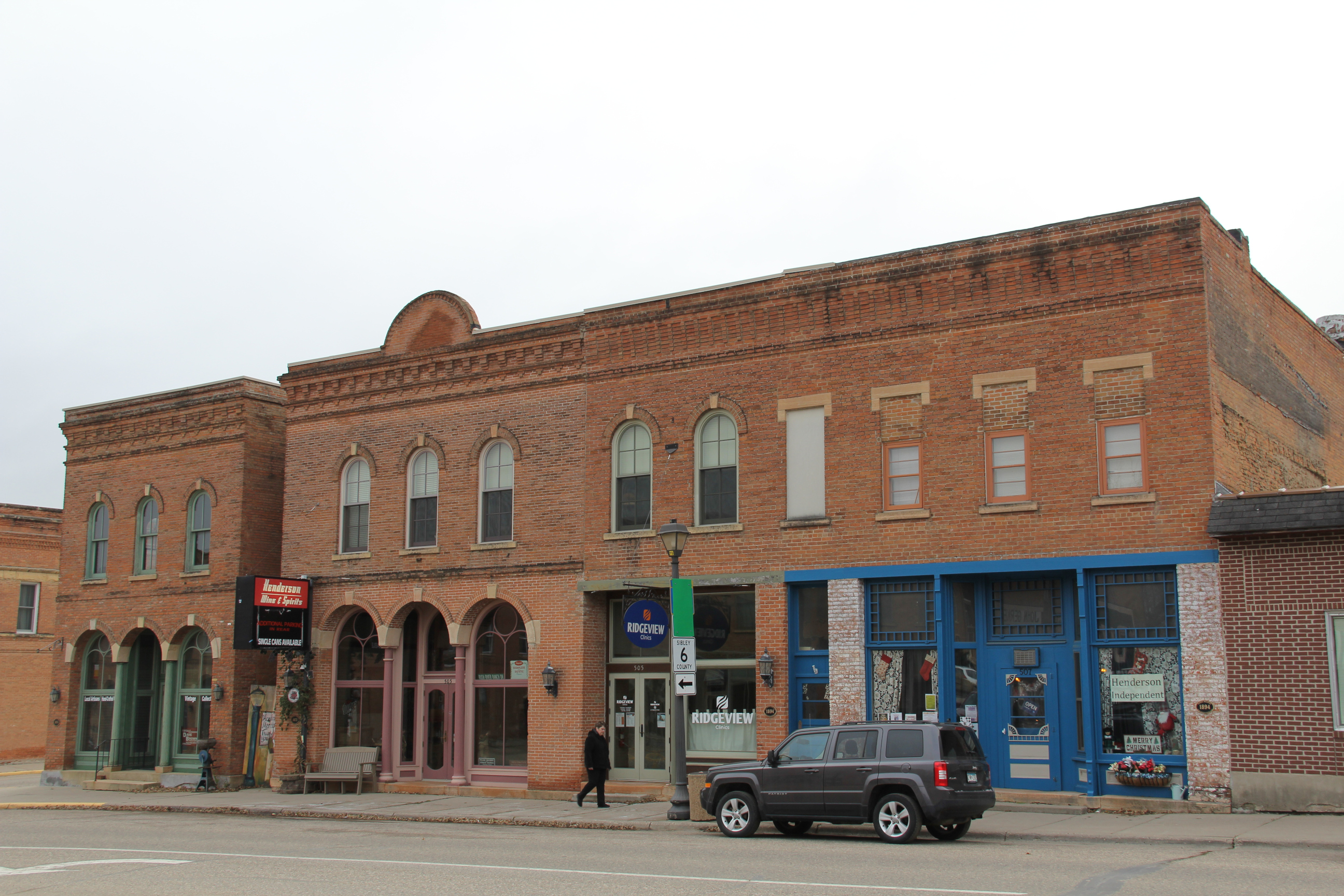
Only an hour from Faribault, we stopped in the Minnesota River town of Henderson so I could take photos. (Minnesota Prairie Roots copyrighted photo November 2024)

LATE NOVEMBER FOUND US on the road, first heading west 285 miles to Fargo, North Dakota, then back home to Faribault, and 1 ½ days later driving east 261 miles to Madison, Wisconsin. That’s a lot of windshield time for Randy and me in the span of one week.

But we did it and delighted in every aspect of our travel, except for the hour when I grew extremely hangry. More on that in a moment.

Henderson is an old river town with beautiful historic buildings. (Minnesota Prairie Roots copyrighted photo November 2024)

We began our Fargo trip on back state highways and county roads, opting for a leisurely pace that would take us through small towns rather than zipping past everything on the interstate. We stopped whenever we wanted as we drove toward Morris, our day’s end destination and an overnight stay with Randy’s sister Vivian and husband, Jerry. The next day we would head to Fargo.

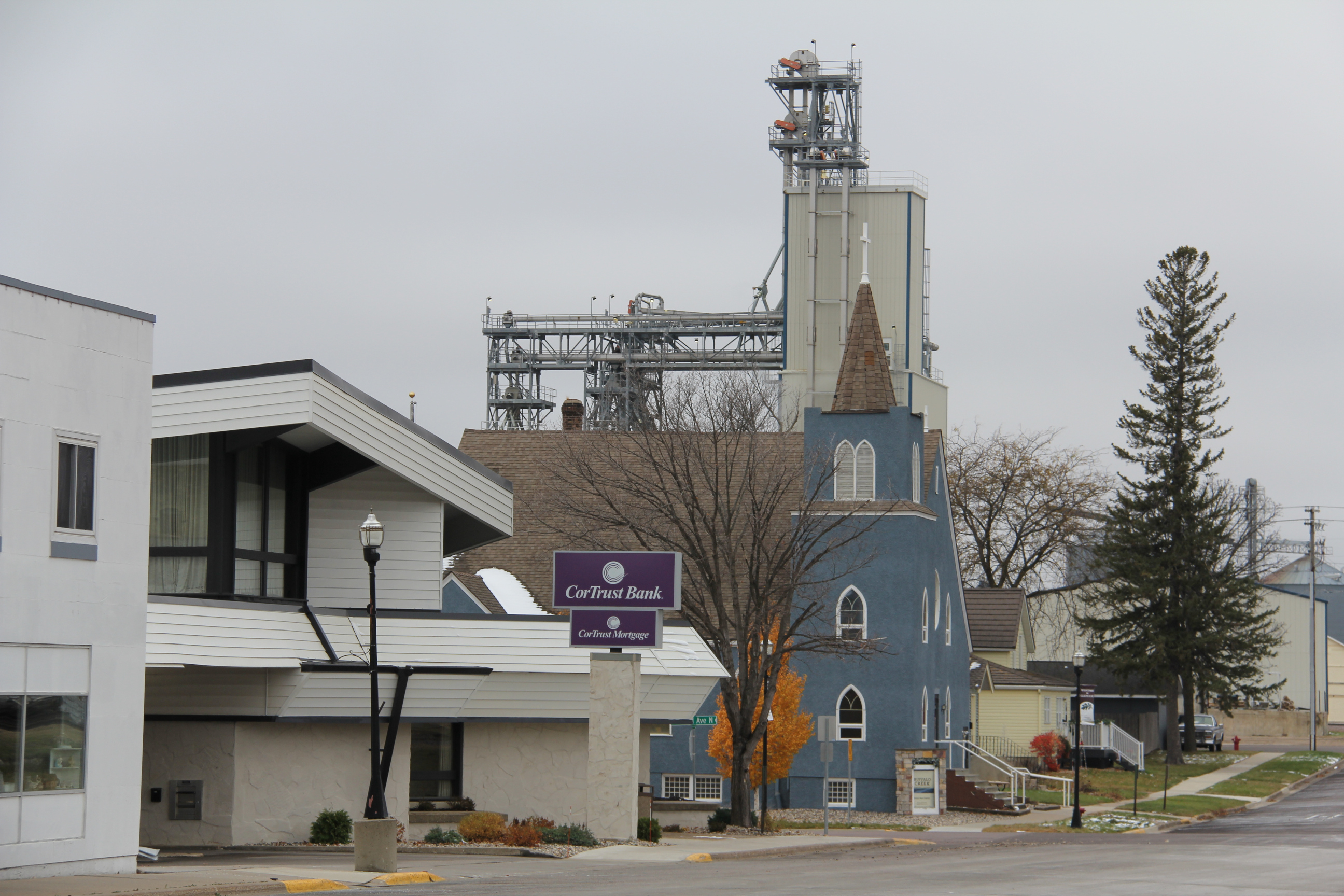
In the heart of small town Glencoe, Buffalo Creek Community Church rises. (Minnesota Prairie Roots copyrighted photo November 2024)

Along the way to Morris, we did, indeed, stop. In Henderson, Glencoe, Cosmos, Willmar and Benson. The Willmar stop was solely to eat fast food. Not by choice, but out of necessity. Our plan to enjoy lunch at a small town cafe never materialized. I envisioned ordering a Beef Commercial (roast beef and mashed potatoes on white bread smothered with homemade gravy) while dining with locals in a cozy restaurant overlooking Main Street. That, it seems, is the stuff mostly of nostalgia. The small towns we drove through either did not have eateries or, if they did, were closed.

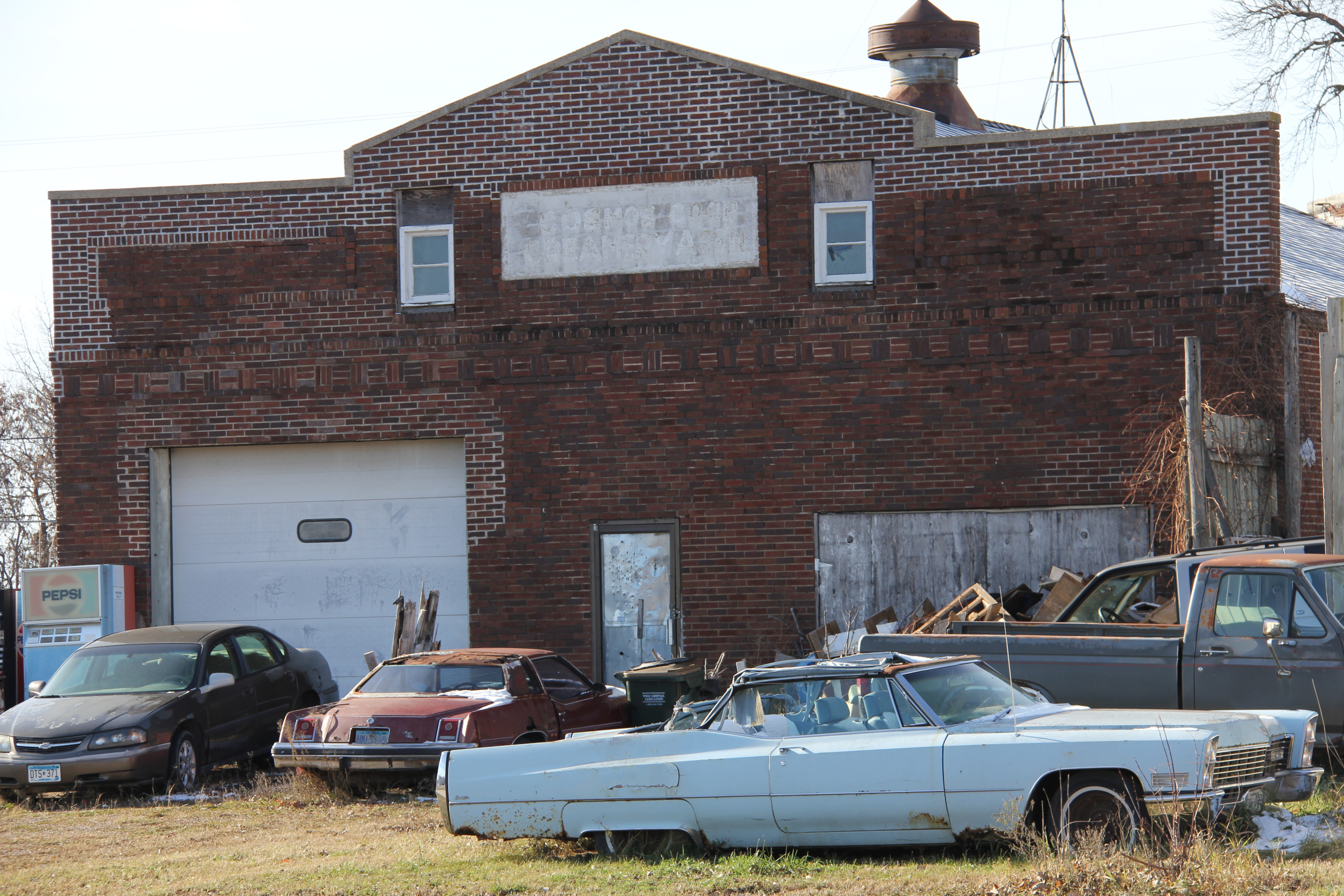
Abandoned vehicles outside what appears to be a former creamery in downtown Cosmos. Love the building. (Minnesota Prairie Roots copyrighted photo November 2024)

Most communities appear only shells of their former selves with abandoned buildings and few businesses. This is reality in many parts of rural Minnesota.

In Cosmos, the restaurant that was closed when we were in town. (Minnesota Prairie Roots copyrighted photo November 2024)

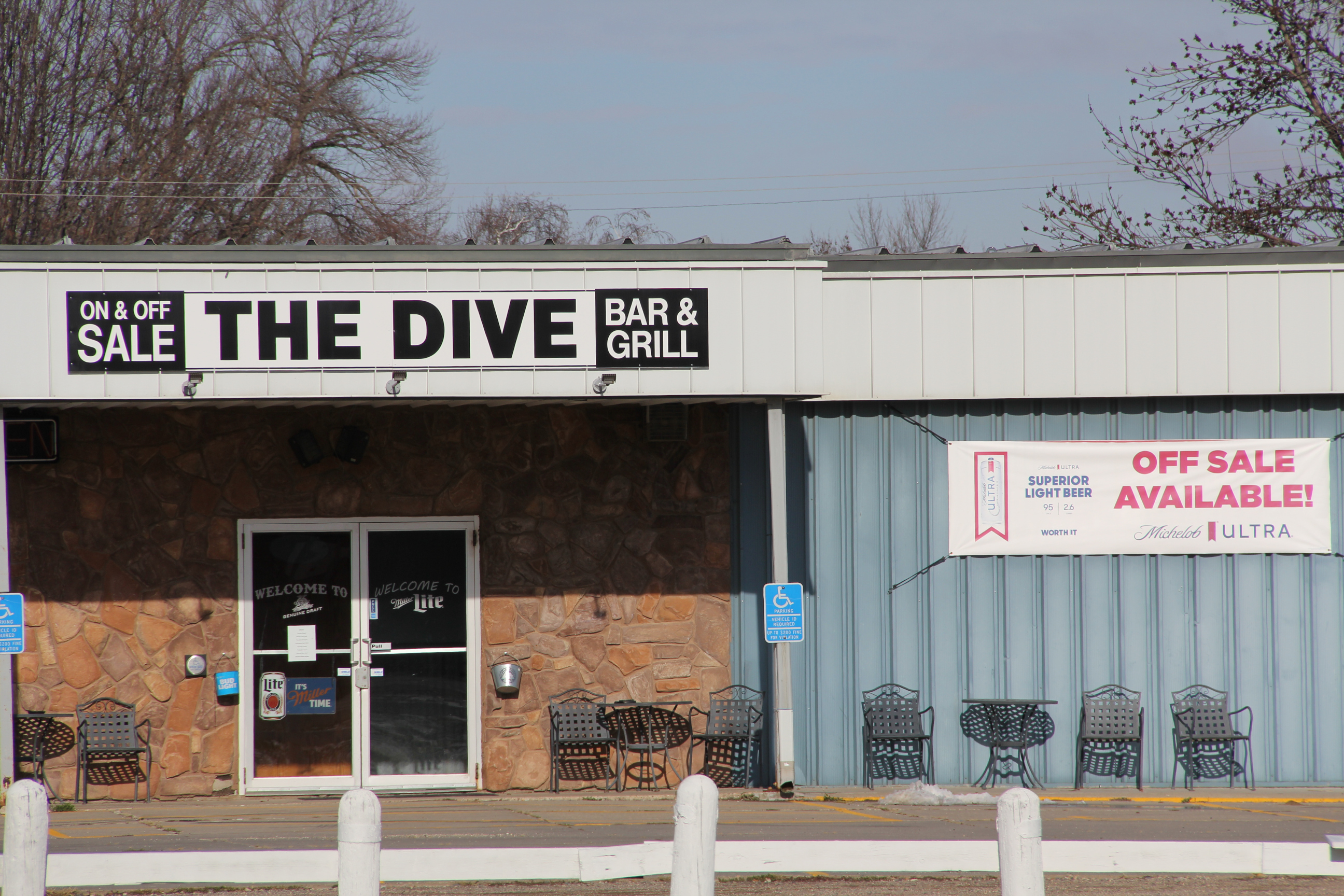
Not even The Dive Bar & Grill in Cosmos was open over noon-time. It’s probably a fine place to eat, even given the unappealing name, but I’ll never know. I hopped out of our van to take numerous photos of space stuff in Cosmos, including the water tower, while Randy searched on his phone for places to eat. He knows I do not do well if I don’t eat on schedule. And I was not doing well, meaning I was irritable and grumpy. Extremely hangry.

Paintings on the underside of the Cosmos water tower celebrate the town name cosmic connection. (Minnesota Prairie Roots copyrighted photo November 2024)

As we left Cosmos heading for Willmar, I realized we’d passed a gas station and convenience store. Why, oh, why didn’t we stop for a snack, a slice of pizza, something I could eat? Finally, in Willmar, I ate, wolfing down fries and a pot roast sandwich.

That evening, at my sister-in-law and brother-in-law’s Morris home, we enjoyed a delicious meal of ribs, cheesy potatoes, green beans and more with a grasshopper for dessert. Grasshopper being the minty green after dinner ice cream drink once served at supper clubs. What a treat. But even more so was the great conversation with much-loved family.

A view of the 300 block on North Broadway in Fargo. (Minnesota Prairie Roots copyrighted file photo November 2012)

Saturday found us on the road to Fargo for the wedding of Hannah and Bryton. Hannah is the daughter of friends, a young woman I mentored in poetry as a teen. To attend her wedding, to see Hannah giddy in love, to watch her and her dad bustin’ dance moves in the father-daughter dance, to embrace Tammy and Jesse on their daughter’s wedding day filled me with absolute joy. Life on that day in Fargo, except for the cold and the snow already pushed into piles in parking lots, doesn’t get any better.

Sunday morning we arose early and hit the interstate, this time with the goal to simply get home. My brother-in-law had wisely handed me two granola bars, which I tucked inside my purse. Just in case I got hangry. I didn’t. But somewhere along I-94, either by Fergus Falls or Alexandria, I spotted a billboard for a restaurant with this singular message: “Hangry?” It was absolute validation for me that feeling irritable when hungry is a real thing. Next long road trip, I will be sure to pack snacks.

NOTE: I’ll share more about my travels in upcoming posts. If you have time, take the road less traveled. And always carry snacks.

© Copyright 2024 Audrey Kletscher Helbling
 

Immersing myself in southern Minnesota’s autumn colors October 23, 2024

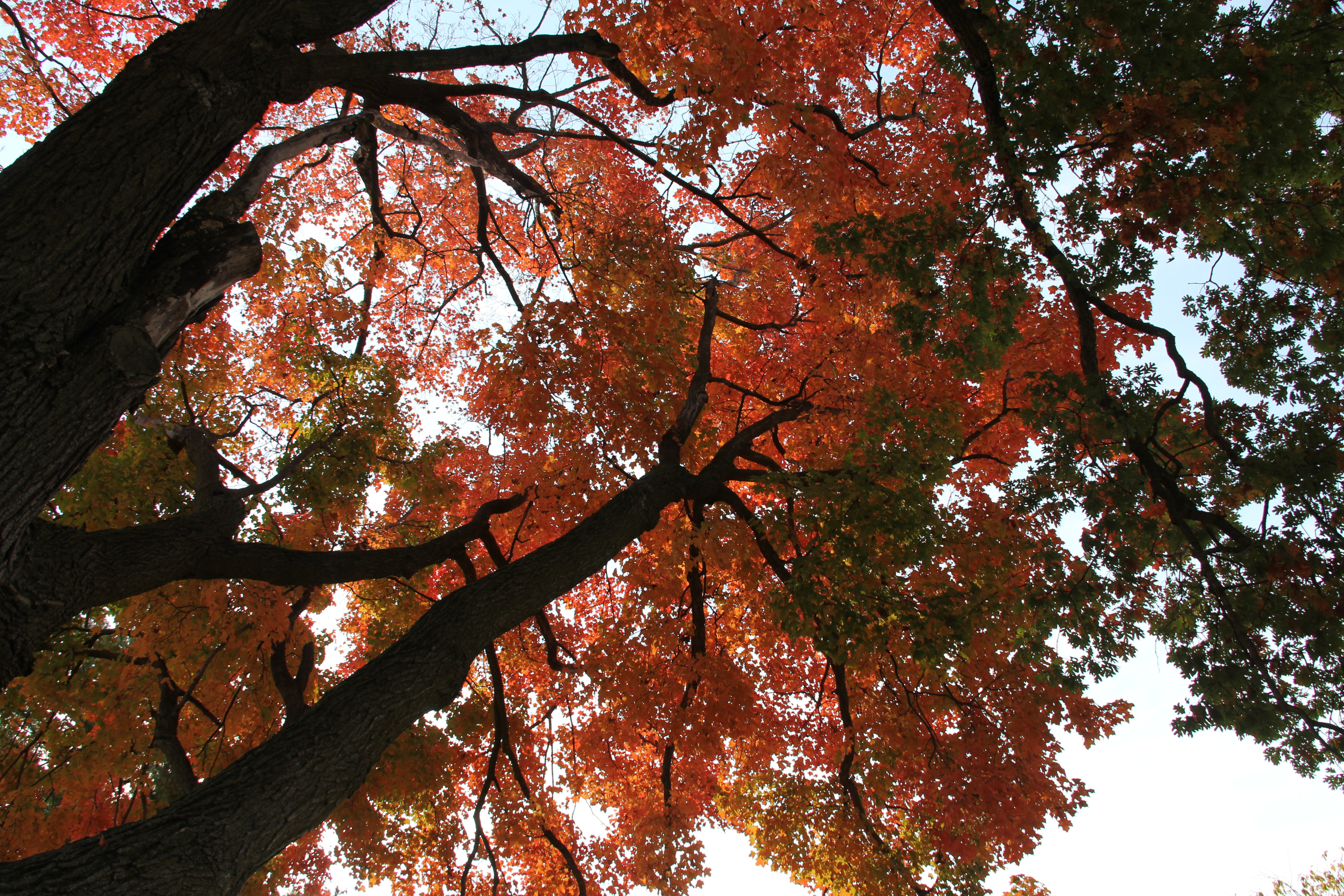
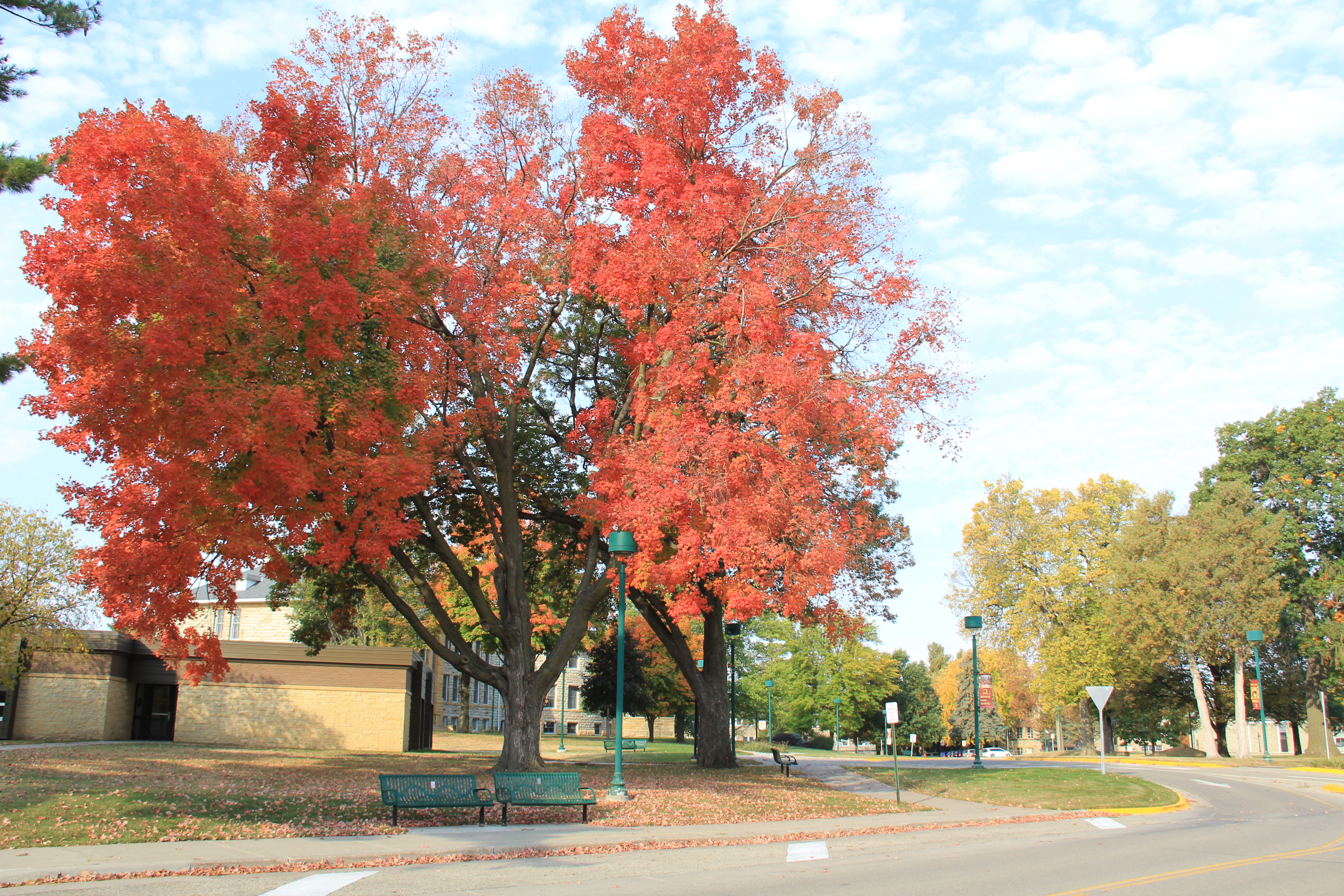
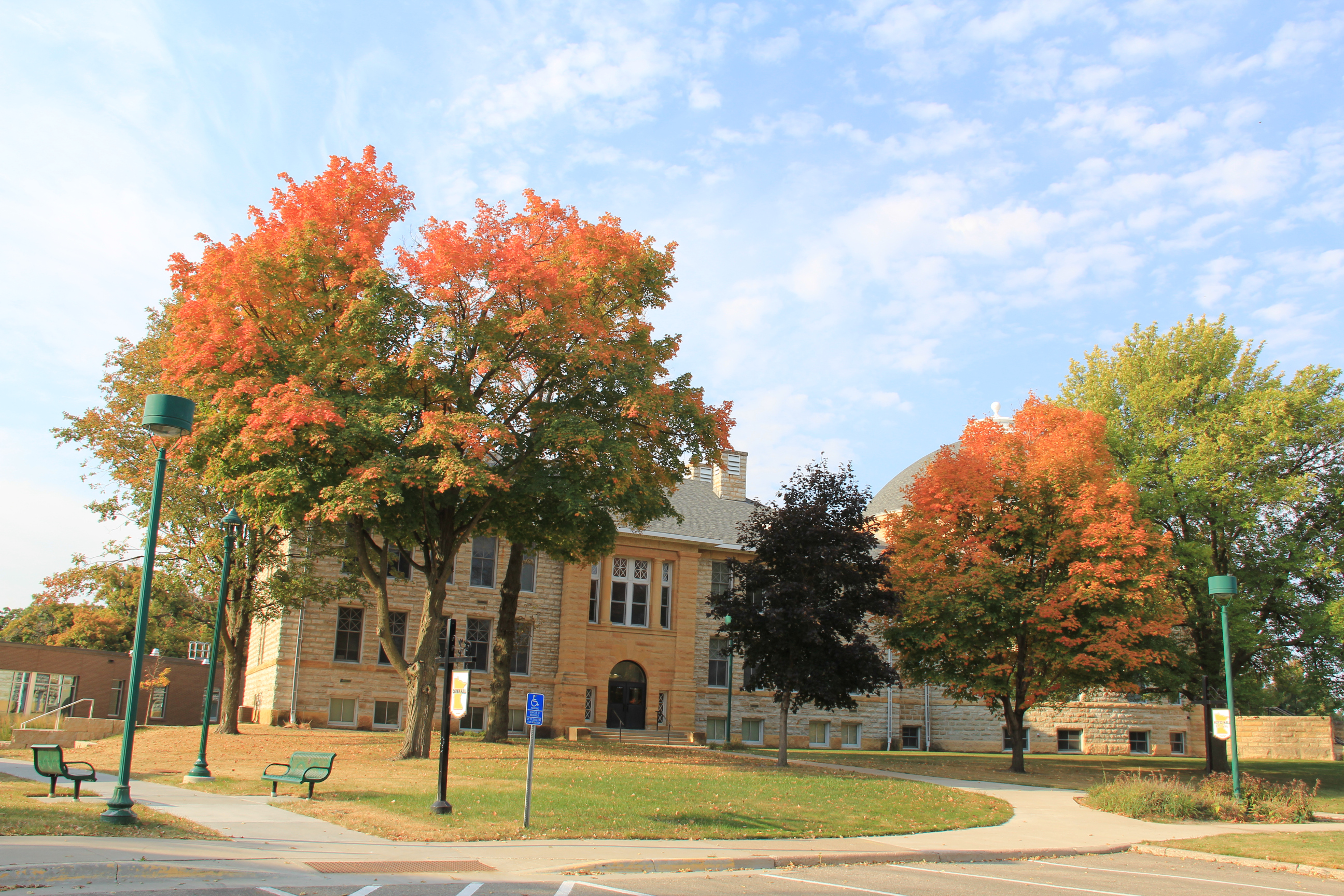
This towering maple on the campus of the Minnesota State Academy for the Deaf in Faribault is by far the most vibrant orange tree I’ve seen this fall. I took this photo nearly two weeks ago. The leaves are no longer as brilliant and many have fallen. (Minnesota Prairie Roots copyrighted photo October 2024)

FROM CITY STREETS to gravel roads, Randy and I have traveled many miles in October to view the fall colors. Autumn rates, undeniably, as my favorite season except for the part of knowing what comes next—the cold and snow of a Minnesota winter.

A full view of that MSAD maple, photographed on October 12. (Minnesota Prairie Roots copyrighted photo October 2024)

We’ve stayed close to home, driving around our home county of Rice and also heading into portions of neighboring Le Sueur County, then Nicollet and Blue Earth counties. Admittedly, the lack of color has sometimes disappointed us. Blame the current drought, the too-warm weather or the hazy, dusty skies of windy days. Yet, the color is there, just not as abundant or brilliant as some years.

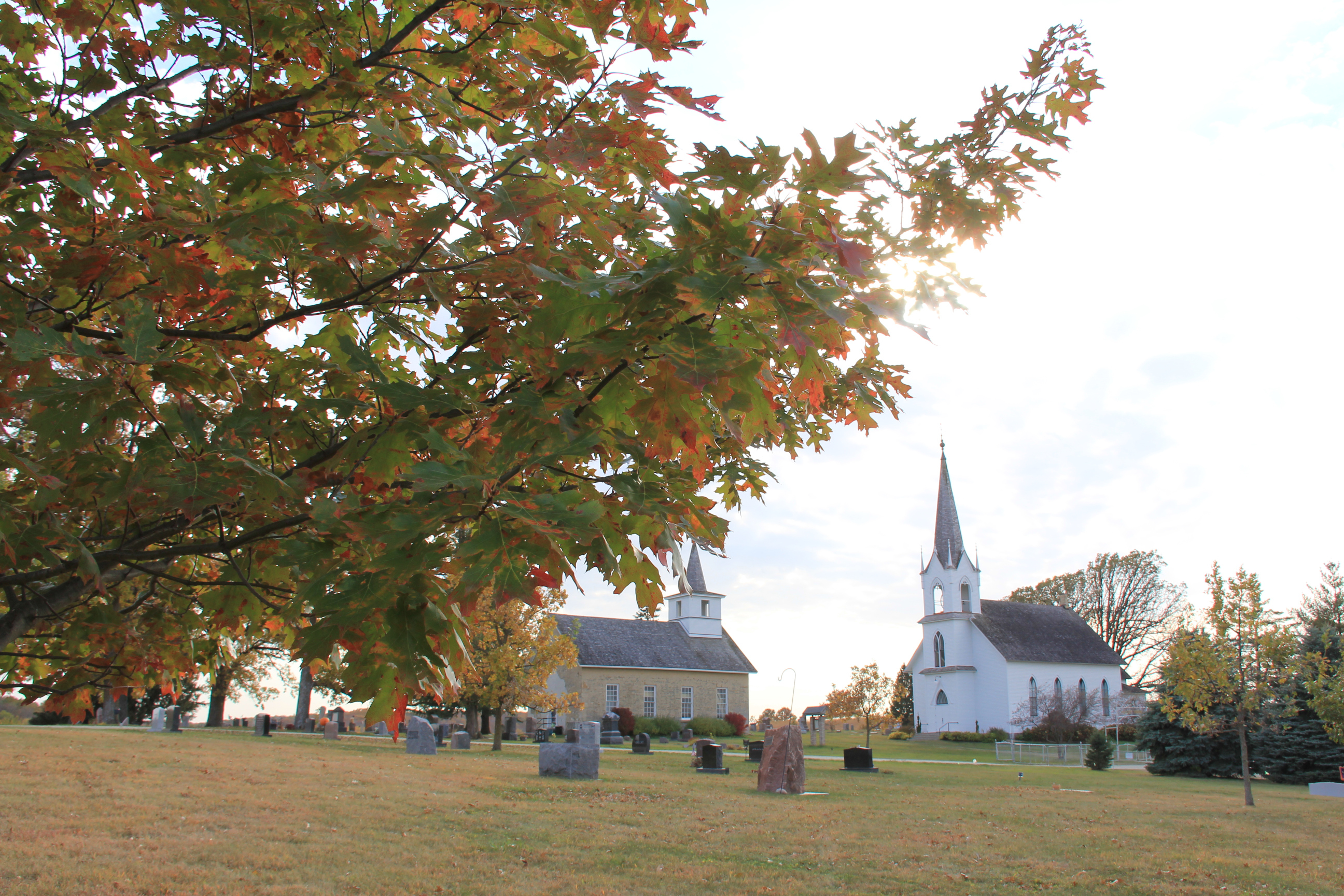
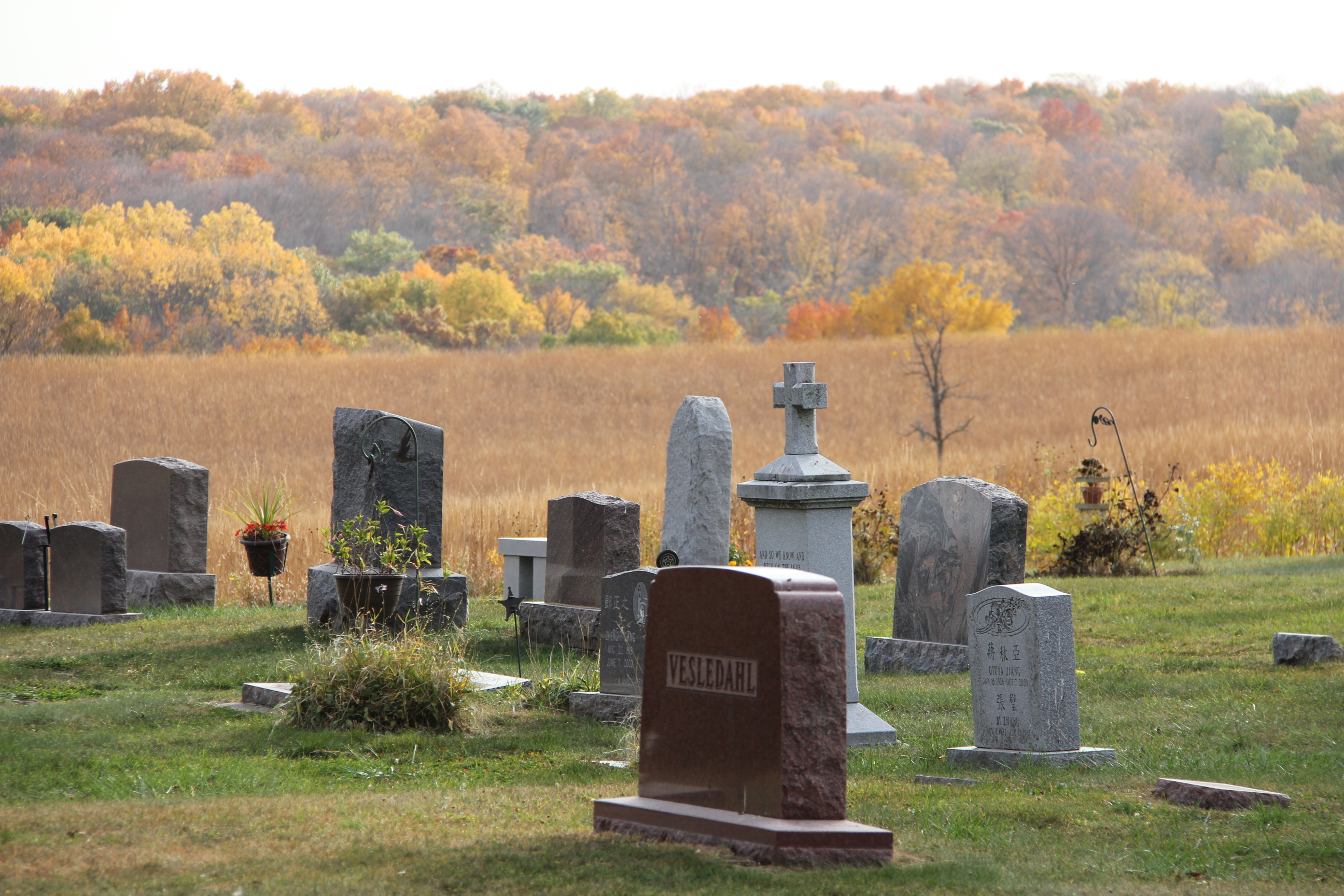
One of my favorite spots in rural Rice County is Valley Grove, two aged churches atop a hill near Nerstrand. Views and fall colors are beautiful here. (Minnesota Prairie Roots copyrighted photo October 2024)
A colorful tree line backdrops Valley Grove Cemetery. On this visit, skies were mostly cloudy and hazy. (Minnesota Prairie Roots copyrighted photo October 2024)
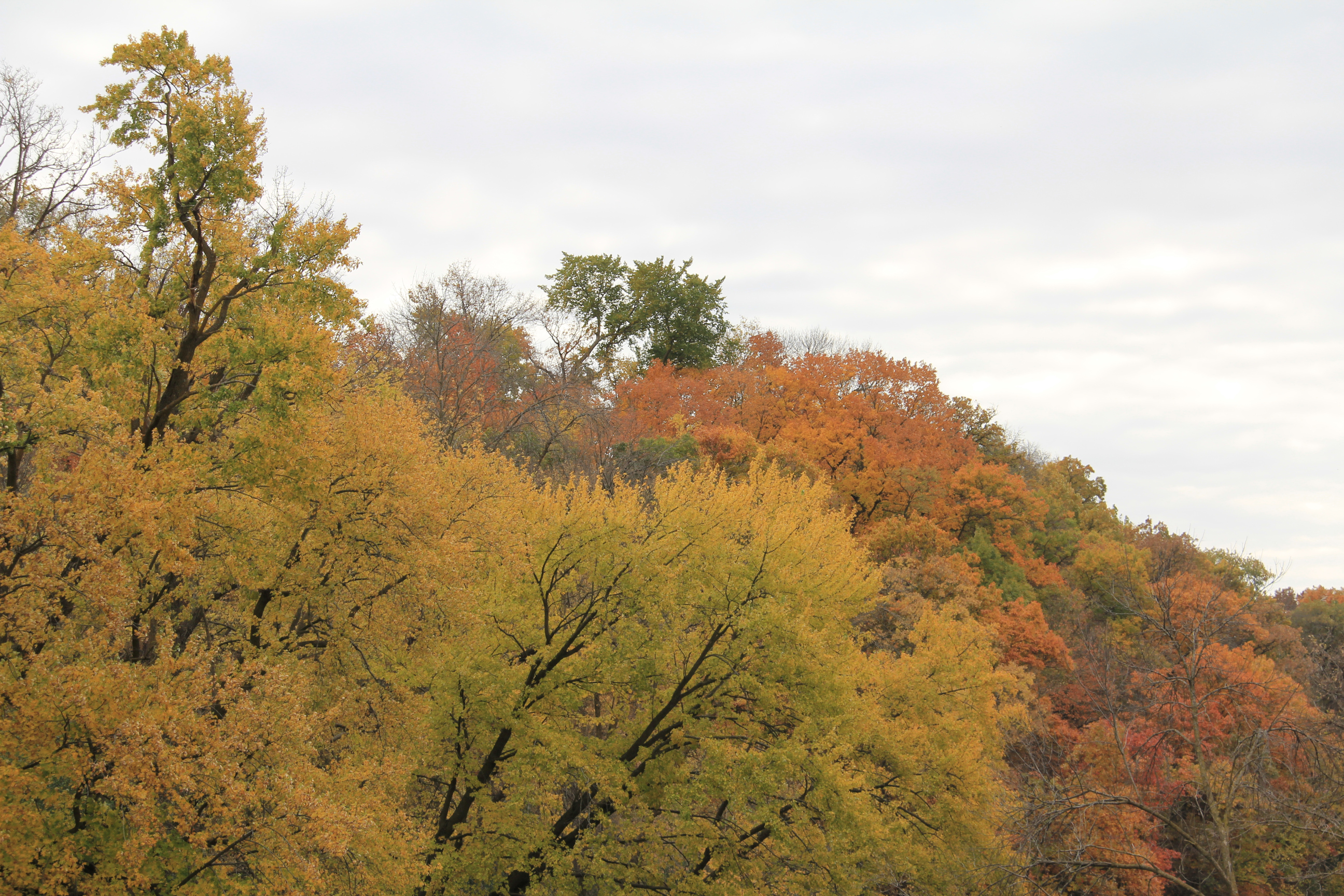
These beautiful trees hug the bluffs along the Straight River near downtown Faribault. (Minnesota Prairie Roots copyrighted photo October 2024)

Favorite area fall color spots include Valley Grove churches near Nerstrand Big Woods State Park, Dudley Lake in Rice County and right here in Faribault, along city streets, on the campus of the Minnesota State Academy for the Deaf, along the Straight River bluffs and even in our own backyard.

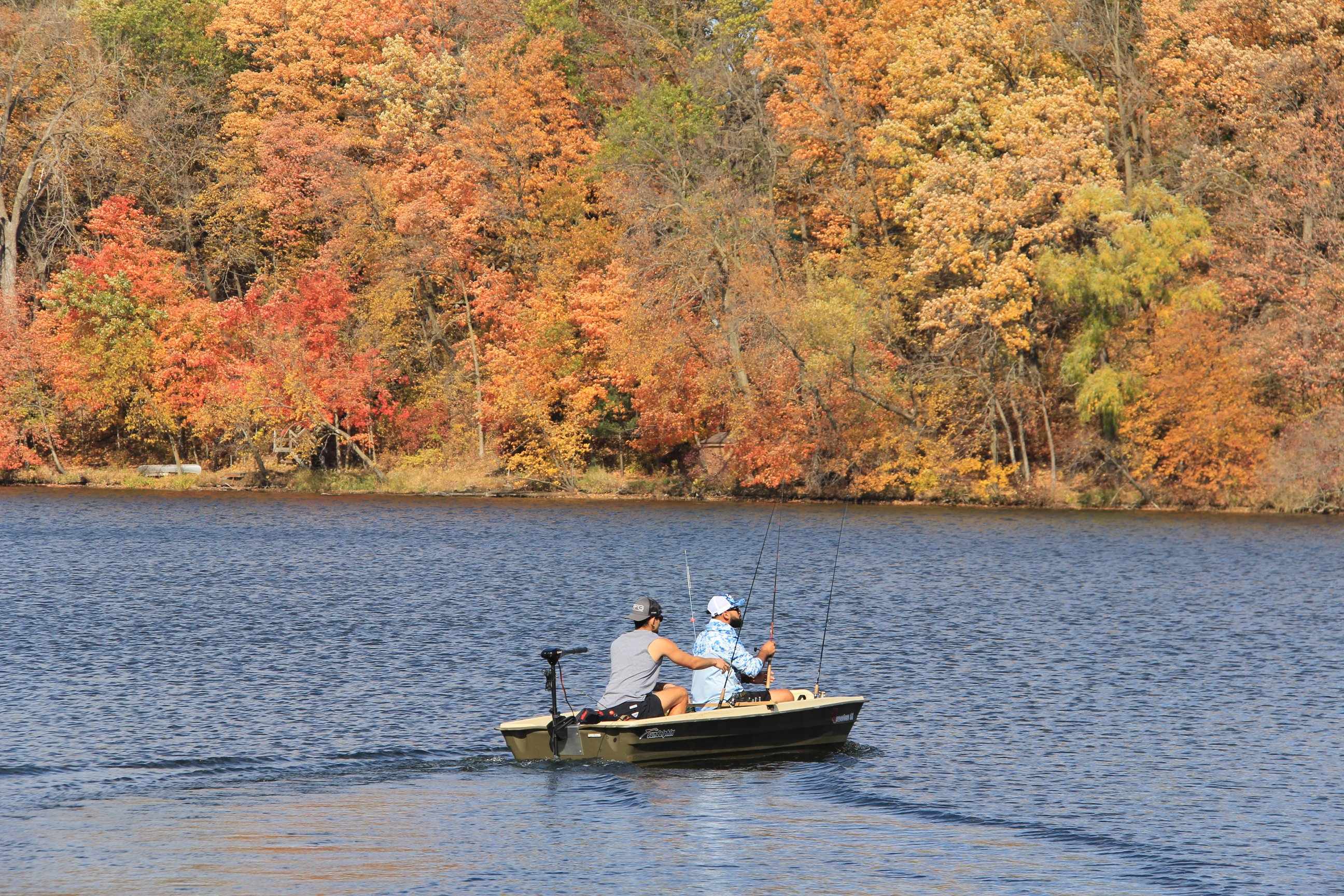
Setting out to fish on Dudley Lake Sunday afternoon. This was photographed from the dock at the public boat landing. (Minnesota Prairie Roots copyrighted photo October 2024)

It’s not too late to catch some of the colors. But they are fading, morphing, with many trees now stripped of leaves.

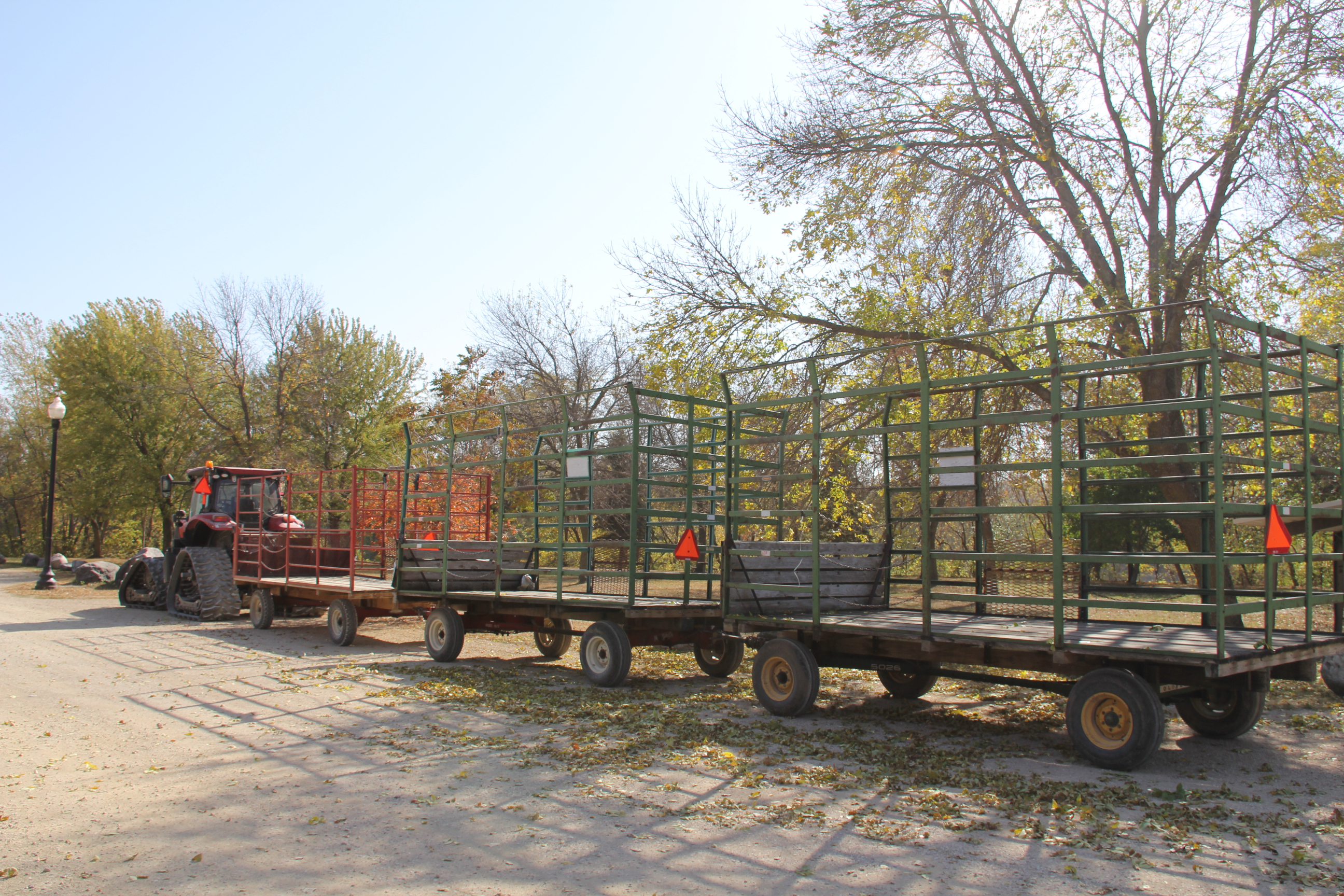
The Nicollet County Trail Association is hosting a second weekend of the Haunted Hayride from 7-11 p.m. October 28-29 at Riverside Park-Mill Pond Municipal Campground in St. Peter. The ride will wind through woods. (Minnesota Prairie Roots copyrighted photo October 2024)
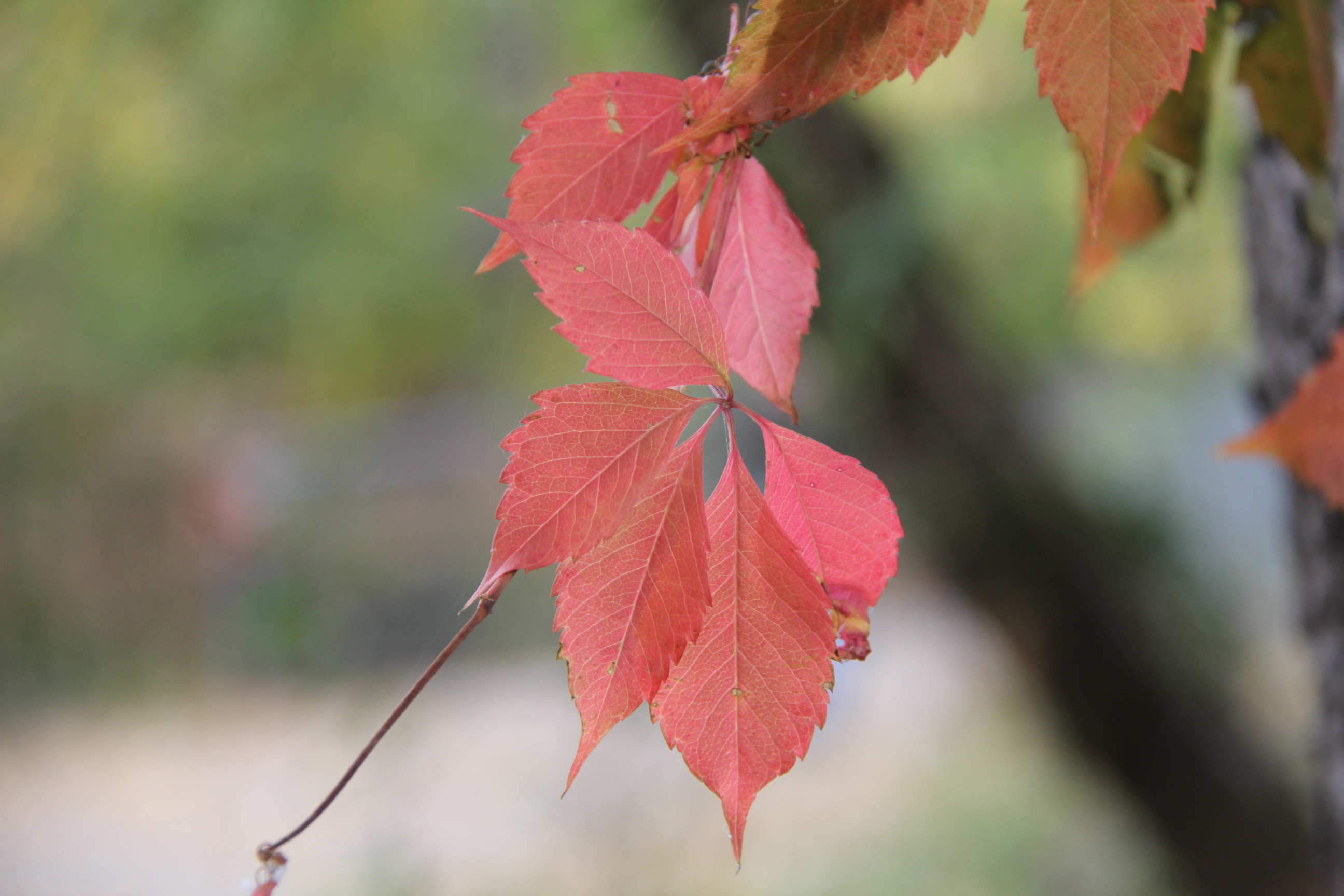
Every leaf is worth study and appreciation for its fall beauty. (Minnesota Prairie Roots copyrighted photo October 2024)
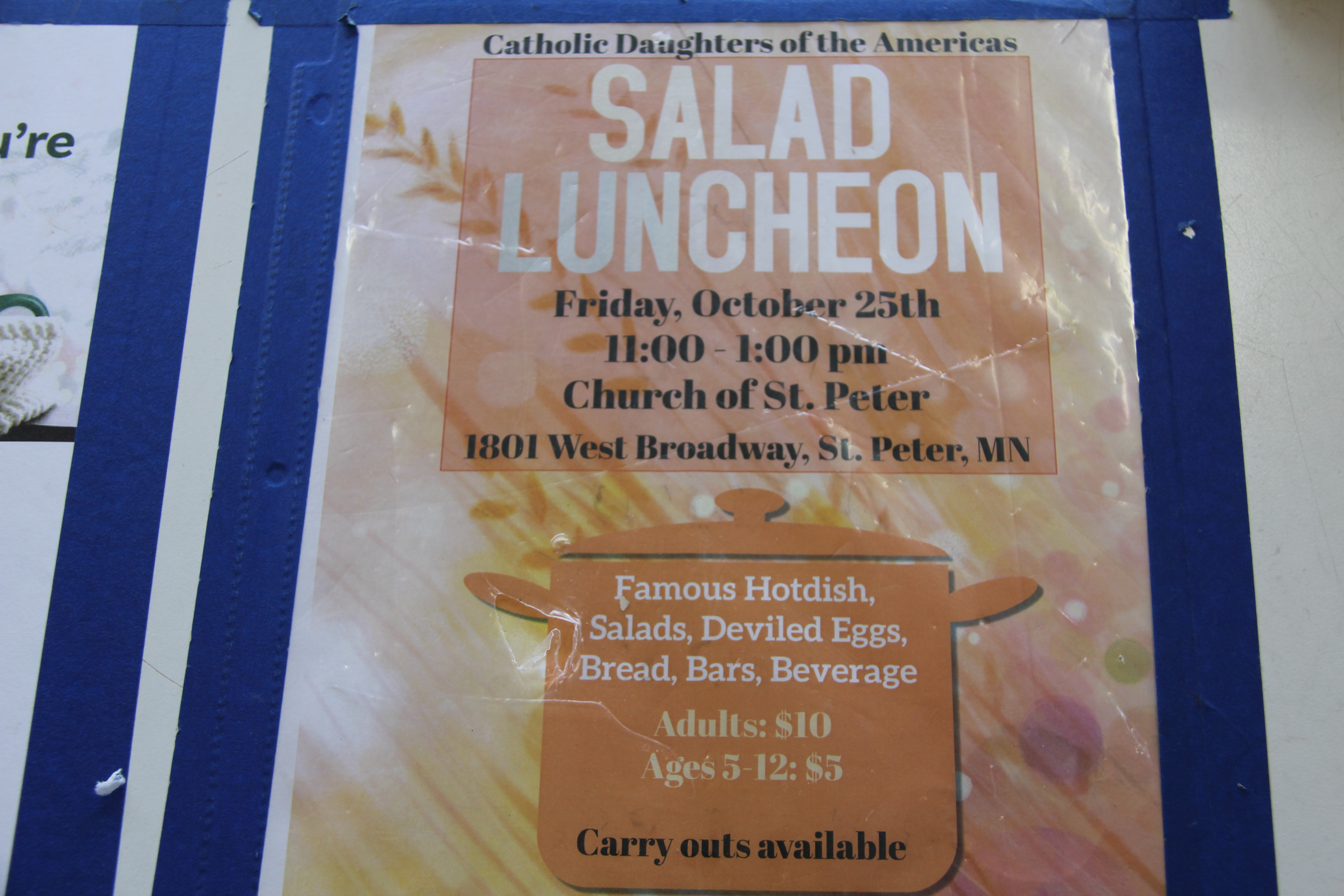
Fall is a popular time for church dinners, including this one advertised on a flyer taped to the checkout counter at the St. Peter Thrift Store, St. Peter. (Minnesota Prairie Roots copyrighted photo October 2024)

We hope to take one last fall color drive along the Mississippi River in southeastern Minnesota…if it’s not too late. Time is fleeting.

I photographed this bucolic rural scene along Canby Way just outside Faribault. (Minnesota Prairie Roots copyrighted photo October 2024)

Fall color drives are rooted within me. As a child, my parents, siblings and I piled into the Chevy each autumn for a Sunday afternoon meander along the Minnesota River Valley from the Granite Falls area to Morton. That annual outing imprinted upon me the seasonal beauty of September and October in Minnesota. I felt then, and still feel now, a close connection to the land during fall color drives.

More colorful trees, photographed October 12, on the Minnesota State Academy for the Deaf campus. (Minnesota Prairie Roots copyrighted photo October 2024)

There weren’t a lot of colorful trees on the rural southwestern Minnesota prairie where I grew up. There weren’t even all that many trees. Maybe that’s why I appreciate the trees blazing orange, red and yellow into the landscape in this area of Minnesota.

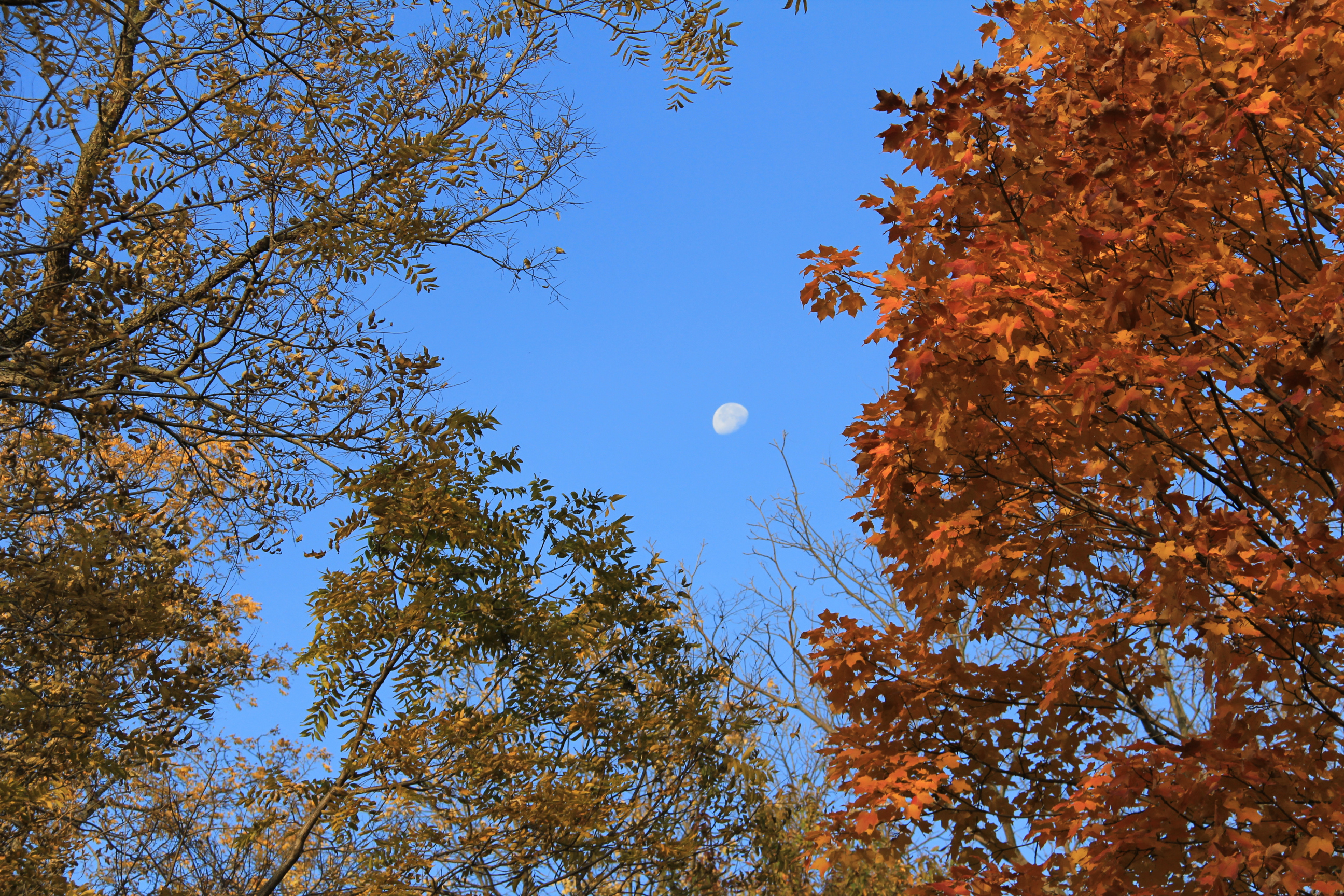
Monday morning I stood in my backyard and aimed by camera lens upward to my neighbors’ trees with the fading moon in the backdrop sky. (Minnesota Prairie Roots copyrighted photo October 2024)

I love slowing down to view stunning tree lines or a single brilliant red leaf. The nuances of nature, of the countryside, of small towns this time of year are worth noticing. And appreciating. Soon winter will be upon us. Stark. Devoid of color.

© Copyright 2024 Audrey Kletscher Helbling
 

A glimpse of Gilman, including Kelash’s Corner October 21, 2024

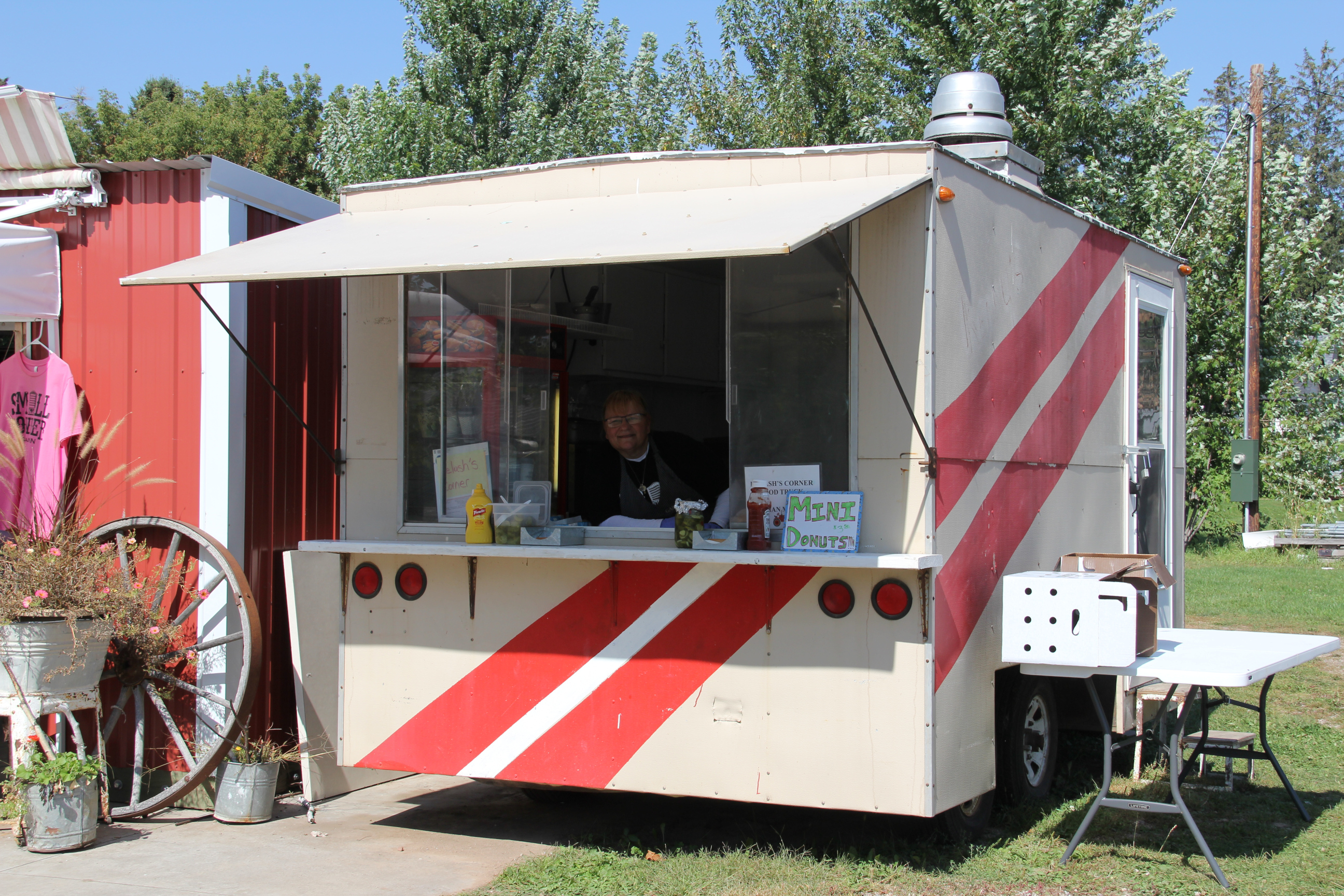
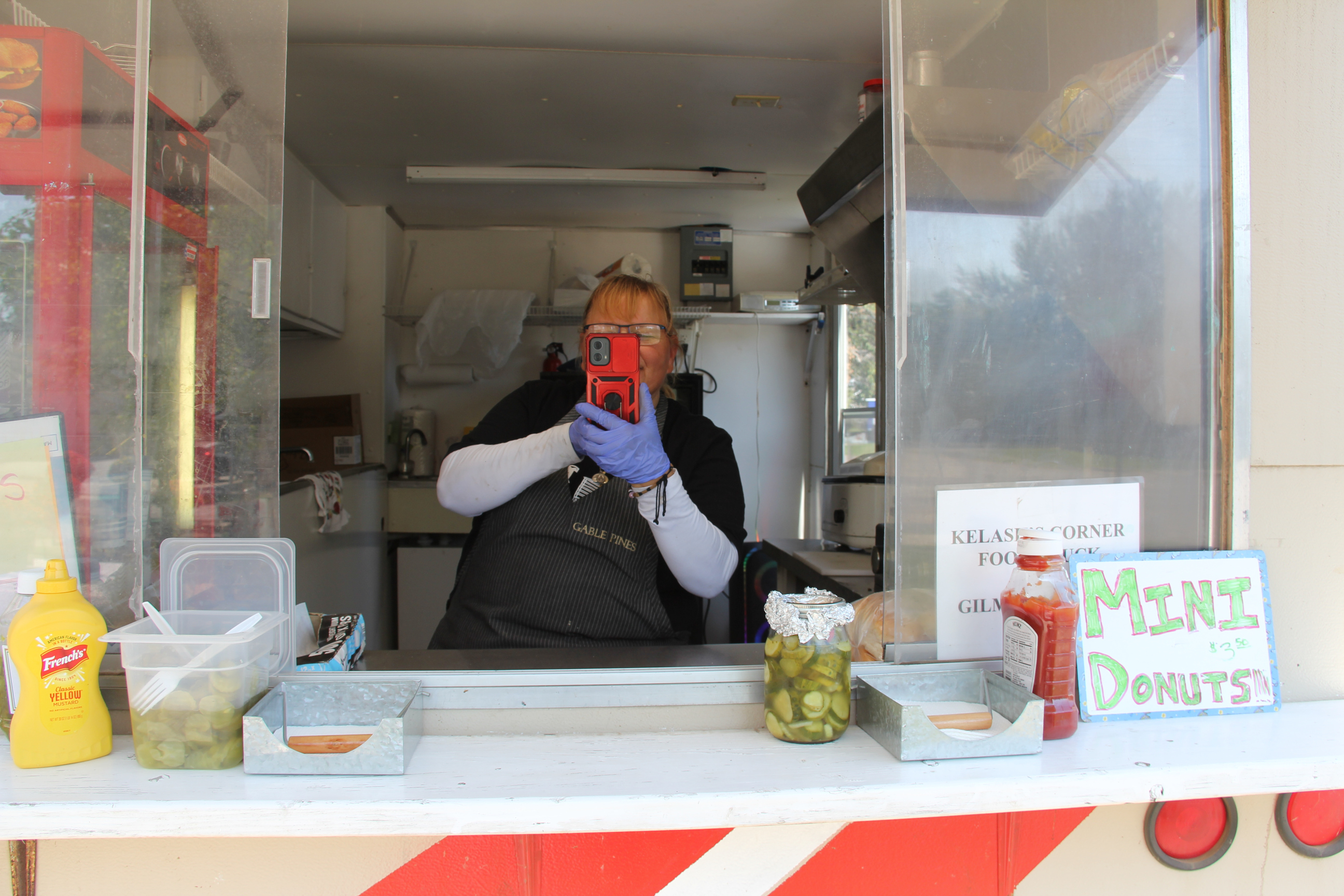
Amy Kelash ready to serve from her food truck. (Minnesota Prairie Roots copyrighted photo September 2024)

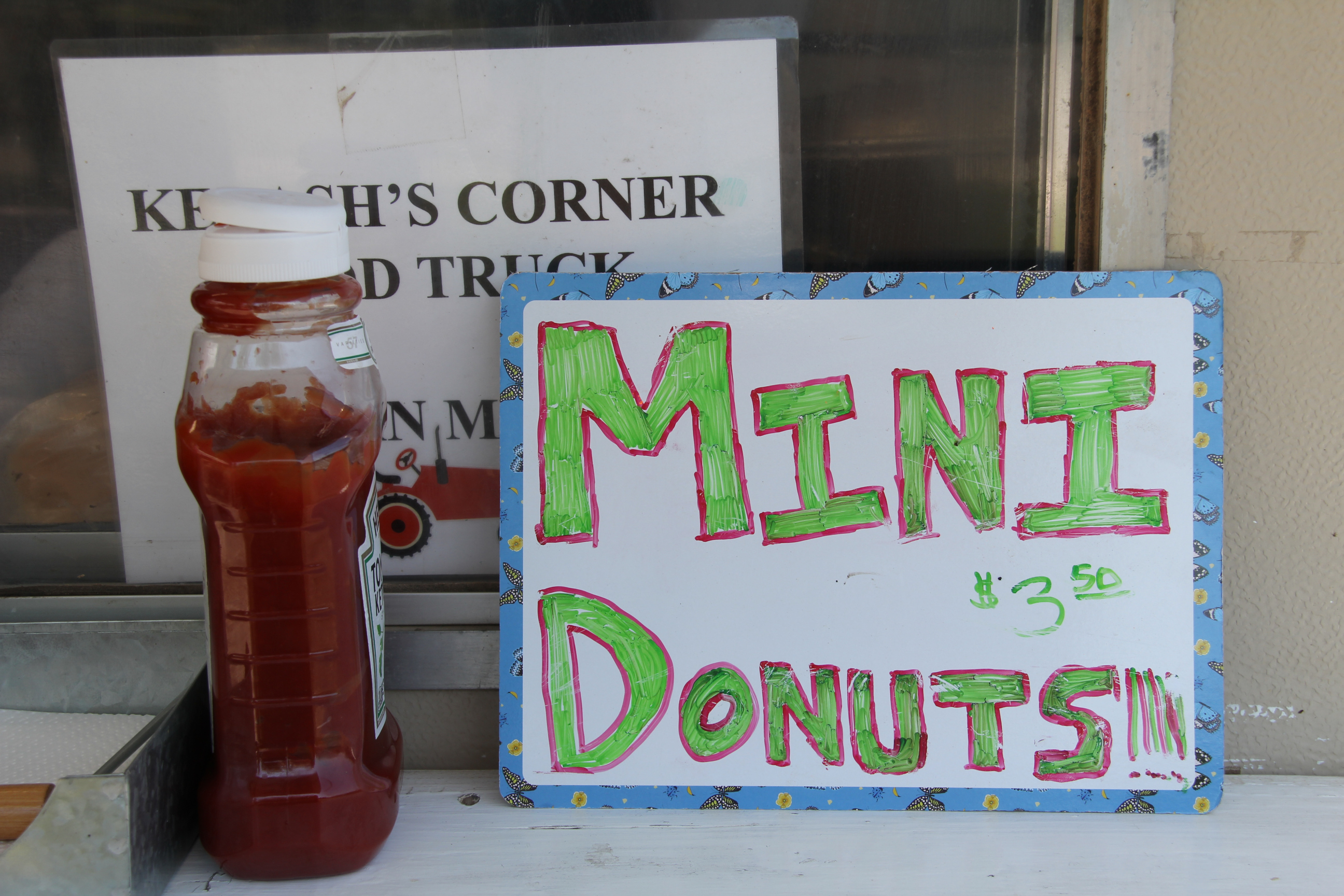
IF ONLY I HADN’T JUST EATEN a picnic lunch, I would have ordered a bag of mini donuts from Kelash’s Corner Food Truck in Gilman. But I wasn’t hungry. Even though I really really really wanted donuts, one of my favorite fair food sweet treats, I stood strong. I shouldn’t have. Life is too short not to occasionally cave to cravings. Especially at my age.

My eyes landed right on this sign. (Minnesota Prairie Roots copyrighted photo September 2024)
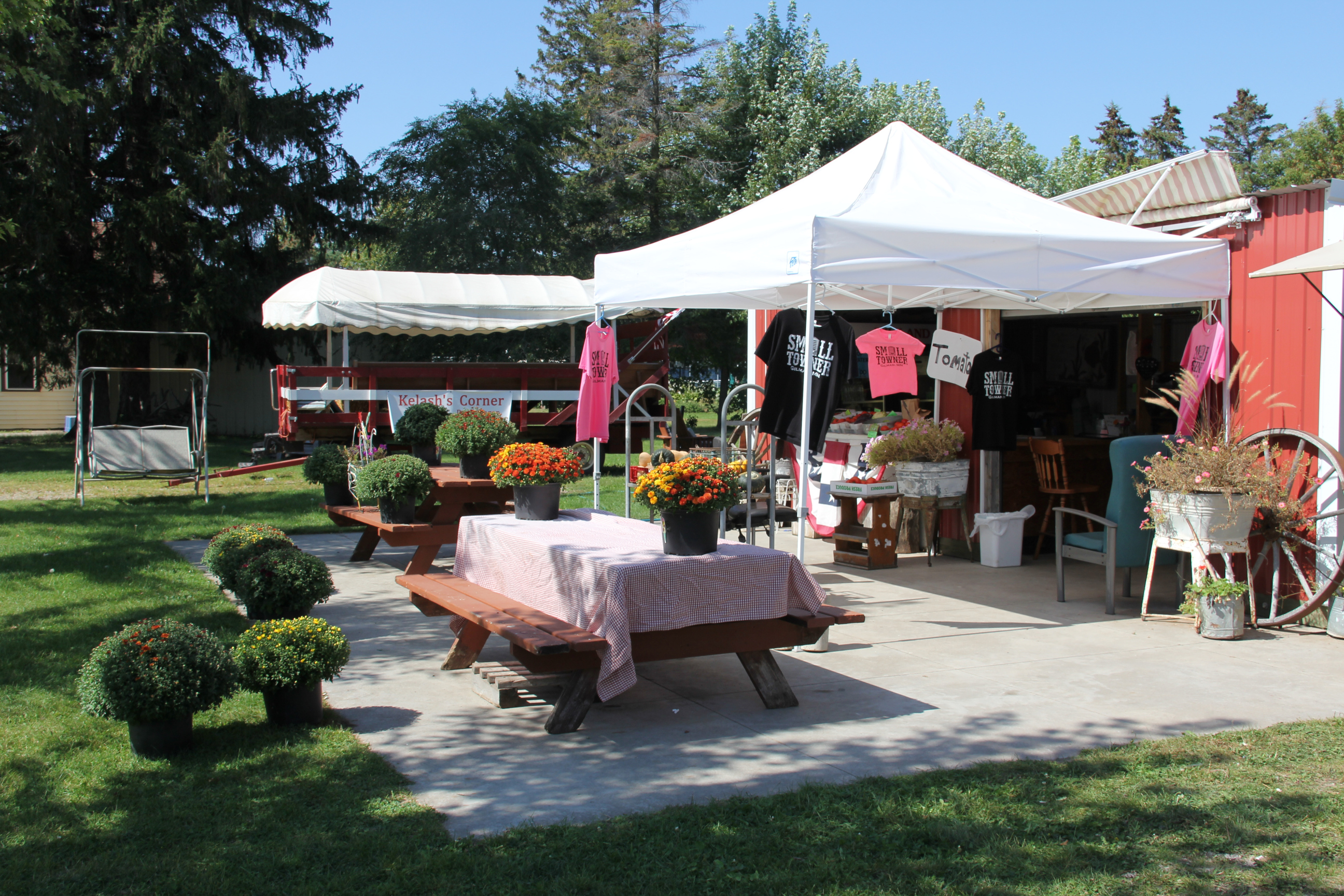
Kelash’s Corner is an inviting community-centered space. (Minnesota Prairie Roots copyrighted photo September 2024)
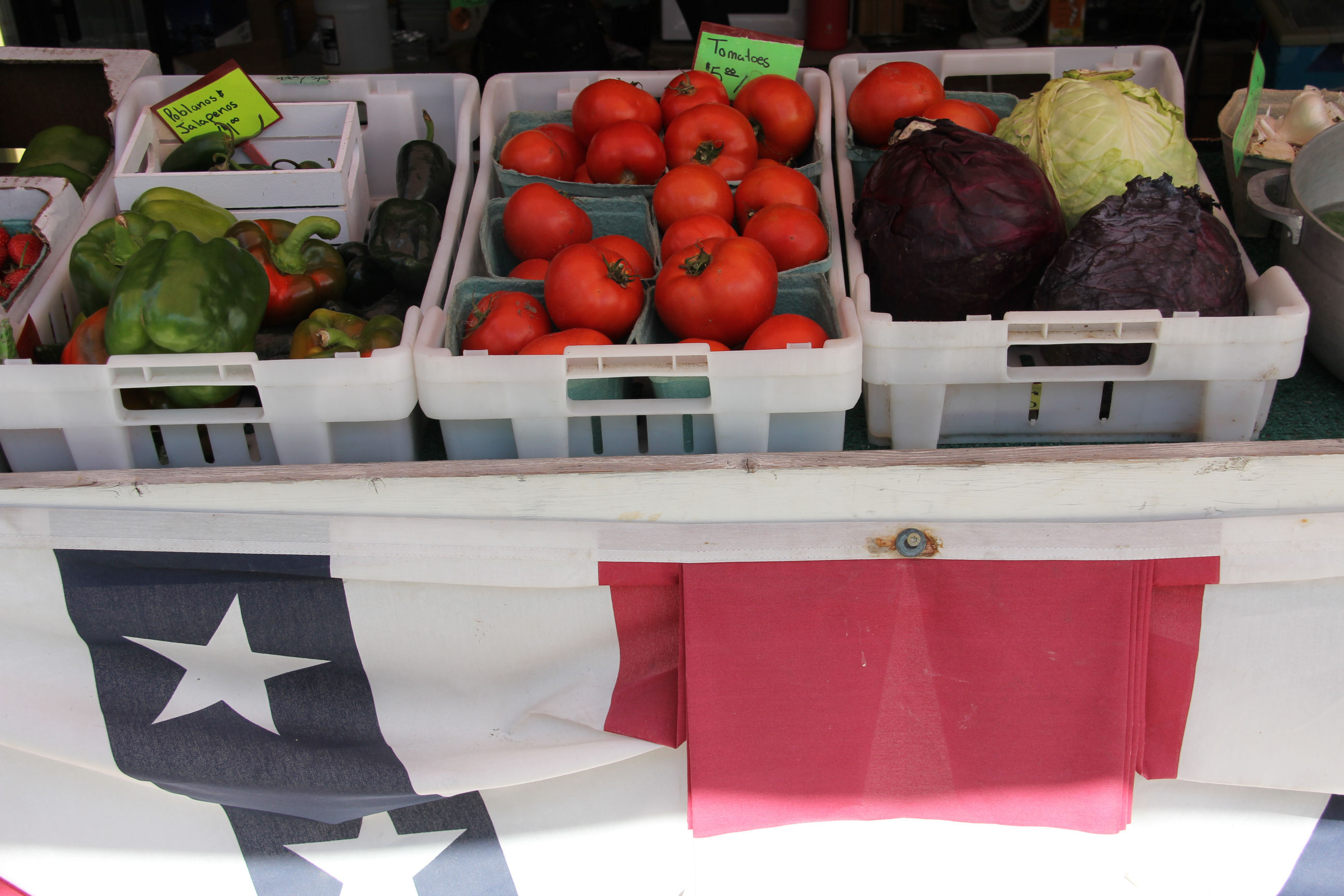
You’ll find garden fresh vegetables for sale here. (Minnesota Prairie Roots copyrighted photo September 2024)

If I lived in or near Gilman, I could pop in at Kelash’s Corner for not only those coveted donuts and other food, but also for garden fresh vegetables and whatever goods twin sisters Ann and Amy Kelash sell at their seasonal business.

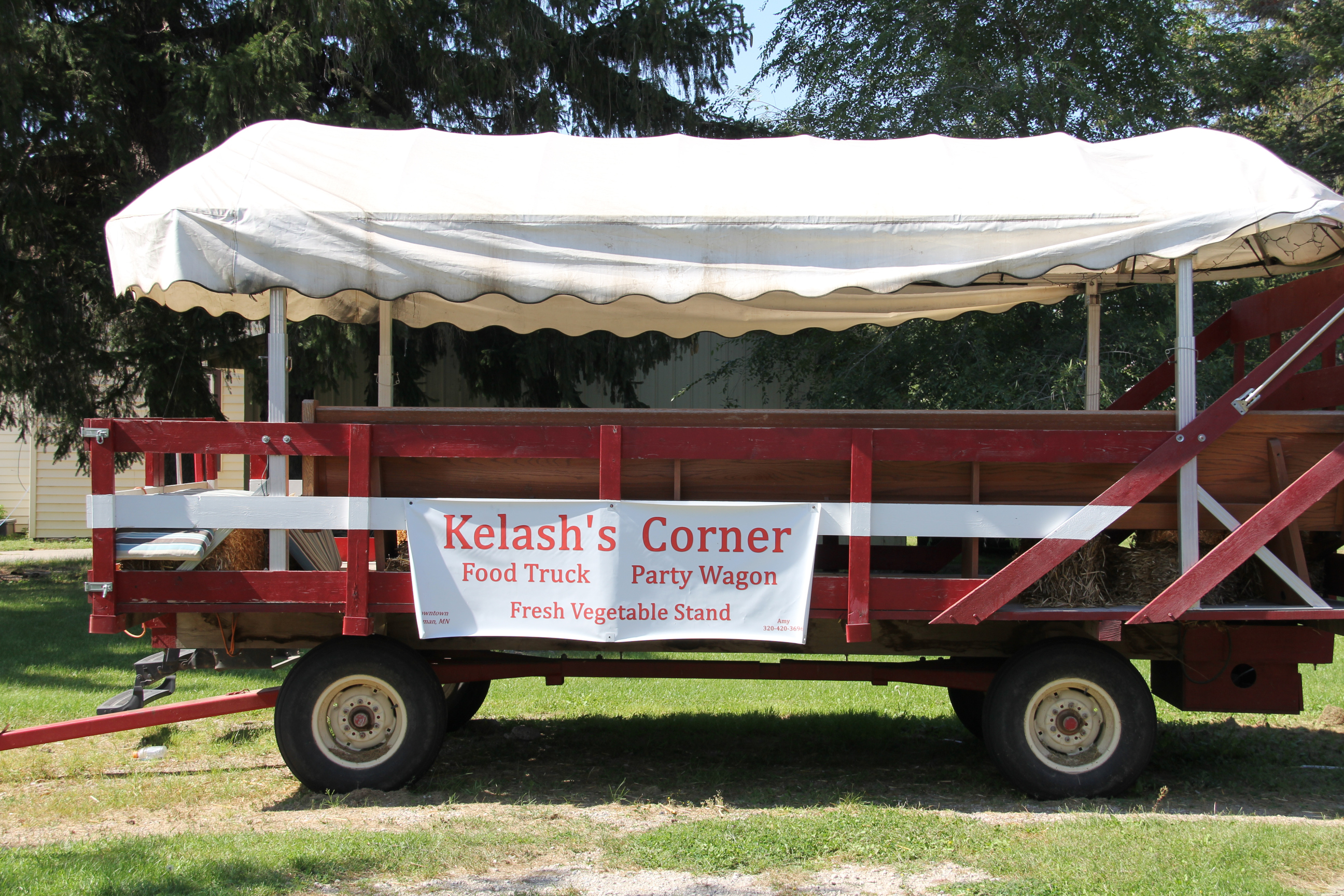
The Kelash party wagon was parked on-site. (Minnesota Prairie Roots copyrighted photo September 2024)

My stop was brief, yet long enough to appreciate this home-grown corner set-up of food truck, vegetable/merch stand with a party wagon to boot.

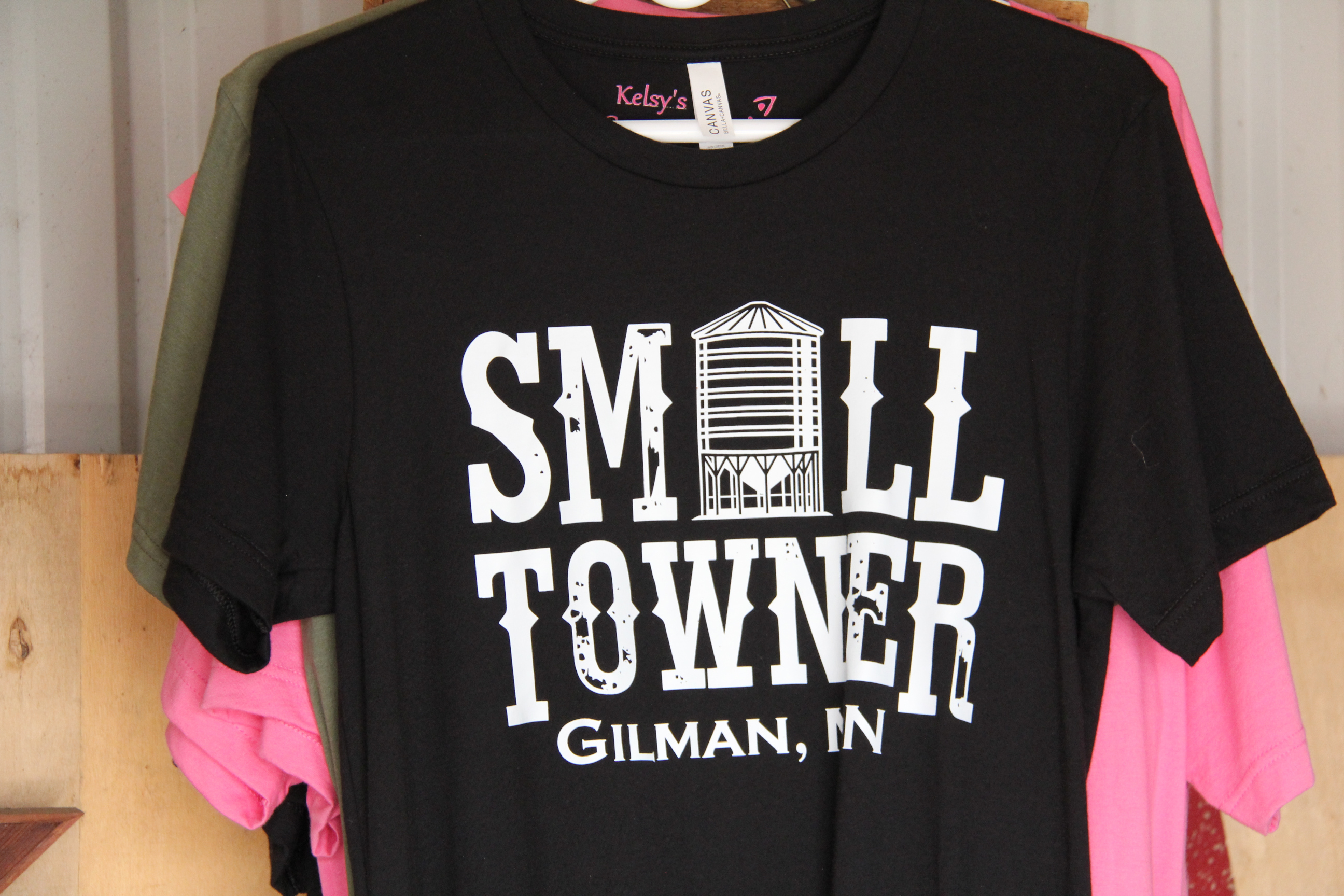
These SMALL TOWNER t-shirts are available in assorted colors. (Minnesota Prairie Roots copyrighted photo September 2024)

The “SMALL TOWNER” tees with grain bin graphics caught my eye given my rural roots. Had the town name of Gilman not been printed on the shirts, I might have bought one. Gilman, located five miles north of Foley off Minnesota State Highway 25, definitely fits the definition of small town with a population of about 220. There’s not a whole lot here, but enough. Catholic church. Municipal liquor store. Bank. Post office and city hall. Gas station and auto body shop. Co-op creamery and feed store. And maybe more, but not much more.

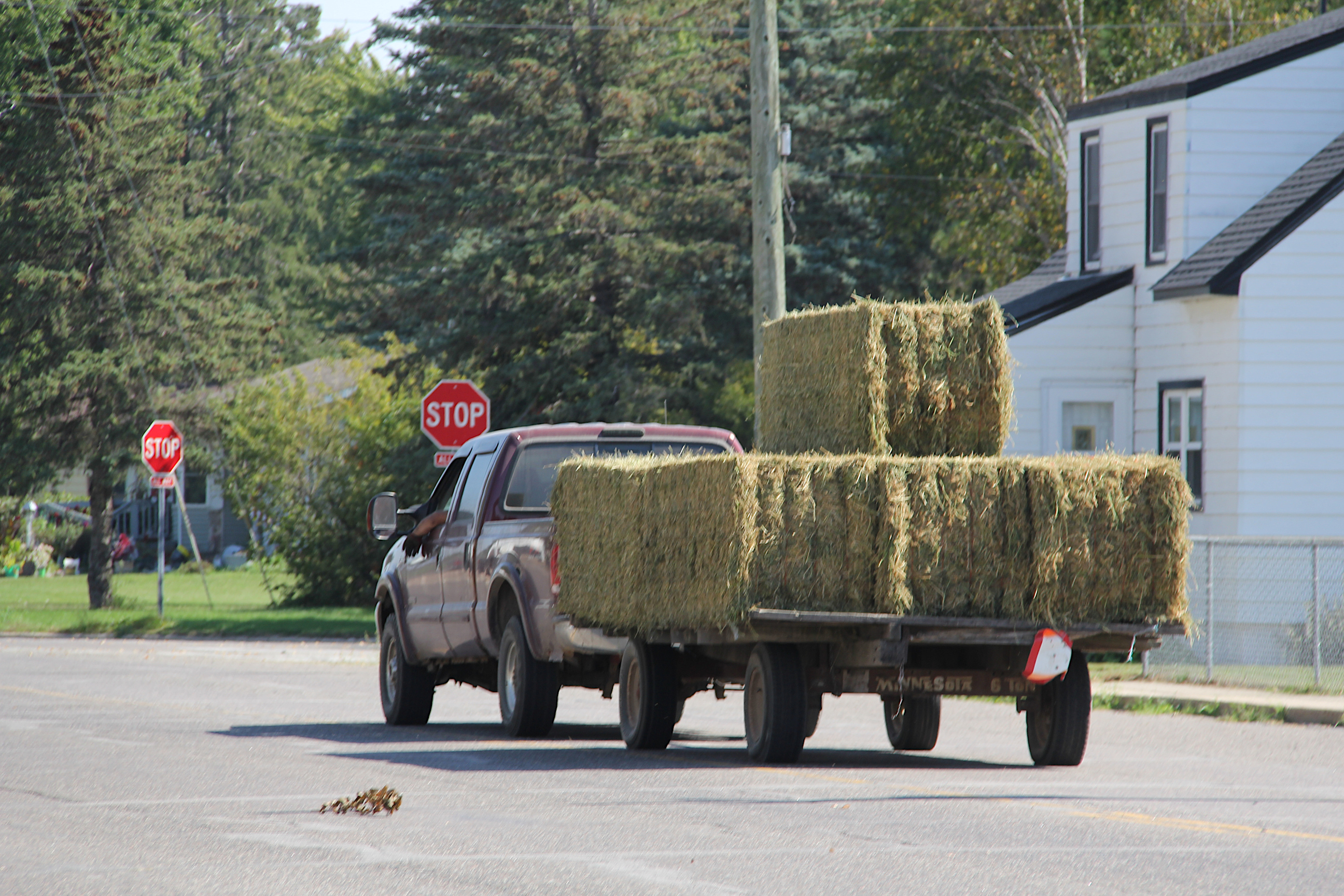
Gilman sits deep in farm country. Here a pickup pulls a load of hay through town. (Minnesota Prairie Roots copyrighted photo September 2024)

It’s the type of small town most would pass by without stopping. I’ve always mostly just passed through as a shortcut route to my husband’s childhood farm, no longer in the family. This trip we were in the area for Randy’s 50th class reunion, aiming for a drive by the Buckman Township farm site, then on to Buckman and Pierz. We hadn’t planned on stopping in Gilman. But then I spotted Kelash’s Corner.

While I photographed Amy, she photographed me. (Minnesota Prairie Roots copyrighted photo September 2024)

When I see a place like this, I feel compelled to document it with my camera…because I love one-of-a-kind/home-grown/small town spots. They are grassroots appealing. I’m a person who always chooses a local eatery over a chain restaurant, who likes small town bakeries, who finds roadside stands Norman Rockwell charming.

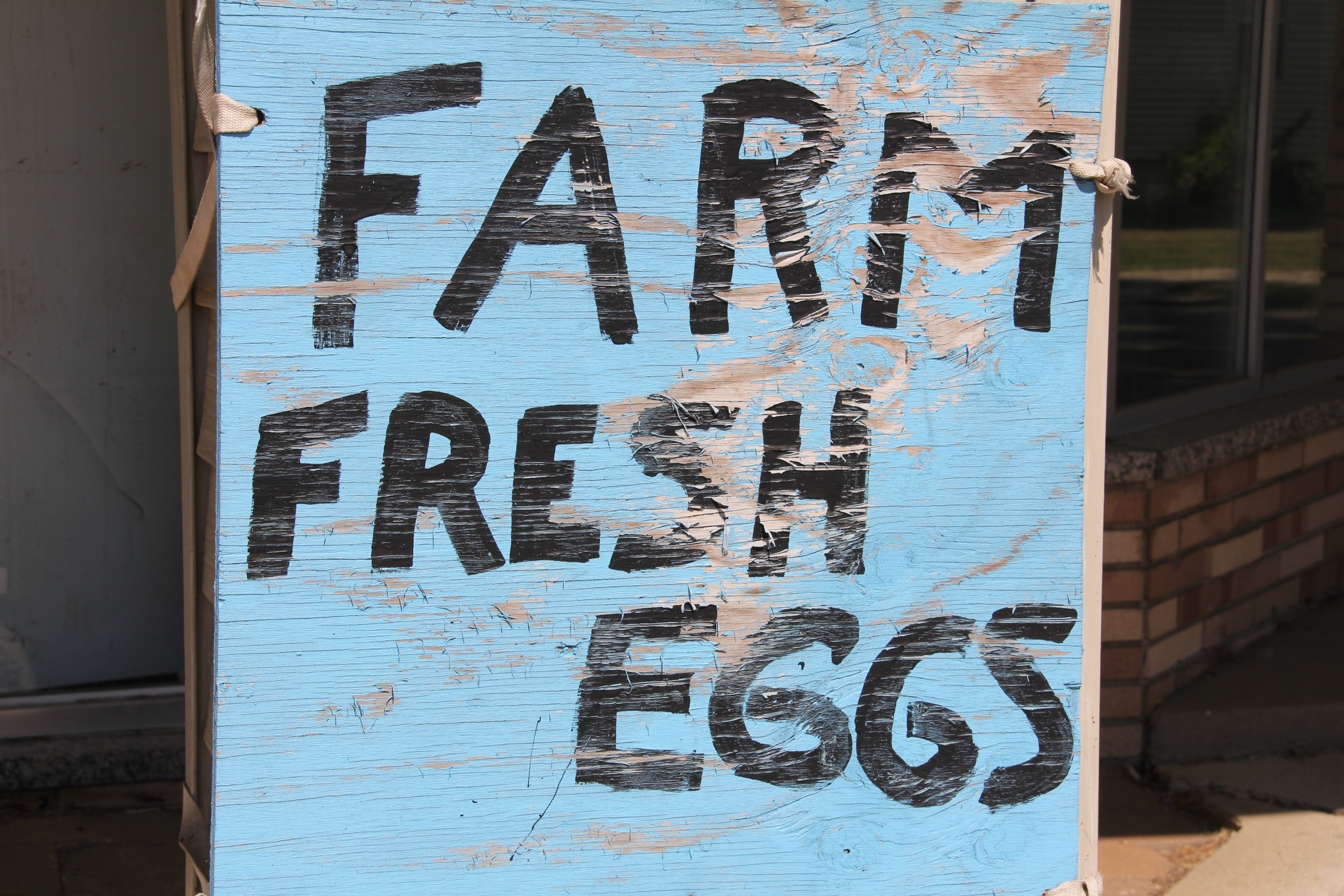
This sign was impossible to miss. (Minnesota Prairie Roots copyrighted photo September 2024)
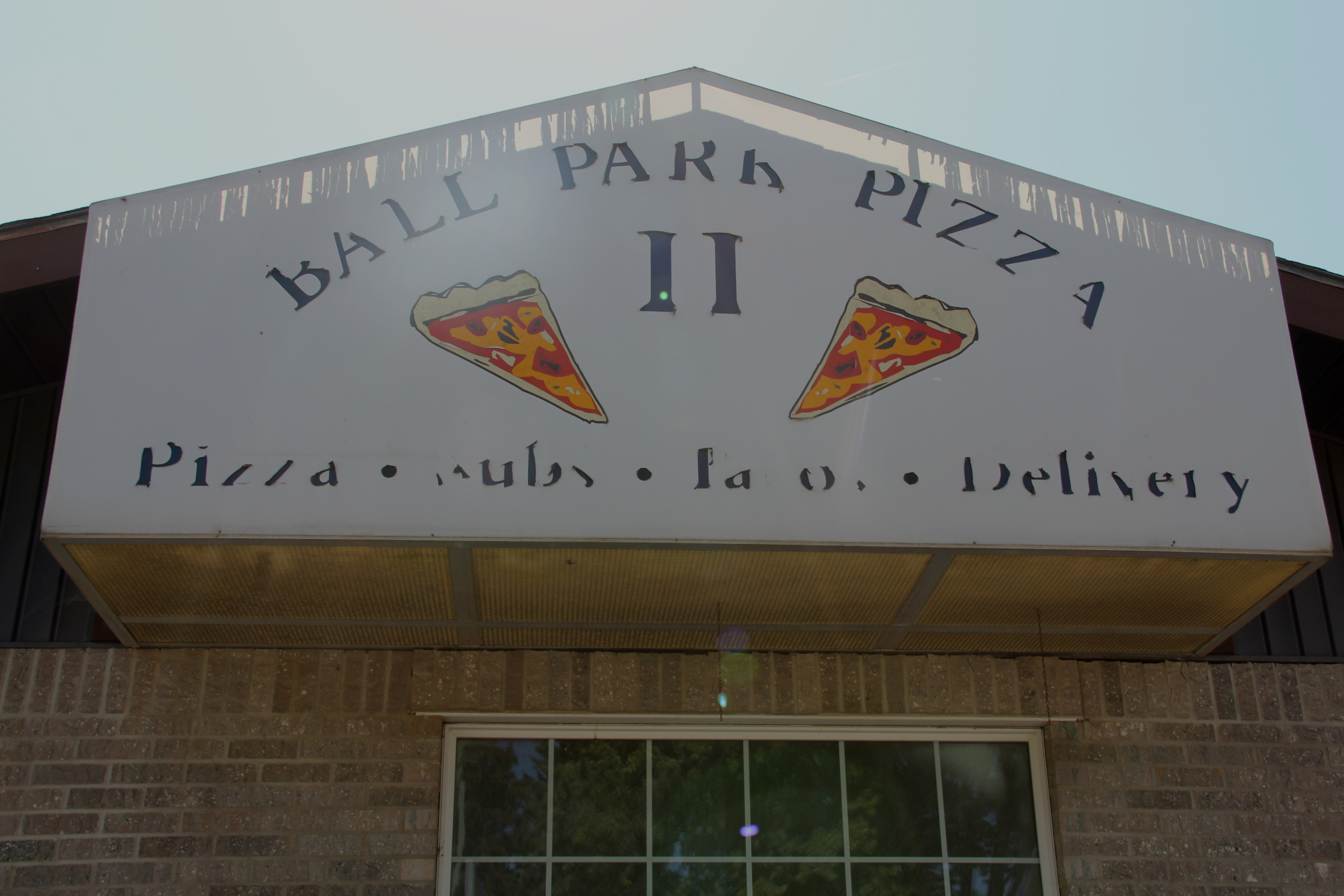
Once upon a time, this building housed a pizza place. I was shooting into the sun, thus a subpar image. (Minnesota Prairie Roots copyrighted photo September 2024)
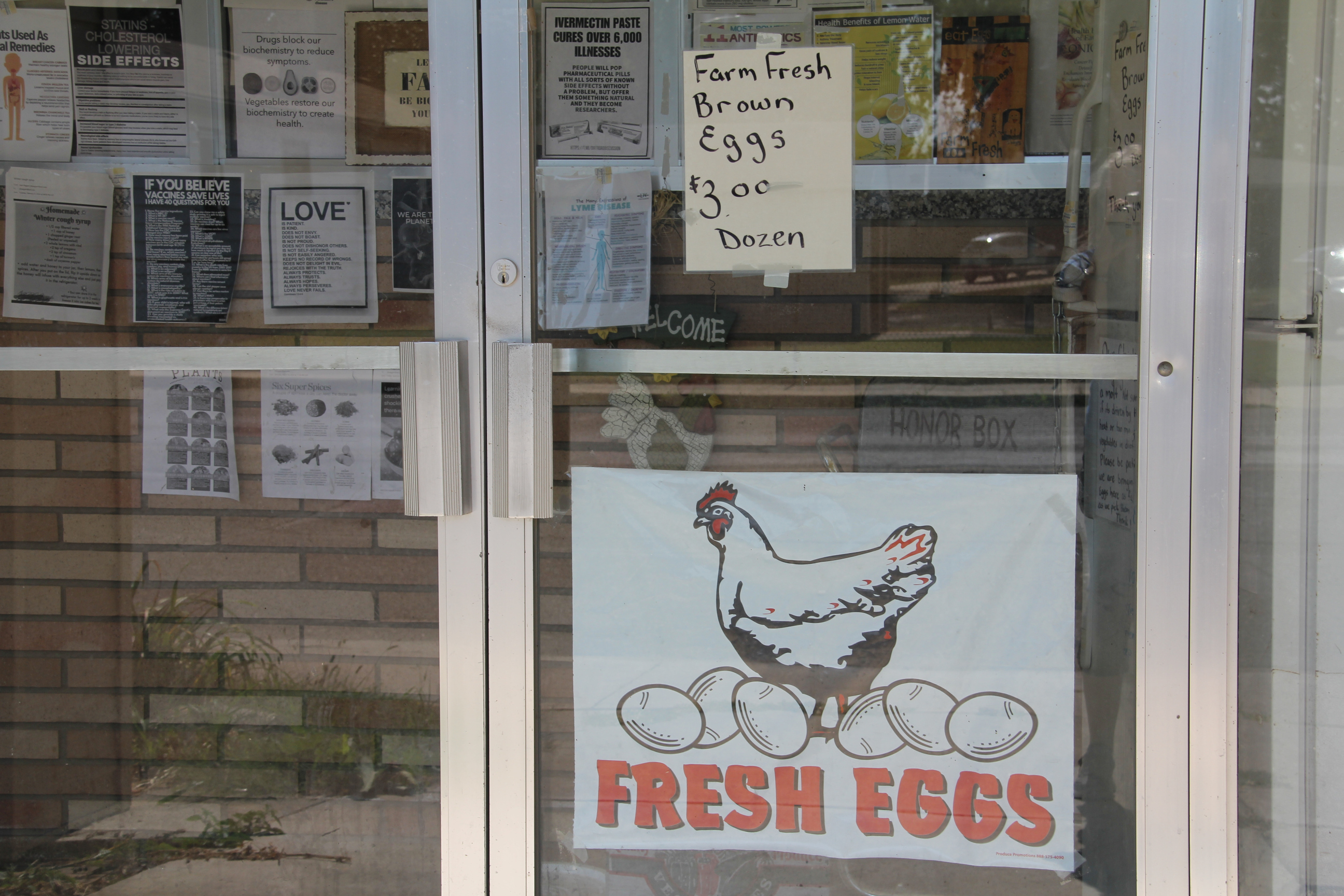
Although I saw signs, I didn’t see any eggs. These signs were posted on what appears to be a former bank building. There were lots of “interesting” notices posted in the lobby. (Minnesota Prairie Roots copyrighted photo September 2024)

My stop in Gilman was periphery really—a few photos snapped and a quick glance at a town rooted in rural. I watched as a pick-up truck pulled a wagon of hay bales through town. I noticed the fading sign of the former Ball Park Pizza. I spotted a sign advertising farm fresh brown eggs for $3/dozen.

I spent the most time at Kelash’s Corner, perhaps subconsciously because of those mini donuts. The ones I should have purchased…

© Copyright 2024 Audrey Kletscher Helbling
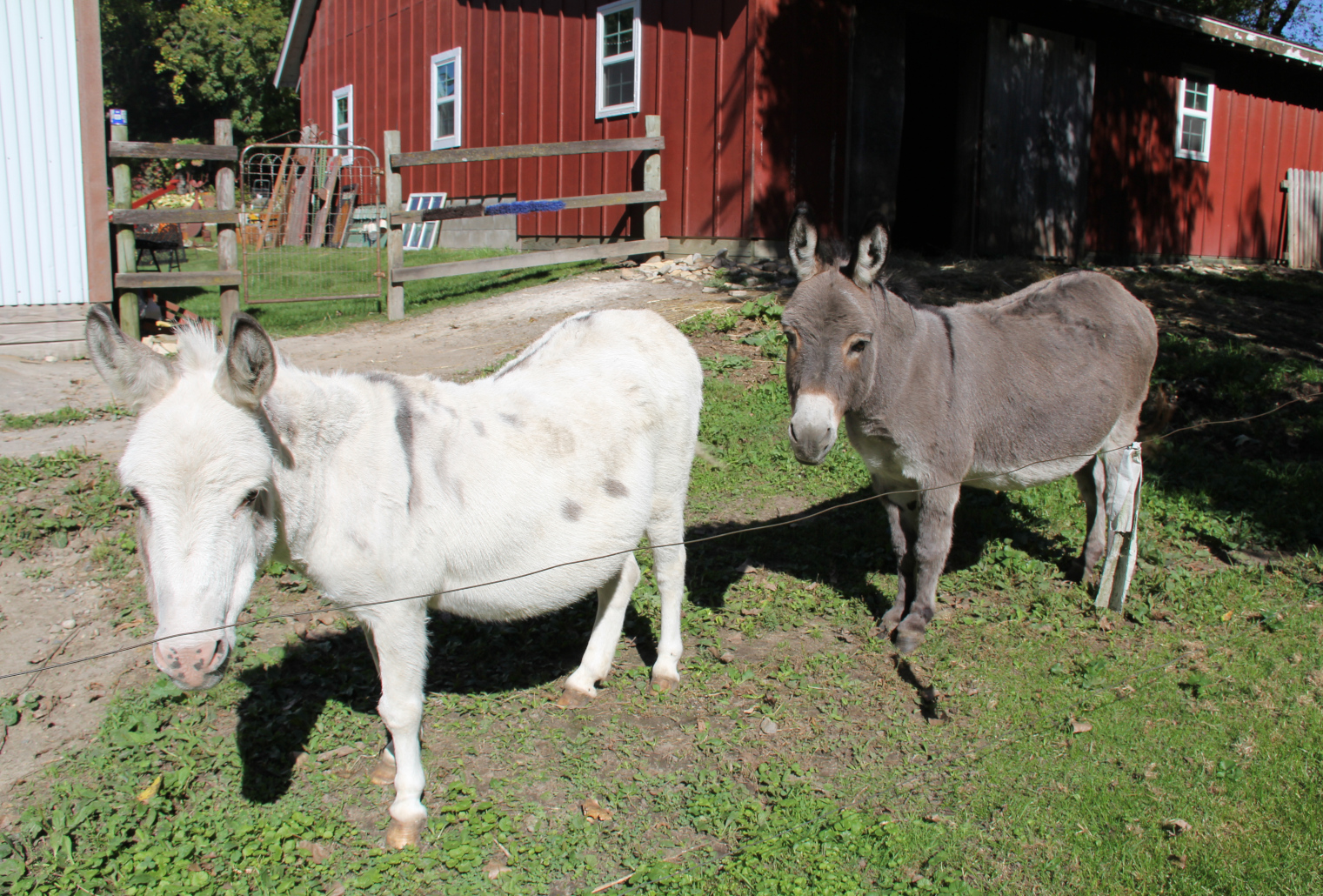
 

Driving through the southern Minnesota countryside on an autumn day October 16, 2024

We followed roads west of Faribault toward the Kilkenny and Montgomery areas. I gave up trying to keep track of where we were. (Minnesota Prairie Roots copyrighted photo October 2024)

THE WHEELS KICKED UP DUST as our van moved along back gravel roads in Rice and Le Sueur counties on a recent weekday. Randy and I were on a fall color drive that took us past cornfields and farm sites, past woods and wetlands, past trees blazing orange and those still green.

This farm site sits along Leroy Avenue, just off 160th St. W. between Shieldsville and Kilkenny. (Minnesota Prairie Roots copyrighted photo October 2024)

As we wound our way along winding roads and along straight grids west of Faribault, I felt what I always feel this time of year—a longing for the land. In this season of harvest, this season of leaves coloring the landscape, I yearn to connect with the soil, the earth, the agrarian heritage that roots me.

Corn awaits harvesting. (Minnesota Prairie Roots copyrighted photo October 2024)

I miss the land. I miss the roar of combines harvesting corn and soybeans, golden grain spilling into wagons or trucks. I miss the distinct, indescribable scent of autumn rising from fields. I miss all of it. A country drive in October helps ease the heartache of one who grew up on a farm, but left it fifty years ago.

This curving gravel road took us past wooded hillsides and a wetlands restoration area. (Minnesota Prairie Roots copyrighted photo October 2024)

This is the time of year, whether you’re rural, small town or city-raised, to take a drive into the countryside. Off paved roads. Onto gravel routes.

Some treelines were vivid with color, others not. (Minnesota Prairie Roots copyrighted photo October 2024)
I am always drawn to barns rising above the landscape. (Minnesota Prairie Roots copyrighted photo October 2024)
A rural intersection ablaze in color. (Minnesota Prairie Roots copyrighted photo October 2024)

Gravel forces a slower pace, offers opportunities to stop and appreciate that which unfolds before you. On this drive, it was the coloring of trees, just beginning, aged farm sites back-dropped by woods or surrounded by fields. Just being here in the rural-ness honored my past, filled my soul.

A Czech church and cemetery west of Montgomery. (Minnesota Prairie Roots copyrighted photo October 2024)

And then we paused at an historic country church nestled among cornfields near Montgomery. We walked the expansive cemetery. As I meandered and took photos, I heard the wind rustling the dried corn leaves, a comforting sound in the silence of the land.

Anna and John Frolik are among the early settlers buried at Budejovice. They were born in 1886 and 1887. Their photos adorn their tombstone. (Minnesota Prairie Roots copyrighted photo October 2024)

I wondered about the Czech immigrants who settled in the area, built Budejovice Church in 1868. What were their heartaches, their stories, their hopes and dreams? I expect they longed for the Old Country, for the familiarity of home, for the loved ones an ocean away.

This machine shed, surrounded by cornfields, sits just across the gravel road from the church and cemetery. (Minnesota Prairie Roots copyrighted photo October 2024)

Such thoughts filter through my mind whenever I am among the souls of the departed, my soles touching the land under which they lie buried. I don’t feel sadness as much as a sense of respect for those who came before me, who forged a new life in Minnesota with grit, determination and a whole lot of fortitude.

Cornfields flank a gravel road leading to a colorful treeline. (Minnesota Prairie Roots copyrighted photo October 2024)

Driving the countryside in autumn evokes not only nostalgia and reflection, but also a sense of time passing. Leaves turn color. Crops morph to golden hues, ready for harvest, or already harvested. And dust rises from the land, carried on the wind, coating our van. Miles and miles and miles of gravel roads behind us, we arrive home. I’m exhausted. My shoes are covered in dust. But I feel content. Replenished. I needed this, this country drive that was about much more than viewing fall colors. It was also about filling my soul.

© Copyright 2024 Audrey Kletscher Helbling
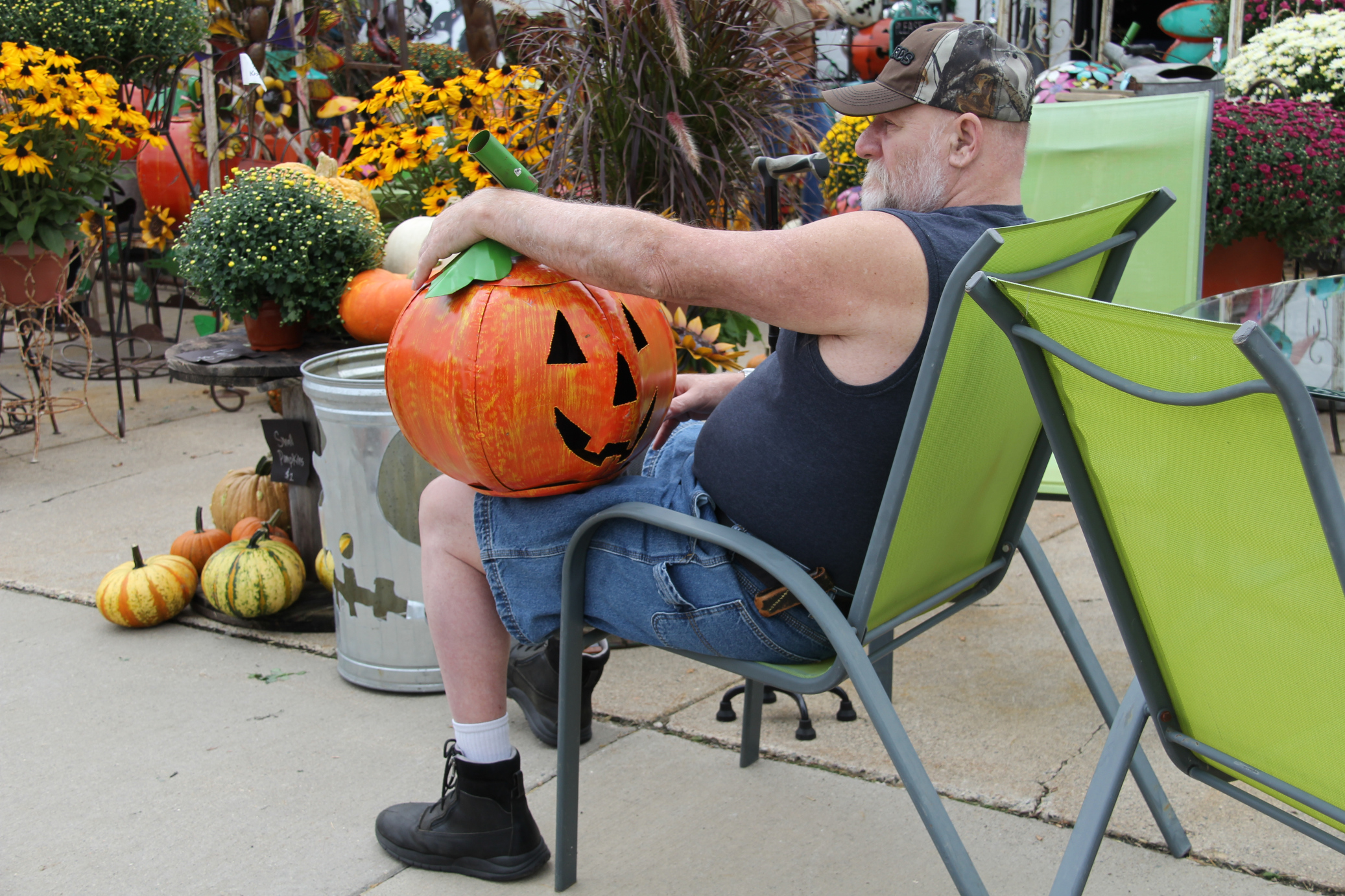
 

A “game show” about Minnesota town names by Doug Ohman October 2, 2024

I photographed this scene in Pine River, which calls itself Minnesota’s S’more Capital, Doug Ohman said. From what I read online, the Whitefish Chain of Lakes terms itself “The S’more Capital of the World.” Pine River is on the northwest end of the Whitefish Chain. (Minnesota Prairie Roots copyrighted photo July 2024)

I FELT LIKE A BIT OF A SMARTIE, you know, that kid who raises his/her hand to answer the teacher’s questions. But Doug Ohman told me later, when I apologized to him for my overzealous class participation, that he actually appreciates enthusiastic interaction with audience members. And that I was on Monday evening while attending Ohman’s presentation on Minnesota town names at the Owatonna Public Library. I couldn’t help myself. This presenter is incredibly engaging, energetic, interesting and really good at what he does.

One of many Minnesota books by Doug Ohman. (Cover image sourced online)

Ohman is a prolific presenter, Minnesota author and photographer—he’s written 16 photo-rich books—who travels the state giving talks on 36 subjects. Those range from churches to schoolhouses, courthouses to libraries, state parks to cabins, and, oh, so much more. If you want to learn more about Minnesota, especially its small towns and rural areas, and appreciate history, then Ohman is your guy. I’ve seen him present twice previously, both times on churches.

But Monday evening, it was all about “Name That Town.” Ohman began by telling a room packed with people that he would be doing an interactive game show style presentation. Oh, oh, I thought, when he asked for help from an audience member. Eventually Steve volunteered and the game was on.

Sweetcorn for sale at a stand across from St. Michael’s Catholic Church in Buckman, my husband’s hometown. Buckman is southeast of Little Falls in Morrison County. (Minnesota Prairie Roots copyrighted photo September 2024)

It didn’t take long before Ohman put the audience at ease with his humor and questions. A lot of questions. About towns. And that’s where I proved my smarts. Like Ohman, I enjoy visiting small towns, stopping to explore and photograph them. He feels like a kindred spirit in that we are both writers and photographers who value rural Minnesota.

I recently photographed this beautiful old building in downtown Foley, seat of Benton County. (Minnesota Prairie Roots copyrighted photo September 2024)

For 1 ½ hours, Ohman talked about Minnesota towns, going through the alphabet from A-Z, showing selected photos of communities he’s visited. He invited audience members to shout out town names for each letter, often pausing to ask why they named that particular town and occasionally awarding prizes for correctly answered questions.

I found this signage on a building in downtown Kenyon in Goodhue County east of Faribault. (Minnesota Prairie Roots copyrighted file photo August 2024)

There were familiar town names like Duluth, Hastings, Red Wing and Stillwater. But then Ohman threw out towns like Dorothy (south of Thief River Falls), Johnson (the “most Minnesotan name,” he said, and located near Chokio) and Quamba (between Mora and Hinckley). All three were unfamiliar even to me.

Ohman referenced this multi-cultural mural in Walnut Grove, where Hmong immigrants have settled and embraced the prairie history of author Laura Ingalls Wilder. He also noted that Walnut Grove is the only community where he found a working pay phone. (Minnesota Prairie Roots copyrighted file photo)

Only the letter X lacks a Minnesota town name. Two towns share the name Oslo. No surprise given Minnesota’s rich Scandinavian heritage. Oh, and Osakis is the self-proclaimed “Lefse Capital of Minnesota,” Ohman said, recommending Jacobs Lefse.

A statue of Princess Owatonna, daughter of Chief Wabena and whom after the city of Owatonna is named, stands in Mineral Springs Park. (Minnesota Prairie Roots copyrighted file photo 2020)

Ohman asked how towns are named and got lots of audience response. The Old Country (New Ulm, New Germany, Fulda…), Native American people and language (Owatonna, Wabasha, Sleepy Eye, Wabasso), animals (Badger and Fox), geographic features (Redwood Falls, International Falls, Thief River Falls, Fergus Falls, but not Hanley Falls, which has no falls), famous (Henry Hastings Sibley) and not so famous people…

This sign once marked my hometown and its reason for notoriety. The sign was removed and replaced and I wish it was still there, along Minnesota State Highway 19. (Minnesota Prairie Roots copyrighted file photo 2011)

My hometown is named after the postmaster’s daughter, Vesta. I nearly stumped Ohman when I shouted out “Vesta.” But, with some clues and thought, he remembered its location in Redwood County. He’s been to neighboring Belview, Seaforth, Wabasso. Even several audience members were familiar with southwestern Minnesota towns, something I don’t often encounter in southeastern Minnesota.

I found this small town proud t-shirt at Kelash’s Corner, a vegetable, fruit and merch stand, in Gilman, population around 220. The town is northeast of St. Cloud in Benton County. (Minnesota Prairie Roots copyrighted photo September 2024)

Towns survive based on location, Ohman said. That makes sense. Towns once located along railroad tracks, later abandoned, have declined. Towns built on lumbering have dwindled in population. Towns located today in resort areas, close to larger cities or along major roadways (like Owatonna on Interstate 35) are growing, thriving. The smallest of Minnesota’s 905 towns, according to Ohman, is Funkley, population five. That’s northeast of Blackduck which is northeast of Bemidji in Beltrami County. I love how that name, Funkley, rolls off the tongue.

I won this pack of photo cards for correctly answering so many questions throughout Ohman’s presentation. (Minnesota Prairie Roots copyrighted photo September 2024)

Plenty of answers rolled off my tongue Monday evening in Owatonna as Ohman asked endless questions during his Minnesota town themed game show. Who knows the county in which Ivanhoe, named after the book by Sir Walter Scott, is located? “Lincoln,” I shouted. I revealed my book smarts a second time by naming the fictional town in Sinclair Lewis’ novel, Main Street. That would be Gopher Prairie, really Lewis’ hometown of Sauk Centre. That earned me a prize—a pack of feline photo cards by Ohman.

This mural in Walnut Grove shows how past and present connect, from early settlers to present day Hmong immigrants who now call this small town home. A niece, who lives with her family in Walnut Grove, recently told me how happy she is that her children are growing up in a diverse community. (Minnesota Prairie Roots copyrighted file photo)

I could write a whole lot more about all the towns and related information Ohman covered in his talk. But that’s his job, while mine is to highlight a few here. And also to reveal that I did incredibly well on the Ohman game show. I’ll close with one more important revelation. His favorite town name, Ohman shared, is Faith…because it takes a little faith to live (and survive) in Minnesota.

© Copyright 2024 Audrey Kletscher Helbling
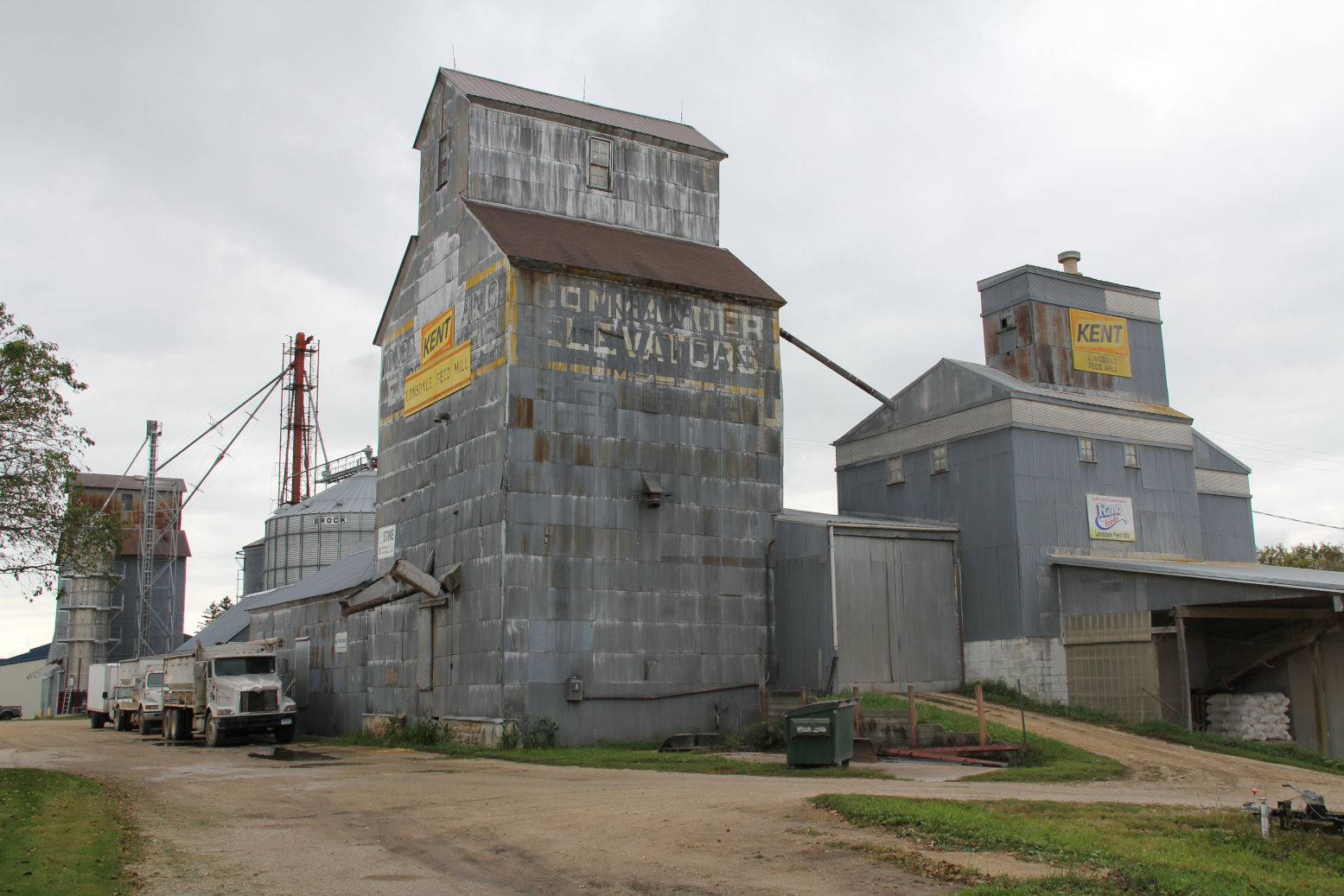
 

Reminiscing about, & with, Rabbits at 50th class reunion September 11, 2024

First up upon arriving in Wabasso for my 50th class reunion, a photo with the roadside white rabbit sculpture. (Photo credit: Randy Helbling)

WE MAY NEVER PASS this way again. Ah, but we have. On a recent Saturday, I gathered with some 30 of my Wabasso High School classmates to celebrate our 50th class reunion. In Wabasso, a small farming community 45 miles west of New Ulm on the southwestern Minnesota prairie.

The front entrance to Wabasso Public Schools. The overhang with pillars was added after my days there. (Minnesota Prairie Roots copyrighted photo September 2024)
The cover of my WHS yearbook. (Minnesota Prairie Roots copyrighted photo September 2024)
Signage at the front of the school blends the old and the new. (Minnesota Prairie Roots copyrighted photo September 2024)

I’ve attended many reunions through the decades since 89 of us graduated in May of 1974. I’ve enjoyed every gathering, especially those in latter years when no one cared any more about who was a jock or an academic achiever or a wild one or any label we may have carried through our high school days. Today we are simply individuals who share a history of attending school together. Learning. Having fun. Making memories.

The 1973 – 1974 Wabasso High School FFA chapter consisted of mostly male students. I am among the few females featured in this photo. I’m seated in the second row, third girl on the right. (Photo credit: WHS yearbook)

Coming of age in the 1970s during the Vietnam War, we were a bit of a rebellious bunch testing our teachers’ patience. I was among those who wore a prisoner of war bracelet, embraced the peace symbol, wrote anti-war poetry. Mostly, though, I was quiet, studious, a rule follower. But I did blaze the way for young women at my high school by becoming the first girl to join the WHS Future Farmers of America Chapter. Decades later, a niece would become the state FFA president.

We were given a lengthy tour of the school. (Minnesota Prairie Roots copyrighted photo September 2024)

No one cared about any of that when we got together 50 years later, first touring the halls of our former school. Home of the Rabbits. Yes, Rabbits. Wabasso, meaning “white rabbit,” comes from the Dakota language. I’m proud of our school mascot, which is unique and connects to the history of the region. It honors the town name and the Dakota people who were the original inhabitants of this land and still live in the nearby Upper and Lower Sioux Indian communities.

This Rabbit mosaic once hung on the side of the front office counter. It now hangs in a school hallway. (Minnesota Prairie Roots copyrighted photo September 2024)
The original Rabbit mascot on a gym wall. (Minnesota Prairie Roots copyrighted photo September 2024)
Rabbit pride showcased in the gym. (Minnesota Prairie Roots copyrighted photo September 2024)

As the superintendent of schools led us through the school, I found myself drawn to the many artistic renditions of Thumper, our rabbit mascot. I don’t care for the updated, fierce version that now graces a wall in the new gymnasium. It’s not that I oppose change. I just don’t like the mean look on the rabbit’s face, his appearance of being on steroids. No thank you. I much prefer the old rabbit, the one that appears gentle and friendly. Thankfully, plenty of the original Thumpers remain in a school building I barely recognize.

Oversized photos, including this one of the 1973 homecoming court, are displayed in a hallway of images. (Minnesota Prairie Roots copyrighted photo September 2024)

Building additions, removal of the storied stack, shuffling and changing of classrooms altered the school significantly. The home economics room is now the art room. The shop a classroom. The cafeteria is new, spacious, bright and beautiful. And the new library, although much brighter and modern in appearance, holds far fewer books than the library of my high school years, something several of us noticed and mentioned to the superintendent.

The Roadhouse Bar & Grill sits on a corner along Wabasso’s main street. It’s an especially popular summertime spot with weekly roll-ins. (Minnesota Prairie Roots copyrighted photo September 2024)
The reunion committee set up this mannequin wearing a Class of 1974 graduation gown. (Minnesota Prairie Roots copyrighted photo September 2024)
This shows just a part of Meadowland Farmers Cooperative, which anchors the business community. (Minnesota Prairie Roots copyrighted photo September 2024)

What I did notice, too, was a closeness I felt among classmates as we walked hallways and classrooms and even the old locker rooms. That feeling remained after the tour, down at the Roadhouse Bar & Grill. There we perused photos and memorabilia. Hugged. Laughed. Mourned the loss of 15 classmates. Built burgers at the burger bar. Gathered outside for a group photo. Clustered around patio tables for conversation as the sun set, brushing the sky in a subtle pink hue. All the while the ventilation fans from the grain bins across the street roared in a steady din.

Wabasso’s school song, printed on a gym wall. (Minnesota Prairie Roots copyrighted photo September 2024)

“We May Never Pass This Way Again.” That titled the Seals & Croft tune we chose as our class song. It was our second choice. The administration nixed “Dead Skunk in the Middle of the Road.” There was no mention of skunks—at least that I heard—at our 50th reunion. But Rabbits, oh, yes, Rabbits. We are forever and always Rabbit proud.

© Copyright 2024 Audrey Kletscher Helbling
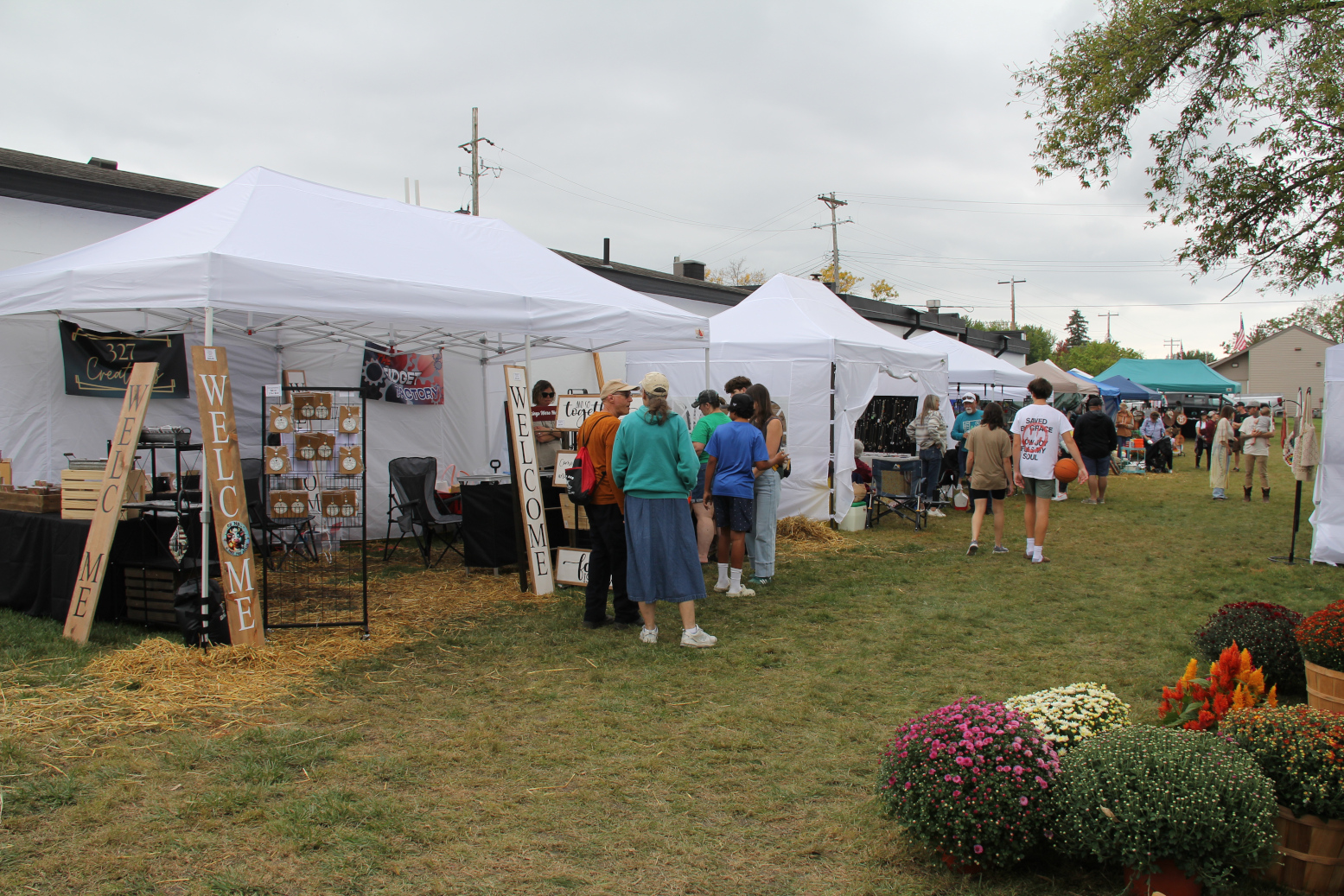
 

Rural living history & threshing memories September 3, 2024

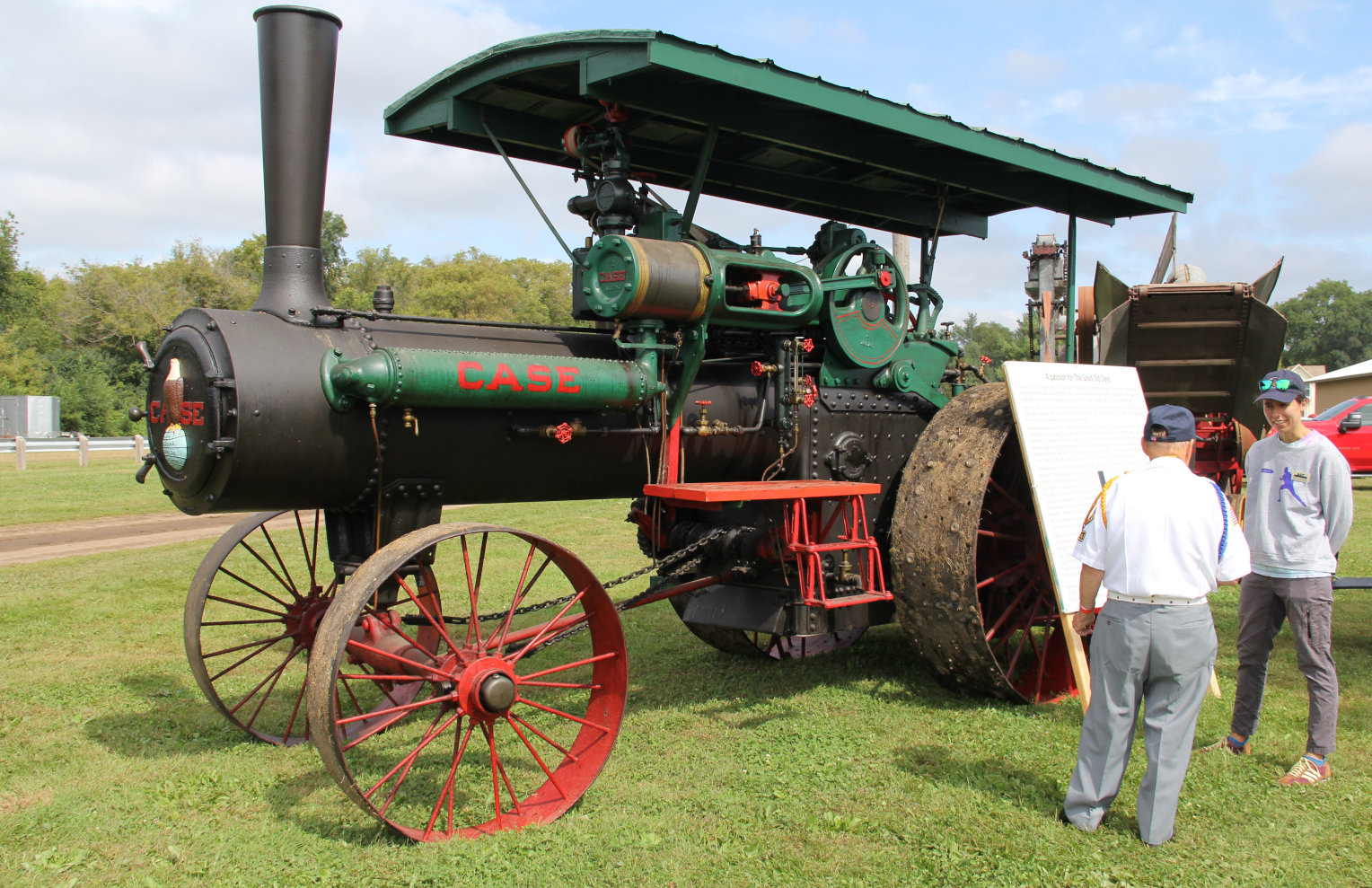
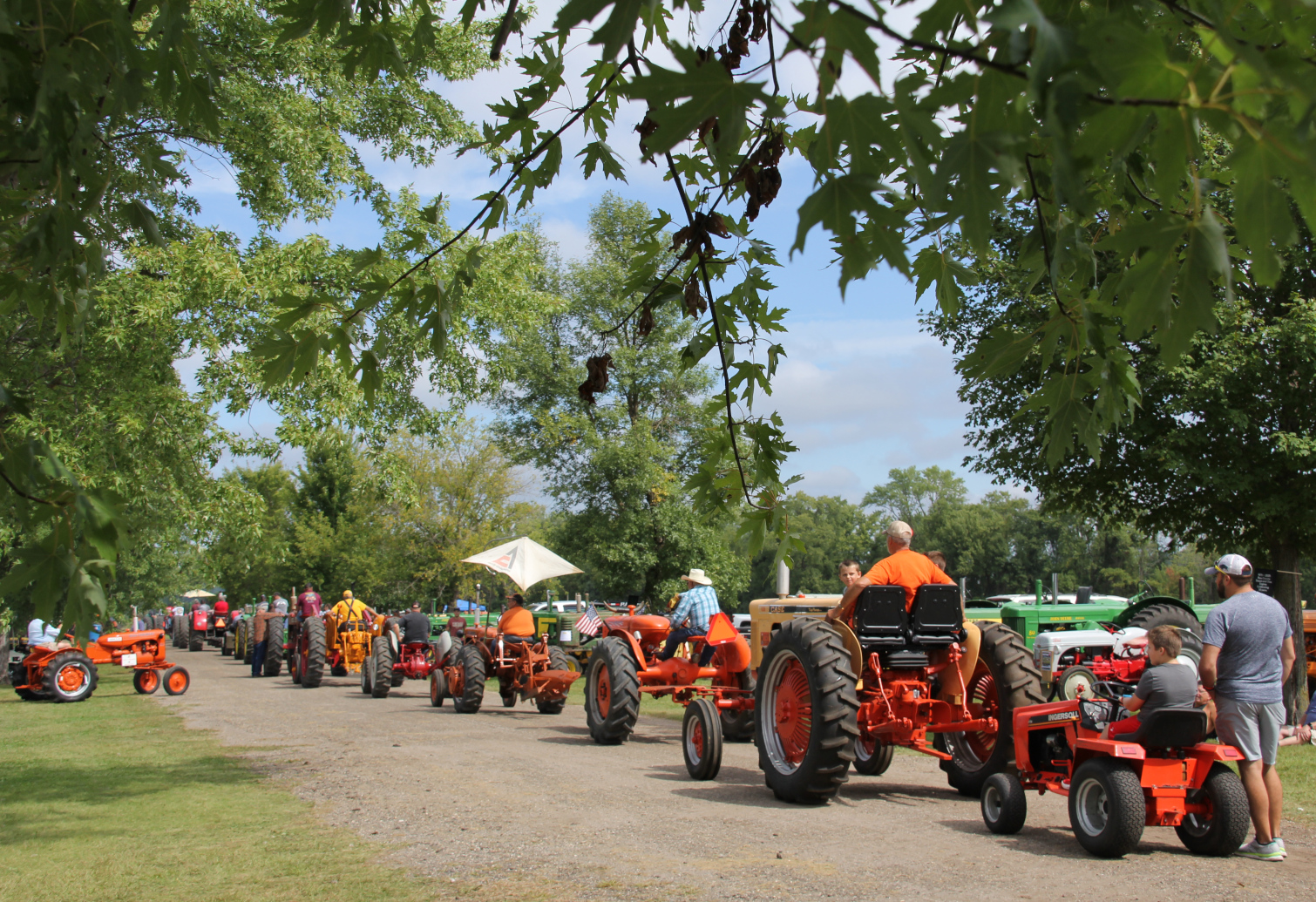
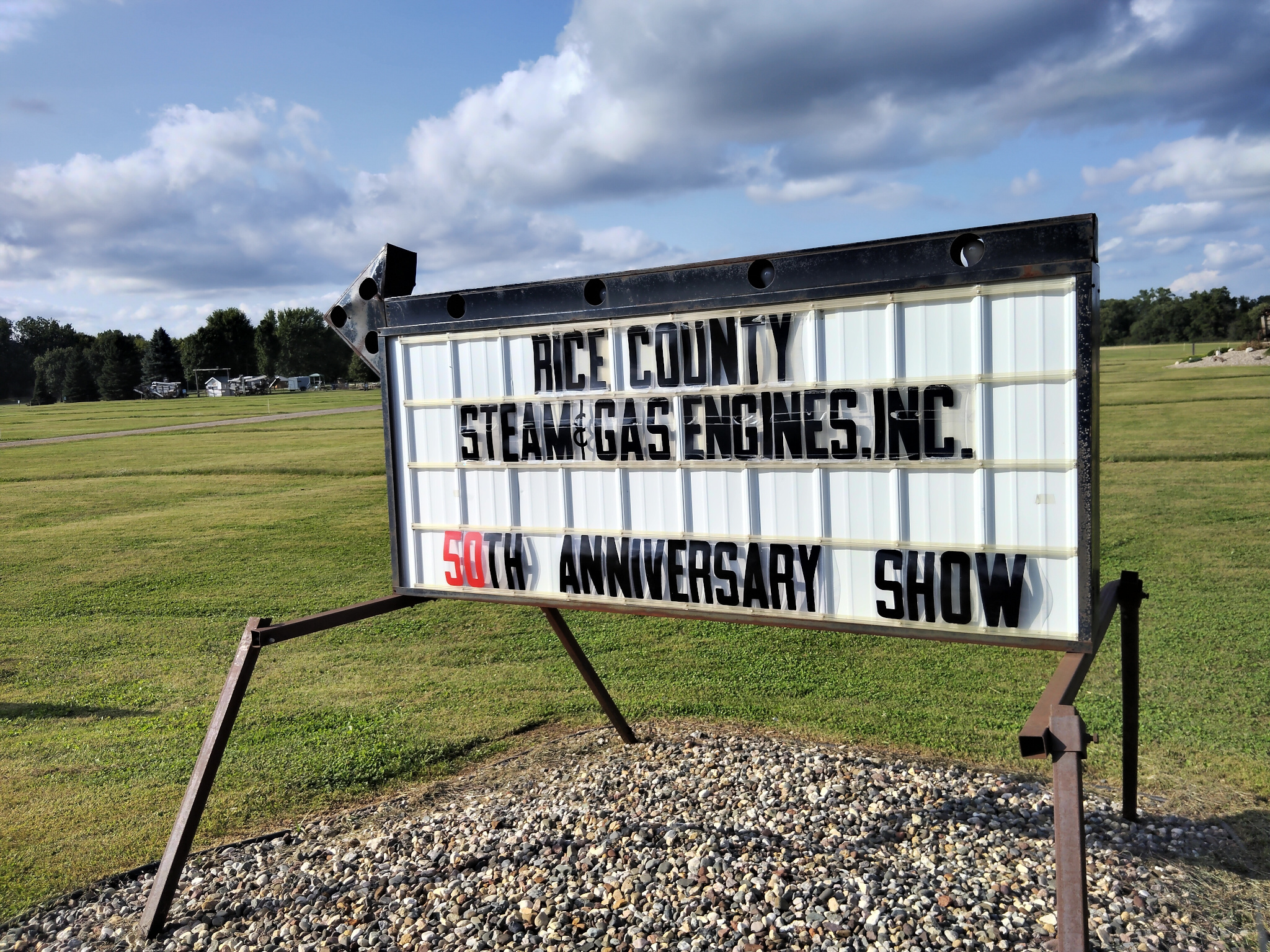
A wagonload of oats awaits threshing at the Rice County Steam & Gas Engines Fall Show. (Minnesota Prairie Roots copyrighted photo August 2024)

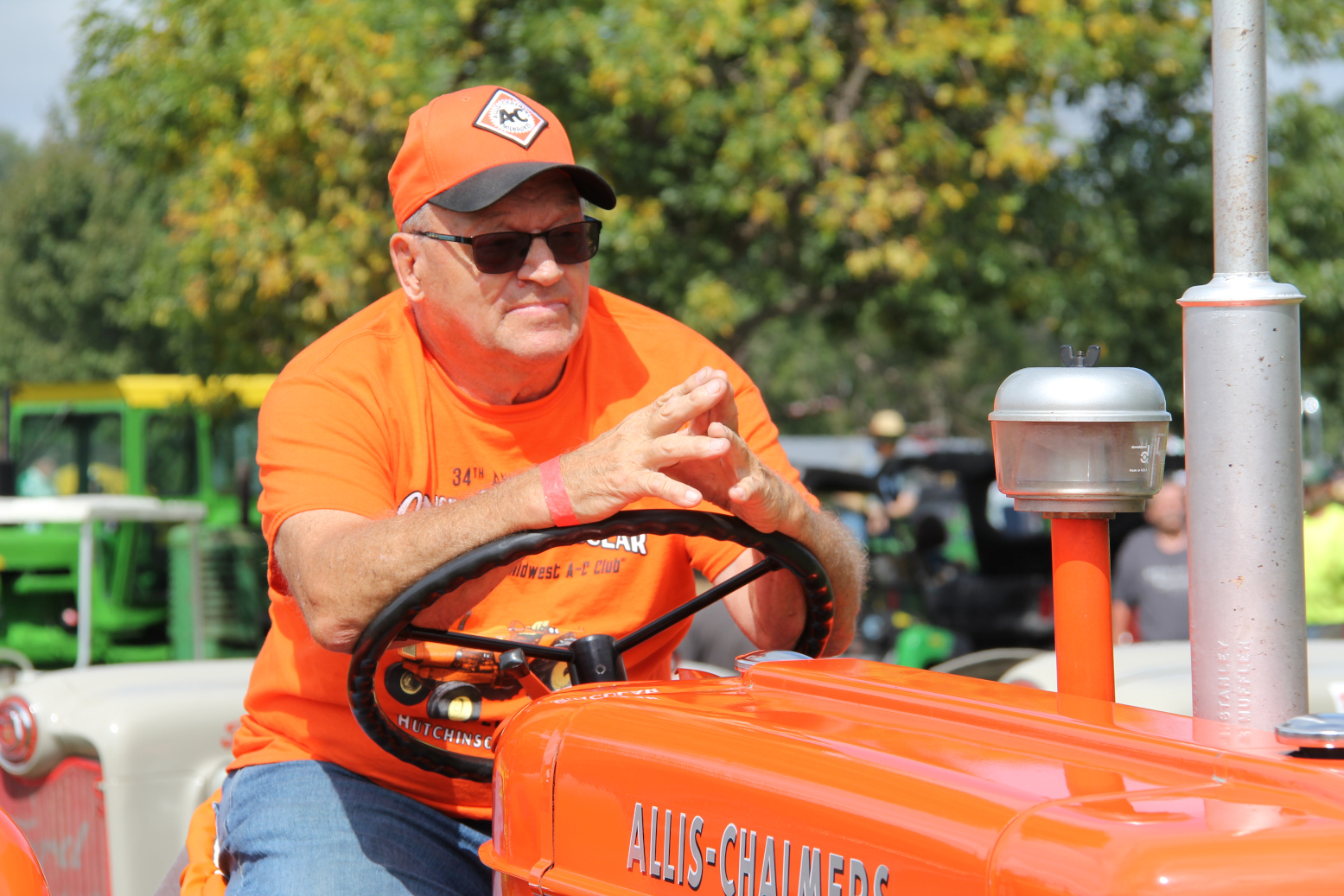
MEMORIES. A HISTORY LESSON. A step back in time. The Rice County Steam & Gas Engines Fall Show is that and more. It’s also entertainment, a coming together of friends and families and neighbors. A reason to focus on farming of yesteryear.

Oats drape over the edge of the wagon. (Minnesota Prairie Roots copyrighted photo August 2024)

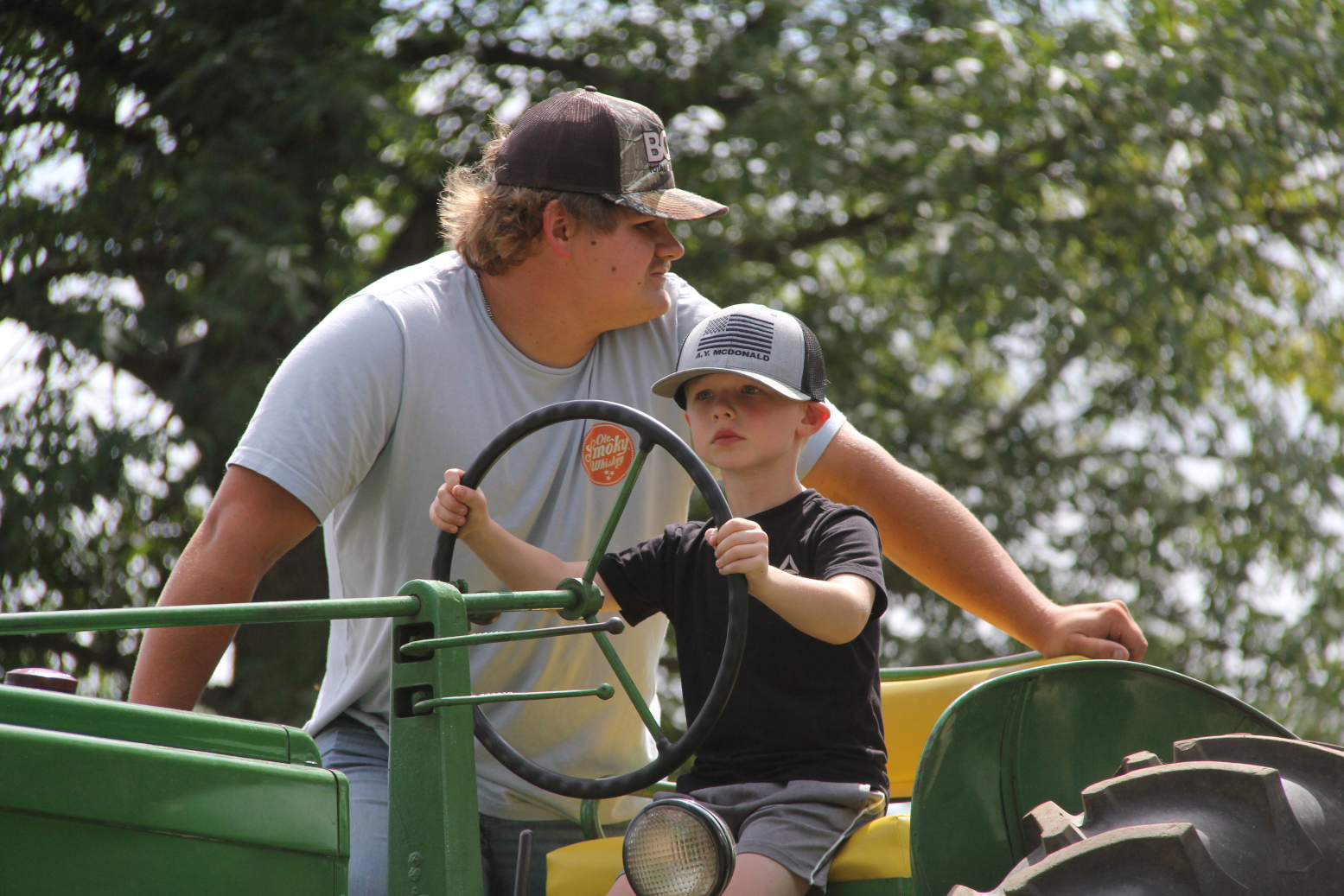
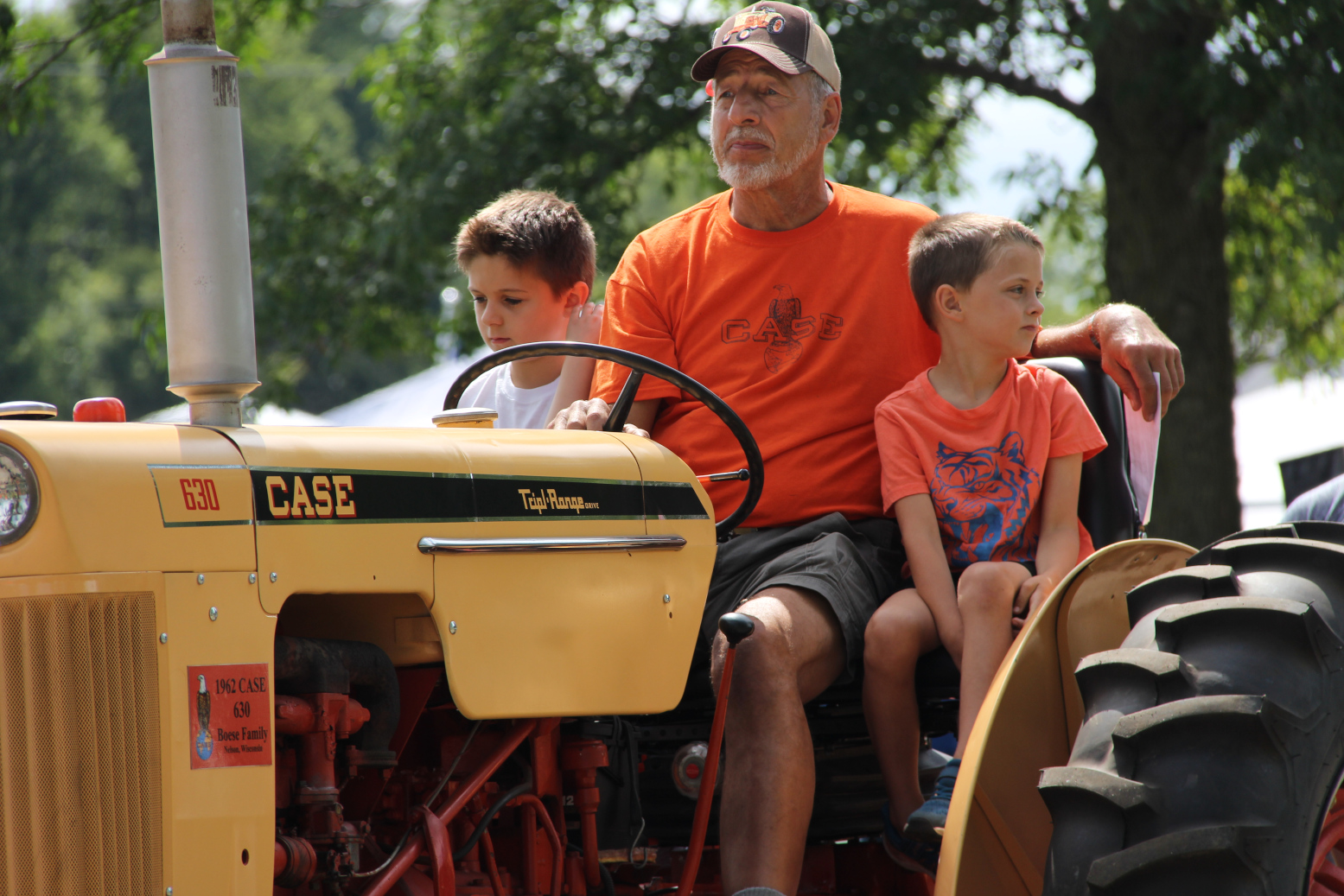
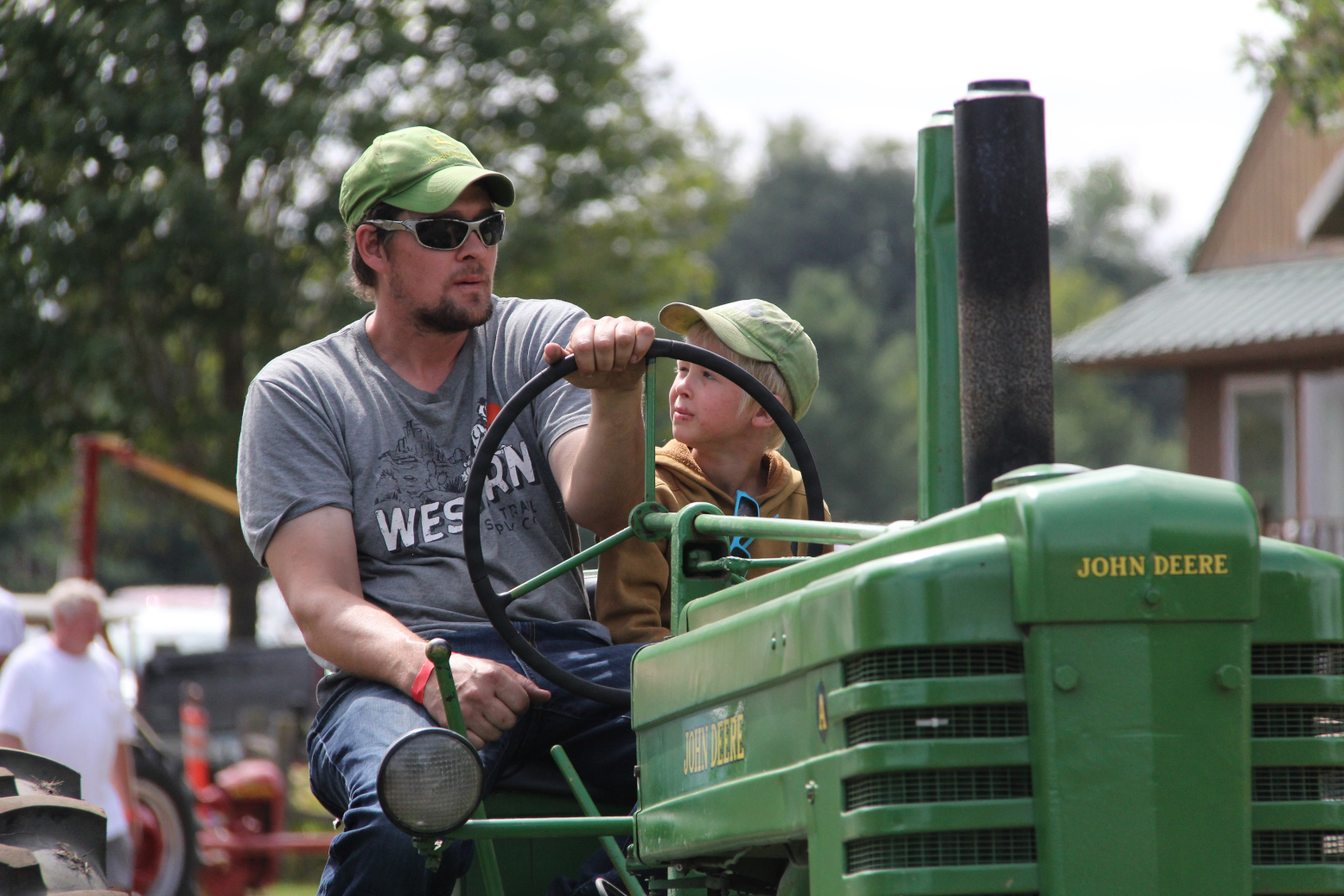
I was among the crowds gathered over the Labor Day weekend at the showgrounds south of Dundas. This show features demos, rows and rows and rows of vintage tractors and aged farm machinery, a tractor pull, flea market, music, petting zoo, mini train rides and a whole lot more.

The scene is set to resume threshing with thresher, tractor, baler and manpower. (Minnesota Prairie Roots copyrighted photo August 2024)

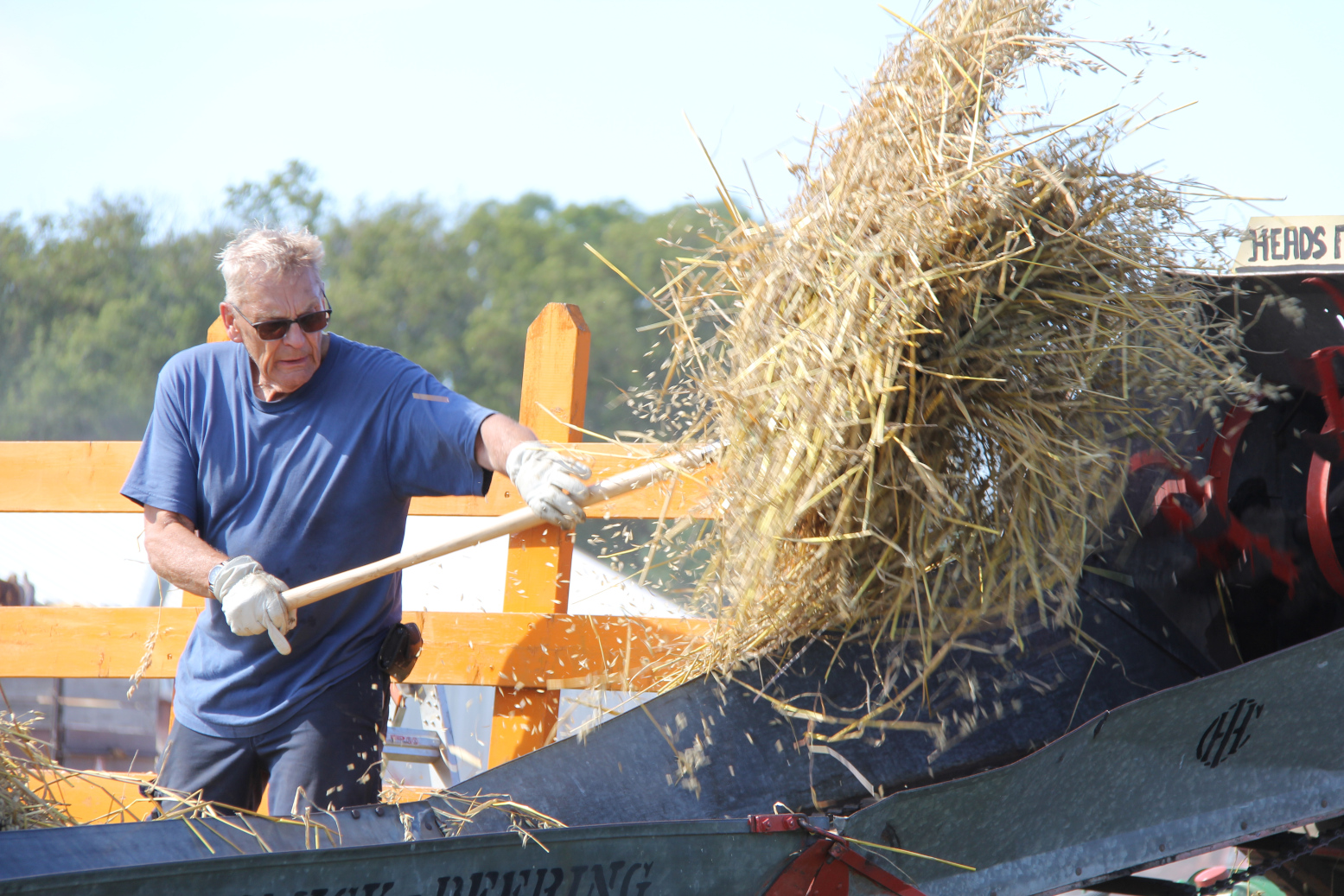
For me, a highlight was watching a crew of men threshing oats. The work is hard, labor intensive, even dangerous with exposed belts and pullies. It’s no wonder farmers lost digits and limbs back in the day.

This part of the threshing crew pitches oats bundles into the threshing machine. (Minnesota Prairie Roots copyrighted photo August 2024)

While my observations are not connected to memories, my husband’s are as he recalls threshing on his childhood farm in rural Buckman, Morrison County, Minnesota. After Randy moved with his family from rural St. Anthony, North Dakota (southwest of Mandan), his dad returned to threshing oats. In North Dakota, he used a combine. But his father before him, Randy’s grandfather Alfred, threshed small grains.

Hard at work forking bundles into the thresher. (Minnesota Prairie Roots copyrighted photo August 2024)
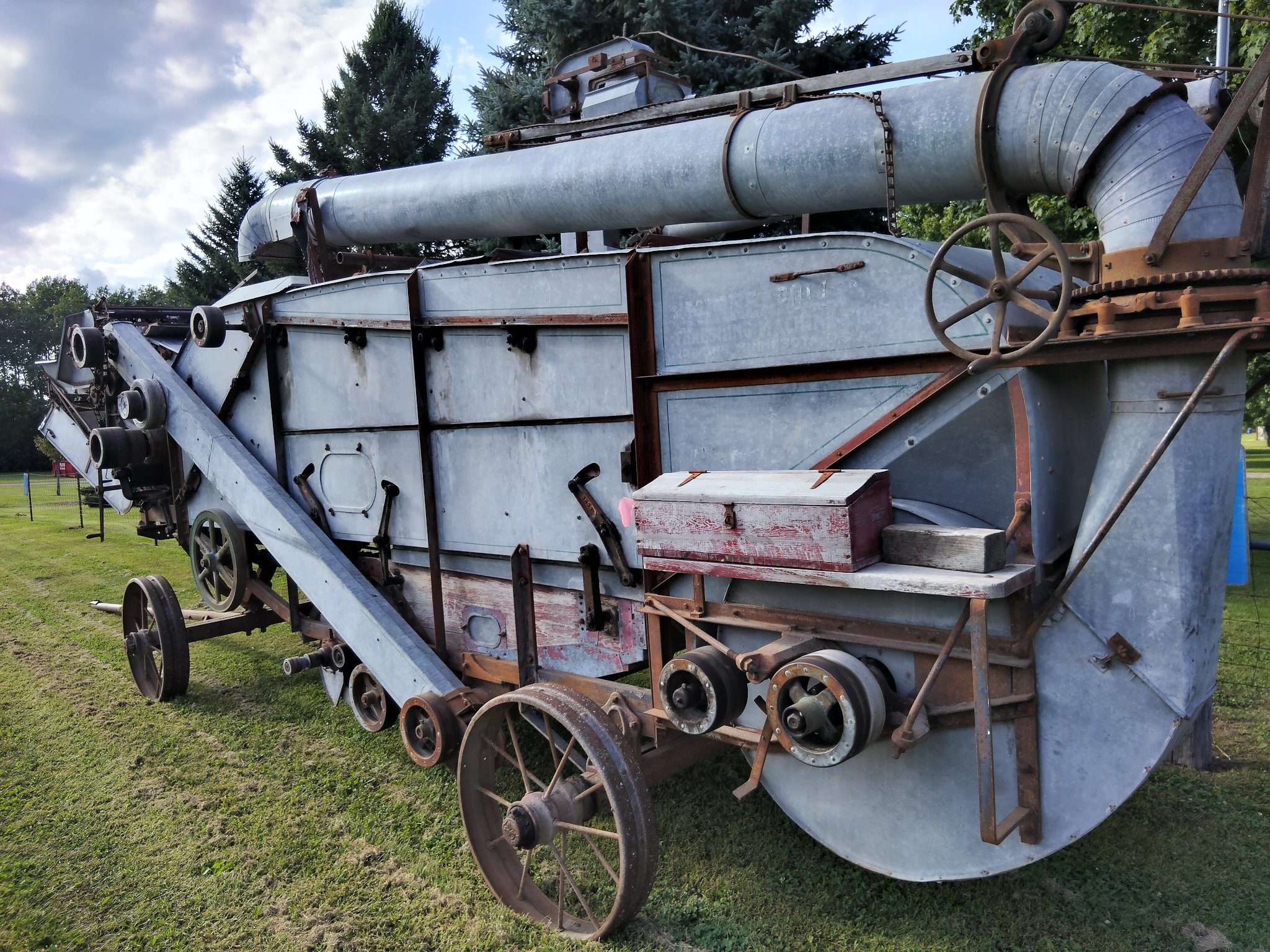
Lots of exposed pullies and belts line the threshing machine. (Minnesota Prairie Roots copyrighted photo August 2024)
The workhorse of the operation, the threshing machine. (Minnesota Prairie Roots copyrighted photo August 2024)

As I watched in Dundas, men forked bundles of oats into a McCormick-Deering thresher. The threshing machine separated the grain from the stalk, the oats shooting one direction into a wagon, the straw the other way into a growing pile. I stood mostly clear of the threshing operation with dust and chafe thick in the air.

Feeding the loose straw into the baler. (Minnesota Prairie Roots copyrighted photo August 2024)

From the straw pile, a volunteer stuffed the stalks into the shoot of an aged baler. An arm tamped the straw, feeding it into the baler. Another guy stood nearby, feeding wire into the baler to wrap the rectangular bales. A slow, tedious process that requires attentiveness and caution.

Watching and waiting for the straw to compact in the baler. (Minnesota Prairie Roots copyrighted photo August 2024)

The entire time I watched, I thought how easy it would be to lose focus, to look away for a moment, to get distracted and then, in an instant, to experience the unthinkable. Farming is, and always has been, a dangerous occupation.

Carefully guiding wire into the baler to wrap each bale. (Minnesota Prairie Roots copyrighted photo August 2024)

Randy understands that firsthand as he witnessed his father get his hand caught in a corn chopper. Tom lost his left hand and part of his forearm. But Randy saved his life, running across fields and pasture to summon help. It is a traumatic memory he still carries with him 57 years later.

Threshing at Sunnybrook Farm, St. Anthony, North Dakota, as painted by Tom Helbling. (Minnesota Prairie Roots copyrighted file photo)

But memories of threshing are good memories, preserved today in an oil painting from the farm in North Dakota, Sunnybrook Farm. My father-in-law took up painting later in life. Among the art he created was a circa 1920s threshing scene. We have that painting, currently displayed in our living room. I treasure it not only for the hands that painted it, but also for the history held in each brush stroke.

Threshing grain, living history in 2024. (Minnesota Prairie Roots copyrighted photo August 2024)

The painted scene differs some from the threshing scene I saw in Dundas. In North Dakota, horses were part of the work team, the tractor steam powered. In Dundas, there were no horses, no steam engine at the threshing site. Still, the threshing machine is the star, performing the same work. And men are still there, laboring under the sun on a late summer afternoon.

© Copyright 2024 Audrey Kletscher Helbling

 

Peaches, beyond simply a fruit to eat August 15, 2024

Peaches fill a box and now my fridge. (Minnesota Prairie Roots copyrighted photo August 2024)

PEACHES PACK my refrigerator. Several ripen in a brown paper bag on the kitchen counter. Big, beautiful Colorado peaches.

Signs directed people into the peach pick up spot in the basement. (Minnesota Prairie Roots copyrighted photo August 2024)

Earlier this week, Randy and I picked up a 20-pound case of peaches in the basement of First English Lutheran Church. That’s a lot of peaches—around 40—for two people to eat. But I love peaches. And we’ll share some with our eldest daughter and her family.

People wait in line for their peaches at First English Lutheran Church. (Minnesota Prairie Roots copyrighted photo August 2024)

A steady stream of people flowed into the cold church basement late Tuesday afternoon for their pre-ordered peaches, sold as a fundraiser by the youth group. We paid $37 for our full box. That’s $1.85/pound. I have no idea if that’s a “good” price. It doesn’t matter. I prefer peaches shipped directly from the grower. I also like supporting local church youth, because I was once that mom of kids raising monies for mission trips and youth gatherings.

Peaches no longer come in wooden crates, but in cardboard boxes. (Minnesota Prairie Roots copyrighted photo August 2024)

Peaches, though, mean more to me than simply supporting a good cause and eating one of my favorite fruits. Peaches take me back to summer on the farm, into the kitchen. There my mom pried open a wooden crate of peaches wrapped in pinkish tissue paper (saved for later use in the outhouse). Then she dropped the peaches into a large kettle of boiling water to remove the skins. Next, she halved or sliced the peaches into Mason and Ball quart jars. Topped with lids and ringed, the jars went into the pressure cooker. Once removed, the jars cooled and sealed. Then we carried the jars to the cellar.

Beautiful (and delicious) Colorado peaches sold at First English. (Minnesota Prairie Roots copyrighted photo August 2024)

I admire farm women like my mom who labored to preserve fruits and vegetables to feed their families during the winter months ahead. And winters on the prairie were long and harsh. Many a cold, snowy evening, Mom would pull open the kitchen floor trap door and send me down the open wooden steps into the depths of the dank, dark, dirt-floored cellar lit by a single light bulb. There I selected a quart jar from the wooden shelves. Whatever fruit Mom wanted. Pears, cherries, plums, apples, peaches. The preserved fruit would complete our meal of meat, boiled potatoes with gravy, a side vegetable (pulled from the freezer) and homemade bread.

We ate well. Good food without preservatives. Beef from our cattle. Vegetables from our garden. Apples from local trees. And then all those fruits, purchased in crates and preserved. No additives. Just simple, good food.

Fruit-themed banners add a festive flair to peach pick up. (Minnesota Prairie Roots copyrighted photo August 2024)

I always thought I would follow my mom’s example of planting a big garden and preserving food. But I never did. I live on a mostly shady lot in town. I raised only three children, not six like her. I have easy access to multiple grocery stores, unlike her. Fresh fruit is readily available. I prefer fresh. And, if I’m really honest with myself, I never wanted to labor in the kitchen for hours during the hot summer putting up fruits and vegetables.

Carts were ready for volunteers to wheel peach cases to vehicles. (Minnesota Prairie Roots copyrighted photo August 2024)

Still, I buy that case of peaches from First English. All those peaches, minus the tissue paper wrappings reused in the outhouse. In many ways, I am honoring my mom, hardworking farm woman of the Minnesota prairie. As I pull ripened peaches from a brown paper bag to slice into my morning oatmeal, to eat with a meal or to incorporate into a crisp, pie or galette, I think of Mom. She, who showed her love for family not in words or hugs, but rather in rows and rows of quart jars filled with fruit. Jars shelved on planks in the dank, dark depths of the dirt-floored cellar.

© Copyright 2024 Audrey Kletscher Helbling

 

A walk through downtown Kenyon August 14, 2024

A view of Kenyon’s downtown business district along Minnesota State Highway 60 which runs through the heart of this southern Minnesota community. (Minnesota Prairie Roots copyrighted photo June 2024)

EVERY SMALL TOWN I’ve ever visited, and I’ve been to a lot, has unique, identifying qualities that make it memorable. In Ellendale, it’s the old-fashioned grocery store and meat market. In Montgomery, it’s the veterans’ photos displayed downtown, the bakery, the arts and heritage center, the murals and vintage signage. And in Kenyon, it’s the roses growing along the boulevard, the signs, the thrift shops and more.
One of two fabulous thrift shops in Kenyon, the other SIFT Thrift Store. (Minnesota Prairie Roots copyrighted photo June 2024)
Among the many tree shrub roses blooming in the Boulevard of Roses along Highway 60 through Kenyon. (Minnesota Prairie Roots copyrighted photo June 2024)
I peered inside Nygaard Garage to see a car on a hoist. (Minnesota Prairie Roots copyrighted photo June 2024)

There’s so much to see in these rural communities, if only we stop, exit our vehicles and walk. We miss a lot when we simply wheel by. I encourage you, next time you drive into an Ellendale, a Montgomery, a Kenyon, to explore. On foot.

Kenyon Meats draws attention with humorous signage. (Minnesota Prairie Roots copyrighted photo June 2024)
A note in a storefront window. (Minnesota Prairie Roots copyrighted photo June 2024)
I spotted several signs noting eggs for sale and support for the local school. (Minnesota Prairie Roots copyrighted photo June 2024)

I did that recently in Kenyon, starting at Kenyon Meats, working my way through the several-block downtown business district. I moved at a slow pace, zooming in on details. Like handwritten notes posted in windows, business signs, community notices. Those show the nuances of place. I chatted with a barber and a restaurateur.

I saw two barbershops located across the street from one another, one with a laundromat in the back. (Minnesota Prairie Roots copyrighted photo June 2024)
The laundromat behind Dick’s Barber Shop. (Minnesota Prairie Roots copyrighted photo June 2024)
Colorful flags mark the permanent location of the food truck Che Che’s Lunchera on the corner of Highway 60 by the former BP station. (Minnesota Prairie Roots copyrighted photo June 2024)

Kenyon, with a population of just under 2,000, impresses me with its variety of businesses. Meat market, barbershops, floral and gift shop, jewelry store, two thrift shops, grocery store, repair shops/garages, insurance agencies, hardware store, municipal liquor store, restaurants, newspaper office, vet clinic, sign shop, bus service and more. Even a food truck parked on the corner of busy Minnesota State Highway 60. And that’s mostly in the core downtown area.

A sign posted downtown for this Saturday’s car and truck show. (Minnesota Prairie Roots copyrighted photo June 2024)
Held Bus Service is located right downtown Kenyon. (Minnesota Prairie Roots copyrighted photo June 2024)
Next time I stop in Kenyon, I need to eat at Angie’s Restaurant. (Minnesota Prairie Roots copyrighted photo June 2024)

This week, Kenyon, like so many small towns, hosts a community celebration that is all about bringing people together. Rose Fest runs August 14-18 with a parade, car and truck show, vendor and craft market, city-wide garage sales, a regatta at the pool, BINGO, fire department water fights, tractor pull, magic show, music, food, food and more food… A true community celebration in every sense of a small town summer event that requires a great deal of planning and enthusiastic volunteers.

Walking the dog in downtown Kenyon. (Minnesota Prairie Roots copyrighted photo June 2024)
Among the many roses blooming in Kenyon’s Boulevard of Roses. (Minnesota Prairie Roots copyrighted photo June 2024)
One of my favorite finds in Kenyon, this Fox’s Garage signage. This building once housed the Martin Fox Garage. (Minnesota Prairie Roots copyrighted photo June 2024)

At the heart of everything are the people—those who grew up here or moved from elsewhere to settle into this place—who call Kenyon home. Theirs is a community worthy of our pause. Stop. Walk. Smell the roses. Appreciate all that this small town offers. Just like so many other rural Minnesota communities.

#

NOTE: Watch for more posts from Kenyon as I have many more photos showcasing this southern Minnesota community.

© Copyright 2024 Audrey Kletscher Helbling