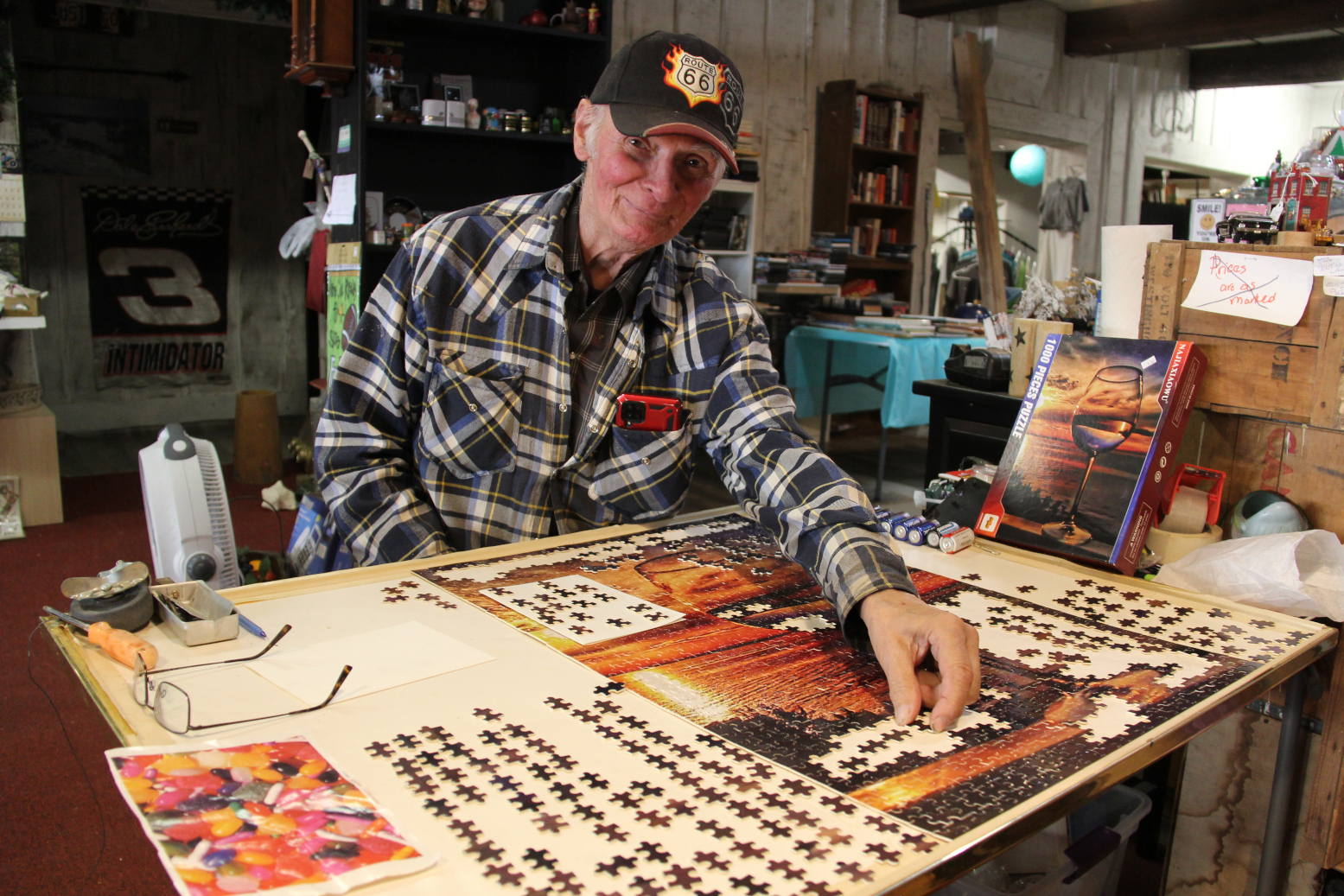
When I walked into Ron’s hodgepodge of a shop in downtown Waterville, I found him working on a puzzle. I asked to take his photo and he agreed. He loves puzzling and that shows. I really like this everyday slice-of-life-in-a-small-town portrait. (Minnesota Prairie Roots copyrighted photo October 2025)
THROUGHOUT THE YEAR, I take thousands of photos, many of them at public events. At these gatherings, whether celebratory or somber, I am drawn to document moments of humanity. Perhaps it’s a look, a reaction, an interaction. I’ve been doing photography long enough to understand when something will make a good photo. And when I say “good,” I mean a well-composed image that tells a story and, hopefully, garners a reaction from anyone who sees it.
I come from a journalism background, earning a degree in mass communications, news-editorial emphasis, in 1978. I was required to take a few photography classes as part of that long ago degree. Those taught me the basics, which I carried with me to every newspaper reporting and freelance job I’ve ever held. I didn’t always have the luxury of a staff photographer. I was the reporter and the photographer.
In the decades since, from film to digital, I’ve gained confidence and skills in photography. And I continue to the love the craft. For me, photography centers on storytelling.
As I’ve been out and about in southern Minnesota during 2025, I’ve used my Canon EOS 60D, an older DSLR camera, to document what I’ve seen. Among the thousands of people photos I took this past year, I chose my top 12 to highlight in this end-of-year post. Only one image, the photo at the top of this post, was not photographed at a public gathering.
Enjoy! And feel free to share your thoughts in the comment section.
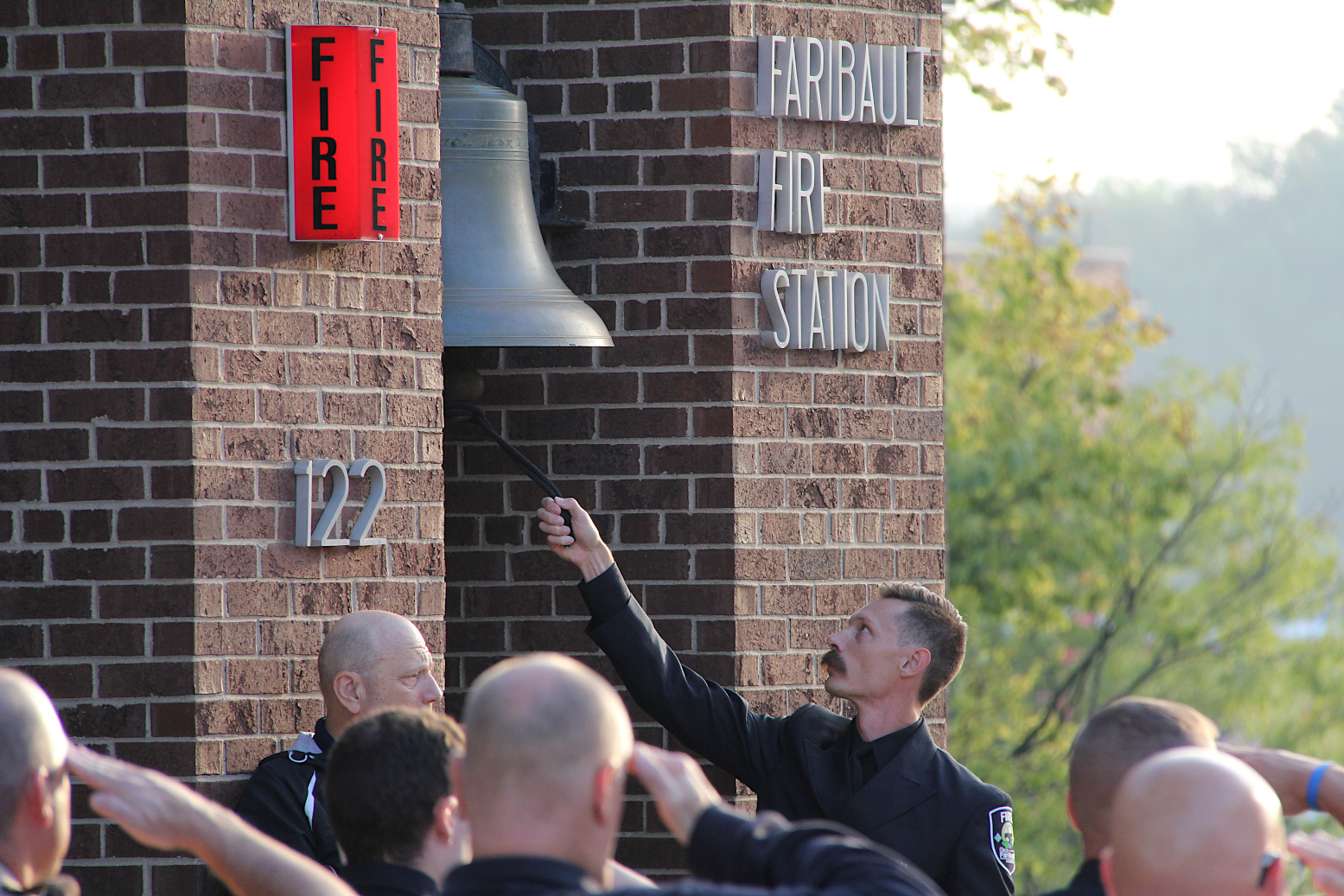
I caught the moment a firefighter rang a bell outside the Faribault fire hall during a 9/11 commemoration. The morning light was perfect and everything fell into place to make this an especially moving photo. (Minnesota Prairie Roots copyrighted photo 2025)
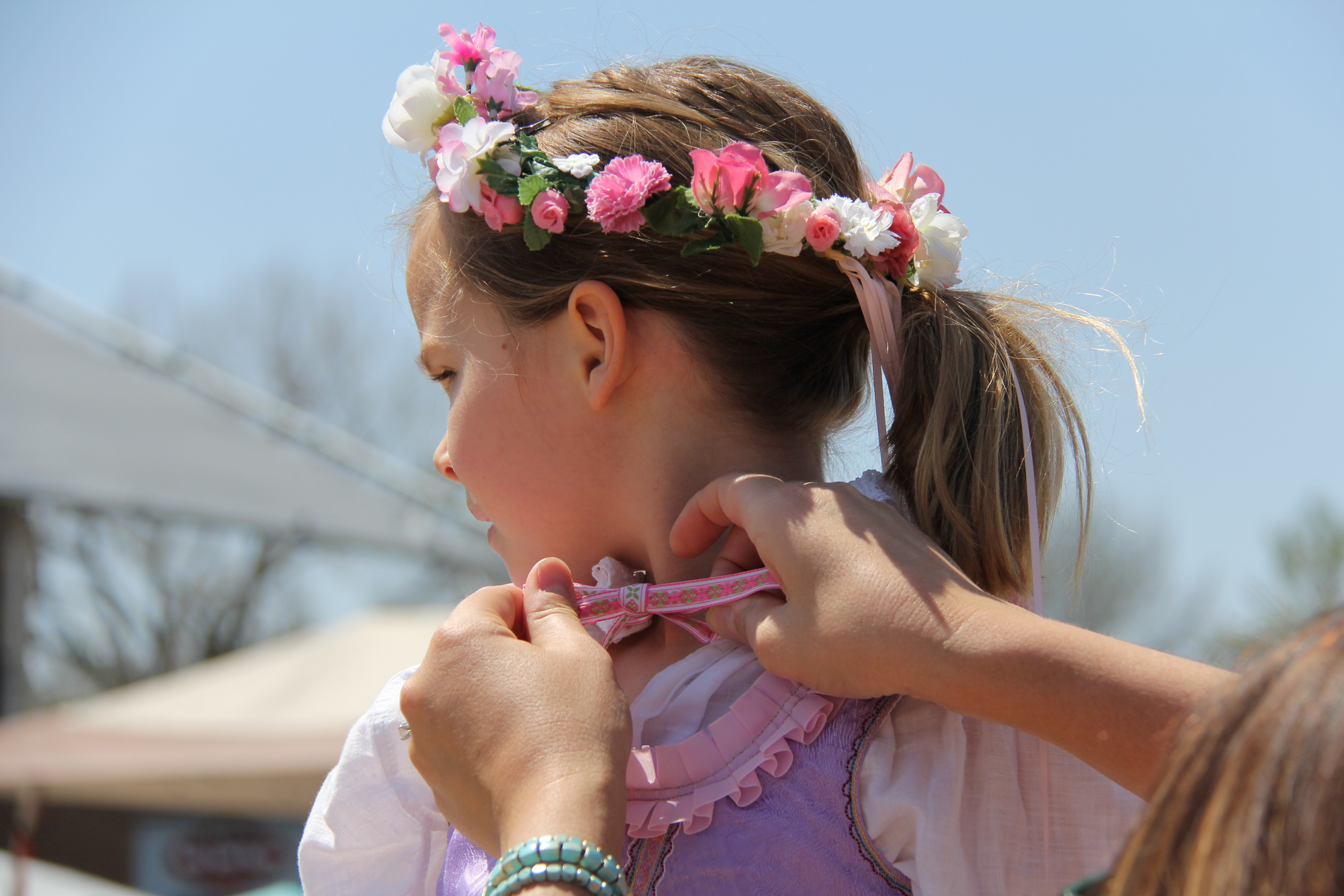
A tender moment when a mom retied a ribbon on her daughter’s Czech costume during a dance at Montgomery’s Czech May Day celebration. (Minnesota Prairie Roots copyrighted photo May 2025)
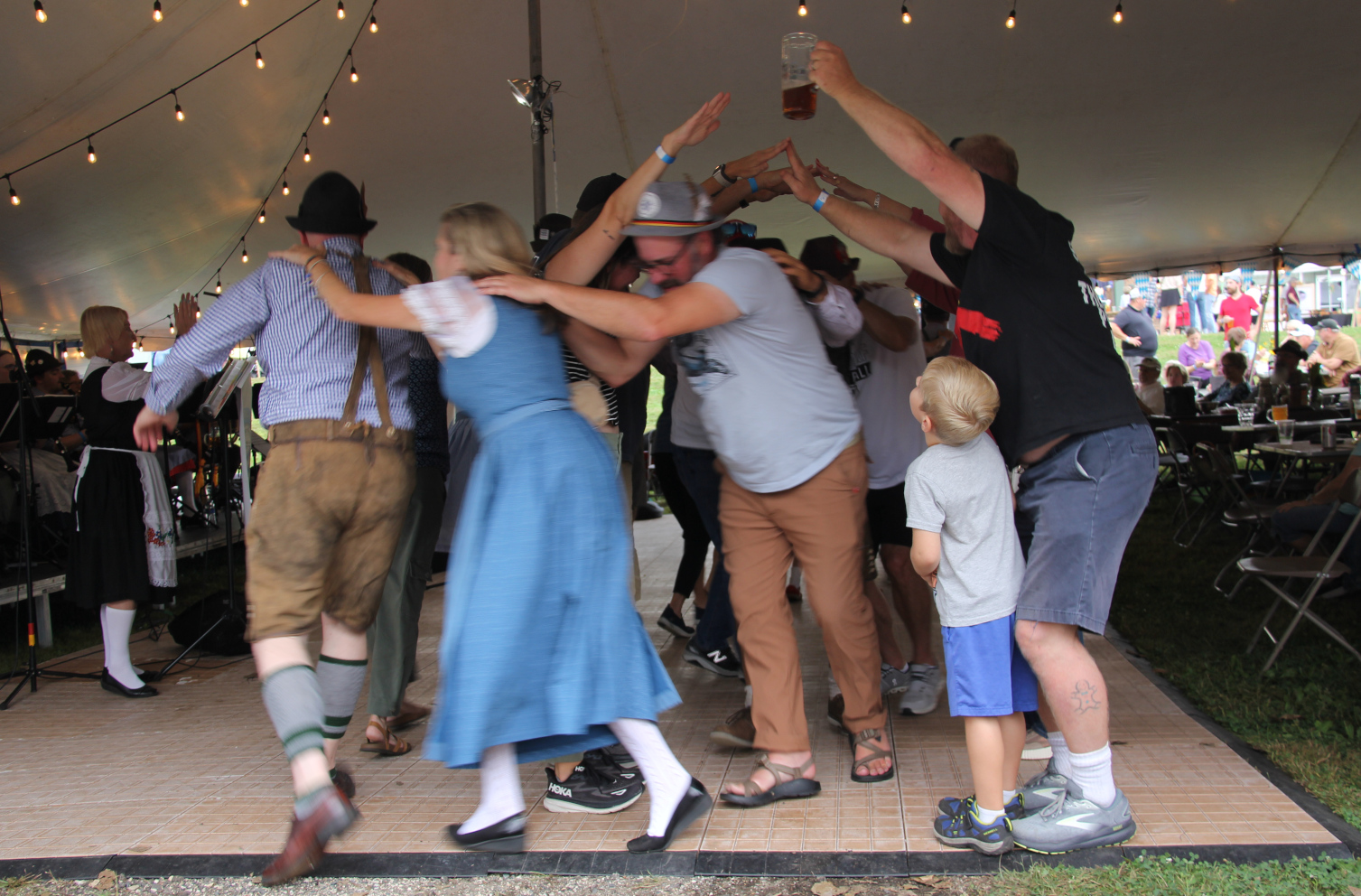
Oktoberfest in Dundas provided plenty of photo ops, including this one where a young boy wanted to join the dancing adults.Or maybe he was just watching, happy to be on the sideline. Whatever, I like the photo a lot. (Minnesota Prairie Roots copyrighted photo October 2025)
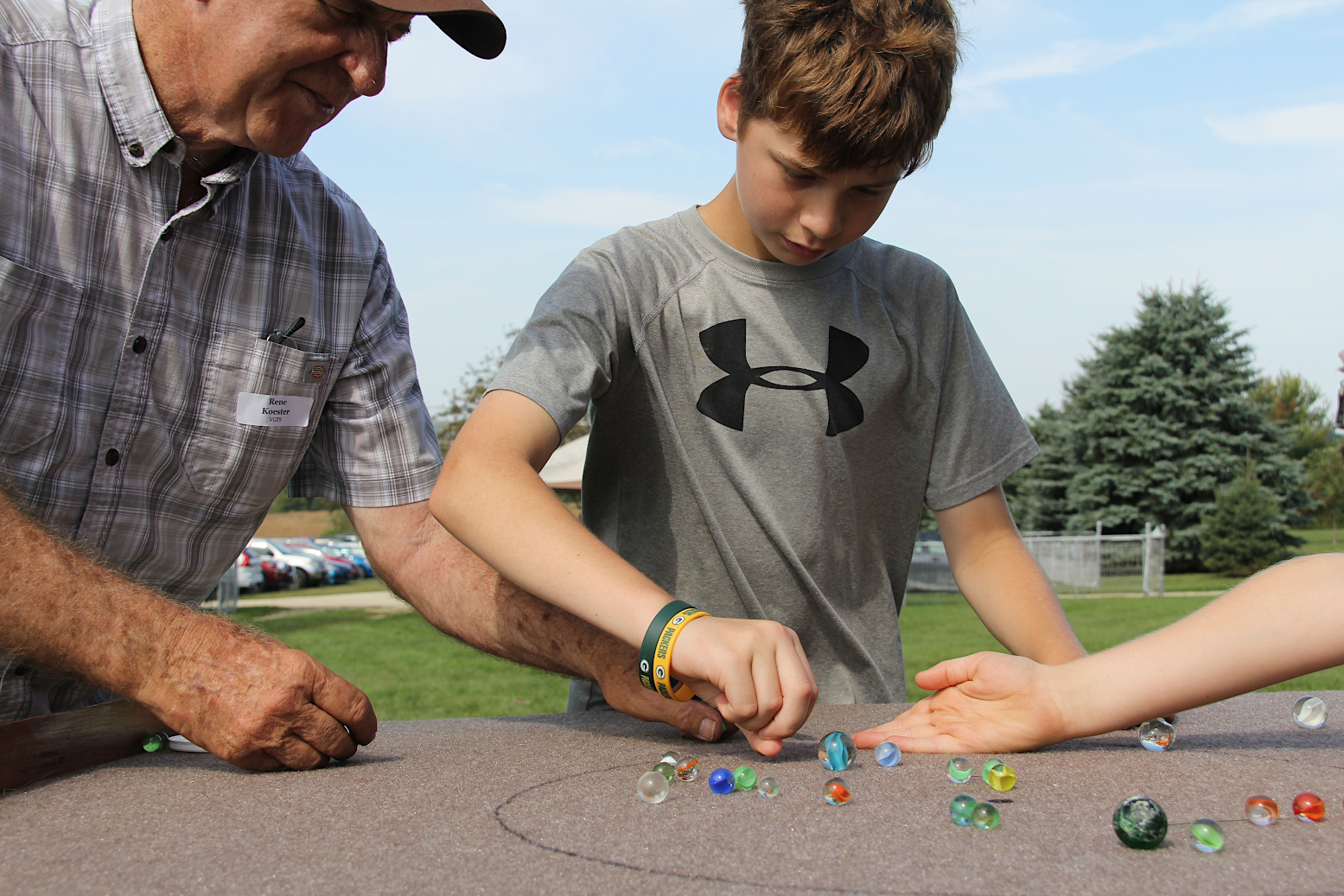
In this inter-generational scene, a grandfather teaches marbles to his grandsons at the Valley Grove Country Social, rural Nerstrand. They were so intent on the game that they paid me no attention, just as I like it. (Minnesota Prairie Roots copyrighted photo September 2025)
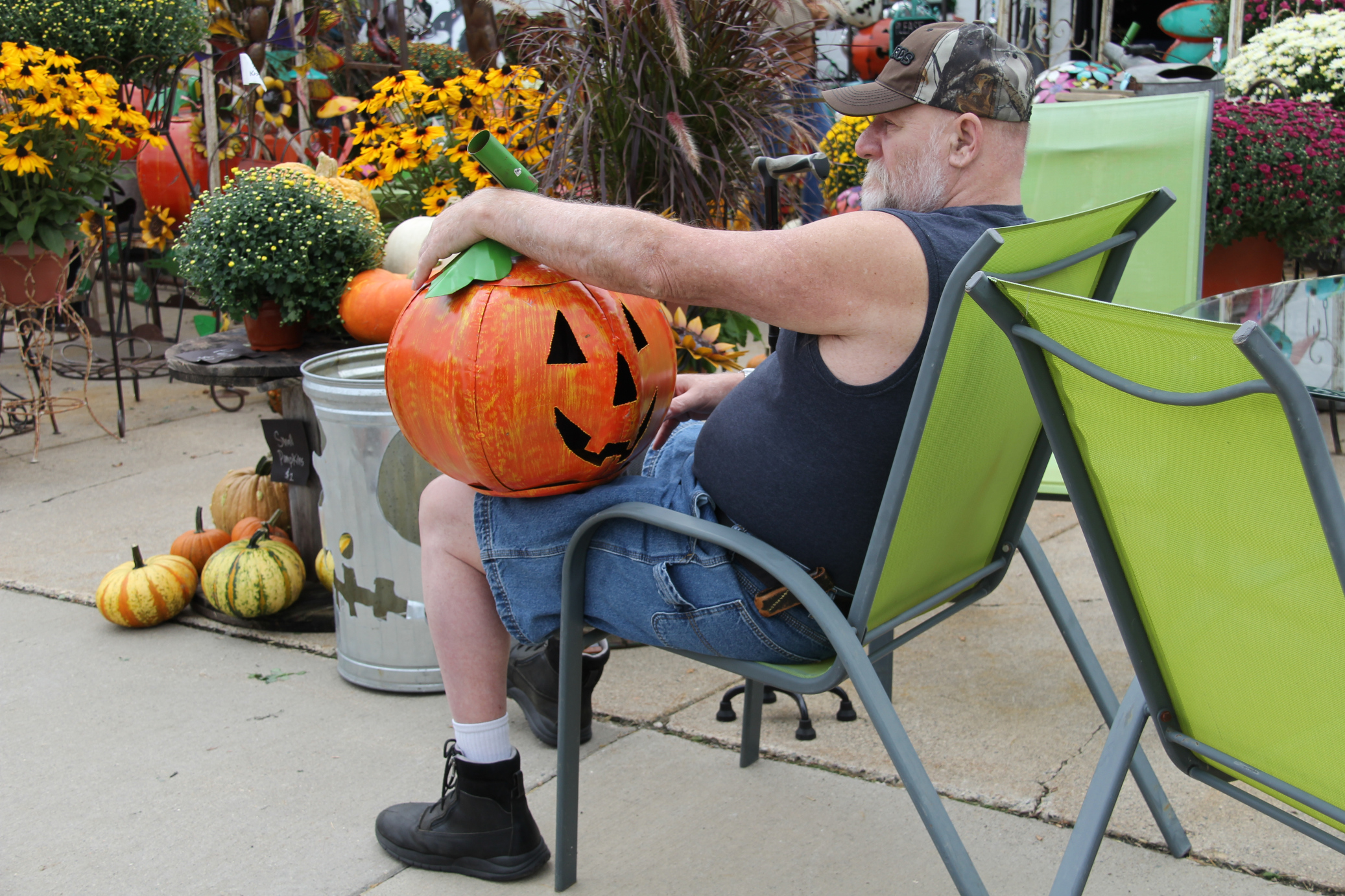
I found this scene humorous and likely relatable for every guy who has ever waited for their partner to finish shopping. I took the image outside RR Revival in Lonsdale during a craft show in that small town. (Minnesota Prairie Roots copyrighted photo September 2025)
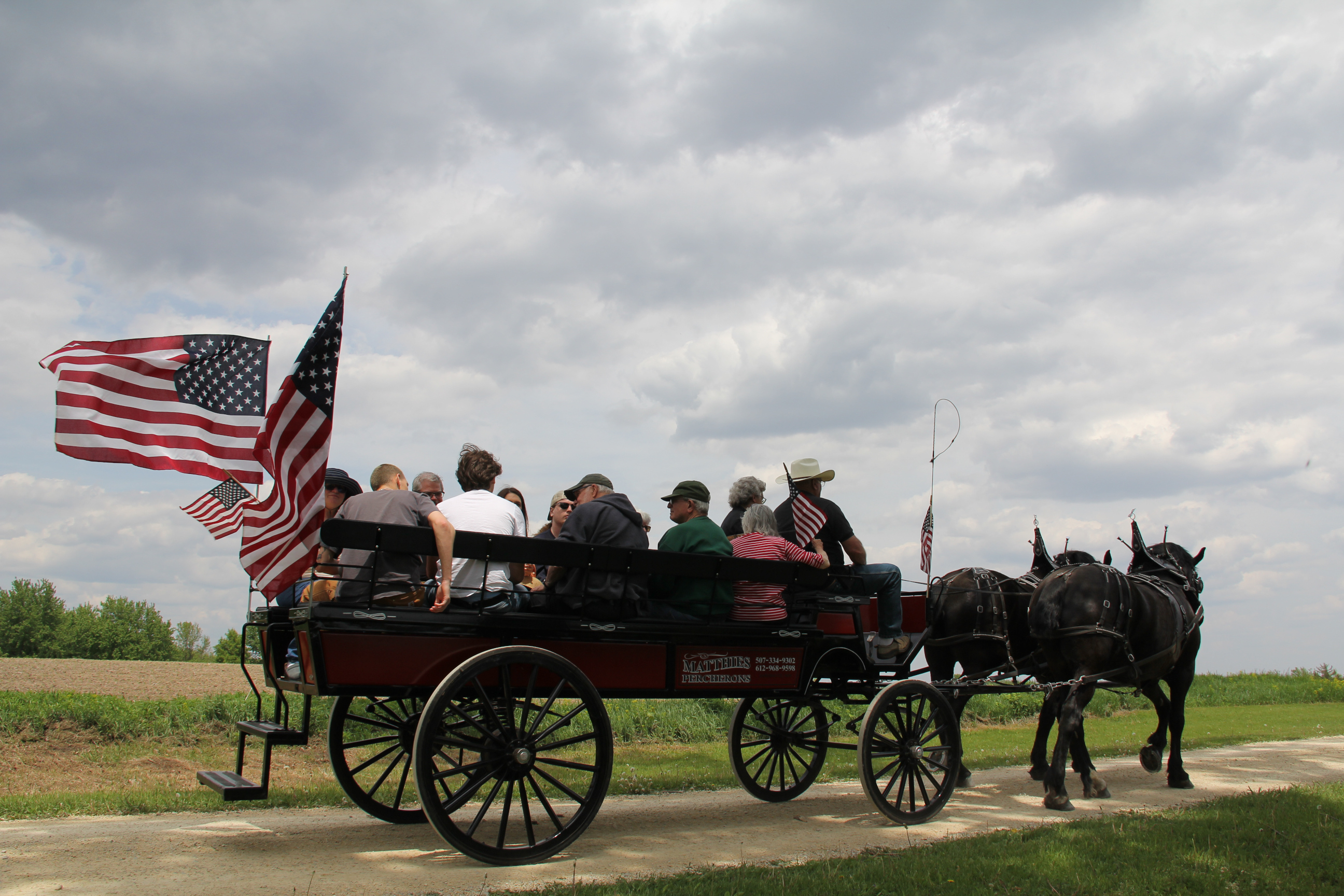
If ever there was a photo that exudes love of country in rural Minnesota, it is this image of a wagonload of people heading to the Memorial Day program at the Cannon City Cemetery. (Minnesota Prairie Roots copyrighted photo May 2025)
In the context of everything happening in America, especially in Minnesota, this photo sends a strong message of American pride. These Somali-American children, U.S. flags in hand, watched the Memorial Day parade in downtown Faribault. (Minnesota Prairie Roots copyrighted photo May 2025)
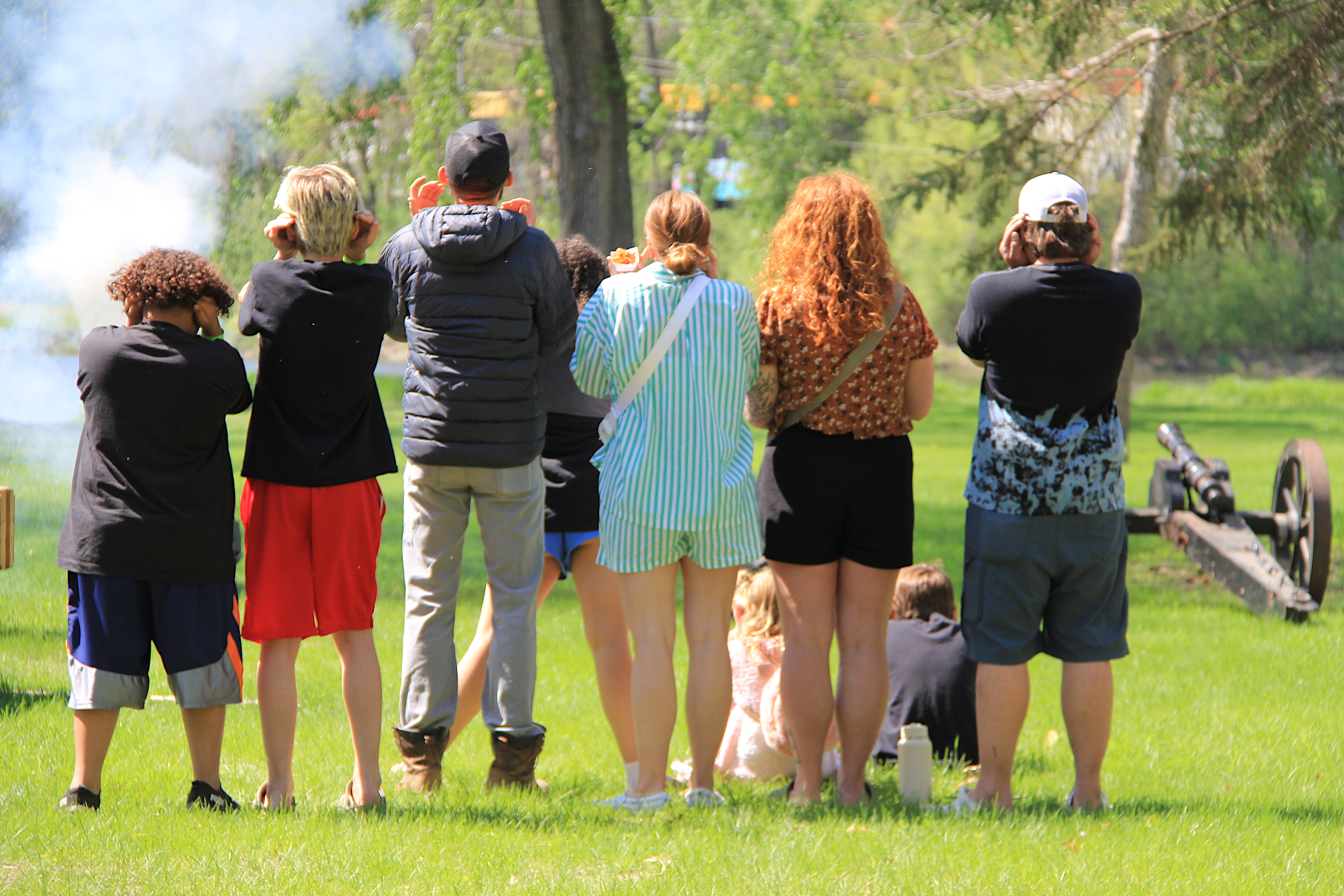
As a cannon shot off during the Riverside Rendezvous & History Festival in Faribault, attendees were told to cover their ears for protection. I framed this scene to tell that story. (Minnesota Prairie Roots copyrighted photo May 2025)
There were no second chances to get this photo of two women greeting each other at a downtown Faribault Car Cruise Night. I love the joy I was able to photograph in one single shot. (Minnesota Prairie Roots copyrighted photo June 2025)
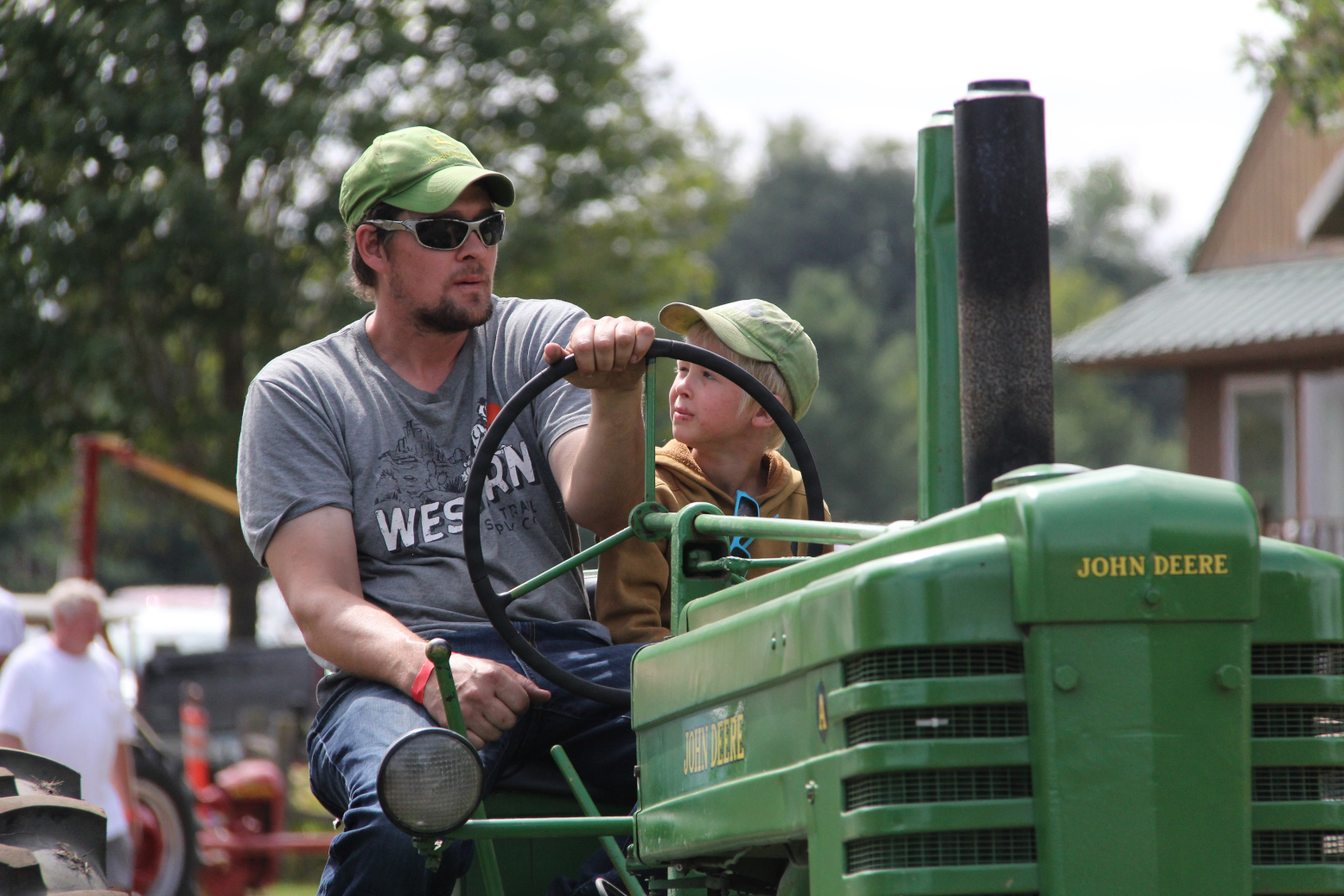
The Rice County Steam & Gas Engines Show tractor parade offers plenty of photo ops. I see total admiration on this young boy’s face and was delighted to photograph that sweet moment. (Minnesota Prairie Roots copyrighted photo August 2025)
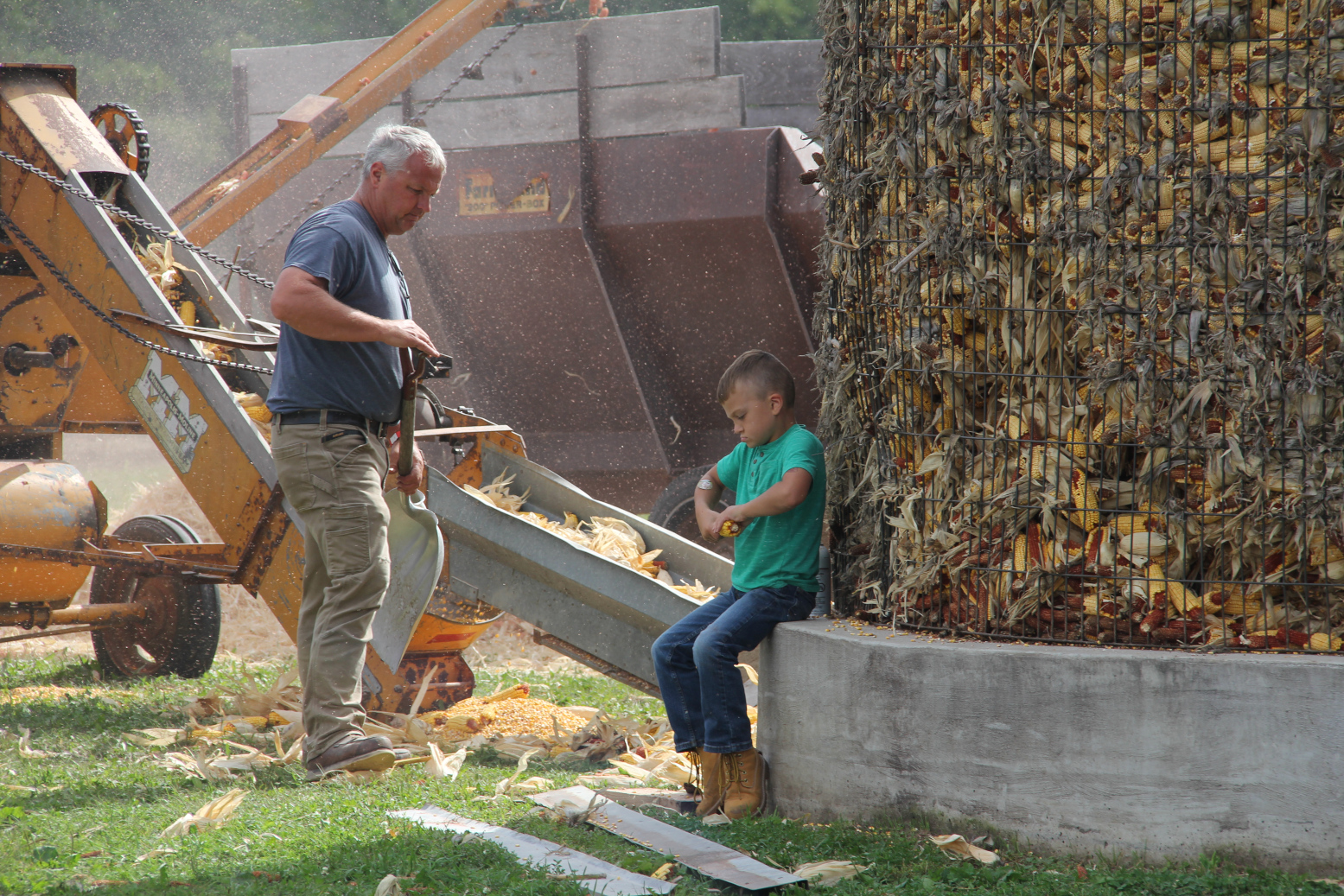
I loved watching and documenting the younger and older generations shelling corn together at the Rice County Steam & Gas Engines Show in a living rural history scene. (Minnesota Prairie Roots copyrighted photo August 2025)
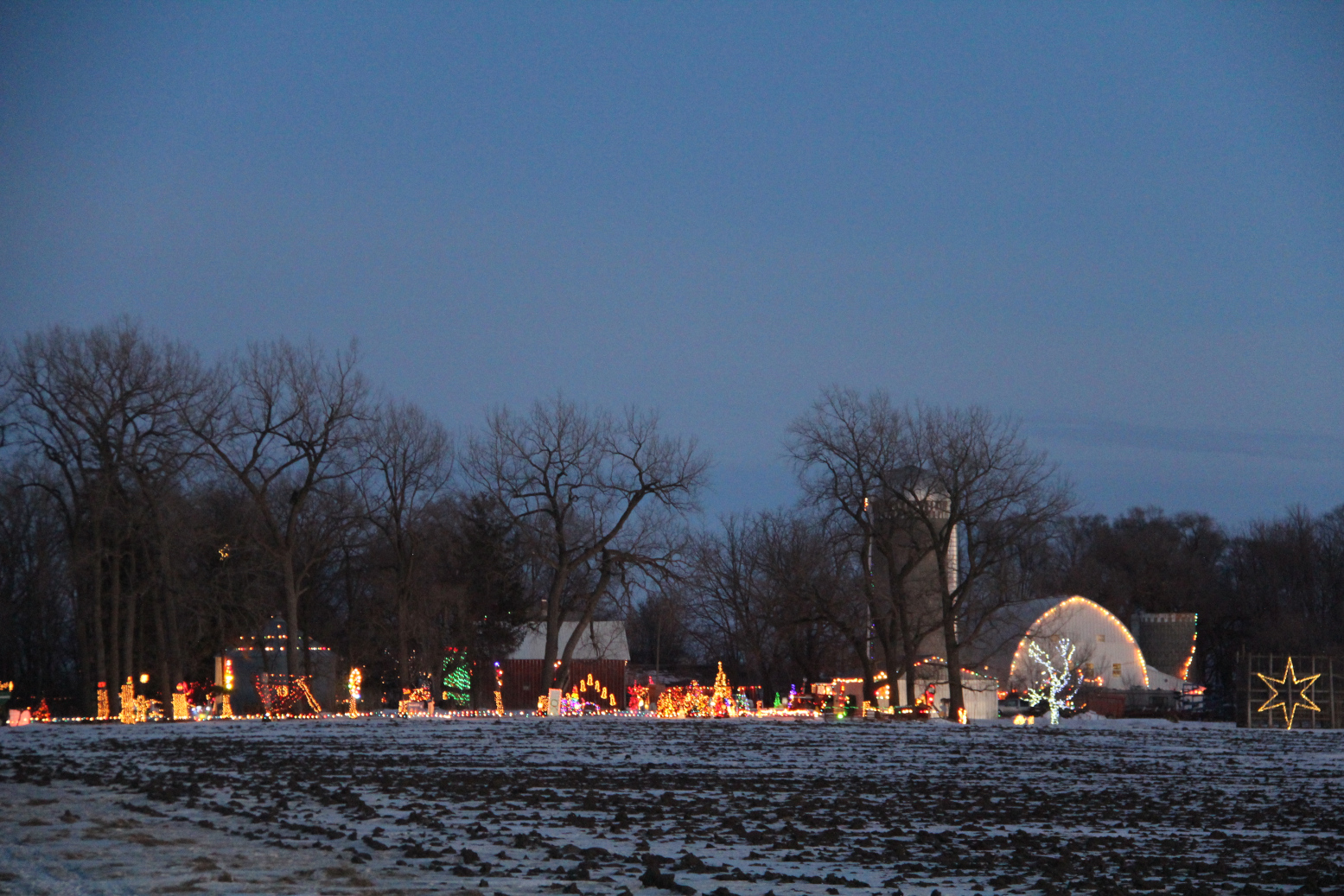
Across a farm field, the Keller farm glows with holiday lights. (Minnesota Prairie Roots copyrighted photo December 2025)
AS DUSK DESCENDS on the prairie 11 miles east of Faribault, countless holiday lights glow on the Keller farm, just down a gravel road from St. John’s United Church of Christ, Wheeling Township. In this country church, I first met members of the Keller family years ago. For more than 50 years the Kellers, rooted in faith, family and community, have decorated the home place with holiday lights and displays.
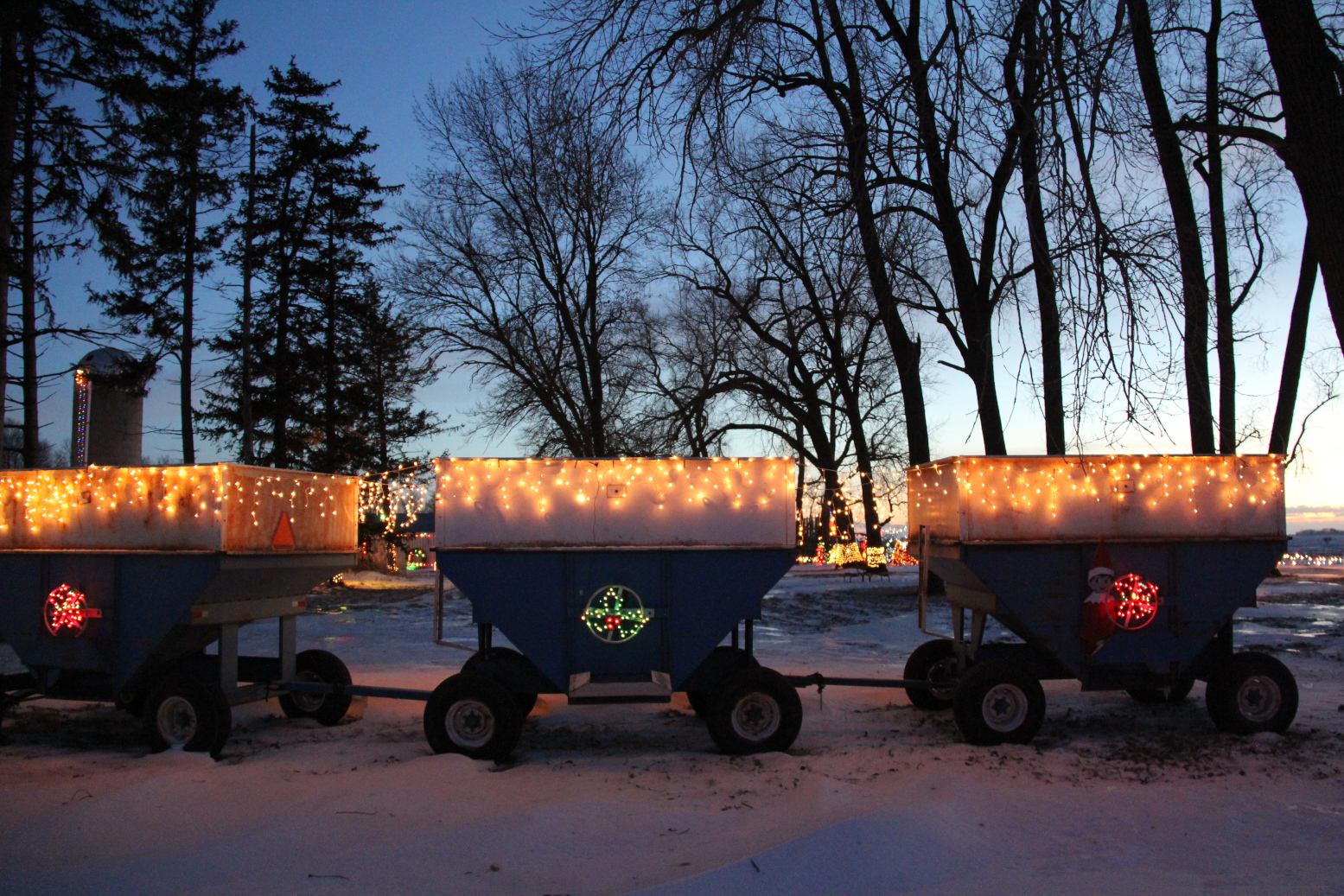
One of the first things you will see are these lighted grain wagons parked in the farmyard along the gravel road. (Minnesota Prairie Roots copyrighted photo December 2025)
The Keller Christmas Farm is a sight to behold and a must-see during the holidays. Some families have been coming here for years.
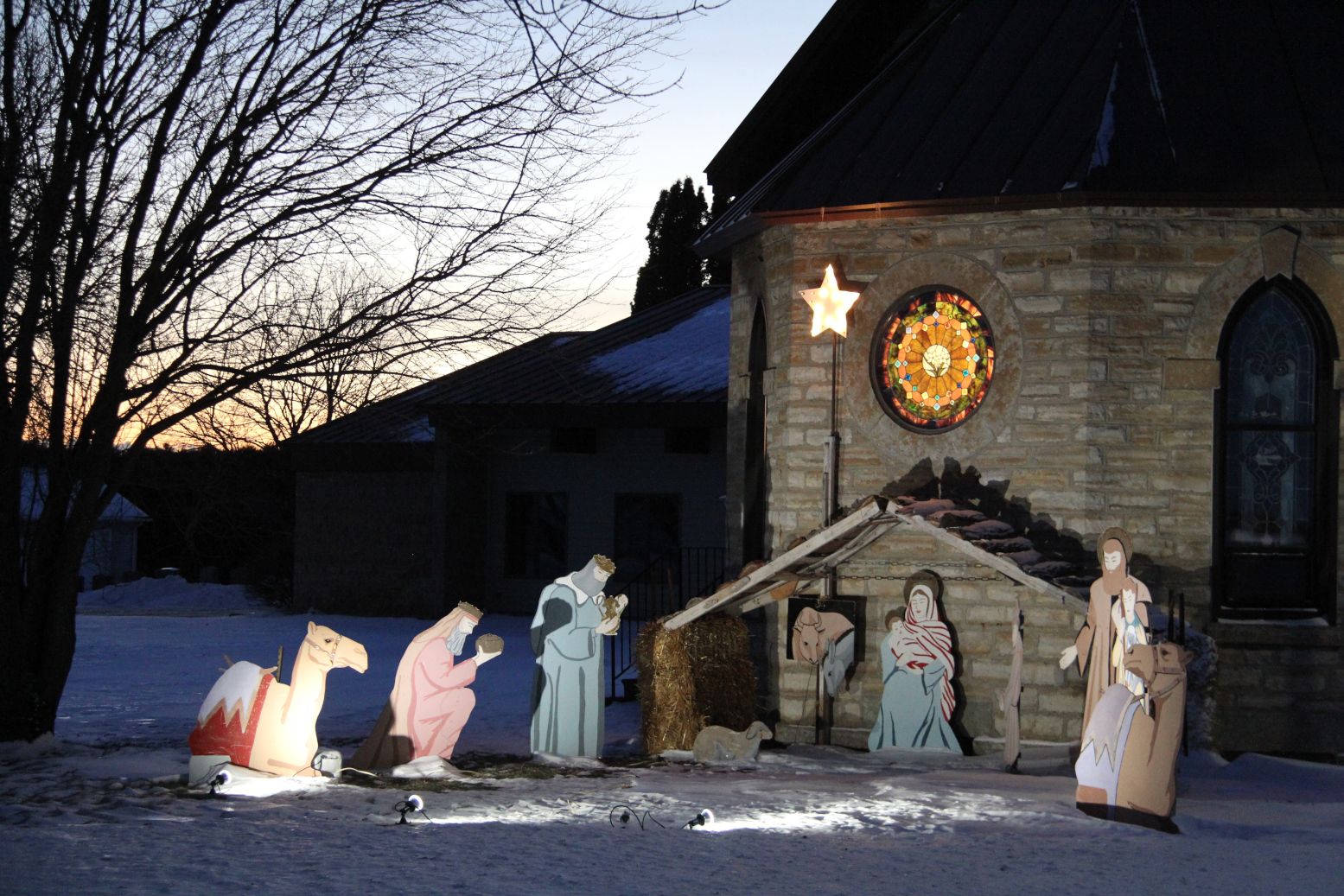
A Nativity scene outside St. John’s United Church of Christ, Wheeling Township. (Minnesota Prairie Roots copyrighted photo December 2025)
The beautifully-decorated Keller family farm home. (Minnesota Prairie Roots copyrighted photo December 2025)
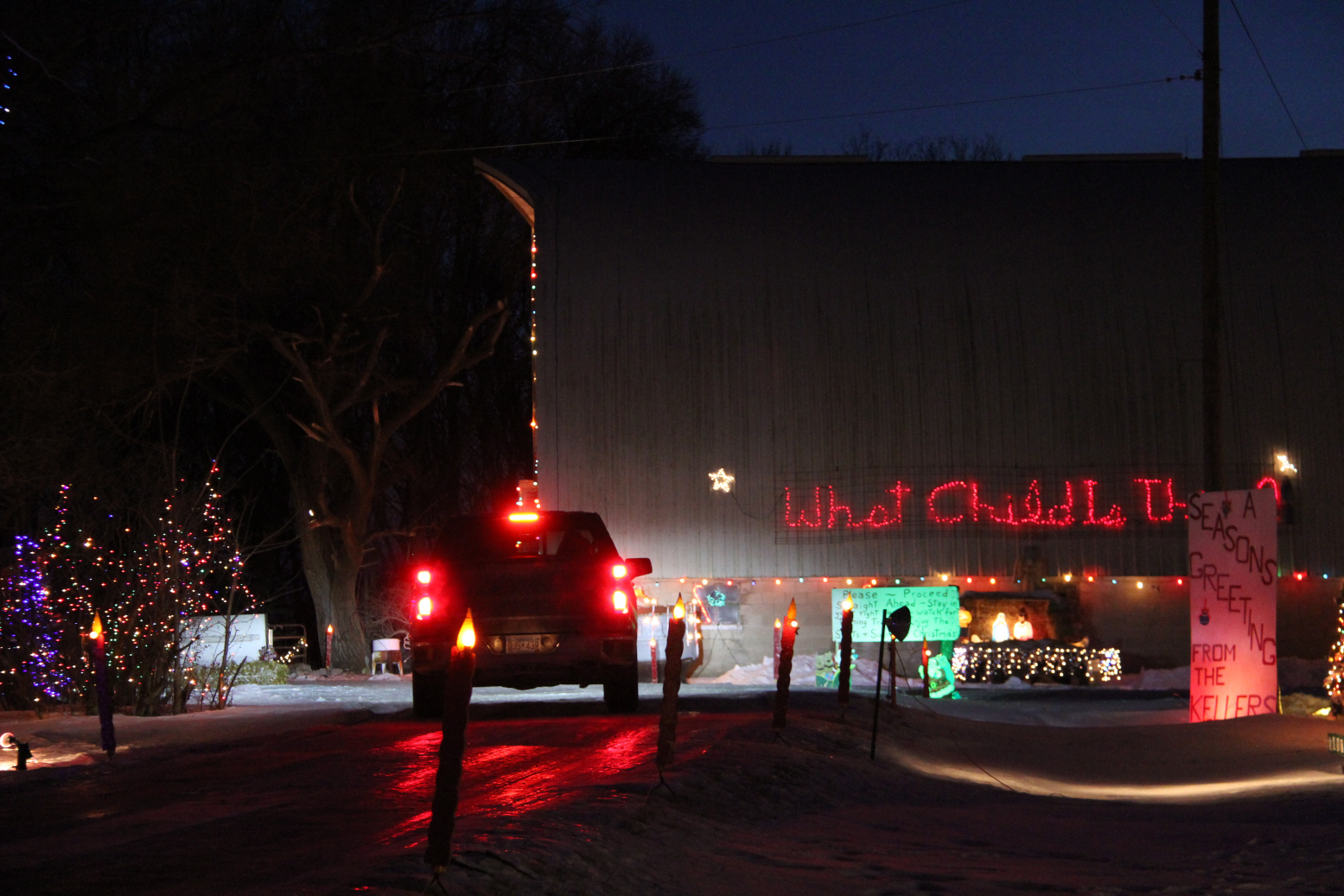
Vehicles head up the eastern driveway, circle past the barn and then back out through the western driveway.“What Child Is This?” reads the message on the barn roof. (Minnesota Prairie Roots copyrighted photo December 2025)
On a recent evening, Randy and I followed back county and township roads, past farm sites, fields layered in snow and St. John’s church, to the place where Craig Keller has lived his entire life. He and his brother Keith coordinate this annual holiday display which draws thousands to this rural location. A steady stream of vehicles followed the snow-packed, icy driveway into and around the farmyard to view the scenes as Christmas music blared.
Holiday lights glow bright atop a grain bin. (Minnesota Prairie Roots copyrighted photo December 2025)
Randy and I wound through twice since I was trying to photograph scenes and we didn’t want to slow others down. For a bit I trudged in the snow to take a few photos, not something visitors should do. But I figured Craig knows me and he would be okay with me stepping briefly outside the van for a brief walk about.
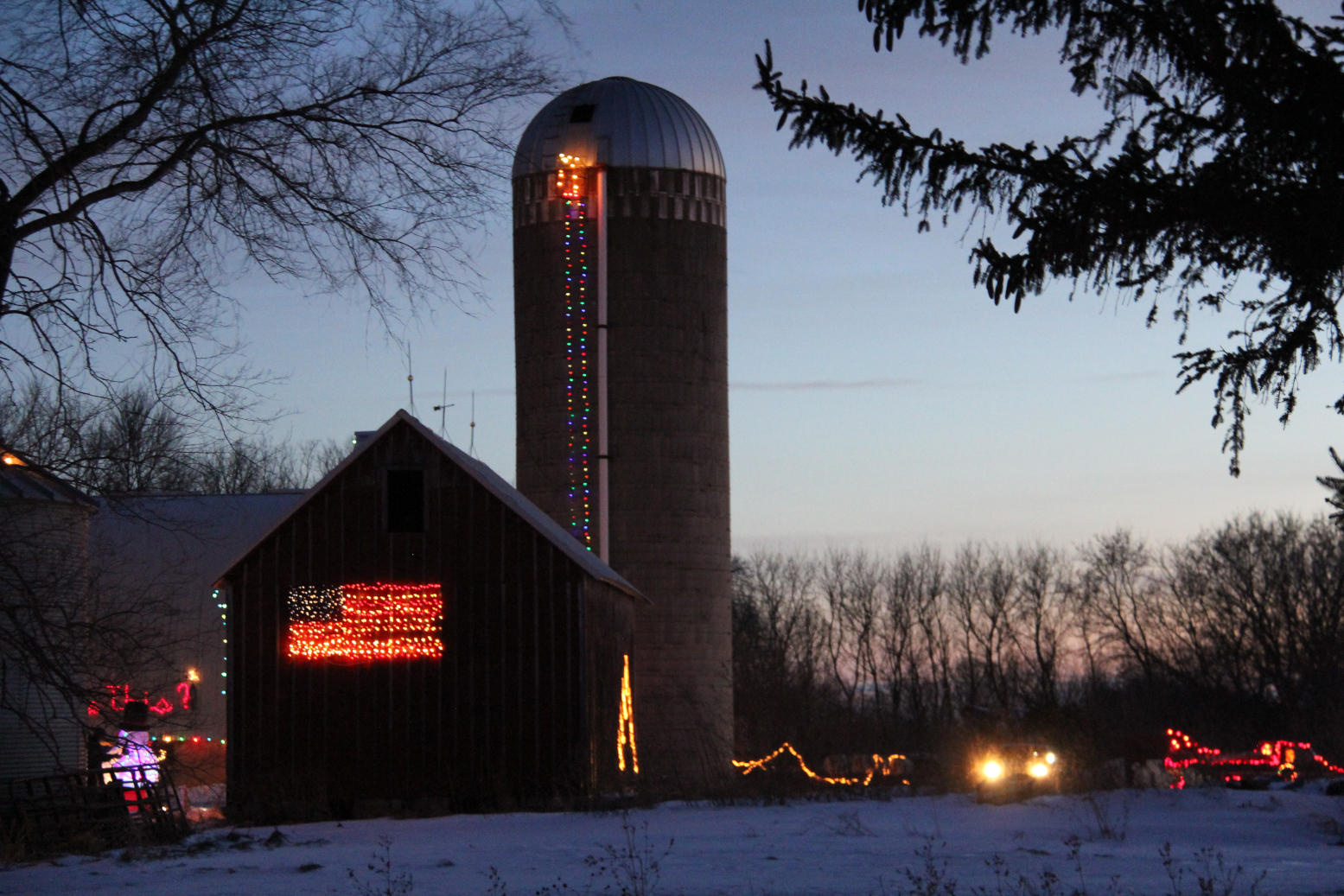
Lights are everywhere, even up the side of the silo. (Minnesota Prairie Roots copyrighted photo December 2025)
There’s so much to see here that, even if you’re not taking photos, a second drive-through seems necessary. Seemingly every building from house to barn to grain bin to sheds, even the towering silo, shines with lights and decorations.
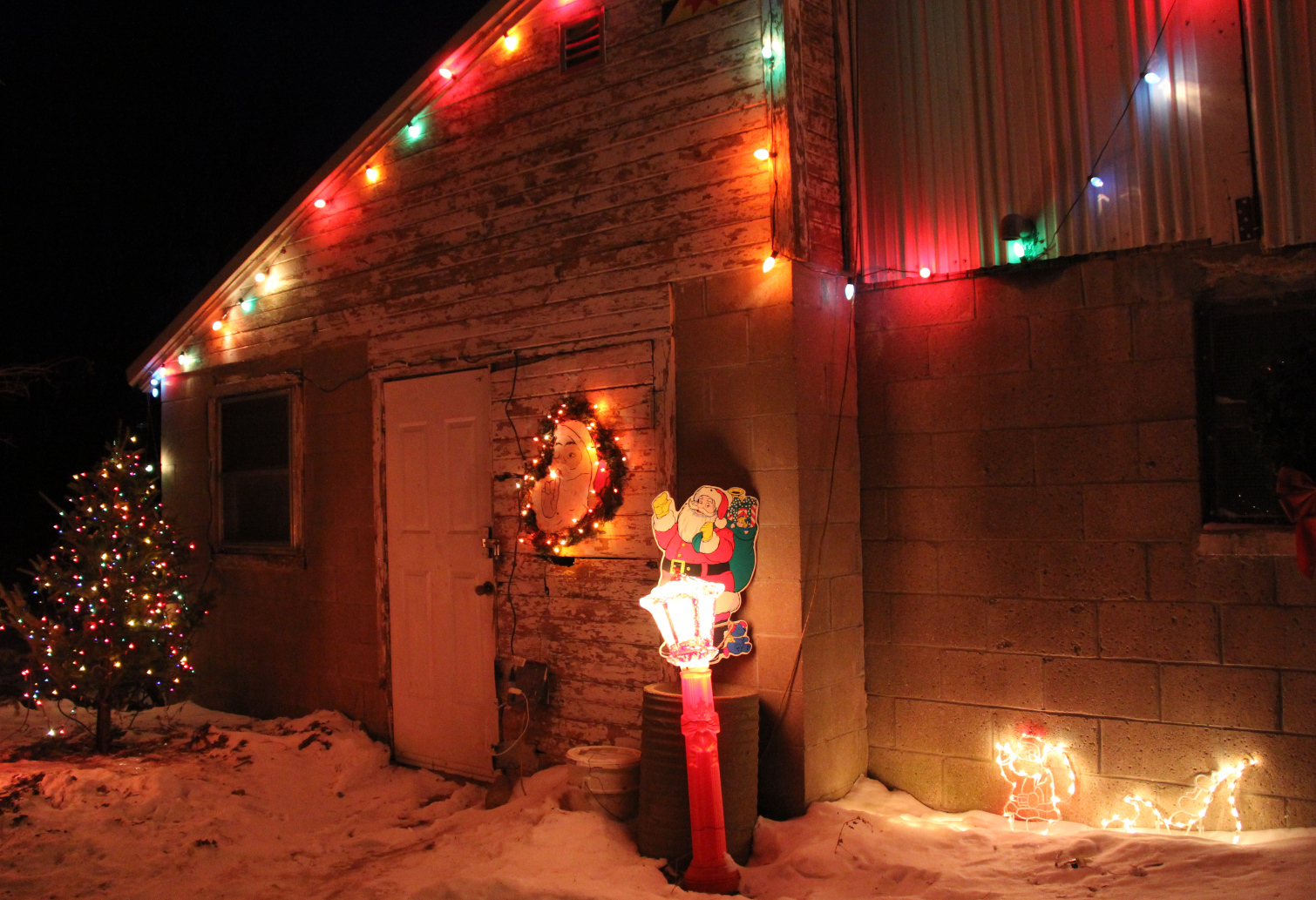
This handcrafted Santa has been around for a while. (Minnesota Prairie Roots copyrighted photo December 2025)
I especially love that many of the decorations are homemade—painted on pressed wood and plywood and weathered by decades of Christmases exposed to the elements.
One of many signs welcoming visitors. This one, written in German, reads “Welcome. Merry Christmas.” (Minnesota Prairie Roots copyrighted photo December 2025)
I love that vintage, hard plastic holiday decorations stand aglow in the dark. I don’t recall seeing a single blow-up anything. I love the personal messages, too, written by the Kellers.
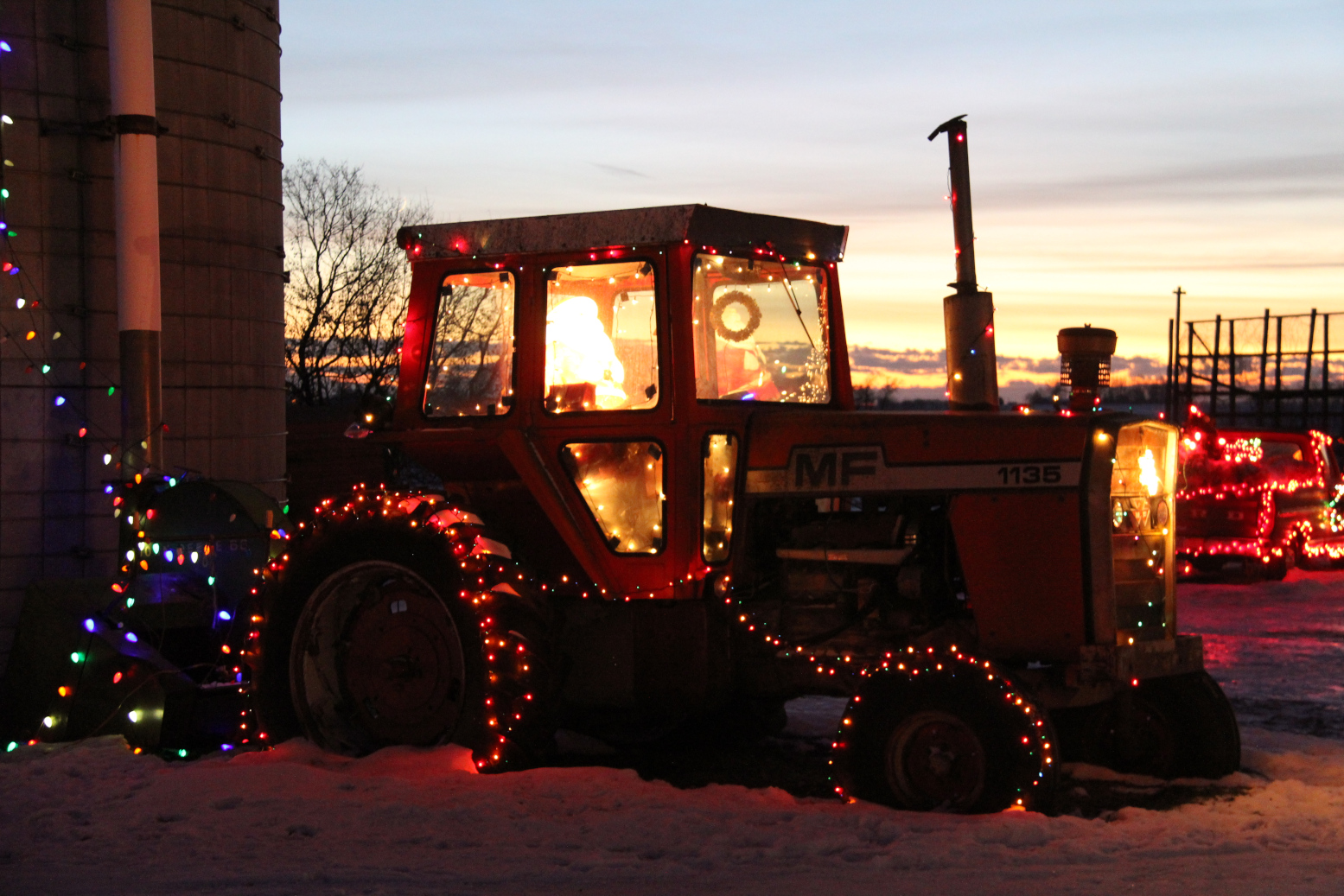
That’s Santa all aglow inside this tractor. (Minnesota Prairie Roots copyrighted photo December 2025)
I love that farm equipment, like a tractor, grain wagons, a corn planter, grain drills and more are incorporated into Christmas scenes. Even a tractor tire has been transformed into a wreath.
A festive corner outside the barn. (Minnesota Prairie Roots copyrighted photo December 2025)
This festive holiday display definitely looks and feels uniquely rural.
One of my favorite parts of the display is this country church. (Minnesota Prairie Roots copyrighted photo December 2025)
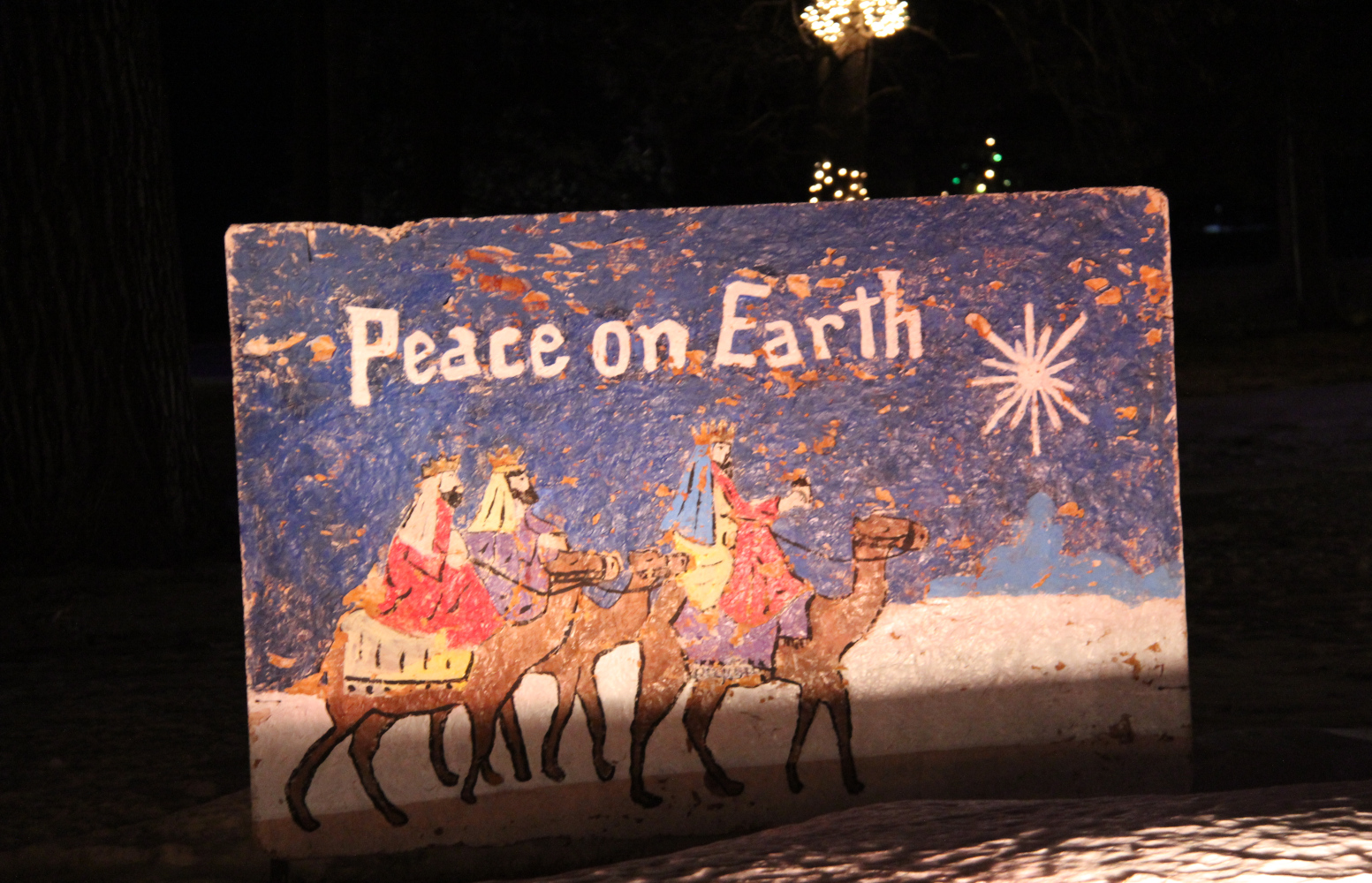
Here you’ll find secular aspects of Christmas—Santa, his elves, snowmen, etc.—but also, and mostly, the faith aspect focusing on the birth of Christ. I didn’t even try to count all the Nativity scenes. But there are many, including next to a mini white wooden church. Outside the church, an organist plays a massive pipe organ. In real-life, Craig Keller plays the organ at St. John’s.
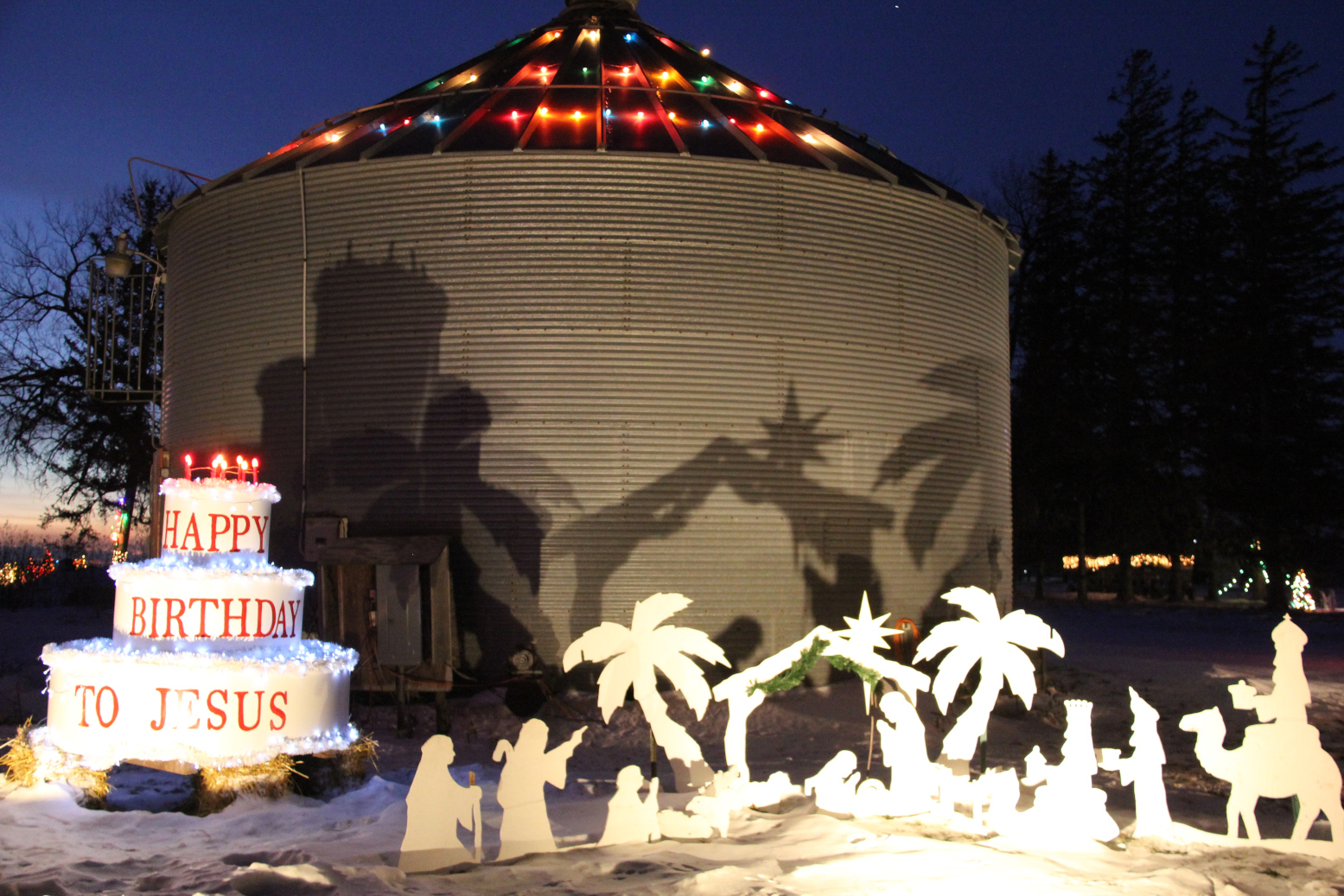
I love the birthday cake and also how the Nativity scene shadows onto the grain bin. (Minnesota Prairie Roots copyrighted photo December 2025)
A three-layered birthday cake for Jesus, complete with red candles, is strategically placed by the church, a focal point that draws attention to the real reason for Christmas—Christ’s birth.
Among the many Nativity scenes staged at the farm. (Minnesota Prairie Roots copyrighted photo December 2025)
After about 45 minutes at the Keller farm, I left with cold fingers (from taking photos), but a warm heart. Family matriarch Elsie Keller, who died in 2019 at the age of 93, would be happy that her family continues with this annual holiday lighting tradition, only a field away from the country church her immigrant grandparents helped found in 1856. The place where I met Elsie and her descendants, the family that has shared Christmas with the public for more than half a century in rural southern Minnesota.
Near the exit, a final message. (Minnesota Prairie Roots copyrighted photo December 2025)
FYI: The Keller Christmas Farm drive-through holiday light display is open from dusk to 10 pm daily until January 6. To get there from Faribault, take Minnesota State Highway 60 east for 8.3 miles, turn left/north onto Jacobs Avenue for two miles and then, by the church, turn right/east onto 190th Street East. You’ll see the farm on the right at 10557 190th Street East. While the display is free, donations are accepted in a special donation box between the house and barn.
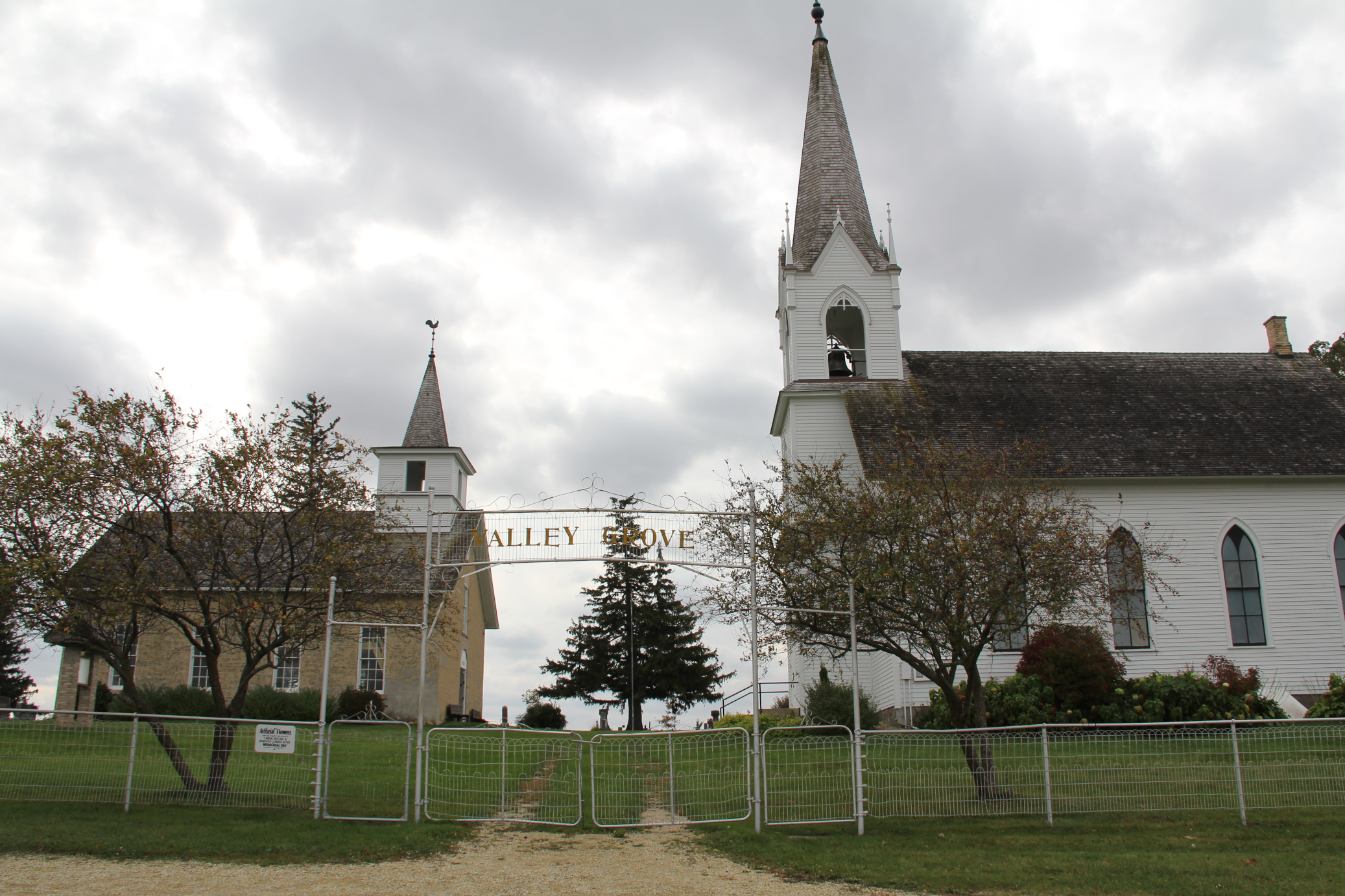
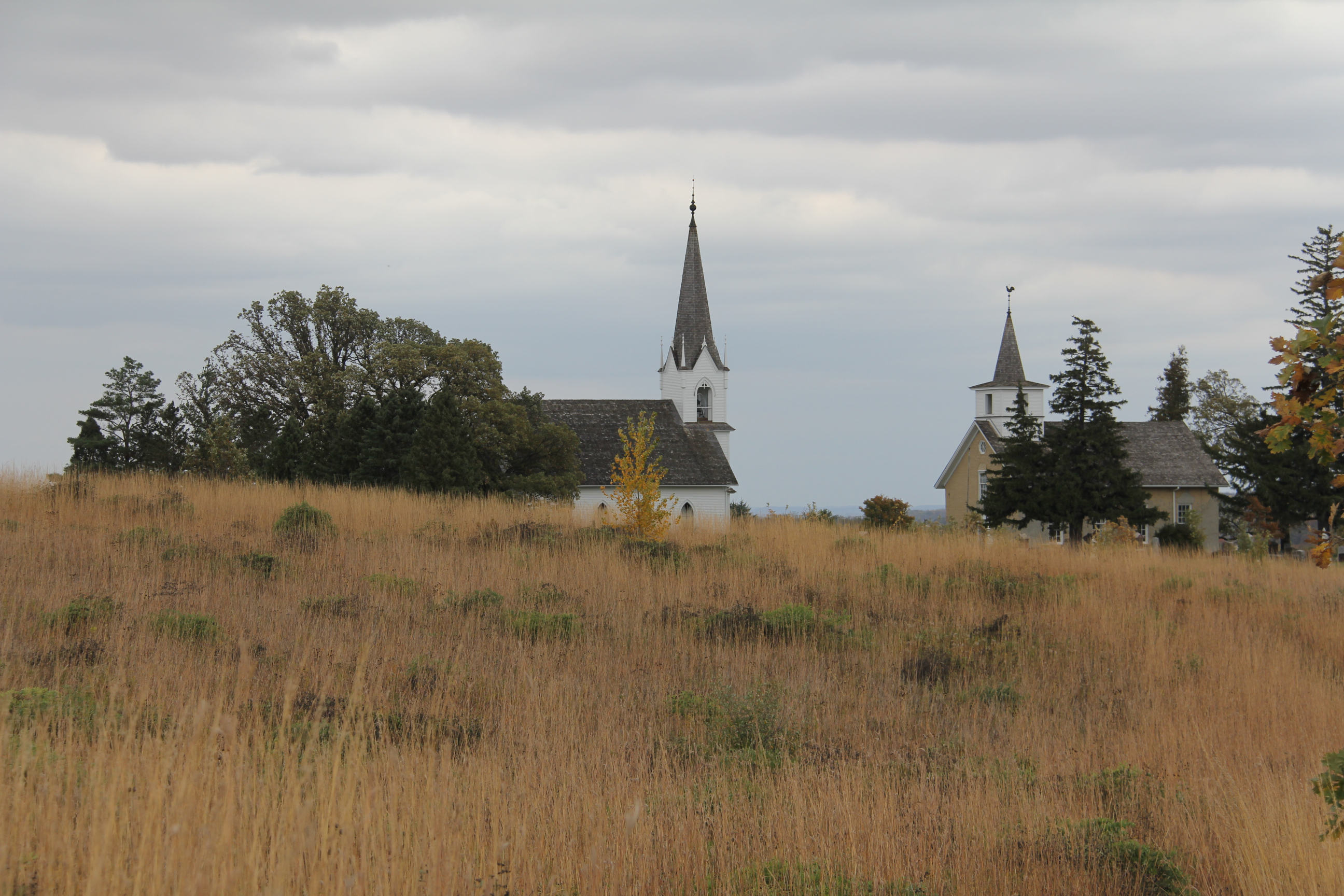
The Valley Grove churches photographed in October. (Minnesota Prairie Roots copyrighted file photo October 2025)
OVERLOOKING THE COUNTRYSIDE high atop a hill in northeastern Rice County, two historic Norwegian immigrant churches sit, a testament to the faith and fortitude of those who settled in this area of southern Minnesota.
And each December, thanks to the efforts of the Valley Grove Preservation Society, the faith legacy of those long ago Norwegian settlers continues. This Sunday, December 7, at 4:30 pm, a vespers service of music, stories, poetry and scripture will be held in the 1894 wood-frame Valley Grove church with the soaring steeple. Just across the yard stands the older limestone church, used now as a gathering space rather than as a sanctuary.
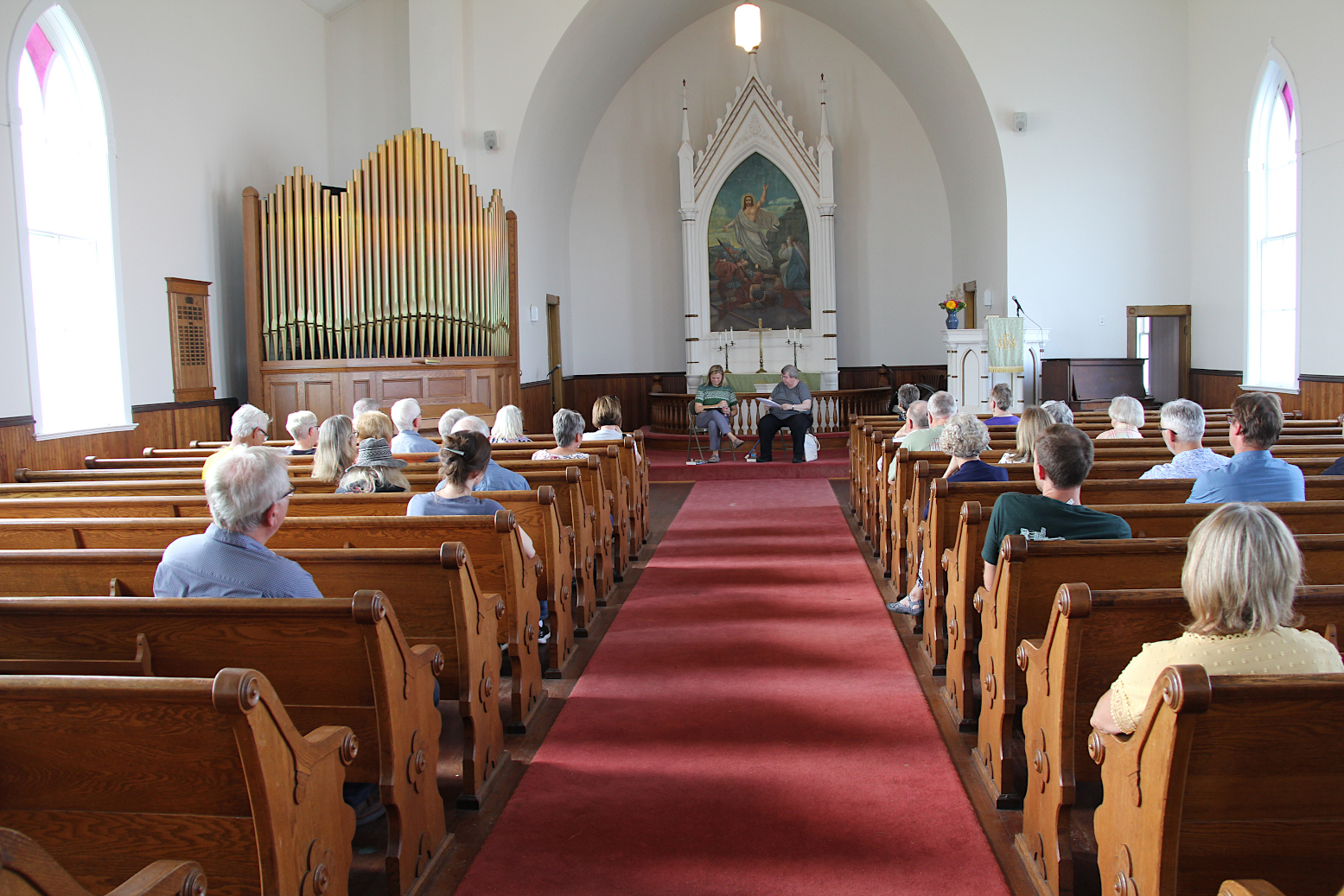
Inside the wood-frame church during the Valley Grove Country Social. (Minnesota Prairie Roots copyrighted file photo)
Weeks later, on Christmas Eve, the wood-frame church will once again host guests for music at 9:45 pm followed by a traditional candlelight service at 10 pm.
I’ve been to Valley Grove countless times, mostly in autumn and never in December. It’s a beautiful spot. Peaceful, too. And I expect with the recent snowfalls, this rural setting near Nerstrand will prove even more picturesque. Ideal for contemplation, for worship, for reflection and for remembering the faith of forefathers.
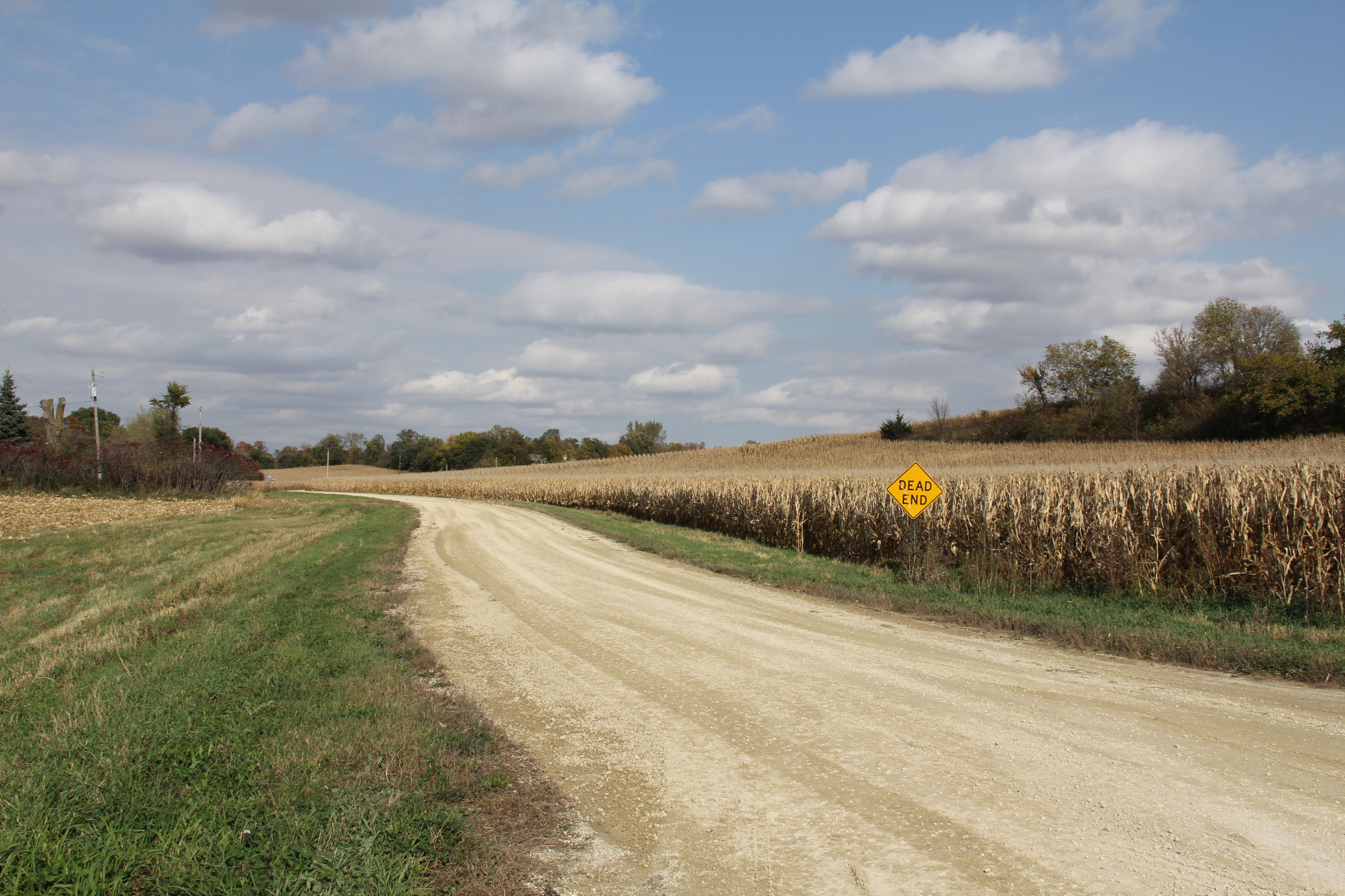
I love to follow gravel roads into the countryside, here northeast of Faribault. (Minnesota Prairie Roots copyrighted photo October 2025)
FOR THOSE OF US raised on farms, autumn draws us into the countryside like moths navigating toward a porch light.
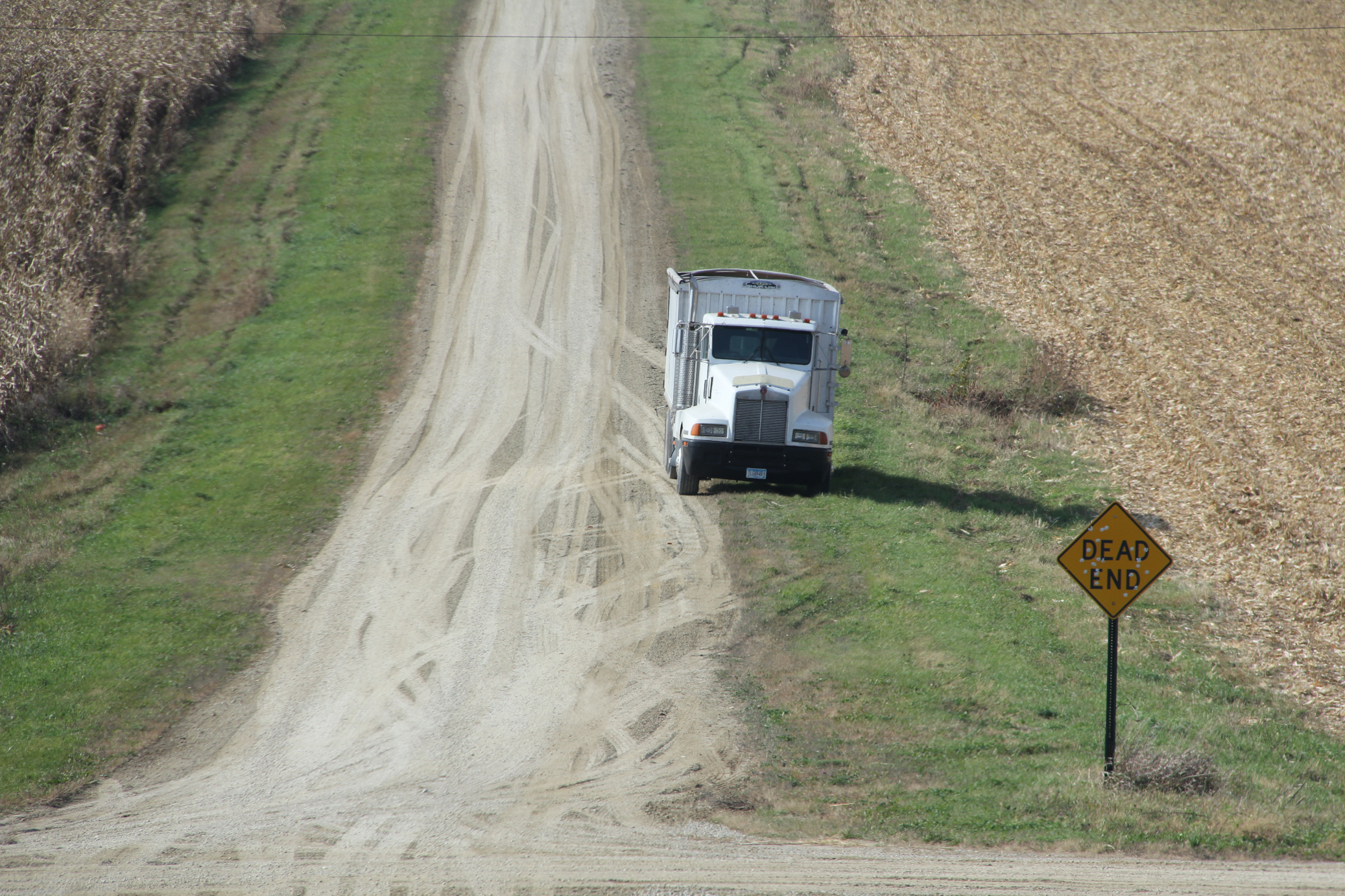
At the bottom of a steep hill, a grain truck sits beside cornfields, unharvested to the left, and with harvest in progess, right. (Minnesota Prairie Roots copyrighted photo October 2025)
It is the sights, sounds and smells of harvest that pull me into the land, deep into rural Minnesota this time of year. Here farmers labor to bring in the crops before winter settles in.
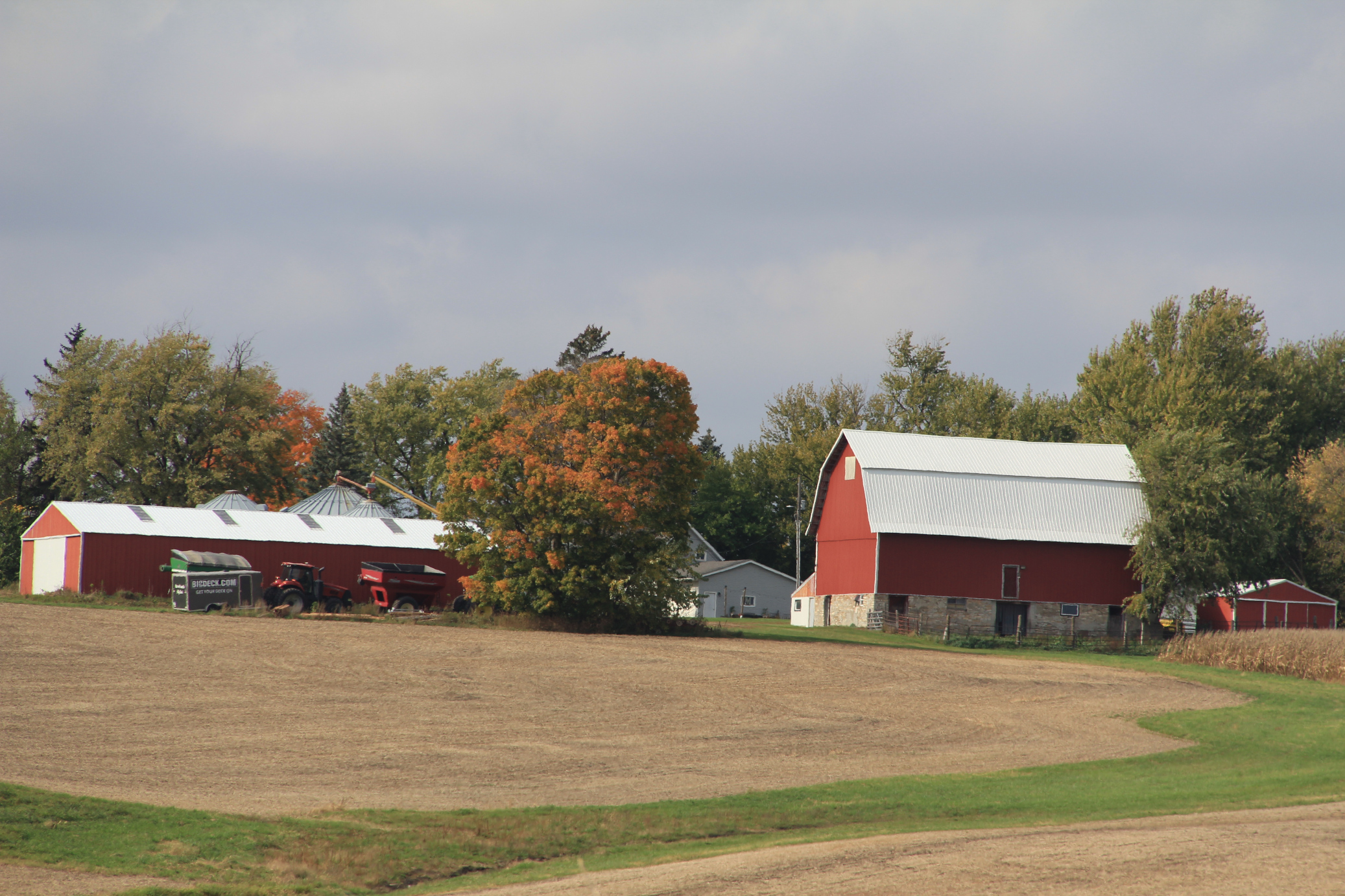
A farm site northeast of Faribault hugs fields. (Minnesota Prairie Roots copyrighted photo October 2025)
For me, this is a sensory experience that takes me back six decades to the southwestern Minnesota crop and dairy farm of my childhood. While farm equipment has changed and most farmers farm much more land than my dad ever did, harvest is still harvest.
Picking corn northeast of Faribault. (Minnesota Prairie Roots copyrighted photo October 2025)
A farmer steers his combine toward a grain truck to unload just harvested corn. (Minnesota Prairie Roots copyrighted photo October 2025)
Transferring corn from combine to grain truck. (Minnesota Prairie Roots copyrighted photo October 2025)
Dust flies as combines chomp across corn and soybean fields. Engines roar. Golden kernels of corn and orbs of soybeans flow from combines into trucks and grain wagons. The land smells of earth and drying fields, a familiar scent even now decades removed from farm life.
Corn flows from combine into grain truck. (Minnesota Prairie Roots copyrighted photo October 2025)
I can almost feel the pressure farmers experience while they race against Mother Nature to finish the harvest. Long days and nights in the field are all part of harvesting as farmers gather in a growing season of efforts. And then hope for good crop prices.
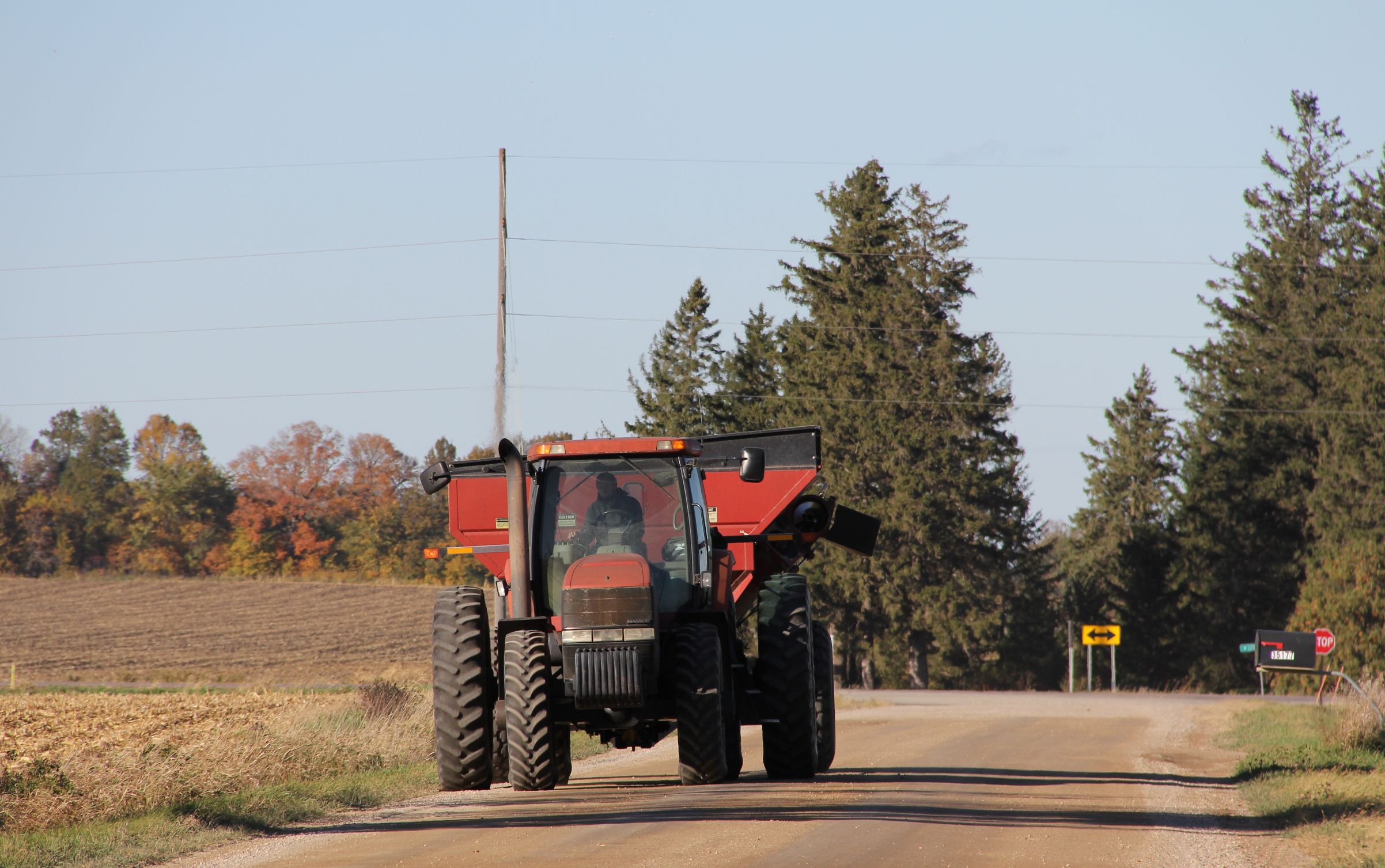
West of Montgomery a tractor pulls a grain wagon along a gravel road near Richter Woods County Park. (Minnesota Prairie Roots copyrighted photo October 2025)
There’s so much uncertainty in farming. So much hinging on weather, the economy, the market. So many decisions to make about when to sell, when to store, when to invest in new equipment and much more. I couldn’t handle the stress.
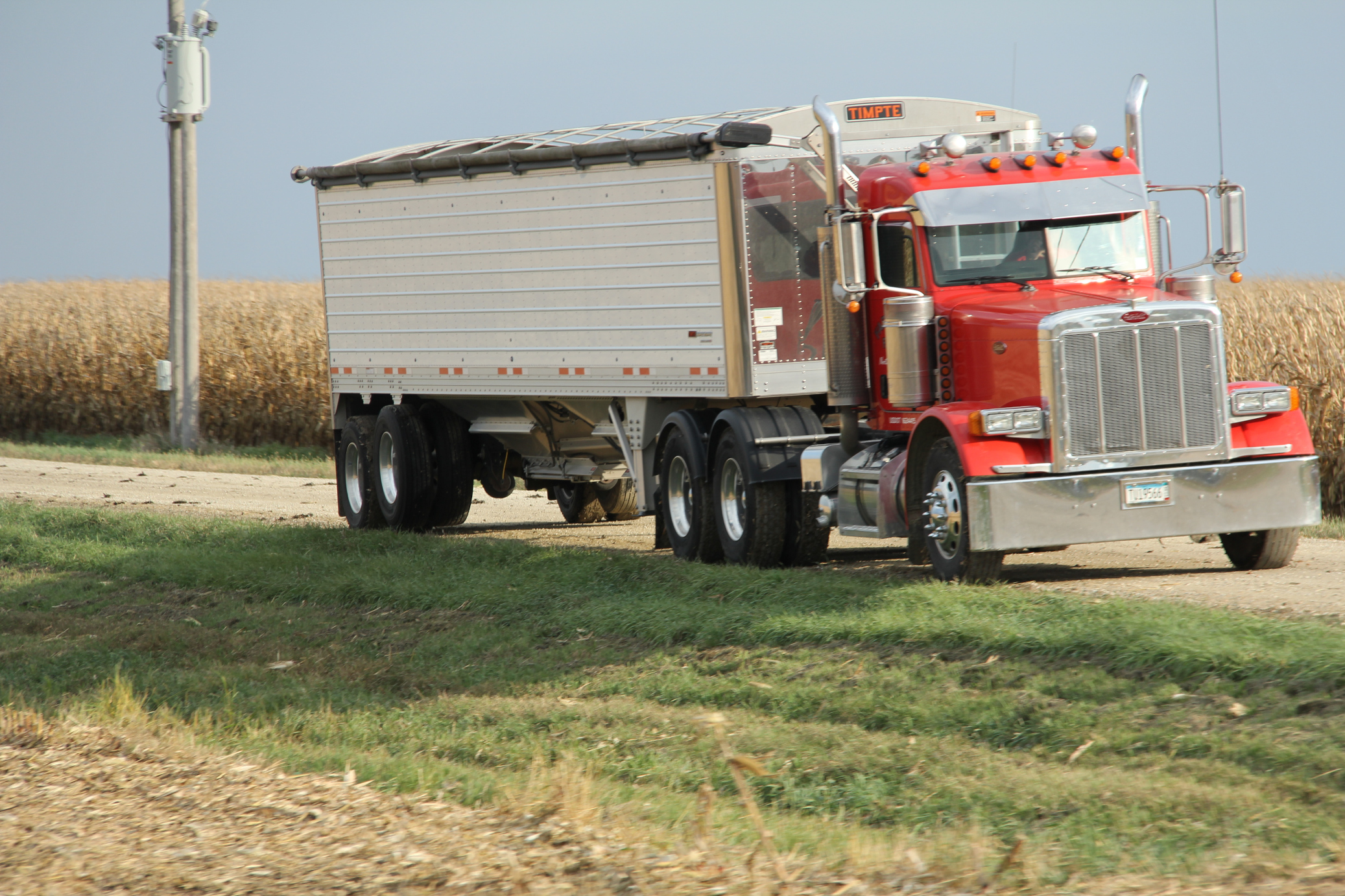
This time of year, parked grain trucks are a common site along fields and roads, this one by a cornfield in the Nerstrand area. (Minnesota Prairie Roots copyrighted photo October 2025)
Farming is not easy with its risks and challenges and uncertainties. Yet, there’s a certain reward for crop farmers in seeing seeds they’ve sown germinate and grow into thriving plants under the spring and summer sun. There’s a certain satisfaction in harvesting those mature crops each September and October.
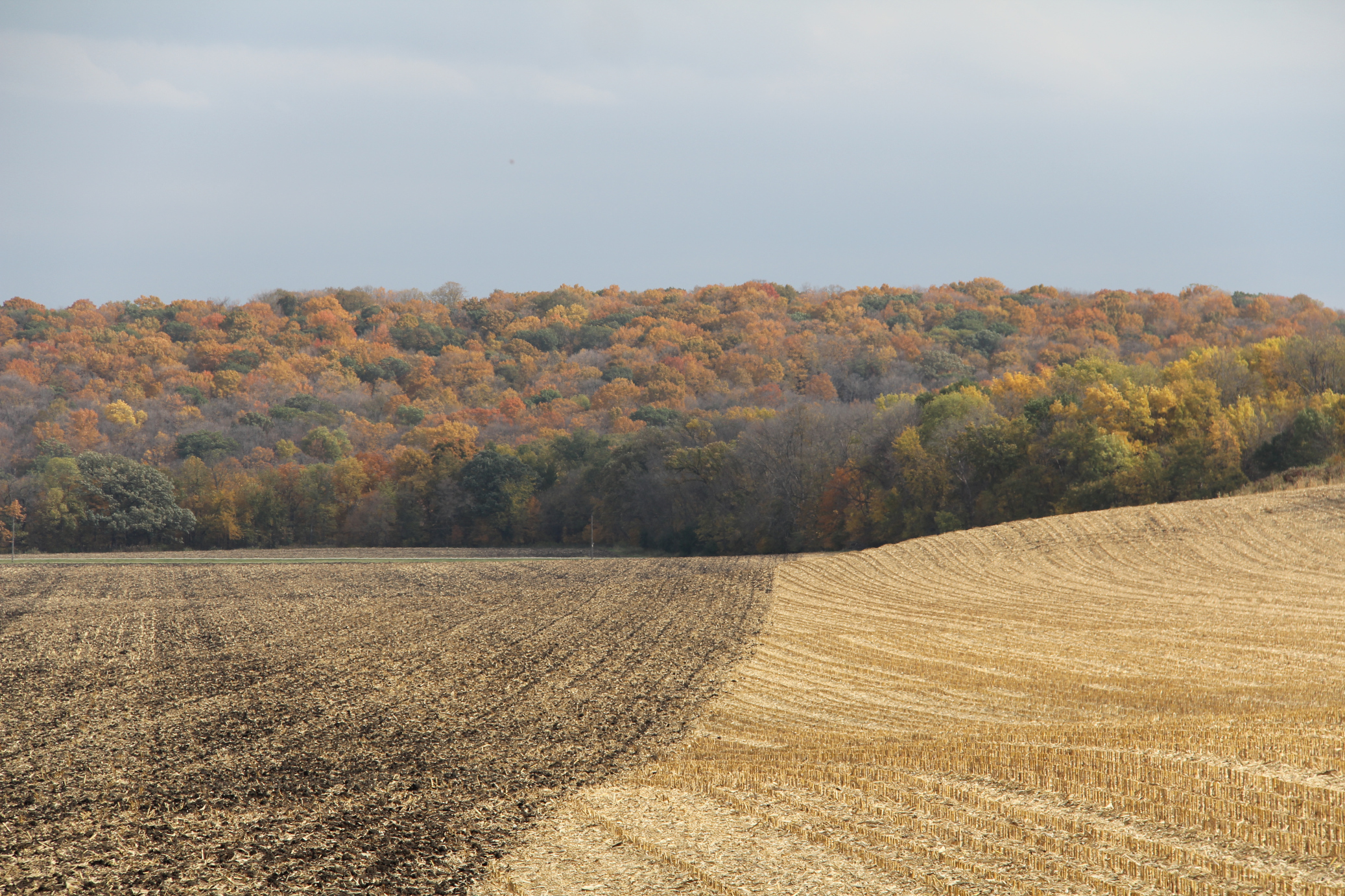
Northeast of Faribault, a colorful tree line backdrops harvested fields. (Minnesota Prairie Roots copyrighted photo October 2025)
And for me, raised on the land and witness to many harvests, I feel memories rushing back as I watch combines move across farm fields deep in the southern Minnesota countryside. I feel reconnected to the land, the place that embraced and helped shape me as a person, writer, photographer and poet.
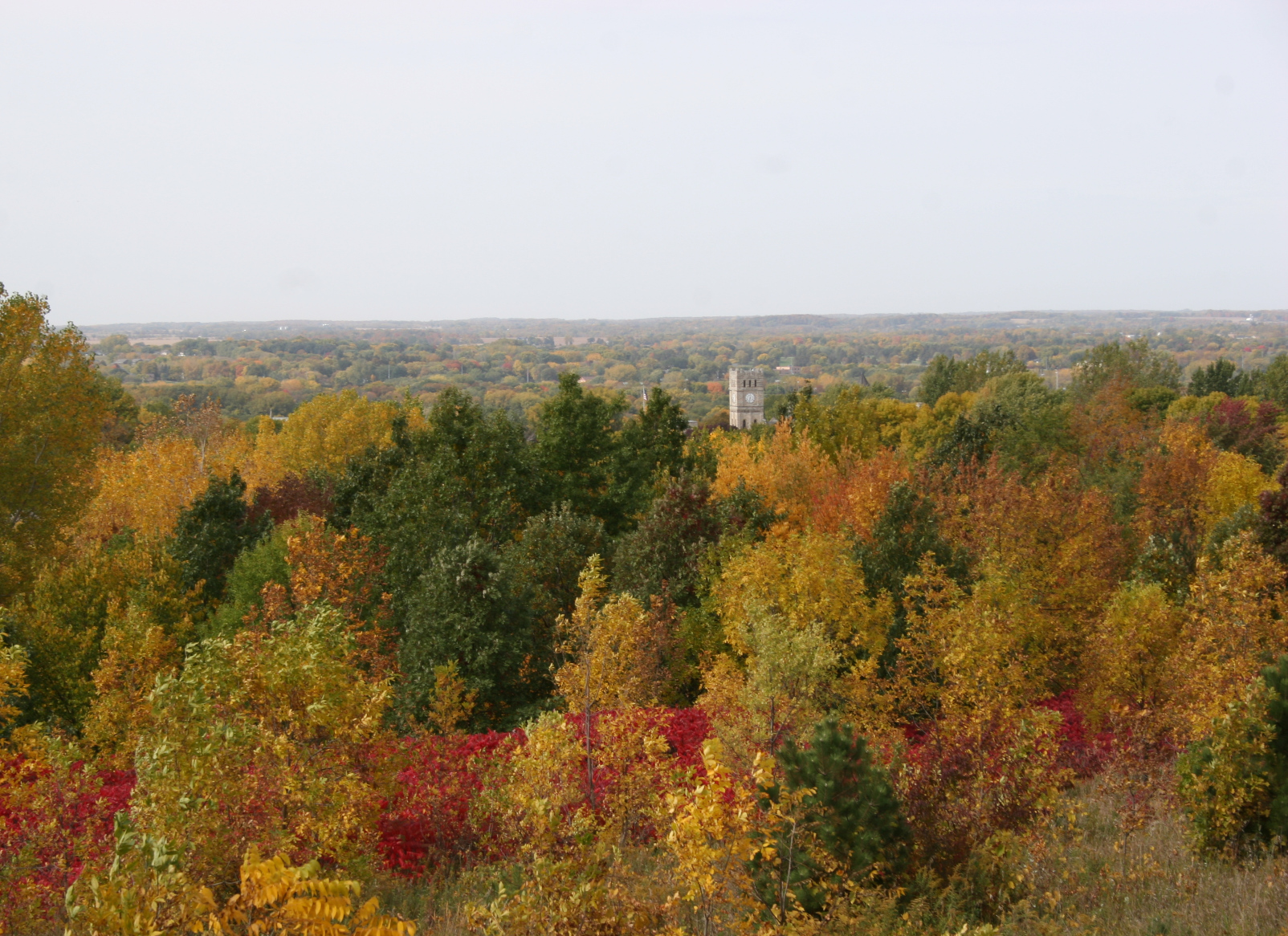
City View Park on Faribault’s east side provides a sweeping, colorful view of the city in October. (Minnesota Prairie Roots copyrighted file photo 2022)
IF I WANT TO VIEW fall colors, I needn’t go far. I can step into my backyard to see glorious golden maples. Up the street from my Willow Street home, more trees blaze. If I follow Second Avenue to its intersection with Seventh Street, I’ll find especially vibrant trees on a corner property owned by friends Mark and Laurie. There are more splashy hues along Seventh Street and all about town. Tree-lined bluffs rising above the Straight River burst with color. Faribault is a beautiful, historic riverside city anytime, but especially in autumn.
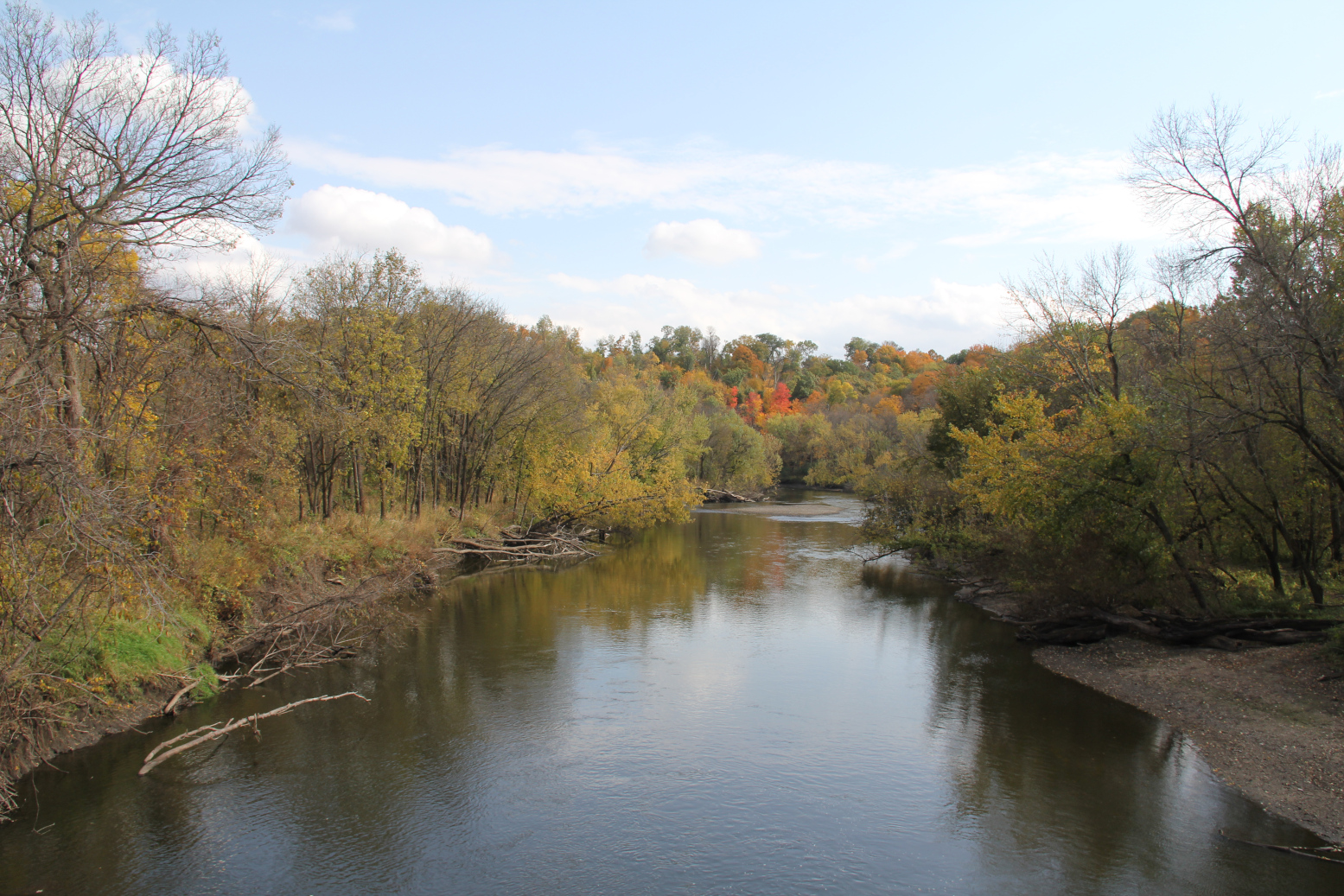
A view of the Cannon River from the pedestrian bridge at the Cannon River Wilderness Area between Faribault and Northfield. (Minnesota Prairie Roots copyrighted photo October 2025)
Yet, even with all the colorful trees in town, I like to go into the countryside to see the colors, too. And it’s not just about the orange, red and yellow leaves. It’s also about sky and water, fields and farms, the “all” which comprises and defines rural Minnesota in September and October.
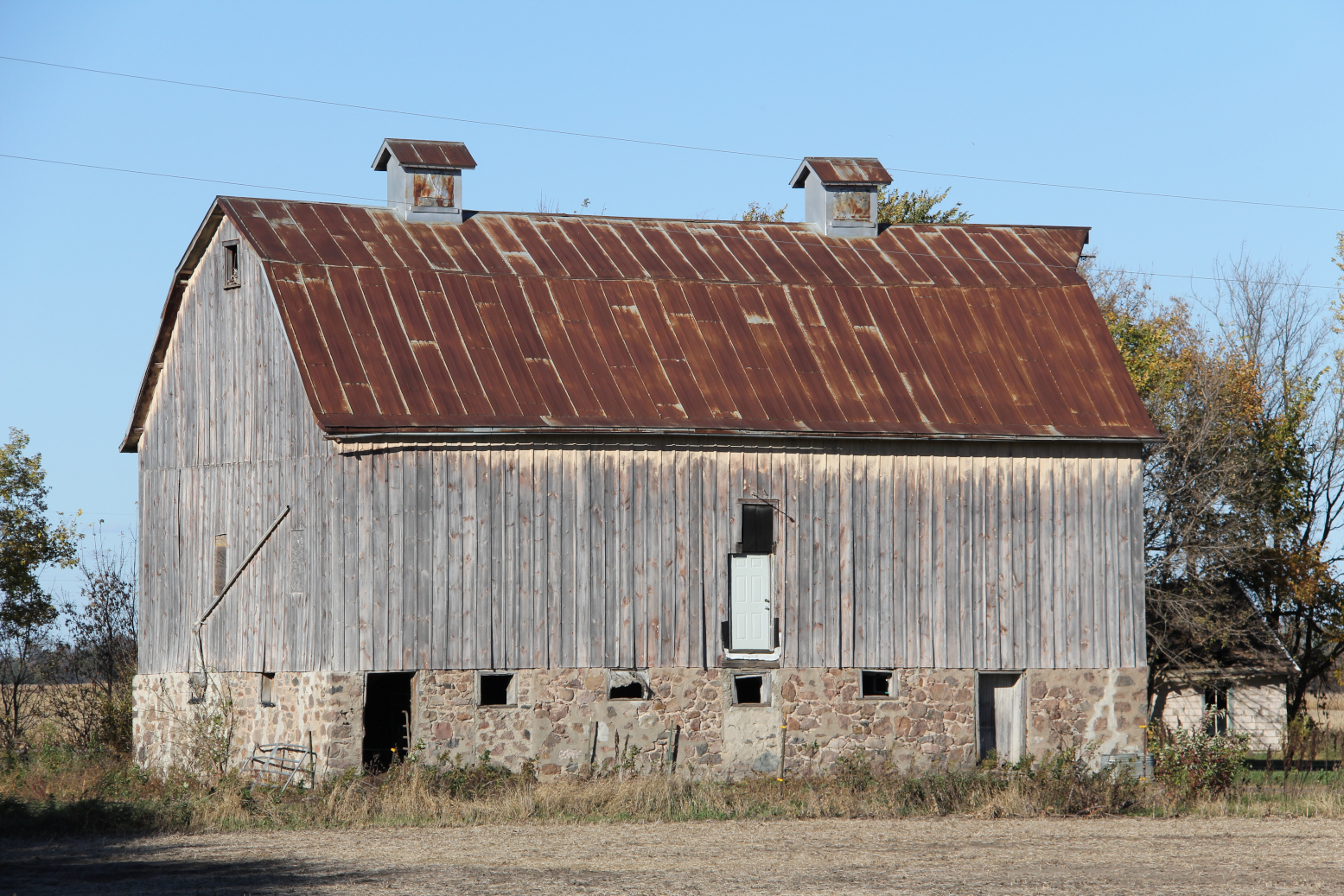
This weathered barn with the fieldstone foundation sits along the gravel road leading to Richter Woods County Park west of Montgomery in Le Sueur County. (Minnesota Prairie Roots copyrighted photo October 2025)
It’s also about following back gravel roads, the vehicle kicking up dust. It’s about meeting massive farm equipment on roadways. It’s about stopping to look at a weathered barn. It’s about traveling at a slower pace.
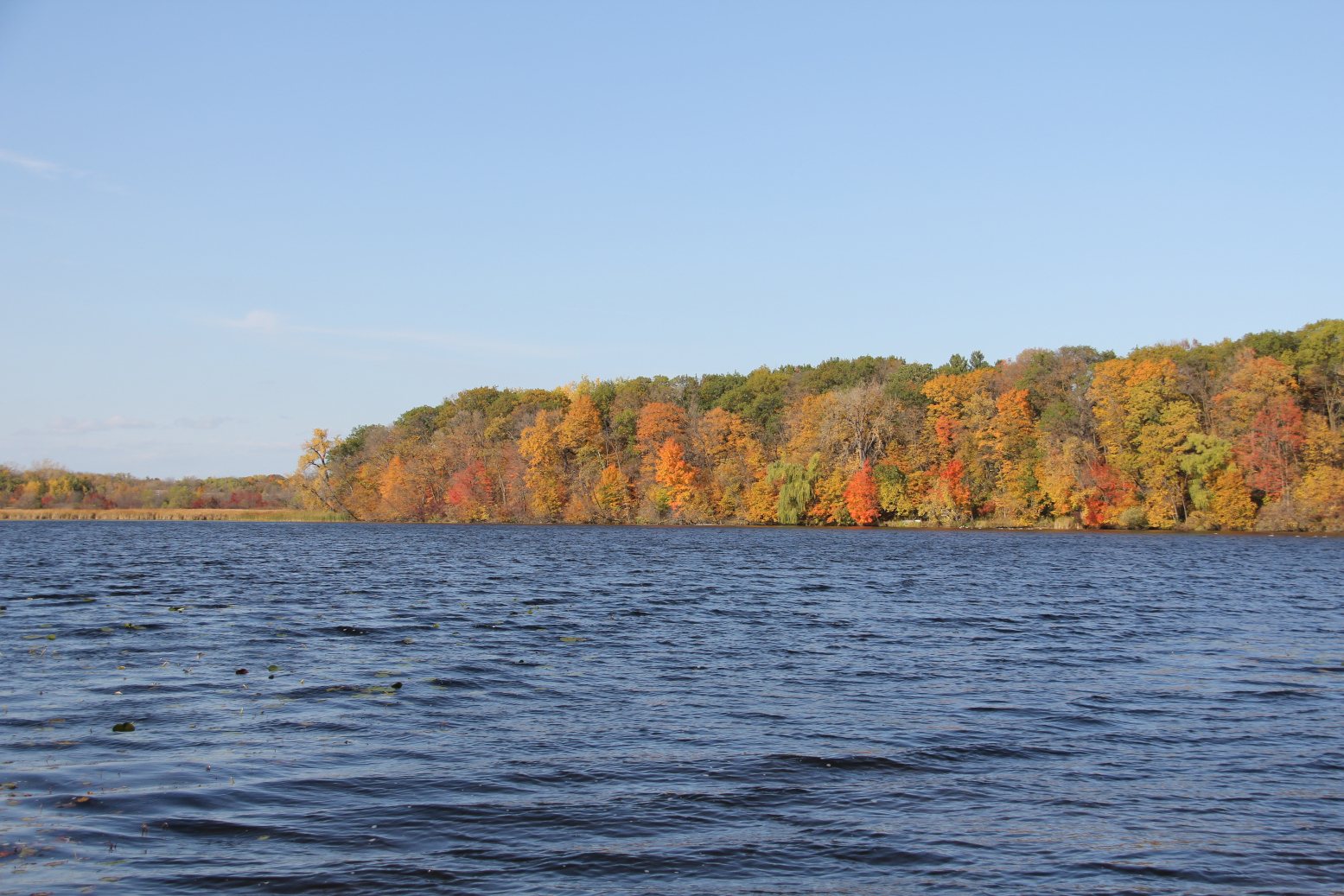
A view of Kelly Lake and a colorful shoreline. (Minnesota Prairie Roots copyrighted photo October 2025)
And it’s about stopping, exiting the van to walk into the woods or stand along the shoreline of an area lake to admire a colorful tree line.
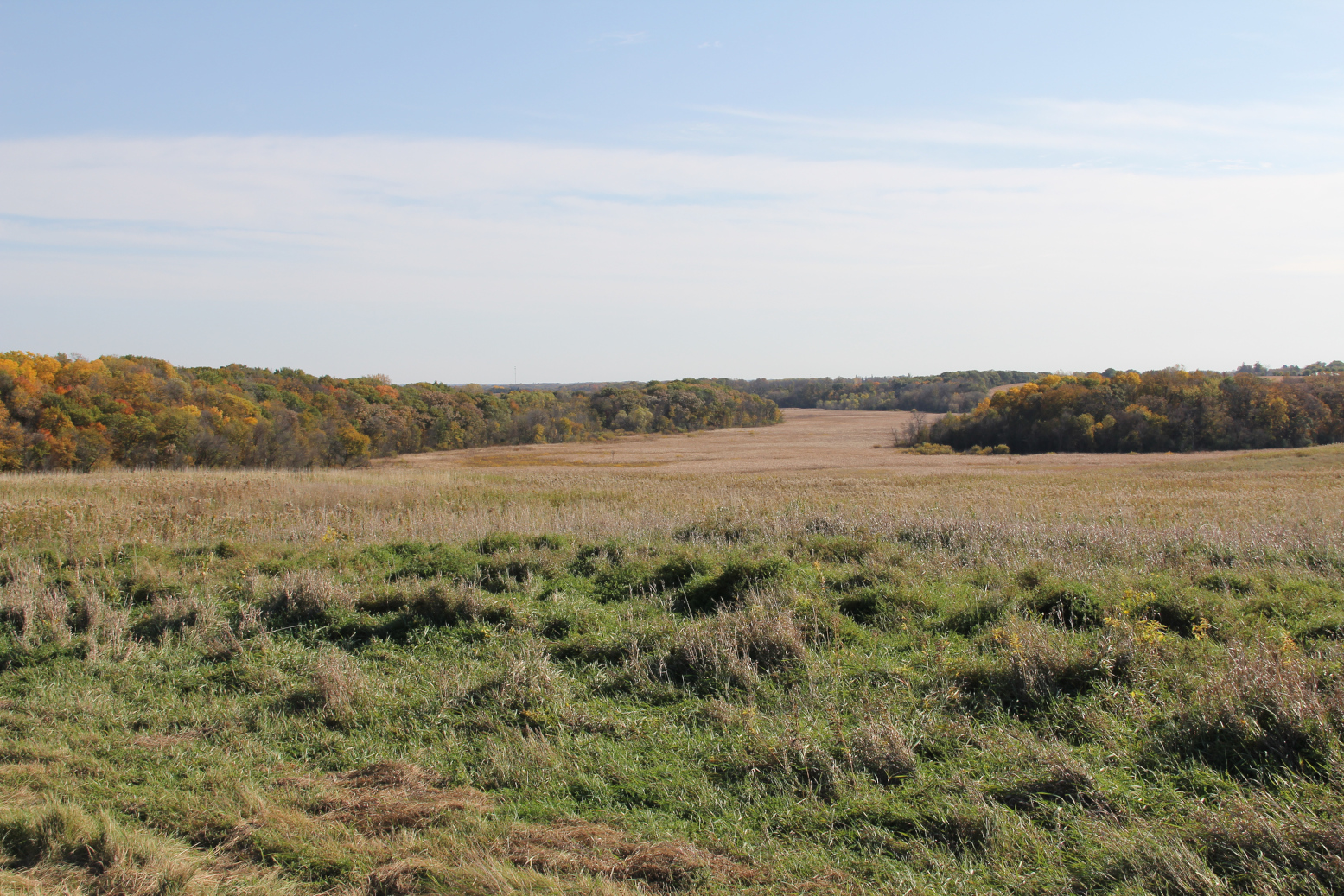
A sweeping view of the countryside in the Union Lake area. (Minnesota Prairie Roots copyrighted photo October 2025)
As a native of the mostly treeless southwestern Minnesota prairie, it was not until I moved to Rice County in 1982 that I fully realized just how overwhelmingly stunning this season is in our state. I didn’t grow up going on vacations with the exception of two—one at age four to Duluth and the second to the Black Hills of South Dakota during my elementary school years. But each autumn, my siblings and I piled into the Chevy with our parents for a Sunday afternoon fall color drive along the Minnesota River Valley from north of Echo to Morton.
A partially-harvested cornfield in the Union Lake area. (Minnesota Prairie Roots copyrighted photo October 2025)
And so my love of Sunday drives (which were frequent during my youth because Dad wanted to look at the crops) evolved. As did my understanding that all we needed to do was travel a short distance to see a different landscape. One with woods, colorful woods, in autumn.
Colorful trees by Union Lake. (Minnesota Prairie Roots copyrighted photo October 2025)
The topography of Rice County is incredibly diverse. From the familiar flat prairie to rolling hills and valleys to lakes and rivers and streams, it’s all right here. Lovely.
Sometimes you just have to stop and look up, here in Richter Woods. (Minnesota Prairie Roots copyrighted photo October 2025)
I encourage Sunday afternoon drives, or whatever day works for you. Forget about schedules and the work at home. Get in the vehicle and go. Go local. Appreciate what’s right in your backyard.
Pull over along a gravel road, if it’s safe to do so, and take in the countryside. Stand along the shore of a lake. Walk into the woods. Hear the crunch of dried leaves beneath your soles. Look up at the colorful leaves. And see, really see, the autumn beauty that surrounds you…before winter strips the land, leaving it naked and exposed.
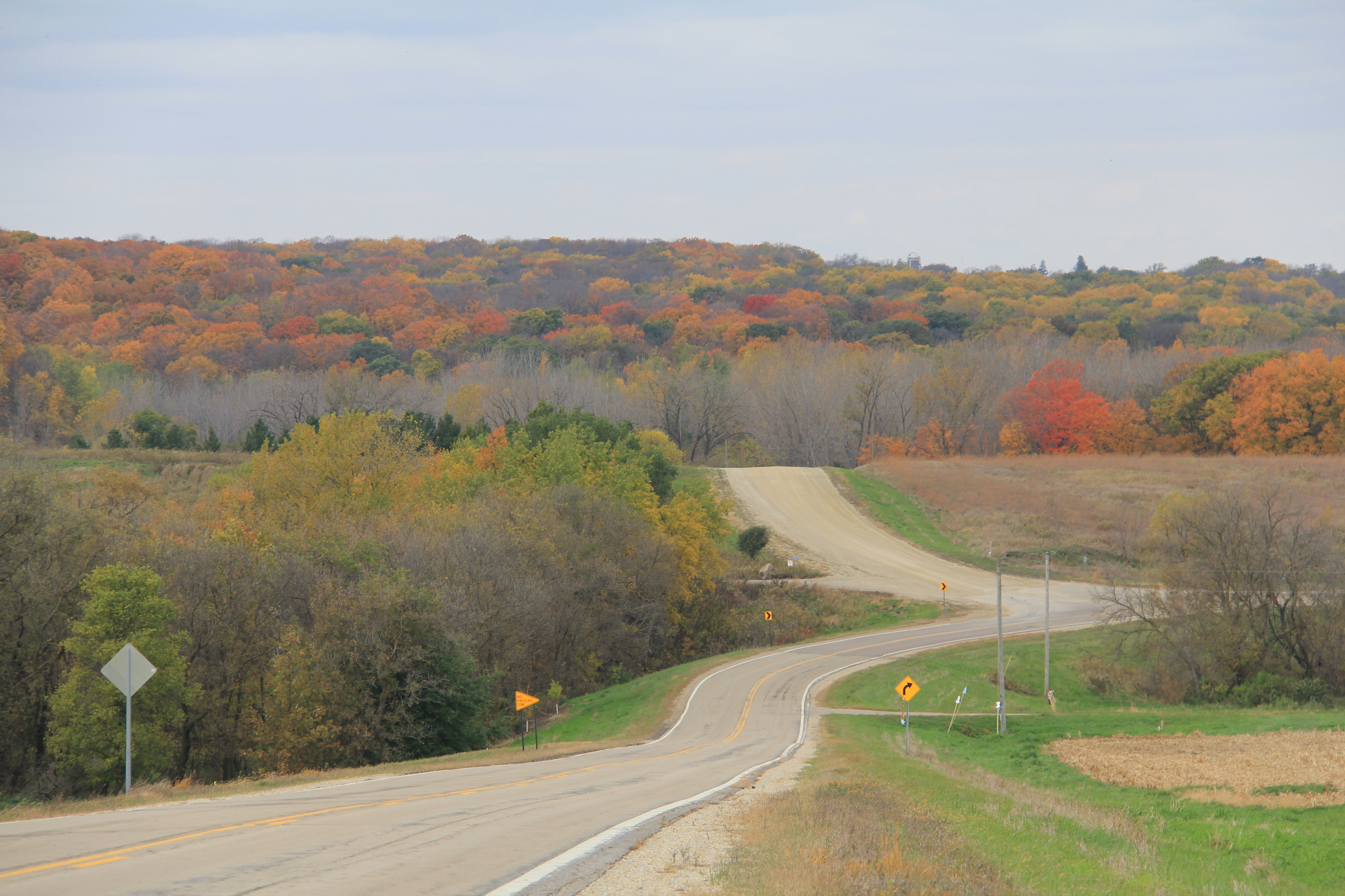
Driving along Rice County Road 30 from Nerstrand toward Valley Grove. (Minnesota Prairie Roots copyrighted photo October 2025)
A HILLSIDE ABLAZE in color appears before us as our van descends Rice County Road 30 northwest of Nerstrand. The road curves, twists into the valley between farmland and farm sites until we reach our destination, Valley Grove churches.
The gated entry to the historic Valley Grove churches near Nerstrand and south of Northfield. (Minnesota Prairie Roots copyrighted photo October 2025)
Randy steers the van off the paved road onto the gravel driveway leading to these two historic Norwegian immigrant churches standing high atop a hill overlooking the rolling countryside. This secluded place rates as a favorite destination of ours any time of year, but especially in autumn.
From the churchyard, I focus my telephoto lens across the prairie to the distant woods. (Minnesota Prairie Roots copyrighted photo October 2025)
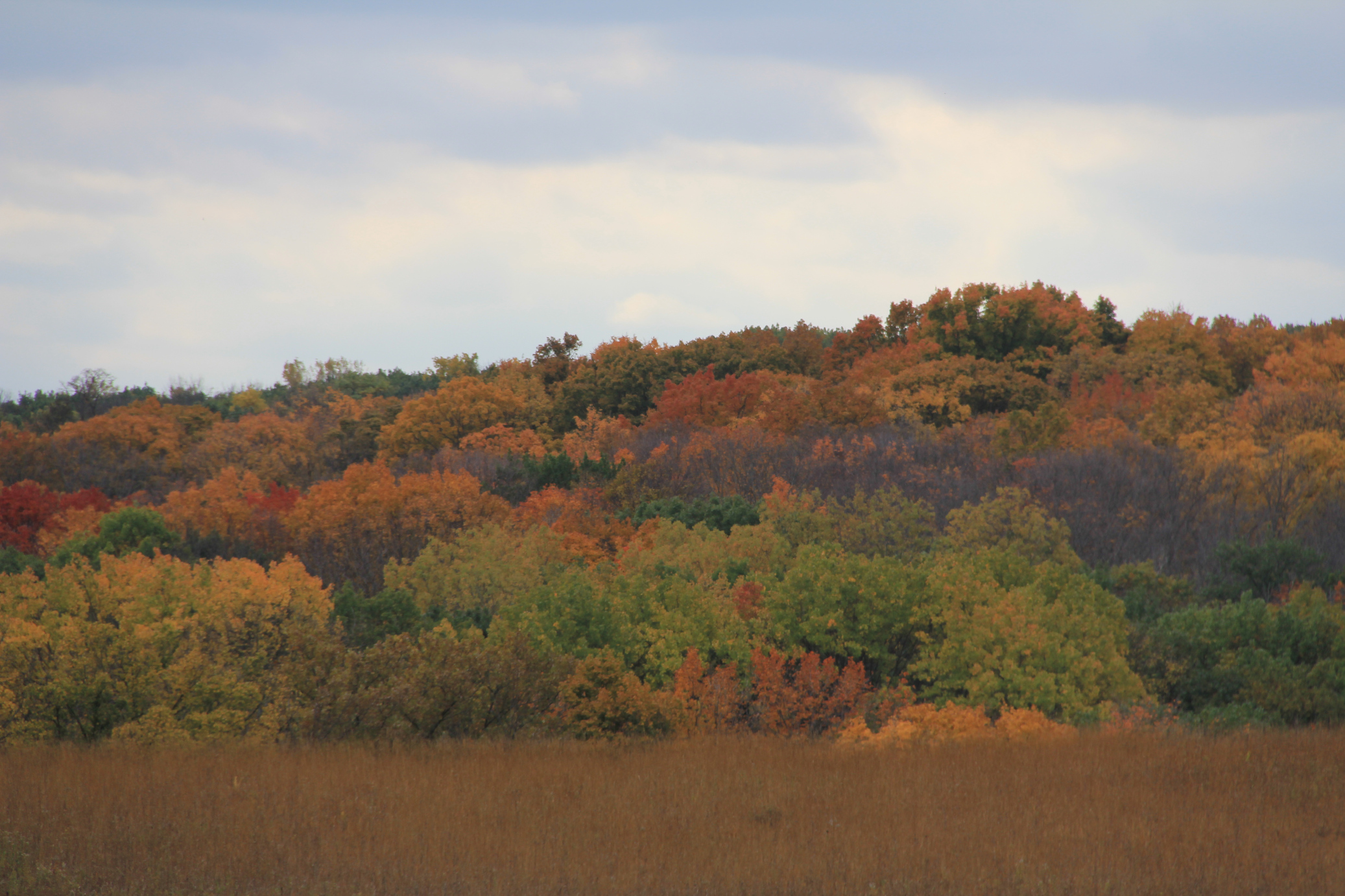
The hilltop location offers a sweeping view of the surrounding land, including the Big Woods, especially colorful now. I simply cannot get enough of the red, orange and yellow tree lines that provide a painterly backdrop to this bucolic setting.
The 1894 wooden church opens today for weddings, a Country Social, a Christmas Eve serviceand other special events. The stone church serves as a fellowship hall/gathering spot. (Minnesota Prairie Roots copyrighted photo October 2025)
Here the 1862 and 1894 churches rise, a testament to the faith and endurance of the Norwegian immigrants who settled this area. The topography likely reminded them of the homeland they left for new opportunities in America.
The prairie fronts woods ablaze in color, as viewed from the churchyard. (Minnesota Prairie Roots copyrighted photo October 2025)
On this day, as the wind blows cold and strong across the churchyard—so much so that we eat our picnic lunch inside the van—I ponder how these foreigners felt once winter arrived in all her cold and snowy starkness. Perhaps they wondered why they ever left Norway.
A vibrant bush on prairie’s edge. (Minnesota Prairie Roots copyrighted photo October 2025)
But on this fall day, I recognize also how much they must have appreciated this beautiful hilltop location. The Valley Grove Preservation Society works hard to retain the natural beauty of these 50 acres of land. The trees. The tall prairie grasses. The wildflowers. They also maintain the two aged houses of worship—the old stone church built first and the adjacent wood-frame church constructed 32 years later.
Grassy paths lead into and through the prairie. (Minnesota Prairie Roots copyrighted photo October 2025)
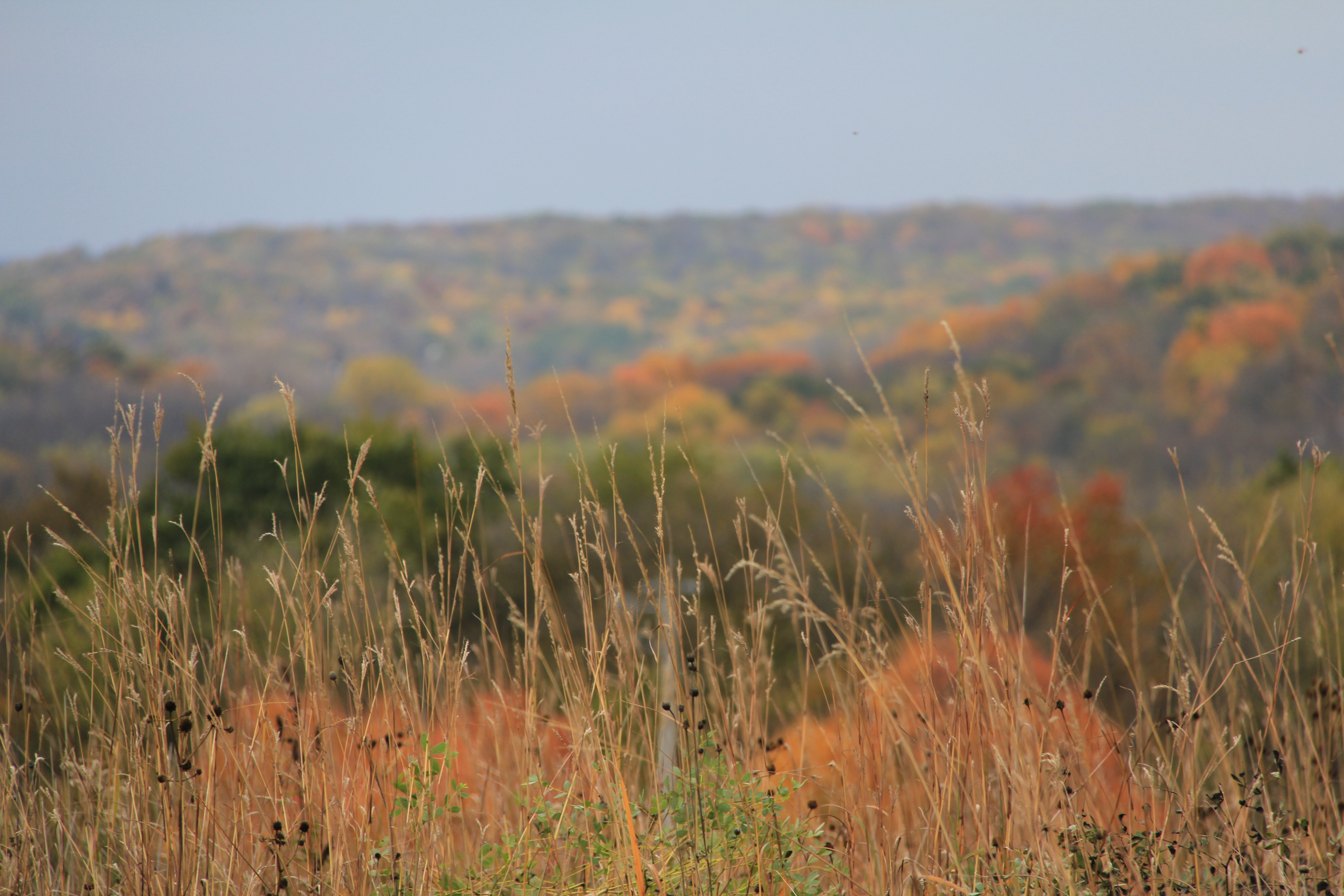
Prairie wildflowers dying and going to seed. (Minnesota Prairie Roots copyrighted photo October 2025)
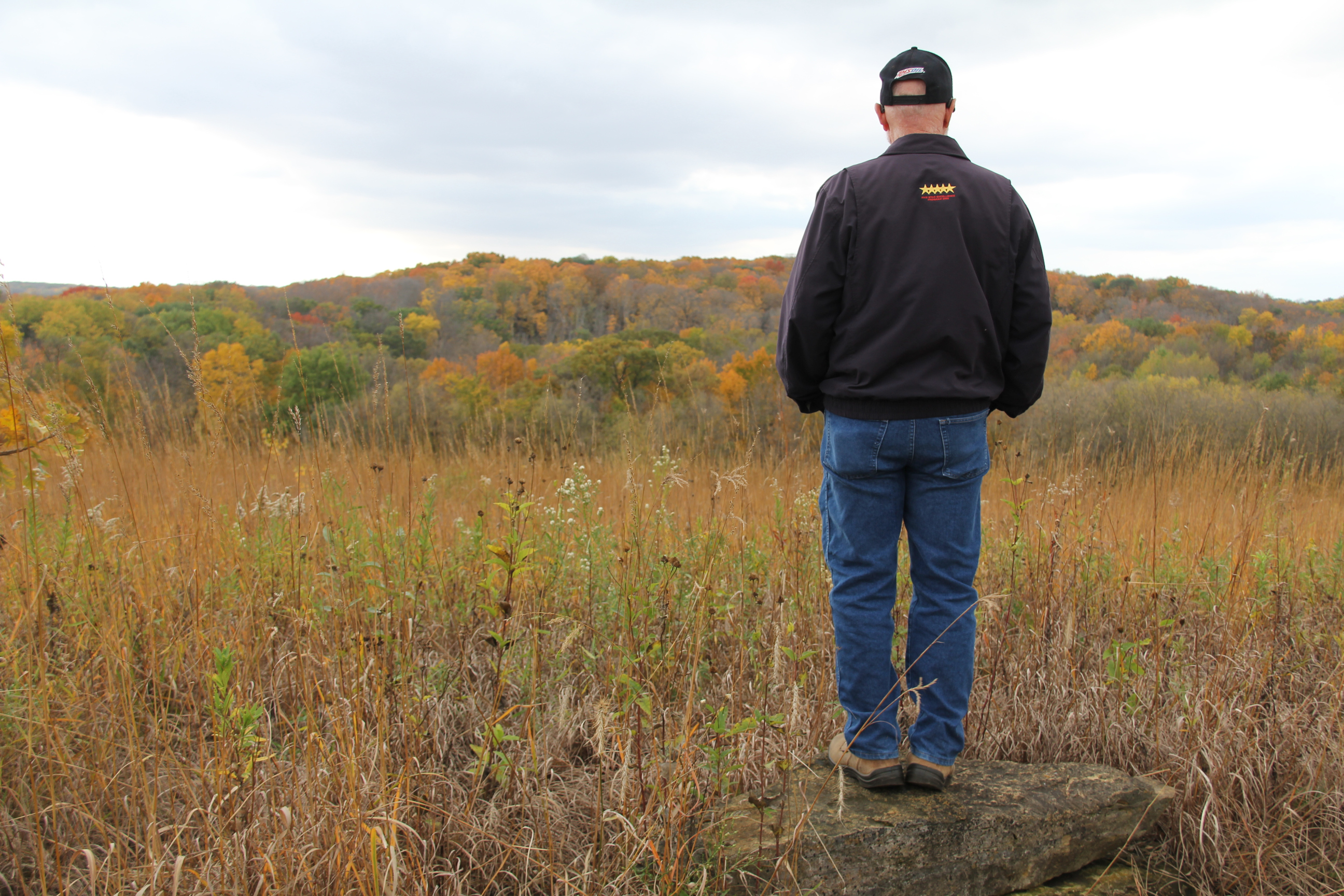
Randy steps up for a better view of the distant Big Woods from the prairie. (Minnesota Prairie Roots copyrighted photo October 2025)
Beyond the churches and surrounding cemetery, we follow an uneven path into the prairie, pausing occasionally to take in the colorful, distant trees. Randy steps atop a limestone slab for a better view. I spot a garter snake a step down from his feet, then edge away, not at all fond of snakes.
On the other side of the rolling prairie, the churches rise. (Minnesota Prairie Roots copyrighted photo October 2025)
Turning back toward the churchyard a bit later, I see the churches rise like ships upon an ocean of prairie grass. It’s not hard to visualize Norwegian immigrants boarding ships, sailing across the massive ocean bound for America.
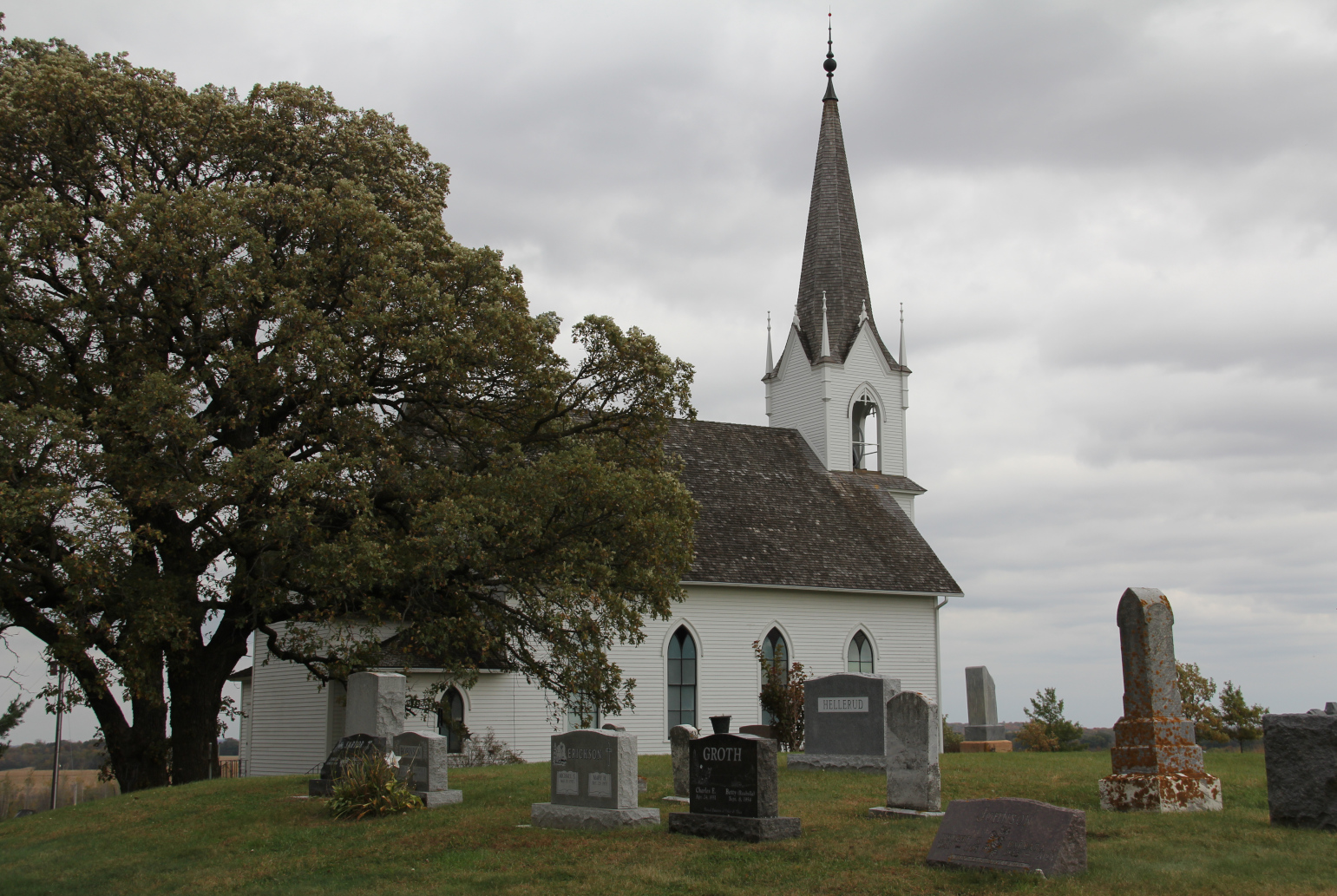
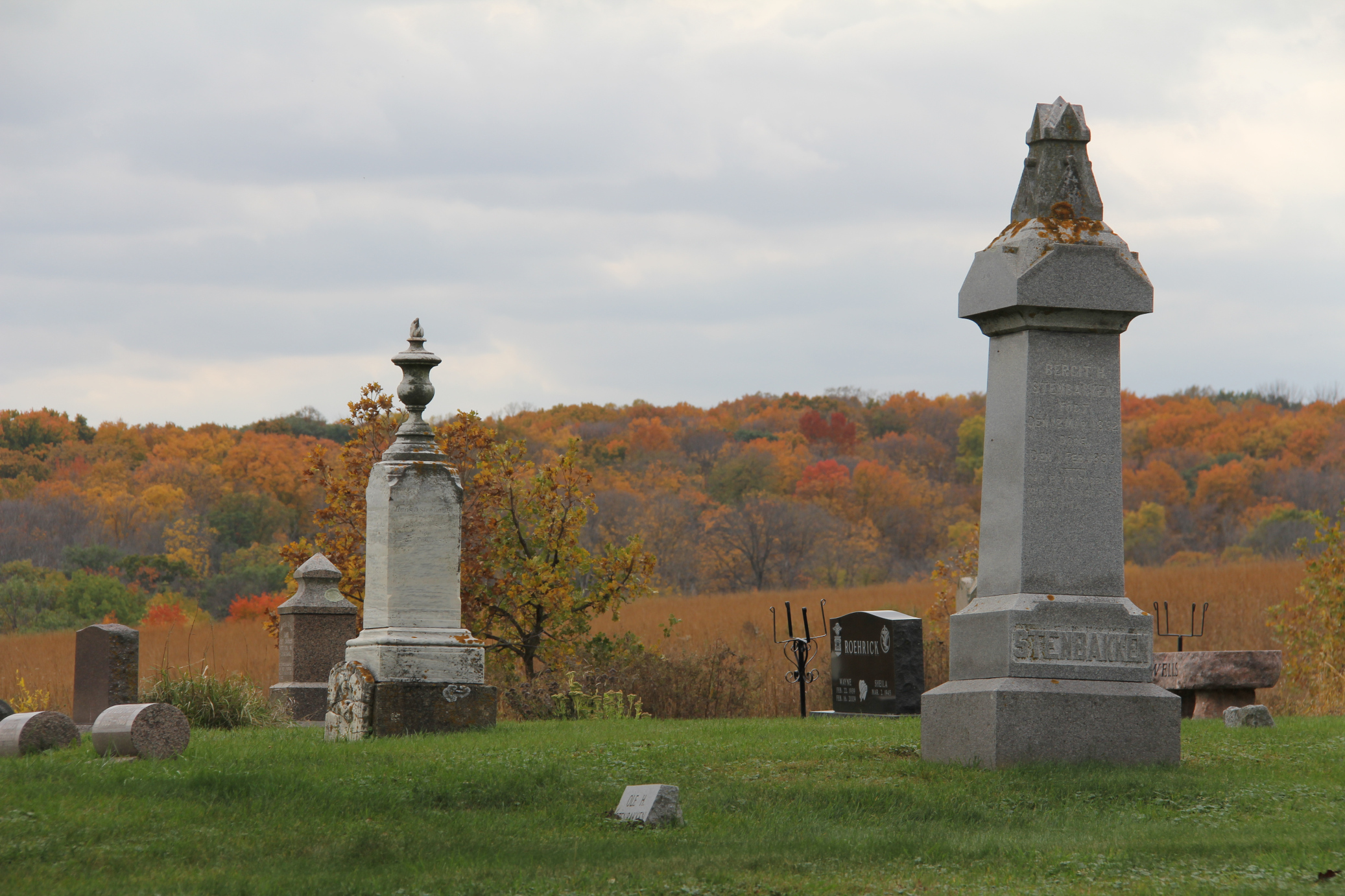
Aged and new tombstones fill the Valley Grove cemetery. (Minnesota Prairie Roots copyrighted photo October 2025)
The hopes and dreams they carried to America and eventually to Minnesota imprint upon tombstones in names and dates and words. Their hopes imprint, too, upon this land.
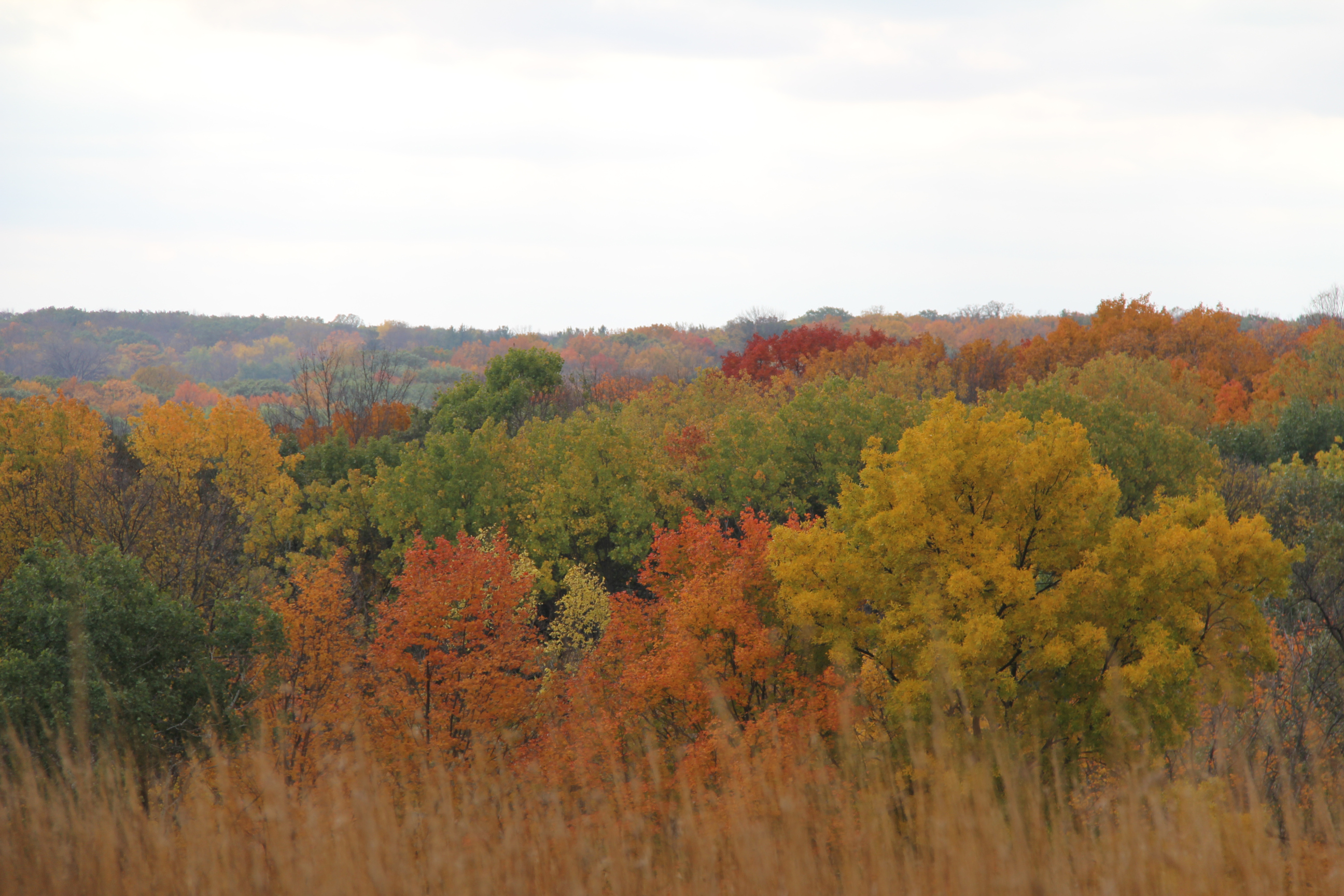
Zooming in on the colorful trees surrounding Valley Grove. (Minnesota Prairie Roots copyrighted photo October 2025)
When I walk this ground, I feel the imprints of souls beneath my feet. This place seems sacred. Sacred in the voices I hear if I lean into the wind and listen. Sacred in the vistas I view.
Found at a gravesite, a serenity stone. (Minnesota Prairie Roots copyrighted photo October 2025)
Valley Grove is a place of serenity. Of quiet. Of natural beauty unequal in the autumn of the year.
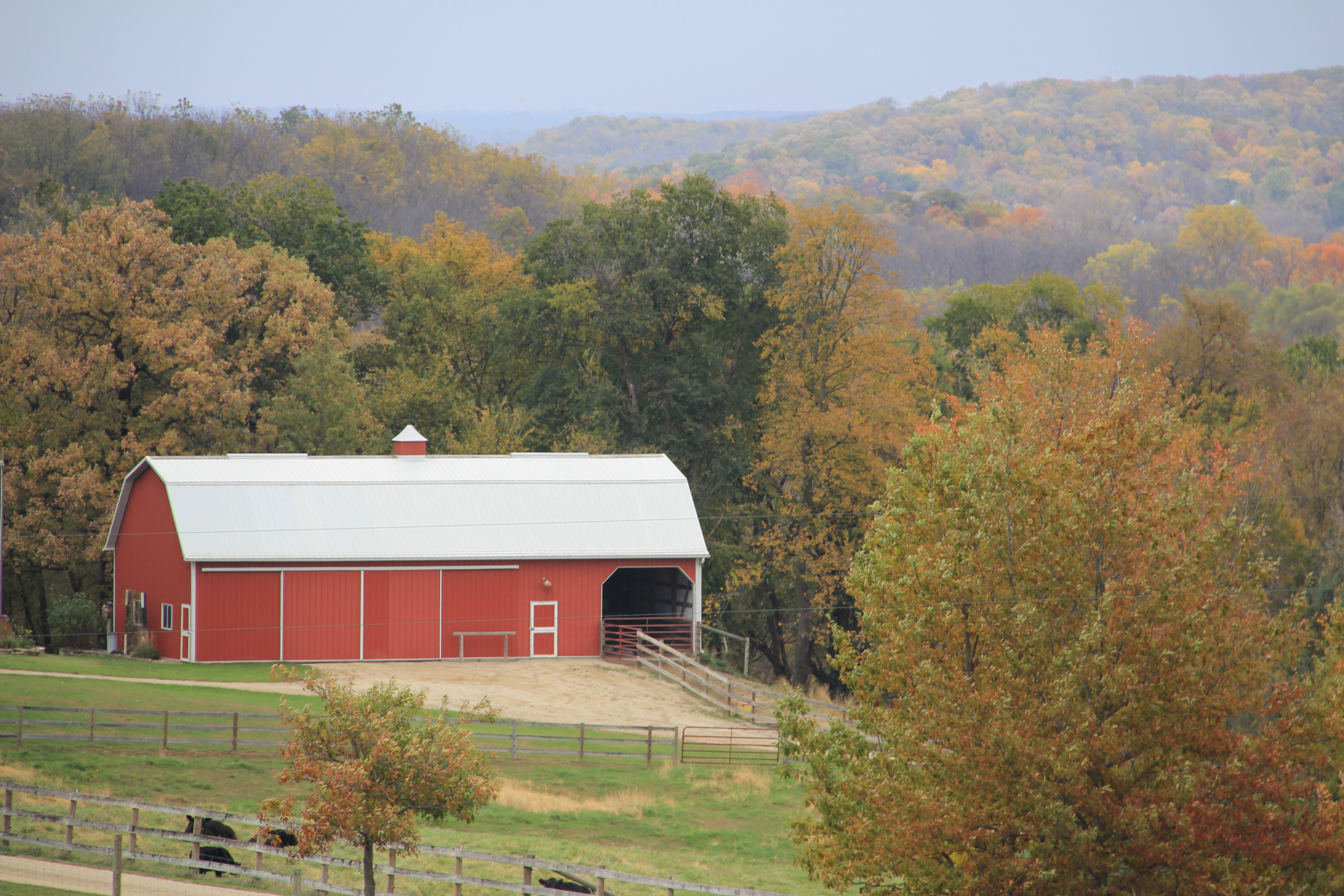
A farm site nestles among the woods below Valley Grove. (Minnesota Prairie Roots copyrighted photo October 2025)
All of this I find, feel, experience, see on an autumn day at Valley Grove, among the rolling hills and valleys of northeastern Rice County.
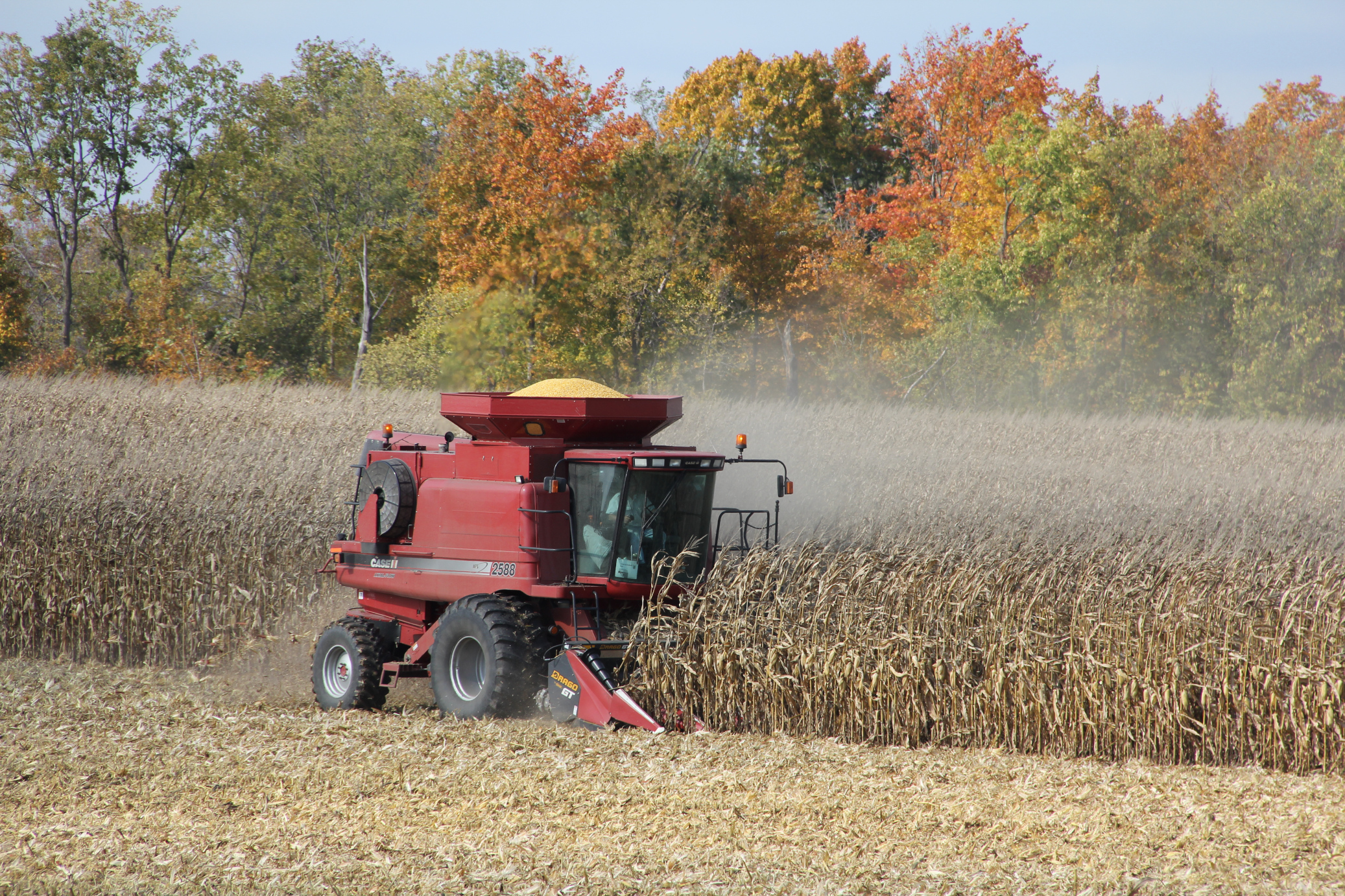
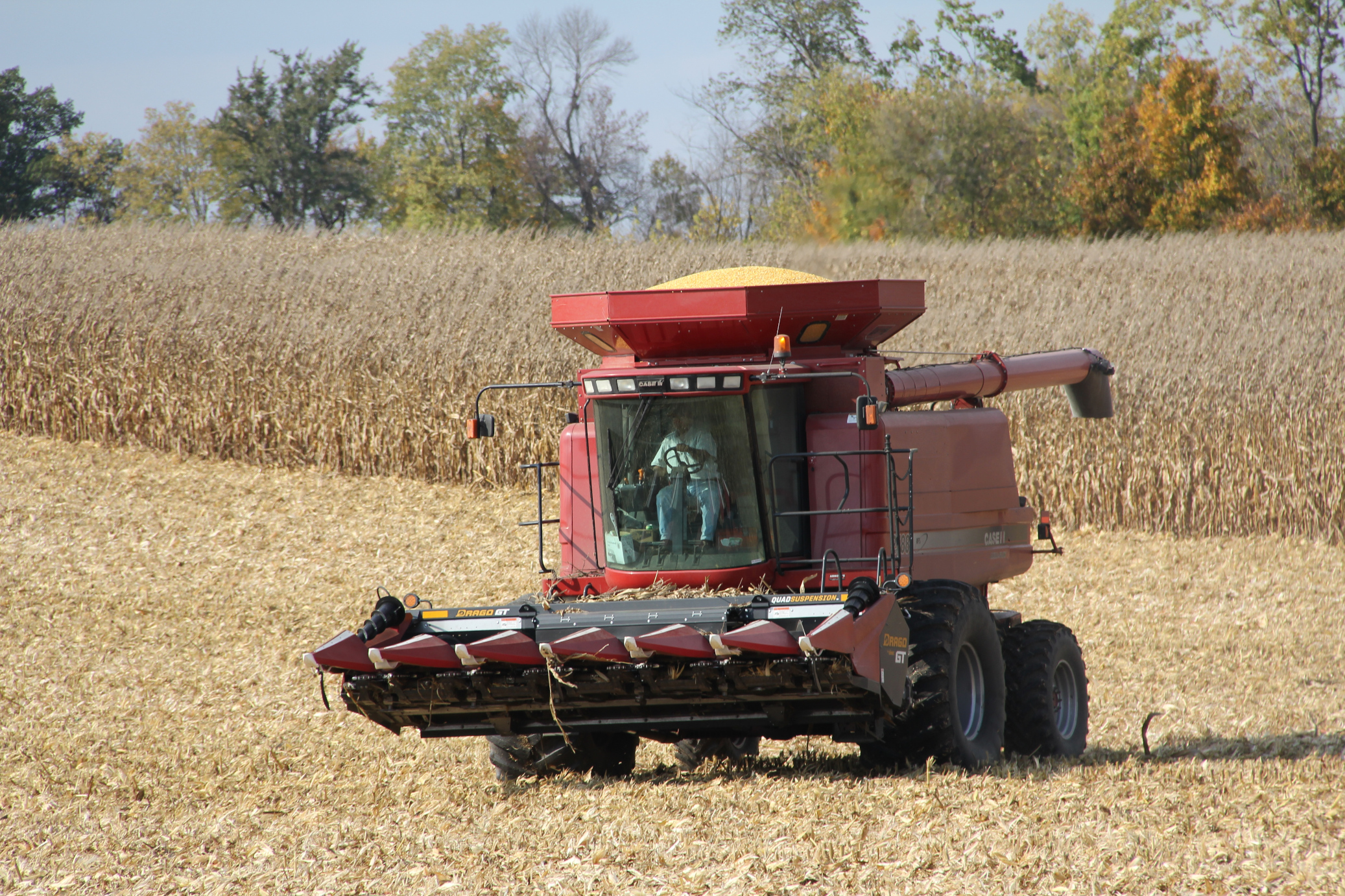
Combining soybeans in rural Rice County, Minnesota. (Minnesota Prairie Roots copyrighted file photo October 2022)
WHEN I FIRST READ the message bannering the United States Department of Agriculture website during the current government shutdown, my jaw dropped. In a two-sentence statement, “The Radical Left Democrats” are blamed for the closure of the federal government. How unprofessional, I thought, to so blatantly put politics out there on a website designed to help America’s farmers. But then again, why should this surprise me?
United States Secretary of Homeland Security Kristi Noem is doing the same in a video message blaming Democrats for the shutdown. She expects this to be broadcast in airport terminals. Many are opting not to air her clearly political statement. And they shouldn’t. It’s unprofessional and wrong in more ways than I can list, no matter what your political affiliation may be.
But back to that message on the USDA website. It goes on to say that President Donald Trump wants to keep the government open “and support those who feed, fuel and clothe the American people.” Now that is certainly a noble statement at face value, one we could all applaud. Who doesn’t want to support our farmers? But in the context of what the President has done to farmers, the statement seems laughable.
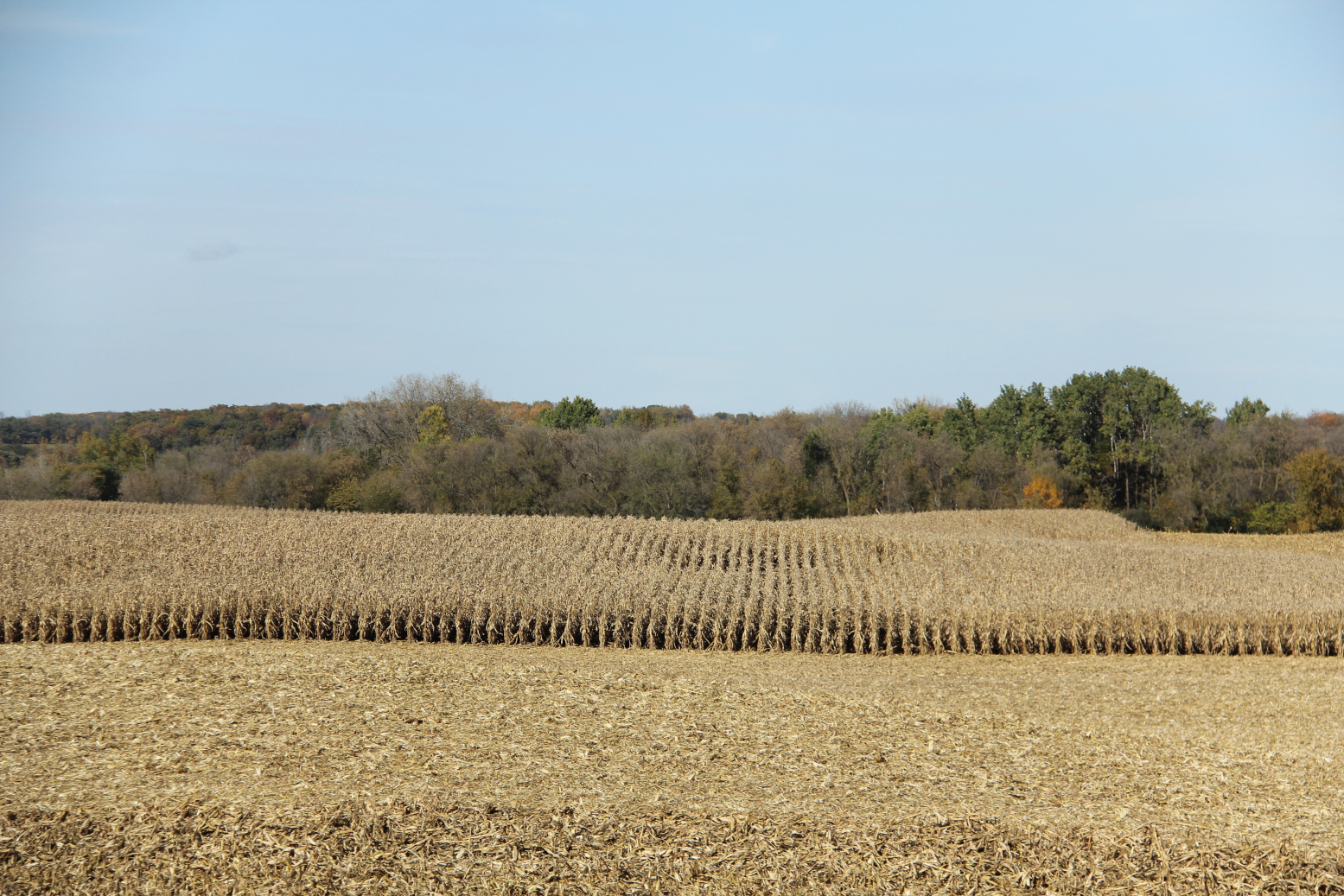
Rural Minnesota, planted in corn and soybeans. (Minnesota Prairie Roots copyrighted file photo October 2024)
Here in the heartland, farmers have lost a major market for soybeans, my state’s top agricultural export. China has stopped buying soybeans from not only Minnesota, but America. That’s billions of dollars in lost income. And all because of the ongoing trade war between the U.S. and China, begun by the man who slapped tariffs—now averaging 58 percent—on Chinese imports with a threat to increase that to 100 percent. I’m no economist. But even I understand China’s retaliatory tariffs and actions to tap other markets for soybeans. They went to Brazil and Argentina.
And now President Trump proposes sending $20 billion in aid to Argentina, all tied to an upcoming election there. Why would we bail out a country exporting their soybeans to China while our own financially-strapped farmers are suffering because they’ve lost a key market? This makes no sense to me. Again, I’m not an economist or a politician, simply an ordinary American citizen, with a farm upbringing (and who decades ago freelanced for the Minnesota Soybean Growers Association), questioning the logic of any of this.
Even without the Argentinian component tossed into the mix, there’s more. President Trump has proposed an aid package for farmers to help them get through the financial crisis he created via his tariffs and the resulting trade war with China. That aid would come from the money collected from tariffs. Now I know farmers—my dad was one—are fiercely independent and would rather have a market for their cash crops than government aid. If not for the tariffs…
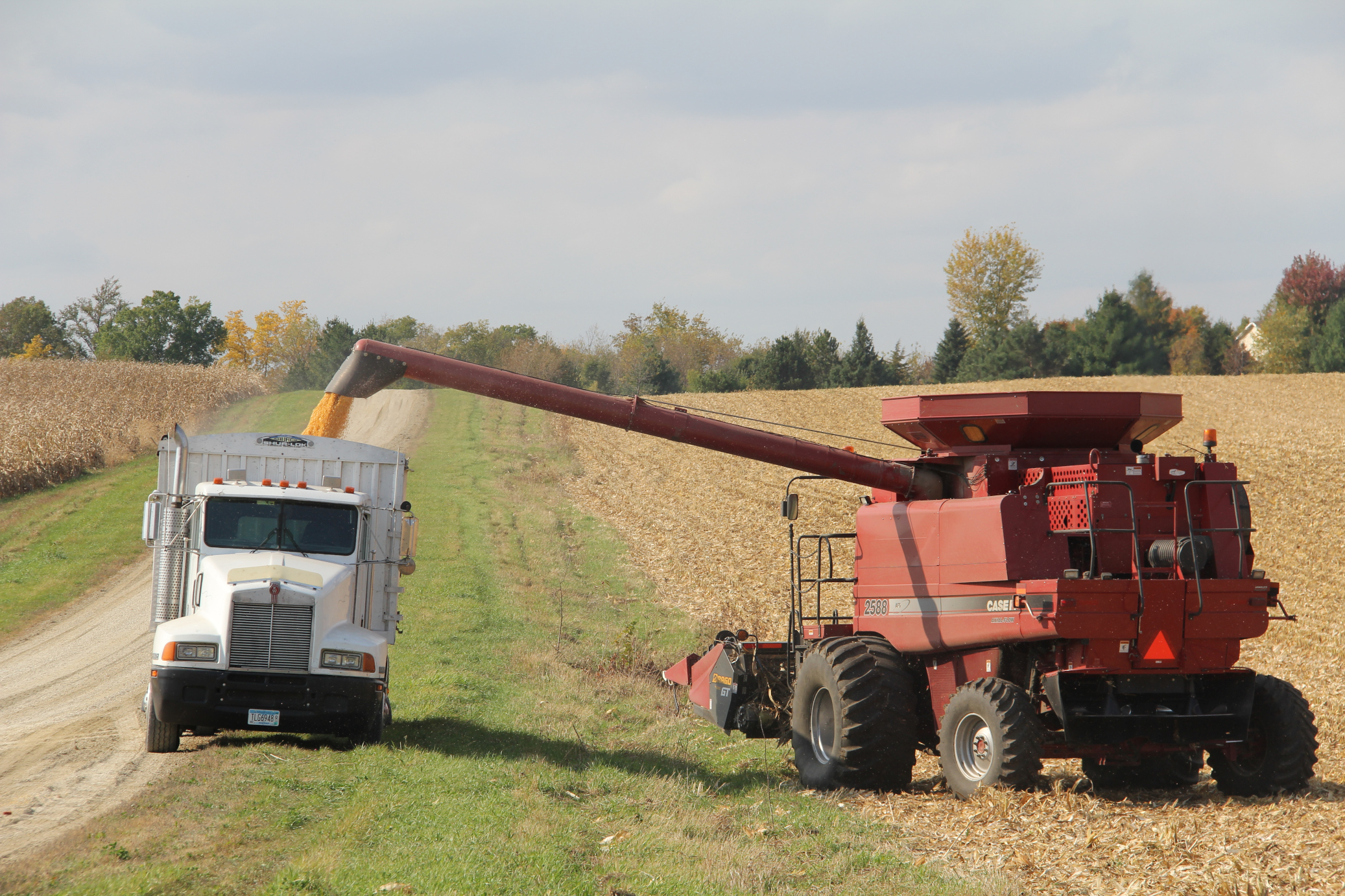
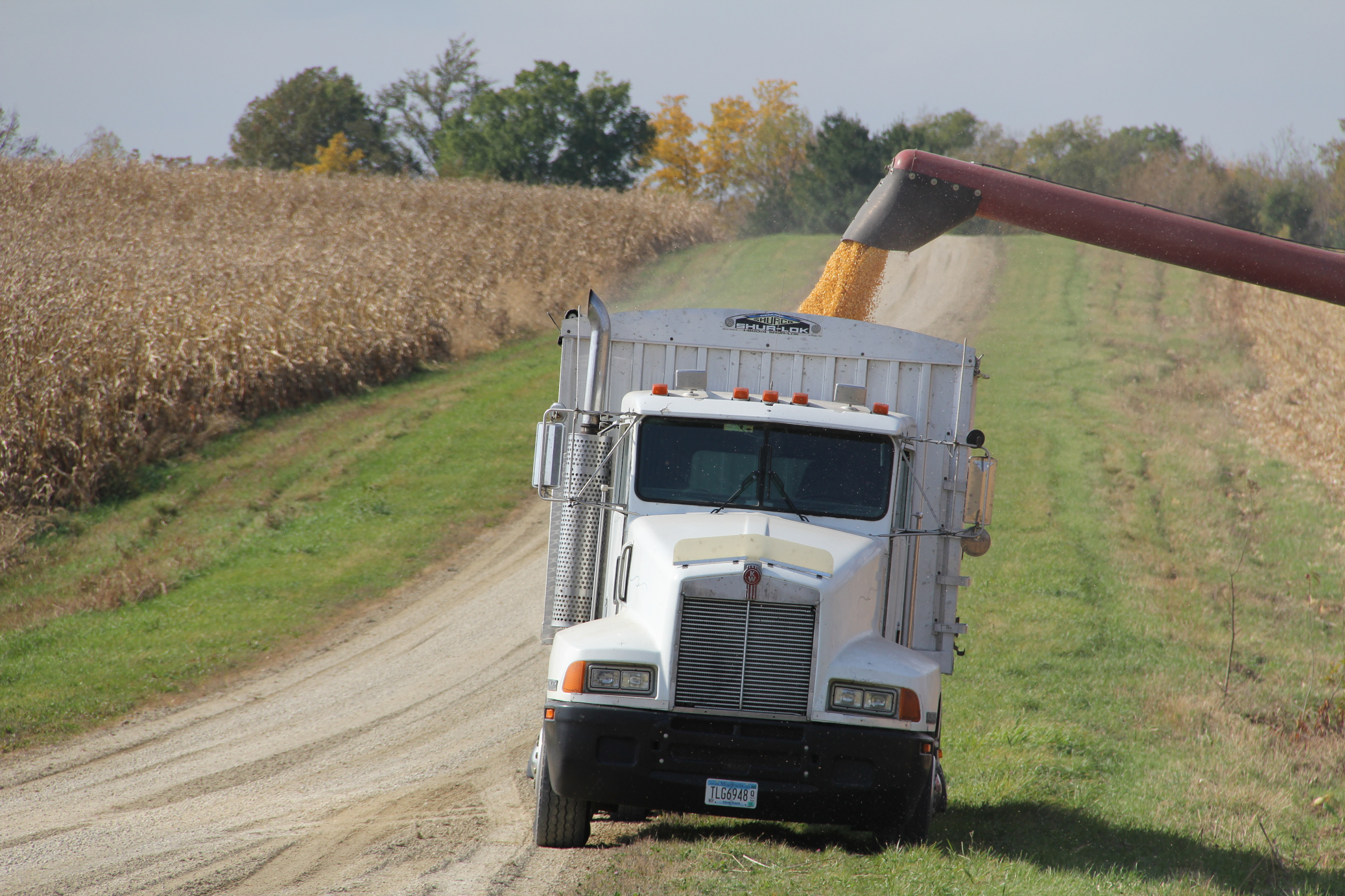
Trucks await the harvest. (Minnesota Prairie Roots copyrighted file photo October 2022)
As the harvest continues here in Minnesota, I can’t help but feel for those who work the land, who continue to face so many uncertainties, financial challenges and stressors. Interest rates on loans remain high. Market prices remain low. Land rents continue to rise. Equipment and other costs are high. And on and on, including the loss of the long-standing soybean export market to China, which quite likely may never be reclaimed.
This is becoming a crisis situation for farmers—those who feed, fuel and clothe Americans. From fields to small town Main Street, rural America is hurting. And politically-biased blame words published on a government website aren’t helping.
I love the pops of color these seasonal stands add to the landscape, setting the mood for October and the fun festivities the month brings.
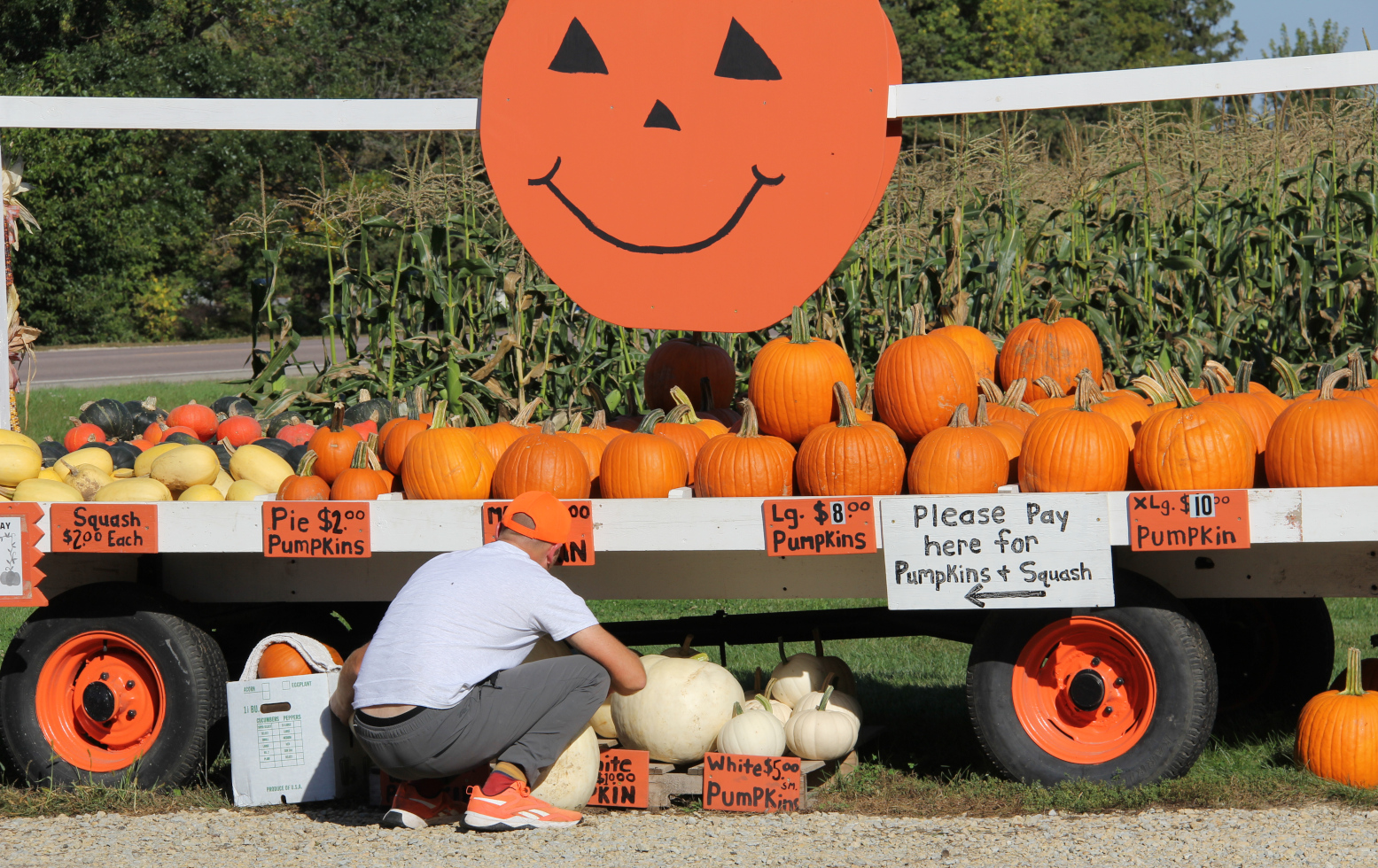
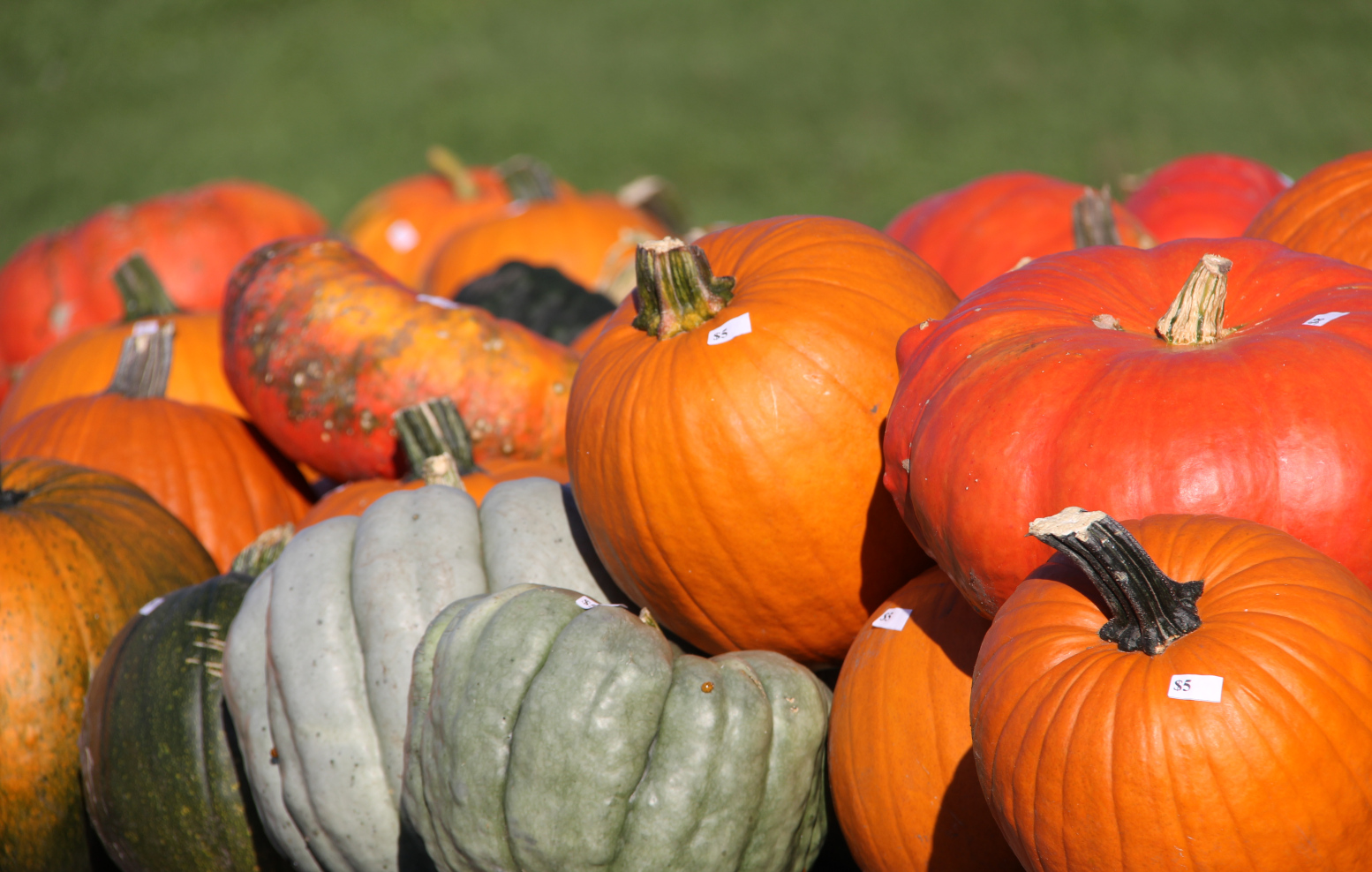
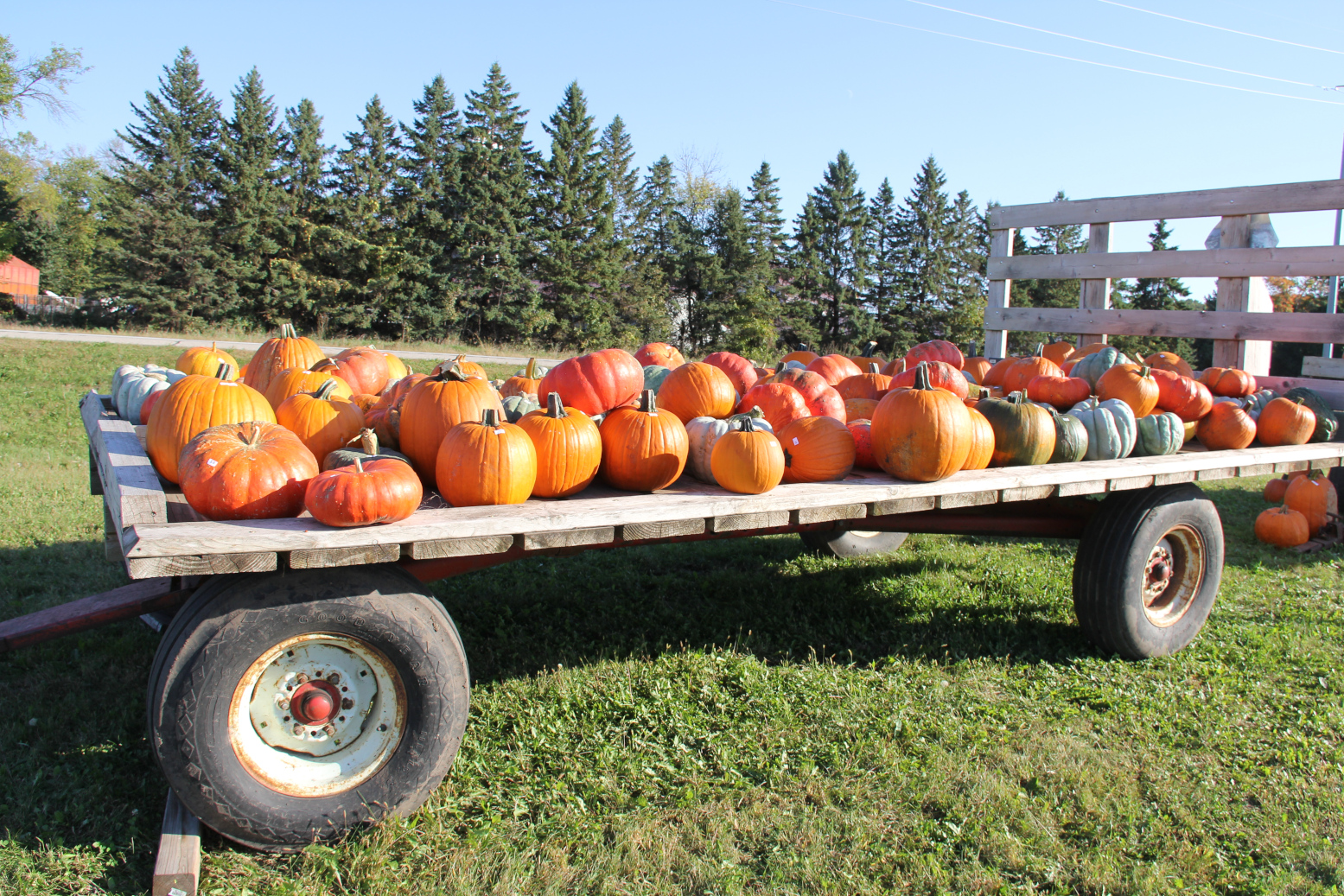
Pumpkins of all sizes and shapes for sale at the Little Prairie stand. (Minnesota Prairie Roots copyrighted photo September 2025)
Growers gather in the pumpkins, heaping them atop wagons for ease of display and purchase.
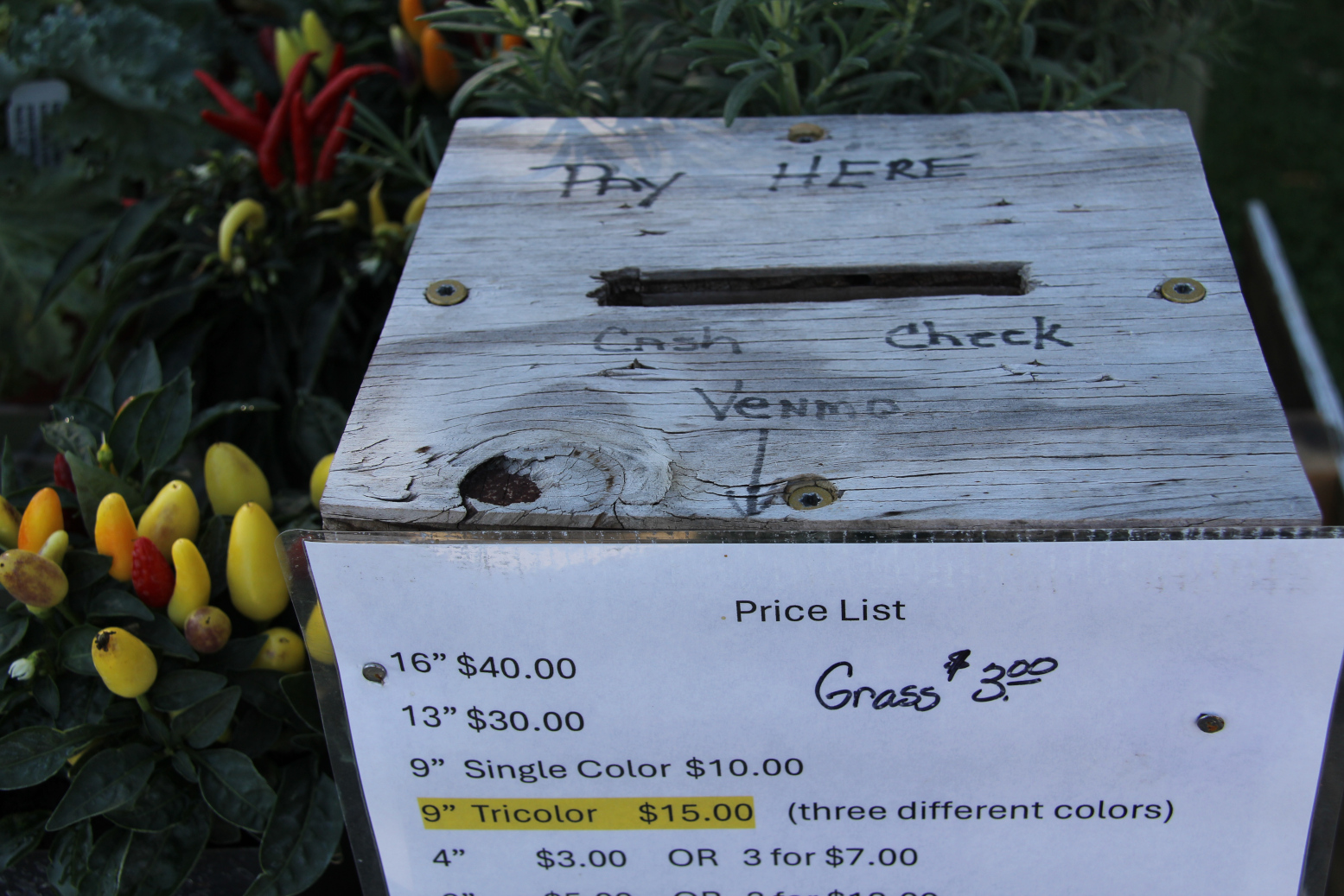
A payment box and price list for mums and other plants at a seasonal roadside stand in Stanton. (Minnesota Prairie Roots copyrighted photo September 2025)
Buying is made easy with secure drop boxes, pay on the honor system via cash, check or Venmo. I love the trust the sellers place in the buyers.
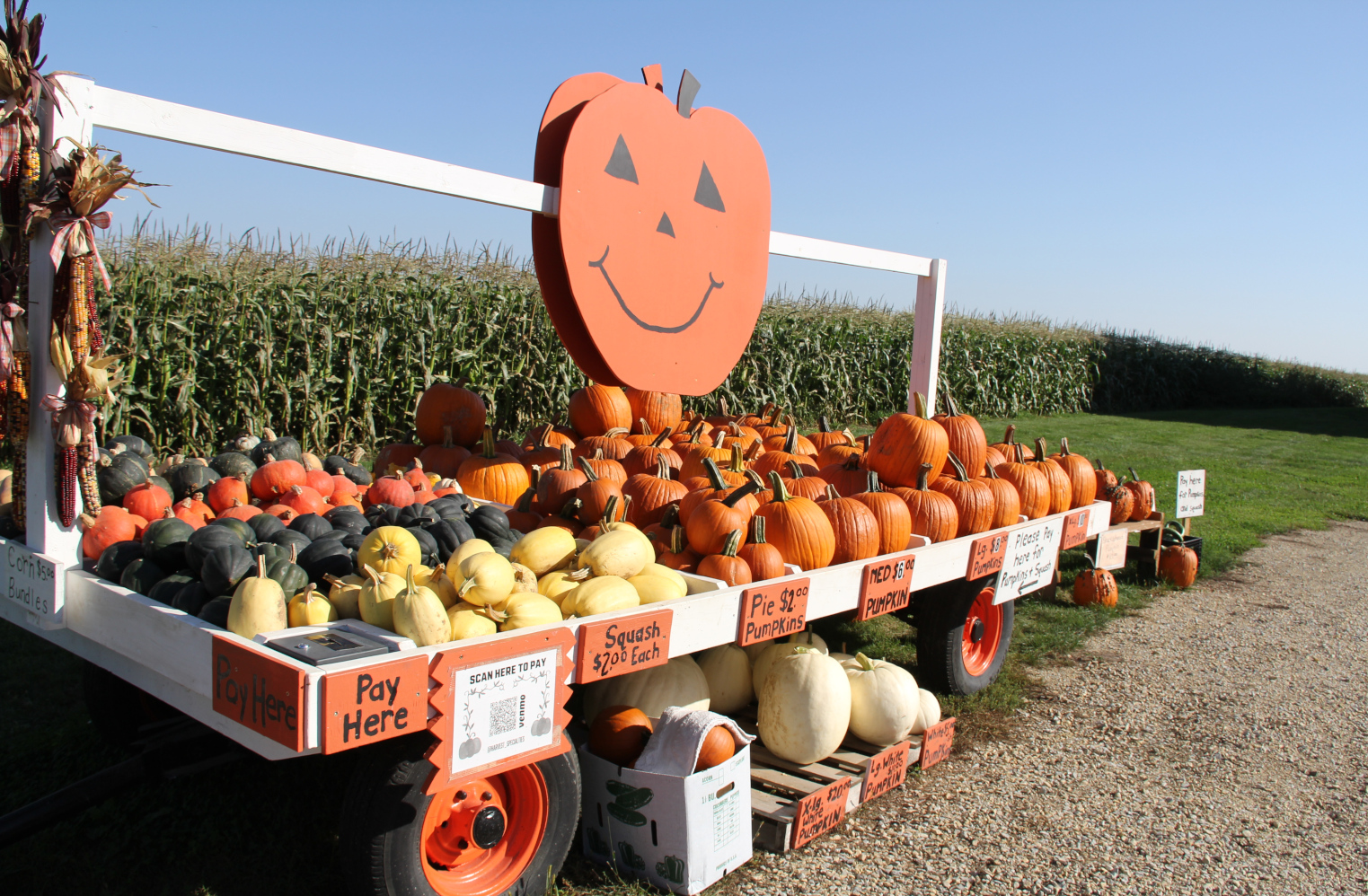
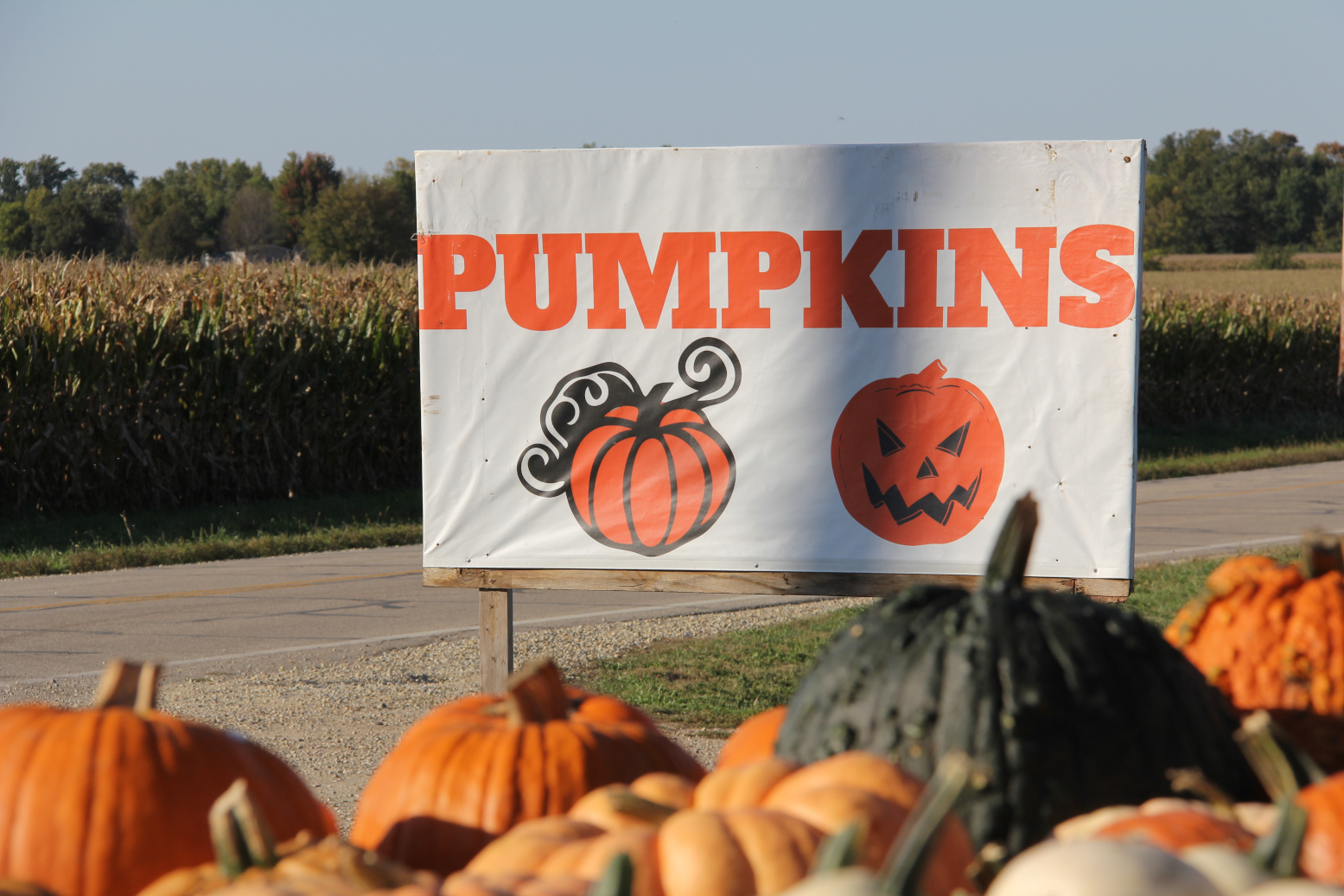
Oversized pumpkin art directs passing motorists’ attention to the Stanton pumpkin stand backed by a cornfield. (Minnesota Prairie Roots copyrighted photo September 2025)
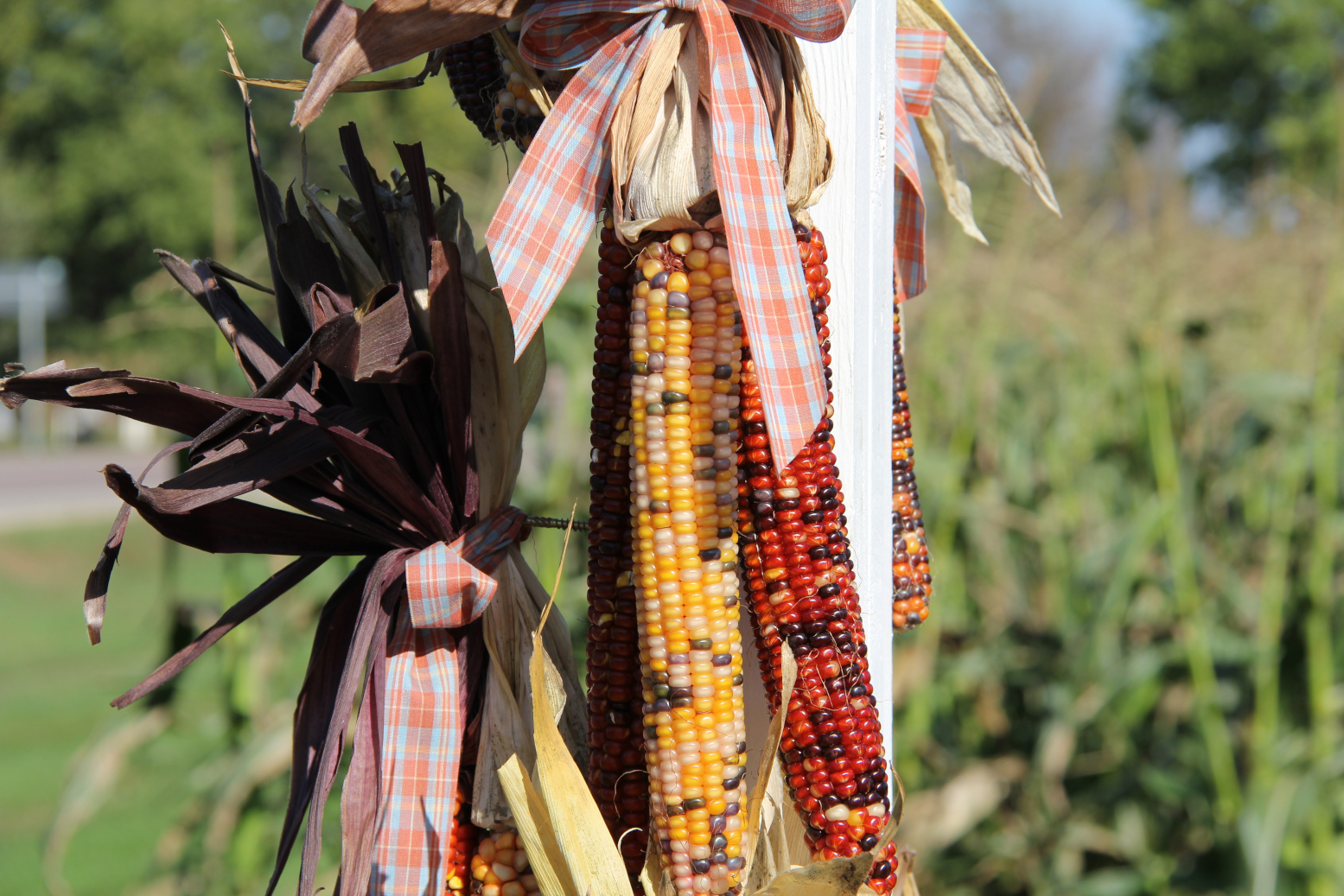
Decorative Indian corn decorates the pumpkin wagon at Stanton. (Minnesota Prairie Roots copyrighted photo September 2025)
Beautiful potted mums for sale at the Stanton stand. (Minnesota Prairie Roots copyrighted photo September 2025)
I love, too, the signage, art and seasonal decorations which draw customers to stop and shop for pumpkins and often other goods like squash and mums.
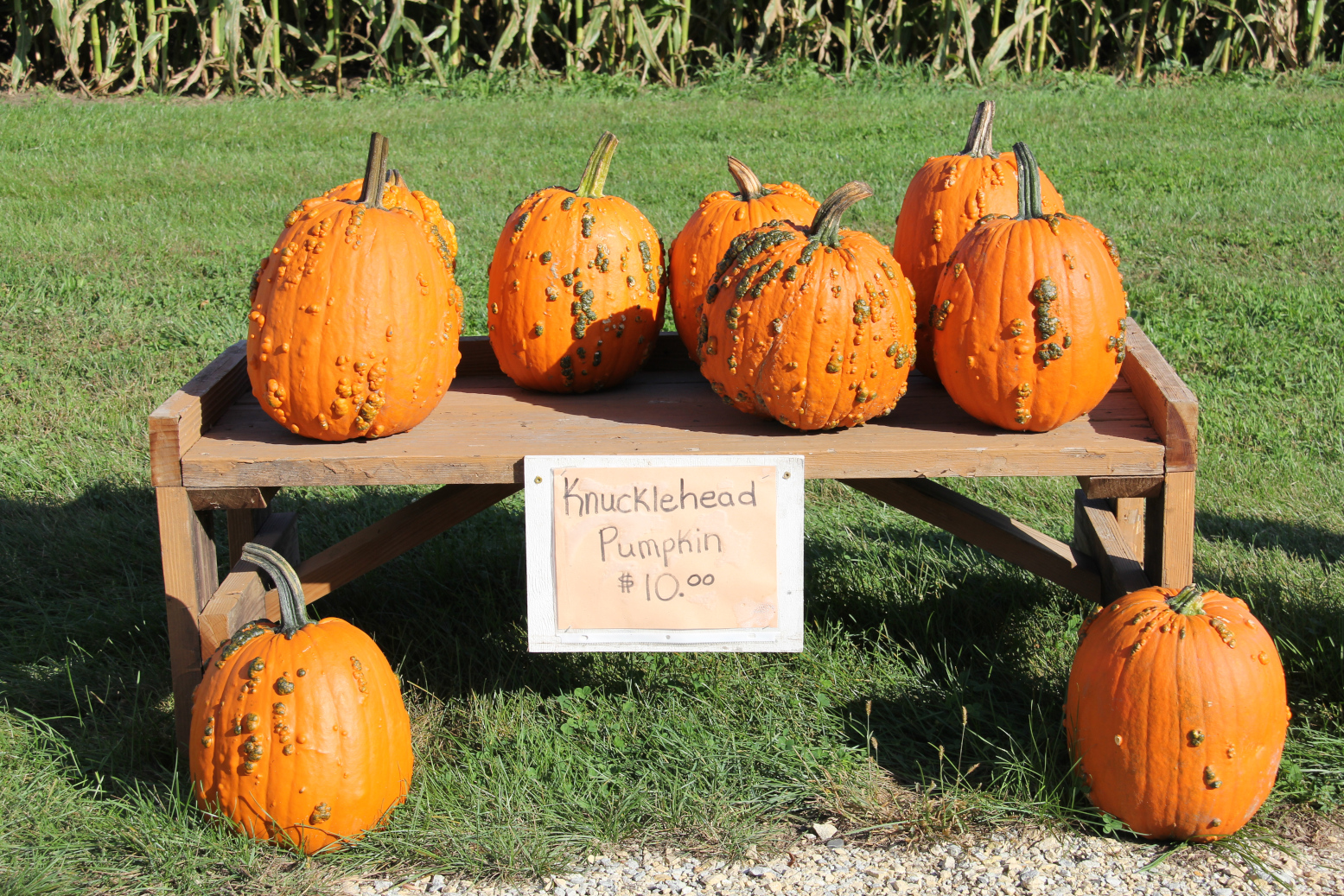
Knucklehead pumpkins get their own display area at the Stanton stand. (Minnesota Prairie Roots copyrighted photo September 2025)
It all feels so good and earthy and connective, this buying direct from the grower who seeds, tends, harvests, markets. Locally-grown at its most basic.
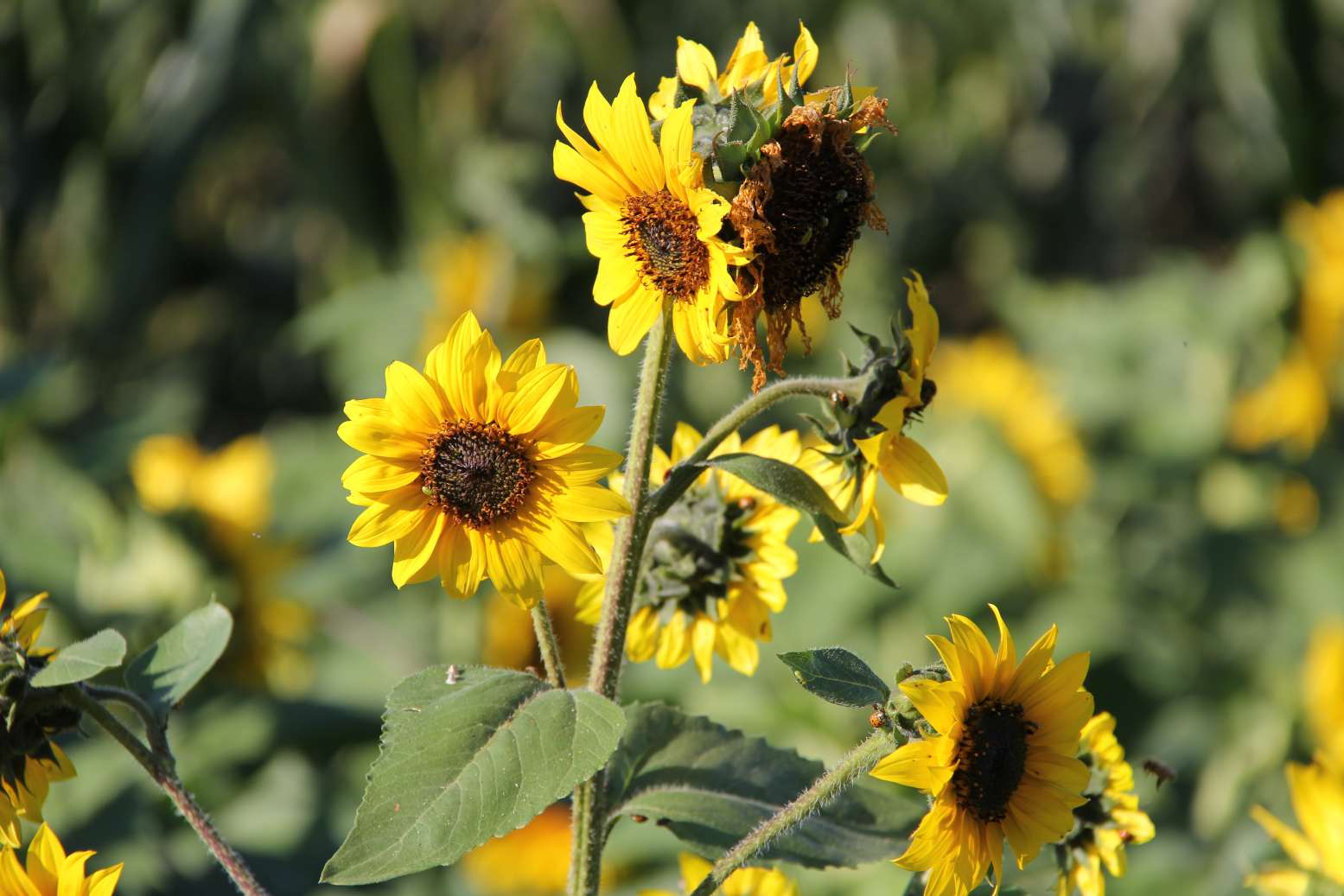
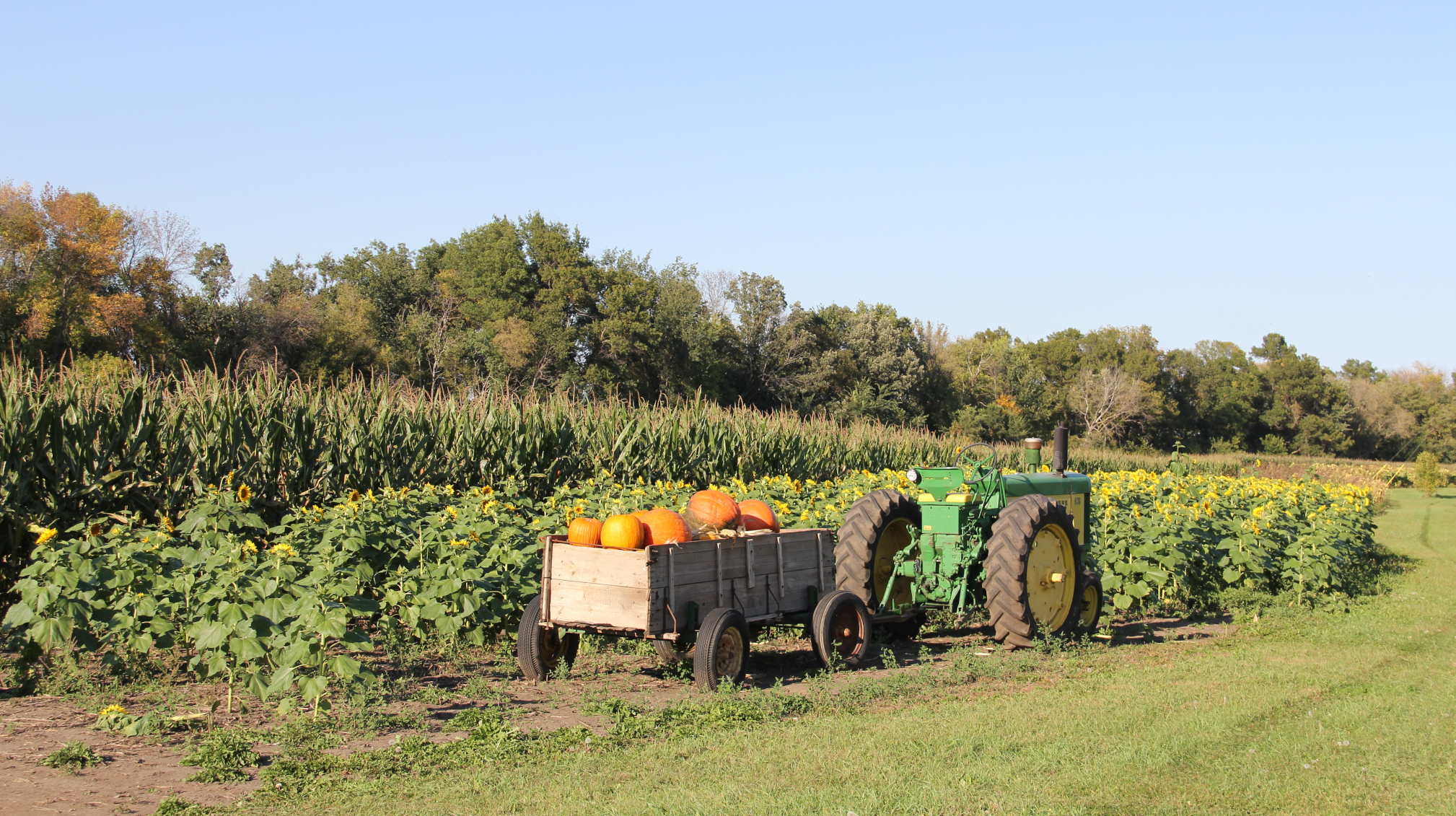
A field of sunflowers, ideal for photo ops, grows next to pumpkins and corn at the Little Prairieroadside market. (Minnesota Prairie Roots copyrighted photo September 2025)
I love, too, how rural pumpkin stands pop up next to cornfields and occasionally sunflower fields. Sunflowers make me smile with their bright yellow blossoms. Sort of like thousands of smiley faces beaming happiness upon the land.
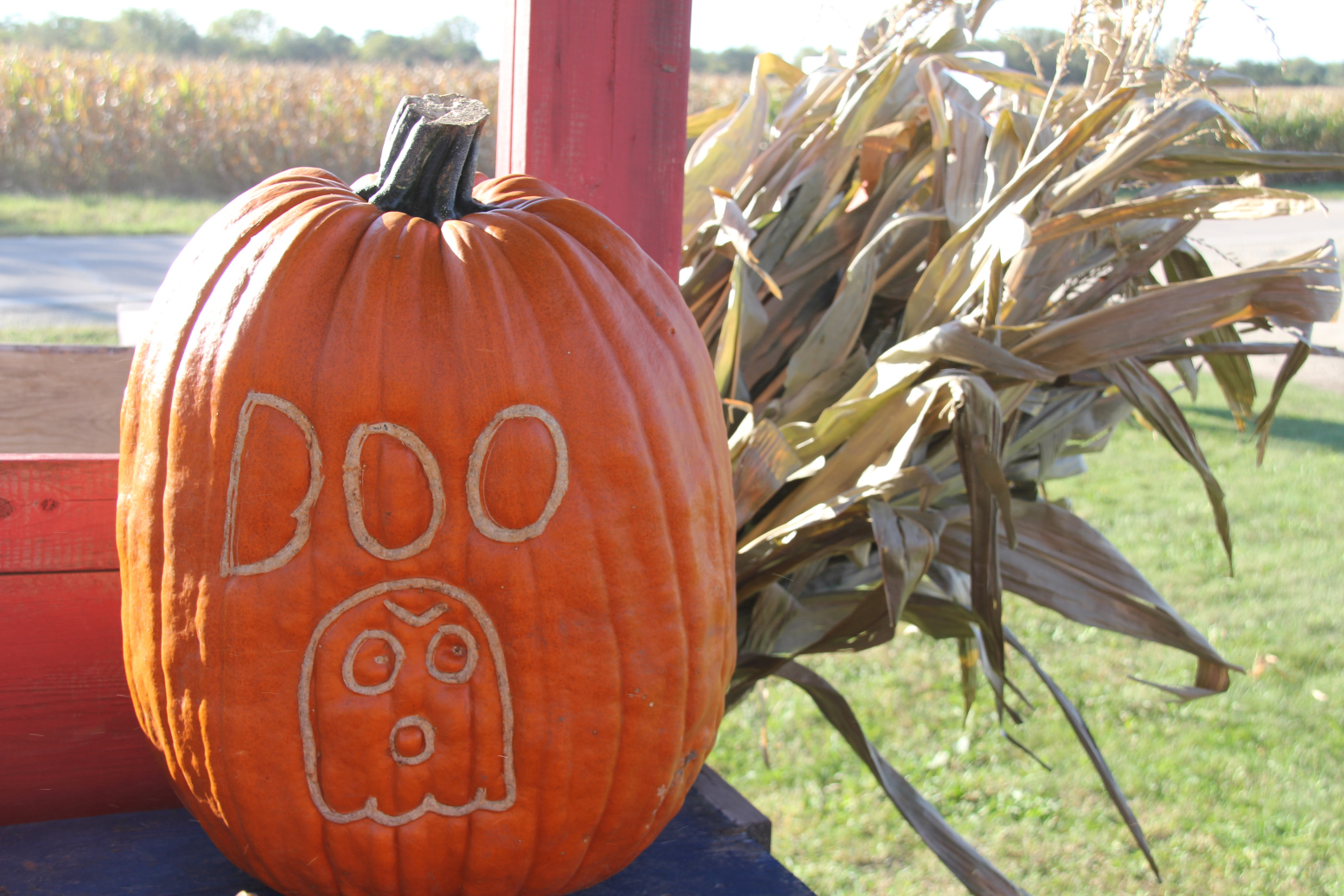
Getting in the spirit of Halloween on the Little Prairie pumpkin wagon along Highway 3. (Minnesota Prairie Roots copyrighted photo September 2025)
All these pumpkins placed for purchase prompt memories of Halloweens past. Of pulp and seeds scooped from pumpkins. Of pumpkins carved into jack-o-lanterns with toothy grins. Of jack-o-lanterns set on front steps and candles extinguished by the wind. Of pumpkins buried in drifts of snow in the Halloween blizzard of 1991 which dropped up to three feet of snow on parts of northern Minnesota and somewhat less here in southern Minnesota, but still a 20-inch storm total.
Pumpkins heap a wagon parked next to sunflower and corn fields at the Little Prairie stand along Highway 3. (Minnesota Prairie Roots copyrighted photo September 2025)
Pumpkins represent more than a prop or seasonal decoration. They represent nostalgia, stories, the past, the present, the timelessness of tradition. Those are the reasons I can’t pass a pumpkin stand without feeling grateful, without remembering the childhood Halloween when I clamped a molded plastic gypsy mask onto my face or the Halloween I fingered cow eyeballs (really cold grapes) at a party in the basement of a veterinarian’s home or all the years I crafted Halloween costumes for my three kids.
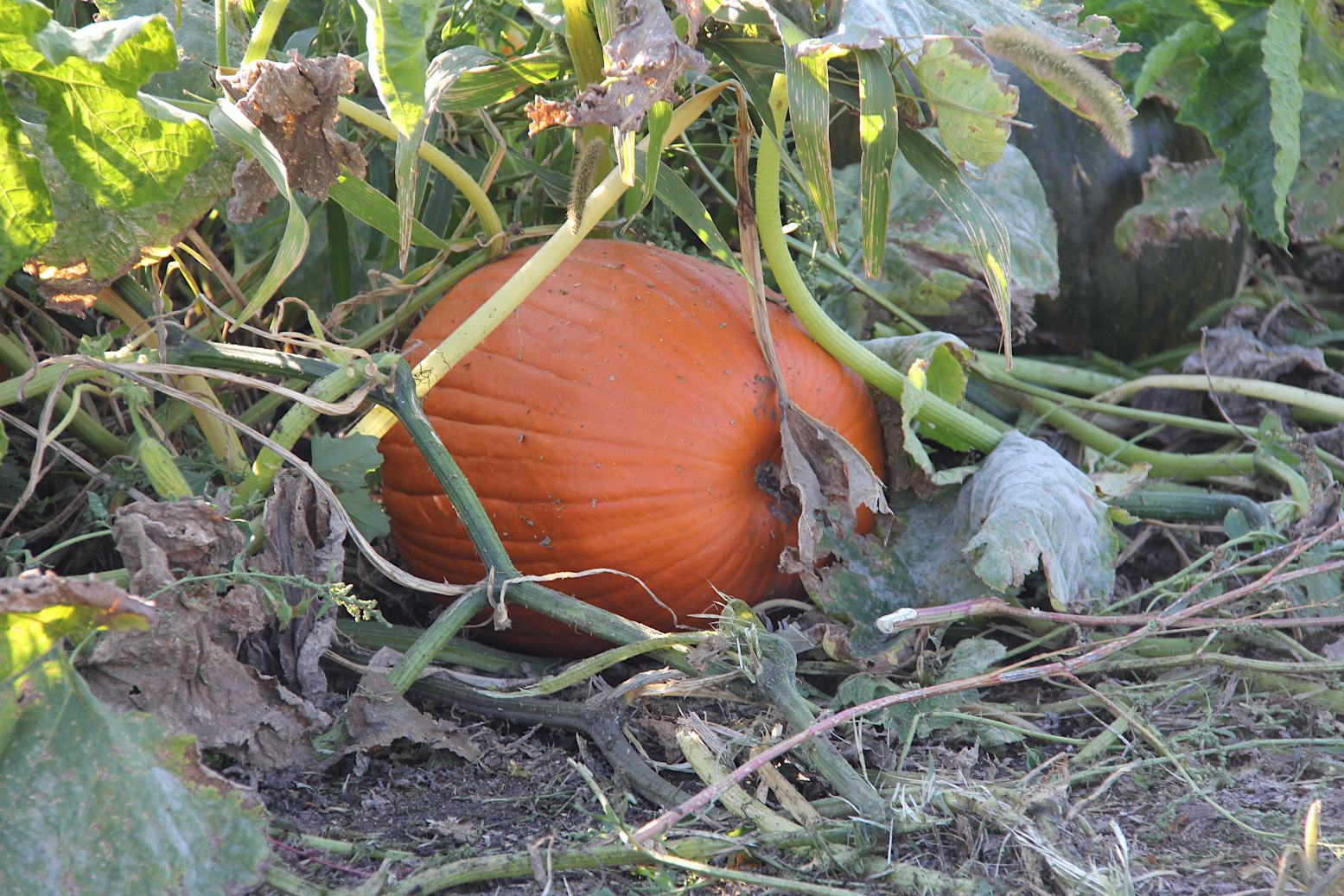
Unpicked pumpkins in the Little Prairie field. (Minnesota Prairie Roots copyrighted photo September 2025)
Then there’s the year I helped my father-in-law harvest pumpkins from his muddy patch in the cold and rain so he could take them to a roadside market in central Minnesota. Because of that experience, I understand the occasional challenges of getting pumpkins from vine to sale.
A cornfield backdrops the pumpkin wagon and signage at the Little Prairie pumpkin stand. (Minnesota Prairie Roots copyrighted photo September 2025)
I appreciate the growers who are offering all of us the beauty of autumn, the fun and fright of Halloween, and the gratitude of Thanksgiving with each pumpkin grown, picked and placed for sale at a roadside stand.
TELL ME: What does a pumpkin represent to you? Do you buy from roadside stands or elsewhere? I’d like to hear.
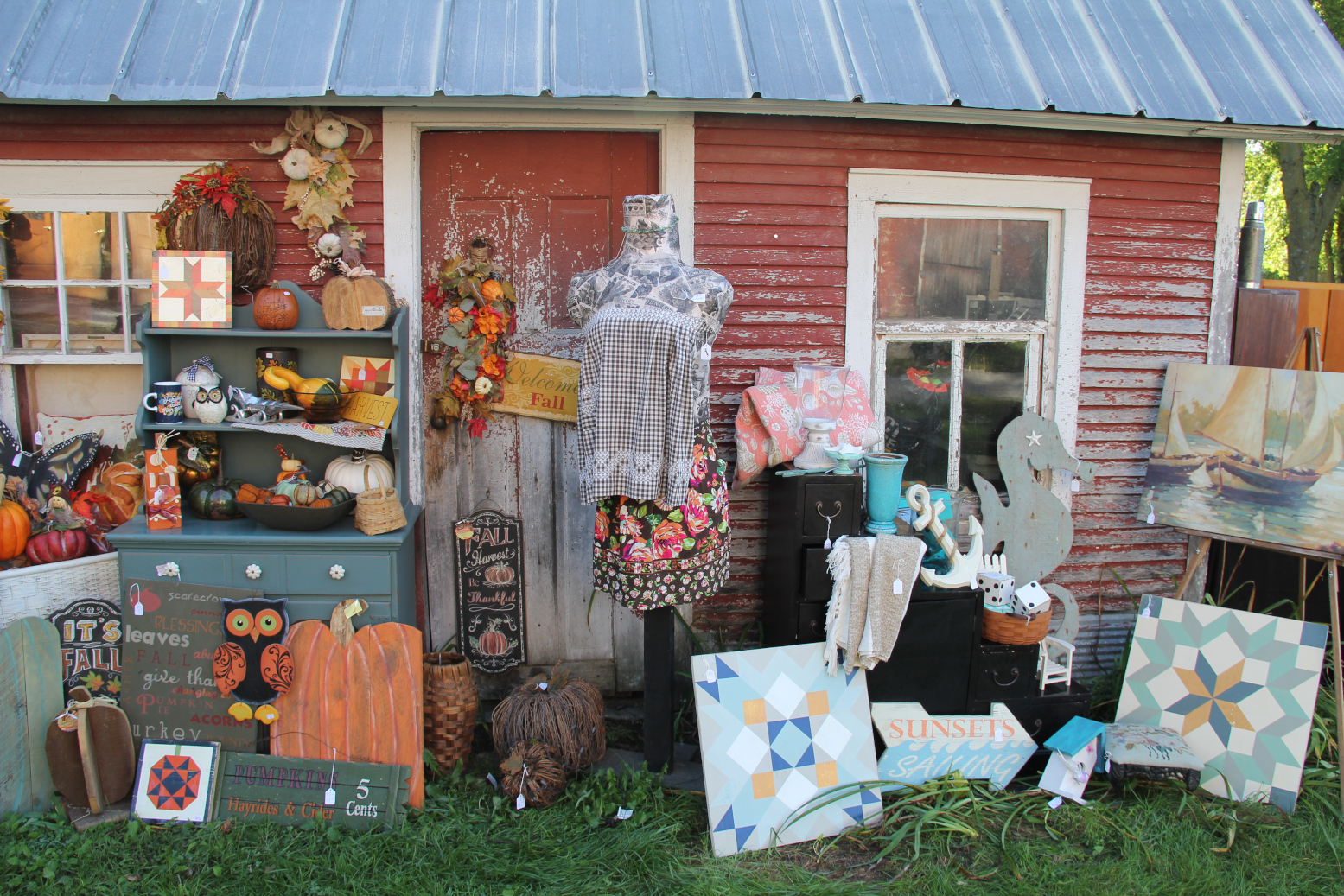
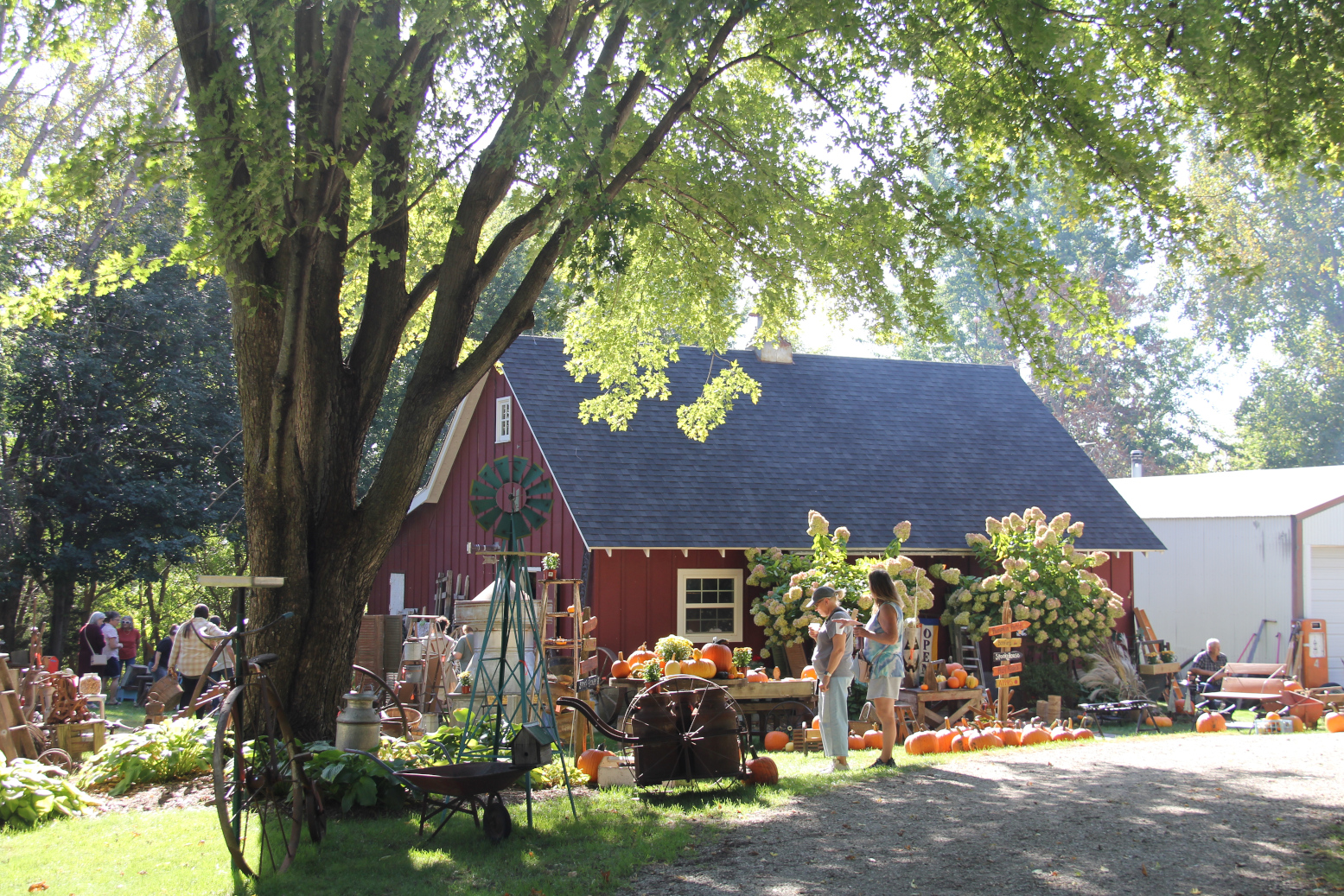
Autumn merch and nautical merch displayed against a small red shed at Nicole Maloney’s fall sale. (Minnesota Prairie Roots copyrighted photo September 2025)
THIS TIME OF YEAR in Minnesota, we not only usher in autumn but also the season of fall craft, collectible, vintage and antique sales. This past weekend, two women in the unincorporated hamlet of Cannon City just east of Faribault hosted two occasional seasonal sales.
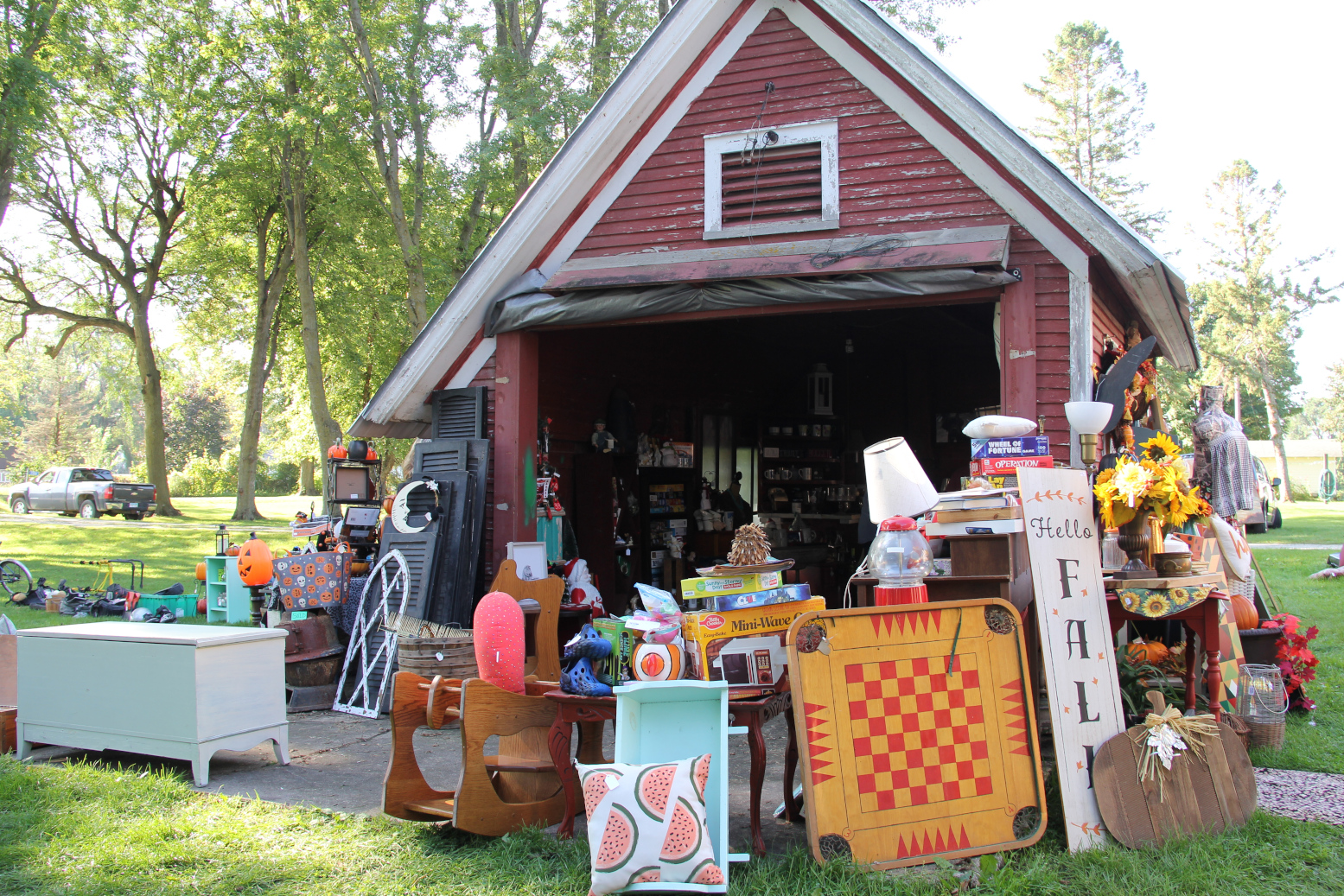
Shoppers peruse goods inside and outside Debbie Glende’s barn as smoke wafts from a campfire. (Minnesota Prairie Roots copyrighted photo September 2025)
Both were marketed as barn sales—Nicole Maloney’s Mini Flea at the Red Barn and Debbie Glende’s The Barn Sale.
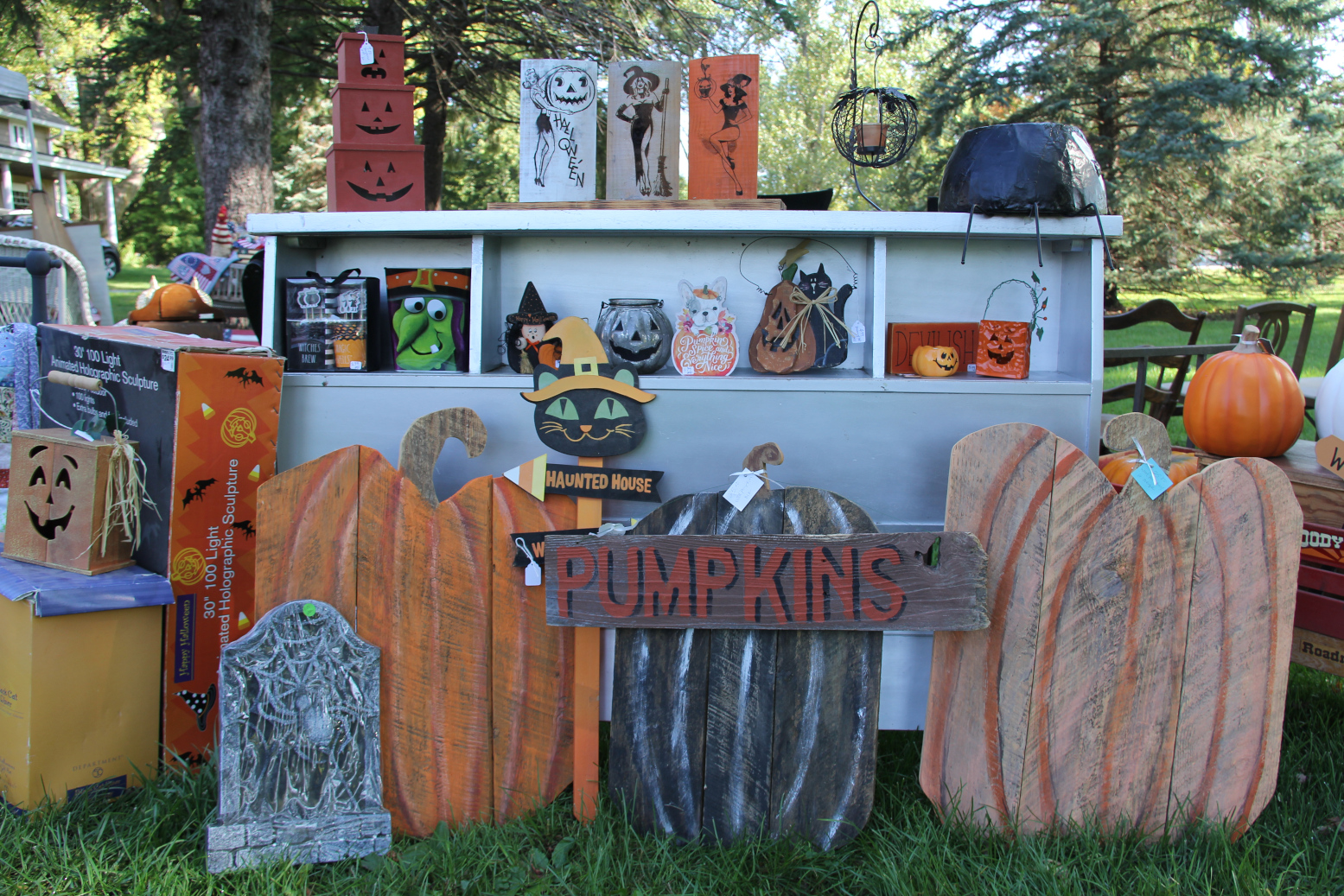
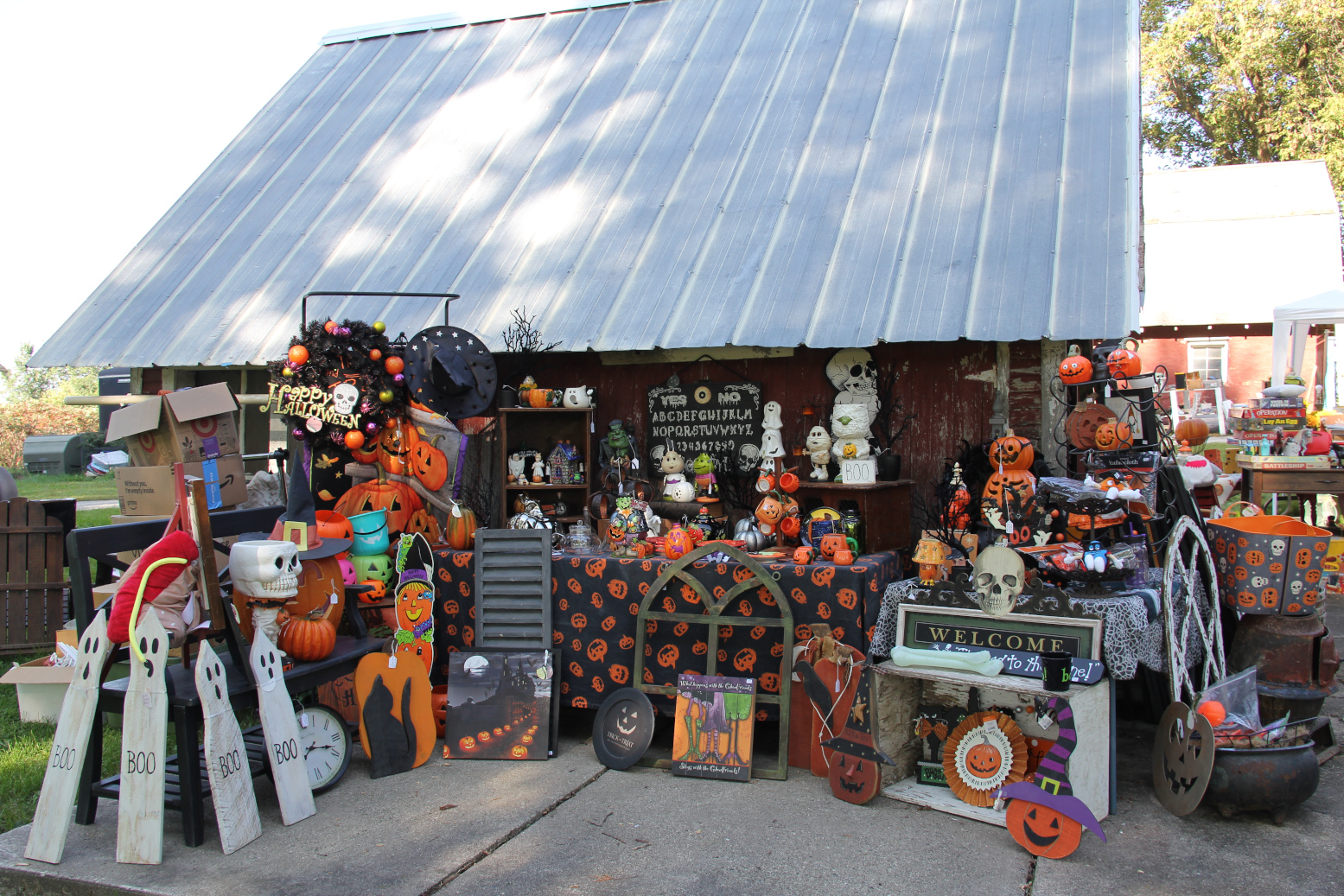
Halloween goods galore at the Mini Flea at the Red Barn. (Minnesota Prairie Roots copyrighted photo September 2025)
I shopped at both, located across the road from one another along Rice County Road 20/Cannon City Boulevard. I’ve been to Glende’s several times, but never Maloney’s although she’s sold goods in her yard and a small shed for some 10 years. Somehow I missed her market.
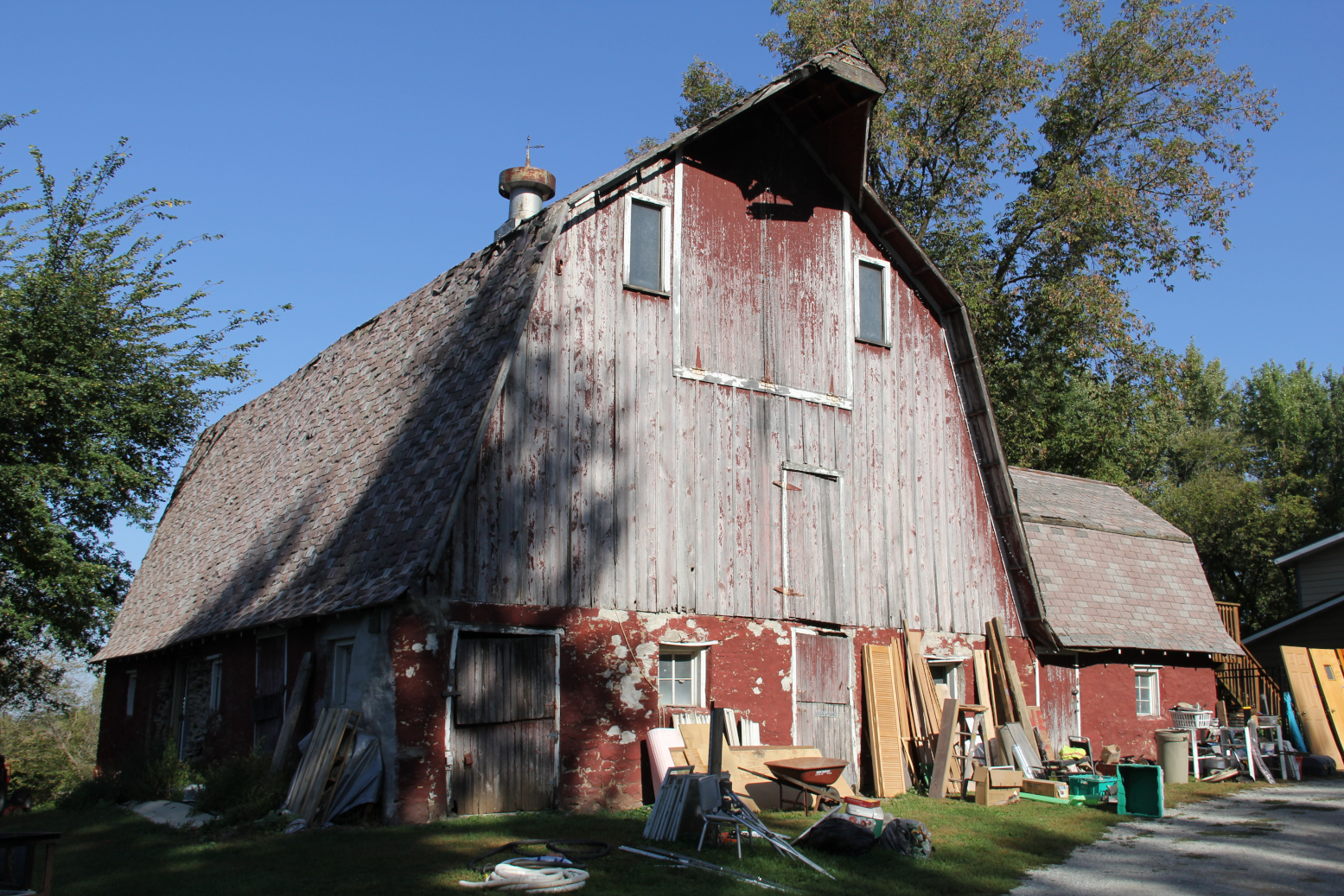
The red barn in need of shingles. (Minnesota Prairie Roots copyrighted photo September 2025)
But you can’t miss the massive weathered red barn which rises above her rural property. It was the first building I noticed upon pulling into the yard. And it is the reason, says Maloney, she opens her place once a year to sell her finds. Monies raised from the sale are going toward reshingling the barn. I expressed my gratitude to her for saving her barn when so many others are falling into heaps of rotting wood.
Inside Maloney’s shed, the display that tipped me off to a design degree. (Minnesota Prairie Roots copyrighted photo September 2025)
I also complimented Maloney on her artful displays of merchandise. I could see she has an eye for design. I was not surprised that she holds an interior design degree, although she doesn’t work in the field. The annual sale allows her to use her design skills to create inviting displays.
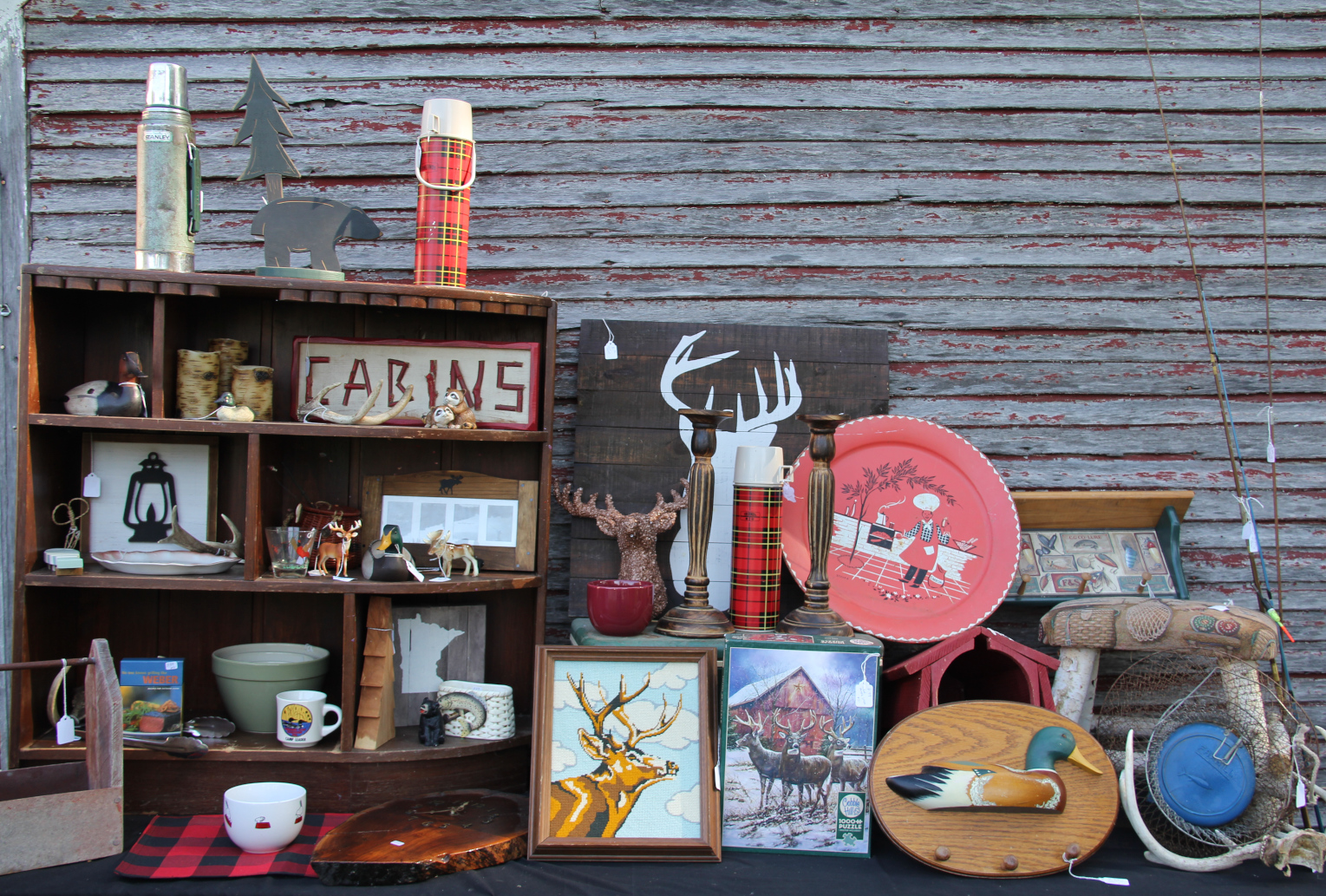
An outdoorsy and cabin themed merchandise display created by Maloney. (Minnesota Prairie Roots copyrighted photo September 2025)
This small shed centered the sale in Maloney’s yard.(Minnesota Prairie Roots copyrighted photo September 2025)
One side of Maloney’s shed featured all Halloween merchandise. (Minnesota Prairie Roots copyrighted photo September 2025)
As I wandered about the yard, I saw separate groupings of items themed to rustic cabin/farmhouse, Halloween, Christmas, nautical and more. And sometimes I observed simply a hodge podge of goods, including furniture. All of it, though, seemed deliberately staged to appeal to shoppers.
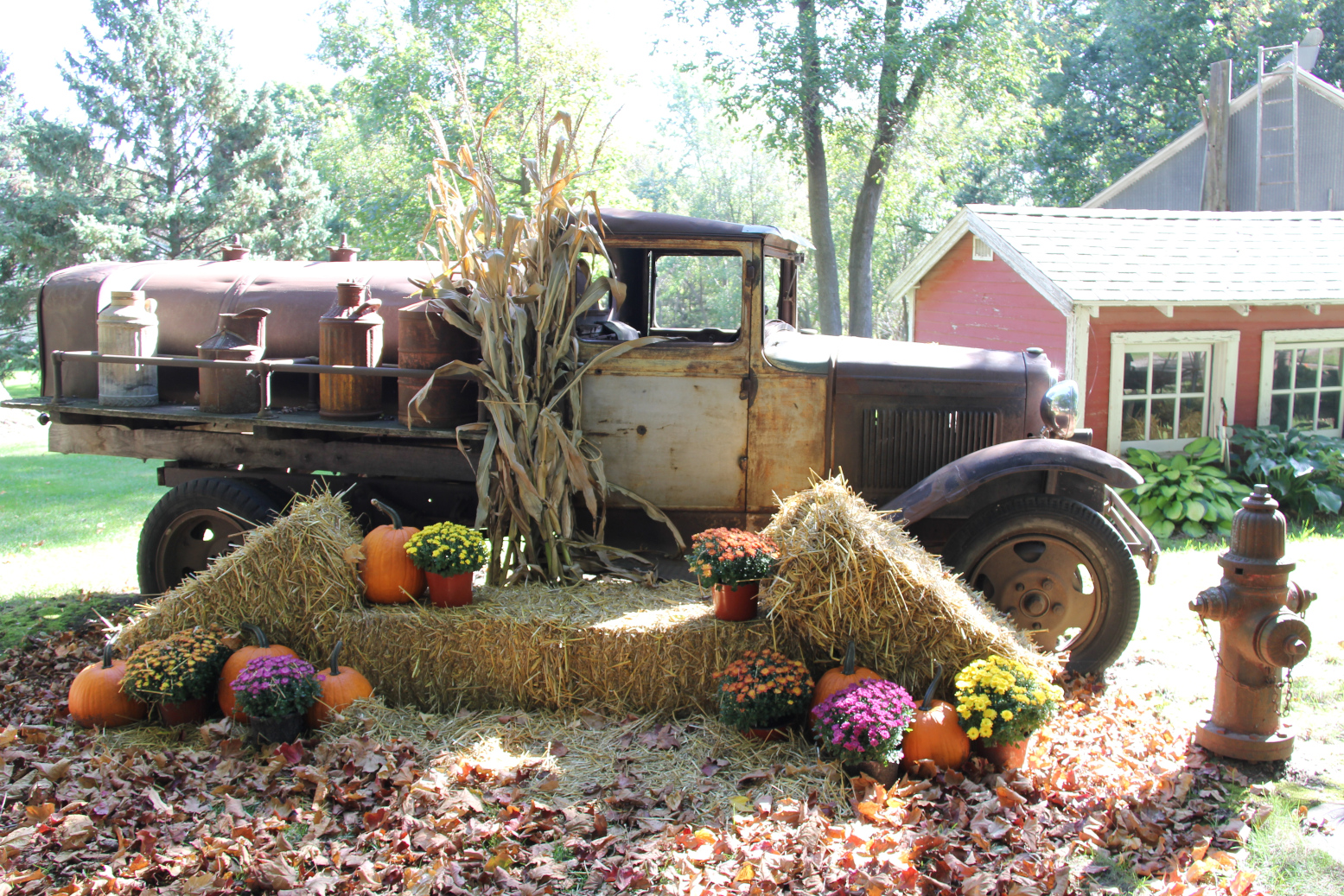
A vintage truck surrounded by fall decorations serves as a photo prop for shoppers at The Barn Sale. (Minnesota Prairie Roots copyrighted photo September 2025)
Seasonal appropriate signage for sale at The Barn. (Minnesota Prairie Roots copyrighted photo September 2025)
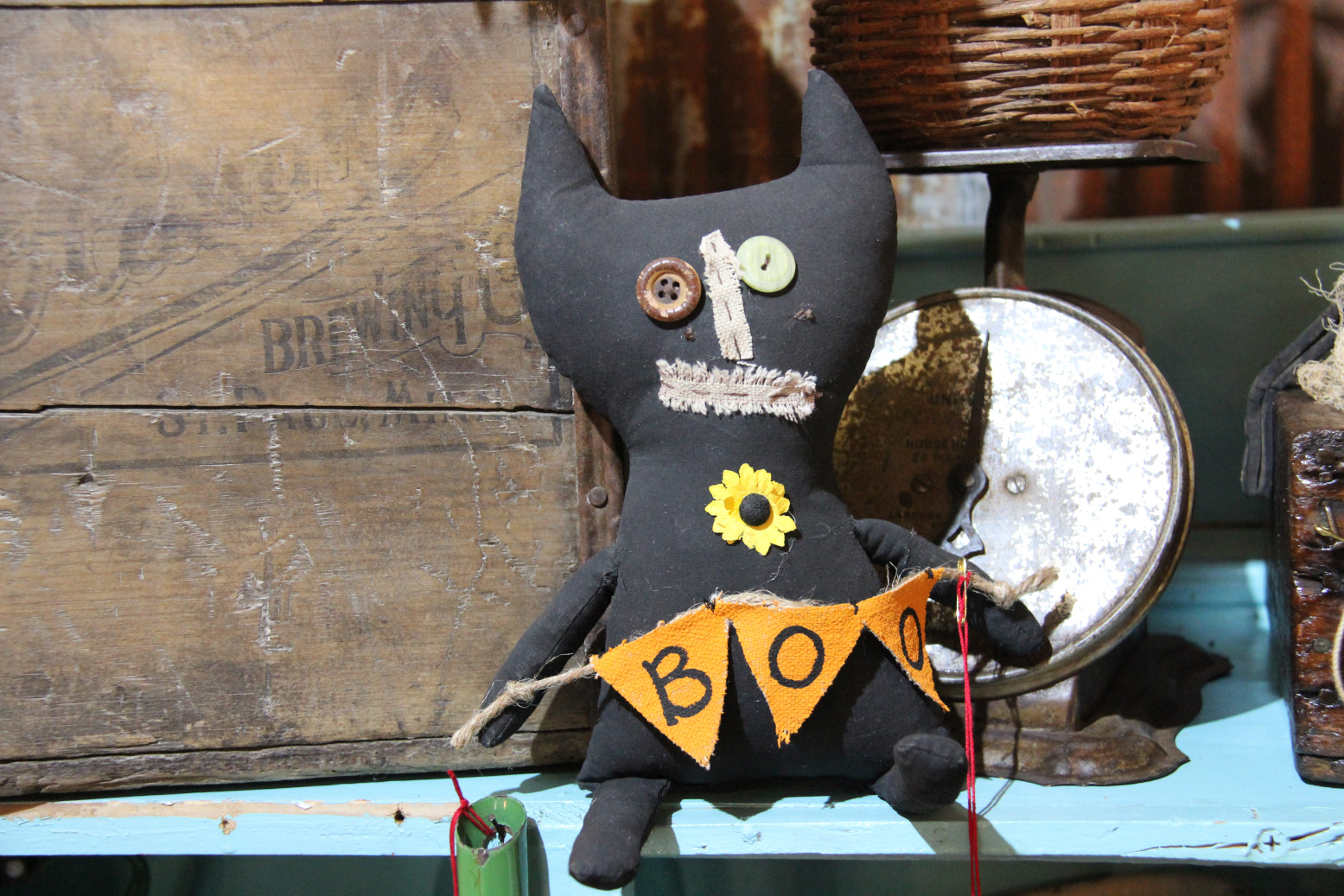
I saw a lot of these cute cats, in assorted Halloween colors, inside Glende’s barn. (Minnesota Prairie Roots copyrighted photo September 2025)
Across the road at Glende’s sale in her small (compared to Maloney’s) red barn, shoppers circled inside the building to view an eclectic array of merchandise cramming shelves and tables, hanging from walls, sitting on the floor. From my non-merchandising perspective, it looks like a lot of work to artfully arrange and showcase all those goods.
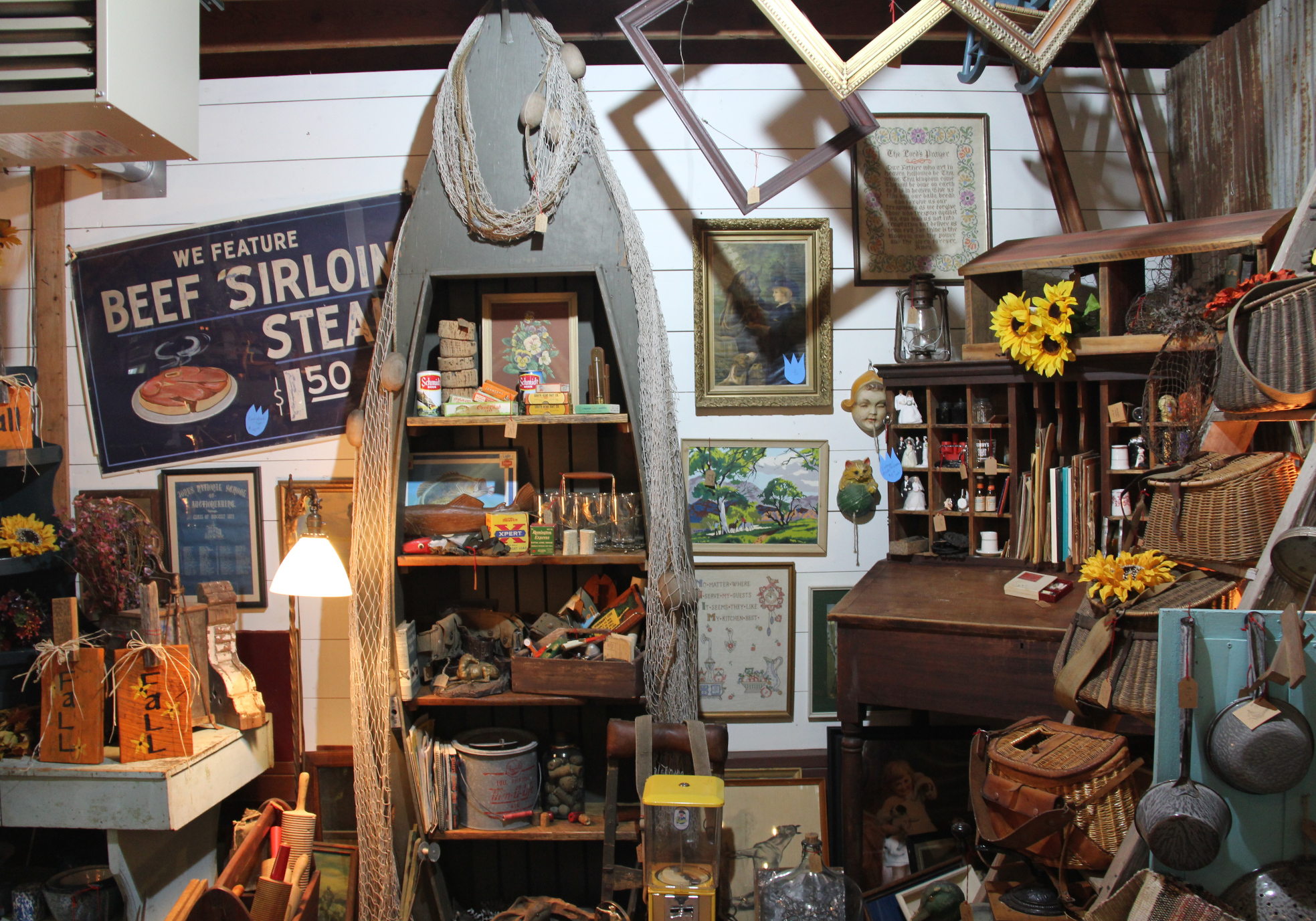
The steak sign, left, caught my eye. (Minnesota Prairie Roots copyrighted photo September 2025)
Like her neighbor, Glende’s merchandise was heavy on Halloween and autumn themes. As it should be for a sale held the last weekend in September. She also holds sales in December and again in the spring. But my eye was drawn to a large vintage sign promoting beef sirloin steak for $1.50. I don’t know if that was per steak or per pound, but a bargain either way.
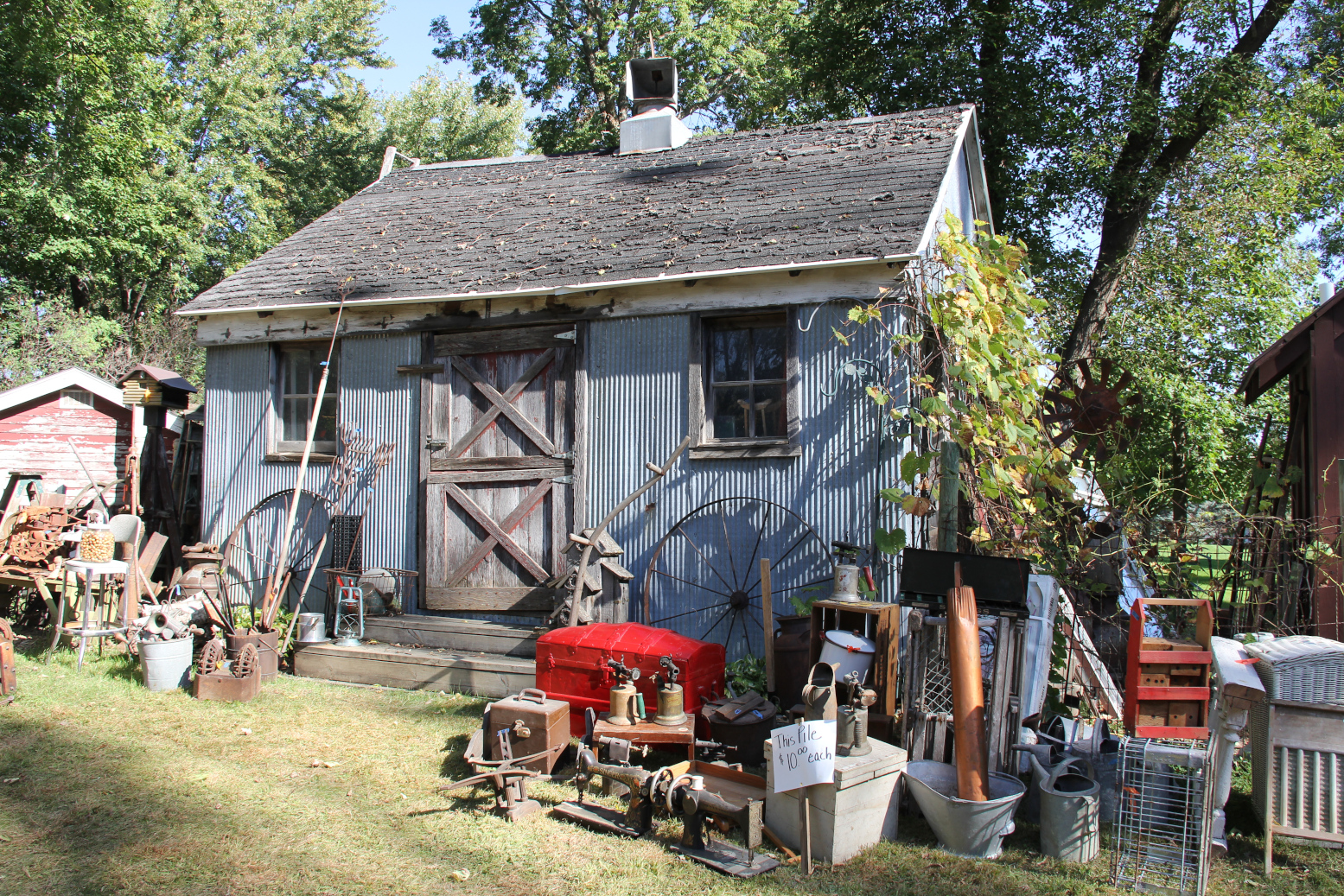
Shoppers could poke through miscellaneous items scattered around Glende’s yard. (Minnesota Prairie Roots copyrighted photo September 2025)
Outside the small red barn, shoppers found plenty of piles of stuff. Junk to some. Treasures to others.
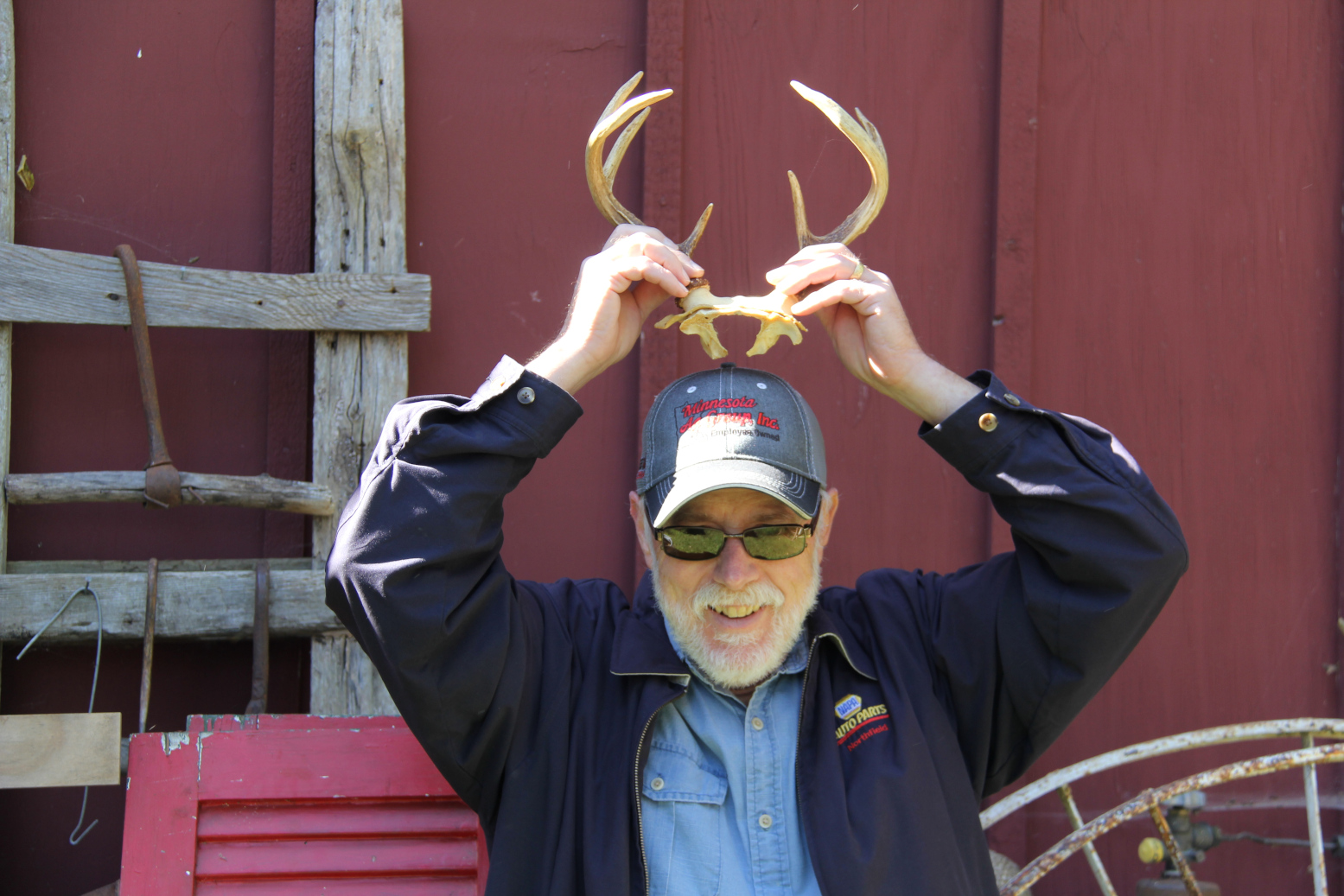
My husband, Randy, has a little fun with antlers he found at Glende’s sale. (Minnesota Prairie Roots copyrighted photo September 2025)
Sales like these appeal to me also because the sellers are attempting to extend the lives of whatever rather than tossing something into the garbage to end up in a landfill. It’s a win-win for everyone.
The vintage lamp I really liked, but didn’t buy. (Minnesota Prairie Roots copyrighted photo September 2025)
I seldom buy anything at these sales because, at this age in my life, I don’t need more stuff. Even if I see a lot of items that I would really really like to have. Such as a vintage lamp in Glende’s yard. And a small round side table in Maloney’s.
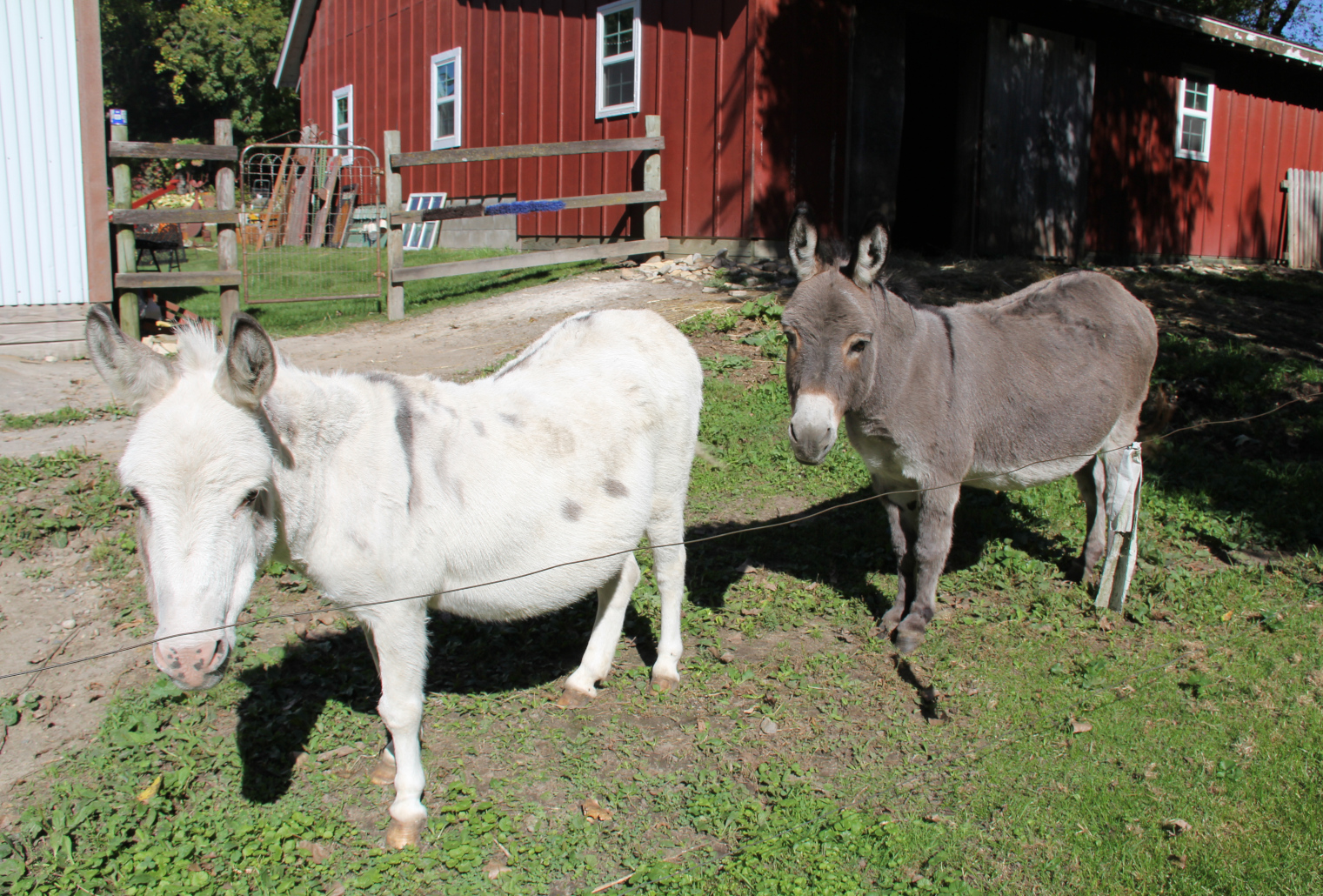
Before leaving Glende’s sale, I photographed these friendly donkeys behind a shed per an invitation to do so. (Minnesota Prairie Roots copyrighted photo September 2025)
Instead, I settled for photographing these two barn sales, which attract many, bring back memories and prove a delightful way to spend a bit of time on a stunning autumn day in southern Minnesota.
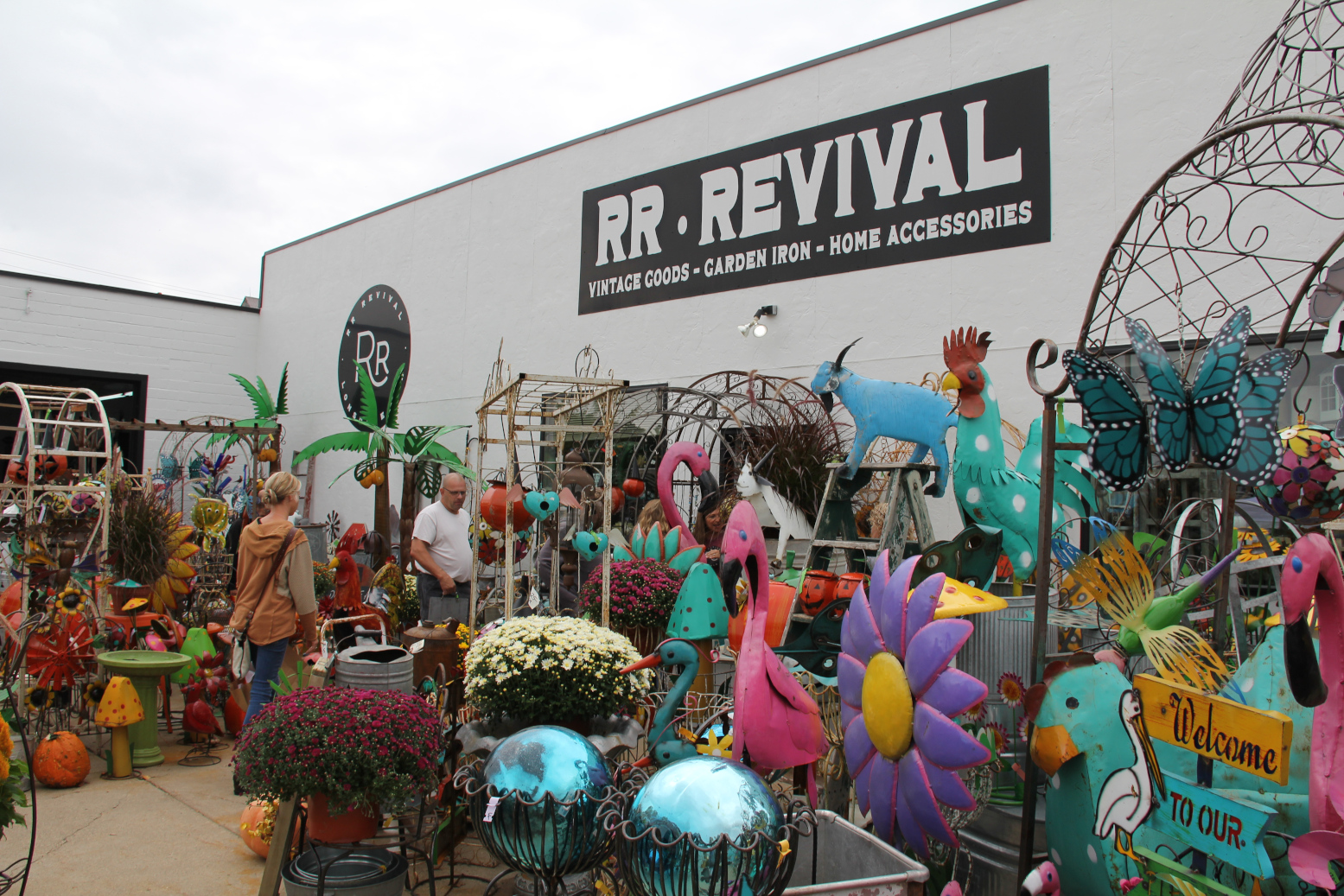
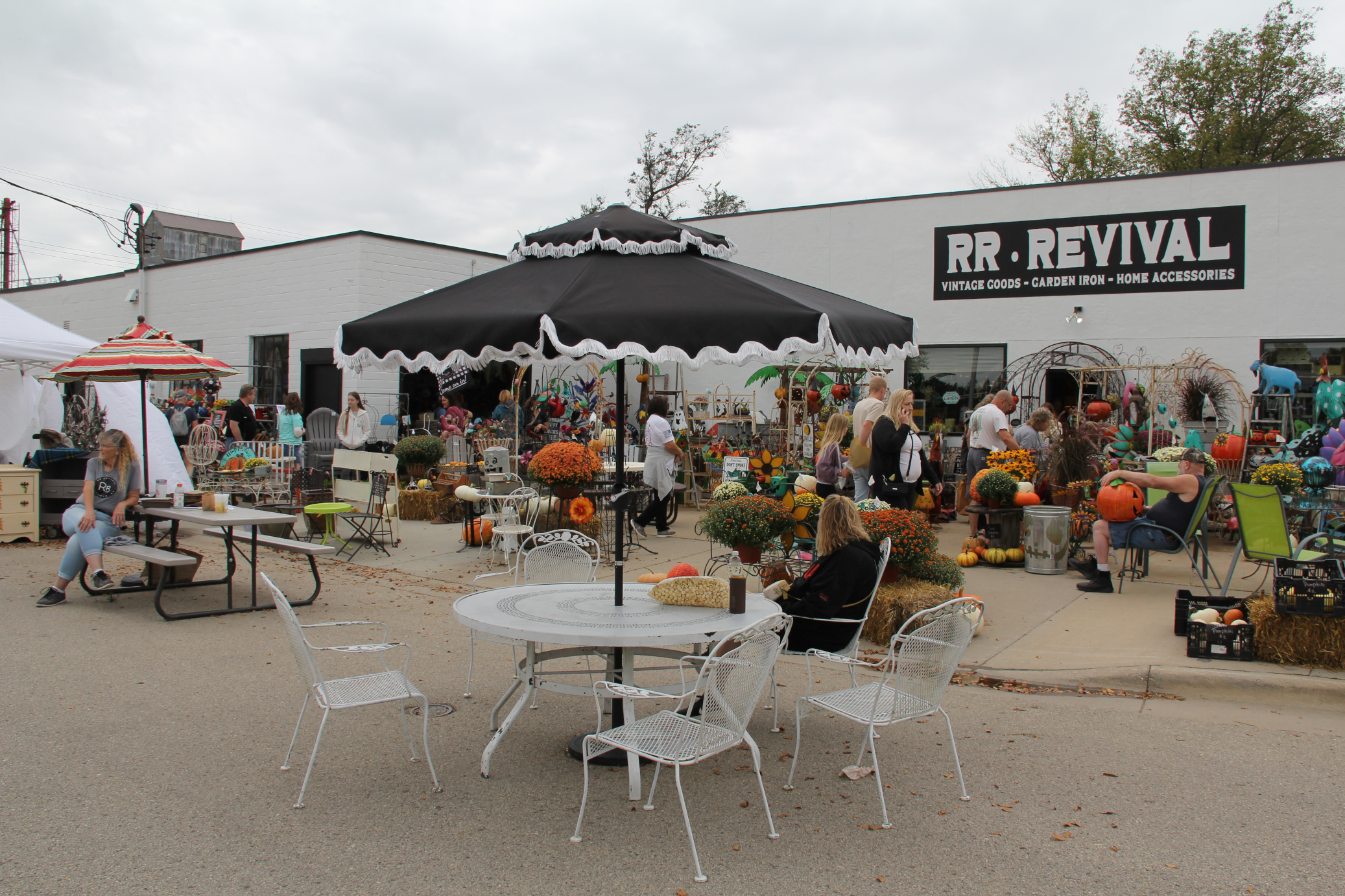
Outside RR Revival/Rusty Rabbitiques in Lonsdale, this guy waits with a decorative metal pumpkinin my favorite market photo. (Minnesota Prairie Roots copyrighted photo September 2025)
DAYS BEFORE THE AUTUMN EQUINOX, I found myself in small town Lonsdale at a craft and flea market. Located in northwestern Rice County, this community of just under 5,000 with easy access to Interstate 35 to the east, is experiencing both residential and business growth.
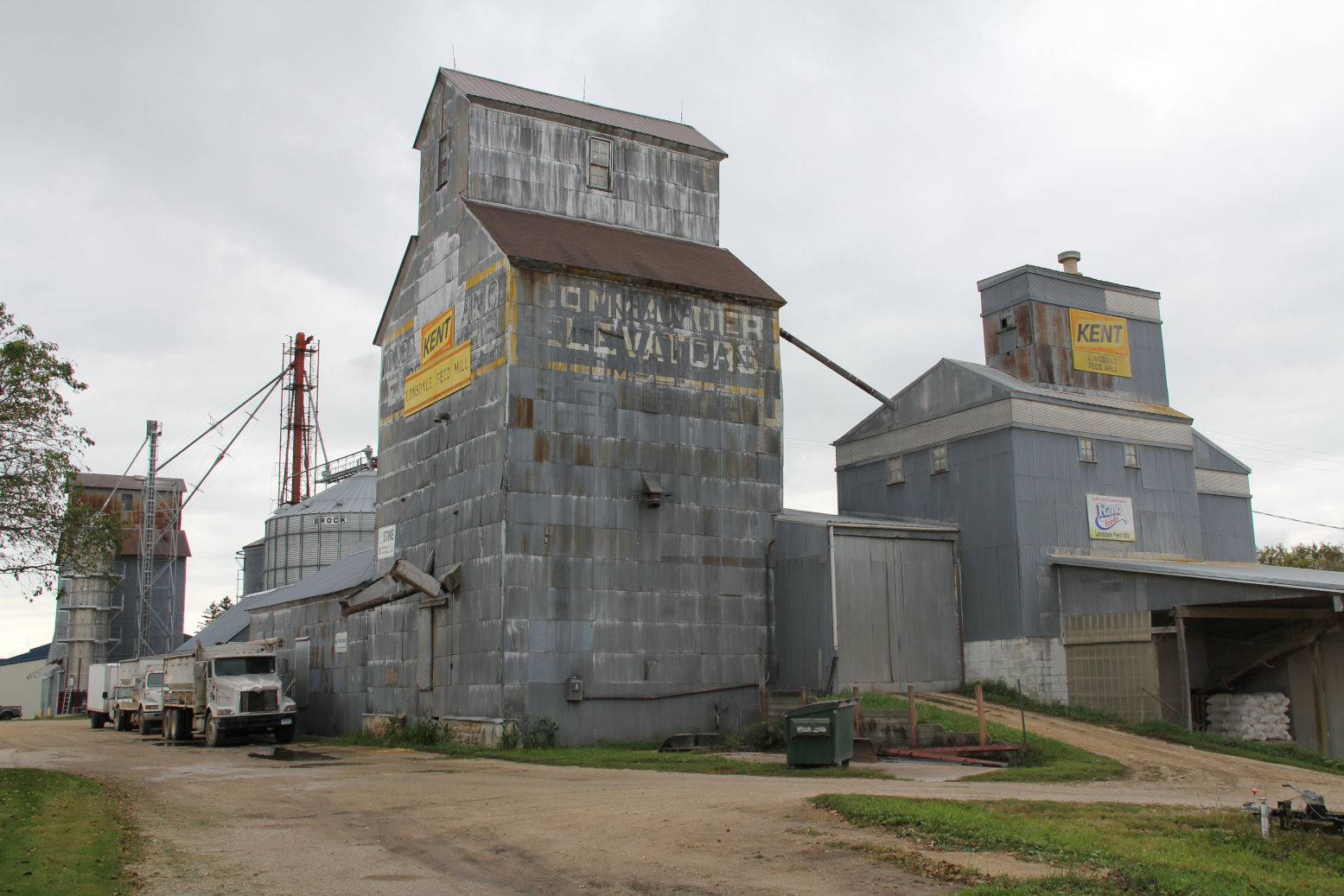
The aged grain elevators of Lonsdale near the market site. (Minnesota Prairie Roots copyrighted photo September 2025)
Yet, it retains its rural character, most notable in the aged grain elevator complex rising high above the town. Those grain elevators provided the backdrop for the recent weekend sale centered around RR Revival/Rusty Rabbitiques, a spacious vintage goods, garden iron and home accessories business.
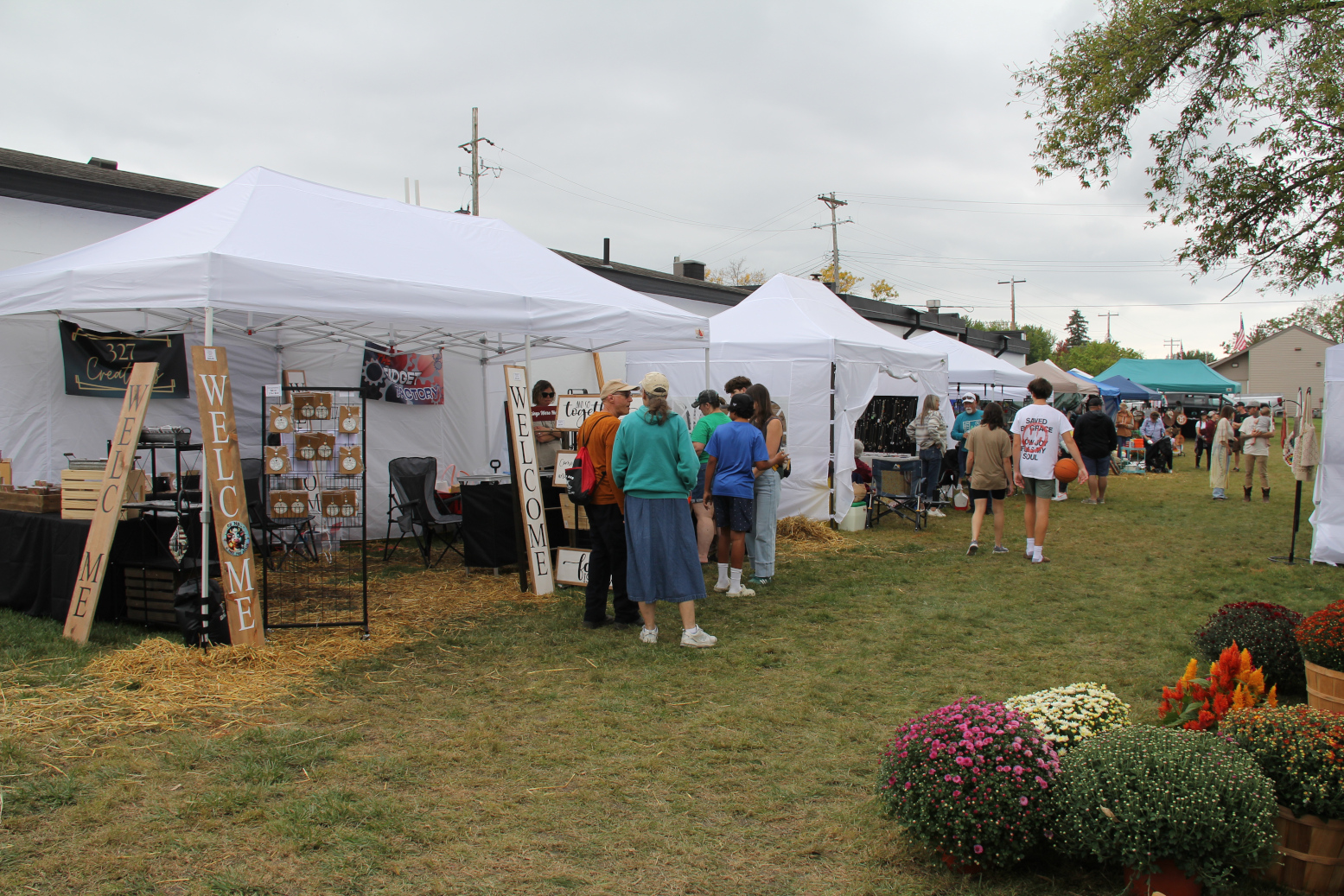
Vendors set up shop outside RR Revival. (Minnesota Prairie Roots copyrighted photo September 2025)
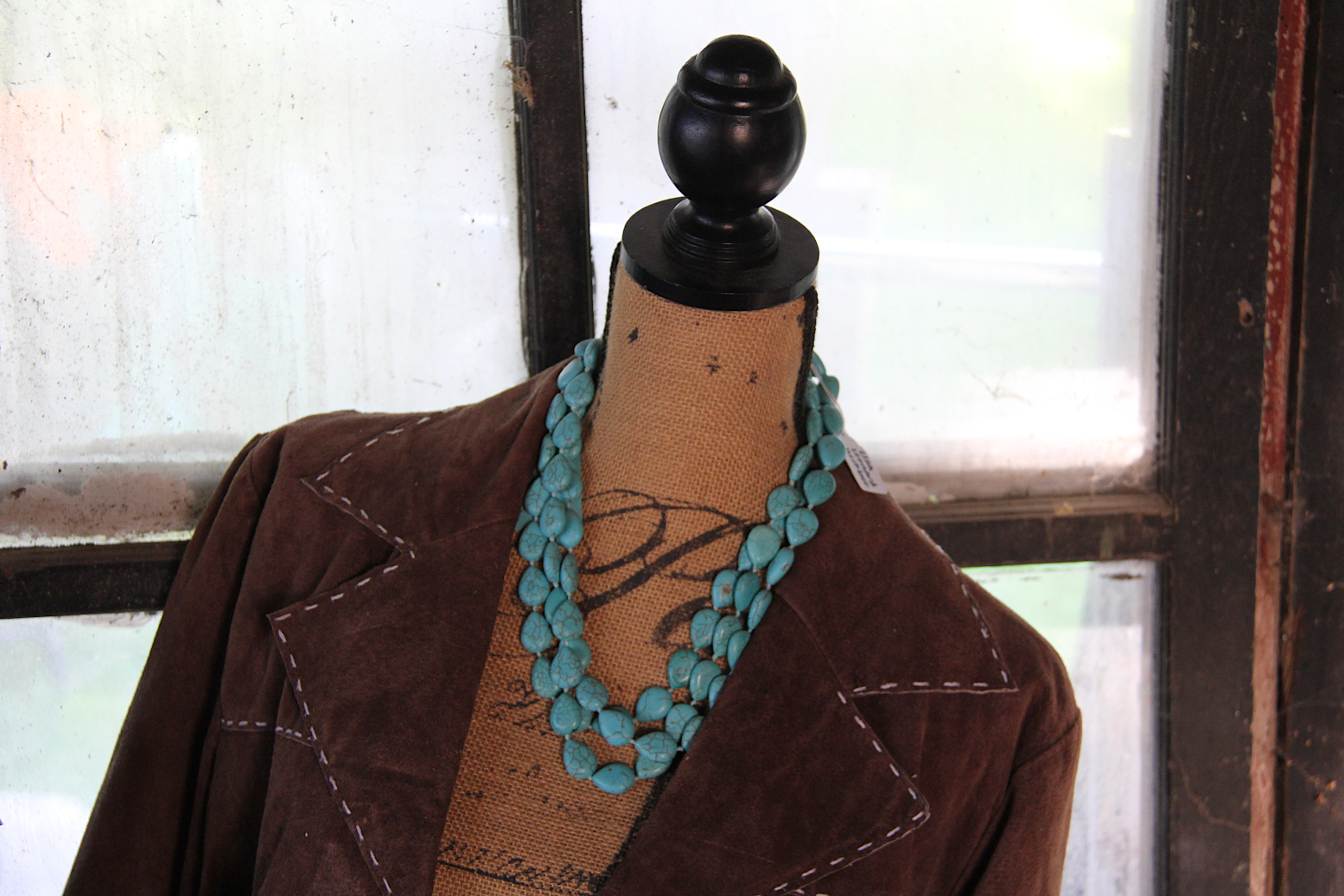
Vendors set up shop near RR Revival to sell food, crafts, flea market and other goods. That included mushrooms, floral bouquets, jewelry, upcycled clothing, hand-painted seasonal décor and much more. If you weren’t in a fall mood when you arrived, you would be upon departure.
An artful display of seasonal merchandise for sale at RR Revival. (Minnesota Prairie Roots copyrighted photo September 2025)
Flowers for sale burst in autumn hues. (Minnesota Prairie Roots copyrighted photo September 2025)
RR Revival is packed inside and out with goods. (Minnesota Prairie Roots copyrighted photo September 2025)
Pumpkins and mums, ghosts and scarecrows, flowers and gourds in autumn hues, all set the stage to welcome the change in seasons. I even saw a young girl trying out her “Wizard of Oz” Dorothy costume, complete with red shoes, for Halloween.
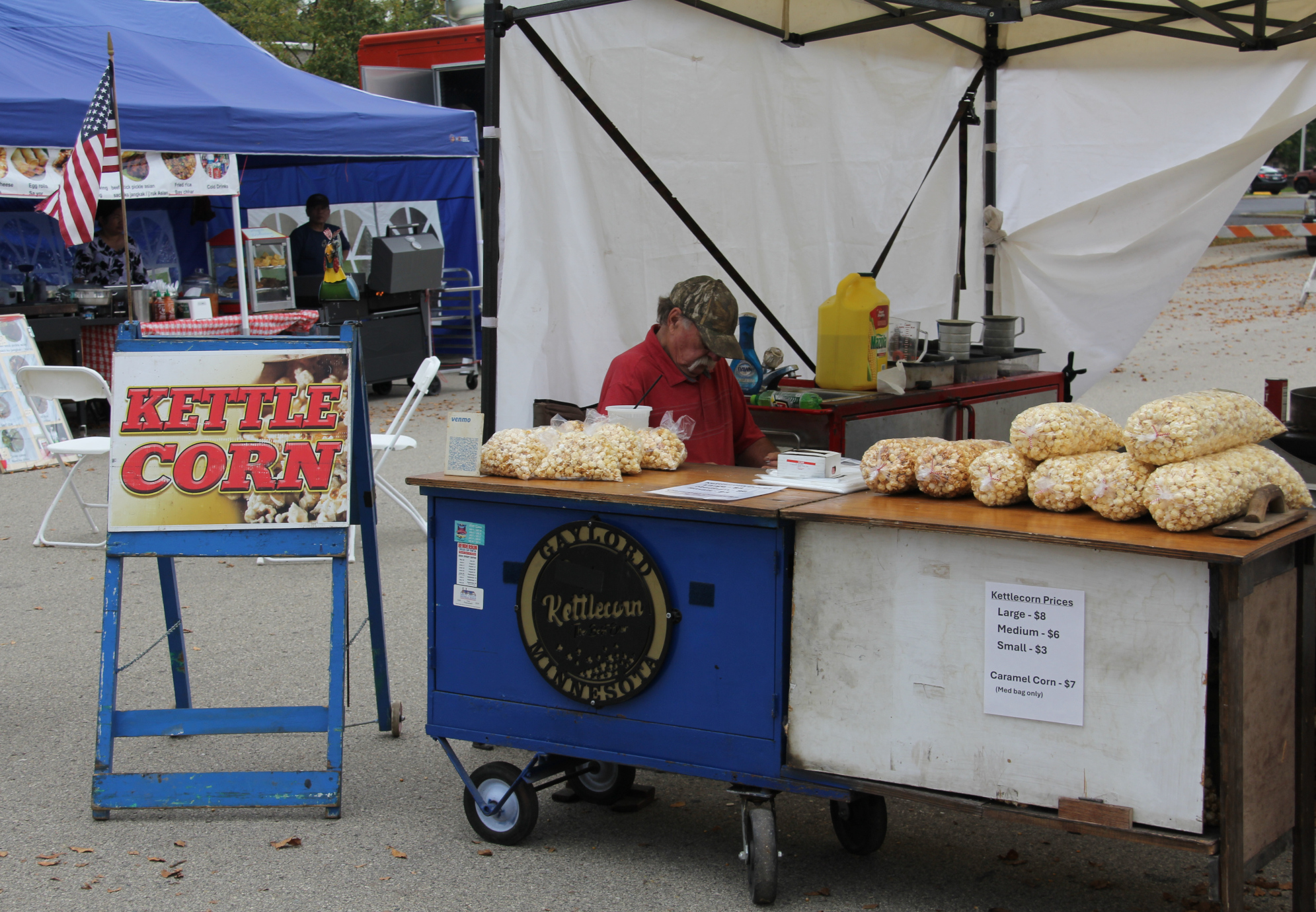
Among the numerous food vendors set up in the street, this one from Gaylord and selling kettle corn. (Minnesota Prairie Roots copyrighted photo September 2025)
As I wandered, the caramel scent of kettle corn wafted through the air.
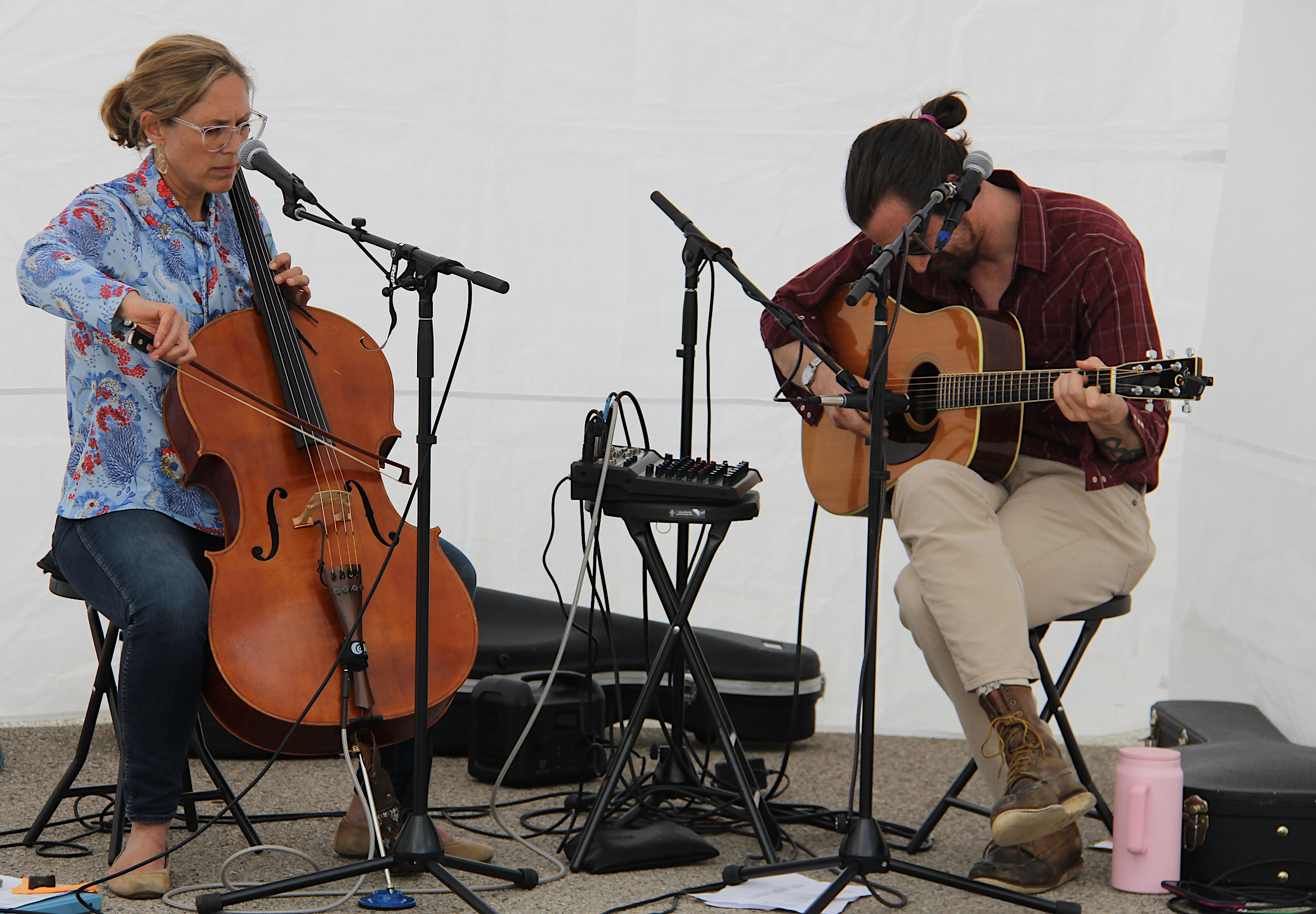
This duo added to the market with their music. (Minnesota Prairie Roots copyrighted photo September 2025)
Musicians played in the shelter of a small tent pitched on the street near RR Revival.
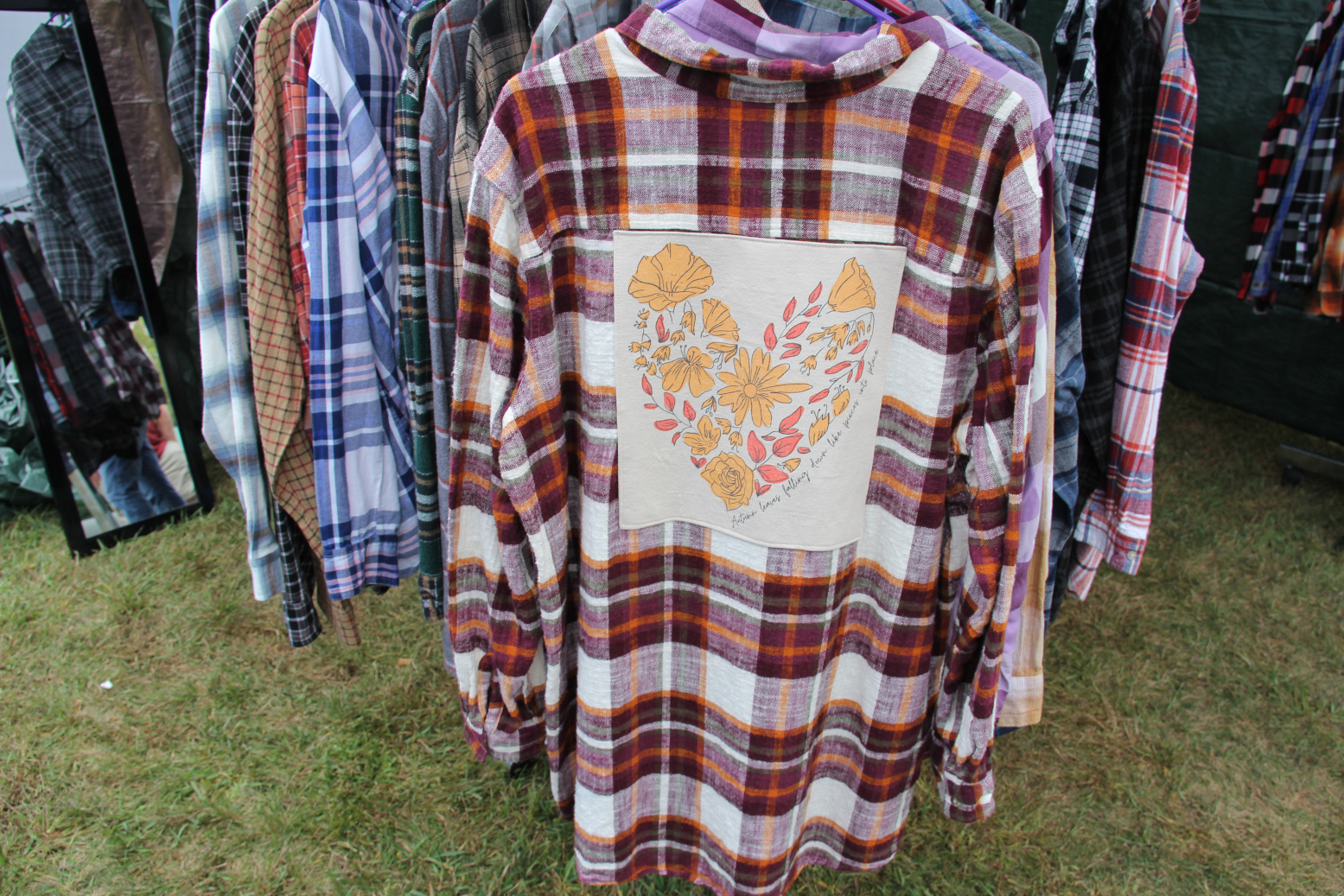
Upcycled shirts from The Thrifty Toad Shop included this autumn-themed one and others themed to sports, music, movies and much more. Ellorie is based in Cottage Grove and also sells on etsy. (Minnesota Prairie Roots copyrighted photo September 2025)
I appreciated the smallness of this craft and flea market and the ease with which I could meander and chat with sellers. The creativity and ingenuity of artisans always amazes me. Take Ellorie at The Thrifty Toad Shop. An avid thrifter, she turned her love of thrifting into a business. She buys second-hand shirts (mostly flannel) and graphic tees then upcycles them by cutting and sewing the t-shirt designs onto the backs of flannel shirts. I love this idea of reusing second-hand clothes, of creating something visually interesting and different. I’m no fashionista. But for someone like me who wears a lot of t-shirts and flannel (come autumn), Ellorie’s shirts are the perfect fit.
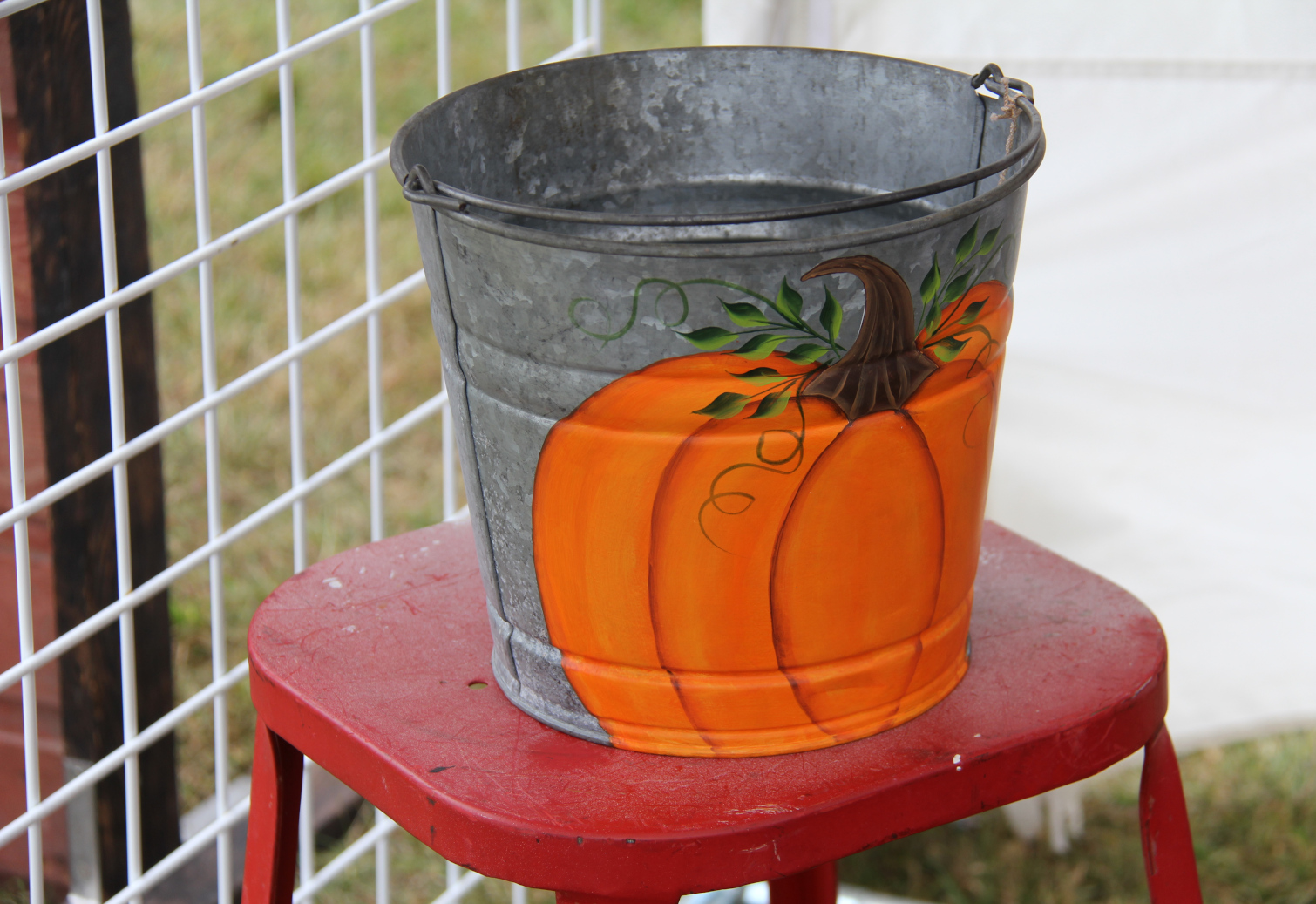
An example of the art created by Patti of A Touch from the Heart Creations based in Chaska. Patti brought mostly autumn and Christmas art to the market. (Minnesota Prairie Roots copyrighted photo September 2025)
Under another tent, Patti of A Touch from the Heart Creations also upcycles, painting seasonal designs onto old shovels, spades, pails, gas cans and more.
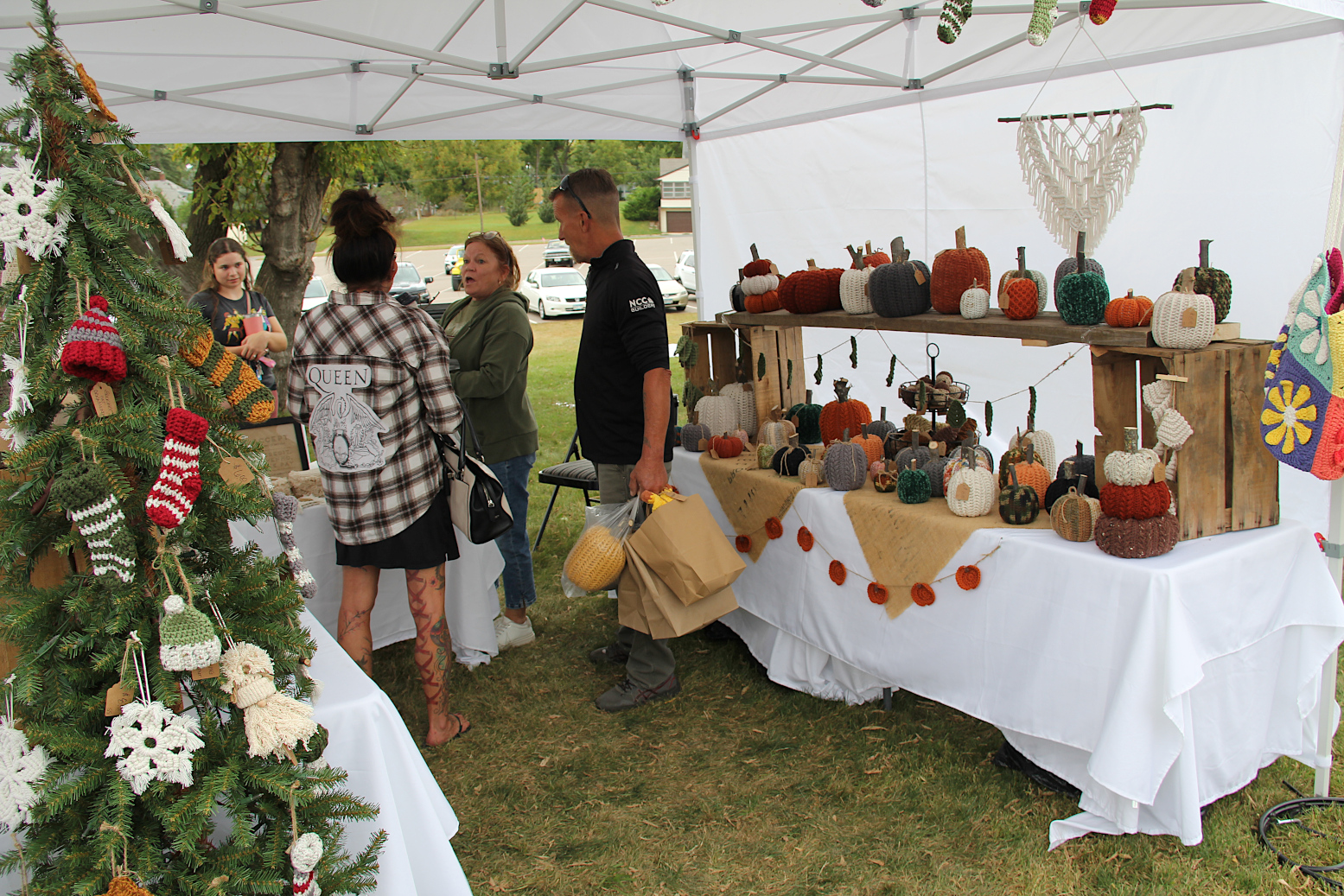
Shellie, from nearby Webster, chats with customers inside the tent displaying her mostly autumn and Christmas-themed crocheted creations. (Minnesota Prairie Roots copyrighted photo September 2025)
At Shellie’s Stitches Everything Crochet, it’s all about crocheting—Christmas trees, snowmen, pumpkins and, well, whatever this crafter wants to make and vend.
A representative from Dispatch Dogs of Lonsdale was on hand to talk about supporting dogs in need through fostering, transporting and fundraising. (Minnesota Prairie Roots copyrighted photo September 2025)
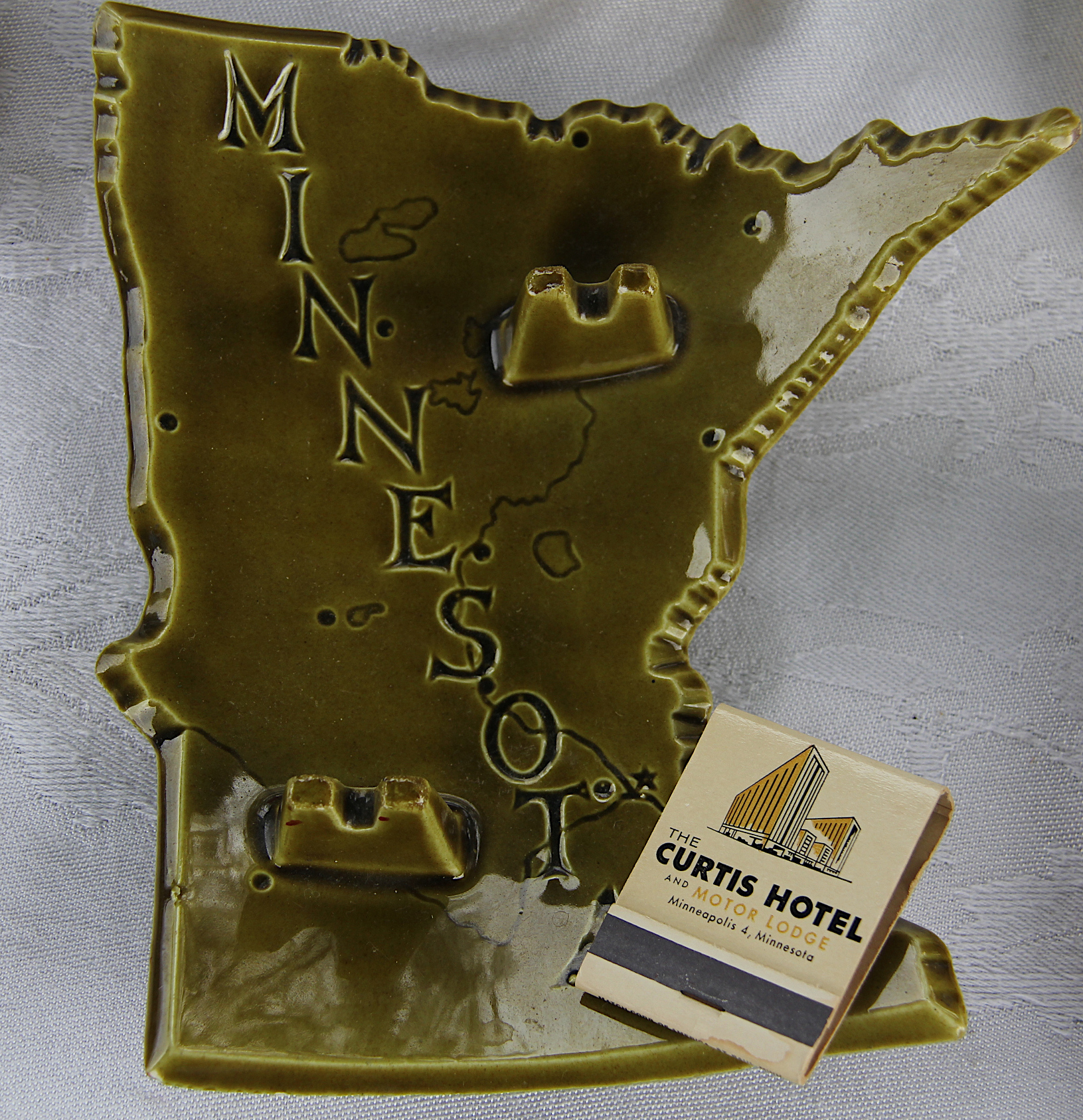
Loved this Minnesota shaped vintage ashtray with key town names and locations on the back and for sale from a flea market vendor. (Minnesota Prairie Roots copyrighted photo September 2025)
RR Revival organized the market. (Minnesota Prairie Roots copyrighted photo September 2025)
This event, along Railway Street near the grain elevators in Lonsdale and billed as the RR Revival Flea Market, proved a wonderful way to welcome autumn.
This thrift shop is packed with goods and is one I’ve shopped before. A small ice cream shop has been added to the space. (Minnesota Prairie Roots copyrighted photo September 2025)
Two blocks away, the Something for All Consignment/Thrift Store also drew me inside to shop in the building’s nooks and crannies. Outside the shop, kids (mostly) could pose behind seasonal photo cut-outs, decorate a mini pumpkin, play with an oversized Jenga. There were wooden ghosts, jack-o-lanterns crafted from gas can, fiery salsa and more for sale, too.
Halloween decor and pumpkins for sale outside Something for All. (Minnesota Prairie Roots copyrighted photo September 2025)
I left Lonsdale without a single purchase. But what I bought was a few hours of contentment and enjoyment in a small town with a grain elevator, a familiar rural landmark that will always claim a piece of my heart.




















From words on a government website to soybean markets & a crisis in rural America October 15, 2025
Tags: agriculture, America, China, commentary, farm crisis, farming, messaging, opinion, rural America, rural Minnesota, soybean market, soybeans, tariffs, trade war, United State Department of Agriculture
WHEN I FIRST READ the message bannering the United States Department of Agriculture website during the current government shutdown, my jaw dropped. In a two-sentence statement, “The Radical Left Democrats” are blamed for the closure of the federal government. How unprofessional, I thought, to so blatantly put politics out there on a website designed to help America’s farmers. But then again, why should this surprise me?
United States Secretary of Homeland Security Kristi Noem is doing the same in a video message blaming Democrats for the shutdown. She expects this to be broadcast in airport terminals. Many are opting not to air her clearly political statement. And they shouldn’t. It’s unprofessional and wrong in more ways than I can list, no matter what your political affiliation may be.
But back to that message on the USDA website. It goes on to say that President Donald Trump wants to keep the government open “and support those who feed, fuel and clothe the American people.” Now that is certainly a noble statement at face value, one we could all applaud. Who doesn’t want to support our farmers? But in the context of what the President has done to farmers, the statement seems laughable.
Here in the heartland, farmers have lost a major market for soybeans, my state’s top agricultural export. China has stopped buying soybeans from not only Minnesota, but America. That’s billions of dollars in lost income. And all because of the ongoing trade war between the U.S. and China, begun by the man who slapped tariffs—now averaging 58 percent—on Chinese imports with a threat to increase that to 100 percent. I’m no economist. But even I understand China’s retaliatory tariffs and actions to tap other markets for soybeans. They went to Brazil and Argentina.
And now President Trump proposes sending $20 billion in aid to Argentina, all tied to an upcoming election there. Why would we bail out a country exporting their soybeans to China while our own financially-strapped farmers are suffering because they’ve lost a key market? This makes no sense to me. Again, I’m not an economist or a politician, simply an ordinary American citizen, with a farm upbringing (and who decades ago freelanced for the Minnesota Soybean Growers Association), questioning the logic of any of this.
Even without the Argentinian component tossed into the mix, there’s more. President Trump has proposed an aid package for farmers to help them get through the financial crisis he created via his tariffs and the resulting trade war with China. That aid would come from the money collected from tariffs. Now I know farmers—my dad was one—are fiercely independent and would rather have a market for their cash crops than government aid. If not for the tariffs…
As the harvest continues here in Minnesota, I can’t help but feel for those who work the land, who continue to face so many uncertainties, financial challenges and stressors. Interest rates on loans remain high. Market prices remain low. Land rents continue to rise. Equipment and other costs are high. And on and on, including the loss of the long-standing soybean export market to China, which quite likely may never be reclaimed.
This is becoming a crisis situation for farmers—those who feed, fuel and clothe Americans. From fields to small town Main Street, rural America is hurting. And politically-biased blame words published on a government website aren’t helping.
© Copyright 2025 Audrey Kletscher Helbling