On the back of this photo, my dad simply penned “a letter from home.” I appreciate this photo taken by an unknown buddy while they were in the service. (From the Elvern Kletscher photo collection)
A SHORT BIT AGO, I reread a letter my dad wrote home to his parents in southwestern Minnesota on his 22nd birthday in March 1953. Dad penned the letter thousands of miles away in Korea, where he was fighting on the frontline during the Korean War.
Among my dad’s “Korea stuff” are a book of military instructions he carried into the battlefield, a newspaper clipping about him, and his dog tags atop his letter home, the chain circling the words “hell hole.” (Minnesota Prairie Roots copyrighted file photo November 2023)
One long paragraph of that missive stands out for me on this Veterans Day. That is Dad’s anger at the draft board and at those who thought it necessary to send young men like him into what he termed a “hell hole” and a war against Communism that he didn’t think could be won.
This photo from my dad’s collection is tagged as “Kim, Rowe, Allen & me, May 1953 Machine Gun Crew.” That’s my father on the right.(From the Elvern Kletscher photo collection)
I expect many others thought like Dad. How could you not after shooting, killing, watching your buddies die in battle? After living with hunger and bone-chilling cold in a mountainous land far from home.
At the time of his letter, Dad was especially concerned that his younger brother, Harold, would be drafted. He vowed revenge if that happened. I suppose when you’re an older brother and you’ve seen war like he has, you don’t want someone you love to experience the same. Dad’s words were just that. Words. Words written by a combat soldier weary of war. A soldier frustrated. A soldier counting the months until he could leave Korea and then be discharged from the Army.
Dad vented to his parents. He called for those in positions of power to come to the Korean battlefields, to see for themselves the realities of war. I imagine many a soldier wished the same, that officials, leaders and decision-makers understood the results of their policies, actions, decisions, orders.
My dad came home from Korea with the wounds of war. Mental, emotional and physical. He was wounded by shrapnel at Heartbreak Ridge. He experienced depression and post traumatic stress disorder.
Yet, he returned to America still patriotic, a proud American whose sacrifices and service were not then recognized. He served in what would become known as “The Forgotten War.” How demeaning, to be ignored, unsupported, just like Vietnam War veterans. Only decades later did Dad receive the Purple Heart he earned on the battlefield.
Dad went on to become an active American Legion member, serving as commander of the local post. He taught me and my siblings to respect veterans and those who died in battle. We attended every Memorial Day program in my hometown of Vesta. Afterwards we gathered at the cemetery for the playing of taps, prayer and a gun salute. We wandered among the tombstones.
I joined the Junior American Legion Auxiliary, which mostly involved selling poppies on Poppy Day. I also read “In Flanders Fields” at the community Memorial Day program and placed paper poppies on a wreath. My mom was an active American Legion Auxiliary member.
Dad integrated back into life in rural Minnesota upon his return from Korea as if nothing had changed for him. But it had. And it did. Going through his box of “Korea stuff” 72 years after he wrote that birthday letter home to his parents, I glimpse the “hell hole” of war he experienced. My anger rises, too, for all he endured and suffered on the battlefield and upon his return home to rural Minnesota.
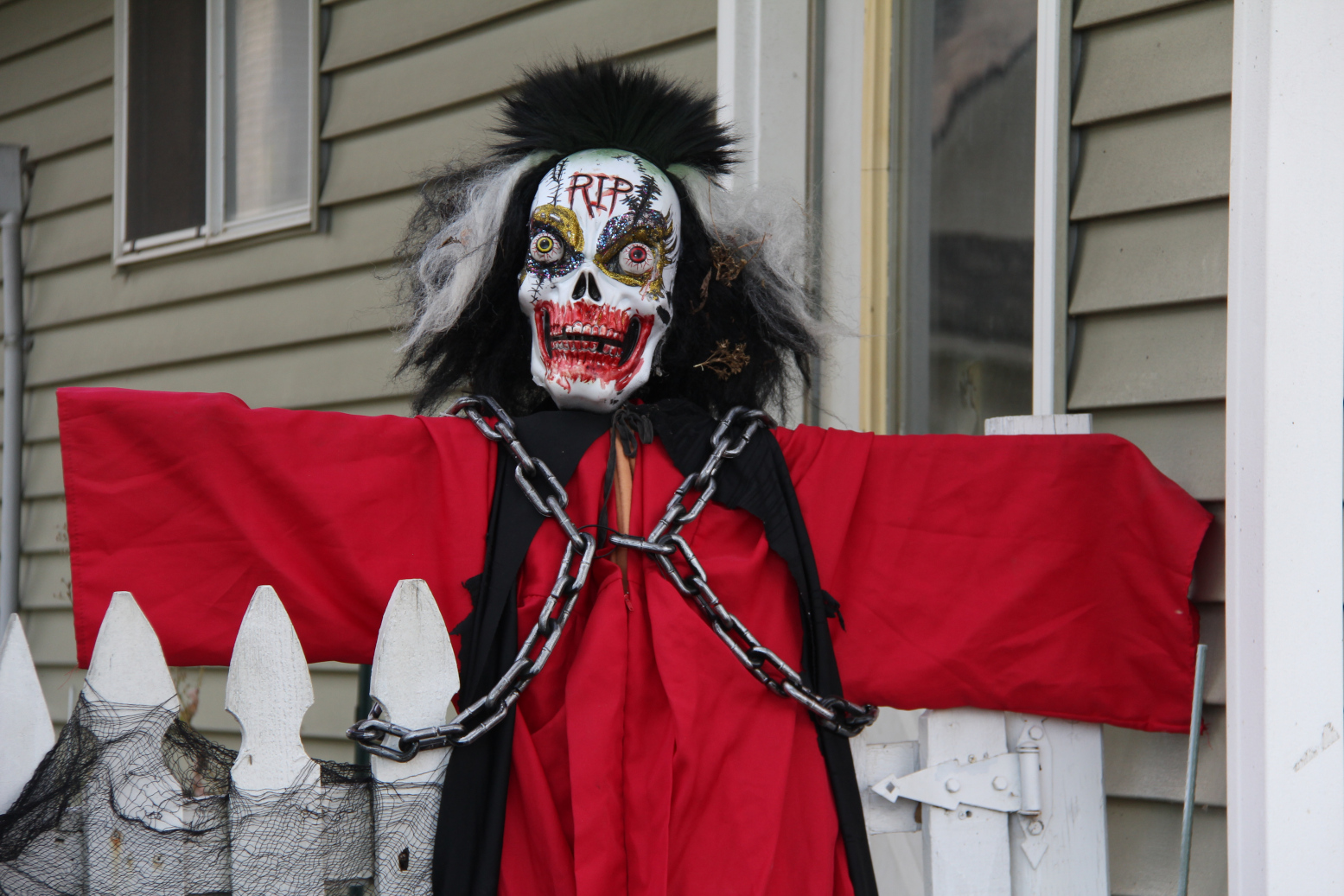
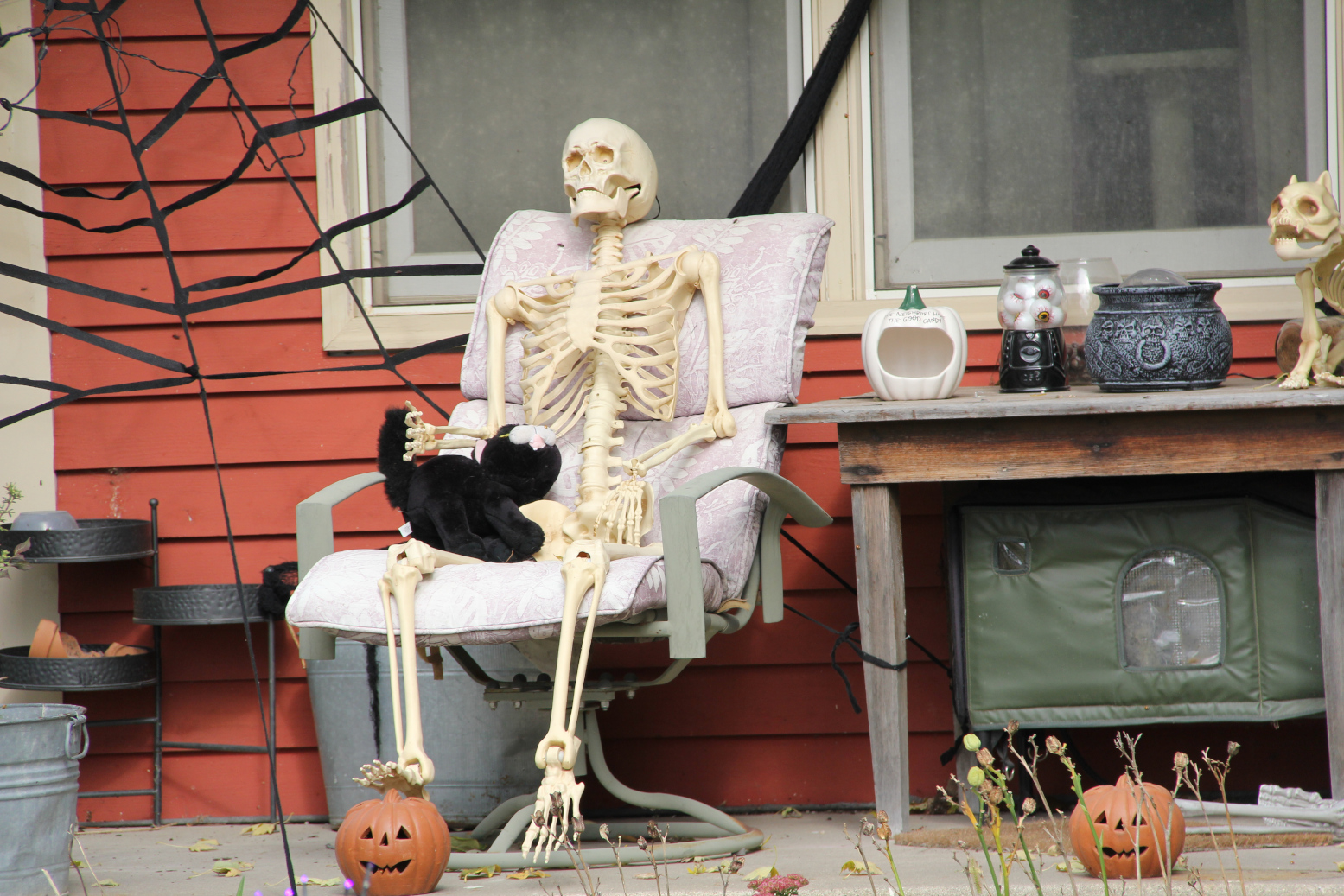
One of several scary characters positioned in a residential yard near downtown Waterville. (Minnesota Prairie Roots copyrighted photo October 2025)
HAPPY HALLOWEEN, my friends!
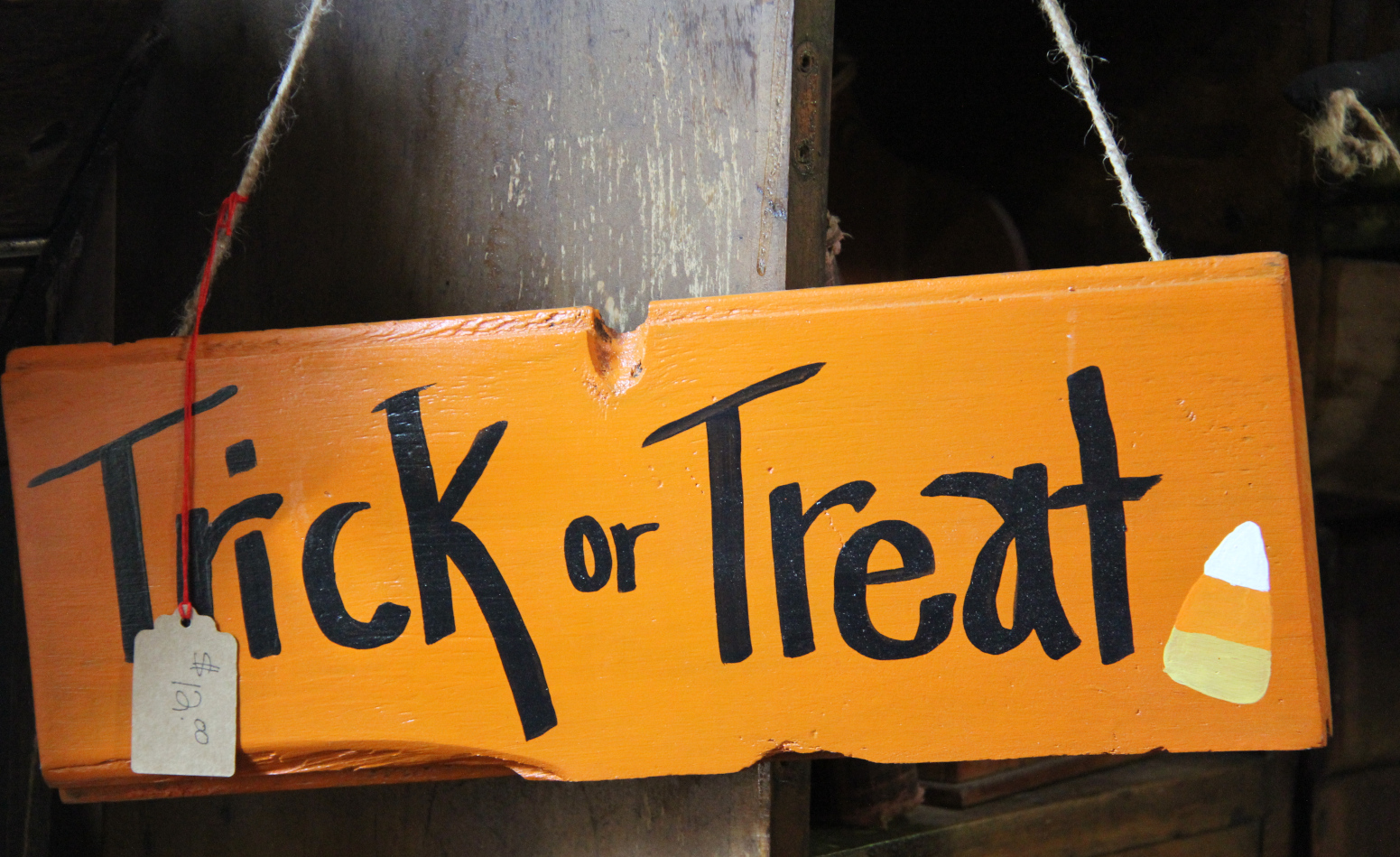
For sale at The Barn craft sale in September in Cannon City. (Minnesota Prairie Roots copyrighted photo September 2025)
If I was a kid, I’d be super excited about putting on my costume, grabbing my candy collecting bucket or bag and heading out to trick-or-treat. But, since I’m an adult, there will be none of that, only a quiet evening at home. I didn’t even buy candy to hand out since the number of trick-or-treaters to our house sometimes numbers zero. Plus, the cost of candy is too high.
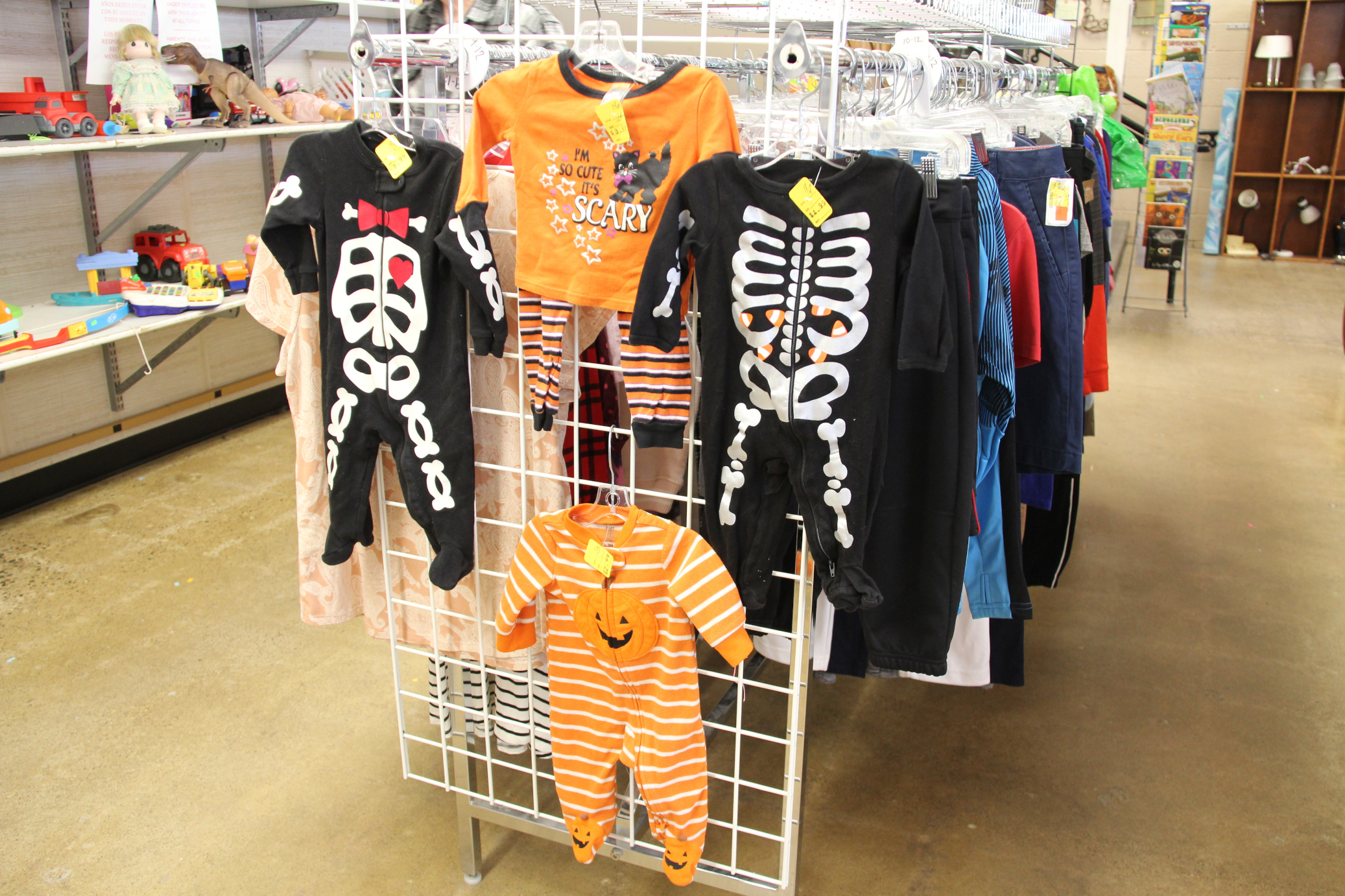
Thrift shops, like the Salvation Army in Red Wing, are good sources for Halloween costumes. (Minnesota Prairie Roots copyrighted photo October 2025)
But my grandkids, ages nine months, six and nine, will join countless costumed kids canvasing neighborhoods for treats. Izzy is dressing as Pikachu, Isaac as Numberblock Six and baby Everett as a dragon. Not that a baby can eat candy, but, well, his parents are pretty excited about their son’s first Halloween. I remember our oldest daughter’s first Halloween costumed as an angel. And I remember my childhood Halloweens in rural Minnesota, especially the year I dressed as a gypsy.
In Waterville, warnings in a neighborhood Halloween display. (Minnesota Prairie Roots copyrighted photo October 2025)
I remember Mom dropping me and my siblings off in my hometown of Vesta, population around 360, to collect goodies. This wasn’t necessarily ring the doorbell or knock, then grab and go. Sometimes we stepped inside to show off our costumes and sign a guestbook before being given our candy. Or, in the case of Great Aunt Gertie, a homemade popcorn ball, which was quite capable of causing a chipped tooth. When we were done gathering treats, we went to Grandma’s house where Mom picked us up for the short ride back to the farm.
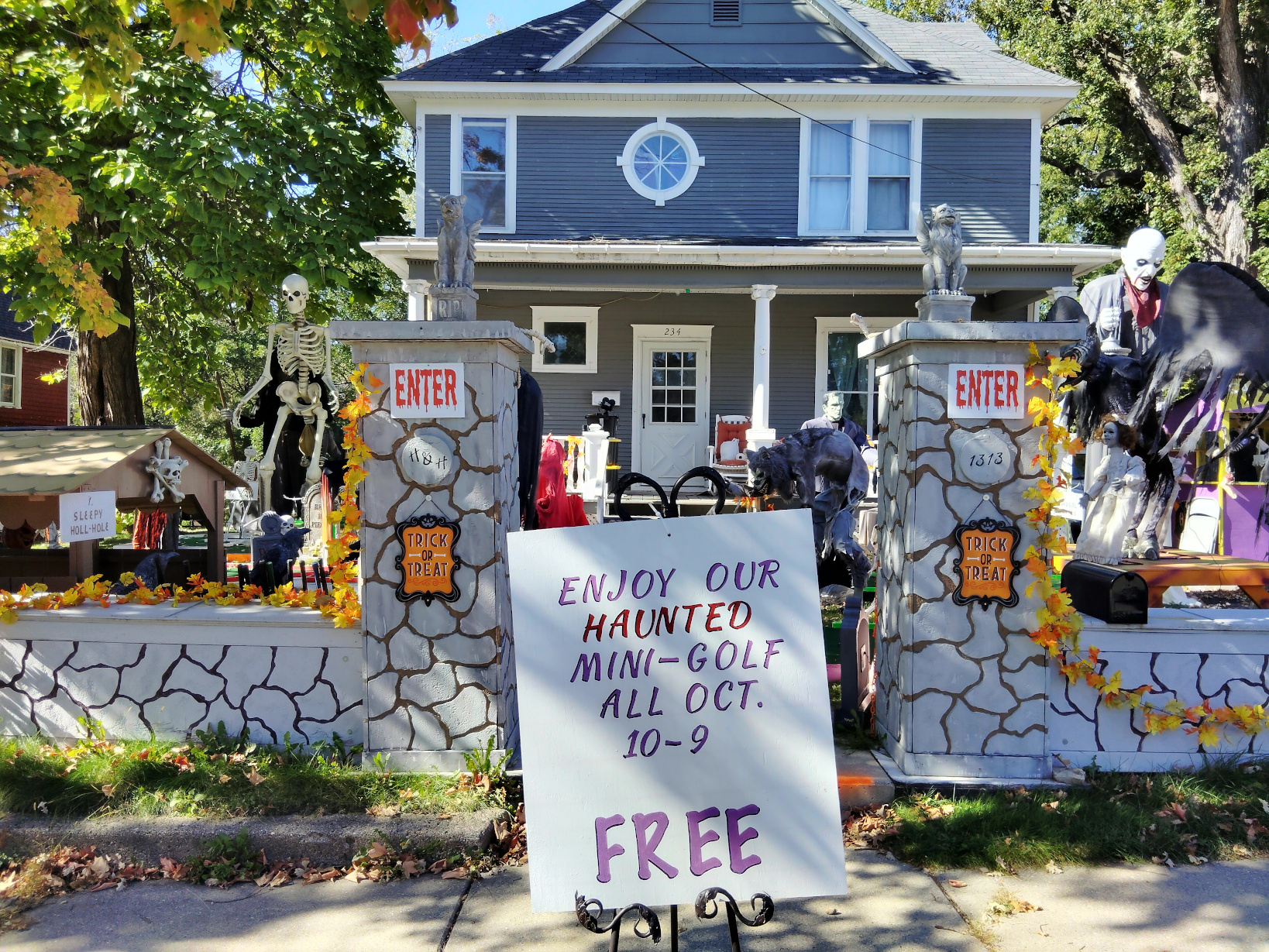
The entrance to Coy and Kathy Lane’s Haunted Mini-Golf interactive Halloween display at 234 First Avenue Southwest in Faribault. (Minnesota Prairie Roots copyrighted photo October 2025)
One aspect absent from my childhood Halloweens were yards full of spooky decorations. Today they are everywhere. My neighbors up the street, Coy and Kathy Lane, create a themed display in their yard that is open from 10 a.m.- 9 p.m. the entire month of October. This year they built a haunted mini golf course. It’s impressive. Sound, lights and action make this a fully-immersive experience created by a couple who clearly love Halloween. They’ll be handing out full-sized candy bars on Halloween, the final date the display is open to the public…until next October.
A Halloween display on a front porch in small town Nerstrand. (Minnesota Prairie Roots copyrighted photo October 2025)
All around Faribault and neighboring communities, inflatables and other factory-made decorations have popped up in yards. Cats. Frankenstein. Skeletons. Witches. And on and on.
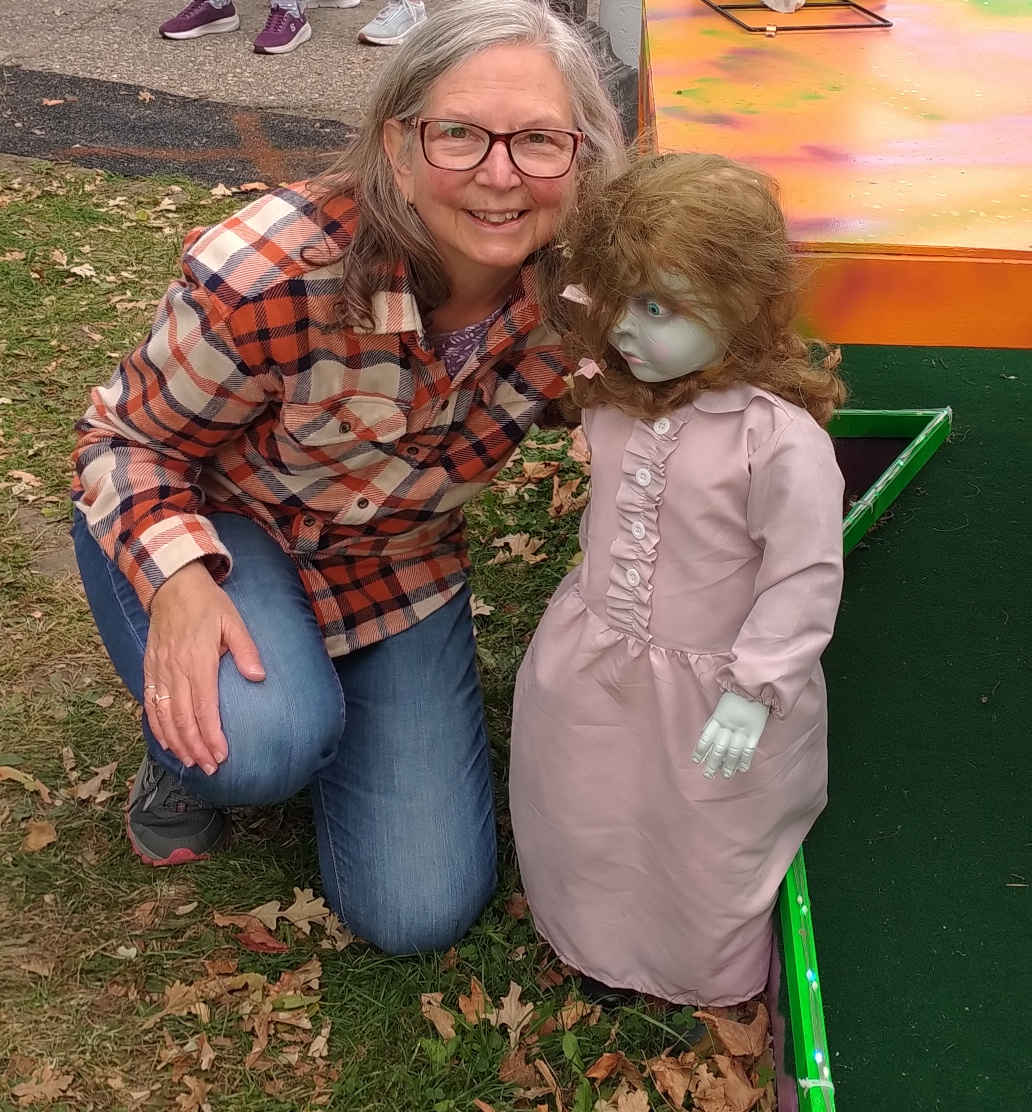
As much as I dislike creepy dolls, I posed with this one at Coy and Kathy Lane’s haunted mini golf course. (Minnesota Prairie Roots copyrighted photo by Randy Helbling, October 2025)
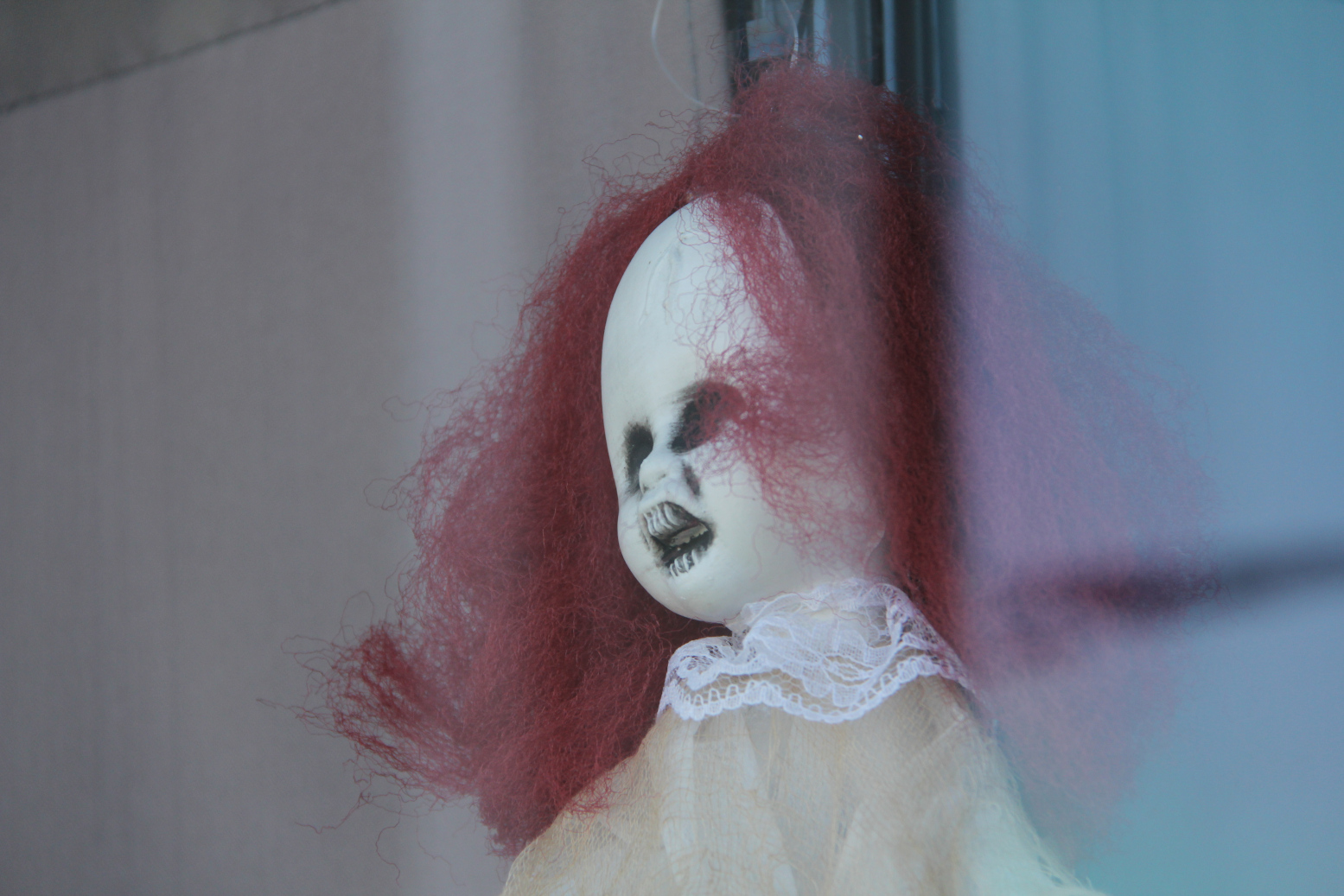
But the single freakiest Halloween decorations for me personally are the dolls. I can’t quite put my finger on why they creep me out other than that they do. My neighbors have an entire family of creepy dolls circling one hole in their mini golf course. I posed with one of them while Randy took a photo. We were there with our two oldest grandchildren during daylight hours, which likely explains why all of us were more entertained than scared.
I spotted this creepy doll in a storefront window in Montgomery, Minnesota. (Minnesota Prairie Roots copyrighted photo October 2025)
Now had a mouse been running around or a bat flying about, I would have fled the Halloween scene, snap, just like that.
My favorite hole at the Lane Halloween display features clowns. And, yes, some move. (Minnesota Prairie Roots copyrighted photo October 2025)
TELL ME: What are you doing for Halloween? Also, I’d love to hear a Halloween memory or story. Please share.
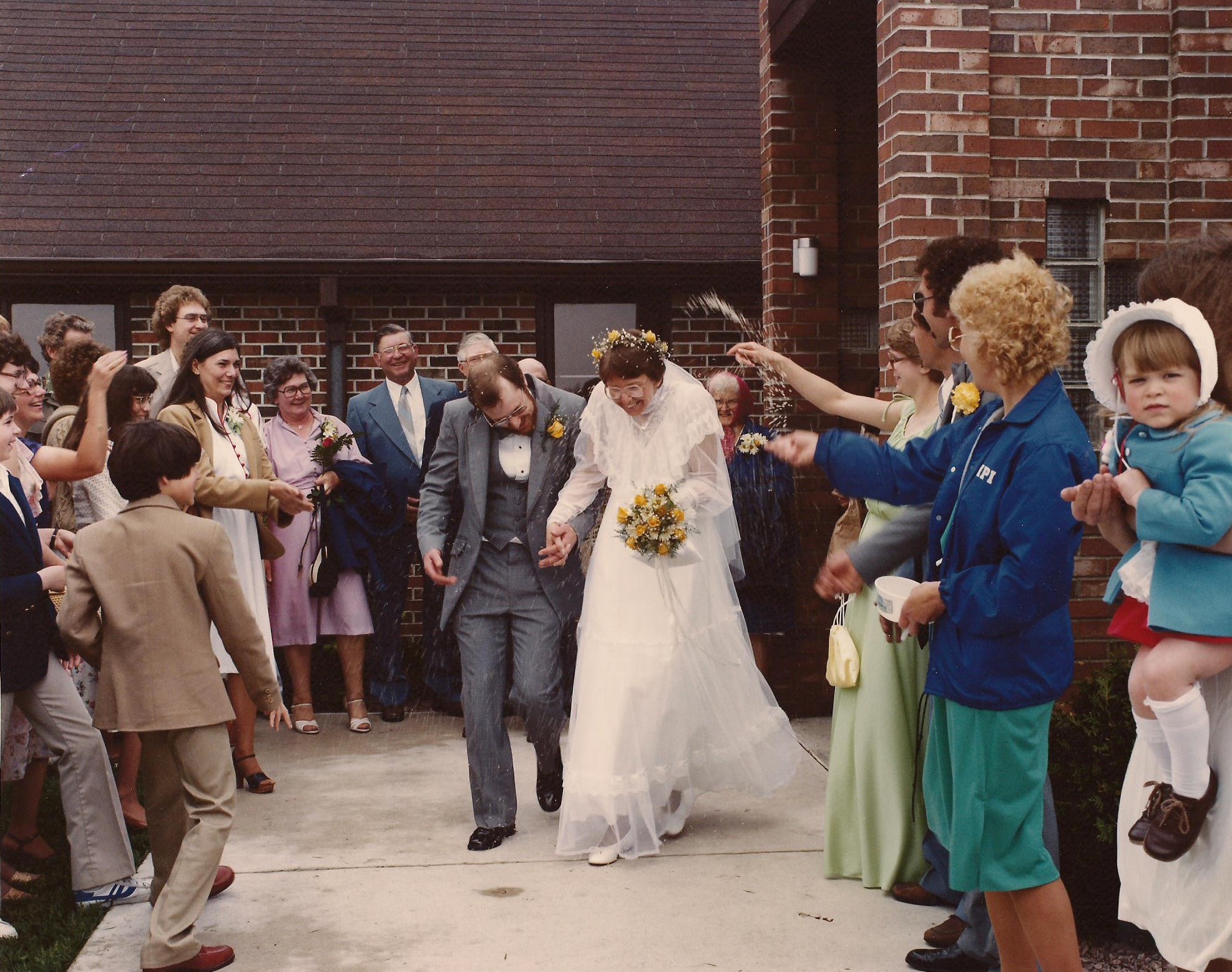
Randy and I exit St. John’s Lutheran Church in Vesta following our May 15, 1982, wedding. I cherish this image because it’s a journalistic-style photo in the day of portrait-only wedding photos. I also cherish it because it shows loved ones, including some who have since died. (Photo credit: Williams Studio, Redwood Falls, MN)
FORTY-THREE YEARS. Three children. Three grandchildren. Three seems the focus number today, the date I married Randy 43 years ago.
It hardly seems possible that so many years, so many decades, have passed since the two of us exchanged vows at St. John’s Lutheran Church in my hometown of Vesta. On the Saturday afternoon of Minnesota’s 1982 weekend fishing opener, we gathered with family and friends in the church on the edge of town a half mile from my childhood family farm.
In hindsight, May was not the best month to choose for a wedding, especially when your dad and most of your paternal relatives are farmers. My parents never said a word about our chosen date of May 8. But my florist sister protested. That was Mother’s Day weekend and she firmly stated that she would not attend our wedding. So we changed the date to a week later. I should have called her bluff.
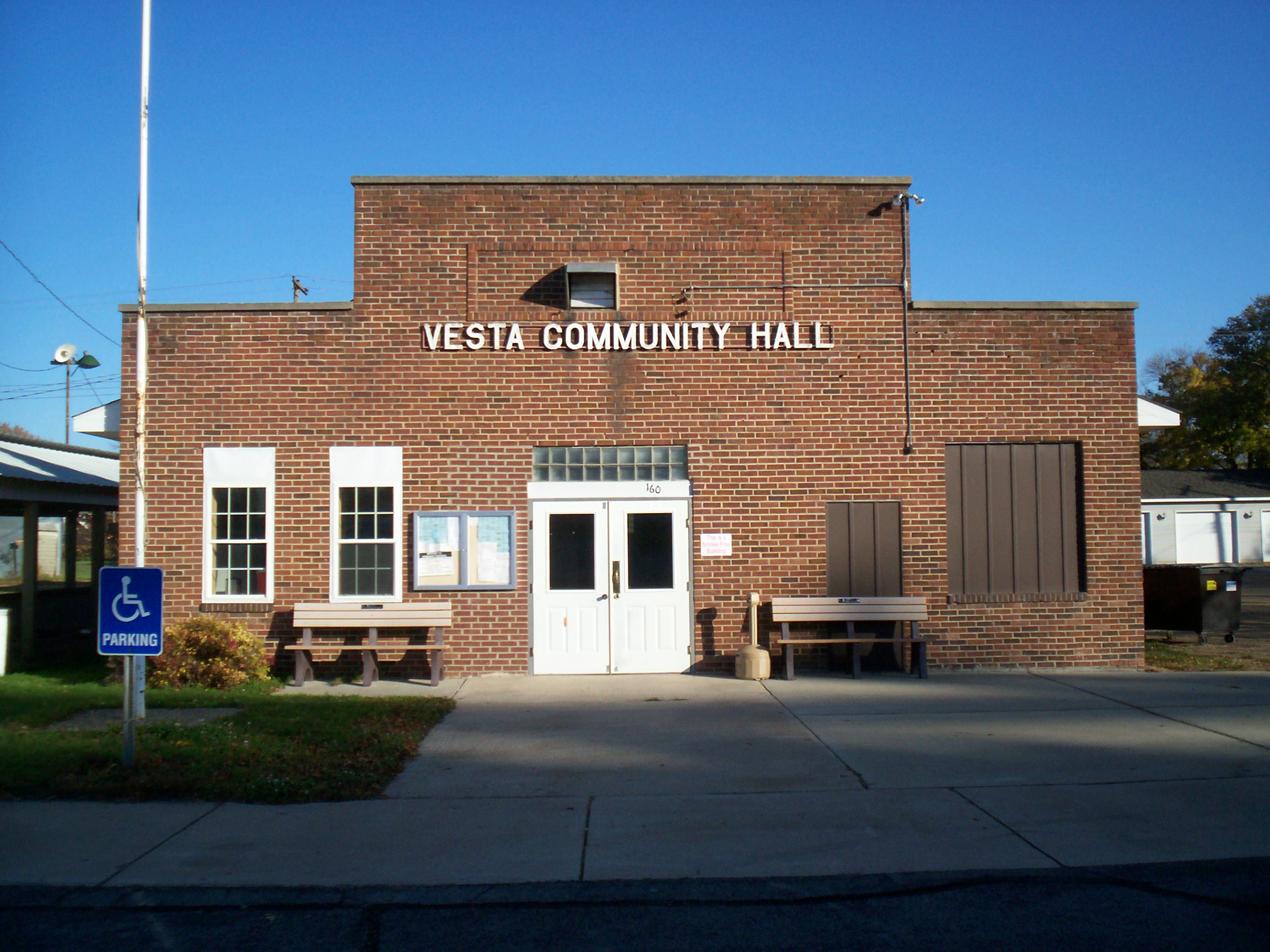
The Vesta Community Hall, site of our 1982 wedding reception and dance. I loved this building with its stage, wood floor and wood benches lining the edges of the dance floor. It’s no longer the community hall, sadly. (Minnesota Prairie Roots copyrighted file photo)
That aside, our May 15 wedding went on during spring planting season. Dad managed to take time away from the tractor to grill food for the groom’s dinner, to walk me down the aisle and to celebrate afterwards at the Vesta Community Hall. Some farmers missed our wedding to plant corn. And at least one angler opted to go fishing. Choices.
Life is all about choices. Randy and I chose to marry each other. And for that I am thankful. We’ve made a great team, facing life’s challenges and celebrating life’s joys together. I cannot imagine going through the difficult times alone, without Randy’s steady, calming presence. His laid-back, introverted personality balances my more extroverted emotional personality. Sometimes he frustrates me as I’m sure I do him. But it works, this balance.
Our similarities of background have proven a strength in our marriage. We both grew up on crop and dairy farms in families without much money, so we’ve always agreed on finances. At a young age, we were expected to pitch in and do farm chores. As the older among many siblings, we carried more responsibilities. We worked hard. We understood that our parents were counting on us. And when we talk about picking rock, we don’t need to ask, “What are you talking about?” I will say, though, that Randy picked a whole lot more rocks in rocky Morrison County than I did from my dad’s farm fields in Redwood County. But then again, Randy never worked an off-the-farm summer job detasseling corn.
Now here we are, 43 years later, Randy still working hard—full-time as an automotive machinist even though he supposedly retired several years ago. And me still writing and doing photography. But we make a conscious choice now to put our family before jobs. Or more like I “tell” Randy he needs to take off work so we can do whatever, such as travel four hours to Madison, Wisconsin, to see our four-month-old grandson. Oh, and Everett’s parents, too.
Audrey and Randy, May 15, 1982.(Photo credit: Williams Studio)
I love how Randy supports me in my writing, even attending the many poetry readings I’ve participated in through the years. I doubt my husband ever expected that he would be marrying a poet. Next week, at 6 p.m. on Thursday, May 22, I’m joining four other poets at Books on Central in Faribault to read poetry. Randy will be there in the chairs listening. I just need to “tell” him.
And I need to tell him this also. Happy 43rd anniversary, Randy! I love you! Thank you for being my partner in life.
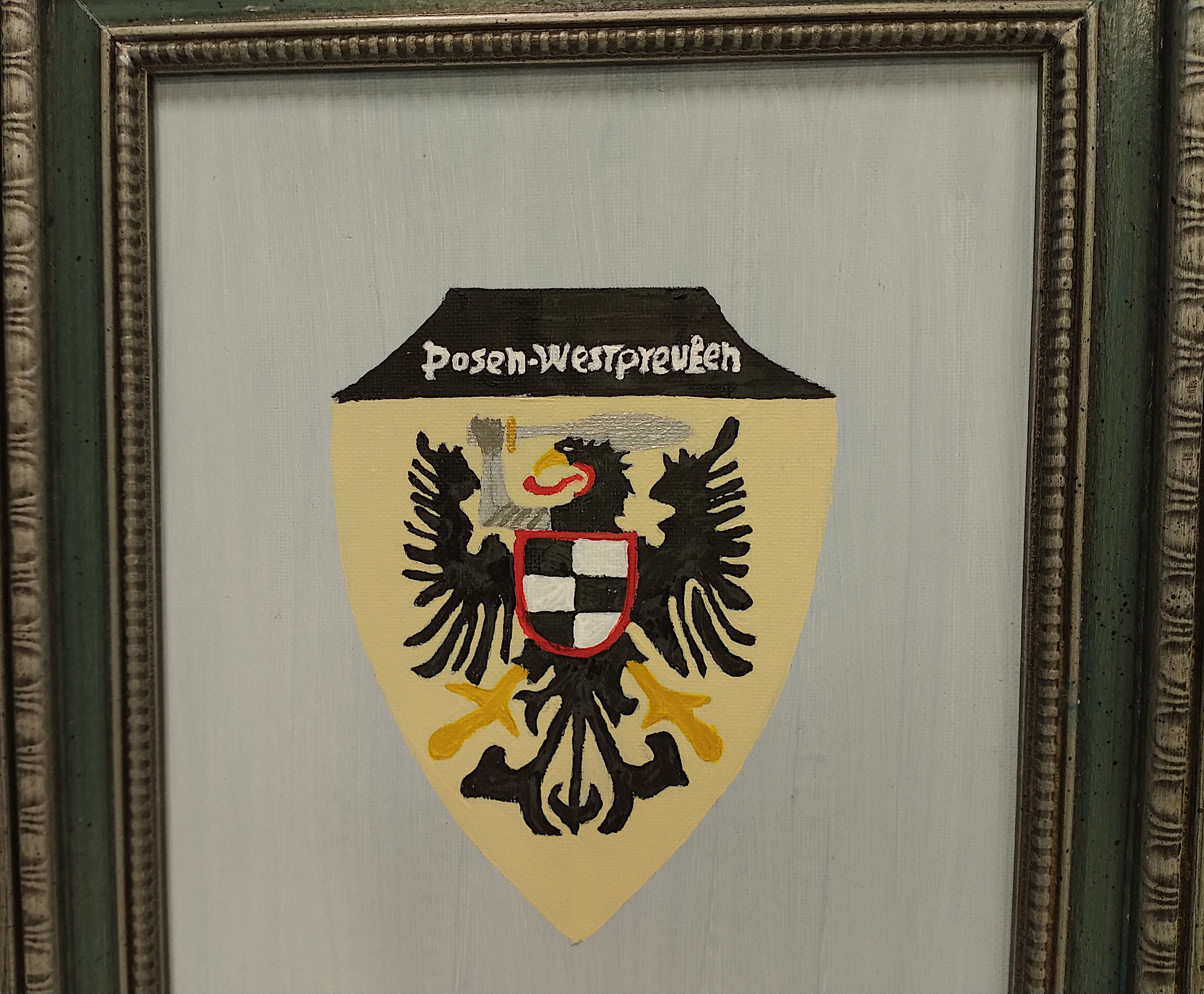
The Kletscher Family Coat of Arms of Posen-West Prussia. (Minnesota Prairie Roots copyrighted photo July 2024)
REUNITING. RECONNECTING. REMEMBERING. Those words define reunions, whether among family or friends. Summer marks prime reunion time in Minnesota, including for me, especially this year.
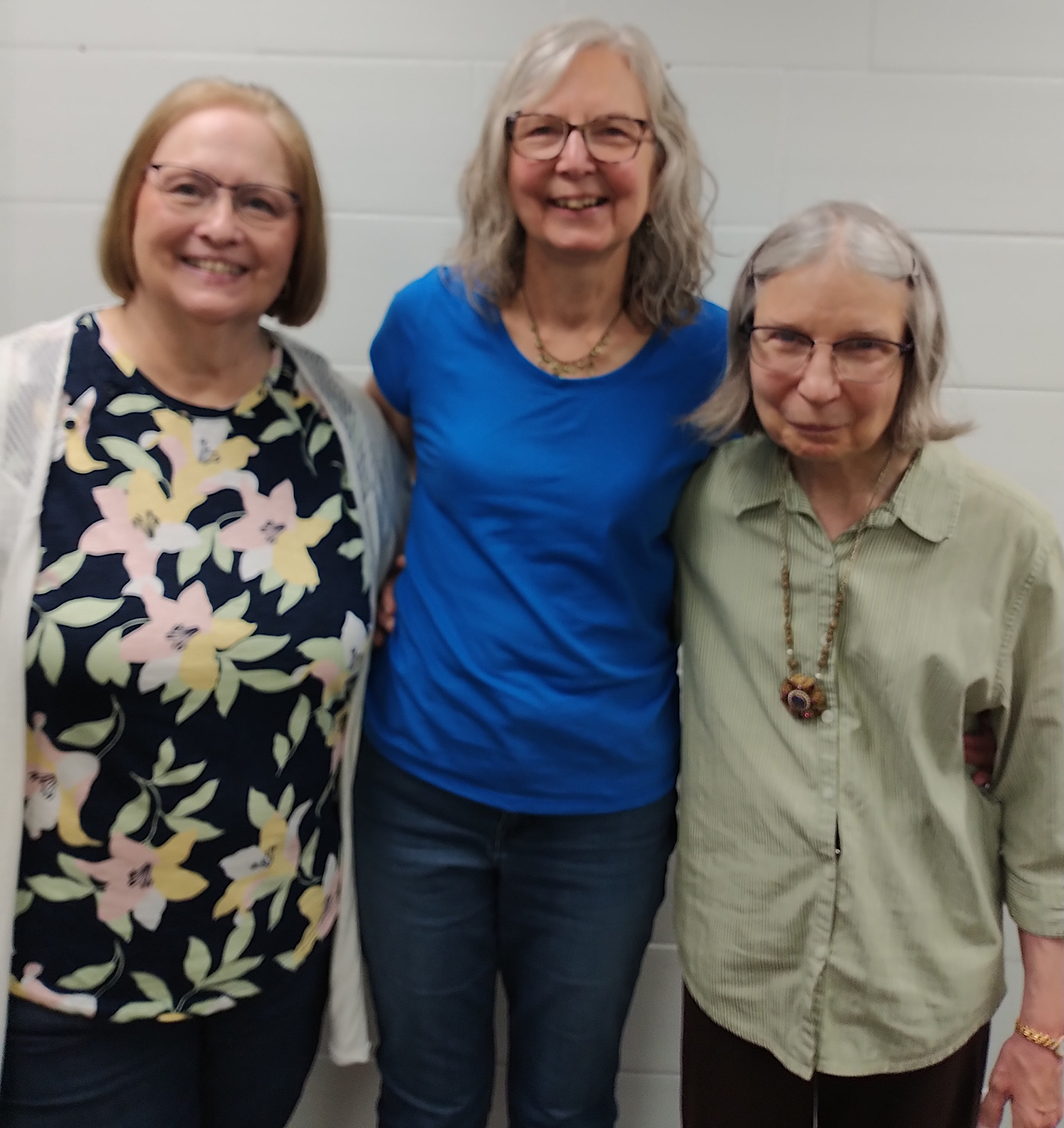
I’m flanked by cousins, Joyce, left, and LeAnn. We were born within months of each other and grew up spending lots of time together at family gatherings. (Photo credit: Kirt Kletscher)
From Pine River in northern Minnesota to Vesta on the southwestern Minnesota prairie to the Twin Cities and elsewhere, I’ve reconnected with people who are important to me, with whom I share roots and/or connections. And it’s been a joy because the older I grow, the more I realize that time is not a given and we need to gather and appreciate one another. With hugs, love and care.
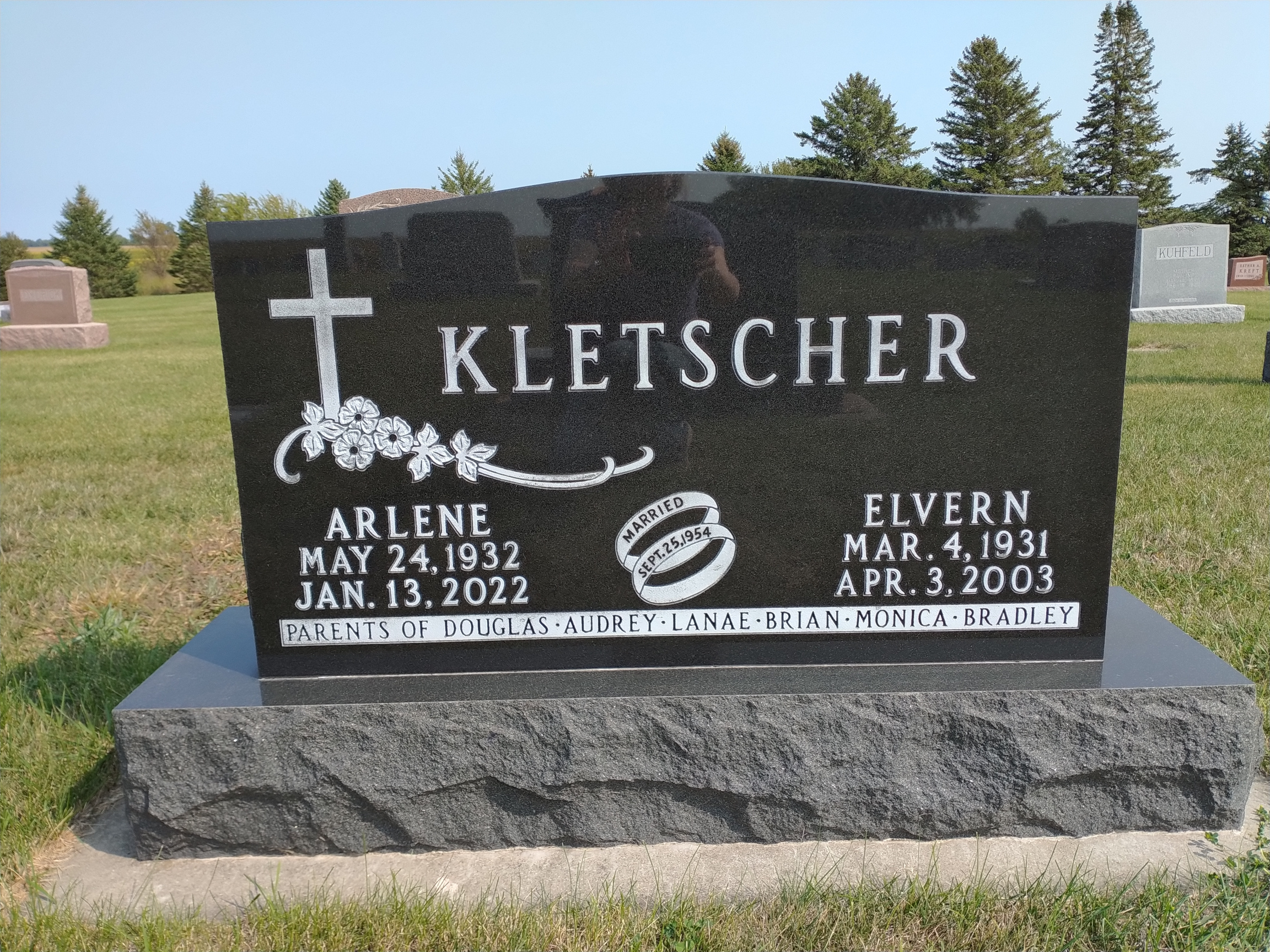
Myparents’ tombstone in the Vesta City Cemetery. (Minnesota Prairie Roots copyrighted file photo September 2022)
My most recent reunion happened July 28, when Randy and I traveled 2.5 hours west to my hometown of Vesta in Redwood County for the Kletscher Family Reunion, held annually on the last Sunday in July. First we stopped at the cemetery to visit the gravesites of my parents, grandparents and other family members. I wiped away tears before we followed the gravel road into town, to the reunion site, the former Vesta Elementary School, now turned city hall and community center.
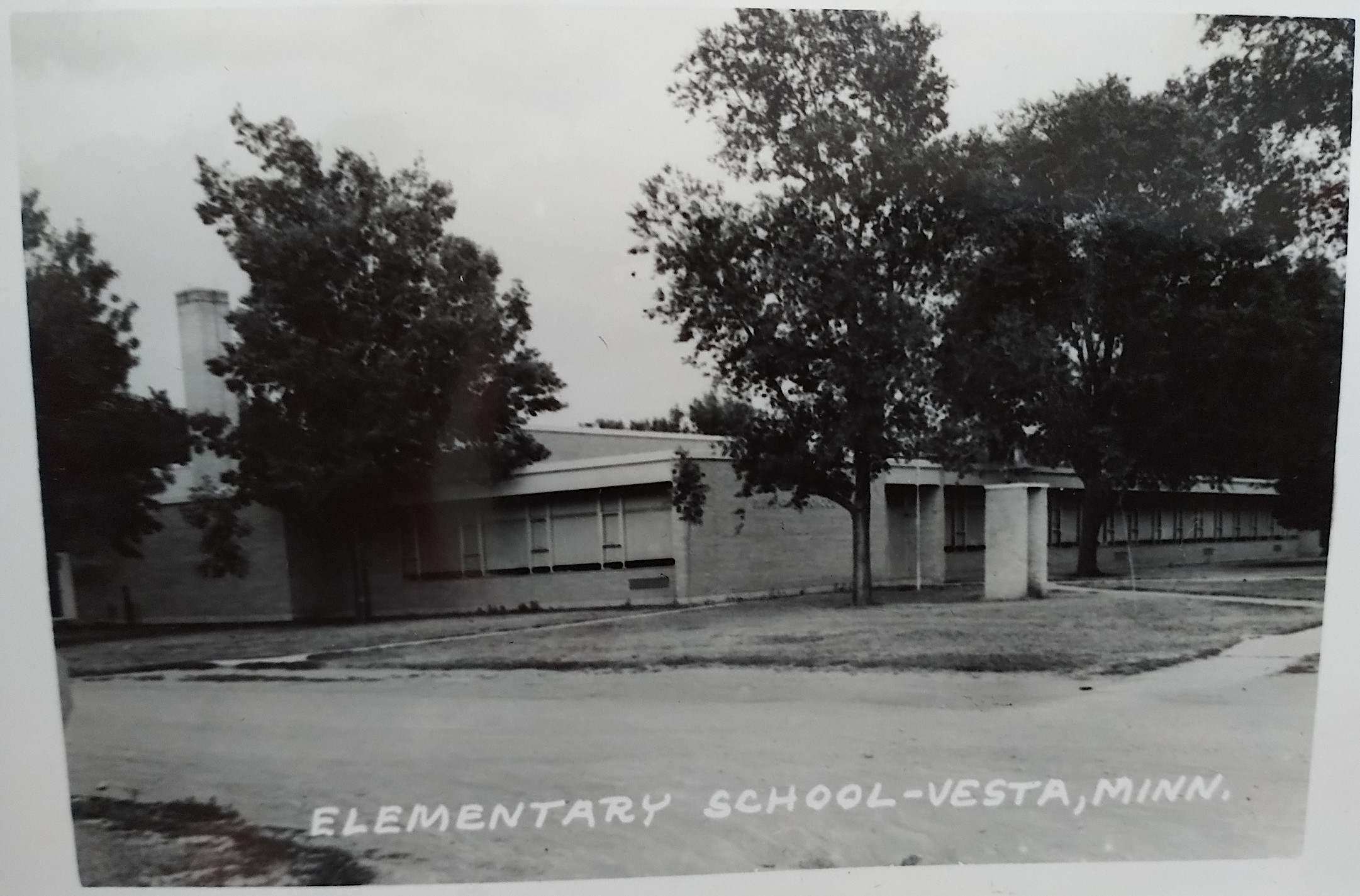
Vesta Elementary School in the 1960s.
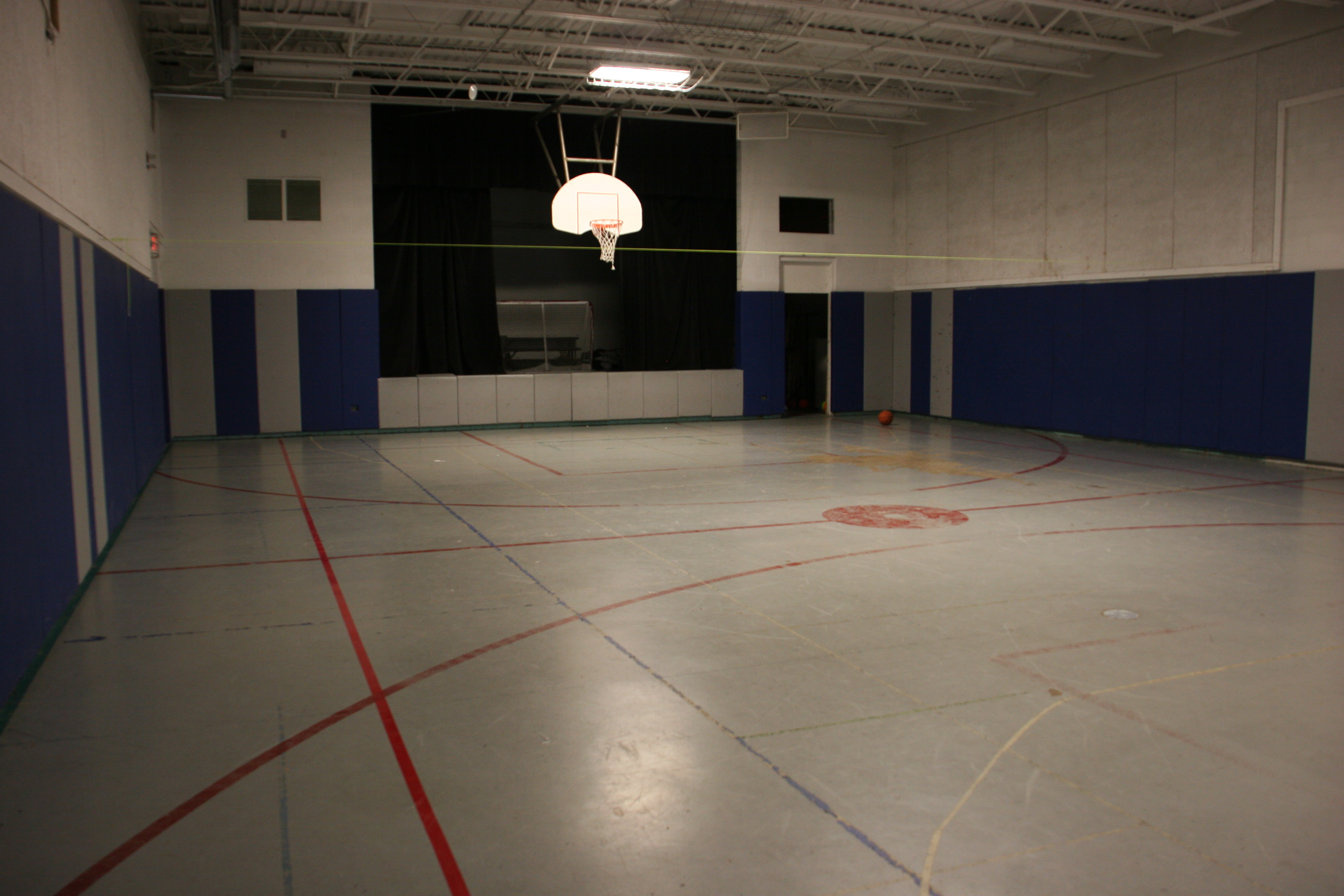
The old school gym, site of the family reunion. (Minnesota Prairie Roots copyrighted file photo September 2022)
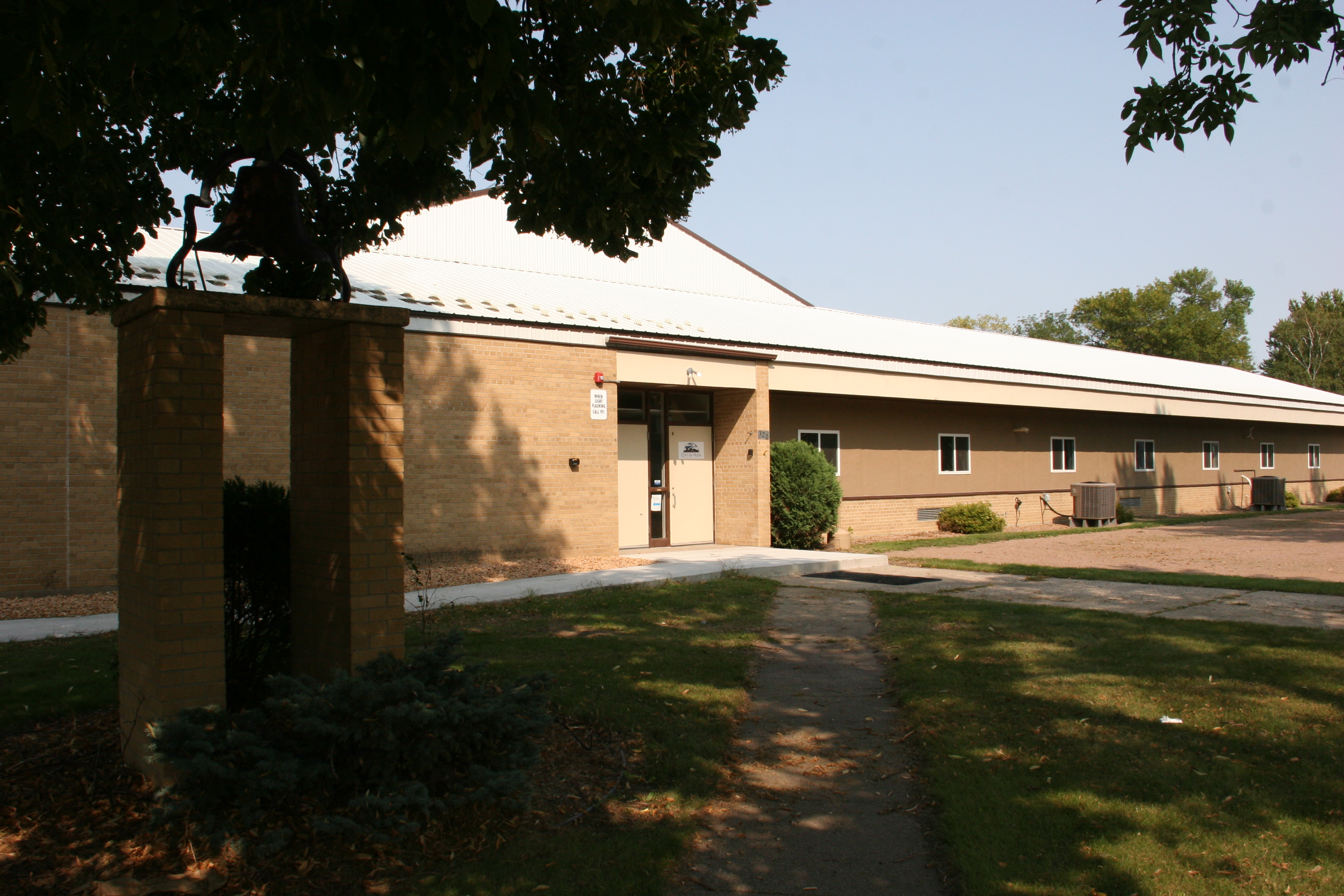
The school today, as a city hall and community center. (Minnesota Prairie Roots copyrighted file photo September 2022)
To walk back into the building where I spent my first six grades learning to read, write, spell, do math and more felt comforting and disconcerting, like stepping back into a school that no longer looks the same, but still holds the same memories. Clapping erasers outside on the east brick wall. Listening to Mrs. Kotval read Laura Ingalls Wilder’s books after lunch. Scrawling letters in a penmanship book. Weaving a rug from rags. Building snowforts. Jumping rope on the front sidewalk. Performing on the stage. So many memories in this space.
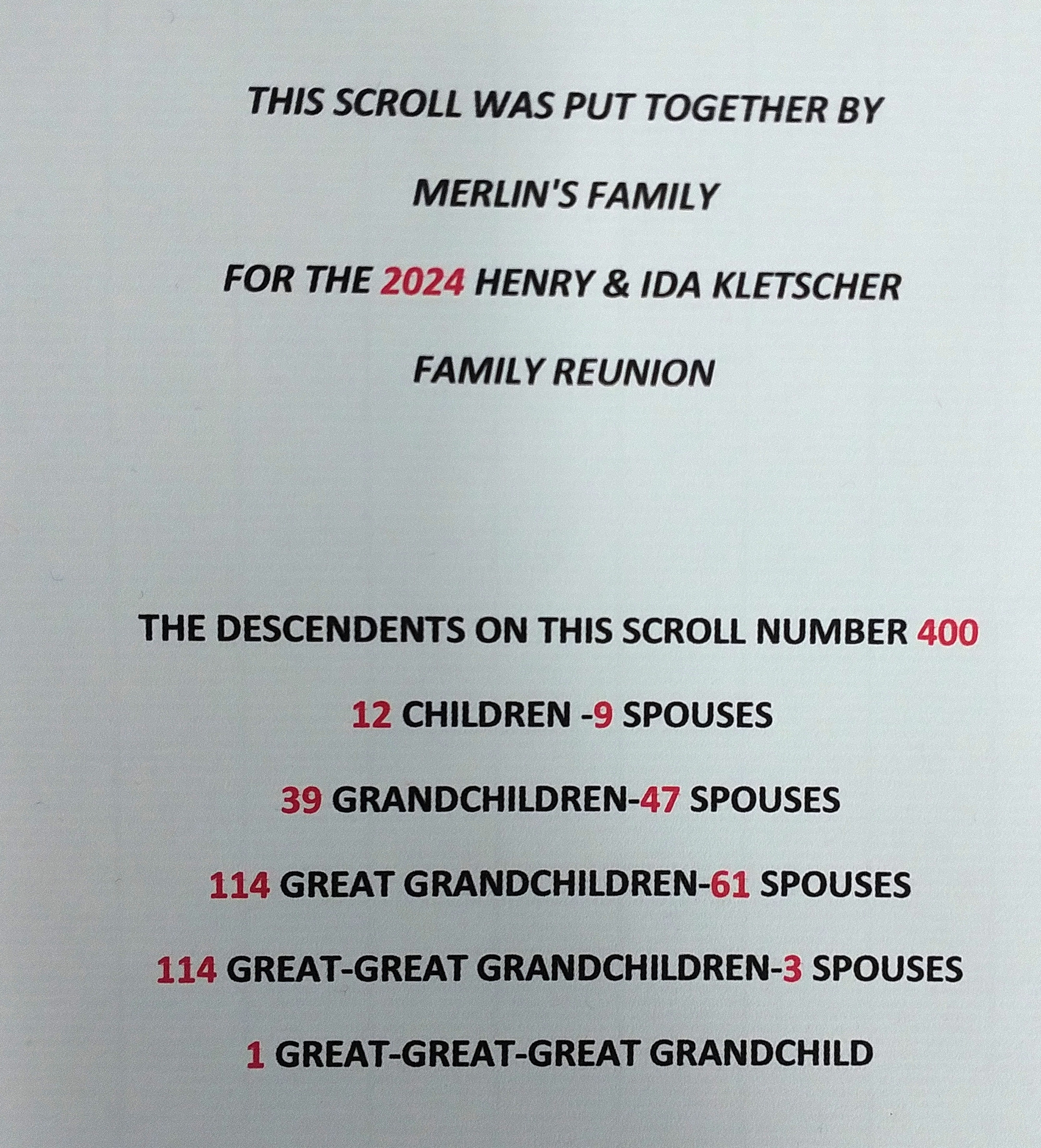
A summary of a 30-page family tree/scroll. (Minnesota Prairie Roots copyrighted photo July 2024)
And on Sunday, that space also held some 60-70 descendants of Henry and Ida Kletscher, parents of twelve, two dead in infancy and only three surviving today. The family tree, printed on 30 pieces of paper, stretched across several tables. I am one of 39 grandchildren, my children among 114 great grandchildren of Henry and Ida in a line that today also includes 114 great great grandchildren and one great great great grandchild. We are a large and prolific bunch that continues to grow. That we still gather annually is a testament to the strength of family bonds. I grew up near my paternal grandparents, aunts, uncles and cousins, spending lots of time together.
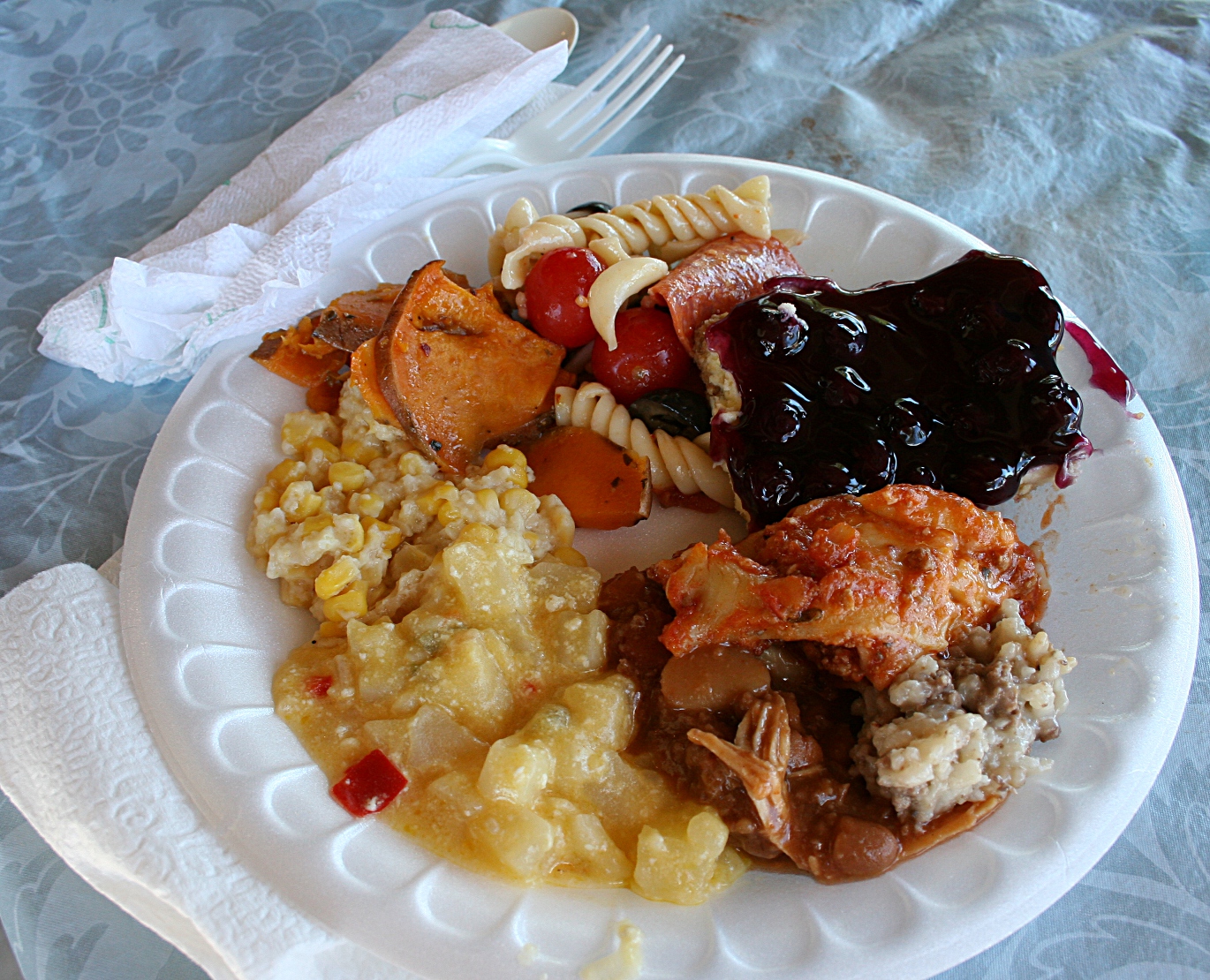
Everyone brings food for the potluck. There’s always blueberry dessert. The spread covers several tables. (Minnesota Prairie Roots copyrighted file photo July 2013)
But my generation and those thereafter have scattered well outside Redwood County. Family arrived from Wisconsin, Iowa, North Dakota and all parts of Minnesota from Blaine to Delano to Alexandria to Owatonna, Faribault, Waseca, and many other communities near and far. Those from even more distant locations like the East Coast did not attend.
As at all reunions, I intentionally circulated, attempting to converse with everyone at some point. This gathering, conversations were not so much about the past as about the present. We talked kids, grandkids, retirement (or not), health challenges, home improvement projects… There was a lot of phone scrolling, too, to show photos of grandchildren.
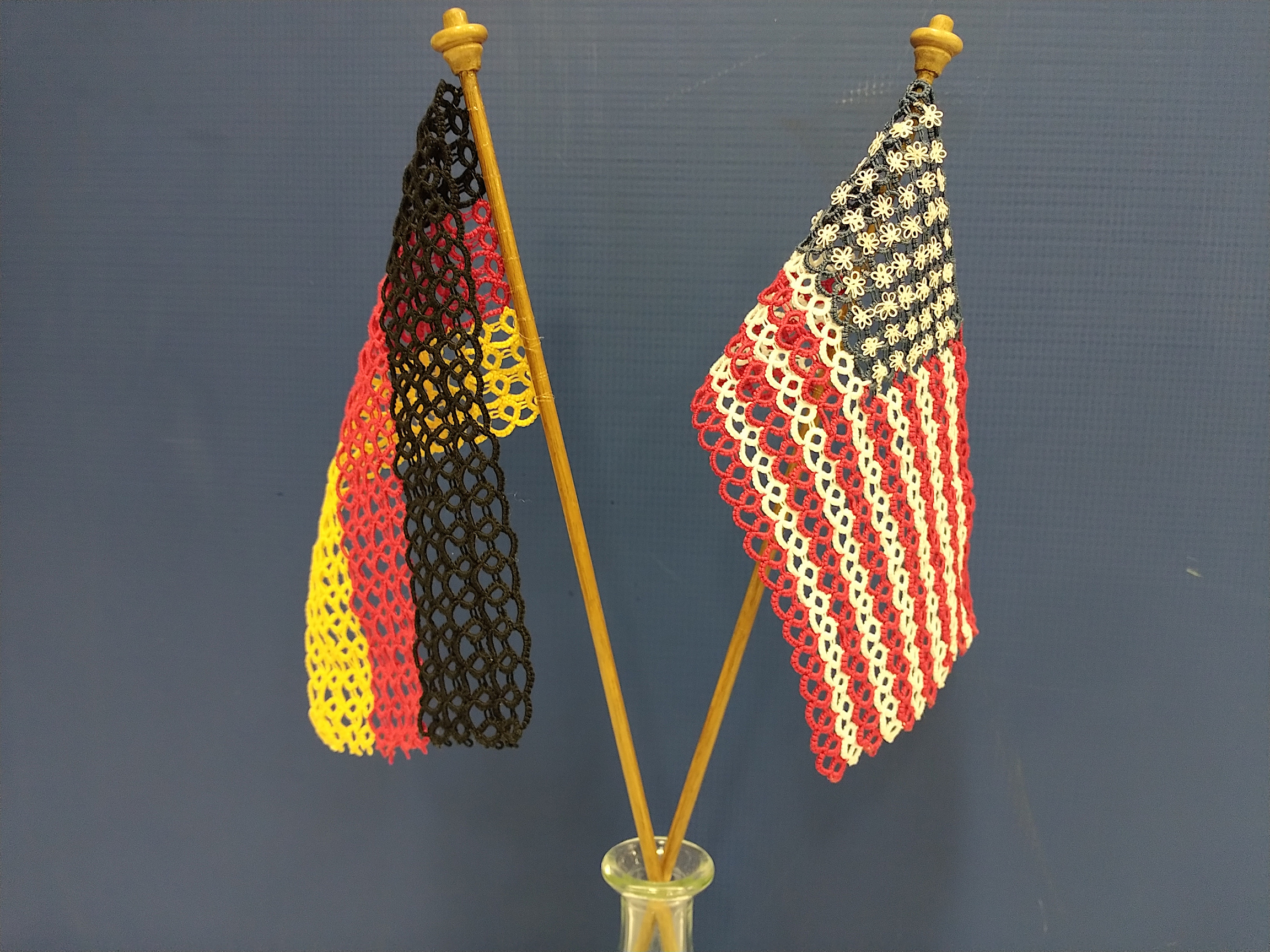
Aunt Iylene tatted these flags celebrating our German heritage and the Kletscher family’s new home in America. (Minnesota Prairie Roots copyrighted photo July 2024)
I cooed over new baby Wren; met Aubrey from West Fargo, going into first grade and whose name was easy for me to remember (and mine for her); saw photos of a wedding dress under construction by bride-to-be Sarah; encouraged Andy, who is in a drug trial study at Mayo Clinic for his debilitating heart condition; listened to Lynn’s recitation of a humorous poem her teacher didn’t appreciate back in the day; admired Aunt Iylene’s tatting projects (which she gave away on Sunday and which honor Grandma Ida, who also tatted); listened to stories of heartaches and challenges and life.
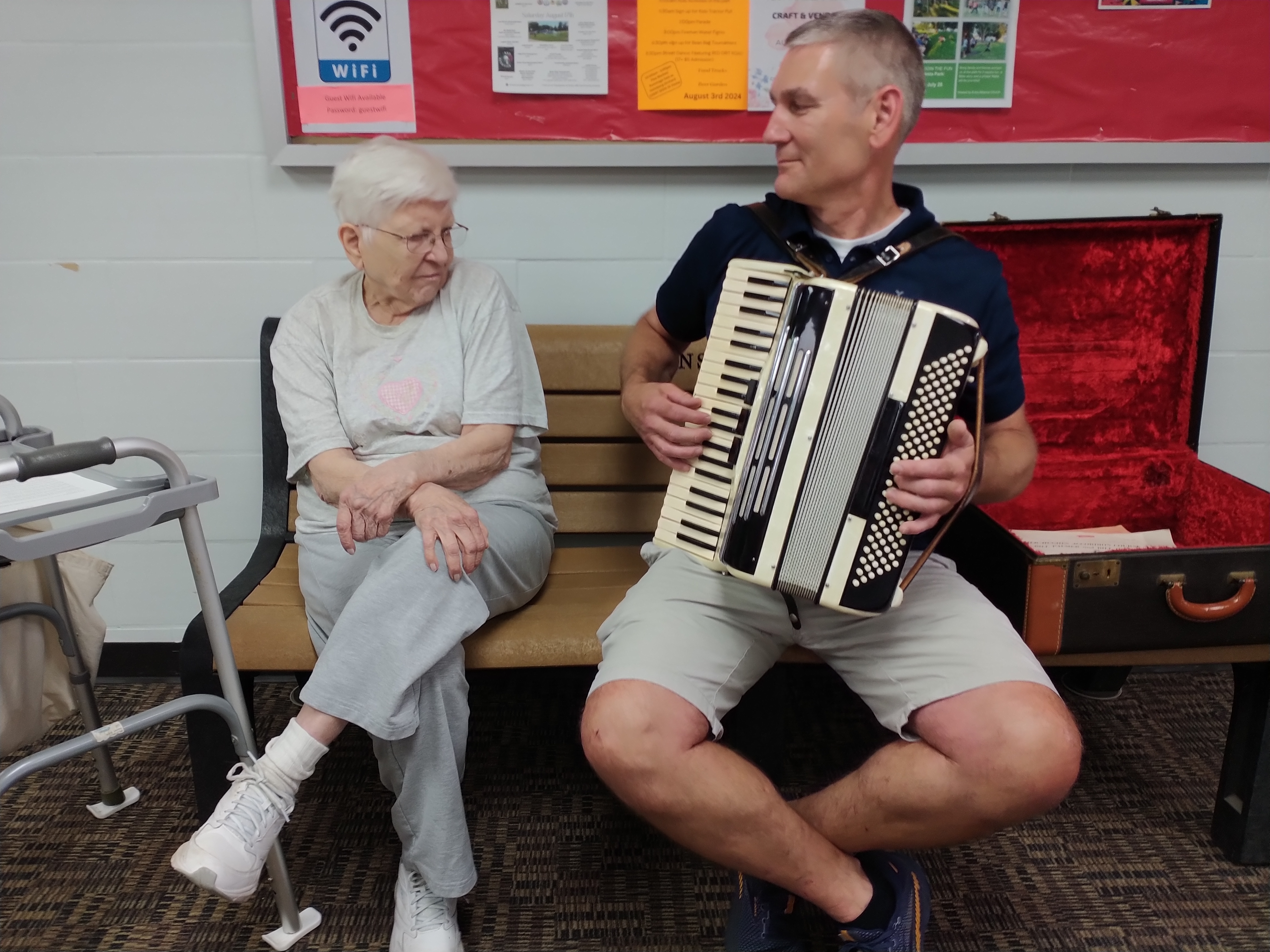
A highlight of the reunion was watching and listening to Kirt play Ardyce’s accordion. (Minnesota Prairie Roots copyrighted photo July 2024)
And then there was the impromptu concert by my cousin Kirt, who plays accordion. He brought his and was also gifted, at the reunion, with Aunt Ardyce’s 73-year-old accordion, a gift to her from her parents when she was only thirteen. She took lessons briefly as did two of her children. But the instrument has mostly sat in its case for seven decades…until Kirt picked it up and commenced to play, but only to a select few of us in the entry hallway. To watch my 86-year-old aunt, seated next to her nephew, listening intently to “her” accordion brought me such joy. I couldn’t help but think how happy this moment would have made my grandparents.
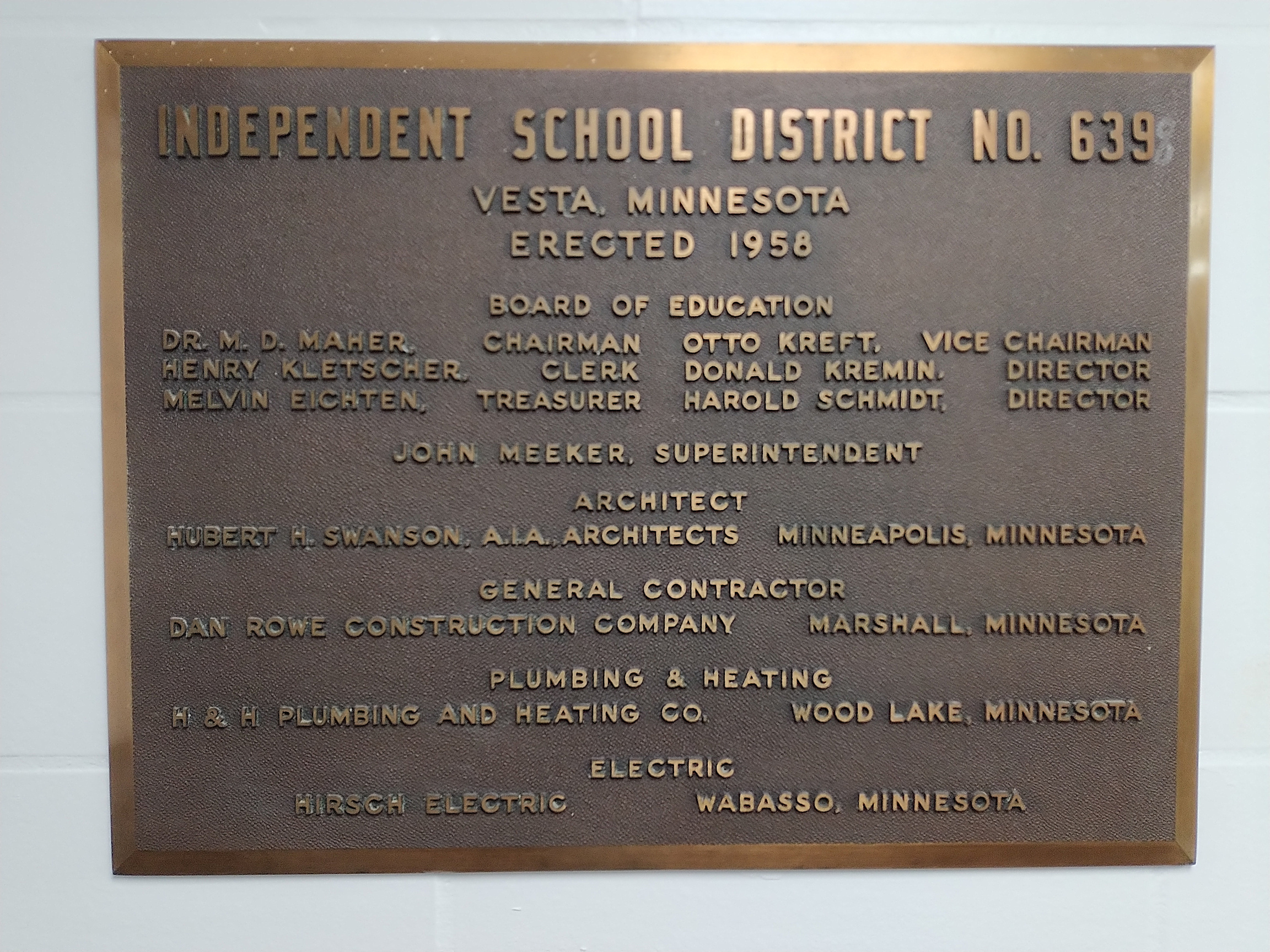
A plaque honors my grandpa and others who were instrumental in construction of Vesta Elementary School. (Minnesota Prairie Roots copyrighted photo July 2024)
We were here, in this place, because of Henry and Ida. Henry served as clerk of Independent School District #639 when the Vesta School was built in 1958. To think that, 66 years later, Grandpa’s descendants would gather here to celebrate family felt incredibly right. Two hours after we ate a potluck lunch (which always includes blueberry dessert), we honored Henry and Ida with 1919 root beer floats. My grandparents were married in November 1919.
Here we were in 2024, a family still going strong—reuniting, reconnecting, remembering and honoring the legacy of Henry and Ida Kletscher. Henry, the 25-year-old farmer, who married Ida just days before her eighteenth birthday 105 years ago.
#
FYI:In addition to the Kletscher Family Reunion, I’ve reconnected in July with Sue, a blogging friend; aunts from New Jersey and Missouri and family from Minneapolis; my son from Boston; and met three of Randy’s cousins originally from North Dakota. There are more gatherings to come with a Helbling Family Reunion in two weeks and 50-year class reunions for Randy and me in September.
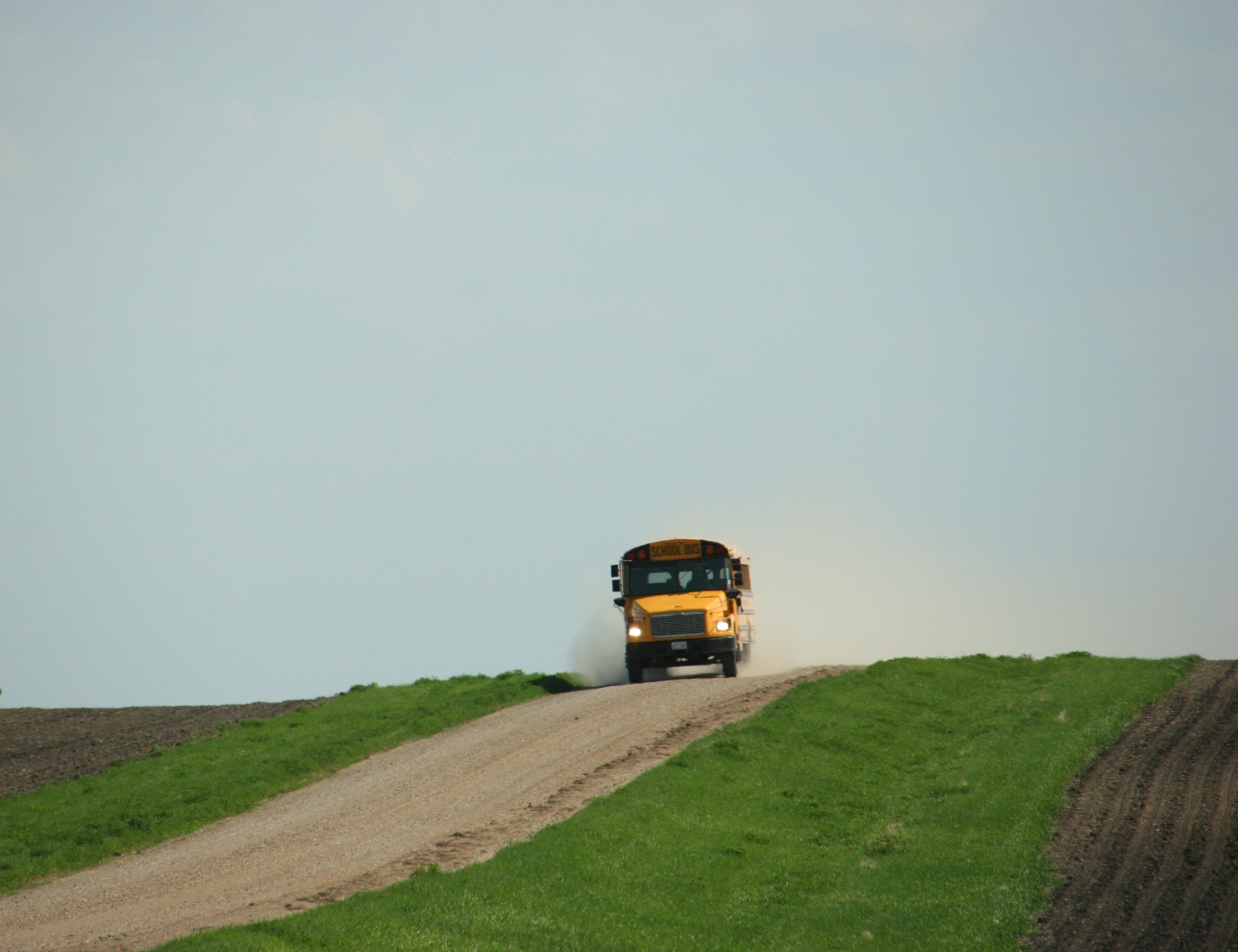
A bus follows a back country road near Morgan in southwestern Minnesota. (Minnesota Prairie Roots copyrighted file photo May 2018)
SHE WANTS TO SAVE the earth. It’s a lofty and noble goal for my granddaughter, who started second grade on Tuesday. Each year, on the first day of school, her mom documents basics about Isabelle on a small chalkboard. That includes a response to “What I want to be when I grow up.” This year Izzy aims to be an environmentalist. As a first grader, her professional goal was becoming a game designer. And on the first day of kindergarten, she wanted to own a toy store and also be a mom.
It’s interesting how Izzy’s interests evolve as she ages, as she grows her world and knowledge and connections with others. The possibilities are endless for her generation. I hold such hope in these young people, just beginning their formal educations.
And I hold hope, too, when I see a photo of Izzy and three neighborhood friends waiting at their urban bus stop. “Smart, Brave, Beautiful” banners Bethel’s tee. What a reaffirming message. For all of them. And how reaffirming that they are of differing ethnicity, their skin tones varied and, indeed, beautiful.
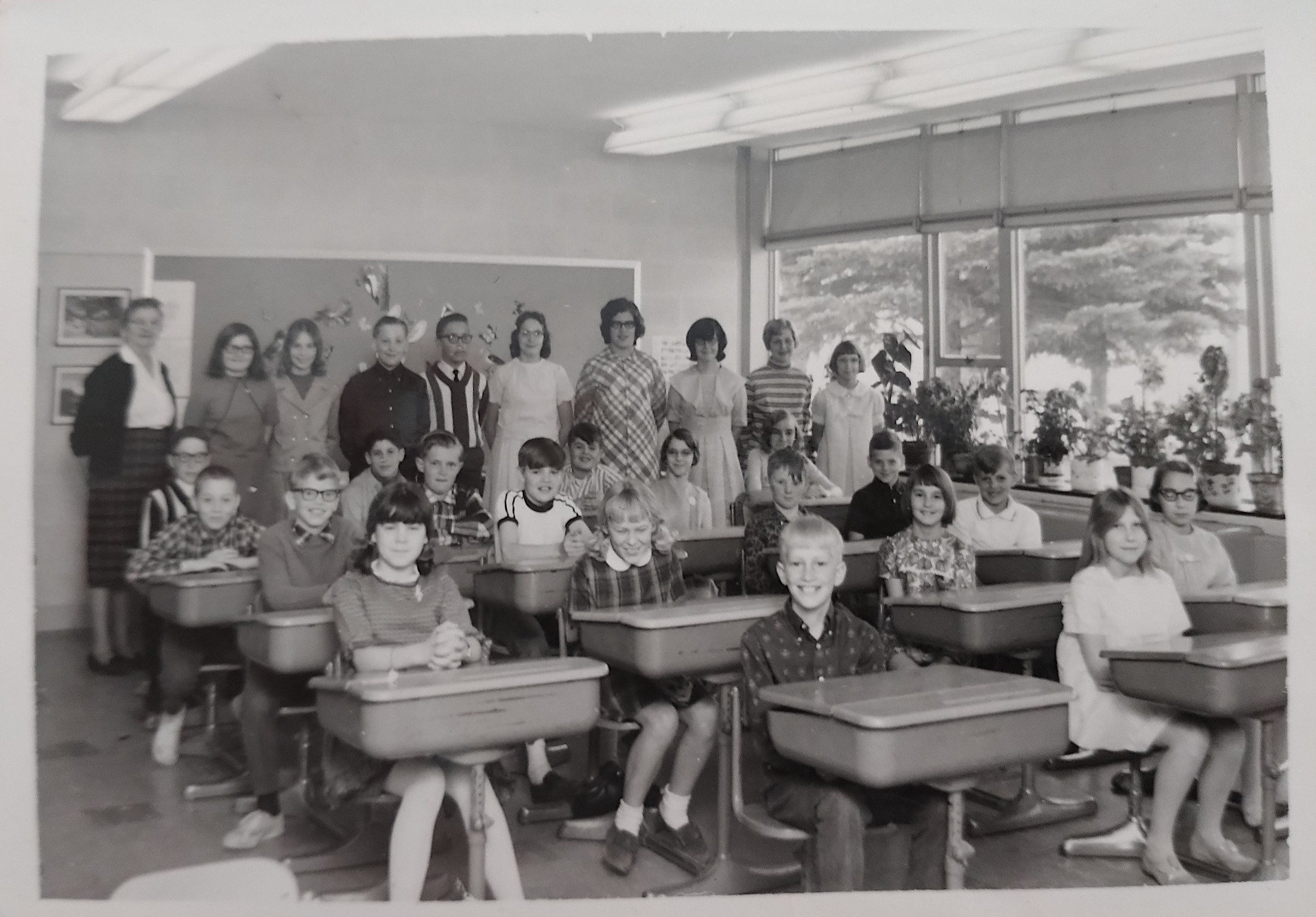
My elementary school, circa 1960s, located in Vesta in Redwood County. The school closed decades ago. (Photographer unknown; photo sourced from my personal photo album)
Sixty years have passed since I was a second grader in a small southwestern Minnesota elementary school, where my paternal grandfather served on the school board. My classmates and I were mostly farm kids, all white. We wrote in “Big Chief” lined tablets which today would not, should not, fly. Attitudes differed in the 1960s. Words like diversity, respect and environmentalist were not part of our everyday vocabulary.
A serene country scene just north of Lamberton in southern Redwood County.(Minnesota Prairie Roots copyrighted file photo September 2013)
But words, overall, held my interest all those decades ago. I have Mrs. Kotval to thank for sparking my love of words, of reading, and eventually of writing. Each day after lunch, she read to her third and fourth graders from “The Little House” and other chapter books. Through the writing of Laura Ingalls Wilder, who lived many years earlier in nearby Walnut Grove, I began to appreciate the nuances of the prairie. And I learned the importance of descriptive, detailed writing. Wilder engaged all of her senses to describe the prairie and life thereon in her series of wildly popular books. With her love of the natural world, this writer unknowingly documented the environment for me, my children and for my second grade granddaughter, today an aspiring environmentalist.
Early on, I aspired to be an elementary school teacher. But that changed as I grew my world, my knowledge, my connections. Words focused my passion. Unlike most of my elementary school classmates, I loved penmanship—letters and words flowing in script across the pages of my penmanship book. I loved spelling. I loved reading, even in a school and town without a library and thus with limited access to books. And by high school, that love of words expanded to writing.
Fifth and sixth graders at Vesta Elementary School in the late 1960s. I’m in the back row, far right, next to the windows. (Photographer unknown; photo sourced from my personal photo album)
I want to pause here and stress the importance of passionate teachers in fostering students’ interests. From Mrs. Kotval reading to her students after lunch to junior high English teacher Mrs. Sales teaching me all the parts of grammar to high school teacher Mr. Skogen requiring students to keep journals, their influence on me and my eventual career was profound. I would go on to earn a college degree in mass communications, leading to a career as a journalist, writer, poet and photographer.
That brings me full circle back to Laura Ingalls Wilder, who early on influenced my detail-rich writing and photographic styles. In 2017, I became professionally connected to the author via “The World of Laura Ingalls Wilder—The Frontier Landscapes That Inspired The Little House Books.” Author Marta McDowell chose three of my photos (including one of prairie grasses at sunset) to illustrate her 396-page book documenting Wilder’s life and relationship to her environment. Perhaps some day my granddaughter will open the pages of McDowell’s book and find the photos taken by her grandmother. Whether Isabelle becomes an environmentalist or something vastly different, I expect she will always care about the earth and her role in saving it.
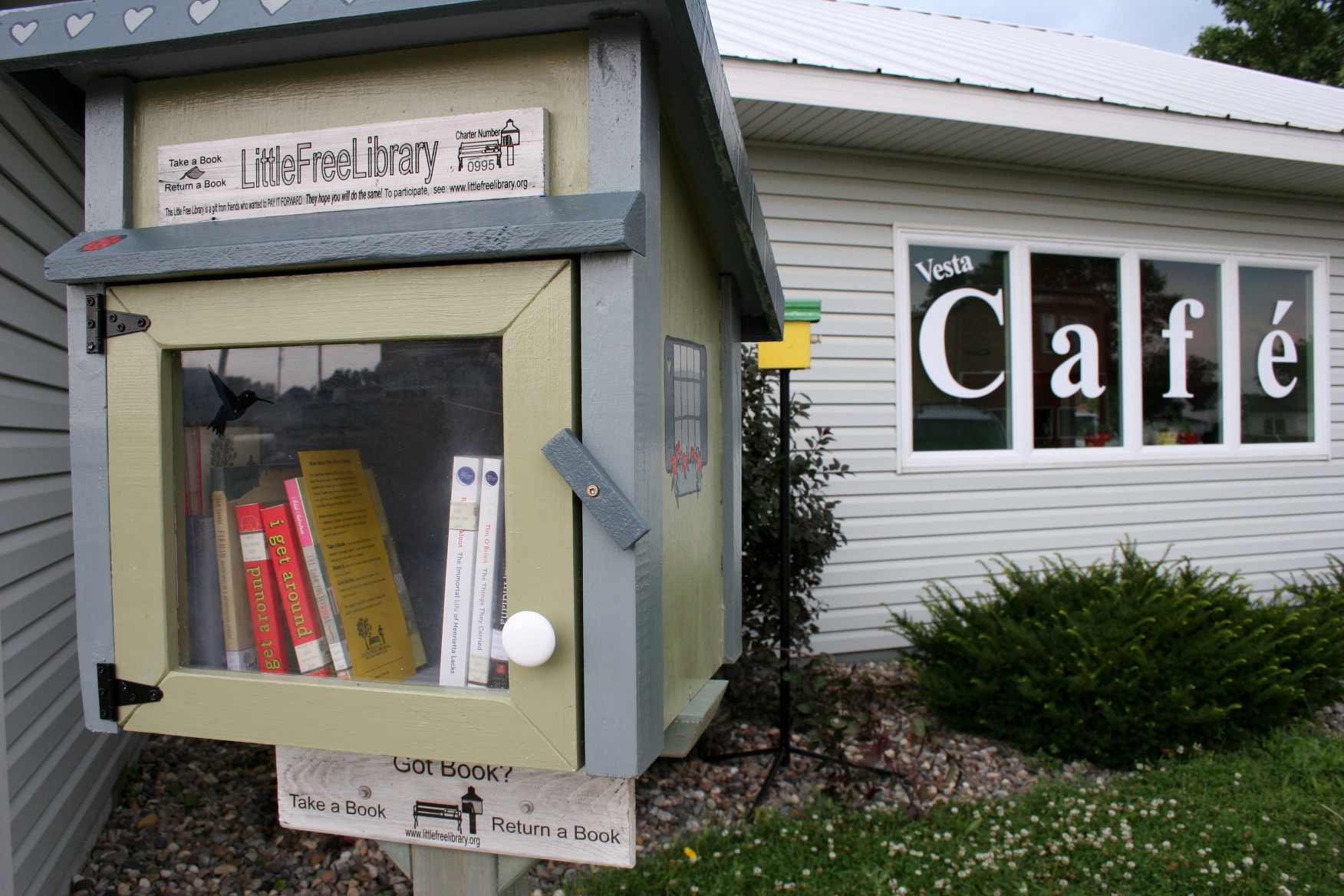
The team that worked to bring a Little Free Library to Vesta includes Dorothy Marquardt, left, and Karen Lemcke, representing the sponsoring Vesta Commercial Club, LFL co-founder Todd Bol and me (holding a copy of a poetry anthology I donated). (Minnesota Prairie Roots copyrighted file photo July 2012)
On a July afternoon in 2012, the Bols, a local newspaper reporter, two community leaders and I gathered outside the Vesta Cafe for the library planting. Todd and I then shelved the books we brought. From there the project grew with the cafe operators adding shelving inside for more books, and magazines. A librarian from nearby Wabasso contributed eight bags of books. And I brought more whenever I visited my mom. Community members embraced the LFL. Today the library has expanded into the City Hall/Community Center with a library based there. That’s inside the former Vesta Elementary School where all those years ago I learned to love books from teachers who read The Little House and other chapter books aloud each day after lunch. That compensated for the lack of an in-school library.
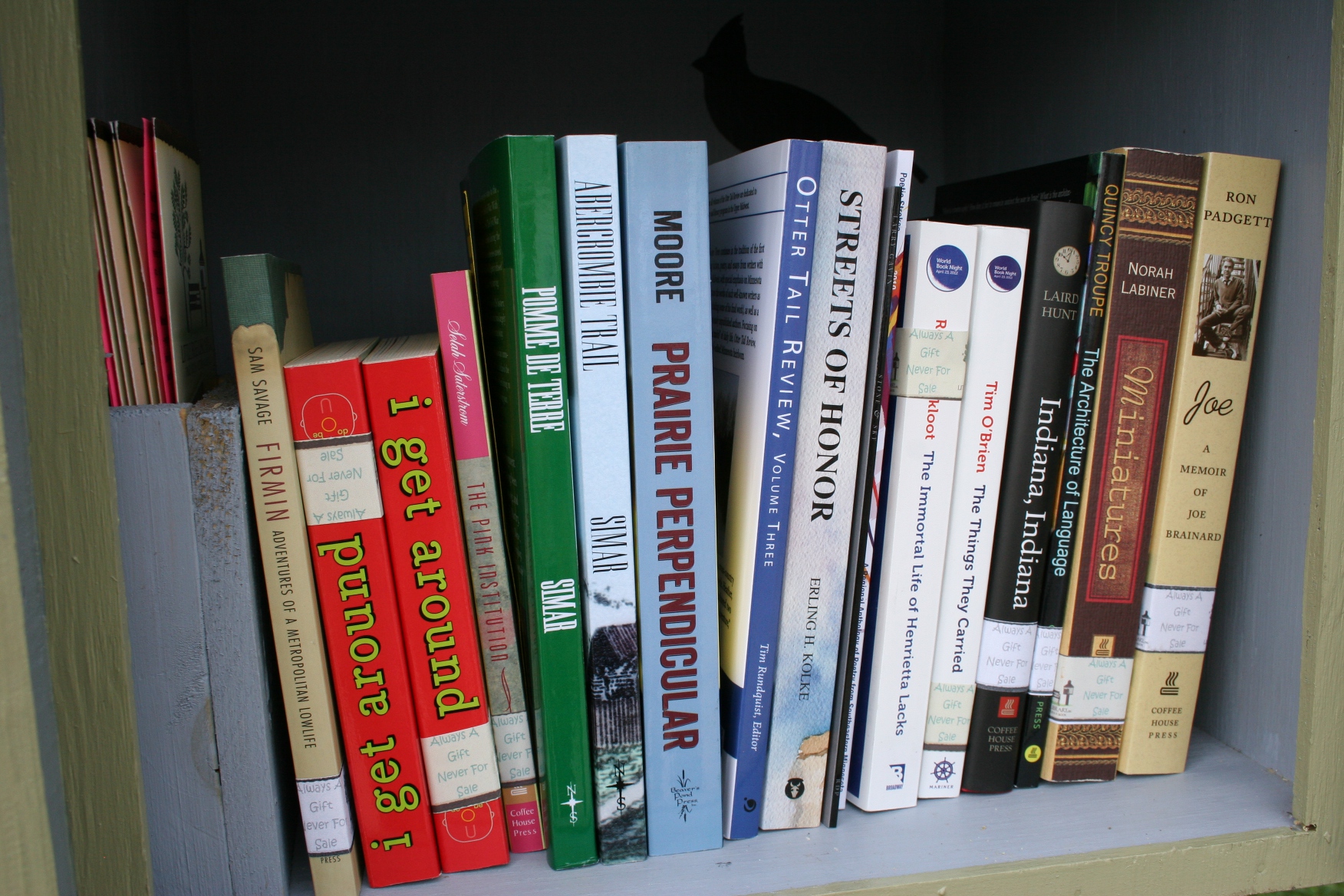
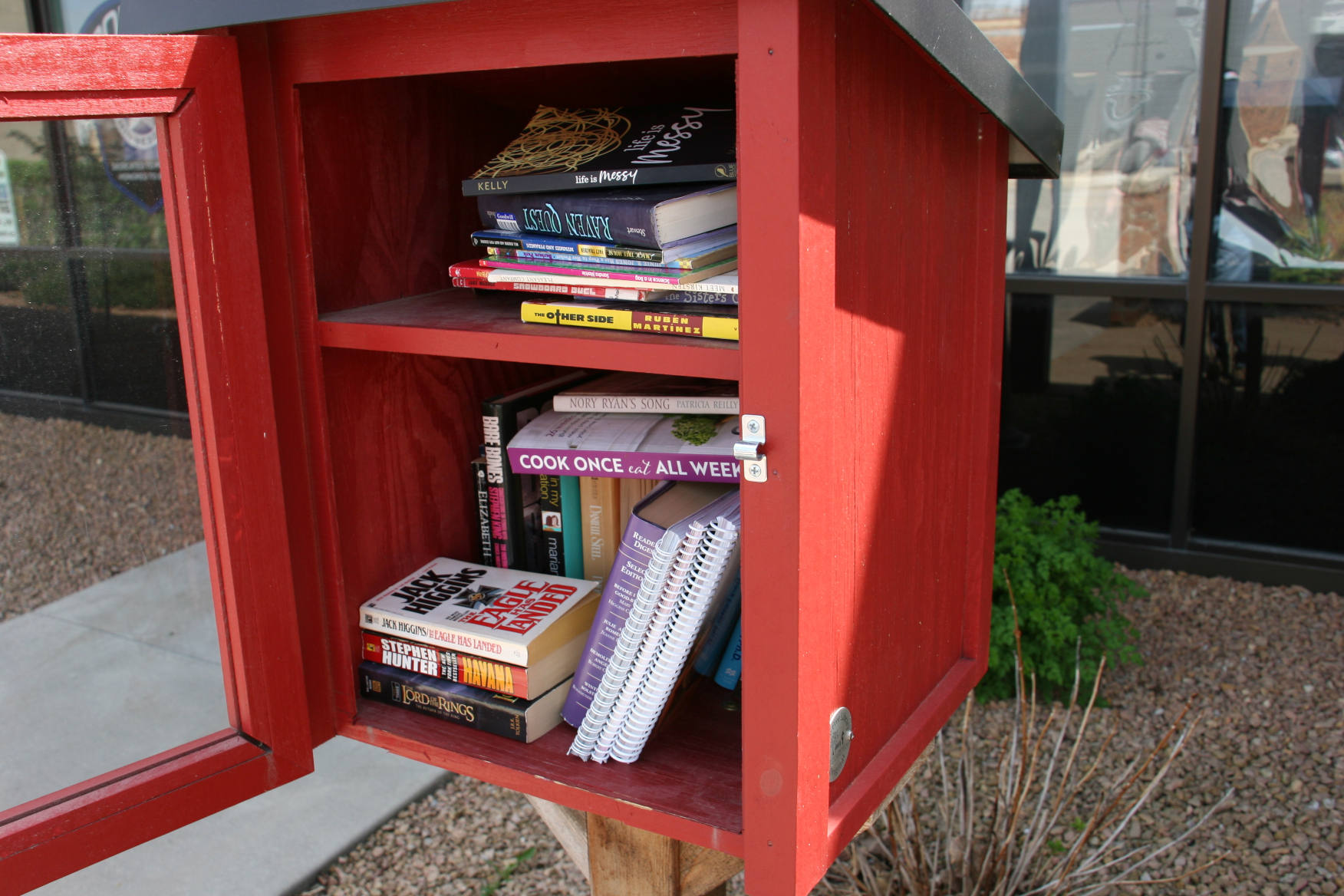
The books Todd Bol and I placed inside Vesta’s LFL. (Minnesota Prairie Roots copyrighted file photo July 2012)
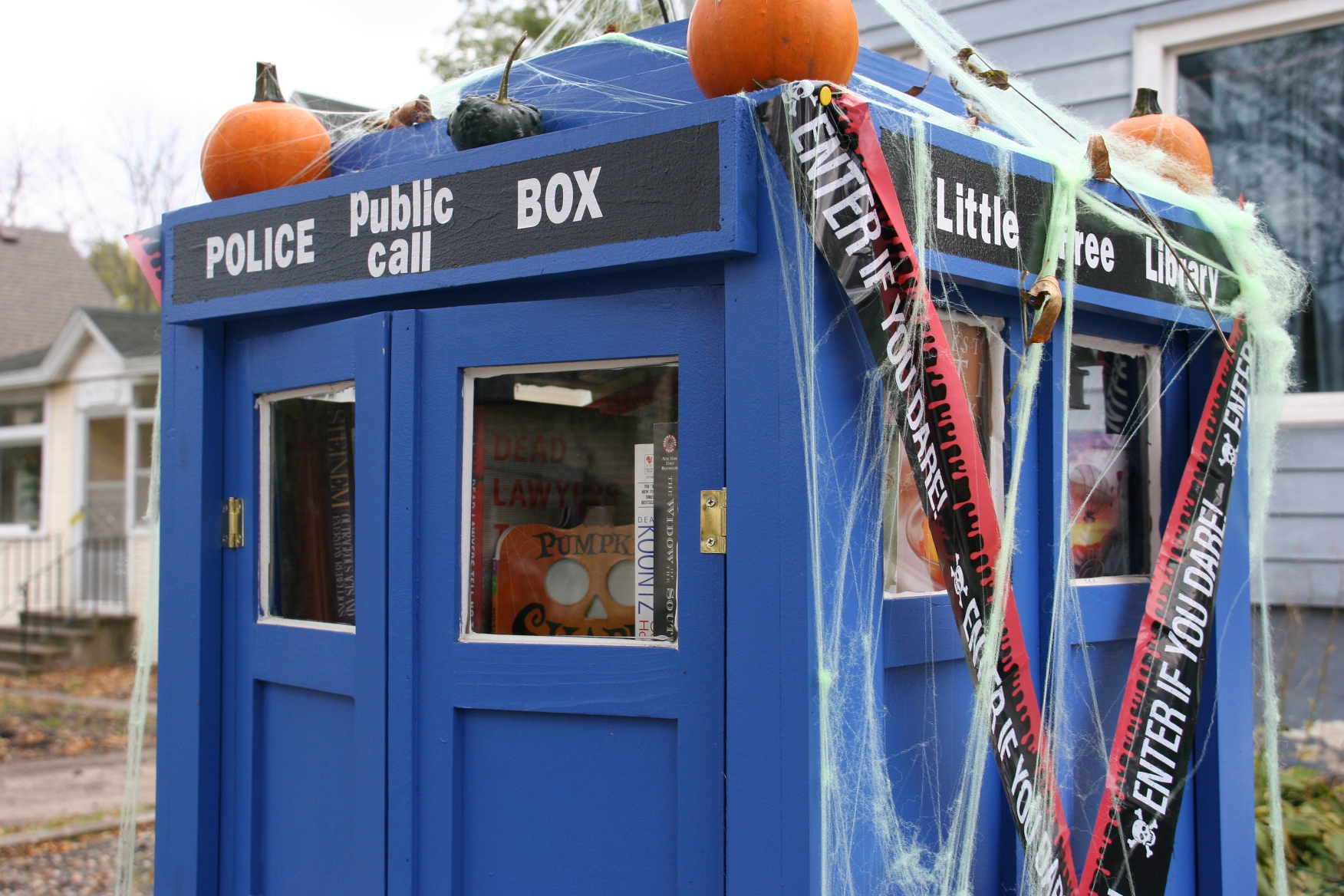
A Tardis LFL in a front yard in Waseca. (Minnesota Prairie Roots copyrighted file photo October 2018)
Thus far, the St. Paul-based nonprofit has donated more than 1,500 LFLs filled with books via the Impact Library Program. That includes 14 in Minnesota. One went to the small town of Goodridge in northwestern Minnesota near the Canadian border. The closest library is 20 miles away. I can relate to that geographical distance given I also lived 20 miles from a library as a child.
Buckham Memorial Library in Faribault. (Minnesota Prairie Roots copyrighted file photo December 2022)
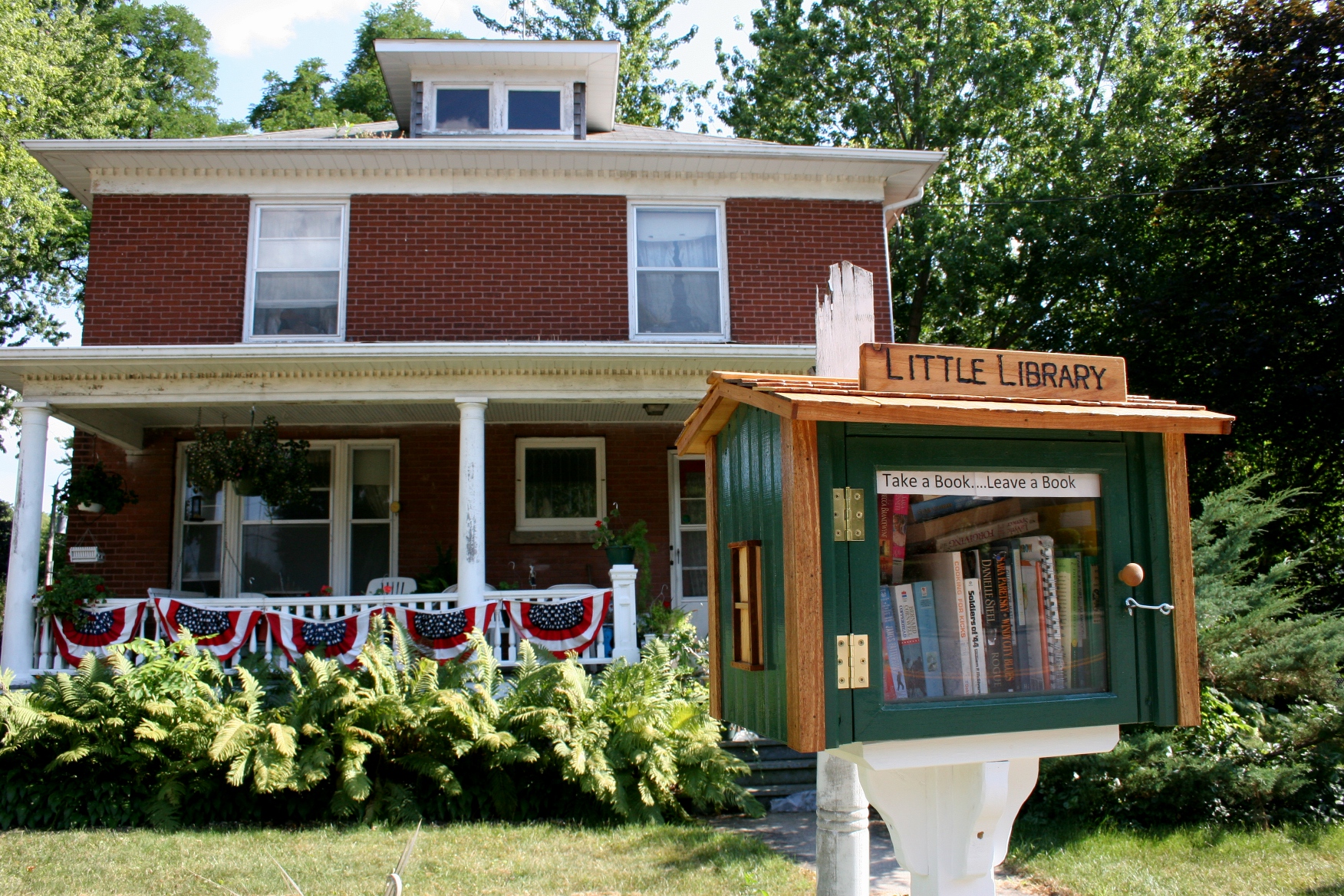
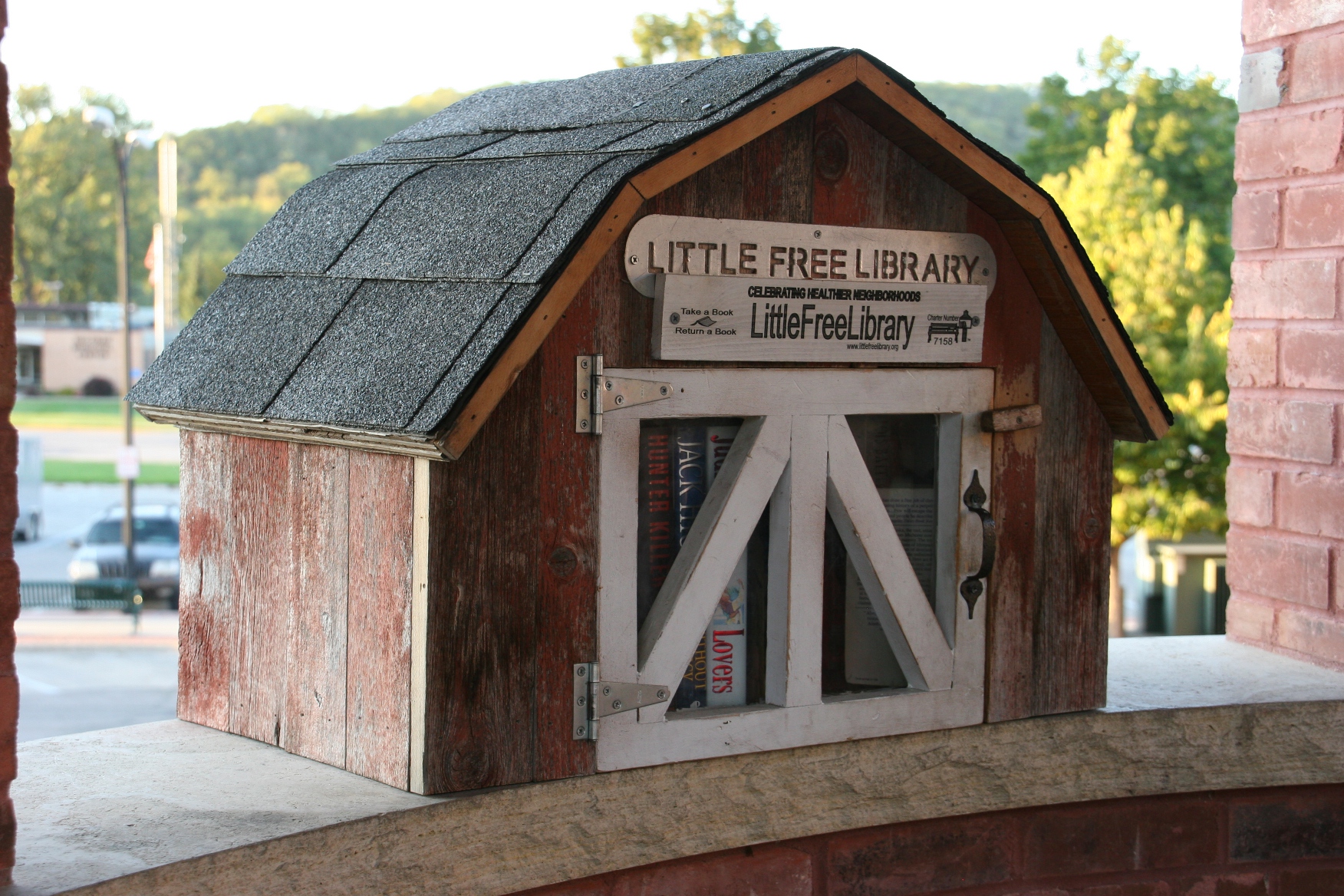
Today I live several blocks from the public library in Faribault, a city of nearly 25,000 about 120 miles from my hometown. I’ve spotted many LFLs in Faribault neighborhoods. And I’ve also seen many others in Minnesota and beyond, most placed and maintained by individuals or organizations. I have easy access to books.
A LFL in an east-side Faribault neighborhood. (Minnesota Prairie Roots copyrighted file photo)
Yet, even with a public library nearby, a library may not be accessible to all. For example, in Le Center, a small town about 30 miles west of Faribault, a LFL was still needed, according to Christine. She applied for a free LFL and got one. In her application to the Impact Library Program, Christine noted the many low income families (including migrants) who live in this rural community and who have limited access to books. Now they have one more book source in a LFL. Also in southern Minnesota, the cities of Austin and Winona (both with public libraries), have LFLs as part of the Impact Library Program.
A LFL in downtown Decorah, Iowa. (Minnesota Prairie Roots copyrighted file photo)
When I think back to the July day Todd Bol arrived in my hometown 10 years ago with a LFL and books donated by participating publishers, I feel such gratitude. He told me at the time how much he loved books. And he showed that by bringing a little library to a town without a library. From there, the library in Vesta became so much more than little. It became big. Bigger than I ever dreamed.
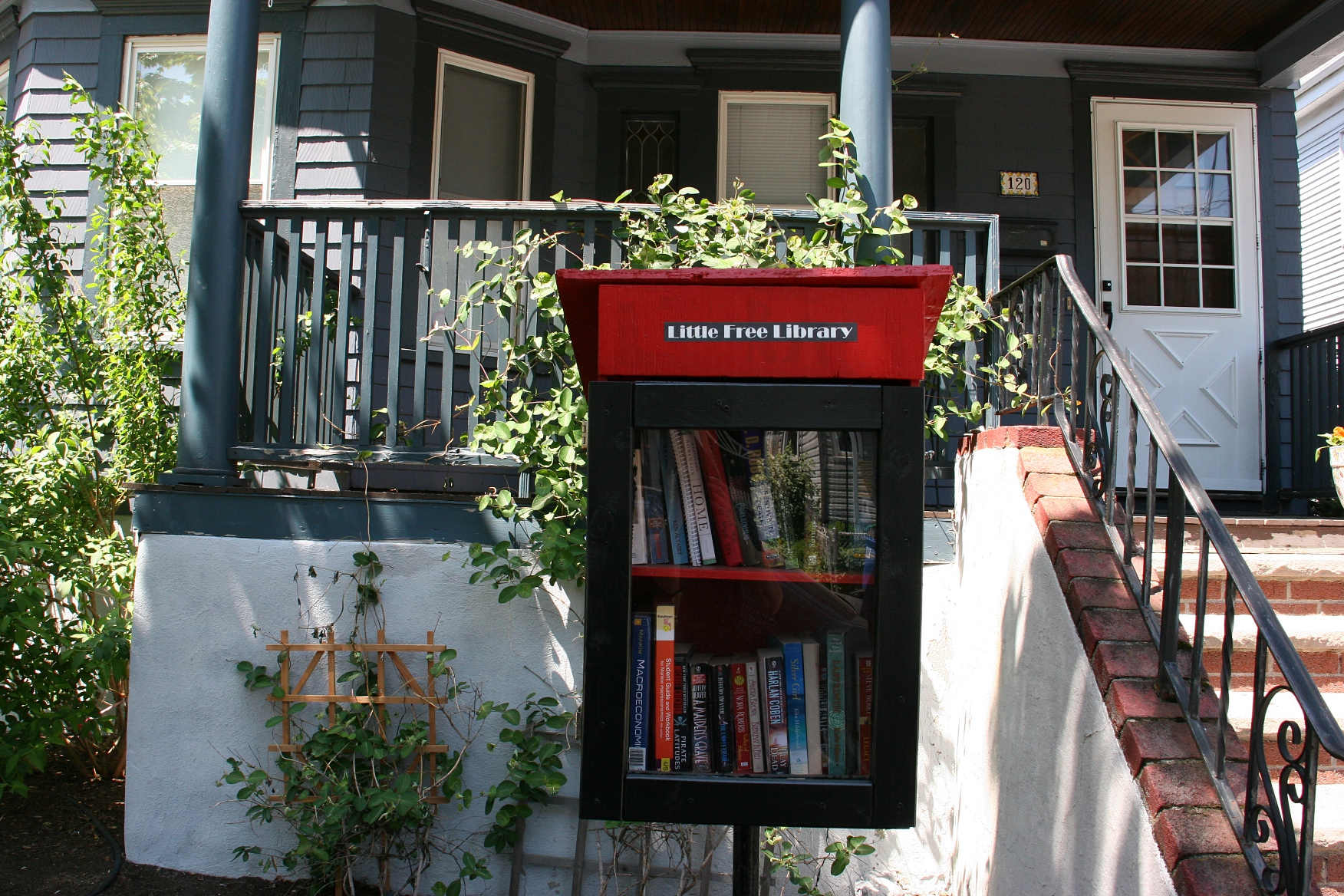
Photographed in a front yard in Somerville, MA., in 2016. (Minnesota Prairie Roots copyrighted file photo May 2016)
Books opened, still open, the world for me. They took, still take, me on adventures to places I will never visit, experiences I will never experience. Books grew, still grow, my love of words. And that love of words evolved into a love of writing. That’s powerful.
A LFL in downtown Plainview, a small southeastern Minnesota town. (Minnesota Prairie Roots copyrighted file photo June 2022)
FYI: If you’re in need of a LFL in your community or neighborhood, apply to the Impact Library Program. There are requirements such as maintaining and stocking the LFL, hosting a community event and more.
TELL ME: Are you the sponsor of a LFL or do you have one near you? I’d like to hear your stories.
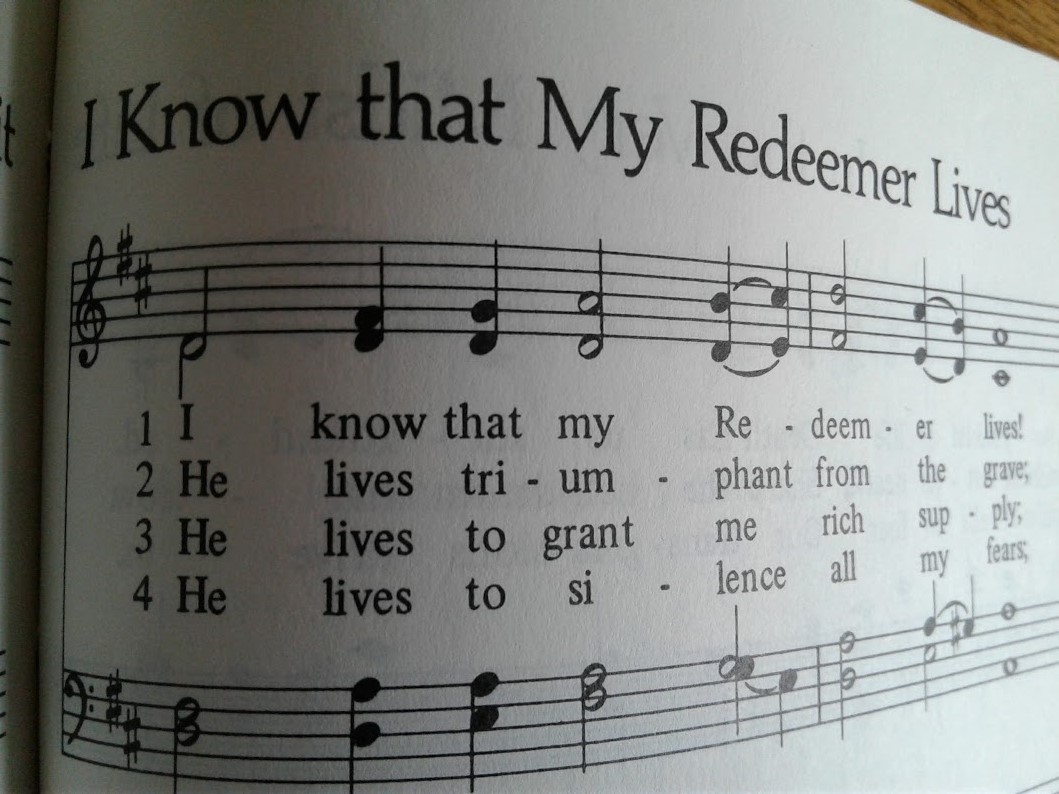
My favorite Easter hymn. (Minnesota Prairie Roots copyrighted file photo)
IT IS MY ABSOLUTE favorite Easter hymn—“I Know that My Redeemer Lives.” And there is a reason behind that choice.
As a child, I sang that song with my Sunday School class during Easter worship services at St. John’s Lutheran Church in Vesta. Dressed in our Easter finery—girls in pastel dresses and Easter hats, boys in dress pants and shirts, some with bow ties cinching their necks—we belted out the joyful words about the risen Lord.
To this day, I can recite most of the verses. The words are that ingrained in my memory. Words of triumph, love, blessings, assurance and so much more. I feel my soul filling with Easter morning hope in the memories of singing that aged hymn.
I admittedly cannot carry a tune or read a single musical note. And I admit to a bit of fear on those long ago Easter mornings in rural southwestern Minnesota. Not fear about forgetting the words to a hymn. But rather a dislike of sitting in the St. John’s balcony with only a low, partial wall separating me from the sanctuary below. I never jostled for the front pew in that upstairs packed with kids.
I hold another memory from Easter morning. Not of danger, but rather of youthful disobedience. Mom asked my siblings and me not to tattoo our arms before church services. Of course, we didn’t listen and excitedly held washcloth to paper tattoos, imprinting temporary art (from Easter egg dyeing kits) onto our skin. In the end, I don’t think anyone really cared as long as we showed up to sing at church.
And so all these decades later, I remember my favorite hymn and how my faith has carried me through life. Through joyful moments, through ordinary days, through really difficult times…
He lives to bless me with his love.
He lives to help in time of need.
I know that my Redeemer lives!
A joyful Easter to all of you from my home in southern Minnesota, not from the balcony of St. John’s!
TELL ME: Do you have a favorite Easter hymn and/or memory? I’d like to hear.
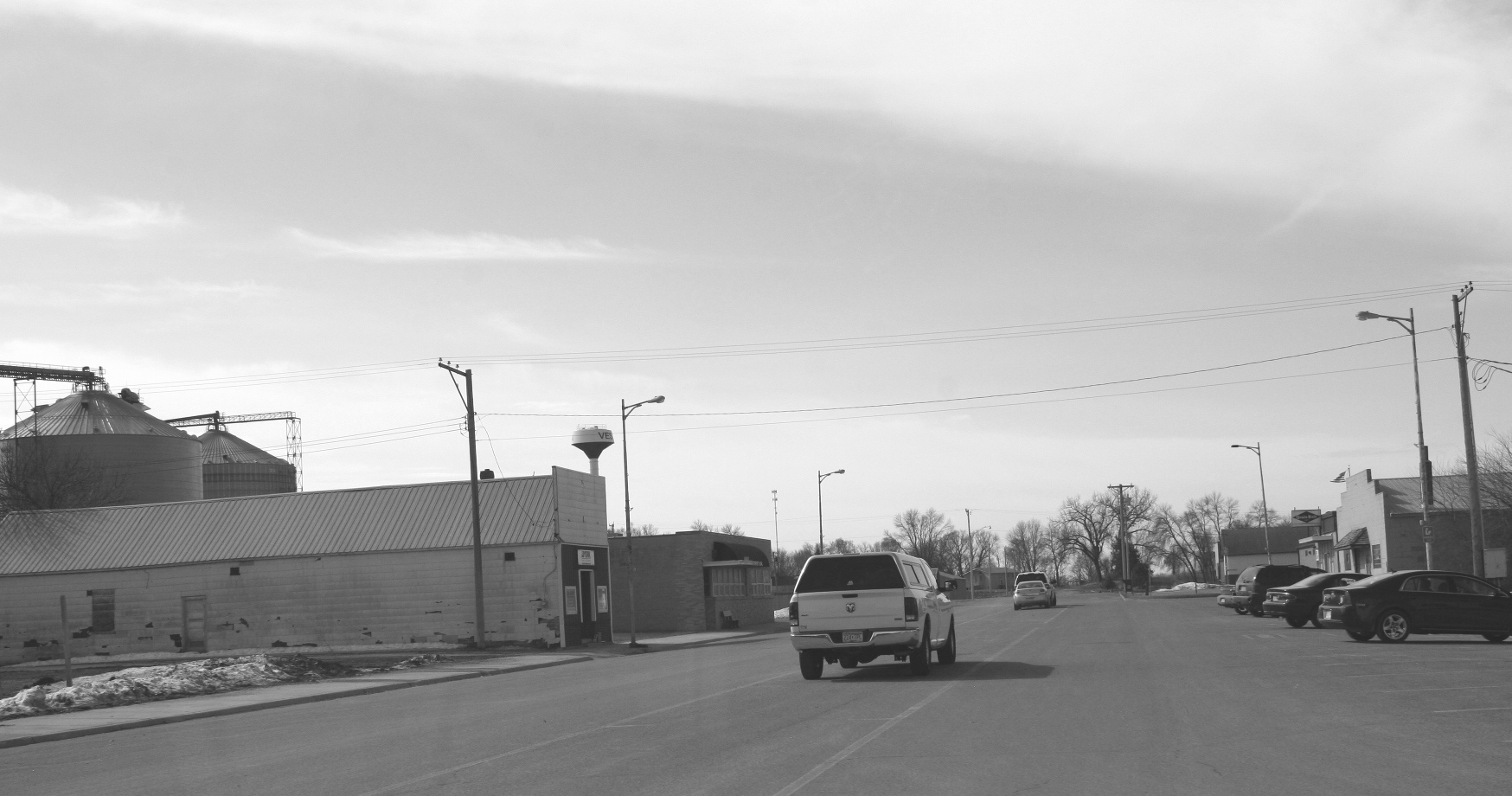
Downtown Vesta, Minnesota, photographed in 2018. (Minnesota Prairie Roots copyrighted file photo April 2018)
WHEN I READ A RECENT POST on the City of Vesta Facebook page, I knew I needed to share this story with you. It is a heartwarming story of kindness and gratitude that renews my faith in the goodness of humanity. And it is, too, a moment in which I feel overwhelming pride in my hometown.
Before I get to the referenced post, I expect many of you are wondering, “Where is Vesta?” I’ve found in my 41 years of living in southeastern Minnesota that most people have no clue. Vesta is west of Mankato, west of New Ulm, west of Redwood Falls. The small Redwood County farming community of around 320 sits along Minnesota State Highway 19 half way between Redwood and Marshall. It is the only town directly aside that highway for the 40 miles between the two larger cities.
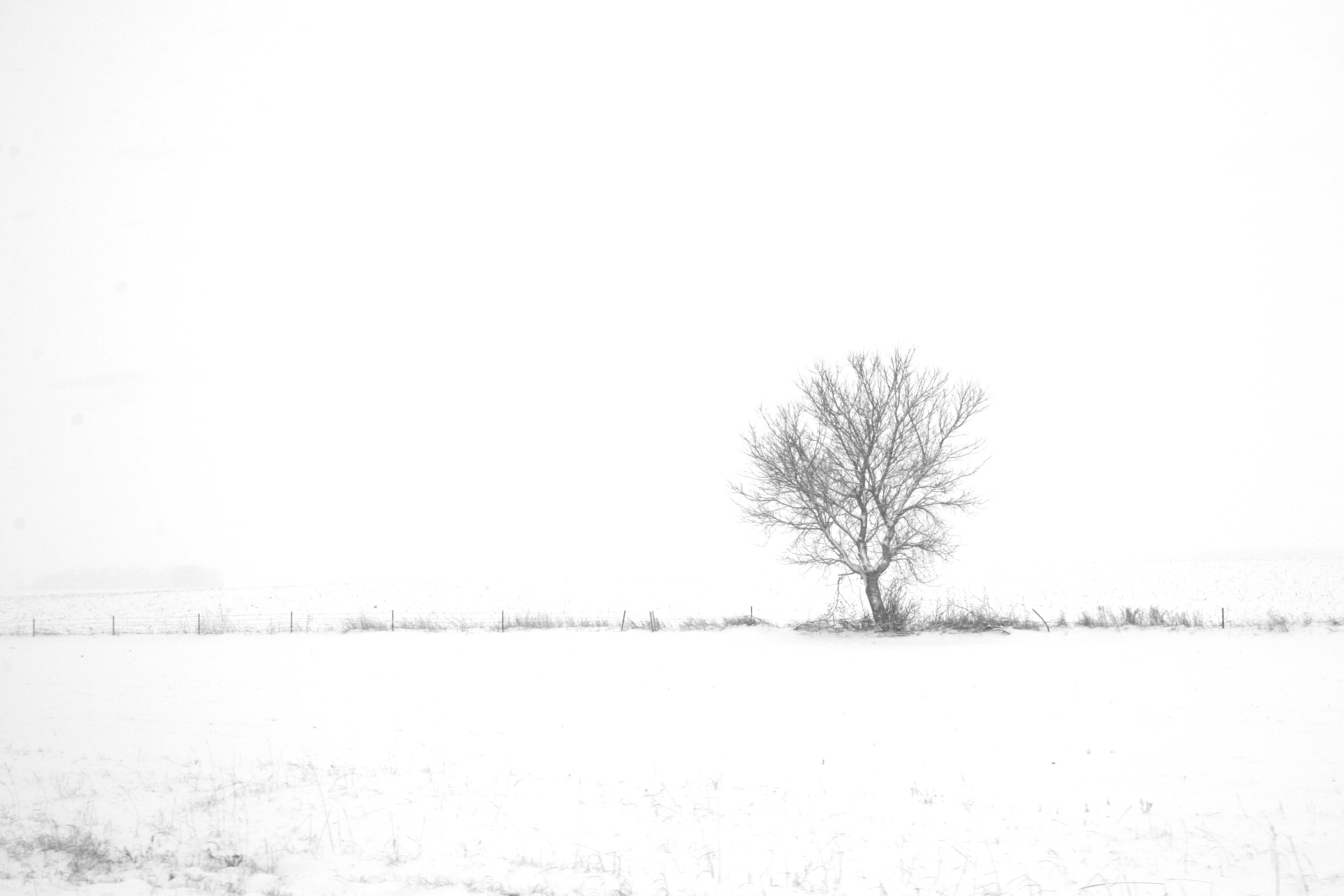
A lone tree along a fence line on the southwestern Minnesota Prairie. (Minnesota Prairie Roots copyrighted file photo March 2012)
Vesta is in the middle of the prairie, the windswept prairie. If a winter storm sweeps in with strong winds, then conditions quickly deteriorate to blizzard status. You don’t want to be caught on the road if that happens. It’s dangerous.
I shot this on the Minnesota Highway 19 curve just north of Vesta in March 2012. The recently-stranded motorist was at about this point on the highway, but in far worse weather conditions. (Minnesota Prairie Roots copyrighted file photo March 2012)
Recently, a motorist found herself in such dire conditions while driving Highway 19 toward Watertown, South Dakota, to visit grandchildren. Forty mph winds, blowing snow and zero visibility—to the point where she had to stop to see if she was still on the road some two miles from Vesta—resulted in a life-saving decision. She got off the highway at Vesta.
And that’s where this story begins to unfold into a story of generosity and kindness in my hometown. The first person she encountered was Dave and his buddy, out on four-wheelers. I knew exactly who she meant. Dave owns an auto body and repair shop in Vesta. He also plows snow for locals. When my mom was alive and still living in Vesta, it was Dave who cleared her snow. It was Dave who answered Mom’s calls for help with car issues. I always felt reassured that he was, in some ways, looking after her and so many other seniors.
I digress. Dave directed the recently-diverted motorist two blocks east to the community center, a designated shelter for stranded travelers. Upon arrival at the former Vesta Elementary School, the grateful traveler found the doors locked. So off she went to find someone, anyone, to let her inside. She noticed two trucks parked outside the grain elevator, which led her inside and directly to Vesta’s emergency coordinator. Jeremy drove home and got the key to open the shelter.
A plate of spaghetti, photo used for illustration purposes only. (Minnesota Prairie Roots copyrighted file photo July 2013)
Now if that was the end of the story, that would be a nice ending. But there’s more. The out-of-town guest got a tour of the community center and was also advised she could help herself to the spaghetti and chicken noodle soup in the fridge, watch TV in the work-out room and then sleep on a cot, pillows provided. She was also given the Wi-Fi password. Later the city clerk’s husband brought an extra blanket after the clerk stopped to ask if the shelter guest needed anything.
Now if that was the end of the story, that would be a nice ending. But there’s more. Soon town kids showed up, per a text sent by Jeremy that they could hang out in the community center during the blizzard. The way-laid motorist soon found herself in rousing games of dodge ball and kickball inside the gym where I played as a grade-schooler.
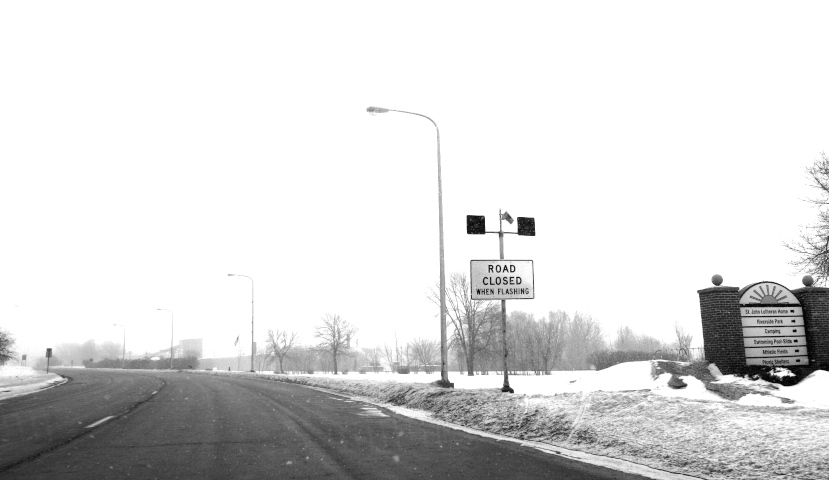
Road closed signs like this one near Springfield can be found along southwestern Minnesota highways, including highway 19. (Minnesota Prairie Roots copyrighted file photo March 2011)
Now if that was the end of the story, that would be a nice ending. But there’s more. Jeremy kept in touch, texting that the local bar was open if she wanted pizza. She was happy with the soup. The next morning the emergency coordinator texted again, notifying the overnight guest that roads had been plowed. He’d also reached out to the Marshall Police Department to assure that roads were open to motorists. Drive on a “closed” road and you risk a $750 fine. Jeremy went that extra mile to assure the woman could resume her journey to Watertown.
Her lengthy post to the City of Vesta Facebook page shows deep gratitude for all those who made her feel welcomed and safe in my hometown. She wrote: It was quite a night in the Vesta Community Center. Everyone’s kindness in this town was so timely and heartfelt that, rather than feeling like a stranded traveler, I felt like a VIP walking down a red carpet.
I am not surprised by the goodness of the folks in Vesta. This is small town southwestern Minnesota at its best. Caring, kind, compassionate, loving, welcoming. I’ve always felt embraced by the place of my roots, even decades after leaving. I understand this place. These will always be my people. My prairie people.
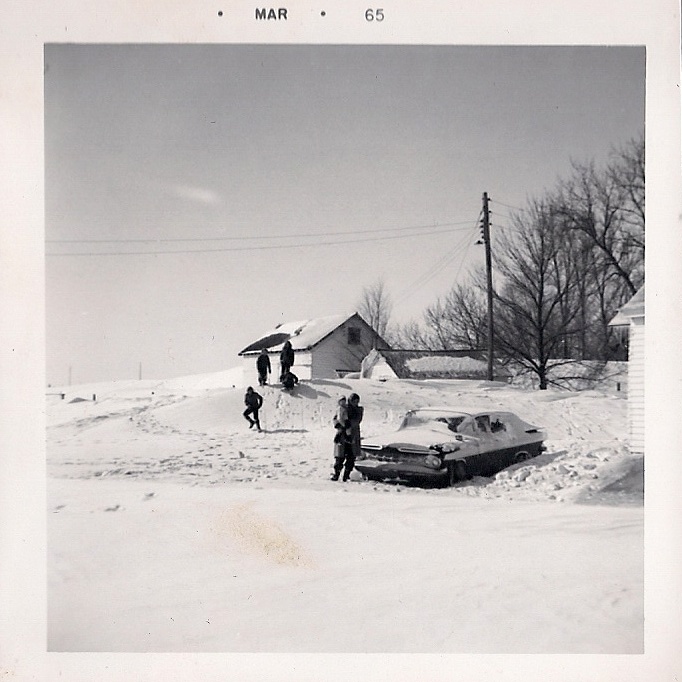
This huge snowdrift blocked my childhood farm driveway in this March 19, 1965, photo. I’m standing next to Mom. (Photo credit: Elvern Kletscher)
SHE WAS NOT QUITE 33 years old, this young mother of five living on a southwestern Minnesota dairy and crop farm in March 1965. It was an especially harsh winter, documented in a spiral bound notebook she kept.
She filled page after page with several-line daily entries about everyday life. She wrote about crops and household chores and kids and food and the most ordinary daily happenings. And, always, she recorded the weather—the wind, the precipitation, sometimes the temperature.
Arlene Kletscher’s journals stacked in a tote. (Minnesota Prairie Roots copyrighted file photo)
This keeper of prairie history in rural Redwood County was my mother, who died in January 2022 at the age of 89. I am the keeper of her journals, which she kept from 1947-2014, from ages 15 to 82. Sixty-seven years of journaling. Several years, when she met and fell in love with my dad, are noticeably missing.
Recently, I pulled the tote holding her collection of writing from the closet. This snowy winter of 2022-2023 in Minnesota prompted me to filter through Mom’s notebooks from 1964 and 1965. That winter season of nearly 60 years ago holds the state record for the longest consecutive number of days—136—with an inch or more of snow on the ground. We are closing in on that, moving into the top ten.
Mom’s journal entries confirm that particularly snowy and harsh winter on the Minnesota prairie. From February into March, especially, many days brought snow and accompanying strong wind. Two photos from March 1965 back up Mom’s words. Her first March entry is one of many that notes the seemingly never-ending snow falling on our family farm a mile south of Vesta. She writes of the weather:
March 1—What a surprise! Snowing & blowing when we got up & kept on all day. No school.
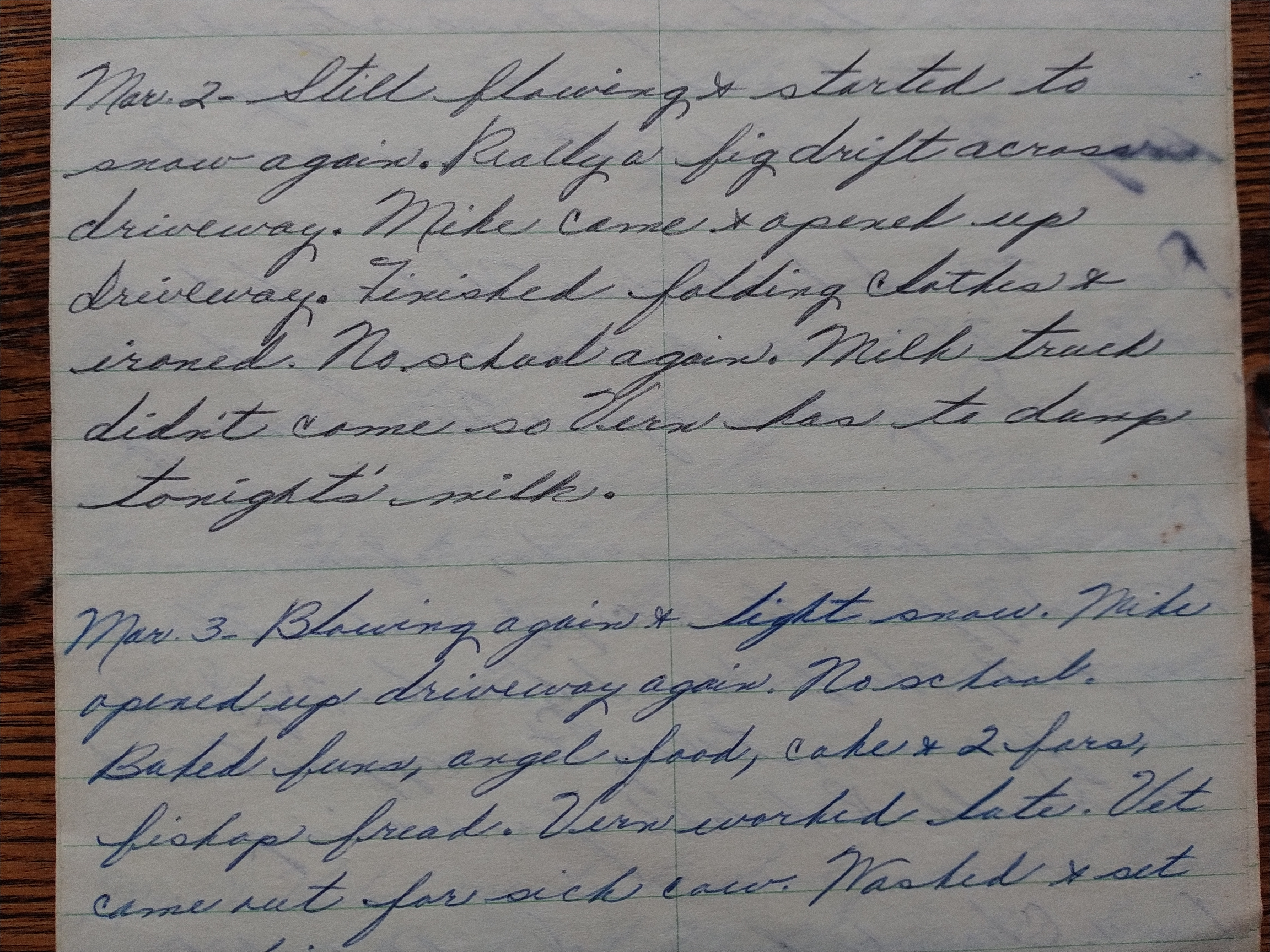
March 2—Still blowing & started to snow again. Really a big drift across the driveway. Mike came & opened up driveway. No school again. Milk truck didn’t come so Vern has to dump tonight’s milk.
Entries from my mom’s March 1965 journal document a harsh Minnesota winter. My Uncle Mike had to drive from his farm a mile-plus away to open our driveway. (Minnesota Prairie Roots copyrighted photo March 2023)
Let me pause here and emphasize the hardship referenced in Mom’s March 2 entry. My dad had to dump the milk from his herd of Holsteins. That was like pouring money down the drain. I can only imagine how emotionally and financially difficult that was to lose a day’s income. But if the milk truck can’t get through on snow-clogged country roads to empty the bulk tank, there’s no choice but to pour away milk.
My dad planted DeKalb seed corn (among other brands). (Minnesota Prairie Roots copyrighted file photo September 2015)
On March 3-5, Mom writes the same—of snow and blowing snow and efforts to keep the driveway open and no school. Then comes a respite from the snow. Dad was even planning ahead to spring, receiving a delivery of DeKalb seed corn on March 15. But then snowfall resumes on St. Patrick’s Day in this land of wide open spaces, where the wind whips fierce across the prairie.
March 17—Snowing & blowing. Got worse all day. Good thing the milk truck came. No school.
March 18—Quit snowing, but is really blowing. Huge drift across driveway & in grove. Almost all roads in Minn are blocked. No school. Cold, about 10 degrees.
Our southwestern Minnesota farmyard is buried in snowdrifts in this March 19, 1965, image. My mom is holding my youngest sister as she stands by the car parked next to the house. My other sister and two brothers and I race down the snowdrifts. (Photo credit: Elvern Kletscher)
March 19—We all went outside & took pictures of the big drifts & all the snow. Mike came over through field by gravel pit & started to clear off yard. Clear & cold.
Mom’s March 19 entry is notable for multiple reasons. First, my parents documented the snowdrifts with their camera. They didn’t take pictures often because it cost money to buy and develop the film. Money they didn’t have. That is why I have few photos from my childhood. That they documented the huge drifts filling our driveway and farmyard reveals how much this snow impacted their daily lives. In the recesses of my memory, I remember those rock-hard drifts that seemed like mountains to a flat-lander farm girl. That my Uncle Mike, who farmed just to the east, had to drive through the field (rather than on the township and county roads) to reach our farm also reveals much about conditions.
In the two days following, Mom writes of a neighbor coming over with his rotary (tractor-mounted snowblower) to finally open the driveway. But when the milk truck arrived at 4:30 am, the driveway was not opened wide enough for the truck to squeeze through the rock hard snow canyon. The driver returned in the afternoon, after Dad somehow carved a wider opening.
The weather got better in the days following, if sunny and zero in the mornings and highs of 12 degrees are better. At least the snow subsided. On March 23, Mom even notes that they watched the space shot on TV. I expect this first crewed mission in NASA’s Gemini Project proved a welcome diversion from the harsh winter.
In her March 27 journal entry, hope rises that winter will end. Mom writes: Sunny & warmer than it has been for days. Got to 45 degrees. Minnetonka beat Fairbault (sic) in basketball tournament. I almost laughed when I read that because Minnesotans often associate blizzards with state basketball tournament time. I also laughed because Faribault would eventually become my home, the place I’ve lived for 41 years now.
So much for optimism. On March 28, snow fell again. All day.
But the next day, Mom writes, the weather was sunny and warm enough to thaw the snow and ice and create a muddy mess. I stopped reading on March 31. I’d had enough snow. I expect Mom had, too.
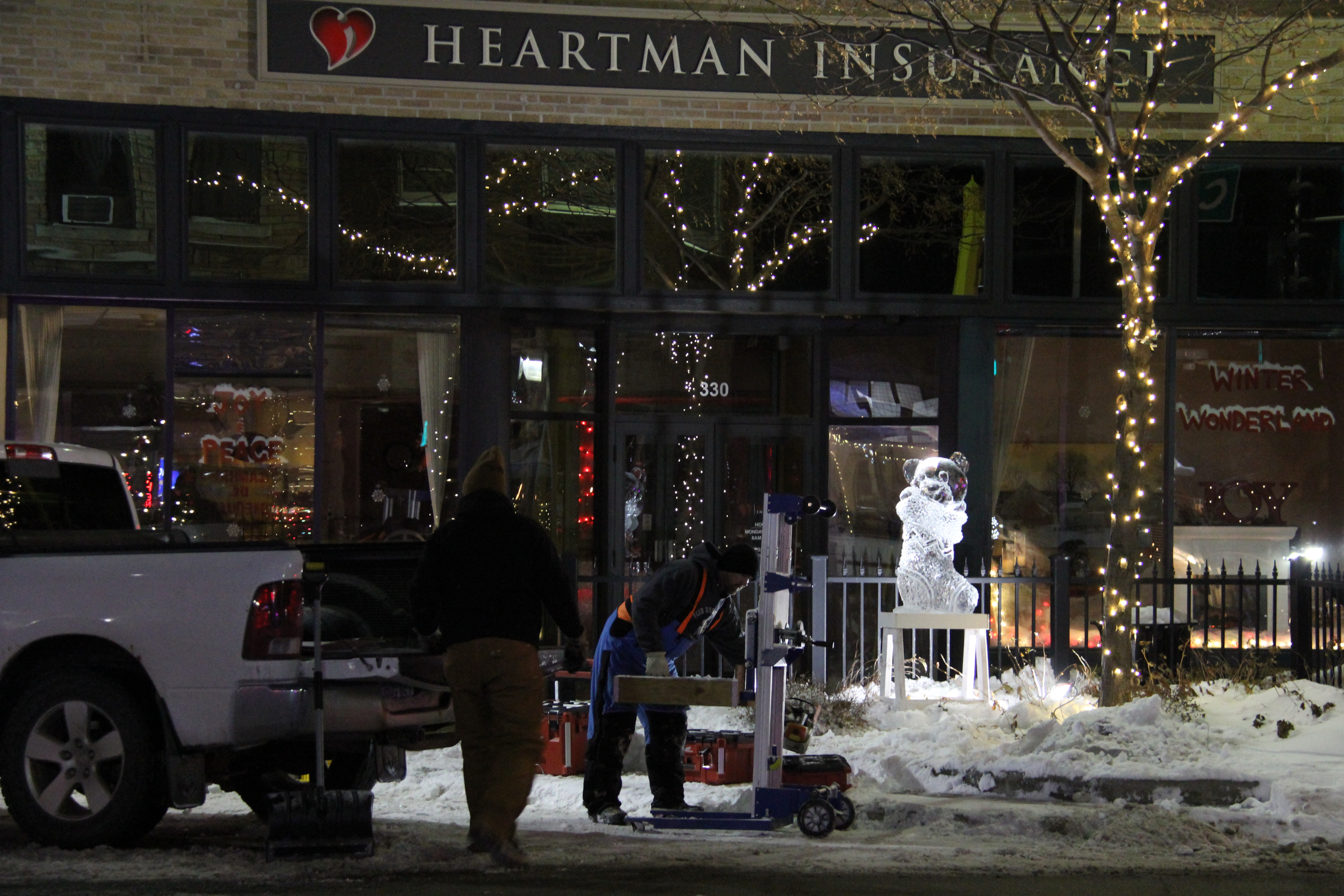
Sakatah Carvers pack their equipment after carving an ice sculpture at the corner of Central Avenue and Fourth Street/Minnesota State Highway 60 in Faribault during Winterfest. (Minnesota Prairie Roots copyrighted photo December 2022)
ONCE UPON A TIME, which is longer ago than I care to admit, I welcomed winter. Snow equated outdoor fun on the farm of my youth in southwestern Minnesota. Prairie winds swept the snow into rock-hard mountainous drifts around buildings and windbreaks. My siblings and I pulled on our winter gear and for hours played atop those mountains and the snow piles mounded by Dad with the bucket of his tractor.
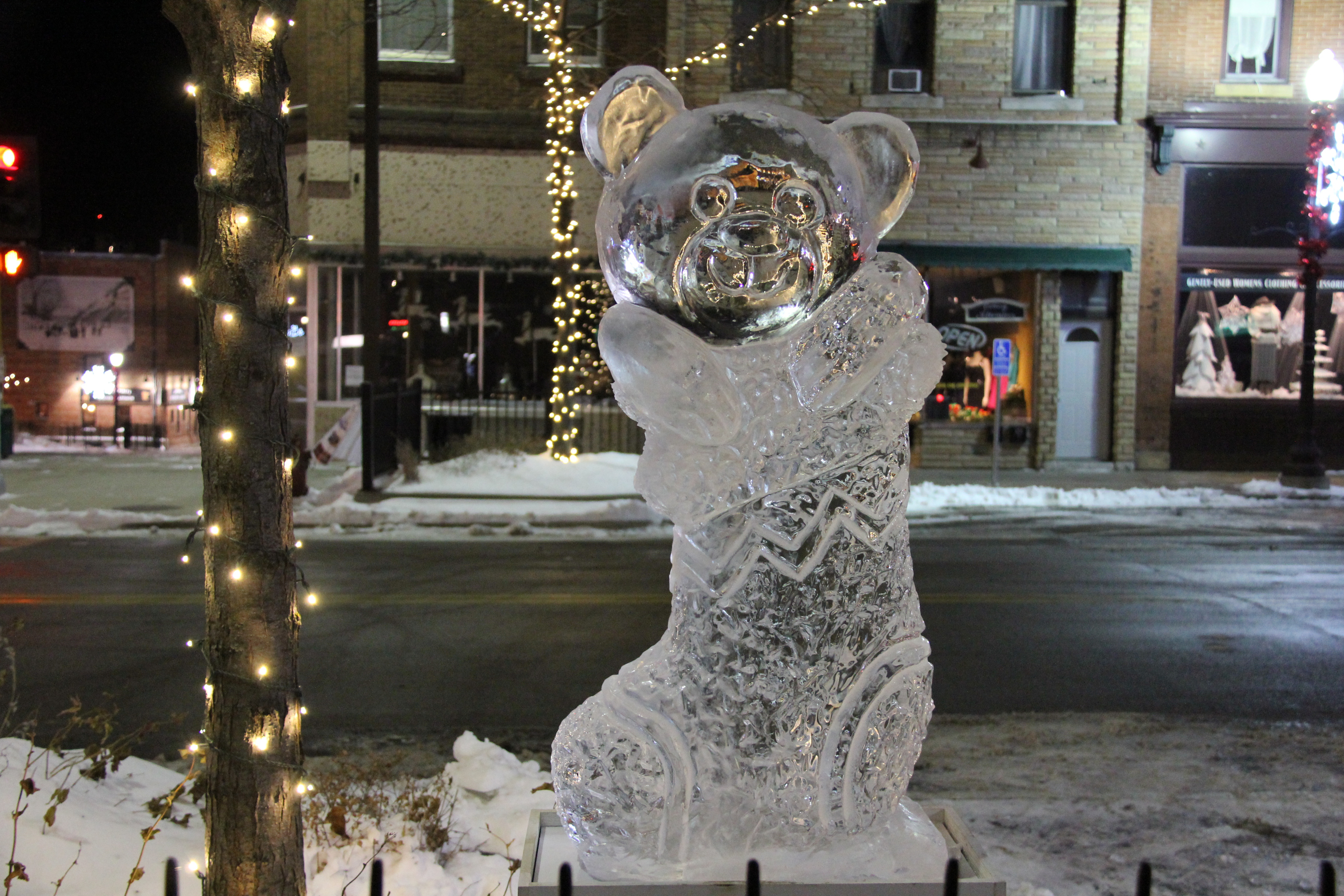
The completed sculpture. (Minnesota Prairie Roots copyrighted photo December 2022)
And then there were the icicles hanging along the milkhouse roof. Those became swords for hard-fought battles against one another. Ice clashing against ice until a sword, or both, broke. Somehow we avoided poking out each other’s eyes.
I found those icicles, some the length of our torsos, magical. They appeared seemingly overnight, glistening in the sunlight, water frozen clear and beautiful.
The other side of the sculpture, photographed from across the street, with part of the equipment to the left. (Minnesota Prairie Roots copyrighted photo December 2022)
Likewise, I felt the same about ice patches that formed on field’s edge. To slide across that ice in my buckle overshoes proved freeing and powerful. I was a champion figure skater in my own imaginative world. When the ice rink opened in my hometown of Vesta in the shadow of the grain elevator, I donned my Aunt Dorothy’s hand-me-down skates and raced from one end to the other, flying like the fierce prairie wind.
Today I no longer skate or engage in sword fights. Rather I approach ice with the cautiousness of a Baby Boomer who’d rather not break a bone. I avoid ice if possible.
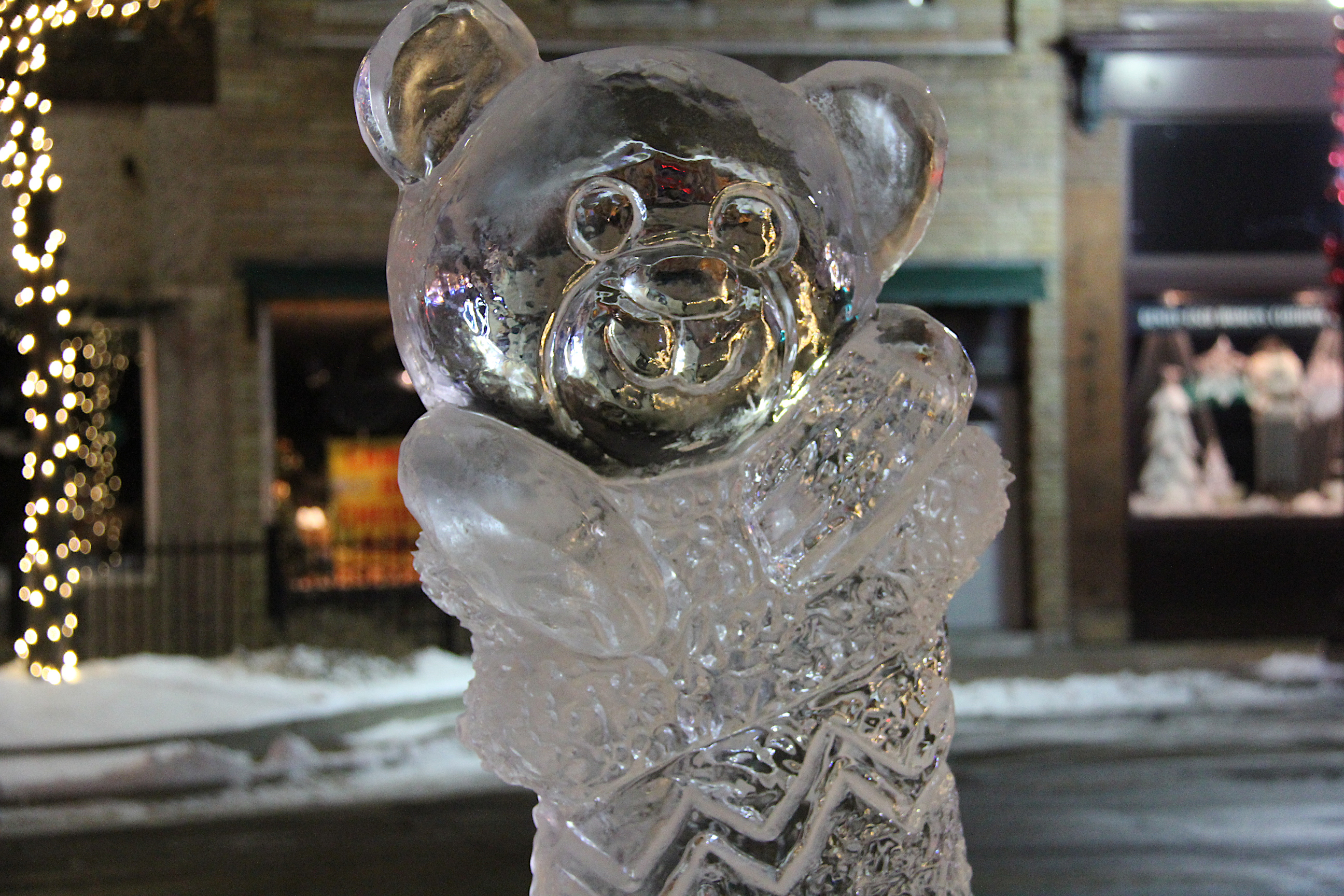
The teddy bear sculpture up close, glistening in the holiday and street lights. (Minnesota Prairie Roots copyrighted photo December 2022)
But there’s an exception. Ice sculptures. These are a thing of beauty, reminding me of long ago ice ponds and ice swords and my once-love of ice. Artists who can carve a block of ice into something magical and beautiful garner my appreciation. That includes the team from Sakatah Carvers, Signs and Creations, who recently sculpted a teddy bear inside a stocking for Faribault’s Winterfest.
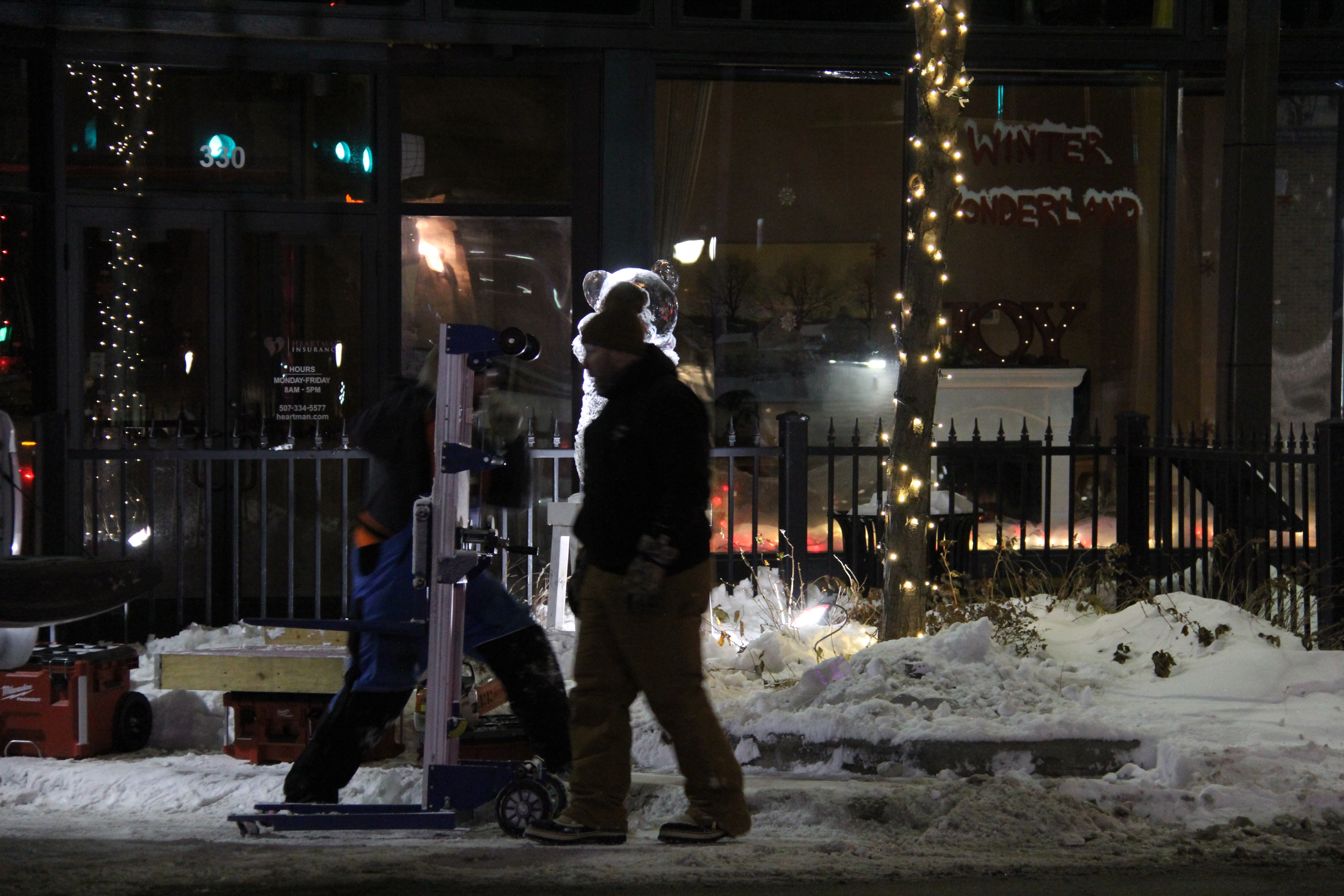
The second I snapped this frame, the ice carver blocked my view of the sculpture. But I like the results, highlighting the artist. (Minnesota Prairie Roots copyrighted photo December 2022)
While I didn’t witness the actual creation of the ice sculpture, I saw the warmly-dressed crew packing up their gear afterwards. It takes a love of winter and of ice to engage in this art form, which recalls for me prairie winters past of snow and ice.
















 Minnesota Prairie Roots
Recent Comments