Minnesota Prairie Roots

Writing and photography by Audrey Kletscher Helbling

You can help: Establishing “water coolers of literacy” in rural Minnesota November 17, 2011

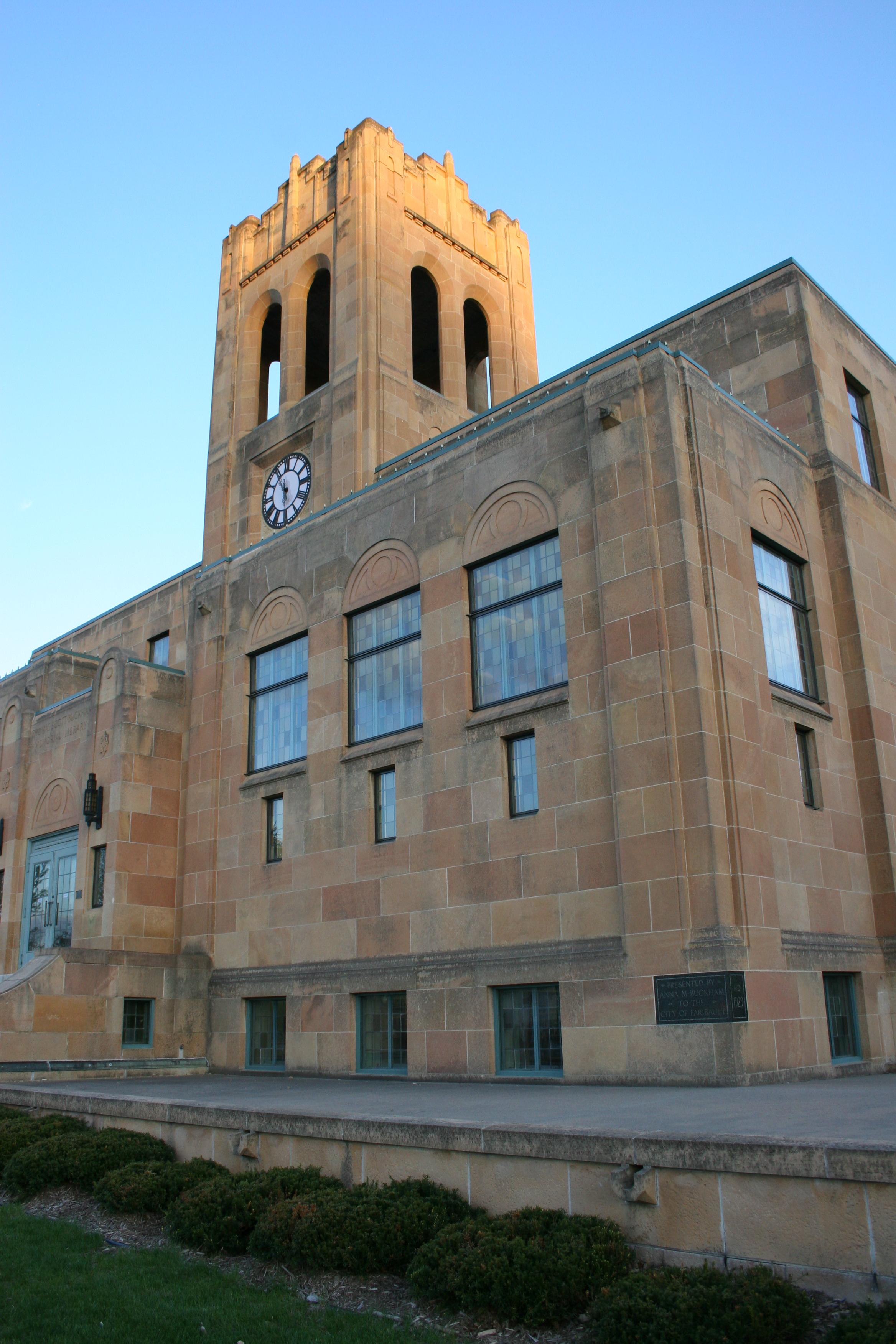
Buckham Memorial Library, Faribault

WHEN A NOTICE arrived in my e-mail in-box on Monday that Kathryn Stockett’s The Help was available for me at the local public library, I was thrilled. I’d been number 45 on the waiting list. I figured maybe I’d get the book in say seven years, long after I had forgotten it. Instead I waited only a few months.

Around 6:30 p.m. Monday, on my way to a church meeting, I stopped at Buckham Memorial Library in Faribault to pick up this bestselling novel. Much to my dismay, the library appeared closed. It was. And then I remembered the budget cuts that had trimmed evening hours to only Tuesdays and Thursdays.

As frustrated as I sometimes am about shortened night-time hours, I shouldn’t complain. At least I have a library in my community, unlike my hometown of Vesta in southwestern Minnesota. Like two dozen other small towns in Redwood, Cottonwood, Murray and Pipestone counties, Vesta residents rely on the services of the Plum Creek Bookmobile to deliver library materials. (Click here to learn more about that bookmobile.)

Once a month the bookmobile pulls onto Vesta’s Main Street, just as it does in towns like Currie, Iona, Revere and other towns you’ve probably not heard of unless you live or grew up in that rural area of Minnesota.

Given how often I use the Faribault library, I’d have a tough time with only once-a-month library access via a bookmobile. But I know that residents of these rural communities, like my 79-year-old mom, are grateful for their library on wheels.

Can more be done, though, to get books into the hands of these rural residents more frequently? I don’t expect that will come via public library systems with already financially-strapped budgets.

That’s why I’m particularly excited about the nonprofit Little Free Library project, co-founded two years ago by Todd Bol, a native of Stillwater now living in nearby Hudson, Wisconsin. I spoke at length with Bol earlier this week about this endeavor which places birdhouse-sized mini libraries mostly in front yards and in some public locales.

A Little Free Library seems the ideal way to fill a void in small towns without libraries.

But the problem lies in connecting to these sparsely-populated areas and growing these libraries. Bol wanted to pick my brain on how to best reach these communities and spread the word about opening a Little Free Library.
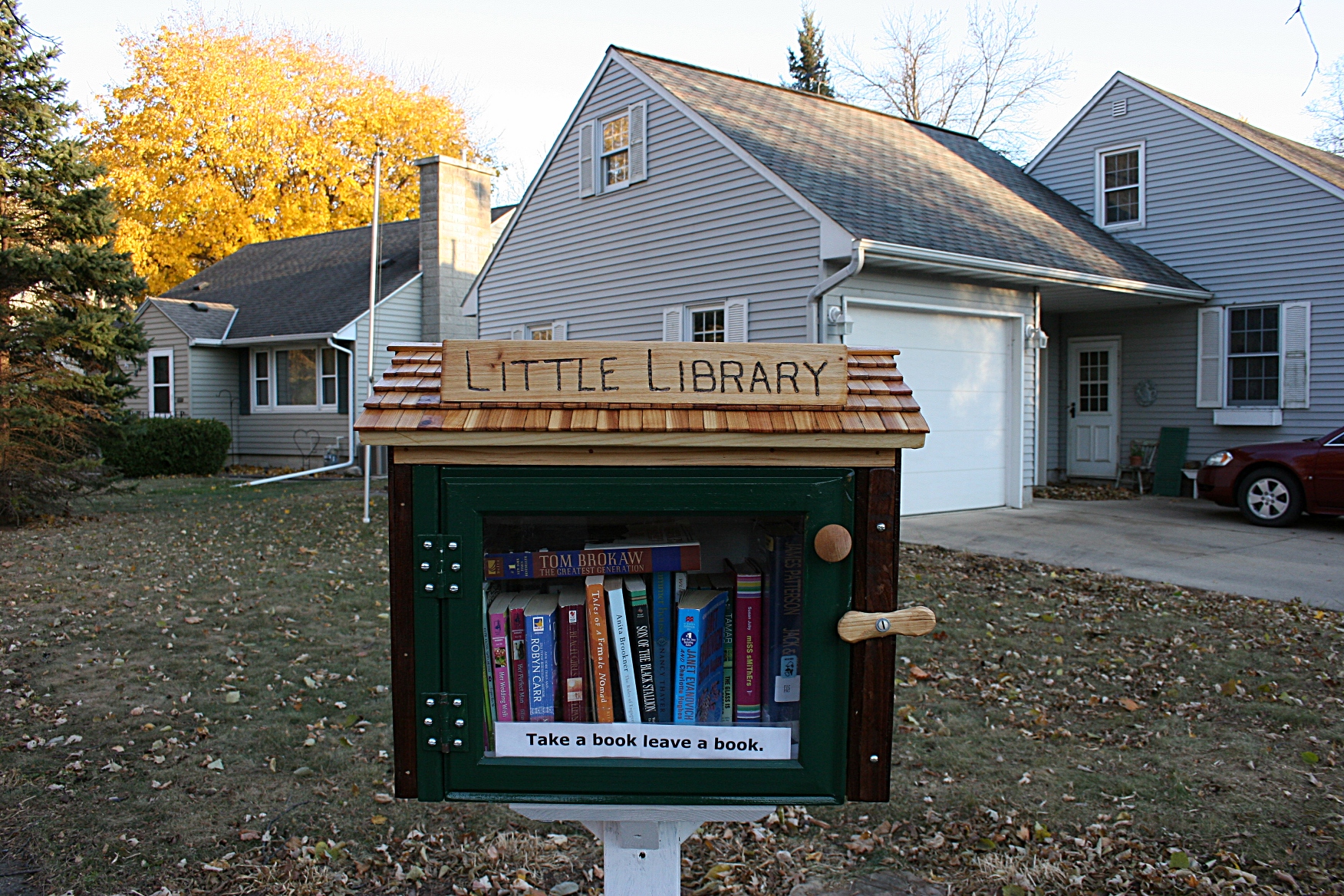
A recently-opened Little Free Library in a southwest Faribault neighborhood.

Several weeks ago a little library opened in Faribault. I learned about Dale and Joan Smith’s front yard library in the local daily newspaper on the same day I read about one opening in Detroit Lakes. Minnesota now has about a dozen Little Free Libraries with orders for some five more, Bol says. Two of those are going to Lakefield near Worthington in the southwestern corner of the state.

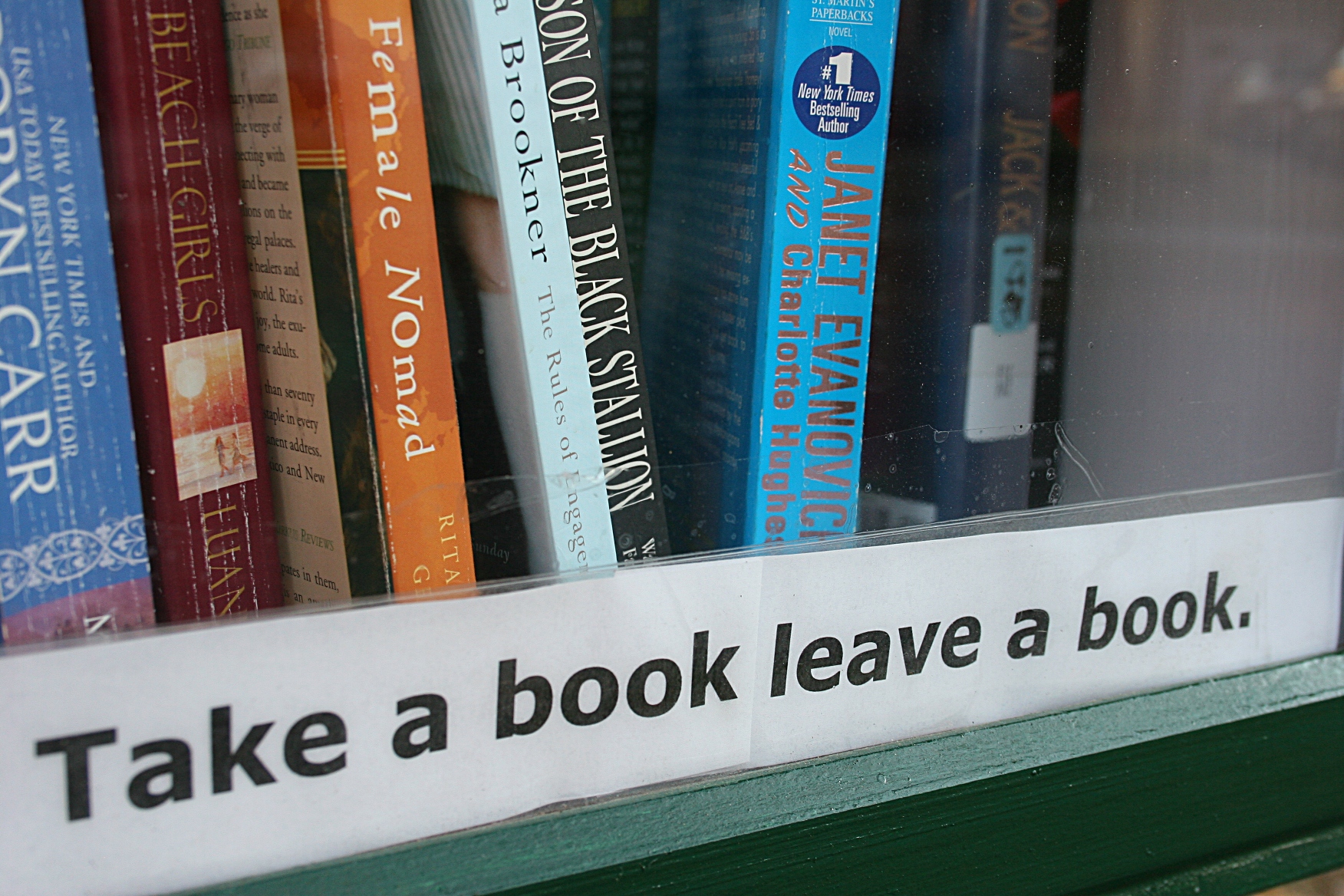
That’s the area I want to target for these libraries which operate on the premise of “Take a book, leave a book.” No library cards. No fee. No anything except a steward of the library and the sharing of donated books.

In a blog post published last week about the Smiths’ library, I challenged Vesta area residents to open a Little Free Library. Thus far, no one has responded.

Bol’s nonprofit is there to help, offering everything from advice to publicity to ready-built mini libraries. Those physical libraries range from a basic no-frills model priced at $375 to original art deluxe models listed at $1,000.

Or, like the Smiths in Faribault, you can build your own and then become a Little Free Library member, for a recommended $50 donation. That entitles you to benefits like a sign, sharing of your story online, listing on the LFL world-wide map and more. (Click here for membership details.)

With monies donated through the LFL’s “Pay It Forward” program, funding is available for underwriting library costs, for signs, donations of the library structure, etc.—all aimed toward helping others open village libraries. Currently the nonprofit is assisting soldiers with placing libraries in Afghanistan. No application process exists to apply for funds, but Bol hopes to eventually establish one.

Some 200 officially-registered Little Free Libraries have opened world-wide, according to Bol, who is especially excited about one planned for the Minneapolis Sculpture Garden. He’s also thrilled about an upcoming story in an Italian fashion magazine.

Defining himself as a “social entrepreneur by profession,” Bol focuses on change and making a difference. He views a Little Free Library as “a water cooler of literacy.” That comes from a man who says he “leans toward dyslexic” and reads primarily social engineering, quirky nonfiction and history books.
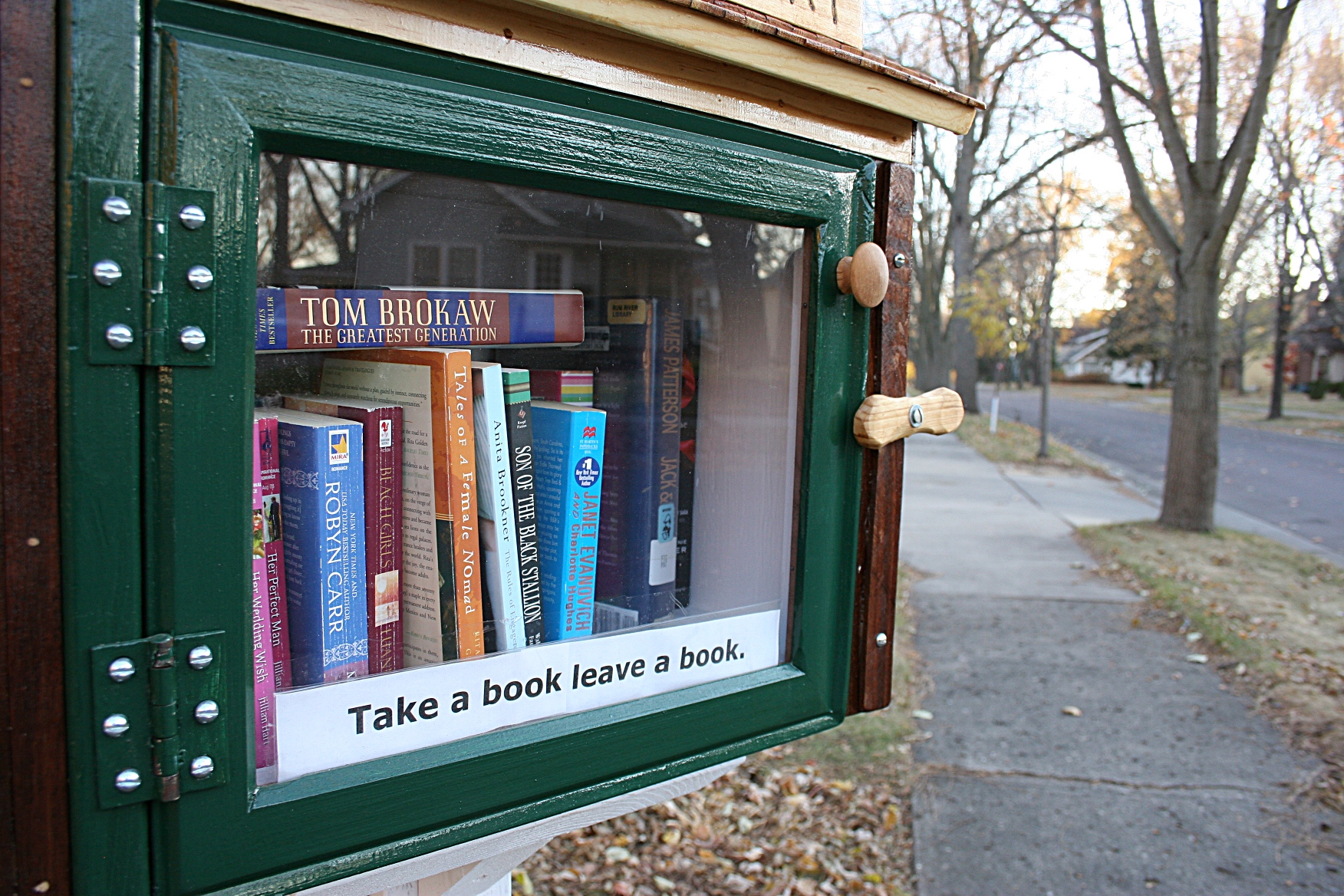
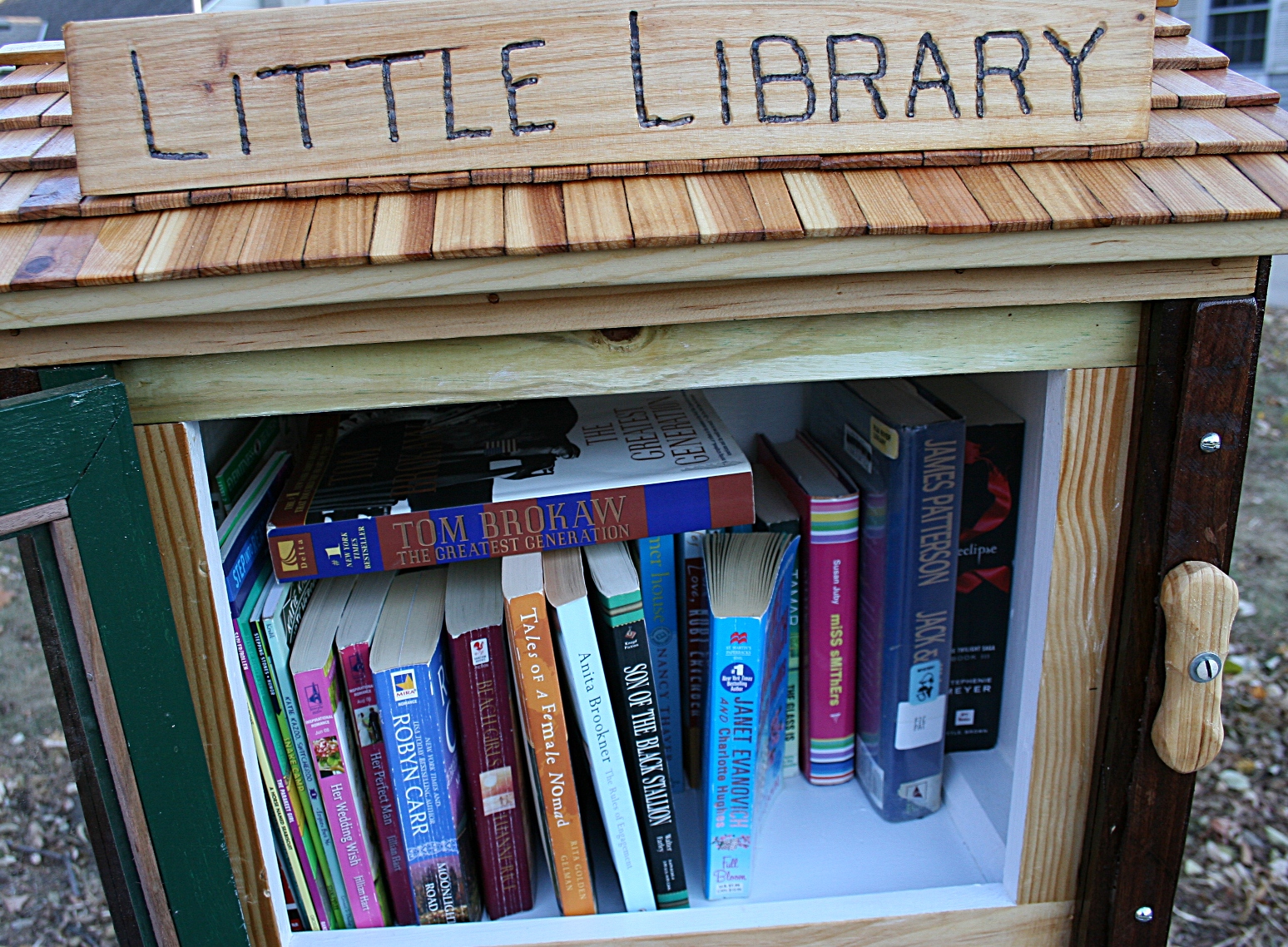
The Smiths of Faribault have filled their Little Library with a variety of books.

A LFL, Bol continues, becomes not only a place to get and give books, but also a community gathering spot, a “unique space of conversation” to discuss reading, books, education and more.

“There’s a sense of community being built through Little Free Libraries,” its co-founder says. He sees social interaction between neighbors who previously may not have met or spoken. A front yard library brings them together.

Bol remembers the moment he realized he was onto something with the Little Free Library concept. He had built and placed a schoolhouse-shaped library in his Hudson front yard honoring his mom, June A. Bol. When folks stopped by to shop at a garage sale he was holding and saw the mini library, they were intrigued. “That’s cute. Can I build it?” customers inquired.

From that spark of community interest, this social entrepreneur and his friend Rick Brooks of Madison, Wisconsin, ran with the idea and co-founded the Little Free Library movement.

Today Bol’s looking to engage others, like me, in spreading the word about these mini libraries. I didn’t come up with a brainstorm of an idea when we talked about how to best reach places like the small towns of southwestern Minnesota without libraries. I only suggested establishing a LFL in the area and then contacting small-town daily and weekly newspapers and radio stations in a publicity blitz.

He suggested a contest that would give away a Little Free Library, something he’s previously done.

Bottom line, it’s going to take networking to grow Little Free Libraries in more remote and rural areas.

Once the interest is established, it’s going to take individuals, families, neighbors and/or organizations to build and tend these libraries—perhaps a 4-H club or a 4-Her, a Boy Scout or Girl Scout, a church youth group, a Friends of the Library organization, a woodworker, a service club like Sertoma or Rotary or…

IF YOU HAVE ideas, any ideas, on how to grow Little Free Libraries in rural Minnesota, please submit a comment and share.

IF YOU HAVE a Little Free Library, plan to open one or need assistance in opening one, submit a comment. Most of all, tell others about this project.

FINALLY, if anyone is specifically interested in opening, building or funding a Little Free Library in my hometown of Vesta, let me know. It’s always been my dream to have a library in Vesta.

CLICK HERE for detailed information about the Little Free Library project.

© Copyright 2011 Audrey Kletscher Helbling


Happy birthday, Miranda! November 16, 2011

Filed under: Uncategorized — Audrey Kletscher Helbling @ 11:16 PM
Tags: , , , ,

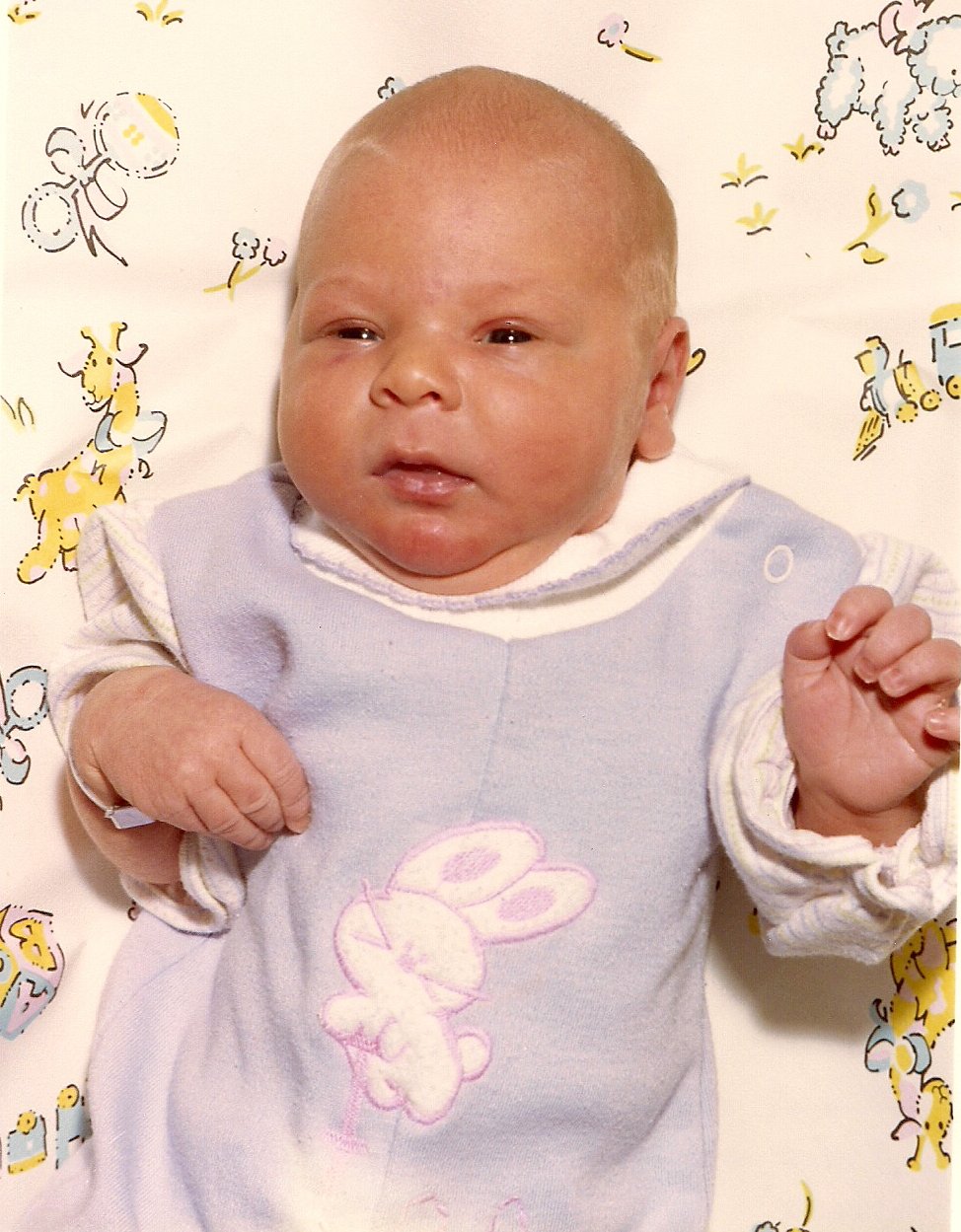
Miranda, five days old

MY SECOND BORN turned 24 today.

Miranda lives 5 ½ hours away in eastern Wisconsin so I had to settle for texting a birthday wish to her this morning. Finally, around 4:30 p.m., she got back to me after a long work day that began at 4:30 a.m. She had to be at an area hospital by 6 a.m. to interpret for a Spanish-speaking patient undergoing surgery.

She didn’t have much time to chat; her friend Greg was arriving soon and they were going out for a birthday dinner. Miranda hadn’t eaten all day and she was hungry.

Afterward she was having friends over to celebrate. One of them, Gerardo, planned to bring the cake.

I don’t know if they ate any of the cake. But my husband, who just talked to our daughter, told me the cake was smashed in her face. Knowing several of the invited guests, I expect it was Julio’s idea. Miranda said she saw it coming.

Now I don’t think I’d much like a cake or pie or anything smashed in my face. But I’m not 24 either.

I had to think for a minute today about exactly how old my daughter was.

“Mom, you don’t know how old I am?” she asked, a strong tone of disbelief tingeing her question.

I had to do the math quick-like in my head. I didn’t tell her, but thought, “I can’t even remember how old I am sometimes.”

And sometimes I find it hard to believe that my two daughters are in their 20s, my son turning 18 in a few months. Where did the years go? Honestly.

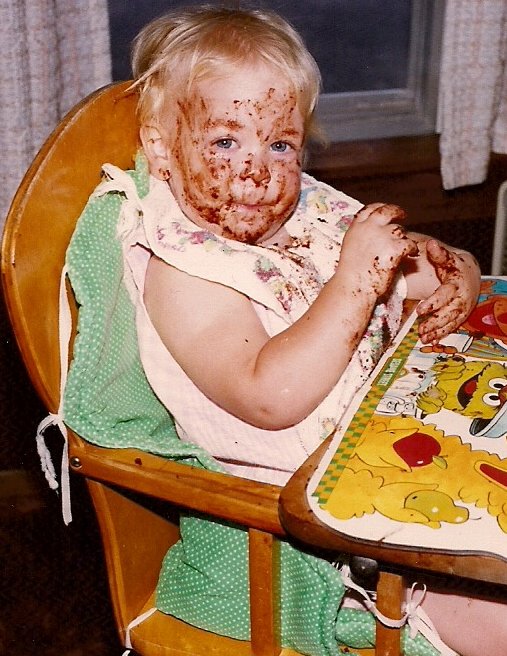
No one smashed cake into Miranda's face when she was almost two; she managed this all on her own.

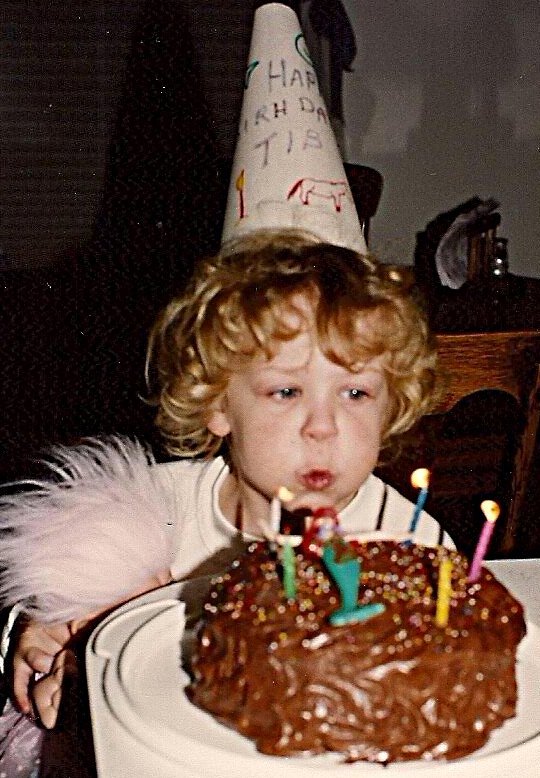
Miranda with her Little Mermaid birthday cake on her fifth birthday in 1992. That's a troll she's clutching and a homemade birthday hat with her nickname, Tib (after Tib in the Betsy-Tacy books by Maud Hart Lovelace). Everyone loved Miranda's curly hair.


A passion for honoring veterans

Dear Veteran:

Today, Veterans Day, I honor you—you who gave of yourself to serve our country so that we might live freely.

Because of you, I can pursue my dreams, speak my mind, vote, express myself through my writing and so much more.

As the daughter of a Korean War veteran, I understand the depth of your service to country. For all you have done, thank you. May God bless and keep you in His care always.

With appreciation,

Audrey Kletscher Helbling

Minnesota Prairie Roots blogger

Faribault, Minnesota

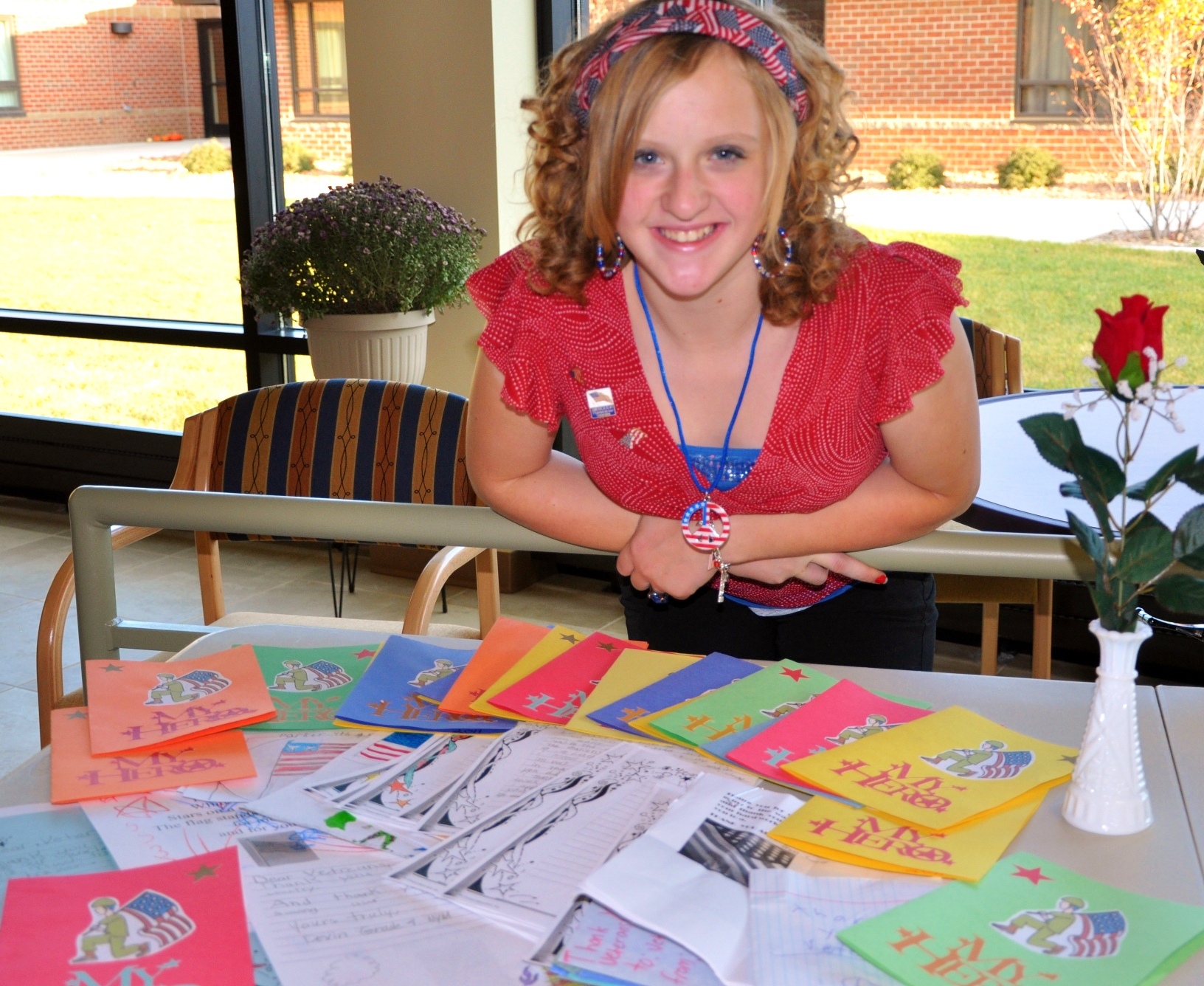
I SENT THE ABOVE short message last week to 13-year-old Heather Weller of New York Mills who was collecting thank you notes to deliver to the Fergus Falls Veterans Home on Veterans Day.

It was the least I could do for this teenager committed to honoring our service men and women.

After submitting my e-mail and blogging about Heather’s “Thank a Veteran” project, I received an e-mail from her mom, Kristi Landwehr Weller, thanking me for supporting her daughter.

I asked her to update me on Heather’s project after Veterans Day. Kristi reports that Heather received 185 e-mails from 42 states and Canada. She also collected 75 handwritten thank you notes at her local county fair, the Minnesota State Fair and 4-H events.

Now if those numbers, geographical locations and efforts aren’t enough to impress you, how about this: Heather collected more than 500 thank you cards and letters from her elementary school and the high school in New York Mills. She also handcrafted 100 cards.

Then this remarkable young woman delivered all those notes and cards to those veterans in that Fergus Falls home. She gathered the e-mails and messages into a binder to leave there.

Heather Weller with some of the letters she gathered at her school and cards she made.

And to impress you even more, Heather also gave Veterans Day speeches at the Fergus Falls Veterans Home and at the New York Mills schools.

Did I mention that Heather turned 13 years old in September?

Her passion for honoring our veterans doesn’t stop with Veterans Day. Says Heather’s mom: “…she collects messages all year round online and in person, gives speeches about her cause, promotes Project New Hope (providing veteran family retreats), makes quilts for Quilts of Valor, visits the vets home all year round, involves the school in Holiday Mail for Heroes and is working on care packages for soldiers…just to name a few things.”

Oh, and recently she participated in the Junior National Young Leaders Conference in Washington D.C.

“Seeing the war memorials and hearing about great leaders seems to have made her even more determined to spread the word (about honoring veterans),” Kristi says.

Kristi, who calls herself “just a proud mom,” apologizes for “going on and on” about her daughter.

Well, Kristi, I’d say you have every reason to be proud of Heather for her passion, selfless giving, devotion, hard work, dedication and enthusiasm in honoring our veterans.

Such commitment deserves recognition. I can’t wait to see what the future holds for this passionate young woman. I expect that no matter what path Heather follows in life, it will be one that involves giving to others. And that is admirable, admirable, indeed.

CLICK HERE to learn more about Heather’s efforts.

CLICK HERE to read my first post about “Thank a Veteran.”

© Copyright 2011 Audrey Kletscher Helbling
Photos courtesy of Kristi Weller


In the kitchen preparing for a German dinner November 15, 2011

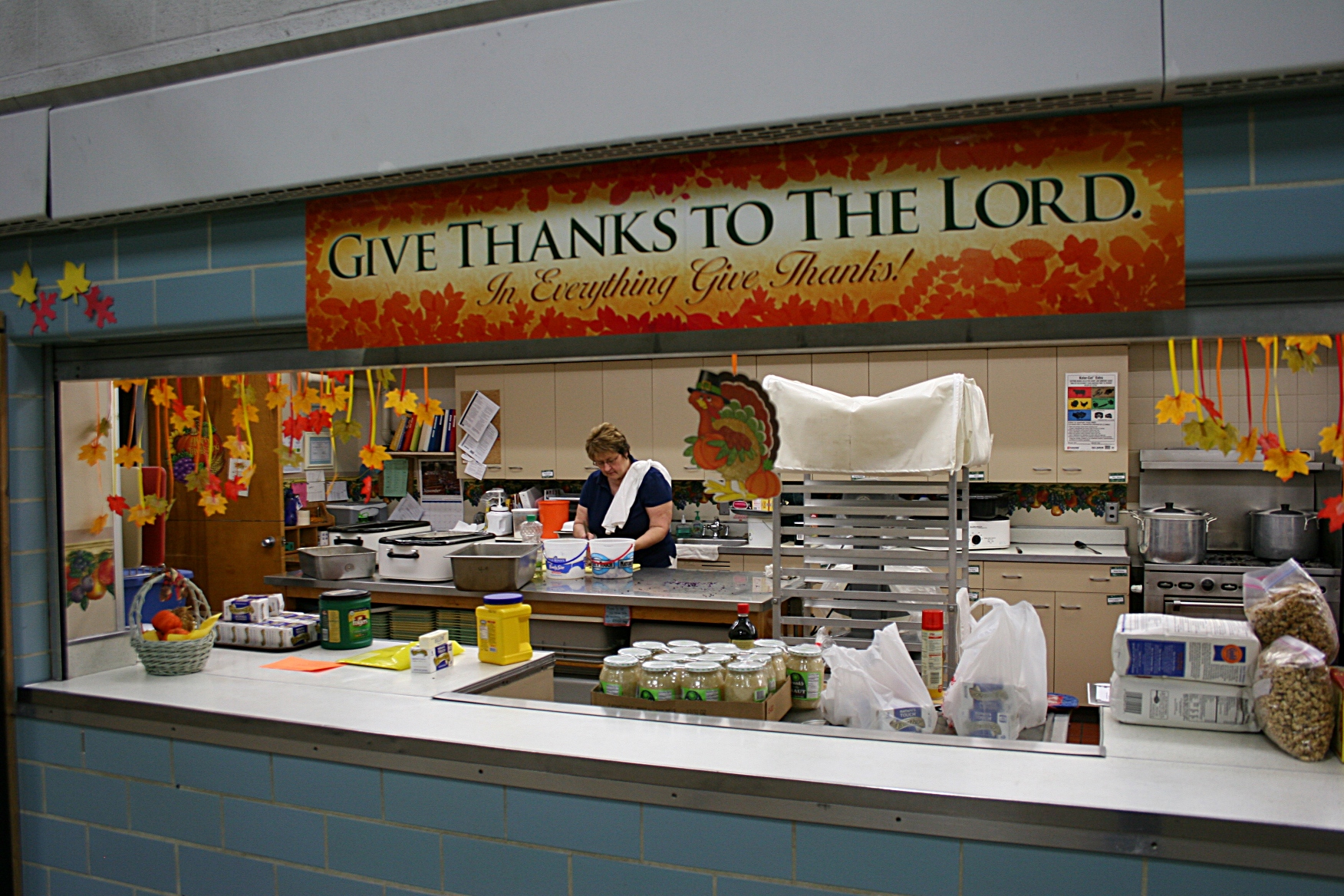
Barb Young preps food in the Trinity Lutheran Church/Faribault Lutheran School kitchen for Cannon Valley Lutheran High School's German dinner.

THESE DINNERS DON’T happen without lots of willing hands and hours and hours and hours of volunteers working together.

We’re talking church, school and community dinners here, and specifically Cannon Valley Lutheran High School’s second annual German Fest of Thanks and Praise.

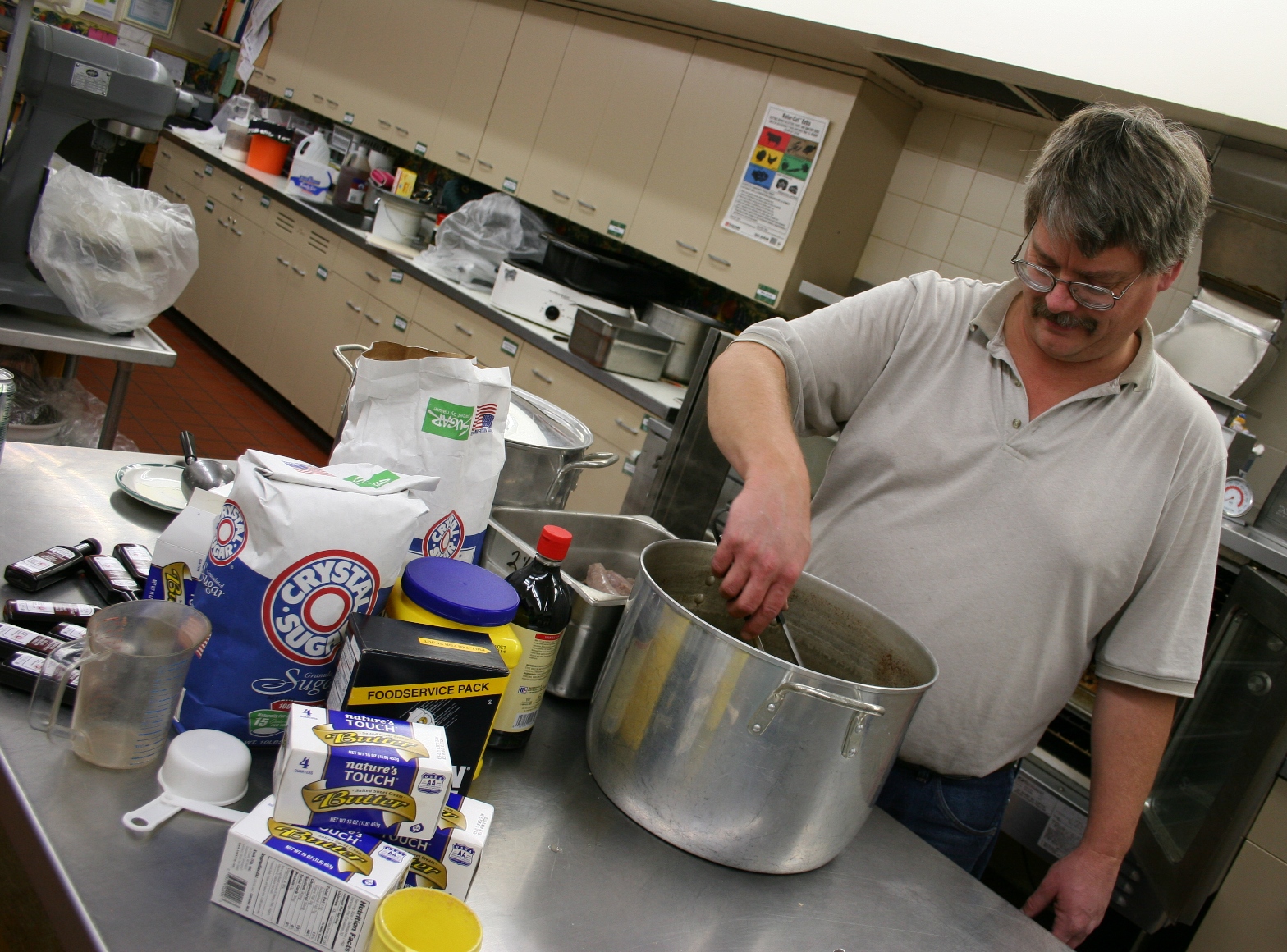
This past weekend I got a behind-the-scenes, before-dinner peek at the effort that went into preparing a German meal for more than 200 diners. Cooking isn’t my forte, meaning I admire folks like Arlen and Suzanne Krause who always seem to be in the kitchen whenever CVLHS, based in Morristown, hosts a fundraising dinner. The Krauses love to cook and they know how to cook. I’ve suggested more than once that they open a catering business or restaurant.

Arlen Krause prepares ethnic food for the German Fest dinner.

Saturday evening, while assisting my friend Mike Young, the CVLHS volunteer development director, and my husband Randy with setting up tables and chairs for the German dinner, I occasionally popped into the kitchen to photograph progress there. The Krauses and Barb Young, who’s married to Mike, were busy mixing and stirring and slicing in the two hours I was there; they’d started around noon and labored until 9 p.m. and were back again the next morning. And I know they’d also been prepping food earlier in the week.

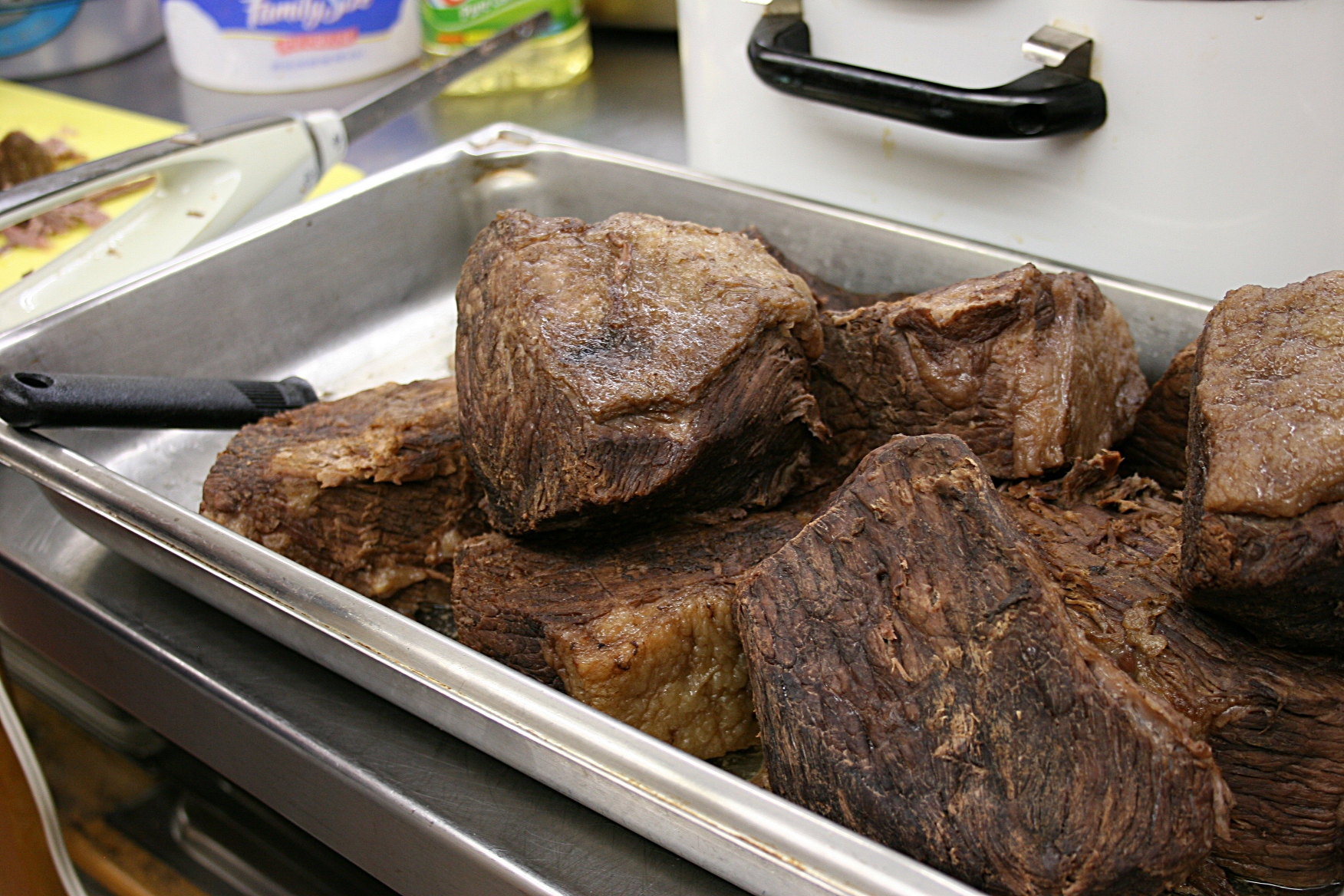
Beef awaited slicing and complete transformation into tender and savory sauerbraten.

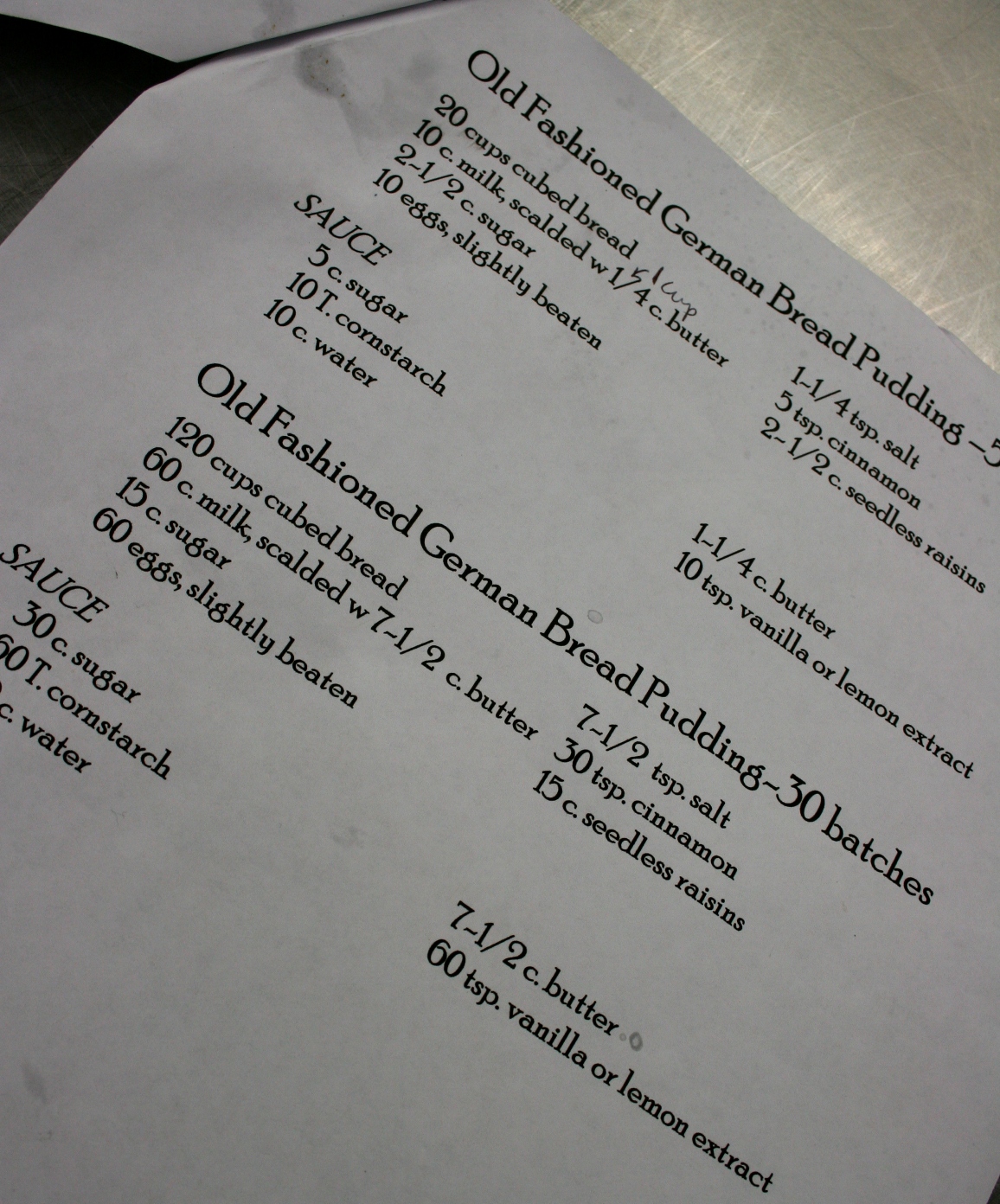
The feeding-multitudes recipe for delectable bread pudding.

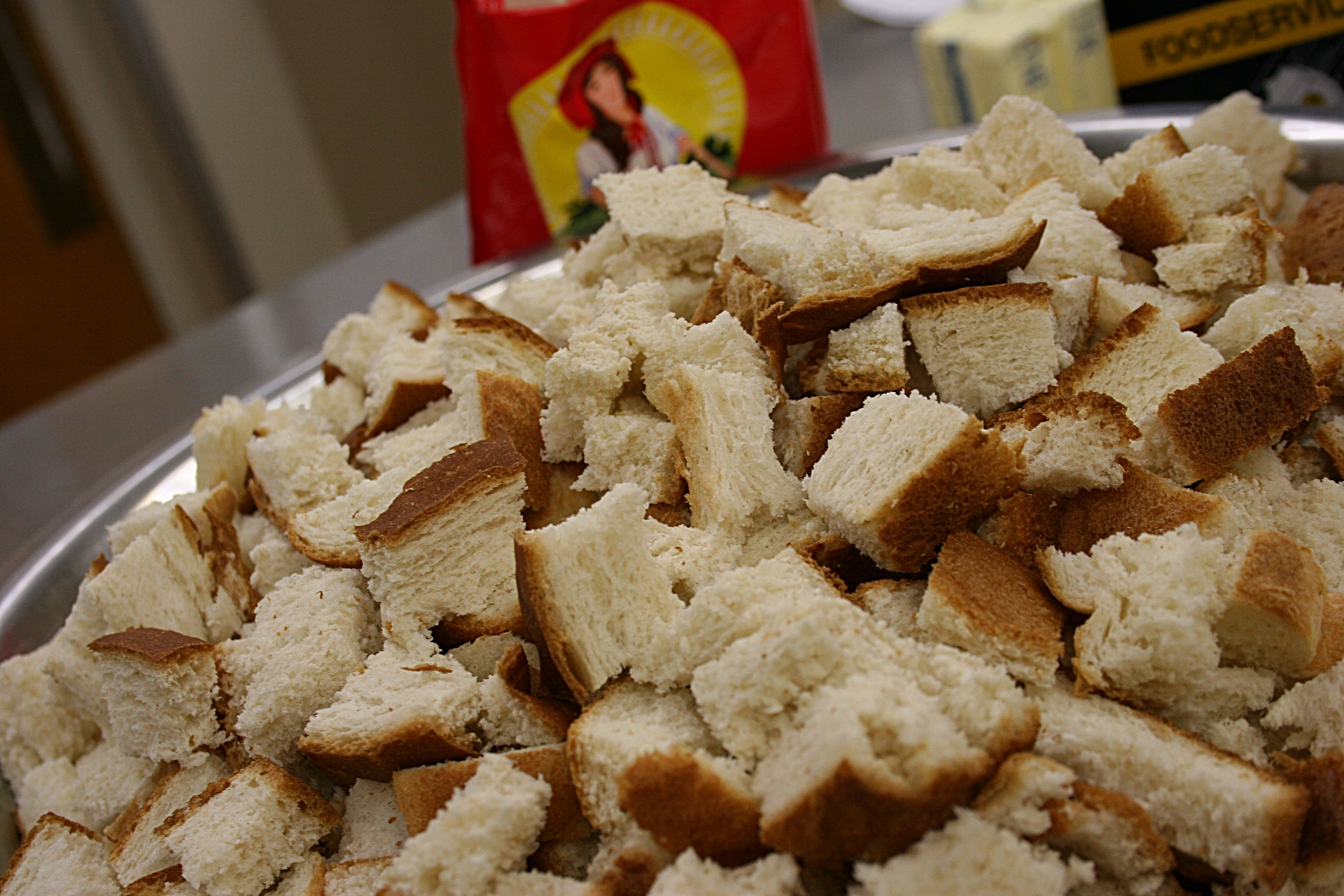
Bread cubes, mounded high in bowls, were baked into bread pudding.

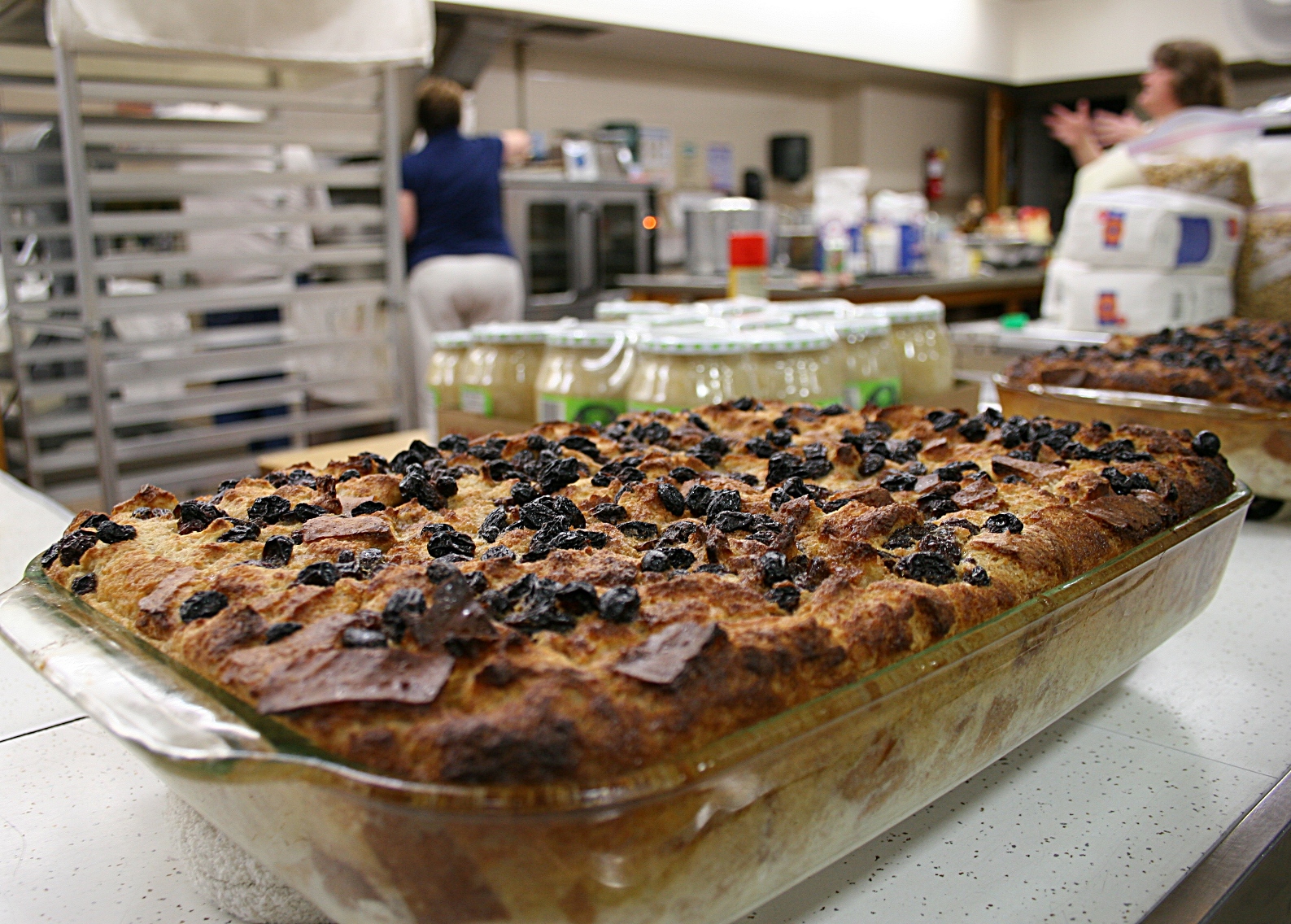
Pans of raisin-topped bread pudding cooled on the kitchen counter Saturday evening.

Fortunately, the kitchen crew trio didn’t mind my scooting around the counters, camera in tow. I tried to stay out of their way and not ask too many questions or overstay my welcome.

But staying out of the kitchen proved challenging given the tantalizing scent of gravy bubbling in roasters, the sweet Grandma’s kitchen aroma of bread pudding baking in the oven and the pungent, nose-stinging scent of vinegar poured onto cabbage.

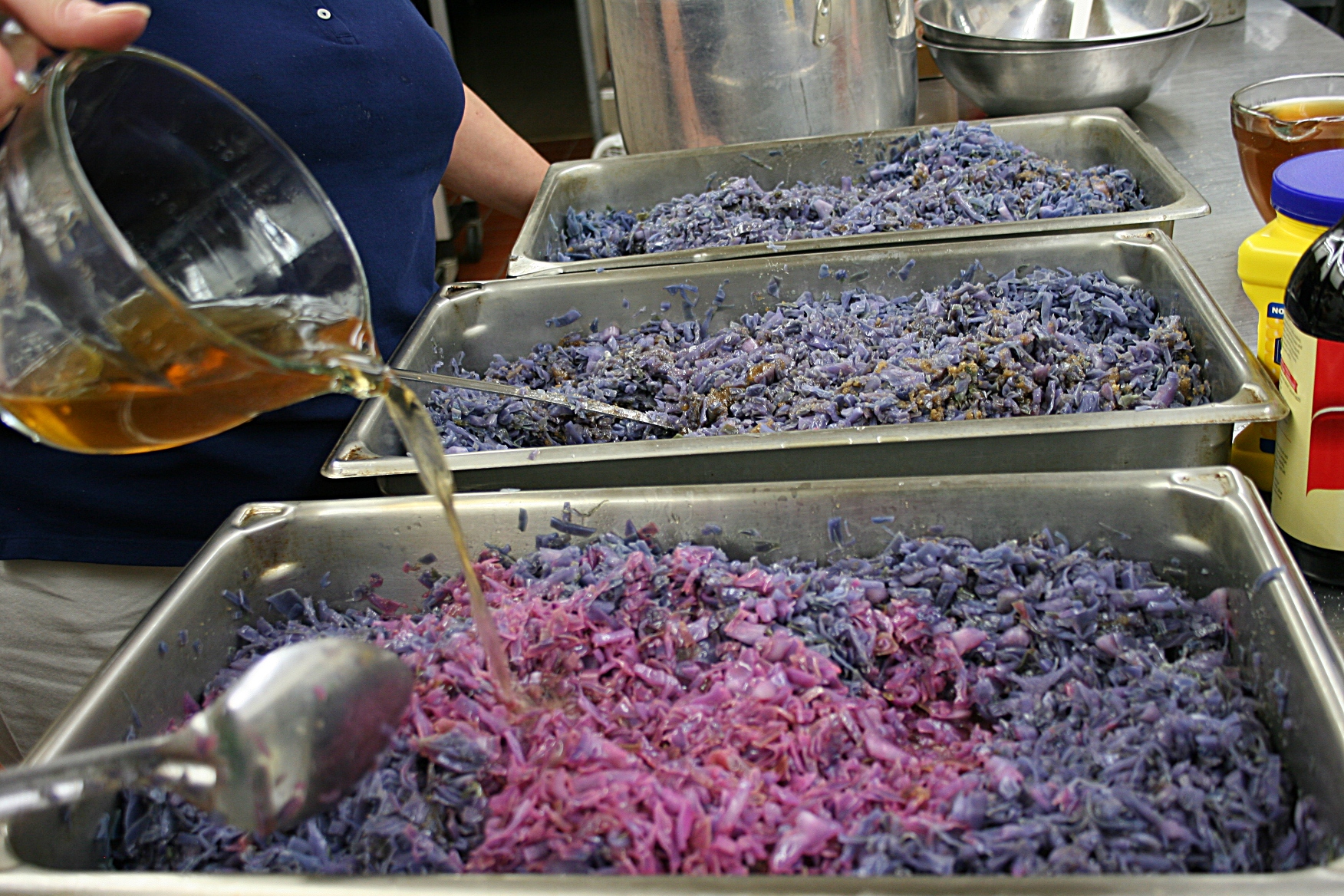
By the magic addition of vinegar, the cabbage color changed from blue gray to purple in the foreground. I was witness to a science experiment and cooking class rolled into one.

I am 100 percent German, after all, and perhaps my German genes were naturally drawn to these food smells of the Motherland. Either that or I was awfully hungry given the supper hour. Probably both. Homemade caramel corn, strategically placed on the serving counter, cut the hunger edge.

Vinegar, sugar and butter—lots and lots and lots of butter—were key ingredients in the ethnic foods I saw prepared. I could hardly wait to taste the complete meal Sunday evening following the German worship service.

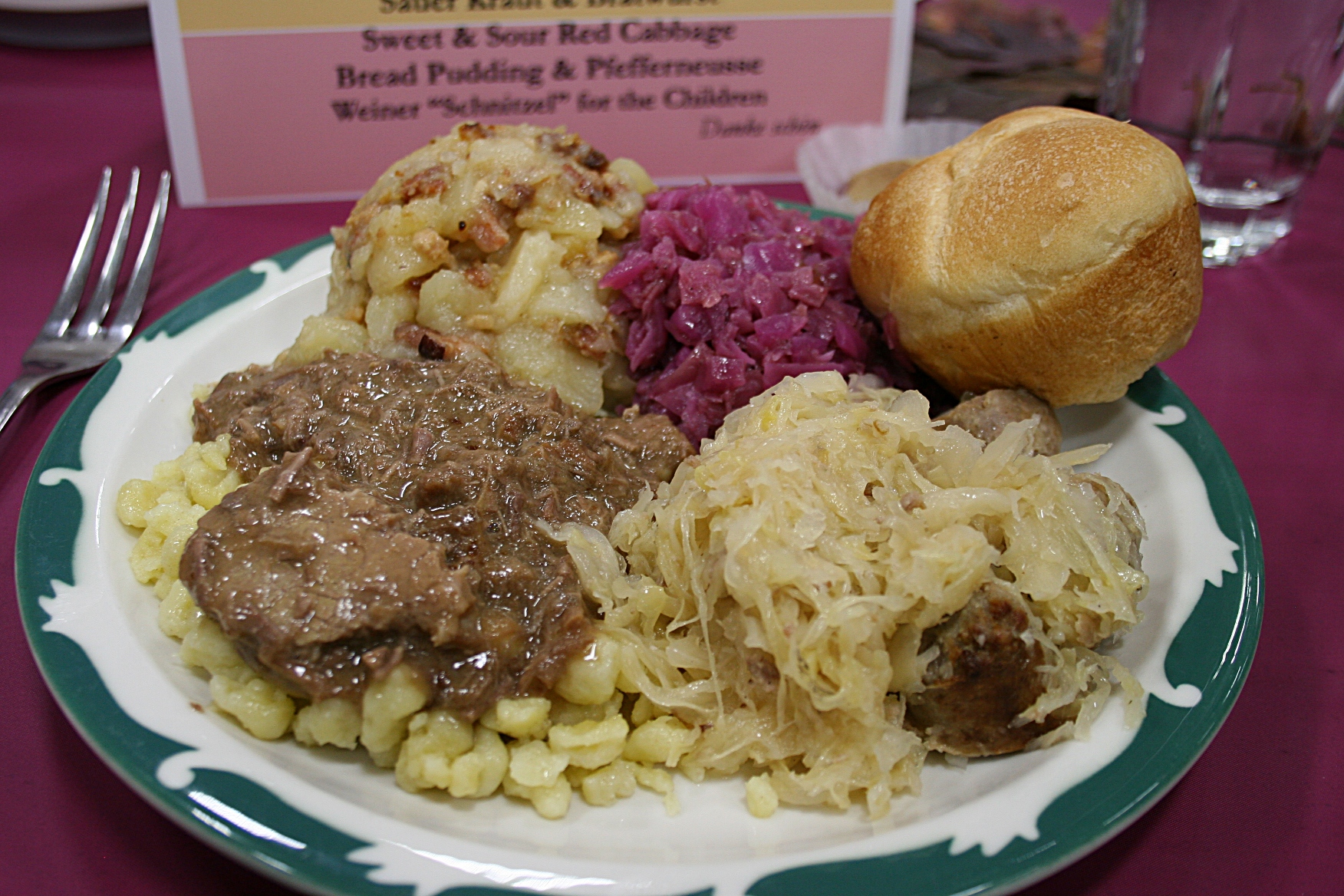
Let me tell you, the German dinner rated as absolutely fabulous. Tender sauerbraten (savory beef and gravy) atop spaetzle (like mini dumplings); dense bratwurst mixed with sauerkraut; tangy, bacon-laced German potato salad as good as I’ve ever eaten; the perfect blend of sweet and sour in the jolt-of-color red cabbage; a nip of pepper in the tiny rounds of pfefferneusse (cookies); and to-die-for, heavenly bread pudding smothered in a buttery, sugary sauce.

The German meal: sauerbraten and spaetzle on the left, German potato salad, sweet and sour red cabbage, dinner roll and sauerkraut and brats.

CVLHS volunteer cooks and bakers—and I know more were involved than Arlen, Suzanne and Barb—thanks for one outstanding ethnic meal.

As long as I’m extending appreciation, I’d like to express a broader thanks to all those folks out there who labor behind the scenes at church, school and community dinners. I’ve been to a handful or more of these dinners this year and I have, every time, been beyond impressed with the quality of the food and the hard work that clearly is invested in such events. Well done.

CVLHS students served the German meal to attendees.

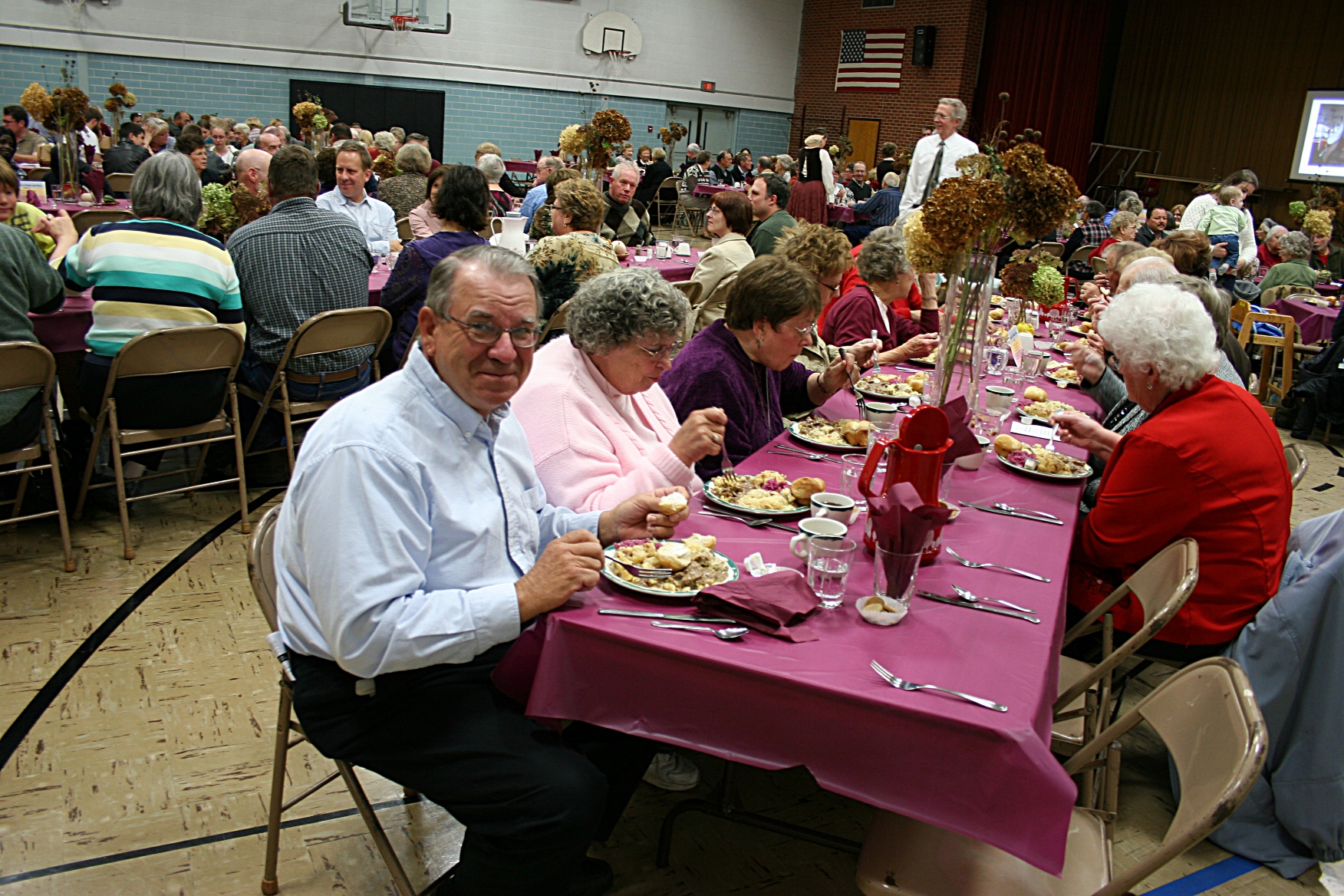
Diners enjoy the ethnic meal at the second annual CVLHS German Fest.

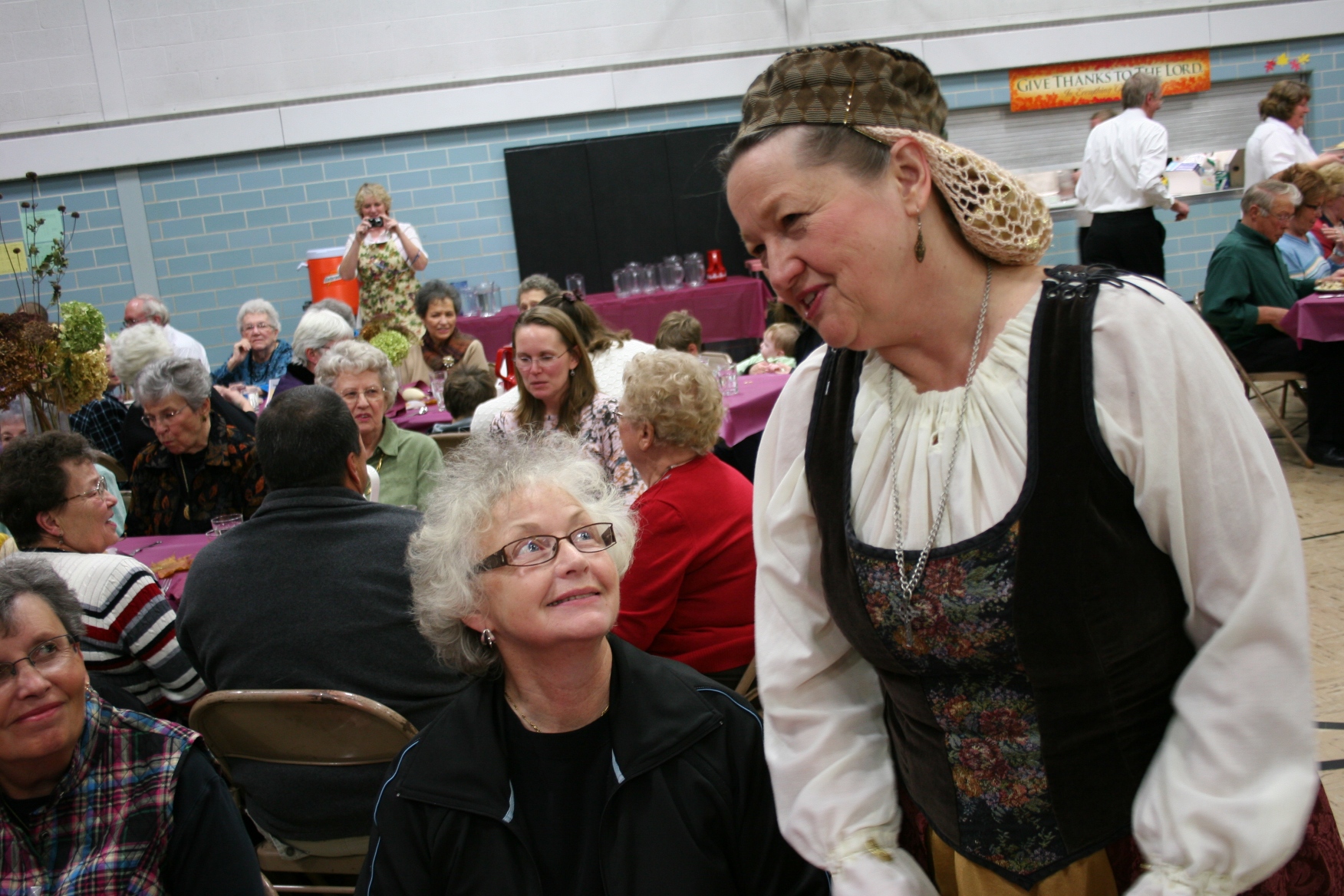
Kristin Sellentine, a Trinity Lutheran Church member and active in community theater, greeted guests as Katie Luther, wife of Reformist Martin Luther. Her costume hearkens from her days of acting at the Renaissance Festival.

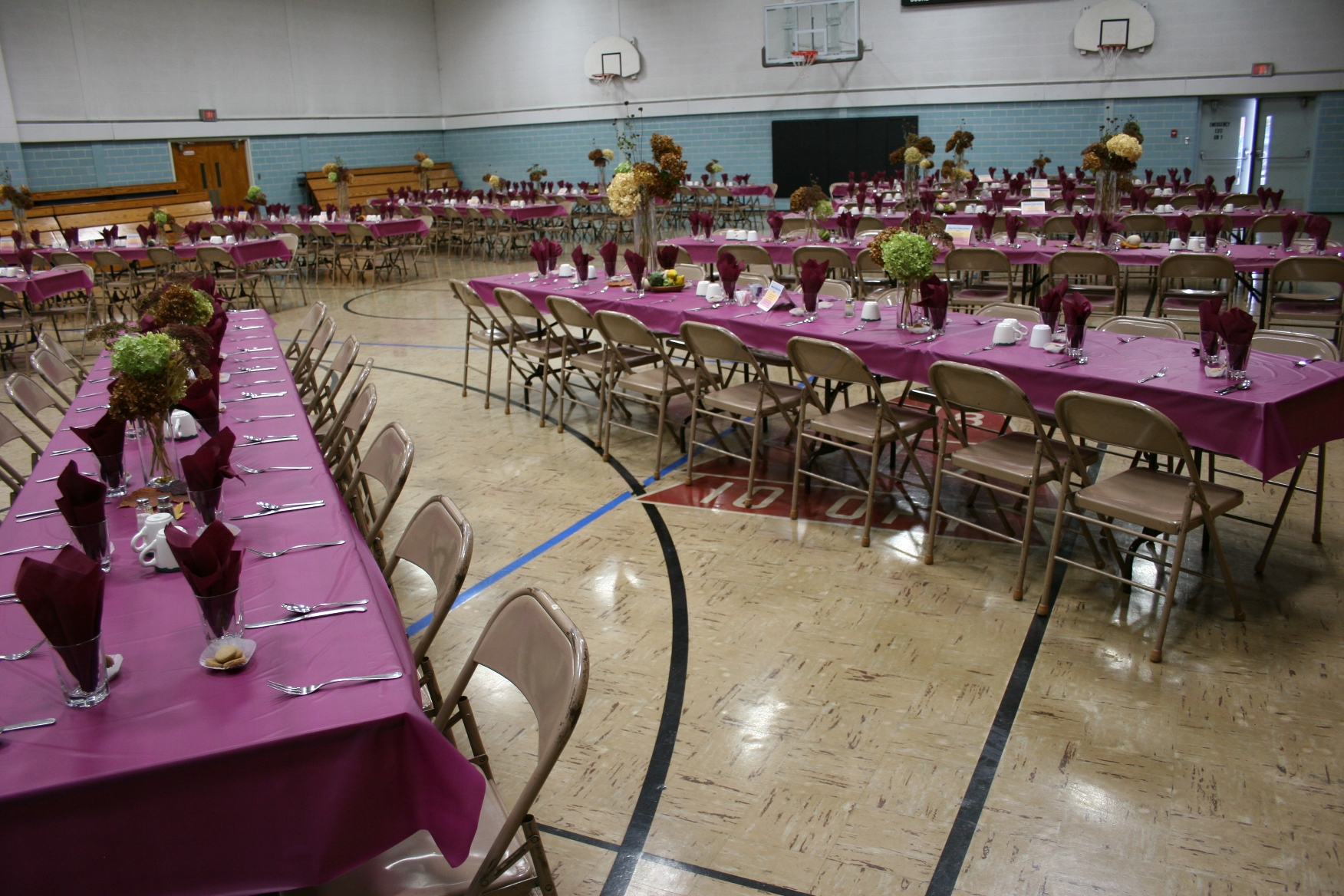
CVLHS Development Director Mike Young, a designer at Erickson Furniture in Faribault and a floral designer, transformed the Trinity gym into a beautiful dining experience with his creative talents.

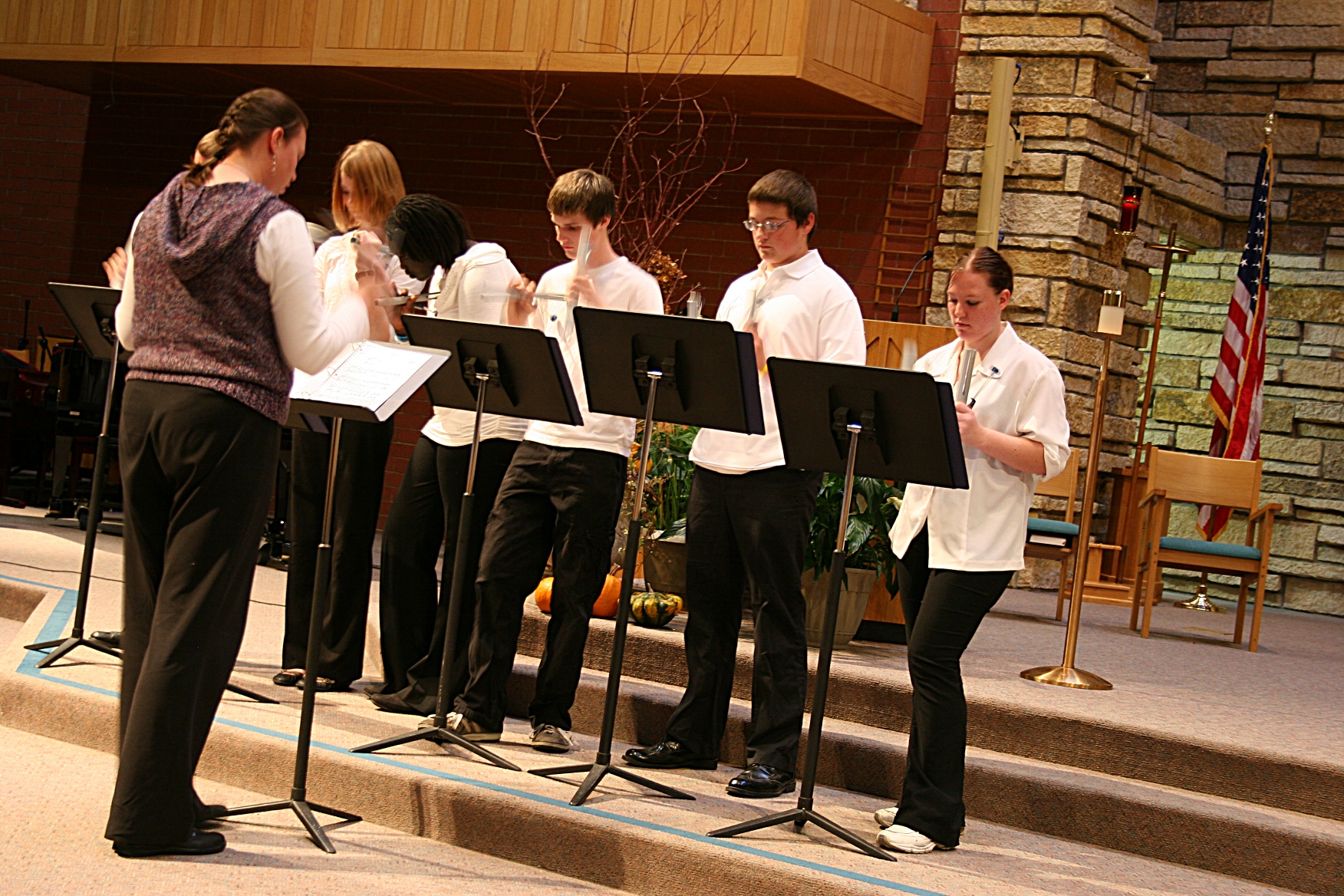
Prior to the dinner, German Fest attendees gathered in the Trinity sanctuary for a service of thanks and praise, including a performance by the CVLHS Tone Chime Choir. Hymns and prayers spoken and sung in German and English, and other musical selections, were also part of the 45-minute service.

© Copyright 2011 Audrey Kletscher Helbling
 

Poetry in wine tasting November 14, 2011

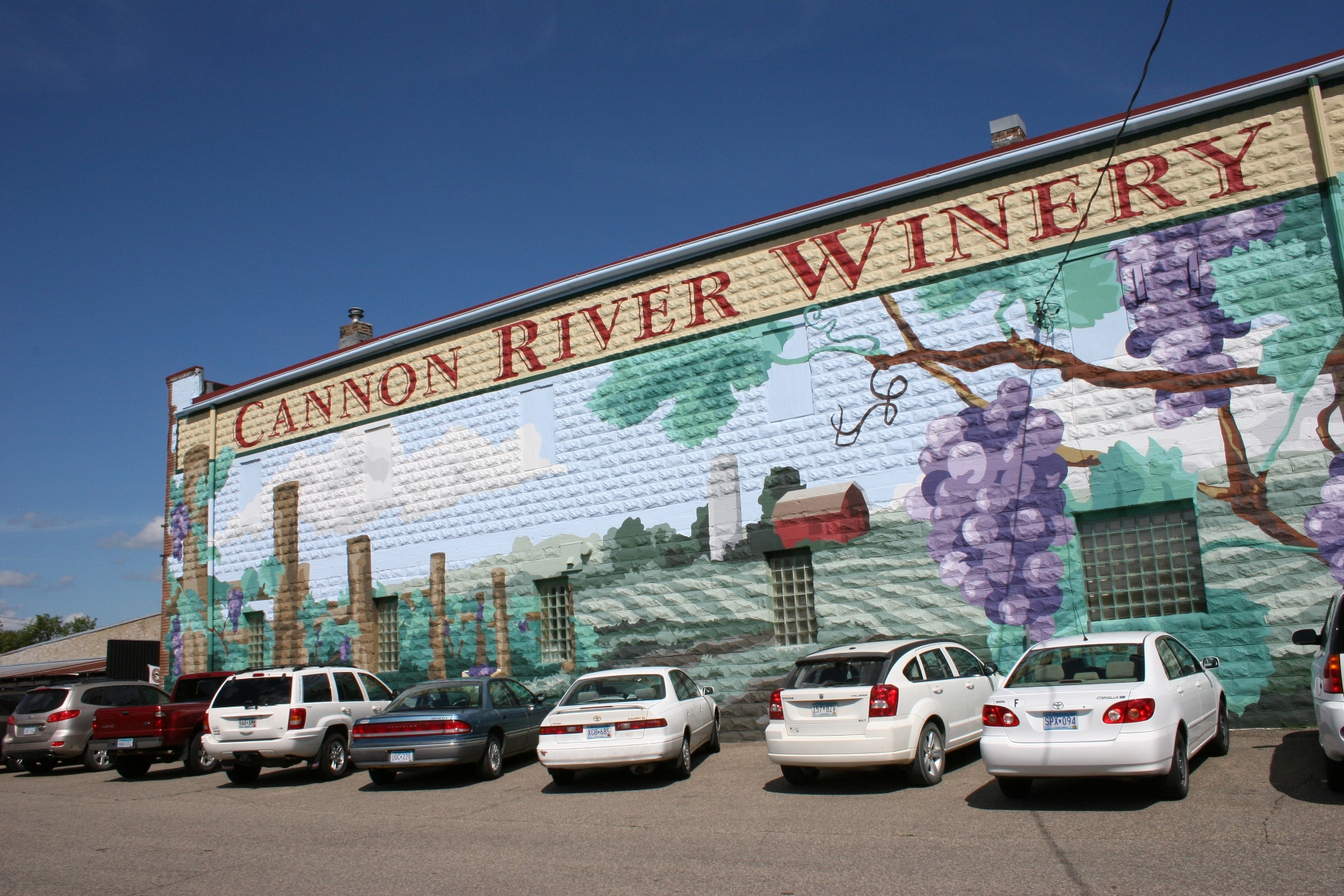
I photographed this gorgeous mural at Cannon River Winery in downtown Cannon Falls in mid-August. This was the only Minnesota winery represented at a wine tasting event in Faribault Friday evening.

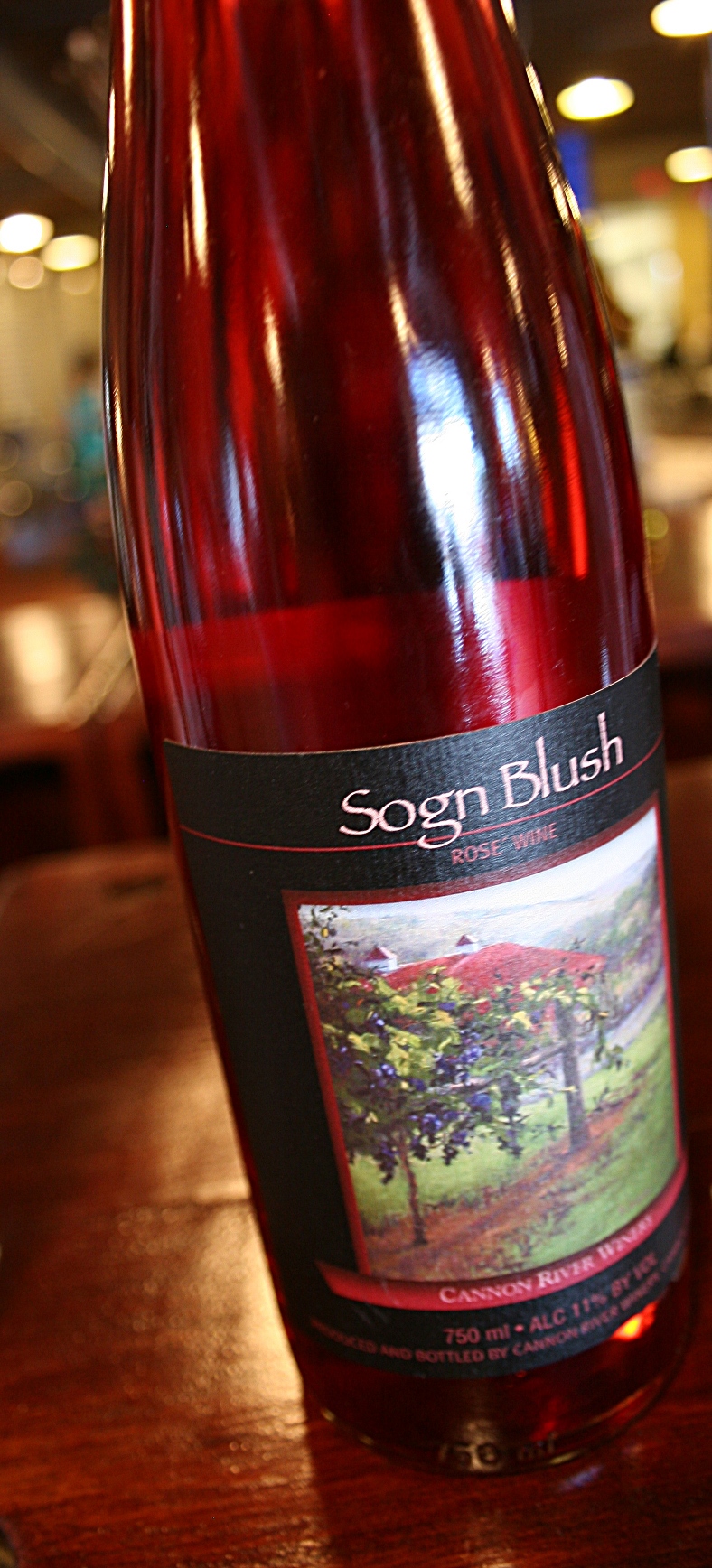
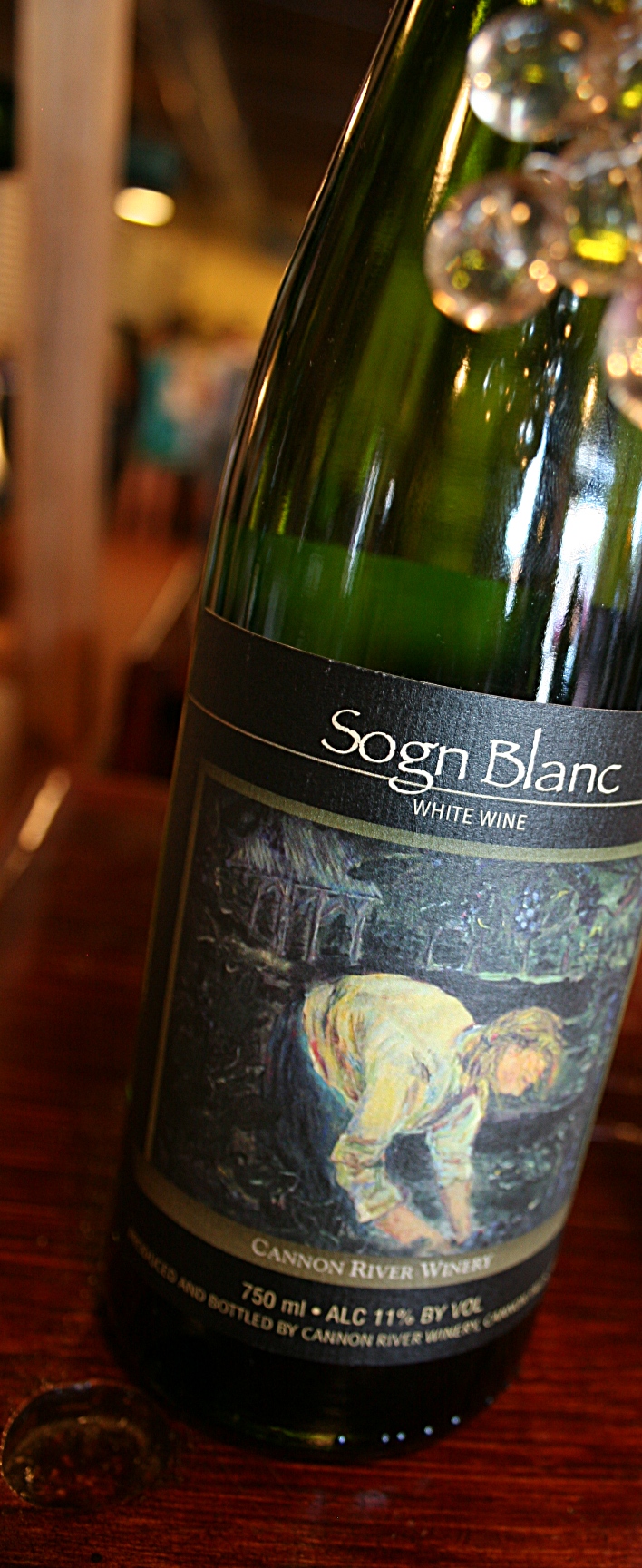
Cannon River Winery Sogn Blush with the label created by an artist from the region.

Crisp nuances of pink grapefruit, mango and sweet melon interwoven with hints of soft white tea and honeysuckle.

Flavors of rhubarb and black cherry complemented by hints of mocha, chocolate, spice and vanilla.

…slightly sweet with aromas of wild berries and just a hint of American Oak.

Welcome to wine tasting.

My husband and I embarked on our first-ever wine tasting experience Friday at the Paradise Center for the Arts Members Appreciation Night in historic downtown Faribault. I know. You’re thinking: “She’s never been to a wine tasting party…”

Well, well, isn’t life all about new experiences no matter your age?

Once Randy and I got our instructions, wine glasses and guidebook, from whence the above lovely and poetic phrases have been lifted, we headed into the Paradise theatre to sample wines.

We quickly discovered that, with 45 wines available, we would need to be selective in our sampling.

We also surmised that we needn’t be “Minnesota Nice” and finish off any wine samples we disliked. “Just pour it in here,” we were instructed. And so we did, whenever we found a wine too bitter or not quite delivering as described.

And so the evening proceeded—meandering and sipping and repeating “I don’t like dry wine,” and chatting with friends and acquaintances. We discussed the wines, traded glasses and sipped and sampled and asked each other, “Do you like this one?”

It was fun.

We’re never going to become wine connoisseurs. But if Randy and I pick up tidbits here and there, we learn a thing or ten that might assist us with selecting wines. I mean, I’ve bought wine in the past because I liked the label design or name or bottle, silly as that may sound. So, yes, graphic designers, artists and marketers, you can influence my wine choices with creative and visually appealing packaging.

Friday night, words also impacted my wine tasting decisions. Imagine that—words influencing me.

I mean, could you resist …zesty aromas of orange, lemon-lime and peach…silky, black-cherry elegance…memorably lush…exquisitely sweet…decadent character…intriguing layers of fresh pineapple, green apple, crisp lemon, juicy pear and wildflowers…?

(How do you get a job describing wines? That’s a writing assignment I could savor given I enjoy turning a poetic phrase now and then.)

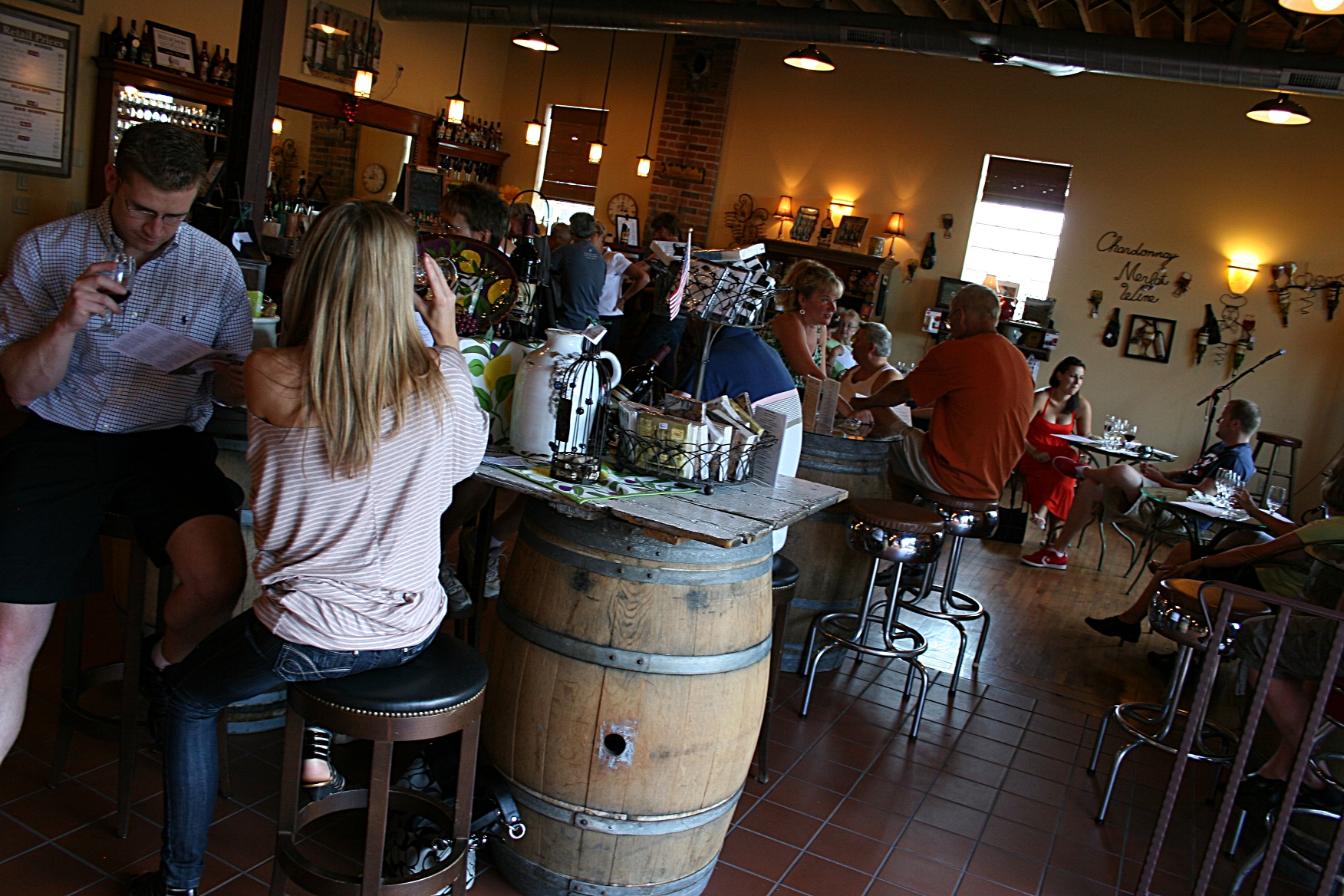
Visitors to the Cannon River Winery enjoyed Minnesota wines on an August afternoon.

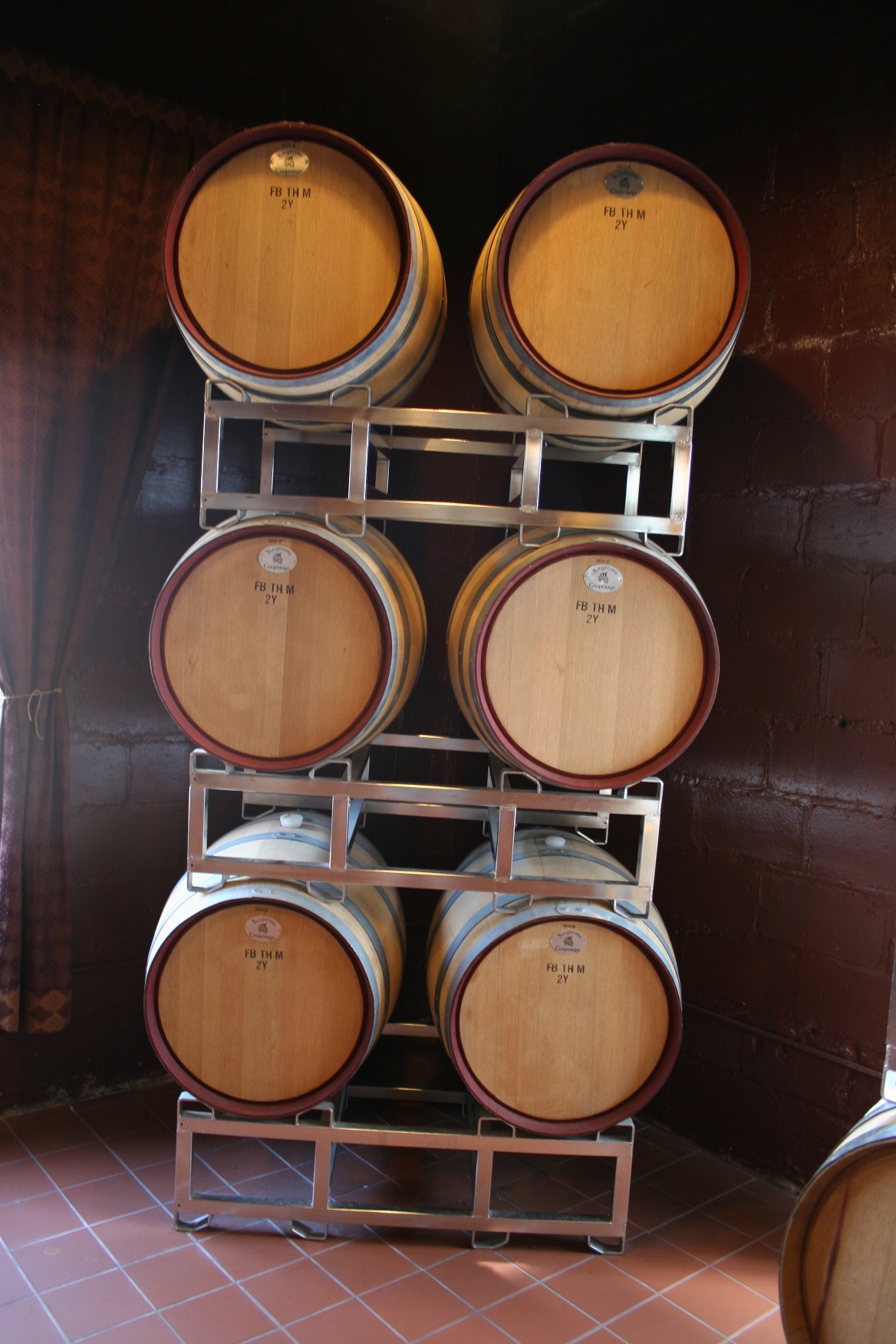
Wine barrels inside Cannon River Winery.

The labels for Cannon River's "Sogn" series are designed by regional artists who compete for the honor. Currently, you can vote for your favorite Sogn art at the winery.

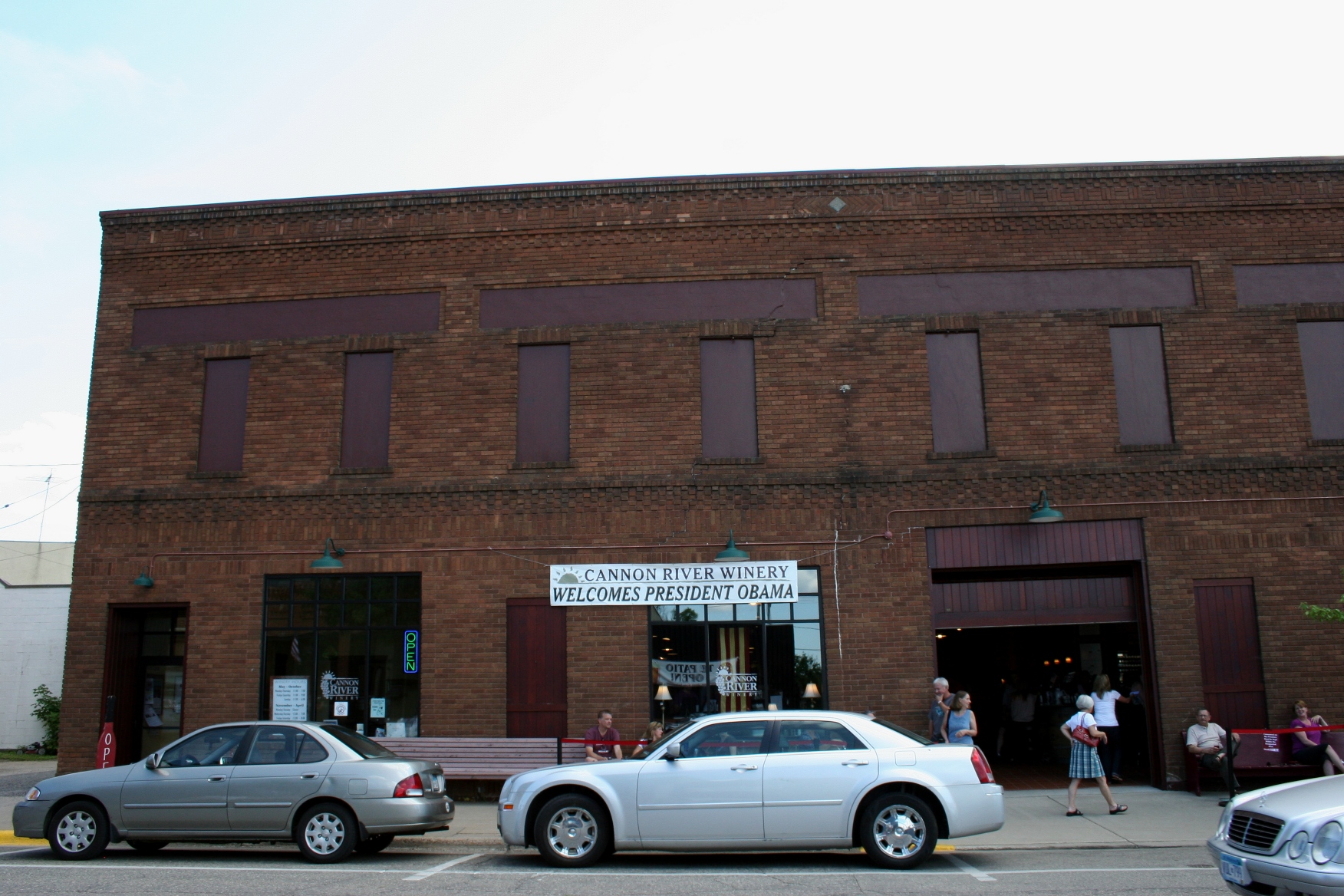
A former garage houses the Cannon River Winery. President Obama visited Cannon Falls, thus the welcome sign on the winery during my mid-August visit..

Click here for more information about Cannon River Winery.

© Copyright 2011 Audrey Kletscher Helbling
Wine description source: Paradise Center for the Arts Holiday Wine Tasting booklet; wine selections sponsored by Haskell’s.


Seeking vintage photos November 12, 2011

Filed under: Uncategorized — Audrey Kletscher Helbling @ 9:22 AM
Tags: , , , , , ,

THE OLDER I GET, the more I appreciate my past. That includes those black-and-white vintage photos held in place by gummy black corner tabs and tucked into old photo albums.

I don’t have all that many photos from my youth—only 48 black-and-white prints to be exact. That’s not many. But we were a farm family with little money, and film and photo developing weren’t exactly top budget priorities.

Yet, I am thankful for the precious few black-and-white images I have of myself and with my parents and siblings. Photos capture memories. And memories are integral in my writing, especially my poetry.

But I’m not going to talk poetry here today. Rather I want to talk about love and vintage photos and how you can share yours.

This contest promo image of Mary Nachicas and Don Anderson comes from Nina Hedin, who blogs at ArtsyNina.

I write for Minnesota Moments magazine. Awhile ago, inspired by a vintage image I saw on Nina Hedin’s The Adventures of ArtsyNina blog, I came up with a contest idea, “Snapshots of Love.” Yes, I’ve talked about it here before on this blog. But I want to give it one final push.

Tuesday, November 15, is the final day to submit an entry.

Here’s how you can enter: Look through your vintage black-and-white candid snapshots. (We’re not looking for professional, posed portraits.) Select one that speaks love to you—maybe a snapshot of your grandparents or parents, siblings, friends, cousins, person and pet…

Then write a paragraph of 75 words or less stating what the photo tells you about love.

Then click on this link, http://minnesotamoments.com/current/contest.html, and follow the instructions on how to submit.

I’d highly advise submitting electronically.

We at Minnesota Moments (yes, that includes me) will select a winner to receive a prize package valued at $150. I wish I could win these great prizes:

There, you have it. Please consider entering. And to those of you who have entered due to my pesky e-mails or blog reminders, thank you. I appreciate your submissions.

IF I COULD ENTER, here’s what I’d submit:

Me with the clown cake my mom made for my second birthday in 1958.

I grew up poor. That meant no birthday gifts from my parents. Instead, Mom crafted a cake, often in an animal shape, for each of her children as a gift. When I had children, I, too, created special birthday cakes, although I also had money for gifts. The presents are long forgotten, but my kids still remember their cakes, a tradition of love passed down from their grandma.

WE’LL FEATURE SELECTED entries (or maybe all, depending on space and numbers) in the winter issue of Minnesota Moments, publishing in January.

So let’s see some of those wonderful vintage black-and-white snapshots. Remember, you have only until Tuesday, November 15, 2011, to enter.

© Copyright 2011 Audrey Kletscher Helbling
 

Remembering Ray November 11, 2011

My dad carried home a July 31, 1953, memorial service bulletin from Sucham-dong, Korea.

THEY DIED IN SERVICE to their country—Frankie L. Davis, Eugene Jones, Charles Musgrove, Raymond W. Scheibe…

Names. Of soldiers. Men who were remembered during a July 31, 1953, memorial service in Sucham-dong, Korea.

Names, typed onto a service folder that my dad, Elvern Kletscher, carefully folded and carried home to southwestern Minnesota from the killing fields of Korea.

One name—Ray Scheibe—that meant so much to him. A soldier-brother. His 22-year-old friend. His buddy who died, blown apart by a mortar the day before he was to leave Korea and return home to his wife and 6-week-old daughter in Wolbach, Nebraska.

My father witnessed Ray’s horrific death. He never forgot Ray.

Neither have I.

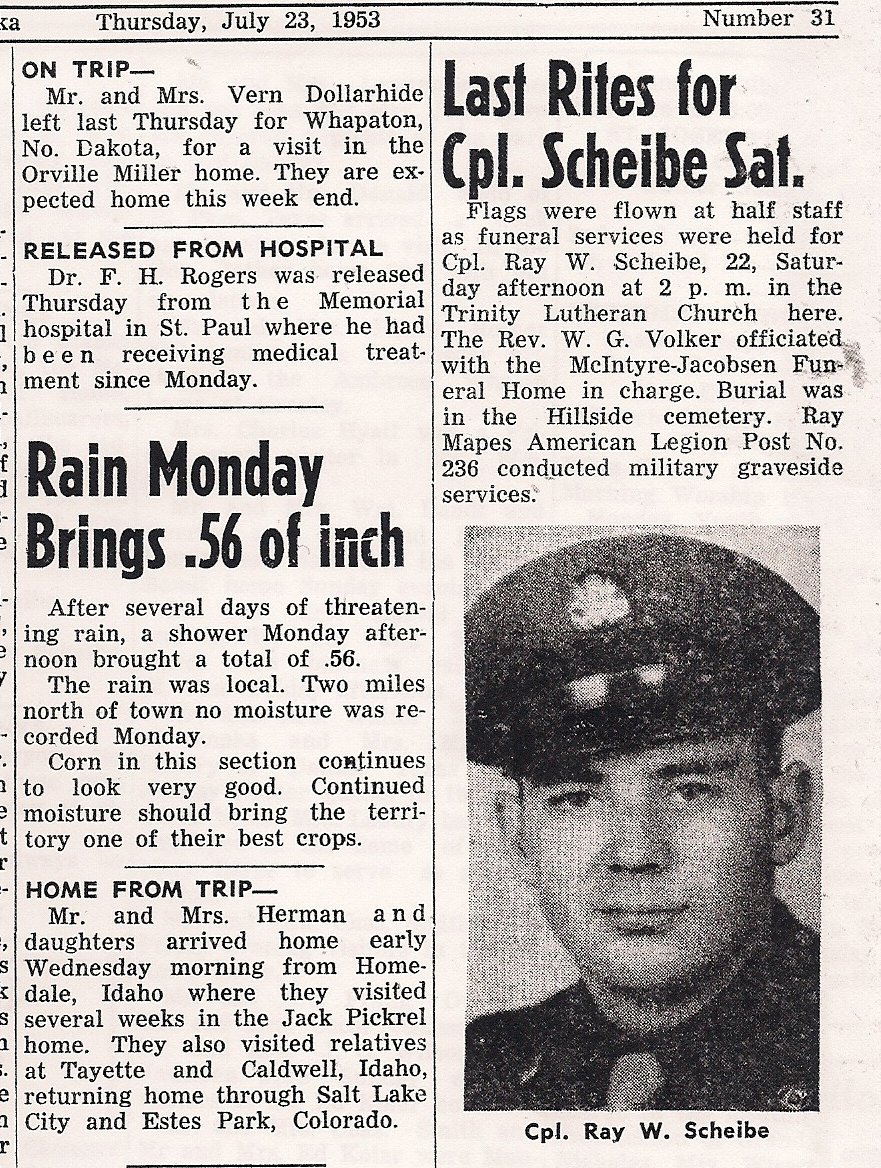
A story about Cpl. Ray W. Scheibe, published in the July 23, 1953, issue of The Wollbach Messenger.

My dad’s been gone since 2003; his buddy since that fateful day during the Korean War on June 2, 1953.

Yet their intertwined lives as soldier-brothers remain forever preserved in black-and-white photos and that service bulletin tucked inside a shoebox stored in my office. Memories of war and of lives lost confined to a box measuring 13 x 6.5 x 4 inches.

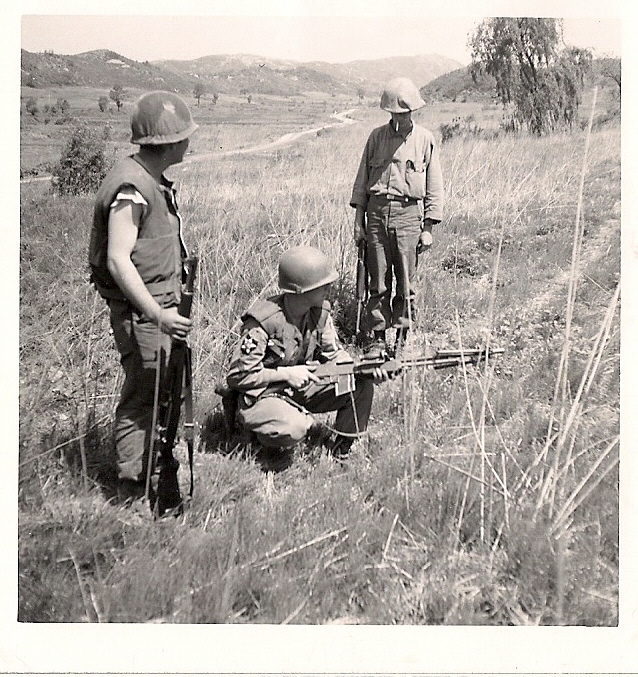
This photo, taken by my dad, shows Ray on the left. The photo is dated May 1953. On the back my dad had written: "Sgt. Shibe, June 2, 1953."

It doesn’t seem right, that I should keep these photos and scraps of war in a non-descript box, pushed into the back of a dresser drawer. But that is how my dad kept his war memories, stashed in that shoebox, shoved out of sight, away from family, away from emotions that could easily overwhelm him.

Two years after my dad’s death, I became interested in the contents of that shoebox and began wondering about that baby girl back in Nebraska—Ray’s daughter. I decided to look for her.

After a short search, I found Terri living in Harlan in southwestern Iowa, about five hours from my Faribault home. (Click here to read a previous blog post about finding Terri.) We’ve talked, although not recently, by phone, exchanged e-mails, letters and Christmas cards.

Yet, we’ve never met.

Every Veterans Day, every Memorial Day, every June 2, I think of Terri and her dad and how her dad never came home. And mine did.

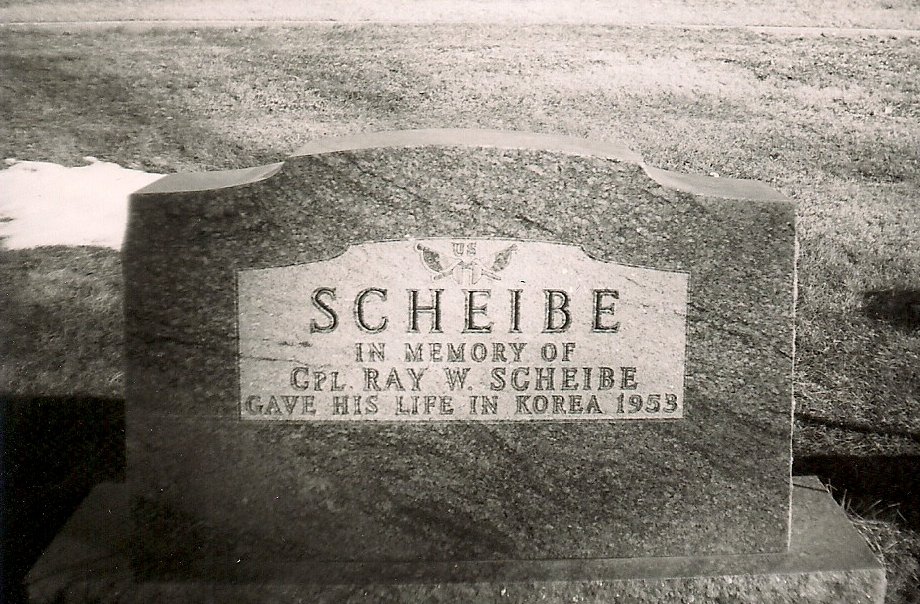
Sonny Nealon, Ray's best friend in high school, sent me this photo he took of Ray's gravestone.

© Copyright 2011 Audrey Kletscher Helbling
 

For the love of reading: Little Library opens in Faribault November 10, 2011

Buckham Memorial Library, Faribault

GROWING UP on a farm in rural southwestern Minnesota, all I ever really desired in my hometown was a library, a place where I could check out books and then read to my heart’s content.

Today Vesta, population around 340, still doesn’t have a library, although the bookmobile stops along the one-block Main Street once a month.

Fortunately I have, for nearly 30 years, lived within blocks of Buckham Memorial Library in Faribault. I go there often as did my three children, all of whom possess a deep passion for reading.

Just like Joan Smith of Faribault.

Joan, a member of the Rice County Library Board, loves reading and books so much—she can’t pass up a bookstore—that she and husband Dale have opened a library, in their front yard on Faribault’s south side.

As part of a growing world-wide “Little Free Library” movement, this retired couple decided, when encouraged by fellow book lover and library board member Pat Rice, to start a free library.

Dale, known for the log cabin style birdhouses he crafts and sells, had the skills to build the little library. The Smiths sized up books before deciding on the dimensions of 18 inches wide and 12 inches deep.

I counted 31 books in the Smiths' Little Library when I stopped to photograph it. "We all find ourselves with too many books," Joan says. "We need a place to share them." Her place is a Little Library.

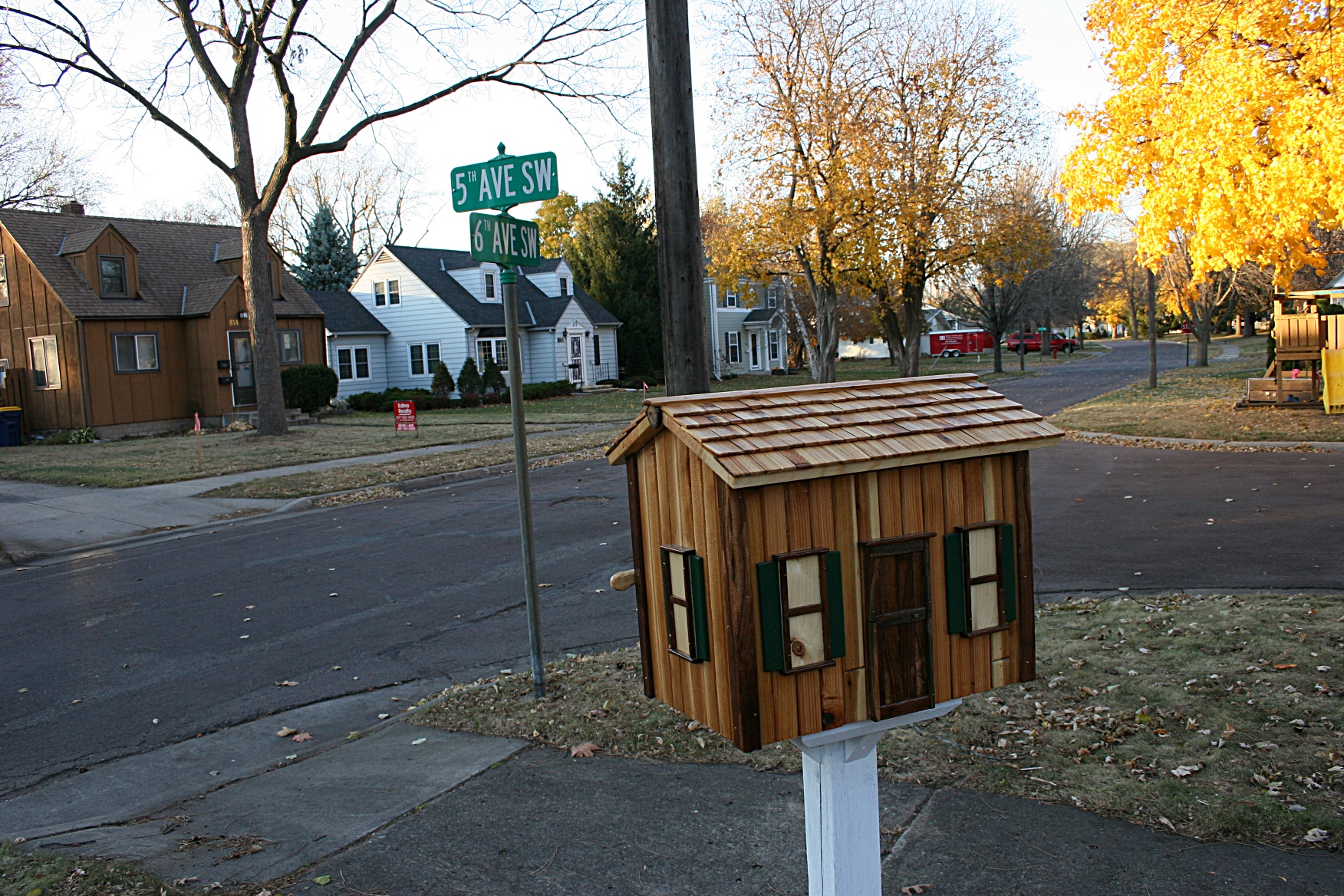
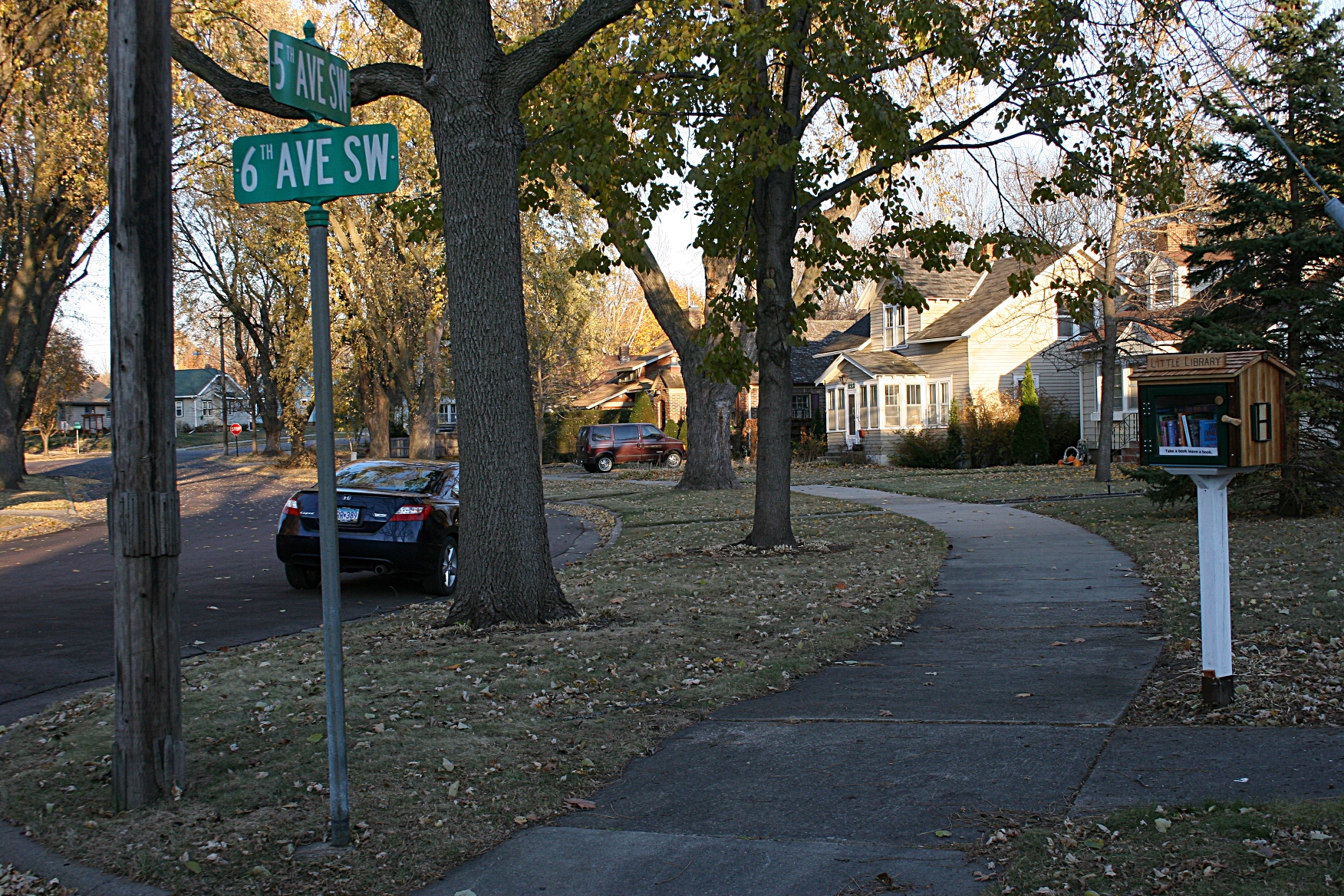
That's the Smiths' house to the right at 825 Sixth Ave. SW. Feel free to knock on the door to drop off books, ask questions or thank them. Or simply drop by, open the library plexiglass door and take and/or leave a book.

Shortly before Halloween, the Little Library, situated atop a post at Joan’s eye level and within about a foot of the Fifth and Sixth Avenues Southwest sidewalk intersection, opened. (And, yes, folks, I got that right; two avenues do intersect by the Smiths’ house at 825 Sixth Avenue Southwest.)

Detailed with doors, windows and shutters, the Little Library stands at the intersection of Fifth Ave. S.W. and Sixth Ave. S.W. Here's a back view of the library Dale built.

Joan gushes over a project that shares her passion for reading and which she hopes will get others excited about reading and using the local public library.

“It’s (Little Library) another step toward reading and becoming a lover of books,” she enthuses.

Joan enjoys books, always has, ever since she was a young child living in Mankato, the childhood home of author Maud Hart Lovelace. Her mother read Lovelace’s Betsy-Tacy series to Joan as well as Little Women by Louisa May Alcott.

Later, when the family settled in the Faribault area, Joan attended a country school with less than two dozen old books on a library shelf. But her mother took her to Buckham Memorial Library, a place with plenty of books.

Joan understands the importance of reading to success in education. Although few children live in her neighborhood, Joan encourages her neighbors to grab a book from the Little Library when the grandchildren visit. She also wants the Faribault community to know: “This is for everybody and you’re welcome to come.” Already, those outside the neighborhood are stopping at the library.

It’s a library without rules or library cards. Take a book. Take a book and leave a book. Leave a book. Whatever works, Joan doesn’t care as long as people are reading.

You never know what books you'll find in the Little Library. Joan says she momentarily panicked after spotting a book with a library label. Turns out the donated book was a library discard.

She’s stocked the Little Library with books gathered from her home and from family members: mysteries and westerns, easy-reader children’s books and picture books, classics and the popular vampire series for teens and, well, whatever Joan collects, buys or no longer needs.

And, yes, the Smiths are accepting donations to their library. They’ve been asked, “What if everyone starts bringing you books?”

“That wouldn’t be a problem,” Joan responds. If she can’t use the books in their library, she’ll donate them wherever they are needed.

Dale Smith is open to considering requests to build little libraries. But the couple encourages interested individuals to construct their own libraries. (Dale’s pretty busy with that birdhouse building.)

Joan hopes their Little Library in southwest Faribault inspires others to open mini libraries and to read, yes, to read.

The Little Library is located right next to the sidewalk in the Smiths' front yard.

A front view of the Little Library looking toward Fifth Avenue Southwest.

FYI: Click here to visit littlefreelibrary.org for details on this library movement, including locations of existing libraries and how to start your own.

The website lists the following Little Free Library sites in Minnesota:

If you know of a Little Free Library in your neighborhood or plan to open one, submit a comment. I’d like to hear.

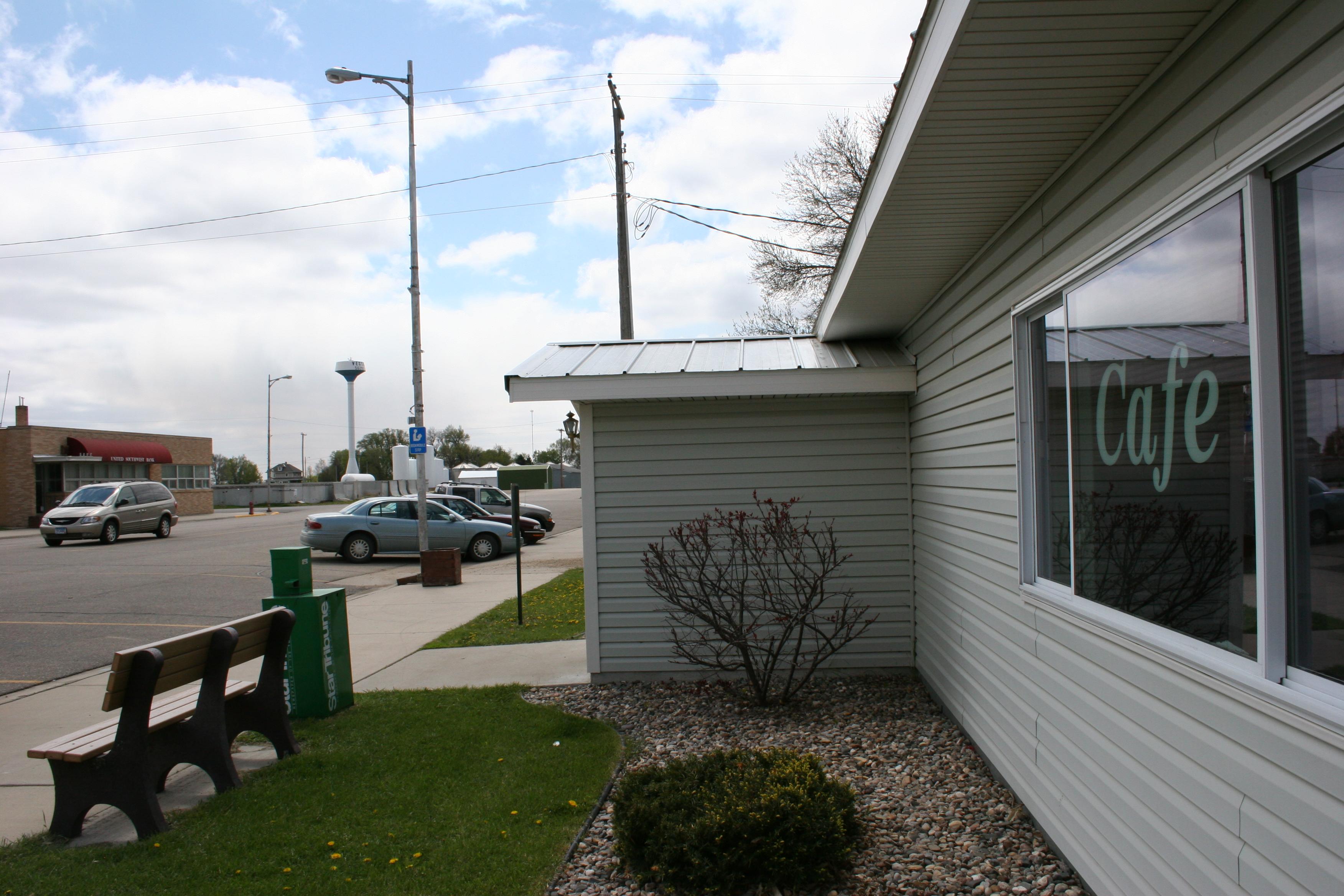
I’D LIKE TO CHALLENGE the residents of Vesta to start a Little Free Library. How about in or near the Vesta Cafe? Make my dream of a library in my hometown come true. I’ll even bring some books for the library the next time I’m “back home.”

Main Street Vesta and the Vesta Cafe, perhaps the perfect spot for a Little Free Library.

And I was thinking… maybe I should open a Little Free Library. I live along a well-traveled street in Faribault with lots of kids in the neighborhood. I love books, love to read…  Say, Dale, are you up to building another library?

© Copyright 2011 Audrey Kletscher Helbling
 

Tough tilling in Minnesota farm fields November 9, 2011

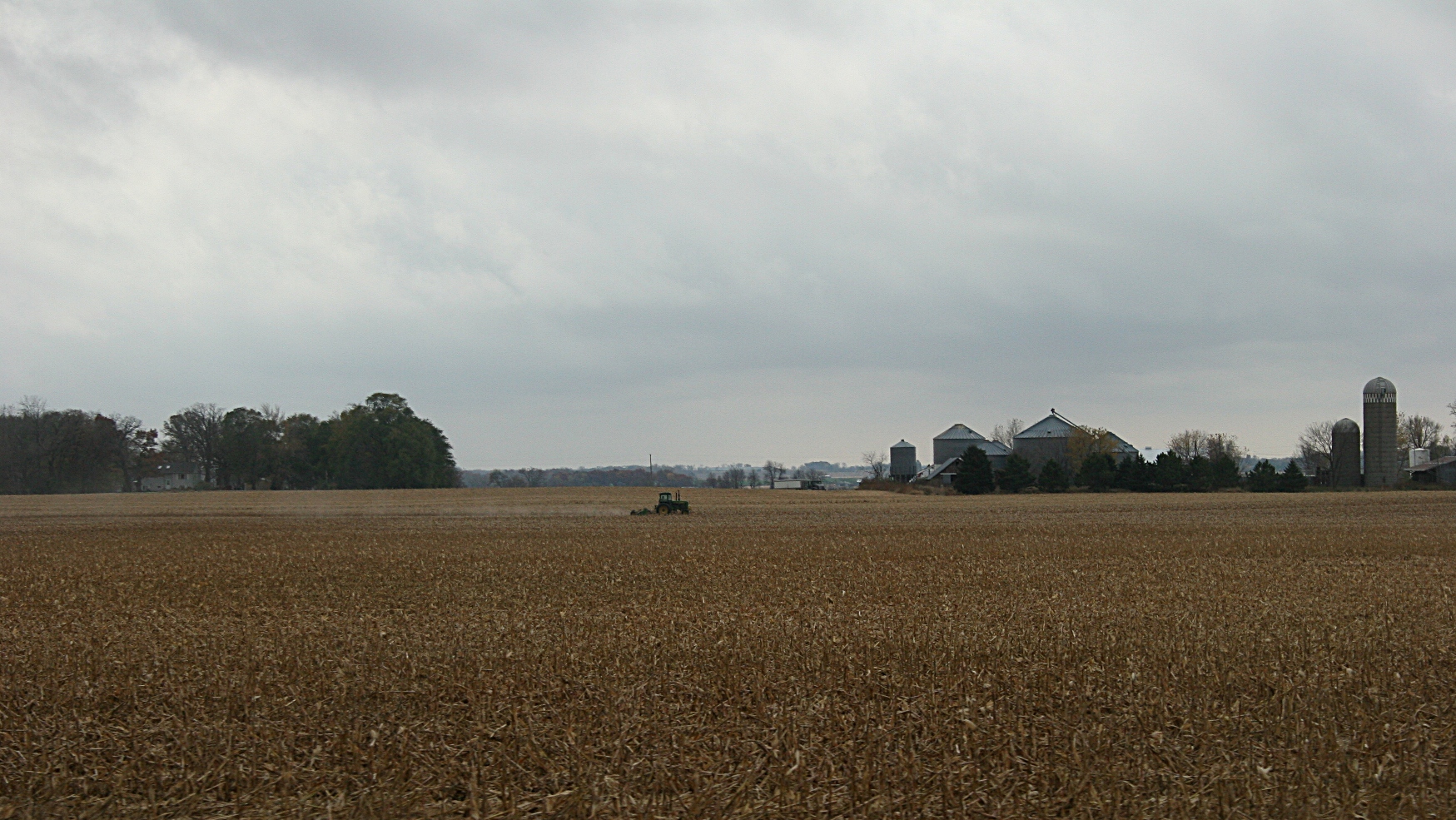
A farmer works the field recently in this scene shot in southeastern Minnesota.

HAVE YOU TRIED DIGGING into the ground lately? Takes some effort, doesn’t it? This soil in Minnesota rates as rock hard right now given the lack of moisture.

I’m hesitant to admit it, but I don’t think about soil conditions and moisture nearly as much as I once did, when I was not so long-removed from the farm.

But last week when a carpenter, who is also a farmer, was working on a project at my house, we chatted briefly about crops, soil conditions and weather.

Kenny shared how fall tillage has been especially trying this year. Farmers in his area around Owatonna in southeastern Minnesota have been breaking implement parts with all-too-often frequency in the dry, hard earth. He mentioned shanks, which he claims never break.

Some parts are in short supply, Kenny says, meaning farmers sometimes need to wait. That’s not a good thing when you’re trying to finish fall tillage before the snow flies.

Friends of mine who farm near Dundas finally halted all tillage work for the season, leaving some 300 acres, of 700, untilled. The rock hard dry soil proved too difficult to work and too tough on their equipment.

IN SOUTHWESTERN MINNESOTA, my brother Doug Kletscher, the parts manager at Westbrook Ag Power in Westbrook, confirms that tillage is tough there, too, and farmers are going through the parts. “We ran out of ripper points and they have been back-ordered for a good month. I have heard of a few farmers that have pulled their rippers in half,” Doug says. “We have sold at least five years’ worth of chisel plow spikes in one year. Bolts have also been in very high demand.”

On the flip, positive side, farmers haven’t had to deal with mud, Doug reports, and the corn has been very dry with 14 percent or less moisture content (a significant cost savings on corn drying).

However, farmers are facing another issue related to moisture-depleted conditions. “The fertilizer companies are not putting on any anhydrous as it is too dry to hold the anhydrous in the ground,” my brother continues. “Anhydrous needs moisture to adhere to keep it in the ground; also it (the soil) is pulling so hard that they would break their anhydrous bars.”

Doug reports the last rain over a half inch fell on July 14 with .78 inch. Since then any rainfall has been .10 inch or less. That makes for extremely dry soil conditions for farmers trying to prep the soil for next spring’s planting season.

LIKEWISE, IF YOU’RE a gardener, digging vegetables has been anything but easy this autumn. Take my friend Virgil Luehrs, who lives along Cedar Lake west of Faribault. Unearthing potatoes proved tough, he says. But then he got to the carrots:

“First I tried the garden spade, then a round-point shovel and then a tiling shovel. I had to dig a trench beside the rows to loosen the soil around the carrots to get them loose enough to pull out.  Finally I resorted to a pick to loosen the soil and that was easier but still a lot more work than normal.”

Tilling the garden, even with a powerful Troybuilt rear tine tiller, proved equally challenging. “I could not get down deep enough,” Virgil reports. “Hopefully next spring.”

When Virgil talks soil and weather, I listen. He’s not just your average Minnesota gardener. He’s also a retired high school science teacher with a Masters in biology, a former interim and assistant director at River Bend Nature Center in Faribault, and a volunteer rain gauge reader for the Rice County Soil Water Conservation District (SWCD) and the state Climatology Lab.

In other words, he’s a knowledgeable resource.

So then, exactly how much rainfall has Virgil recorded at his Cedar Lake home (where the lake water level is the lowest in 20 years, but not as low as in the drought years of 1988- 1990). Thus far since April, Virgil has taken these rain gauge readings:

April:  3.14”

May:  4.63”

June:  5.26”

August:  1.38”

September:  1.00”

October:  .58”

TOTAL during the past six months: 15.99”

Says Virgil: “This year we had a much wetter spring and that probably helped to carry us through the dry fall. Recall that last fall we had record rainfalls.”

His 2010 readings were as follows:

April:  1.35”

May:  2.75”

June:  4.76”

July:  5.49”

August:  3.91”

September:  9.13”

October:  1.91”

TOTAL during those six months: 29.3”

According to information Virgil passed along from State Climatologist James Zandlo and University of Minnesota Climatology/Meteorology Professor Dr. Mark Seeley, 2010 was the wettest year in Minnesota modern climate record. The 34.10-inch state average precipitation total was roughly 8 inches more than the historical average.

But here we are in November 2011, desperately short of moisture.

What will winter bring here in Minnesota? A continued shortage of precipitation? Or more snow than we care to shovel?

WHAT’S YOUR PREDICITON for snowfall in Minnesota this season? Submit a comment with a forecast and the reasoning behind your prediction.

IF YOU’RE A FARMER, an implement dealer or a gardener, have you faced any special challenges this year due to dry (or other) weather conditions? Submit a comment. I’d like to hear, whether you live in Minnesota or elsewhere.

CLICK HERE to link to climate.umn.edu for detailed statistics and information about Minnesota weather.

© Copyright 2011 Audrey Kletscher Helbling
 

One final visit to Stockholm. Wisconsin. Not Sweden. November 8, 2011

Filed under: Uncategorized — Audrey Kletscher Helbling @ 8:18 AM
Tags: , , , , , , , , , ,

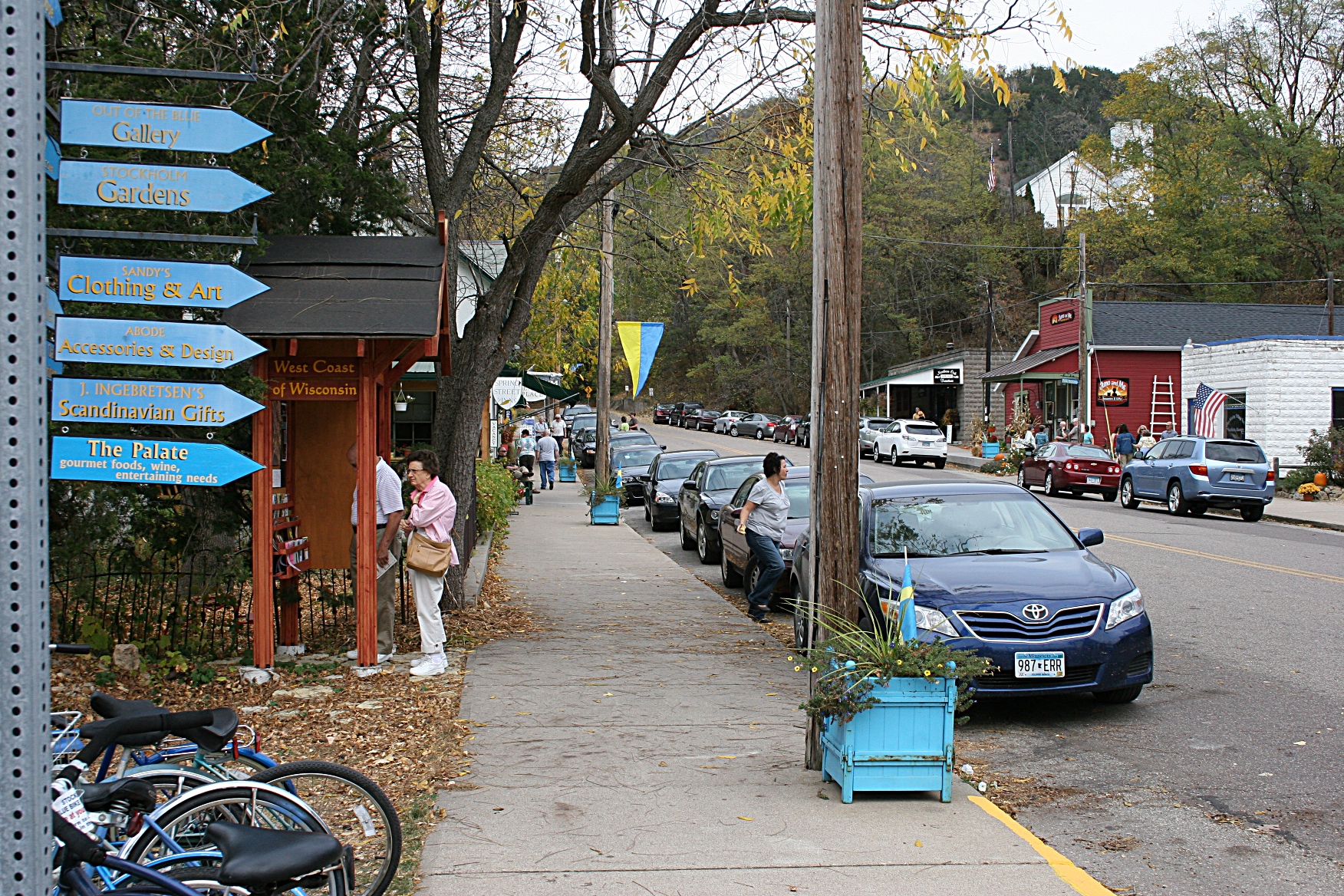
Shops, eateries and more line the streets of Stockholm, a quaint village along Lake Pepin. This photo was taken in early October. To the left you'll see blue bikes, available for visitors to use at no cost.

TO WHOM THIS MAY CONCERN in Stockholm (Wisconsin. Not Sweden):

If only I had known about the bribe.

I would have accepted your offer, the one I found listed under “Stockholm News & Media” on your website:

Are you a writer, blogger, reviewer, photographer with a web site? Let us bribe you (how about a fresh cup of expresso from Stockholm General, a piece of pie from the Stockholm Pie Company, lunch at Bogus Creek Café, a beer at Gelly’s, a ticket to an event at the Widespot?) in exchange for your coverage!

Yes. Yes. Yes. Yes. And, yes.

While I’ve never drank an expresso, I’m certainly open to trying one. I like pie. A lot. I do lunch. Yes, I’ll toast your town with an icy mug of beer. And, yes, I always enjoy being entertained.
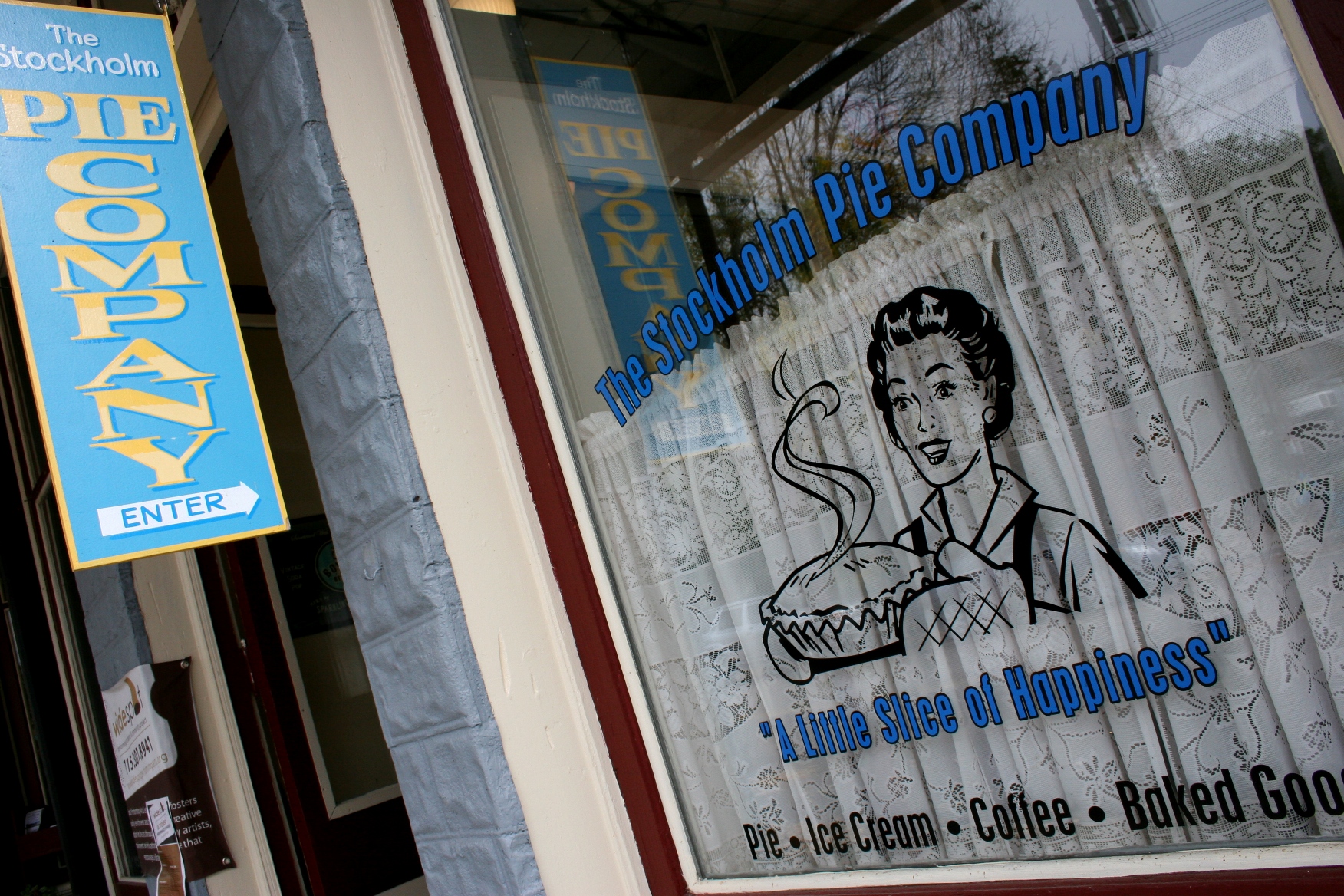
I was too full from lunch across the river in Wabasha to try the Stockholm Pie Company's pie, made completely from scratch. Not that I wasn't tempted to try a slice of caramel apple crunch or key lime or peanut butter fudge. I even stepped inside this tiny shop to smell the baking pies. Next time I'll save room for dessert.

However, dear people of Stockholm (Wisconsin. Not Sweden.) and dear readers of Minnesota Prairie Roots, my writing has not been influenced, not one teeny bit, by offers of free anything. My three previous, glowing posts from Stockholm were written from the heart. Simply put, I fell head-over-heels for this quaint Lake Pepin-side village of 89 without any undue influence.

Today I’ll take you on one last visit to this destination town just across the Mississippi River from Minnesota. Enjoy. And if you’ve been to Stockholm, Wisconsin, not Sweden, I’d like to hear what you most appreciate/relish/savor about this riverside get-away.

And if you own a business or live in Stockholm, submit a comment and tell readers why you love your village and why they should visit.

P.S. I’ll be back for the pie and the lunch and the…

One of the many shops lining the streets of Stockholm.

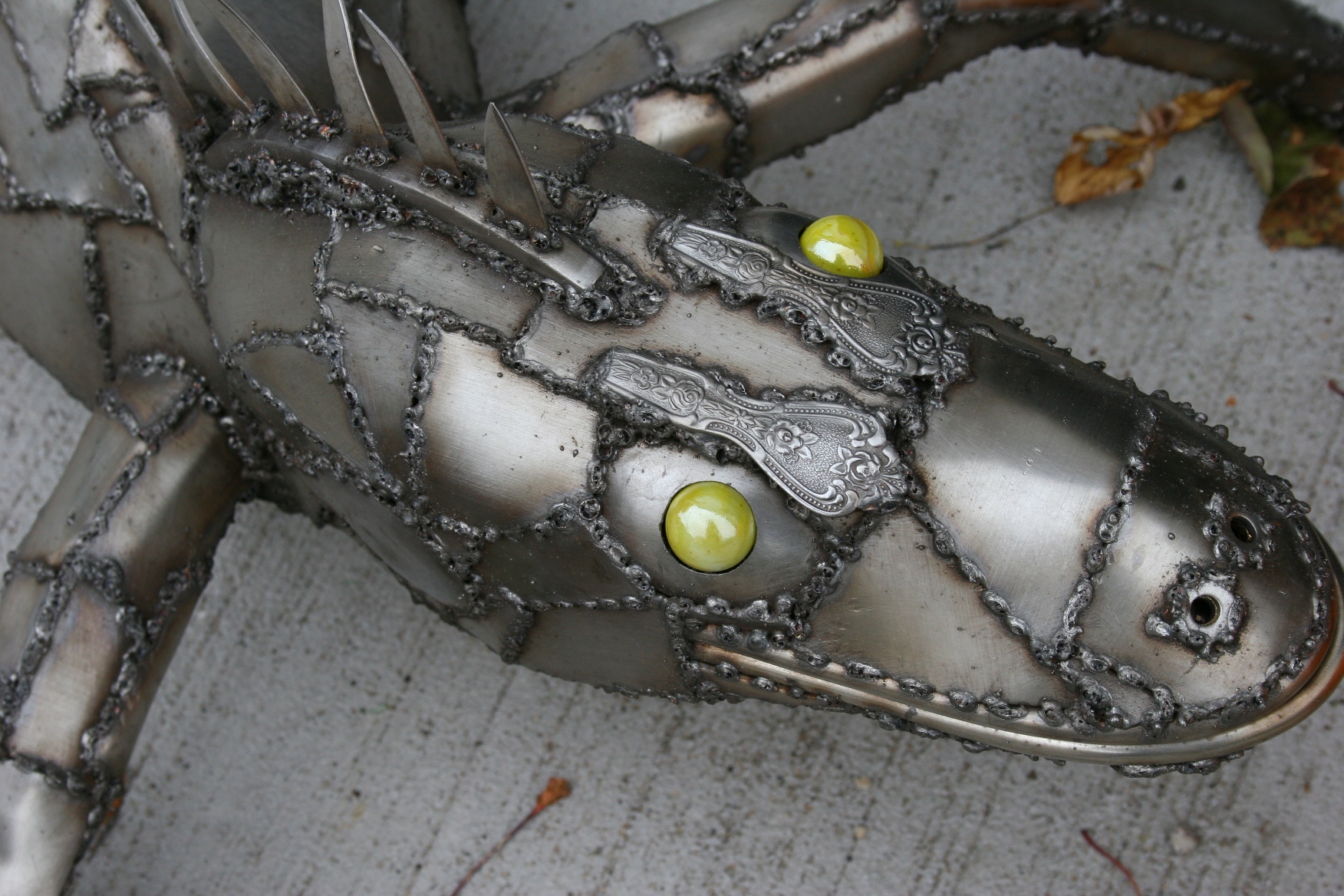
One of my favorite finds, a lizzard crafted from old silverware and more and lounging outside a shop. No, I didn't purchase this critter, but I certainly admired the creativity.

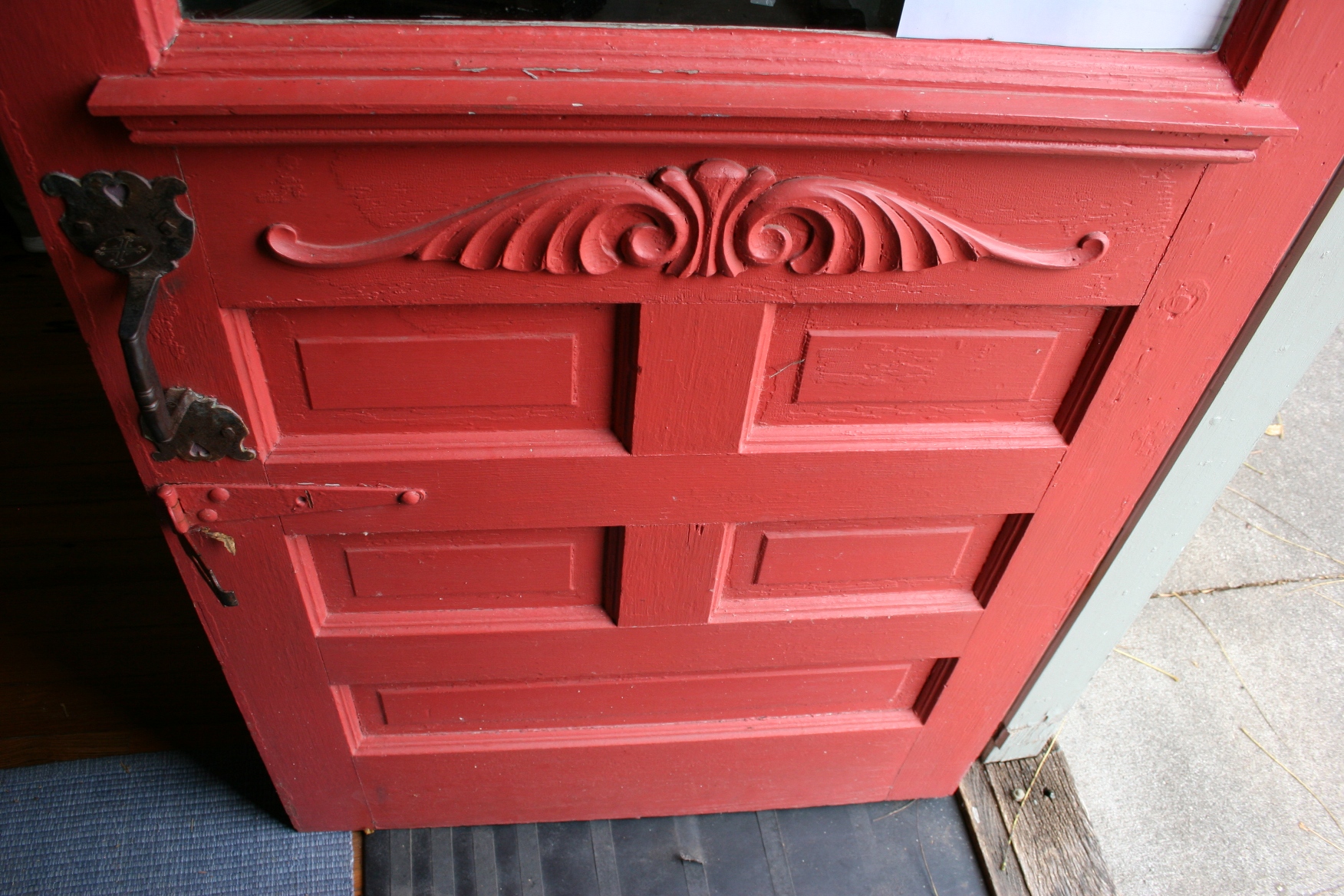
I notice details, especially signs, windows and doors, including this door on the Stockholm Museum.

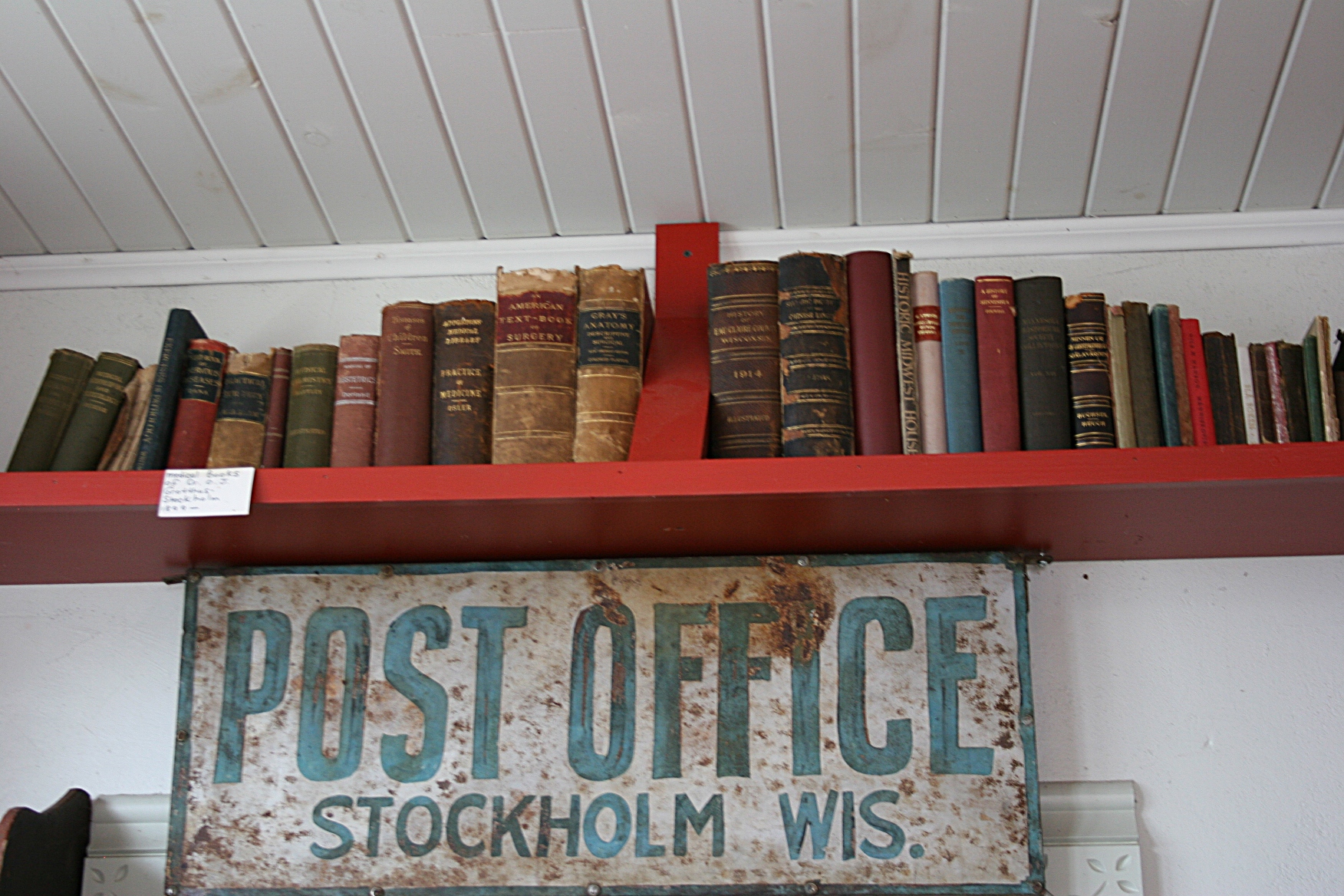
The Stockholm Museum, home to the Stockholm Institute which preserves and celebrates the history of the Stockholm area, is housed in a former post office.

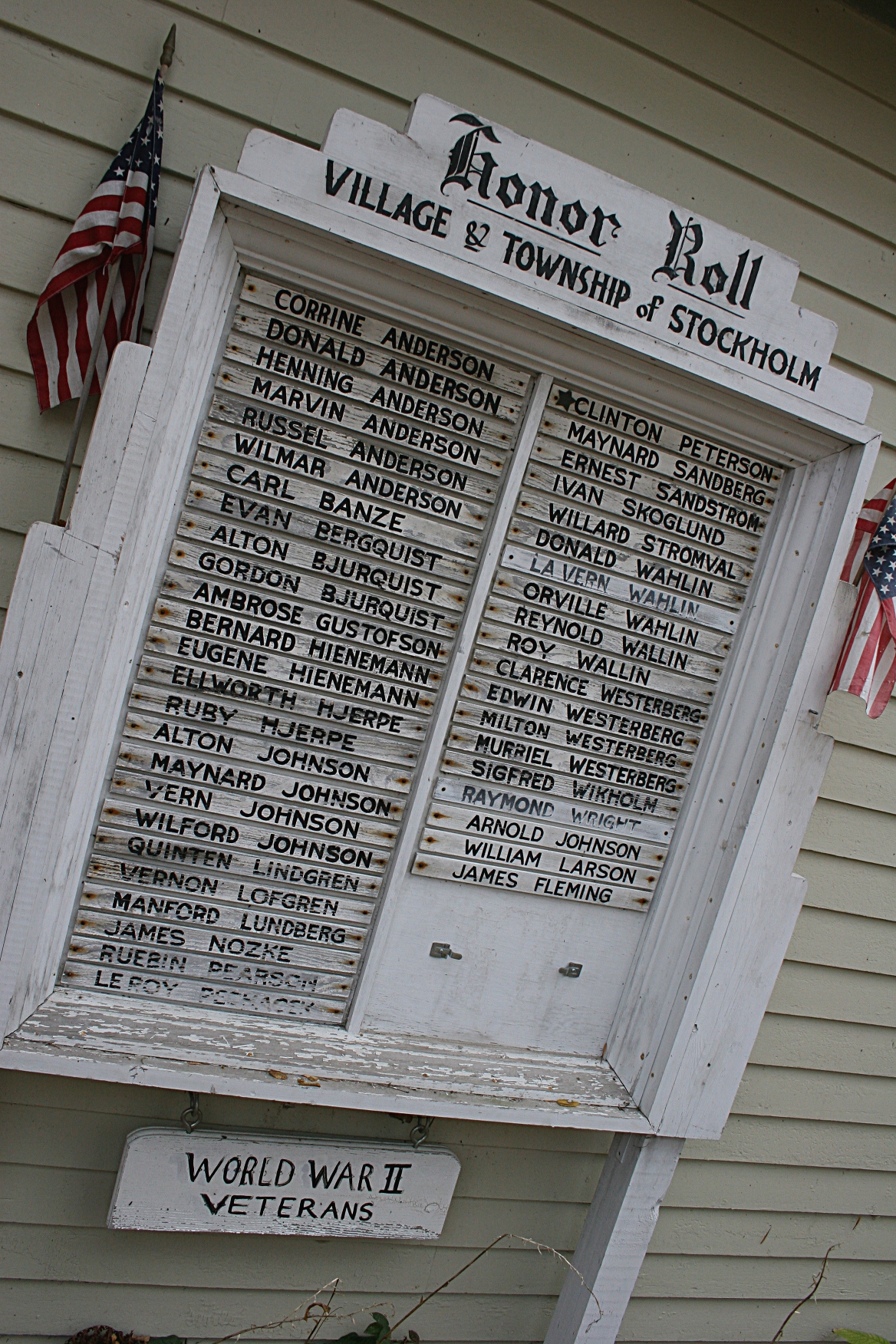
On the museum exterior, I discovered this handcrafted tribute to WW II vets.

The lovely Abode gallery, where my artist friend Arlene Rolf of Faribault has artwork displayed.

Another business door and signage that caught my eye. It's all about the details, my friends, all about the details.

A residence, I assume, since the steps were marked with a "private" sign. So inviting and lovely, just like all of Stockholm.

To read my previous posts from Stockholm, click on each story link below:

Russell, the Bookseller of Stockholm

A bit of Sweden in Wisconsin

A garage sale in Stockholm, Wisconsin

© Copyright 2011 Audrey Kletscher Helbling