Minnesota Prairie Roots

Writing and photography by Audrey Kletscher Helbling

Embracing the writing & art of the Northern Great Plains at SDSU April 19, 2017

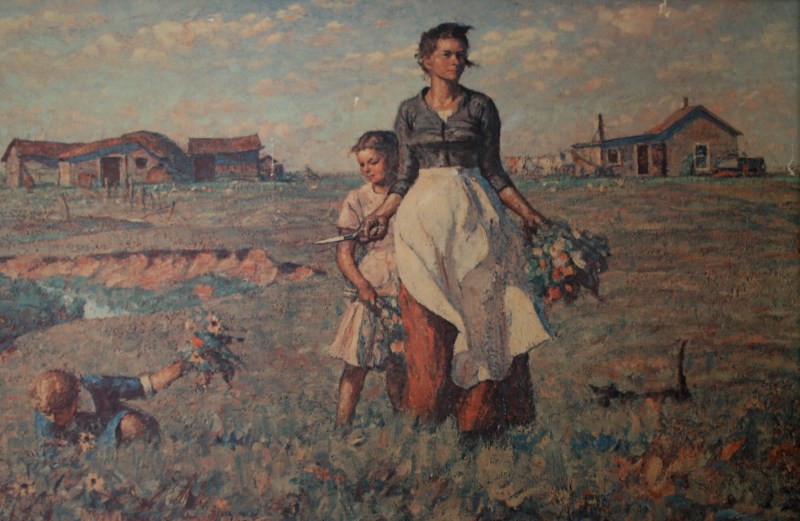
“The Prairie is My Garden,” a painting by South Dakota artist Harvey Dunn, showcases the prairie I so love. Here I’ve photographed most of a print which I purchased at a yard sale. I bought the art because I liked it and only learned afterward of its value and prominence. Minnesota Prairie Roots file photo.


ONE OF MY FAVORITE PRINTS, “The Prairie is my Garden,” is rooted in South Dakota. The artist, Harvey Dunn, was born in a claim shanty near Manchester, west of Brookings.

I’ve been to Brookings. Once. While in college, I accompanied a roommate to her hometown where her dad owned the John Deere dealership. I don’t remember a lot about that visit except the fancy house in which my roommate’s family lived and our attendance at the annual Hobo Day Parade. That tradition of South Dakota State University, which peaks in a Jackrabbits football game, is going on its 105th year.

As you’ve likely surmised, Brookings is rural oriented, the university known for its ag focused majors. Students, for example, make ice cream and cheese from milk produced at the SDSU Dairy Research and Training Facility. This is a hands-on college that draws many a rural raised student.


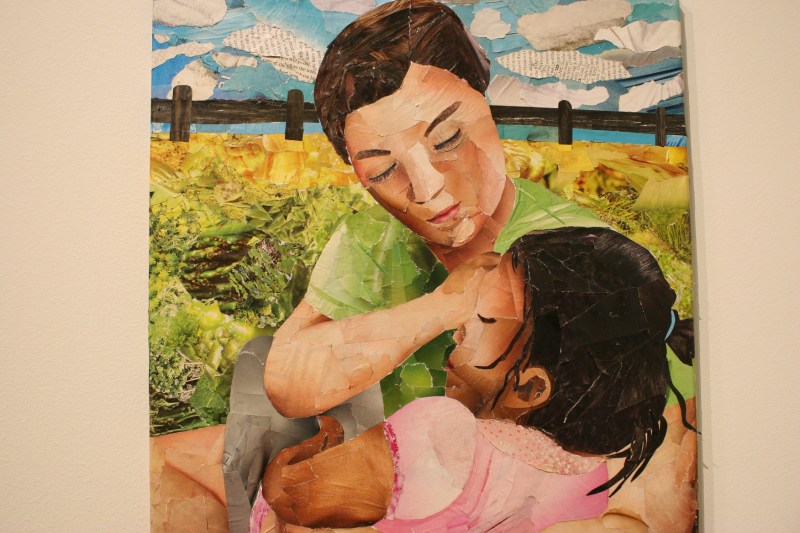
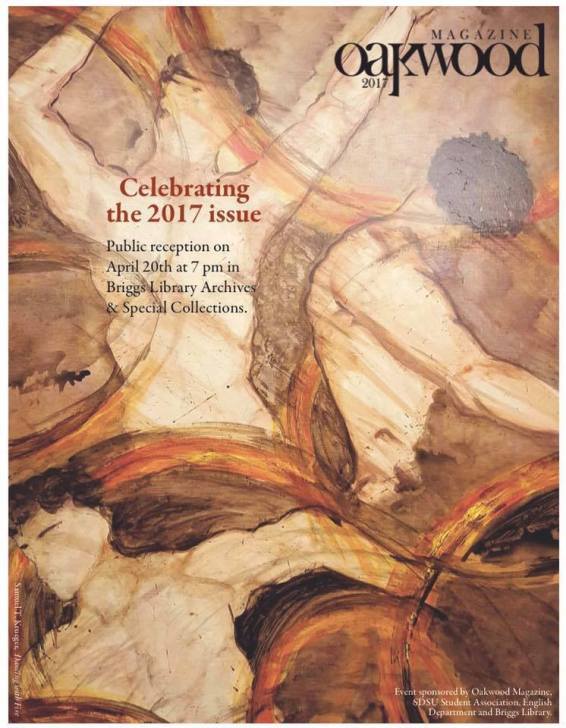
The promo for Oakwood 2017 features “Dancing with Fire,” the art of Samuel T. Krueger. Promo image courtesy of Oakwood.


This university, where students work with farm animals and where the prairie paintings of a noted Plains artist are housed in the South Dakota Art Museum, seems the ideal setting for Oakwood, a literary journal. Featuring the work of SDSU students, staff and alumni and also of greater Brookings artists/writers and others in the Northern Great Plains region, the magazine releases this Thursday. According to the Oakwood website, the journal embraces a regional identity.

I am happy to be part of that identity with the inclusion of my poem, “Ode to my Farm Wife Mother,” inspired by my mom. She raised me and five other children on a dairy and crop farm about 1 ½ hours northeast of Brookings in Redwood County, Minnesota.


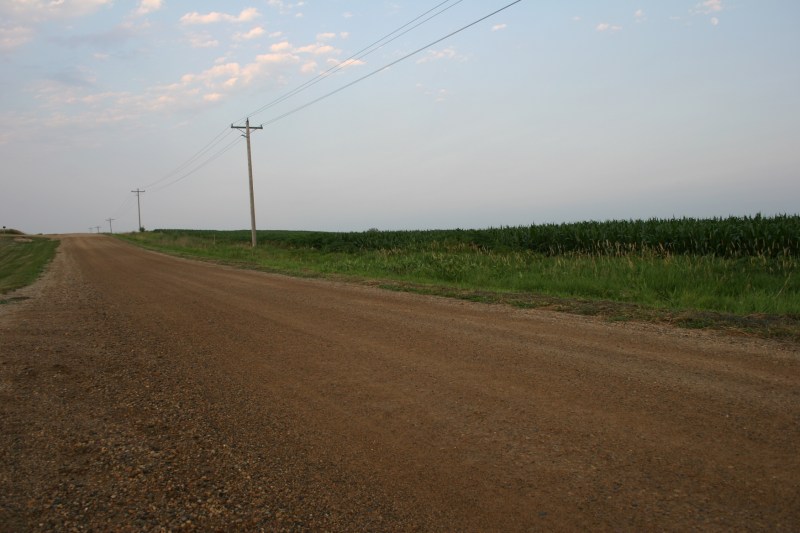
A gravel road just north of Lamberton in Redwood County. Minnesota Prairie Roots file photo.


Most of the poetry I write is based on prairie life. I write with a strong sense of place. The endless open space and wide skies of the prairie lend themselves to creativity. Within the stark setting of rural southwestern Minnesota, I noticed details—the strength of the people, the blackness of the earth, the immensity of the setting sun, the sharpness of a winter wind, the quiet of stillness. I can trace my poetry, my photos, everything I create, to that rural upbringing. I am honored to have my latest poem selected for inclusion in Oakwood 2017 as a writer from the Northern Great Plains.

#

FYI: A public reception will be held at 7 p.m. Thursday, April 20, at the SDSU Briggs Library & Special Collections for writers and artists whose work is included in Oakwood 2017. Readings and talks will be featured. Because I live nearly four hours away, I can’t be there. When I can share my poem with you, I’ll do so.

© Copyright 2017 Audrey Kletscher Helbling


Art of the crucifixion April 14, 2017


ART MOVES IN A WAY sometimes that words cannot.


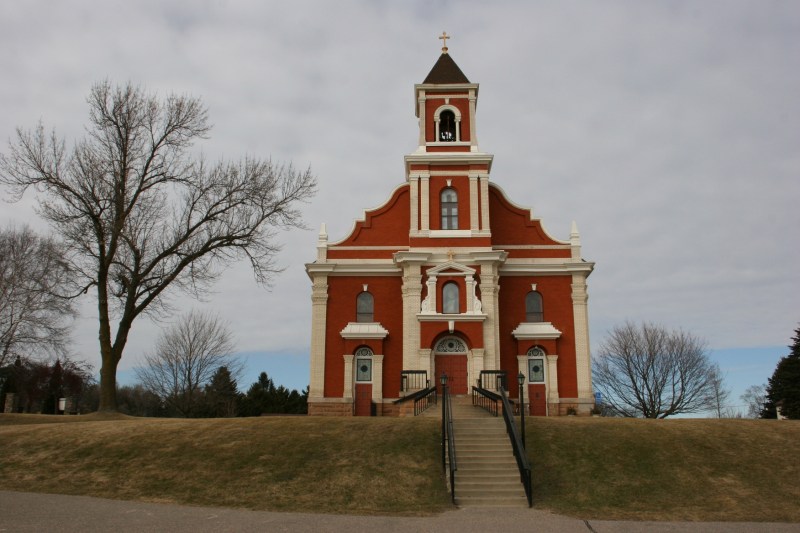
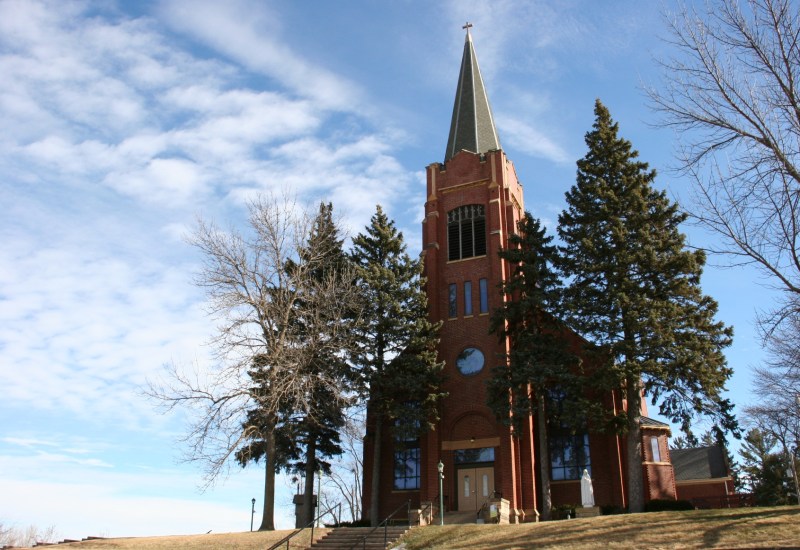
St. Mary’s Catholic Church sits atop a hill in New Trier, a small town north of Cannon Falls.


Today I present to you selected art that depicts the crucifixion of Christ. I discovered this collection inside St. Mary’s Catholic Church, New Trier, Minnesota.


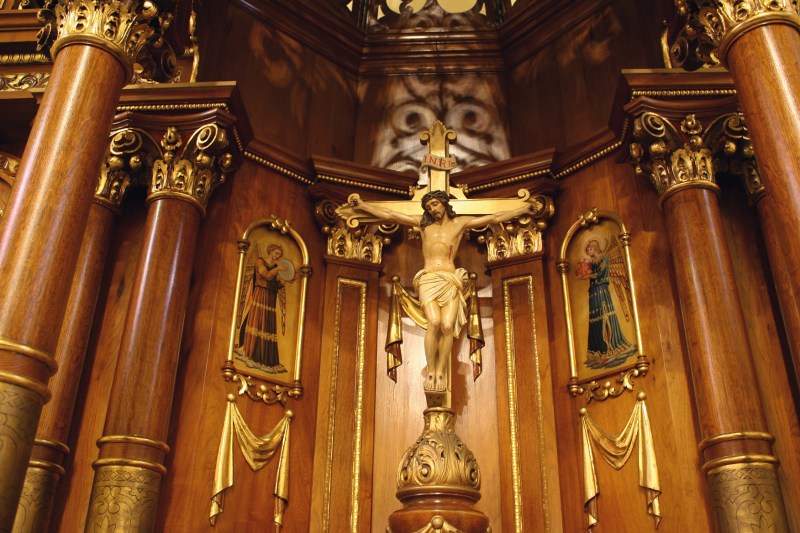
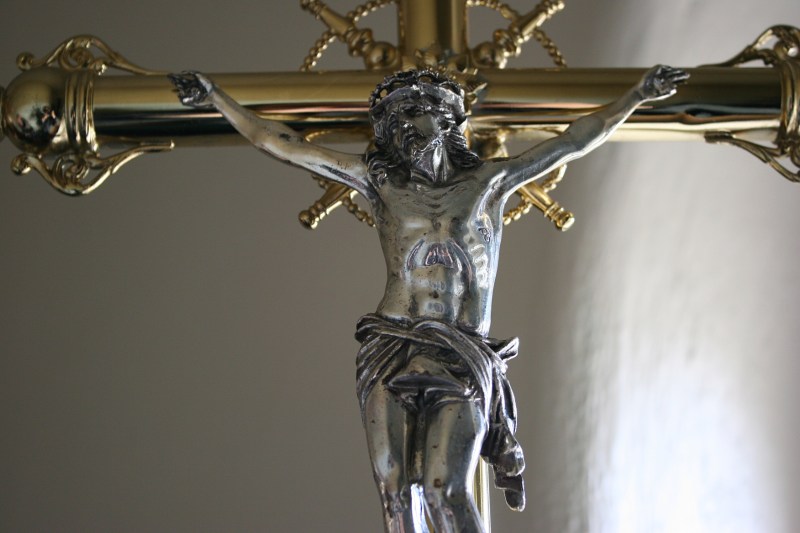
Centering the ornate altar is this depiction of Jesus’ crucifixion.


The art ranges from simple to elaborate. I know nothing of the artists. But in viewing each of their works, I experience a wide range of emotions. And with that comes a deep sense of gratitude for those who share their faith through art.


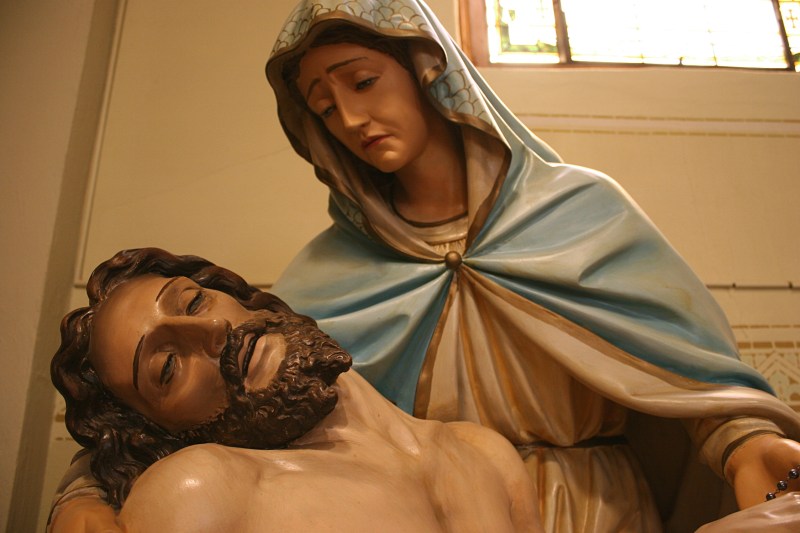
In the face of Mary, I see profound grief in losing her son.


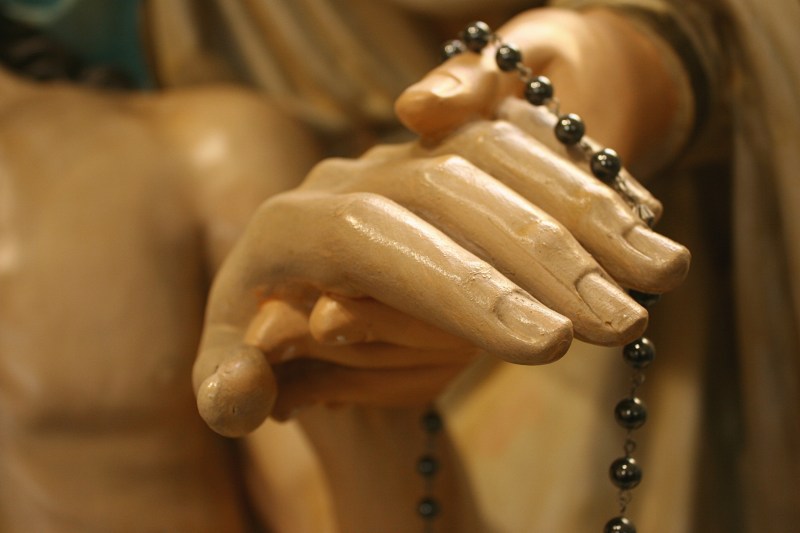
Hands convey so much love; here Mary holds Jesus’ hand.


The detail in this work of art presents the visual depth of Christ’s suffering.


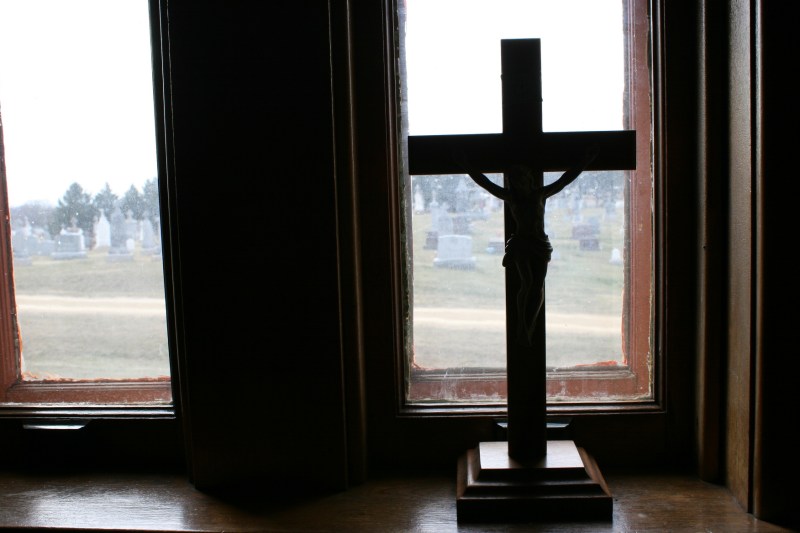
This simple crucifix is set against the window backdrop of St. Mary’s Cemetery.


When I toured St. Mary’s recently, I was overwhelmed by the beauty of this place, just as today I am overwhelmed by gratitude to Christ.

FYI: Please check back for future posts of my visit to St. Mary’s.

© Copyright 2017 Audrey Kletscher Helbling
 

Food art at the library April 4, 2017

Filed under: Uncategorized — Audrey Kletscher Helbling @ 5:00 AM
Tags: , , , , , , ,


WHAT COULD YOU CREATE with an orange, pretzels, sweet potatoes, marshmallows, coconut, cake and frosting, lots and lots of frosting? Or with other food?


Winner of the People’s Choice Award and also winner of the Most Humorous in the Families division.


Contestants in the Edible Books Festival & Competition at Buckham Memorial Library in Faribault proved they could craft some impressive edible representations of books.


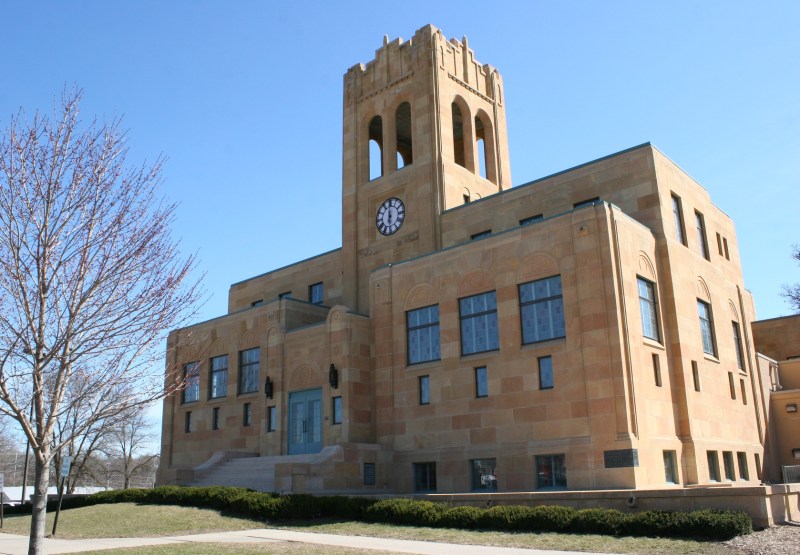
Buckham Memorial Library, Faribault, Minnesota.


The display generated lots of interest, which is precisely what Public Services Librarian Allyn McColley hoped to get people into the library. The contest showcased the artistic side of books while also promoting reading, she said.


Based on the 14 entries and the estimated 80 people who perused the 90-minute April Fool’s Day exhibit, the Edible Books Fest was a success.


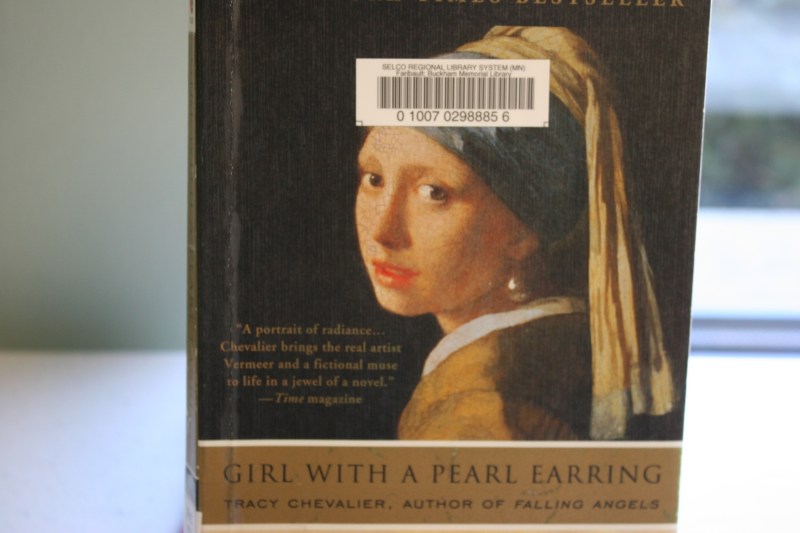
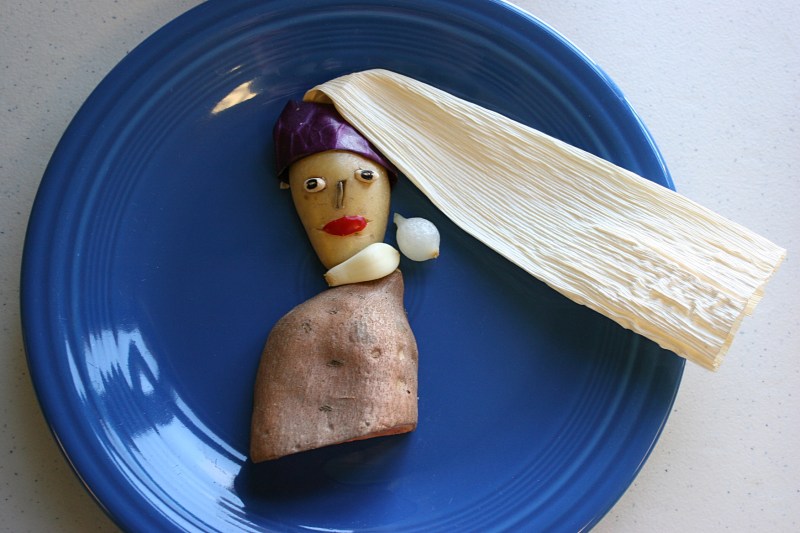
The book, Girl with a Pearl Earring, inspired the entry below.


This interpretation of Girl with a Pearl Earring won Best Literary Theme in the staff competition.


I was impressed by the creativity.


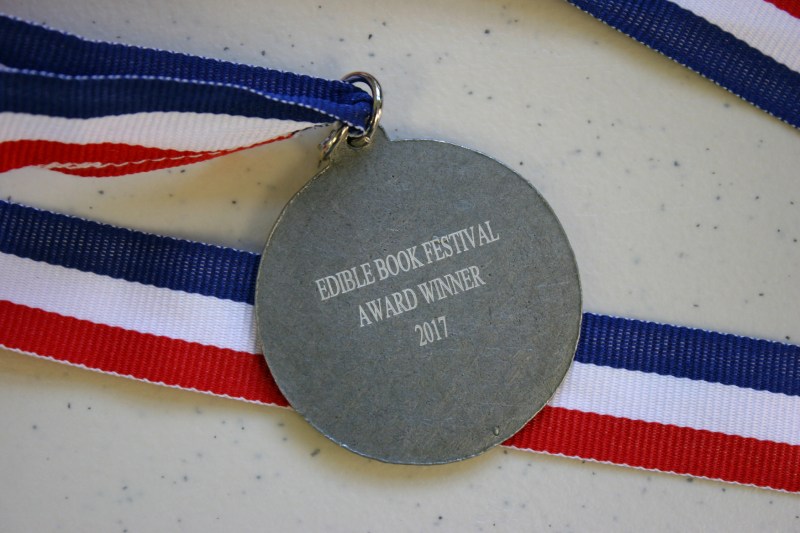
Medals were awarded to winners in various categories and divisions.


Go ahead and scroll through selected photos and decide for yourself which is your favorite. I expect favorites will be as diverse as reading lists.


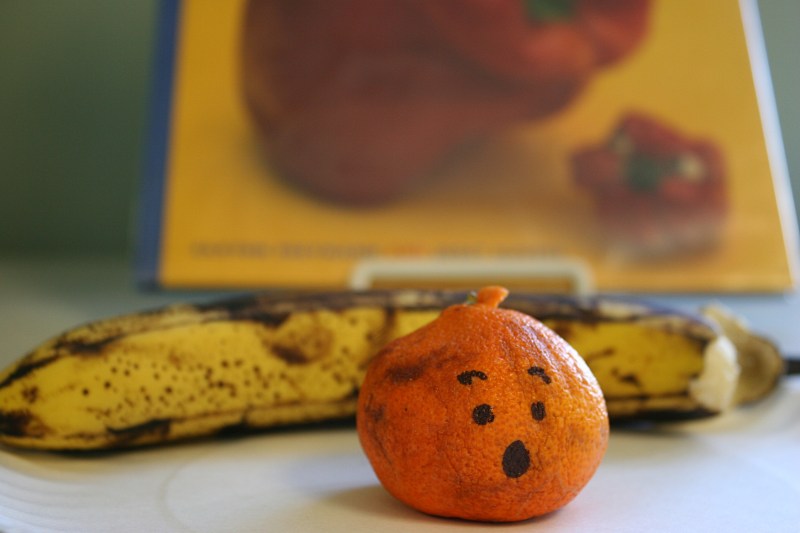
The artistic entry for How Are You Peeling? Foods with Moods. We all have days when we feel rotten.


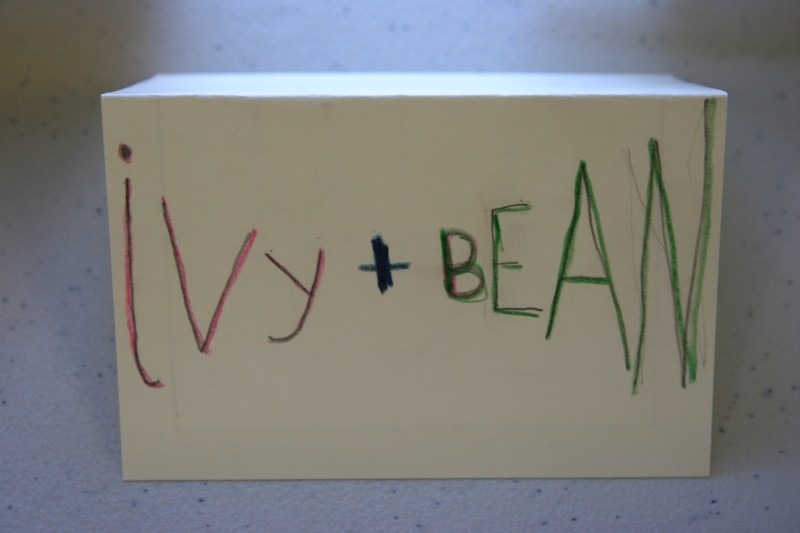
On the Families table, I spotted this book label. Great creativity in printing, I say.


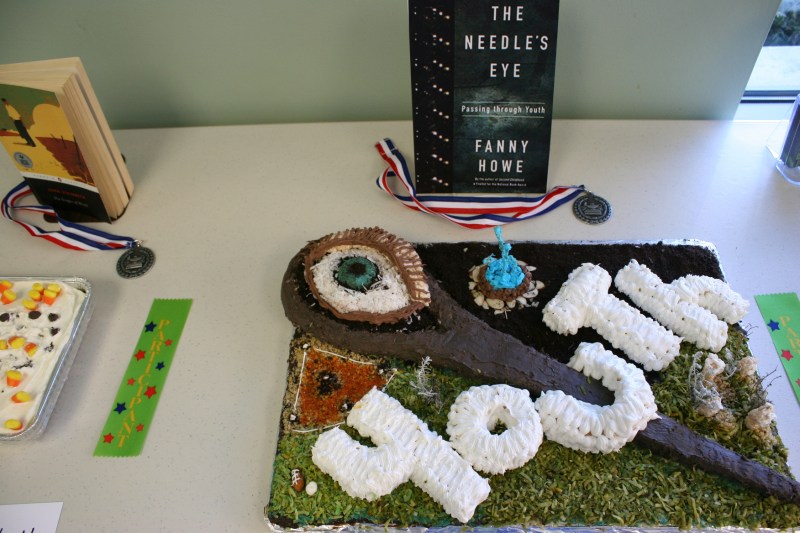
The Needle’s Eye, Passing Through Youth, won Best Literary Theme in the Adults Category.


Orange is the New Black, My Year in a Women’s Prison, inspired the entry below.


A singular food item becomes book art.


The Hat entry up close. Look at the work that went into creating this hedgehog.


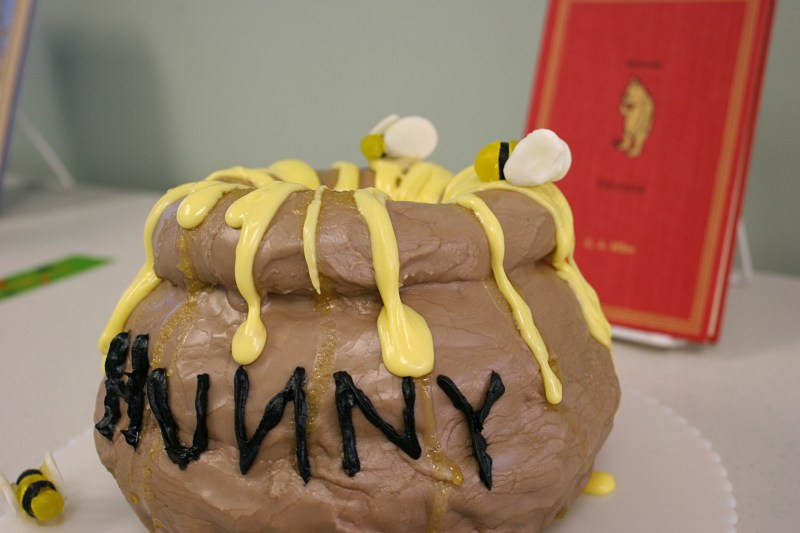
Pooh’s Hunny Pot, chosen as Most Visually Appealing.


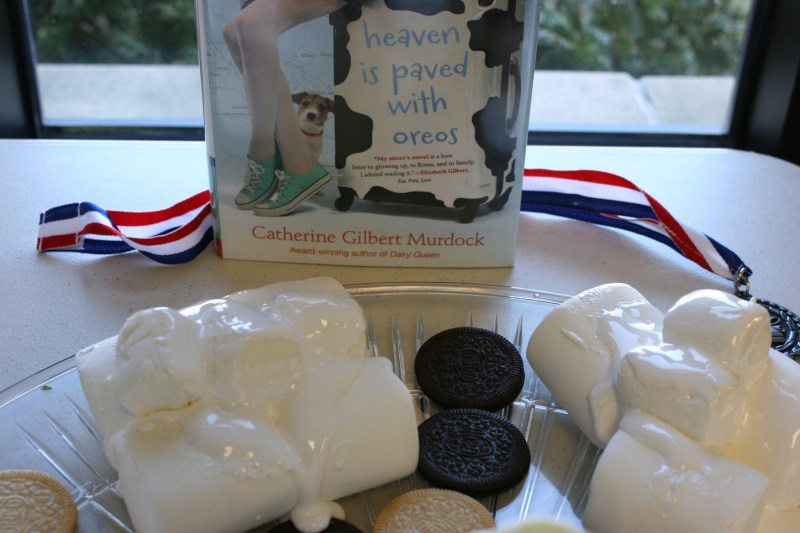
Heaven Is Paved with Oreos earned Most Visually Appealing among City of Faribault staff entries.


Two books, If You Give a Mouse a Cookie and Bob the Builder, inspired this Most Visually Appealing entry in the Adults Category.


This cake was inspired by the classic The Lion, the Witch and the Wardrobe, awarded Best Literary Theme.

© Copyright 2017 Audrey Kletscher Helbling
 

The art of St. Nicholas brought to you on St. Patrick’s Day March 17, 2017

St. Nicholas Catholic Church in Elko New Market, Minnesota.

St. Nicholas Catholic Church in Elko New Market, Minnesota.


IT’S SELDOM THESE DAYS that I find a church door unlocked while on a leisurely, non-destination drive.


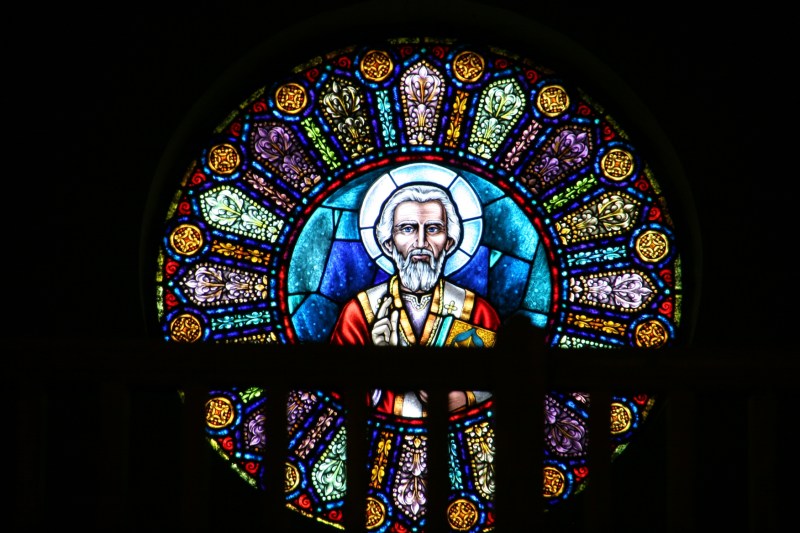
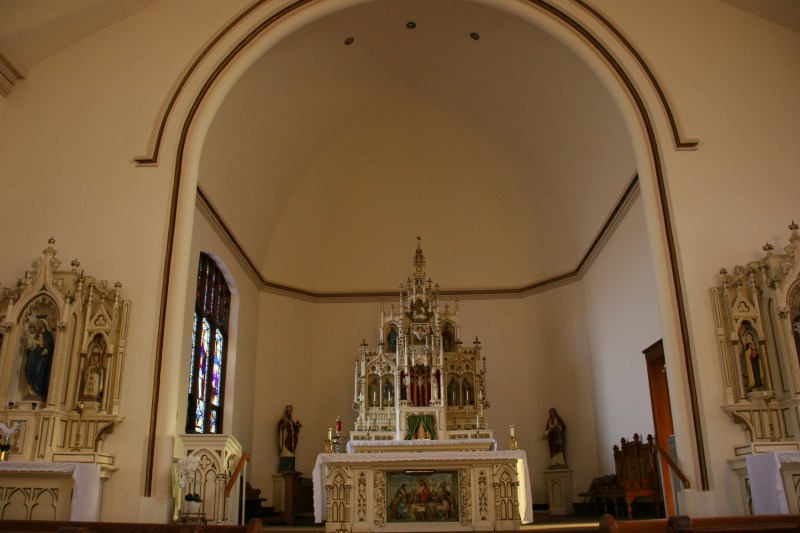
The stained glass window of St. Nicholas, the patron saint of this congregation, is situated in the balcony. I didn't go into the balcony as a sign banned unapproved visitors per insurance requirements.

The stained glass window of St. Nicholas, the patron saint of this congregation, is situated in the balcony. I didn’t go into the balcony as a sign banned unapproved visitors per insurance rules.


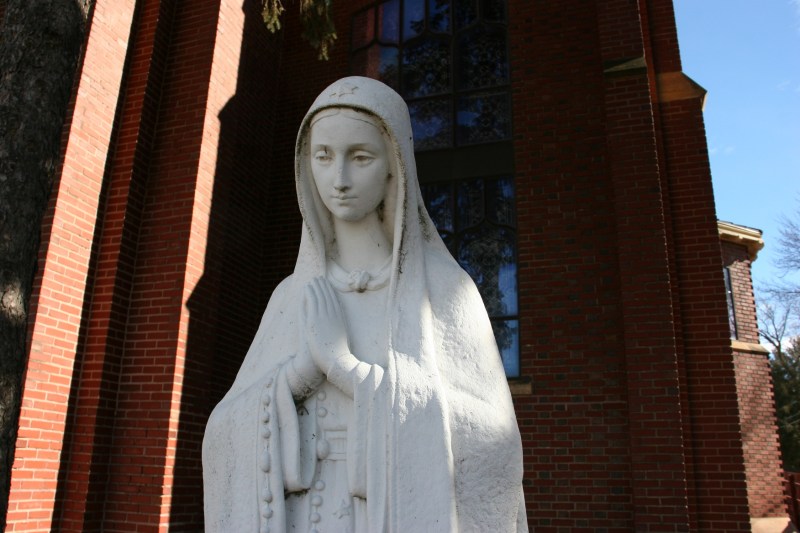
A statue of Mary outside the front of the church.

A statue of Mary outside the front of the church.


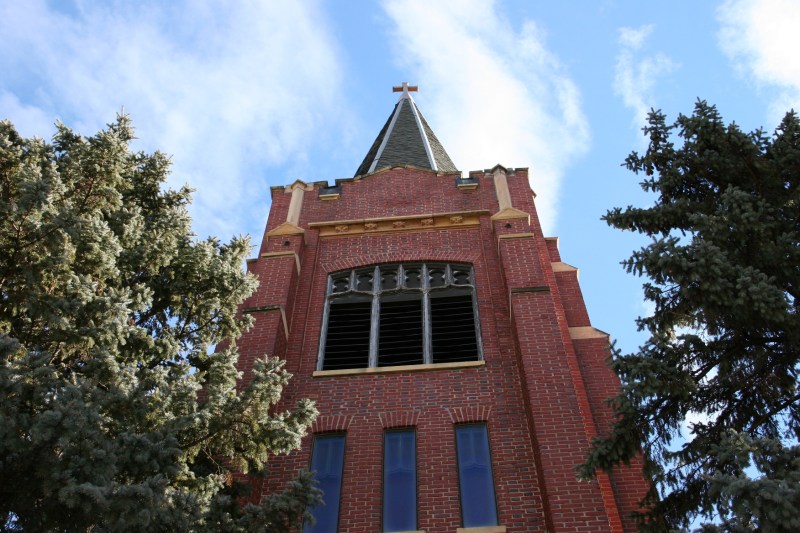
Looking up at the tall tall steeple.

Looking up at the tall tall steeple.


So when Randy and I stopped in Elko New Market and found the front doors of St. Nicholas Catholic Church open late on a recent Saturday morning, we were surprised. During our brief visit, not a soul appeared, except images of the saints patronized therein.


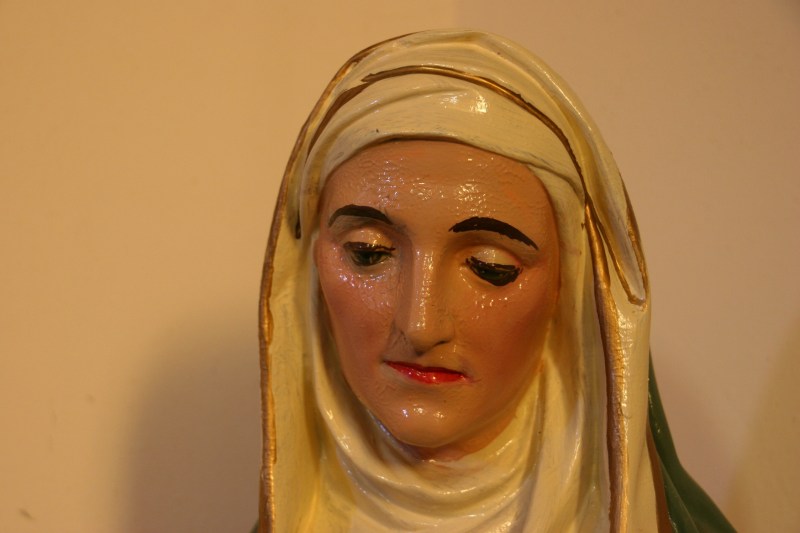
Statues like this one of Mary fill the church.

Statues like this one of Mary fill the church.


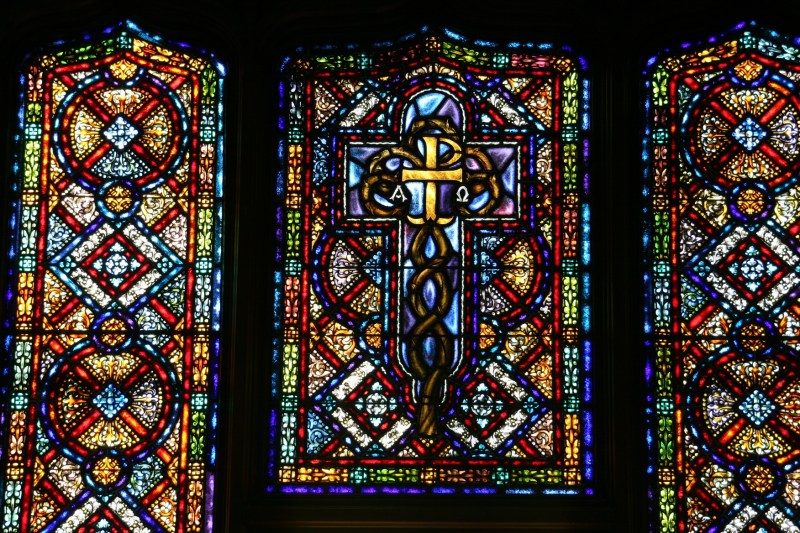
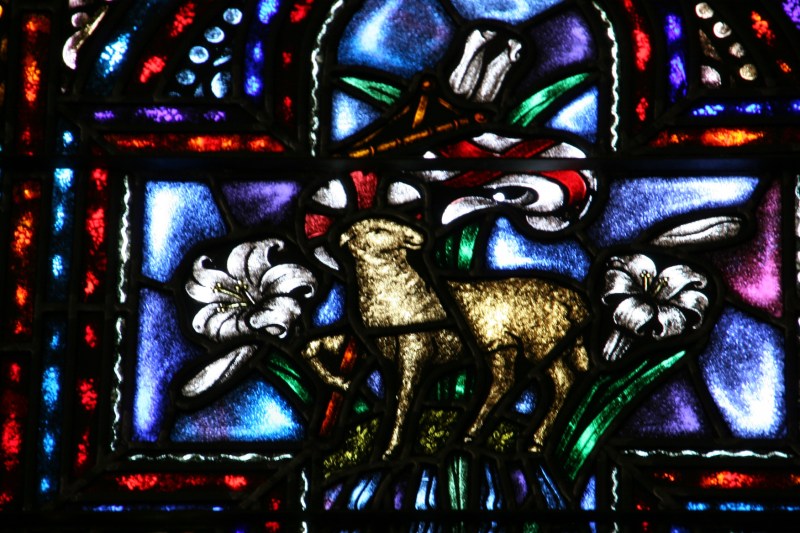
How lovely the stained glass.

How lovely the stained glass.


Just look at that altar.

Just look at that altar.


As a life-long Lutheran, I’ve always been fascinated by the ornateness of Catholic churches. Statues, flickering candles, detailed stained glass windows, grand arches and more contrast sharply with the plainness of most Lutheran churches. I often direct questions to Randy, Catholic raised and educated, but a Lutheran now for 35 years. Rituals and tradition are such integral parts of Catholic worship.


The stained glass at St. Nicholas is exceptional in its detail, design and workmanship.

The stained glass at St. Nicholas is exceptional in its detail, design and workmanship.


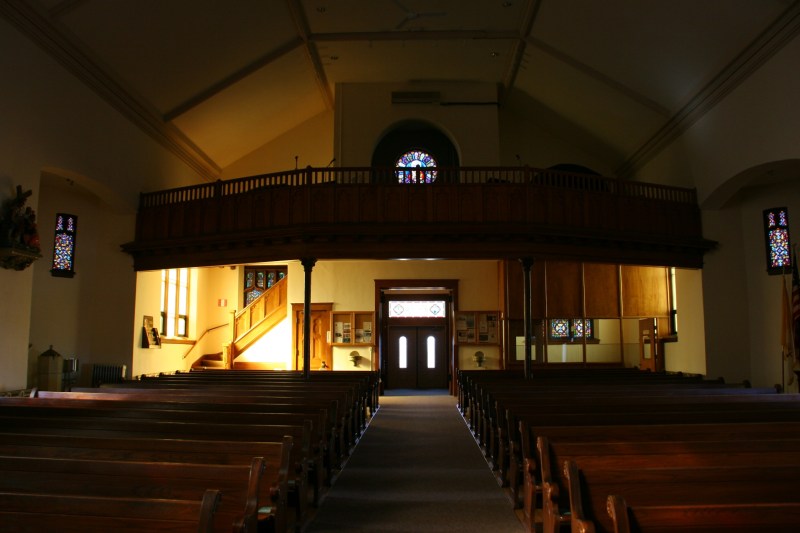
Looking toward the balcony and back of the sanctuary.

Looking toward the balcony and back of the sanctuary.


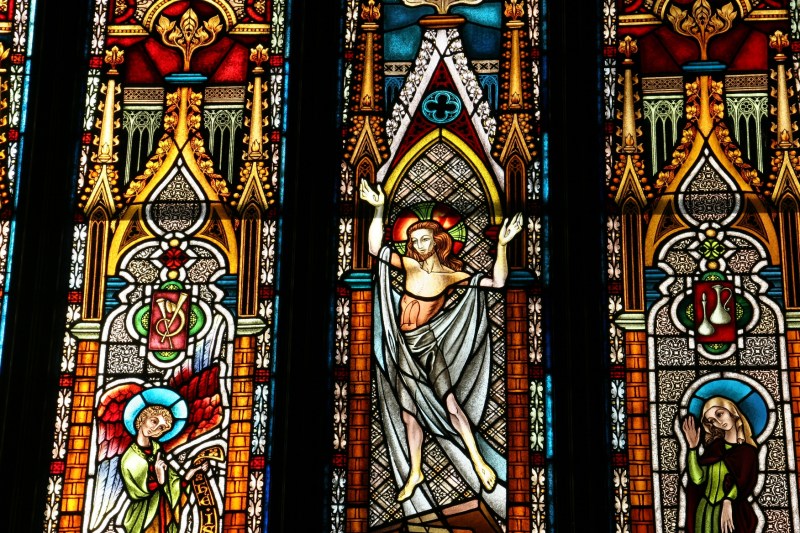
More stunning stained glass.

More stunning stained glass.


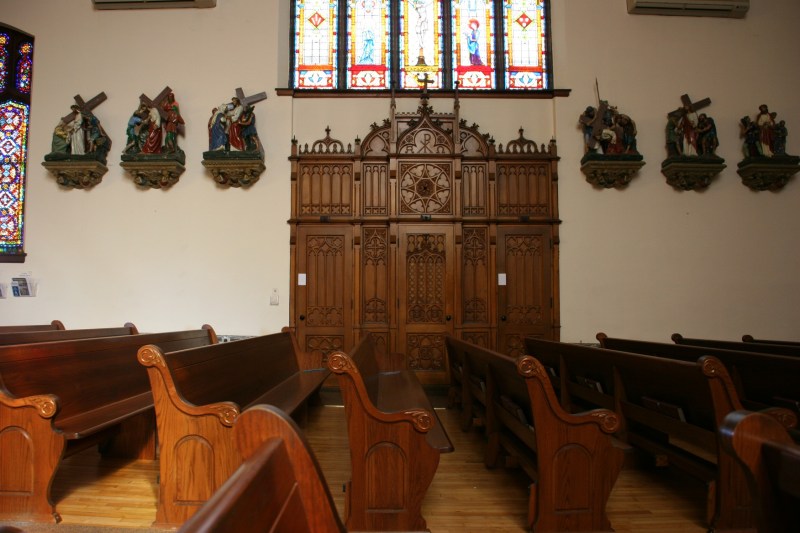
Impressive woodworking on a confessional, one of two.

Impressive woodworking on a confessional, one of two. The other is now a storage space.


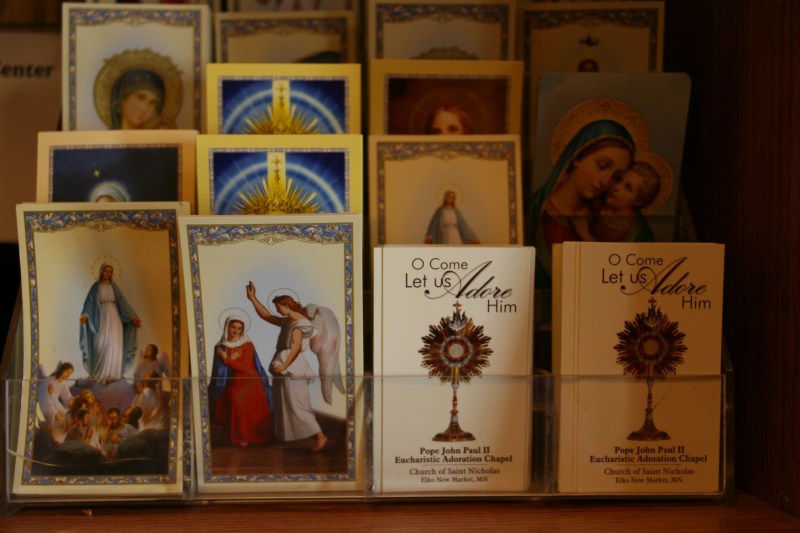
I found art even on these cards on a rack inside the entry.

I found art even on these cards on a rack inside the entry.


My appreciation for aged sanctuaries runs strong. I find in the art of stained glass and sculptures, in the architecture of a church, a certain reverence and peace that comforts and uplifts me. And that, I suppose, is why I am so drawn to churches like St. Nicholas, anchored atop a hill along Church Street in Elko New Market.


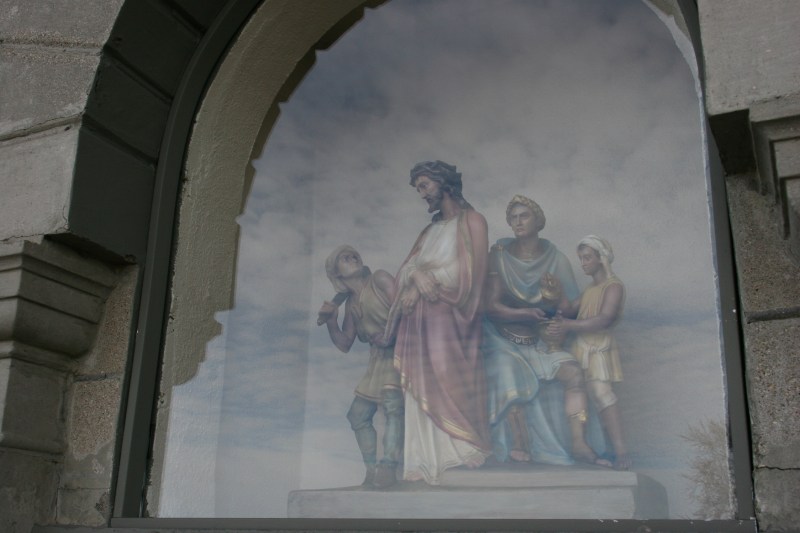
Art outside St. Nicholas.

Art outside St. Nicholas.


TELL ME: Are you drawn to aged churches? Why?

© Copyright 2017 Audrey Kletscher Helbling
 

From Faribault: There are no limitations with art March 15, 2017


AS A CHILD, I hooked nylon loops onto a pegged plastic square then wove more loops the other direction to shape a potholder.

My potholders were rather useless given their minimal size and synthetic material. But still, I gifted many aunts with potholders on their birthdays and they graciously thanked me.


I never pursued weaving beyond that childhood obsession, although I was convinced that some day I would weave rag rugs like my Uncle Bob. A long retired Minneapolis police officer, he learned the craft from his mother and has given me many sturdy rugs for my home.


As a child, I admired Helen Keller. I still do. I often wondered what it would be like to be deaf and blind as she was and to overcome those disabilities with such determination. After suffering a sudden sensory hearing loss in my right ear six years ago, I understand partial deafness. But to be blind, that stretches my imagination.


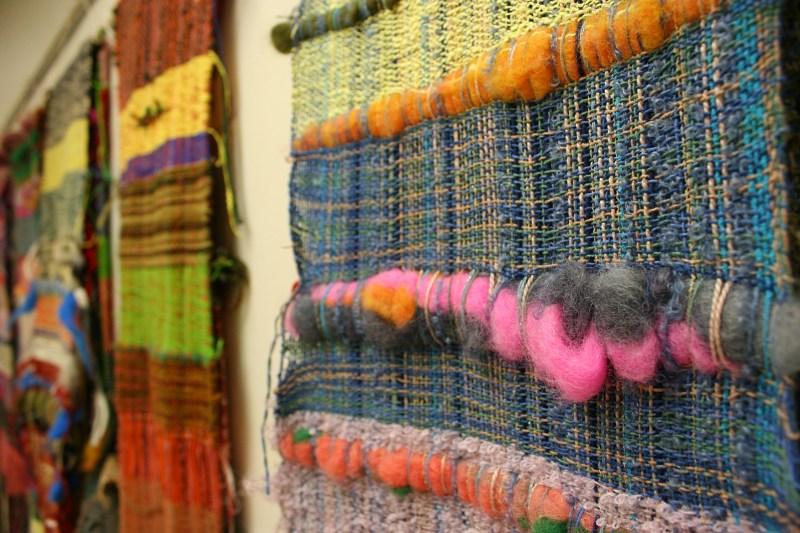
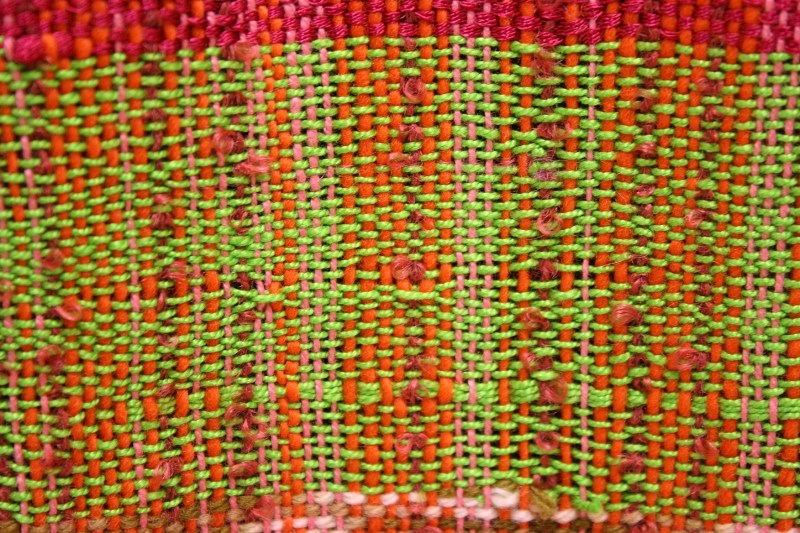
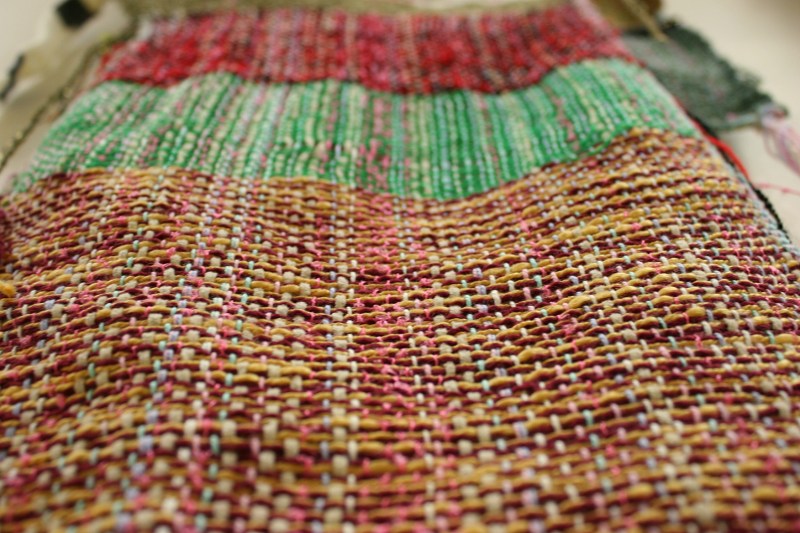
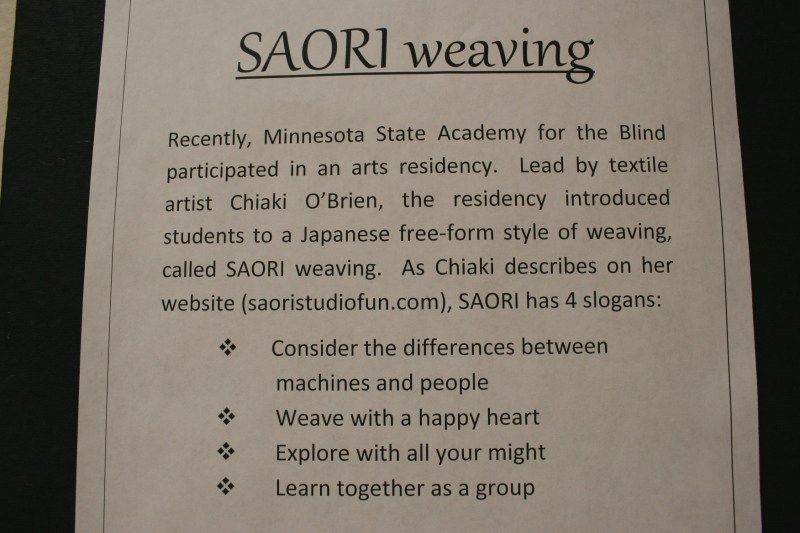
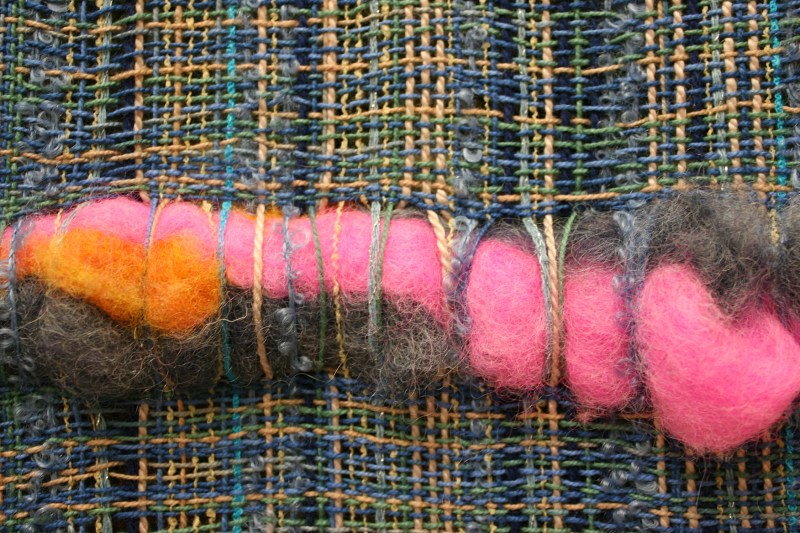
With that background, I was especially drawn to a section of the Student Art Exhibit at the Paradise Center for the Arts in Faribault. It features SAORI weaving, free-style hand-weaving that originated in Japan. Minnesota State Academy for the Blind students created the woven art under the guidance of artist-in-residence Chiaki O’Brien.


I expect the texture of the materials makes this craft especially appealing to those with limited or no vision. Their other senses, including the sense of touch, are heightened.

I think then back to Helen Keller and how her devoted teacher, Anne Sullivan, spelled w-a-t-e-r into Helen’s hand as water rushed over it.


I wonder then how the hands-on teaching of Chiaki O’Brien affected visually-impaired students at the Minnesota Academy as they saw with their hands that they could create art. What a gift.

FYI: The Student Art Exhibit, featuring artwork from nine Faribault schools, runs through April 1 on the second floor of the Paradise Center for the Arts in downtown Faribault.

This concludes my recent series of stories on current exhibits at the Paradise Center for the Arts in Faribault.

© Copyright 2017 Audrey Kletscher Helbling
Artwork photographed with permission from the PCA.


Showcasing the talent of Faribault’s student artists March 14, 2017

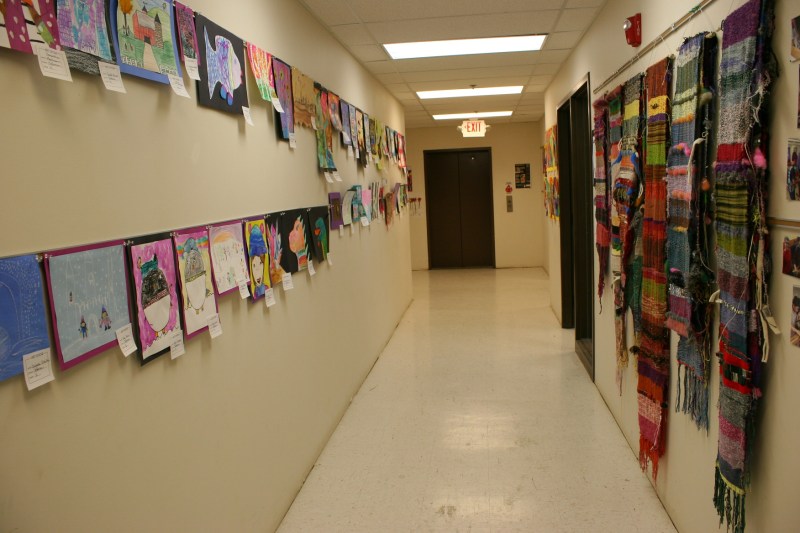
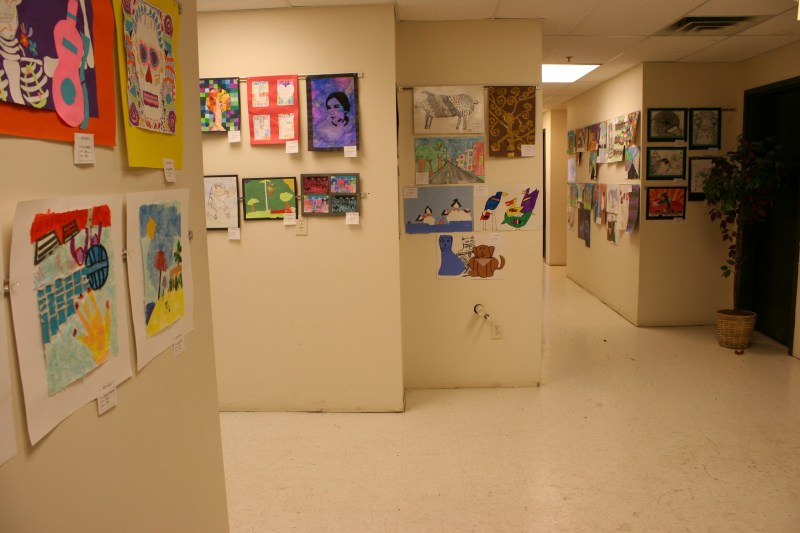
The art exhibit threads along hallways, into corners and into a room on the second floor of the Paradise.


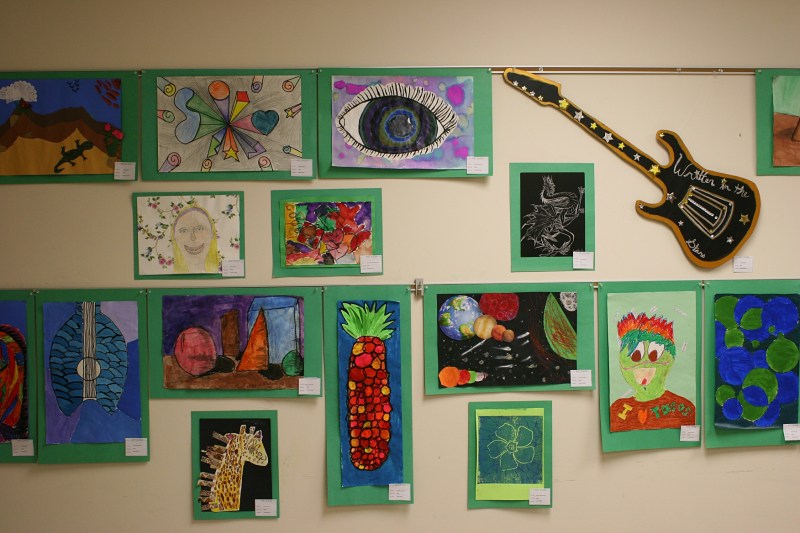
EVERY TIME I VIEW the annual Student Exhibit at the Paradise Center for the Arts, I want to snatch several pieces from the walls for my art collection. I’m that impressed by the student art. And I’m not just saying that because I want to be nice and tell the kids they do a great job. My praise is genuine.


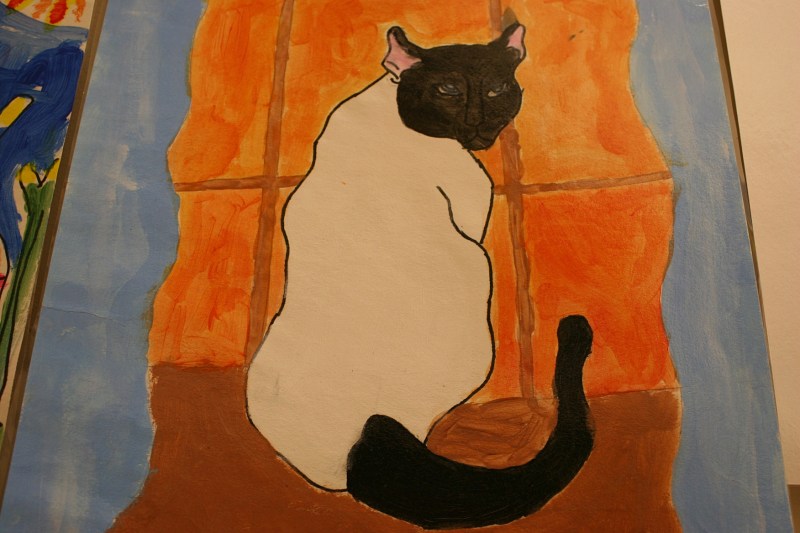
Gracie, a sixth grader from Faribault Lutheran School, created this cat art.


The soulful eyes drew me to this drawing by Faribault Middle School eighth grader Victoria.


Variations of a block print by Adreanna, a student at Roosevelt Elementary School.


From block prints to paintings to collages to weavings to drawings done in a range of mediums, this art is diverse, introspective, often colorful and worthy of showcasing.


Abstract art created by students from Divine Mercy Catholic School.


Twelfth grader Derek from the Faribault Area Learning Center drew this fox.


Lincoln Elementary School students created this art.


What I especially appreciate about this second floor show is the opportunity for students to put their art out there in a public venue. I expect one day the works of some of these artists will hang in the Paradise’s main floor galleries or in other galleries.


This photo shows part of high school student Audrey Petersen’s “Peacock Feathers” acrylic on canvas. Her art is currently displayed in the Corey Lyn Creger Memorial Gallery.


Already the Corey Lyn Creger Memorial Gallery in the Paradise is devoted to artwork by a high school student artist.


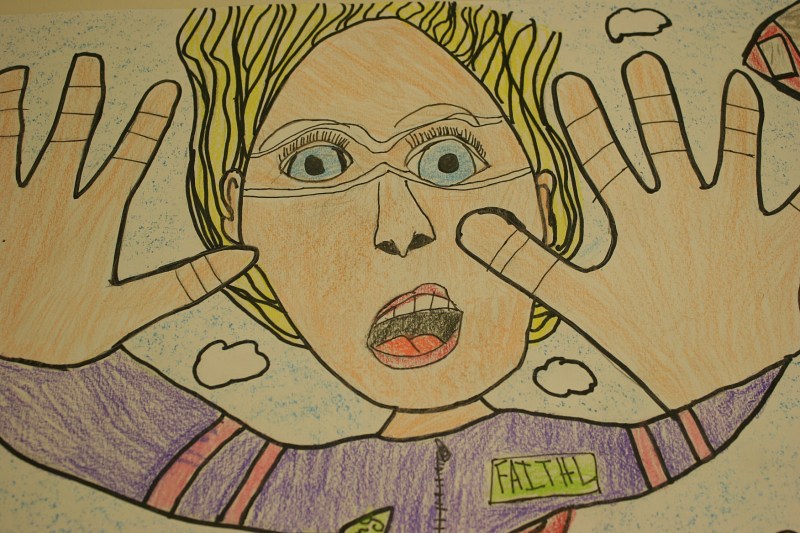
Student artist Faith created this cartoon style character.


Lots of variation in the art showcased on this wall.


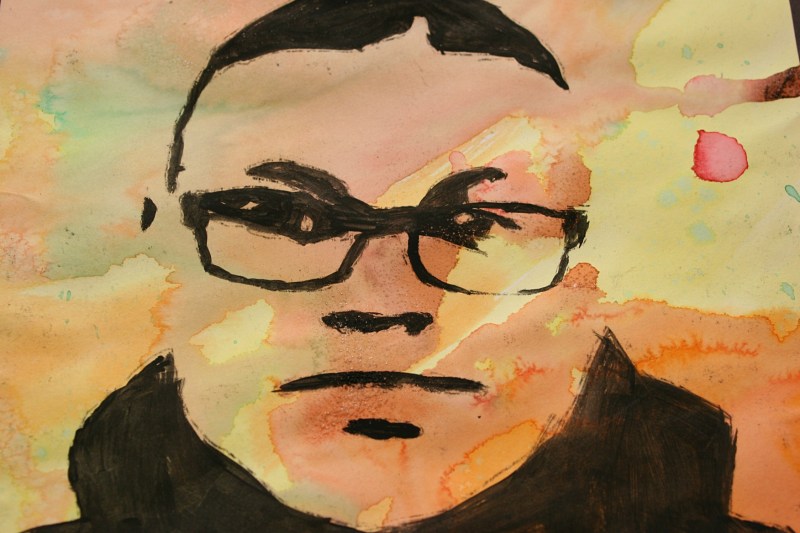
Roosevelt Elementary fifth grader Jose painted this portrait.


It’s reaffirming for young people to have their talents validated and appreciated, whether on the floor of a basketball court, the stage of a theater or in the hallways and rooms of an art center. All too often the arts lag behind sports in societal importance. Arts are to be valued, too.


Art angles into a corner.


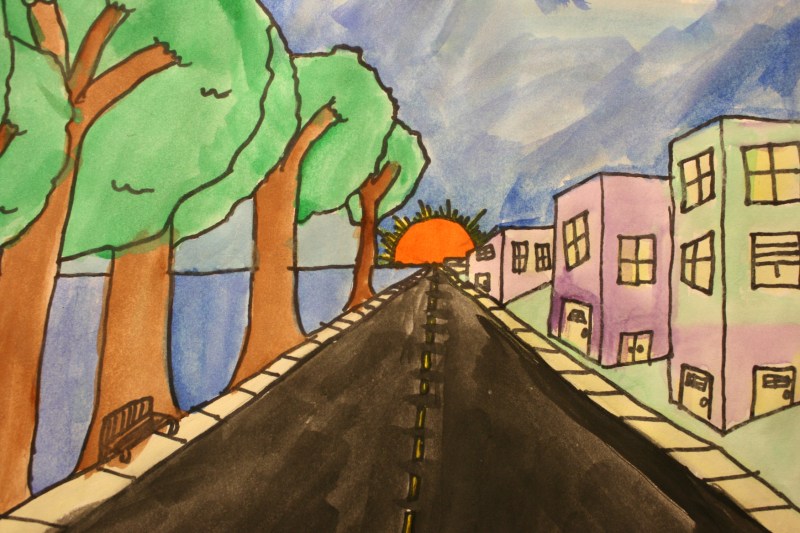
A streetscape by Brooklyn, Faribault Lutheran School fourth grader.


I angled my camera upward to photograph this floral art by Faribault Middle School eighth grader Baylee.


To the students from the nine Faribault schools—Roosevelt, Jefferson, Lincoln, Faribault Middle School, Faribault Area Learning Center, Faribault Lutheran School, Cannon River STEM School, Divine Mercy and the Minnesota State Academy for the Blind—with artwork on display, thank you. I enjoyed your creativity.


So much creativity…


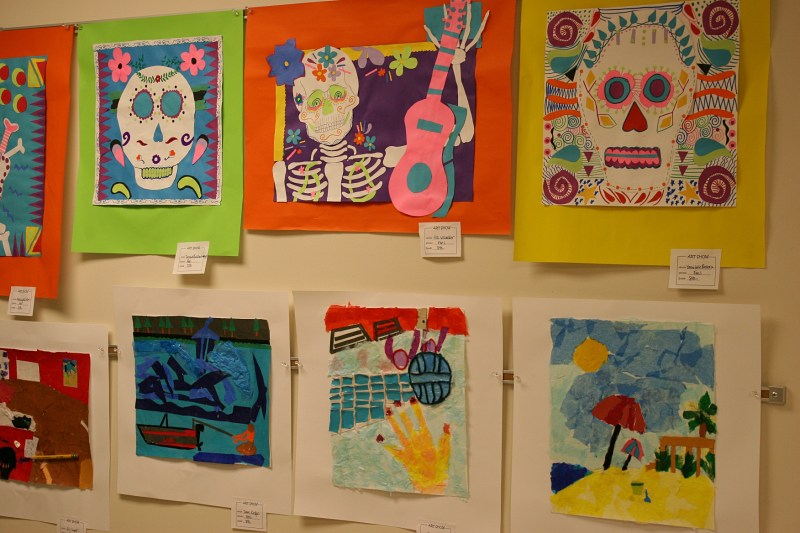
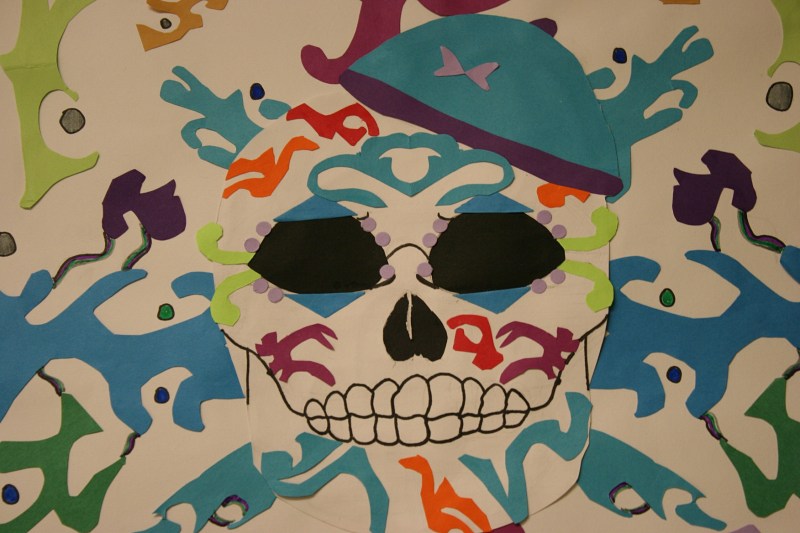
This skull art by Faribault Middle School eighth grader Bailey features symmetry.


The variety of subjects and artist styles and mediums impresses.


I see a lot of potential as these artists continue to grow and learn.


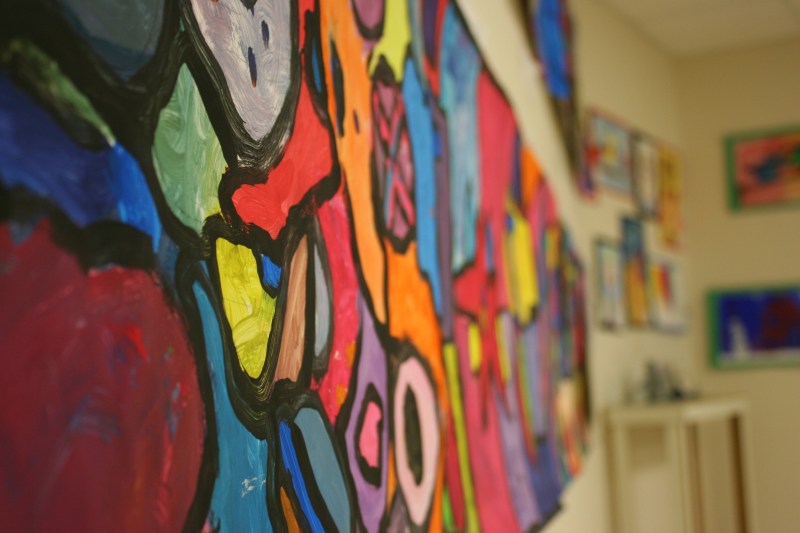
Bold, vivid art by students from Divine Mercy Catholic School.


FYI: The Student Exhibit will be on display until April 1 at the Paradise, 321 Central, in downtown Faribault.

Please check back for a story on art created by students from the Minnesota State Academy for the Blind.

© Text copyright 2017 Audrey Kletscher Helbling
Artwork is the copyright of each artist and photographed with permission from the Paradise Center for the Arts.


The art of Dana & Judy in the Paradise March 13, 2017

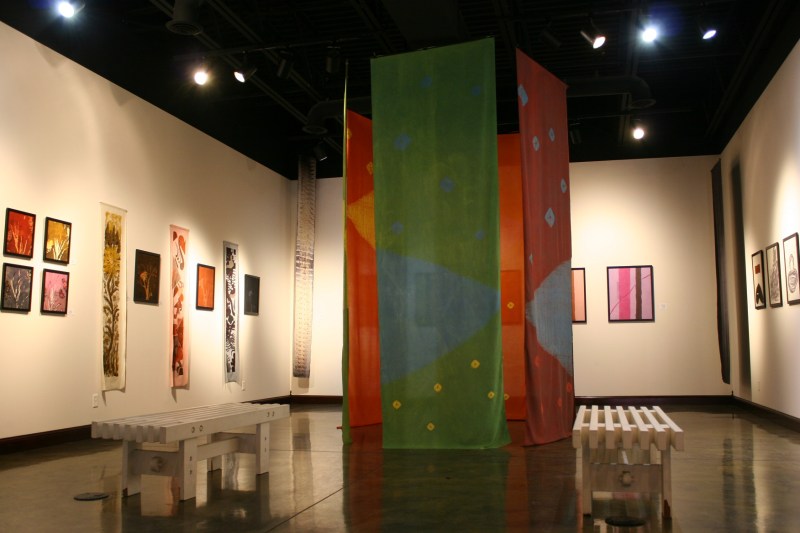
An overview of Judy Saye-Willis’ exhibit, “From Garden to Gallery: Natures Gentle Colors.”


EVERY ARTIST, whether a sculptor, painter, wordsmith, photographer or anything in between, brings values and background into his/her work.


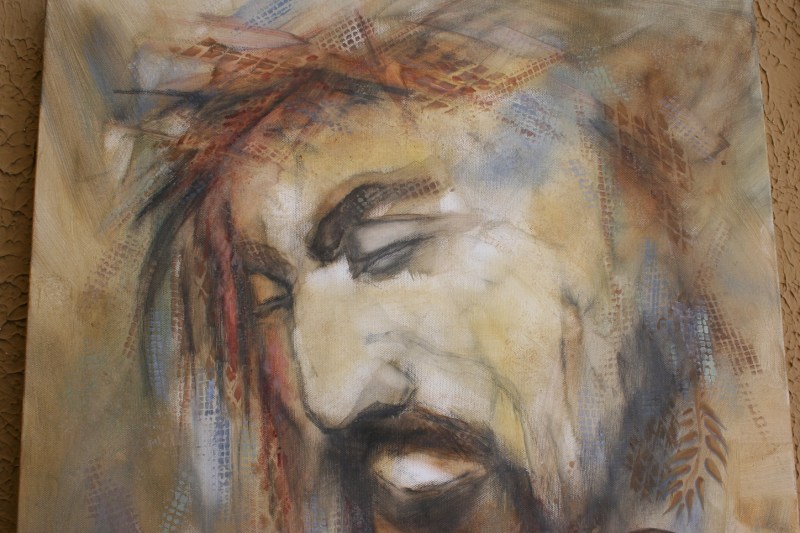
A section of Dana Hanson’s portrait of Christ, titled “All For You.”


For Faribault artist Dana Hanson, faith clearly inspires her art.


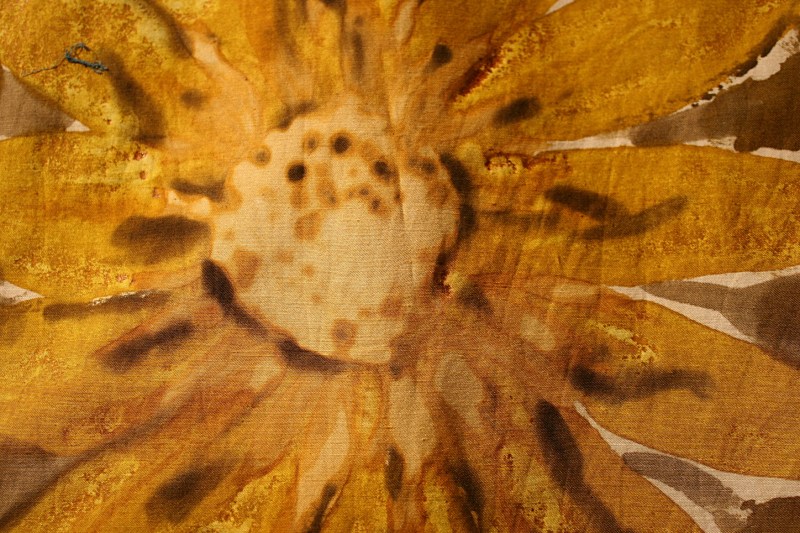
Nature’s influence is seen both in the subject and in the weld (a plant) dye used in this art by Judy.


For Northfield artist Judy Saye-Willis, the natural world seems the most influential.


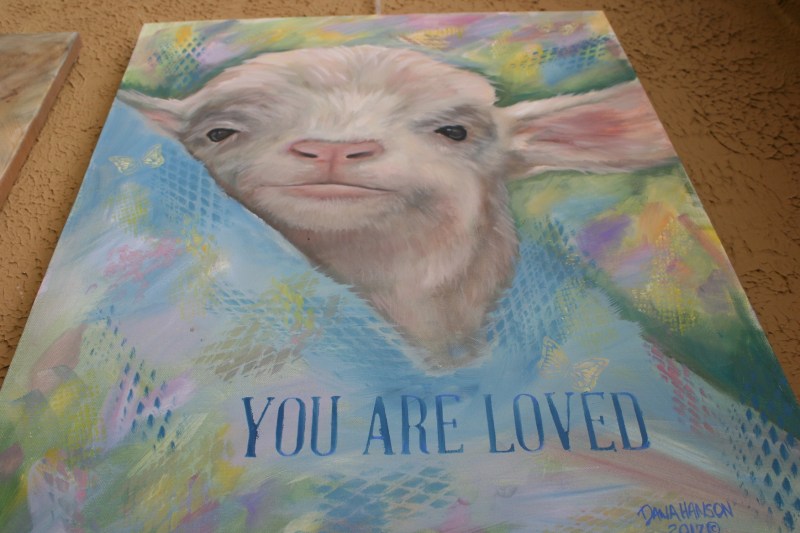
Dana’s “You Are Loved” faith-based painting.


They are two diverse artists currently exhibiting at the Paradise Center for the Arts in Faribault. Dana paints with a brush, oil on canvas. Judy works with fabric and dyes as a fiber artist in this particular From Garden to Gallery—Natures Gentle Colors collection.


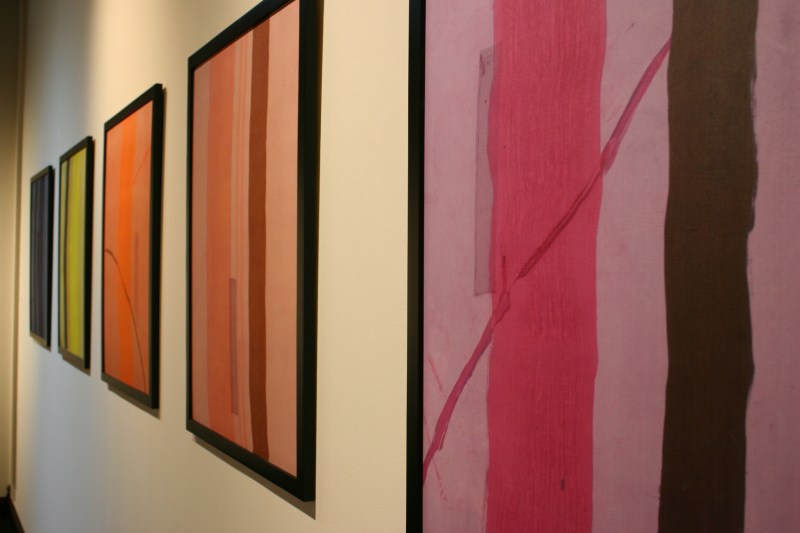
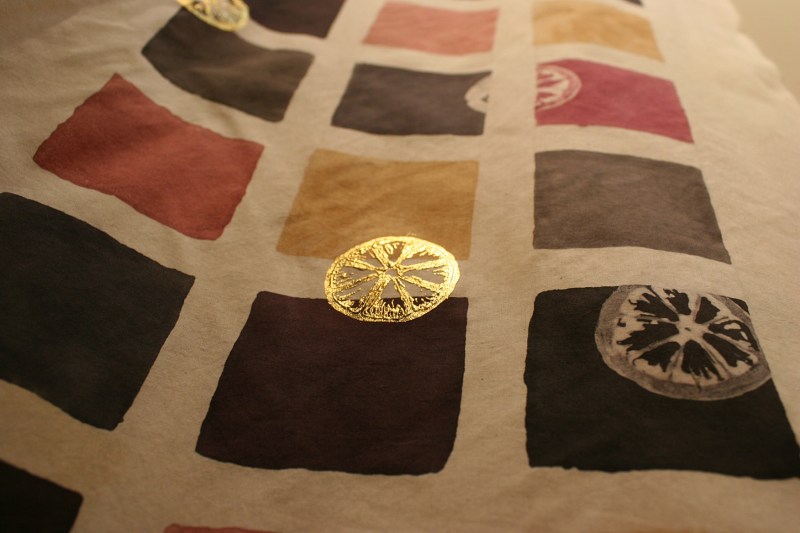
In her One Color Series, Judy dyed each piece in a single color dye bath.


Both infuse passion and devotion into their work. Judy uses natural dyes to color fabric. Rhubarb root, black walnut, sumac, goldenrod, prairie wildflowers and more are dye sources for this artist who, like me, grew up on a southwestern Minnesota farm. Judy played in the fields and pastures of the prairie and I can see that in her art. She holds a closeness to the land.


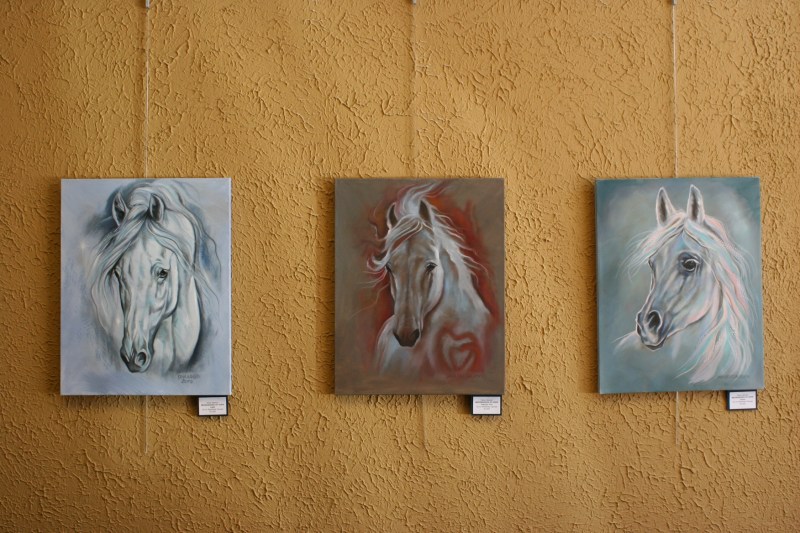
This trio of paintings is titled MESSENGERS OF HOPE with the horses subtitled, from left to right, “Light,” “Passion Fire” and “Grace.”


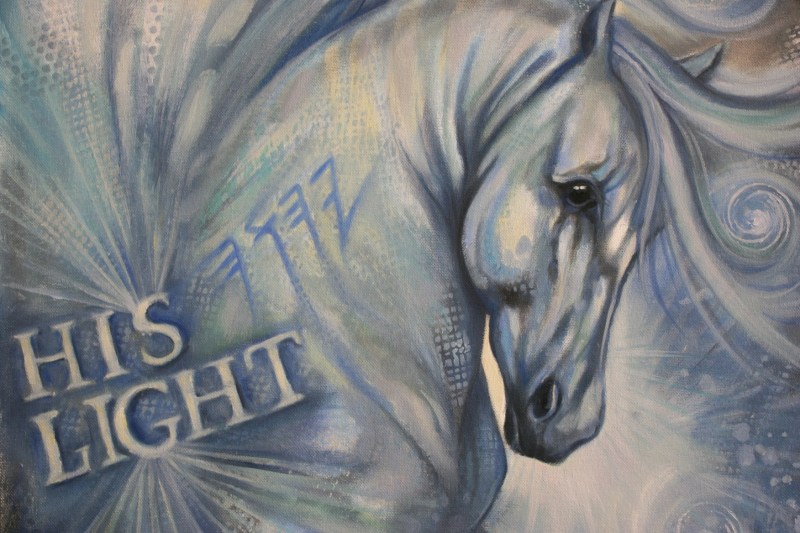
Dana’s art sometimes comes to her, she says, in visions—her faith-based horse paintings inspired during worship. There is symbolism in her work, threads of light and hope. Her art is her visual ministry, Dana writes on her website.


A close-up of Judy’s panel tagged as “When Life Gives you Lemons make Art.” She used lemon juice for a discharge and dyed in cochineal. The repetition in the art is in the style of Andy Warhol.


I appreciate the artistic talents of both artists. I appreciate also their dedication to the craft. I appreciate the strength of their work.


“His Light” by Dana.


How I interpret their artwork may or may not match their intentions. But that’s the thing about art. We each bring to art our values, our backgrounds, our experiences. When our eyes lock on a piece of art, we react as only we can, with introspection that is uniquely and individually ours.


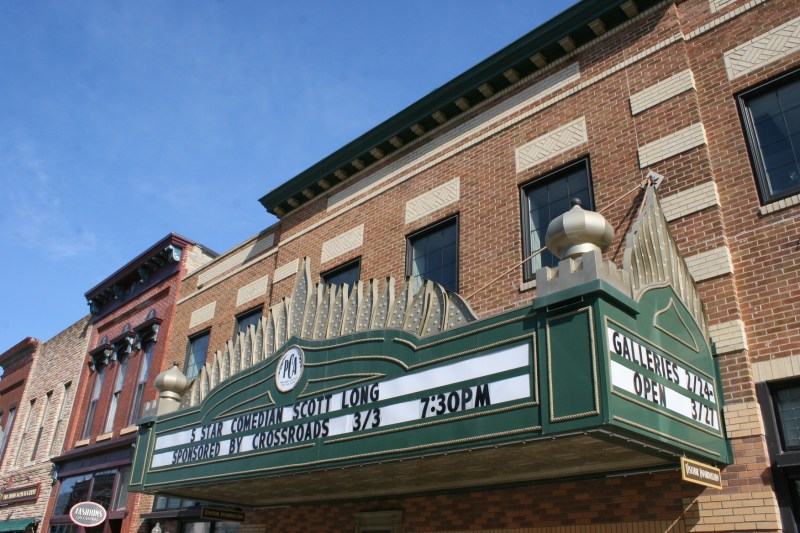
The Paradise Center for the Arts is housed in an historic former theater in downtown Faribault.


FYI: Dana and Judy’s exhibits will continue through March 27 in the main floor galleries at the Paradise Center for the Arts, 321 Central Avenue, Faribault. These photos are only a sampling of the artwork in their exhibits.

© Text copyright 2017 Audrey Kletscher Helbling
Artwork copyrighted by the artists and photographed with permission.


Beyond violence, two artists show that hope rises March 7, 2017

A portrait of Barb Larson by Faribault artist Dana Hanson.

A portrait of Barb Larson by Faribault artist Dana Hanson.

TUCKED INTO TWO CORNERS in two galleries are two tributes by two artists.

Both honor Barb Larson, murdered on December 23, 2016, in an act of domestic violence. She was a long-time friend to artist Judy Saye-Willis and an acquaintance to artist Dana Hanson. Both chose to remember Barb in their exhibits currently showing at the Paradise Center for the Arts in historic downtown Faribault.

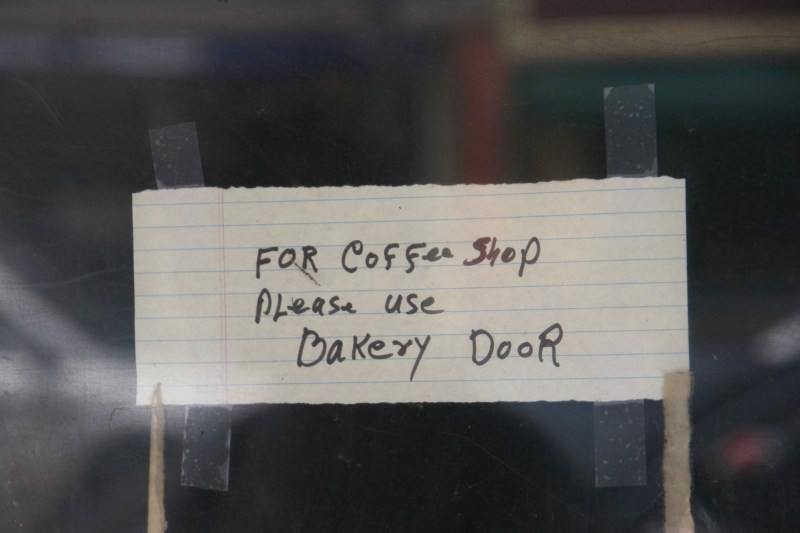
Dana painted an oil on canvas portrait of Barb, the Faribault Area Chamber of Commerce & Tourism employee who stopped occasionally to place orders at the bakery where Dana works. “I just wanted to do something positive to remember…she was genuine and very nice,” Dana said. The result is her “In Memory of Barb Larson” painting, based on a photo.

This series of fiber art pieces by Northfield artist Judy Saye-Willis also honors Barb Larson. The pieces, from left to right, are titled "Darkness of Death 1", "Darkness of Death 2", "Destruction", "Hope", "Hope Rising" and "The Light of Hope".

This series of fiber art pieces by Northfield artist Judy Saye-Willis focuses on death and hope. The pieces, from left to right, are titled “Darkness of Death 1,” “Darkness of Death 2,” “Destruction,” “Hope,” “Hope Rising” and “The Light of Hope.”

Judy’s artwork themed on death and hope spans half a wall and includes six pieces. Three framed works were already completed prior to Barb’s murder. They are an expression of “what’s happening in our culture today,” she said, specifically citing ISIS and the violence in Aleppo, Syria, as inspiring the art. But, once the events of December 23 unfolded locally, Judy created three more related fiber art pieces using natural dye materials. The result is a compelling series of framed art and panels focusing on death and hope.

I angled my camera up to photograph "Darkness of Death 2."

I angled my camera up to photograph “Darkness of Death 2.” When Judy created this scene with blood dripping and an executioner’s mask, she was thinking of ISIS and the violence/situation in Aleppo.

“…I was feeling raw, emotional with nowhere to go with it,” Judy said. “It (Barb’s murder) was senseless. I went to my studio and started the first piece. I tried three times to dye the piece black, unsuccessfully. I called it “The Darkness of Death 1.”

Simply titled: "Hope."

Madonna and child, simply titled: “Hope.”

Once she finished the black panel, Judy transitioned into the theme of hope. That was prompted by a Catholic church official she heard talking about faith and hope on the morning of December 23 (the day of Barb’s murder) on CBS This Morning. The result is two more hope-inspired fiber art panels.

As I viewed both artists’ tributes to Barb Larson, I could see the emotion within the artwork. Dana succeeds, through the strokes of her brush and the paint colors she chose, to portray the woman described as vivacious and friendly by those who knew her. Genuine warmth glows in Dana’s painting of Barb. I can see Barb’s personality in that portrait.

Judy’s art differs significantly, leaving more open to interpretation, more room for the viewer to insert his/her experiences, emotions and reactions. In the first three darker pieces, beginning with the length of black-dyed cloth, there is no ignoring the darkness of a violent death. That Judy chose to confront and share that in her work makes a powerful visual public statement whether considering the violence in Aleppo or the violence in Faribault.

"Hope Rising," says Judy Saye-Willis, "is about moving forward from tragedy."

“Hope Rising,” says Judy Saye-Willis, “is about moving forward from tragedy.”

Equally as important are the three hope-inspired pieces that follow. Those, too, make a powerful visual public statement.

A close-up of "The Light of Hope," which Judy calls her strongest piece.

A close-up of “The Light of Hope,” which Judy calls the strongest piece in this series.

Through their art, Judy and Dana have opened the conversation about domestic and other violence in a deeply personal, emotional and introspective way.

Dana’s exhibit includes a trio of horse paintings titled MESSENGERS OF HOPE. They are, left to right, subtitled “Light,” “Passion Fire” and “Grace”

And any time we begin to think and talk about these difficult issues, hope rises.

FYI: At noon today, HOPE Center and the Faribault Chamber are rallying at the Chamber office (where Barb Larson was murdered) as part of a statewide effort, “It Happens Here: A Statewide Day to End Domestic Violence.”

© Copyright 2017 Audrey Kletscher Helbling
Artwork photographed with permission of the artists.


The artsy allure of a Jordan antique shop February 22, 2017

Filed under: Uncategorized — Audrey Kletscher Helbling @ 5:00 AM
Tags: , , , , , , , ,

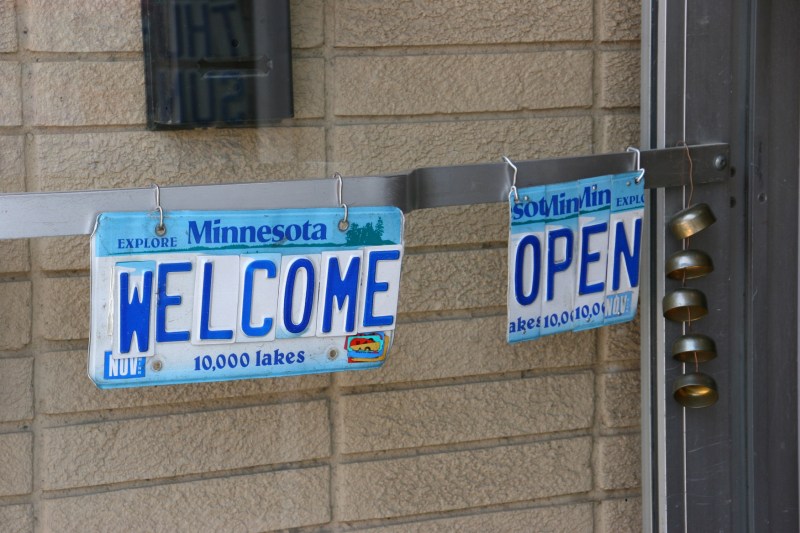
antique-shop-100-open-sign


I’M DRAWN TO ANTIQUE SHOPS. Not necessarily because I’m scouting for an antique or collectible. Rather, the history, the art, the nostalgia, the connection to childhood memories draw me inside.

In an antique shop I find a certain comfort remembering days past, of simpler times, of stories, of the saving of an object that once meant something to someone.


antique-shop-99-front-window


On a recent stop in the Minnesota river town of Jordan, I explored several antique and specialty shops, including LB Antiques along Water Street in the heart of downtown. Natural light poured through the lengthy front windows, adding warmth to a space that would work well as an art gallery. I always appreciate antiques grouped artfully in uncluttered settings.

Within LB Antiques, I saw the work of an artistic shopkeeper.


antique-shop-107-angel-candleholders-pitcher


I delighted in the graceful curve of an unadorned water pitcher symmetrically balanced between two ornate angel candle holders.


antique-shop-106-clown-graphic


Tucked into a mostly unseen floor space, a vintage clown graphic grabbed my attention. I’ve always appreciated graphics, a nod to my days working as a newspaper reporter, photographer and occasional page designer.


antique-shop-108-kettles


On a shelf, the contrast of utilitarian textured metal pots created visual interest against signage in bold hues of yellow, orange, red and pink.


antique-shop-101-st-paul-winter-carnival-banner


Likewise, a fabric banner advertising the 1967 Saint Paul Winter Carnival contrasted with the day—an exceptionally warm February afternoon of temps reaching near 60 degrees.


antique-shop-103-flecks-beer-bottle


My eyes were drawn, too, to a beer bottle from Ernst Fleckenstein Brewery, a long ago brewery in Faribault. I alerted a local collector to this mint condition bottle with the lovely gold-edged type face.


antique-shop-111-time-to-clean-sign


Even the block letters of a hand-printed sign soliciting merchandise caused me to pause and appreciate.


antique-shop-109-albums


In a back room, albums—two for $1—were stacked on tables, awaiting anyone willing to take the time to sort through them. For a collector of vinyl, this would equal striking a jackpot.


antique-shop-112-looking-for-antiques


That’s the thing about antique shops. What I might care about, another shopper would find of no interest. And vice versa. Our pasts shape our interests. And nowhere does that seem more evident than inside an antique shop.

TELL ME: Do you browse antique shops? Why? What draws you inside?

© Copyright 2017 Audrey Kletscher Helbling
 

How Faribault is honoring Barb Larson with an outdoor art installation February 17, 2017

NEARLY TWO MONTHS have passed since Barb Larson was shot to death by her ex-husband at her work place, the Faribault Area Chamber of Commerce & Tourism office. Dick Larson, a retired Faribault police officer, then killed himself.

Today my community continues to heal, to create an awareness of domestic violence and to celebrate the life of this vivacious and vibrant woman. I feel a real sense of unity, a deepening compassion and a connectedness that I’ve not experienced before in Faribault.

And now that care is extending to a public art project that honors Barb’s life. The Chamber is seeking proposals from area artists for an outdoor sculptural installation on the very building where Barb was killed.


The words in this word cloud describe Barb Larson.

The words in this word cloud describe Barb Larson and are meant to inspire artists in proposing a public sculpture in her honor.

The concept the Chamber hopes to convey is depicted in descriptive words submitted by those who knew Barb. Words like friendly, welcoming, vivacious, energetic, caring, kind… I never knew Barb. But based on the words filling a word cloud on the request for proposals, I understand why she was much beloved. I think all of us would like to be remembered with such positive adjectives.
Artists’ proposals are being accepted through March 24. Click here for more information. What a great opportunity to propose artwork that represents all the positive qualities Barb embodied.
We are a community that continues to heal. And we are a community determined to focus on the spirit of goodness and light in the darkness of tragedy.

© Copyright 2017 Audrey Kletscher Helbling