Minnesota Prairie Roots

Writing and photography by Audrey Kletscher Helbling

Latest “Talking Stick” anthology publishes & I’m in, again September 19, 2024

I couldn’t resist posing with Paul Bunyan at Jack Pines Resort following a book launch party there on September 14. (Photo credit: Randy Helbling)

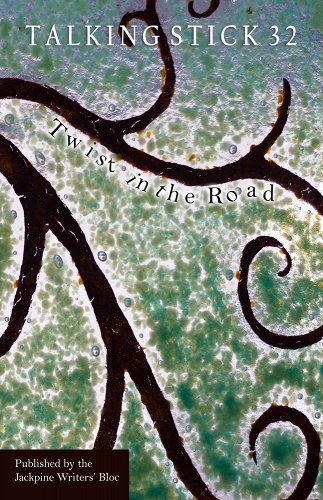
FOR 33 YEARS NOW, a writing group in northern Minnesota has published Talking Stick, a literary anthology packed with poetry, fiction and creative nonfiction. It features not only the writing of well-known Minnesota writers, but also that of emerging writers. And that says a lot about this book published by the Jackpine Writers’ Bloc based in the Park Rapids area.

Getting published in this anthology is a competitive process with blind-judging. The judges—this year a university English professor and writer, a writer who moved to Minnesota for a rural artist-in-residency, and the author of a cozy mystery series—have no idea whose work they are considering for honors. The Jackpine editorial team chooses their top pieces to pass along to the judges for review and awards.

There were 280 submissions from 121 Minnesota writers or writers with a strong connection to our state in the 2024 writing competition. Of those, 113 works from 72 writers were published. That includes 63 poems, 22 creative twist pieces, 15 creative nonfiction stories and 13 fictional stories.

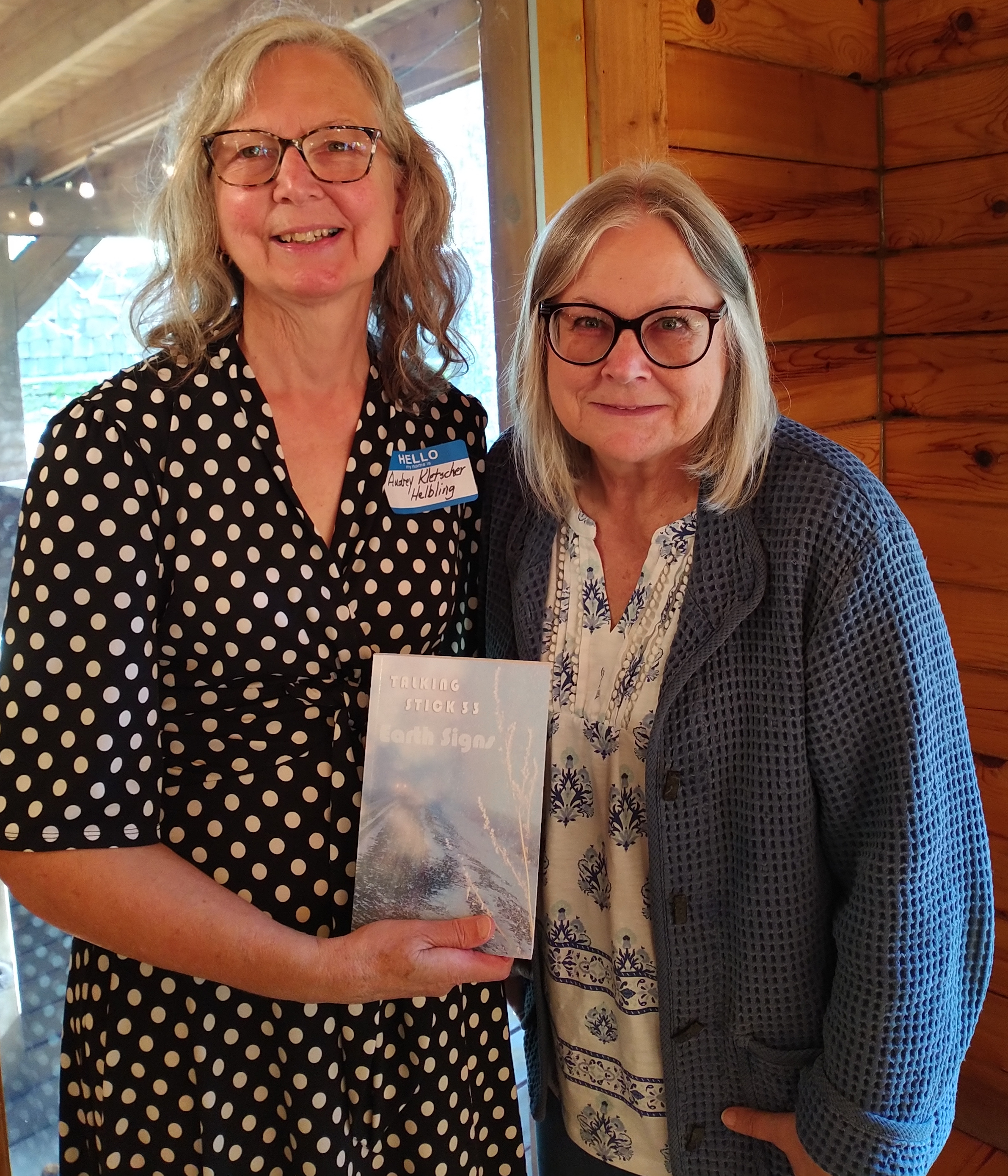
Me with author and fiction judge Jeanne Cooney, right. (Photo credit: Randy Helbling)

My short story, “Dear Mother,” earned second place in fiction as decided by author Jeanne Cooney. She’s written “A Hot Dish Heaven Mystery” series and has launched a new “It’s Murder” series. Did my mention of Hamburger Noodle Hotdish and red Jell-O salad in my story influence Cooney’s decision? I’d like to think not, but I suppose subconsciously it could have. When I wrote my short story, though, I had no idea who would be judging the fiction category. Hotdish simply fit into the storyline.

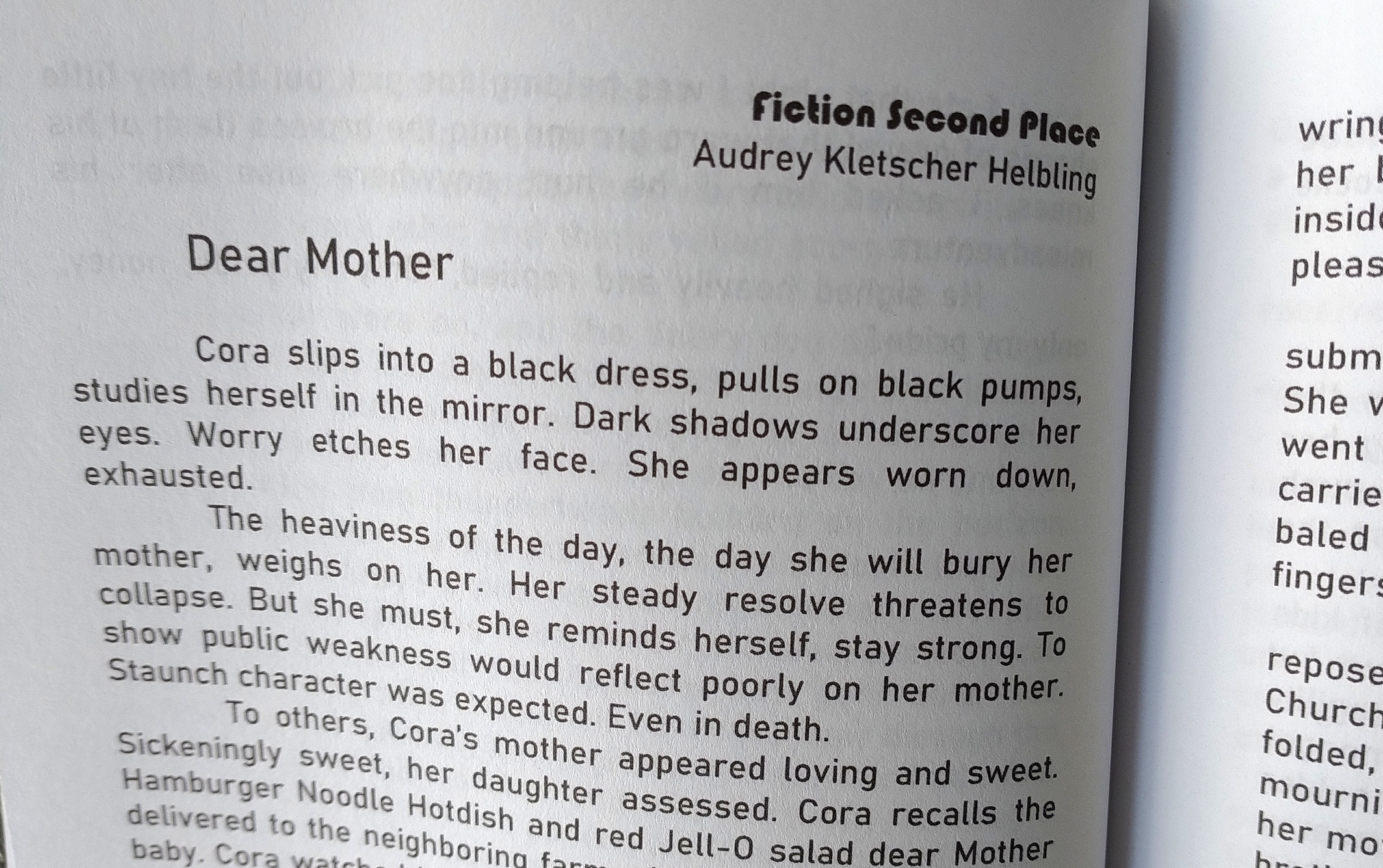
The beginning of my prize-winning fictional story, “Dear Mother.” (Minnesota Prairie Roots copyrighted photo September 2024)

Cooney called “Dear Mother” a “Very good story. But needs to be clearer.” She was right. Her comments helped me shape a stronger, better piece of writing. Dark writing. Mine is a story that begins seemingly ordinary enough, wrapping up in a surprise ending. Or rather an inferred dark ending.

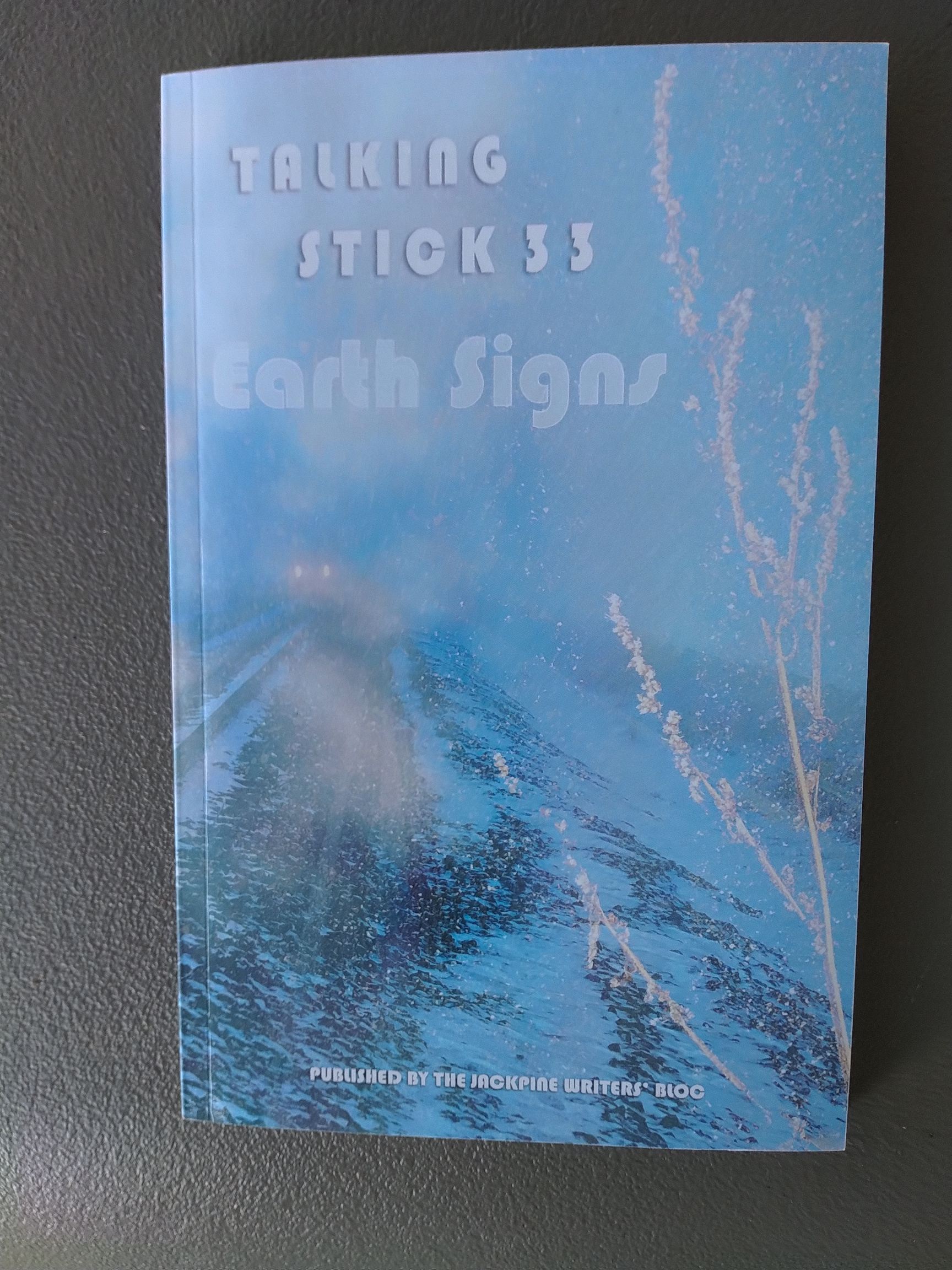
Congratulations to everyone whose work published in “Talking Stick 33.” Those include readers of this blog. Thanks also to Managing Editors Sharon Harris and Tarah L. Wolff for their ongoing dedication to the craft of writing. (Minnesota Prairie Roots copyrighted photo September 2024)

Last Saturday afternoon, I gathered with other writers and supporters for a party launching publication of Talking Stick 33—Earth Signs at Jack Pines Resort (no connection to the writers’ group) in rural Osage, a four-hour drive from Faribault. The event included a writing workshop (which I did not attend), book reading and socializing.

I’m not especially comfortable reading to a roomful of people, even though I’ve done so many times. But I practiced and then read “Dear Mother” with dramatic inflections and soft tones in just the right spots, managing to convey exactly what I wrote. There’s something to be said for hearing a poem or story read aloud. The piece comes alive via the voice of the writer.

As I listened to all these writers, I felt a strong sense of community. I felt encircled by a group of incredibly talented and supportive creatives. People who care about language and emotion and damn good writing.

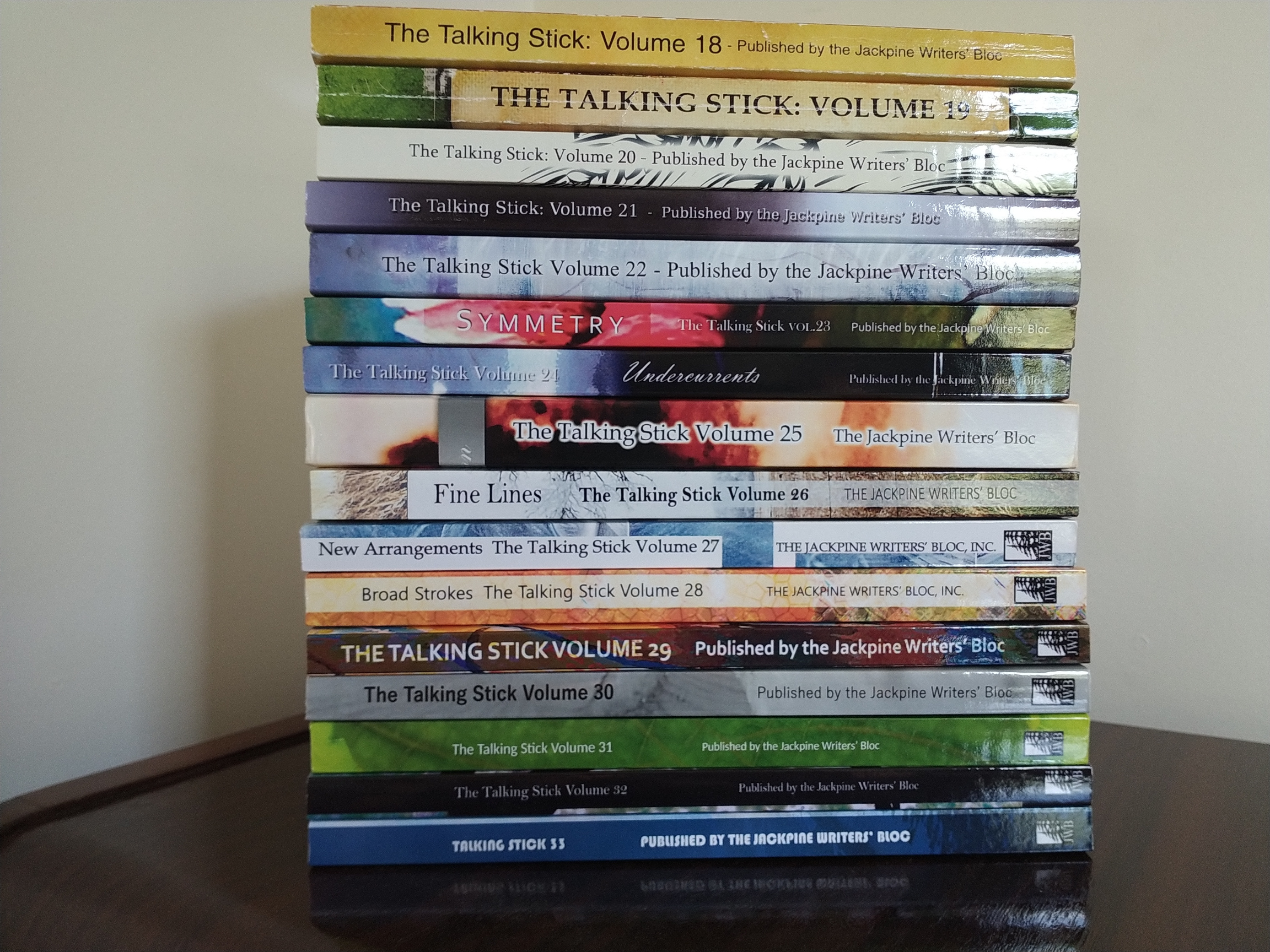
My collection of “Talking Stick” books. I’ve been published in 15 of these 16 volumes. (Minnesota Prairie Roots copyrighted photo September 2024)

This marks the 15th consecutive year my writing has published in Talking Stick. A poem, “Misunderstood,” and a work of creative nonfiction, “Lessons Inside the Dome,” were also selected for publication in the 2024 volume. Both are Faribault-rooted. My poem focuses on the connection between the Wahpekute and today’s homeless population living in woods along the Straight River. In “Lessons,” I write about walking inside the Shattuck-St. Mary’s School dome during the winter and lessons I learned there.

My writing is often rooted in experiences, in observations, in overheard conversations, in memories. I’ve covered everything from farming, to aging to domestic abuse, trauma, Minnesota Nice and more. Writing prompts have come from a vintage family photo, a sign on a barbershop window in Northfield, a painting by Andy Warhol… There are stories everywhere.

I’m grateful to the Jackpine Writers’ Bloc for repeatedly choosing my work for publication in Talking Stick. That includes 15 poems, 10 short stories, nine creative nonfiction stories and two creative twist stories (written using a list of pre-selected words). I’ve thrice been awarded second place (poetry, fiction and creative nonfiction). I’ve also earned eight honorable mentions (four for fiction, two for creative nonfiction, and one each in poetry and creative twist). Winning those awards is validating to me as a writer.

But just as validating is being among other writers. Writers who appreciate the craft of writing and the hard work it takes to shape a poem or a short story. Writers who understand the importance of word choice. Writers who recognize the power of words. Writers who don’t settle for the mundane, the cliché, the everyday. Writers who will spend several hours together on a glorious September afternoon in the northwoods celebrating the release of Talking Stick, a stellar literary anthology. We have much to celebrate in Minnesota, in this place that produces a remarkable number of talented writers.

FYI: To purchase a copy of “Talking Stick,” click here. Thank you for supporting Minnesota writers.

© Copyright 2024 Audrey Kletscher Helbling


Oh, the places my photos go, including into a vets home in Bemidji August 19, 2024

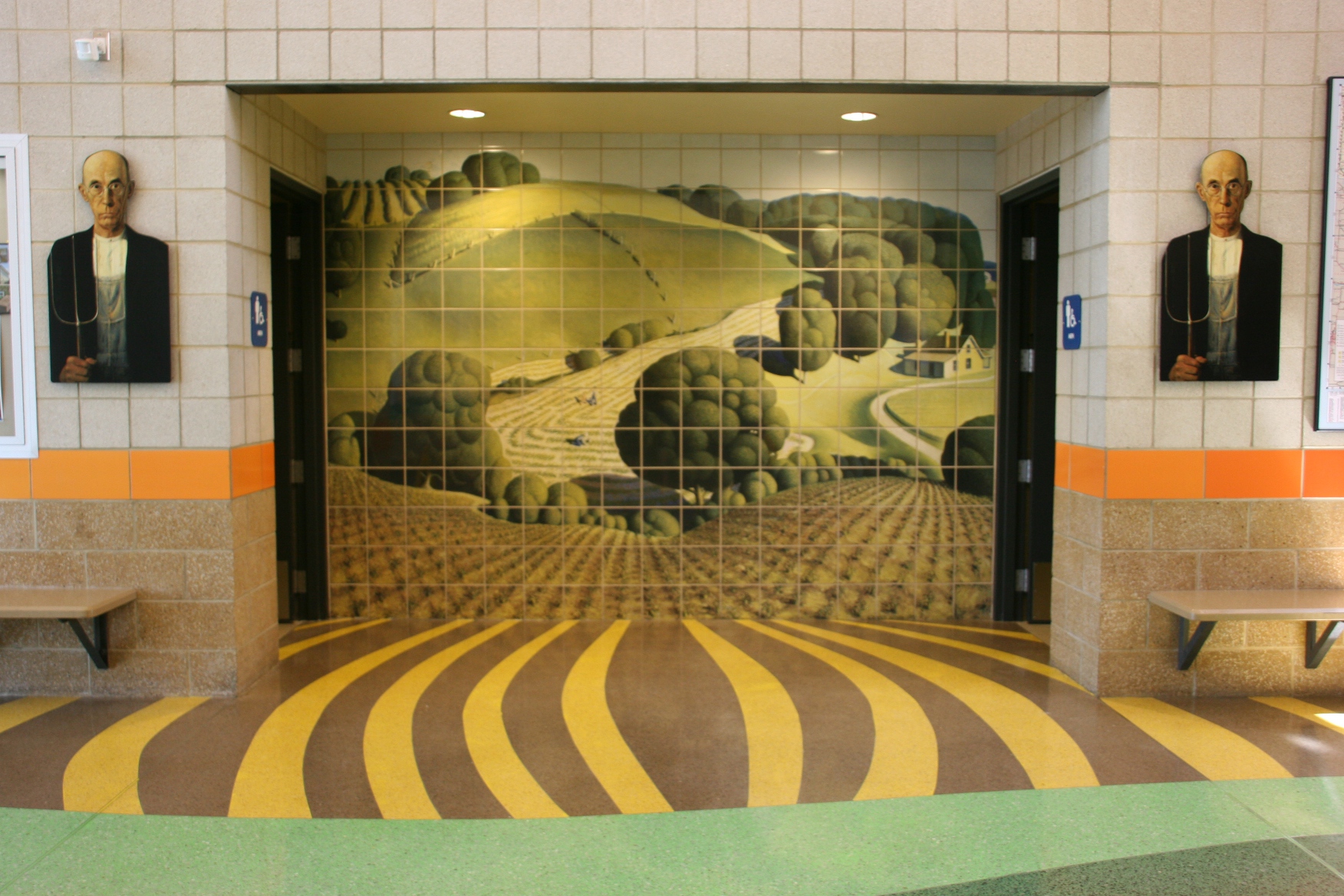
This photo, taken at the Grant Wood Rest Area along I-380 south of Cedar Rapids, Iowa, was published in a book about architecture. It was converted to black-and-white in the book. (Minnesota Prairie Roots copyrighted file photo)

THROUGHOUT MY 15 YEARS of blogging, I’ve sold rights to dozens of images sourced from Minnesota Prairie Roots. My photos have published on websites, in tourism guides, on album covers, on packaging for a toy company, in magazines and newspapers, on business promotional materials, on signs and banners, on the cover of a nonprofit’s annual report, in books…

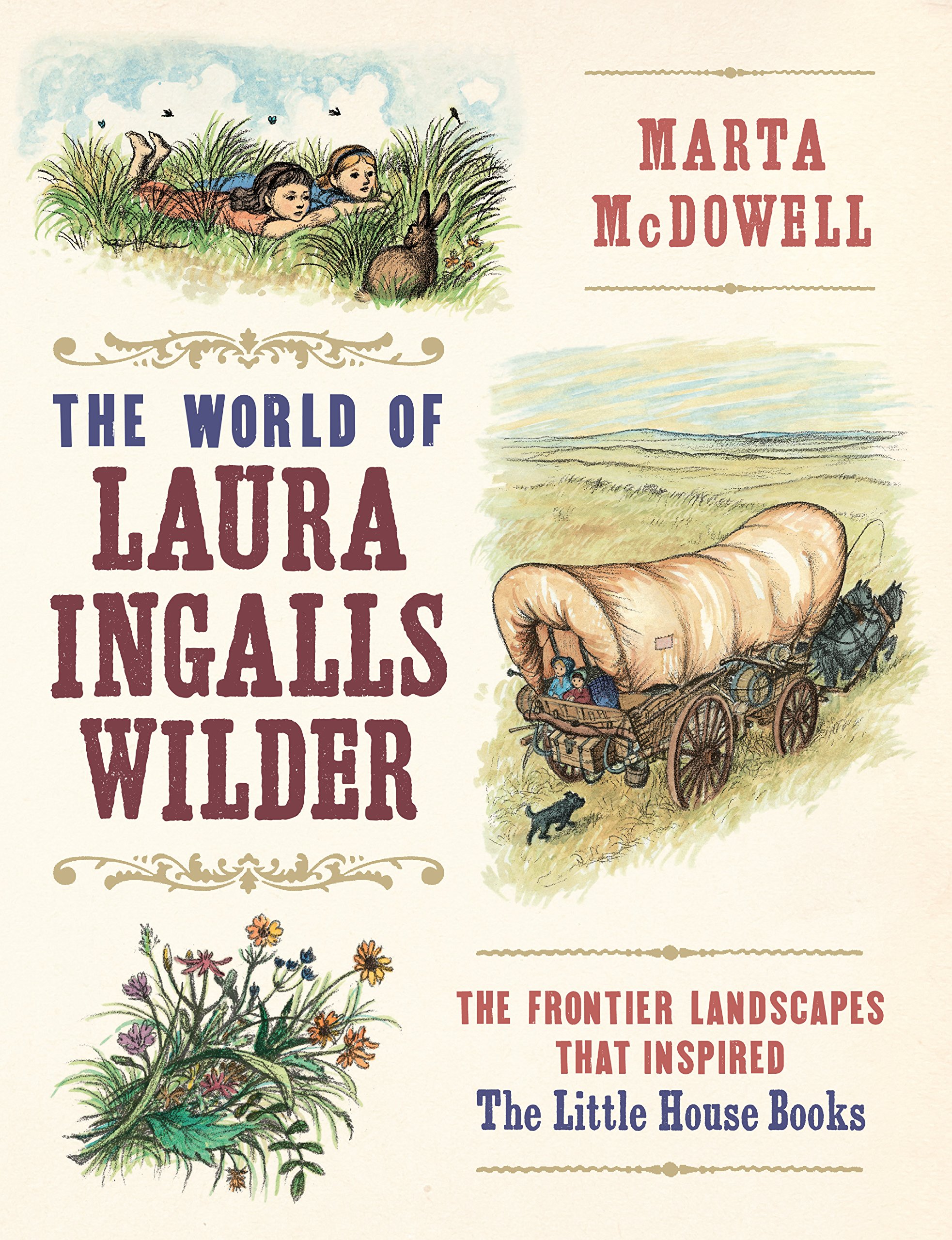
Three of my photos published in this book. (Book cover sourced online)

I’m especially proud of the three photos published in The World of Laura Ingalls Wilder—The Frontier Landscapes that Inspired the Little House Books by New York Times bestselling author Marta McDowell. I grew up only 25 miles from Walnut Grove, Wilder’s childhood home. Wilder inspired me as a writer and photographer with her detail-rich creative style. I’m also proud of my two Grant Wood-themed Iowa rest stop photos printed in the book Midwest Architecture Journeys. I have copies of both books.

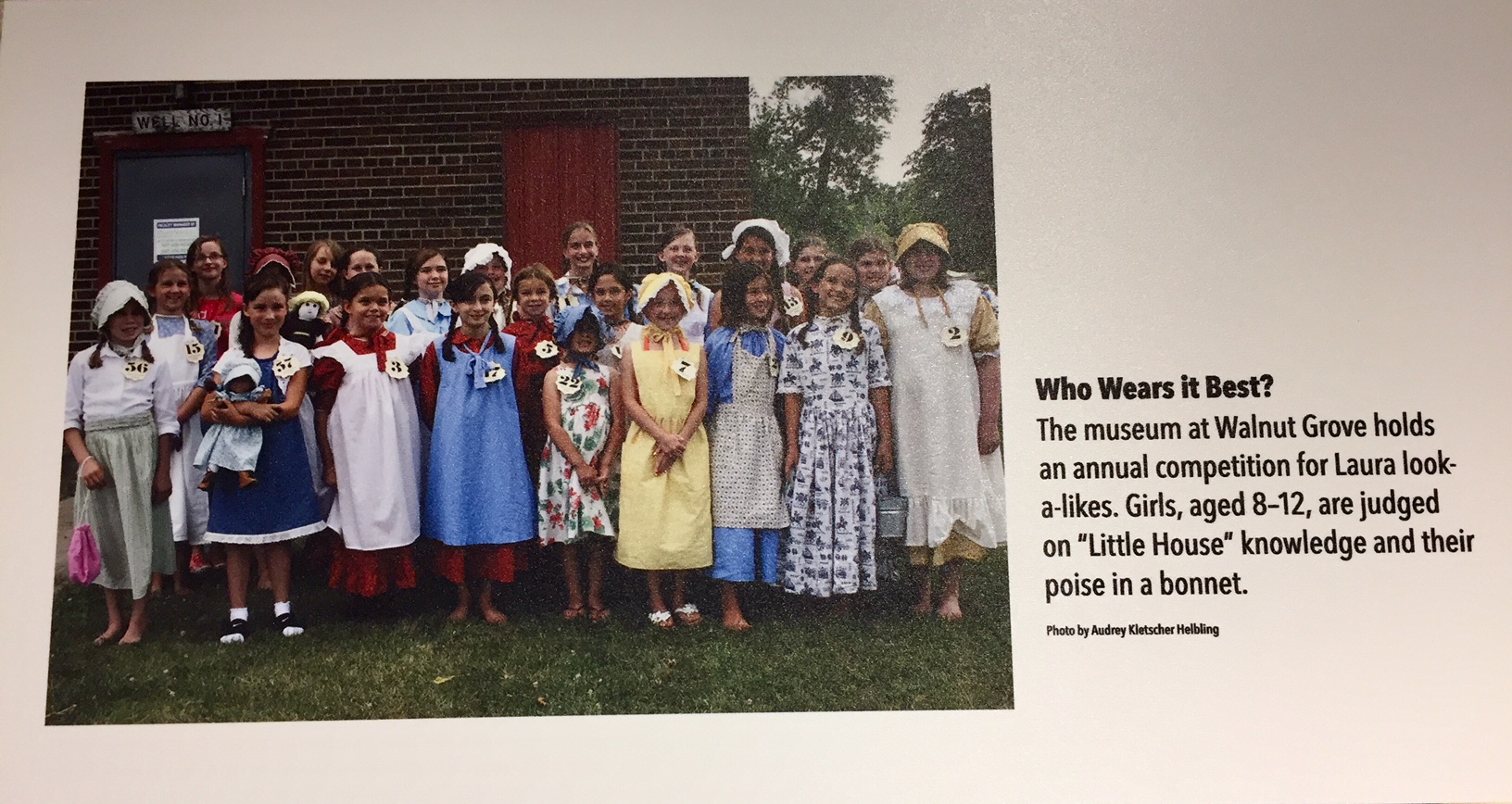
My Laura Look-Alike Contest photo displayed in a Chicago museum. My friend Laurel happened upon the photo while touring the museum and snapped this image for me. (Minnesota Prairie Roots copyrighted photo by Laurel Engquist)

Likewise, I had the honor of selling rights to photos displayed in a temporary Laura Ingalls Wilder exhibit at the American Writer’s Museum in Chicago, at the Minnesota Children’s Museum in St. Paul and at the National WWII Museum in New Orleans. Atherton Pictures purchased rights to a southwestern Minnesota farm site photo for a WWII video created for the museum. I’ve never visited any of the three museums.

The Minnesota Veterans Home, Bemidji, which can house 72 veterans, recently opened. (Photo courtesy of Minnesota Veterans Home, Bemidji)

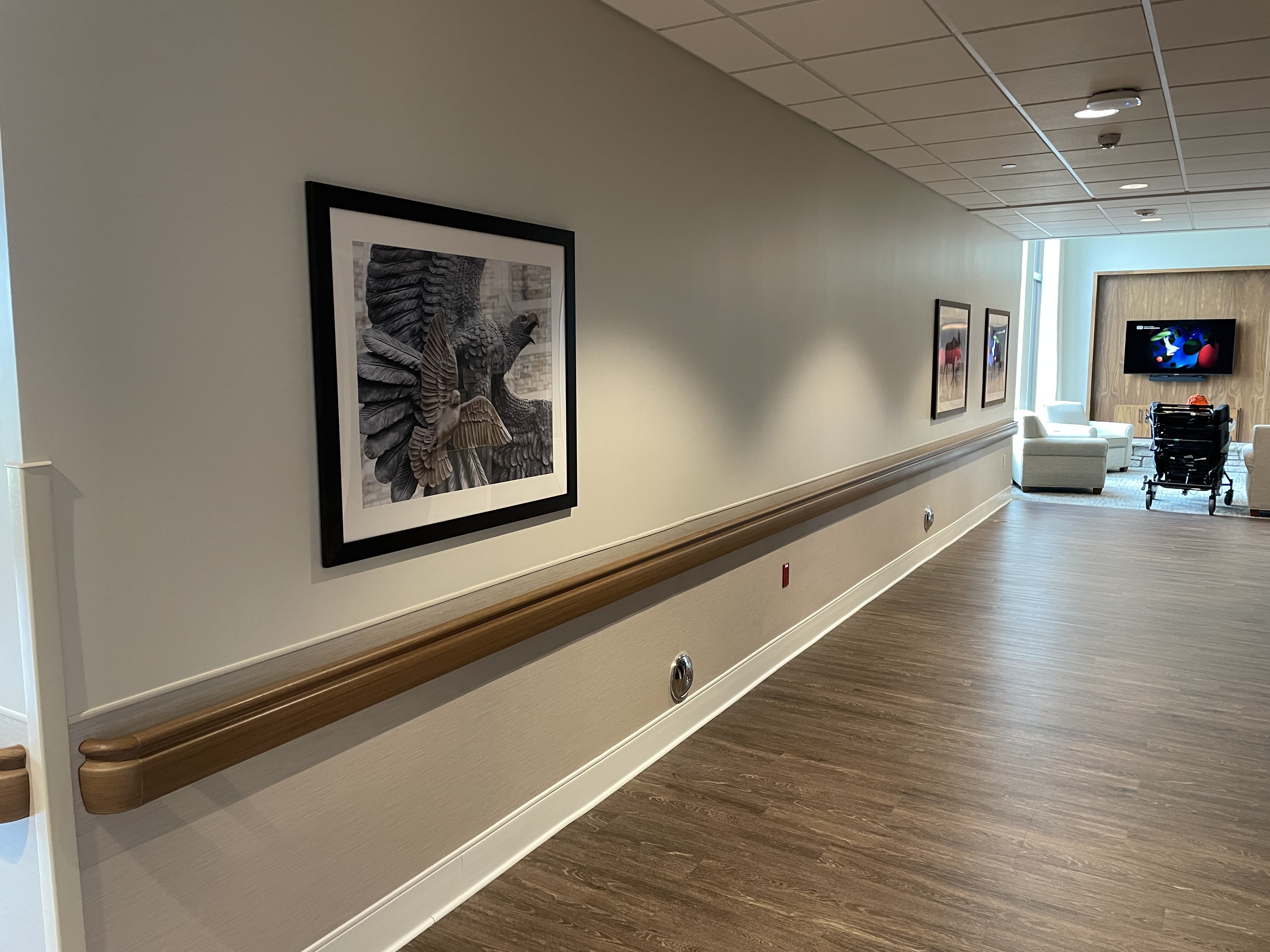
Seldom do I see how my photos are used once I email the original high resolution digital images to the buyer. But this summer I had the joy of seeing my framed photos displayed in hallways of the new Minnesota Veterans Home in Bemidji. I was in town to bring my son, who lives in Boston and was in Bemidji for the international unicycling convention, home to Faribault. I knew I had to make time for a stop at the veterans home.

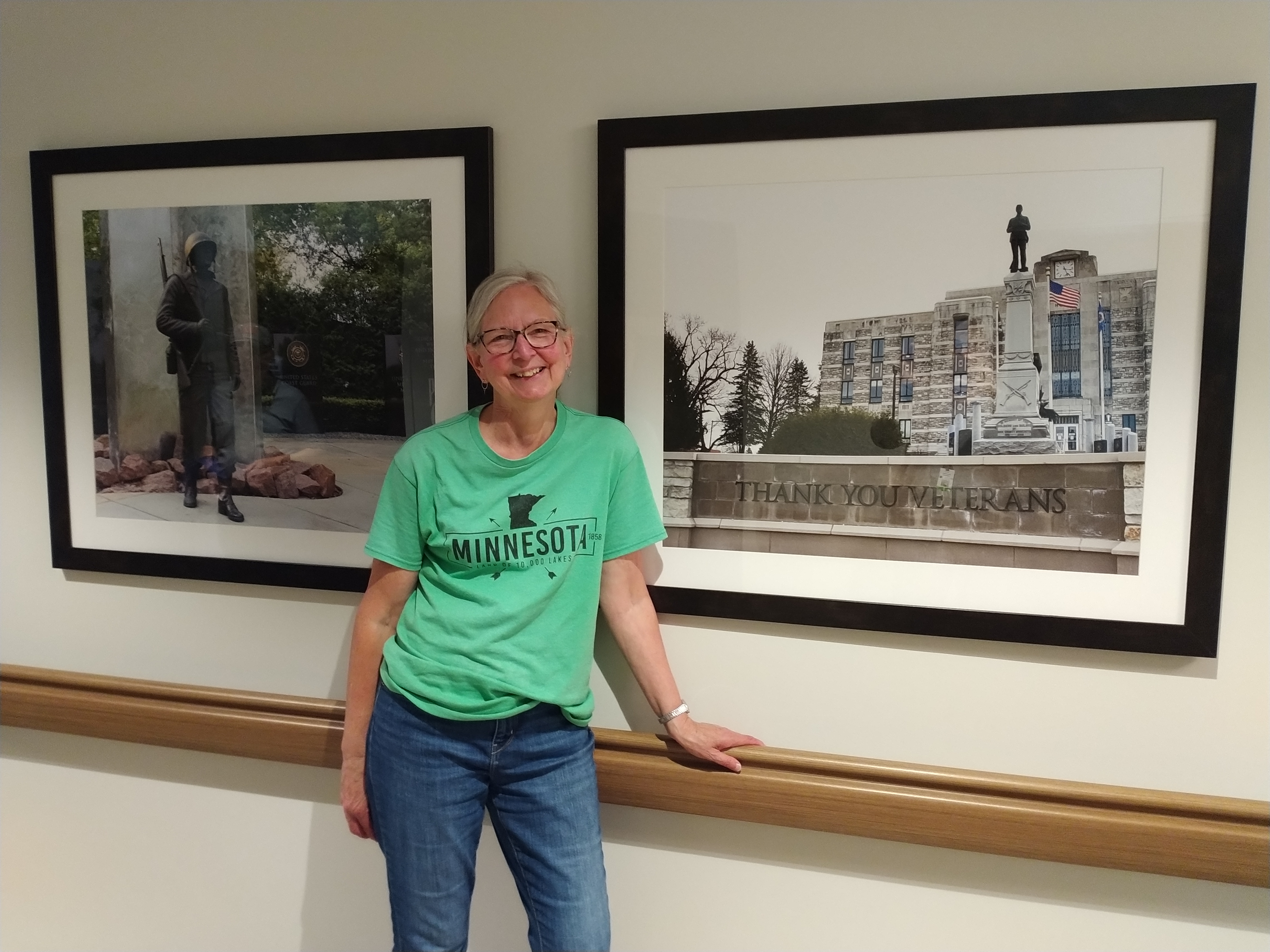
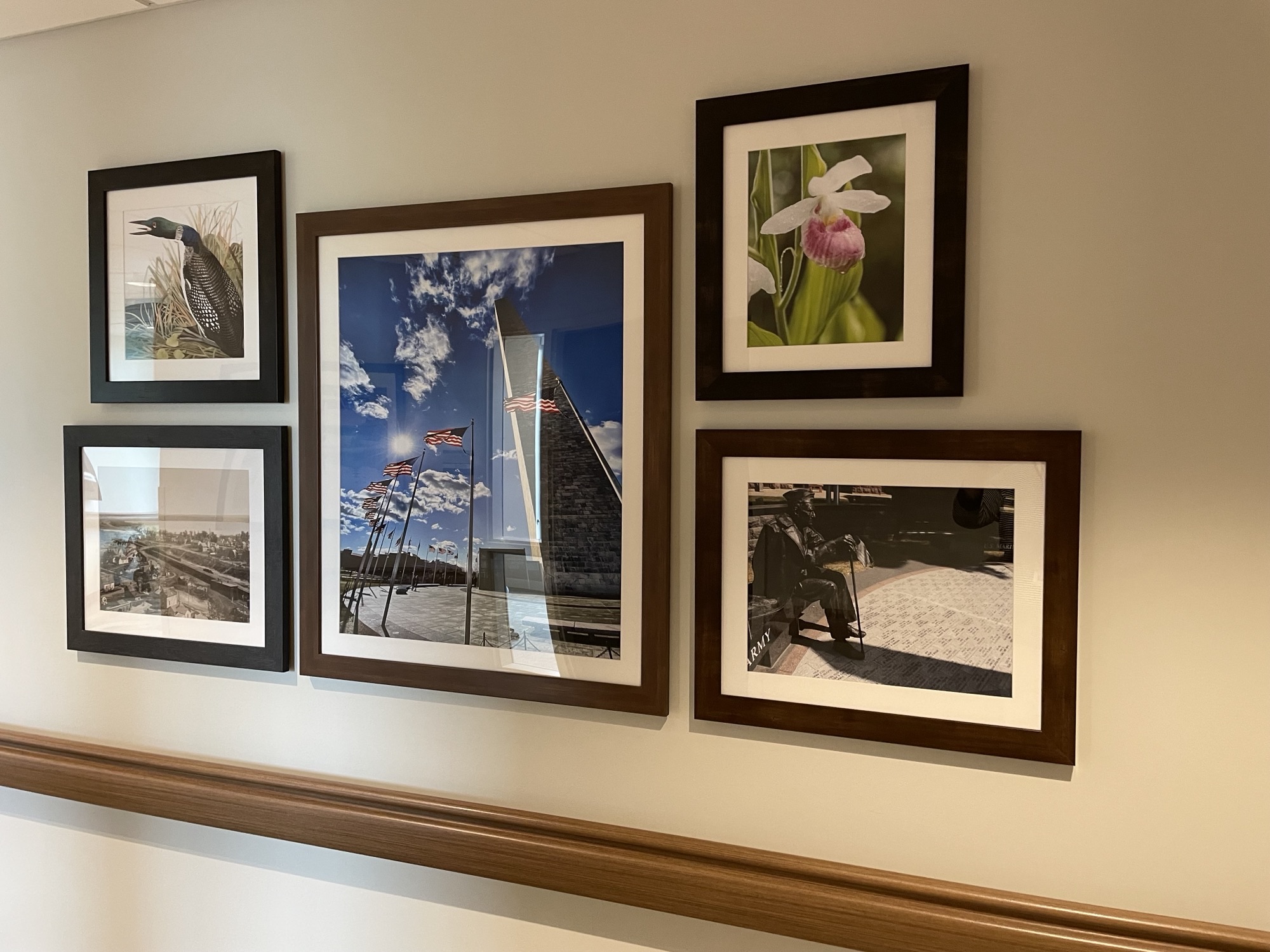
Me with two of my photos, a scene from the Northfield Area Veterans Memorial on the left and the other at the Rice County Veterans Memorial. (Photo courtesy of Minnesota Veterans Home, Bemidji)

So in between Unicon 21 events, Randy and I headed to the vets home in hopes of seeing my six framed art prints. We found four, thanks to Maryhelen Chadwick, public affairs/volunteer coordinator at the Veterans Home. When we showed up unexpectedly, Chadwick graciously led us through the sprawling Town Center in search of my photos. There, in the hallways of this public space, which includes a multipurpose room, theater, club room, learning studio, family dining room, therapy gym and meditation room, we located four of my photos.

This photo, converted to black-and-white, hangs in the Bemidji veterans home. (Minnesota Prairie Roots copyrighted file photo)
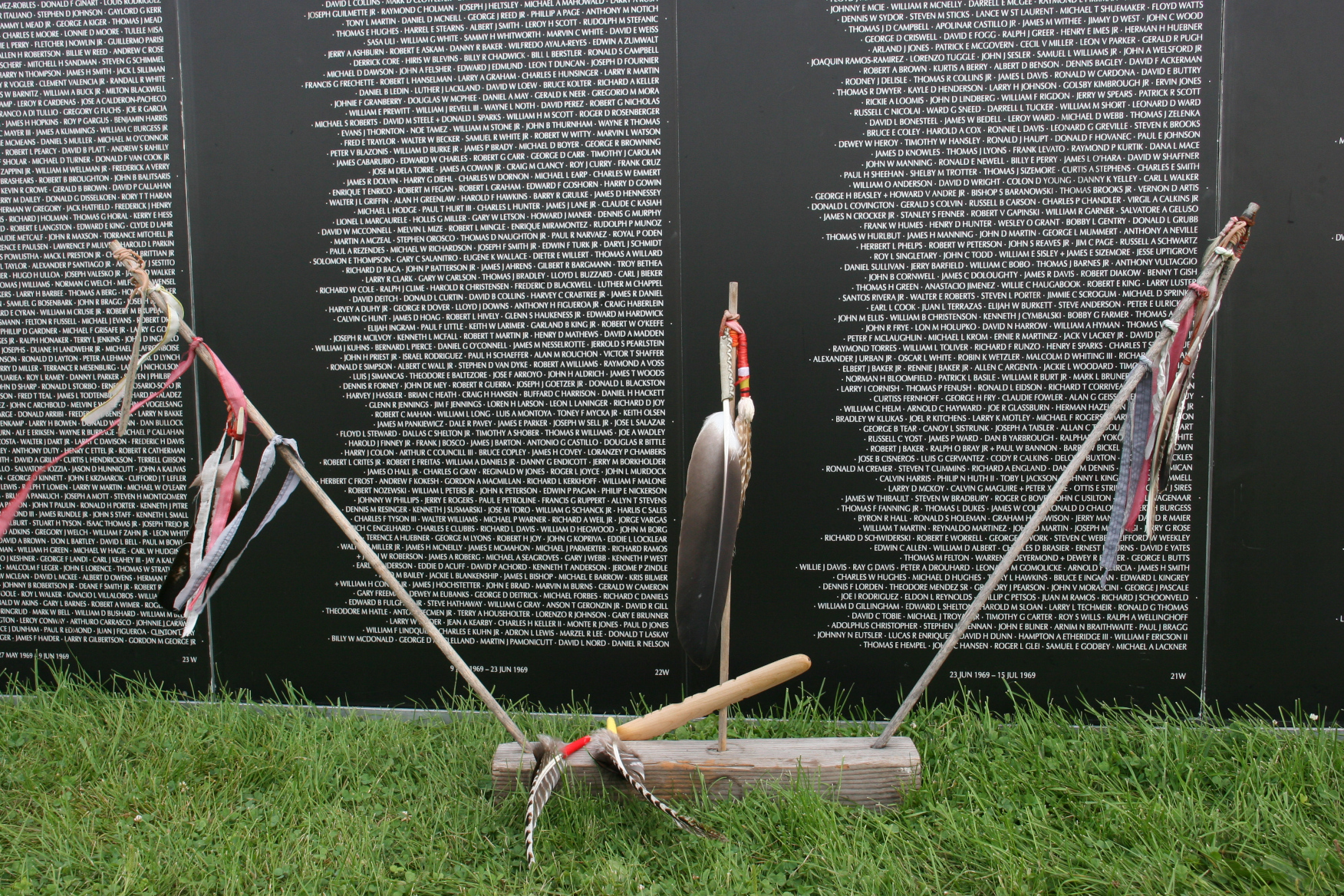
My photo of the Traveling Vietnam Memorial Wall also hangs in the vets home. (Minnesota Prairie Roots copyrighted file photo)

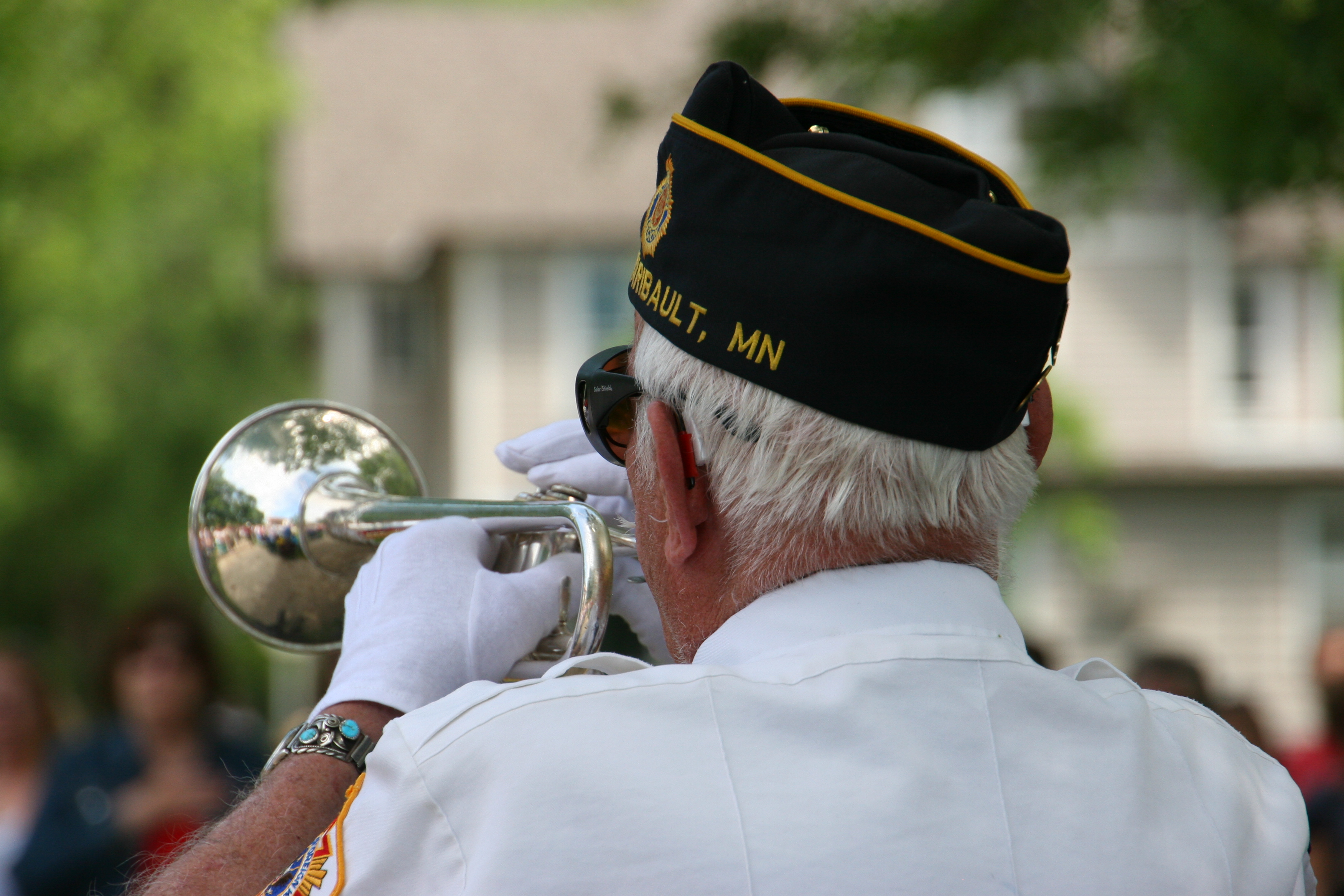
Curated by a St. Paul art company, the selected images are all veteran-themed. Oversized photos of veterans’ memorials in Faribault and Northfield anchor a hallway wall. Elsewhere in the public space are two more images shot in Faribault—a veteran playing taps at a Memorial Day program and a photo of items placed at the Traveling Vietnam Memorial Wall. Chadwick later found my photos of sculptures at the county memorial in Faribault and the Rock County Veterans Memorial, Luverne, in the residential wing of the veterans home.

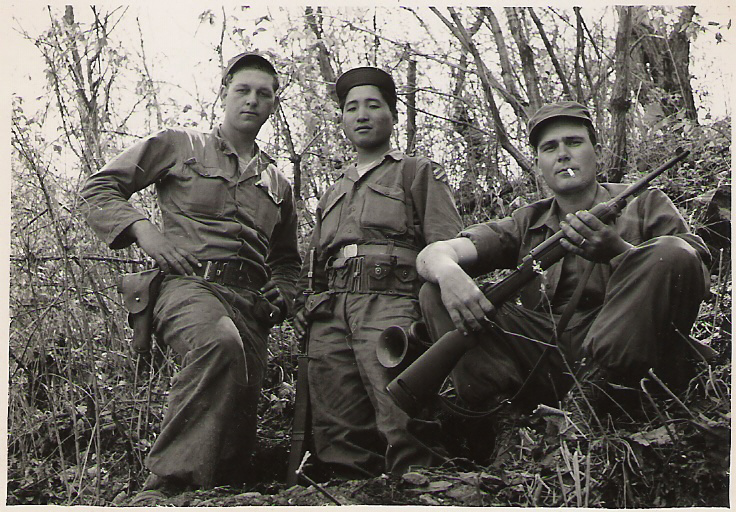
My father, Elvern Kletscher, on the left with two of his soldier buddies in Korea. (Minnesota Prairie Roots copyrighted photo)

To see four of my six photos showcased in a public space where veterans, their families and friends, staff, and others can view my work is humbling. I am the daughter of a Korean War veteran. My dad, Elvern Kletscher, fought on the front lines in Korea as a foot soldier. He experienced the worst of war. The injuries. The killing. Atrocities so awful, so horrific that he was forever changed by his time in combat. He suffered from Post Traumatic Stress Disorder (unrecognized at the time of his discharge). He endured much pain, heartache, trauma. Nightmares. Flashbacks.

My photo of a sculpture at the Rock County Veterans Memorial, lower right, is showcased in a group of images in the Beltrami Household. (Photo courtesy of Minnesota Veterans Home, Bemidji)

But, in his later years of life, Dad found solace among other veterans in a support group through the Redwood County Veterans Service office. I remember how hard officials worked to secure the Purple Heart that Dad finally got 47 years after he was wounded on Heartbreak Ridge. I was there for that emotional public ceremony.

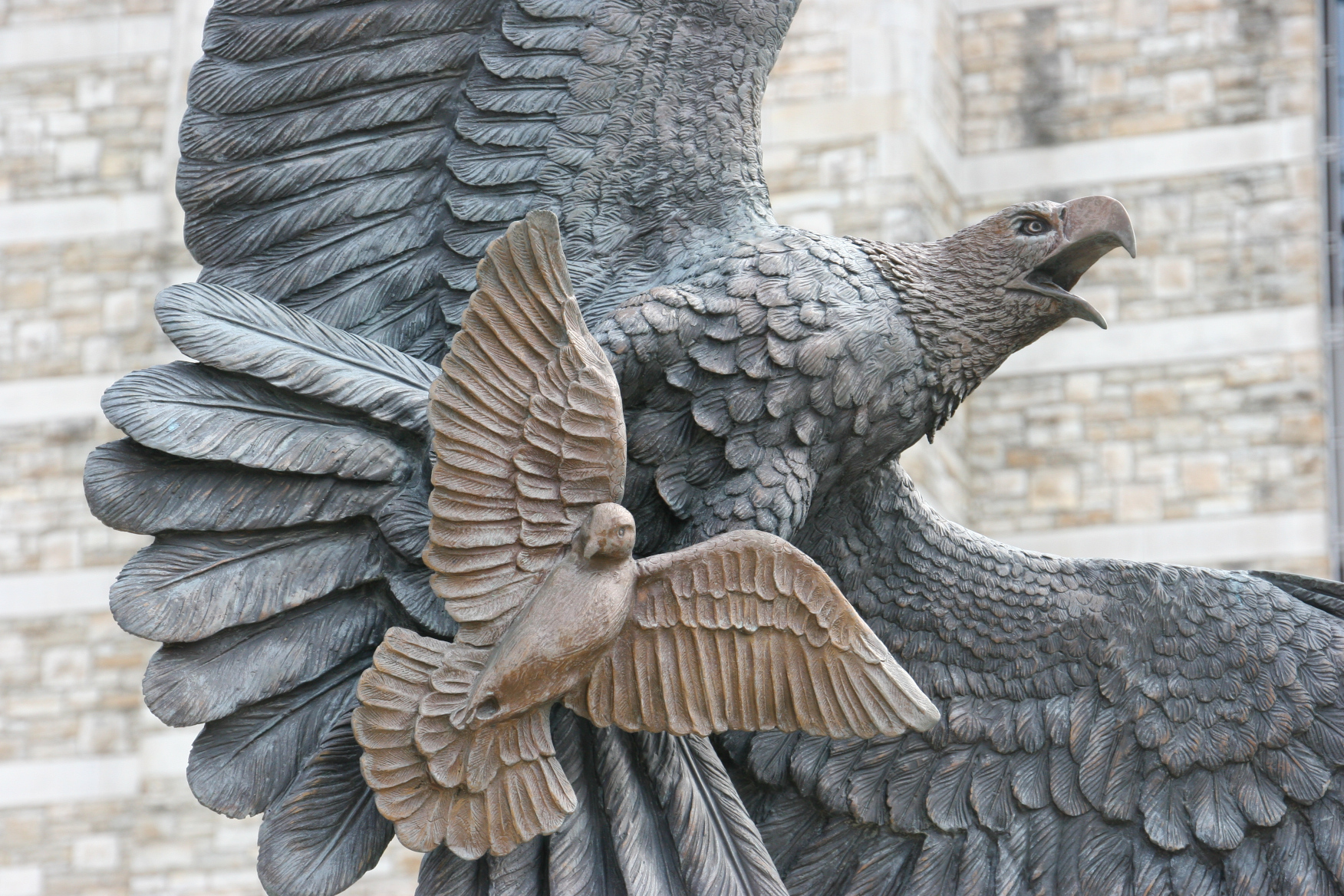
My photo of a dove and eagle at the Rice County Veterans Memorial in Faribault graces a hallway of the Beltrami Household. (Photo courtesy of Minnesota Veterans Home, Bemidji)

Today emotions swell again as I think of my framed photos hanging in the Minnesota Veterans Home—Bemidji. To me these are not just veterans-related images procured as art. They are a photographic “thank you” to every person who has served our country. Because of individuals like my dad, I live in a free country, in a democracy. I never take that for granted. To be able to express my gratitude via my photos is truly an honor, a joy and deeply meaningful.

I hope my photo of a dove sculpture, symbolizing peace, and an eagle, symbolizing freedom, conveys my gratitude to the veterans living in the Minnesota Veterans Home, Bemidji. (Minnesota Prairie Roots copyrighted file photo)

NOTE: Maryhelen Chadwick kindly found and photographed my eagle/dove and soldier sculpture photos per my request after I visited the home. They hang in the Beltrami Household, one of four 18-room residential areas, a space I could not tour due to privacy.

© Copyright 2024 Audrey Kletscher Helbling
 

My prize-winning poem: “Sunday Afternoon at the Auction Barn” May 31, 2024

Turek’s Auction Service, 303 Montgomery Ave. S.E. (Highway 21), Montgomery, has been “serving Minnesota since 1958.” (Minnesota Prairie Roots edited and copyrighted file photo February 2014)

AUCTIONS ARE PART of my rural DNA. As such, a photo I took ten years ago of an auction barn on the edge of Montgomery, Minnesota, inspired me to write a poem. I entered “Sunday Afternoon at the Auction Barn” in the 2014 The Talking Stick writing competition. It earned second place in poetry and publication in The Talking Stick 23, Symmetry, a literary journal published by the northern Minnesota-based Jackpine Writers’ Bloc. It also earned the praise of noted Minnesota poet and poetry judge Margaret Hasse. She’s authored six full-length collections of poetry.

First, my poem:

Sunday Afternoon at the Auction Barn

Shoulder brushes shoulder as bidders settle onto plank benches

in the tightness of the arched roof auction barn,

oil stains shadowing the cement beneath their soles,

where a farmer once greased wheel bearings on his Case tractor.

The auctioneer chants in a steady cadence

that mesmerizes, sways the faithful fellowship

to raise hands, nod heads, tip bidding cards

in reverent respect of an aged rural liturgy.

Red Wing crock, cane back rocker, a Jacob’s ladder quilt,

Aunt Mary’s treasured steamer trunk, weathered oars—

goods of yesteryear coveted by those who commune here,

sipping steaming black coffee from Styrofoam cups.

In her critique of my poem, Hasse wrote:

I loved how you turned a humdrum occasion of bidding on antiques in an old barn into a closely observed and luminous occasion. The writer John Ciiardi once wrote that close and careful observation can “leak a ghost.” The surprise of your poem was the elevation of a commercial or material enterprise into a spiritual gathering—with a fellowship, liturgy, reverent respect, and people who commune. The ending—visual and concrete—was just right. The poet Franklin Brainerd wrote a poem something to the effect, “in a world of crystal goblets, I come with my paper cup.” There’s something both unpretentious and appealing about “sipping steaming black coffee from Styrofoam cups.”

Hasse’s comment reflects that she understands the spirit and spirituality of my poem. It was a joy to write. As I recall, the words flowed easily from my brain to keyboard to screen as I visualized bidders inside that auction barn, like congregants in a church. When poetry works like that, it’s magical and fulfilling and beyond beautiful.

© Copyright 2024 Audrey Kletscher Helbling
Poem copyrighted in 2014


A look back, a look ahead: How school shapes us, expands our world September 6, 2023

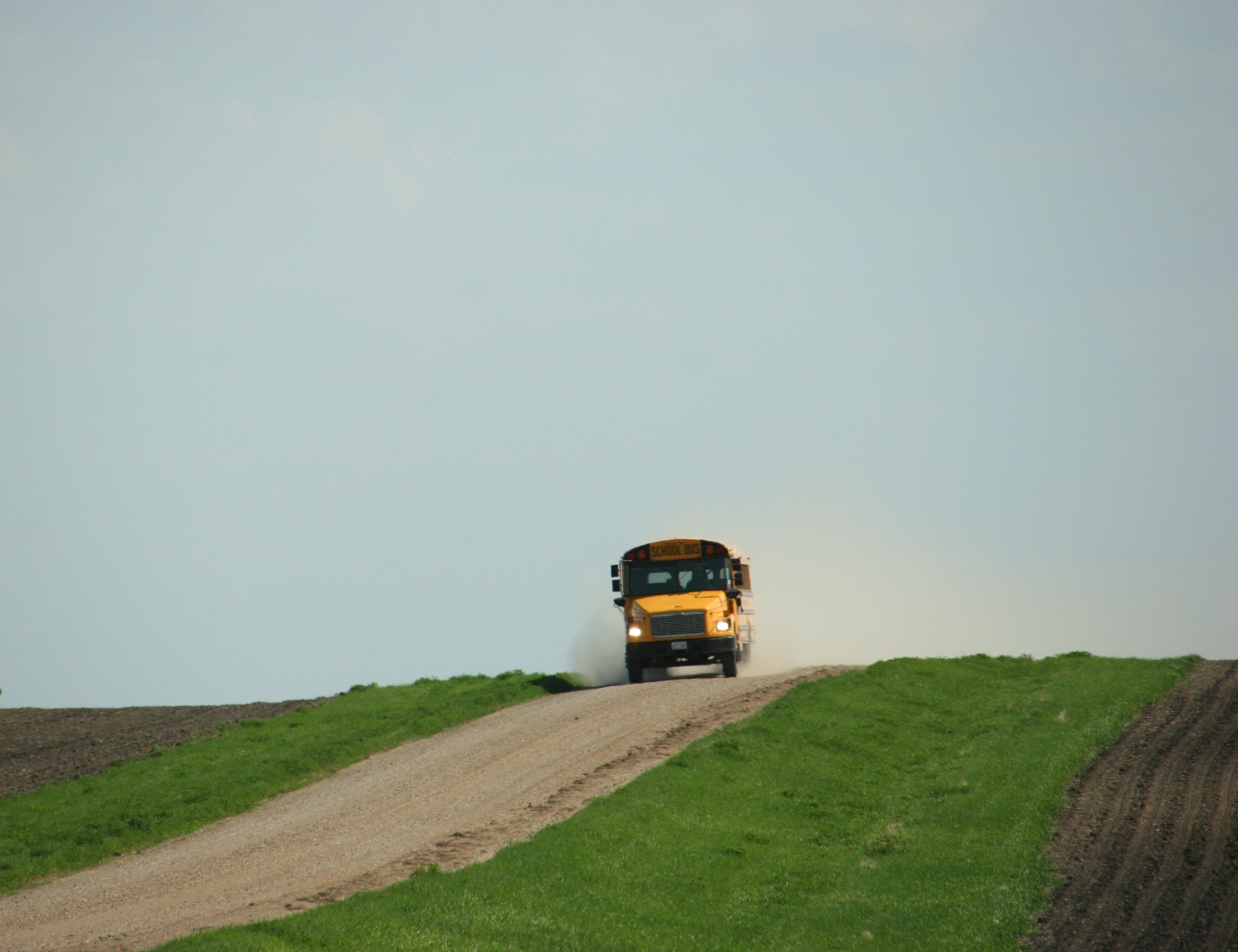
A bus follows a back country road near Morgan in southwestern Minnesota. (Minnesota Prairie Roots copyrighted file photo May 2018)

SHE WANTS TO SAVE the earth. It’s a lofty and noble goal for my granddaughter, who started second grade on Tuesday. Each year, on the first day of school, her mom documents basics about Isabelle on a small chalkboard. That includes a response to “What I want to be when I grow up.” This year Izzy aims to be an environmentalist. As a first grader, her professional goal was becoming a game designer. And on the first day of kindergarten, she wanted to own a toy store and also be a mom.

It’s interesting how Izzy’s interests evolve as she ages, as she grows her world and knowledge and connections with others. The possibilities are endless for her generation. I hold such hope in these young people, just beginning their formal educations.

And I hold hope, too, when I see a photo of Izzy and three neighborhood friends waiting at their urban bus stop. “Smart, Brave, Beautiful” banners Bethel’s tee. What a reaffirming message. For all of them. And how reaffirming that they are of differing ethnicity, their skin tones varied and, indeed, beautiful.

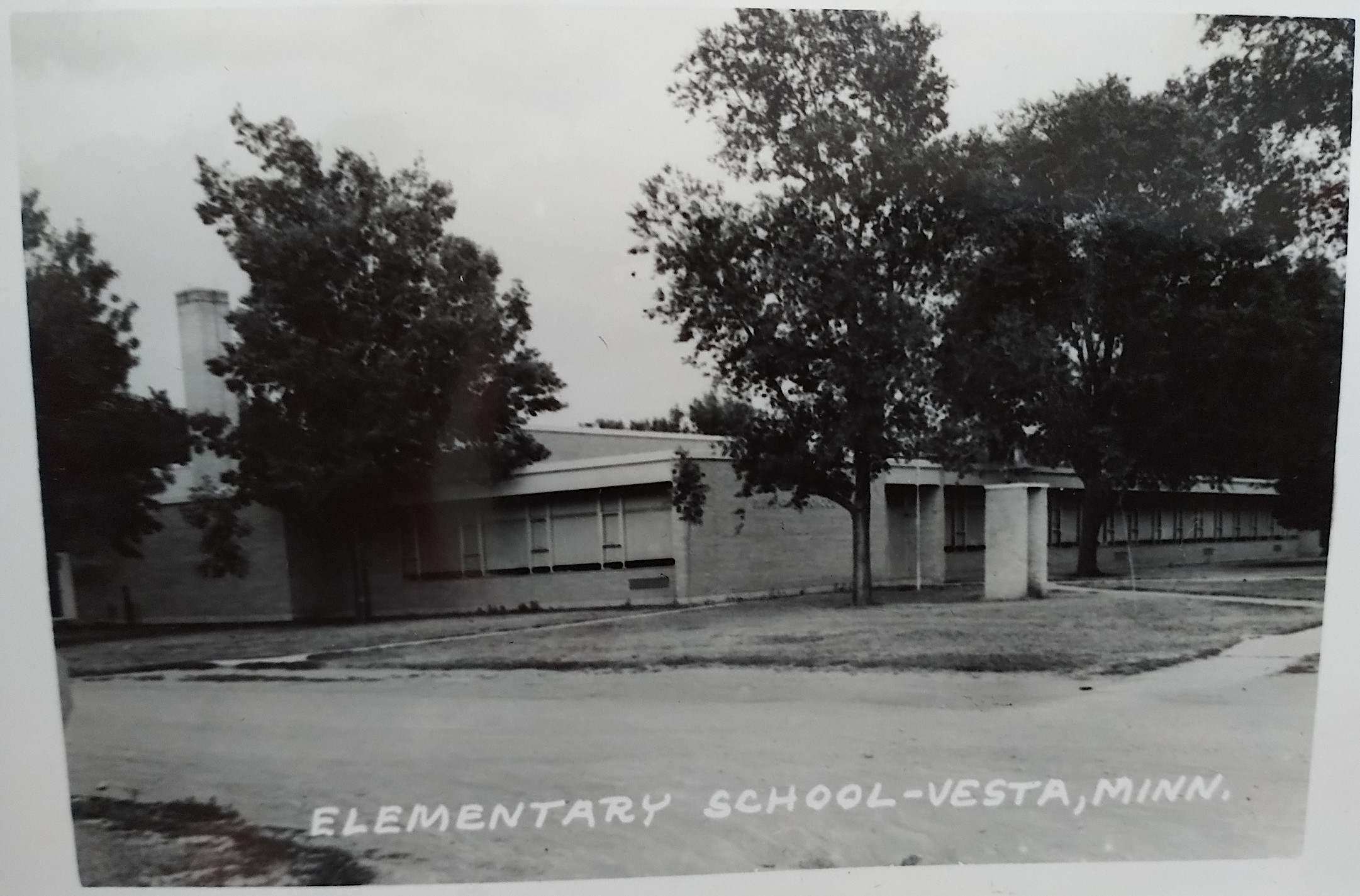
My elementary school, circa 1960s, located in Vesta in Redwood County. The school closed decades ago. (Photographer unknown; photo sourced from my personal photo album)

Sixty years have passed since I was a second grader in a small southwestern Minnesota elementary school, where my paternal grandfather served on the school board. My classmates and I were mostly farm kids, all white. We wrote in “Big Chief” lined tablets which today would not, should not, fly. Attitudes differed in the 1960s. Words like diversity, respect and environmentalist were not part of our everyday vocabulary.

A serene country scene just north of Lamberton in southern Redwood County. (Minnesota Prairie Roots copyrighted file photo September 2013)

But words, overall, held my interest all those decades ago. I have Mrs. Kotval to thank for sparking my love of words, of reading, and eventually of writing. Each day after lunch, she read to her third and fourth graders from “The Little House” and other chapter books. Through the writing of Laura Ingalls Wilder, who lived many years earlier in nearby Walnut Grove, I began to appreciate the nuances of the prairie. And I learned the importance of descriptive, detailed writing. Wilder engaged all of her senses to describe the prairie and life thereon in her series of wildly popular books. With her love of the natural world, this writer unknowingly documented the environment for me, my children and for my second grade granddaughter, today an aspiring environmentalist.

Early on, I aspired to be an elementary school teacher. But that changed as I grew my world, my knowledge, my connections. Words focused my passion. Unlike most of my elementary school classmates, I loved penmanship—letters and words flowing in script across the pages of my penmanship book. I loved spelling. I loved reading, even in a school and town without a library and thus with limited access to books. And by high school, that love of words expanded to writing.

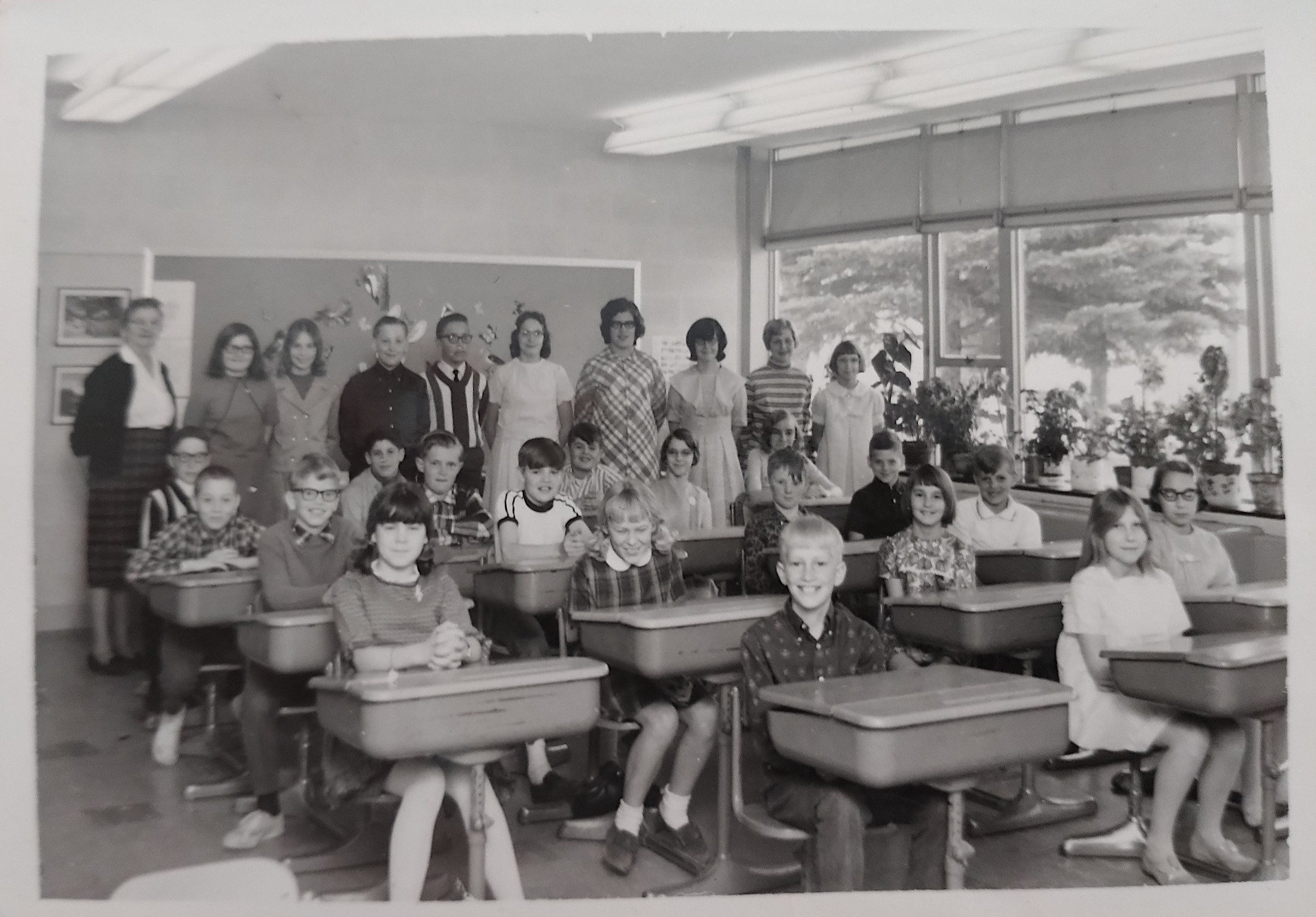
Fifth and sixth graders at Vesta Elementary School in the late 1960s. I’m in the back row, far right, next to the windows. (Photographer unknown; photo sourced from my personal photo album)

I want to pause here and stress the importance of passionate teachers in fostering students’ interests. From Mrs. Kotval reading to her students after lunch to junior high English teacher Mrs. Sales teaching me all the parts of grammar to high school teacher Mr. Skogen requiring students to keep journals, their influence on me and my eventual career was profound. I would go on to earn a college degree in mass communications, leading to a career as a journalist, writer, poet and photographer.

That brings me full circle back to Laura Ingalls Wilder, who early on influenced my detail-rich writing and photographic styles. In 2017, I became professionally connected to the author via “The World of Laura Ingalls Wilder—The Frontier Landscapes That Inspired The Little House Books.” Author Marta McDowell chose three of my photos (including one of prairie grasses at sunset) to illustrate her 396-page book documenting Wilder’s life and relationship to her environment. Perhaps some day my granddaughter will open the pages of McDowell’s book and find the photos taken by her grandmother. Whether Isabelle becomes an environmentalist or something vastly different, I expect she will always care about the earth and her role in saving it.

© Copyright 2023 Audrey Kletscher Helbling
 

The Weekly Phone Call May 11, 2023

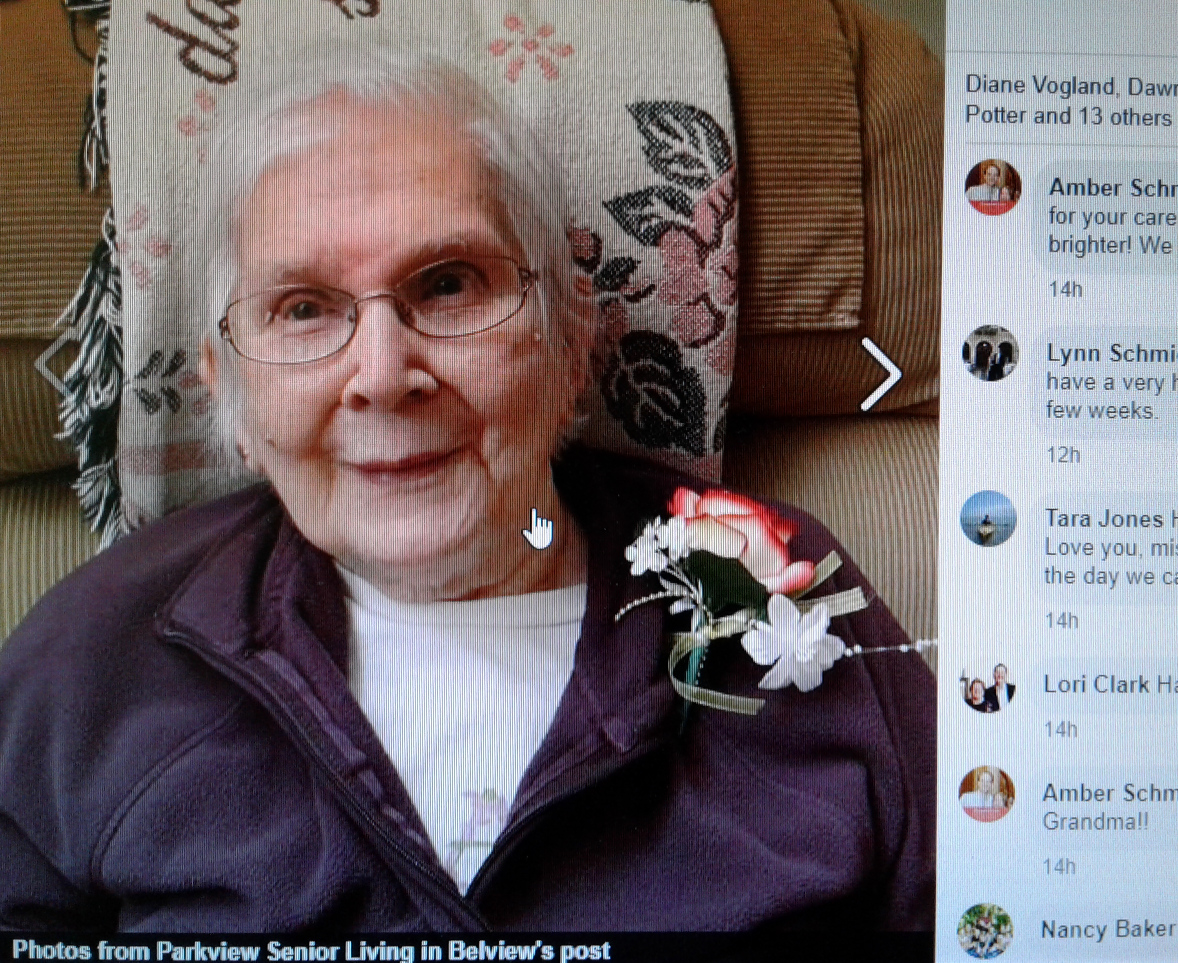
My sweet mom, featured on the Parkview Facebook page, Mother’s Day 2020. (Photo credit: Parkview Senior Living)

IN EVERYTHING I WRITE, truth rests. In creative nonfiction, more than any other genre, truth writes the story. In poetry and fiction, life experiences, observations and emotions weave into poems and stories. Not necessarily the full truth, but based on reality. The adage “write what you know” rings true for me.

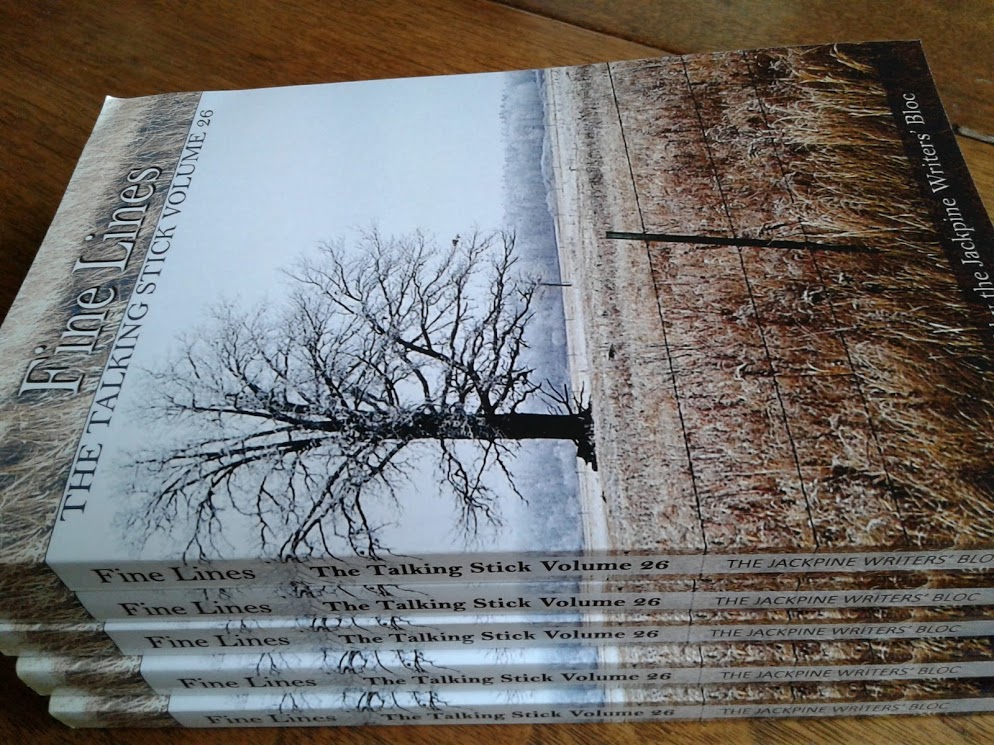
In 2017, I wrote a short story, “The Weekly Phone Call,” and entered it in the Jackpine Writers’ Bloc annual competition. That work of creative nonfiction along with two poems, two fictional short stories and another piece of creative nonfiction were chosen for publication in Fine Lines, The Talking Stick Volume 26. It marked my most successful year with TS, an annual anthology featuring work by Minnesota writers or those with a connection to Minnesota.

Five of my works (poetry, fiction and creative nonfiction) published in Fine Lines. (Minnesota Prairie Roots copyrighted file photo 2017)

The book title, Fine Lines fits my selected entry, a story about the Sunday evening phone calls I made to my mom. Every. Week. I looked forward to them, as did Mom. My short story is one of raw emotions, of grief and pain. And today, days before Mother’s Day, seems an appropriate time to share this piece of my writing.

I hope it sparks an understanding that simple connections linking us to those we love are to be valued. When Mom could no longer hold or talk on a phone in the years before her January 2022 death, I felt a deep loss. I missed her voice. I missed her stories. I missed sharing my life with her. And today, I miss her, as I try to recall her voice, the words she spoke, yet always remembering the love we shared.

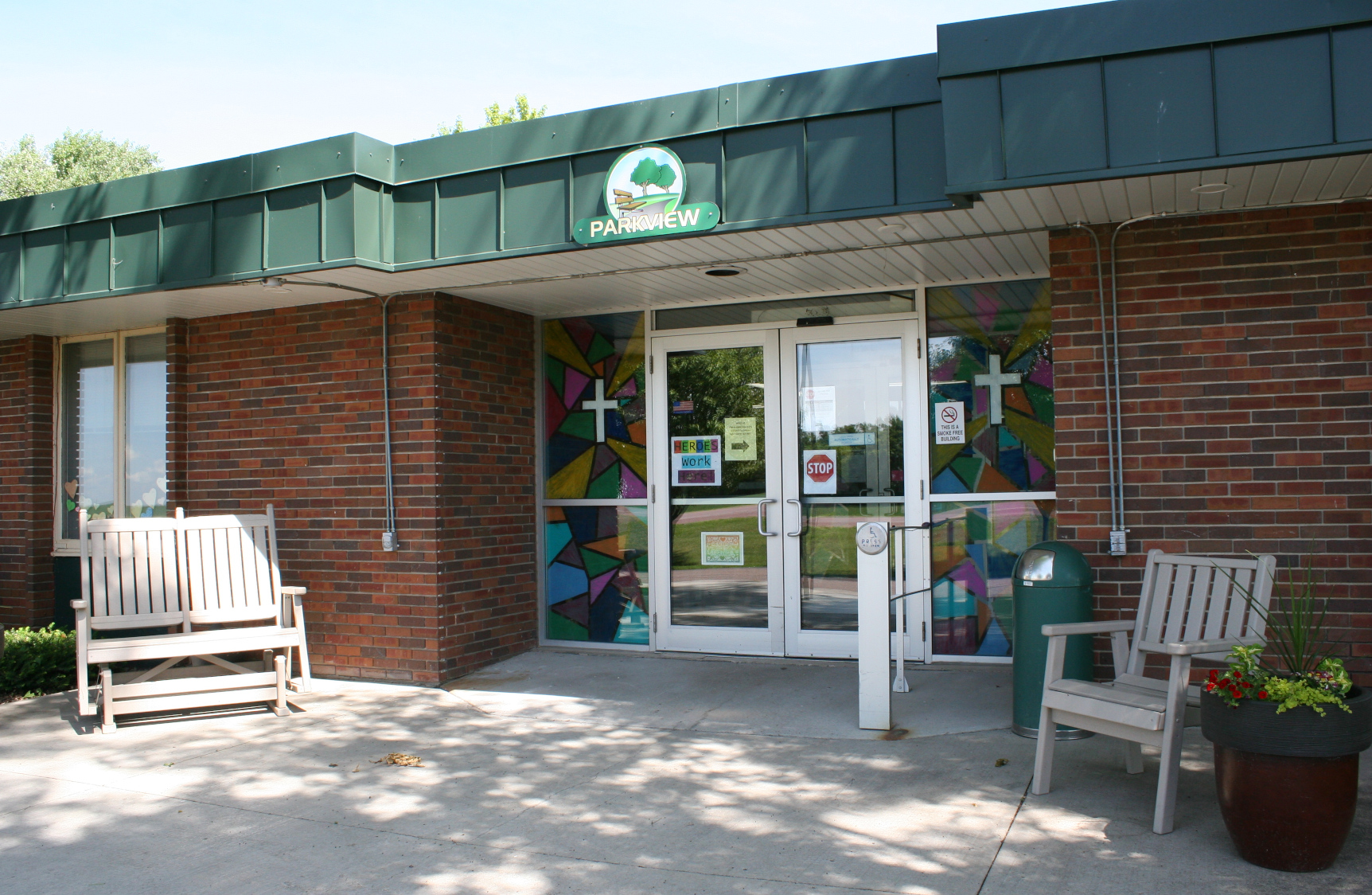
Parkview Senior Living in Belview, where my mom lived for many years. While 120 miles separated us, Mom and I remained connected via our weekly calls. (Minnesota Prairie Roots copyrighted file photo)

The Weekly Phone Call

It’s 6:30 p.m. on Sunday when I punch the green phone icon.

“Hello, Arlene speaking,” she answers, the indiscernible dialogue of a television blaring in the background.

“Hi, this is Audrey,” I say, then wait while she turns off her TV. “How are you doing?”

Her answer never deviates. She is tired and blames the weather. Already sadness threads through my thoughts. Inside the sheltered walls of a care center, she can’t feel the bite of a winter prairie wind, the drench of rainfall, the smothering humidity of a July afternoon. She feels only artificial heat and cold while sequestered in her over-sized dorm style room.

My mind drifts as Mom laments an in-house obsession with BINGO, recounts an escape attempt by a friend—big and exciting news—and complains of failed jets in the whirlpool tub. I listen, insert appropriate responses, and await the usual repetition of information.

When she repeats herself, I say nothing. There is no point. My love prevails in silence. But inside, my anger rises at her declining memory. I want the mom who never forgot a birthday, who remembered what she ate for lunch, who knew names. I miss her undeniably kind and positive spirit. I am grieving.

But I tell her none of this. Instead, I end our conversation with “I love you” and a promise to call her next Sunday, at 6:30 p.m.

© Copyright 2023 Audrey Kletscher Helbling
Original 2017 publication credit: Fine Lines, The Talking Stick Volume 26


In celebration of National Poetry Month, a selected poem April 5, 2023

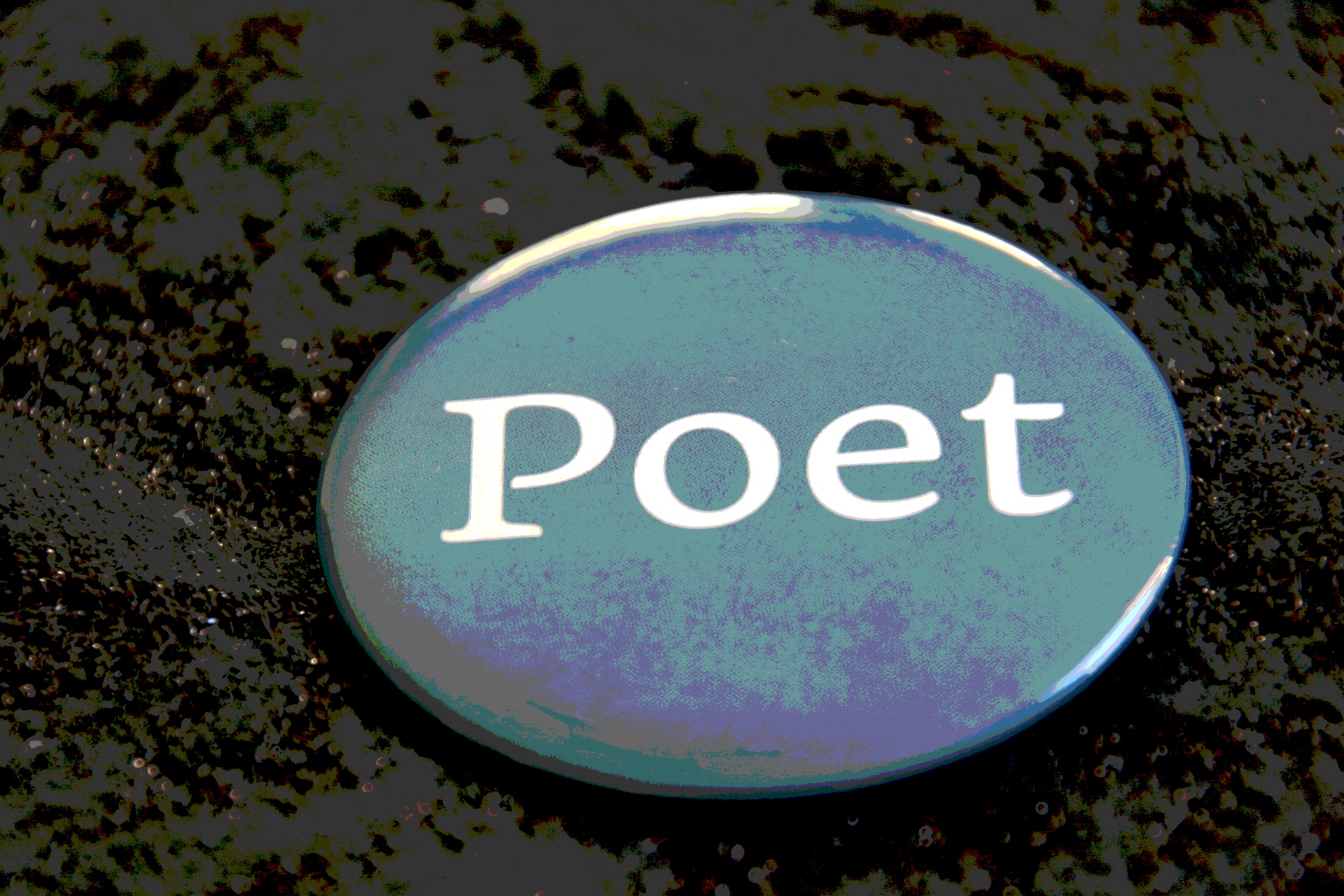
I took poetic license and photoshopped this image of the button I wore identifying me as a poet at a poetry reading. (Minnesota Prairie Roots copyrighted file photo April 2015)

APRIL MARKS National Poetry Month, a time to celebrate poetic verse and poets. As a long-time writer, I unequivocally state that penning poetry is challenging. Why? Every. Single. Word. Counts.

That makes sense given the structure of poems.

I’ve written poetry off and on since high school. All those decades ago, I wrote angst-filled poems reflective of teenage moods, emotions and life. Recently a high school friend returned a poem I wrote for her nearly 50 years ago, a poem handwritten on lined notebook paper. The folded page, yellowed with age, holds words focusing on my future and the ultimate question at life’s end: What good have I done?

The poem dedicated to Janette is not particularly well-written. Yet, it has value in reflecting my thoughts, in opening myself up, in showing vulnerability to a trusted friend. Will I share it with you? No.

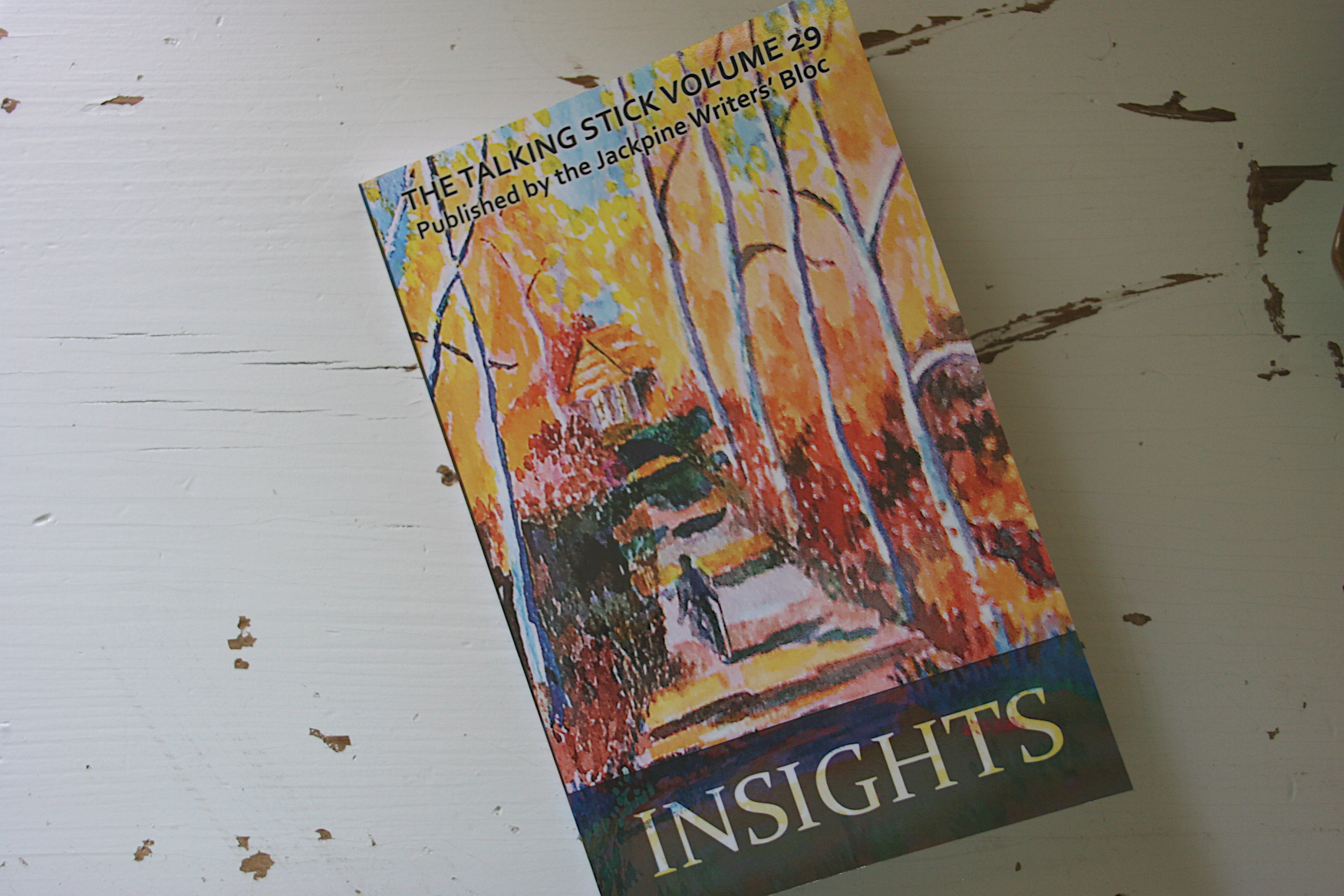
My poem, “Final Harvest,” and two pieces of creative nonfiction were selected for publication in this anthology in 2020. (Minnesota Prairie Roots copyrighted file photo 2020)

But I will share my poem, “Final Harvest,” which published in Insights, Talking Stick 29. It was chosen by the editorial team of Menahga-based Jackpine Writers’ Bloc for the 2020 edition of TS, a selected collection of poetry, fiction and creative nonfiction by Minnesotans or those with a Minnesota connection.

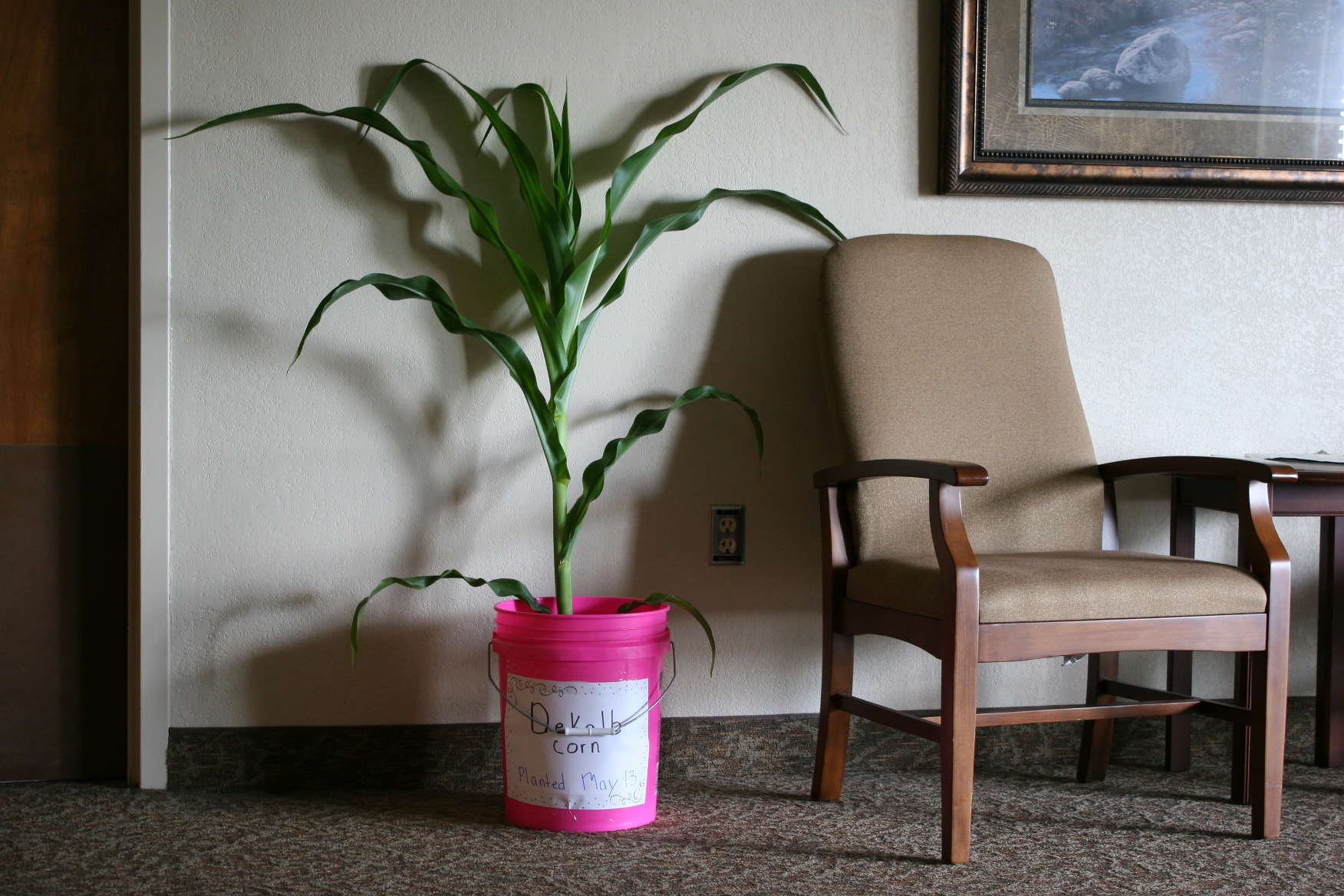
This scene at Parkview Senior Living in Belview, Minnesota, inspired a poem. (Minnesota Prairie Roots copyrighted file photo July 2019)

The poetry I write, like nearly all of my writing, carries a strong sense of place, often rooted in my agrarian roots. And, like nearly all of my creative writing, my poetry is rooted in truth. A cornstalk growing in a pink bucket in the community room at Parkview Senior Living, where my mom lived before her 2022 death, inspired “Final Harvest.” It is not at all angst-filled. But, in a round about way, it asks the same question: What good have I done?

Final Harvest

The cornstalk rises tall, straight

from the pink five-gallon bucket

set next to an uncomfortable tan chair

on carpet the color of dirt.

If the retired farmer in the wheelchair

looks long enough, he imagines rows of corn

rooted in a field of rich black soil,

leaves unfurling under a wide blue sky.

Staff stops to check the corn plant

seeded on May 13, not too late,

says the old farmer as he pours water

into the bucket, soaking the soil.

I focus my camera lens on the cornstalk,

pleased and amused by its placement here

like a still life shadowing beige walls

in the community room of my mom’s care center.

© Copyright 2023 Audrey Kletscher Helbling
 

Alright, winter, time to leave Minnesota as spring arrives March 20, 2023

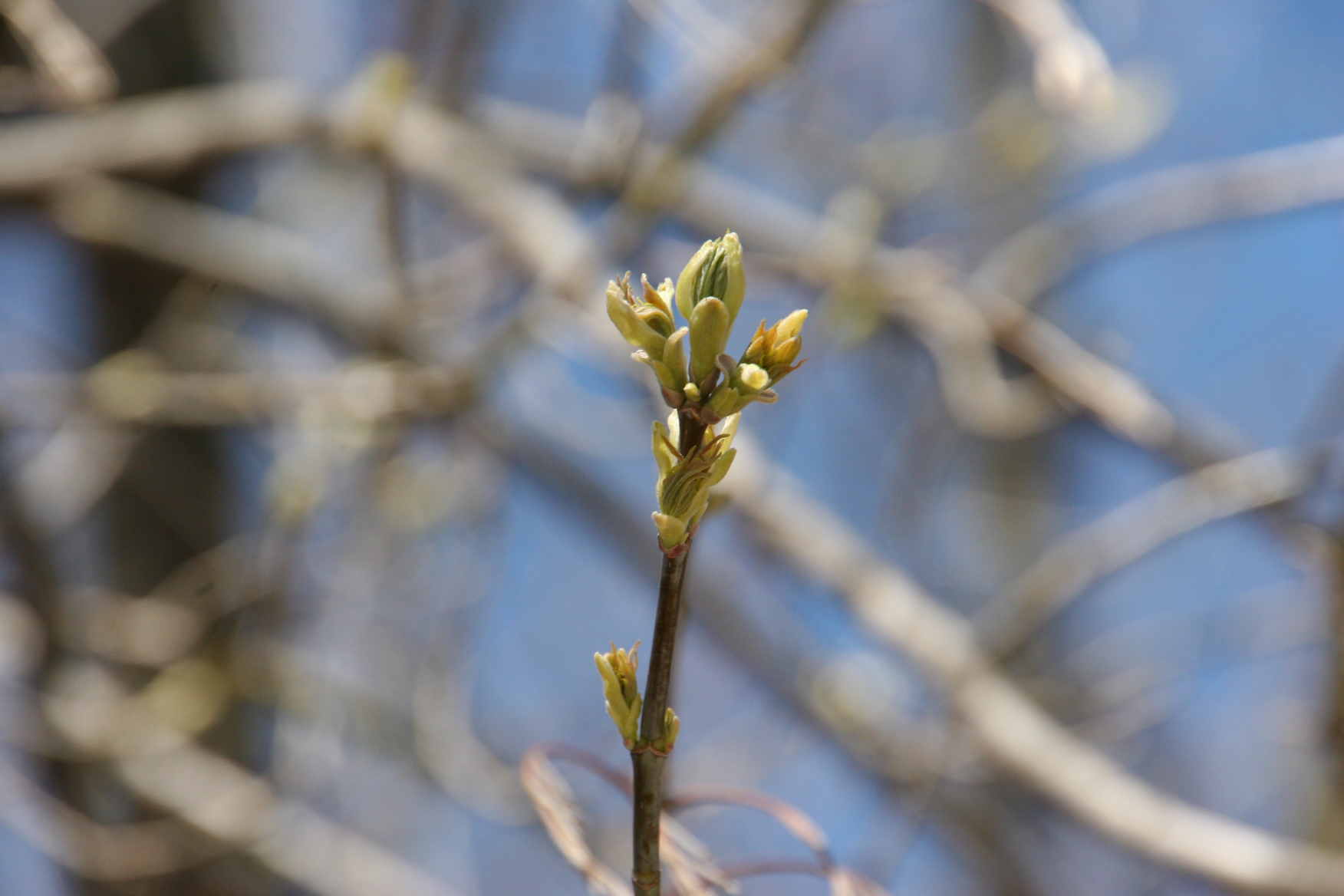
Trees bud at Falls Creek Park, rural Faribault, in late May 2022. (Minnesota Prairie Roots copyrighted file photo May 2022)

TODAY, THE FIRST DAY of spring, hope springs that this long winter of too much snow will soon exit Minnesota. Most Minnesotans, including me, are weary of days marked by new snowfall that has accumulated, pushing this 2022-2023 winter season into top 10 records in our state.

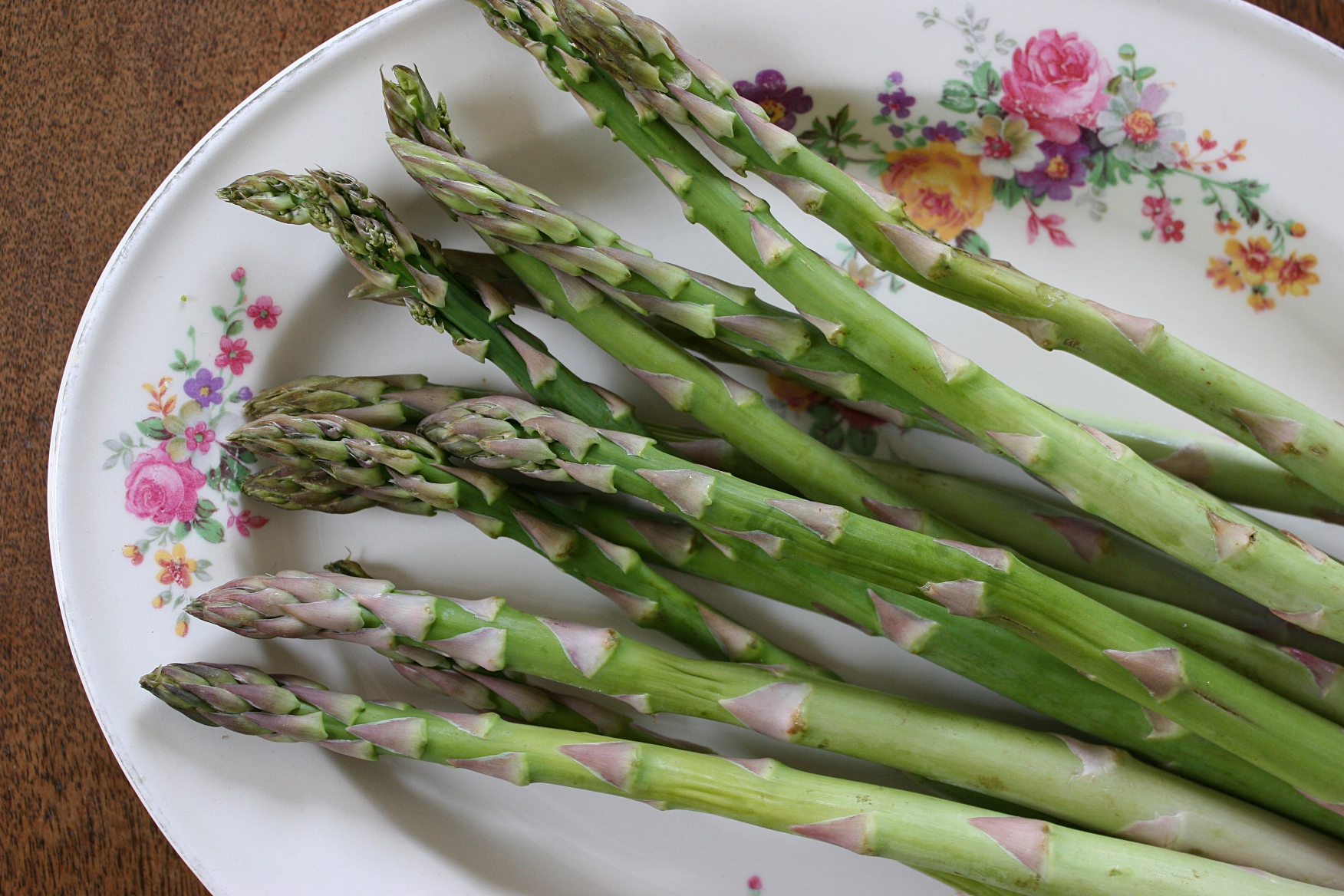
Asparagus, one of my favorite spring vegetables. (Minnesota Prairie Roots copyrighted file photo)

But now, with the official start of a new season on March 20—the season of new life, the season of planting and budding and greening—I feel a mental shift. Psychologically, my mind can envision a landscape shifting from colorless monochrome to vivid greens. I can feel the warmth of warmer days yet to come. I can smell the scent of dirt released, breaking from winter’s grip. I can hear the singsong chatter of returning birds. I can taste asparagus spears snapped from the soil.

A bud beginning to open in late April 2020. (Minnesota Prairie Roots copyrighted file photo April 2020)

All of this is yet to come. I understand that. A date on a calendar doesn’t mean spring in Minnesota. That season is realistically weeks away. April can still bring inches of snow.

Crocuses, always the first flower of spring in my flowerbeds. (Minnesota Prairie Roots copyrighted file photo March 2021)

But we are edging toward spring. I feel that in temps sometimes reaching just past 40 degrees. I feel it in the warmth of the sun, shining brighter, bolder, longer. I see dwindling snow packs and exposed patches of grass. I hear spring in vehicles splashing through puddles rather than crunching across snow. I see spring, too, in the endless potholes pocking roadways.

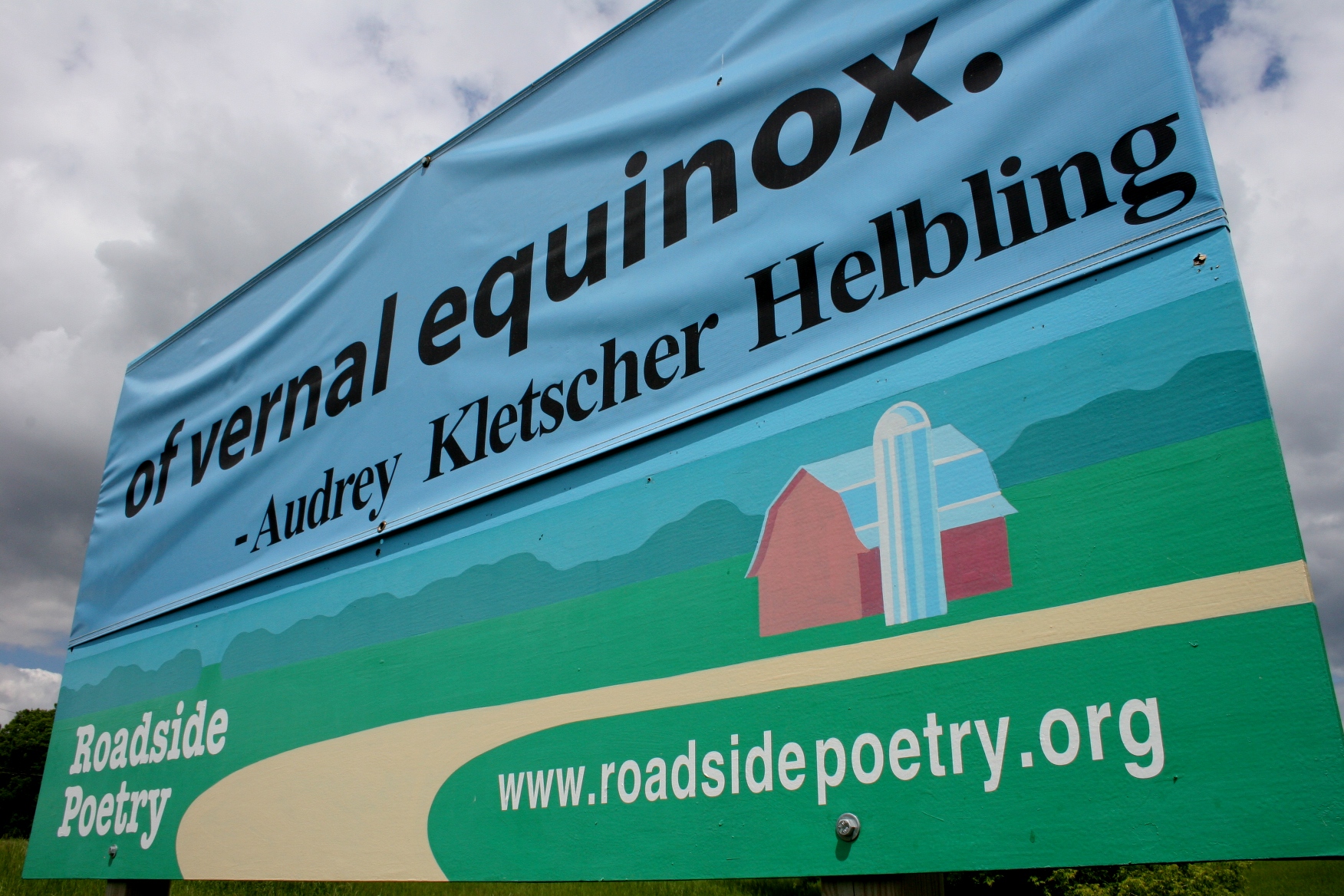
The first line in my winning poem, posted roadside in 2011. (Minnesota Prairie Roots copyrighted file photo 2011)

On this first day of spring, I am reminded of a poem I penned in 2011, a poem which splashed across four billboards along a road just off Interstate 94 in Fergus Falls in west central Minnesota. To this day, publication of that poem remains an especially rewarding experience for me as a poet.

Billboard number two of my spring-themed poem. (Minnesota Prairie Roots copyrighted file photo June 2011)

I submitted the poem to the now-defunct Roadside Poetry Project’s spring competition. Poems changed out seasonally in this Fergus Falls Area College Foundation funded contest. It was a bit of a challenge writing a spring-themed poem, as I recall. Not because of the theme, but rather the rules—four lines only with a 20-character-per-line limit. But, as a writer, it’s good to be challenged.

Line three of my Roadside Poetry Project spring poem. (Minnesota Prairie Roots copyrighted file photo June 2011)

I suppose you could say the same about Minnesota weather. It’s good to be challenged by an especially snowy winter so we appreciate spring’s arrival even more. Yes, that’s a positive perspective—a way to mentally and psychologically talk myself into enduring perhaps six more weeks of winter in this official season of spring.

The last of four billboards featuring my Roadside Poetry spring poem. (Minnesota Prairie Roots copyrighted file photo June 2011)

NOTE: I intentionally omitted any pictures showing snow/winter.

© Copyright 2023 Audrey Kletscher Helbling
 

Minnesota prairie roots revisited, remembered, reflected January 25, 2023

My “Hope of a Farmer” poem exhibited at the Lyon County Historical Society Museum. The exhibit also includes my poem, “Ode to My Farm Wife Mother.” (Minnesota Prairie Roots copyrighted file photo September 2022)

WHEN I RETURNED to my beloved southwestern Minnesota prairie in September, I did so with one primary purpose—to see my poetry showcased in the “Making Lyon County Home” exhibit at the Lyon County Historical Society Museum in Marshall. Any additional attractions—like viewing a public art sculpture outside the local ice arena and a stop at Brau Brothers Brewing—would only enhance the day trip.

Randy Walker’s “Prairie Roots” sculpture defines the entrance outside the Red Baron Arena on Marshall’s east side at 1651 Victory Drive. (Minnesota Prairie Roots copyrighted photo September 2022)

My one regret is that Randy and I didn’t stay overnight, allowing more time to explore local sites without feeling rushed. Forty years have passed since I visited Marshall en route to the Black Hills on our honeymoon. The college and county seat town lies 20 miles to the west of my hometown, Vesta in Redwood County, and 140 miles from my current home in Faribault.

A serene country scene just north of Lamberton in southern Redwood County on the southwestern Minnesota prairie. (Minnesota Prairie Roots copyrighted file photo September 2013)

This area of Minnesota is the place of my roots. My prairie roots. It is the place of wide open space, expansive skies, small towns and endless acres of cropland.

A prairie sunset photographed from Minnesota State Highway 67 between Redwood Falls and Morgan. (Minnesota Prairie Roots copyrighted file photo)

The land where I grew up inspired my blog name, Minnesota Prairie Roots. The name fits me as a person and a creative. The sparseness of the prairie taught me to notice details, to fully engage my senses. To appreciate the landscape and people. The vastness of the flat land and the star-flushed night sky and achingly beautiful sunsets. Here I connected to the land—bare feet upon dirt, bike tires crunching gravel, dirt etched into my hands from working the soil. Here I connected to the people—down-to-earth, hardworking, linked to the land.

A favorite children’s picture book about the prairie gifted to me by my friend Kathleen.

For those who are not of prairie stock, the sparse landscape can seem uninteresting, empty, desolate. Even I admit the challenge of “if you’re not from the prairie…” A children’s picture book by that title, written by David Bouchard and illustrated by Henry Ripplinger and published in 1995, speaks to the prairie sun, wind, sky, flatness…grasses.

The tall grasses stretch to the prairie sky. The bent tops of the stems are also meant to resemble hockey sticks given the sculpture’s location outside the ice arena. (Minnesota Prairie Roots copyrighted photo September 2022)

Tall grasses are often associated with the prairie. Yet, those grasses were mostly missing from the landscape of my youth as cultivated crops covered the earth. But on our farm site, a sliver of unmown grass grew between granary and grove and gravel driveway, stretching high, stems bending in the wind. That Little House on the Prairie (Walnut Grove is 20 miles from Vesta) space opened summer afternoons to imaginative play. I hold many memories rooted in those tall grasses, in the prairie.

Depending on the time of day and viewing point, the steel grass stems showcase different colors. (Minnesota Prairie Roots copyrighted photo September 2022)
The sculpture reflected in an arena window. (Minnesota Prairie Roots copyrighted photo September 2022)
Just another view of the grass stems, emphasizing the orange and yellow hues. (Minnesota Prairie Roots copyrighted photo September 2022)

Prairie Roots. That name graces a public art sculpture outside the Red Baron Arena in Marshall. Minneapolis artist Randy Walker was commissioned by the City of Marshall in 2018 to create the sculpture reflecting the prairie landscape. I knew in advance of my September visit that I needed to see this artwork if time allowed. We made time. Walker used 210 painted steel poles to represent tall stems of grass, prairie grass. They are colored in hues of yellow, orange, red and green, reflecting seasonal changes and light.

Prairie grass grows within the sculpture. (Minnesota Prairie Roots copyrighted file photo September 2022)

And in between all those steel stems, prairie grass grows, thrives.

A grasshopper clings to a steel grass stem in the “Prairie Roots” sculpture. (Minnesota Prairie Roots copyrighted photo September 2022)

I even spotted a grasshopper on a steel stalk, taking me back decades to the hoards of grasshoppers that amassed and hopped through that patch of uncut grass on the farm.

Viewing the sculpture toward the field, this perspective shows the meandering course of the Redwood River in the Marshall area on the floor of the gathering space. (Minnesota Prairie Roots copyrighted photo September 2022)

Walker’s sculpture holds visual appeal against an expansive backdrop sky and open field (when viewing the art from the arena entrance outward). Via that perspective, I see the enduring strength of the prairie, and the immensity of land and sky, this place of my Minnesota prairie roots.

Please check back for more posts about my day trip back to southwestern Minnesota in September 2022.

© Copyright 2023 Audrey Kletscher Helbling
 

Reflecting on January-June 2022 December 30, 2022

IN CONSIDERING PHOTOGRAPHIC year-in-review posts, I could have focused on what a challenging year 2022 was for me and my family. It was. Rather, I’m featuring words, words in photos I took and previously published here. Words that hold personal or community value. As a writer and photographer, communication is my work. And my passion. So I scrolled through my photo files to find words photographed from January-May in this, my first-half review of a year I’m eager to leave behind.

(Minnesota Prairie Roots copyrighted file photo January 2022)

JANUARY

Ask like you care. I strung these four magnetic words together and stuck them to my refrigerator door. They are a reminder to always engage in meaningful and caring conversation. Too often when people ask, “How are you?”, they fail to listen. I am big on listening, really listening. Listening equals caring.

(Minnesota Prairie Roots copyrighted file photo February 2022)

FEBRUARY

Bridge Square in downtown Northfield offers an outlet for public expression of opinion, often chalked onto the sidewalk. This quote about artists resonates. Creatives have the power to open eyes and ears and hearts to different ideas and perspectives, and therein lies great value.

(Minnesota Prairie Roots copyrighted file photo March 2022)

MARCH

Among my favorite word finds of 2022 were the signs posted in the windows of Bridge Square Barbers in Northfield. I loved the humor and creativity. The signs prompted me to write a short story, “Barbershop Prompt,” which earned second place in creative nonfiction in The Talking Stick 31 Escapes anthology competition. It pays, literally, to pay attention to words.

(Minnesota Prairie Roots copyrighted file photo April 2022)

APRIL

A sign bannering Northfield’s celebration of Earth Day represents, in many ways, the strong concern for the environment that prevails across the planet. Such awareness is nothing new; it was big in the 70s when I was a coming-of-age teen. But now the voices seem louder, stronger, bolder and cover additional topics, like climate change. We all ought to care because this Earth is our home. And we each ought to move beyond words to action.

(Minnesota Prairie Roots copyrighted file photo May 2022)

MAY

May marked 40 years of marriage for Randy and me. We didn’t celebrate in a big way, just quietly. But someone remembered. Someone who anonymously mailed an anniversary card with $20 and a suggestion. I appreciated the thoughtfulness, even the remembering, because too few people remember such special occasions any more. I value greeting cards, the handwritten word and the love they hold.

(Minnesota Prairie Roots copyrighted file photo June 2022)

JUNE

Words galore imprinted upon buttons pinned to a bulletin board at The Shop on Broadway in Plainview. I discovered the humorous, some Minnesota-themed, multi-message buttons on a day trip to this southeastern Minnesota community.

There’s a whole world of words awaiting discovery. A world that’s filled with so much to experience, delight in, ponder, learn from and more, if only we pause and take it all in.

PLEASE CHECK BACK as my year-in-review continues with July-December 2022.

© Copyright 2022 Audrey Kletscher Helbling
 

Expressing my creative voice in “The Talking Stick” October 11, 2022

I’ve been published in 13 volumes ofThe Talking Stick,most recently InVolume 31, Escapes.” (Photo by Colton Kemp)

AS A WRITER, getting published adds to the joy of the craft. I write because it’s my passion, one which I want to share.

I laid the latest copy of The Talking Stick atop a page in a Minnesota atlas to represent escape in a sense of place. Reading and writing also provide an escape. (Minnesota Prairie Roots copyrighted photo October 2022)

The newest opportunity to share comes via The Talking Stick 31—Escapes, the latest anthology released in September by Park Rapids area-based The Jackpine Writers’ Bloc. The Talking Stick, published now for 31 years, features a collection of creative nonfiction, fiction and poetry by Minnesota writers or those with a connection to our state. This year, editors chose 83 poems, 28 creative nonfiction stories and 18 fiction stories for publication from 82 writers. More than 300 submissions came from 140 writers.

The beginning of my story, “Barbershop Prompt.” (Minnesota Prairie Roots edited and copyrighted photo October 2022)

I’m delighted to announce that three of my submissions are included in Escapes. My story, “Barbershop Prompt,” won second place and a cash prize in creative nonfiction. “Plans” earned honorable mention in fiction. And my second fictional piece, “Between Sisters,” simply published.

My writing has published in all 13 of these “The Talking Stick” volumes. (Minnesota Prairie Roots copyrighted photo October 2022)

To have my work selected and honored by peers is, for me, reaffirming. This marks the 13th year my writing—a total of 13 poems, eight creative nonfiction stories and nine fiction stories—have published in The Talking Stick. I’ve earned seven honorable mentions and two second placings through the years. Every year I’ve entered this competition, my writing has published. That proves personally validating.

When I first ventured into penning fiction, I did so with hesitancy. My journalism education, background and experience rooted me in gathering information and reporting the facts with no bend to fictionalize. I didn’t know I could write fiction until I tried. And I found I rather enjoy this type of writing. It stretches my creativity in a way that traditional factual writing doesn’t. Yet, even when I write fiction, there is some truth within. I weave into my writing (often in subtle ways) that which I know or care about or which has touched me. I expect most fiction writers would say the same.

Partial winning credits in fiction and the judge’s bio. (Minnesota Prairie Roots edited and copyrighted photo October 2022)

My award-winning short story, “Plans,” focuses on abuse within a family. Abuse has not been my personal experience. But it runs rampant in society. “Plans” focuses on abuse from the perspective of Henrietta, or Henri as her father calls her. He wanted a son, not a daughter. I’m not revealing more except to say the story leaves the reader wondering. And that’s exactly as The Talking Stick editors intend. Submission guidelines call for focusing on short forms, on compressed creations which hint of a longer, more complex story. You get that in my 457-word “Plans.”

Here’s, in part, what fiction judge Bonnie West said about my short story:

What a good story. Very clever, but also very poignant and surprising! Thanks for this delightful and entertaining revenge story!
Bridge Square Barbers, the inspiration for my award-winning story. (Minnesota Prairie Roots copyrighted file photo August 2022)

I definitely appreciate West’s comment and that of creative nonfiction judge Marge Barrett. She evaluated “Barbershop Prompt,” praising the energy and cleverness of my story. A sign I spotted in the front window of Bridge Square Barbers by Bridge Square in Northfield prompted me to write this. I am an observer, someone who notices details. That often inspires. Like my winning fiction story, this fact-based story leaves the reader wondering, wanting more. The same can be said for “Between Sisters.”

The Talking Stick is an incredible collection of outstanding writing and I’m honored to be included with so much other Minnesota talent. Each year I see familiar names repeated, but then new voices, too. The small editorial team from the Jackpine Writers’ Bloc deserves recognition also for their hard work. This anthology truly is a labor of love. I’m grateful for their appreciation of Minnesota writers and for their dedication to the craft of writing.

FYI: I encourage you to support Minnesota creativity by purchasing a copy of The Talking Stick 31—Escapes by clicking here.

Colton Kemp, a reporter for the Faribault Daily News, wrote a feature on me which published in the Saturday, October 8, edition. I encourage you to read that also by clicking here. I am grateful for Colton sharing my story and for the opportunity to connect with him, another individual passionate about writing.

© Copyright 2022 Audrey Kletscher Helbling