Minnesota Prairie Roots

Writing and photography by Audrey Kletscher Helbling

Photographing barns November 19, 2010


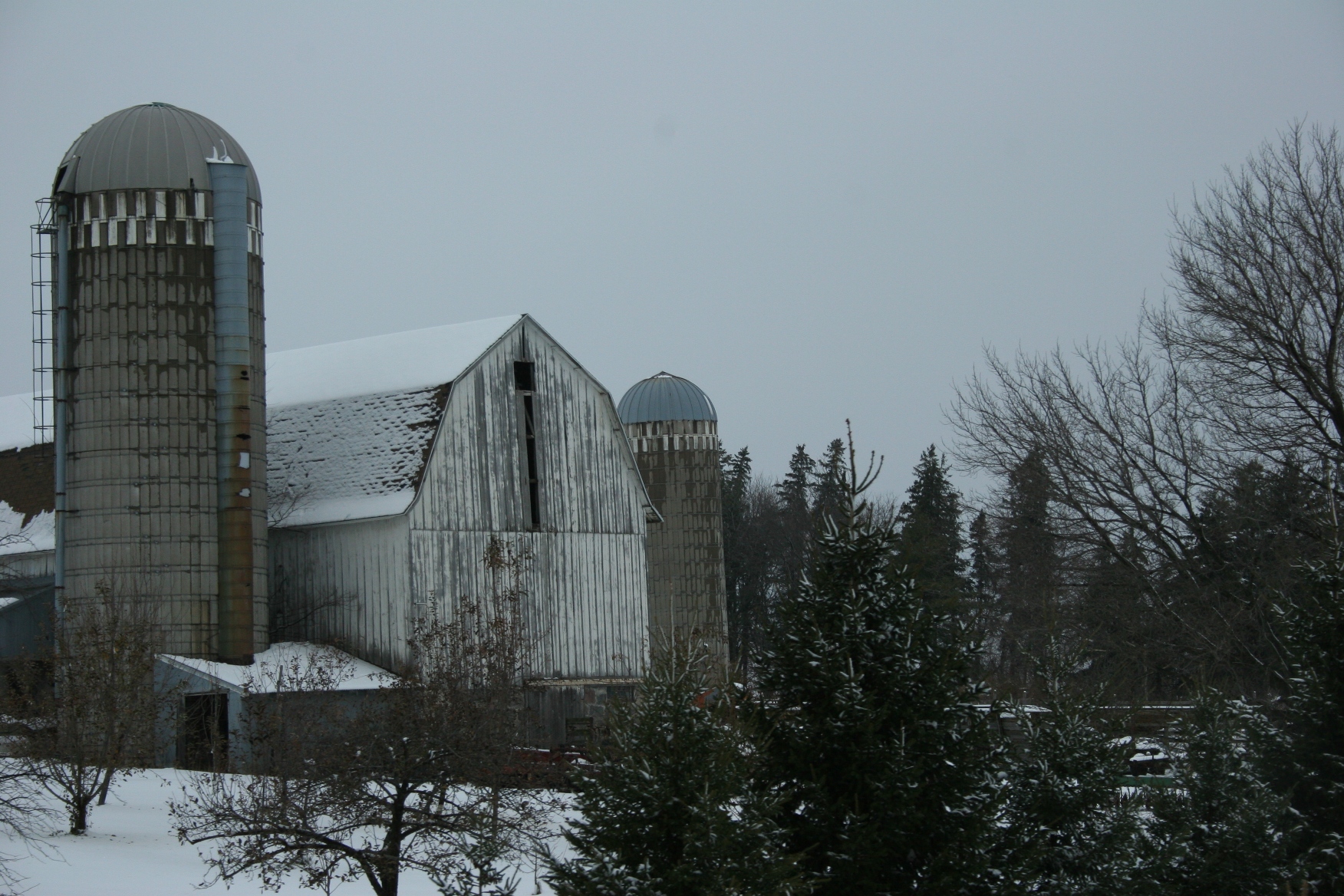
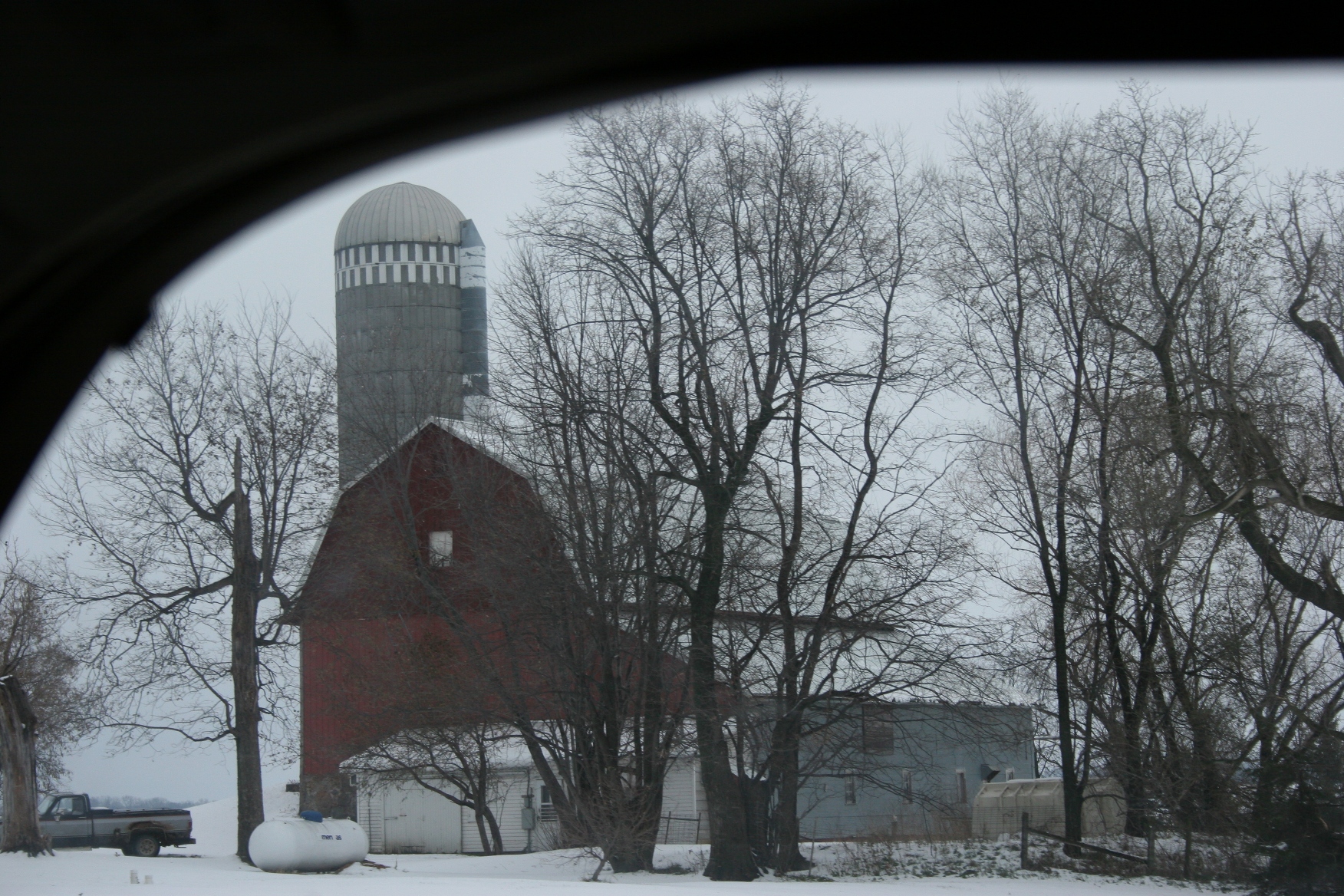
A barn between Morristown and Waseca in a photo I shot last Sunday.


HARRIET TRAXLER OF CARVER has done exactly what I would someday like to accomplish. She has photographed a county full of barns and self-published 19 books, including two versions of Barns of Sibley County and books for each of the county’s 17 townships. She’s also created a 2011 barn calendar.

Traxler photographed 1,100-plus barns.

I’ll write more about Traxler’s barn project in a future post because I’ve only skimmed two of her books. The pair just arrived in my mailbox yesterday.

But I’m so giddy about what I’ve seen that I couldn’t wait to tell you. Anyone who loves old barns will absolutely appreciate Traxler’s books and her efforts to preserve barns through photography.

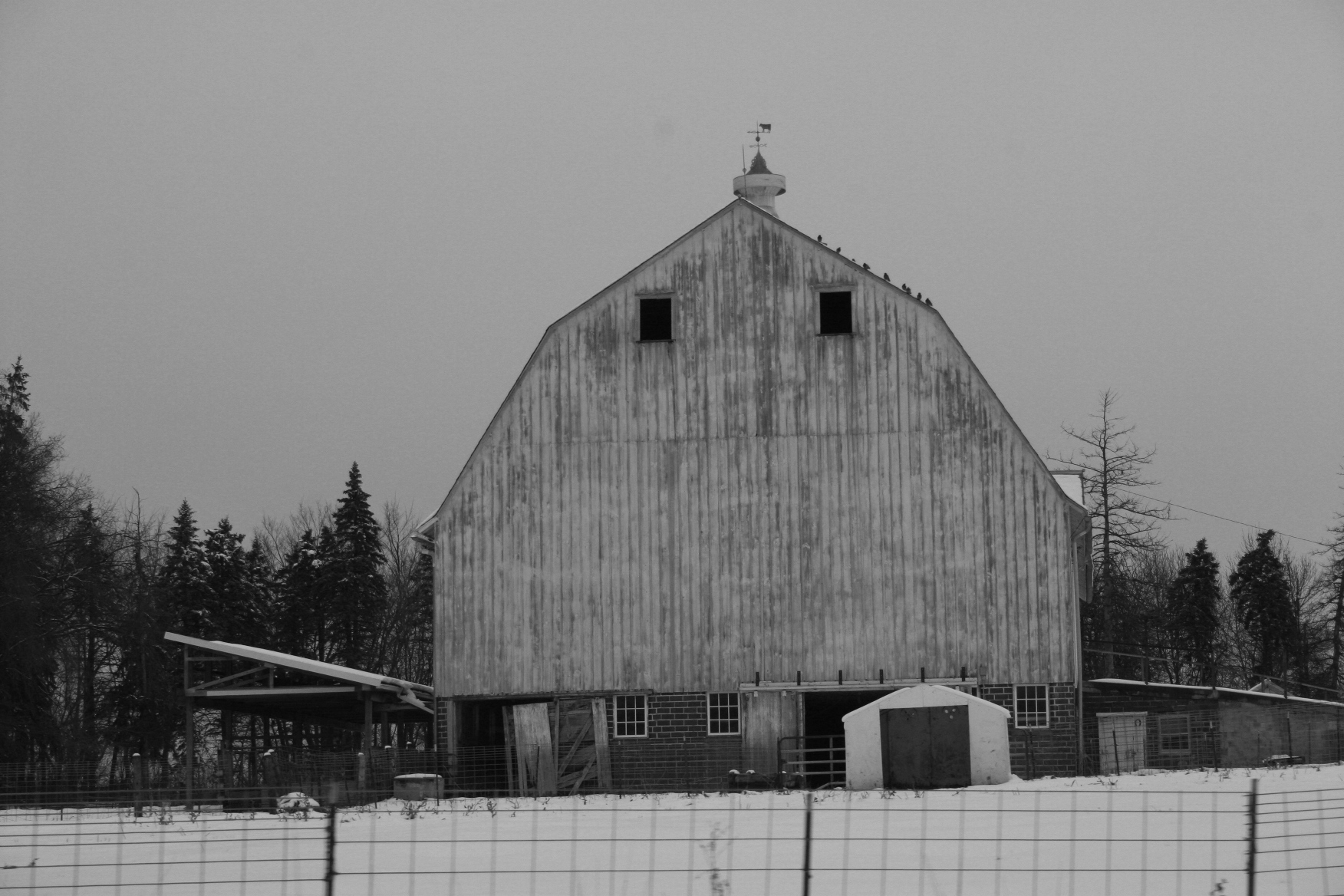
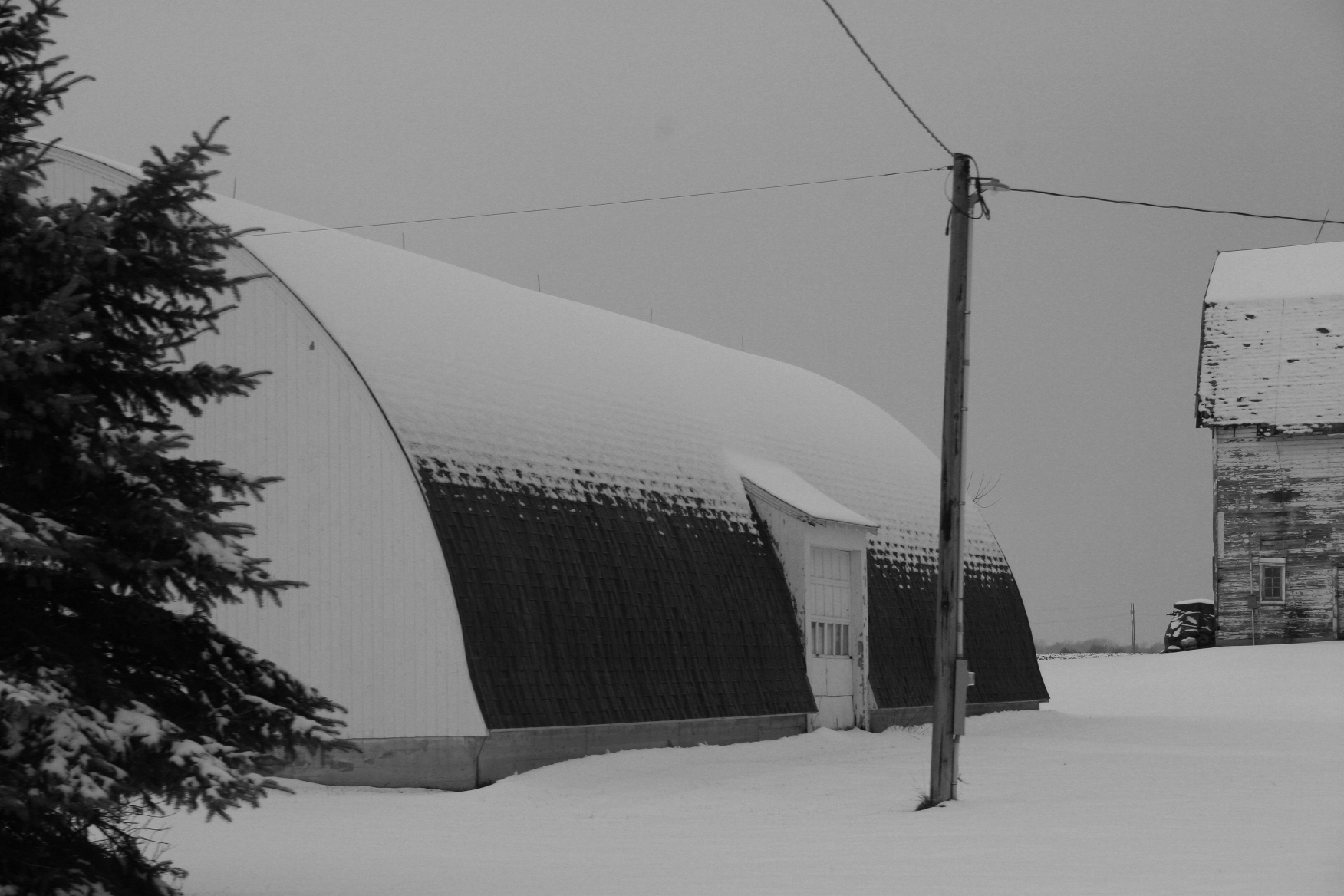
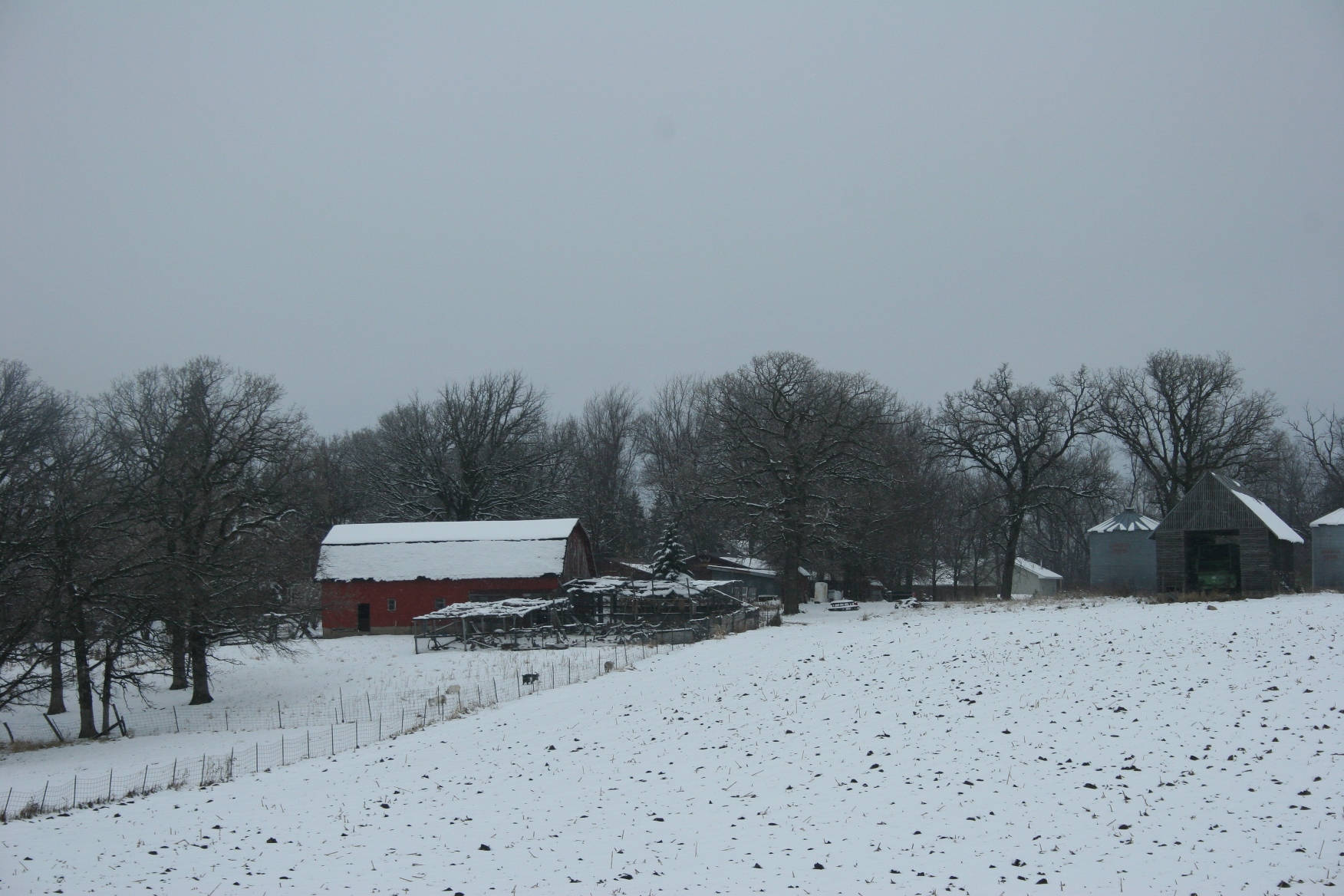
Now that I’ve shared my excitement over those barn books, I’ll show you a few more barn photos that I shot last Sunday along Rice County Highway 16 and Waseca County Highway 7 between Morristown and Waseca. These were taken through car windows—no waiting for the right lighting, no stopping to compose them. They are what they are and I think worthy of sharing with you. Enjoy.


Barn along Waseca County Highway 7


The driver's side rear car window frames this barn scene in a quick shot.


A machine shed with a barn-like appearance. Love the roof line.


Near the intersection of Waseca County Highway 7 and Minnesota Highway 13.


© Copyright 2010 Audrey Kletscher Helbling


Honesty goes a long ways at roadside market October 19, 2010


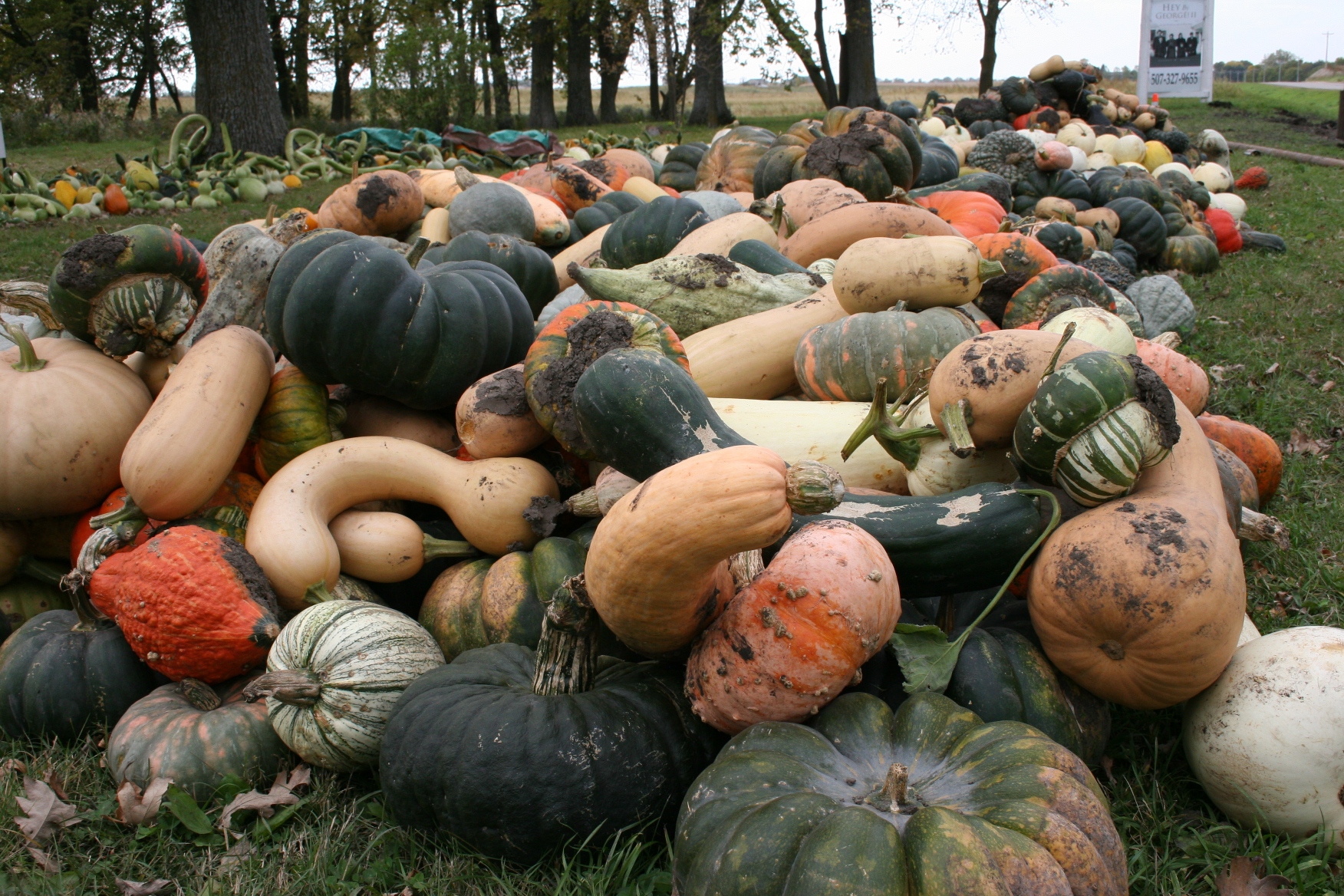
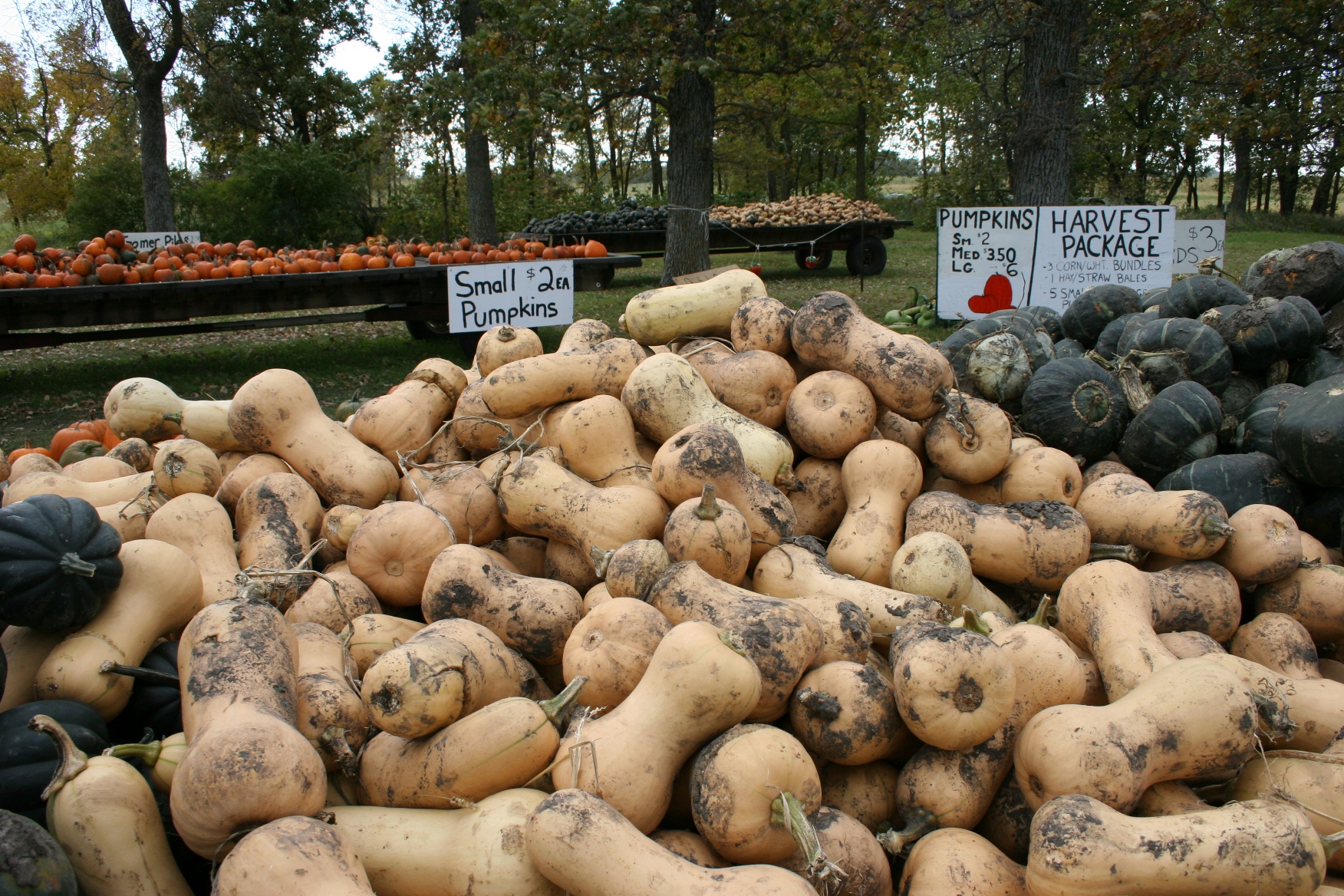
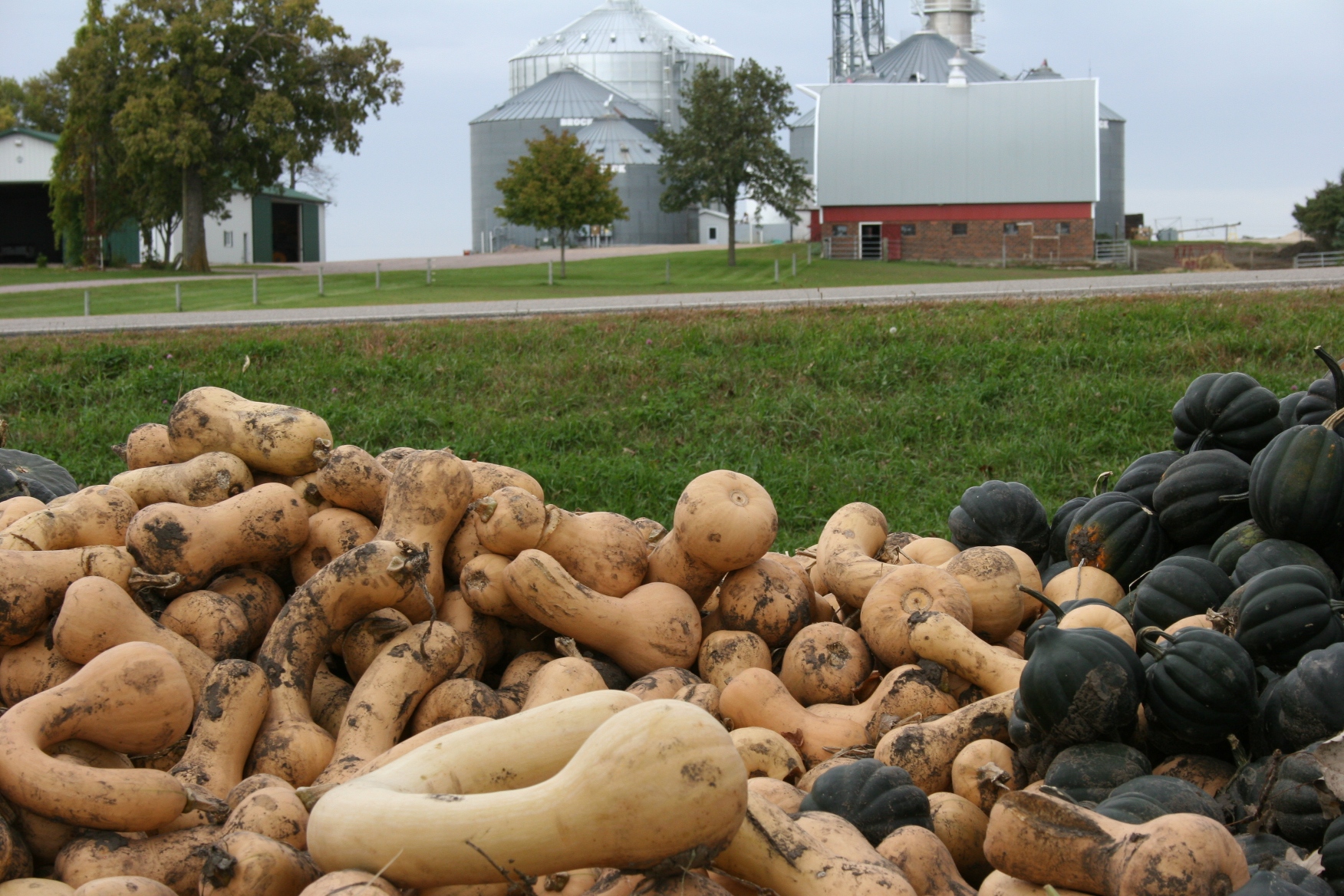
Mounds of squash for sale at George Denn's roadside market.


BY GEORGE, that George is a mighty trusting fellow.

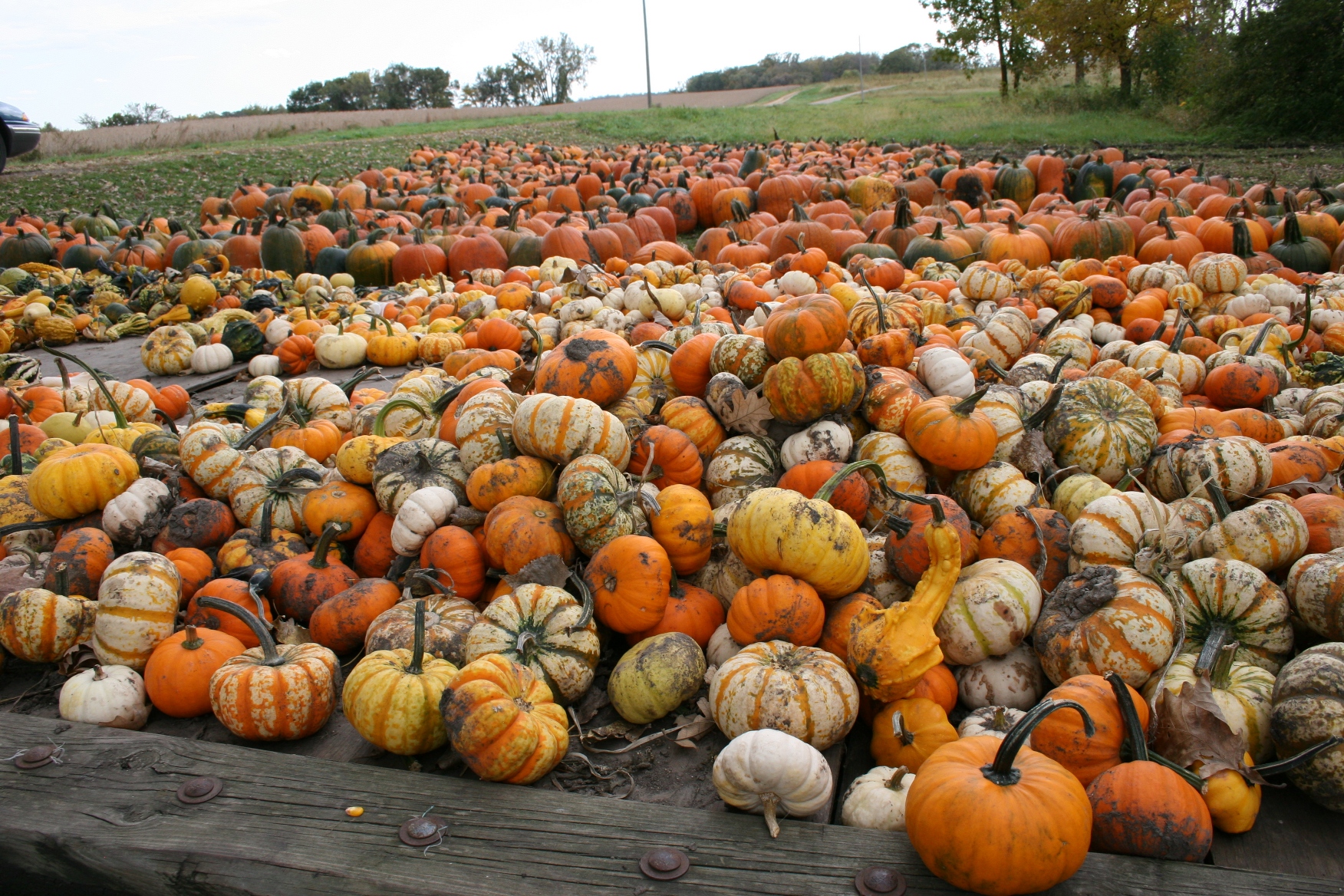
But, hey, the system must work for George W. Denn, purveyor of pumpkins, gourds, squash, hay and straw bales, corn shocks, apples, honey, popcorn, wheat, pumpkin seeds and books—I think that’s it—along Blue Earth County Road 2 on the Blue Earth/Le Sueur county line.

When you pull up to George’s roadside spread northeast of Mankato by Wita Lake next to his farm, he’s nowhere to be seen. That’s where the word “trust” factors into his Hey by George! business.

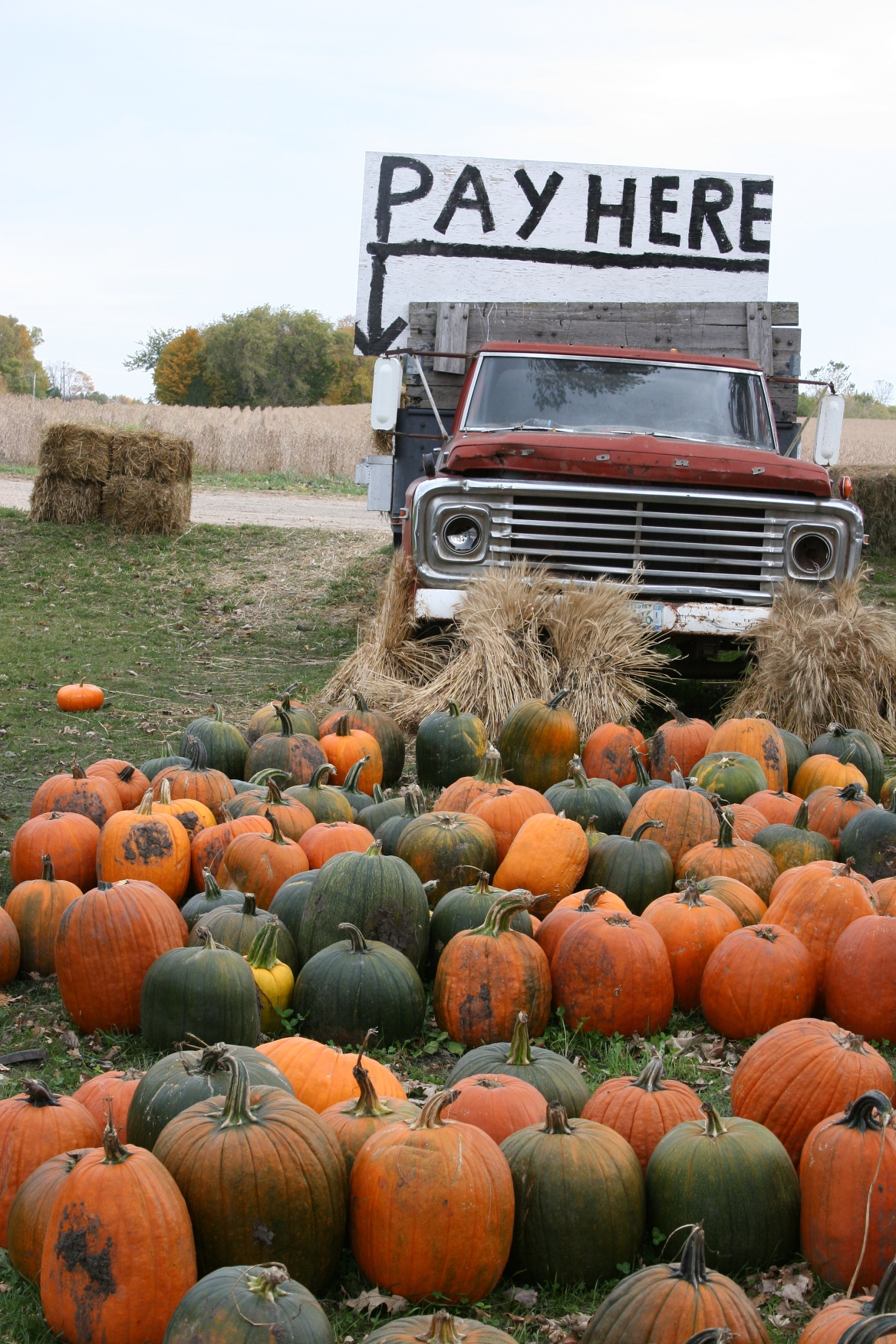
The Christian pumpkin farmer-writer relies on his customers’ honesty to simply deposit their payments in a secure metal box attached to the side of an old truck. Signage directs shoppers to “PAY ON OTHER SIDE” or to “PAY HERE.”

Apparently the system works. Or, if it doesn’t always work, perhaps George figures his business can survive a few stolen pumpkins, gourds or squash among the thousands he’s displayed.

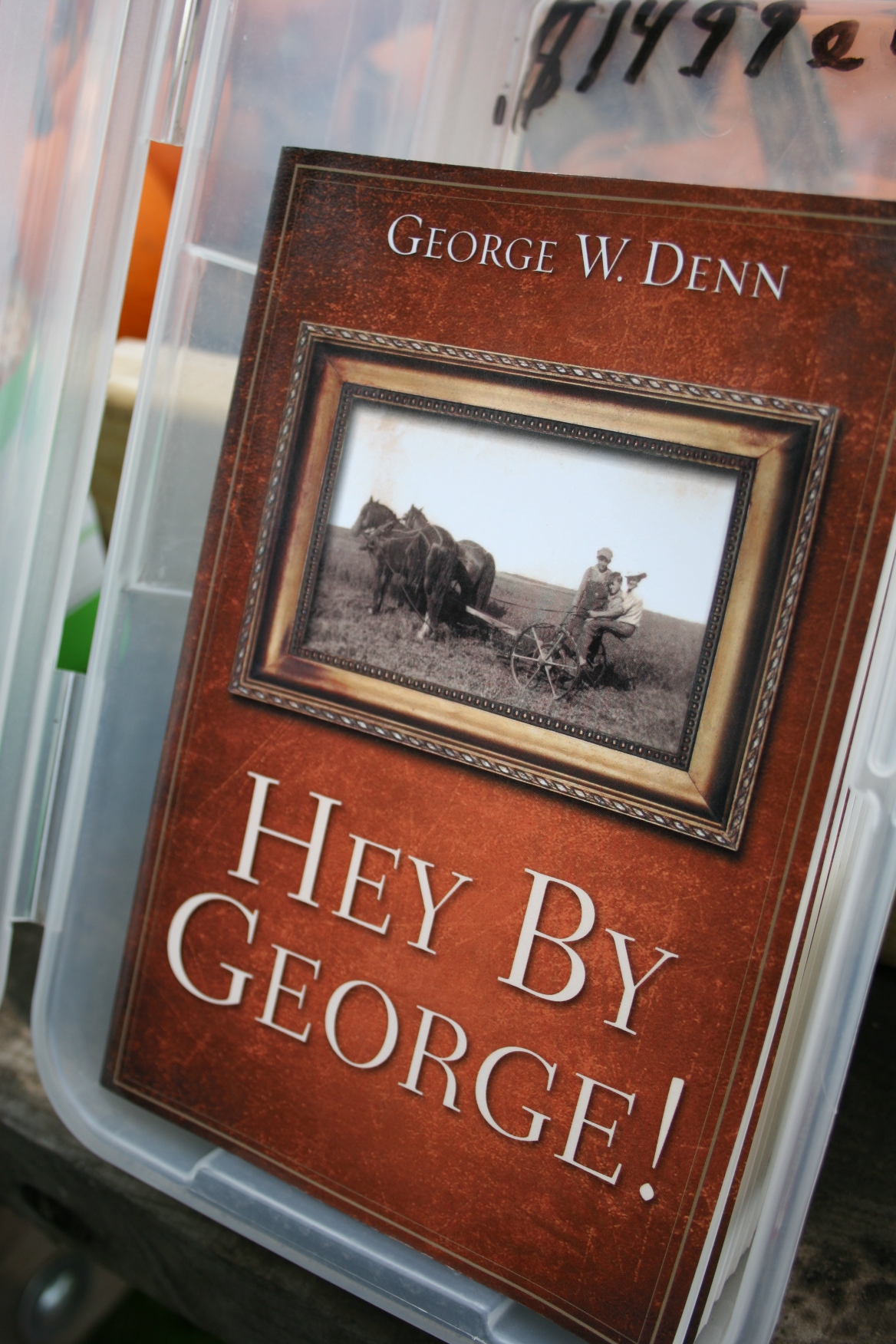
If anyone happens to take one of George’s $14.99 inspirational books or some of his produce without paying, he/she may want to turn to page 35 in Hey By George!.

George reveals that he’s not only mighty trusting, but he’s also mighty forgiving.


You pay on the honor system, depositing your money into a box attached to the side of this old truck.


The money goes here, in this secured box, as directed.


If you can't find the perfect pumpkin here, then you probably won't find one anywhere.


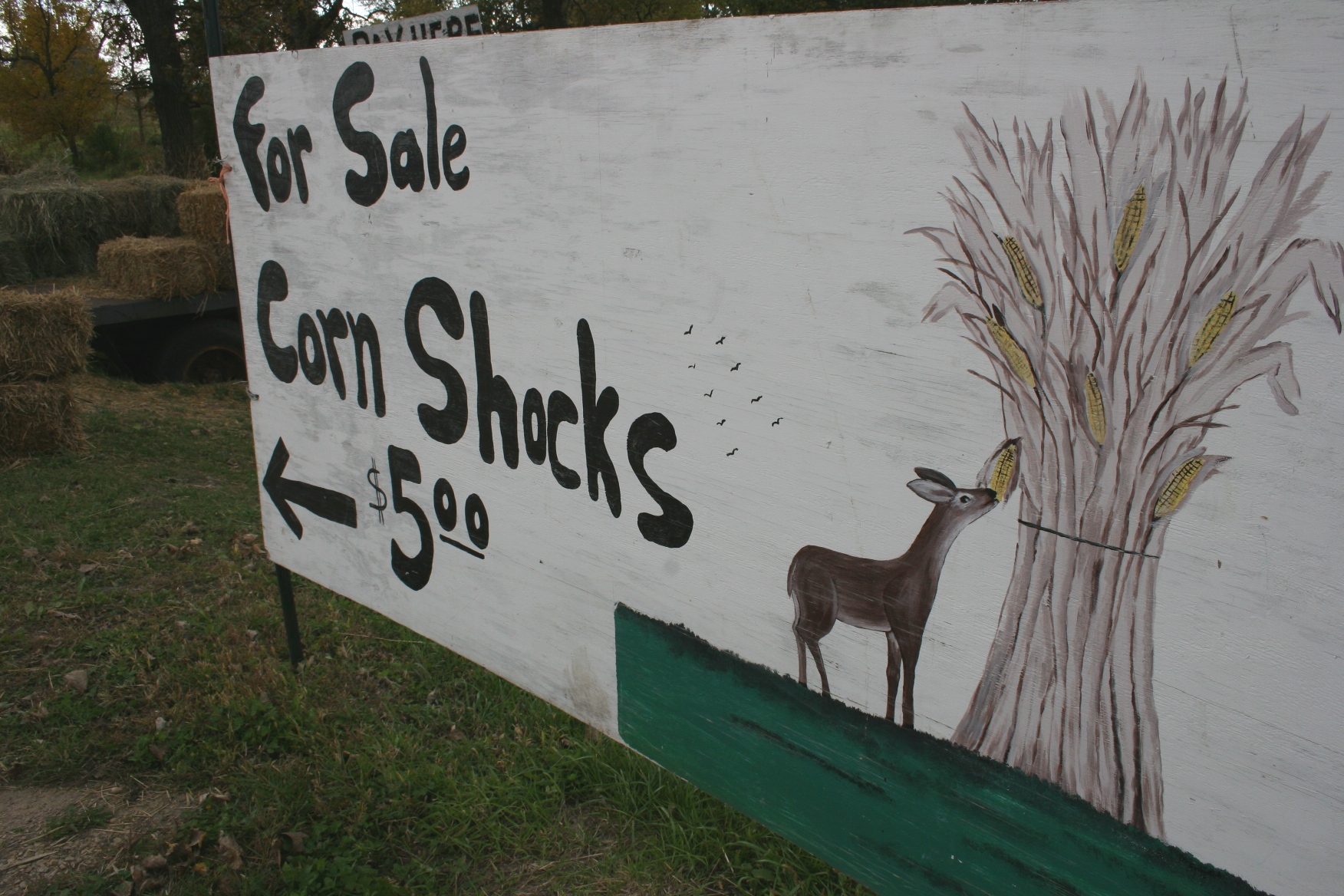
A kitschy sign lists the price for corn shocks.


Piles of squash for purchase.


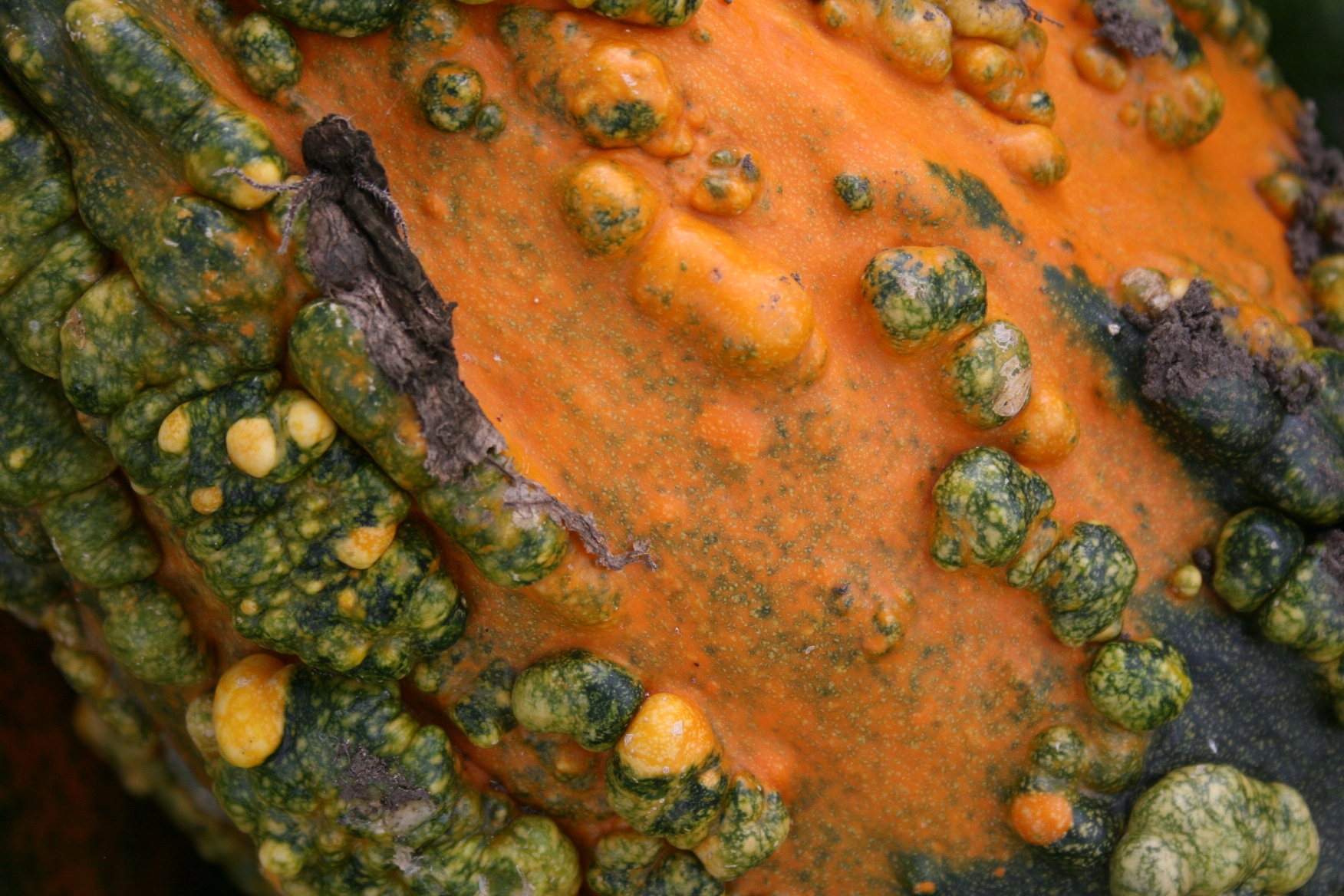
A close-up of the bumpy squash at Hey by George!


Heaps of squash at Hey by George!


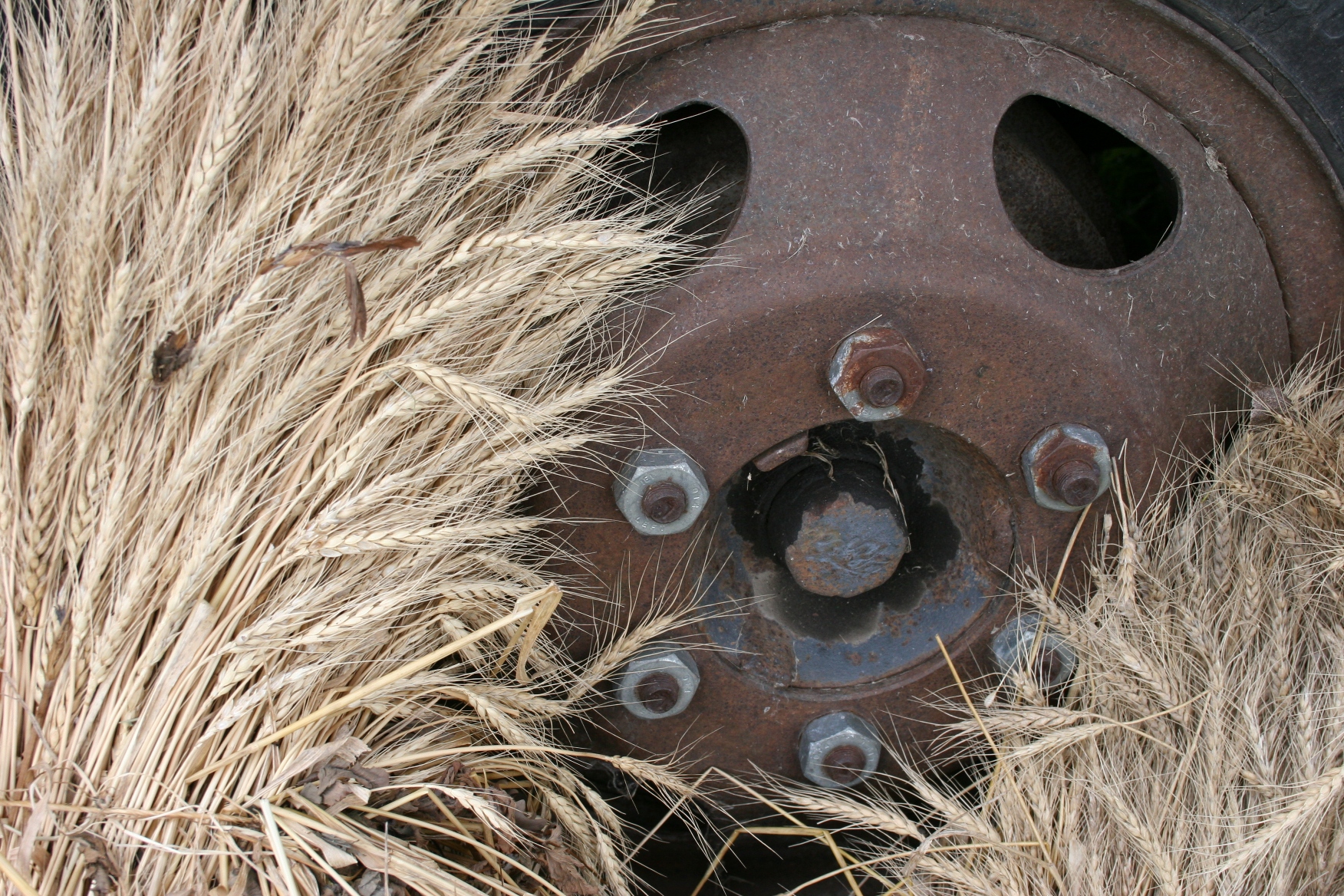
Wispy wheat makes an artful display beside the wheel of the old truck.


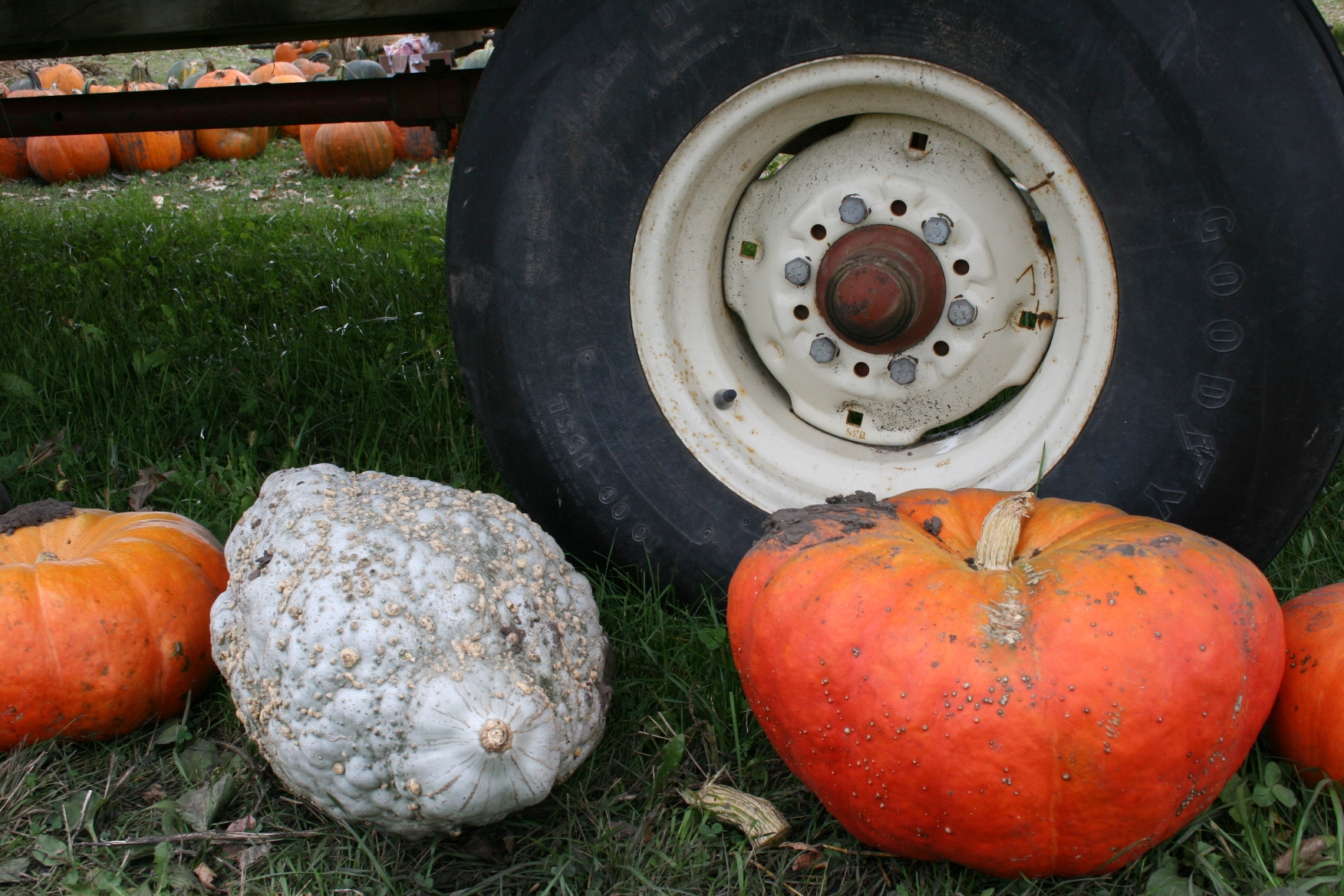
Colorful squash next to the old truck are for sale.


Jars of wheat are among the offerings at George's roadside market.


George Denn's two books, Hey By George! and Hey By George II, are tucked into plastic boxes and are also sold on the honor system.


© Copyright 2010 Audrey Kletscher Helbling


Seeking a book about Lutheran hymn writer Paul Gerhardt October 16, 2010

Filed under: Uncategorized — Audrey Kletscher Helbling @ 12:12 PM
Tags: , , , , , ,

SEVERAL WEEKS AGO I met a nice woman from Washington. Well, I didn’t actually meet, meet her. Rather she e-mailed regarding an article I wrote about homelessness in Faribault. That piece published in the September issue of The Lutheran Witness, the national magazine of The Lutheran Church, Missouri Synod.

Anyway, aside from the fact that Donna and I each attend LCMS churches, we also share a love of books.

“I am a book worm! I love books!” this West Concord, Minnesota, native wrote in one of many e-mails we exchanged. “I love to get books into people’s hands!”

Notice all those exclamation marks at the end of Donna’s sentences. That’s absolute proof to me that this retired library aide enjoys books.

Donna had a purpose for mentioning books to me. She wanted to buy an ad on Minnesota Prairie Roots seeking a specific book, Paul Gerhardt—His Life and His Hymns by William Dallman. Concordia Publishing House published the now out-of-print volume in 1921.

The problem: I haven’t yet reached the point of selling advertising on this blog. Believe me, I’d like to earn some money considering all of the time and effort I invest in blogging, but…for now it remains a passion of mine with no financial return.

But back to that book and Donna’s request. Although I’ve been a Lutheran all of my life, I’m not a musically-educated Lutheran. I cannot read a note nor do I know much about the Lutheran musical heritage. However, I can sing, from memory, all of the words to my favorite hymn, “Beautiful Savior.”

This, of course, does not help Donna. I offered to publish this post with the hope that someone out there—and you don’t even need to be Lutheran—has a copy of Paul Gerhardt—His Life and His Hymns. This musically-knowledgeable Lutheran wants to give the book to her pastor during October, Pastor Appreciation Month. If you can’t make that deadline, Donna’s fine with that. She has other ideas and can wait until next October.

Donna has already tracked down a few copies of the elusive 80-page rather plain brown book, so copies are out there. She found one for her church library and, after advertising elsewhere, located one in Great Britain. But the price is higher than she’s willing to pay. A retired pastor in Oregon also has the book, but it’s written in German. She wants English.

So, if you have an English copy of Paul Gerhardt—His Life and His Hymns e-mail your contact information in a comment (which I will not publish) and I’ll forward it to Donna in Washington.

I’m sure if you ask, Donna will tell you that Paul Gerhardt, born in 1607, was trained to be a Lutheran pastor at Wittenberg, Germany, where Martin Luther studied a century earlier. Gerhardt wrote more than 130 hymns including “Come Your Hearts and Voices Raising,” “Upon the Cross Extended,” “Awake My Heart With Gladness,” “Evening and Morning,” “I Will Sing My Maker’s Praises” and “Now Rest Beneath Night’s Shadow.”

Right off hand, I can’t say those hymns sound familiar to me. Remember, though, I’m no musician, simply a Sunday morning singing Lutheran.

Donna’s pastor, however, based his March 2010 Lenten sermons on Gerhardt’s life and hymns, using those as a window into the life of Christian devotion. That explains why Donna wants this certain book for her clergyman’s private collection.

So if you have a copy of Paul Gerhardt—His Life and His Hymns by William Dallman, in English, not German, e-mail me now.

Danke Schöen.

#

HERE’S ANOTHER INTERESTING story from my new Washington friend. Donna volunteers at her church library and her daughter, also a bookworm, gave her a book, Hymns of the Evangelical Lutheran Church for the Use of English Lutheran Missions, published in 1896 by Concordia Publishing House.

Said daughter bought the book for $1 at an American Association of University Women book sale.

But here’s the really odd, coincidental connection to me. Inside the book is the name Martha Schultz, Faribault, Minnesota, and the date, January 10, 1903.  So…, if anyone in Faribault, where I’ve lived since 1982, knows anything about Martha, Martha’s ownership of this book and how it ended up in Washington, Donna and I would very much like to know. Send me a comment.  Thank you.

© Copyright 2010 Audrey Kletscher Helbling


Poetry and cheesecake October 1, 2010

Filed under: Uncategorized — Audrey Kletscher Helbling @ 8:01 AM
Tags: , , , , , , , , , , ,

My daughter's homemade chocolate cheesecake, my birthday cake.

I FELT JUST LIKE a queen, waiting patiently at the dining room table to be served a slice of decadent chocolate cheesecake.

I must say, it’s a wonderful feeling to be on the receiving, rather than the giving, end. And that’s how it is now when I celebrate my birthday.

On Monday, a day after my birthday, my daughter drove down from Minneapolis for an appointment and later dinner out with me, her dad and her brother. But afterward, ah after that meal, I really enjoyed the celebration.

My first-born had baked a from-scratch, all-chocolate cheesecake. She clued us in that the recipe called for melted peanut butter chips mixed into the chocolate batter. But she scorched the peanut butter chips and had to substitute chocolate chips. That produced some gentle teasing about a many-years-earlier chocolate pudding cake disaster.

Clearly, she’s learned a thing or two about cooking and baking as the cheesecake was pure chocolate perfection.

As much as I enjoyed the rich creamy dessert, even more I appreciated that my daughter chose to make a cheesecake. She knows it’s my favorite dessert.

Then I opened my gift from her and appreciated even more that my eldest had chosen items perfectly suited for me. She didn’t buy just any old thing just to give me a present. Rather, she shopped at a south Minneapolis antique store—one with lots of antlers and a place she nearly walked out of due to all those antlers on the walls.

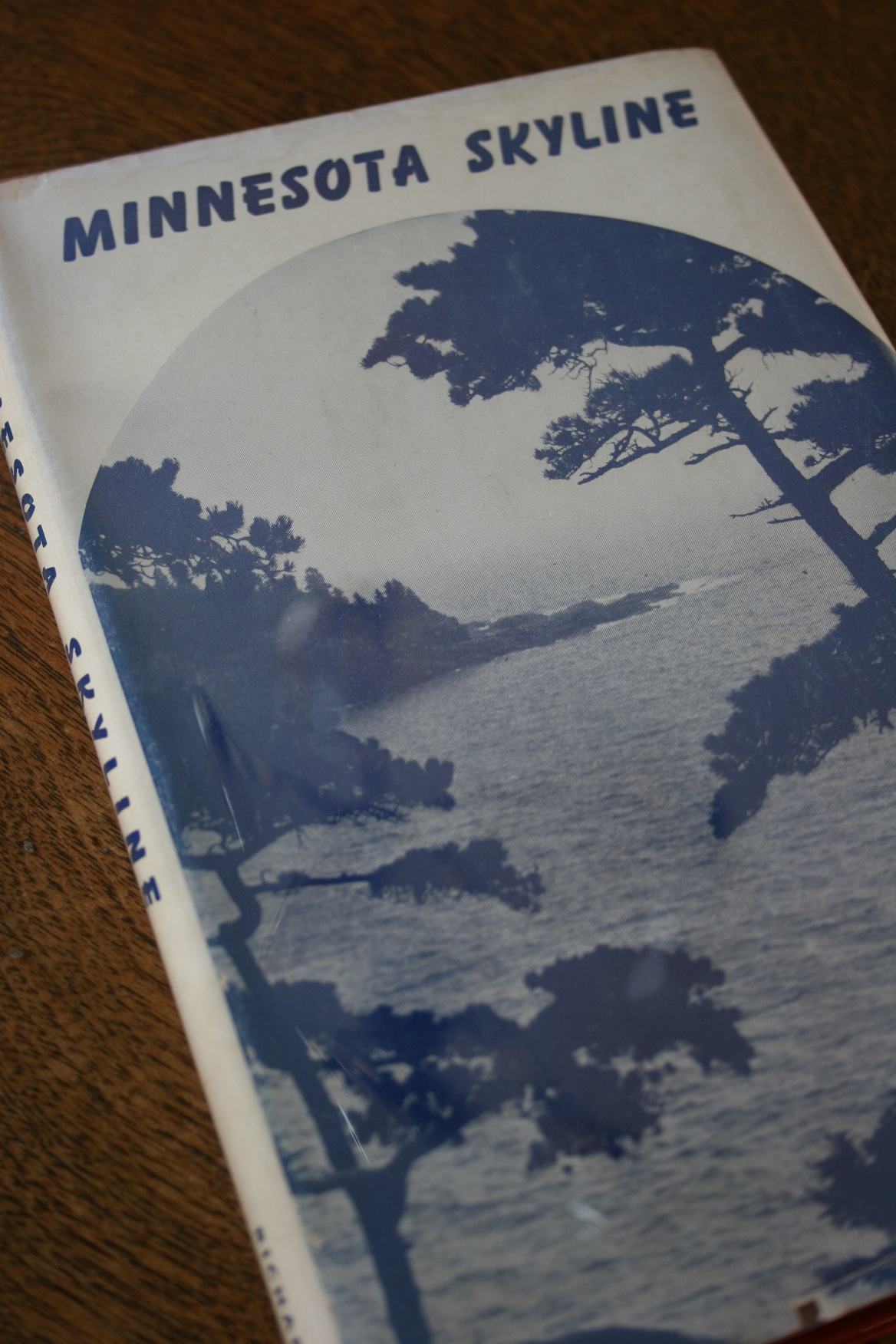
Inside the antique shop, she found a slim volume of poetry, Minnesota Skyline, published in 1953. The book wasn’t priced, she said, and clerks discussed, in front of her, the price she should pay.

Minnesota Skyline, a vintage poetry collection I think worthy of reprinting.

I flipped through the pages and knew I would enjoy this collection with poems like “Wind in the Corn,” “Pioneers of Southern Minnesota,” and “Spring on the Prairie.”

I haven’t had time yet to indulge in the anthology. But that evening, after I opened my daughter’s gift of poetry, I read aloud a verse from “Delano on Saturday Night” by Margaret Horsch Stevens of Montrose:

Men, bent, with toil, feel younger in the glare

Of lights, exchanging jokes and arguments;

And women brighten as they meet and talk

Of recent births, and brides, and home events.

We laughed as we pictured families gathered in downtown Delano on a Saturday night in the 1950s. How times have changed.

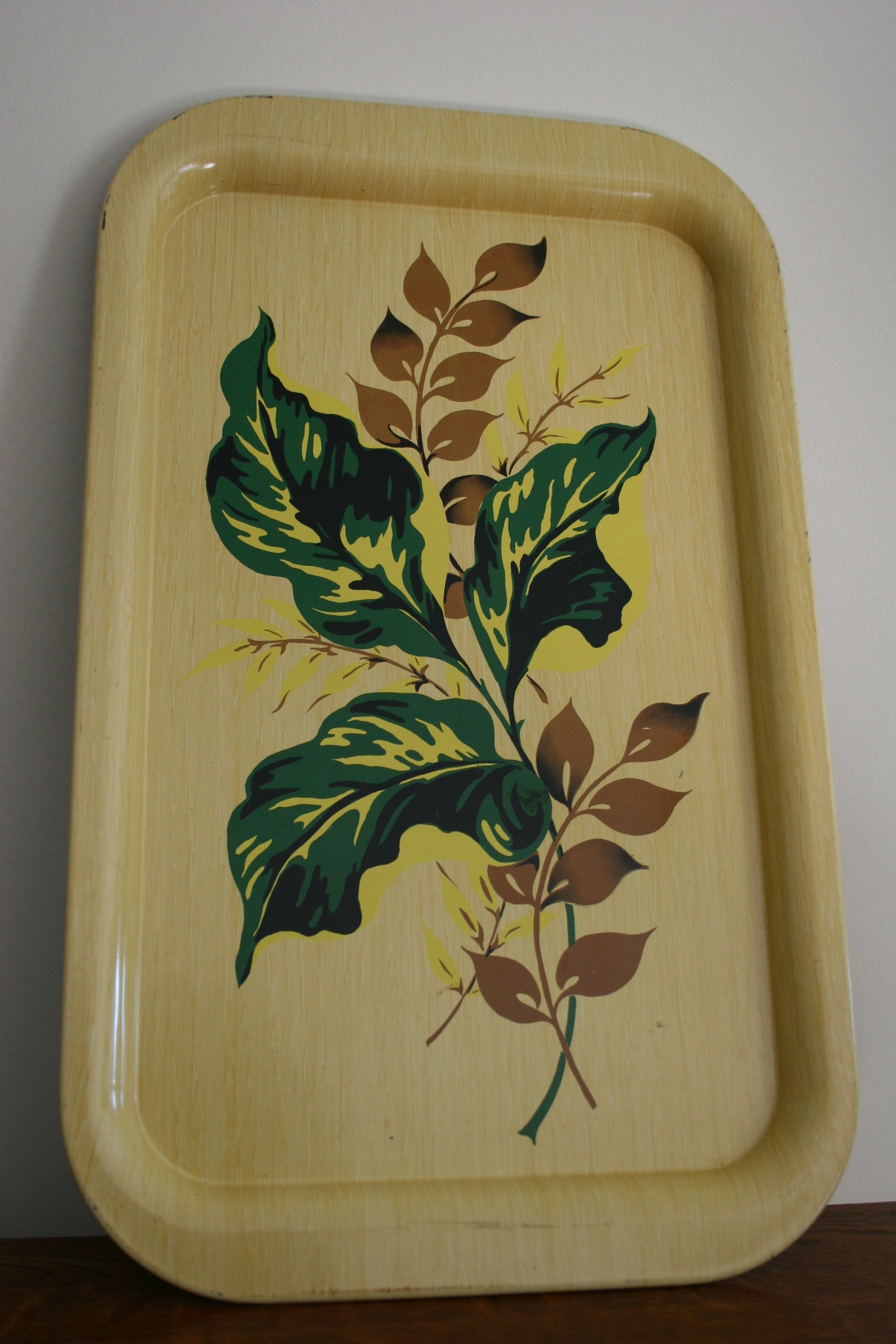
After that impromptu poetry reading, I pulled four slim yellow trays from my birthday gift bag. Once again, my daughter had selected an ideal present for me. I collect vintage metal trays and these were unlike any I have or any I’ve seen. For now I’ve propped two atop a shelf—art leaning against a wall.

My daughter gave me four vintage metal trays for my collection.

There’s something to be said for aging, when you can see your children as grown adults, who are caring and loving and giving and who know that you love poetry and cheesecake.

My husband also remembered my birthday with a colorful daisy bouquet.

© Copyright 2010 Audrey Kletscher Helbling
The Lund Press, Inc., of Minneapolis published Minnesota Skyline.


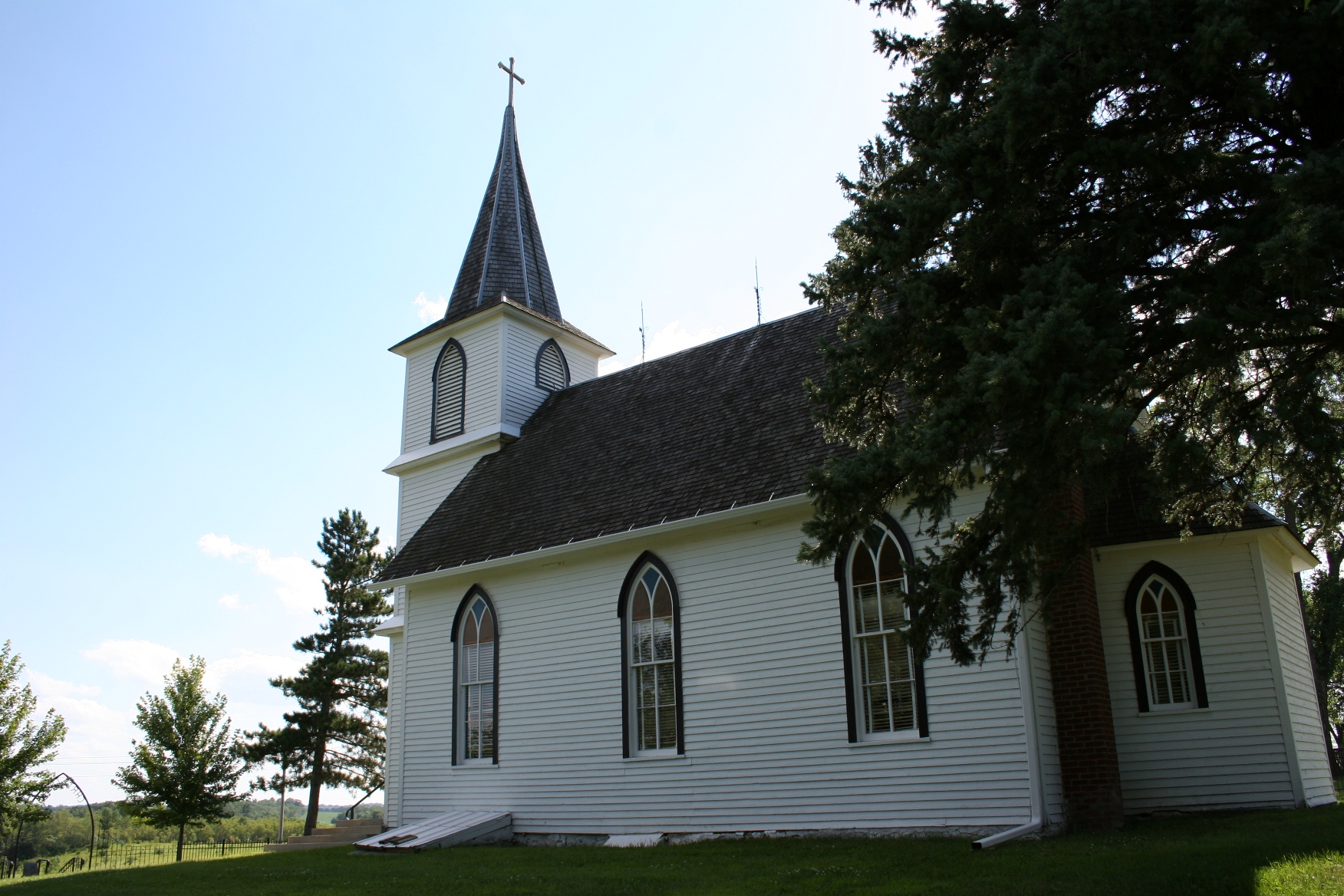
Visit Christdala Church for worship, art and a history tied to outlaws September 25, 2010

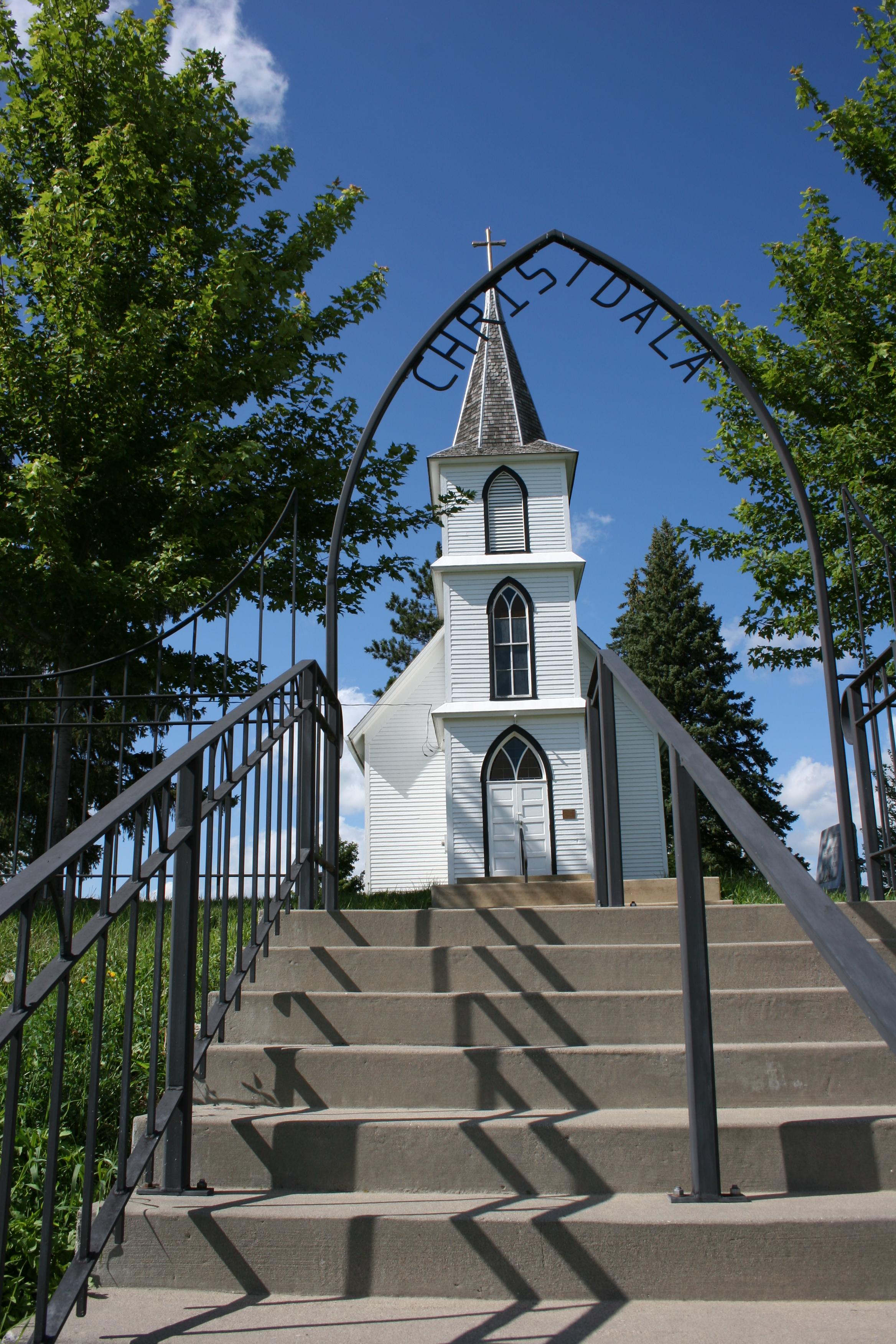
Steps lead from Rice County Road 1 to Christdala Swedish Lutheran Church.

I DOUBT ANY OTHER MINNESOTA church can claim roots in a notorious attempted bank robbery. But Christdala Evangelical Swedish Lutheran Church of rural Millersburg can.

The long-dissolved congregation traces its origins back to the September 7, 1876, attempted robbery of the First National Bank in nearby Northfield. During that failed crime, Nicolaus Gustafson, a Swedish immigrant from Millersburg, was shot point blank in the head by outlaw Cole Younger. He died four days later and was buried in Northfield because the Millersburg Swedish community didn’t have a graveyard, or a church.

The evening of the bank robbery, the Swedish immigrants met to talk about constructing a church and soon thereafter built Christdala.

This Sunday, September 26, the Christdala Church Preservation and Cemetery Association will open the doors to this historic church which sits high atop a hill overlooking Circle Lake just west of Millersburg along Rice County Road 1. On this roadway that passes by the 1878 country church, the James-Younger Gang fled after the botched Northfield raid.

The doors to Christdala, which is on the National Register of Historic Places.

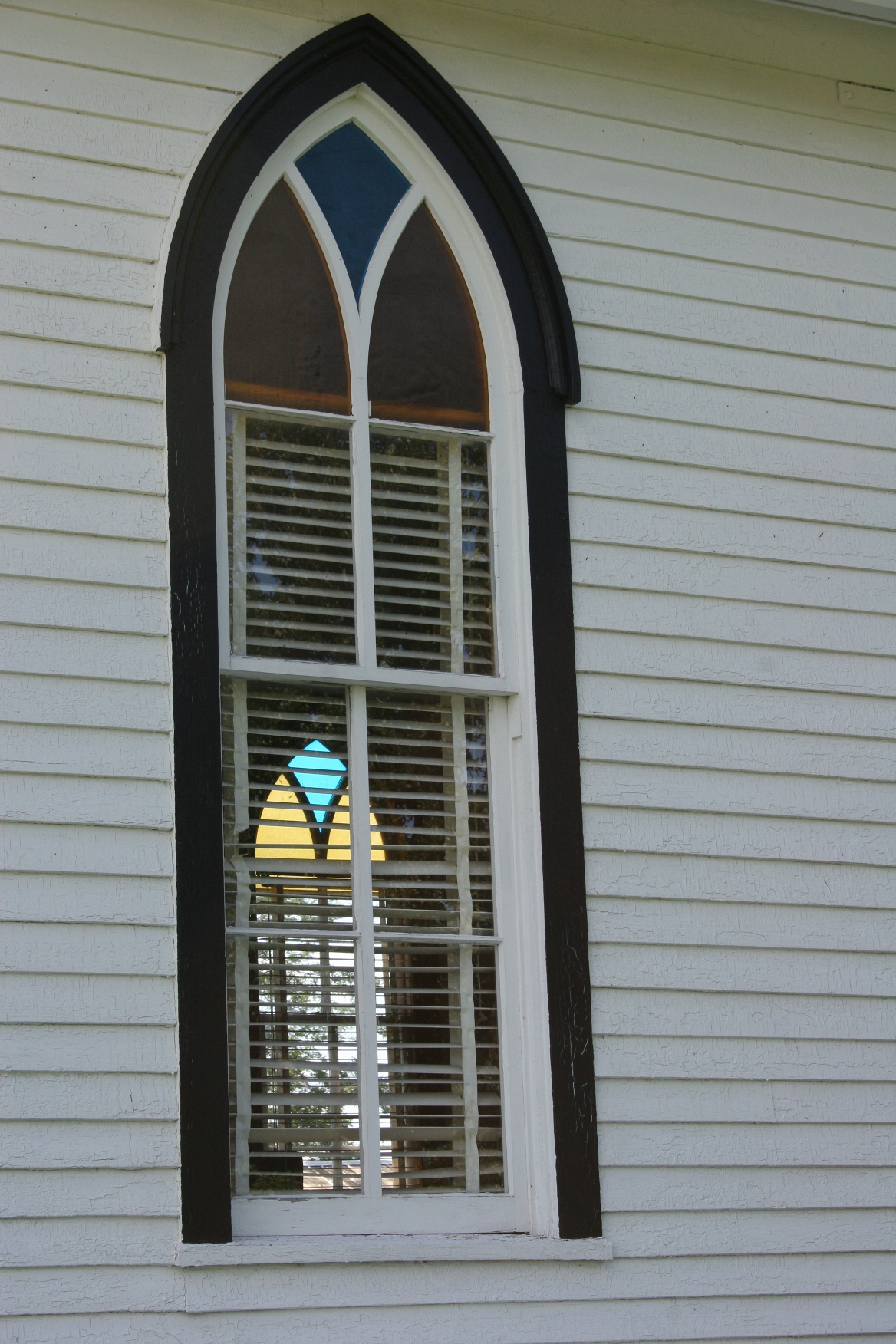
I’ll be there Sunday for the 2 p.m. fall worship service led by the Rev. Ralph Baumgartner, pastor of Galilee Evangelical Lutheran Church in Roseville, who has family ties to Christdala. I’m anxious to get inside this sanctuary, which I’ve only viewed through the slats of Venetian blinds while photographing the locked building on a Sunday afternoon in July.

I've only peered through the blinds into the sanctuary.

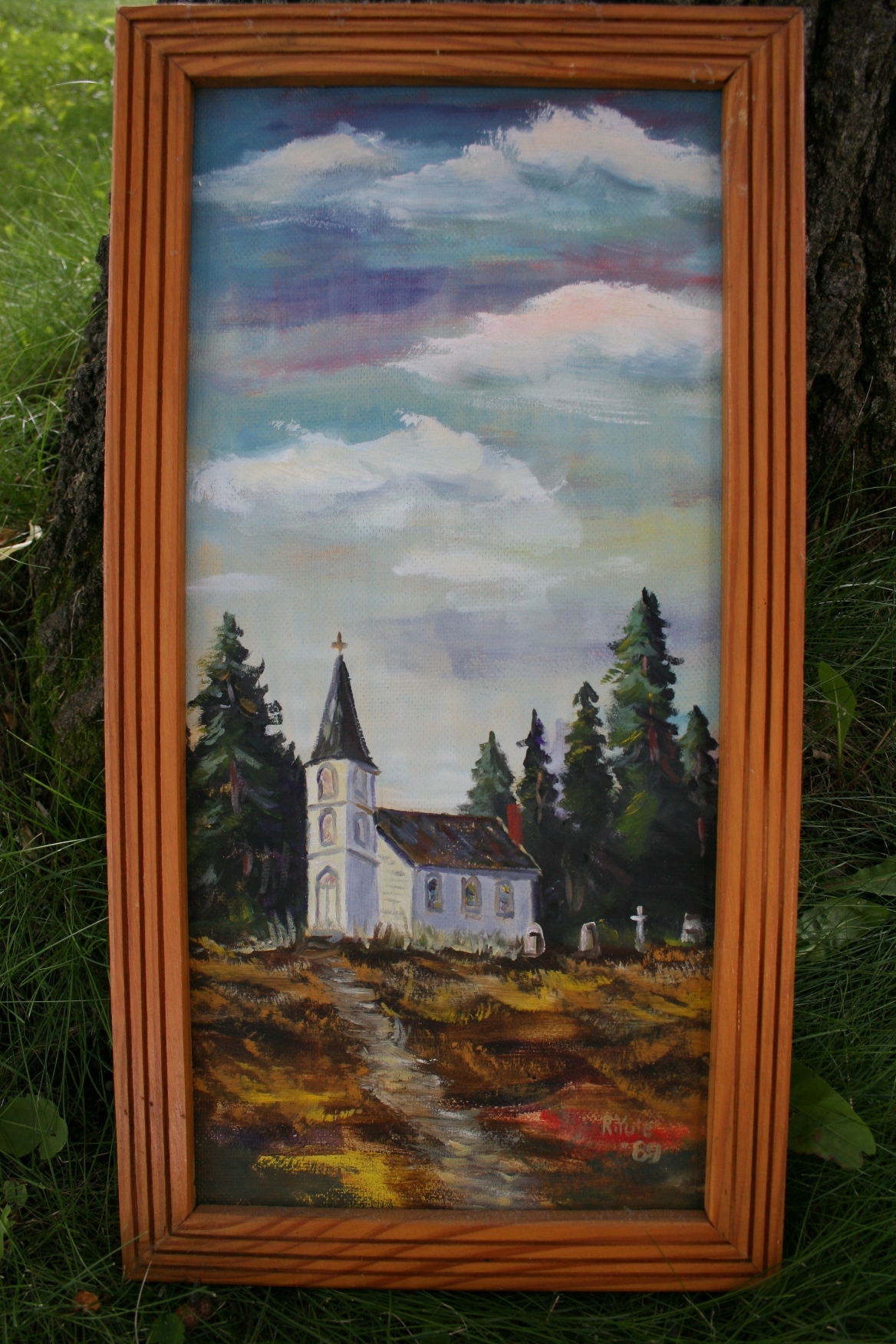
This Sunday I’ll arrive well before worshipers and the curious and the families with a connection to Christdala. I’ll arrive with a van full of paintings by my 92-year-old artist friend, Rhody Yule of Faribault. Rhody, who has been creating art for 76 years, did an oil painting of the church in 1969. He’s showing that piece and eight other religious-themed works at Christdala’s open house.

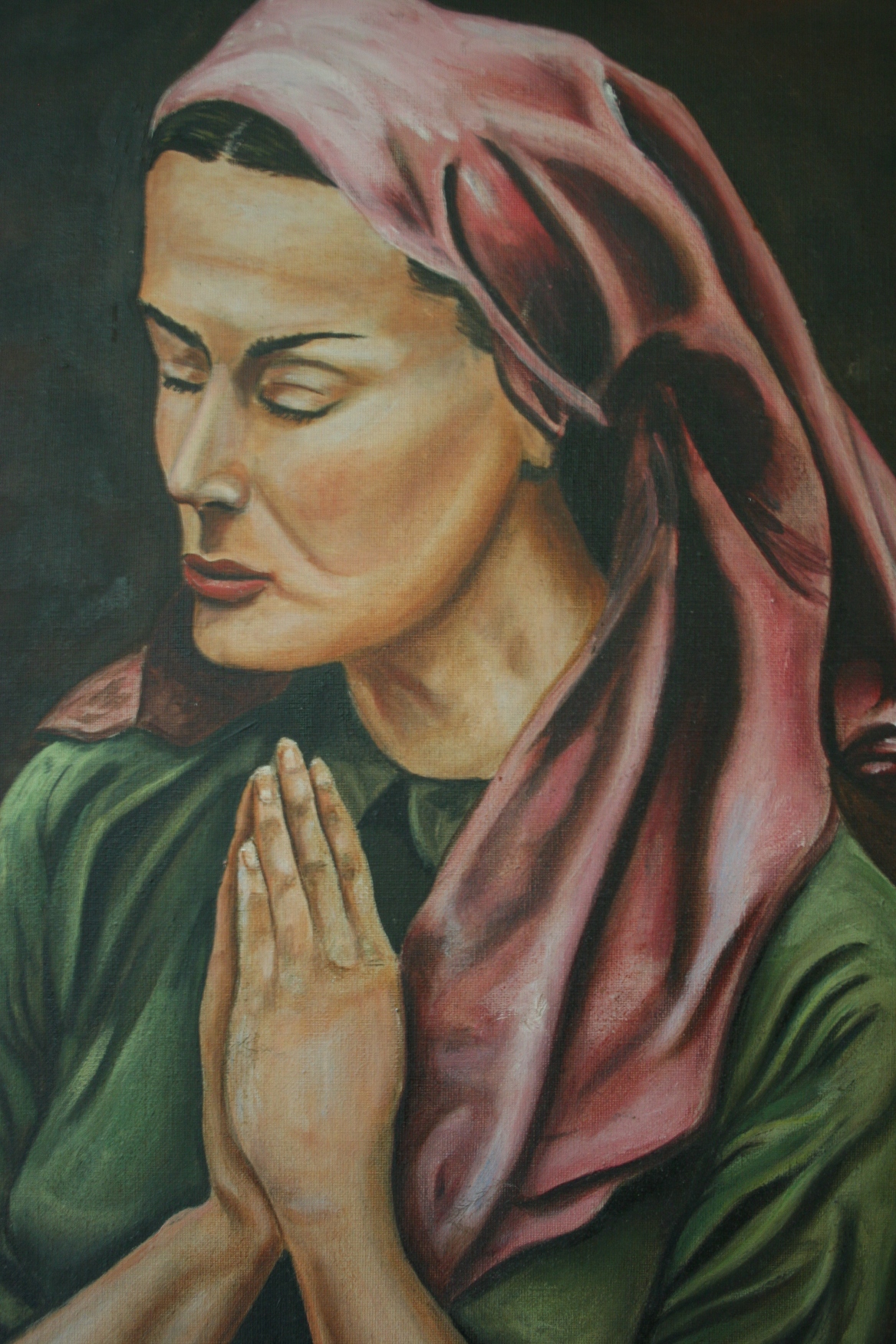
He’ll talk a bit. I’ll talk a bit. But mostly, we welcome visitors to pause and study the paintings, to feel the emotions painted into the faces of the disciples, of Christ, of a woman in reverent prayer. Rhody paints with a heart of faith reflected in his art.

Christdala Swedish Lutheran Church painted in 1969 by Rhody Yule.

A snippet of Rhody Yule's painting, one of nine he will show at Christdala.

Christdala visitors can also pick up a copy of God’s Angry Man—The Incredible Journey of Private Joe Haan by B.Wayne Quist. The newly-released book tells the true, powerful life story of Haan (Quist’s uncle), who grew up in an Owatonna orphanage and who served in Patton’s Third Army during WW II. Quist, a member of the Christdala Preservation Association, will donate profits from Sunday’s book sales to Christdala.

Copies of the fall issue of Minnesota Moments magazine, featuring my photo essay on country churches, will also be on sale with a portion of the proceeds benefiting the church.

B. Wayne Quist will sell copies of his latest book, God's Angry Man.

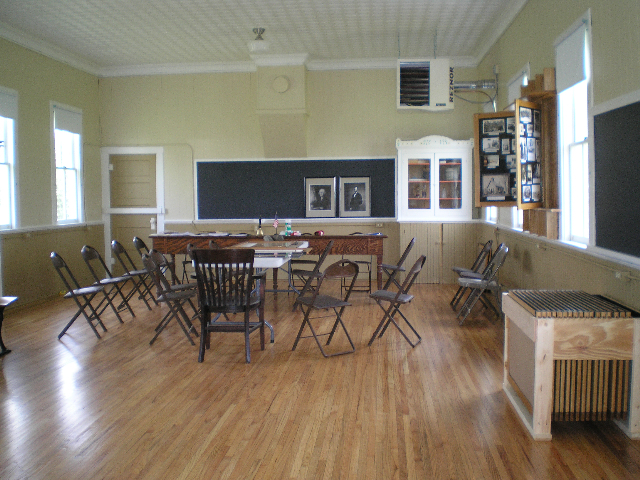
Before and after the worship service, visitors can tour the 1881 Millersburg School, which the Christdala preservation group has refurbished and is transitioning into a community museum. Exhibits include church and school records, photos, military medals and records, Indian artifacts, an old doctor’s buggy and more. Faribault genealogist and preservation member John Dalby will be at the schoolhouse to answer questions.

The Millersburg School has been refurbished and will feature exhibits tied to local history.

Sunday promises to be an interesting day for those who gather at Christdala. It will be a day of history and of art, of worship, of thoughtful remembrances at gravesites, of families reuniting and of others simply coming together on this spot, this Christdala, this “Christ’s Valley,” here where the outlaws once escaped on their galloping horses.

A side view of the 1878 Christdala Swedish Lutheran Church.

© Copyright 2010 Audrey Kletscher Helbling
Book cover image courtesy of B. Wayne Quist and schoolhouse image courtesy of John Dalby.


It’s OK if you don’t have pickle bumps September 23, 2010

I’LL ADMIT TO MORE than a bit of skepticism about a children’s picture book titled Pickle Bumps for Baby Dill. “What kind of book is that?” I wondered before calling the author, Bob Fulton.

Well, exactly as the title suggests, this is a story about Baby Dill, a pickle born without bumps. But that’s not all. You see, after speaking with Fulton and upon reading his book, I learned the real purpose. And it’s much more than a story about cute, talking pickles.

Fulton delivers a strong message via the Dill family and Baby Dill’s friends. The message: “It’s OK to be different.”

That’s a message especially fitting for this time of year, the beginning of school.

I would speculate that many students have, in recent weeks, felt like they don’t quite fit in with their classmates. Maybe they aren’t wearing the latest fashions. Maybe they’re in a new school, struggling to make friends. Maybe they’re shy, quiet. Maybe their hair or their skin is the “wrong” color. Maybe they’re struggling with learning.

Maybe, like Baby Dill, they wonder why they are different from everyone else.

Fulton addresses that concern, which leads the Dill family on a shopping trip for pickle bumps. In the end, Baby Dill decides, with the support of his friends, that he would rather remain bump less.

While Fulton’s story has a positive ending, I know that isn’t always reality. In real life, kids bully, tease, make fun of, pick on, humiliate—whatever words you want to choose—those who are different. For all too many kids, there are no understanding friends to stand by and support them.

A book like Fulton’s offers encouragement. “We like you just the way you are,” Baby Dill’s friends tell him. That’s a message that needs to reverberate through-out our schools, our homes, our communities.

Pickle Bumps for Baby Dill would be a good addition to any elementary school classroom or library. While aimed at preschoolers and lower elementary students, the story also appeals to 10 – 12-year-olds, Fulton says. Having experienced bullying myself while in junior high school, I applaud any efforts to help students, parents and teachers address the issue.

The college educator—he taught chemistry for 39 years at St. John’s University and The College of Saint Benedict—has even added a list of 12 questions at the end of his book to prompt discussion.

He shares, too, that his book evolved from telling stories to his grandchildren and a specific request from his youngest grandson to “Tell us a story about a pickle.”

Fulton did and then put his tale into writing in Pickle Bumps for Baby Dill, published by Pickle Bump Press. Melissa Meyer, originally from Saint Joseph, Minn., illustrated the book.

#

AS A SIDE NOTE, please be aware that October is National Bullying Prevention Month. Check out the PACER Center Web site for information that can help you address bullying. Perhaps by working together, through understanding and listening and empathy, we can help reduce the bullying that is all too prevalent in our society, especially in our schools.

© Copyright 2010 Audrey Kletscher Helbling
 

My unforgettable “road” poem publishes in The Talking Stick, Forgotten Roads September 15, 2010

TYPICALLY WHEN I write poetry, I turn to my past, to childhood memories.

That’s evident by my poems published in three volumes of Poetic Strokes, A Regional Anthology of Poetry from Southeastern Minnesota:  “Abandoned Farmhouse,” “Prairie Sisters,” “Walking Beans,” “Saturday night baths,” and “A school without a library.”

Occasionally I deviate from that trip down memory lane. “Lord, My Rock” published in the fall 2004 issue of The Lutheran Digest and “Tribute to a Korean War Veteran” published in the May/June 2009 issue of Minnesota Moments magazine.

My latest in-print-poem also detours from my typical subject of childhood days, although it stays on the road of memories, albeit this one a heart-wrenching, emotional recent memory.

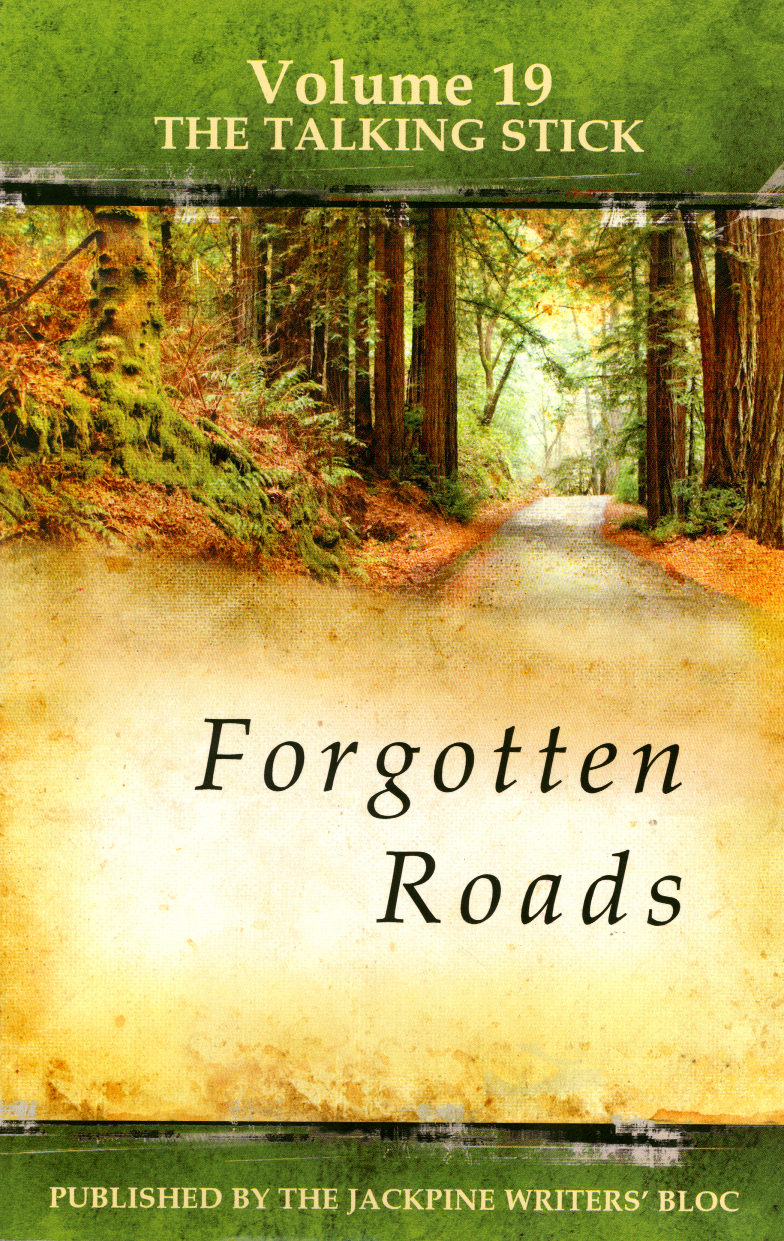
“Hit-and-Run” has just published in The Talking Stick, Forgotten Roads, Volume Nineteen, debuting this Saturday at a Book Release Party in the Northwoods Bank Community Room in Park Rapids.

The poem looks back to May 12, 2006, the day my then 12-year-old son was struck by a hit-and-run driver while crossing the street just a short distance from our home. Thankfully, my boy was not seriously injured. But the driver was never found and the memories of that horrible incident still linger. Now I’m sharing, in poetic verse, how that morning unfolded emotionally for me. Certainly, I have not forgotten this road.

Apparently my words resonated with the editors who reviewed the 200-plus poems submitted in this literary competition. “Hit-and-Run” was among the top seven poems selected by the editorial board for prize consideration by noted Minnesota poet Heid Erdrich. My poem earned an honorable mention.

“A terrifying imagery/memory,” Erdrich partially wrote in her evaluation.

Indeed.

If you would like to read my poem, the other winning poems and the fiction and creative non-fiction published in this latest collection by writers with a connection to Minnesota, check out the online purchasing options at The Jackpine Writers’ Bloc. The Park Rapids/Menahga-based group annually publishes The Talking Stick, which is sold by the Writers’ Bloc and several northern Minnesota bookstores.

I’ve read two of the past anthologies and I promise that you will enjoy some top-notch writing by emerging and established Minnesota writers. The Talking Stick has an excellent, long-standing reputation and I’m proud to be published in it.

If you’re a writer, consider entering the 2011 The Talking Stick competition. Submissions call for the 20th volume goes out in December with a March 1, 2011, submission deadline.

Finally, if you’re in the Park Rapids area this weekend, consider attending the book release party, which begins at 1 p.m. Writers published in The Talking Stick, Forgotten Roads, will read their works beginning at 2 p.m. No, I won’t be there as I have another commitment. But you’ll meet plenty of other Minnesota writers anxious to sell their books or compare notes on this journey we call writing.

© Copyright 2010 Audrey Kletscher Helbling
 

Celebrating words and art in Paul Bunyan land August 19, 2010

Filed under: Uncategorized — Audrey Kletscher Helbling @ 9:39 AM
Tags: , , , , , , , ,

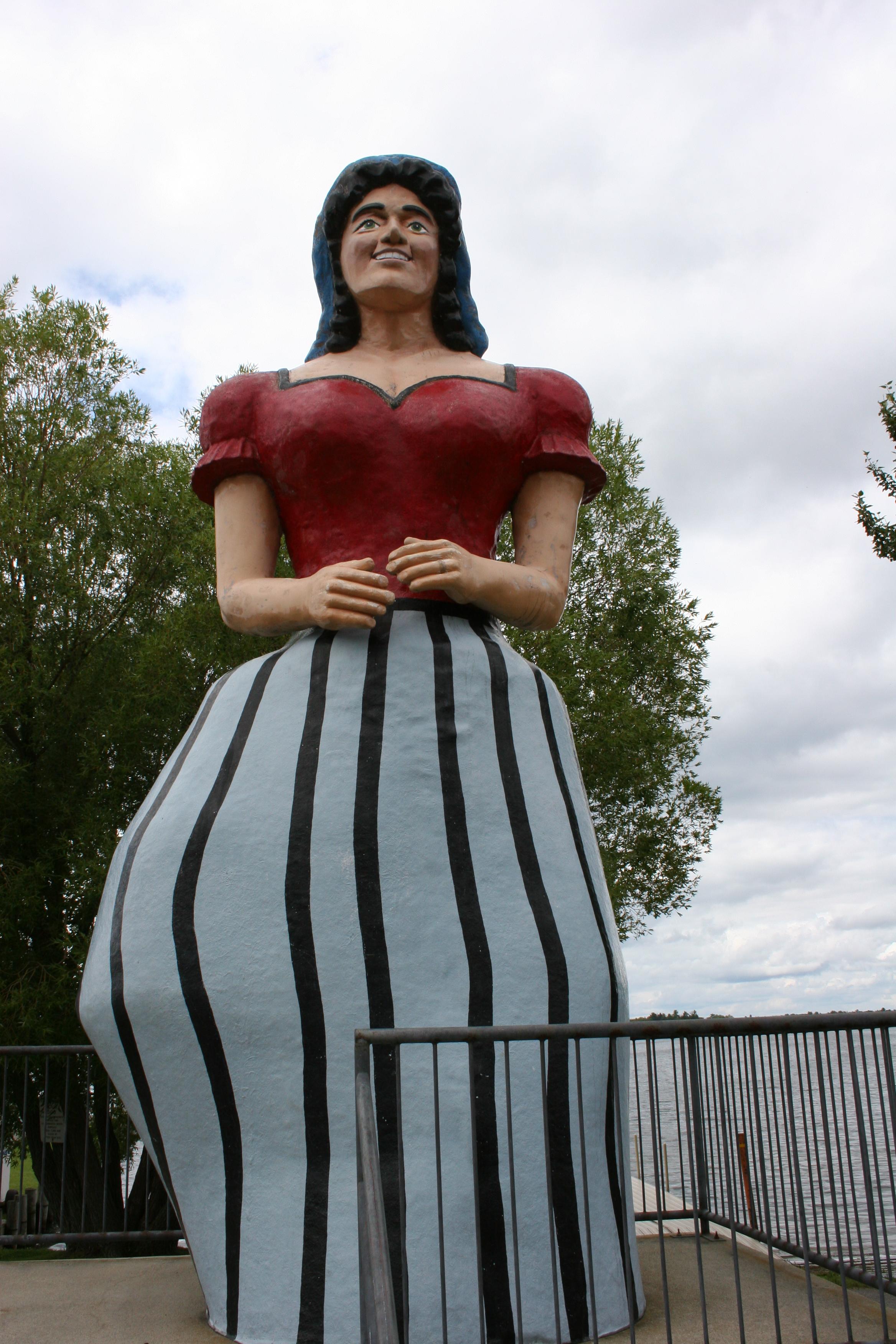
Paul Bunyan's sweetheart, Lucette Diana Kensack

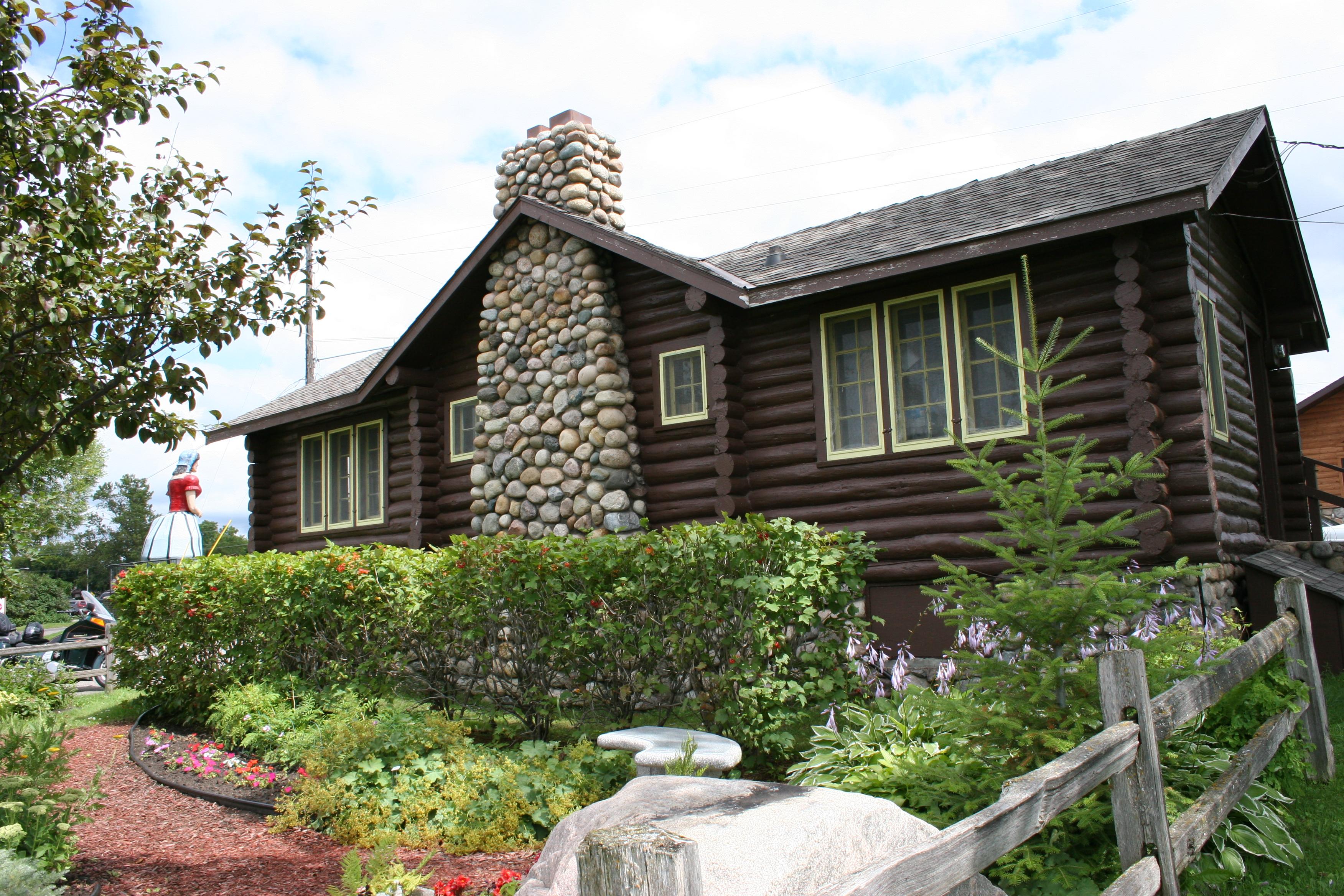
I’VE BEEN INVITED to Hackensack, home of Paul Bunyan’s sweetheart. Lucette Diana Kensack lives (or technically, stands) along the shores of Birch Lake next to a quaint 1930s log cabin that is the Hackensack Lending Library.

The lakeside of the Hackensack Lending Library. To the left stands Lucette.

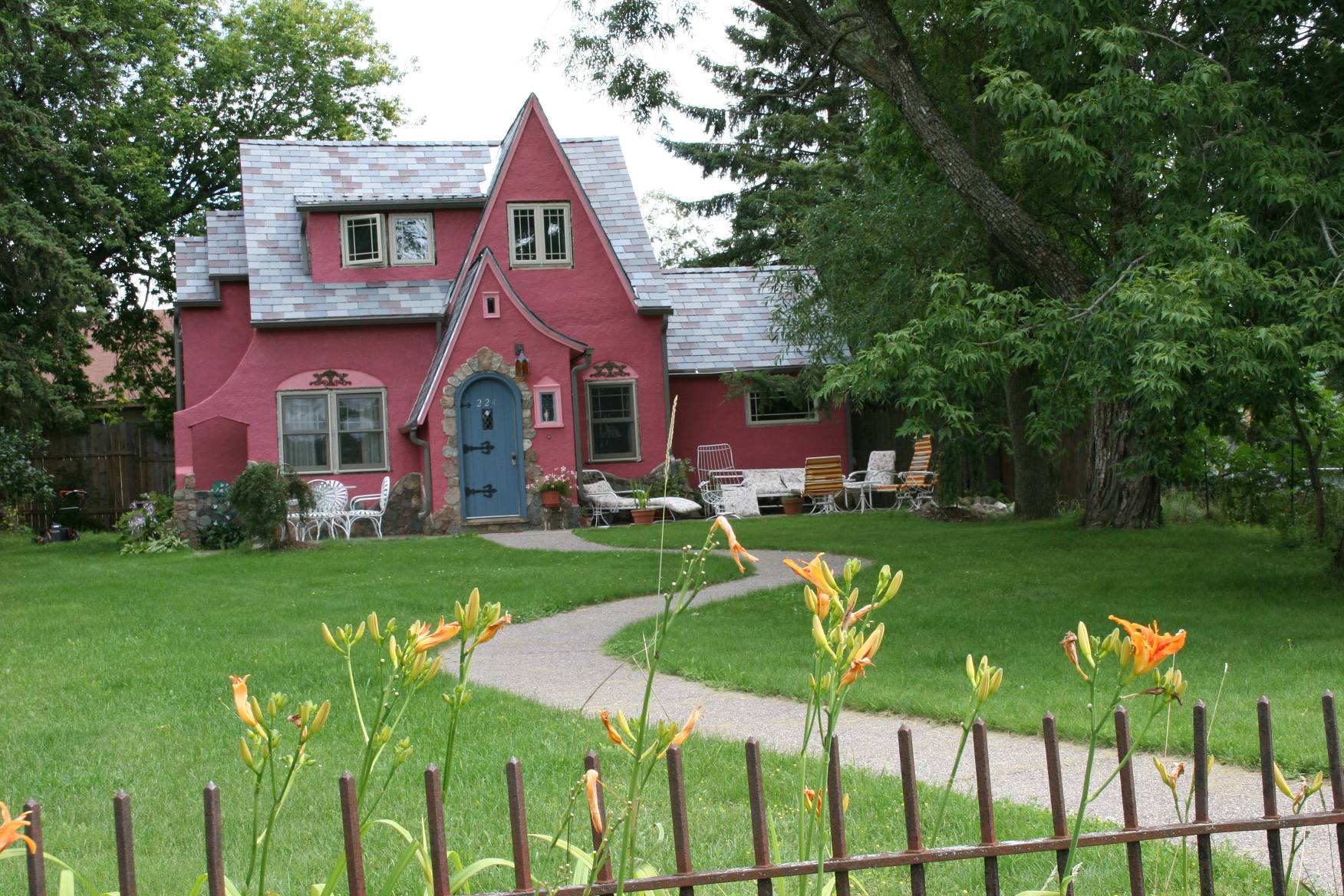
Just down the road along First Street sits a sweet, pink fairy tale cottage.

Unfortunately, I’m not traveling to Hackensack, which lies midway between Brainerd and Bemidji and marks the half-way point on The Paul Bunyan Trail. I was just in Hackensack last summer and another trip that far north is not on the schedule. But if it was, I tell you, I would want to stay at that Hansel and Gretel cottage. (I don’t care that it’s a private home.)

I discovered the fairy tale cottage while visiting Hackensack last summer.

Instead, I’ll be back here in southern Minnesota awaiting results of a poetry competition. You see, some time ago I submitted two poems for possible display at The Northwoods Art Festival and Book Fair in Hackensack from 10 a.m. – 4 p.m. on Saturday, August 28.

Recently I learned that both my poems were selected for display and are vying, like all the chosen poems, for “Works of Merit” designation by long-time Brainerd poet Doris Stengel. The visiting public will also vote for their six favorites as “Popular Choice” award winners. As far as I know, no cash prizes are made. Rather the prize lies in peer and/or public recognition.

I would love to tell you which of the untagged poems are mine. But since I don’t want to be accused of voter fraud, illegal lobbying or some other such poetic “crime,” I have sworn myself to secrecy. I’m quite certain that revelation of my poems’ titles could lead to disqualification.

That disclaimer aside, if you’re in the Hackensack area on August 28, check out the arts festival and specifically the poetry display at the Union Congregational Church. Minnesota writers and illustrators will be at the church signing and selling their books. At 1:30 p.m., the award winners will be announced and display poets can read their poems.

But there’s more to this fest than the written word. You also will find artists who work in paint, clay, metal, wood, fiber and photography. Throw in food and music and you have a genuine Paul Bunyan-worthy Minnesota festival.

Come to think of it, perhaps I should have penned a poem about Paul Bunyan.

© Copyright 2010 Audrey Kletscher Helbling
 

“Little House on the Prairie” originated as a book series, remember August 4, 2010

Filed under: Uncategorized — Audrey Kletscher Helbling @ 7:28 AM
Tags: , , , , ,

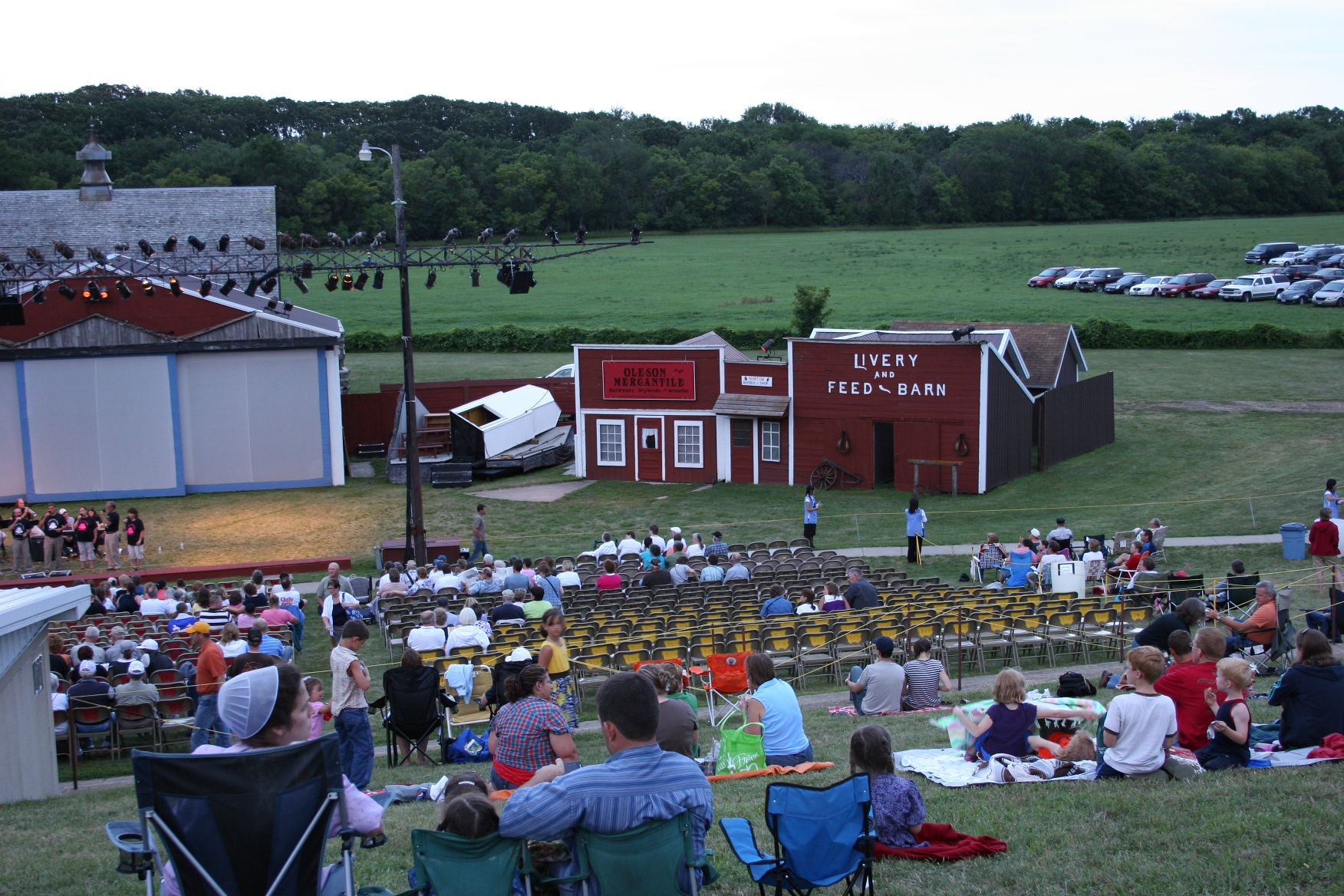
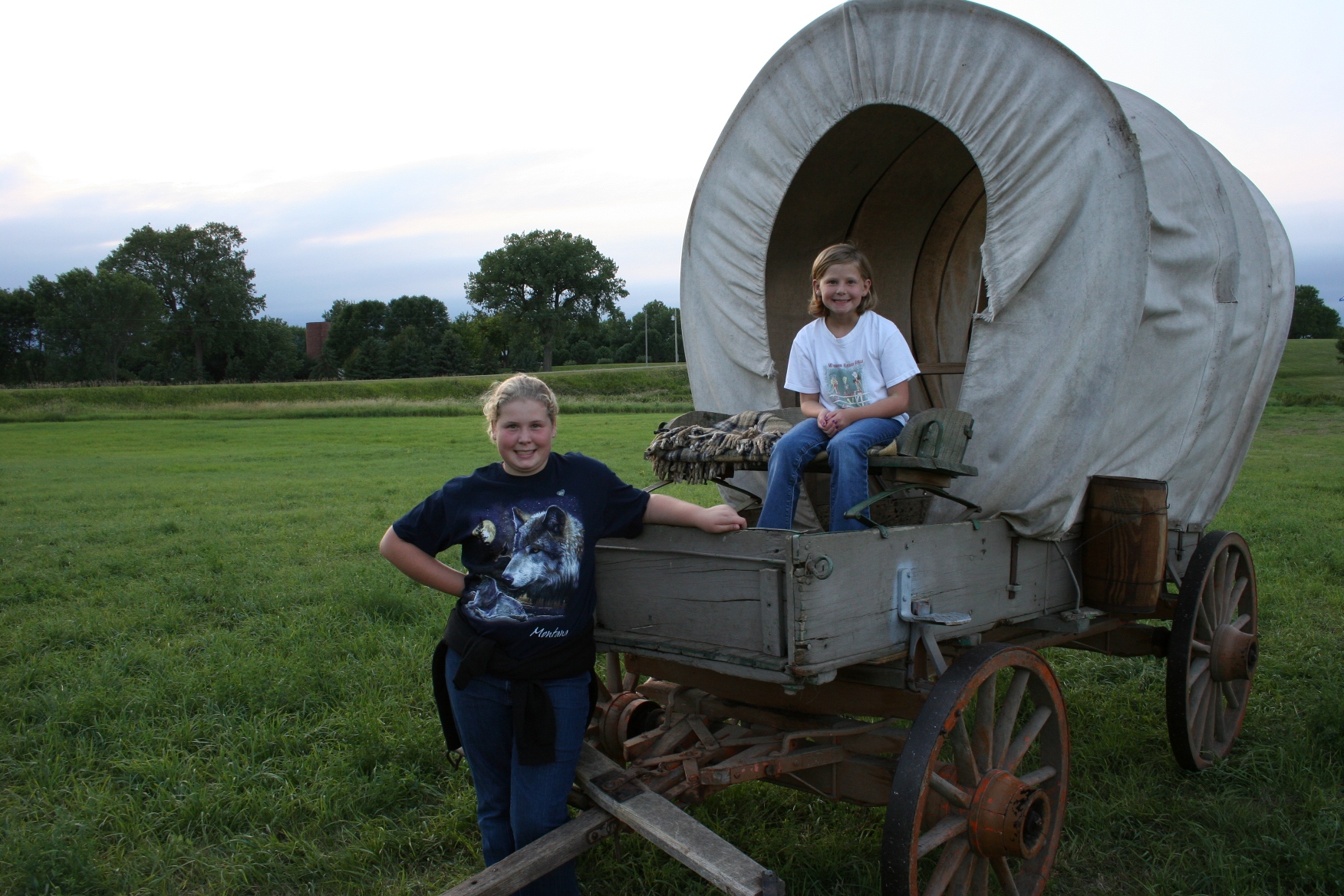
A Laura look-alike climbs onto a covered wagon at the Laura Ingalls Wilder Pageant site near Walnut Grove recently.

WHENEVER THE TOPIC of “Little House on the Prairie” surfaces, folks cannot believe that I know the stories from the books and not the television show.

But years before the long-running TV series aired, in a school in a small town some 20 miles north of Walnut Grove, my teacher read, yes, read, Laura Ingalls Wilder’s books to me and my classmates daily after lunch. I have fond memories of sitting there in my desk at Vesta Elementary School raptly listening to Mrs. Kotval read of the Ingalls family’s life on the prairie, my prairie.

At the time, back in the mid-1960s, I simply loved hearing the mesmerizing accounts of prairie fires and of blizzards, of fiddle-playing and of grasshopper plagues, of mean Nellie Oleson and of kind, kind Mary, Laura’s older sister. Wilder’s descriptive writing drew me in—into the dug-out, onto the seat of the covered wagon, into the country school. Simply put, I adored the Little House books.

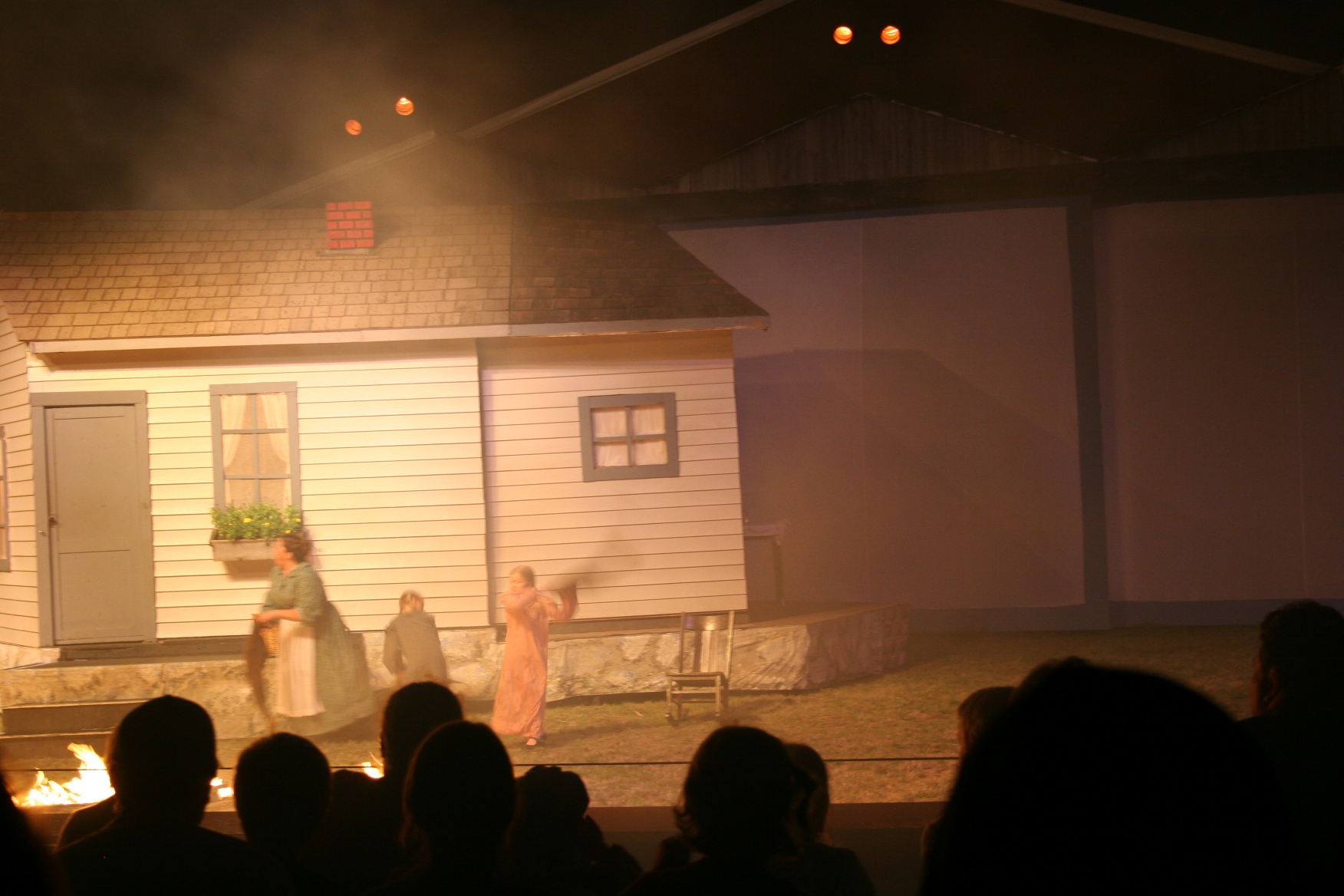
A prairie fire scene from the Laura Ingalls Wilder Pageant, presented every July at a hillside amphitheater along the banks of Plum Creek near Walnut Grove. I've seen the pageant three times in its 33-year history.

Honestly, I don’t recall my teacher emphasizing that neighboring Walnut Grove, the Ingalls’ family home from 1874 – 1876 and from 1877- 1879, was the setting for On the Banks of Plum, Creek. Truly, what mattered most to me was the telling of a good story to which I felt connected.

You would think then, given my early exposure to the Little House books, that I would have become a devoted fan of the television series. I wasn’t. The show aired in September 1974, my first year of college. I had no time for TV then or in the years that followed.

However, I recall seeing an episode or two or three. Of those I remember only the inaccuracies of mountains in Walnut Grove and of day-trips to Mankato. Despite the producers’ clear lack of prairie-landscape and geographic-distance knowledge, they offered good, wholesome family entertainment that has endeared generations, just not me.

I remain unimpressed by the hoopla over the television series and the big to-do about those, like Michael Landon (Charles “Pa” Ingalls) and Melissa Gilbert (Laura Ingalls), who starred on the show.

It is the books, the writing of Laura Ingalls Wilder, that impress me, that take me back to elementary school days, when my teacher gave me the gift of reading.

Years later I would pass that gift along to my daughters by reading the Little House books to them. Even as preschoolers they would snuggle against me on the couch, leaning in close as page after page I read of prairie fires and of blizzards, of fiddle-playing and of grasshopper plagues, of mean Nellie Oleson and of kind, kind Mary, Laura’s older sister.

I worry that today’s generation is growing up without that intimate knowledge of Wilder’s writing, accepting instead the embellished Hollywood version of life on the prairie. Even my 8 ½ and 12-year-old nieces, who recently attended the Laura Ingalls Wilder Pageant, “Fragments of a Dream,” in Walnut Grove with me and other family members, had not read the books. I was surprised, disappointed even.

I mourn that loss of connection to the written word, that ability to create, to envision, to perceive, yes, to imagine a scene, a setting, a place, simply through reading.

For 33 years, Walnut Grove area residents have presented the Laura Ingalls Wilder Pageant based on Wilder's stories. I've found the pageant to be true to the books, the acting superb, the setting beautiful.

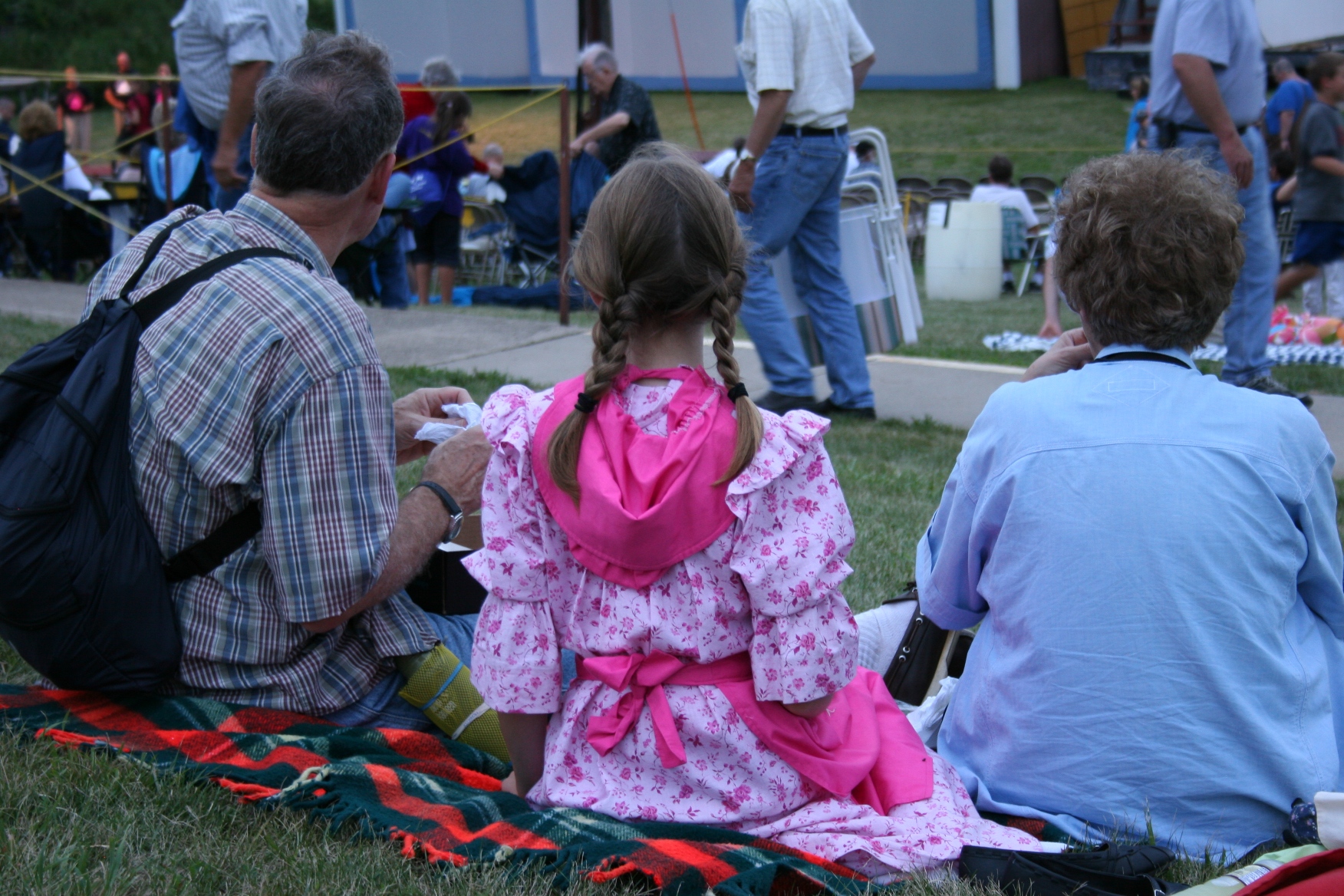
Devoted "Little House" fans come to the pageant dressed in prairie dresses and bonnets.

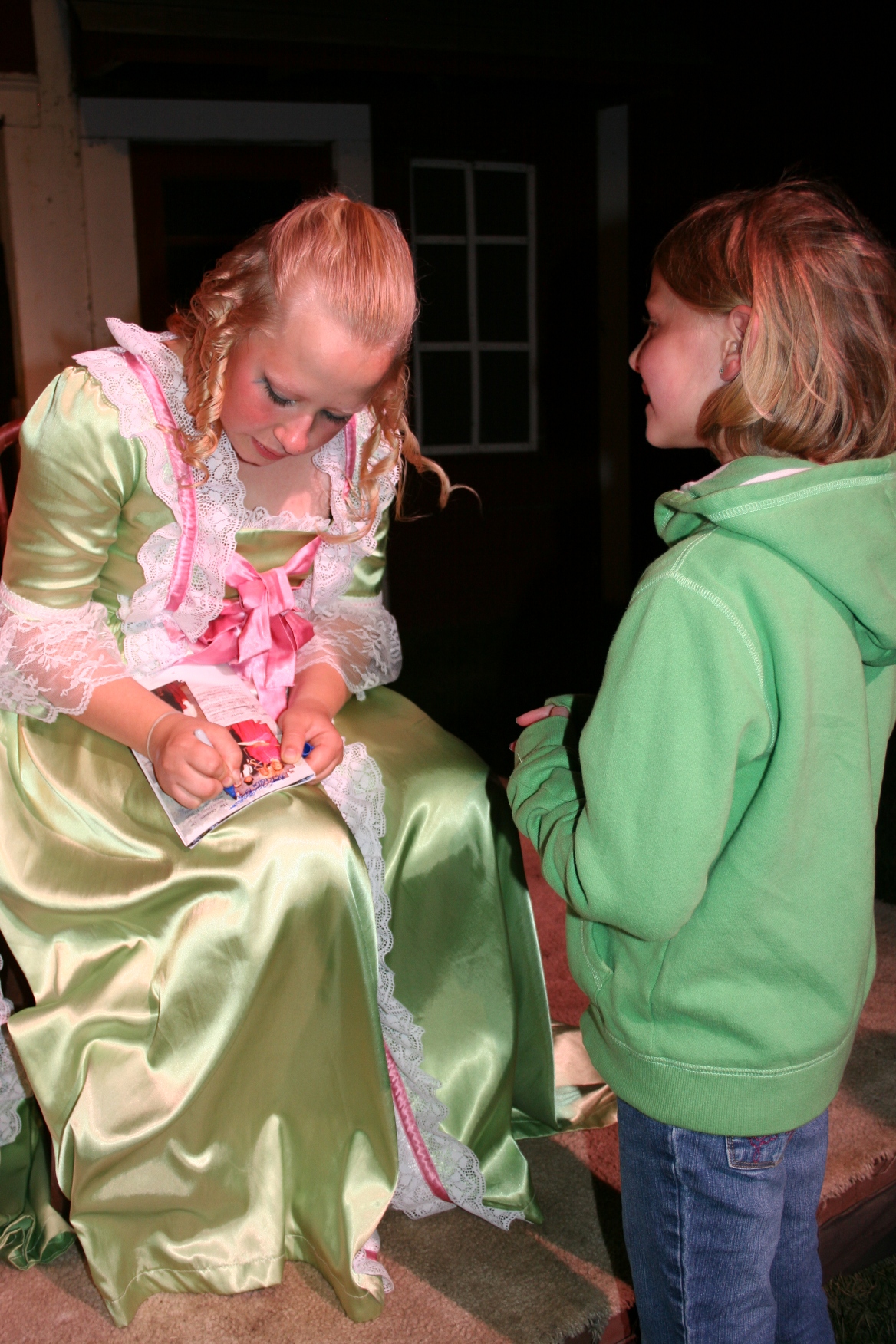
Amy Van Dorsten, 15, played the coveted role of mean and spiteful Nellie Oleson in this year's pageant. My niece Cortney insisted on getting Nellie's autograph after the performance.

A covered wagon near the pageant grounds entrance provides photo ops for Little house fans like my nieces.

© Copyright 2010 Audrey Kletscher Helbling


Fredrickson’s book presents field work, past and present August 3, 2010

Filed under: Uncategorized — Audrey Kletscher Helbling @ 7:41 AM
Tags: , , , , ,

ONCE UPON A TIME, I told my farmer-dad I wanted to be a farmer when I grew up. Clearly, I became a writer instead of a tender of the land or of animals. But my heart remains rooted in the southwestern Minnesota prairie, my childhood home, the place where I worked in the barns, worked in the fields and became the person I am today.

For those reasons I particularly appreciate children’s picture books like those written by Lakeville author Gordon W. Fredrickson who specializes in writing about country life and farming.

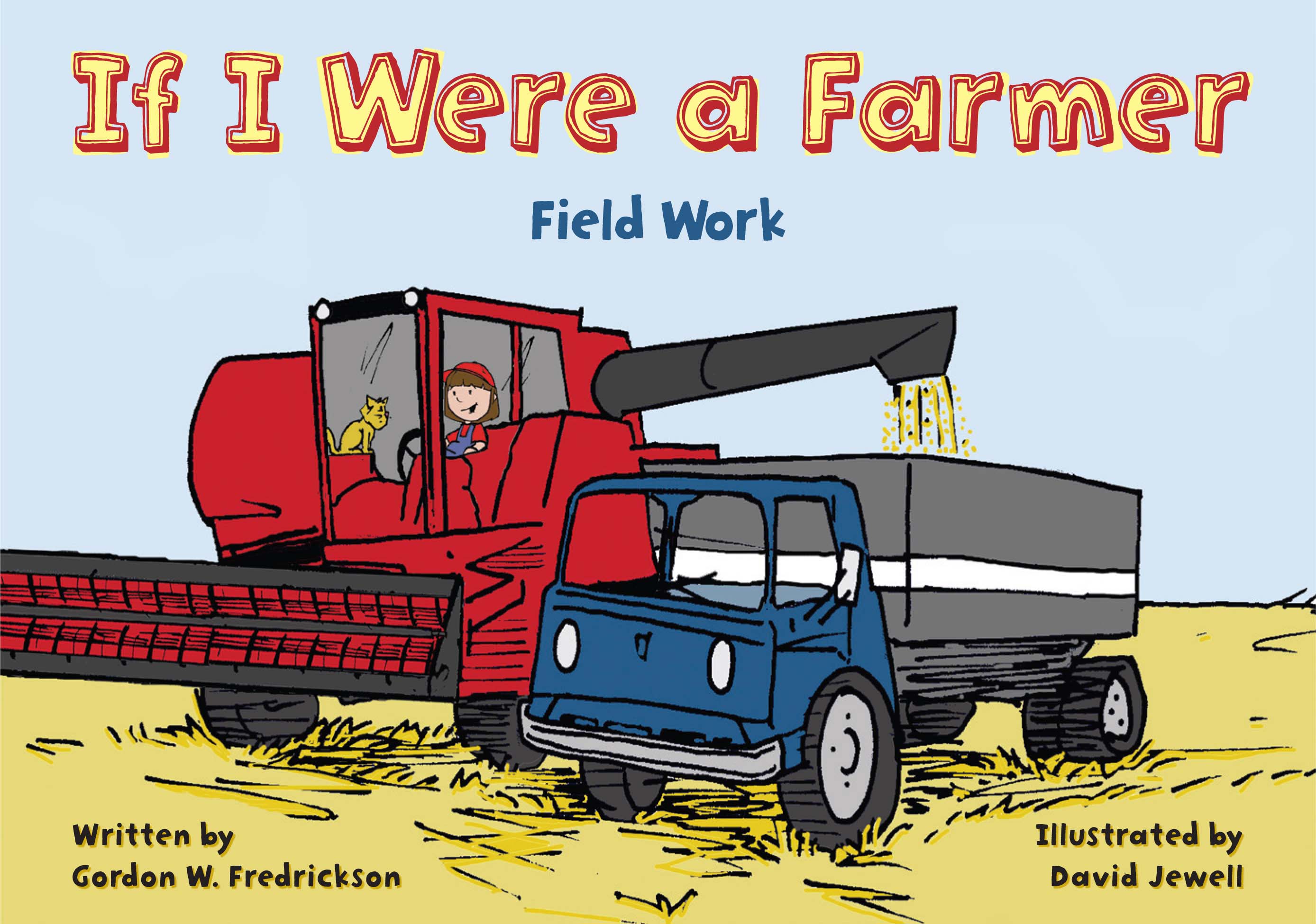
His second, If I Were a Farmer book, Field Work, recently released from Beaver’s Pond Press, just in time for Minnesota’s annual celebration of agriculture, Farmfest. Fredrickson and his wife, Nancy, will be in the Craft/toy/home and garden pavilion during Farmfest’s three-day run this week at the Gilfillan Estate between Morgan and Redwood Falls. The event opens at 8 a.m. today.

That pitch aside, let me tell you a bit about Fredrickson. He grew up on a Scott County dairy farm, did his share of farm chores and working the land, farmed for awhile as an adult and taught high school English. He possesses the experience, knowledge, skills and passion to write about agriculture in an interesting, informative and, sometimes, humorous fashion.

Fredrickson’s subtle humor shines in Field Work as page by opposite page, he compares past farming practices and farm equipment to modern-day farming practices and equipment.

His book reconnects me to the past, to those years on the farm. So for that reason, Fredrickson’s story also appeals to adults, particularly former farm kids.

For those unfamiliar with agriculture through the years, Fredrickson’s story provides a history lesson. He even includes a glossary (per my suggestion after publication of an earlier book) to further aid readers in understanding the equipment and other terminology used in his story.

From working the soil through planting and harvesting, this former farmer details the growing season via would-be farmers. Little Nancy imagines herself as a modern-day farmer while Tommy prefers older equipment and practices from about the 1950s. Children, especially those ages 6 – 8, will enjoy the storyline and the educational content woven into it.

I don’t want to spoil the ending for you, but the humorous clincher last page clearly shows me that Fredrickson, even though an award-winning writer now, is a true mustard-pulling, rock-picking, scoop-shoveling farm boy at heart.

#

IN ADDITION TO FIELD WORK, Fredrickson has also published If I Were a Farmer: Nancy’s Adventure and three books in the Farm Country Tales series–Christmas Eve, Halloween and Thanksgiving.

#

FIELD WORK ILLUSTRATOR David H. Jewell of Minneapolis died on July 15 after being hospitalized for pneumonia. He suffered from diabetes and related complications.

#

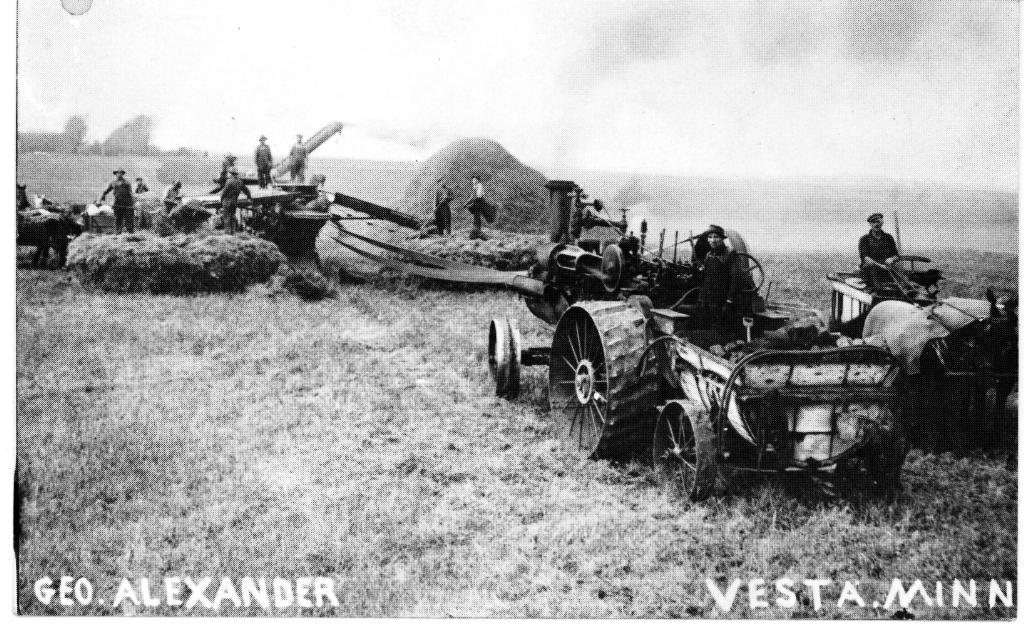
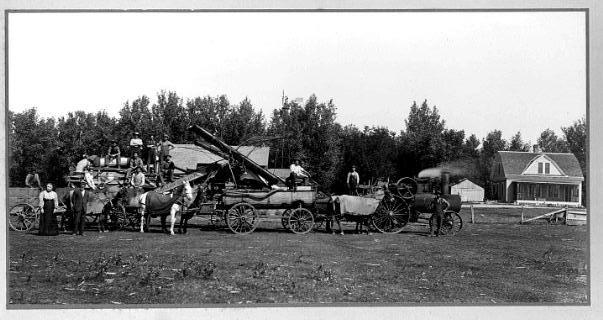
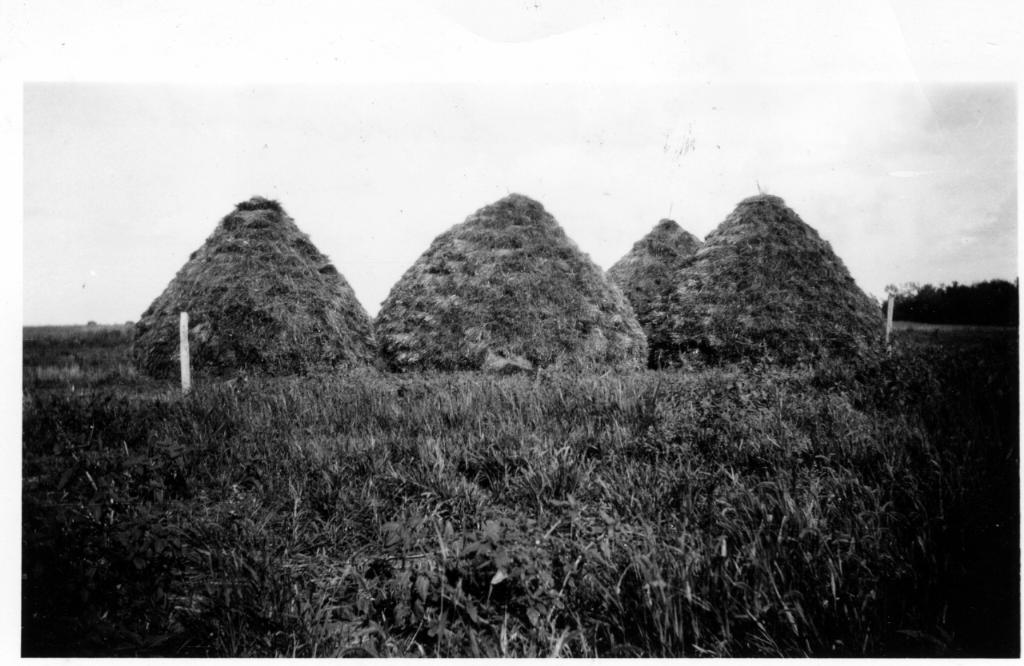
JUST FOR FUN, I asked Redwood County historian and Redwood Falls Mayor Gary Revier if he had any old farm photos he could share for publication on this post. He obliged and here are just three of the many he e-mailed. These hearken back to the days of horse-drawn machinery, even earlier than the time period covered in Fredrickson’s Field Work.

This threshing scene is near my hometown of Vesta in southwestern Minnesota, in Redwood County, home to Farmfest. Given the label, I assume this was at the George Alexander farm.

Another threshing scene, this one from the Whittet place in Redwood County.

A field scene from Sundown Township.

© Text Copyright 2010 Audrey Kletscher Helbling
Photos courtesy of Gary Revier

Book cover image courtesy of Gordon W. Fredrickson