Minnesota Prairie Roots

Writing and photography by Audrey Kletscher Helbling

Revisiting Plainview, a must-visit community in southeastern Minnesota June 13, 2022

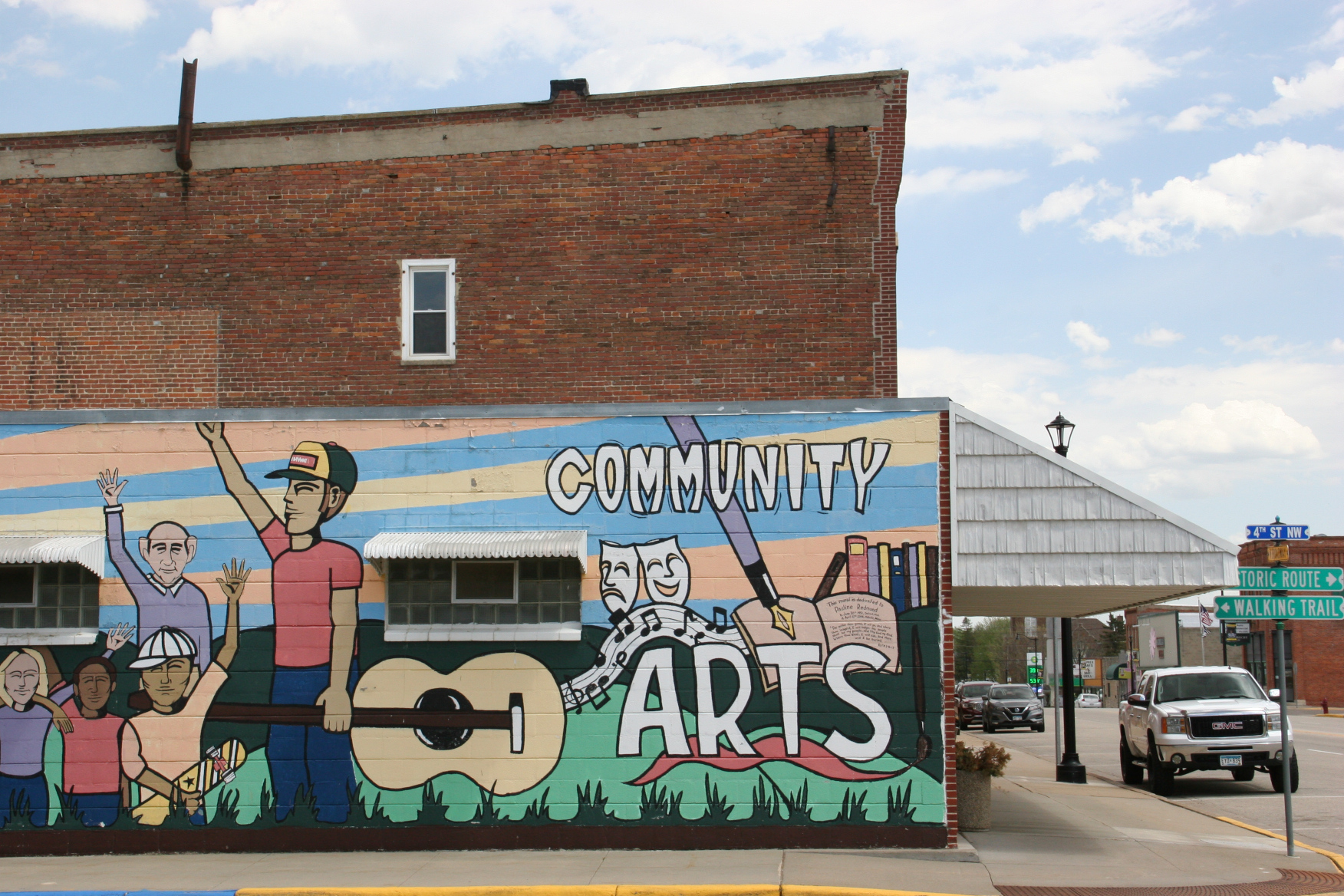
A mural themed to people, land, community and the arts graces a corner building in downtown Plainview. (Minnesota Prairie Roots copyrighted file photo May 2022)

I FELT COMFORTABLY, nostalgically, at home in Plainview, a farming community of some 3,340 in southeastern Minnesota’s Wabasha County.

This Norman Rockwell type scene depicts small town Minnesota, here on a Saturday afternoon in Plainview. (Minnesota Prairie Roots copyrighted photo May 2022)

Here kids bike along the main drag through town, passing by homegrown shops and other businesses. Here friendly shopkeepers engage in easy conversation that made me feel incredibly welcomed. And connected.

Just a block off Broadway, the local co-op. (Minnesota Prairie Roots copyrighted file photo May 2022)

This is a rural community through and through. Home to the Plainview Milk Products Cooperative. Surrounded by farm fields. And, at its essence, home to residents rooted in rural life. Noted Minnesota author Jon Hassler, who penned novels about small town life, grew up here (and in Staples). His parents owned the local Red Owl grocery store.

Right forefront, The Shop on Broadway vends antiques and collectibles. It’s an uncluttered shop with artfully displayed one-of-a-kind merchandise. (Minnesota Prairie Roots copyrighted photo May 2022)

At The Shop on Broadway, relative newcomer to the area and co-proprietor Sonia spoke about a recently-purchased rural property.

Like a step back in time…J.T. Varieties & Toys. (Minnesota Prairie Roots copyrighted photo May 2022)

At the variety store, the clerk and I exchanged histories of growing up on dairy farms.
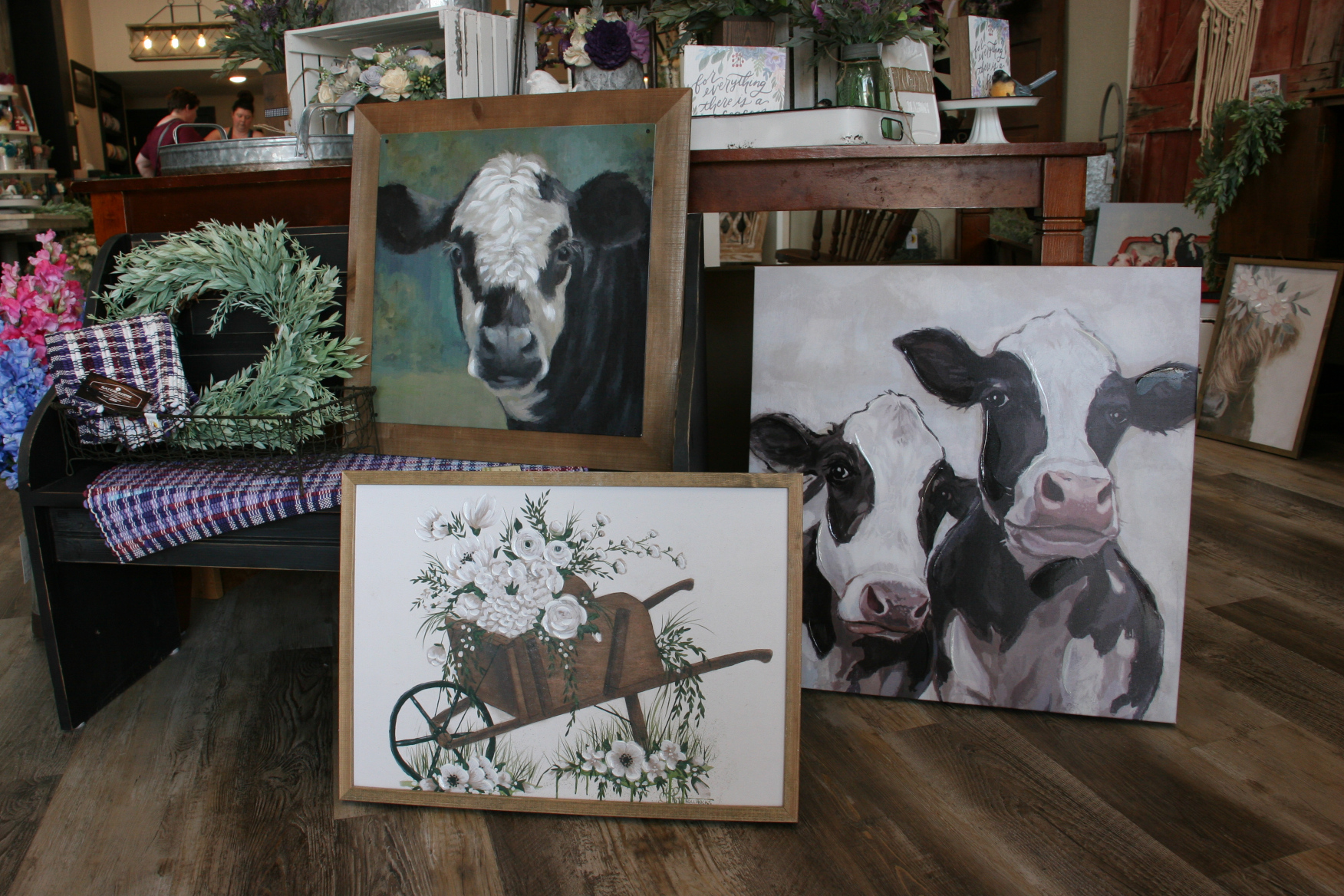
Young Love is a combo floral and gift shop, plus small event center. (Minnesota Prairie Roots copyrighted photo May 2022)

Inside Young Love Floral & Finds, I found plenty of cow art to love.

A close-up of the lengthy mural on a building across the street from the former theater/arts center. (Minnesota Prairie Roots copyrighted photo May 2022)

Plainview, in many ways, surprised me. I’d been here previously, nearly 10 years ago when a wrong turn led Randy and me to this small town some 20 miles northeast of Rochester. During that brief stop, we popped into the Jon Hassler Theater/Rural America Arts Center. The theater closed soon after and the arts center followed. But both impressed me. This return trip to Plainview revealed a new side, a thriving business district of welcoming, one-of-a-kind shops.
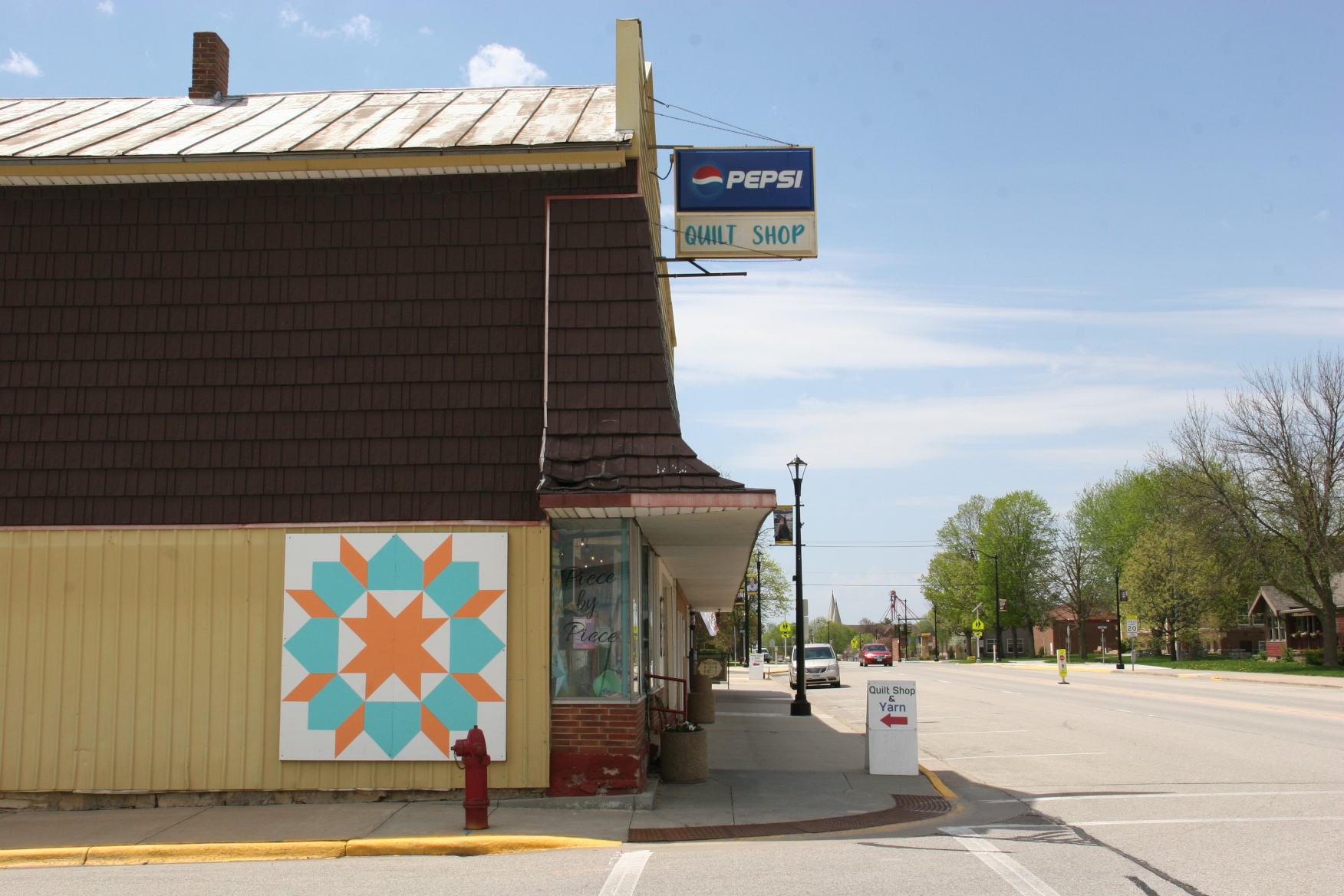
Although I didn’t pop into the quilt shop, Piece by Piece Creative Collaboration, I should have. Next time. (Minnesota Prairie Roots copyrighted photo May 2022)

Not all were open on the Saturday of my mid-May visit. But I perused enough to get a feel for what this community offers. As cliché as it sounds, Plainview seems an undiscovered gem with its independently-owned shops staffed by friendly folks with time to chat. I felt unrushed in uncrowded stores. Browse at my own pace. Take in the setting and merchandise and down-home feel of being in the moment in rural Minnesota.

J.T. Variety & Toys sells fabric and so much more. (Minnesota Prairie Roots copyrighted photo May 2022)

That comes from someone who is not a shopper, who easily tires of mass-produced whatever in Big Box stores. But I didn’t feel that here in Plainview. Inside The Shop on Broadway and J.T. Varieties & Toys, I found nostalgia. Antiques and collectibles in The Shop. And at the Variety store, I stepped back in time, into a mercantile akin to the Ben Franklin or Woolworth’s of my youth. I eased down narrow aisles jammed with merchandise—ran my hand across beautiful cotton fabric layered on shelves, eyed endless knick knacks, appreciated the Little Golden Book storybooks for sale.
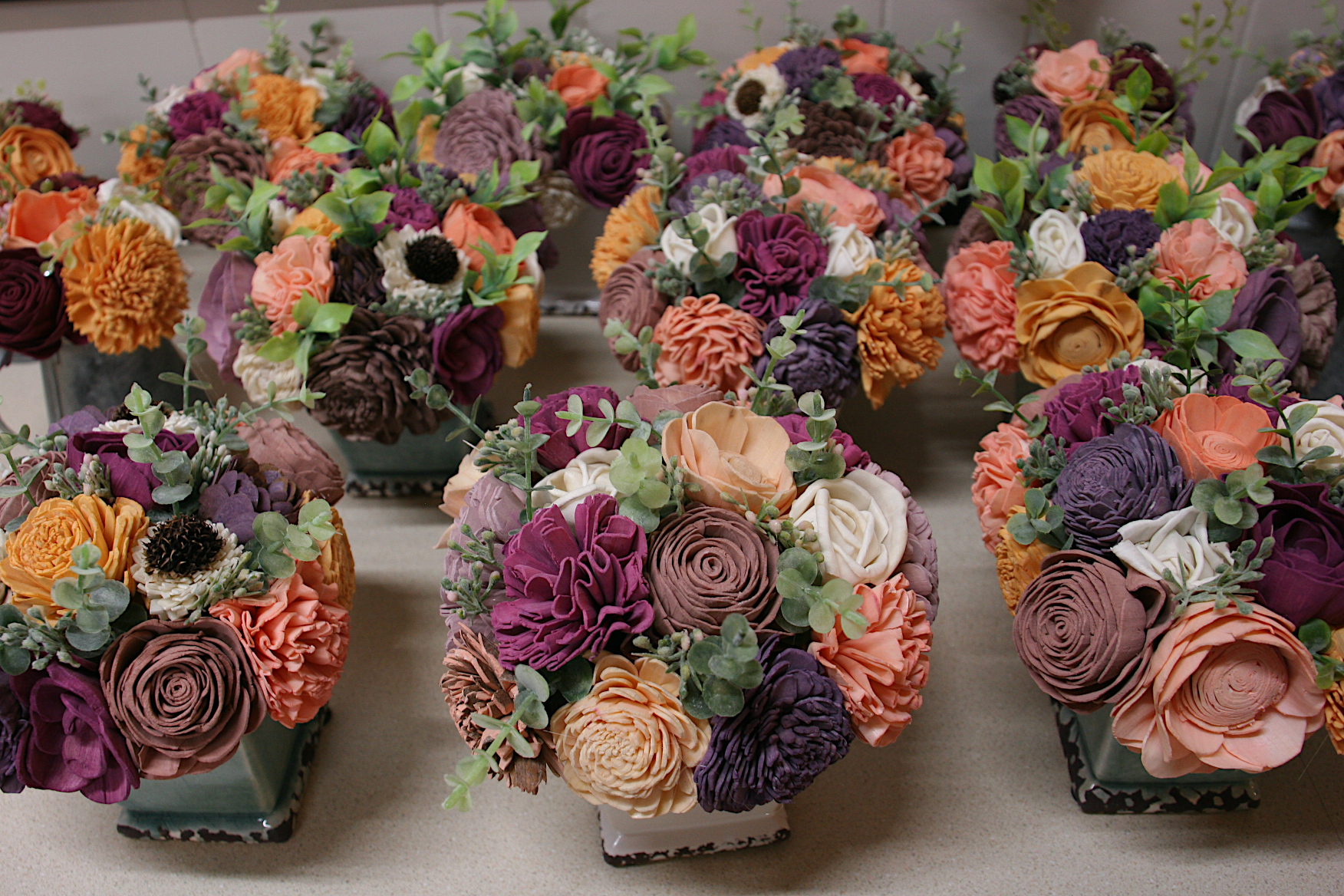
Created by Shantelle Speedling at Young Love Floral & Finds. (Minnesota Prairie Roots copyrighted photo May 2022)

At Young Love Floral & Finds, historic photos, a vintage Mallard Seeds sign (the seed company was once housed here as was a bank) and the First National Bank vault (now a storage space) revealed more about this community. I love this little shop owned by floral designer/creative Shantelle Speedling. The biggest surprise here: wood flowers. Speedling uses them in her floral designs and they are unbelievably beautiful.

The display window at Magnolia Cottage showcases women’s clothing. (Minnesota Prairie Roots copyrighted photo May 2022)

Another surprise came in finding The Magnolia Cottage Boutique. If this had not been my last shop stop, I may have tried on some of the clothing therein because I loved the styles. But I was tired and it takes a lot for me to try on clothes. The shop also sells home décor, gifts, flowers and more.
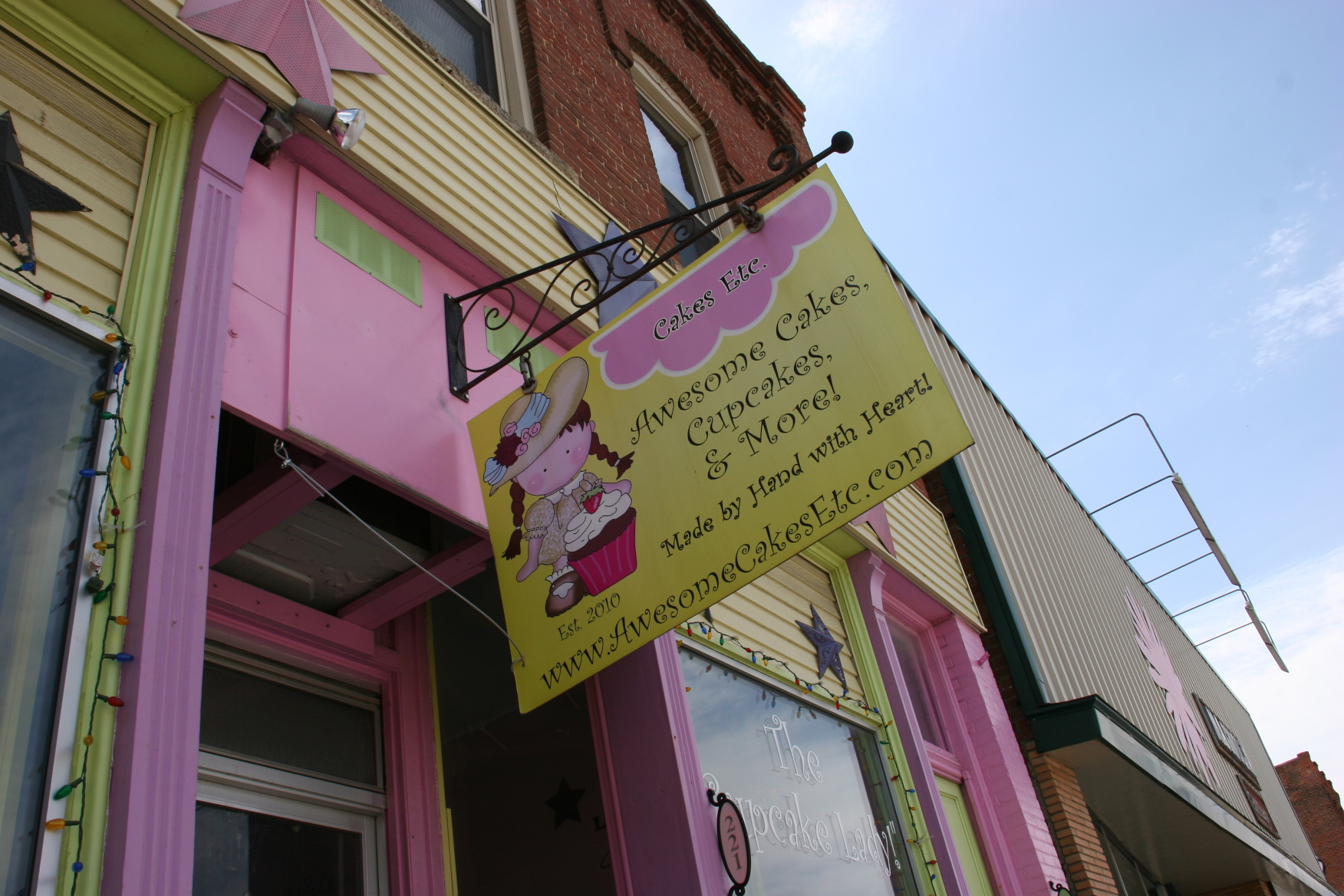
From what I read online, this cupcake shop is open only occasionally, It gets rave reviews for its artsy and delicious cupcakes. (Minnesota Prairie Roots copyrighted photo May 2022)

Next door, Cakes Etcetera was closed, so no cupcakes for me on this Saturday afternoon.
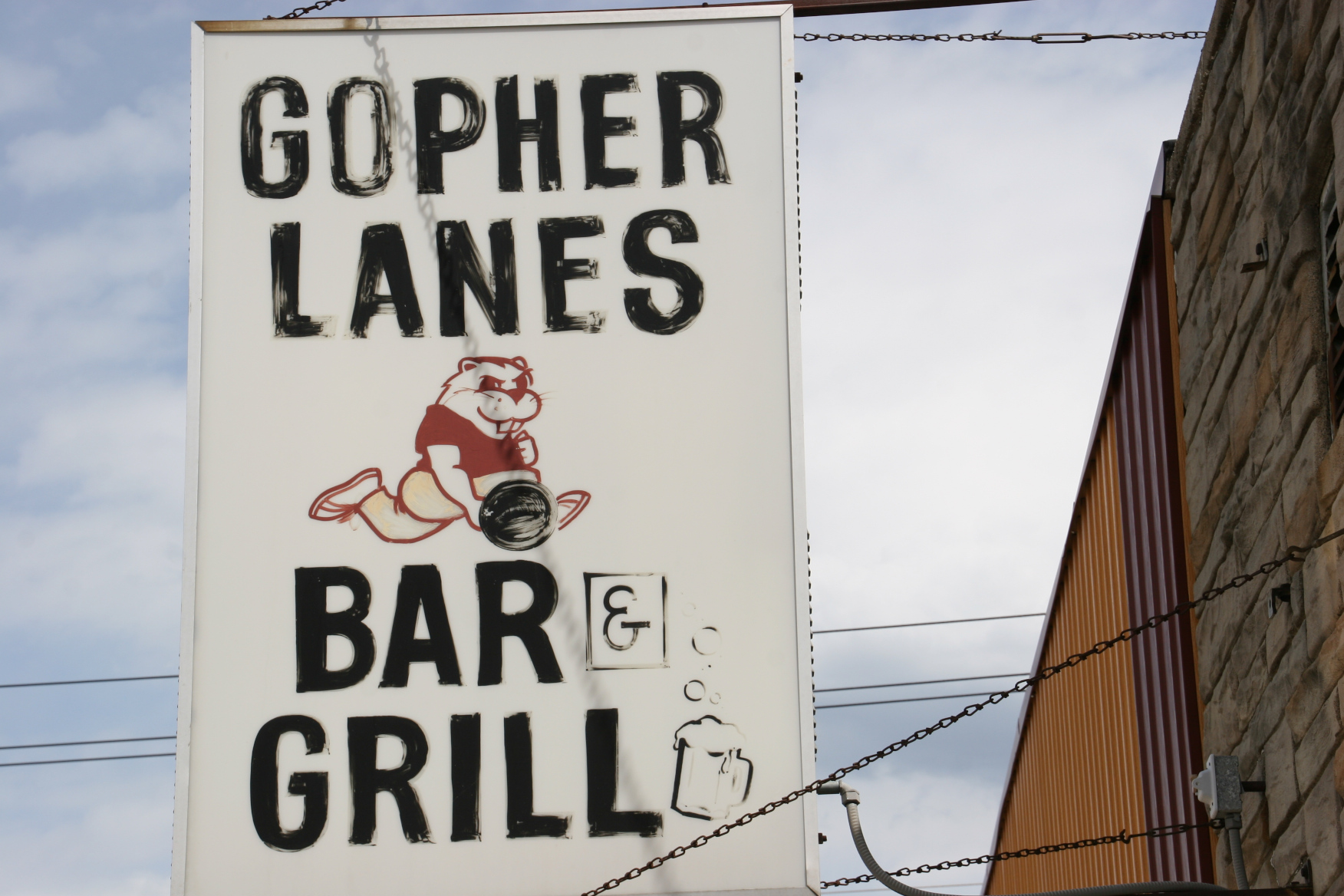
Love this vintage sign marking the bowling alley. (Minnesota Prairie Roots copyrighted photo May 2022)

A few doors down, I spotted a vintage sign for Gopher Lanes Bar & Grill. The bowling alley is closed—for the summer. But that didn’t keep me from admiring the sign which is, oh, so Minnesotan. Before Plainview schools merged with Elgin and Millville, their mascot was the Gophers. And just some 10 miles to the southwest of Plainview, the town of Viola celebrates the lowly pocket gopher with an annual community celebration, the Viola Gopher Count. The 148th annual festival is scheduled this week on June 15 and 16. That’s another story and Viola, another place to visit. Just like Plainview.

PLEASE CHECK BACK for more posts from Plainview. I’ll take you inside shops, show you signs, art and more discovered on a Saturday afternoon along Broadway. I’m sure I missed a lot of what Plainview offers. So if you are from this town, or have visited, I welcome your insights on places to check out.

© Copyright 2022 Audrey Kletscher Helbling


Bricks, bins & bars in Elgin June 6, 2022

This unique, artsy “fence” is the first thing I noticed in downtown Elgin. Absolutely love the creative functionality of these repurposed doors. (Minnesota Prairie Roots copyrighted photo May 2022)

SMALL TOWNS, LIKE PEOPLE, have personalities. I’ve discovered that in my years of exploring rural regions. I can learn a lot about a place by simply walking through the heart of a community, even if I never enter a single business.

The door fence is to the right of this stately corner brick building with the lovely architectural details. (Minnesota Prairie Roots copyrighted photo May 2022)

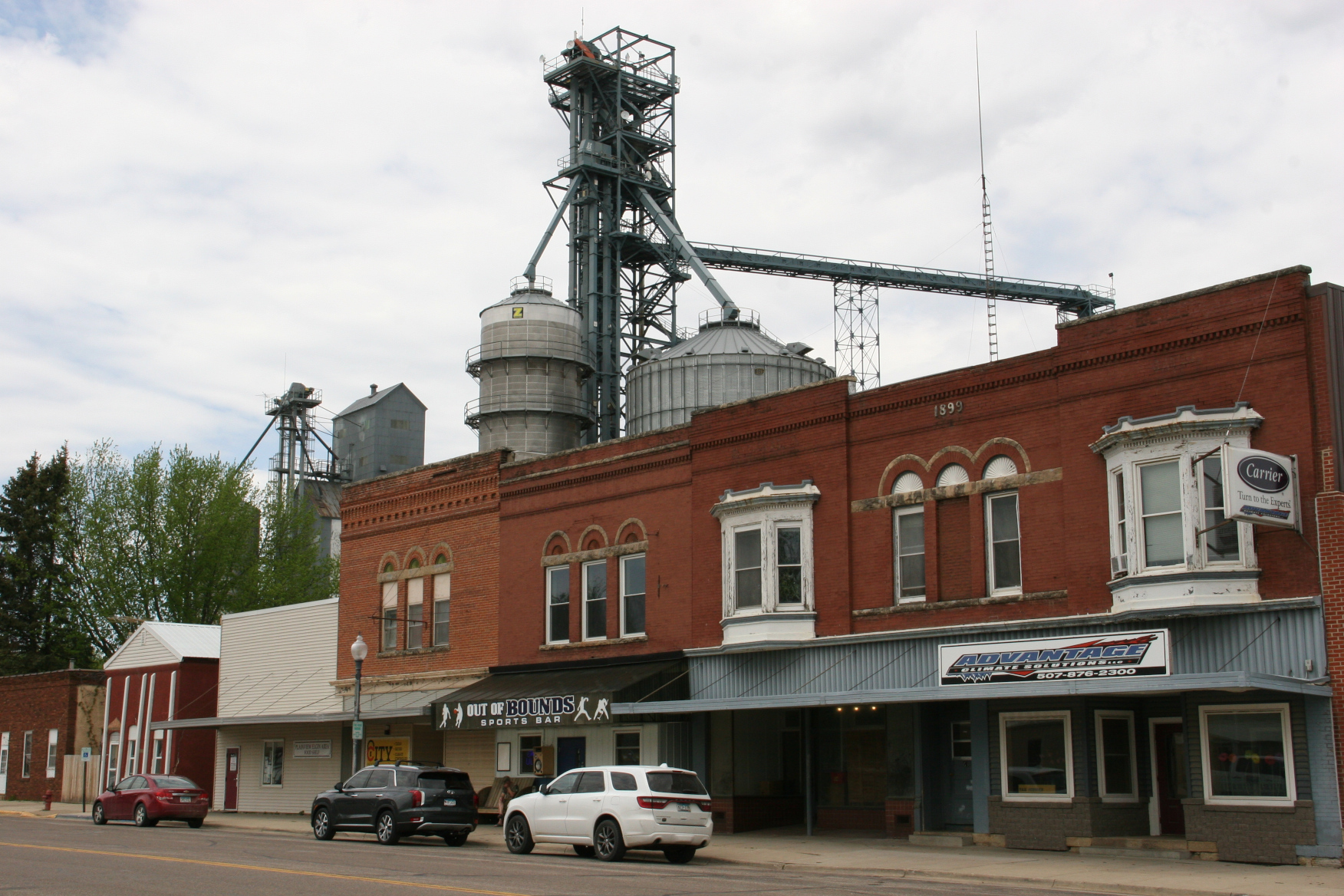
On a recent day trip into Wabasha County in southeastern Minnesota, Randy and I stopped briefly in Elgin. Three words define my initial impression of the business district in this community of 1,090 just 20 minutes northeast of Rochester: bricks, bins and bars.

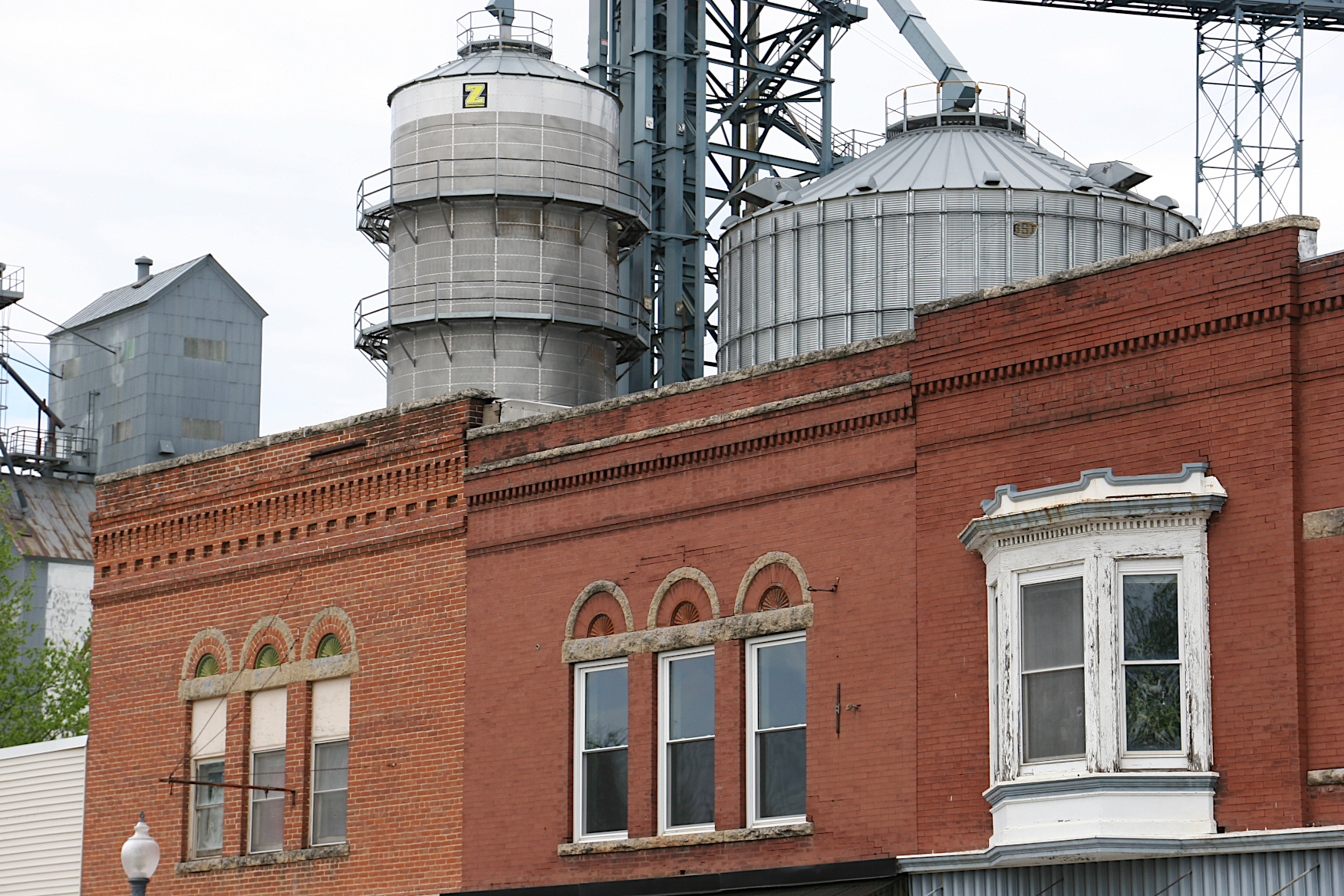
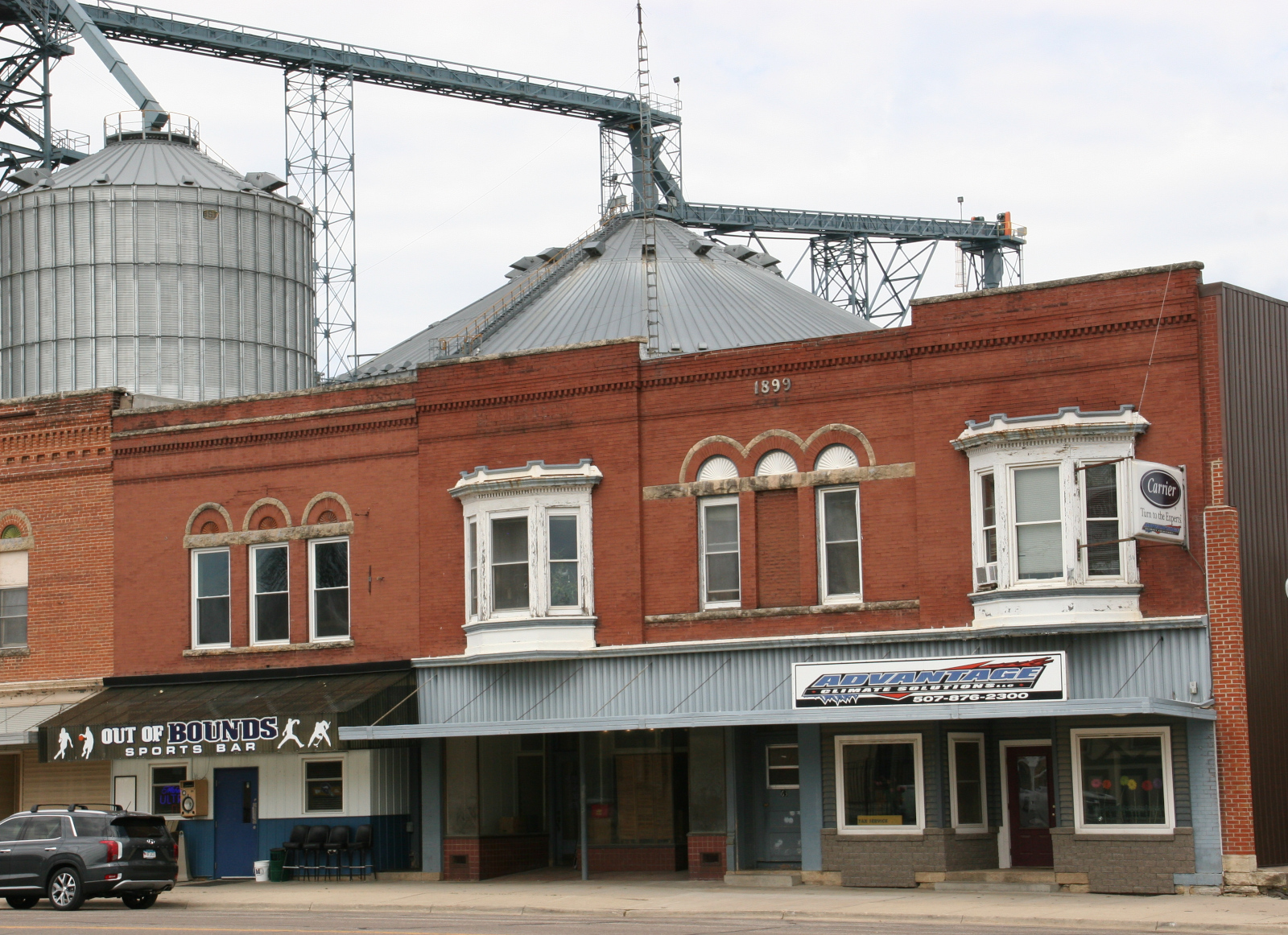
Beautiful brick buildings define downtown Elgin. (Minnesota Prairie Roots copyrighted photo May 2022)

Bricks reference the row of aged brick buildings I spotted along one side of the street. One dates to 1899. I see so much potential in these historic structures if the “updates” on ground level were removed to reveal the original. I recognize, though, that takes money. But, as one who appreciates aged buildings with good, solid bones, I would love to see these buildings restored to their historic selves. What an asset that would be to Elgin.

Behind those brick buildings, bins rise. (Minnesota Prairie Roots copyrighted photo May 2022)

Bins reference the mammoth grain bins back-dropping that row of brick buildings. This is most-assuredly a farming community, home to All-American Co-op. I especially appreciate the faded signage identifying the local ag business.

Identifying signage provides a vintage artsy backdrop. (Minnesota Prairie Roots copyrighted photo May 2022)

At one time, Elgin was also home to a creamery and milk service. The community honors its dairy heritage with Elgin Cheese Days, an annual small town festival slated this year for June 17-19. Events include a parade, carnival, tractor pull, burnouts, vendor and craft show, softball and volleyball tournaments, garage sales, music and the EMS Cheese Chase (walk/run). As these celebrations go, they are really reunions of those who once called this town home or still call this place home.

Bold signage for a place that welcomes everyone like family. (Minnesota Prairie Roots copyrighted photo May 2022)
To the left, Out of Bounds Sports Bar, “where everyone knows your name.” (Minnesota Prairie Roots copyrighted photo May 2022)
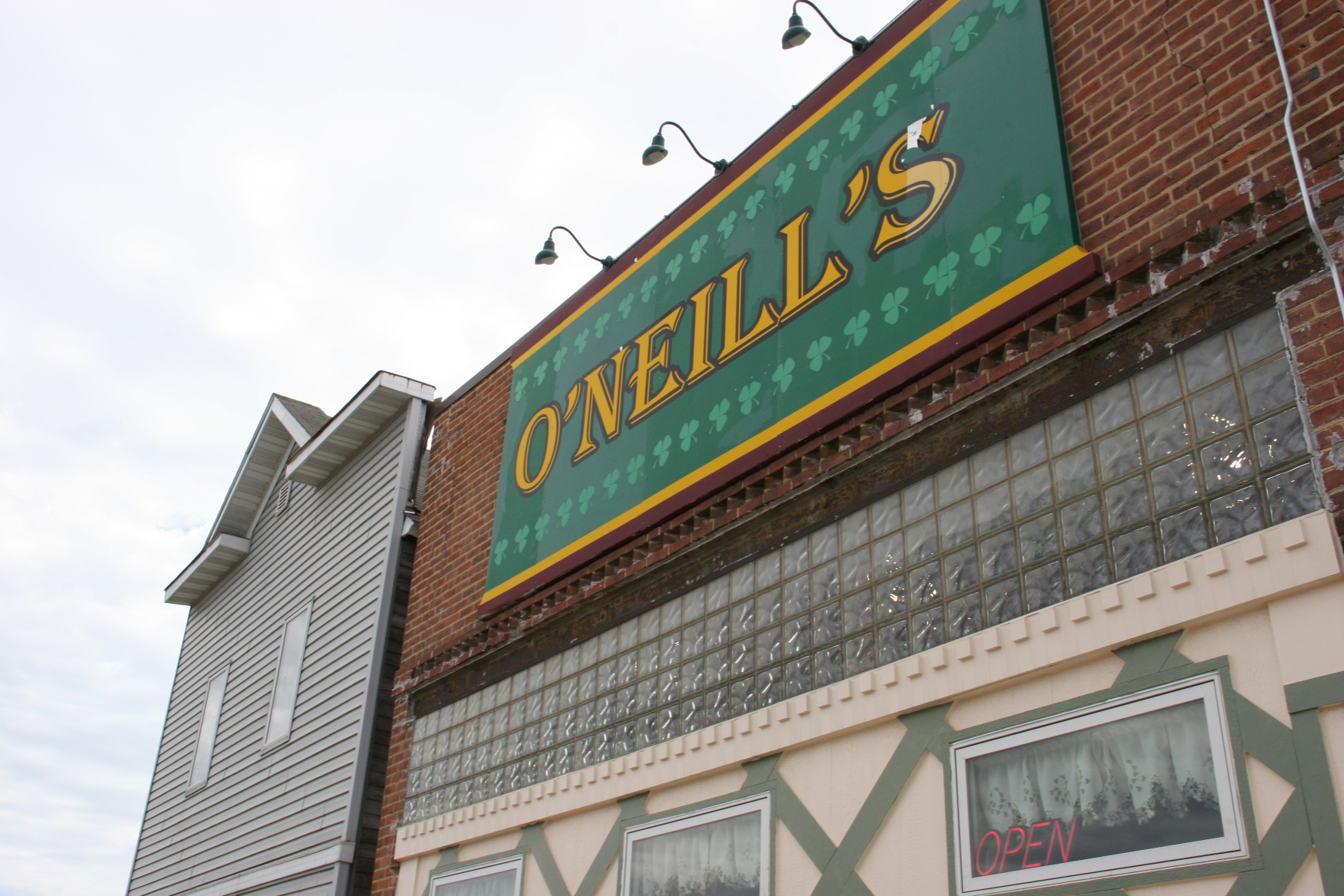
O’Neill‘s Pizza Pub serves more than pizza. There’s Irish whiskey, too, and a game room with classic games. (Minnesota Prairie Roots copyrighted photo May 2022)

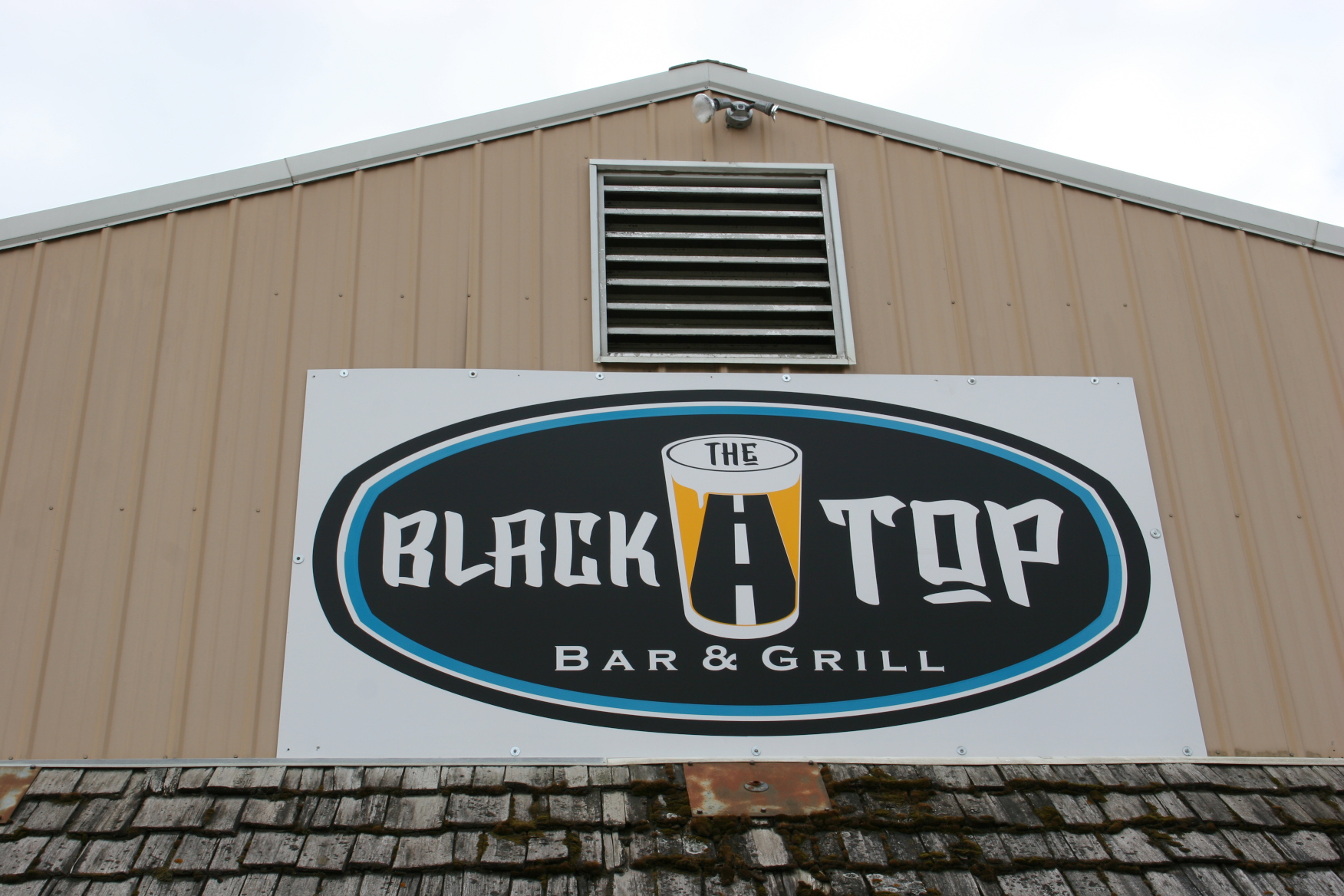
I expect lots of commiserating will occur at the local bars. That’s the third “b” I noticed during my walk along the main street. Bars abound here. The BlackTop Bar & Grill. The Out of Bounds Sports Bar. And O’Neill’s Pizza Pub.

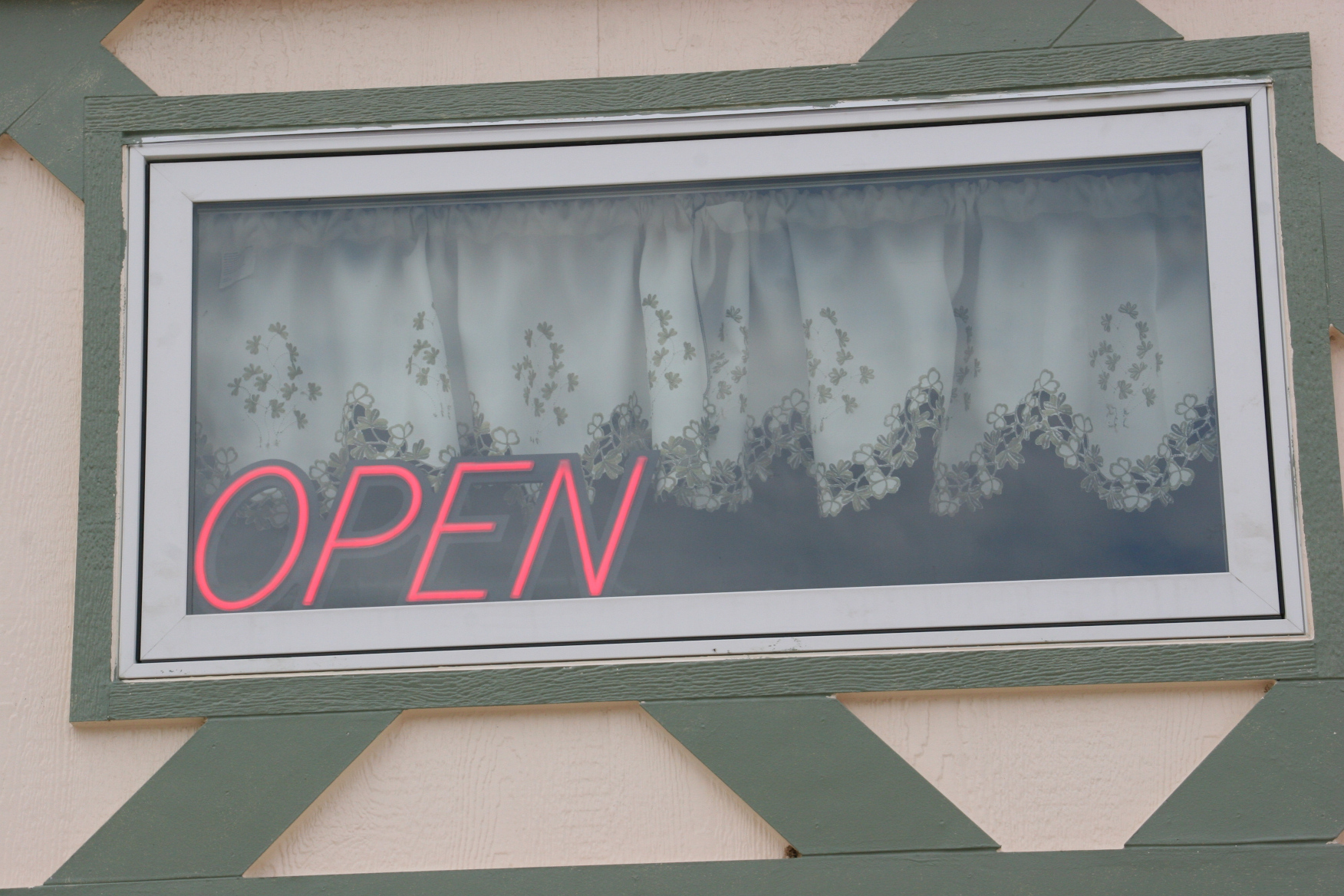
The pub is open. (Minnesota Prairie Roots copyrighted photo May 2022)

Although Randy and I didn’t patronize any of these places, I expect they are worth a stop for food and drink and conversation. As a group of cyclists told us, the bar they lunched at served up a mighty fine sandwich. We had packed a picnic lunch. Next time.

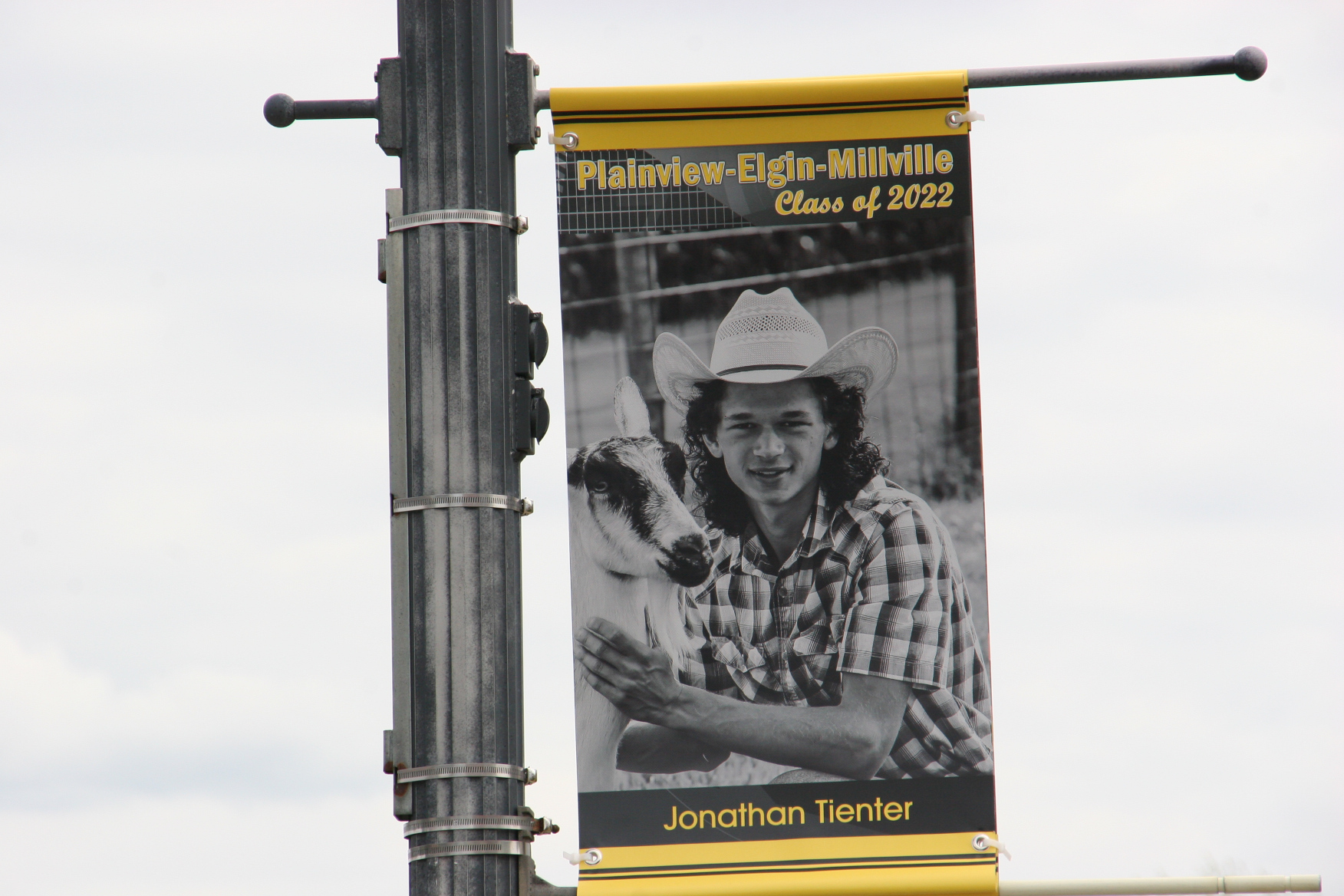
Banners feature students from the graduating class of 2022. (Minnesota Prairie Roots copyrighted photo May 2022)

Yes, we’ll return to Elgin to explore a bit more. Perhaps drive 1.5 miles south of town to pick up some cheese at Prairie Hollow Farm.

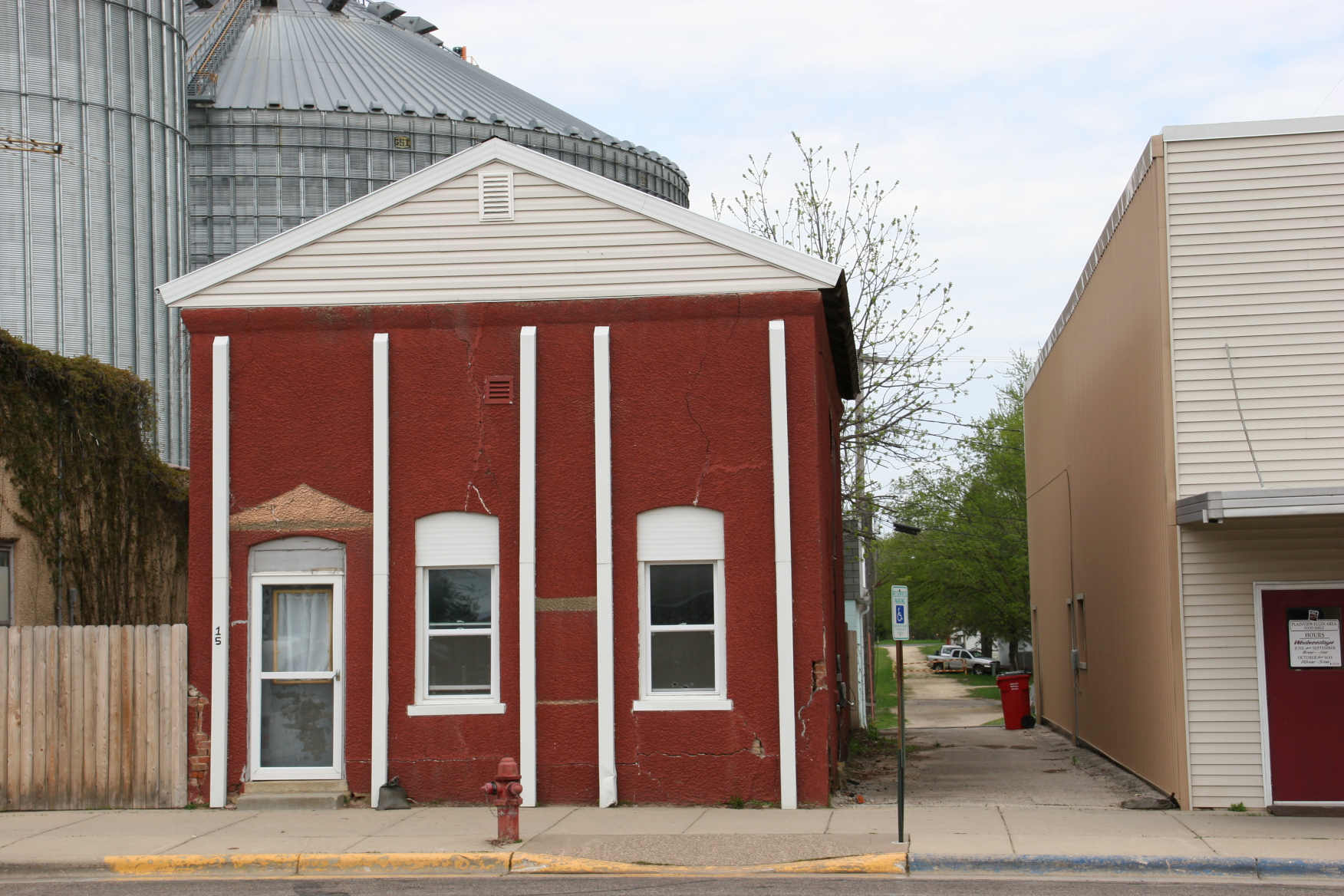
I wonder about the current use and history of this small building by the bins, by the alley. (Minnesota Prairie Roots copyrighted photo May 2022)

I know we missed a lot during our quick stop…

TELL ME: If you’re familiar with Elgin, what should I see/do next time I’m in town? I’m looking for any insider tips, things I might bypass because I’m unaware. Why should someone visit Elgin?

Please check back for another post from this community. And then it’s on to neighboring Plainview.

© Copyright 2022 Audrey Kletscher Helbling


Appreciating historic downtown Owatonna March 2, 2022

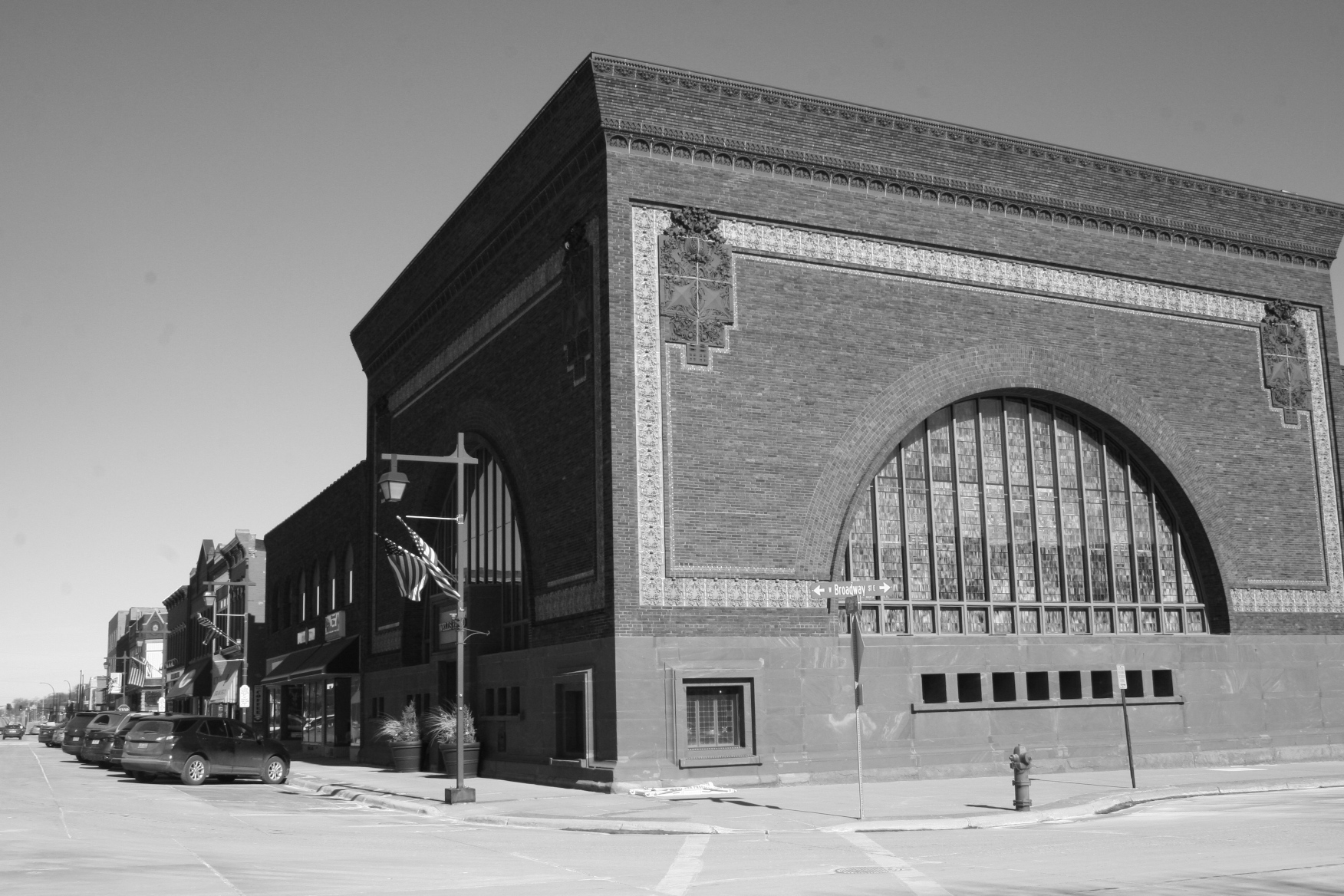
National Farmer’s Bank of Owatonna rates as particularly important architecturally. Designed by Louis Sullivan in the Prairie Architecture School style, it features stained glass windows, gold leaf arches, nouveau baroque art designs and more. This “jewel box of the prairie” was built between 1906-1908. (Minnesota Prairie Roots copyrighted photo February 2022)

STRIPPING IMAGES OF COLOR lends an historic context to several aged buildings I recently photographed near Central Park in downtown Owatonna. It’s easier for me to see the past, to appreciate these long-standing structures through the lens of time when I view them in black-and-white.

Love this corner historic building which houses A Taste of the Big Apple, serving pizza, soup, sandwiches and more, including a Tater Tot Hot Dish special on March 3. (Minnesota Prairie Roots copyrighted photo February 2022)

First, I feel such gratitude that these buildings still stand. A time existed when the thought was that new is better. Out with the old, in with the new. I’m not of that camp and I’m thankful for the shift in attitudes.

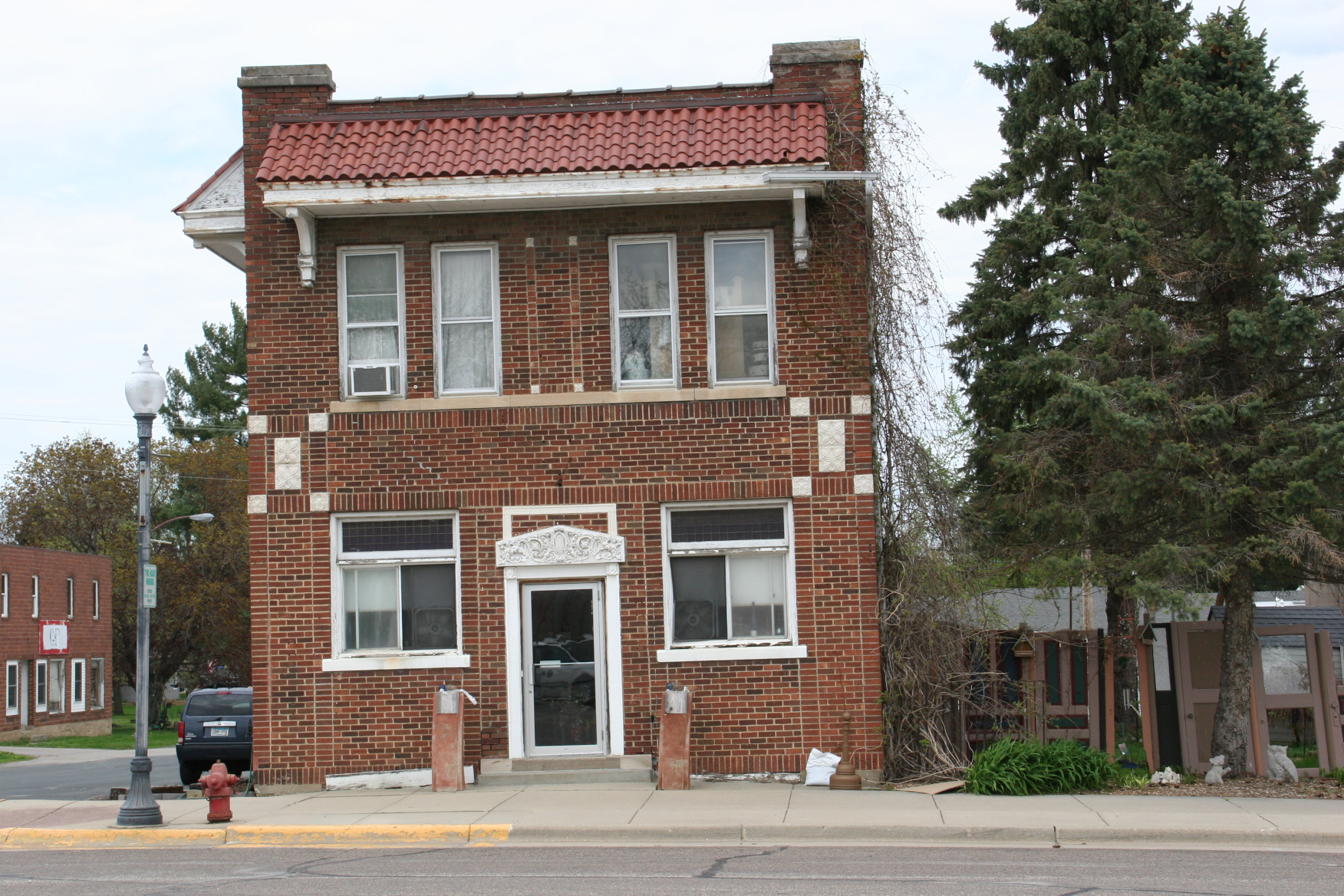
Firemen’s Hall, constructed 1906-1907 for $19,643, sits just across the street from Central Park. (Minnesota Prairie Roots copyrighted photo February 2022)

Twelve city blocks in Owatonna’s downtown define the community’s designation as a National Register Historic District. Three of the 75 “contributing buildings” within that district are on the National Register of Historic Places: the National Farmer’s Bank, the Steele County Courthouse and the Firemen’s Hall.

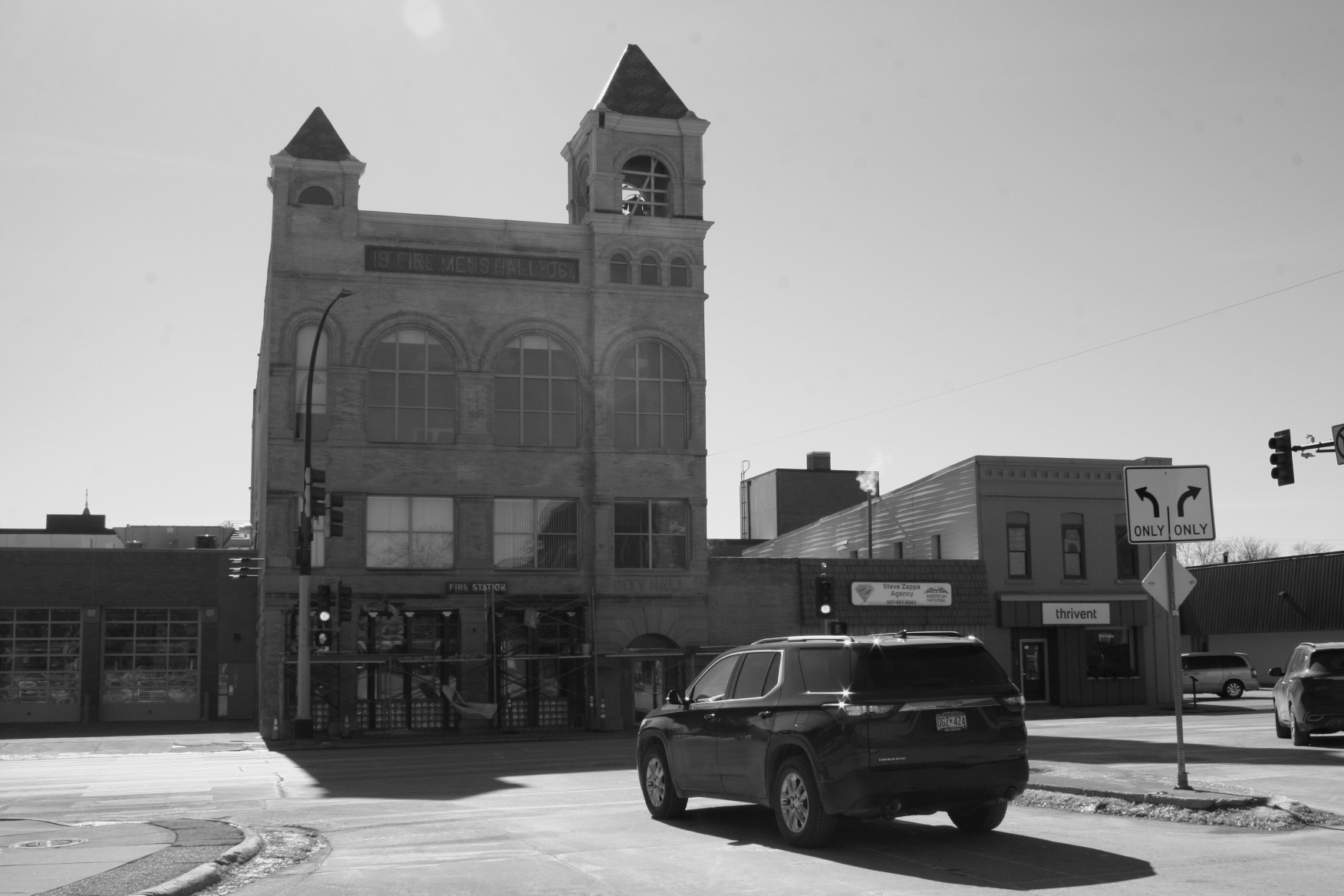
This home-grown bookstore anchors a downtown corner, directly across from Central Park. (Minnesota Prairie Roots copyrighted photo February 2022)

On a recent visit to Owatonna’s Central Park, I pivoted to observe those key historic buildings and others in a downtown of multiple core business streets.

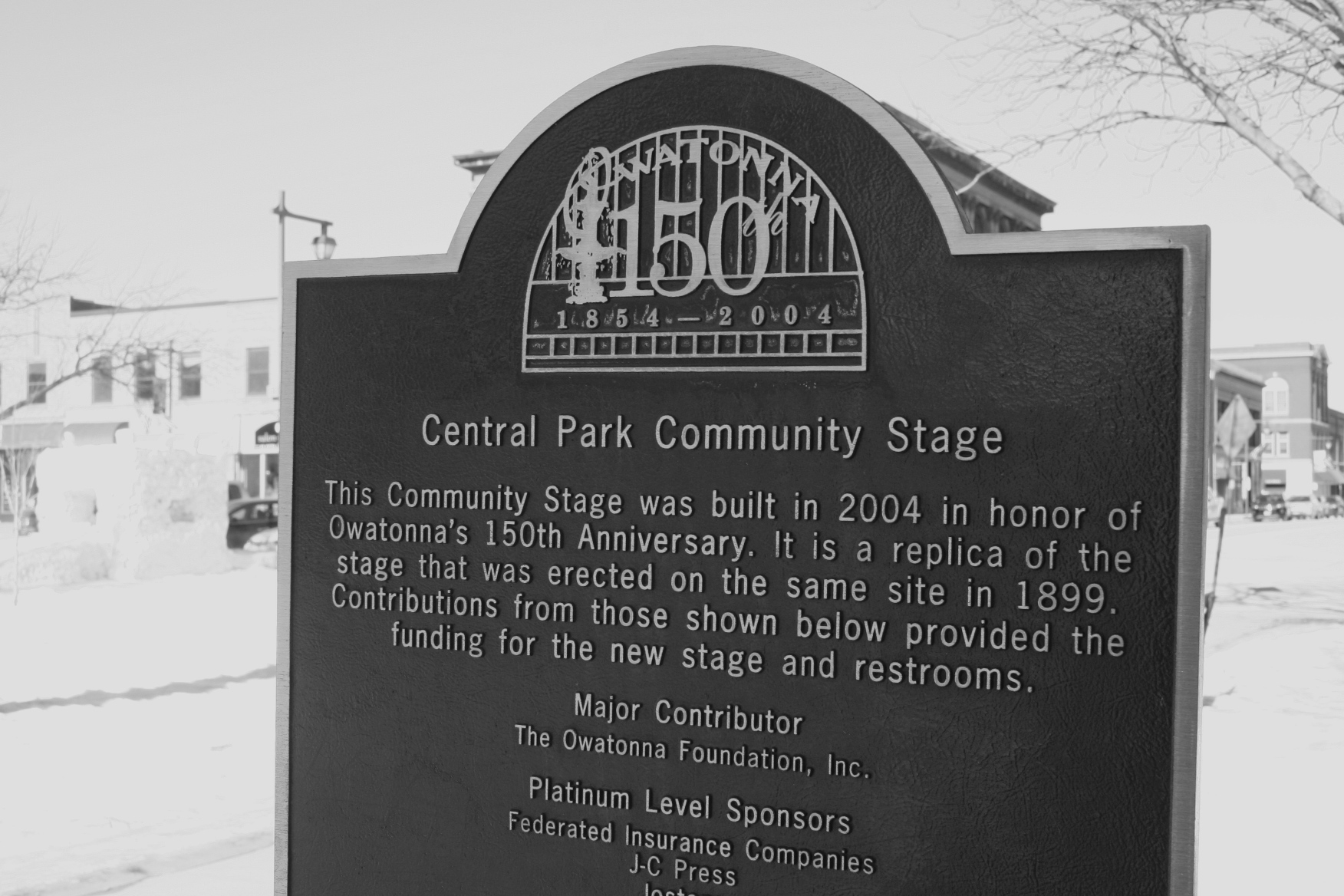
A sign in Central Park provides information about the community stage. (Minnesota Prairie Roots copyrighted photo February 2022)

The park, with a replica of the 1899 community stage, serves as the “town square,” the physically identifiable point of focus and gatherings. Here folks gather for concerts, the farmers’ market and other events. Music and the undeniable human need to socialize connect the past to the present.

The replica community stage/bandshell. (Minnesota Prairie Roots copyrighted photo February 2022)

I feel inspired now, via my recent stop in Central Park, to return to downtown Owatonna and further explore its history and architecture. Sure I’ve been here before, but not in awhile and not with a focused purpose of intentional appreciation for and photographic documentation of this historic district.

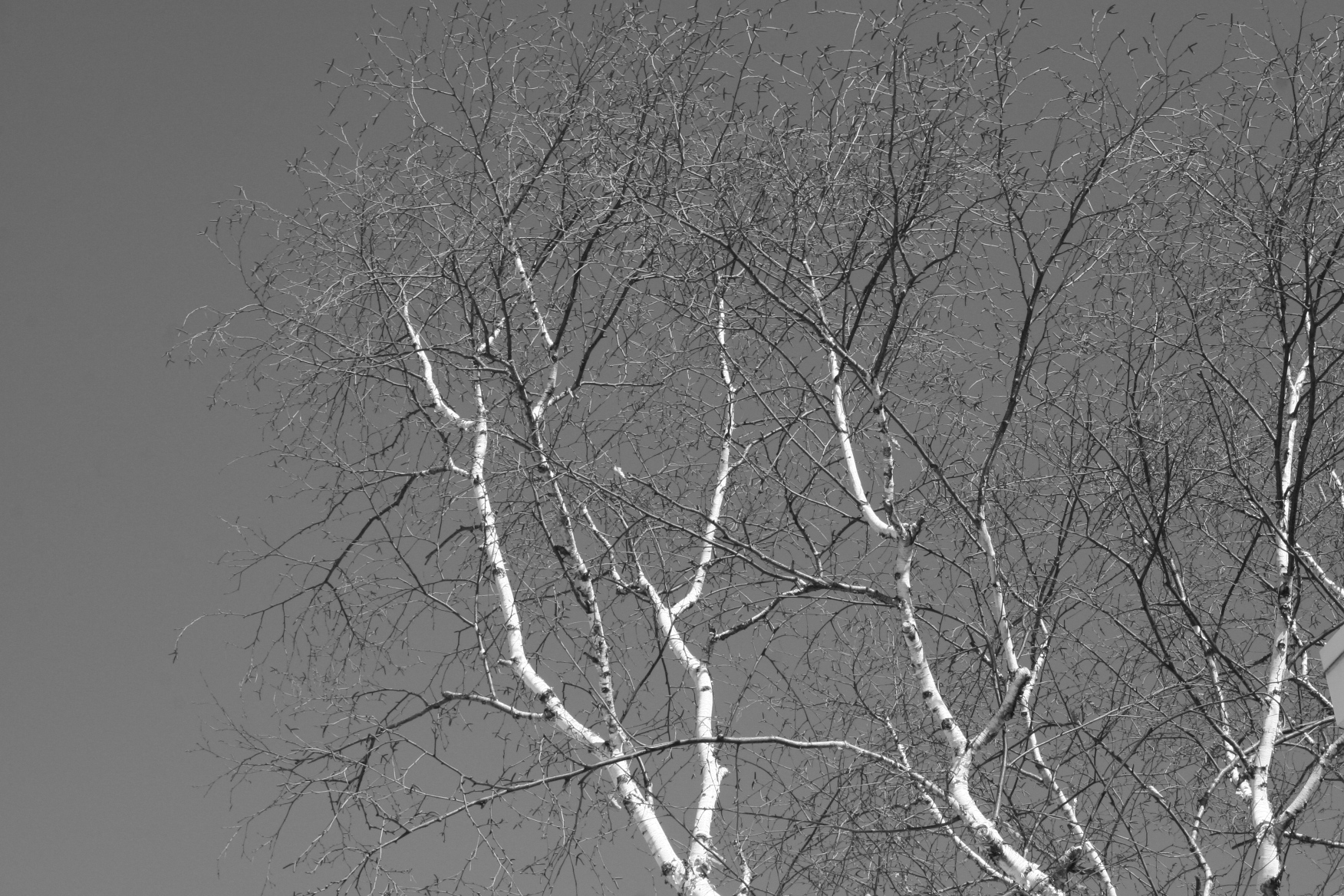
Strip away the color and appreciate the stark beauty. (Minnesota Prairie Roots copyrighted photo February 2022)

I encourage each of you, wherever you live, to pause. Strip away the color to black-and-white. See the basics, uncolored by time or attitudes or that which detracts. Observe how the past and present connect. Value the “good” in your community. Appreciate the place you call home.

TELL ME: What do you appreciate about your community?

© Copyright 2022 Audrey Kletscher Helbling
 

From Faribault: A pivoting parking lot perspective December 9, 2021

The back of buildings in the 400 block of Central Avenue, Faribault. (Minnesota Prairie Roots copyrighted photo 2021)

EVERY DAY WE PASS BY sights which often become so woven into our environment that we no longer see them. Until one day we pause. And notice.

Recently, I stopped to look around me, standing in a parking lot along Minnesota State Highway 60/Fourth Street, a half-block off Central Avenue next to Corks & Pints.

I rotated, taking in seemingly ordinary scenes. Part of the fabric of Faribault. Past and present.

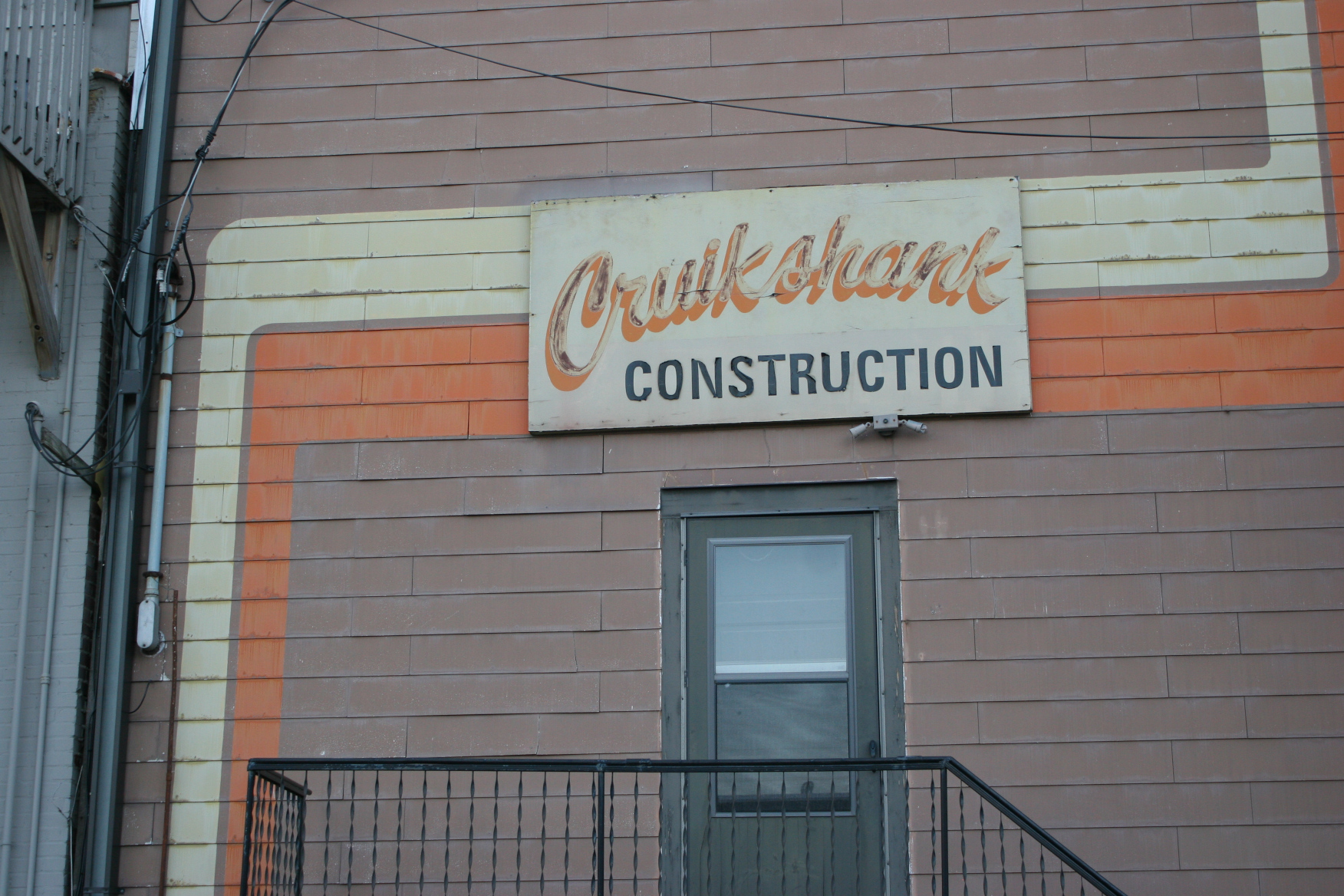
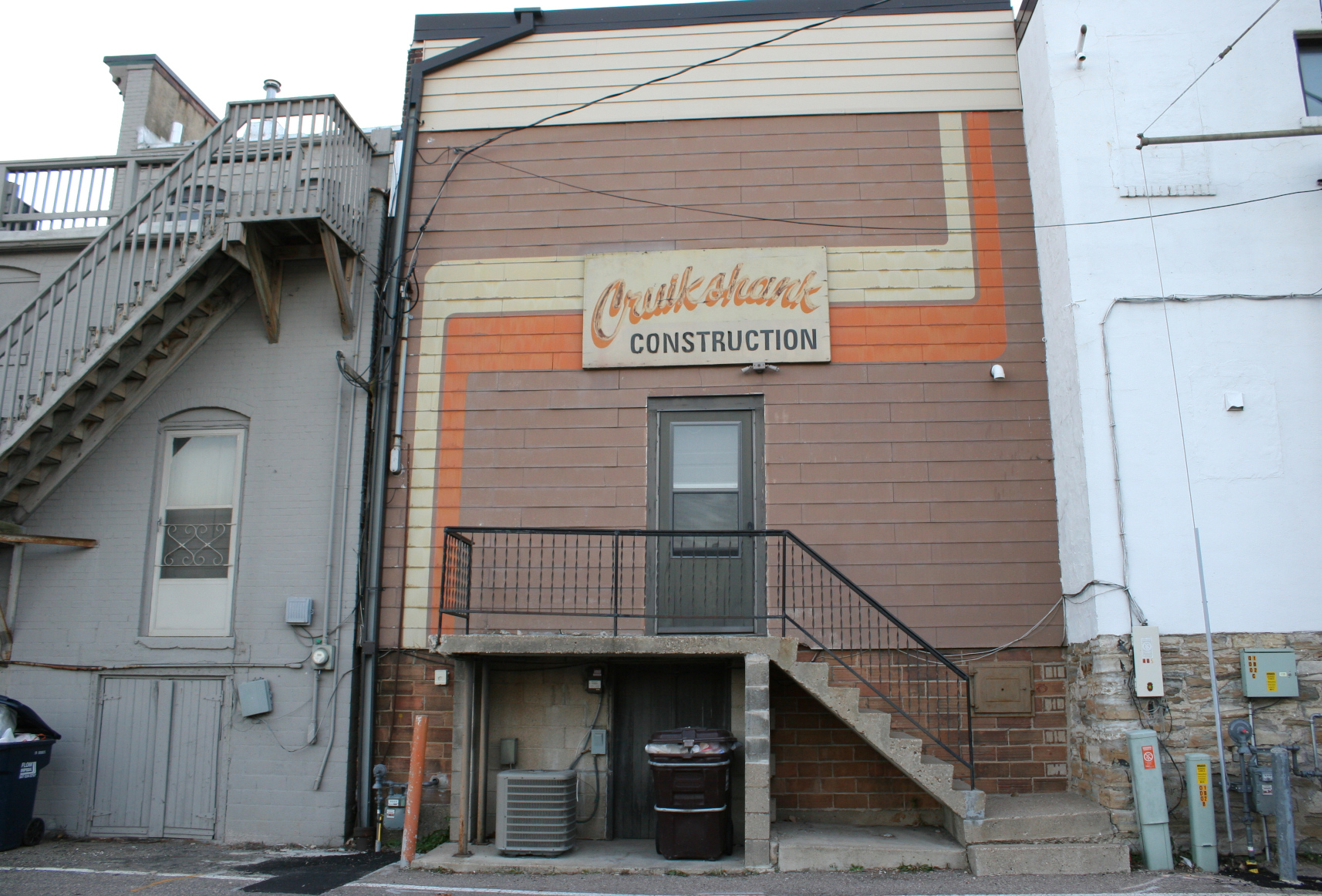
A sign marks Jack Cruikshank’s business. (Minnesota Prairie Roots copyrighted photo 2021)

Cruikshank Construction. I don’t know whether Jack Cruikshank still has his construction business. But, many decades ago, he installed replacement windows in our home. And he operated a paint store that was our go-to place for paint. Jack knew paint and was willing to share his expertise. For a while, he also had a bookstore in his shop. Jack was/is an exceptional individual and businessman—trustworthy, friendly, kind, knowledgeable, genuine and caring…

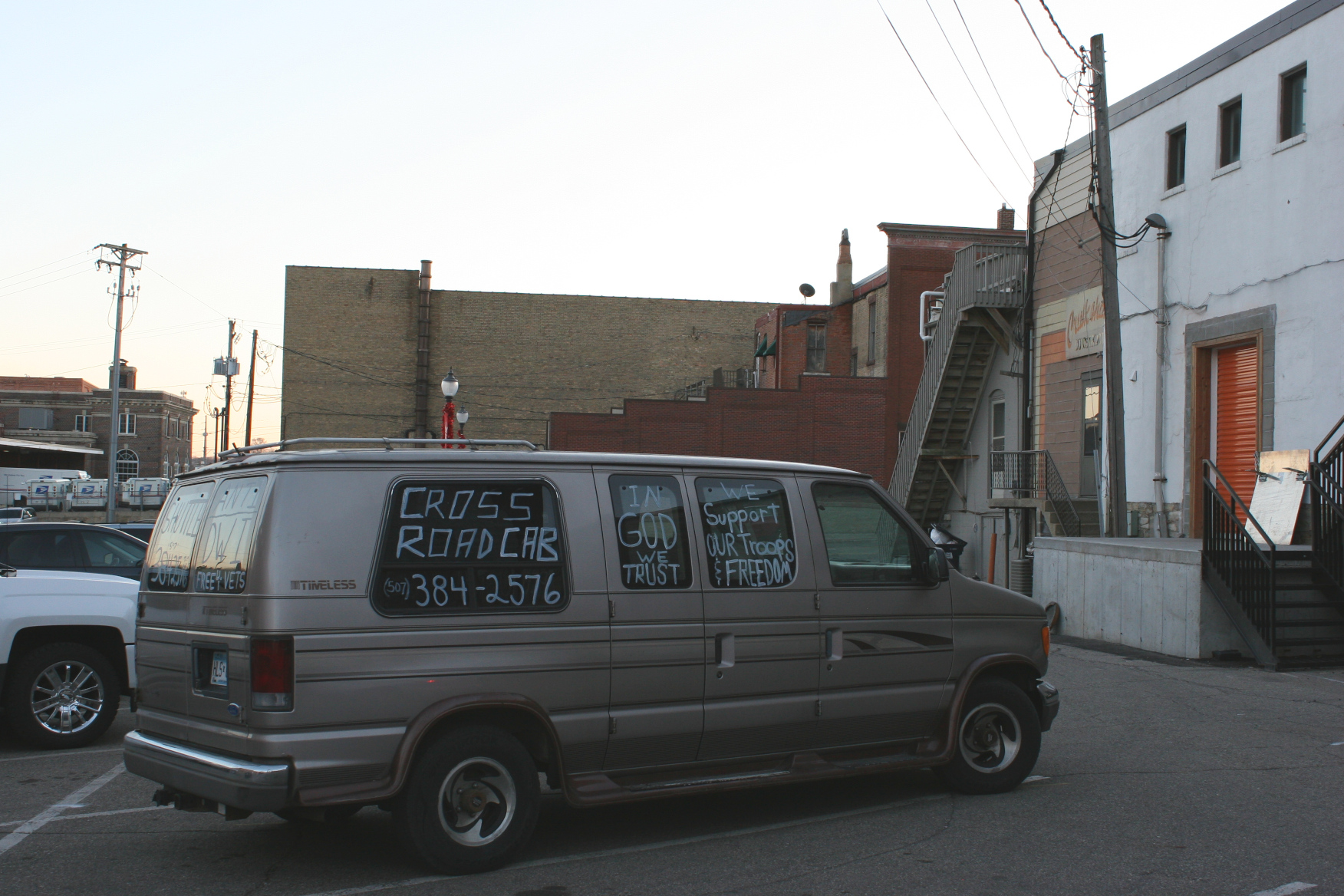
A cab company with a focus and message. (Minnesota Prairie Roots copyrighted photo 2021)
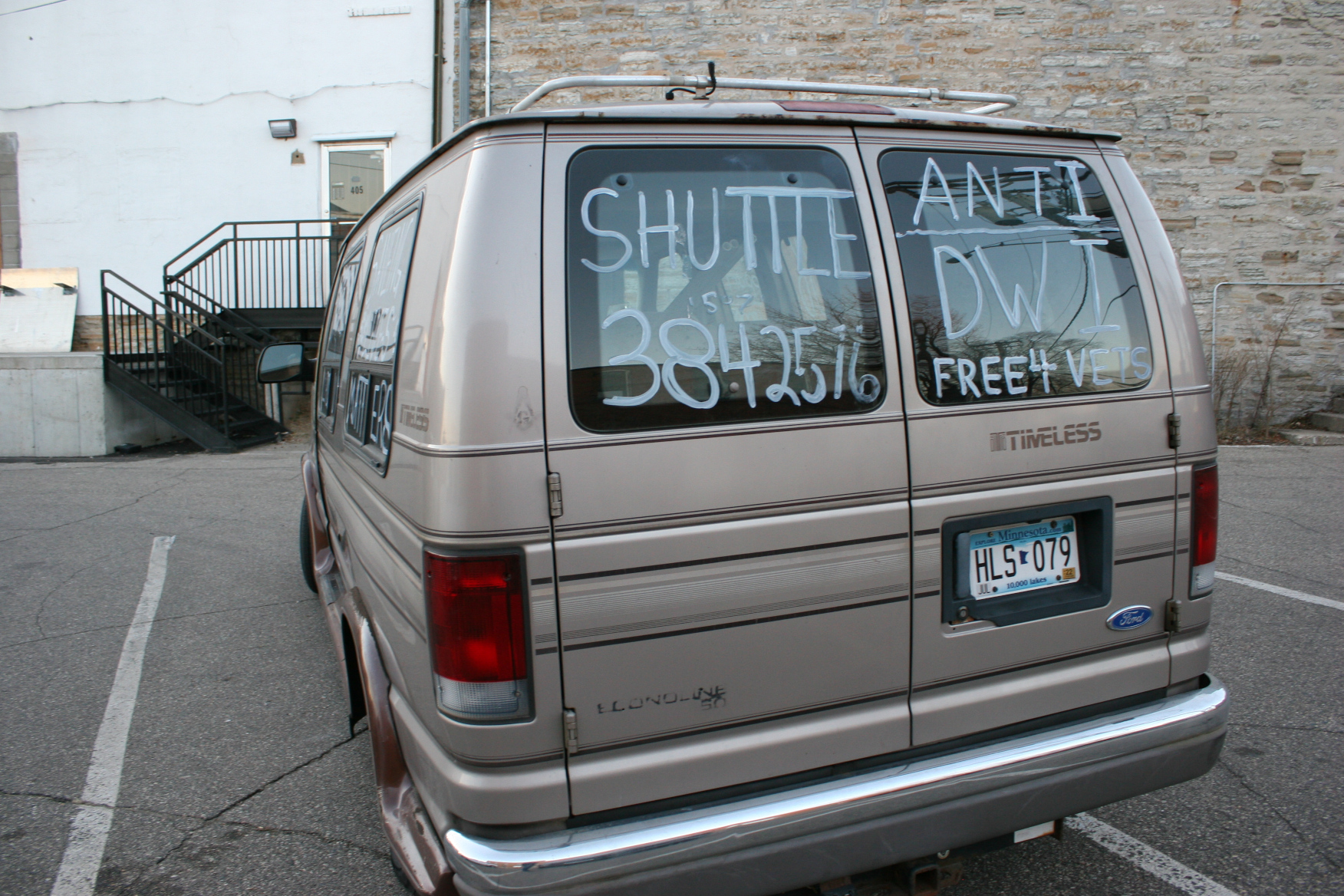
More messages on this cab. (Minnesota Prairie Roots copyrighted photo 2021)

I saw the same care written upon windows of a van, from which a couple disembarked while the driver of Cross Road Cab waited inside. I didn’t talk to him, but rather noted the messages of support for veterans, troops and freedom. Plus his stand against driving while intoxicated.

The grey building in the foreground houses Corks & Pints with 10,000 Drops in the brick building. The historic brick structure originally housed Peterson Art Furniture. (Minnesota Prairie Roots copyrighted photo)

The pair walked toward Corks & Pints and 10,000 Drops Craft Distillers. A mural, “Ice Skating on the Straight River,” graces the side of 10,000 Drops. It’s based on a vintage photo. The transformation of this downtown anchor corner has been a real asset to our community. Pre-distillery, the building housed an antique shop and architectural salvage business. It was dark, cluttered and not all that appealing. But now, wow. With the inside gutted and opened up, the distillery interior features wood floors, exposed beams, brick walls and much more, including cozy spaces to visit. It’s unlike any other place in Faribault. An inviting setting to enjoy a locally handcrafted cocktail with friends. Inside, or outside on the patio. Corks & Pints is part of the complex, housed next door in the former F-Town Brewing located in a former garage. It’s a tap house and wine bar, another welcoming spot to connect and converse.

Cry Baby Craig’s can’t miss signature orange truck. (Minnesota Prairie Roots copyrighted photo 2021)

A while ago, Cry Baby Craig’s focused conversation in our downtown. Craig Kaiser moved his hot sauce business to Faribault, into a former sporting goods store at 405 Central Avenue North. CBC’s highly-acclaimed habanero and garlic hot sauce is a staple in our refrigerator. And it’s become a favorite among restaurants in the metro and beyond.

If you’re mostly unfamiliar with Faribault, I hope you’ve learned a thing or ten about our town via my pivoting parking lot perspective. And, if you’re local, I invite you to pause and appreciate all that our community offers.

© Copyright 2021 Audrey Kletscher Helbling


Along Minnesota Street in New Ulm April 8, 2021

The hometown beer showcased on signage on a business along Minnesota Street.

NEW ULM, NO MATTER how often I visit, continues to draw me back. There’s simply so much to see and do here. This decidedly German community is also conveniently located along US Highway 14, the main route we follow from Faribault to my native southwestern Minnesota.

One of many restaurants along Minnesota Street in downtown New Ulm. The Ulmer Cafe features menu items like meatloaf, liver and onions, chicken spaetzle soup and Beef Commercials.

Recently, while returning from a visit with my mom in her Belview care center, Randy and I stopped in New Ulm, the half-way point on our trip. I wanted to see The Grand Center for Arts & Culture. Once we’d viewed the exhibits, we walked along the sunny side of Minnesota Street in the heart of downtown, popping into only one business. We remain COVID-cautious.

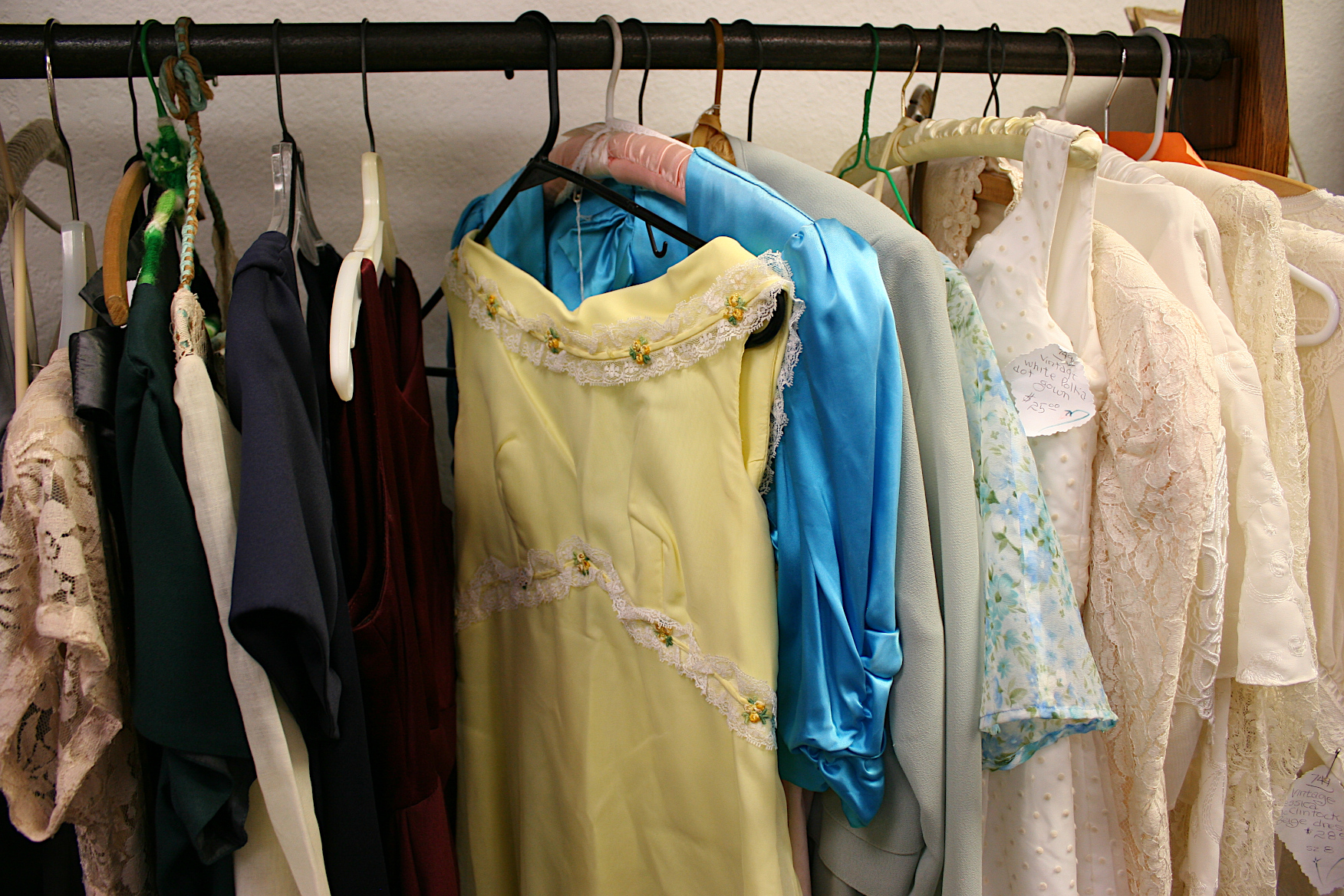
One of several racks of lovely vintage clothing at Antiques Plus. I love the sweet yellow dress.
I was drawn to this artsy fashion display inside Antiques Plus.

With the sun shining and the temp around 60, lots of people were downtown, enjoying an absolutely beautiful Saturday afternoon. We revisited Antiques Plus of New Ulm, a long, narrow shop packed with antiques, vintage finds and collectibles. I found myself once again drawn to the vintage clothing. I couldn’t help but think the lovely formal dresses would fly off the racks in the Twin Cities metro given their pristine condition and prices.

Photographed at Antiques Plus.

I also photographed beer cans inside Antiques Plus, including Schell’s. That’s the hometown beer, brewed at August Schell Brewing, the second oldest family-owned brewery in the US, crafting beer since 1860. You can tour the brewery and sample beer. Across town, Schell’s also features a German beer hall style taproom, The Starkeller, offering mostly sour beers.

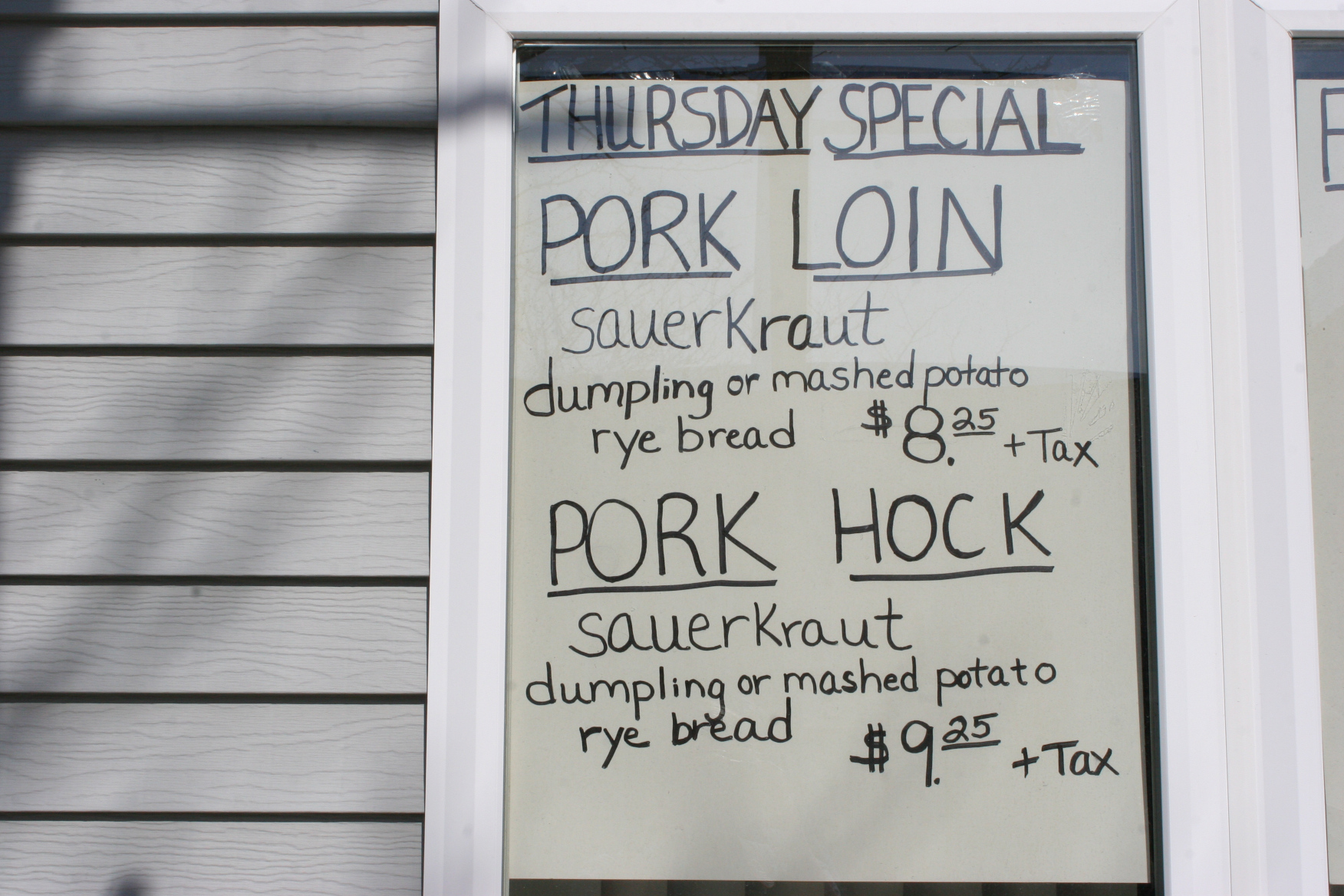
Posted in a restaurant window in downtown New Ulm.

But back to downtown, where you can also find plenty of places to drink and dine. If you appreciate German food, New Ulm offers options. I spotted a handwritten sign in a restaurant window for ethnic meals.

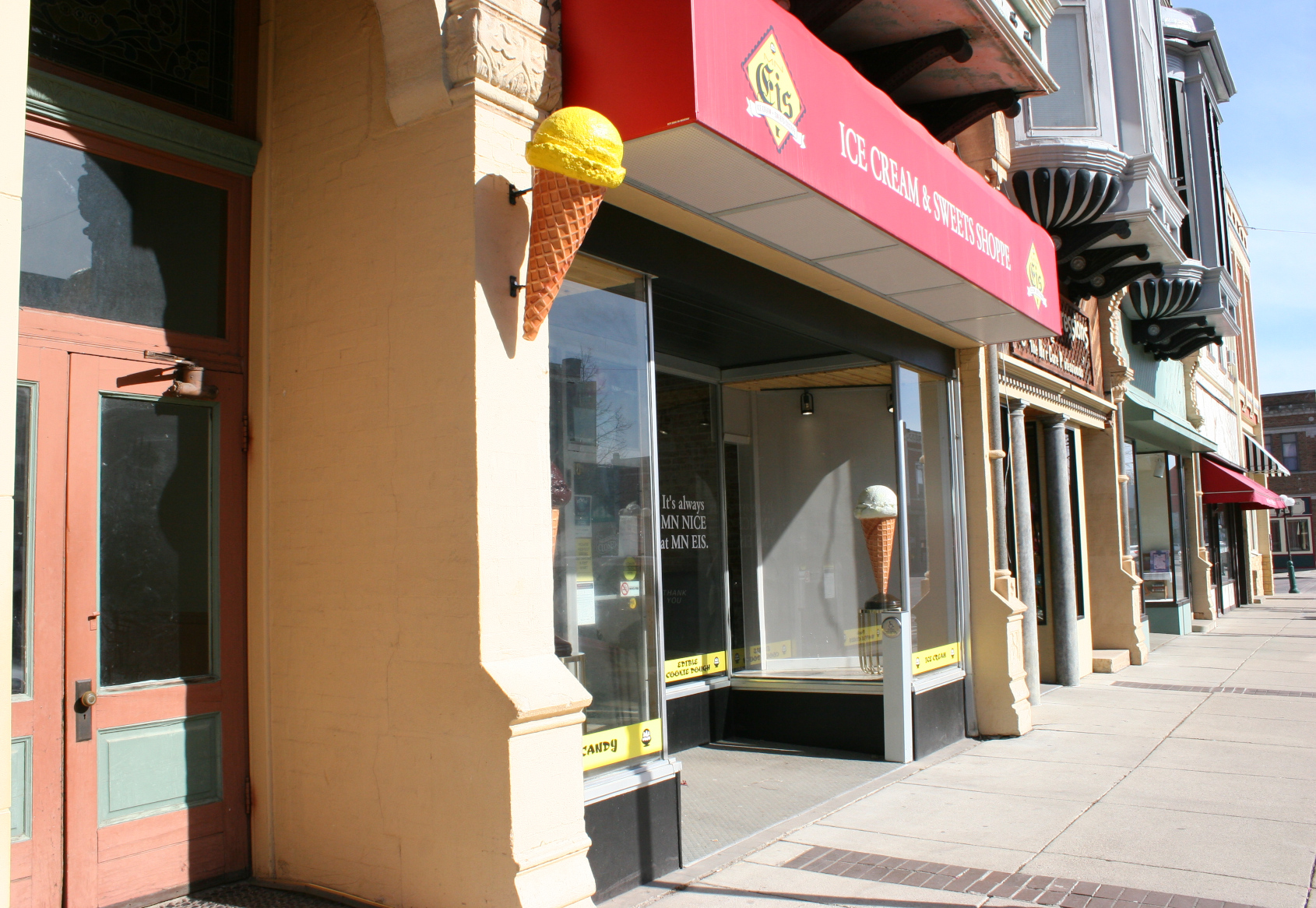
MN EIS serves ice cream and sweets in downtown New Ulm and recently reopened for the season.

I had hoped MN EIS—Ice Cream & Sweets Shoppe would be open. But it remained closed for the season, although it’s since opened. Next time.

Signage remains for this former department store.

While walking along Minnesota Street, we passed the vacated Herberger’s, a regional department store shuttered in 2018. It was a downtown New Ulm anchor for 72 years. The signage remains, a reminder of a once thriving business.

Roger’s is sandwiched into a small space.

Signage at Roger’s Barber Shop also caught my interest on this business wedged between buildings.

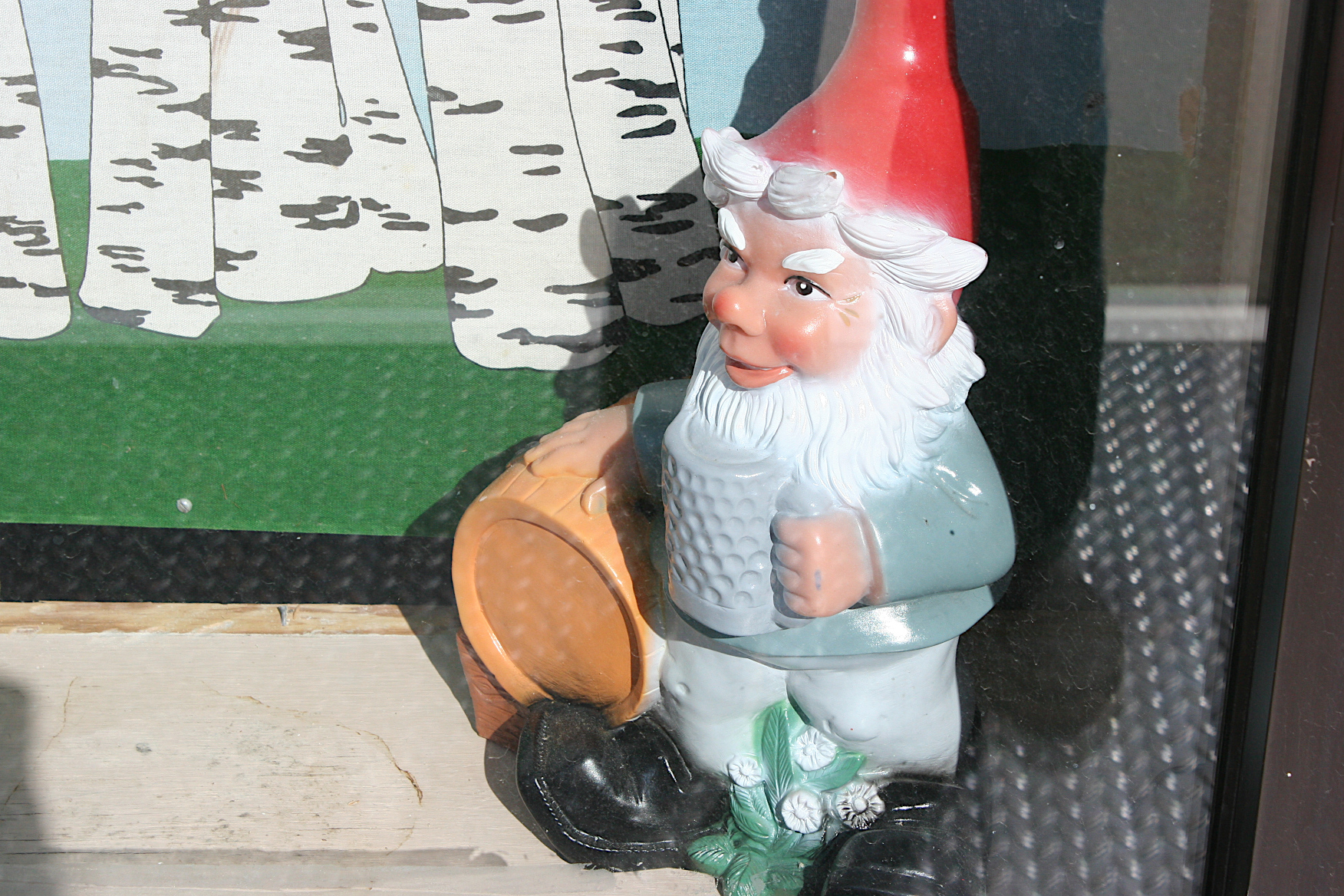
Gnomes are a “thing” in New Ulm. I spotted this one in a downtown window display.

I made three more discoveries while on our several-block walk along one side of Minnesota Street. Check back to see what I found as I conclude my series on New Ulm.

TELL ME: Have you visited New Ulm? If yes, what would you recommend seeing/doing while there?

© Copyright 2021 Audrey Kletscher Helbling
 

Experience Faribault through the art of Joe Kral March 25, 2021

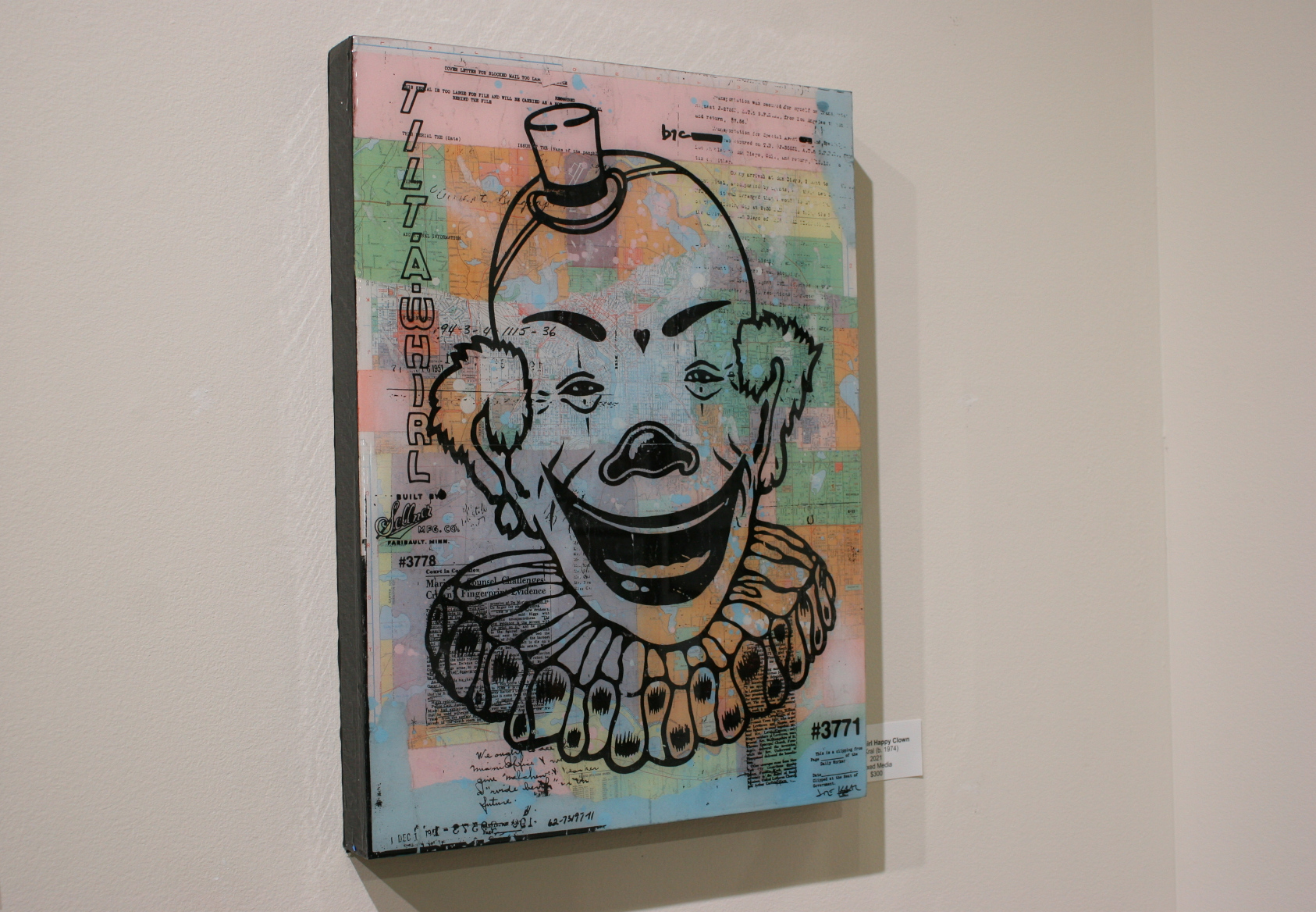
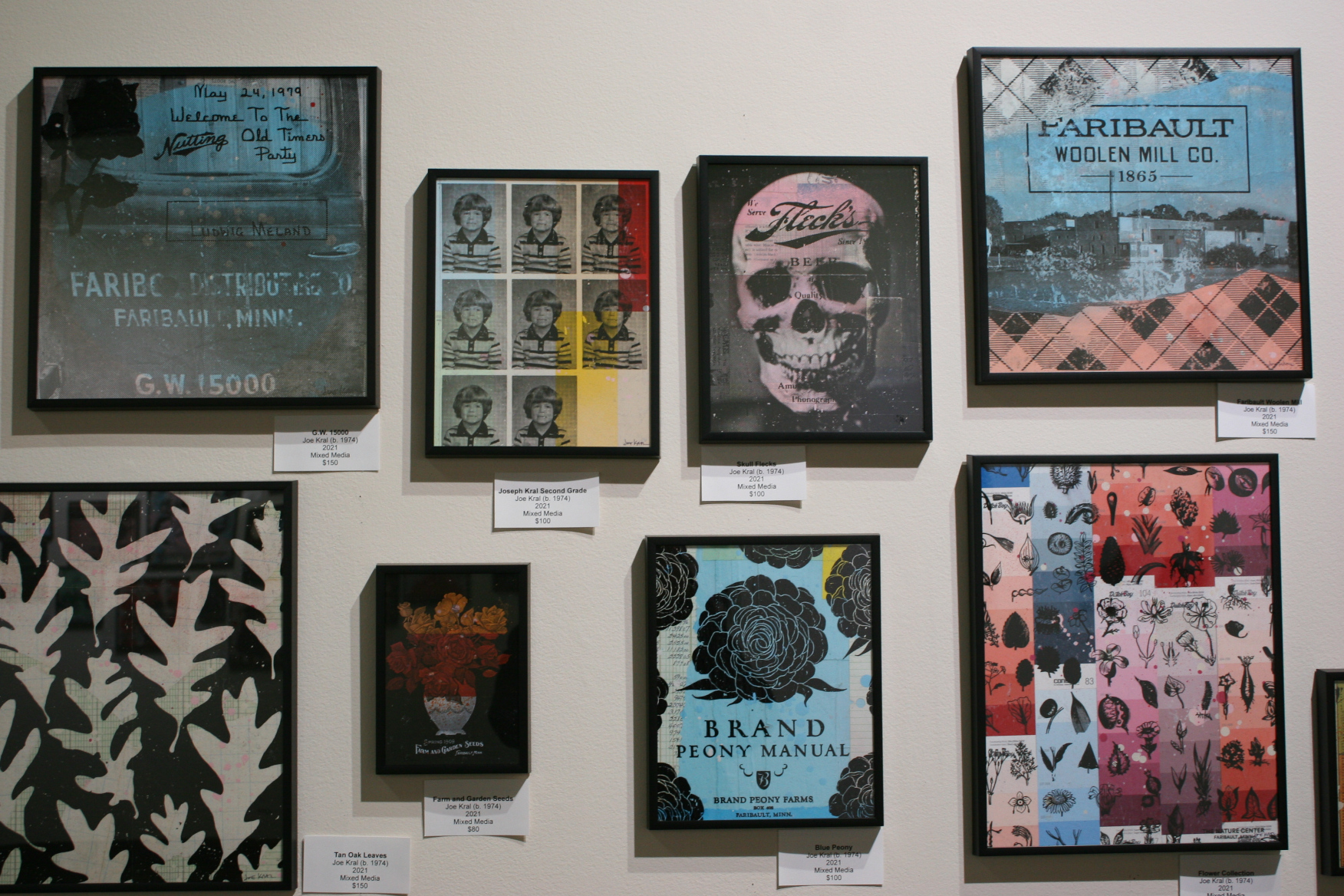
Faribault themes “My Hometown” by Minneapolis artist Joe Kral.

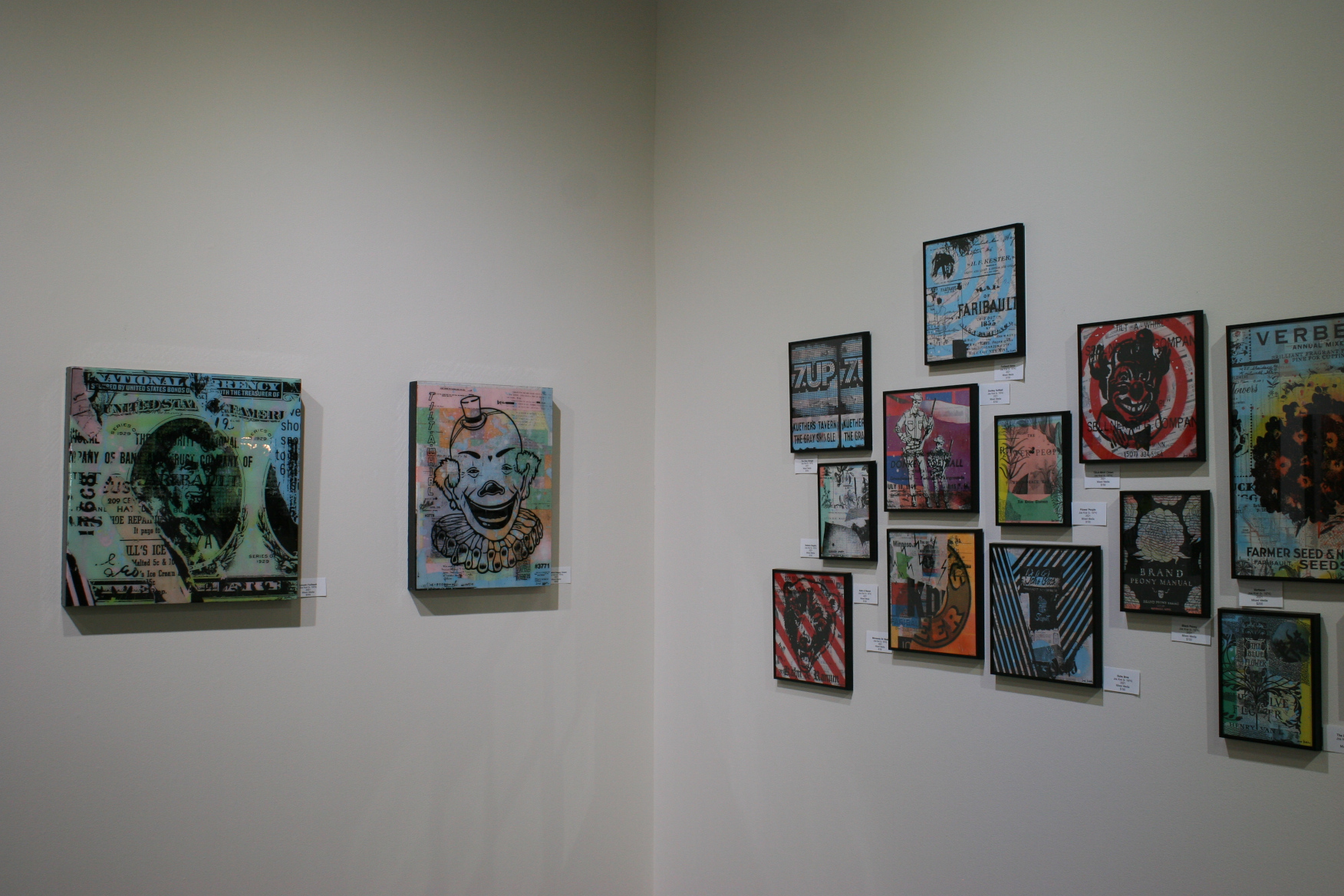
WITH NEARLY 100 PIECES of art displayed in the Carlander Gallery at the Paradise Center for the Arts, Faribault native Joe Kral’s “My Hometown” exhibit takes time to view. But there’s not much time to see this place-focused show, which opened in mid-February and closes April 3. I’d encourage you, especially if you have a Faribault connection, to view Kral’s art now.

The art of Joe Kral fills the Carlander Gallery.
“The Happy Clown.” Kral’s art celebrates the clown graphic used on the Tilt-A-Whirl amusement ride created and made in Faribault, up until recently.
Kral’s signature art highlights Faribault.

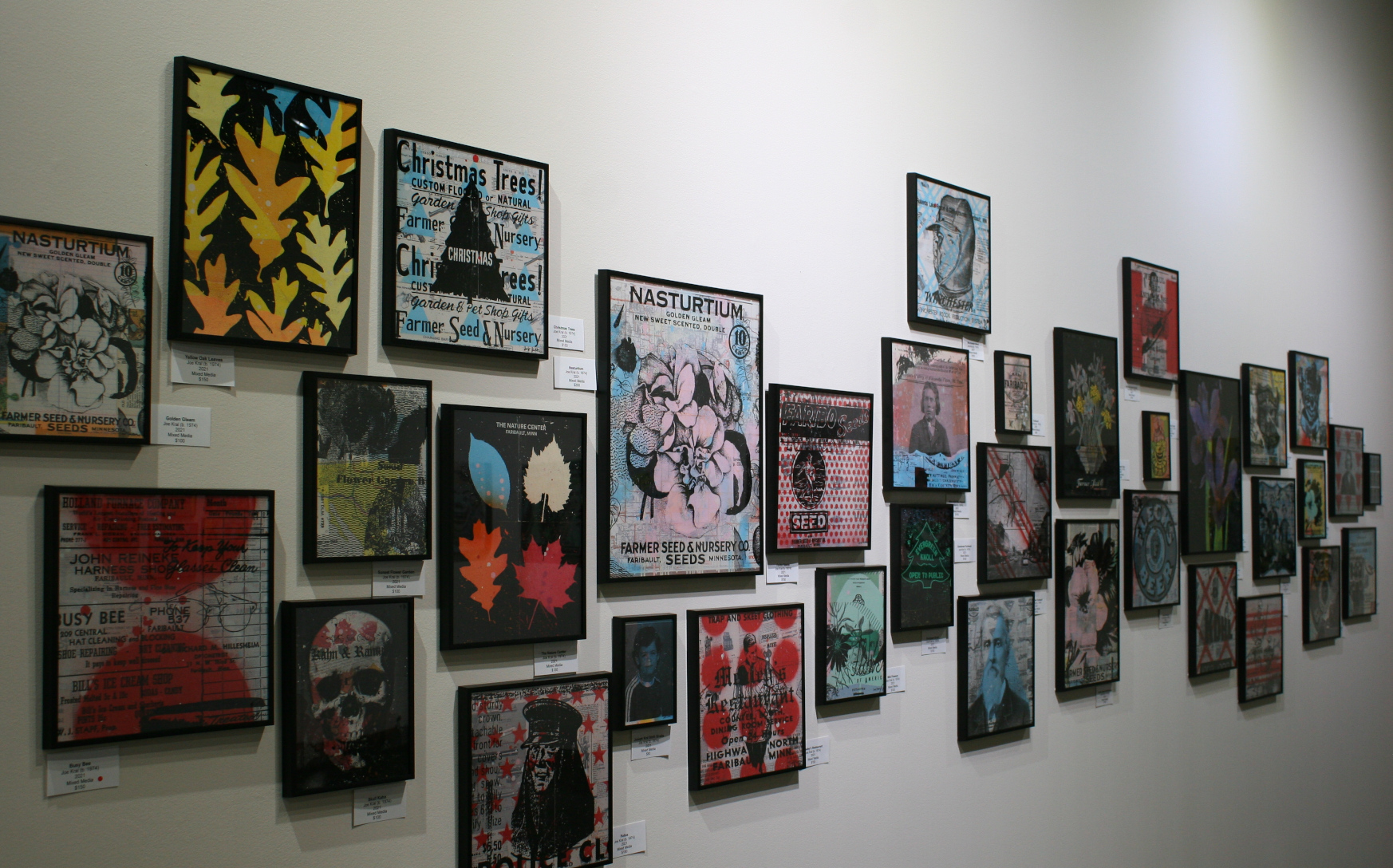
The Minneapolis artist creates mixed media paintings in a signature style that appeals to my love of vintage graphics, fonts, old print ads and nostalgia. Kral sources vintage materials from books, magazines, maps and postcards. He then adds colors and texture with spray paint, stencils and ink, according to information on his website. The results are a visual and creative delight.

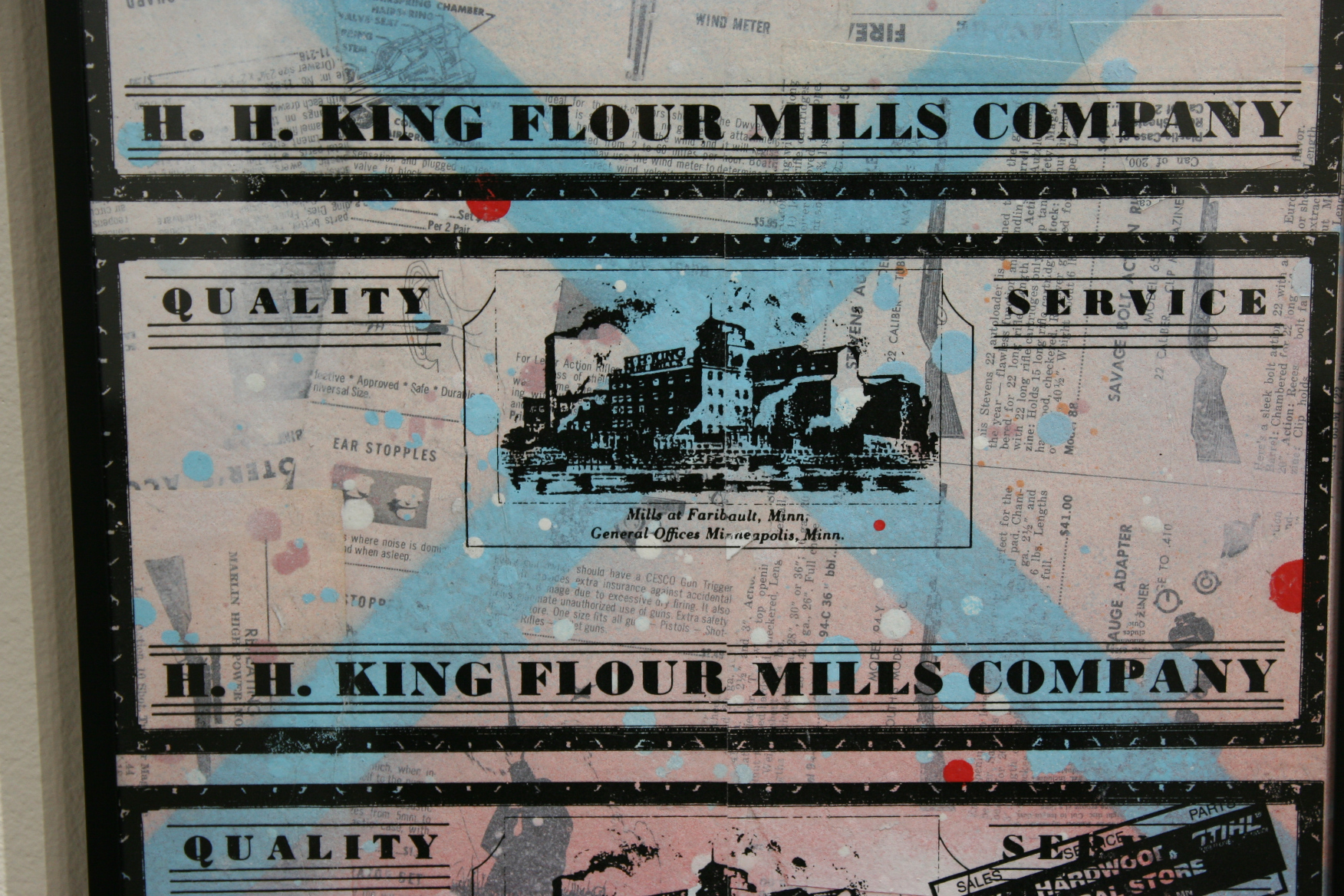
The Hardwood General Store building still stands near the King Mill Dam.
Some of the businesses featured in Kral’s art still exist. But most don’t.
The King Flour Mill was destroyed by fire and is honored here by Kral.

Faribault residents and natives, particularly, will feel like they are walking down memory lane when viewing “My Hometown.” Kral features primarily Faribault businesses. Like Brand Peony Farms, Fleck’s Beer, King Flour Mills, Farmer Seed & Nursery and Tilt-A-Whirl—all gone. But he also includes art on current businesses like the well-known Faribault Woolen Mill and KDHL radio.

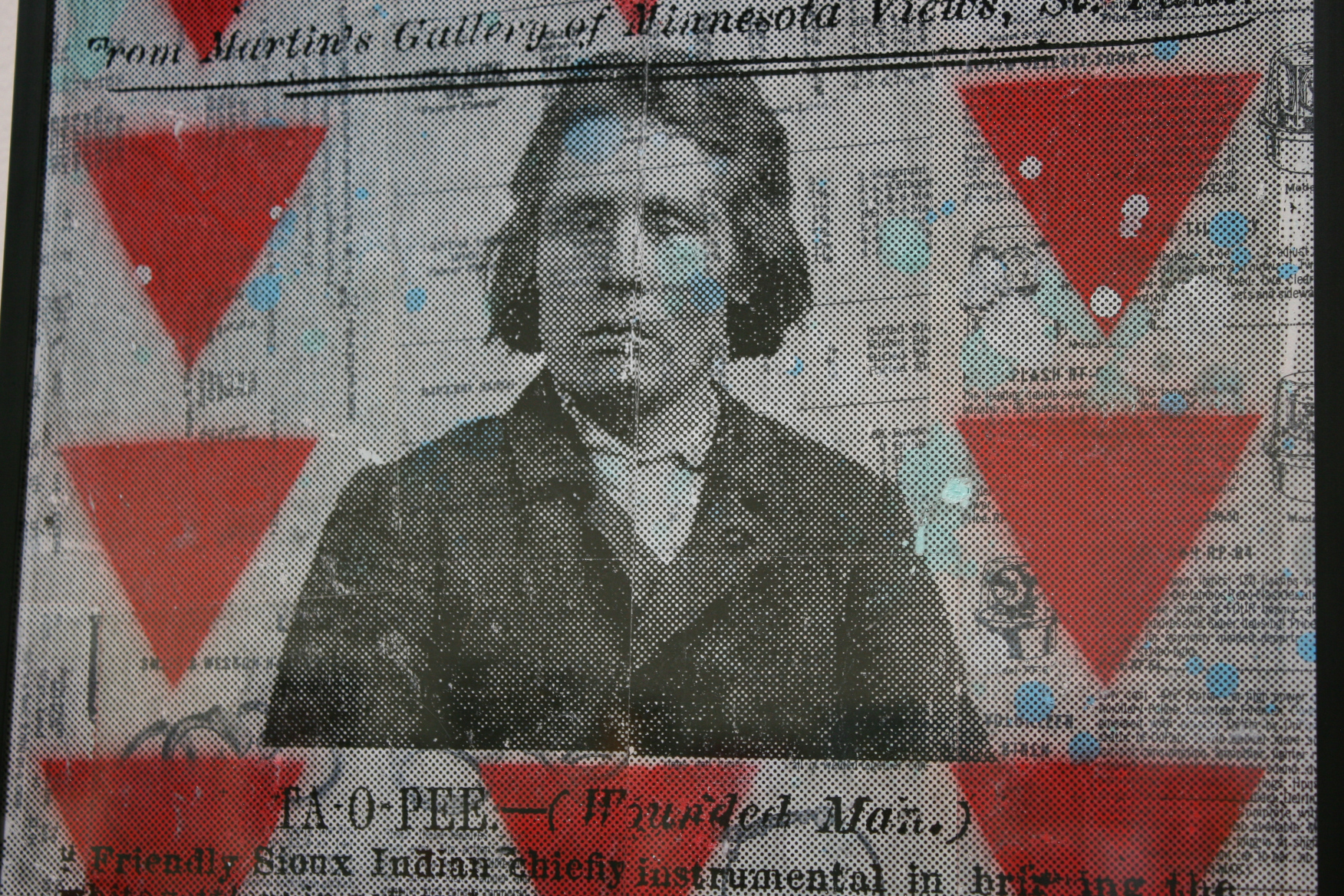
Chief Taopee art created by Kral.
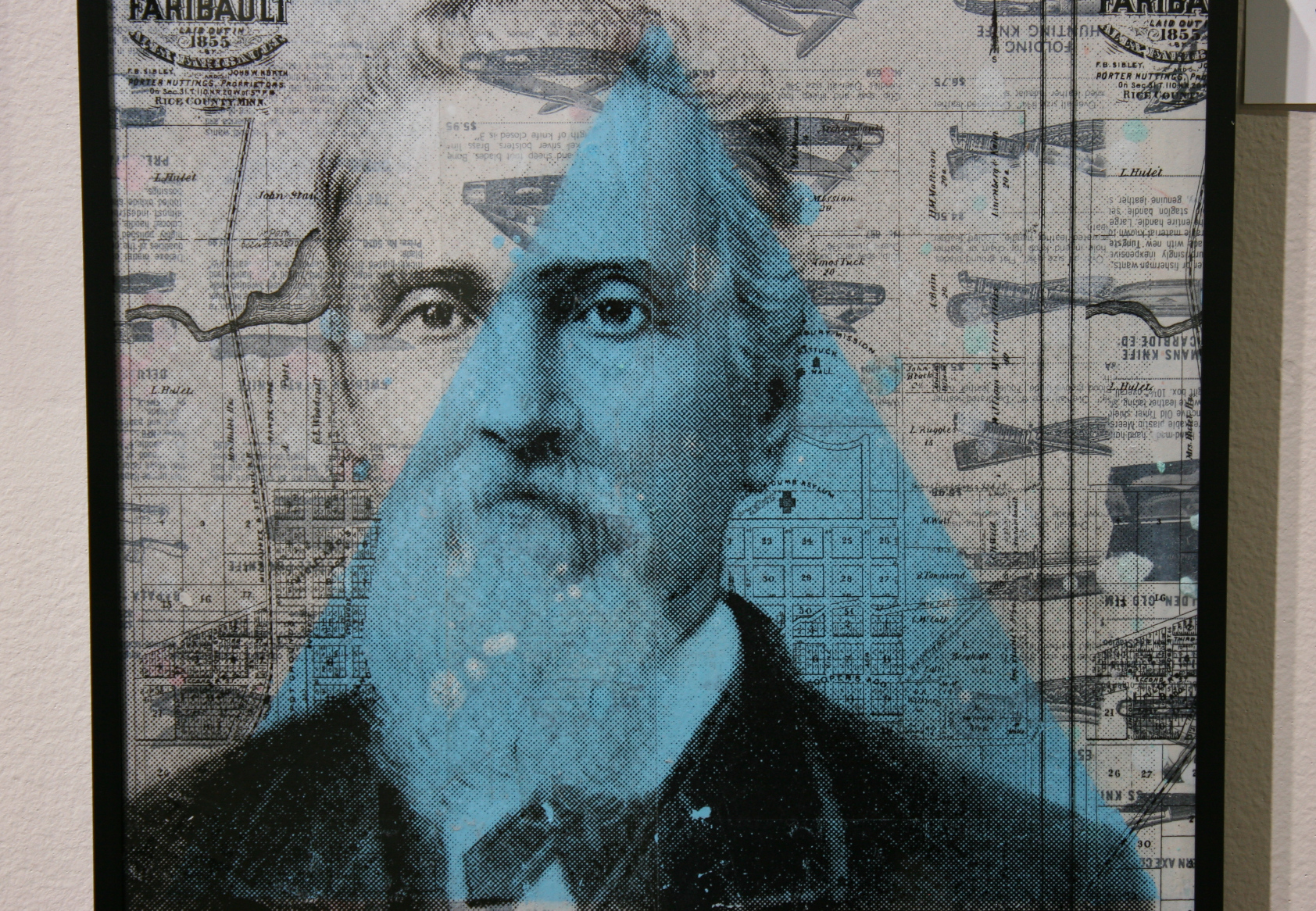
Town founder, Alexander Faribault, portrayed in Kral’s mixed media art.

Two locally important early leaders, Chief Taopee and Alexander Faribault, are also included in Kral’s hometown exhibit.

More of Kral’s art…

With the historic bend of this show, “My Hometown” seems like a good fit also for a history center/museum, which may draw an entirely different audience. This speaks to the diverse appeal of Kral’s art.

Joe Kral, when he was a student at McKinley Elementary School in Faribault.

In his bio, Kral shares that he was raised on skateboarding, BMX, heavy metal and art. I see that influence in his art. And I also see his love for Faribault—which I expect comes from leaving his hometown, reflecting and then appreciating the place that grew him as an individual and as an artist.

Kral’s Brand Peony Farms art recognizes Faribault’s past history as a peony capital. The business no longer exists.

FYI: The Paradise Center for the Arts, 321 Central Avenue N., Faribault, is open from noon – 5 pm Thursday and Friday and from 10 am – 2 pm Saturdays. While at the Paradise, check out the other gallery exhibits. I will feature some of that art in upcoming posts.

© Copyright 2021 Audrey Kletscher Helbling
 

Small towns, through the lenses of nostalgia & possibilities March 17, 2021

Filed under: Uncategorized — Audrey Kletscher Helbling @ 5:00 AM
Tags: , , , , , , , , , ,
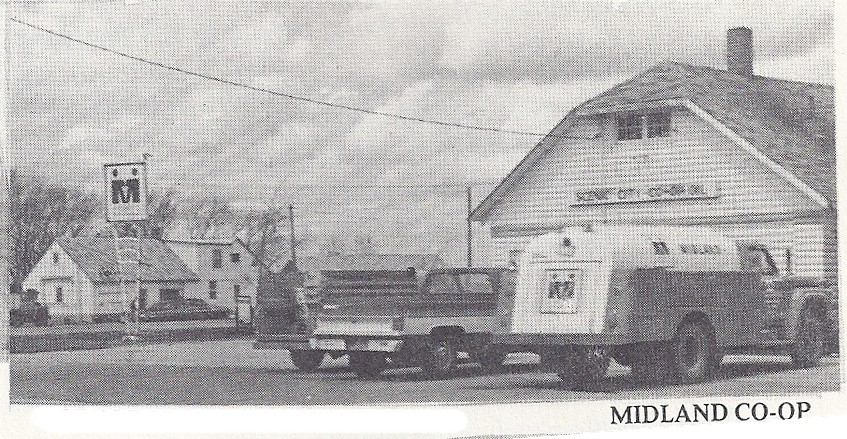
My uncle’s gas station with the fuel delivery truck parked by The Old Log Cabin. Photo from Envisioning a Century, Vesta, 1900-2000. The Miland station and the restaurant across Highway 19 in Vesta no longer exist. Minnesota Prairie Roots file photo.

GROWING UP IN SMALL TOWN Minnesota in the 60s and 70s, I saw local businesses thriving. There were two hardware stores, two grocery stores, a lumberyard, feed mill, grain elevator, bank, restaurants, corner bar, barbershop, several service stations, post office and more in my hometown of Vesta, population 365. But today, the one-block Main Street stands mostly empty, pocked by vacant lots from long-ago torn down buildings. A few businesses remain. The elementary school closed decades ago.

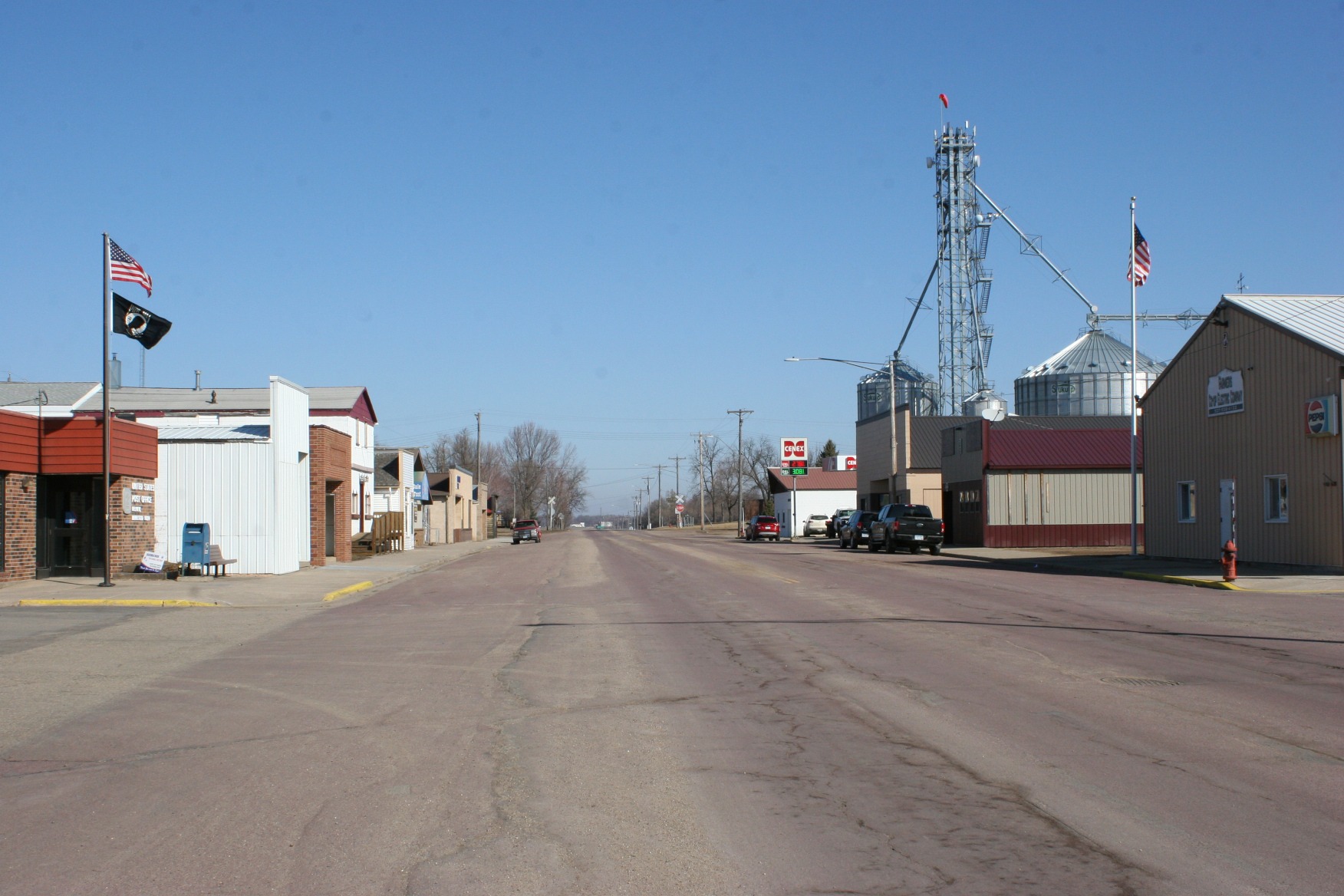
Downtown Belview, Minnesota, photographed last Saturday, March 13, 2021.

In Belview seven miles to the north and east, the story repeats. I recall driving to Belview with my grandma in the early 1970s to shop for fabric so I could sew dresses for her. That dry goods store is long gone. Belview has, like most rural communities, experienced the closure of many businesses as locals headed to regional shopping hubs to shop at Big Box stores and also embraced online shopping.

An historic anchor building in downtown Redwood Falls. Sward Kemp Snyder Drug recently moved out of downtown to the new hospital and clinic on the east edge of Redwood.

Likewise, Redwood Falls, to the east of Belview along Minnesota State Highway 19, has changed considerably. That Redwood County seat and the Lyon County seat of Marshall were our family’s go-to larger towns to shop for clothes, shoes and other necessities when I was growing up on the prairie. Last Saturday when Randy and I stopped in downtown Redwood, I found the streets nearly empty and few businesses open. Nothing like the bustling downtown I remember.

Vintage Vinyl, a newly-opened business in the heart of Redwood Falls.

I can sit here and write about this with nostalgia and sadness, wishing these rural communities remained self-sufficient. But wishes are not reality. And wishing does not change things. Action does.

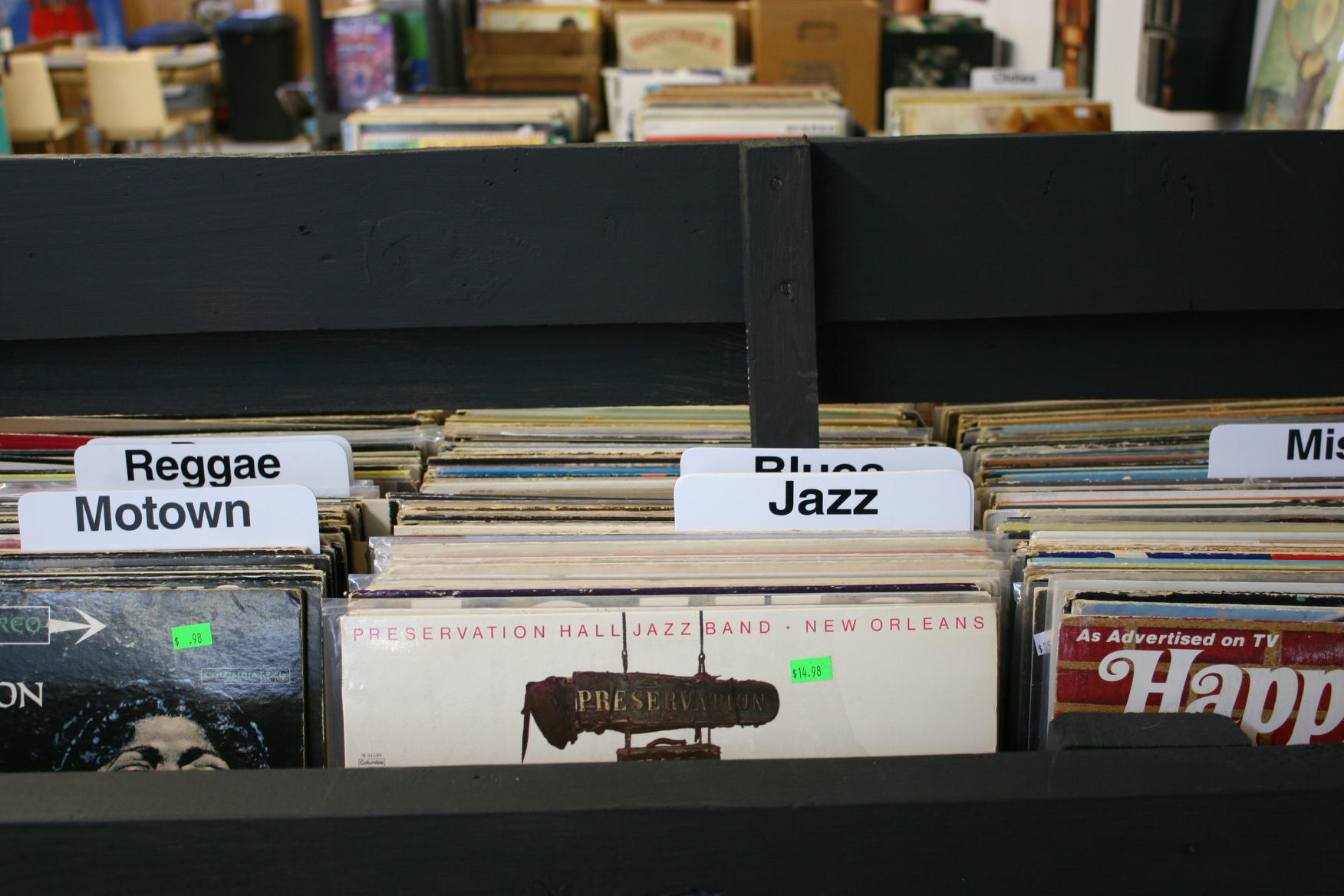
An overview of Vintage Vinyl, packed with albums plus gaming and trading cards, books, video games, DVDs and VHSs, figurines and more. The tables provide a place for folks to play checkers, etc., and/or just hang out.
Vinyl galore…in all musical genres.
Randy files through vinyl selections.

While in Redwood Falls, I met a young man, Nate Rohlik, who recently opened Vintage Vinyl, Toys & Games. He’s passionate about improving his community, about providing a place for young people to gather, about growing opportunities.

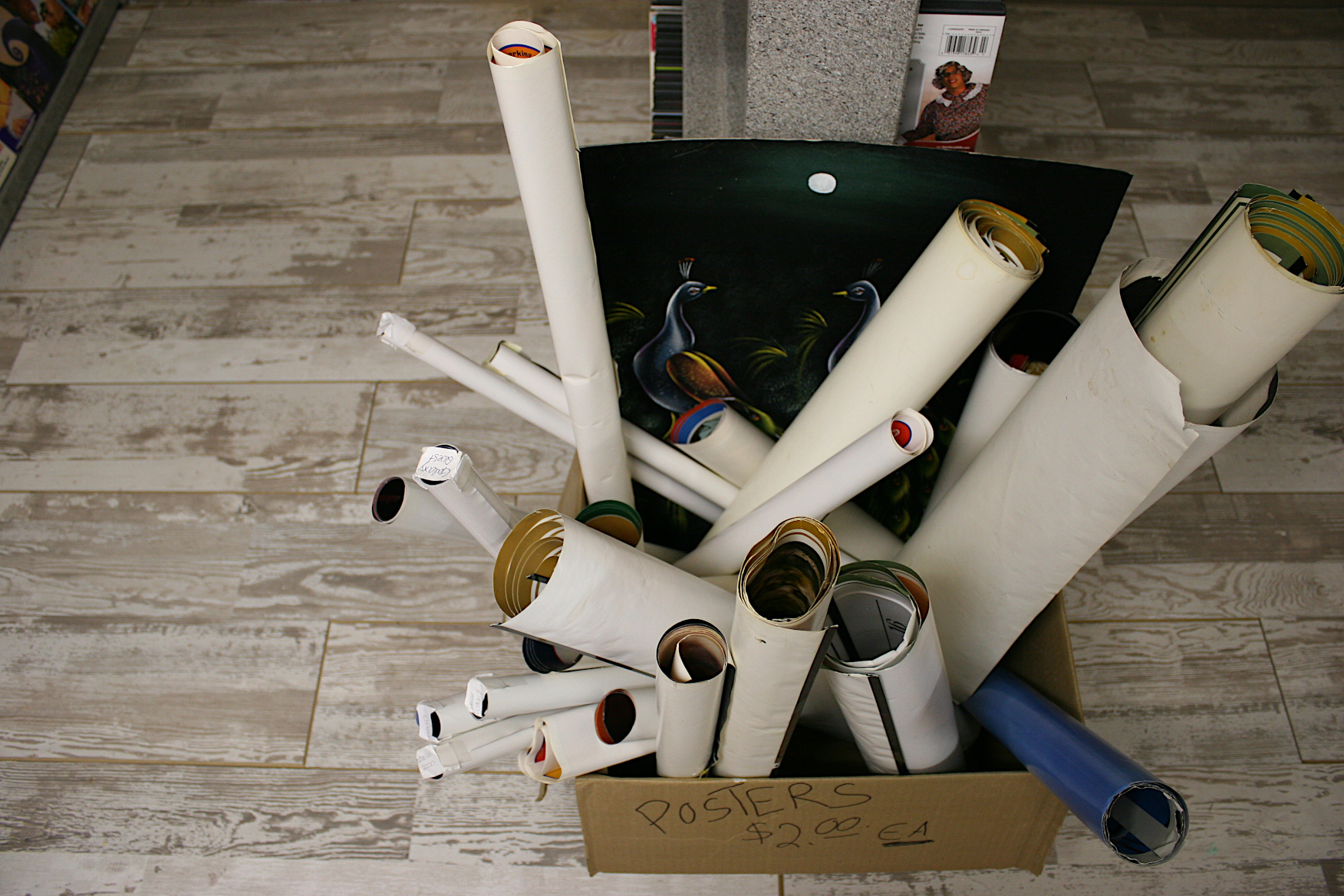
Looking for a poster? You’ll find them in Nate’s shop.
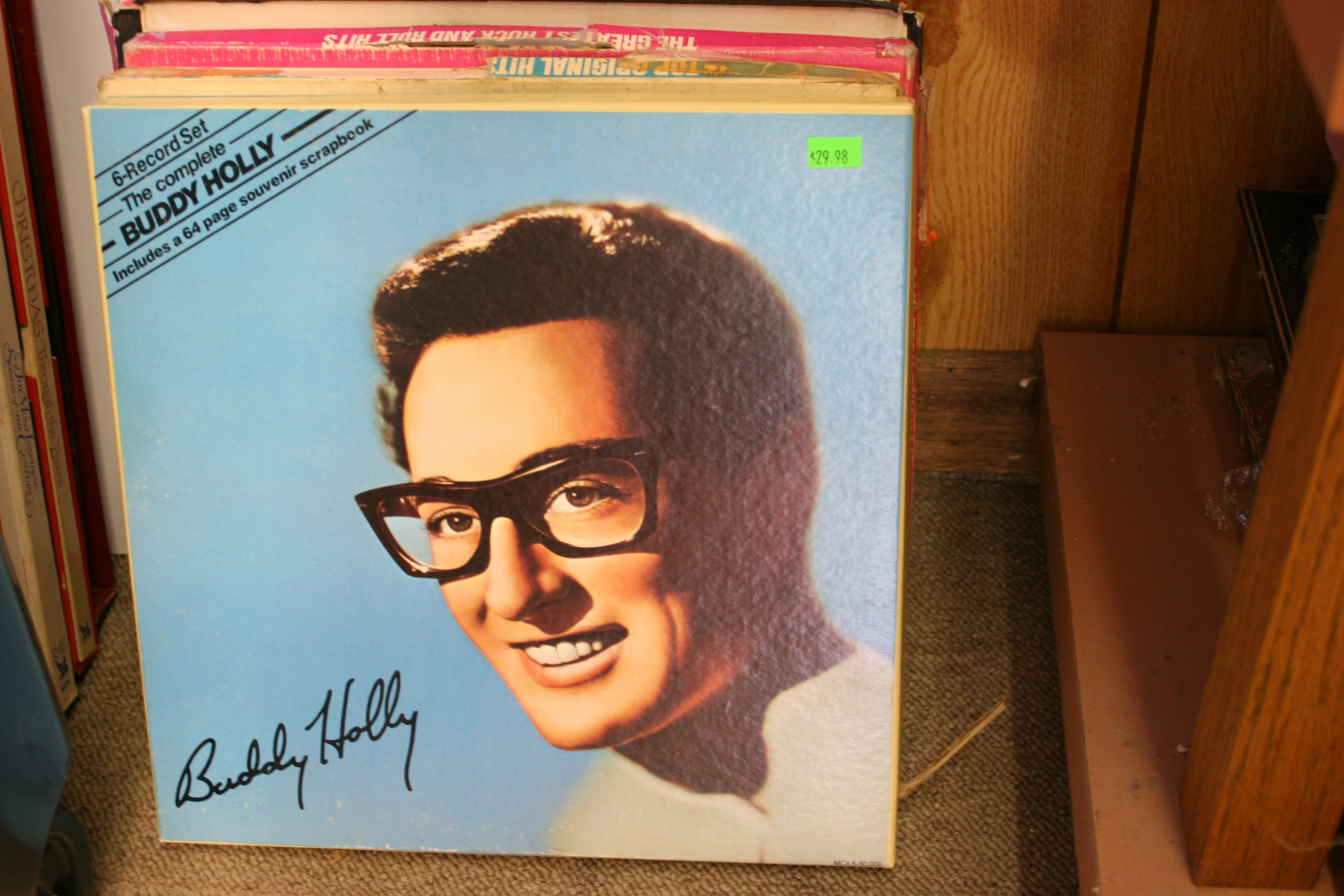
I spotted this Buddy Holly album leaning against the wall on the floor.
In the basement, an array of merchandise.

He’s friendly, outgoing, welcoming. Everything you want in a shopkeeper. But Nate also carries a sense of responsibility, it seems. He recently-returned to his home area after a stint with the military that took him around the world. He could have settled elsewhere. But he chose to return to his roots. (He graduated from nearby Wabasso High School, my alma mater, in 2004.) That says something.

Endless musical options…

We didn’t chat all that long. But my brief conversation with Nate gives me hope. Hope that his positive attitude, his efforts—including purchasing two arcade games—and his drive will ignite a fire of possibilities.

PLEASE CHECK BACK to read my thoughts on small towns and what draws me to them.

© Copyright 2021 Audrey Kletscher Helbling


Tapping into local at Sleepy Eye Brewing & Coffee, Part II March 10, 2021

Housed in the former PIX Theatre, Sleepy Eye Brewing & Coffee Company, along US Highway 14 in downtown Sleepy Eye. Minnesota Prairie Roots file photo March 2020.

WHEN I WAS GROWING UP on the southwestern Minnesota prairie in the 60s and 70s, locally sourced meant harvesting vegetables from the garden, dipping milk from the bulk tank and pulling our own farm-raised beef from the freezer. Our farm family of eight was basically food self-sufficient, with the exception of fresh fruit (a rare treat) and staples like flour and sugar.

Information on tables informs customers of locally sourced food. Minnesota Prairie Roots file photo March 2020.
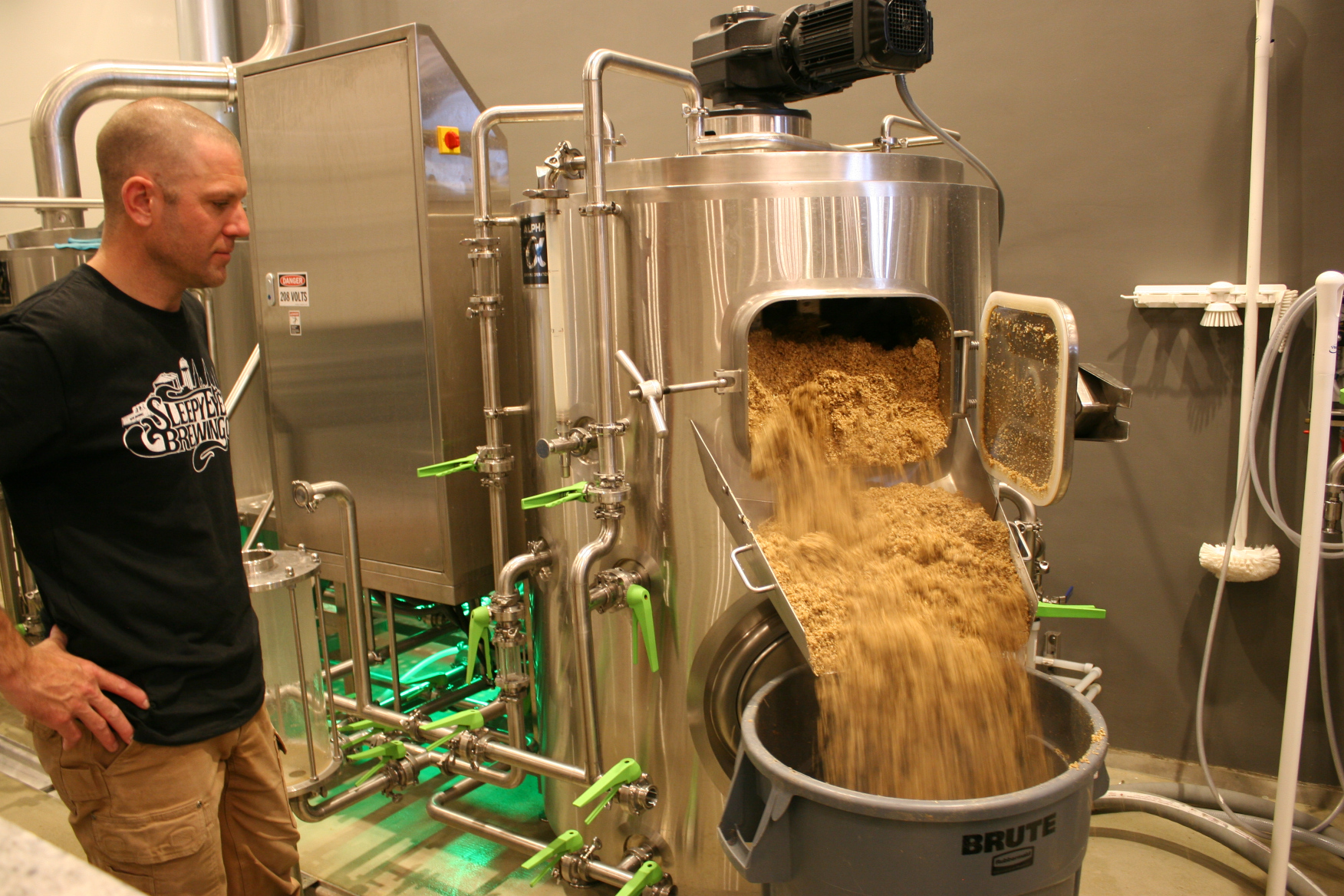
Spent grains from the beer making process go to Fischer’s Sleepy Bison Acres as supplemental food for the bison. Minnesota Prairie Roots file photo March 2020.
More info on the interaction and reliance on the community. Minnesota Prairie Roots file photo March 2020.

With that background, you’ll understand why I appreciate the efforts of businesses like Sleepy Eye Brewing and Sleepy Eye Coffee Company, which work with local farmers to source products. Bison meat. Milk. Honey. Eggs. It’s a win-win for everyone, including customers who value fresh, local and direct farm-to-table.

This is a stunningly beautiful space. Minnesota Prairie Roots file photo March 2020.

The brewery and coffee/bakery/sandwich/salad shop are housed in the historic former PIX Theatre in the heart of downtown Sleepy Eye. My first and only visit happened a year ago, just before COVID-19 changed everything, including my interest in dining out or imbibing at a craft brewery.

A flight served in a movie reel. Minnesota Prairie Roots file photo March 2020.
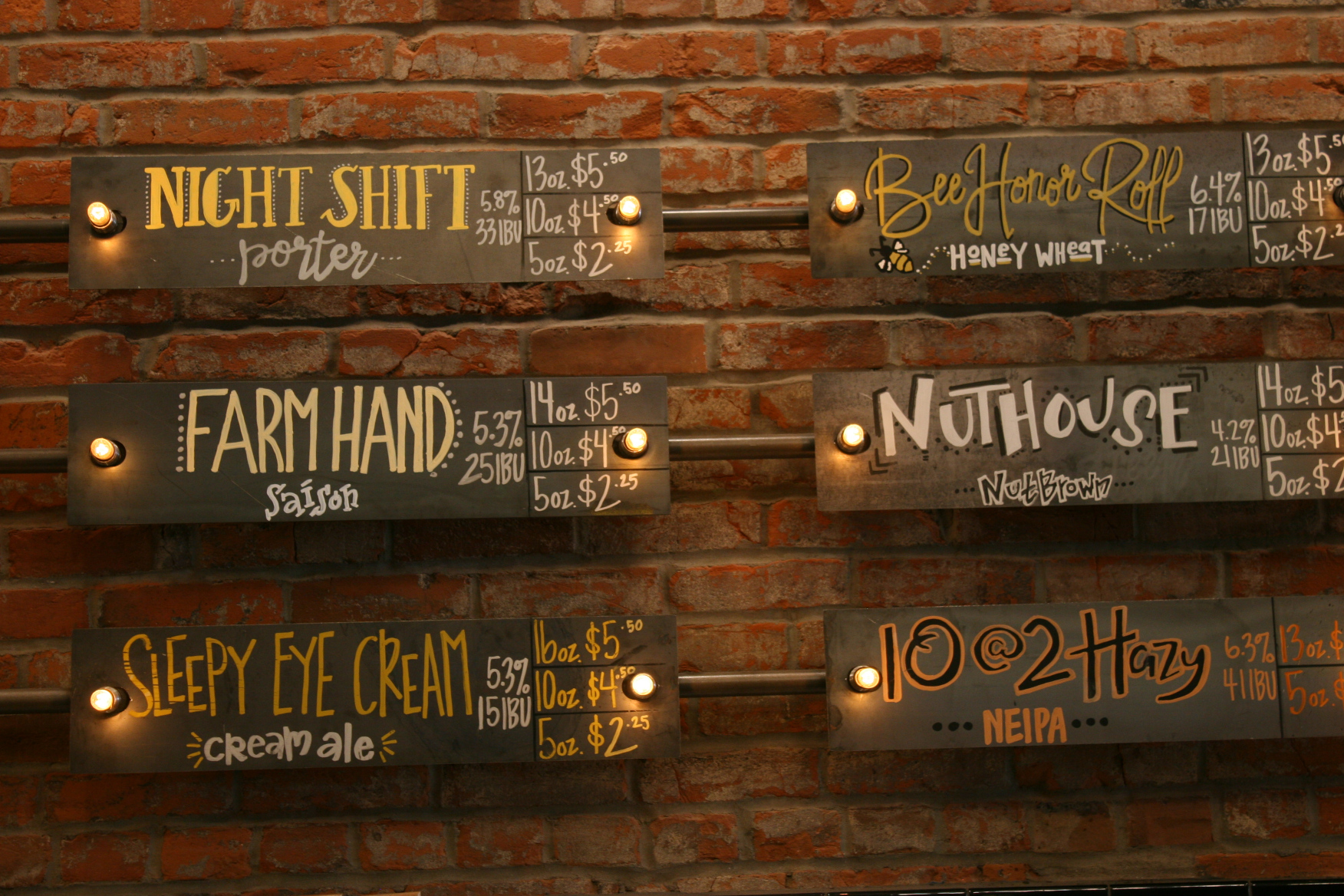
Some of the beer choices at Sleepy Eye Brewing. Minnesota Prairie Roots file photo March 2020.
Glasses advertise the brewery. Minnesota Prairie Roots file photo March 2020.

But I’ll be back once life returns to normal because I appreciate the former movie house setting, the beer and the small town friendliness. I intend also to sample a homemade sweet treat from the bakery. Or maybe a sandwich or salad.

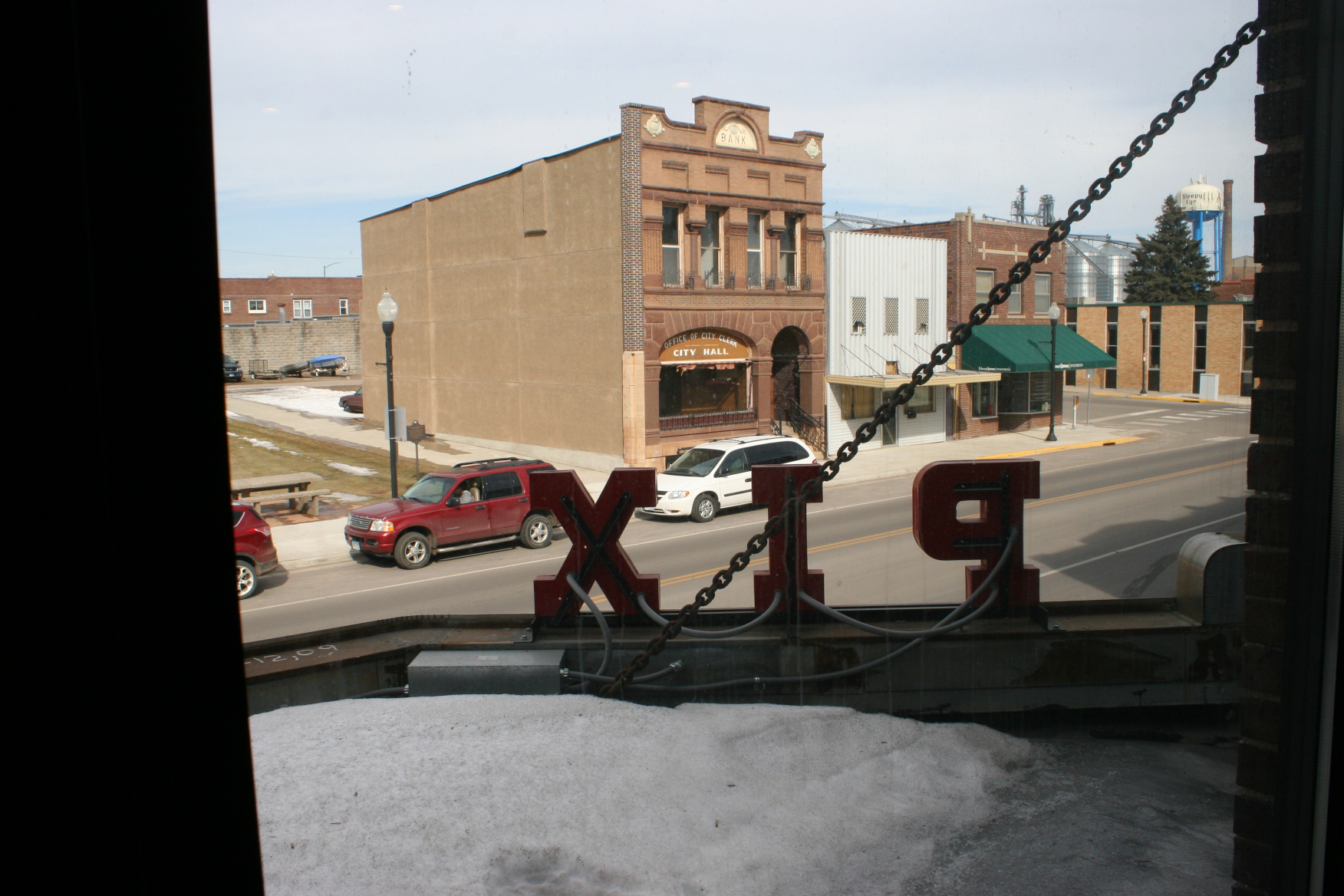
A view from the balcony window looking over US Highway 14 and Sleepy Eye’s main business district. Minnesota Prairie Roots file photo March 2020.

I love how some small towns are seeing a revival of sorts via businesses like craft breweries. Hometown bakeries also add to the draw.

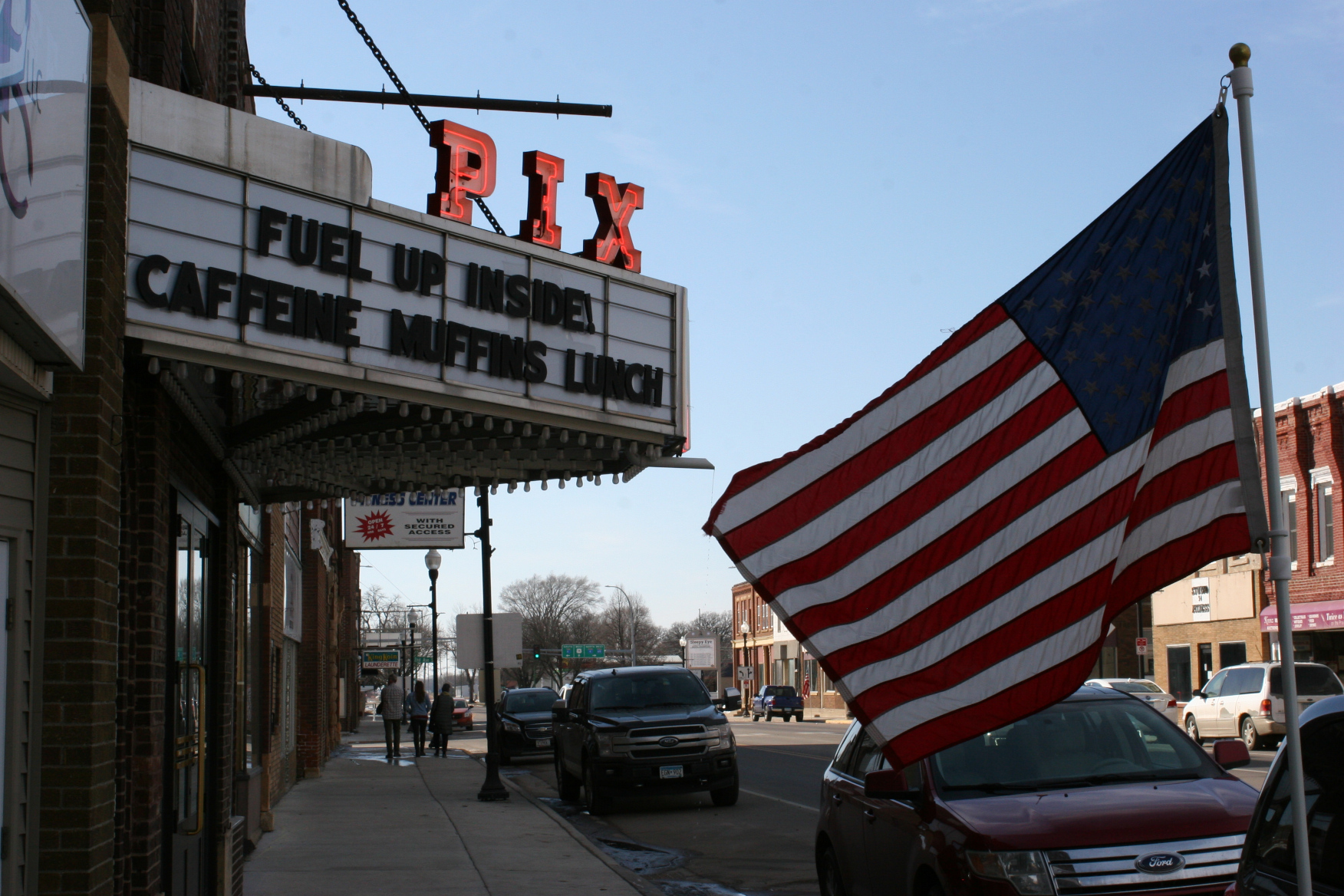
The restored marquee now advertises “fuel” rather than movies. Minnesota Prairie Roots file photo March 2020.

For someone like me who grew up with home-grown/home-raised food on premises, the current trend of locally sourced brings me full circle back to my roots. That’s 45 miles to the northwest of Sleepy Eye in rural Vesta.

© Copyright 2021 Audrey Kletscher Helbling
 

My observations about masking in rural Minnesota March 8, 2021

A sign posted at the Steele County History Center in Owatonna. Minnesota Prairie Roots file photo June 2020.

TODAY MY COUNTY OF RICE reported its 92nd COVID-related death. That saddens me. I don’t know the identity of this latest individual to die from the virus. But that matters not. What matters is that, to family and friends, this is the loss of a loved one.

That’s something we all need to remember. Ninety-two represents much more than a number added to the growing statistics. It represents a life.

With that said, I need to vent. And if you’re weary of reading about anything COVID-related, then stop reading right now. But I’m frustrated, beyond frustrated.

On Saturday, Randy and I headed to two small towns south of Owatonna. Just to get out of town for a bit. We’ve previously toured both, but several years ago. Driving into rural Minnesota, parking on Main Street and then walking to see what we can find is an adventure.

WHAT MASKS?

Our day trip into these two rural Steele County communities on Saturday proved to be an adventure alright. What we found was absolutely, totally, disheartening. Compliance to Minnesota’s state mask mandate is pretty much non-existent. That left me exiting several businesses—a hardware store and boutiques—before the doors had barely closed behind me. And we’re not talking just customers here without masks. We’re talking owners and employees.

Never mind the signs posted outside these businesses stating that “masks are required.” Why bother? Oh, because the state requires posting of these signs, apparently.

FEELING DISRESPECTED

Here’s how I felt when I saw those business owners and employees without masks. I felt disrespected. I felt unsafe. I felt unwelcome. I felt frustrated. I felt angry. I felt like they didn’t really want my business. And, as much as I wanted to say something to them about my feelings, I didn’t. You never know who’s carrying a gun these days and may harm you if you speak up. So I walked out.

And the thing is, several of those small town boutiques, especially, were inviting little shops filled with merchandise that may have interested me. But I felt uncomfortable from the moment the unmasked shopkeepers greeted me and I turned to make a hasty exit.

BUSINESSES LEAD BY EXAMPLE

Interestingly enough, while Randy was shopping at a popular family-owned meat market in the town a mile off the interstate, he found full mask mandate compliance and even a plexi-glass shield separating cashiers from customers. Plus hand sanitizer. So kudos to that meat market and the local grocery store owner, who was also masked. I observed a woman I’d previously seen, unmasked at the boutique, walk into the meat market wearing a mask. Interesting, huh? A business sets the tone for customer compliance.

This masking issue isn’t a problem unique to small towns. When we returned to Faribault and stopped to pick up a few groceries, I spotted mask-less customers. They are increasing in number. The non-maskers and half-maskers. But at least I don’t see business owners and employees without masks in my community (except at the farm implement dealer). That’s the difference. In the two small towns in Steele County, business owners and employees were without masks. I don’t get it. I just don’t get it. Masks are a scientifically-proven way to prevent spread of COVID-19. Why risk the health of customers? This, what I perceive as selfish and uncaring behavior, left me with a really negative perspective of these two towns. And that’s something no business, no community, needs, especially now.

© Copyright 2021 Audrey Kletscher Helbling
 

From Northfield: When fire damages an historic river inn November 17, 2020

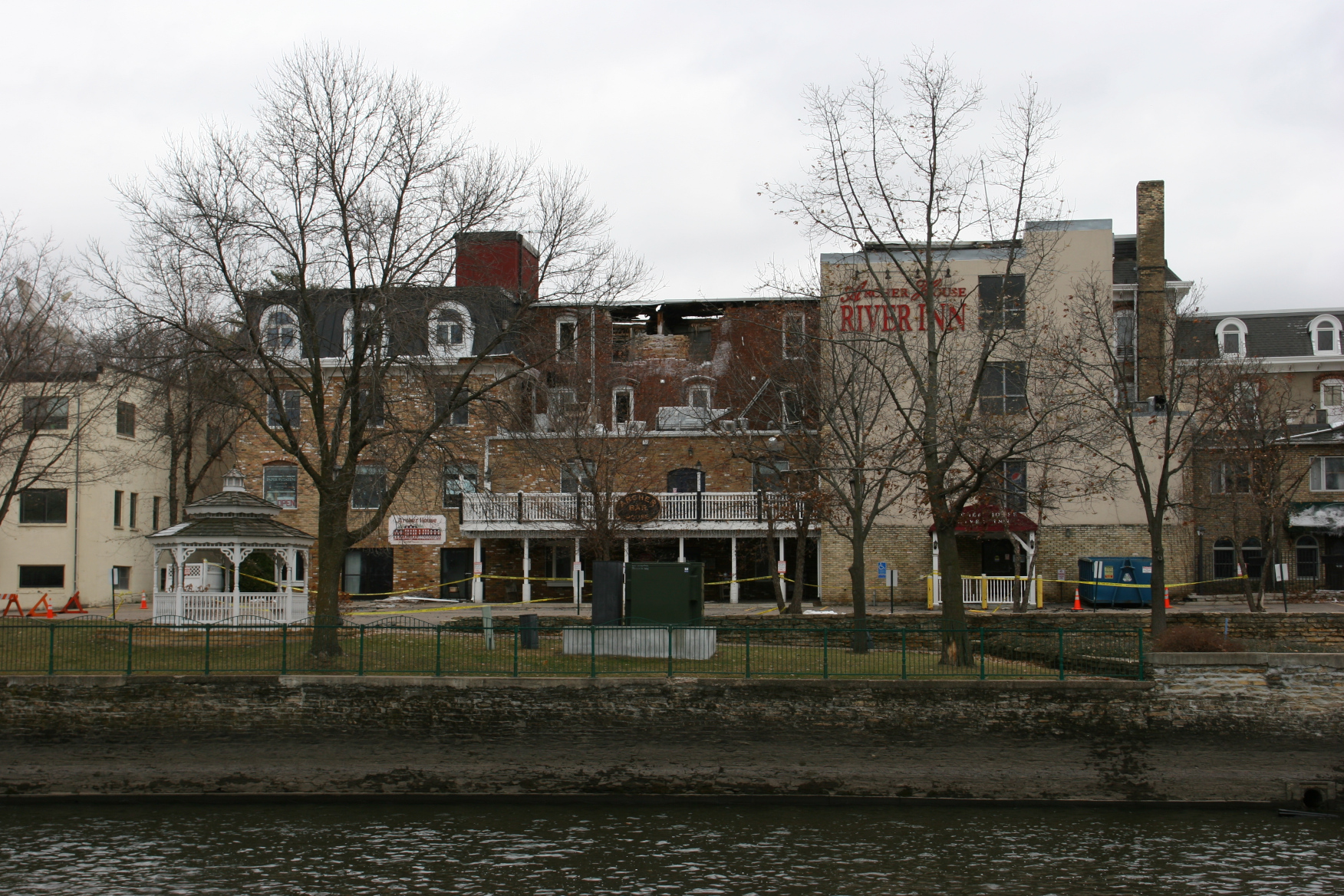
In the center of this photo, you can see the burned back section of the Archer House, west side. Photo take on Sunday afternoon, November 15.

I STOOD NEXT TO THE RIVER, camera aimed across the dark waters of the Cannon River to the historic building on the east bank. To the building with the gaping hole on the top floor. I struggled to hold my zoom lens still in the fierce wind of the bitterly cold Sunday afternoon. Viewing the devastating scene before me, I felt a deep sense of loss. No image I framed can fully capture the depths of loss for this southeastern Minnesota community. Material. Financial. Historic. Emotional.

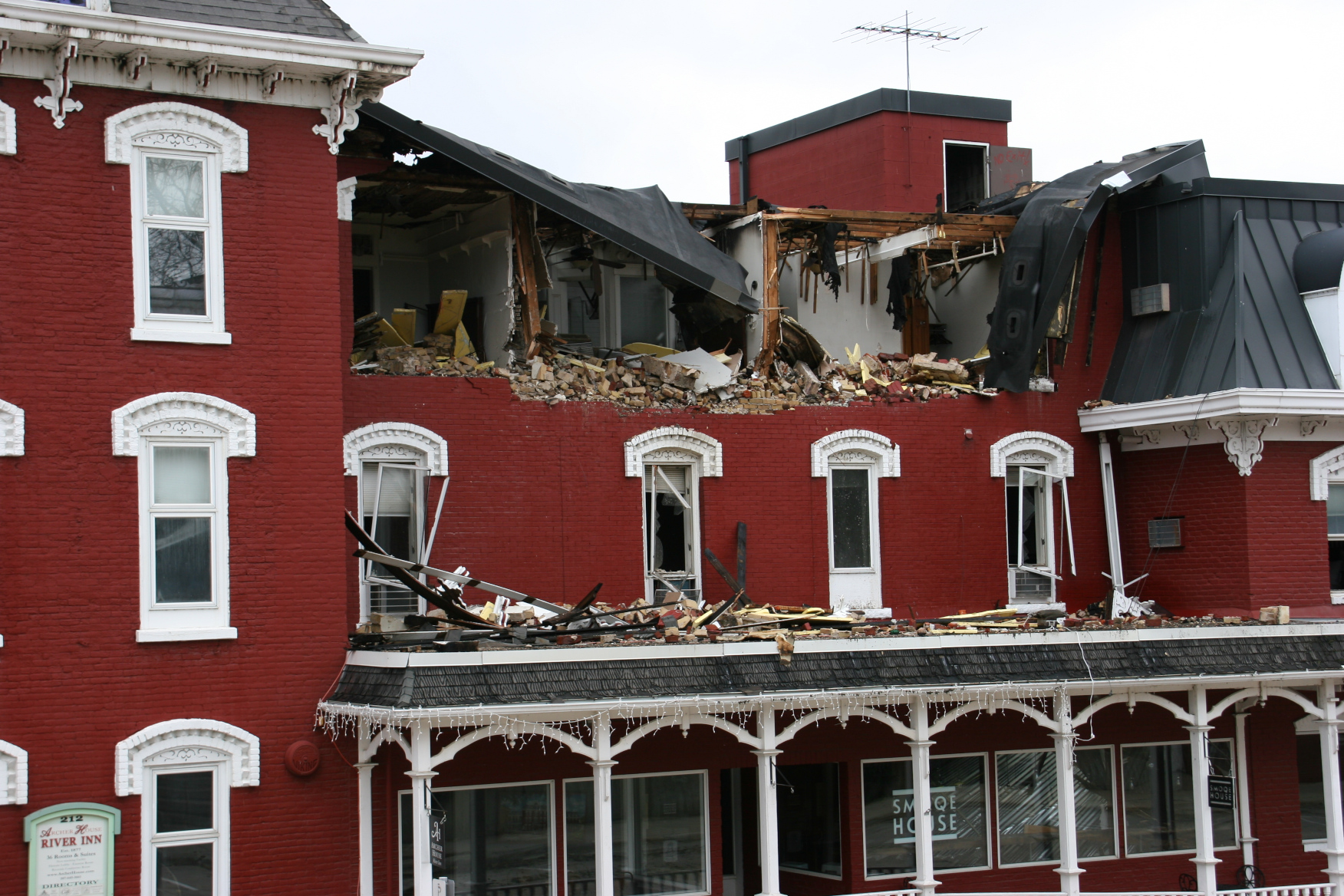
The section of the sprawling building where the fire began in a smoker, then raced up walls from the lower level restaurant.
Last Thursday, November 12, at around 3:30 pm, fire broke out in a restaurant’s meat smoker inside the historic Archer House in downtown Northfield and quickly spread. The 1877 sprawling inn anchors the historic downtown on the north end. It’s perhaps the most recognizable of this community’s landmarks and much-loved.
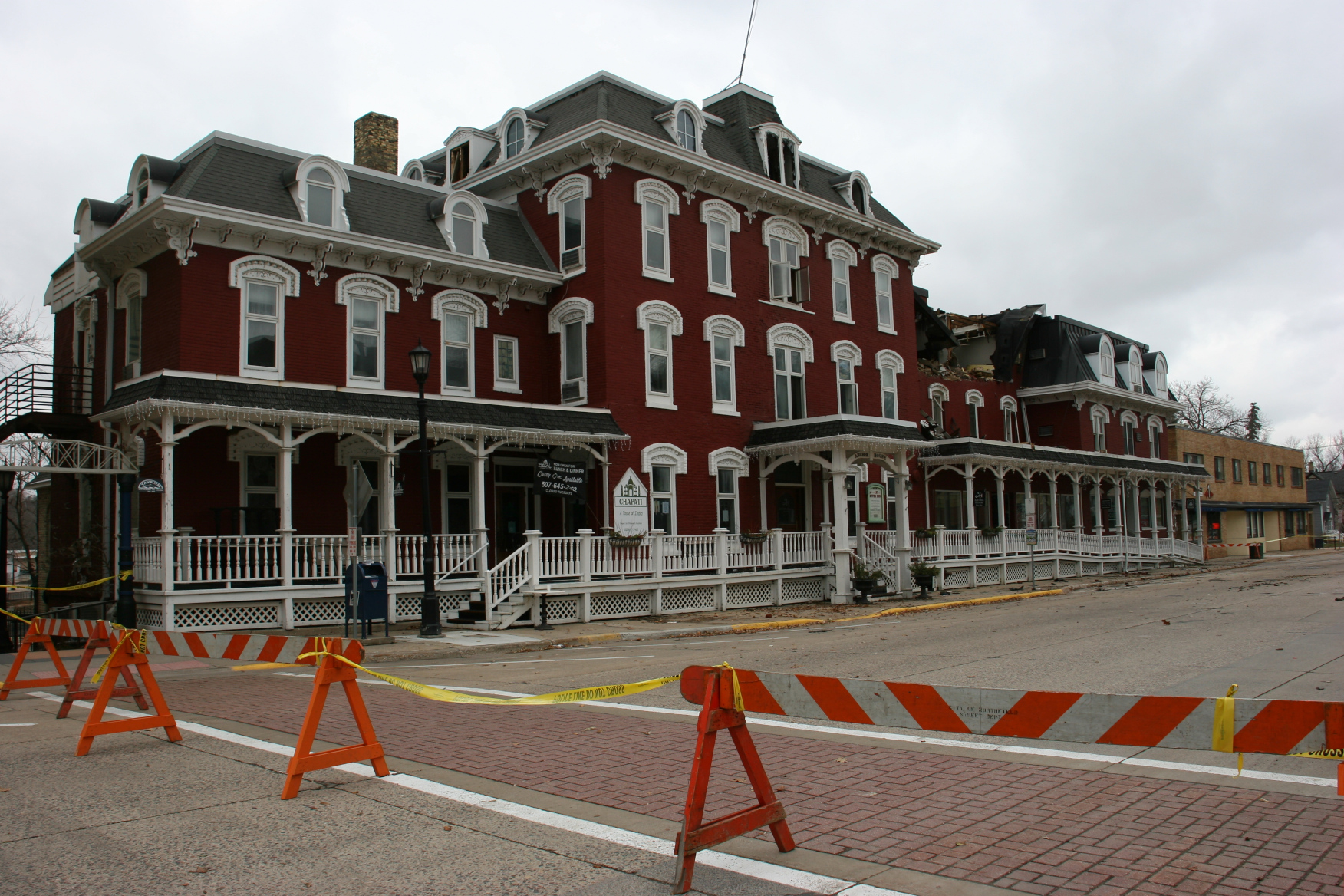
Sunday afternoon, barricades blocked access to the burned Archer House River Inn and tenant businesses.

Today, the future of the aged building, which housed three restaurants—including Smoqe House, where the fire began, the 40-room inn and a gift shop—remains uncertain.
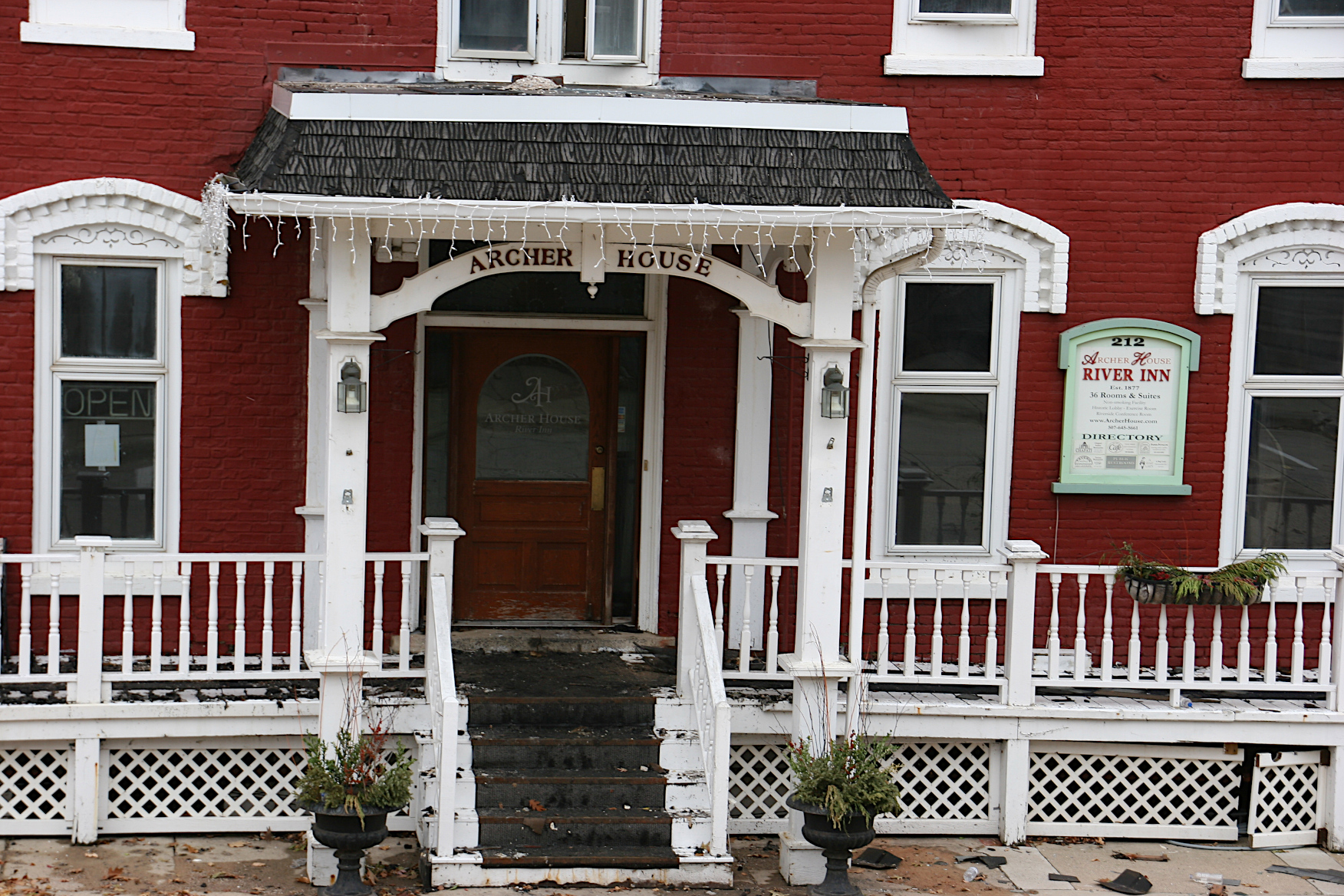
The welcoming front entry to the historic Archer House River Inn.

But of one thing I’m certain, if this historic river inn can be saved, it will be.

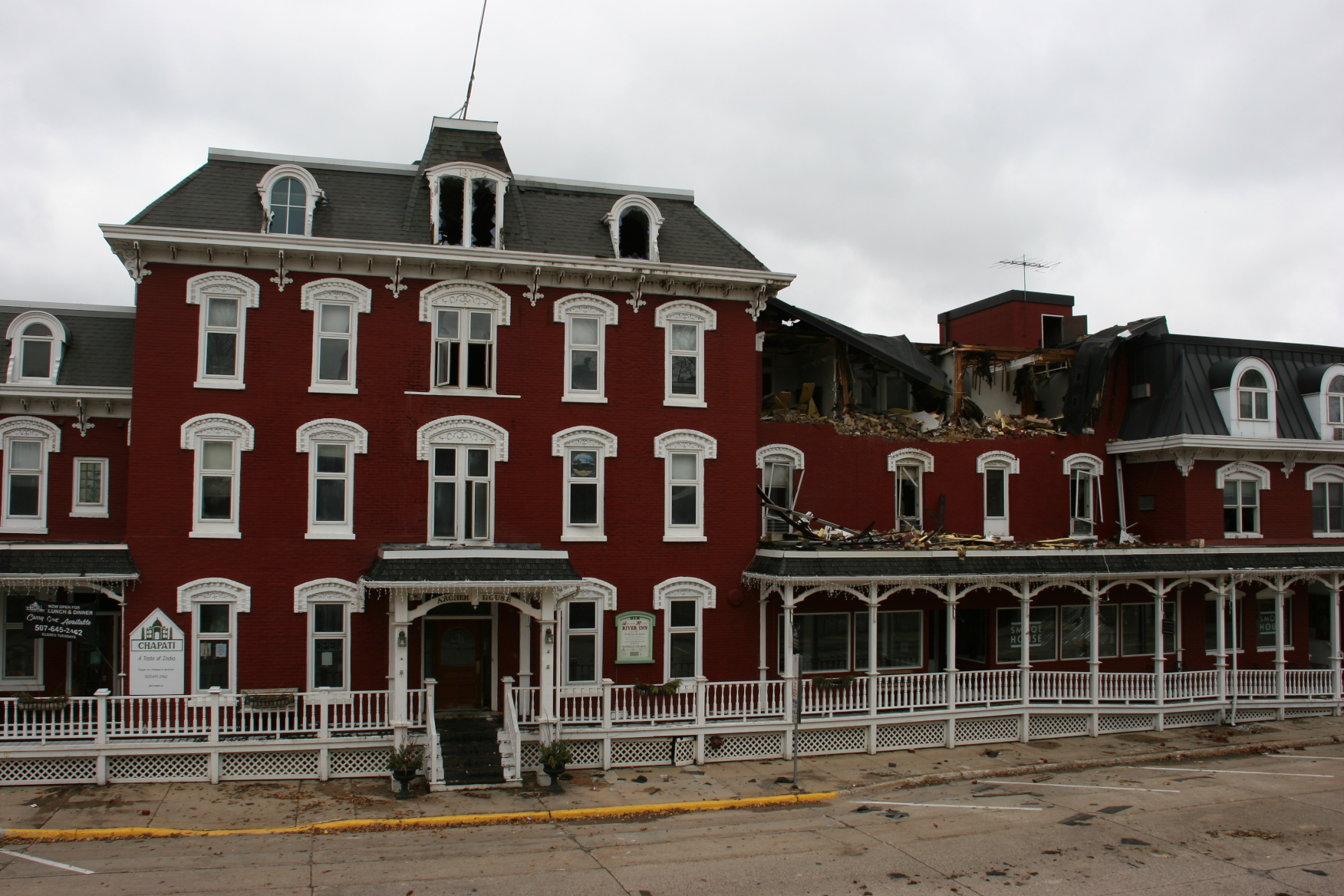
This is a beautifully-detailed building.

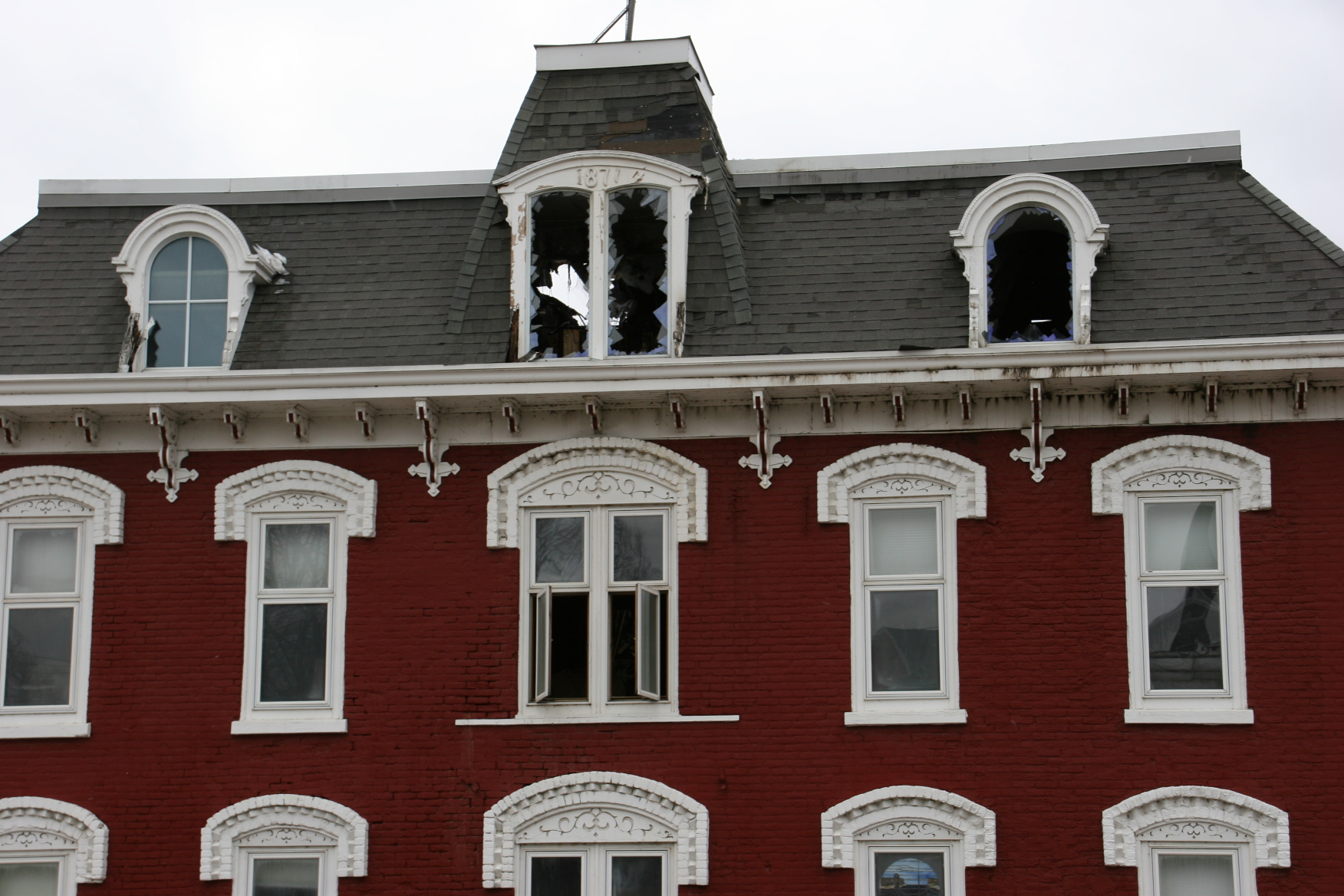
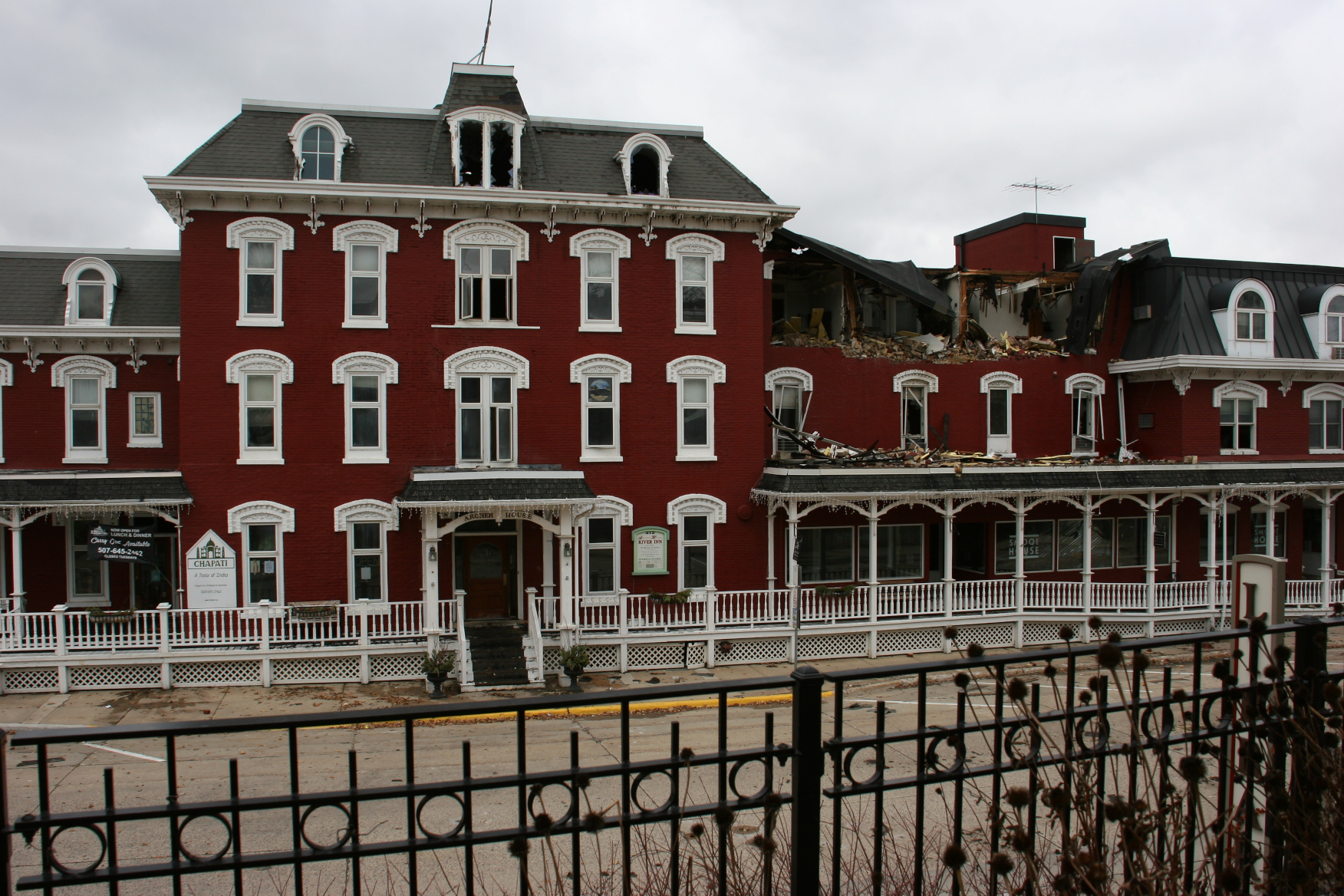
When I photographed the fire, water and smoke-damaged structure days after the fire, many others were doing the same. After viewing the inn from the west side of the Cannon, I moved to the east side, along Division Street, to get a full front view. This “landmark for hospitality and elegance” built in the French Second Empire Style stood tall and stately still, yet marred now by shattered windows, missing roof, fallen brick, and other debris.

From atop the library hill, I photographed the Archer House.

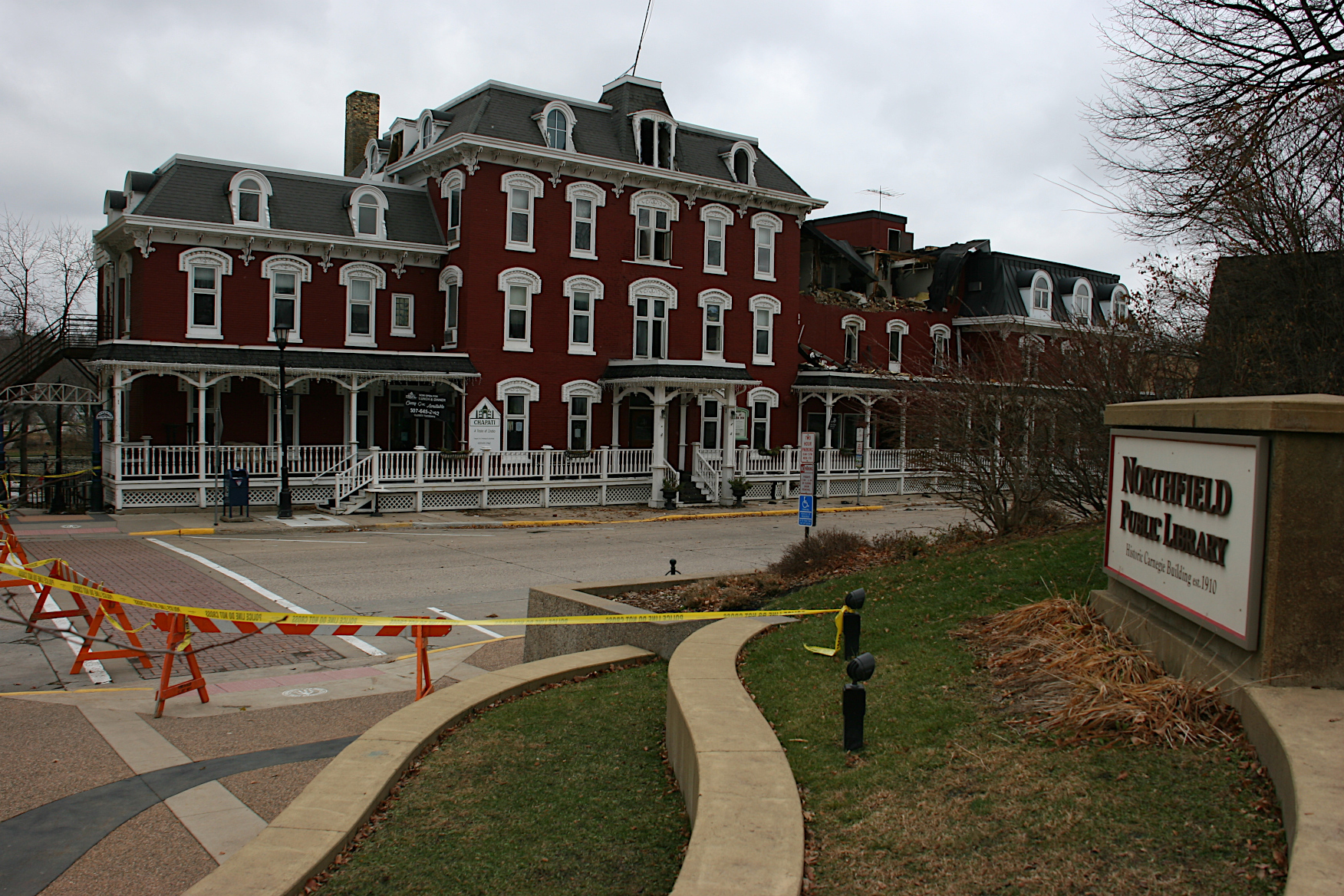
First I photographed from across the street, atop the hill by the Northfield Public Library, stepping across a dormant flowerbed next to a wrought iron railing. Later I descended to street level to also include the street barriers and yellow tape that keep onlookers away from the scene.

The Archer House sits across Division Street from the Northfield Public Library.

No matter the photographic perspective, the view looked the same. Devastating.

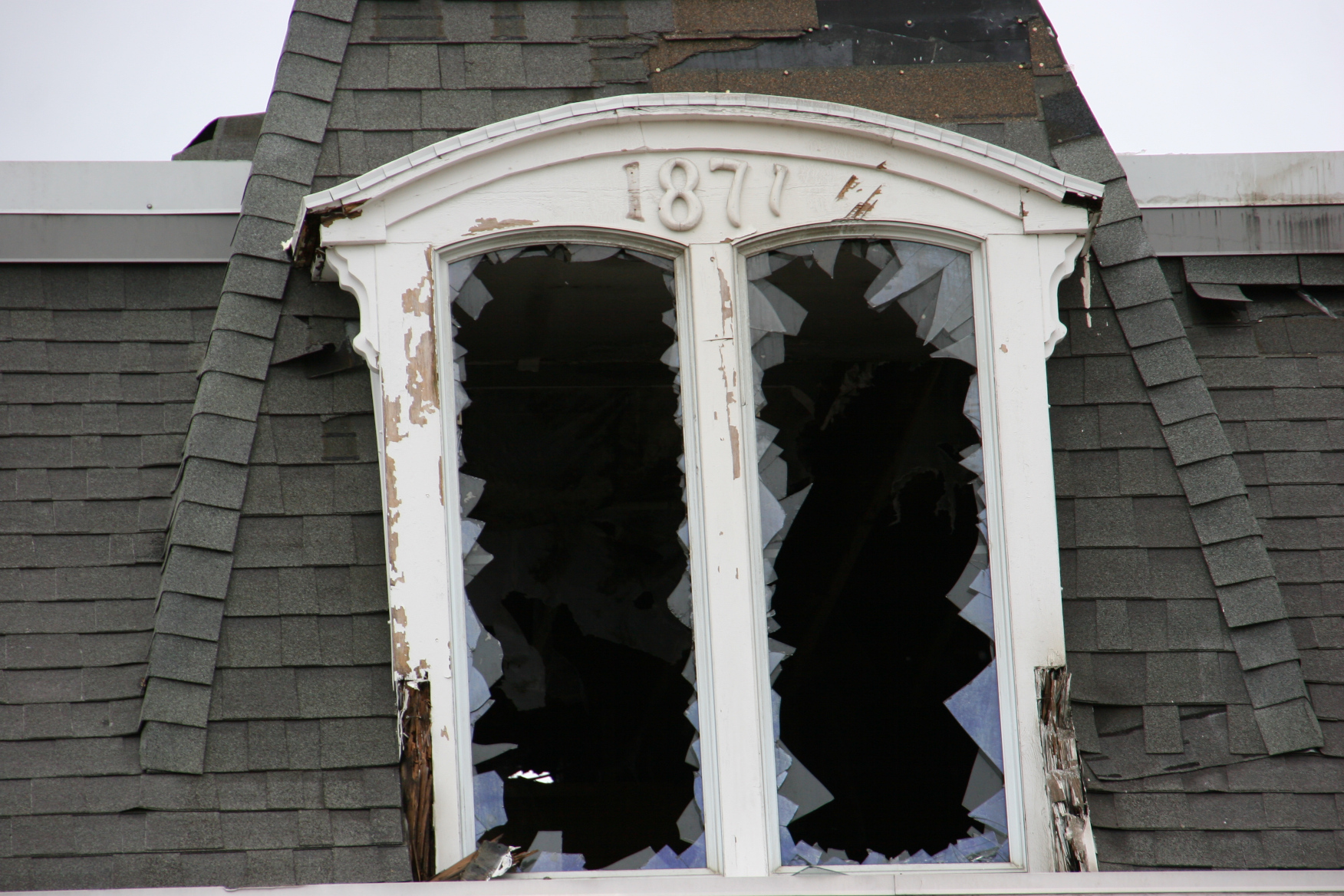
The highest window with the construction year noted, 1877 (part of the number is missing).

But as the good people of Northfield do—just as they did in 1876 to defeat the James-Younger Gang during a raid at the First National Bank—they’ve rallied. The Northfield Downtown Development Corporation has established an Archer House Relief Fund to assist and provide economic relief for the river inn and its tenants. The goal is $25,000. If you are able and inclined to contribute, please do so by clicking here.

The Archer House truly anchors downtown Northfield.

I don’t need to tell you these are challenging days in general. But then, to throw a fire into the mix of difficult times, well, it can all feel overwhelming.

© Copyright 2020 Audrey Kletscher Helbling