Minnesota Prairie Roots

Writing and photography by Audrey Kletscher Helbling

Walk, sit & then study Faribault’s history via educational benches August 1, 2020


“Faribault supports the military” themes a recently-installed bench.


SEVERAL DAYS AGO, I featured historic-themed benches recently installed in historic downtown Faribault. Well, more have been added to Central Avenue. And some I missed during my first walking tour. More are yet to come.

All 12-plus (I’ve lost count) highlight important aspects of my community’s history in images and words.


Alexander Faribault and the fur trade focus a bench on the north end of Central Avenue.


This depiction of Alexander Faribault trading with a Dakota trading partner stands in Faribault’s Heritage Park near the Straight River and site of Faribault’s trading post. Faribault artist Ivan Whillock created this sculpture which sits atop a fountain known as the Bea Duncan Memorial Fountain. Minnesota Prairie Roots file photo.


The home of town founder Alexander Faribault, located just a block off Central Avenue. Minnesota Prairie Roots file photo 2017.


One bench focuses on town founder, Alexander Faribault, and the local fur trade he began with the Dakota peoples. He was of French-Canadian and Dakota heritage. One of his fur trading posts eventually became the site for the town of Faribault.


Focus on downtown.


This mural on the corner of Minnesota State Highway 60 (Fourth Street) and Second Avenue, welcomes people to our historic downtown. Minnesota Prairie Roots file photo.


A 1950s scene along Faribault’s Central Avenue is shown in this mural in our downtown district. Minnesota Prairie Roots file photo.


Another bench shines a light on the core business area with Downtown: The Place to Be.


An historic photo of students and staff at the Minnesota State Academy for the Blind backs one bench.


Honoring a teacher and leader at the school for the blind.


Another bench highlights the Minnesota State Academy for the Deaf.


Across the river on the east side of Faribault, sit the Minnesota State Academy for the Blind and the Minnesota State Academy for the Deaf, schools still in operation and each getting their own benches along Central Avenue.


WASP Pilot Liz Strohfus, after whom the Faribault airport is named.


Finally, Faribault’s support of the military themes another bench that showcases WASP Pilot Liz Strohfus and Brigadier General Lewis Beebe, a veteran of WWI and WWII, a POW and more of notoriety.


The bench honoring the school for the deaf sits on the north end of Central Avenue.


There’s a lot of historic information to take in on these benches, a project coordinated by the Faribault Area Chamber of Commerce & Tourism and Faribault Main Street and supported by local businesses. My posts only summarize what you will discover on these locally-crafted park style benches that now enhance our downtown.


Here you see the fleur de lis symbol.


No detail is too small. On the bench ends, the branding symbol of Faribault—the fleur de lis—has been incorporated into the iron work. Depicting a lily, the symbol honors Faribault’s French roots.


Markers like this tag historic buildings throughout downtown Faribault. Minnesota Prairie Roots file photo.


There’s so much to learn about my southeastern Minnesota community from these benches. I invite you to walk along Central Avenue, sit for a spell, shop, admire the historic buildings, enjoy the many historic murals in the downtown core. Faribault truly is an historic gem. In so many ways.


© Copyright 2020 Audrey Kletscher Helbling


Honoring Faribault’s history in a functional, public way July 28, 2020

Filed under: Uncategorized — Audrey Kletscher Helbling @ 5:01 AM
Tags: , , , , , , , ,

This shows a portion of Central Avenue, in Faribault’s historic downtown. Historic-themed benches now grace street corners.


MY COMMUNITY OF FARIBAULT is proud of its rich history, reflected most noticeably in our downtown historic district of primarily well-kept aged buildings. It is one of the aspects I most love and appreciate about this southeastern Minnesota city where I’ve lived since 1982.


This bench, on the south end of Central Avenue, is themed “Central Avenue, Heart of the City.”


The Central Avenue focused bench features a photo of a parade welcoming home WW I veterans.


Now another dimension has been added to the downtown with the street corner placement of park style cast iron benches that feature stories and photos on local history. Functional, educational and lovely.


A bench on the corner of Central and Minnesota State Highway 60/Fourth Street highlights government in Faribault, the county seat of Rice County, Minnesota.


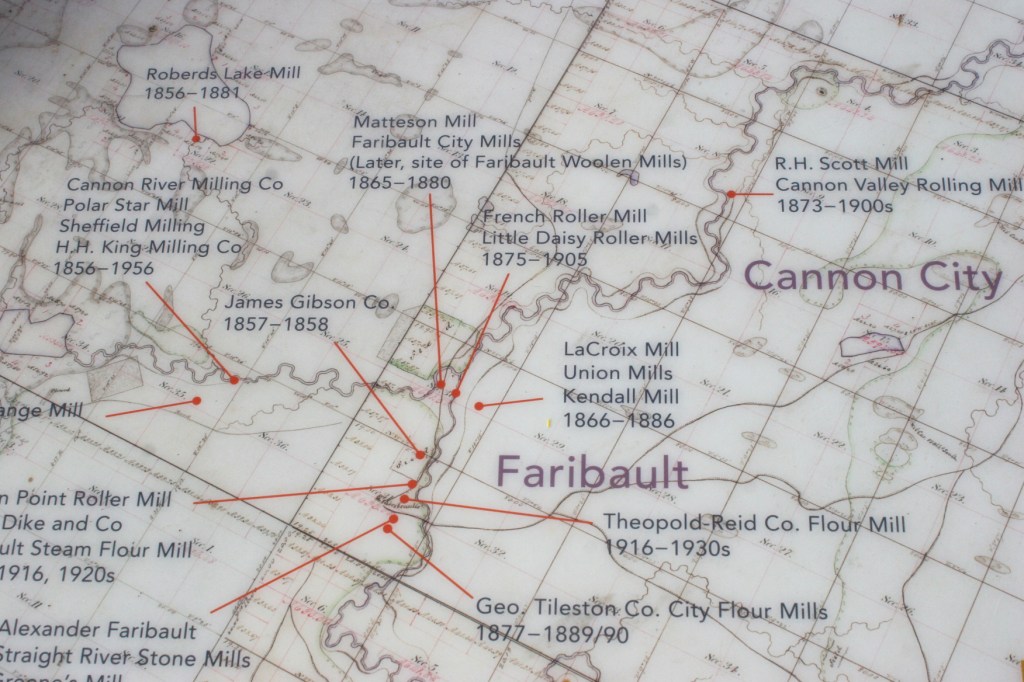
Diagonally across the street, a bench focuses on milling in Faribault.


A close-up on the milling bench shows a flour mill that once operated here.


Sunday morning Randy and I walked along Central Avenue, pausing at each bench to read the brief text and view the accompanying images.


The Tilt-A-Whirl amusement ride was invented in Faribault and themes one bench. Two refurbished vintage Tilt-A-Whirls located downtown also provide photo ops for locals and visitors.


Details on the Sellner Manufacturing/Tilt-A-Whirl bench.


The restored Tilt-A-Whirl and themed bench are located by Burkhartzmeyer Shoes, a third-general family-owned shoe store, which includes a repair shop.


A project of the Faribault Area Chamber of Commerce & Tourism and Faribault Main Street, the business-sponsored benches provide a quick lesson in Faribault’s history. I was curious to see what topics would be highlighted. None surprised me.


Peony farms are an important part of Faribault’s history.


Likewise, Farmer Seed & Nursery, a long-standing business icon now closed, focuses a bench.


The “Famous People of Faribault” themed bench includes Heisman Trophy winner Bruce Smith, Red Jackson and Marlo Brandon (who attended Shattuck-St. Mary’s School). The local athletic field is named after Smith.


From milling to manufacturing (of the Tilt-A-Whirl), from education to floriculture, from famous people to noted buildings and much more, Faribault’s history is well-covered. I noted, though, that the fur trade, brewing history and Women’s Air Force Service Pilot Liz Wall Strohfus (after whom our airport is named) missing. But benches are in the works for those.


A broader view of Central Avenue, where the benches are located. This one is of Bishop Henry Whipple and Shattuck-St. Mary’s School.


This bench honors Bishop Whipple, important in founding Shattuck-St. Mary’s School and construction of The Cathedral of Our Merciful Saviour.


Thomas and Anna Buckham gifted a library to the city.


For anyone new to or visiting Faribault or even those who grew up here or have lived here for a long time (like me), I’d recommend a stroll along several blocks of Central Avenue to view these 12 benches. History is such an important part of a community in defining its identity. Past and present link. And sometimes it’s good to review that history, to understand and appreciate a place.


The restored Security State Bank clock is also an important part of Faribault’s preservation efforts.


This local graciously moved so we could look at the WPA bench.


Works Progress Administration projects in Faribault highlight this bench. Those include noted local landmarks like the Faribault waterworks, the viaduct and the Rice County Courthouse.


Parents, grandparents, educators, take the kids downtown Faribault for a walk and a quick history lesson. Along the way, notice businesses and how diverse our community.


Faribault’s newest mural, left, honors Bishop Henry Benjamin Whipple. The one to the right features the Faribault Pet Parade and was placed on the Central Park Bandshell several years ago. Minnesota Prairie Roots file photo.


This banner hangs in downtown Faribault as part of a branding campaign defining areas of our city. Minnesota Prairie Roots file photo.


Buckham Memorial Library. Minnesota Prairie Roots file photo.


Reflect on the stories you read on these benches and perhaps plan additional side trips to take in places highlighted. Also seek out the many historically-themed murals in our downtown core.


The talented artisans bench honors Grace McKinstry,internationally-known portrait painter, and woodcarvers Ivan Whillock and Marvin Kaisersatt.


Quarrying of limestone was once a major industry in Faribault and is evidenced in the many historic limestone buildings..


The WPA bench sits outside the local pawn shop.


I am grateful to those in our community who continue to preserve and showcase Faribault’s past. This bench project is just another example of how history is valued locally. History is, and always will be, an important part of our identity.


Several benches are currently unadorned, awaiting final art.


And today, the people who live and work here continue to write history for future generations as Faribault grows and changes.

#

FUN FOLLOW-UP FACTS:

  • Local and regional businesses crafted the benches, including Jeff Jarvis of West Cedar Studio, Morristown, leading the art work; MRG Tool & Die, Faribault, crafting the steel seats; Mercury Minnesota, Faribault, painting and assembling, Alliant Castings, Winona, creating the bench ends; and Sakatah Carvers, Signs and Creations, Faribault, ordering and applying the decals.
  • The bench end design is based on a set of antique bench ends.
  • Faribault’s identifying brand symbol, the fleur de lis, is custom reverse engineered into the bench ends.
  • A ribbon cutting and history walk around the benches is planned once the project is completed.

Facts source: Kelly Nygaard, Faribault Area Chamber of Commerce & Tourism

© Copyright 2020 Audrey Kletscher Helbling
Updated at 7:40 am July 29, 2020


Honoring Bishop Whipple’s “unfailing love & hope for humanity” on a mural in Faribault June 29, 2020

The Central Park Bandshell mural on the left honors Bishop Henry Benjamin Whipple. The one to the right features the Faribault Pet Parade and was placed there several years ago.


THE RECENT INSTALLATION of an historic-themed mural on the west side of the Central Park Bandshell in Faribault prompted me to look more closely at the man featured thereon—Bishop Henry Whipple.


The middle mural panel features a portrait of Bishop Whipple and a summary of information about him.


Just across the street from Central Park, the stunning Cathedral of Our Merciful Saviour.


The historic marker posted on the Cathedral bell tower.


He is a prominent figure in the history of my community and the history of Minnesota. Explore Faribault, and you will find Whipple’s name on numerous plaques, including across the street from the park at the Cathedral of Our Merciful Saviour, the cathedral he helped build as Minnesota’s first Episcopal bishop. He’s buried in a crypt beneath the chancel there. The bell tower was dedicated in his honor by his second wife, Evangeline, as “a monument of love and Christian unity.”


Posted outside the front door of the Chapel of the Good Shepherd. The church is on the National Register of Historic Places. Minnesota Prairie Roots file photo.


On the east side of town, Whipple’s name graces an historical marker at The Chapel of the Good Shepherd on the campus of Shattuck-St. Mary’s School. He helped found the school, separately first as Shattuck School for boys and St. Mary’s Hall for girls, along with St. James and Seabury Divinity schools, all in Faribault.


The soaring tower landmarks the Cathedral. Ralph Adams Cram, architect of St. John the Divine in New York City, designed the Cathedral tower. The tower was added as a memorial to Whipple after his death in 1901.


The inscription, in stone, on the bell tower.


An historic marker on the Cathedral grounds.


As admirable as Whipple’s role in founding educational institutions, it is another facet of this man—his humanitarian efforts—which are often cited in history. The inscription on the Cathedral bell tower states that Whipple’s “unfailing love and hope for humanity have made his life an inspiration far and near.”


This panel depicts the relationship between Native peoples and Bishop Whipple.


Bishop Whipple’s portrait, up close.


Details on a sign outside the Cathedral reference Whipple as “Straight Tongue.”


What, exactly, does that mean? To understand, one must consider the time period in which Whipple arrived in Minnesota, just years before the U.S.-Dakota War of 1862. He was a missionary and, as such, worked to educate and convert the Native peoples to Christianity and agrarian ways. (Not necessarily the adaptive approach one would take today toward other cultures, but the mindset then.) In his work, Whipple observed poverty among the Dakota and Ojibwe and mistreatment by the government and began to advocate for their rights. The Native peoples called the bishop “Straight Tongue.” That title speaks to their trust and respect for him.


The mural, in full, including the right panel recognizing Whipple and his first wife, Cornelia, and his second wife, Evangeline.


Whipple was among the few leaders who publicly pressed for sparing the lives of 303 Dakota warriors sentenced to death following the war. President Abraham Lincoln spared or pardoned most, but 38 were still hung during a mass execution in Mankato.

Whipple’s strong public stances on behalf of Native peoples were not necessarily widely-embraced. Rice County Historical Society Executive Director Susan Garwood shared at a presentation I attended several years ago that several assassination attempts were made on the bishop’s life. Following the U.S.-Dakota War, about 80 Native people, under Whipple’s protection, moved to Faribault. Some helped build the Cathedral, a construction process which took from 1862-1869. Additionally, several Dakota and African Americans attended Seabury Divinity School, Garwood noted. That, too, caused concern.


The Whipples.


But through it all, from the information I’ve read, Whipple remained steadfast, unwavering in his compassion toward Native peoples, advocating for them, loving humanity.


FYI: The Mural Society of Faribault actively promotes Faribault history through public murals posted throughout the downtown area, this one the latest. Dave Correll of Brushwork Signs crafted, painted and installed the Whipple mural with help from his team.

For more information about Bishop Whipple, click here to reach MNOpedia.

Or read this post I wrote about a Rice County Historical Society event in 2018. The RCHS features a museum exhibit on Bishop Whipple.


© Copyright 2020 Audrey Kletscher Helbling
 

June bride at the Village of Yesteryear June 26, 2020

A sign marks the Village of Yesteryear, a sprawling collection of historic buildings in Owatonna.


WHILE WALKING TOWARD THE HISTORIC CHURCH, I first saw her. The woman dressed in black. With a camera. Although I wondered at her formal attire, I didn’t consider that she might be someone other than a photographer interested in the Village of Yesteryear.


The District 14 school moved here in 1963.


I took this photo of the old school before the bride and her bridesmaids arrived.


From a distance, I photographed the photographer at work.


But soon enough, when I saw a bride and her attendants rounding the back of the 1856 District No. 14 schoolhouse, the photographer’s purpose became clear.


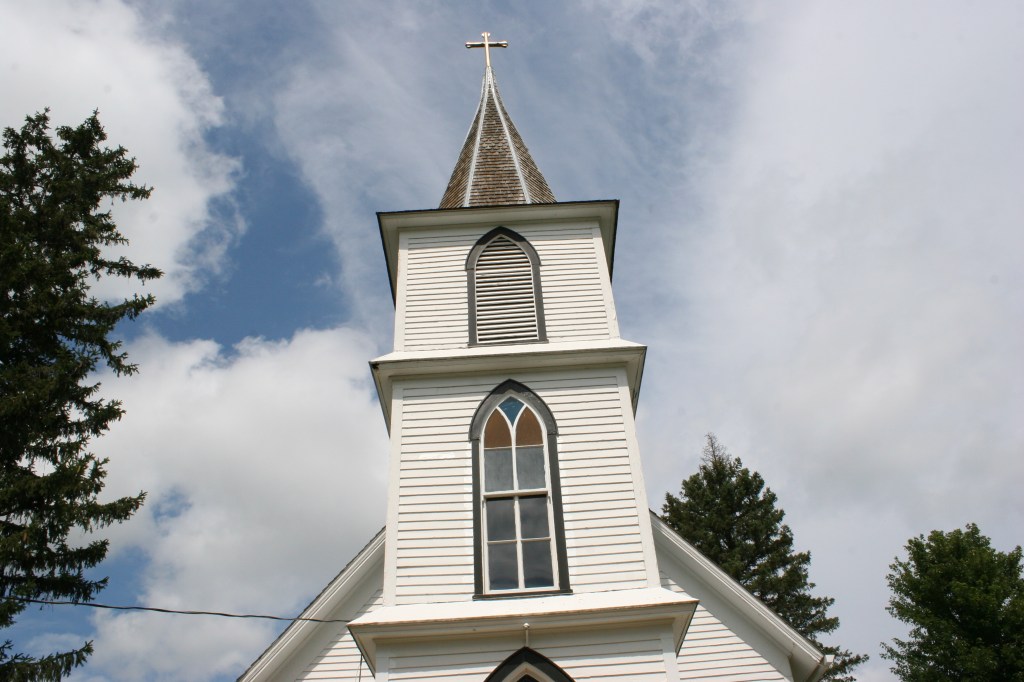
Trees frame the steeple of the Saco Church.


By that time, I’d reached St. Wenceslaus Church of Moravia, a church built in 1891 and moved here, to the grounds of the Steele County Historical Society in Owatonna, in 1962.


While I’ve previously been inside this historic church, it was locked on Saturday.


I pondered for a moment whether a wedding was planned here, but saw nothing to indicate that. So I took a few photos of the aged church, which was locked, just like all the other buildings in this historic village on this late Saturday afternoon. And while I did that, I kept my eye on the nearby photo session.

For one, I didn’t want to stray into the path of the professional photographer. I’ve been in her shoes and understand the frustration of dealing with wedding guests who get in the way and want to take photos. That presents challenges in time and management and more.


I stood to the side and photographed the bride and her attendants.


But, as I neared the group of women while en route to the parking lot, I couldn’t stop myself from asking, “Is it okay if I take your picture? I’m a blogger.” The bride was quick to approve and the photographer invited me to stand next to her. I declined. “I don’t have my mask,” I explained. She didn’t have her face mask either.


From the back of the church, the bride and her party are visible from afar.


That is the reality of living during a global pandemic. As excited as I was to happen upon this most common of summer scenes—an outdoors bridal photo session—I still remembered COVID-19. Minutes earlier I’d congratulated the bride on her wedding day, specifically commenting on the challenges of marrying in a pandemic.


You can see and feel the love in this photo.


But, as I framed a few photos, my thoughts shifted back to the moment, to the celebration, to the joy. Here were four beautiful young women, stunning in their sparkly dresses, arms wrapped around one another, luscious bouquets of peonies clutched in their hands, posing for portraits against an historic backdrop.

In that moment I witnessed life. Ordinary and celebratory. Life full and joyous. Life as lovely as a June bride.

© Copyright 2020 Audrey Kletscher Helbling
 

From Kenyon: An historic train depot up close June 11, 2020

These tracks run past The Depot Bar & Grill (in the background) in my community of Faribault, Minnesota. I can hear these trains from my home. Minnesota Prairie Roots file photo.


SOMETIMES IN THE EVENING, when the traffic lessens on my busy street, I hear the train, horn blasting, wheels rumbling from the tracks just blocks away.


Railroad art created by John Cartwright. The Shoreview artist was selling copies of his ink drawings during the 2012 Railroad Swap Meet in Randolph, Minnesota. Visit his website at ArtRail.com for more information. Minnesota Prairie Roots file photo 2012.


There was a time, decades ago, when railroads connected communities, carrying passengers and freight, grain, coal… Bringing mail and goods like lumber and much more. But those days are long gone, those versatile trains all but a memory for many rural Minnesota communities.

Sure, trains still run, but along main routes and without the diverse economic importance of decades past.


The Depot Bar & Grill, Faribault. Minnesota Prairie Roots file photo 2017.


With the railroad’s demise in the late 1960s and early 1970s, also came the abandonment of train depots. Many of those hubs of commerce were torn down or left to decay. But some remain. In Faribault, a former depot houses The Depot Bar & Grill, among my favorite local dining spots. Another historic depot serves as a business center.


The old train depot, repurposed as a shelter/gathering spot, sits in Depot Park, Kenyon.


And in the nearby small town of Kenyon, the once busy Chicago Great Western Railroad depot serves as a gathering spot at Depot Park. You can rent the building—with amenities of refrigerator, stove, sink, restroom, 29 chairs and eight tables—for $30 weekdays or for $40 on a Saturday or Sunday.


A back and side view of the Kenyon Depot.


On a recent day trip to Aspelund Peony Gardens & Winery, Randy and I stopped first at Kenyon’s Depot Park for a picnic lunch. It’s a lovely spot, centered by that depot, a playground and a swimming pool.


The history of the Kenyon Depot is summarized in an on-site sign.


The sign is posted prominently on the depot.


The bottom portion of that informational sign.


After finishing my turkey sandwich, grapes and strawberries, I grabbed my camera and walked over for a closer look at the old depot, built around 1885. I peered inside the windows, studied the roof-line, read the signage. The railroad once held an important place in Kenyon and the surrounding area by providing freight and passenger service. Immigrants arrived here by train. Farmers shipped milk, awaited the arrival of seed and tools and farm implements. And mail.


Identifying signage on the front of the Kenyon Depot.


Posted next to the old depot.


This side of the depot faces the park space.


When rail service shut down here in the late 1960s or early 70s (I read conflicting information online), a local house mover bought the depot. And in 1974, he, upon approval of the city, moved the depot to the park.


A vintage light.


I noticed these letters/numbers on a corner of the depot. Anyone know what they signify?


Tape on window trim.


But there’s one more interesting piece of history about this building, a story shared in a 2012 letter to The Kenyon Leader written by former Mayor John L. Cole. According to Cole, the Kenyon High School Class of 1975 was tasked with painting the depot after “getting into trouble” during a class trip to Grandview Lodge in Brainerd. Now he doesn’t explain what that “trouble” may have been. But Cole thanks the class, emphasizing that something good came out of the bad.


This drinking fountain next to the depot has been around for awhile.


As a 1974 high school graduate (from a school nowhere near Kenyon), I can only guess. We were on the tail end of the Vietnam War, a bit vocal and determined and rebellious. My class got into trouble for choosing “Dead Skunk in the Middle of the Road” as our class song. Not exactly fitting for a high school graduation ceremony. I expect had we gone on a trip like the teens from Kenyon, we, too, would have gotten into trouble.


This street lamp, I’m guessing vintage, stands near the depot.


I digress. But history has a way of connecting us. Through stories. Through places. Like depots that hold the history of a community and its people.

© Copyright 2020 Audrey Kletscher Helbling
 

TV memories prompted by a vintage sign in Faribault May 13, 2020

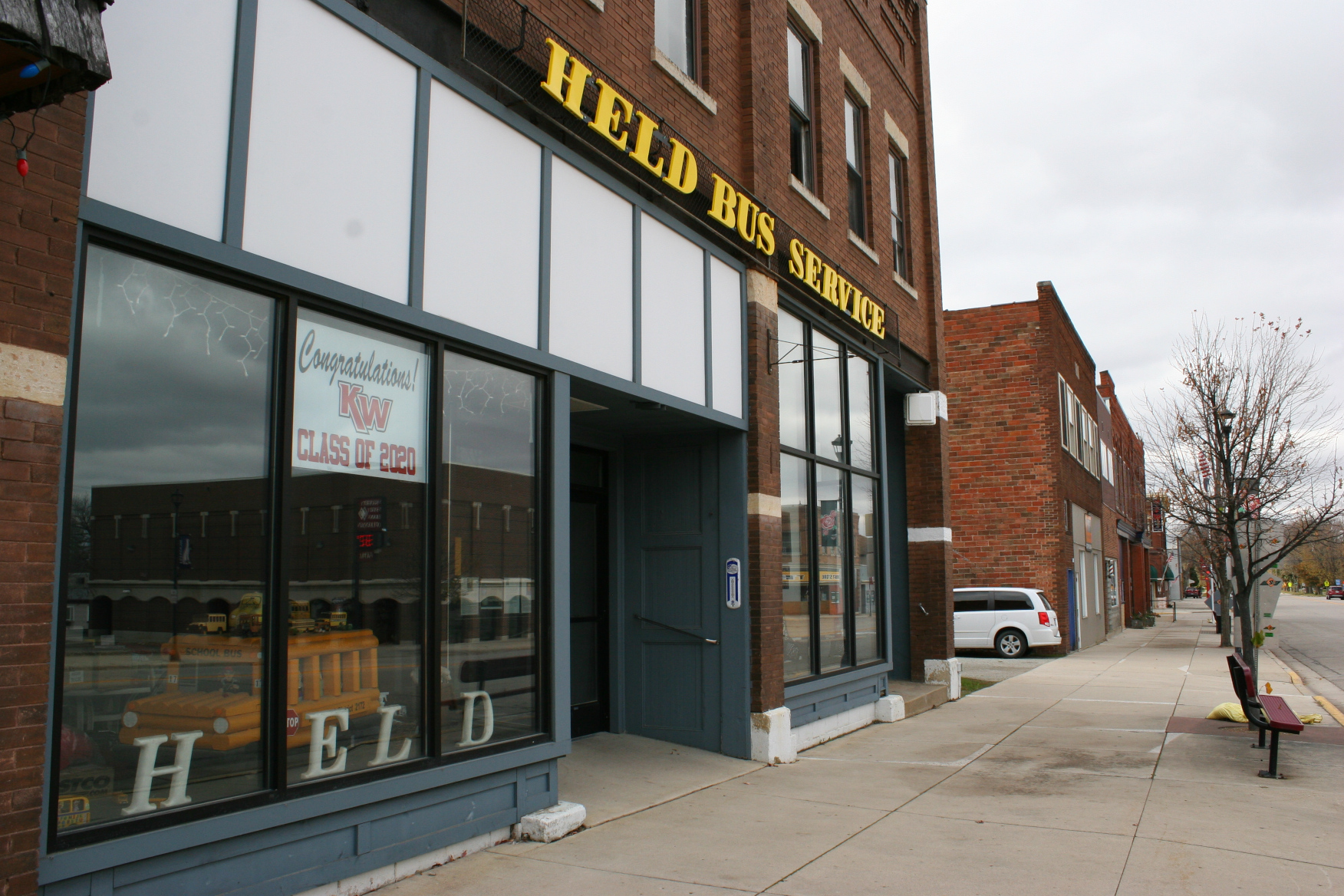
A vintage sign at a former TV shop in Faribault. Minnesota Prairie Roots photo.


TELEVISION. I remember my life without a TV. I am that old and of a poor rural upbringing which made a TV unaffordable for many years.

At some point in my youth, maybe when I was around nine-ish, my parents purchased a small black-and-white TV that rested on a wheeled metal cart. Set along a living room wall, the rack could be pushed and turned for TV viewing from the kitchen.

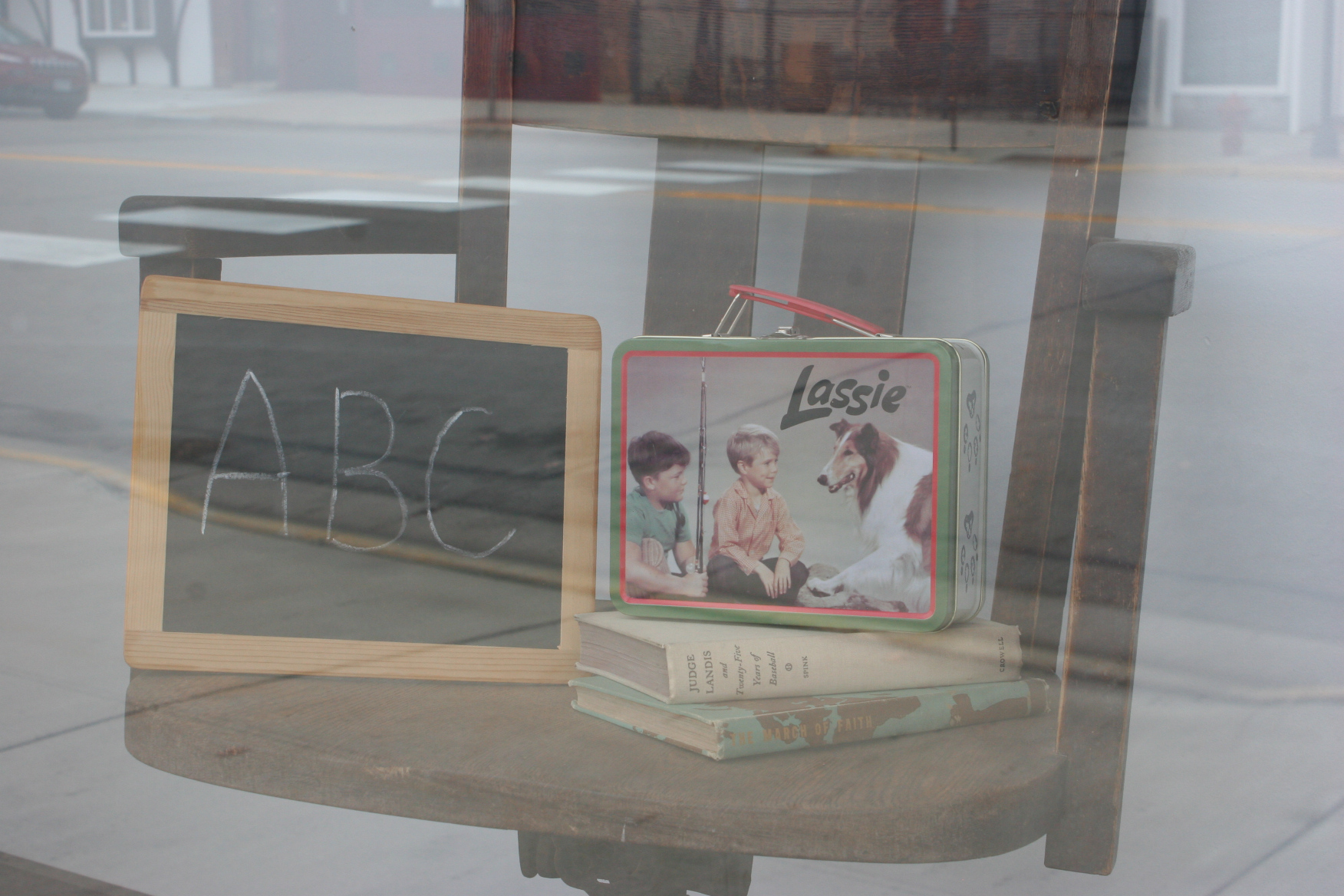
How exciting to get a TV and watch Lassie, Lost in Space, The Beverly Hillbillies, Petticoat Junction, Sky King and popular westerns like Gunsmoke. Our show choices were limited to CBS, the only network reception we got on our southwestern Minnesota farm. The CBS Evening News with Walter Cronkite became a favorite as my interest in national and world events and journalism grew.


Randy remembers buying a TV here decades ago. Minnesota Prairie Roots photo.


I’m getting sidetracked here. But all of this traces to recent photos I took of a former TV service shop along Central Avenue in Faribault. I’ve passed by the place many times with the thought of stopping to photograph the vintage signage. Finally, I did, because I’ve learned the hard way that, if you wait too long, the opportunity will be lost. And I do appreciate the art and history of old signs.


The front window of the closed TV shop. Minnesota Prairie Roots photo.


Who remembers Zenith TVs, like those sold at Modern TV Service? Or Sylvania, RCA, Maganox? Companies that once dominated the U.S. television market. I can’t tell you the brand of my childhood TV. But I recall the excitement of getting a television and later watching a color console TV at my dad’s cousin Ruby’s house when we visited the Meier family. What a treat.


A few weeks ago I photographed the cloud-studded sky, I also photographed the TV antenna atop our house. Minnesota Prairie Roots file photo.


Unlike most people today, Randy and I don’t have cable TV or subscribe to any streaming services. Instead, we still rely on a rooftop antenna for reception on the single television in our house. And, living in a valley, that reception often proves unreliable. Spotty. Affected by weather (especially the wind), by a medical helicopter flying over or nearby, even a vehicle passing on the busy street. I am most frustrated that the public television station typically does not come in on our TV. Oh, well, at least we have a TV and it’s color, right? And let’s not forget the remote control, although I wish every set came with two…

TELL ME: Do you remember a time when you didn’t have a television? Anyone out there old-school like us with reception coming only from a roof-top antenna?

© Copyright 2020 Audrey Kletscher Helbling
 

Documenting rural Minnesota February 6, 2020


I OFTEN WONDER, as I travel past farm sites in southern Minnesota, how these places will look in 50, even 20, years.


Will once grand barns still stand? Will farmhouses be abandoned? Will corporate ag operations completely replace family farms?


Already the evolution is well underway. Many barns no longer hold livestock, serving instead as storage sheds. Rural houses are not so much farmhouses as dwellings for those working off the farm to supplement their farm income.


Independent farmers either quit, expand or try to hang on for one more year. Some have become innovative—diversifying, organizing, working together to grow and sell local.


The rural landscape is changing, shaped by markets and weather and operating costs and government regulations, issues that have always affected farming. Technology, too, now factors into agriculture.


Some 40-plus years removed from the farm, I’ve witnessed the changes from afar. None of my five siblings stayed on the farm, although two work in ag fields. I no longer have a direct link to the land. And because of that, my children and grandchildren are losing that generational connection to farming, to a way of life. This saddens me. They prefer city over country.


And so I continue to photograph, documenting with my camera lens the places of rural Minnesota. Therein I present a visual history, a memory prompt and an expression of appreciation for the land which shaped me.


FYI: This Saturday, February 8, from 1 – 4 p.m., embrace and celebrate locally-grown and crafted during Family Day at the Faribault Winter Farmers’ Market. In addition to vendors, you’ll find hands-on art activities for kids, games, healthy recipes and more. The market is located inside the Paradise Center for the Arts along Central Avenue in the heart of historic downtown Faribault.

These photos were taken last Saturday along Minnesota State Highway 21 on my way to Montgomery.

© Copyright 2020 Audrey Kletscher Helbling
 

In Montgomery: Historic photos of Native Americans by Edward Curtis January 31, 2020

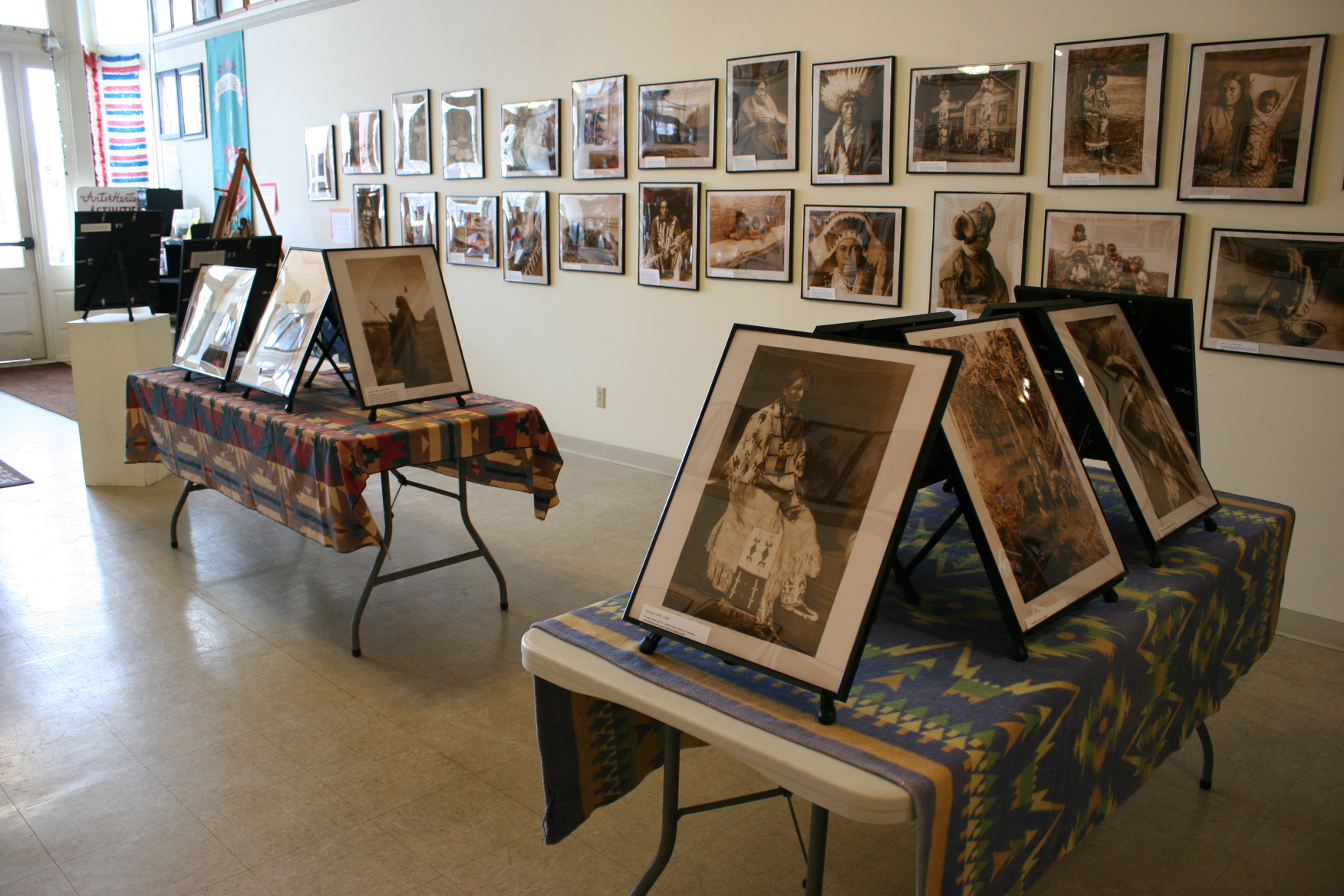
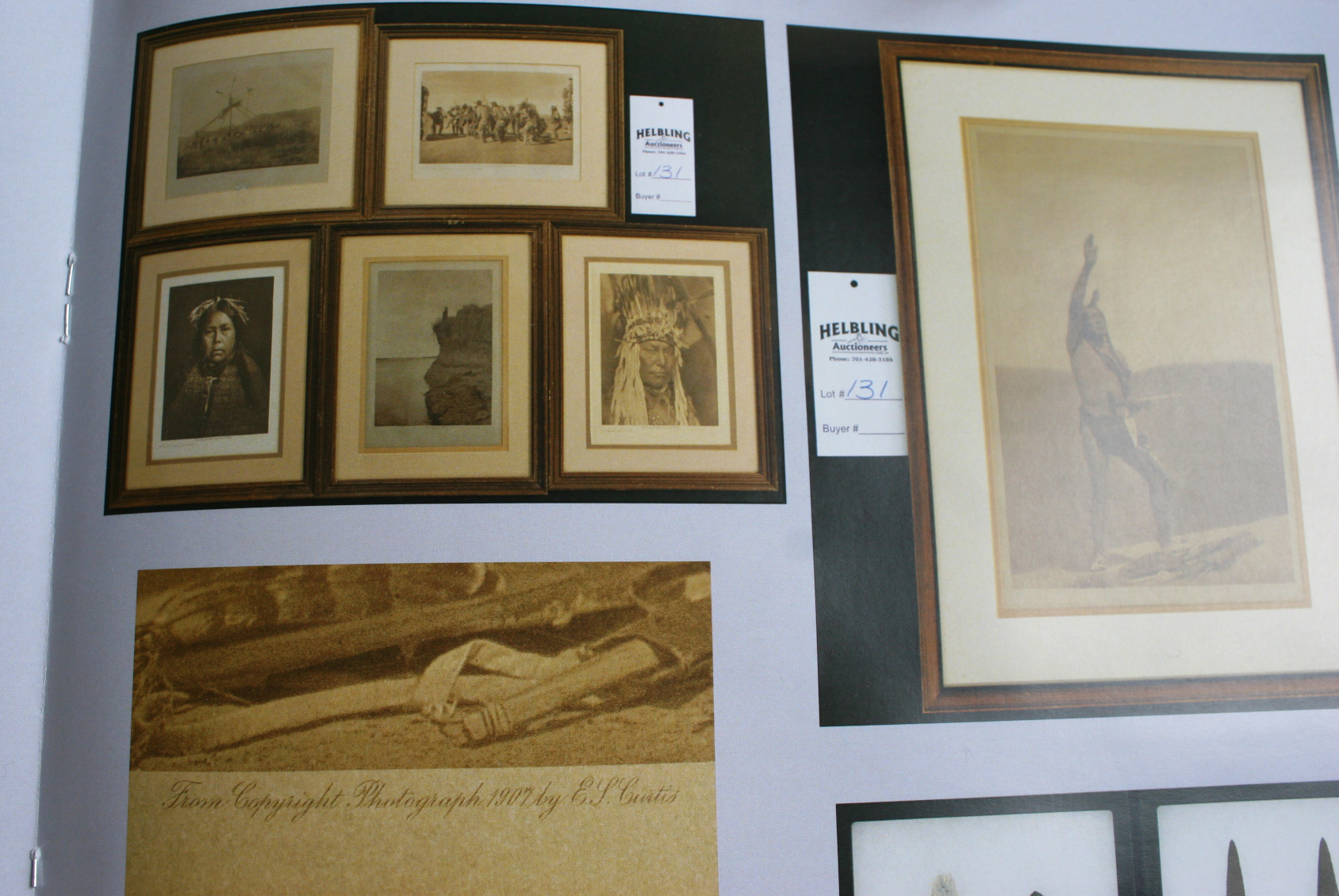
Prints of Edward Curtis photos now exhibited at the Montgomery Arts and Heritage Center.


BENEATH PORTRAITS OF KOLACKY DAYS queens, early 1900s era sepia-tone photos stretch along walls and grace tables in the narrow room. Prints of images taken by a man considered one of America’s greatest photographers. Edward S. Curtis.


A permanent exhibit of Kolacky Days queen portraits hangs above the temporary exhibit of Edward Curtis photos of Native Americans.


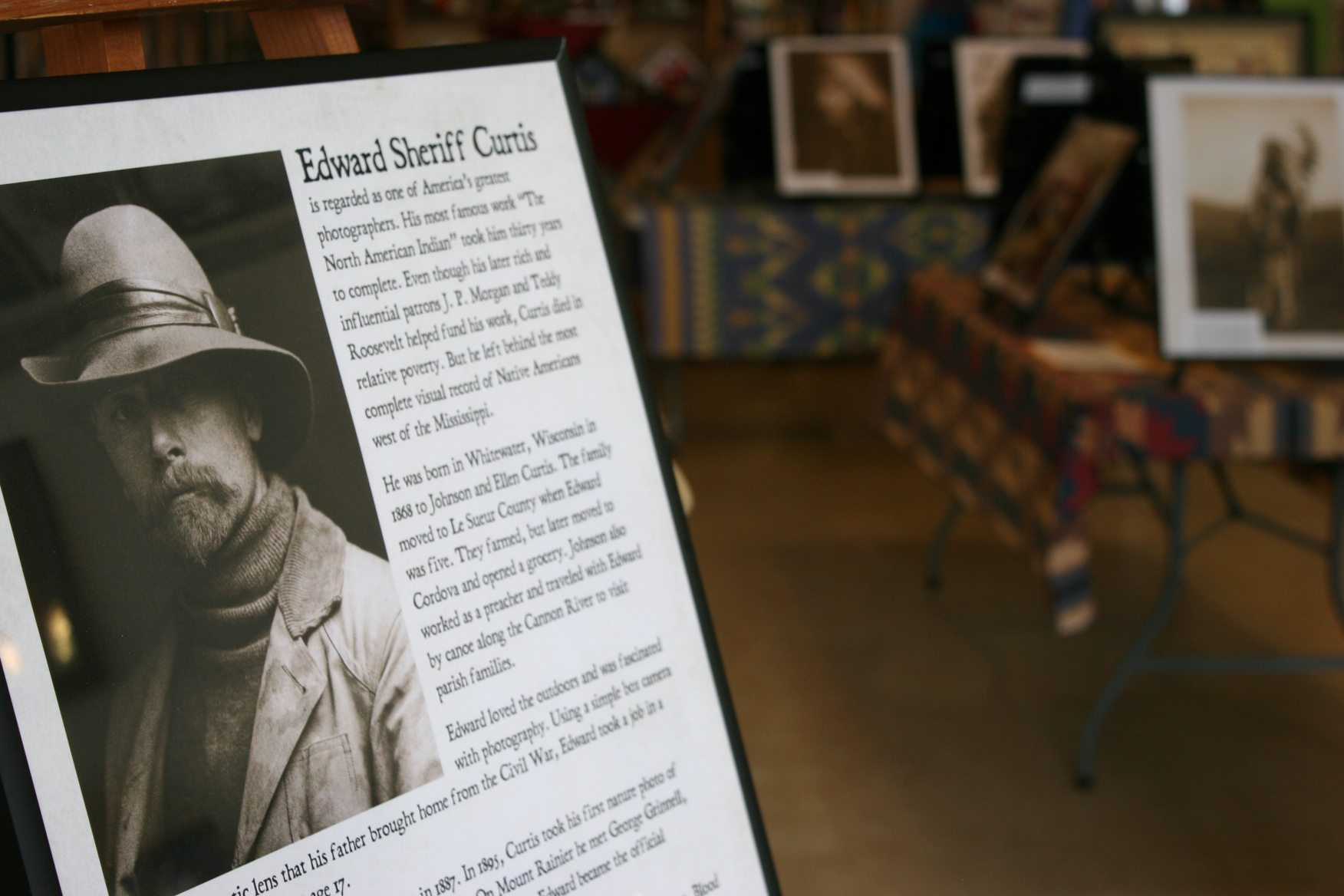
A photo of Edward Curtis with info about this noted American photographer.


Visitors are welcome to sit and page through Edward Curtis books.


Despite his outstanding photographic reputation, Curtis was previously unknown to me. But no more. Recently I visited an exhibit of around 60 selected photos from his “The North American Indian” collection at the Arts and Heritage Center in Montgomery. His entire body of work encompasses 40,000 photos, many published in 20 volumes.


Historic Hilltop Hall houses the Montgomery Arts and Heritage Center on the right and a floral and gift shop on the left.


To see these photos, termed part of the “most complete visual record of Native Americans west of the Mississippi,” right here in rural Minnesota is such a gift. A $4,000 grant from the Carl and Verna Schmidt Foundation funded the exhibit in Montgomery, a community of some 3,000 just 20 miles northwest of Faribault.


Edward Curtis photographed Native Americans of the west over a 30-year period.


Displaying Curtis’ photos here brings the photographer full circle back to Le Sueur County. At the age of five, he moved here with his parents from his native Wisconsin, eventually settling in Cordova. Here he grew up to appreciate the outdoors as he canoed with his preacher father along the Cannon River. By age 17, Curtis was working at a photography studio in St. Paul. In 1887, he moved to Seattle.


A snippet of a 1906 comment about Edward Curtis by President Theodore Roosevelt.


That’s the backstory of a photographer who earned the praise and financial support of President Theodore Roosevelt, who called Curtis a “close observer.” That is evident in the documentary photos of the Native Americans Curtis came to know well and to, clearly, value and love.


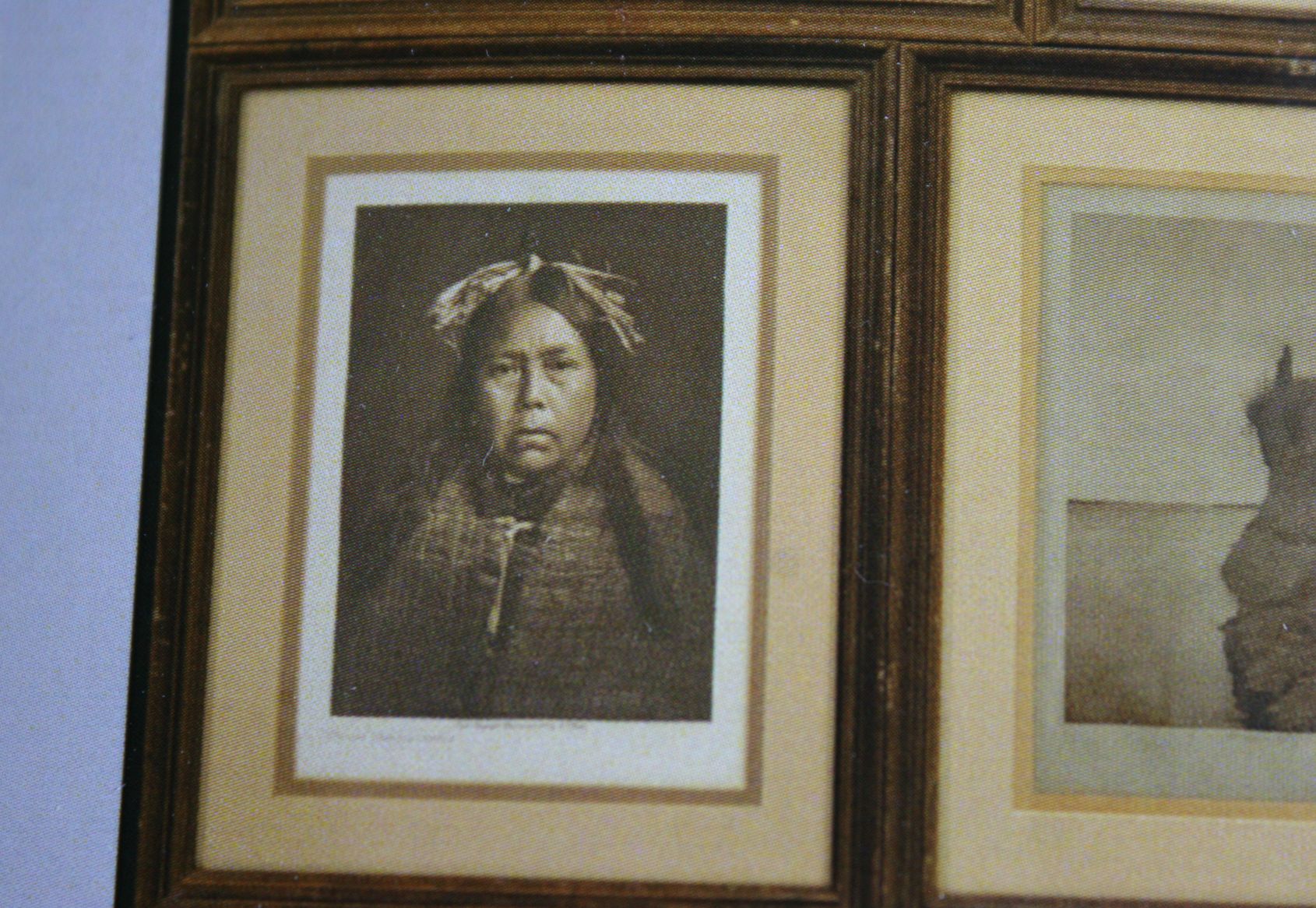
“Wishham girl,” 1910


Text accompanies the “Wishham girl” photo.


A portion of the portrait of “Chief Joseph– Nez Perce”, 1903


His portraits of western Native Americans document not only a culture, but also history and personalities. As I studied the photos, I admired faces weathered by wind and sun, steady strength in profiles, joy and sadness in eyes. I admired, too, the artistry of woven baskets, handcrafted pottery, curved canoes, feathered headdresses and detailed beadwork.


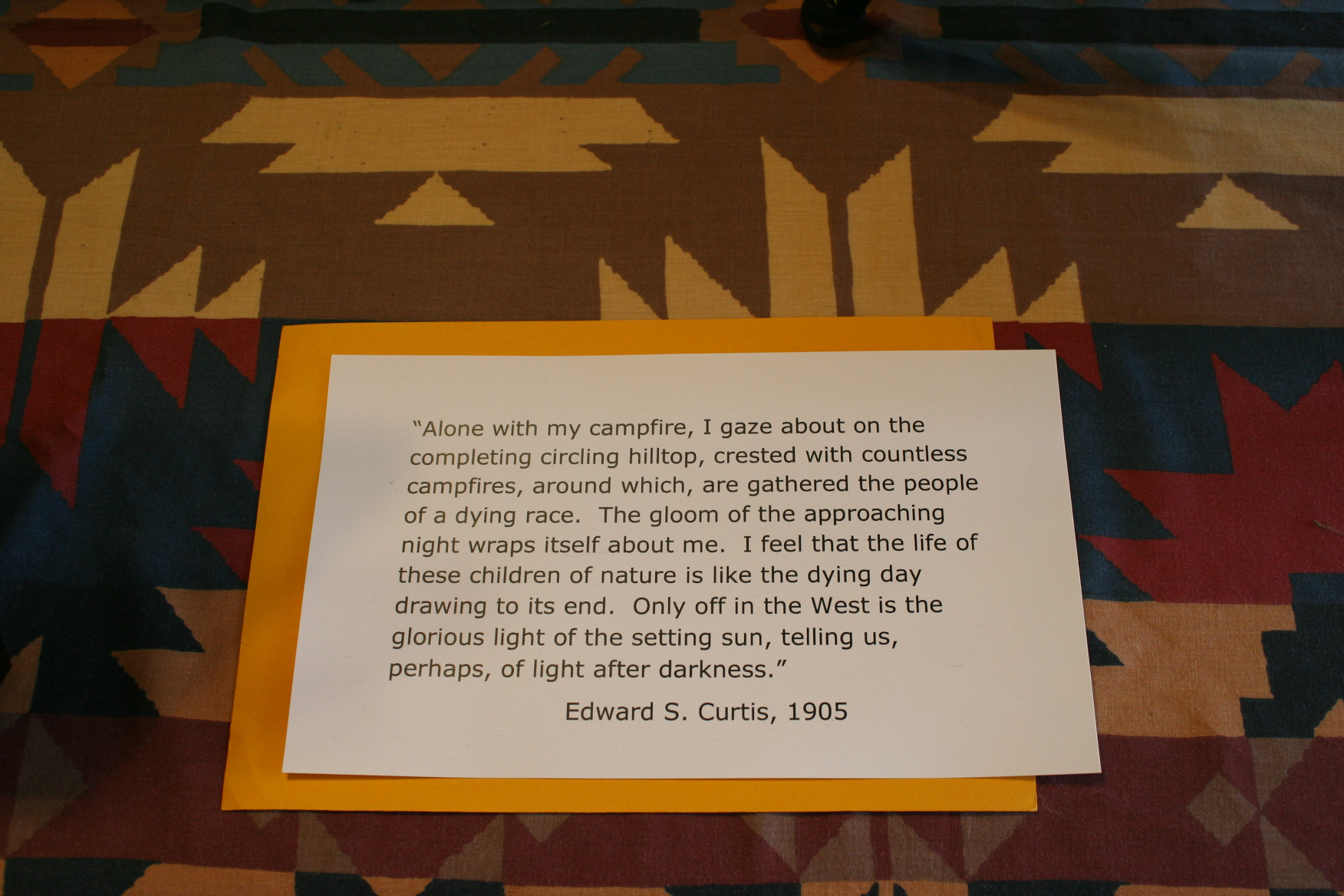
An insightful and beautiful quote by Edward Curtis.


I expect if I was to revisit this exhibit, I’d notice details I missed. There’s just so much to see, to take in, to appreciate, to contemplate. A culture. A people. A way of life. A history. A connection to nature.


More photos from the exhibit.


I am grateful to long-ago photographers like Edward Sheriff Curtis for his efforts in connecting personally with his subjects, for caring and for documenting with his camera. His work is truly remarkable.


Info about Edward Curtis included in the show.


FYI: “The North American Indian” exhibit at the Montgomery Arts and Heritage Center continues until Saturday, February 29. The arts center is open from 2 – 5 pm Thursdays and Fridays and from 9 am – noon Saturdays and is located at 206 First Street North in downtown Montgomery, Minnesota.

© Copyright 2020 Audrey Kletscher Helbling


Appreciating William Kent Krueger’s latest bestseller, This Tender Land January 24, 2020

I’VE LONG BEEN A FAN of Minnesota writer William Kent Krueger’s Cork O’Connor mystery series and stand-alone book, Ordinary Grace. But now I can add another title to that list. This Tender Land.

Ten days after I picked up the book from Buckham Memorial Library, where I’d been on a waiting list for months to get the 2019 release, I’d finished the novel. And I didn’t start reading it immediately as I had to first finish The Lager Queen of Minnesota by J. Ryan Stradal.

In a nutshell, This Tender Land tells the story of orphaned brothers, Odie and Albert, who are sent to the Lincoln Indian Training School, although they are not Native Americans. Yes, such schools really existed long ago. The school is not so much a school as a prison with cruelty and abuse defining life there.

This fictional book, set primarily in southern Minnesota along the Minnesota and Mississippi Rivers, weaves actual history into the storyline. Much of that history focuses on the mistreatment of native peoples during and following the U.S.-Dakota Conflict of 1862 and how that carried through to subsequent generations. I’m familiar with that history having grown up in Redwood County, at the epicenter (along with Brown County) of that war. Krueger clearly did his research and then took that information and made it personal through characters, scenes and setting.

But this is much more than a historically-based book of fiction. This is a story about family and friends, about searching and discovery, about hope and despair, about love and loss, about cruelty and kindness, about redefining rich and poor, about anger and spirituality and forgiveness and finding one’s self. This book really makes you think as the story twists and turns and all those themes emerge.

At one point, after reading a line on page 288, I cried. When was the last time you cried while reading a book? I cried at 12-year-old Odie’s observation of women who’ve suffered and yet never given up hope, who’ve forgiven… It was a powerful sentence for me personally.

When a book can move me like that, I feel a deep respect for the author, for his talent, for his writing. There’s a reason William Kent Krueger’s books are bestsellers and in demand at libraries. He writes with depth and authenticity in ways that resonate.

© Copyright 2020 Audrey Kletscher Helbling


Inside an historic Faribault church along Fourth Avenue December 18, 2019

A Christmas star serves as a current focal point inside the sanctuary of Fourth Avenue United Methodist Church, Faribault.


AS A WOMAN OF FAITH, as an appreciator of the arts, as a creative, I hold a fondness for historic churches. That includes Fourth Avenue United Methodist Church in Faribault, where Hillary Clinton once spoke. I don’t recall the year or reason for her visit, only that my then grade-school-aged daughters, who attended school just blocks away, went to see her. Not for any political reason but because she was the First Lady.


The entry to Fourth Avenue United Methodist Church, Faribault.


Inside the sanctuary of Fourth Avenue United Methodist Church, Faribault.


I remember that bit of history each time I step inside this 1915 church across the street from the Rice County Government Services building. From the exterior, the church appears more courthouse-like than faith center with imposing columns defining the entry. Inside, the sanctuary circles below a dome rather than the expected typical narrow straight-away of churches from that era. Soaring stained glass windows allow in plenty of natural light to offset the dark wood.
 

Just down the street from Fourth Avenue sits the Congregational Church of Faribault, UCC.


Sometimes I wonder how many born and raised locals have never stepped inside this lovely space. Faribault has many historic churches, an asset which I think needs more promotion and a deeper appreciation. The history and art, especially in windows like the Tiffany stained glass at the Congregational Church of Faribault, UCC, are local treasures. My church, Trinity Lutheran, and the Cathedral of Our Merciful Saviour showcase beautiful stained glass also.


A seasonal message posted on a hallway wall next to a community bulletin board.


But back to Fourth Avenue. After finishing my meal during the annual Community Christmas Dinner there, I walked around the sanctuary, which connects to an educational wing built in 1964.


The art of a wiseman.


All three wisemen in a corner of the sanctuary.


I looked at the Christmas decorations


Ready for winter, snow shovels lean against an entry wall.


and for nuances that define this as a house of worship in Minnesota.


A bulletin board just inside another entry shows a seasonal message and support for Ruth’s House, a local shelter for women.


With minimal time, I didn’t poke around as much as I typically do. Still, I photographed enough to show you a glimpse of this house of worship, home to a faith family that always feels warm and welcoming each time I visit.

© Copyright 2019 Audrey Kletscher Helbling