Minnesota Prairie Roots

Writing and photography by Audrey Kletscher Helbling

Wine, wheat & unwinding at a Wanamingo area winery September 25, 2019

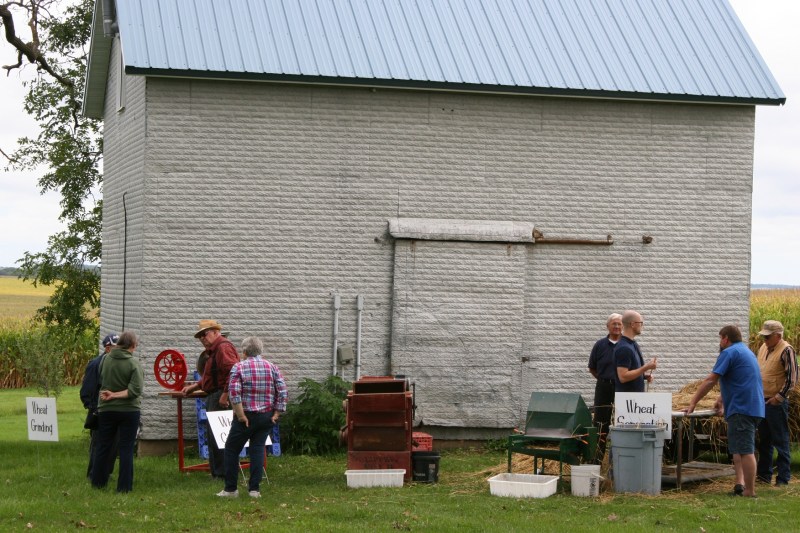
Heritage Wheat Demonstration Day at Aspelund Winery.


VISIT ASPELUND WINERY and Peony Gardens between Kenyon and Wanamingo, and you’ll discover a place of peace. I love this country spot. For its quiet setting. Its beauty. The genuine friendliness of owners Bruce and Dawn Rohl. And the wine.


So many lovely peonies in multitudes of colors, shapes and scents. The Rohls hybridize, grow and sell peony plants. Minnesota Prairie Roots file photo, June 2016.


In the spring, I delight in the peony fields bursting with color and fragrance.


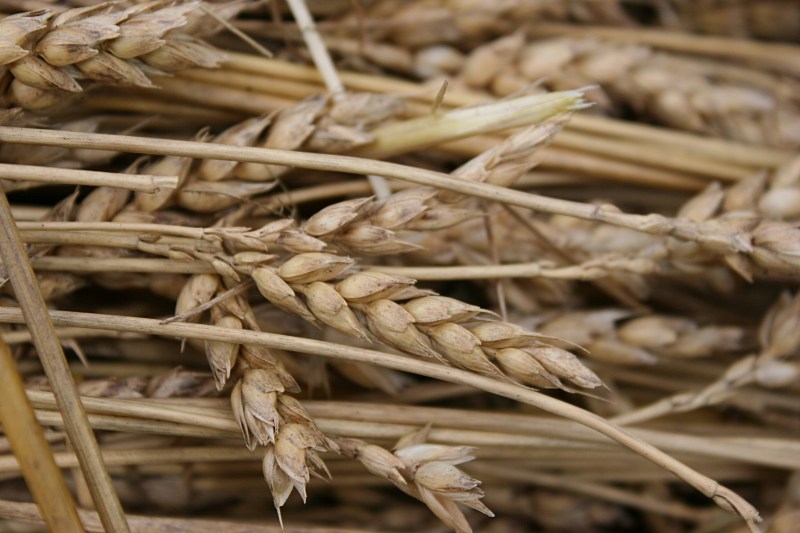
A pile of wheat awaits threshing.


In autumn, the changing hues of the surrounding farmland delight me as I sip wine on the tasting room deck.


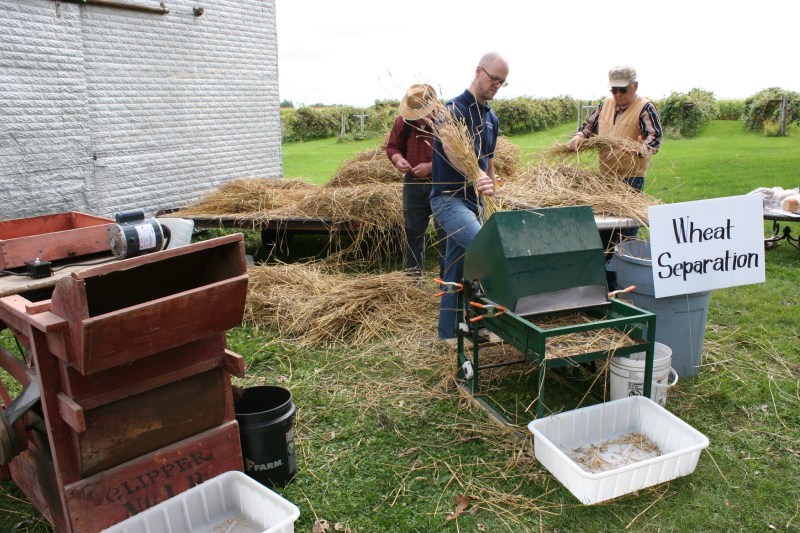
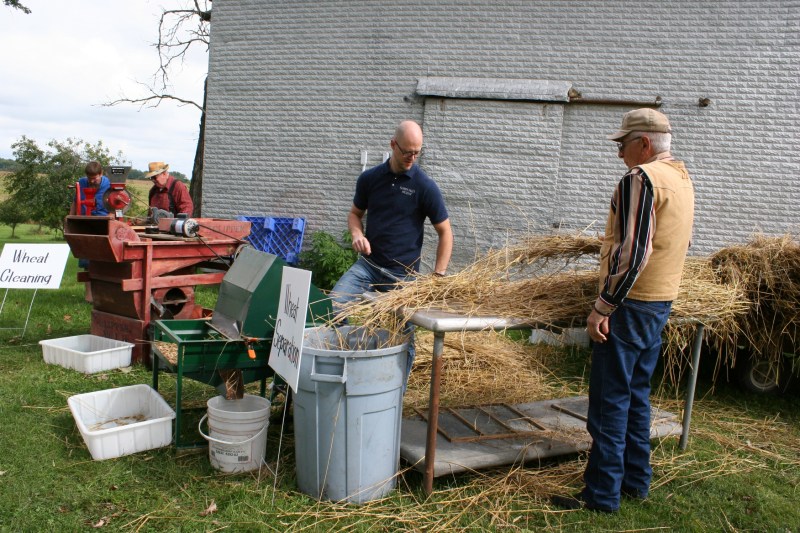
Separating the wheat with a treadle-powered threshing machine.


This past Sunday afternoon brought a new experience as I watched the threshing of wheat, then grinding into flour. The winery hosted Heritage Wheat Demonstration Day, part of the Cannon Falls Area Historical Society’s Heritage Wheat Project.


First, threshing the wheat.


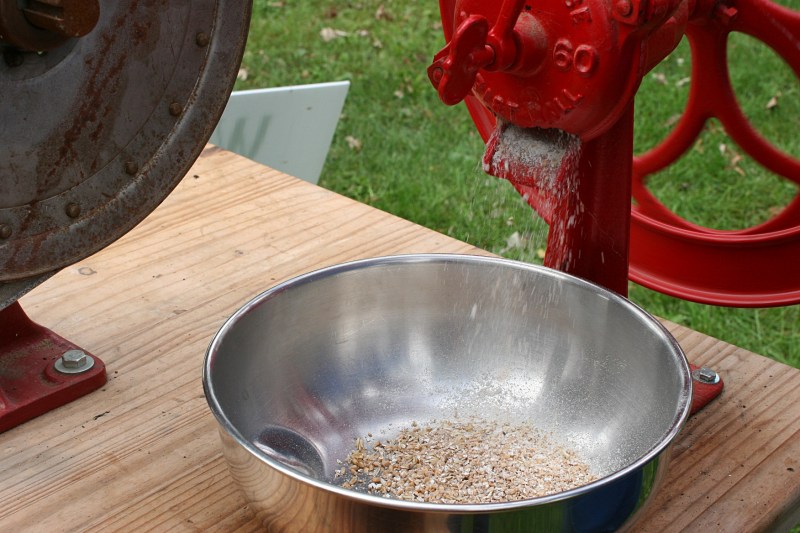
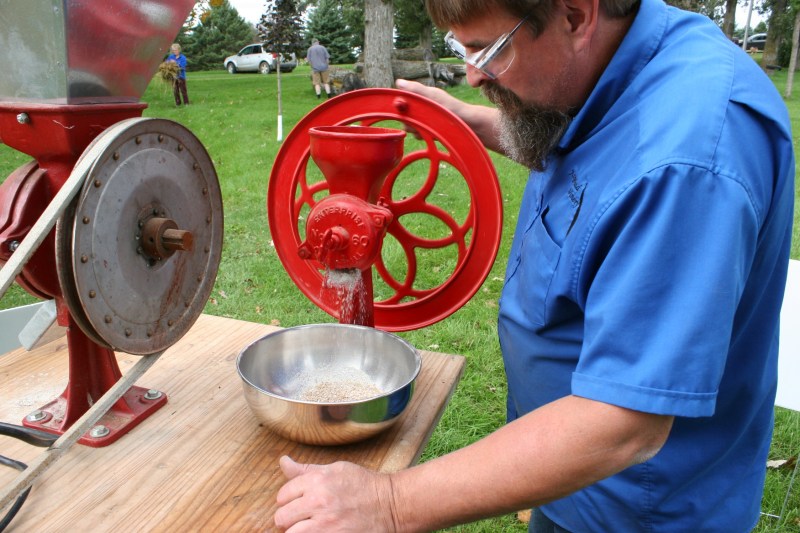
Grinding and regrinding the wheat into fine flour.


Bruce Rohl grinds the wheat into flour.


After observing that process, I held a deeper appreciation for the early farmers who worked hard to grow, harvest, separate and grind wheat into flour. What a job.


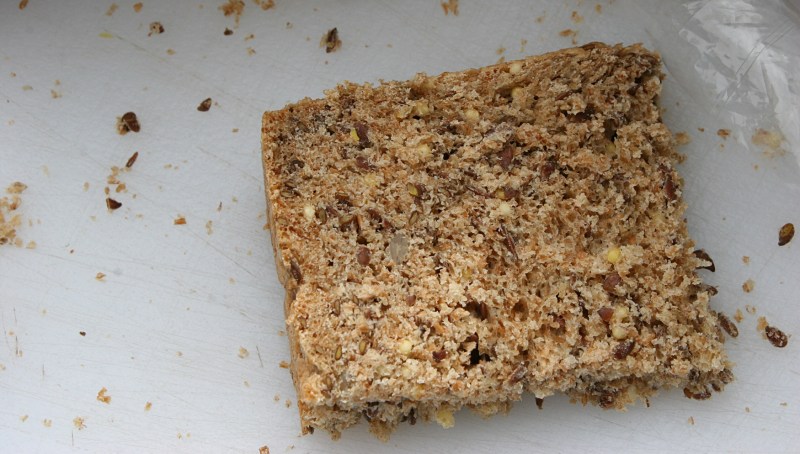
But, oh, the delicious result—the grainy textured bread…


I didn’t just watch this demo, though. I wandered through the vineyard, already harvested. Photographed a golden apple.


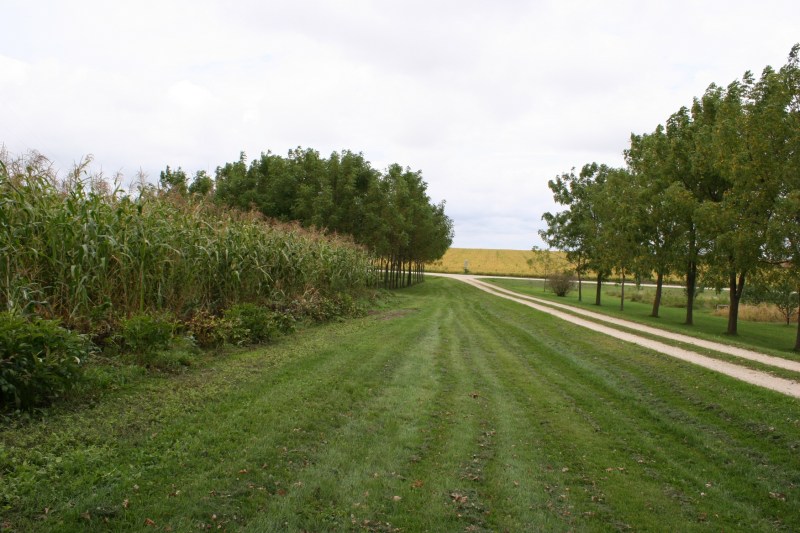
Rows of flint corn border the driveway into the winery.


The Rohls grind this flint corn into corn meal for cornbread. They also grow popcorn, offered for sale and also for complementary tasting with their wines.


Examined the towering flint corn the Rohls grow and grind into corn meal.


I paused, too, to photograph a homemade (I think) vehicle parked on the grounds.


A mug of mulled Lady Cara-Mel wine from Aspelund Winery.


And, of course, no visit here is complete without wine, this time mulled and sipped from a mug. Perfect for an autumn afternoon on the deck overlooking the ever-changing Minnesota countryside.

© Copyright 2019 Audrey Kletscher Helbling


Book review: A closer look at mental health care reform in Minnesota from 1946-1954 September 19, 2019

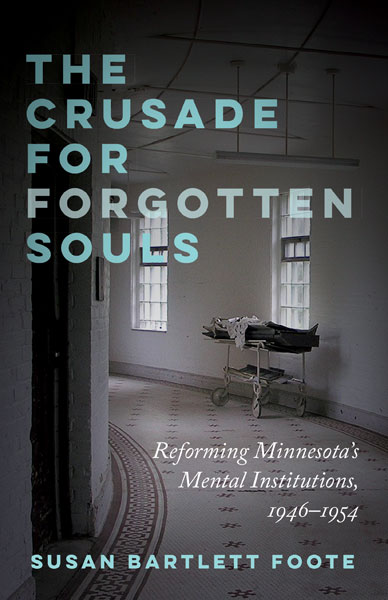
AS A WRITER, hearing other writers share insights into their work always interests me. That includes listening to Susan Bartlett Foote talk about her book, The Crusade for Forgotten Souls—Reforming Minnesota’s Mental Institutions, 1946-1954, at the Owatonna Public Library on Tuesday evening. Foote’s book won the 2019 Minnesota Book Award in nonfiction. It’s a well-deserved honor for a book which shares the powerful, and previously untold, story of reform in Minnesota’s mental health care system some 70 years ago.

Despite the four years Foote invested in researching and writing, she is quick to credit another woman for this story. Engla Schey. Foote dedicated her Minnesota Book Award to this activist and aspiring writer whom she calls the first mental health advocate in Minnesota. Schey worked initially as an attendant in several state mental health hospitals, or “insane asylums” as they were called back in the day. She witnessed first-hand the neglect, abuse, inhumane treatment, poor living and working conditions…all documented in her diaries. Foote read those diaries, in the possession of Schey’s great great niece.

The result is a deeply personal story about one ordinary woman’s efforts to change “a cynical and secretive system.” Schey’s insider perspective, Foote notes, allowed her to upend the whole structure. At the time, some 15,000 people lived in the state’s seven mental health hospitals with 80 percent of them committed and 35 percent senile/elderly. Half suffered from mental illnesses with stays of sometimes 20 years. The statistics are startling. But it is the stories Foote shares that make the most impact. Read this book and you will find yourself in tears.

As Foote related in her Tuesday evening talk, Schey quickly recognized that she needed help—of liberal churches, unions and writers—if she was to effect change within the system. She cared deeply. And personally. Her father voluntarily committed himself to the state hospital in Fergus Falls.

Eventually, the Minnesota Unitarian Church got involved, taking the approach of responsible study and analysis rather than jumping in and demanding immediate reform. The Rev. Arthur Foote (Susan Foote’s former father-in-law) led those efforts along with activist Genevieve Steefel and others.

Soon those initial reformers recognized the need to engage the press and political leadership and to build popular support, Foote said. Investigative news stories published. And some politicians, like then Minnesota Governor Luther Youngdahl, set aside partisan politics to make mental health care reform a top issue. Foote praised Youngdahl, referencing his stand that all mentally ill Minnesotans were entitled to fundamental human guarantees (dignity) and his goal to build a patient-centered mental health care system. A photo of Youngdahl burning a pile of straightjackets (and published in the book) signaled that change was going to happen, Foote said. And it did. Conditions improved both for patients and staff.

Like anything, though, change did not come easily nor is it always permanent. I experienced a deep sense of disappointment and frustration as I read in detail about all the politicking, untruths and denials. I can only imagine how those deeply involved in reform efforts felt. Youngdahls’s biggest disappointment, Foote shared with us in Owatonna on Tuesday, was that Minnesota churches (other than the Unitarians) wanted nothing to do with the issue of mental health. Has that changed much?

Youngdahl, in the ever-evolving political environment, suffered another disappointment in his failure to open a state hospital in Brainerd. One eventually opened there and my brother-in-law Brian became a resident after suffering incapacitating permanent brain damage. I knew him only briefly before his passing in 1984 at the age of 23.

At Tuesday’s talk in Owatonna, an audience member shared afterwards that a family member died of tuberculosis while hospitalized in a state hospital. Another attendee told me privately of staff intentionally breaking the legs of a man who lived at a state hospital in Faribault. For every story spoken, I expect many more remain unspoken. The hurt runs deep even all these decades later.

Although politicians and the public moved on and times changed and cuts began in the state hospital system by the early 1950s with Minnesota falling back to “average” in mental health care, Foote said, “I maintain this story is an inspiration, not a failure.”

She closed with a quote from Governor Luther Youngdahl: “Protection of the patient depends on our eternal vigilance.”

I agree. And I contend that we can all be Engla Scheys. We have within us—within our families, our circles of friends, our churches, our schools, our communities—the ability to make a difference in the lives of those dealing with mental illnesses and those who love them. Through our compassion, care, understanding, love and support. On multiple levels.

© Copyright 2019 Audrey Kletscher Helbling


Appreciating the history & beauty of Valley Grove on a September afternoon September 18, 2019

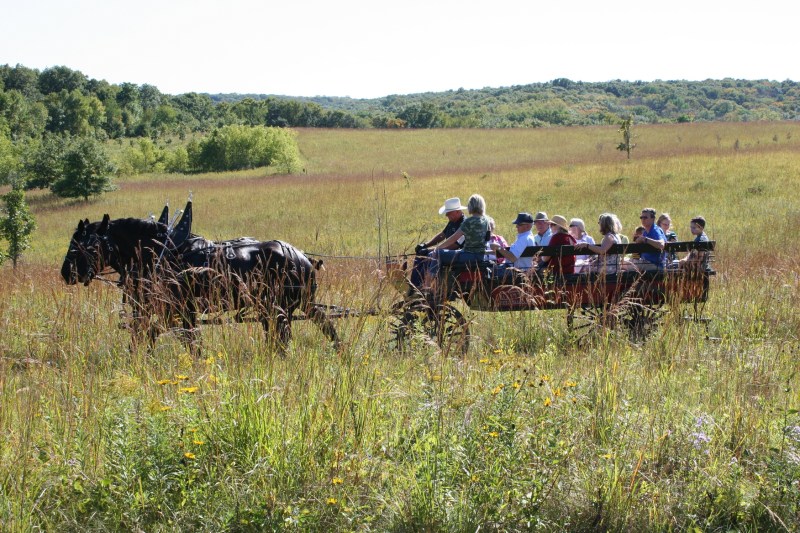
A horse-drawn wagon takes visitors through the prairie at Valley Grove with the Big Woods in the distance. When fall colors change, the treeline is spectacular.


I CONSIDER IT ONE of the most scenic spots in Rice County. A location that presents a sweeping vista of the countryside from atop a hill adjacent to Nerstrand Big Woods State Park. Autumn, especially, at Valley Grove offers a visual delight.


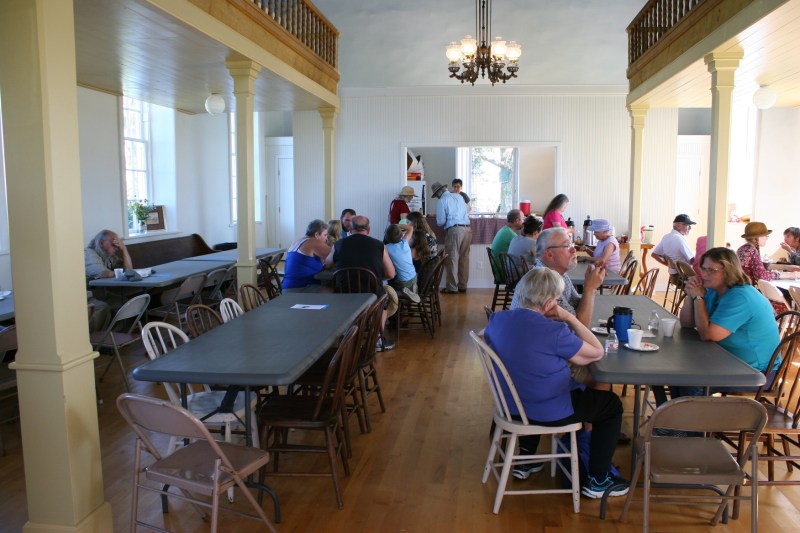
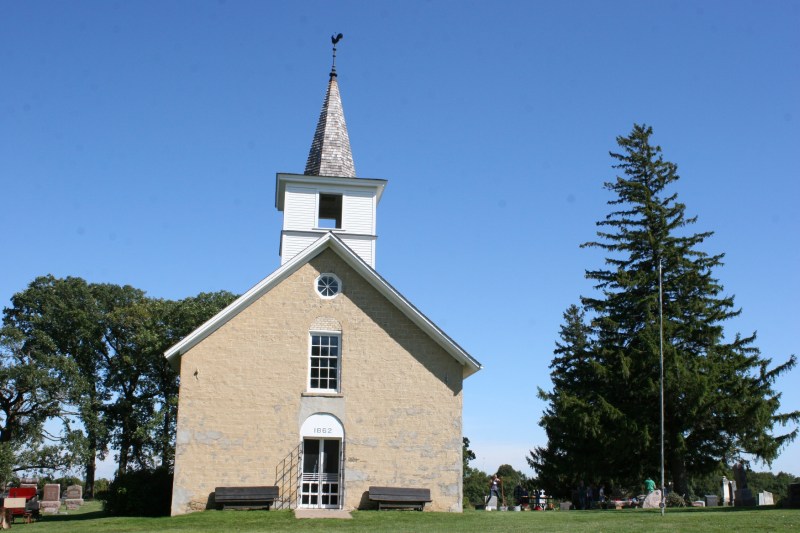
Folks gather in the restored 1862 stone church for cake, hot dogs, beverages and conversation.


On Sunday afternoon, in hot and humid temps that felt anything but autumn-like, I attended the annual Valley Grove Country Social hosted by the Valley Grove Preservation Society.


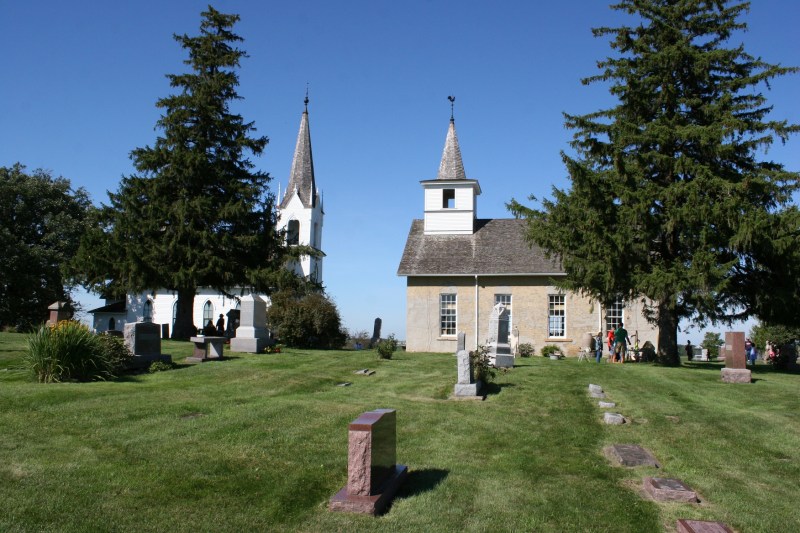
The beautiful and well-preserved historic churches of Valley Grove as photographed from the cemetery.


The group aims to preserve and maintain this place on the National Register of Historic Sites. Here, on this land claimed by early Norwegian immigrants, two churches (built in 1862 and 1894) stand next to a cemetery and next to the prairie.


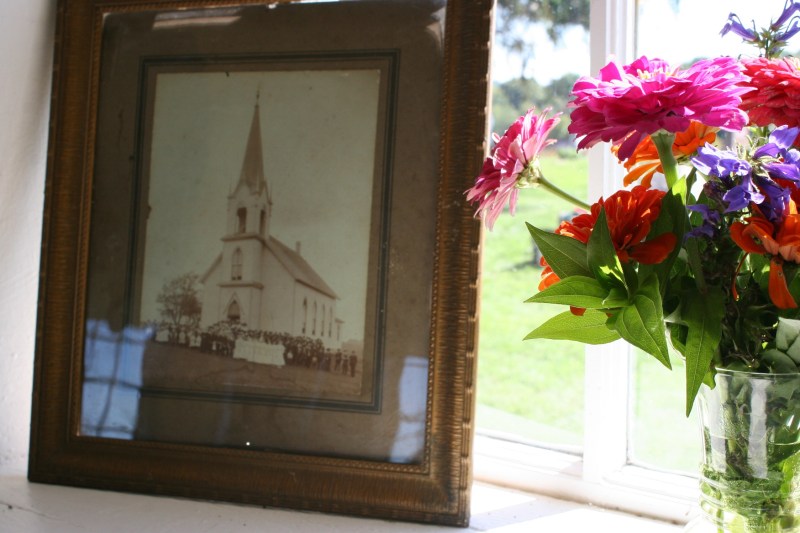
An historic photo and flowers grace a window ledge inside the stone church.


These crosses, crafted from Valley Grove burr oaks, were on sale.


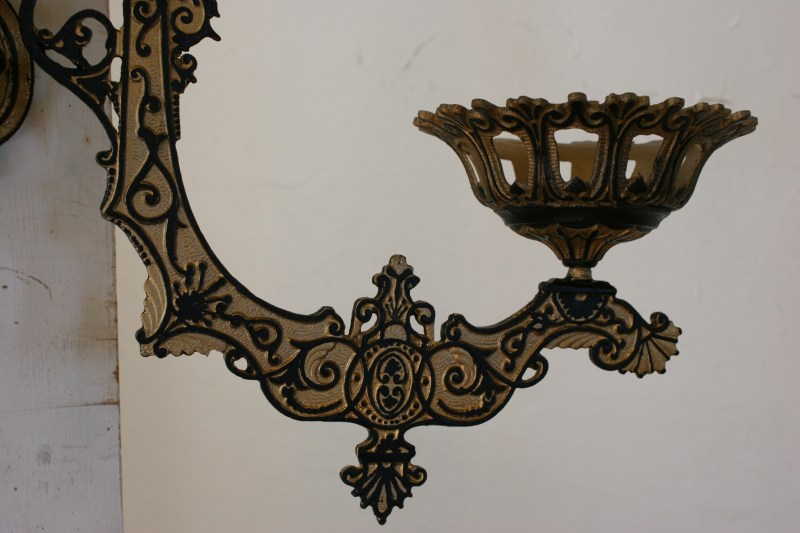
One of six sets of historic sconces to be installed in the stone church as preservation efforts continue.


To visit here is to feel a deep appreciation for the history of this place and those who chose this site to build houses of worship.


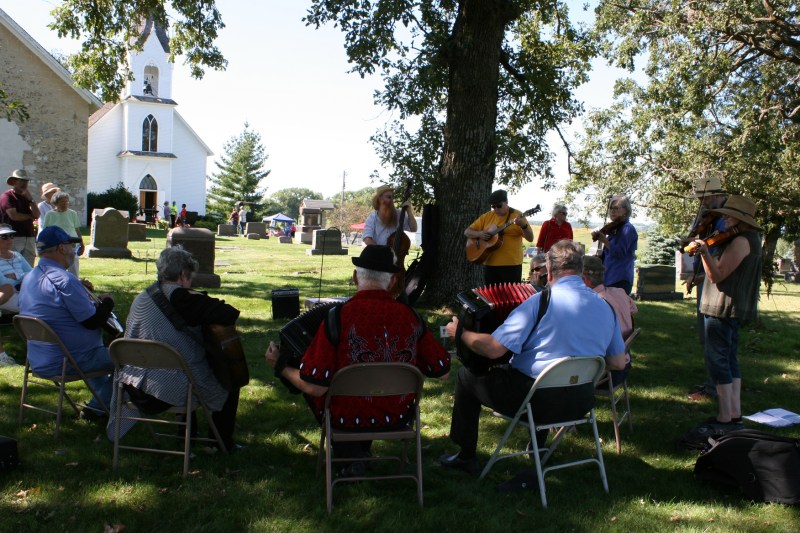
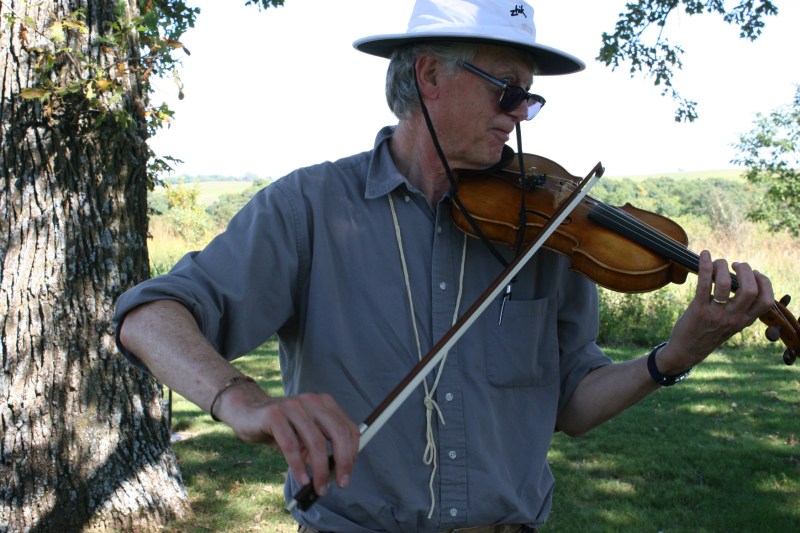
Hutenanny, a Northfield-based traditional Nordic music group, entertains those attending the Valley Grove Country Social.


Making music with Hutenanny.


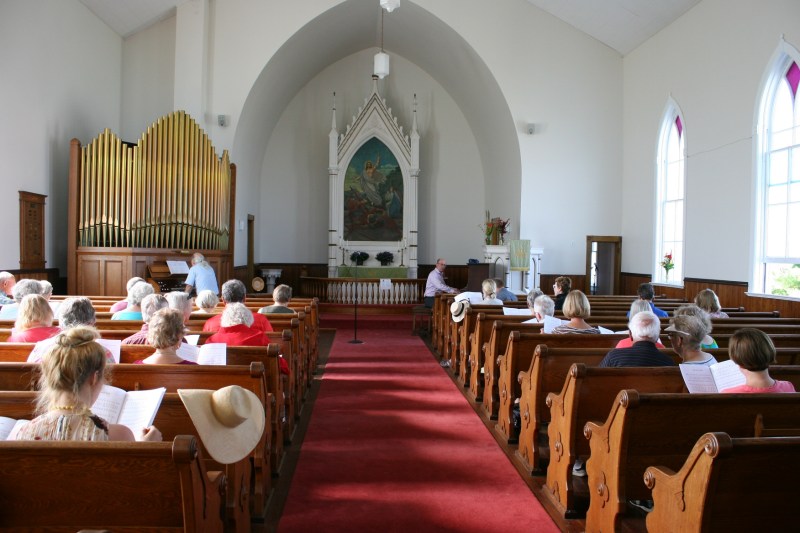
A sing-along inside the wood-frame church.


To attend the country social is to experience history—through music,


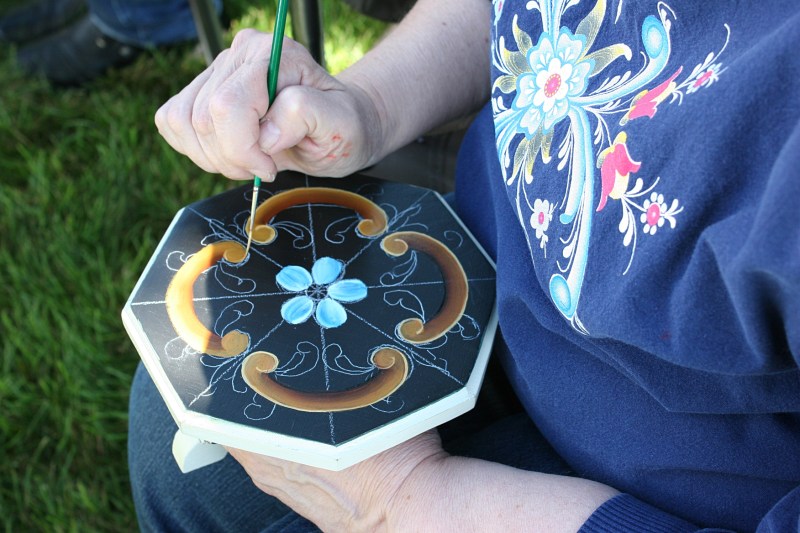
Donna Johnson of the mother-daughter duo Nordic Arts demonstrates the Norwegian art of rosemaling.


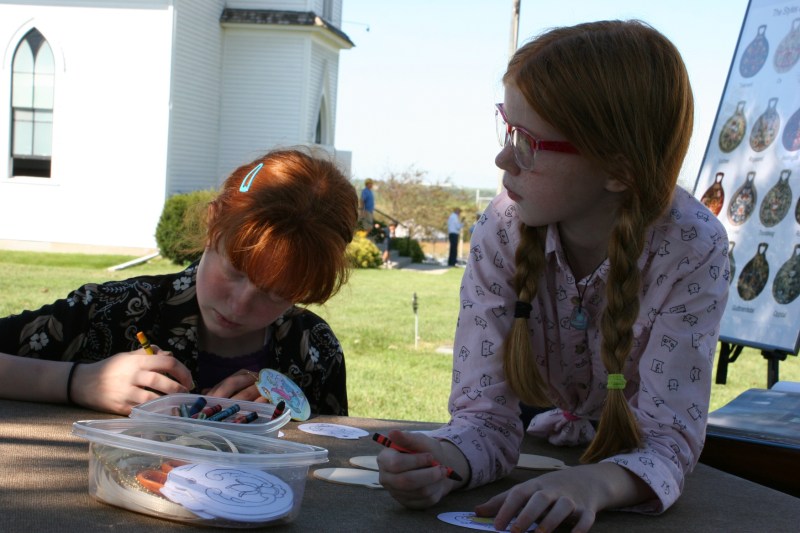
These sisters try rosemaling using crayons rather than paint.


An example of Nordic Arts’ art.


art,

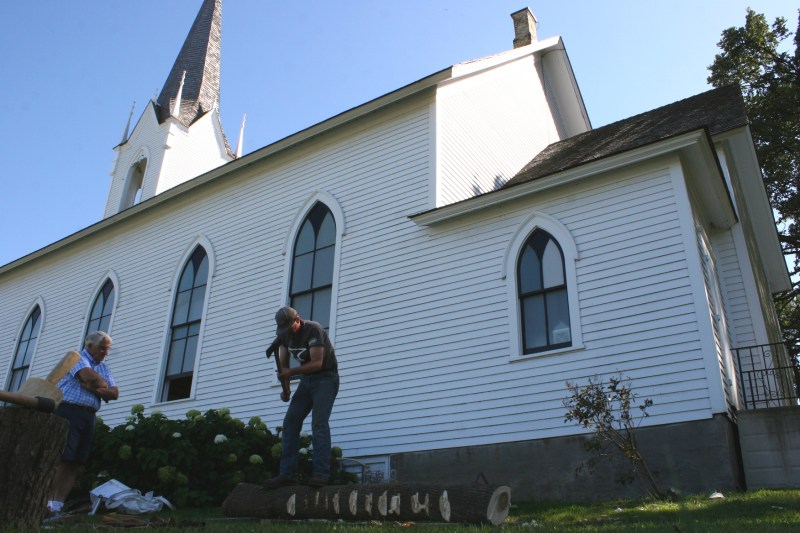
Hewing a log next to the wood-frame church.


demonstrations, historical talks,


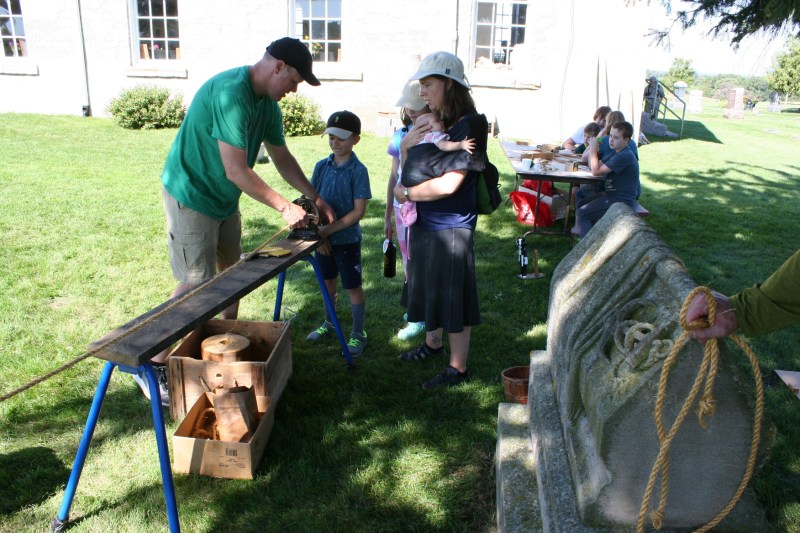
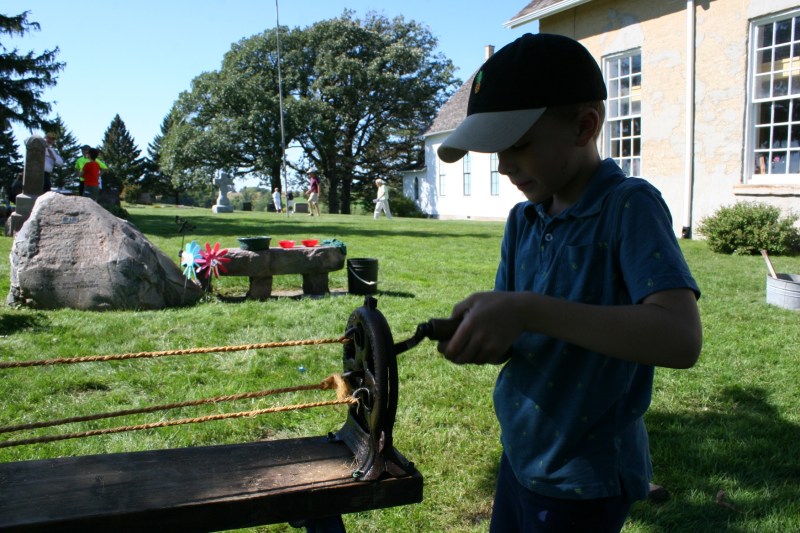
Learning how to make a rope.


Rope-making up close.


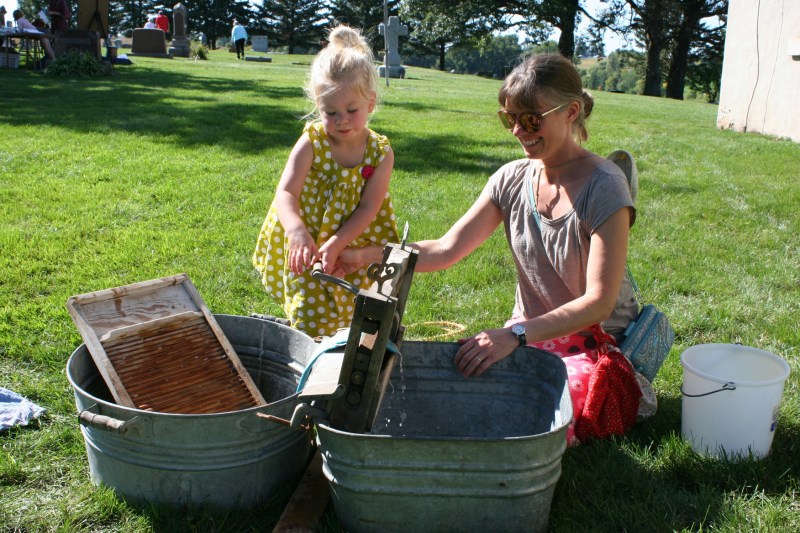
Kids especially loved doing laundry the old-fashioned way.


hands-on activities and more.


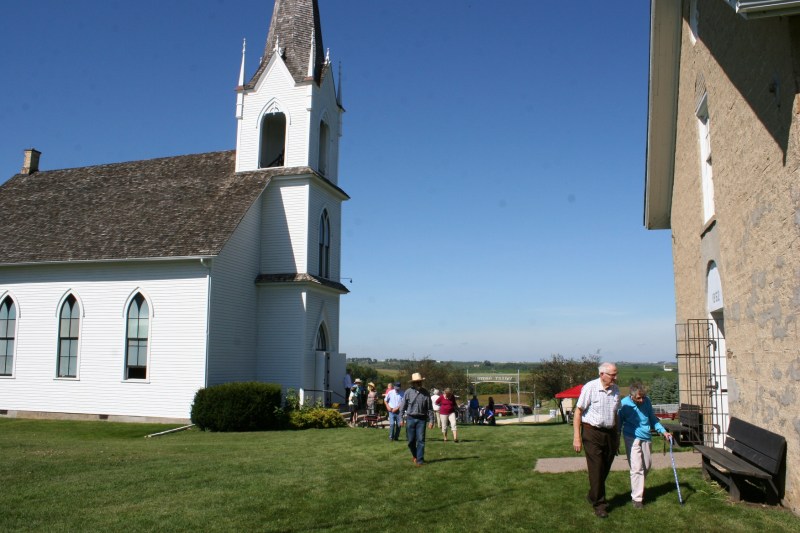
The Valley Grove churches.


I always feel such a peace at Valley Grove. As if the world of today exists somewhere distant.


A simple floral still-life on a windowsill in the wood-frame church.


It’s good for the soul to take time on a sunny Sunday afternoon in September to step back in time. Not necessarily to idealize life then—because it was hard. But to gather with others in the countryside far from traffic and distractions and the noise of modern-day life.


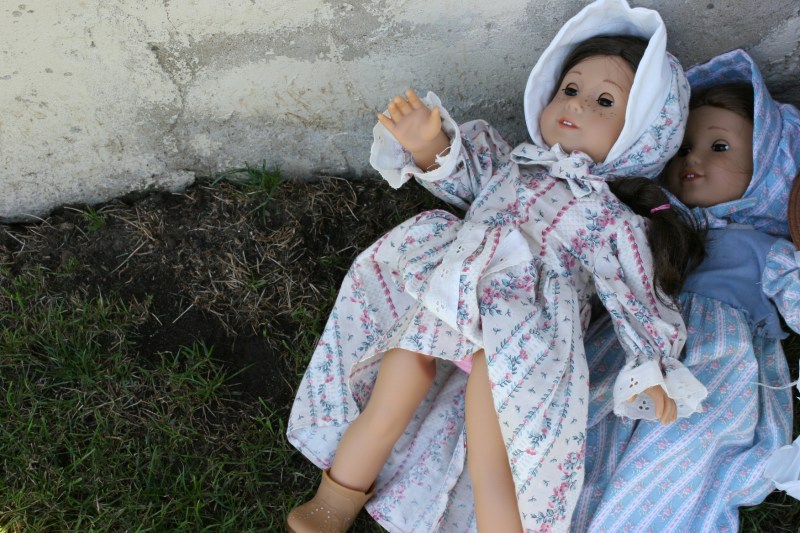
I noticed these dolls lying on the ground behind the old stone church. So fitting for the day.


To appreciate simpler times


Such beauty in this floral bouquet adorning a window ledge in the wooden church.


and simple beauty.


Valley Grove wildflowers at prairie’s edge.


To gather under the burr oaks, to walk the prairie, to study tombstones, to sing in the same church where early settlers sang, to watch youngsters craft ropes and walk on stilts. And so much more.


Built in 1862.


I appreciate the preservationists who understand the personal and historic importance of Valley Grove, of not allowing these churches to fall into disrepair like too many other shuttered country churches. They clearly value the land, the efforts of their forefathers, the importance of this place. Still today.

© Copyright 2019 Audrey Kletscher Helbling


The struggle September 16, 2019


THE STRUGGLE IS REAL

Those words emblazoned across the back of her red-white-and-blue plaid shirt grabbed my attention. But what did they mean? I assumed the phrase likely referenced immigration issues given the cultural event where I spotted the statement.

But not 100 percent certain, I approached the young woman and asked. The struggle is real refers to struggles with mental health, she said. She battles depression, but is doing well right now, crediting her family for their support. We didn’t talk much. I hugged her, offered words of encouragement and thought how bold of her to publicly voice those words: THE STRUGGLE IS REAL. I wonder if anyone else asked her about the message she wore.

Those words seem so fitting for those who live with mental illness. Think about it for a minute or ten. Say you or a family member are struggling with depression, anxiety, bipolar, post traumatic stress disorder, schizophrenia or any other mental illness. Do you struggle? Do you struggle to get up in the morning, to find a job or go to work, to engage with others? Do you struggle with stigma, with the all too common belief that you can simply snap yourself out of whatever? Do you struggle to find a mental healthcare provider? (There’s a severe shortage here in Minnesota.) Do you struggle to get the meds you need when insurance companies deny coverage? Do you struggle?

THE STRUGGLE IS REAL. Those words fit.

Thankfully, that struggle is becoming more visible as attitudes change and voices rise. Support groups, such as those offered through the National Alliance on Mental Illness, bring hope and help. But we can do better. We can, as friends and family and communities and churches, show more care for those affected by mental health issues. I mean, how often have you seen a fundraiser to help individuals and families dealing with financial hardships resulting from mental illnesses? Do we send get well cards to individuals who are suffering from a mental illness? Do we bring them or their supporting families hotdishes (otherwise known as casseroles in other parts of the country)? Do we surround and love and support just as we would someone with cancer, for example?

THE STRUGGLE IS REAL. Those words fit.


That leads me to the book, The Crusade for Forgotten Souls—Reforming Minnesota’s Mental Institutions, 1946-1954 by Susan Bartlett Foote. A professor emerita in the School of Public Health at the University of Minnesota, she will speak at 6:30 p.m. Tuesday, September 17, at the Owatonna Public Library. I only learned of her book a week ago and sped-read through this detailed historic look at efforts to reform mental health hospitals in Minnesota decades ago.


A building on the campus of the former Minnesota Asylum for the Insane, Fergus Falls, Minnesota. Minnesota Prairie Roots file photo May 2013.

This is not an easy read. It’s emotionally difficult to read of patients who were abused—confined to straightjackets, subjected to lobotomies, tied to toilets, fed gruel, denied very basic human rights… But to read of the Unitarian Church activists, the politicians (notably then-Governor Luther Youngdahl), journalists, healthcare professionals and others who cared and fought for “the forgotten people” also brings hope. They effected change. Yet, some of their work was undone when new politicians took office and societal attitudes shifted. The politics referenced in Foote’s book made me realize how little things change.

THE STRUGGLE IS REAL.

Foote’s book will be of special interest to people in my community of Faribault, once home to a state-run facility known as The Minnesota School for the Feeble-Minded. In late 1946, a grand jury convened in my county of Rice to investigate alleged abuses at the Faribault school. Jurors found the misuse allegations to be unwarranted, contradicting findings of other outside investigations. Foote’s research is extensive, her book packed with details about the multi-layered challenges of reforming mental health care in Minnesota.

THE STRUGGLE IS REAL. As much today as yesterday.


FYI:

Check out the National Alliance on Mental Illness website, an invaluable resource.

Visit the blog, Penny Wilson Writes, for an honest look at “the struggle,” including a resource list.

Read this book: Troubled Minds—Mental Illness and the Church’s Mission by Amy Simpson

© Copyright 2019 Audrey Kletscher Helbling


Reflecting on 9/11, then & now September 12, 2019

Filed under: Uncategorized — Audrey Kletscher Helbling @ 5:00 AM
Tags: , , , , , ,

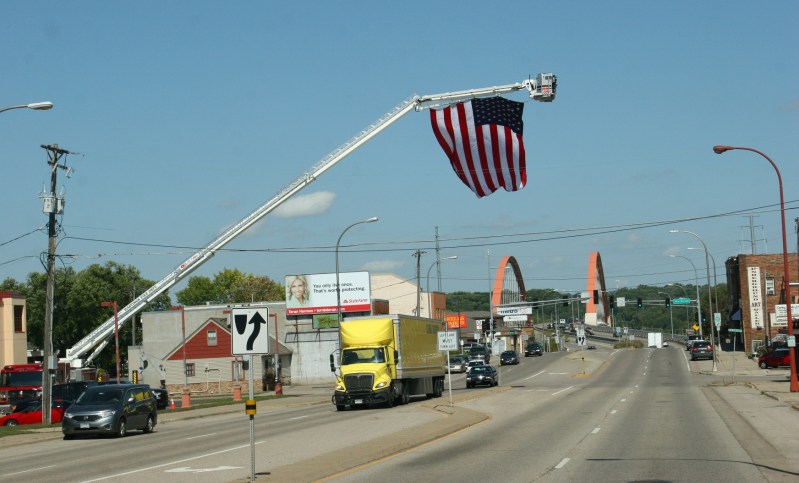
In remembrance of 9/11, photographed last September 11 in Hastings, Minnesota. Minnesota Prairie Roots file photo 2018.


YESTERDAY BROUGHT TIME for reflection. Reflection upon the events of September 11, 2001, a day which forever changed us as Americans.


I reconstructed a tower using the same blocks my then young son and his friend used on September 11, 2001, to duplicate what they saw on television. These are also the same toy airplanes they flew into the tower. Minnesota Prairie Roots file photo 2011.


The terrorist attacks on our country made us feel vulnerable, unsafe and realizing, perhaps for the first time that, just because we live in America, we don’t live in a bubble of protection from those who would harm us.


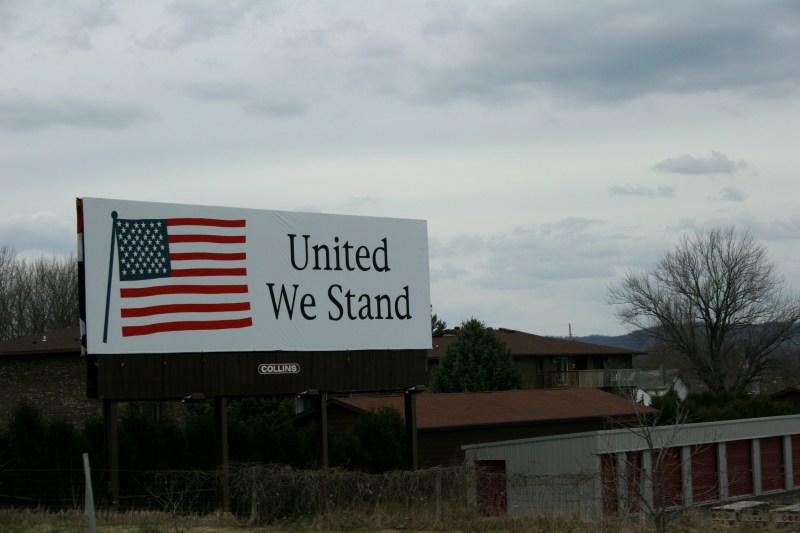
Photographed along Interstate 90 east of La Crosse, Wisconsin. Minnesota Prairie Roots file photo May 2011.


Yet, in the midst of that tragedy, that sorrow, that new reality, there emerged a solidarity. We felt united as a country, a people.


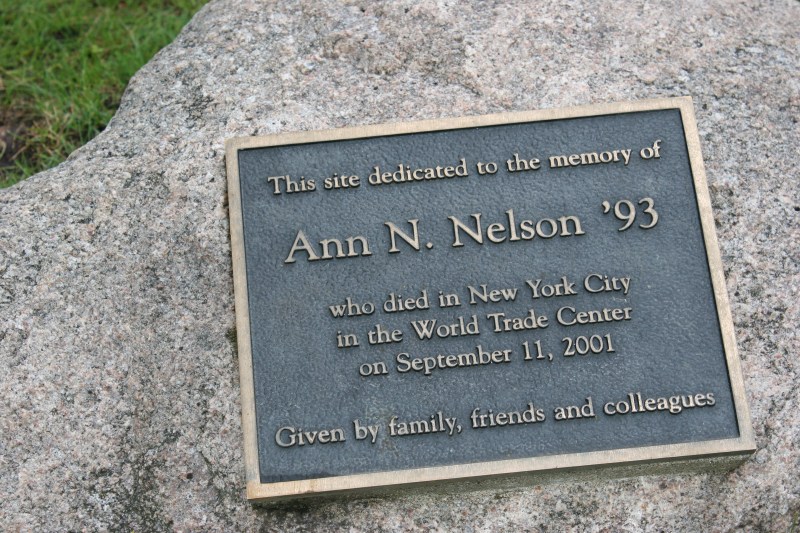
On the campus of Carleton College in Northfield, Minnesota, a plaque honors an alumnus who died in the World Trade Center attack. Minnesota Prairie Roots file photo July 2019.


Eighteen years later I no longer see that unity. I see rather a fractured country. That saddens me. The discord. The political upheaval. Even the overt hatred toward certain peoples.


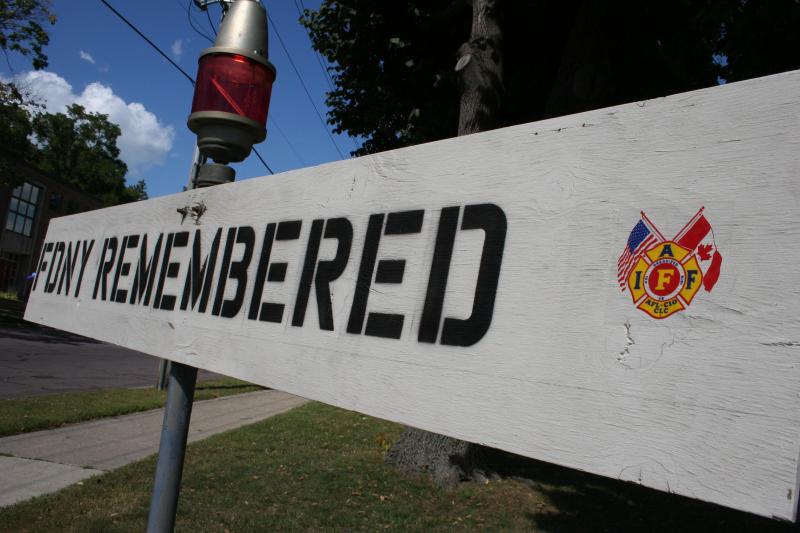
Faribault, Minnesota, firefighters pay special tribute to the fallen New York firefighters on this memorial sign. Minnesota Prairie Roots file photo 2011.


Yet, when I look closely, I see the care and compassion extended by many Americans toward those who need our care and compassion. We have always been a giving nation. I hear the voices of those who speak for those whose voices have been mostly silenced by rhetoric and oppression and policies. We are still individuals with voices that matter.


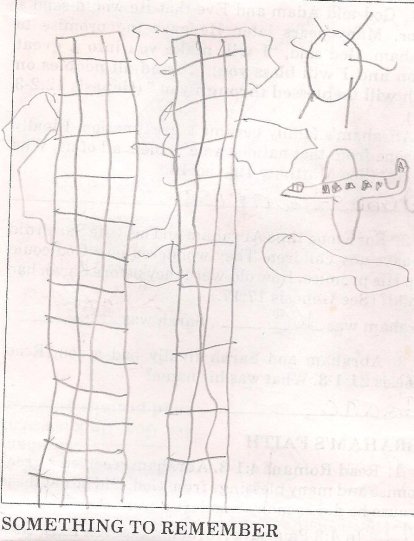
My then 8-year-old son drew this picture of a plane aimed for the twin towers a year after 9/11 for a school religion assignment. He was a third grader in a Christian school at the time and needed to think of a time when it was hard to trust God. To this day, this drawing by my boy illustrates to me how deeply 9/11 impacted even the youngest among us. Minnesota Prairie Roots file photo.


That ability to express ourselves—whether through the written or spoken word, in music, in art, in acts of kindness—remains. Strong. We have the power individually to make a difference in our communities, to start small, to rise above that which threatens to erode.

THOUGHTS?

© Copyright 2019 Audrey Kletscher Helbling


Filmmakers celebrate another year of documenting Faribault history May 2, 2019

Logan Ledman, left, and Samuel Temple. Photo courtesy of 1855.


THEY ARE ONLY SENIORS in high school. But already Logan Ledman and Samuel Temple have left their creative imprint on Faribault.


Photo courtesy of 1855.


On Sunday, May 5, the creators of the 1855 history series on Faribault Community Television host their annual Shindig to commemorate another year of producing documentaries. They’ve crafted films on topics ranging from the Peoples of Faribault to Bishop Henry Whipple, Burkhartzmeyer Shoes and more. And last year marked a debut theatrical performance of local history, The 1855 Live Show, at the Paradise Center for the Arts.


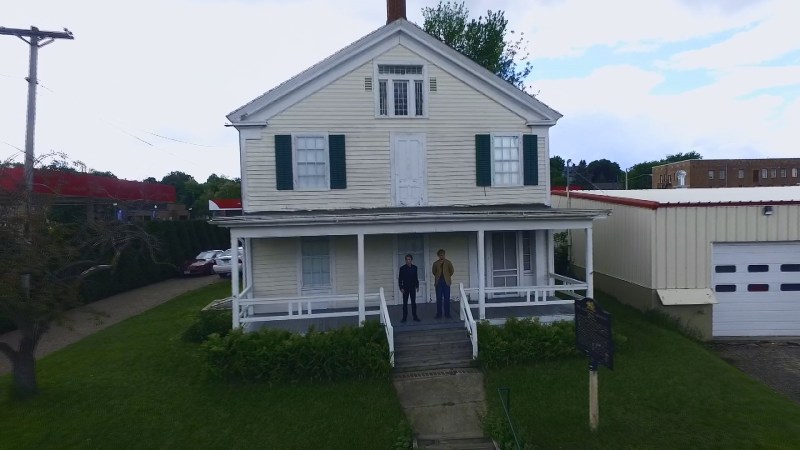
Samuel and Logan stand on the front porch of the Alexander Faribault house, home to town founder Alexander Faribault. Photo courtesy of 1855.


I can’t say enough good things about these two who launched their local films several years ago. Their work is professional, thoughtful, educational and inspiring. Every time I’ve connected with them, they’ve been responsive, kind, friendly, engaging and professional.

They and their work are worth celebrating.

Ledman and Temple recognize the value of connecting with community, something they’re done incredibly well. Their Shindig at the Rice County Historical Society offers another opportunity to connect and to showcase their work and that of musician Sam Dwyer, composer of the 1855’s score. Dwyer will perform and sell CDs of his latest symphony. The filmmakers will also sell copies of their works. And they will premiere several new episodes from their upcoming fourth season.

Join these young creatives at this free event. Plan to arrive at 1 p.m. to assure you don’t miss the screenings, musical performance and more. The Shindig runs until 4:45 p.m. with refreshments provided.

© Copyright 2019 Audrey Kletscher Helbling
Photos courtesy of 1855


WW I from a Steele County, Minnesota, personal perspective April 16, 2019


YOU CAN SPEND considerable time reading all of the information included in a World War I exhibit at the Steele Country History Center in Owatonna. But I am more a Cliffs Notes reader when it comes to museum-based history. I scan to gain a general overall understanding and then choose to focus more on content that interests me most.


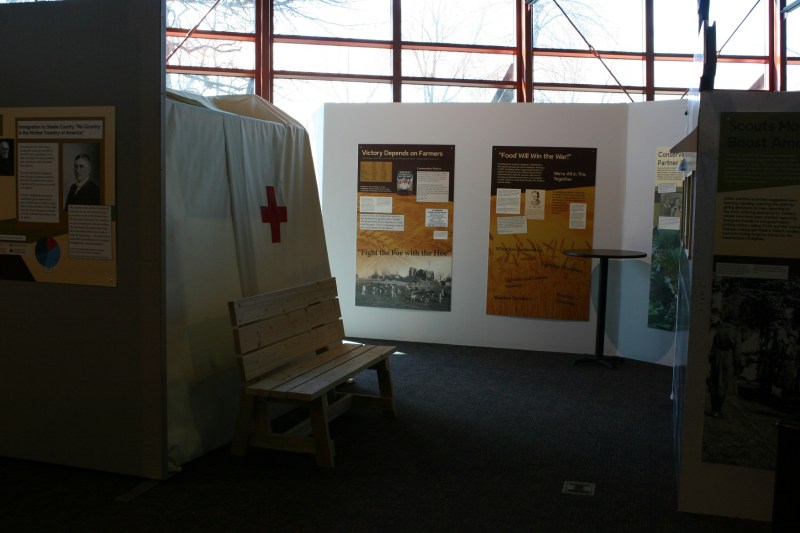
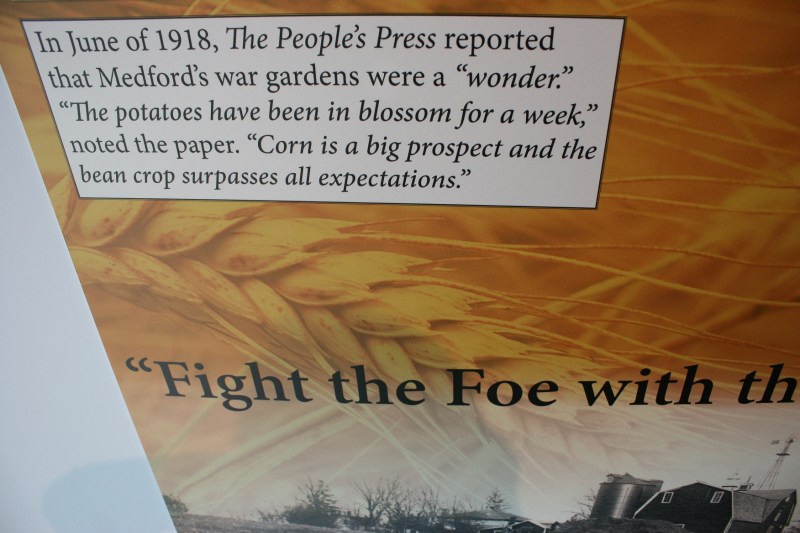
“Fight the foe with the hoe.”


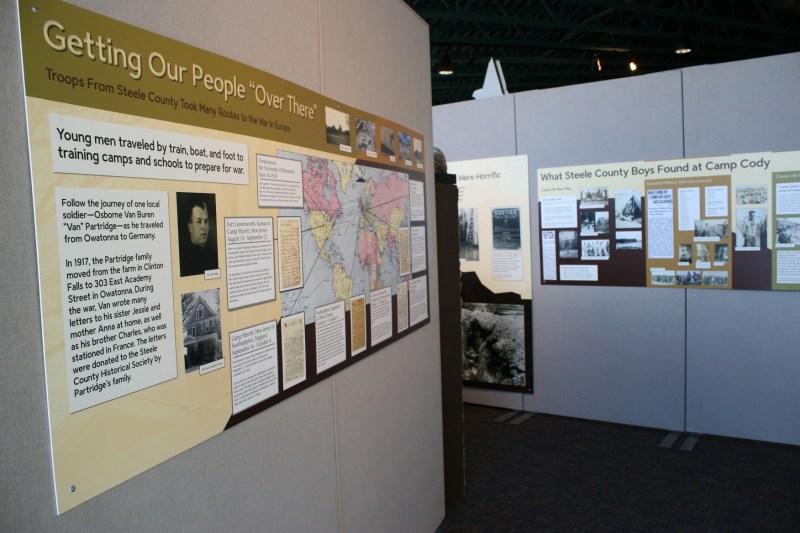
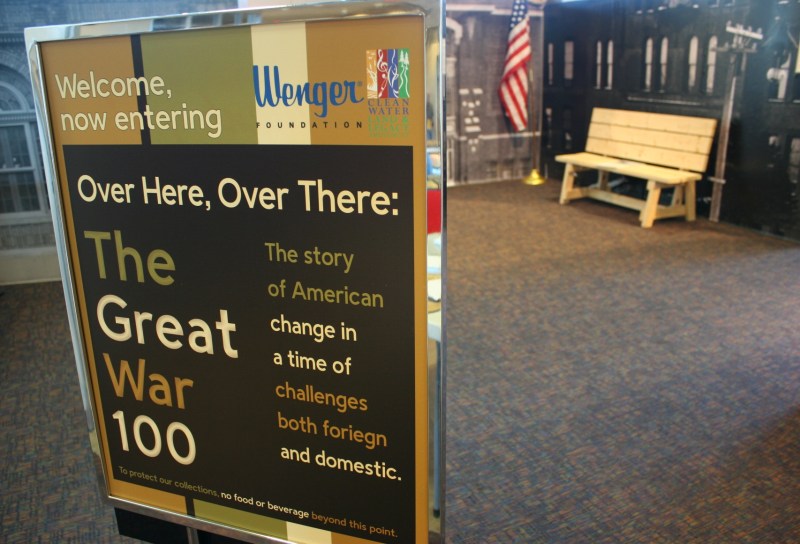
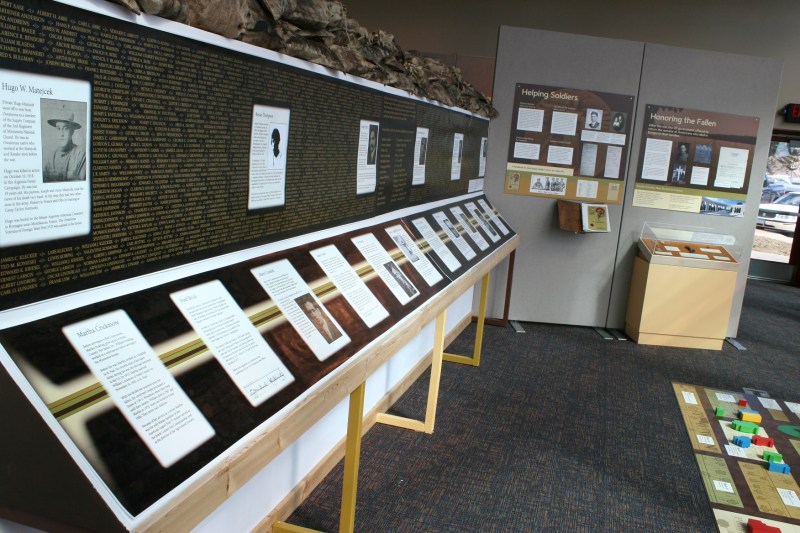
The “Over Here, Over There: The Great War” exhibit presents Steele County’s role in WW I, both on the battlefield and at home. It’s an incredible research project. Well done. Detailed and personalized. I’ve come to expect such historical accuracy and professionalism in homegrown exhibits at this southern Minnesota museum.


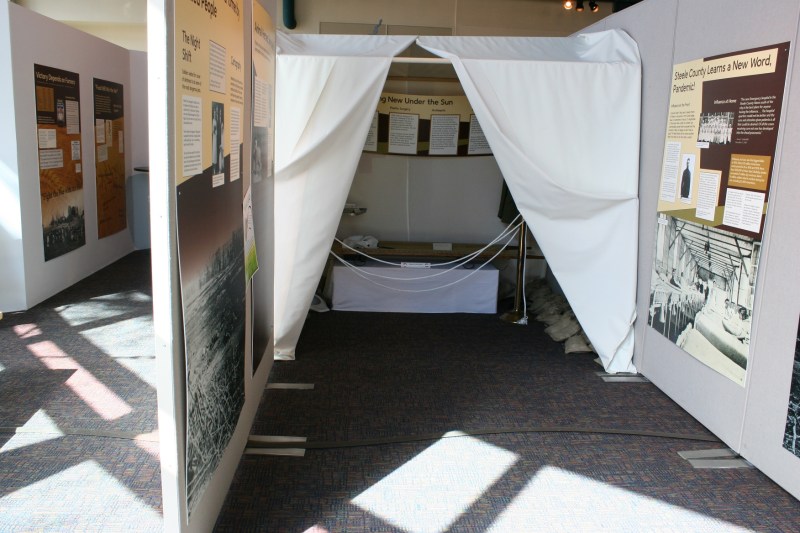
As I ducked into military and medical tents, listened to the sounds of machine gun fire,


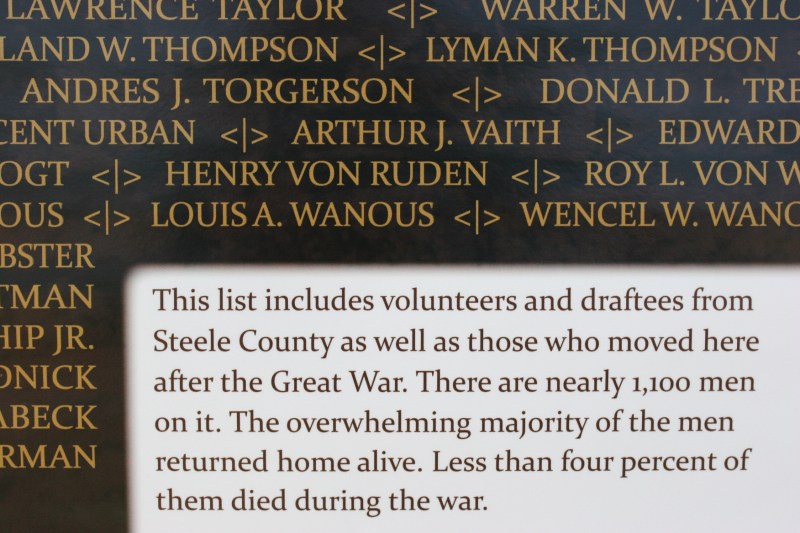
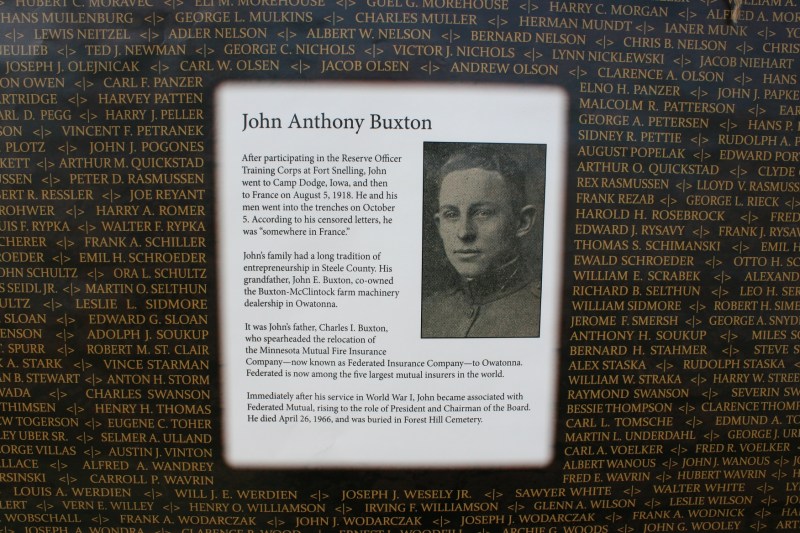
took in the wall of nearly 1,100 soldiers’ names,


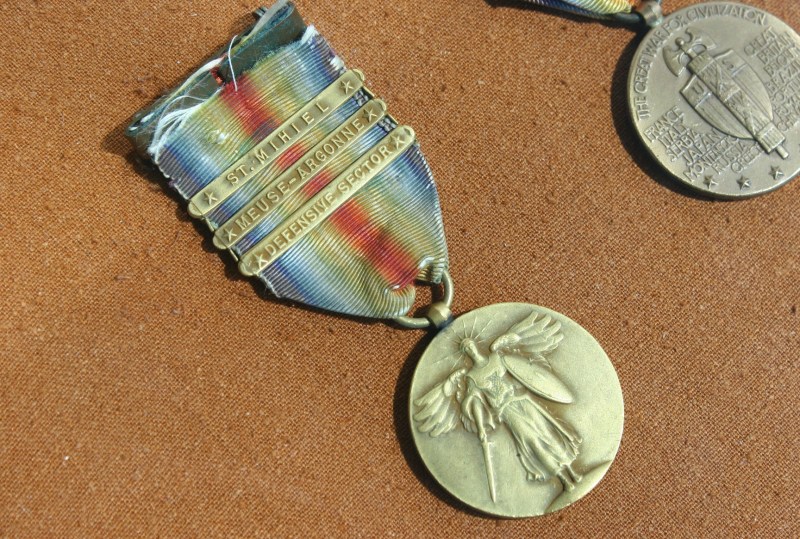
admired military medals,


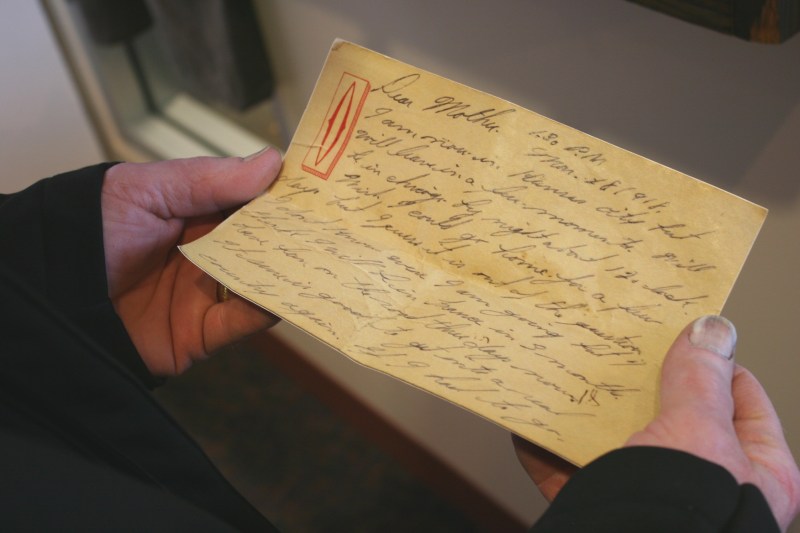
pulled copies of soldiers’ letters from mailboxes,


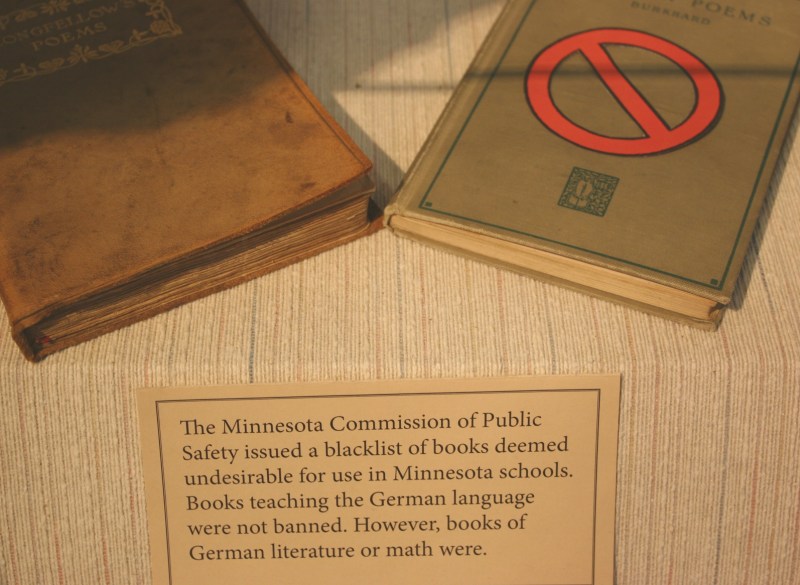
observed blacklisted books of German poetry,


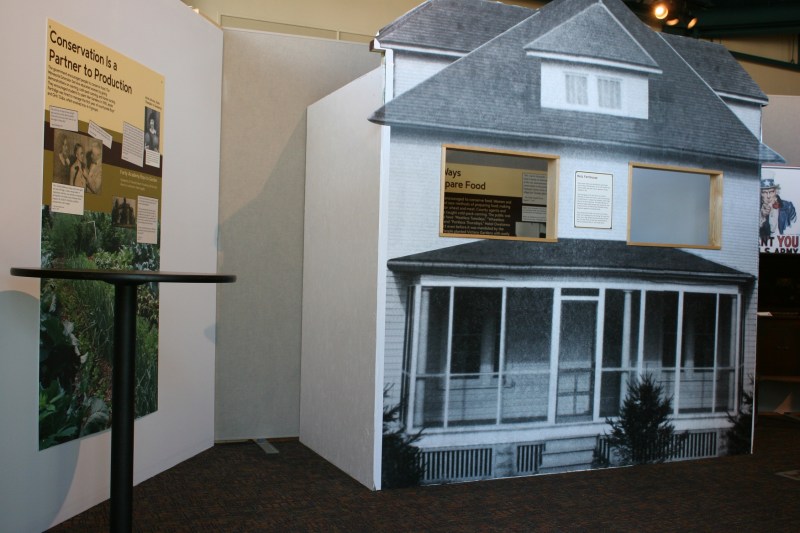
considered the sacrifices of Wheatless Wednesdays and Heatless Mondays, I contemplated how this war affected every aspect of life. Not just for those military personnel in battle, but for the everyday American.


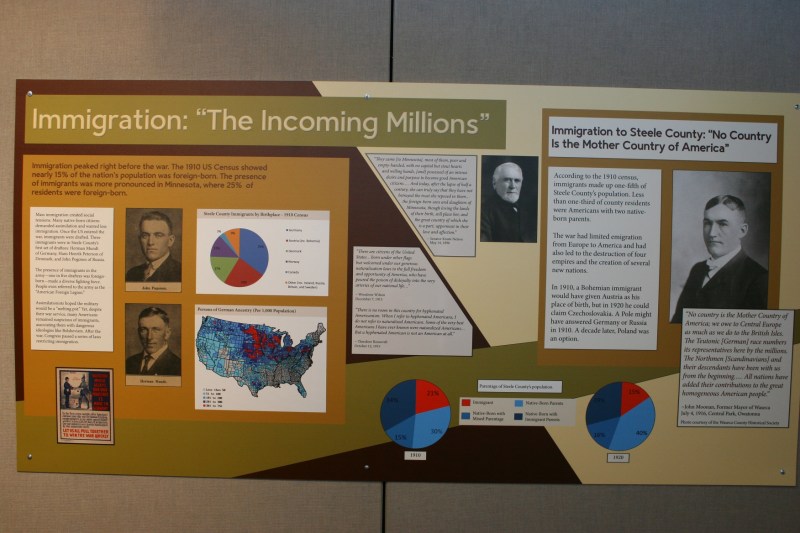
And when I read the section on immigration, I contemplated how little has changed. How the issues of yesterday—back then the hatred of Germans—today has only a new color, a new ethnicity. I read: Mass immigration created social tensions. Many native-born citizens demanded assimilation and wanted less immigration.

I don’t intend for this post to spark intense discussion on immigration issues. But the immigration section of this exhibit certainly resonated with me. I am of German heritage. If my grandparents were still living, I would question them about issues they faced because of their ethnicity.

It saddens me to think how, still today, social tensions and demands for assimilation and hostility toward immigrants remain. Strong. Often hateful. As if we didn’t all come from immigrants. As if we aren’t all human beings worthy of love and respect and a place to call home.


All of that aside, I’d encourage you to tour “Over Here, Over There: The Great War.” There is much to be culled from this exhibit whether you read every single word or browse through the information. In history we learn. If only we’d retain those lessons so history does not repeat itself.


© Copyright 2019 Audrey Kletscher Helbling


“Singin’ in the Grain” documentary celebrates southern Minnesota’s Czech heritage April 2, 2019

Singin’ in the Grain promo photo from Minneapolis St. Paul International Film Festival website.


HERITAGE. WHAT’S YOURS? German? Irish? French? Scandinavian? How about Czech?


Clarence Smisek, photographed at the August 2011 Veseli Ho-Down. Minnesota Prairie Roots file photo.


The heritage, history, stories and music of the Czech people of southern Minnesota focus a documentary, Singin’ in the Grain—A Minnesota Czech Story, debuting on April 6 at the Minneapolis St. Paul International Film Festival. I spoke recently with noted Minnesota filmmaker Al Milgrom who co-directed and co-produced the film with Daniel Geiger.


Mary Ann Kaisersatt, left, and Jule Franke make prune-filled kolacky at Franke’s Bakery in Montgomery, a small town which calls itself the Kolacky Capital of the World. Minnesota Prairie Roots file photo.


In our 45-minute interview, Milgrom shared his excitement about this documentary with filming spanning from 1974 until just weeks ago and centering on the communities of Montgomery, New Prague, Lonsdale and Veseli. All hold a strong Czech heritage well known in this area of Minnesota, but not necessarily elsewhere in the state. Milgrom calls this regional Czech culture a hidden treasure and wants others to expand their knowledge of Minnesota’s cultural identity by viewing his film.


The Most Holy Trinity Catholic Church photographed during the August 2011 Veseli Ho-Down. Minnesota Prairie Roots file photo.


The Eddie Shimota Band performs at the 2011 Veseli Ho-Down. Minnesota Prairie Roots file photo August 2011.


The film’s storyline follows the Eddie Shimota, Sr., Polka Band and three generations of the Shimota family. But this documentary is about much more than a single family or a single band. The filmmakers showcase the Czech culture and heritage via the Veseli Ho-Down, an annual event at Most Holy Trinity Catholic Church; Montgomery’s Kolacky Days; New Prague’s Dozinky Festival; St. Paul’s Sokol (Czech-Sloval Protective Society) Hall; music from groups like the Czech Concertina Club; and much more. Even via an interview with two bachelor farmers from Union Hill.


Kolacky, a fruit-filled Czech pastry, were among the many ethnic baked goods sold at the 2011 Veseli Ho-Down. Minnesota Prairie Roots file photo.


Although I’ve not seen the film, I am familiar enough with the area’s Czech culture to understand the background of this film. I recognize Czech surnames. I’ve eaten more than one kolacky, attended the Veseli Ho-Down complete with polka mass, heard area Czech bands, visited Franke’s Bakery in Montgomery…


Photographed at the August 2011 Veseli Ho-Down, Minnesota Prairie Roots file photo.


Milgrom’s film covers the Czech heritage, efforts to continue traditions, generational assimilation, symbolic ethnicity and more. He noted, too, the evolution of Czech music from polka/folk to more gypsy-like with a beat differing from Old Country style Czech.


The New Prague Czech Singers perform in their mother tongue at the August 2011 Veseli Ho-Down. Minnesota Prairie Roots file photo.


Music is integral to Singin’ in the Grain, a take on Gene Kelly’s Singin’ in the Rain. Milgrom describes a scene of locals working in cornfields, polka music pulsing in the background. That visual and audio alone are enough to interest me in the film.


The New Prague Czech singers perform at the August 2011 Veseli Ho-Down. Minnesota Prairie Roots file photo.


Milgrom’s interest in this culture sparked when he was a child growing up in Pine City among many, as he calls them, Bohemian kids. His high school band played Czech folk songs. And when his interest in photography and then filmmaking developed, so grew his appreciation of Czech filmmakers with their unique take on filmmaking that included a wry humor, he says.


A sign several miles from Veseli directs motorists to the Ho-Down. Minnesota Prairie Roots file photo 2011.


It’s easy to embrace this experienced—he’s pushing age 97 with more film ideas in the works—documentarist’s enthusiasm for Singin’ in the Grain. Audiences, he says, will have a lot of fun watching this film packed with music and dancing. From Veseli, which he calls “a hidden little town somewhere in the hills,” to New Prague and places in between, Milgrom has spent nearly 50 years working on this film, gathering 100 hours of footage now condensed into this 109-minute documentary.


A mural in downtown Montgomery, Minnesota. Minnesota Prairie Roots file photo.


While the film debuts this Saturday at the Minneapolis St. Paul International Festival at St. Anthony Main Theater, Milgrom hopes to eventually bring the documentary to rural southern Minnesota, to communities of strong Czech heritage.


FYI: The April 6 showing of Singin’ in the Grain is sold out, but tickets may still be available for a 4:15 p.m. Wednesday, April 17, screening at St. Anthony. The documentary also screens at noon on Thursday, April 18, at the Rochester International Film Festival in Rochester, Minnesota.

Milgrom’s credentials include founding and serving as artistic director of U Film Society and co-founding the Minneapolis St. Paul International Film Festival and much more.

Daniel Geiger also has an extensive film background with work on feature films such as Fargo, North Country, Purple Rain and more.

CLICK HERE to watch a short clip from Singin’ in the Grain.

CLICK HERE and then click here to read posts I wrote on the 2011 Veseli Ho-Down.

© Copyright 2019 Audrey Kletscher Helbling


Lots to do in the Faribault area this autumn weekend October 12, 2018

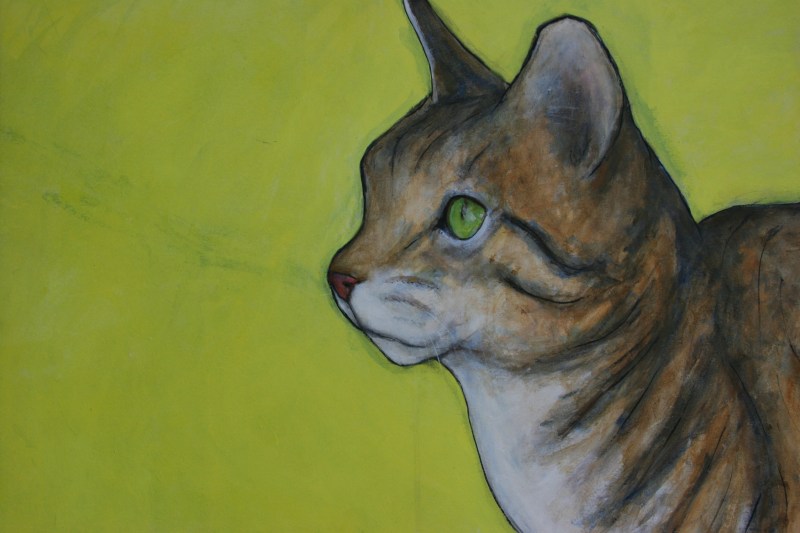
“Grandview Farm Cat” by Faribault animal portrait artist Julie M. Fakler. Julie is among artists participating in this weekend’s South Central Minnesota Studio ARTour. Minnesota Prairie Roots file photo.


ART. FOOD. FUN. Those and so much more are part of multiple events scheduled in and around Faribault during a jam-packed autumn weekend. Here’s a list of area happenings. For more information, click on the highlighted links within each event mini snapshot.


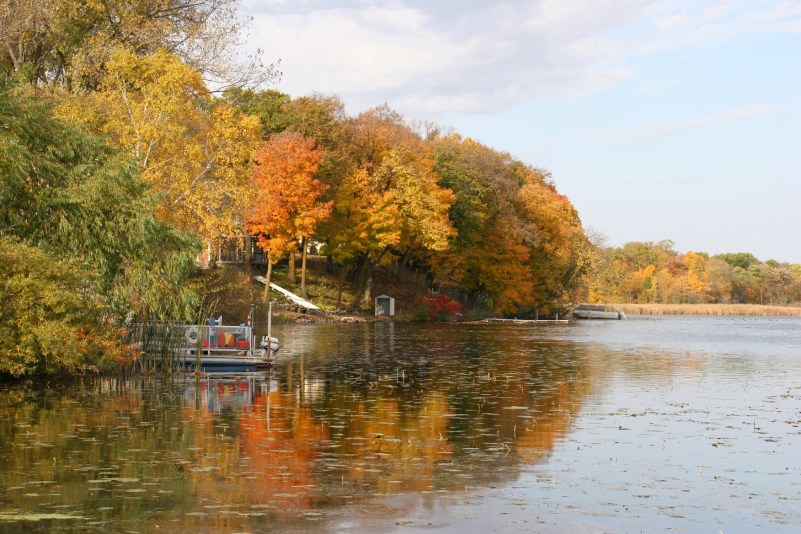
Kelly Lake, rural Faribault, photographed last October. Minnesota Prairie Roots file photo 2017.


We’re only an hour south of Minneapolis along Interstate 35, making this a perfect day trip destination. While you’re here, check out our historic downtown and even take a drive in the country to see the fall colors. The rural areas, especially around Rice County’s many lakes, present some of the best colors in this region of Minnesota, in my opinion. (Click here for a view of last year’s fall colors.)


Art supplies photographed during a previous Studio ARTour. Minnesota Prairie Roots file photo.


2018 Studio ARTour of South Central Minnesota

Meet 38 artists at 19 sites (many of them studios) during this weekend arts event that covers the Faribault, Northfield, Nerstrand and Farmington areas. This presents a great opportunity to talk to and view and buy art from artists who work with everything from wood to ceramics to paint and much more. Some studios open on Friday already with others open Saturday and Sunday. Click here for details.


Well-kept and well-traveled paths take hikers deep into Nerstrand Big Woods State Park. Minnesota Prairie Roots file photo.


Big Woods Run

Rise early Saturday to take in this annual marathon and more hosted by St. John’s United Church of Christ, Wheeling Township east of Faribault. Start time is 9 a.m. with later starts for the kids’ K. The route takes participants into Nerstrand Big Woods State Park, known for its remarkable autumn beauty. Click here and here for registration, schedule and more.


Buckham Memorial Library, Faribault, Minnesota. Minnesota Prairie Roots file photo.


Athens of the West Free Walking Tour

Local historian and artist Jeff Jarvis hosts two free walking tours through downtown Faribault, beginning at Buckham Memorial Library on Saturday, the first tour at 11:30 a.m., the second at 2 p.m. Jarvis will explain via this tour how Faribault became known as “The Athens of the West.” Tour groups are limited to 15. Click here for details.


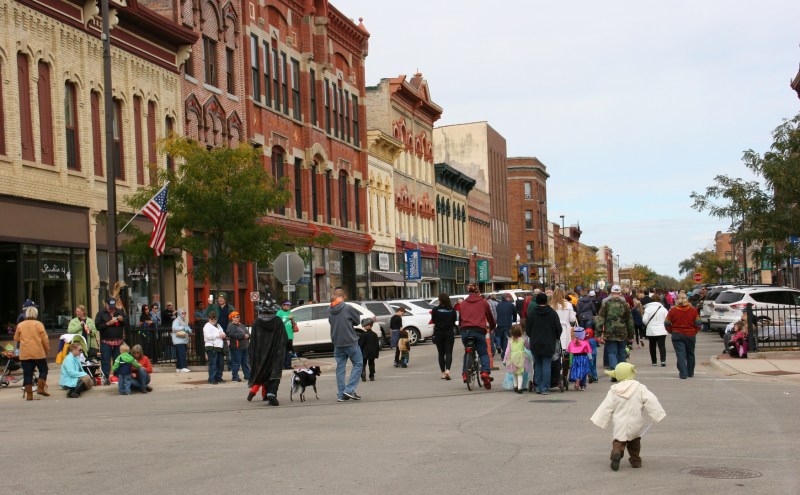
Costumed kids parade through historic downtown Faribault during a previous fall fest. Minnesota Prairie Roots file photo.


Faribault Main Street Fall Festival

Historic downtown Faribault is the setting for this annual October celebration that features a costume parade for kids, a chili cook-off, Faribault Foods Fall Frolic 5K Walk/Run and lots more. Come hungry as you can sample the chilis for $5. Click here for everything you need to know about this event set for Saturday.


Perusing merchandise at the Faribault Woolen Mill retail store. Minnesota Prairie Roots file photo.


The Legendary Warehouse Sale, Faribault Woolen Mill

From 8 a.m. – 4 p.m. Saturday, the historic woolen mill offers selected products at sale prices. This event always draws a crowd to the mill store along the banks of the Cannon River on Faribault’s north side. Click here for additional info.


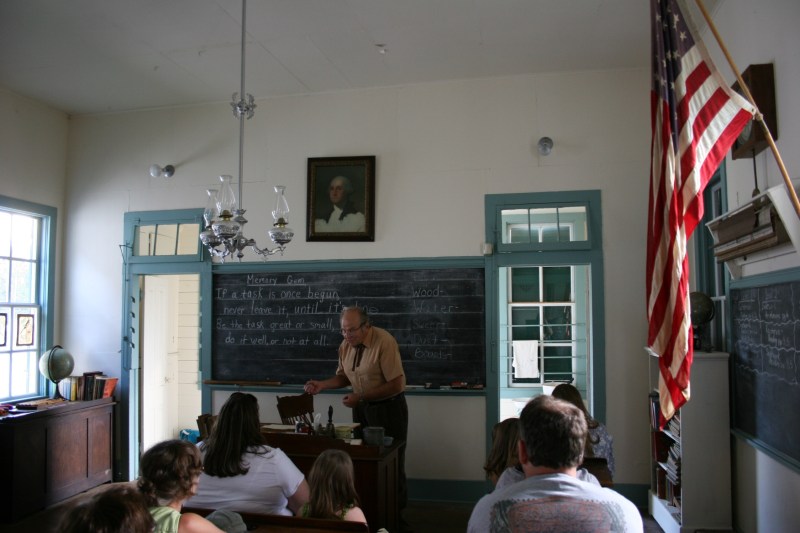
Attendees at a past A Night at the Museum fill the one-room school for classes. Minnesota Prairie Roots file photo.


Night at the Museum

The Rice County Historical Society hosts its annual Night at the Museum, a living history type event from 4 – 7 p.m. Saturday at the county museum followed by music and stories around the campfire from 7 – 8 p.m. Click here for details.


You’ll get this food and more at the Trinity North Morristown church dinner. Minnesota Prairie Roots file photo.


Harvest Dinner & Fall Festival, Trinity Lutheran Church, North Morristown

If you crave great homemade food prepared by church people, this dinner is for you. From 11 a.m. – 1 p.m. on Sunday, the good folks of this country church will serve a turkey and ham dinner with all the fixings. I’ve attended this dinner multiple times and it is, by far, my favorite church dinner. Also browse the crafts, canned goods and treats for sale. Find more info by clicking here.

© Copyright 2018 Audrey Kletscher Helbling


Faribault history takes center stage in a must-see play by two high school students September 20, 2018


An original play about historic Faribault opens Friday evening, September 18, at the Paradise Center for the Arts, Faribault.


REVEALING. THOUGHT-PROVOKING. POWERFUL. Authentic. Relevant.

All describe a debut play, A Celebration of Faribault: The 1855 Live Show, written and directed by high school seniors Logan Ledman and Samuel Temple. I attended a recent press screening of the Paradise Community Theatre production, set to open Friday evening at the Paradise Center for the Arts in historic downtown Faribault.
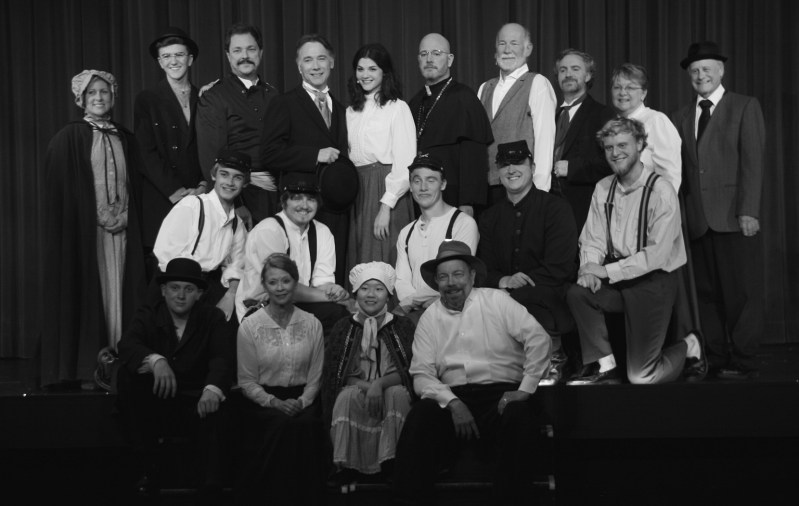
 

The cast of A Celebration of Faribault: The 1855 Live Show. Writers and directors are Samuel Temple of Faribault, left center row, and Logan Ledman of Northfield, right center row.


Featuring town founder Alexander Faribault, Bishop Henry Whipple, long-time Judge Thomas Buckham and his wife, Anna, as the lead characters, this play personalizes my southeastern Minnesota community’s early history. By the end of this lengthy show, I felt like I really knew the people I’ve read about in historical accounts. The directors/writers tackle real-life issues of the era head-on in a sensitive and relate-able way. They do that in intimate dialogue, in reading of letters exchanged between the Buckhams, in newspaper editorials, in a dramatic battlefield setting, in one especially powerful scene that closes the first act… I won’t share that closing. It needs to be seen and heard. Experienced really.
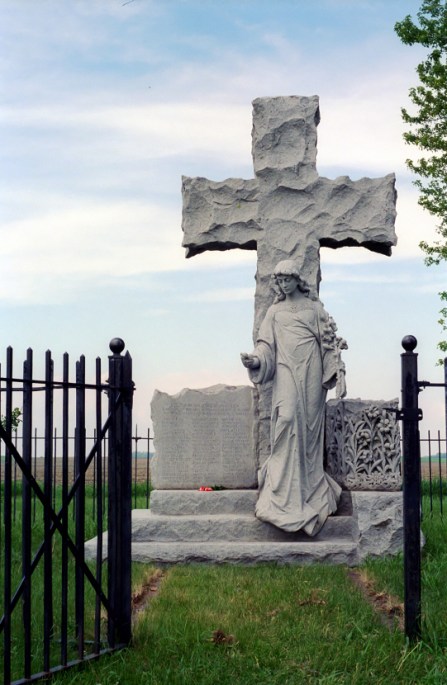
 

The Milford State Monument along Brown County Road 29 west of New Ulm commemorates the deaths of 52 settlers who were killed in the area during the U.S.-Dakota War of 1862. Located along the eastern edge of the Lower Sioux Reservation, Milford had the highest war death rate of any single township. Minnesota Prairie Roots file photo.


The Loyal Indian Monument at Birch Coulee Monument near Morton honors Native Americans and features strong words like humanity, patriotism, fidelity and courage. Minnesota Prairie Roots file photo.


The content of this play takes me beyond Faribault and back to my native southwestern Minnesota prairie, at the epicenter of the U.S.-Dakota War of 1862, a focal point in this production. I know well the history of that war, which I studied decades ago and once researched. Ledman and Temple clearly did their research, too, in writing this play.
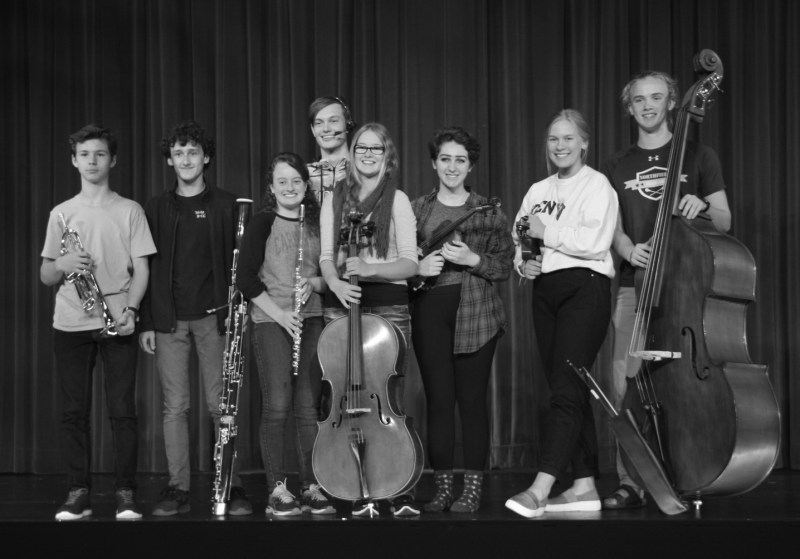
 

The youth orchestra plays original music by Sam Dwyer, back in the headset.


The crew weaves in audio details that, with a surround sound system, amplify the impact of the script. Mood-setting music written by area high school student Sam Dwyer and performed by an all-youth orchestra enhances the production. Likewise lighting and varied ways of presenting content keep the play interesting and entertaining.
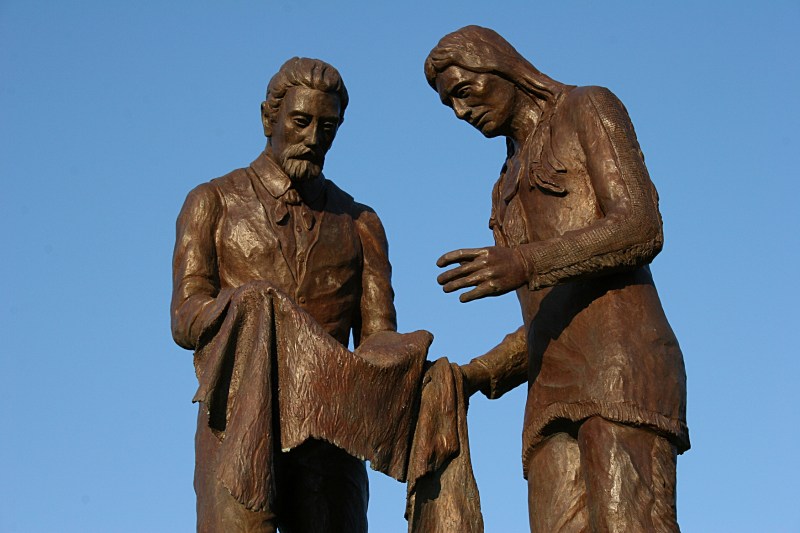
 

This sculpture of Alexander Faribault meeting with a Dakota trading partner stands in Faribault’s Heritage Park near the Straight River and site of Faribault’s trading post. Faribault artist Ivan Whillock created this sculpture which sits atop a fountain known as the Bea Duncan Memorial Fountain. Minnesota Prairie Roots file photo.


As I listened and watched, I considered how, 150-plus years later, my city still struggles with issues similar to those in frontier Faribault. Back then, town founder and fur trader Alexander Faribault, whose mother was the daughter of a Dakota chief and who married a part Dakota woman, welcomed the Dakota into his home, onto his land. Likewise, Bishop Whipple welcomed those native peoples into his church as friends. After the U.S.-Dakota War, locals were no longer so accepting of the Dakota presence here or in other parts of Minnesota.
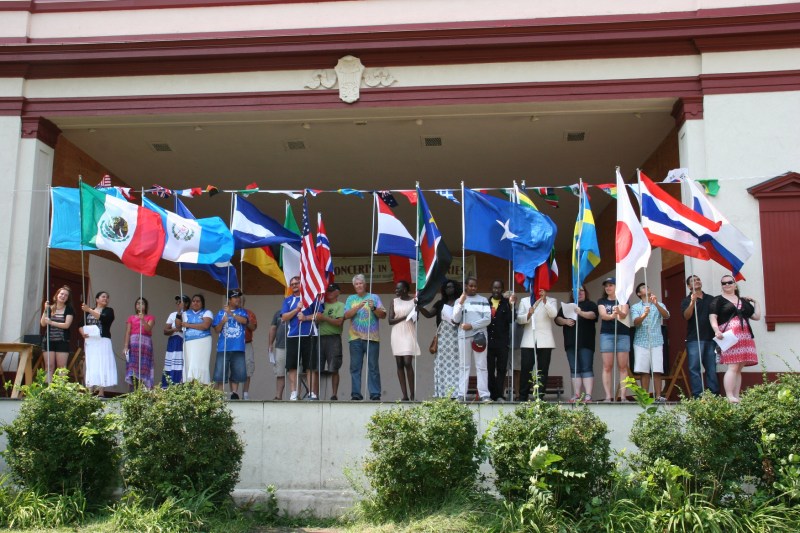
 

A flag ceremony during a past international festival features national anthems and information about the countries from which Faribault residents have originated. Minnesota Prairie Roots file photo.


Today Faribault faces some of those same challenges with immigrants in our community. They have not always been welcomed. But I see that changing as time passes, as cultures adjust, as acceptance grows. So this play, though historically-themed, remains relevant. I would like to believe that Alexander Faribault (as scripted in the play) was right in his assessment: “We are neighbors in the human race. That is the community of Faribault.”

The deeply personal aspects of A Celebration of Faribault come in letters written between Thomas Buckham and his wife, Anna. The teen writers/directors spent hours at the Minnesota Historical Society reading those exchanges. With reluctance, Anna left her family on the East Coast to resettle in Faribault, only to return and care for her ailing sister. The Buckhams would be separated for 17 years with Anna returning to Minnesota upon her husband’s death. At times I felt uncomfortable witnessing the conflicts within this marriage and the choices made. But that says a lot for the script, for the acting, that I experienced those emotions. These were real people torn between family and place. Anna truly never felt at home in Faribault.
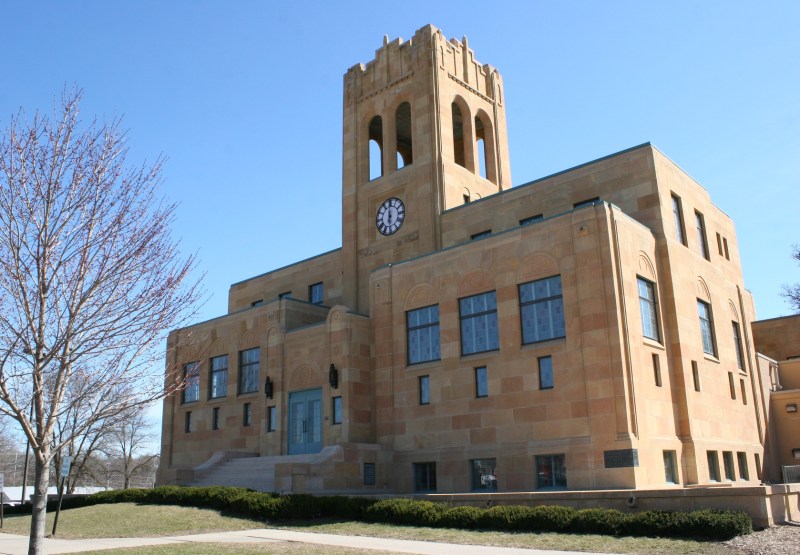
 

Anna Buckham gifted the city of Faribault with the Art Nouveau/Greek Revival style Kasota stone Thomas Scott Buckham Memorial Library. It was constructed in 1929-1930 for $240,000. Minnesota Prairie Roots file photo.


Still, she left a legacy honoring the husband she loved even through physical separation. That legacy stands just blocks from my home, at the site of a former livery stable. It is the Thomas Scott Buckham Memorial Library, complete with Greek murals celebrating Thomas’ adoration of the Greeks, the Greek language and culture, and Greek classics.
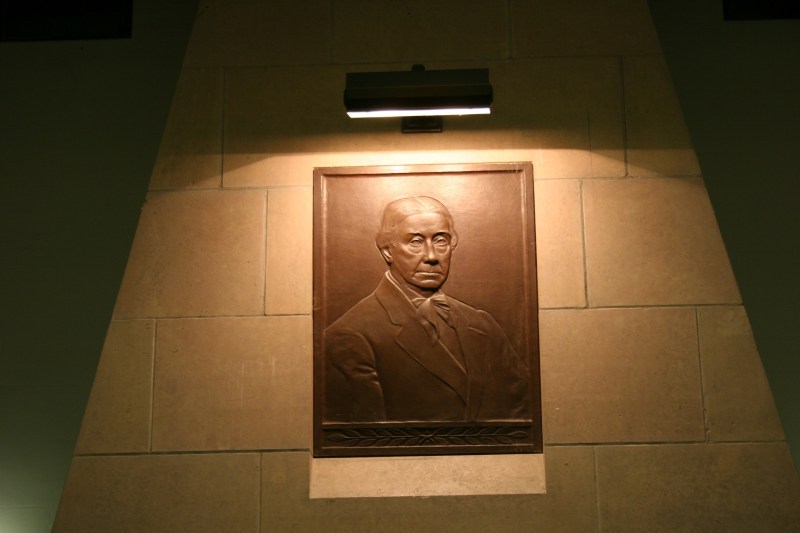
 

This bronze sculpture of Thomas Scott Buckham hangs above a fireplace in the library’s second floor Great Hall meeting space. Minnesota Prairie Roots file photo.


As someone who grew up in a rural community without a library, I deeply appreciate this gift to the city I’ve called home for 36 years. I value Buckham library and the content therein from magazines to books to the art gracing walls to a stained glass window crafted by Charles Connick of Boston. Today my son lives and works in greater Boston. Growing up, he visited the library often, checking out books to teach himself computer programming. He would not be where he is today professionally without the resources of Buckham library. Likewise, my daughters worked as pages there, experiences that would later land them library jobs as college students. The library holds personal significance in my family’s history. Thus I appreciate its prominence in A Celebration of Faribault and its continued importance in my community as a welcoming place for all peoples.
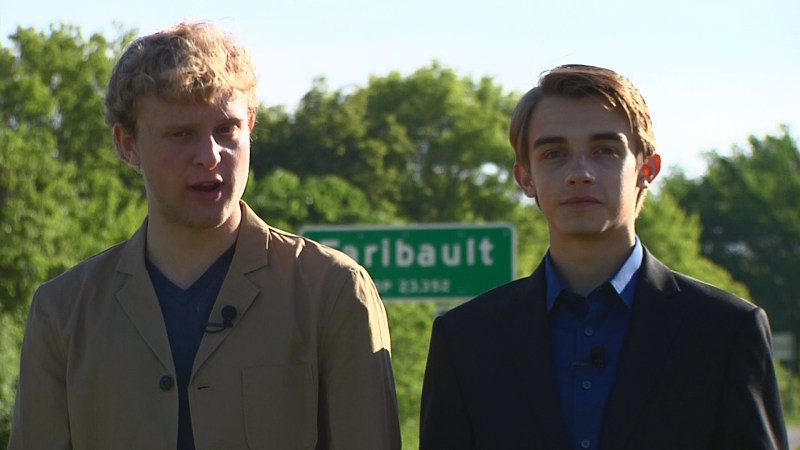
 

High school students Logan Ledman, left, and Samuel Temple produce “1855: A Faribault History Series on FCTV” in Faribault. File photo courtesy of Samuel Temple.


Exiting the Paradise Center for the Arts theater following the performance, I felt a sense of gratitude to the young men who care enough about Faribault to research and embrace its history and then share their discoveries with others. Ledman and Logan are also creators of 1855, an acclaimed history documentary series aired on local public television. It’s hard to believe these two are still in high school. There’s no doubt these 17-year-olds possess a clear and deep love of history, of heritage and of this place we call Faribault.


FYI: Performances of A Celebration of Faribault: The 1855 Live Show are set for 7:30 p.m. on two Fridays, September 21 and 28, and at 2 p.m. on two Sundays, September 23 and September 30. Click here to purchase tickets.

A $3,000 grant from the Southeastern Minnesota Arts Council helped fund this production.

© Copyright 2018 Audrey Kletscher Helbling