Minnesota Prairie Roots

Writing and photography by Audrey Kletscher Helbling

Marcy’s memorable obituary from southwestern Minnesota March 14, 2022

Filed under: Uncategorized — Audrey Kletscher Helbling @ 5:00 AM
Tags: , , , , , , ,

IN RECENT YEARS, I’VE TAKEN to reading obituaries printed in my local newspaper, the Faribault Daily News, and also online. That includes checking the obit listing on KLGR radio in Redwood Falls, the county seat of my hometown county. Extended family and many other people to whom I’m connected live in southwestern Minnesota.

I am of that age when the generation just ahead of me is passing at a rapid rate. That includes my mom, who died in January, and my father-in-law a year earlier. But young people also die, usually unexpectedly. That includes my cousin Randy, who died suddenly at the age of 50 just two days after my mom. And then a cousin’s 48-year-old stepson shortly thereafter.

It’s a lot, this death. And while death is difficult, it’s part of life and we will all some day face our earthly mortality. That’s reality.

Obituaries not only publicly inform us of deaths and funeral/burial details, but they also reveal information about the deceased. Most are written in a straightforward manner of factual life basics. Birth, marriage, education, occupation, interests, family. That sort of stuff.
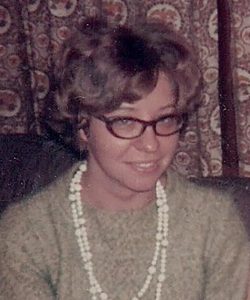
Martha Schewe. (Photo source: Stephens Funeral Service)

But once in awhile I find a stand-out obit unlike any other. That would be the obituary of Martha Ann Schewe, 74, of Danube, who died March 4. “Marcy/Tractor Mimi/Pizza Grandma/Murphy” was, according to the record of her life, welcomed into heaven with a flyswatter and a hot plate of pierogi. And, yes, I had to Google pierogi, which is a Polish staple dumpling—dough wrapped around a savory or sweet filling and cooked in boiling water. That flyswatter and pierogi hook hooked me into reading the story of Marcy’s life.

And what a life it was. Pennsylvania-born, she eventually landed on a Minnesota farm with her native-born husband. Marcy met Jim at a dance in DC and they corresponded daily for 16 months while he was stationed overseas during the Vietnam War. He even mailed an engagement ring to her. That arrived on Friday the 13th. She waited a day to open the package.

I encourage you to click here and read Marcy’s obit in its entirety. It’s worth your time to read about this woman who was determined to leave rural life behind after a childhood of following “a heavily wooded, bear infested road to the bus stop, delivering milk from her parents’ dairy farm to the neighbors along the way.”

Love and life had a way with Marcy, who would grow to embrace farm life in southwestern Minnesota.

Details reveal a woman who loved family and life. But she disliked squirrels, even grumbled about them. There’s a whole lot more packed into her obituary. Please read it. Yes, I’m repeating that because you really need to read Marcy’s story (and the comments in her guestbook).

Marcy’s obit ends with this loving, humorous conclusion: Her fierce and vibrant spirit is carried on by her soulmate, her 5 children, 9 grandchildren, 5 great grandchildren, 7 siblings, a handful of hated squirrels, a menagerie of farm animals, and a whole wide world full of longtime friends, some of whom she hadn’t gotten around to meeting yet.

What a way to be remembered.

TELL ME: How would you like to be remembered? 

Copyright 2022 Audrey Kletscher Helbling


Appreciating the creativity of Minnesota artists at the Paradise March 11, 2022

“Flying Snow Owl” woodcarving by Lakeville artist Mike Stoecklein. (Minnesota Prairie Roots copyrighted photo March 2022)

THE RANGE OF CREATIVITY in southern Minnesota continues to impress me. Take the art of Kate Langlais of Faribault and of Mike Stoecklein from Lakeville. They create decidedly different art. But they share the commonality of incredible creative talent.

“Pope Francis,” an acrylic portrait by Faribault artist Kate Langlais. (Minnesota Prairie Roots copyrighted photo March 2022)

Recently I viewed exhibits by both in separate galleries at Faribault’s Paradise Center for the Arts. I continue to feel deep gratitude for this arts center in my community. We need art—whether literary, visual or performing—to feed our spirits and souls, just as much as we need food to feed our bodies.

“Grey Tree Frog” woodcarving by Mike Stoecklein. (Minnesota Prairie Roots copyrighted photo March 2022)

A walk-about viewing the work of Kate and Mike reaffirms the importance of art in my life. Mike’s nature-focused pieces, especially his woodcarvings, take me into the woods. To observe an array of owls. To spot a tree frog, the elusive frog I’ve always wanted to see but haven’t. His landscape paintings also connect me to place. (He paints the occasional portrait, too.)

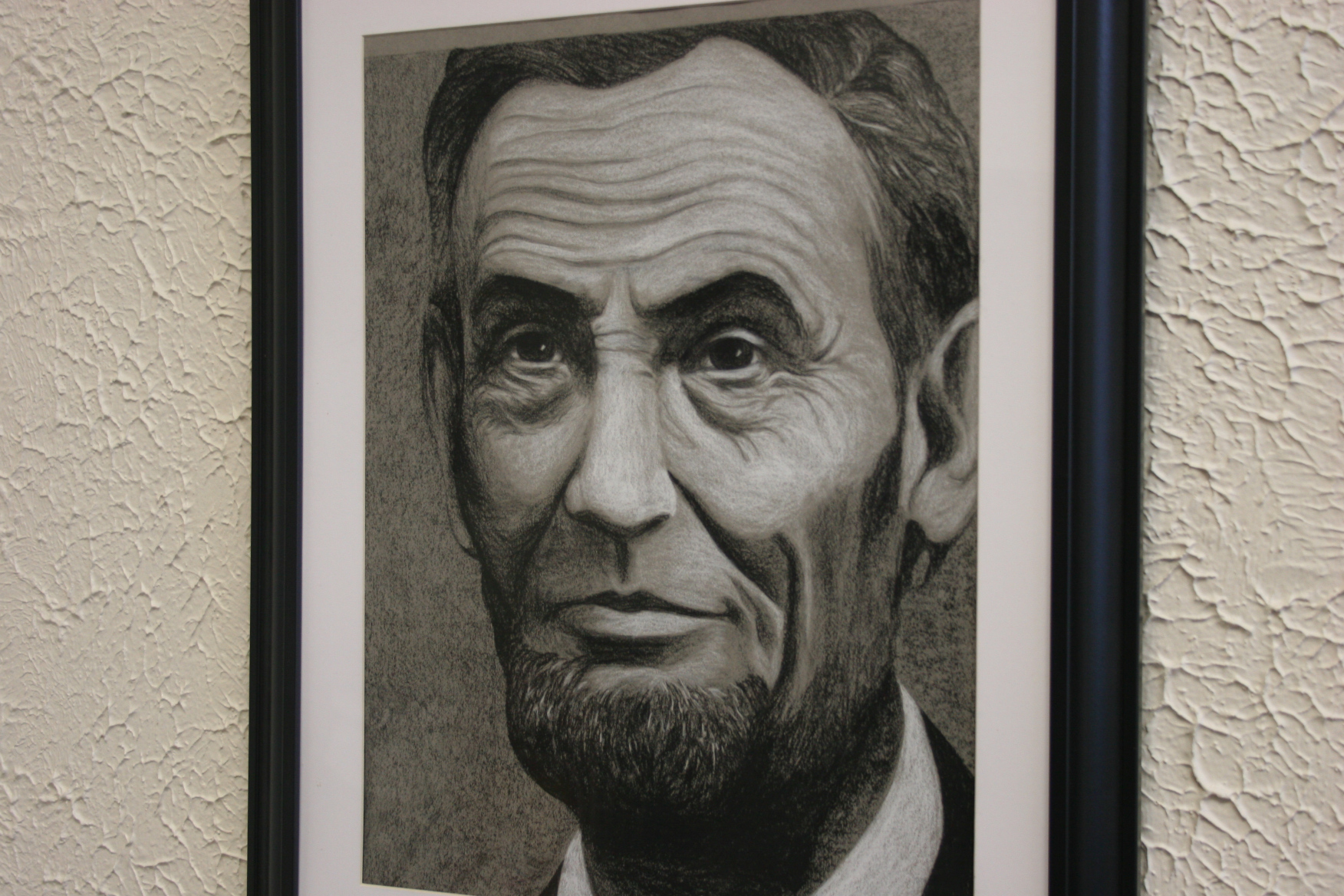
A portrait of Abraham Lincoln by Kate Langlais. (Minnesota Prairie Roots copyrighted photo March 2022)

Kate’s Paradise exhibit is portrait-strong, her specialty, although she also paints landscapes. When I study the faces she’s recreated, I feel a connection, too. Kate has an ability to convey emotions and personality. Generosity. Kindness. Strength. Love. Compassion.

Mike Stoecklein’s “Eagle Owl” woodcarving. In his artist statement, he writes: “I create for myself, and if others enjoy it, then that’s even better…” Owls are a favorite subject of this artist. (Minnesota Prairie Roots copyrighted photo March 2022)

I encourage you to stop by the Paradise galleries—Mary Welke (a Minneapolis artist) and Summer Heselton (a junior at Bethlehem Academy) also have art displayed—this weekend or next. All four shows close on March 19. Also head upstairs to the annual All Area Student Show, which runs until April 9. I’ll feature a post on that soon.

Paradise hours are from noon-5 pm Wednesday, Thursday and Friday and noon-2 pm Saturday. The Paradise, located at 321 Central Avenue North in historic downtown Faribault, also opens for evening concerts, theatrical productions and other events.

TELL ME: Do you have a go-to arts center in your community? Why do you value the arts? Let’s hear.

© Copyright 2022 Audrey Kletscher Helbling


Hints of spring at Two Rivers March 10, 2022

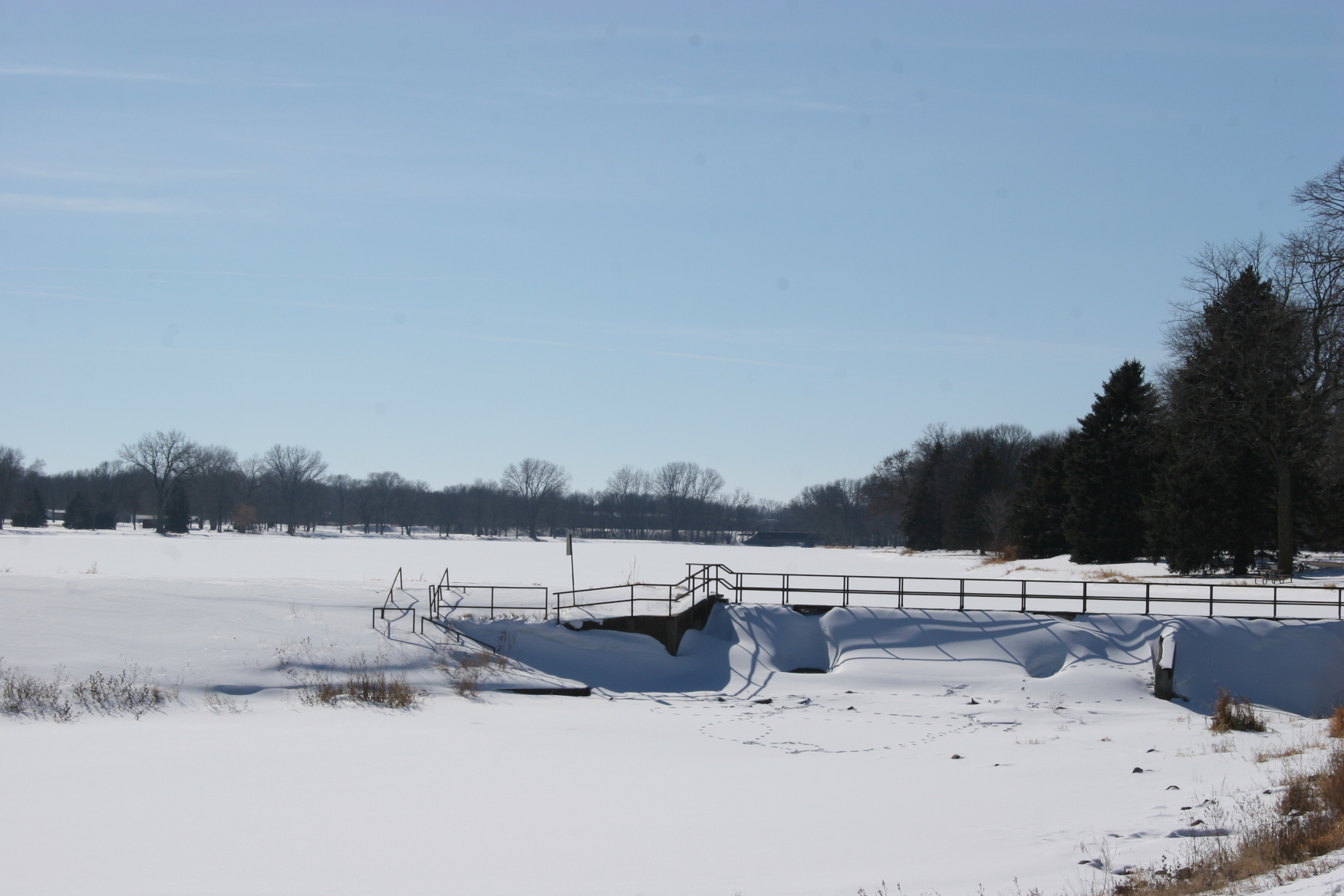
A wide view of the frozen Cannon River and dam adjacent to the Rice County Fairgrounds. (Minnesota Prairie Roots copyrighted photo March 2022)

THE SHIFT IN SEASONS seems subtle. But it’s there. In the lengthening of days. In brilliant sunshine that cuts through snowbanks, streams of water flowing and puddling. Iced rivers, too, are beginning to thaw.

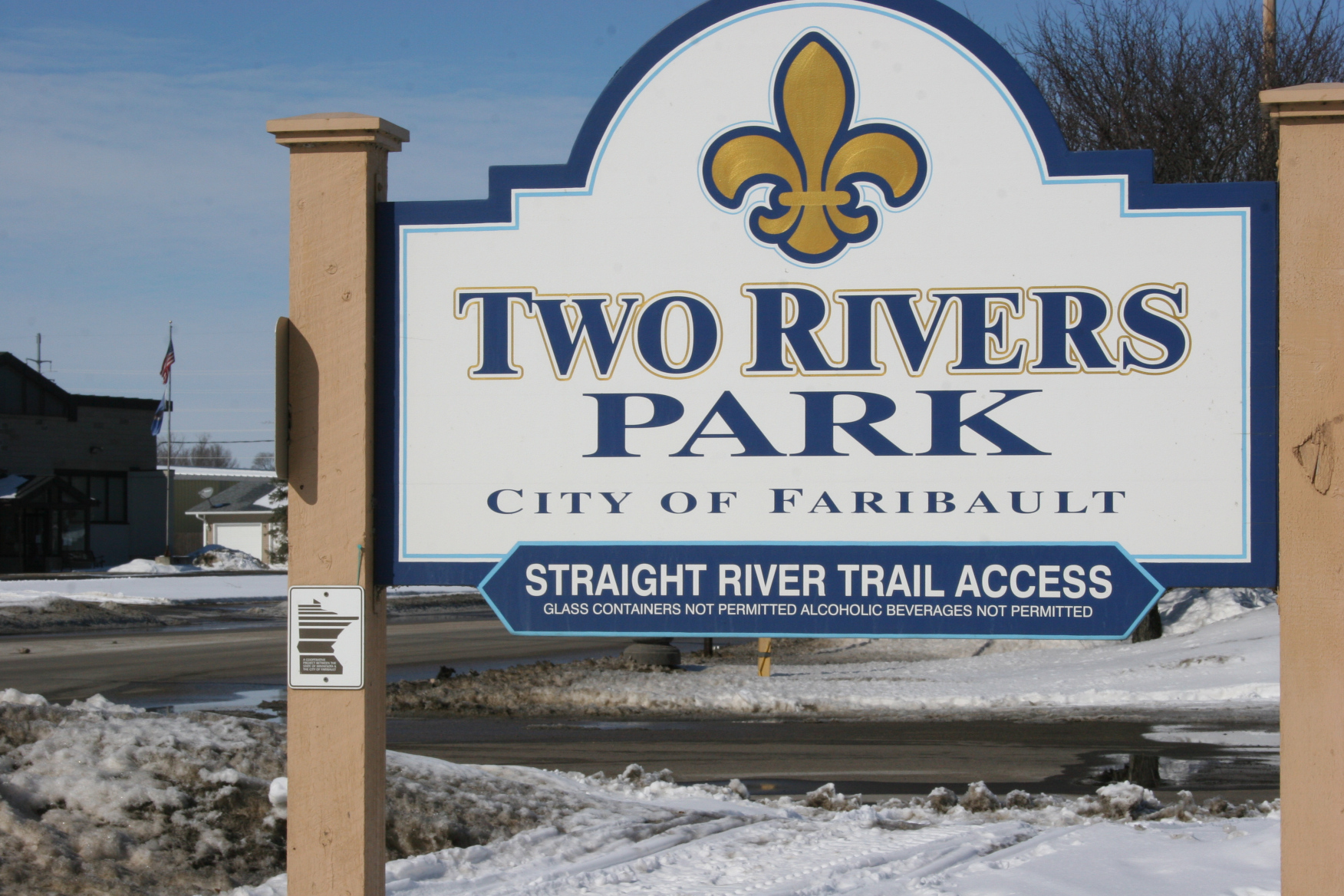
Signage marks this park just off Second Avenue on Faribault’s north side. (Minnesota Prairie Roots copyrighted photo March 2022)

On a recent stop at Two Rivers Park followed by a hike along the Straight River Trail in Faribault, I witnessed the evolving transition from winter toward spring.

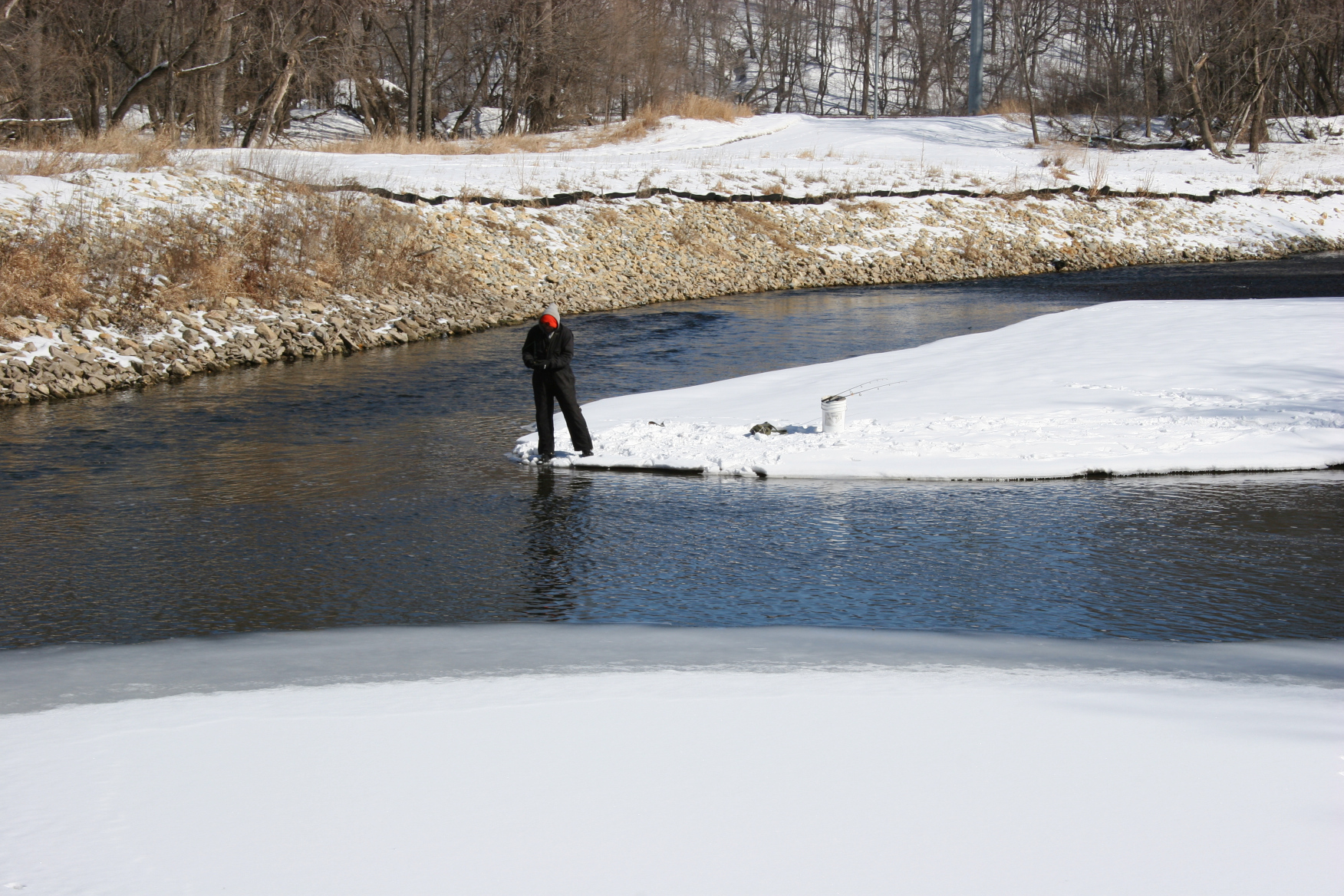
Fishing where the Cannon and Straight Rivers meet in Faribault. (Minnesota Prairie Roots copyrighted photo March 2022)

At the convergence of the Straight and Cannon Rivers, an angler fishes in the open water. His orange stocking cap covered by his hooded sweatshirt layered beneath black coveralls jolt color into an otherwise muted landscape. Randy and I watch as he reels in a large fish, then unhooks and plops it onto the snow. A northern, Randy guesses. We watch for awhile, content to see the river flow, sun glinting upon the surface.

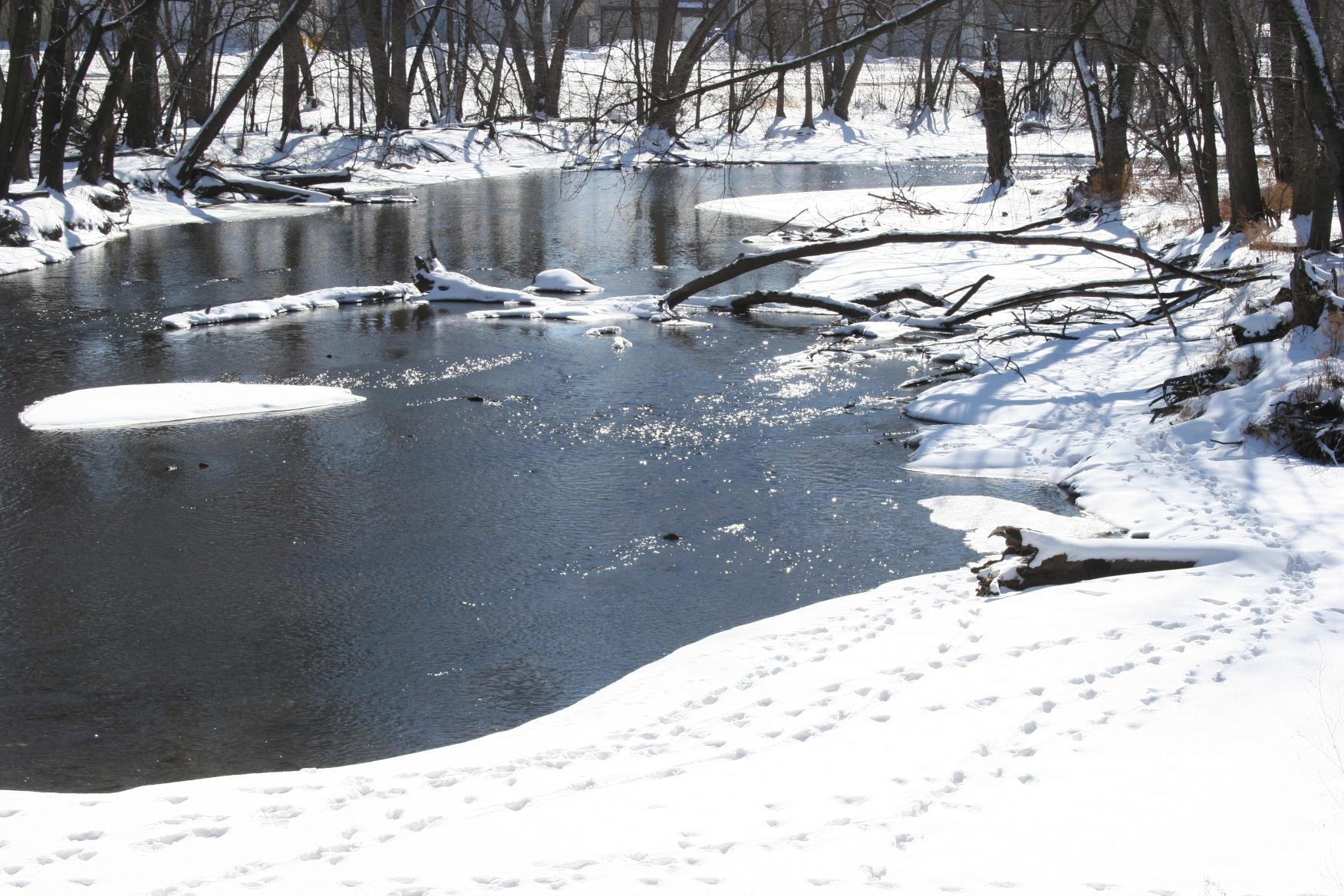
The beautiful open Cannon River at Two Rivers Park. (Minnesota Prairie Roots copyrighted photo March 2022)

We make our way back to the parking lot, after I pause to photograph the mostly open river sweeping between snowy woods. There’s sometime serene about such a scene. Peaceful, even as traffic drones by on nearby Second Avenue.

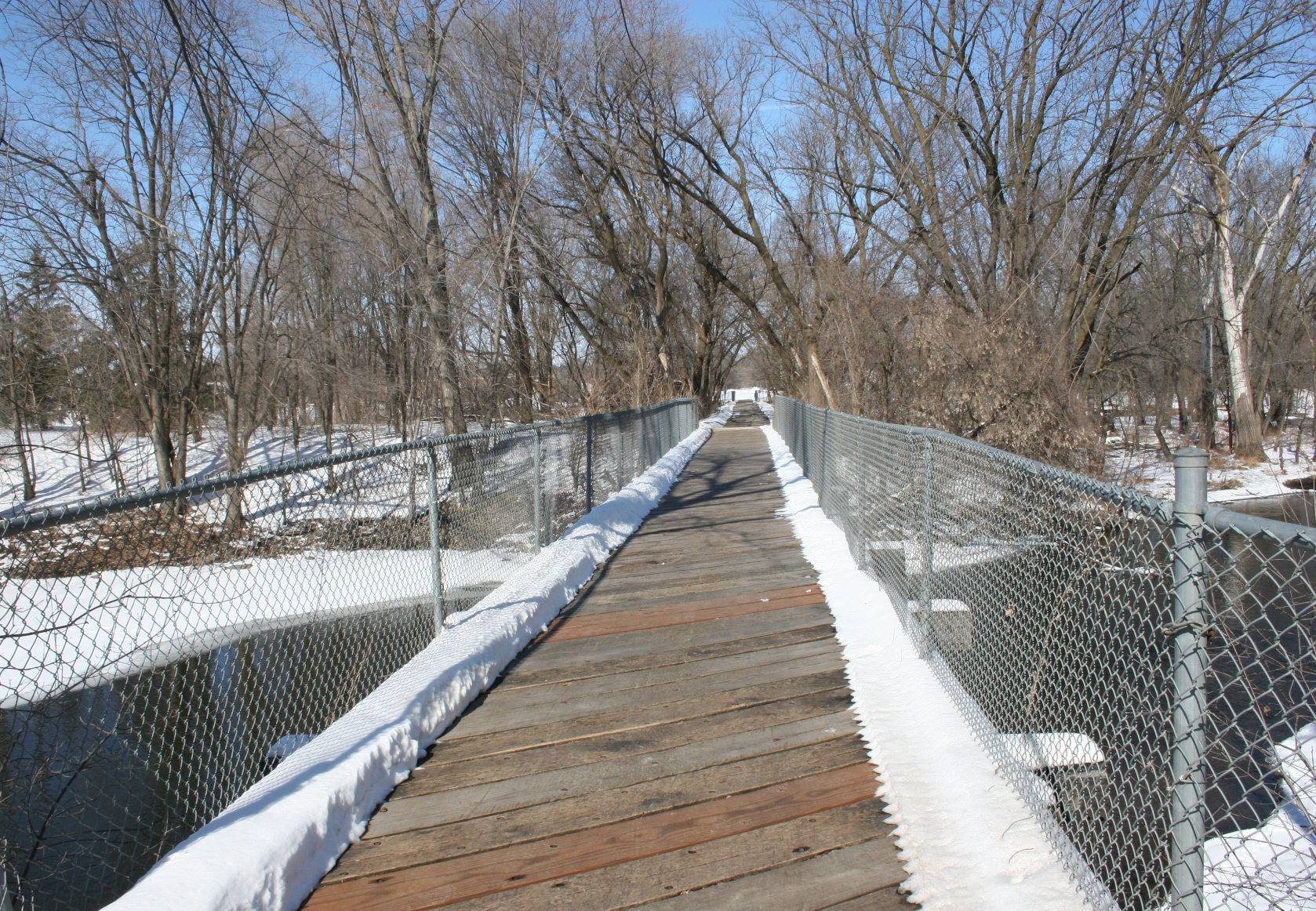
Pedestrian bridge over the river. (Minnesota Prairie Roots copyrighted photo March 2022)

On the trail, we cross bridges constructed of uneven angled boards that always trip me. I pause to peer into the river.

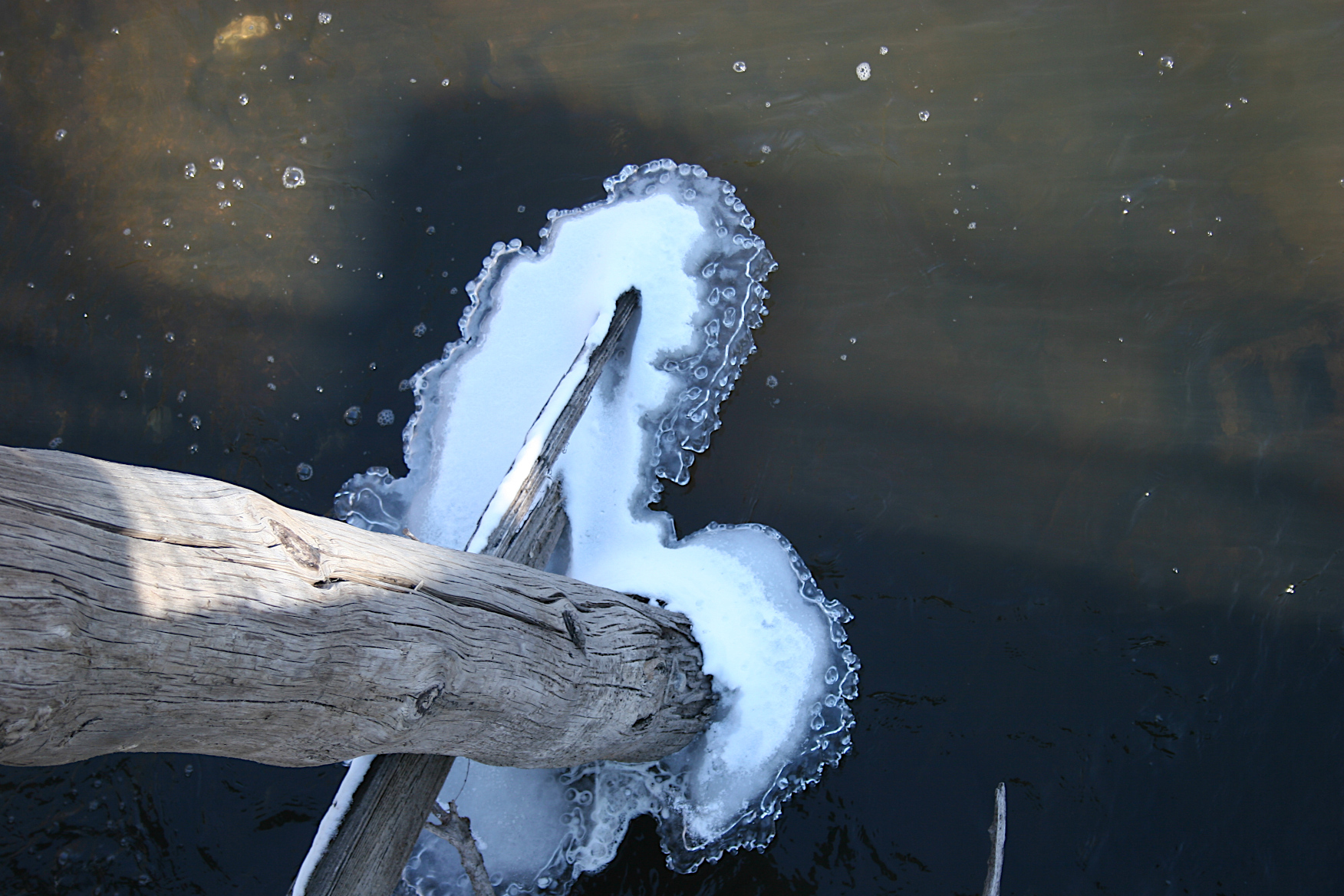
Ice rings a pedestrian bridge support post in the otherwise open river. (Minnesota Prairie Roots copyrighted photo March 2022)

Birdsong, a sure auditory sign of spring’s approach, resounds as I lean over the bridge railing to see the open water below. Both hint of winter’s retreat.

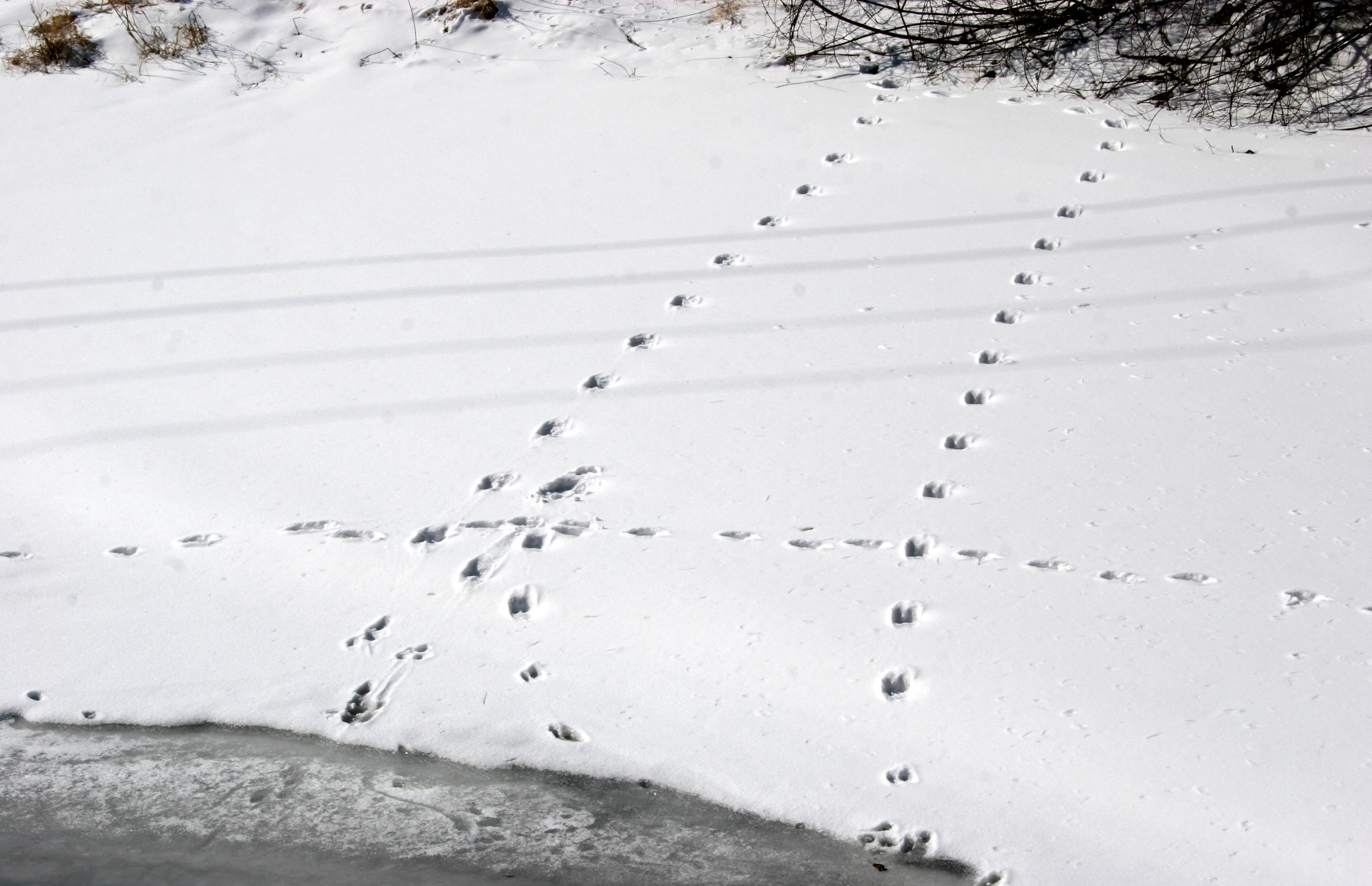
Animal tracks remind me of tic-tac-toe. (Minnesota Prairie Roots copyrighted photo March 2022)

Far below I observe animal tracks crossing the snow in a tic-tac-toe pattern leading to water’s icy edge.

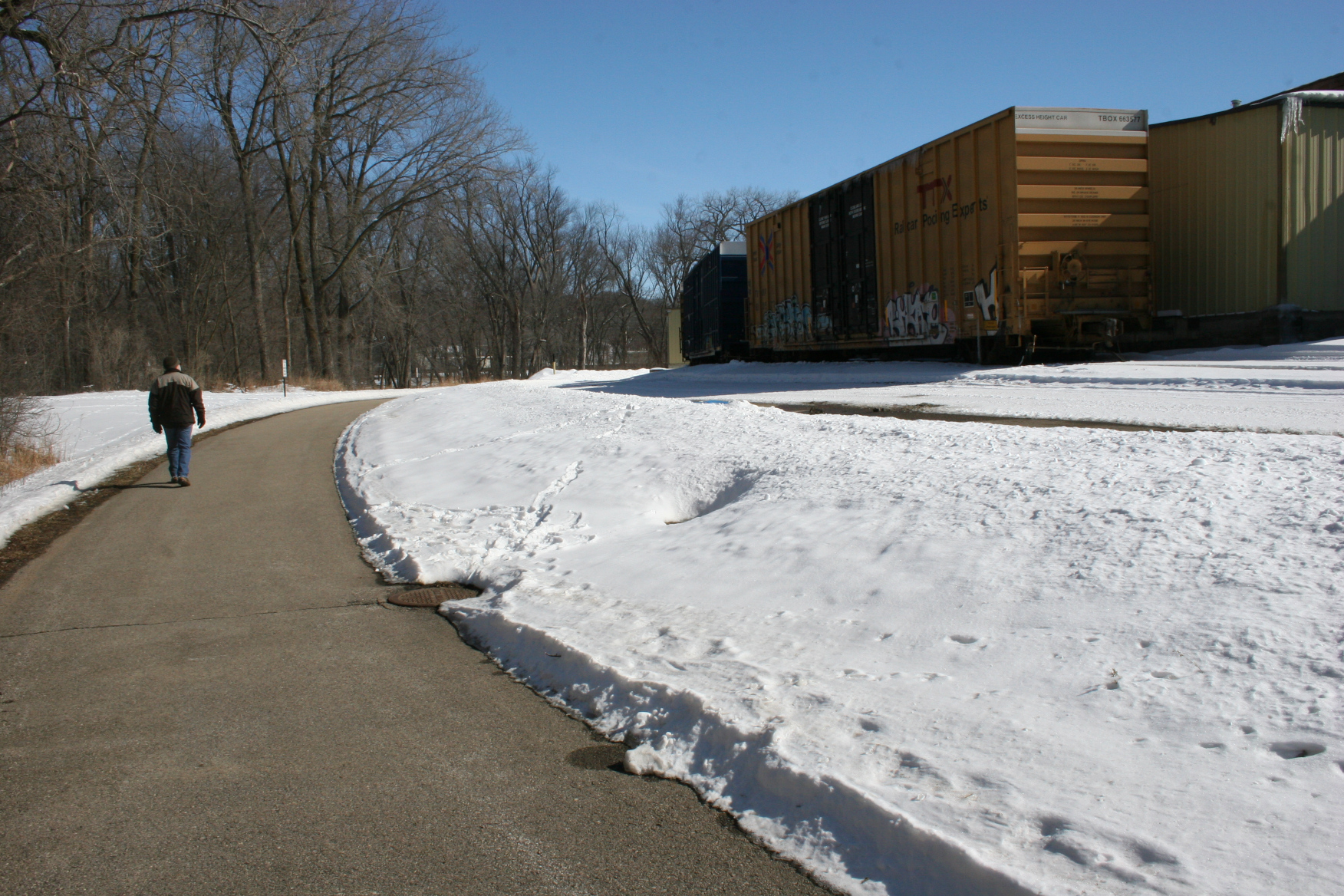
Following the Straight River Trail alongside the former vegetable canning company. (Minnesota Prairie Roots copyrighted photo March 2022)

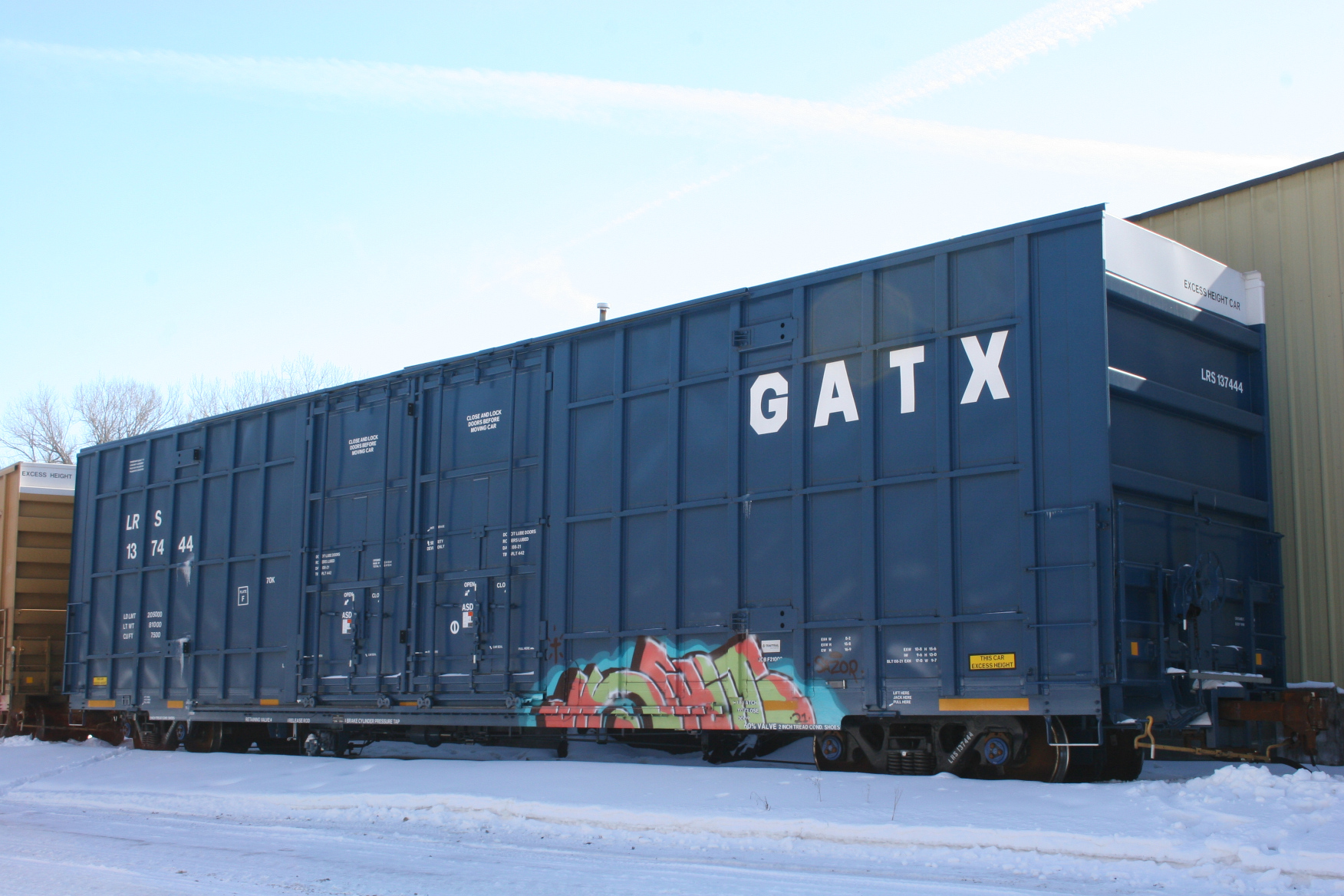
Curving along the path near the former Faribault Foods canning company, stationary boxcars sidle against the building.

Boxcar graffiti. (Minnesota Prairie Roots copyrighted photo March 2022)

Graffiti colors the boxcar canvases.

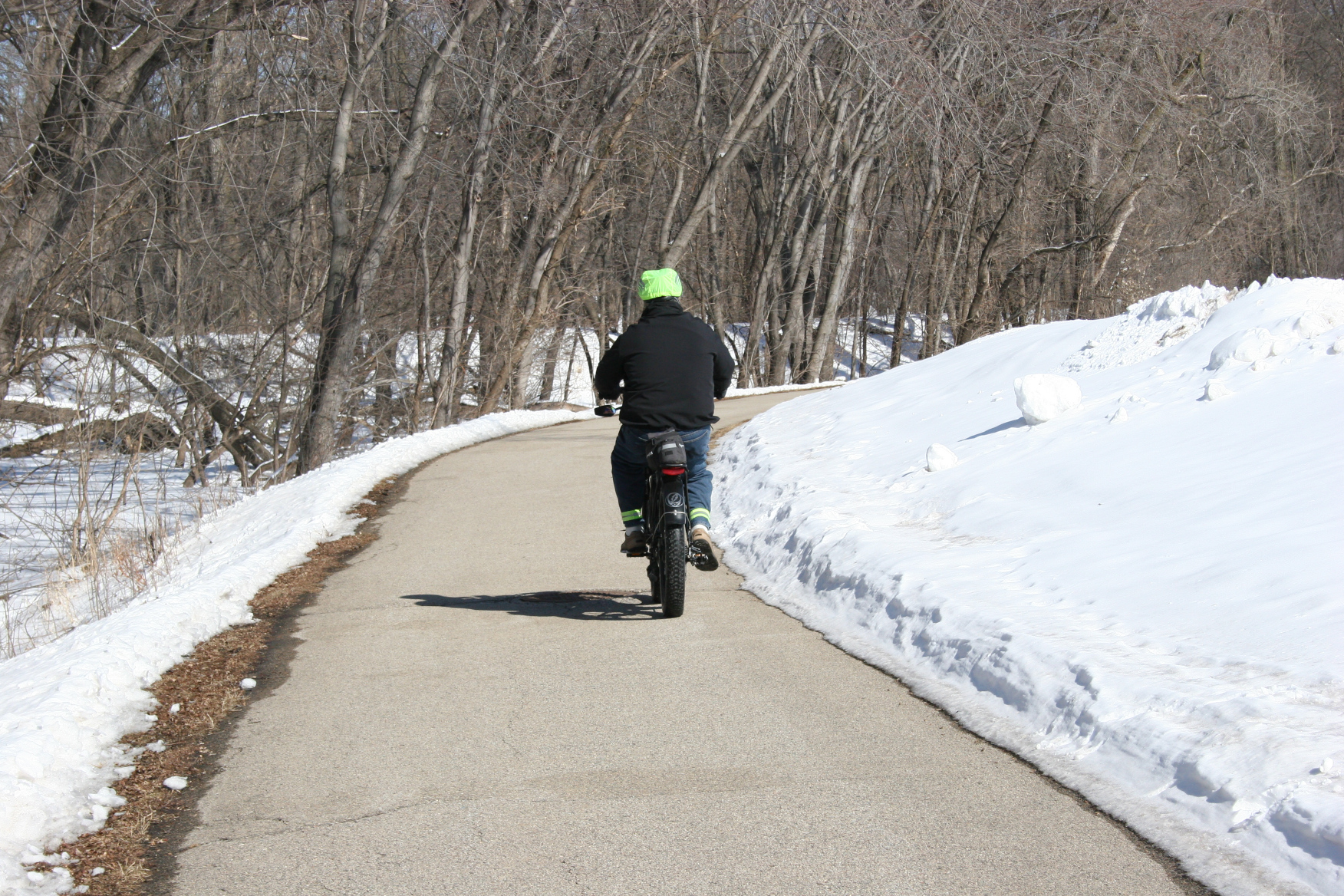
Biking the Straight River Trail in March. (Minnesota Prairie Roots copyrighted photo March 2022)

We walk for awhile, then retrace our steps. Randy warns of an approaching cyclist and we step to the right of the trail in single file. “Hi, Randy,” the guy on the fat tire bike shouts as he zooms past. We look at each other. His identity remains a mystery.

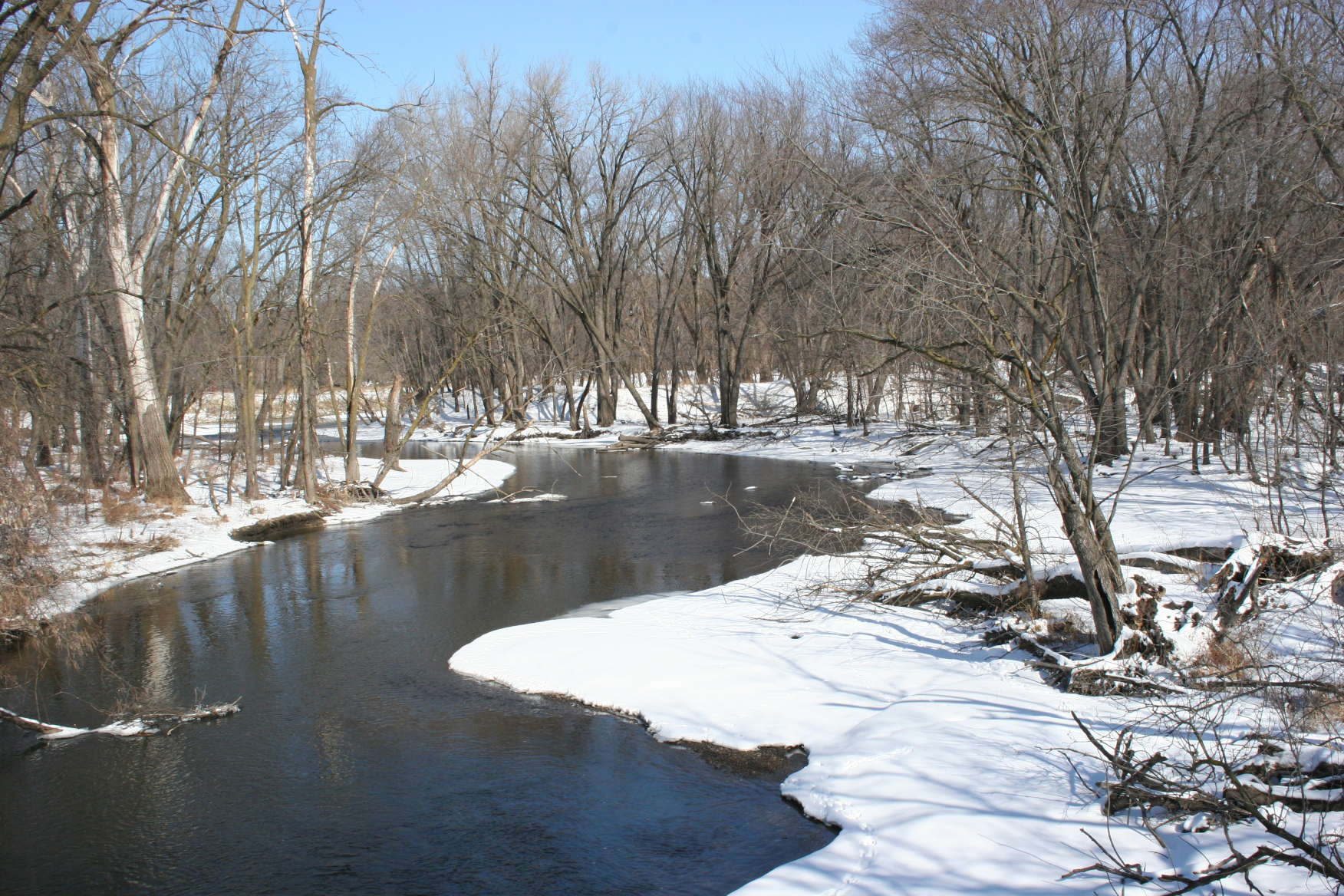
The scenic Cannon River snakes toward the Straight River. (Minnesota Prairie Roots copyrighted photo March 2022)

Back on the bridges, I pause again to view the Cannon River snaking across the landscape like a pencil path following a maze. More photographs.

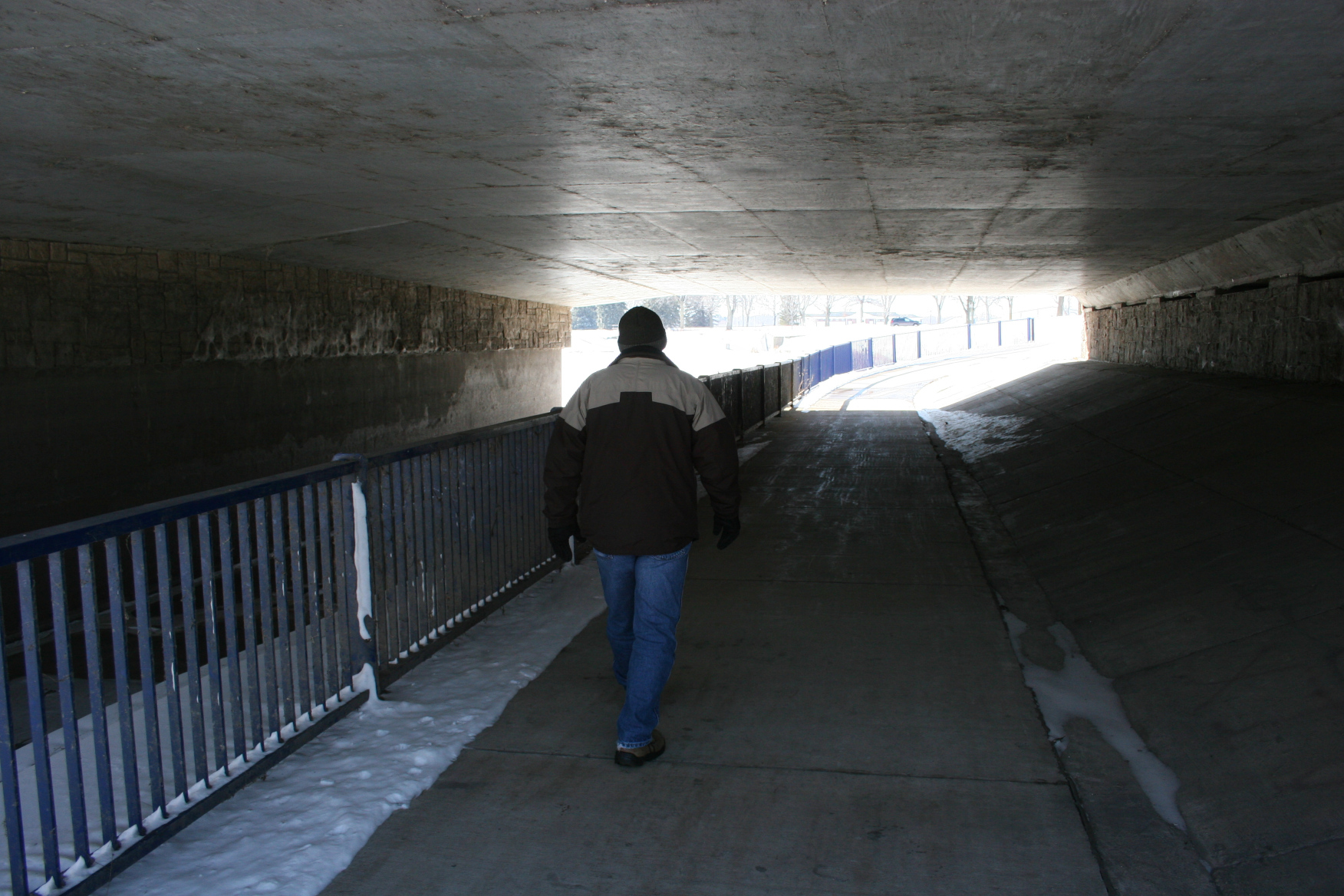
Randy follows the tunnel under Second Avenue toward North Alexander Park. (Minnesota Prairie Roots copyrighted photo March 2022)

Before heading home, we divert briefly toward North Alexander Park, taking the tunnel under the Second Avenue bridge where, on the other side, the scene opens wide to the frozen, snow-layered river. In warm weather, anglers fish here, below the dam in open water.

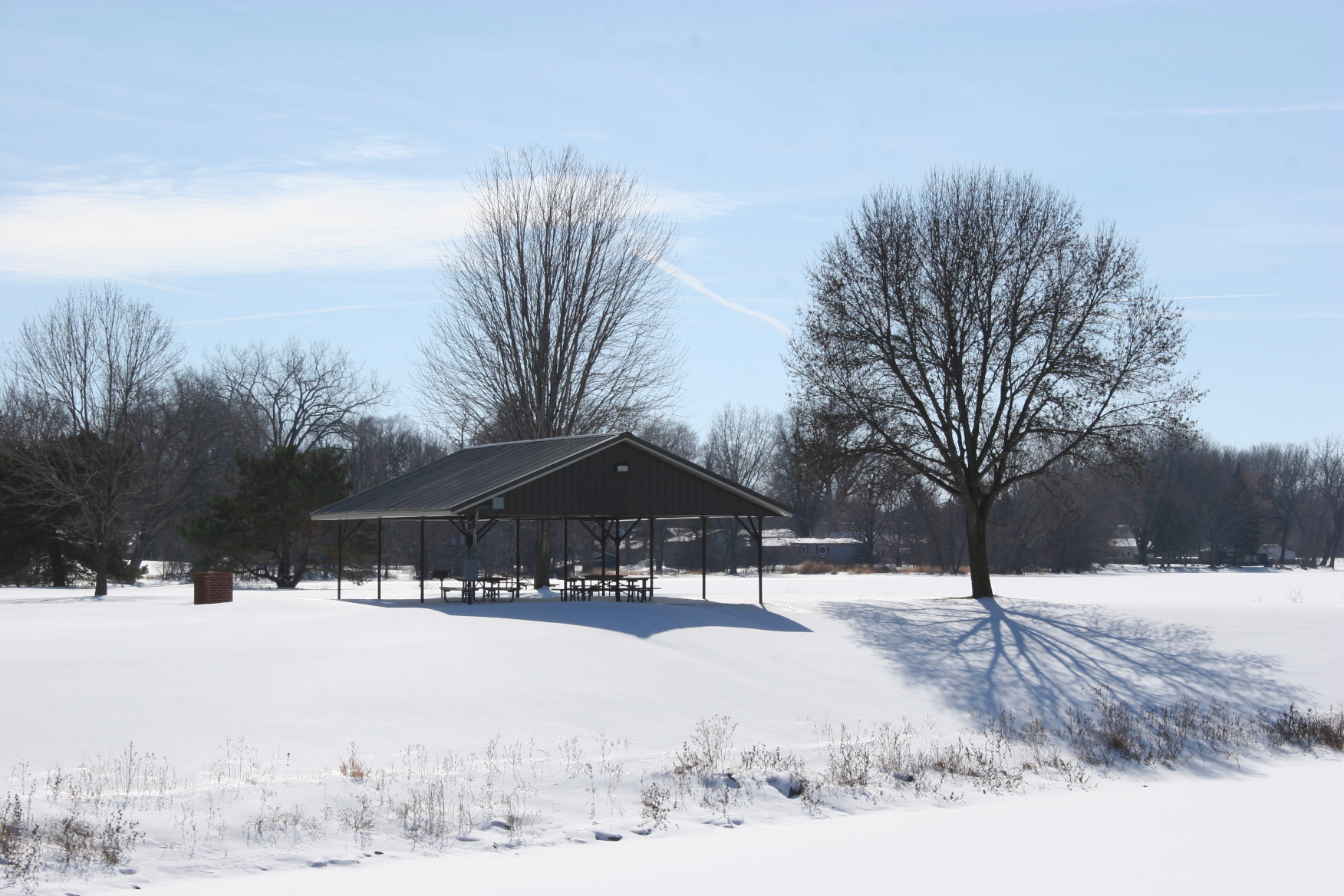
Picnic shelter at Father Slevin Park by the Cannon River. (Minnesota Prairie Roots copyrighted photo March 2022)

Now the place is mostly vacant, just like the riverside picnic shelter.

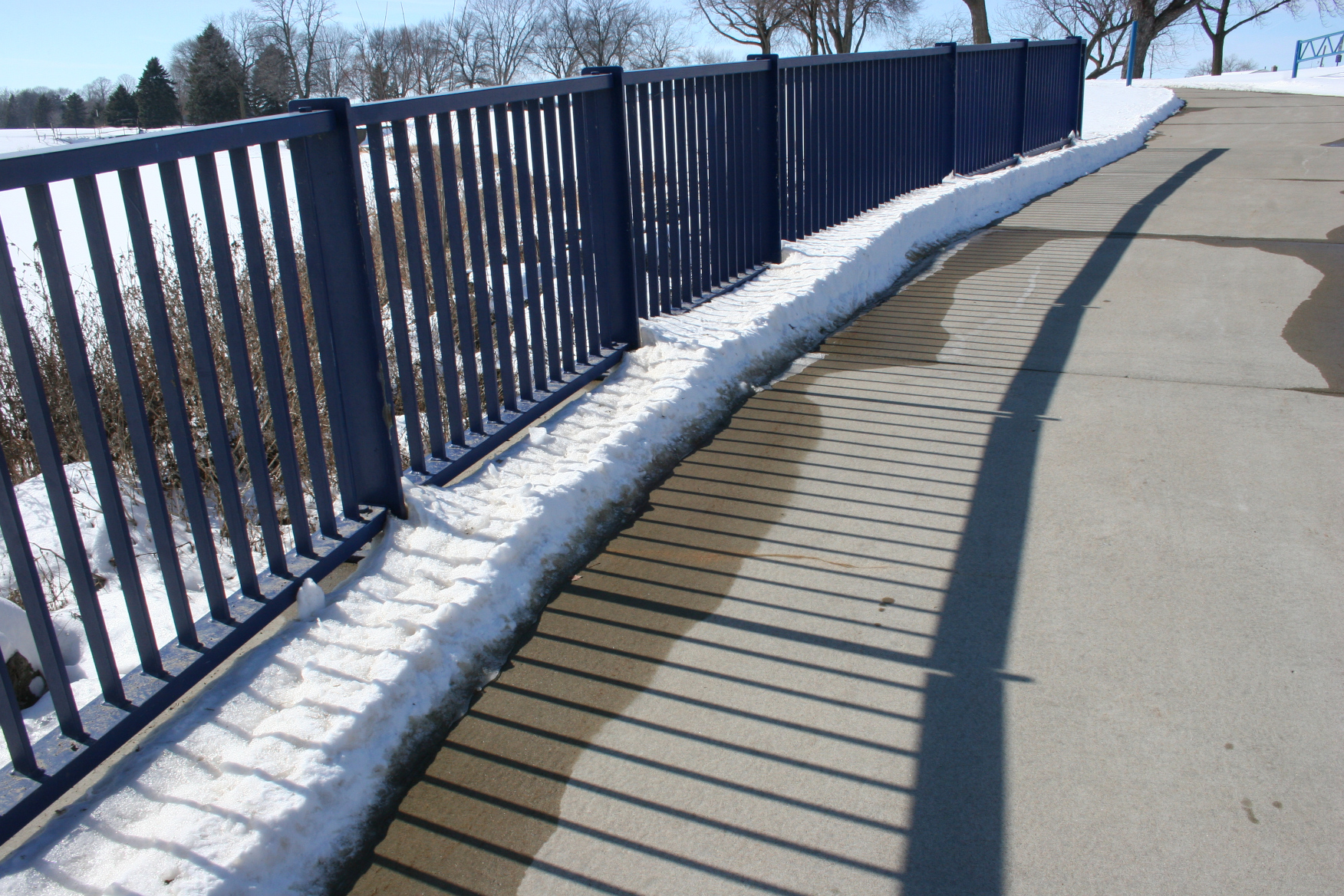
Shadowing of the trailside fence outside the tunnel. (Minnesota Prairie Roots copyrighted photo March 2022)

By now we are cold, ready to conclude our afternoon jaunt. As I stride downhill toward the tunnel, I notice shadows of fence slats spaced upon the concrete. Art to my eyes. I stop, photograph the fence and fence shadows as they arc. Even in this moment, I see signs of spring along the river, beneath the blue sky.

© Copyright 2022 Audrey Kletscher Helbling


Mary Welke’s art reconnects me to my rural roots March 8, 2022

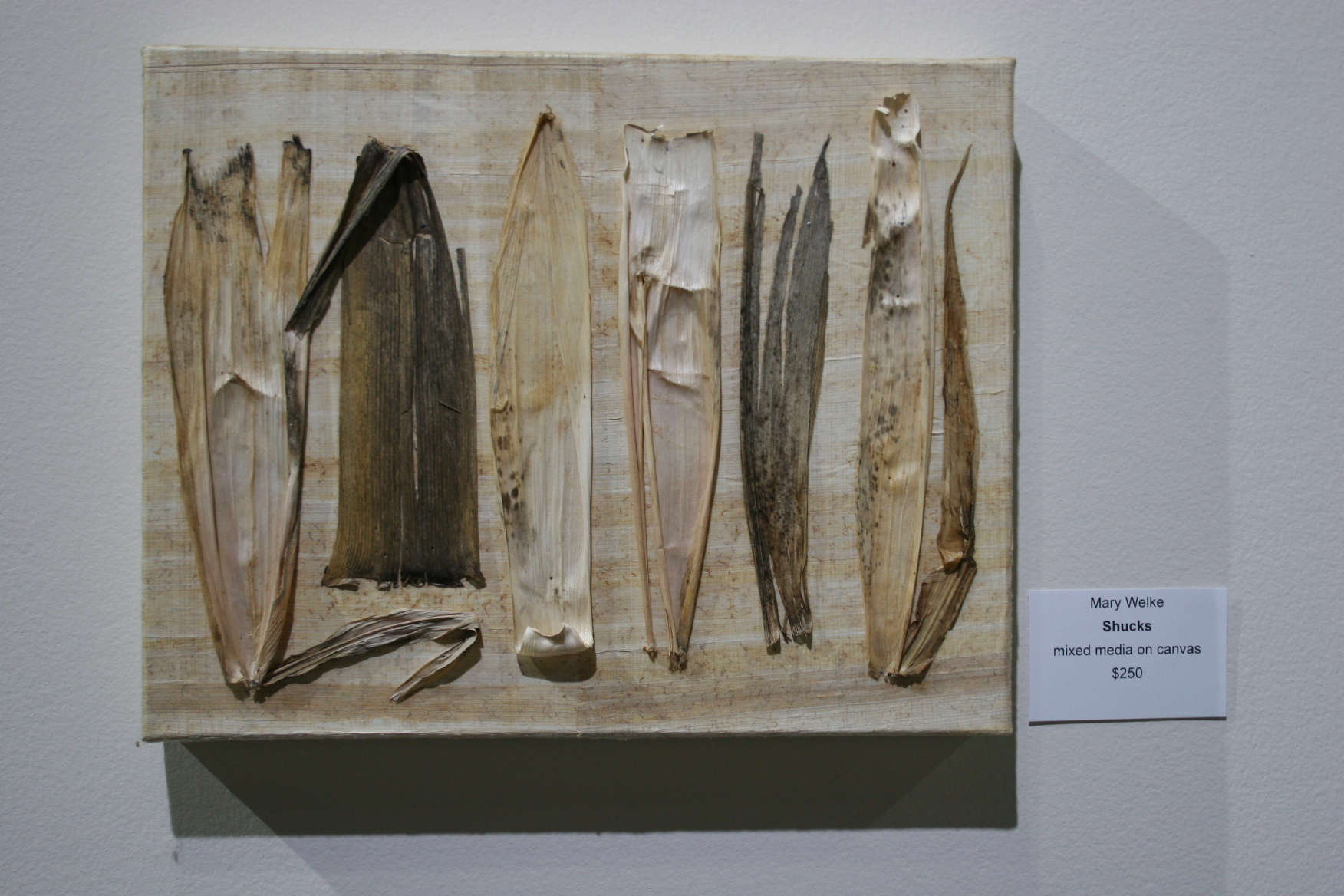
Corn husks define Mary Welke’s mixed media on canvas, “Shucks.” (Minnesota Prairie Roots copyrighted photo March 2022)

I FELT CONNECTED, oh, so connected to Minneapolis artist Mary Welke’s art as I viewed her exhibit at the Paradise Center for the Arts in historic downtown Faribault.

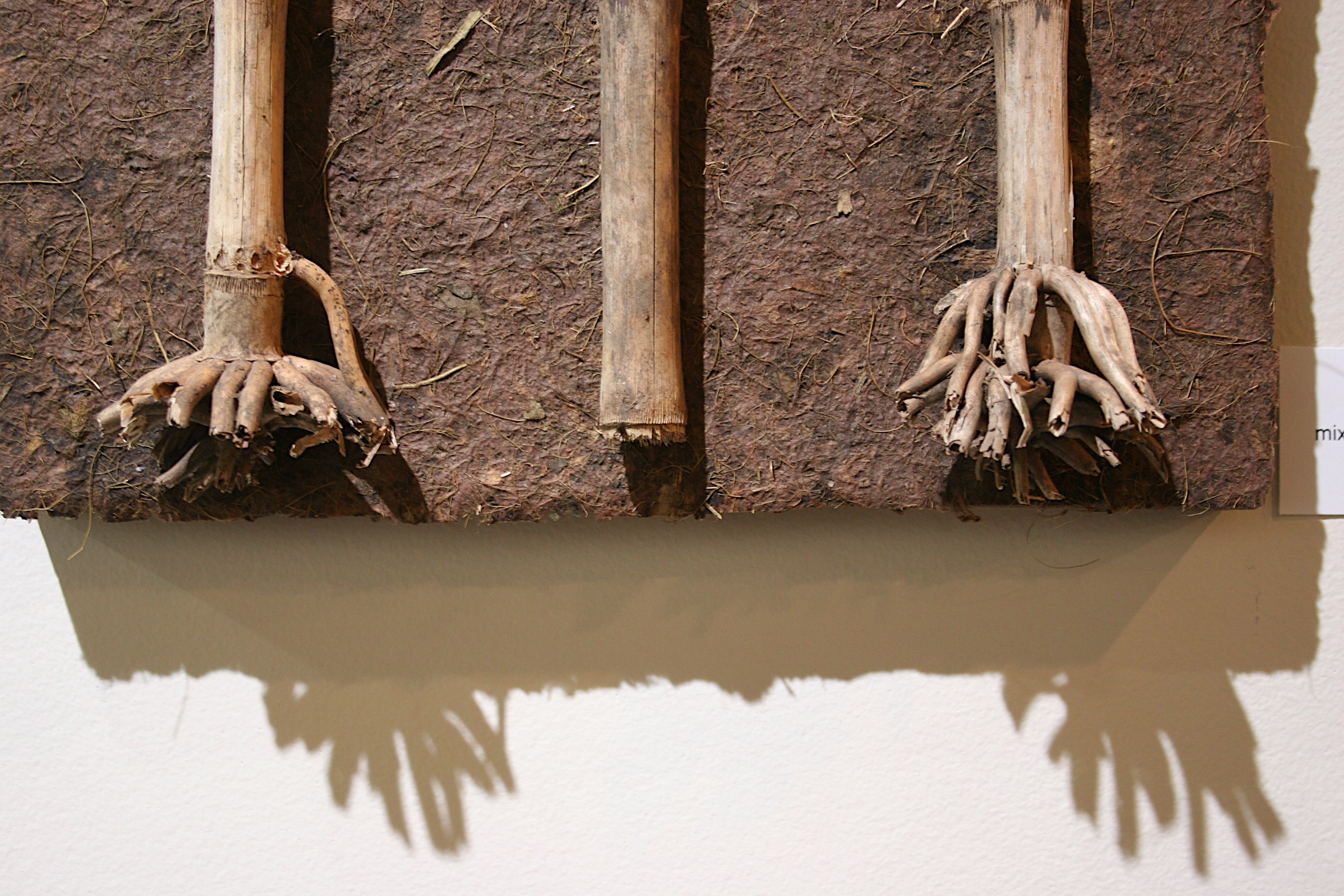
The lower portion of “Roots” shadows on the gallery wall. These are dry corn roots. (Minnesota Prairie Roots copyrighted photo March 2022)

Welke’s mixed media art is unlike any I’ve ever seen. It resonates with me, reconnecting me to my southwestern Minnesota prairie roots. To the farm. To the land. The place that shaped me as a person, writer and photographer.

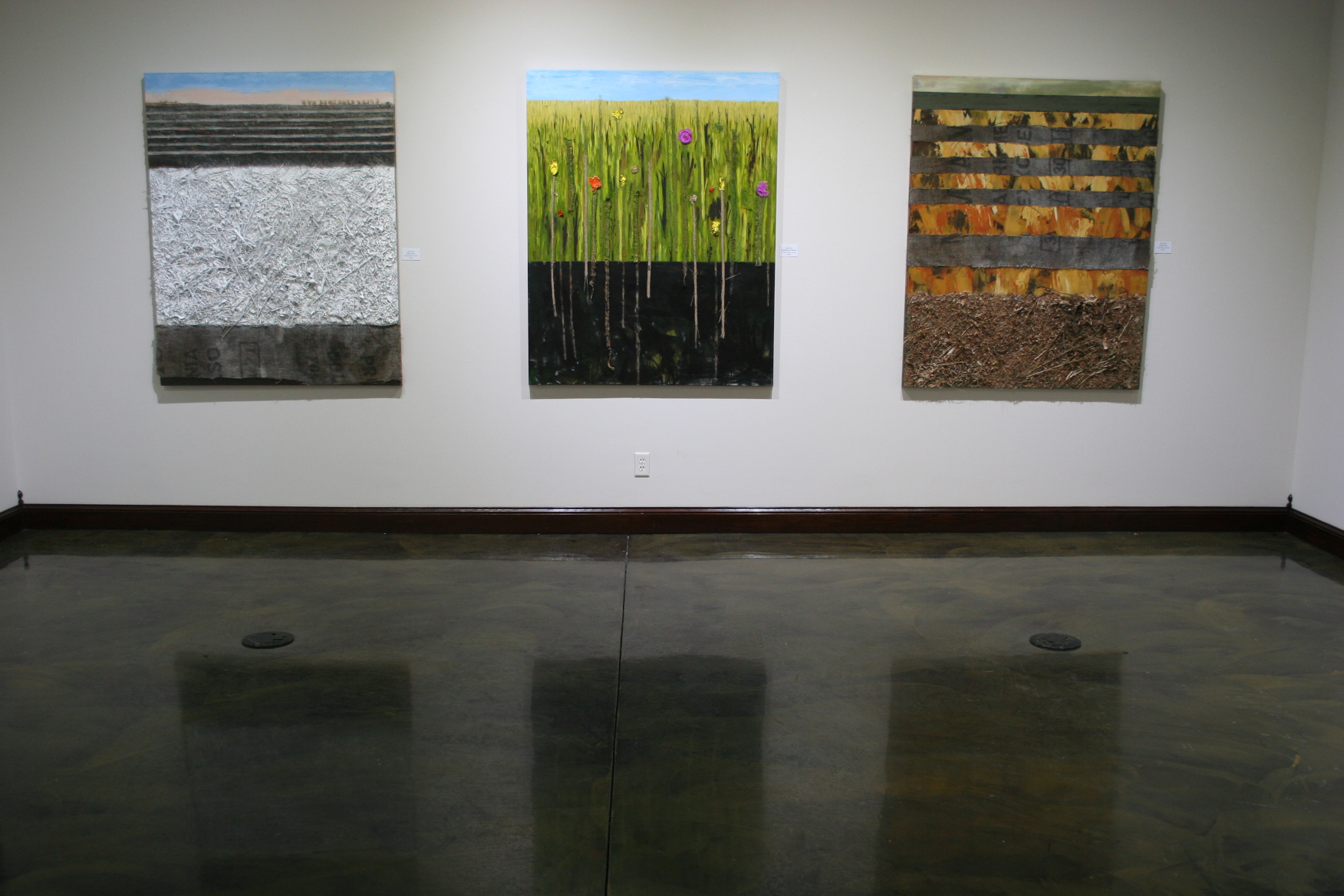
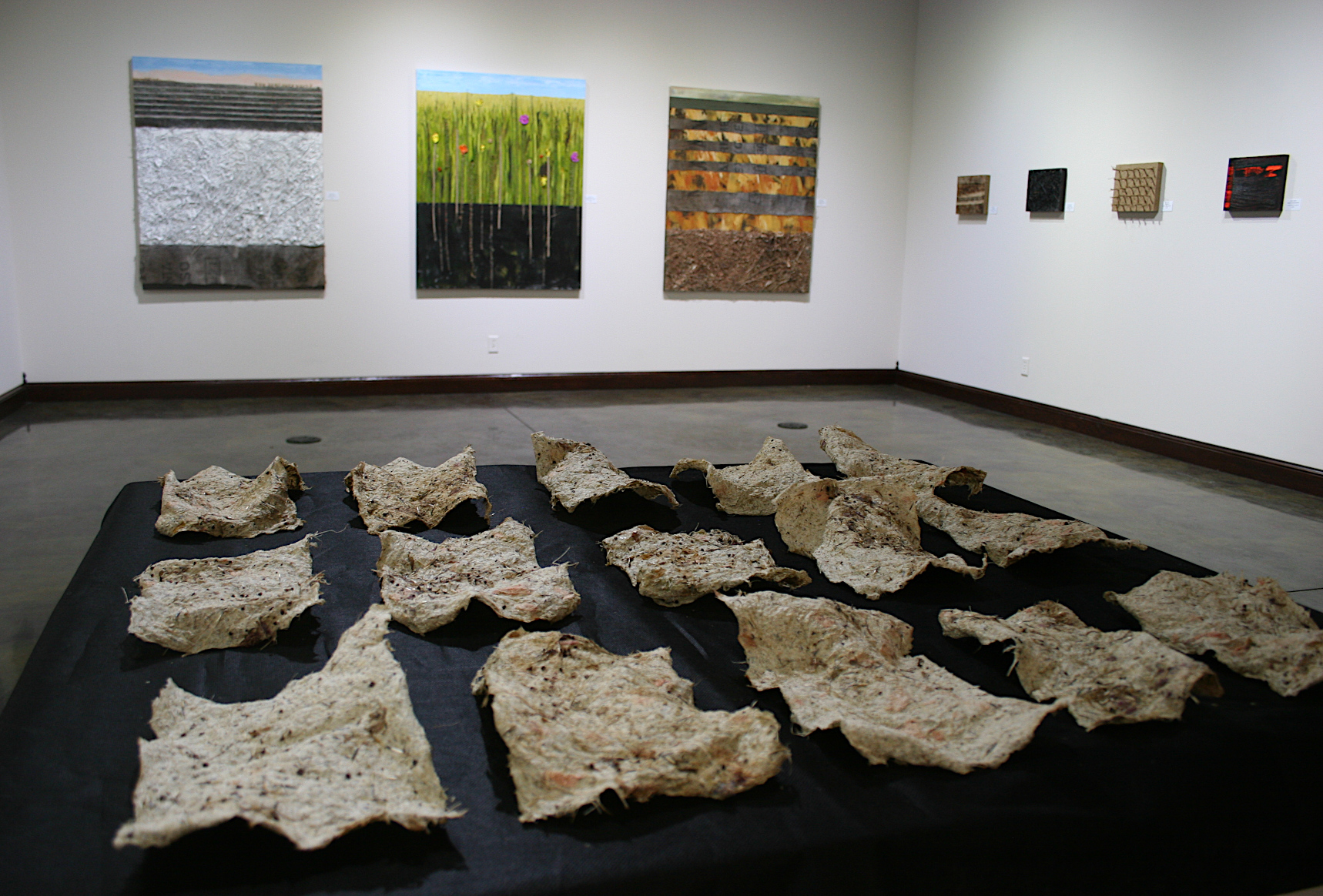
Nature inspires Mary Welke as seen in these oversized mixed media art pieces. (Minnesota Prairie Roots copyrighted photo March 2022)

That I experienced such a strong emotional reaction is a credit to this artist, who grew up near the Mississippi River in northeast Minneapolis. Her childhood exploration of river and fields and time with her grandmother in a sprawling vegetable garden instilled an early appreciation of nature, which inspires her art.

“Autumn Yield” by Mary Welke. (Minnesota Prairie Roots copyrighted photo March 2022)

Understanding that background explains how this urban resident came to create “Field and Farmland,” a project funded by a 2020 Minnesota State Arts Board Artist Initiative Grant. She also did her homework—visiting, researching and documenting the prairie and meeting with farmers. The result is art reflecting the prairie, prescribed burns and farmland restoration.

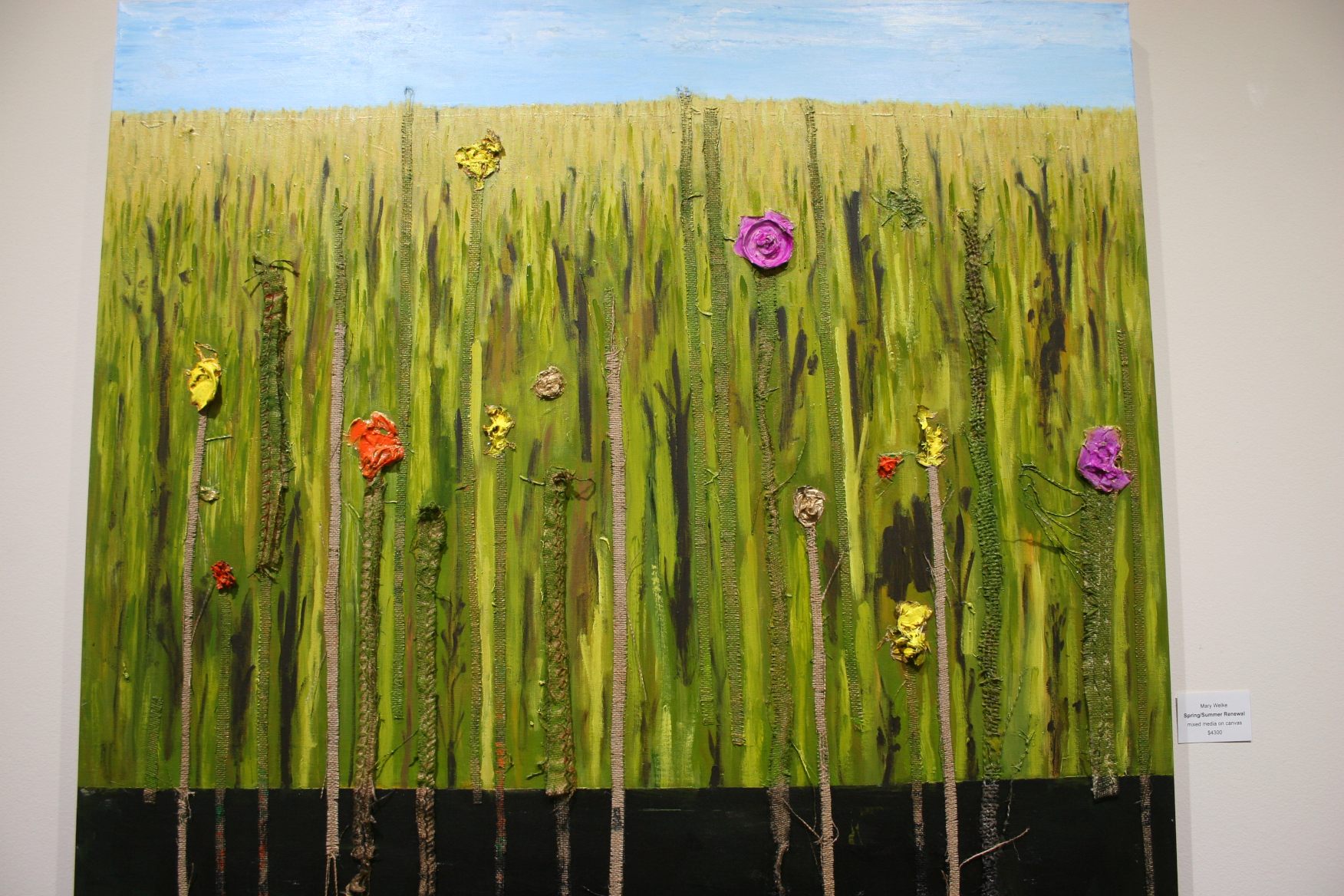
“Spring/Summer Renewal” by Mary Welke. (Minnesota Prairie Roots copyrighted photo March 2022)

The incorporation of organic materials like soil, corn roots and leaves, other crop residue and more drew me into Welke’s art. I felt as if I was back on the farm, watching my dad turn the rich black soil toward the sun for spring planting. I felt, too, like I was walking the rows of a harvested corn field, the scent of autumn lingering in the prairie wind.

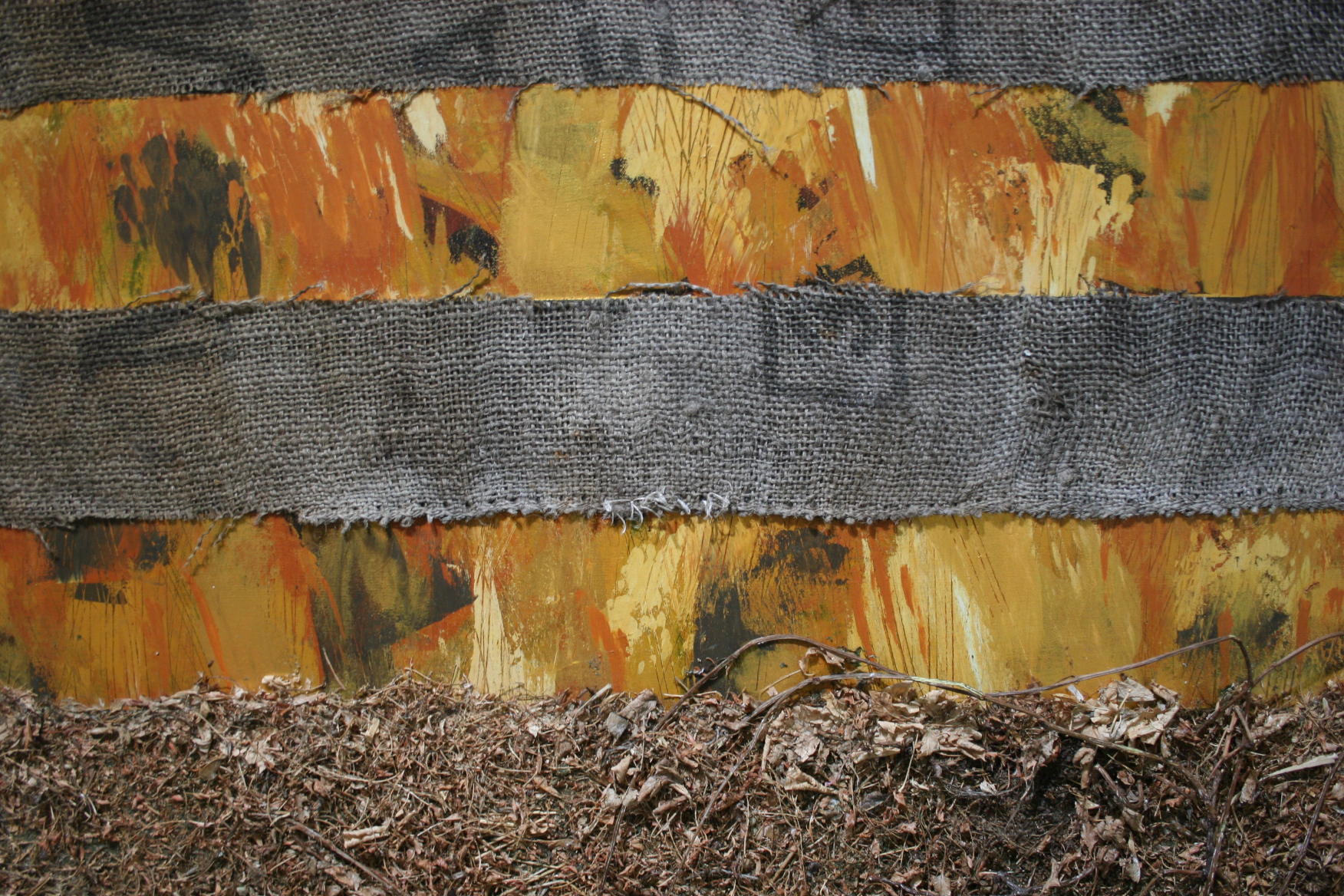
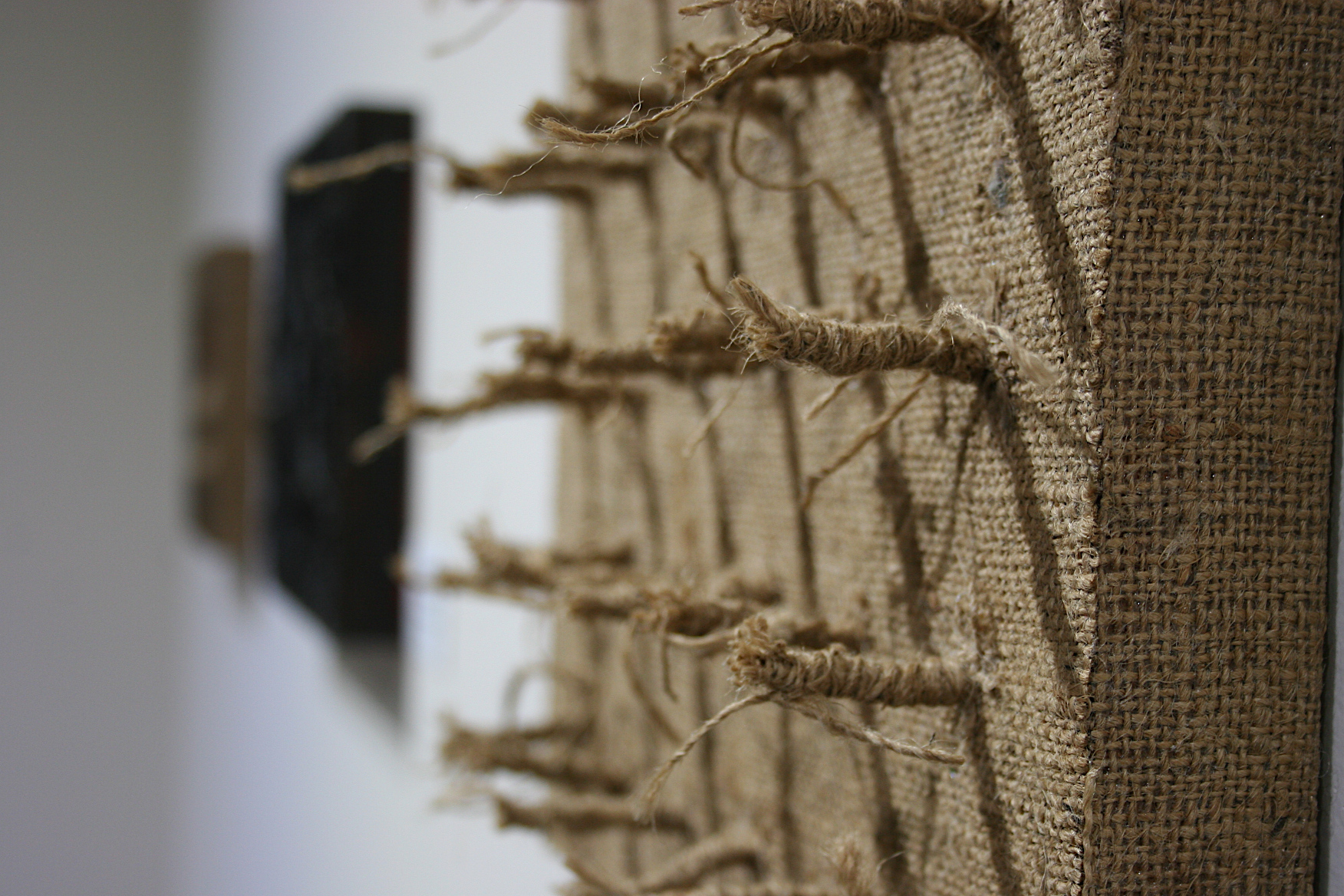
I didn’t note the title of this art featuring burlap and twine. (Minnesota Prairie Roots copyrighted photo March 2022)
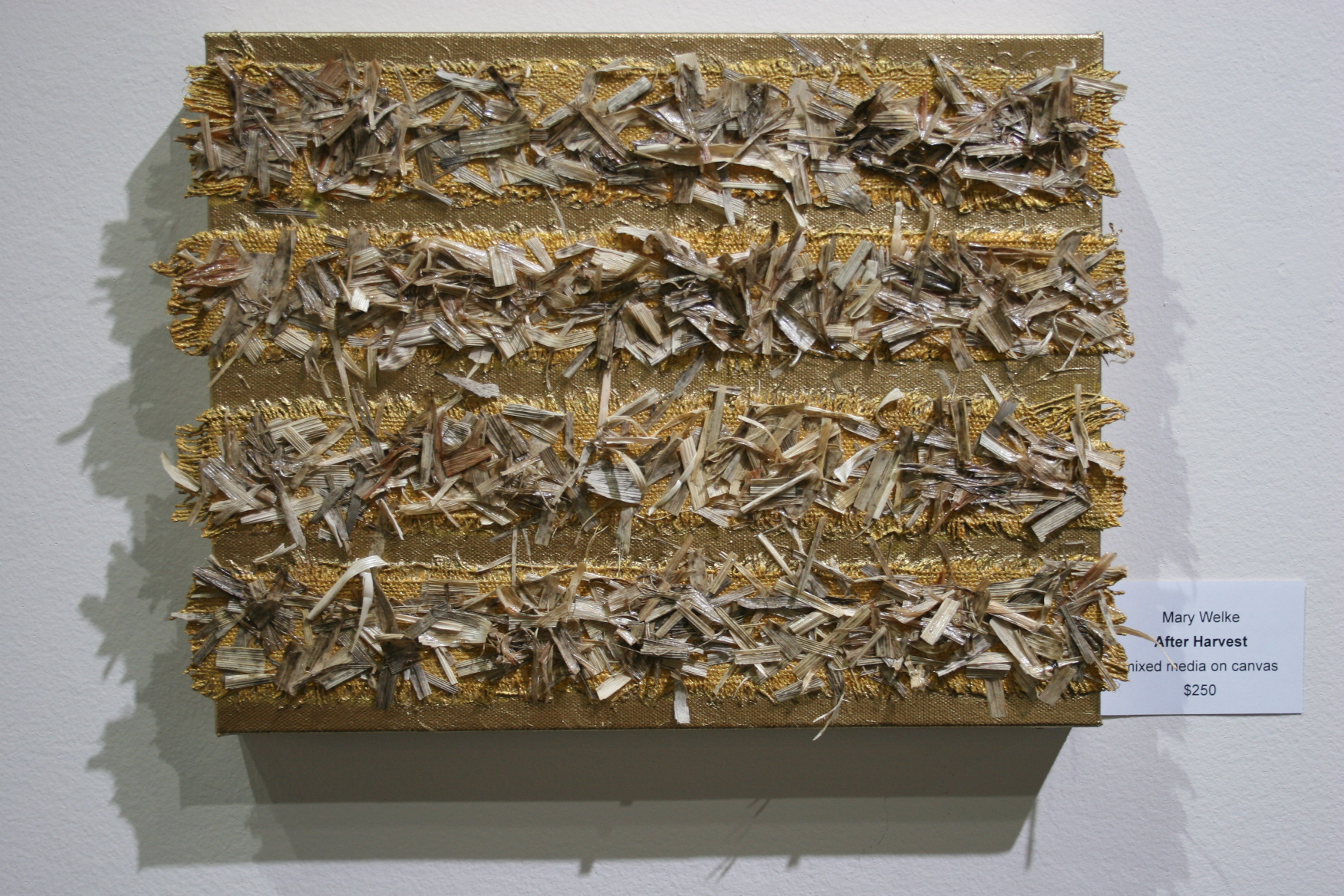
So much texture in “After Harvest” by Mary Welke. (Minnesota Prairie Roots copyrighted photo March 2022)
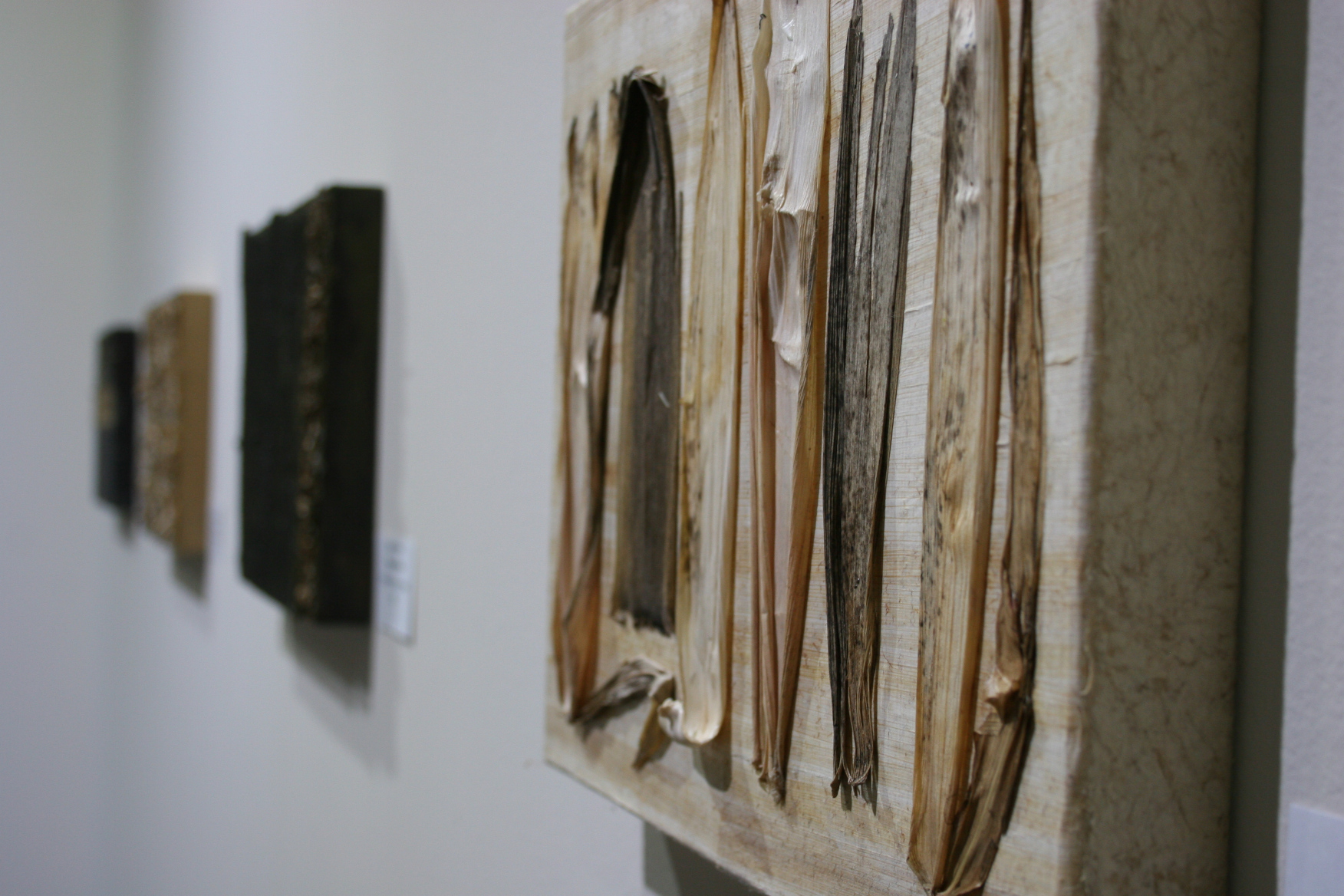
Corn husks up close in Mary Welke’s “Shucks.” (Minnesota Prairie Roots copyrighted photo March 2022)

Welke’s art is layered. Textured. It holds not only a visual depth, but a depth of connection to the land, to farming.

Mary Welke’s “Topographical Prairie Lands” scattered across a black surface. (Minnesota Prairie Roots copyrighted photo March 2022)

This is what I love about art. The ability to relate. To stand in a gallery and contemplate. Remember. Appreciate. And, with Welke’s work, especially, to feel rooted in the land.

#

NOTE: Please check back for more posts on other exhibits currently at the Paradise Center for the Arts. Artists Mary Welke, Kate Langlais, Michael Stoecklein and Summer Heselton will participate in a Visual Artists Talk at 6:30 pm on Thursday, March 10. See the Paradise Center for the Arts Facebook page for more info. The art of all four will be on display at the Paradise through March 19.

© Copyright 2022 Audrey Kletscher Helbling


Newest student sculpture graces library corner in downtown Northfield March 7, 2022

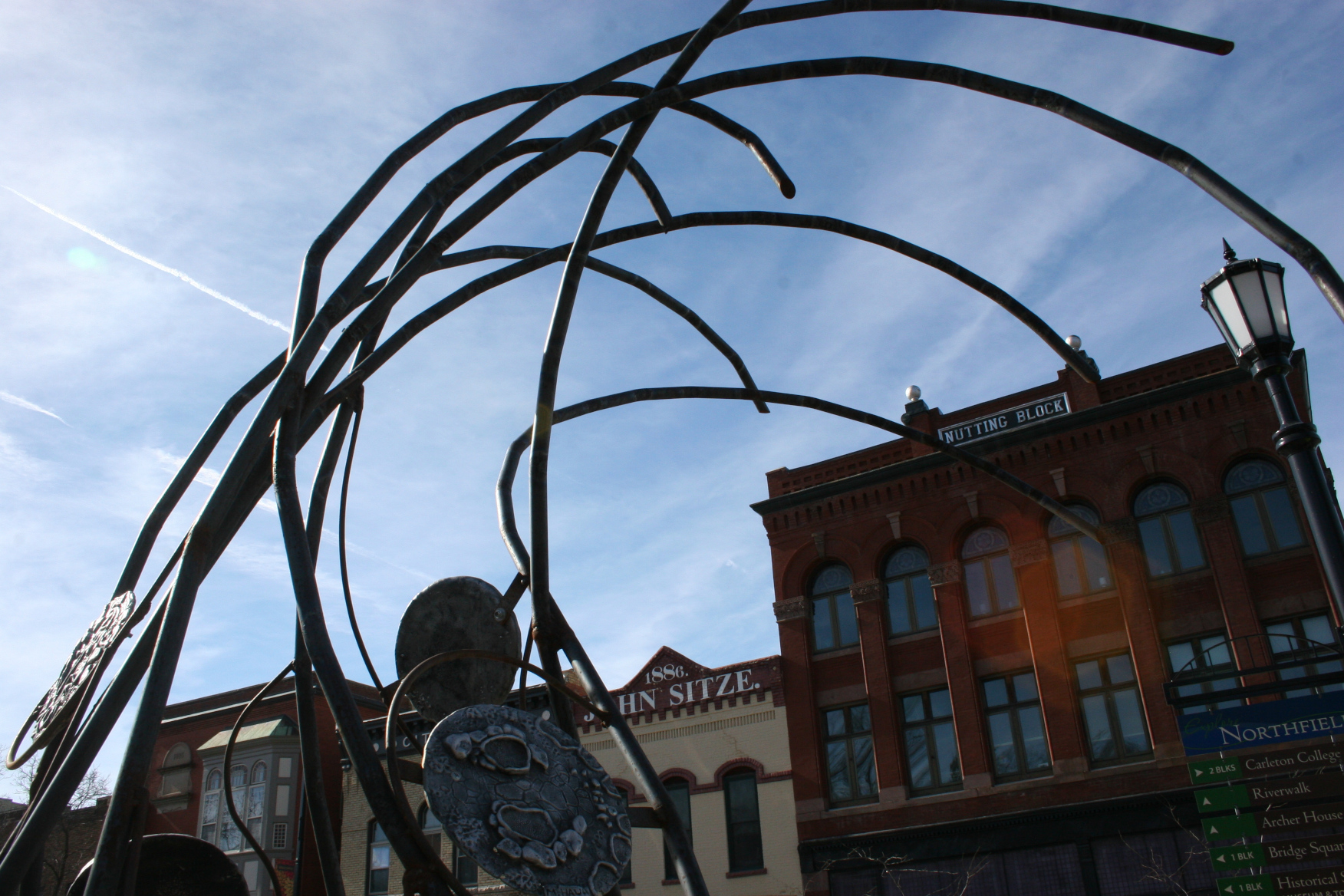
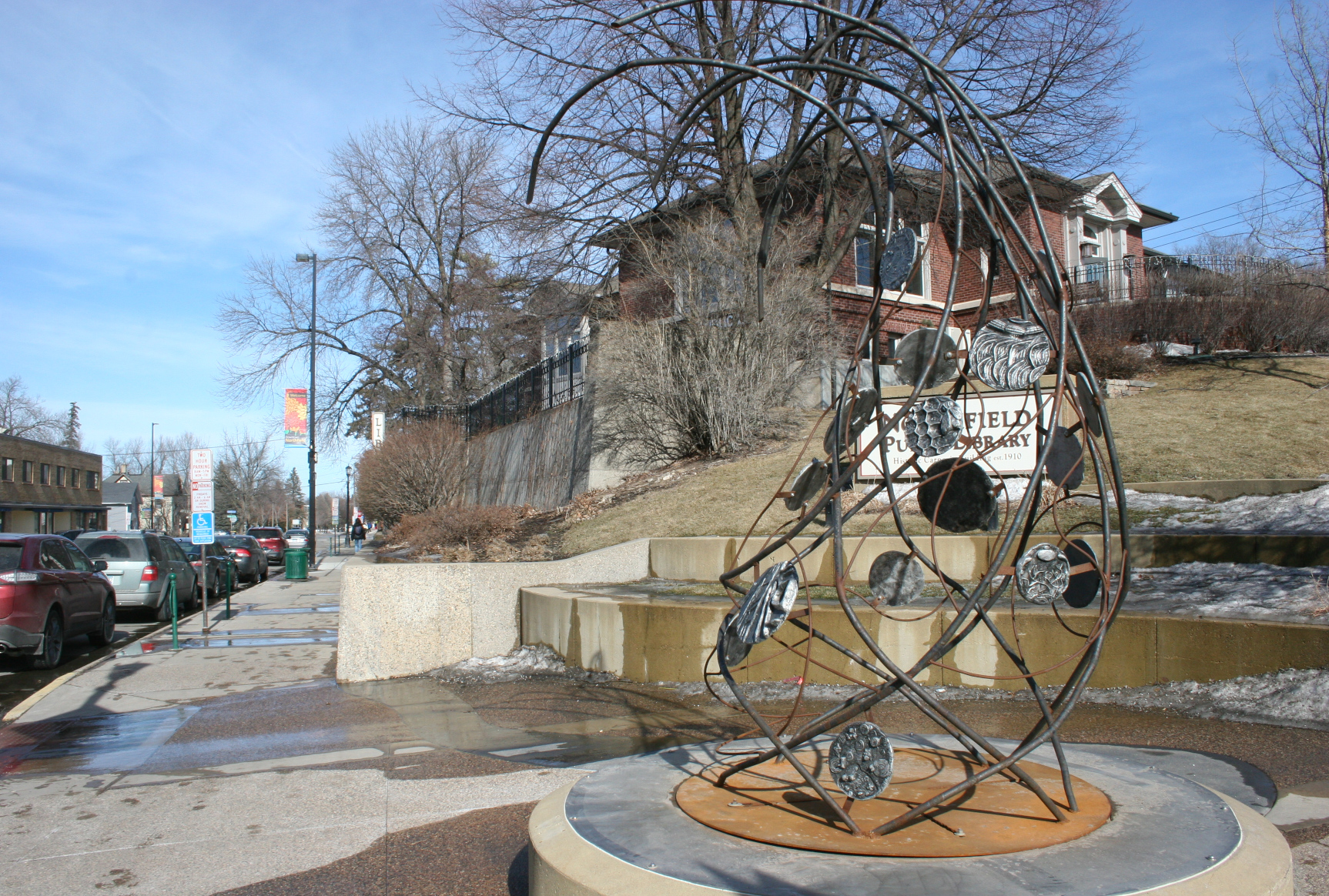
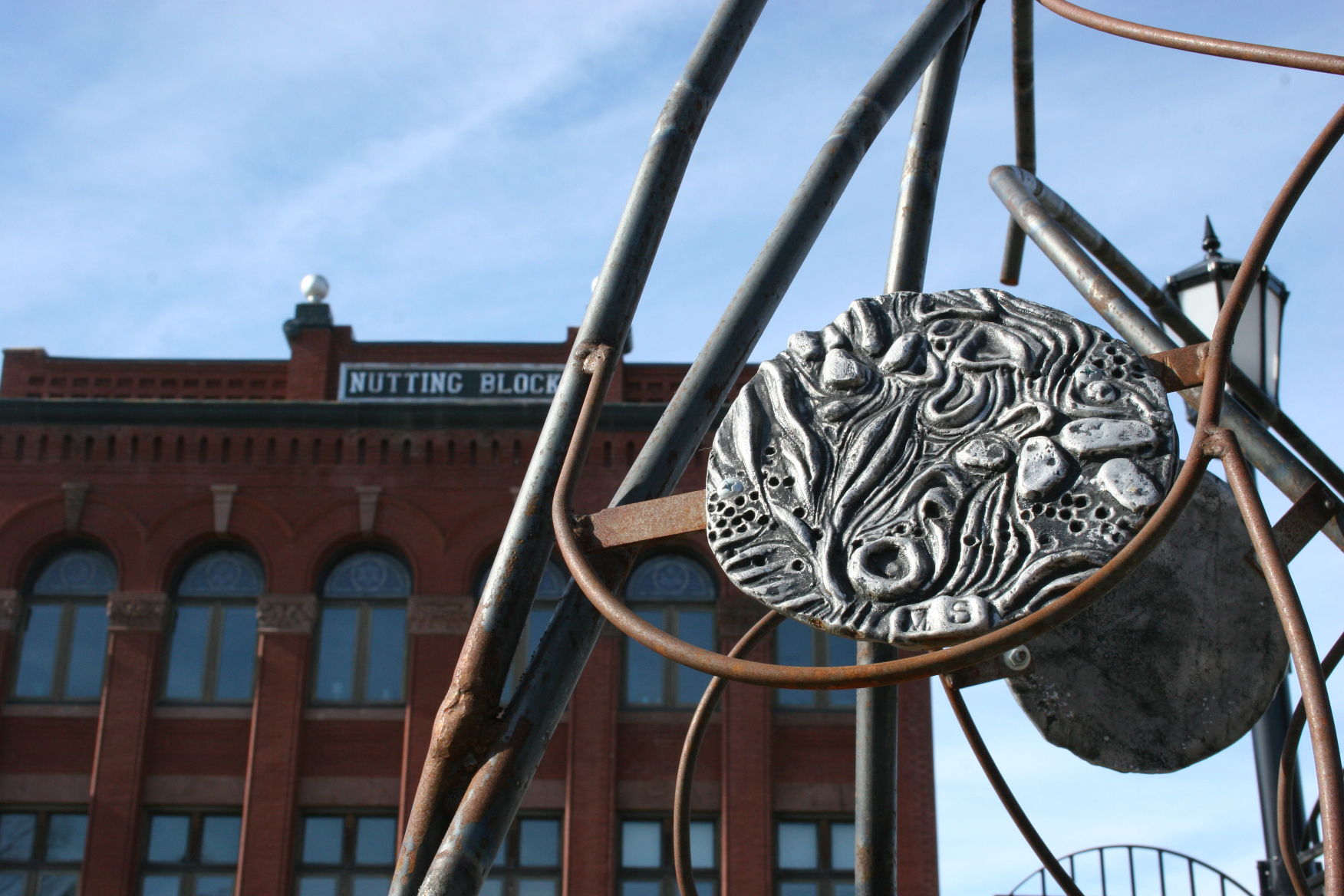
Historic buildings provide a backdrop for the Young Sculptors’ Project latest installation along Division Street in Northfield. (Minnesota Prairie Roots copyrighted photo February 2022)

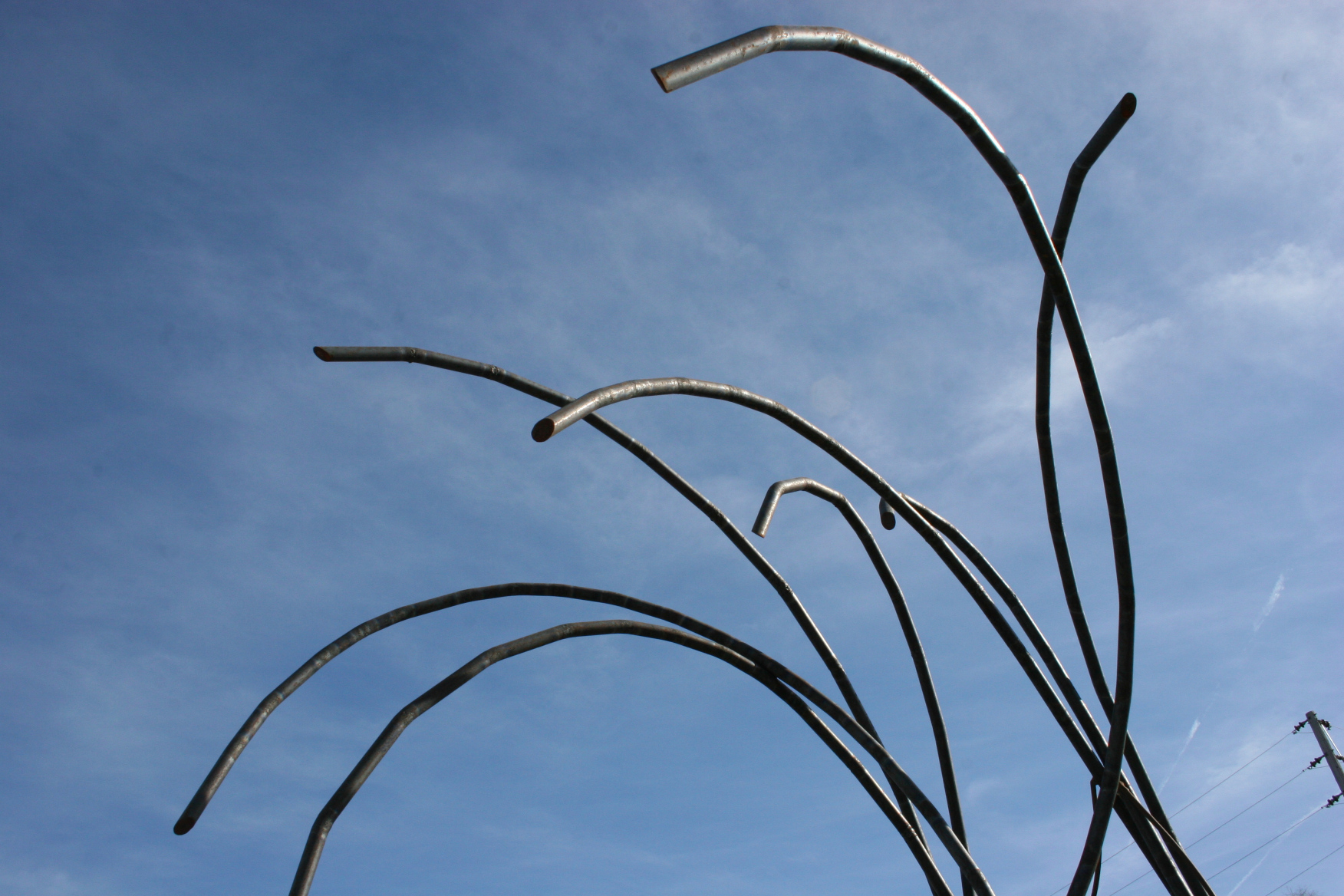
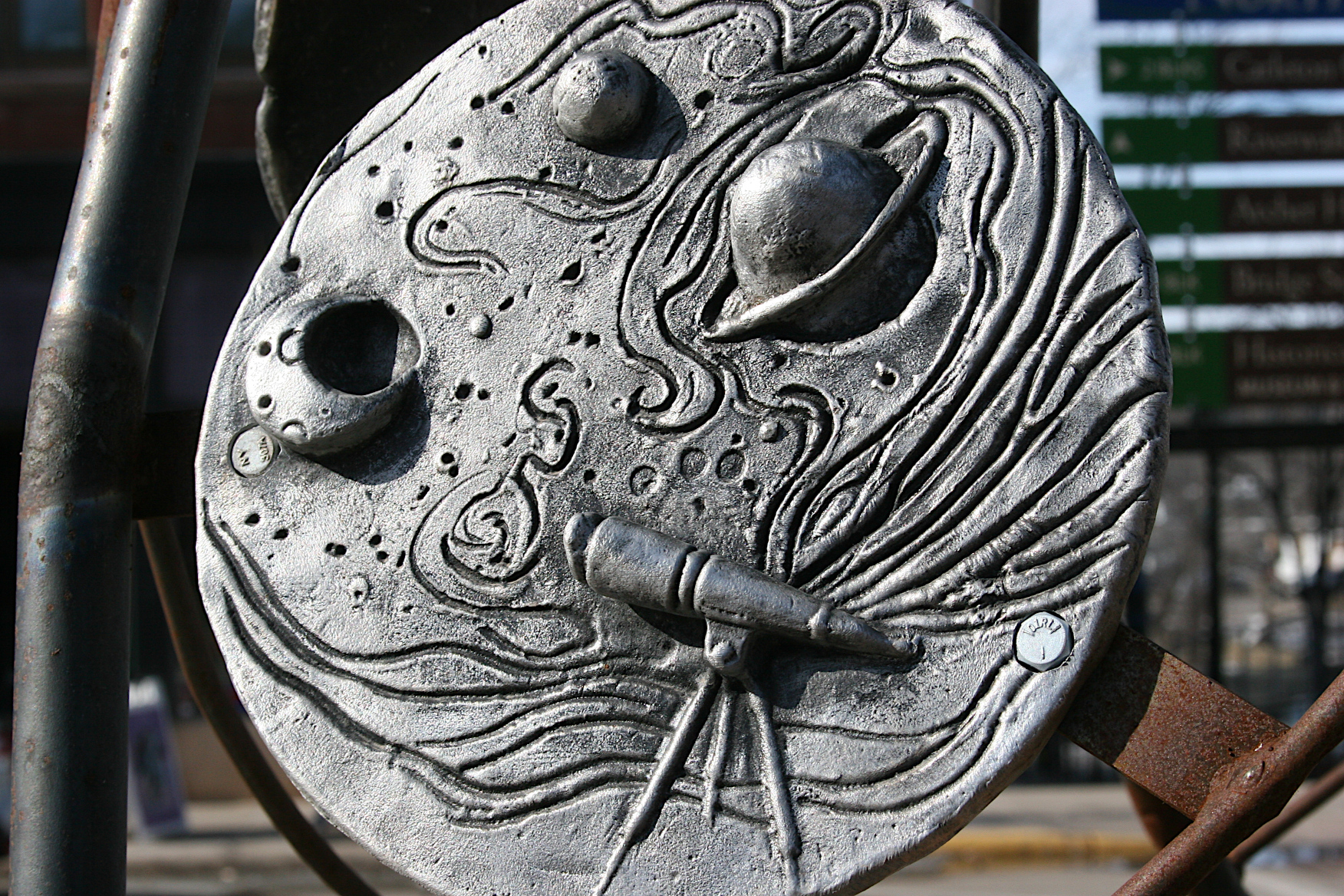
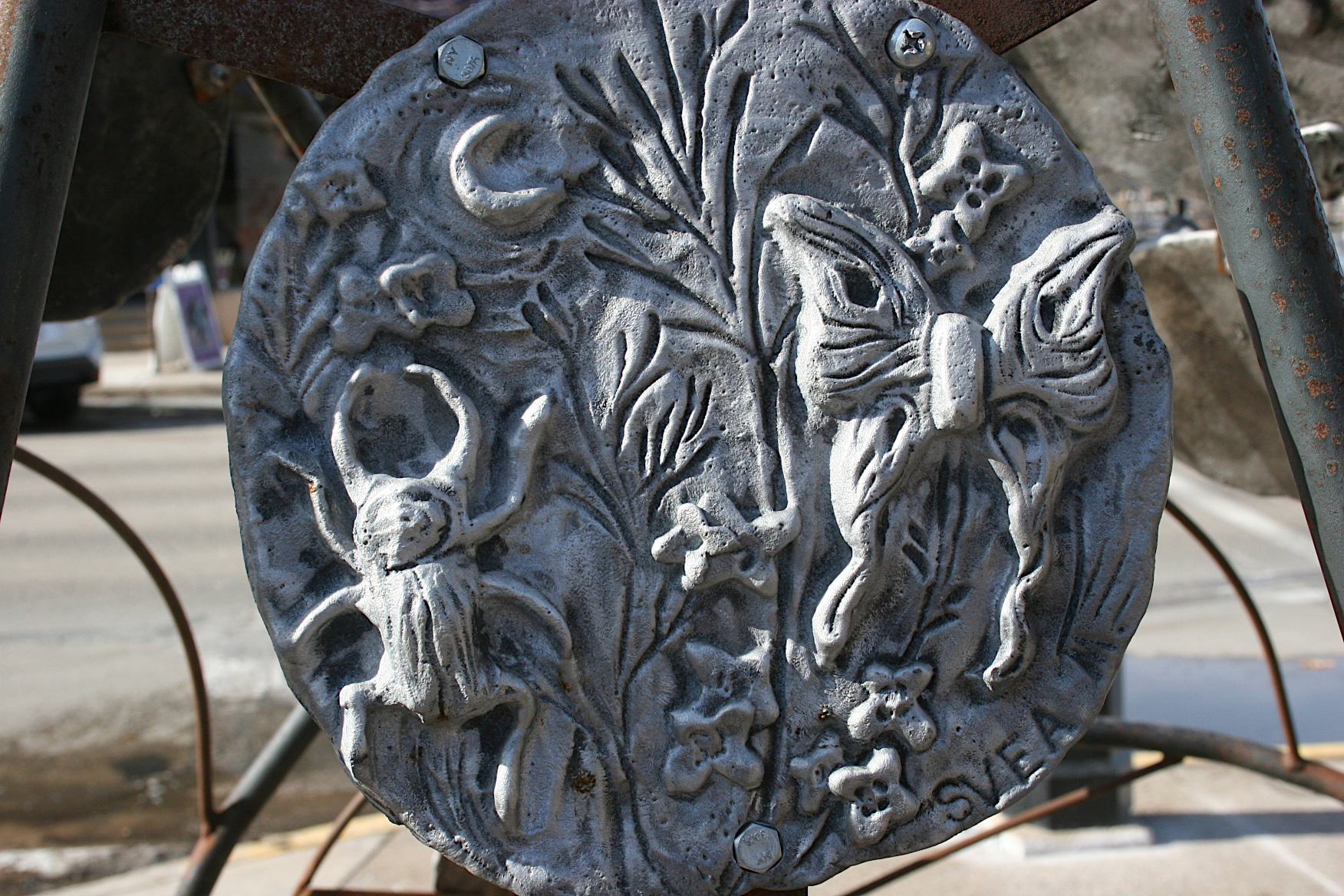
THE WELDED STEEL RODS arc and curve, bending toward Division Street alongside the Northfield Public Library. Dinner plate-sized poured aluminum sculptures attach to the rods, adding detailed interest to this public work of art.

The sculpture sits on a corner by the Northfield Library and changes out every two years. (Minnesota Prairie Roots copyrighted photo February 2022)

This sculpture, installed in 2021, is the latest in the Young Sculptors’ Project, a collaboration of the Northfield Public Schools and the Northfield Arts and Culture Commission “to increase visibility and value for the arts through public sculpture in the community.” It’s funded via a Minnesota Arts and Cultural Heritage grant through the Southeastern Minnesota Arts Council.

Against the blue sky, the rods arc art. (Minnesota Prairie Roots copyrighted photo February 2022)

As someone who values the arts, especially accessible public art, I truly appreciate this joint effort. Professional artists guide the Northfield students who meet in the school’s art and industrial tech departments once a week during the school year to craft the sculptures.

A space theme defines this sculpture plate. (Minnesota Prairie Roots copyrighted photo February 2022)
Art and architecture create a pleasing visual along Northfield’s Division Street. (Minnesota Prairie Roots copyrighted photo February 2022)
Butterfly, bug, florals fill this sculpture plate. (Minnesota Prairie Roots copyrighted photo February 2022)

Northeast Minneapolis professional artist Sara Hanson, along with sculptor apprentice William Lanzillo, led the 18 young creatives in their most recent endeavor. According to info about Lanzillo and the project on the Carleton College Studio Art website, the newest sculpture reflects aspects of Northfield which the students value and celebrate.

This corner by the library is the site for the Young Sculptors’ Project ongoing sculptures. (Minnesota Prairie Roots copyrighted photo February 2022)

Through the years, I’ve delighted in discovering this public art at the base of the library hill on the corner of Division and Third Streets in the heart of downtown Northfield. The sculptures remain there for two years before being moved to a courtyard sculpture garden at Northfield High School.

Another poured aluminum sculpture. (Minnesota Prairie Roots copyrighted photo February 2022)

The over-sized sculptures give me reason to pause, consider, reflect.

Such talent in these young artists. (Minnesota Prairie Roots copyrighted photo February 2022)

As I reflect, I think how wonderful that these young people, these young artists, are guided, supported and encouraged. They are learning, growing, building their confidence. What a gift that is from this community and from those professional artists who guide them, who show them their work, their creativity, is valued.

© Copyright 2022 Audrey Kletscher Helbling
 

A creatively humorous message from Bridge Square Barbers March 3, 2022

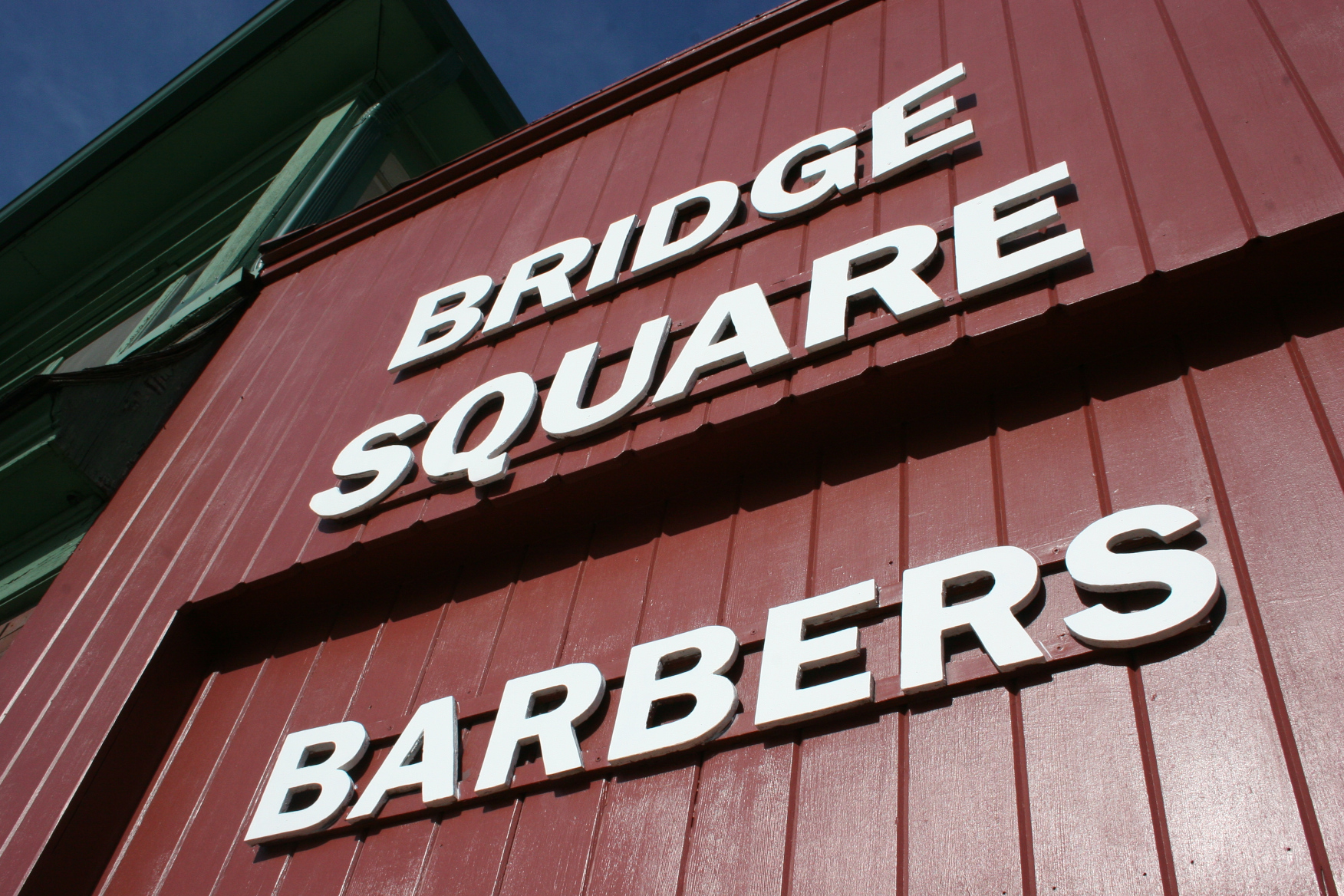
Bridge Square Barbers, appropriately located at 15 Bridge Square across the street from Bridge Square in the heart of downtown Northfield, Minnesota, to the right in this stretch of businesses. (Minnesota Prairie Roots copyrighted photo February 2022)

WHENEVER I’M OUT AND ABOUT with my camera in a downtown business district, I notice details. In storefront windows. On doors. In building signage.

An unassuming sign banners the top of the building. (Minnesota Prairie Roots copyrighted photo February 2022)

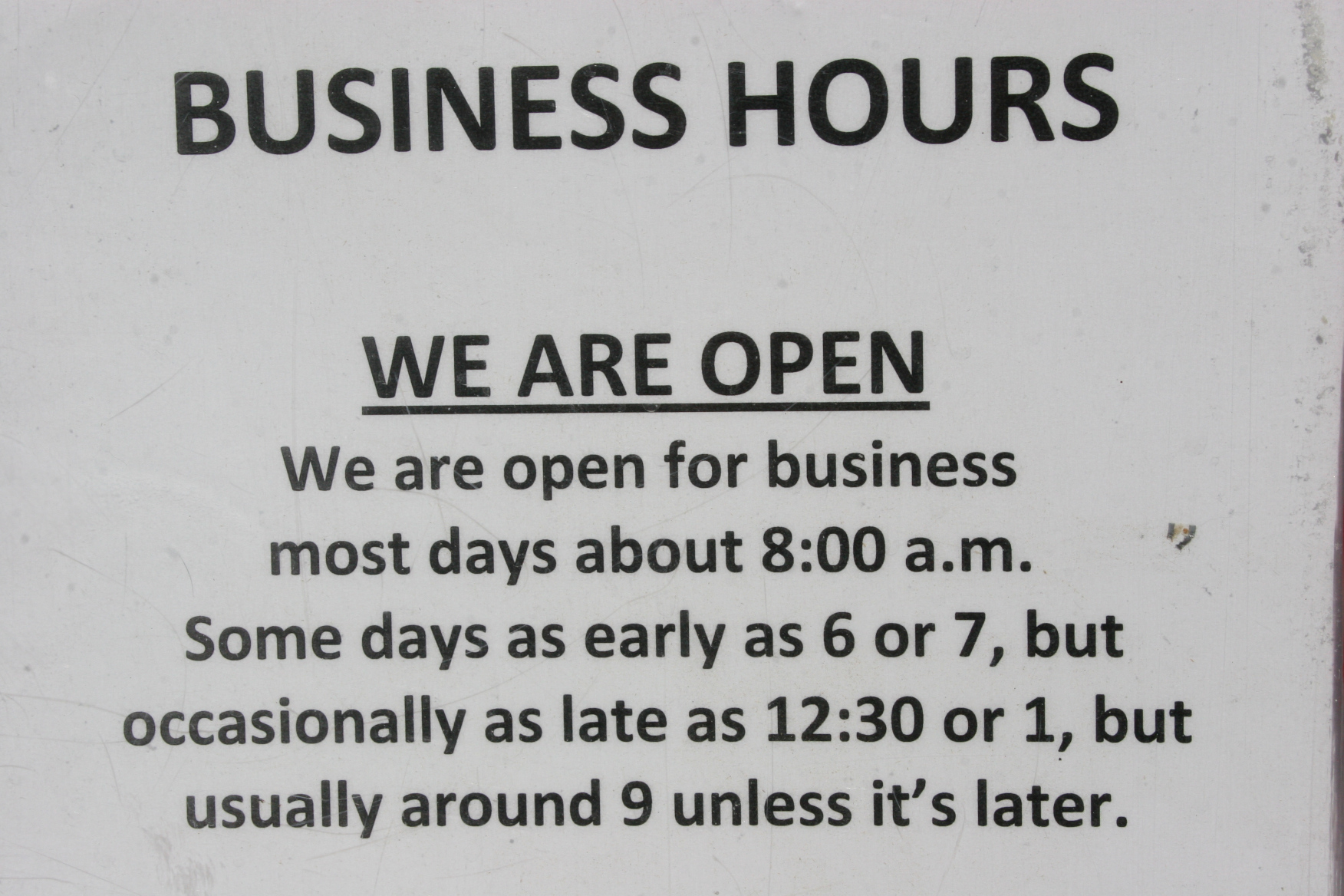
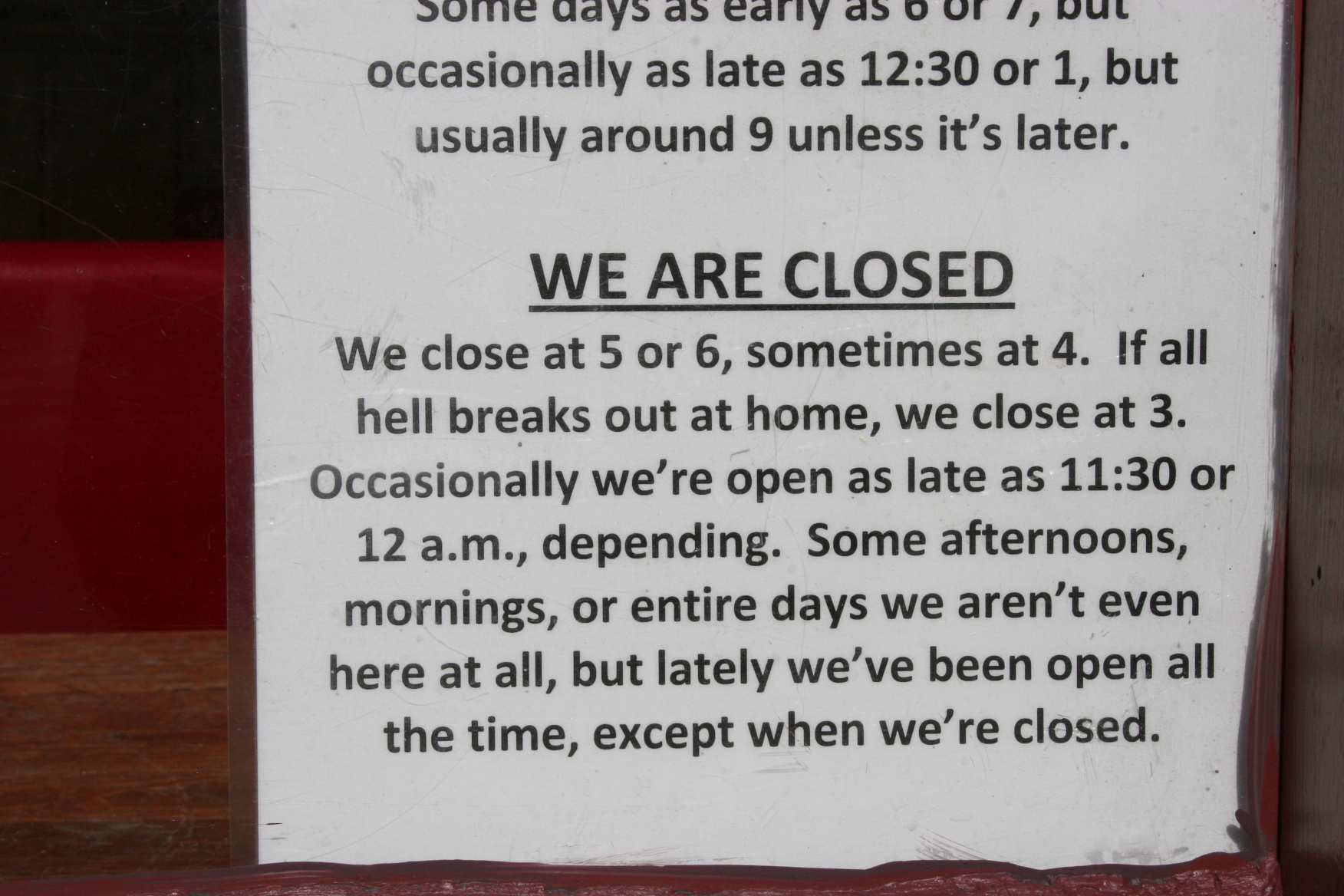
On a recent walk through Northfield, I spotted a typewritten sign at Bridge Square Barbers that caused me to erupt with laughter. And laughter is an expression of happiness that I need more than ever in this unsettled world.

The top part of the sign at Bridge Square Barbers. (Minnesota Prairie Roots copyrighted photo February 2022)

I stood in front of that sign about business hours, read, laughed, then focused my lens.

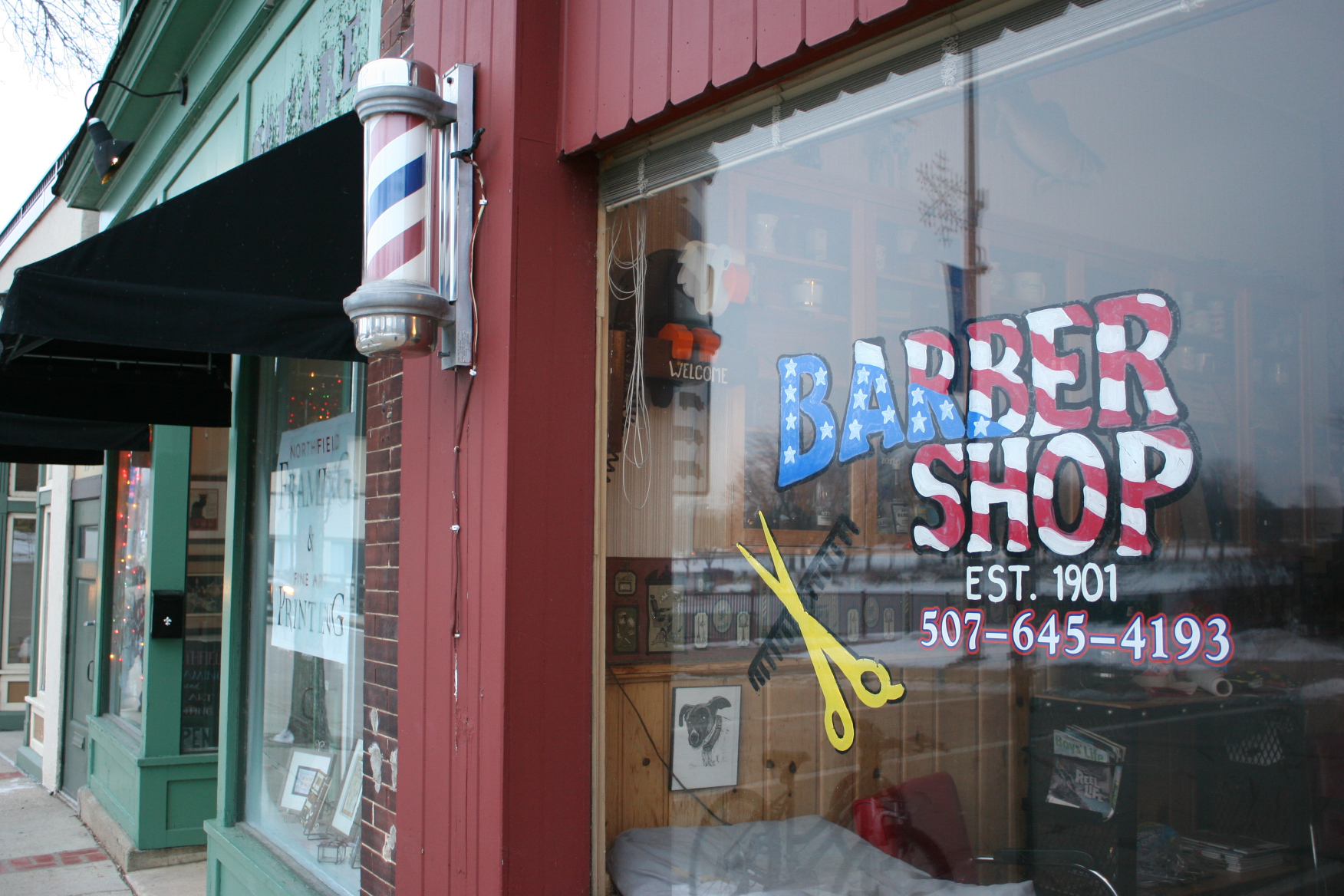
This is iconic barbershop with a barber pole. (Minnesota Prairie Roots copyrighted file photo January 2021)

I love, and appreciate, this humorous approach by a barber unknown to me. Rather than post a straightforward notice of hours, this businessman crafted a memorable message to humor customers should they find the door locked. That’s creative. Smart. Excellent customer relations.

The bottom half of the humorous message at Bridge Square Barbers. (Minnesota Prairie Roots copyrighted photo February 2022)

However, I’m left wondering about “if all hell breaks out at home.” As a writer, my brain is drafting multiple stories, none of them probably true, but all prompted by the barber’s words. Does “all hell breaks out” involve children? Pets? Just life in general?

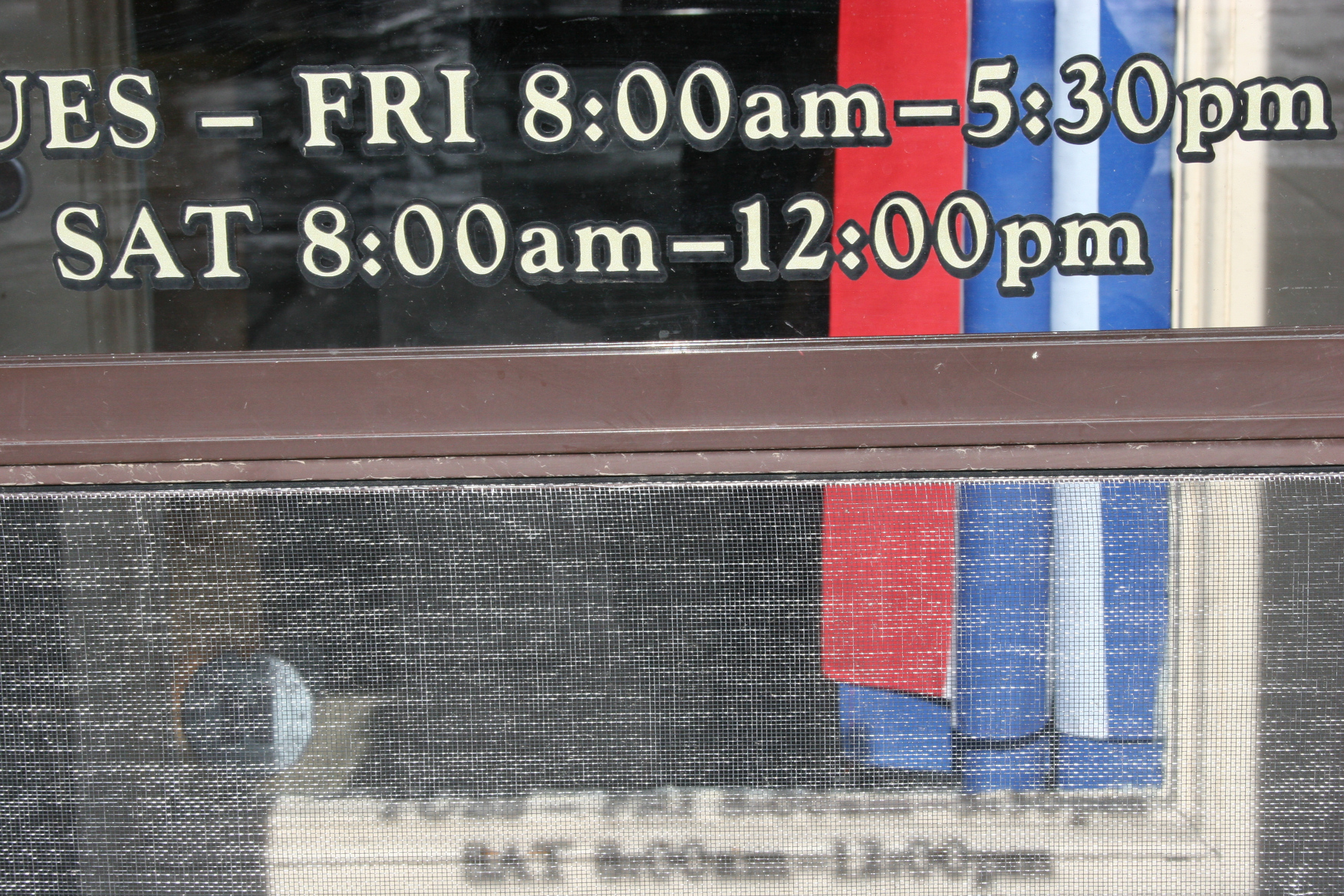
Hours posted on the front barbershop door, photographed through the exterior door. (Minnesota Prairie Roots copyrighted photo February 2022)

Whatever the story, this writer and photographer appreciates when business owners show their personalities in creative messages like these. I notice. And I laugh. Well done, Bridge Square Barbers!

© Copyright 2022 Audrey Kletscher Helbling


Appreciating historic downtown Owatonna March 2, 2022

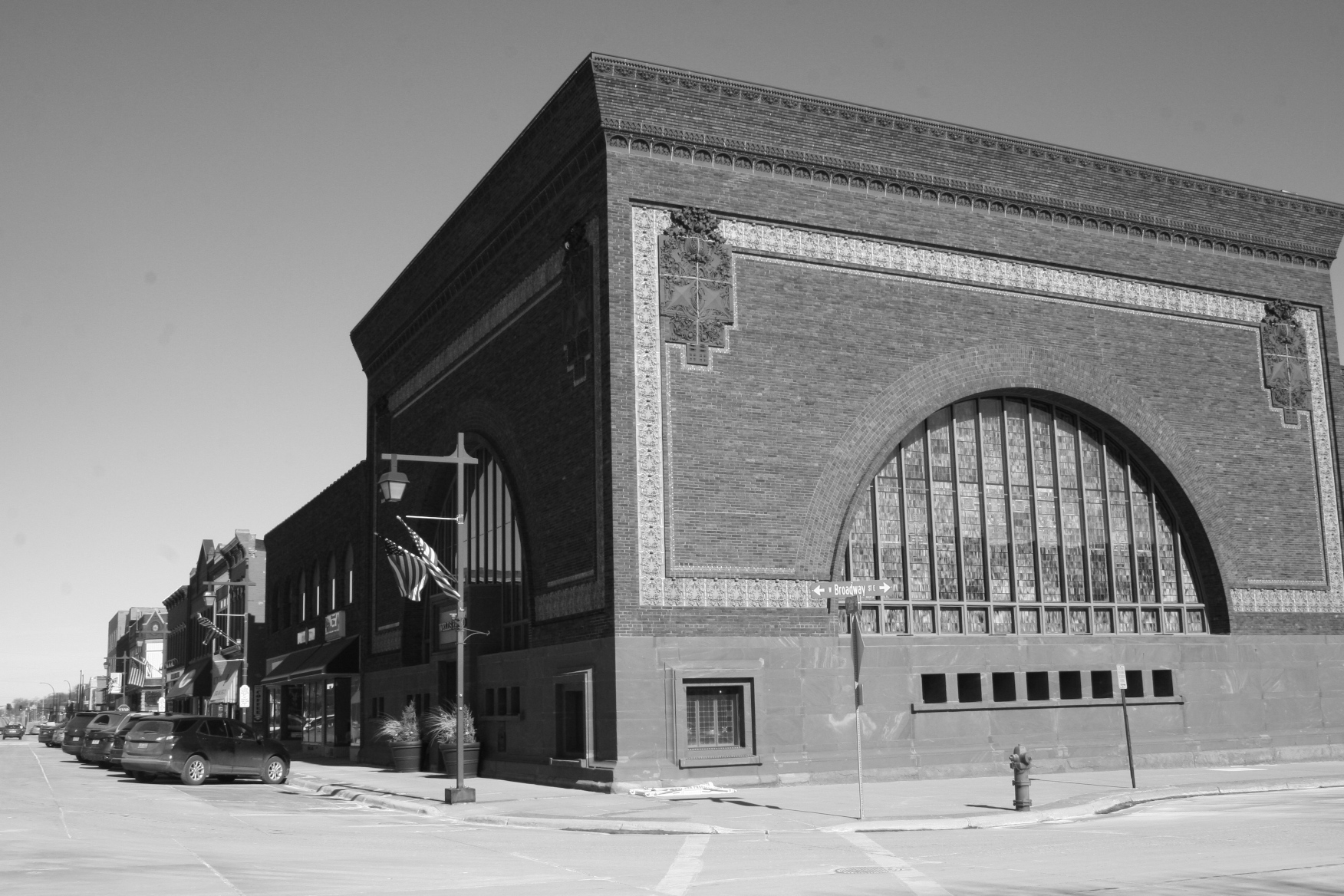
National Farmer’s Bank of Owatonna rates as particularly important architecturally. Designed by Louis Sullivan in the Prairie Architecture School style, it features stained glass windows, gold leaf arches, nouveau baroque art designs and more. This “jewel box of the prairie” was built between 1906-1908. (Minnesota Prairie Roots copyrighted photo February 2022)

STRIPPING IMAGES OF COLOR lends an historic context to several aged buildings I recently photographed near Central Park in downtown Owatonna. It’s easier for me to see the past, to appreciate these long-standing structures through the lens of time when I view them in black-and-white.

Love this corner historic building which houses A Taste of the Big Apple, serving pizza, soup, sandwiches and more, including a Tater Tot Hot Dish special on March 3. (Minnesota Prairie Roots copyrighted photo February 2022)

First, I feel such gratitude that these buildings still stand. A time existed when the thought was that new is better. Out with the old, in with the new. I’m not of that camp and I’m thankful for the shift in attitudes.

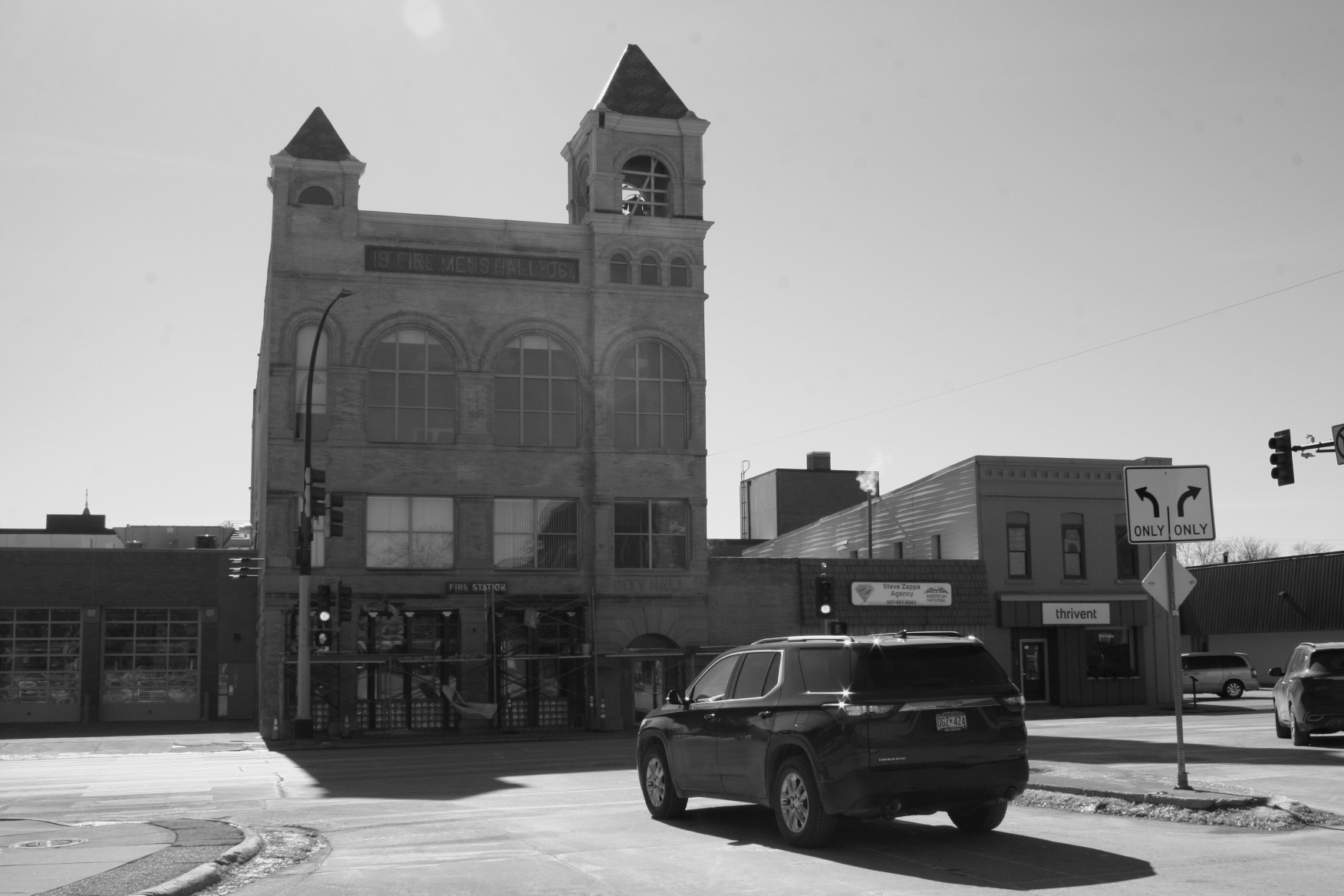
Firemen’s Hall, constructed 1906-1907 for $19,643, sits just across the street from Central Park. (Minnesota Prairie Roots copyrighted photo February 2022)

Twelve city blocks in Owatonna’s downtown define the community’s designation as a National Register Historic District. Three of the 75 “contributing buildings” within that district are on the National Register of Historic Places: the National Farmer’s Bank, the Steele County Courthouse and the Firemen’s Hall.

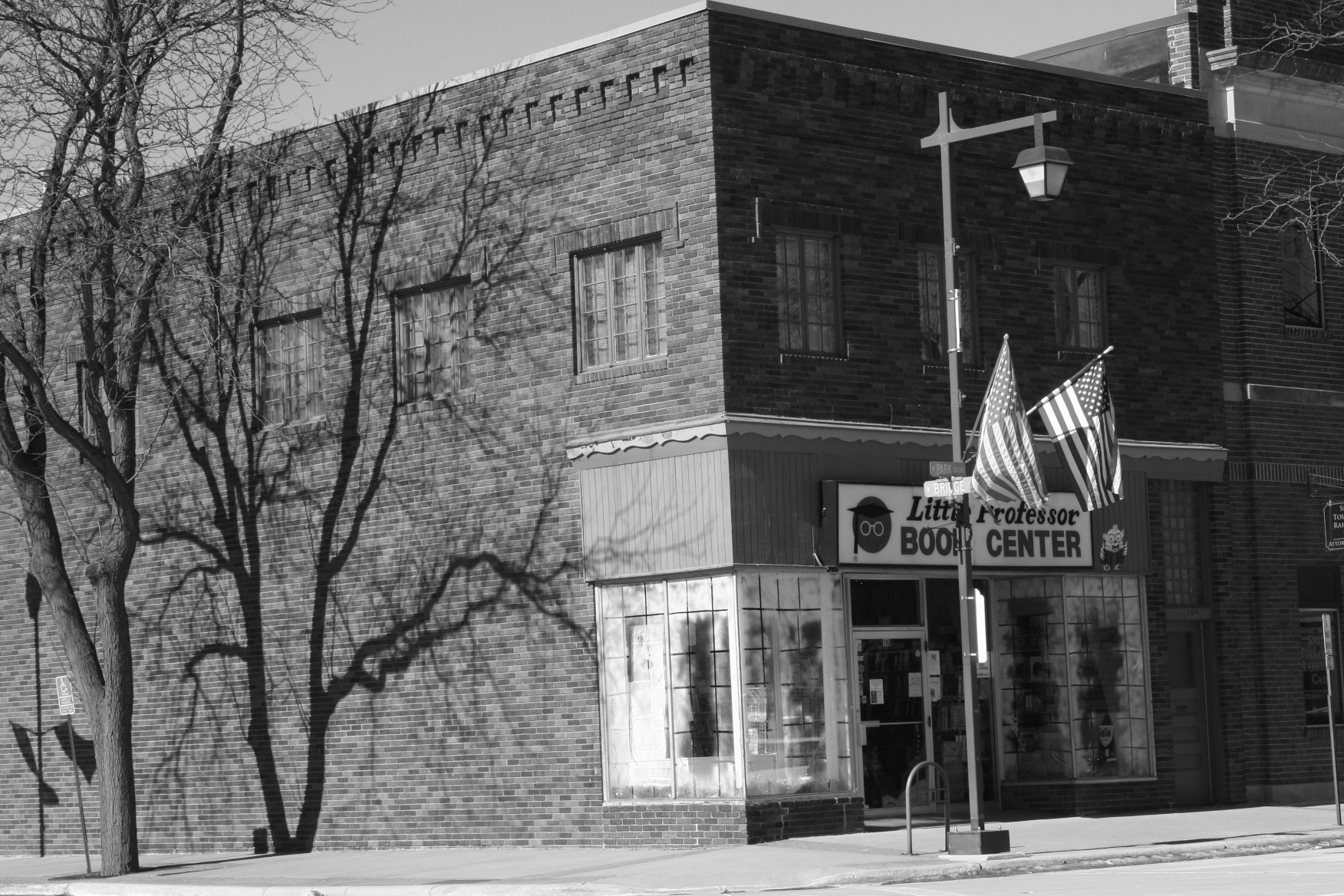
This home-grown bookstore anchors a downtown corner, directly across from Central Park. (Minnesota Prairie Roots copyrighted photo February 2022)

On a recent visit to Owatonna’s Central Park, I pivoted to observe those key historic buildings and others in a downtown of multiple core business streets.

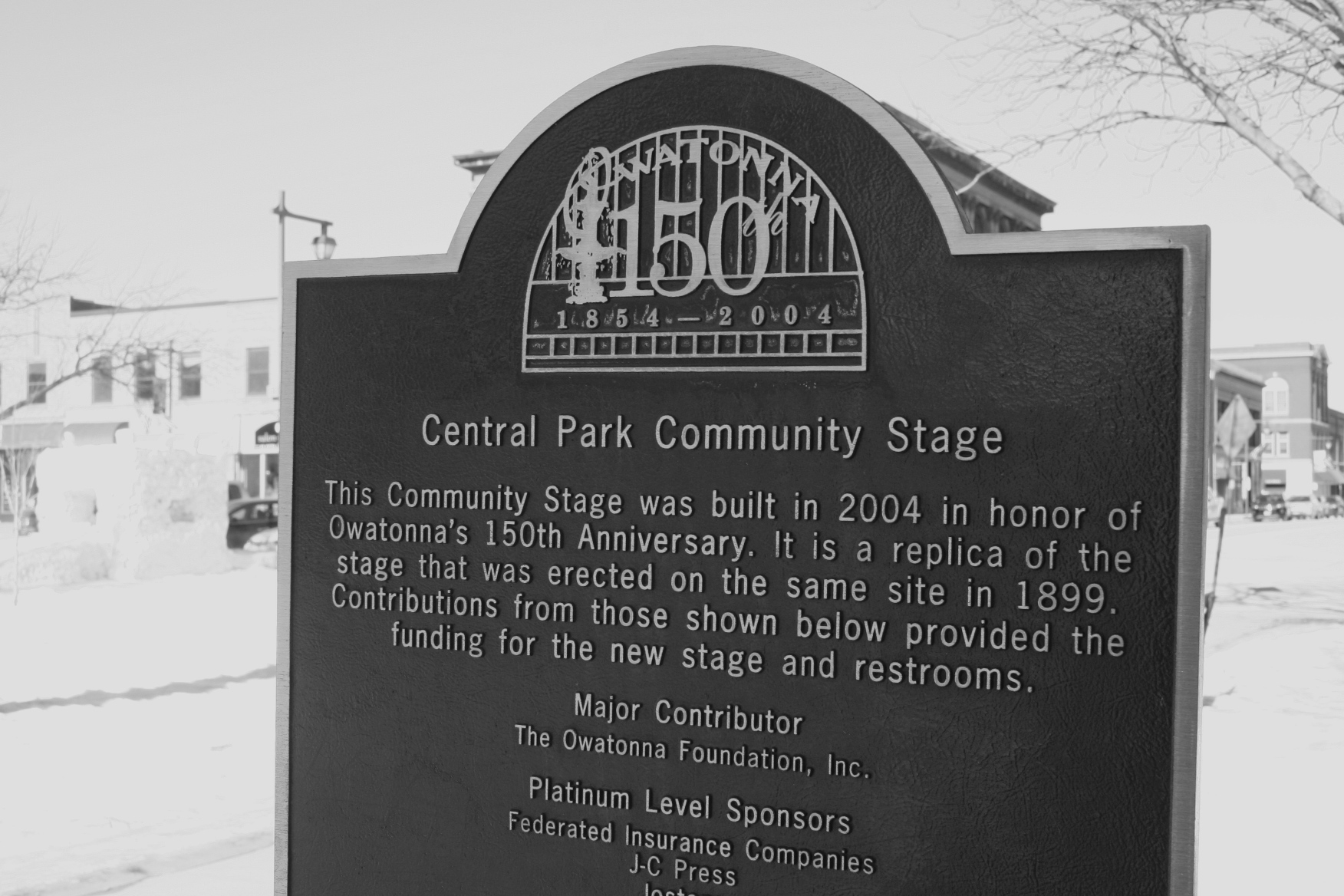
A sign in Central Park provides information about the community stage. (Minnesota Prairie Roots copyrighted photo February 2022)

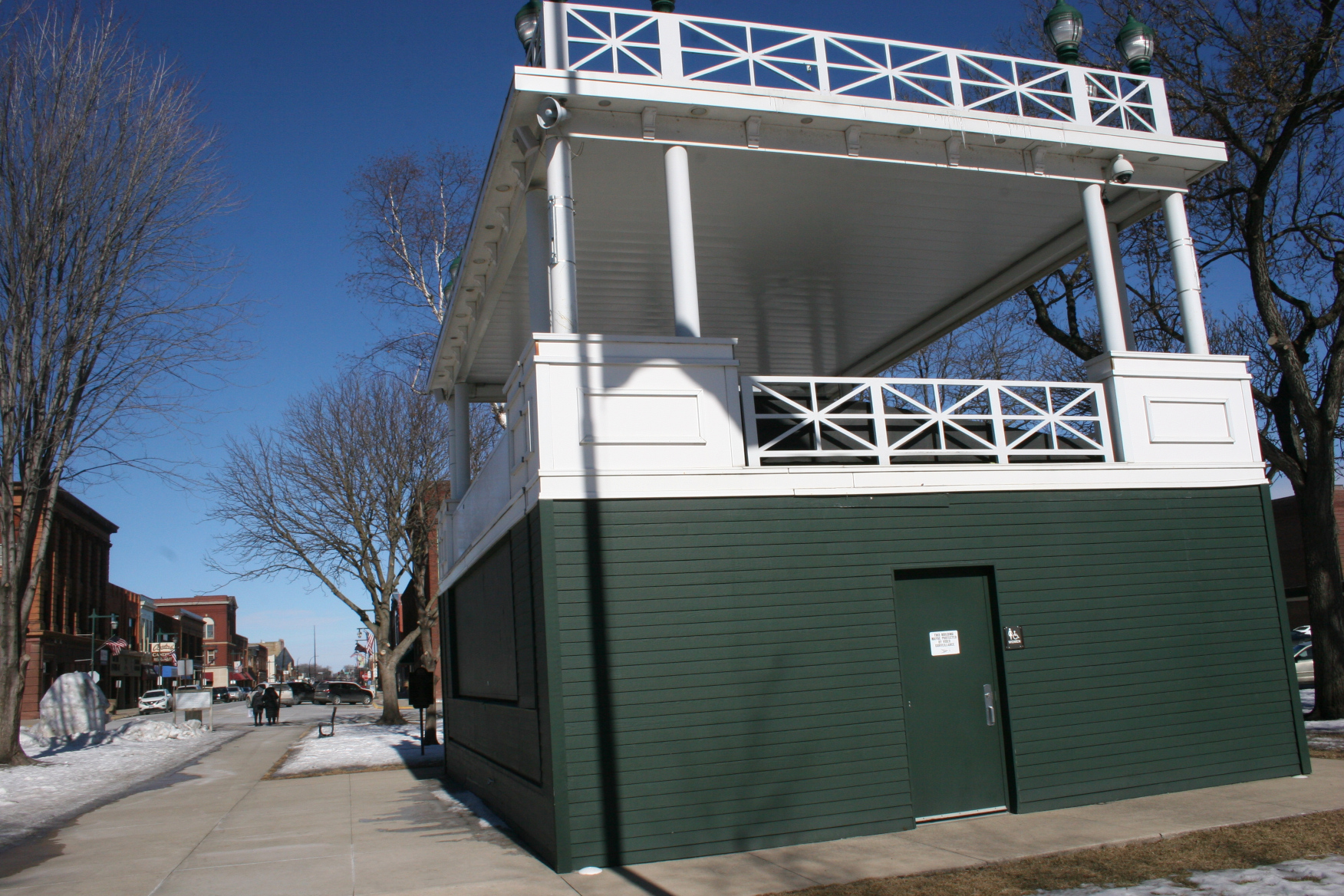
The park, with a replica of the 1899 community stage, serves as the “town square,” the physically identifiable point of focus and gatherings. Here folks gather for concerts, the farmers’ market and other events. Music and the undeniable human need to socialize connect the past to the present.

The replica community stage/bandshell. (Minnesota Prairie Roots copyrighted photo February 2022)

I feel inspired now, via my recent stop in Central Park, to return to downtown Owatonna and further explore its history and architecture. Sure I’ve been here before, but not in awhile and not with a focused purpose of intentional appreciation for and photographic documentation of this historic district.

Strip away the color and appreciate the stark beauty. (Minnesota Prairie Roots copyrighted photo February 2022)

I encourage each of you, wherever you live, to pause. Strip away the color to black-and-white. See the basics, uncolored by time or attitudes or that which detracts. Observe how the past and present connect. Value the “good” in your community. Appreciate the place you call home.

TELL ME: What do you appreciate about your community?

© Copyright 2022 Audrey Kletscher Helbling
 

Owatonna’s Central Park on a winter Saturday with summer flashbacks March 1, 2022

A scene from the Owatonna Farmers Market in June 2014. The historic building anchoring a corner across the street is the National Farmer’s Bank of Owatonna. Architect Louis Sullivan designed the 1906-1908 building in the Prairie School Architecture style. The bank is considered “a Jewel Box of the Prairie.” (Minnesota Prairie Roots copyrighted file photo June 2014)

THE LAST TIME I STOPPED at Owatonna’s Central Park, this southern Minnesota city’s community gathering spot pulsed with activity. The park hosts a busy Owatonna Farmers Market from May through October.

A scene from Owatonna’s Central Park on February 19. (Minnesota Prairie Roots photo February 2022)

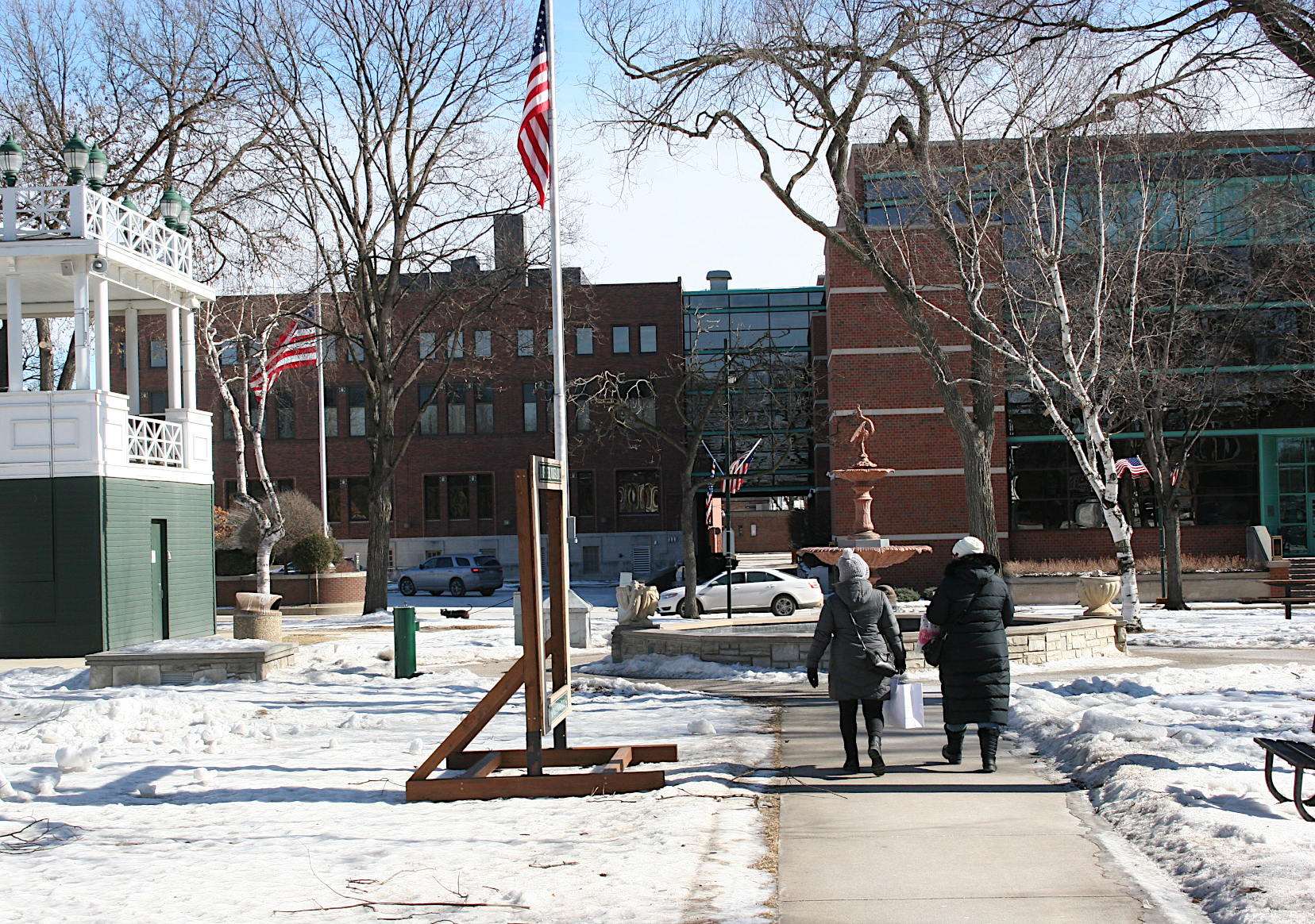
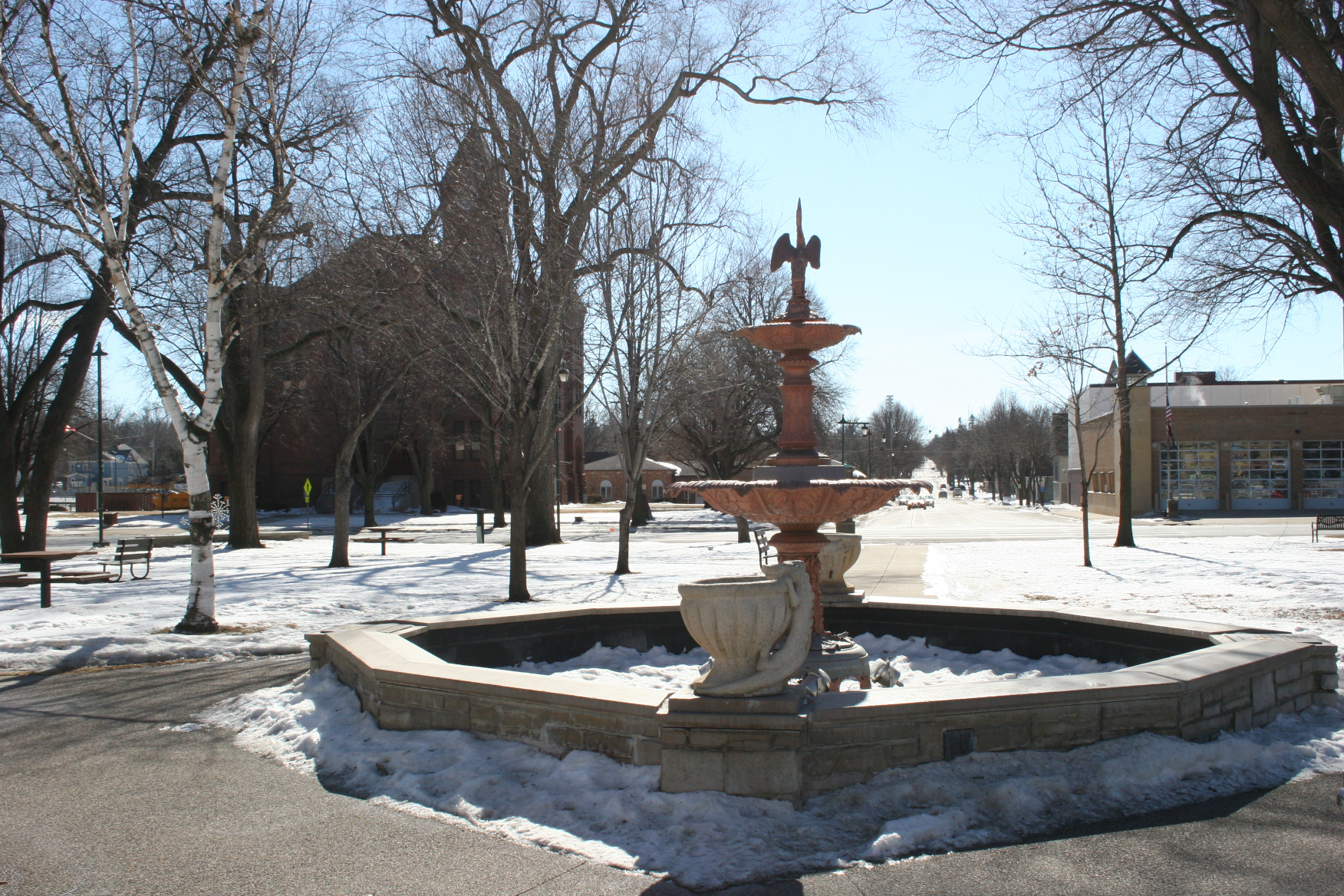
But on this cold Saturday in late February when I stopped by, only a few people used the park. A couple walked their dogs. And two women crossed to the center fountain, purses angled across downy winter coats, stocking caps clamped on and shopping bags looped over three gloved hands, take-out coffee clutched in the fourth.

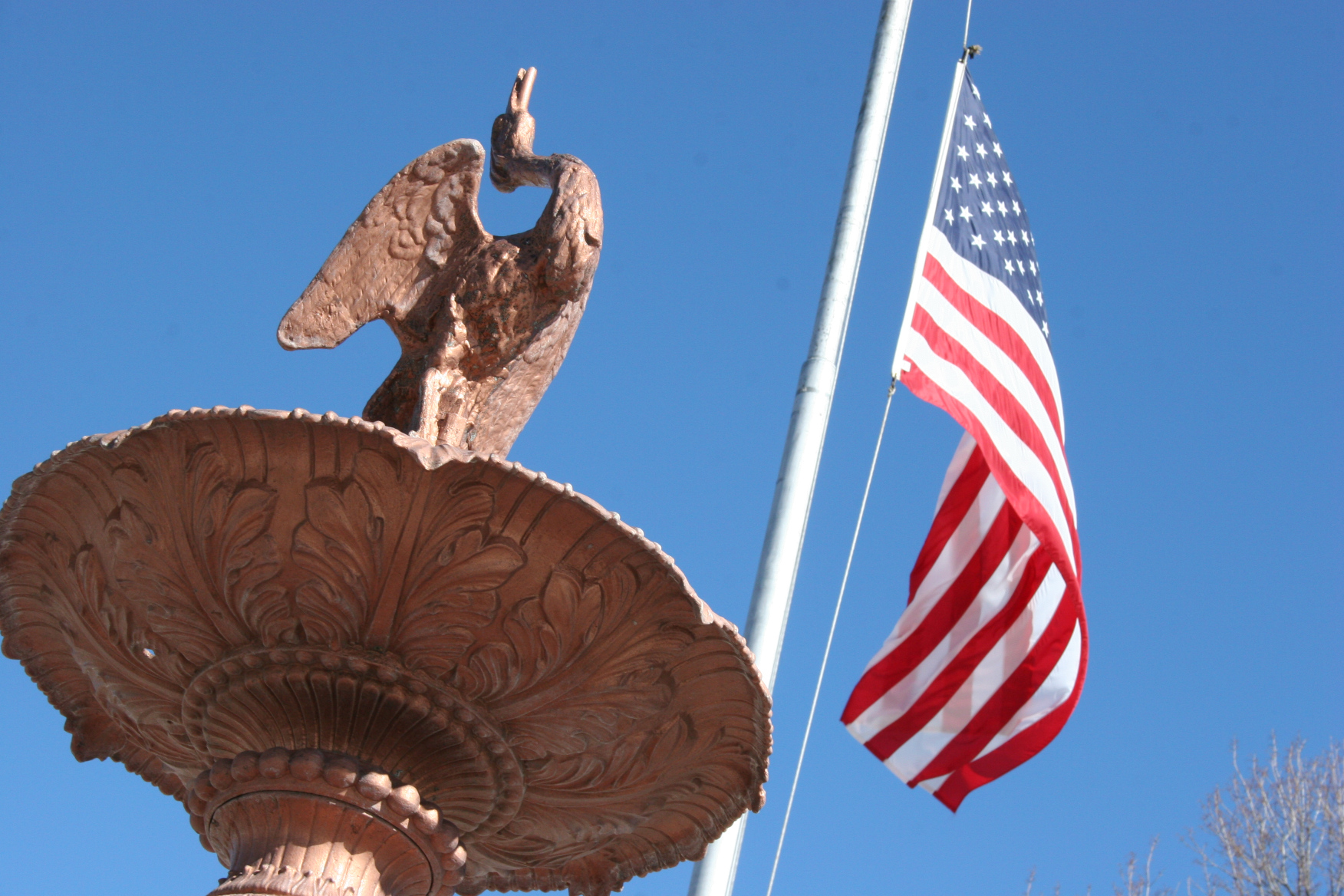
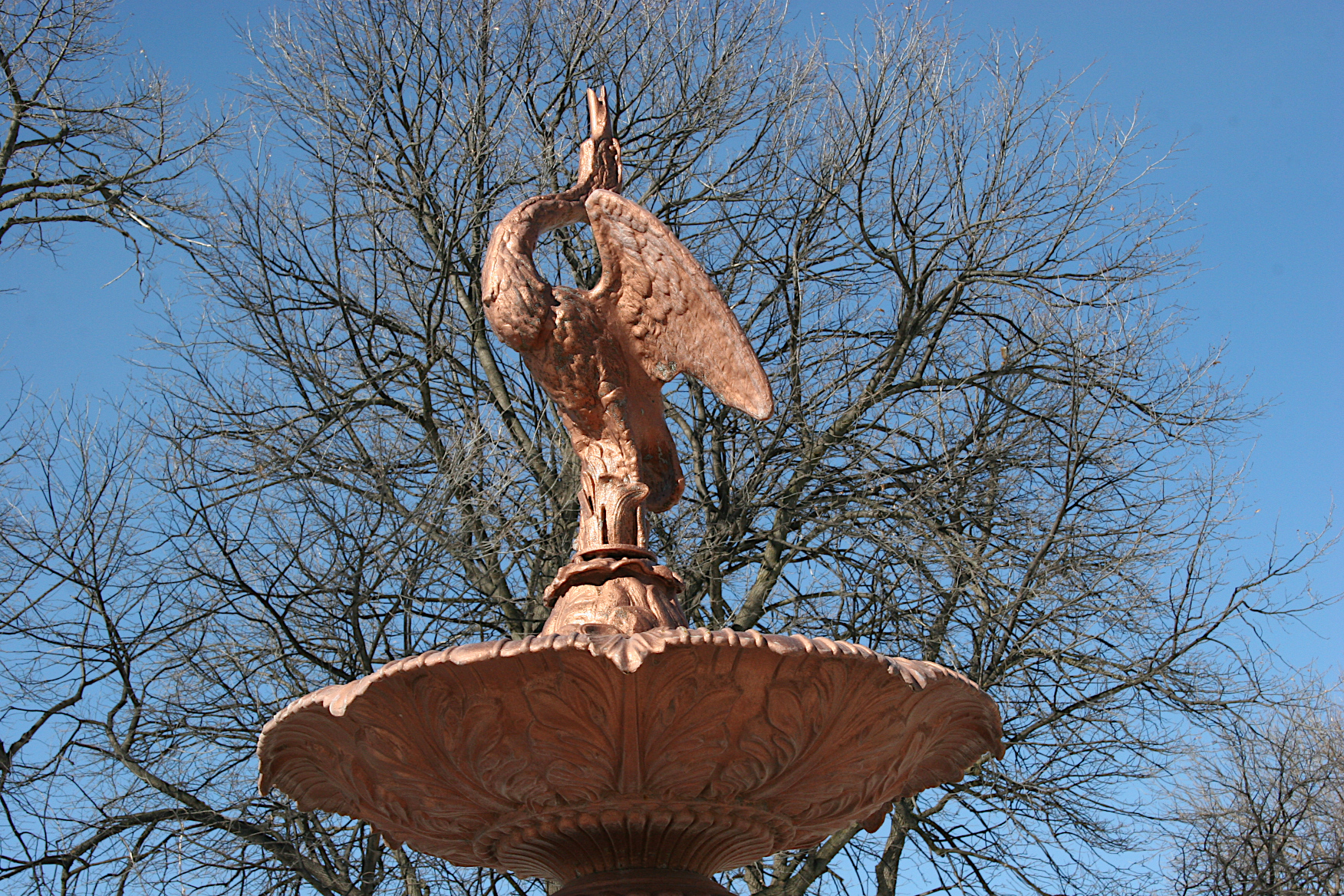
A crane tops the 1909 fountain, refurbished in 2021. (Minnesota Prairie Roots copyrighted photo February 2022)
Imagine this fountain in the warmer months. (Minnesota Prairie Roots copyrighted photo February 2022)
Love the graceful curve of the fountain top crane. (Minnesota Prairie Roots copyrighted file photo February 2022)

As the women paused near the centerpiece fountain placed here in 1909, I studied the scene before me, camera ready. Only moments earlier, I finished my packed lunch inside the cozy warmth of the van. Randy and I had planned to eat at nearby Rice Lake State Park. But that all changed when hiking trails proved too icy for safe walking. So here we were in Owatonna, shifting our plans.

This replica of the 1899 community stage centers the park. It was built in 2004, on Owatonna’s 150th anniversary. (Minnesota Prairie Roots copyrighted photo February 2022)

I was determined that the cold weather would not keep me from photographing the park. Dressed in a warm hand-me-down parka from my son layered over tee and flannel shirts, long johns under jeans, practical winter boots, hand-knit cap and mitten/gloves, I felt prepared. The combo mitten/gloves were a gift from Randy years ago. They work great for winter photography. I flip back the fleece ends to reveal open fingertips. That allows me to manipulate my camera without exposing my entire hand.

An artsy planter sits on fountain’s edge awaiting spring planting. (Minnesota Prairie Roots copyrighted photo February 2022)

Even with all of that, I soon found myself hurrying my creative pace. My fingertips were freezing.

Trees and lights against a bold blue sky by the stage/bandshell. (Minnesota Prairie Roots copyrighted photo February 2022)

But I was determined to document the setting on an afternoon that looked deceptively warm. Bold blue skies. Sunshine. Artsy fountain. Stout community stage. Historic buildings bordering the park. Remnants of snow sculptures.

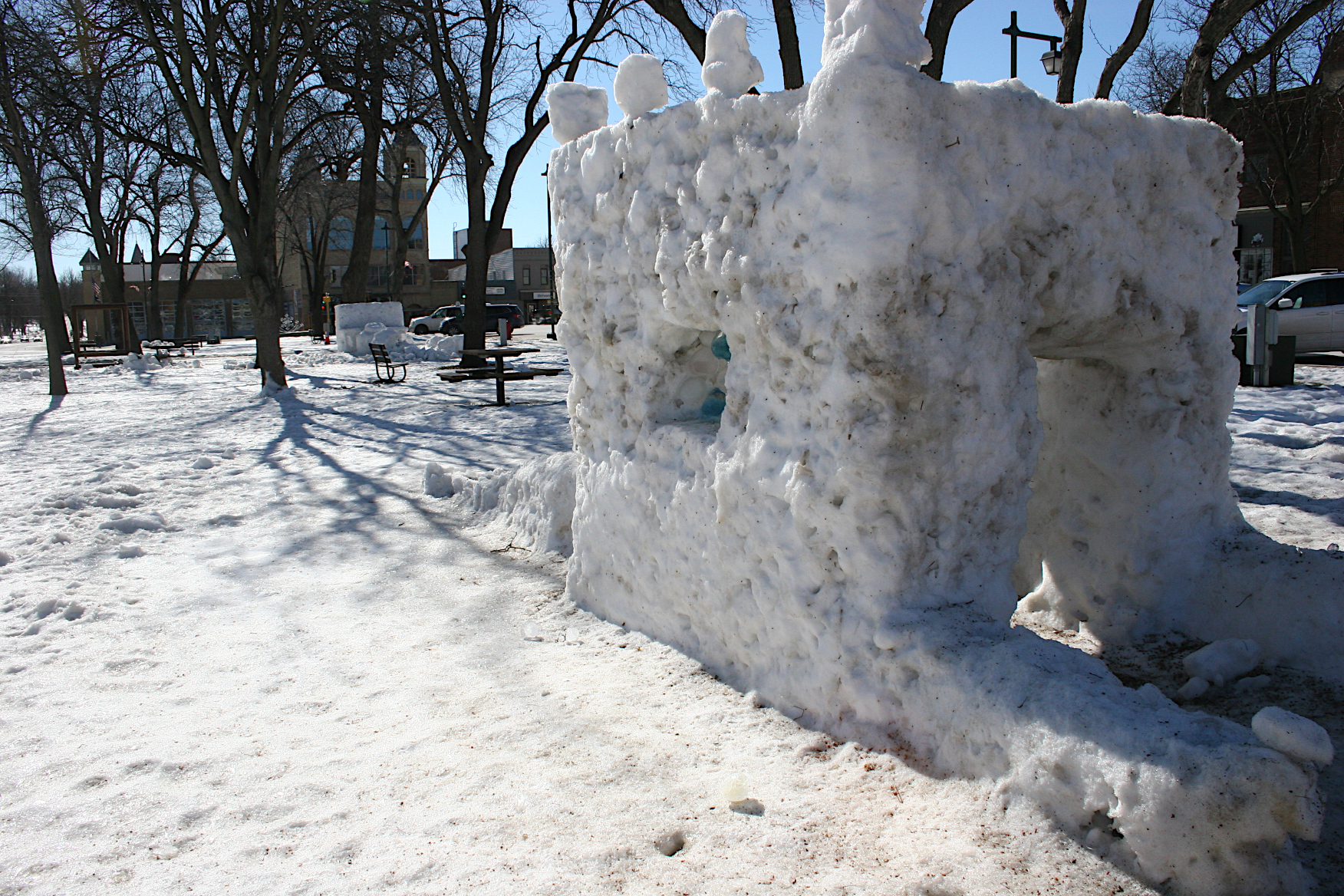
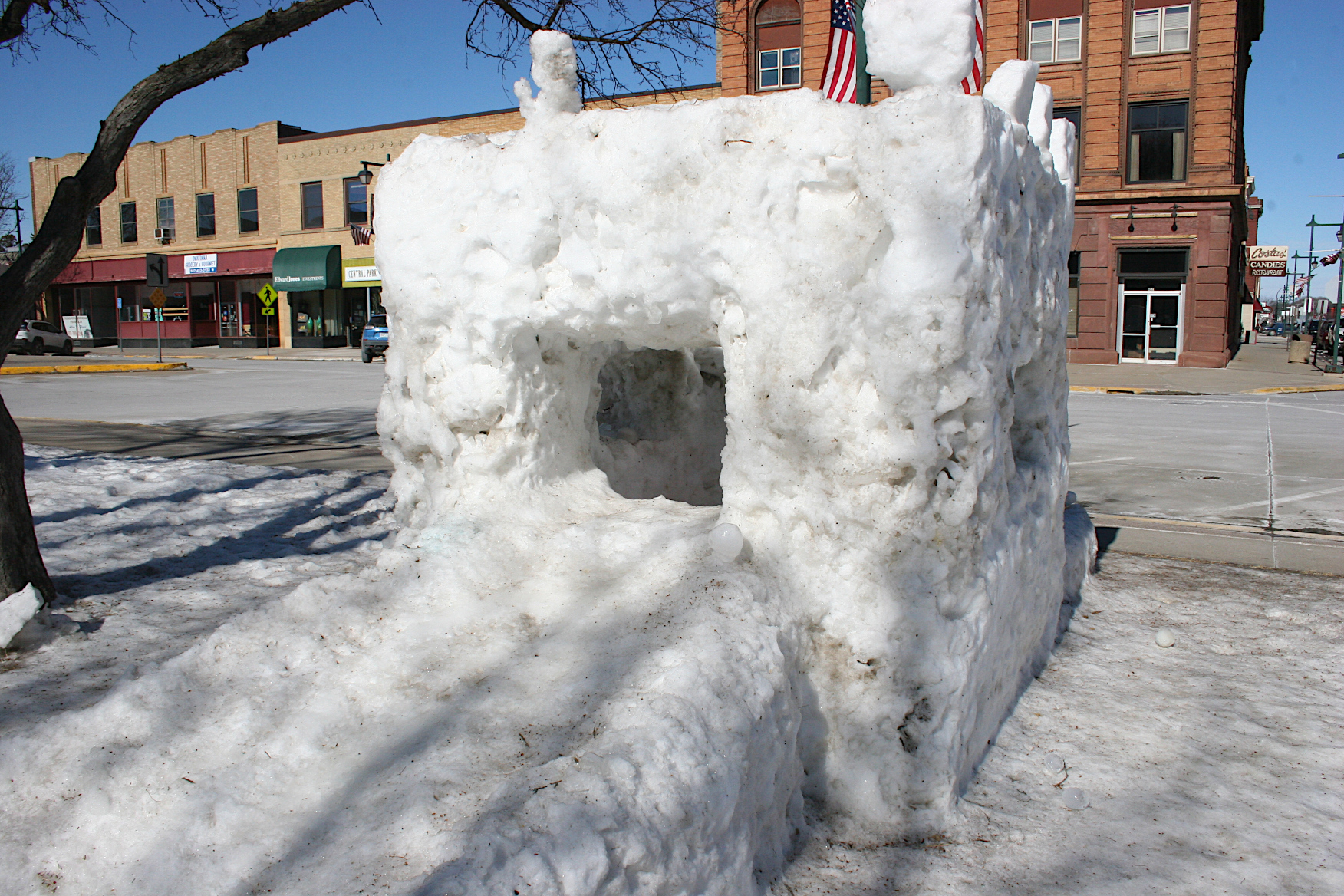
This snow castle still stands, albeit weathered after a month. (Minnesota Prairie Roots copyrighted photo February 2022)
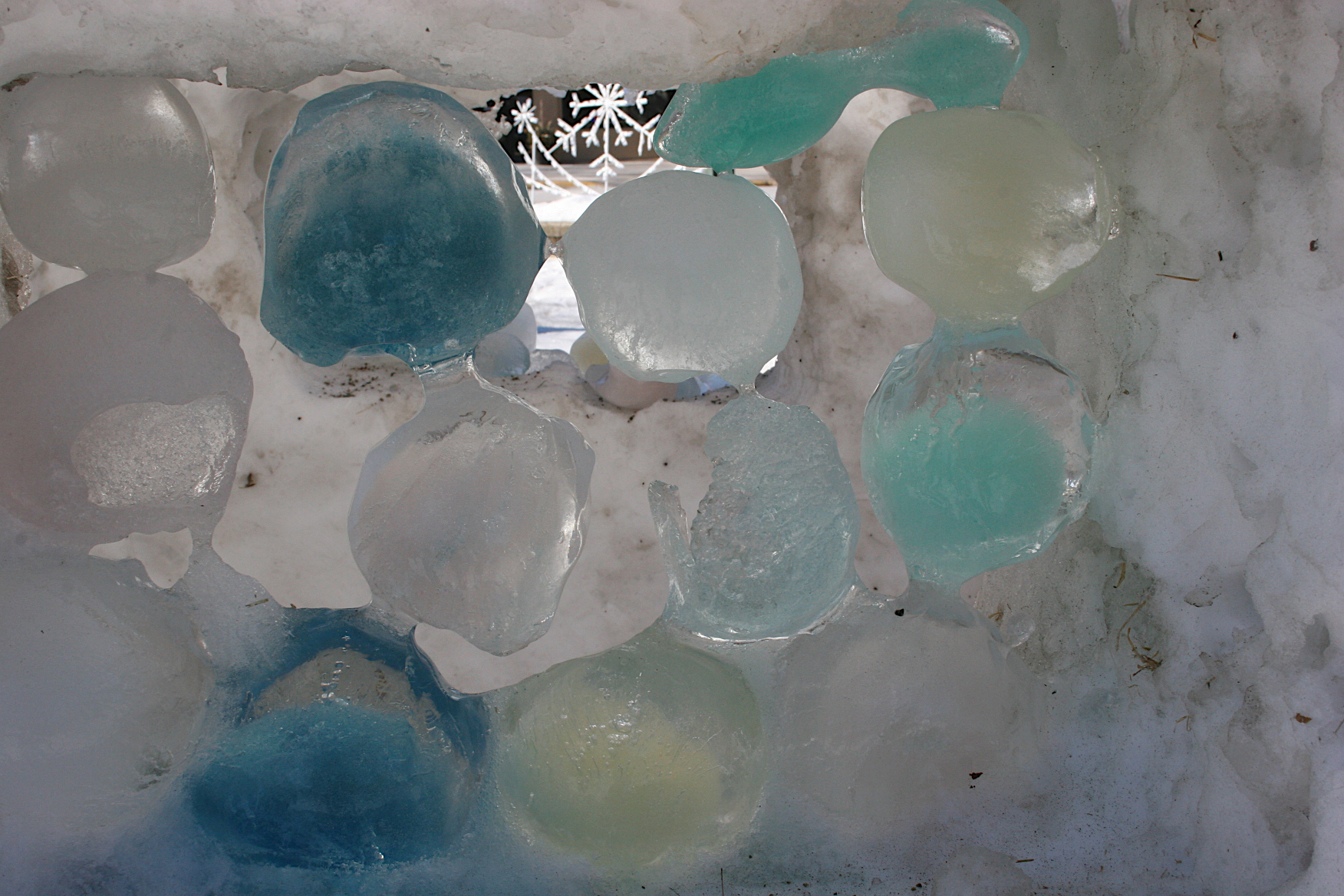
Beautiful colored ice fills a window of the snow castle. (Minnesota Prairie Roots copyrighted photo February 2022)
The back side of the castle features a slide. (Minnesota Prairie Roots copyrighted photo February 2022)

I regretted that we missed Owatonna’s Bold & Cold Winter Festival at the end of January. Then those sculptures would have been newly-built, pristine. But now I could only imagine kids slipping down the slide at the deteriorating snow castle.

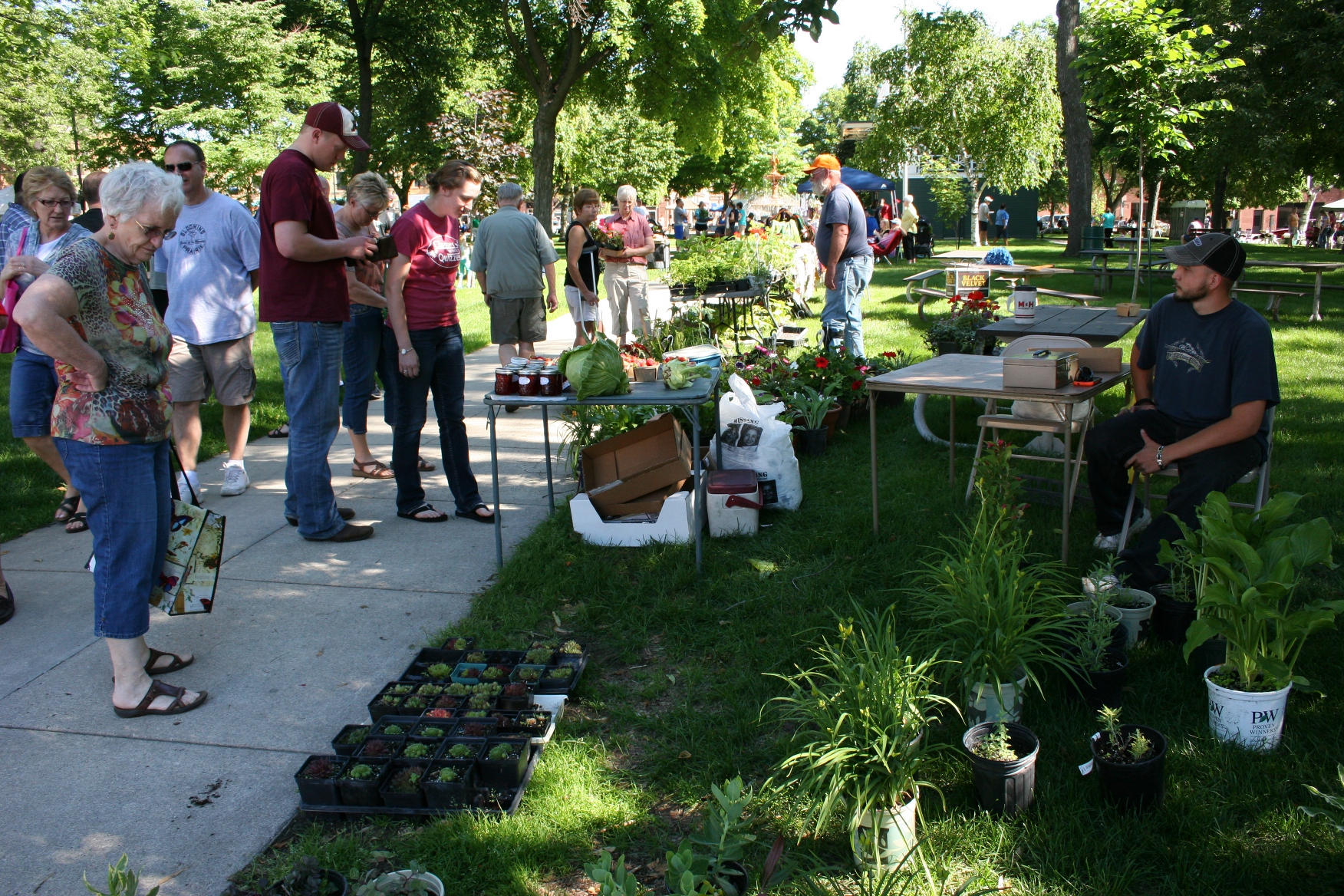
Plants for sale at the 2014 Owatonna Farmers Market. (Minnesota Prairie Roots copyrighted photo February 2022)

I also imagined how, in a few months, this scene will change. How leaves will unfurl on the birch trees. How the fountain will spill water. How Farmers Market vendors will set up shop. How music will create a joyful rhythm that welcomes spring, then summer. And warmth.

A snapshot scene from the 2014 Owatonna Farmers Market, which covers one-block square Central Park. (Minnesota Prairie Roots copyrighted file photo June 2014)

This I contemplate as I snap frames, fingertips freezing, hurting now in the cold of winter. Back in the van, I hold my fingers close to the blower, seeking heat while the sun shines bright, bold over Central Park.

© Copyright 2022 Audrey Kletscher Helbling
 

No hiking for us on icy state park trails February 28, 2022

Filed under: Uncategorized — Audrey Kletscher Helbling @ 5:00 AM
Tags: , , , , , , , , , ,
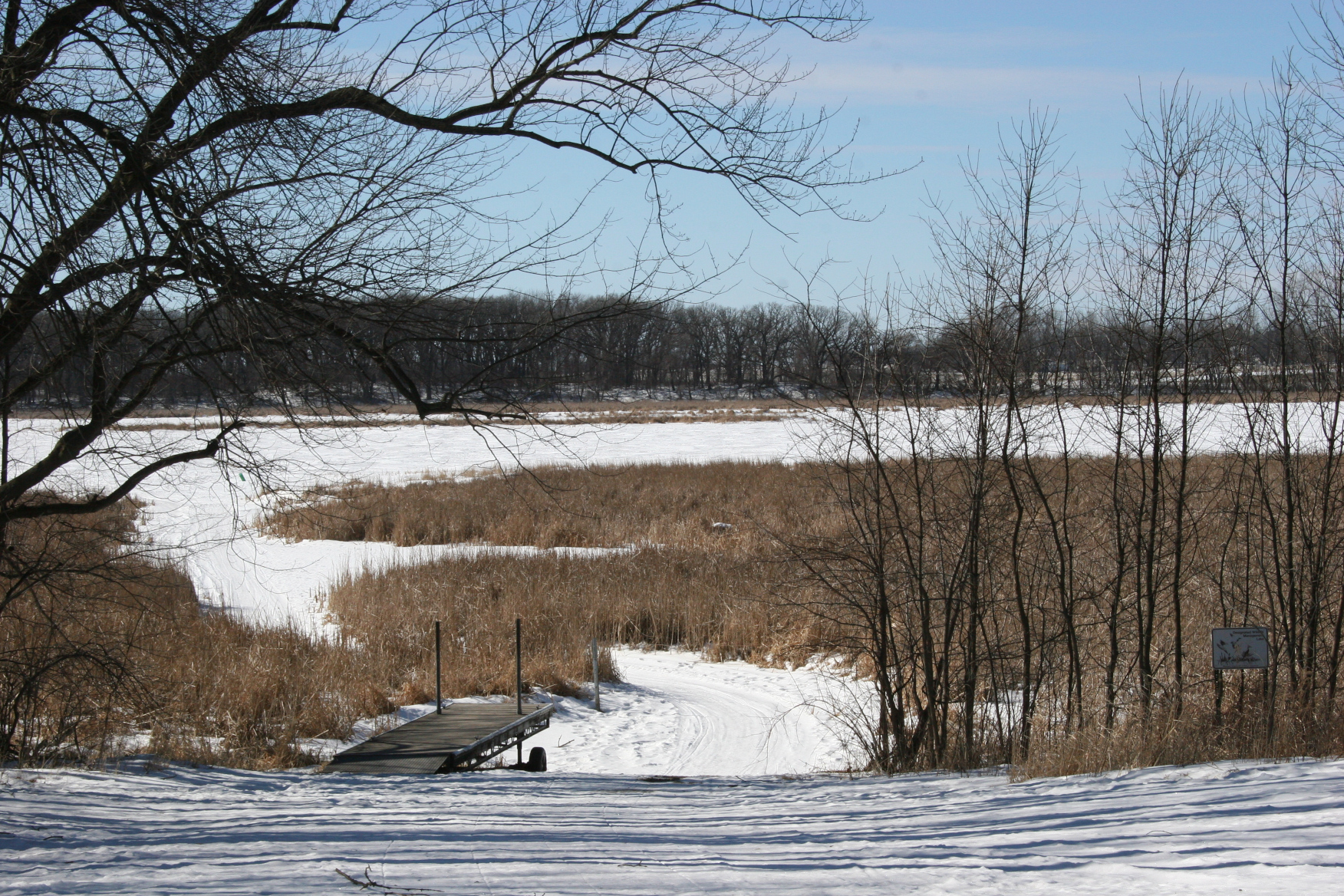
A view of frozen Rice Lake at Rice Lake State Park on February 19. (Minnesota Prairie Roots copyrighted photo February 2022)

IN THEORY, THE PLAN seemed a good one. Randy and I would hike in a nearby state park on February 19, the first of four “free entry” days to Minnesota’s 75 state parks and recreation areas.

Mid Saturday morning, we packed sandwiches, fruit, granola bars and almonds for a picnic lunch, although we would eat in the comfort and warmth of our van. Temps in the 20s do not allow for outdoor dining.

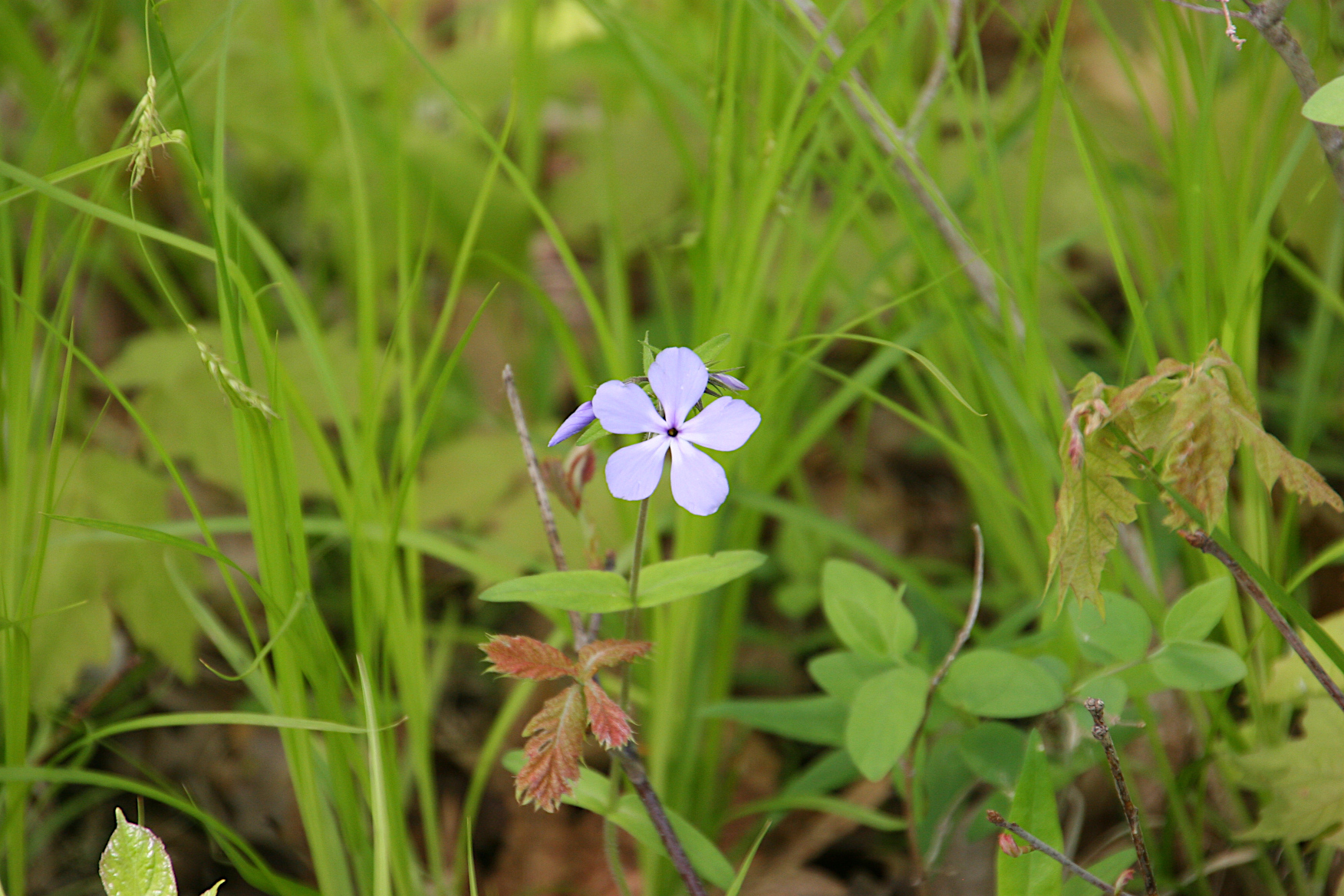
Wildflowers abound in the woods at Rice Lake State Park in this spring-time photo. (Minnesota Prairie Roots copyrighted file photo May 2022)

Originally we intended to drive to Carley State Park south of Plainview. It’s a park we have not visited. But part way there, I suggested we wait. A description of Carley’s Whitewater River-hugging Wildflower Trail and Virginia bluebells carpeting the forest floor in May prompted the change in plans.

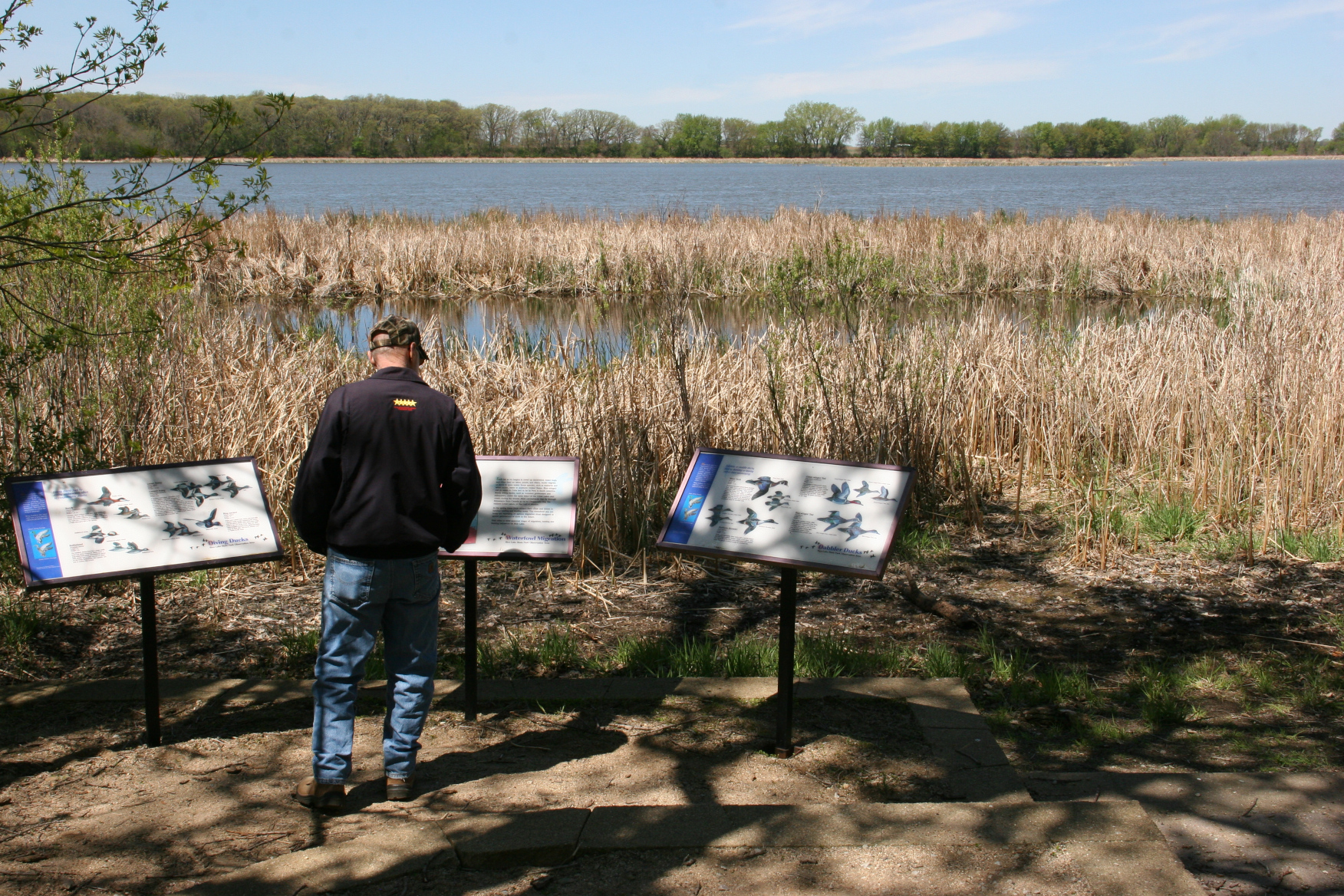
Randy reads signs about waterfowl posted by the lake during a May 2020 visit to Rice Lake State Park. (Minnesota Prairie Roots copyrighted file photo May 2020)

Instead, we aimed for Rice Lake State Park some eight miles east of Owatonna. We’ve previously been there, although not in winter. Following back paved county and gravel roads, I already envisioned hiking the park’s trails along frozen Rice Lake. I imagined the quiet of the woods, the beauty of the snow-covered landscape. Such were my expectations. I also felt excited to participate in the Rice Lake State Park Challenge, a special free entry day event that involved finding passwords to claim a possible prize.

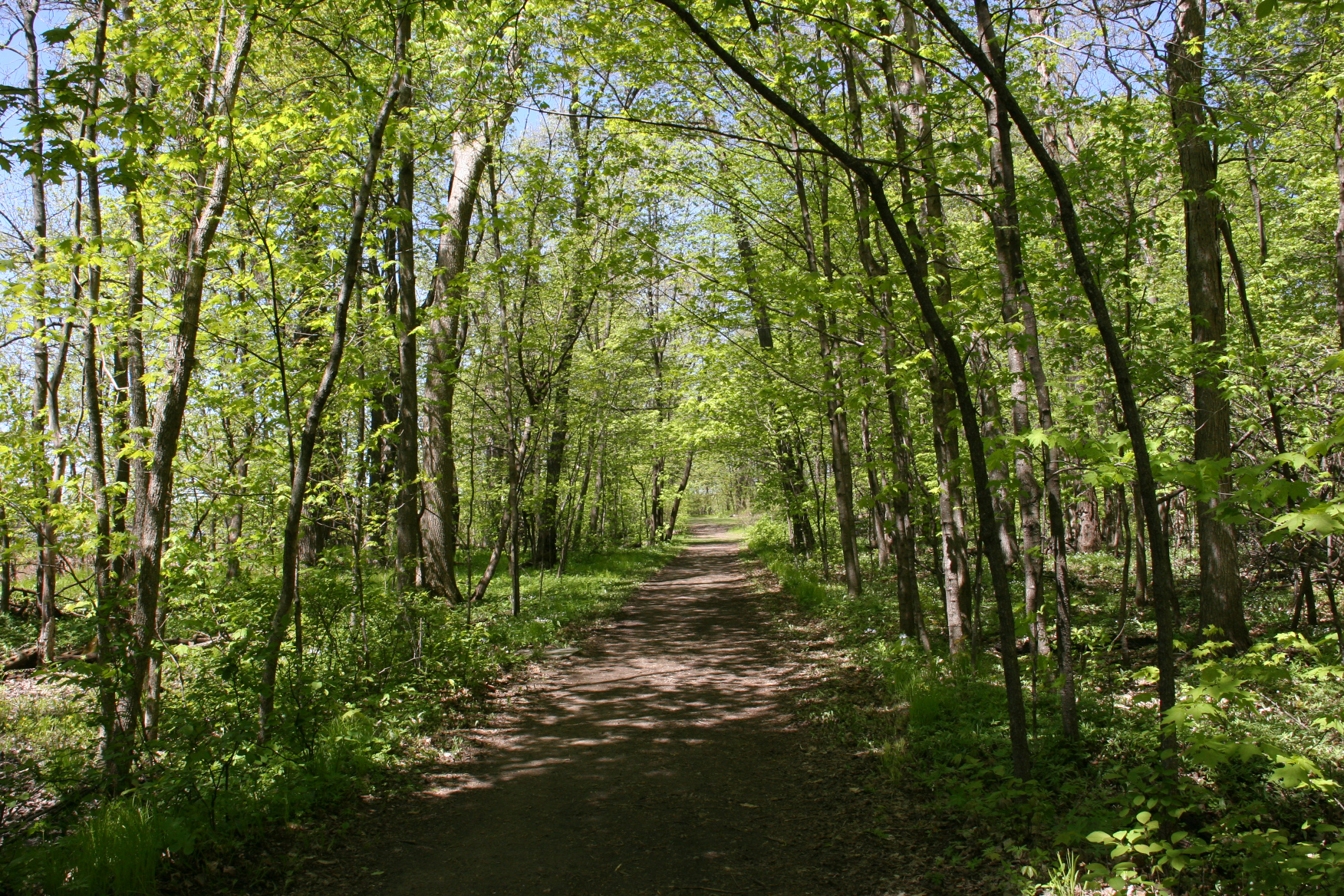
Walking into the woods at Rice Lake State Park in the spring. (Minnesota Prairie Roots copyrighted file photo May 2020)

When we pulled into the park, I checked in at the park office for a map and the challenge entry form. As I was about to leave, the park staffer warned, “Be careful, the trails are icy.” I would soon discover for myself just how right she was in that assessment.

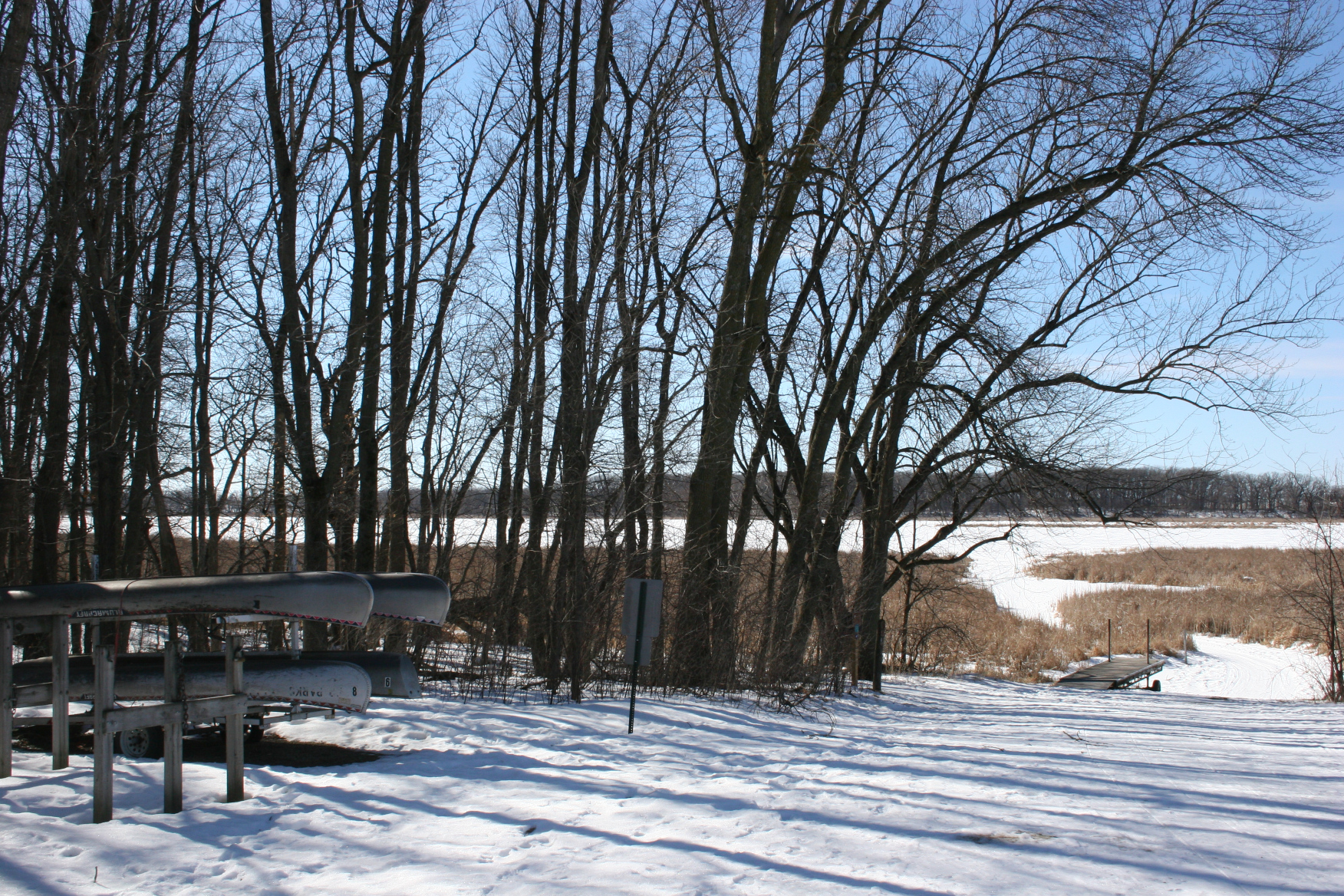
Rental canoes are stacked next to the parking lot and lake. The trail we took started at the edge of the woods near lake’s edge. (Minnesota Prairie Roots copyrighted photo February 2022)

The snow-packed, icy parking lot offered the first clue to conditions. I carefully stepped from the van, draped my camera strap around my neck and aimed toward the lakeside trail. Not even part way there, I was already grasping Randy’s arm. As someone who’s broken her right shoulder and left wrist in falls (the last requiring surgery), I have no desire to fall and break a third bone. Note that neither occurred in winter but rather in May and June and involved a missed step inside a hospital and a rain-slicked wooden step in a friend’s backyard.

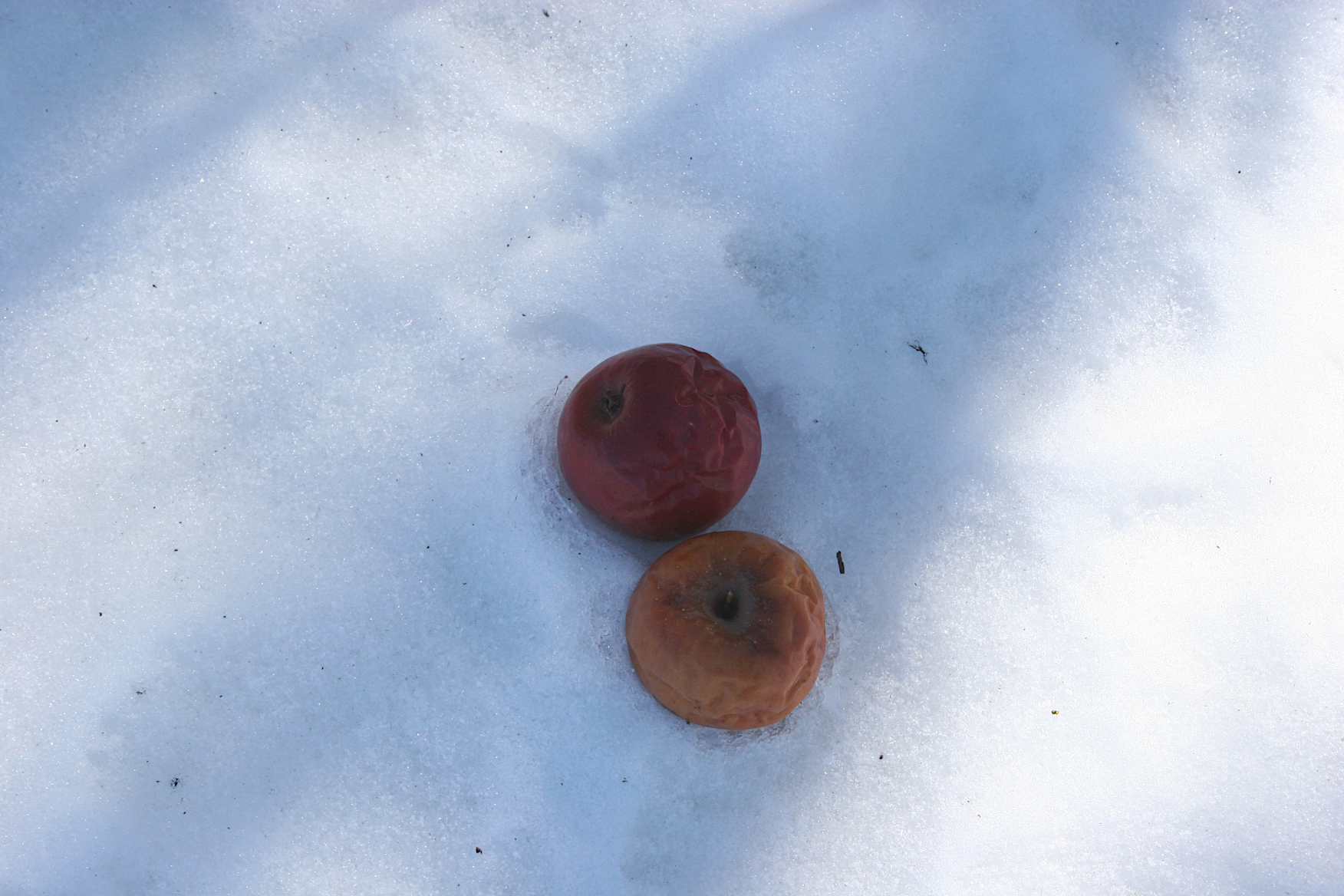
On the way back to the van, I spotted these apples in the snow. Deer food? (Minnesota Prairie Roots copyrighted photo February 2022)

At the beginning of the trail at Rice Lake State Park, I paused, observed and assessed that, yes, the trail was, indeed, icy. But I was willing to try, hoping conditions would improve. They didn’t. Soon Randy and I found ourselves crunching through the snow aside the trail rather than traversing the ice-packed path. Not even 20 feet in, Randy advised that perhaps we best turn around. I agreed.

Lake and sky meet at Rice Lake State Park during a spring visit. (Minnesota Prairie Roots copyrighted file photo May 2020)

Disappointment filled my thoughts. I didn’t realize how much I had anticipated this time in nature, in the woods, by the lake. And now…plans would pivot. We realized conditions would likely be the same at other state parks. So we headed west to Owatonna for that picnic lunch and more.

#

TELL ME: If you live in southern Minnesota, where can I find clear trails for winter hiking? If you live elsewhere, where do you like to hike this time of year?

#

FYI: Minnesota has three more upcoming “free entry” to state parks and recreation areas in 2022. Those dates are April 23, June 11 and November 25. I highly-recommend a warm weather hike in Rice Lake State Park. It’s especially peaceful.

© Copyright 2022 Audrey Kletscher Helbling
 

Reflections from Minnesota rooted in Ukraine February 25, 2022

I pulled stories from a family history book for a family history trivia contest at a 2017 Helbling reunion. (Minnesota Prairie Roots copyrighted file photo 2017)
YESTERDAY I PULLED A SPIRAL-BOUND family genealogy book from an upstairs closet. Compiled in 1993 by my sister-in-law Vivian, the book details the families of Alfred Helbling and Rosa Schaner Knoll Helbling. For someone like me who married into the Helbling family, it takes effort to understand the information therein, especially with second marriages (due to deaths) and stepchildren.
A stone building in southern Wisconsin, used for illustration only. (Minnesota Prairie Roots file photo)

But I’m clear on one fact—the Helbling ancestors are considered “Germans from Russia.” As the family tree shows, the Helblings trace their roots back to Wingen, Alsace in the Rhine River Plain. Like many Germans, they left their homeland for Russia when Russian Czarina Catherine the Great (a former German princess) promised free farmland and more to immigrants. My husband Randy’s great great great great grandfather and his family were among the founding fathers of the Catholic colony of Speier in 1809. That’s in the southern area of current day Ukraine near the Black Sea port city of Odessa.
So now you understand why I pulled that family genealogy book from the closet. The unfolding invasion of Ukraine (including in Odessa) resonates with me in a way that is personal. This land, now under attack by the Russian military, was once home to the Helbling family. They arrived in this area with hopes and dreams.
As often happens in history, leadership and policies change. That prompted Randy’s great grandparents, Russian-born Valentine and Emina Helbling, to emigrate to the U.S. from Russia. They arrived in Mandan, North Dakota in May 1893. Accompanying them were their three sons, including 5-year-old Alfred, Randy’s grandpa.

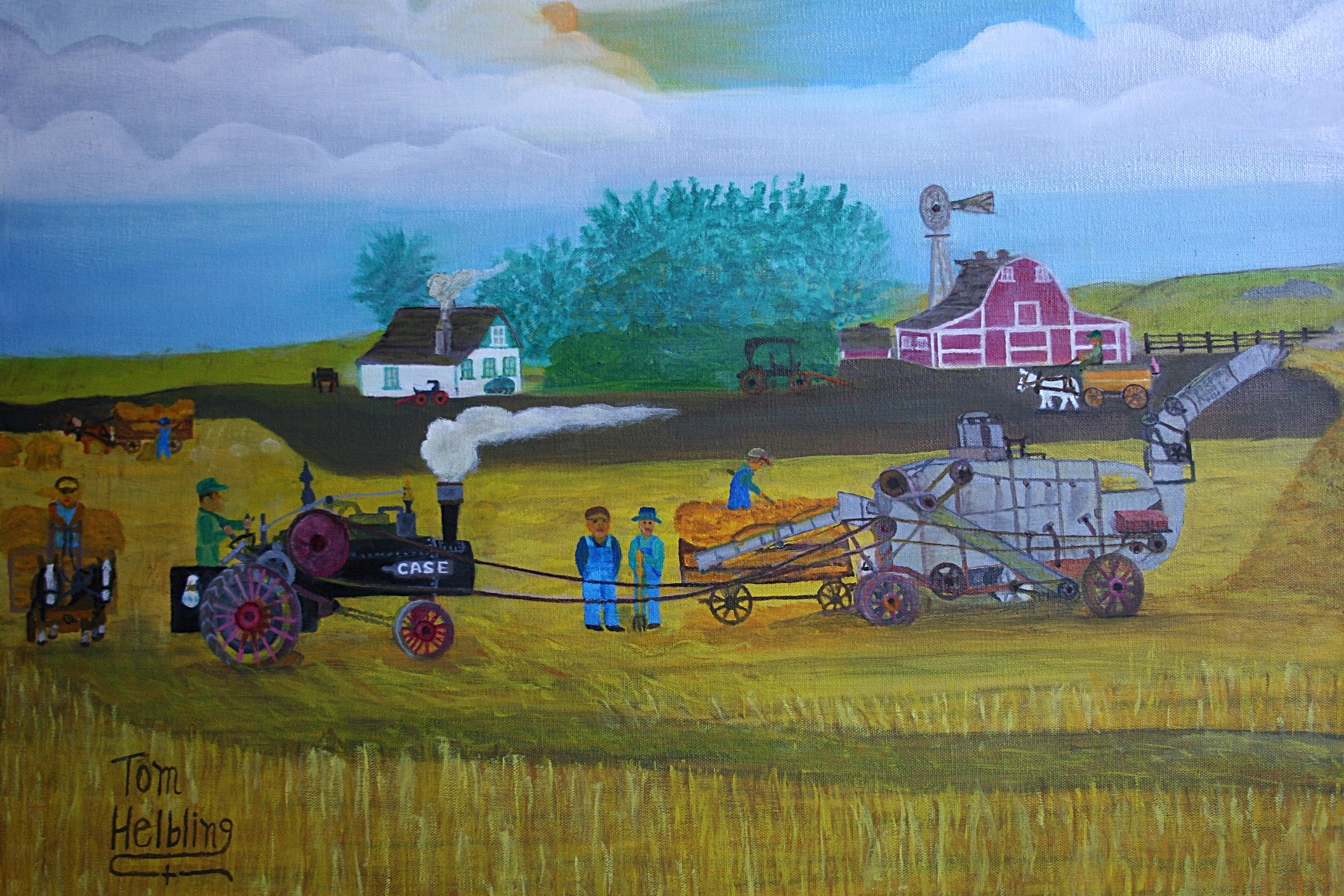
“Threshing on the home place, rural St. Anthony, North Dakota,” a painting by my father-in-law. Thomas Helbling. (Minnesota Prairie Roots copyrighted file photo)

I’m always amazed at the generational closeness of my husband to his family’s homeland. Mine is a generation farther removed (from Germany). In 1898, Valentine and Emina homesteaded a claim near St. Anthony south of Mandan. That young boy who traversed the ocean from Russia with his parents would also farm there as would Randy’s father, Tom. When Randy was seven, his family uprooted and moved to central Minnesota.

As I consider all of this family history, I wonder at the dreams and challenges. To leave your home country behind, understanding you would never return, takes fortitude. I can only imagine the fortitude Ukrainians must tap in to today as they face a Russian invasion.

Early in his marriage, Alfred Helbling faced an unspeakable loss—the tragic death of his first wife. Katherine, 27, apparently lost her balance, fell into a well and died while retrieving a container of milk stored inside.
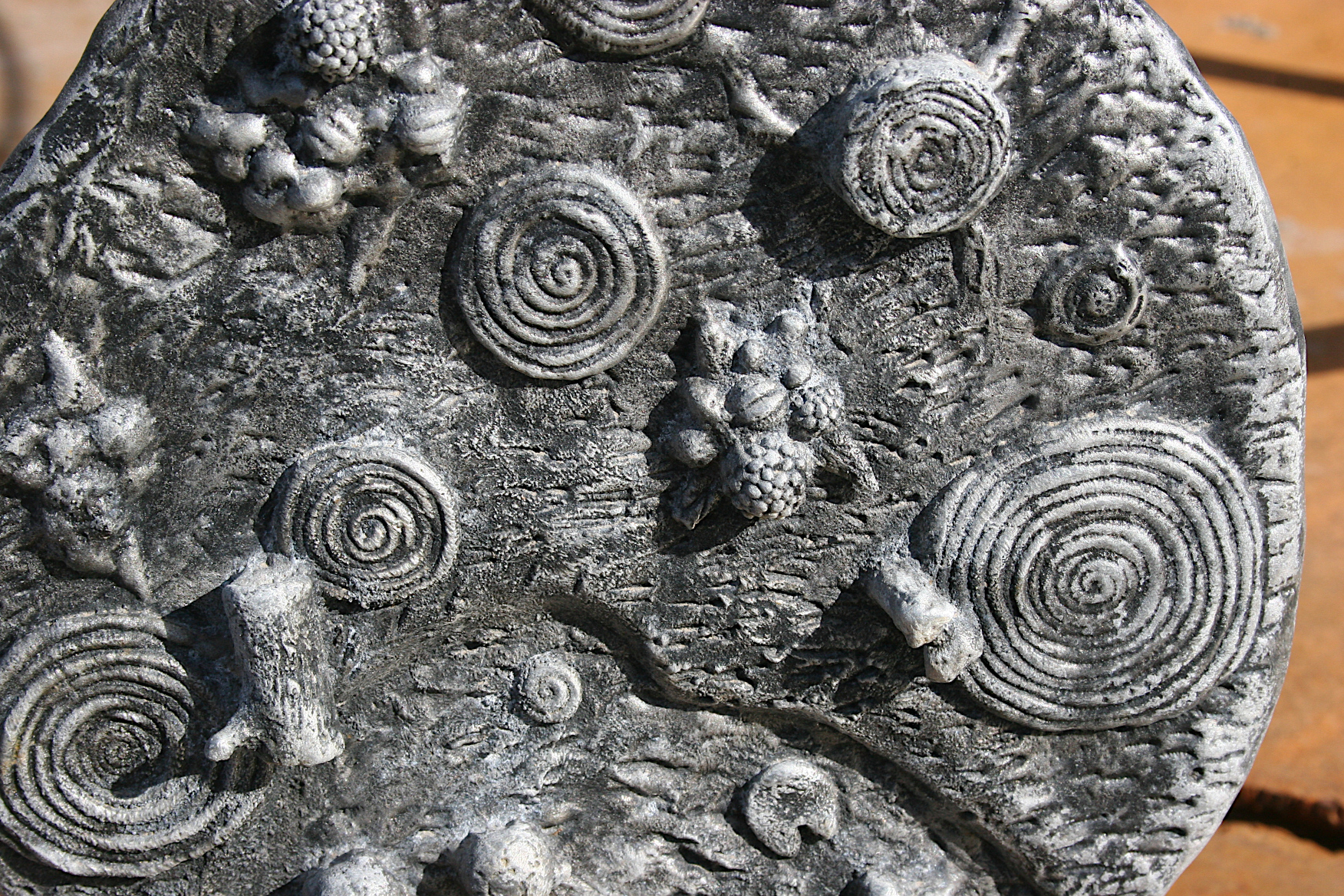
Artwork created by Gracie for a 2018 student art show at the Paradise Center for the Arts, Faribault. (Minnesota Prairie Roots file photo March 2018)

Today people are dying in Ukraine, a country that suddenly doesn’t seem all that far away. An ocean and some 5,200 miles separate this land from Minnesota. But when I page through the spiral-bound genealogy of the Helbling family, I feel much closer. Closer in a way that causes me to feel emotional. Upset. Concerned. Worried about not only the future of Ukraine, but also of this world.

FYI: If you’re interested in learning more about “Germans from Russia,” click here to reach North Dakota State University’s “Germans from Russia Heritage Collection” website.

© Copyright 2022 Audrey Kletscher Helbling