(Image sourced online from Content Bookstore, Northfield, Minnesota)
RENEE GOOD, fatally shot by an ICE agent in south Minneapolis on January 7, was an award-winning poet. That is fact. The federal government has flooded Minnesota with thousands of ICE agents. That, too, is fact.
According to organizers (Content Bookstore, The Grand and Northfield area poets), the event is intended to bring the community together in response to recent ICE presence in Northfield and in response to the killing of Renee Good.
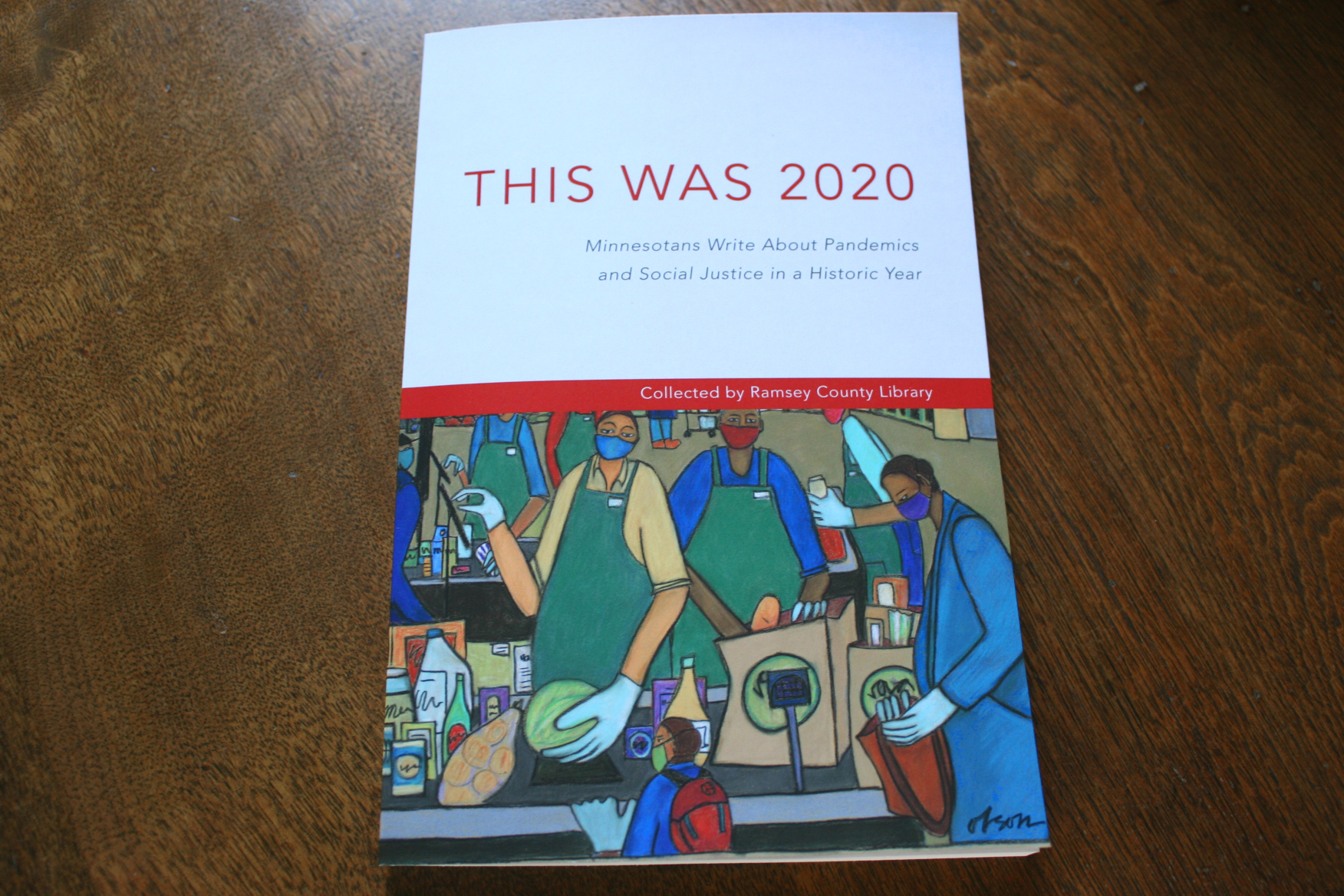
There is power in poetry, in the written and spoken word. The arts in general—whether literary, visual or performing—have long been a way to meet the moment. In 2021, for example, the Ramsey County Library published This Was 2020: Minnesotans Write About Pandemics and Social Justice in a Historic Year. That collection of short prose and poetry addressed the COVID-19 pandemic, the justice for George Floyd movement and the overall political climate in our country in 2020. My poem, “Funeral During a Pandemic” was selected for publication in the collection.
While I won’t be available to participate in Sunday’s “Words to Meet the Moment” poetry reading in Northfield, I will be there in spirit. And if I am so inspired, I will work on a poem to submit. That’s an option for those who can’t attend or who don’t want to read.
“Words to Meet the Moment” is about more than just words, though. Event planners are also accepting donations for Northfield Supporting Neighbors, a grassroots organization founded to help meet the needs of local immigrants, especially for legal services.
This marks a moment in time when we can use our words, our hands, our financial resources to make a difference. Or we can do nothing. I choose meeting the moment with strength, courage, hope, action and words.
Photographed many years ago in downtown Faribault.(Minnesota Prairie Roots copyrighted file photo used here for illustration only)
MY SUNDAY BEGAN as most Sundays do with morning worship at my church. The sermon highlighted sections of Mark 12, which includes this verse: Love your neighbor as yourself. That would theme the rest of my day.
Hours later I found myself gathered with others for the annual Rice County Salvation Army Red Kettle Campaign Kickoff. Again, the focus was on neighbors, specifically helping our neighbors in need.
Shortly after that event, Randy and I were on the road to neighboring Northfield for a 5 pm candlelight prayer vigil at Bridge Square. That, too, was about loving our neighbors. This time the gathering focused on supporting the family of Adan Nunez Gonzalez, a 41-year-old father of four snatched by masked Immigration and Customs Enforcement agents at gunpoint on November 11 in a residential neighborhood of Northfield. That incident has sparked outrage in this southern Minnesota college town and beyond.
Several family members and others witnessed Nunez Gonzalez being pulled from the passenger side of a vehicle while he was arriving at a job site along Washington Street. He’s a painter, originally from Mexico, with reportedly no criminal record who has been living in the US for 11 years. The entire incident was captured on video by his teenage son, called to the scene, and has been widely-circulated on social media. Nunez Gonzalez is now being held in the Kandiyohi County Jail. That county is among eight in Minnesota assisting with various aspects of ICE enforcement efforts. My county of Rice is not among them.
Attendees gather at Bridge Square as the candlelight prayer vigil is about to begin. (Minnesota Prairie Roots copyrighted photo November 2025)
HEAVY, YET HOPEFUL, HEARTS
The mood at Sunday’s prayer vigil felt heavy, yet hopeful, as some 200 of us gathered in the town square for this event organized by the Northfield faith community. As the sun set, as the nearby Cannon River roared over the dam, candles were distributed, lit and the crowd pressed together around a monument honoring Civil War soldiers. In late September, football players from Carleton College, blocks away, met here to turn the eagle atop the monument toward their college after defeating across-town rival St. Olaf College. It’s an annual celebratory tradition for the winning team.
Bridge Square has long been a community gathering spot, a place to celebrate, to peacefully protest, to meet one another for local events.
On this mid-November evening, it felt right and necessary to be here. To pray. To sing. To hear scripture quoted. To contemplate the gravity of ICE actions that have traumatized, torn families apart, instilled fear in communities across the country, raised the ire and concerns of many Americans like me who care about our neighbors and how they are being unjustly treated. Taken by armed, masked ICE agents and Border Patrol. Confined. Deported. Without due process of law.
Clergy gather before the start of the prayer vigil. (Minnesota Prairie Roots copyrighted photo November 2025)
A COMMUNITY RESPONDS
I felt the unity of a community determined to raise their voices and to take action. Northfielders have fed the family of their detained neighbor, organized activities for his children, started a GoFundMe to cover legal and other expenses, emailed support, expressed outrage and much more.
Love your neighbor as yourself was emphasized by clergy leading the vigil. One after another they stepped up to the mic, the first pastor leading us in The Lord’s Prayer. One referenced the biblical parable of the mustard seed and how we are to plant seeds of hope, faith, advocacy that will grow sturdy and strong among us. Another spoke of Jesus and his family fleeing to Egypt after his birth following threats from King Herod to find and kill all first-born males. It was fitting.
Another view of the crowd, not all of it, but a section of the attendees. (Minnesota Prairie Roots copyrighted photo November 2025)
A BIBLICAL DIRECTIVE
And then there was the well-known scripture from Matthew 25 in which Jesus asks us to care for one another—when hungry or thirsty, in need of clothing, when sick and in prison. It is as strong a directive as any in the bible to love our neighbors and to show that love in kind, caring and compassionate action.
The 25-minute Sunday evening prayer vigil closed with singing of “This Little Light of Mine.” Voices rose clear and strong in the darkness, arms stretched high, each hand grasping a single candle. A light. Many candles shining lights of support, hope, protest, resistance, outrage and more in a community that cares deeply about its neighbors.
#
NOTE: Please check back for a second “Love your neighbor” post, this one on the Salvation Army Red Kettle Campaign Kickoff.Also, note that the vigil images in this post were taken with my smartphone, thus the quality is not great compared with pix I would have taken with my 35 mm Canon. I left that at home, opting to be in the moment.
WHENEVER AN AUTHOR appears locally to read from and discuss his/her book, I try to attend. I love reading and learning. I enjoy listening to other writers talk about the craft of writing as I read and write nearly every day.
Osterholm, an internationally-renowned epidemiologist and director of the University of Minnesota Center for Infectious Disease Research and Policy, is a familiar name, especially to Minnesotans. During the COVID-19 pandemic, he was tapped as an expert. I, for one, found him to be an invaluable and trusted source of information during the pandemic. His knowledge and research into infectious diseases stretches well beyond COVID, though.
My history with Osterholm goes back decades to the late 1970s when I was just out of college working at a small town Minnesota weekly newspaper, The Gaylord Hub. Osterholm came to Gaylord during a hepatitis outbreak at the local school. While details of that health issue have long faded, I recall that this highly-contagious disease was connected to a band teacher and musical instruments. I remember photographing Osterholm, also starting his career, and writing a news story about what was unfolding at the school.
The original coronavirus as depicted by the CDC in 2021. (Sourced online)
On November 17, Osterholm will focus on pandemics, sure to be an enlightening talk at this 7-8:30 pm first come first serve seating (doors open at 6 pm.) event at The Grand, 316 Washington Street in Northfield and hosted by local independent bookshop, Content Bookstore.
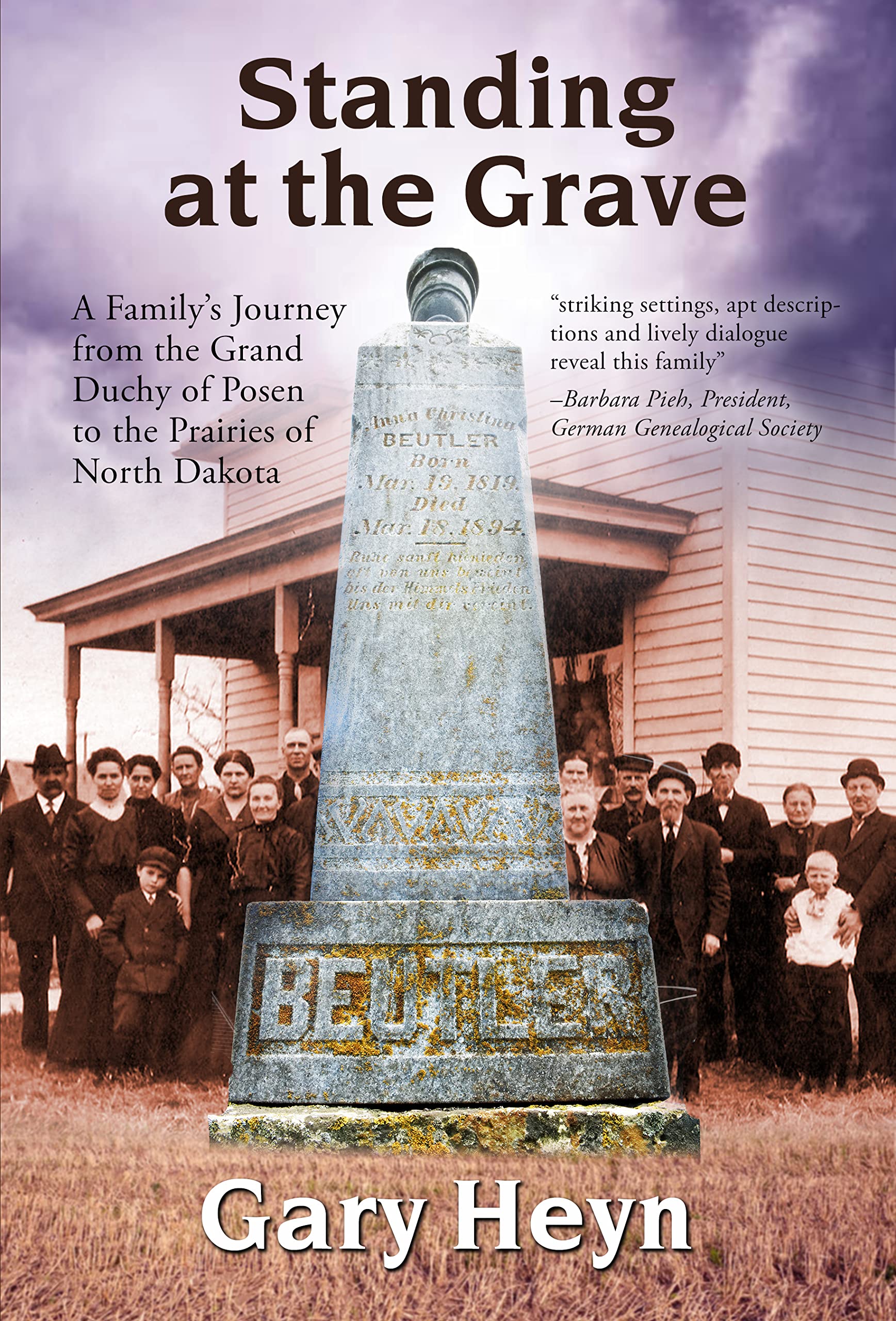
(Book cover sourced online)
While Osterholm will present in a large venue, author Gary Heyn will appear in a much smaller, intimate setting, the Rice County Area United Way’s Books on Central. The used bookshop is housed in a former jewelry store at 227 Central Avenue North, Faribault. Heyn, a retired corporate executive turned historian, genealogist and writer upon his retirement, will read from and talk aboutStanding at the Grave: A Family’s Journey from the Grand Duchy of Posen to the Prairies of North Dakota. This free literary event is set for 6 pm Thursday, November 20.
I’m about a third of the way through Heyn’s book and I can attest that it is a captivating read, the kind of book I don’t want to put down. It’s relatable when considering my German immigrant ancestors and also in the context of immigration issues today. Once I’m finished with the book, my husband will also be reading it. His ancestors, the Helblings, moved from Germany to then Russia (current day Ukraine) before journeying to America and a new life in North Dakota.
Insights into immigration, tracing family history and stories are always of interest. Heyn will read from the chapters of his book about three mothers from Gembitz Hauland, an historic German-Polish village, who were reunited in Steele County 18 years after sending their children to America. To type those words is enough to break my heart. I cannot imagine how difficult that must have been for those three mothers. But it happened. Over and over and over again.
I encourage you, if you live in my area, to attend these upcoming author talks. These are opportunities to learn via the expertise and creativity of those inspired to write.
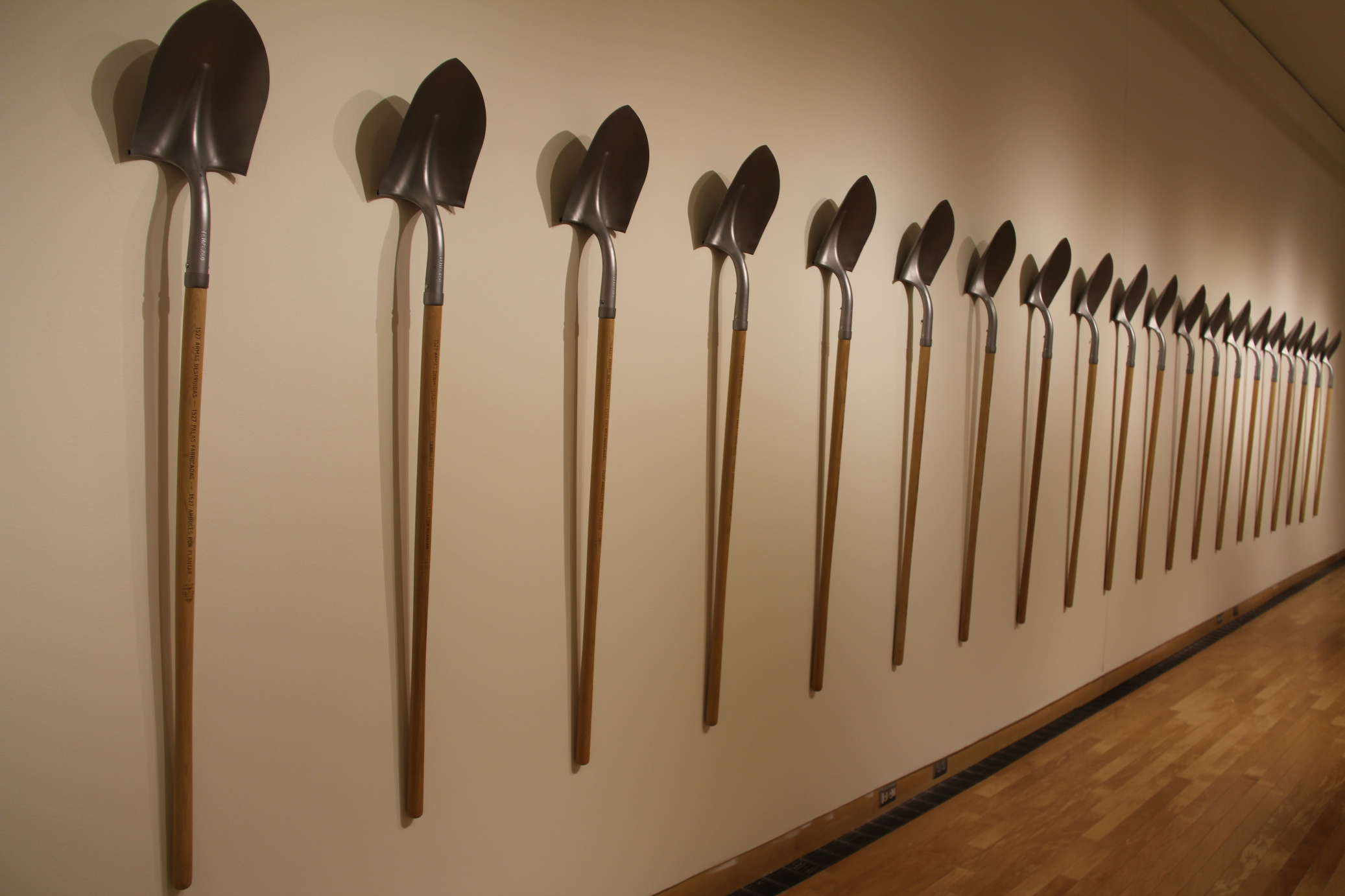
These shovels were crafted from melted guns and are part of an exhibit, “Ahimsa,” at Carleton College. (Minnesota Prairie Roots copyrighted photo October 2025)
INSIDE A GALLERY at a noted liberal arts college in a small southern Minnesota city, 20 identical shovels hang, evenly-spaced, along a beige wall. That may not seem impressive, until you read the story behind these tools.
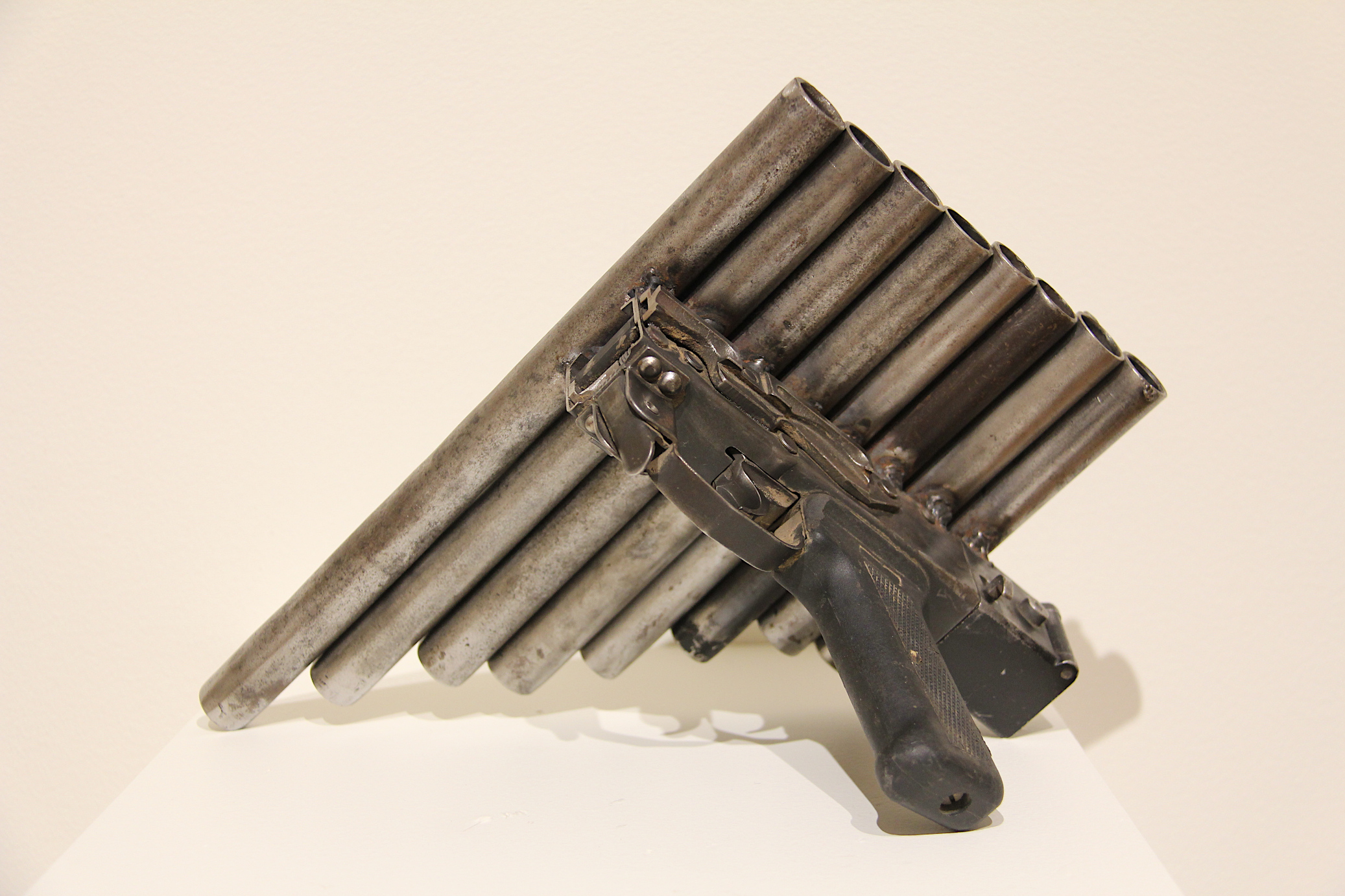
Pedro Reyes used surrendered and melted guns to create not only shovels, but also this “Disarm Pan Flute,” a playable instrument. (Minnesota Prairie Roots copyrighted photo October 2025)
These shovels were crafted from 1,527 guns surrendered in Culiacán, Mexico. Guns that were melted and made into 1,527 shovels used to plant 1,527 trees, including one at the corner of Union Street and Fourth Street East on the campus of Carleton College in Northfield.
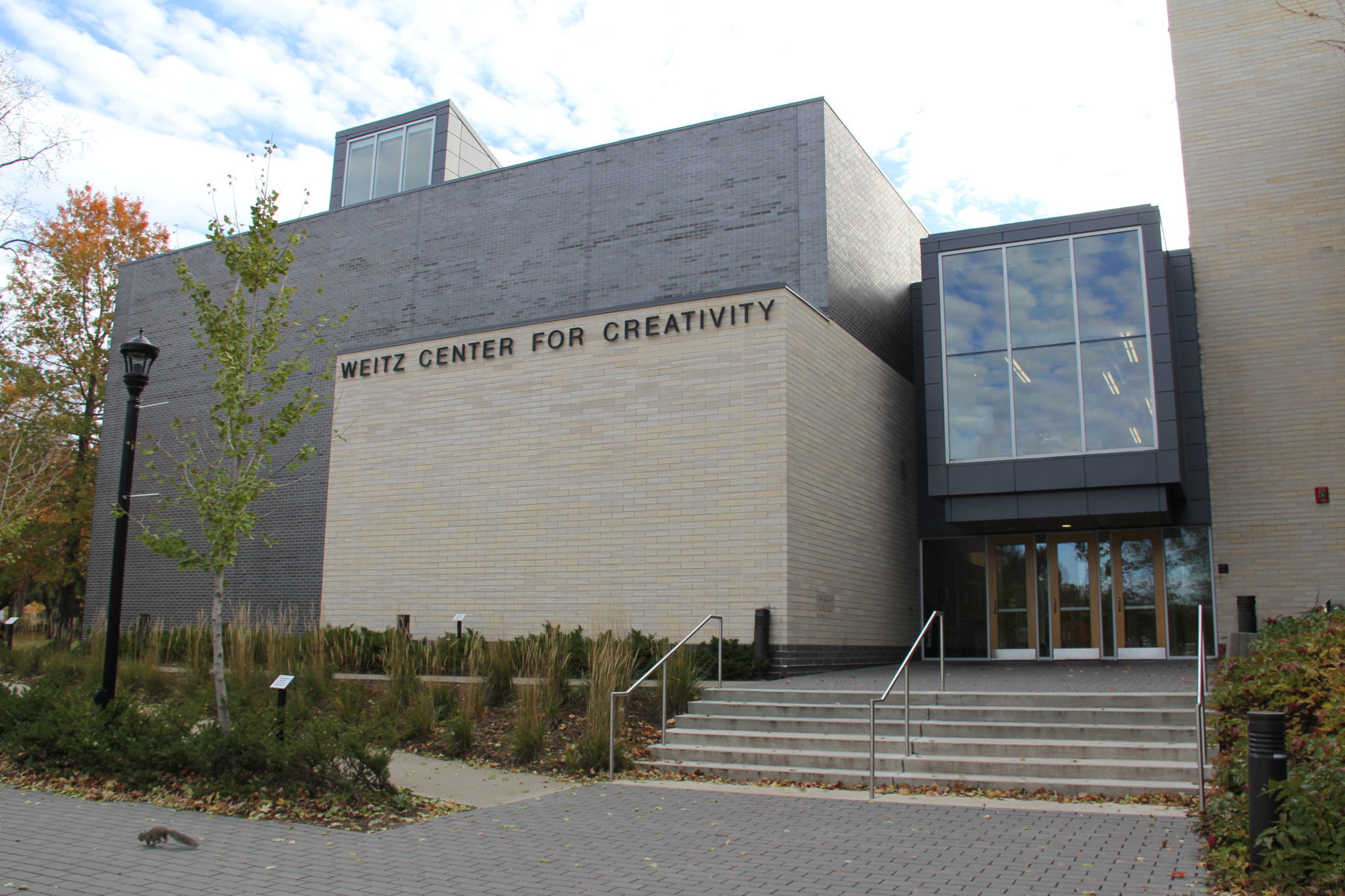
The exhibit is showcased in two galleries inside the Weitz Center for Creativity. (Minnesota Prairie Roots copyrighted photo October 2025)
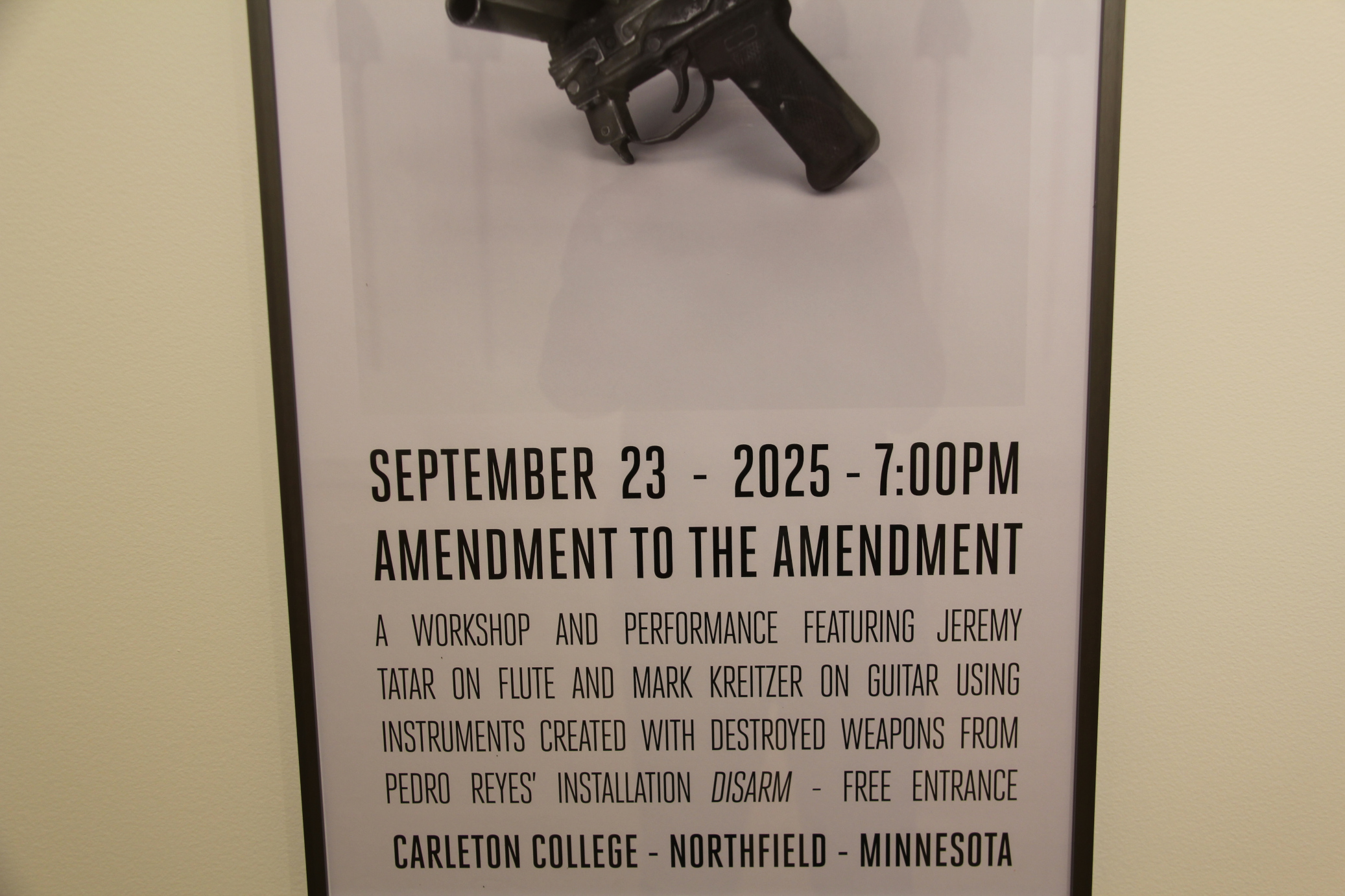
A wall of posters promoting Pedro Reyes’ exhibition shown around the world include this one from Northfield. His shows feature engaging events. (Minnesota Prairie Roots copyrighted photo October 2025)
With gun violence so prevalent in America, including right here in Minnesota with the political assassination of Minnesota House Speaker Emerita Melissa Hortman and her husband, Mark, in June and the deadly August mass shooting at Annunciation Catholic Church in south Minneapolis, I found Reyes’ exhibit profoundly relevant. I couldn’t help but think of the two Annunciation School children who were killed and the 27 other students and adults who were injured during morning Mass. Since then, voices have risen, loud and vocal, against gun violence. But thus far, nothing has changed, although discussion is ongoing with Minnesota Governor Tim Walz hosting town halls around the state on the topic.
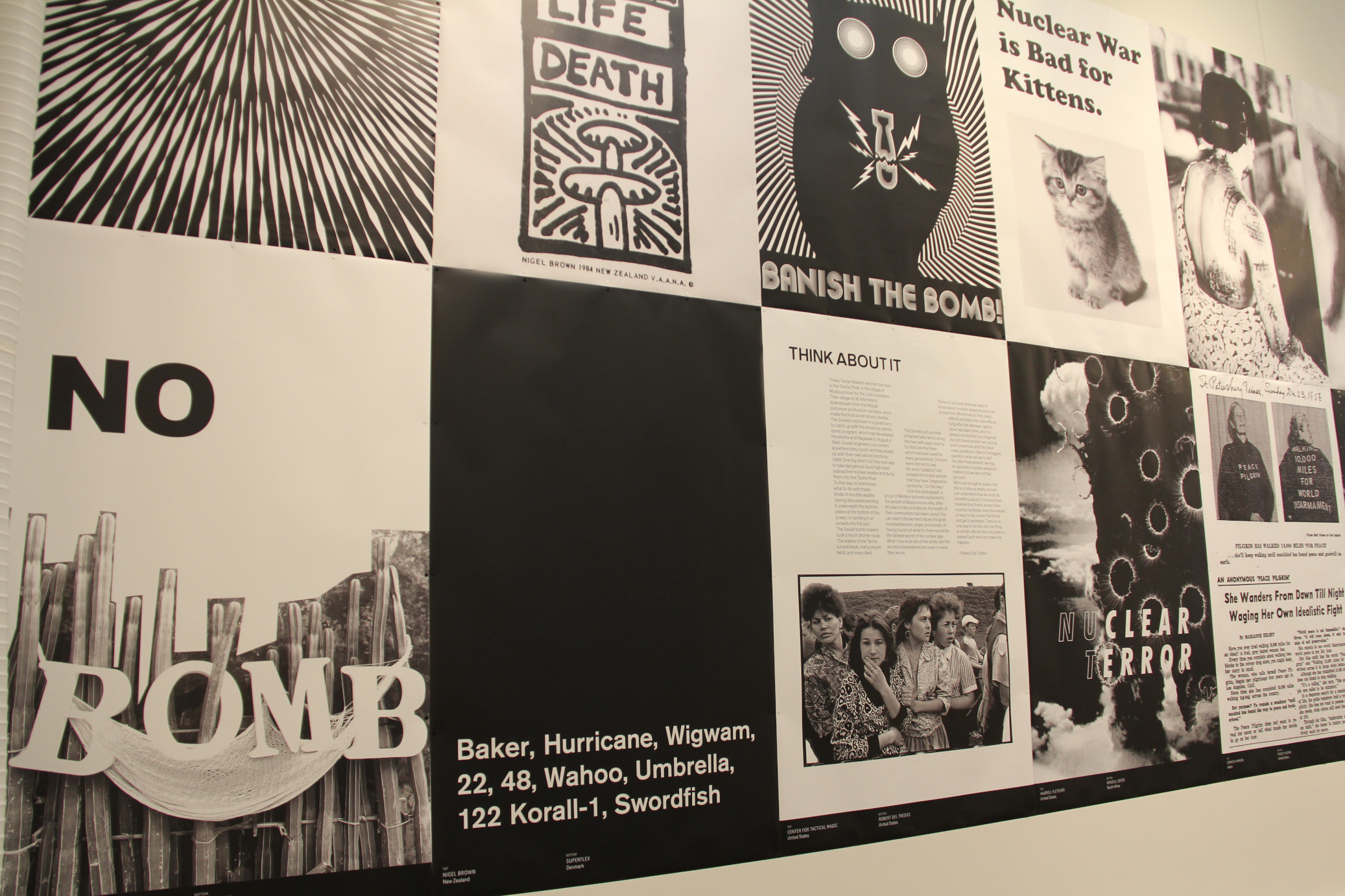
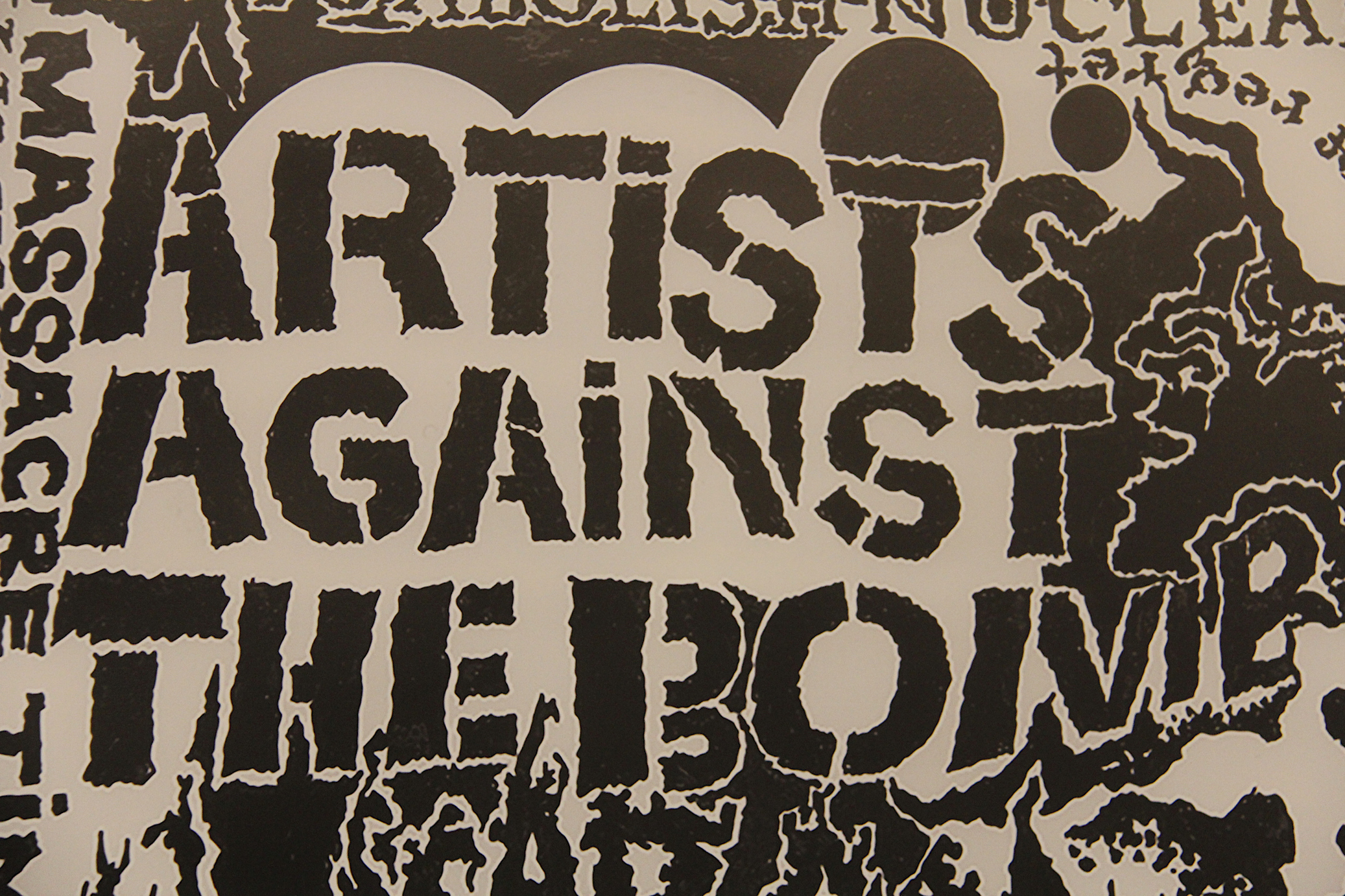
One gallery wall features posters created for “Artists Against the Bomb” by artists from around the world. (Minnesota Prairie Roots copyrighted photo October 2025)
The voice of this Mexican artist is among those rising. Upon entering the gallery, I read this: …Ahimsa reminds us that silence is complicity…
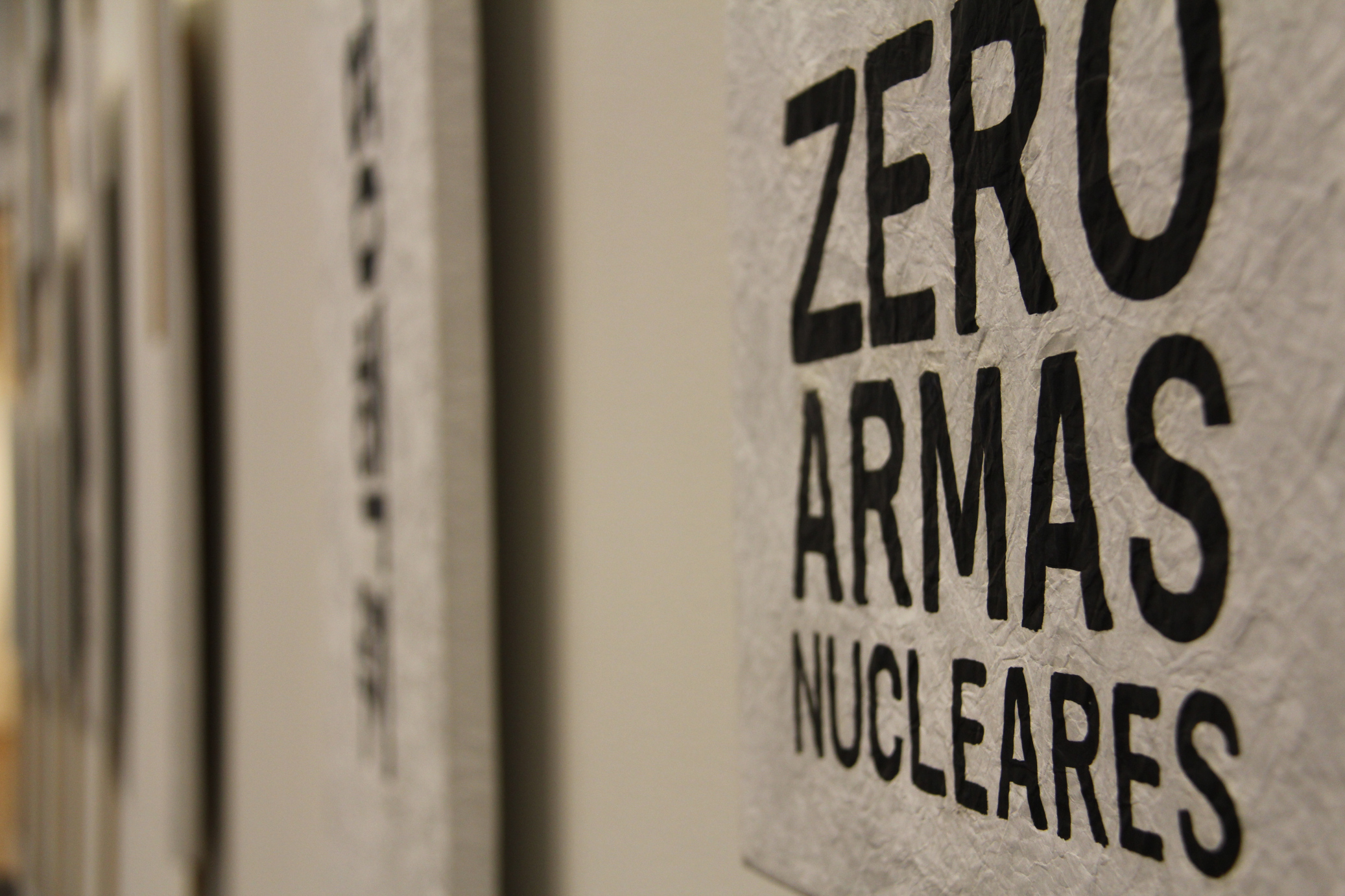
A closeup of a protest banner. A wall is covered with these signs in multiple languages with graphic symbols inspired by the conceptual element of zero. These are done in oil painting on Tyvek. (Minnesota Prairie Roots copyrighted photo October 2025)
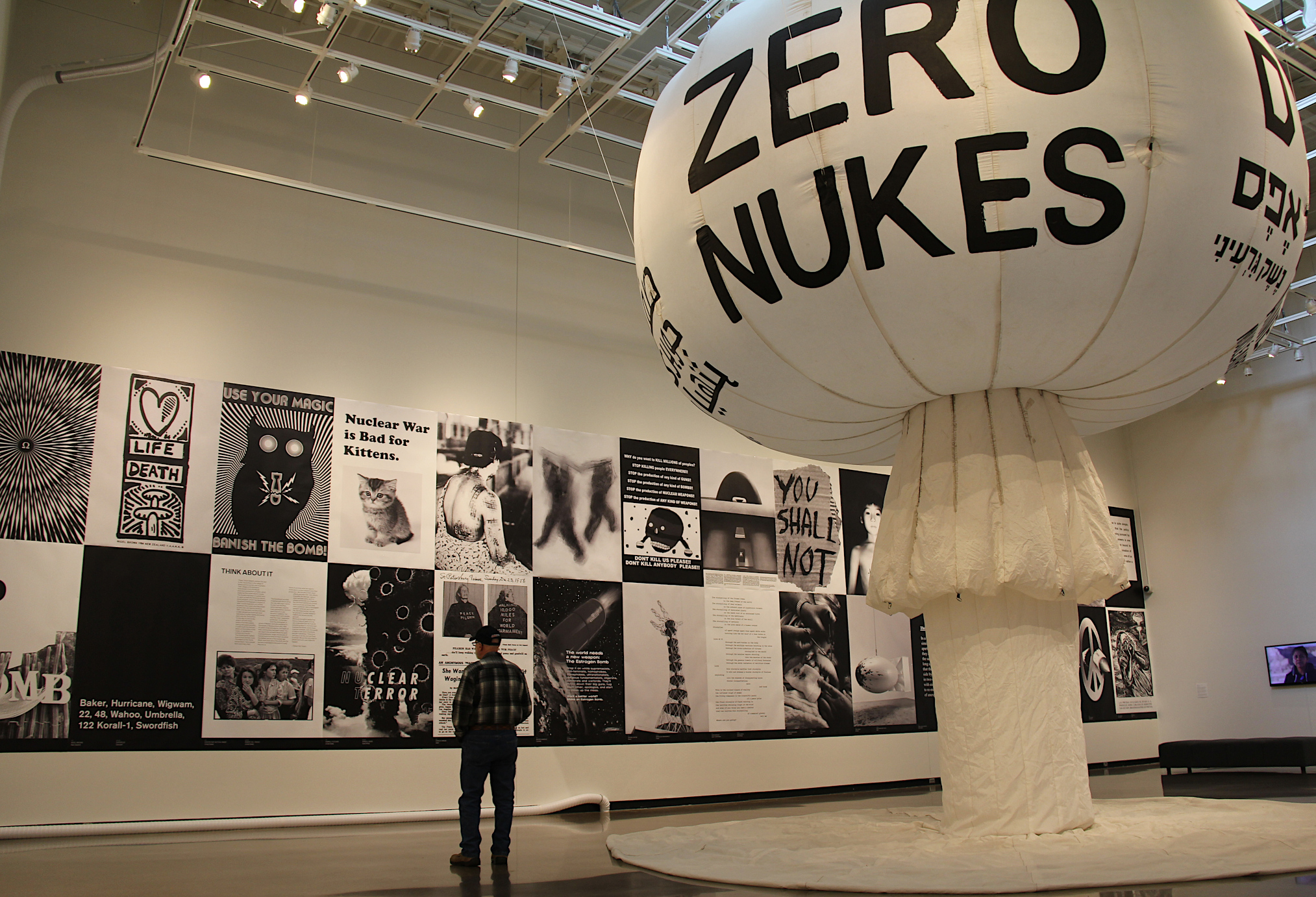
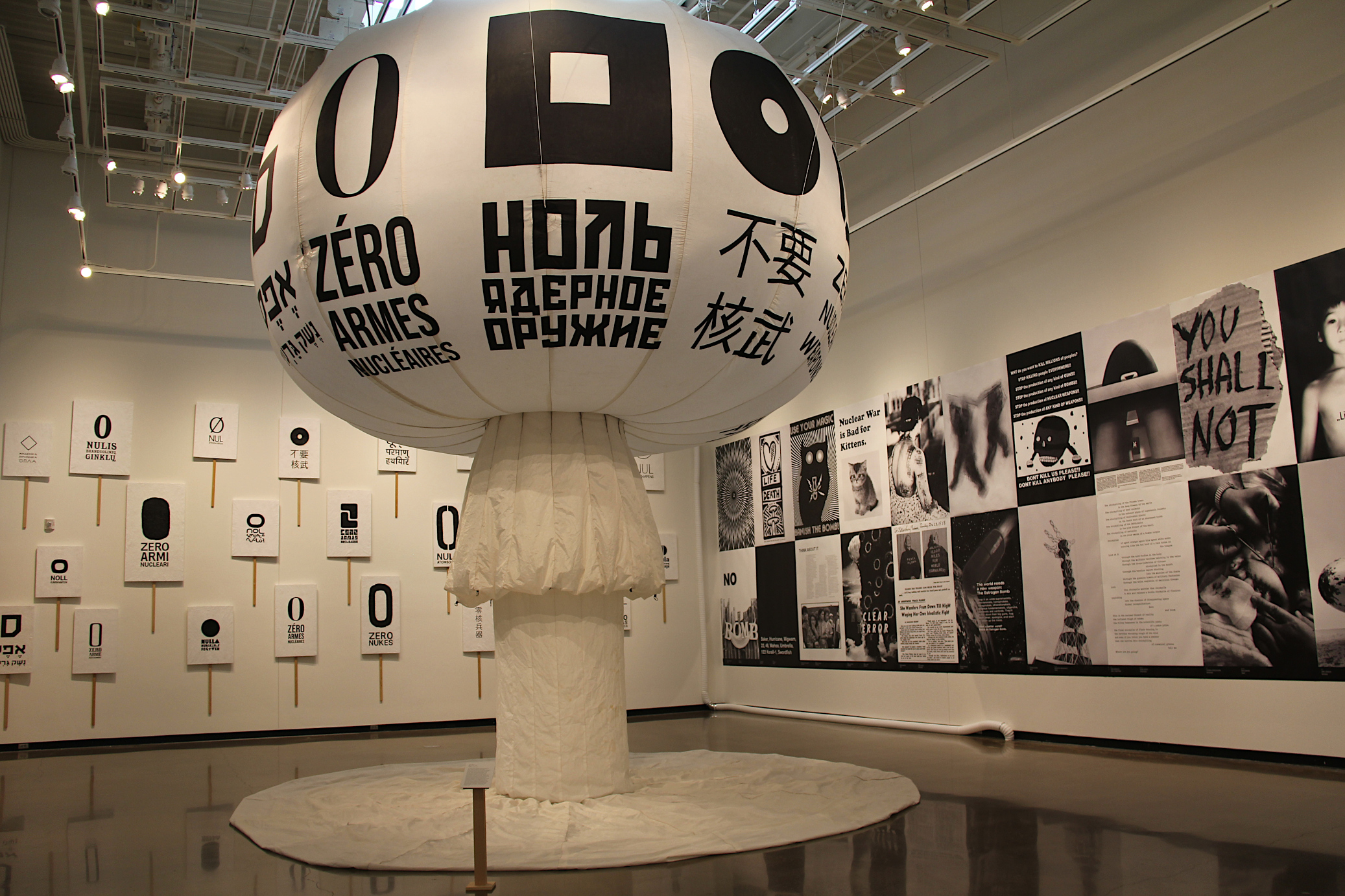
Reyes speaks out against more than gun violence in his exhibition. He also advocates for nuclear disarmament, another timely topic. And he does that in an artistically-mammoth way via a towering inflatable that overwhelms the high-ceilinged Braucher Gallery. Exactly the effect Reyes wants to make in his piece titled “Zero Nukes.”
The massive nuclear mushroom cloud centers the nuclear disarmament part of the exhibit. (Minnesota Prairie Roots copyrighted photo October 2025)
I felt minimal, small, dwarfed by the mushroom cloud upon which ZERO NUCLEAR WEAPONS is printed in eight languages.
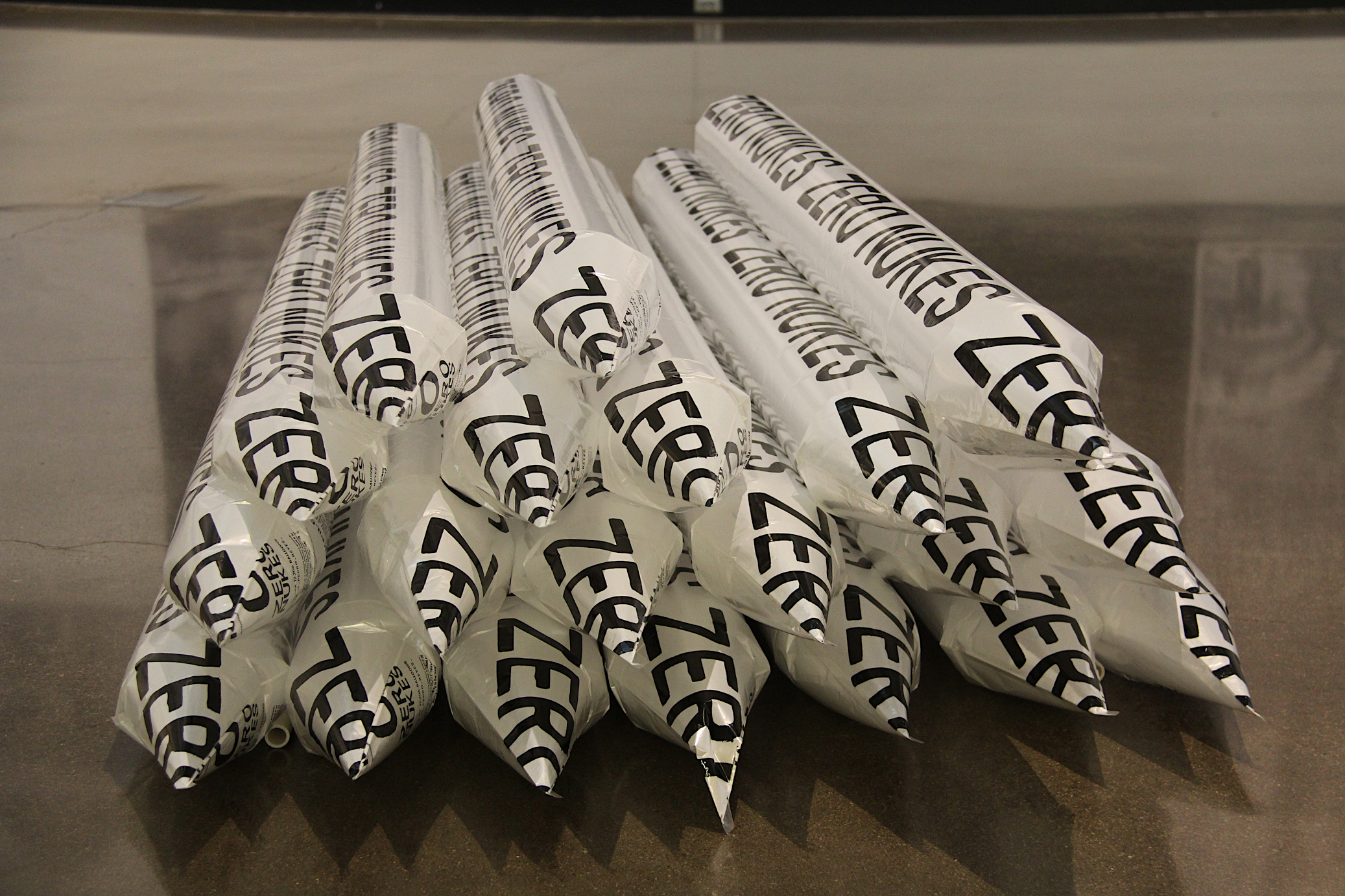
Inflatable warheads are part of the art installation. (Minnesota Prairie Roots copyrighted photo October 2025)
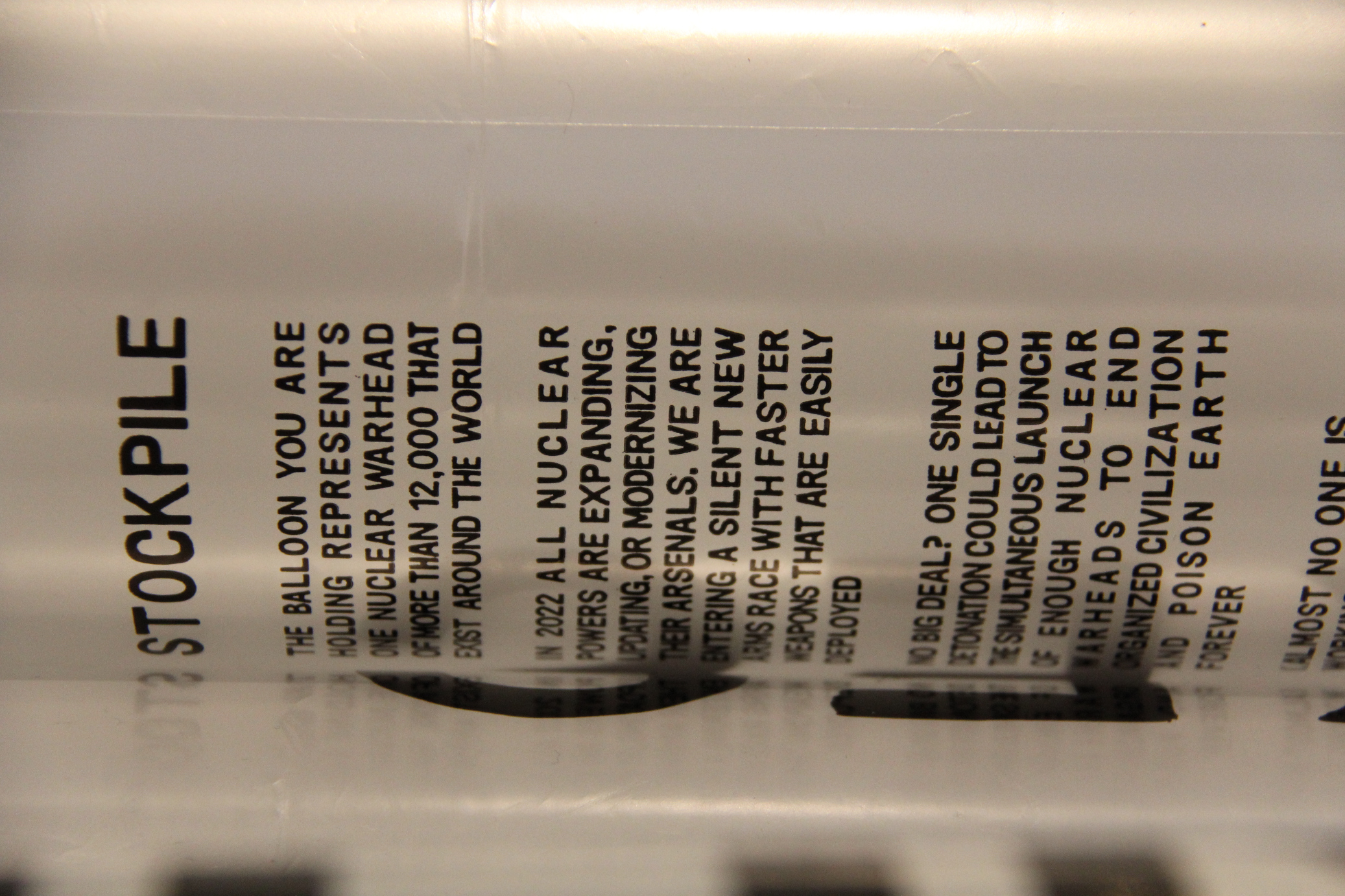
A closeup of the message printed on the inflatable warheads. (Minnesota Prairie Roots copyrighted photo October 2025)
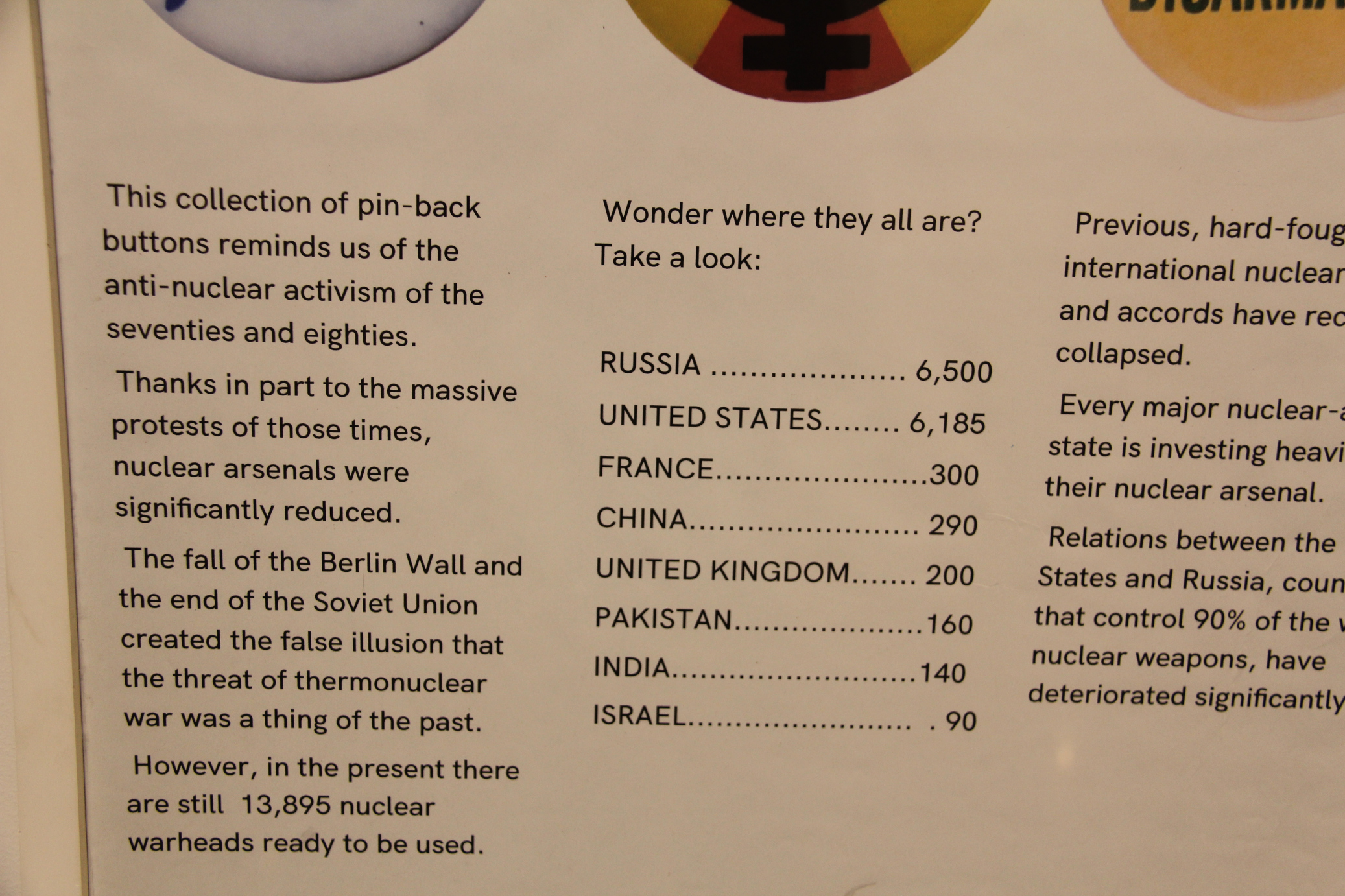
Nuclear warhead info and stats. Surprising. (Minnesota Prairie Roots copyrighted photo October 2025)
Nearby, a stockpile of inflatable nuclear warheads lies, another strong visual representing the nearly 14,000 nuclear warheads at the ready around the world. The statistics, cited as part of this display, are sobering, surprising (to me) and revealing.
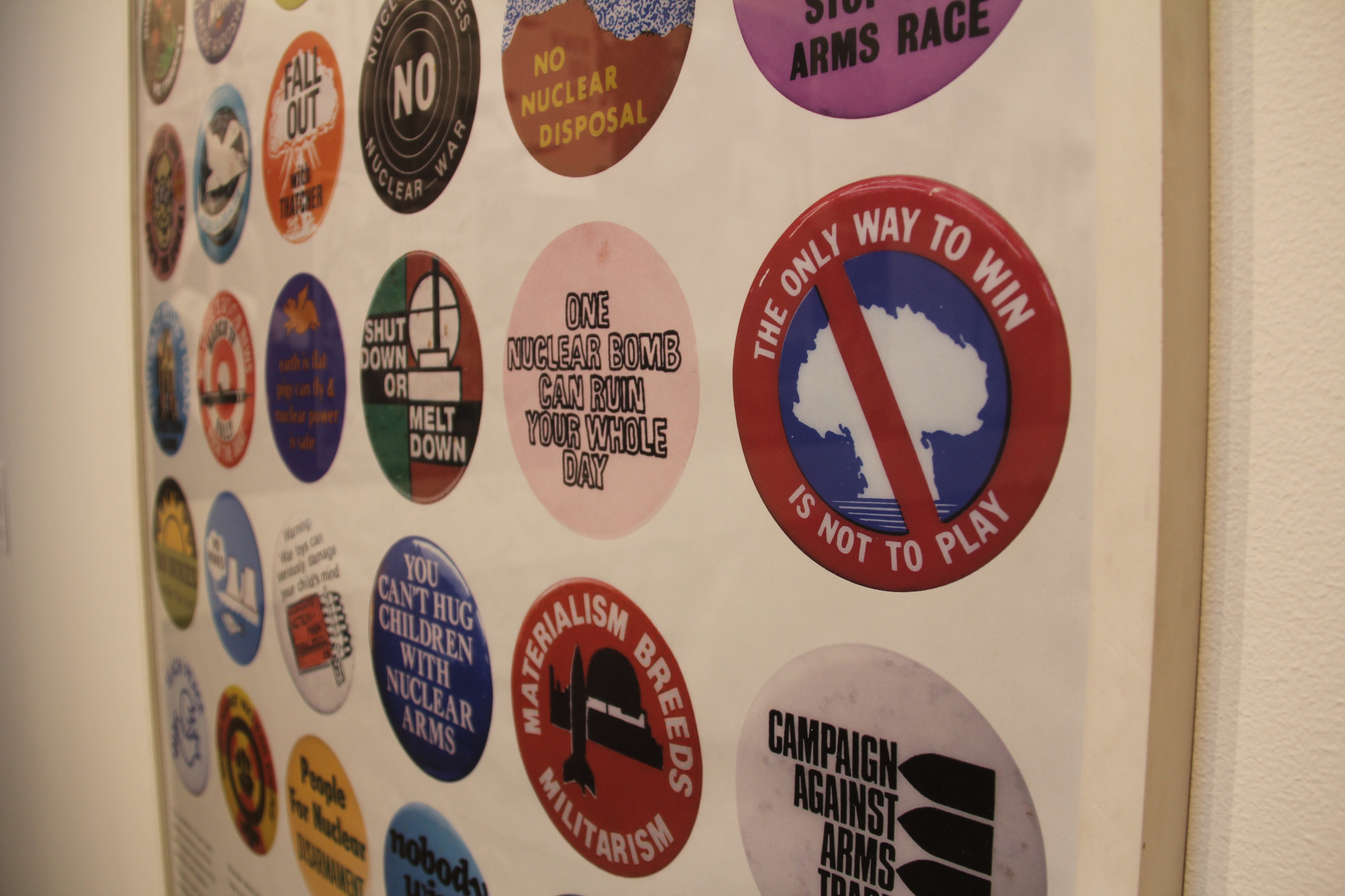
One section of the exhibit features images of buttons protesting nuclear weapons. (Minnesota Prairie Roots copyrighted photo October 2025)
One entire wall showcases the works of “Artists Against the Bomb. (Minnesota Prairie Roots copyrighted photo October 2025)
An overview of the campaign for nuclear disarmament shows the inflatable mushroom cloud, “Zero Nuclear Weapons” protest banners and a wall of protest posters, far right. (Minnesota Prairie Roots copyrighted photo October 2025)
Reyes, in his exhibit, shows us how art can be used to inform, educate, raise awareness, spark community conversation and action. He shows us via posters, buttons, sculptures, videos, inflatables and words how we can rise in protest against gun violence and nuclear weapons.
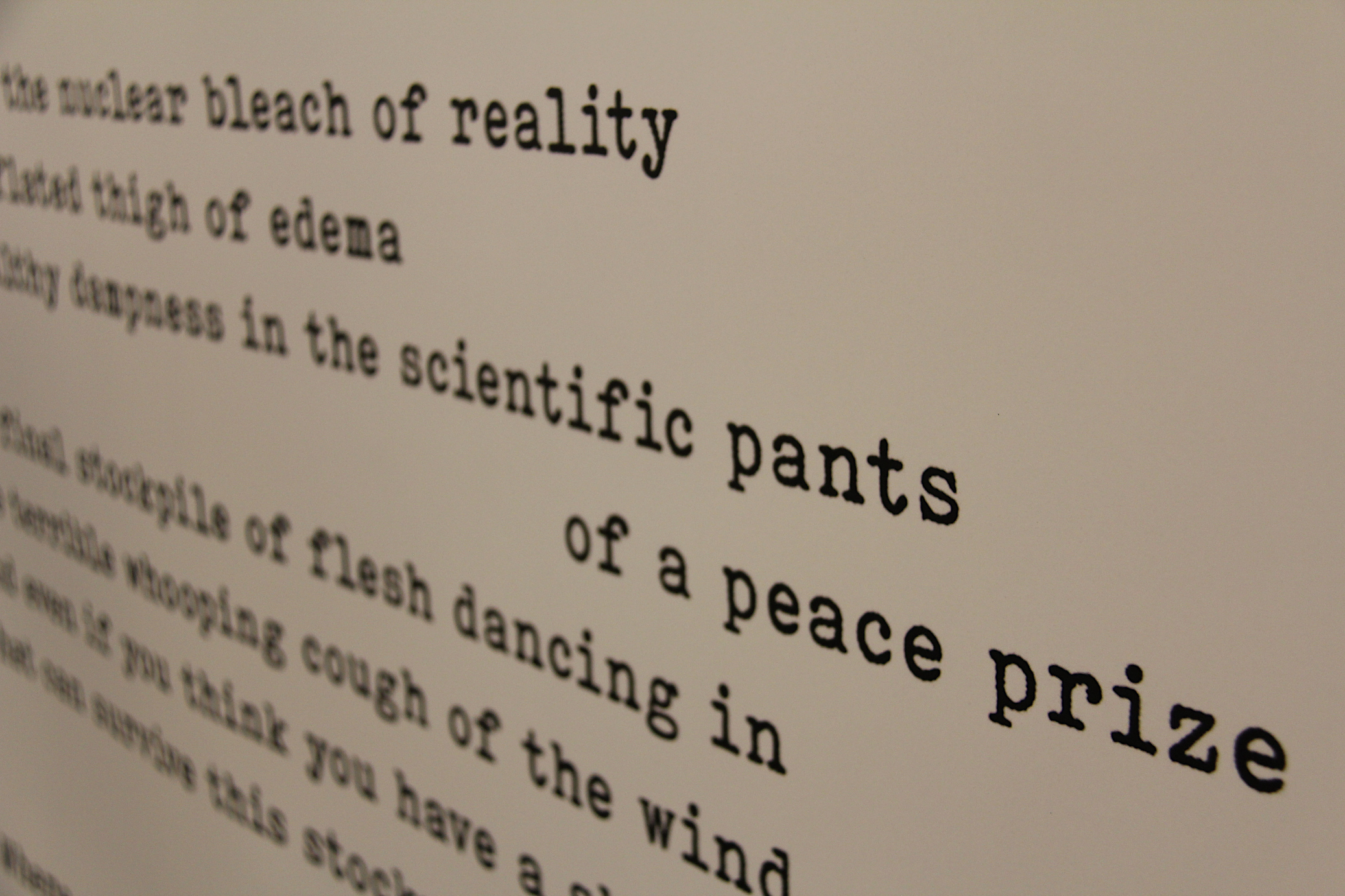
At its end, the poet asks, “Where are you going?” (Minnesota Prairie Roots copyrighted photo October 2025)
In the end we must ask ourselves the singular question posed in a poem on the protest poster wall: Where are you going? That’s in the event of nuclear war or similarly in the case of a mass shooting. I long ago stopped believing that the 1960s advice to duck and cover beneath a school desk would save me.
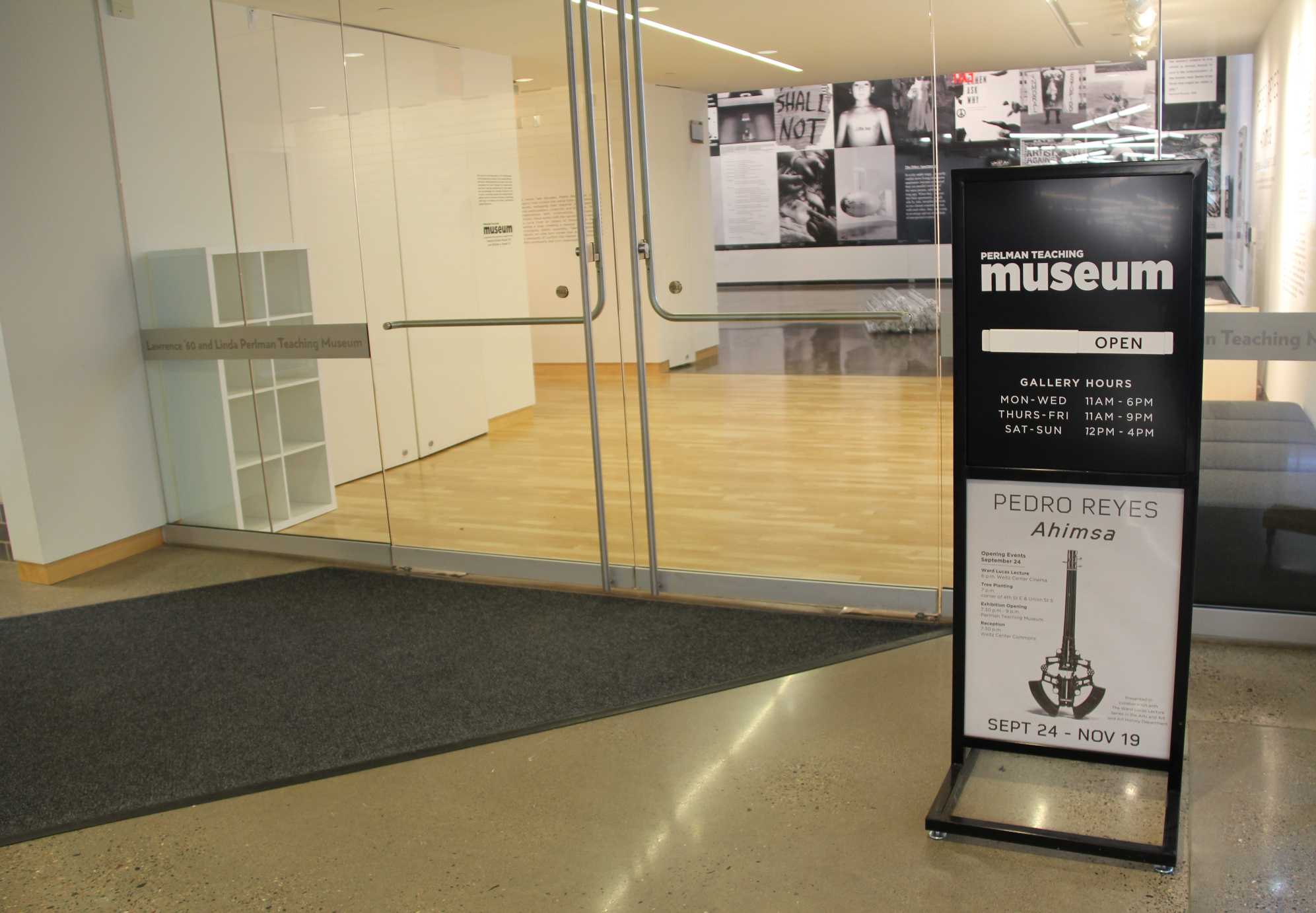
Open these glass doors and walk into the gallery showing Pedro Reyes’ “Ahimsa.” (Minnesota Prairie Roots copyrighted photo October 2025)
FYI: “Ahimsa” by Pedro Reyes is free and open to the public daily inside the Weitz Center for Creativity, 320 Third Street East, Northfield, until November 19. Hours vary. Click here for more information.
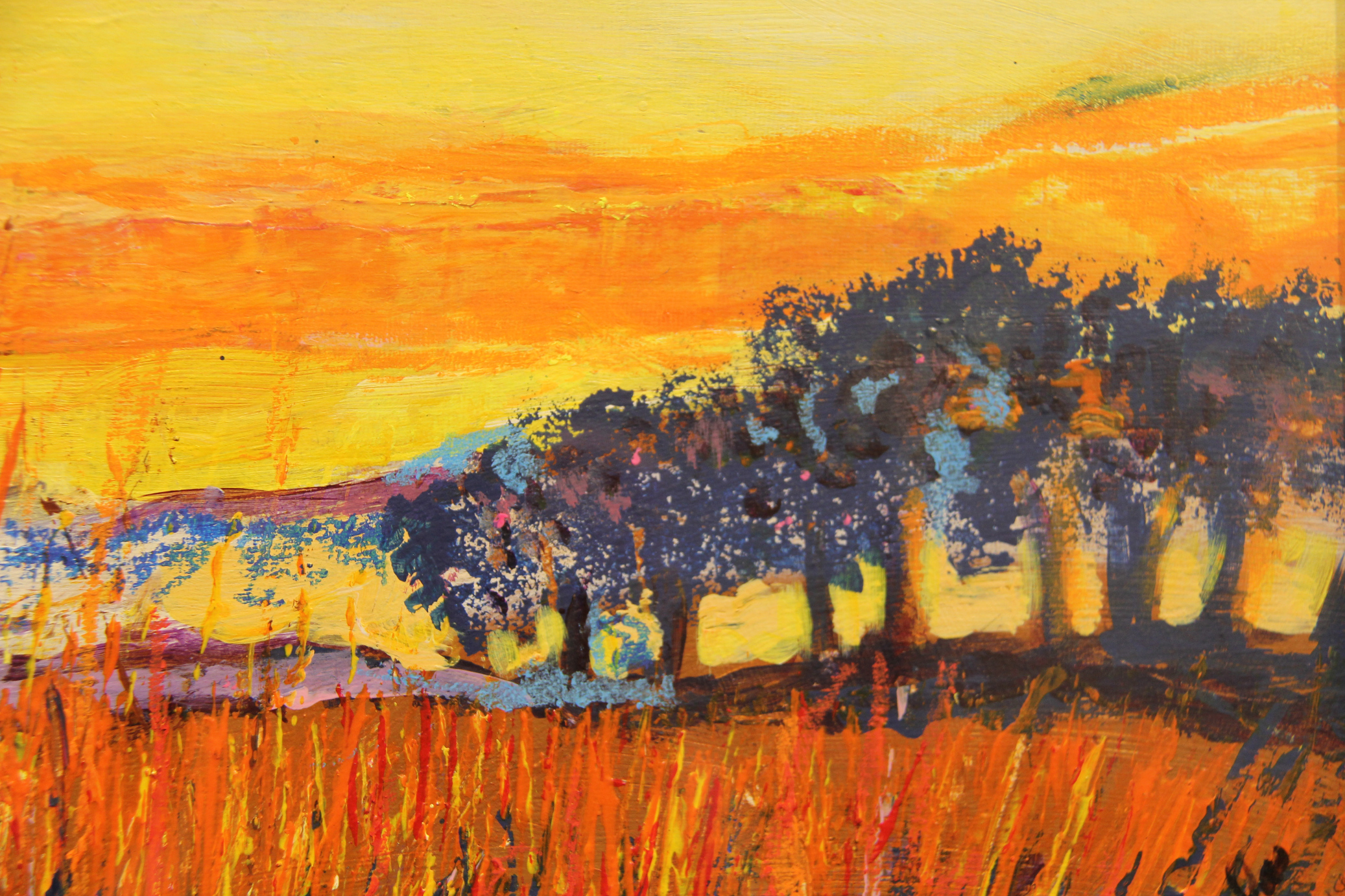
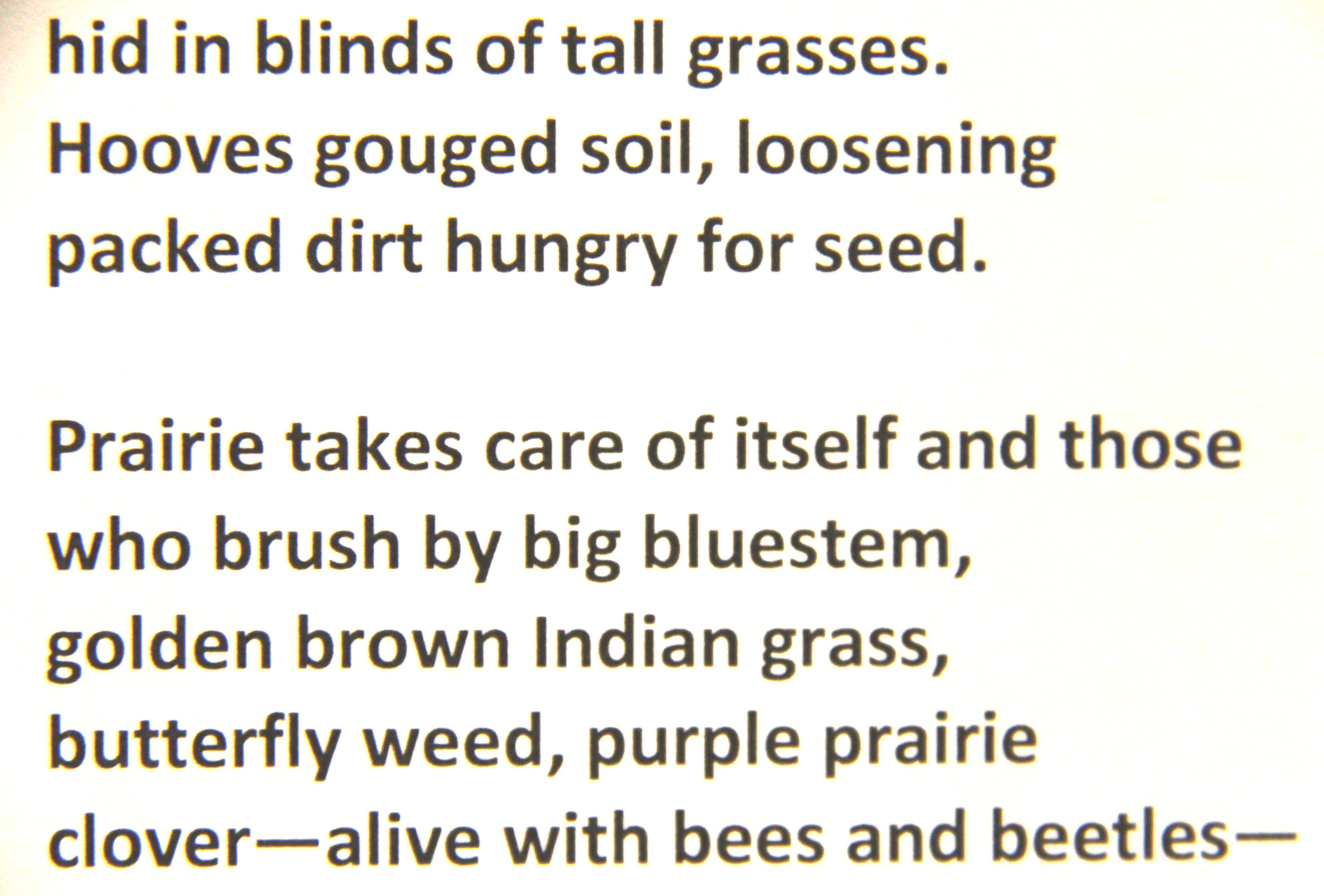
Here are some lines from Northfield poet Becky Boling’s poem, “Red Prairie,” inspired by “Wisconsin Sunset.” (Minnesota Prairie Roots copyrighted photo October 2025)
As a long-time writer and photographer, who is also a published poet, I’ve participated in similar collabs in nearby Zumbrota. I found it a whole lot of fun not only to write poems, but especially to see how an artist interpreted my poetry. I expect those participating in this pairing of poetry and visual art in Northfield feel the same. The work in this show is visual art inspiring poetry.
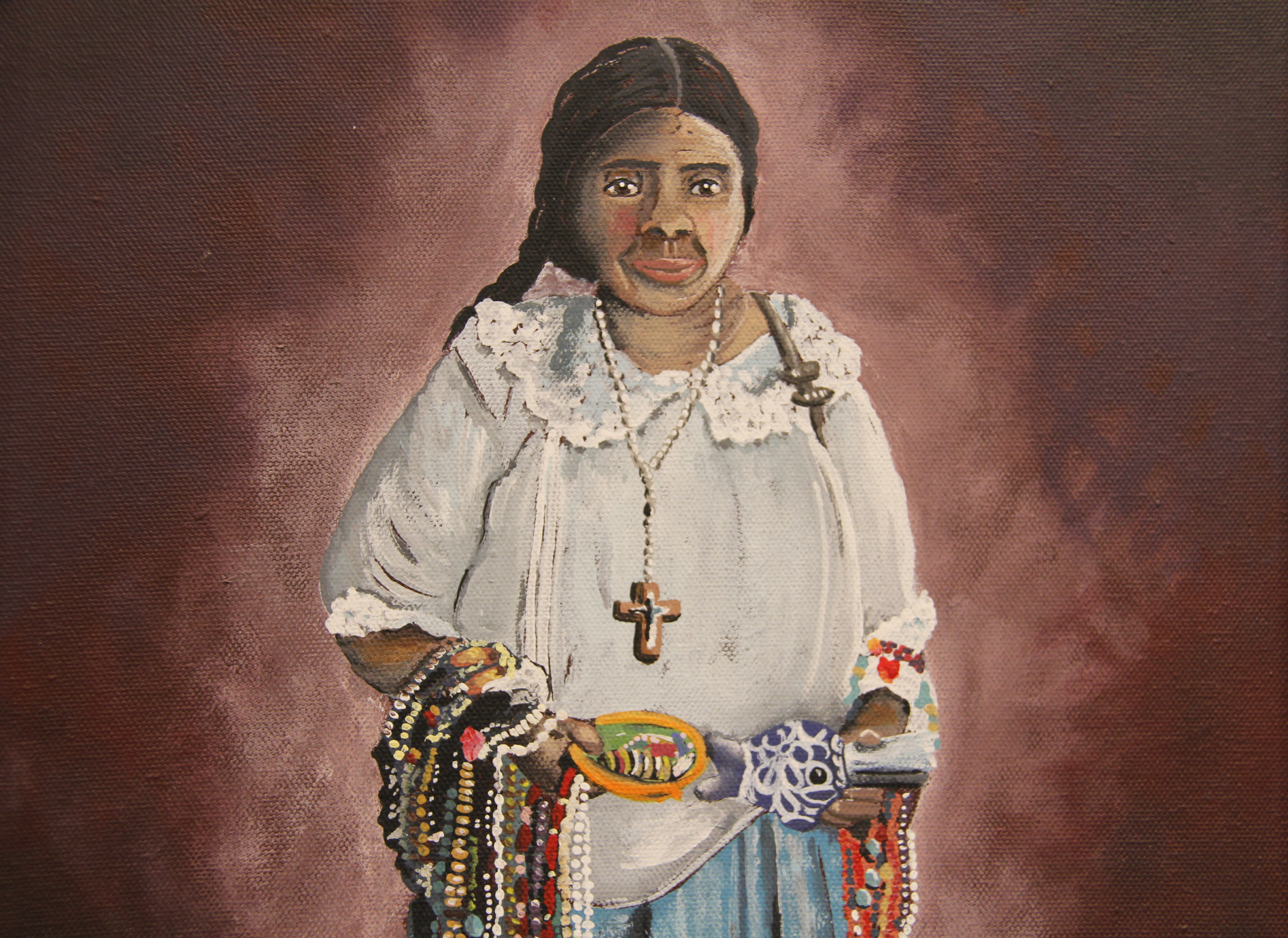
“Brave,” a poem by Orick Petersen, is paired with Sharon Henry’s painting, “The Bead Lady.”
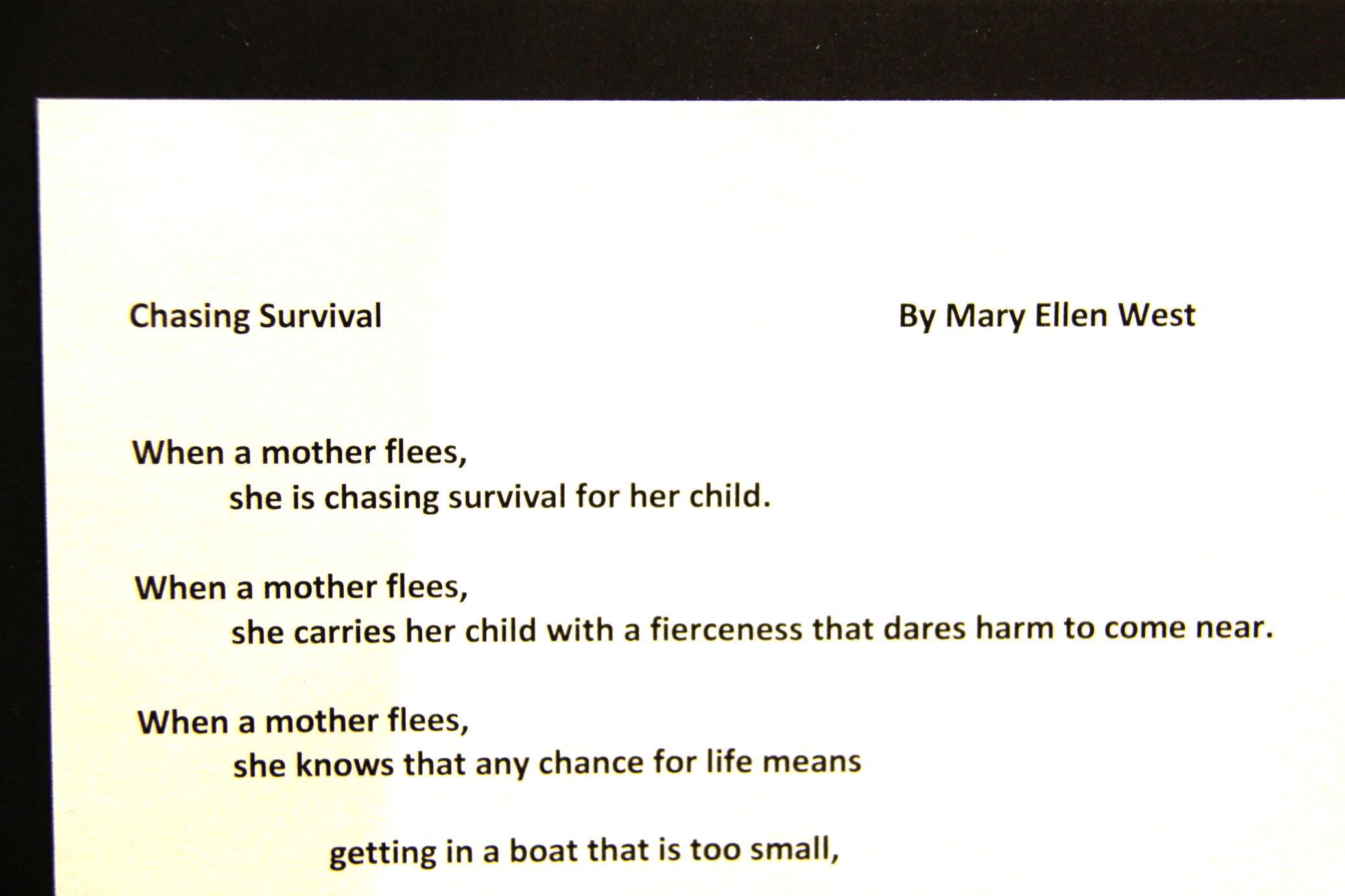
This shows several lines from a thought-provoking poem inspired by an equally thought-provoking photograph of a mother and child by Dean Neuburger. (Minnesota Prairie Roots copyrighted photo October 2025)
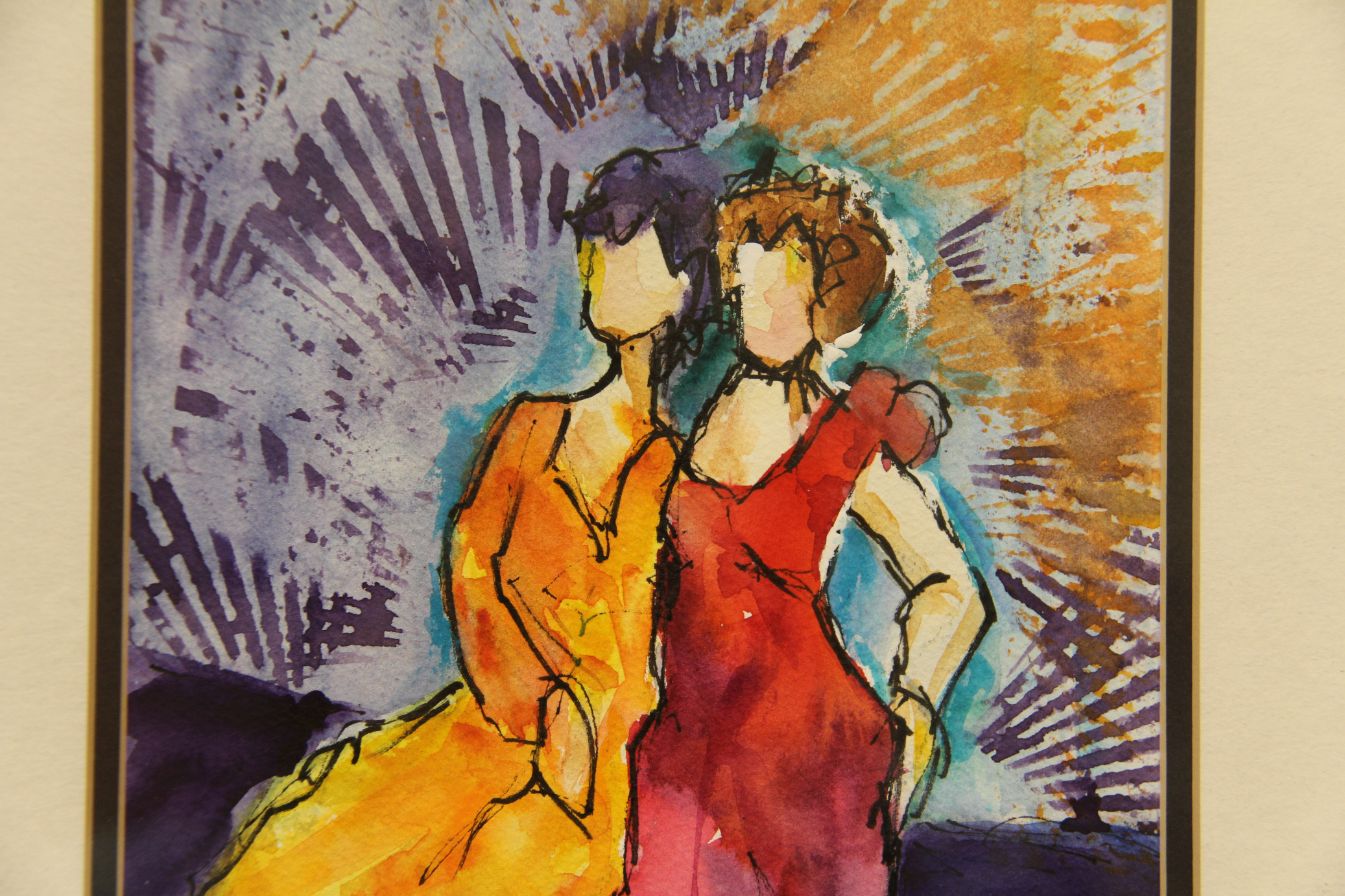
Marty Amundson’s watercolor and ink, “Sisters Still,” inspired Marie Gery’s poem, “30th High School Reunion.”
I feel fortunate to live in a region rich in the arts. The arts expose us to new ideas, thoughts, beauty and more. The arts open us to a world wide beyond our own. The arts can serve as a catalyst for positive change. The arts represent voice, a way for us to speak via our creativity.
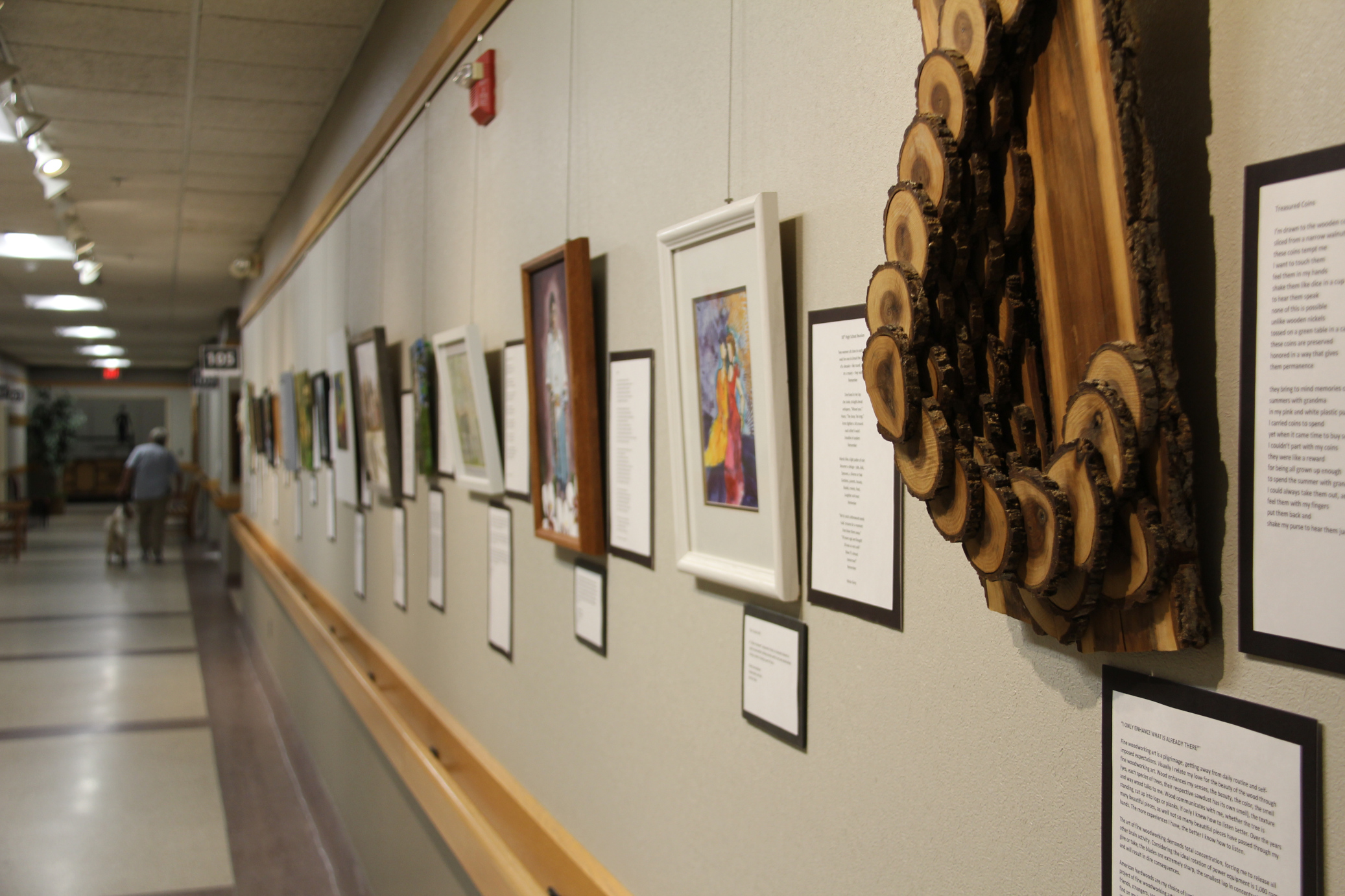
Art and poetry stretch along a hallway at FiftyNorth. (Minnesota Prairie Roots copyrighted photo October 2025)
In “Echoes & Shadows,” artists express themselves in carefully crafted words and in a variety of visual art that seems to fit its inspirational poetry. Painting, appliqueing, woodworking, photography, collage…all are part of this collaboration.
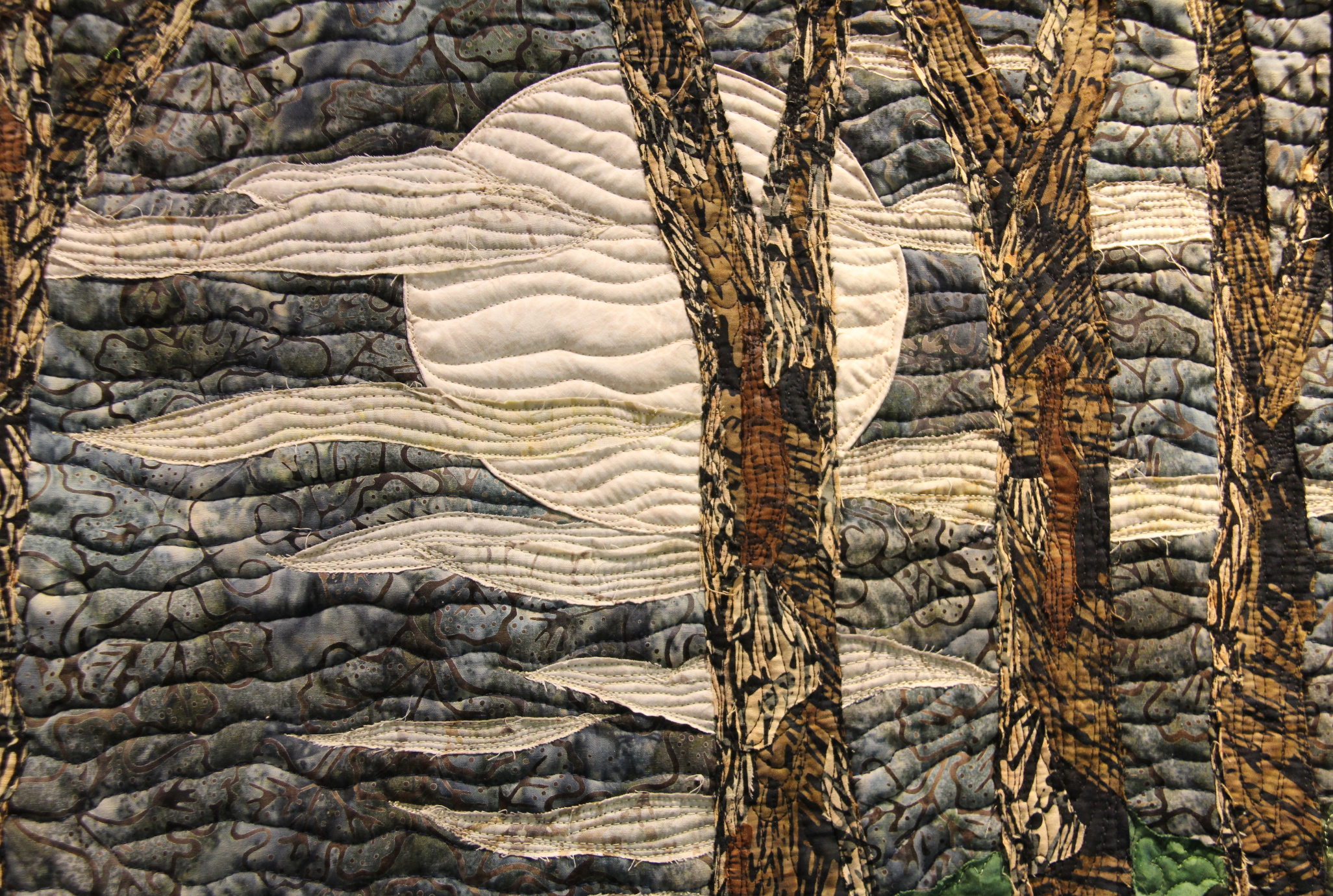
Lake Superior in northern Minnesota inspired Kathy Weed to create “Moon Glow” in textile art. (Minnesota Prairie Roots copyrighted photo October 2025)
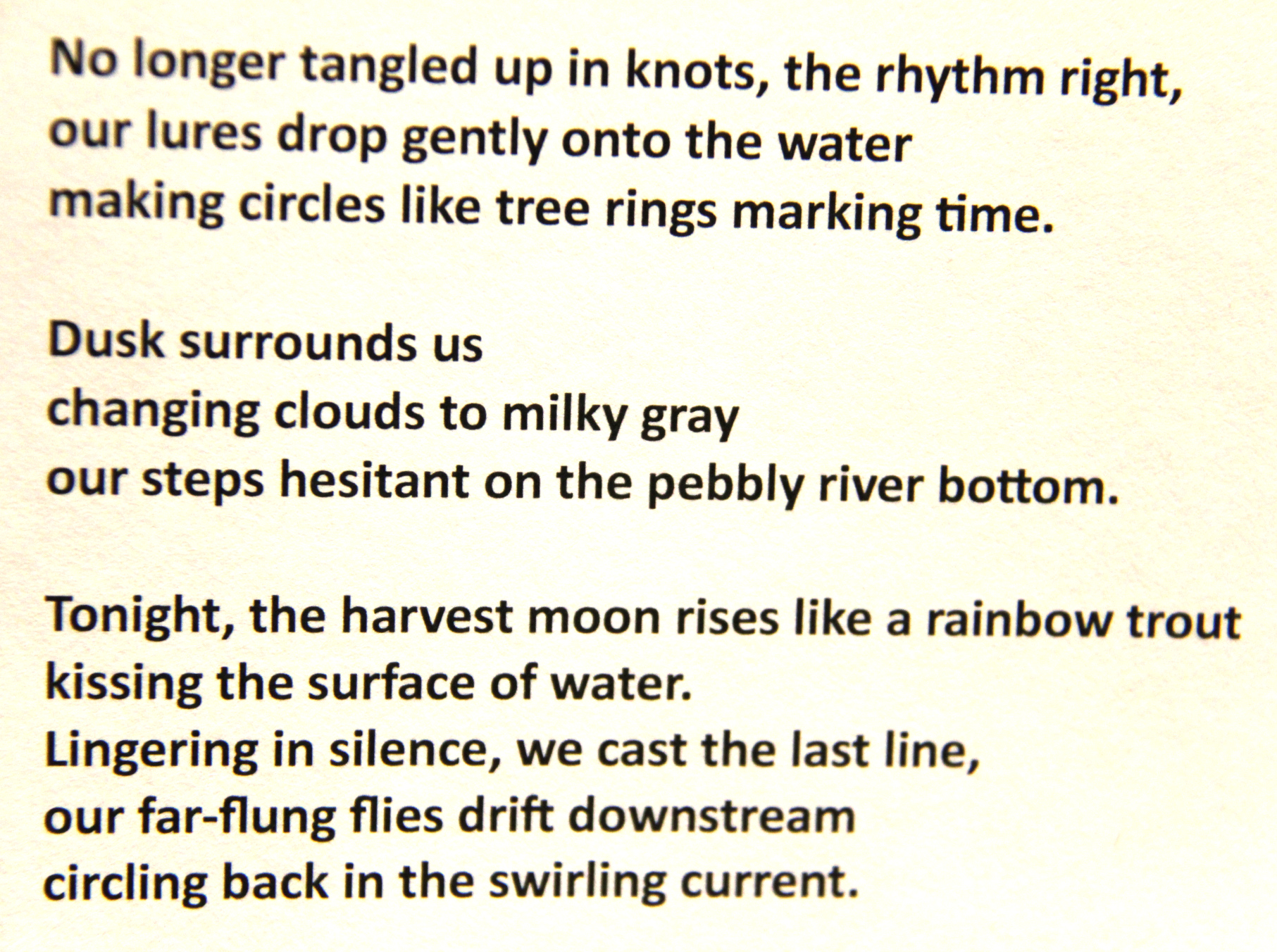
And then Jane Sarles Larson wrote “Circling Back” to pair with Kathy Weed’s art. (Minnesota Prairie Roots copyrighted photo October 2025)
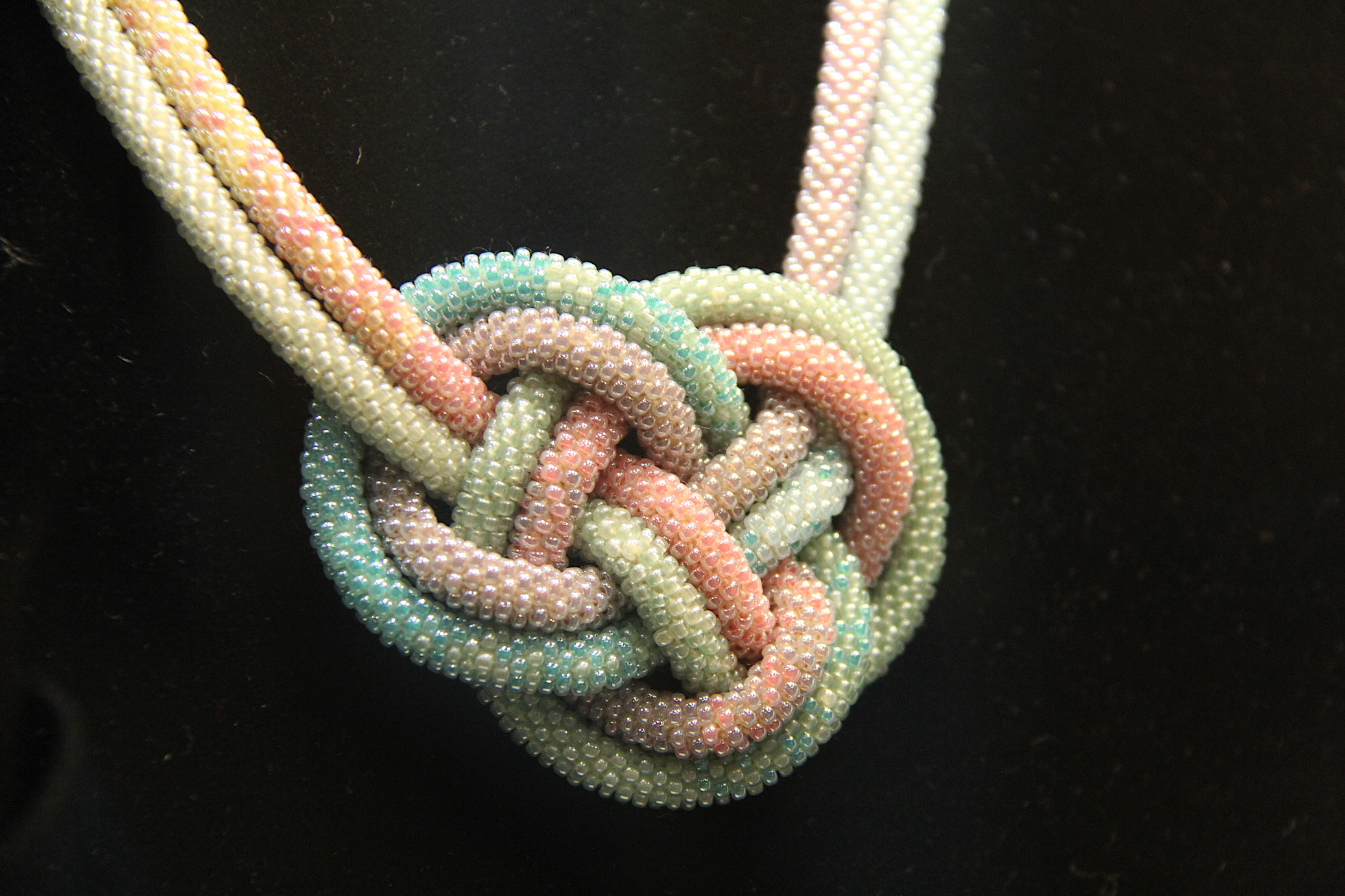
More knots…Judy Saye-Willis’ necklace inspired Marie Gery’s poem, “Knotty Reality.” (Minnesota Prairie Roots copyrighted photo October 2025)
I like that word, “collaboration.” It means working together. Even that seems especially meaningful today.
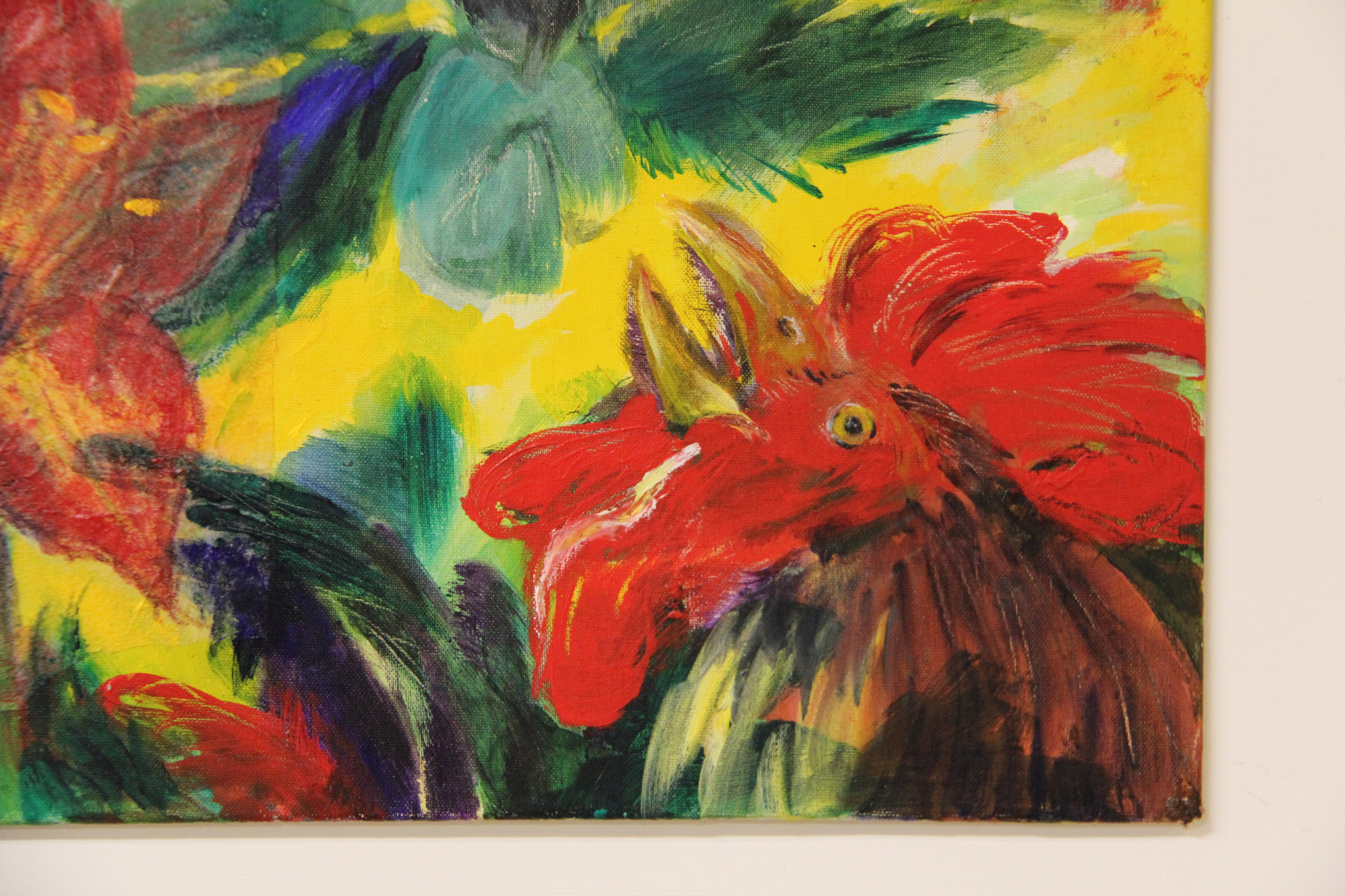
Riki Kolbl Nelson’s “Conversation” acrylic and collage of a rooster and angel inspired Chuck Huff to write “Tilt and Meridian.” (Minnesota Prairie Roots copyrighted photo October 2025)
In this pairing of art and poetry, I see collaboration, how literary art and visual art play off and balance one another, centering the two pieces of art into one unified piece without sacrificing individuality. Creatives are, after all, uniquely creative even when working together.
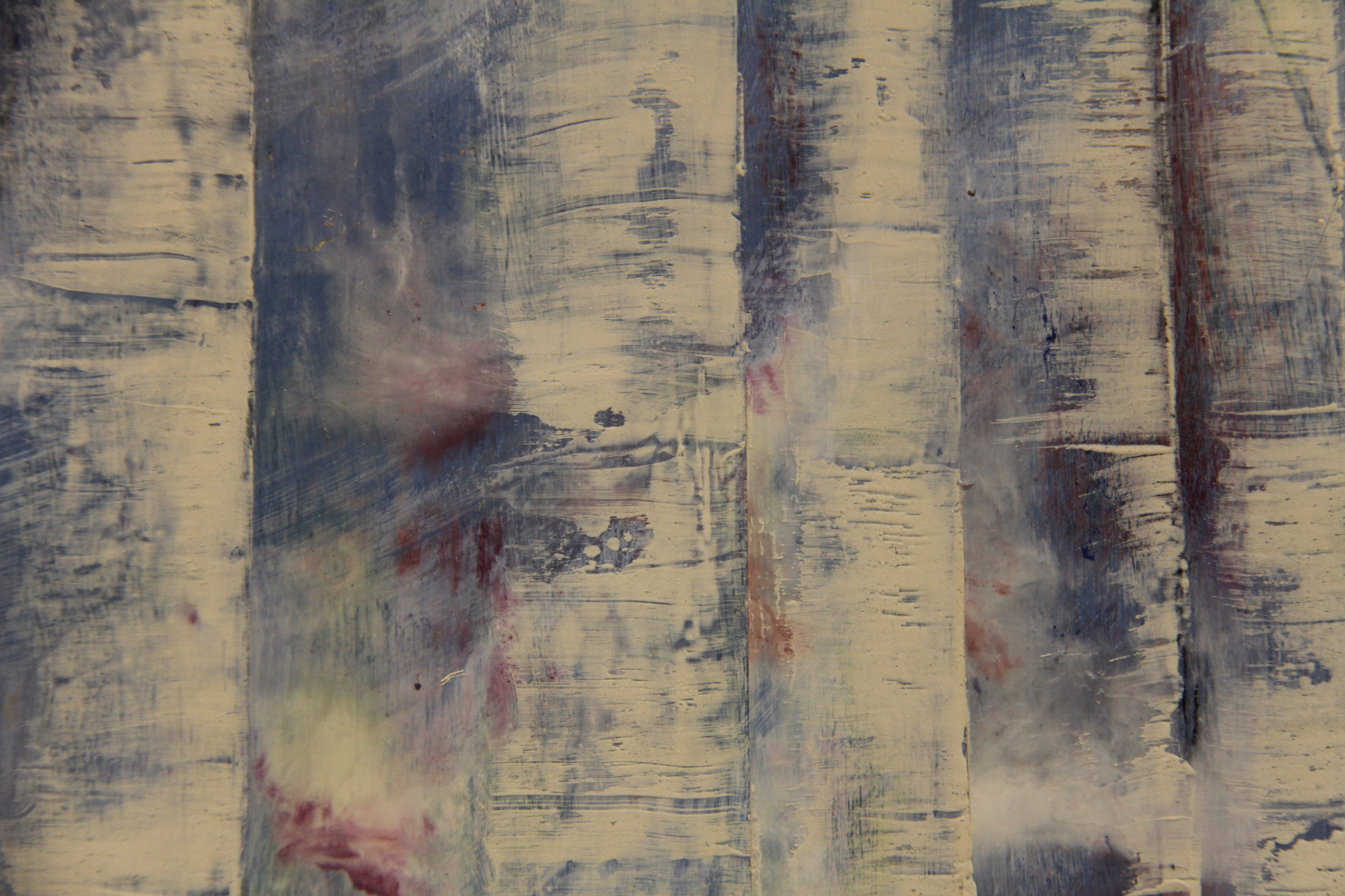
Barbara Bauer’s encaustic medium art inspired D.E. Green to write “Stand of Birches.” (Minnesota Prairie Roots copyrighted photo October 2025)
Promotional information about the FiftyNorth poetry and art collaboration, “Echoes & Shadows,” references a quote from poet Carl Sandburg: “Poetry is an echo, asking a shadow to dance.” Oh, how lovely those words. And how fitting for a collaboration that echoes and dances.
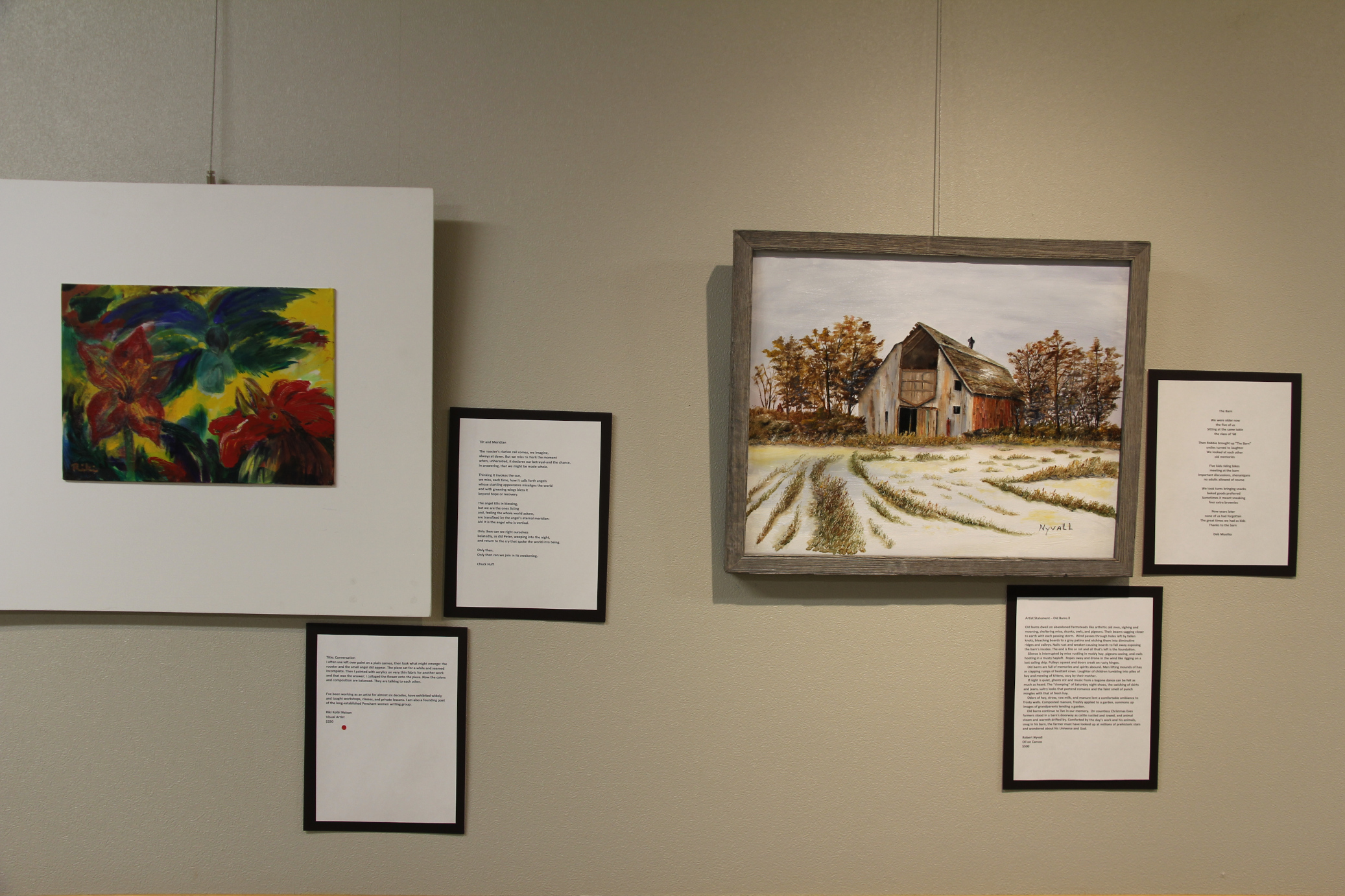
Pairings of poetry and art by Riki Kolbl Nelson, left, with poem by Chuck Huff and a barn painting by Robert Nyvall with accompanying poem, “We Are Older Now,” by Deb Muotka on the right. (Minnesota Prairie Roots copyrighted photo October 2025)
FYI: The “Echoes & Shadows” exhibit closes on October 31. To view the exhibit online, click here. Note that I photographed the art and poetry in this post with permission of FiftyNorth. In most cases, I’ve opted to show only part of the creative works. In featuring the poems, I’ve edited the images.
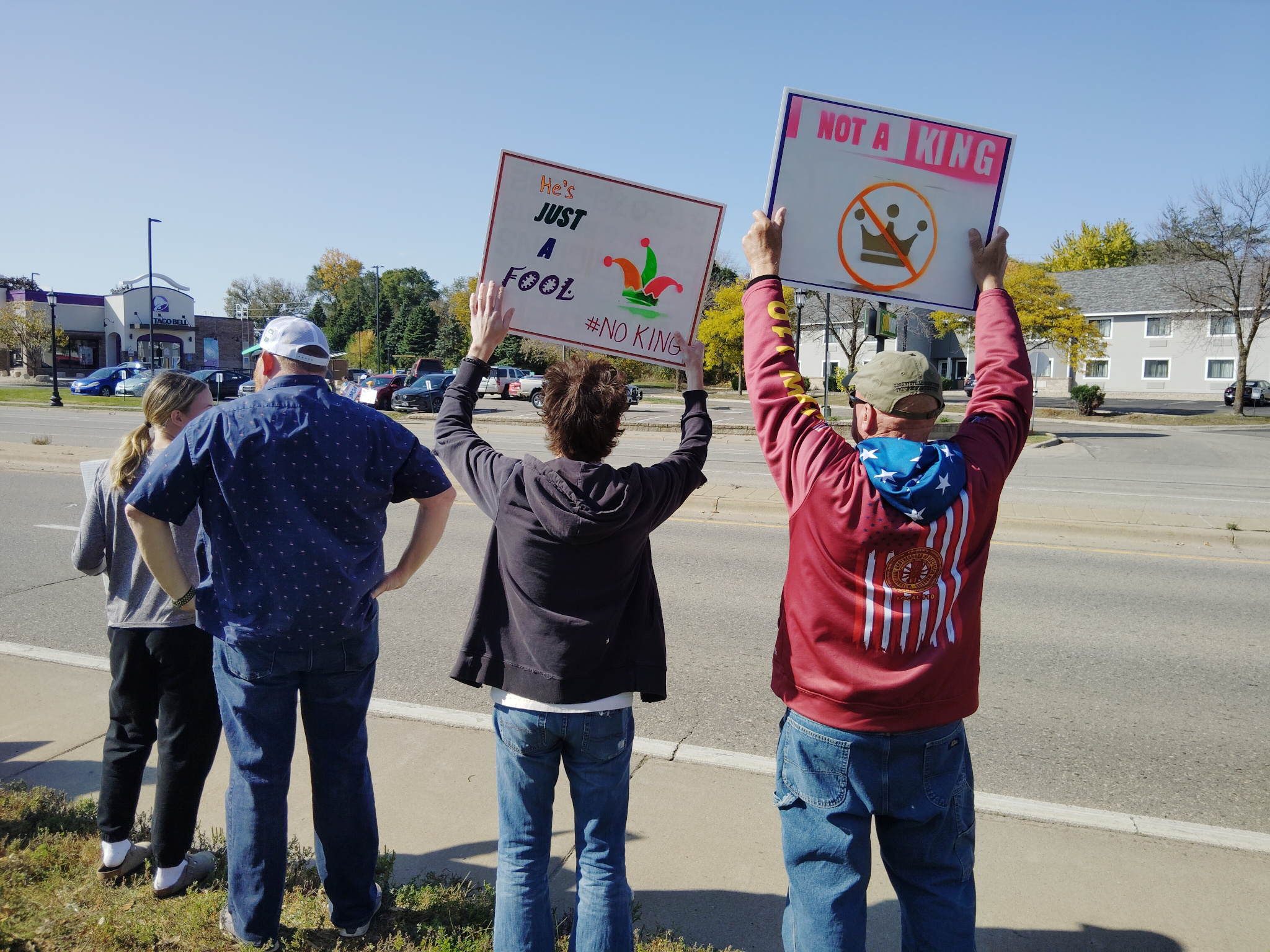
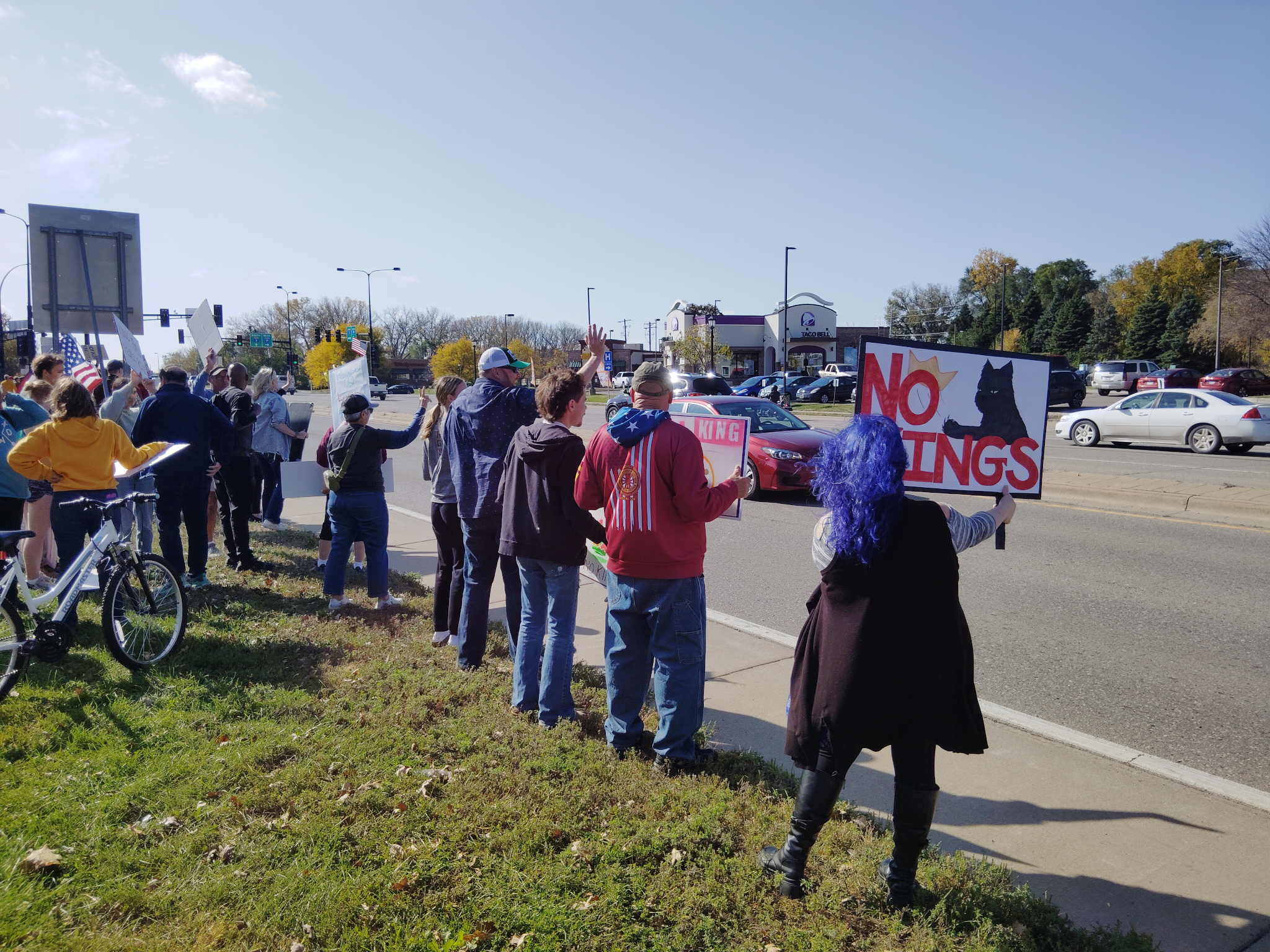
Protesters stand along Minnesota State Highway 3 in Northfield on Saturday afternoon during the NO KINGS protest. (Minnesota Prairie Roots copyrighted photo October 2025)
I AM AN AMERICAN, a Minnesotan, a resident of Rice County and the city of Faribault. I am a writer, photographer, blogger, poet. I am a wife, mother, grandmother. And I am also a protester.
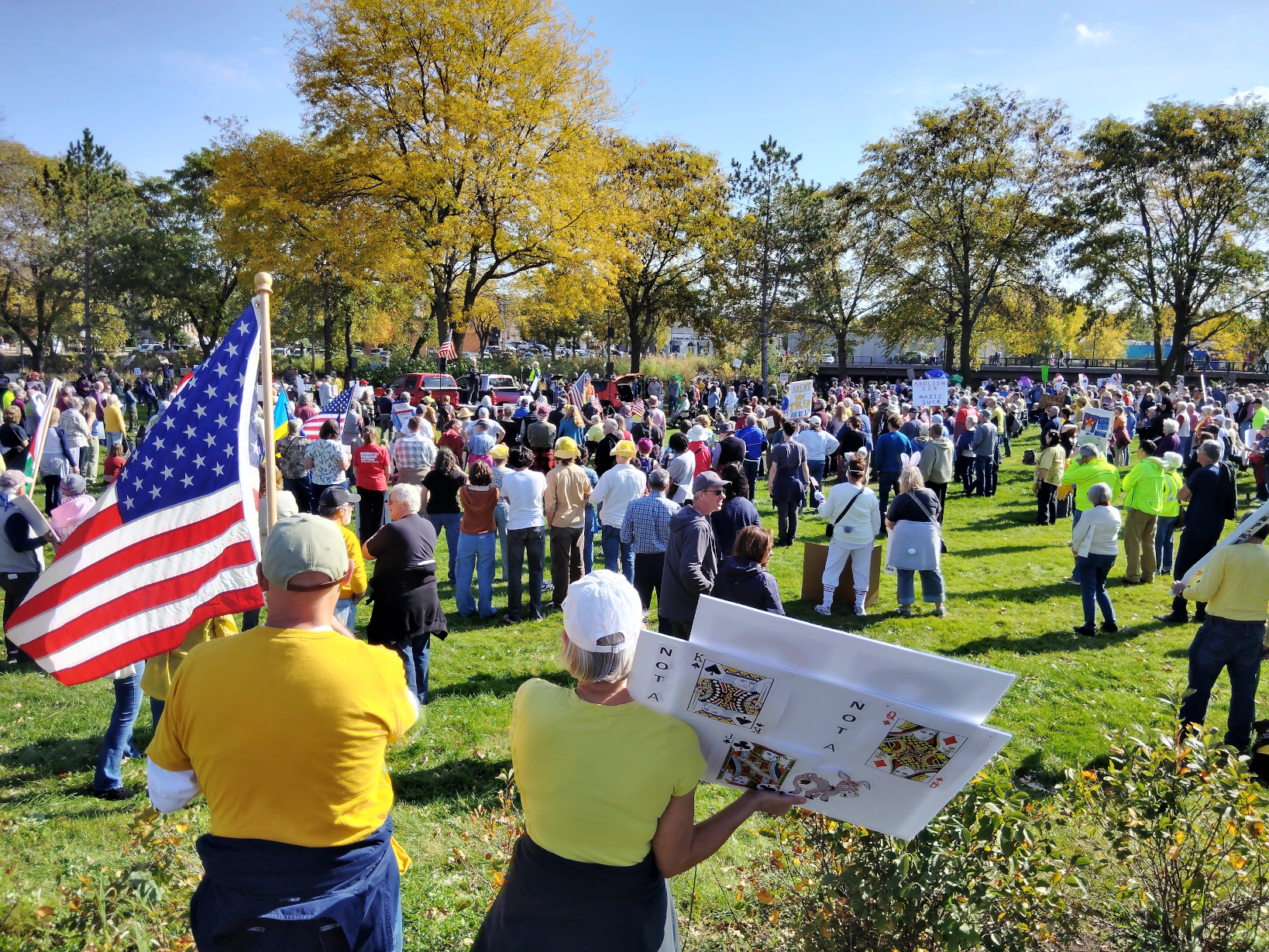
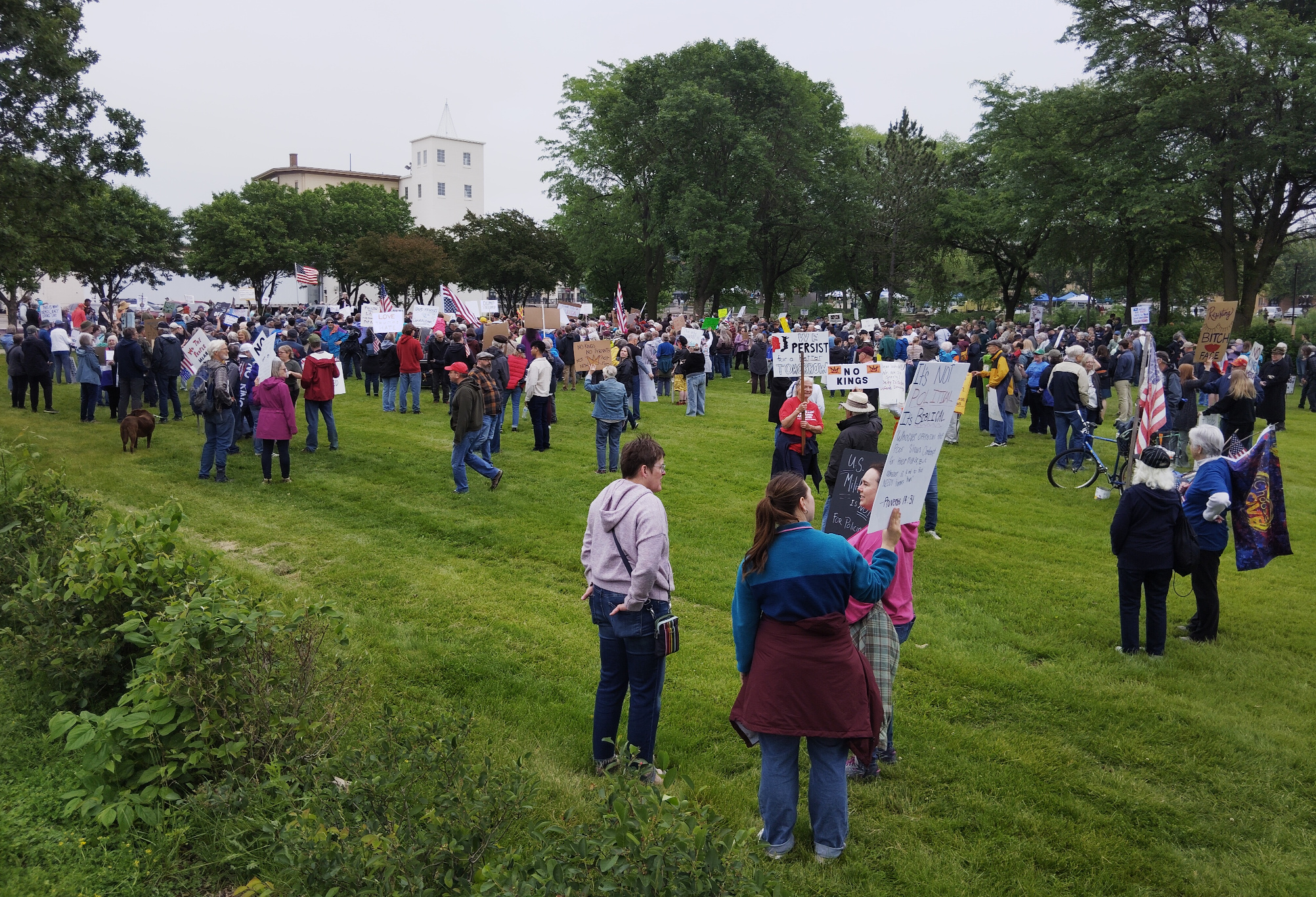
A snapshot of a portion of the crowd protesting in Northfield, population around 21,000. (Minnesota Prairie Roots copyrighted photo October 2025)
On Saturday I joined millions across the country and world participating in NO KINGS rallies in my fourth protest since June 14. I care about America. I love America. But I don’t like what’s happening here under the Trump administration, which is eroding our democracy and taking, or attempting to take, away our rights, freedoms and, oh, so much more by authoritarian rule, force, threats, retribution, control, manipulation…
I refuse to remain silent at a time such as this. So I exercised my rights to free speech and freedom of peaceful assembly under the First Amendment to the Constitution by participating in a protest in neighboring Northfield along with a thousand or more others. We packed Ames Park along the Cannon River and lined the east side of Minnesota State Highway 3 for a block to listen to speakers, to share our concerns, to hold protest signs high, to hear plans of action, to sing and pray and reflect, and to engage in conversation.
Minnesota Highway 3 through Northfield is a busy roadway, providing a highly-visible location to protest. (Minnesota Prairie Roots copyrighted photo October 2025)
At times throughout the 1 ½-hour event, I protested next to a Vietnam War veteran, a mechanic, a retired professor of Spanish and Latin American literature (also a poet), a retired college office employee, a retired engineer, a retired elementary school teacher… I also mingled among countless others there for the same reason—to protest. To express our concerns about healthcare, education, the economy, immigration, due process, freedom of speech, a free press, free and fair elections, government funding cuts, the presence of military in our cities, the balance of power, the judiciary, the overreach of power, clean energy… The list goes on and on.
I saw a baby strapped to his/her mom. Kids on shoulders. Kids with signs. Young people of high school age and early adulthood. Those in their middle years. Those in their sixties, like me. And those even older, some probably pushing ninety. The turn-out for this protest was even bigger and more diverse age-wise than the one in June in Northfield on the date Minnesota House Speaker Emerita Melissa Hortman and her husband, Doug, were assassinated.
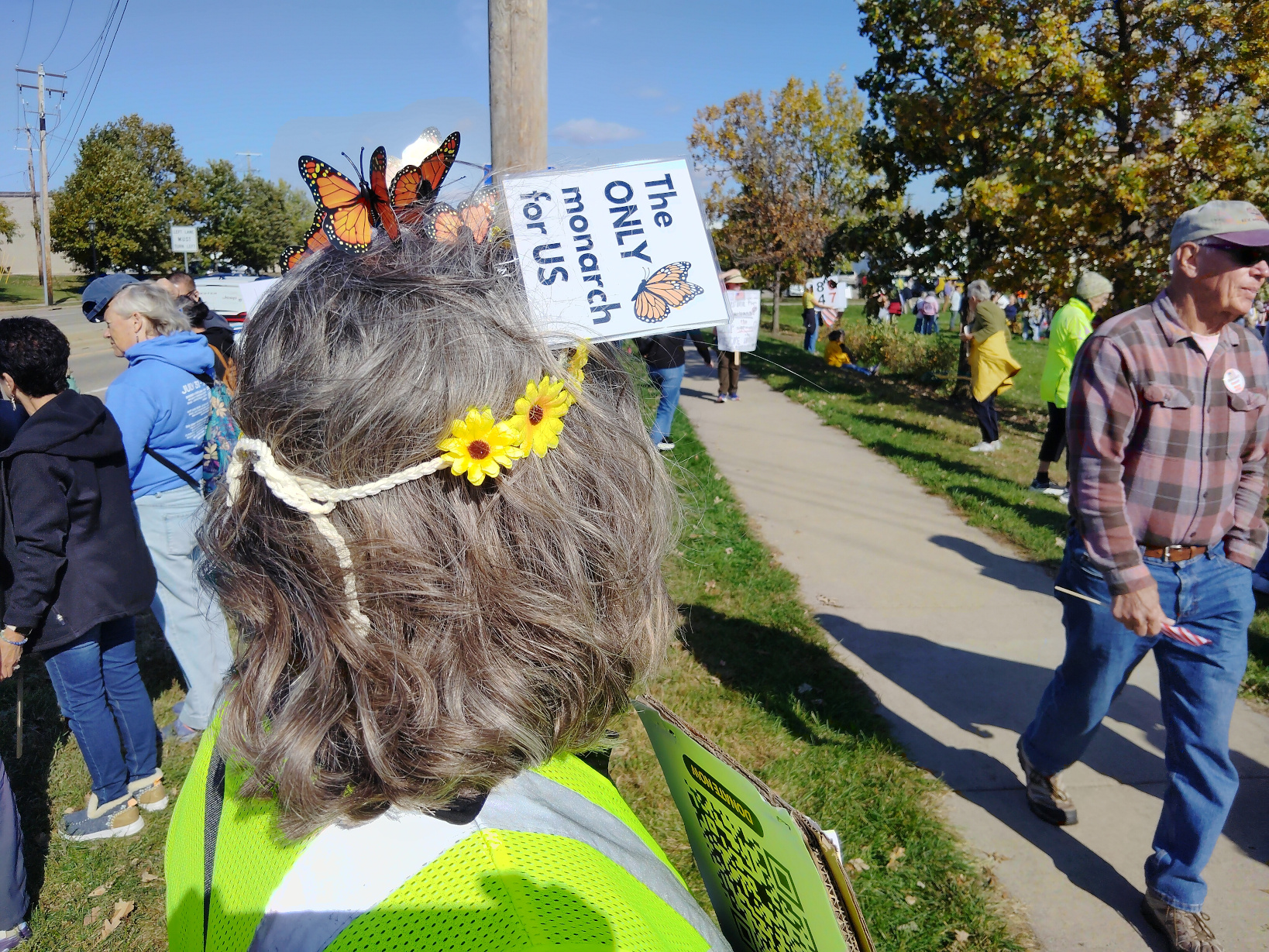
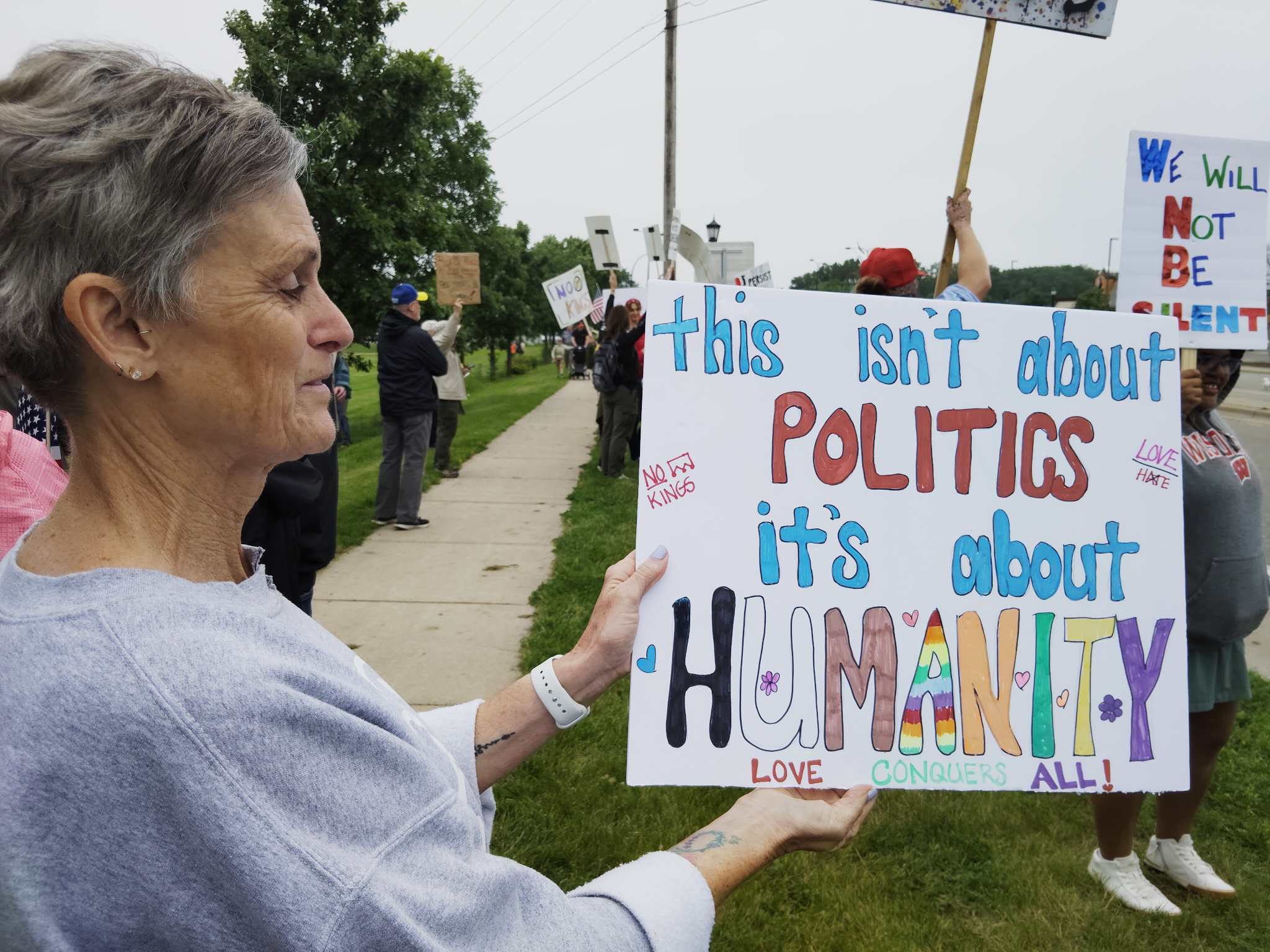
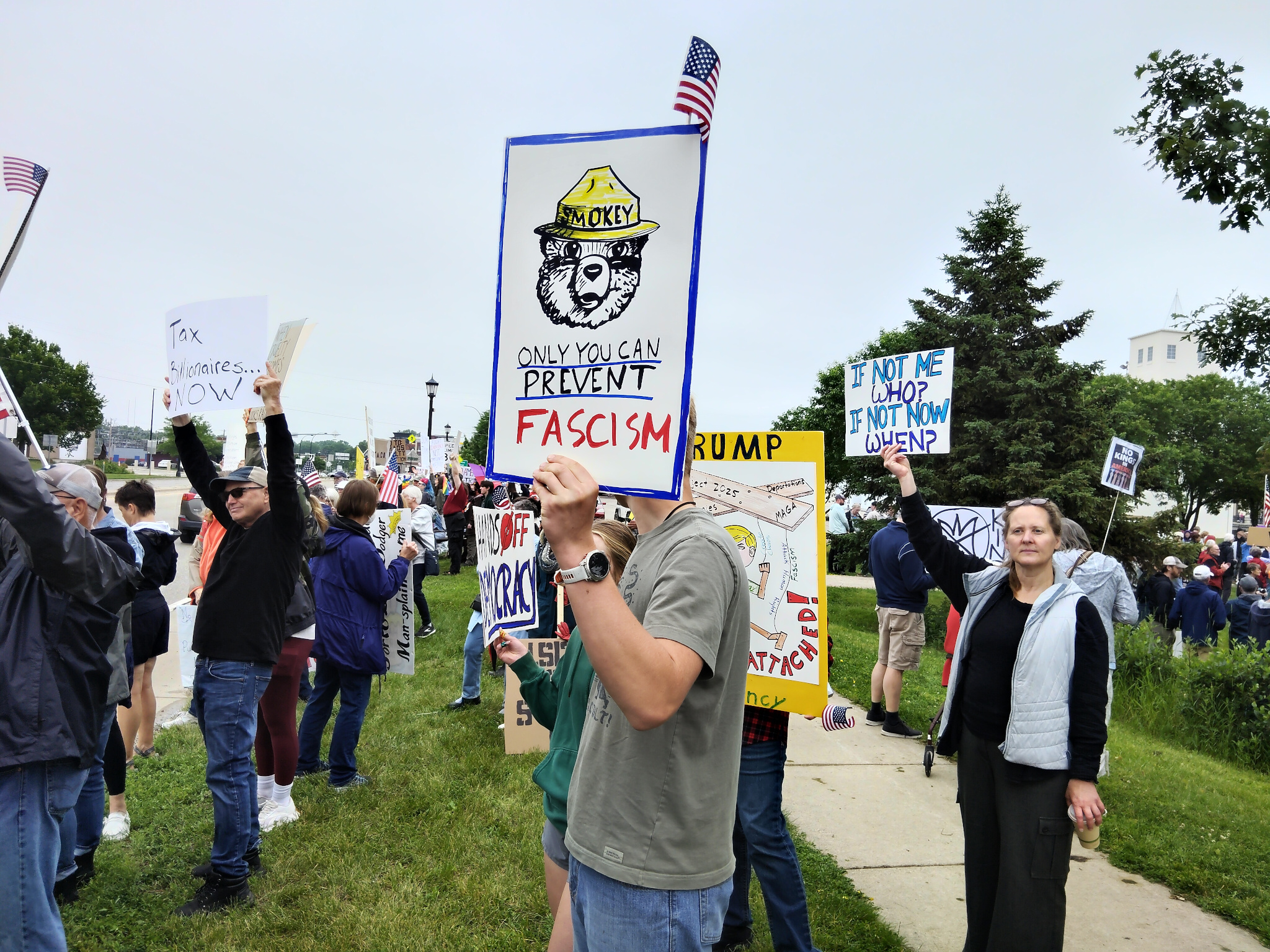
Clever and creative signage is always part of the protests. (Minnesota Prairie Roots copyrighted photo October 2025)
To be among this group of peacefully protesting concerned Americans during the NO KINGS rally felt empowering. Uplifting. We were unified in our movement, even as one speaker pointed out that we may not agree on everything. Another termed what’s unfolding in America today as not “normal.” It is not, and should not be, normal. Ever.
Support from motorists passing by was overwhelmingly positive with honking horns and waves. Of course, we got a few middle fingers and intentionally roaring, racing vehicles. Only once did I feel unsafe—when a car sped by at a dangerously high speed, the driver clearly attempting to antagonize and threaten us. That was the only overt hatred I witnessed.
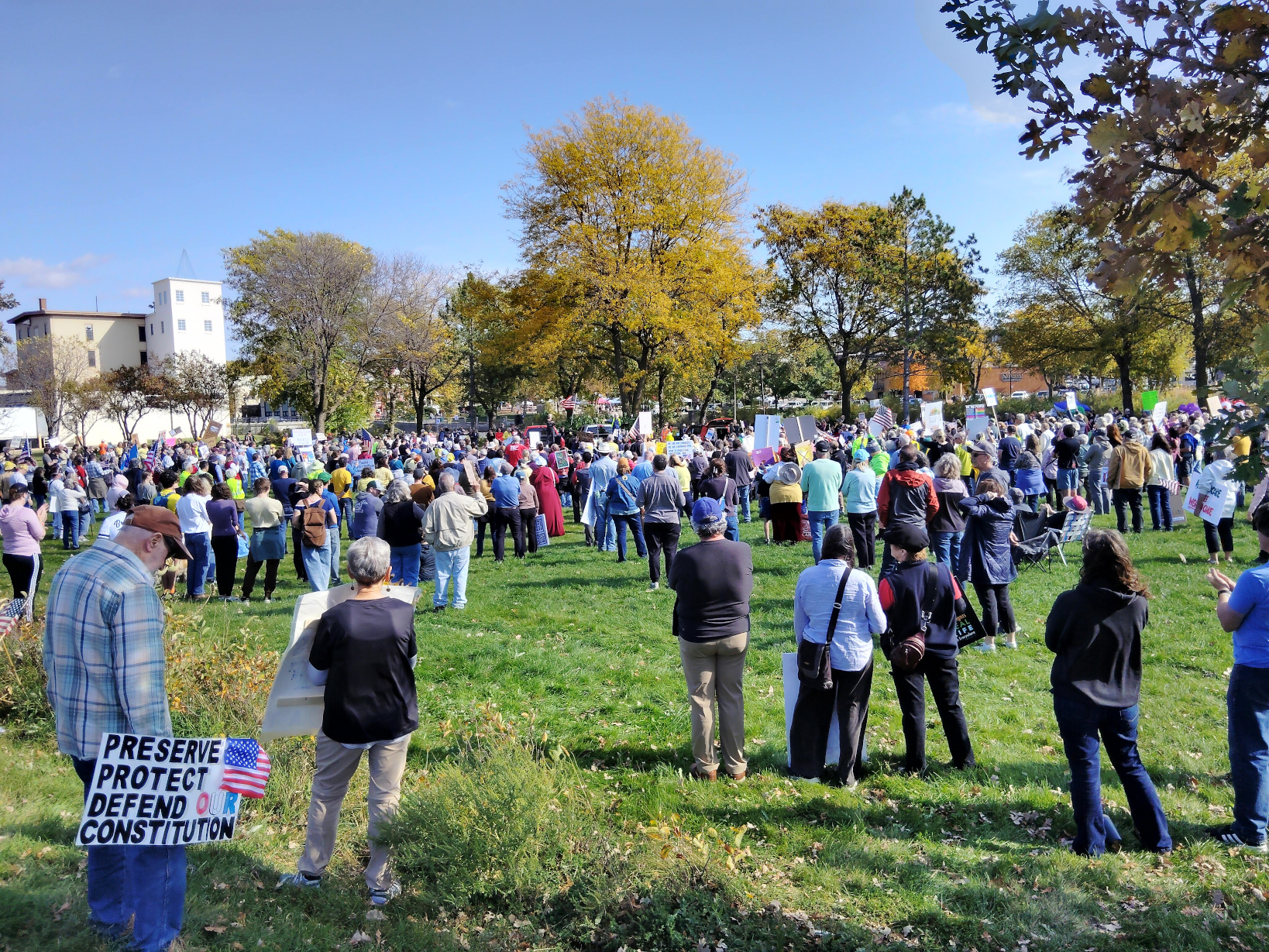
The crowd listens to speakers during the Northfield protest. (Minnesota Prairie Roots copyrighted photo October 2025)
Those of us peacefully gathered did not, as some Republican politicians adamantly and wrongly stated, come because we hate America. Far from it. We love America. That was clear in the peaceful tone of the event, in American flags waving, in recitation of the Pledge of Allegiance, in singing of the national anthem, in signage, in our desire to uphold the Constitution, in our genuinely deep concern about the state of our country under President Donald Trump. In our voices rising. Loud. And free.
#
NOTE: Please be respectful in your comments. I moderate all comments on this, my personal blog.
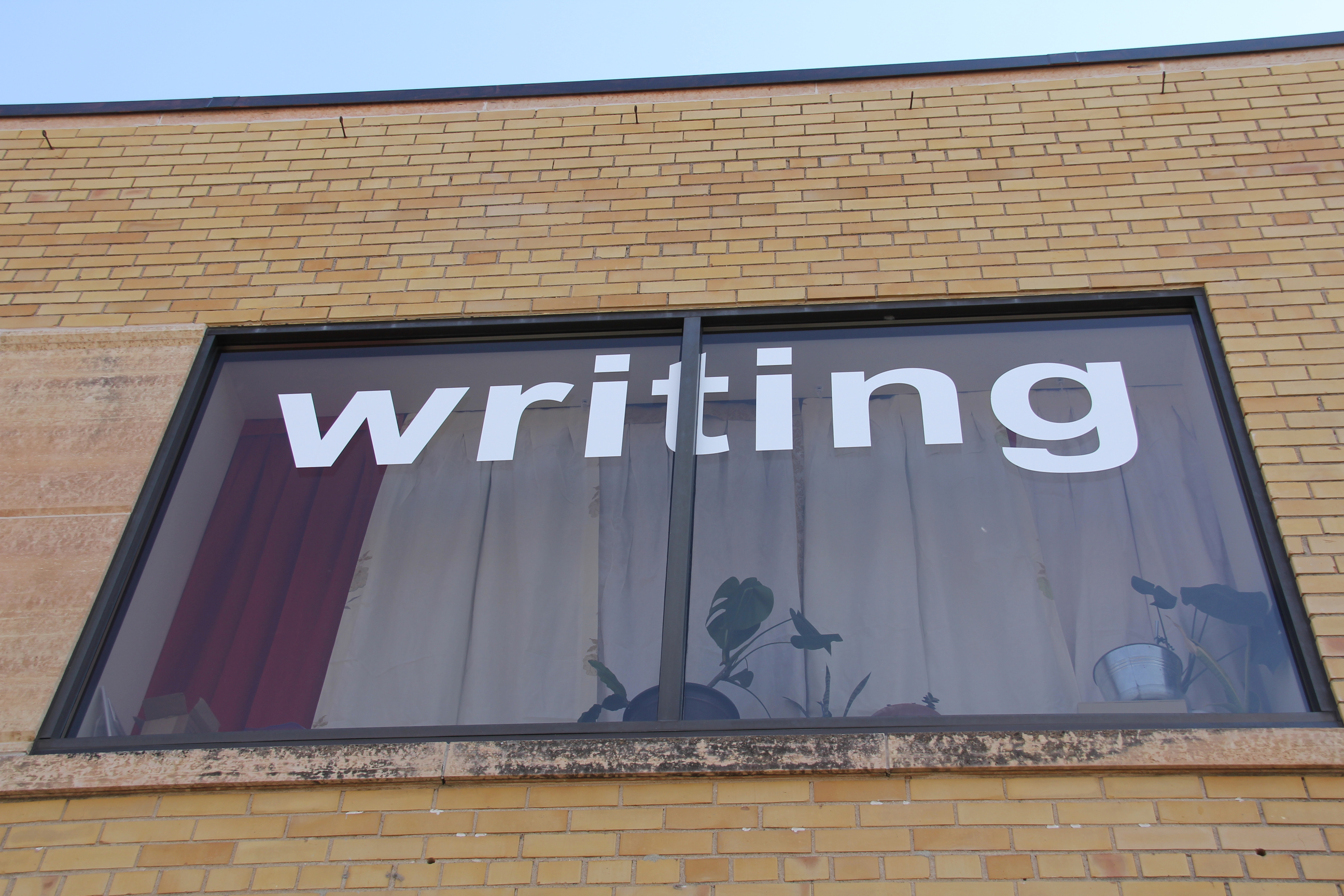
I looked to a second floor window of the Arts Center of Saint Peter to see this word. (Minnesota Prairie Roots copyrighted file photo October 2024)
AS A WRITER, I’m drawn to words. Perhaps that’s why I appreciate signs, slogans, even interesting messages on t-shirts such as “I put ketchup on my ketchup.” I spotted a guy in Faribault recently wearing a ketchup tee and told him I liked his shirt. I appreciated the humor. It was his second compliment of the day, he said. I’m not surprised given an American obsession with the condiment. I mean, my older brother squirted ketchup on his potatoes when we were kids. And most people can’t eat fries without ketchup. I can.
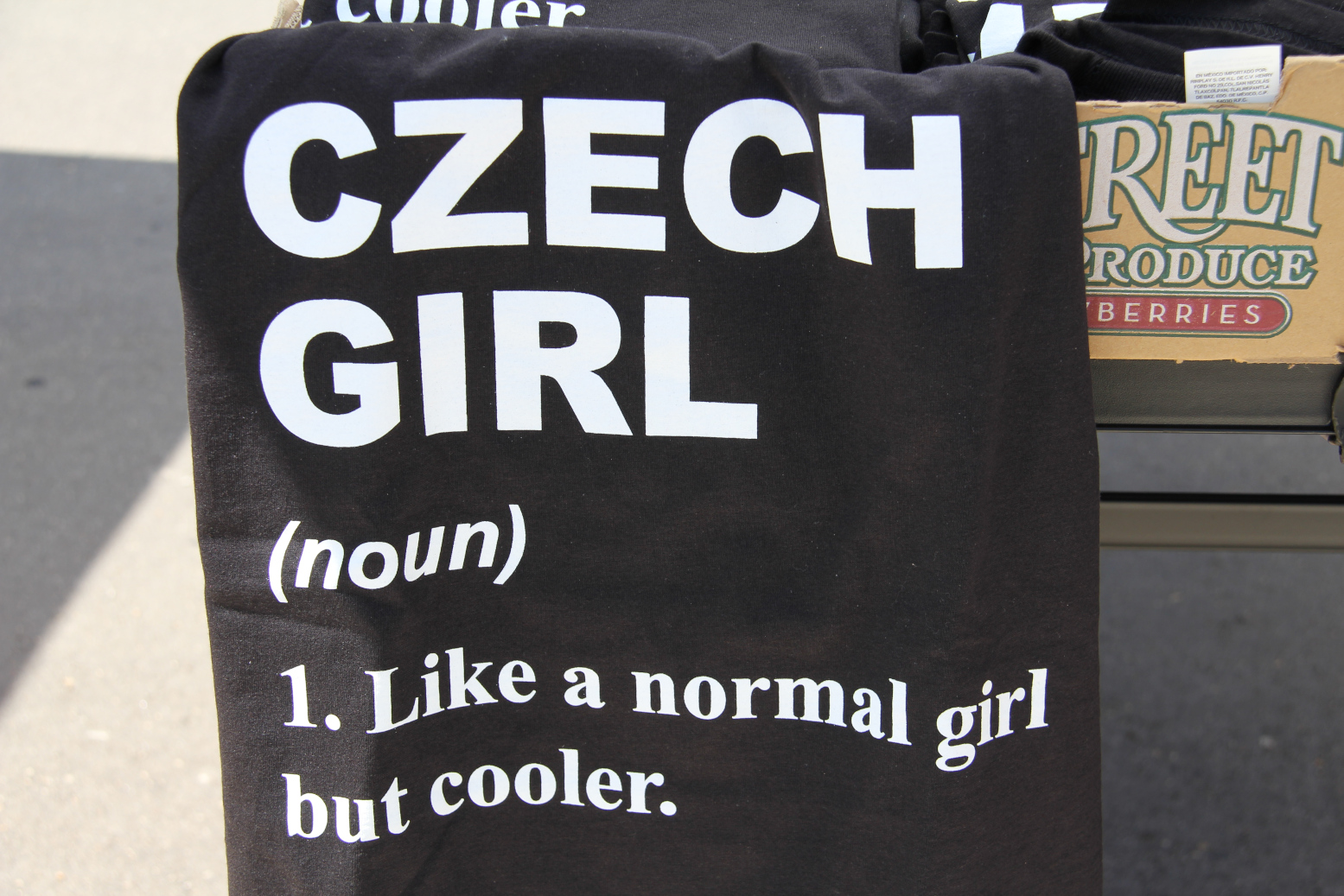
A t-shirt sold by a vendor at Montgomery, Minnesota’s Czech May Day. (Minnesota Prairie Roots copyrighted photo May 2025)
Then there’s the t-shirt I saw for sale earlier this year at a Czech celebration in Montgomery. In white letters on black fabric, the noun, Czech girl, was defined “like a normal girl but cooler.” I guess I will never be Czech cool since my heritage is German.
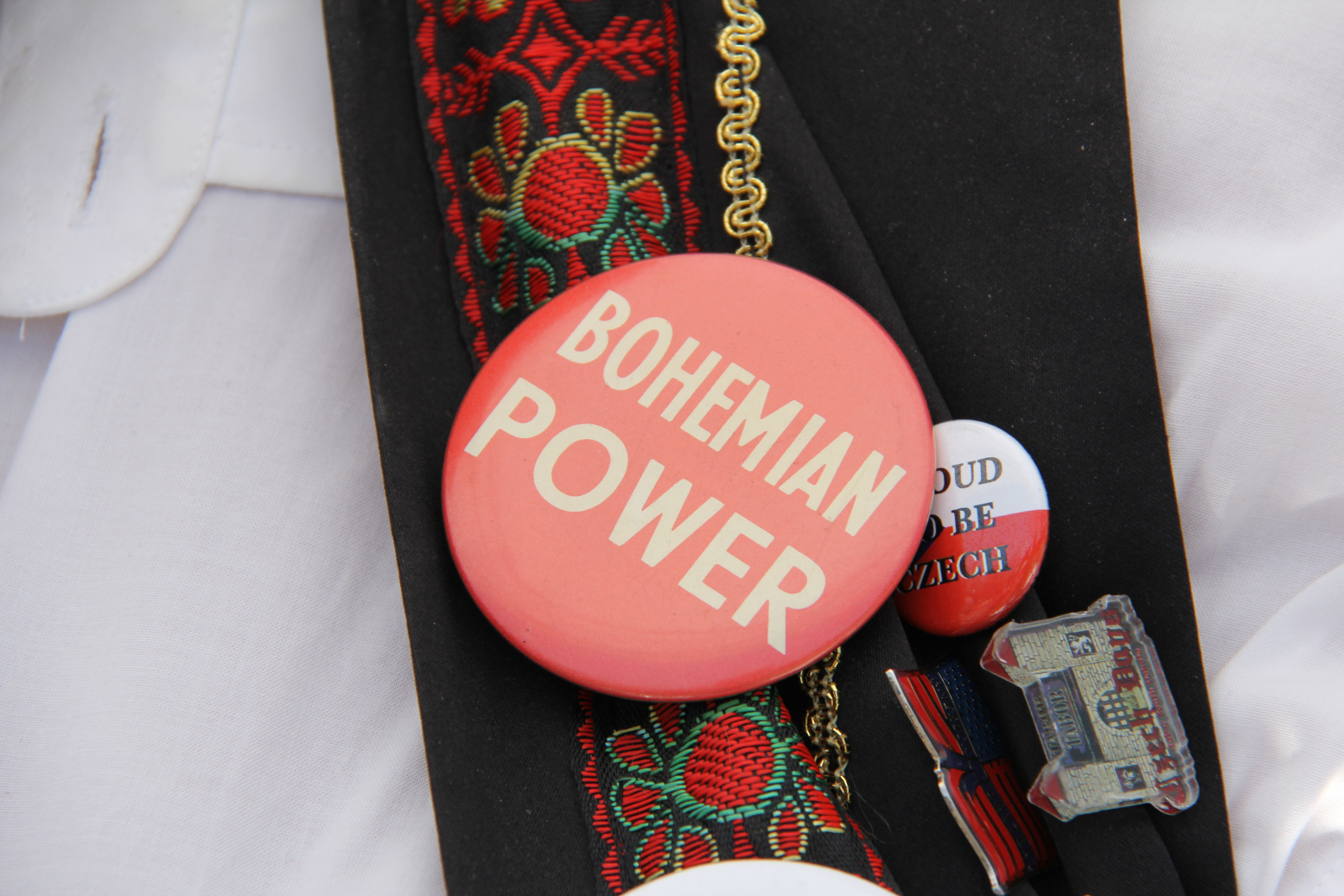
Bohemian pride in Montgomery. (Minnesota Prairie Roots copyrighted photo May 2025)
Nor will I hold Bohemian power or pride as printed on two buttons worn by a man in traditional Czech attire at the same Montgomery event. He was in the right place, Minnesota’s Czech triangle, to be sporting those ethnic-proud buttons.
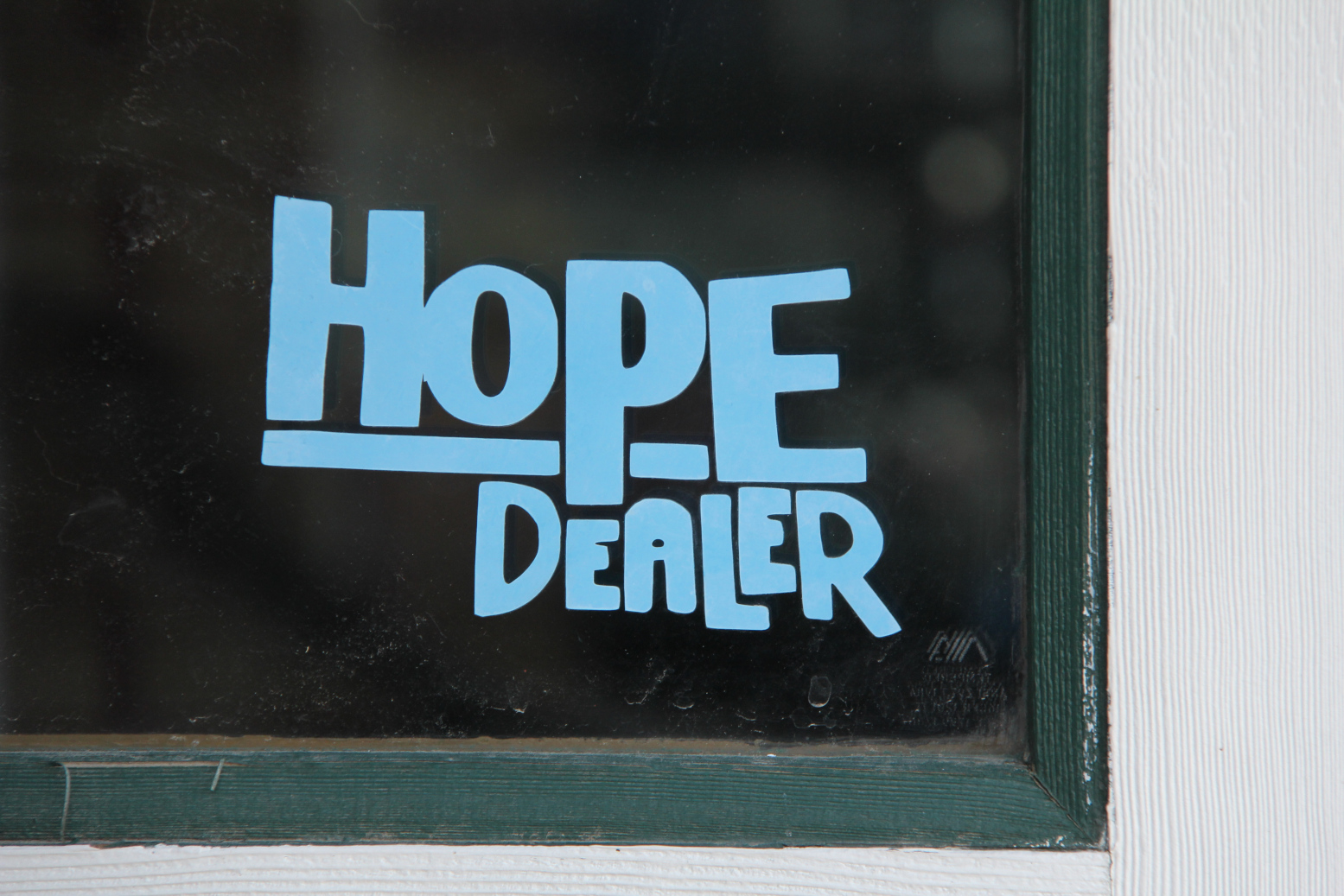
Powerful words in Montgomery, Minnesota. (Minnesota Prairie Roots copyrighted photo May 2025)
But I saw one identifier in Montgomery that proved relatable. And that was “Hope Dealer” displayed on a downtown storefront window. Hope happens to be one of my favorite words, one I’ve leaned into often during challenging times in my life. There’s nothing quite like hope to focus thoughts on difficult days. In Montgomery, “Hope Dealer” marks a substance abuse treatment center, which offers hope to those who walk through the door. The noun applies to me when I offer hope to someone who needs to be uplifted, encouraged and supported, maybe even inspired.
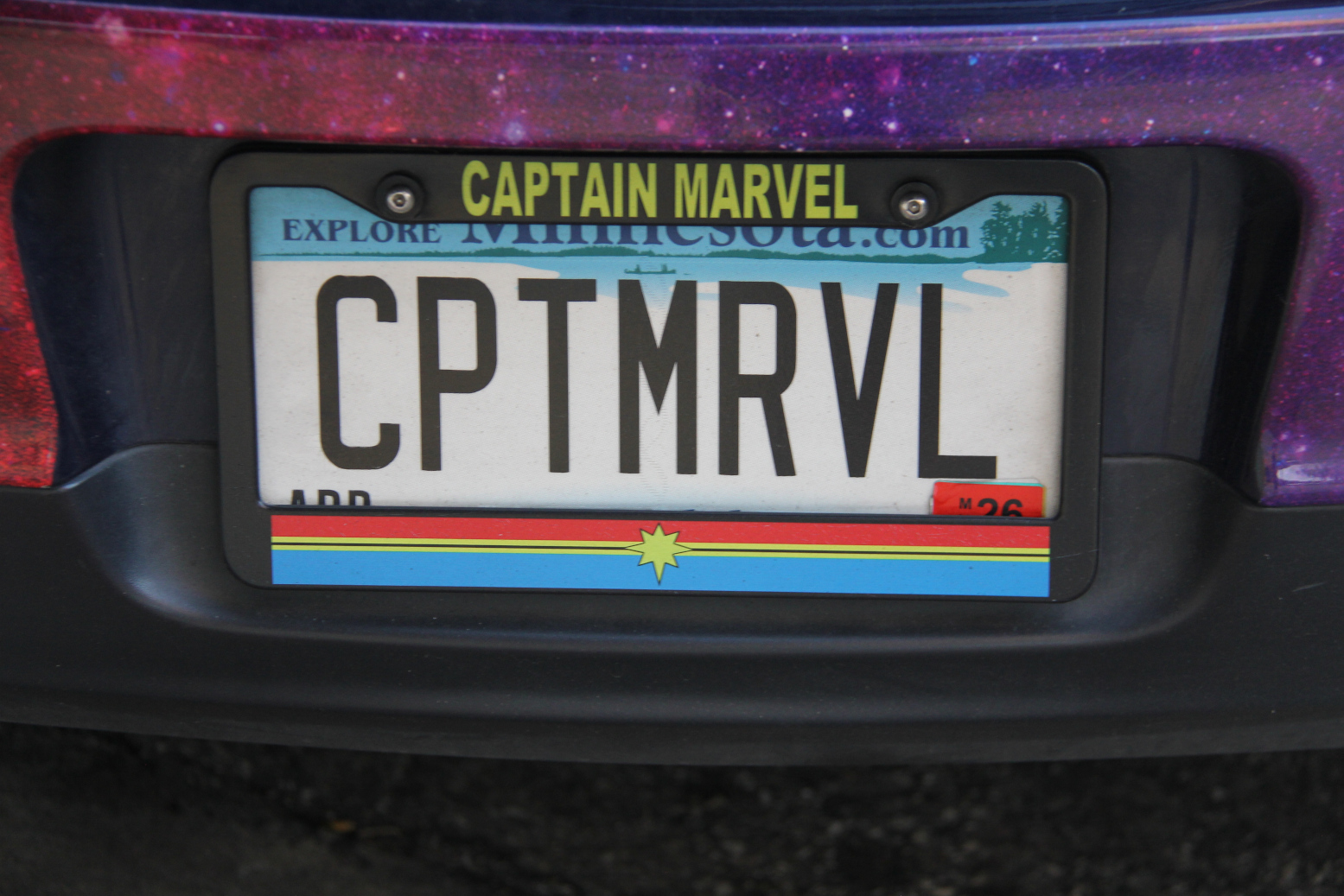
Identifying license plate on a Captain Marvel-themed car. (Minnesota Prairie Roots copyrighted photo June 2025)
Sometimes superheroes inspire as seen on a flashy purple car parked at a downtown Faribault Car Cruise Night this summer. Captain Marvel themed the car. The Minnesota license plate, CPTMRVL, did not escape my notice. This car owner clearly identifies with the positive superhuman powers of Captain Marvel.
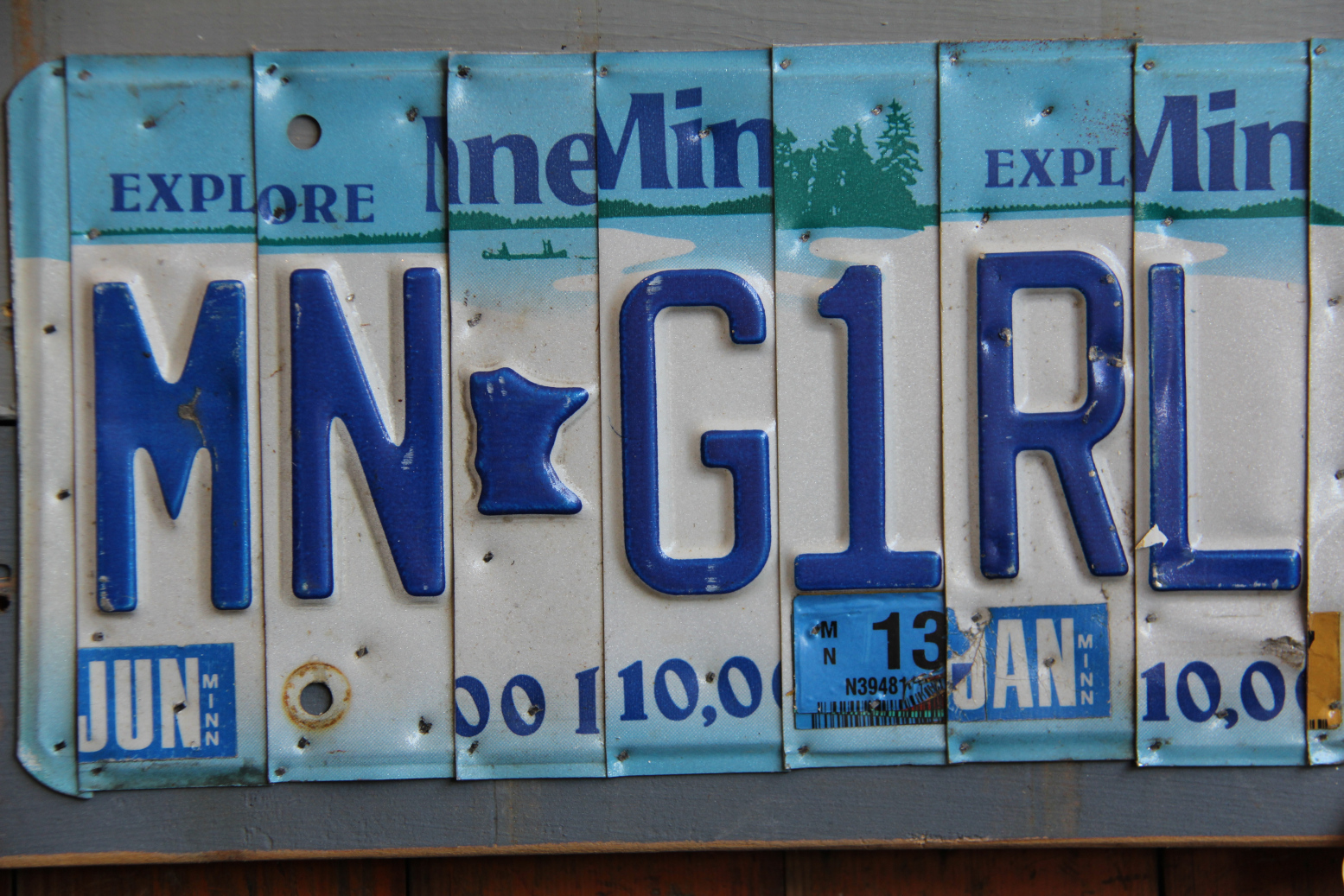
Identifying art at Makeshift Accessories. (Minnesota Prairie Roots copyrighted photo April 2025)
Over in Northfield at Makeshift Accessories, a home-grown shop featuring art crafted from primarily recycled materials, I found a sign that fits me—MN G1RL. It’s made from Minnesota license plate letters and a single number cobbled together. The rustic look appeals to me. But mostly, it’s the words I appreciate. I am a life-long Minnesota girl. If I were to define MN G1RL, I’d write “like a normal girl but stronger.” You’ve got to be strong to survive our long, harsh winters (although they are not as long and harsh as they once were).
Whether you’re from Minnesota or elsewhere matters not. Whether you’re into superheroes or not doesn’t matter to me. Whether you’re Bohemian or German or some other ethnicity matters not either. Whether you douse everything in ketchup or not, I don’t care.
But it does matter to me that you hold hope. It matters to me that you can read that singular word and feel the optimism it carries. You can carry hope in your heart. And you can dispense hope within your community through your words and actions. While you do that, notice the signs, slogans and interesting messages that surround you, that are part of everyday life wherever you live. Words matter. So says this southern Minnesota writer.
Protesters stand along Minnesota State Highway 19 by Ames Park in Northfield during the June 14 NO KINGS protest. This is one of my favorite signs among the many held by hundreds of protesters. (Minnesota Prairie Roots copyrighted photo June 2025)
I LEANED MY HEAD against Randy’s shoulder, my left hand gripping the rod of a protest sign and a small American flag. I felt such profound sadness in that moment. The moment when a pastor asked for a period of silence in honor of Minnesota State Representative/House Speaker Emerita Melissa Hortman and her husband, Mark, assassinated in their home during the early morning hours of June 14.
Flag Day. Nationwide NO KINGS protest day. A day of gathering turned tragic here in Minnesota.
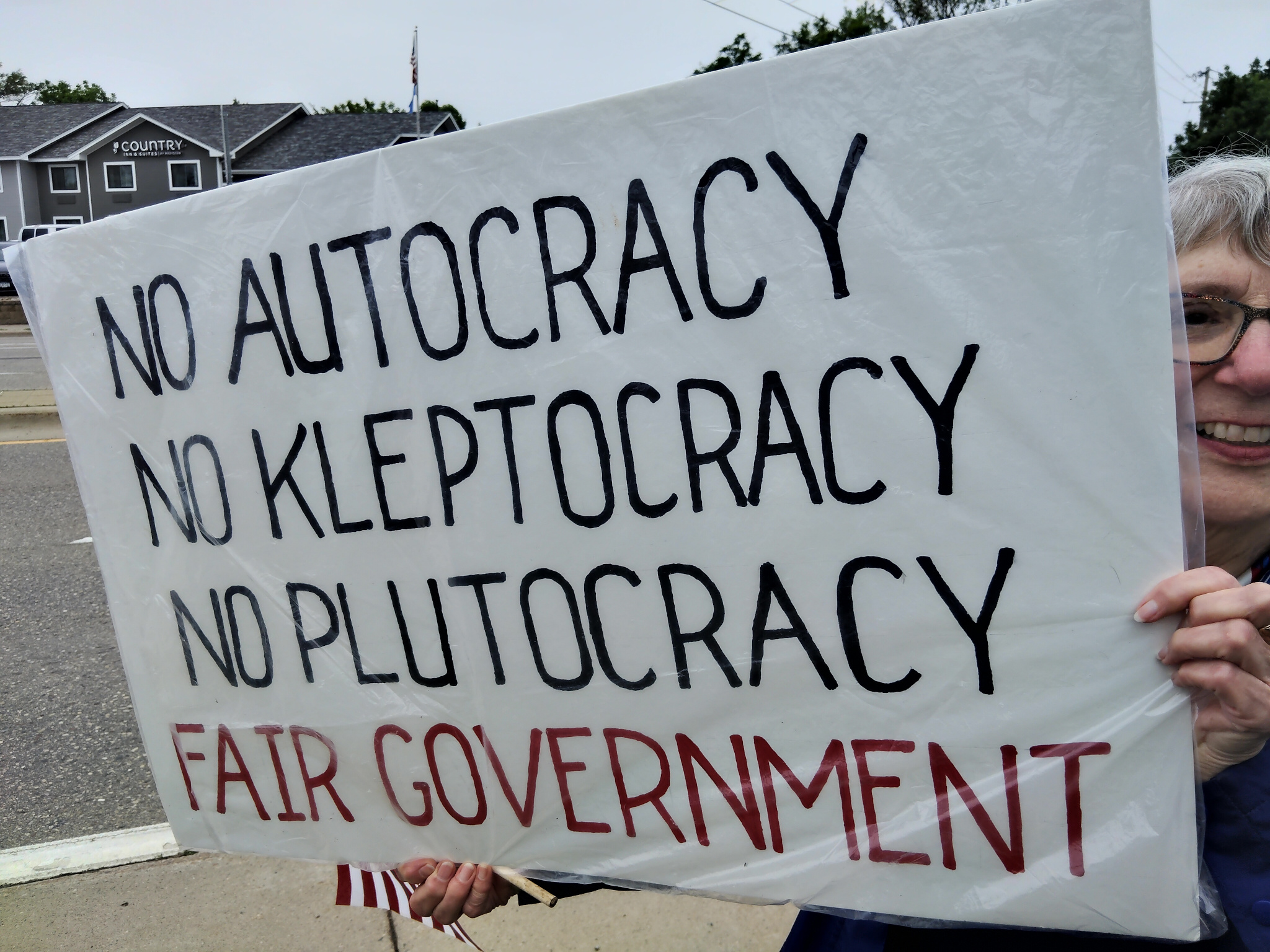
A strong statement against a system of government by one person with absolute power. I suggest you look up these words, as I had to with some. (Minnesota Prairie Roots copyrighted photo June 2025)
I alternated between leaning into my husband and leaning my bowed head against the bottom of my NO MORE KINGS protest poster held high, the sign with the cursive words, “I value freedom,” scrawled on the back side. The wind blew, swept my hair across my face like a veil covering sadness. The heaviness felt palpable here, in Ames Park in Northfield, along the banks of the Cannon River. But so did the energy.
This shows just a portion of the massive crowd gathered for Northfield’s NO KINGS protest. (Minnesota Prairie Roots copyrighted photo June 2025)
We were a group of hundreds—maybe even a thousand (I’m not good at estimating crowd size)—gathered to publicly express our concerns about leadership in this country, about decisions being made that negatively affect all of us, about the state of and future of our democracy… It was my first protest. Ever. I wanted, needed, to be here. To remain silent seems complicit.
I’d already arrived when a friend texted that Minnesotans had been advised by state law enforcement not to attend NO KINGS protests. That warning linked to the suspect in the shootings of the Hortmans and of State Senator John Hoffman and his wife, Yvette. We would later learn that NO KINGS fliers were found in the vehicle of Vance Boelter, now accused in the double murders and attempted murders.
While your eyes may focus on the protest sign in the middle, look to the right. and this sign: IF NOT ME, WHO? IF NOT NOW, WHEN? (Minnesota Prairie Roots copyrighted photo June 2025)
That explained why, on the way to the riverside protest, I overheard a woman telling a couple that her police officer son had advised her not to participate in the rally. She was going home. I was not. Nor were any of the others converging on Ames Park at noon. I wasn’t scared. Vested safety people, trained in conflict resolution and de-escalation, were in place. I felt safe in the masses, which, I suppose, is an unrealistic perspective. But I refuse to be silenced by fear, by the words and actions of those who attempt to suppress voices. And intimidate.
And there were those, including the drivers of a white pickup truck and of motorcycles which repeatedly roared past the rally site, spewing their opposition in noise and in political flags bannering messages I won’t repeat. But they, too, have a right to protest. Peacefully. Just as I do. And I wrote that on the back of a second sign: FREE to PROTEST. But, mostly, passing vehicles honked in strong support.
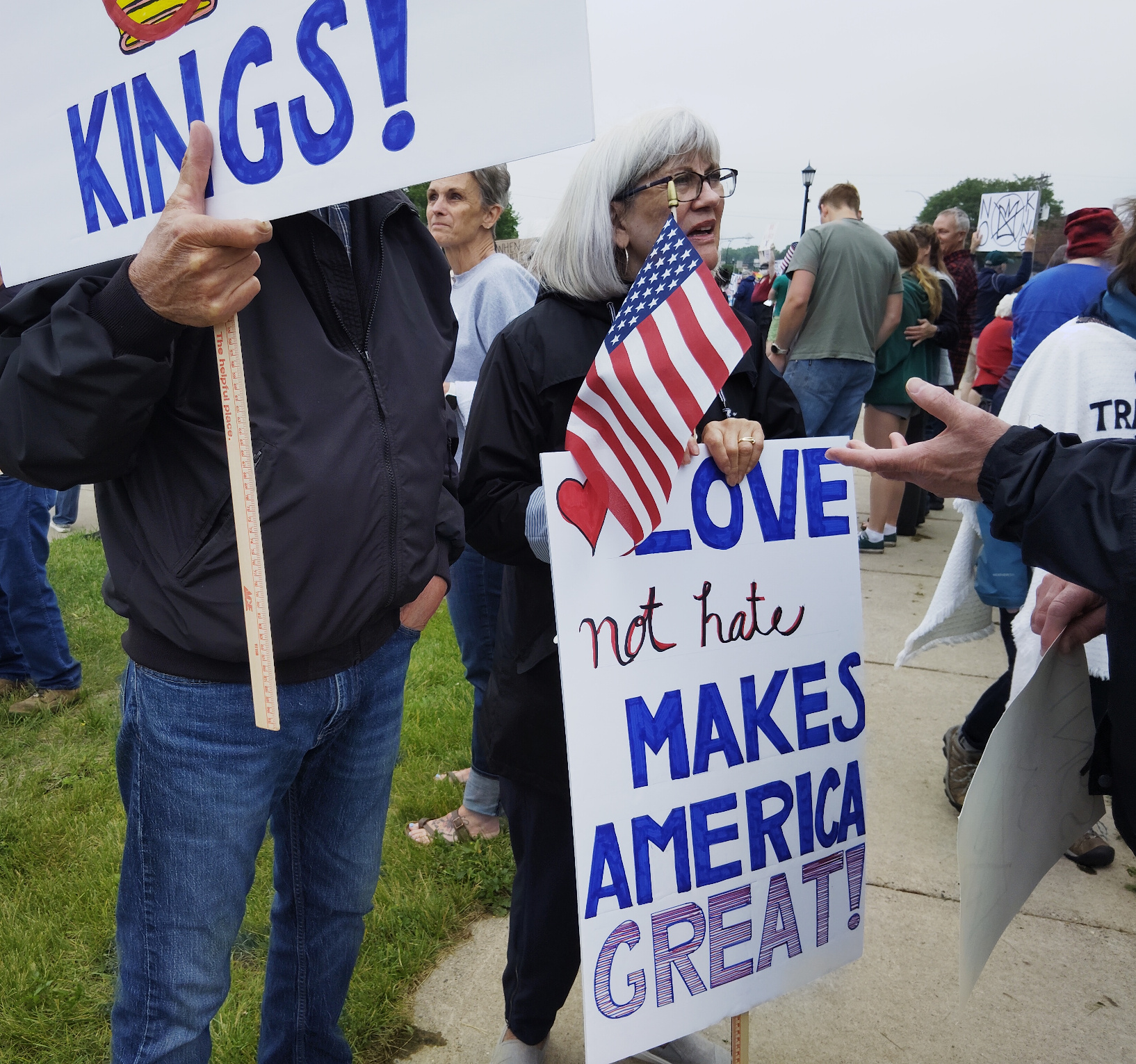
So many positive messages promoting love, compassion, care, kindness… (Minnesota Prairie Roots copyrighted photo June 2025)
At this rally of people opposing the current administration and its policies and actions, I felt a unity of purpose and a deep, cohesive concern for the future of our country. I felt uplifted, embraced, empowered. Speakers spoke (although I couldn’t hear most). The pastor led us in prayer. We sang—”The Star Spangled Banner” and “We shall overcome.” We cheered. We chanted. We waved our posters and flags. And a group held an over-sized American flag, which I couldn’t see from my vantage point deep in the shoulder-to-shoulder crowd.
We were mostly an older group. Baby Boomers. Grandparents. Even octogenarians. Perhaps some protested during the Vietnam War. Or served this country. We’ve lived a few years, enough decades to understand that we need to rise up against authoritarianism. Enough to understand what’s at stake. But there were some young people, too, like the dad behind me with his preschool daughter playing in the grass. He clearly cares, if not for himself, but then for his child.
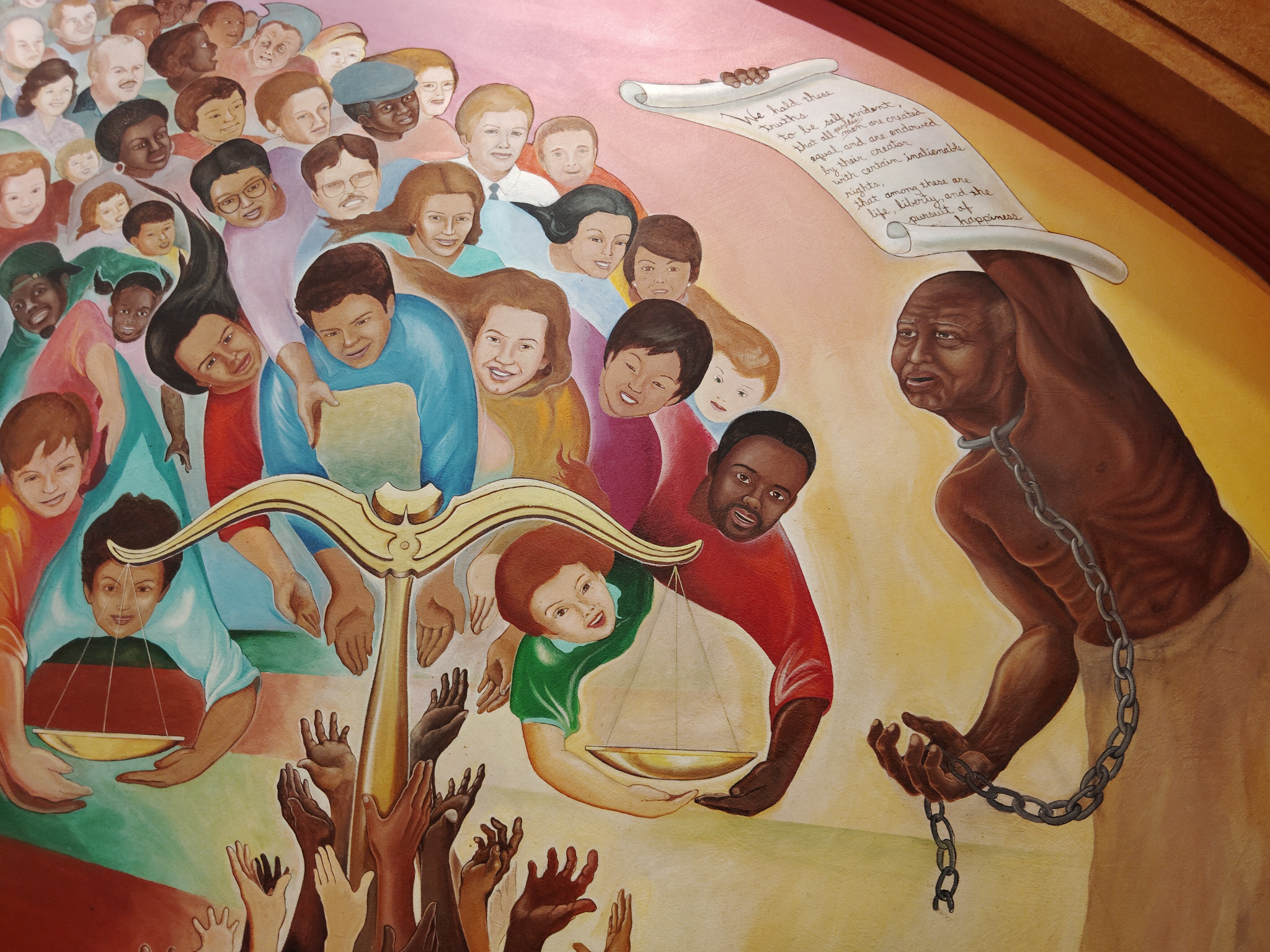
I saw this mural, “The Inheritance of Struggle,” inside the Memorial Student Union at the University of Wisconsin, Madison, Tuesday afternoon. It shows “the contributions made by people of various ethnicities and cultures in the form of tears, sweat, blood and life in the building of the United States.” It’s fitting for today, Juneteenth, and for NO KINGS day. (Minnesota Prairie Roots copyrighted photo June 2025)
The morning after the NO KINGS protest, I left for Madison, Wisconsin, to spend time with my 5-month-old grandson (and his parents). As I snuggled Everett, I thought, he (and my other two grandchildren) are part of the reason I chose to protest. Their lives stretch before them. I want them to live in a country where they are free. Free. I want them to live under a government based on a three-pronged system of checks and balances, not one ruled by a king or some version of a king or dictator. I want them to live in a kind, caring and compassionate country. Not a selfish, uncaring, divisive nation filled with hatred.
I returned to Minnesota yesterday and am catching up on laundry and writing. And, along with my fellow Minnesotans, I’m collectively grieving the assassination of an elected official and her husband. And I’m thinking, this is what it’s come to in Amercia…
POETRY, WHEN READ ALOUD, is, in many ways, like music. It presents one way on paper. But read a poem aloud, and it becomes a song. Music with rhythm, beat and emotion. Vocal intonations carry a poem to melodic heights.
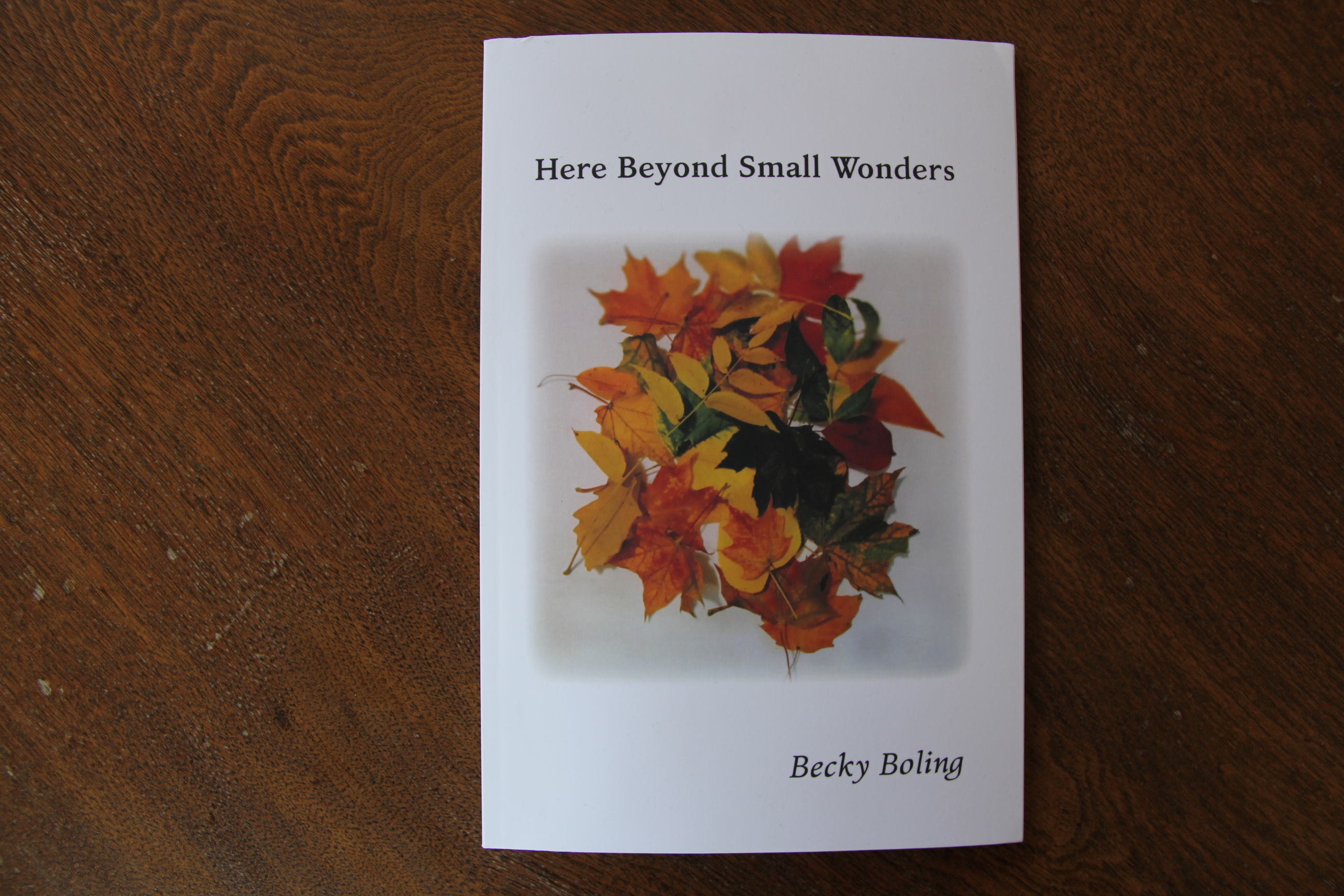
Becky Boling’s recently-published collection of her poems. (Minnesota Prairie Roots copyrighted file photo)
At 6 p.m. Thursday, May 22, the music of poetry will fill Books on Central in Faribault as Becky Boling reads from her first anthology, Here Beyond Small Wonders. Recently published by Finishing Line Press, this collection features detail-rich poems that often focus on ordinary subjects. It’s signature Boling, who is a prolific poet, served as Northfield’s co-Poet Laureate, and is retired from teaching Spanish and Latin American Literature at Carleton College in Northfield.
I love Boling’s writing. Her poems resonate with me in an everyday life kind of way. She has a visually-strong writing style—as most poets do—coupled with emotion-evoking poetry that prompts memories, questions, deeper thinking.
(Literary Event promo courtesy of Books on Central)
Boling has invited four other poets to join her at Thursday’s reading. Those include her husband, D.E. Green, also an accomplished poet; Northfield poet Heather Candels; Faribault poet Larry Gavin; and me. I’m honored to join this gifted group of writers in reading our poems aloud. I will read right after Boling.
I’ve previously listened to all of them read, so I can vouch for how much I’ve enjoyed hearing them. Gavin, especially, has a rich radio voice that makes me want to settle in and let his voice pull me into his writing.
Now, as I’m preparing for this Thursday evening event, I’m paging through the many books in which my poetry has published, selecting the poems I want to read during my allotted five minutes. Then I’ll practice reading those poems aloud, using my voice to create poetic music.
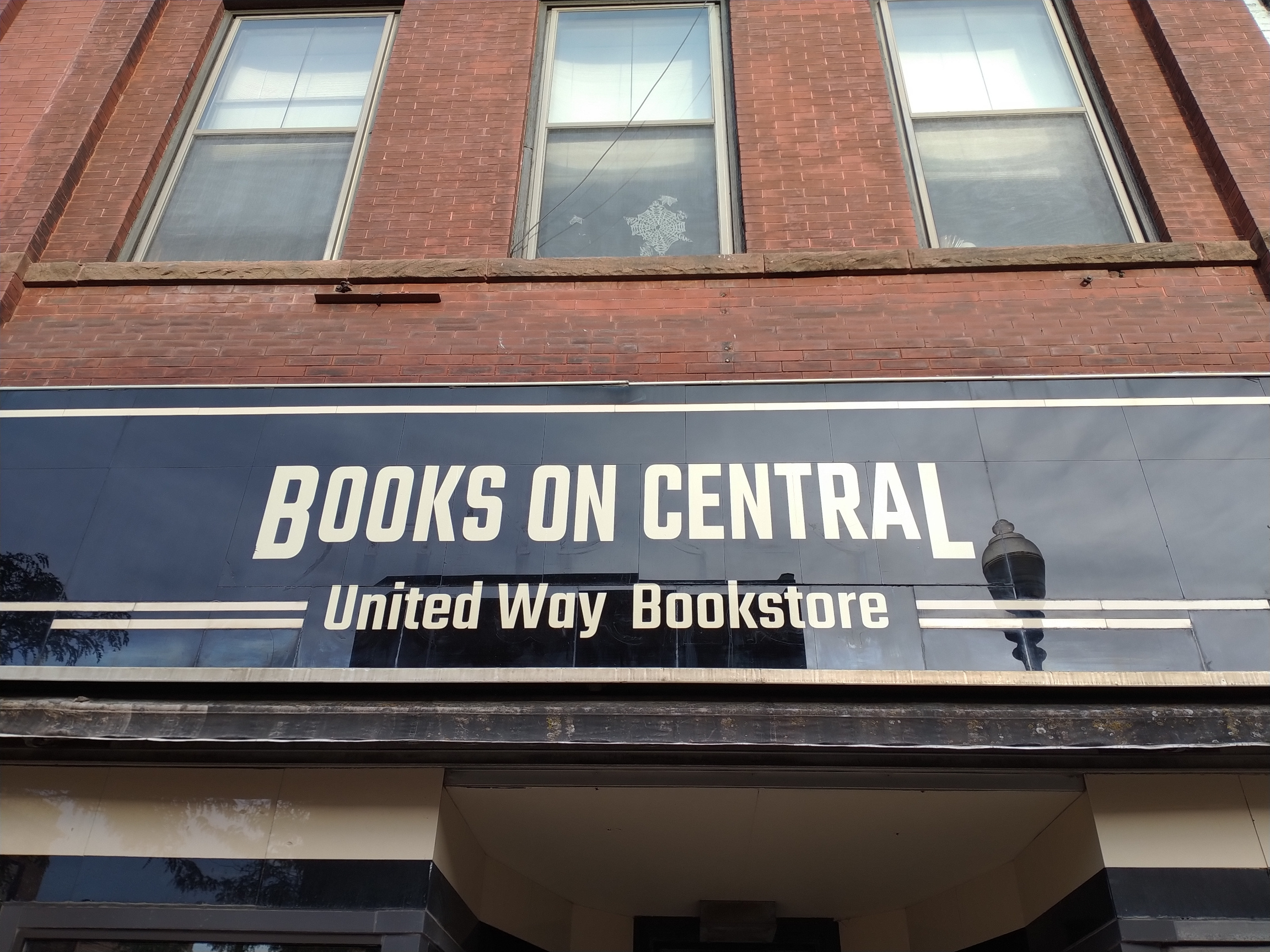
This used bookshop is located in the heart of downtown Faribault along Central Avenue. (Minnesota Prairie Roots copyrighted file photo)
FYI: Books on Central, 227 Central Avenue North, Faribault, hosts periodic free literary events to celebrate authors and to draw people into this volunteer-run used bookstore operated by Rice County Area United Way. All proceeds benefit select nonprofits in the county. It’s a beautiful small space (complete with a centering chandelier) housed in a former jewelry store.
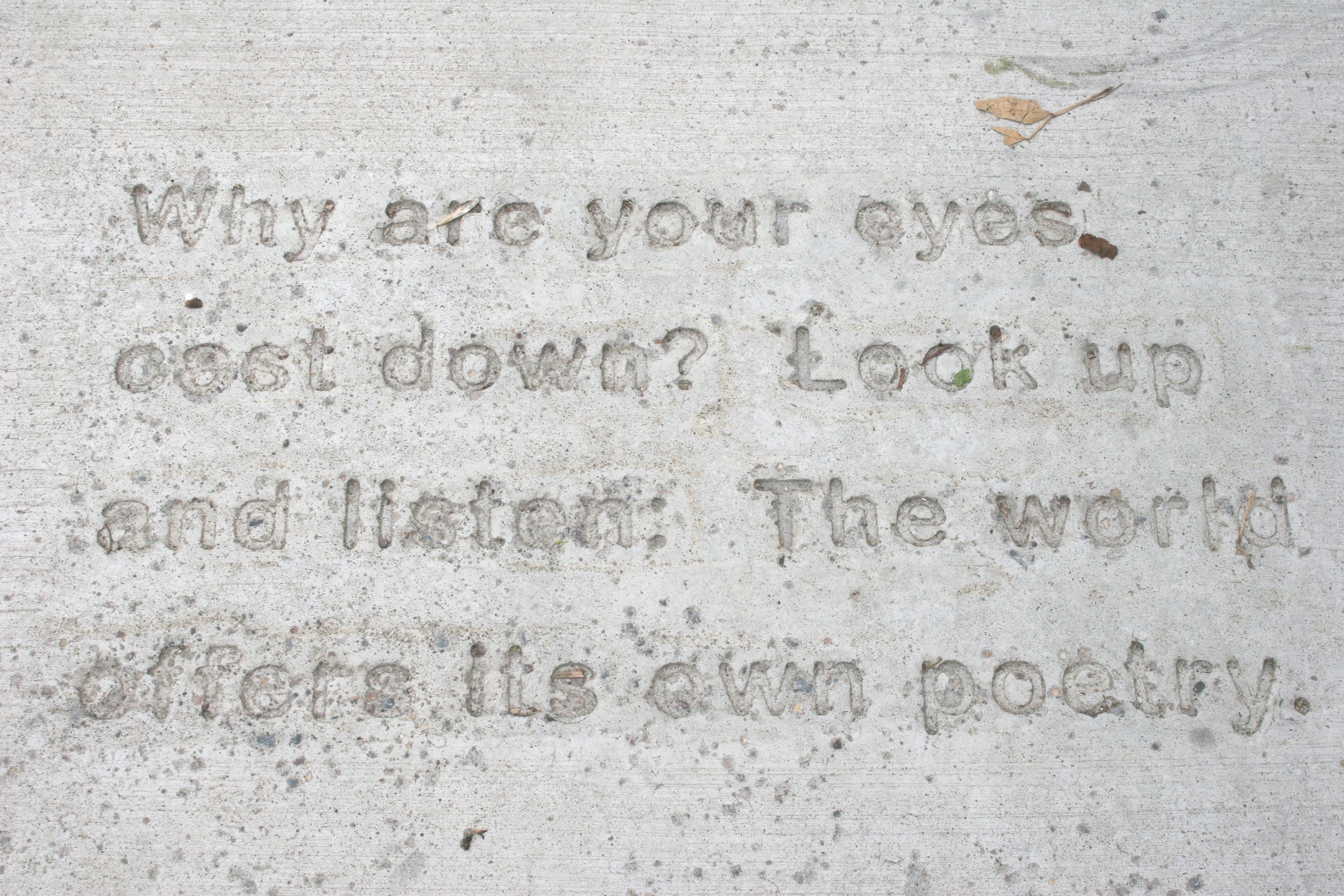
Sidewalk poetry in downtown Northfield, Minnesota, carries a powerful message. (Minnesota Prairie Roots copyrighted file photo)
I DON’T READ MUCH POETRY. I probably shouldn’t admit that given I’m a published poet. But I suspect most of you also are not big poetry readers. Yet, we all should be, especially me.
Becky Boling’s recently-released first collection of published poetry. The cover features the poet’s artwork. (Minnesota Prairie Roots copyrighted photo April 2025)
Poetry offers a creative way to view the world, to experience life, eliciting a whole range of emotional responses that connect us to each other, to the earth, to the past and present, and much more. I get excited when I discover a poet whose work truly resonates with me. And that would be the poetry of Northfielder Becky Boling.
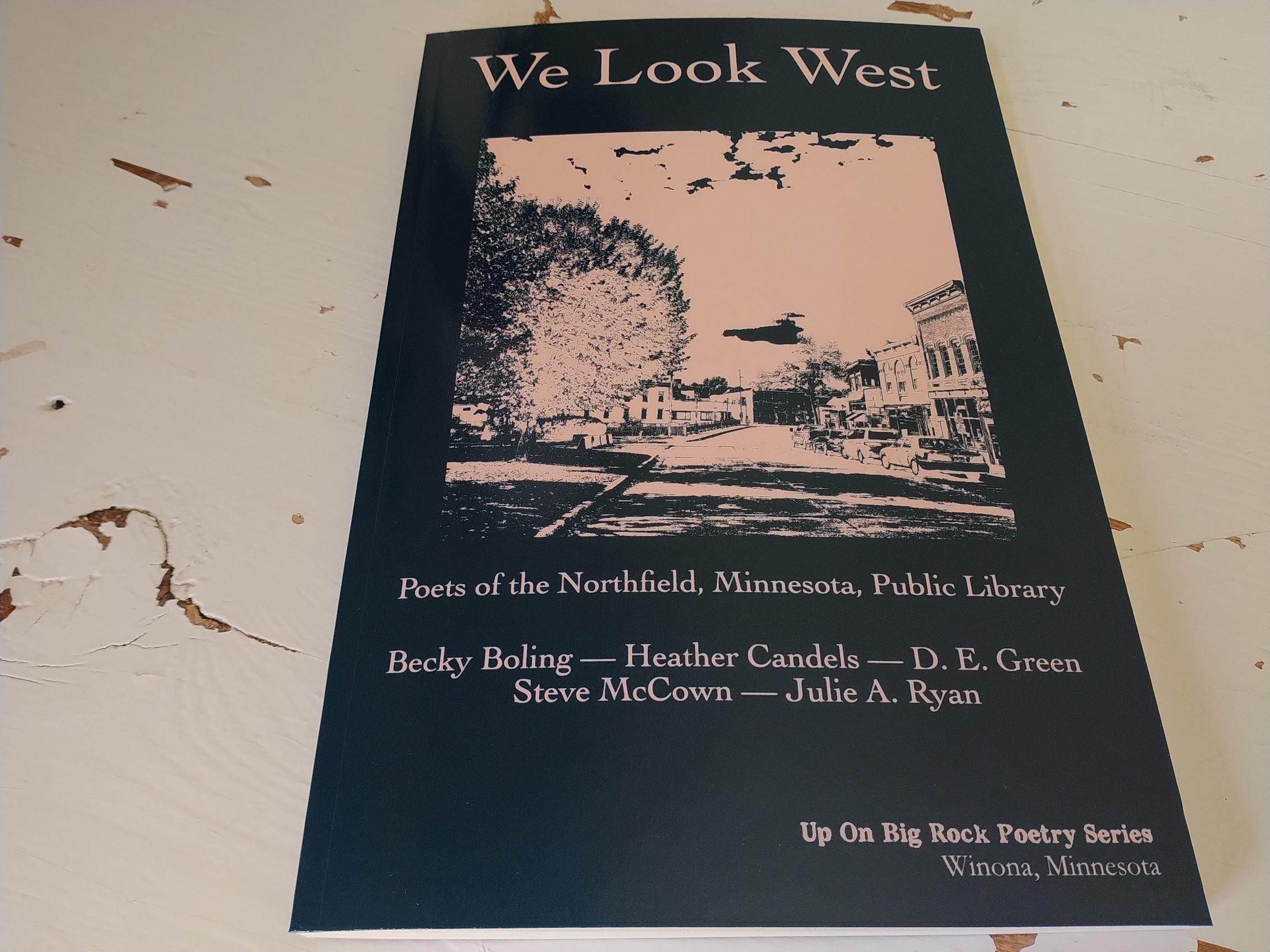
We Look West was published in early 2024 by Shipwreckt Book Publishing Company. (Minnesota Prairie Roots copyrighted file photo 2024)
A year ago, I met Boling when she dropped off a copy of the anthology, We Look West, a collaboration of the Poets of the Northfield Public Library. It includes her work and that of four other talented poets. I love the collection which takes the reader from the sunrise to the sunset of life. The poetry therein is so understandable and relatable.
A box holds bagged poems included in the “Poetry in a Bag” project. (Minnesota Prairie Roots copyrighted file photo 2024)
In May 2024, Boling, I and several other poets participated in a community poetry reading for the “Poetry in a Bag” project coordinated by Mercado Local, a Northfield marketplace for immigrants. Our poems were printed, rolled and bagged before distribution within our communities.
I would see Boling again in September 2024, when she and the other Northfield poets read from We Look West at Books on Central, a Rice County Area United Way used bookshop in Faribault.
Selected prose and poetry about the pandemic and social justice issues were published by the Ramsey County Public Library in this anthology. (Minnesota Prairie Roots copyrighted file photo)
The poetry of Becky Boling in her first published collection featuring 37 of her poems. (Minnesota Prairie Roots copyrighted photo April 2025)
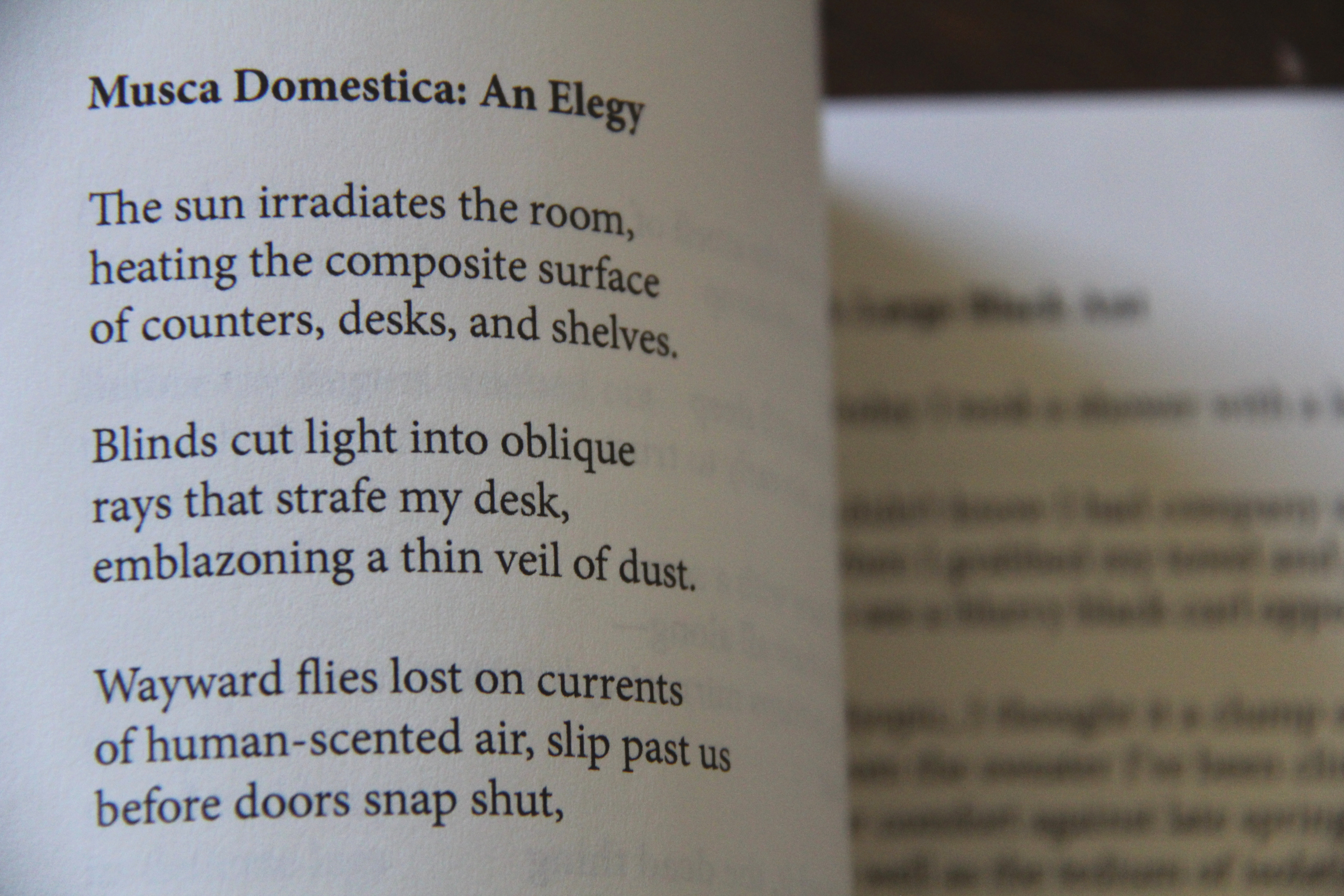
Because of those shared experiences, shared publications and shared love of words, I feel a sisterhood with Boling. So when she asked if I wanted a copy of her first solo poetry collection, I responded with an enthusiastic, “Yes!” Within the pages of Here Beyond Small Wonders, I found what I’ve come to expect from Boling—detailed writing, often about the most ordinary subjects—a dead mouse, a fly, walnuts… Topics you may not even consider poetry-worthy. But Boling has this ability to observe and engage all of her senses to craft words into connective, meaningful poetry.
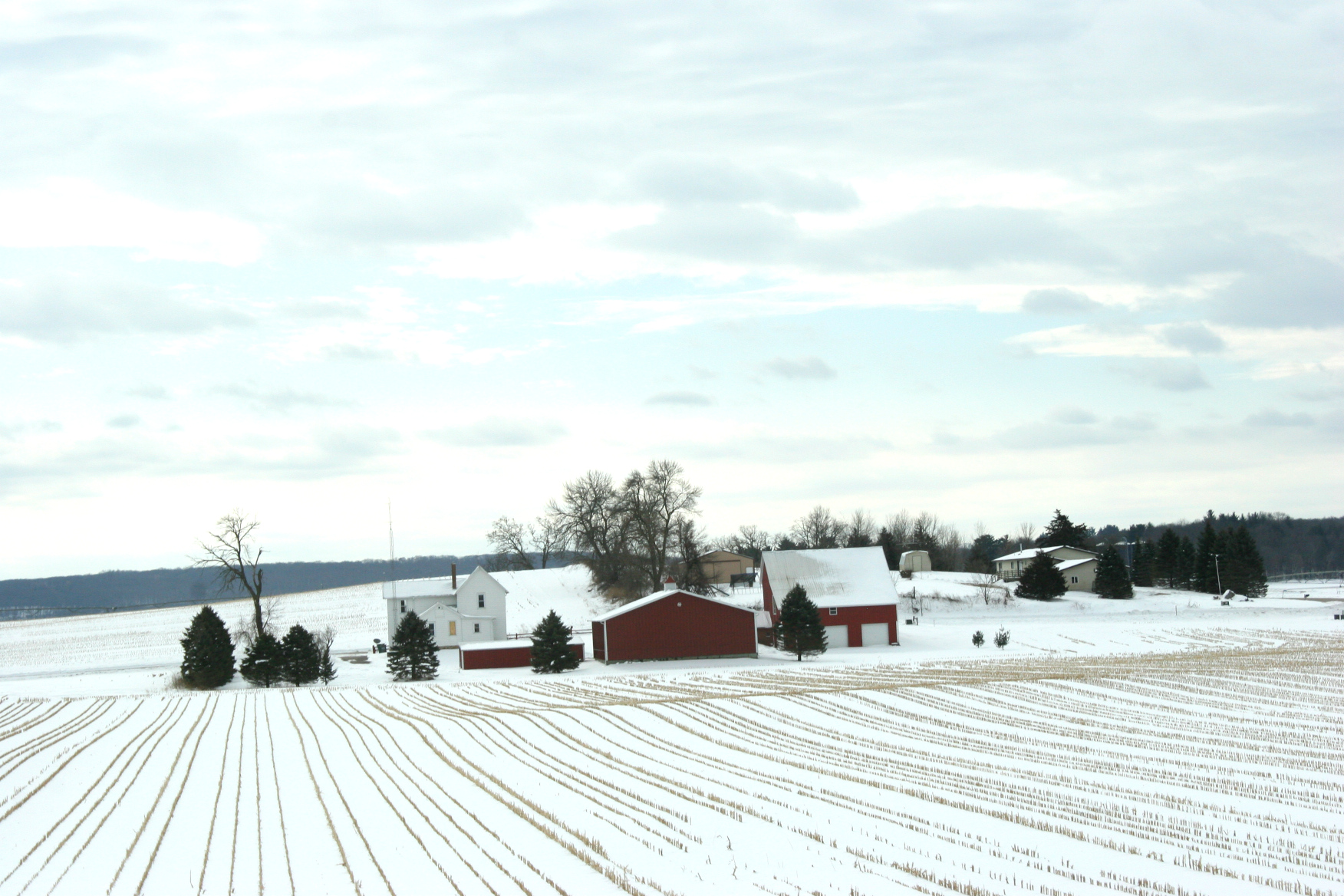
A Wisconsin farm site photographed from Interstate 90 could be a poetry prompt.(Minnesota Prairie Roots copyrighted file photo)
In her poem “Snow Pond,” she defines poetry: Poetry, like freezing temps, seizes the moment, recasts it—through the physics of sight, memory, language—resurrects it anew into patterns, sound and light, marks on a snowy page that glisten and melt on tongue, alight on the inner eye. That definition of poetry is among the best I’ve read, because it is poetry.
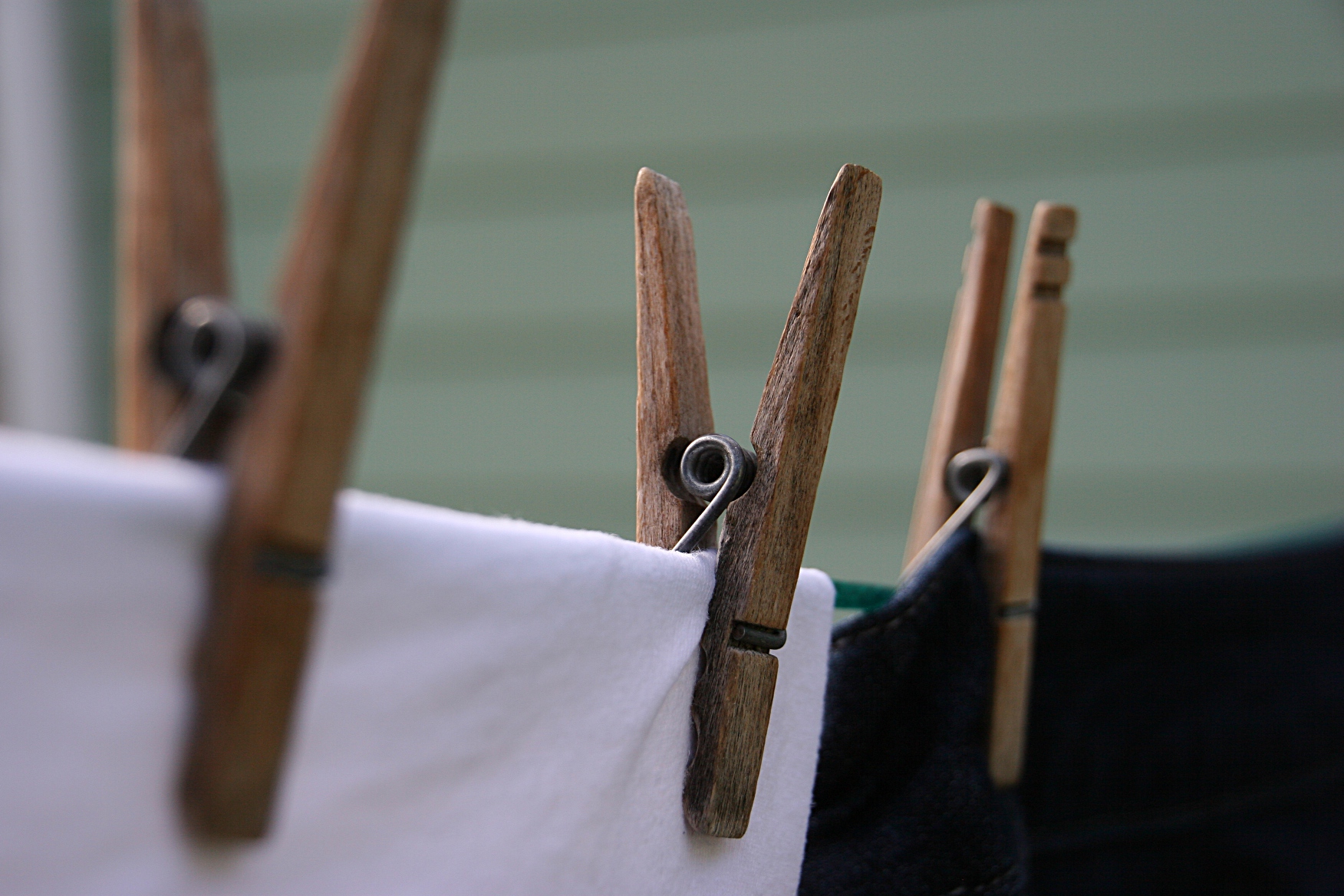
Clothespins on my clothesline clip clothing, not beach towels. (Minnesota Prairie Roots copyrighted file photo)
Anyone who writes poetry recognizes the challenges of finding just the right word, of stringing words together in a new, creative and succinct way, of connecting on an emotional level. But Boling makes the process look easy, taking the reader along with her, whether into her yard or onto the sandy shores of Lake Michigan. In her poem “Clothesline,” she writes of beach towels dancing in the wind. She takes the reader to the beach, to the sights, scents and sounds along the inland sea. I feel her fingertips unclipping the dried towels at end of day as she gathers them like weary babes into my open arms. I did not see that end coming. That element of surprise is, too, a mark of a gifted poet.
Kid-sized Adirondack chairs on a Minnesota beach. (Minnesota Prairie Roots copyrighted file photo)
Her “Adirondack Chair in Snow” is another favorite of mine in Boling’s collection of 37 poems published by Finishing Line Press. She writes of the typically-lakefront chair wedged into a snowbank outside her mother’s apartment building. But this poem is about so much more than an out-of-place chair buried in snow. Boling uses personification to write about her mother. In those six verses, I found myself missing my own mom, who died during the pandemic in January 2022. Boling’s emotions, my emotions, weave together in her writing and in my reaction.
My own artsy autumn leaf image, of leaves in the Cannon River. (Minnesota Prairie Roots copyrighted file photo)
In one of her longest poems, Boling writes about the transition to autumn in “Persephone’s Bouquet.” Unfamiliar with this Greek goddess, I learned that Persephone’s descent into the underworld is associated with the start of winter. Autumn themes Boling’s poem as the author gathers hot-pepper reds, creamy yellows…brazen scarlet…leaves, something I also enjoy doing in fall. But this is a poem about life, too, not just about a change in seasons. Plus, the poem connects to the cover of Here Beyond Small Wonders, Boling’s own autumn leaf art.
Her first collection of poems is about nature and place and seasons and life. Moments experienced. Details noticed right down to a tar-dark county road…horse flies, green heads glistening in the sun…reedy breath trembling into song. Boling, in her words, opens herself to a pool of words. And I, for one, embrace her poetic writing.
#
FYI: Becky Boling is a retired professor of Spanish and Latin American literature at Carleton College in Northfield. Her poetry and prose have been widely-published in literary journals and anthologies. She also served as a Co-Poet Laureate of Northfield. Click here to find Here Beyond Small Wonders on the Finishing Line Press website.










 Minnesota Prairie Roots
“Love your neighbor,” Part I from Northfield November 17, 2025
Tags: Adan Nunez Gonzalez, Bridge Square, candlelight prayer vigil, commentary, faith, ICE detainee, Immigration and Customs Enforcement, injustice, Minnesota, neighbors, news, Northfield, prayer, Scripture, the bible
MY SUNDAY BEGAN as most Sundays do with morning worship at my church. The sermon highlighted sections of Mark 12, which includes this verse: Love your neighbor as yourself. That would theme the rest of my day.
Hours later I found myself gathered with others for the annual Rice County Salvation Army Red Kettle Campaign Kickoff. Again, the focus was on neighbors, specifically helping our neighbors in need.
Shortly after that event, Randy and I were on the road to neighboring Northfield for a 5 pm candlelight prayer vigil at Bridge Square. That, too, was about loving our neighbors. This time the gathering focused on supporting the family of Adan Nunez Gonzalez, a 41-year-old father of four snatched by masked Immigration and Customs Enforcement agents at gunpoint on November 11 in a residential neighborhood of Northfield. That incident has sparked outrage in this southern Minnesota college town and beyond.
Several family members and others witnessed Nunez Gonzalez being pulled from the passenger side of a vehicle while he was arriving at a job site along Washington Street. He’s a painter, originally from Mexico, with reportedly no criminal record who has been living in the US for 11 years. The entire incident was captured on video by his teenage son, called to the scene, and has been widely-circulated on social media. Nunez Gonzalez is now being held in the Kandiyohi County Jail. That county is among eight in Minnesota assisting with various aspects of ICE enforcement efforts. My county of Rice is not among them.
HEAVY, YET HOPEFUL, HEARTS
The mood at Sunday’s prayer vigil felt heavy, yet hopeful, as some 200 of us gathered in the town square for this event organized by the Northfield faith community. As the sun set, as the nearby Cannon River roared over the dam, candles were distributed, lit and the crowd pressed together around a monument honoring Civil War soldiers. In late September, football players from Carleton College, blocks away, met here to turn the eagle atop the monument toward their college after defeating across-town rival St. Olaf College. It’s an annual celebratory tradition for the winning team.
Bridge Square has long been a community gathering spot, a place to celebrate, to peacefully protest, to meet one another for local events.
On this mid-November evening, it felt right and necessary to be here. To pray. To sing. To hear scripture quoted. To contemplate the gravity of ICE actions that have traumatized, torn families apart, instilled fear in communities across the country, raised the ire and concerns of many Americans like me who care about our neighbors and how they are being unjustly treated. Taken by armed, masked ICE agents and Border Patrol. Confined. Deported. Without due process of law.
A COMMUNITY RESPONDS
I felt the unity of a community determined to raise their voices and to take action. Northfielders have fed the family of their detained neighbor, organized activities for his children, started a GoFundMe to cover legal and other expenses, emailed support, expressed outrage and much more.
Love your neighbor as yourself was emphasized by clergy leading the vigil. One after another they stepped up to the mic, the first pastor leading us in The Lord’s Prayer. One referenced the biblical parable of the mustard seed and how we are to plant seeds of hope, faith, advocacy that will grow sturdy and strong among us. Another spoke of Jesus and his family fleeing to Egypt after his birth following threats from King Herod to find and kill all first-born males. It was fitting.
A BIBLICAL DIRECTIVE
And then there was the well-known scripture from Matthew 25 in which Jesus asks us to care for one another—when hungry or thirsty, in need of clothing, when sick and in prison. It is as strong a directive as any in the bible to love our neighbors and to show that love in kind, caring and compassionate action.
The 25-minute Sunday evening prayer vigil closed with singing of “This Little Light of Mine.” Voices rose clear and strong in the darkness, arms stretched high, each hand grasping a single candle. A light. Many candles shining lights of support, hope, protest, resistance, outrage and more in a community that cares deeply about its neighbors.
#
NOTE: Please check back for a second “Love your neighbor” post, this one on the Salvation Army Red Kettle Campaign Kickoff. Also, note that the vigil images in this post were taken with my smartphone, thus the quality is not great compared with pix I would have taken with my 35 mm Canon. I left that at home, opting to be in the moment.
© Copyright 2025 Audrey Kletscher Helbling