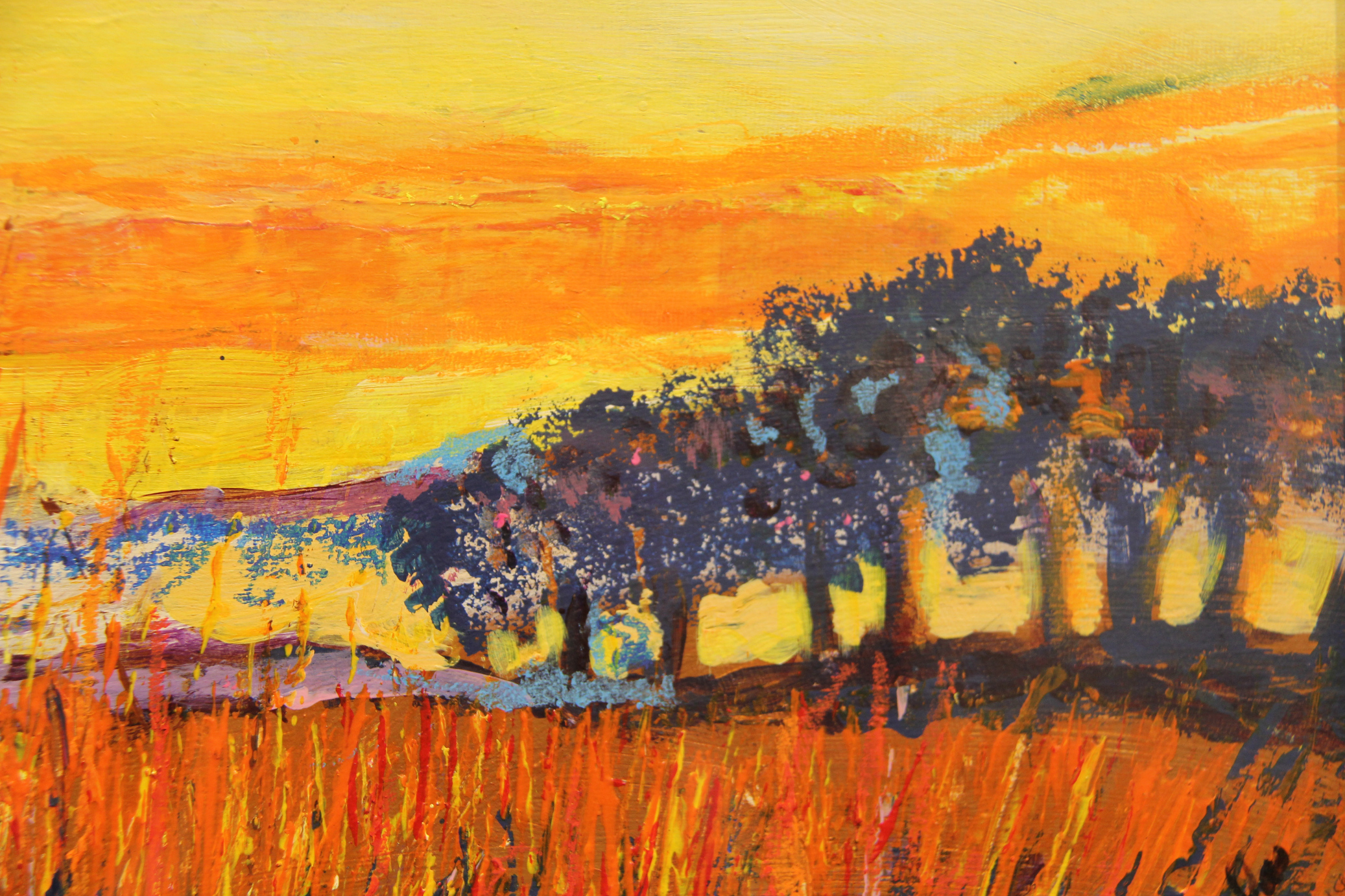
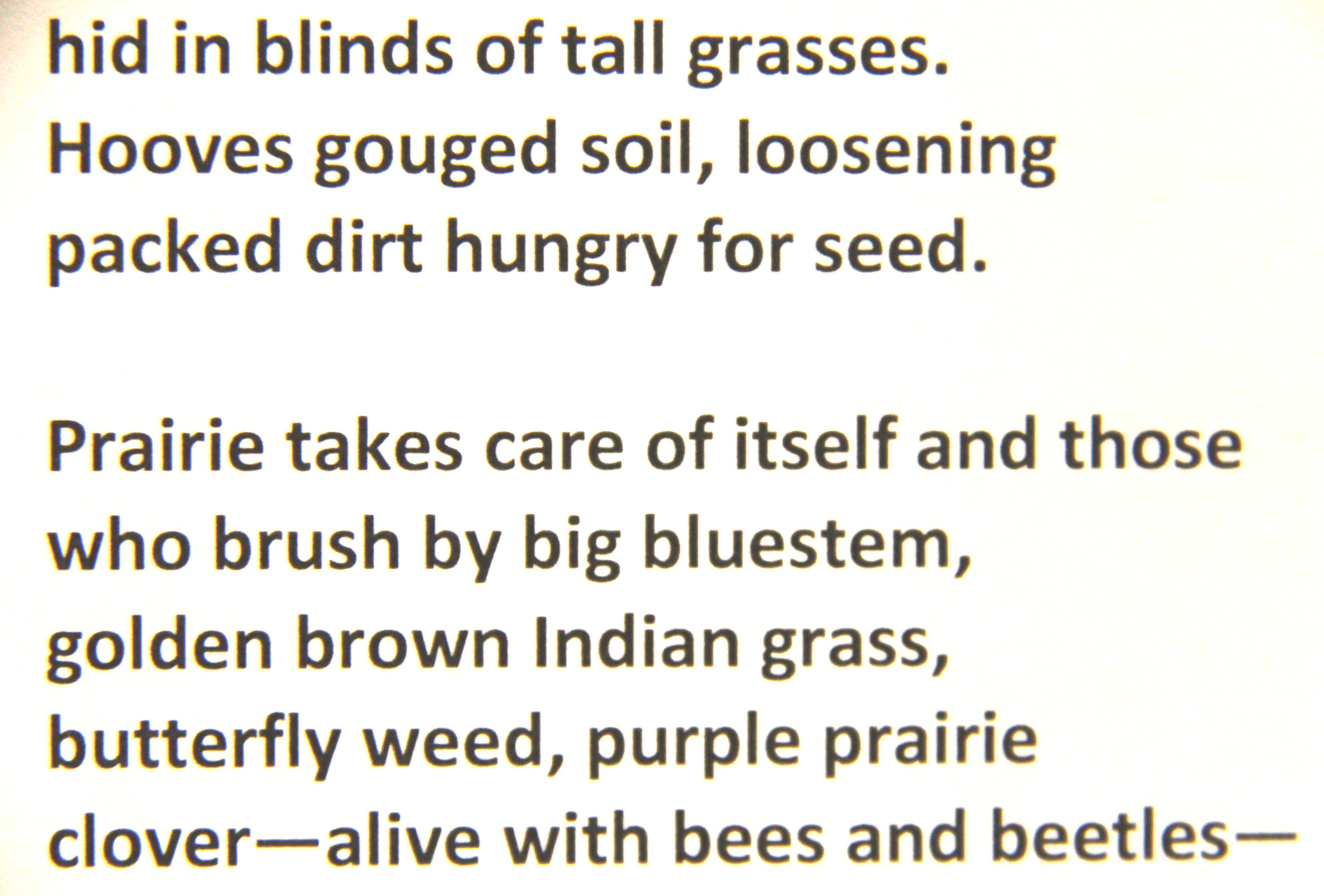
Here are some lines from Northfield poet Becky Boling’s poem, “Red Prairie,” inspired by “Wisconsin Sunset.” (Minnesota Prairie Roots copyrighted photo October 2025)
As a long-time writer and photographer, who is also a published poet, I’ve participated in similar collabs in nearby Zumbrota. I found it a whole lot of fun not only to write poems, but especially to see how an artist interpreted my poetry. I expect those participating in this pairing of poetry and visual art in Northfield feel the same. The work in this show is visual art inspiring poetry.
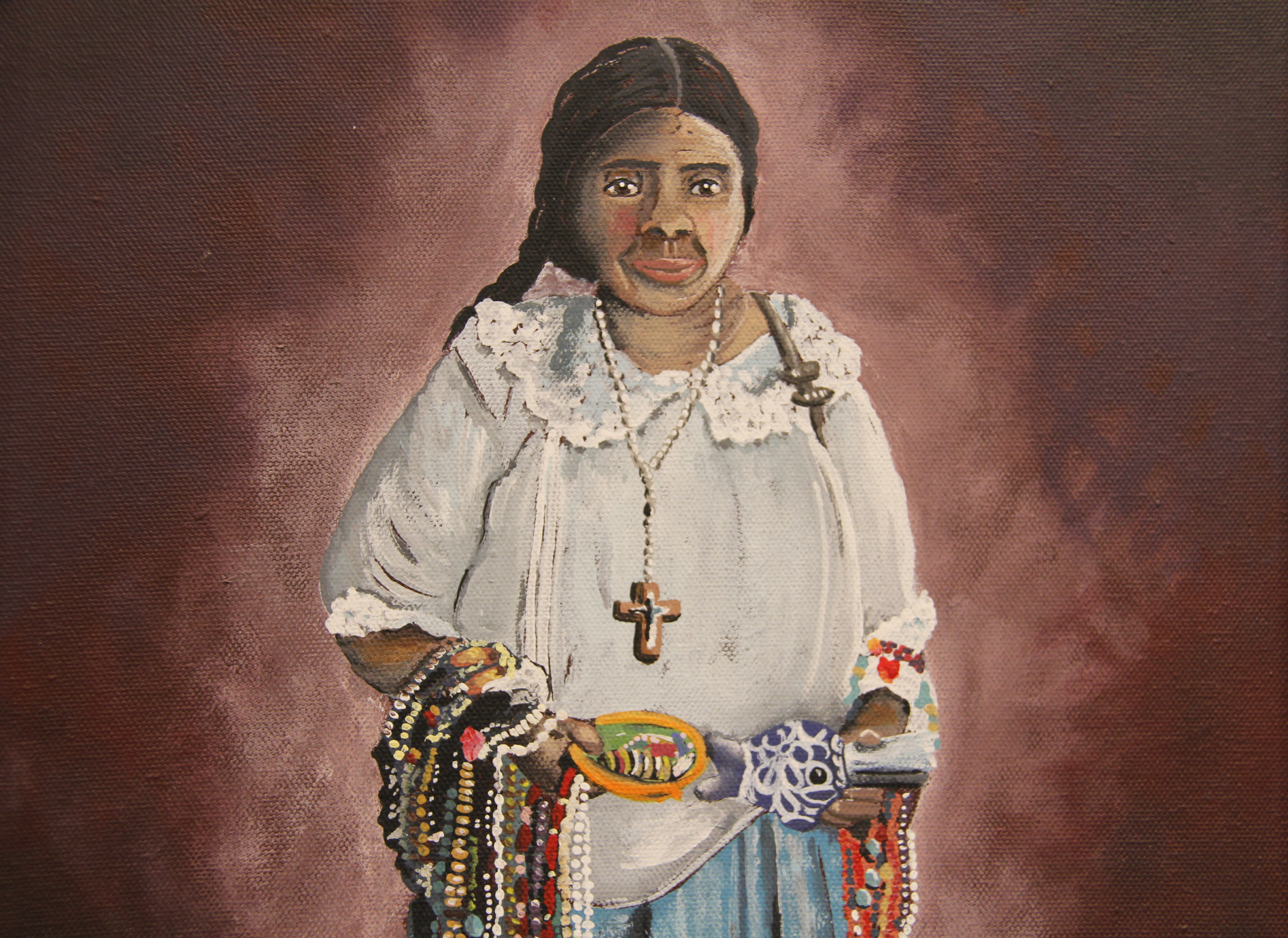
“Brave,” a poem by Orick Petersen, is paired with Sharon Henry’s painting, “The Bead Lady.”
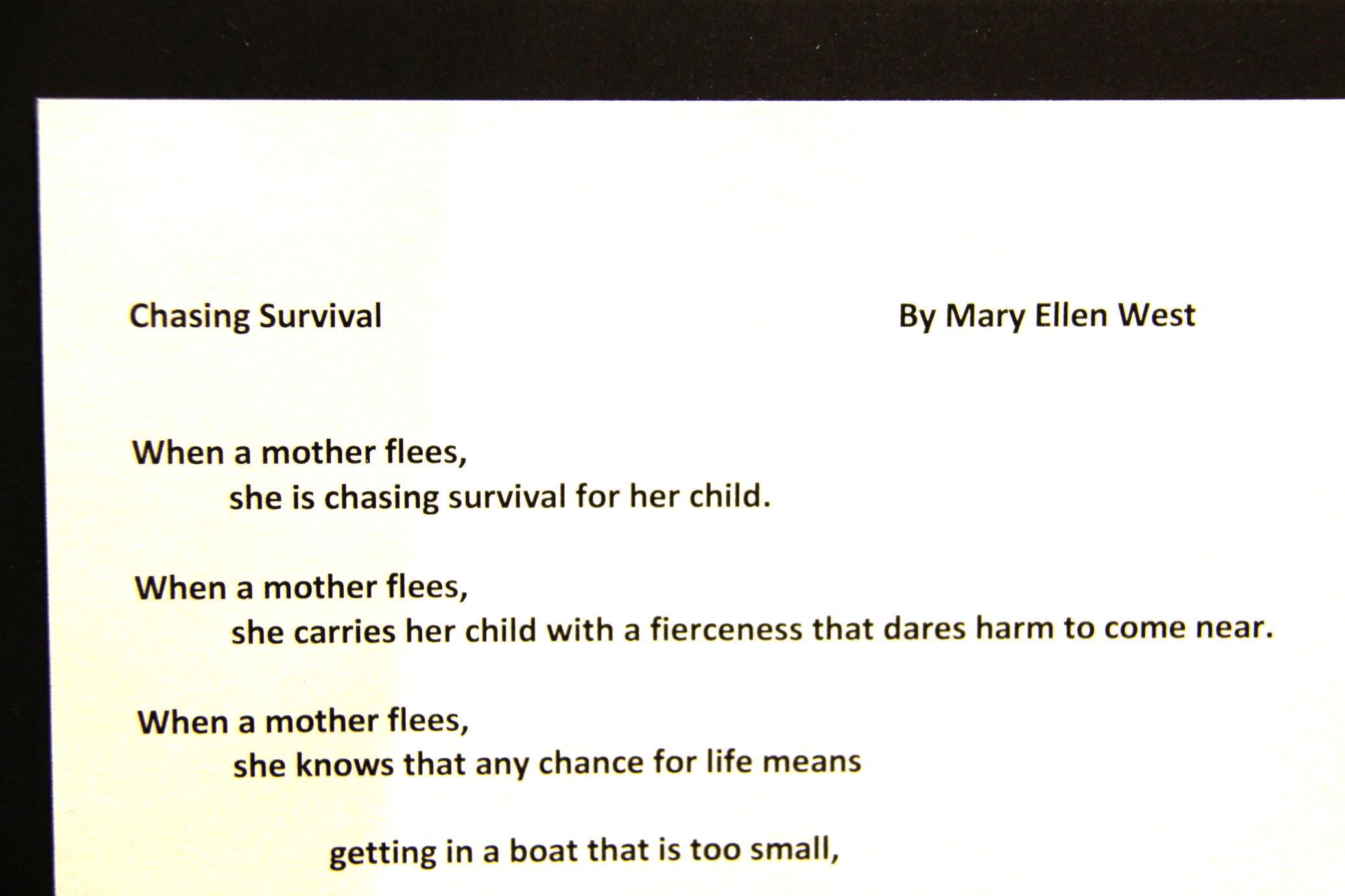
This shows several lines from a thought-provoking poem inspired by an equally thought-provoking photograph of a mother and child by Dean Neuburger. (Minnesota Prairie Roots copyrighted photo October 2025)
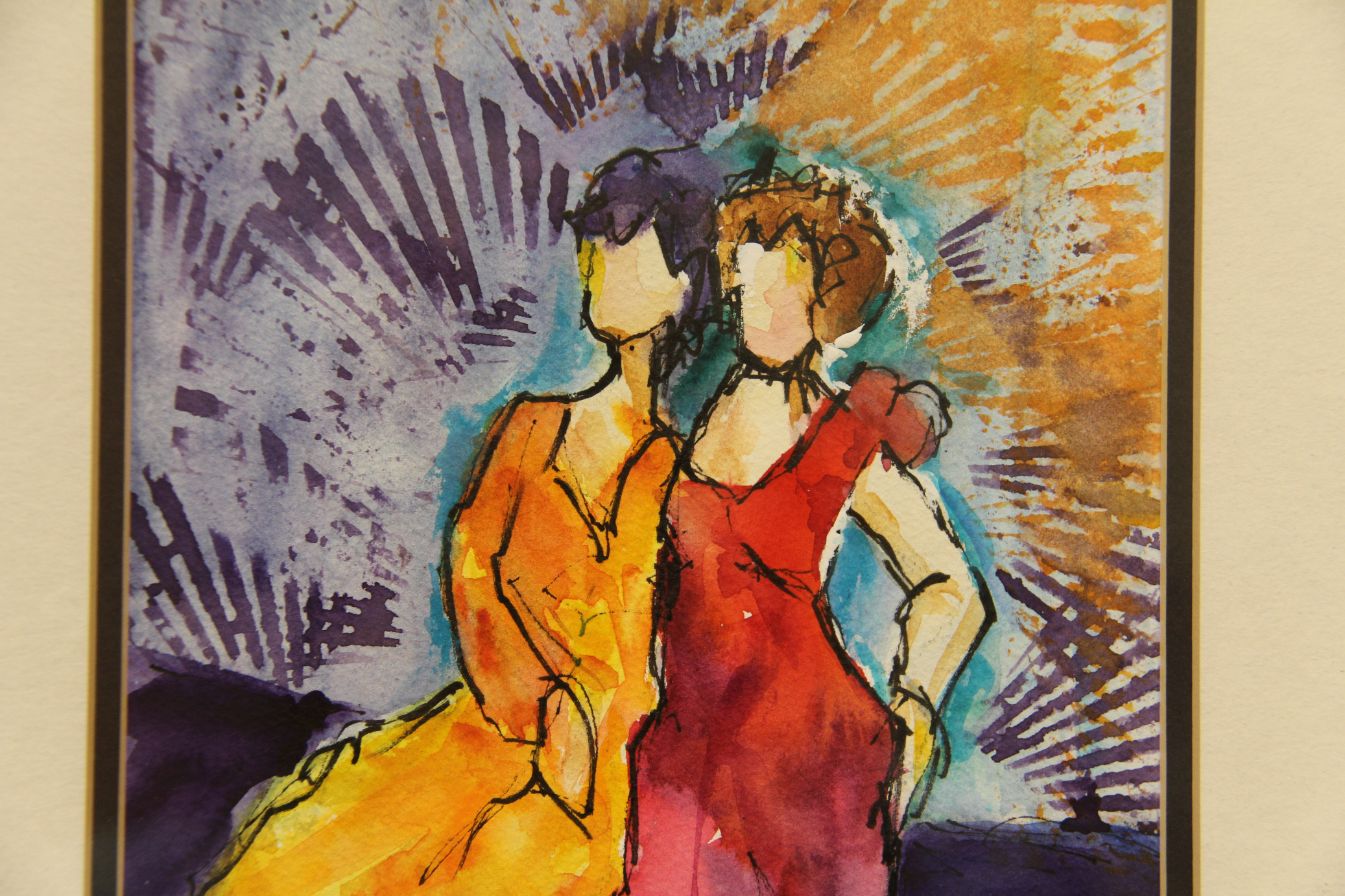
Marty Amundson’s watercolor and ink, “Sisters Still,” inspired Marie Gery’s poem, “30th High School Reunion.”
I feel fortunate to live in a region rich in the arts. The arts expose us to new ideas, thoughts, beauty and more. The arts open us to a world wide beyond our own. The arts can serve as a catalyst for positive change. The arts represent voice, a way for us to speak via our creativity.
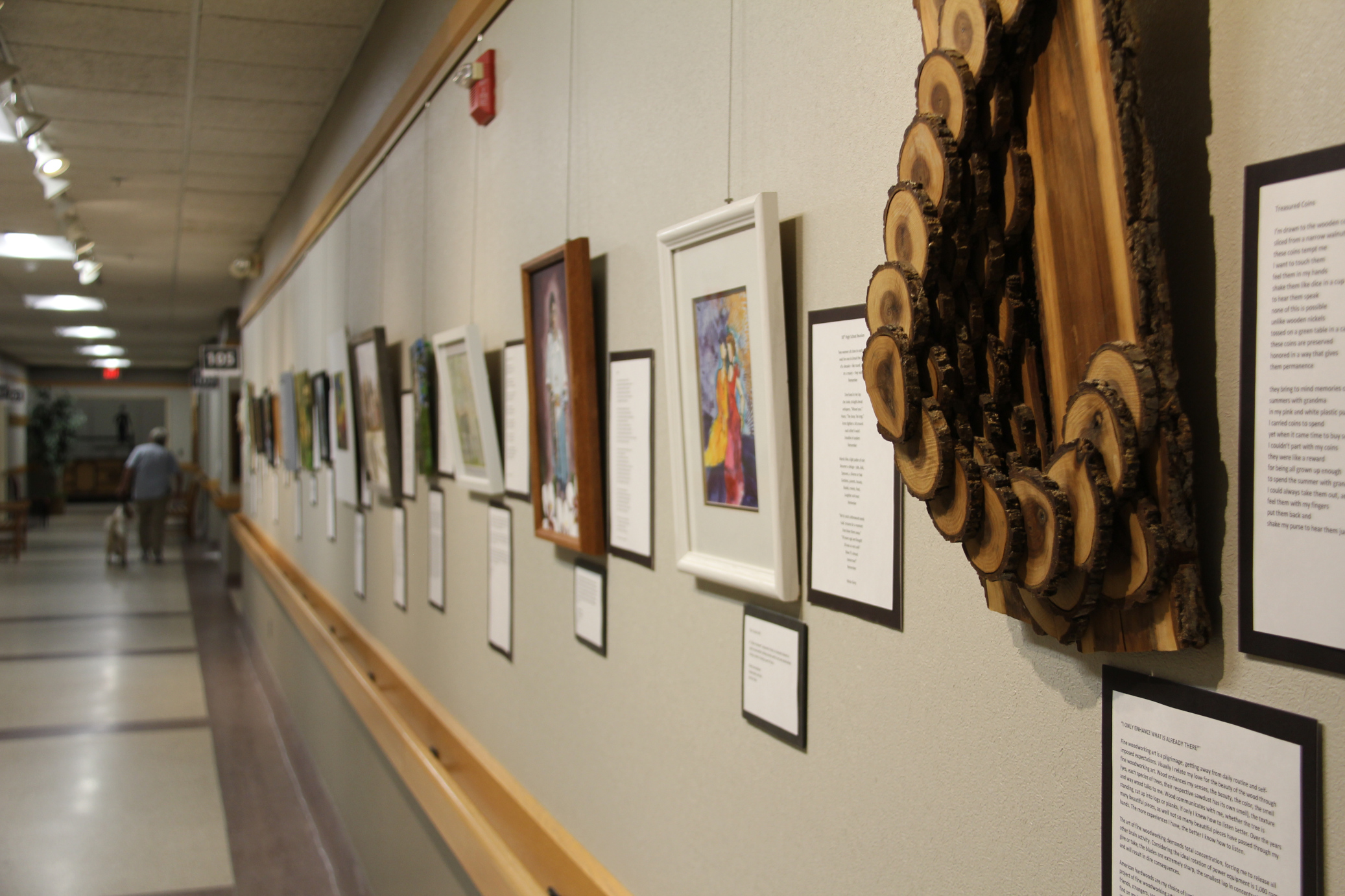
Art and poetry stretch along a hallway at FiftyNorth. (Minnesota Prairie Roots copyrighted photo October 2025)
In “Echoes & Shadows,” artists express themselves in carefully crafted words and in a variety of visual art that seems to fit its inspirational poetry. Painting, appliqueing, woodworking, photography, collage…all are part of this collaboration.
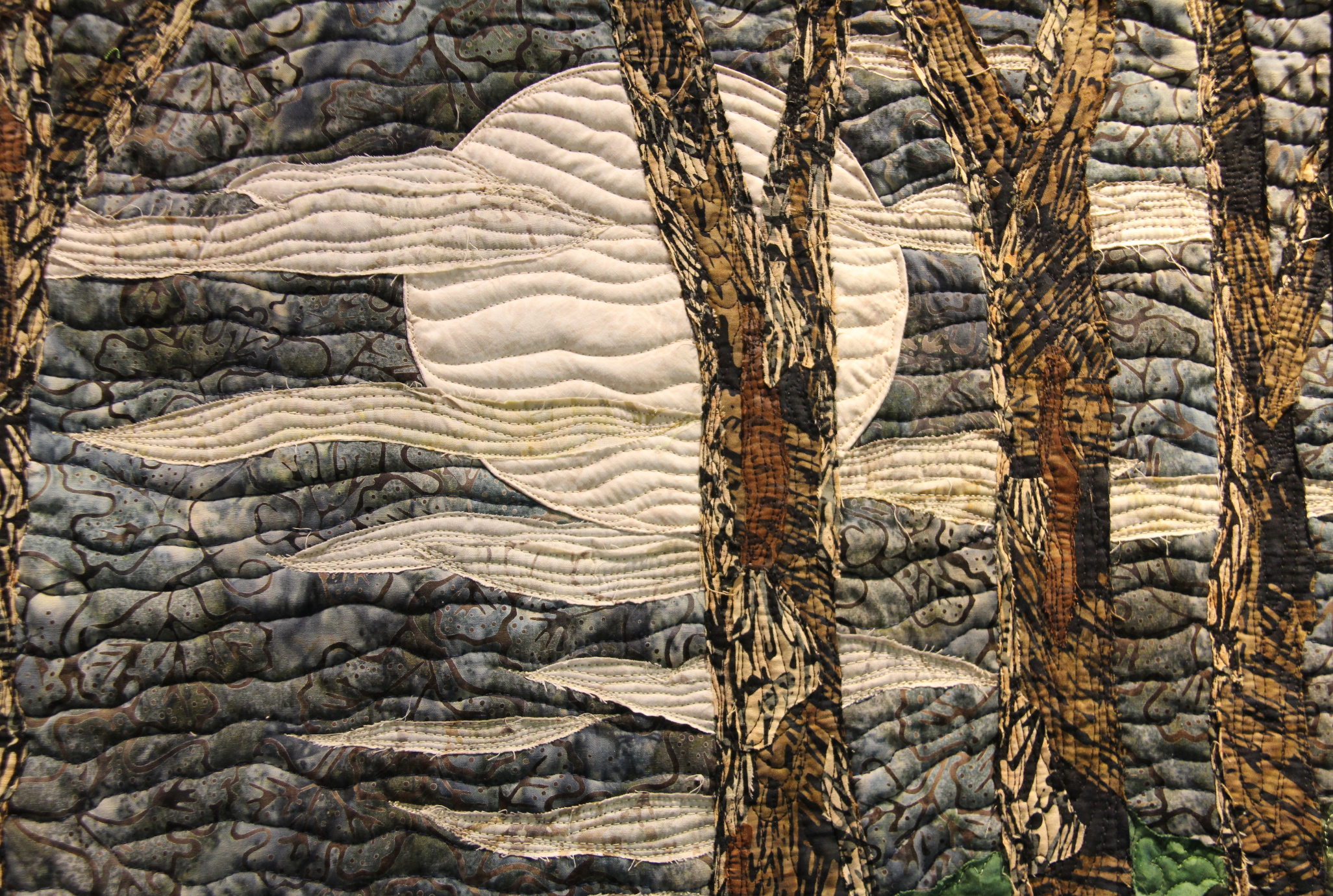
Lake Superior in northern Minnesota inspired Kathy Weed to create “Moon Glow” in textile art. (Minnesota Prairie Roots copyrighted photo October 2025)
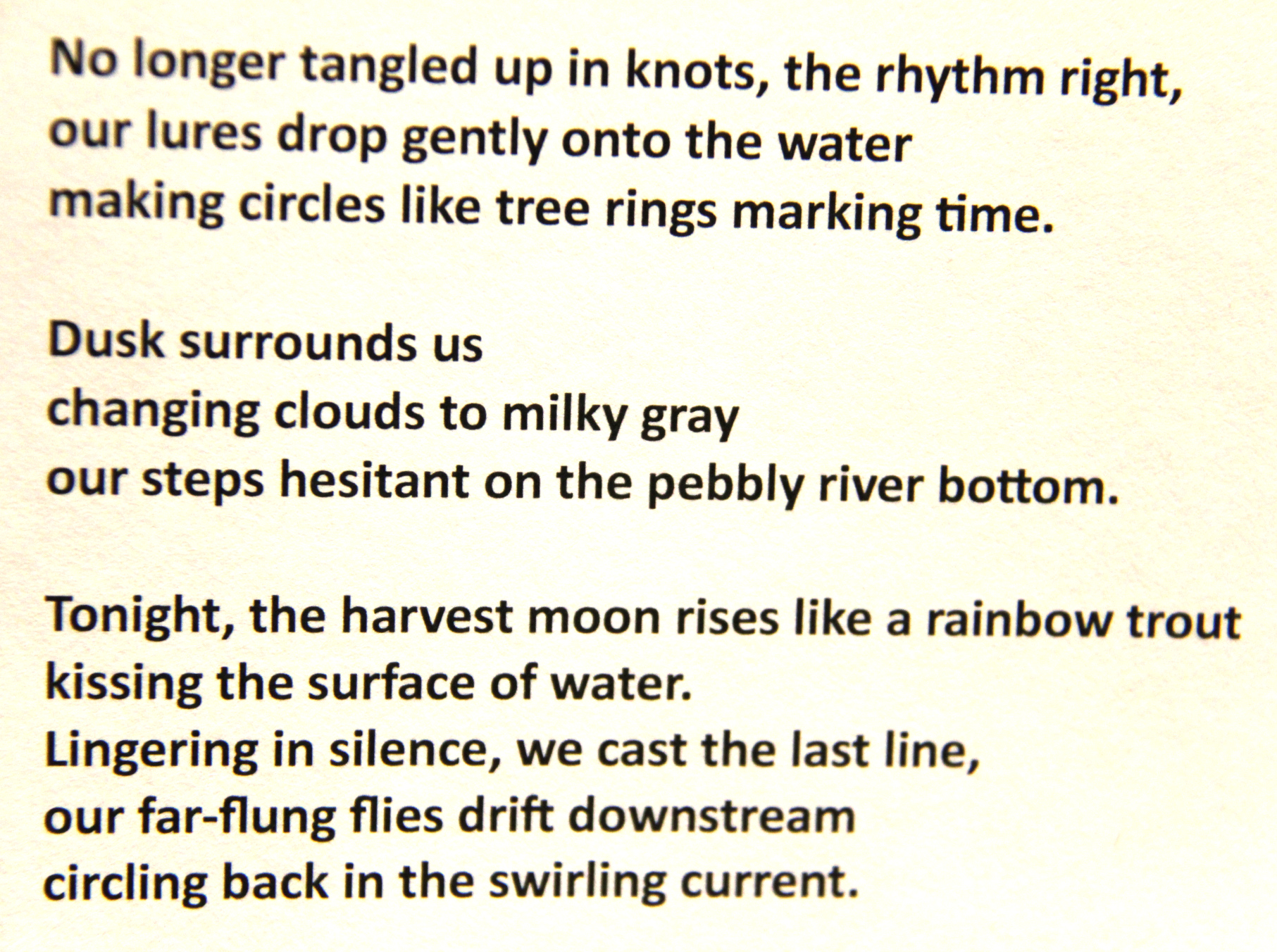
And then Jane Sarles Larson wrote “Circling Back” to pair with Kathy Weed’s art. (Minnesota Prairie Roots copyrighted photo October 2025)
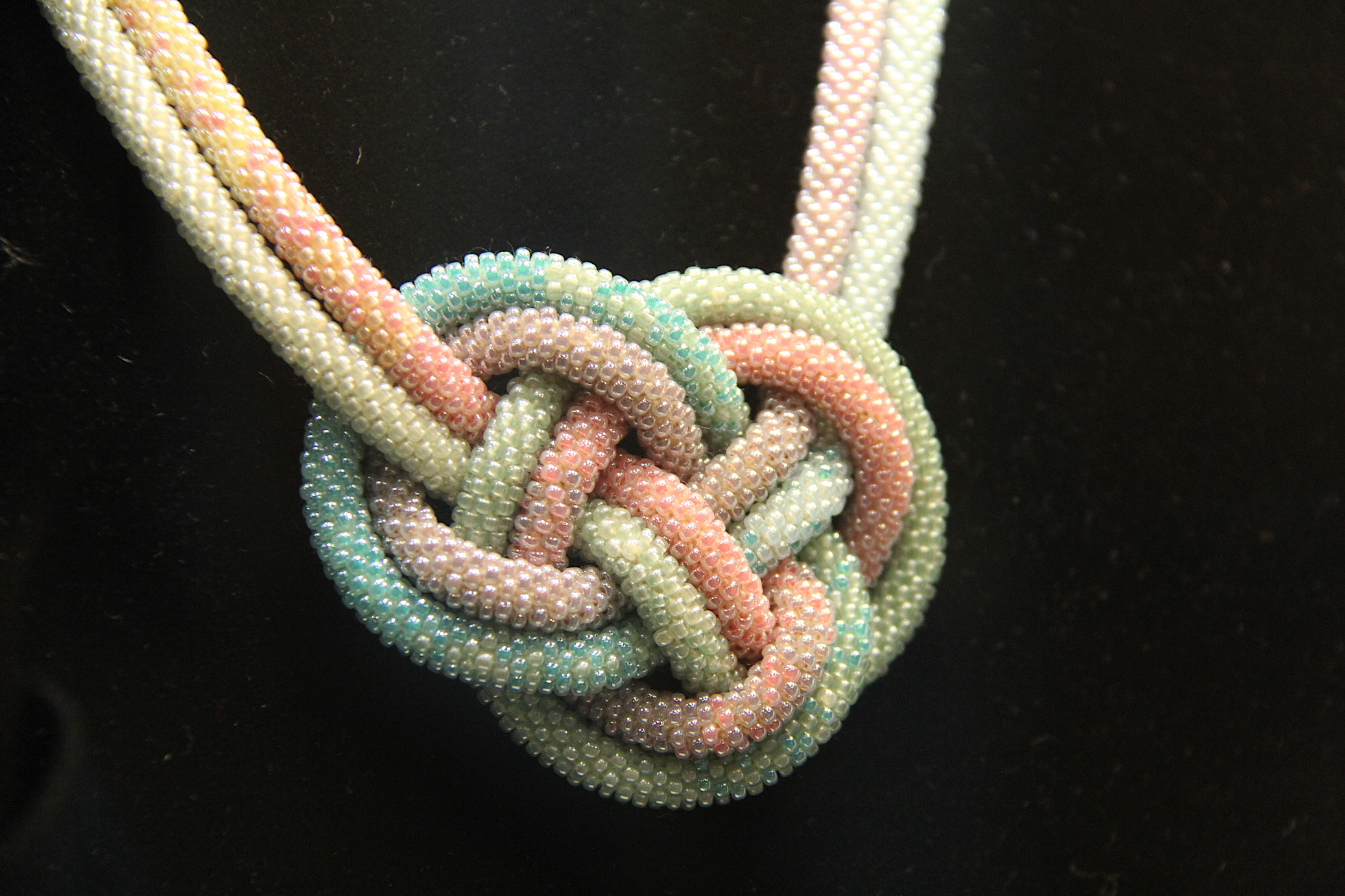
More knots…Judy Saye-Willis’ necklace inspired Marie Gery’s poem, “Knotty Reality.” (Minnesota Prairie Roots copyrighted photo October 2025)
I like that word, “collaboration.” It means working together. Even that seems especially meaningful today.
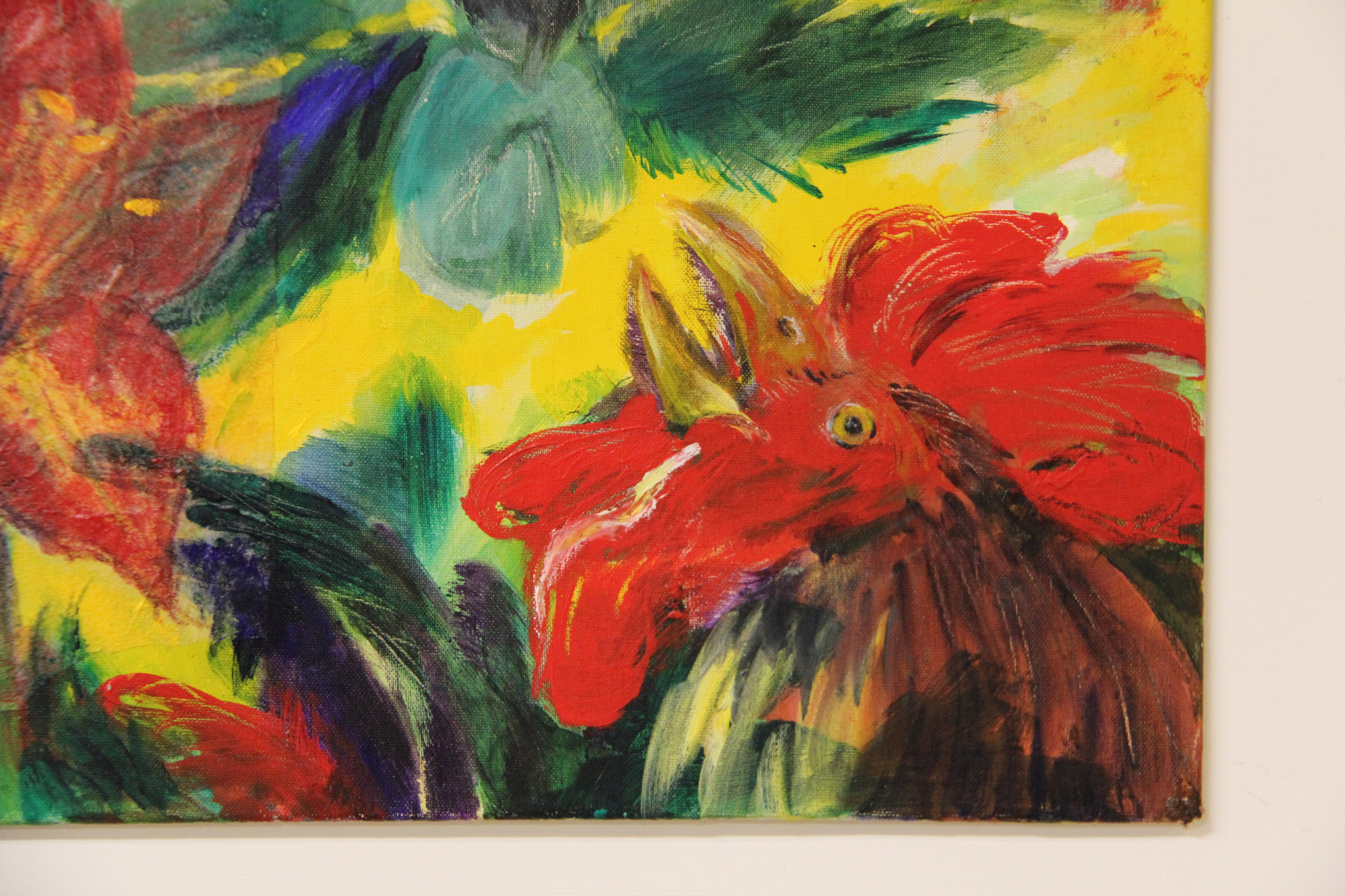
Riki Kolbl Nelson’s “Conversation” acrylic and collage of a rooster and angel inspired Chuck Huff to write “Tilt and Meridian.” (Minnesota Prairie Roots copyrighted photo October 2025)
In this pairing of art and poetry, I see collaboration, how literary art and visual art play off and balance one another, centering the two pieces of art into one unified piece without sacrificing individuality. Creatives are, after all, uniquely creative even when working together.
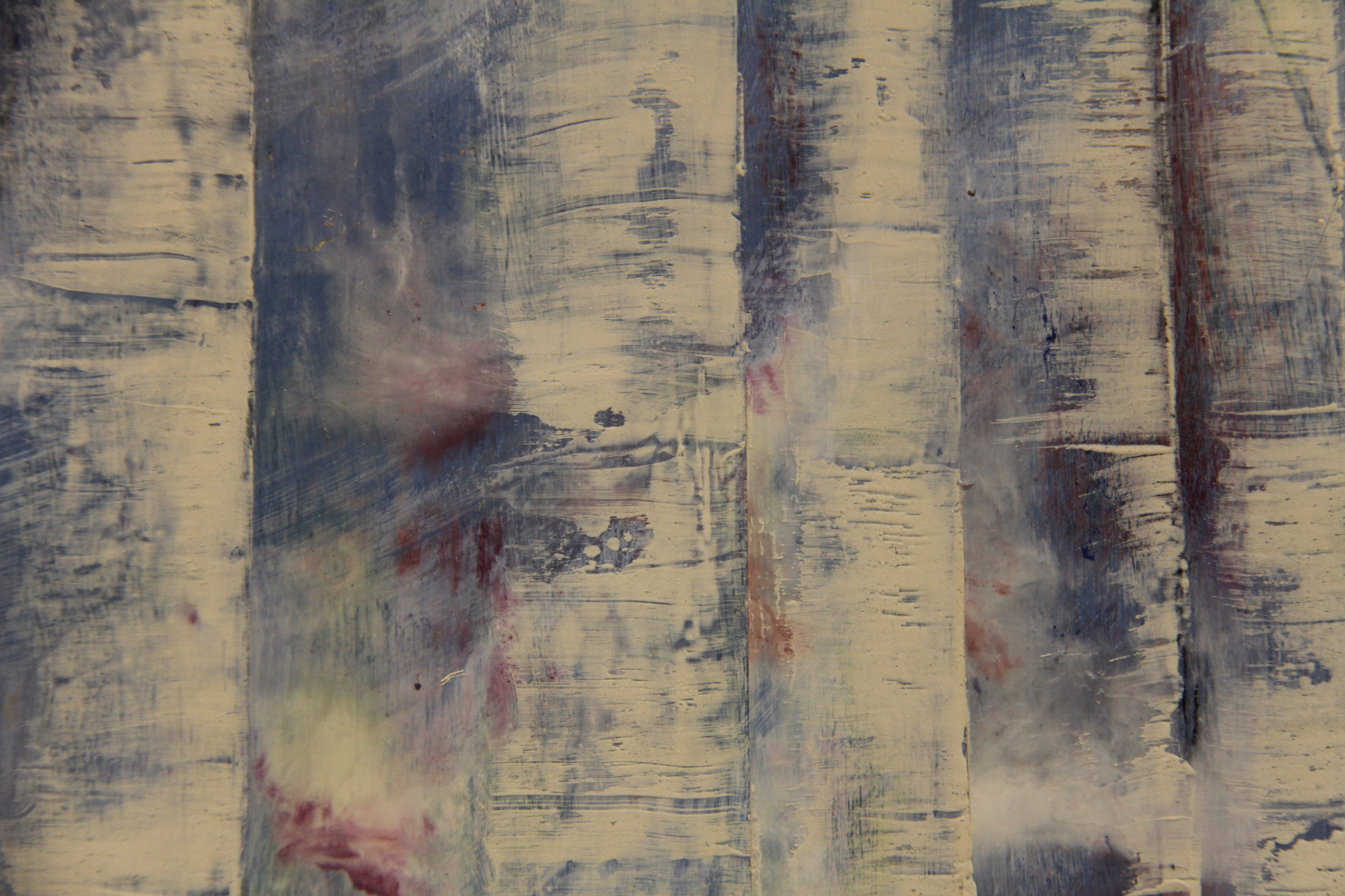
Barbara Bauer’s encaustic medium art inspired D.E. Green to write “Stand of Birches.” (Minnesota Prairie Roots copyrighted photo October 2025)
Promotional information about the FiftyNorth poetry and art collaboration, “Echoes & Shadows,” references a quote from poet Carl Sandburg: “Poetry is an echo, asking a shadow to dance.” Oh, how lovely those words. And how fitting for a collaboration that echoes and dances.
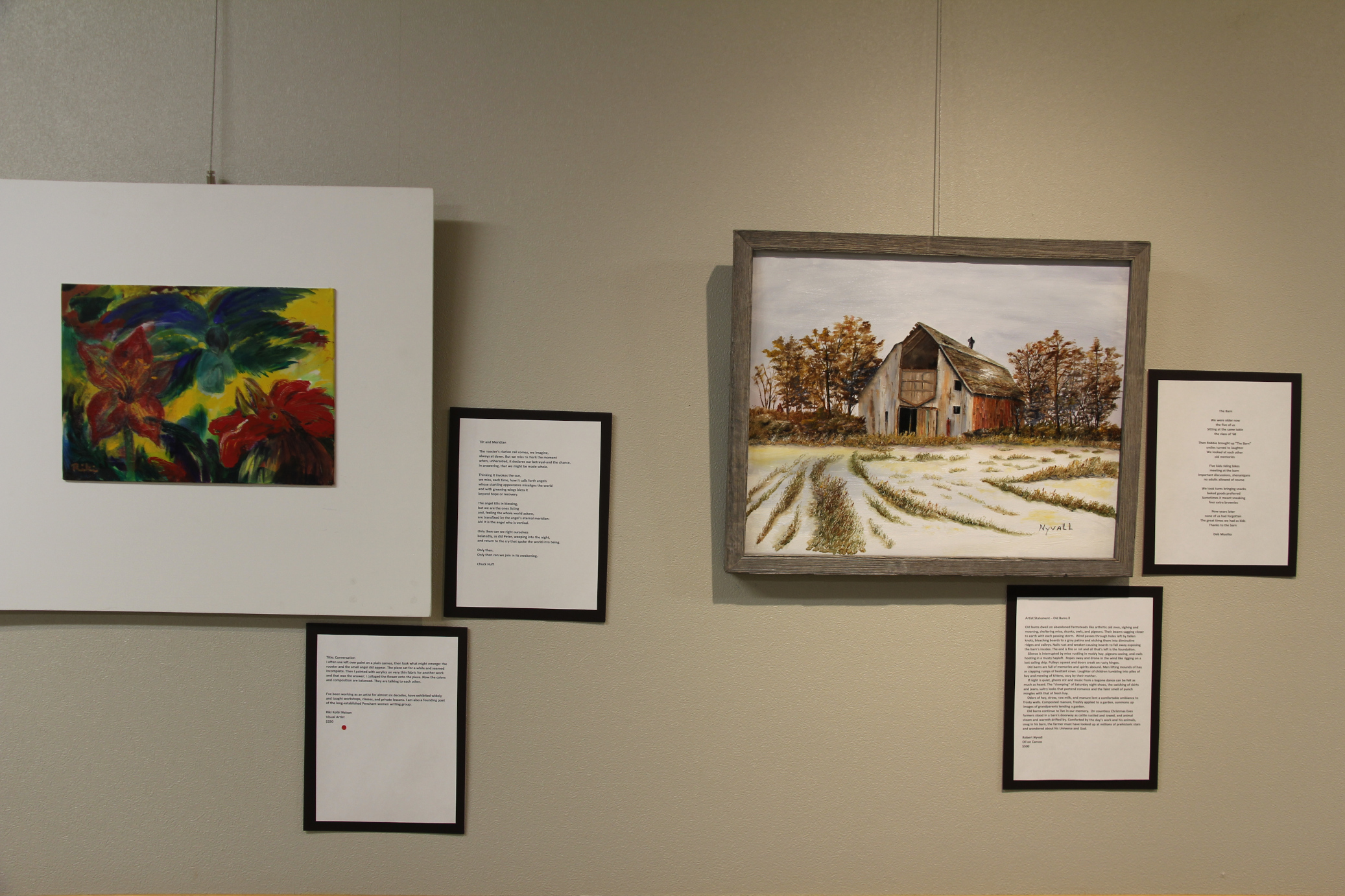
Pairings of poetry and art by Riki Kolbl Nelson, left, with poem by Chuck Huff and a barn painting by Robert Nyvall with accompanying poem, “We Are Older Now,” by Deb Muotka on the right. (Minnesota Prairie Roots copyrighted photo October 2025)
FYI: The “Echoes & Shadows” exhibit closes on October 31. To view the exhibit online, click here. Note that I photographed the art and poetry in this post with permission of FiftyNorth. In most cases, I’ve opted to show only part of the creative works. In featuring the poems, I’ve edited the images.
Protesters stand along Minnesota State Highway 3 in Northfield on Saturday afternoon during the NO KINGS protest. (Minnesota Prairie Roots copyrighted photo October 2025)
I AM AN AMERICAN, a Minnesotan, a resident of Rice County and the city of Faribault. I am a writer, photographer, blogger, poet. I am a wife, mother, grandmother. And I am also a protester.
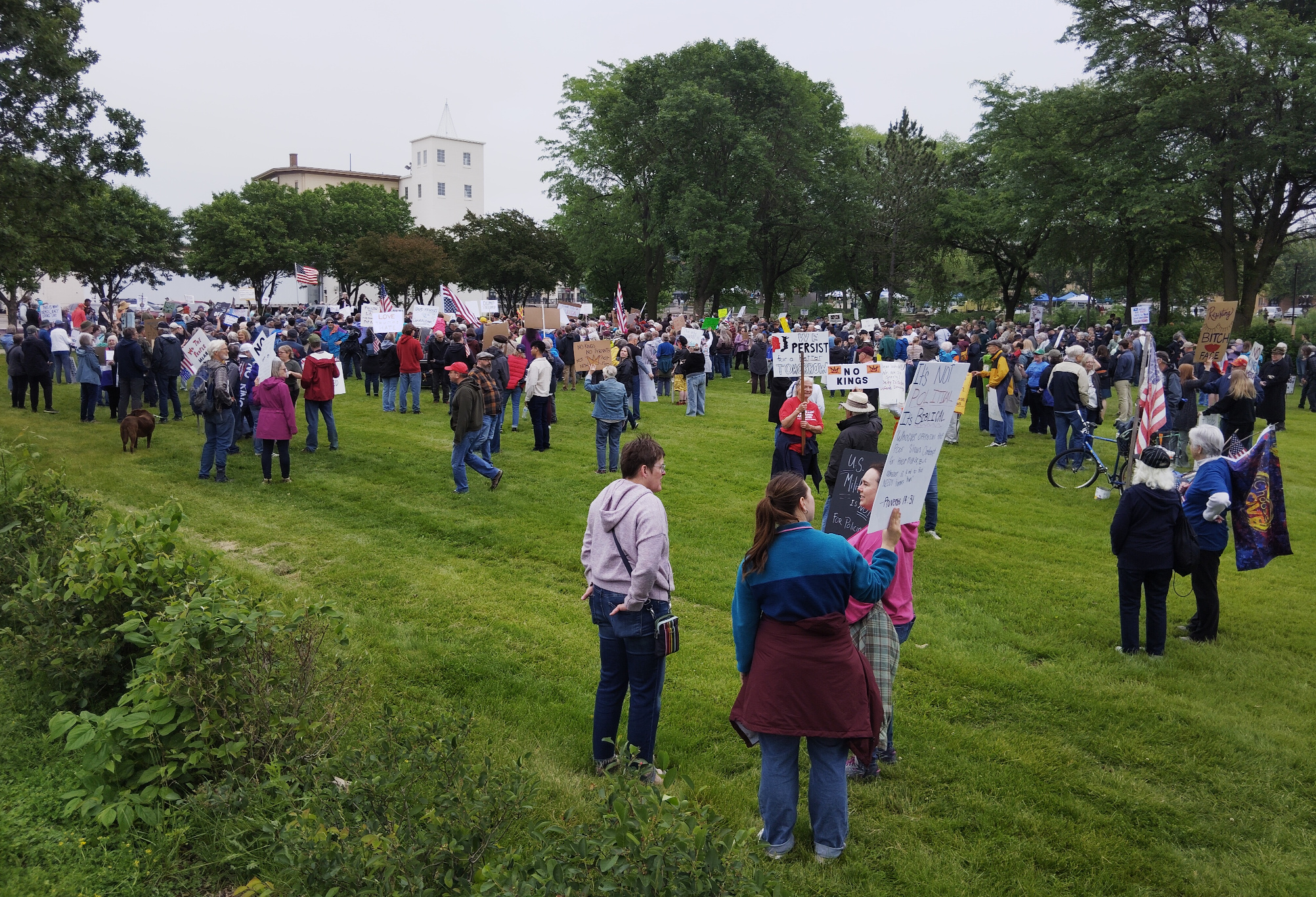
A snapshot of a portion of the crowd protesting in Northfield, population around 21,000. (Minnesota Prairie Roots copyrighted photo October 2025)
On Saturday I joined millions across the country and world participating in NO KINGS rallies in my fourth protest since June 14. I care about America. I love America. But I don’t like what’s happening here under the Trump administration, which is eroding our democracy and taking, or attempting to take, away our rights, freedoms and, oh, so much more by authoritarian rule, force, threats, retribution, control, manipulation…
I refuse to remain silent at a time such as this. So I exercised my rights to free speech and freedom of peaceful assembly under the First Amendment to the Constitution by participating in a protest in neighboring Northfield along with a thousand or more others. We packed Ames Park along the Cannon River and lined the east side of Minnesota State Highway 3 for a block to listen to speakers, to share our concerns, to hold protest signs high, to hear plans of action, to sing and pray and reflect, and to engage in conversation.
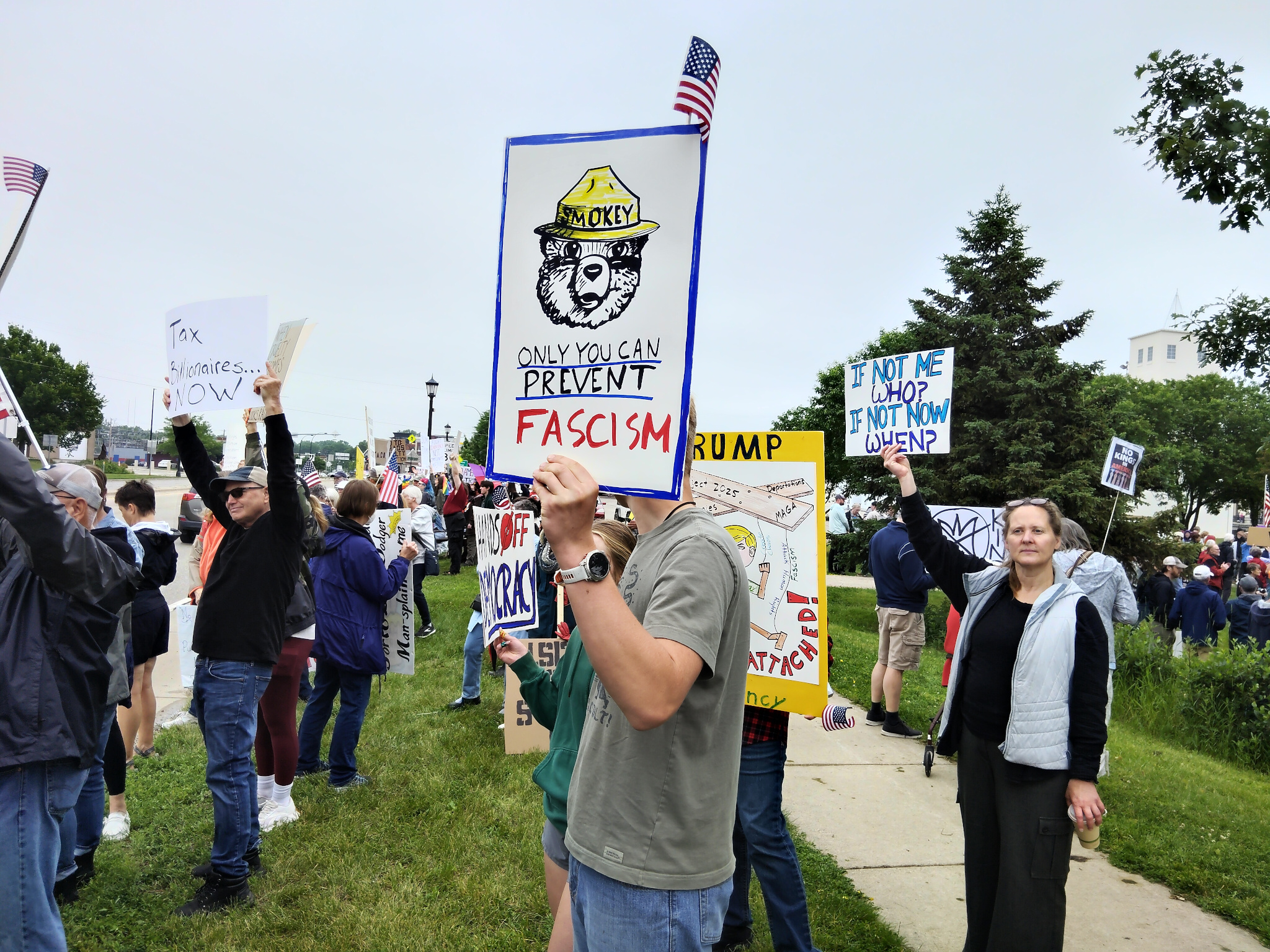
Minnesota Highway 3 through Northfield is a busy roadway, providing a highly-visible location to protest. (Minnesota Prairie Roots copyrighted photo October 2025)
At times throughout the 1 ½-hour event, I protested next to a Vietnam War veteran, a mechanic, a retired professor of Spanish and Latin American literature (also a poet), a retired college office employee, a retired engineer, a retired elementary school teacher… I also mingled among countless others there for the same reason—to protest. To express our concerns about healthcare, education, the economy, immigration, due process, freedom of speech, a free press, free and fair elections, government funding cuts, the presence of military in our cities, the balance of power, the judiciary, the overreach of power, clean energy… The list goes on and on.
I saw a baby strapped to his/her mom. Kids on shoulders. Kids with signs. Young people of high school age and early adulthood. Those in their middle years. Those in their sixties, like me. And those even older, some probably pushing ninety. The turn-out for this protest was even bigger and more diverse age-wise than the one in June in Northfield on the date Minnesota House Speaker Emerita Melissa Hortman and her husband, Doug, were assassinated.
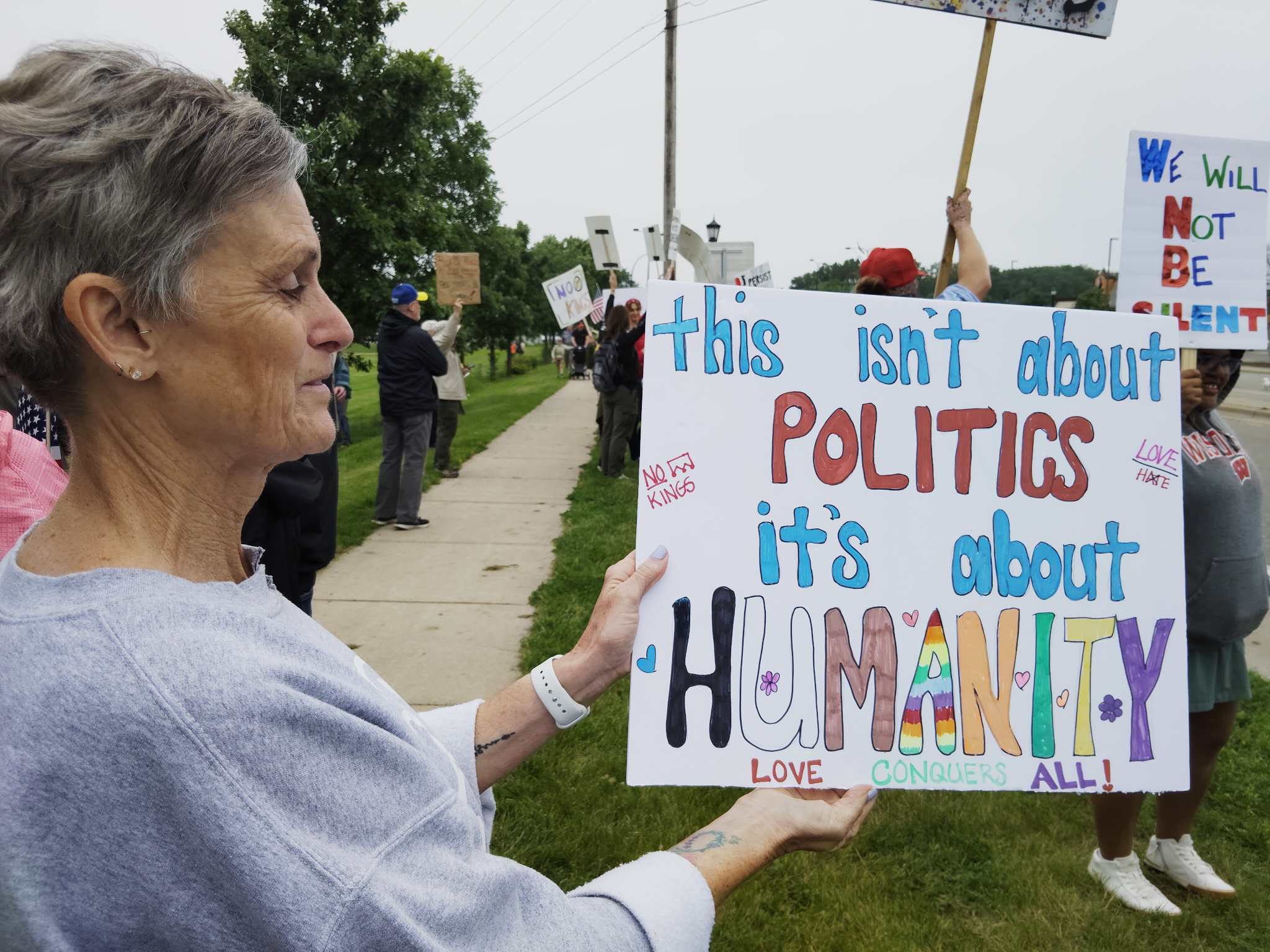
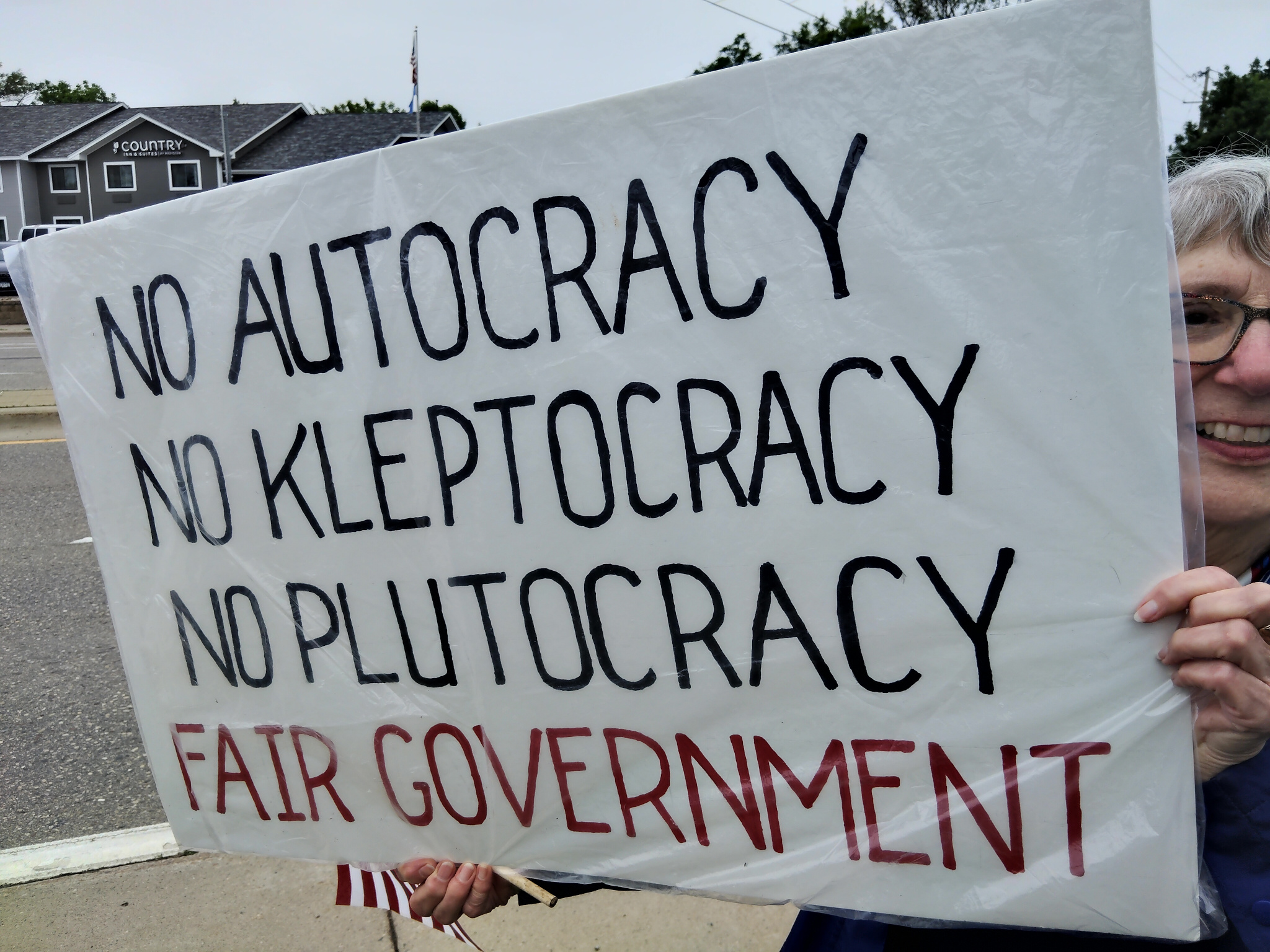
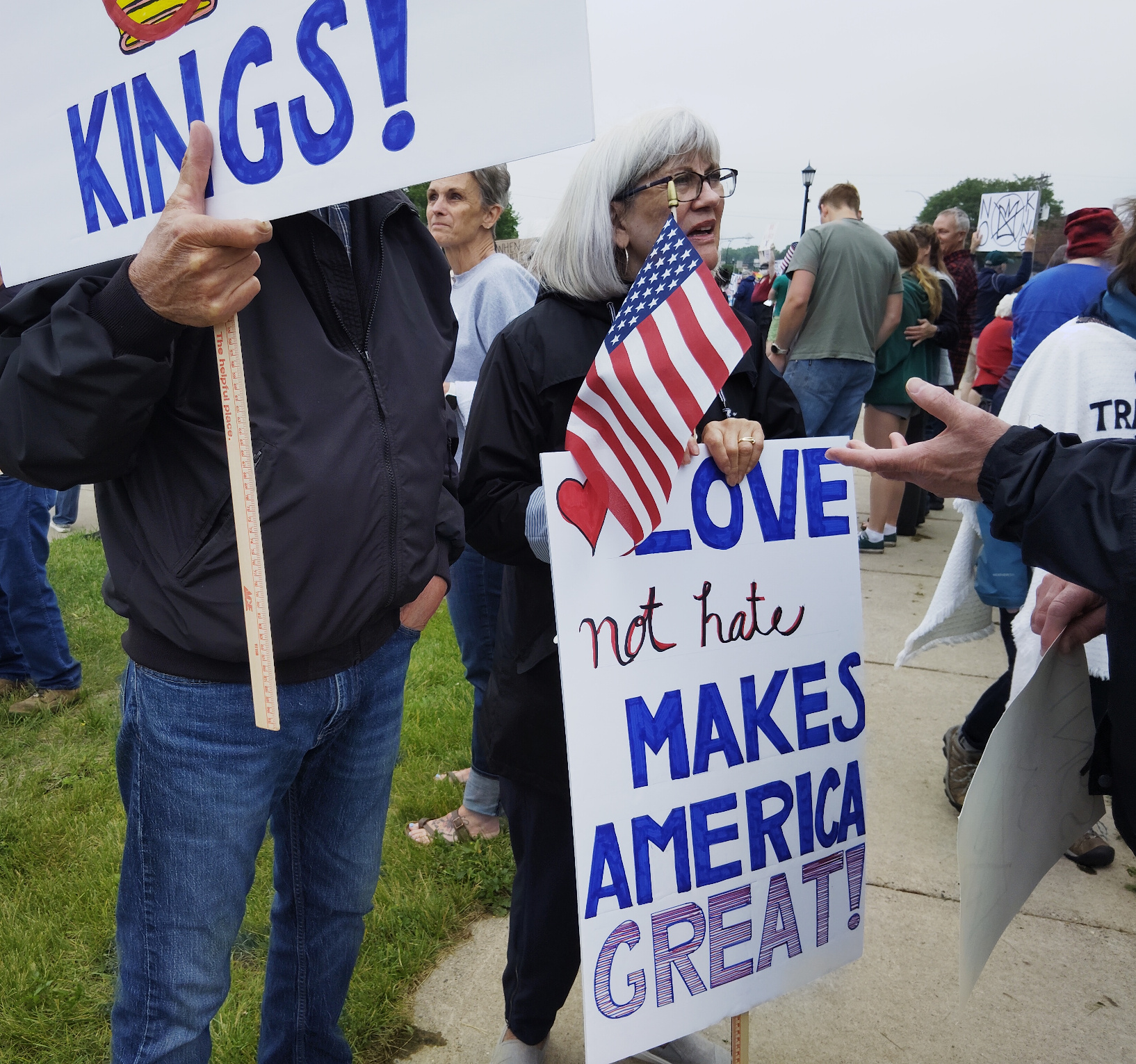
Clever and creative signage is always part of the protests. (Minnesota Prairie Roots copyrighted photo October 2025)
To be among this group of peacefully protesting concerned Americans during the NO KINGS rally felt empowering. Uplifting. We were unified in our movement, even as one speaker pointed out that we may not agree on everything. Another termed what’s unfolding in America today as not “normal.” It is not, and should not be, normal. Ever.
Support from motorists passing by was overwhelmingly positive with honking horns and waves. Of course, we got a few middle fingers and intentionally roaring, racing vehicles. Only once did I feel unsafe—when a car sped by at a dangerously high speed, the driver clearly attempting to antagonize and threaten us. That was the only overt hatred I witnessed.
The crowd listens to speakers during the Northfield protest. (Minnesota Prairie Roots copyrighted photo October 2025)
Those of us peacefully gathered did not, as some Republican politicians adamantly and wrongly stated, come because we hate America. Far from it. We love America. That was clear in the peaceful tone of the event, in American flags waving, in recitation of the Pledge of Allegiance, in singing of the national anthem, in signage, in our desire to uphold the Constitution, in our genuinely deep concern about the state of our country under President Donald Trump. In our voices rising. Loud. And free.
#
NOTE: Please be respectful in your comments. I moderate all comments on this, my personal blog.
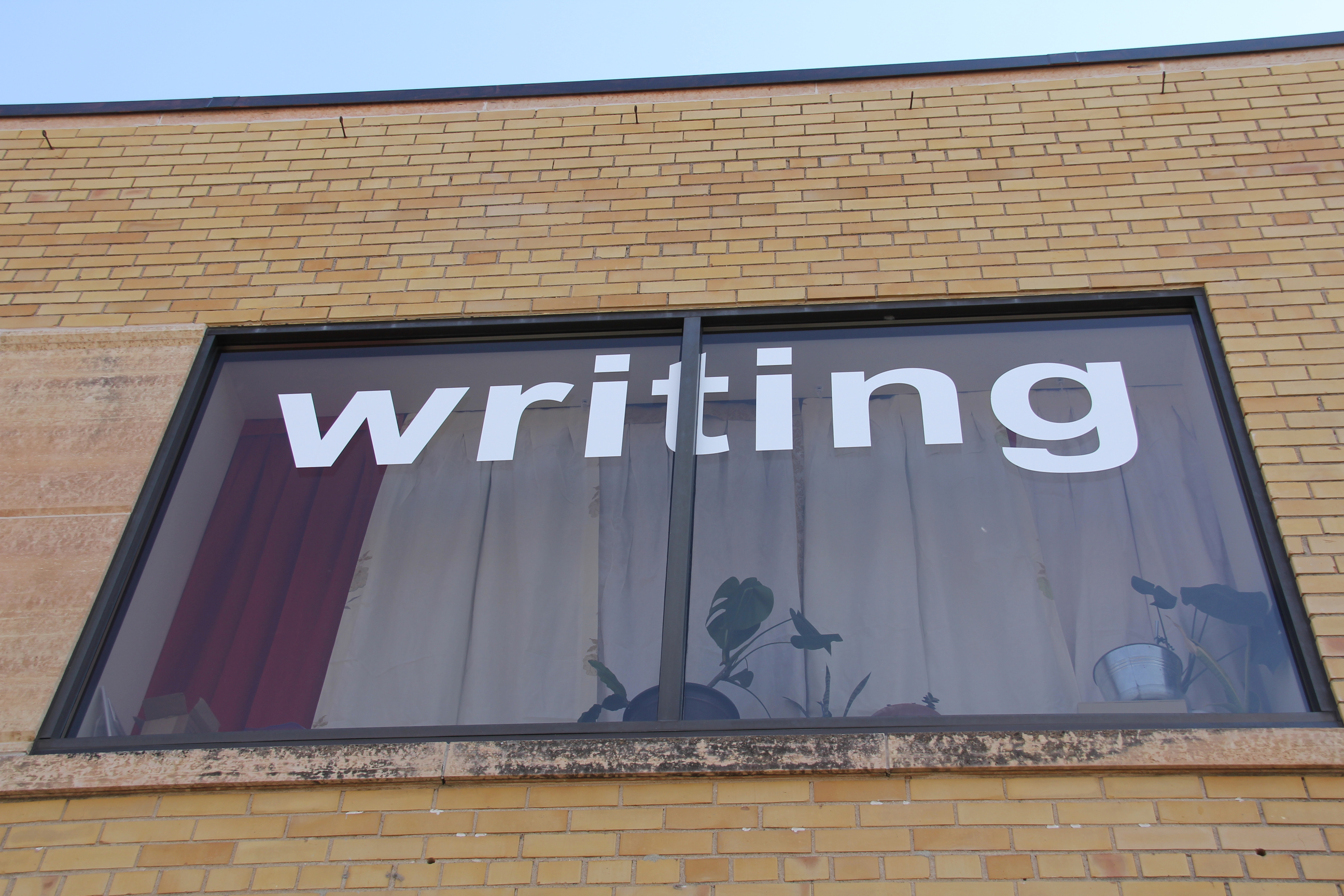
I looked to a second floor window of the Arts Center of Saint Peter to see this word. (Minnesota Prairie Roots copyrighted file photo October 2024)
AS A WRITER, I’m drawn to words. Perhaps that’s why I appreciate signs, slogans, even interesting messages on t-shirts such as “I put ketchup on my ketchup.” I spotted a guy in Faribault recently wearing a ketchup tee and told him I liked his shirt. I appreciated the humor. It was his second compliment of the day, he said. I’m not surprised given an American obsession with the condiment. I mean, my older brother squirted ketchup on his potatoes when we were kids. And most people can’t eat fries without ketchup. I can.
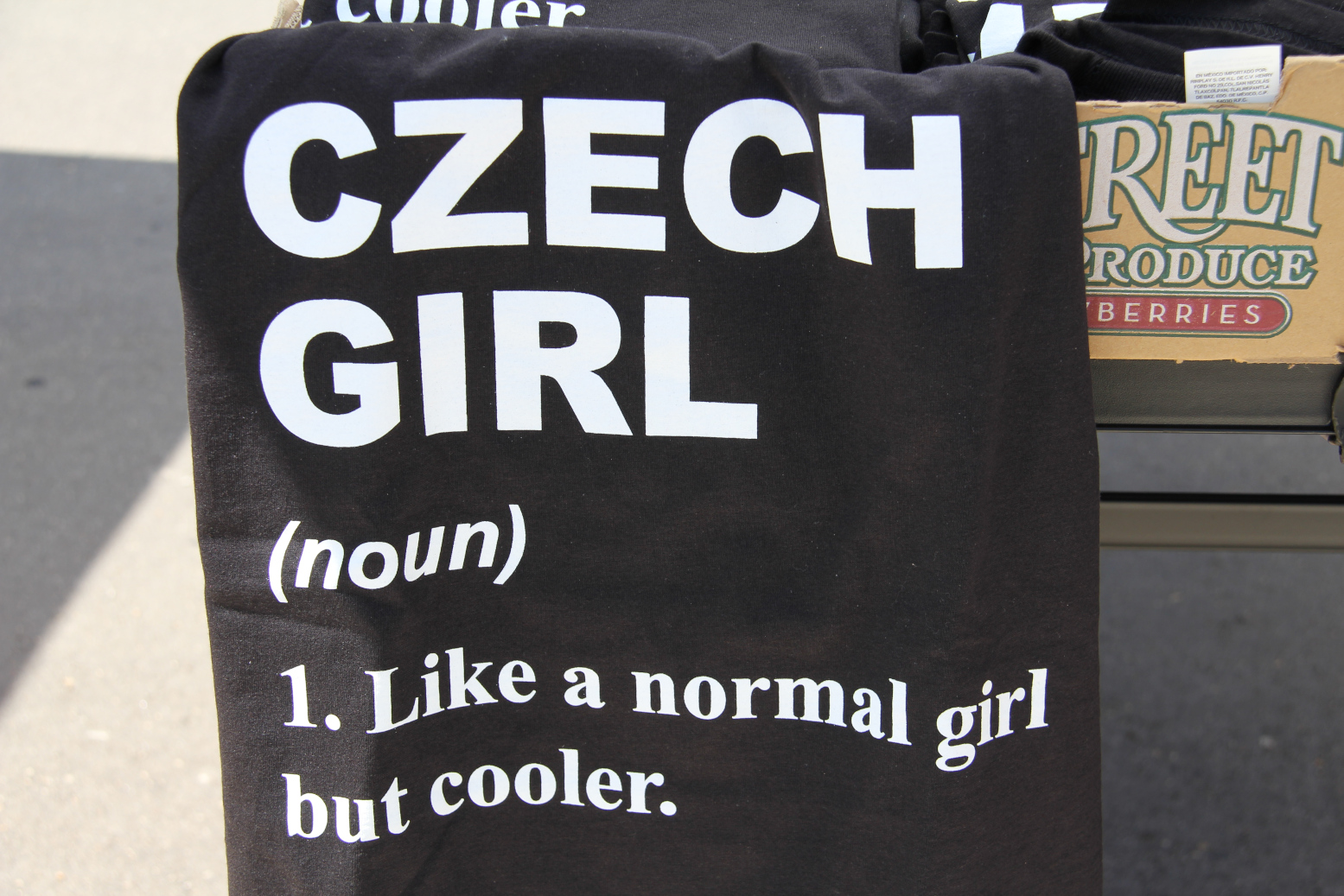
A t-shirt sold by a vendor at Montgomery, Minnesota’s Czech May Day. (Minnesota Prairie Roots copyrighted photo May 2025)
Then there’s the t-shirt I saw for sale earlier this year at a Czech celebration in Montgomery. In white letters on black fabric, the noun, Czech girl, was defined “like a normal girl but cooler.” I guess I will never be Czech cool since my heritage is German.
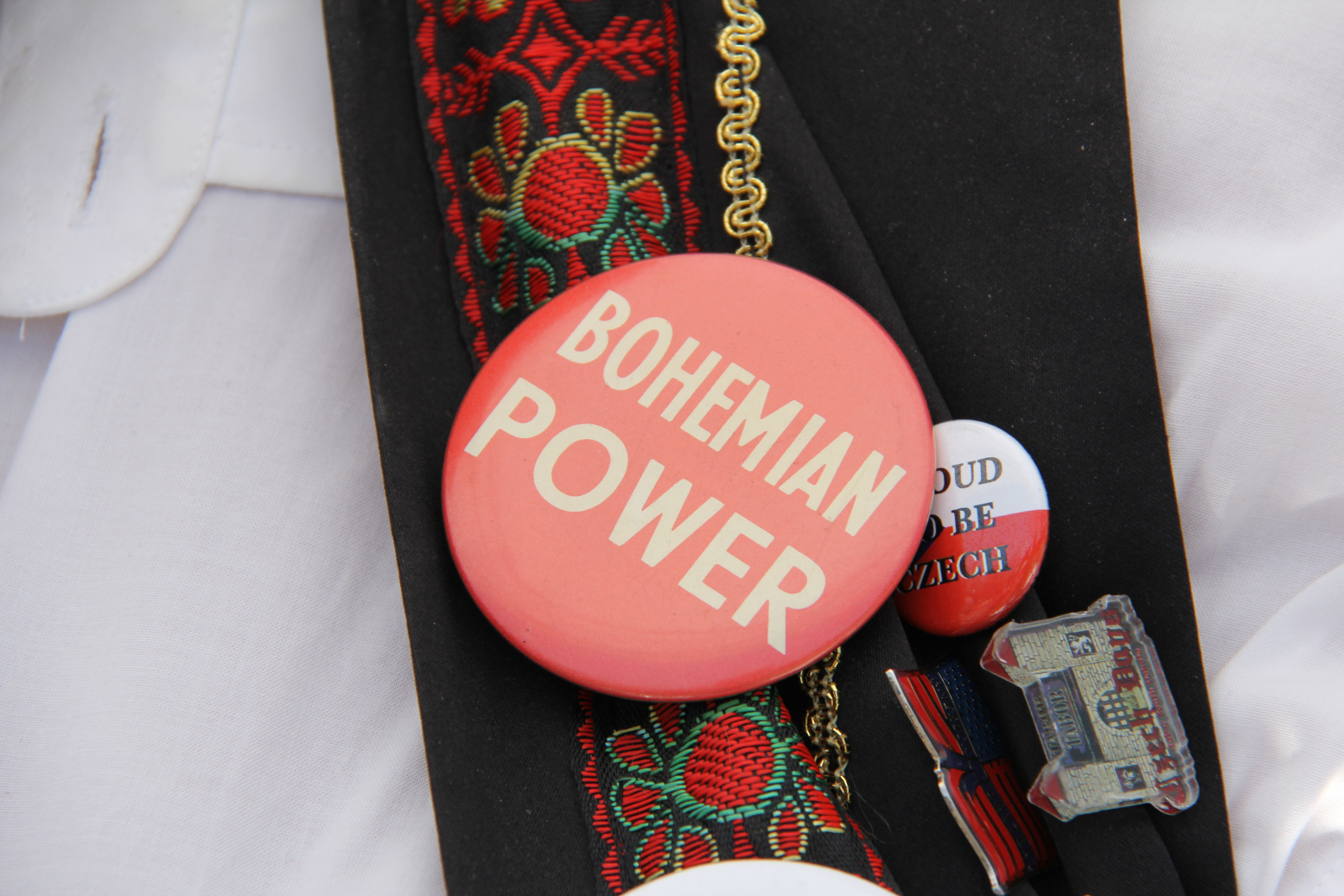
Bohemian pride in Montgomery. (Minnesota Prairie Roots copyrighted photo May 2025)
Nor will I hold Bohemian power or pride as printed on two buttons worn by a man in traditional Czech attire at the same Montgomery event. He was in the right place, Minnesota’s Czech triangle, to be sporting those ethnic-proud buttons.
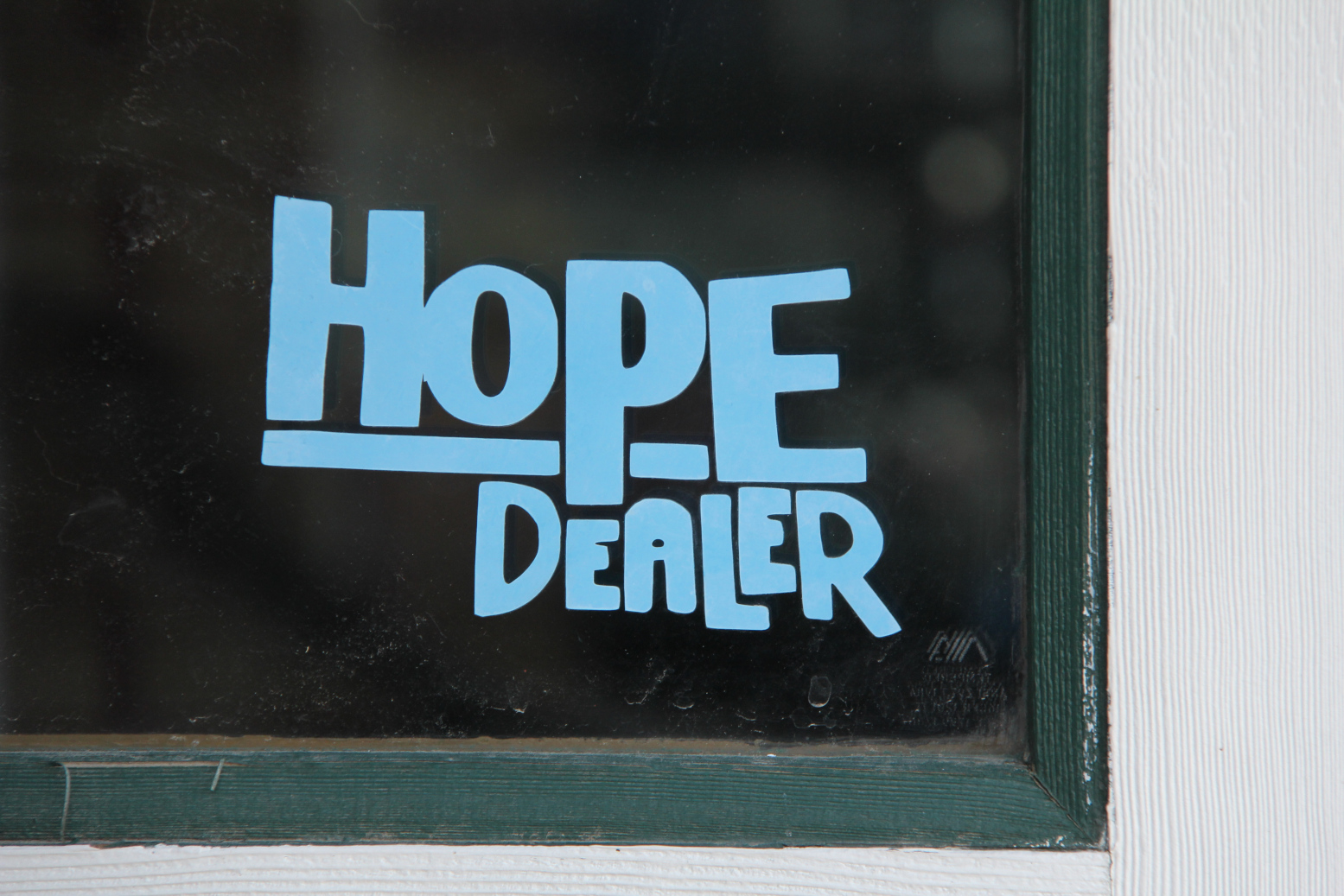
Powerful words in Montgomery, Minnesota. (Minnesota Prairie Roots copyrighted photo May 2025)
But I saw one identifier in Montgomery that proved relatable. And that was “Hope Dealer” displayed on a downtown storefront window. Hope happens to be one of my favorite words, one I’ve leaned into often during challenging times in my life. There’s nothing quite like hope to focus thoughts on difficult days. In Montgomery, “Hope Dealer” marks a substance abuse treatment center, which offers hope to those who walk through the door. The noun applies to me when I offer hope to someone who needs to be uplifted, encouraged and supported, maybe even inspired.
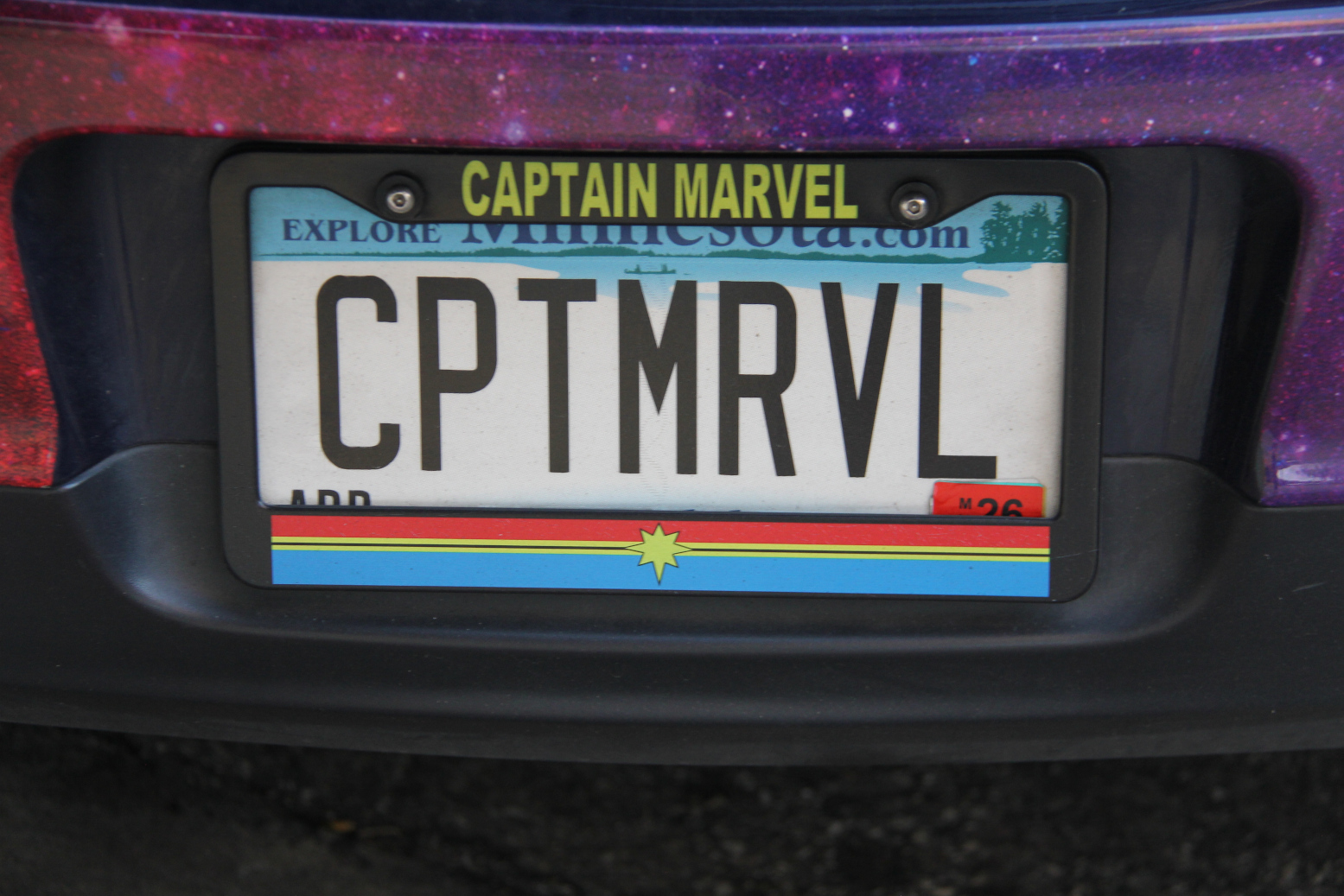
Identifying license plate on a Captain Marvel-themed car. (Minnesota Prairie Roots copyrighted photo June 2025)
Sometimes superheroes inspire as seen on a flashy purple car parked at a downtown Faribault Car Cruise Night this summer. Captain Marvel themed the car. The Minnesota license plate, CPTMRVL, did not escape my notice. This car owner clearly identifies with the positive superhuman powers of Captain Marvel.
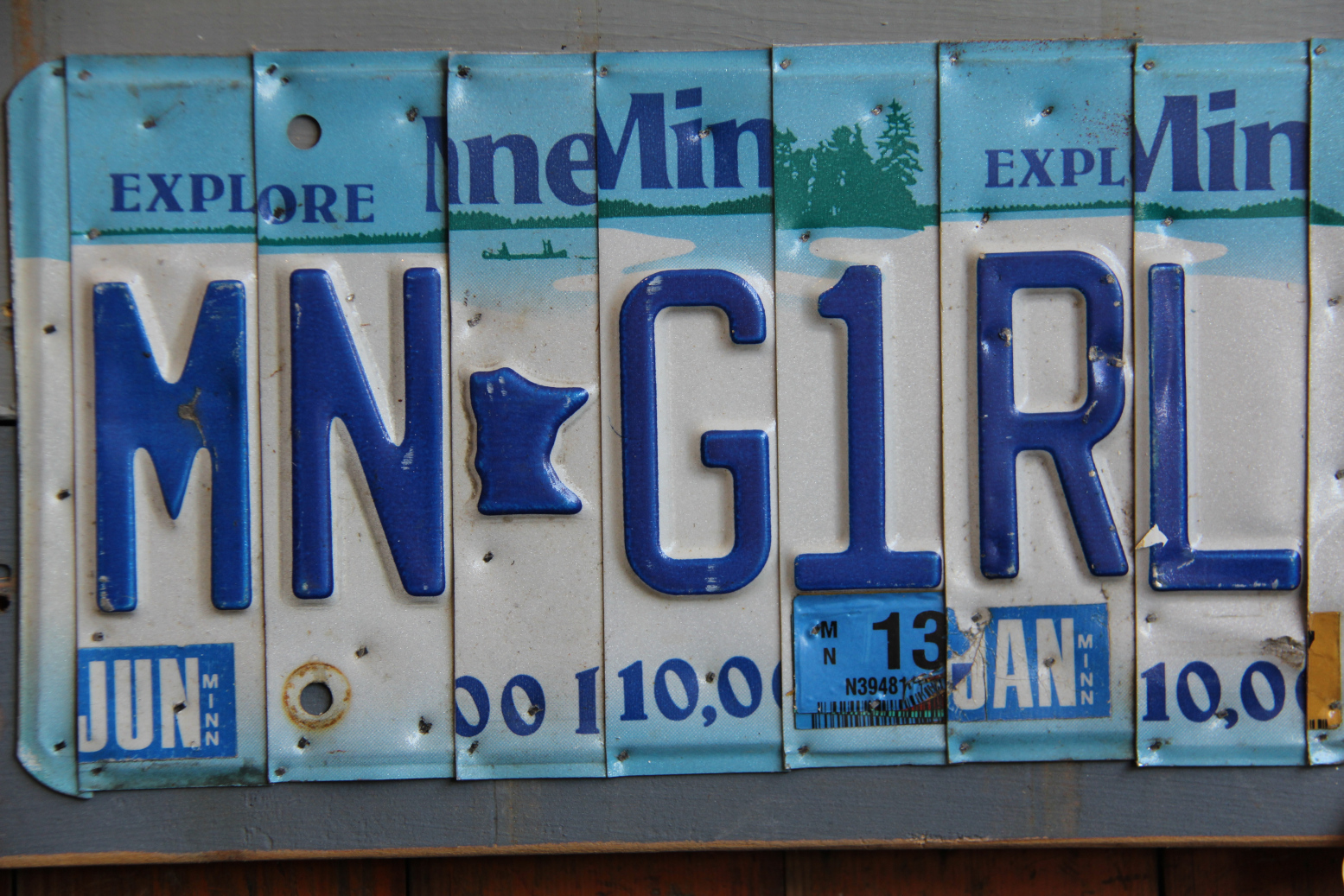
Identifying art at Makeshift Accessories. (Minnesota Prairie Roots copyrighted photo April 2025)
Over in Northfield at Makeshift Accessories, a home-grown shop featuring art crafted from primarily recycled materials, I found a sign that fits me—MN G1RL. It’s made from Minnesota license plate letters and a single number cobbled together. The rustic look appeals to me. But mostly, it’s the words I appreciate. I am a life-long Minnesota girl. If I were to define MN G1RL, I’d write “like a normal girl but stronger.” You’ve got to be strong to survive our long, harsh winters (although they are not as long and harsh as they once were).
Whether you’re from Minnesota or elsewhere matters not. Whether you’re into superheroes or not doesn’t matter to me. Whether you’re Bohemian or German or some other ethnicity matters not either. Whether you douse everything in ketchup or not, I don’t care.
But it does matter to me that you hold hope. It matters to me that you can read that singular word and feel the optimism it carries. You can carry hope in your heart. And you can dispense hope within your community through your words and actions. While you do that, notice the signs, slogans and interesting messages that surround you, that are part of everyday life wherever you live. Words matter. So says this southern Minnesota writer.
Protesters stand along Minnesota State Highway 19 by Ames Park in Northfield during the June 14 NO KINGS protest. This is one of my favorite signs among the many held by hundreds of protesters. (Minnesota Prairie Roots copyrighted photo June 2025)
I LEANED MY HEAD against Randy’s shoulder, my left hand gripping the rod of a protest sign and a small American flag. I felt such profound sadness in that moment. The moment when a pastor asked for a period of silence in honor of Minnesota State Representative/House Speaker Emerita Melissa Hortman and her husband, Mark, assassinated in their home during the early morning hours of June 14.
Flag Day. Nationwide NO KINGS protest day. A day of gathering turned tragic here in Minnesota.
A strong statement against a system of government by one person with absolute power. I suggest you look up these words, as I had to with some. (Minnesota Prairie Roots copyrighted photo June 2025)
I alternated between leaning into my husband and leaning my bowed head against the bottom of my NO MORE KINGS protest poster held high, the sign with the cursive words, “I value freedom,” scrawled on the back side. The wind blew, swept my hair across my face like a veil covering sadness. The heaviness felt palpable here, in Ames Park in Northfield, along the banks of the Cannon River. But so did the energy.
This shows just a portion of the massive crowd gathered for Northfield’s NO KINGS protest. (Minnesota Prairie Roots copyrighted photo June 2025)
We were a group of hundreds—maybe even a thousand (I’m not good at estimating crowd size)—gathered to publicly express our concerns about leadership in this country, about decisions being made that negatively affect all of us, about the state of and future of our democracy… It was my first protest. Ever. I wanted, needed, to be here. To remain silent seems complicit.
I’d already arrived when a friend texted that Minnesotans had been advised by state law enforcement not to attend NO KINGS protests. That warning linked to the suspect in the shootings of the Hortmans and of State Senator John Hoffman and his wife, Yvette. We would later learn that NO KINGS fliers were found in the vehicle of Vance Boelter, now accused in the double murders and attempted murders.
While your eyes may focus on the protest sign in the middle, look to the right. and this sign: IF NOT ME, WHO? IF NOT NOW, WHEN? (Minnesota Prairie Roots copyrighted photo June 2025)
That explained why, on the way to the riverside protest, I overheard a woman telling a couple that her police officer son had advised her not to participate in the rally. She was going home. I was not. Nor were any of the others converging on Ames Park at noon. I wasn’t scared. Vested safety people, trained in conflict resolution and de-escalation, were in place. I felt safe in the masses, which, I suppose, is an unrealistic perspective. But I refuse to be silenced by fear, by the words and actions of those who attempt to suppress voices. And intimidate.
And there were those, including the drivers of a white pickup truck and of motorcycles which repeatedly roared past the rally site, spewing their opposition in noise and in political flags bannering messages I won’t repeat. But they, too, have a right to protest. Peacefully. Just as I do. And I wrote that on the back of a second sign: FREE to PROTEST. But, mostly, passing vehicles honked in strong support.
So many positive messages promoting love, compassion, care, kindness… (Minnesota Prairie Roots copyrighted photo June 2025)
At this rally of people opposing the current administration and its policies and actions, I felt a unity of purpose and a deep, cohesive concern for the future of our country. I felt uplifted, embraced, empowered. Speakers spoke (although I couldn’t hear most). The pastor led us in prayer. We sang—”The Star Spangled Banner” and “We shall overcome.” We cheered. We chanted. We waved our posters and flags. And a group held an over-sized American flag, which I couldn’t see from my vantage point deep in the shoulder-to-shoulder crowd.
We were mostly an older group. Baby Boomers. Grandparents. Even octogenarians. Perhaps some protested during the Vietnam War. Or served this country. We’ve lived a few years, enough decades to understand that we need to rise up against authoritarianism. Enough to understand what’s at stake. But there were some young people, too, like the dad behind me with his preschool daughter playing in the grass. He clearly cares, if not for himself, but then for his child.
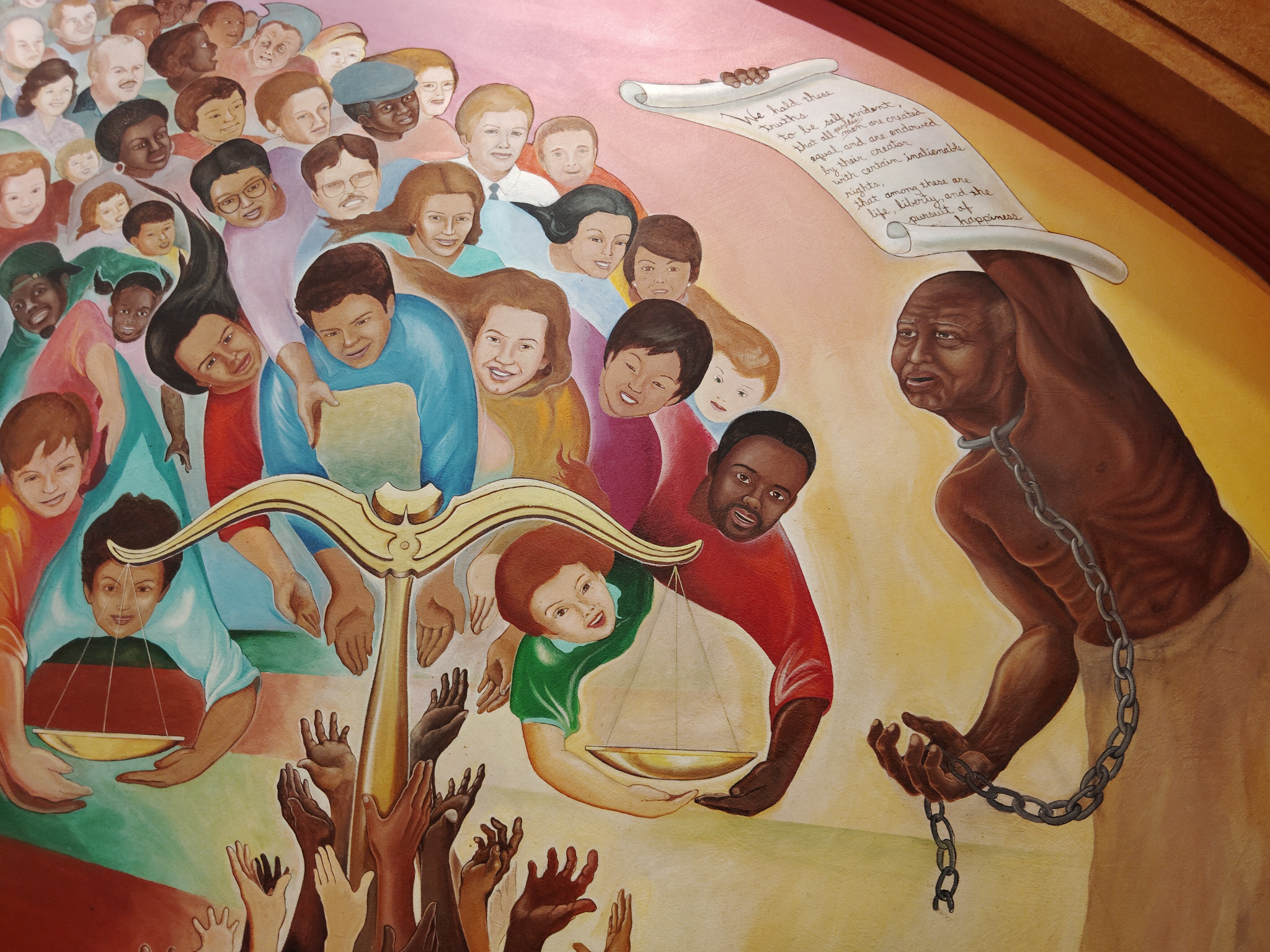
I saw this mural, “The Inheritance of Struggle,” inside the Memorial Student Union at the University of Wisconsin, Madison, Tuesday afternoon. It shows “the contributions made by people of various ethnicities and cultures in the form of tears, sweat, blood and life in the building of the United States.” It’s fitting for today, Juneteenth, and for NO KINGS day. (Minnesota Prairie Roots copyrighted photo June 2025)
The morning after the NO KINGS protest, I left for Madison, Wisconsin, to spend time with my 5-month-old grandson (and his parents). As I snuggled Everett, I thought, he (and my other two grandchildren) are part of the reason I chose to protest. Their lives stretch before them. I want them to live in a country where they are free. Free. I want them to live under a government based on a three-pronged system of checks and balances, not one ruled by a king or some version of a king or dictator. I want them to live in a kind, caring and compassionate country. Not a selfish, uncaring, divisive nation filled with hatred.
I returned to Minnesota yesterday and am catching up on laundry and writing. And, along with my fellow Minnesotans, I’m collectively grieving the assassination of an elected official and her husband. And I’m thinking, this is what it’s come to in Amercia…
POETRY, WHEN READ ALOUD, is, in many ways, like music. It presents one way on paper. But read a poem aloud, and it becomes a song. Music with rhythm, beat and emotion. Vocal intonations carry a poem to melodic heights.
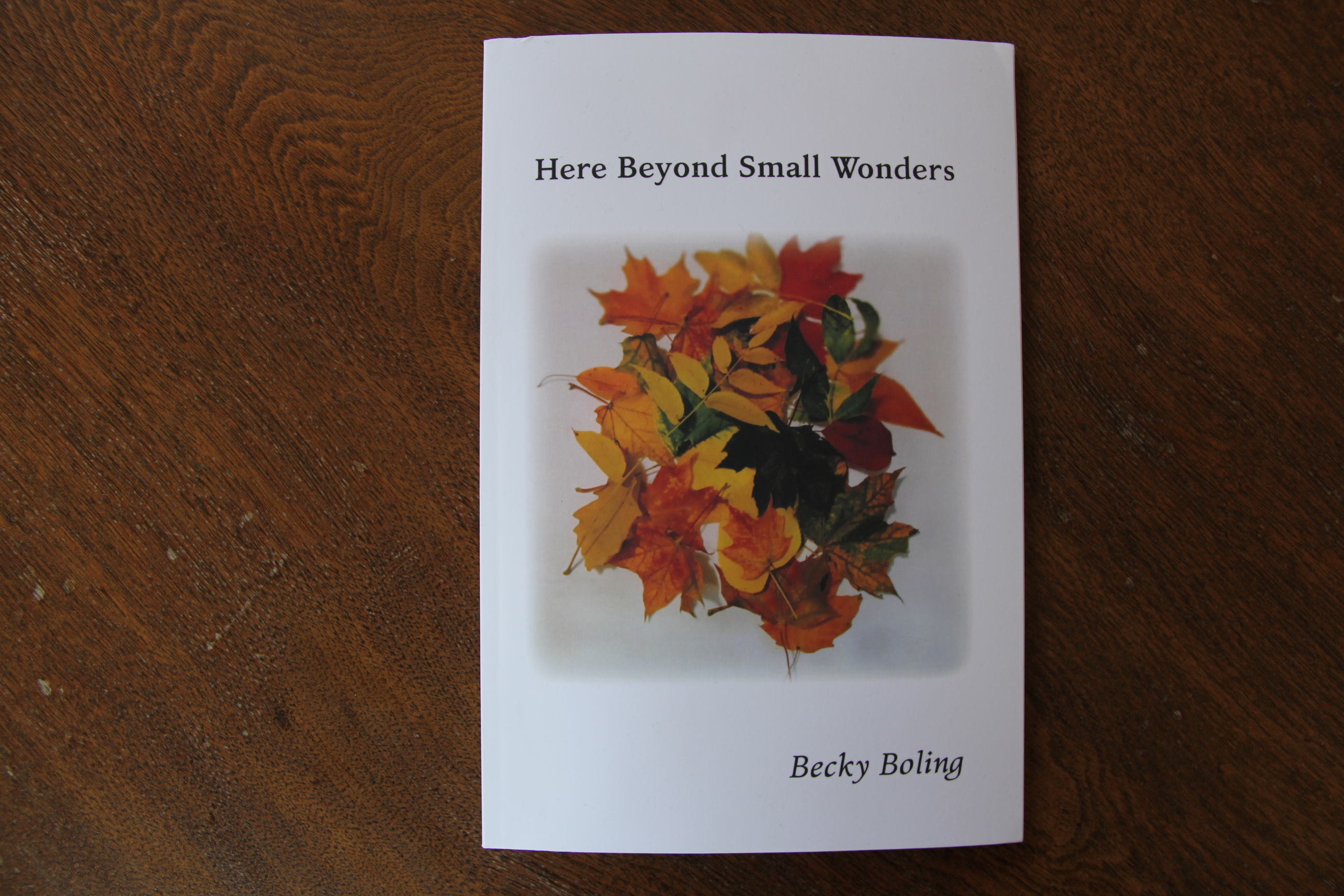
Becky Boling’s recently-published collection of her poems. (Minnesota Prairie Roots copyrighted file photo)
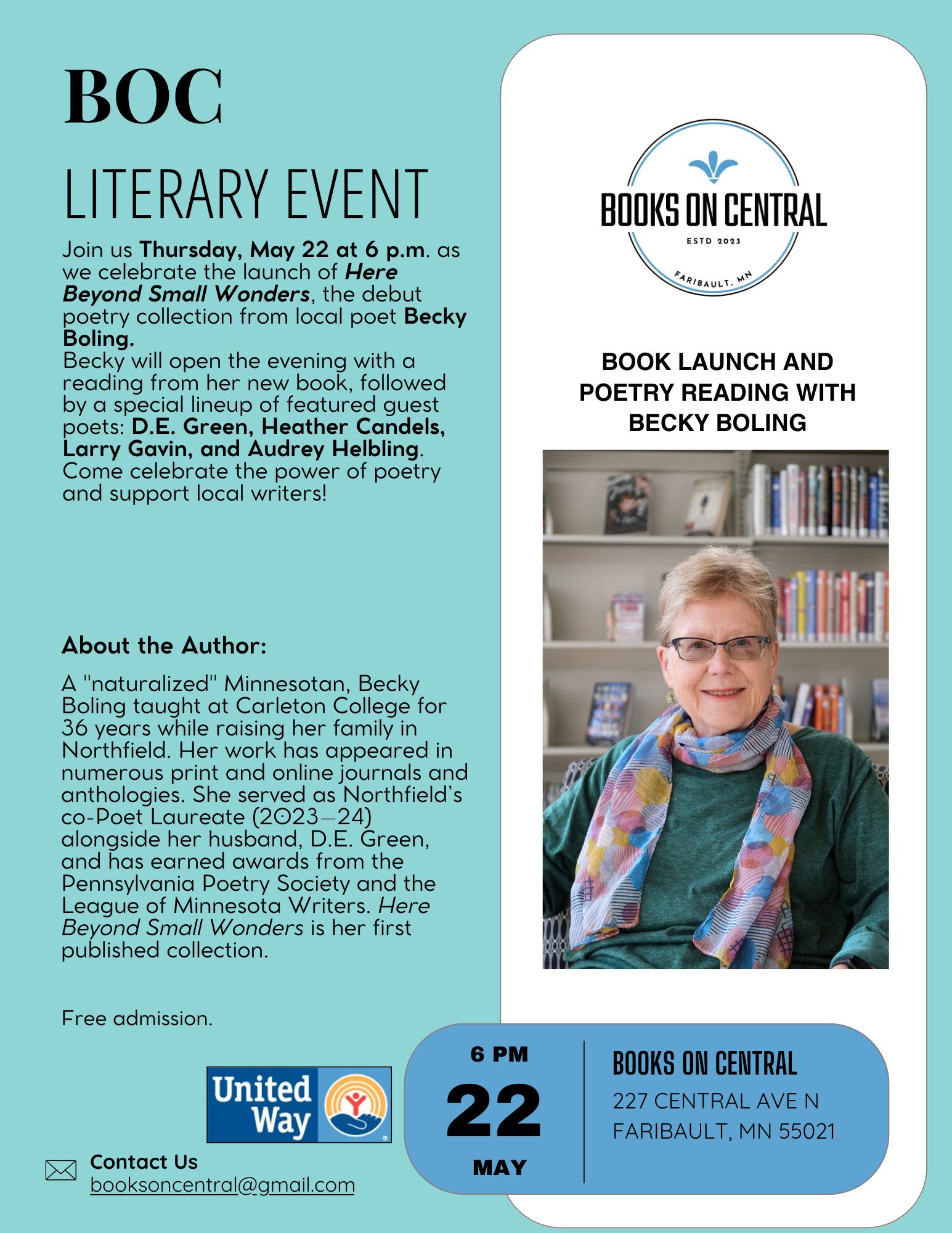
At 6 p.m. Thursday, May 22, the music of poetry will fill Books on Central in Faribault as Becky Boling reads from her first anthology, Here Beyond Small Wonders. Recently published by Finishing Line Press, this collection features detail-rich poems that often focus on ordinary subjects. It’s signature Boling, who is a prolific poet, served as Northfield’s co-Poet Laureate, and is retired from teaching Spanish and Latin American Literature at Carleton College in Northfield.
I love Boling’s writing. Her poems resonate with me in an everyday life kind of way. She has a visually-strong writing style—as most poets do—coupled with emotion-evoking poetry that prompts memories, questions, deeper thinking.
(Literary Event promo courtesy of Books on Central)
Boling has invited four other poets to join her at Thursday’s reading. Those include her husband, D.E. Green, also an accomplished poet; Northfield poet Heather Candels; Faribault poet Larry Gavin; and me. I’m honored to join this gifted group of writers in reading our poems aloud. I will read right after Boling.
I’ve previously listened to all of them read, so I can vouch for how much I’ve enjoyed hearing them. Gavin, especially, has a rich radio voice that makes me want to settle in and let his voice pull me into his writing.
Now, as I’m preparing for this Thursday evening event, I’m paging through the many books in which my poetry has published, selecting the poems I want to read during my allotted five minutes. Then I’ll practice reading those poems aloud, using my voice to create poetic music.
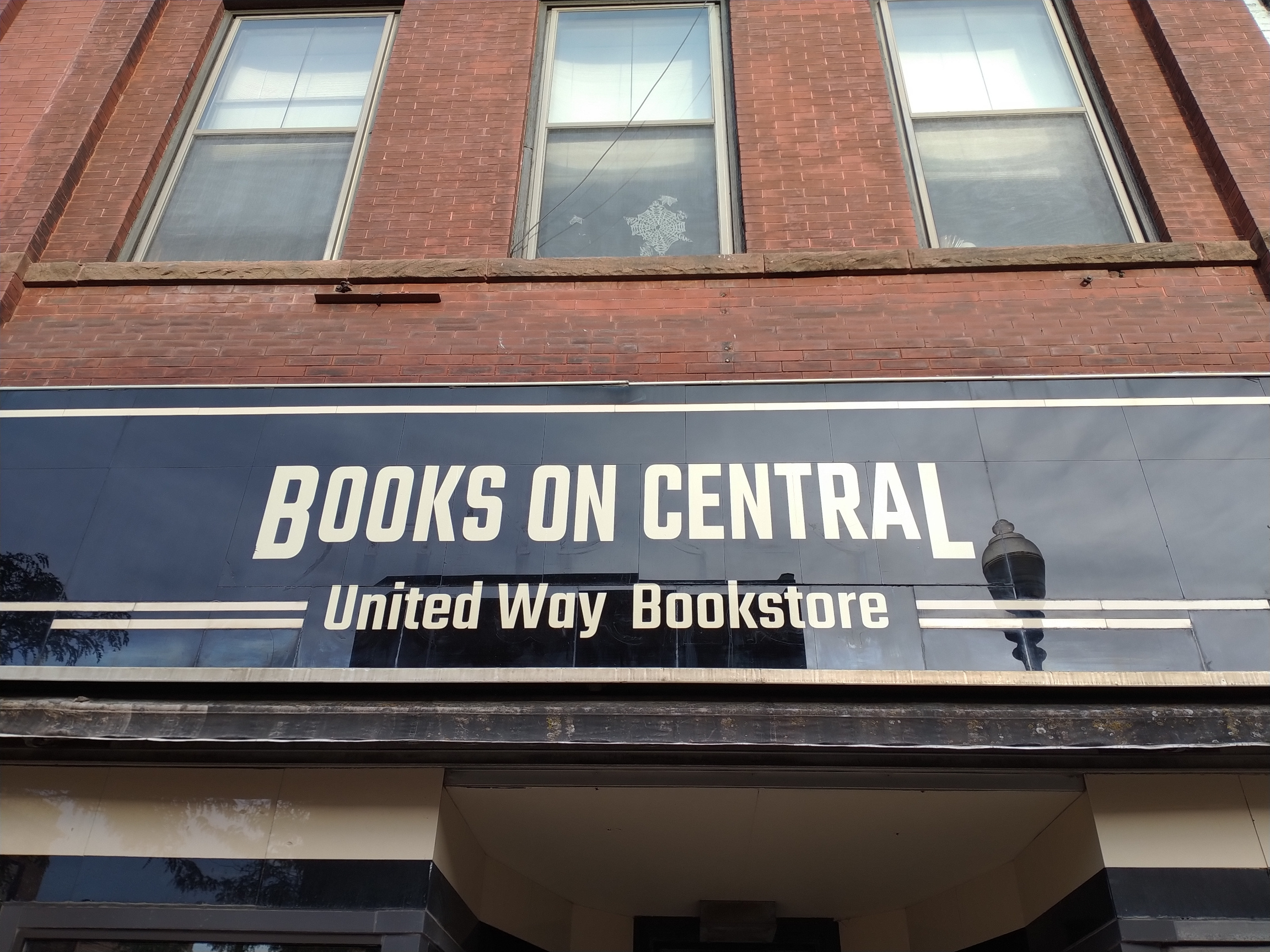
This used bookshop is located in the heart of downtown Faribault along Central Avenue. (Minnesota Prairie Roots copyrighted file photo)
FYI: Books on Central, 227 Central Avenue North, Faribault, hosts periodic free literary events to celebrate authors and to draw people into this volunteer-run used bookstore operated by Rice County Area United Way. All proceeds benefit select nonprofits in the county. It’s a beautiful small space (complete with a centering chandelier) housed in a former jewelry store.
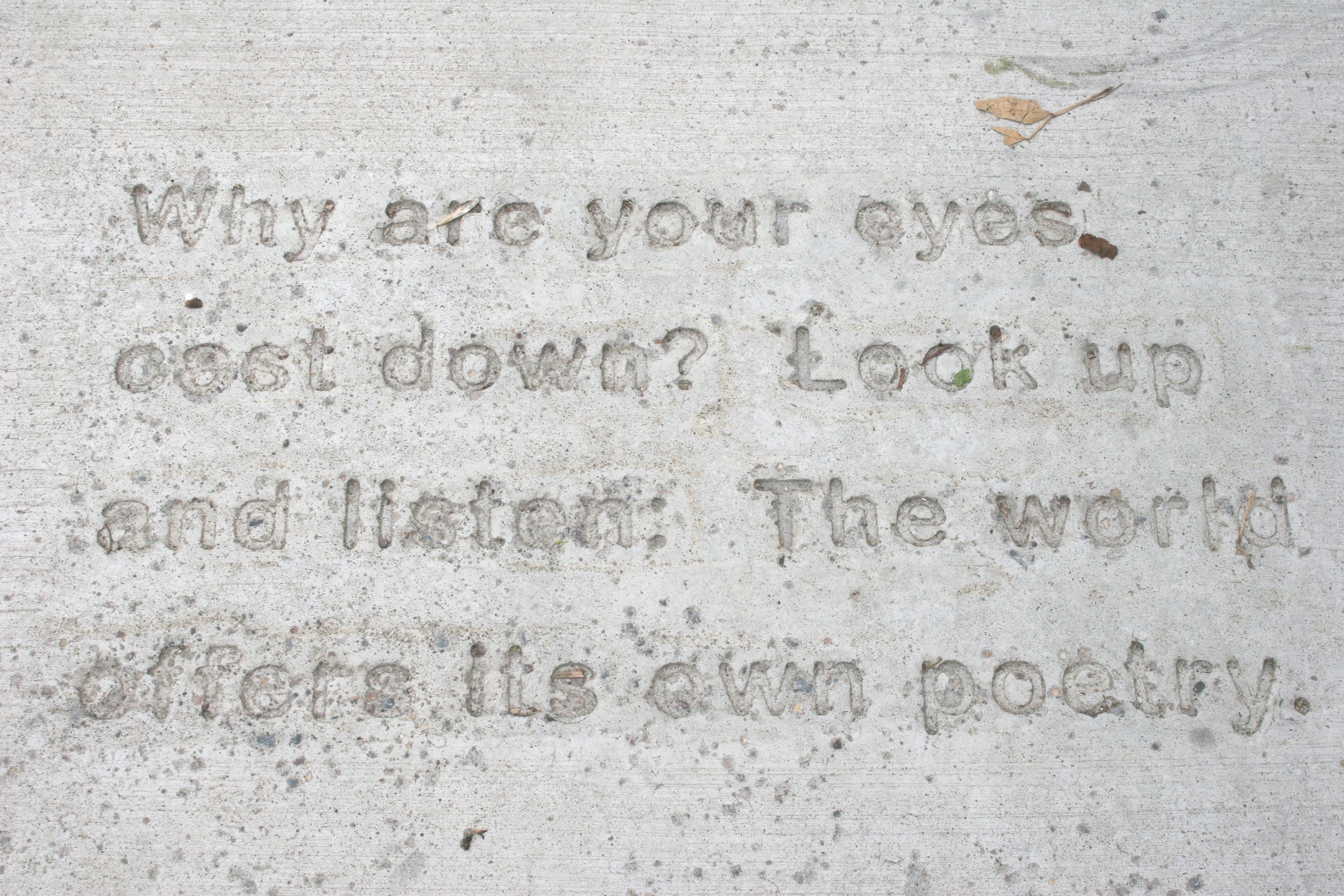
Sidewalk poetry in downtown Northfield, Minnesota, carries a powerful message. (Minnesota Prairie Roots copyrighted file photo)
I DON’T READ MUCH POETRY. I probably shouldn’t admit that given I’m a published poet. But I suspect most of you also are not big poetry readers. Yet, we all should be, especially me.
Becky Boling’s recently-released first collection of published poetry. The cover features the poet’s artwork. (Minnesota Prairie Roots copyrighted photo April 2025)
Poetry offers a creative way to view the world, to experience life, eliciting a whole range of emotional responses that connect us to each other, to the earth, to the past and present, and much more. I get excited when I discover a poet whose work truly resonates with me. And that would be the poetry of Northfielder Becky Boling.
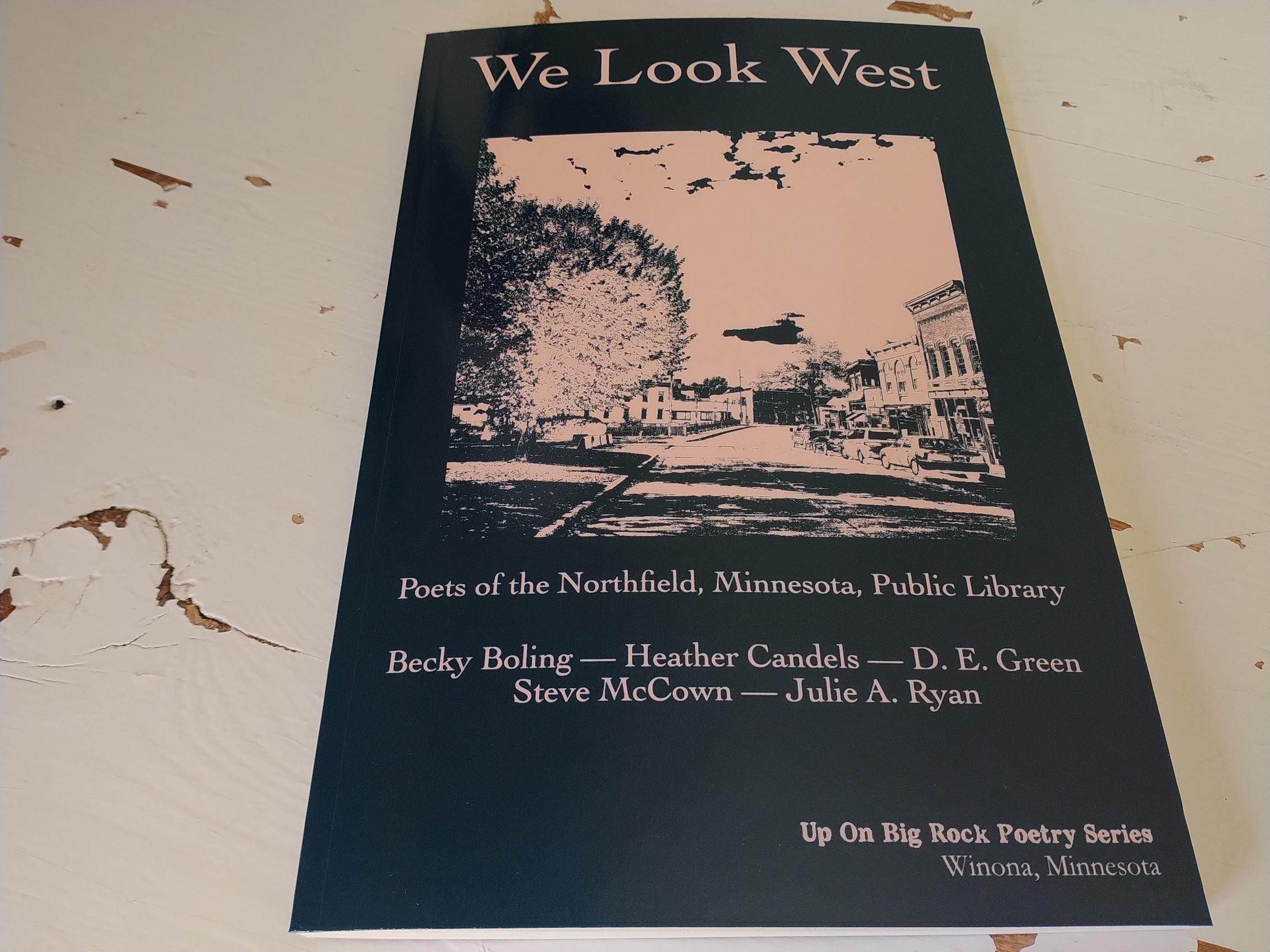
We Look West was published in early 2024 by Shipwreckt Book Publishing Company. (Minnesota Prairie Roots copyrighted file photo 2024)
A year ago, I met Boling when she dropped off a copy of the anthology, We Look West, a collaboration of the Poets of the Northfield Public Library. It includes her work and that of four other talented poets. I love the collection which takes the reader from the sunrise to the sunset of life. The poetry therein is so understandable and relatable.
A box holds bagged poems included in the “Poetry in a Bag” project. (Minnesota Prairie Roots copyrighted file photo 2024)
In May 2024, Boling, I and several other poets participated in a community poetry reading for the “Poetry in a Bag” project coordinated by Mercado Local, a Northfield marketplace for immigrants. Our poems were printed, rolled and bagged before distribution within our communities.
I would see Boling again in September 2024, when she and the other Northfield poets read from We Look West at Books on Central, a Rice County Area United Way used bookshop in Faribault.
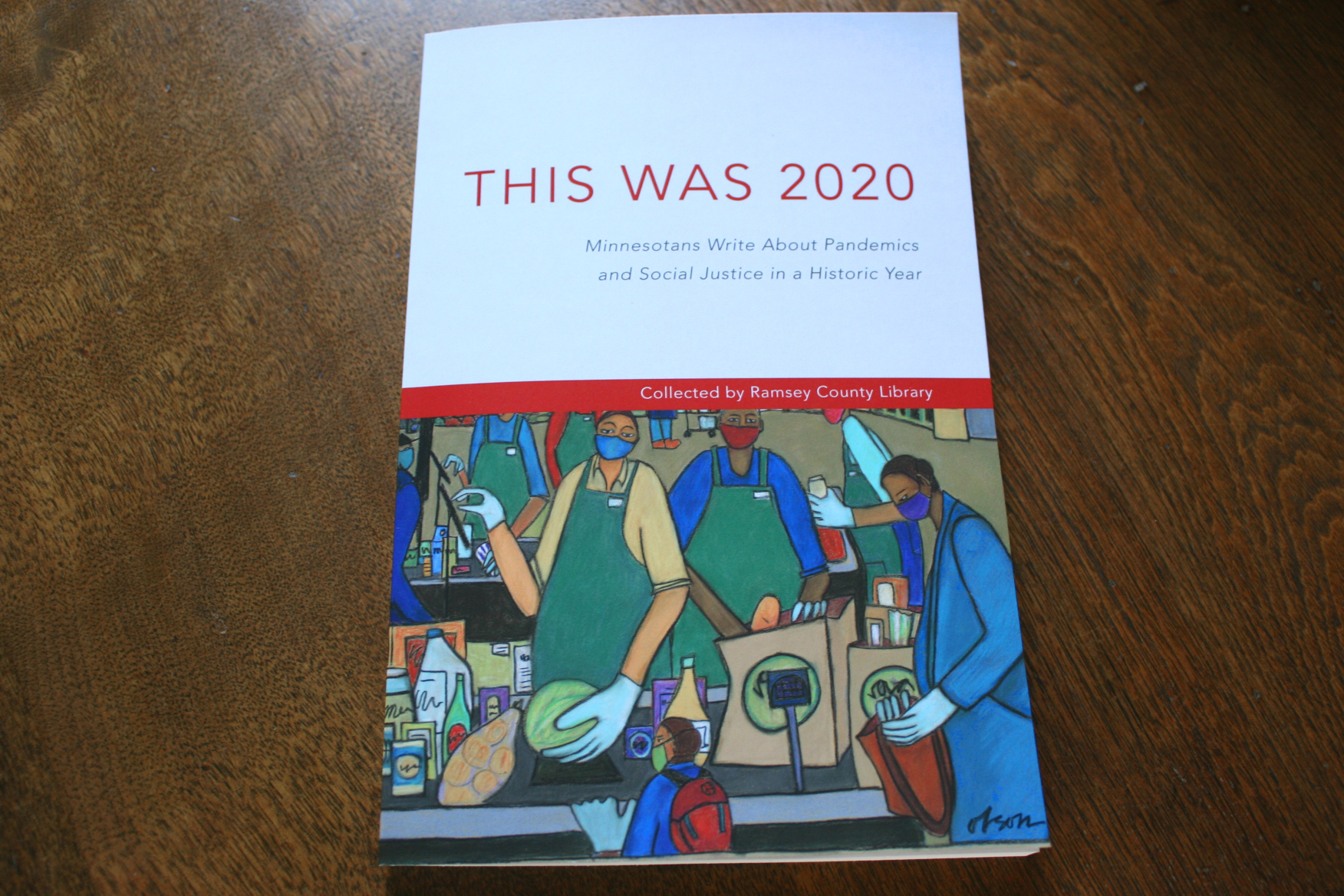
Selected prose and poetry about the pandemic and social justice issues were published by the Ramsey County Public Library in this anthology. (Minnesota Prairie Roots copyrighted file photo)
The poetry of Becky Boling in her first published collection featuring 37 of her poems. (Minnesota Prairie Roots copyrighted photo April 2025)
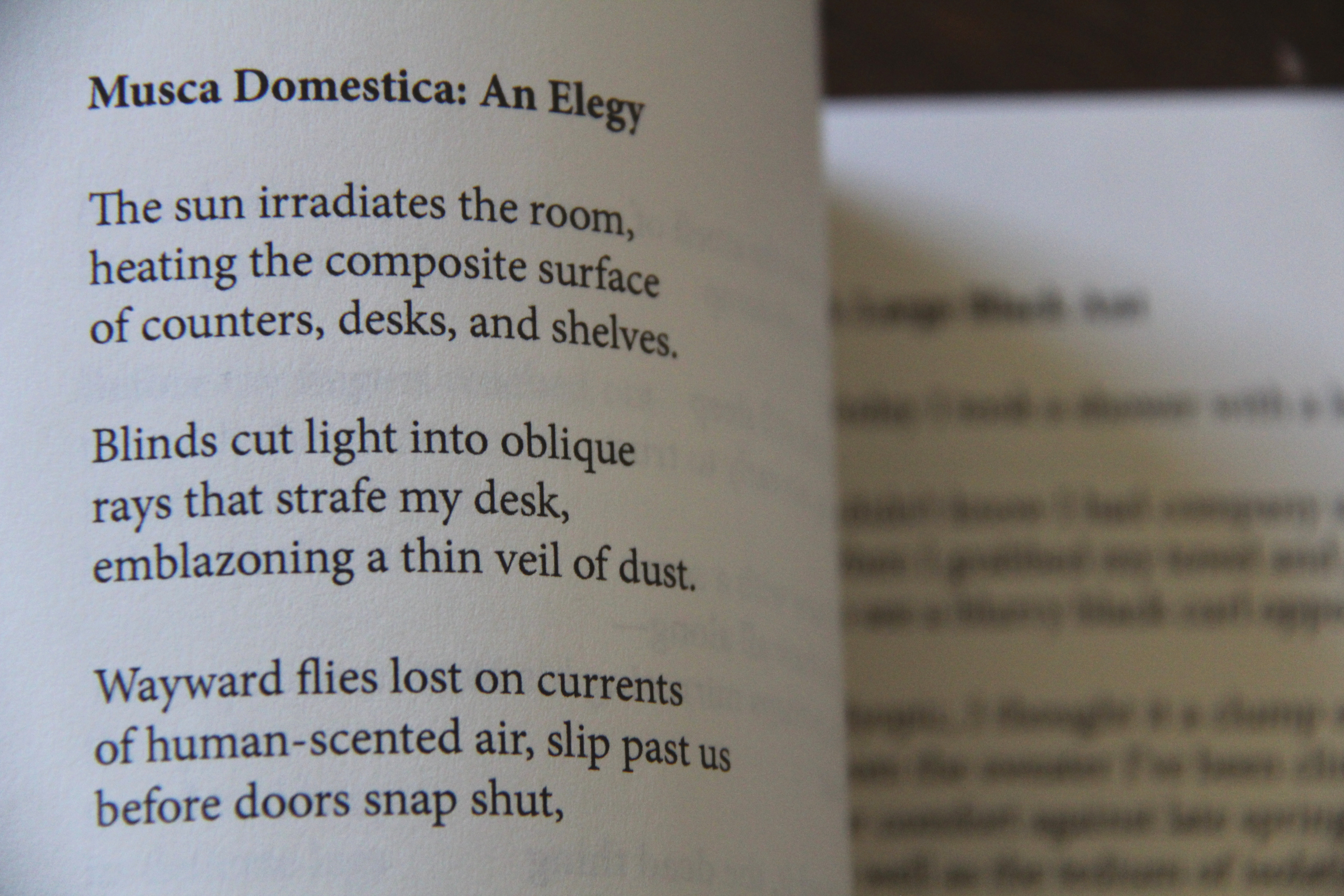
Because of those shared experiences, shared publications and shared love of words, I feel a sisterhood with Boling. So when she asked if I wanted a copy of her first solo poetry collection, I responded with an enthusiastic, “Yes!” Within the pages of Here Beyond Small Wonders, I found what I’ve come to expect from Boling—detailed writing, often about the most ordinary subjects—a dead mouse, a fly, walnuts… Topics you may not even consider poetry-worthy. But Boling has this ability to observe and engage all of her senses to craft words into connective, meaningful poetry.
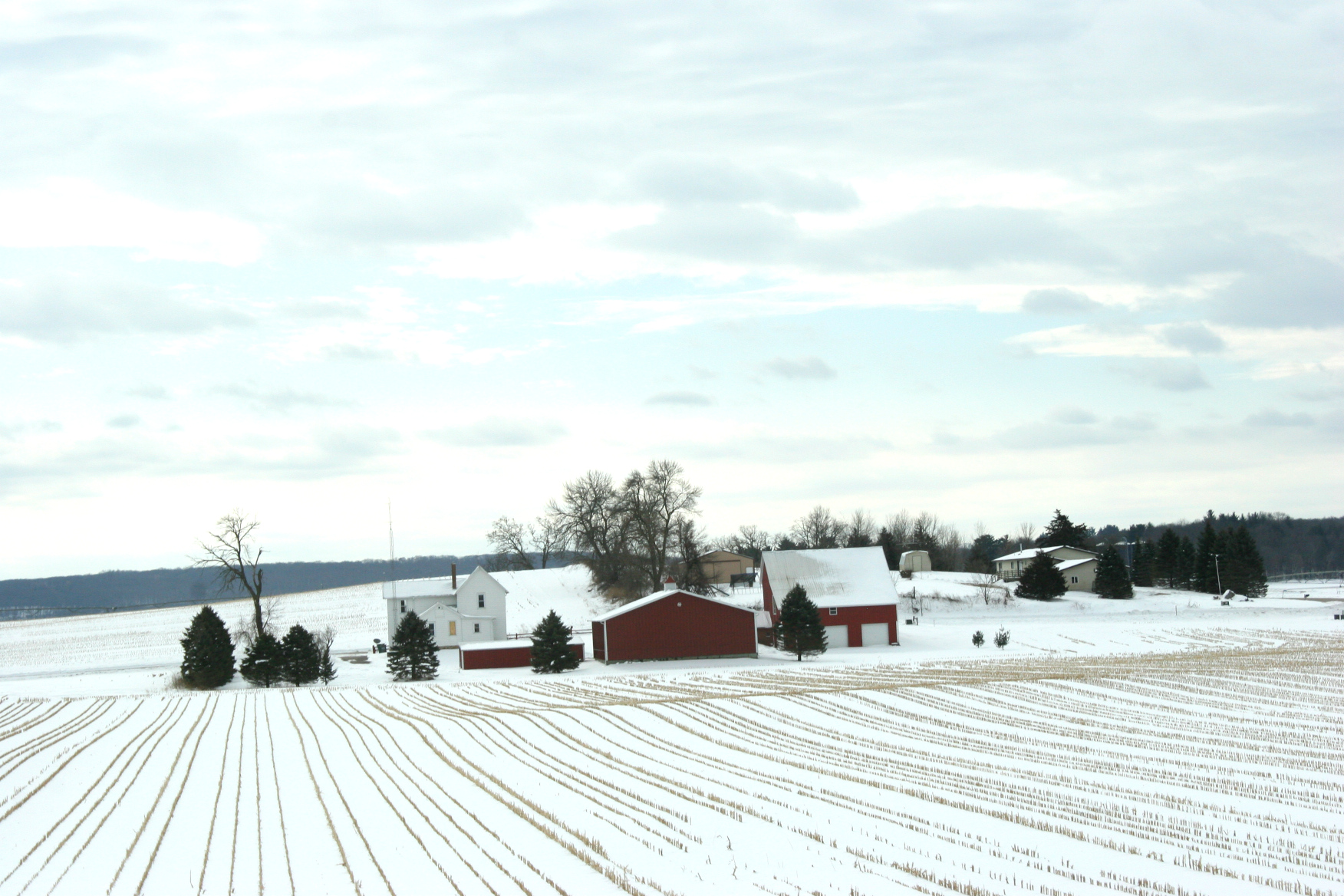
A Wisconsin farm site photographed from Interstate 90 could be a poetry prompt.(Minnesota Prairie Roots copyrighted file photo)
In her poem “Snow Pond,” she defines poetry: Poetry, like freezing temps, seizes the moment, recasts it—through the physics of sight, memory, language—resurrects it anew into patterns, sound and light, marks on a snowy page that glisten and melt on tongue, alight on the inner eye. That definition of poetry is among the best I’ve read, because it is poetry.
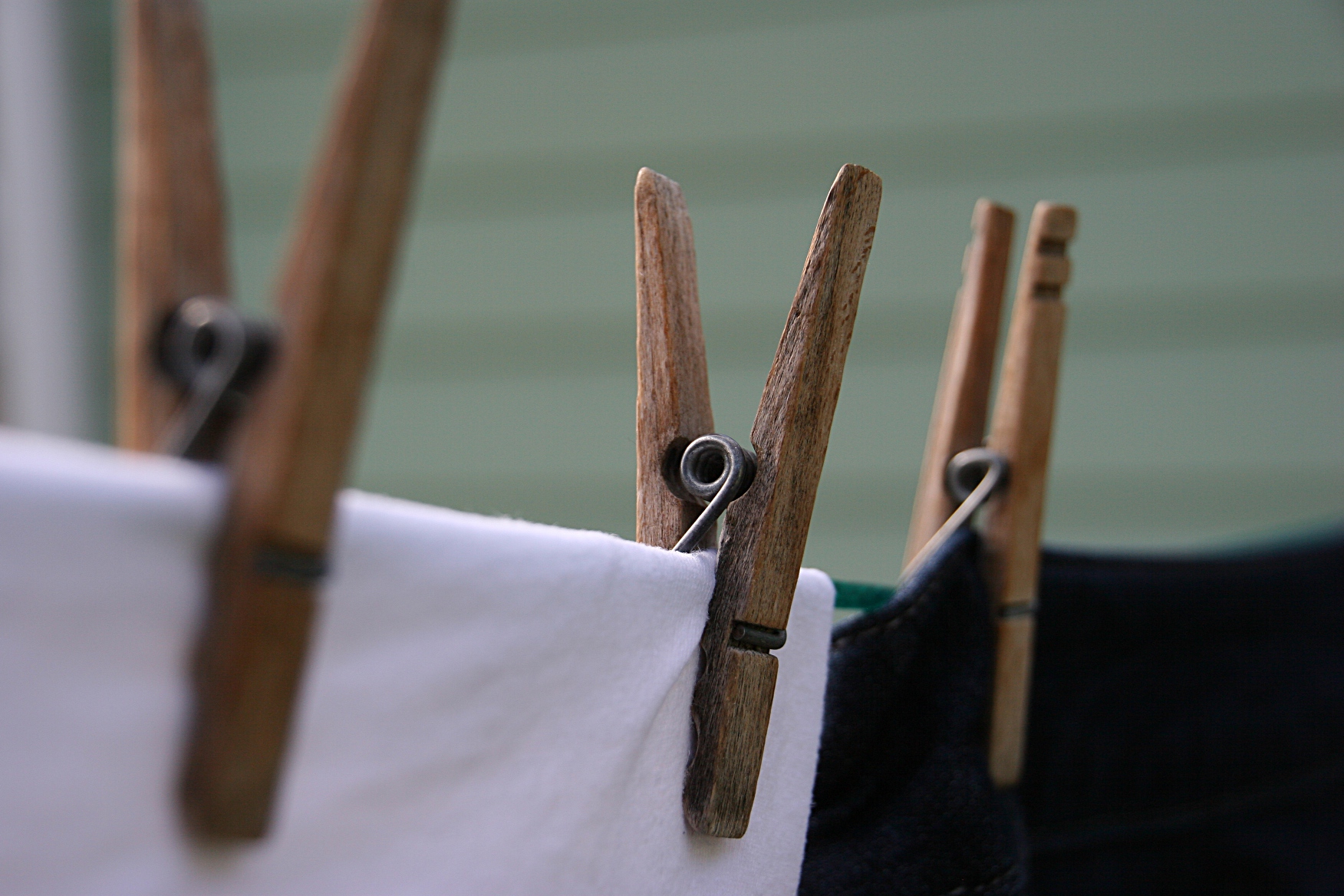
Clothespins on my clothesline clip clothing, not beach towels. (Minnesota Prairie Roots copyrighted file photo)
Anyone who writes poetry recognizes the challenges of finding just the right word, of stringing words together in a new, creative and succinct way, of connecting on an emotional level. But Boling makes the process look easy, taking the reader along with her, whether into her yard or onto the sandy shores of Lake Michigan. In her poem “Clothesline,” she writes of beach towels dancing in the wind. She takes the reader to the beach, to the sights, scents and sounds along the inland sea. I feel her fingertips unclipping the dried towels at end of day as she gathers them like weary babes into my open arms. I did not see that end coming. That element of surprise is, too, a mark of a gifted poet.
Kid-sized Adirondack chairs on a Minnesota beach. (Minnesota Prairie Roots copyrighted file photo)
Her “Adirondack Chair in Snow” is another favorite of mine in Boling’s collection of 37 poems published by Finishing Line Press. She writes of the typically-lakefront chair wedged into a snowbank outside her mother’s apartment building. But this poem is about so much more than an out-of-place chair buried in snow. Boling uses personification to write about her mother. In those six verses, I found myself missing my own mom, who died during the pandemic in January 2022. Boling’s emotions, my emotions, weave together in her writing and in my reaction.
My own artsy autumn leaf image, of leaves in the Cannon River. (Minnesota Prairie Roots copyrighted file photo)
In one of her longest poems, Boling writes about the transition to autumn in “Persephone’s Bouquet.” Unfamiliar with this Greek goddess, I learned that Persephone’s descent into the underworld is associated with the start of winter. Autumn themes Boling’s poem as the author gathers hot-pepper reds, creamy yellows…brazen scarlet…leaves, something I also enjoy doing in fall. But this is a poem about life, too, not just about a change in seasons. Plus, the poem connects to the cover of Here Beyond Small Wonders, Boling’s own autumn leaf art.
Her first collection of poems is about nature and place and seasons and life. Moments experienced. Details noticed right down to a tar-dark county road…horse flies, green heads glistening in the sun…reedy breath trembling into song. Boling, in her words, opens herself to a pool of words. And I, for one, embrace her poetic writing.
#
FYI: Becky Boling is a retired professor of Spanish and Latin American literature at Carleton College in Northfield. Her poetry and prose have been widely-published in literary journals and anthologies. She also served as a Co-Poet Laureate of Northfield. Click here to find Here Beyond Small Wonders on the Finishing Line Press website.
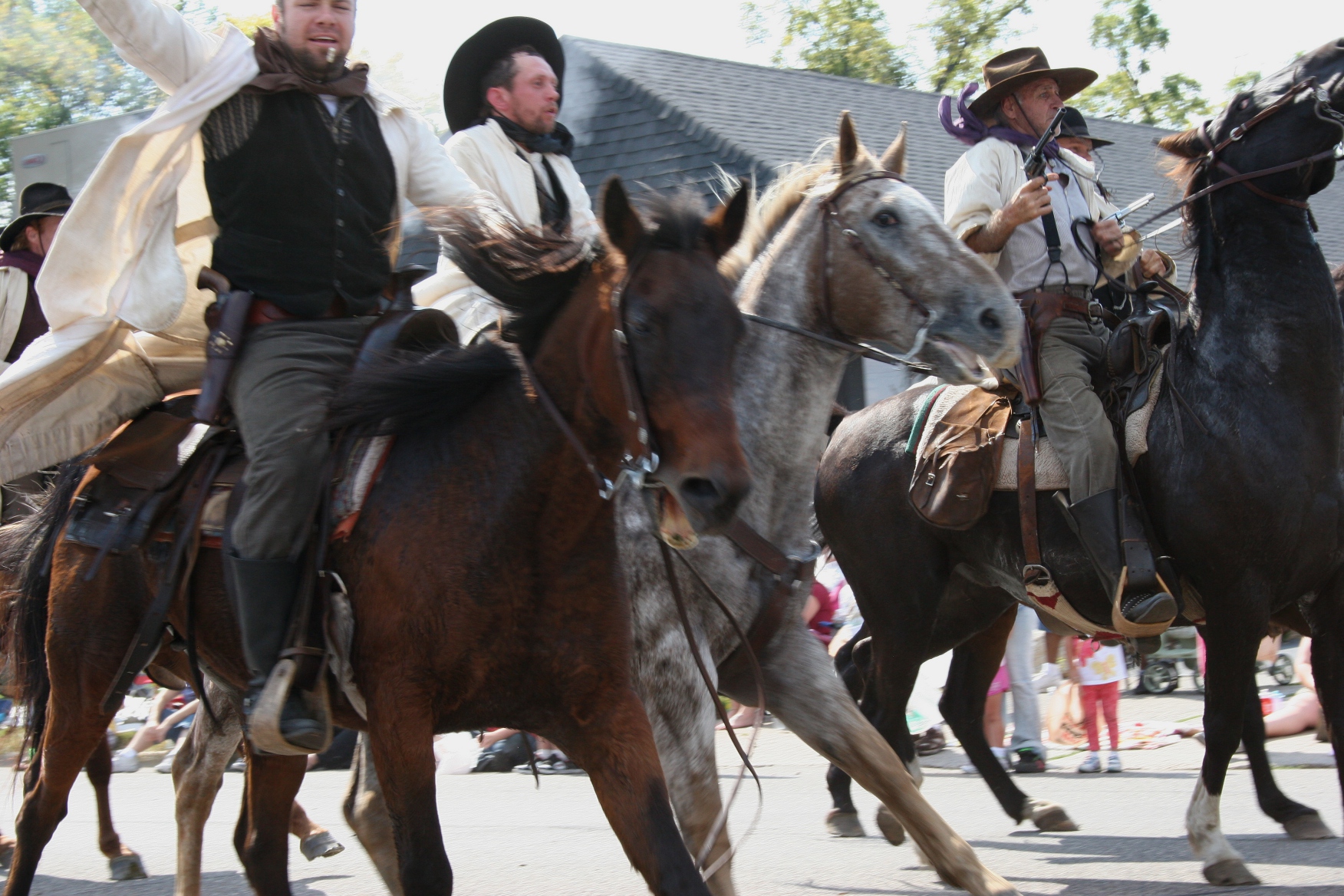
The James-Younger Gang shooting it out during a past Defeat of Jesse James Days parade. (Minnesota Prairie Roots copyrighted file photo)
NORTHFIELD, MINNESOTA is best-known as the community that, on September 7, 1876, thwarted plans by the James-Younger Gang to rob the First National Bank. Townspeople stood their ground against the outlaws, ending in the deaths of the acting bank cashier, a Swedish immigrant and two of the robbers before the gang fled. Northfield marks the failed bank robbery each September with a Defeat of Jesse James Days celebration. That draws 100,000-plus to this city of some 21,000.
Books I’ve purchased at a used book sale, not in Northfield, but in Faribault. (Minnesota Prairie Roots copyrighted file photo)
This week the masses will once again descend on this riverside college town, not for a historical occasion, but rather for one of Minnesota’s biggest used book sales, the Great Northfield Minnesota Book Fair. Certainly, crowds will not swell to levels gathered for the historical event in September. But they will be large, as I can attest from shopping past book fairs, although not recently.
The sale, sponsored by the Northfield Hospital Auxiliary, features an estimated 70,000 donated books, musical recordings, games and puzzles filling tables inside the Northfield Ice Arena. The goal is to raise $100,000 “to enhance healthcare in the Northfield Area.” That means funding special projects at the local hospital and clinics, supporting local health organizations and offering health education scholarships. The book fair began in 1961 and in 2018 hit $1 million in total sales.
Doors for this year’s sale open at 5 p.m. Tuesday, April 22, closing for the day at 9 p.m.. The fair continues until Saturday, April 26, with the following hours: 9 a.m.-9 p.m. Wednesday-Friday and from 8 a.m.-3 p.m. Saturday. Friday is half-price day. Saturday is $5 bag day until 12:30 p.m. From 1-3 p.m. Saturday everything is free. Yes, free.
Puzzles will also be sold at the Book Fair in Northfield. (Minnesota Prairie Roots copyrighted file photo)
Shopping this book fair almost leaves you feeling like you’re robbing the bank given the reasonable prices. Base prices for paperbacks are $1 and for hardcovers, $2, according to the Book Fair website. Of course, some are priced higher depending on rarity or newness. Musical offerings will cost a few bucks. Puzzles and games are priced around $5.
I’ve never shopped the first, or even the second or third, day of the sale. I suppose I’ve missed out by waiting, especially when looking for children’s books. But, hey, with a starting inventory of 70,000, it takes a while for the supply to diminish. There’s still plenty for people to haul out (and they do, by the wagon and box loads) during Saturday’s two-hour freebie close-out.
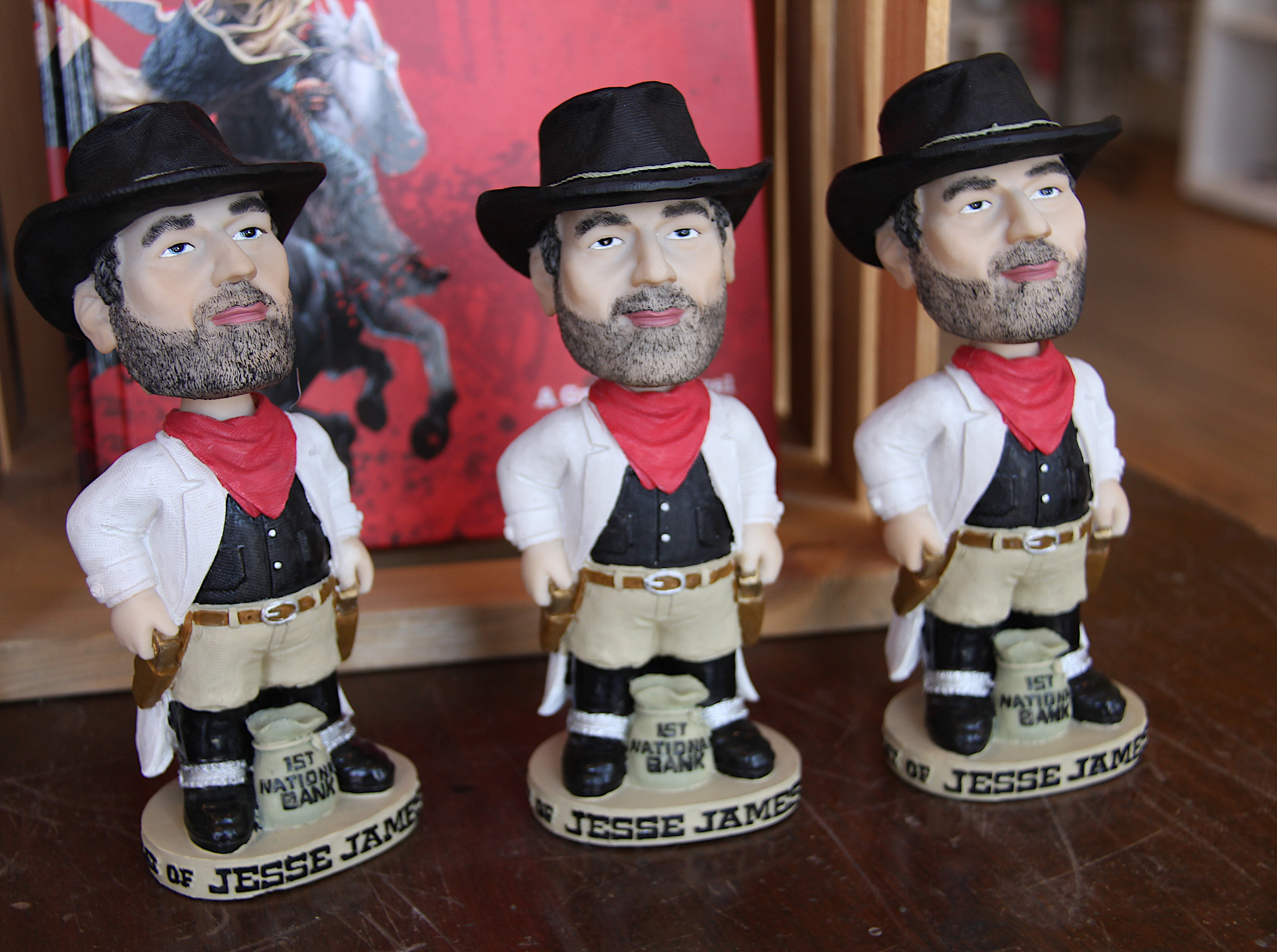
Defeat of Jesse James Days bobbleheads for sale at the Northfield History Center. (Minnesota Prairie Roots copyrighted photo April 2025)
Some 300 volunteers sort through donations, set up and run the sale in the sprawling ice arena with books separated into more than two dozen categories. The organization and efficiency are truly something to behold. The sheer size of this book fair is overwhelming. But then again, Northfield is a city that values books, knowledge and learning, as evidenced by its two liberal arts colleges, an independent bookstore, an engaged public library and an active writing community, especially of poets. That Northfield hosts one of Minnesota’s biggest book fairs should come as no surprise. This is a community which embraces books, and stands up to bank robbers.
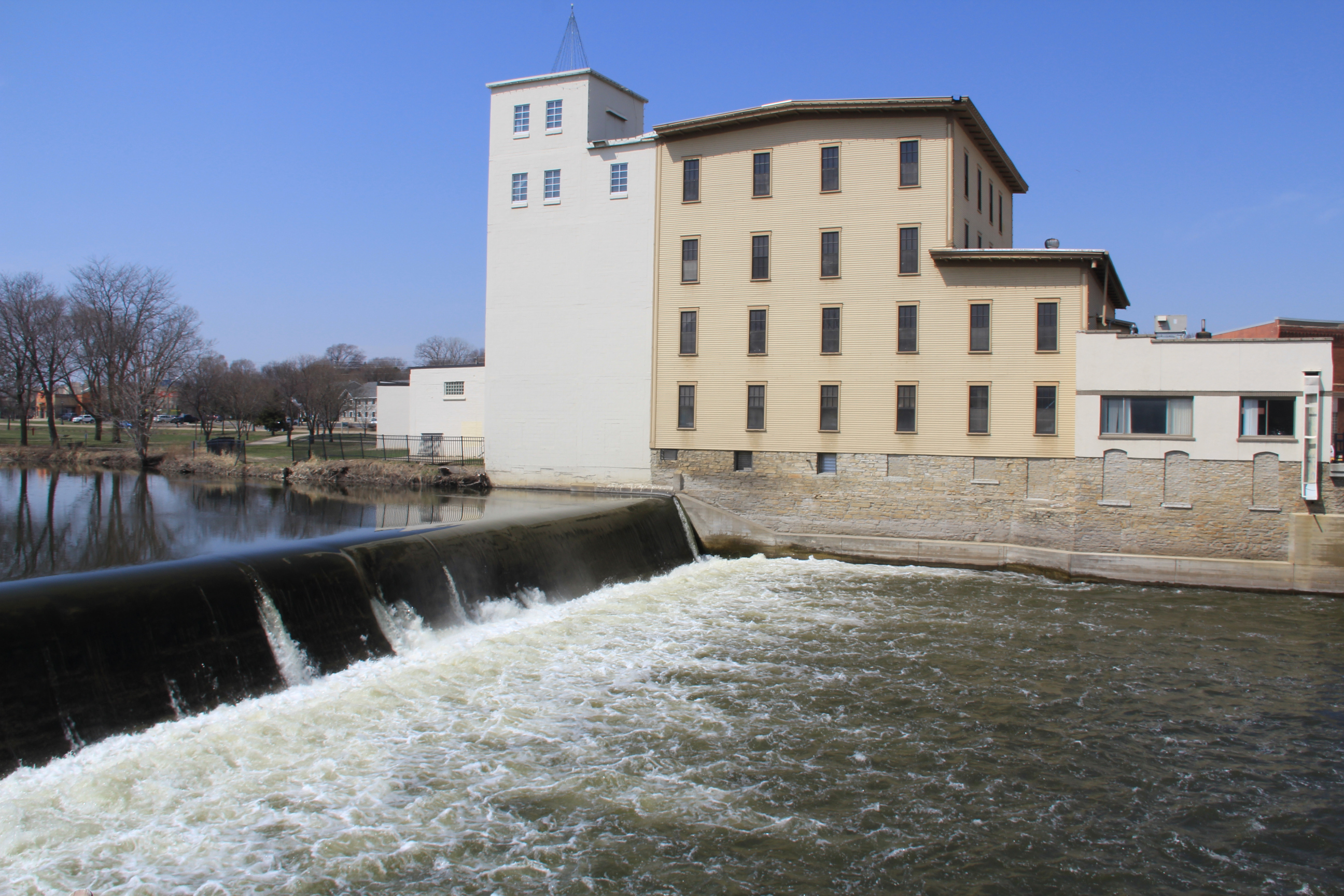
The Cannon River spills over the dam by the historic Ames Mill. (Minnesota Prairie Roots copyrighted photo April 2025)
WE COME TO THE RIVER. The Cannon River, spilling over the dam by the Ames Mill. Roaring. Churning. Then flowing under the bridge and between the walls of the Riverwalk in downtown Northfield.
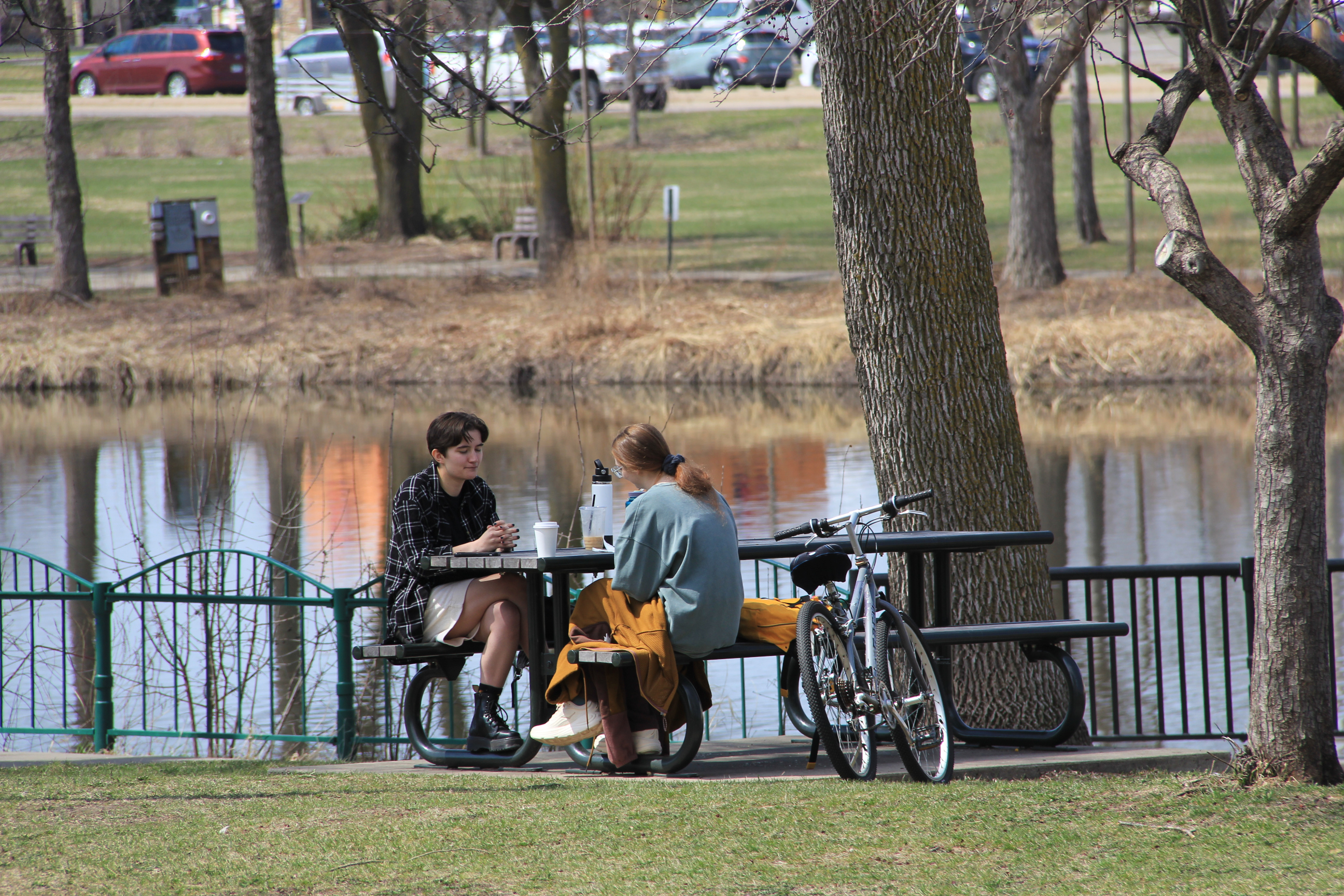
Enjoying beverages and time together beside the Cannon River in Bridge Square. (Minnesota Prairie Roots copyrighted photo April 2025)
We come here on a Sunday afternoon, on an April day of temps pushing into the sixties, the sun beaming warmth upon us, upon the land, upon the river. To sit. To walk. To lean toward the river. To simply be outdoors on an exceptionally lovely spring day in southern Minnesota.
The mood feels anticipatory, joyful, as we walk ourselves, and some their dogs, along the riverside path.
Historic buildings hug the Cannon River (and Division Street) in Northfield’s quaint downtown. (Minnesota Prairie Roots copyrighted photo April 2025)
I come with my Canon camera in hand. An observer. An appreciator of the sun, the sky, the warmth, the river, the historic buildings, the people and activities happening around me. In some ways, the scene seems Norman Rockwell-ish, Busy, yet tranquil. A slice of small town Americana. Everyday people enjoying each other, nature, the outdoors. Life.
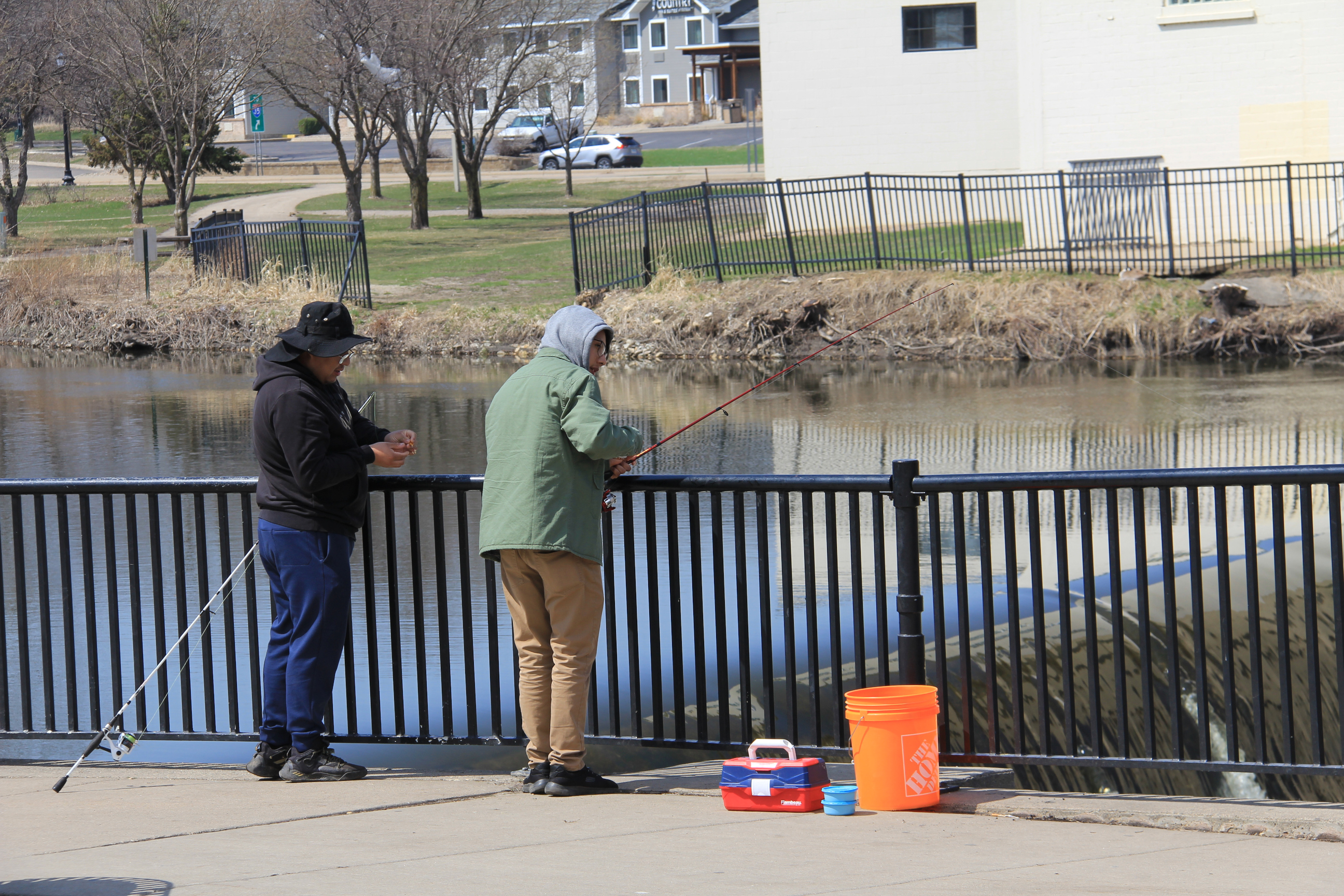
Fishing by the Ames Mill dam. (Minnesota Prairie Roots copyrighted photo April 2025)
Many carry fishing poles, tackle boxes, containers of bait. Anglers press against the riverside railing, dropping lines into the water far below.
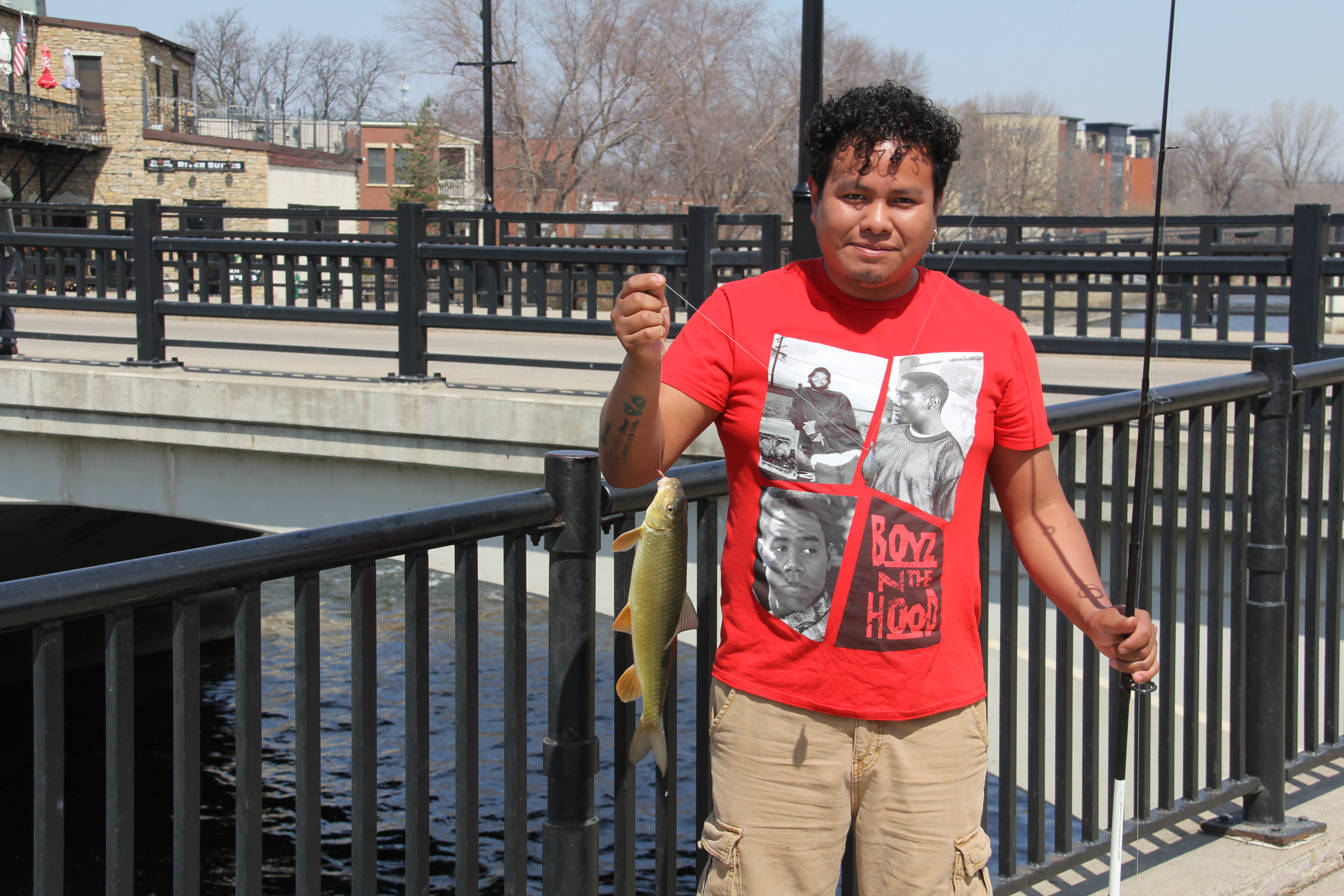
Caught in the Cannon, a sucker fish. (Minnesota Prairie Roots copyrighted photo April 2025)
I watch as a young man pulls in an unidentifiable-to-me fish (later identified as a white sucker by my husband). His friend snaps a photo of the proud angler and his first catch of the day.
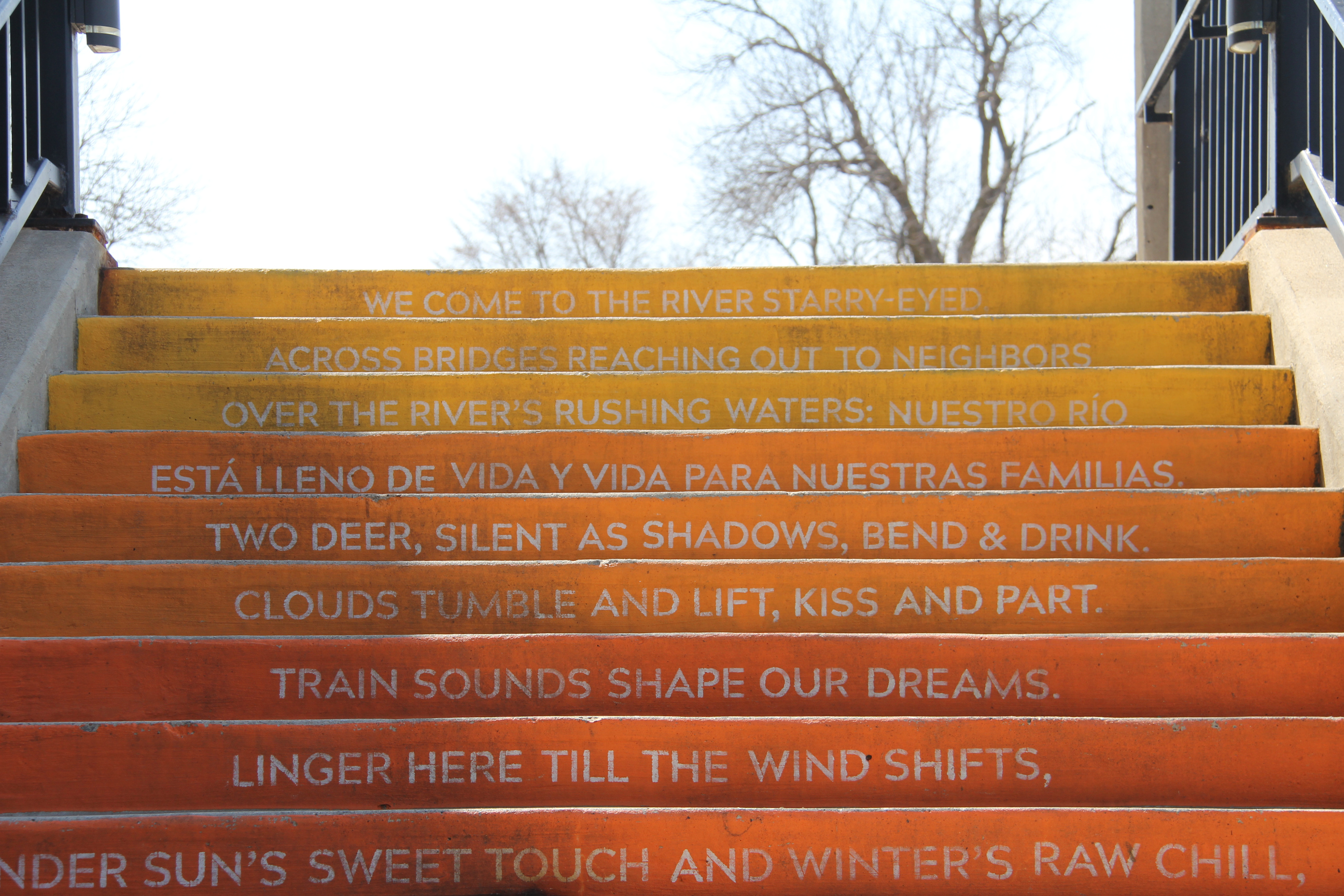
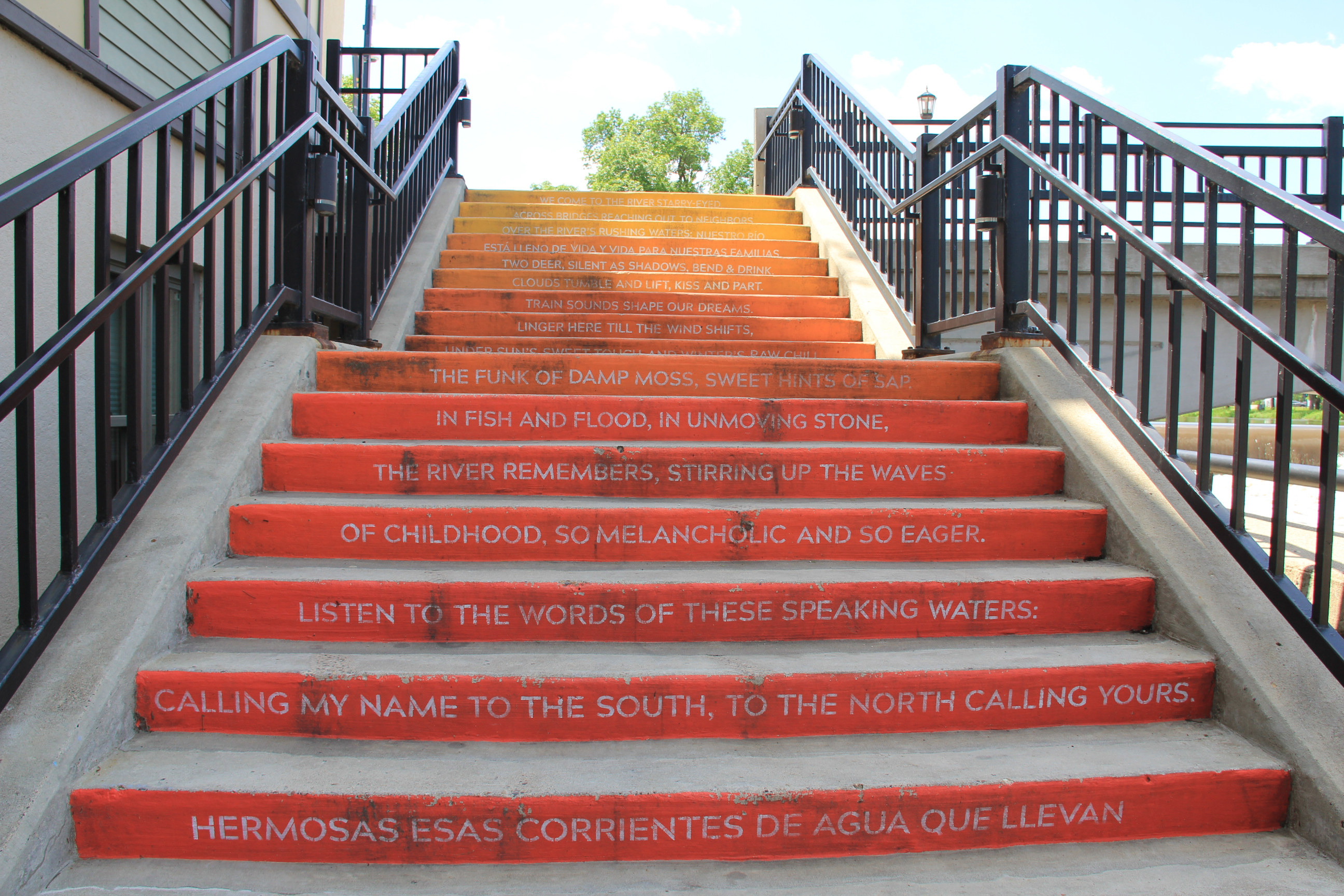
The top section of the Riverwalk Poetry Steps. (Minnesota Prairie Roots copyrighted photo April 2025)
After hanging around the river by Bridge Square for a bit, I descend the colorful Riverwalk Poetry Steps, a river poem crafted by a collaboration of 17 poets. We come to the river starry-eyed/across bridges reaching out to neighbors/over the river’s rushing waters…
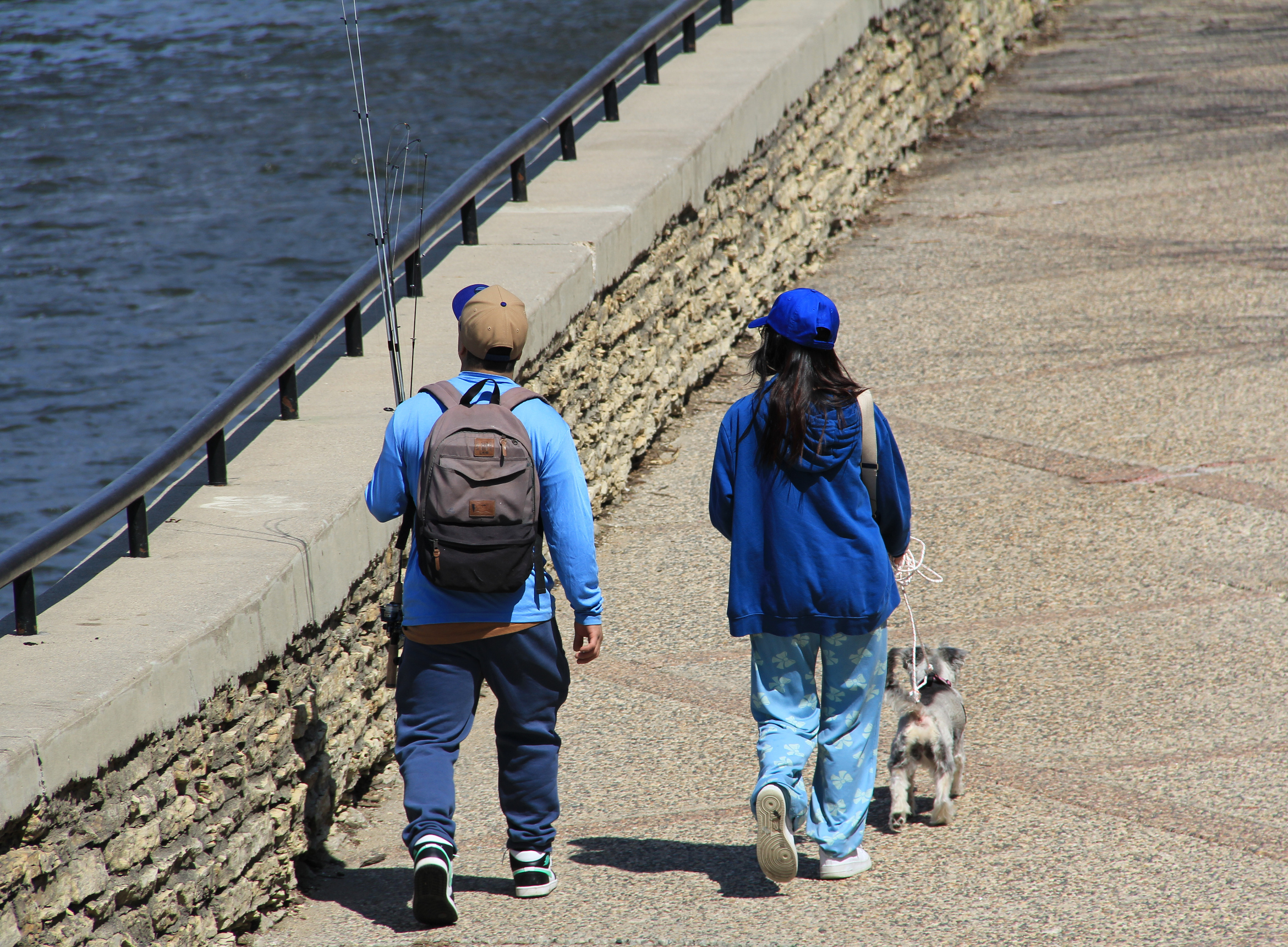
Following the Riverwalk to find a fishing spot along the Cannon River. (Minnesota Prairie Roots copyrighted photo April 2025)
I trail behind a couple, a family, a dog, another family, all of us connected by the water, by this place, on this spring day. I’m the only one to pause and read the poetry.
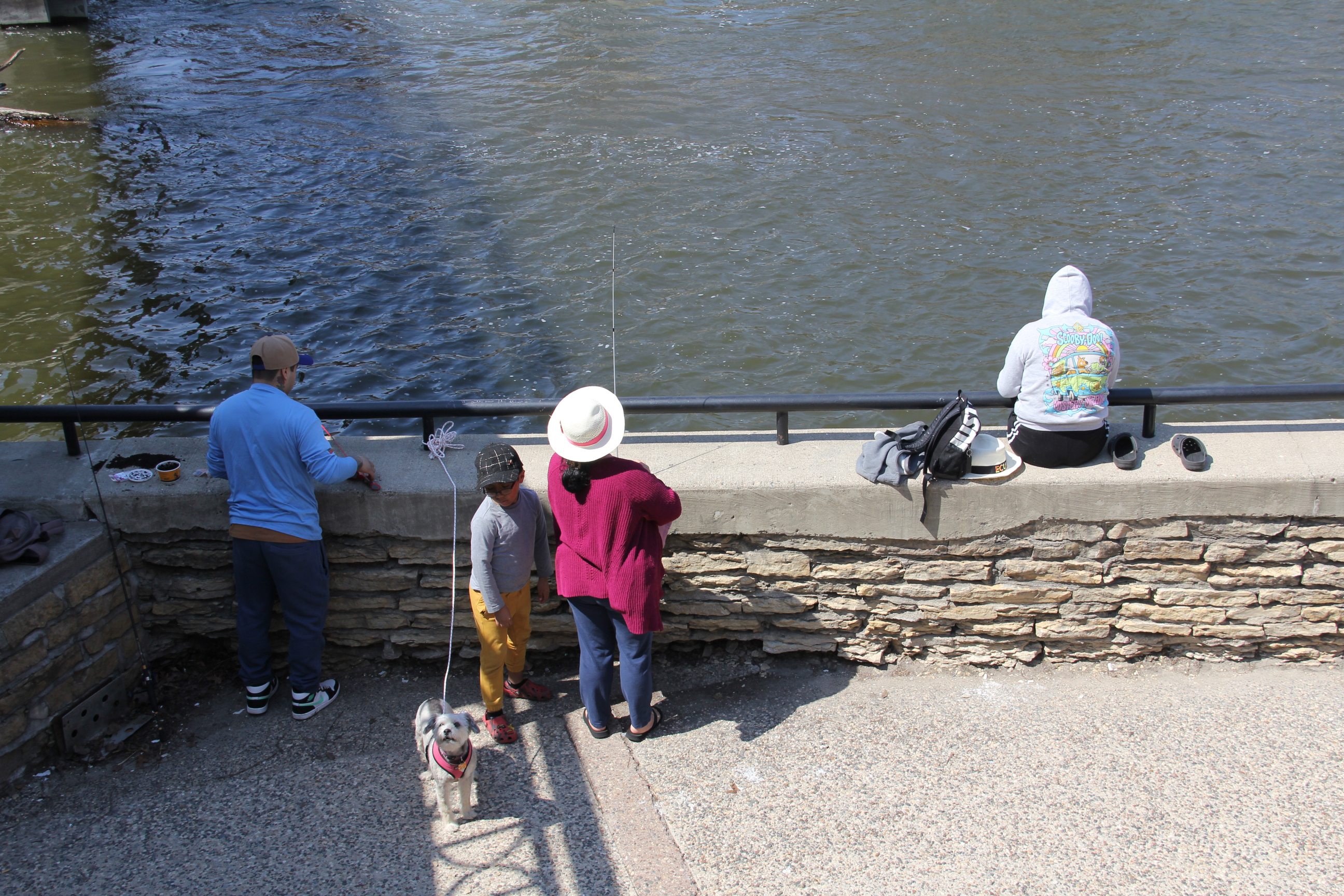
A family fishes the Cannon. (Minnesota Prairie Roots copyrighted photo April 2025)
Atop the river wall, young women sit, sans shoes, while they fish. We all watch the river flow. Bobbers bob. A pair of ducks—one pure white—flies low, skimming the water before landing upon the surface of the Cannon.
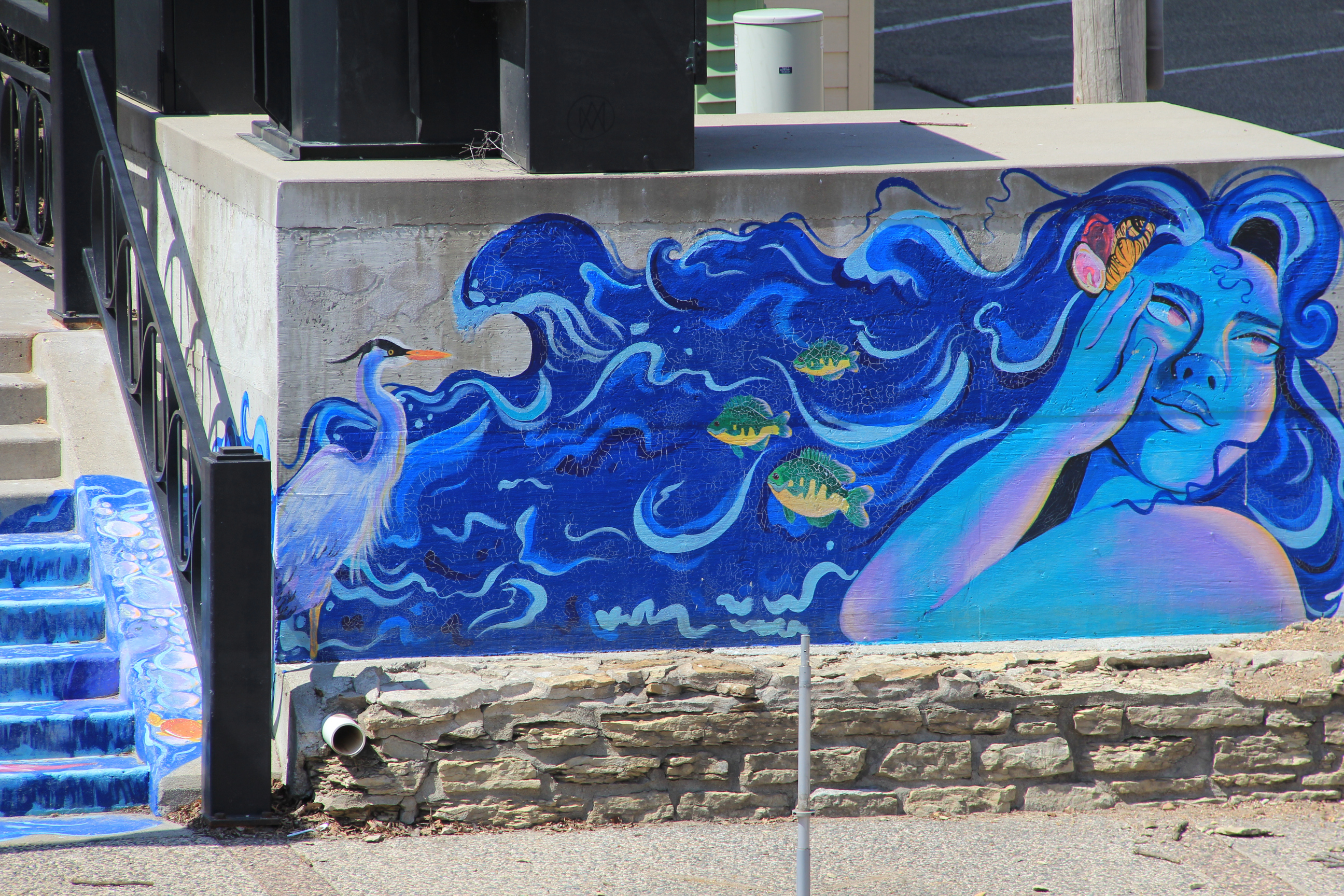
“Lady Cannon,” a riverside mural by Maya Kenney and Raquel Santamaria. (Minnesota Prairie Roots copyrighted photo April 2025)
Across the river, Lady Cannon watches. Fish swim in her tangled waves of locks, flowing like water down steps toward the river. She is the art of the Cannon.
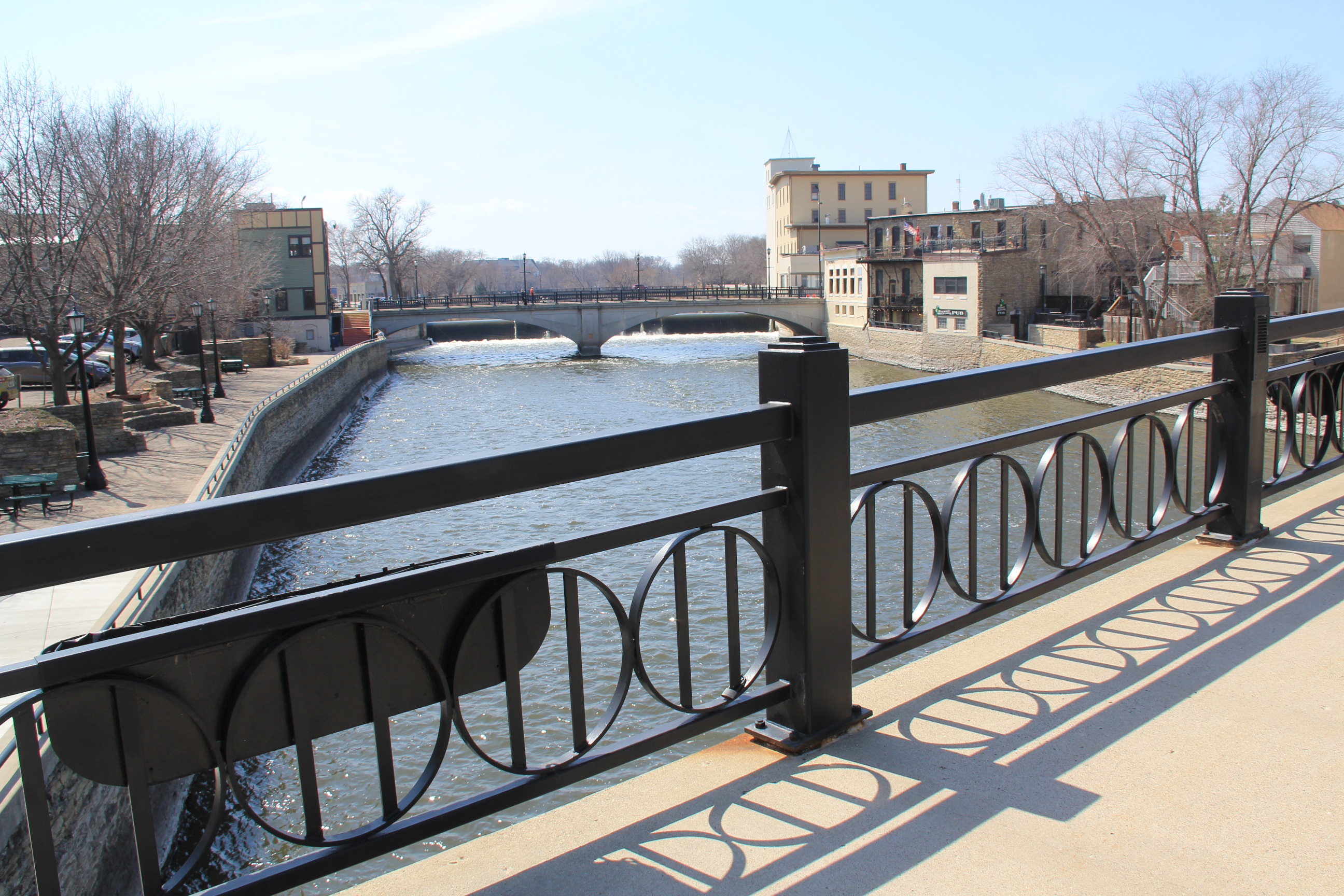
On the pedestrian bridge looking toward the Cannon and the Ames Mill, right in the distance. (Minnesota Prairie Roots copyrighted photo April 2025)
I see art, too, in a railing shadowed upon the pedestrian bridge. I linger, mesmerized by the moving water, the riverside historic flour mill a block away.
There’s so much to take in here. So much that connects us. The sun, the sky, the land. And the river that flows beside and below us.
This photo, taken during a car show in downtown Faribault, shows the diversity of my community. (Minnesota Prairie Roots copyrighted file photo)
WALK THROUGH THE HEART of downtown Faribault and you’ll see diversity. Diversity in businesses. Diversity in the people who live here. It’s a beautiful thing, at least to me.
A banner in Faribault’s historic district features a vintage photo outside a local business. (Minnesota Prairie Roots copyrighted file photo)
We need only look back to the founding of Faribault to understand the diversity which existed from the very beginning. Immigrants from around the world settled here, set up shop, engaged in business and grew this community. The shoemakers. The brewers. The furniture builders. The general store proprietors. The barbers. And on and on. They were as diverse as their skills. They shaped this place.
Faribault is the richer for those individuals and families who left their homelands, crossed the ocean, bringing their hopes and dreams to America. With the exception of Indigenous Peoples, we can mostly all trace our ancestry to a land a long ship ride away.
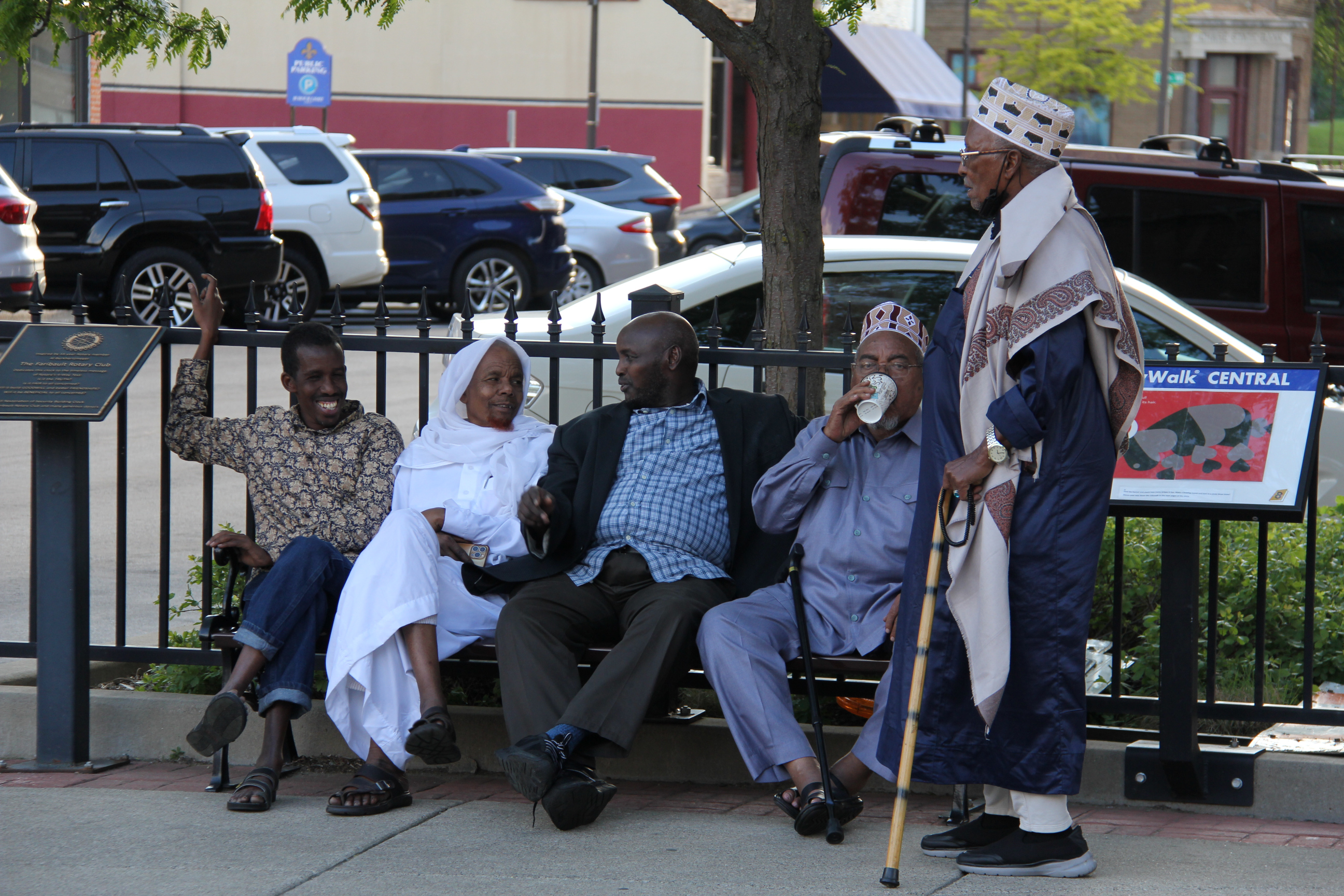
Somali men visit in downtown Faribault. My community is home to a sizeable Somali population, some of whom live downtown. (Minnesota Prairie Roots copyrighted file photo 2024)
Today our newest Faribault residents arrive mostly by plane. From Somalia. From Sudan. From Venezuela. From Mexico. And elsewhere. Many have fled worn-torn countries. Unimaginable atrocities. Their losses, their heartache, their pain is beyond what anyone should have to endure. But they have managed. They settle in, set up shop in our community, work in our local factories gutting turkeys and more, shingle our houses, cook and serve us their delicious cuisine… They work hard to rebuild their lives here in southern Minnesota. And I am glad to have them here as an integral part of my community.
Among the colorful merchandise at Mercado Local. (Minnesota Prairie Roots copyrighted file photo 2024)
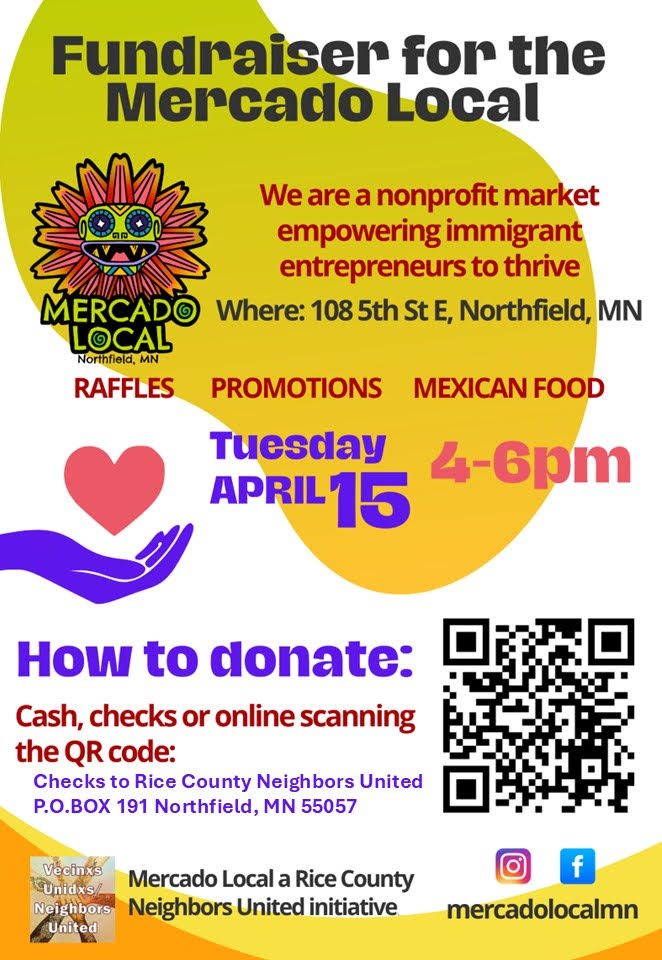
In neighboring Northfield, a downtown shop, Mercado Local, vends the art, crafts and more of artisans from Latin America and Hispanic backgrounds. Under the umbrella of Rice County Neighbors United, a nonprofit supporting the immigrant and refugee communities of Northfield, Mercado Local has flourished, serving as a marketplace, arts center (I’ve read poetry here) and community gathering space.
(Promo courtesy of Mercado Local)
From 4-6 p.m. Tuesday, April 15, Mercado Local is hosting a fundraiser for this nonprofit which aims to “empower immigrant entrepreneurs to thrive.” There will be updates, raffles, promotions, Loteria (like BINGO) and, of course, Mexican food. Even if you can’t make the event, I encourage you to pop into the marketplace. Just being inside this small space with all its colorful art and wares makes me happy. That’s one of the things I appreciate about Hispanic and Latino culture—the vivid colors. And I rather like the food, too.
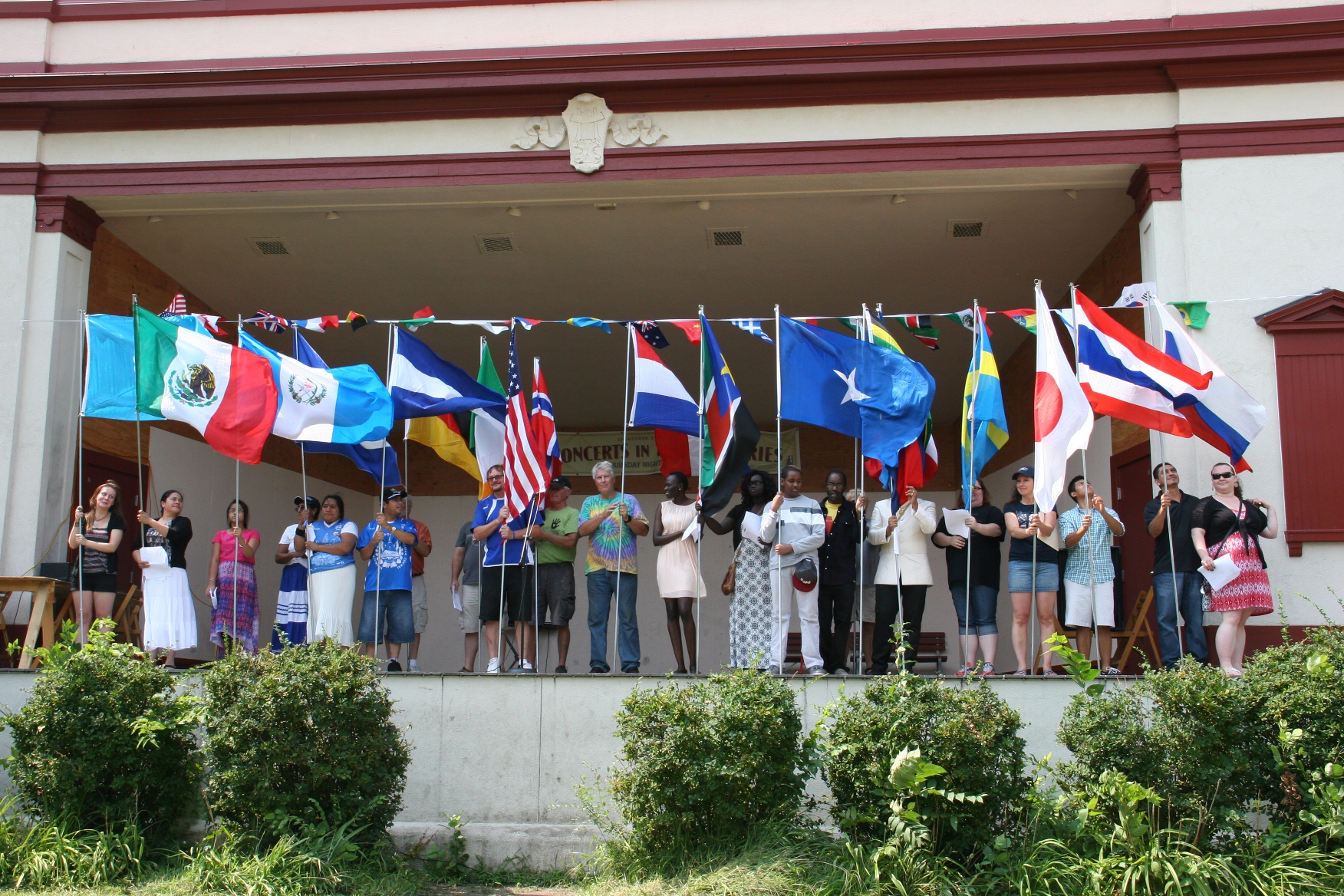
A flag ceremony at a past International Festival in Faribault featured national anthems and information about some of the countries from which Faribault residents have originated. (Minnesota Prairie Roots copyrighted file photo)
To have a diverse community is to experience the world up close, to widen our circle and understanding of others. Yet, no matter our skin color, our language, our customs, our dress, our roots, we are all just people. Individuals who laugh and cry and love and live. Now, together, we are growing our communities in new, exciting and diverse ways, just like those who crossed the ocean all those years ago to settle in America.
The Riverwalk Steps Poem alongside the Cannon River in the heart of downtown Northfield. (Minnesota Prairie Roots copyrighted file photo)
I FEEL FORTUNATE to live in an area of Minnesota which values poetry. Some 20 minutes away in Northfield, poems imprint upon concrete throughout the city as part of the long-time Sidewalk Poetry Project. Along the Riverwalk, a poem descends steps. In the public library, a poem graces the atrium.
Sidewalk poetry in downtown Northfield carries a powerful message.(Minnesota Prairie Roots copyrighted file photo)
But that’s not all in Northfield. This city of some 21,000 has a poet laureate, currently Russ Boyington, who fosters poetry, organizes and publicizes poetry events, and leads an especially active community of wordsmiths. These are published poets, serious about the craft.
This anthology published in 2024.(Minnesota Prairie Roots copyrighted file photo)
Five seasoned Northfield poets recently collaborated to publish a collection of their work in We Look West. Even if you think you don’t like poetry, you will find something in this anthology which resonates. These poets take the reader through the seasons of life with humorous, sad, nostalgic, reflective and introspective poems. This anthology is especially fitting for anyone closer to the sunset, than the sunrise, of life.
A serene country scene just north of Lamberton in southern Redwood County on the southwestern Minnesota prairie. (Minnesota Prairie Roots copyrighted file photo)
April, National Poetry Month, marks a time to celebrate poets like those in Northfield and beyond. In my own community of Faribault, we have an especially gifted poet, Larry Gavin, a retired high school English teacher and writer. He’s published five collections of his work. Larry writes with a strong sense of place, his poems reflective of his love of nature, of the outdoors. A deep love of the prairie—he attended college, then lived and worked for a while in my native southwestern Minnesota—connects me to this remarkable poet. Plus, Larry has the rich voice of a poet, which makes listening to him read his poems aloud an immersive, joyful experience.
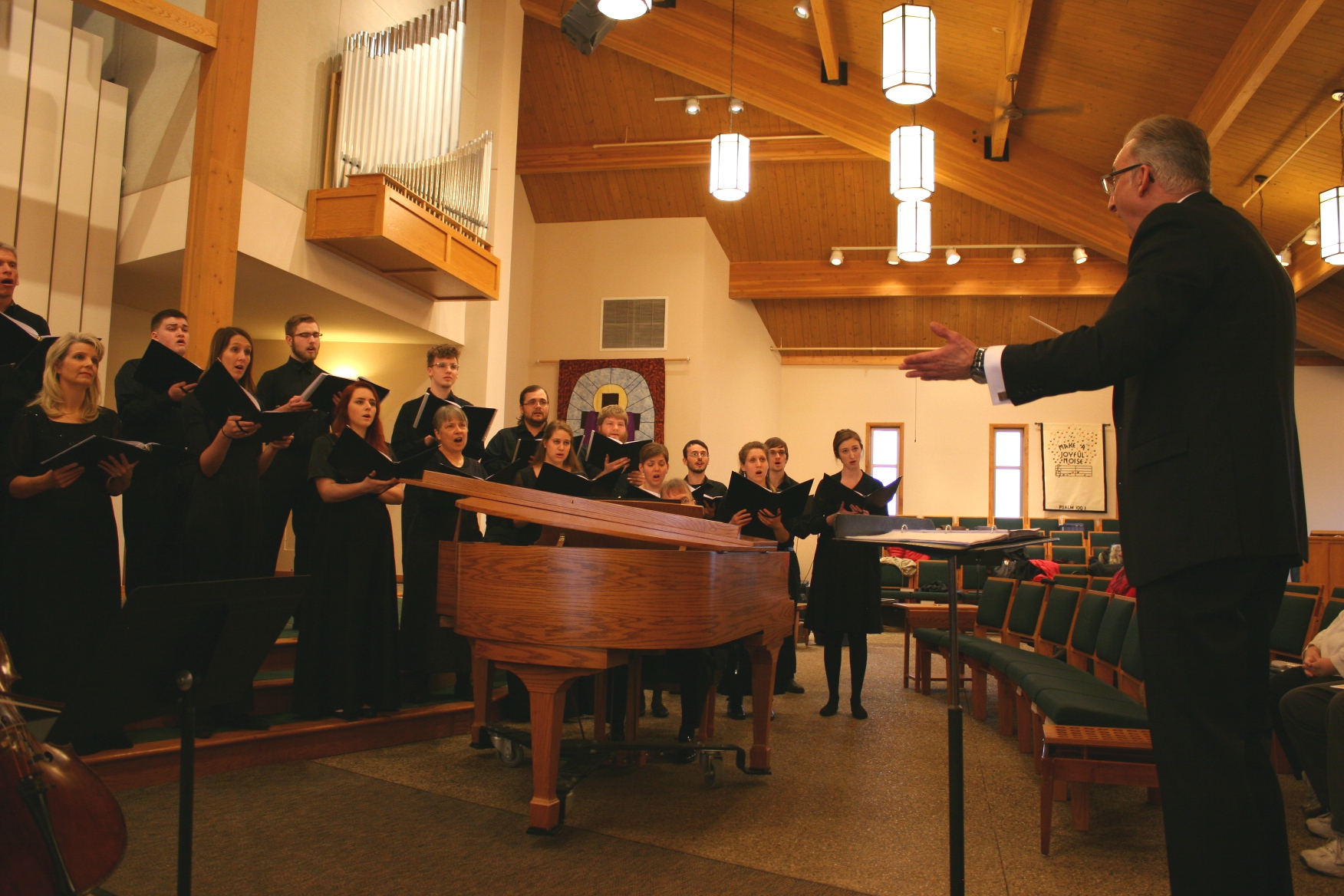
A chamber choir, directed by composer David Kassler, performs artsongs written from poems in 2017, mine included. (Minnesota Prairie Roots copyrighted file photo)
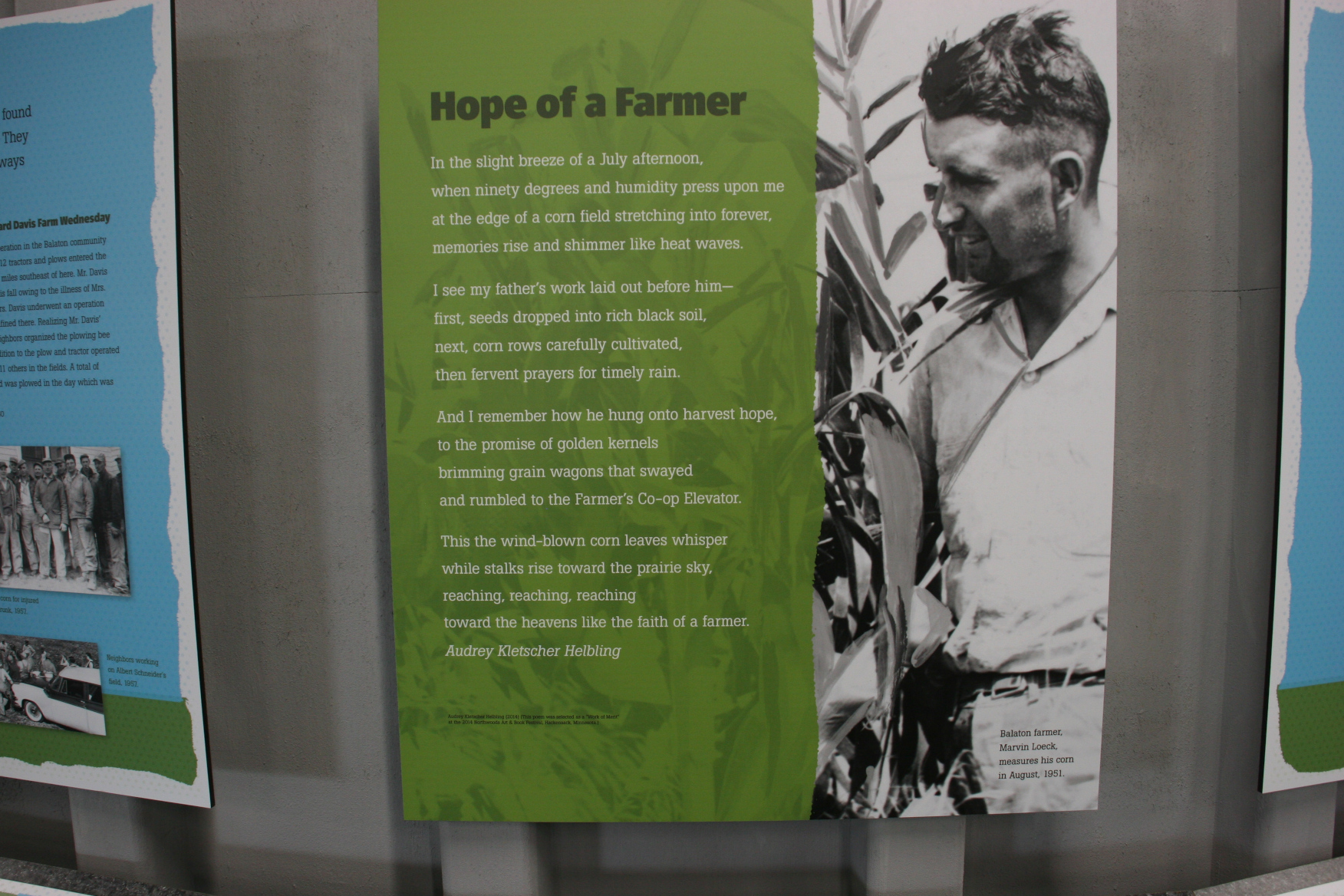
I, too, write poetry and am a widely-published poet, although certainly not as much as many other Minnesota poets. From anthologies to a museum, from the Mankato Poetry Walk & Ride to poet-artist collaborations, billboards and more, my poems have been out there in the public sector. Perhaps the most memorable moment came when a chamber choir performed my poem, “The Farmer’s Song,” during two concerts in Rochester in 2017. David Kassler composed the music for the artsongs.
Two of my rural-themed poems are included in an exhibit, “Making Lyon County Home,” at the Lyon County Historical Society Museum in Marshall. (Minnesota Prairie Roots copyrighted file photo)
Poetry has, I think, often gotten a bad rap for being stuffy, difficult, too intellectual and unrelatable. And perhaps it was all of those at one time. Butt that’s not my poetry. And that’s not the poetry of Larry Gavin or of the five We Look West Northfield poets or most poets today. The poetry I read, write and appreciate is absolutely understandable, rich in imagery and rhythm, down-to-earth connective.
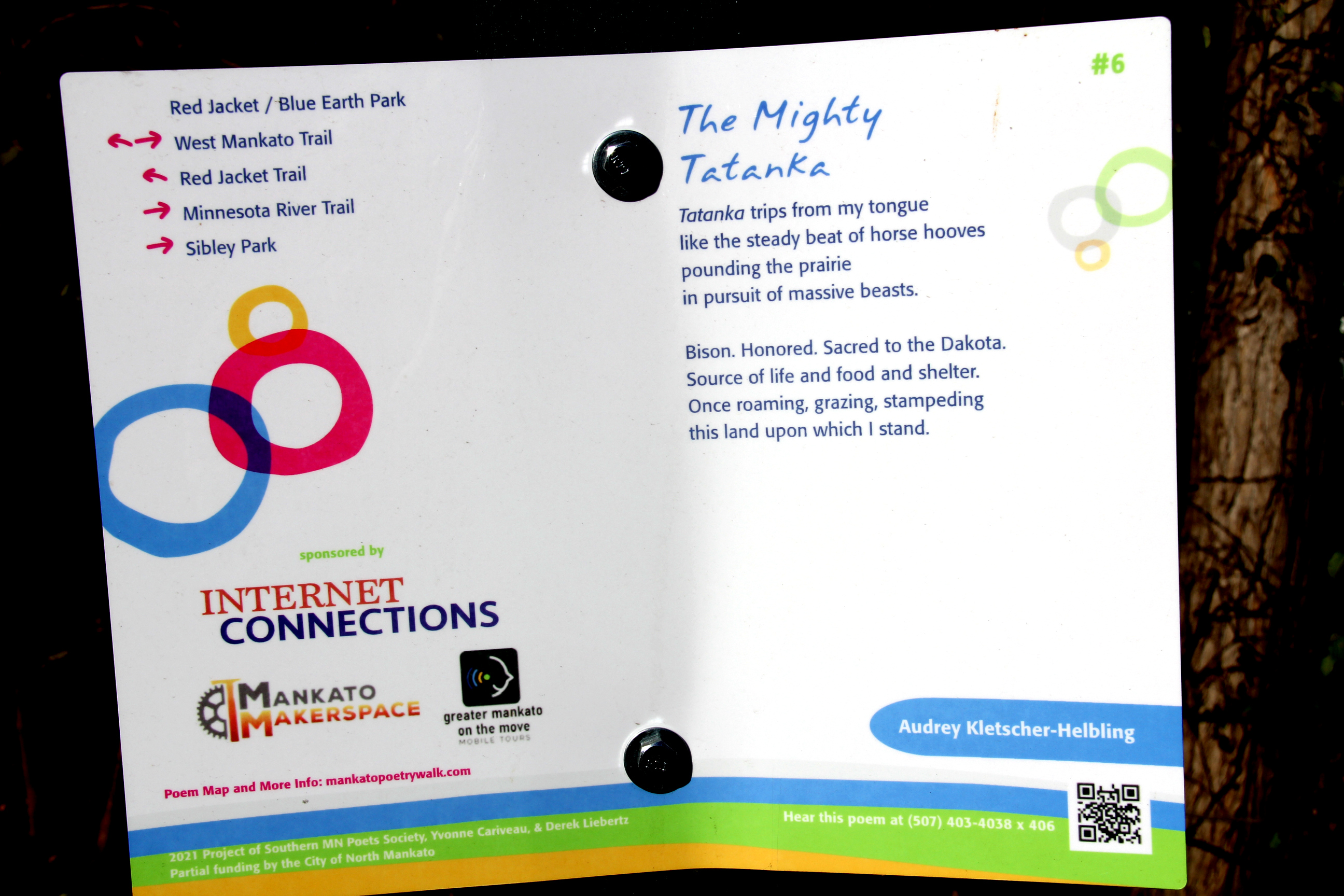
My most recent poem selected for the Mankato Poetry Walk & Ride. Poets must follow character and line limits in writing these poems.This is a competitive process.(Minnesota Prairie Roots copyrighted file photo)
When I write poetry, I visualize an idea, a place, a scene, a memory, an emotion, then start typing. The words flow, or sometimes not. Penning poetry is perhaps one of the most difficult forms of writing. Every word must count. Every word must fit the rhythm, the nuances of the poem in a uniquely creative way.
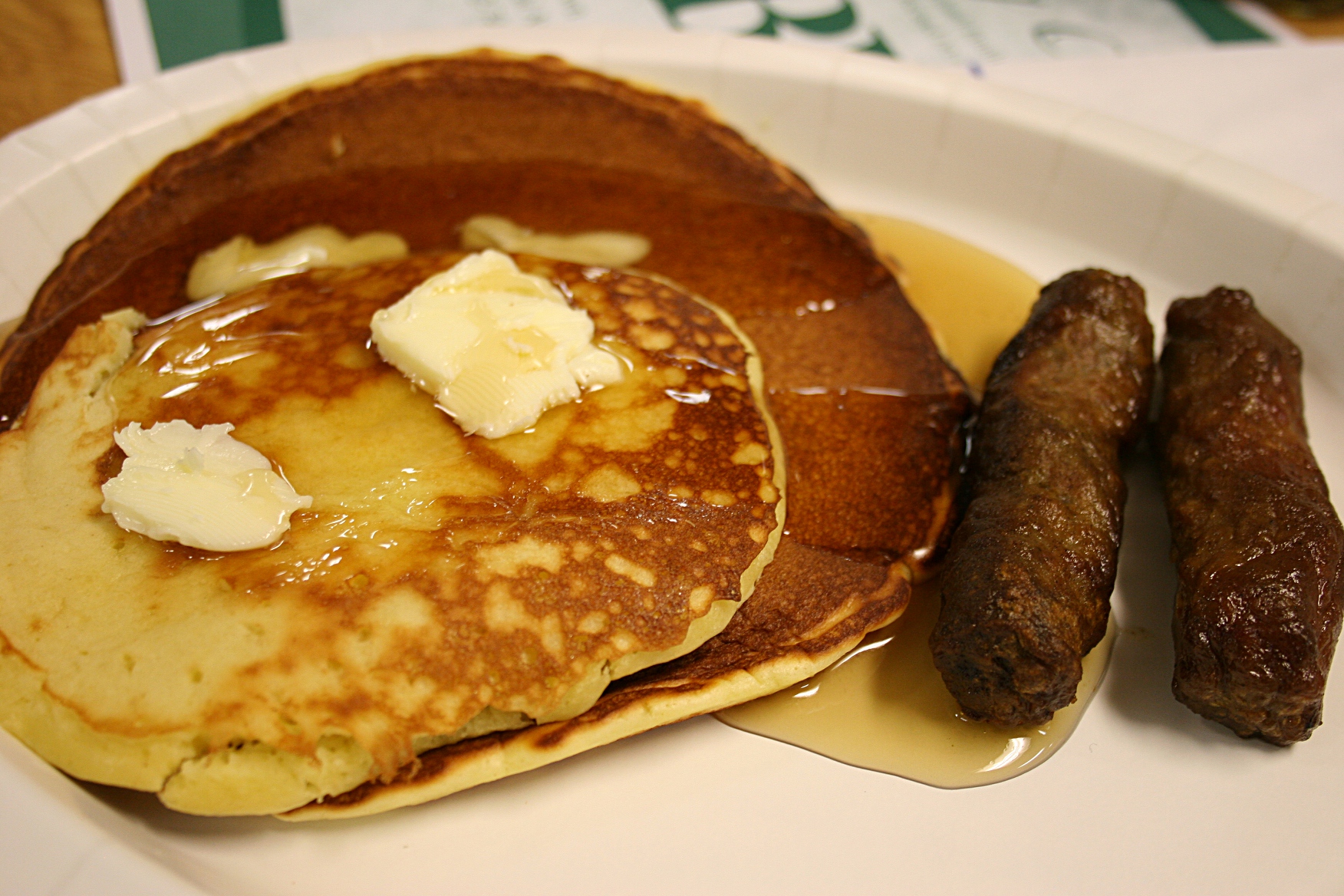
Not the pancakes Grandpa made, but the pancakes and sausages made at the annual Faribault Lions Club Pancake Breakfast. (Minnesota Prairie Roots copyrighted file photo)
One of my most recent poems, “Pancakes with Grandpa,” was inspired by an exchange between my husband, Randy, and our grandson Isaac, then four. It was printed in Talking Stick 32—Twist in the Road, an anthology published in 2023 by northern Minnesota based Jackpine Writers’ Bloc. It’s a competitive process to get writing—poetry, fiction and creative nonfiction—in this collection.
So, in celebration of National Poetry Month, here’s my pancake poem, penned by a poet who doesn’t particularly like pancakes.













Protesting in Minnesota October 19, 2025
Tags: America, commentary, democracy, First Amendment rights, freedom, Minnesota, NO KINGS protest, Northfield, peaceful protest, rally
I AM AN AMERICAN, a Minnesotan, a resident of Rice County and the city of Faribault. I am a writer, photographer, blogger, poet. I am a wife, mother, grandmother. And I am also a protester.
On Saturday I joined millions across the country and world participating in NO KINGS rallies in my fourth protest since June 14. I care about America. I love America. But I don’t like what’s happening here under the Trump administration, which is eroding our democracy and taking, or attempting to take, away our rights, freedoms and, oh, so much more by authoritarian rule, force, threats, retribution, control, manipulation…
I refuse to remain silent at a time such as this. So I exercised my rights to free speech and freedom of peaceful assembly under the First Amendment to the Constitution by participating in a protest in neighboring Northfield along with a thousand or more others. We packed Ames Park along the Cannon River and lined the east side of Minnesota State Highway 3 for a block to listen to speakers, to share our concerns, to hold protest signs high, to hear plans of action, to sing and pray and reflect, and to engage in conversation.
At times throughout the 1 ½-hour event, I protested next to a Vietnam War veteran, a mechanic, a retired professor of Spanish and Latin American literature (also a poet), a retired college office employee, a retired engineer, a retired elementary school teacher… I also mingled among countless others there for the same reason—to protest. To express our concerns about healthcare, education, the economy, immigration, due process, freedom of speech, a free press, free and fair elections, government funding cuts, the presence of military in our cities, the balance of power, the judiciary, the overreach of power, clean energy… The list goes on and on.
I saw a baby strapped to his/her mom. Kids on shoulders. Kids with signs. Young people of high school age and early adulthood. Those in their middle years. Those in their sixties, like me. And those even older, some probably pushing ninety. The turn-out for this protest was even bigger and more diverse age-wise than the one in June in Northfield on the date Minnesota House Speaker Emerita Melissa Hortman and her husband, Doug, were assassinated.
To be among this group of peacefully protesting concerned Americans during the NO KINGS rally felt empowering. Uplifting. We were unified in our movement, even as one speaker pointed out that we may not agree on everything. Another termed what’s unfolding in America today as not “normal.” It is not, and should not be, normal. Ever.
Support from motorists passing by was overwhelmingly positive with honking horns and waves. Of course, we got a few middle fingers and intentionally roaring, racing vehicles. Only once did I feel unsafe—when a car sped by at a dangerously high speed, the driver clearly attempting to antagonize and threaten us. That was the only overt hatred I witnessed.
Those of us peacefully gathered did not, as some Republican politicians adamantly and wrongly stated, come because we hate America. Far from it. We love America. That was clear in the peaceful tone of the event, in American flags waving, in recitation of the Pledge of Allegiance, in singing of the national anthem, in signage, in our desire to uphold the Constitution, in our genuinely deep concern about the state of our country under President Donald Trump. In our voices rising. Loud. And free.
#
NOTE: Please be respectful in your comments. I moderate all comments on this, my personal blog.
© Copyright 2025 Audrey Kletscher Helbling