Minnesota Prairie Roots

Writing and photography by Audrey Kletscher Helbling

The importance of Veterans Day to me as a writer & veteran’s daughter November 10, 2017

U.S. Army Cpl. Elvern Kletscher, my father, in the trenches in Korea.


WHEN I CONSIDER Veterans Day, I think beyond a general blanket of gratitude for those who have served, and are serving, our country. I see a face. I see my soldier father, an infantryman on the battlefields of Korea and recipient of the Purple Heart.


My dad carried home a July 31, 1953, memorial service bulletin from Sucham-dong, Korea. In the right column is listed the name of his fallen buddy, Raymond W. Scheibe.


My dad, Elvern Kletscher, died in 2003. But his memory remains strong in my heart as do the few stories he shared of his time fighting for his country. He witnessed unspeakable, violent deaths. And, yes, he killed the enemy, often telling his family, “It was shoot or be shot.” I cannot imagine shooting someone so near you can see the whites of their eyes.
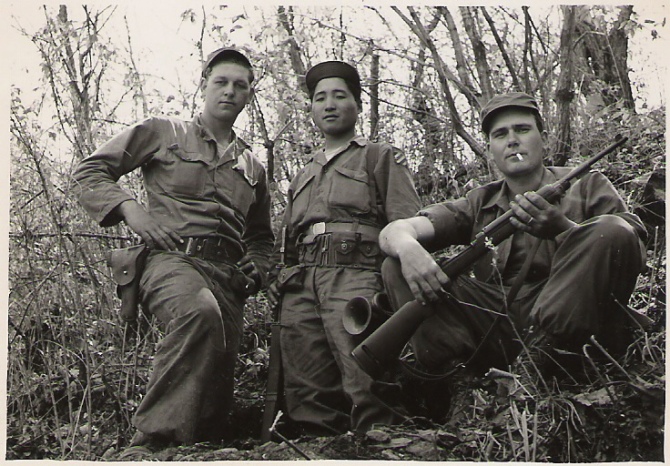
 

My father, Elvern Kletscher, on the left with two of his soldier buddies in Korea.


Atop Heartbreak Ridge, Dad picked off a sniper who for days had been killing off American soldiers. He suffered a shrapnel wound there.

But his wounds ran much deeper than the physical. His wounds stretched into a lifetime of battling post traumatic stress disorder, long unrecognized. He told stories of diving to the earth when a neighbor fired at a pheasant, the sound of gunfire triggering all those horrible war memories. The neighbor laughed. Likewise, guns shot at a small town parade sent him ducking for cover.


My dad’s military marker in the Vesta City Cemetery. Minnesota Prairie Roots file photo.


I can only imagine the demons my father fought. You cannot walk away from war-time death and violence unchanged. Only much later in life, as the decades passed and awareness of PTSD grew, did my dad find some comfort in talking to other vets with similar experiences.
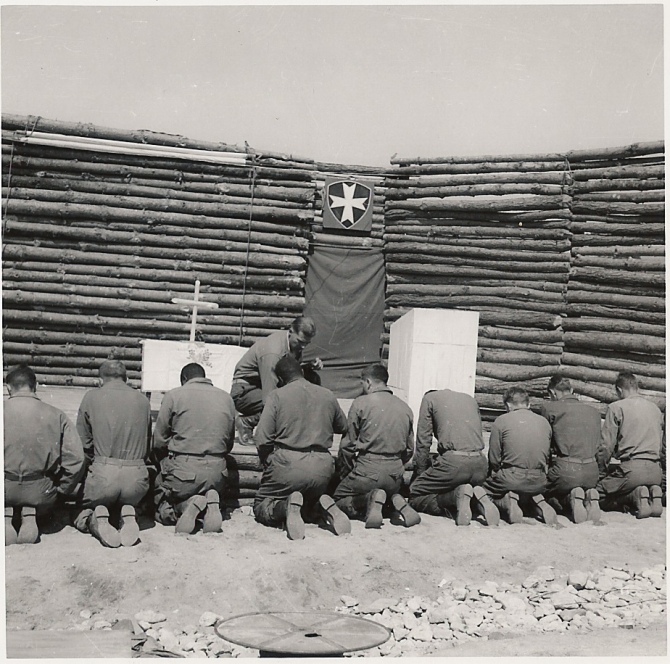
 

Soldiers receive The Lord’s Supper in Korea, May 1953. Photo by my soldier father, Elvern Kletscher.


Dad’s strong faith also pulled him through his emotional turmoil, during and after war.

Now, as I look back, I wish I had been more understanding, more grateful. But I can’t change that. Rather, I can choose to honor my dad by writing, an expression of the freedom he fought to preserve.


I wrote a story (“Faith and Hope in a Land of Heartbreak”) about my dad’s war experiences in this book, published in 2005 by Harvest House Publishers.


As a writer, I hold dear the value of my freedom to write. No one censors my writing or tells me what to write. I treasure that. I cringe at the current overriding criticism of the press in this country, the constant allegations of “fake news.” I worry about this negative shift in thought, the efforts to suppress and discredit the media. My dad fought to keep us free. And that freedom includes a free press.
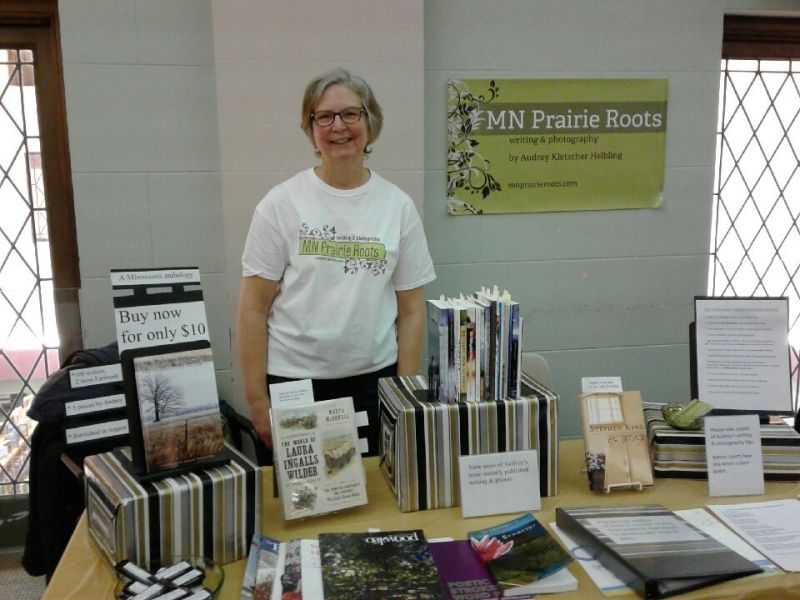


That struck me Thursday evening as I gathered with 13 Faribault area writers at a Local Authors Fair at Buckham Memorial Library. Here we were, inside this building packed with books and magazines and newspapers and more, showcasing our writing. No one stopped us at the door to check if our writing met government standards. No one stopped us from selling our books. No one stopped us from engaging in free conversation with each other and with attendees.

I am grateful to those who assured, and are assuring, that I will always have the ability to write without censorship in a country that still remains free.


© Copyright 2017 Audrey Kletscher Helbling


Up North in Nisswa November 9, 2017

Filed under: Uncategorized — Audrey Kletscher Helbling @ 5:00 AM
Tags: , , , , , , , , ,

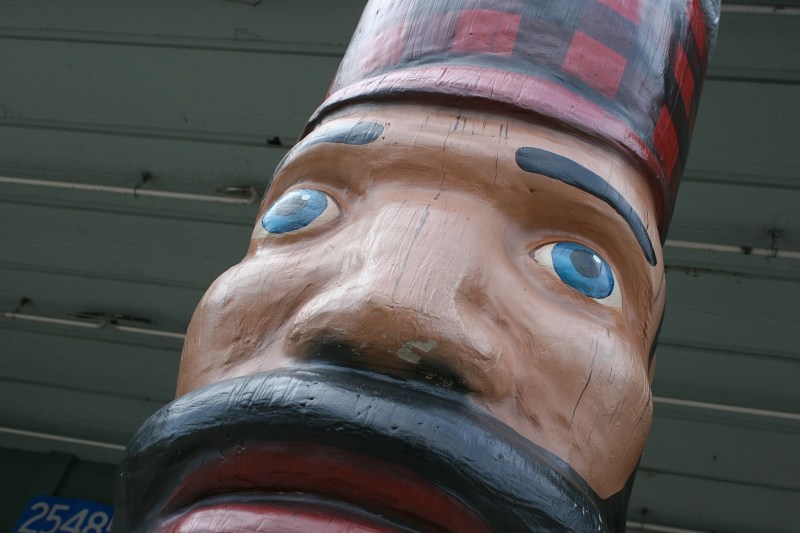
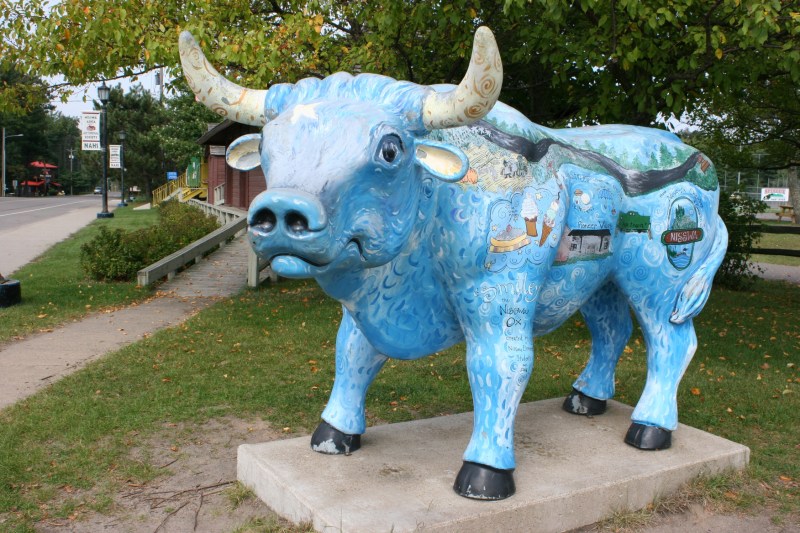
Babe the Blue Ox of Paul Bunyan Legend stand on the corner by the tourism office along Nisswa’s Main Street.


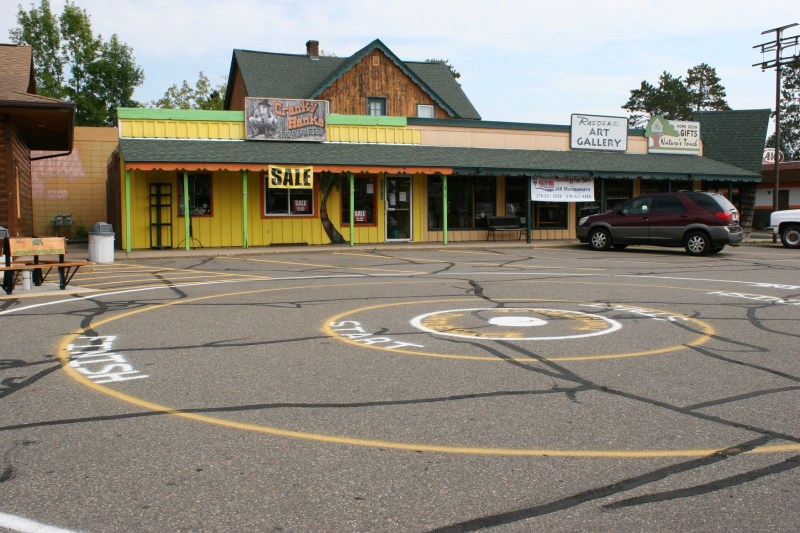
ON THE THURSDAY I toured Nisswa in mid-September, the turtle race track stood empty, Babe the Blue Ox stood tall and this northern Minnesota community buzzed with visitors.


Set in the heart of lake country, this town of some 2,000 draws folks from nearby cabins, resorts and hotels to meander through the many shops that line several blocks of a route once followed by Native Americans traveling northward through these parts from southern Minnesota.


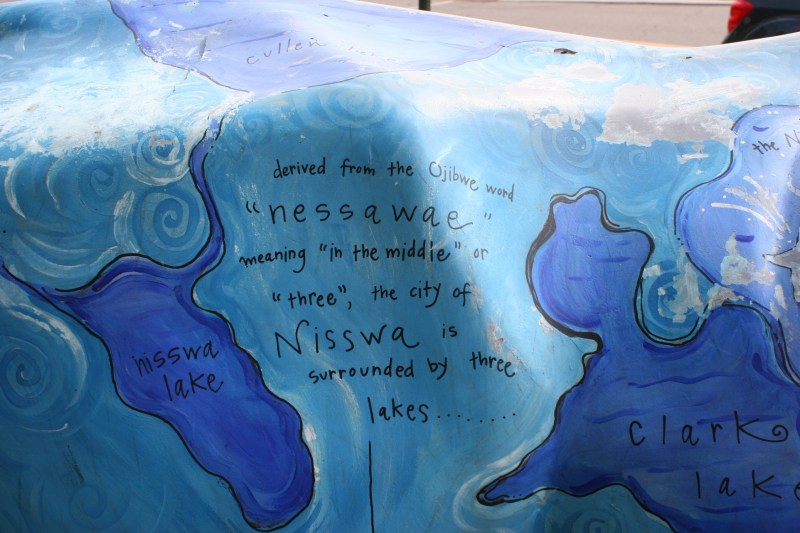
Babe the Blue Ox bears the history of Nisswa’s name on its flank.


The name Nisswa comes from the Ojibwe word nessawae meaning “in the middle” or “three.” Nisswa sits in the middle of three lakes.


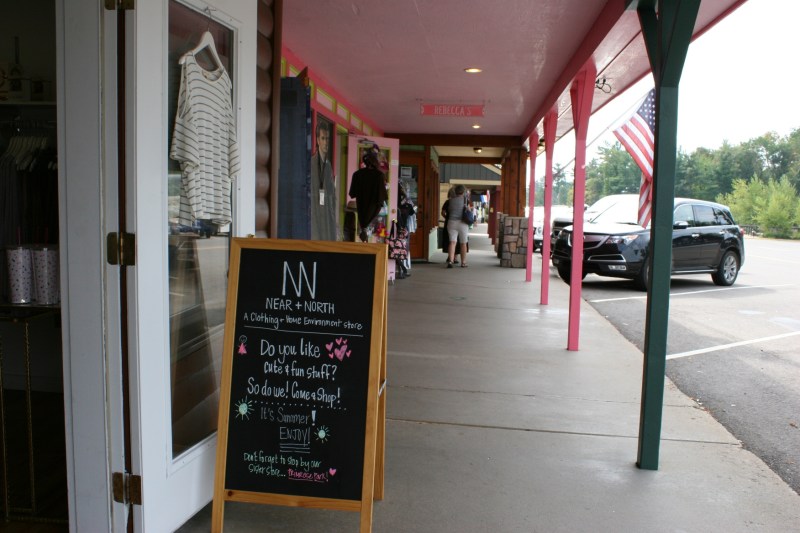
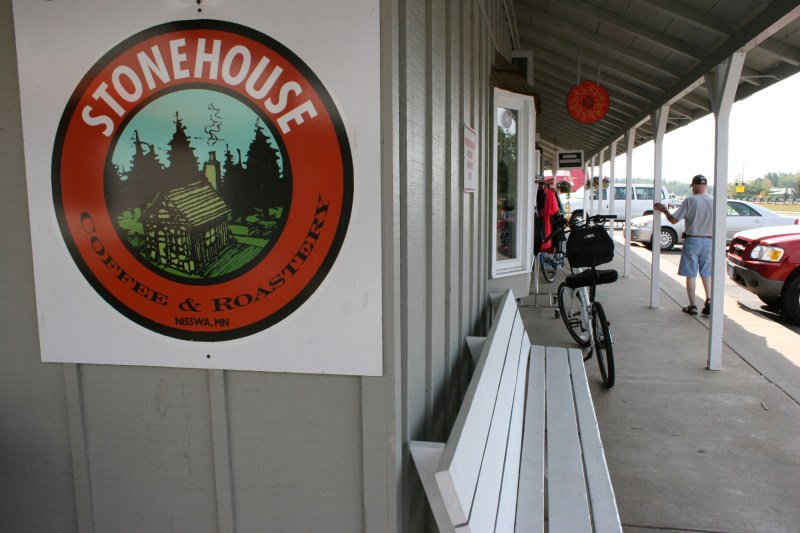
On this day, I didn’t learn much about local history. But I did learn that these northerners rate as a friendly bunch. In business after business, shopkeepers greeted Randy and me with friendly smiles and welcoming attitudes. With the exception of signs prohibiting photos of merchandise (much of it original art) prevalent throughout Nisswa, I felt more than welcome.


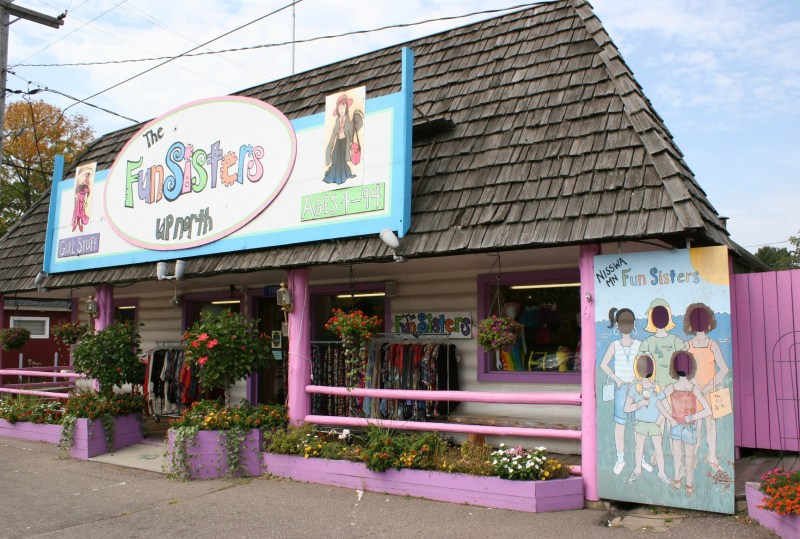
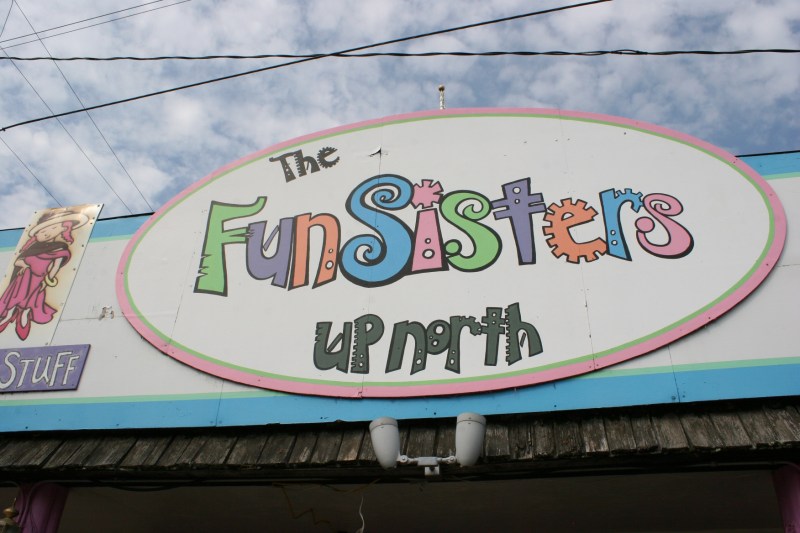
A shopkeeper at The Fun Sisters Up North Boutique even convinced me to try on leggings and an appropriate bum-covering top. Inside my mind, I protested. But she was just so darned nice that I agreed. I’ll admit that I looked better than I thought in leggings. But I still felt like I was playing dress-up in fashionable attire totally foreign to me. She didn’t make the sale. But the clerk sold me on the genuine friendliness of Nisswa.


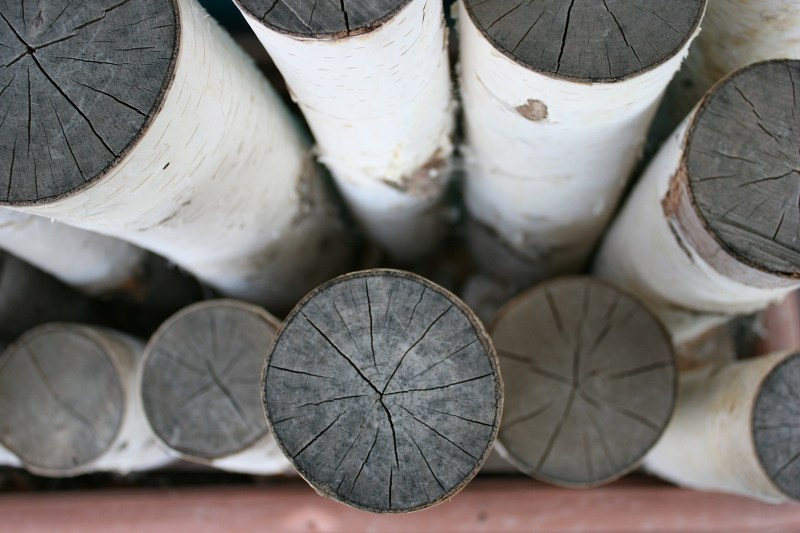
Signature northwoods birch logs propped outside a business.


I dropped my money in several other businesses, picking up Minnesota-themed gifts for friends and my granddaughter.


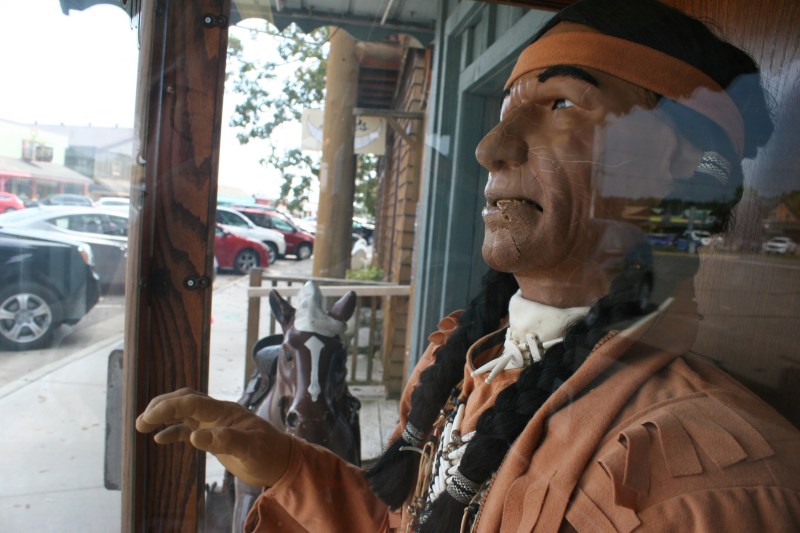
Vintage Native American art outside a shop tips visitors off to this region’s history.


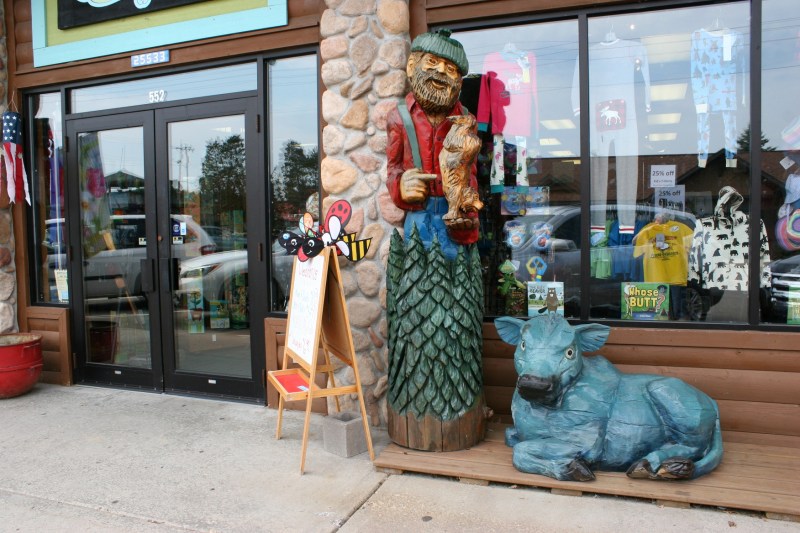
The legend of Paul Bunyan, here interpreted in a woodcarving, runs strong in the Minnesota northwoods.


Nisswa presents a definitively northwoods feel with more than one Babe the Blue Ox and Paul Bunyan and plenty of buffalo plaid and loon art. Randy and I spent hours here ducking in and out of shops. And that says a lot for the attraction of Nisswa to someone like me who generally dislikes shopping. The original arts and crafts and merchandise with a Minnesota bent kept me interested.


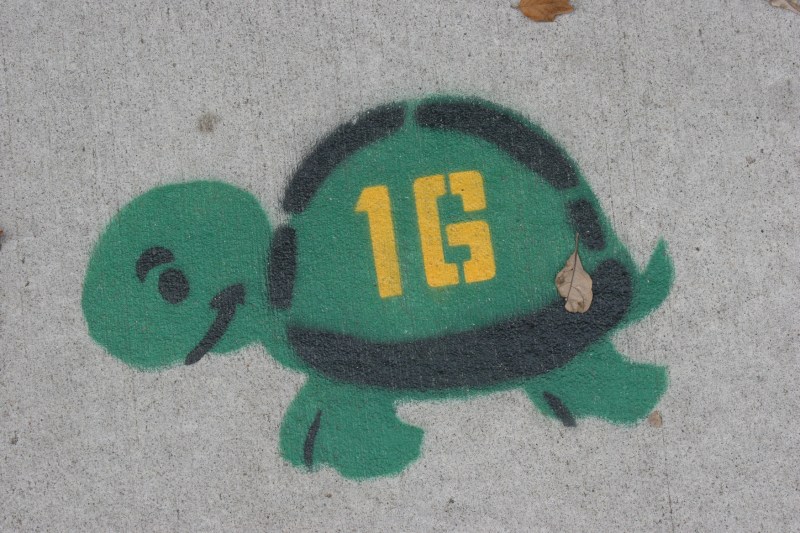
Painted turtles mark businesses.


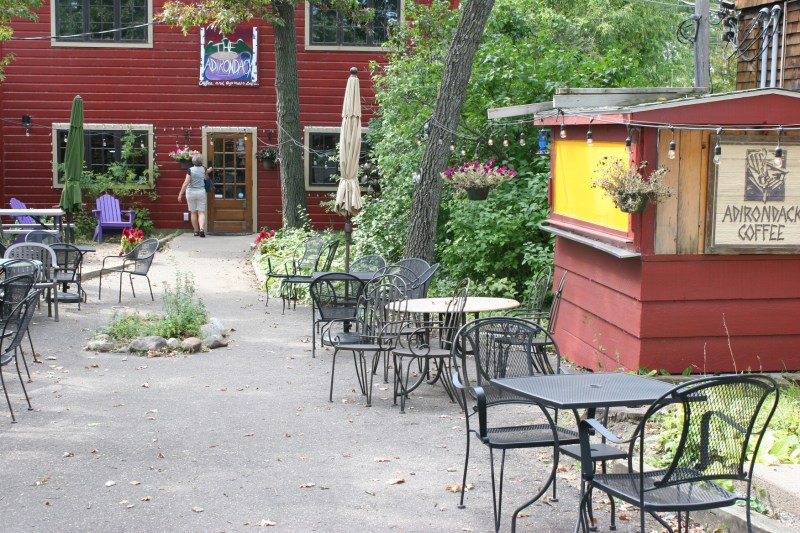
Although we didn’t patronize a Nisswa eatery, there are plenty of options for meals, treats and brew.


Had we arrived in Nisswa at 1 p.m. on a Wednesday weeks earlier, we would also have witnessed the weekly summertime turtle races. Reminders of that tourist draw are evident in the turtle race track and in turtles painted onto sidewalks in front of businesses. I applaud communities like this that hatch and then latch onto an idea that identifies and sets them apart from other towns. For Nisswa, it’s turtle races and friendly folks in quaint northwoods shops.

TELL ME: Have you been to Nisswa? What is your impression of this small Minnesota town?

Please check back for a closer look at the iconic Babe the Blue Ox statue along Main Street.


© Copyright 2017 Audrey Kletscher Helbling
 

Meet me at the Faribault library Thursday evening November 8, 2017


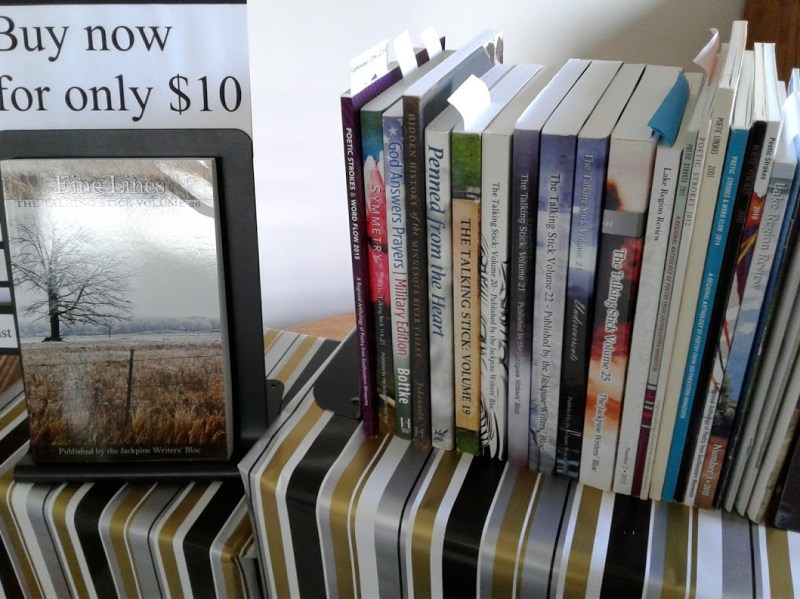
A snippet of the display I’ve created for the Local Authors Fair at Buckham Memorial Library.


TOMORROW EVENING (November 9) I join 13 Faribault area writers as we showcase the craft of writing at Buckham Memorial Library’s Local Author Fair.

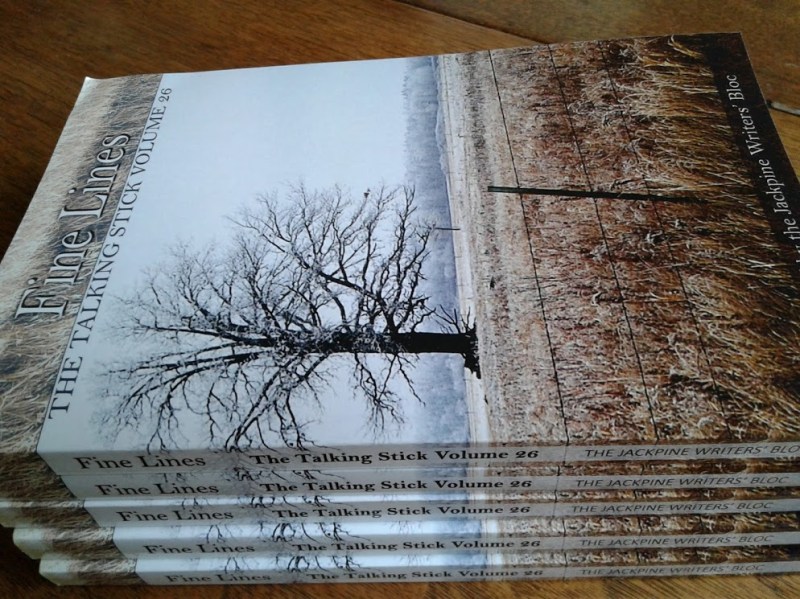
I’m ready with a display of sample published works, educational hand-outs, free candy and a Minnesota anthology for you to buy. I have limited copies of Fine Lines, The Talking Stick, Volume 26 in which five of my works published this year.


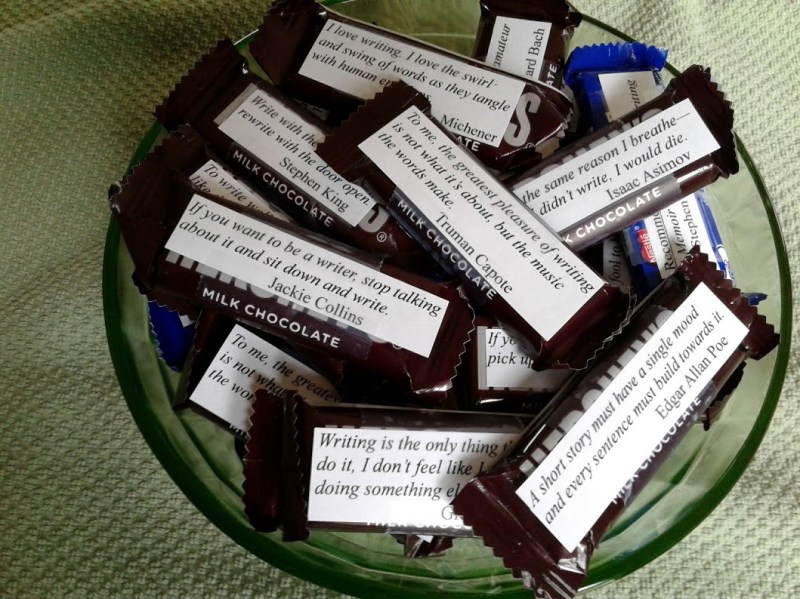
Grab a mini candy bar from my table and get a bonus quote about the craft of writing.


The drop-in event on the second floor Great Hall features each writer at his/her own table. So simply circulate, meet the authors and engage in conversation. You have only one hour, from 6 – 7 p.m., to meet everyone.

Here’s a sample of my writing, an award-winning poem printed in 2014 in Symmetry, The Talking Stick, Volume 23, and published by The Jackpine Writers’ Bloc:


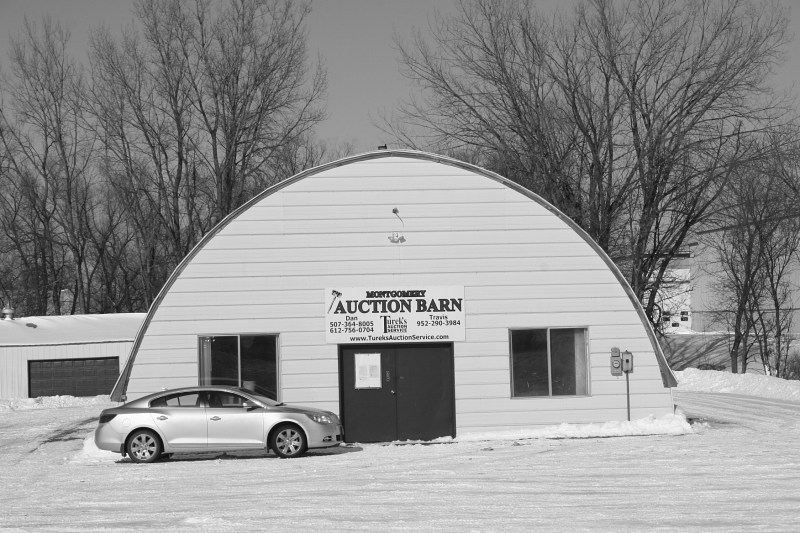
This auction barn in Montgomery inspired my poem, “Sunday Afternoon at the Auction Barn.” Minnesota Prairie Roots file photo.


Sunday Afternoon at the Auction Barn


Shoulder brushes shoulder as bidders settle onto plank benches

in the tightness of the arched roof auction barn,

oil stains shadowing the cement floor below their soles,

where a farmer once greased wheel bearings on his Case tractor.


The auctioneer chants in a steady cadence

that mesmerizes, sways the faithful fellowship

to raise hands, nod heads, tip bidding cards

in reverent respect of an ancient rural liturgy.


Red Wing crock, cane back rocker, a Jacob’s ladder quilt,

Aunt Mary’s treasured steamer trunk, weathered oars—

goods of yesteryear coveted by those who commune here,

sipping steaming black coffee from Styrofoam cups.


Find me, introduce yourself and ask me about my passions—writing and/or photography—and hear my story.


© Copyright 2017 Audrey Kletscher Helbling
 

A drive in the Minnesota countryside takes me to St. Jarlath November 7, 2017


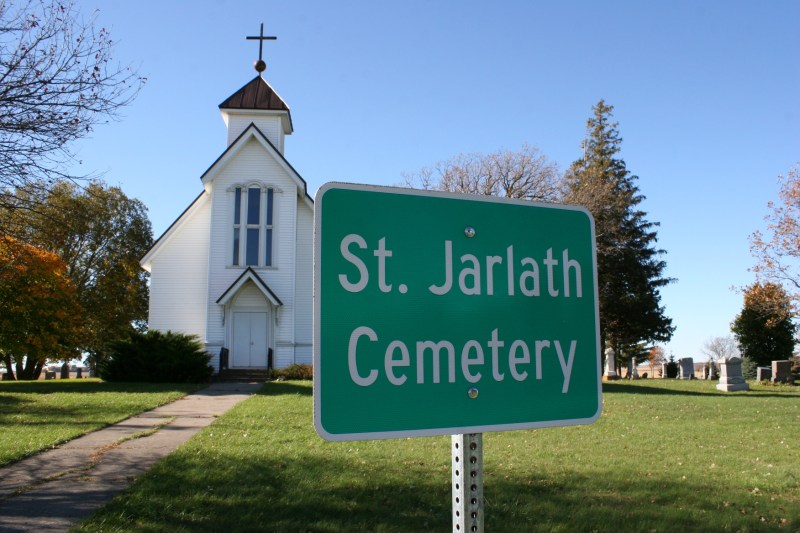
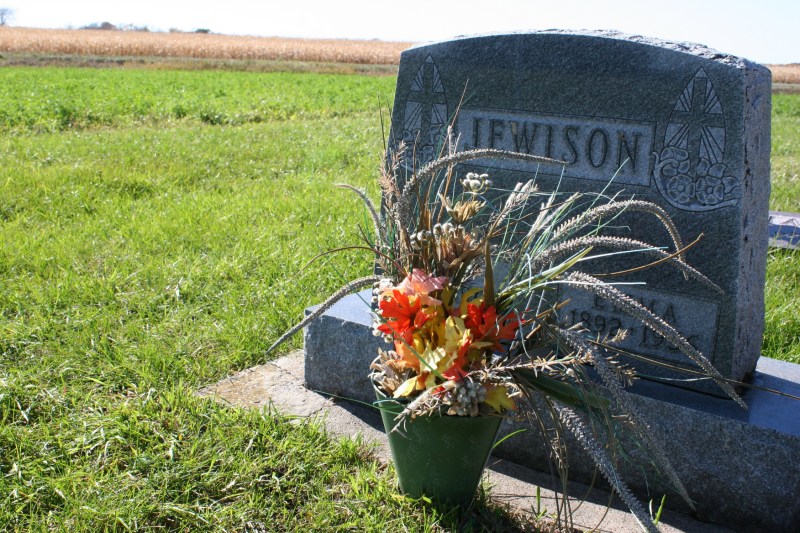
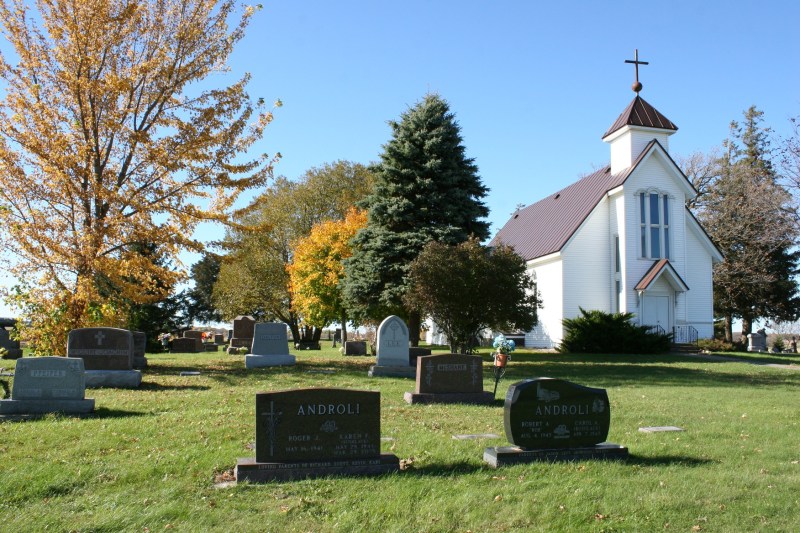
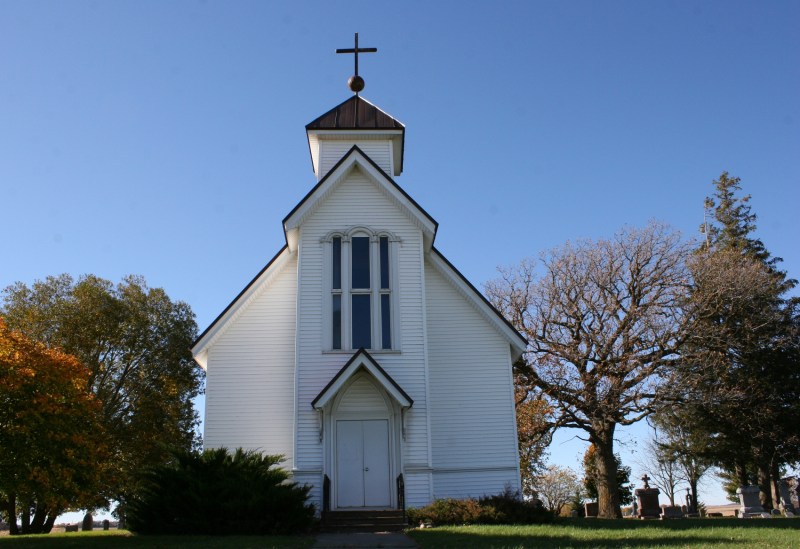
“SAINT JARLATH. Who’s that?” I asked my Catholic-raised and educated husband as we pulled up to a rural Minnesota cemetery during a recent Sunday afternoon drive.


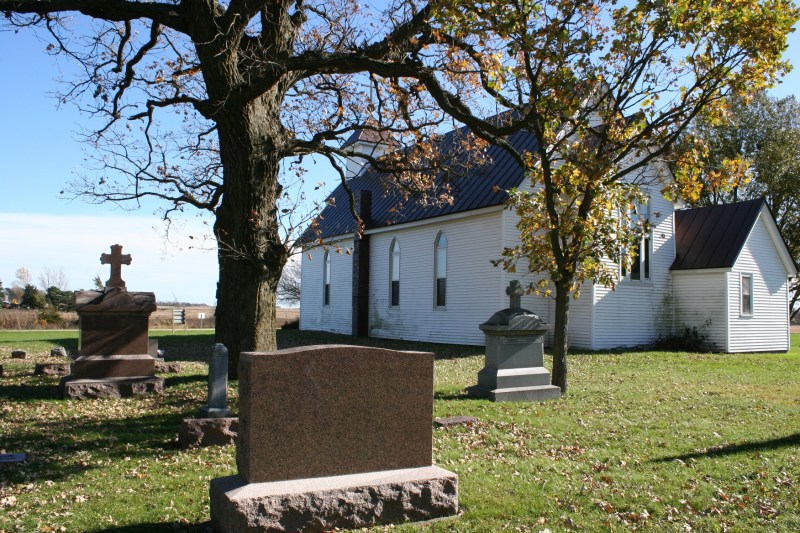
He offered no information, as puzzled as me by the saint behind the name of St. Jarlath’s Catholic Cemetery located just off Waseca County Road 22 in Iosco Township. My later online research revealed Bishop Jarlath as the founder and principle patron of the Archdiocese of Tuam in Galway, Ireland. Irish names in the cemetery should have tipped us off.


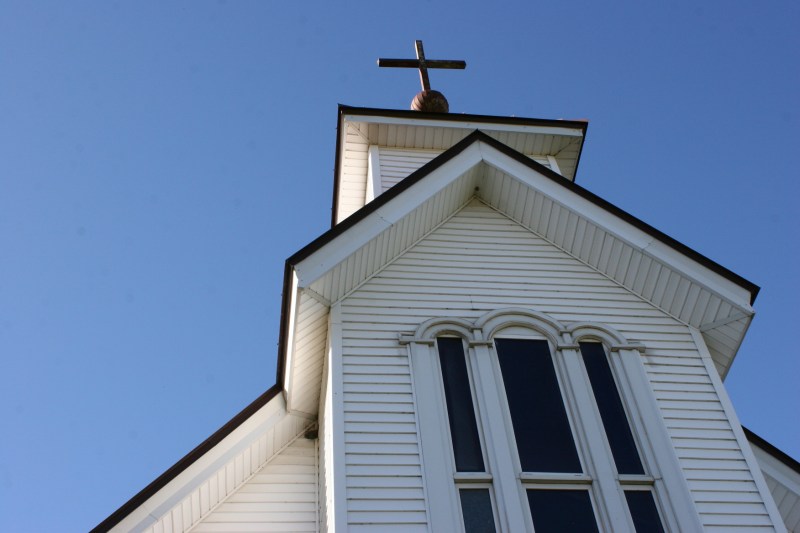
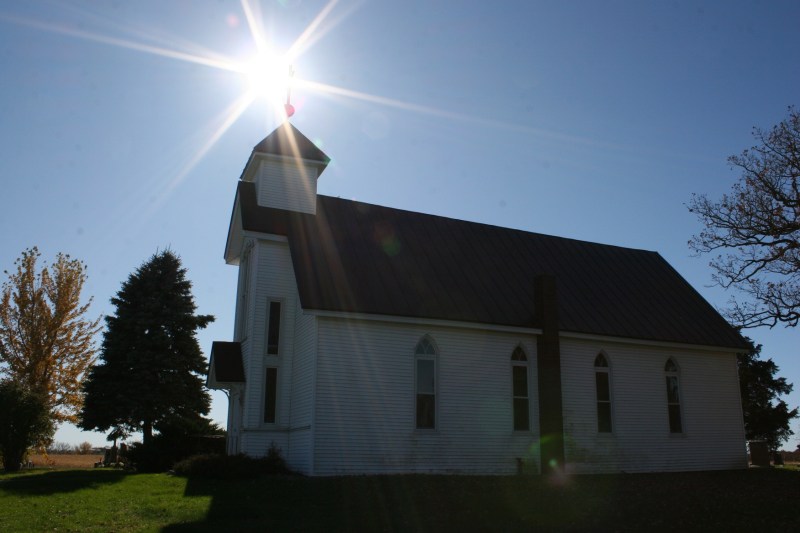
I delight in discovering such well-kept rural cemeteries edged next to equally well-maintained churches. Clearly, people care deeply about this place. That pleases me although the closure of rural parishes like this one does not.


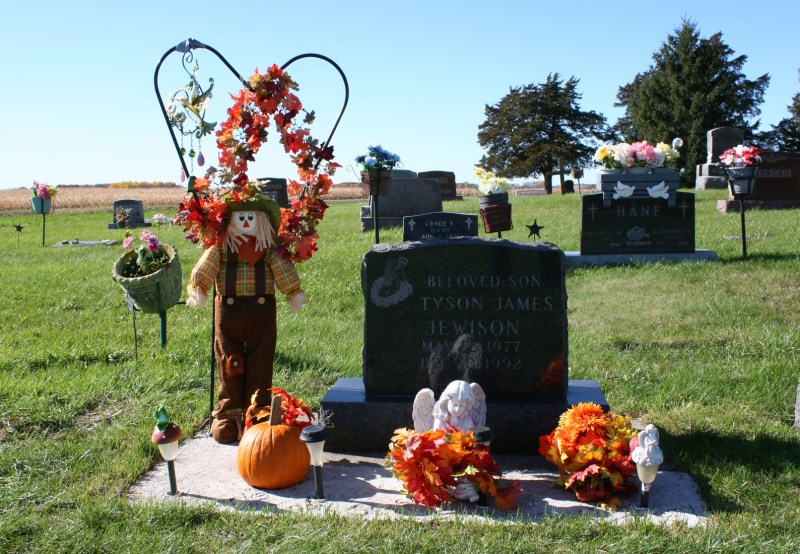
As we wandered the grounds, I spotted autumn décor adorning some gravesites. Seeing scarecrows on a tombstone marked a first for me.


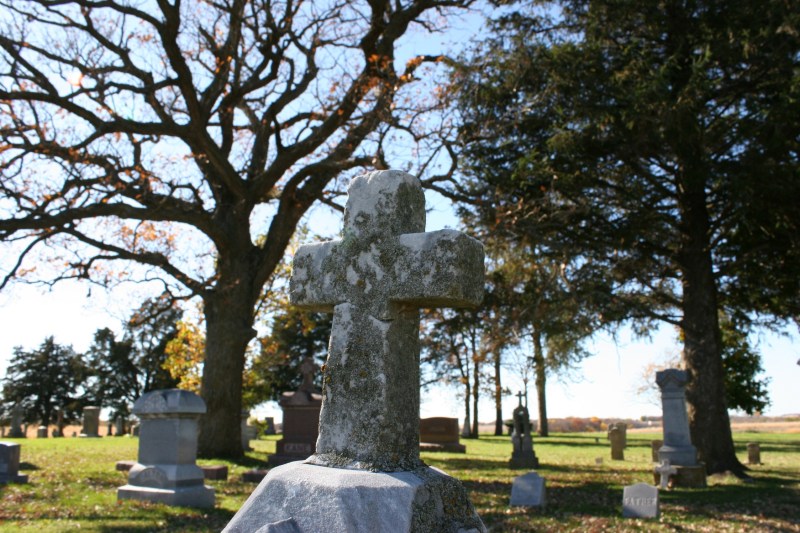
I noticed, too, the trees,


the aged, and not so aged, stones,


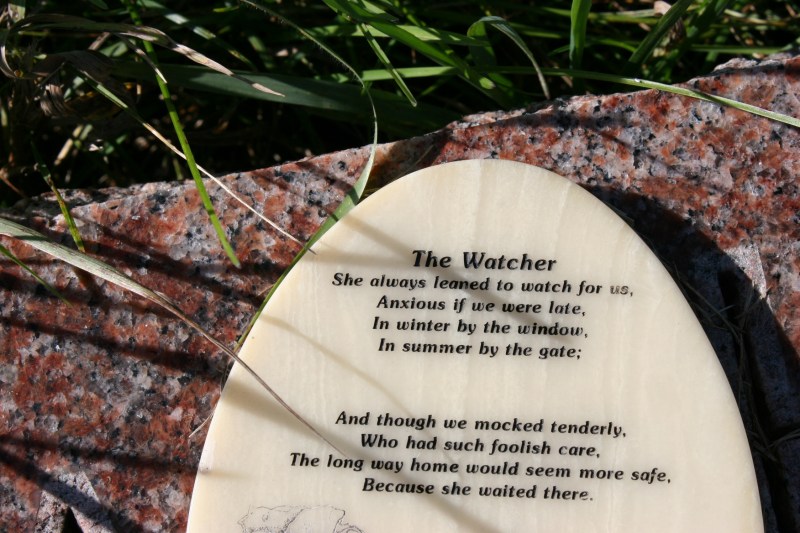
the loving words


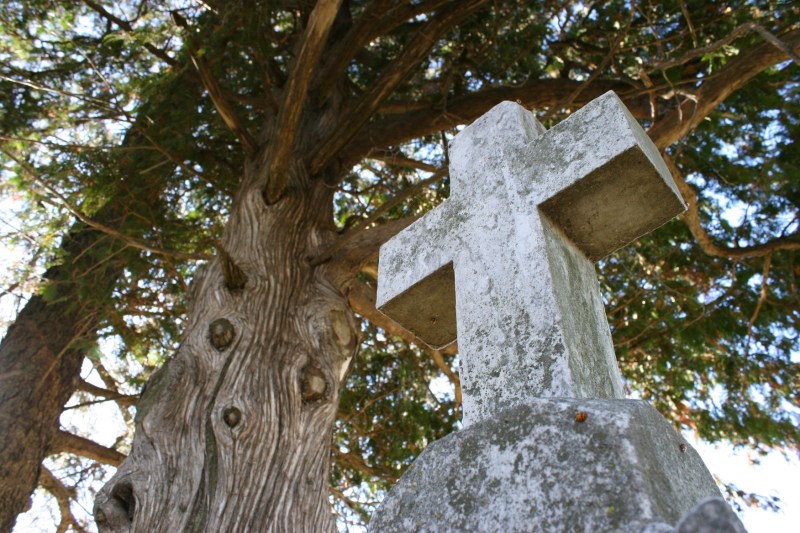
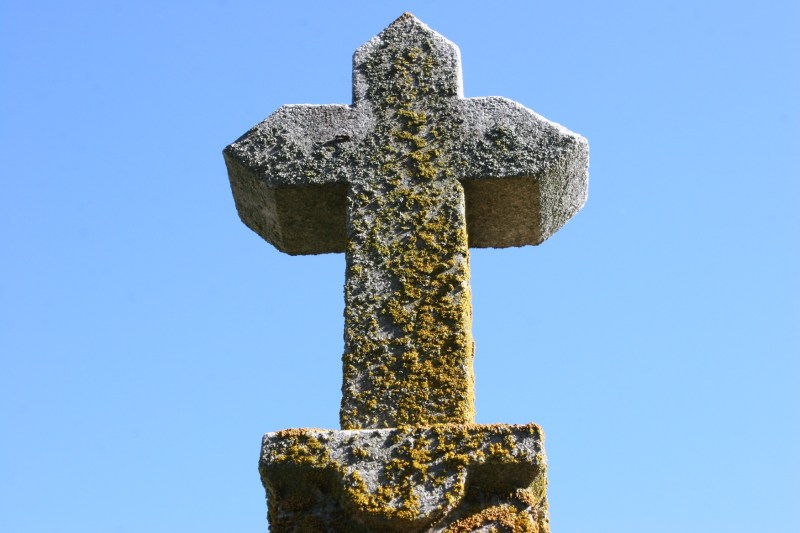
and clear markers of faith in crosses high and low.


I tugged at the church door, hoping to get inside. I never expect access. But that doesn’t stop me from trying. Gone are the days of unattended, open churches. I can only imagine the beauty, the history within this country church.


The ability to freely wander this cemetery on a stunning autumn afternoon tempered my disappointment. To see folks honor their ancestors and Saint Jarlath through a well-kept church and grounds encourages me. This place remains important—at least for now to those still living.

#

AS I SCHEDULED this post, written days before the deadly mass shooting at First Baptist Church in Sutherland Springs, Texas, I feel compelled to add this postscript expressing my sorrow and thoughts. I cannot fathom the loss to these families, to this community, about the same size as my Minnesota hometown. My heart breaks. A church, of all places, should be a sanctuary from violence. No place seems safe any more.

Initial media reports reveal the perpetrator had a history of domestic violence and that he sent threatening text messages to his mother-in-law shortly before killing 26 people and wounding another 20 at the church. This troubles me. Domestic violence continues to root deep into our society. I read or hear media reports daily about murder-suicides, violations of restraining orders, calls to domestic disturbances, stalking, assaults…and more. For every case reported to law enforcement, many many more are not reported. Because of fear. Because of intimidation. Because of control and manipulation.

The invasive crime of domestic abuse and violence is affecting too many of our families, our neighborhoods, our communities and, yes, even our churches, directly and indirectly.


© Copyright 2017 Audrey Kletscher Helbling
 

The mysterious (at least to me) Swede’s Bay November 6, 2017

Filed under: Uncategorized — Audrey Kletscher Helbling @ 5:00 AM
Tags: , , , , , , , ,

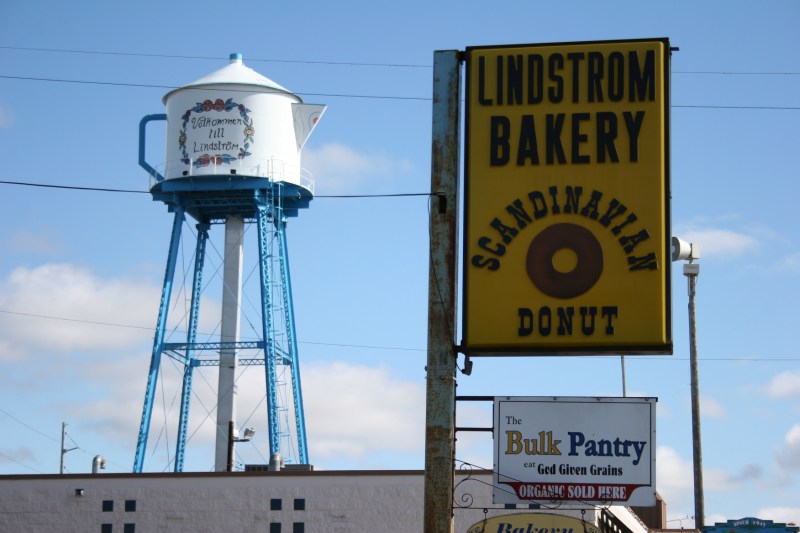
Lindstrom, Minnesota, “America’s Little Sweden.” Minnesota Prairie Roots file photo April 2015.


IN A STATE WITH A STRONG Scandinavian base, nuances of ethnicity show up in lutefisk dinners, lefse-making parties, Lutheran churches named Vasa and Vang, a Swedish coffee pot water tower, the Minneapolis-based American Swedish Institute and more.


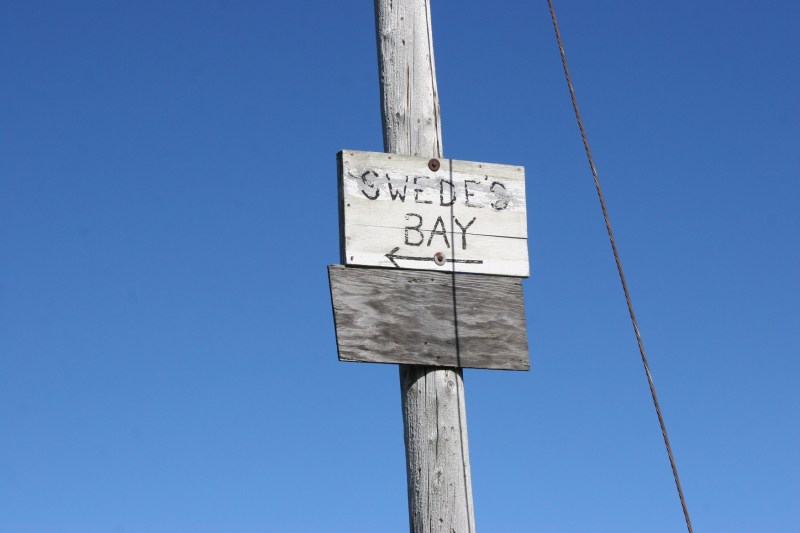
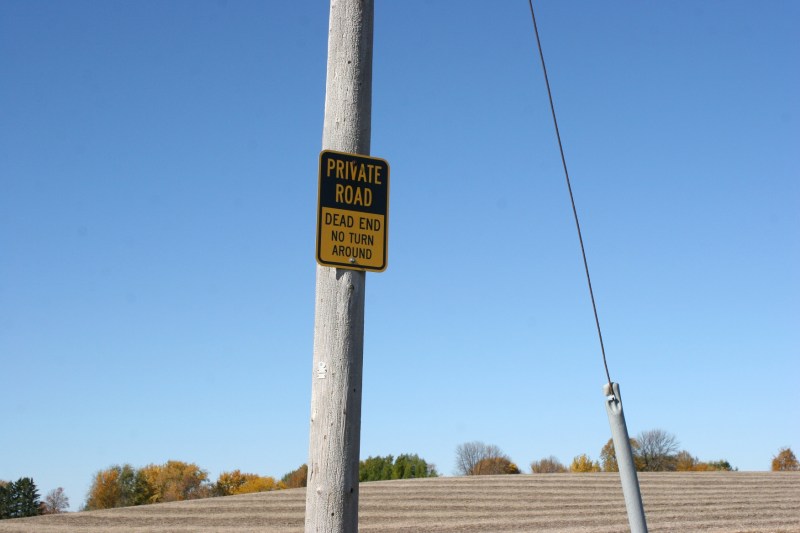
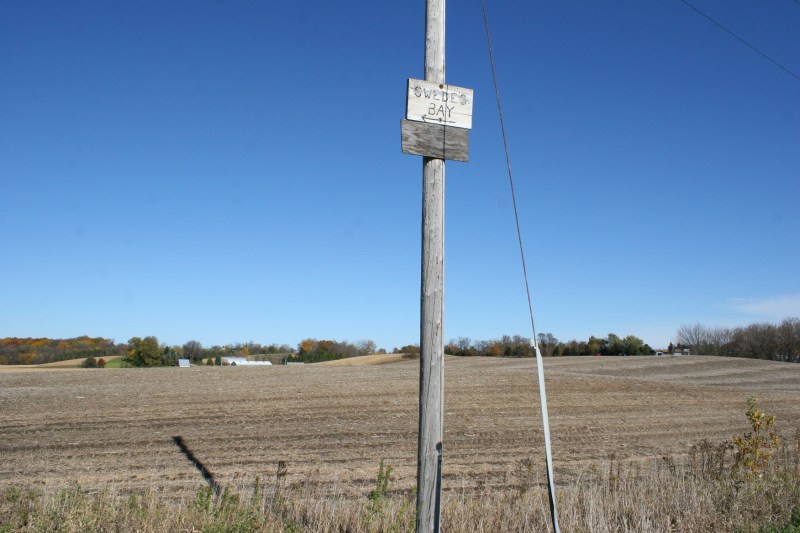
That more includes a fading sign attached to a utility pole in rural Le Sueur County. On a recent Sunday afternoon drive, I noted a posting for SWEDE’S BAY and wondered. But the arrow to the bay pointed in the same direction as a sign warning PRIVATE ROAD DEAD END NO TURN AROUND.


The message was clear. Stay away.


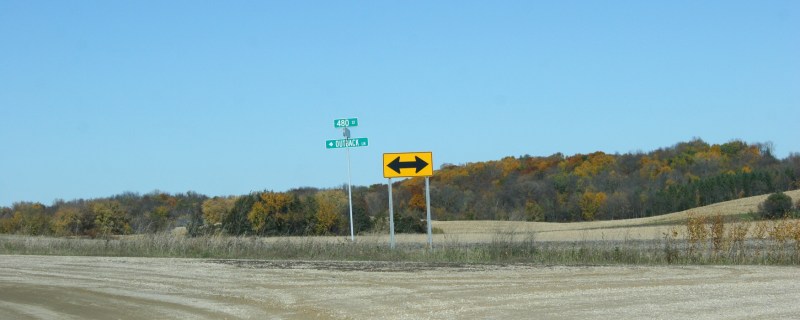
So Randy and I didn’t venture toward Swede’s Bay in the vicinity of 480th Street/Orchard Road/Outback Lane. Sometimes I wish we weren’t such rule followers. But the warning sign was enough to deter me from searching farther along this remote rural gravel road.


Back home I googled the mysterious bay to discover Swede’s Bay is a lake in a cluster that includes the better known Lake Jefferson and German Lake northeast of Madison Lake. That raises another question: In the naming of the lakes, did the Germans and Swedes convene and decide fair is fair. Name that lake German, this one Swede’s?

© Copyright 2017 Audrey Kletscher Helbling
 

Let’s talk writing & photography at a Local Authors Fair November 3, 2017

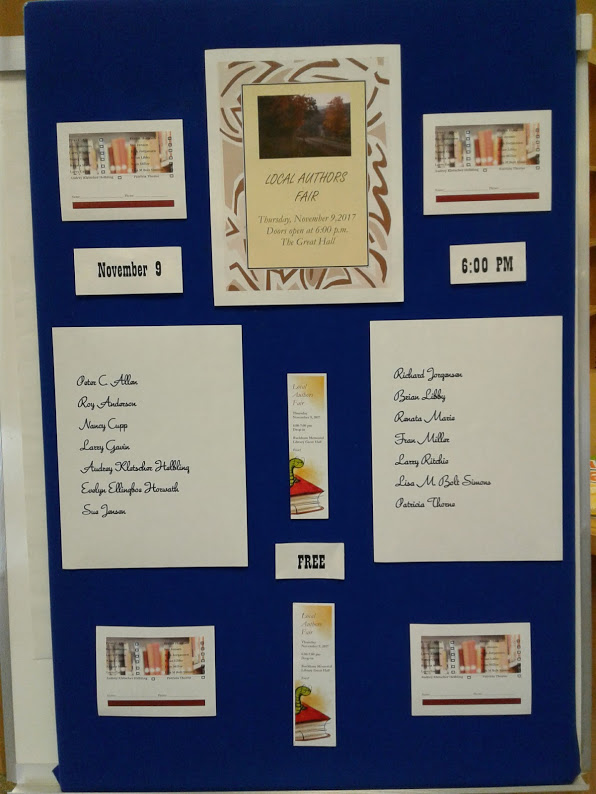
A promo posted at Buckham Memorial Library for the November 9 Local Authors Fair.


TERM ME A WRITER, author, poet, blogger, storyteller, wordsmith, photographer, artist. All fit me and my passions—writing and photography.


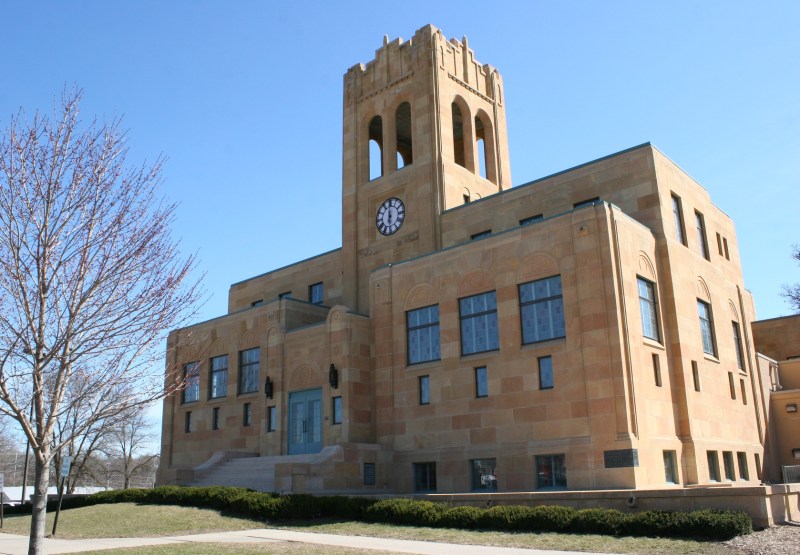
Buckham Memorial Library, Faribault. Minnesota Prairie Roots file photo.


Next week I’ll share those passions at a Local Authors Fair from 6 – 7 p.m. Thursday, November 9, in the Great Hall of Buckham Memorial Library in Faribault. You’re invited to come and visit with me and 13 area writers.


My poem initially published in In Retrospect, The Talking Stick, Volume 22, an anthology published by The Jackpine Writers’ Bloc based in northern Minnesota. This past spring Rochester Minnesota composer David Kassler transformed the poem into a song performed by a Chamber Choir at two concerts in Rochester. Minnesota Prairie Roots file photo 2017.


This informal drop-in fair presents a wonderful opportunity to network and to show folks my work—I’m bringing lots of samples. I’m ready, too, to talk about the craft of writing. Writing truly is a craft honed through decades of experience. From pounding out hard news stories under deadline to penning poetry to blogging and more, I’ve covered most aspects of writing. As a wordsmith, I remain passionately passionate about my love of language and of storytelling.


A serene country scene in Redwood County, Minnesota, where I grew up. Minnesota Prairie Roots file photo.


Through the years, my voice has evolved. I write with a strong sense of place rooted in my native southwestern Minnesota. That stark land created in me an awareness of details—of heat shimmering waves above cornfields, of a whipping prairie wind driving snow across gravel roads, of rough cow tongues slurping water from drinking cups…


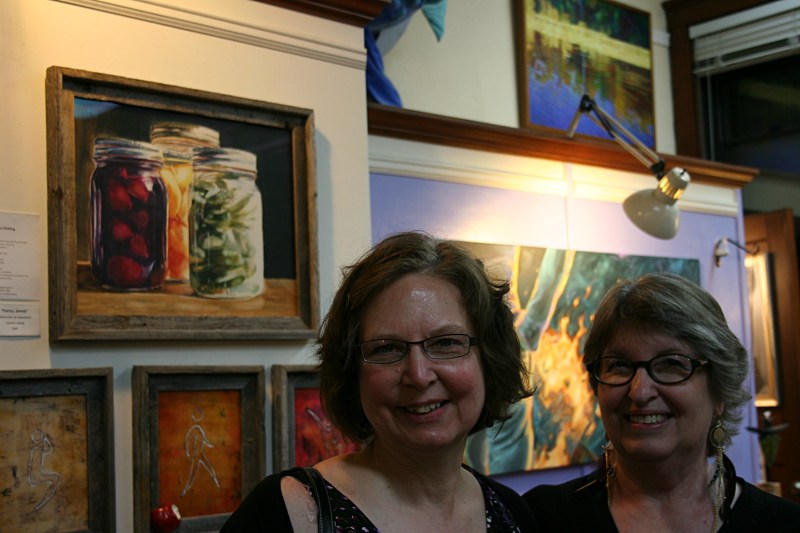
In 2012, my poem, “Her Treasure,” was selected for inclusion in a poet-artist collaboration at Crossings at Carnegie in Zumbrota. Connie Ludwig, right, created a watercolor, “Pantry Jewels,” inspired by my poem. See the art behind me. This is an example of my rural-rooted poetry. Minnesota Prairie Roots file photo 2012.


I write in a way that’s earthy and accessible. Rural. Homey. Comfortable. When you read my work, you understand me. I am genuine and unpretentious.


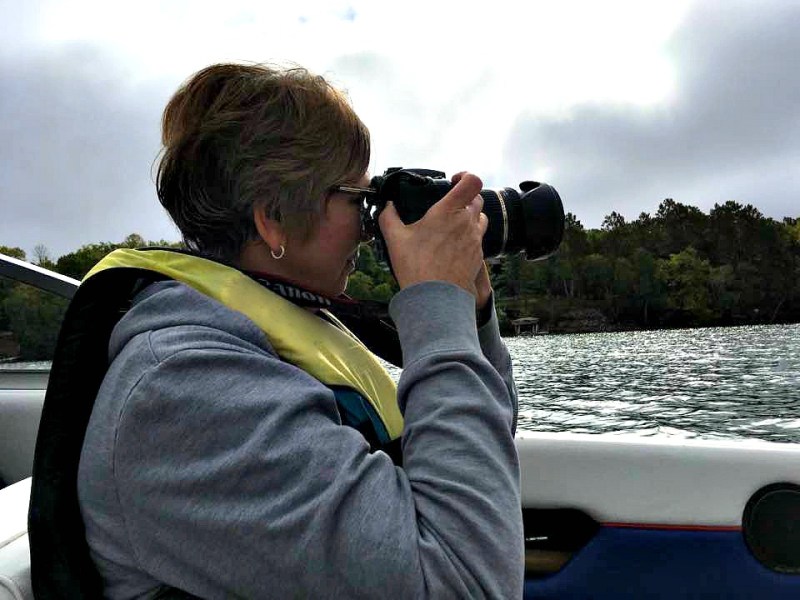
Me shooting lake scenes while on a boat ride on a lake south of Park Rapids in mid-September. Photo courtesy of Jackie Hemmer at Who Will Make Me Laugh.


And I’m ready to answer questions about writing and photography at the Authors Fair. I’ve even prepared hand-outs with basic writing and photography tips, including a poetry tutorial dissecting my published poem “This Barn Remembers.”


In addition, you can purchase a recently-published anthology, Fine Lines, The Talking Stick, Volume 26, which includes five of my works: my award-winning short story, “Art Obsession,” another short story, two pieces of creative nonfiction and a poem. The collection features writing by 99 other Minnesota authors. I will have limited copies available for $10.

And then just to sweeten the pot, I’m giving away chocolate. Grab a mini candy bar and let’s talk about the craft of writing and the art of photography.


© Copyright 2017 Audrey Kletscher Helbling
 

In the dark of the night along a rural Minnesota roadway… November 2, 2017

Filed under: Uncategorized — Audrey Kletscher Helbling @ 5:00 AM
Tags: , , , , , , ,

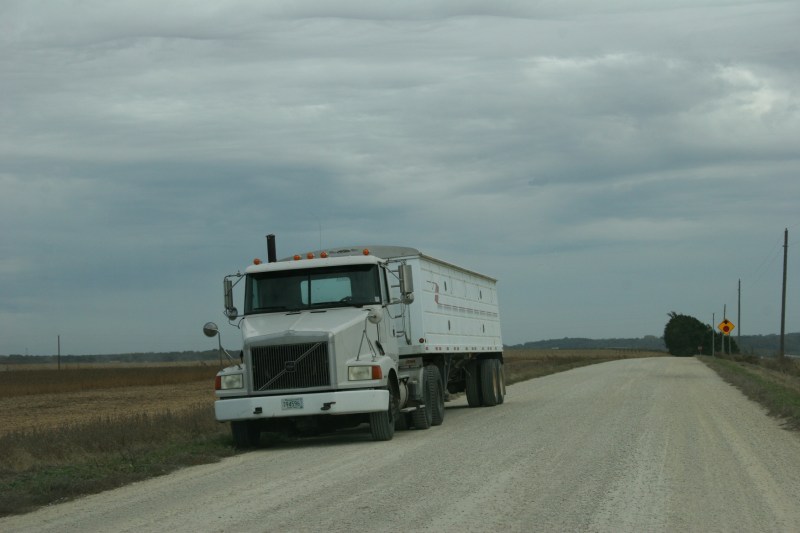
A semi awaits the harvest. Photo used for illustration purposes only and not at the same location where this story takes place. Minnesota Prairie Roots file photo October 2014.


AHEAD OF US along the side of a county road between Faribault and Medford, hazard lights from a tractor trailer pulsated amber into the blackness of a late autumn evening.

A few miles away, combines spotlighted cornfields as farmers worked the night shift in an already late harvest season.

In the rural blackness, our 2003 Chevy Impala beamed headlights through the deep dark, our eyes scanning ditches for deer evicted from fields.

The setting was prime for drama, for threatening possibilities, for imaginations to race rampant.

And then it happened. As we edged even with the parked semi near the county line and our turn-off intersection, the driver stepped from the cab, hailing us. Randy stopped the car. I rolled down the window and the stranger approached. I never considered in that moment the possibility of danger. It was only afterward when friends questioned our decision that I evaluated our choice. But in this moment, this man needed assistance.

Randy pulled the car ahead to a safer spot. Then the stranger leaned toward me, handed me a slip of paper, cigarette breath hanging in the air. I pulled down the visor, flipped up the mirror cover to unleash light. He spoke in jerks of thickly-accented words. “No English. Ukraine, Poland…”

He pointed to the paper again. And we understood that this Ukrainian needed to find his delivery destination. Here, in this countryside where the wind whipped across fields in bone-chilling cold. Here, where dark prevailed. We pulled our smartphones out and Randy punched in the address. We were there, at the driver’s destination. But in the blackness, we perceived nothing except the faint outlines of grouped buildings.

I tried to explain that we would turn around, check out the location and return. But the driver didn’t understand and started walking, swallowed by the darkness. Randy followed. Except I didn’t know that he planned, too, to disappear into that roadway ribbon of blackness. As the minutes ticked by and I waited, my angst rose. Where was my husband? Had this stranger robbed him, assaulted him, pushed him into the road ditch…?

I picked up my phone, punched the green icon connecting to Randy’s phone. He answered. My fear lessened. “Where are you?” I asked.

“Walking back,” he assured. “There in a minute.” And he was, along with the truck driver.

Still, we hadn’t solved the problem. Randy thought the destination business had a second access. There was none, only a single gated road in and no room for a tractor trailer to park until the next morning. Our efforts to communicate in English with the driver failed. So I resorted to mimicking sleep, the rising sun and turn around and go back to town with my arms. Finally he understood and thanked us profusely.

We left the trucker there on the side of the county road, in the blackness of night. Hours later we retraced our route home to find the semi gone, presumably parked miles away at a truck stop for the night. And we wondered about the Ukrainian, how he had come to be a commercial truck driver lost on a rural southeastern Minnesota roadway in the season of harvest.


TELL ME: Would you have stopped if this trucker flagged you down along a remote rural roadway in the dark of night?

© Copyright 2017 Audrey Kletscher Helbling
 

As health insurance costs rise, so does my personal financial concern November 1, 2017


EVERY YEAR ABOUT THIS TIME, my blood pressure temporarily spikes in response to my anger. Anger about ever-rising health insurance premiums depleting our family pocketbook faster than a pick pocket.

I’ve vented and raged and spewed my discontent here. My jaw drops. My mind thinks a few unprintable words. My stress rises. How can we continue to pay these astronomical premiums and still have money for basic needs like food, gas, utilities, clothes, etc?  I am thankful Randy and I paid off our mortgage decades ago, that our three kids are out of college and independent, that we’re OK driving aging (2003 and 2005) vehicles… We’ve always been, out of necessity, fiscally conservative, just as we were raised within poor rural families.

Let’s break it down. Health insurance premiums for my husband and me (I’m on his work plan) will go up $190 from $873/month to $1,000/month in 2018. That’s for each of us. Randy’s employer pays half his premium, $500. So we will shell out $1,500/month, or $18,000/annually. But before insurance kicks in, we must pay $3,600 each in deductibles. Alright then.

Let’s recrunch those numbers. In reality, our premiums are $1,300/month each if we need medical care and reach our deductibles. Times two, that’s $2,600/month or $31,200/year. Subtract the $6,000 Randy’s employer pays for his insurance and we’re down to $25,200. Still.

This year I met my $3,700 deductible. But I paid out $14,176 in premiums and deductible for around $4,000 (maybe a bit more; some bills haven’t processed yet) in medical expenses. I’m no math whiz. But even I can see that makes zero financial sense.

Holy, cow.

Somehow we’ve managed on a modest income, Randy’s as an automotive machinist and mine as a self-employed photographer and writer. But these latest insurance premium hikes are pushing us to a financial breaking point. I need to figure out an alternative to the $1,500 to be deducted from Randy’s paychecks each month for health insurance in 2018. Our incomes are not increasing to meet this through-the-roof expense.

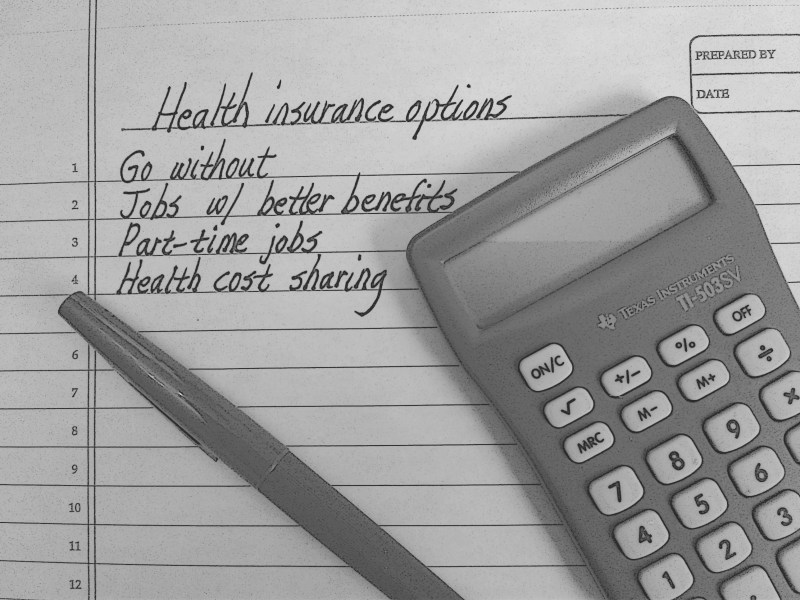
My kneejerk brainstorming produced the following options and reactions:

  • Go without health insurance. Not a good idea given our ages and the financial risk.
  • Find jobs with better benefits. At age 61, that’s unlikely.
  • Take on second part-time jobs.
  • Use a Christian-based health cost sharing plan. A strong possibility that requires additional investigation.

Our eldest daughter suggested we move to Canada with its publicly-financed healthcare. I know little about that system. But in a recent conversation with a Canadian visiting her brother here in Minnesota, I heard all about the shortage of doctors and the months of waiting to see one. Even if you’re seriously ill. No, thank you. Besides, I won’t move that far from my granddaughter.

There you go. Now, on to the research, the discussions, the continuing frustration and anger and stress and number crunching that each autumn overtake me.

I’ve joked with Randy that soon he’ll pay his employer to work because nothing will remain of his paychecks. I wish that statement didn’t feel uncomfortably close to reality.

#

AS BAD AS THE RATE HIKES would be for us, I know it could be worse. I’ve seen rates from a major carrier for individual off-exchange health insurance in my county of Rice and seven other southern Minnesota counties. If I chose the bronze plan (least expensive) with a $6,650 deductible, my monthly premium would be $1,361. Take that premium and deductible times two (there would be no subsidy from Randy’s employer) and our health coverage would cost $45,964 before medical bills would be covered. Holy cow. Who can afford that? Not us.

I realize many of you, especially self-employed small business owners or employees of small businesses, are dealing with the same absurd health insurance premiums. I don’t have an answer. I just know that the escalating cost of health insurance is creating a personal financial crisis for many of us. Additionally, because of those costs and matching high deductibles, we can’t afford medical care. Now does that make sense?
#

TELL ME: Are you dealing with/facing similar skyrocketing health insurance premiums? I’d like to hear about your situation and what you are doing. Are you going without insurance? Selected another option? Found a job with better benefits? Whatever you have done, or haven’t, I’m listening.

Please note that I moderate all comments. So please keep the discussion on topic and civil.


© Copyright 2017 Audrey Kletscher Helbling