

WHAT’S YOUR DEFINITION of strength? Whom do you consider strong? Have you faced a challenge, or multiple challenges, in life that required strength? While our answers vary, especially on the third question, I expect threads of commonality in responses.
Strength, from my perspective, is about fortitude and endurance. It’s about somehow finding the ability to face a challenge, to persevere, to come out on the other side with a renewed sense of personal power. Not power in the sense of control, but power that reaffirms one’s ability to deal with whatever life throws at us.
We all have something, right? Financial hardships. Health issues. Loss. Pain. Family members who are struggling. But, admittedly, when we are in the middle of a lot, it can sometimes feel like we are alone, that others live perfect lives unencumbered by issues that drain, stress and, yes, sometimes overwhelm. Nothing could be further from the truth. I repeat: We all have something, whether individually or within our families. We are not alone.
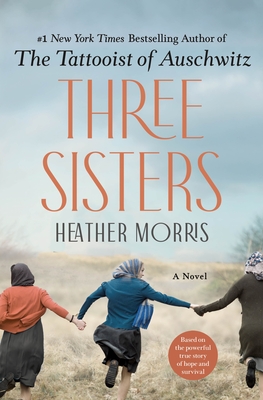
The novel, Three Sisters by Heather Morris, prompted me to write on the topic of strength. Although fictional, the book is based on a true story about three sisters held in a concentration camp. This is a story of indescribable atrocities witnessed and experienced. This is also a story of irrepressible strength and hope. I encourage you to read this novel and also watch Ken Burns’ newest documentary, “The U.S. and the Holocaust,” which happened to air at the same time I was reading the book. Together, the two were almost too much for me to emotionally take in. It’s a lot to comprehend the inhumanity and cruelty of mankind. Those sent to concentration camps certainly exhibited strength, whether they survived or not.

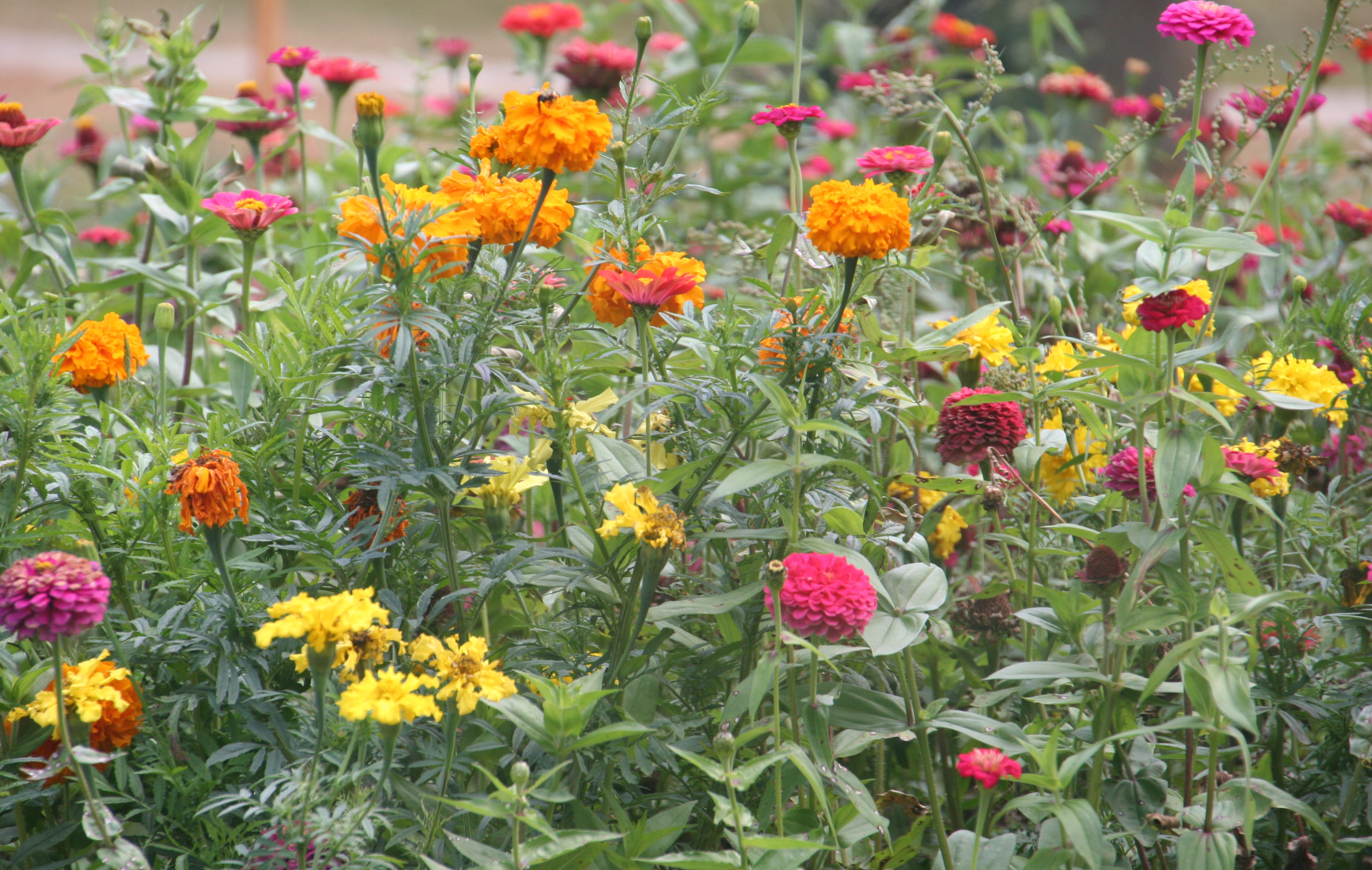
In reading Three Sisters, I learned that gladiolus (the flower) signify strength. And the iris, which is part of the glad family, denotes hope. The iris was my mom’s favorite flower. “Hope” is a word I’ve held, and continue to hold, close. “Hope” is not simply a wish. By my definition, it is an active verb that focuses on light shining through darkness. It is a word, too, that envelopes gratitude and believing that things will get better.

My name, Audrey, means noble and strong. I wish I’d asked my mom why she chose that name for me, her first-born daughter. I never did, and now she’s gone, but the name fits. I’ve had to be strong many times throughout my life. We all have something, right? Challenges can make us better, more empathetic and compassionate people. That is the good that arises from struggles.

This week, especially, with World Mental Health Day on October 10, I consider mental health. From anxiety to depression to brain disorders like bi-polar and schizophrenia, these are undeniably hard diagnoses which require incredible strength to face. Simply getting up in the morning, functioning, can prove difficult. There are no cures. No quick fixes. Medication can manage, therapy can help. And even though we are getting better at recognizing and understanding, stigma remains. We can do better at supporting, encouraging, helping. We need more mental health professionals to meet the growing demand for mental health care.
Strength. Hope. Those two words inspire and uplift. Gladiolus and iris. Those two flowers represent the same. From the pages of a novel about three Holocaust survivors to my name to life experiences, I understand what it means to be strong, to feel hope.
TELL ME: I’d like to hear your thoughts on strength and hope.
© Copyright 2022 Audrey Kletscher Helbling































 Minnesota Prairie Roots
A commentary: Called to help others
Tags: care, commentary, compassion, devotion, faith, helping others, Leviticus, Minnesota, Monticello
THIS MORNING IN READING one of two daily devotionals, I was reminded of the need to help others. The referenced scripture, Leviticus 25: 35-37, published with the October 6 Our Daily Bread devotion, brought back a scene which unfolded recently in Monticello.
On our way home from a short stay at a family member’s central Minnesota lake cabin, I spotted a woman holding a sign along State Highway 25 just before the Interstate 94 overpass. She stood in a center island, at a stoplight, traffic swarming around her. Her sign, with many misspellings, requested help for her and her three children. Help to pay for food and rent. Basic needs.
I felt in that moment a sense of compassion, yet an inability to aid this woman. And, I admit, I also felt a bit of uncertainty, a hesitancy, a questioning of whether she truly was in need. That reaction bothers me. Why couldn’t I simply trust the truthfulness of her request?
That brings me back to Leviticus, chapter 25, verse 35:
If one of your countrymen becomes poor and is unable to support himself among you, help him as you would an alien or a temporary resident, so he can continue to live among you.
That’s a powerful directive. Help him, or in the case of the woman in Monticello, her. Whether you are a person of faith or not, the Bible holds important messages that today fit the definition of “social justice.” Compassion. Mercy. Grace.
Not all of us are in a financial position to assist with gifts of money. But there are many other ways to help our friends, family, neighbors and, yes, even strangers. Encourage via kind and supportive words—written or spoken. I like to send uplifting cards with handwritten notes of encouragement. Pray. Engage in conversation, mostly listening. It’s about taking the focus off ourselves and placing it on others. Educate yourself via reading, attending community events that enlighten and more. Volunteer.
The woman in Monticello, even though I couldn’t aid her, gives me pause to reflect. So many people are struggling. With health issues, relationships, finances, simply trying to meet basic needs. Throw in the current divisiveness in this country, an ongoing pandemic, worldwide threats and conflicts, and the situation can feel overwhelming. Yet, we are all capable of doing something. Of reaching out with compassion and care. Of connecting. Of encouraging, supporting, uplifting in some way, large or small, that shows our humanity.
TELL ME: In what ways have you helped others, whether family, friends or strangers? Specifics are especially welcome.
© Copyright 2022 Audrey Kletscher Helbling