Minnesota Prairie Roots

Writing and photography by Audrey Kletscher Helbling

The power of hair among Native Peoples September 19, 2023

“My Powerful Hair,” published in 2023 by Abrams Books for Young Readers. (Book cover source: Abrams Books)

SOME OF THE MOST MEANINGFUL, enlightening and powerful books I’ve read, I’ve found in the children’s picture book section of my local public library. That includes My Powerful Hair written by Carole Lindstrom and illustrated by Steph Littlebird.

I happened upon this book while searching for recently-published astronaut and geography books for my 4-year-old grandson. I never did find those sought-after titles. Not that it mattered. What I discovered instead were three must-read books: My Powerful Hair, Boycott Blues—How Rosa Parks Inspired a Nation and We Are Better Together.

Parks is certainly familiar to me as the Black seamstress who in 1955 refused to give up her seat to a white man on a city bus in Montgomery, Alabama. That sparked a bus boycott and the Civil Rights Movement. Likewise, working together to effect change, to improve our world, to help one another is a familiar theme.

“The Native Man, His Eagle & His Chanupa,” an oil painting by Dana Hanson and part of her 2018 “Healing the Land” exhibit at the Owatonna Arts Center. (Minnesota Prairie Roots copyrighted file photo 2018, used for illustration only. Art copyrighted by Dana Hanson.)

THE IMPORTANCE OF HAIR REVEALED

It is the story on hair, though, which proved a particularly teachable read. My Powerful Hair focuses on Native Peoples’ hair and its importance in their culture, their history, their lives. Through the writing of New York Times bestselling and award-winning author Lindstrom, who is Anishinaabe/Metis (and an enrolled citizen of the Turtle Mountain Band of Ojibwe), and Indigenous artist Littlebird of Oregon’s Confederated Tribes of Grand Ronde, I learned the symbolism and power of hair in Native American culture. Admittedly, this is something I should have known, having grown up on the southwestern Minnesota prairie between the Upper Sioux and Lower Sioux Indian Reservations (today termed “communities”). I thought I was informed. But I wasn’t, not about hair.

Told from the perspective of a young Native girl, My Powerful Hair explains the reasons Native Peoples grow their hair long. And keep it long. Hair holds stories, memories, strength, sorrow, connections to each other and to Mother Earth. And more. Page after page, the narrator shares events in her life that weave into her hair. When Nimishoomis (her grandfather) taught her to fish, her hair reached her ears. When her cousins taught her to make moccasins, her hair flowed past her shoulders. In the sharing of these moments, I began to understand the power of hair in Native American culture.
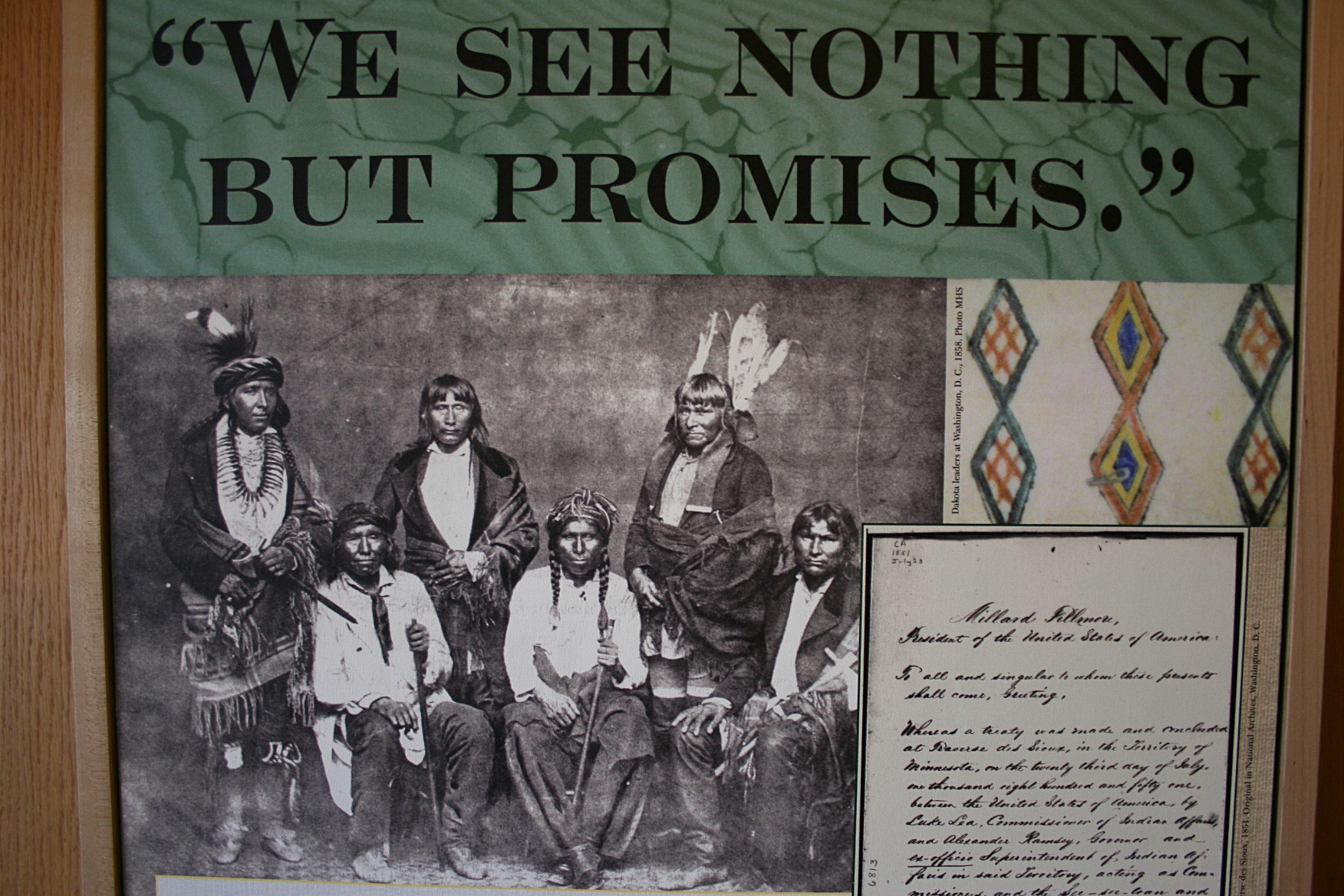
A photo panel at the Traverse des Sioux Treaty Center in St. Peter shows Dakota leaders photographed in Washington D.C. in 1858. The photo is from the Minnesota Historical Society and is used here for illustration only.

FORCED HAIRCUTS

I also understood fully, for the first time, the trauma inflicted upon Indigenous individuals forced long ago by white people to cut their hair. The writer and illustrator don’t hold back. In the first few pages, a young Nokomis (grandmother) is in tears as the hands of a Catholic nun grasp, then cut, her braids. It’s an emotionally impactful visual.

But this was reality at Indian boarding schools, within faith communities and elsewhere back in the day, in a time period when efforts focused on erasing Indigenous culture, on conforming Native Peoples to European ways. It was wrong.

Displayed at Bridge Square during Northfield’s Earth Day celebration in 2022. (Minnesota Prairie Roots copyrighted file photo April 2022, used for illustration only)

A TERRIBLE INJUSTICE”

A blogger friend from the central Minnesota lakes region recently shared a bit of her family’s experience per my request. Of unverified (records were often destroyed) Cherokee ancestry, Rose speaks of her mother’s trauma after being sent to a Catholic girls’ school in Crookston. “Mom didn’t tell us much about her experience there,” Rose says, “only that they made her cut her long black hair. My mom never cut her hair again for the rest of her life. She saw the forced haircut as a terrible injustice.” Injustice seems a fitting word.

In an author’s note, Carole Lindstrom shares the same trauma, documented, she writes, in a photo of her grandmother and two great aunts with their black hair shorn above their ears. They were forced into an Indian boarding school in the early 1900s.
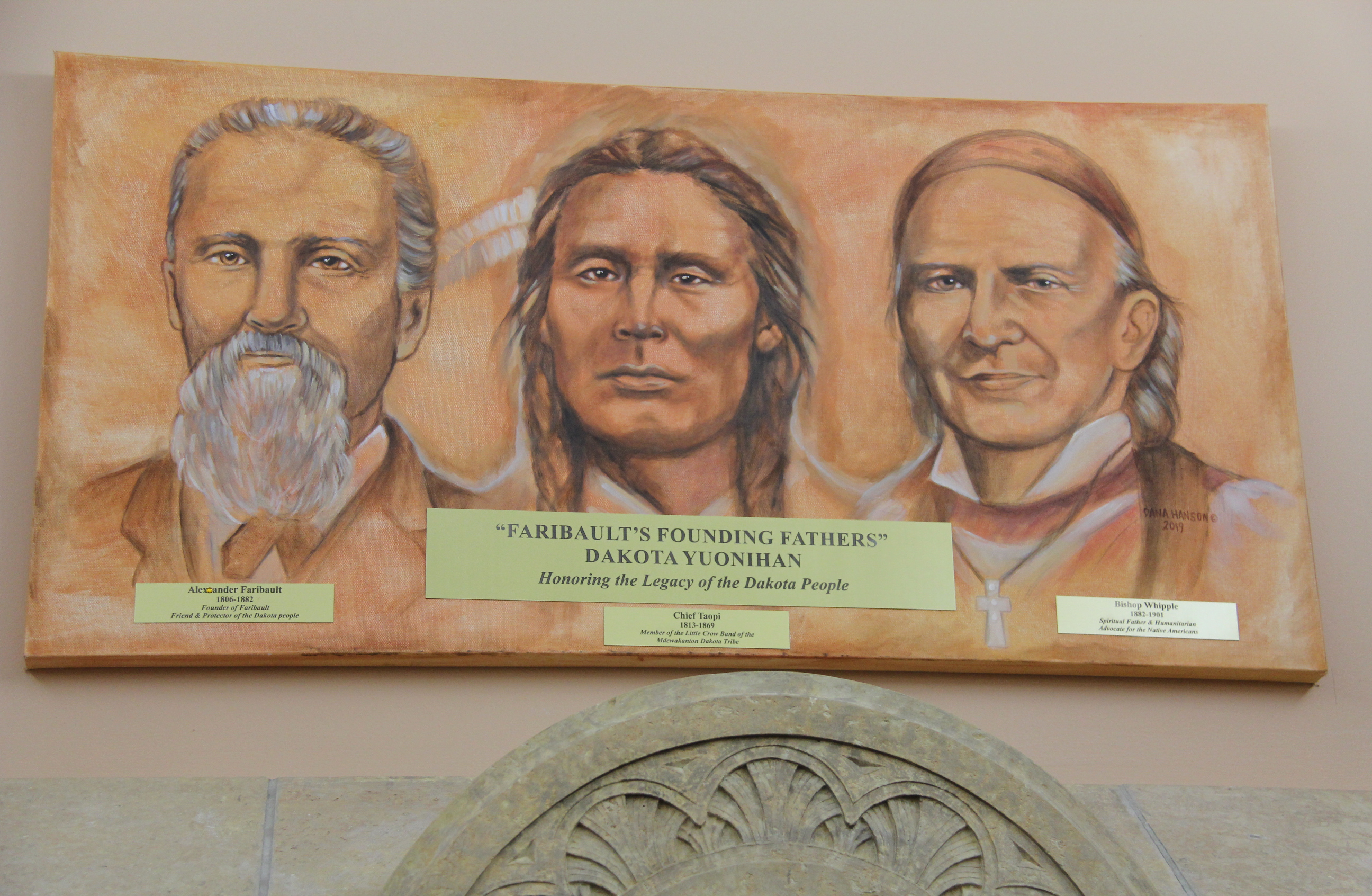
“Honoring the Legacy of the Dakota People” focuses this artwork by Dana Hanson. Chief Taopi centers the painting with Alexander Faribault to the left and Bishop Henry Whipple on the right. The word “Yuonihan” means honor or respect. This art hangs inside Buckham Memorial Library. (Minnesota Prairie Roots copyrighted file photo November 2022. Art copyrighted by Dana Hanson.)

POWER IN STORIES, IN HERITAGE, IN RESPECT

Rose is thankful for books like My Powerful Hair. “I am glad that stories like this are being told,” she says. “Much First Nations history nearly disappeared. And many First Nations keep their ceremonies and other information ‘secret’ so it won’t be distorted or misused by people who don’t understand, or who seek to harm them.” Based on history, that seems warranted.

This Minnesota woman has one more reason to feel grateful for children’s picture books by Indigenous Peoples. Her grandchildren are of Ojibwe heritage; their other grandmother lives on the White Earth Nation in northwestern Minnesota. “My hopes for my grandchildren are that they learn all they can about their Ojibwe ancestors and customs and values,” Rose says. “I hope they can choose what lessons they want to carry forward in their own life. I hope they are fantastic examples of how people from different backgrounds can get along and respect and love one another.”

And so I learned, not only from Rose, but from reading My Powerful Hair. Stories woven into our hair matter. For they are powerful.

© Copyright 2023 Audrey Kletscher Helbling


It’s been a roller coaster ride September 14, 2023

“The Legend,” one of a few remaining wooden roller coasters, located at Arnolds Park Amusement Park in the lakes region of northwestern Iowa. Built in 1930, it is the 13th oldest wooden roller coaster in the world. (Photo courtesy of Arnolds Park Amusement Park Marketing)

SOME 2 ½ MONTHS AGO, I boarded a roller coaster for the first time since I was a teenager screaming my lungs out while riding “The Legend,” a wooden roller coaster at Arnolds Park Amusement Park in Arnolds Park, Iowa. It’s not that I decided this would be a fun activity to try again in my late sixties. Rather, the choice was made for me, as part of my vestibular rehab therapy.

I warned my physical therapist that I don’t like amusement rides. But my comment didn’t deter Ryan. He determined that riding a virtual reality roller coaster on a June morning might be exactly what my brain needed to retrain itself. Since January, I’ve struggled with neurological-based issues resulting from a viral infection, suspected to be COVID, even though I twice self-tested negative for the virus. In early April, I started physical therapy and have been working hard ever since to manage my many debilitating symptoms.

Fast forward to today. I am in a much better place, even while on a VR roller coaster, a tool I’m using to build my visual, auditory and spatial tolerance. Early on I had doubts about my therapist’s plan. Initially, I couldn’t tolerate the VR roller coaster for long (less than a minute) before symptoms flared. After minimal exposure, my head hurt, my eyes hurt and I felt utterly exhausted. When I experienced a health setback mid-summer with vertigo returning, Ryan abandoned the amusement ride therapy for therapies less taxing on my brain.

ROCKS, RABBITS & A ROLLER COASTER

Slowly, surely, I started feeling better and Ryan decided it was time to pull out the VR headset again for another go on the roller coaster. I did not enthusiastically hop on board, only reluctantly agreeing to give it a try. I lasted 25 seconds on a roller coaster ride where boulders tumbled off rocky mountains toward me. Rabbits loping under the track proved the only redeeming feature. I hold a fondness for rabbits, my high school mascot being a White Rabbit.

That was two weeks ago. The following week I did better, albeit on a less visually-stimulating ride, this one under the sea in a darker environment. Still, I could manage only bursts of riding before needing to pause.

NOT ONE, NOT TWO, BUT THREE ROLLER COASTERS

Five days later I was back at therapy, knowing full well that I would again be riding a roller coaster. Make that plural. Three roller coasters. I started therapy Wednesday morning with the least stimulating under-the-sea ride. And just to make that more challenging, Ryan asked me to stand, rather than sit. He allowed me to place my hands on the back of a chair to ground myself. I successfully finished the ride, then took a break before re-boarding, this time without touching the chair. Success again. Time to up the challenge.

Ryan pulled out the rabbit-loping, boulders-falling themed ride. This time I completed the ride, which was visually much more exciting with dynamite and fire and a whole lot more coming at me. Once again, I tolerated the roller coaster twice while standing and without needing to stop.

I felt my confidence grow as each roller coaster ride became more sensory challenging. I could do this. But when the next ride began with a garish parrot getting in my face, I questioned whether I could manage a tropical-themed roller coaster with worn vivid red and yellow rails. (Was it even safe to ride?) It was a lot—the bold hues, the squawking flapping seagulls, the palm trees, the steep climbs, the height, the sharp turns. But I made it. Twice on that roller coaster curving toward the ocean.

DOING GREAT, BUT I HAVE MY LIMITS

My brain was adjusting, learning, retraining itself to take in more visual, auditory and spatial input. Ryan praised my success, both of us somewhat surprised by how well I’d tolerated those roller coasters Wednesday morning.

But before I left therapy, I wanted Ryan to know one thing. If he planned a field trip to nearby Valley Fair Amusement Park next Wednesday for a ride on a real roller coaster, I wouldn’t be showing up for therapy.

© Copyright 2023 Audrey Kletscher Helbling


Up close on the Straight River during a drought September 13, 2023

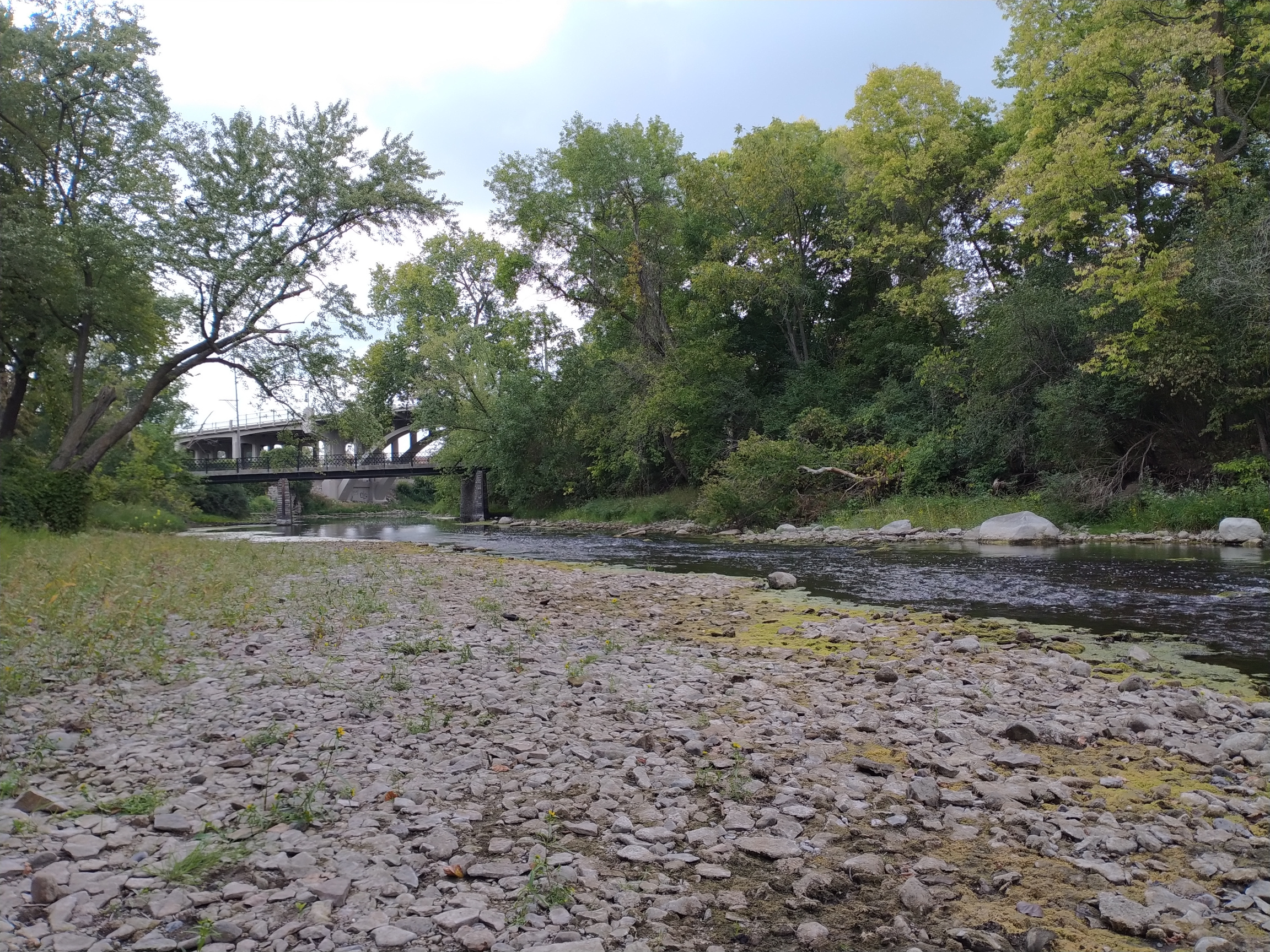
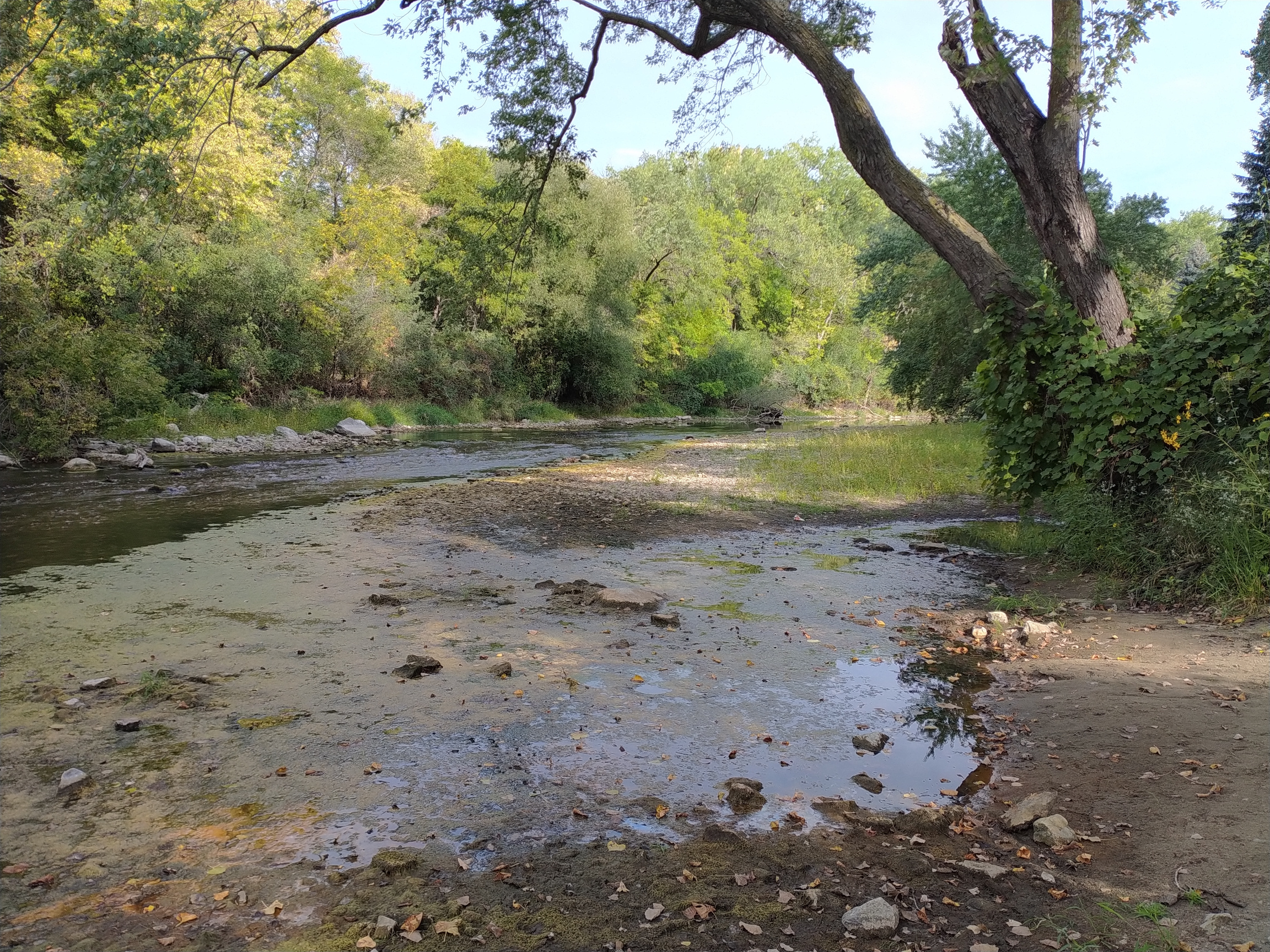
The river bottom revealed, weeds and flowers growing where once water flowed in the Straight River at Faribault’s Teepee Tonka Park. (Minnesota Prairie Roots copyrighted photo September 2023)

CAUTIOUSLY I SIDLED down the silty river bank, hand clasping Randy’s to steady myself. “This isn’t one of the smartest things we’ve done recently,” I said. I held no desire to slip on the unstable ground, to tumble and break a bone. I’ve twice done that. The doctor who recently diagnosed me with osteopenia likely would remind me of my bone density scan results and of my age, which is much closer to 70 than sixty.

But risk outweighed fear. I wanted to reach the dry river bottom, to stand upon the rocky bed, soles touching a place where water once flowed strong and steady.

In this summer of abnormally high temps and little rainfall, the water level in the Straight River, like so many other waterways in Minnesota, is low. The Minnesota Department of Natural Resources, which monitors river depths, terms the level of the Straight near Faribault as “scrapable.” Defined, that’s “so low that paddlers may have to get out of their watercraft to avoid rocks.” At the Straight River West Bridge Street location in Owatonna, the river level measures only slightly better at “low.” The Cannon River, into which the Straight flows, rates as “scrapable” in Morristown, near Faribault, in Northfield and in Welch.

The effects of the ongoing statewide drought are evident. My county of Rice, like 39 percent of Minnesota, is in a severe drought. And much of southeastern Minnesota, including more than half of Steele County to the south through which the Straight River twists and turns, is in an extreme drought.

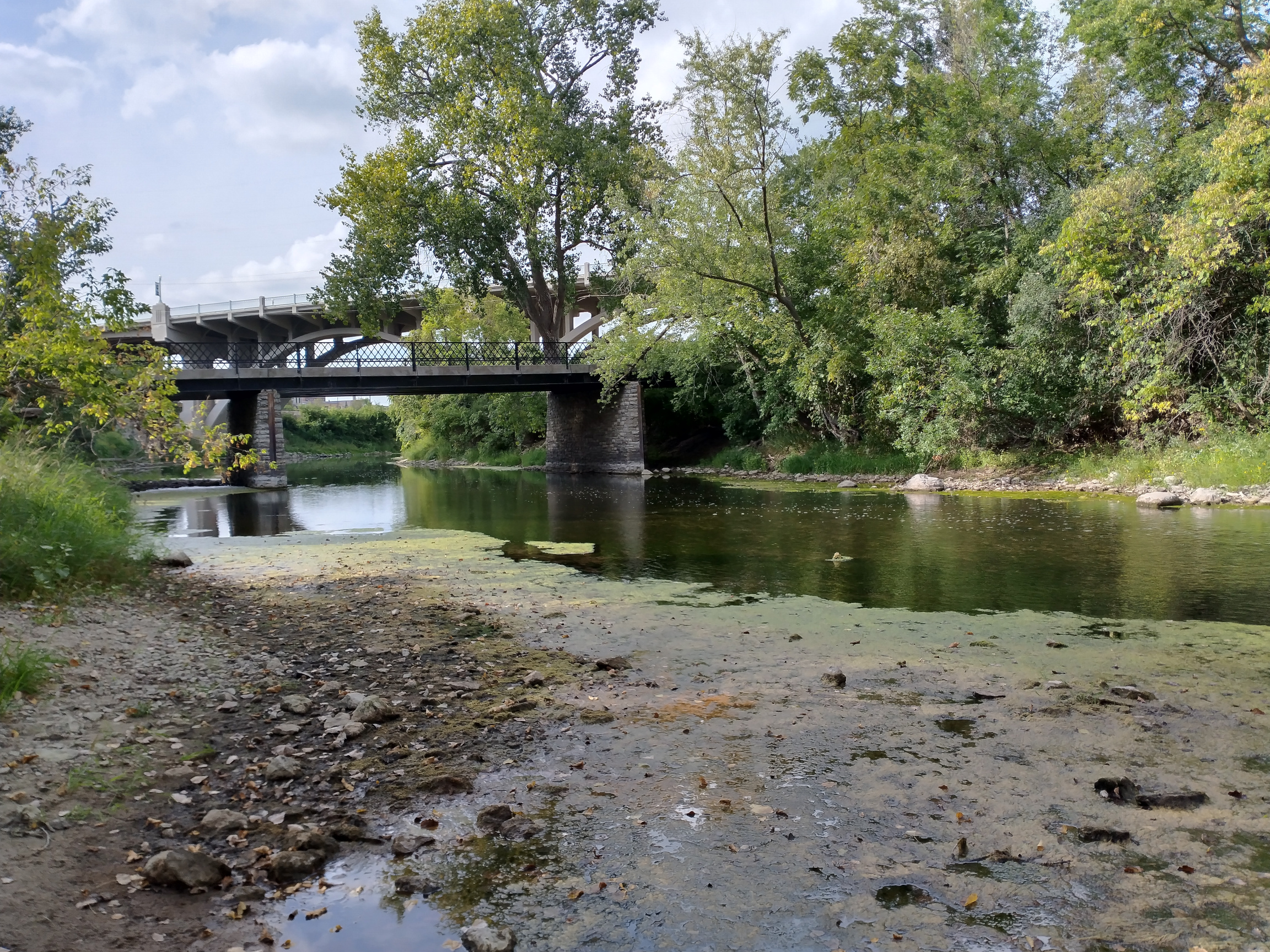
Stagnant water ponds near the bridge leading into Teepee Tonka Park with the viaduct in the distance. (Minnesota Prairie Roots copyrighted photo September 2023)

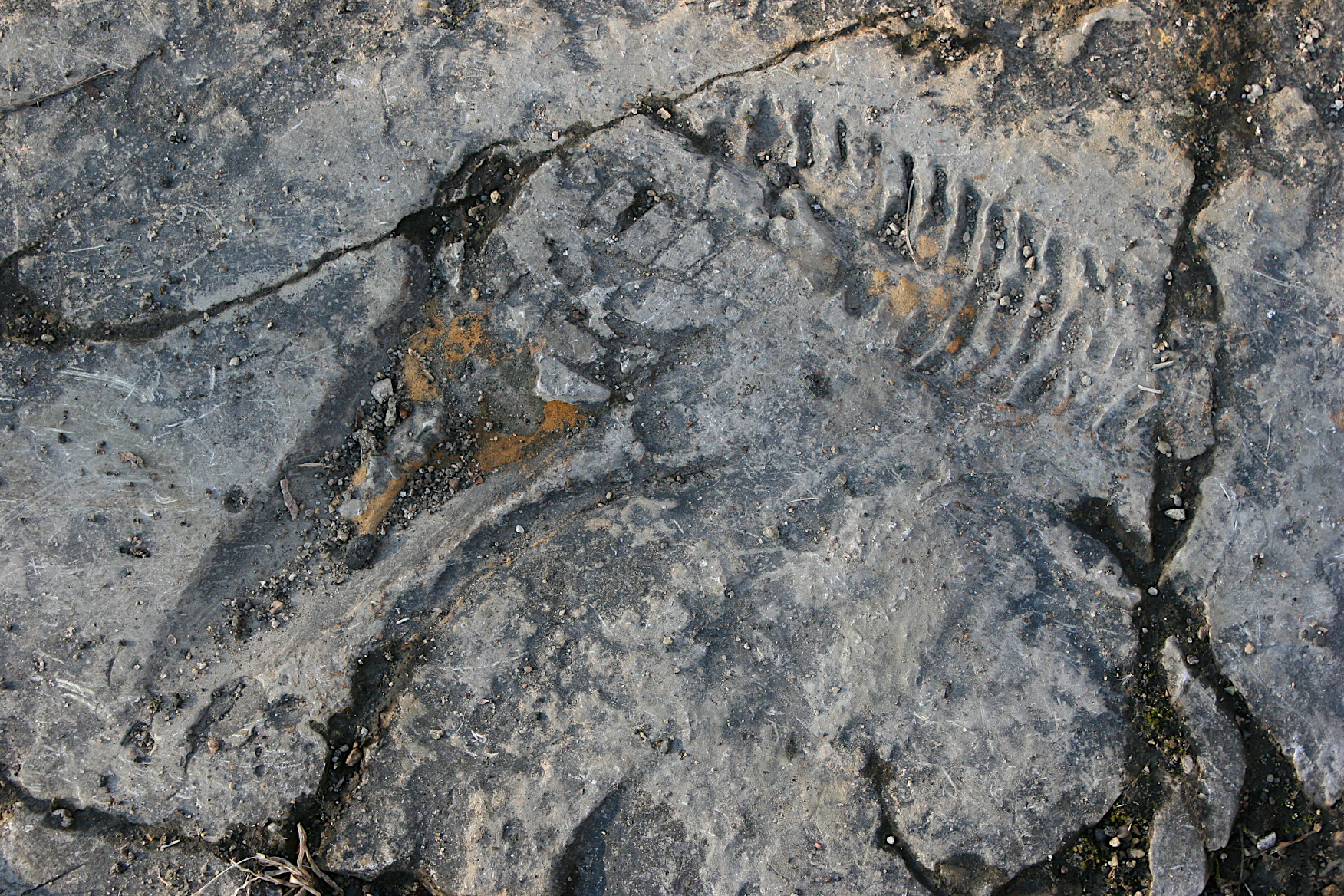
It’s no wonder that on this afternoon in mid-September, I can walk upon a rocky river bottom where water once flowed, even flooded this spring into Teepee Tonka Park near Faribault’s historic viaduct. Earlier this summer, a Faribault teen discovered a cephalopod fossil in an area of a local river typically under water. He refused to identify the specific waterway, but I guessed, perhaps incorrectly, that it was the Straight.

A fossil along a trail near the Straight River overlook in Faribault’s River Bend Nature Center, which connects to Teepee Tonka Park. (Minnesota Prairie Roots copyrighted file photo)

That fossil discovery was also part of my reason for descending the river bank near the east-side Faribault park entrance. I had great uncles who were rock hounds, inspiring in me a childhood fascination with agates and shells and interesting finds revealed only at ground level. That’s carried through into adulthood.

Wildflowers bend toward the narrowed river of exposed river bottom and rocks. (Minnesota Prairie Roots copyrighted photo September 2023)

But on this day I found nothing of interest, only weeds and wildflowers sprouting between stones aside the drought-narrowed river. Correction: I spotted a bra atop a rock, just out of reach in the river, and wondered about the story behind that.

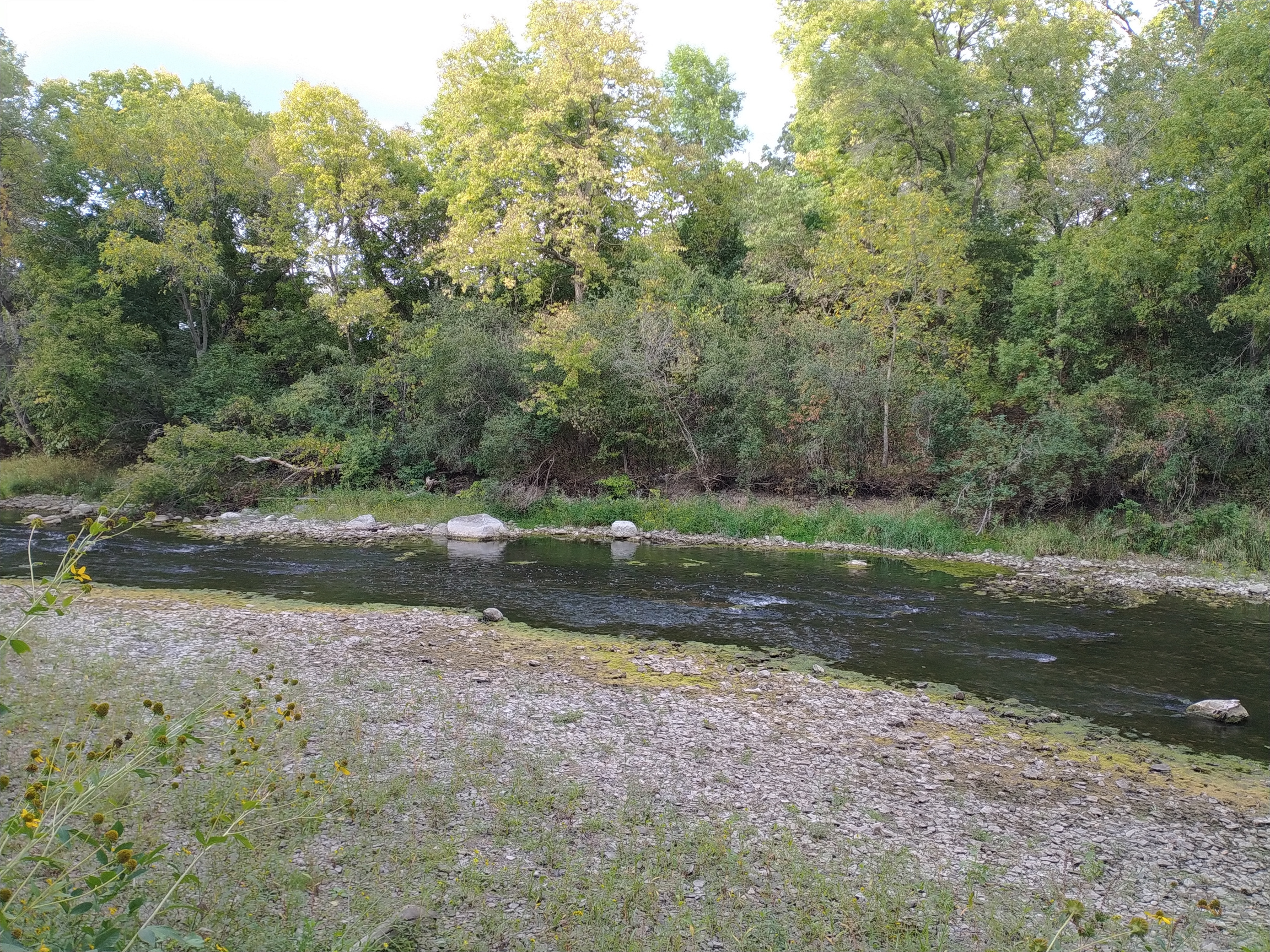
Outdoor enthusiasts intending to paddle the Straight or Cannon rivers now would assuredly have their own disappointing stories to tell about abandoned plans. I observed ankle deep water in parts of the Straight, making water recreation impossible, any recreational outings scrapable.

Around this bend in the river, to the right, the water deepens a bit and flows freely. (Minnesota Prairie Roots copyrighted photo September 2023)

Only a pair of hunting dogs let loose by their owner in Teepee Tonka Park enjoyed the low river level on the day I eased down the river bank. They scrambled down the bank, surefooted, racing along river’s edge, shallow water splashing. Then back up they dashed, sprinting along the grassy bank before returning to the river. I delighted in their antics while simultaneously concerned they might come near me. I never quite trust strange dogs not under the control of their owner. A large muddy-pawed dog once jumped on me while I walked at a city park.

Mud. We’ve seen little of that in most parts of Minnesota this summer. There are exceptions, of course, including flash floods in Duluth on Monday, not something any of us want. Light rain fell in Faribault early on this week, enough to dampen the pavement. But I yearn to hear the steady thrum of rain upon the earth. Rain that will ease this drought, replenish our rivers, revive our waterways, restore the land.

© Copyright 2023 Audrey Kletscher Helbling
NOTE: DNR info referenced in this story is from September 5 on drought conditions and September 12 on river levels.


Connecting via “human books” in Owatonna September 12, 2023

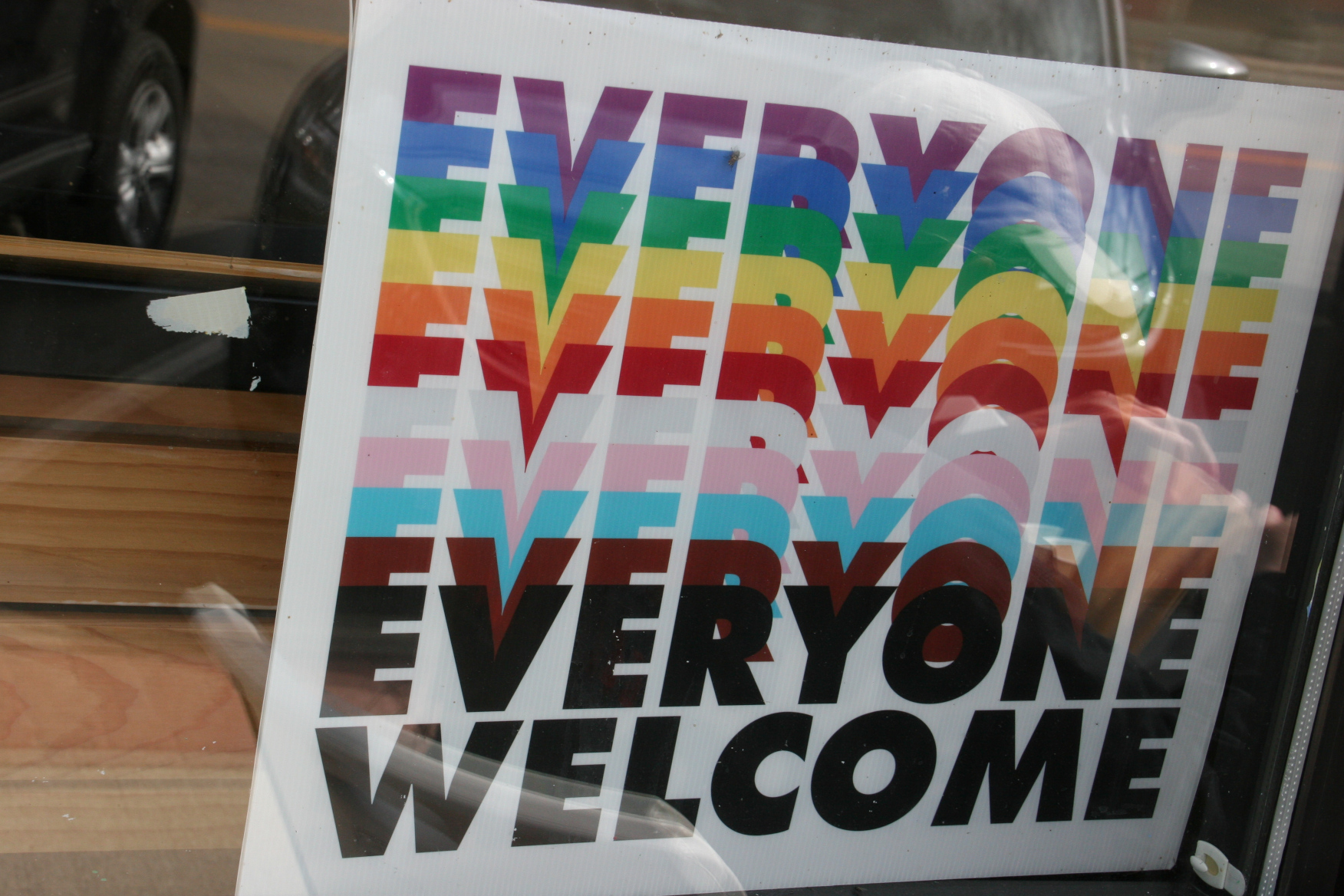
Photographed in the front window of a downtown Faribault business. (Minnesota Prairie Roots copyrighted file photo October 2022)

LISTENING TO AN AREA RADIO STATION Tuesday morning, I learned about a project which seems pure genius. It’s the Human Library®. Developed 23 years ago in Copenhagen and now spread internationally, the library “hosts personal conversations designed to challenge stigma and stereotypes.” And it’s coming to Owatonna this week.

From 4-7 pm Thursday, September 14, the Owatonna Human Rights Commission is hosting a Human Library® in the Gainey room at the public library. The goal is “to foster conversations that can challenge stereotypes and prejudices.”

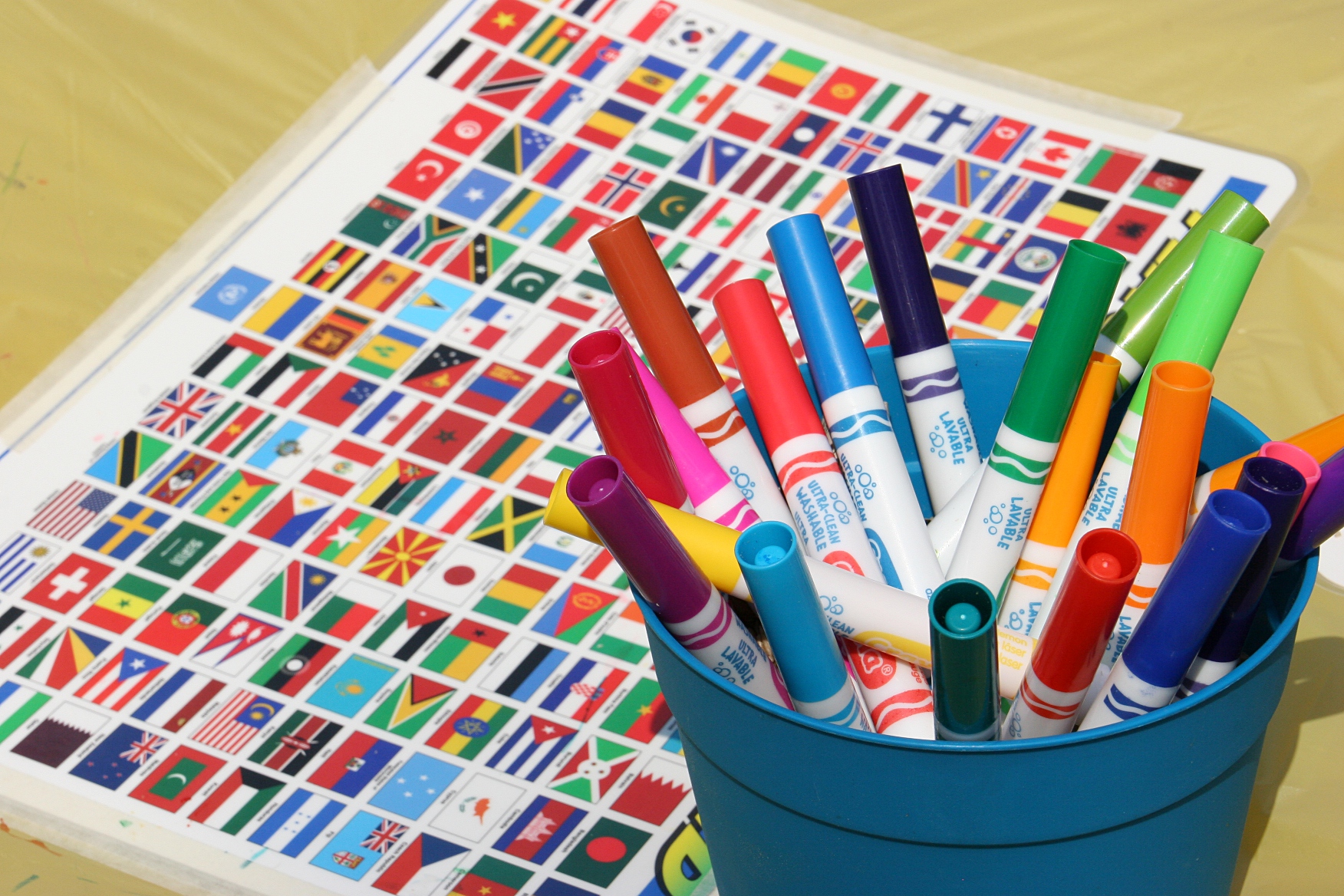
Kids of varied ethnicities and skin tones gather as one to break a pinata at a past International Festival Faribault. (Minnesota Prairie Roots copyrighted, award-winning photo, 2012)

I love this concept of one-on-one conversations among community members who might not otherwise connect. If we’re honest, most of us tend to stick with others who are most like us. Those in our circles. But this, oh, this opens the doors to meeting new people, to understanding, to friendships and much more. And we can only be the better for it by talking with one another, learning, growing our knowledge and compassion.

The idea is simple. Check out a “human book” for 15 minutes by meeting with community members who’ve agreed to participate in the project. Ask questions. Share. Simply chat, get to know one another. Break down barriers. Find common ground. Embrace differences. “Read” as many “human books” as time and availability allow.

We are a diverse country, as represented at a past International Festival in Faribault. (Minnesota Prairie Roots copyrighted file photo 2015)

The list of 20 participating individuals in Owatonna is lengthy and diverse, exactly as intended: Somali Americans, African Americans, senior citizens, business owners, religious leaders, Hispanic, LGBTQ+, educators, veterans, handicapped individuals, law enforcement officers, nonprofit leaders, recovered addicts and healthcare workers.

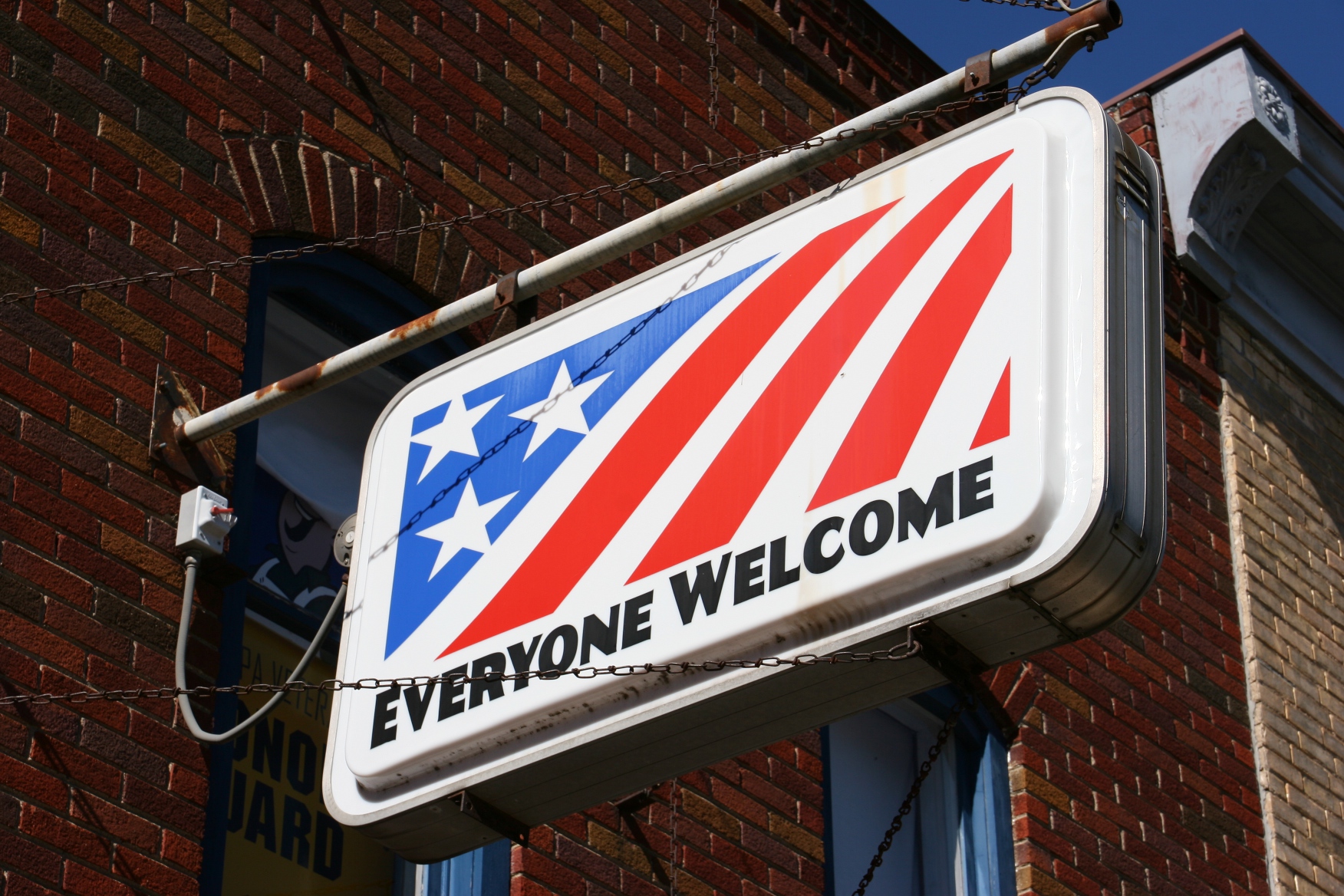
A welcoming sign hangs on the American Legion building in small town Mazeppa. (Minnesota Prairie Roots copyrighted photo March 2018)

Owatonna, like many communities in southern Minnesota and throughout the state, nation and world for that matter, has faced tough issues such as racism, prejudice, discrimination and hatred. Sometimes those issues are right there, publicly visible in ways that make me wonder how humans can treat each other with such disrespect and meanness. But just as dangerous are the insidious comments and behaviors that creep under the radar into communities. We all know they are there—the slights, the whispers, the off-the-cuff hurtful remarks, the intentional exclusion…

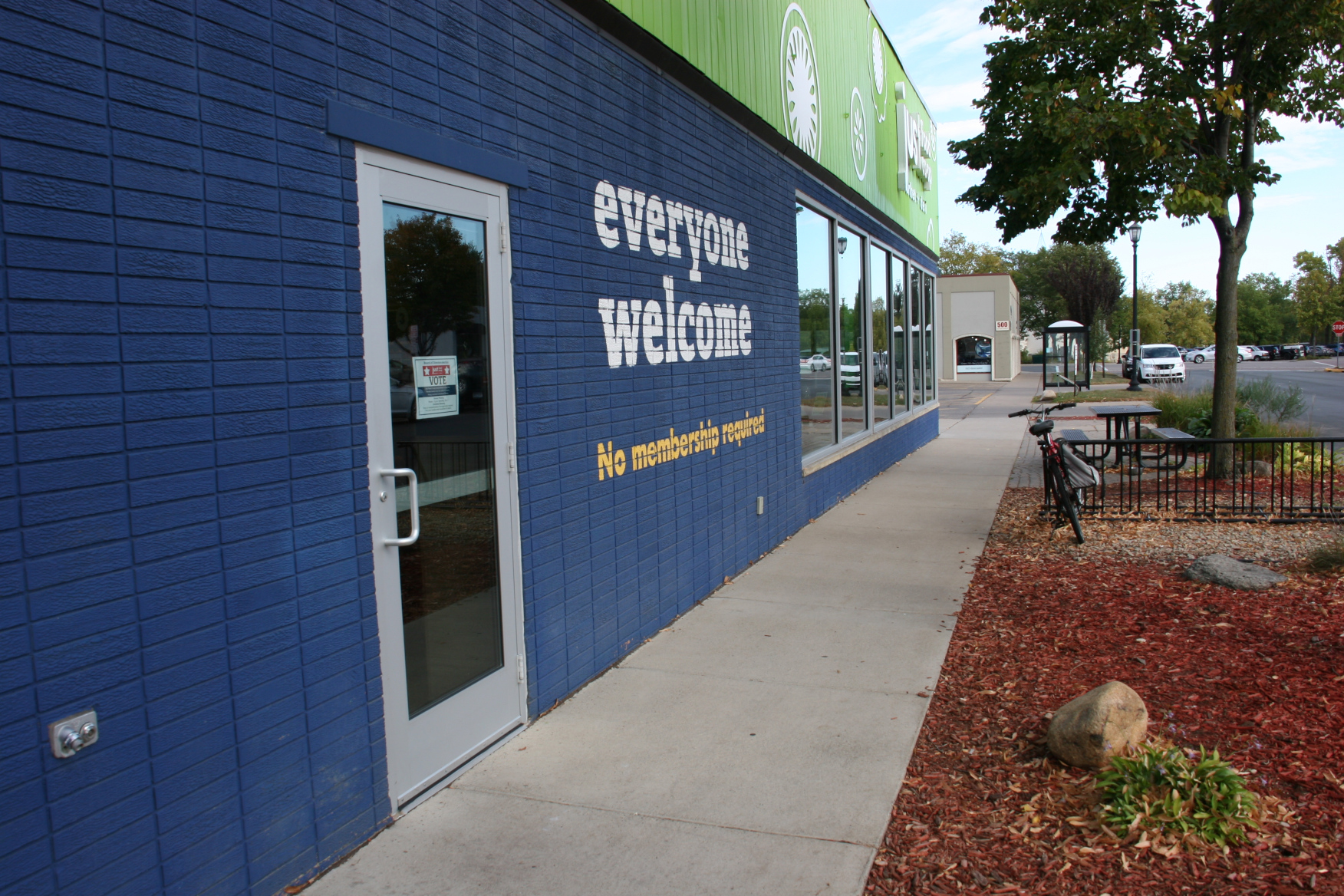
A welcoming message at Just Food Co-op in downtown Northfield. (Minnesota Prairie Roots copyrighted file photo September 2022)

I hold hope that projects like the Human Library® can effectively make a difference in enlightening, in changing attitudes, in helping each of realize that we are all human, more alike than we are different.

© Copyright 2023 Audrey Kletscher Helbling
 

“I Am Minnesota” immigrant portraits & stories inspire September 11, 2023

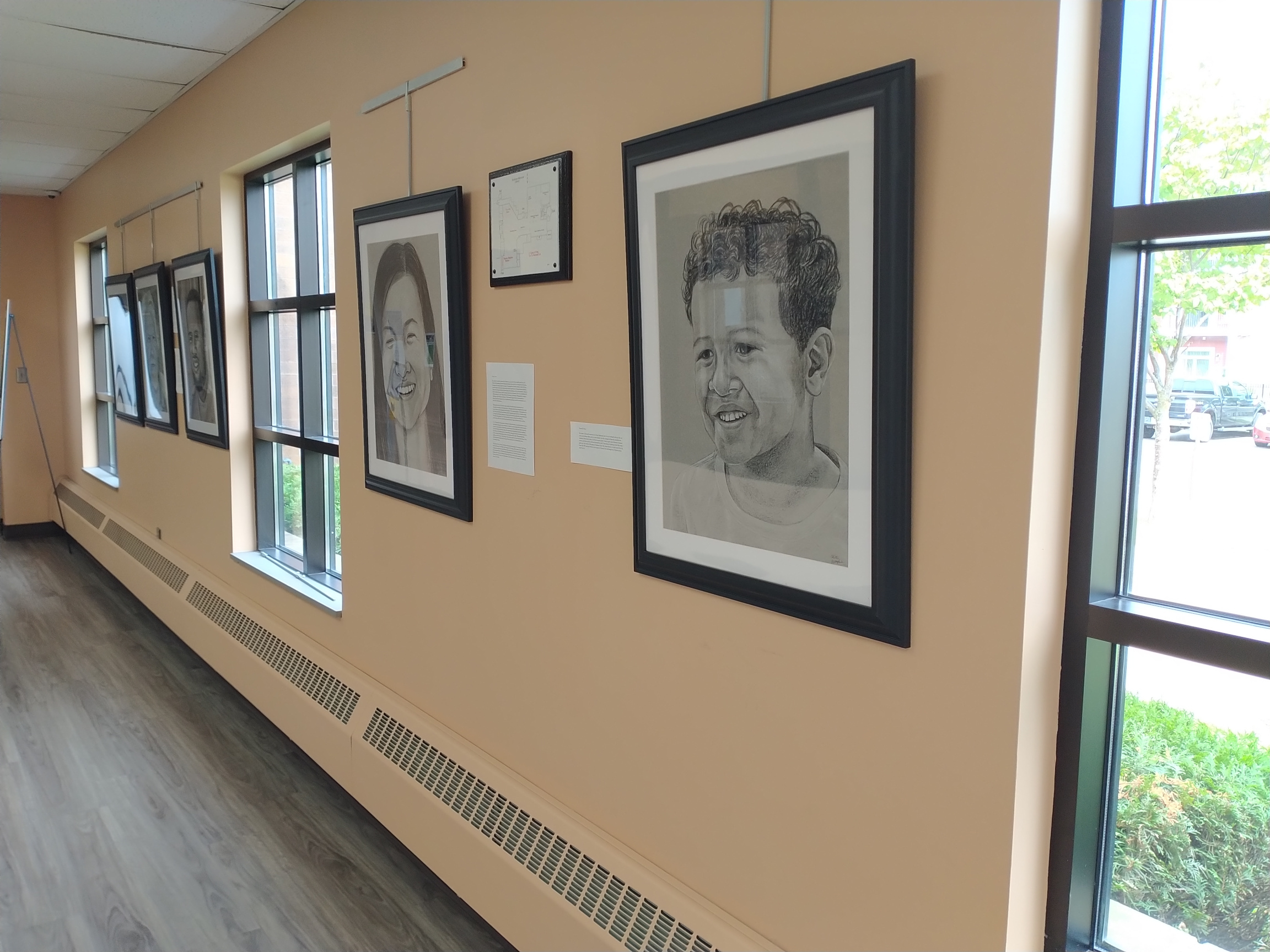
Portraits and stories, including that of Tin Tea owner, Chau, second from right, are featured in the newest “I Am Minnesota” exhibit. (Minnesota Prairie Roots copyrighted photo September 2023)

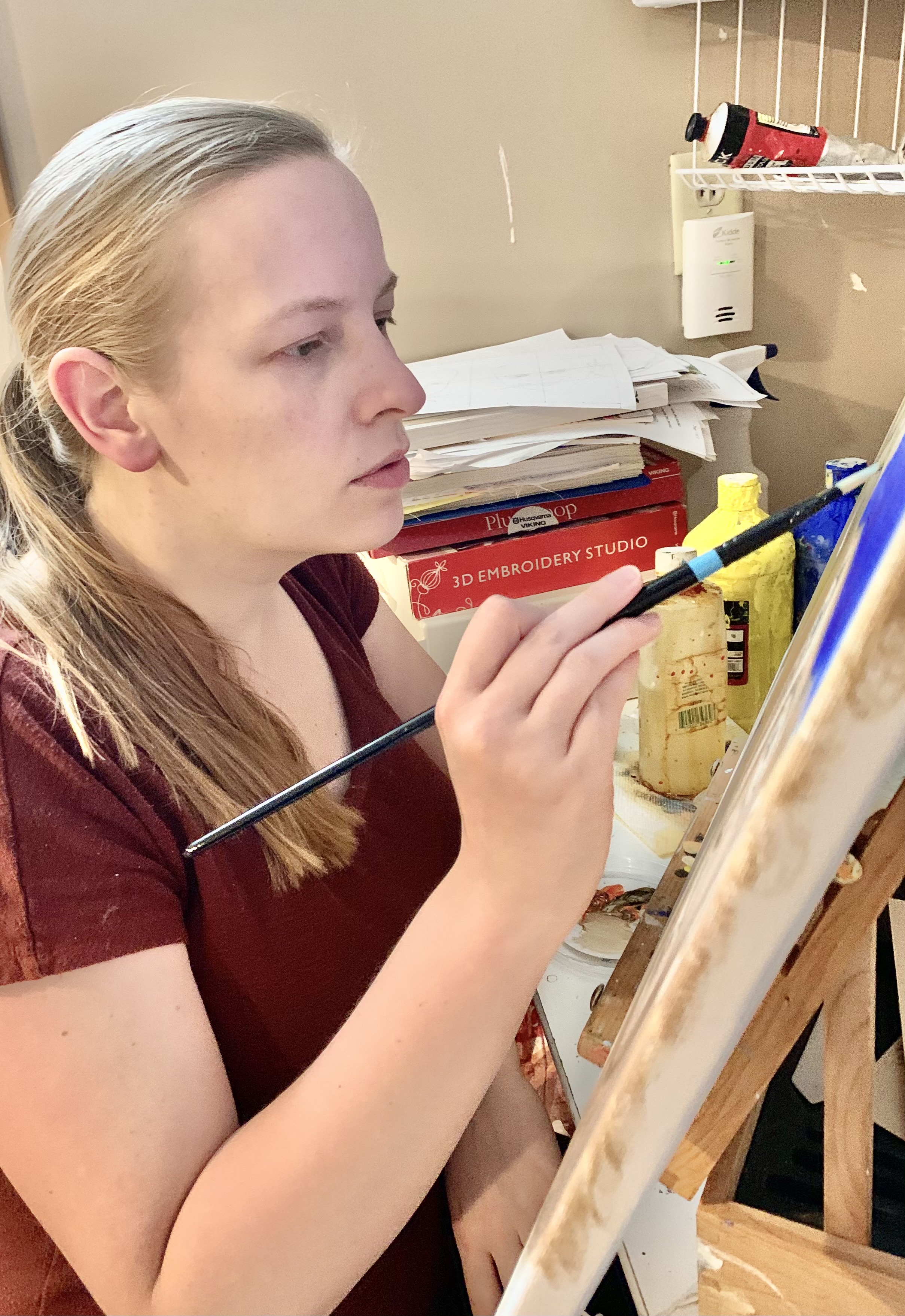
IN THE CORRIDOR LINKING Buckham Memorial Library and the Faribault Community Center, 13 portraits of immigrants and second-generation immigrants line the walls. They are the work of Faribault artist Kate Langlais in her updated “I Am Minnesota” project.

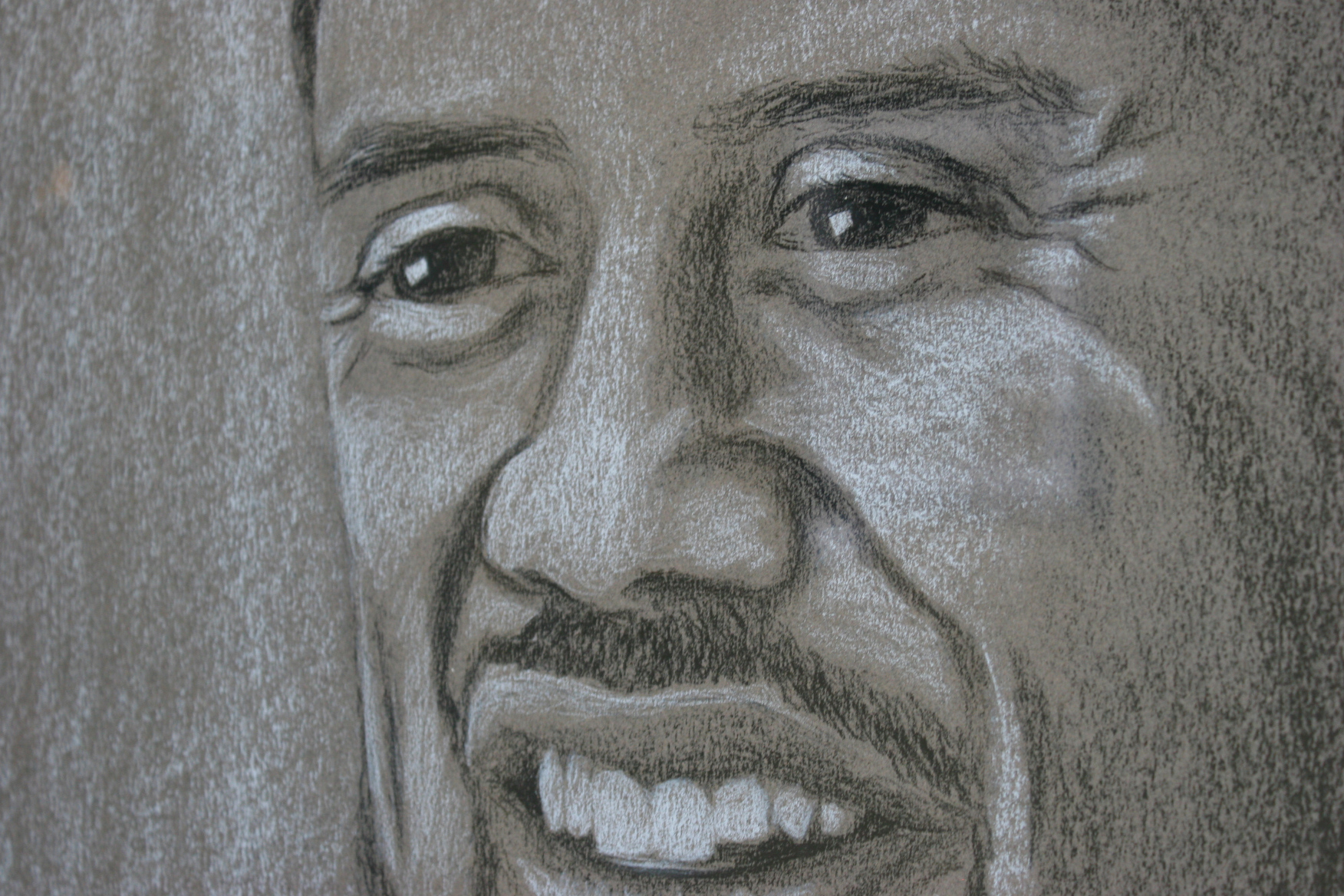
“Faysel,” who fled the war in Somalia. (Minnesota Prairie Roots copyrighted file photo September 2020)

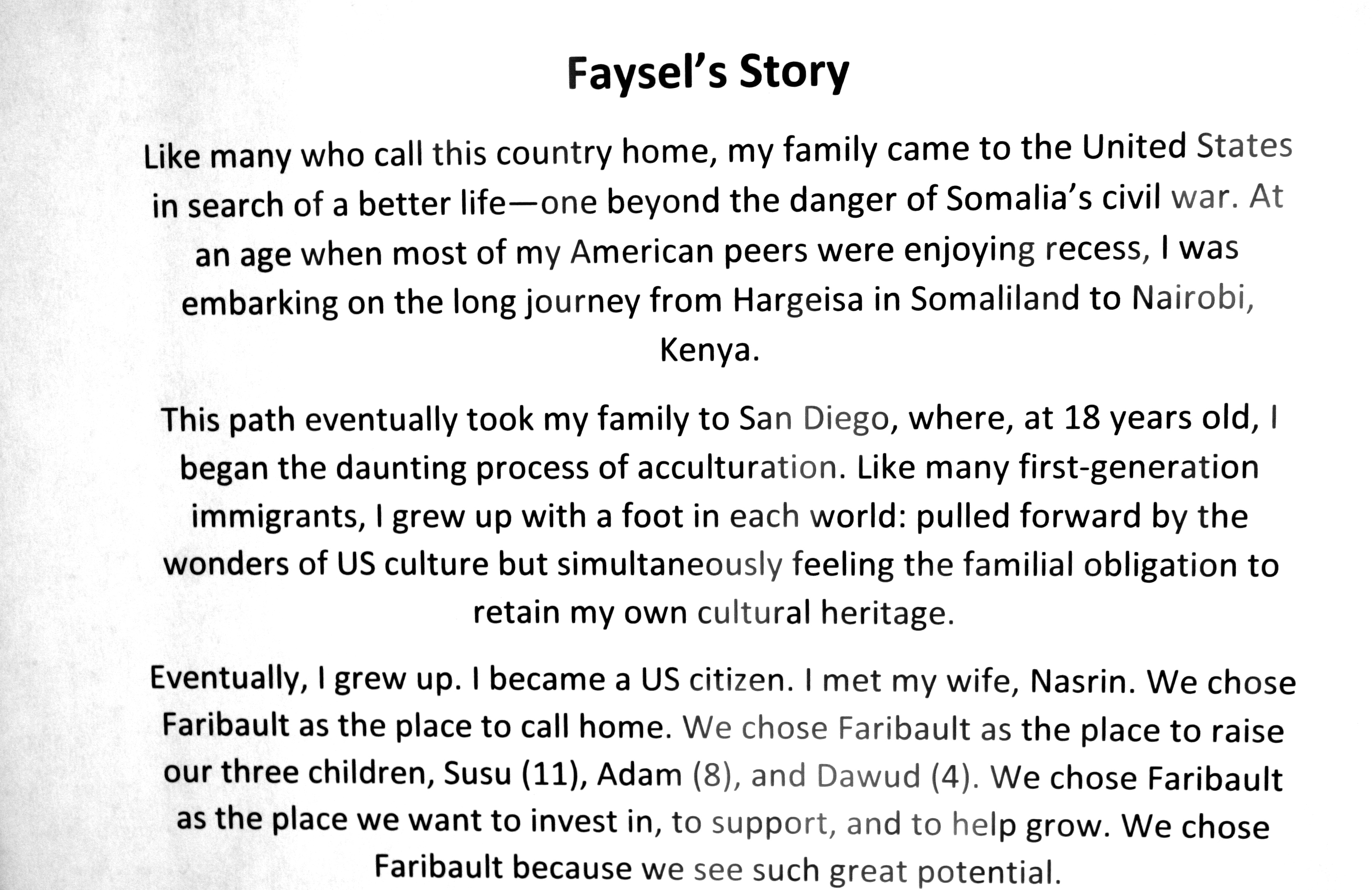
This is a remarkable and revealing exhibit, which stretches well beyond faces portrayed primarily in black and white charcoal on gray paper. Langlais also includes the stories of those who now call this region home. Those stories hold the challenges and dreams, the successes, the gratitude and more of individuals who have become integral, and important, parts of our communities.

Faysel’s story from Langlais’ 2020 “I Am Minnesota” exhibit. (Minnesota Prairie Roots copyrighted file photo September 2020)

I saw Langlais’ first “I Am Minnesota” exhibit in 2020 at the Paradise Center for the Arts. She includes seven of those 2020 portrait-story pairings in her latest installation along with six new featured individuals. I appreciate her work today as much as I did three years ago.

Kate Langlais at work in her home studio. (Photo courtesy of Kate Langlais, 2022)

In her artist’s statement, Langlais states in part that, “It is an honor to learn about each individual’s hardships and perseverance, as well as the beauty of their hopes and dreams.”

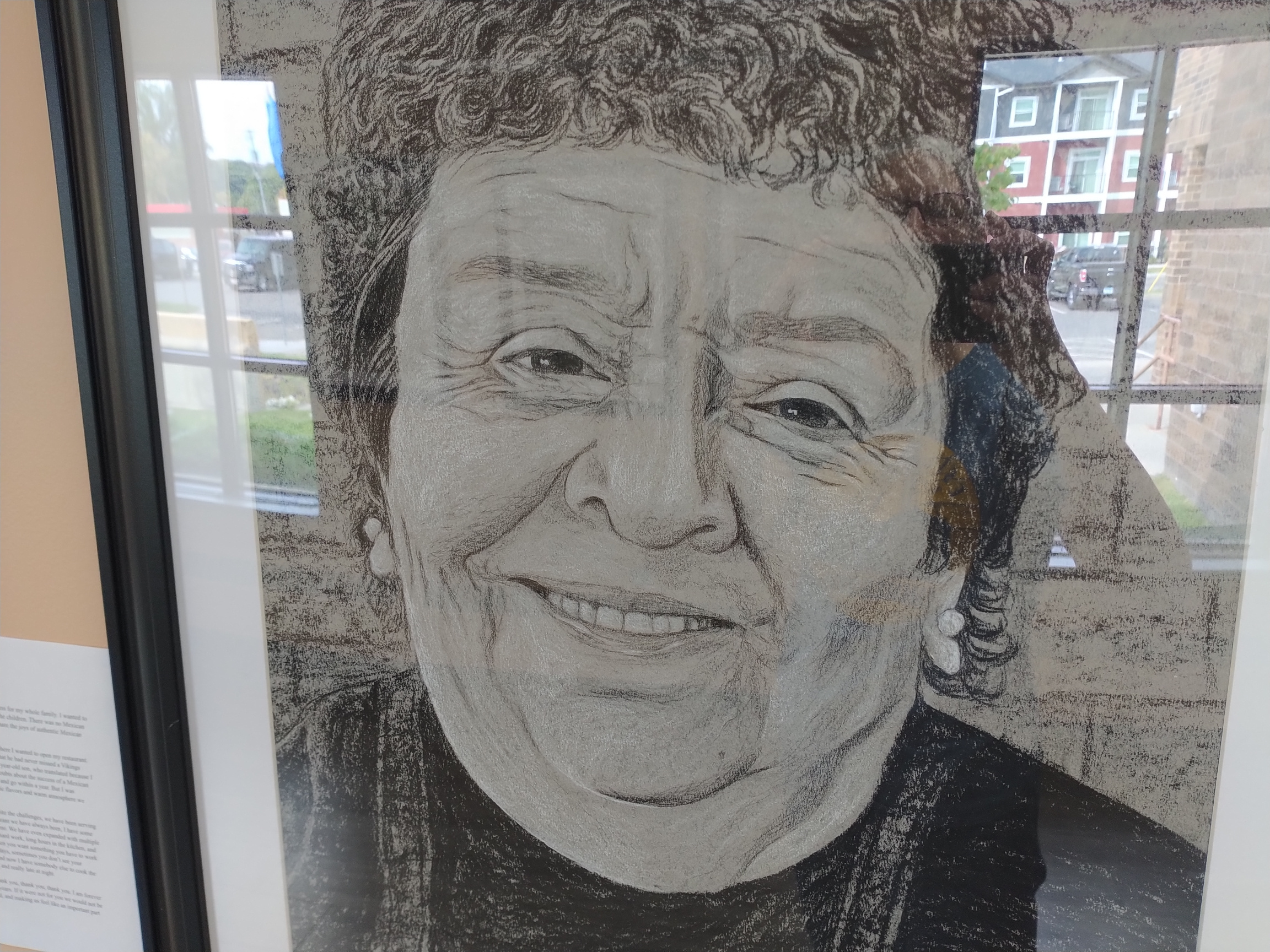
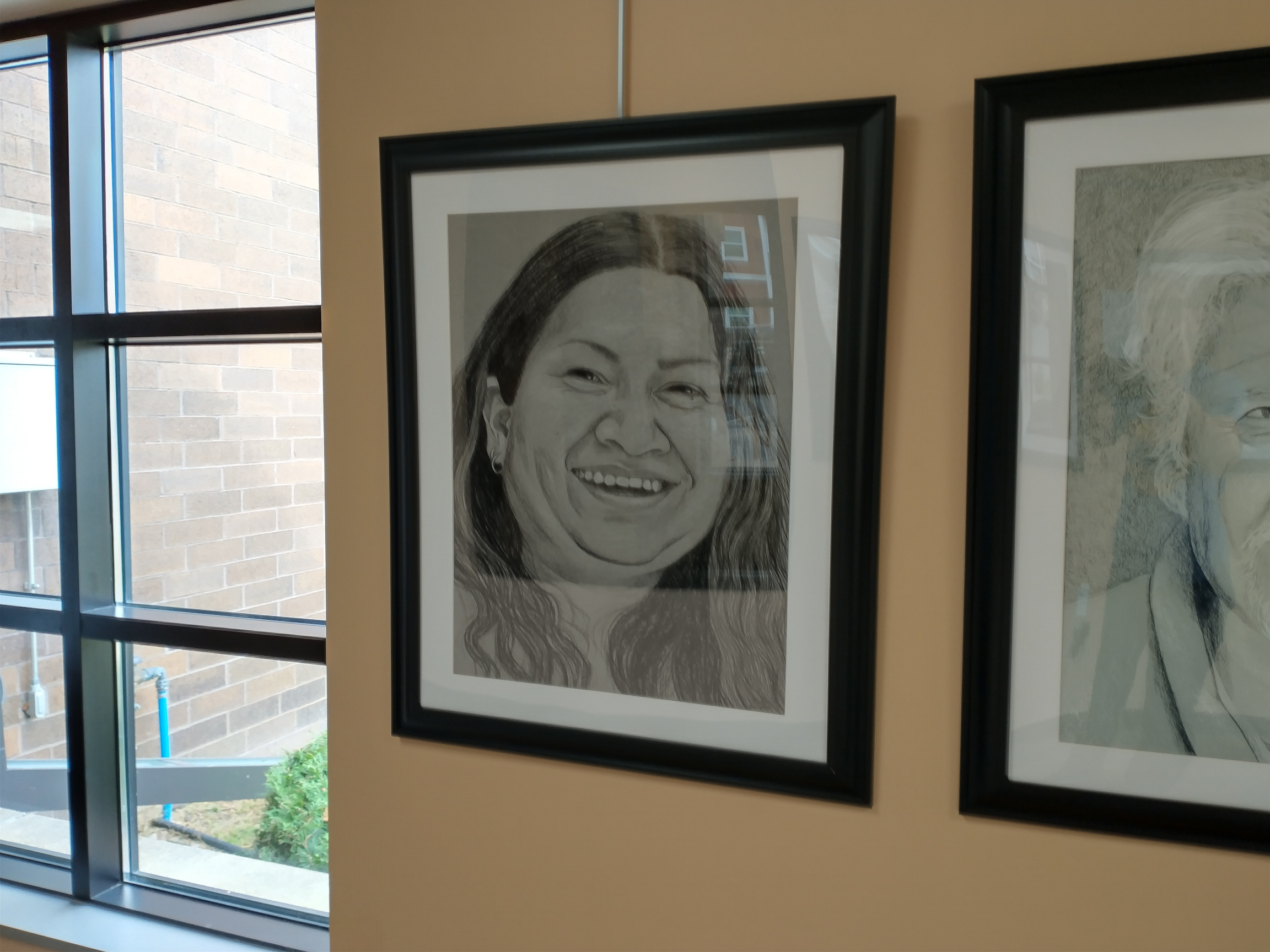
“Hilda,” successful Faribault business owner. (Minnesota Prairie Roots copyrighted photo September 2023)

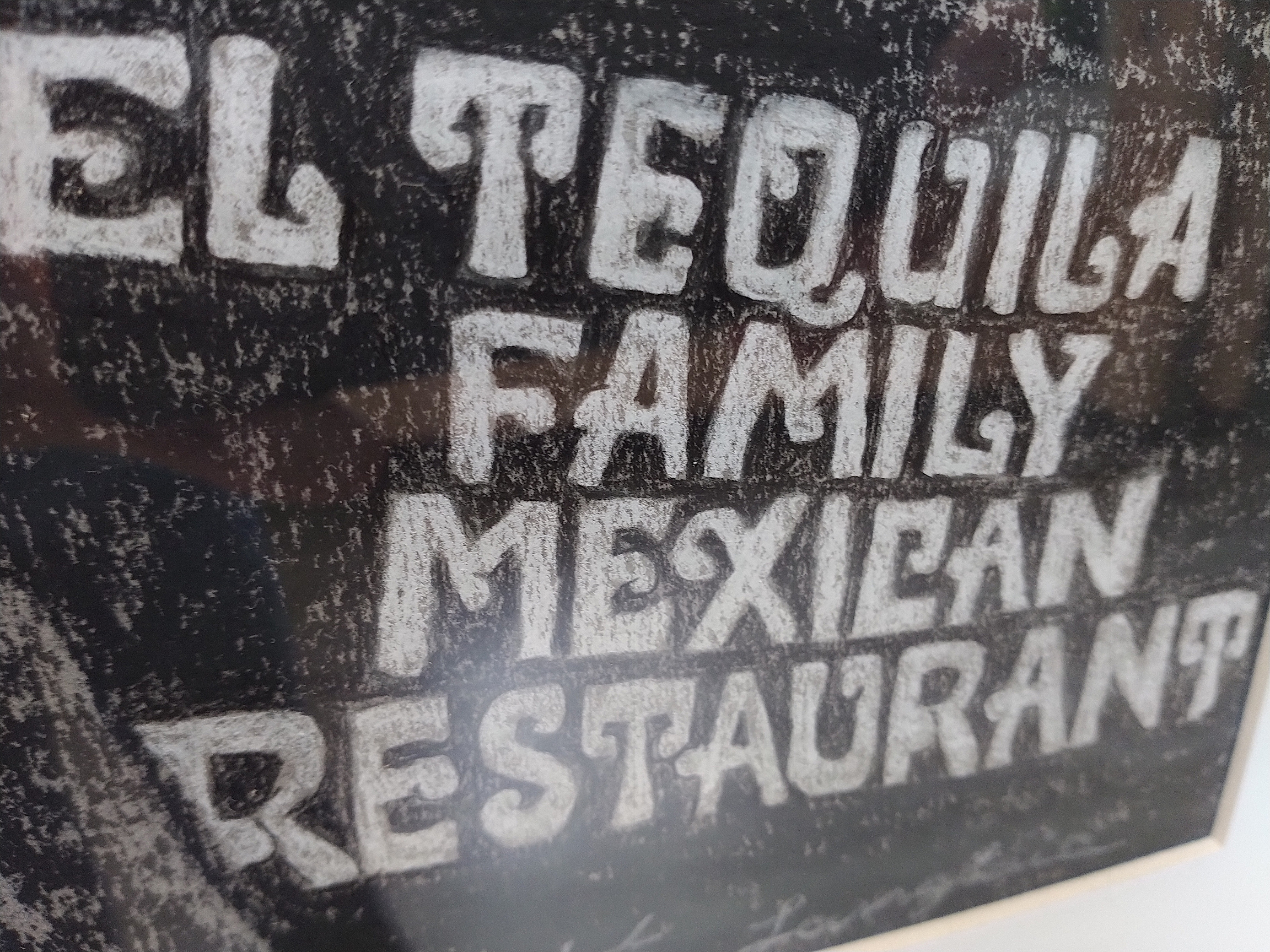
That includes the hopes and dreams of Hilda, who came to Faribault in 1996 with the goal of opening a family-run restaurant serving authentic Mexican food. Twenty-seven years later, El Tequila Family Mexican Restaurant is still going strong, even expanding to other communities. Hilda overcame a vocal naysayer who doubted such a restaurant could survive, let alone thrive, in Faribault. She proved him wrong and, in her story, expresses gratitude to a supportive community.

Likewise, another woman with a dream, second-generation Vietnamese-American Chau, opened Tin Tea in Northfield in June 2021 at the age of 19 while also a full-time student at St. Olaf College. Her story begins with gratitude to her parents: “My parents’ incredible journey from Vietnam to a new land left an indelible mark on my life. Filled with hardships and unwavering determination, their arrival in a foreign land with nothing but hope and courage inspired me deeply.”

An unidentified “I Am Minnesota” portrait of a woman hangs next to a drawing of Peter. (Minnesota Prairie Roots copyrighted photo September 2023)

To read these stories, to view these portraits, is to witness the strength and determination of individuals like Hilda and Chau. And Peter, an immigrant from the Netherlands who moved with his wife Virginia to Faribault in 2002. Since then, Peter, now a U.S. citizen, has volunteered tirelessly in Faribault, heading up the International Festival, being selected as “Citizen of the Year” (along with Virginia), elected to the City Council, recently named the new Rice County fair manager and more.

Included in Hilda’s portrait is the name of her successful Mexican restaurant, the first in Faribault and now one of several. (Minnesota Prairie Roots copyrighted photo September 2023)

Thirteen faces. Thirteen stories. They are ours to view, to read, to appreciate. For in seeing, we put faces to the word “immigrants.” For in reading, we learn their backstories. And in both, we begin to understand that our newest neighbors and their families overcame much to call this place, this southern Minnesota, home.

FYI: Kate Langlais’ “I Am Minnesota” exhibit will be up until Friday, September 15. A closing reception is slated for 5-7 pm with a free portrait drawing class beginning at 6 pm. Register for the drawing class at Faribault Parks and Recreation.

© Copyright 2023 Audrey Kletscher Helbling
 

A look back, a look ahead: How school shapes us, expands our world September 6, 2023

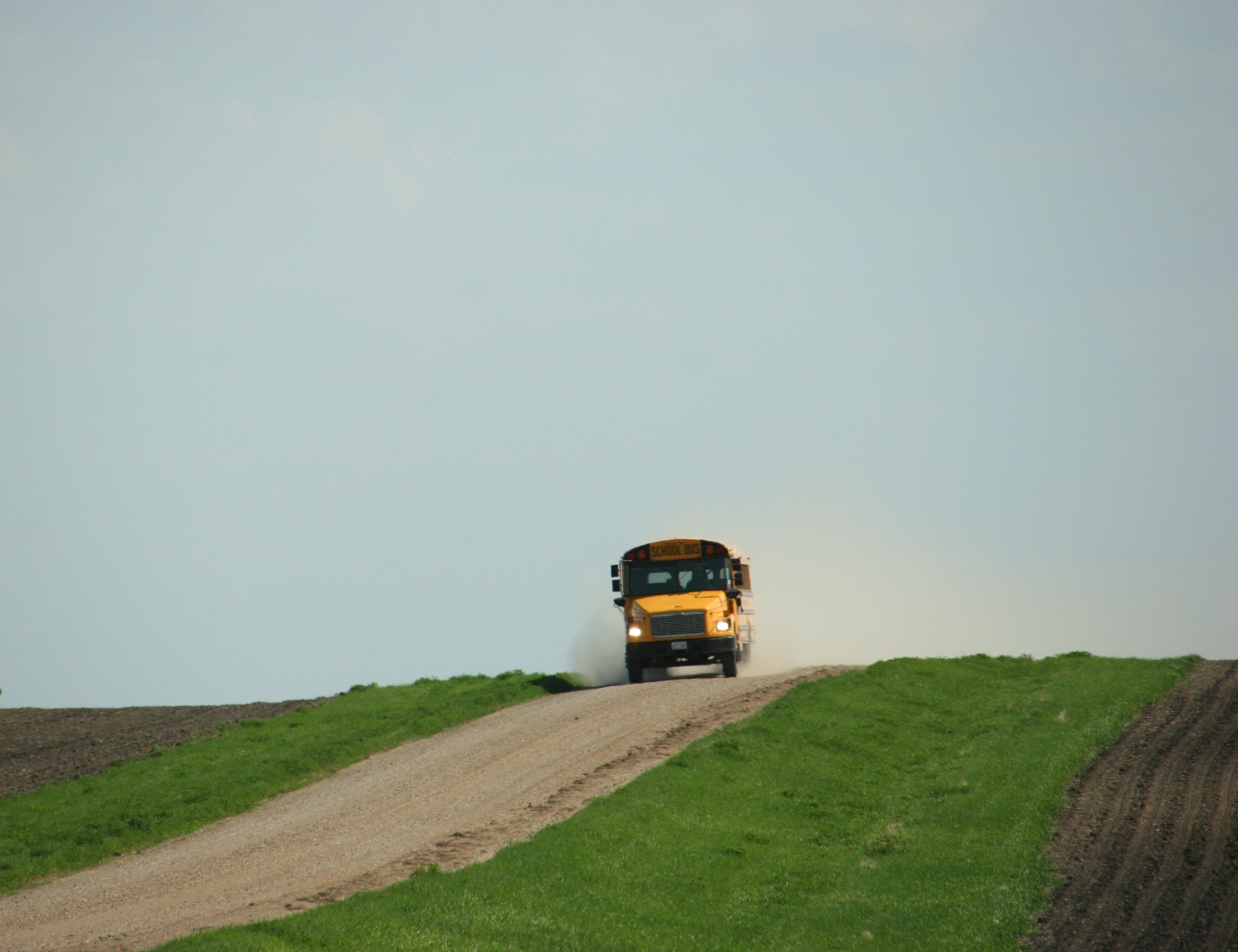
A bus follows a back country road near Morgan in southwestern Minnesota. (Minnesota Prairie Roots copyrighted file photo May 2018)

SHE WANTS TO SAVE the earth. It’s a lofty and noble goal for my granddaughter, who started second grade on Tuesday. Each year, on the first day of school, her mom documents basics about Isabelle on a small chalkboard. That includes a response to “What I want to be when I grow up.” This year Izzy aims to be an environmentalist. As a first grader, her professional goal was becoming a game designer. And on the first day of kindergarten, she wanted to own a toy store and also be a mom.

It’s interesting how Izzy’s interests evolve as she ages, as she grows her world and knowledge and connections with others. The possibilities are endless for her generation. I hold such hope in these young people, just beginning their formal educations.

And I hold hope, too, when I see a photo of Izzy and three neighborhood friends waiting at their urban bus stop. “Smart, Brave, Beautiful” banners Bethel’s tee. What a reaffirming message. For all of them. And how reaffirming that they are of differing ethnicity, their skin tones varied and, indeed, beautiful.

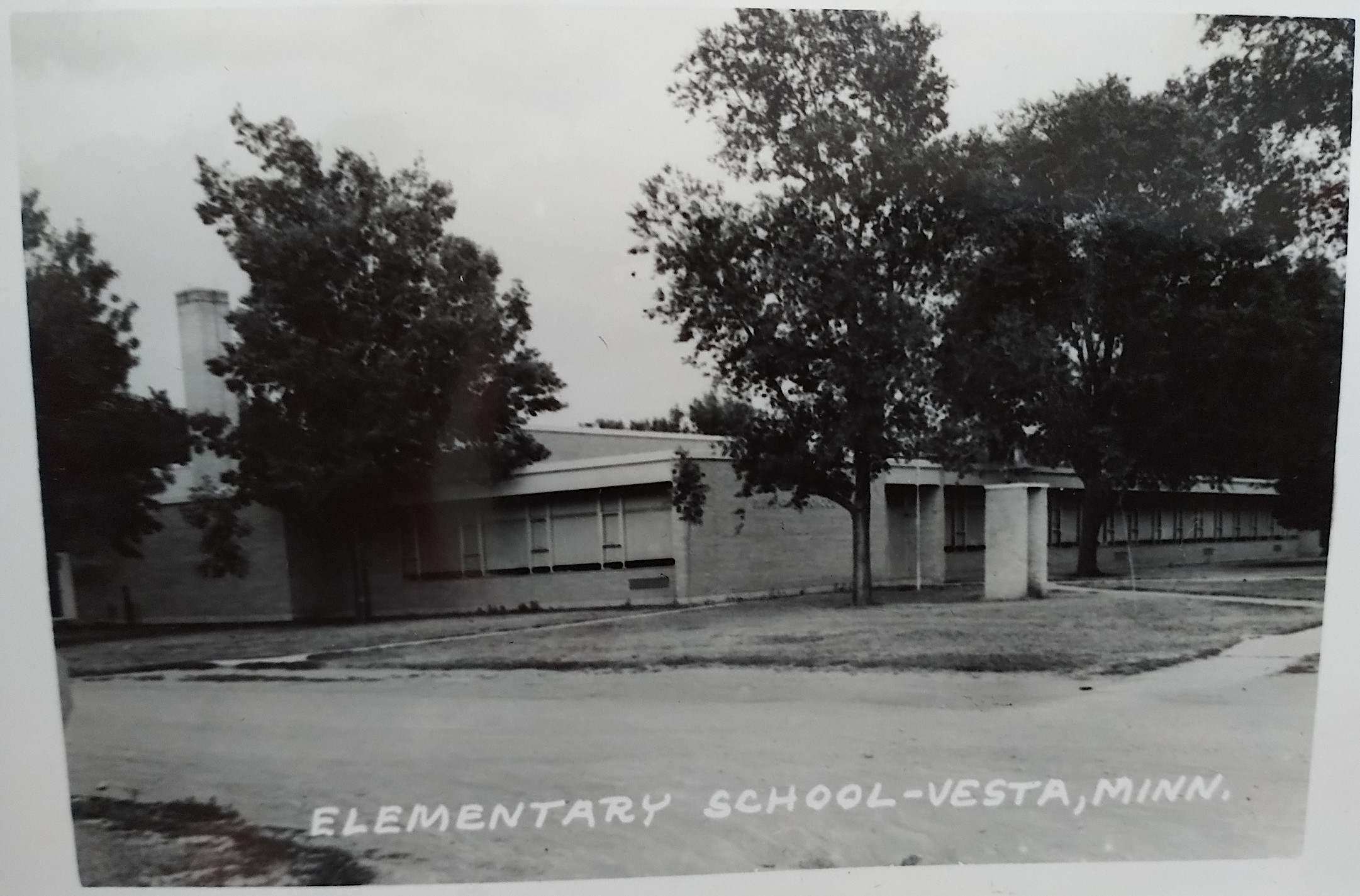
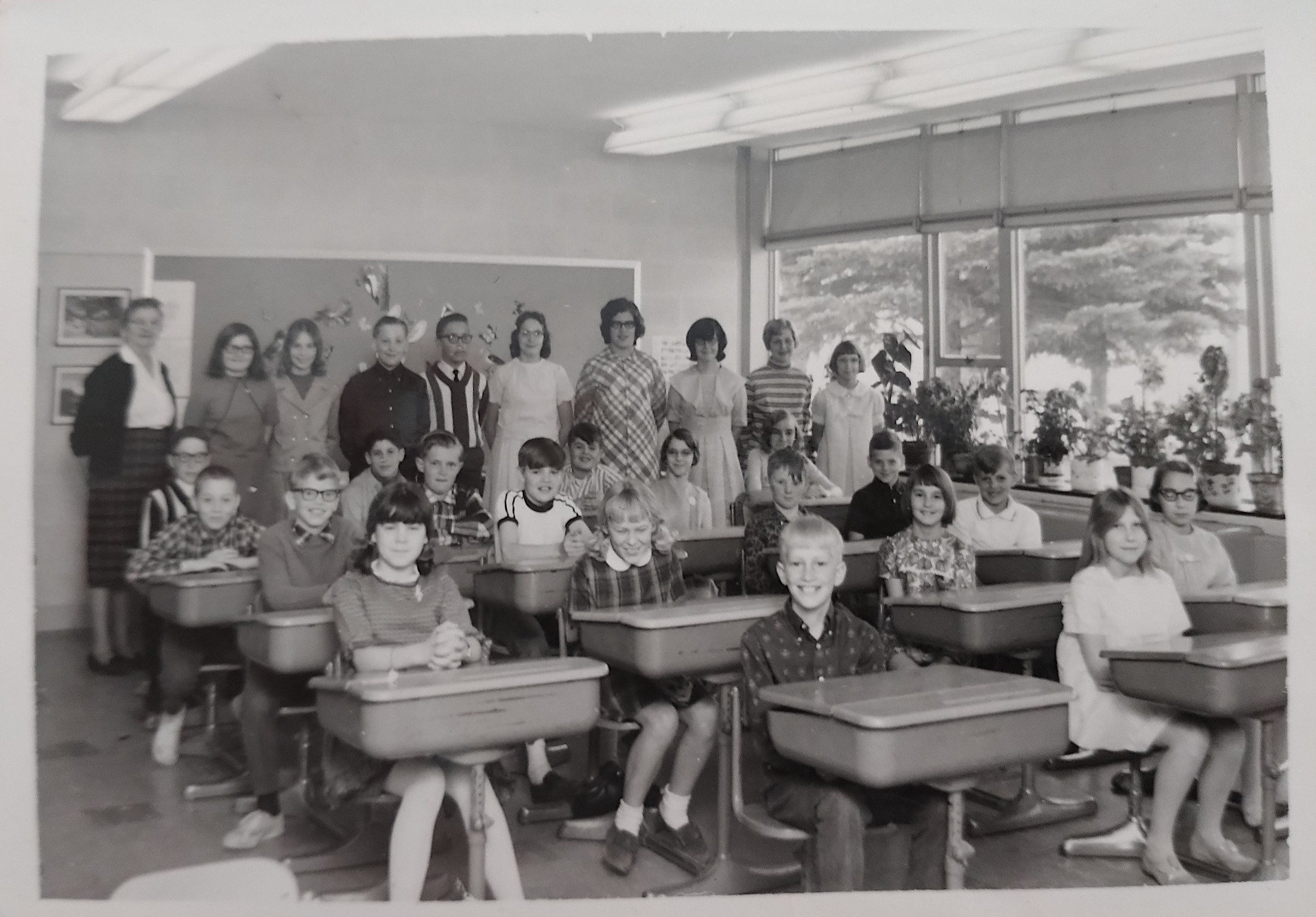
My elementary school, circa 1960s, located in Vesta in Redwood County. The school closed decades ago. (Photographer unknown; photo sourced from my personal photo album)

Sixty years have passed since I was a second grader in a small southwestern Minnesota elementary school, where my paternal grandfather served on the school board. My classmates and I were mostly farm kids, all white. We wrote in “Big Chief” lined tablets which today would not, should not, fly. Attitudes differed in the 1960s. Words like diversity, respect and environmentalist were not part of our everyday vocabulary.

A serene country scene just north of Lamberton in southern Redwood County. (Minnesota Prairie Roots copyrighted file photo September 2013)

But words, overall, held my interest all those decades ago. I have Mrs. Kotval to thank for sparking my love of words, of reading, and eventually of writing. Each day after lunch, she read to her third and fourth graders from “The Little House” and other chapter books. Through the writing of Laura Ingalls Wilder, who lived many years earlier in nearby Walnut Grove, I began to appreciate the nuances of the prairie. And I learned the importance of descriptive, detailed writing. Wilder engaged all of her senses to describe the prairie and life thereon in her series of wildly popular books. With her love of the natural world, this writer unknowingly documented the environment for me, my children and for my second grade granddaughter, today an aspiring environmentalist.

Early on, I aspired to be an elementary school teacher. But that changed as I grew my world, my knowledge, my connections. Words focused my passion. Unlike most of my elementary school classmates, I loved penmanship—letters and words flowing in script across the pages of my penmanship book. I loved spelling. I loved reading, even in a school and town without a library and thus with limited access to books. And by high school, that love of words expanded to writing.

Fifth and sixth graders at Vesta Elementary School in the late 1960s. I’m in the back row, far right, next to the windows. (Photographer unknown; photo sourced from my personal photo album)

I want to pause here and stress the importance of passionate teachers in fostering students’ interests. From Mrs. Kotval reading to her students after lunch to junior high English teacher Mrs. Sales teaching me all the parts of grammar to high school teacher Mr. Skogen requiring students to keep journals, their influence on me and my eventual career was profound. I would go on to earn a college degree in mass communications, leading to a career as a journalist, writer, poet and photographer.

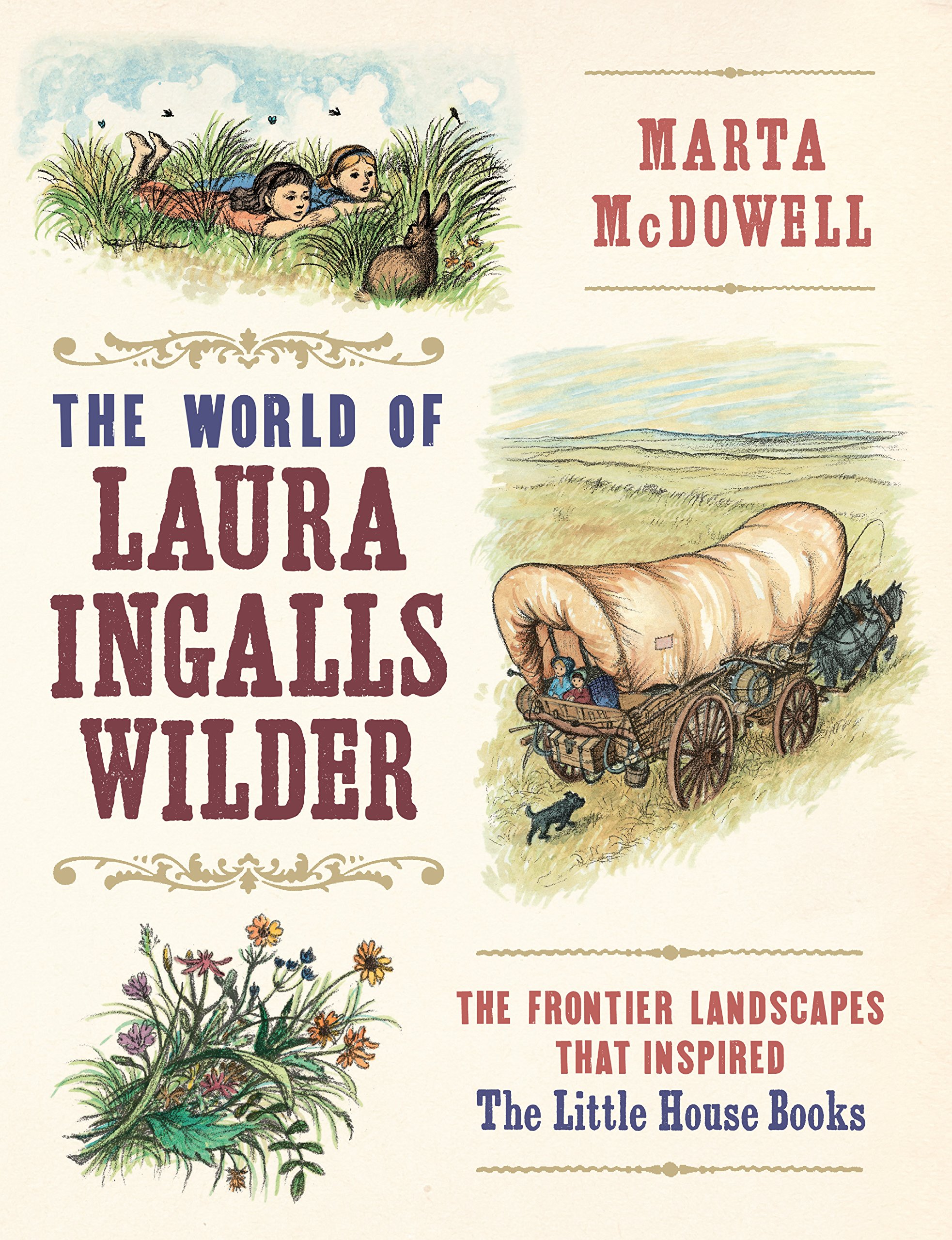
That brings me full circle back to Laura Ingalls Wilder, who early on influenced my detail-rich writing and photographic styles. In 2017, I became professionally connected to the author via “The World of Laura Ingalls Wilder—The Frontier Landscapes That Inspired The Little House Books.” Author Marta McDowell chose three of my photos (including one of prairie grasses at sunset) to illustrate her 396-page book documenting Wilder’s life and relationship to her environment. Perhaps some day my granddaughter will open the pages of McDowell’s book and find the photos taken by her grandmother. Whether Isabelle becomes an environmentalist or something vastly different, I expect she will always care about the earth and her role in saving it.

© Copyright 2023 Audrey Kletscher Helbling
 

Connecting in life’s everyday moments August 30, 2023

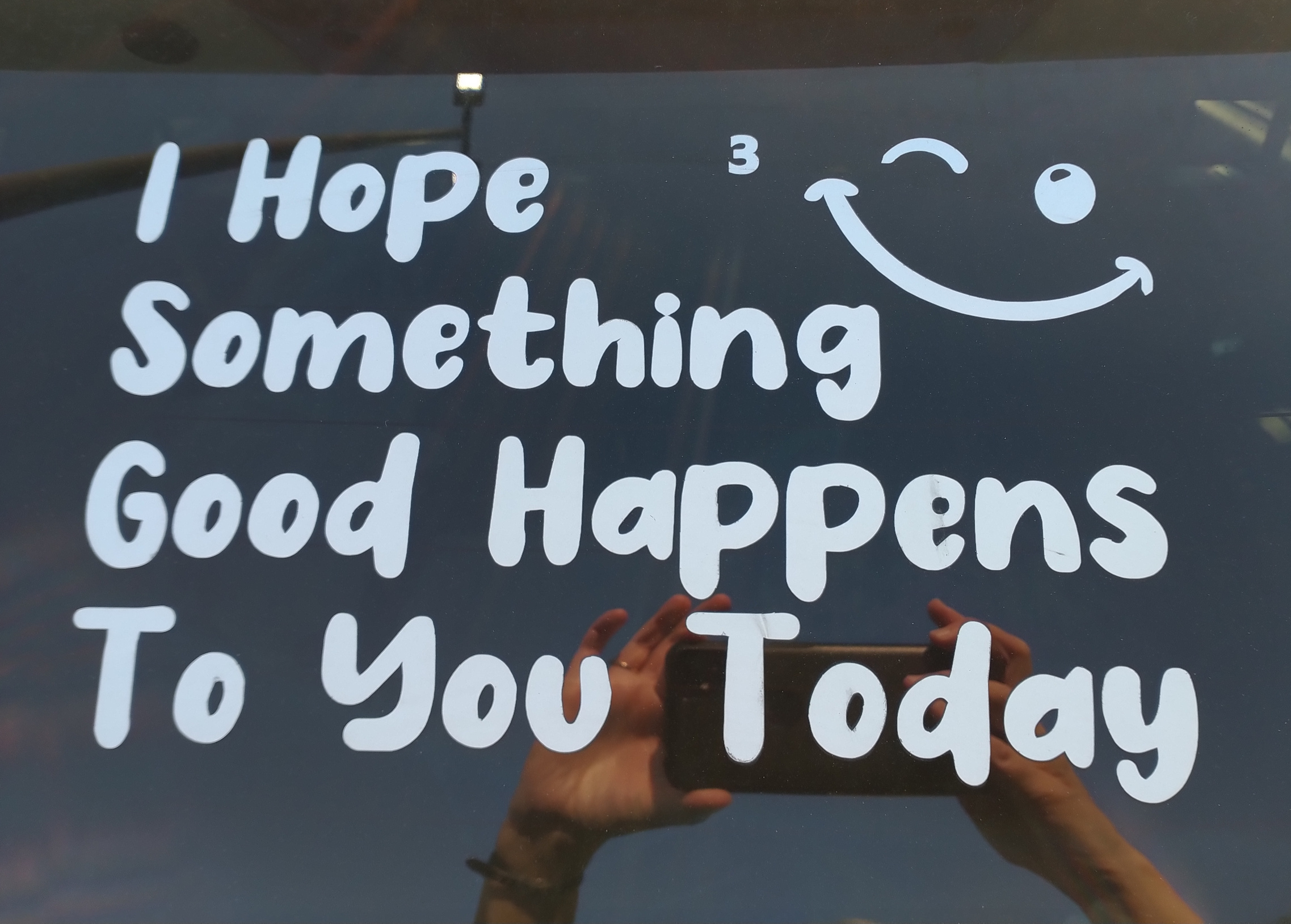
I love this positive message posted on a rear vehicle window. (Minnesota Prairie Roots copyrighted photo August 2023)

WE STOOD OUTSIDE the local library, minutes before the 9 am weekday opening, waiting for staff to unlock the front door and let us inside. Rather than wait silently, I struck up a conversation with the elderly man next to me. I’ll always choose talking to a stranger over saying nothing. That’s my nature.

Via conversations, I have met many interesting individuals, listened to their stories, sometimes shared mine. It’s all about pausing, about truly taking the time to engage others in meaningful ways, if even for a minute or ten.

On this morning, I learned that I was talking to a 94-year-old Korean War veteran. We had an instant connection as my dad also served in the “Forgotten War.” I sensed immediately that my new acquaintance did not want to talk about anything war-related and I respected that. My dad had been the same.

Instead I veered to a safe topic, this veteran’s early appearance at the library. “I have nothing else to do,” he said. My heart hurt at his words as I imagined how long his days stretch before him. He comes to the library to read newspapers. Not books. He struggled to read books in high school and never attempted since.

As we walked through the now open library doors, he ahead of me, I had one more thing to say. “I challenge you to read a book.” I doubt he will. But that’s OK. He reads newspapers, watches sports on TV. And on this day, he shared just a bit of his life story with me. And I felt honored to hear it.

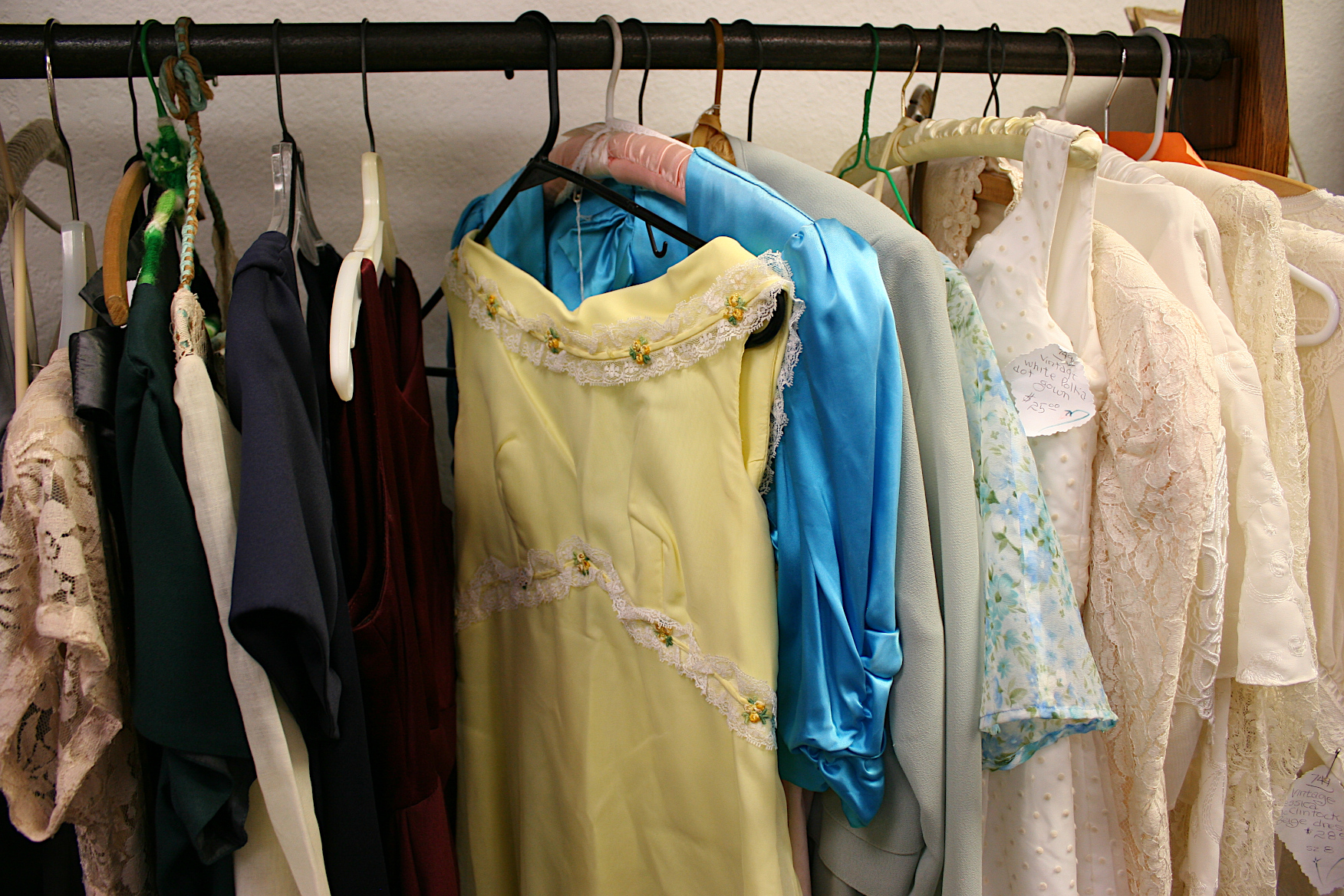
Vintage dresses for sale at Antiques Plus in New Ulm. (Minnesota Prairie Roots copyrighted file photo March 2021 used for illustration only)

AT THE ANTIQUE SHOP

Weeks prior, I found myself unexpectedly assisting a bride-to-be as she tried on vintage dresses at a local antique shop. Tall and slender with a thick braid falling to the side of her left shoulder, Angela radiated beauty inside and out. I offered to zip the zipper-back dresses she was considering for her October rehearsal dinner. She slipped into a flared pink dress that, even on her slight frame, fit too tightly. Next Angela donned a sleeveless chocolate brown wool dress that seemed custom-made for her. But I wanted to be honest. “Wool can be itchy,” I warned. She agreed that the heavy, textured fabric did feel a bit uncomfortable. Finally, I zipped the last dress—a long white sleeveless dress in a nubby fabric. When Angela expressed doubts about wearing white, I advised she’s the bride and can wear whatever she desires.

I left before Angela made a decision on the vintage dresses. But I didn’t leave before I learned that she works as an engineer at a medical device company in the metro and that she loves her job. What a joy to meet a young woman so devoted and passionate about her profession. That gives me such hope. We also shared a faith-filled moment, one which I will keep private between me and Angela. I consider her an angel in every sense of the word and felt blessed to have met her.

Roxy of Owatonna sent me a clutch of uplifting mini cards which I can give to others. She has been such an encourager to me during my recent health struggles. (Minnesota Prairie Roots copyrighted photo August 2023)

IN A GROCERY STORE PARKING LOT

Last Saturday, I experienced another uplifting moment, this time in a grocery store parking lot. The auburn-haired teen wheeling my cart full of groceries to the van asked about my plans for the rest of the day. I had none, I said, then asked about hers. She was meeting friends after work. As we parted, I told her to have fun with her friends. And she wished me a good day. Again, I felt such hope. This young woman could have simply pushed the cart, unloaded the groceries and said nothing. But she chose to engage. That says a lot about her character, her humanity.

It is everyday encounters like this which fill my spirit. Life offers so many opportunities to connect, to be there for one another. Whether to converse, to encourage or to zip the backs of vintage dresses for a bride-to-be, opportunities await us. We need only pause, listen, care.

© Copyright 2023 Audrey Kletscher Helbling
 

Warning: Avoid Interstate 35 by Faribault August 29, 2023

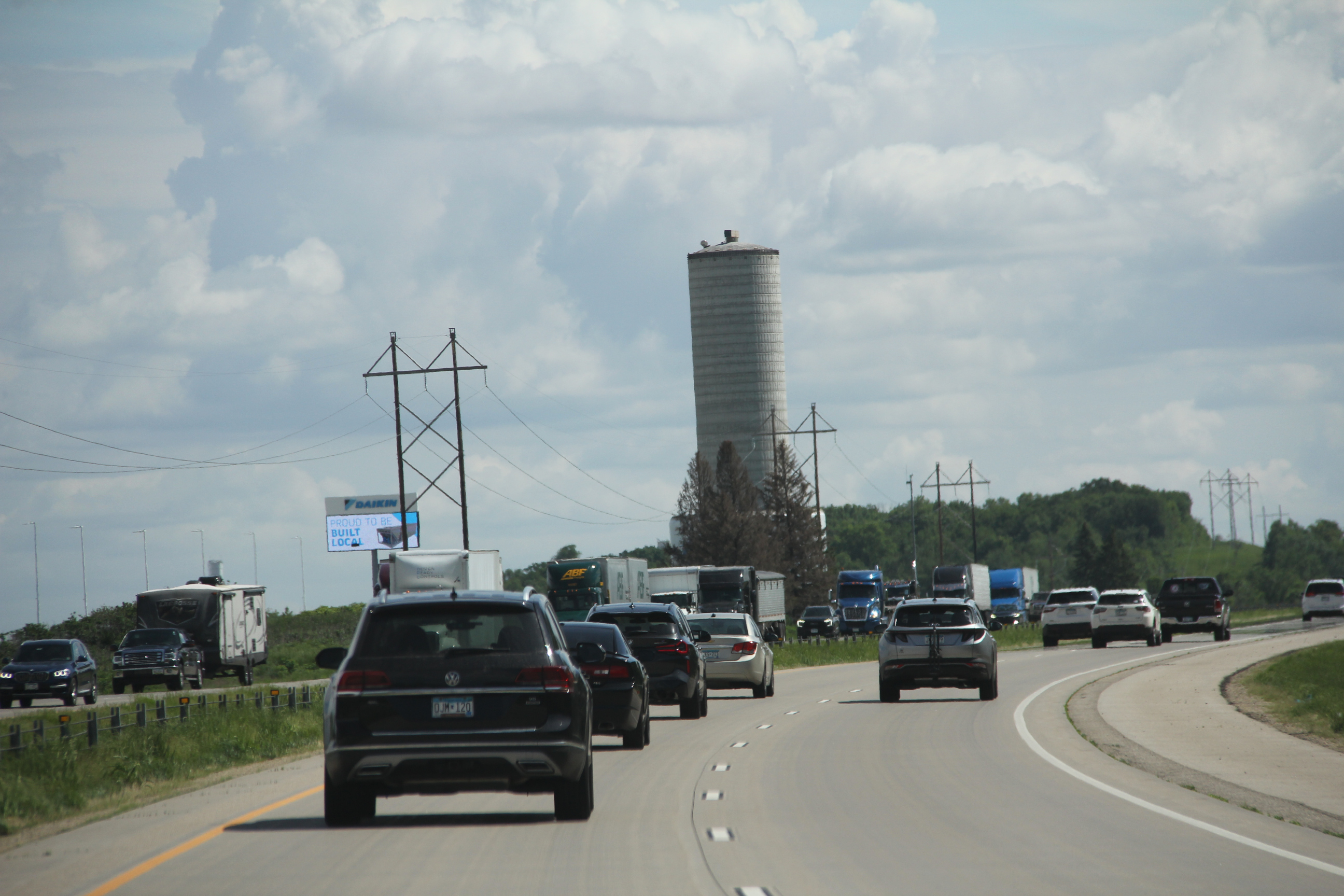
This image shows heavy traffic along Interstate 35 north of Faribault, BEFORE road construction started. (Minnesota Prairie Roots copyrighted file photo June 2023)

MATTHEW. CIMBERLY. MONA. DENNIS. They ranged in age from 63 to 79. And they all died this summer as a result of crashes in a construction zone on Interstate 35 just north and south of Faribault. Add to that multiple other crashes, including an August 20 six-vehicle chain reaction pile-up resulting in life-threatening injuries to two women, and this stretch of roadway has quickly become known as unsafe and deadly.

Faribault Fire Chief Dusty Dienst in mid-July publicly encouraged local residents to avoid this section of the I-35 corridor as construction continues into November and then resumes again next year. Dienst’s warning came shortly after two semis collided in a fiery crash on July 12. Dennis, a trucker from South Dakota, died of his injuries 16 days later. And Dienst’s warning came nearly a month before the latest three fatalities.

Mona from east central Minnesota died on August 11 and then Matthew and Cimberly, a couple from Iowa, two weeks later in crashes in the same area of the northbound lanes just south of Faribault.

Local residents are rightly concerned. I am, too. We are avoiding the interstate and have told our daughter and her husband, who live 35 minutes north in Lakeville, to “Stay off 35 by Faribault.”

People are quick, on social media, to speculate on the causes of these crashes. They point primarily to speed and distracted driving, without any insider knowledge. Since I don’t know the facts, I won’t assume anything. The Minnesota State Patrol, the investigating entity, can determine the causes. I will say, though, that I have witnessed my share of distracted and dangerous driving (tailgating, speeding, weaving…) on I-35 and other interstates/freeways both inside and outside the Twin Cities metro. That’s both in passenger vehicles and in semi trucks.

The fact is that four people died within a month in the construction zone on the interstate near Faribault. They leave loved ones and friends grieving their tragic, unexpected deaths.

Every time I hear sirens now and watch as the ambulance speeds by my house, I wonder if yet another crash has occurred along the interstate. Every time I hear and see an air ambulance flying near my home, heading toward the hospital, I wonder if yet another person has been airlifted off the interstate with critical, life-threatening injuries. Every time traffic builds on my street to a steady, higher volume than usual, I check local media for reports of yet another serious crash along I-35 by Faribault. The street past my house is a backroad route between Medford and Faribault, although not the official detour off 35.

And I wonder, what can be done to improve safety so no one else is injured or dies in the I-35 construction zone in Rice County? Something needs to change. And soon.

© Copyright 2023 Audrey Kletscher Helbling
 

Thoughts on MLK’s “I have a dream” speech August 28, 2023

A student watches a video of Martin Luther King, Jr. in the “Selma to Montgomery: Marching Along the Voting Rights Trail” exhibit at St. Olaf College, Northfield, in 2015. (Minnesota Prairie Roots copyrighted file photo 2015)

WE ALL HOLD DREAMS. Hopes and desires and wishes that improve our lives. Financially, mentally, emotionally and otherwise. Perhaps they are dreams directed inward. Or they are dreams for others in our lives, especially our loved ones.

Sixty years ago today, Martin Luther King, Jr. revealed his dream at the Lincoln Memorial in Washington, DC. His was a powerful speech packed with powerful words that resonated as much on August 28, 1963 as they do today:

I have a dream that one day this nation will rise up and live out the true meaning of its creed: We hold these truths to be self-evident, that all men are created equal.

I have a dream that my four little children will one day live in a nation where they will not be judged by the color of their skin but by the content of their character. I have a dream today.

Visitors could photograph themselves at the “Selma” exhibit and express their thoughts. (Minnesota Prairie Roots copyrighted file photo 2015)

King’s statements in “I have a dream” held the hope of Americans denied very basic civil and voting rights simply because of their skin color. A year later, the Civil Rights Act of 1964 became law, prohibiting discrimination (and segregation) in public places. Passage of the Voting Rights Act of 1965 followed, assuring the right to vote. But the struggle continued as it does today for people of color.

Back in 1964 and 1965, I was too young and too far removed from the Civil Rights Movement to have any knowledge of what was happening in the world beyond my childhood home in southwestern Minnesota. I lived in a rural area of primarily Germans and Scandinavians, where the only difference was in religion. Either you were Lutheran or you were Catholic with a few Presbyterians, Methodists and Brethren tossed in.

I don’t recall ever seeing a Black person. Few, if any, lived in Redwood County. Indigenous Peoples lived on nearby reservations to the east and to the west by Morton and Granite Falls. But I never saw the Dakota, never interacted. Mine was a world of whiteness. Now I am the mother-in-law of a man whose father is black, his mother white. I’ve heard my son-in-law’s unsettling stories of what it’s like to be a Black man in America today.

Opinions expressed in the “Selma” exhibit polling place. (Minnesota Prairie Roots copyrighted file photo 2015)

Today I live in a place of varied colors and cultures. For that I feel thankful. At the core, we are all just people with hopes, desires, wishes. We all hold dreams, no matter our skin color.

© Copyright 2023 Audrey Kletscher Helbling


He’s one of the good ones… August 24, 2023

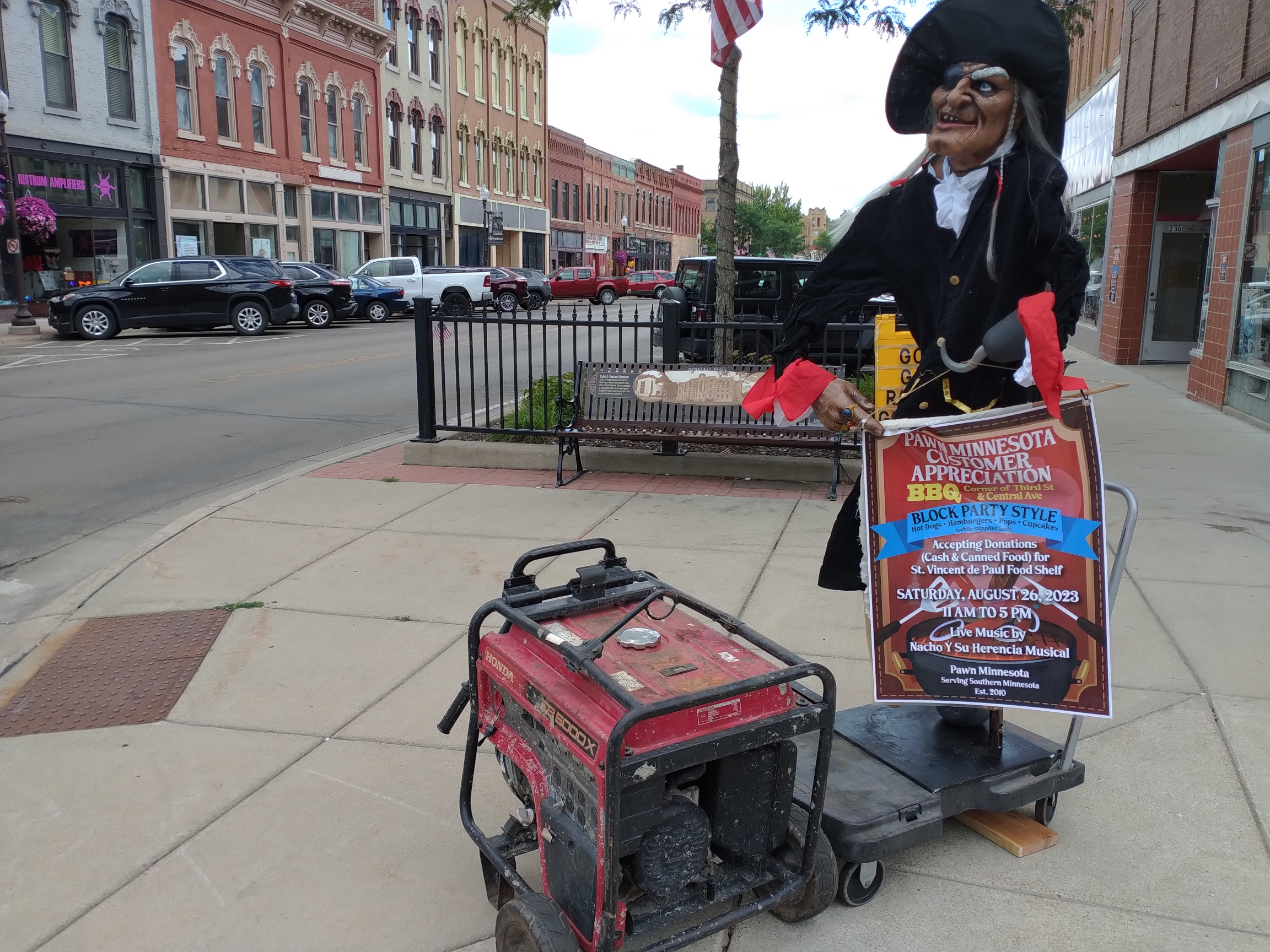
Outside Pawn Minnesota, a pirate mannequin standing next to a generator generates interest in a block party. (Minnesota Prairie Roots copyrighted photo July 2023)

PIRATES WERE, AND ARE, by profession plunderers, thieves who attack and rob ships at sea. Even though violent criminals, they have often been romanticized. We’re fascinated by the lore of these daring marauders while simultaneously frightened.

But at least one pirate, spotted recently in historic downtown Faribault far far from any sea, was on the good side of the law. Admittedly he was not real, but rather a well-dressed mannequin wearing an eye patch and sporting a hook hand. On his realistic-appearing right hand, the pirate wore bejeweled gold rings upon his thick fingers.

And he held a sign promoting a Customer Appreciation Block Party from 11 am – 5 pm Saturday, August 26, at Pawn Minnesota, 230 Central Avenue. The party includes free food while supplies last and music by Nacho Y Su Herencia Musical.

A block party in itself is not unusual as a way to celebrate and market a business. But a pirate used as a promotional tool is, well, interesting. It achieved its purpose by catching my eye, enough for me to pause, photograph and feature.

This pirate, unlike real pirates, aims to serve a greater good via Saturday’s block party. Attendees are encouraged to bring cash and canned food donations for the local St. Vincent de Paul Food Shelf. St. Vincent, according to its website, provides “a wide variety of food and grocery items to help out our brothers and sisters in need. Our goal is to be a reliable source of free food that can help nourish those we assist.”

There are income guidelines to qualify for assistance.

Beyond food, the Faribault nonprofit provides household items, clothing, shoes, bedding and kitchenware to those in need. With ever-rising prices, the need remains high. I’m thankful to live in a caring community with places like St. Vincent, the Community Action Center, church food pantries and more. Free dinners are also available every Tuesday at the Community Cafe, housed in the Cathedral of Our Merciful Savior.

And for the pirate holding that block party sign while standing next to a portable generator, I have some kind words. I now believe pirates can change their ways. And generate goodness.

© Copyright 2023 Audrey Kletscher Helbling