Minnesota Prairie Roots

Writing and photography by Audrey Kletscher Helbling

Even in rural Minnesota, ag knowledge sometimes lacking October 25, 2018

Filed under: Uncategorized — Audrey Kletscher Helbling @ 5:00 AM
Tags: , , , , , ,

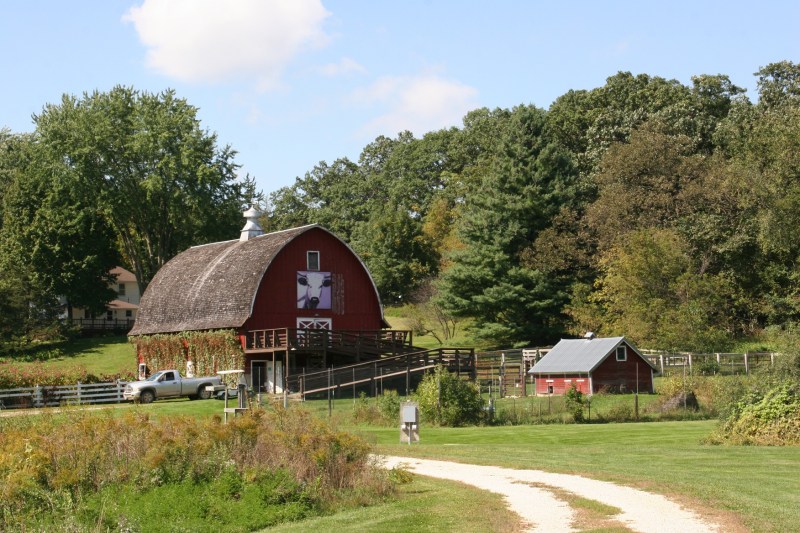
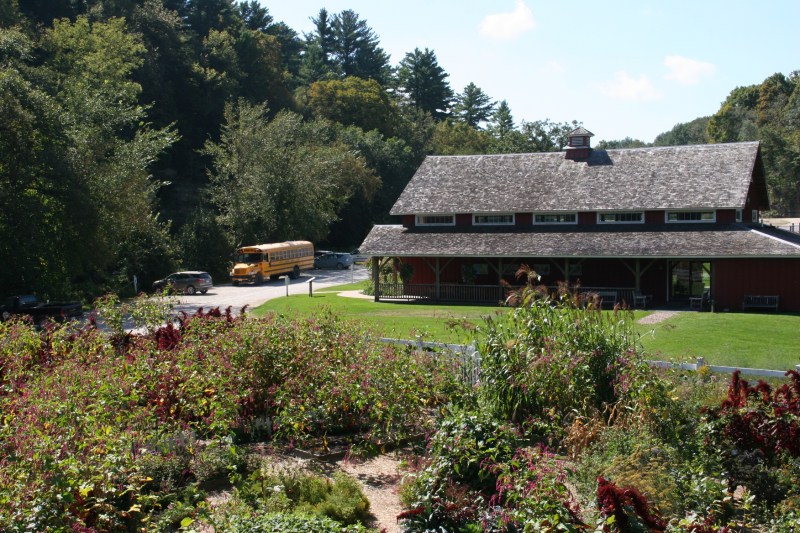
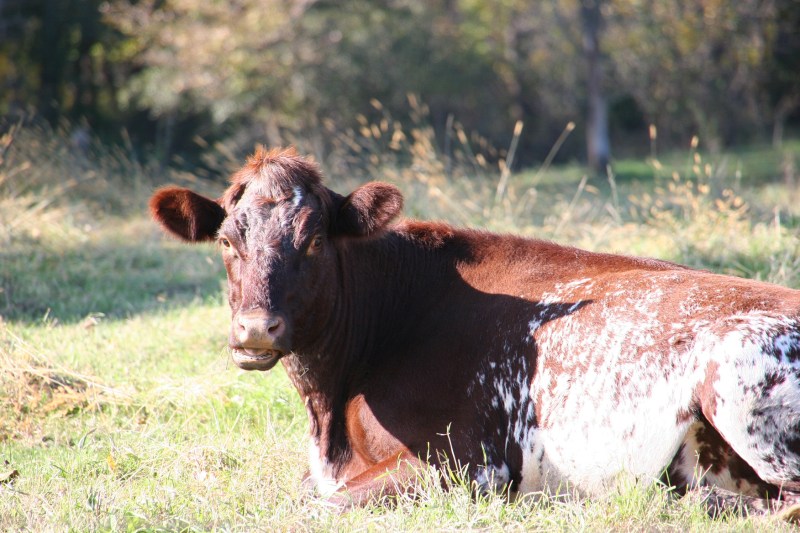
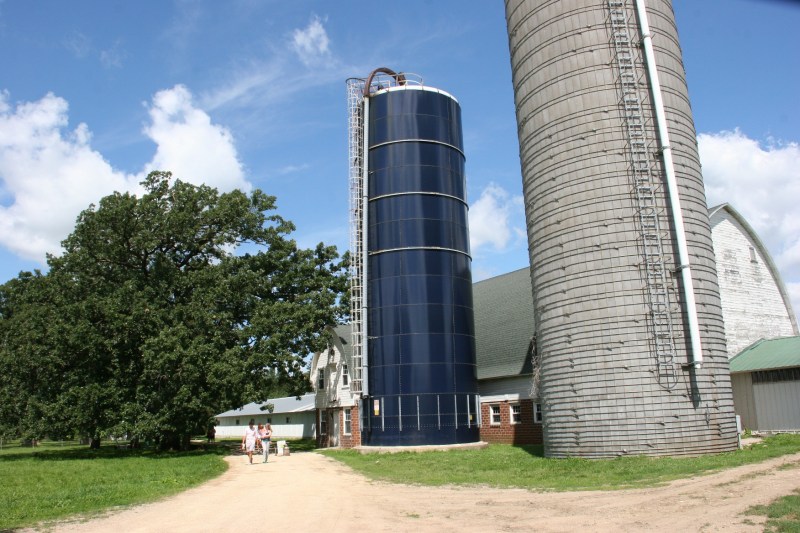
Shepherd’s Way Farms, rural Nerstrand. Minnesota Prairie Roots file photo. Shown here for illustration only.


ARE WE A GENERATION away from losing the farm? Not in the literal sense. But in the sense of understanding agriculture.

Do you know, do your children know, do your grandchildren know the sources of ingredients in food and other products?

A recent test shows me that, even here in rural Minnesota some 50 miles south of Minneapolis, people are not particularly knowledgeable. Granted, this was no scientific study. And it was limited in scope. But results were enough to make me realize that we could do a better job of educating our young people about agriculture. Even those who live in a city like Faribault surrounded by corn and soybean fields.
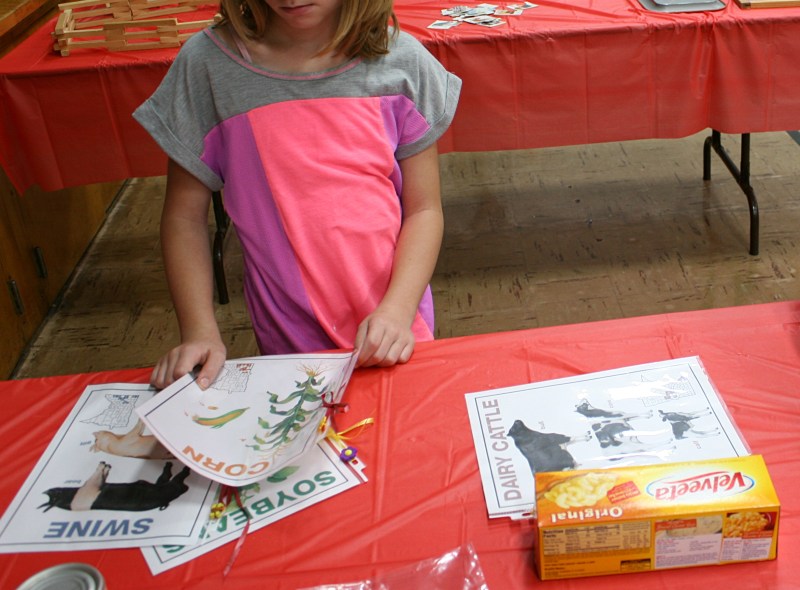
 

A fest-goer attempts to match animals and plants to products I set out.


How did I reach this conclusion? Well, I pulled together several farm-themed matching and other games for a recent kids’ fall fest at my church. One of those required players to match farm animals and plants to five products. Only one boy successfully completed the task as did some, but not all, adults.
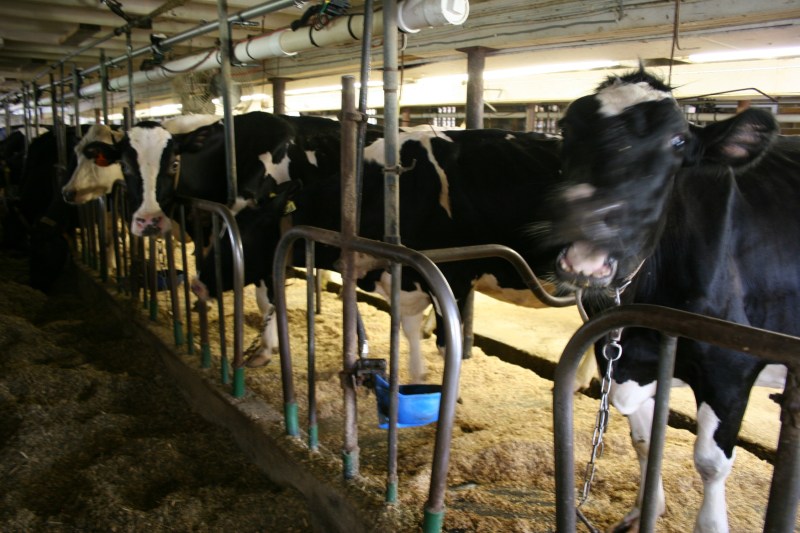
 

Registered Holsteins photographed at a Faribault area farm. Minnesota Prairie Roots file photo.


I laid pictures of the following on a table: cows, sheep, pigs, corn and soybeans.

Then I set out a can of cranberry sauce, a box of Velveeta cheese, a brush, a bottle of Thousand Island salad dressing and a wool blanket.

The goal was to match the image and product.
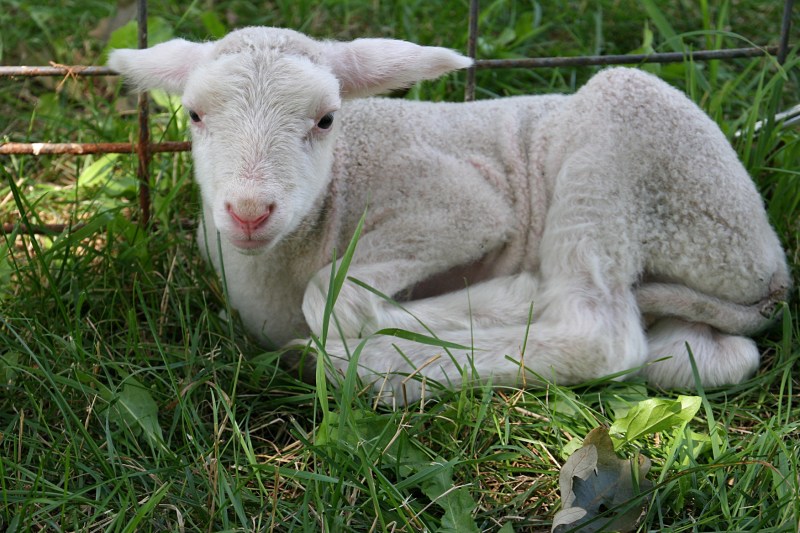
 

Minnesota Prairie Roots file photo from Shepherd’s Way Farms.


As you might guess, the sheep and blanket, cows and cheese proved easy matches.
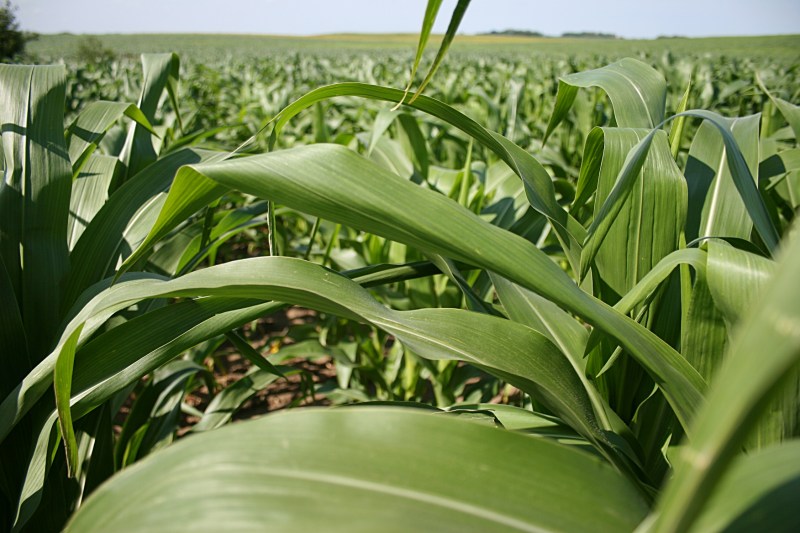
 

Minnesota Prairie Roots file photo of a cornfield.


But not the other three. Can you figure it out? I’ll help. The first ingredient on the dressing label is soybean oil. The second ingredient on the cranberry label is high fructose corn syrup. That leaves the brush. Some brush bristles are made from pig hair.

I expected the game might challenge little kids too young to understand what comes from where or what ingredients are in our food. But I was surprised by mid to upper elementary kids and adults who got the matches wrong.

Does it matter? I believe so. Our kids and grandkids, even us adults, need to be knowledgeable about food and product sources. We need to understand that our food and more doesn’t just come from the store or some online source. It comes from the land, directly or indirectly, grown or raised by farmers. When we realize that, we begin to value and appreciate rather than simply consume.
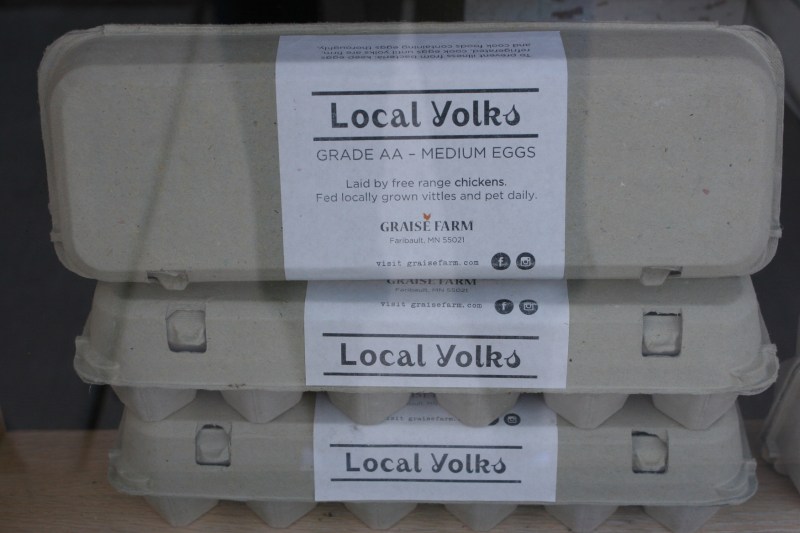
 

In the window of Ruf Acres Market in historic downtown Faribault, egg cartons promoting eggs from Graise Farm. The eggs are sold at this market and elsewhere in the area. Minnesota Prairie Roots file photo.


ASIDE FROM THIS EXPERIENCE, I’ve seen strong efforts locally to educate consumers about agriculture. Leading the way in my community is Tiffany Tripp of Graise Farm. She and her husband raise grass-fed animals in a sustainable environment, according to their farm website. I’ve seen Tiffany out and about selling and promoting locally-grown/raised. She is currently co-coordinating efforts to market locally-grown/raised/sourced products under a Cannon Valley Grown label. What a great idea. I love her enthusiasm and that of others who recognize the value of what is grown and raised right here in southeastern Minnesota.

THOUGHTS?

© Copyright 2018 Audrey Kletscher Helbling


Tune in as faith radio addresses the issue of domestic violence October 24, 2018

A snippet of a domestic violence poster published by the Lutheran Church, Missouri Synod several years ago.


October 25 could be a lifeline.

Those words banner the home page of my favorite radio station’s website as I write this post. That would be Twin Cities based faith radio, KTIS. It is my go-to station for music and messages that uplift, comfort and encourage.

On Thursday evening, October 25, KTIS radio personality Donna Cruz leads the station in addressing the topic of domestic violence through stories, information, and uplifting messages of hope and healing. Cruz can empathize. She is a survivor of domestic violence.

Additionally, counselors will take calls from listeners, engaging in conversations that will not be aired.

For this radio station to put the spotlight on this issue during National Domestic Violence Awareness Month in October is noteworthy. Too often faith communities avoid the topic or approach it in a way that blames the victim, excuses (and/or believes) the abuser and encourages restoration of a relationship.

It is time for that to change, for those within faith communities to acknowledge that domestic abuse can happen to anyone. Anywhere. Anytime. It is time for faith communities to recognize abuse and believe victims. It’s time for faith communities to figure out how to help—and that stretches beyond prayer to education, support and connecting with professionals.

Really, it’s time for all of us to educate ourselves, to start caring, to break the silence, to be the voice, the help, the encouragement for those who need support and hope for a way out of an abusive relationship. It starts with you. It starts with me. Today.

FYI: Please tune in to KTIS at 98.5 FM or online from 7 – 10 p.m. Thursday, October 25.

Please note that some faith communities have tackled the topic of domestic violence and for that I am grateful.

© Copyright 2018 Audrey Kletscher Helbling

 

The season of autumn in images & words October 23, 2018

Filed under: Uncategorized — Audrey Kletscher Helbling @ 5:00 AM
Tags: , , , , , , , , ,


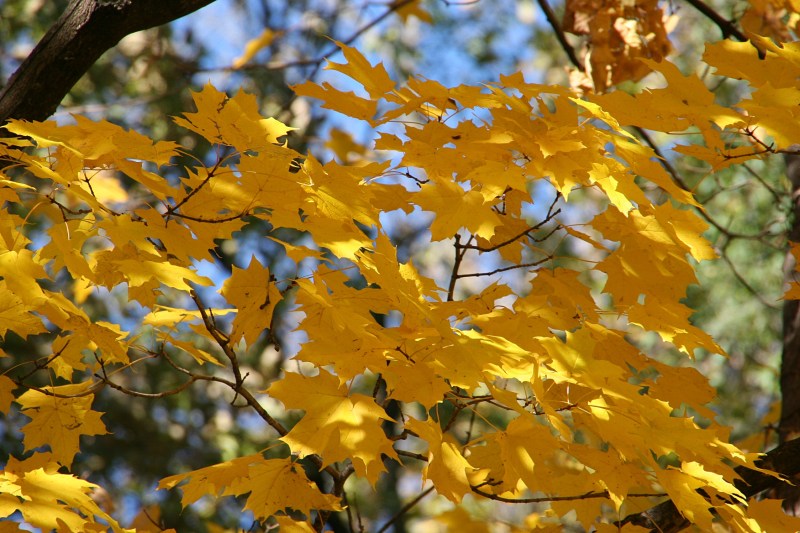
AS LEAVES SPIRAL IN BURSTS of wind to the ground, the season of autumn nears the exit here in Minnesota.


We are all cognizant of that impending departure. The farmers as they hurry to harvest crops. The squirrels as they gather and hide walnuts. And those of us who still have yards to prepare for winter.


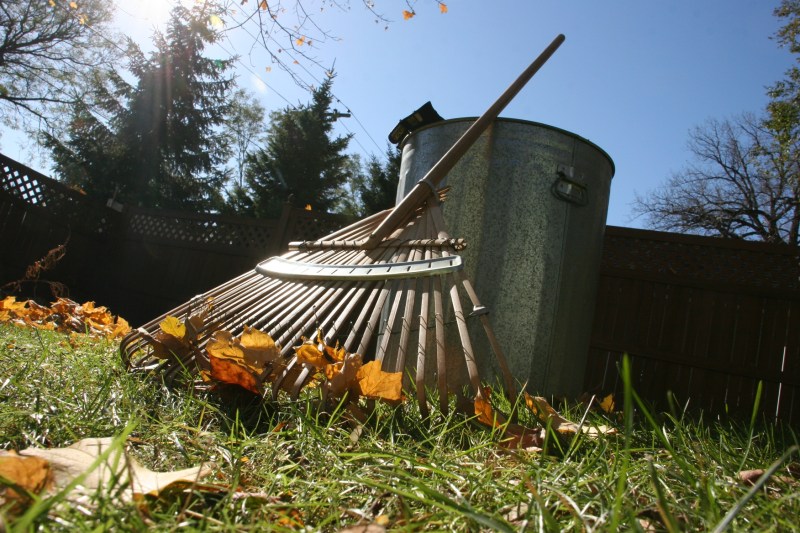
I feel that pressure. To get the leaves raked,


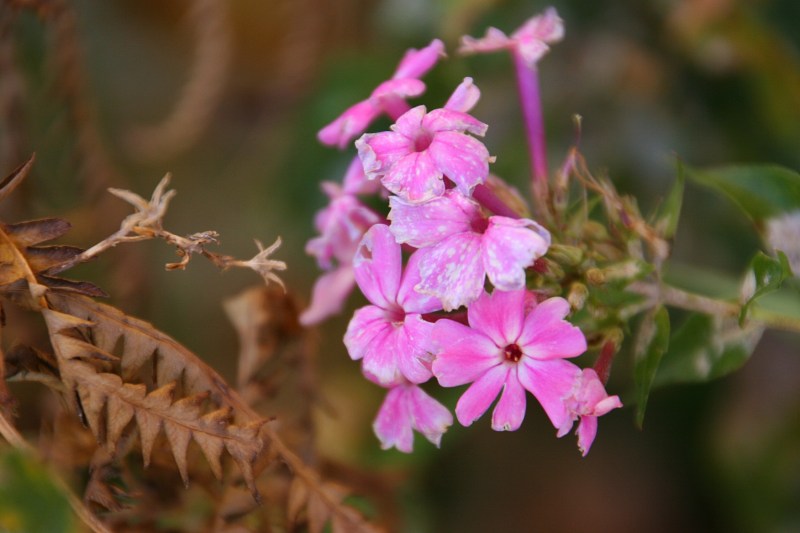
the flowerbeds cleaned, flowerpots emptied,


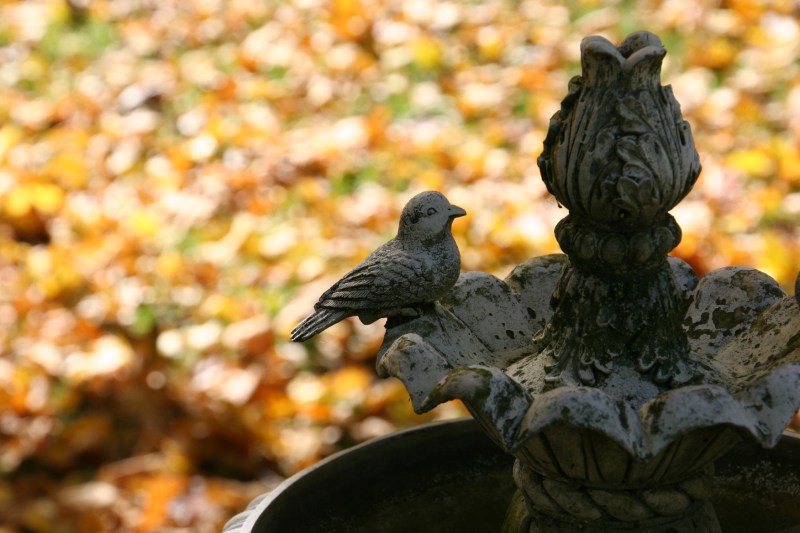
the tabletop fountain hefted above garage rafters.


I wish for more days of cobalt skies, sunshine blazing warmth onto my back as I rake leaves, stuff them into trash cans.


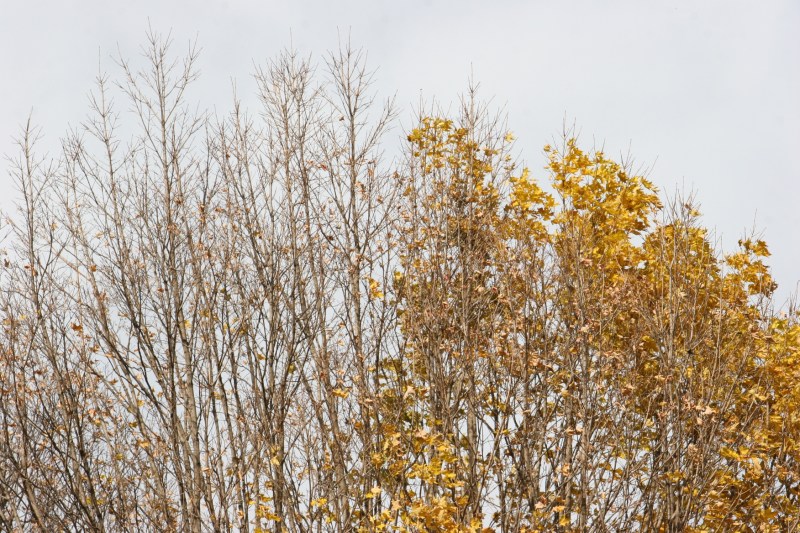
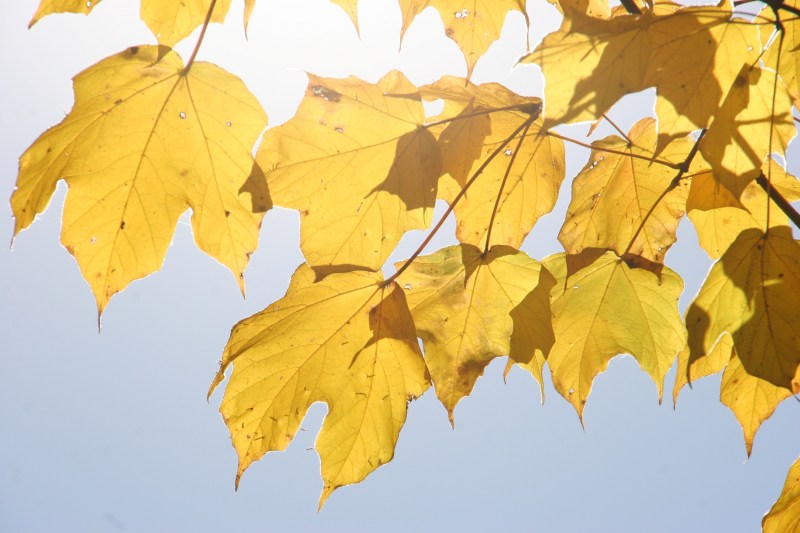
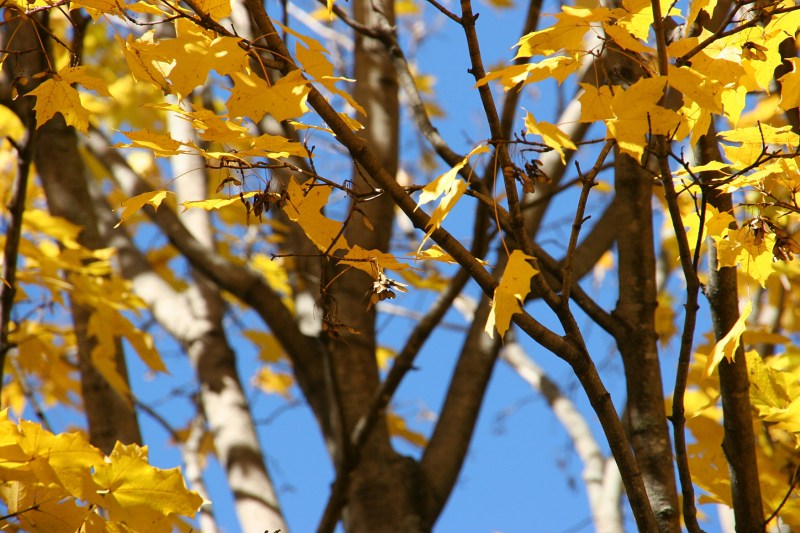
I wish until I realize that by wishing, I am missing the season. So I grab my camera and turn it toward the maple leaves on the solo tree in our backyard, toward the woods edging our property, even to the neighbor’s bare branched trees.


Of course, I wish I could slow time, grab back summer days, hold onto each leaf stem yanked by the wind. But I can’t.


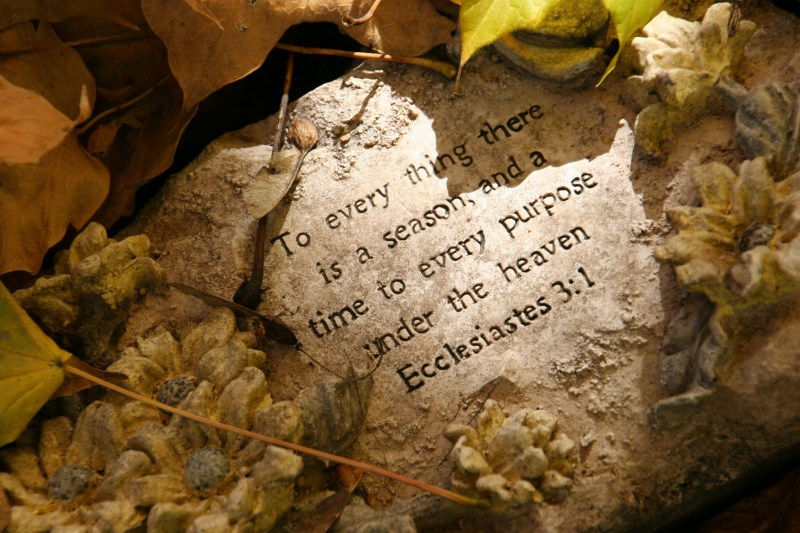
Every season brings its joys, its sorrow, its light, its darkness. That is a given. I can yearn for another season. Or I can choose to embrace the season in which I am living.

THOUGHTS?

© Copyright 2018 Audrey Kletscher Helbling


For the love of books, a spotlight on several Little Free Libraries October 22, 2018

Filed under: Uncategorized — Audrey Kletscher Helbling @ 5:00 AM
Tags: , , , , , , , , , ,


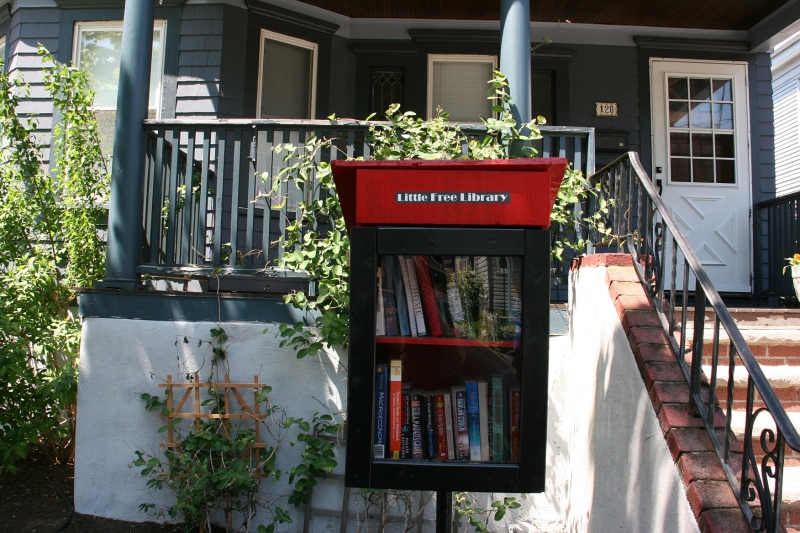
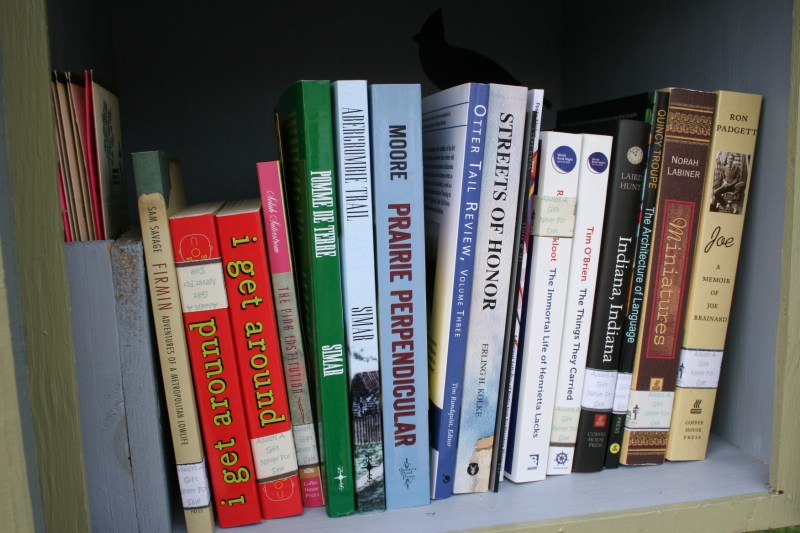
I was delighted to find a Little Free Library near my son’s apartment when I visited him in Somerville, Massachusetts, in May of 2016. Minnesota Prairie Roots file photo.


WHENEVER I SPOT A LITTLE FREE LIBRARY, I feel a deep appreciation for the stewards of these mini libraries.

The ability to read, as I see it, is the foundation of learning. But to read, you need access to books. Not everyone has that, whether by geographical location or lack of money for books.

So those individuals who place a Little Free Library in their yards (or elsewhere) and then stock and restock shelves have my gratitude. They realize the importance of easy 24/7 access to books.


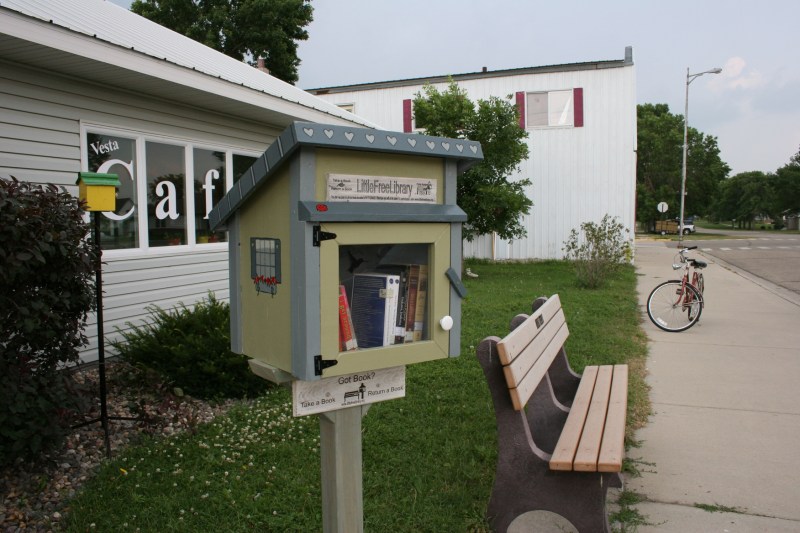
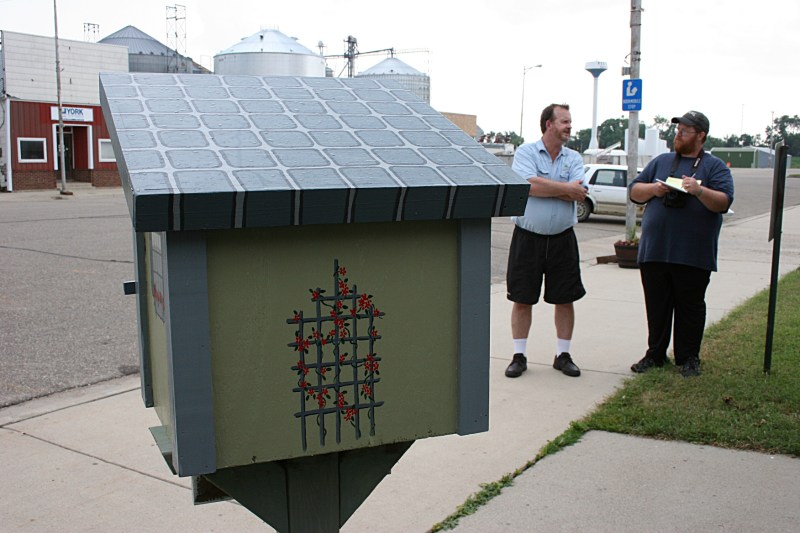
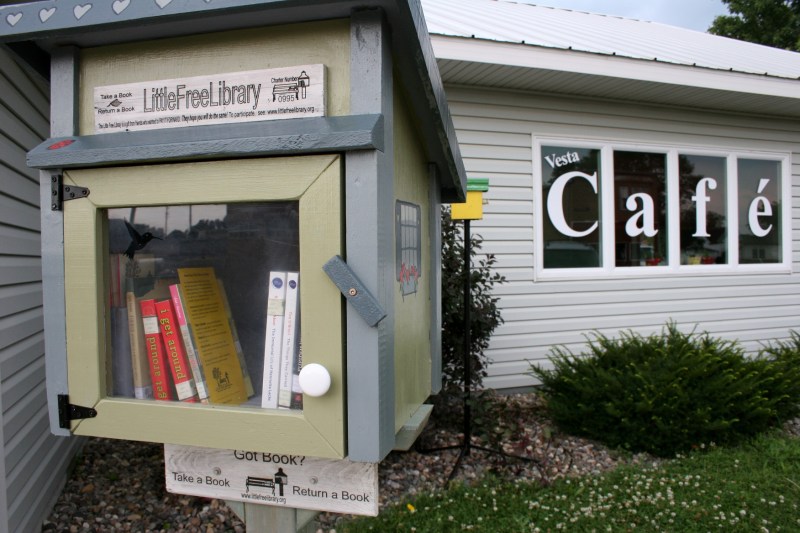
The LFL Todd and Susan Bol installed outside the community-owned Vesta Cafe. Minnesota Prairie Roots file photo 2012.


I grew up in a rural Minnesota community without a library. I understand what it’s like to be without library books. But thanks to Little Free Library founder Todd Bol, my hometown of Vesta has had a small public library since July 1, 2012. A Little Free Library. Todd gifted that to this small farming town. I am grateful.


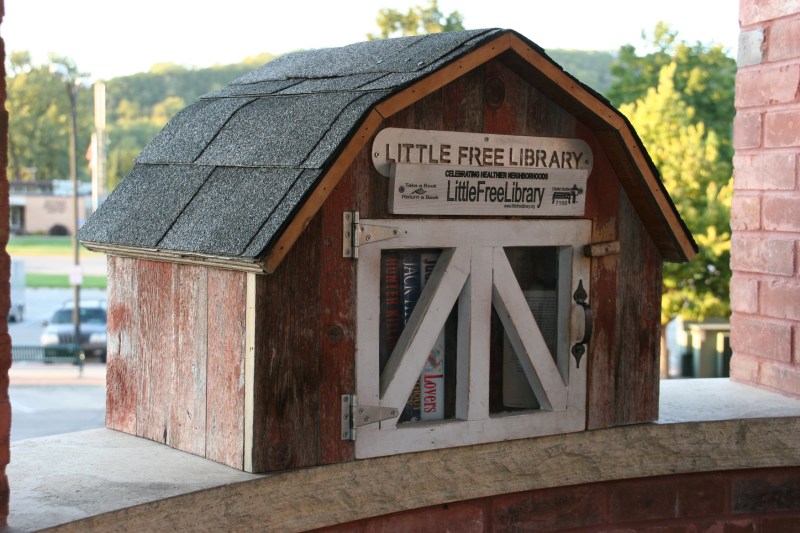
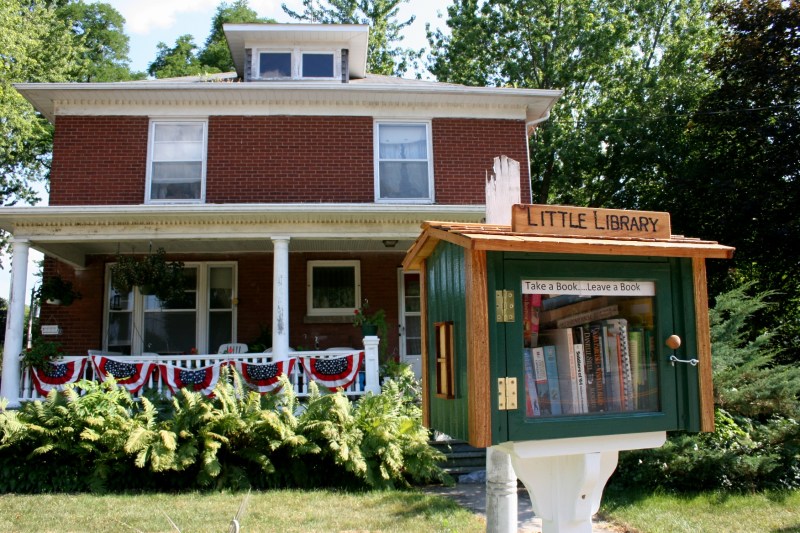
A LFL in downtown Decorah, Iowa.


Recently I spotted two particularly distinct Little Free Libraries, one in the heart of downtown Decorah, one of my favorite northeastern Iowa cities. The library sits in a public plaza next to Oneota Community Food Co-op. That it’s barn-shaped seems especially fitting in a primarily agricultural state. A red barn remains an iconic symbol of rural life.

I grabbed a hardcover copy of James Patterson’s Double Cross with every intention of starting to read the book while in Decorah. That never happened and now the book sits on my to-read pile back here in Minnesota. First I need to finish The Girls of Ames—A Story of Women & a Forty-Year Friendship by Jeffrey Zaslow. The national bestseller published in 2009. The book holds special interest for me given one of the women taught journalism at Faribault High School and served as advisor to the student newspaper when my second daughter was co-editor. It’s an excellent read. And quite revealing.

But I digress.


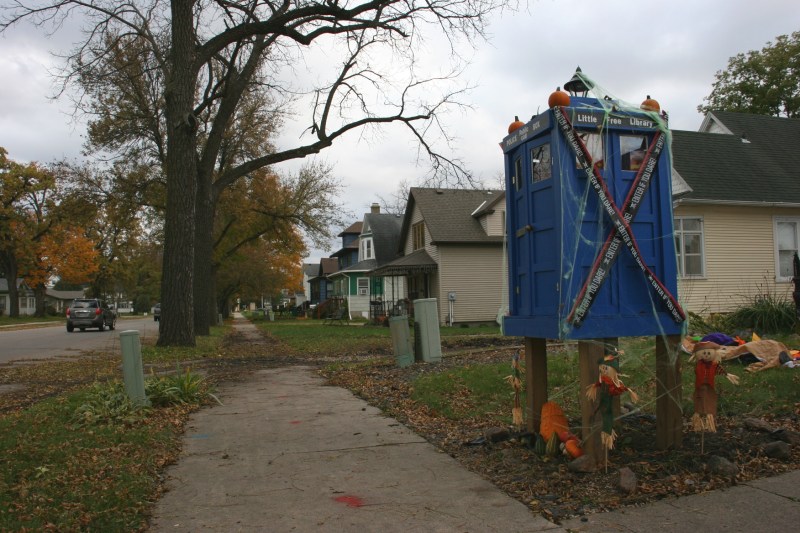
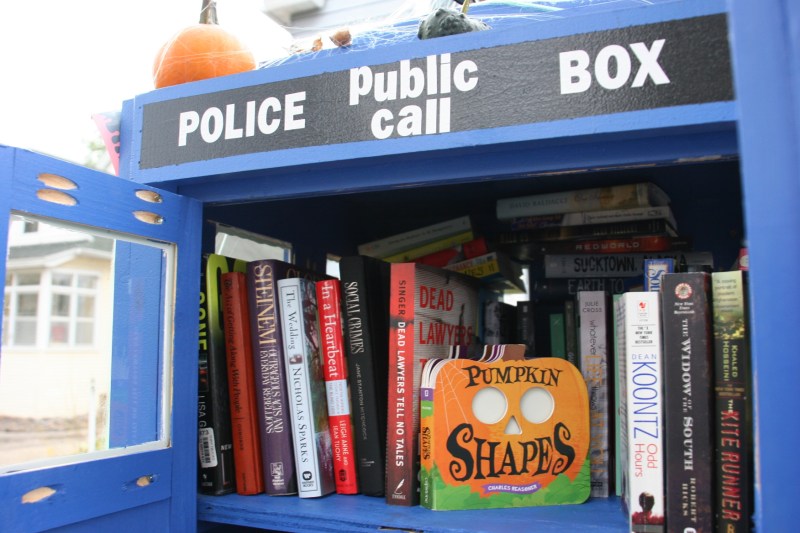
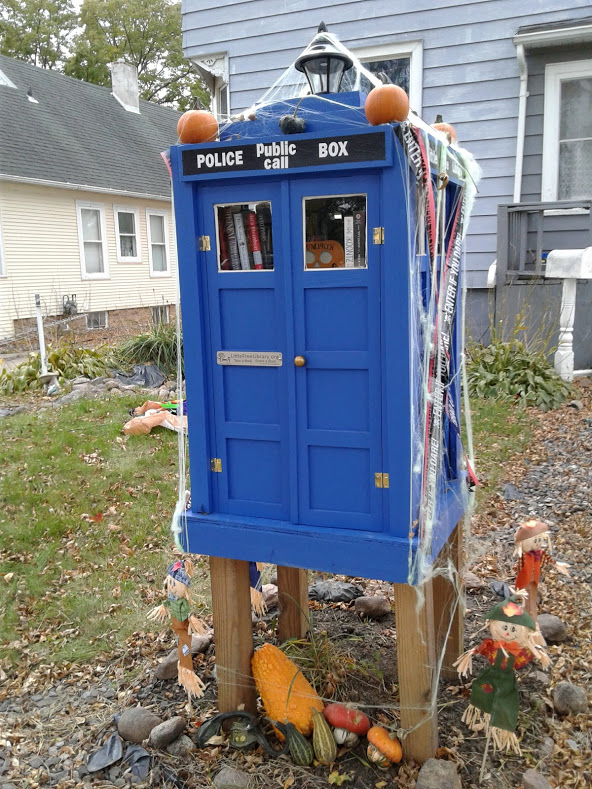
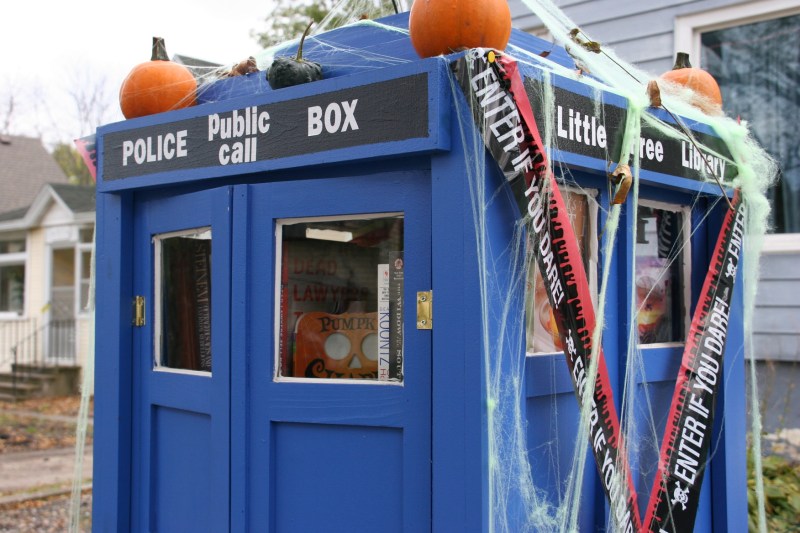
A variety of books for all ages fill an eye-catching LFL posted at 805 State Street in Waseca. It’s designed as a TARDIS, the featured mode of transportation on the BBC sci-fi television show “Doctor Who.” I know nothing about the show. To me, the TARDIS resembles a blue phone booth.


The stewards of the Waseca TARDIS do a great job of visually promoting the LFL with the library now seasonally decorated for autumn and Halloween. Inside, they’ve also stocked Halloween-themed books. They seem to have a lot of fun with their LFL. I expect given its location along one of Waseca’s main arteries that the library is well-used.


What kid wouldn’t be drawn to a mini TARDIS? Or adult for that matter?


I love when folks run with the LFL idea and get especially creative, all for the purpose of getting books into the hands of others.


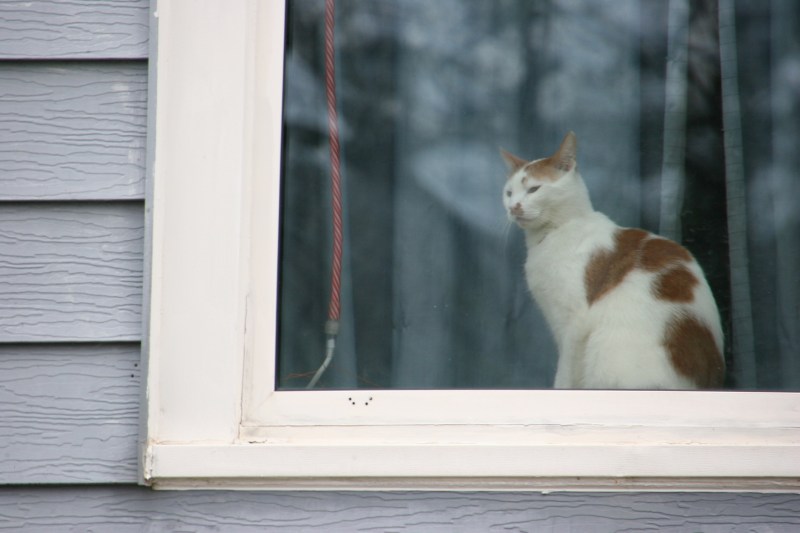
A cat watched as I photographed the TARDIS LFL.


FYI: This post is dedicated to Todd Bol, who founded the Little Free Library movement and who died on October 18 of pancreatic cancer.

© Copyright 2018 Audrey Kletscher Helbling
 

Back at Seed Savers Exchange for a close-up look, Part II October 19, 2018

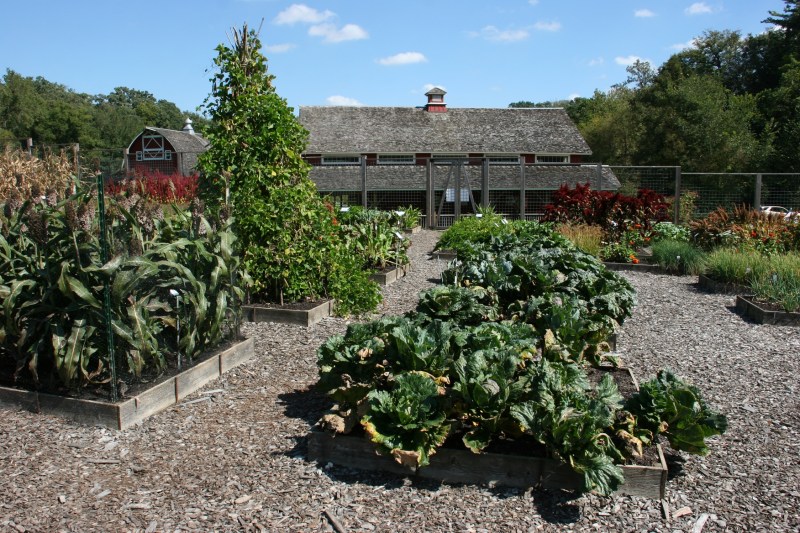
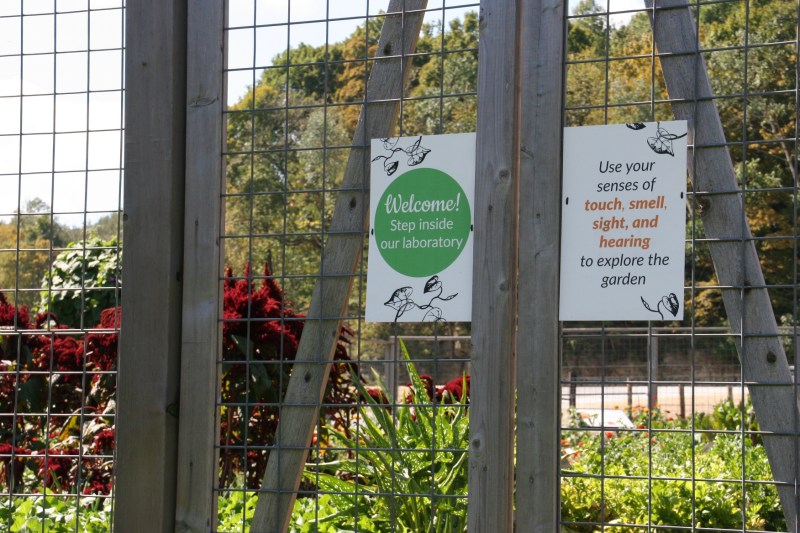
A garden lab at Seed Savers Exchange, photographed in September.


I ALWAYS THOUGHT THAT, as an adult, I would grow a big garden from which I would gather produce to eat fresh, can and freeze. But the reality is that, since leaving my childhood farm 44 years ago, I’ve never lived in a place with enough sunny space for a garden.


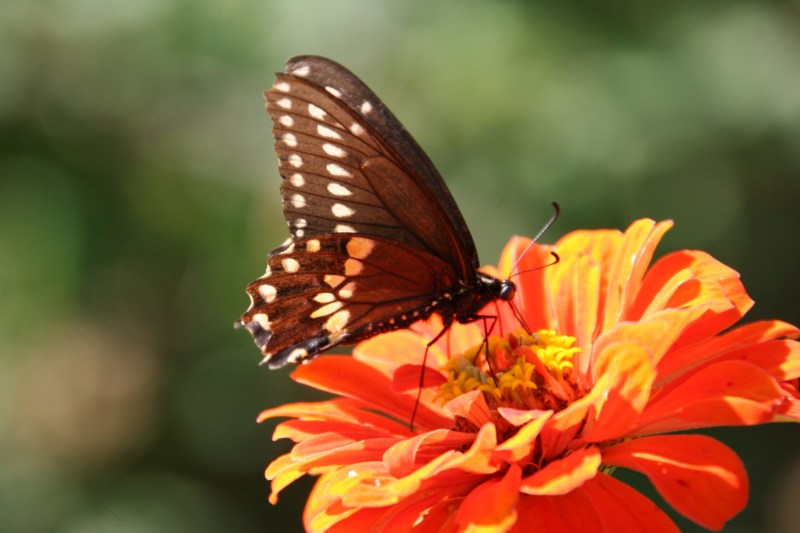
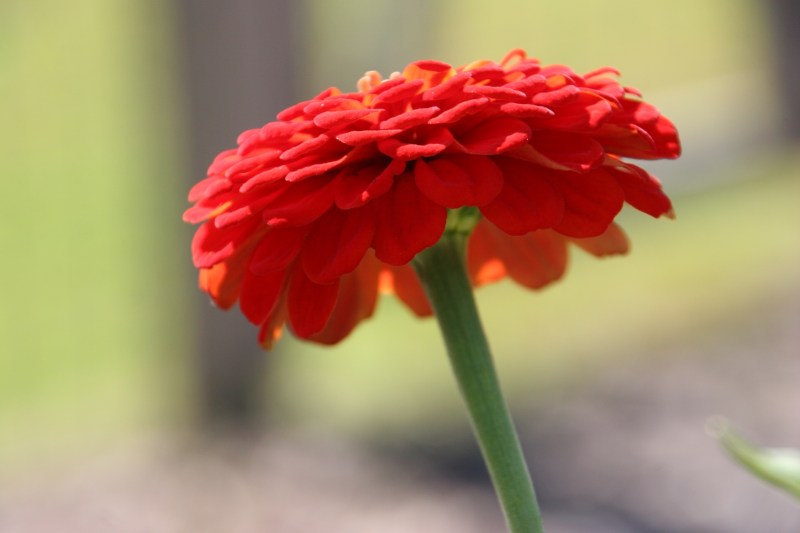
An easy-to-grow-from-seed flower, the sturdy zinnia, photographed at Seed Savers Exchange.


Sure, I’ve grown tomatoes in pots and seeded lettuce and spinach into the earth, but not with great success. I’ve had my most success with herbs. I began growing those only in recent years and wonder why I didn’t do so earlier. The taste of freshly-clipped rosemary, basil and oregano is superior to dried.


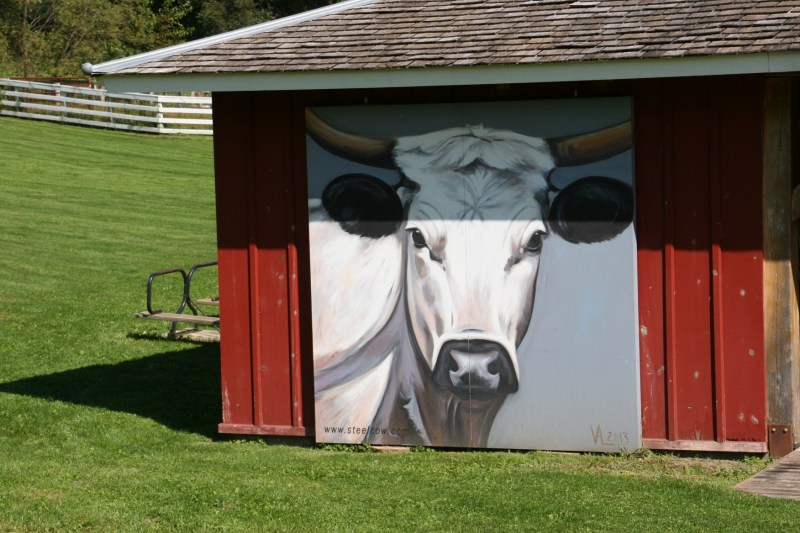
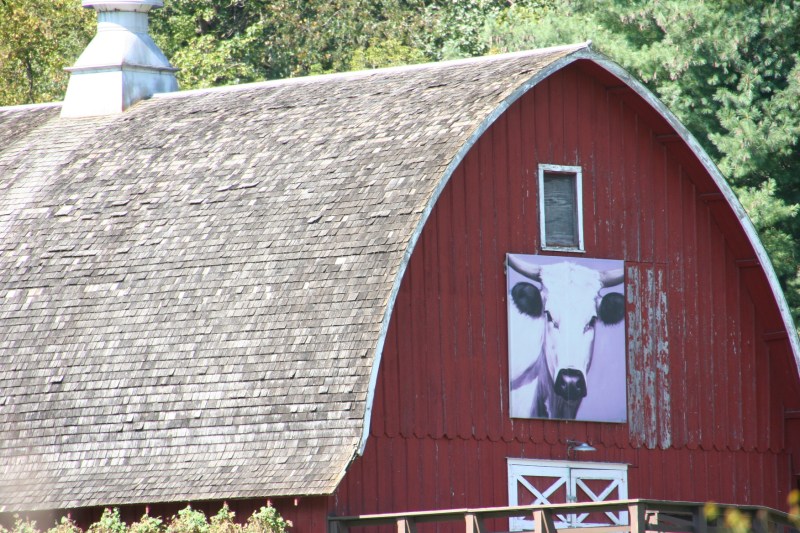
Cow art at Seed Savers Exchange.


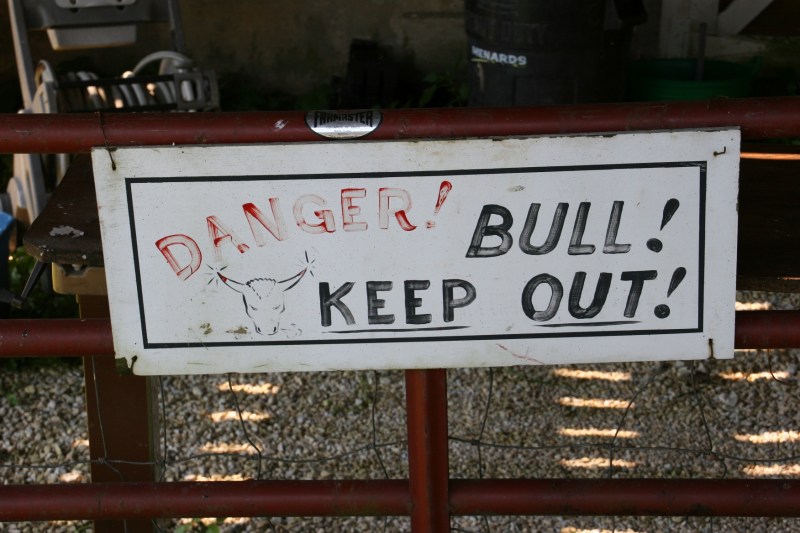
While this sign warned of a bull at Seed Savers, I never saw one.


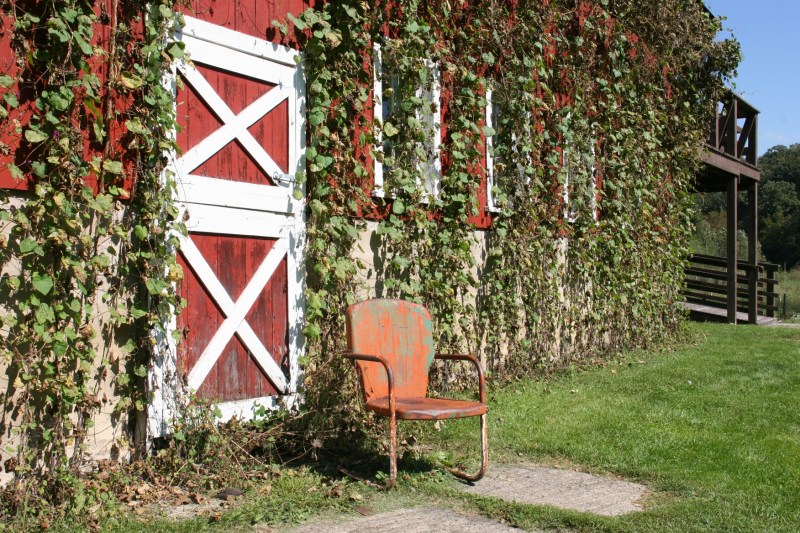
Dying morning glories drape the Seed Savers barn accented by a vintage lawn chair.


While lack of land and time kept me from gardening, I appreciate the art I learned long ago on a Minnesota farm. There I planted, weeded and harvested in the garden.


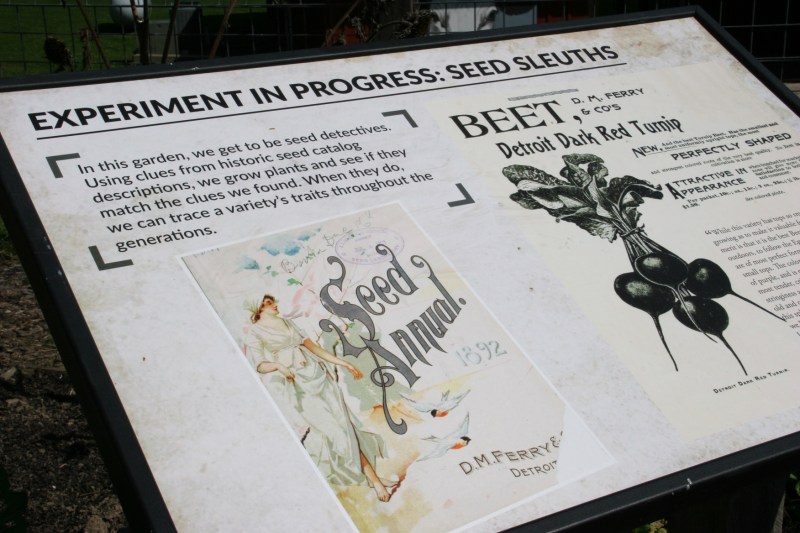
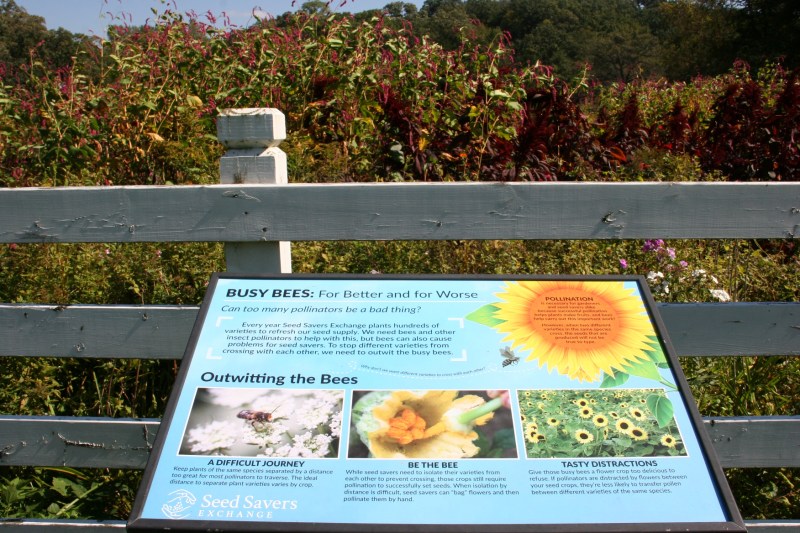
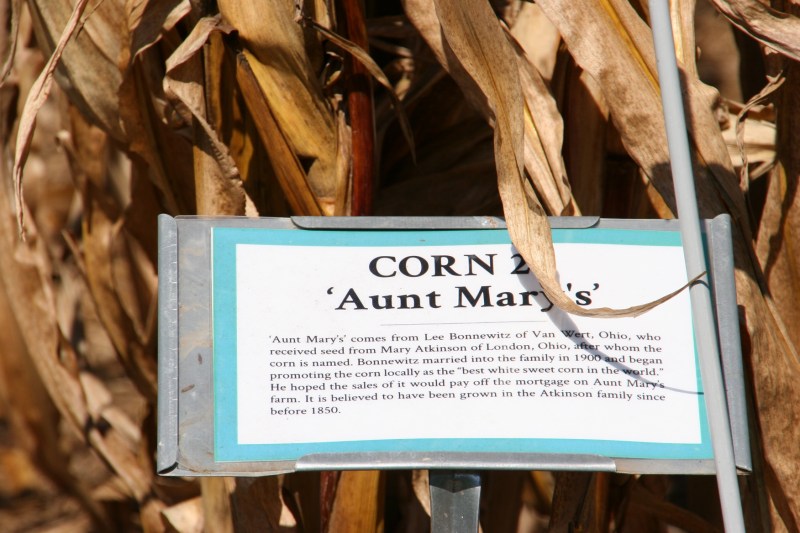
This signage explains the test garden at Seed Savers.


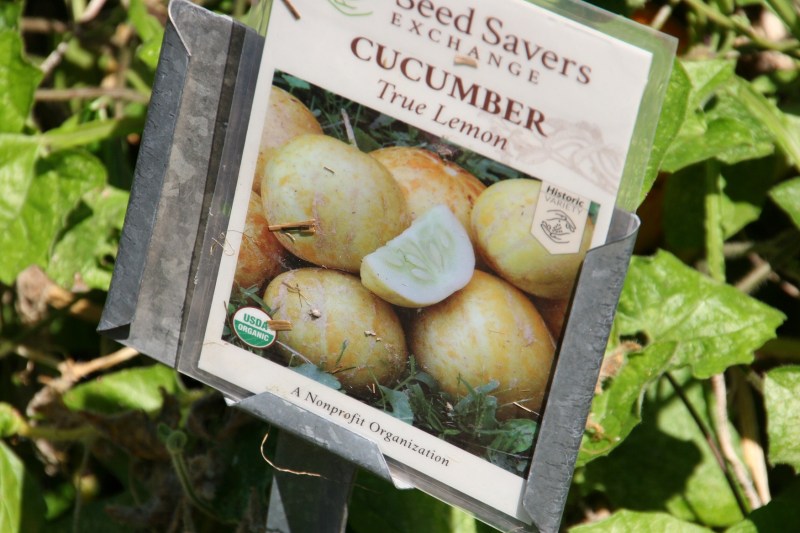
A sign at Seed Savers for cucumbers I tasted in Faribault.


Flowers and vegetables mix in Seed Savers gardens.


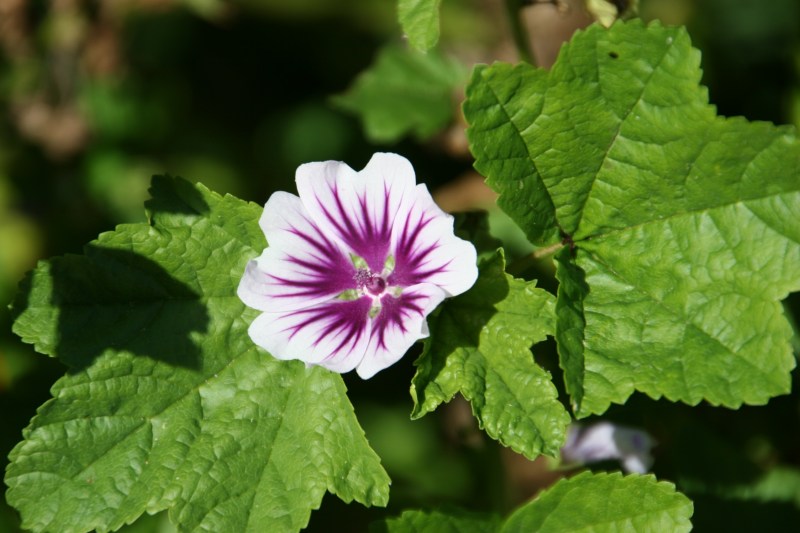
I appreciate those who continue the time-honored tradition of gardening. Like Seed Savers Exchange in Decorah, Iowa. Like family members. Like those who sell fresh produce at farmers’ markets. Like my local library, which has a community garden. From that public garden I sampled this summer lemon cucumbers and chocolate peppers, originating from Seed Savers seeds. And when I entered Buckham Memorial Library in Faribault, I passed by pollinator friendly flowers like the draping Kiss-Me-Over-the-Garden-Gate blooms, also from the Seed Savers collection.


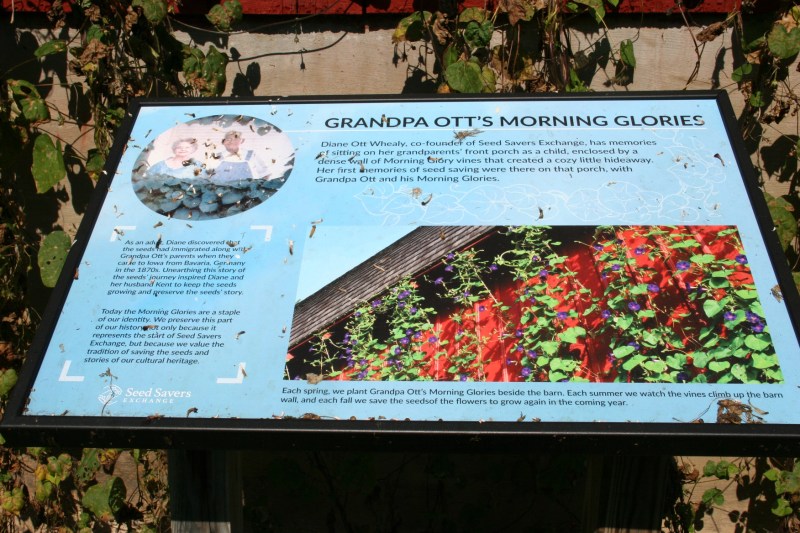
About those morning glories on the barn…


There’s lots to learn at Seed Savers Exchange.


Seed Savers, even for a now non-gardener like me, proves an interesting place to visit. For the history. For the education shared in signage and plants. For the reminder that it’s important to save seeds, to grow the food we eat, to plant the flowers that bloom beauty into the landscape and into our souls.


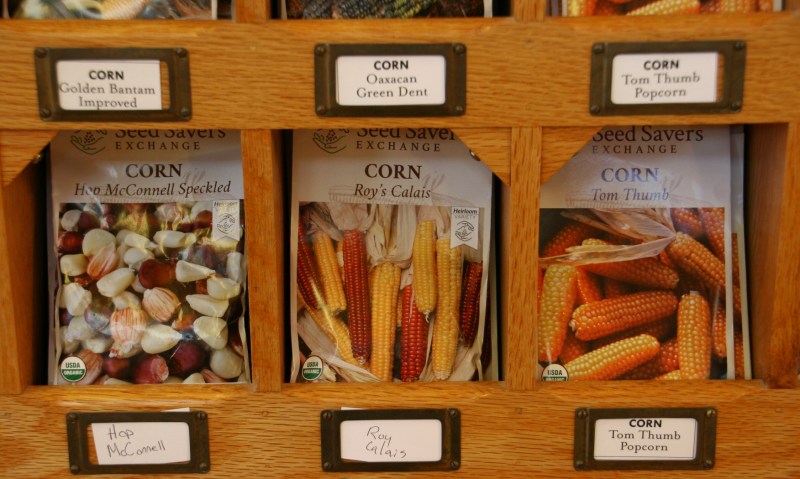
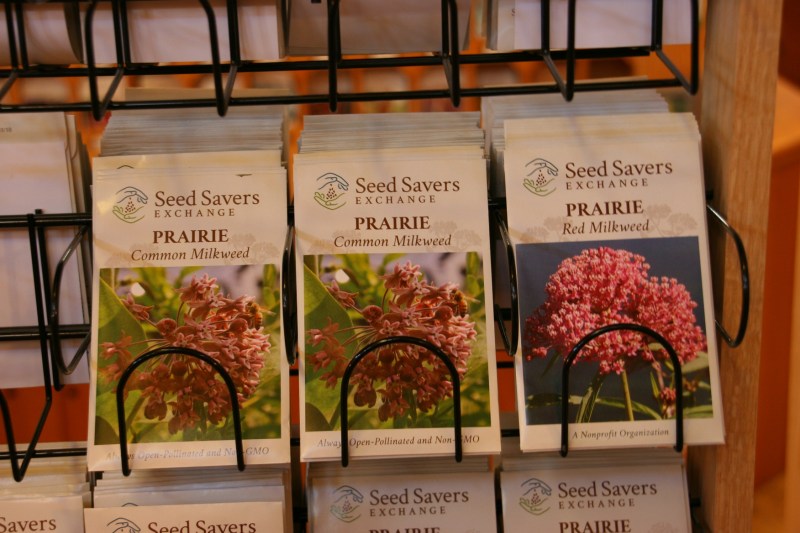
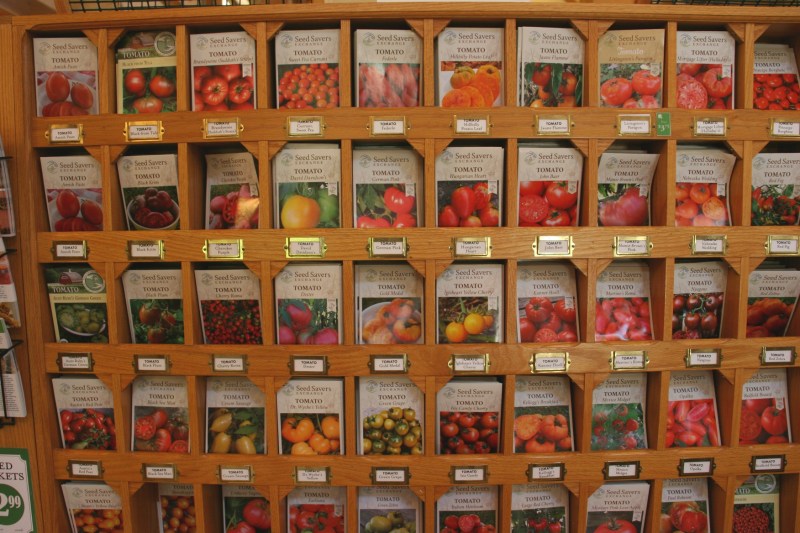
So many seeds to choose from at Seed Savers…


…even milkweed seeds to plant for Monarch butterflies.


TELL ME: Are you or have you been a gardener? I’d like to hear your stories. Or, if you’ve been to Seed Savers, I’d like to hear your take on this place.

© Copyright 2018 Audrey Kletscher Helbling
 

Remembering with gratitude Todd Bol, founder of the Little Free Library October 18, 2018

Filed under: Uncategorized — Audrey Kletscher Helbling @ 8:13 PM
Tags: , , , , , , , , , ,

The Redwood Falls Gazette editor Troy Krause, right, interviews Todd Bol, co-founder of the Little Free Library in Vesta in early July 2012.  Minnesota Prairie Roots file photo 2012.


TODD BOL DIED ON THURSDAY from pancreatic cancer.


The beautiful handcrafted LFL donated to my hometown of Vesta. Minnesota Prairie Roots file photo 2012.


I met him briefly in July 2012 when he drove three hours from Hudson, Wisconsin, to my hometown on the southwestern Minnesota prairie. He delivered a Little Free Library, fulfilling my life-long dream for a library in Vesta.


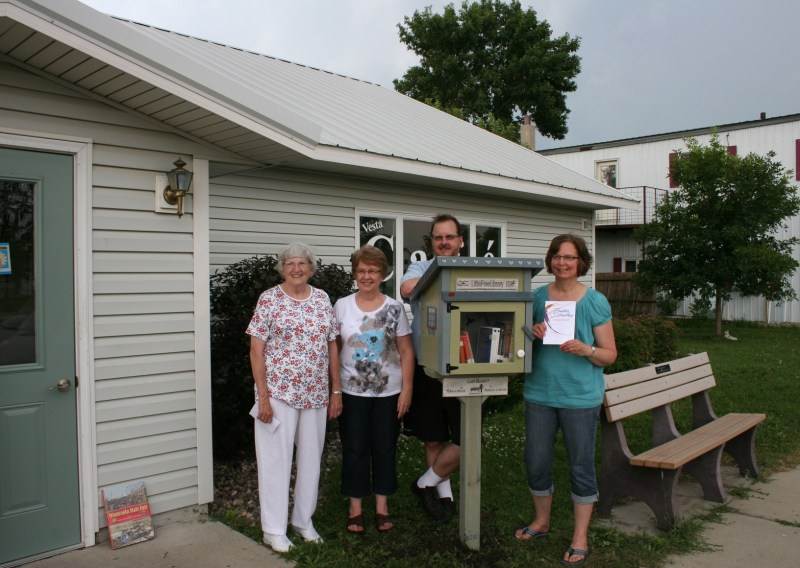
The team that worked to bring a Little Free Library to Vesta includes Dorothy Marquardt, left, and Karen Lemcke, representing the sponsoring Vesta Commercial Club, LFL co-founder Todd Bol and me (holding a copy of a poetry anthology I donated). Minnesota Prairie Roots file photo 2012 by Randy Helbling.


I shall be forever grateful to this visionary’s gift of a mini library and books. My mom used that LFL. So did extended family and others in and around the small farming community. Folks operating the Vesta Cafe expanded the library, placing shelves inside the restaurant for more books. Locals tended the outdoor library Bol installed near the cafe entrance.


The LFL Todd and Susan Bol installed outside the community owned Vesta Cafe. Minnesota Prairie Roots file photo 2012.


Now, all these years later, the founder of the Little Free Library leaves a world-wide legacy of literacy with 75,000-plus officially registered libraries in 88 countries.


The books Todd Bol and I placed inside Vesta’s LFL on July 1, 2012. He brought books donated by several Twin Cities publishers and I brought books from my personal collection. I have since collected and donated an additional 40 books. A retired librarian from nearby Wabasso donated eight bags of books, primarily mysteries and the cafe managers also donated books. Minnesota Prairie Roots file photo 2012.


And one of those is in my hometown because one man cared enough about a small town in the middle of nowhere to deliver the seed plant for the Small Towns Minnesota LFL Movement. Because of Todd’s generosity, his kindness, his love of books, my hometown has a library. As a lover of books, of the written word, I am grateful.


One of many Little Free Libraries in Faribault, where I’ve lived since 1982. Minnesota Prairie Roots file photo.


TELL ME: Are there Little Free Libraries in your community? I’d like to hear your LFL stories in honor of Todd Bol.

FYI: Click here to read the original post I wrote about Todd’s visit to my hometown to install the LFL.

PLEASE CHECK BACK to see a memorable LFL I spotted recently in Waseca.


© Copyright 2018 Audrey Kletscher Helbling
 

Feeling right at home at Seed Savers Exchange in rural Iowa, Part I

Filed under: Uncategorized — Audrey Kletscher Helbling @ 5:00 AM
Tags: , , , , , , , , , ,


HAVE YOU EVER VISITED a place where you were so comfortably at home that you felt as if you’d been there before, but you hadn’t?


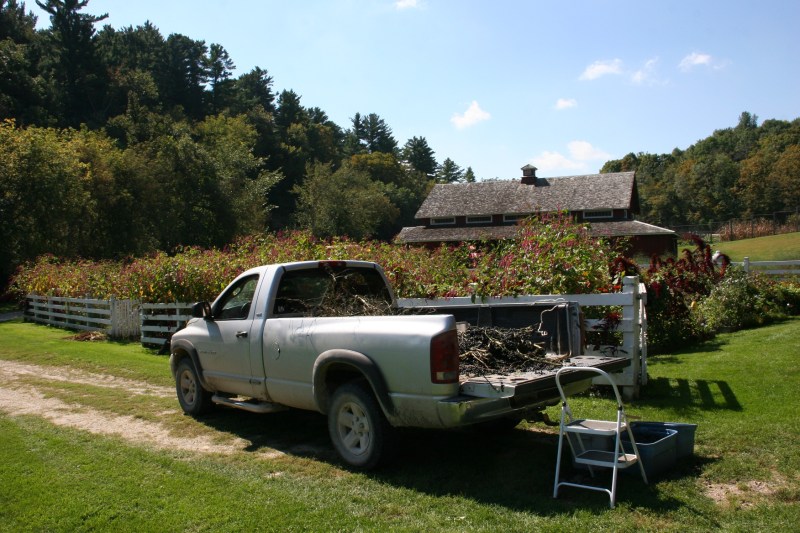
Seed Savers Exchange just north of Decorah, Iowa, feels that way to me. A nonprofit that preserves heirloom plants through planting and nurturing and seed saving, Seed Savers appeals to the farm girl in me. The peaceful setting. The red barn. The ruralness of it all. Iowa. So like my native southwestern Minnesota.


A tangle of plants, some towering, some not, drew me into a garden near the massive red barn where young women scooped seeds from ripe tomatoes during a mid-September visit. This is their work, this preservation of seeds. I thought of hippies and pioneers and how this tedious labor matters.

And I thought of biting into a sun-warm tomato plucked from the garden, juice trickling from the corners of my mouth. Memories from the farm.


I watch Monarchs and bees wend among towering stems of Kiss-Me-Over-the-Garden-Gate blossoms, their flight like words of poetry in Diane’s Garden.


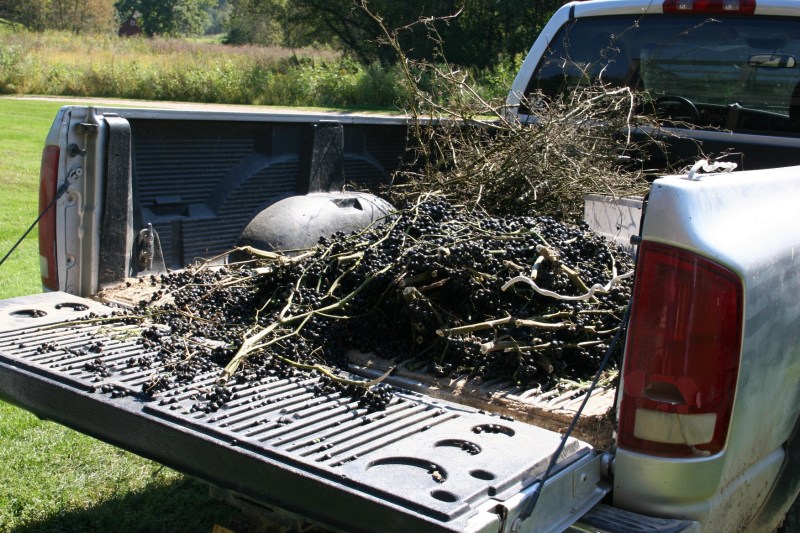
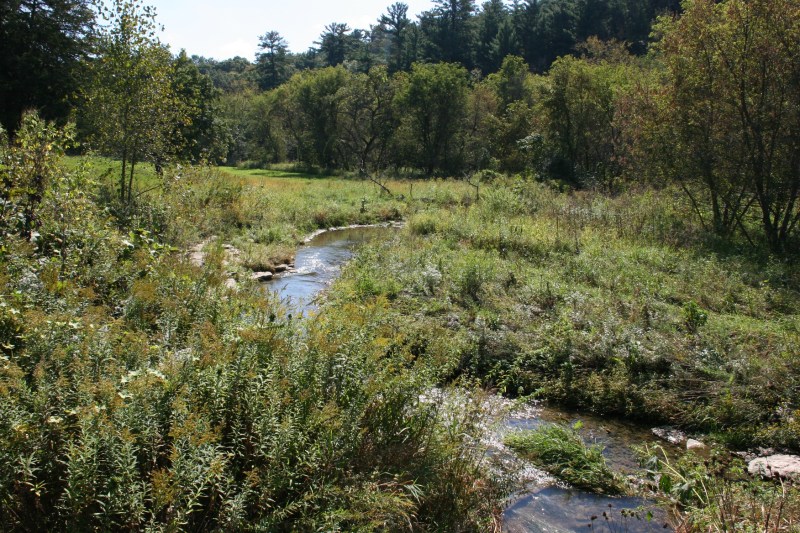
There’s so much to love about this place. Berries in the back of a pick-up truck. Chicks clustered, safe behind chicken wire. A path that leads away from the farm site to narrow streams. Quiet as only quiet can be in the countryside.


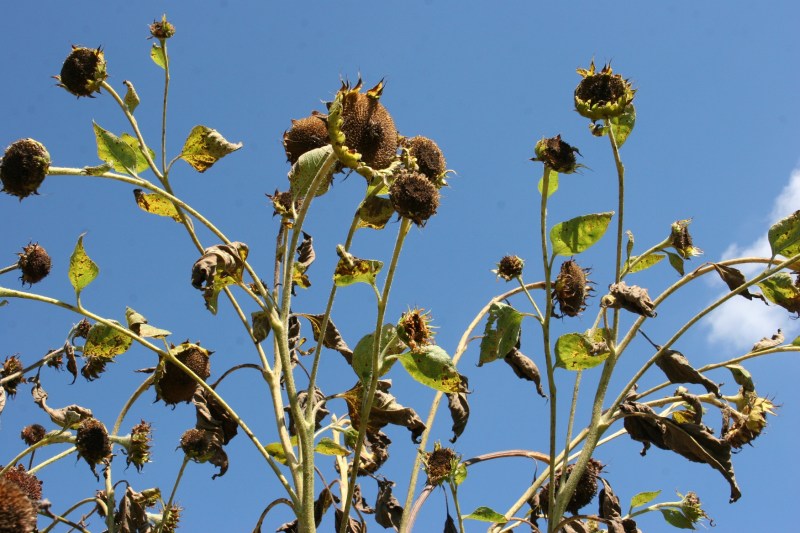
And then a second garden on the other side of the Lillian Goldman Visitors Center. Here my favorite flower—the simple zinnia and corn drying to harvest and sunflowers heavy with seed. And more, oh, so much more.


Inside the visitors center, the results of it all—rows and rows and rows of stocked seed packets. Bull’s Blood Beet. Rat-Tailed Radish. Hungarian Heart Tomato. What to choose from among all the alliterations, all the words that write of bounty and beauty. I choose Sea Shells Cosmos Mix for myself, Gold Medal Tomato for a niece with a passion for gardening.


I wish I could stay here, far from the stresses of life. I feel a peace in being here, sequestered from reality, from noise, from the world. There’s something about Seed Savers Exchange that feels comfortably familiar to me. Like I lived on this land once, walked below this blue sky, wandered among the waving blossoms of Kiss-Me-Over-the-Garden-Gate. Yet I’d not been here prior to this visit. Except perhaps in the poetry of words and of memories.

PLEASE CHECK BACK for more photos from Seed Savers Exchange.

© Copyright 2018 Audrey Kletscher Helbling
 

Rice County still needs volunteers to help with storm clean-up October 17, 2018

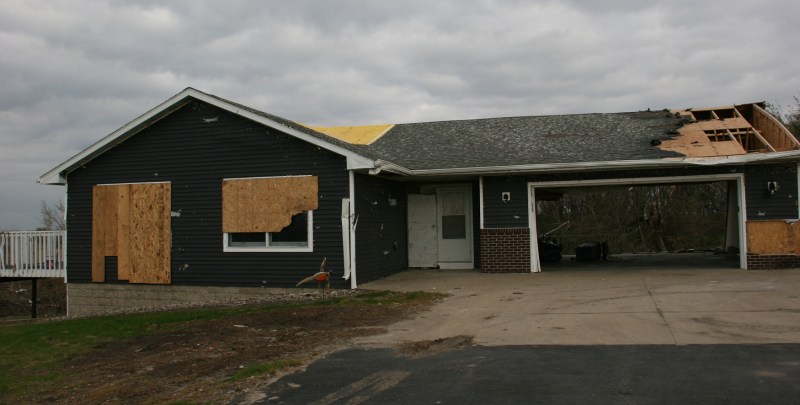
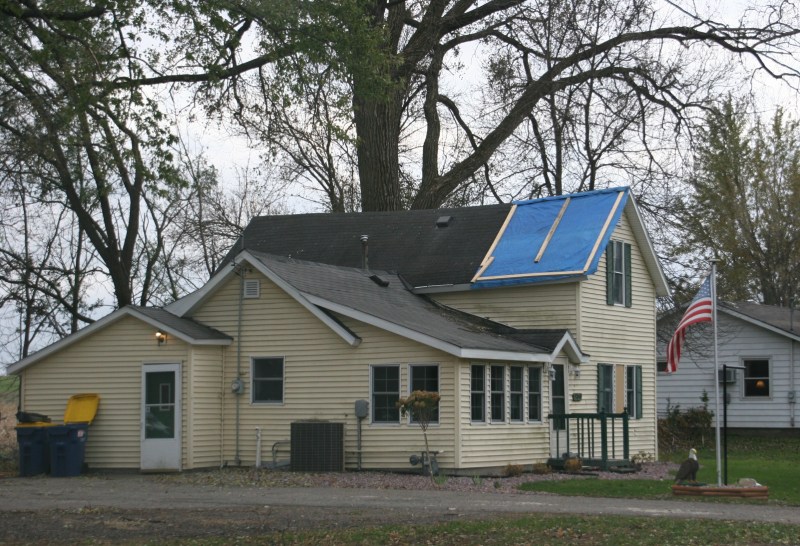
Several days ago I photographed this home destroyed September 20 by an EF-2 tornado in Morristown. This small town was the hardest hit in a massive storm system that spawned 16 tornadoes and straight line winds in southern Minnesota. An EF-2 has wind speeds of 120 – 130 mph.


FOUR WEEKS AFTER MULTIPLE TORNADOES and severe storms ravaged Rice County, folks in my area still need assistance.


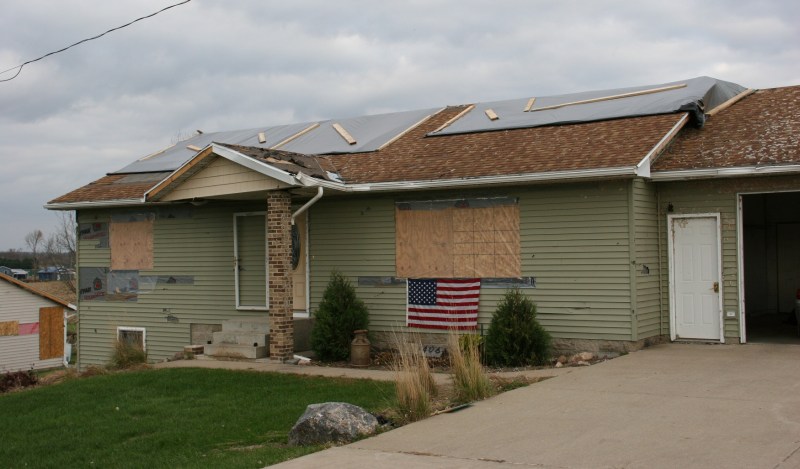
In the same Morristown neighborhood.


So, for the third time, Rice County Emergency Management is coordinating volunteer clean-up efforts. We need your help. This Saturday, October 20, exactly a month after those storms.


More damage in the same block in Morristown.


Although I’ve not joined these organized efforts, I assisted a friend after three trees fell in her yard, one landing on her house. Randy and I also checked on and helped an elderly neighbor. And then we got around to removing two limbs from our yard, with the help of a friend and his chainsaw.


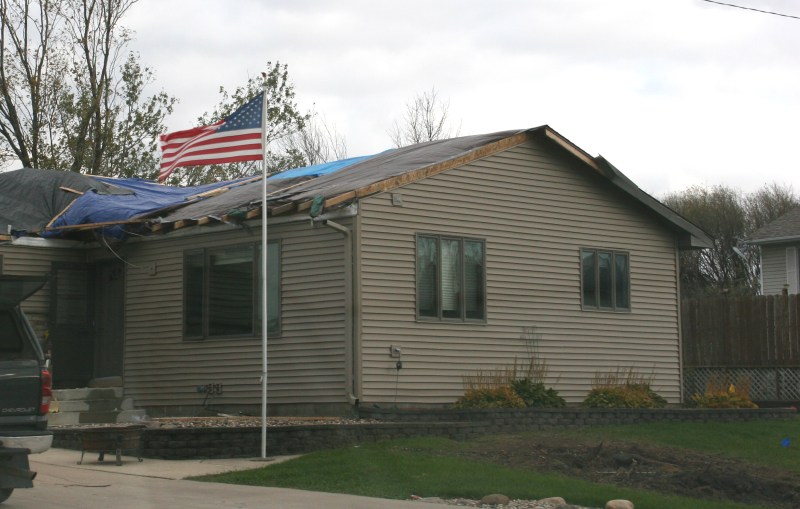
More tornado damage in Morristown.


Do you see a word repeating in this post? That would be help. After a devastating storm like this, help is essential.


In a nearby neighborhood in Morristown, roof damage.


If you can help, register beginning at 7:30 a.m. Saturday for a two or four-hour shift at volunteer headquarters, the 4-H building at the Rice County Fairgrounds on the north side of Faribault. It seems fitting that the 4-H building serves as the coordination center. Part of the 4-H motto includes pledging hands to larger service.


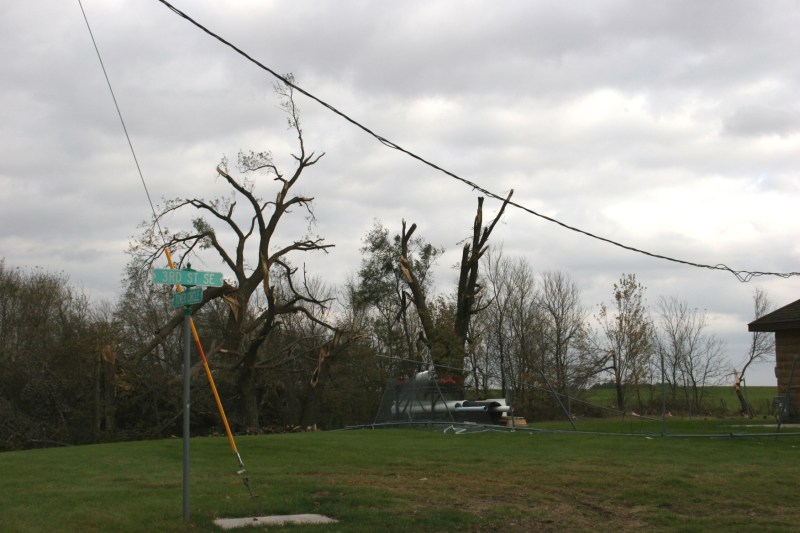
Twisted trees, the telltale signs of a tornado, these near the water tower in Morristown.


Lots of hands are needed to remove trees and brush, pick up debris from farm fields and more.


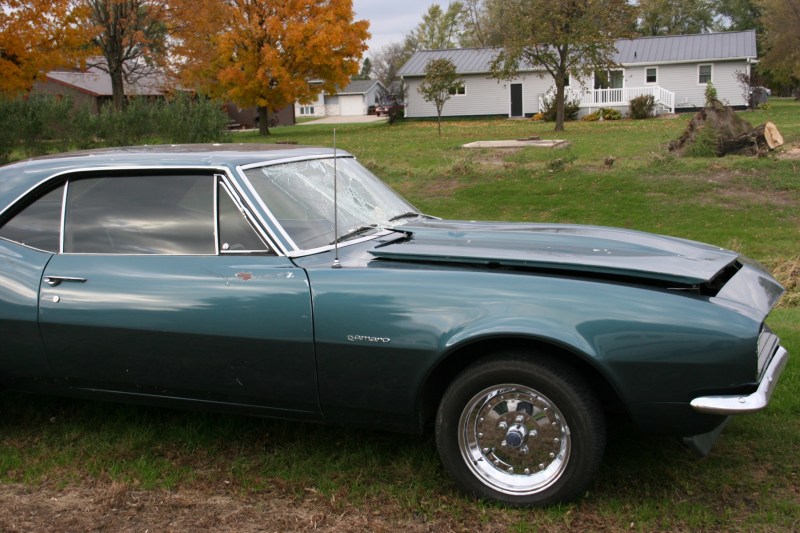
This damaged Camaro is parked in the Morristown neighborhood hard hit by a September 20 tornado.


We’re only an hour from Minneapolis along Interstate 35. We’d welcome you from the metro to help us, your neighbors to the south. We’d welcome you from Iowa to help your neighbors to the north. We’d welcome anyone with the ability to help.


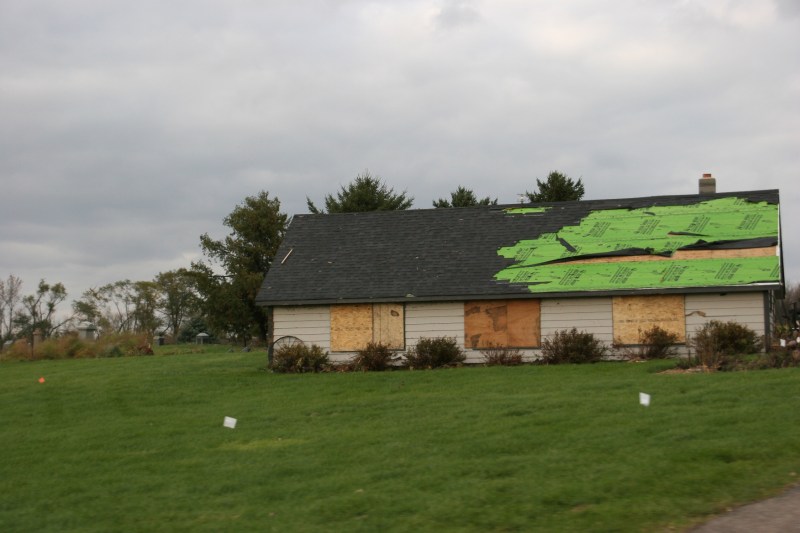
In the countryside near Morristown.


As I’ve been out and about the county during the weeks since the storms, I’ve noted the destruction and all of the work yet to be done. It’s heartbreaking really to see homes destroyed, farm buildings demolished, chunks of metal strewn across fields, and endless uprooted and damaged trees (including in my neighborhood).

Help is definitely needed. But so is the hope that help brings.

I have friends waiting for claims adjusters, contractor estimates and insurance payments. They’re waiting for contractors to replace roofs, siding, rafters, a garage door, fences… It’s stressful and, sometimes, overwhelming. They, and so many others, need to know someone, anyone, cares. And care comes in two ways, via help and hope.

FYI: Click here to read more detailed information about this Saturday’s volunteer clean-up efforts.

© Copyright 2018 Audrey Kletscher Helbling
 

An October drive in the Minnesota countryside October 16, 2018

In search of fall colors in rural southern Minnesota.


SATURDAY WAS THE DAY, we decided. The day to meander and view fall colors in the Rice County area following a week of nothing but grey skies. Weather forecasters promised half a day of sunshine before clouds moved in again. Yard work could wait. Randy and I needed to enjoy autumn.


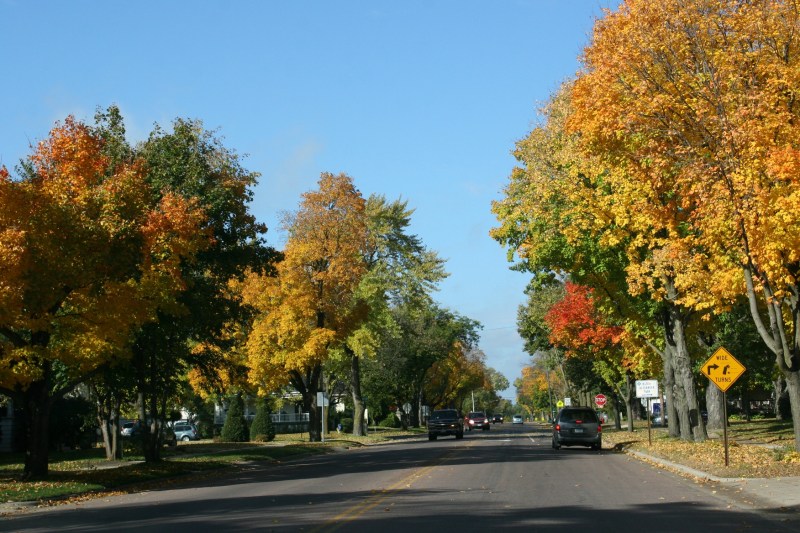
Colorful Seventh Street in Faribault nearing the intersection of Second Avenue.


So, with optimism, we headed out of Faribault along Seventh Street, a roadway bordered by beautiful fall foliage. The sun shone bright during our late morning exit. I was excited, remembering the beauty of last fall, especially around area lakes.


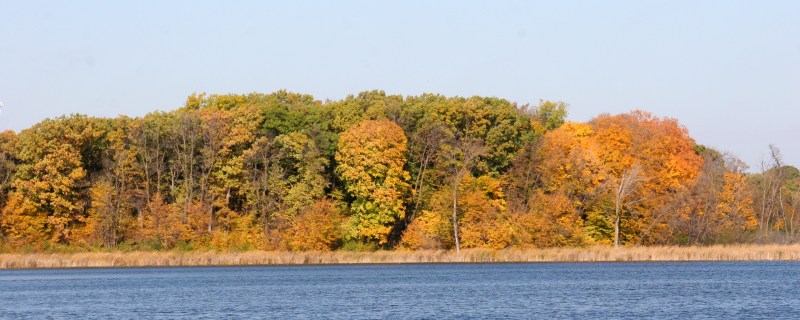
This treeline along Kelly Lake showed us some fall color.


But as we drove, we soon realized that our expectations did not match reality. The leaves are not nearly as colorful as last season. At least not on this day. I could choose to be disappointed—and I was for quite awhile—or I could choose to look for beauty beyond splashes of fall colors.


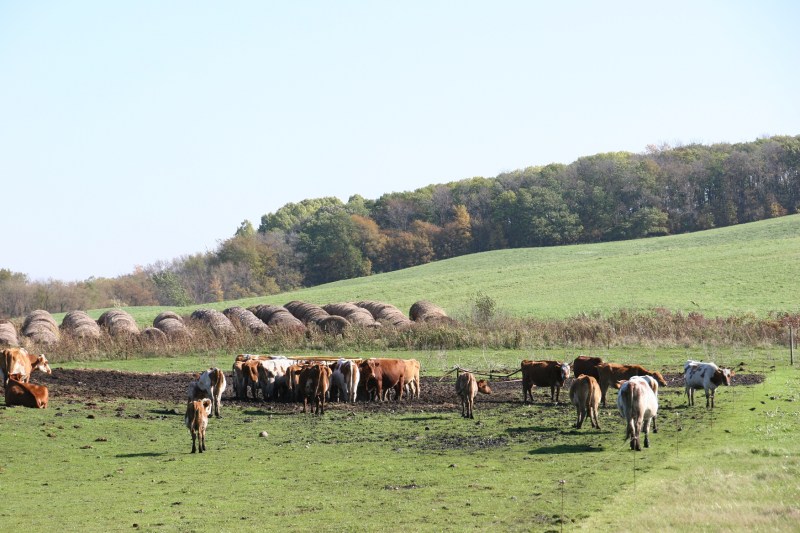
Place me on a gravel road and I will find something that appeals to me whether a farm site, a field, a cluster of cattle. Just being in the country brings me joy. And peace.


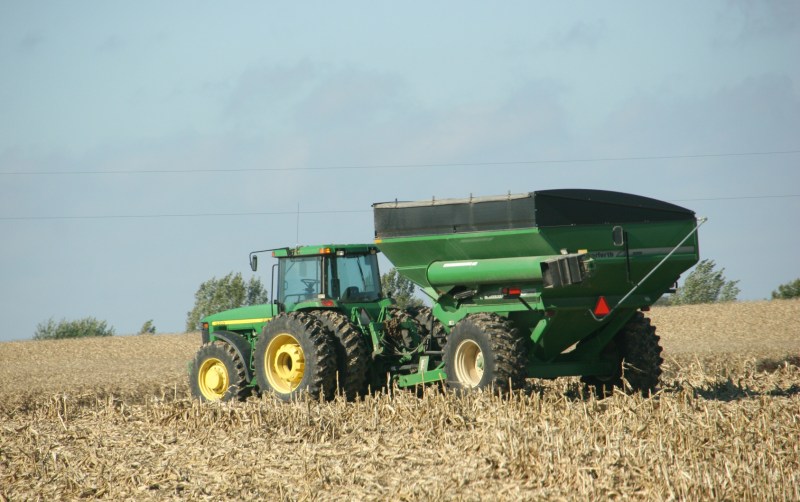
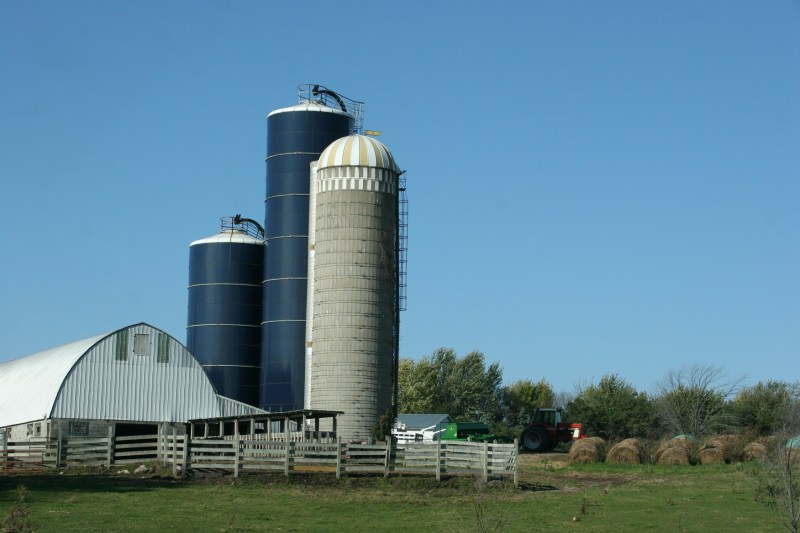
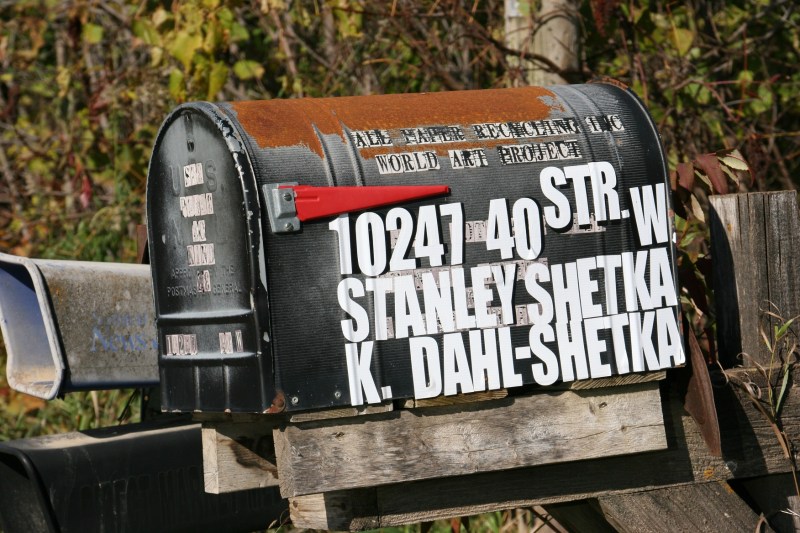
I know some would find this time just driving through the rural landscape to be a waste of hours. But not me. There is a need deep inside me to occasionally reconnect with the land, to simply escape the closeness of gridded city streets. I need to follow gravels roads. I need to see tractors and barns, even artsy rural mailboxes. It’s difficult to explain to someone without rural roots.


But for me, the land comforts. It rises up like a poem, wrapping my soul in words and images that have shaped—are still shaping—me.

© Copyright 2018 Audrey Kletscher Helbling
 

When the snow falls too early in southern Minnesota October 14, 2018

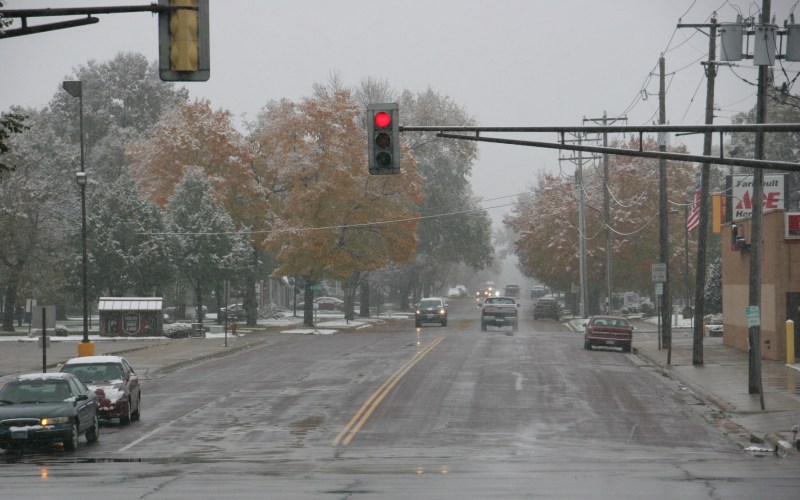
Snow whitens the landscape at 7:30 a.m. Sunday at the intersection of Minnesota State Highway 60/Fourth Street and Second Avenue in Faribault.


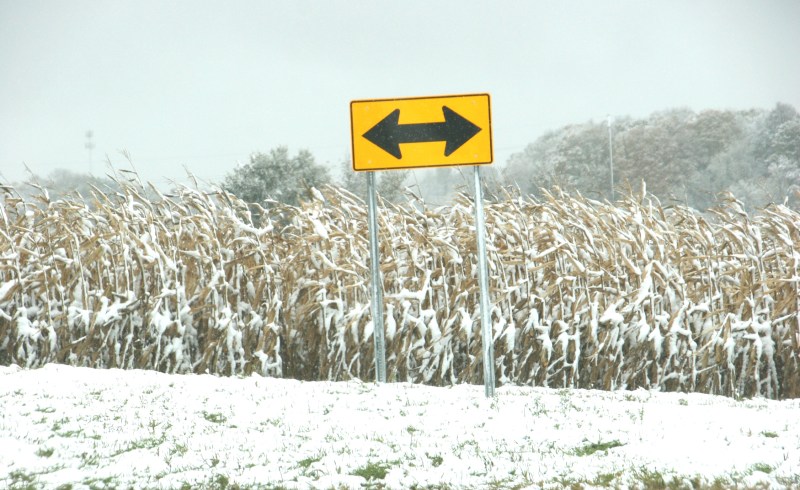
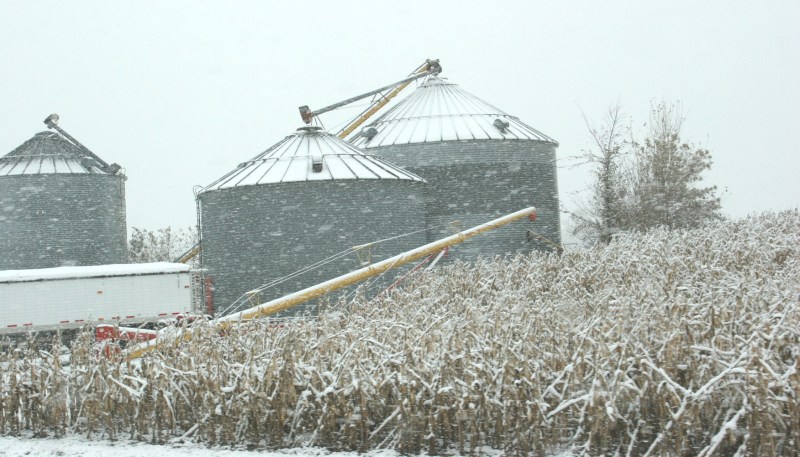
THERE’S A CERTAIN DISBELIEF, even among life-long Minnesotans, when you awaken on a mid-October morning to snow. Snow layering the grass. Snow layering leaves still clinging to trees. Snow still falling.


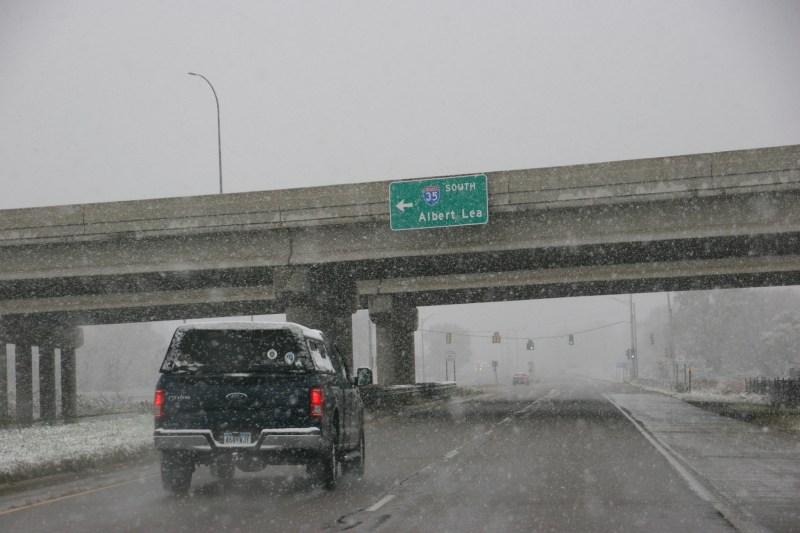
Heavy snow fell late Sunday morning as we drove along Minnesota State Highway 60 west out of Faribault. That’s the Interstate 35 overpass in this photo.


That was our Sunday morning here in southeastern Minnesota. I knew snow was in the forecast, but for parts farther south, like the next county south and to the Iowa border along Interstate 90. Not here. Not in Faribault.


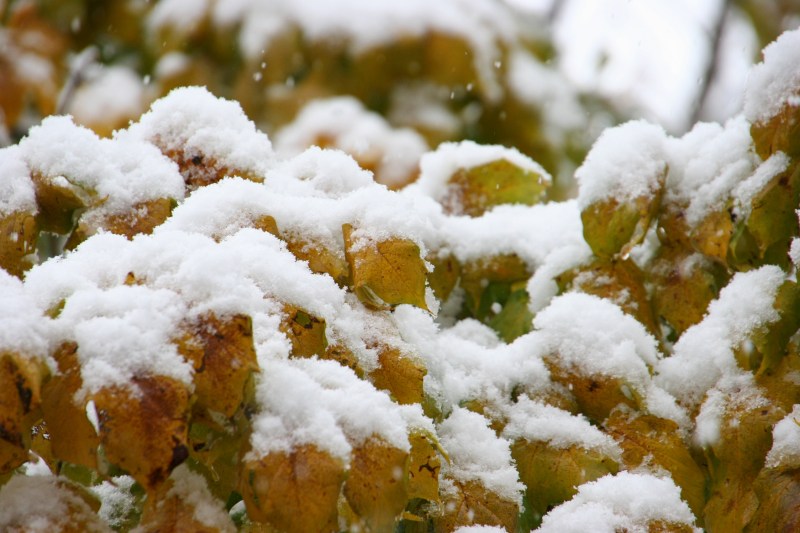
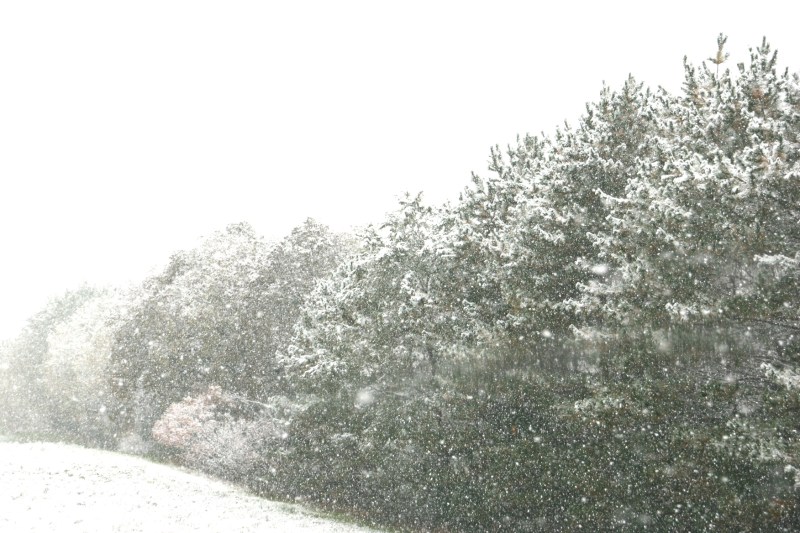
Snow accumulates on my backyard maple tree.


But when I awakened around 6:30 a.m. Sunday, snow was falling and continued into early afternoon. And while I wasn’t exactly happy about a snowfall this early, I admit to retaining a certain excitement about that first snow of the winter. Except it’s not officially winter yet. Or is it?
 

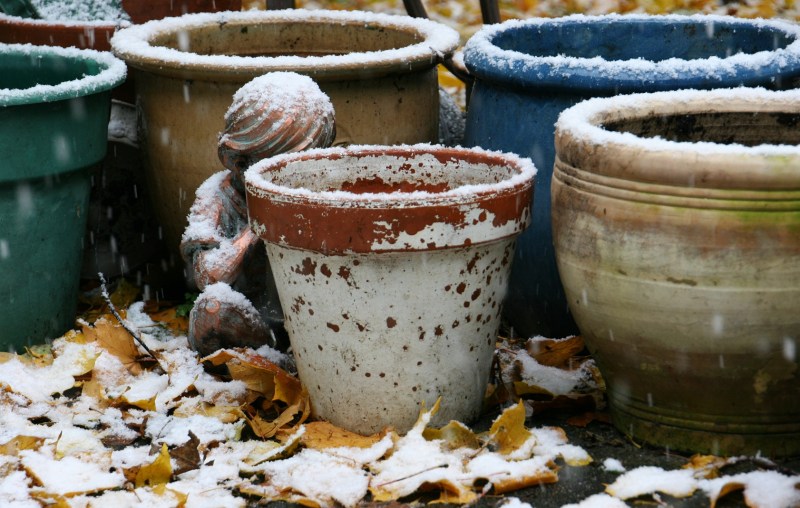
The flowerpots I emptied on Saturday with snow falling and accumulating around them on Sunday.
 

Just yesterday Randy and I were looking for elusive fall colors, driving along back country roads in Rice County, no thought of snow on our minds. Afterward, we did yard work, emptied flowerpots of frozen flowers. No thought of snow on our minds.


Then today…we’re heading to and from the Fall Harvest Dinner at Trinity Lutheran Church, North Morristown, in a snow globe world.


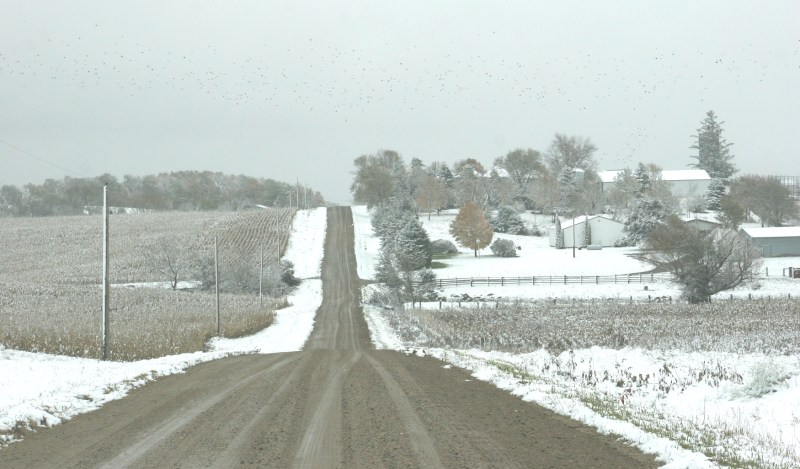
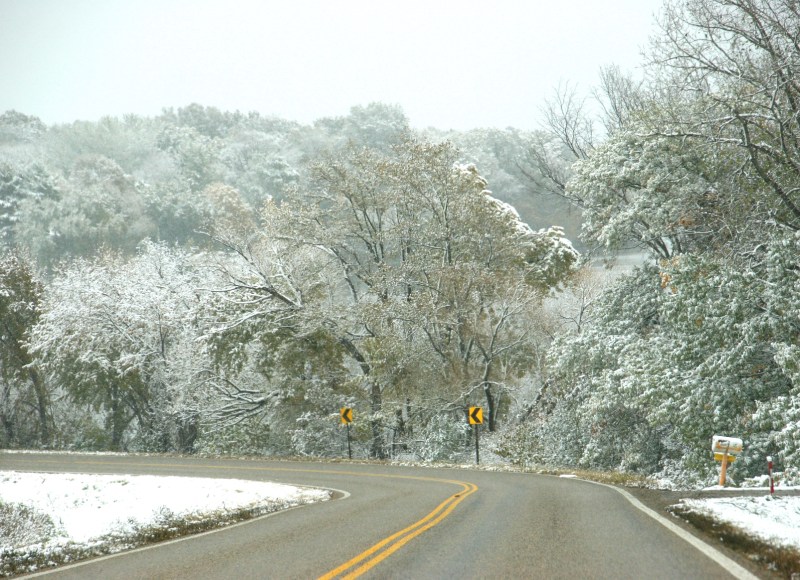
My favorite shot of the day is this rural scene near North Morristown.


I needed that drive into the country to view this early snowfall from an artistic perspective and not a gosh darn, it’s way too early for snow mentality. I needed this drive to see a landscape lightened by white, not dimmed by grey.


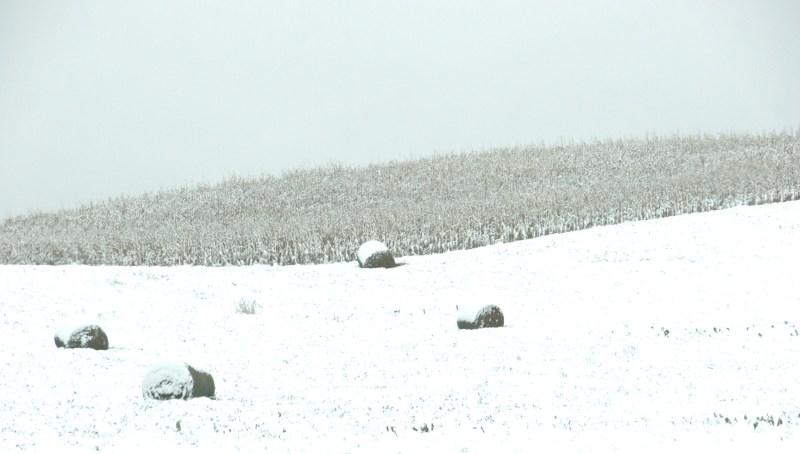
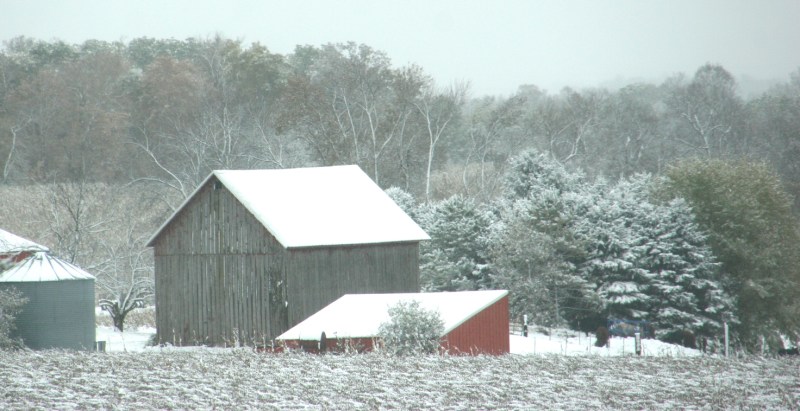
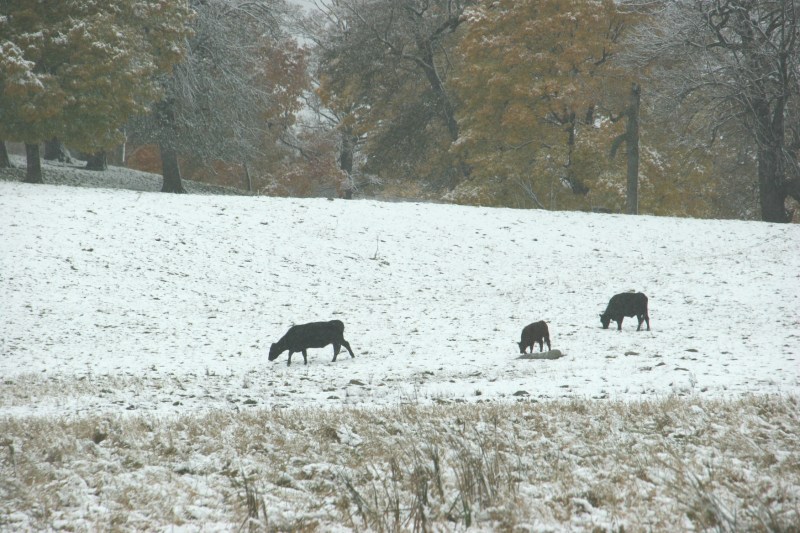
I needed the visual reminder that, even in snow, beauty exists. Snow smudges softness into the landscape. I saw that painterly quality in fields and on barn roofs. In treelines. On a single leaf. And that was all it took for me to appreciate this first snowfall of the season here in Rice County in southeastern Minnesota.


Remind me of that appreciative attitude come January, February, March and April.

© Copyright 2018 Audrey Kletscher Helbling