Minnesota Prairie Roots

Writing and photography by Audrey Kletscher Helbling
“Standing at the Grave,” an immigration story November 21, 2025

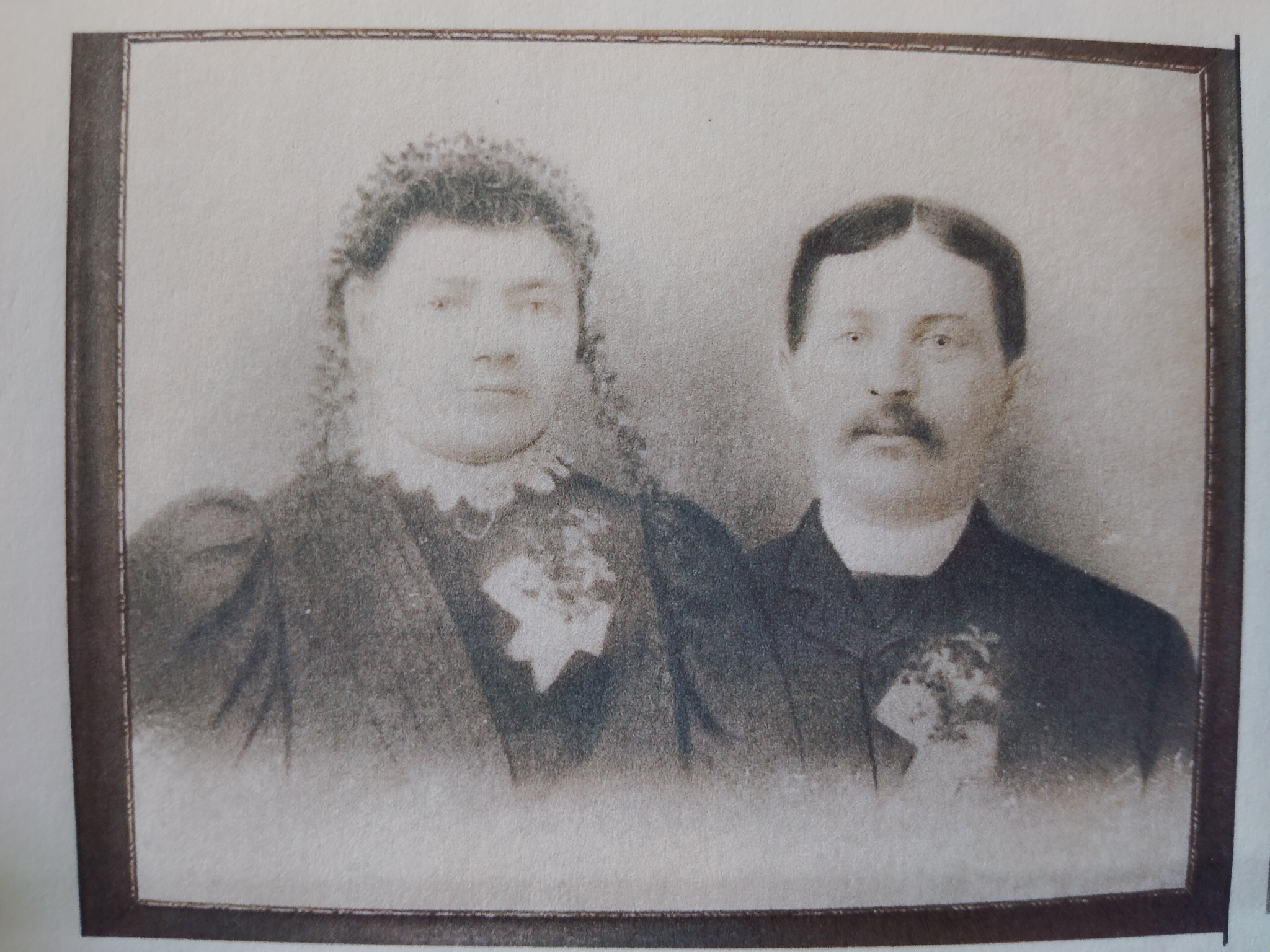
My great grandparents, Rudolph and Mathilda Kletscher, married in 1891. (Photo source: Kletscher Family Tree 2008 produced by Merlin and Iylene Kletscher)

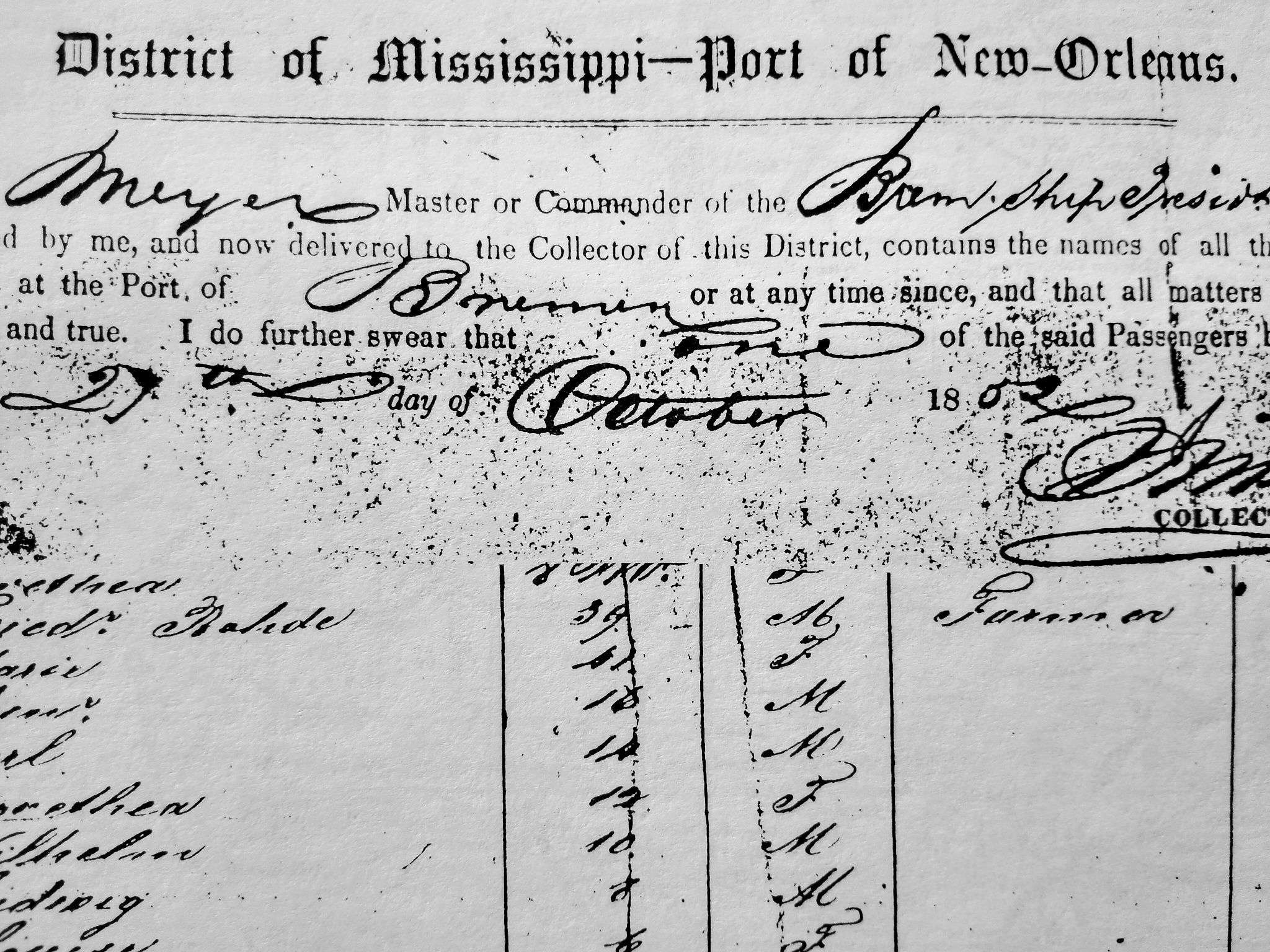
UNLESS WE ARE NATIVE AMERICANS, immigration is part of our family history. On my maternal side, Friedrich and Maria Bode arrived from Germany at the port of New Orleans in October 1852. They would settle in Illinois. Most of the family eventually moved to Minnesota. On my paternal side, my great grandfather, Rudolph Kletscher, landed in Baltimore from Germany in 1886, several years later journeying west to put down roots in southern Minnesota.

I pulled this information from pages of family history uncovered and compiled by family members who have researched our roots in Germany. I am grateful for their work, for the names, dates and places recorded for reference. Sometimes there are stories, or tidbits of stories. But mostly the research reveals documented facts only, not stories.

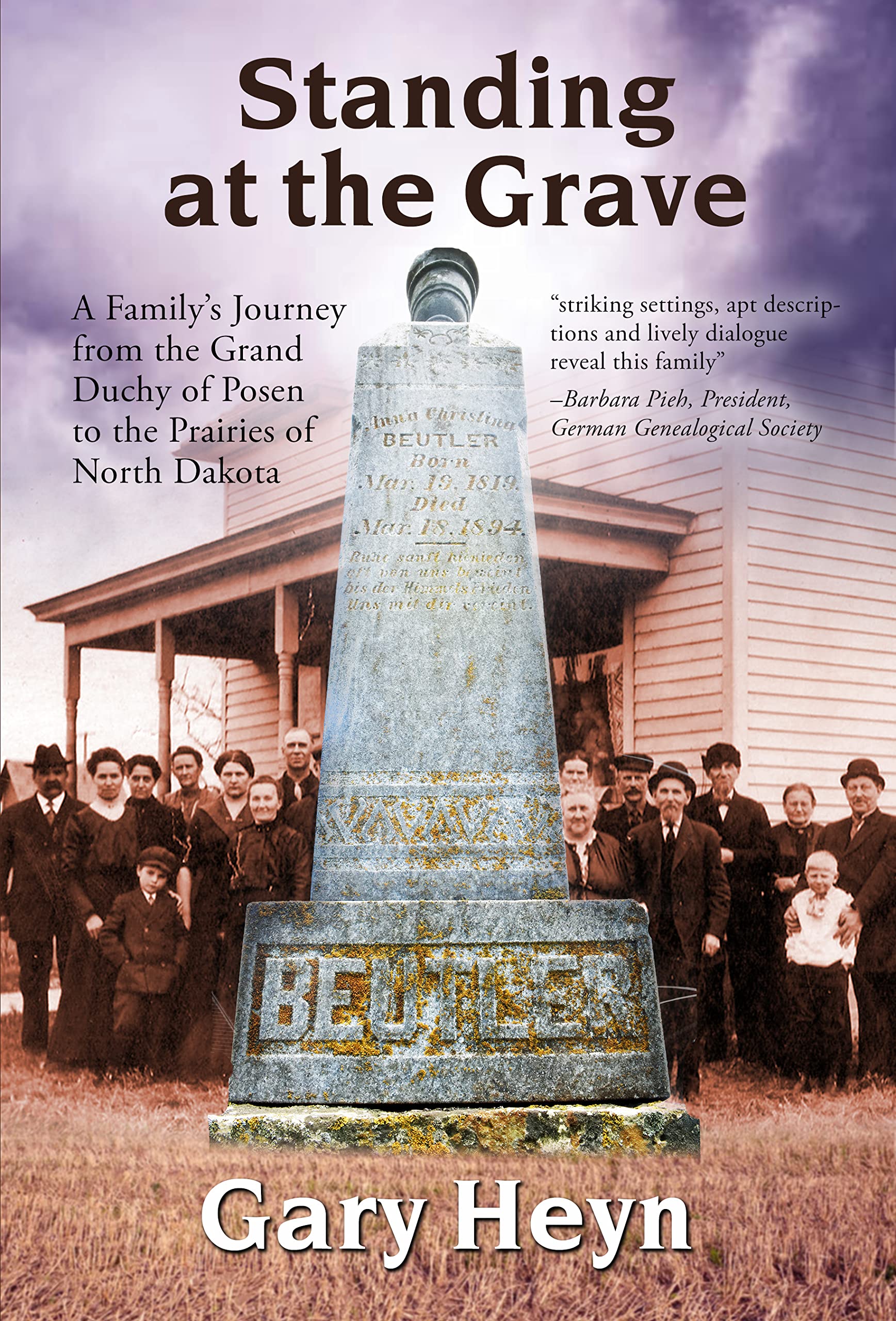
(Book cover sourced online)

It is the stories that interest me most, which explains my interest in reading Standing at the Grave—A Family’s Journey from the Grand Duchy of Posen to the Prairies of North Dakota by Minnesotan Gary Heyn. Books on Central in Faribault hosted Heyn on Thursday evening during a monthly literary event. I was among those in attendance, listening to Heyn read and then answer audience questions. I’d just finished reading his book about his ancestors who immigrated to America from Prussia (now Poland) beginning in 1867 shortly after the Civil War ended.

His ancestors could have been mine. Any of ours. Heyn took basic facts confirmed thorough research at the Minnesota History Center, church records, a Polish history website, old newspapers, even the National Weather Service and gleaned during several trips to Poland to form the foundation for his stories. The dialog and interactions are fictional slices of personal life in Prussia and then in America. Heyn’s characters really come alive when he reveals their fears, their worries, their hardships, griefs, challenges and more in intimate storytelling.

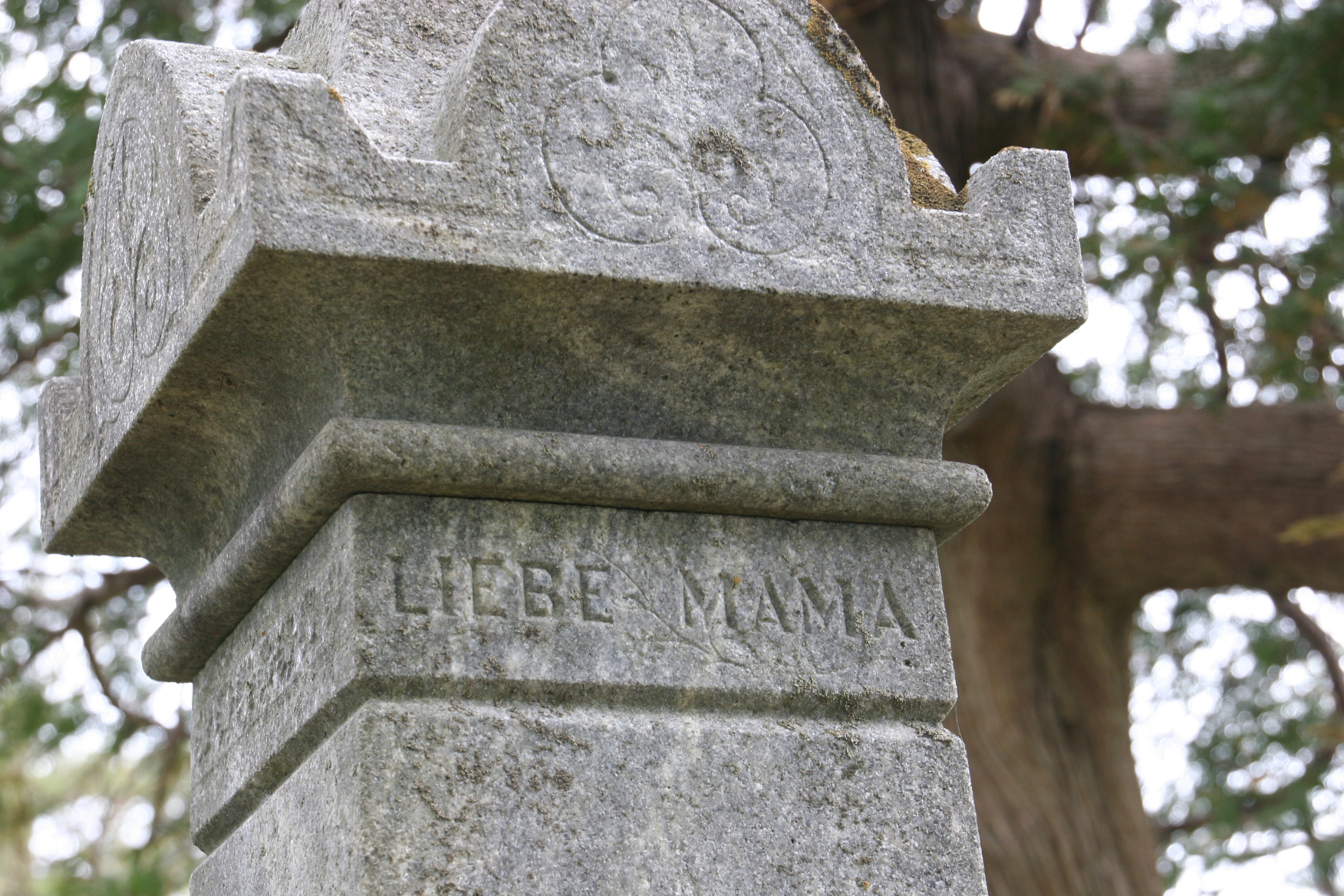
A tombstone in the Immanuel Lutheran Church Cemetery, Potsdam. The German word “LIEBE” means love in English. A Heyn family member is buried in this cemetery. (Minnesota Prairie Roots copyrighted file photo May 2022)

These are, at times, really hard stories. Of death by disease. Of death by accidents. Of death by suicide. Of death by botulism. I appreciate that the author doesn’t avoid tough topics. I understand the worries about weather and crop failure, vicariously stand at the graves of loved ones, recognize the depression a young mother experiences as she looks across the expansive North Dakota prairie, feeling isolated and alone.

But those difficult stories are balanced by the joys of births, of weddings, of the opportunity to claim land through the Homestead Act, to live and love and grow family in a new land rich in opportunity.

Main character, family matriarch Anna, follows her family to America many years after the first, eventually fulfilling her life-long dream of once again owning land, this time 160 acres in North Dakota. Most of the family found land in southern Minnesota, in the Rochester area where the author grew up and first heard the stories of his great grandmother. She lived with his childhood family. That sparked his interest in family history and genealogy, which, after his retirement as an accountant, led to writing Standing at the Grave.

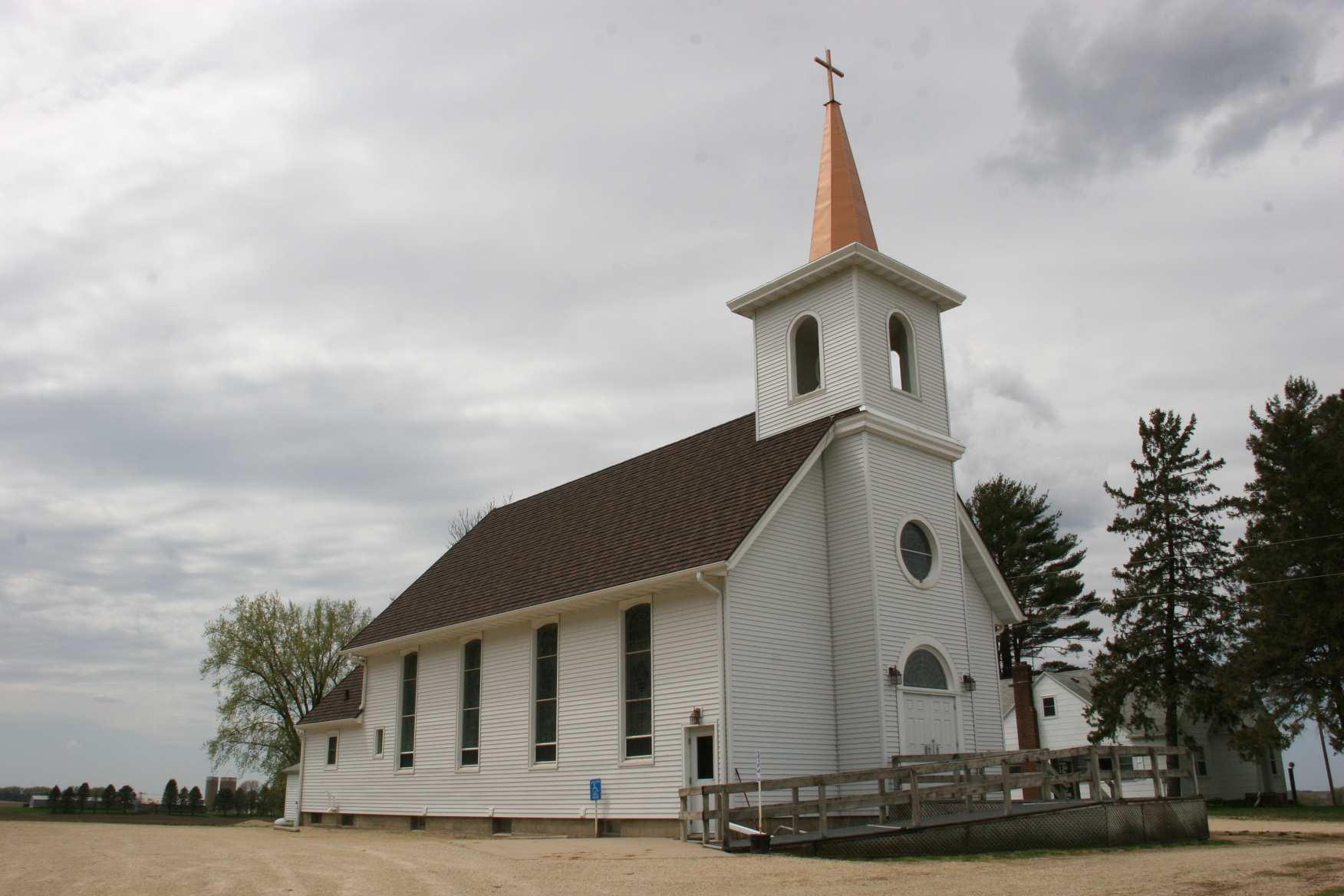
Immanuel Lutheran Church, Potsdam. (Minnesota Prairie Roots copyrighted file photo May 2022)

Southern Minnesotans, especially, will feel at home in places like Elgin, Grand Meadow, Pleasant Valley, Owatonna and more. I’ve even visited and photographed Immanuel Lutheran Church in Potsdam, where Anna stood on the front steps and scanned the countryside below the hilltop church. I’ve walked the cemetery, where Heyn’s ancestor, Willie, lies buried in an unmarked grave.

As much as I appreciate the storytelling in this book, I also appreciate its relevancy to today. Heyn family members new to America in the late 1800s are told to speak English, not German. Sound familiar? (My own mother, who died at age 89 in 2023, spoke German as her first language.) These newcomers to America felt like foreigners, often choosing to live among others from their homeland. Among those who shared their language, culture and customs, who liked bier, sauerkraut, Weihnachtsstollen and Glühwein.

But in times of challenges, Heyn reveals in one story, “…the citizens of this neighborhood, born all across the globe, banded together to help another working man.” That coming together of many nationalities repeats in his book, even as conflicts arise.

A passenger ship list from the port of New Orleans. (Source: The Bode Family book by Melvin & Lois Bode, 1993)

Heyn, in his writing, reveals the challenges, the dreams, the hopes, the resilience and resolve of his immigrant ancestors. These were strong individuals who relied on each other, their faith and their inner strength to cross a vast ocean for a new life in America. This is their story, but also a universal story of immigration, as relatable today as then.

This book helped me better understand those who came before me from Germany to America from a personal perspective. This book also reminds me of the struggles immigrants still face today in America, especially today.

© Copyright 2025 Audrey Kletscher Helbling


“The Laughing Dead,” more than just a thriller October 29, 2025

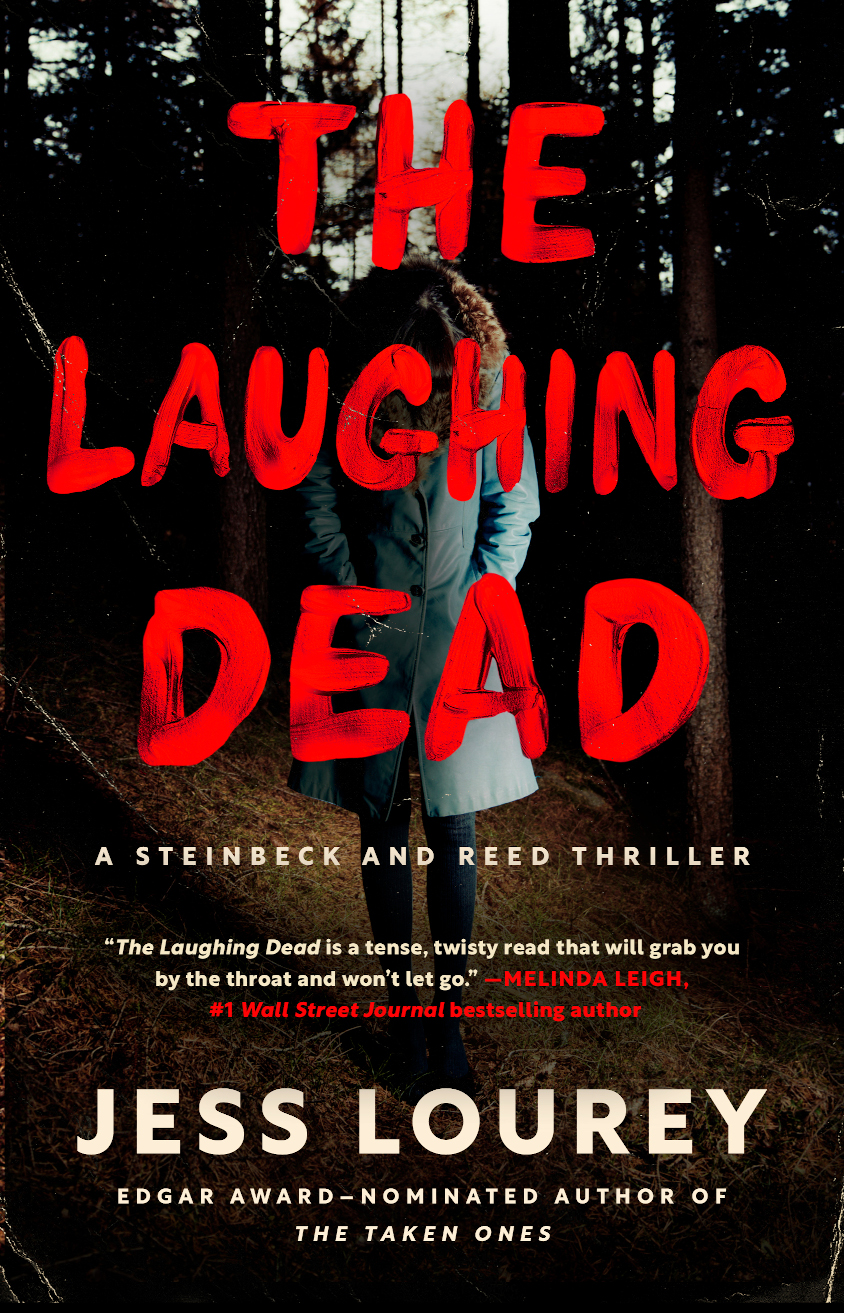
(Book cover sourced online)

NEARLY TWO YEARS AGO, Minnesota writer Jess Lourey participated in an author talk at my local library. She said then that she wants readers to take away the importance of community from her books. “Find your people and tell your truth,” Lourey said.

I like that statement. It’s empowering. Tell. Your. Truth.

In her newest book, The Laughing Dead, the third in her fictional “A Steinbeck and Reed Thriller” series, Lourey writes about three cold case murders of young women and two current-day murders. Bureau of Criminal Apprehension Agent Evangeline “Van” Reed and forensic scientist Harry Steinbeck once again team up to work the cases, one that becomes deeply personal for Reed.

In typical Lourey writing, the plot twists and turns and screams and scares as the story unfolds. At times I truly did not understand what was real and what wasn’t. That comes as no surprise given secrets theme many of Lourey’s books. The Laughing Dead is no exception.

But what stuck with me throughout the book was the strength of Van Reed, born into a cult led by abusive, controlling and narcissistic Frank Roth. When he was arrested, the “Mothers” and “Sisters” scattered, some remaining devotedly loyal while others like Reed escaped and severed ties. She then went into law enforcement. In The Laughing Dead, Reed confronts her past, the secrets she keeps and the trauma she’s endured.

Yet, this book goes beyond a fictional character in a thriller. This story is, more broadly, about domestic abuse and violence, a reality for too many women (and, yes, some men also). It was absolutely fitting that I should read The Laughing Dead during National Domestic Violence Awareness Month in October. Lourey, in her book, writes about the power, manipulation and control used by abusers to entrap and silence their victims. Abusers, just like the fictional Frank Roth, will act loving and doting then turn into oppressive, abusive, overpowering, violent and controlling individuals. Sort of like a nightmarish chameleon.

Lourey, through her writing, is doing more than entertaining readers who appreciate a good thriller. She is raising awareness about domestic abuse and violence. And she is showing, via main character Van Reed, that it is possible to escape domestic abuse and violence, to rise above trauma. To tell your truth. And survive.

© Copyright 2025 Audrey Kletscher Helbling

 

“Four Red Sweaters,” a difficult, but necessary, read July 1, 2025

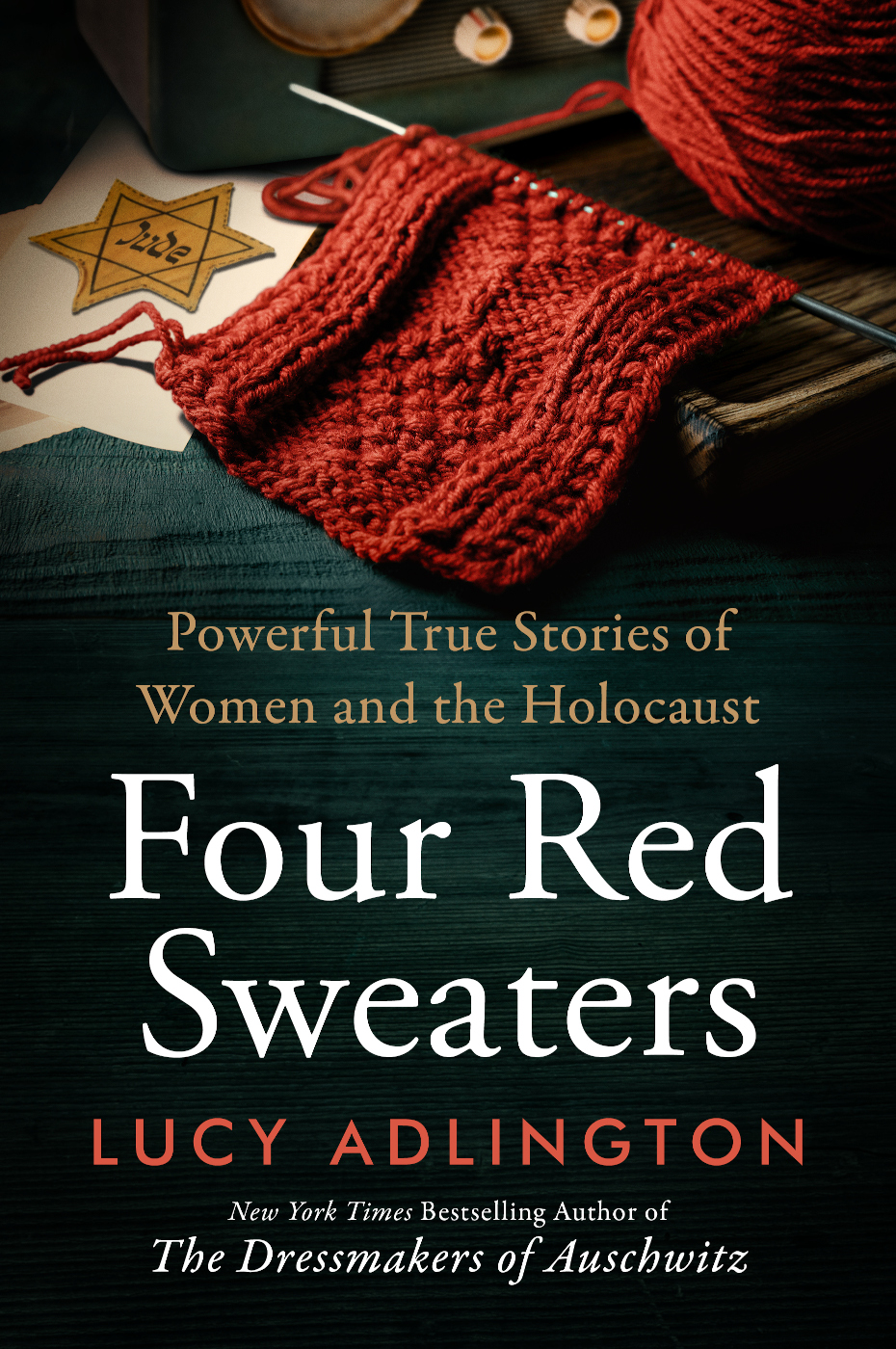
(Book cover sourced online)

TYPICALLY, I CAN READ a book within two weeks. But not Four Red Sweaters—Powerful True Stories of Women and the Holocaust by Lucy Adlington. I had to renew this book at my local library in order to finish it.

Why? The content is so difficult, disturbing and devastating that I could only read this work of nonfiction in small chunks. But I was determined to finish this book about Jock, Anita, Chana and Regina—four Jewish girls living in Nazi Germany—and all connected by red sweaters. I owed it to them to learn more about the awful atrocities inflicted under Adolph Hitler’s rule by those who lived, breathed, and followed him and his ideology.

All the while I was reading Four Red Sweaters, a small voice in my head whispered warnings in words like a knock on the door, fear, anti-immigration sentiment, snatched, disappeared, deported, deception, secrecy, dehumanizing… The parallels to today were not lost on me.

REAL PEOPLE WITH STORIES

What I particularly like about this book, if one can ever really “like” a book on such a topic, is the personalization. Anita is not just #69388 inked onto her left forearm at Auschwitz-Birkenau. She is a girl who arrives at the concentration camp wearing shoes adorned with pompoms and tied with red shoelaces. She is a girl who knew how to play the cello. That skill eventually saved her.

But too many died. Millions and millions. That included the Fink family, brutally murdered by their neighbors in an act so heinous I can’t share it here. Turn to page 96 in the book. The Finks were extended family of Jock, a main character in this story. She was one of the “lucky” Jewish children who escaped Nazi Germany, along with her sisters, on a Kindertransport, an all-out effort by brave souls to get Jewish children out of the country to safety. But Jock’s parents and brothers died at the hands of the Nazis.

The pages of Four Red Sweaters are filled with heroic acts, bravery, defiance and determination that show the incredible strength of the human spirit. There existed a mentality of surviving together or dying together. The pages of this book are also filled with stories of unbelievable, unfathomable cruelty.

A NECESSARY READ

Author Adlington backs her writing up with 23 pages of source notes. In small print. That’s a whole lot of documentation in researching and writing this book. I cannot imagine the emotional toll this took on her. I also cannot imagine anyone reading Four Red Sweaters and not feeling deeply moved and worried, but also grateful to Adlington for sharing the stories of Jock, Anita, Chana and Regina and the broader stories of the Holocaust. We need to read about, study, learn and remember the past so as not to repeat it.

Near the very end of Four Red Sweaters, Adlington writers about a knitter who, in 2013, designed Remembrance socks. Heatherly Walker’s sock pattern honors Regina and the others who were forced to knit socks and more for the Nazis and their families. She incorporated hidden Jewish stars into the pattern, which is available on the Ravelry website for crafters. Knitting is an integral part of the stories Adlington shares in her book.

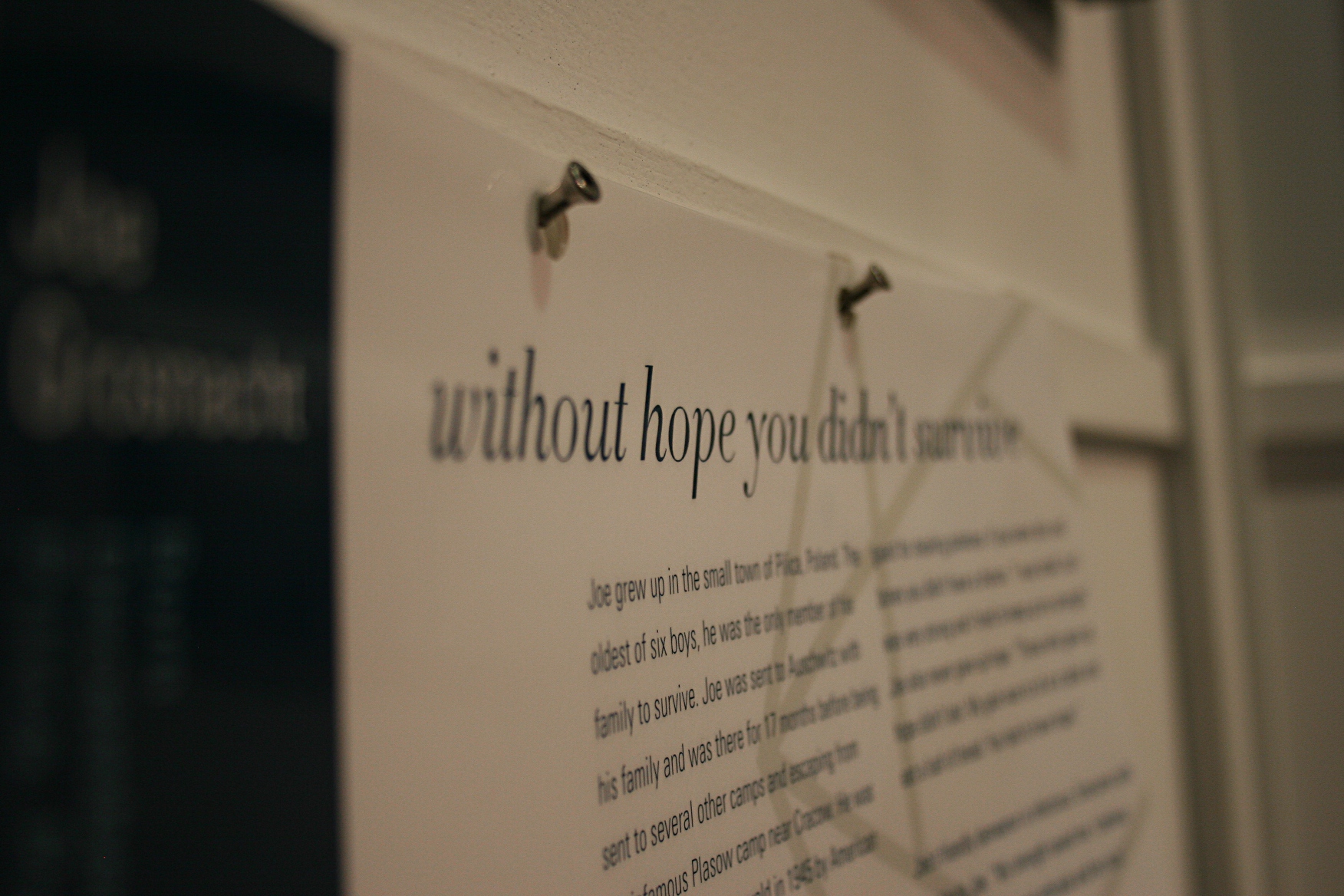
Hope in a story at the traveling exhibit about Holocaust survivors, “Transfer of Memory,” which I viewed in 2014 at the Steele County History Center, Owatonna. (Minnesota Prairie Roots copyrighted file photo 2014)

DEFIANCE, COURAGE, HOPE

One seemingly small act stands out for me in Four Red Sweaters. Regina’s friend Esther, after foraging mushrooms for the Nazis in the Sobibor extermination camp, walks into the SS canteen, sees a pot of soup cooking and spits in it. And the Nazis eat it. I can only imagine the satisfaction Esther felt in that moment of defiance. Endless examples of defiance, courage, hope and resilience are knitted into the pages of Four Red Sweaters.

As challenging as it was for me to read this book, I needed to do so. For to stop reading when the content grew increasingly difficult and disturbing would have been to do exactly as the Nazis desired. Nobody must know. But we must all know. And, sometimes, like Esther, we must spit in the soup.

#

TELL ME: If you’ve read Four Red Sweaters, how did you react? What stands out for you in the book? Special thanks to Missy’s Crafty Mess (the blog of an avid reader and knitter) for writing about Four Red Sweaters, which led me to this book about the Holocaust. I am grateful for her recommendation.

© Copyright 2025 Audrey Kletscher Helbling

 

Growing up with 21 siblings in rural Minnesota, a memoir June 10, 2025

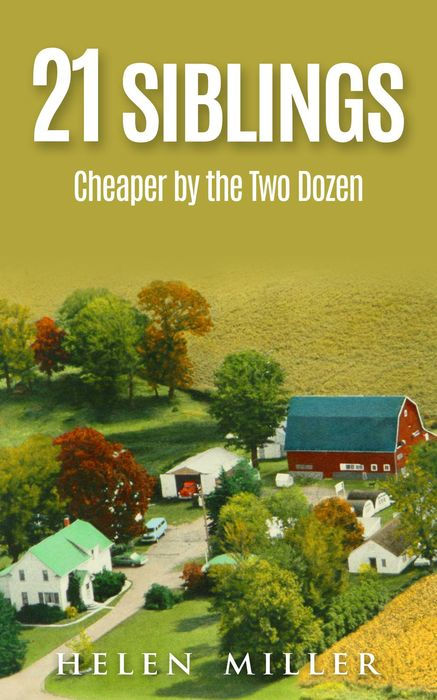
This book is also packed with candid and posed photos of the Miller family, adding to the text. (Book cover sourced online)

THIS COULD BE MY STORY or that of any other Baby Boomer who grew up in rural southern Minnesota. With one primary exception. None of us had 21 siblings. Yes, twenty-one. I had only five—three brothers and two sisters.

But Helen Miller had seven brothers and 14 sisters, all single births, all born to the same parents, Lucille and Alvin Miller of rural Waseca, over a span on 26 years. She’s chronicled the family’s life in a self-published memoir, 21 Siblings—Cheaper by the Two Dozen.

I happened upon this book, printed in 2018, after visiting the Waseca County History Center and seeing an exhibit about this unusually large family. I knew then that I needed to read this story by Helen, 13th in line. She’s just a bit older than me. I expected my farm upbringing during the late 50s through the 60s and into the early 70s would be similar in many ways. I was right.

WHITE RICE & PANCAKES

This book proved a stroll down memory lane. I remember meals of mostly meat and potatoes with a side vegetable given that was the preferred meal of my farmer father. He, like Alvin Miller, was quite content to eat those basics and didn’t care for any deviations. Large gardens were the norm, no matter family size. Lucille Miller canned fruits and vegetables, just like my mom, except a whole lot more. And, when food supplies ran low, both our mothers cooked a meal of white rice and cinnamon. I detested that and to this day still don’t like plain white rice.

I also do not much like pancakes, although I have no particular reason to explain that dislike. Helen Miller should. She writes of the family receiving boxes and boxes of pancake mix following a railroad accident. Except they didn’t get the pancake mix until months later…when weevils had infested the food. The Millers simply sifted out the bugs, prepared and ate the pancakes. They weren’t about to turn down free food.

Specific stories like these point to the challenges of feeding a mega family, even with their own garden produce, chicken, pork and eggs. With that many people to feed and to shelter, you can only imagine the logistics of running the household. Older siblings were responsible for younger siblings. Everyone pitched in with chores. They shared a lot—clothes, shoes, a singular cup for drinking water (same as my family), rooms, a love of music and a strong faith.

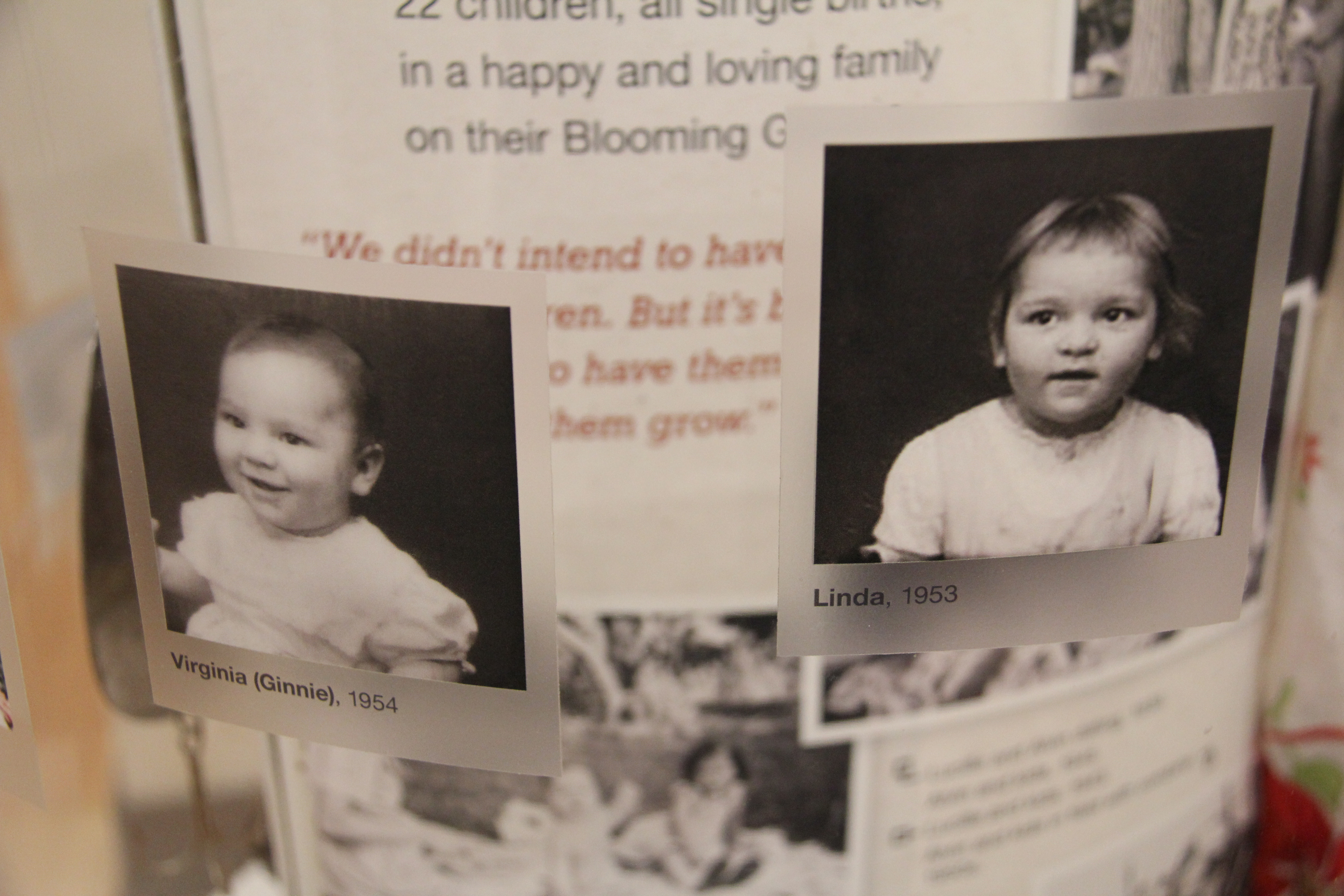
This shows part of the Miller family exhibit at the Waseca County History Center. (Minnesota Prairie Roots copyrighted file photo May 2025)

THE IMPORTANCE OF FAITH

The Millers’ Catholic faith centered their lives. Lutheranism centered mine. Faith carried the Millers through an especially tragic event—the deaths of their aunt, Irene Miller Zimmerman, and her six young children in 1959. An unseen train broadsided their station wagon just blocks from Sacred Heart School, the same school Helen and her siblings attended. She writes: It was under this veil of grief that I grew up a rather serious child. She was only four years old.

Amid the difficult moments, Helen documents light-hearted moments, too. One in particular caused me to burst into laughter. As a seven-year-old, Helen went to Confession for the first time, thinking she had not broken any of the Ten Commandments. But she had to confess something to the priest. Helen admitted to disobeying her parents twice, having false gods twice and then, and here’s the kicker, committing adultery three or four times. Now there’s nothing funny about that sin. But when an elementary-aged girl confesses to something she clearly doesn’t understand, well, I wonder how that priest kept from laughing aloud. He didn’t laugh, or correct her, according to Helen, who twice confessed to breaking the Sixth Commandment.

SEWING, FISHING & A WHOLE LOT OF PATIENCE

Story after story reveals a childhood upbringing that many times mimicked my own. Like Helen, I learned to sew because, if I wanted new clothes as a teen, I needed to stitch them. I babysat children for fifty cents an hour, just like Helen. I fished, occasionally, with my family. But the Millers fished often, usually at their rustic cabin along Reeds Lake a short drive from their farm. Vacations and dining out were not part of our youthful experiences. The list of similarities goes on and on among the many differences.

I can never fully relate to having 21 siblings. But this rural Waseca family managed and, by all accounts, well. With a whole lot of organization, love, strength and patience. And, Helen notes, with an eternally optimistic and patient mother. Just like my mom.

© Copyright 2025 Audrey Kletscher Helbling
 

Words that resonate from Northfield poet Becky Boling April 24, 2025

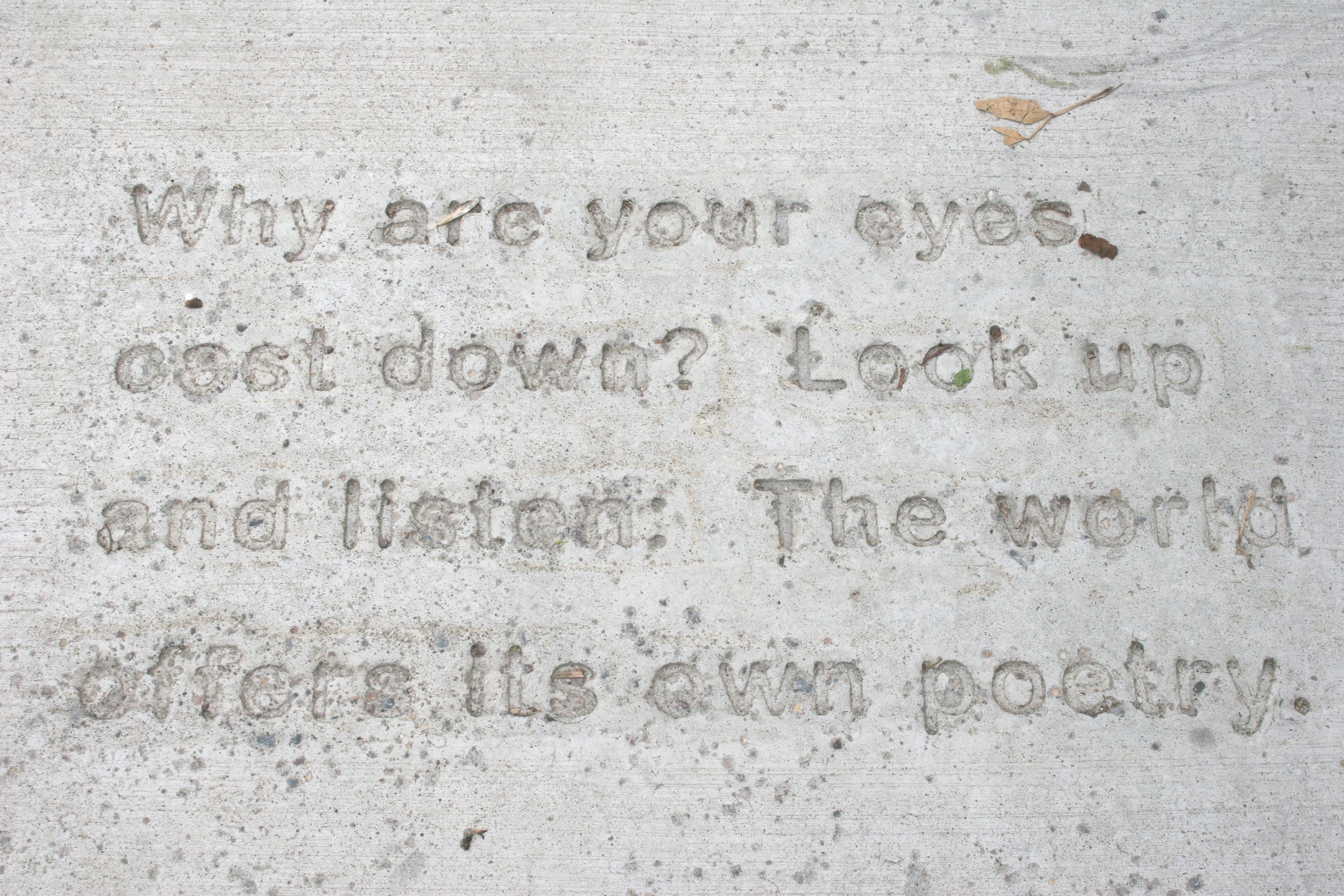
Sidewalk poetry in downtown Northfield, Minnesota, carries a powerful message. (Minnesota Prairie Roots copyrighted file photo)

I DON’T READ MUCH POETRY. I probably shouldn’t admit that given I’m a published poet. But I suspect most of you also are not big poetry readers. Yet, we all should be, especially me.

Becky Boling’s recently-released first collection of published poetry. The cover features the poet’s artwork. (Minnesota Prairie Roots copyrighted photo April 2025)

Poetry offers a creative way to view the world, to experience life, eliciting a whole range of emotional responses that connect us to each other, to the earth, to the past and present, and much more. I get excited when I discover a poet whose work truly resonates with me. And that would be the poetry of Northfielder Becky Boling.

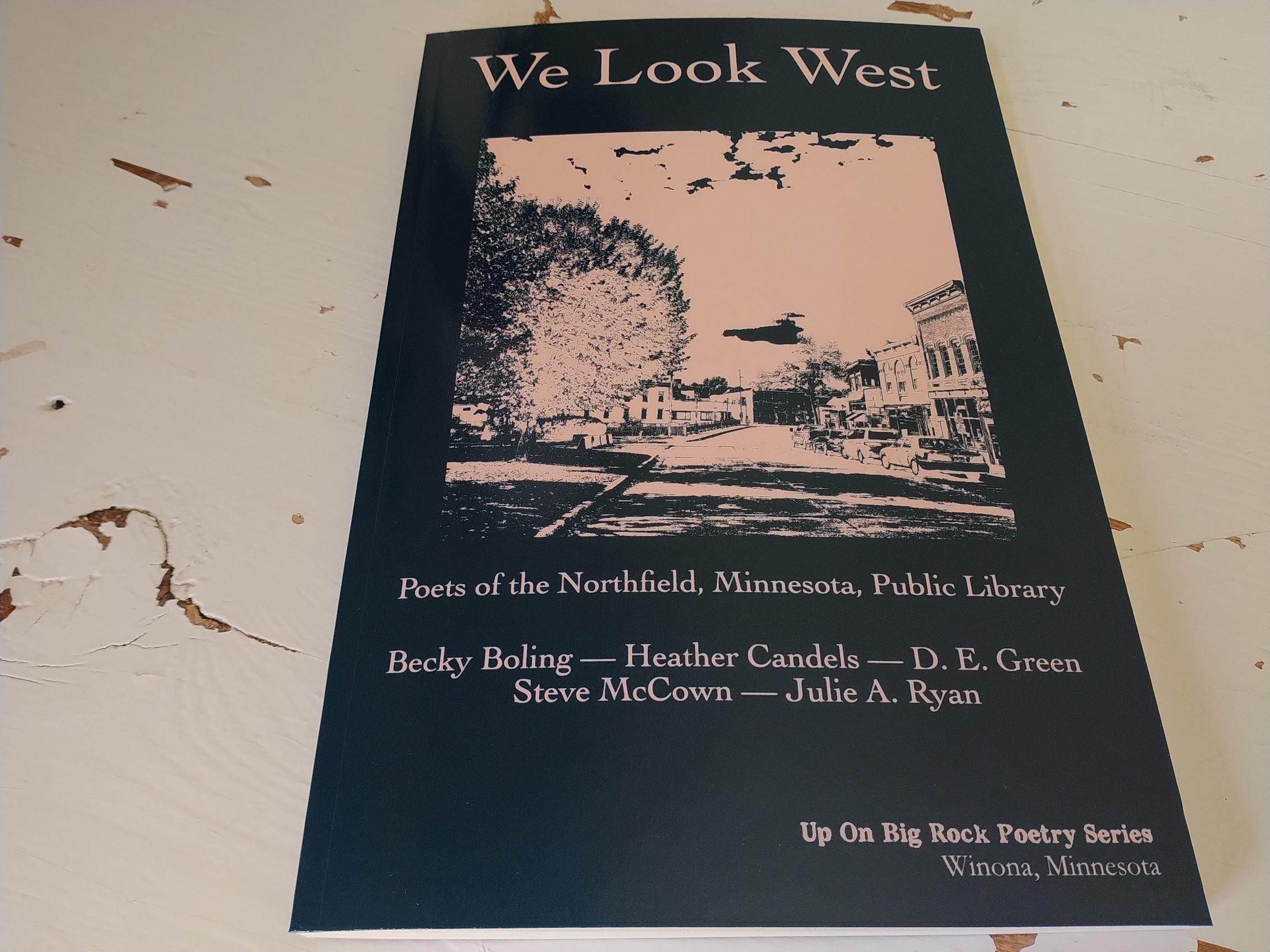
We Look West was published in early 2024 by Shipwreckt Book Publishing Company. (Minnesota Prairie Roots copyrighted file photo 2024)

A year ago, I met Boling when she dropped off a copy of the anthology, We Look West, a collaboration of the Poets of the Northfield Public Library. It includes her work and that of four other talented poets. I love the collection which takes the reader from the sunrise to the sunset of life. The poetry therein is so understandable and relatable.

A box holds bagged poems included in the “Poetry in a Bag” project. (Minnesota Prairie Roots copyrighted file photo 2024)

In May 2024, Boling, I and several other poets participated in a community poetry reading for the “Poetry in a Bag” project coordinated by Mercado Local, a Northfield marketplace for immigrants. Our poems were printed, rolled and bagged before distribution within our communities.

I would see Boling again in September 2024, when she and the other Northfield poets read from We Look West at Books on Central, a Rice County Area United Way used bookshop in Faribault.

Selected prose and poetry about the pandemic and social justice issues were published by the Ramsey County Public Library in this anthology. (Minnesota Prairie Roots copyrighted file photo)

Somewhere along the line, I discovered that Boling’s “Pandemic Haiku” had published in This Was 2020—Minnesotans Write About Pandemics and Social Justice in a Historic Year. My poem, “Funeral During a Pandemic,” was chosen for publication in that same anthology during a competitive process. That book would go on to win the 2021 Minnesota Author Project Award in the Communities Create category.

The poetry of Becky Boling in her first published collection featuring 37 of her poems. (Minnesota Prairie Roots copyrighted photo April 2025)

Because of those shared experiences, shared publications and shared love of words, I feel a sisterhood with Boling. So when she asked if I wanted a copy of her first solo poetry collection, I responded with an enthusiastic, “Yes!” Within the pages of Here Beyond Small Wonders, I found what I’ve come to expect from Boling—detailed writing, often about the most ordinary subjects—a dead mouse, a fly, walnuts… Topics you may not even consider poetry-worthy. But Boling has this ability to observe and engage all of her senses to craft words into connective, meaningful poetry.

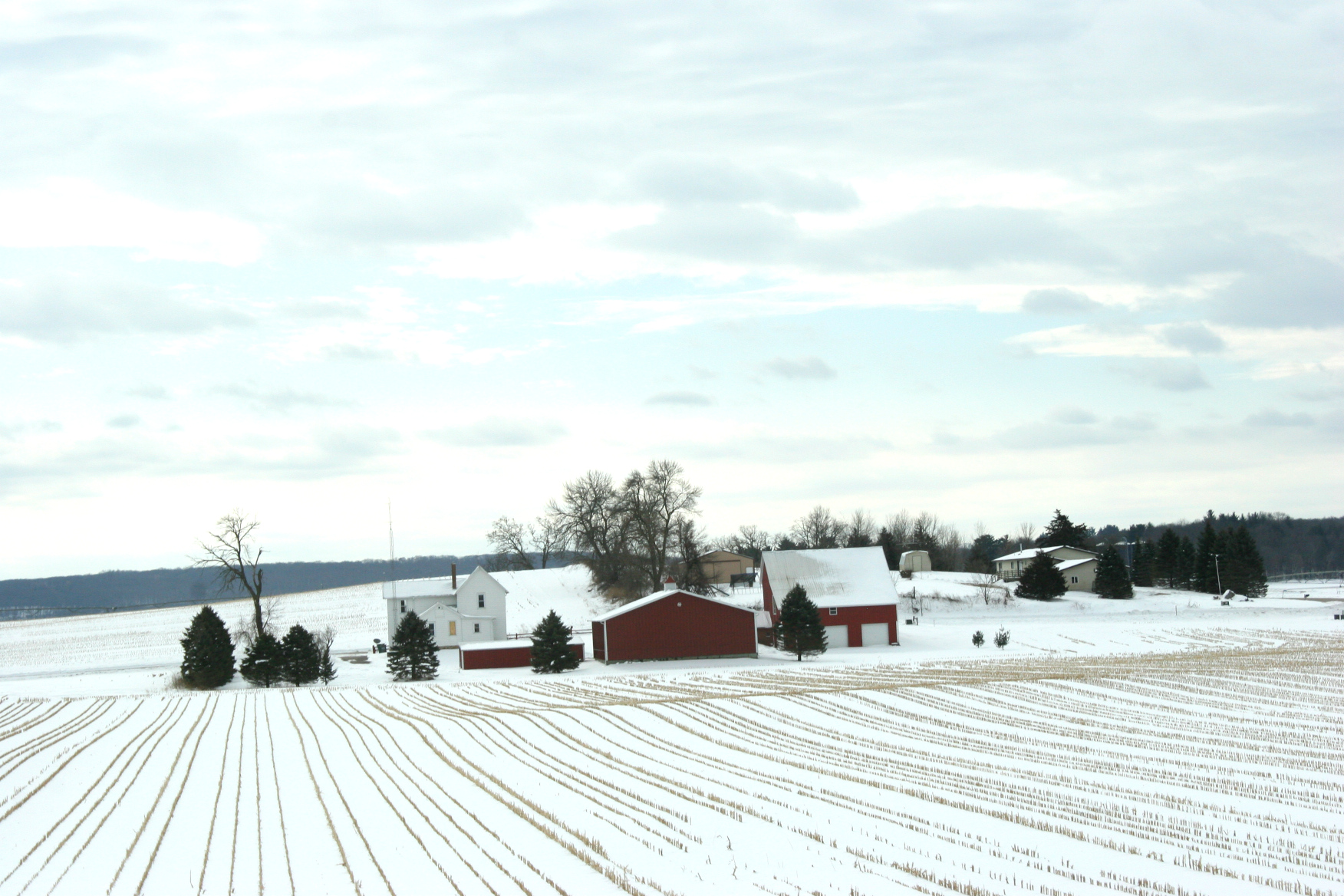
A Wisconsin farm site photographed from Interstate 90 could be a poetry prompt. (Minnesota Prairie Roots copyrighted file photo)

In her poem “Snow Pond,” she defines poetry: Poetry, like freezing temps, seizes the moment, recasts it—through the physics of sight, memory, language—resurrects it anew into patterns, sound and light, marks on a snowy page that glisten and melt on tongue, alight on the inner eye. That definition of poetry is among the best I’ve read, because it is poetry.

Clothespins on my clothesline clip clothing, not beach towels. (Minnesota Prairie Roots copyrighted file photo)

Anyone who writes poetry recognizes the challenges of finding just the right word, of stringing words together in a new, creative and succinct way, of connecting on an emotional level. But Boling makes the process look easy, taking the reader along with her, whether into her yard or onto the sandy shores of Lake Michigan. In her poem “Clothesline,” she writes of beach towels dancing in the wind. She takes the reader to the beach, to the sights, scents and sounds along the inland sea. I feel her fingertips unclipping the dried towels at end of day as she gathers them like weary babes into my open arms. I did not see that end coming. That element of surprise is, too, a mark of a gifted poet.

Kid-sized Adirondack chairs on a Minnesota beach. (Minnesota Prairie Roots copyrighted file photo)

Her “Adirondack Chair in Snow” is another favorite of mine in Boling’s collection of 37 poems published by Finishing Line Press. She writes of the typically-lakefront chair wedged into a snowbank outside her mother’s apartment building. But this poem is about so much more than an out-of-place chair buried in snow. Boling uses personification to write about her mother. In those six verses, I found myself missing my own mom, who died during the pandemic in January 2022. Boling’s emotions, my emotions, weave together in her writing and in my reaction.

My own artsy autumn leaf image, of leaves in the Cannon River. (Minnesota Prairie Roots copyrighted file photo)

In one of her longest poems, Boling writes about the transition to autumn in “Persephone’s Bouquet.” Unfamiliar with this Greek goddess, I learned that Persephone’s descent into the underworld is associated with the start of winter. Autumn themes Boling’s poem as the author gathers hot-pepper reds, creamy yellows…brazen scarlet…leaves, something I also enjoy doing in fall. But this is a poem about life, too, not just about a change in seasons. Plus, the poem connects to the cover of Here Beyond Small Wonders, Boling’s own autumn leaf art.

Her first collection of poems is about nature and place and seasons and life. Moments experienced. Details noticed right down to a tar-dark county roadhorse flies, green heads glistening in the sunreedy breath trembling into song. Boling, in her words, opens herself to a pool of words. And I, for one, embrace her poetic writing.

#

FYI: Becky Boling is a retired professor of Spanish and Latin American literature at Carleton College in Northfield. Her poetry and prose have been widely-published in literary journals and anthologies. She also served as a Co-Poet Laureate of Northfield. Click here to find Here Beyond Small Wonders on the Finishing Line Press website.

© Copyright 2025 Audrey Kletscher Helbling

 

From Wisconsin: A book about food, friendship, family, love, trauma & place April 2, 2025

(Book cover sourced online)

I FOUND THE BOOK in the new fiction section of my local public library, the place where I discover reading materials that grow me, stretch me, teach me, and, yes, entertain me. The Funeral Ladies of Ellerie County by Claire Swinarski fits all four of those categories. I love this book. Underline love.

I did not expect this reaction when I randomly pulled the novel from the shelf, drawn by its catchy title printed in a colorful font, drawn by the simple cover art of a lakeside Northwoods cabin. I do, indeed, judge a book by its covers, front and then back synopsis. These covers hit all the marks for me, someone who appreciates stories rooted in rural. Stories that are simple, yet complex. Stories that make me think, that tap into my empathy, that move me. Stories that are strong in place.

(Book cover sourced online)

In some ways, this book reminds me of the writing of Minnesotan Lorna Landvik, author of the popular Patty Jane’s House of Curls, The Tall Pine Polka, Once in a Blue Moon Lodge and more, most of which I have read. But the author of The Funeral Ladies of Ellerie County hails from neighboring Wisconsin, which is similar to Minnesota, but different.

These are what we call bars (the kind you eat) in Minnesota and Wisconsin. Maybe elsewhere. (Minnesota Prairie Roots copyrighted file photo)

At the heart of this story are the funeral ladies, a group of long-time friends who prepare meals for mourners at St. Anne’s Catholic Church. Casseroles—not hotdish as we call casseroles in Minnesota—concocted with canned cream soups. Shredded beef. Peanut butter bars. Pies made with Door County cherries. Food for the body and soul. This reminded me of the Reception Committee in my childhood home church on the southwestern Minnesota prairie. That group of Lutheran women prepared funeral hotdishes comprised of hamburger, pasta, a vegetable and assorted canned cream soups with salt and pepper for seasoning. The recipes are published in the 1985 St. John’s Anniversary Cookbook. The covers of that cookbook have fallen off my tattered copy. A cookbook is central to Swinarski’s novel.

The point here is that The Funeral Ladies of Ellerie County is absolutely relatable for me. I felt comfortably at home with the story initially, even when I learned of a heartbreaking scam involving main character Esther Larson. That shapes the story. Then the story-line focus shifts from friendship, faith and family to tough topics after a Food Network star and his children arrive to bury his estranged wife in her hometown.

Mental health gets attention in this book. (Minnesota Prairie Roots copyrighted file photo)

Without revealing too much of the plot, know that family relationships, love and trauma weave into this novel. That trauma is post traumatic stress disorder, experienced by paramedic Cooper Welsh after participating in a holiday parade interrupted by a deadly shooting. In real-life, six people died in November 2021 when a driver plowed his SUV into a Christmas parade in Waukesha, Wisconsin, killing six and injuring many others. I expect Swinarski patterned her fictional tragedy loosely after this event or the many other mass shootings this country experiences.

I appreciate that the author, even in this fictional account of such violence and its personal aftermath, writes with authenticity. As a reader, I felt emotionally invested. I was rooting for Cooper and for those who love him. Swinarski doesn’t just touch on PTSD. She dives into it head on, writing in her acknowledgments that she talked to individuals dealing with PTSD to craft Cooper’s life story. That research shows.

A sign along the interstate advertises Ishnala Supper Club in Lake Delton near the Wisconsin Dells. (Minnesota Prairie Roots copyrighted file photo)

She writes, too, in an authentic Wisconsin voice with a strong sense of place. Noodles in chili (yes, it’s a thing in Wisconsin). Beer not wine. Brandy old-fashioneds, Wisconsin’s signature drink. Supper clubs. And eating at the popular Wisconsin-based fast food chain, Culver’s.

There are so many reasons to love The Funeral Ladies of Ellerie County. Even if you’re a Lutheran from Minnesota who eats hotdishes, not casseroles.

© Copyright 2025 Audrey Kletscher Helbling

 

Stories to make you feel better March 11, 2025

Sunrise on Horseshoe Lake, rural Merrifield, MN. (Minnesota Prairie Roots copyrighted file photo September 2024)

ON THE SATURDAY I should have been in Madison, Wisconsin, cuddling my nearly two-month-old grandson, Everett, I was, instead, home in Minnesota. Sick with a cold. I felt sad and disappointed that our trip was canceled.

But then my son-in-law sent a short video clip of Everett. To the soundtrack of “It’s a Beautiful Morning,” I watched Everett smile. You know the type of smile that widens and grows until it reaches your eyes. It was only a few seconds, but enough to shift my mood to joy.

And who doesn’t need a little joy right now? There’s a lot happening currently on a national and international scale that causes me deep concern, stress and worry. So I must intentionally seek out that which eases some of my angst. A visit with Everett and his parents would have proven a wonderful distraction. Soon, perhaps, Randy and I can do the four-hour drive to Madison.

Meanwhile, back home in Faribault, I connect with friends, go on walks, lift hand weights, hang laundry outside on the line, bake banana bread, take a Sunday afternoon drive, listen to uplifting music (specifically Christian radio station KTIS), pull out my camera, write, read…all simple things that brighten my days.

(Book cover sourced online)

Most of you know that I love to read. I happened upon a collection of short stories which was, in a way, like a short “It’s a Beautiful Morning” video clip. The slim volume, Notes from the Porch—Tiny True Stories to Make You Feel Better about the World by Thomas Christopher Greene, was exactly the book I needed to read on the weekend I was still fighting my cold and couldn’t see Everett.

Greene shared the stories via social media from his home in Vermont during the COVID-19 pandemic. And now he’s compiled those stories, typed into his laptop on his front porch, in this book. Even if you’re not a big reader—and I know a lot of people who don’t read books—this is a breeze of a relatable read.

In his book, Thomas Greene writes about a blue heron in sharing the story of his baby daughter Jane. (Minnesota Prairie Roots copyrighted file photo)

The book title alone, Notes from the Porch, points to the content of short snippets about everyday life. Most are not extraordinary moments, with the exception of the death of the author’s daughter, Jane, at six months. Even that has a positive message of we’re all stronger than we think. I bet nearly all of you can relate to that—the resilience we find in the midst of incredible personal challenges. And if you haven’t faced such challenges, then I’m glad you haven’t.

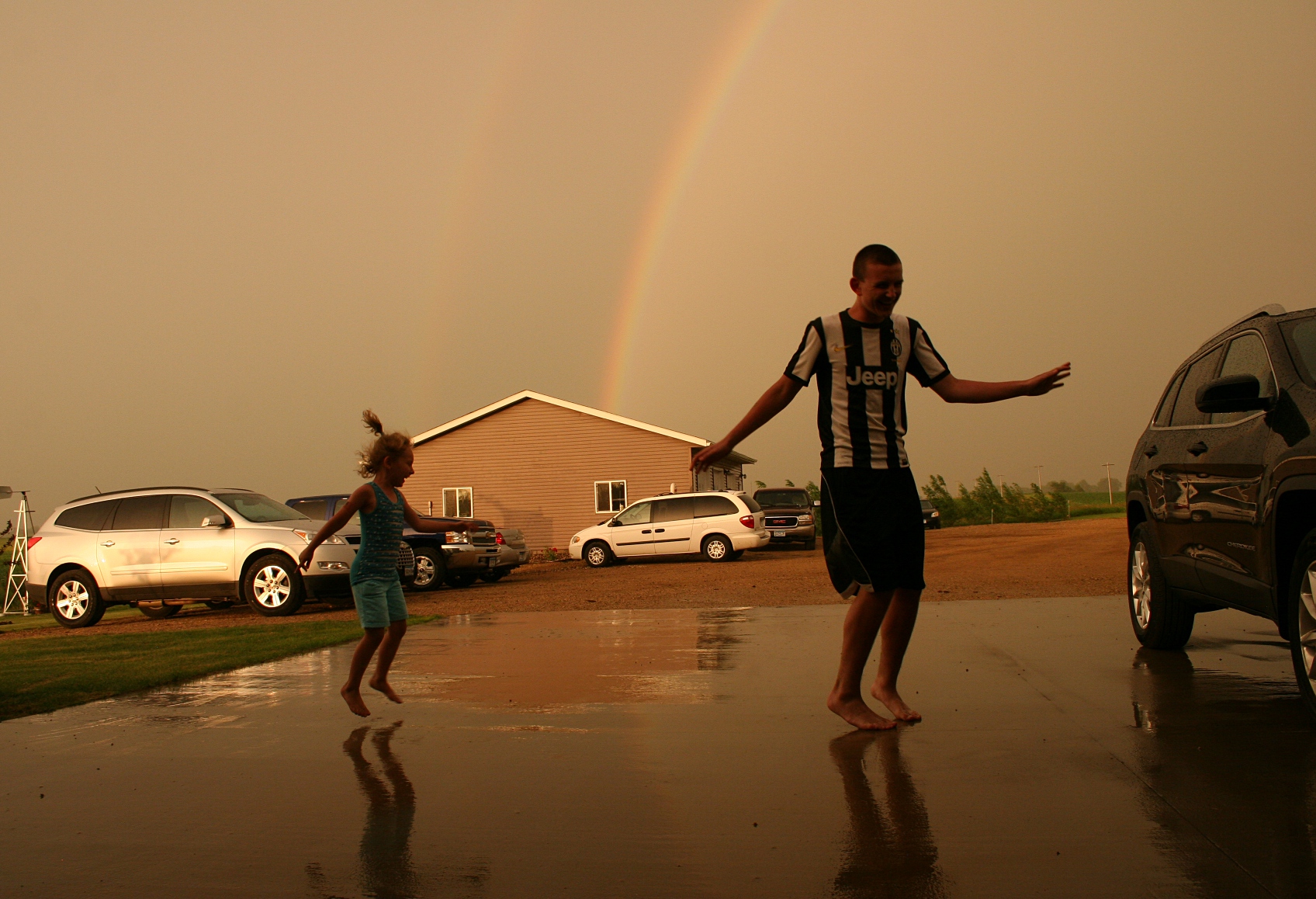
My niece and nephew dance in the rain at a family gathering. (Minnesota Prairie Roots copyrighted file photo)

But back to Greene’s book. He writes several stories about his seven-year-old neighbor boy who races his bike along the street. With wild abandon. Fearless. Occasionally stopping to chat with the front porch writer. I can picture that young boy, who also runs in the rain. Just as I can picture the older couple in another story, on their boat each evening chasing the sun. Rain and sunshine.

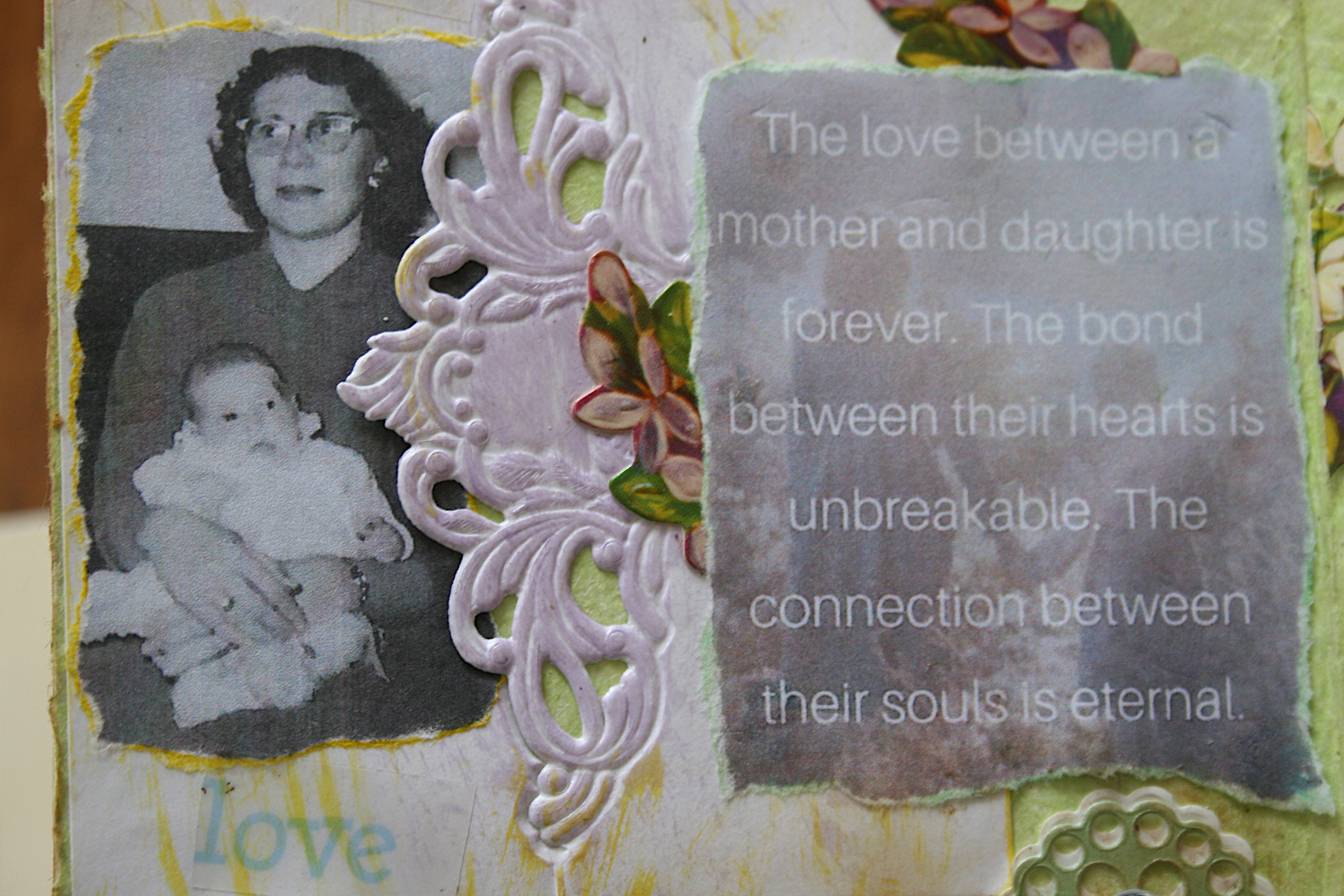
A page in a keepsake book a friend created for me after my mom died. The photo is of my mom holding me. (Minnesota Prairie Roots copyrighted file photo)

Greene’s writing is not only descriptive, but also emotionally touching and insightful. When I read his story, “The Only List I Will Ever Make,” I cried at #11, the final item on his living life list: 11. Call your mom. If your mom is no longer here, call her anyway. No one will root for you more. I used to call my mom every Sunday evening until she could no longer talk on the phone. She’s been gone three years now, dying during the height of Omicron (not of) in a long-term care center. There are days when I wish I could call her, hear her supportive words, tell her I love her. Greene’s writing reminds me that Mom is but a memory away, part of me for the kindness and compassion she taught me, for the unconditional love she gave to me, for the…

This art created by my granddaughter reminds me that we can all be each other other’s sunshine. (Minnesota Prairie Roots copyrighted file photo 2023)

And now Greene has gifted all of us with his kind and compassionate words. He writes of kindness witnessed in a grocery store. He writes about a father joyfully, publicly sharing the news that his straight A daughter has been accepted into an Ivy League school. A Black girl from Vermont, the daughter of an immigrant without any money, going to Harvard because she earned it. That reminds me of my own son getting into an elite East Coast college, because of his smarts, certainly not because we had the money to send him there.

Notes from the Porch uplifts, encourages, teaches. Each story is like “It’s a Beautiful Morning” video clip of my smiling grandbaby. Sure to leave you feeling better.

© Copyright 2025 Audrey Kletscher Helbling

 

From Minnesota & Harlem, photographing everyday life February 20, 2025

I recently finished this book about slavery, freedom and abolition. A must-read. (Book cover sourced online)

DURING THIS, BLACK HISTORY MONTH, I’ve intentionally read books about slavery, Black people and the Black experience. It’s important to me that I widen my knowledge and understanding. Many of the stories are heartbreaking, almost unbelievable in the mental and physical cruelty inflicted upon Blacks. This is hard stuff to read. But it is in the hard stuff that we begin to fully comprehend the importance of empathy, kindness, compassion and the need to stand strong against that which is hateful, hurtful and oppressive.

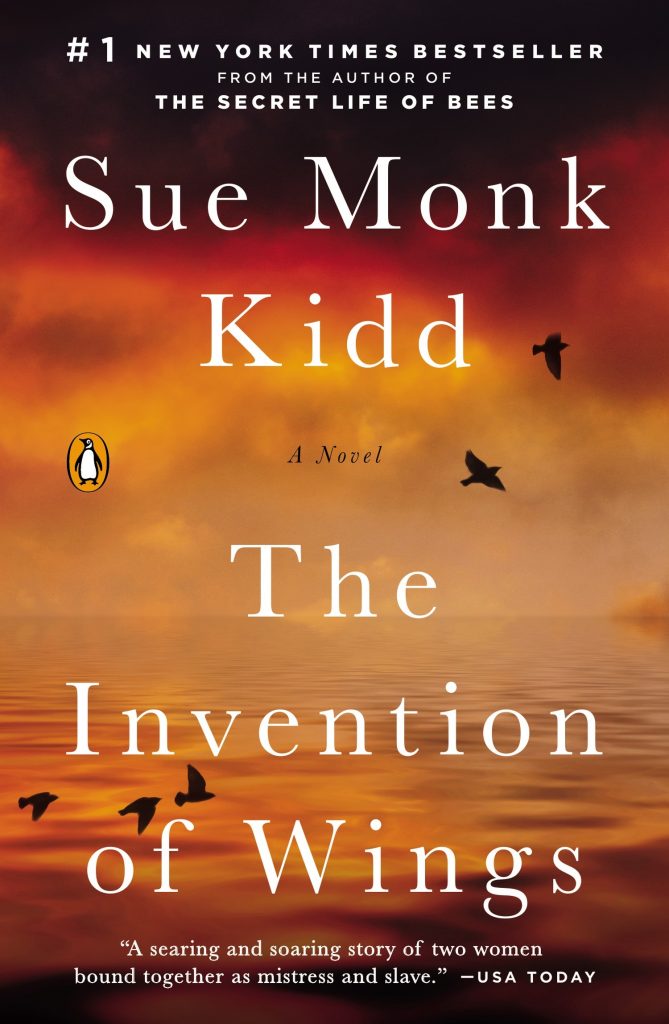
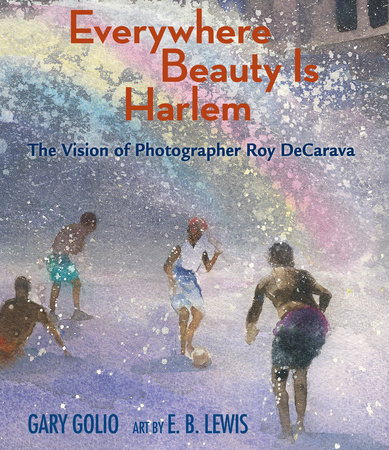
(Book cover sourced online)

This week, though, I read a Black-focused book which inspired and uplifted me. It’s a children’s picture book, Everywhere Beauty Is Harlem: The Vision of Photographer Roy Decarava. The book, written by Gary Golio and illustrated by E.B. Lewis, won the 2025 Coretta Scott King Illustrator Honor Award.

This book resonates with me personally and professionally in telling the story of 1940s world famous photographer Roy DeCarava, unknown to me until I read this book. Trained in the arts and in photography, he would go on to photograph everyday life in his native Harlem via work for the Works Progress Administration Project, fellowships and more. He worked as a photographer for major publications, has/had his photos featured in exhibits and art museums, became an art professor… And he was Black.

But what I love most about this story is that DeCarava aimed to photograph everyday life, everyday scenes, everyday people in the streets of Harlem. He shows life in raw reality. He worked back in the days of film, admittedly much more challenging than shooting with a digital camera. I started with film, too. You often get only one chance to take a photo. No firing off shots. No digital manipulation. Just a single, unedited print.

I took this portrait, one of my favorites, nearly 11 year ago at International Festival Faribault. (Minnesota Prairie Roots copyrighted file photo 2014)

I will never match the talent of DeCarava. But I do share his focus. I also aim to photograph the ordinary, the everyday, right where I live (or mostly in southern Minnesota). Like him, I notice details. The light. The moments. The expressions. The people, scenes, settings and events that define a place. The anything that might make for an interesting photo.

Unlike DeCarava, my roots are rural. I’ve only ever been to New York City once, while in college. I was awed by the skyscrapers, the street vendors, Chinatown and men hurrying along Wall Street in leisure suits. (This was in 1977.) But I have no desire to return to a place that feels too closed in, too busy, too chaotic.

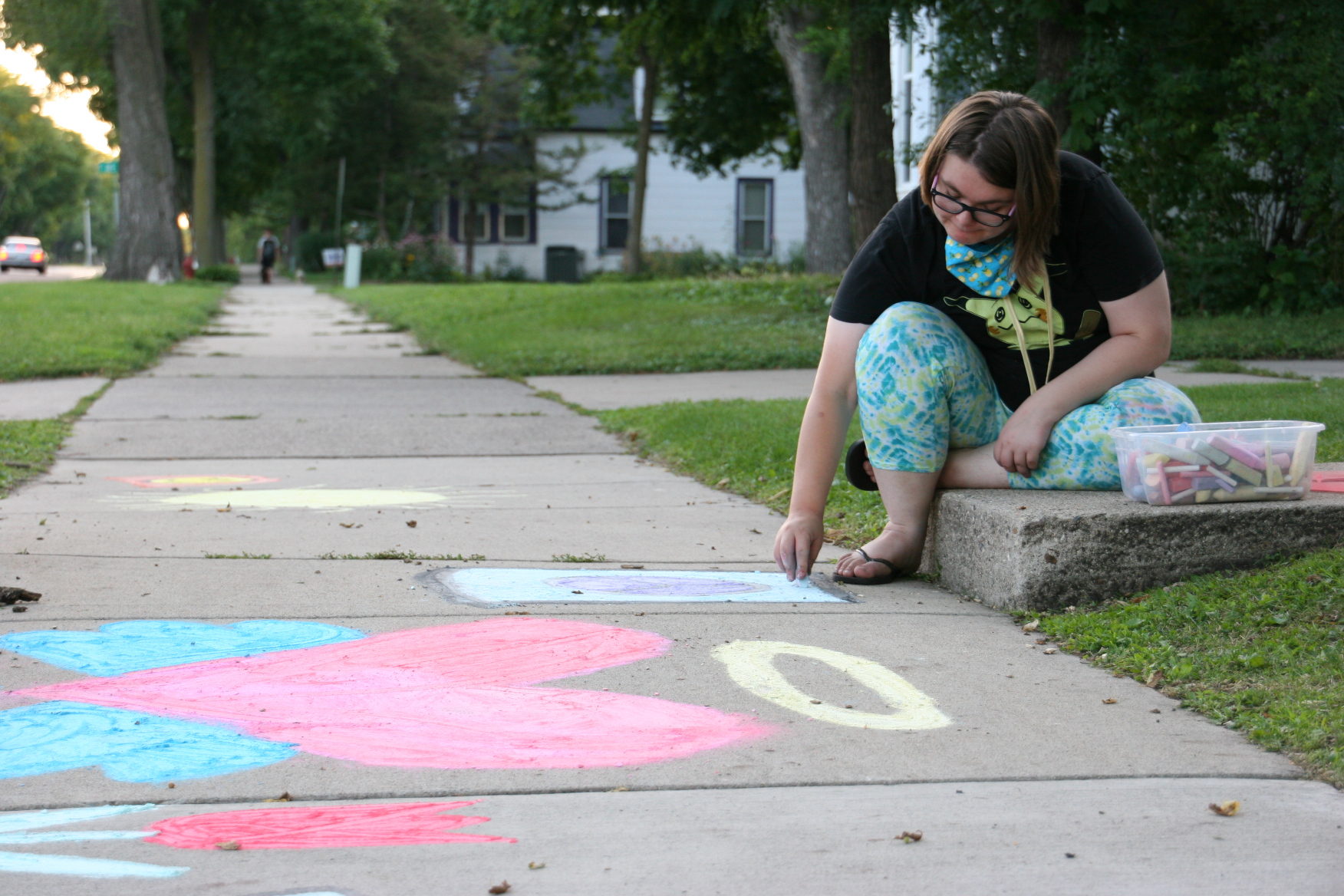
My photo of Jane chalking art on a Faribault sidewalk. (Minnesota Prairie Roots copyrighted file photo August 2020)

Yet, Harlem in Upper Manhattan was DeCarava’s home, where he found the subjects of his photos. Everywhere Beauty Is Harlem gives a snapshot of the images this photographer snapped. A man on the subway. A boy drawing on the sidewalk with chalk. Black and brown children dancing in water spraying from a fire hydrant.

Beyond the visuals, the story in this children’s picture book encompasses the essence of DeCarava’s photographic focus on the everyday and the ordinary. I really ought to buy a copy of this book for my personal library. If you want to understand my photographic work, then read this multi award-winning children’s picture book. But, more importantly, read this book to learn about a world famous Black photographer whose talent for visual storytelling is a gift to all of us. To see the world through his eyes presents life as it is. Real. Raw. Unedited.

#

FYI: I encourage you to also check out the photography of New York City photographer Keith Goldstein, whose work I follow on his blog, “For Earth Below.” His street photography has opened my eyes to humanity in a way that I never see here in southern Minnesota. His talent is remarkable. Goldstein, I think, works much like Roy DeCarava did, with his camera focused on the everyday, the ordinary. And therein both have found the extraordinary.

© Copyright 2025 Audrey Kletscher Helbling


A traffic stop & conversations about race & identity January 7, 2025

Book cover sourced online

EARLY ON A RECENT WEEKDAY MORNING, my husband was pulled over by a deputy sheriff while driving to work. Randy had no idea why he was being stopped on the edge of Faribault. The officer who approached the passenger side of our rusty 2005 white van and rapped on the window did not immediately tell Randy why he pulled him over.

But the questions and actions that followed left me unsettled and thinking about what could have unfolded. You see, I was in the middle of reading Our Hidden Conversations—What Americans Really Think About Race and Identity by Michele Norris, creator of The Race Card Project. That partially prompted my adverse reaction.

As I listened to Randy’s retelling of the traffic stop, I felt thankful that he is a past-middle-aged White guy. I felt a bit guilty for thinking that. But…

Randy, in his work jacket and uniform, was just driving to work at his job as an automotive machinist when he was pulled over and questioned. (Minnesota Prairie Roots copyrighted file photo)

DO YOU HAVE A WEAPON?”

After requesting the usual identifying documents, the officer asked Randy where he was going, where he worked, whether his address was current and how long he’s lived there. All seemed odd questions. But the next question proved even more unusual. The officer, peering into the van, asked Randy if he had a weapon. Thinking he was referring to an item on the floor between the seats, Randy leaned down and said, “No, it’s a snow brush.”

My immediate reaction to this part of the story was this: “You did what? You could have been shot!”

The deputy wasn’t referencing the brush on the floor, but what he thought was a weapon lying on the passenger seat. He reached inside the van and moved a pair of gloves aside to reveal the case for Randy’s glasses. The supposed gun.

I wasn’t there. I don’t know what was going through the deputy’s mind before and during the traffic stop. But I do recognize what could have happened had the cop felt threatened.

Only after all of this and after the deputy ran a license check did he tell Randy why he’d been stopped—because the brake light in the middle of the tailgate door was not working. Randy has since replaced the bulb.

Posted on a house in small town Dundas. (Minnesota Prairie Roots copyrighted file photo 2020)

THE “WHAT IFS?”

Why am I sharing this story? It’s not because I’m anti-law enforcement. I appreciate and respect our police and the important work they do in serving our communities and keeping us safe. Yet, had Randy been a person of color in the wrong place on the wrong day with an officer who perceived his actions as a threat, this traffic stop may have ended differently. Again, I’m not criticizing this specific cop or law enforcement in general.

Admittedly, Randy should not have reached toward that snow brush. But it is not ingrained in his mind to limit his movements, to think about how his actions may be perceived. Black men, especially, cannot risk such behavior. That I understand based on conversations with my son-in-law, who is biracial; on traffic stop shootings of Black men; and on the stories shared in Our Hidden Conversations—What Americans Really Think About Race and Identity.

A Dakota prayer focuses on reconciliation at the Dakota 38 Memorial in Reconciliation Park, Mankato. (Minnesota Prairie Roots copyrighted file photo November 2023)

READ OUR HIDDEN CONVERSATIONS

If you read one book in 2025, I encourage you to read this one. The author, who grew up in Minneapolis, is a well-respected, award-winning journalist and former host on National Public Radio. For 14 years, Michele Norris has collected responses to this prompt: Race. Your story. 6 words. Please send. Those responses, submitted on specially-printed postcards and online, shape Our Hidden Conversations. This ranks as one of the most powerful books I’ve ever read on race and identity and should be required reading for every American.

Norris does not focus solely on Blacks in her collection of stories shared by thousands. She also writes about the discrimination, the prejudices, the challenges faced by many others. One entire section, for example, is devoted to Indigenous Peoples. That includes information about long ago Indian boarding schools (specifically the one in Morris, Minnesota) and about the 38 Dakota men who were hung in Mankato, Minnesota following the U.S.-Dakota War of 1862. She writes about Japanese internment camps in America during WWII. She writes about challenges faced by people with disabilities. This is hard stuff. But so necessary to read, to understand the backstory, the history and how things have, and have not, changed. The author writes about lynching, about adopting Black babies, about Blackness perceived as a threat…

The lengthier sections penned by Norris are interspersed with shorter stories from those responding to The Race Card Project prompt. The six word responses are scattered throughout the pages, printed exactly as submitted. One mother wishes her Black son was a girl.

An especially bright spot with an uplifting message in a downtown Faribault pocket park. (Minnesota Prairie Roots copyrighted file photo 2019)

PAINFUL & REVEALING

I cannot even begin to tell you how painful it was at times to read the heartbreaking words printed in this book. It seems unfathomable that we as human beings can treat others with such inhumanity simply because of skin color or other differences. Yet, I saw myself in some of those words, specifically in the subtle (and sometimes not so subtle) racially-charged words that I heard and repeated as a child. I didn’t understand then that the rhyme I was reciting or the term my dad used for Brazil nuts were offensive. I recognize that now.

Like many others quoted in this book, I am determined to grow my knowledge, listen, treat others with respect and compassion, recognizing that we can all do better. I want that for my soon-to-be-born grandson, whose father is biracial, whose mother is White. I want him to grow up in a world where color matters not, where he is appreciated and valued for who he is (and not judged by his skin color), where he doesn’t have to think about what could happen if he is someday pulled over during a traffic stop.

© Copyrighted 2025 Audrey Kletscher Helbling

 

A humorous book rooted in rural November 18, 2024

This book published in 2016. (Minnesota Prairie Roots copyrighted photo November 2024)

I NEEDED TO LAUGH. So I picked up a book I started a while ago, but which I’d set aside. That book is Dear County Agent Guy by South Dakota humor writer Jerry Nelson.

First, let’s clarify “county agent” for those of you who may not have rural roots. A county agent (kinda an old school term) is someone specifically trained to share information and research with individuals and the community. Farmers might contact the county agent about issues related to crops or livestock, for example. In Minnesota the entity heading extension services is the University of Minnesota. The U’s efforts cover agriculture, natural resources, health and wellness, youth (4-H) and more.

In his book, the author, who grew up on and then operated a South Dakota dairy farm, focuses on farm life. I, too, was raised on a dairy farm, but then left for college when I turned seventeen. This collection of humorous short stories is so relatable. Many of Nelson’s stories could be mine, although I am German, not Scandinavian, and assuredly do not like lutefisk.

Friends gather for coffee and conversation at the Whitewater Cafe in St. Charles, Minnesota, in 2011. (Minnesota Prairie Roots copyrighted file photo)

A GIFTED RURAL STORYTELLER

Nelson’s writing made me laugh out loud at stories overflowing with humor. He’s a heckuva storyteller. I could picture him gathered with a bunch of other farmers, and a few townies, at the local cafe. Drinking coffee. Shaking dice. Exchanging stories and advice. And laughter. Lots of laughter. But I’m glad he opted to compile his stories in a book. Nelson also writes a column for Dairy Star, a Minnesota-based publication for dairy farmers in eight states. He’s among a lengthy list of columnists that include Minnesota’s Princess Kay of the Milky Way. His work publishes in many other farm publications.

The book subtitle of Calf Pulling, Husband Training, and Other Curious Dispatches from a Midwestern Dairy Farmer pretty well summarizes the content therein. It helps to have a farm background when reading this collection. But even if you don’t, you can still read, learn and laugh.

A snippet of the land where I grew up in rural Redwood County, Minnesota. My father farmed this land and my middle brother after him. The farm is no longer in the family. (Minnesota Prairie Roots copyrighted file photo)

MEMORIES GALORE FOR ME

There’s lots of nostalgia packed into these stories. How well I remember playing in the grove (the shelterbelt of trees surrounding our farm site), getting company (unexpected family and neighbors showing up to visit) and stretches of winter days stuck on the farm without electricity. Just as Nelson remembers. How well I recall Dad needing to assist a cow in giving birth (using a calf puller). How well I remember the earthy scent of freshly-turned soil.

While humor and nostalgia decidedly center Nelson’s stories, he also offers good, sound wisdom—about the importance of finding time to fish (or whatever) in a work-life balance, about appreciating family, about recognizing that life can end, just like that. Nelson nearly lost his life in a manure pit. He climbed inside to fix malfunctioning equipment when hydrogen sulfide gas overtook him. He was found floating face-up in the pit. His is a story of survival and resulting gratitude for every new sunrise.

Nelson’s writing shines with humor rooted in rural. I am grateful for his book, which shines sunshine into the world and made me laugh.

#

THANK YOU to Noreen, who follows my blog from Washington state and who gifted me with a hardcover copy of Dear County Agent Guy. I am grateful for your sharing this collection with me.

© Copyright 2024 Audrey Kletscher Helbling