Minnesota Prairie Roots

Writing and photography by Audrey Kletscher Helbling

Rice County Steam & Gas Engines fall show honors farming of yesteryear September 3, 2025

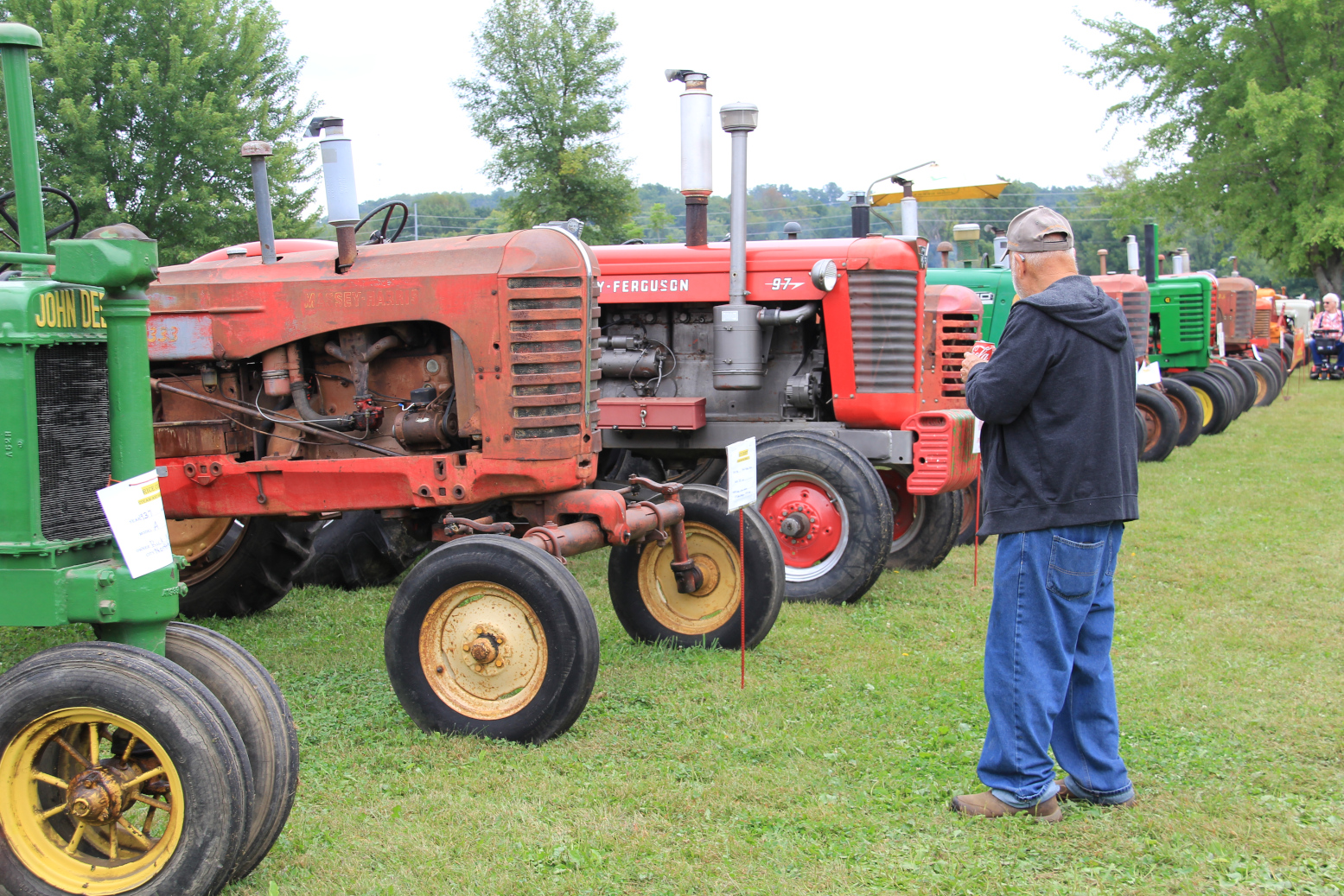
Hundreds of tractors in all makes and models lined the showgrounds. (Minnesota Prairie Roots copyrighted photo August 2025)

SIX HOURS OF ENDLESS WALKING, many conversations, one shared handheld peach pastry, a small taco, several bites of a burger and fries, one molasses cookie, a couple swallows of soda, one shared dish of Amish-made ice cream and hundreds of photos later, I left the Rice County Steam & Gas Engines Fall Show on August 30 exhausted. In a good way.
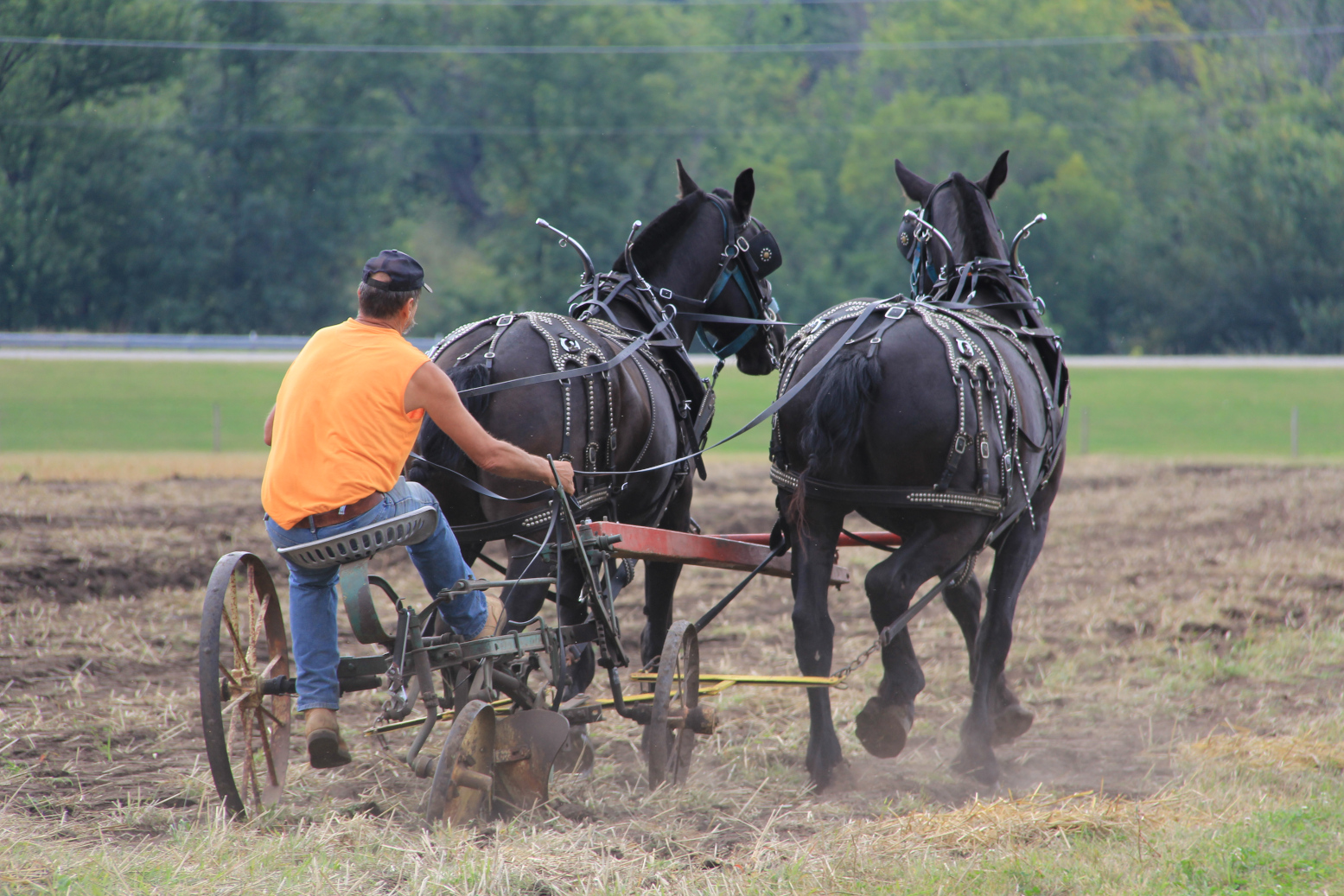
Plowing with horses. (Minnesota Prairie Roots copyrighted photo August 2025)
There were lots of steam engines at this year’s show. (Minnesota Prairie Roots copyrighted photo August 2025)
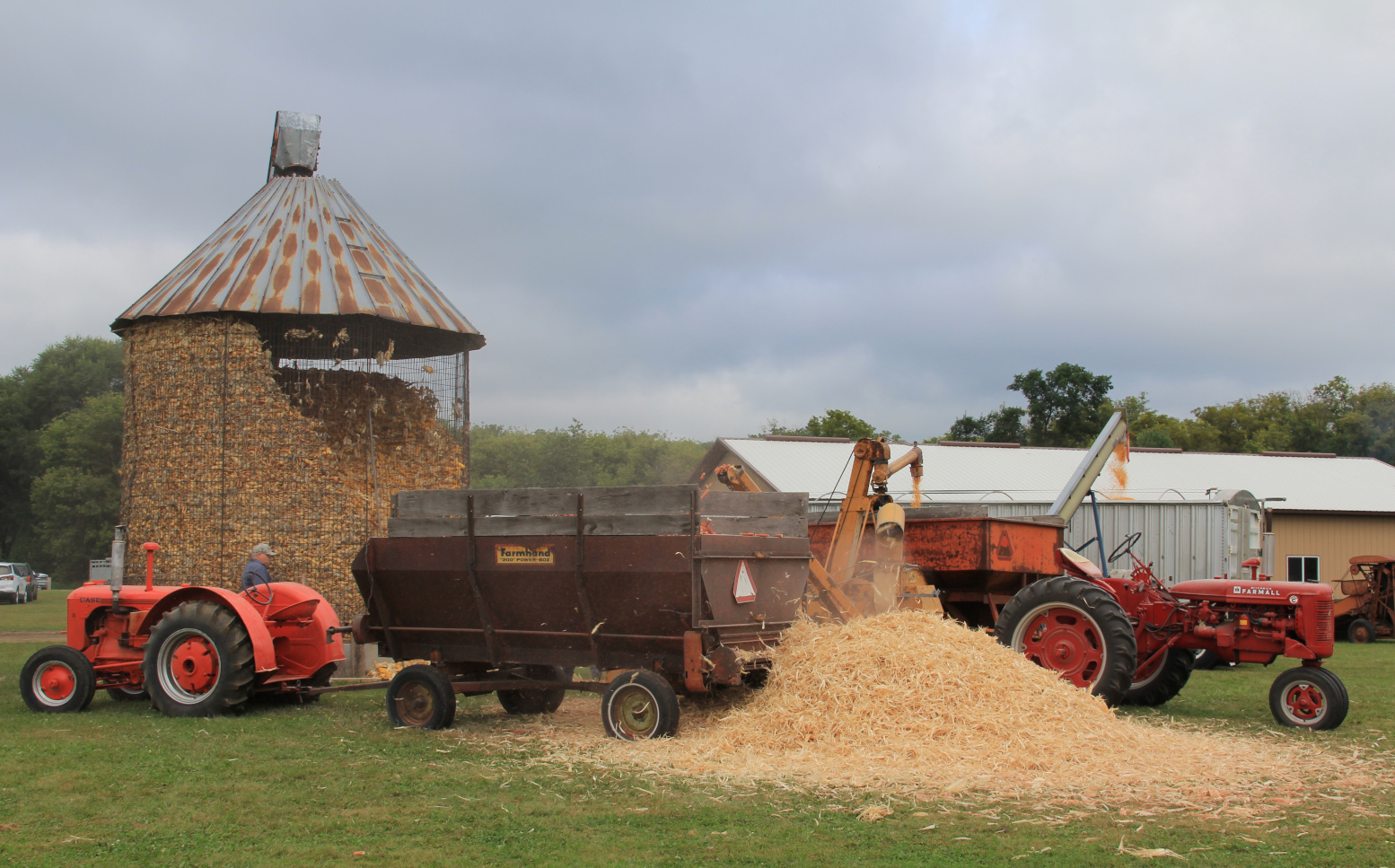
Tractors provide the power to shell corn. (Minnesota Prairie Roots copyrighted photo August 2025)

This event held at the showgrounds in rural Dundas over Labor Day weekend saw ideal weather and record crowds during the 50th anniversary celebration focused on “preserving a bit of yesterday for tomorrow.” That’s exactly what this organization accomplishes. From horse power to steam power to gas power, the early days and evolution of farming are on display in living history demonstrations. Rows and rows of vintage tractors and other agricultural equipment and on-site old buildings also showcase history.
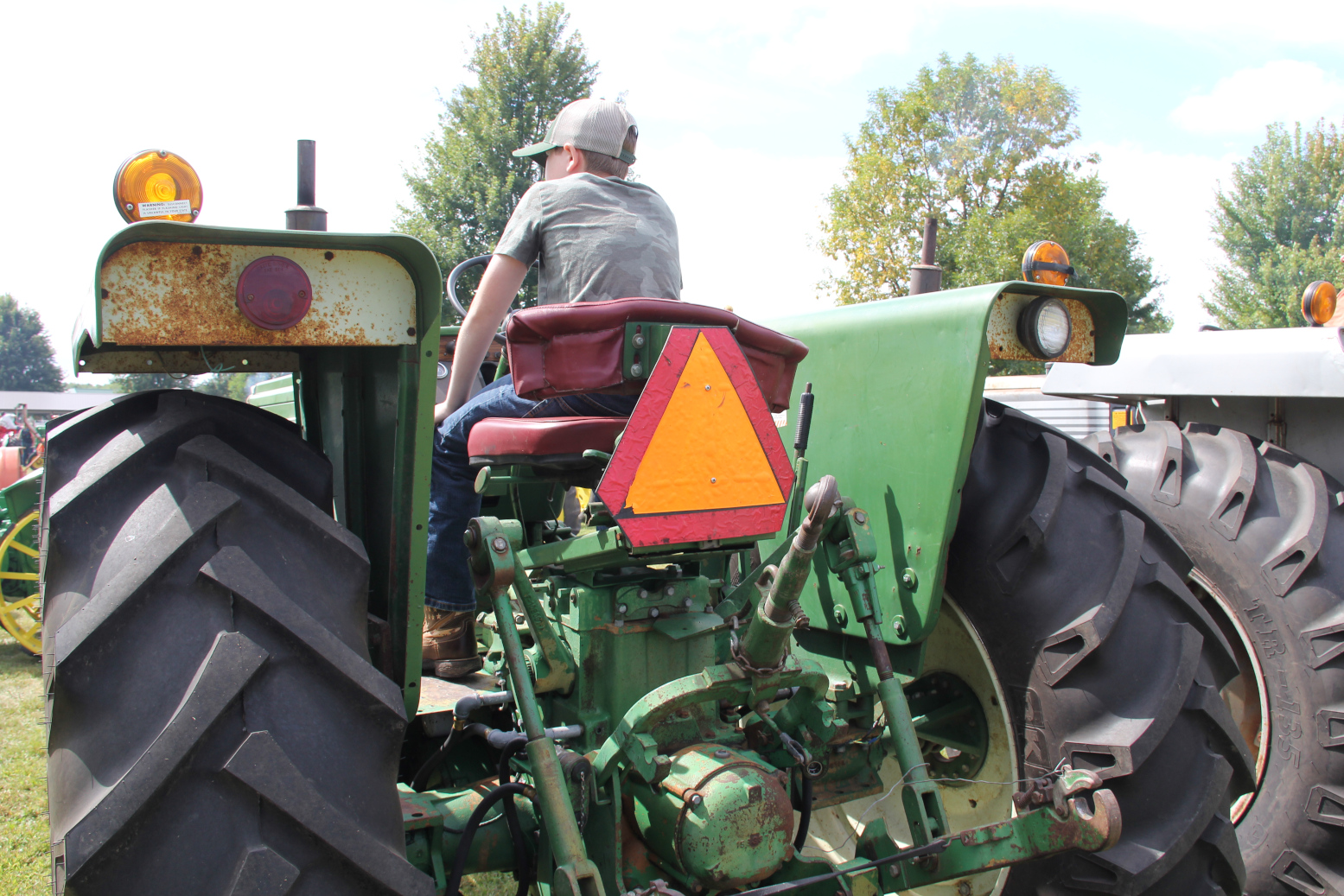
This could be one of my brothers back in the day driving tractor. (Minnesota Prairie Roots copyrighted photo August 2025)

I love everything about this show as it takes me back to my rural roots, reconnects me with the land and reminds me of the importance farming had, and still has, in Minnesota.
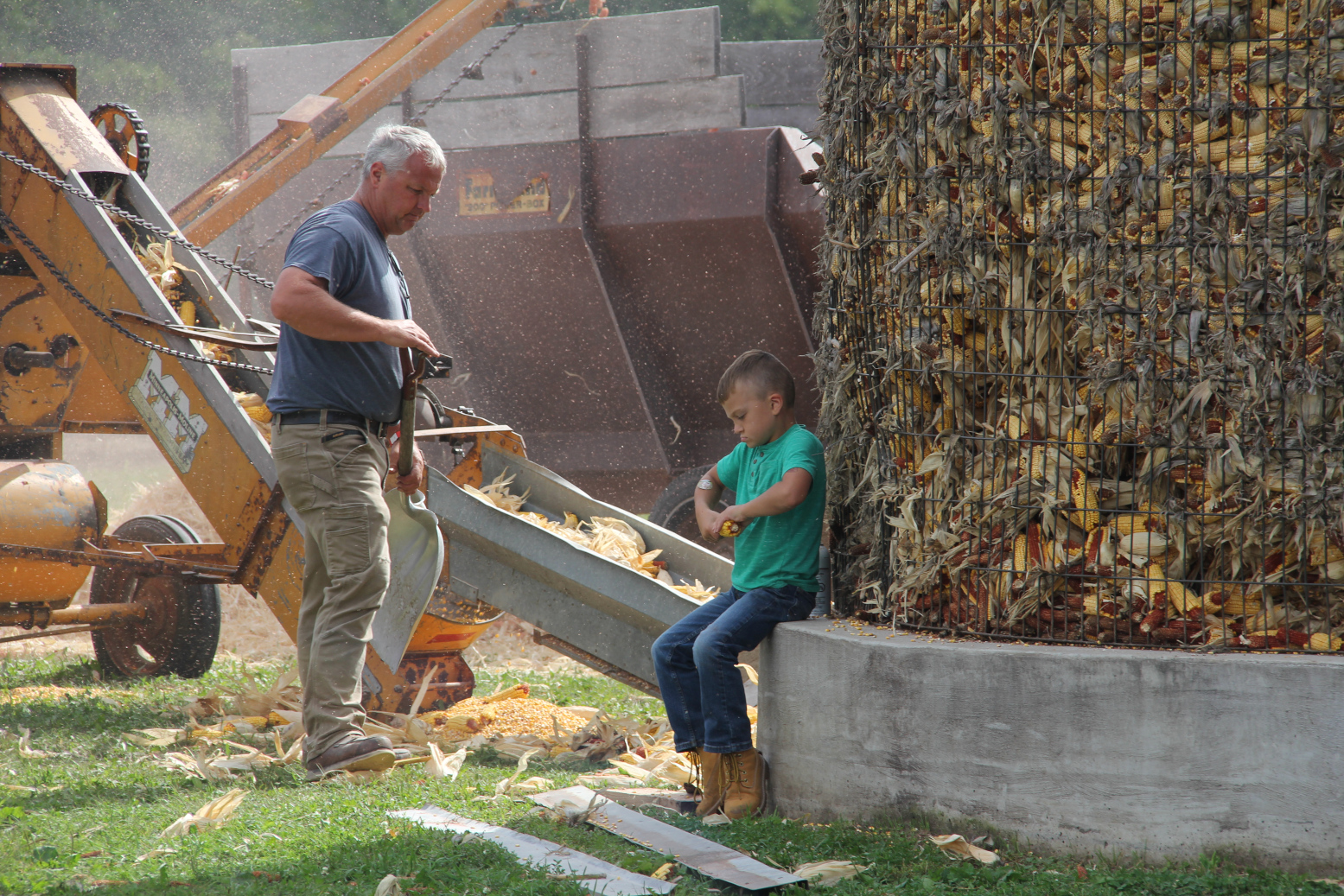
Two generations work at shelling corn, one by machine, the other by hand. (Minnesota Prairie Roots copyrighted photo August 2025)
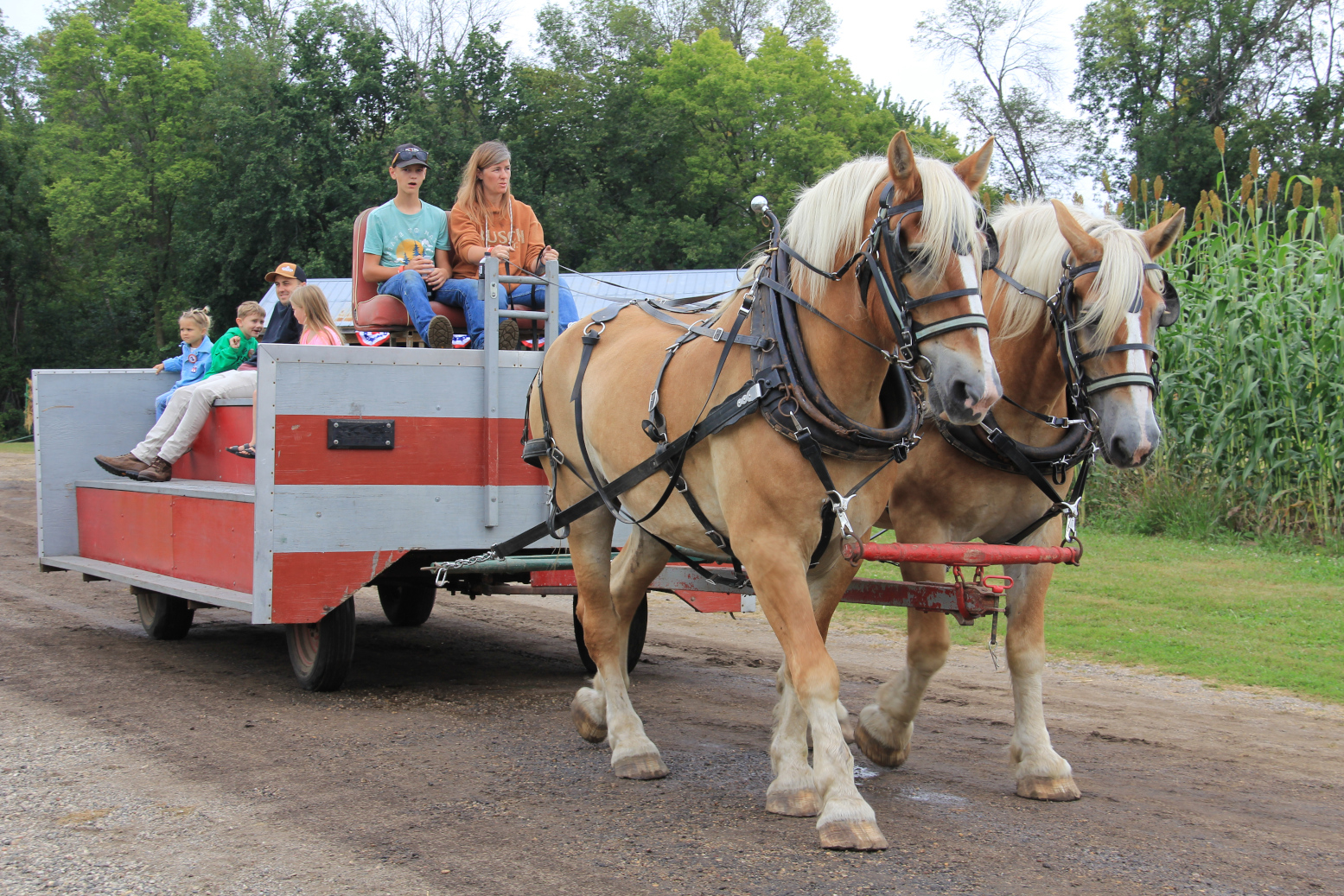
Horse-drawn wagon rides by Tom Duban, rural Faribault, transport attendees around the showgrounds. (Minnesota Prairie Roots copyrighted photo August 2025)
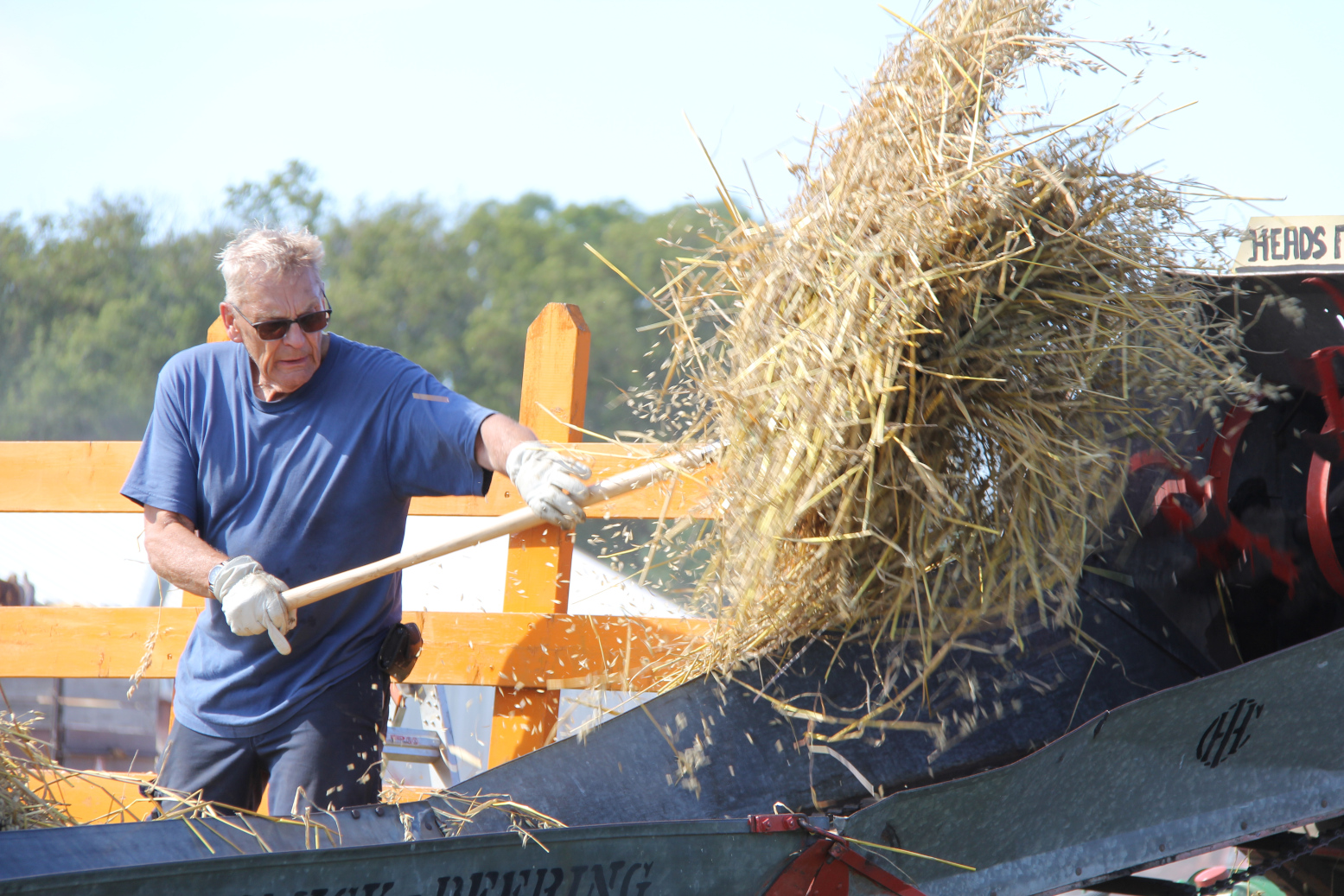
Tossing oats into the thresher is labor intensive. (Minnesota Prairie Roots copyrighted photo August 2025)

I love, too, the passion I see here in tractor collectors and in those operating massive steam engines, guiding horses, shoveling and shelling corn, pitching and threshing oats, sawing wood, making ropes, creating commemorative wooden shingles, stitching leather, pounding hot metal, and much much more.

The barrel train passes the threshing area as it winds through the showgrounds. (Minnesota Prairie Roots copyrighted photo August 2025)
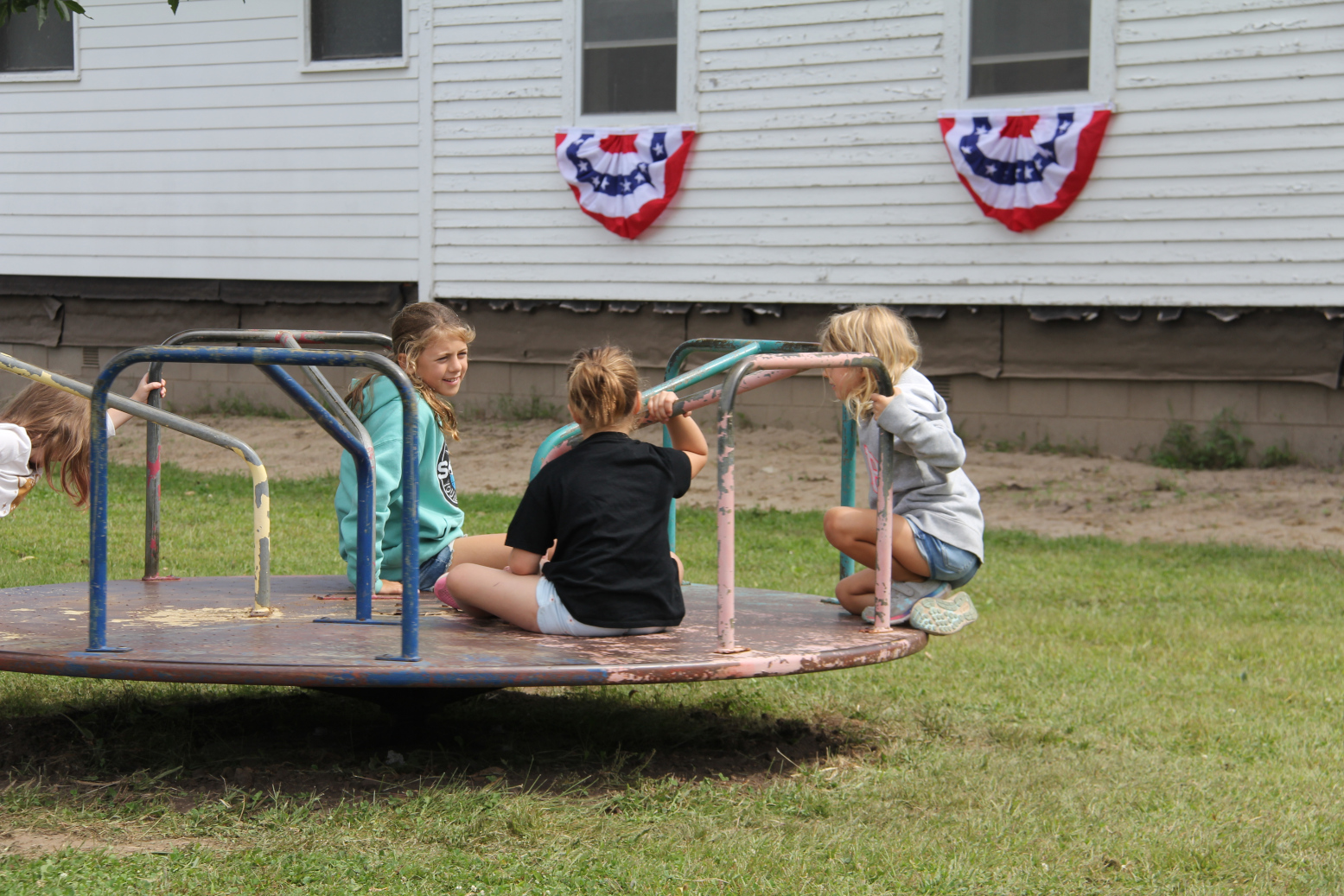
There are several vintage merry-go-rounds at the site and kids love them. (Minnesota Prairie Roots copyrighted photo August 2025)
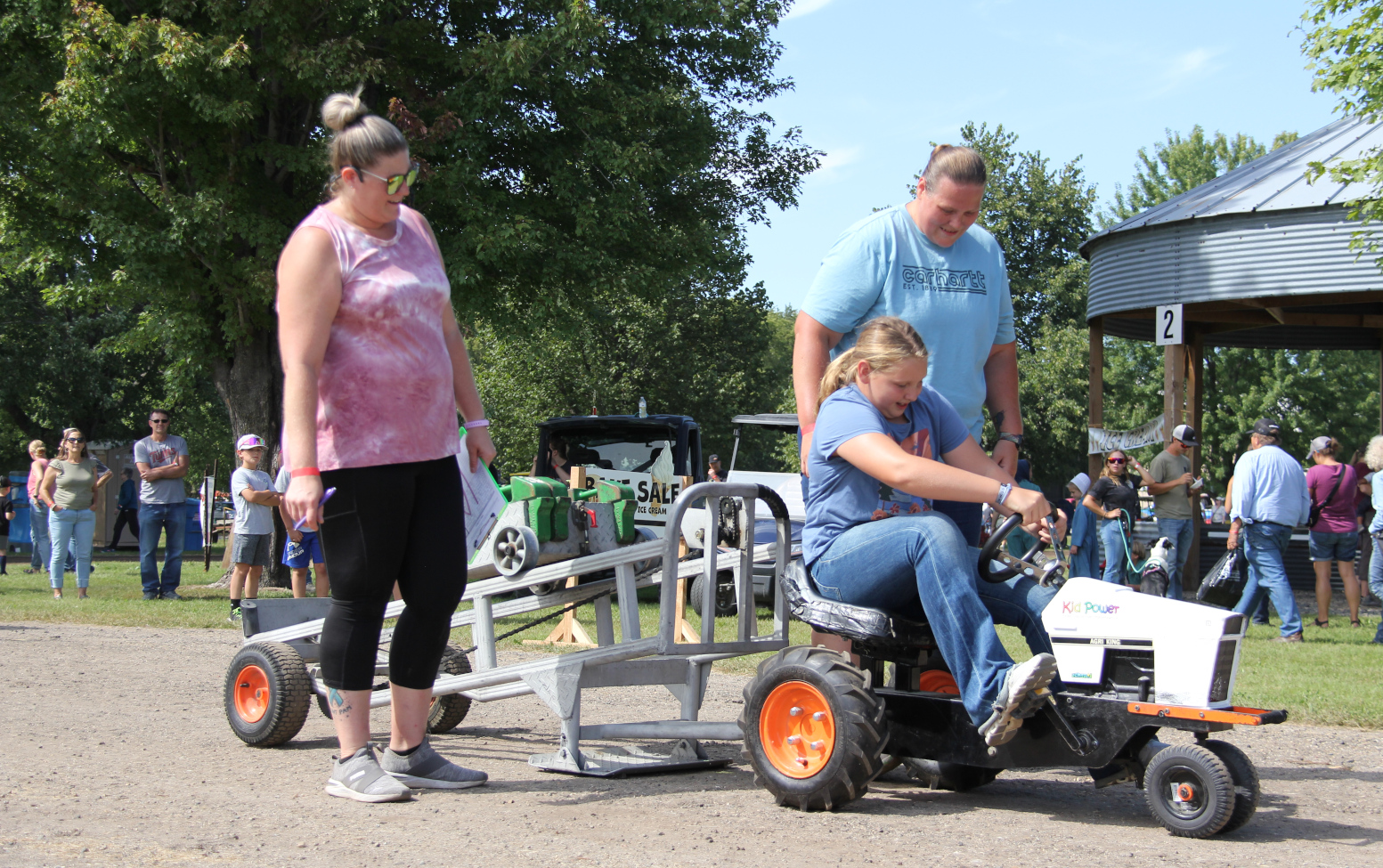
One of several contestants I watched at the kids’ pedal tractor pull. (Minnesota Prairie Roots copyrighted photo August 2025)

I also love people-watching, seeing young and old alike immerse themselves in the past. This truly is a family event for all ages with hands-on activities for the kids and lots of reminiscing for those of us who grew up on farms. I watched kids spin on old-fashioned merry-go-rounds, grind corn, toss basketballs into hoops inside a grain wagon, pedal with all their might in a competitive kids’ pedal tractor pull, ride in an old-fashioned barrel train and on a mini train, steer tractors…
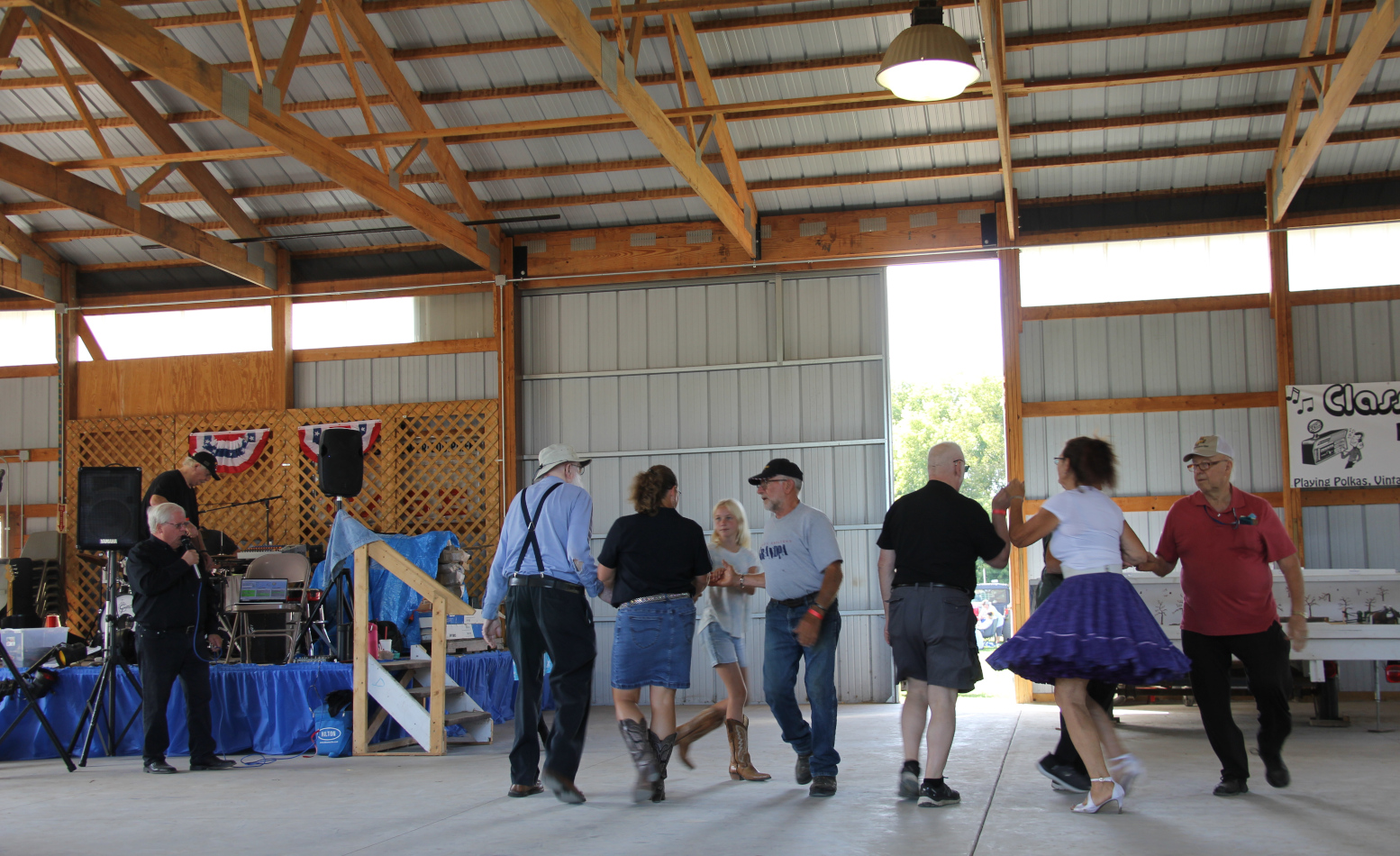
The event included music and dancing in the music hall, where a beer garden is also located. (Minnesota Prairie Roots copyrighted photo August 2025)

A flea market, music, food…they, too, are part of this well-organized show. It takes a lot of volunteers, a lot of work and dedication, a lot of time and commitment to pull this off.
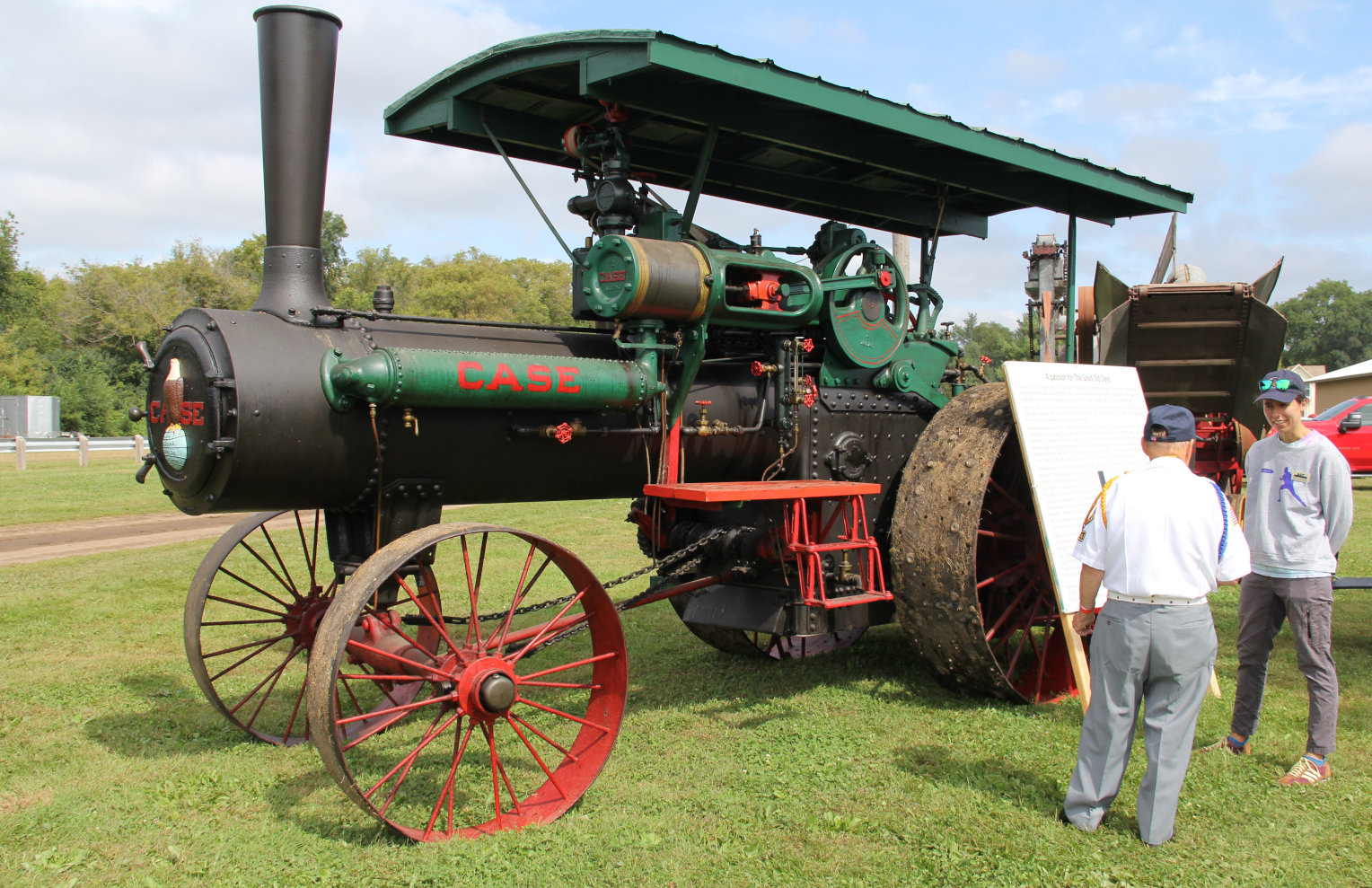
Transported from the Rice County Historical Society in Faribault, this 1916 Case steam engine sparked the interest leading to the first show. (Minnesota Prairie Roots copyrighted photo August 2025)

This organization has grown this event, which began with a threshing demonstration in Faribault in 1974, sparking formation of the Rice County Steam Association and the first show near Warsaw in 1975. The 1916 50 hp Case steam engine that started it all 50 years ago was pulled out of storage at the Rice County Historical Society Museum for display at the 2025 show.
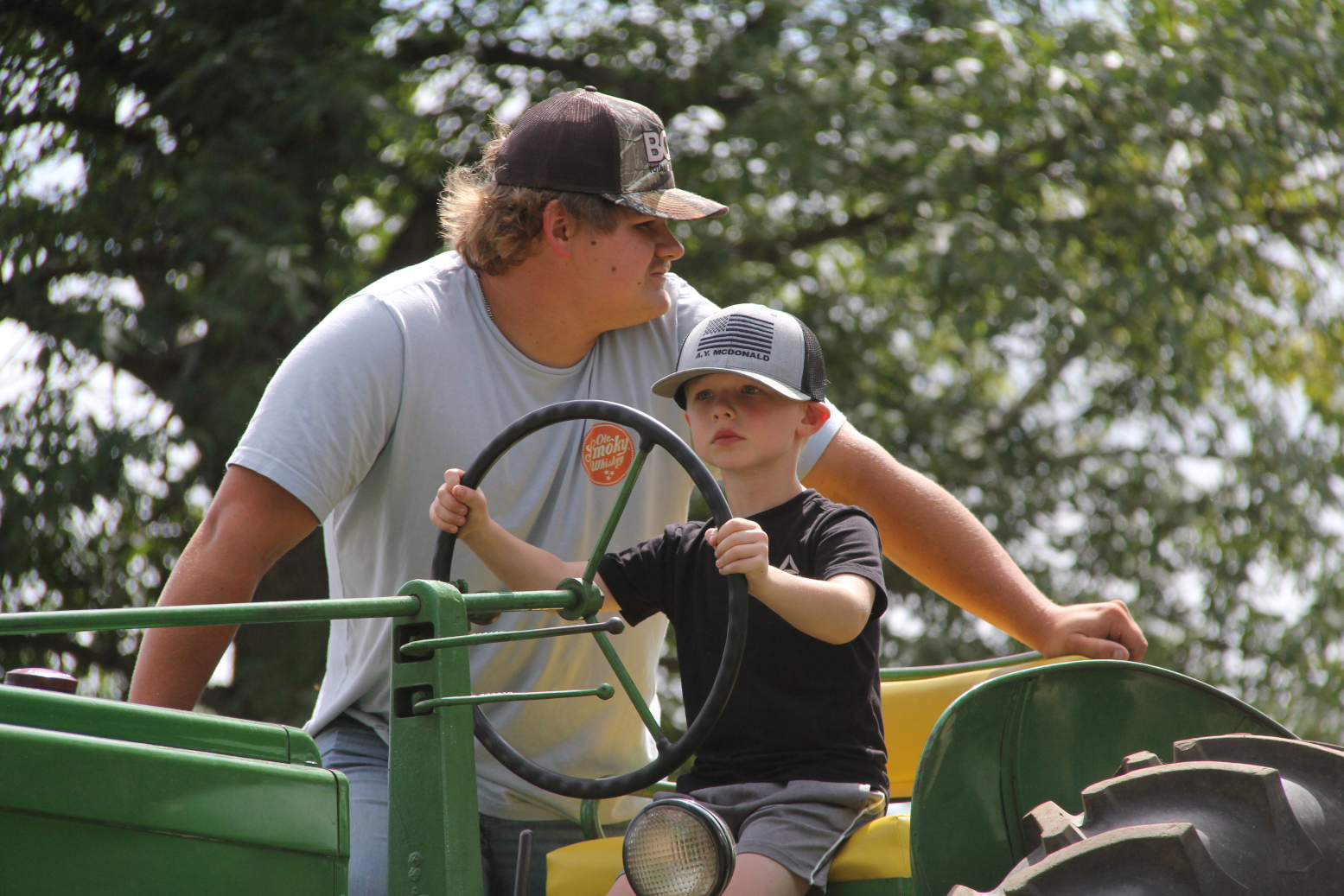
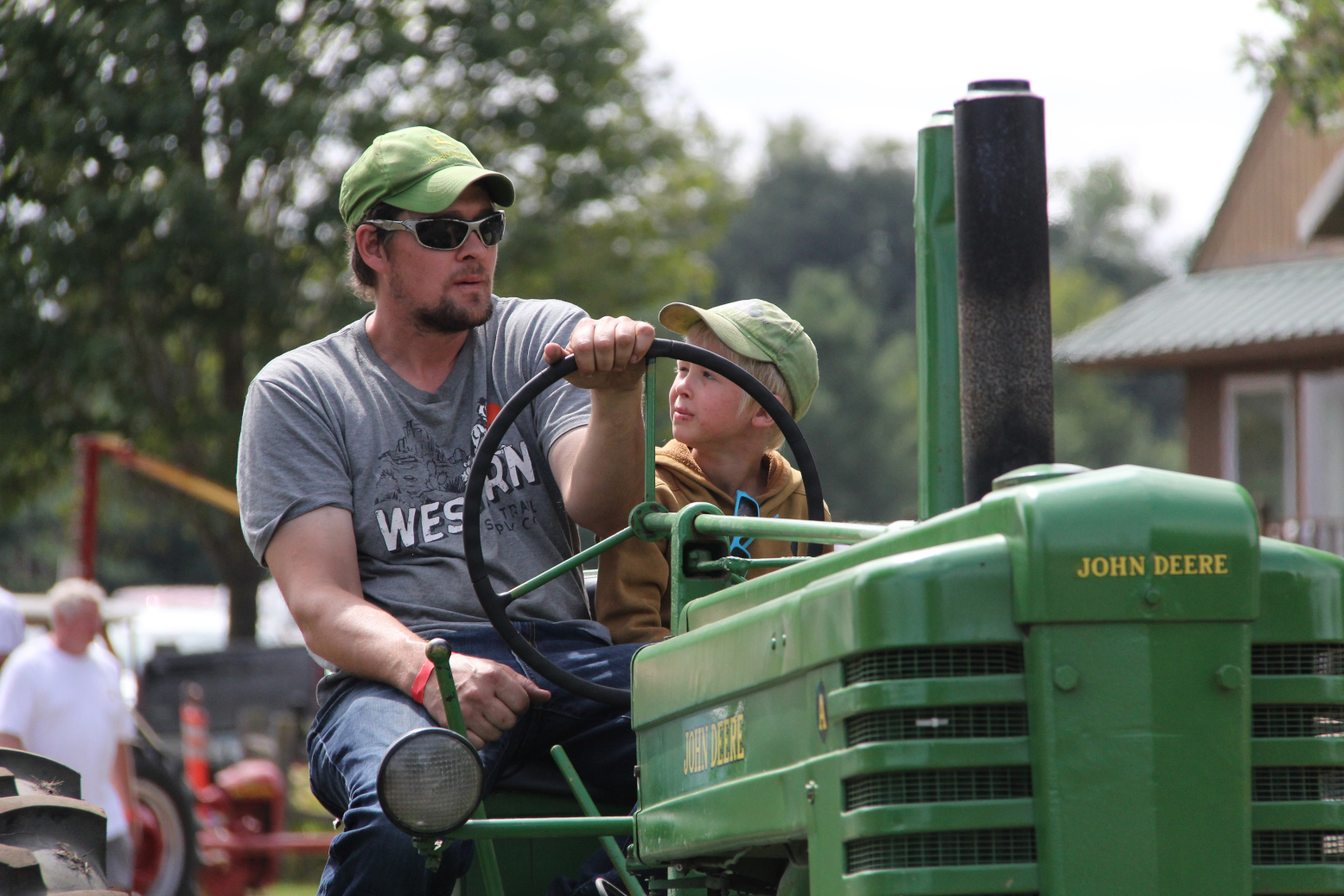
This young boy is focused and determined as he drives a John Deere during the tractor parade. (Minnesota Prairie Roots copyrighted photo August 2025)
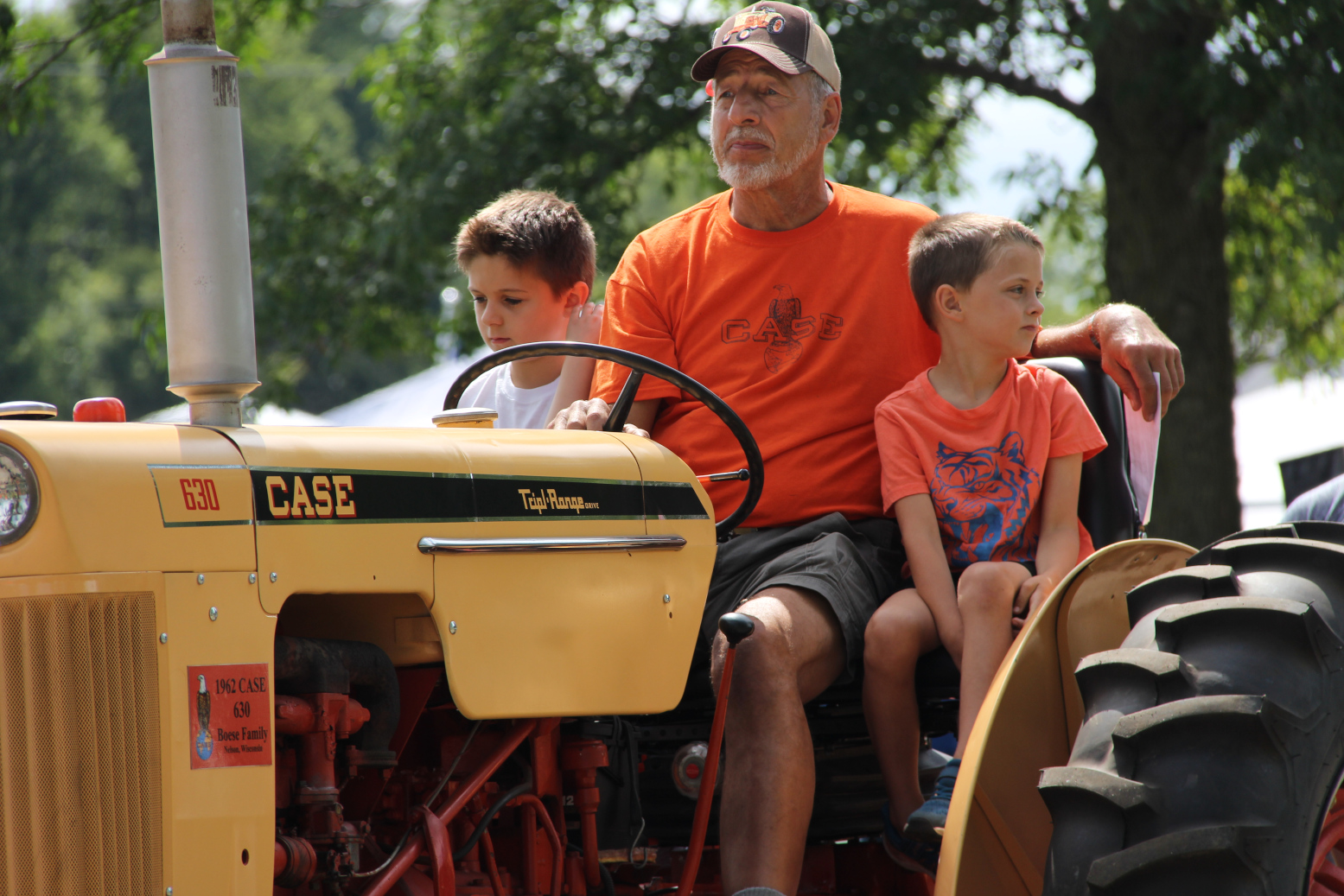
Three on board a Case for the tractor parade. (Minnesota Prairie Roots copyrighted photo August 2025)
I love the look of joy, admiration and contentment on this young boy’s face as he rides a John Deere in the parade. (Minnesota Prairie Roots copyrighted photo August 2025)

Everywhere I walked, everywhere I looked, I saw smiles. I saw, too, an inter-generational connection over a shared love of tractors, farming of yesteryear, the rural way of life.
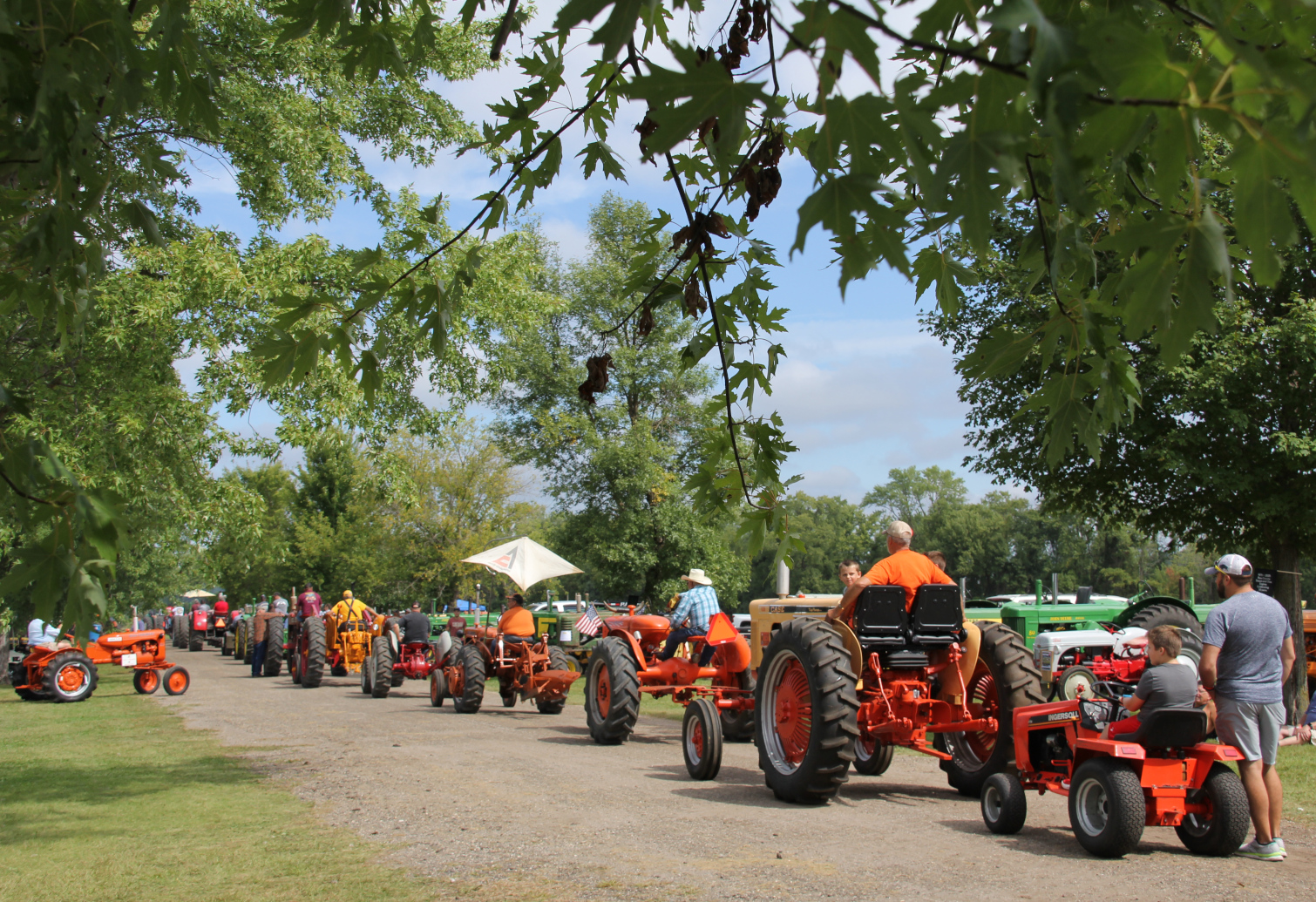
The lengthy parade of hundreds of tractors began at noon daily. (Minnesota Prairie Roots copyrighted photo August 2025)

In the noise of roaring farm machinery, in the belch of steam from massive steam engines, in the dust flying from shelling corn and threshing oats, in the clop of horses’ hooves, even in the scent of horse manure, I observed and experienced rural life as it once existed. Labor intensive. Dangerous. Family-centered. But at it’s core still the same. Valued. Honored. Truly a way of life rooted in the land and cherished by those who live upon and tend it.
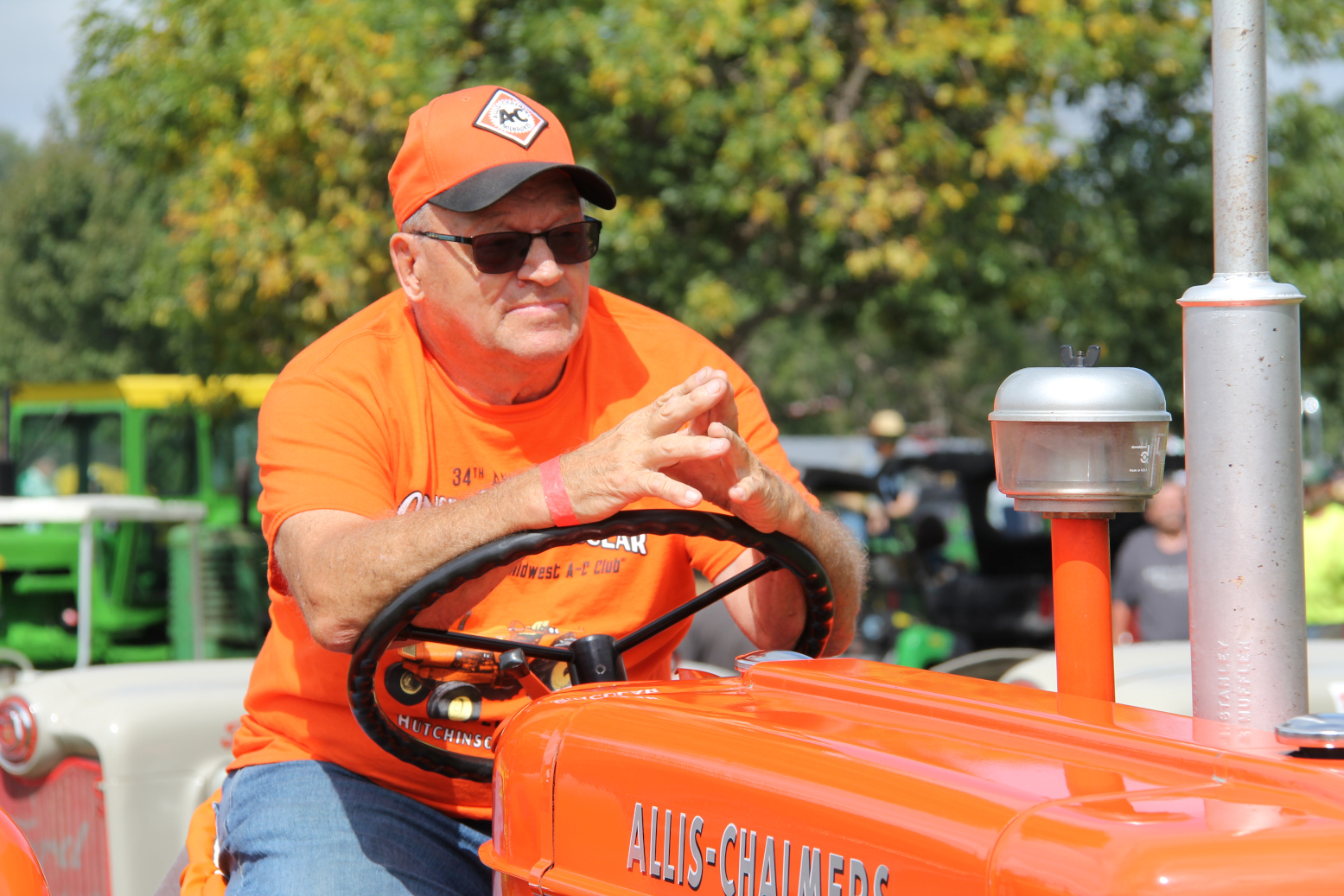
Allis Chalmers guy. (Minnesota Prairie Roots copyrighted photo August 2025)

PLEASE CHECK BACK for more posts about this show.

© Copyright 2025 Audrey Kletscher Helbling


Marking 50 years of sharing rural history at August 29-31 tractor show August 29, 2025

Of the hundreds of photos I’ve taken at the Rice County Steam & Gas Engines spring and fall shows, this remains a favorite of a farmer watching threshing. (Minnesota Prairie Roots copyrighted file photo 2012)

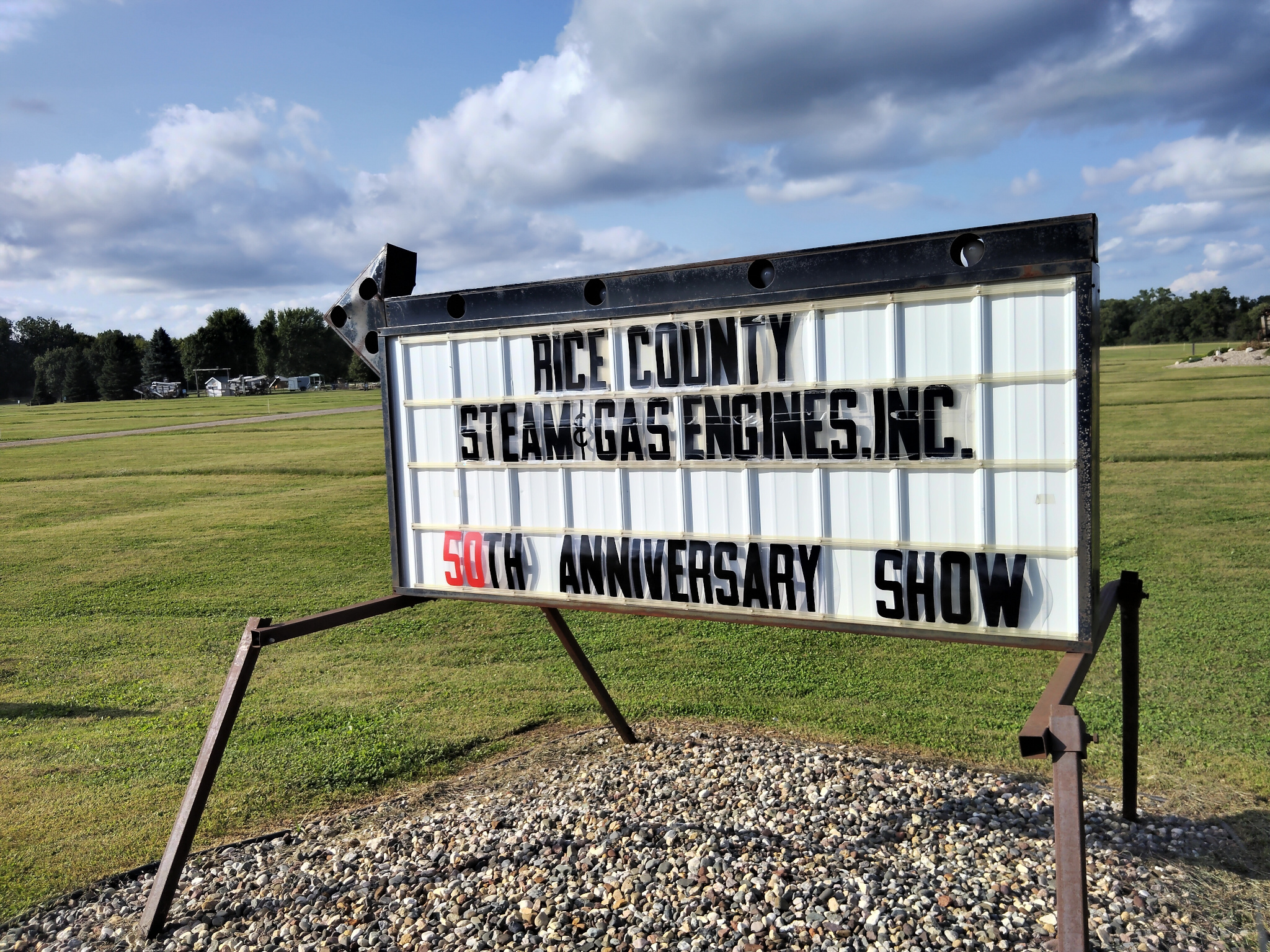
FOR ANYONE ROOTED in the land, this weekend’s annual Tractor Show at the Rice County Steam & Gas Engines showgrounds along Minnesota State Highway 3 south of Dundas is a must-attend. This event, celebrating its 50th year, is like a step back in time, when farming was much more labor intensive and equipment vastly different from the computerized equipment of today.

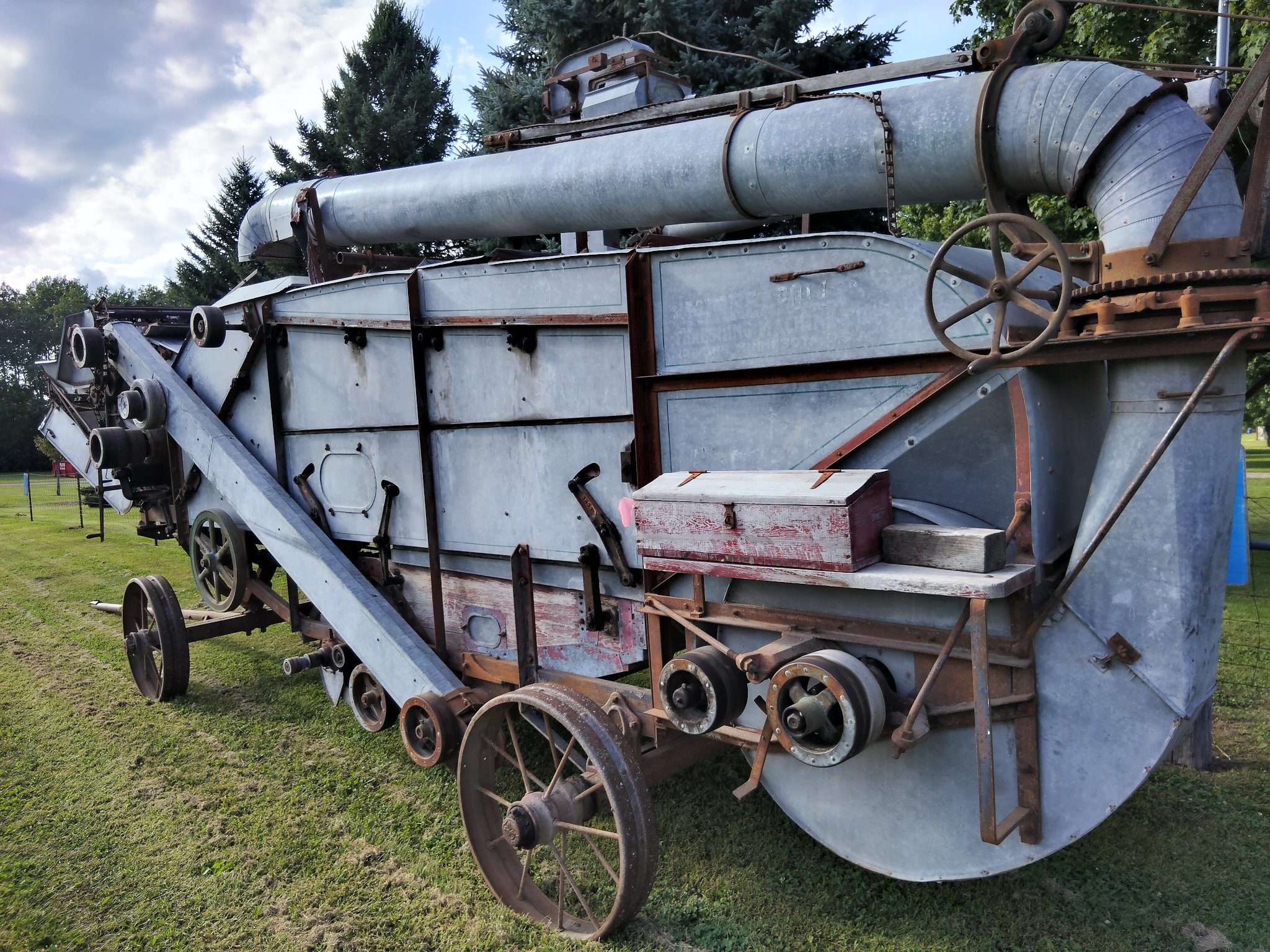
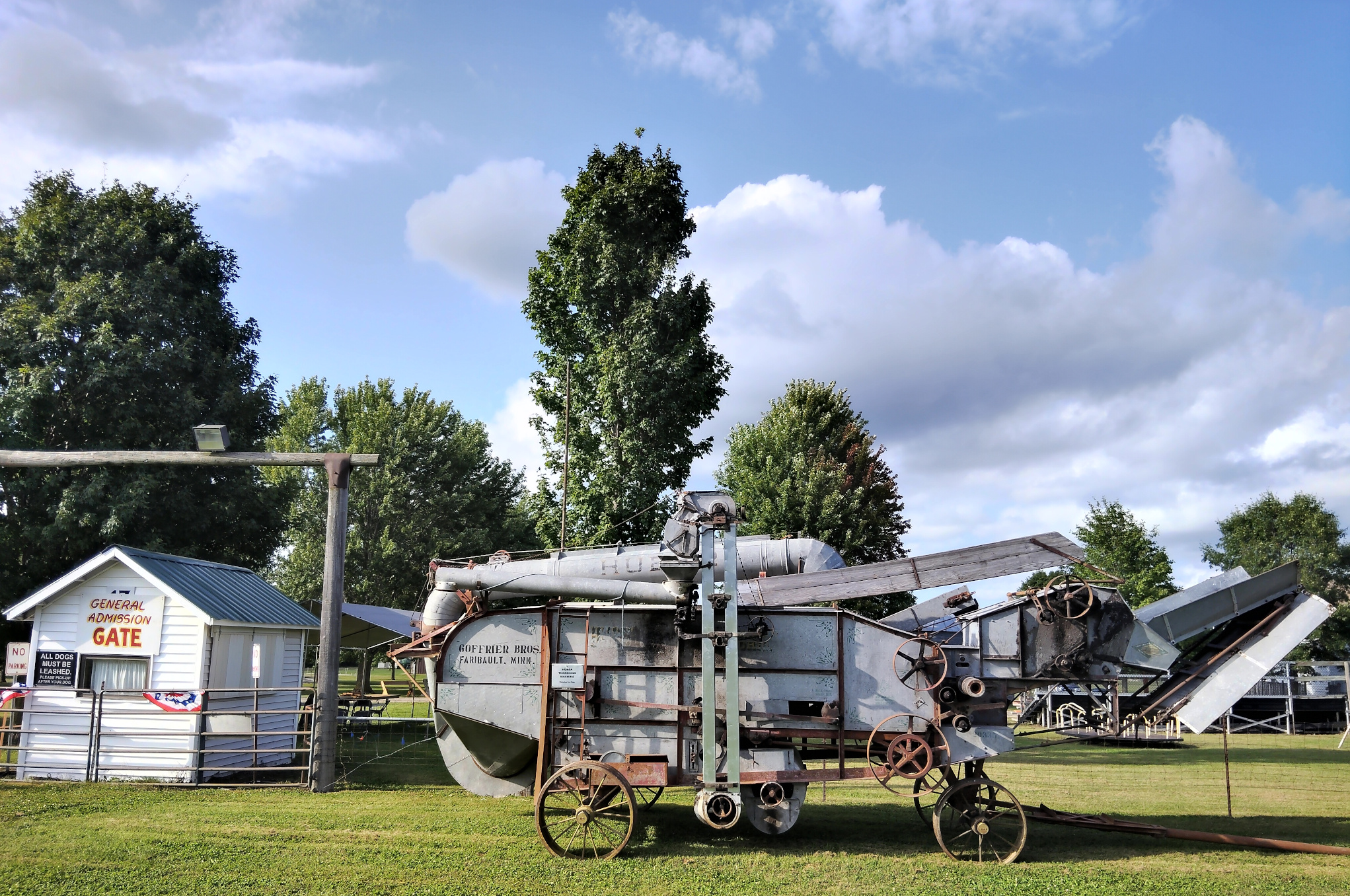
A mammoth threshing machine sits outside the fenced showgrounds on Wednesday. (Minnesota Prairie Roots copyrighted photo August 2025)

I’ve attended and photographed this show many times. And even though I’m not nearly as interested as my automotive machinist husband in old tractors, steam engines, threshing machines, small engines and miscellaneous vintage farm equipment, I still find plenty to appreciate. I am, after all, a born and raised farm girl who is incredibly proud of her rural heritage.

I’m also proud of Randy and all the work he’s done on vintage tractors. Without fail, someone will walk up to us at the show and tell him how great their tractor runs—the one he worked on. He’s overhauled many a tractor engine.

There’s a lot of work involved in putting on a tractor show that includes a daily noon tractor parade, a tractor pull, a kids’ pedal pull, flea market, living history demonstrations, petting zoo, mini train rides, food stands, live music, a cornhole tournament, raffle, Sunday morning church service, small engines and tractor displays, and much more.

Signage at the showgrounds entry notes this as the 50th anniversary Tractor Show. (Minnesota Prairie Roots copyrighted photo August 2025)

And to think that volunteers have organized this Tractor Show for 50 years is truly remarkable. Enthusiasm for showcasing rural history and preserving the past runs deep. Old buildings have even been moved on site like a log cabin, 1912 farmhouse, an old school, town hall, corn crib…

The flea market always draws me to look and shop. I challenge myself to find the strangest of merchandise. Not hard to do. Oddities abound.

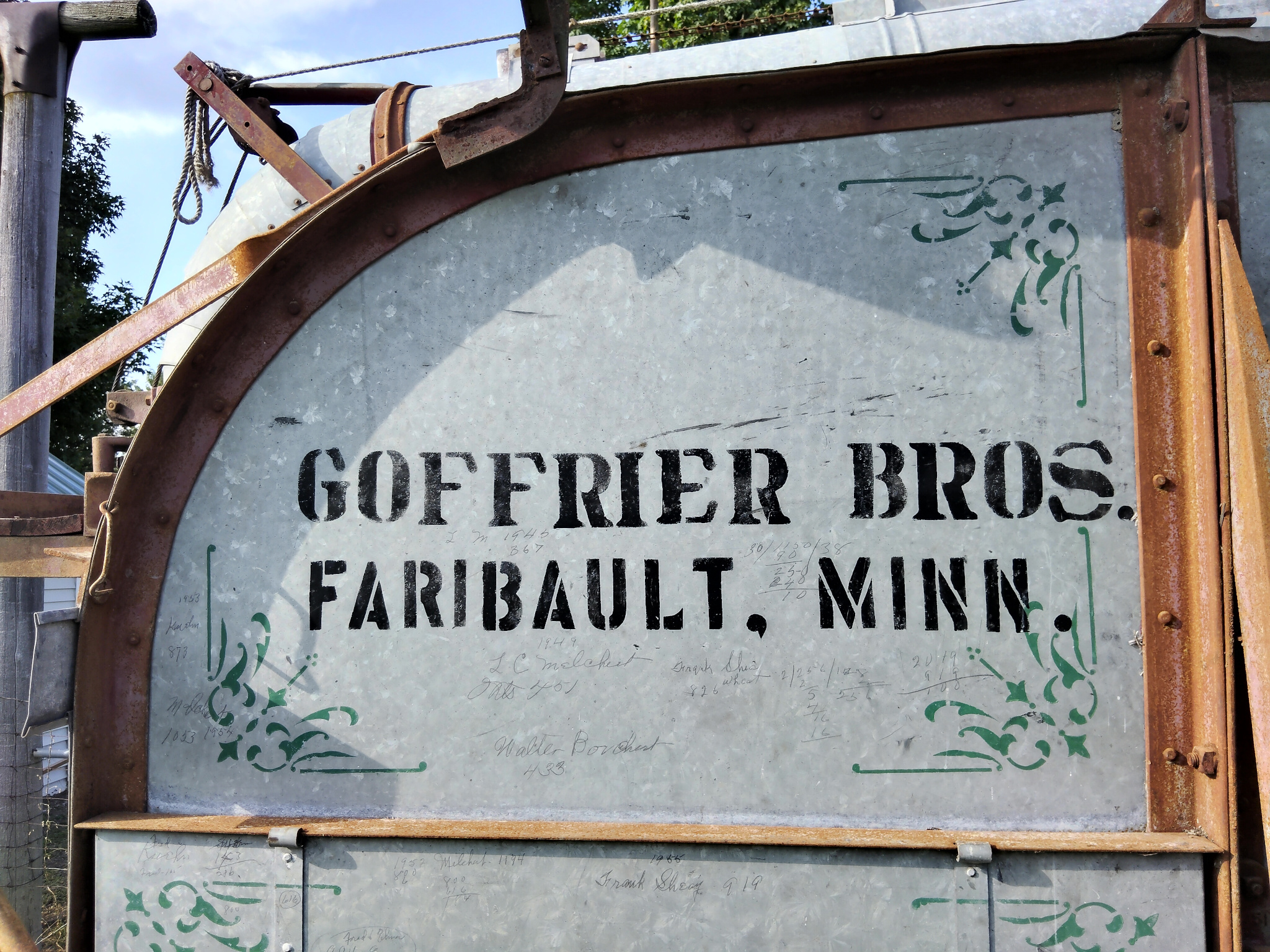
This name was printed on one of the two threshing machines I photographed, presumably the original owners. Other names were penciled onto the metal. Another sign identified this as a Huber threshing machine. (Minnesota Prairie Roots copyrighted photo August 2025)

And then there are the people. I always run into someone I know. And that’s part of the experience, too. Standing and visiting. Catching up. Discussing whatever.

This all happens on the land, on acreage Rice County Steam & Gas Engines, Inc. opens twice annually to the public. The group holds a spring swap meet on Memorial Day weekend.

Two threshing machines sat outside the showgrounds fence at the entrance gate Wednesday afternoon. (Minnesota Prairie Roots copyrighted photo August 2025)

But for Labor Day weekend, the event focuses on tractors. Gates open at 7 a.m. daily, August 29-31. Admission for all three days is $10 for adults; those 12 and under enter free. I’d encourage you to attend if you live within driving distance. And that means anyone, whether you were raised rural or grew up in a city.

FYI: Click here to learn more about the RCSGE Tractor Show and for a listing of events.

TELL ME: Have you attended this event or a similar one?

© Copyright 2025 Audrey Kletscher Helbling


Reunions galore & why they’re important to me August 12, 2025

Filed under: Uncategorized — Audrey Kletscher Helbling @ 6:00 AM
Tags: , , , , , , , , , ,
At a previous Helbling reunion, I pulled stories from a family history book to display. Some of the stories were part of a family history trivia contest I planned. (Minnesota Prairie Roots copyrighted file photo)

THERE’S SOMETHING TO BE SAID about the importance of family reunions. They allow us to reconnect, to celebrate, to reminisce, to build new memories, to support, encourage and appreciate one another and our shared histories.

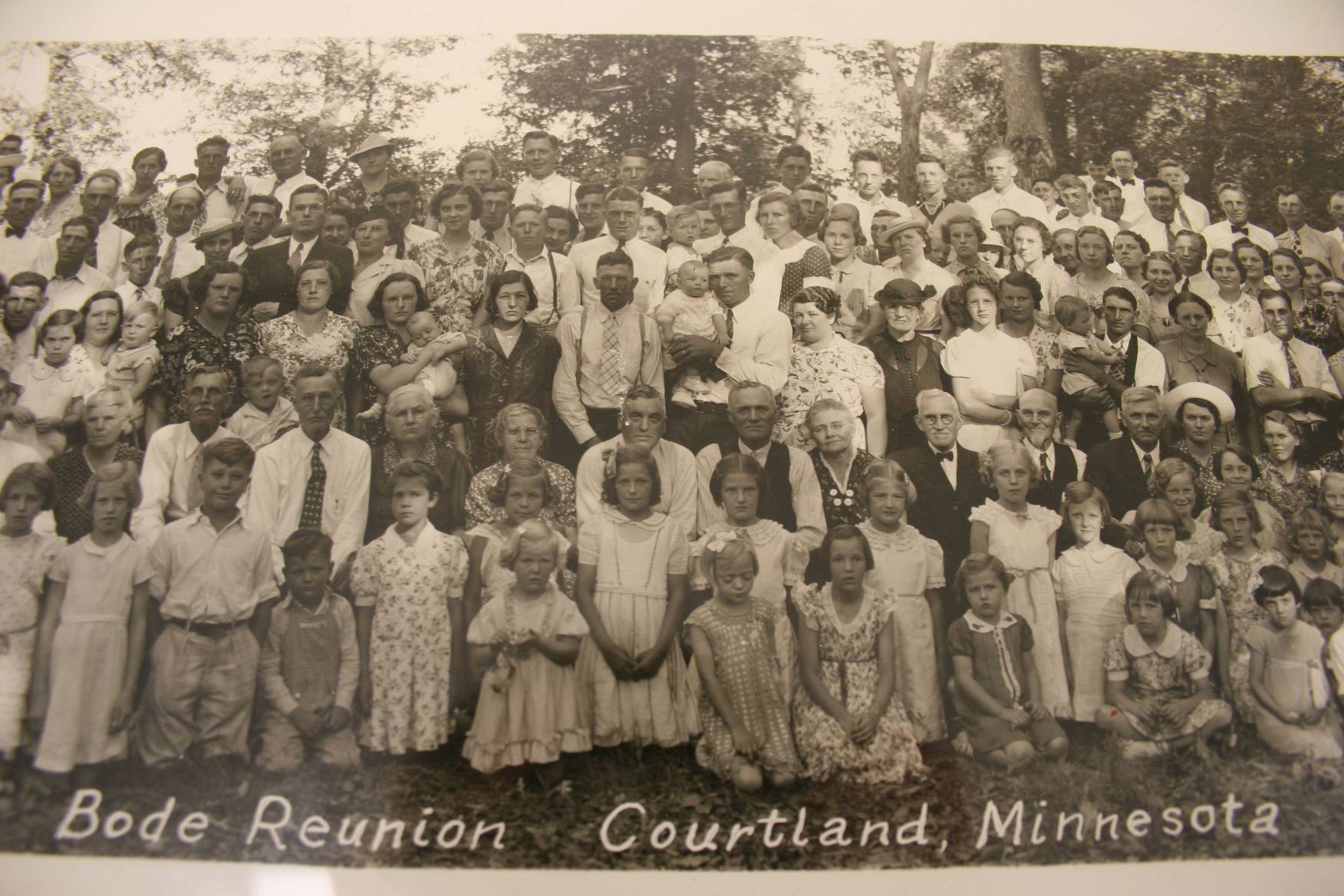
A snippet of a photo from the July 1938 family reunion in Courtland attended by 511 Bodes. My grandparents, Lawrence and Josephine Bode, are in the center of the picture, between the adults holding the babies. (Minnesota Prairie Roots copyrighted file photo)

THE BODE FAMILY

My first reunion of the summer was a small gathering with a maternal aunt, uncle, cousins and my youngest brother and his wife in south Minneapolis. Aunt Rae, my godmother, was in town from Missouri. Over a table laden with breakfast foods, we talked and laughed and then afterwards moved to the screened in porch for more catching up and a discussion about the current state of affairs in this country. Mostly, though, we talked family. Since my mom’s death in 2022, I’ve felt even more the need to stay connected to her siblings and their families.

The annual Kletscher reunion always starts at noon with a potluck. (Minnesota Prairie Roots copyrighted file photo)

THE KLETSCHER FAMILY

The next reunion happened on the last Sunday of July. The extended Kletscher family met in Echo, a small southwestern Minnesota town some seven miles north of my hometown. There, in a community center, we filled tables with homemade foods for a noon potluck. Afterwards, I circulated in an attempt to talk to nearly everyone in attendance. This reunion has been going on annually for probably seventy years or more. I don’t always make it. But I try to because I’d rather see my cousins and my remaining aunts and uncle at a happy event rather than at a funeral.

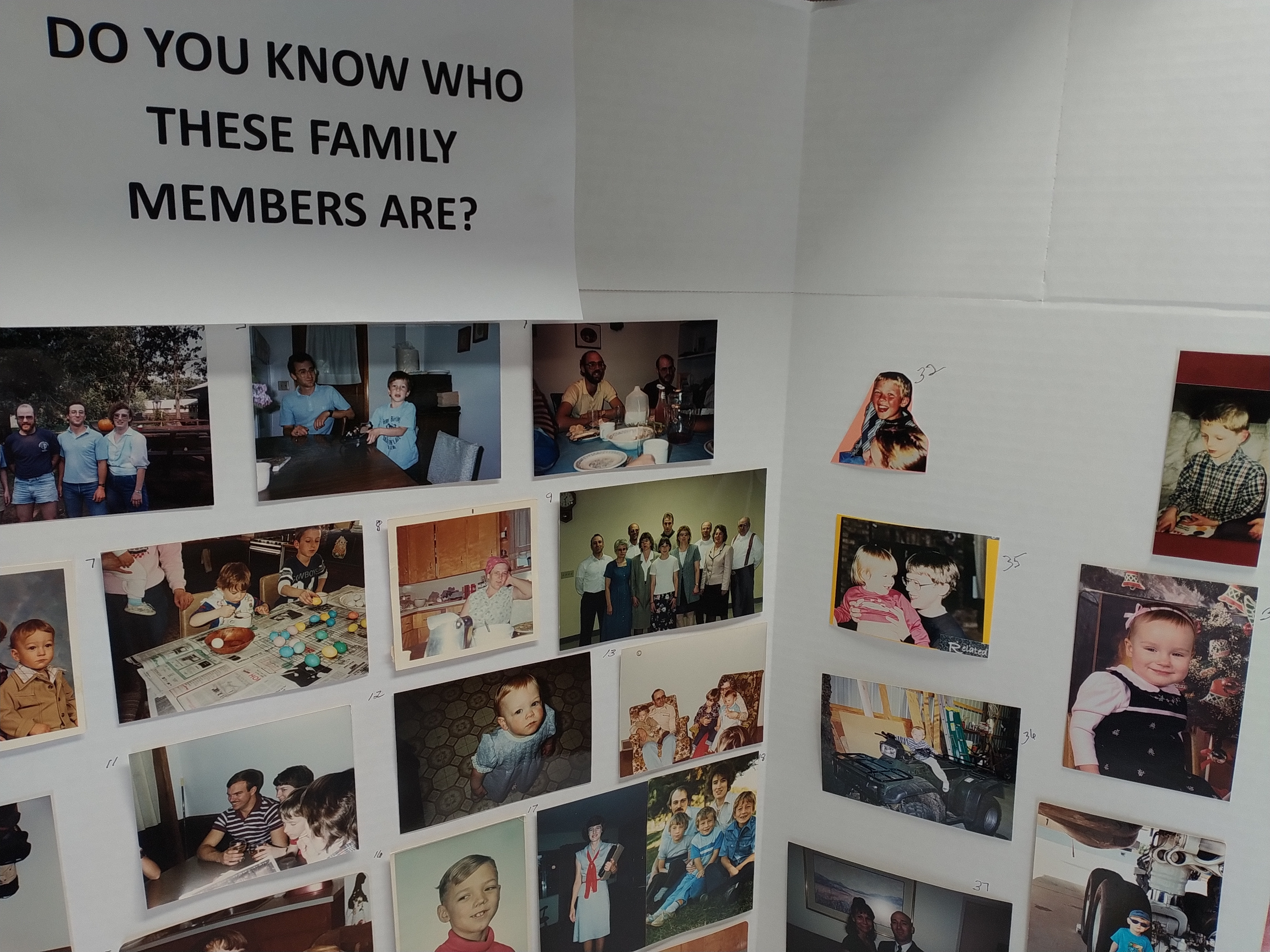
A photo board displayed at a Helbling reunion several years ago. (Minnesota Prairie Roots copyrighted file photo)

THE HELBLING FAMILY

And then there is the Helbling reunion, held last weekend at a nephew’s rural Faribault acreage. This gathering brings my husband Randy’s family together from all across Minnesota and the country. Our son flew in from Boston. Our second daughter and her family arrived from Madison, Wisconsin. Others came from Michigan, Missouri and North Dakota. This event happens annually. And each year family members travel from all over to see each other, which says a lot about just how important family connections are to all of us.

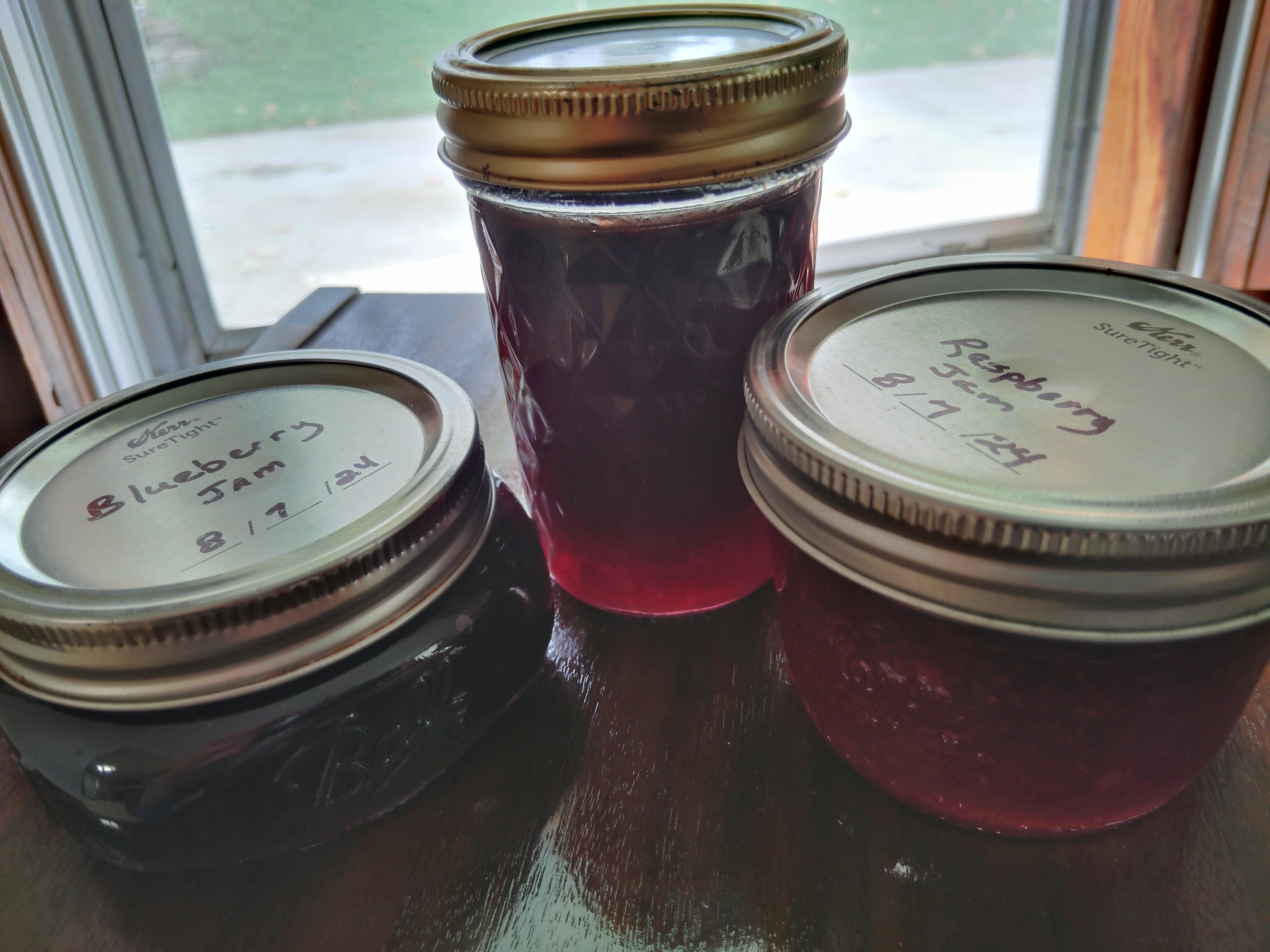
Jams and jelly won in the family raffle. (Minnesota Prairie Roots copyrighted photo August 2025)

This year organizers changed things up a bit by replacing BINGO with a raffle of homemade/home-grown foods and goods. There were cookies, banana bread, multiple jams, wine, honey, engraved stones, crocheted animals, garden fresh potatoes, salsa and more, including canned rabbit meat. I brought an anthology that included five pieces of my writing. Randy brought a bottle of Cry Baby Craig’s hot sauce, an allowed raffle item given it’s made in Faribault.

Everyone went home with something. But perhaps the best part of the raffle was the money raised for the Community Action Center in Faribault via the sale of $5 raffle tickets. With $300 in raffle ticket sales and a company match by an employer, the CAC will be gifted with $600 from the Helbling family. This family cares.

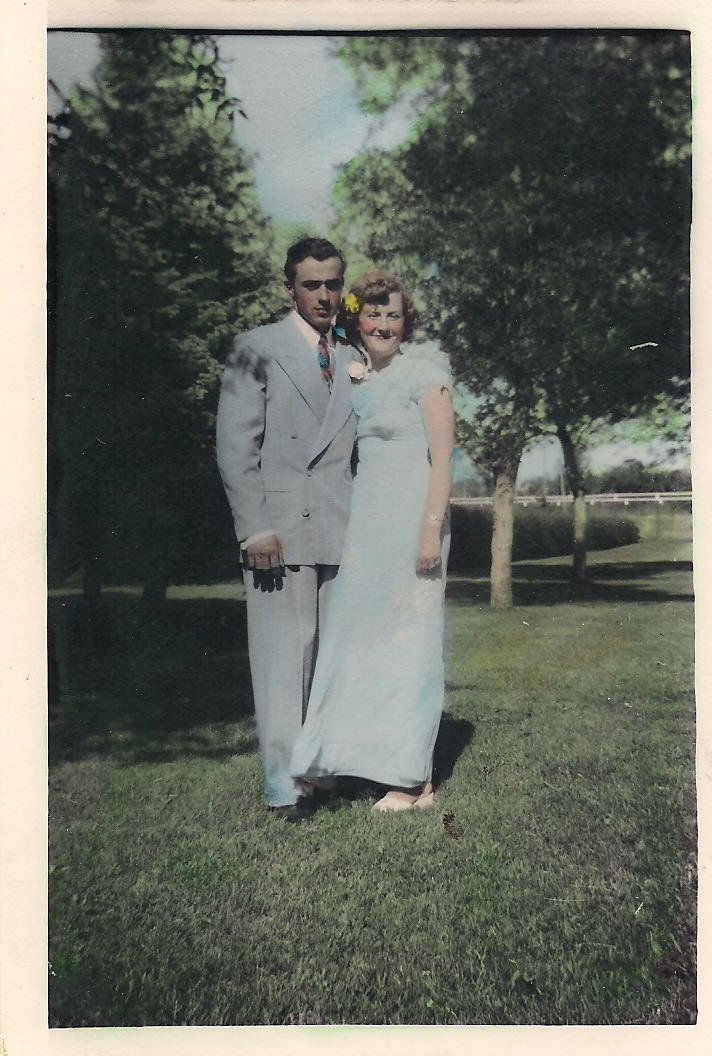
Tom and Betty Helbling, circa early 1950s.

I love my husband’s family. They are a genuinely loving, kind, caring, compassionate, generous and supportive group. During the reunion, we shared family updates while the kids bounced in a cow-shaped bouncy house. During a corn hole tournament, Tristan and his teammate once again walked away with the “trophy,” a mini corn hole board. My six-year-old grandson showed me how to pound nails into a round of wood in a game of hammerschlagen. My granddaughter and I watched baby ducks swim in a pond next to a menagerie of poultry, goats and two black sheep. Kids shot rockets high into the air. Adults gathered in lawnchair clusters to chat. Slowly, as the sun set, family members began to leave. I left feeling so loved.

The evening prior, the siblings and their spouses met at the Craft Beverage Curve in Faribault for food, drinks and conversation. The new addition to the reunion proved popular. Family raved about the setting. I felt a deep sense of pride in my community. But mostly, I felt the love of the Helbling family which I have been part of for 43 years. Tom and Betty Helbling would be proud of the family they started. And they would be happy that, on the second Saturday in August each year, their family reconnects at a reunion.

© Copyright 2025 Audrey Kletscher Helbling
 

Happy birthday, America! July 4, 2025

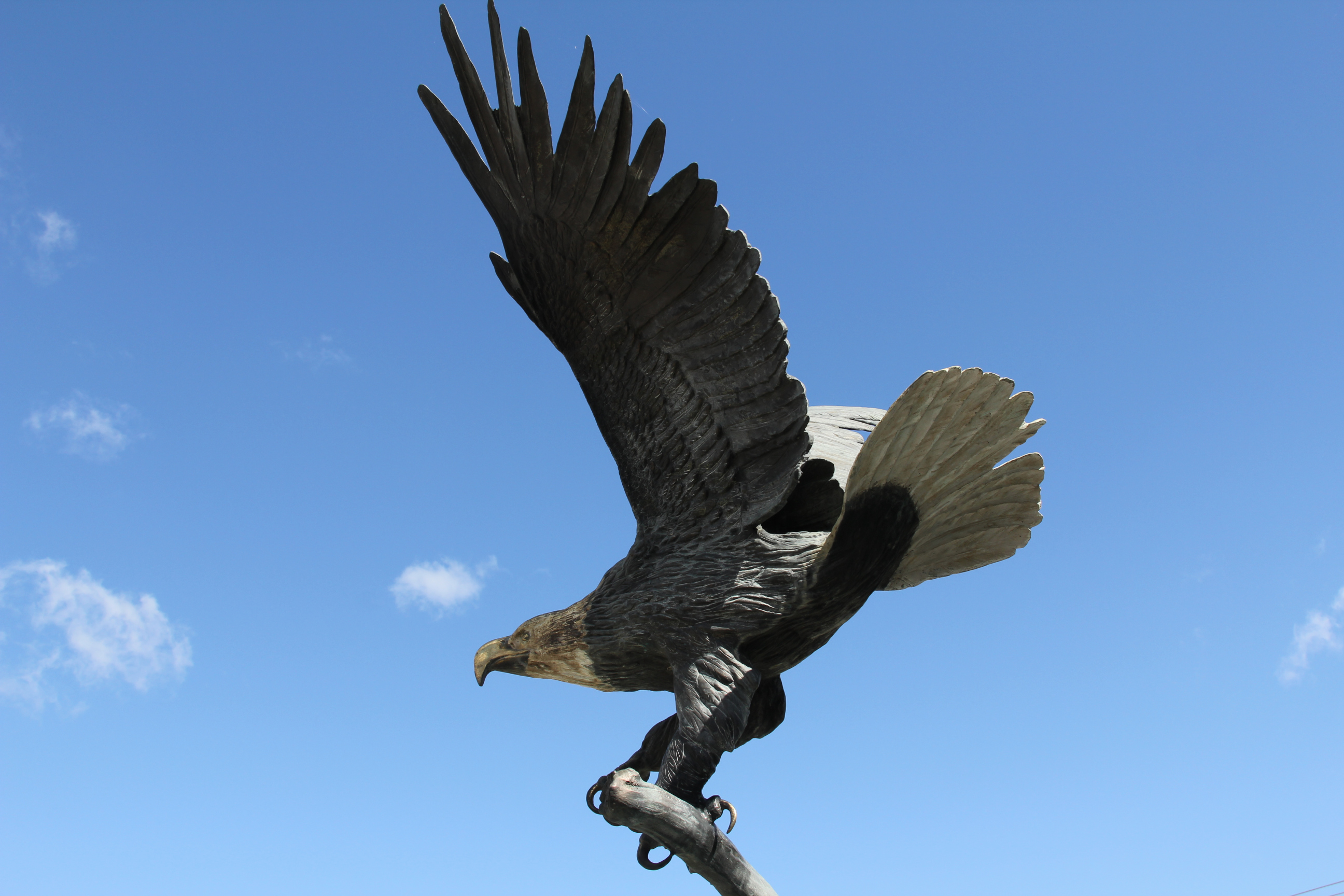
The eagle is a symbol of freedom in the U.S., here in sculpture form at small town Minnesota memorial. (Minnesota Prairie Roots copyrighted file photo)

IN CONSIDERING AMERICA’S 249th BIRTHDAY, I decided to write down words that immediately popped into my mind relating to this holiday, America and the current state of our country. I limited myself to 20 individual words or phrases. Here’s what flowed from my brain to pen to paper before I typed this list into my computer for you to read:

freedom

democracy

liberty

voting rights

free and fair elections

divisiveness

fear

deportations

due process

freedom of speech

freedom of the press

protests

my voice

threats

intimidation

injustice

checks and balances

life

melting pot

history

I could easily take each word or phrase and expound on how I feel about these topics in current-day America. But for today, I will allow the words to mostly stand alone while you ponder their meaning or create a list of your own. I will only state that I am saddened some of these words found their way into my brain as I think about our country on its 249th birthday. What words would be on your list?

Have a wonderful Fourth of July, everyone!

© Copyright 2025 Audrey Kletscher Helbling
 

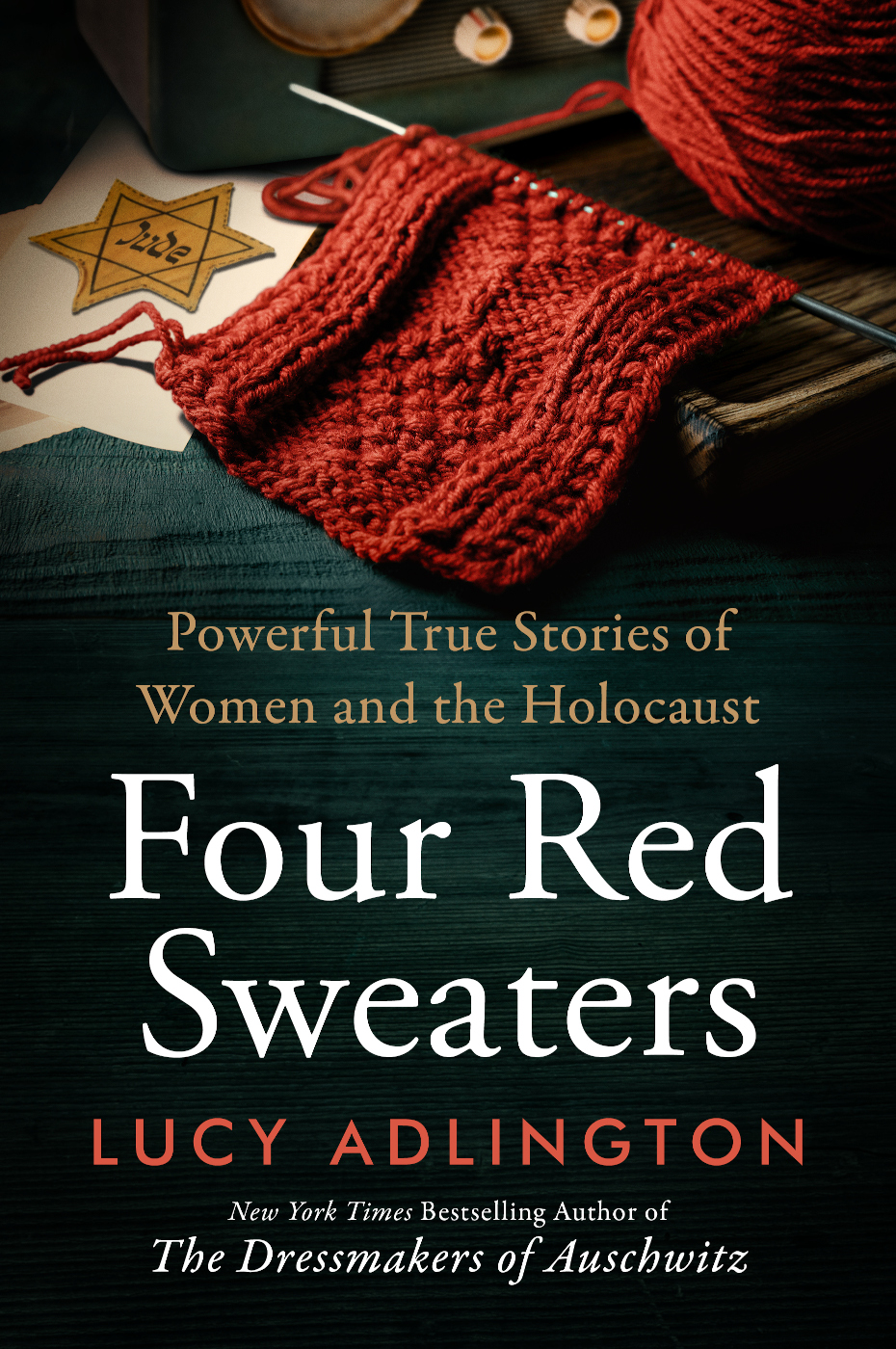
“Four Red Sweaters,” a difficult, but necessary, read July 1, 2025

(Book cover sourced online)

TYPICALLY, I CAN READ a book within two weeks. But not Four Red Sweaters—Powerful True Stories of Women and the Holocaust by Lucy Adlington. I had to renew this book at my local library in order to finish it.

Why? The content is so difficult, disturbing and devastating that I could only read this work of nonfiction in small chunks. But I was determined to finish this book about Jock, Anita, Chana and Regina—four Jewish girls living in Nazi Germany—and all connected by red sweaters. I owed it to them to learn more about the awful atrocities inflicted under Adolph Hitler’s rule by those who lived, breathed, and followed him and his ideology.

All the while I was reading Four Red Sweaters, a small voice in my head whispered warnings in words like a knock on the door, fear, anti-immigration sentiment, snatched, disappeared, deported, deception, secrecy, dehumanizing… The parallels to today were not lost on me.

REAL PEOPLE WITH STORIES

What I particularly like about this book, if one can ever really “like” a book on such a topic, is the personalization. Anita is not just #69388 inked onto her left forearm at Auschwitz-Birkenau. She is a girl who arrives at the concentration camp wearing shoes adorned with pompoms and tied with red shoelaces. She is a girl who knew how to play the cello. That skill eventually saved her.

But too many died. Millions and millions. That included the Fink family, brutally murdered by their neighbors in an act so heinous I can’t share it here. Turn to page 96 in the book. The Finks were extended family of Jock, a main character in this story. She was one of the “lucky” Jewish children who escaped Nazi Germany, along with her sisters, on a Kindertransport, an all-out effort by brave souls to get Jewish children out of the country to safety. But Jock’s parents and brothers died at the hands of the Nazis.

The pages of Four Red Sweaters are filled with heroic acts, bravery, defiance and determination that show the incredible strength of the human spirit. There existed a mentality of surviving together or dying together. The pages of this book are also filled with stories of unbelievable, unfathomable cruelty.

A NECESSARY READ

Author Adlington backs her writing up with 23 pages of source notes. In small print. That’s a whole lot of documentation in researching and writing this book. I cannot imagine the emotional toll this took on her. I also cannot imagine anyone reading Four Red Sweaters and not feeling deeply moved and worried, but also grateful to Adlington for sharing the stories of Jock, Anita, Chana and Regina and the broader stories of the Holocaust. We need to read about, study, learn and remember the past so as not to repeat it.

Near the very end of Four Red Sweaters, Adlington writers about a knitter who, in 2013, designed Remembrance socks. Heatherly Walker’s sock pattern honors Regina and the others who were forced to knit socks and more for the Nazis and their families. She incorporated hidden Jewish stars into the pattern, which is available on the Ravelry website for crafters. Knitting is an integral part of the stories Adlington shares in her book.

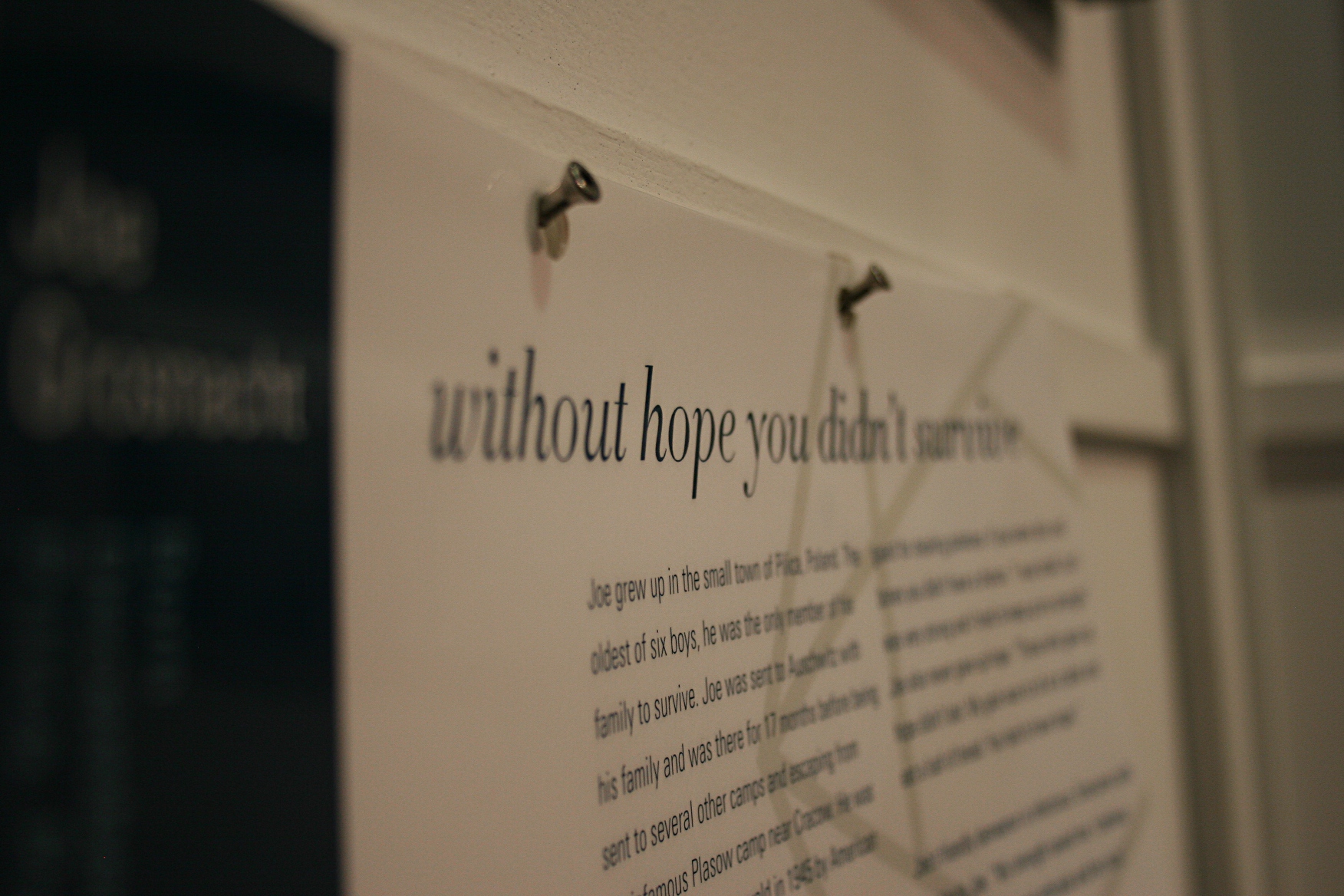
Hope in a story at the traveling exhibit about Holocaust survivors, “Transfer of Memory,” which I viewed in 2014 at the Steele County History Center, Owatonna. (Minnesota Prairie Roots copyrighted file photo 2014)

DEFIANCE, COURAGE, HOPE

One seemingly small act stands out for me in Four Red Sweaters. Regina’s friend Esther, after foraging mushrooms for the Nazis in the Sobibor extermination camp, walks into the SS canteen, sees a pot of soup cooking and spits in it. And the Nazis eat it. I can only imagine the satisfaction Esther felt in that moment of defiance. Endless examples of defiance, courage, hope and resilience are knitted into the pages of Four Red Sweaters.

As challenging as it was for me to read this book, I needed to do so. For to stop reading when the content grew increasingly difficult and disturbing would have been to do exactly as the Nazis desired. Nobody must know. But we must all know. And, sometimes, like Esther, we must spit in the soup.

#

TELL ME: If you’ve read Four Red Sweaters, how did you react? What stands out for you in the book? Special thanks to Missy’s Crafty Mess (the blog of an avid reader and knitter) for writing about Four Red Sweaters, which led me to this book about the Holocaust. I am grateful for her recommendation.

© Copyright 2025 Audrey Kletscher Helbling
 

Beyond just fun, finding the history & heritage in Heritage Days June 11, 2025

This sculpture of Alexander Faribault and a Dakota trading partner stands in Faribault’s Heritage Park near the Straight River and site of Faribault’s trading post. (Minnesota Prairie Roots copyrighted file photo)

HOW DO YOU DEFINE heritage? I ask that question because this week my southern Minnesota community celebrates Heritage Days.

I would define heritage as a cultural or ethnic background. I am, for example, of German heritage.

So one would likely assume then that Heritage Days focuses on heritage. It did. Once. But no more. Not primarily. Rather, this multi-day event in Faribault seems more a June get together with the usual food, music, parade, craft fair and such of any summer community gathering.

It’s not that my city of some 24,000 lacks in cultural and ethnic diversity to theme Heritage Days. We are a bit of a melting pot with our newest residents arriving from Somalia and Sudan. Early on, the French, Irish, Germans and others settled here to shape and grow Faribault. Latinos also define a sizable part of our population. Many others have come from multiple countries to this place along the Cannon and Straight Rivers. Most are generations removed from the homeland. Some, though, are first-generation immigrants.

Jeff Jarvis created and handed out this mini booklet about the Wahpekute Band of the Dakota at a previous presentation at Books on Central. (Minnesota Prairie Roots copyrighted file photo)

But back to Heritage Days. Looking through the long list of events, I see several opportunities to learn about local heritage and history. The first happens at 6:30 p.m. Wednesday, June 11, at the Cathedral of Our Merciful Saviour. Regional artist and historian Jeff Jarvis will talk about “The Wakpekute Dakota & Early Faribault History.” I’ve previously heard Jarvis speak on the Dakota, original inhabitants of the land. He’s done his research. I highly recommend attending his presentation. I’m always surprised by how little long-time residents seem to know about the Dakota and their long ago presence in what would become Faribault. Jarvis presents an informative lesson in local Native heritage.

Likewise, the Rice County Historical Society Museum will be open, free of charge, from 10 a.m.-5 p.m. Thursday-Saturday. It’s a good place to see Native American and other artifacts, learn about our early fur trading and additional local history, learn about notable people like Chief Taopi and Bishop Henry Whipple, and more. Bishop Whipple founded and served the Cathedral where Jarvis is speaking.

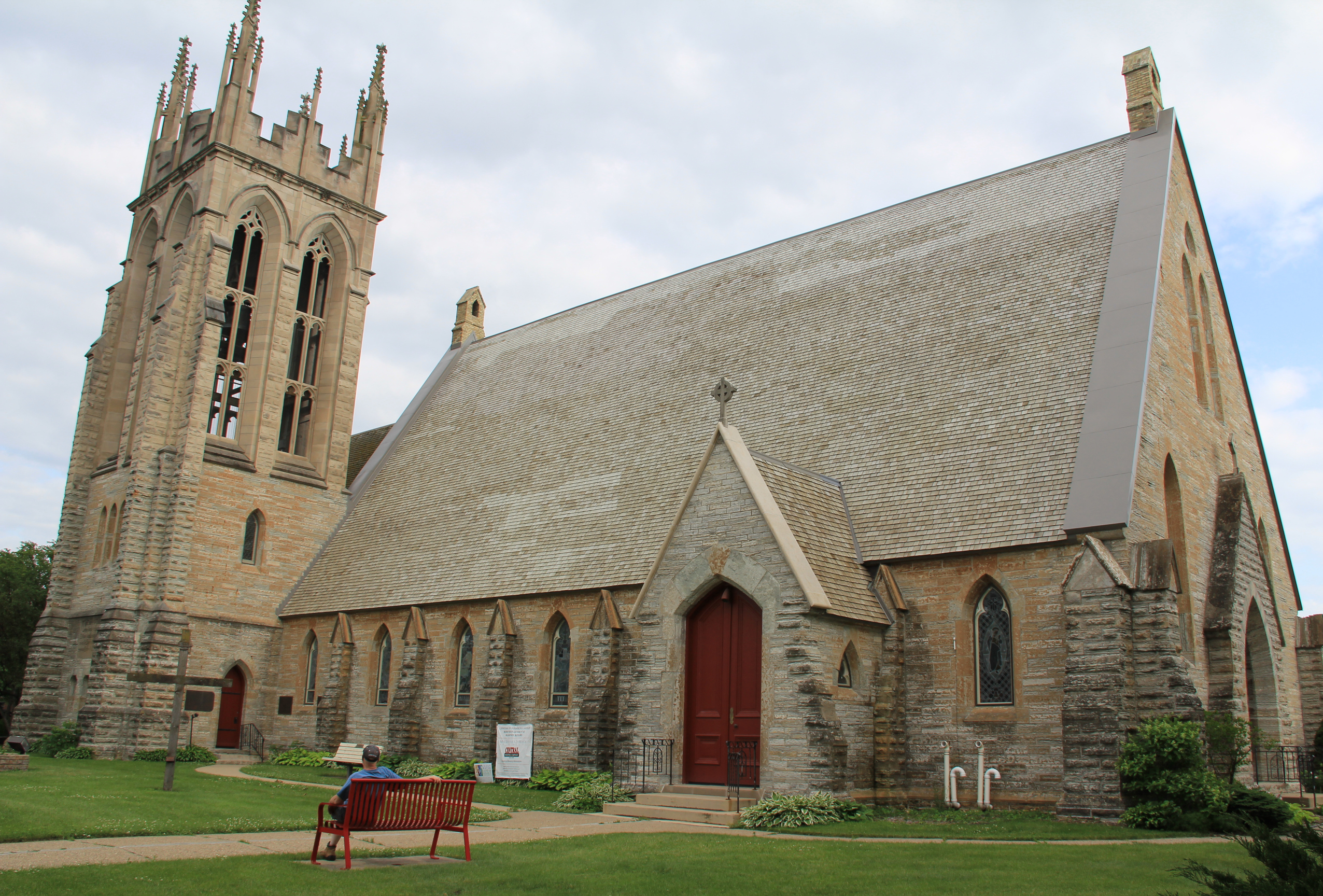
The historic Cathedral of Our Merciful Saviour sits across from Central Park and is a must-see in Faribault. (Minnesota Prairie Roots copyrighted file photo 2024)

The historic Cathedral will be open for tours at 11:30 a.m. Sunday, June 15, following a 10 a.m. Ecumenical Service including bluegrass music. This massive cathedral—and, yes, it really is a cathedral—is important in local Dakota history as the bishop worked closely with Native Americans, some of whom worshipped here.

Fur trader and town founder Alexander Faribault, who was of Dakota and French Canadian heritage, also worked closely with the Dakota. His wood-frame house will be open for free tours from 11 a.m.-3 p.m. Saturday, June 14.

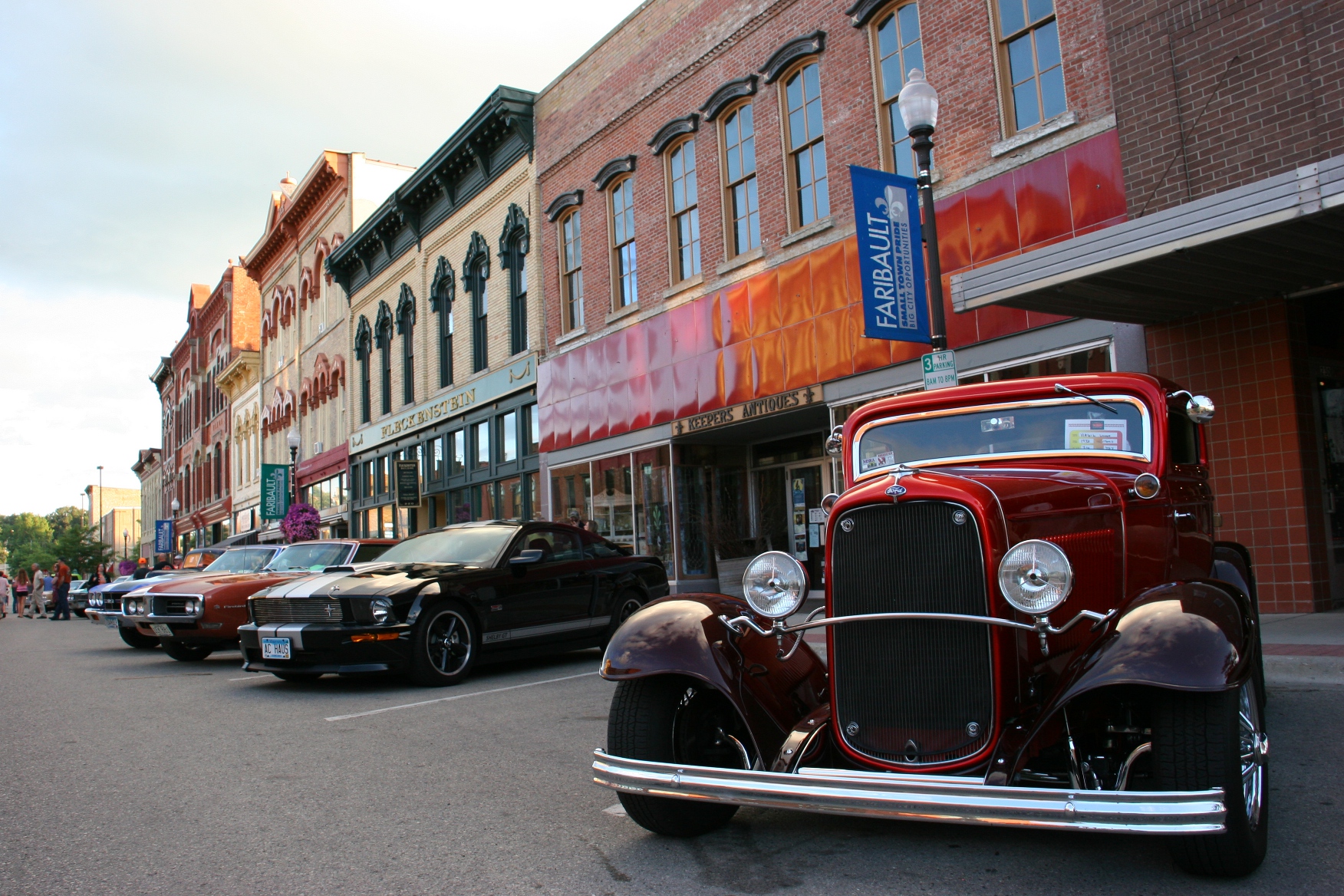
Downtown Faribault features well-kept aged buildings in our historic district. I photographed this scene during a Car Cruise Night. There’s a Car Cruise here Friday, June 13, from 6-9 p.m. (Minnesota Prairie Roots copyrighted file photo)

The Rice County Historical Society will also offer a guided Downtown Walking Tour on Friday and Saturday with two time slots of 11 a.m. and 2 p.m. The $5 tour, led by RCHS Program and Outreach Coordinator Kiran Loewenstein, begins at Central Park. Anticipated to take 1-1 ½ hours, the tour route follows Central Avenue with a focus on the historic district and buildings and early general Faribault history. I expect that will offer ample opportunity to not only learn about early history and heritage, but also to see the heritage of our newest residents in downtown core ethnic businesses.

Two more opportunities to embrace local history (although not officially part of Heritage Days) are inside the State Bank of Faribault along Central Avenue. Local streetscapes and landscapes by Father Jim Zotalis, spiritual leader of the Cathedral, are displayed in a pop-up exhibit in the bank lobby. And for those interested in Faribault’s brewing history, the bank holds an extensive collection of Fleck’s beer memorabilia form long ago Fleckenstein Brewery. Both are accessible during business hours only.

There’s lots happening during Heritage Days, activities that mostly aren’t about heritage. But some are. To see a complete listing of events, click here.

© Copyright 2025 Audrey Kletscher Helbling
 

Hats off to a history of hats June 3, 2025

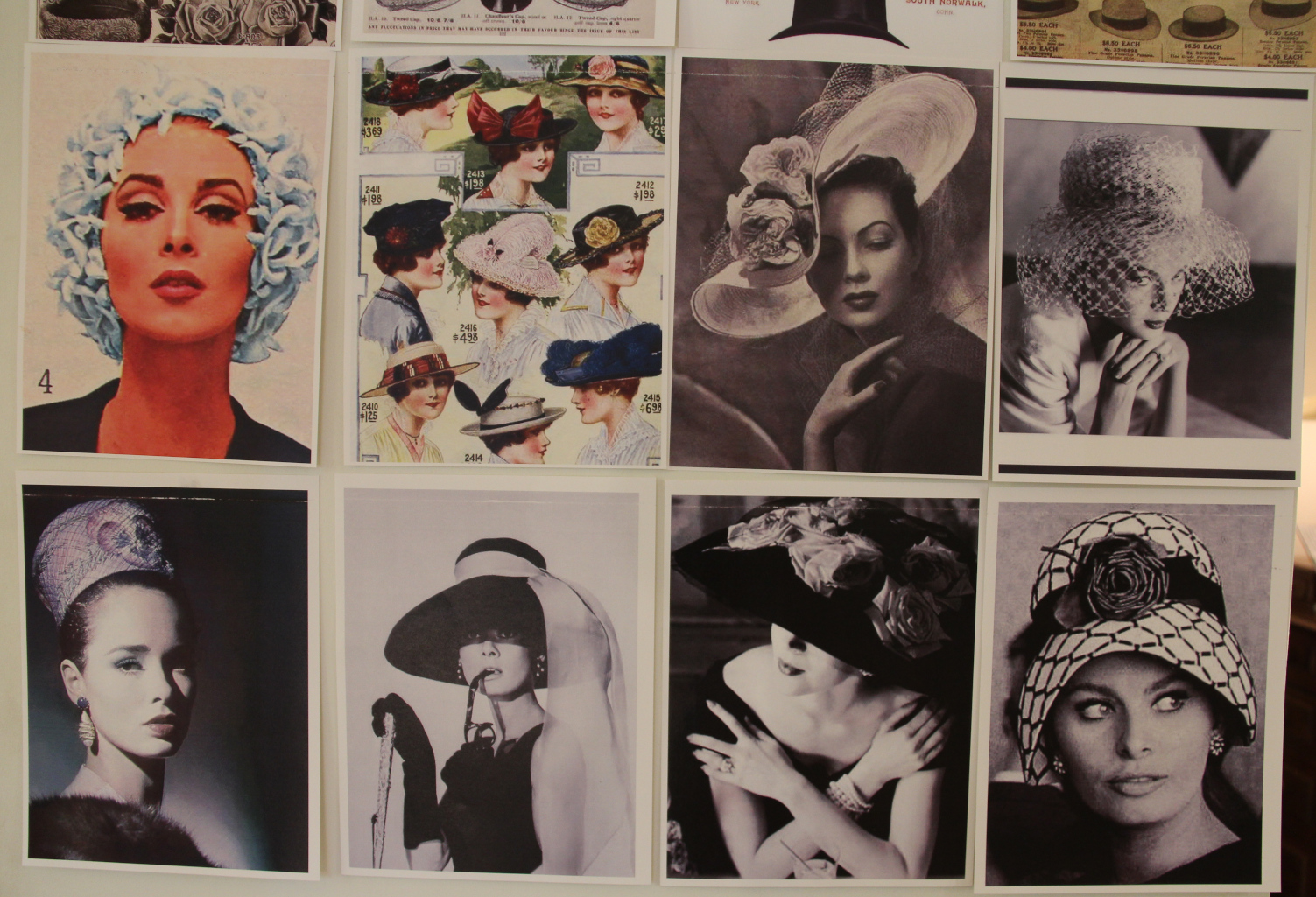
Photos of fashionable hats shown in the HATS exhibit in Waseca, Minnesota. (Minnesota Prairie Roots copyrighted photo May 2025)

WE’VE ALL WORN different hats. Personally. Socially. Professionally.

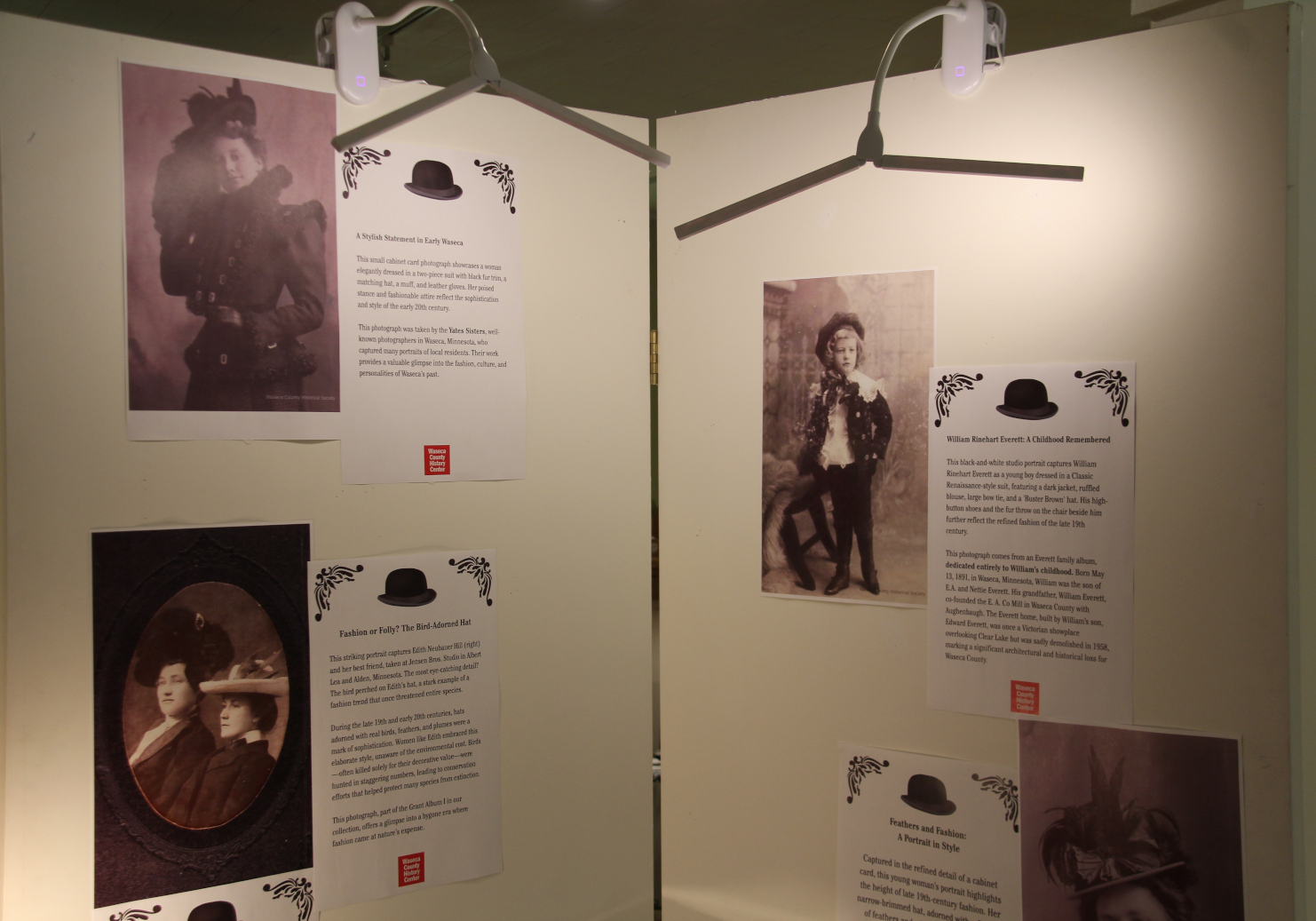
Panels of hat photos and information. (Minnesota Prairie Roots copyrighted photo May 2025)

I’ve worn the hats of daughter, wife, mother, grandma, friend, sister, aunt, student, intern, newspaper reporter, writer, editor, photographer, poet, volunteer and much more. Collectively, these multiple hats, or roles, helped shape me into the person I am today.

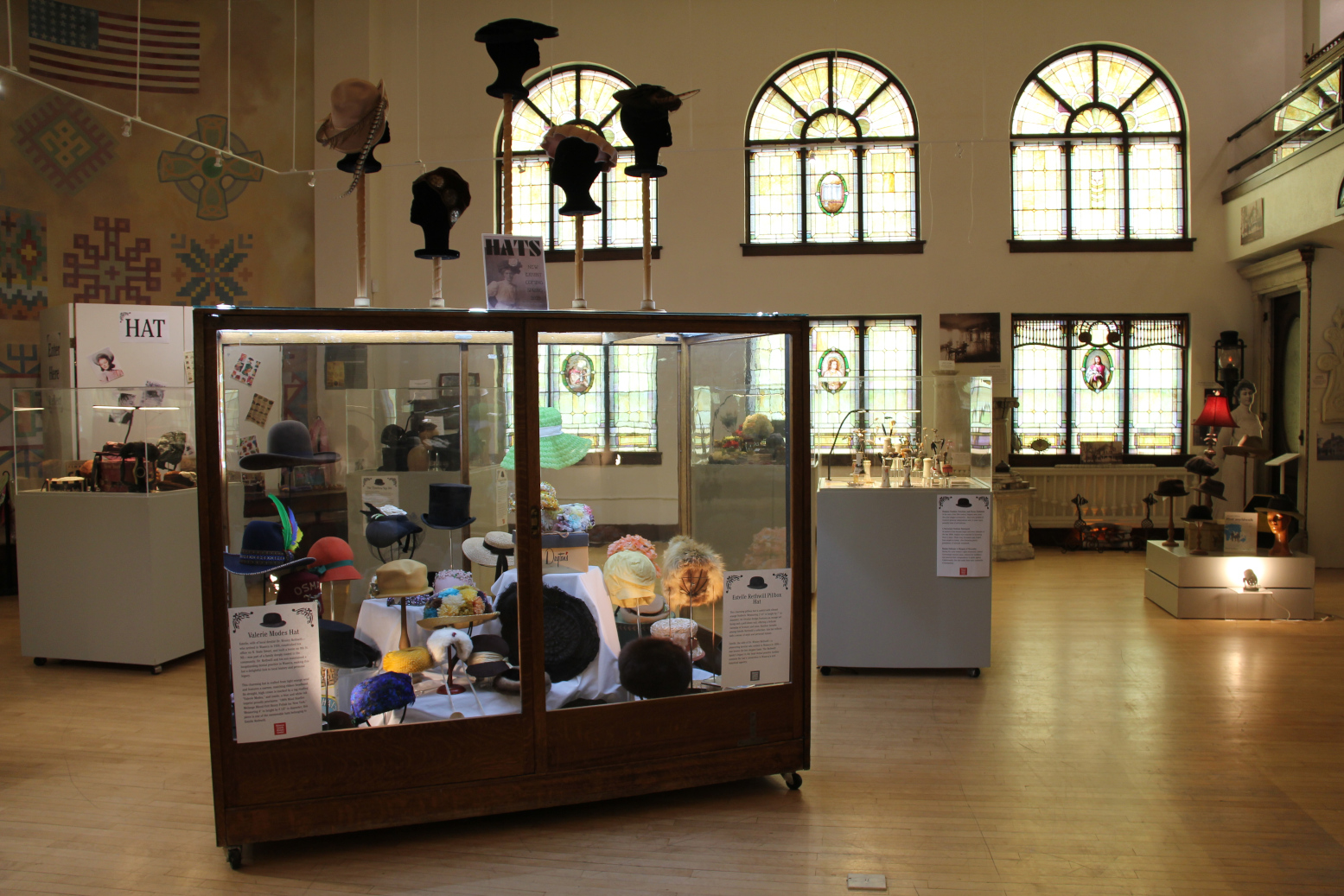
This shows a portion of the many hats in the exhibit. (Minnesota Prairie Roots copyrighted photo May 2025)

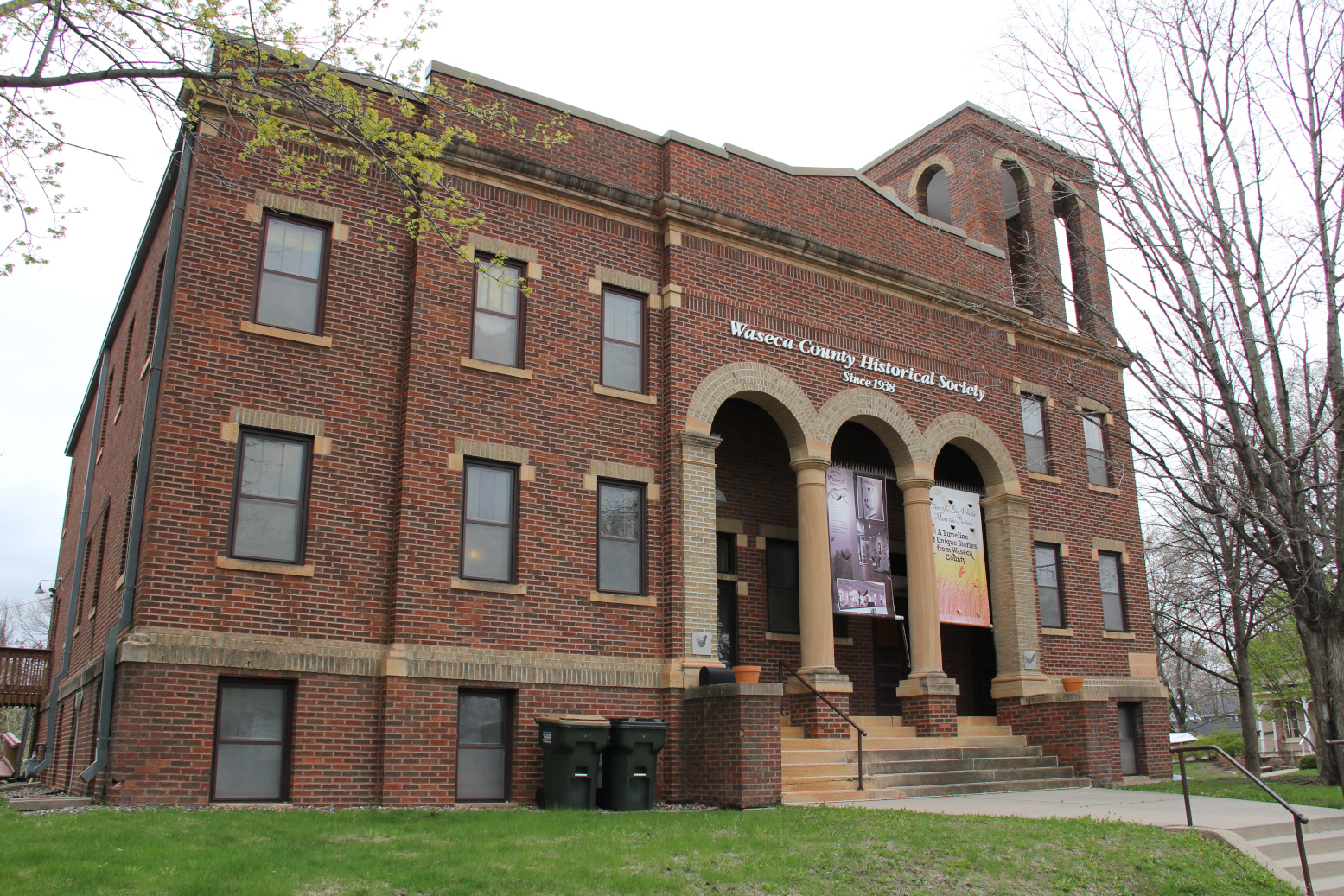
But what about actual hats, you know, the ones you place on your head? A fascinating exhibit at the Waseca County History Center, simply titled “HATS,” offers an historic glimpse of late 1800s to more current-day hats from the museum and personal collections. The display will be up until the end of June.

This display features classy men’s hats of yesteryear plus hatboxes. (Minnesota Prairie Roots copyrighted photo May 2025)

This ranks not only as an informative exhibit of hats, a few caps and related items, but also as a fun visual of fashion. From fancy hats with feathers and florals to all-business derbys and boaters to big floppy hats of the 1970s, the range of head-toppers evolves as time and styles change.

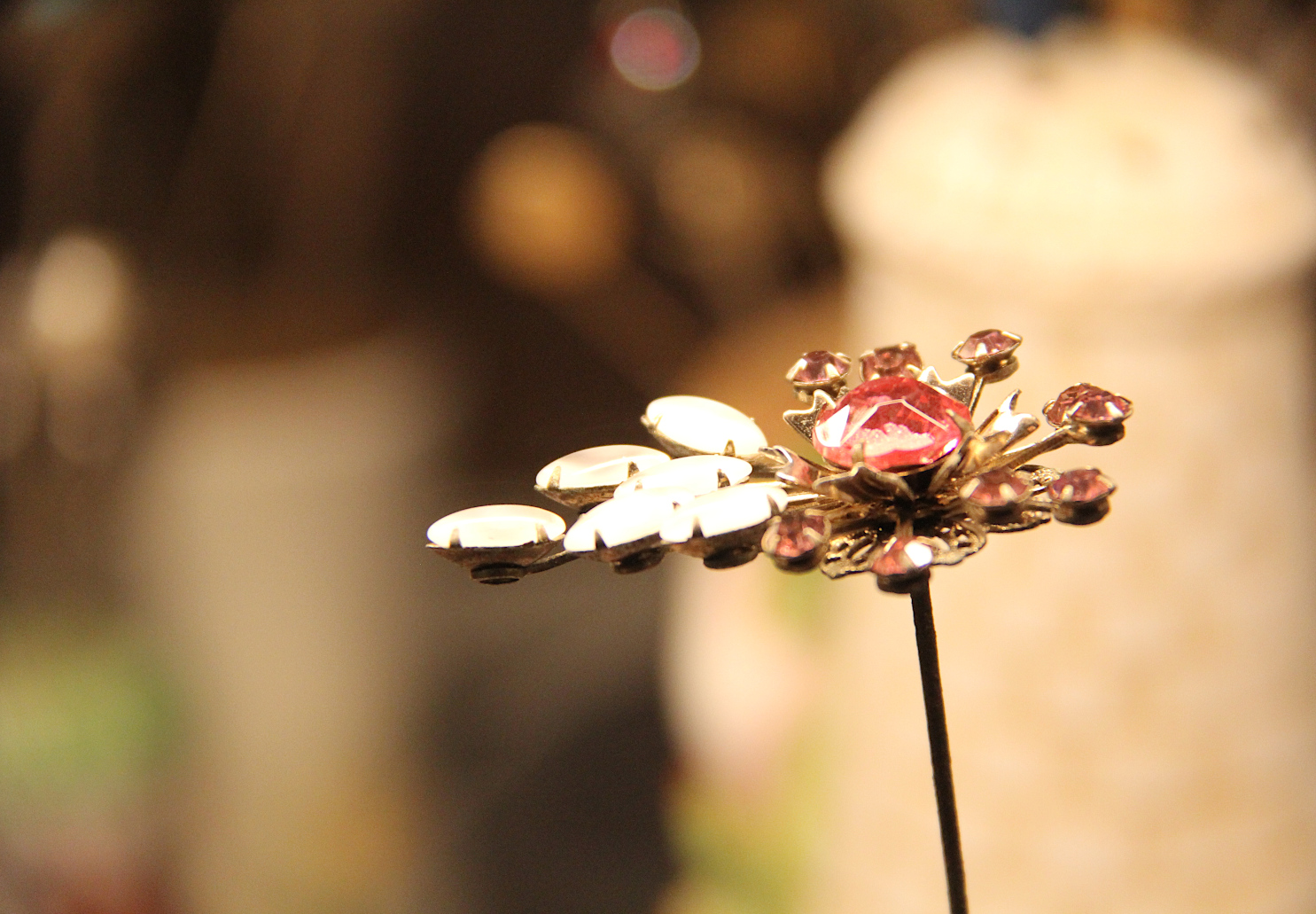
An entire glass case showcases vintage hatpins like this jeweled one. (Minnesota Prairie Roots copyrighted photo May 2025)

And then there are the lovely vintage hatpins, elegant yet practical. A woman of yesteryear could pull a hatpin to defend herself if necessary.

Vintage hatboxes are artfully displayed throughout the exhibit. (Minnesota Prairie Roots copyrighted photo May 2025)

Vintage hatboxes, too, are part of the display, adding an artful element. As someone who appreciates type and fonts, and art, I found myself drawn to the mostly-round hatboxes. They truly are works of art as well as containers to store and protect hats.

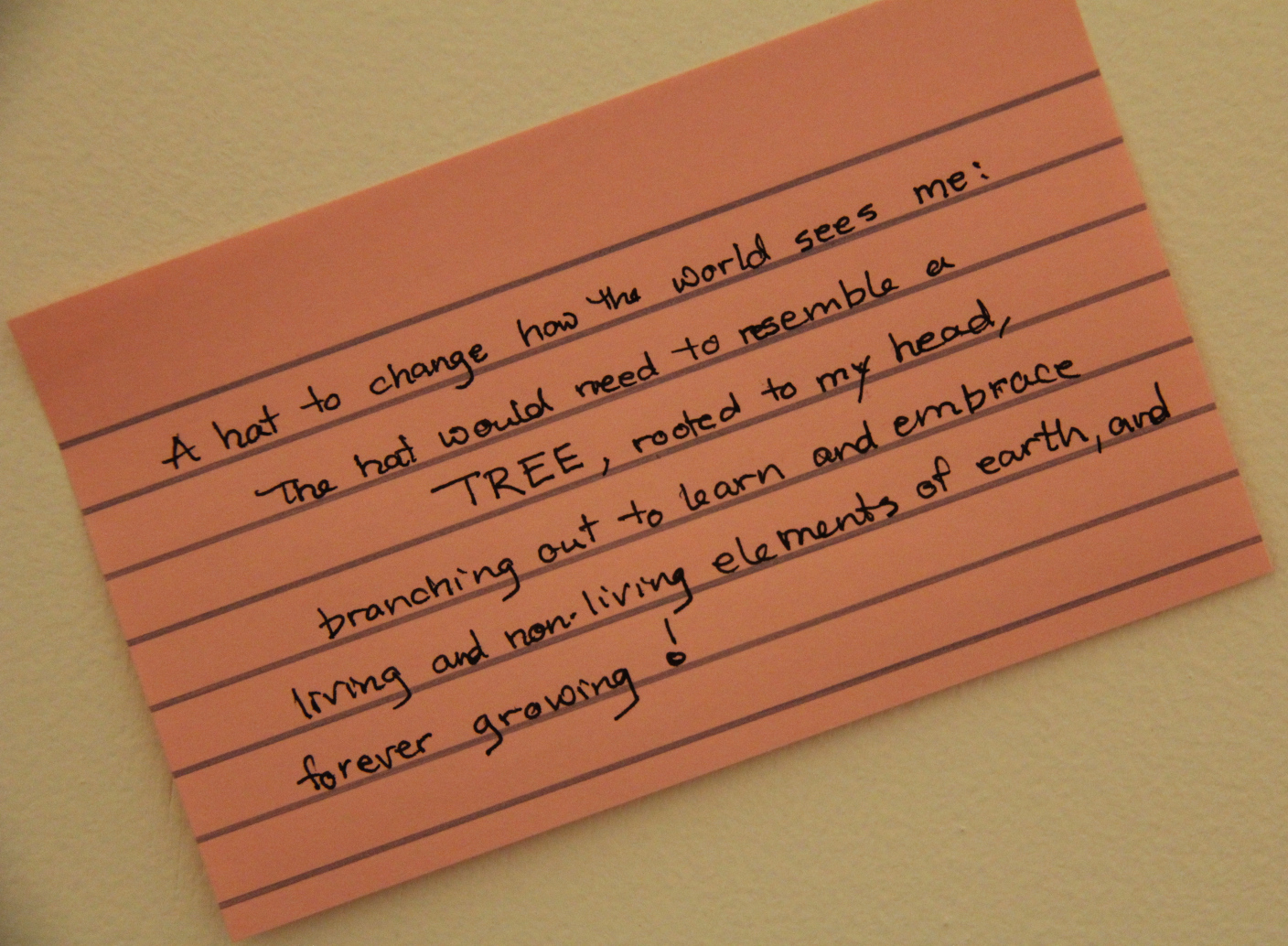
A reply to a writing prompt posted in the HATBOX. (Minnesota Prairie Roots copyrighted photo May 2025)

I especially liked the interactive HATBOX corner, a hidden space to sit, pull a writing prompt from a hatbox, think and reply to the prompt before anonymously posting it on a wall. That got me thinking about the many hats I’ve worn and still wear. Hats down, my most cherished hats are those of daughter, wife, mother and grandma. The others matter, too, but not as deeply, not as personally, as donning the hats of loving, caring for and supporting my closest family.

A fun cap in the exhibit. (Minnesota Prairie Roots copyrighted photo May 2025)

Actual, physical hats I’ve worn call for a bit more thought because I didn’t wear all that many. I had, still have, two childhood Easter bonnets. And then there’s the floppy lime green with white polka dots cotton hat I donned while detasseling corn. Perhaps I remember it best because I remember so well the experience of yanking tassels from cornstalks in the sweltering heat and humidity of July in southwestern Minnesota. Worst job ever, hats down, paying only $1.25/hour. Imagine dew rolling down your arms, corn leaves slicing your skin, the hot sun baking your body, no place to pee except between corn rows. A grimy band of sweat ringed that polka dot hat by day’s exhausting end.

The Waseca County History Center museum, 315 Second Ave. N.E., is open from 9 a.m. – 5 p.m. Tuesday through Friday. (Minnesota Prairie Roots copyrighted photo May 2025)

While I didn’t see any hats quite like mine in the Waseca exhibit, I saw some that were similar. But mostly I saw how the hats we wear, literally or metaphorically, identify and shape us. Hats change with time, as we grow, progress, move through life. This display documents that, causing me to pause, to reflect, to consider all the hats I’ve worn through the years.

TELL ME: What hats have you worn? Which matter to you most and why? Or which proved a defining moment in your life?

© Copyright 2025 Audrey Kletscher Helbling


History & tradition meld at Cannon City Memorial Day observance May 28, 2025

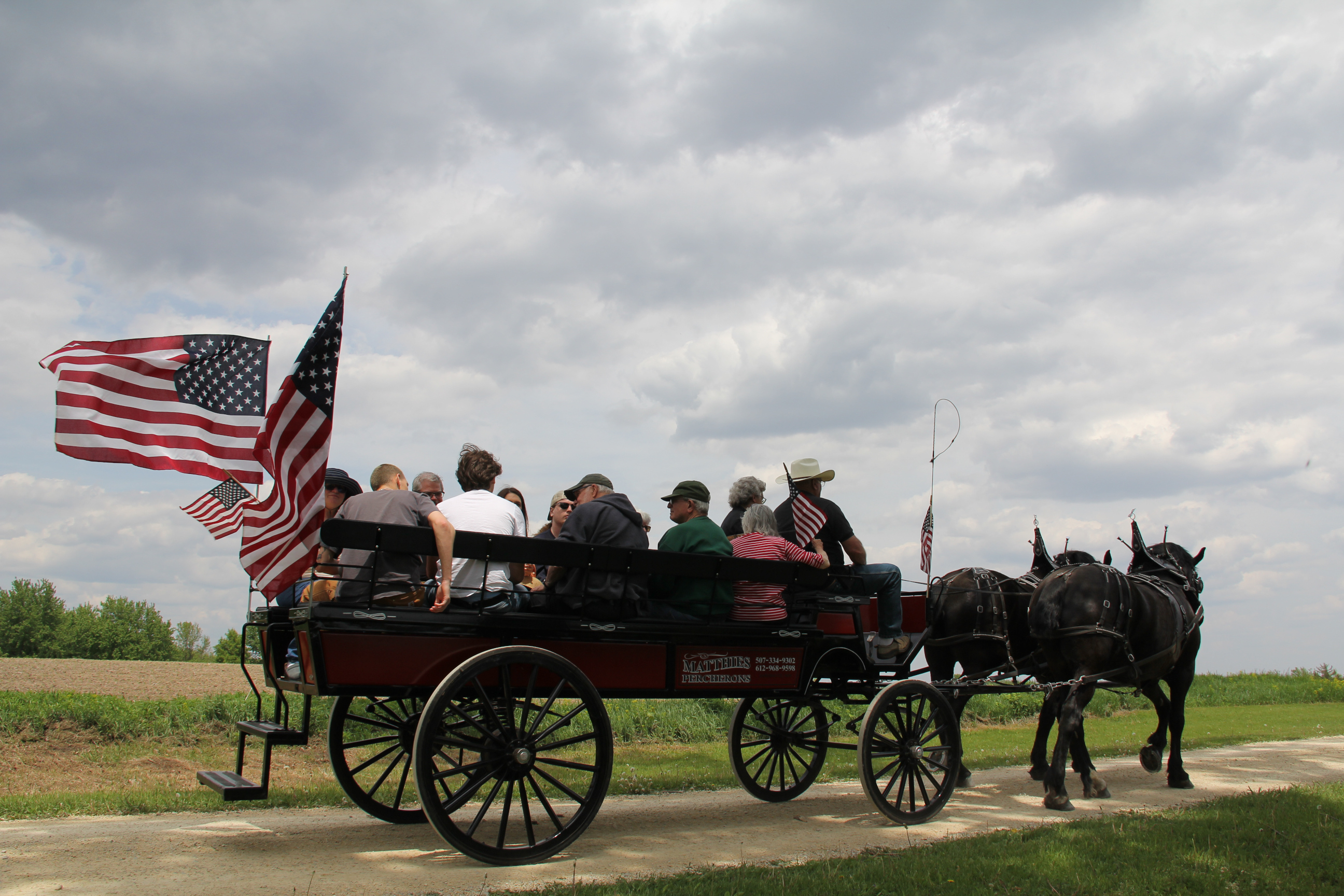
A horse-drawn wagon leads the parade along the gravel road to the Cannon City Cemetery. (Minnesota Prairie Roots copyrighted photo May 2025)

MEMORIAL DAY IN CANNON CITY is decidedly simple and old-fashioned, marking a 100-year-plus tradition of gathering in the 1867 cemetery to remember and honor veterans. This observation also embraces community with a mixture of mostly locals and those born here returning home for the 2 p.m. program followed by visiting, lots of visiting.

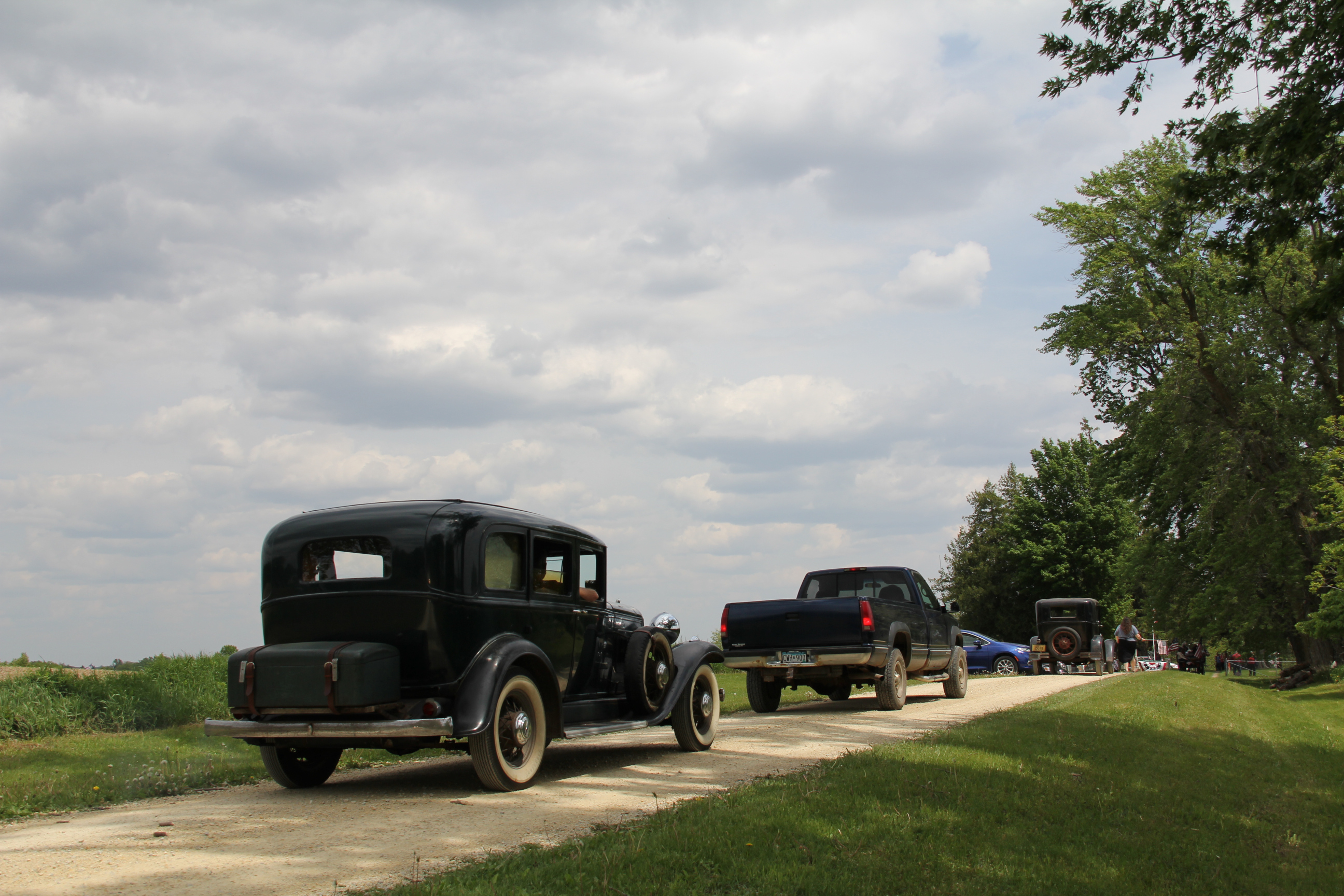
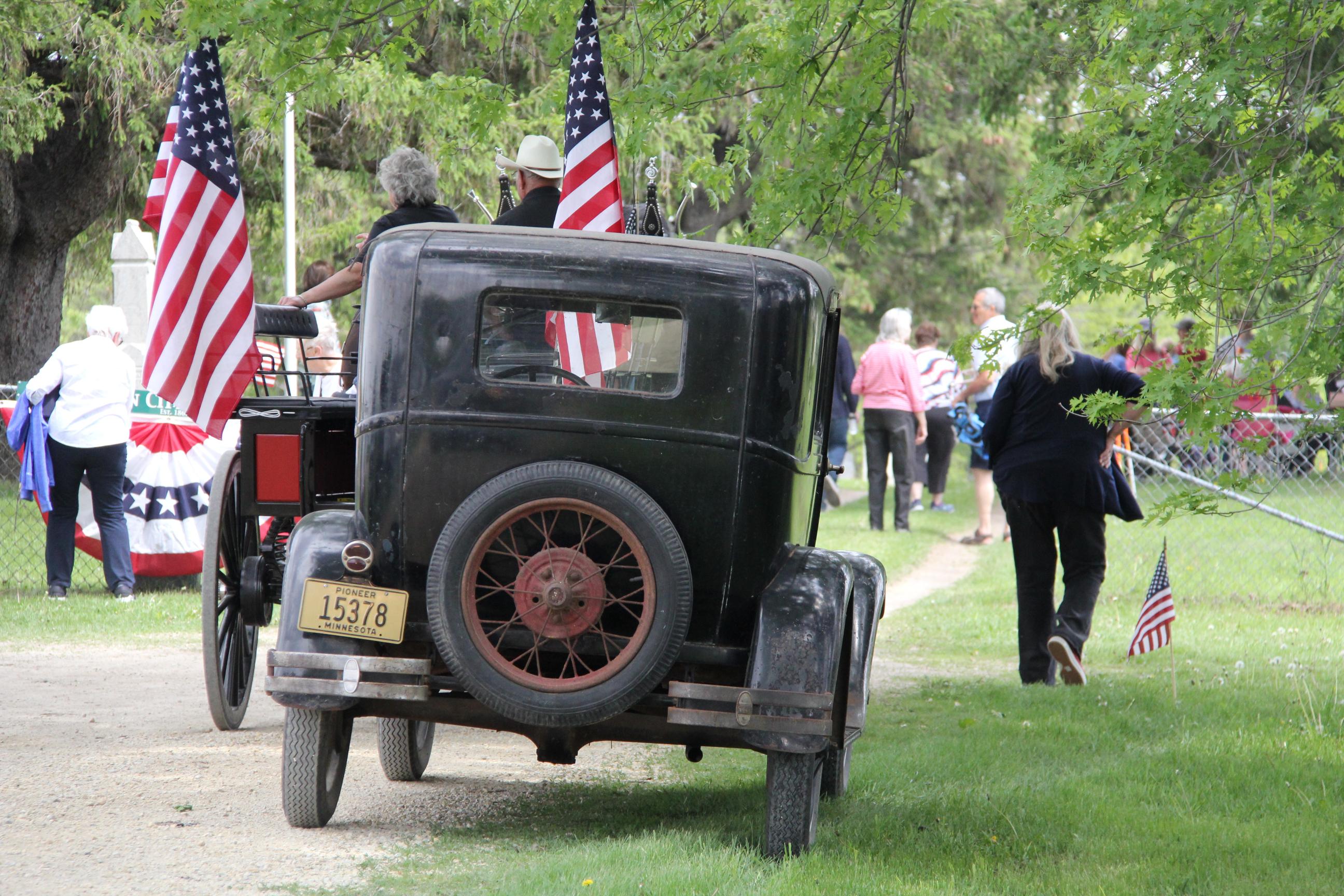
Several vintage vehicles and a pickup follow. (Minnesota Prairie Roots copyrighted photo May 2025)

Although I have no connection to this unincorporated village a few miles northeast of Faribault, I’ve found myself often drawn here on Memorial Day. The countryside setting and the way in which the day is celebrated appeal to my rural roots and upbringing 130 miles away on the southwestern Minnesota prairie.

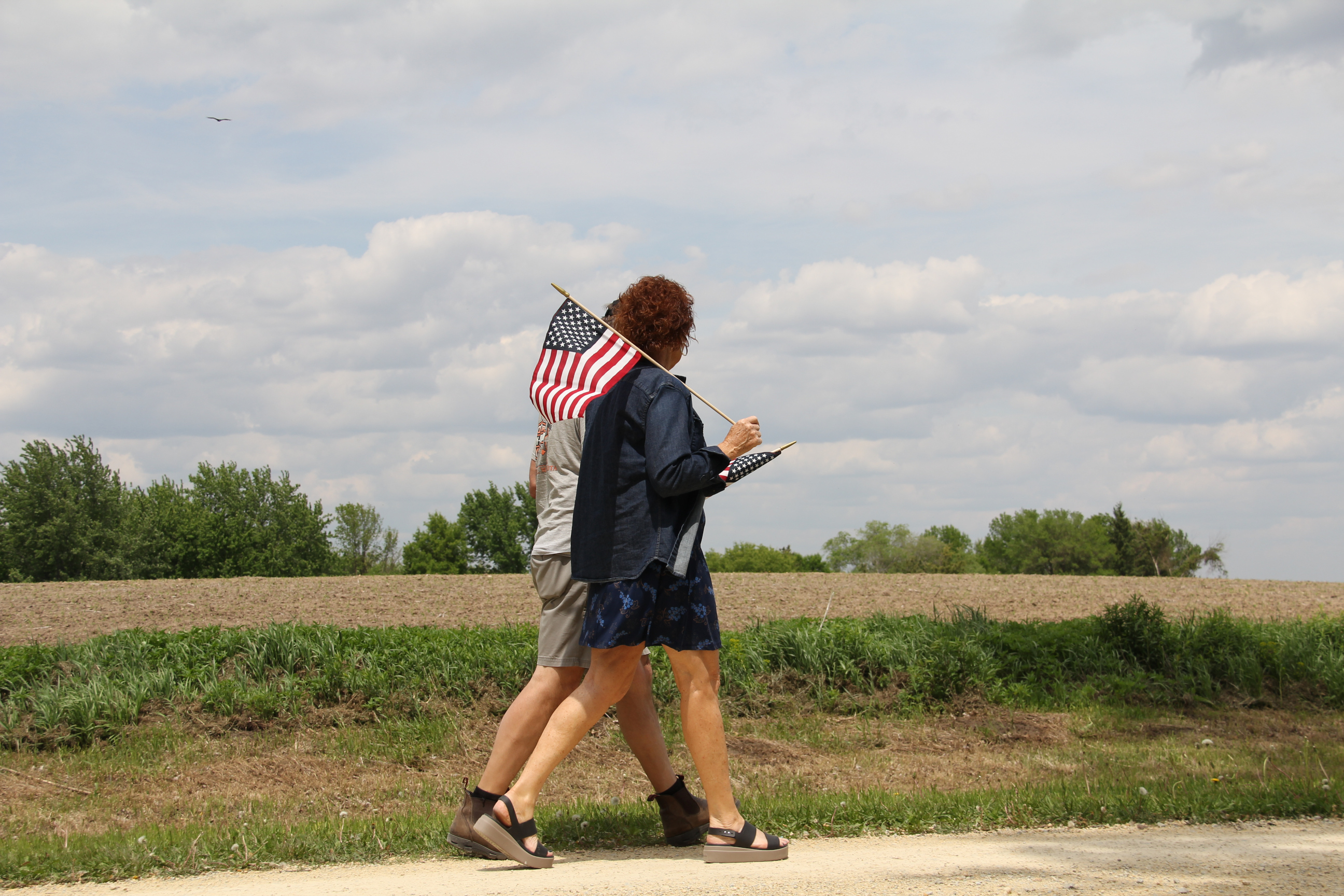
A few people walked the parade route, here past farm land. (Minnesota Prairie Roots copyrighted photo May 2025)

Monday’s event at Cannon City began with a parade from the nearby former country school to the cemetery. A small contingent of horse-drawn wagon, vintage vehicles and several walkers followed the gravel road past homes and farm fields to the fenced cemetery. I walked alongside the group in the road ditch, photographing the scene as they neared the graveyard.

Vintage vehicles set an historic scene outside the cemetery gates. (Minnesota Prairie Roots copyrighted photo May 2025)

It was not difficult in that moment to imagine the long ago school children proceeding to the cemetery, carrying homemade floral wreaths of lilacs and other flowers in bloom. Several years ago that original Decoration Day parade tradition was revived. It’s a lovely nod to history.

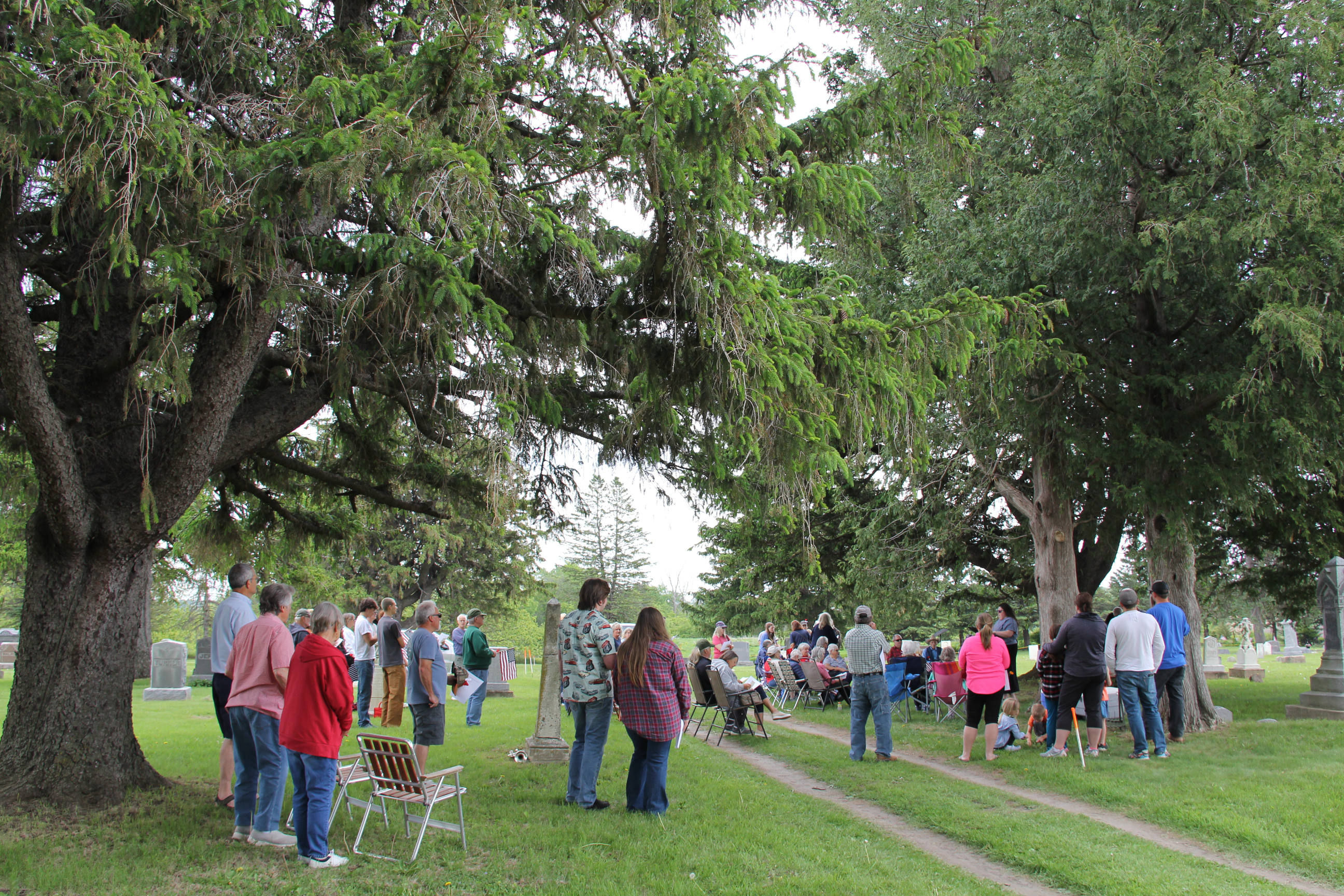
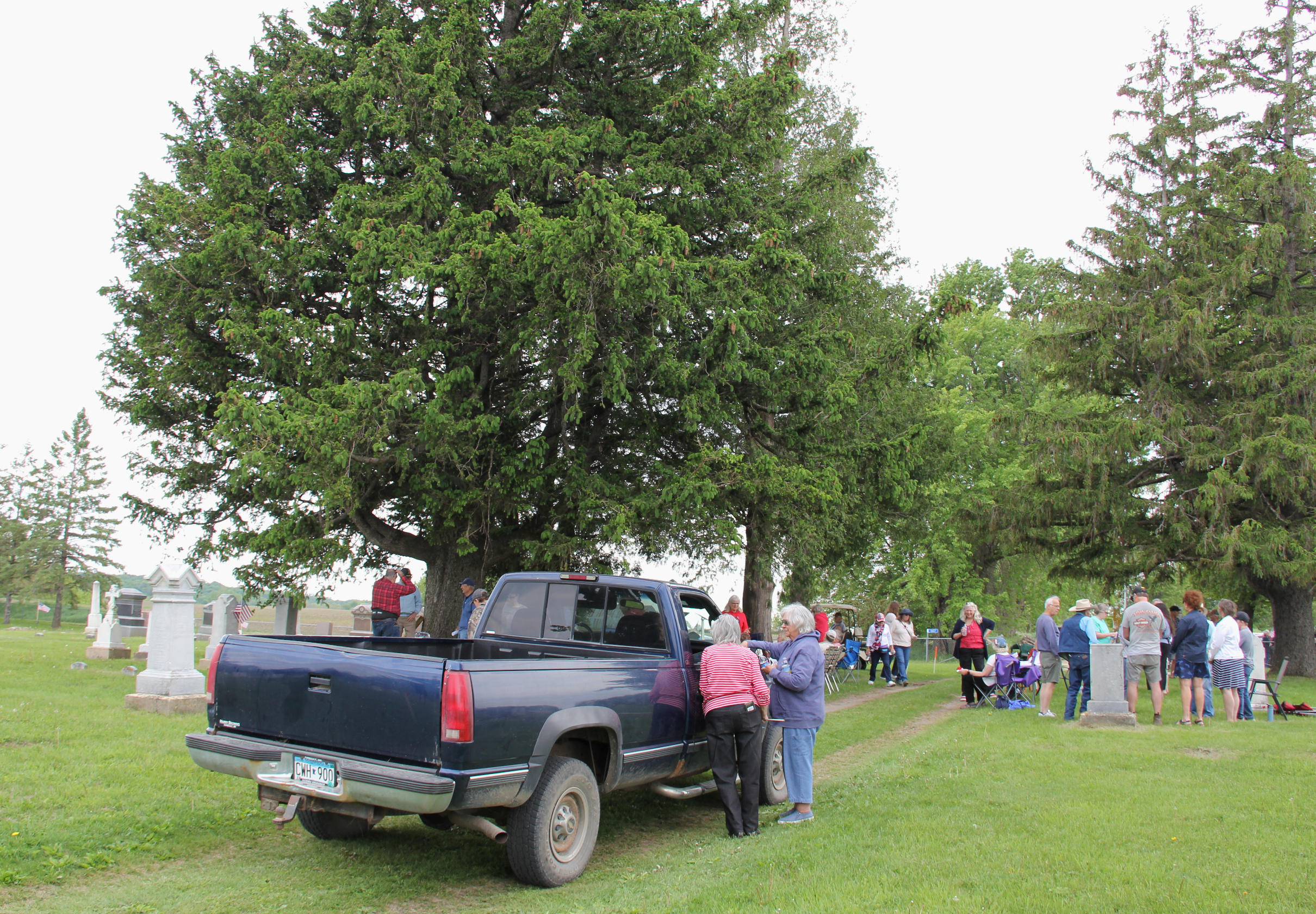
A crowd gathers for the Memorial Day program centered under the trees. (Minnesota Prairie Roots copyrighted photo May 2025)
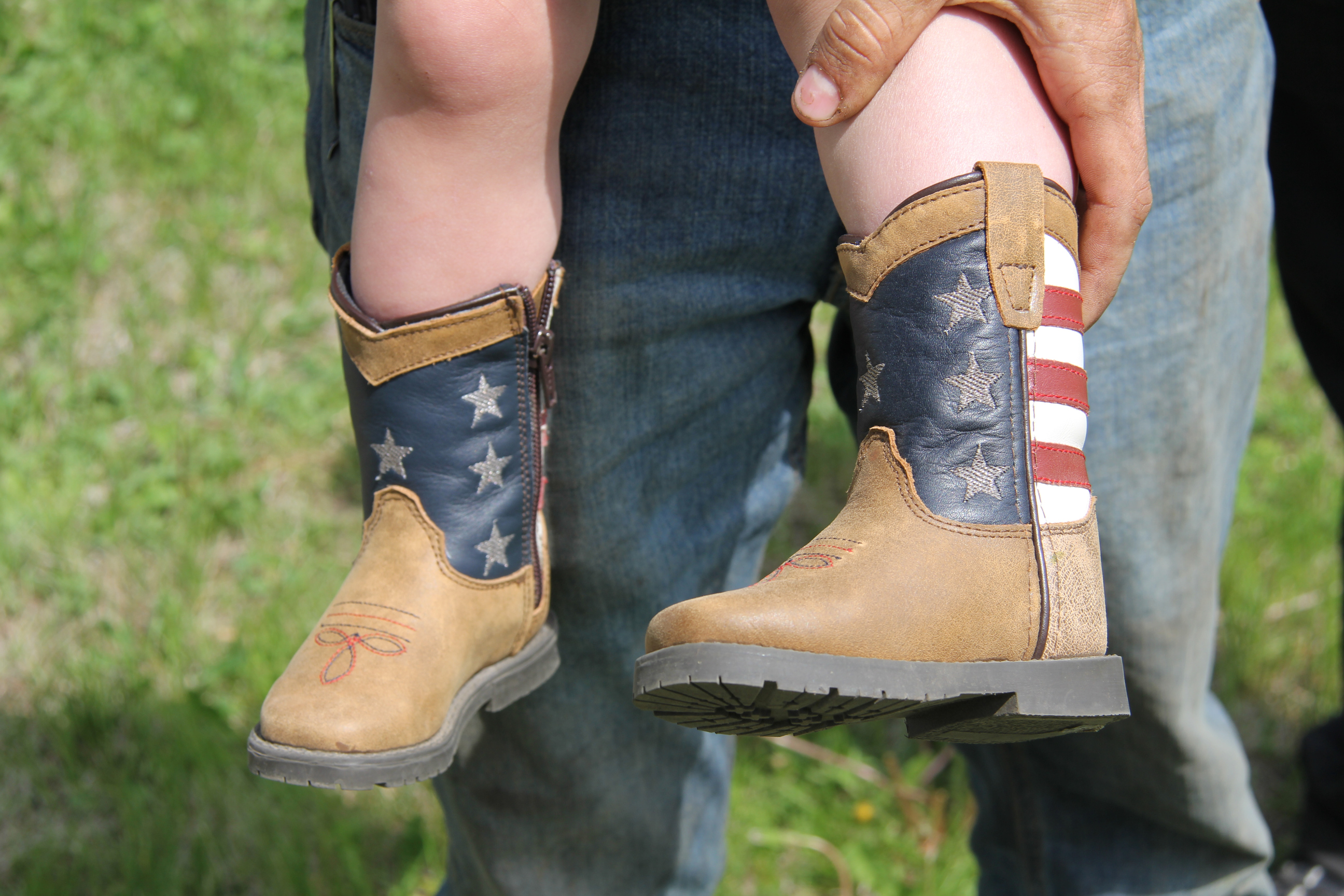
All ages attended, including Levi, almost two, who wore these patriotic boots. His grandpa is the cemetery caretaker. Levi helps him and his dad by picking up sticks before mowing. (Minnesota Prairie Roots copyrighted photo May 2025)
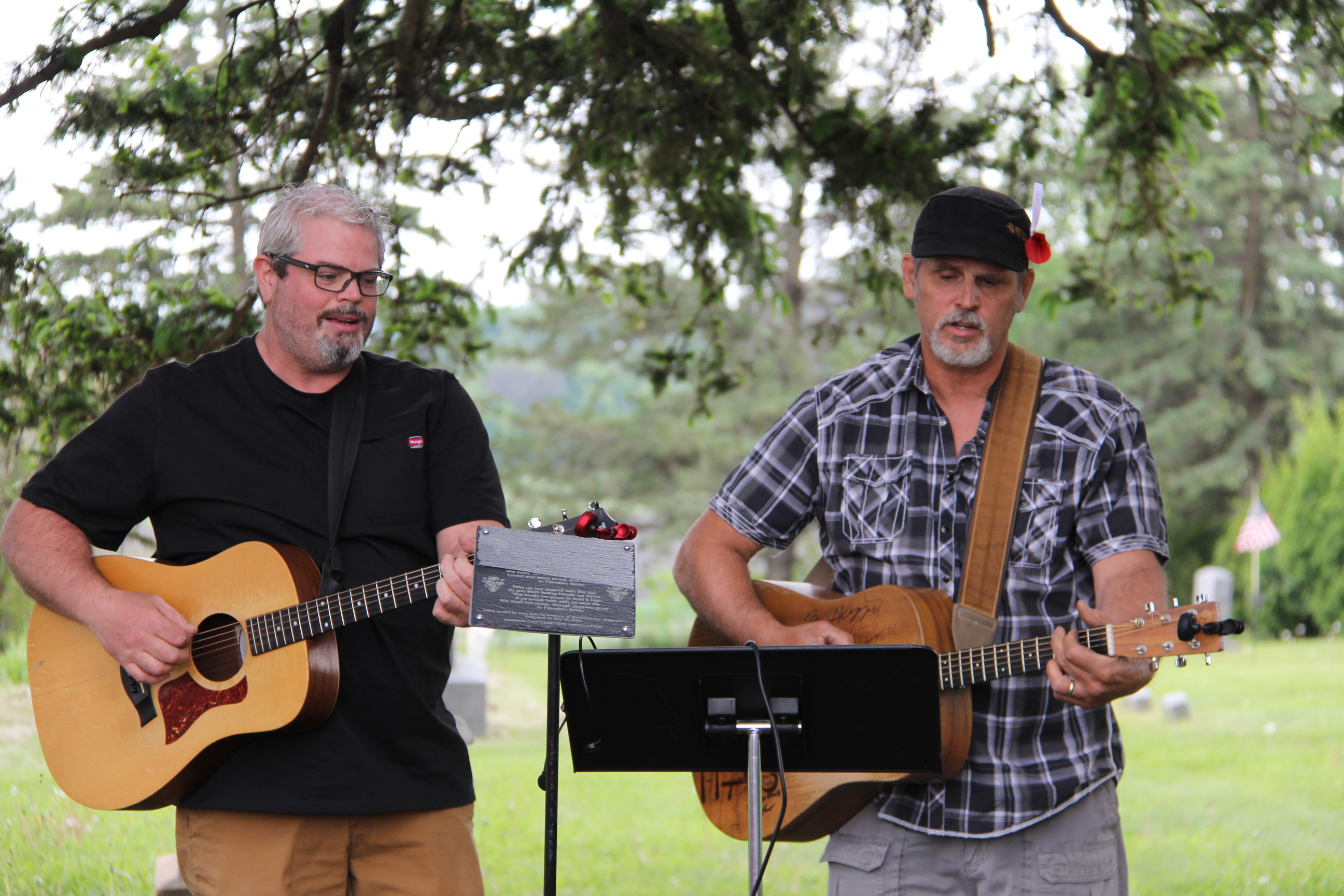
The Sartor Brothers lead musical selections. (Minnesota Prairie Roots copyrighted photo May 2025)

Inside the cemetery gate, folks gathered in the shelter of cedars and pines to listen to inspirational readings and poetry; to sing; to hear the names of 52 veterans buried here read aloud; and more.

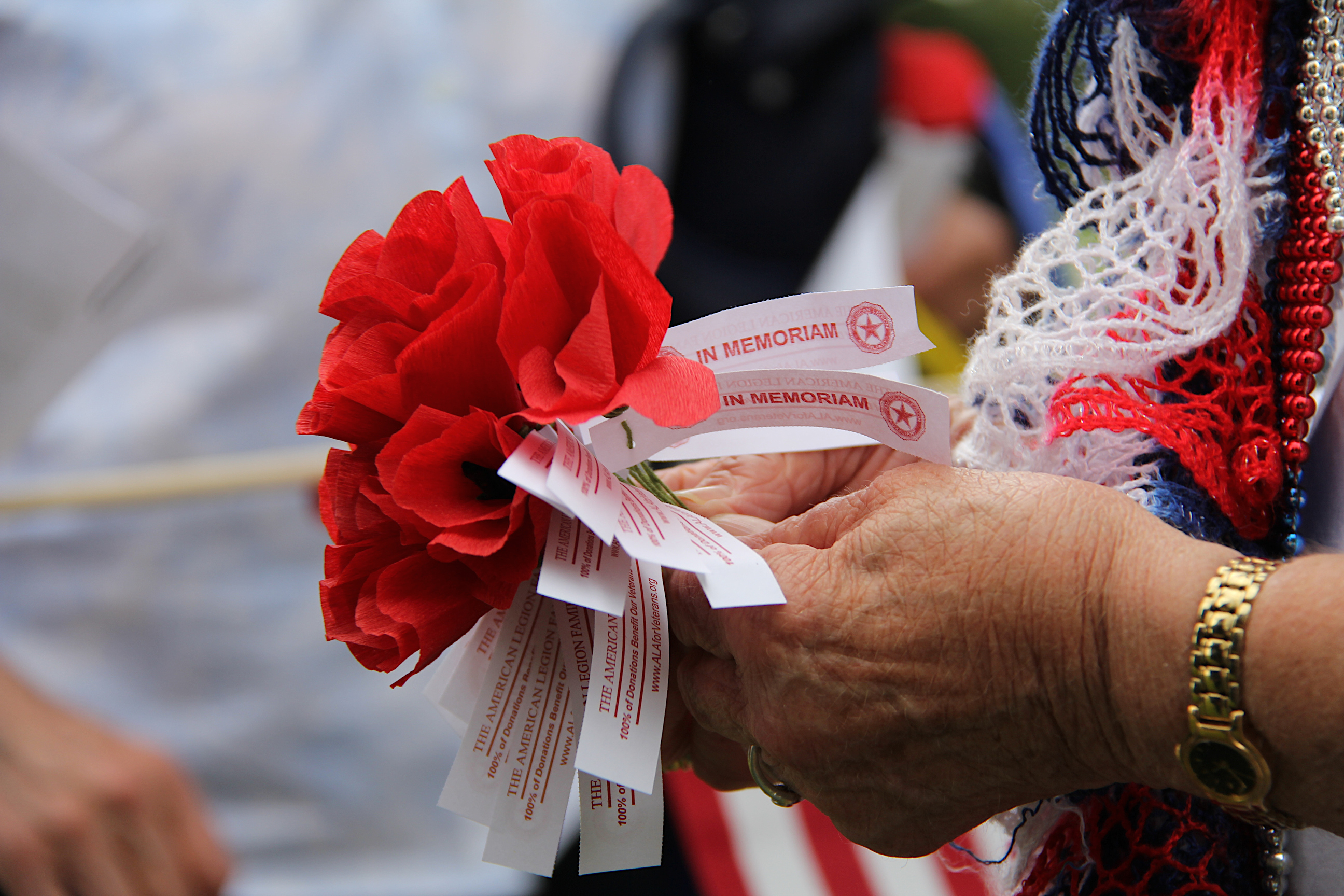
Handing out poppies to attendees. Members of the Faribault American Legion Auxiliary and other volunteers crafted the paper flowers. (Minnesota Prairie Roots copyrighted photo May 2025)
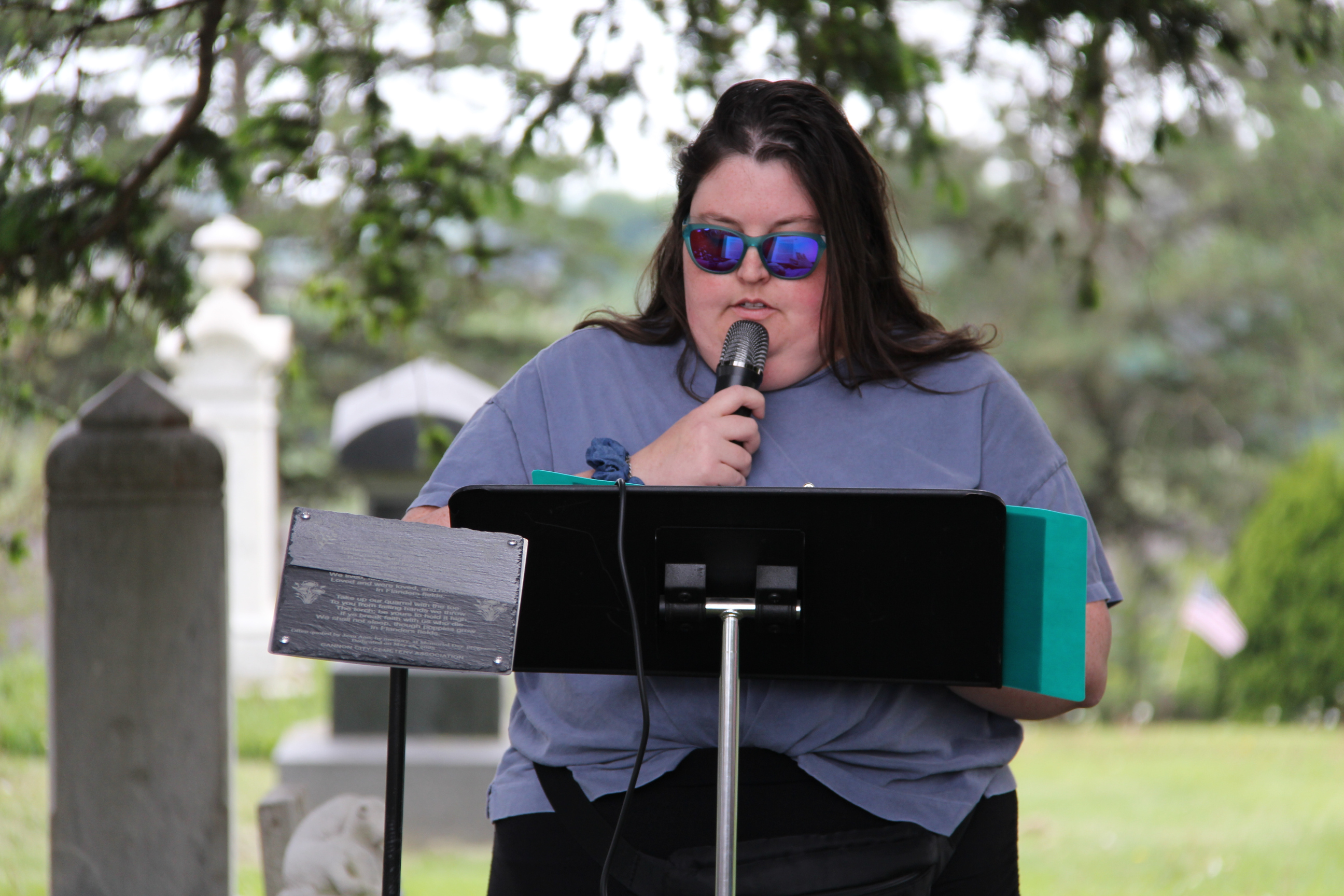
Organizer Kathleen Kanne led the program and talked about Jean Ann Pederson. The plaque in front of Kanne was given in honor of Jean Ann. (Minnesota Prairie Roots copyrighted photo May 2025)
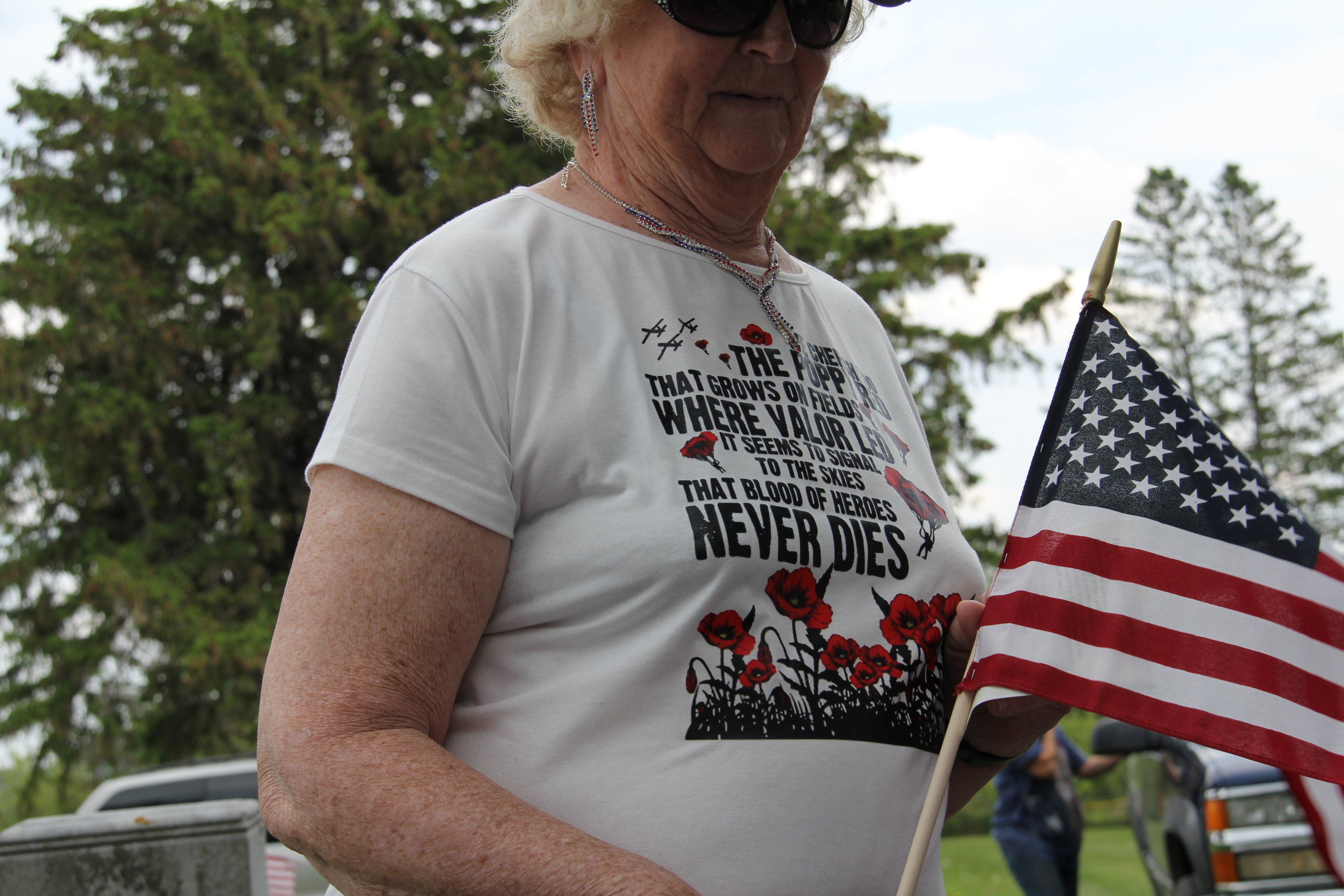
A woman’s t-shirt focuses on poppies, representing the blood of heroes who died in war. (Minnesota Prairie Roots copyrighted photo May 2025)

This year the “more” included excerpts from an interview with Jean Ann Greenville Pederson, a Cannon City native interviewed by Kathleen Kanne and Mel Sanborn. She died in February, shortly after her 93rd birthday. Each May, Jean Ann shared a bit of local Memorial Day history and read “In Flanders Fields” to attendees. Kanne, program organizer, announced the placement of a small “In Flanders Fields” graveside plaque honoring Jean Ann. She then invited us to read the poem together. I recited it, having memorized “In Flanders Fields” as a child tasked with sharing the poem several times during my hometown Memorial Day program. In Flanders fields the poppies blow/Between the crosses, row on row…

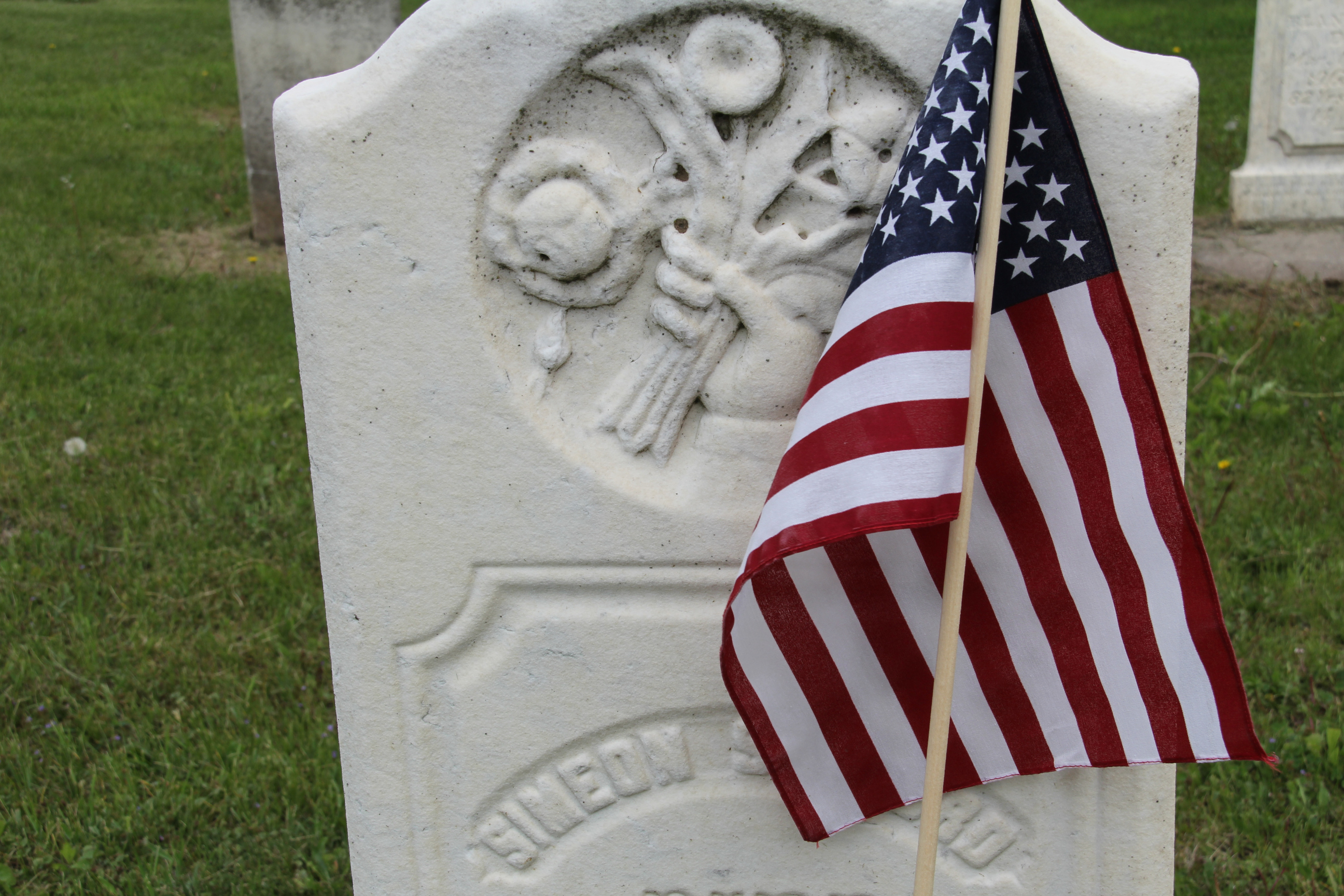
American flags marked the graves of veterans in the Cannon City Cemetery. (Minnesota Prairie Roots copyrighted photo May 2025)

Throughout this commemorative event in the Cannon City Cemetery, I was intimately aware of my surroundings. Under the trees. Next to farm fields. The wind sweeping across the hill. Birds chirping. It felt reverent, almost holy—this place like a sanctuary. For the living and the dead.

Visiting after the program. (Minnesota Prairie Roots copyrighted photo May 2025)

After the program concluded, families meandered among the gravestones. Stopping. Gathering. Others remained under the cedars and pines, connecting and reconnecting. I grabbed a chocolate chip cookie and went in search of my friend’s, veteran Rhody Yule’s, grave. I found it, flat against the ground, hidden by a bush.

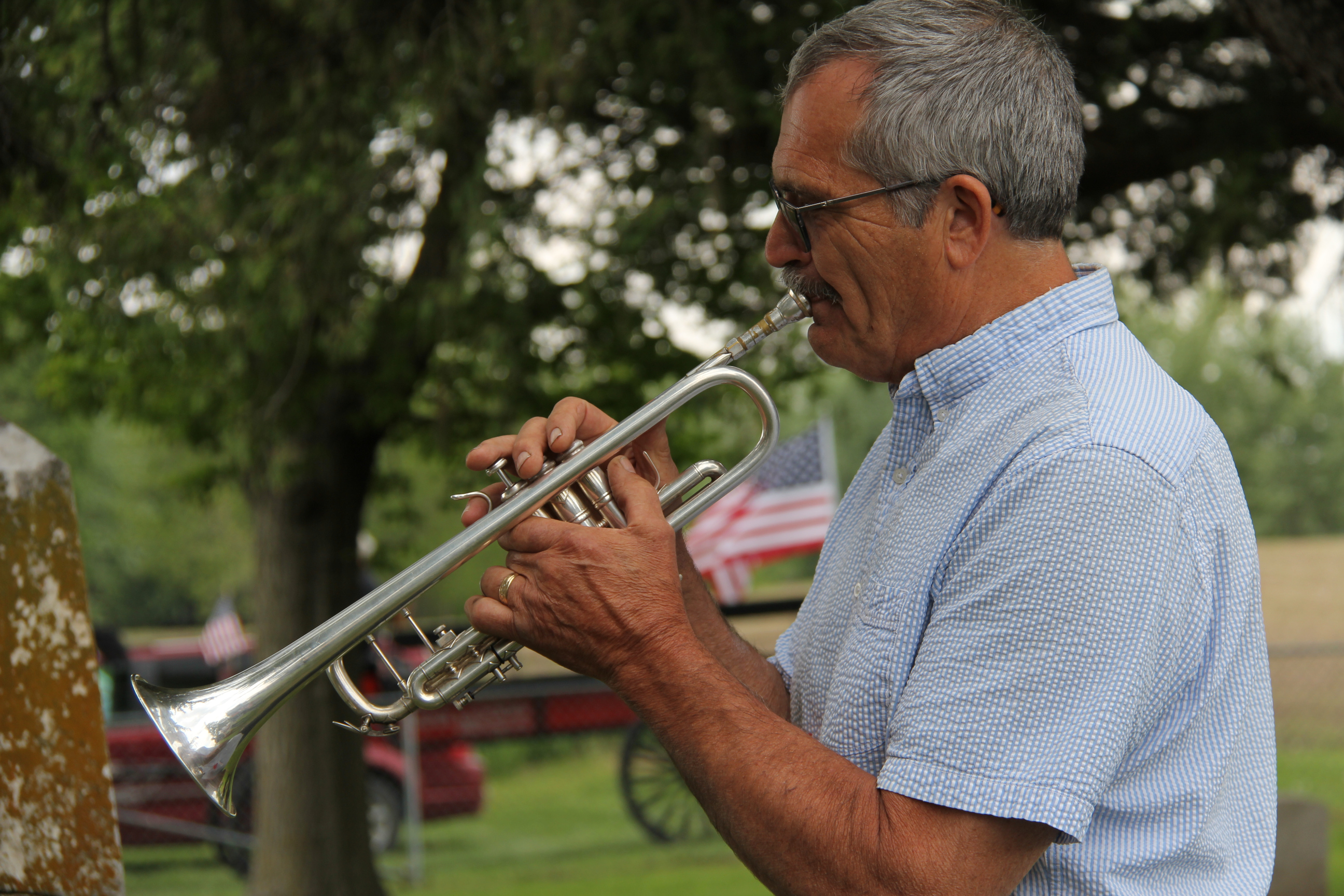
I heard Steve Bonde play taps at the Memorial Day service in Faribault in the morning and then again at Cannon City in the afternoon. (Minnesota Prairie Roots copyrighted photo May 2025)

Later, as I headed toward the van to leave, I heard Steve Bonde, who earlier played patriotic music, playing more tunes. It was the perfect way to end my time here, where respect for veterans, for community and for tradition carries through generations of those rooted in Cannon City.

© Copyright 2025 Audrey Kletscher Helbling
 

Remembering, honoring, grieving on Memorial Day May 22, 2025

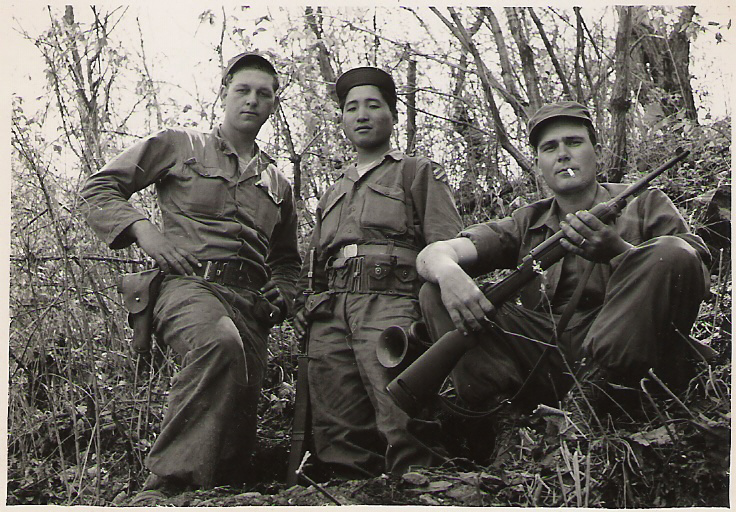
My father, Elvern Kletscher, left, with two of his soldier buddies in Korea.

WHEN MEMORIAL DAY ROLLS around each May, my thoughts shift to my dad, who served on the front lines during the Korean War. He survived, albeit with the emotional trauma that comes from killing and constant danger of being killed. His close buddy, though, did not survive. And that is the man I remember and honor today, along with others who’ve lost their lives in service to country.

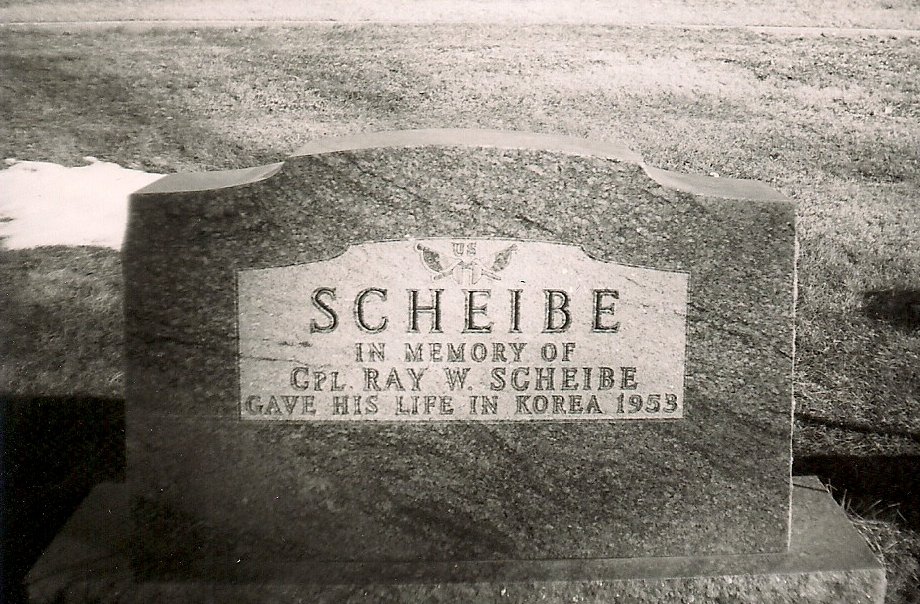
Sonny Nealon, Ray’s best friend in high school, sent me this photo of Ray’s gravestone. (Photo credit Sonny Nealon)

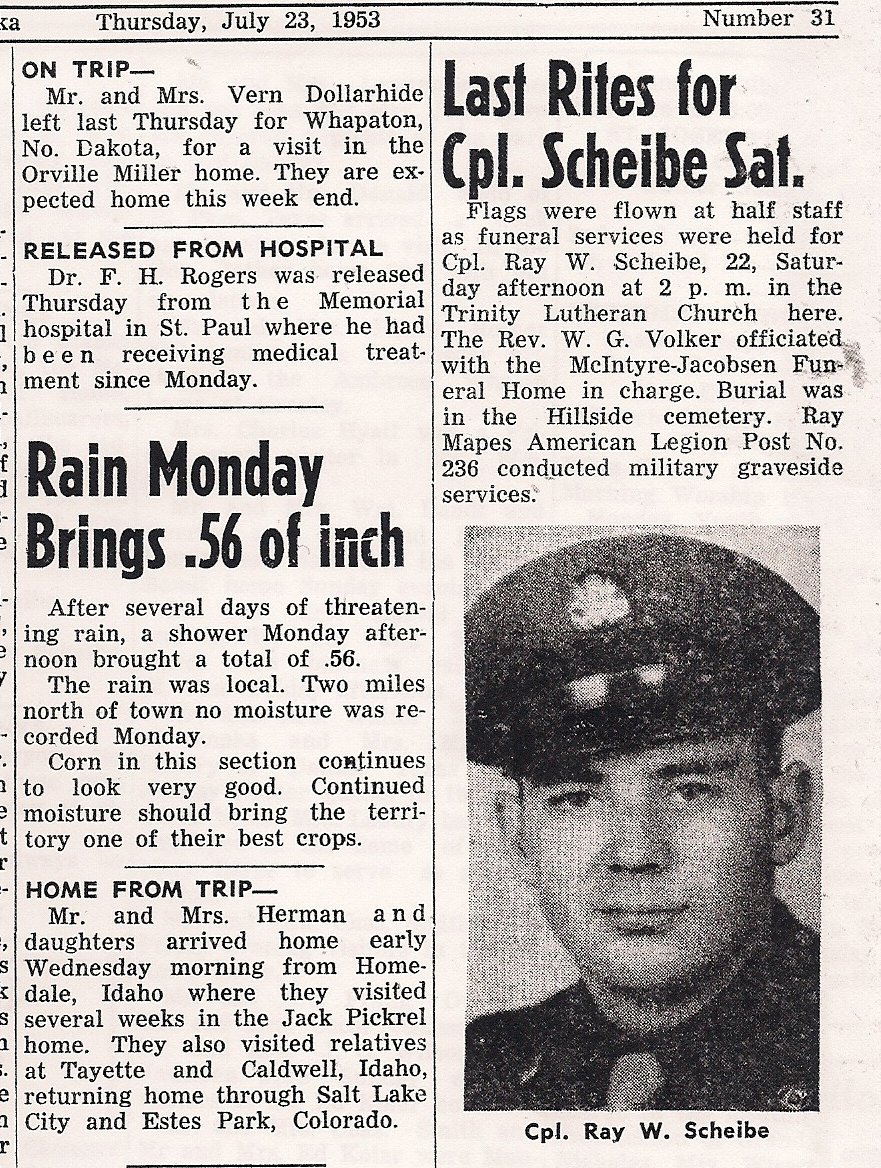
Corporal Ray W. Scheibe, 22, of Wolbach, Nebraska, died on June 2, 1953, blown apart by a mortar shell. My dad witnessed his horrific death, for war is nothing short of horrible. Ray was scheduled to leave Korea the next day, which makes his story even more tragic. He left behind grieving friends and family, including his wife, Marilyn, and 3-month-old daughter, Terri Rae, whom he had not yet seen. I’ve since found and connected with Terri in Iowa, but have yet to meet her.

A story about Cpl. Ray W. Scheibe, published in the July 23, 1953, issue of The Wolbach Messenger.

It is the individual stories of soldiers like Ray that take war to a personal level. A level that allows us to understand the meaning of the words “killed in action.” My father’s grief in losing Ray became, in some ways, my grief, too.

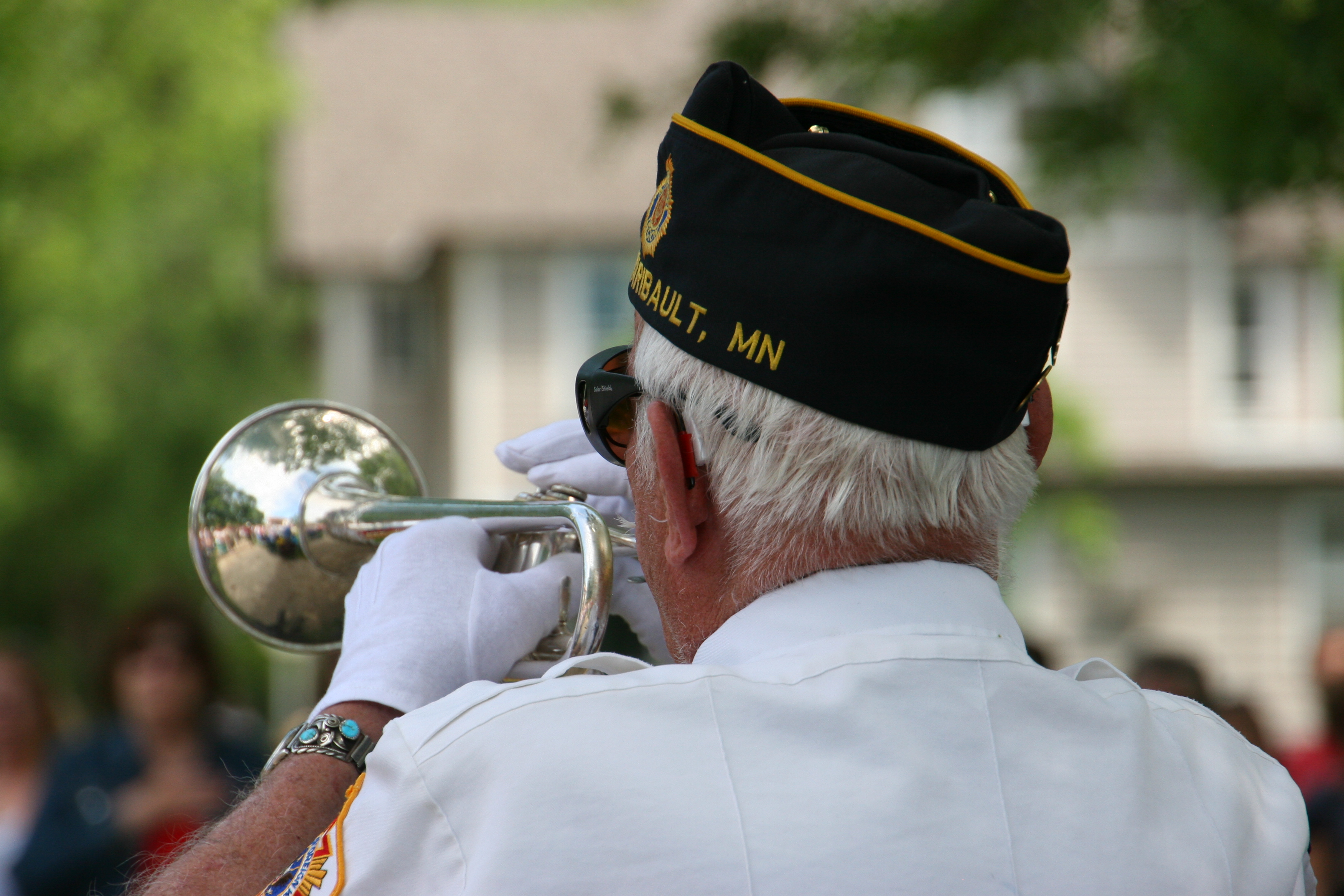
Playing taps at a past Memorial Day program in Faribault. (Minnesota Prairie Roots copyrighted file photo May 2016)

On Memorial Day we gather in collective grief to remember the many men and women who, like Ray, died while serving in the U.S. military. There will be parades and speeches, patriotic music and poetry, poppies and red-white-and-blue attire. Names read. Tears shed. Taps played. Guns fired. Flags carried. Graves visited.

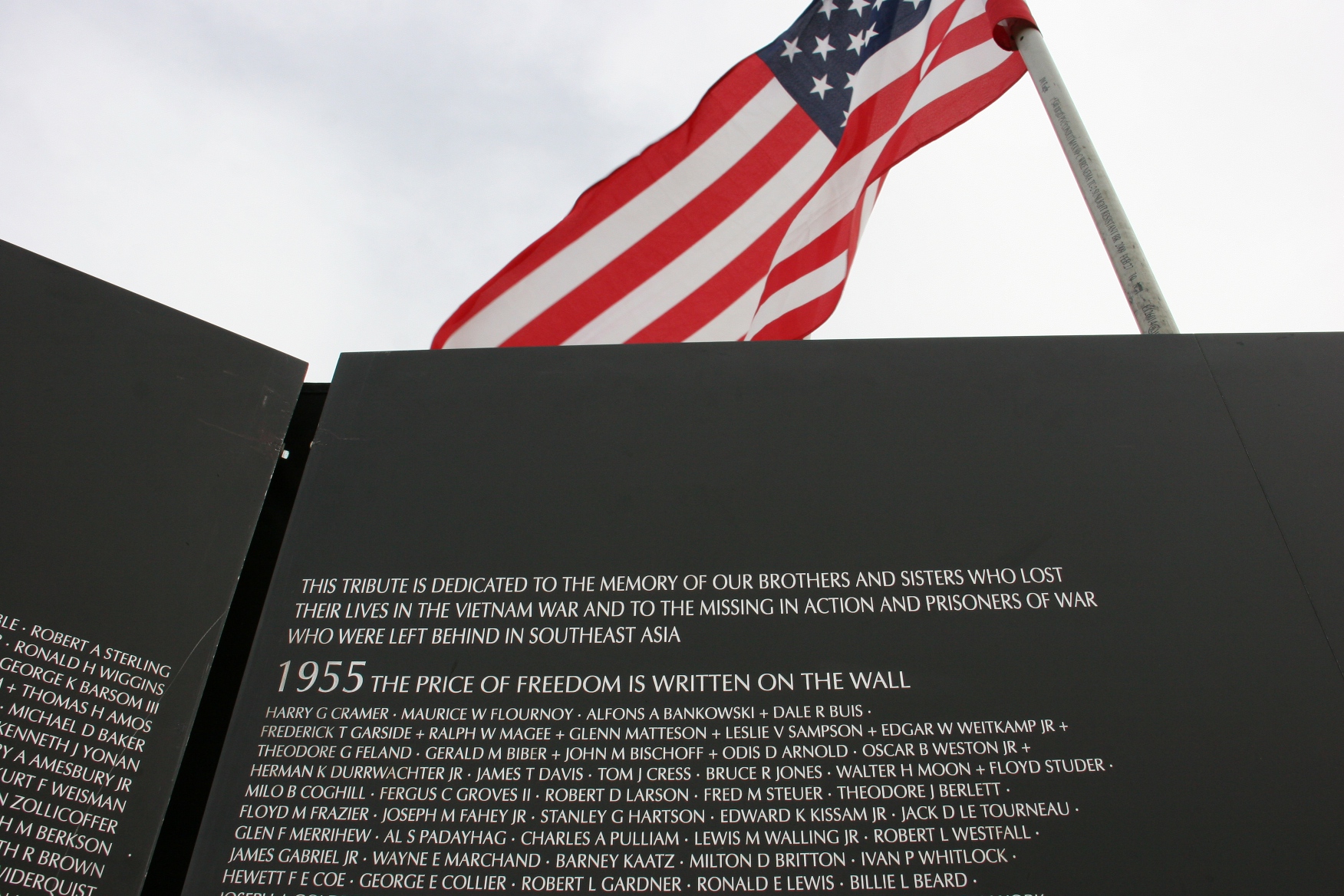
A message and names on the Traveling Vietnam Memorial Wall, which was in Faribault in 2016. (Minnesota Prairie Roots copyrighted file photo 2016)

In our hearts, in the silence of our thoughts, we reflect upon what it truly means to give up life for country as did Ray and 27 other men listed in a July 31, 1953, memorial service bulletin my dad carried home from Korea. Below those names are these words from Scripture: Greater love has no man than this, that a man lay down his life for his friends (John 15:13).

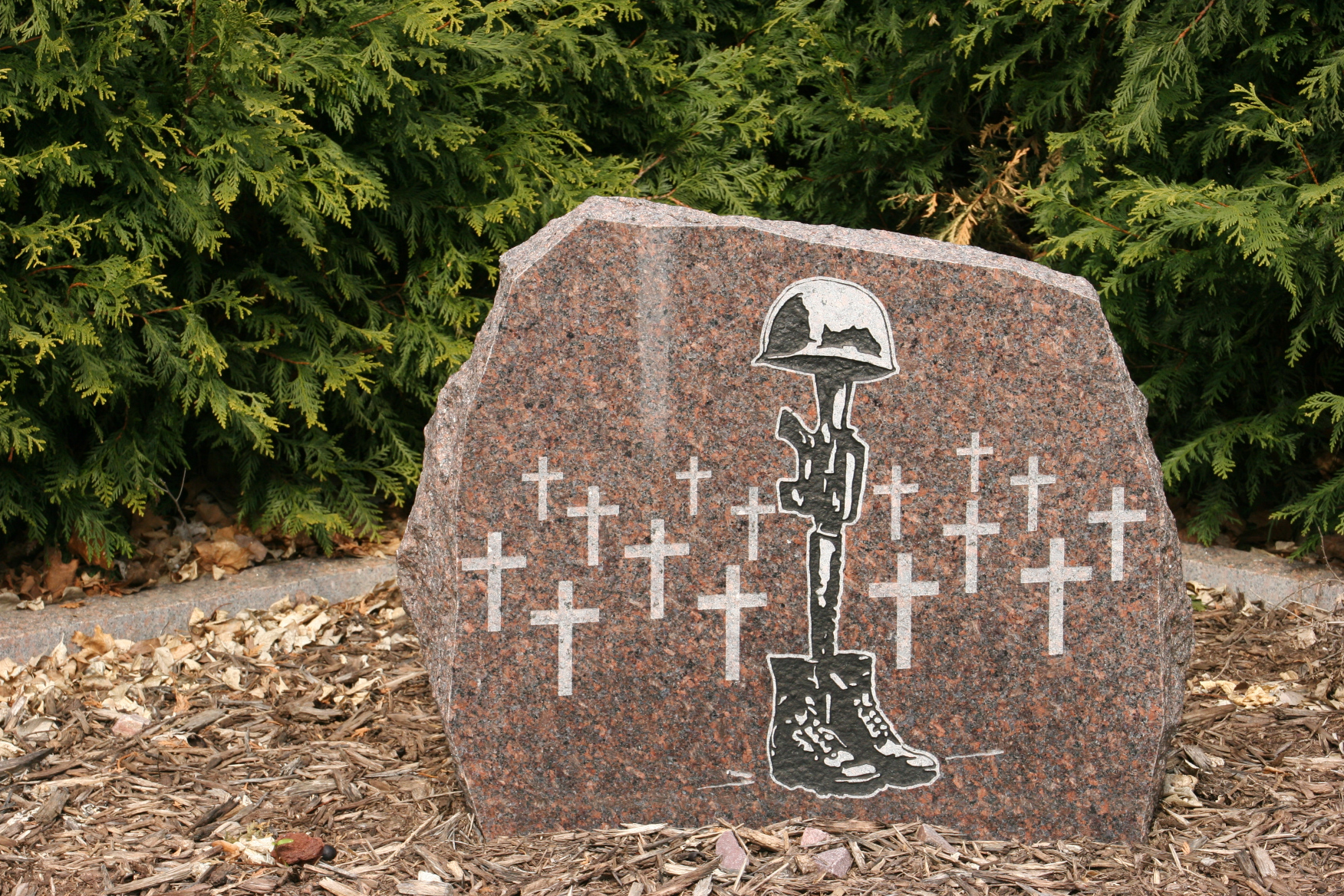
Honoring fallen soldiers with a special monument at the Rice County Veterans’ Memorial in Faribault. (Minnesota Prairie Roots copyrighted file photo)

I get emotional as I open the creased, soiled and yellowing 72-year-old memorial service program from Such’am-dong, Korea. I’ve tucked it into a shoebox with Dad’s other military papers, photos and belongings to pull out twice annually on Memorial and Veterans Days. I need to read the fading typewritten names, to recognize and honor these men who never made it home.

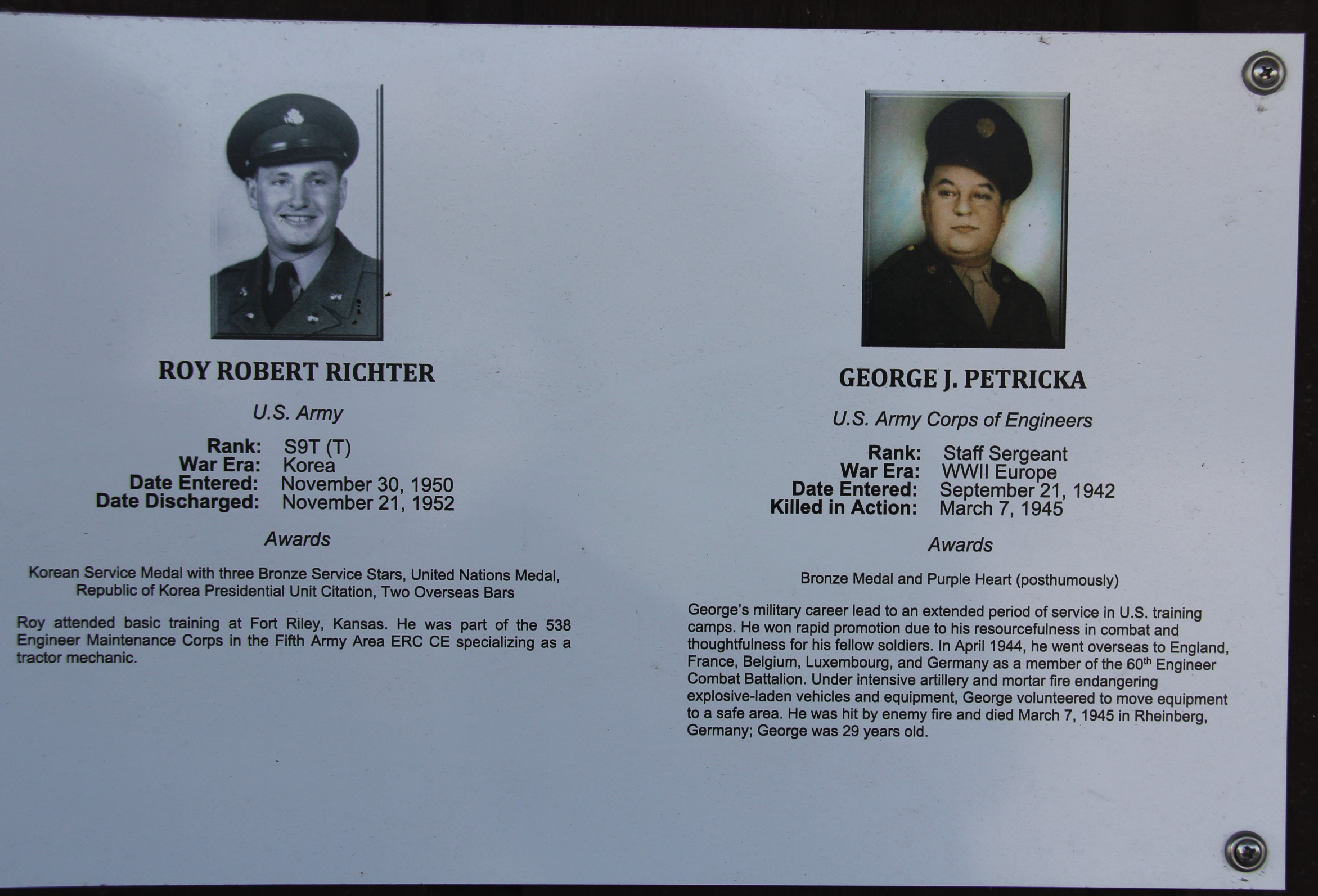
Montgomery, Minnesota, honors veterans via posting their photos and stories (339 thus far) throughout the downtown. To the right is the profile of George J. Petricka, killed in action during WW II on March 7, 1945. (Minnesota Prairie Roots copyrighted photo 2025)

I reread the list of alphabetized names from Turrell Anderson to Vernie Zurn. Raymond W. Scheibe falls at number 24. The surviving men of the 2nd Battalion, 65th Infantry Regiment, who mourned the 28 on that July day in 1953, carried the heavy weight of grief as they prayed, stood in silence, sang “America the Beautiful” and “My Country, ‘Tis of Thee.” And then they carried that grief home.

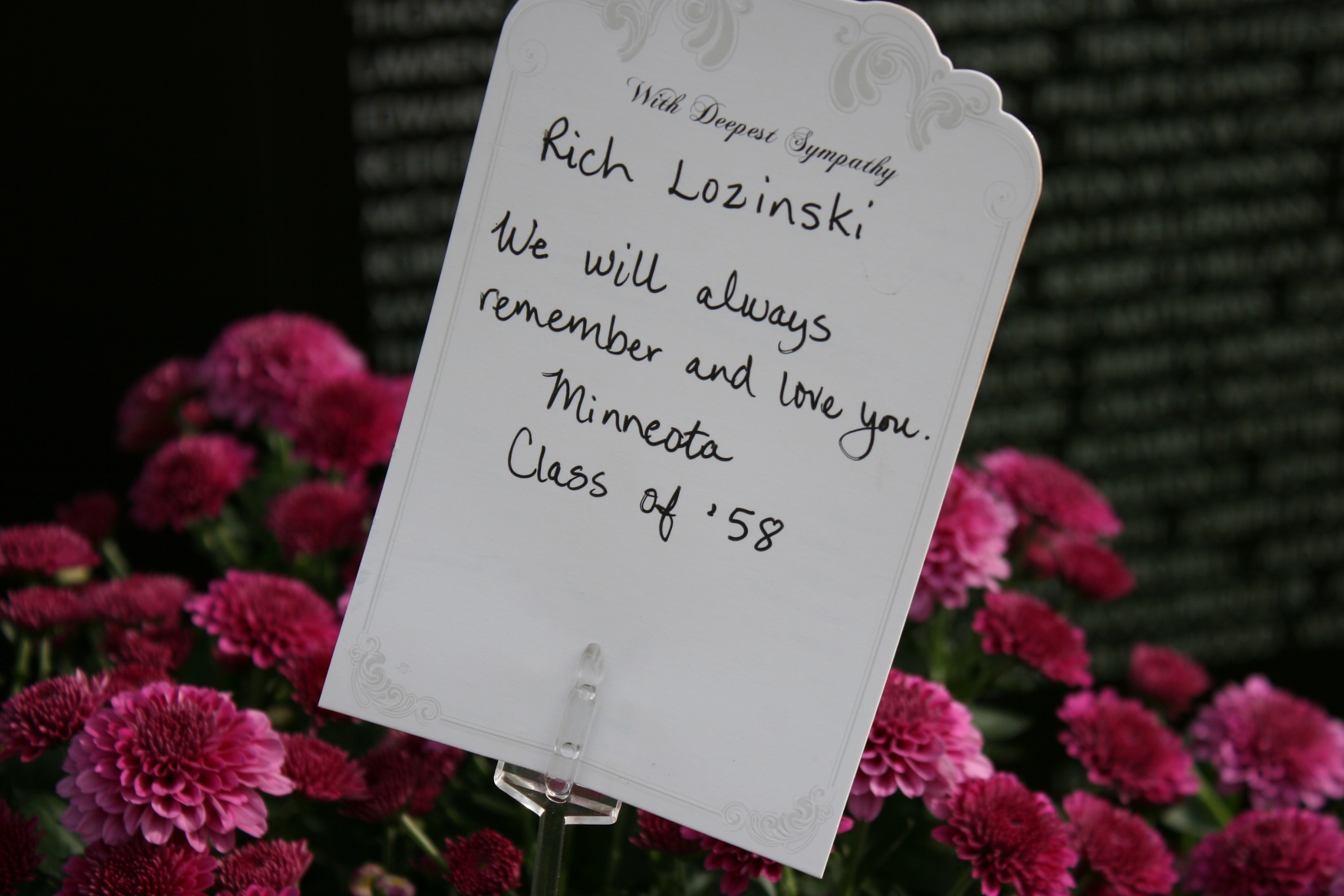
Grief in a note and mums left at the Traveling Vietnam Memorial Wall in Faribault. It honors Rich Lozinski, Class of 1958, Minneota, Minnesota. According to the online Wall list of those KIA, the name is spelled “Lozenski.” Rich was only 26 when he was killed in Quang Tri Province on May 19, 1967. (Minnesota Prairie Roots copyrighted file photo 2016)

Today, even decades after the death of a service member in war, grief carries through generations. It’s important to remember that, to respect that, to take time on Memorial Day for not only honoring, but also for grieving. In grief we begin to acknowledge and process loss. In grief we begin to heal. And in grief we begin to understand the ultimate sacrifice for country.

TELL ME: If you have a story to share about a service member who was killed in action, I’d like to hear. Who do you honor on this Memorial Day?

© Copyright 2025 Audrey Kletscher Helbling
 

Hands-on engaging history at Faribault’s Riverside Rendezvous May 14, 2025
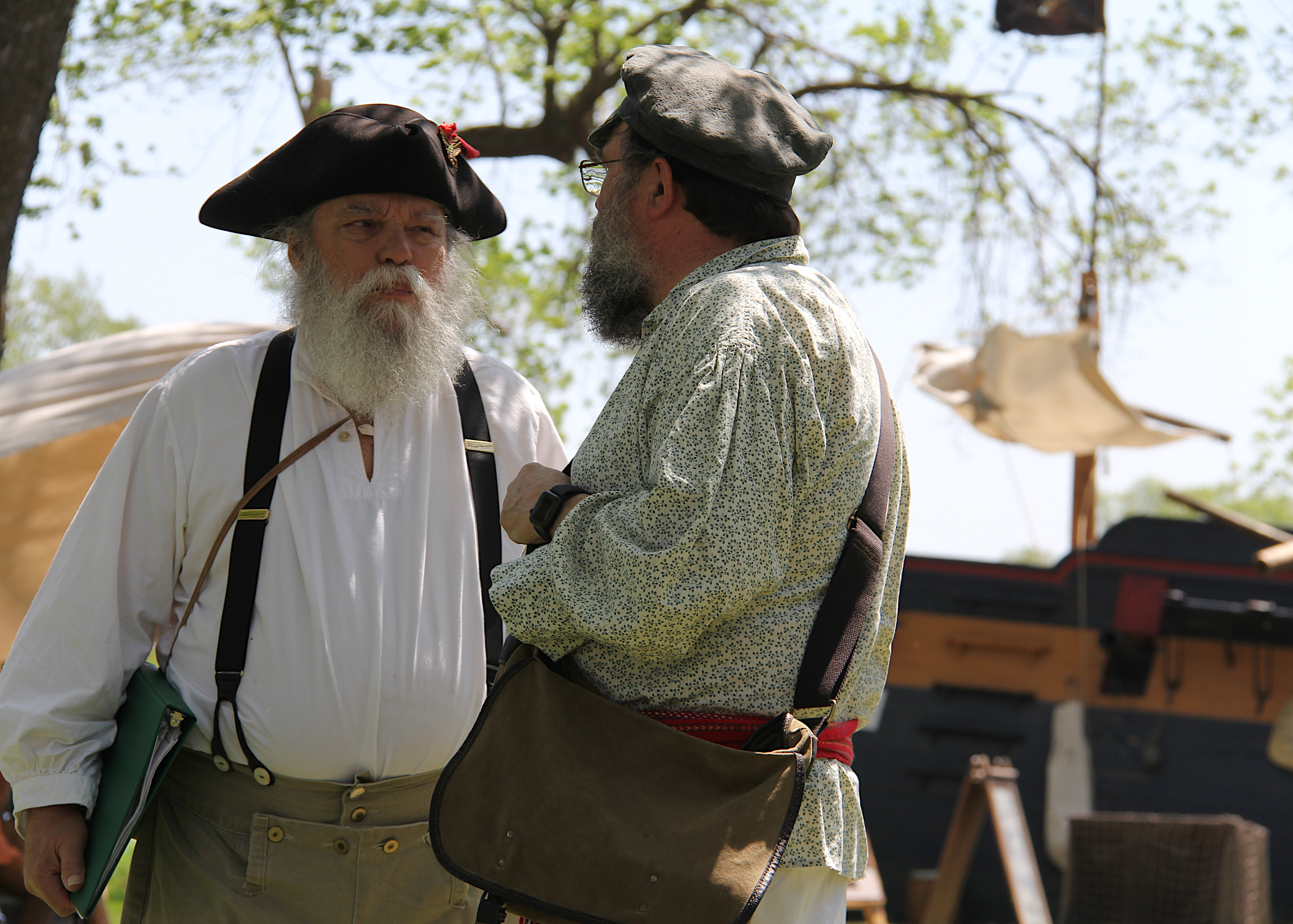
Rendezvous re-enactors visit near the pirate ship. (Minnesota Prairie Roots copyrighted photo May 2025)

I’M INTERESTED IN HISTORY, although not as much as my husband. He reads history-themed books, remembers historical dates and facts, and leaves a museum with more info imprinted on his brain than me. I learn about and retain history better when I can actually “see” and experience it. That’s why I find events like the recent Riverside Rendezvous and History Festival in Faribault especially appealing.

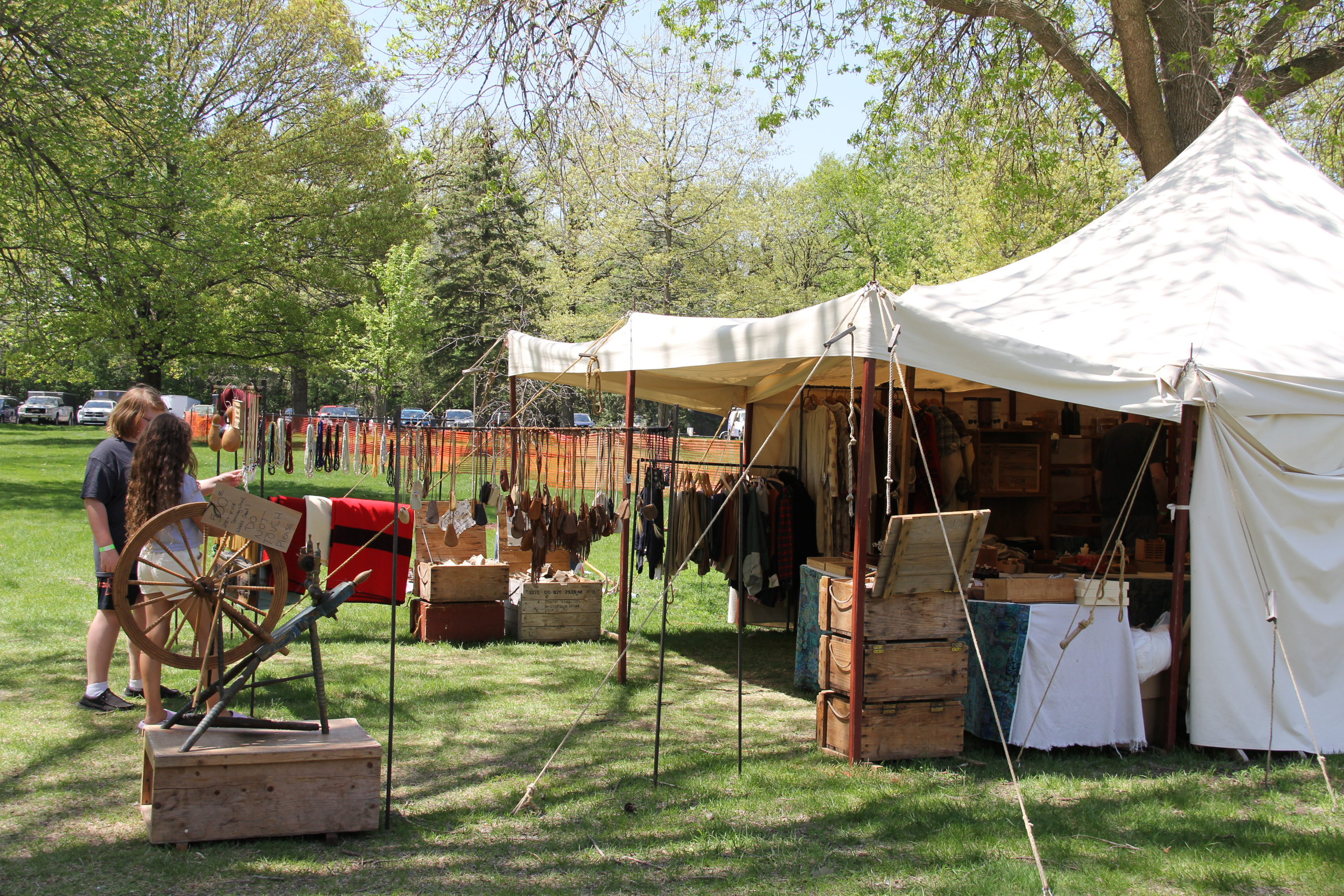
One of many tents where you could learn and also buy goods. (Minnesota Prairie Roots copyrighted photo May 2025)

That same connective shift is something I see happening more and more in history centers and museums. And that’s a good thing—to have interactive and creative exhibits that draw people into history. It is via connecting with our past that we begin to understand today.
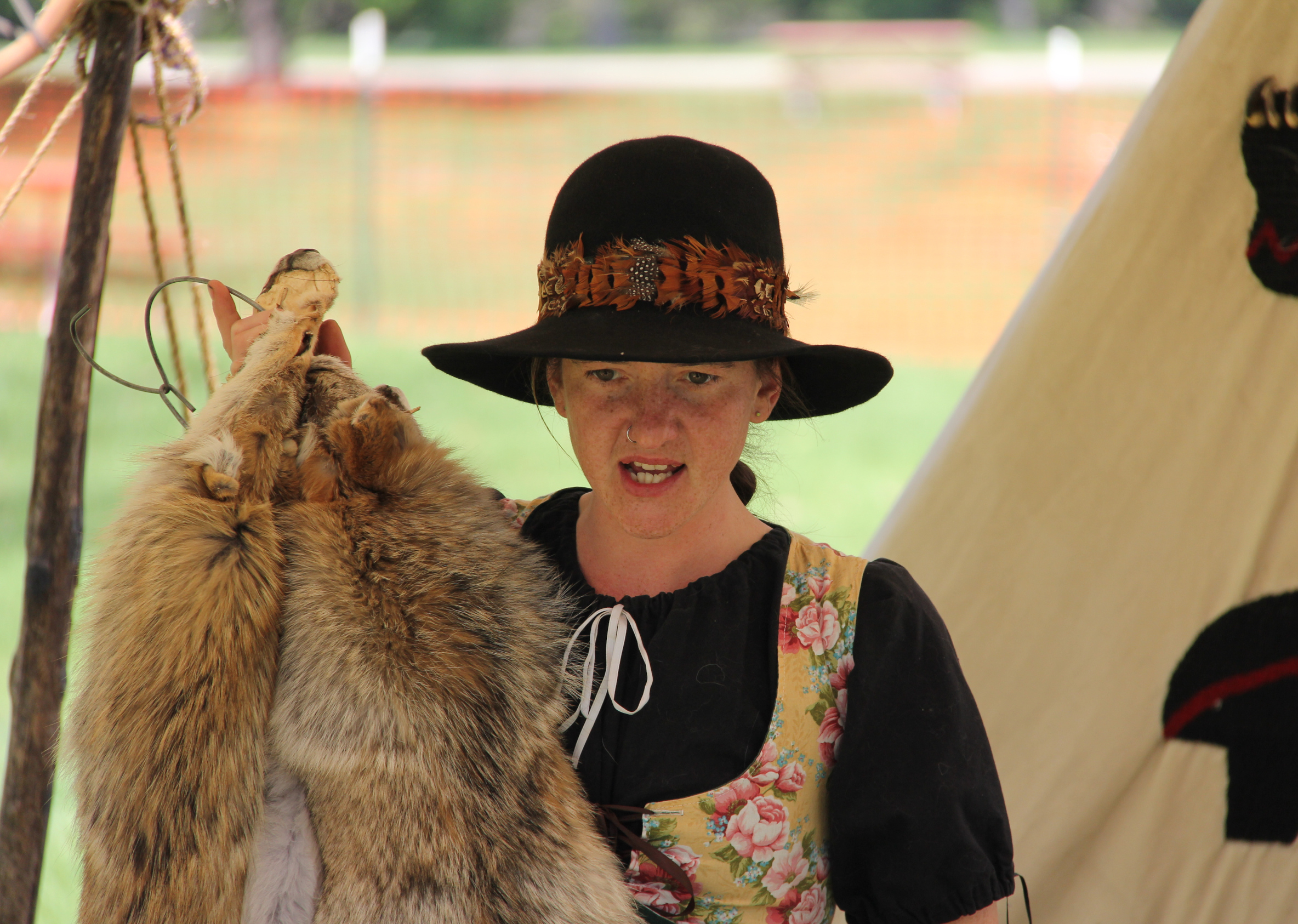
Fur pelts and hats at the Mountain Man Hat Making tent. (Minnesota Prairie Roots copyrighted photo May 2025)

After attending the Riverside Rendezvous, I hold a deeper understanding of early life in Minnesota, specifically the Faribault area. Fur trading shaped the local economy. Those long ago fur traders and Indigenous Peoples got along, realizing they could help one another by exchanging goods. It seemed to work for a long time, until European settlers moved in, pushing the Dakota off their native land. Cultures clashed. War ensued. Everything changed.

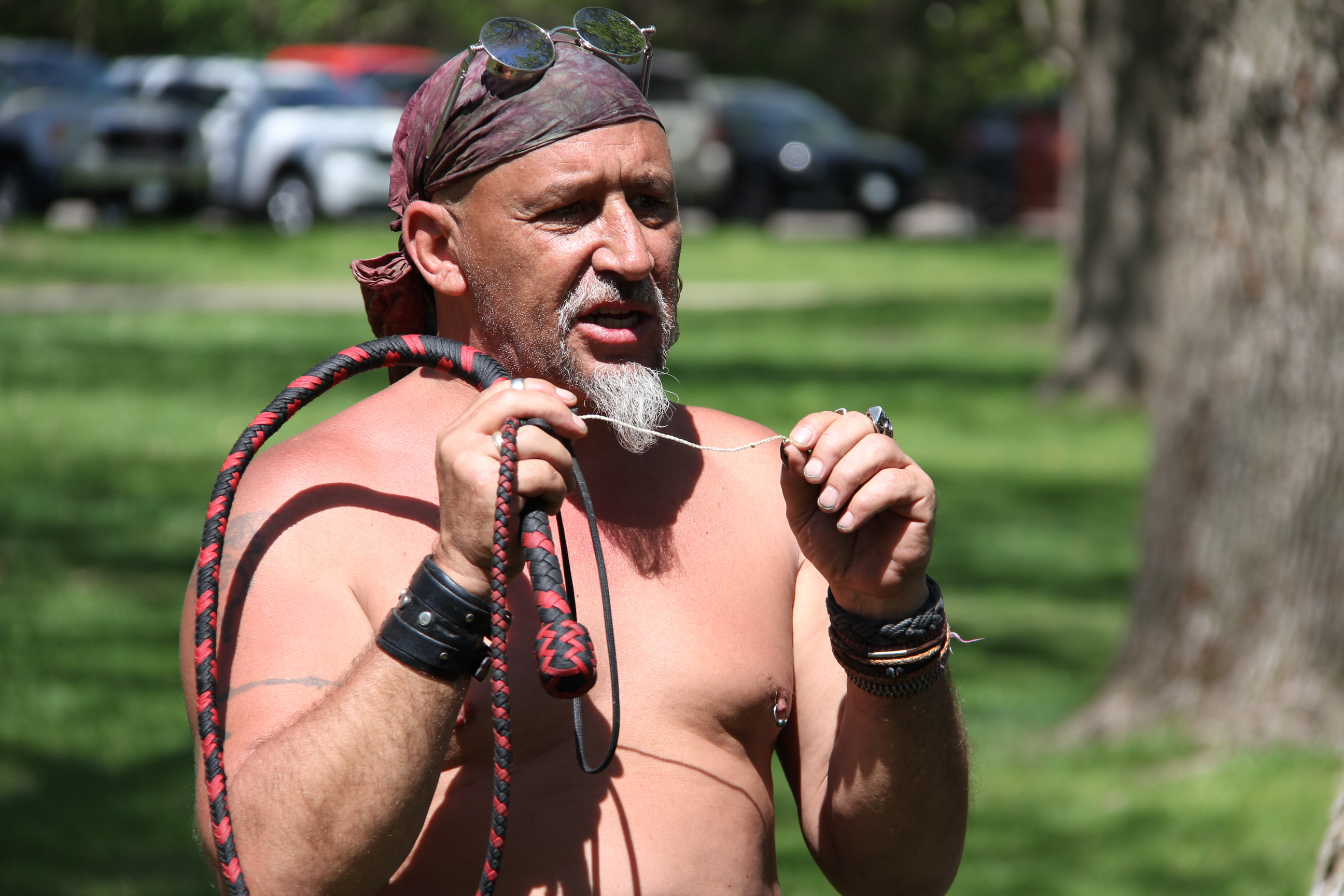
This historian talked about whip making. His partner later cracked the whip. (Minnesota Prairie Roots copyrighted photo May 2025)

Change is inevitable. The Rendezvous provided ample visual evidence of that by focusing on everyday life in the 1700s and 1800s. Each encampment participant highlighted a specific area of yesteryear. And by that I mean a skill—like pounding metal, stitching leather, shaping hats and much more.

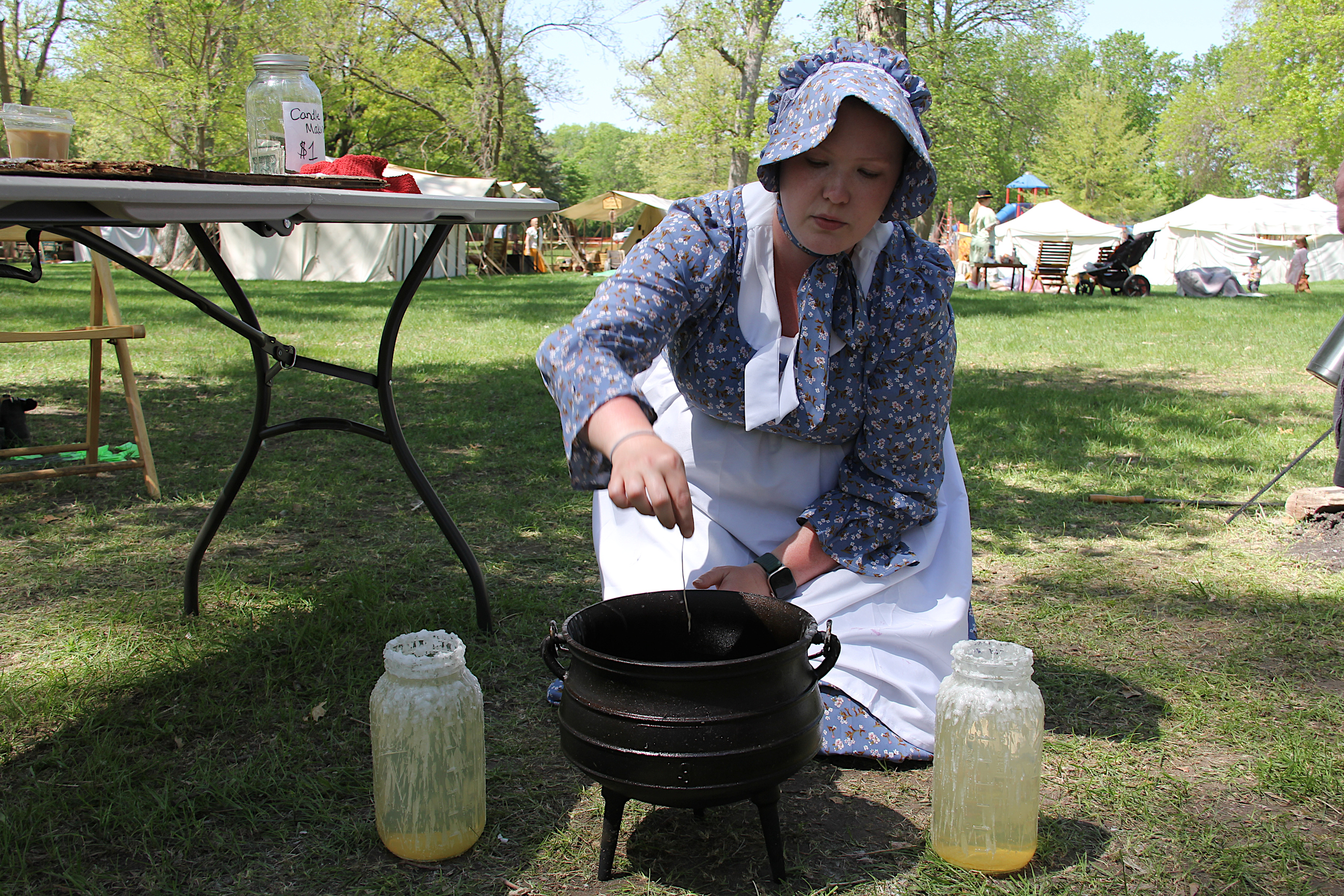
Jenna Nelson demonstrates candle making. (Minnesota Prairie Roots copyrighted photo May 2025)
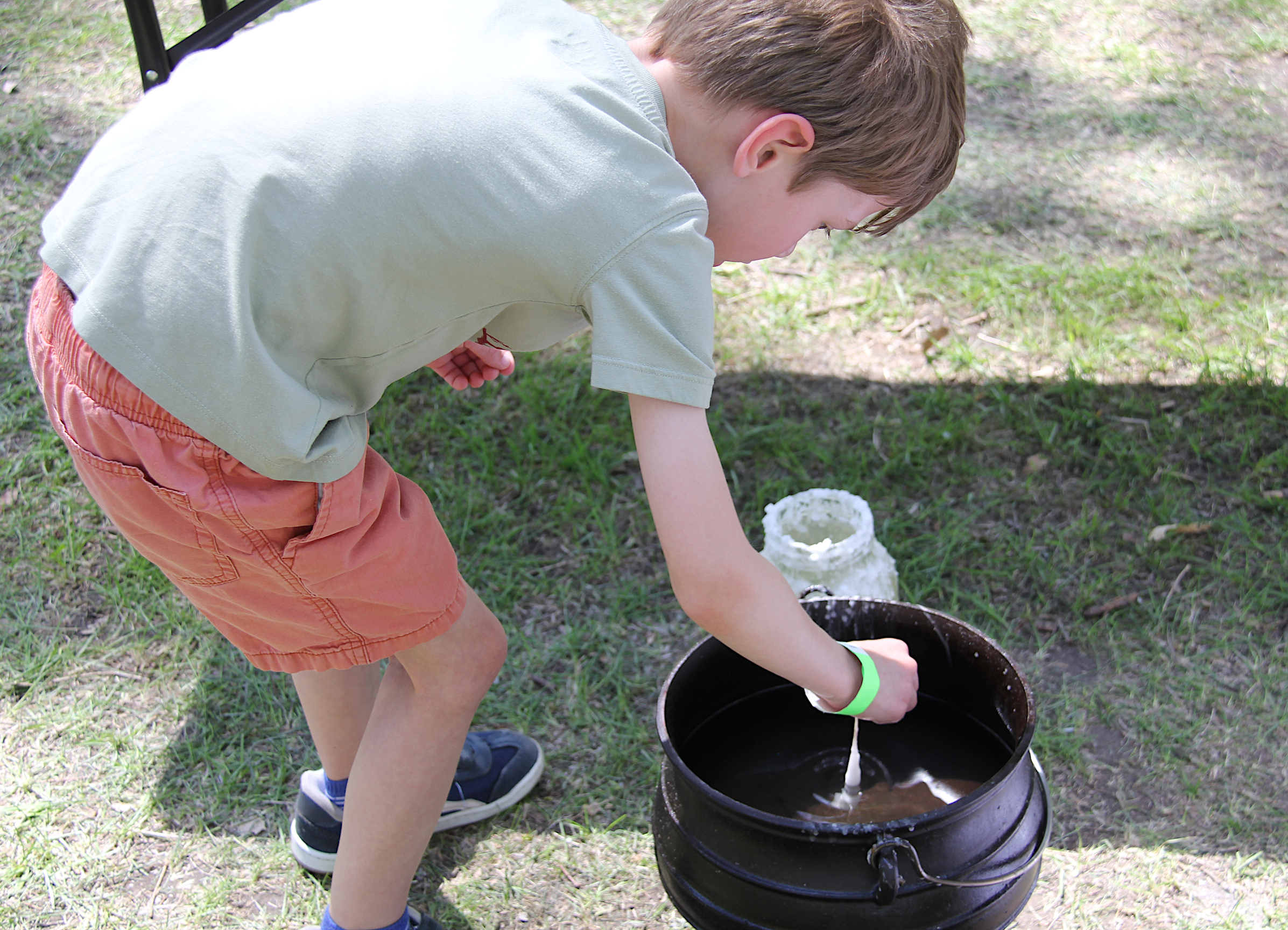
My grandson layers hot wax onto a wick as he builds his candle. (Minnesota Prairie Roots copyrighted photo May 2025)

That included candle making, something my kindergarten-aged grandson tried. Under the watchful guidance of Rice County Historical Society Curator Jenna Nelson, Isaac dipped a wick into a pot of hot wax and then into a jar of cold water, repeating the process until he had a thickened candle.

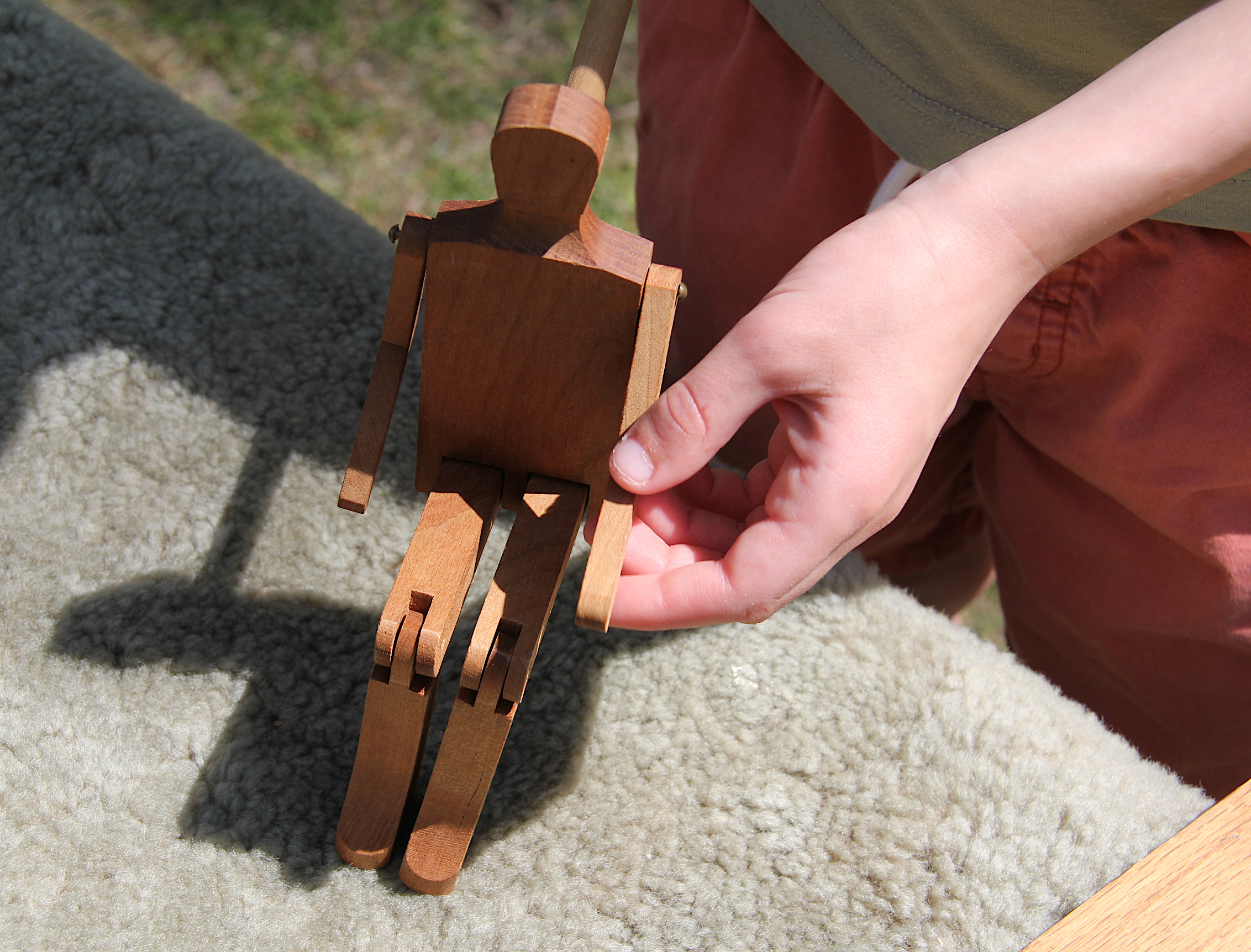
This toy of yesteryear fascinated my young grandson as he adjusted the wooden figure in varying positions. (Minnesota Prairie Roots copyrighted photo May 2025)

Isaac also tried his hand at stitching a leather pouch, rug weaving and playing with toys of yesteryear. He smiled the entire time. He is very much a hands-on kid who loves creating. His older sister, not so much.

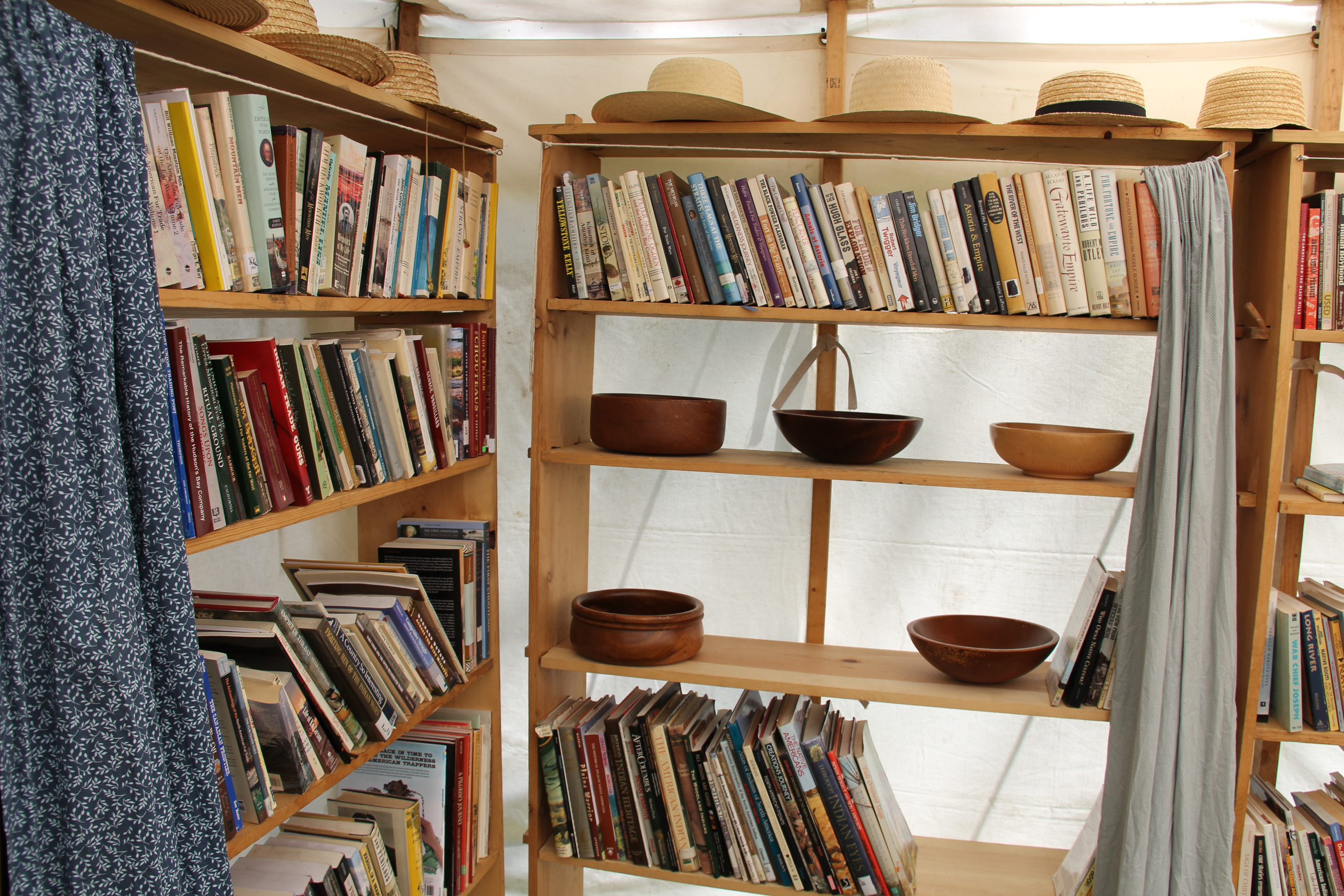
A tent full of books. bowls and hats for sale at the Rendezvous. (Minnesota Prairie Roots copyrighted photo May 2025)

But Izzy did race to a tent full of books and happily accepted rock candy from a costumed character at the axe-throwing station.

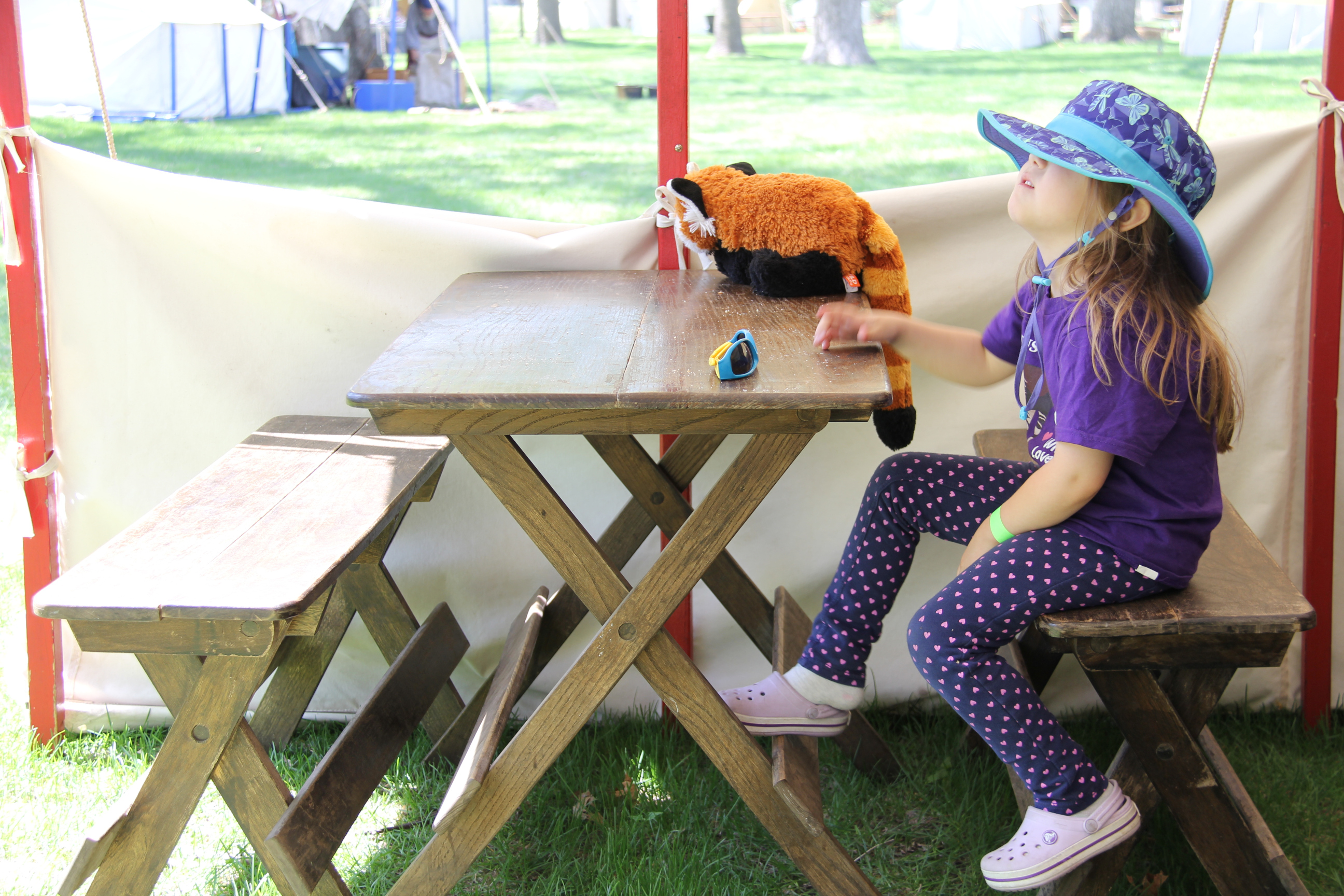
Lots of kids attended the Rendezvous. Here a young girl and her stuffed animal, wait inside Baby’s Indian Frybread tent. (Minnesota Prairie Roots copyrighted photo May 2025)

I give great credit to the Rendezvous re-enactors who engaged with all ages, who clearly know their crafts and who were excited to share their knowledge of both skills and history with attendees.

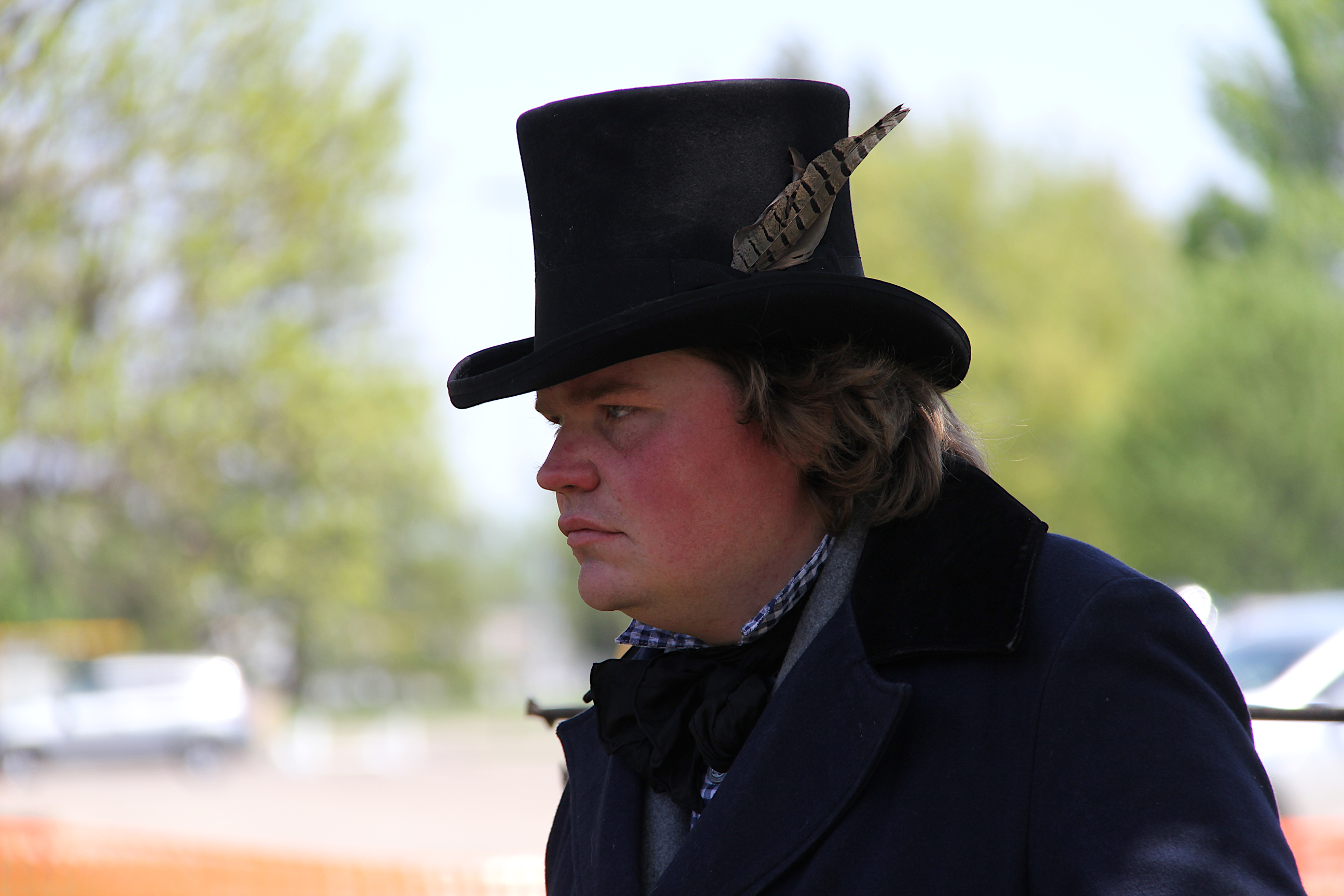
From rugged to well-dressed, period attire varied depending on character role-playing. (Minnesota Prairie Roots copyrighted photo May 2025)
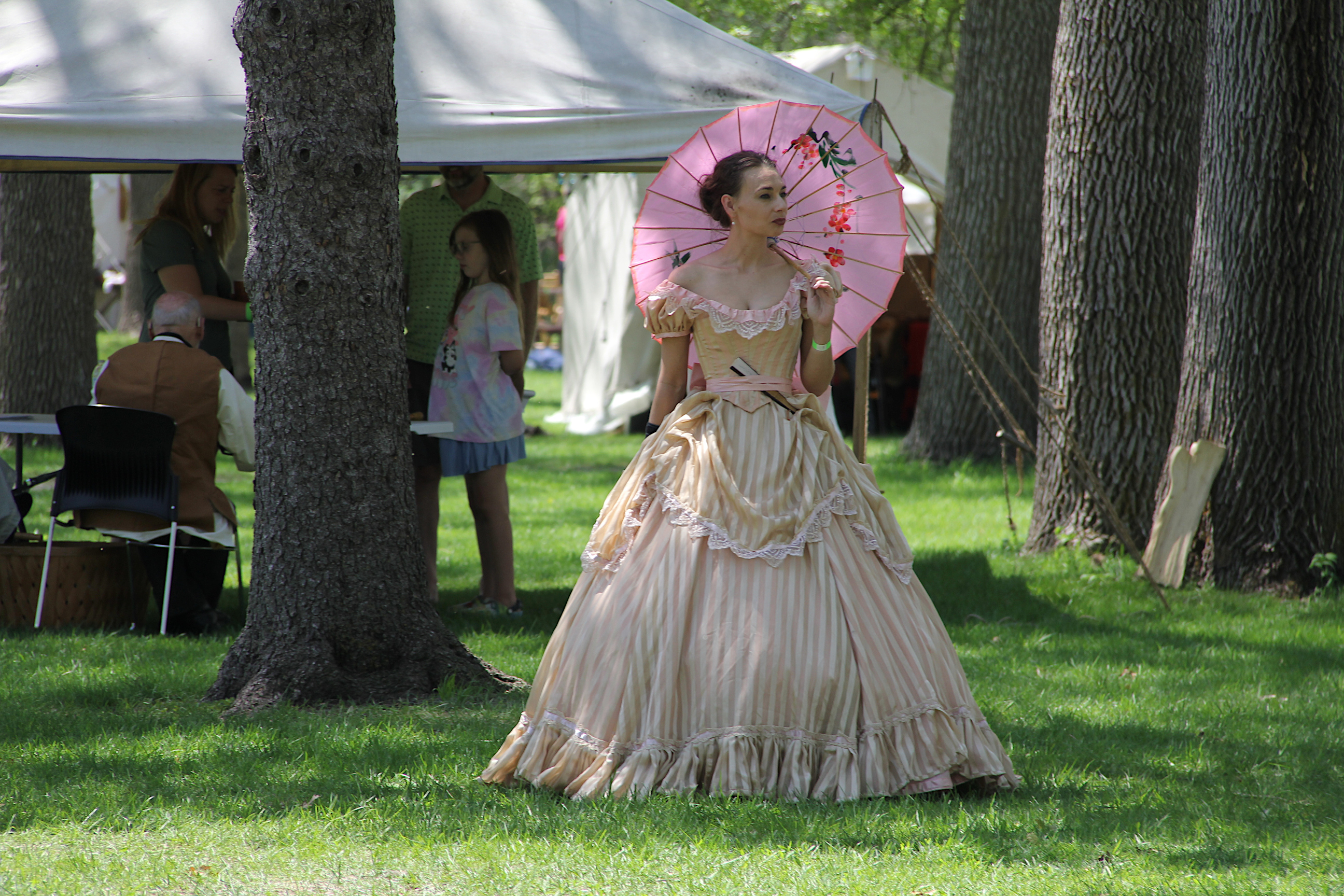
I zoomed in on this lovely lady from afar, so I don’t know her story. But she was the most fancily-dressed at the Rendezvous. (Minnesota Prairie Roots copyrighted photo May 2025)
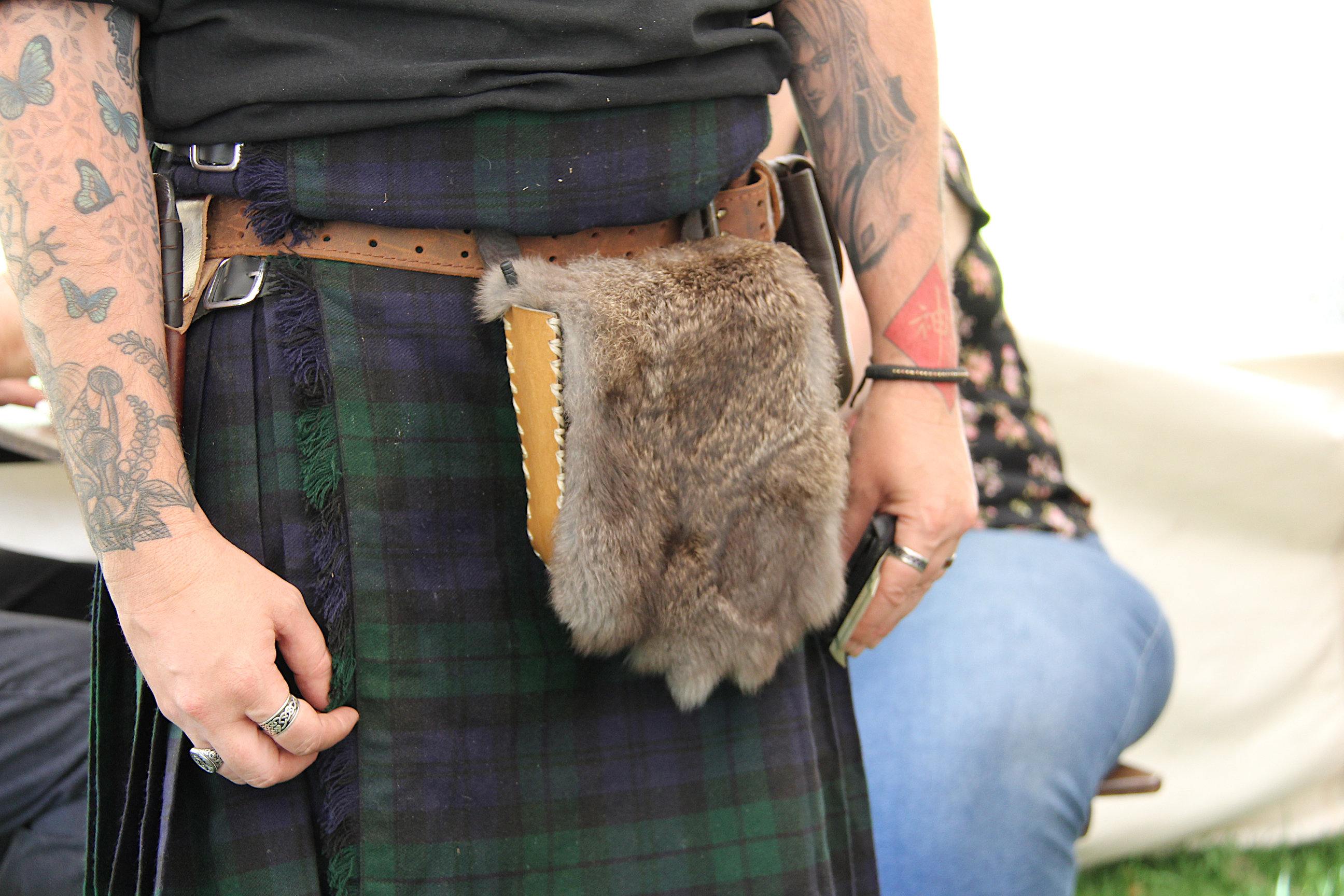
I saw lots of leather, fur, jewelry, piercings and tattoos. (Minnesota Prairie Roots copyrighted photo May 2025)

And that they played the parts by dressing in period costume certainly made the experience real, as in really stepping back in time. Just ignore the ringing cellphones.

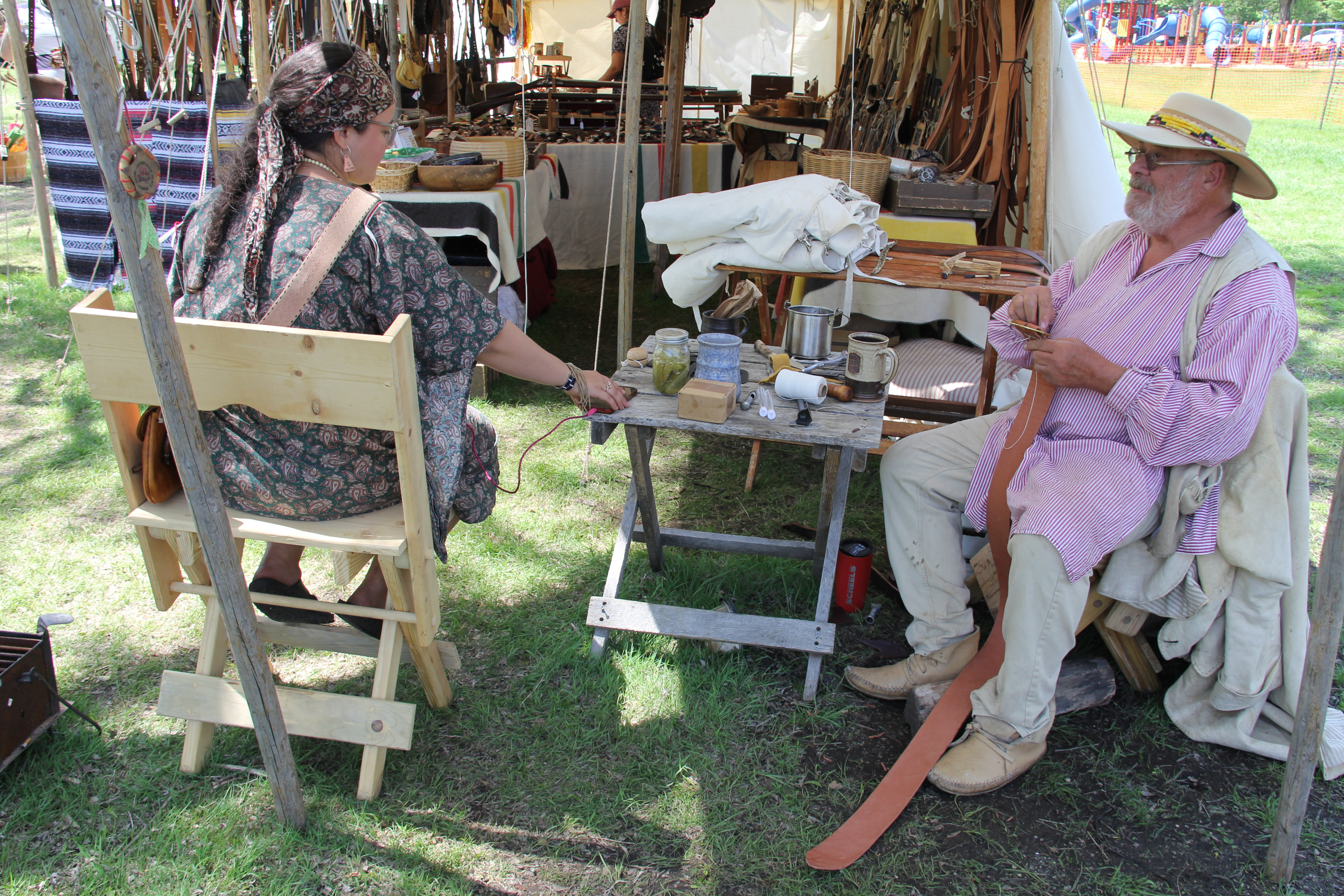
Stitching a buckle on a leather belt, right, at a trading post type tent. (Minnesota Prairie Roots copyrighted photo May 2025)

I gathered in chatting with these historians that attending rendezvous is part of their way of life. They become like family to one another. I expect their love of these history festivals grows with each experience, each interaction. They are a friendly lot. Engaging.

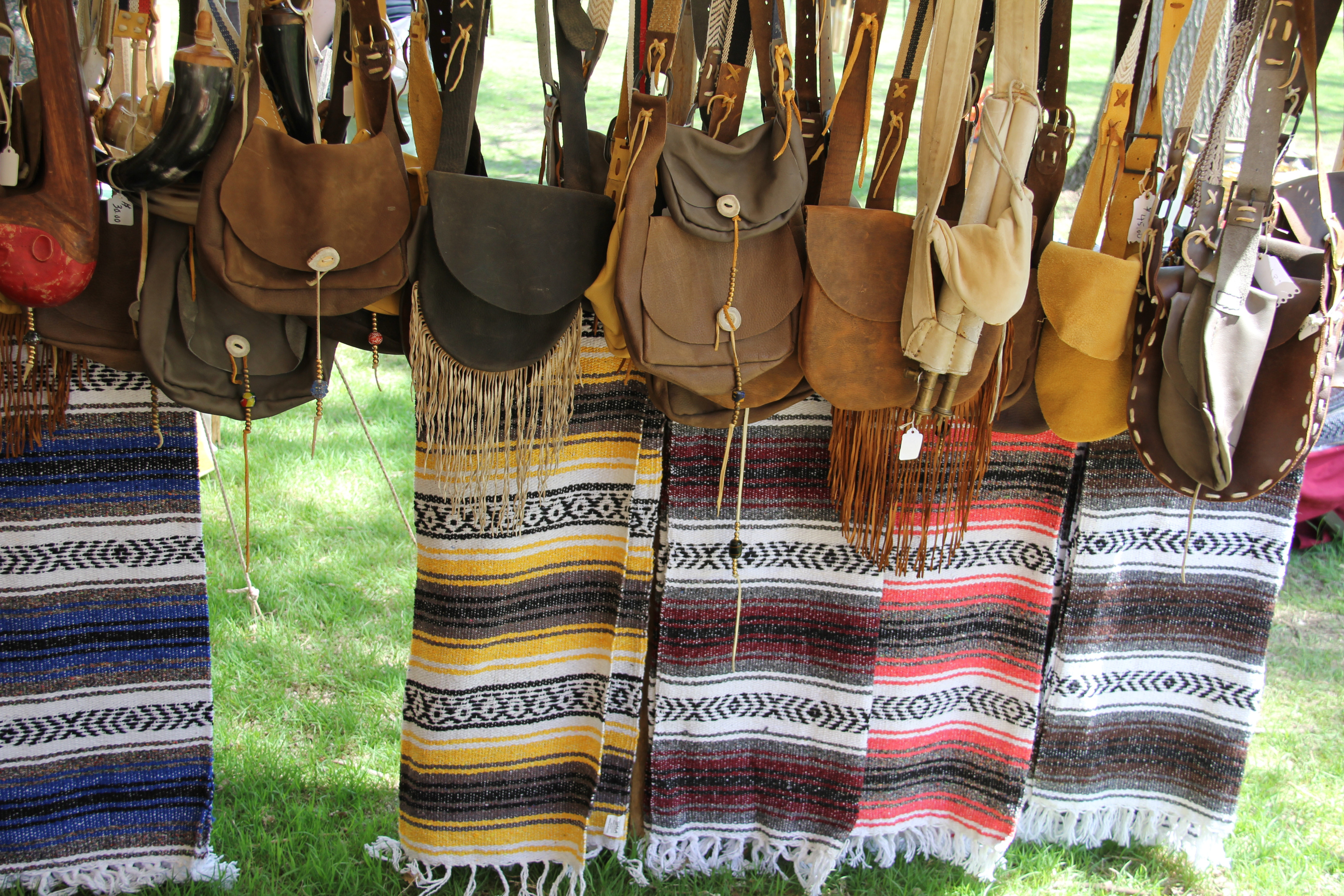
Leather bags and blankets available at the leather stitcher’s booth. (Minnesota Prairie Roots copyrighted photo May 2025)

This approach to history carried me back to the past in a way I’ve not previously experienced. Visually, I saw history unfold before my eyes at the Riverside Rendezvous. And that I’ll remember.

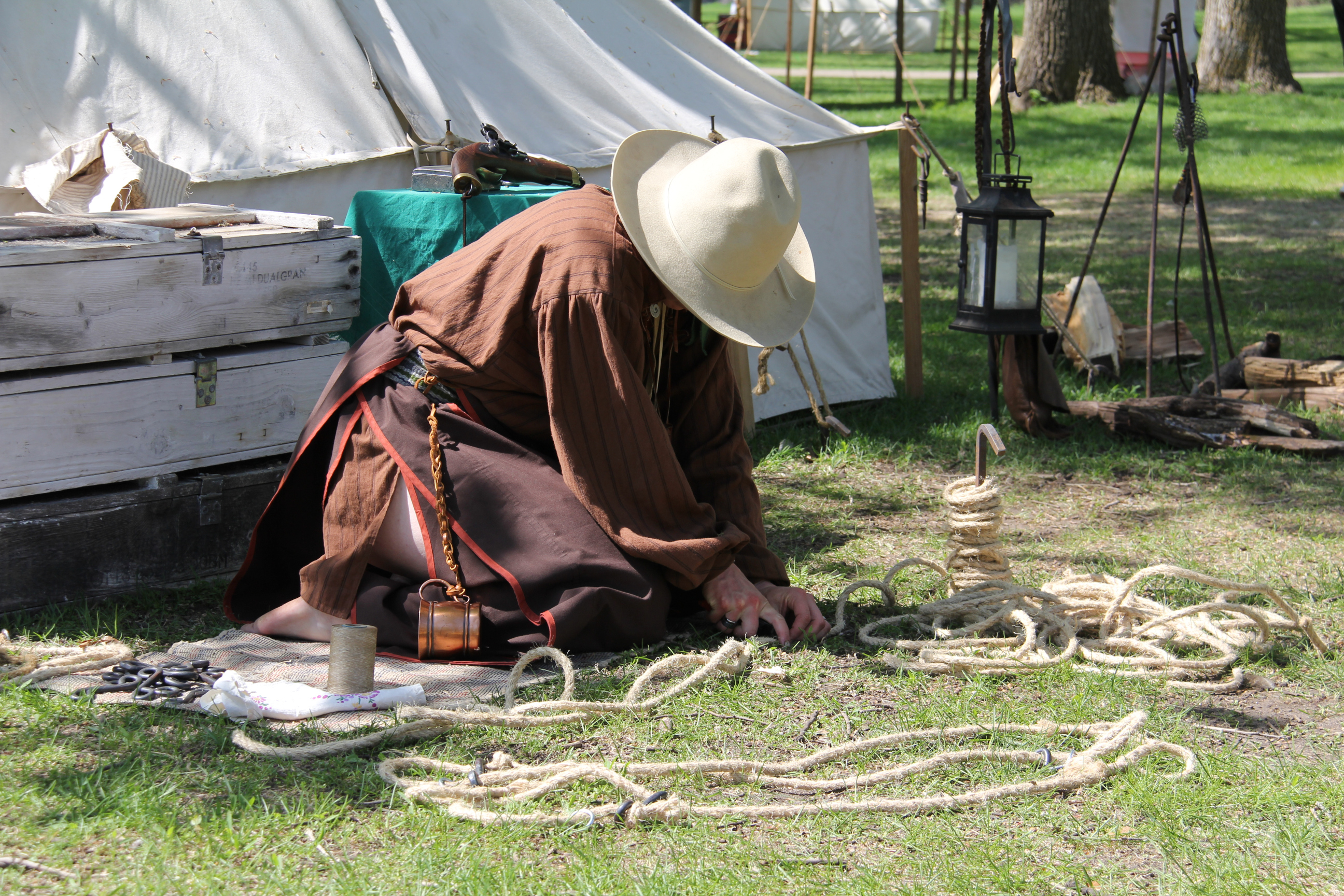
The rope maker. (Minnesota Prairie Roots copyrighted photo May 2025)

FYI: The Rice County Historical Society organized this first rendezvous along the Cannon River in Faribault’s North Alexander Park. Given the success of this year’s event, they are planning a second rendezvous in May 2026. To read my first of two posts about the 2025 Rendezvous, click here.

© Copyright 2025 Audrey Kletscher Helbling